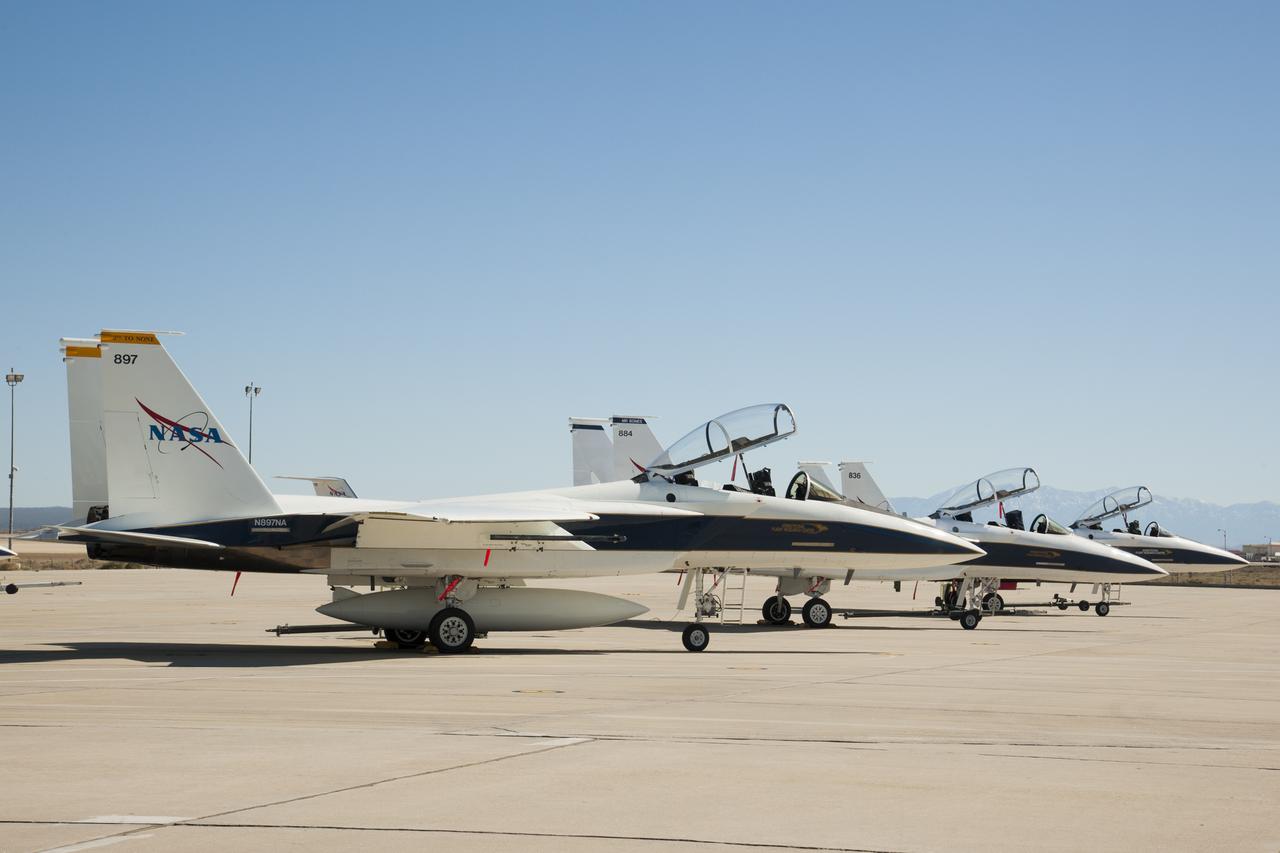
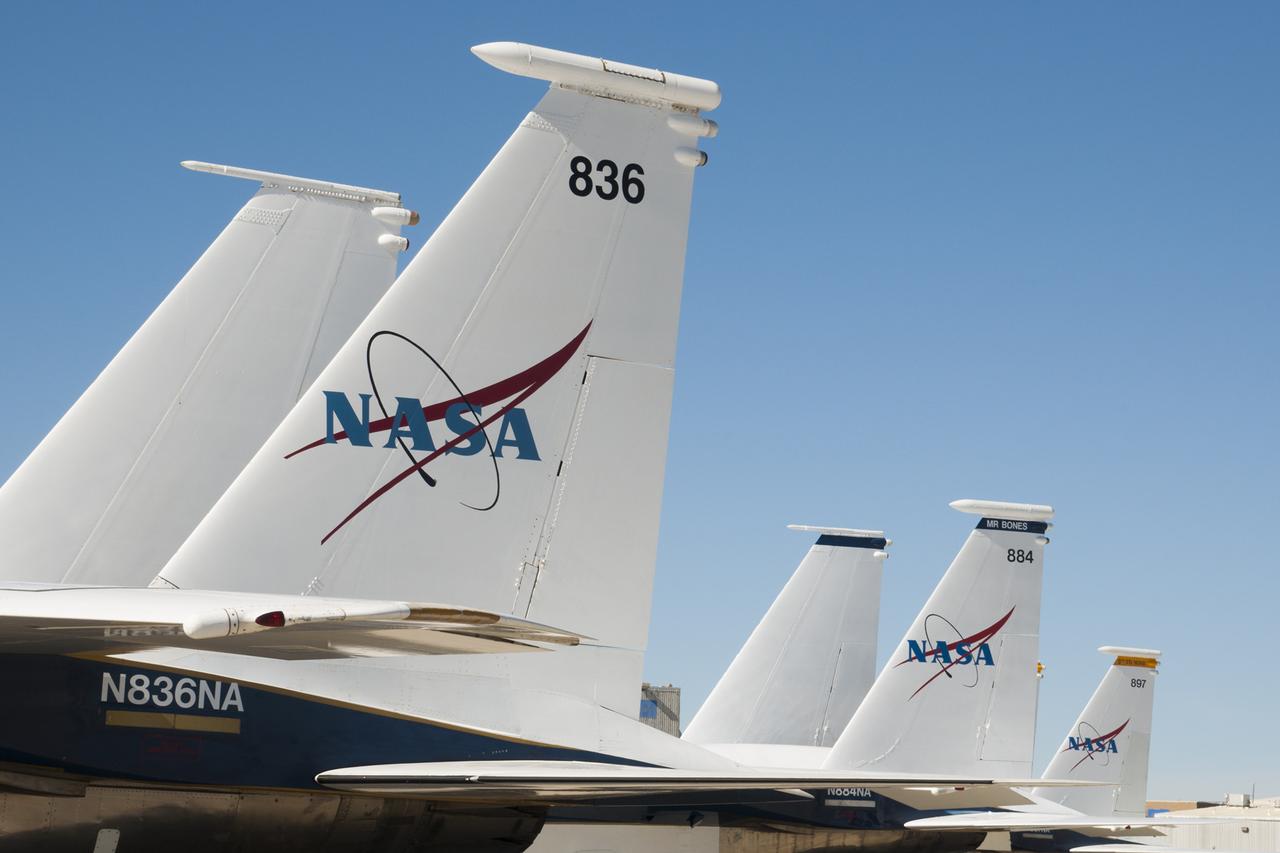
Left to right: workhorse F-15B #836, "Mr. Bones" F-15D #884, and "2nd to None" F-15D #897 on the back ramp at NASA's Neil A. Armstrong Flight Research Center.
AFRC2016-0073-72
Left to right: "2nd to None" (F-15D #897), "Mr. Bones" (F-15D #884), and workhorse F-15B #836 on the back ramp at NASA's Neil A. Armstrong Flight Research Center.
AFRC2016-0073-80
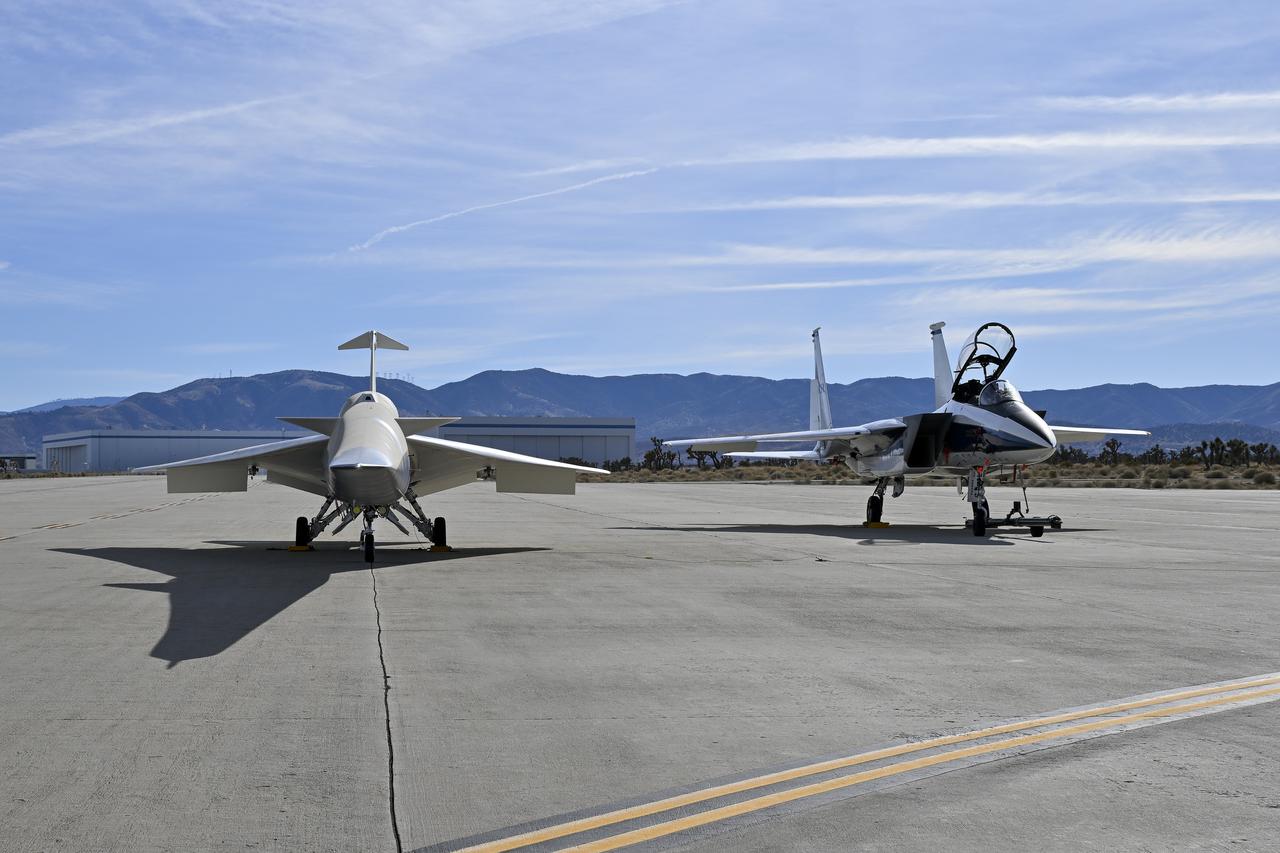
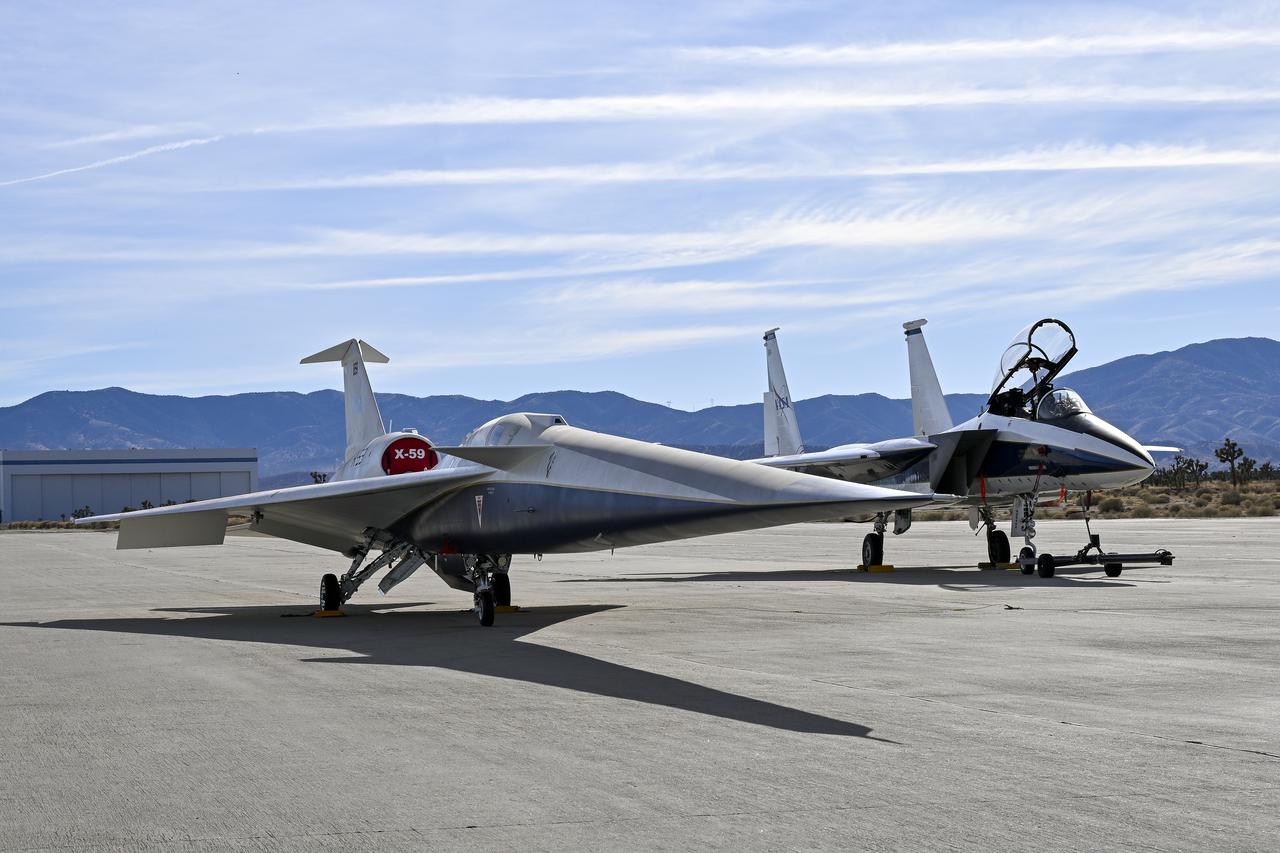
NASA’s F-15D research aircraft is positioned behind the X-59 during electromagnetic compatibility testing at U.S. Air Force Plant 42 in Palmdale, California. During this test, the F-15D’s radar and avionics were turned on one at a time while engineers evaluated each signal’s interaction with the X-59 for possible interference. NASA’s Quesst mission will demonstrate quiet supersonic technology that will provide data to help determine an acceptable sound limit in the sky.
NASA Uses F-15D to Validate X-59’s Electromagnetic Interference Testing
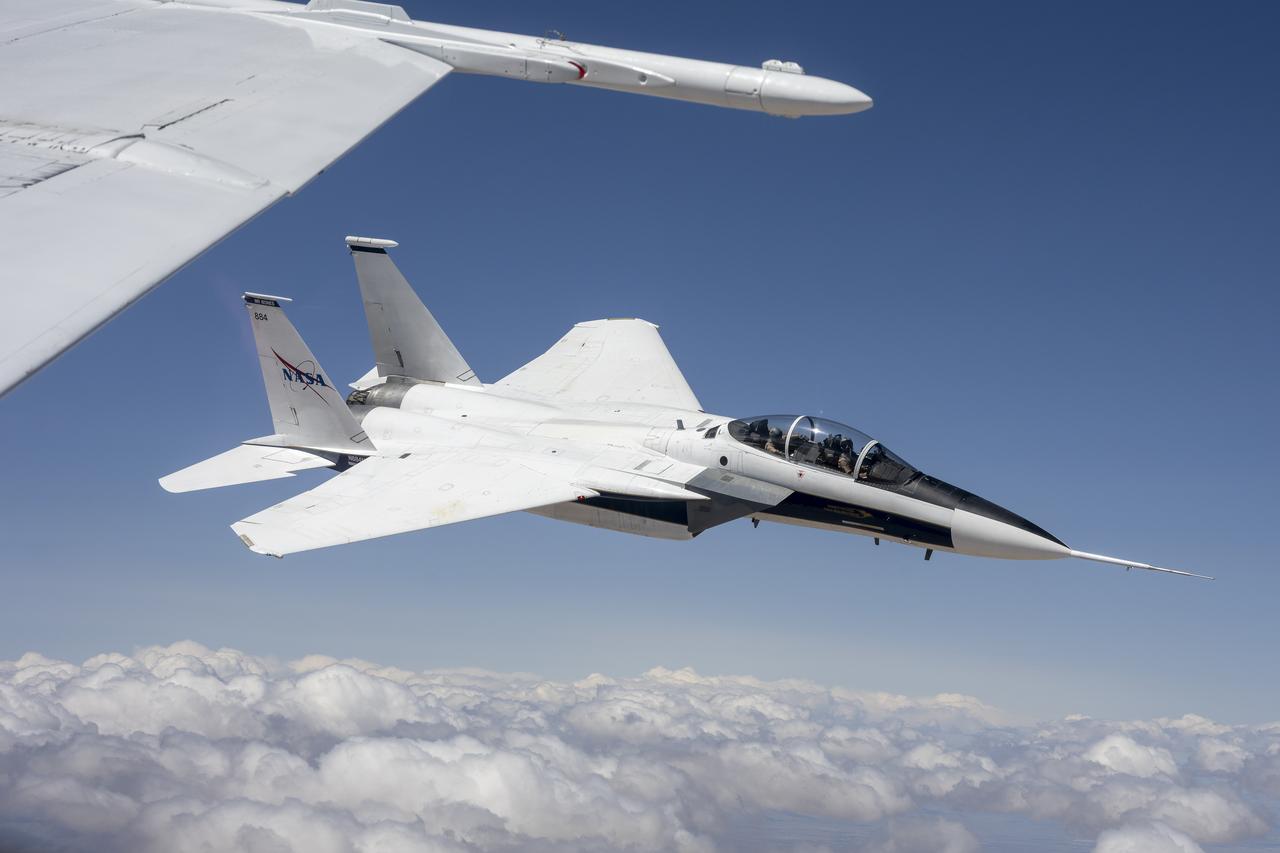
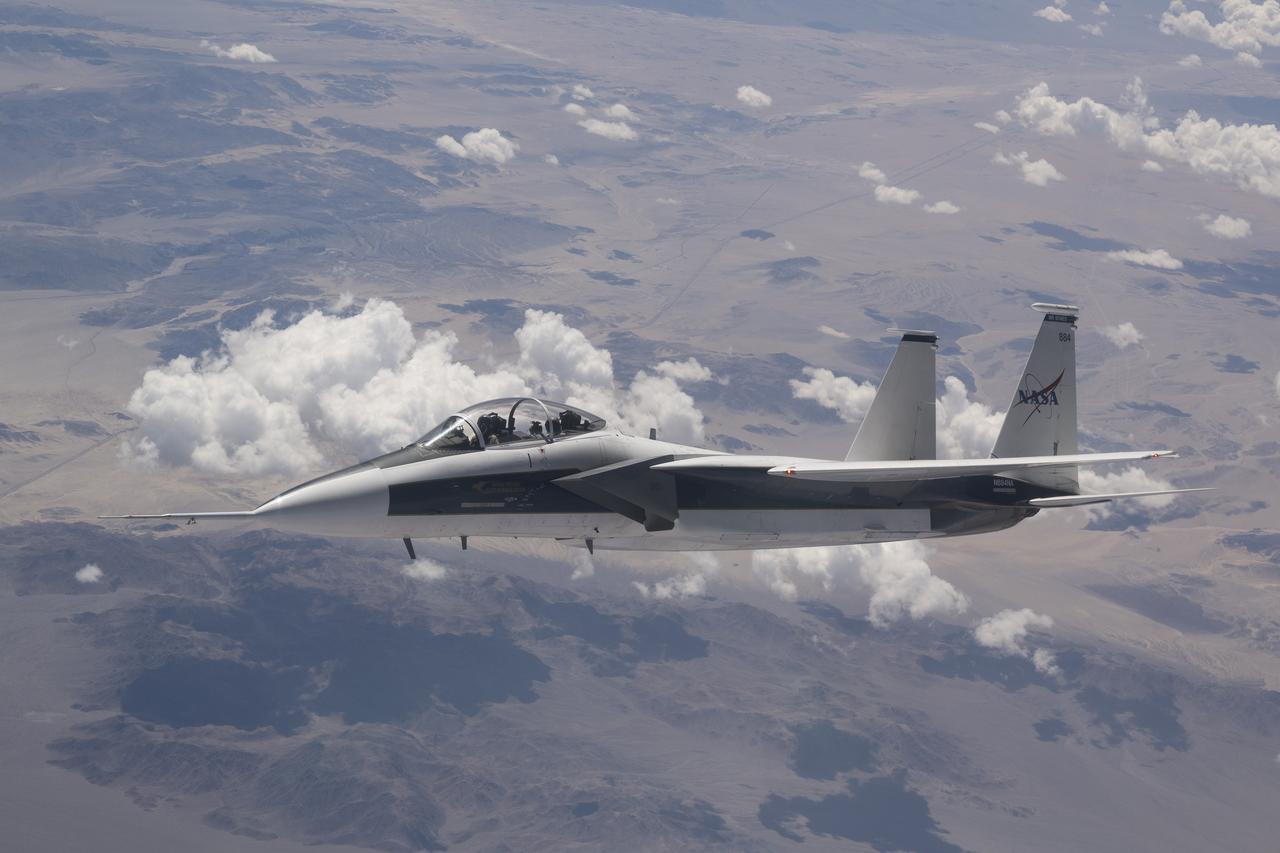
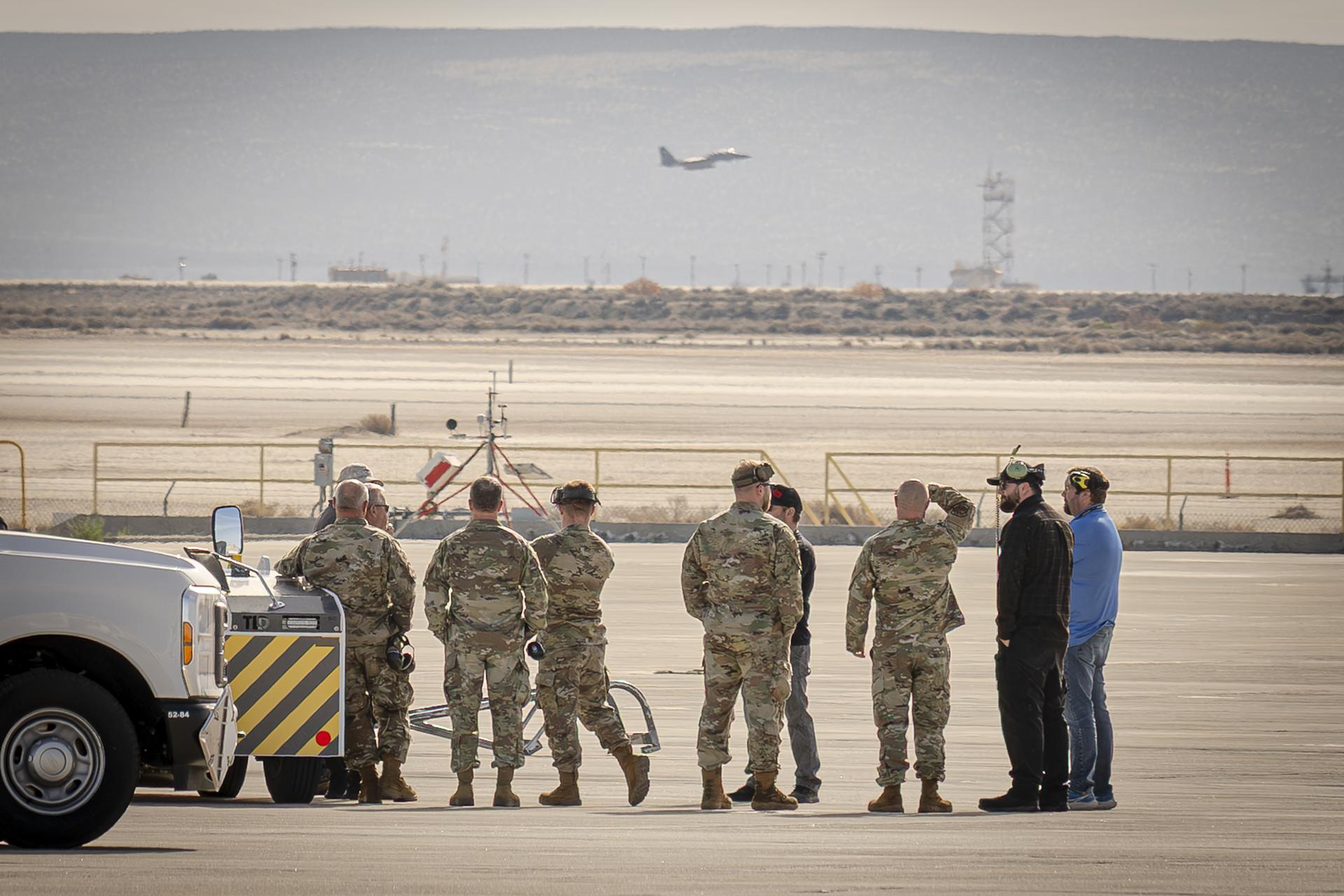
NASA's F-15D research aircraft conducts a calibration flight of a shock-sensing probe near NASA’s Armstrong Flight Research Center in Edwards, California. The shock-sensing probe is designed to measure the signature and strength of shock waves in flight. The probe was validated during dual F-15 flights and will be flown behind NASA’s X-59 to measure small pressure changes caused by shock waves in support of the agency's Quesst mission.
NASA F-15D Research Aircraft Conduct Calibration Flight
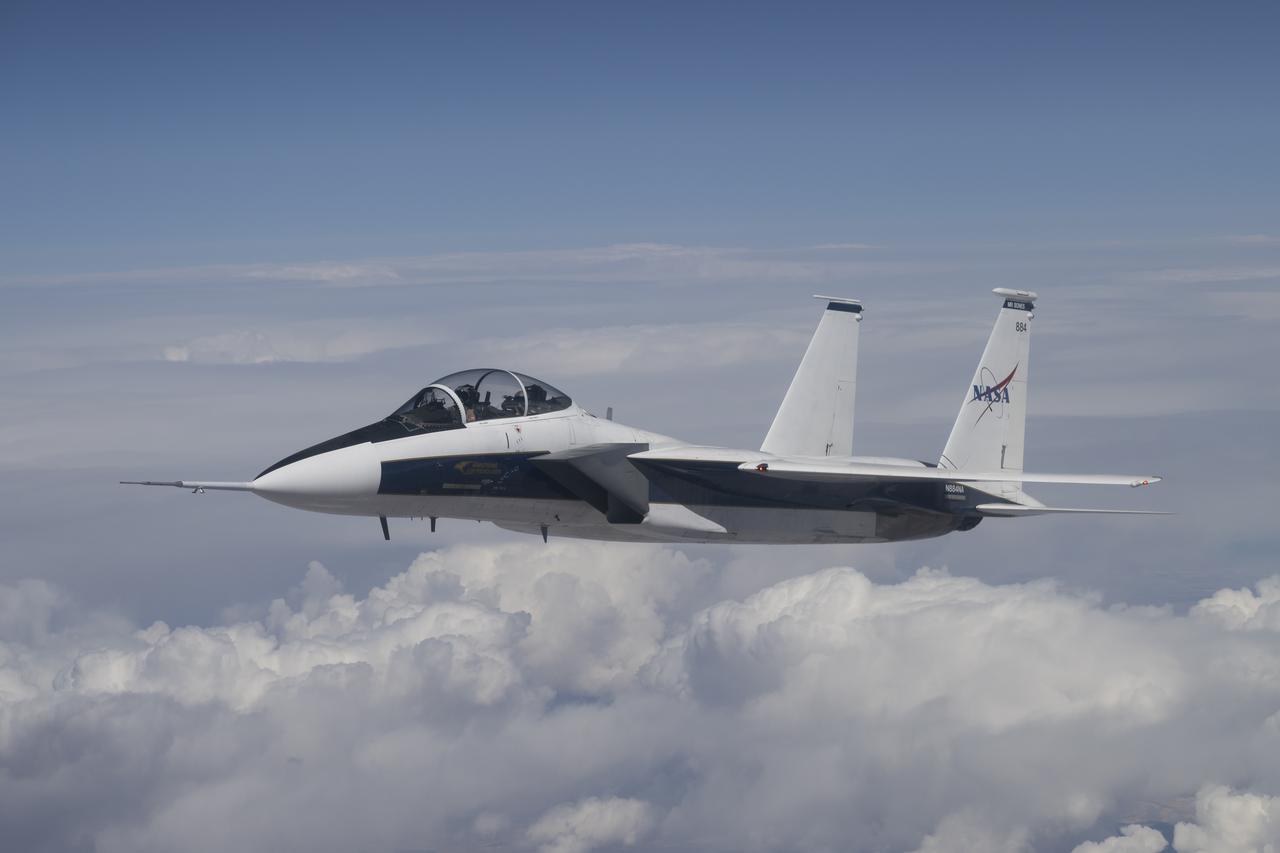
NASA’s F-15D research aircraft conducts a test flight near Edwards, California, with a newly installed near-field shock-sensing probe. Identical to a previously flown version that was intended as the backup, this new probe will capture shock wave data near the X-59 as it flies faster than the speed of sound, supporting NASA’s Quesst mission.
NASA’s F-15D Tests New Shock-Sensing Probe
NASA’s F-15D research aircraft conducts a test flight near Edwards, California, with a newly installed near-field shock-sensing probe. Identical to a previously flown version that was intended as the backup, this new probe will capture shock wave data near the X-59 as it flies faster than the speed of sound, supporting NASA’s Quesst mission.
NASA’s F-15D Tests New Shock-Sensing Probe
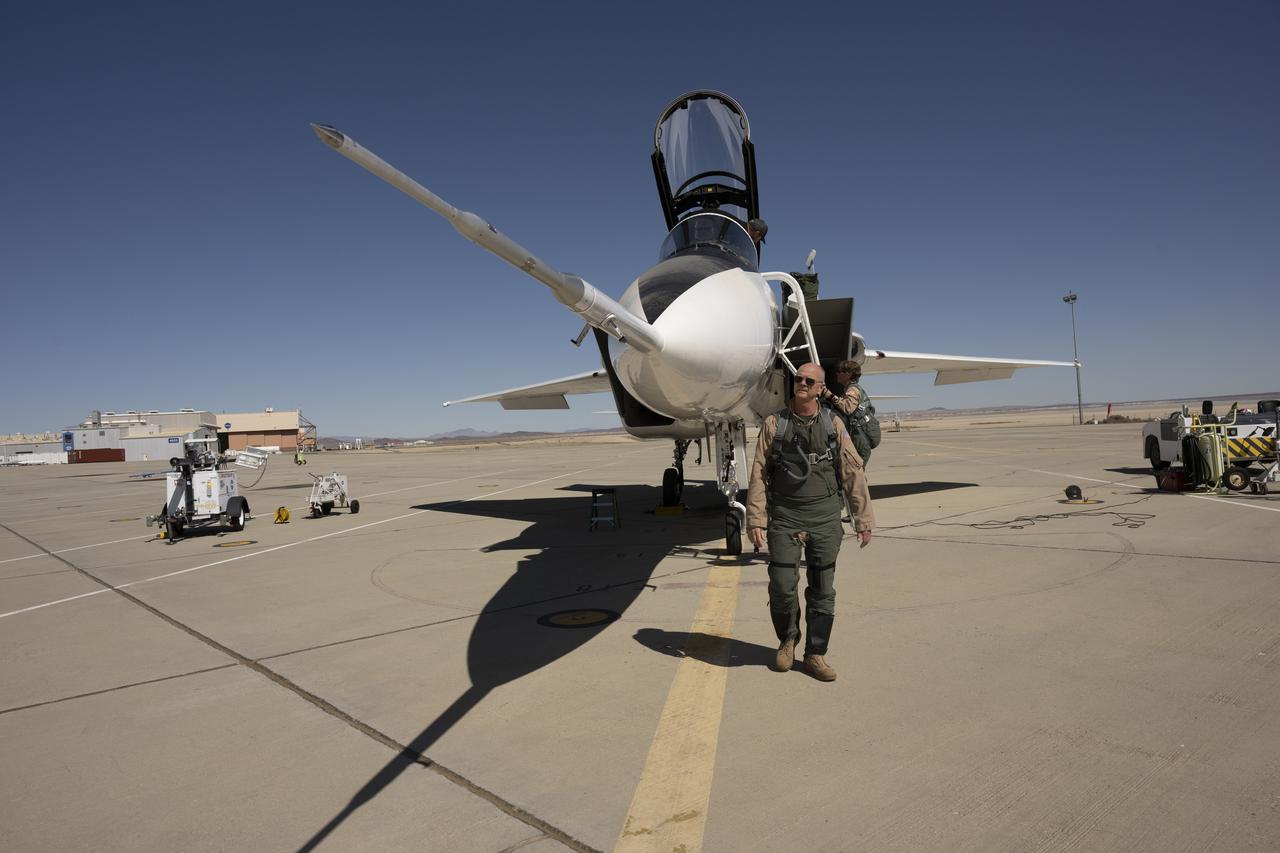
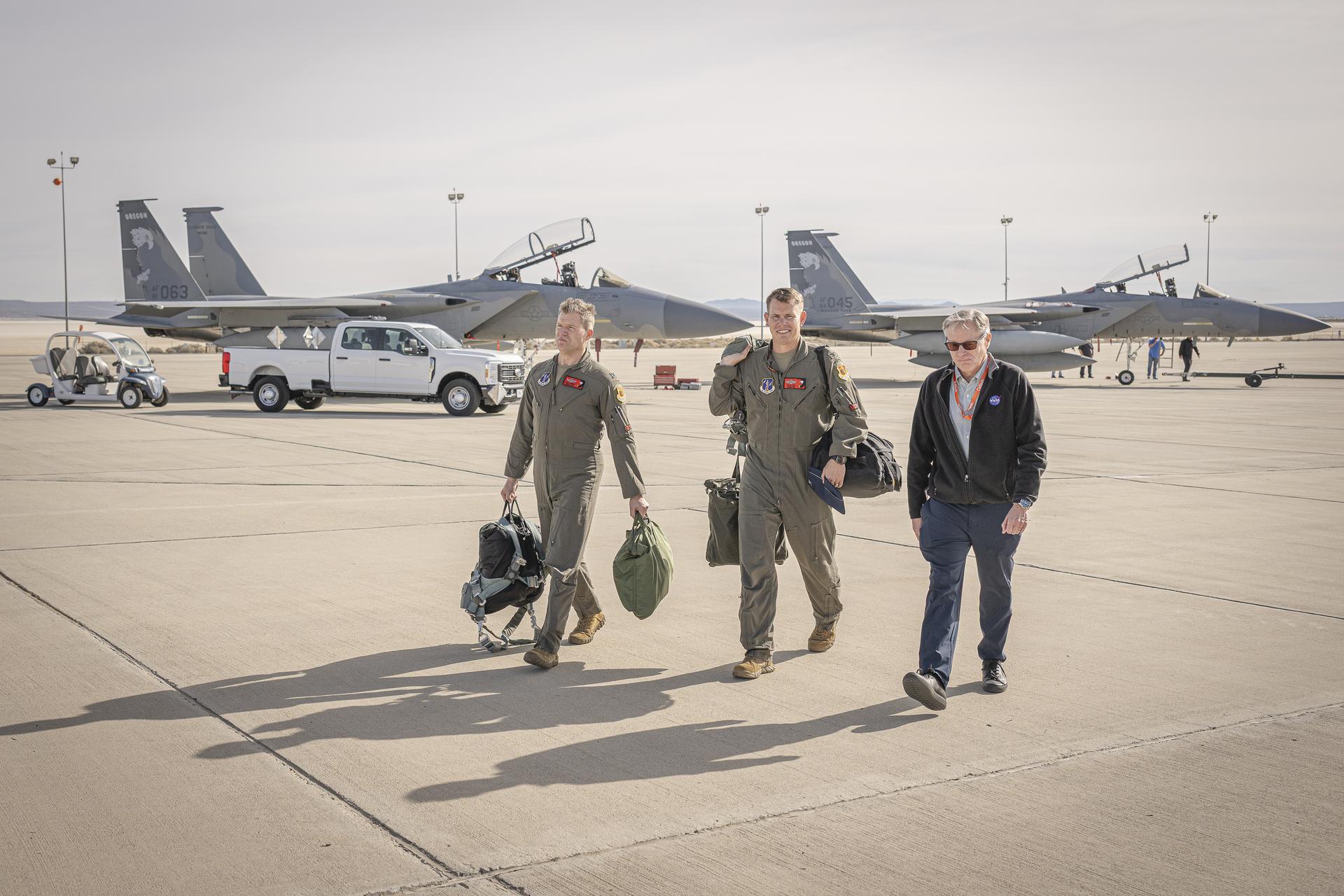
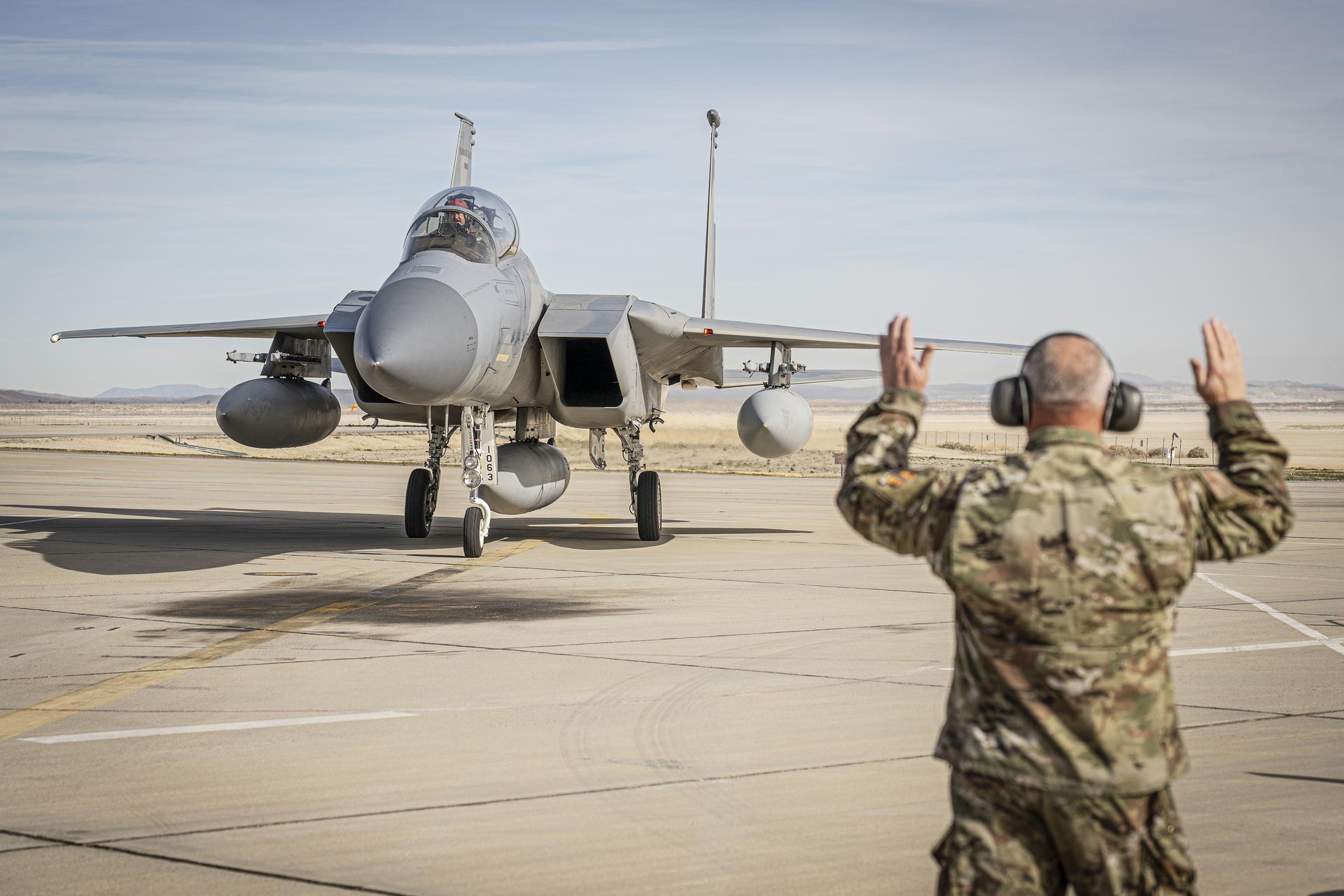
NASA test pilot Nils Larson inspects the agency’s F-15D research aircraft at NASA’s Armstrong Flight Research Center in Edwards, California, ahead of a calibration flight for a newly installed near-field shock-sensing probe. Mounted on the F-15D, the probe is designed to measure shock waves generated by the X-59 quiet supersonic aircraft during flight. The data will help researchers better understand how shock waves behave in close proximity to the aircraft, supporting NASA’s Quesst mission to enable quiet supersonic flight over land.
NASA Test Pilot Inspects New Shock-Sensing Probe Ahead of Calibration Flight 
NASA test pilot Nils Larson inspects the agency’s F-15D research aircraft at NASA’s Armstrong Flight Research Center in Edwards, California, ahead of a calibration flight for a newly installed near-field shock-sensing probe. Mounted on the F-15D, the probe is designed to measure shock waves generated by the X-59 quiet supersonic aircraft during flight. The data will help researchers better understand how shock waves behave in close proximity to the aircraft, supporting NASA’s Quesst mission to enable quiet supersonic flight over land.
NASA Test Pilot Inspects New Shock-Sensing Probe Ahead of Calibration Flight 
NASA photographer Jim Ross captured this shot while pilot Troy Asher flew inverted in an F-15D. The F-15B is seen here flying over the mirror farm, AKA the Abengoa Mojave Solar Project, east of Four Corners off of Highway 58 in Southern California.
AFRC2016-0082-13
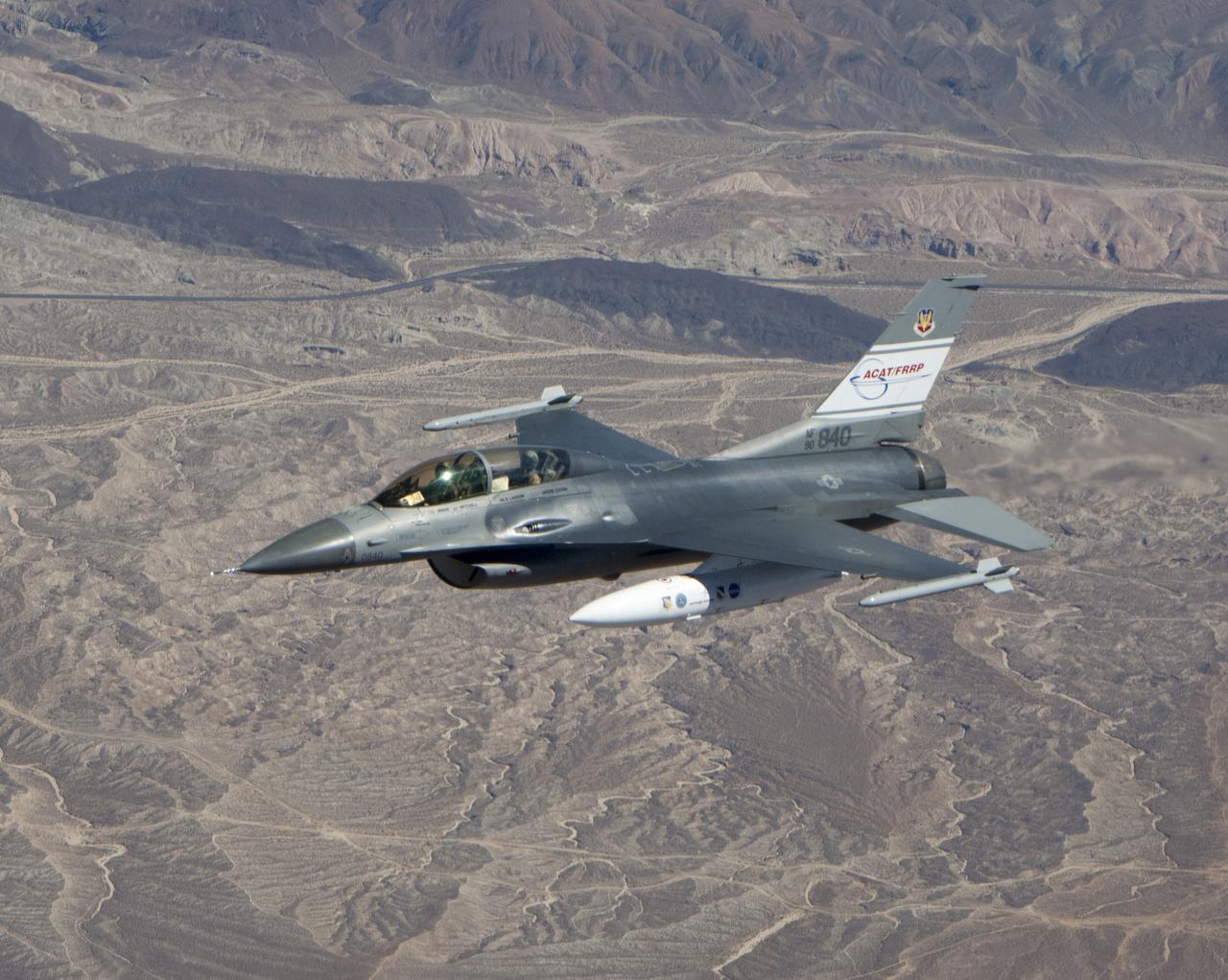
The U.S. Air Force's F-16D Automatic Collision Avoidance Technology, or ACAT, aircraft was used by NASA's Armstrong Flight Research Center and the Air Force Research Laboratory to develop and test collision avoidance technologies.
ED09-0290-08
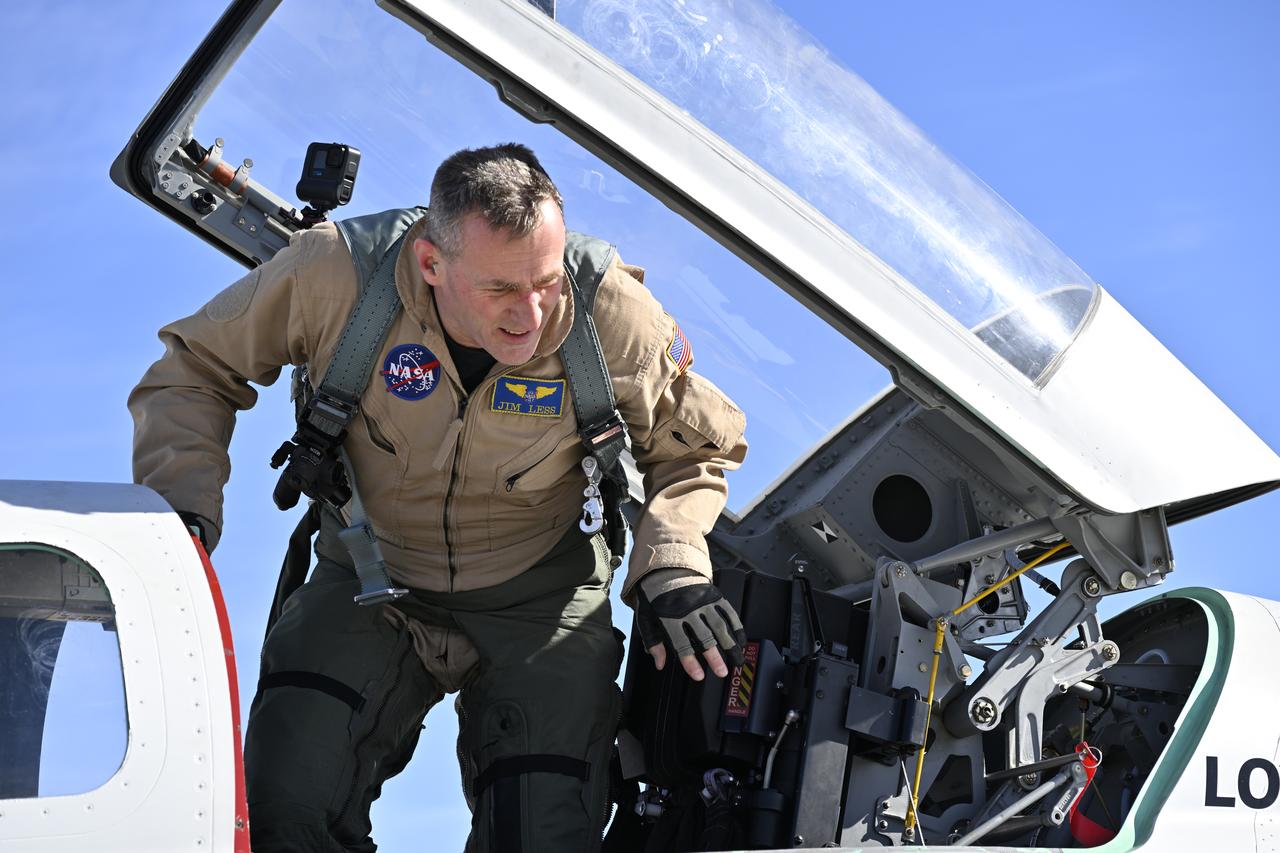
NASA test pilot Jim Less prepares to exit the cockpit of the quiet supersonic X-59 aircraft in between electromagnetic interference (EMI) testing. The EMI testing ensures an aircraft’s systems function properly under various conditions of electromagnetic radiation. The X-59 is the centerpiece of the NASA’s Quesst mission, designed to demonstrate quiet supersonic technology and provide data to address a key barrier to commercial supersonic travel.
NASA Test Pilot Exits X-59 Cockpit After Electromagnetic Interference Testing
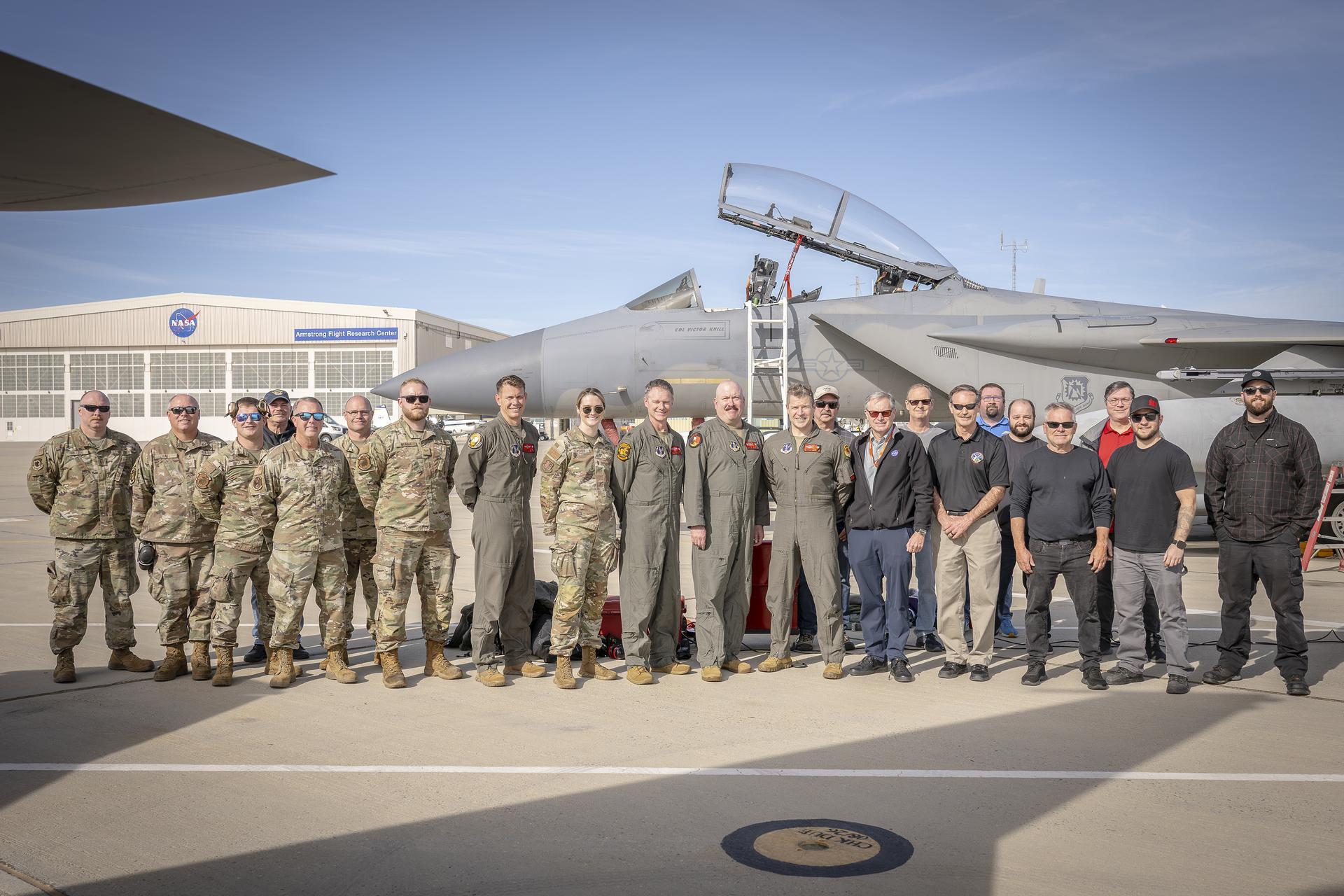
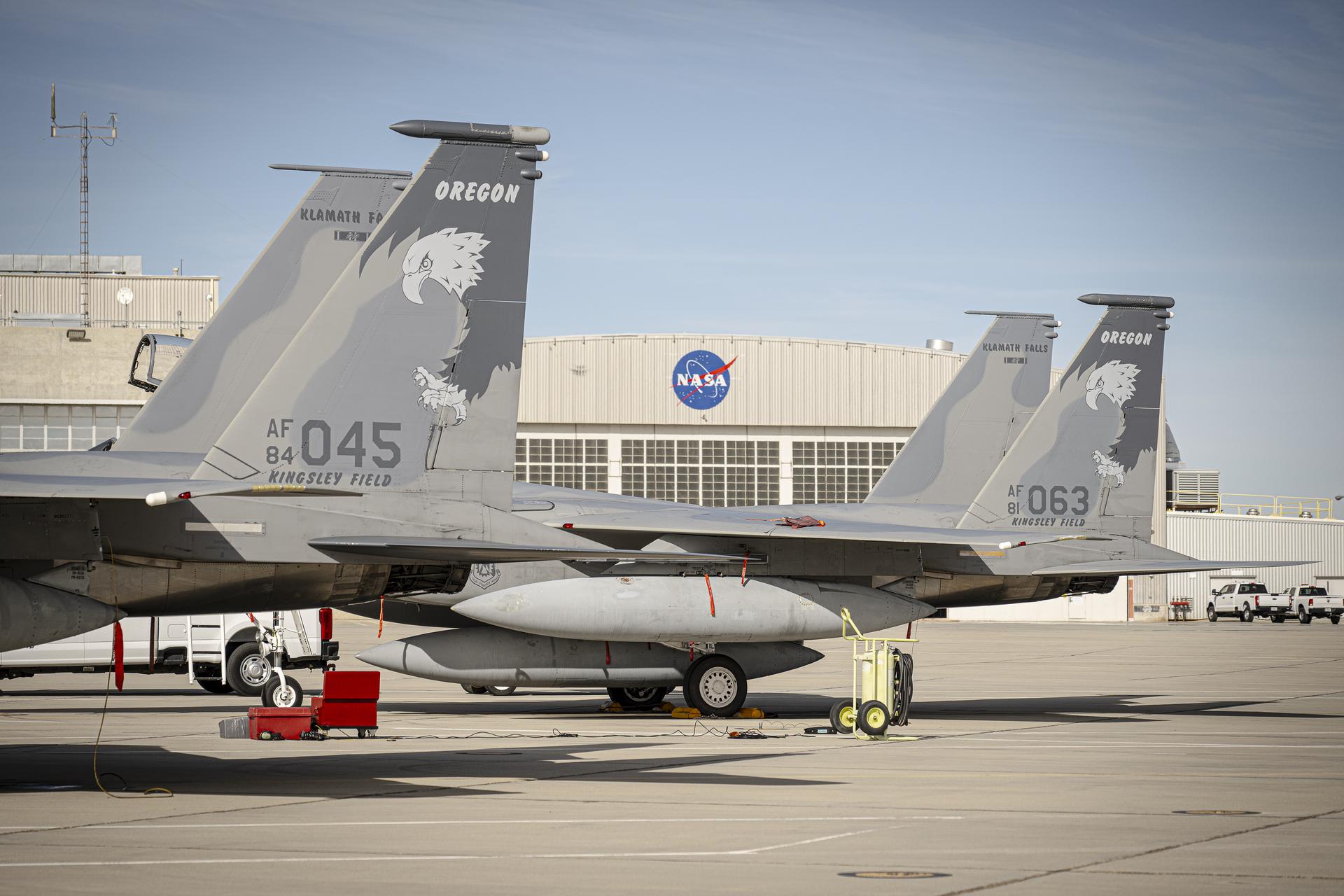
Two NASA F-15 aircraft sit on the ramp at NASA's Armstrong Flight Research Center, in Edwards, California, ahead of dual F-15 flights that validated the integration of three tools – the Airborne Schlieren Photography System (ASPS), the Airborne Location Integrating Geospatial Navigation System (ALIGNS), and shock-sensing probe. Together these tools will measure and visualize the shock waves generated by NASA's X-59.
NASA F-15s Ready for Dual Ship Flights