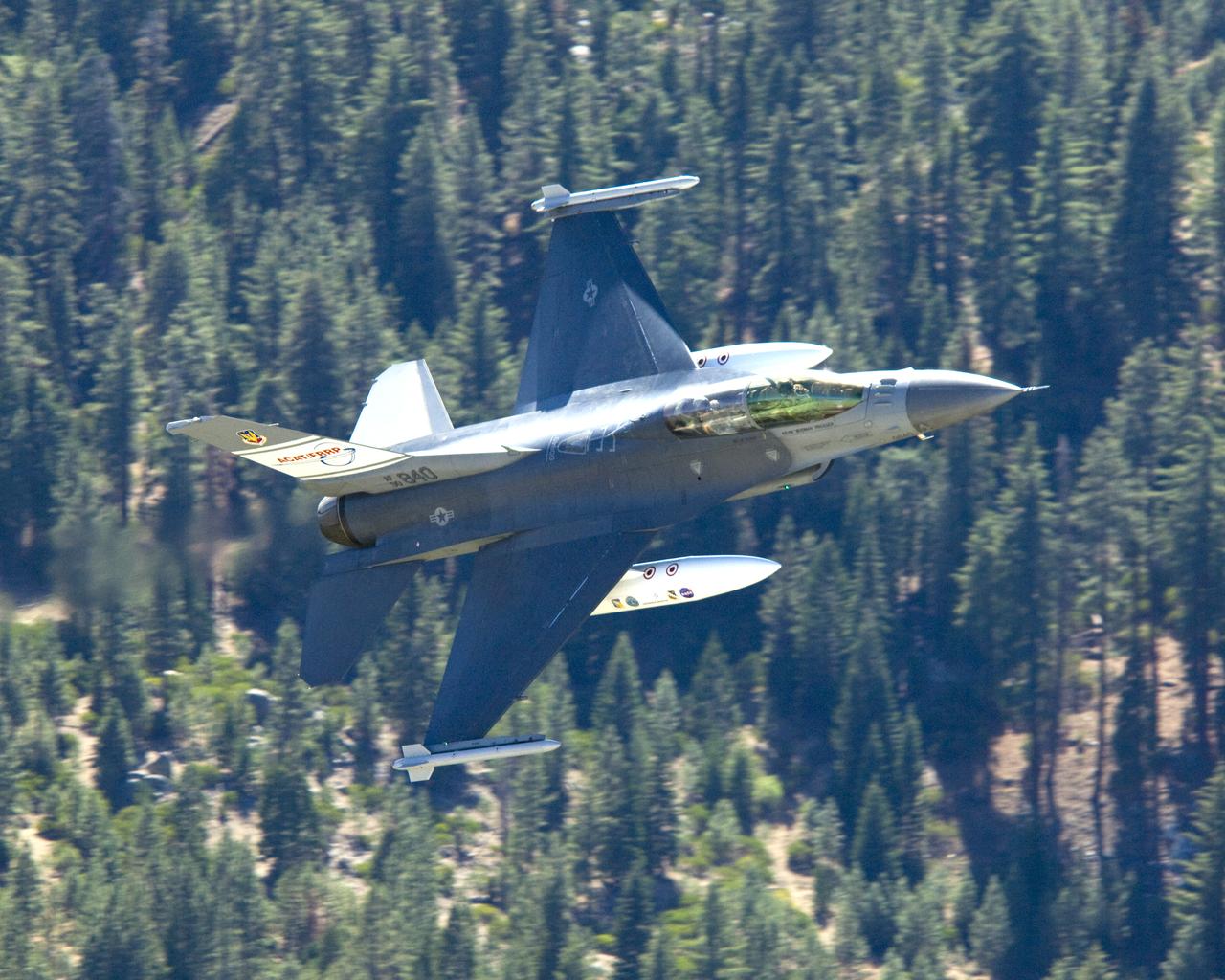
The F-16D Automatic Collision Avoidance Technology aircraft tests of the Automatic Ground Collision Avoidance System, or Auto-GCAS, included flights in areas of potentially hazardous terrain, including canyons and mountains.
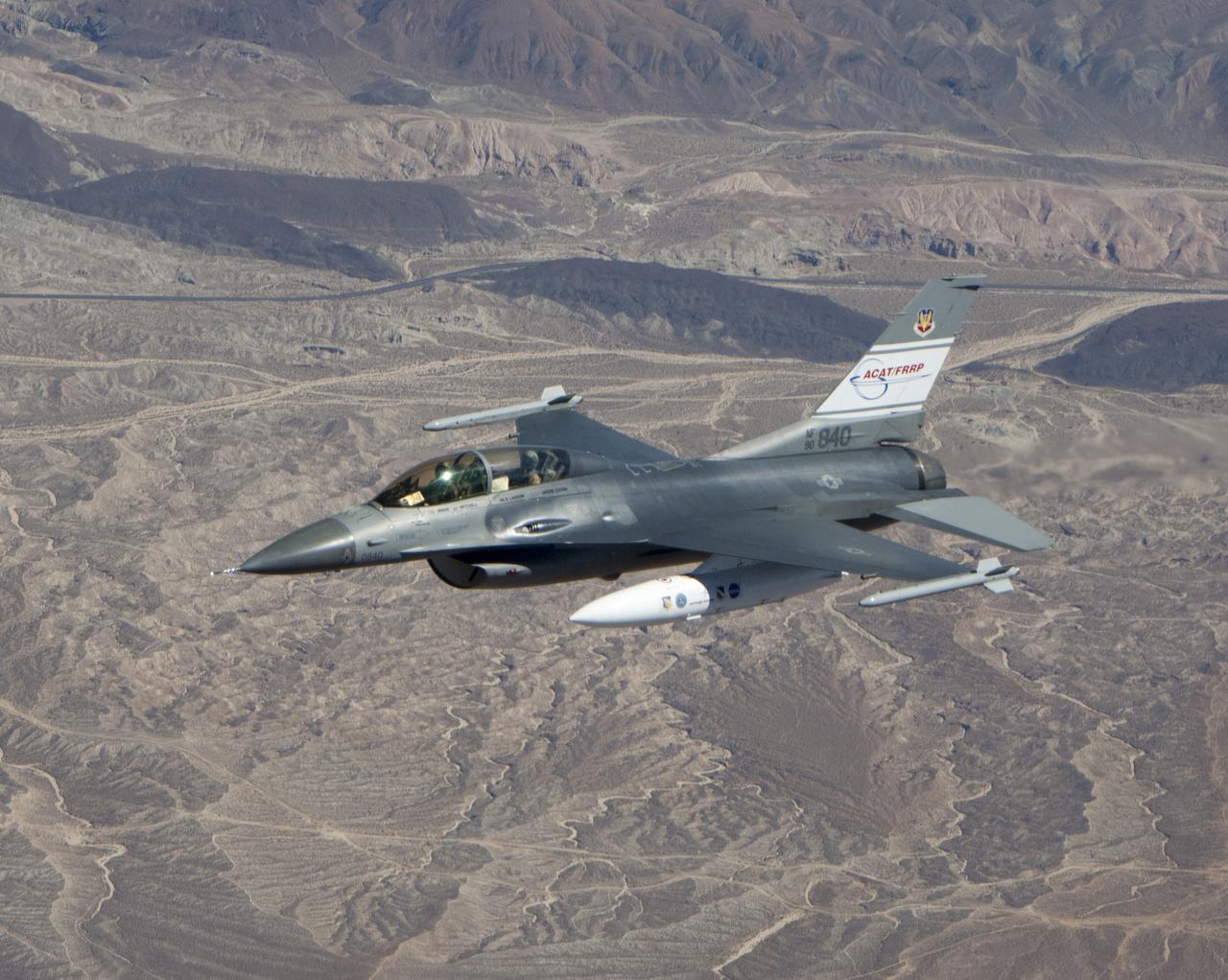
The U.S. Air Force's F-16D Automatic Collision Avoidance Technology, or ACAT, aircraft was used by NASA's Armstrong Flight Research Center and the Air Force Research Laboratory to develop and test collision avoidance technologies.
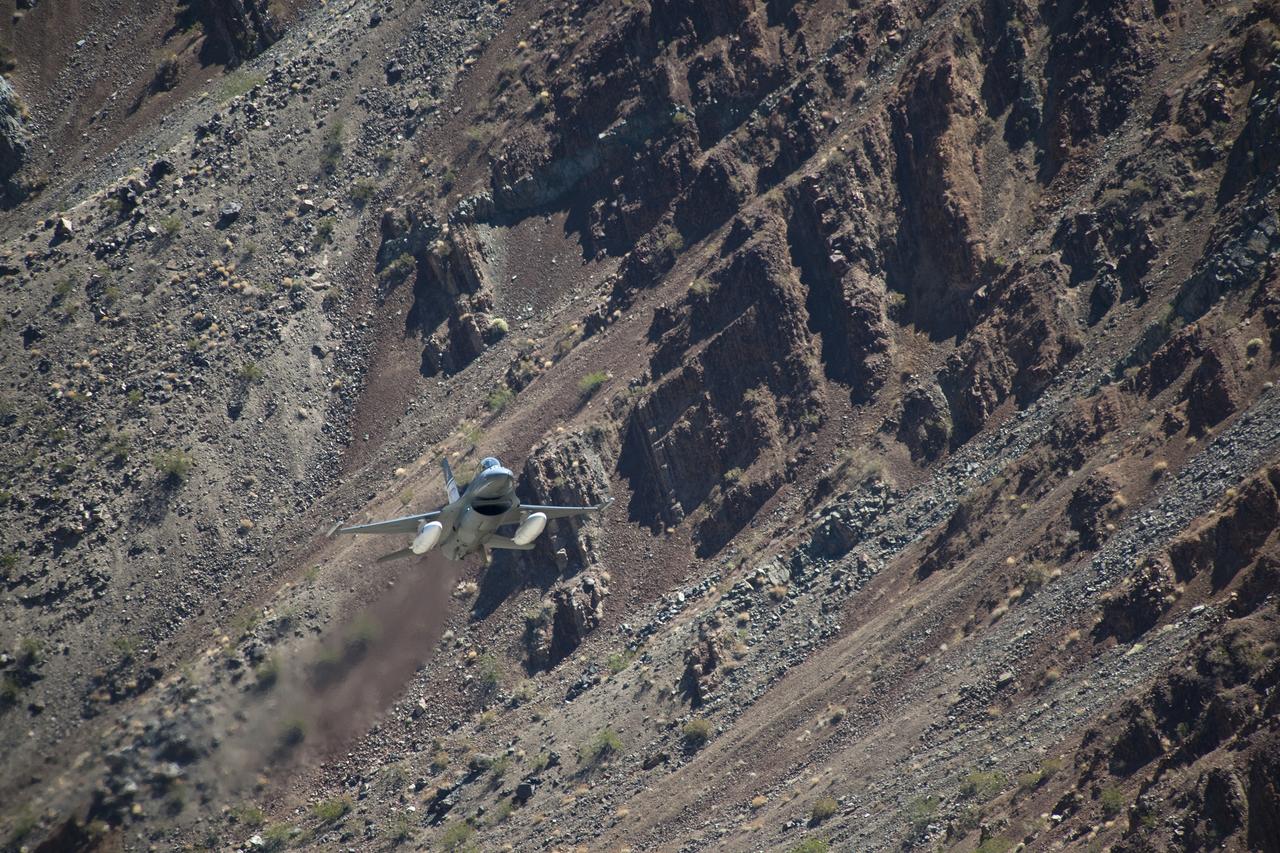
The Air Force F-16D Automatic Collision Avoidance Technology aircraft flew at low levels above the Sierra Nevada Mountains to test the ACAT Fighter Risk Reduction Project to develop collision avoidance technologies for aircraft, to reduce the risk of ground collisions.
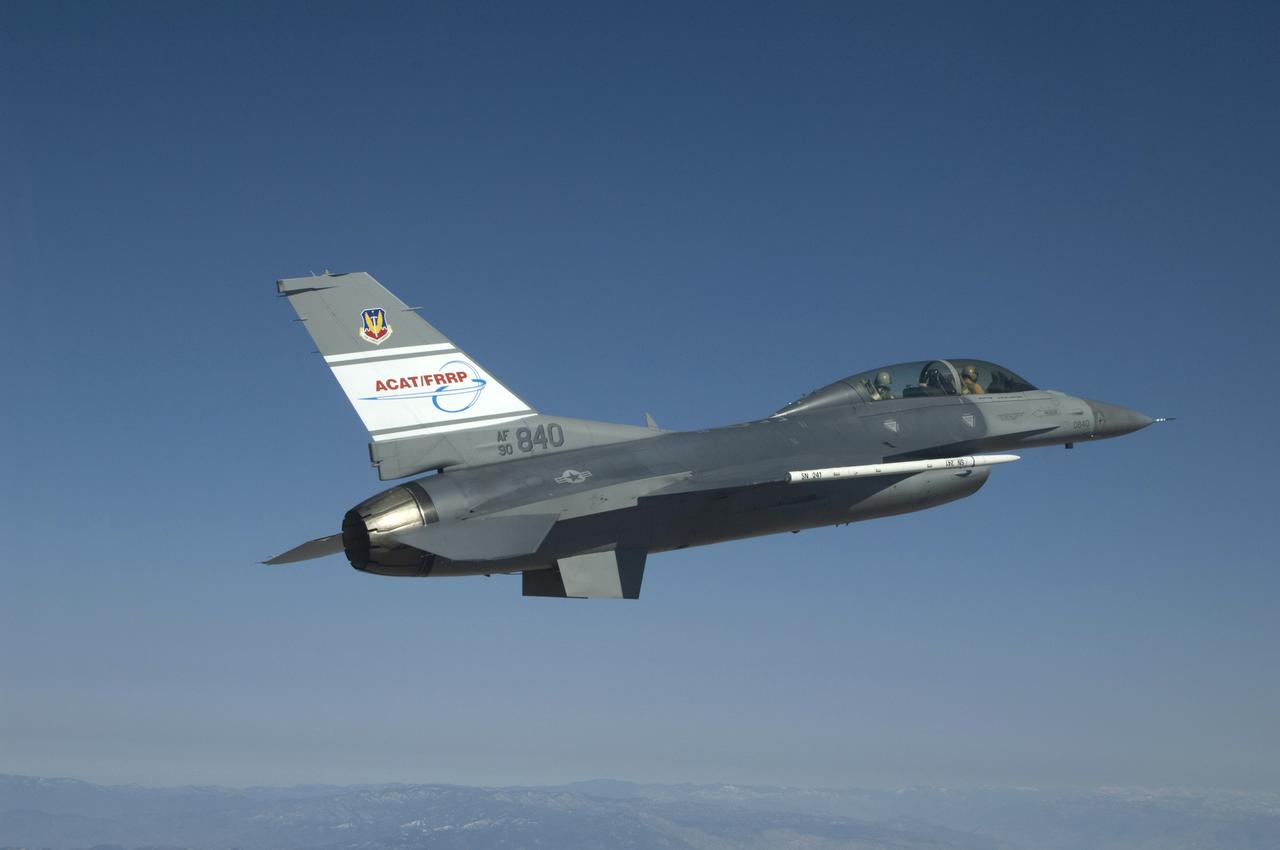
The U.S. Air Force's F-16D Automatic Collision Avoidance Technology (ACAT) aircraft cruises during a flight originating from NASA's Dryden Flight Research Center. NASA Dryden worked with the Air Force Research Laboratory in the ACAT Fighter Risk Reduction Project to develop collision avoidance technologies for fighter/attack aircraft that would reduce the risk of ground and mid-air collisions.
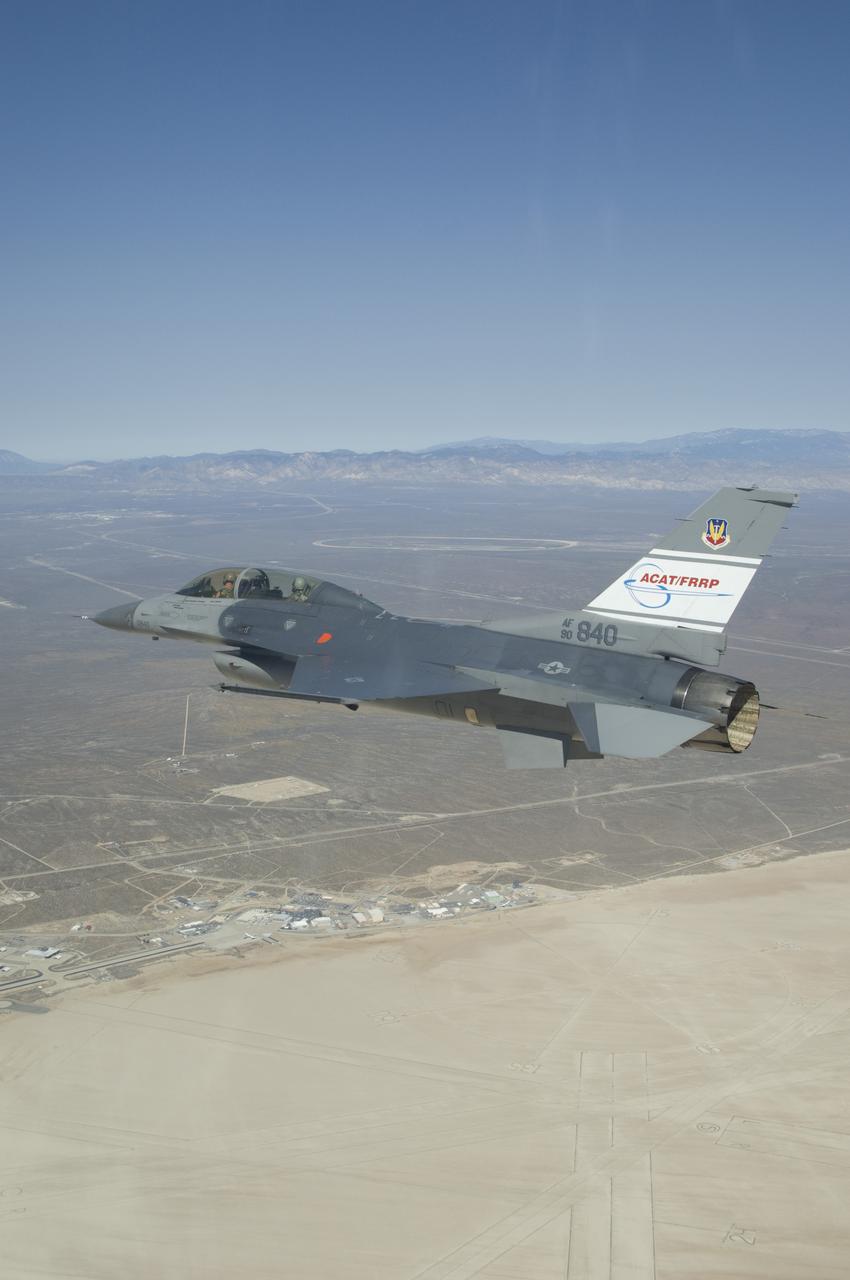
The U.S. Air Force's F-16D Automatic Collision Avoidance Technology (ACAT) aircraft flies over Rogers Dry Lake at Edwards Air Force Base, CA. NASA's Dryden Flight Research Center worked with the Air Force Research Laboratory in the ACAT Fighter Risk Reduction Project to develop collision avoidance technologies for fighter/attack aircraft that would reduce the risk of ground and mid-air collisions.

The U.S. Air Force's F-16D Automatic Collision Avoidance Technology (ACAT) aircraft banks over NASA's Dryden Flight Research Center during a flight in March 2009. NASA Dryden worked with the Air Force Research Laboratory in the ACAT Fighter Risk Reduction Project to develop collision avoidance technologies for fighter/attack aircraft that would reduce the risk of ground and mid-air collisions.
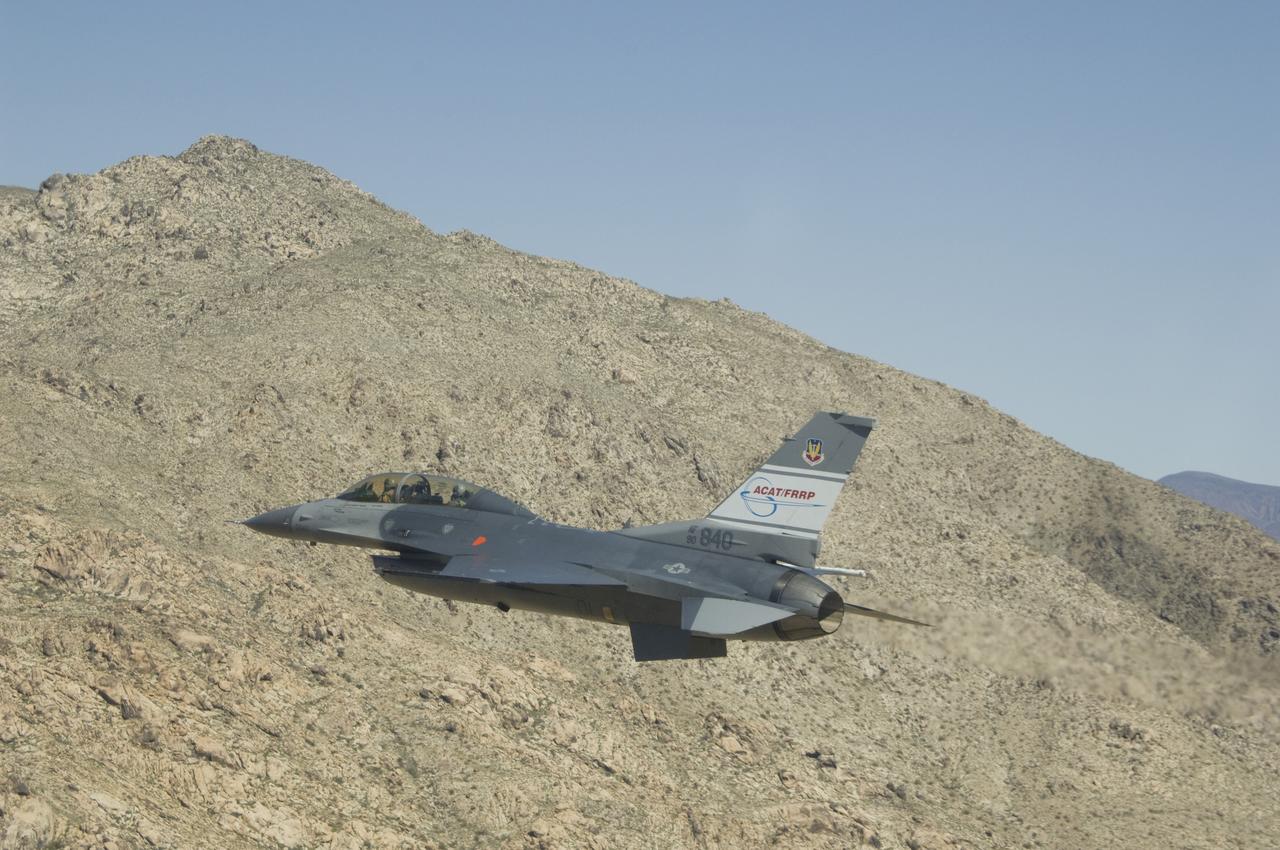
The U.S. Air Force's F-16D Automatic Collision Avoidance Technology (ACAT) aircraft crew takes a close look at a Mojave Desert hill during a March 2009 flight. NASA's Dryden Flight Research Center worked with the Air Force Research Laboratory in the ACAT Fighter Risk Reduction Project to develop collision avoidance technologies for fighter/attack aircraft that would reduce the risk of ground and mid-air collisions.
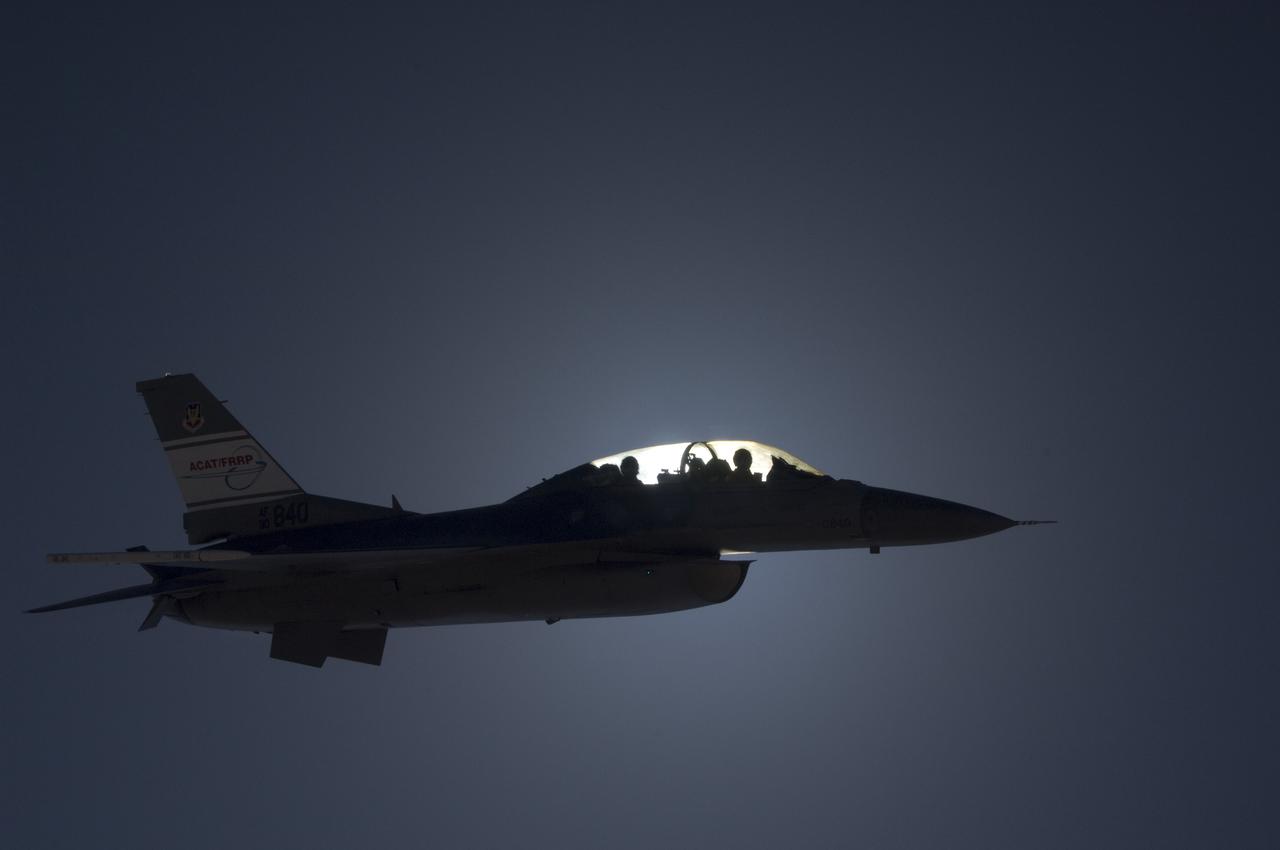
The U.S. Air Force's F-16D Automatic Collision Avoidance Technology (ACAT) aircraft eclipsed the sun during a flight in March 2009. NASA's Dryden Flight Research Center worked with the Air Force Research Laboratory in the ACAT Fighter Risk Reduction Project to develop collision avoidance technologies for fighter/attack aircraft that would reduce the risk of ground and mid-air collisions.
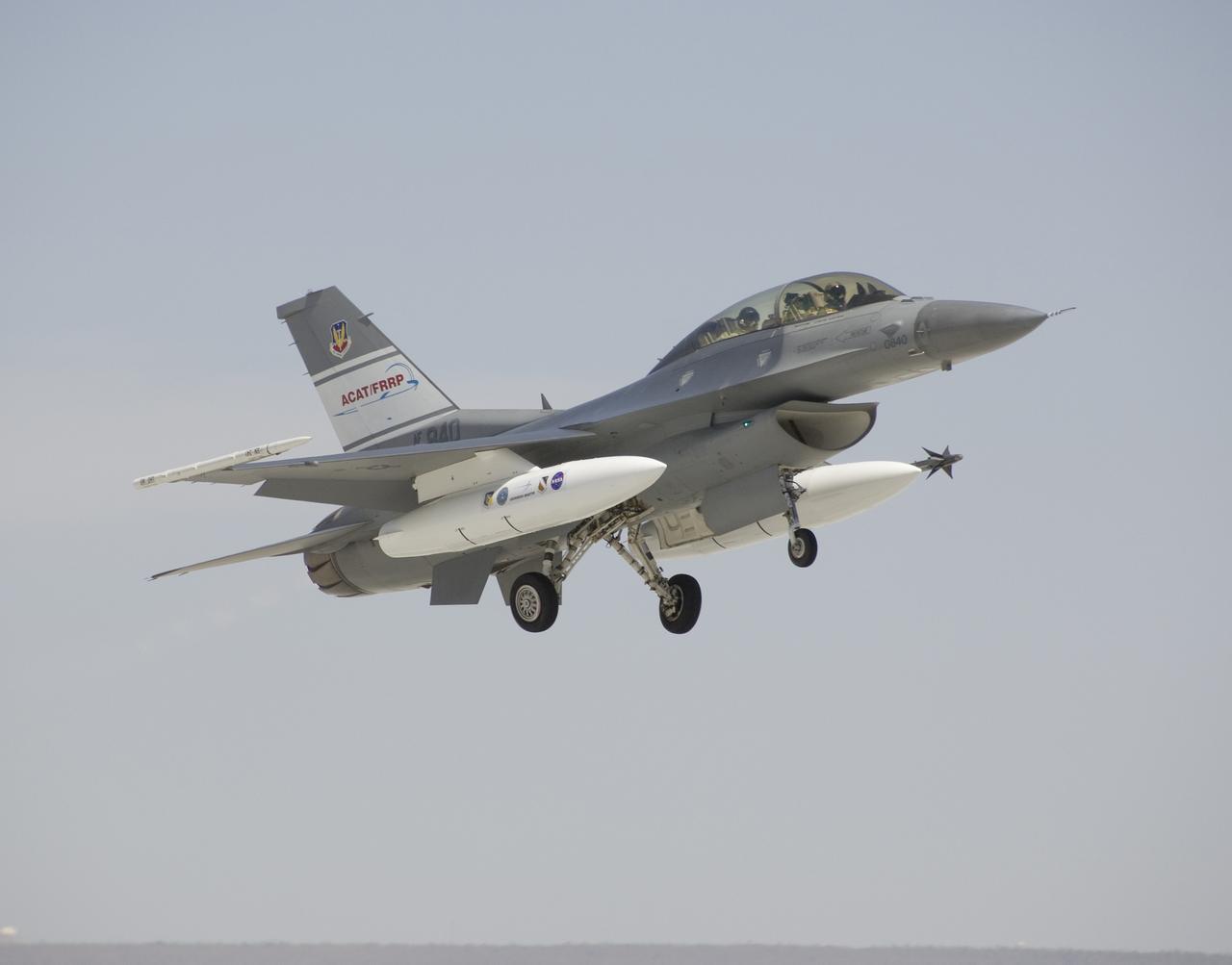
The U.S. Air Force's F-16D Automatic Collision Avoidance Technology (ACAT) aircraft takes off from Edwards Air Force Base on a flight originating from NASA's Dryden Flight Research Center. NASA Dryden worked with the Air Force Research Laboratory in the ACAT Fighter Risk Reduction Project to develop collision avoidance technologies for fighter/attack aircraft that would reduce the risk of ground and mid-air collisions.
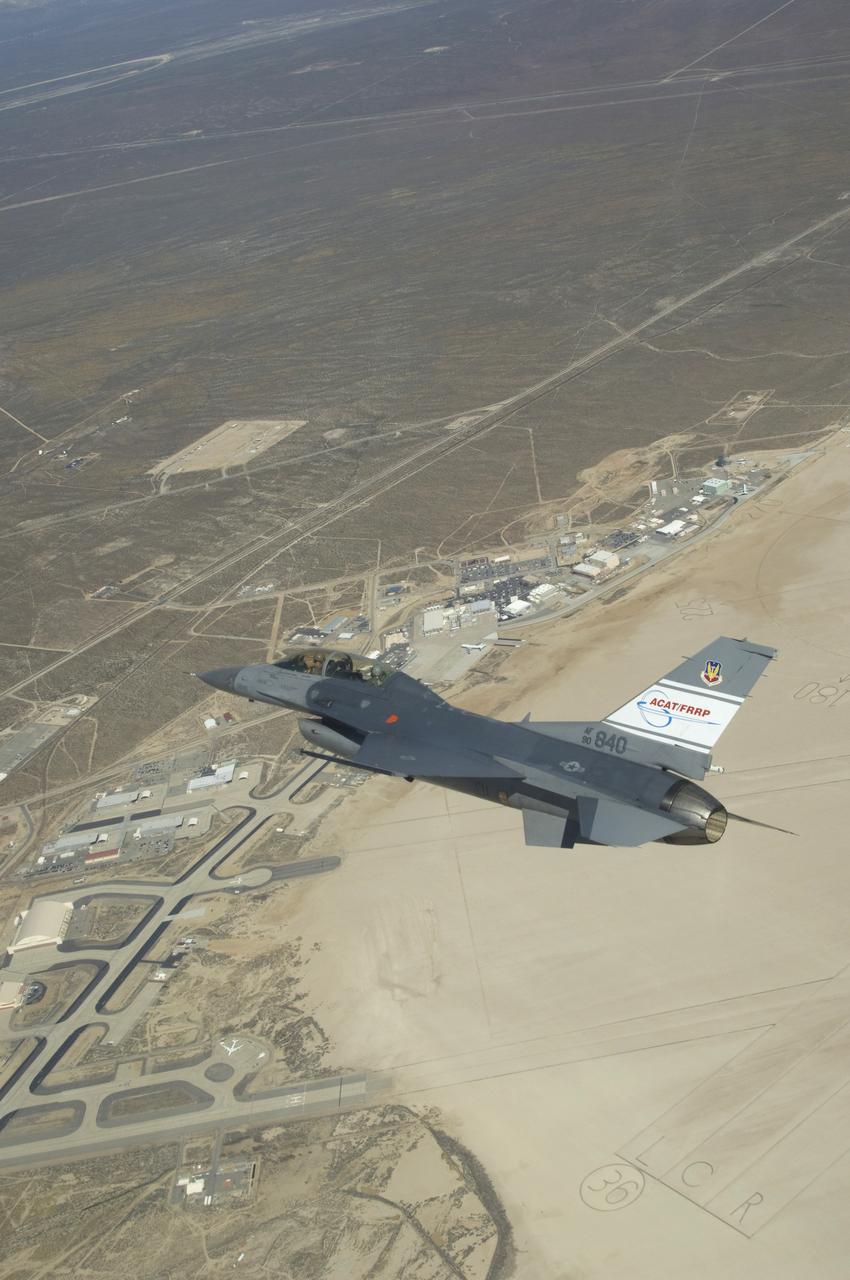
The U.S. Air Force's F-16D Automatic Collision Avoidance Technology (ACAT) aircraft banks over NASA's Dryden Flight Research Center during a March 2009 flight. NASA Dryden worked with the Air Force Research Laboratory in the ACAT Fighter Risk Reduction Project to develop collision avoidance technologies for fighter/attack aircraft that would reduce the risk of ground and mid-air collisions.
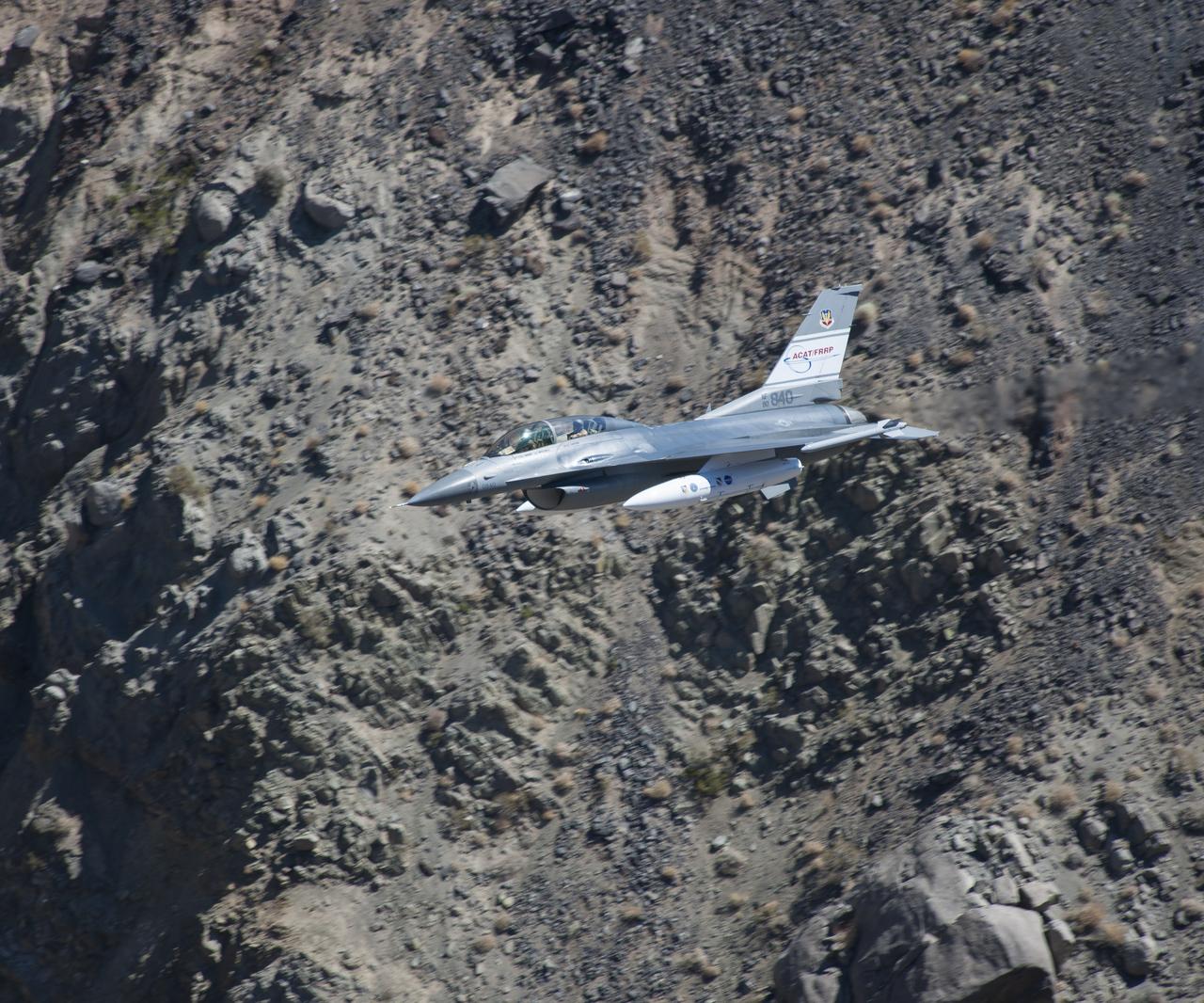
The U.S. Air Force F-16D Automatic Collision Avoidance Technology aircraft flew at low levels above the Sierra Nevada Mountains to test the ACAT Fighter Risk Reduction project. The goal was to develop collision avoidance technologies for aircraft to reduce the risk of ground collisions. Such systems on U.S. Air Force aircraft have resulted in saving eight lives and seven aircraft.
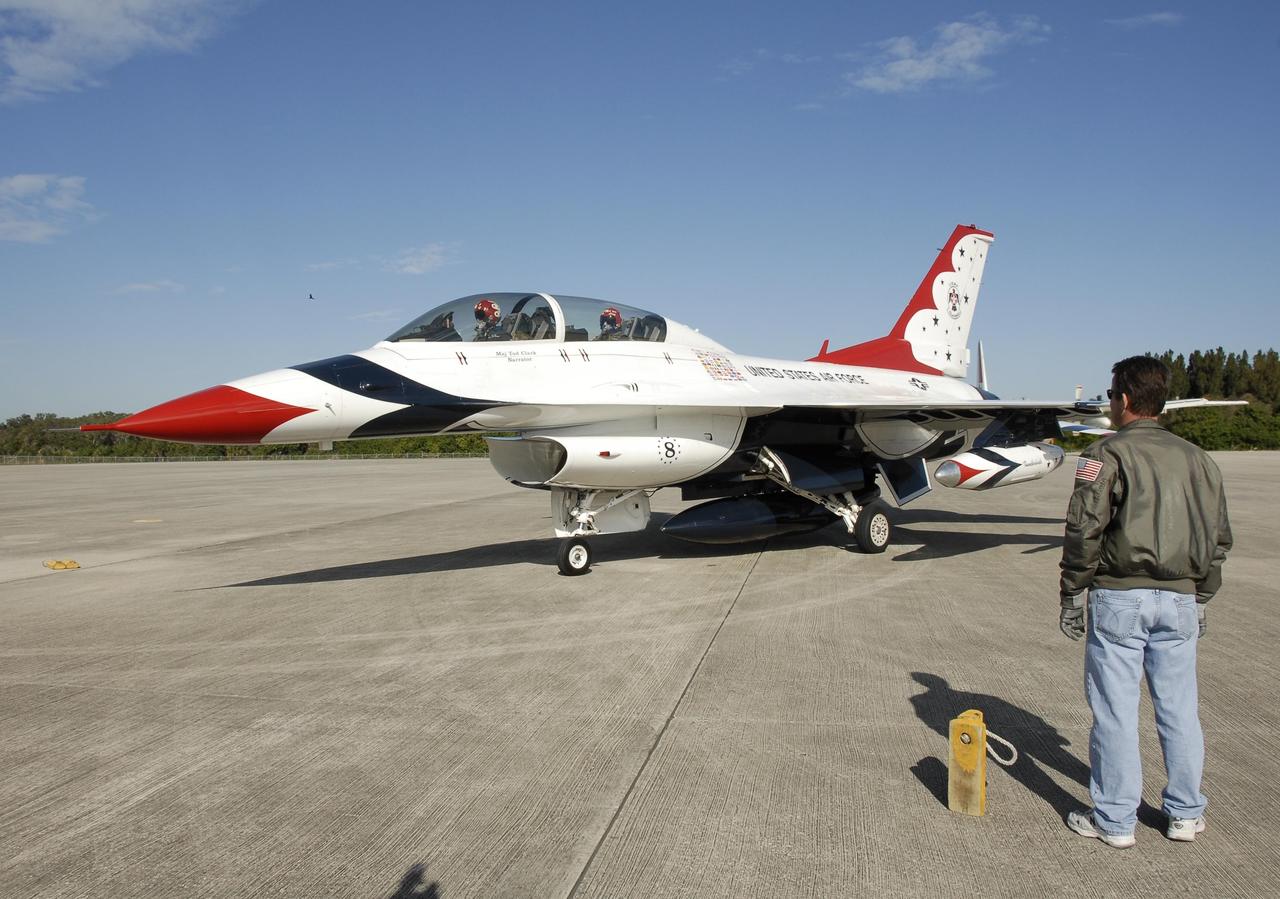
KENNEDY SPACE CENTER, FLA. -- A U.S. Air Force Thunderbird F-16D aircraft comes to a stop at the Kennedy Space Center Shuttle Landing Facility. The pilot is Maj. Tad Clark, who announced to waiting media that Kennedy Space Center Visitor Complex will host the inaugural World Space Expo from Nov. 3 to 11. The Expo, which will feature an aerial salute by the Thunderbirds on its opening weekend, will create one of the largest displays of space artifacts, hardware and personalities ever assembled in one location with the objective to inspire, educate and engage the public by highlighting the achievements and benefits of space exploration. Photo credit: NASA/Kim Shiflett
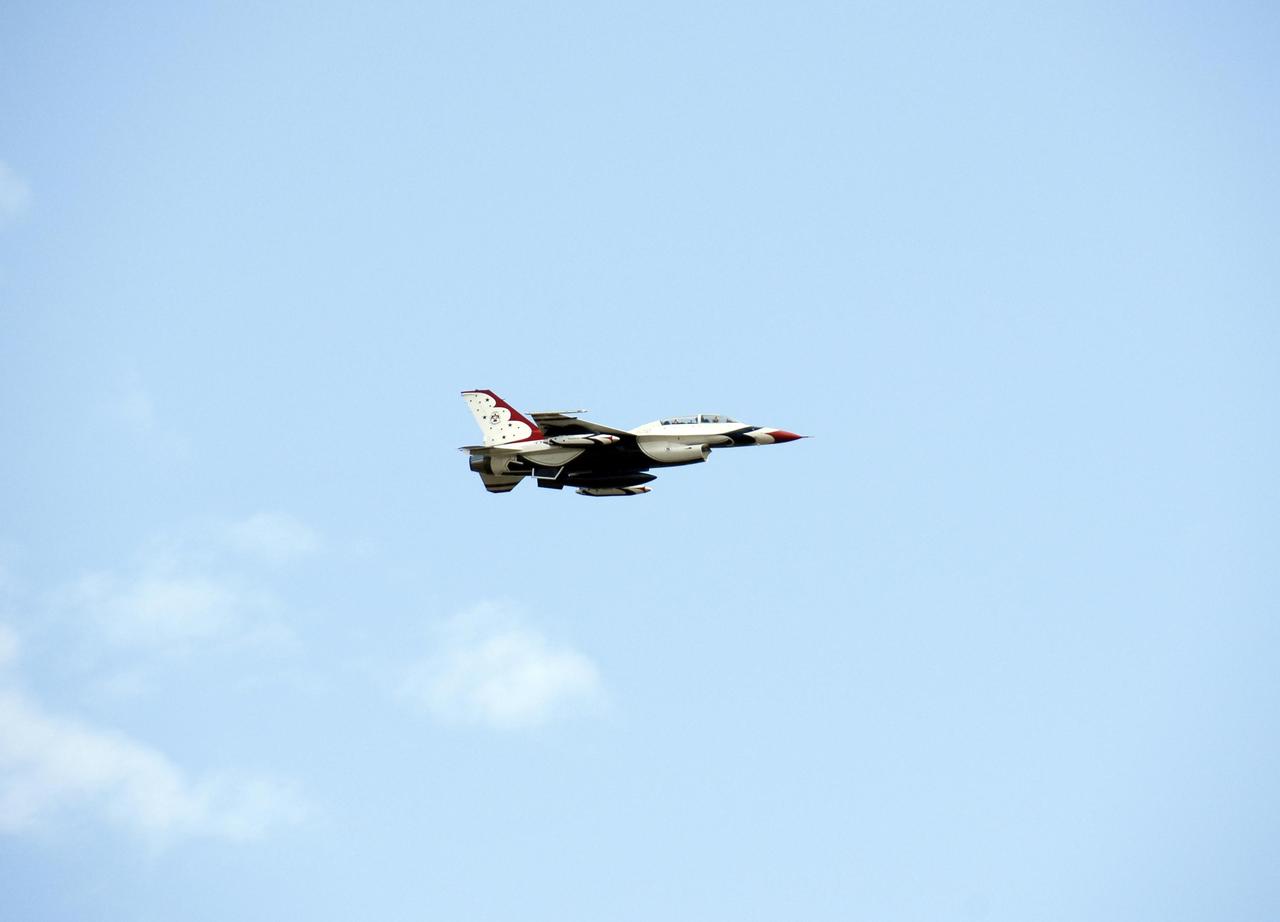
KENNEDY SPACE CENTER, FLA. -- A U.S. Air Force Thunderbird F-16D aircraft streaks through the sky over NASA's Kennedy Space Center. The pilot is Major Tad Clark, who, after landing at the Shuttle Landing Facility, announced that Kennedy Space Center Visitor Complex will host the inaugural World Space Expo from Nov. 3 to 11. The Expo, which will feature an aerial salute by the Thunderbirds on its opening weekend, will create one of the largest displays of space artifacts, hardware and personalities ever assembled in one location with the objective to inspire, educate and engage the public by highlighting the achievements and benefits of space exploration. Photo credit: NASA/Kim Shiflett

Silhouetted against the cloud-strewn sky over NASA's Kennedy Space Center, a U.S. Air Force Thunderbird F-16D aircraft displays its prowess. The pilot is Maj. Tad Clark, who, after landing at the Shuttle Landing Facility, announced that Kennedy Space Center Visitor Complex will host the inaugural World Space Expo from Nov. 3 to 11, featuring an aerial salute by the Thunderbirds on its opening weekend. The Expo will create one of the largest displays of space artifacts, hardware and personalities ever assembled in one location with the objective to inspire, educate and engage the public by highlighting the achievements and benefits of space exploration.
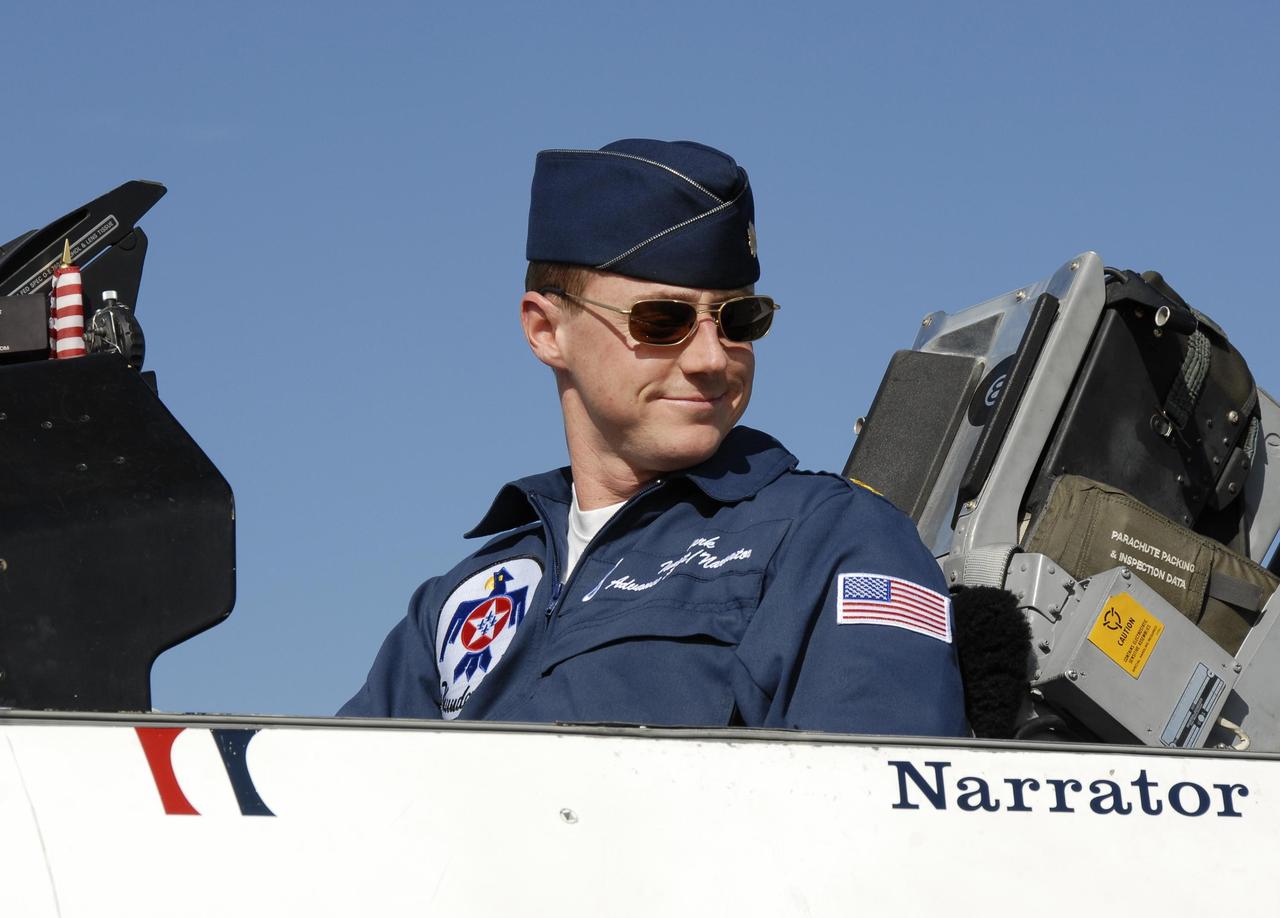
KENNEDY SPACE CENTER, FLA. -- The U.S. Air Force Thunderbird F-16D pilot, Maj. Tad Clark, has arrived at the Kennedy Space Center Shuttle Landing Facility to announce to waiting media that Kennedy Space Center Visitor Complex will host the inaugural World Space Expo from Nov. 3 to 11. The Expo, which will feature an aerial salute by the Thunderbirds on its opening weekend, will create one of the largest displays of space artifacts, hardware and personalities ever assembled in one location with the objective to inspire, educate and engage the public by highlighting the achievements and benefits of space exploration. Photo credit: NASA/Kim Shiflett
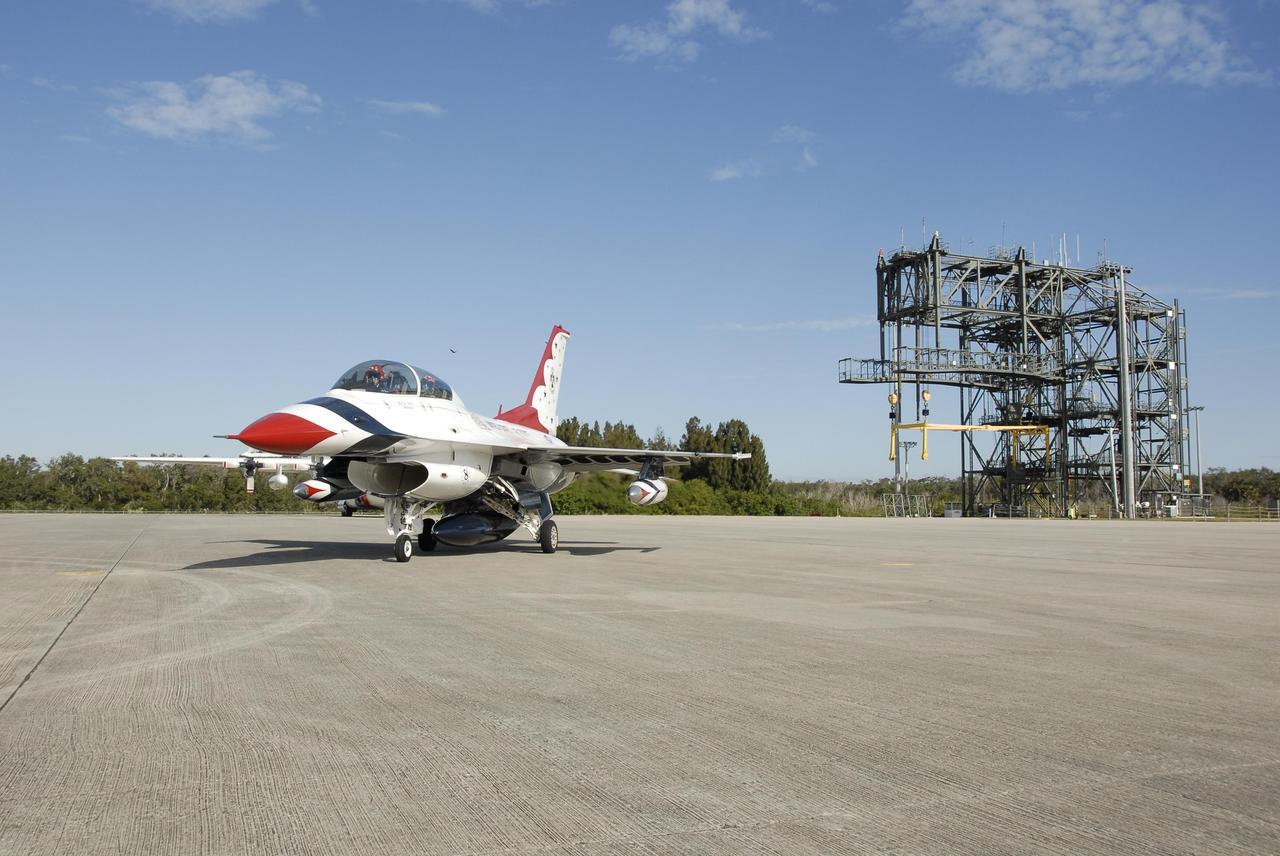
KENNEDY SPACE CENTER, FLA. -- A U.S. Air Force Thunderbird F-16D aircraft rolls to a stop at the Kennedy Space Center Shuttle Landing Facility. The pilot is Maj. Tad Clark, who announced to waiting media that Kennedy Space Center Visitor Complex will host the inaugural World Space Expo from Nov. 3 to 11. The Expo, which will feature an aerial salute by the Thunderbirds on its opening weekend, will create one of the largest displays of space artifacts, hardware and personalities ever assembled in one location with the objective to inspire, educate and engage the public by highlighting the achievements and benefits of space exploration. Photo credit: NASA/Kim Shiflett
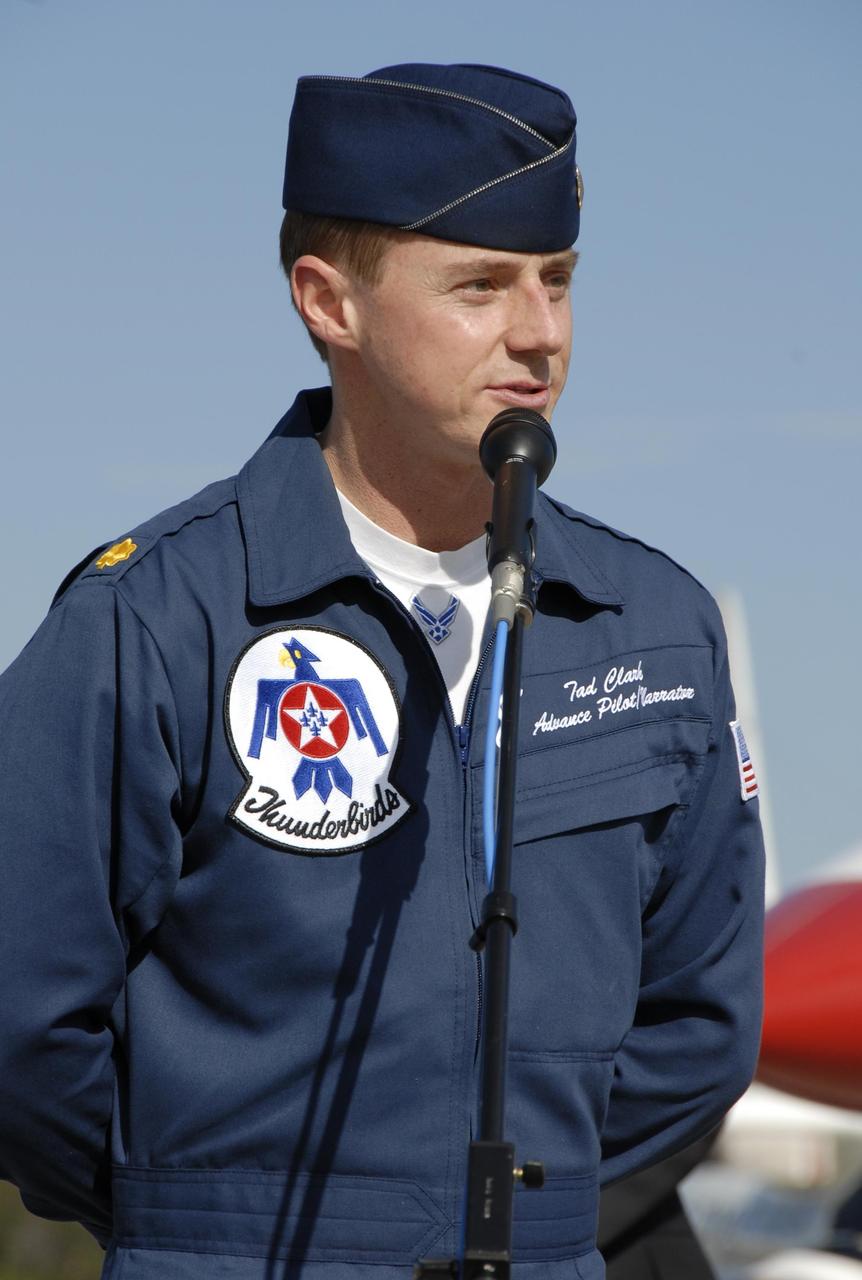
KENNEDY SPACE CENTER, FLA. -- Maj. Tad Clark, pilot of the U.S. Air Force Thunderbird F-16D (background), announces to waiting media that the KSC Visitor Complex will host the inaugural World Space Expo from Nov. 3 to 11. The Expo, which will feature an aerial salute by the Thunderbirds on its opening weekend, will create one of the largest displays of space artifacts, hardware and personalities ever assembled in one location with the objective to inspire, educate and engage the public by highlighting the achievements and benefits of space exploration. Photo credit: NASA/Kim Shiflett
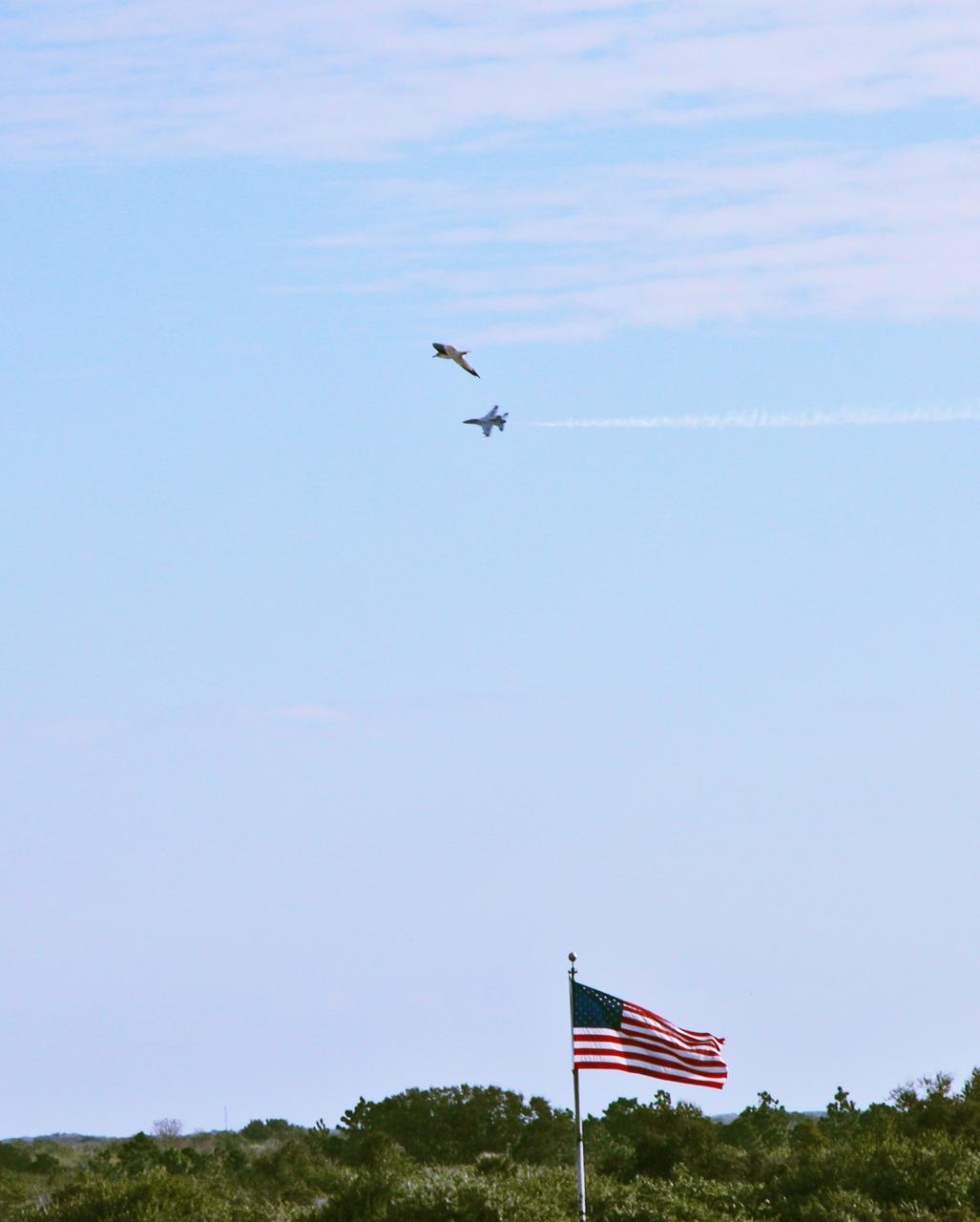
Look -- It's a bird and a plane! A U.S. Air Force Thunderbird F-16D aircraft streaks through the sky past a slower-flying stork over the NASA News Center. The pilot is Maj. Tad Clark, who, after landing at the Shuttle Landing Facility, announced that Kennedy Space Center Visitor Complex will host the inaugural World Space Expo from Nov. 3 to 11, featuring an aerial salute by the Thunderbirds on its opening weekend. The Expo will create one of the largest displays of space artifacts, hardware and personalities ever assembled in one location with the objective to inspire, educate and engage the public by highlighting the achievements and benefits of space exploration.
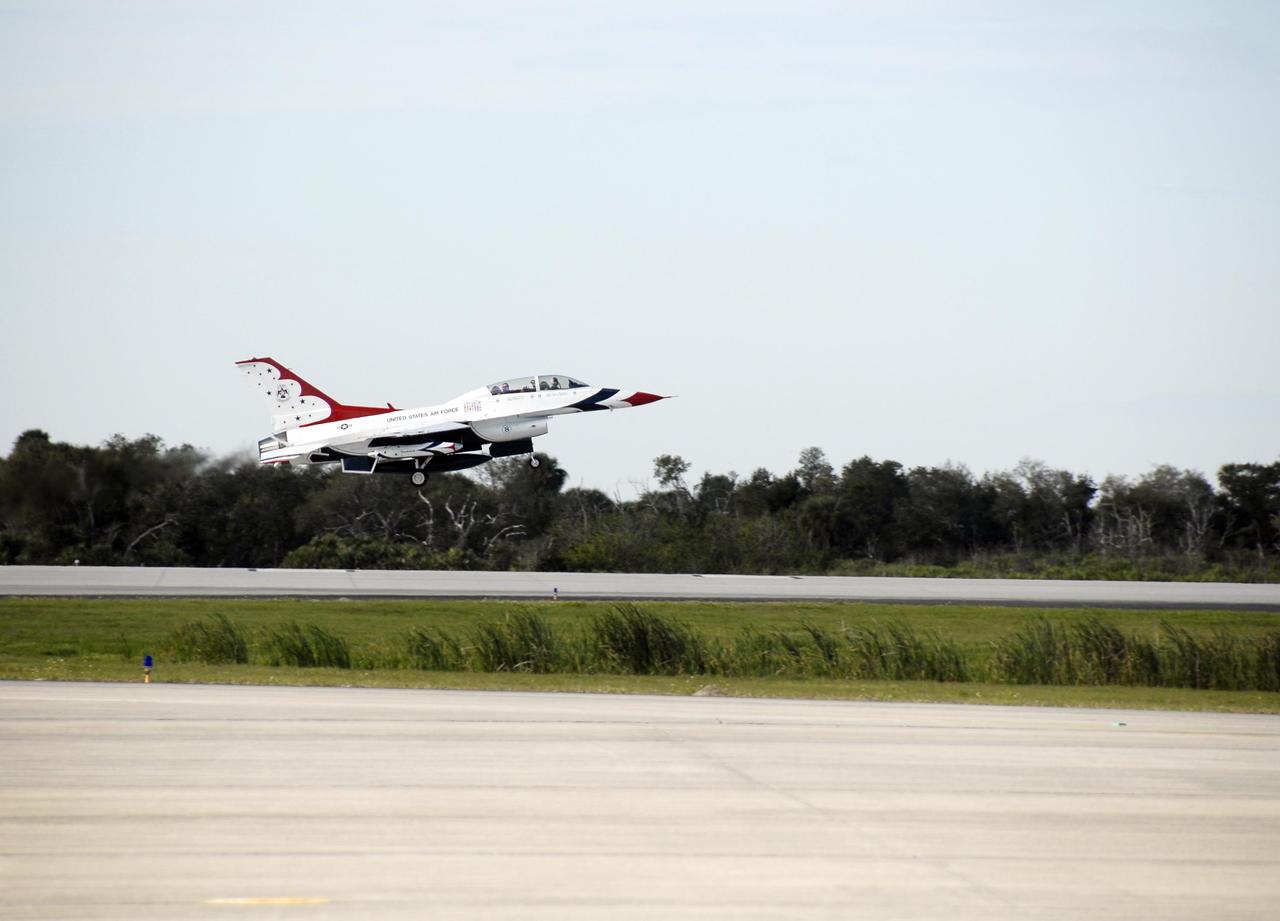
KENNEDY SPACE CENTER, FLA. -- A U.S. Air Force Thunderbird F-16D aircraft approaches the runway at the Kennedy Space Center Shuttle Landing Facility. The pilot is Maj. Tad Clark, who announced to waiting media that Kennedy Space Center Visitor Complex will host the inaugural World Space Expo from Nov. 3 to 11. The Expo, which will feature an aerial salute by the Thunderbirds on its opening weekend, will create one of the largest displays of space artifacts, hardware and personalities ever assembled in one location with the objective to inspire, educate and engage the public by highlighting the achievements and benefits of space exploration. Photo credit: NASA/Kim Shiflett
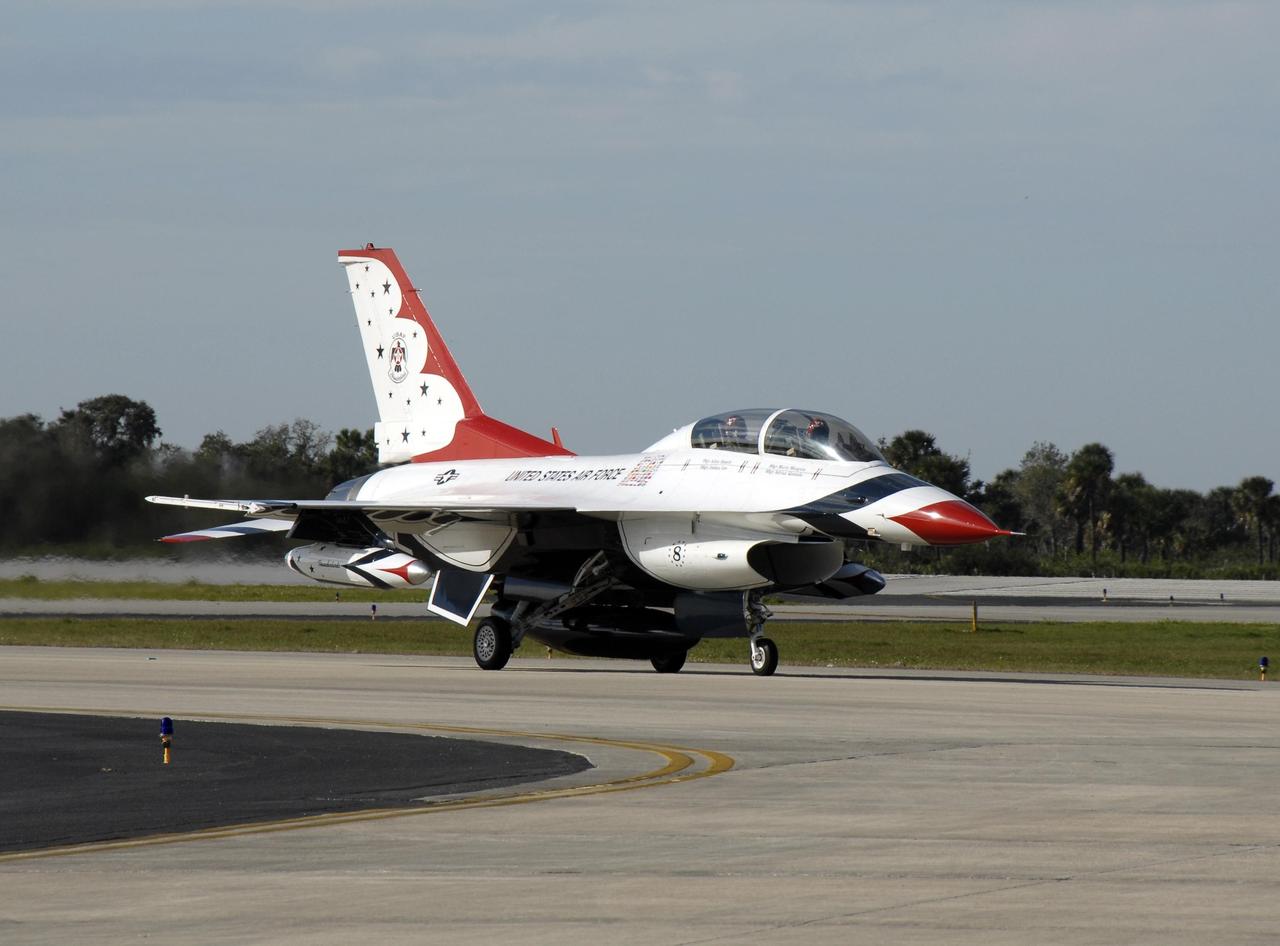
KENNEDY SPACE CENTER, FLA. -- A U.S. Air Force Thunderbird F-16D aircraft taxis down the runway at the Kennedy Space Center Shuttle Landing Facility. The pilot is Maj. Tad Clark, who announced to waiting media that Kennedy Space Center Visitor Complex will host the inaugural World Space Expo from Nov. 3 to 11. The Expo, which will feature an aerial salute by the Thunderbirds on its opening weekend, will create one of the largest displays of space artifacts, hardware and personalities ever assembled in one location with the objective to inspire, educate and engage the public by highlighting the achievements and benefits of space exploration. Photo credit: NASA/Kim Shiflett
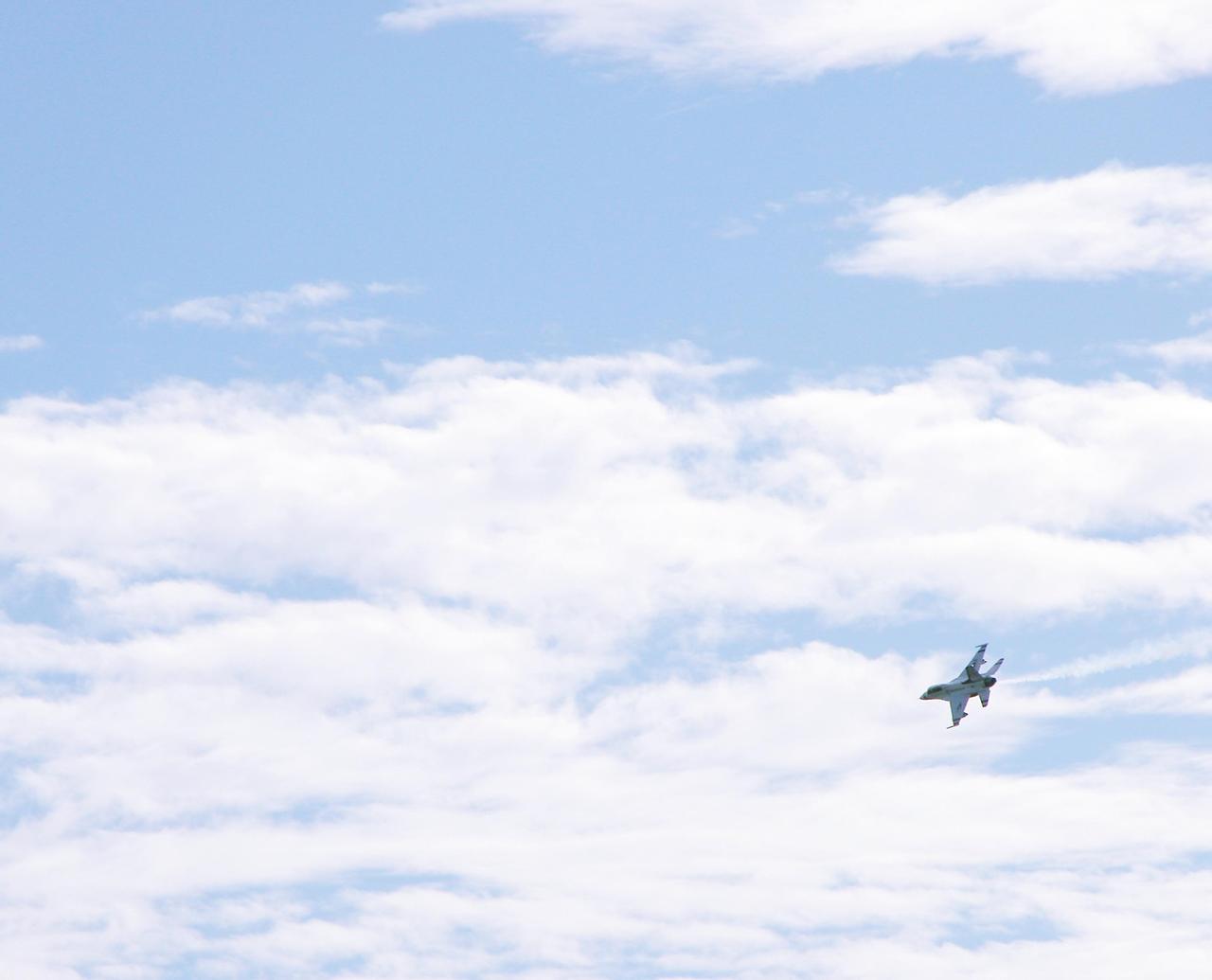
KENNEDY SPACE CENTER, FLA. -- Silhouetted against the cloud-strewn sky over NASA's Kennedy Space Center, a U.S. Air Force Thunderbird F-16D aircraft displays its prowess. The pilot is Maj. Tad Clark, who, after landing at the Shuttle Landing Facility, announced that Kennedy Space Center Visitor Complex will host the inaugural World Space Expo from Nov. 3 to 11, featuring an aerial salute by the Thunderbirds on its opening weekend. The Expo will create one of the largest displays of space artifacts, hardware and personalities ever assembled in one location with the objective to inspire, educate and engage the public by highlighting the achievements and benefits of space exploration. Photo credit: NASA/Debbi Odom
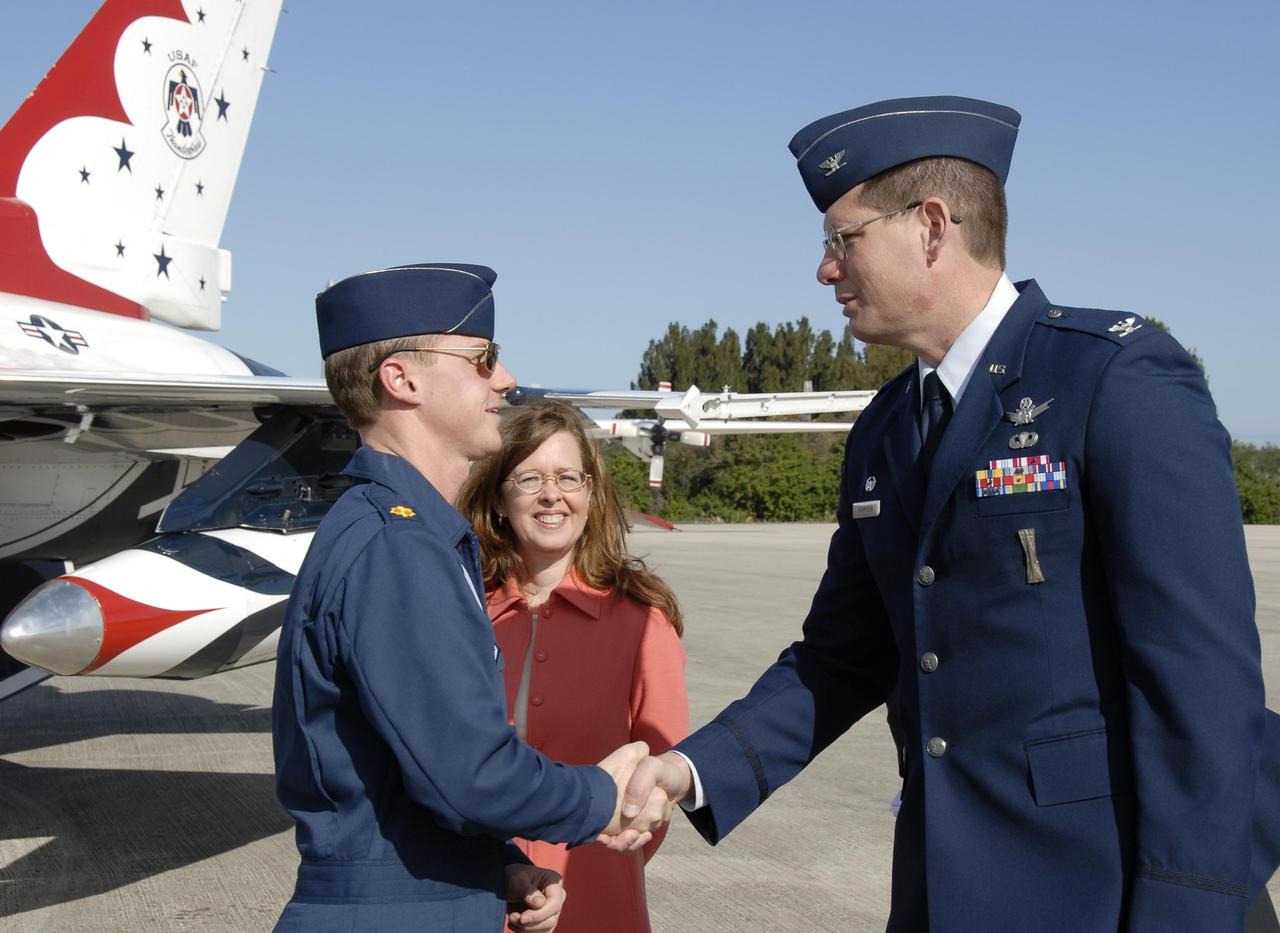
KENNEDY SPACE CENTER, FLA. -- The U.S. Air Force Thunderbird F-16D pilot Maj. Tad Clark is greeted by Col. Dave Thompson with the U.S. Air Force 45th Space Wing. Between them is Lisa Malone, director of External Relations at KSC. Clark flew in to KSC to announce to waiting media that the Visitor Complex will host the inaugural World Space Expo from Nov. 3 to 11. The Expo, which will feature an aerial salute by the Thunderbirds on its opening weekend, will create one of the largest displays of space artifacts, hardware and personalities ever assembled in one location with the objective to inspire, educate and engage the public by highlighting the achievements and benefits of space exploration. Photo credit: NASA/Kim Shiflett
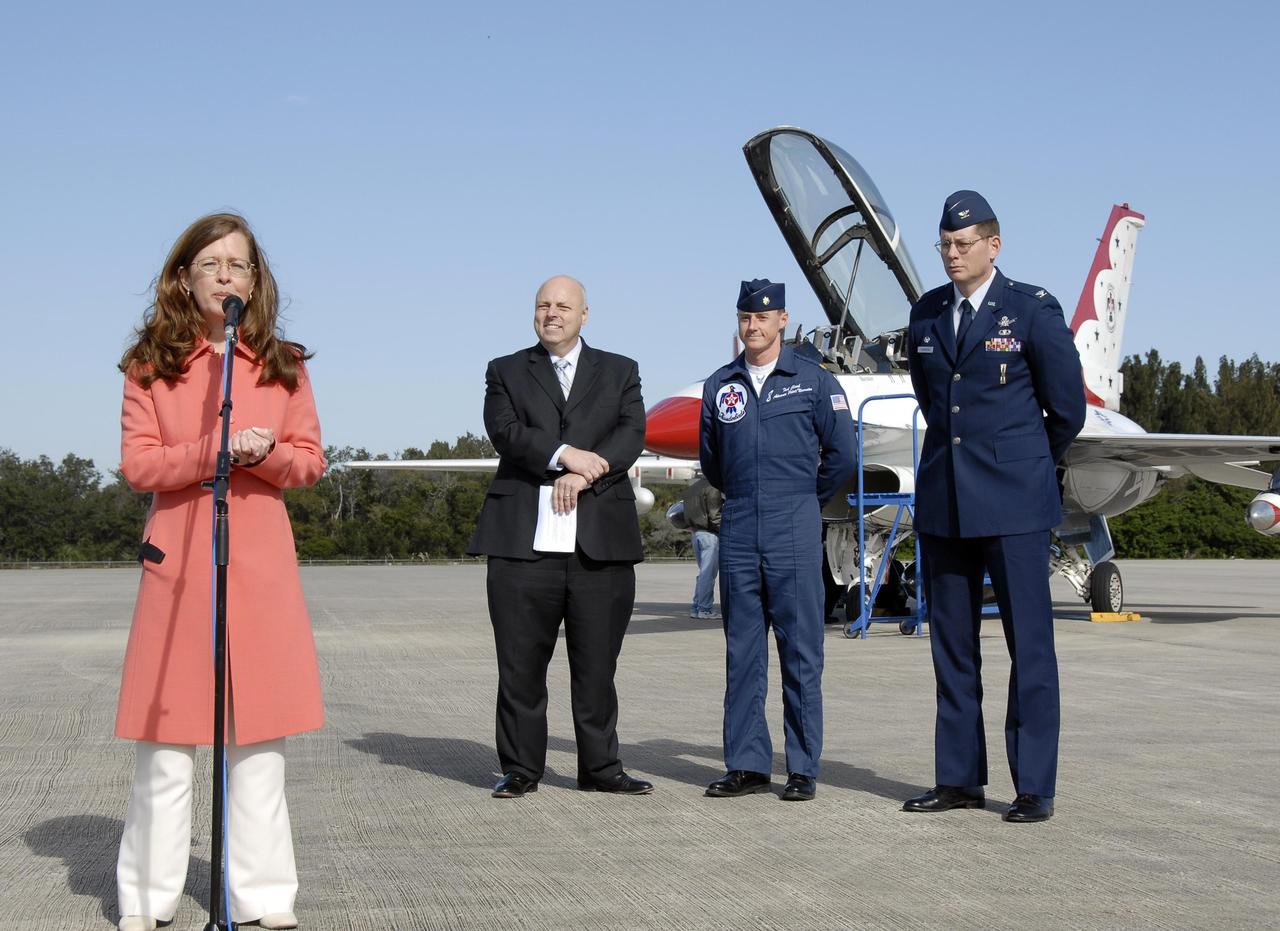
KENNEDY SPACE CENTER, FLA. -- Lisa Malone, director of External Relations at KSC, talks to the media at the KSC Shuttle Landing Facility about the arrival of Maj. Tad Clark, pilot of the U.S. Air Force Thunderbird F-16D (background). Clark flew in to KSC to announce to waiting media that the Visitor Complex will host the inaugural World Space Expo from Nov. 3 to 11. Behind Malone are (from left) Dan LeBlanc, chief operating officer of the KSC Visitor Complex, Clark, and Col. Dave Thompson with the U.S. Air Force 45th Space Wing. The Expo, which will feature an aerial salute by the Thunderbirds on its opening weekend, will create one of the largest displays of space artifacts, hardware and personalities ever assembled in one location with the objective to inspire, educate and engage the public by highlighting the achievements and benefits of space exploration. Photo credit: NASA/Kim Shiflett
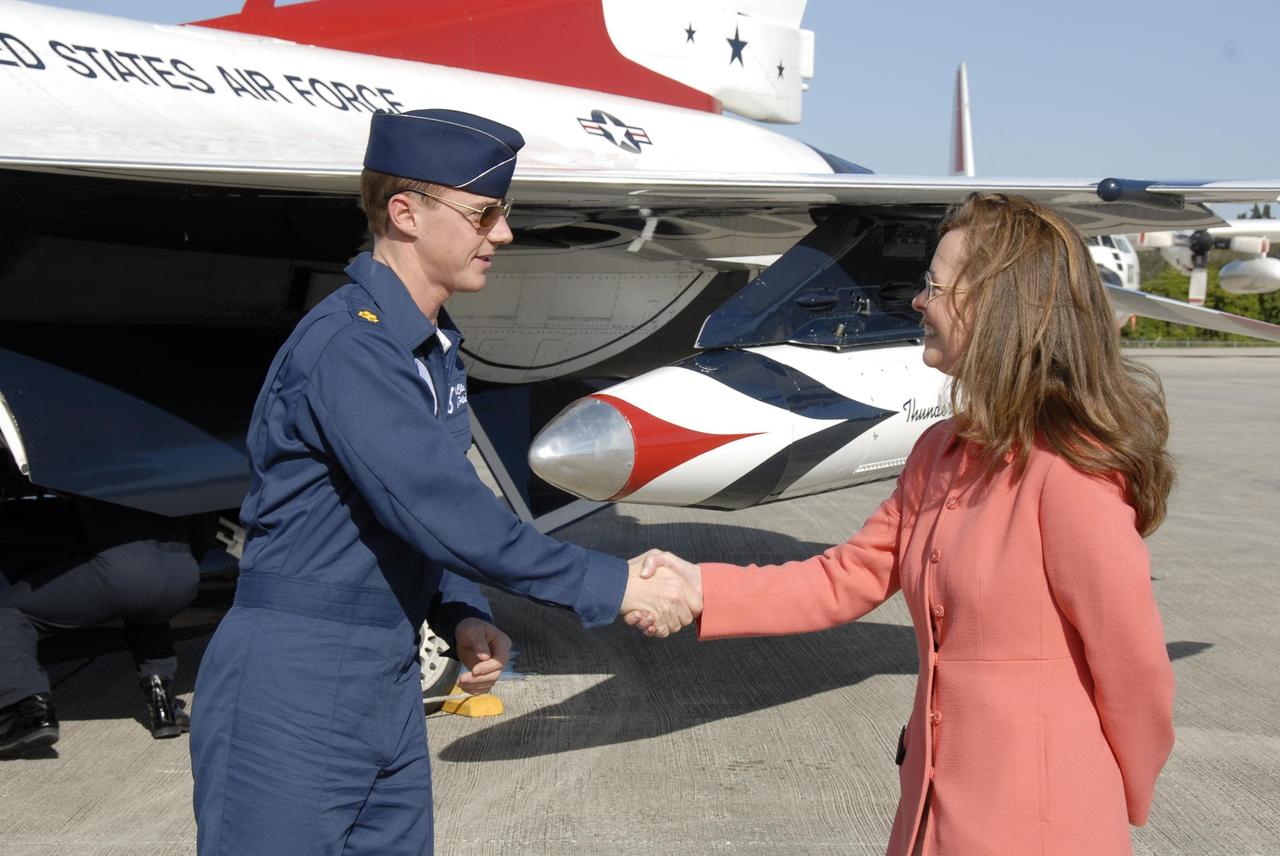
KENNEDY SPACE CENTER, FLA. -- The U.S. Air Force Thunderbird F-16D pilot Maj. Tad Clark is greeted by External Relations Director Lisa Malone after his arrival at the Kennedy Space Center Shuttle Landing Facility. Clark flew in to KSC to announce to waiting media that Kennedy Space Center Visitor Complex will host the inaugural World Space Expo from Nov. 3 to 11. The Expo, which will feature an aerial salute by the Thunderbirds on its opening weekend, will create one of the largest displays of space artifacts, hardware and personalities ever assembled in one location with the objective to inspire, educate and engage the public by highlighting the achievements and benefits of space exploration. Photo credit: NASA/Kim Shiflett
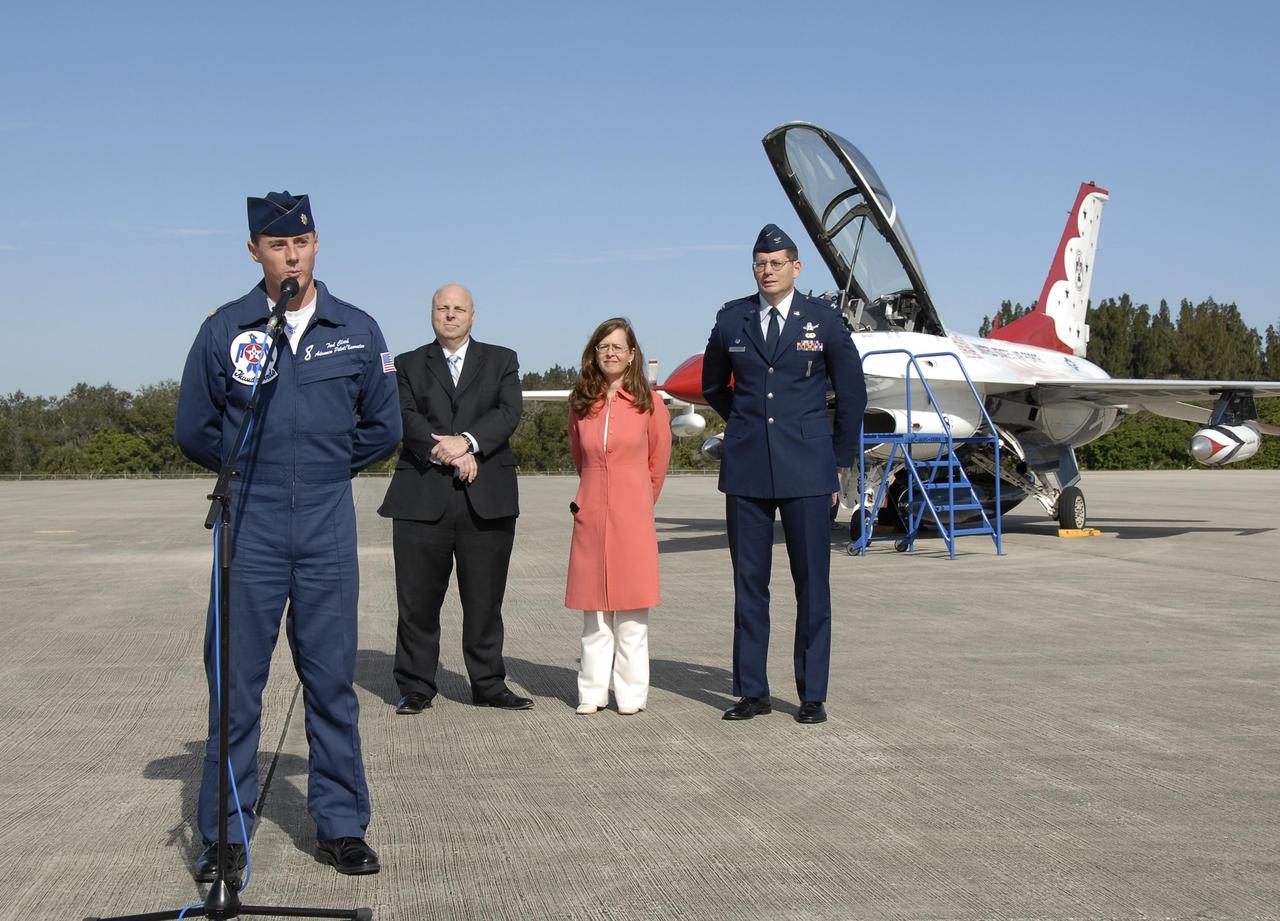
KENNEDY SPACE CENTER, FLA. -- Maj. Tad Clark, pilot of the U.S. Air Force Thunderbird F-16D (background), announces to waiting media that the KSC Visitor Complex will host the inaugural World Space Expo from Nov. 3 to 11. Behind Clark are (from left) Dan LeBlanc, chief operating officer of the KSC Visitor Complex, Lisa Malone, director of External Relations at KSC, and Col. Dave Thompson with the U.S. Air Force 45th Space Wing. The Expo, which will feature an aerial salute by the Thunderbirds on its opening weekend, will create one of the largest displays of space artifacts, hardware and personalities ever assembled in one location with the objective to inspire, educate and engage the public by highlighting the achievements and benefits of space exploration. Photo credit: NASA/Kim Shiflett
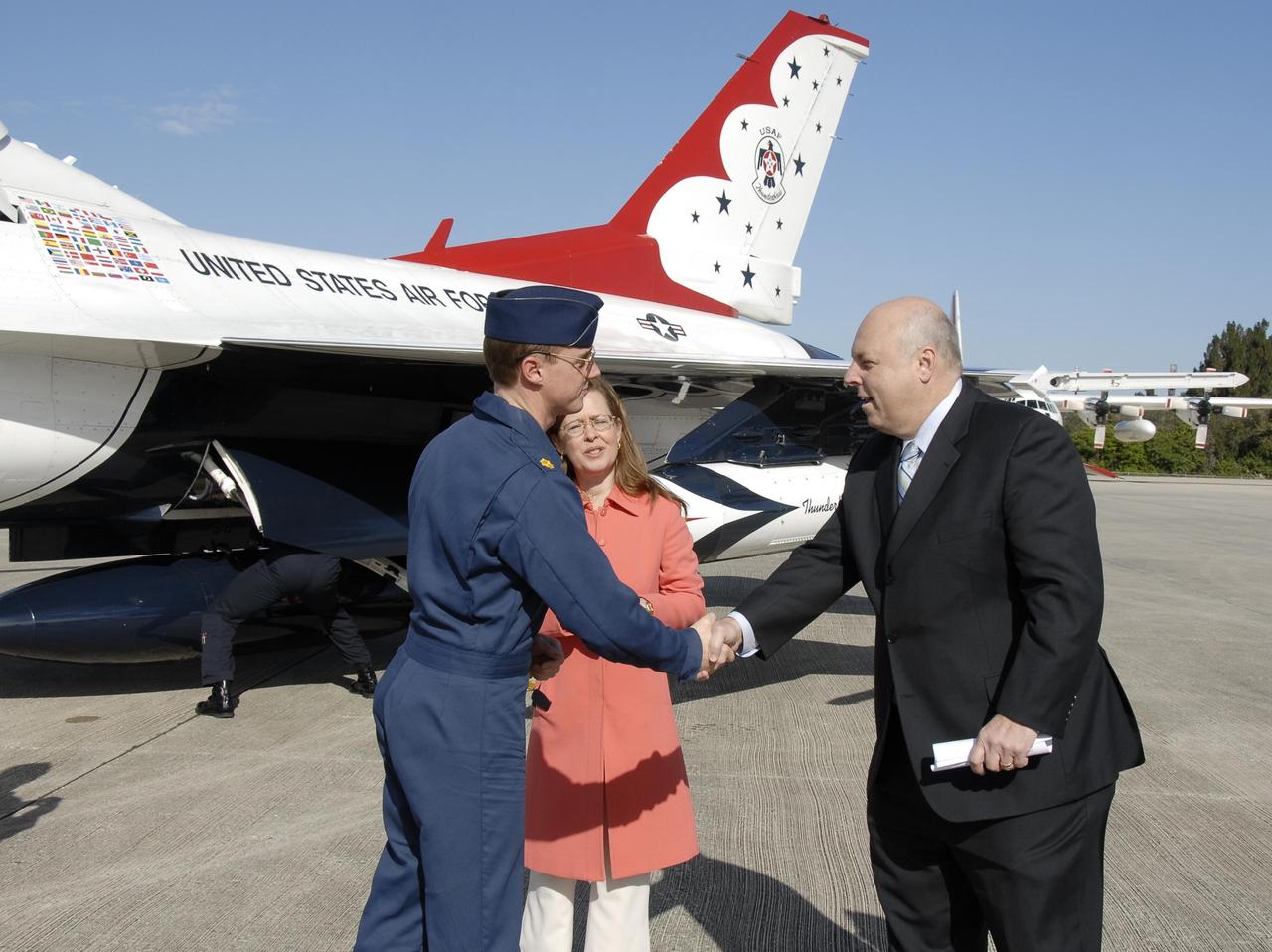
KENNEDY SPACE CENTER, FLA. -- The U.S. Air Force Thunderbird F-16D pilot Maj. Tad Clark is greeted by Dan LeBlanc, chief operating officer of the KSC Visitor Complex. Between them is Lisa Malone, director of External Relations at KSC. Clark flew in to KSC to announce to waiting media that the Visitor Complex will host the inaugural World Space Expo from Nov. 3 to 11. The Expo, which will feature an aerial salute by the Thunderbirds on its opening weekend, will create one of the largest displays of space artifacts, hardware and personalities ever assembled in one location with the objective to inspire, educate and engage the public by highlighting the achievements and benefits of space exploration. Photo credit: NASA/Kim Shiflett
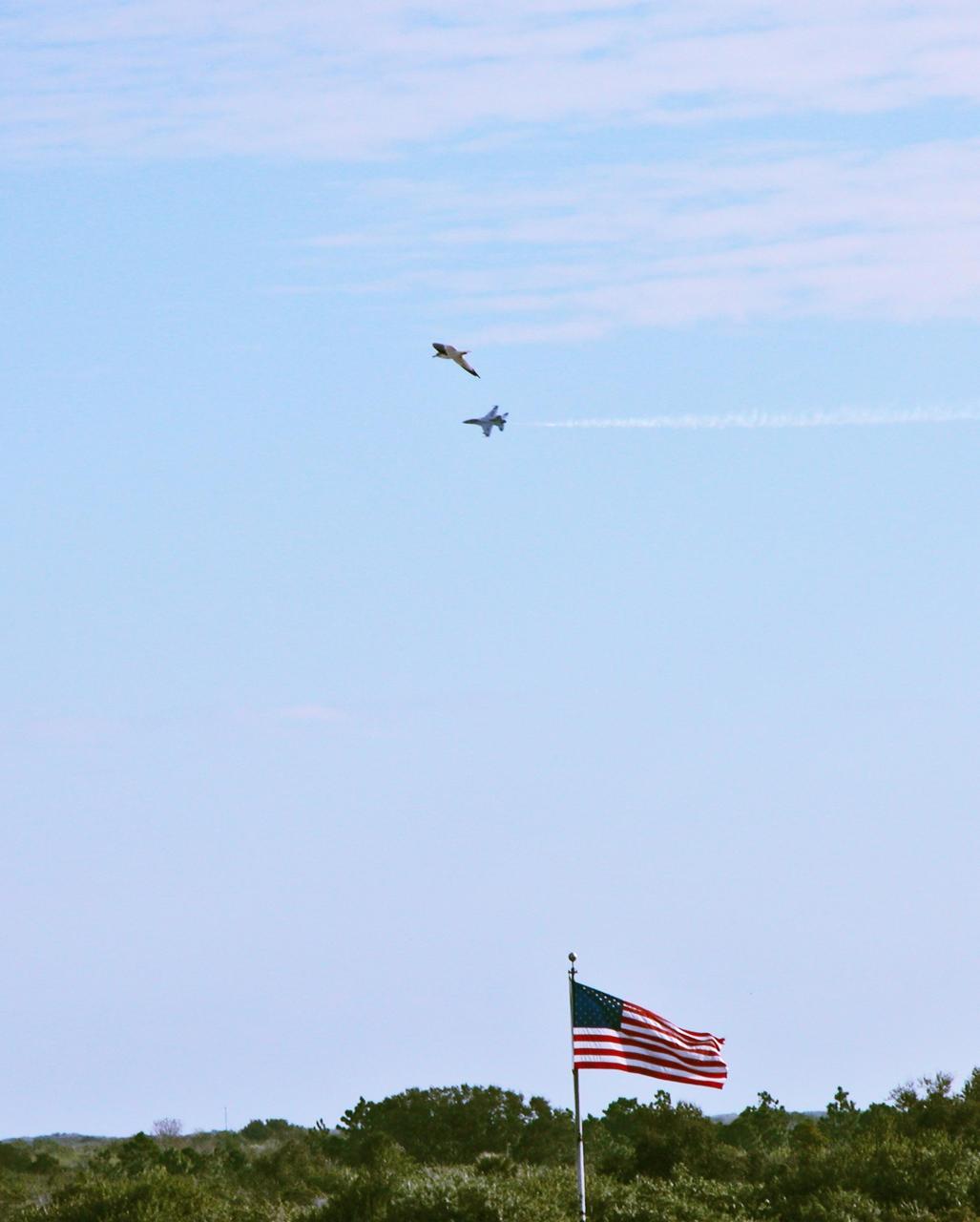
KENNEDY SPACE CENTER, FLA. -- Look -- It's a bird and a plane! A U.S. Air Force Thunderbird F-16D aircraft streaks through the sky past a slower-flying stork over the NASA News Center. The pilot is Maj. Tad Clark, who, after landing at the Shuttle Landing Facility, announced that Kennedy Space Center Visitor Complex will host the inaugural World Space Expo from Nov. 3 to 11, featuring an aerial salute by the Thunderbirds on its opening weekend. The Expo will create one of the largest displays of space artifacts, hardware and personalities ever assembled in one location with the objective to inspire, educate and engage the public by highlighting the achievements and benefits of space exploration. Photo credit: NASA/Debbi Odom