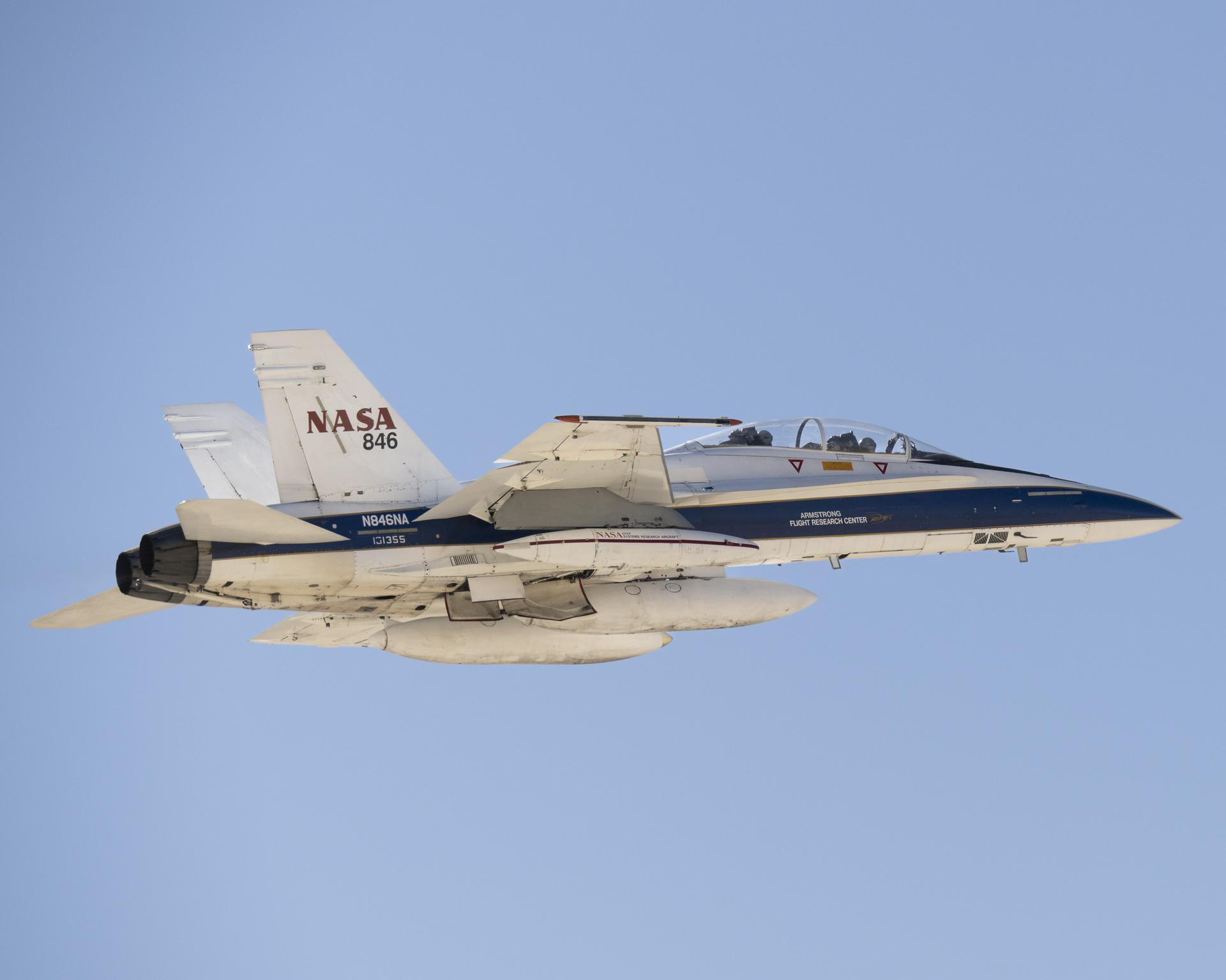
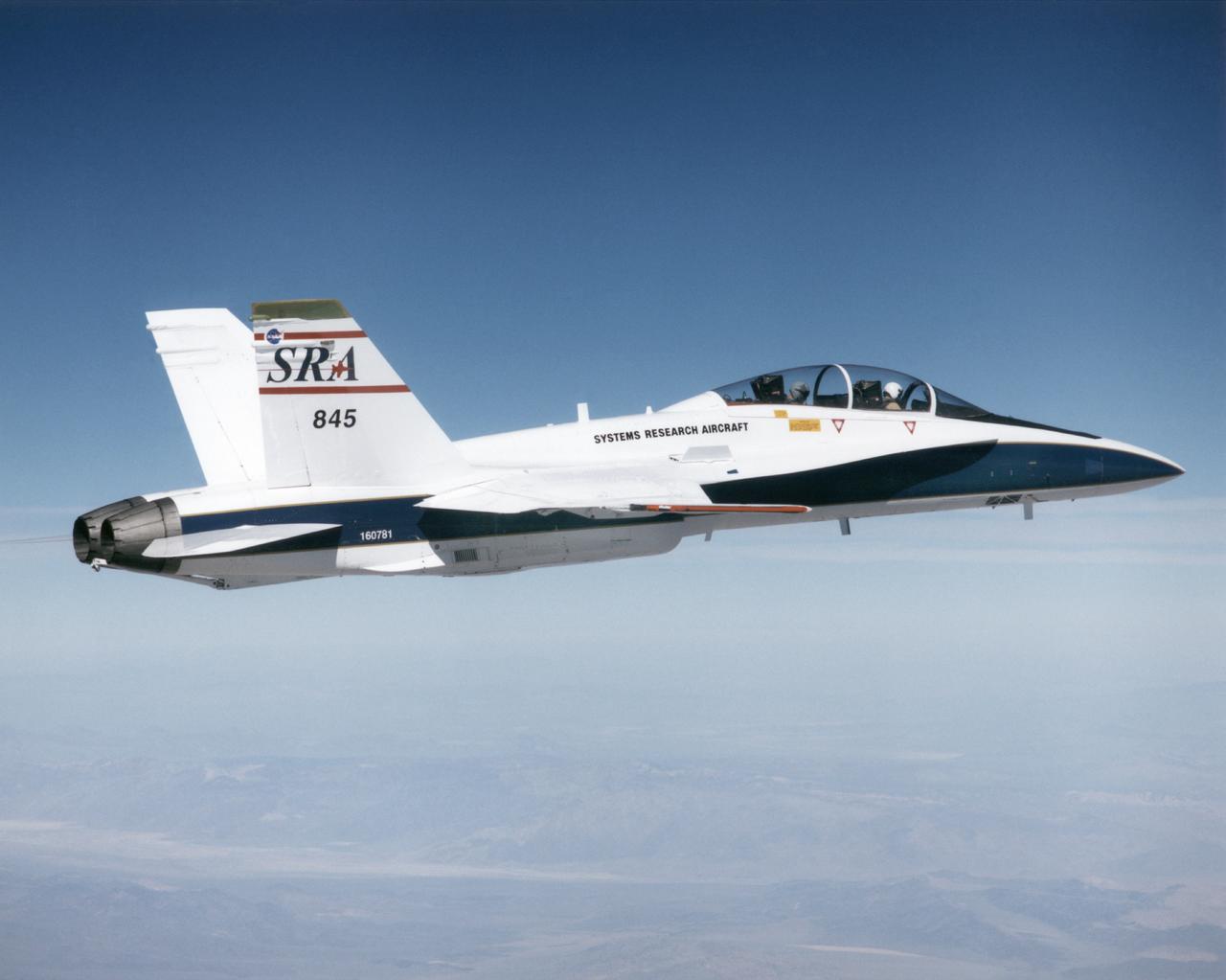
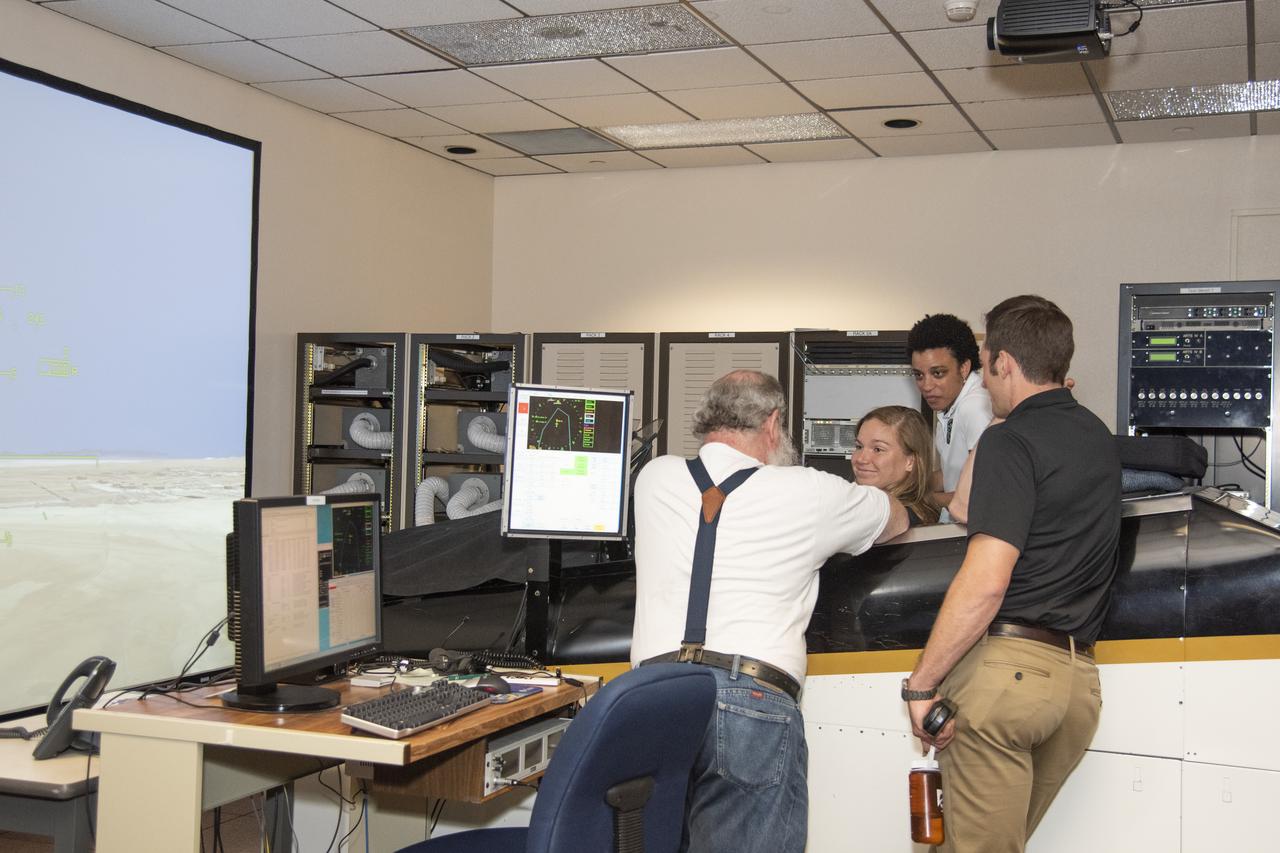
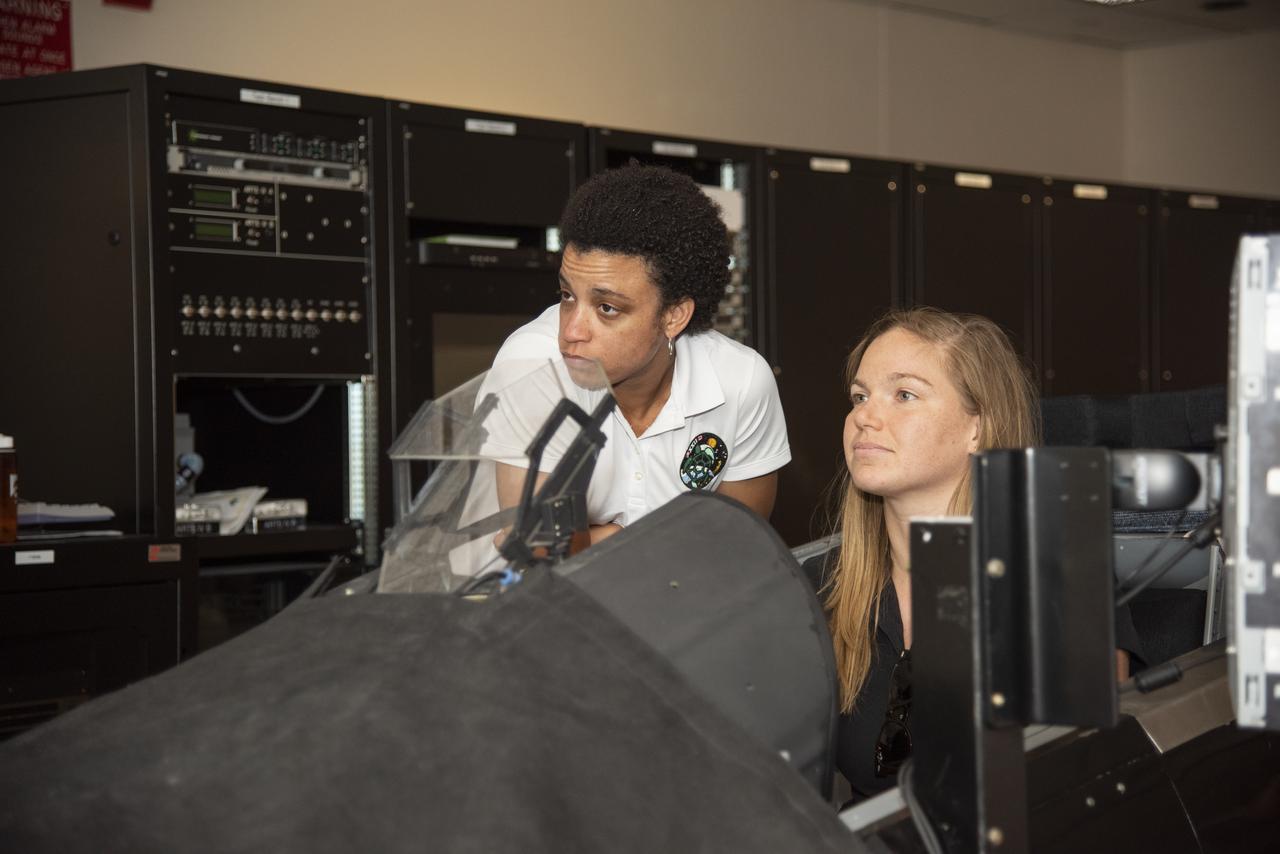
The F-18 simulator at NASA's Dryden Flight Research Center, Edwards, California. Simulators offer a safe and economical alternative to actual flights to gather data, as well as being excellent facilities for pilot practice and training. The F-18 Hornet is used primarily as a safety chase and mission support aircraft at NASA's Dryden Flight Research Center, Edwards, California. As support aircraft, the F-18's are used for safety chase, pilot proficiency, aerial photography and other mission support functions.
The F-18 simulator at NASA's Dryden Flight Research Center, Edwards, California
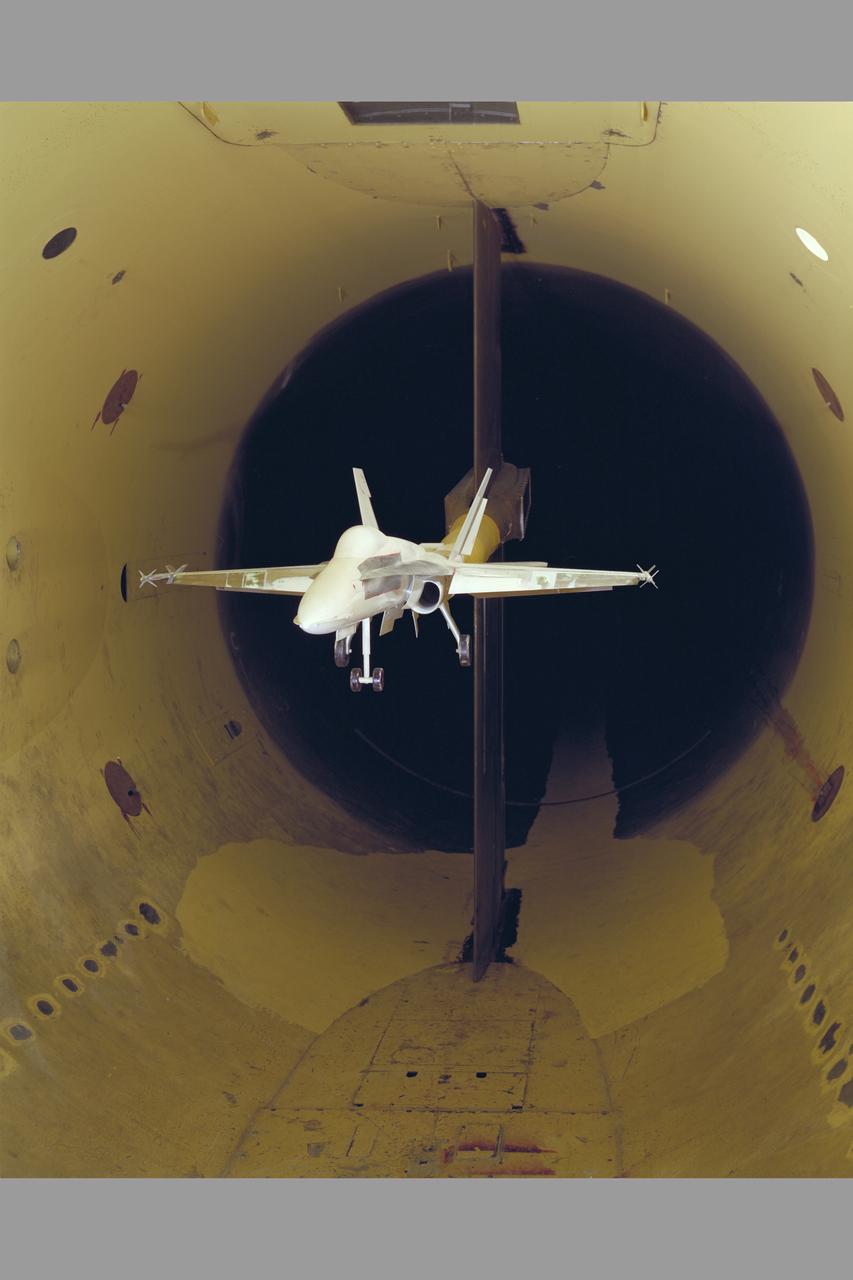
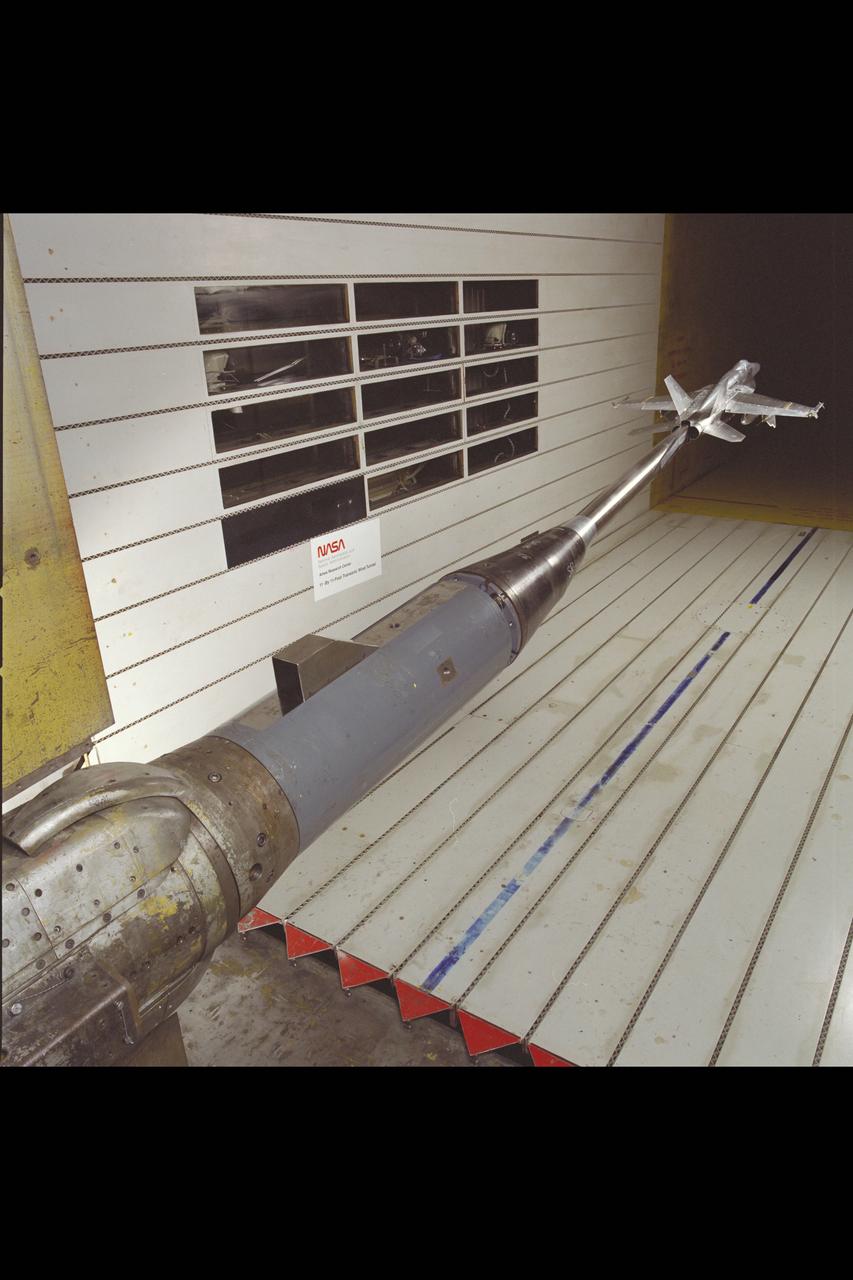
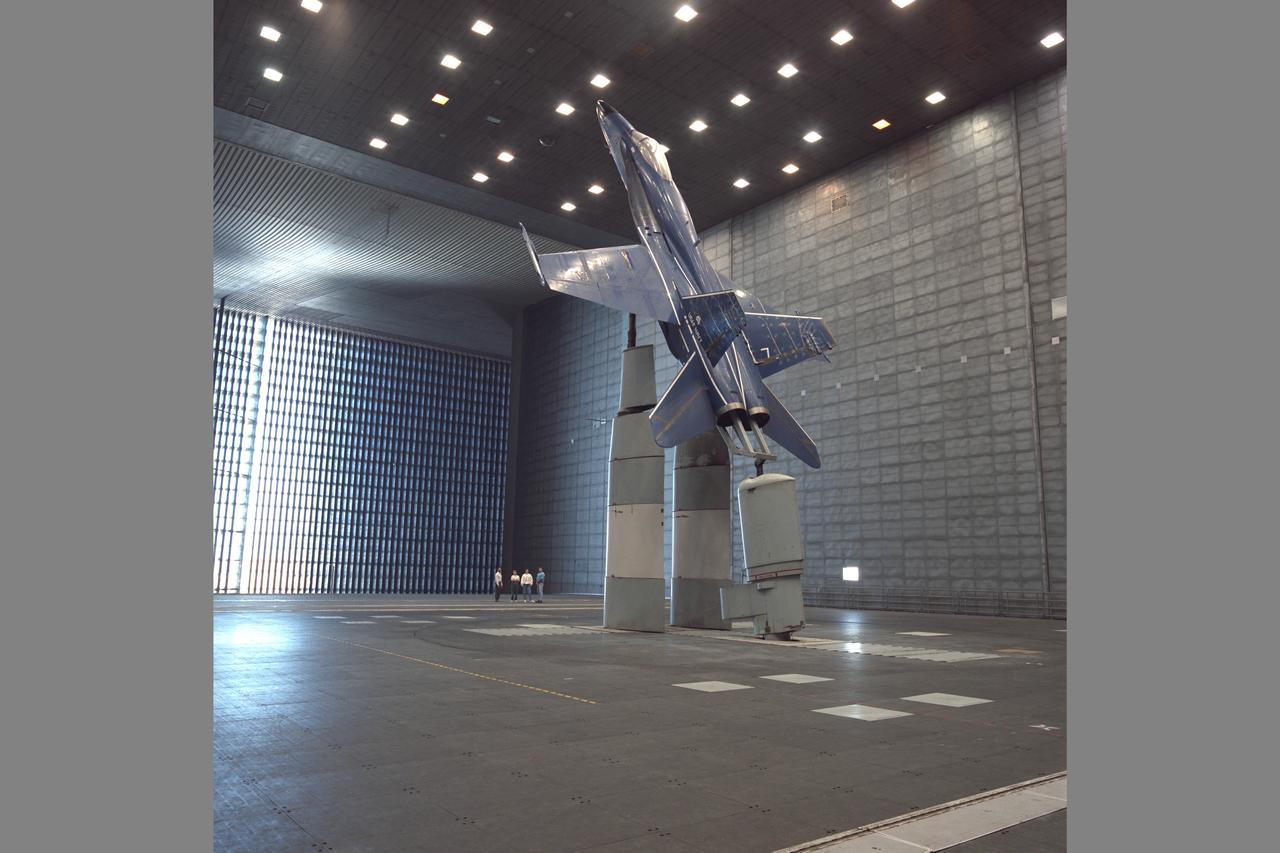
F/A-18 (F-18) being moved to the 80x120ft w.t. for testing
ARC-1989-AC90-0001-14
F/A-18 (F-18) outside the 80x120ft w.t. inlet (it will be loaded in the tunnel for testing)
ARC-1989-AC90-0001-8
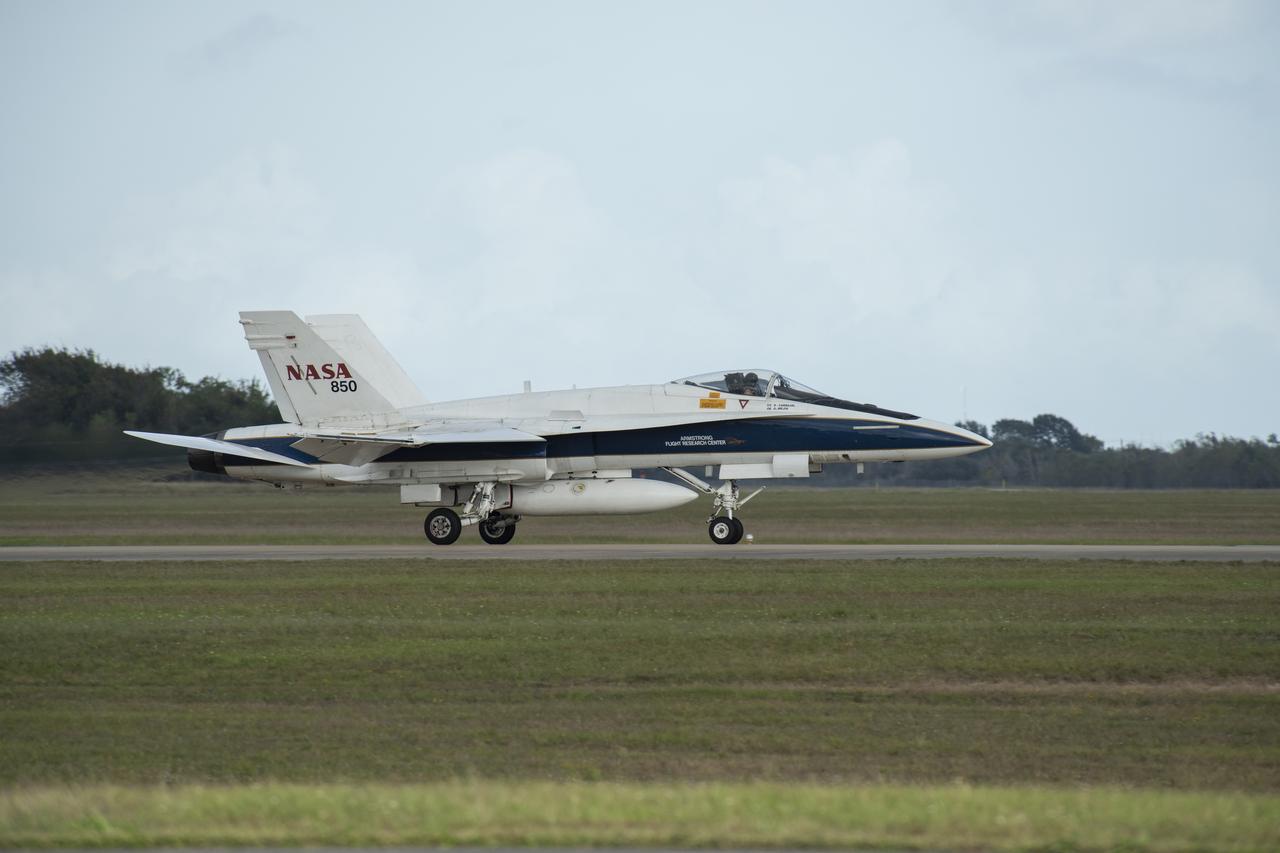
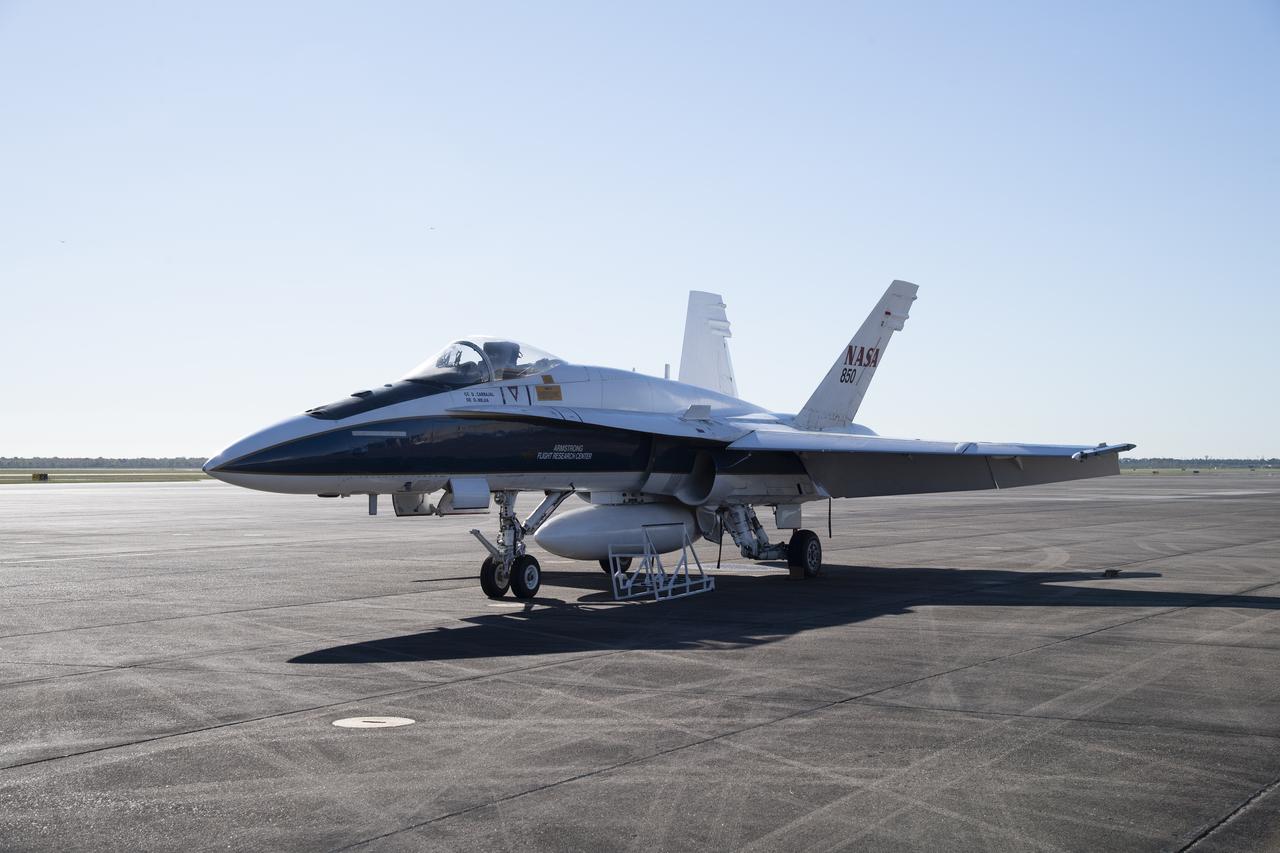
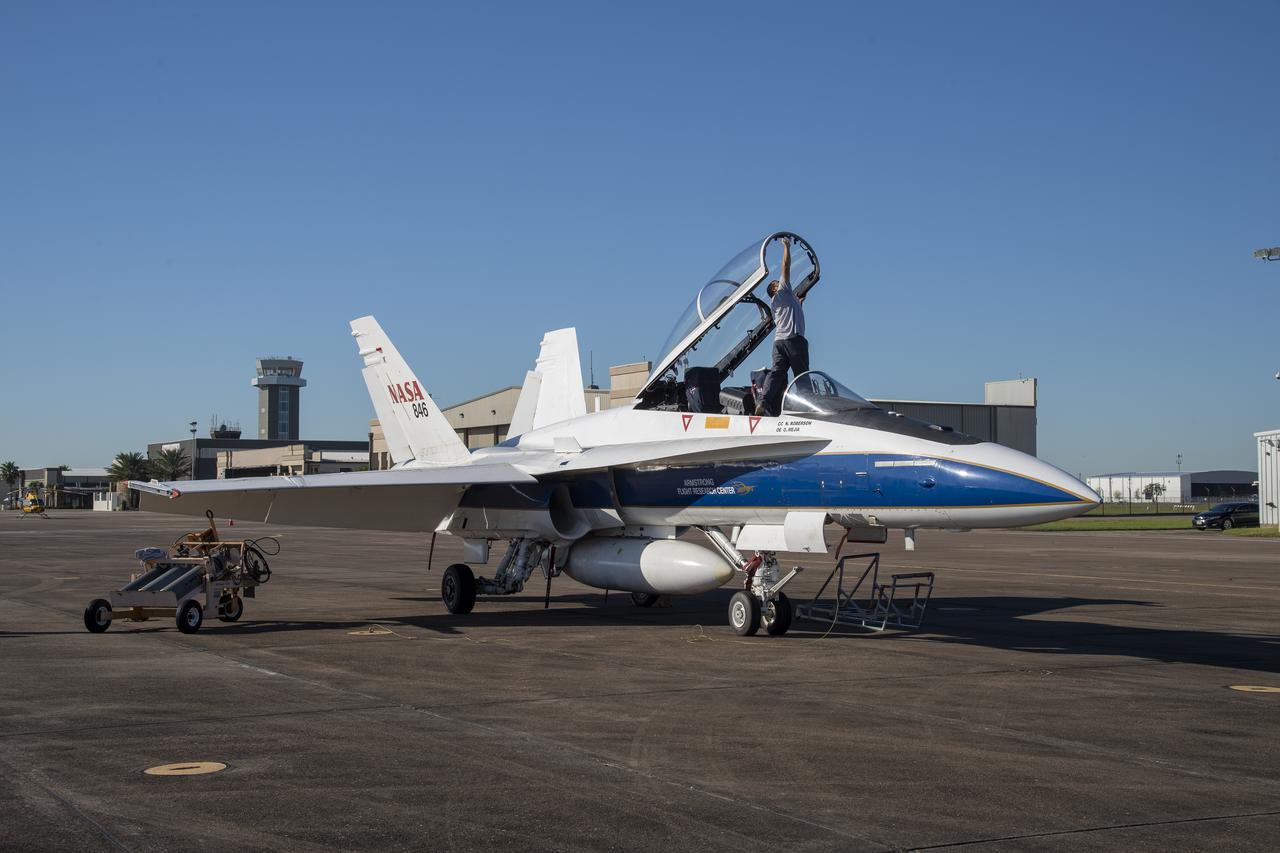
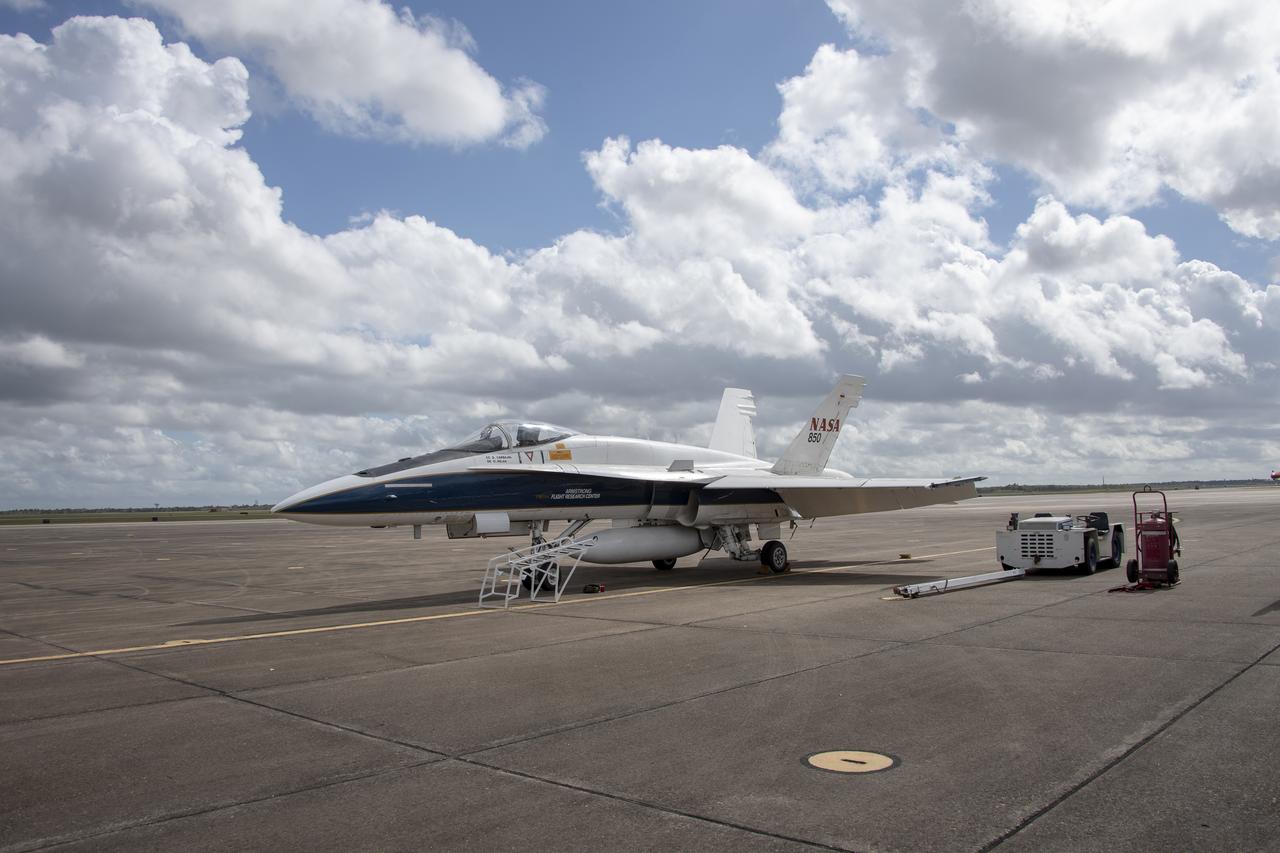
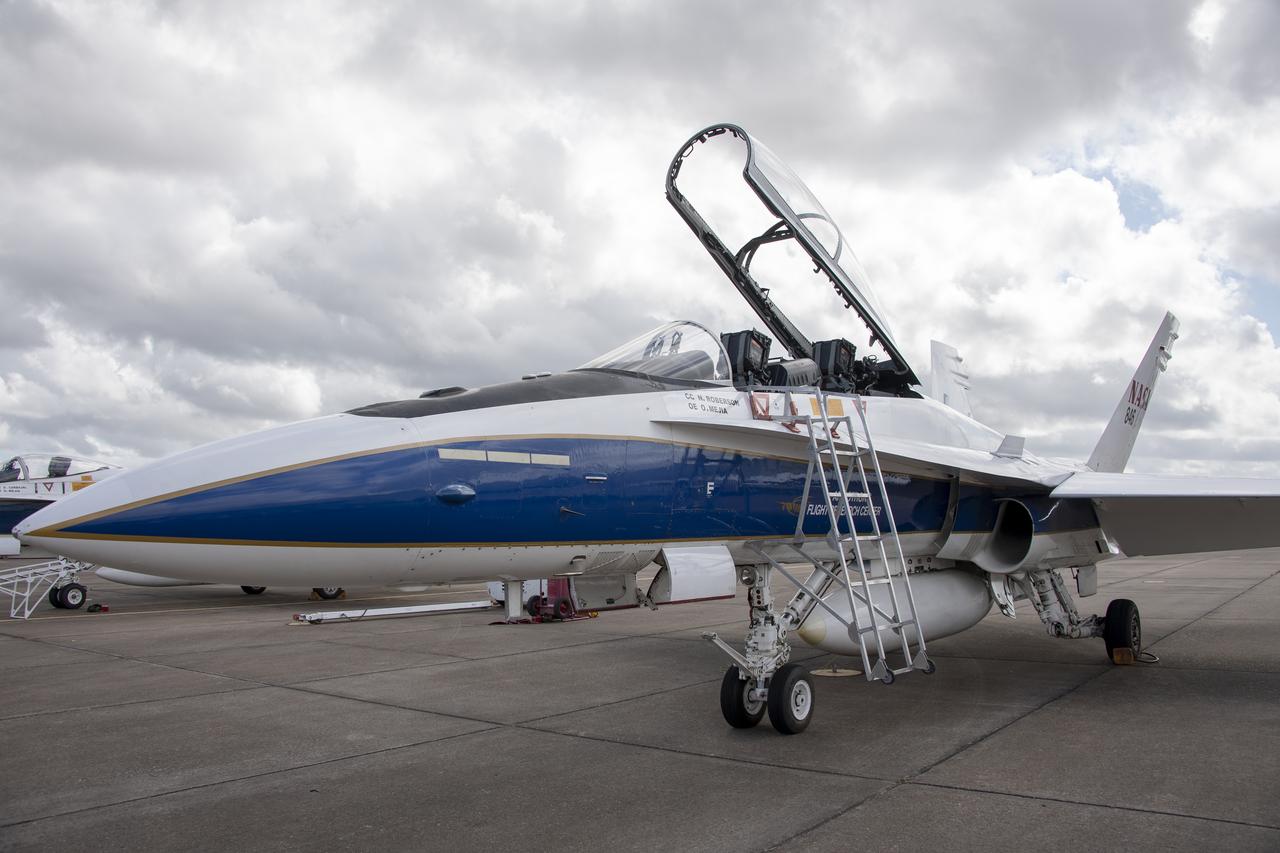
A NASA F/A-18 sits on the apron at NASA's Armstrong Flight Research Center in Edwards, California, prior to a supersonic research flight.
NASA F/A-18 Sits on Apron Prior to Flight
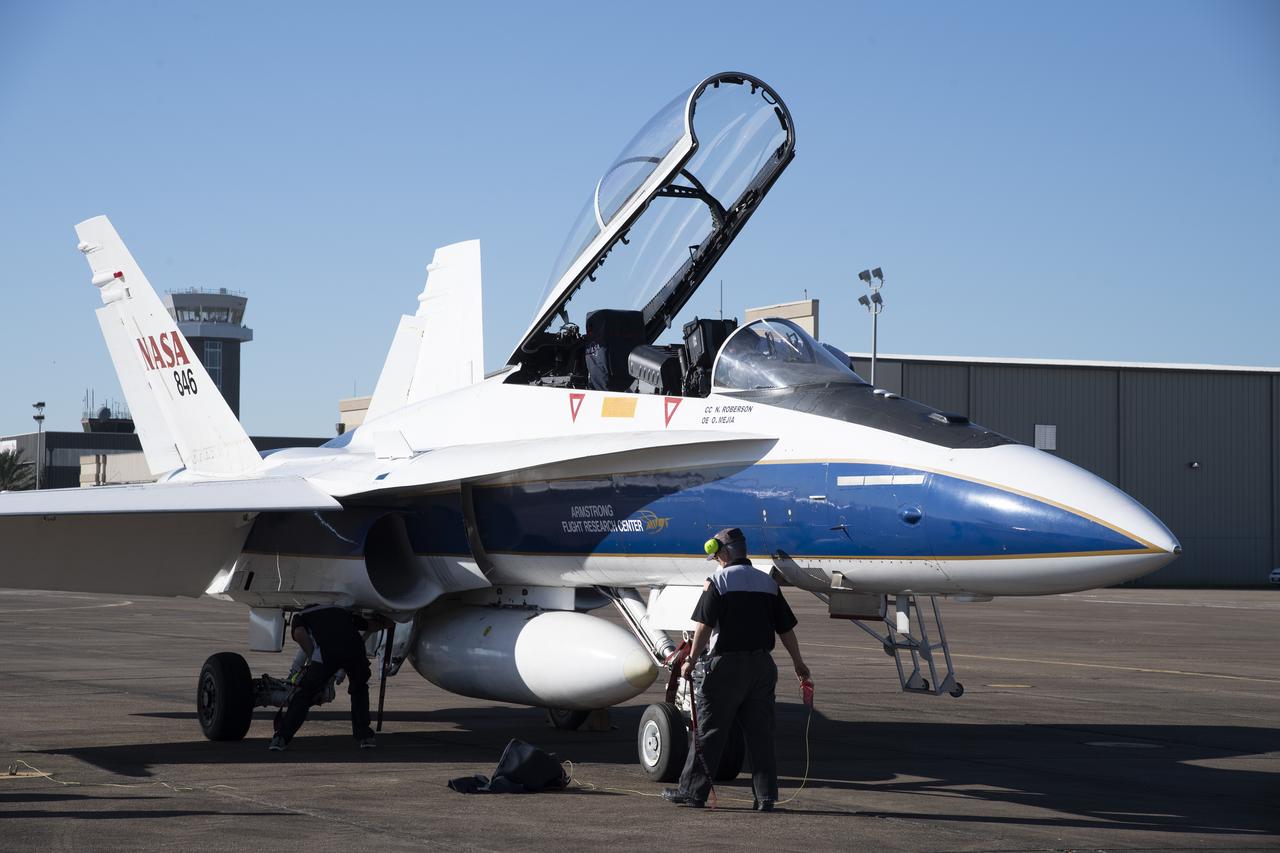
A NASA F/A-18 is towed to the apron at NASA's Armstrong Flight Research Center in Edwards, California during sunrise over Rogers Dry Lake. The F/A-18 was used to test a transmitter for an air navigation system, called the Airborne Location Integrating Geospatial Navigation System, or ALIGNS. This system, designed to allow pilots to position their aircraft at precise distances to each other, will be critical for acoustic validation efforts of NASA's next supersonic X-plane, the X-59 Quiet SuperSonic Technology.
NASA F/A-18 Towed At Sunrise for Flight
NASA Dryden F-18 #843 in flight
EC02-0224-4
NASA’s F/A-18 High Alpha Research Vehicle, also known as the “Silk Purse,” performs a thrust vectoring test in afterburner in 1991, while anchored to the ground.
F/A-18 Performs Thrust Vectoring Test
Students from the Our Lady of Perpetual Help School in Bakersfield, CA, pass by one of NASA Dryden's F-18 chase aircraft during a tour.
Students from the Our Lady of Perpetual Help School in Bakersfield, CA, pass by one of NASA Dryden's F-18 chase aircraft during a tour
Scaled Composites' Proteus aircraft and an F/A-18 Hornet from NASA's Dryden Flight Research Center at Mojave Airport in Southern California.  The unique tandem-wing Proteus was the testbed for a series of UAV collision-avoidance flight demonstrations. An Amphitech 35GHz radar unit installed below Proteus' nose was the primary sensor for the Detect, See and Avoid tests. NASA Dryden's F/A-18 Hornet was one of many different aircraft used in the tests.
Scaled Composites' Proteus aircraft and an F/A-18 Hornet from NASA's Dryden Flight Research Center at Mojave Airport in Southern California.
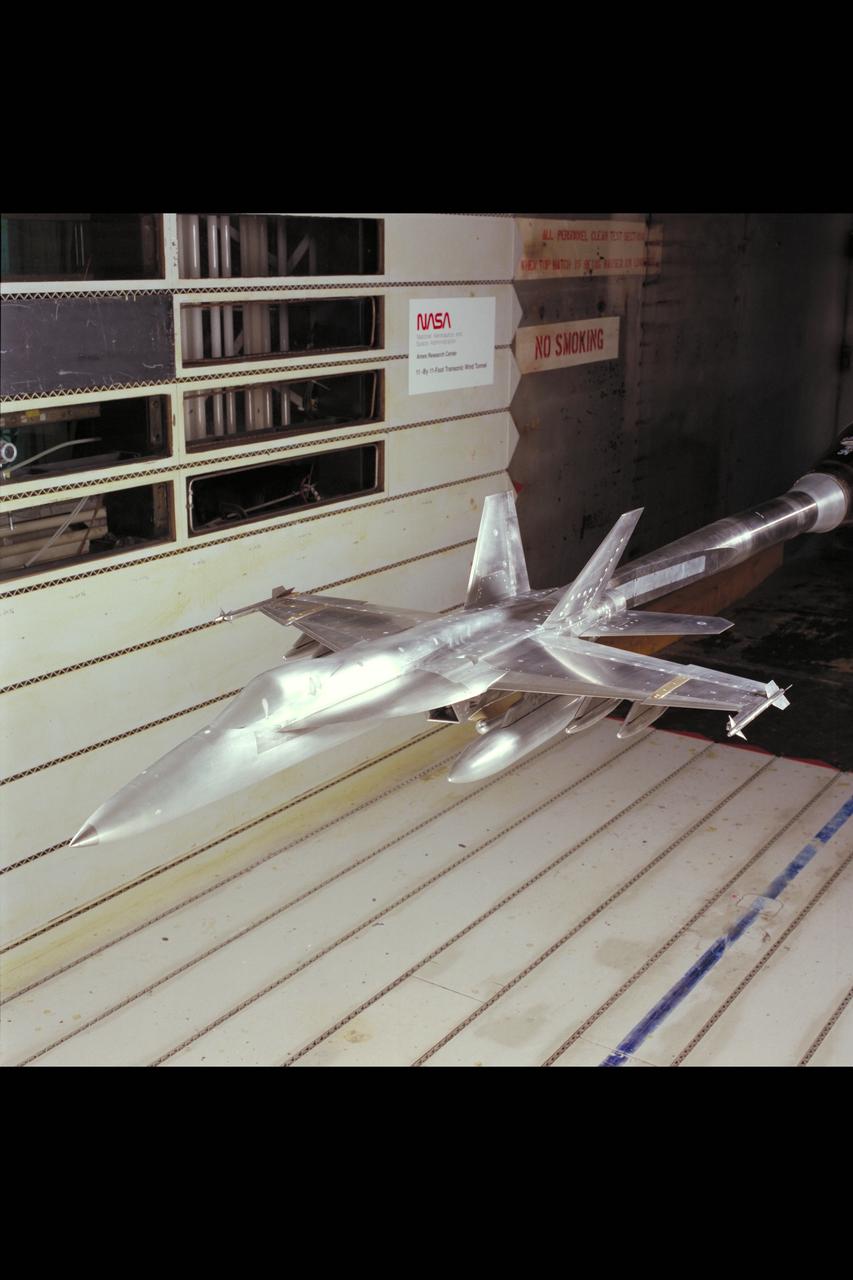
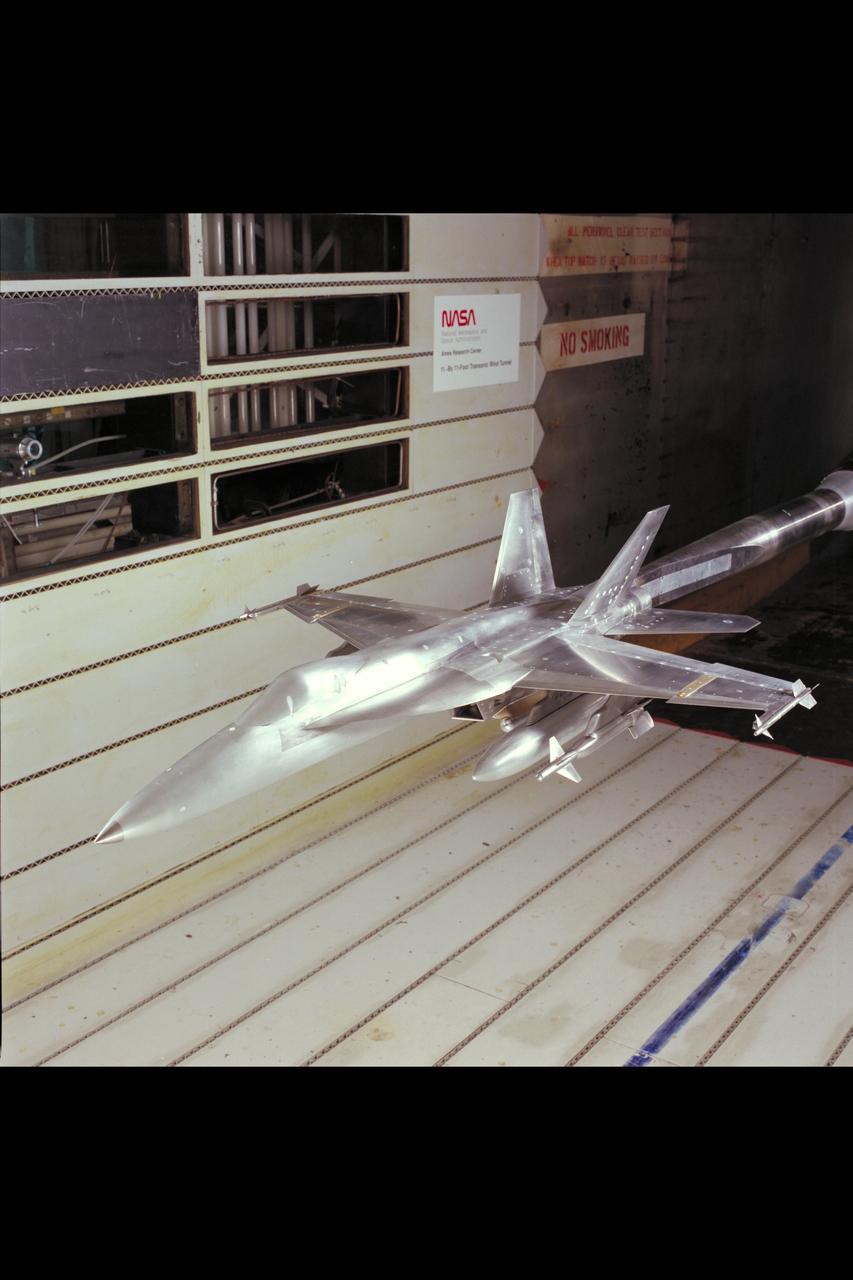
F-18 HICL II model in 12ft w.t.
ARC-1976-AC76-0695
F-18 HICL II model in 12ft w.t.
ARC-1976-AC76-0696
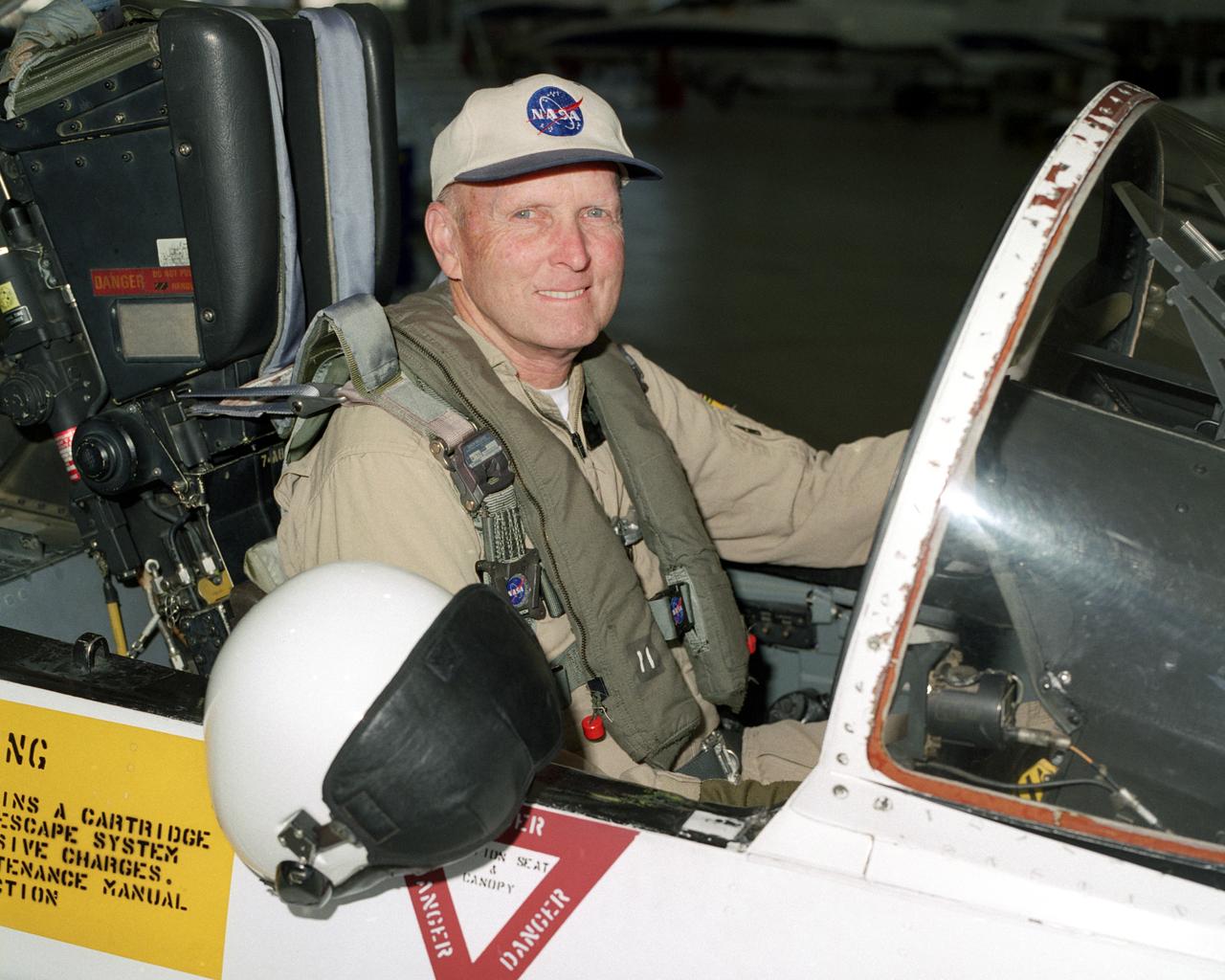
Former NASA astronaut C. Gordon Fullerton, seated in the cockpit of an F/A-18, is a research pilot at NASA's Dryden Flight Research Center, Edwards, Calif. Since transferring to Dryden in 1986, his assignments have included a variety of flight research and support activities piloting NASA's B-52 launch aircraft, the 747 Shuttle Carrier Aircraft (SCA), and other multi-engine and high performance aircraft.  He flew a series of development air launches of the X-38 prototype Crew Return Vehicle and in the launches for the X-43A Hyper-X project. Fullerton also flies Dryden's DC-8 Airborne Science aircraft in support a variety of atmospheric physics, ground mapping and meteorology studies. Fullerton also was project pilot on the Propulsion Controlled Aircraft program, during which he successfully landed both a modified F-15 and an MD-11 transport with all control surfaces neutralized, using only engine thrust modulation for control. Fullerton also evaluated the flying qualities of the Russian Tu-144 supersonic transport during two flights in 1998, one of only two non-Russian pilots to fly that aircraft.  With more than 15,000 hours of flying time, Fullerton has piloted 135 different types of aircraft in his career. As an astronaut, Fullerton served on the support crews for the Apollo 14, 15, 16, and 17 lunar missions. In 1977, Fullerton was on one of the two flight crews that piloted the Space Shuttle prototype Enterprise during the Approach and Landing Test Program at Dryden. Fullerton was the pilot on the STS-3 Space Shuttle orbital flight test mission in 1982, and commanded the STS-51F Spacelab 2 mission in 1985. He has logged 382 hours in space flight. In July 1988, he completed a 30-year career with the U.S. Air Force and retired as a colonel.
Research pilot and former astronaut C. Gordon Fullerton in an F/A-18
F-18 (12 Scale Model) 12 Foot Wind Tunnel Test-287
ARC-1978-AC78-1027-2
F-18 HICL II model in NASA Ames Research Center 12ft Pressure Wind Tunnel 12ft w.t.
ARC-1976-A76-0697
F-18 (12 Scale Model) 12 Foot Wind Tunnel Test-287
ARC-1978-AC78-1027-1
F-18 (12 Scale Model) 12 Foot Wind Tunnel Test-287
ARC-1978-AC78-1027-3
F-18 (12 Scale Model) 12 Foot Wind Tunnel Test-287
ARC-1978-AC78-1027-4
F-18 Systems Research Aircraft (SRA) in flight
EC97-44272-6
F-18 Systems Research Aircraft (SRA) in flight
EC97-44272-8
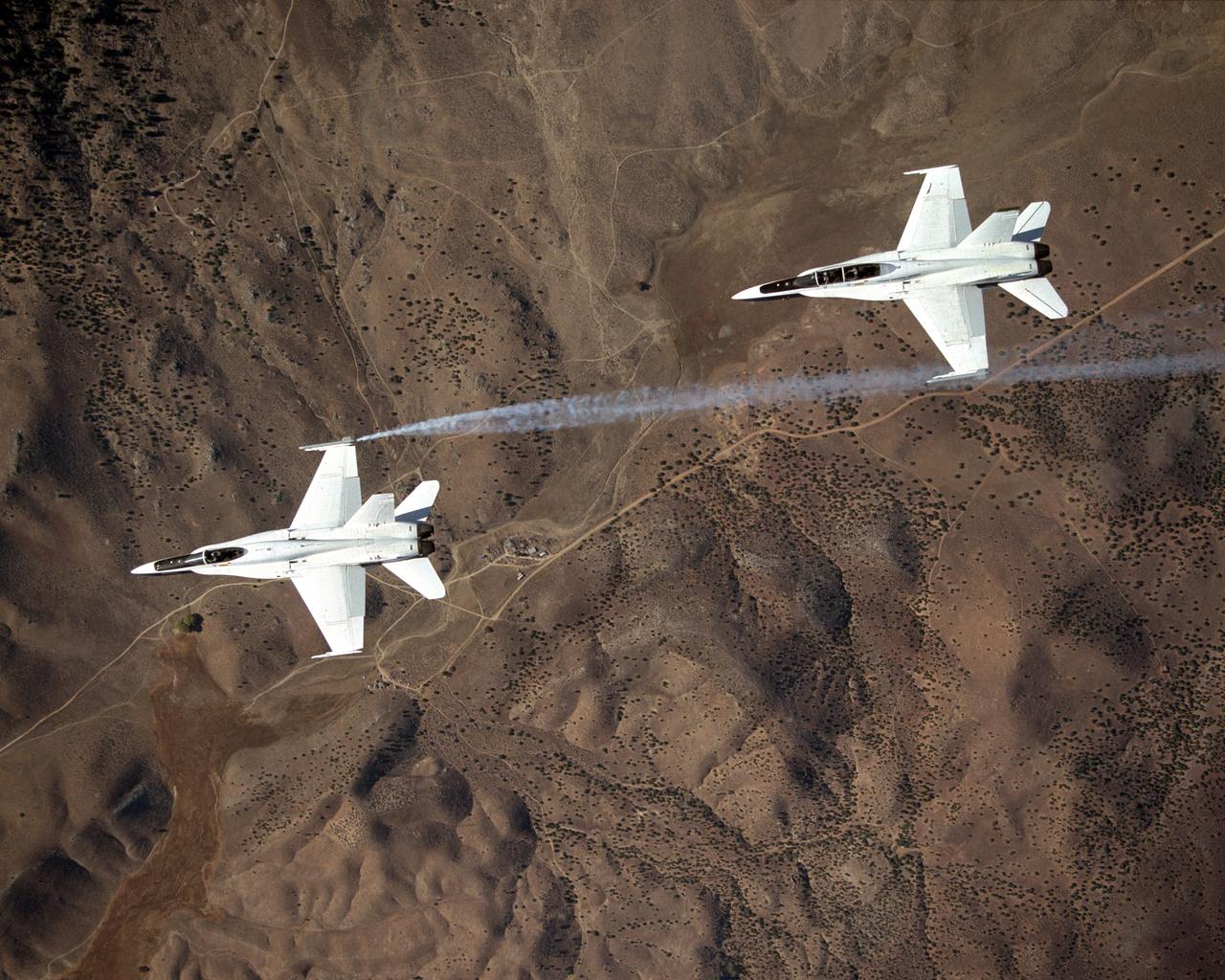
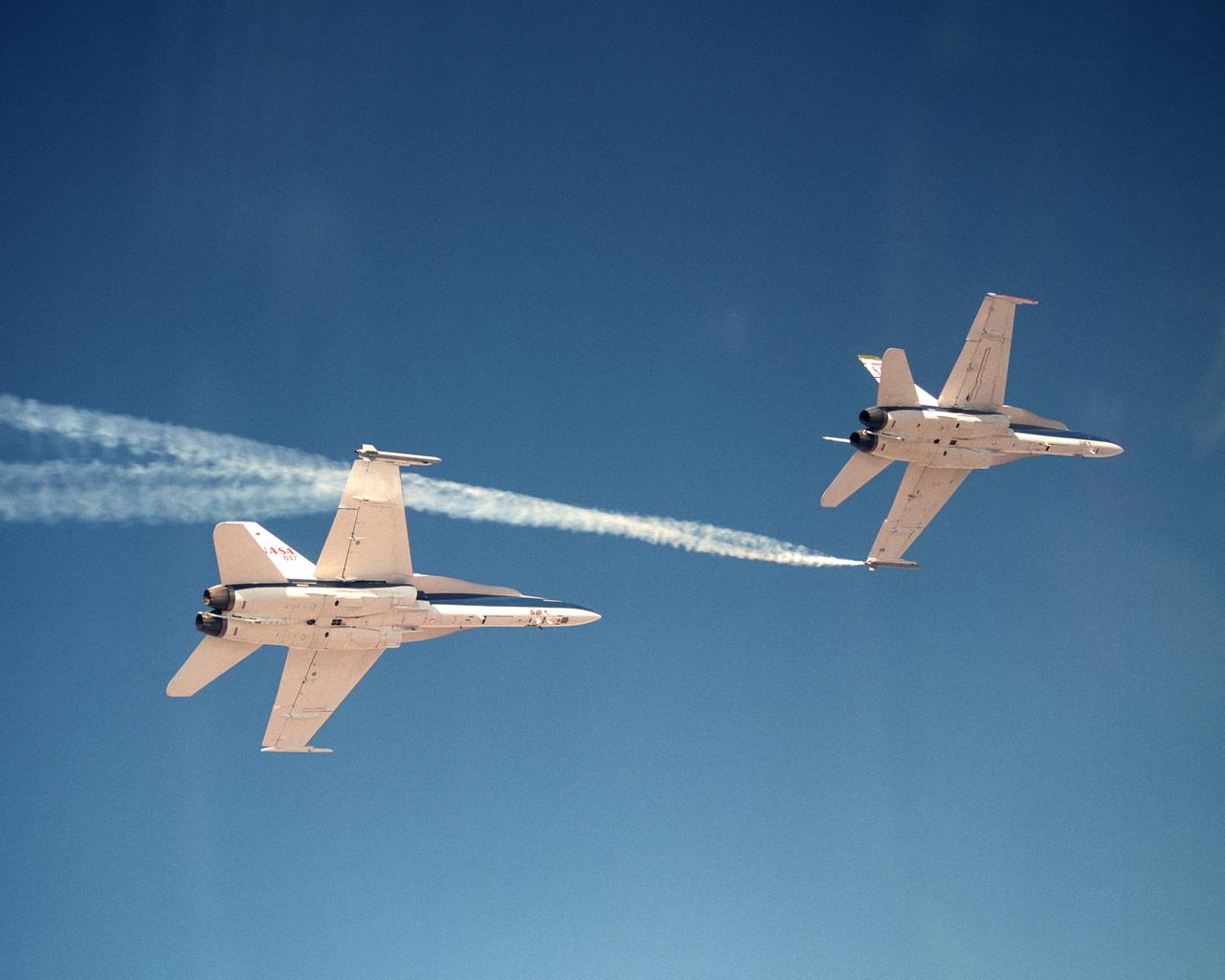
Smoke generators show the twisting paths of wingtip vortices behind two NASA Dryden F/A-18's used in the Autonomous Formation Flight (AFF) program during flight #743.
EC01-0328-11
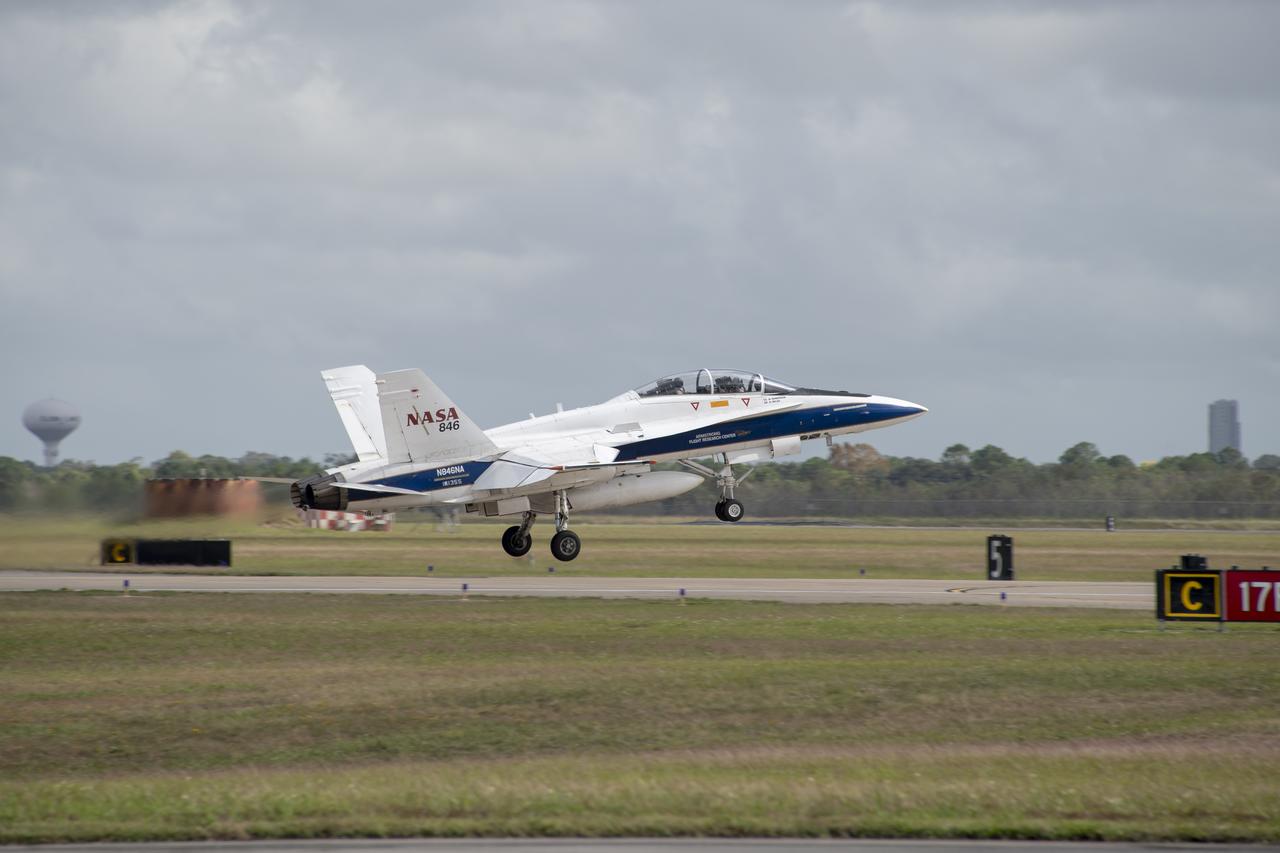
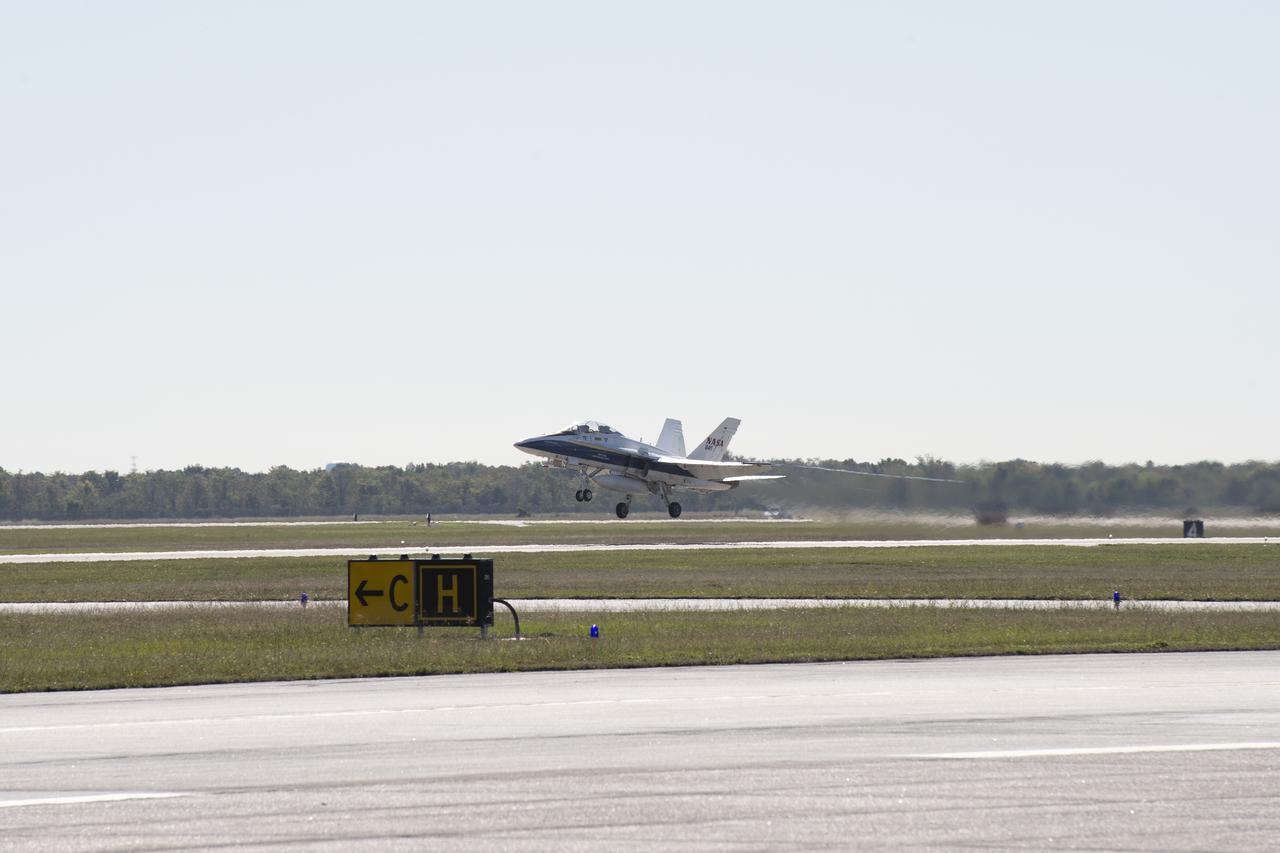
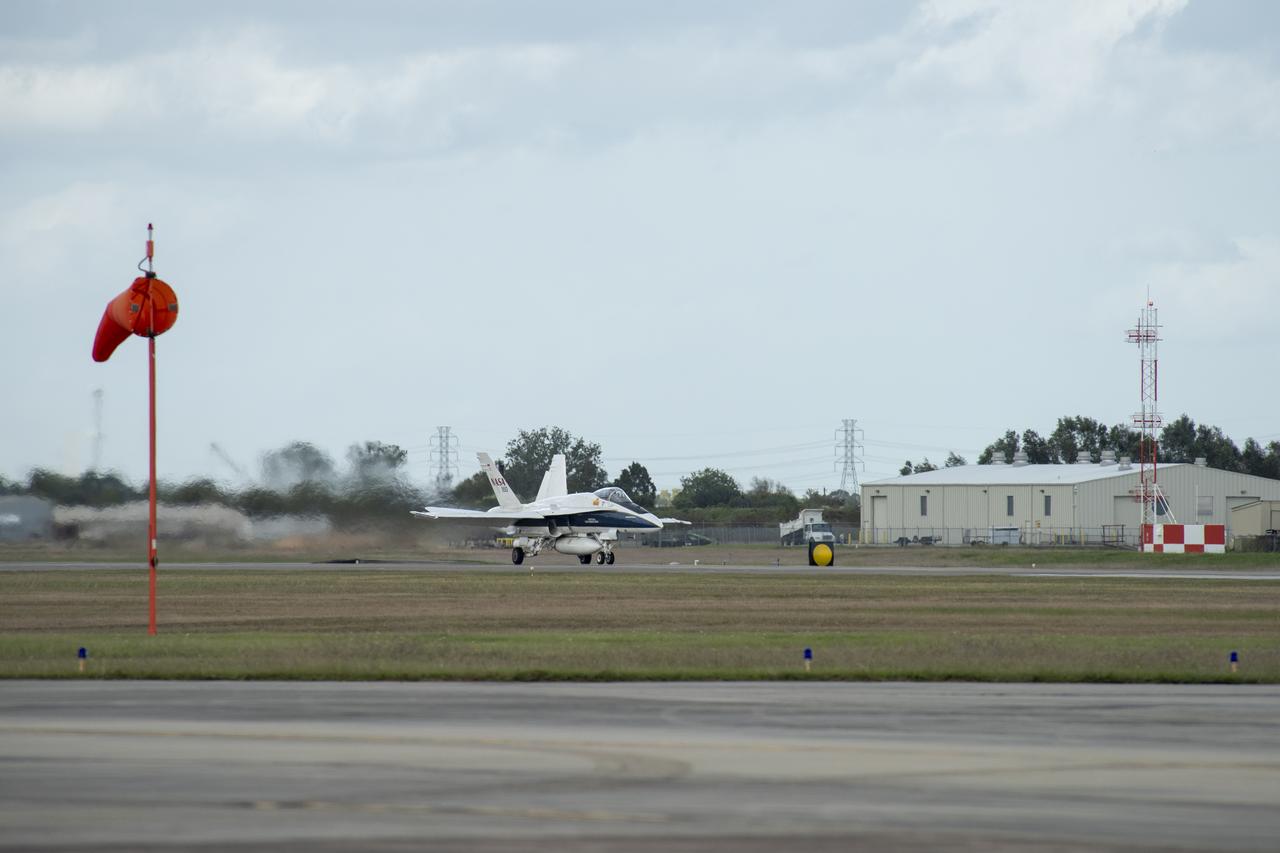
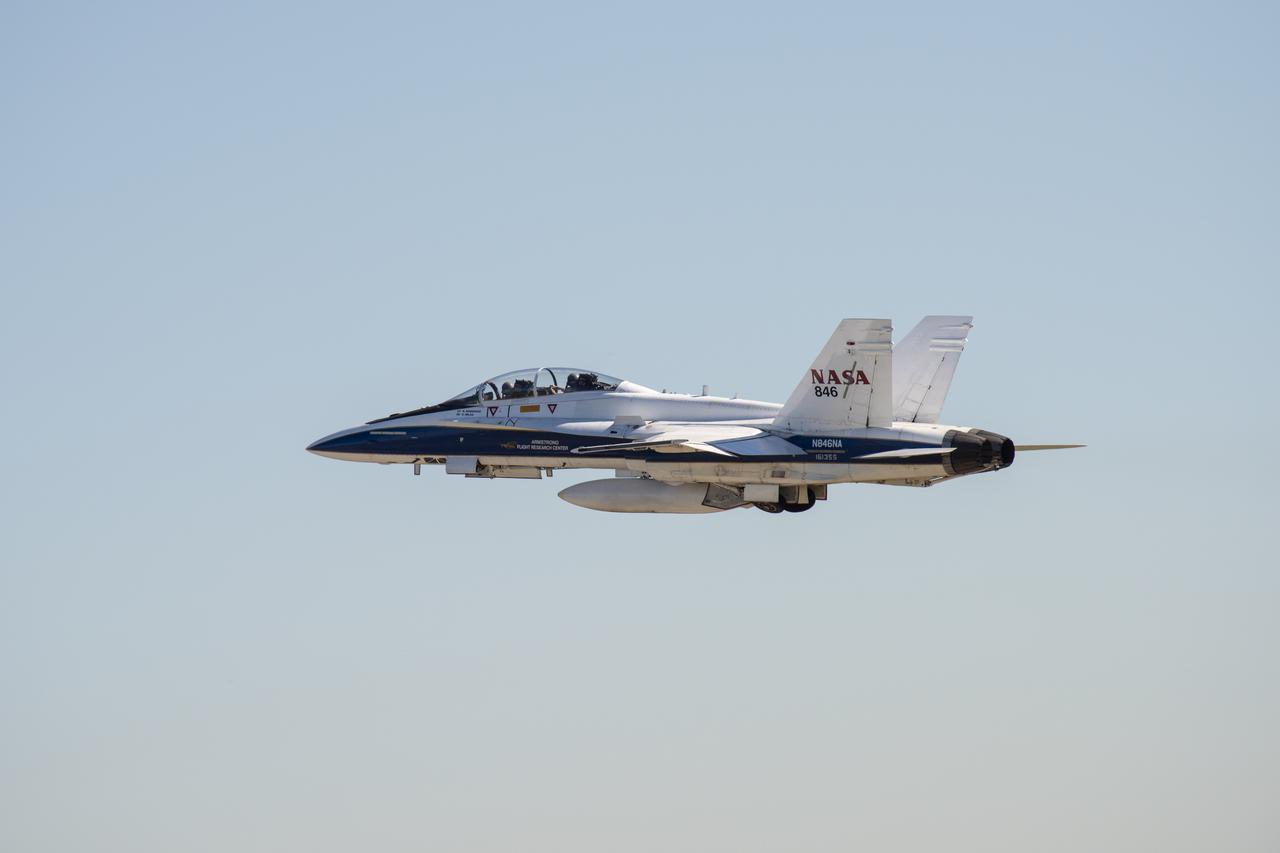
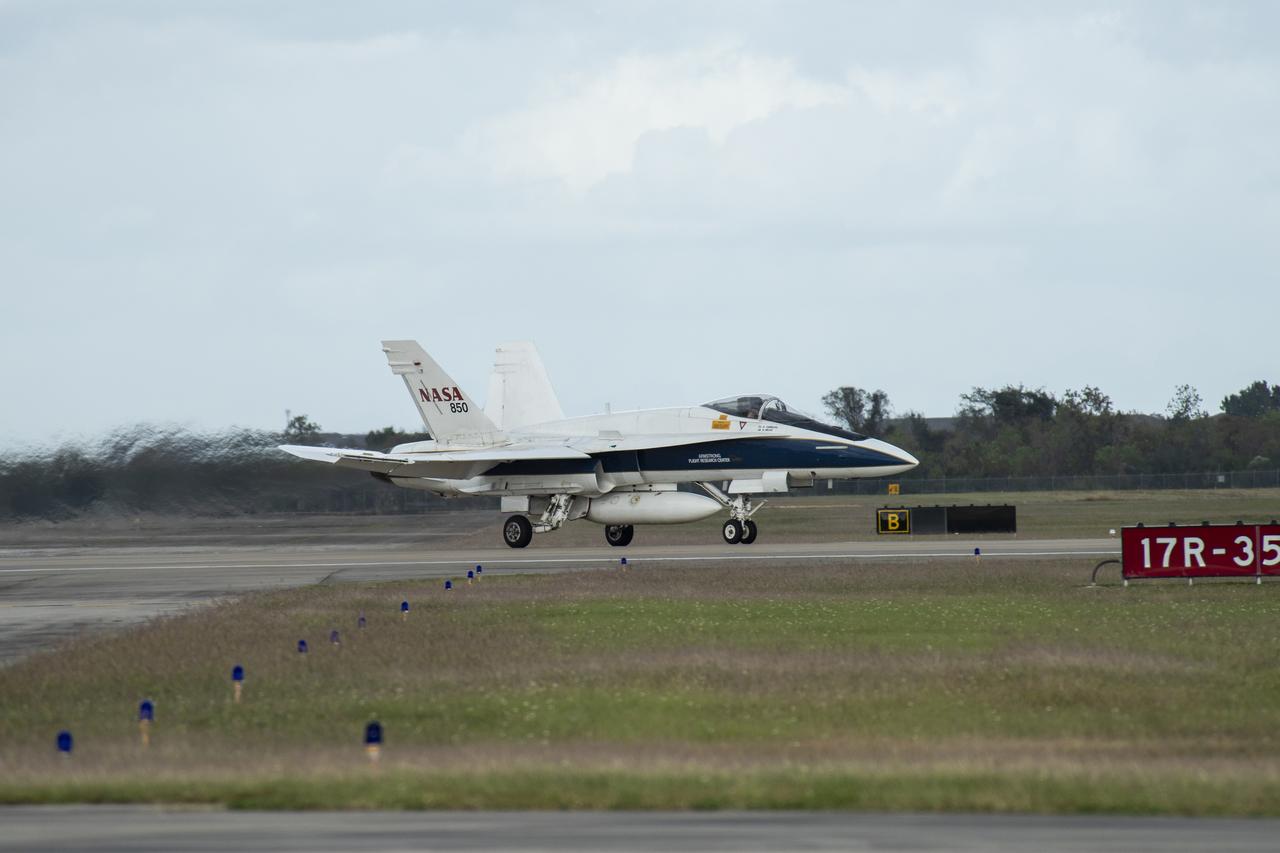
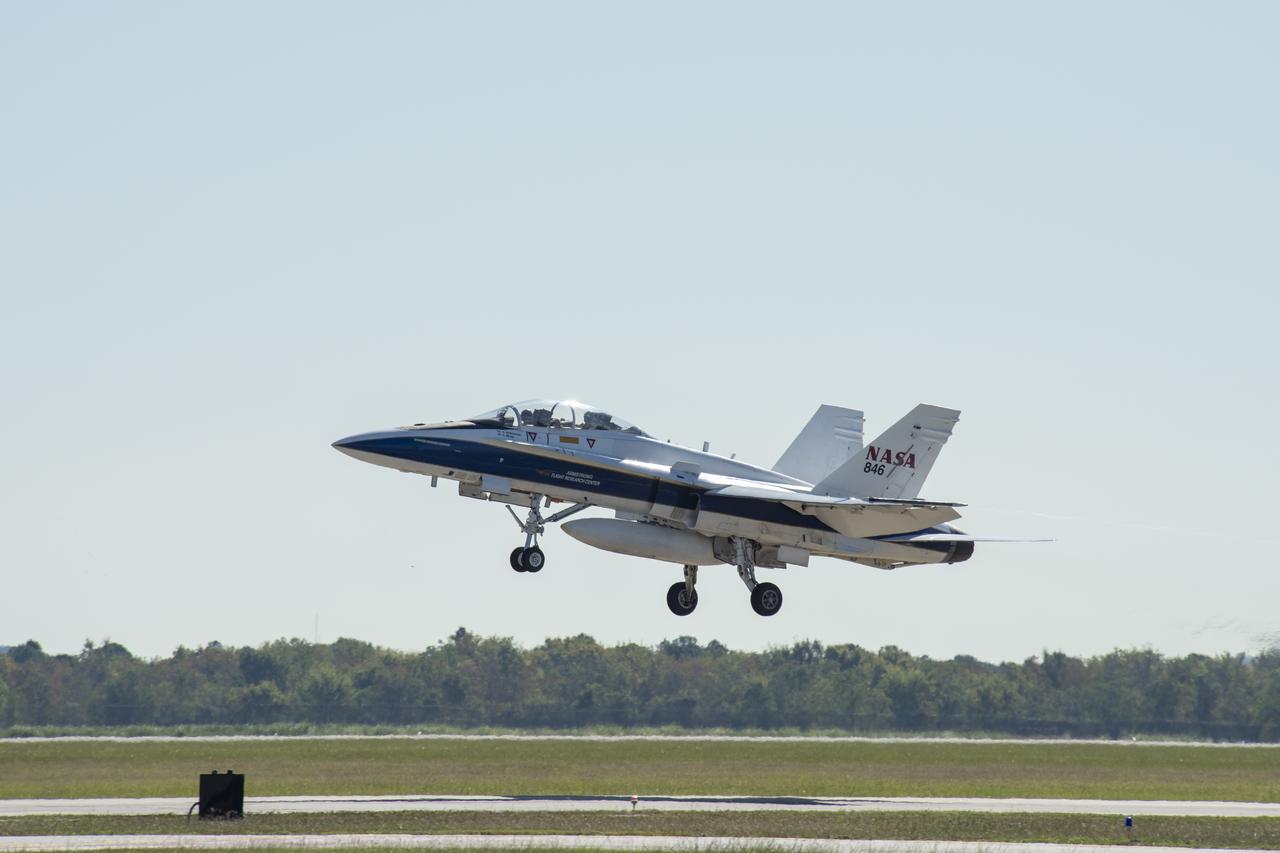
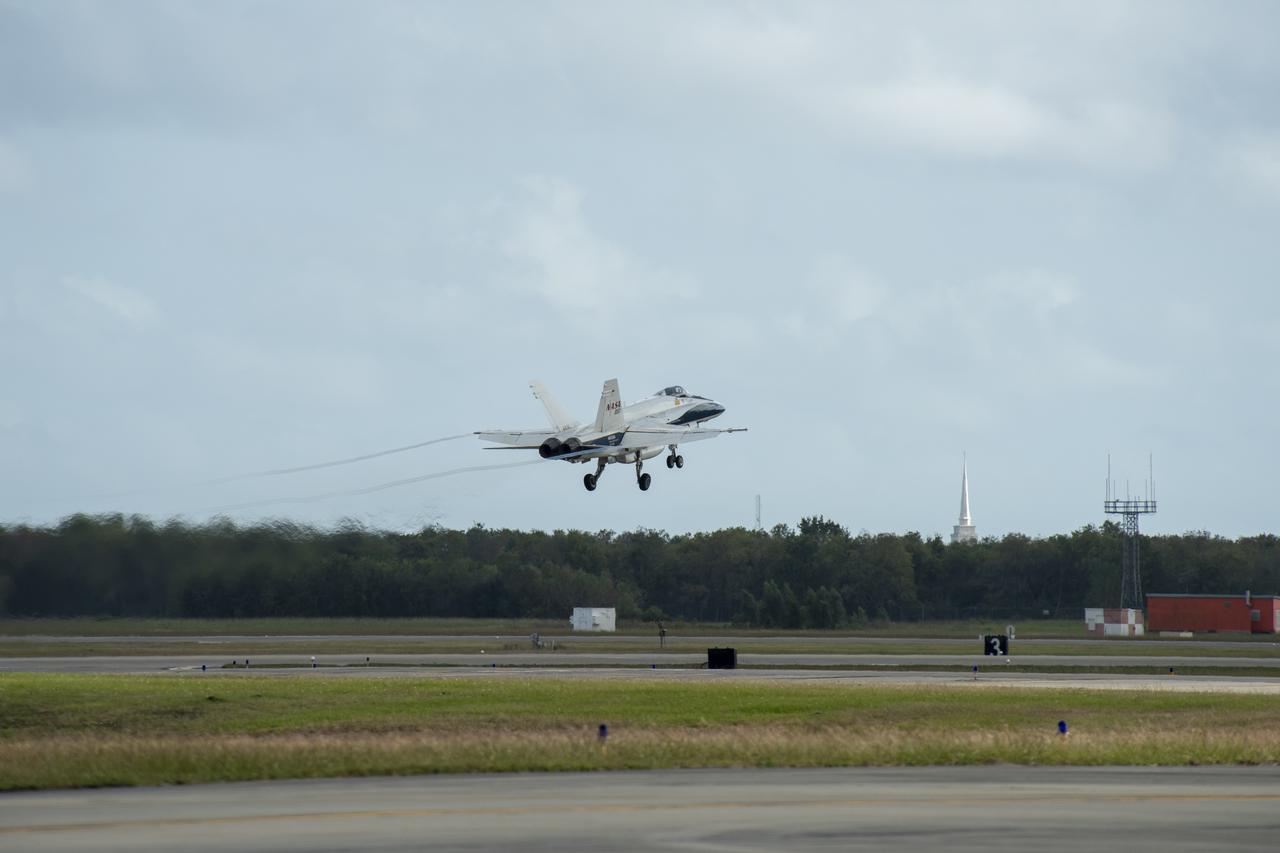
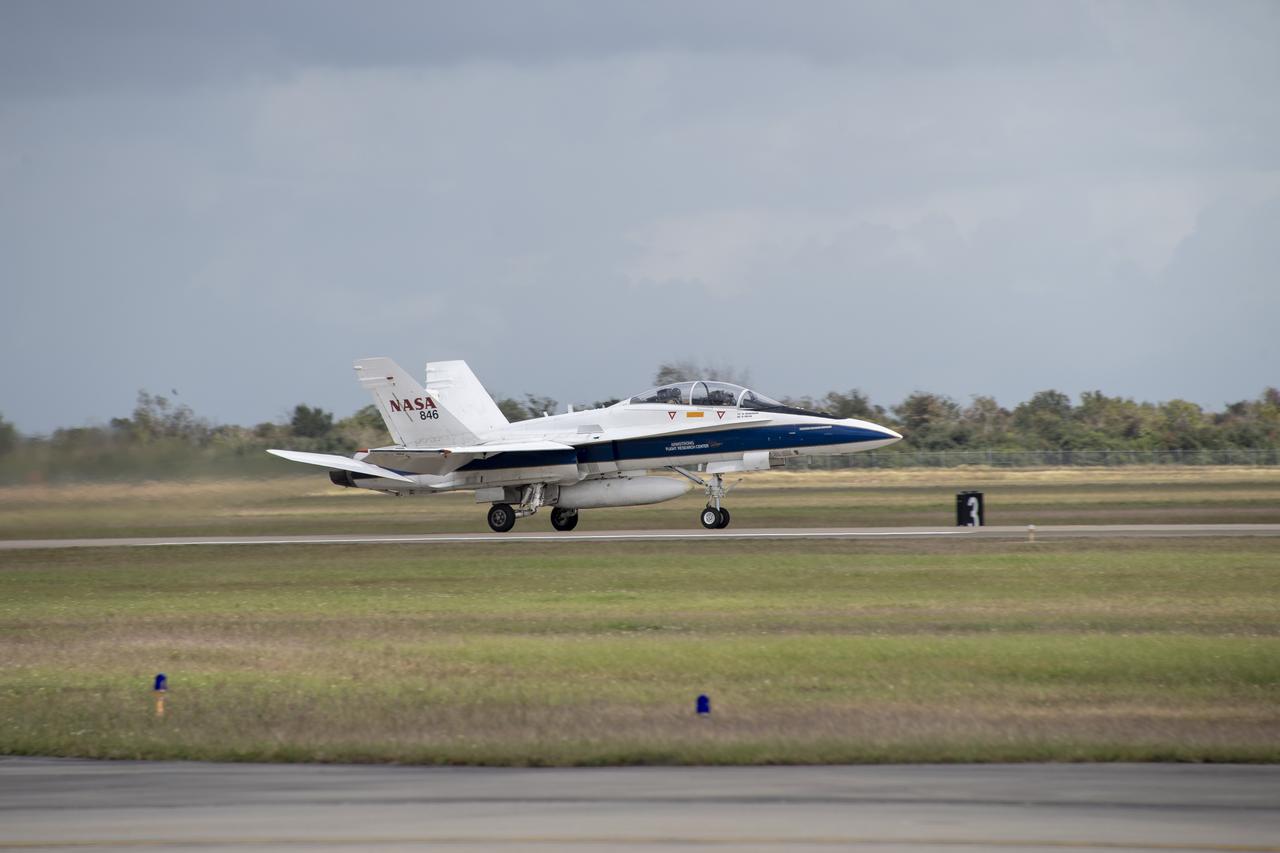
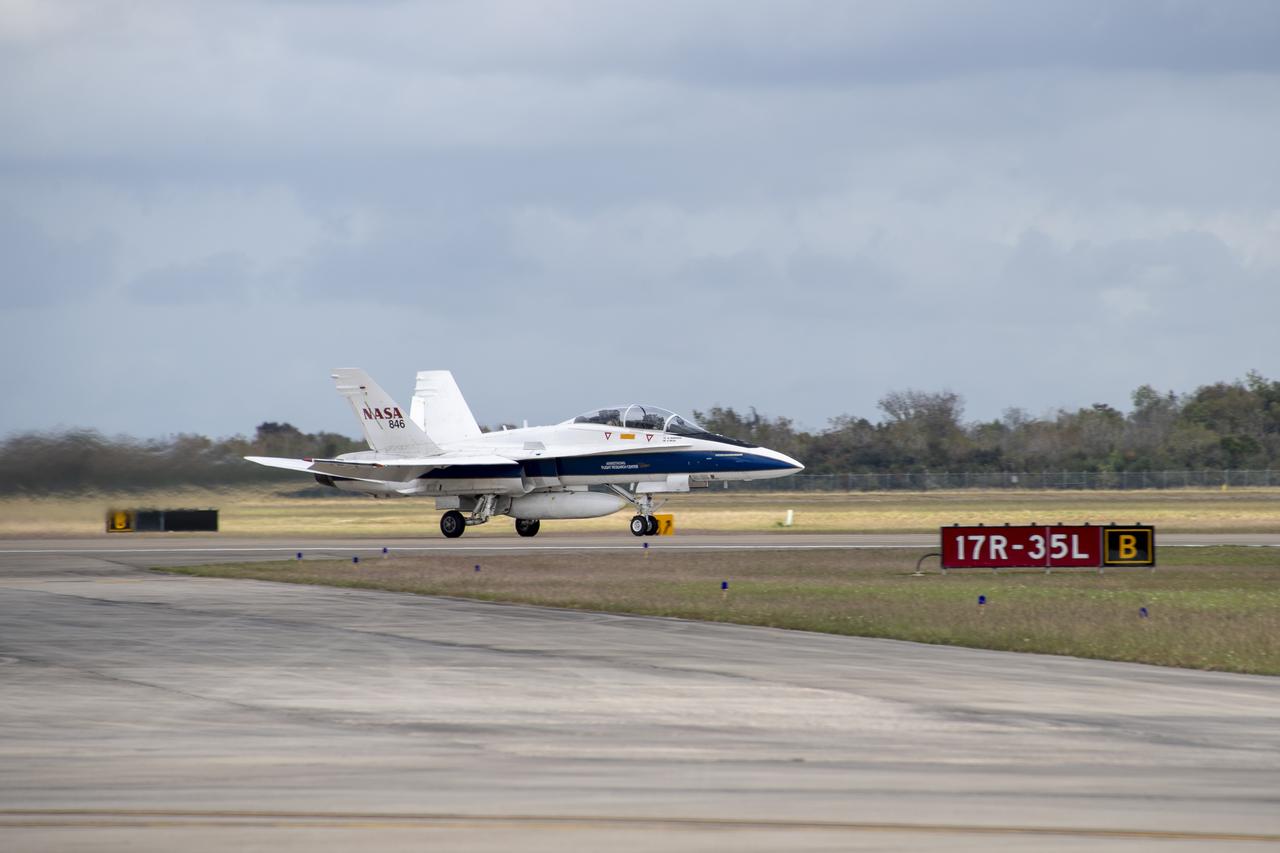
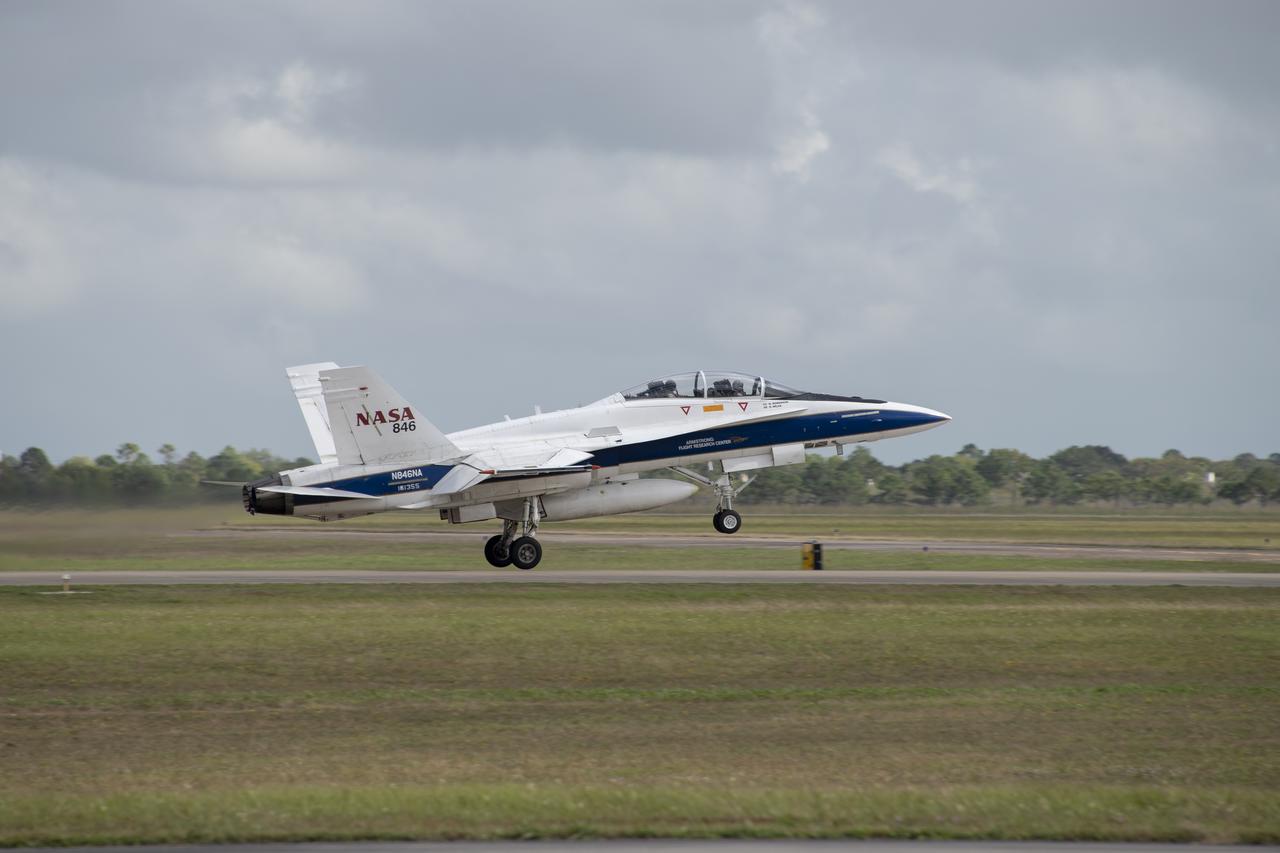
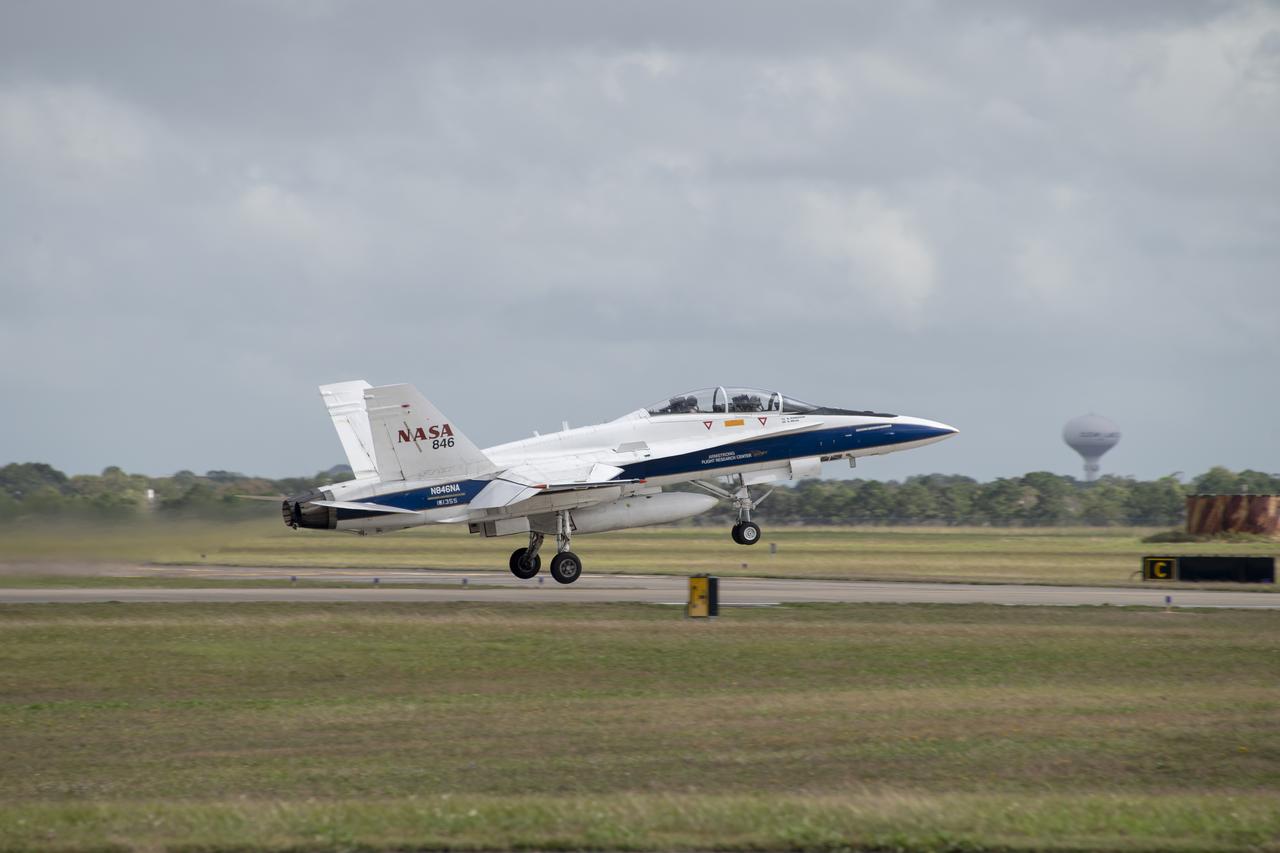
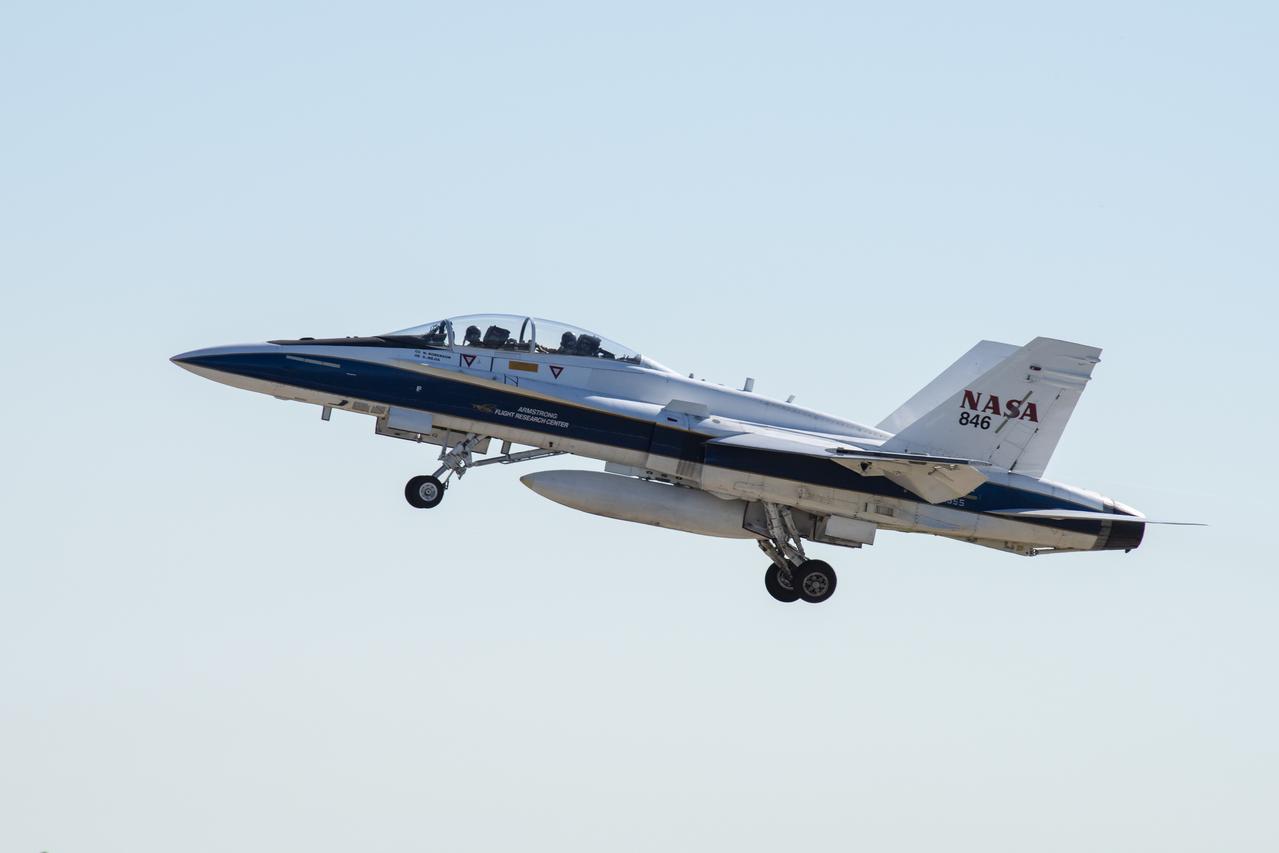
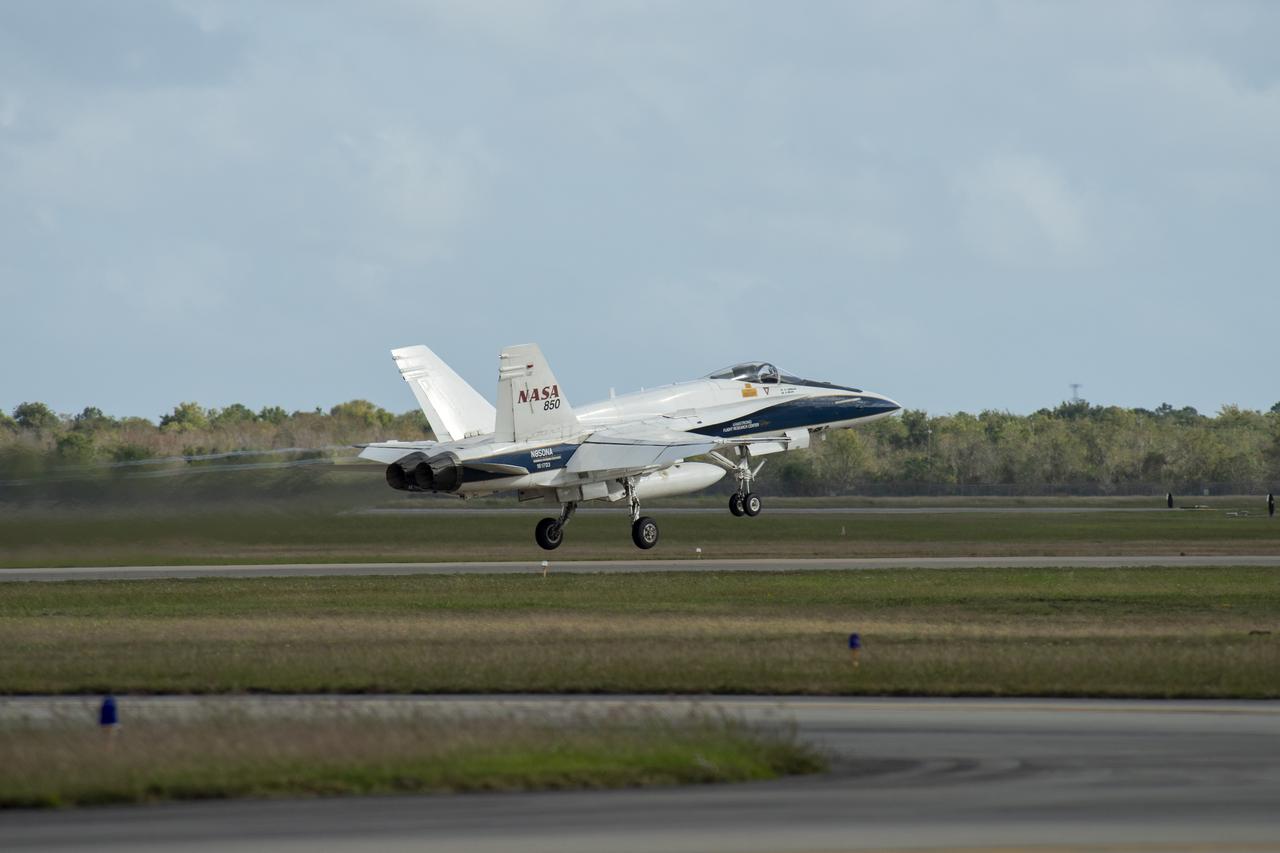
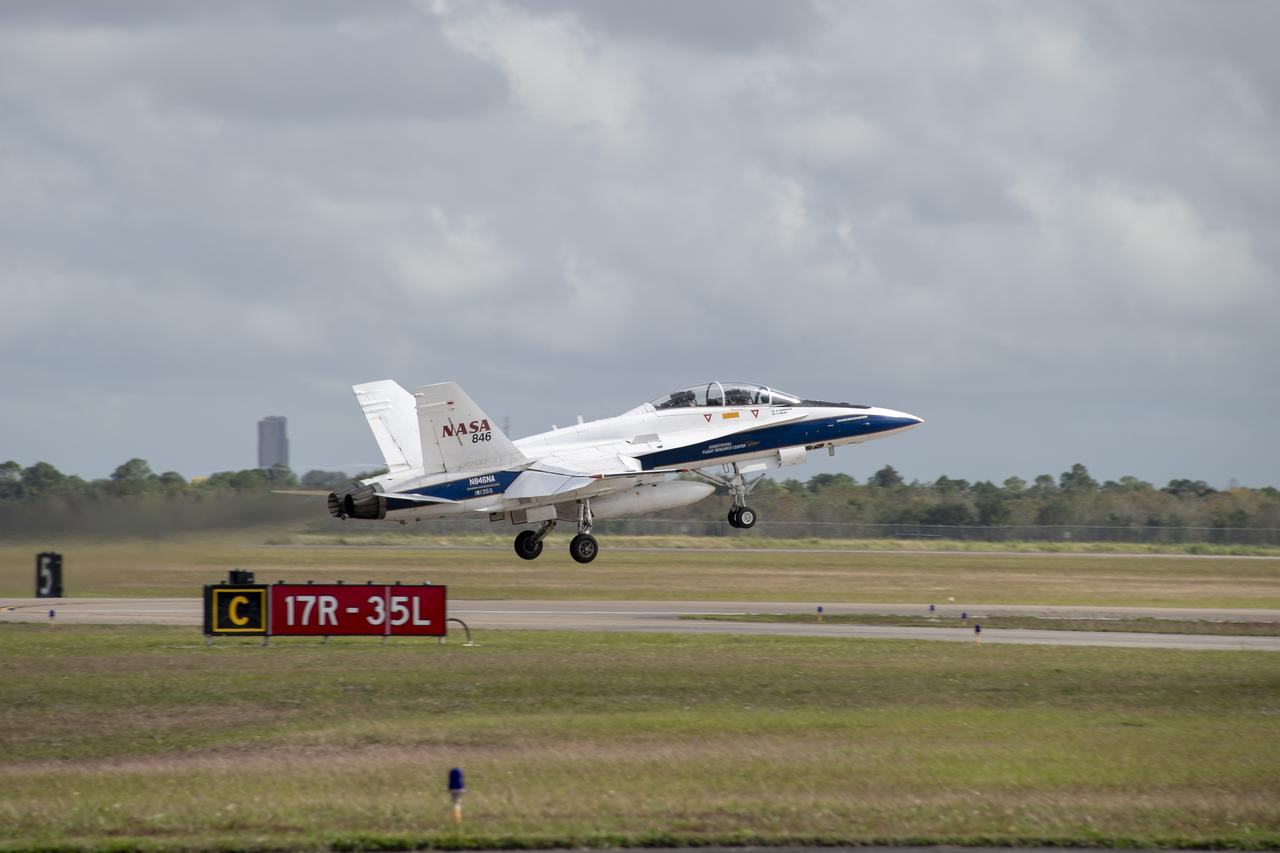
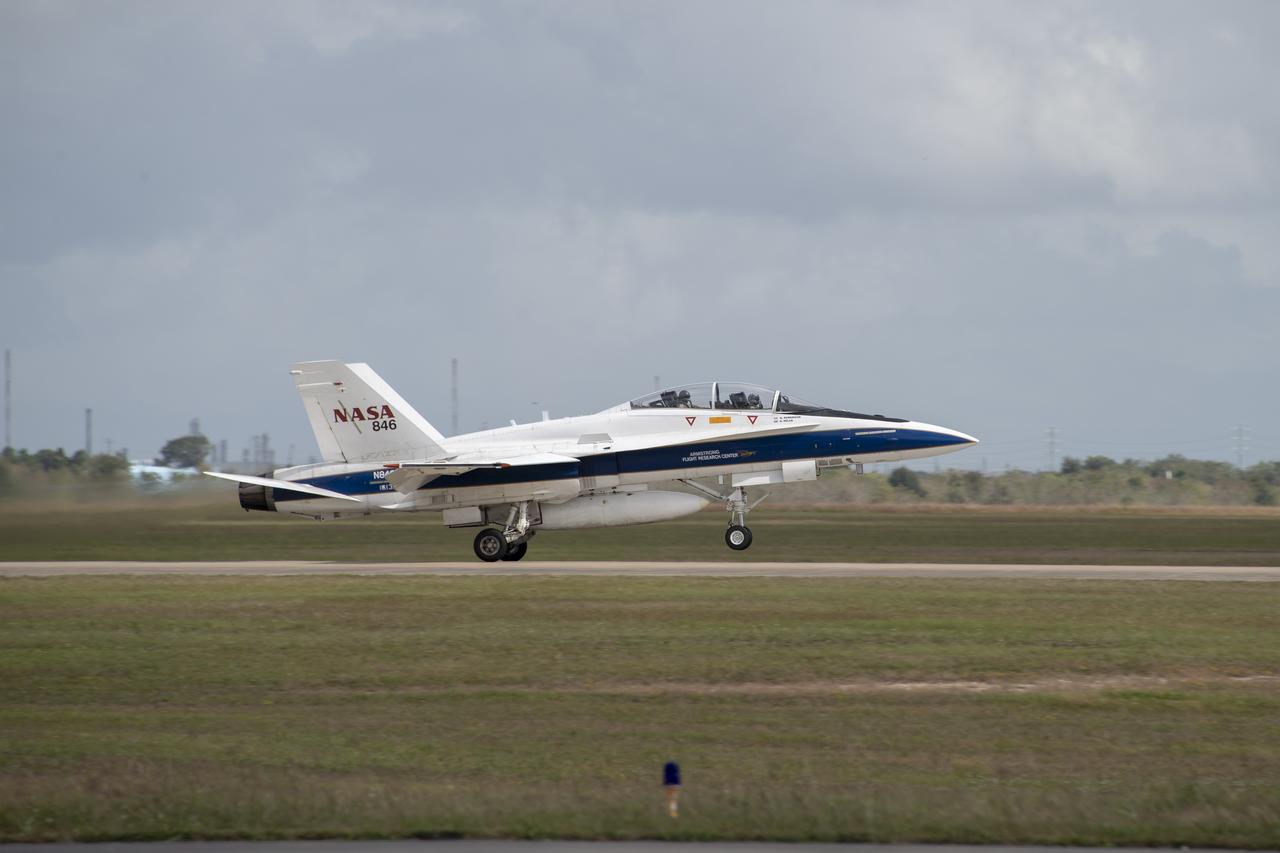
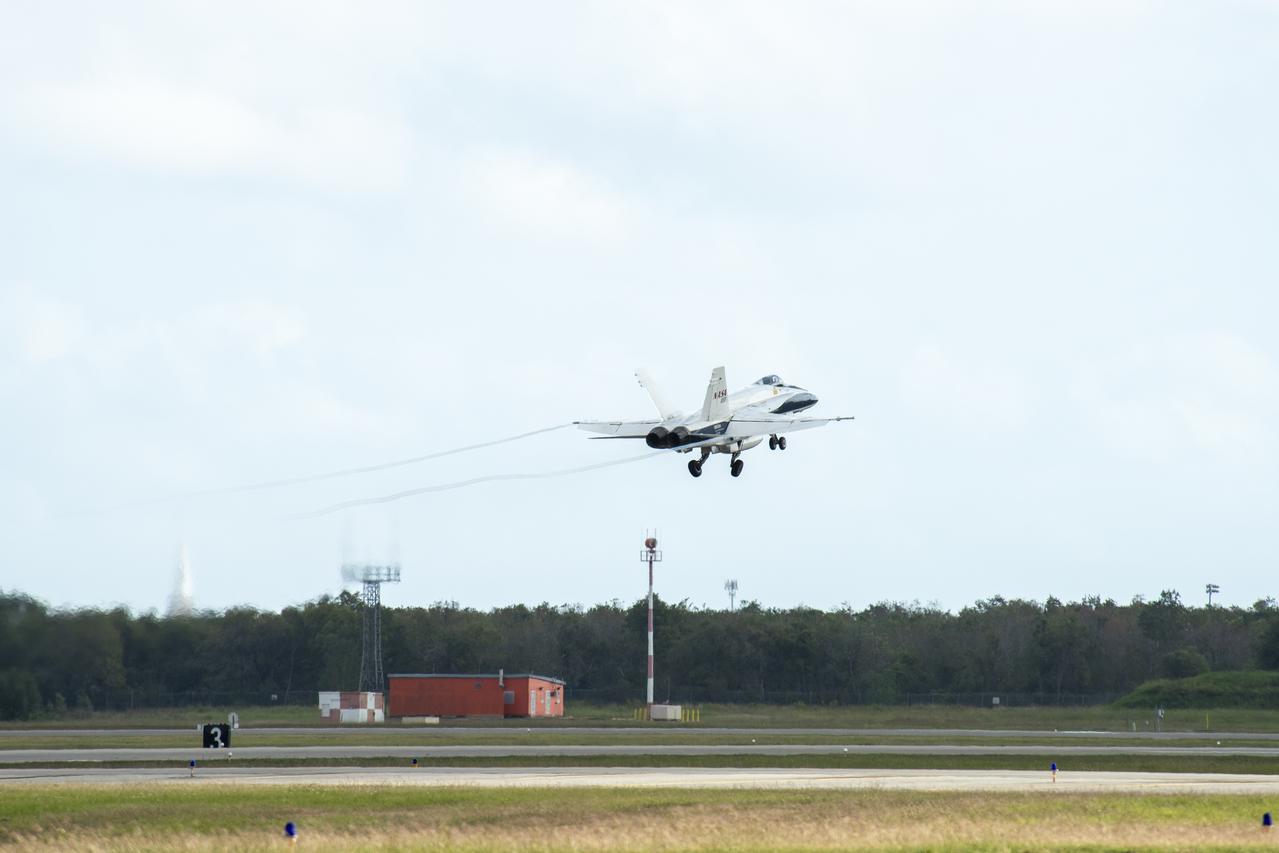
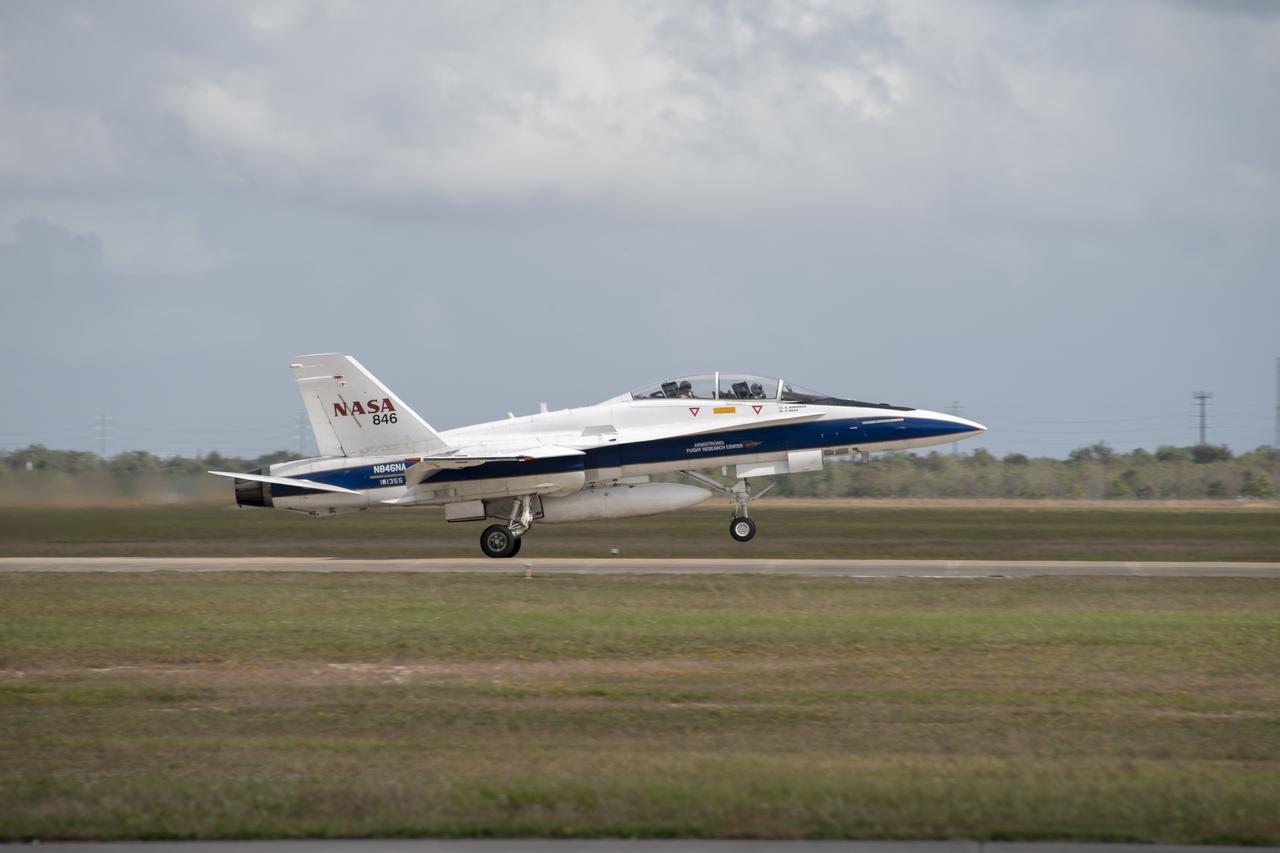
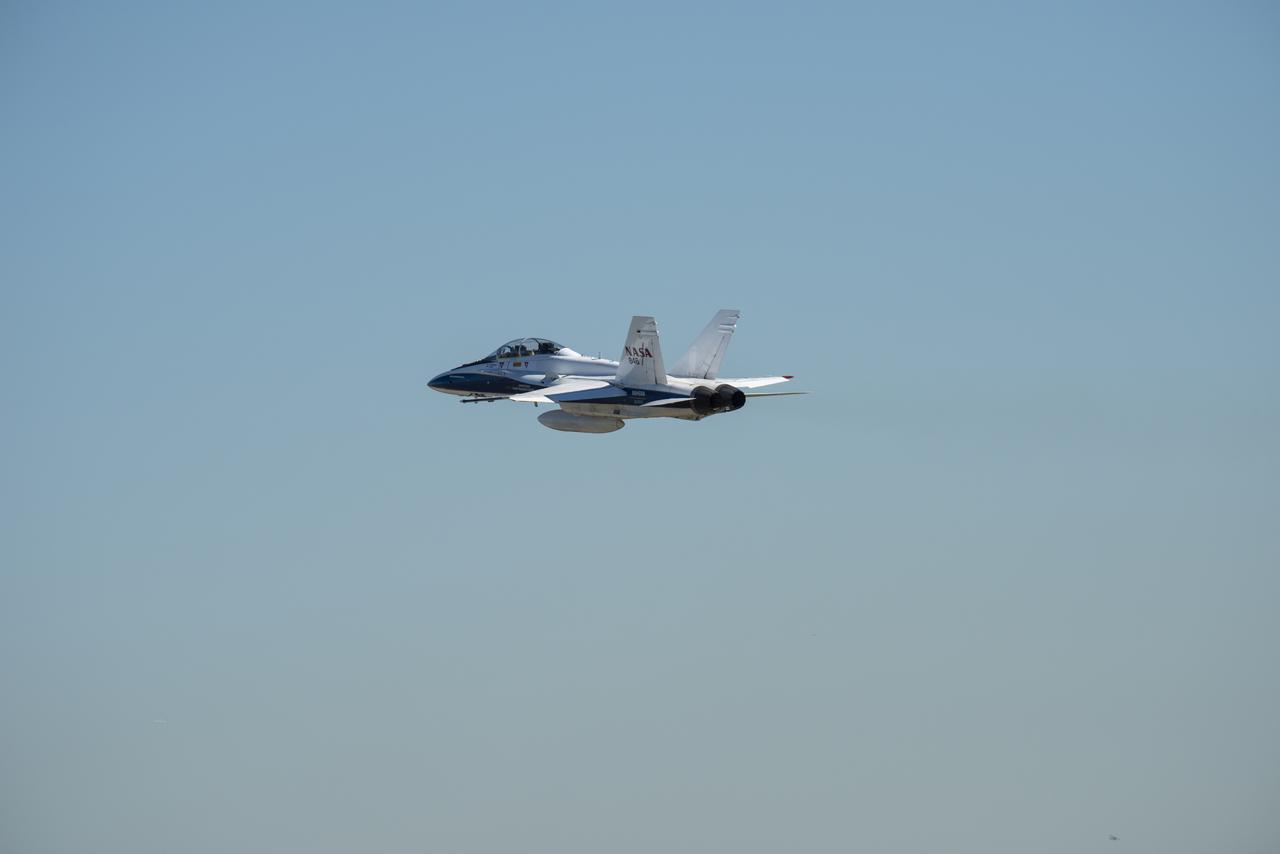
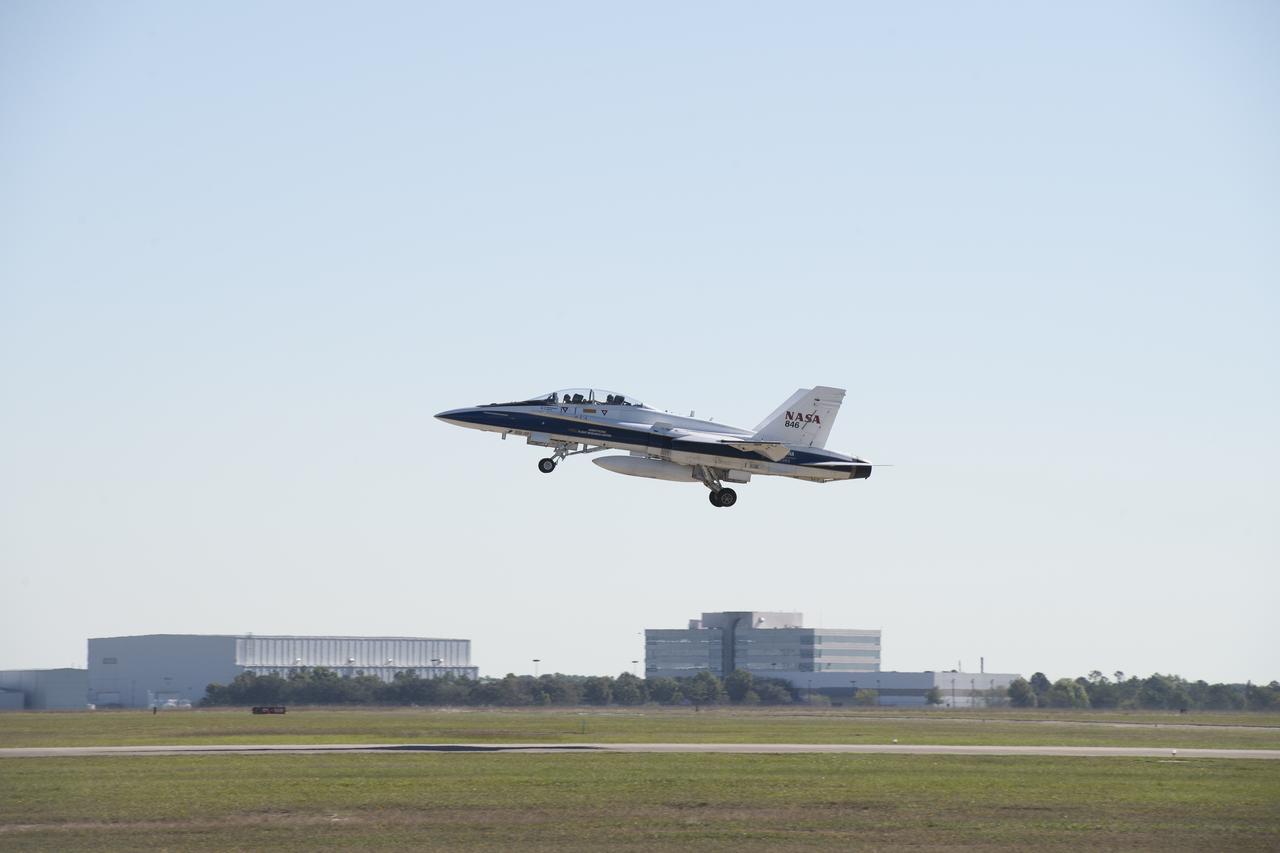
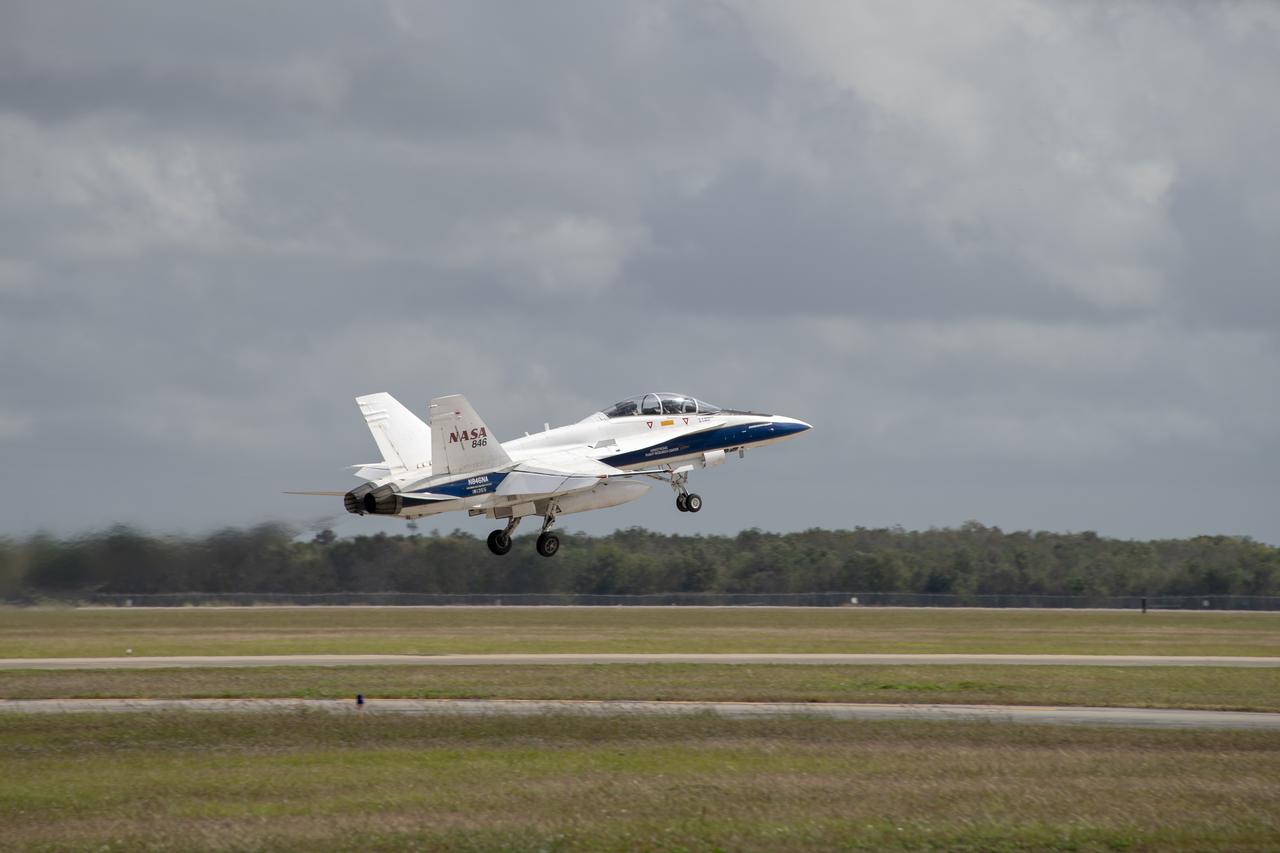
NASA’s F/A-18 research aircraft takes off from Ellington Field in Houston, Texas for a quiet supersonic research flight off the coast of Galveston, as part of the QSF18 flight series. The F/A-18 will climb to 50,000 feet over the Gulf of Mexico, where it will perform the quiet supersonic dive maneuver.
NASA F/A-18 Takes Off for QSF18 Supersonic Flight
NASA’s F/A-18 research aircraft takes off from Ellington Field in Houston, Texas for a quiet supersonic research flight off the coast of Galveston, as part of the QSF18 flight series. The F/A-18 will climb to 50,000 feet over the Gulf of Mexico, where it will perform the quiet supersonic dive maneuver.
NASA F/A-18 Takes Off for QSF18 Supersonic Flight
NASA’s F/A-18 research aircraft takes off from Ellington Field in Houston, Texas for a quiet supersonic research flight off the coast of Galveston, as part of the QSF18 flight series. The F/A-18 will climb to 50,000 feet over the Gulf of Mexico, where it will perform the quiet supersonic dive maneuver.
NASA F/A-18 Takes Off for QSF18 Supersonic Flight
NASA’s F/A-18 research aircraft takes off from Ellington Field in Houston, Texas for a quiet supersonic research flight off the coast of Galveston, as part of the QSF18 flight series. The F/A-18 will climb to 50,000 feet over the Gulf of Mexico, where it will perform the quiet supersonic dive maneuver.
NASA F/A-18 Takes Off for QSF18 Supersonic Flight
NASA’s F/A-18 research aircraft takes off from Ellington Field in Houston, Texas for a quiet supersonic research flight off the coast of Galveston, as part of the QSF18 flight series. The F/A-18 will climb to 50,000 feet over the Gulf of Mexico, where it will perform the quiet supersonic dive maneuver.
NASA F/A-18 Takes Off for QSF18 Supersonic Flight
NASA's F/A-18 research aircraft takes off from Ellington Field in Houston, Texas for a quiet supersonic research flight off the coast of Galveston, as part of the QSF18 flight series. The F/A-18 will climb to 50,000 feet over the Gulf of Mexico, where it will perform the quiet supersonic dive maneuver.
NASA F/A-18 Takes Off for QSF18 Supersonic Flight
NASA’s F/A-18 research aircraft takes off from Ellington Field in Houston, Texas for a quiet supersonic research flight off the coast of Galveston, as part of the QSF18 flight series. The F/A-18 will climb to 50,000 feet over the Gulf of Mexico, where it will perform the quiet supersonic dive maneuver.
NASA F/A-18 Takes Off for QSF18 Supersonic Flight
NASA's F/A-18 research aircraft takes off from Ellington Field in Houston, Texas for a quiet supersonic research flight off the coast of Galveston, as part of the QSF18 flight series. The F/A-18 will climb to 50,000 feet over the Gulf of Mexico, where it will perform the quiet supersonic dive maneuver.
NASA F/A-18 Takes Off for QSF18 Supersonic Flight
NASA’s F/A-18 research aircraft takes off from Ellington Field in Houston, Texas for a quiet supersonic research flight off the coast of Galveston, as part of the QSF18 flight series. The F/A-18 will climb to 50,000 feet over the Gulf of Mexico, where it will perform the quiet supersonic dive maneuver.
NASA F/A-18 Takes Off for QSF18 Supersonic Flight
NASA’s F/A-18 research aircraft takes off from Ellington Field in Houston, Texas for a quiet supersonic research flight off the coast of Galveston, as part of the QSF18 flight series. The F/A-18 will climb to 50,000 feet over the Gulf of Mexico, where it will perform the quiet supersonic dive maneuver.
NASA F/A-18 Takes Off for QSF18 Supersonic Flight
NASA’s F/A-18 research aircraft takes off from Ellington Field in Houston, Texas for a quiet supersonic research flight off the coast of Galveston, as part of the QSF18 flight series. The F/A-18 will climb to 50,000 feet over the Gulf of Mexico, where it will perform the quiet supersonic dive maneuver.
NASA F/A-18 Takes Off for QSF18 Supersonic Flight
NASA’s F/A-18 research aircraft takes off from Ellington Field in Houston, Texas for a quiet supersonic research flight off the coast of Galveston, as part of the QSF18 flight series. The F/A-18 will climb to 50,000 feet over the Gulf of Mexico, where it will perform the quiet supersonic dive maneuver.
NASA F/A-18 Takes Off for QSF18 Supersonic Flight
NASA’s F/A-18 research aircraft takes off from Ellington Field in Houston, Texas for a quiet supersonic research flight off the coast of Galveston, as part of the QSF18 flight series. The F/A-18 will climb to 50,000 feet over the Gulf of Mexico, where it will perform the quiet supersonic dive maneuver.
NASA F/A-18 Takes Off for QSF18 Supersonic Flight
NASA's F/A-18 research aircraft takes off from Ellington Field in Houston, Texas for a quiet supersonic research flight off the coast of Galveston, as part of the QSF18 flight series. The F/A-18 will climb to 50,000 feet over the Gulf of Mexico, where it will perform the quiet supersonic dive maneuver.
NASA F/A-18 Takes Off for QSF18 Supersonic Flight
NASA’s F/A-18 research aircraft takes off from Ellington Field in Houston, Texas for a quiet supersonic research flight off the coast of Galveston, as part of the QSF18 flight series. The F/A-18 will climb to 50,000 feet over the Gulf of Mexico, where it will perform the quiet supersonic dive maneuver.
NASA F/A-18 Takes Off for QSF18 Supersonic Flight
NASA’s F/A-18 research aircraft takes off from Ellington Field in Houston, Texas for a quiet supersonic research flight off the coast of Galveston, as part of the QSF18 flight series. The F/A-18 will climb to 50,000 feet over the Gulf of Mexico, where it will perform the quiet supersonic dive maneuver.
NASA F/A-18 Takes Off for QSF18 Supersonic Flight
NASA's F/A-18 research aircraft takes off from Ellington Field in Houston, Texas for a quiet supersonic research flight off the coast of Galveston, as part of the QSF18 flight series. The F/A-18 will climb to 50,000 feet over the Gulf of Mexico, where it will perform the quiet supersonic dive maneuver.
NASA F/A-18 Takes Off for QSF18 Supersonic Flight
NASA’s F/A-18 research aircraft takes off from Ellington Field in Houston, Texas for a quiet supersonic research flight off the coast of Galveston, as part of the QSF18 flight series. The F/A-18 will climb to 50,000 feet over the Gulf of Mexico, where it will perform the quiet supersonic dive maneuver.
NASA F/A-18 Takes Off for QSF18 Supersonic Flight
NASA’s F/A-18 research aircraft takes off from Ellington Field in Houston, Texas for a quiet supersonic research flight off the coast of Galveston, as part of the QSF18 flight series. The F/A-18 will climb to 50,000 feet over the Gulf of Mexico, where it will perform the quiet supersonic dive maneuver.
NASA F/A-18 Takes Off for QSF18 Supersonic Flight
NASA’s F/A-18 research aircraft takes off from Ellington Field in Houston, Texas for a quiet supersonic research flight off the coast of Galveston, as part of the QSF18 flight series. The F/A-18 will climb to 50,000 feet over the Gulf of Mexico, where it will perform the quiet supersonic dive maneuver.
NASA F/A-18 Takes Off for QSF18 Supersonic Flight
NASA’s F/A-18 research aircraft takes off from Ellington Field in Houston, Texas for a quiet supersonic research flight off the coast of Galveston, as part of the QSF18 flight series. The F/A-18 will climb to 50,000 feet over the Gulf of Mexico, where it will perform the quiet supersonic dive maneuver.
NASA F/A-18 Takes Off for QSF18 Supersonic Flight
NASA’s F/A-18 research aircraft takes off from Ellington Field in Houston, Texas for a quiet supersonic research flight off the coast of Galveston, as part of the QSF18 flight series. The F/A-18 will climb to 50,000 feet over the Gulf of Mexico, where it will perform the quiet supersonic dive maneuver.
NASA F/A-18 Takes Off for QSF18 Supersonic Flight
NASA’s F/A-18 research aircraft takes off from Ellington Field in Houston, Texas for a quiet supersonic research flight off the coast of Galveston, as part of the QSF18 flight series. The F/A-18 will climb to 50,000 feet over the Gulf of Mexico, where it will perform the quiet supersonic dive maneuver.
NASA F/A-18 Takes Off for QSF18 Supersonic Flight
This unique view, looking directly up at two NASA Dryden F/A-18's used in the Autonomous Formation Flight (AFF) program, was captured by Carla Thomas from another F-18 flying safety/chase.
EC01-0328-4
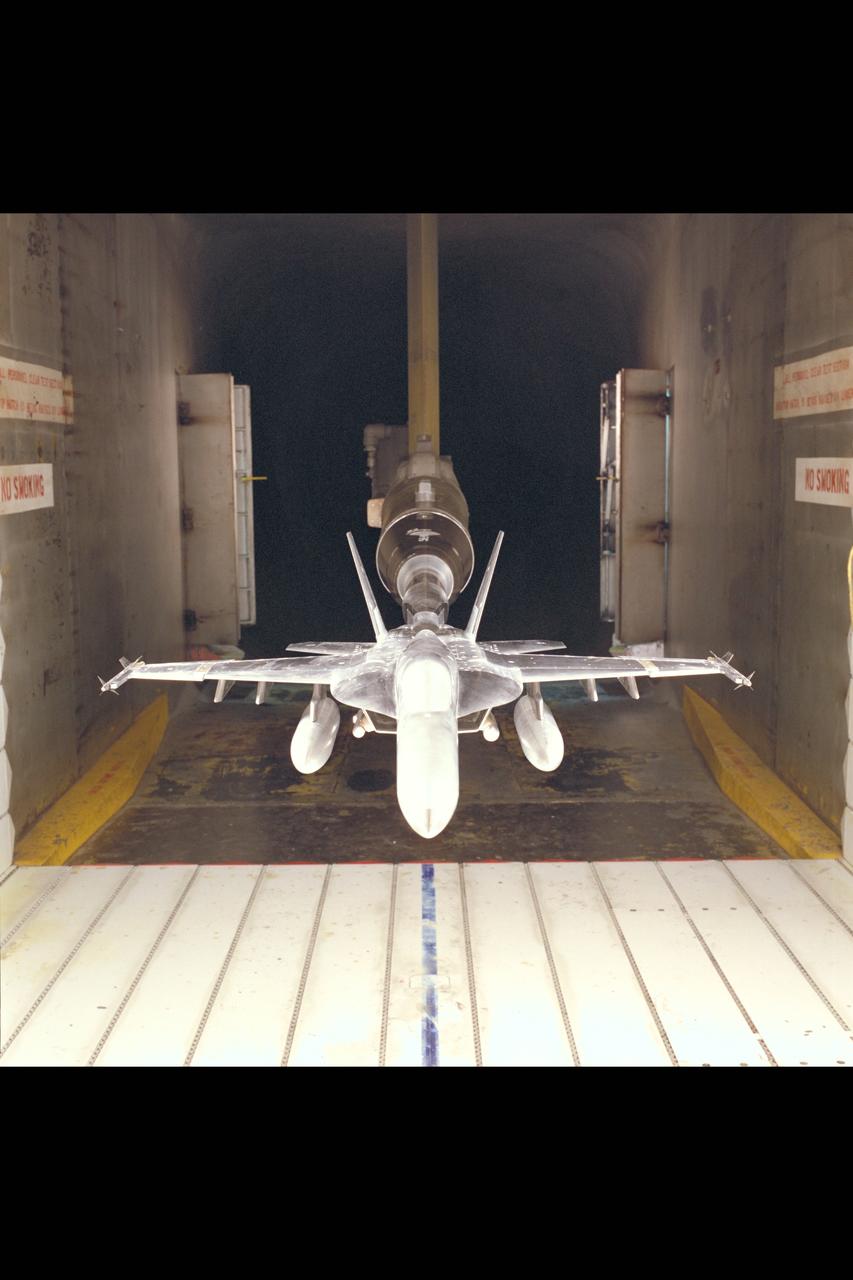
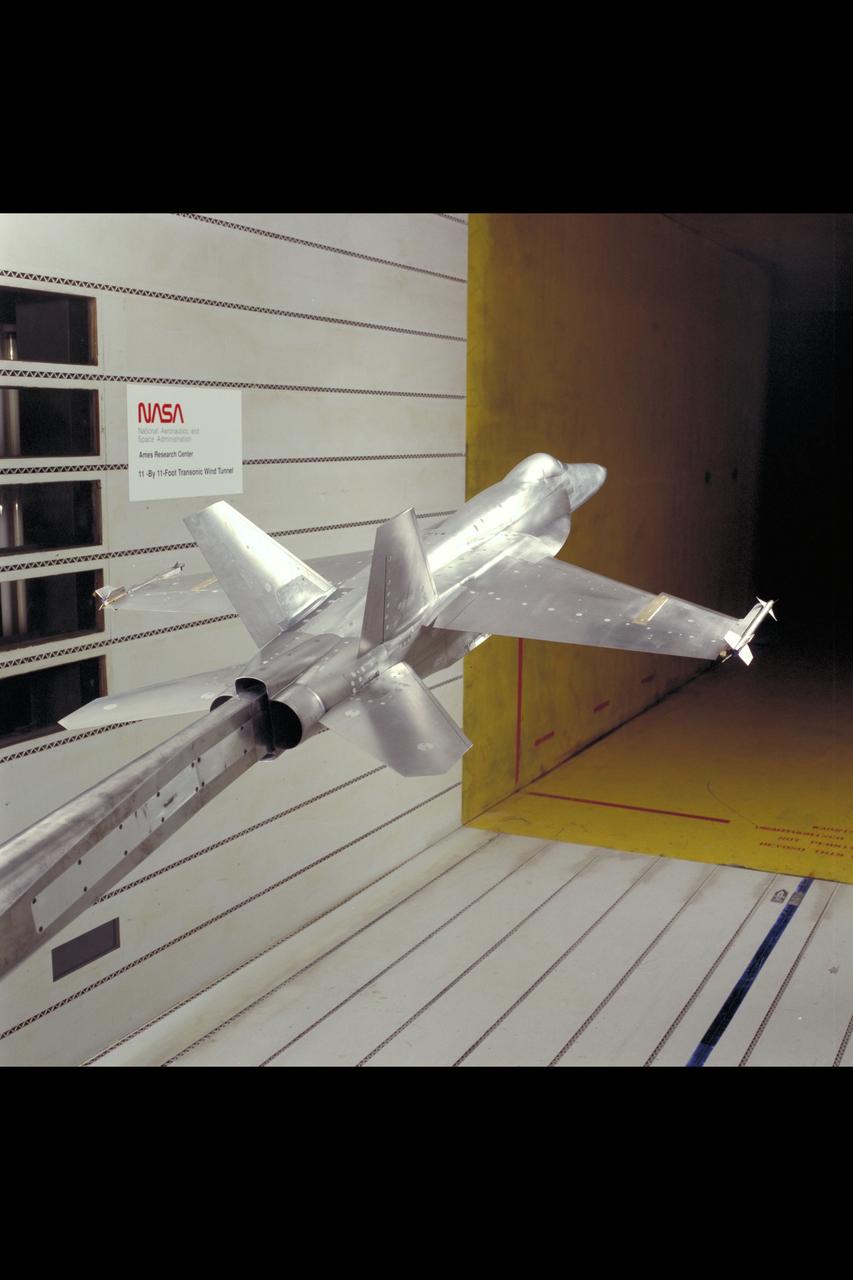
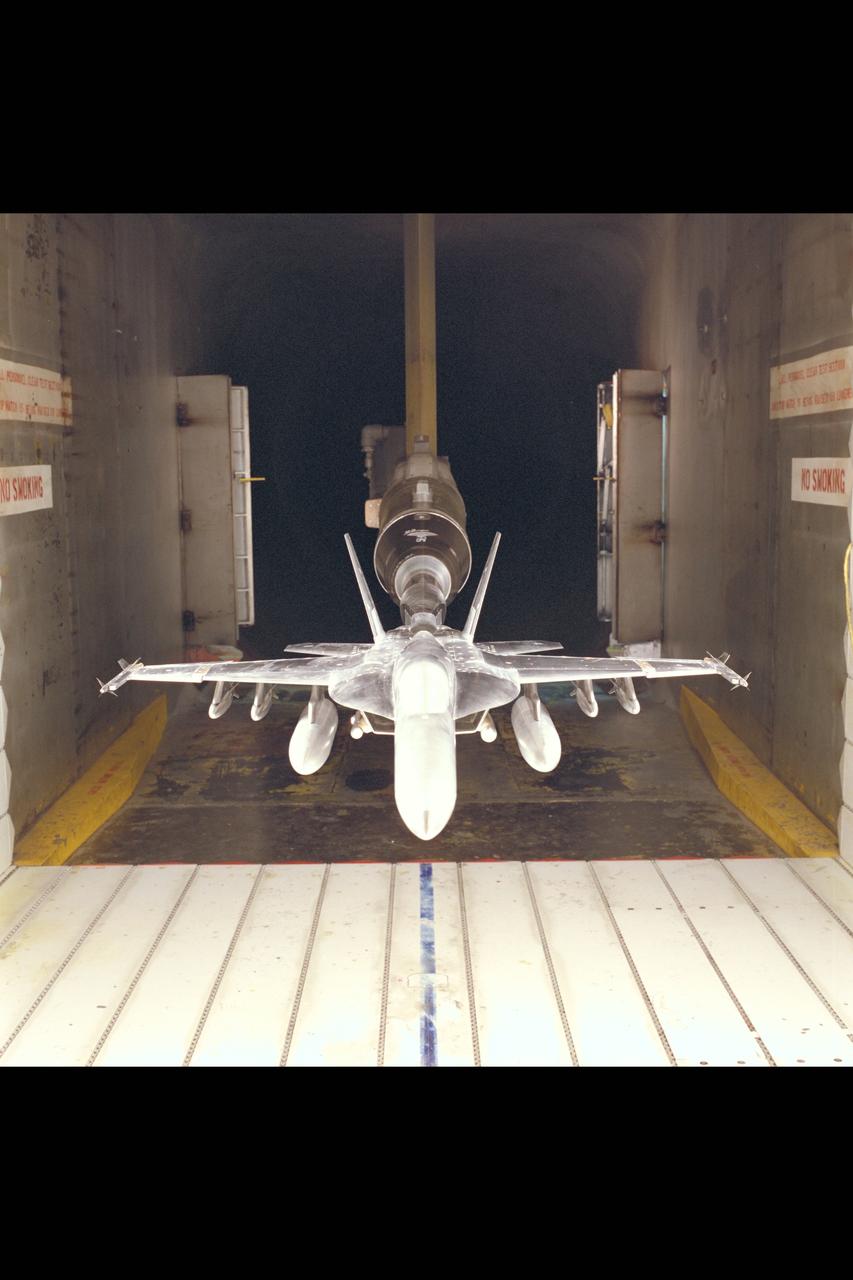
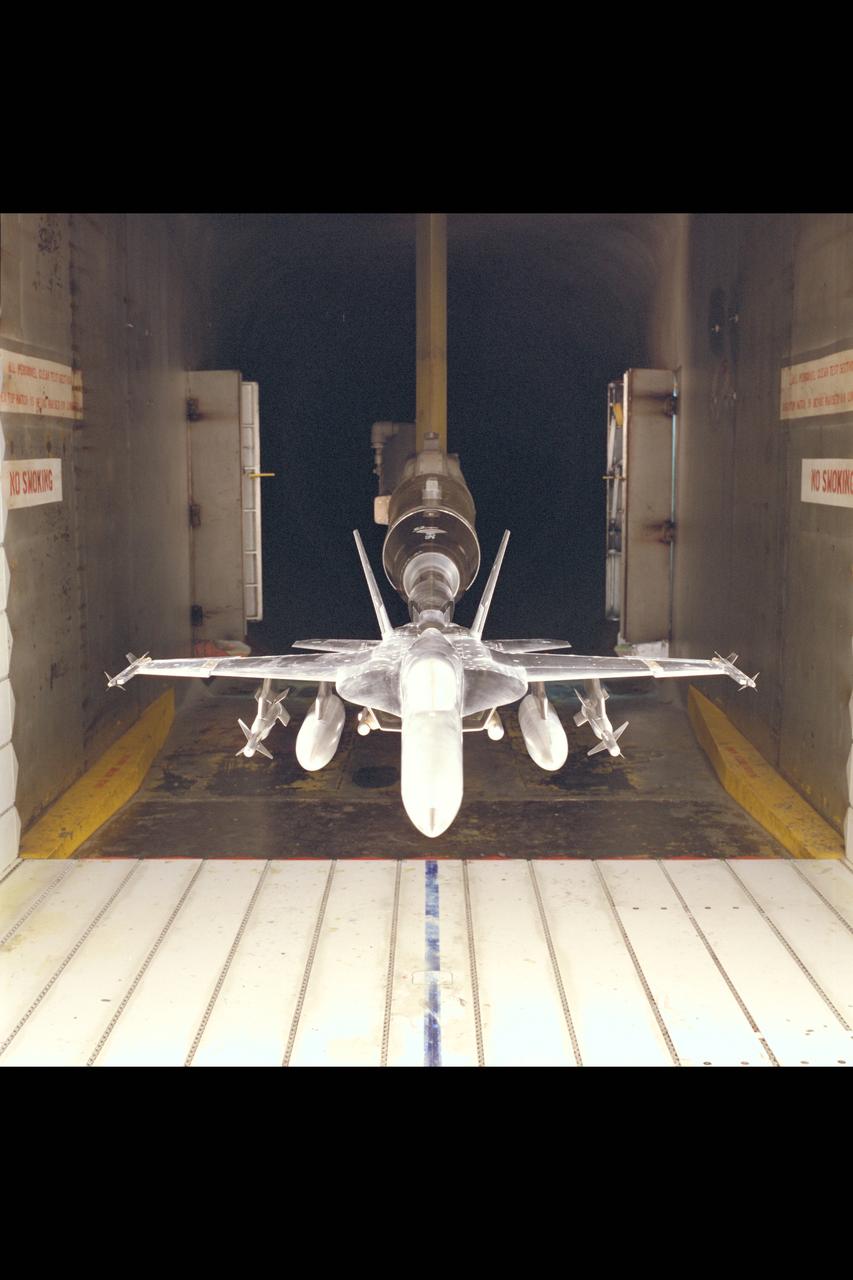
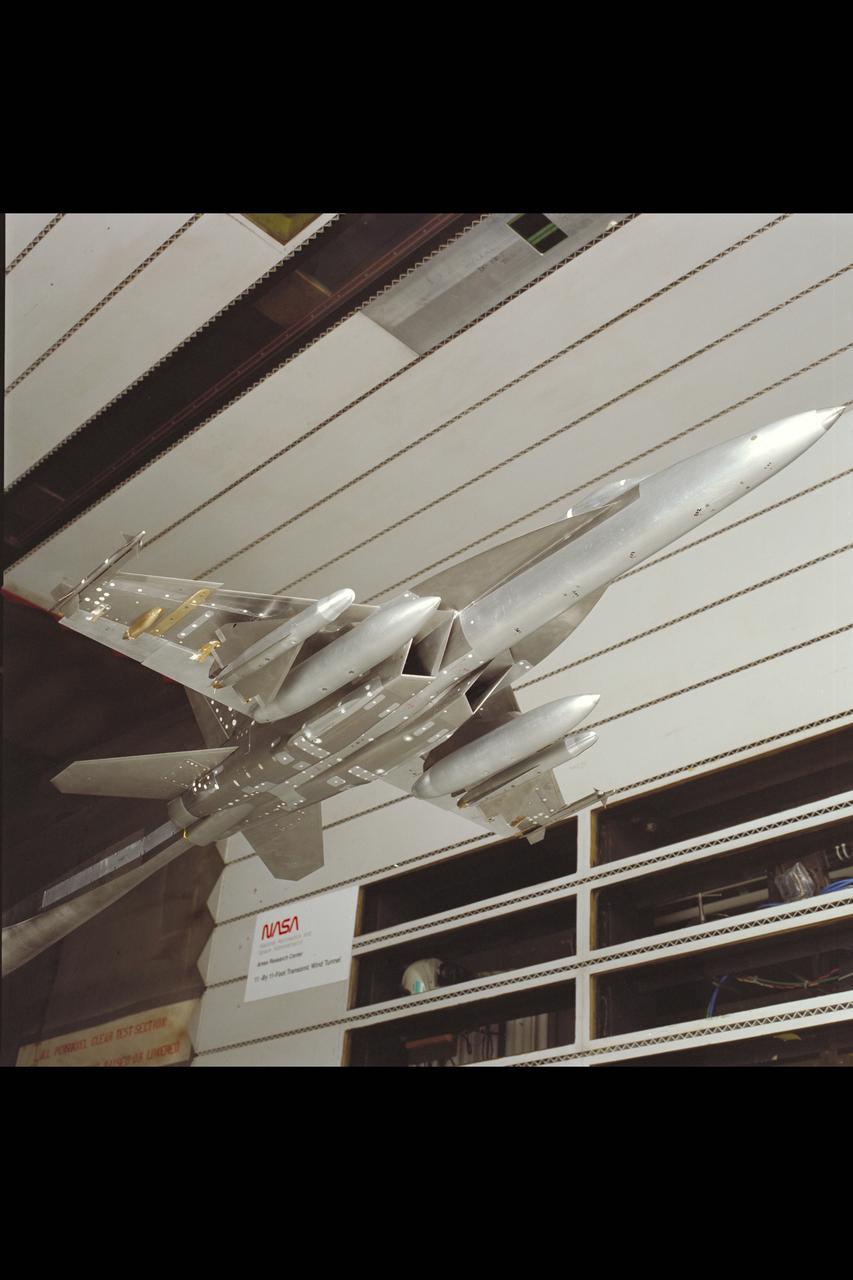
F/A-18 E/F Model: 11ft. W.T. Test #207-1-11 (February and March)
ARC-1994-AC94-0134-3
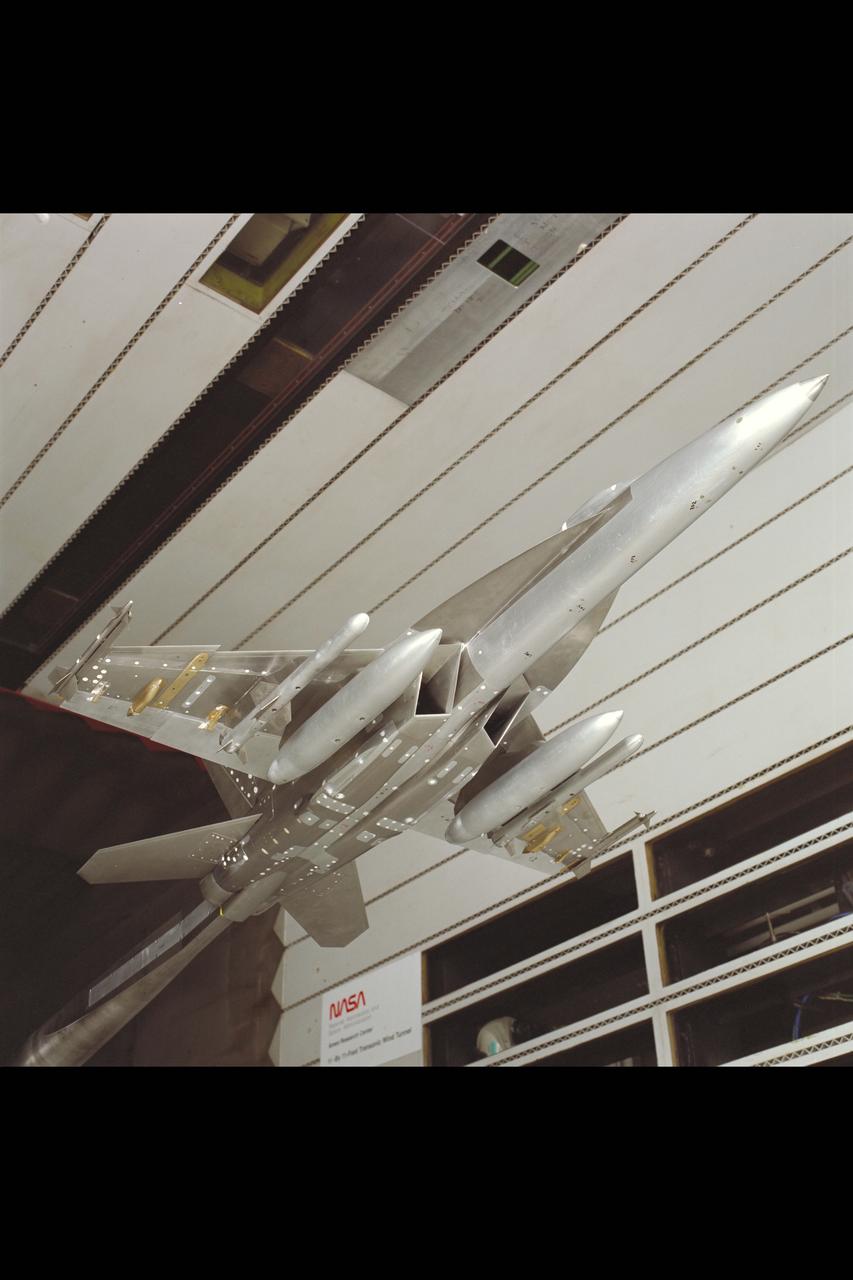
F/A-18 E/F Model: 11ft. W.T. Test #207-1-11
ARC-1994-AC94-0134-18
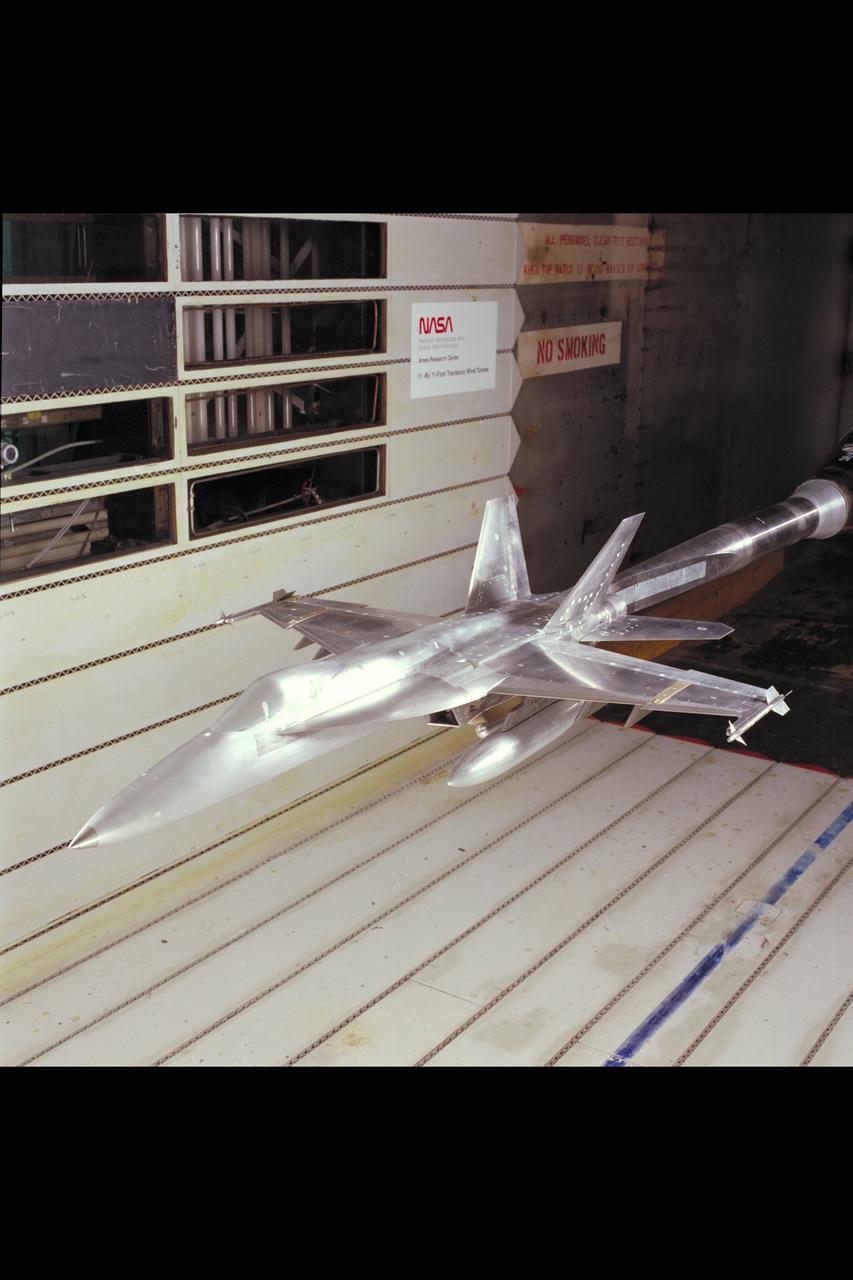
F/A-18 E/F Model: 11ft. W.T. Test #207-1-11 (February and March)
ARC-1994-AC94-0134-5
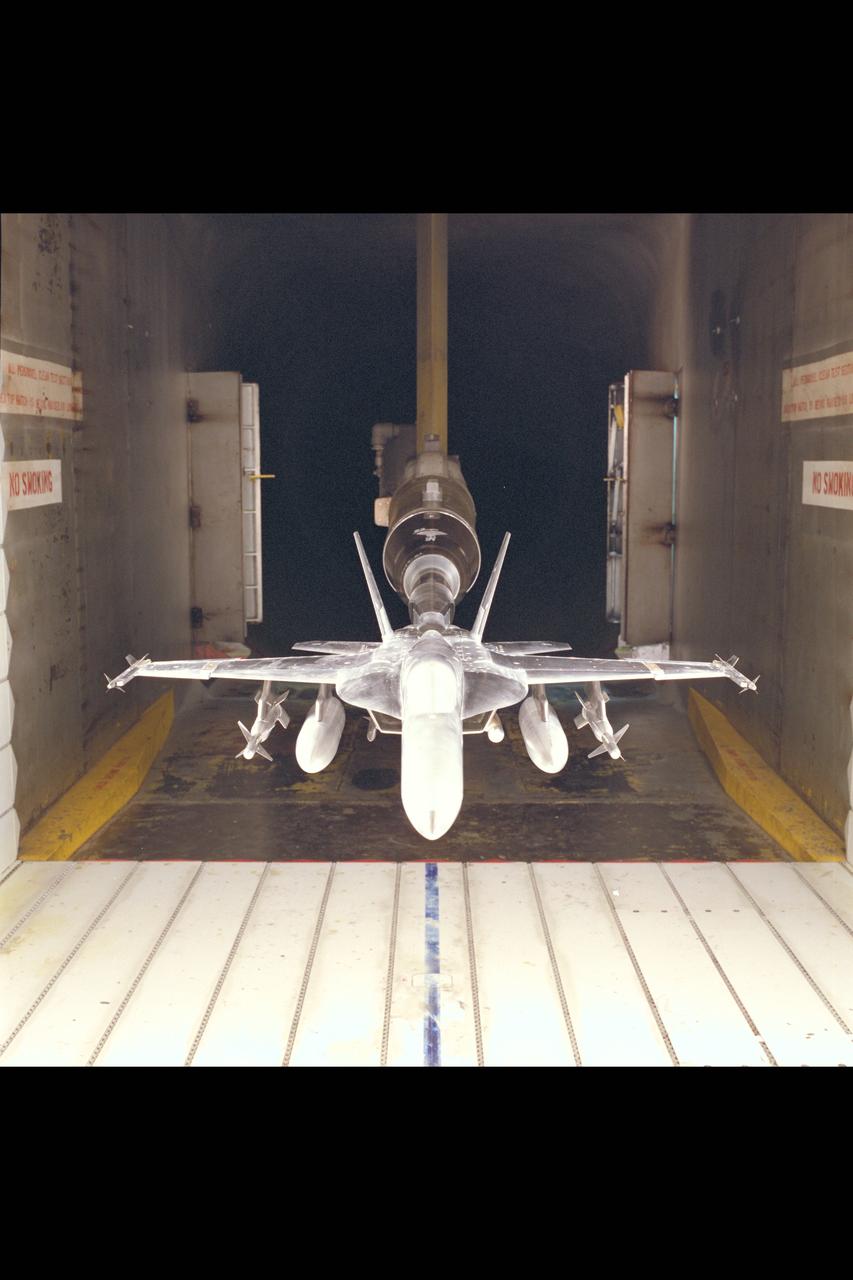
F/A-18 E/F Model: 11ft. W.T. Test #207-1-11 (February and March)
ARC-1994-AC94-0134-4
F/A-18 E/F Model: 11ft. W.T. Test #207-1-11 (February and March)
ARC-1994-AC94-0134-9
F/A-18 E/F Model: 11ft. W.T. Test #207-1-11 (February and March)
ARC-1994-AC94-0134-6
F/A-18 E/F Model: 11ft. W.T. Test #207-1-11
ARC-1994-AC94-0134-19
F/A-18 E/F Model: 11ft. W.T. Test #207-1-11 (February and March)
ARC-1994-AC94-0134-8
F/A-18 E/F Model: 11ft. W.T. Test #207-1-11, 8% Model
ARC-1994-AC94-0134-17
F/A-18 E/F Model: 11ft. W.T. Test #207-1-11 (February and March)
ARC-1994-AC94-0134-2
F/A-18 E/F Model: 11ft. W.T. Test #207-1-11 (February and March)
ARC-1994-AC94-0134-7
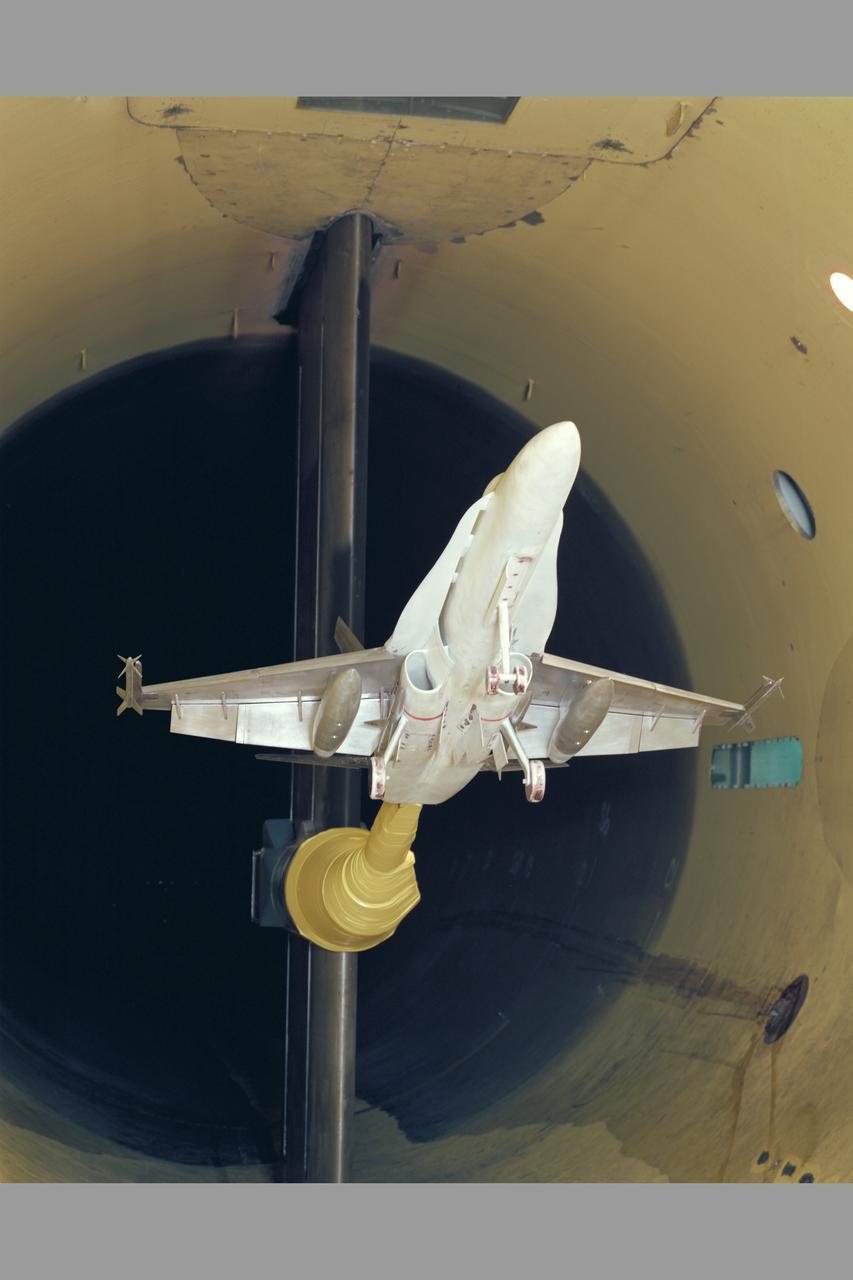
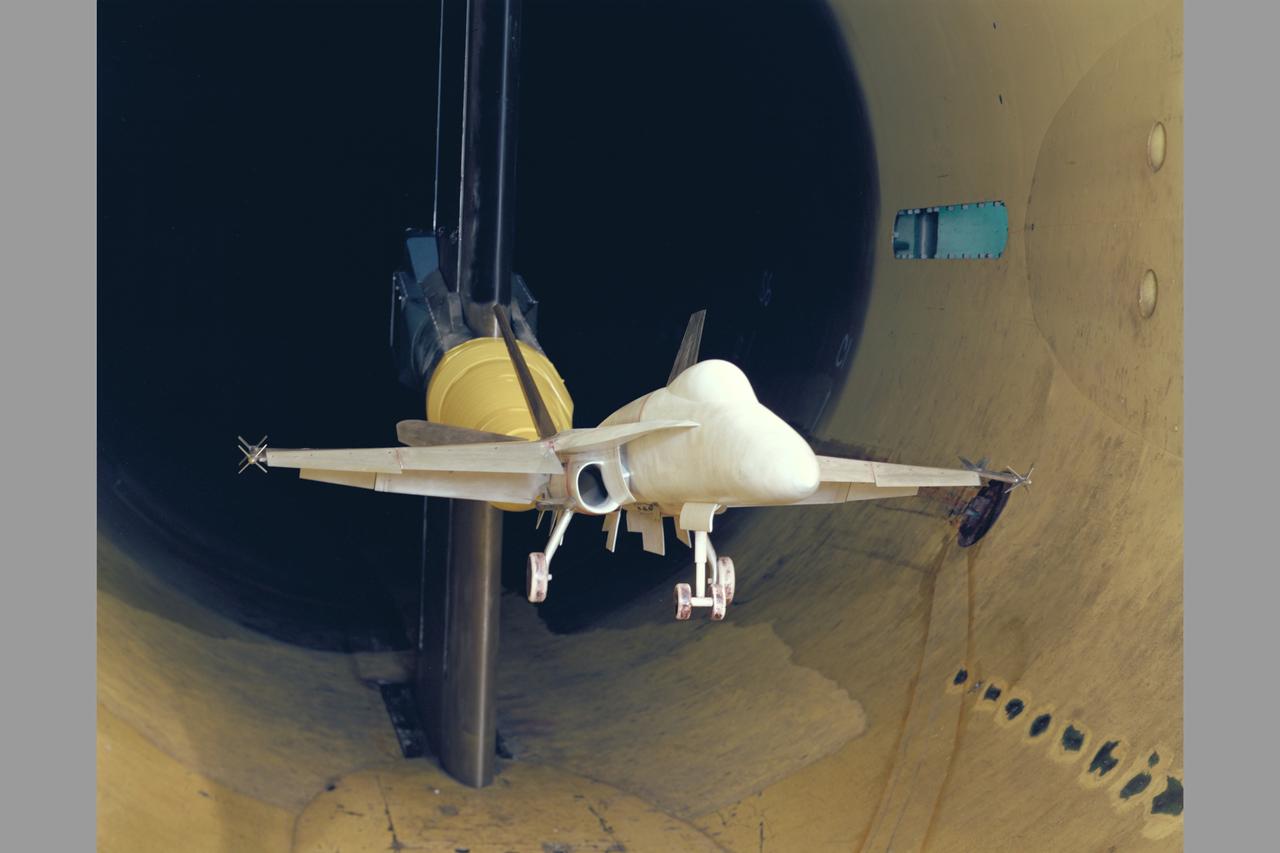
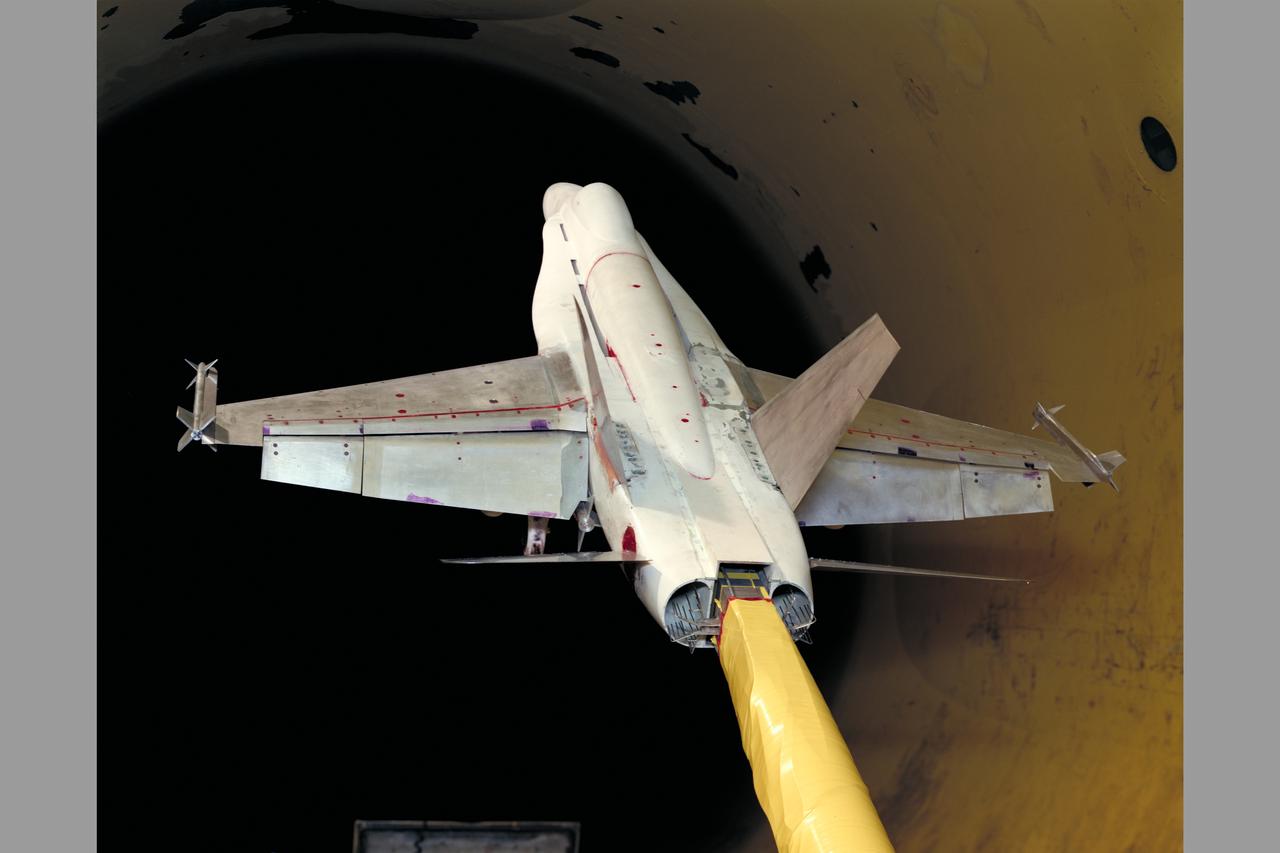
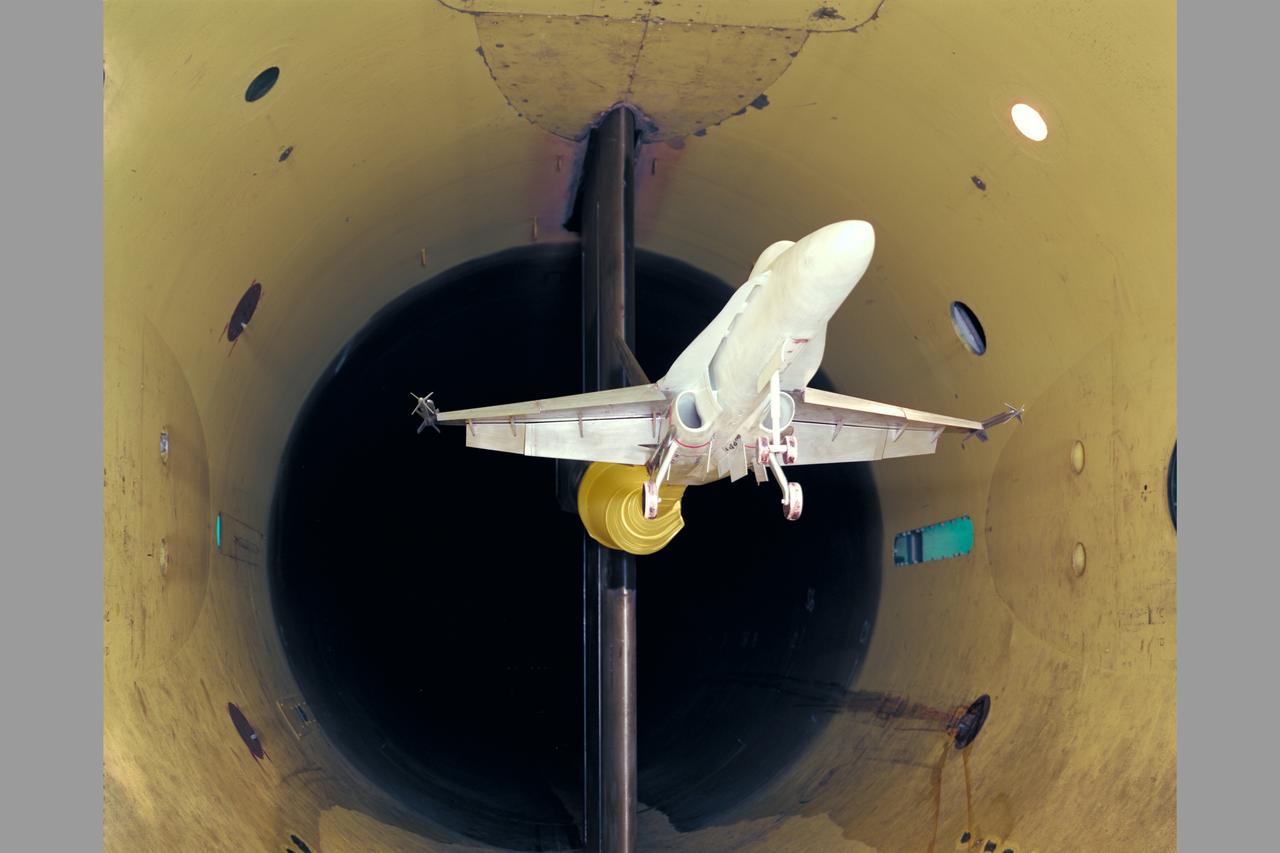
F-18 installed in 80x120ft w.t. for High Alpha Test-823 Phase II
ARC-1993-AC93-0150-105
NASA's 2017 astronaut candidates (L to R) Jenni Sidey-Gibbons, Jessica Watkins and Joshua Kutryk practice flying in an F-18 aircraft cockpit simulator at Armstrong Flight Research Center, in Southern California. The F-18's are flown for research support and pilot proficiency. Currently, the F-18 is conducting supersonic research in support of the X-59 QueSST overall mission.
Astronauts Pilot F-18 Simulator at Armstrong Flight Research Center
NASA's 2017 astronaut candidates (L to R) Jessica Watkins and Jenni Sidey-Gibbons practice flying in an F-18 aircraft cockpit simulator at Armstrong Flight Research Center, in Southern California. The F-18's are flown for research support and pilot proficiency. Currently, the F-18's are being used to conduct supersonic research in support of the X-59 QueSST overall mission.
Astronauts Pilot F-18 Simulator at Armstrong Flight Research Center
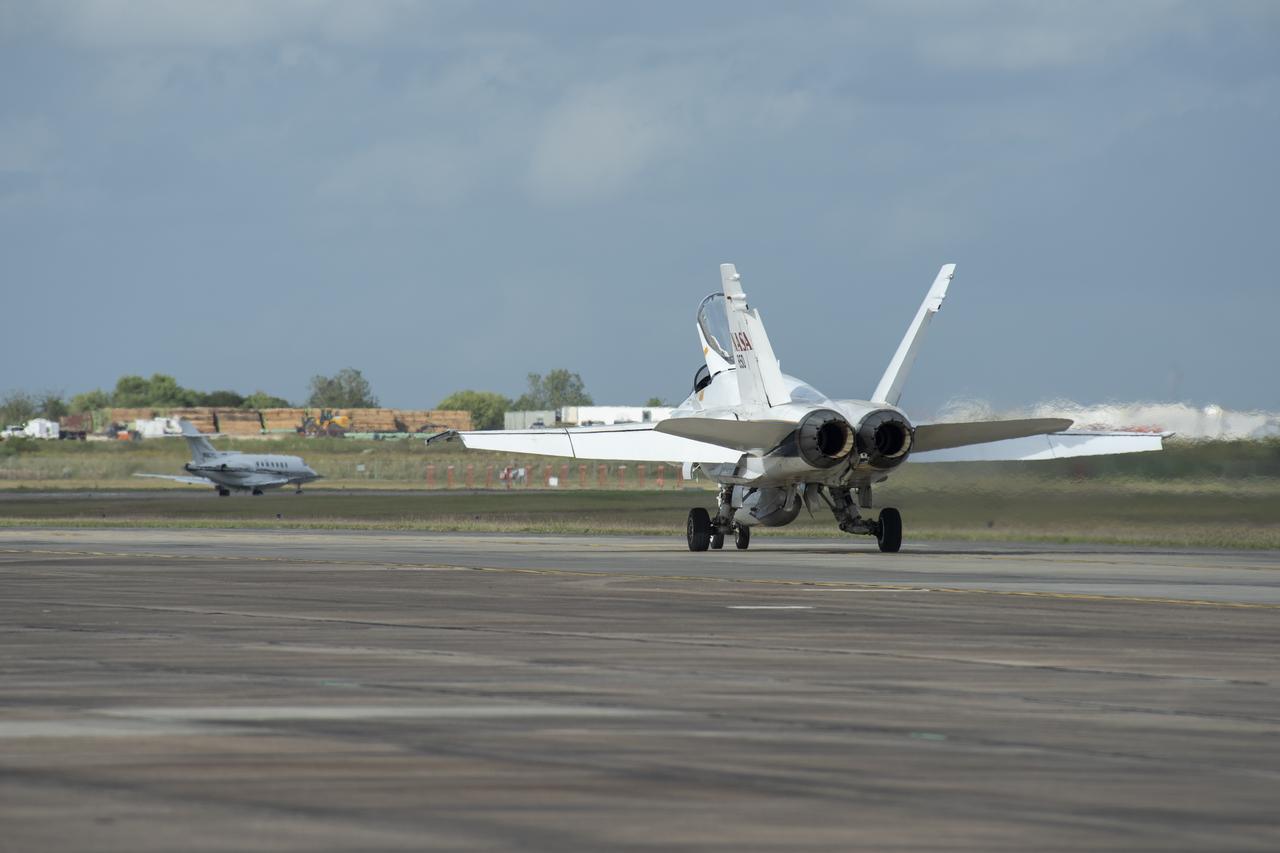
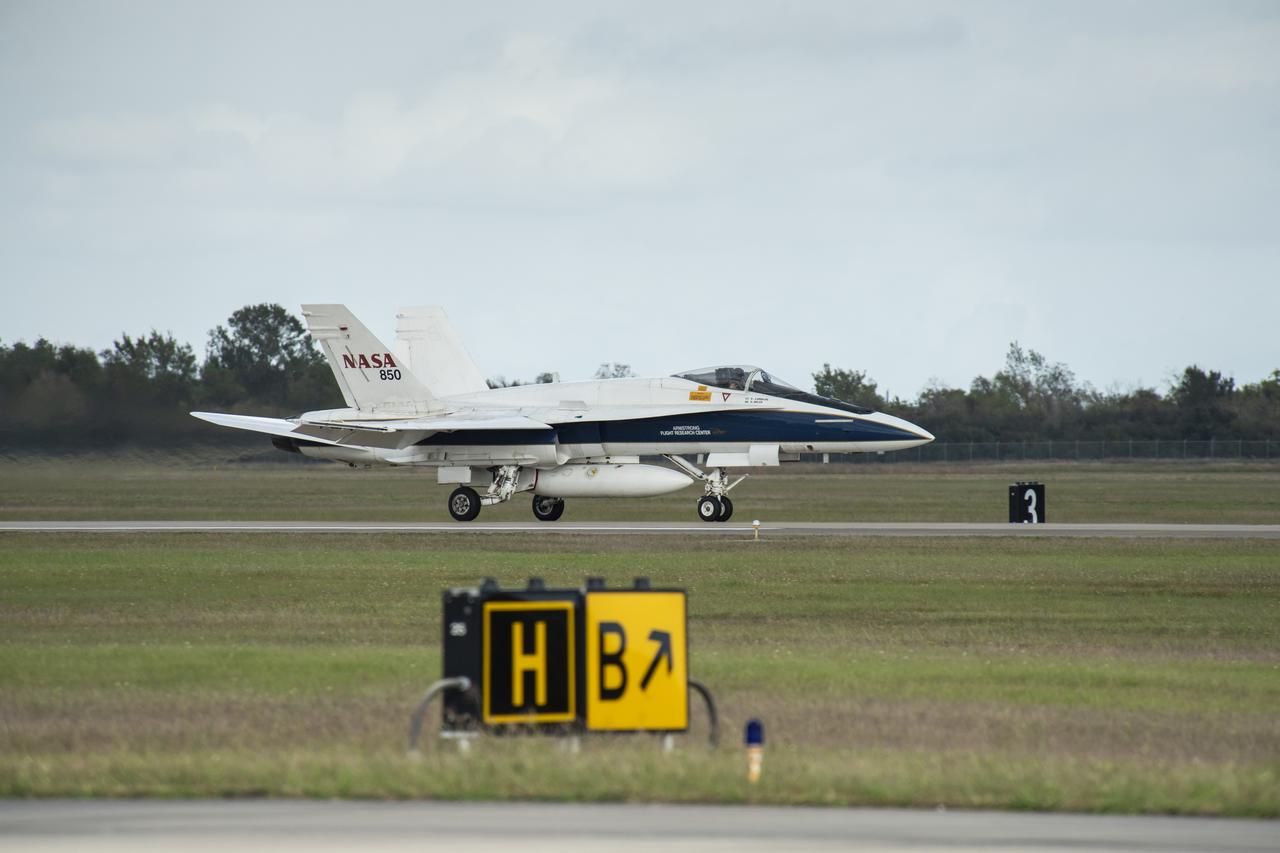
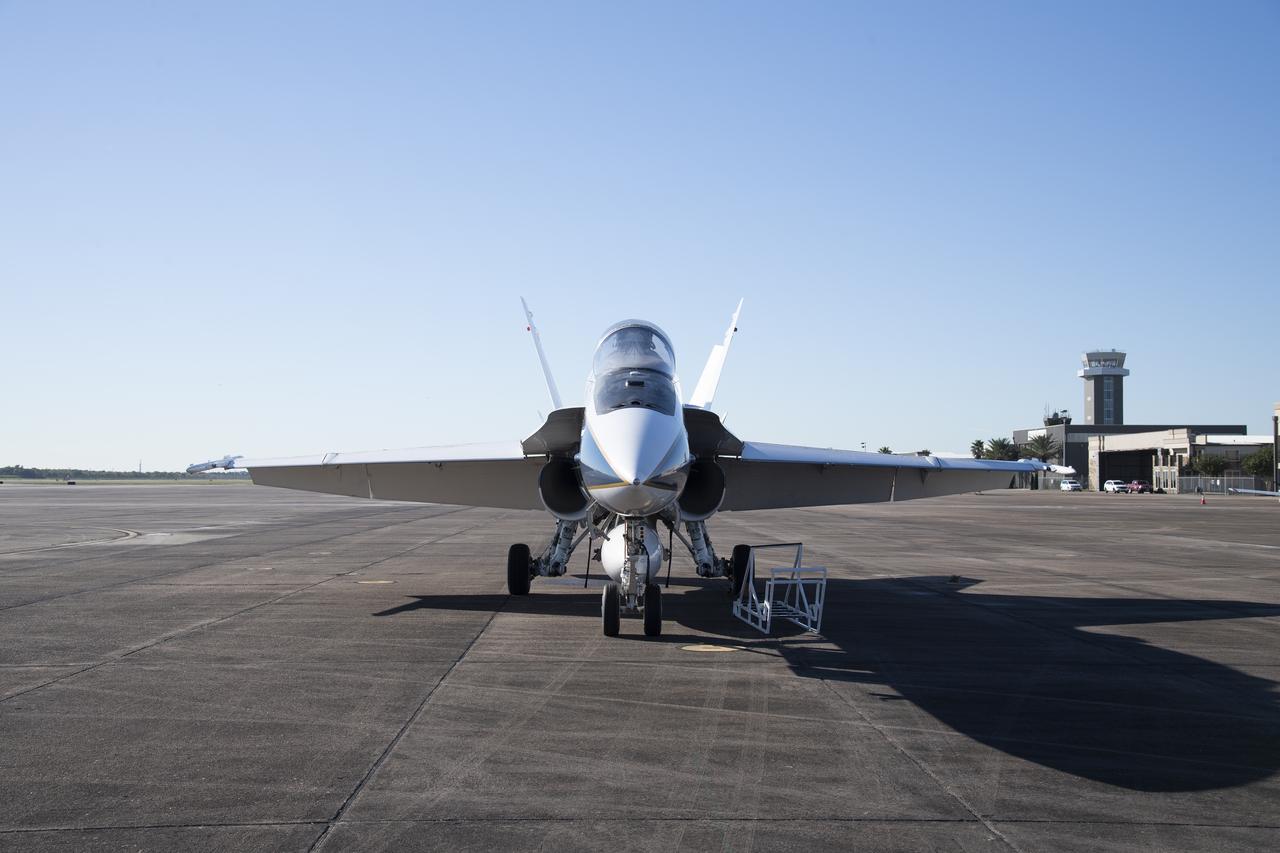
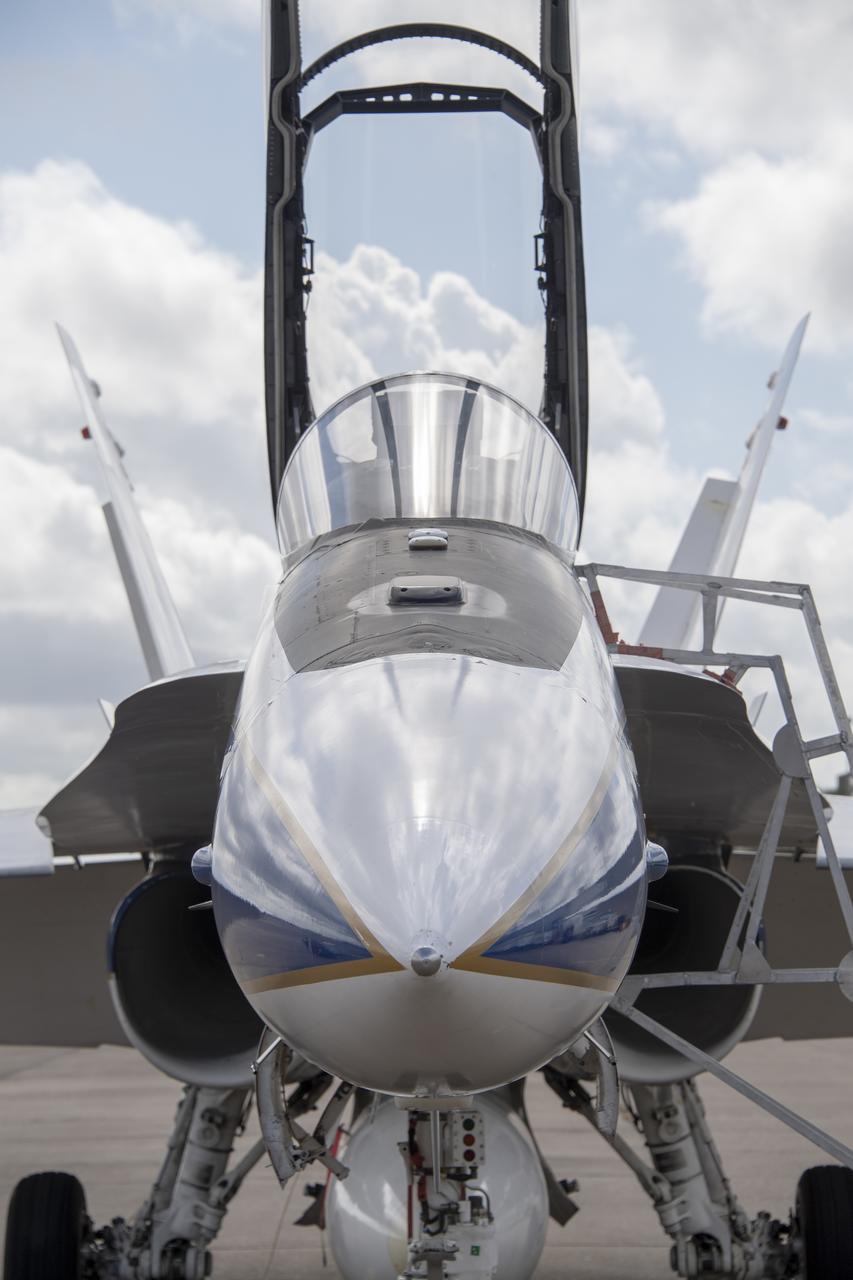
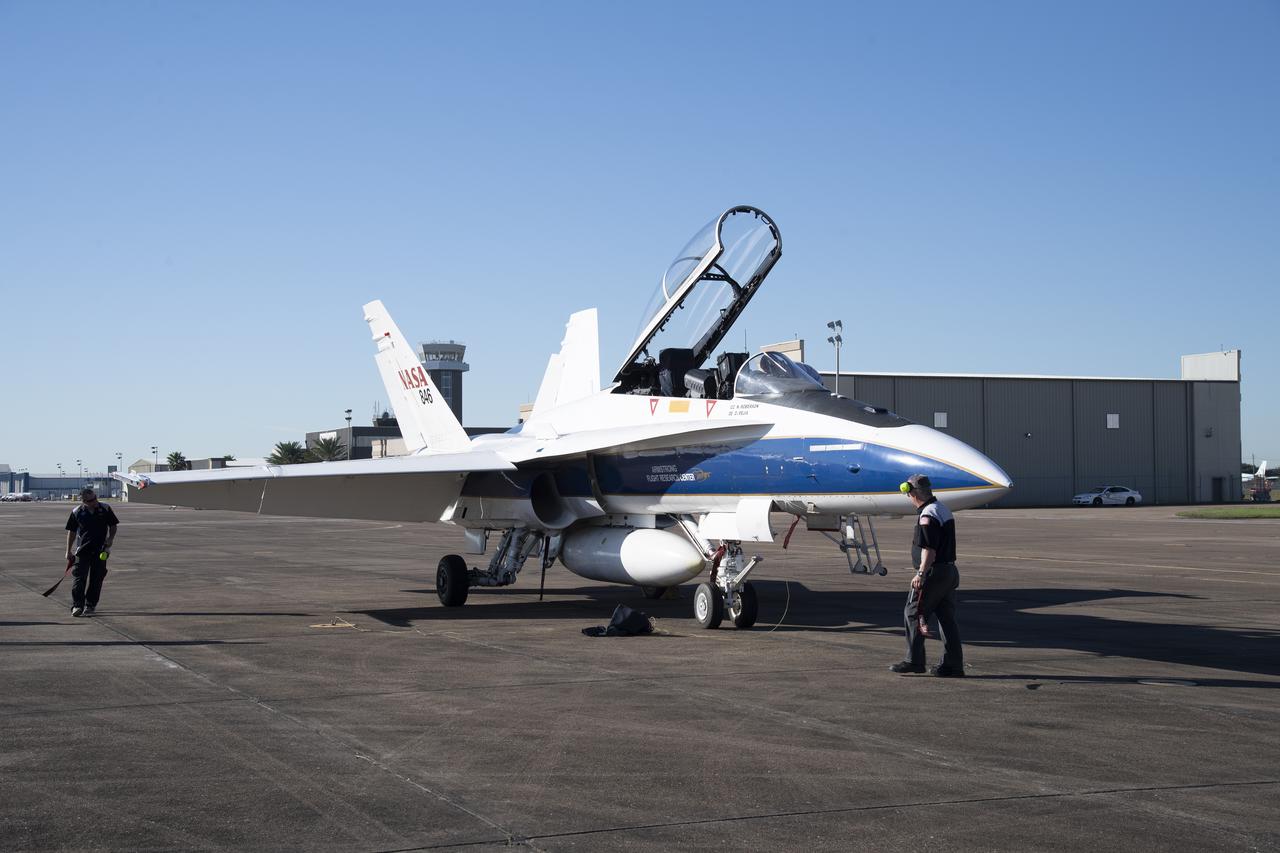
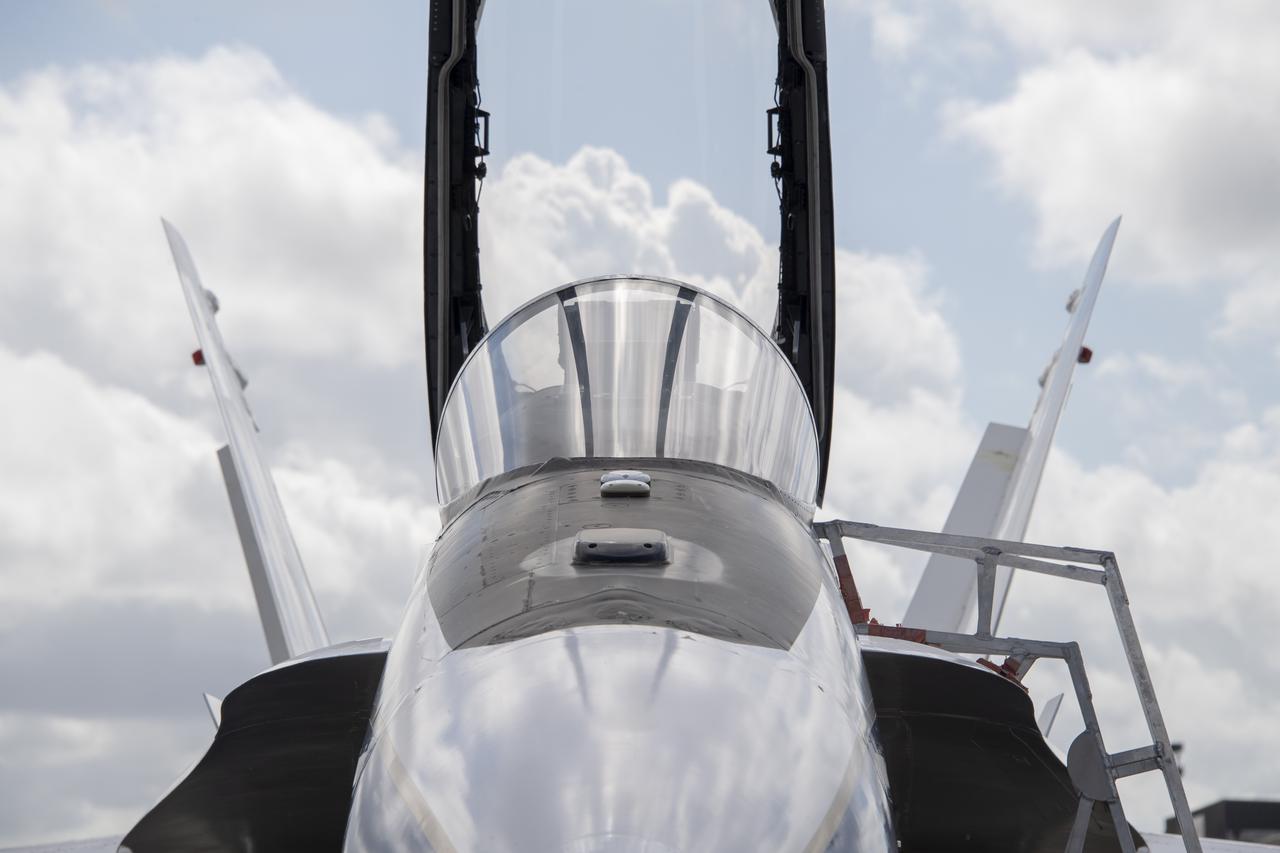
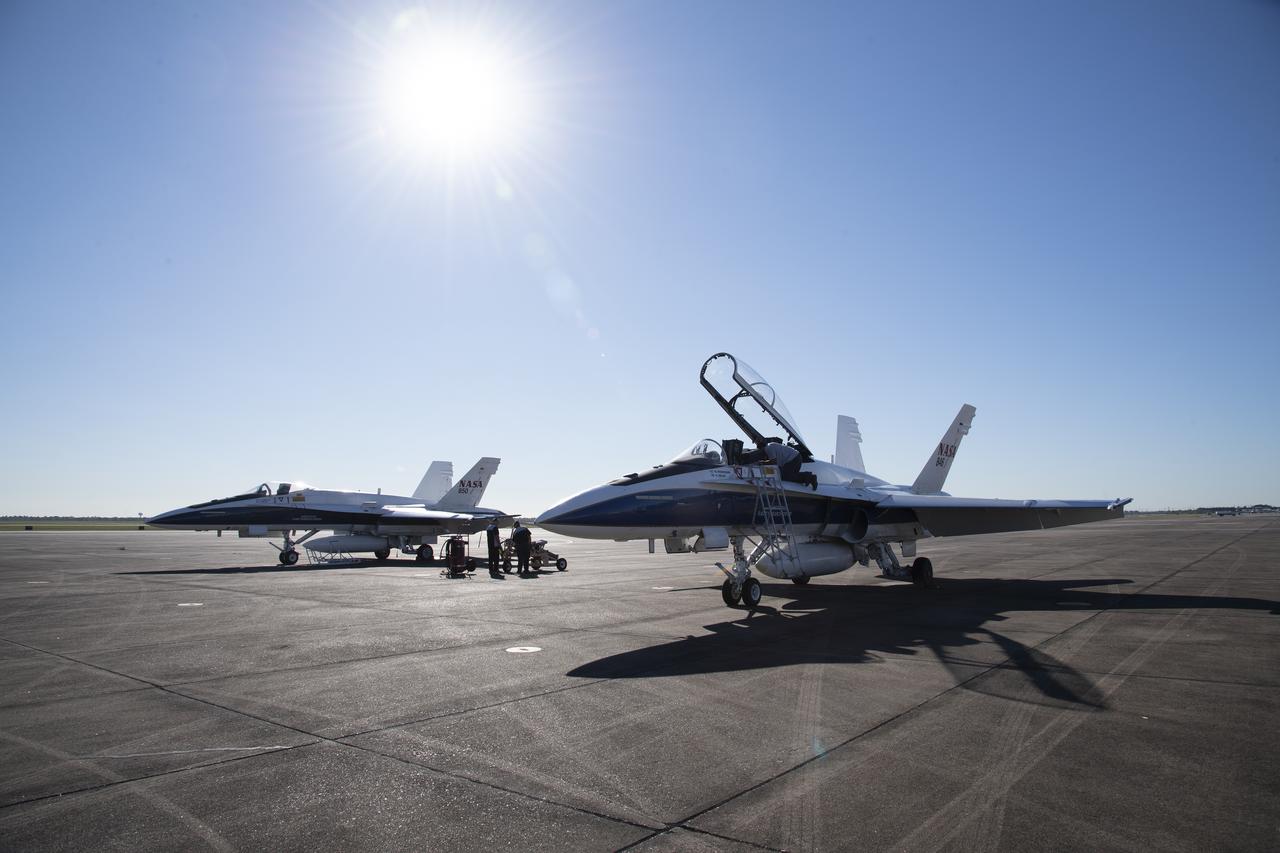
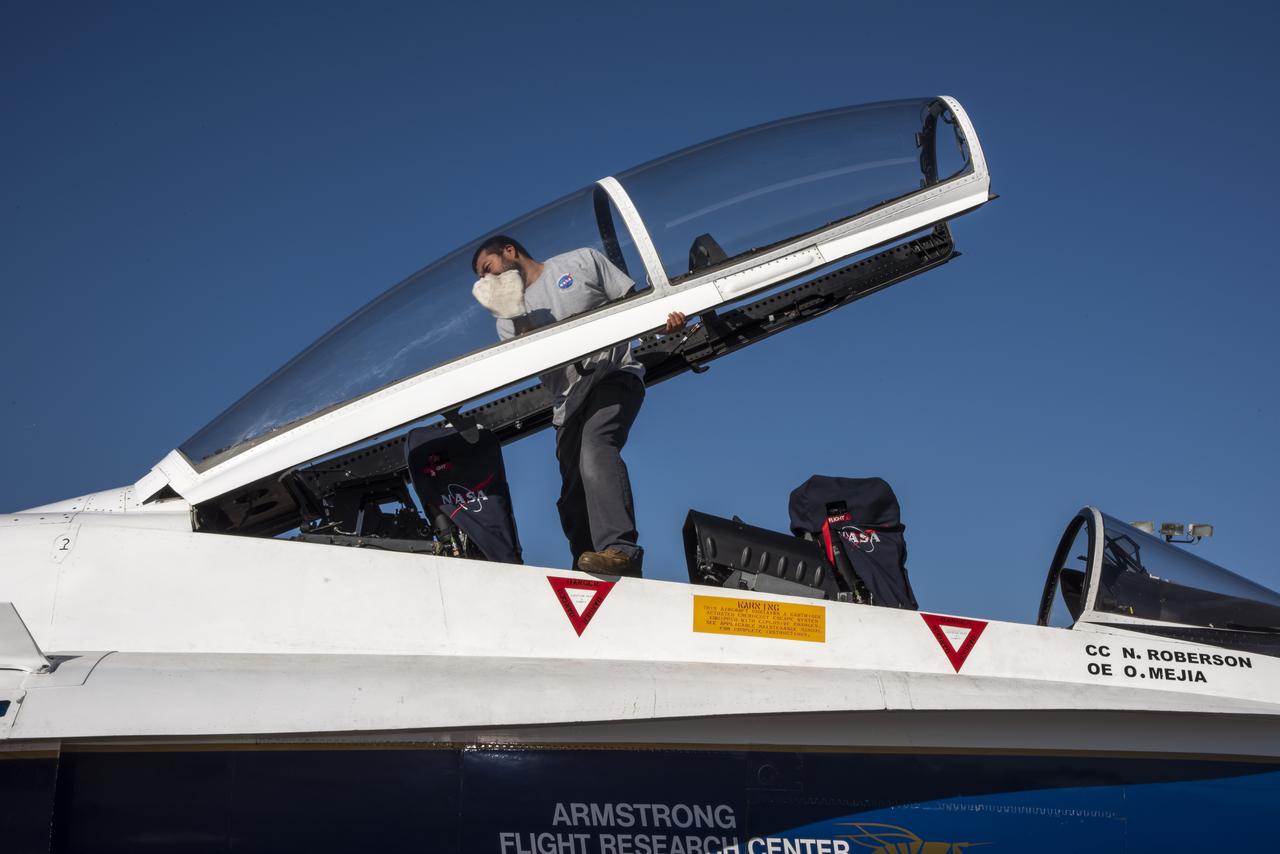
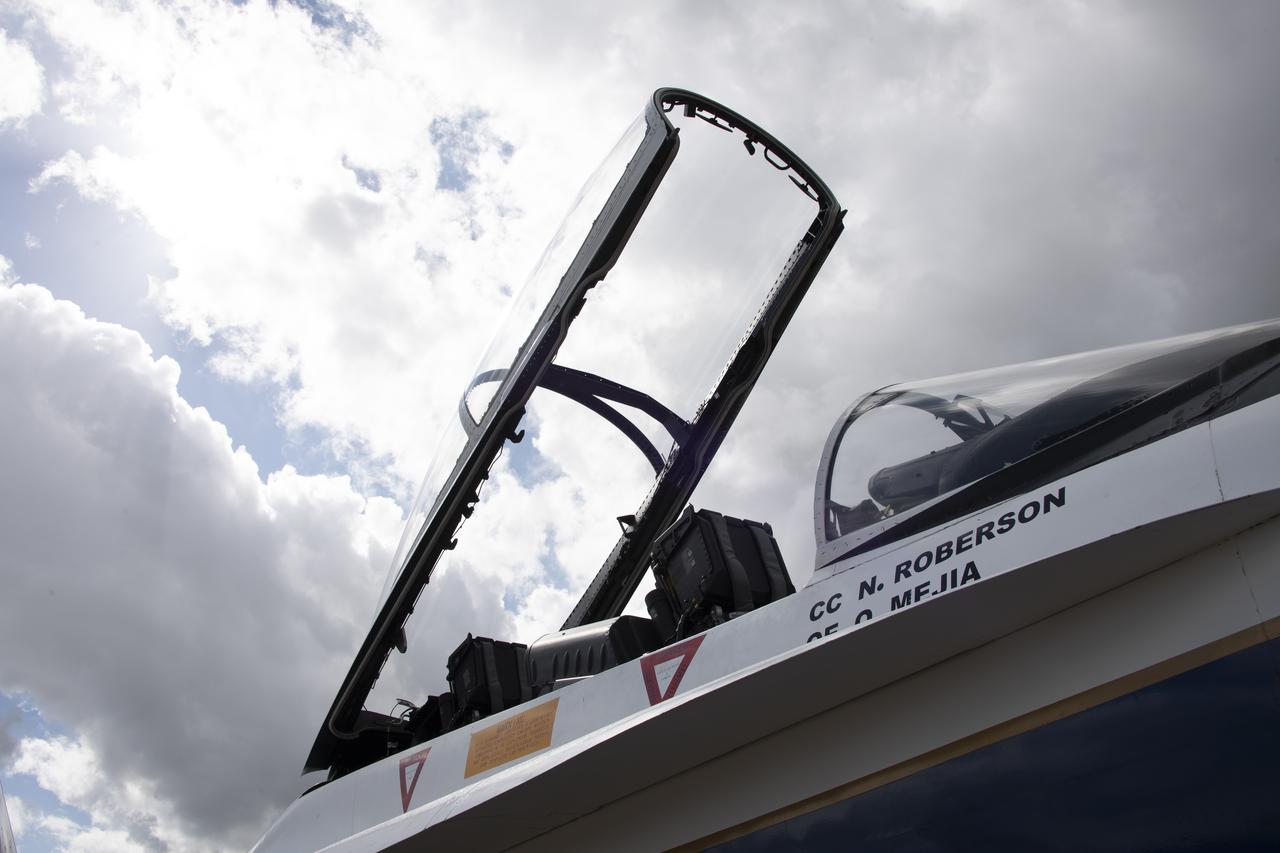
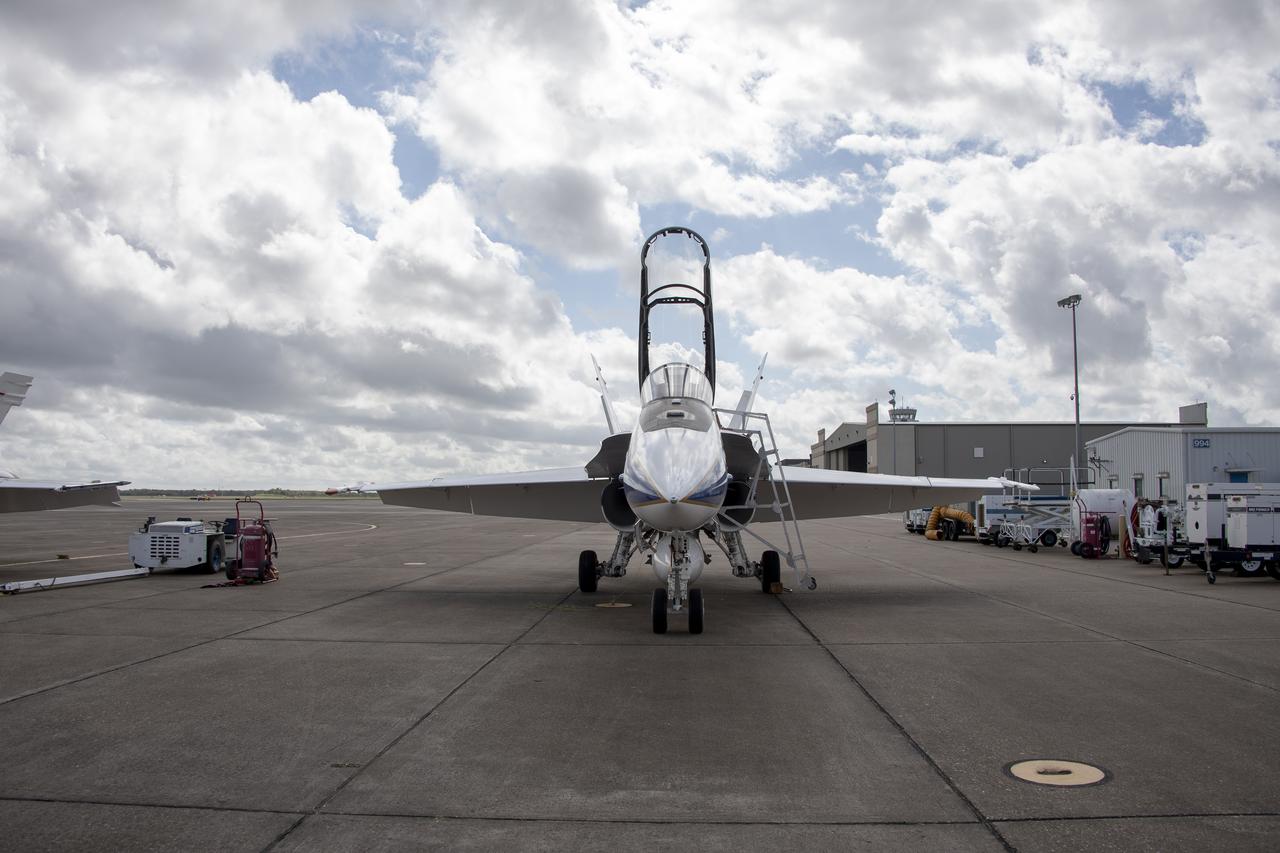
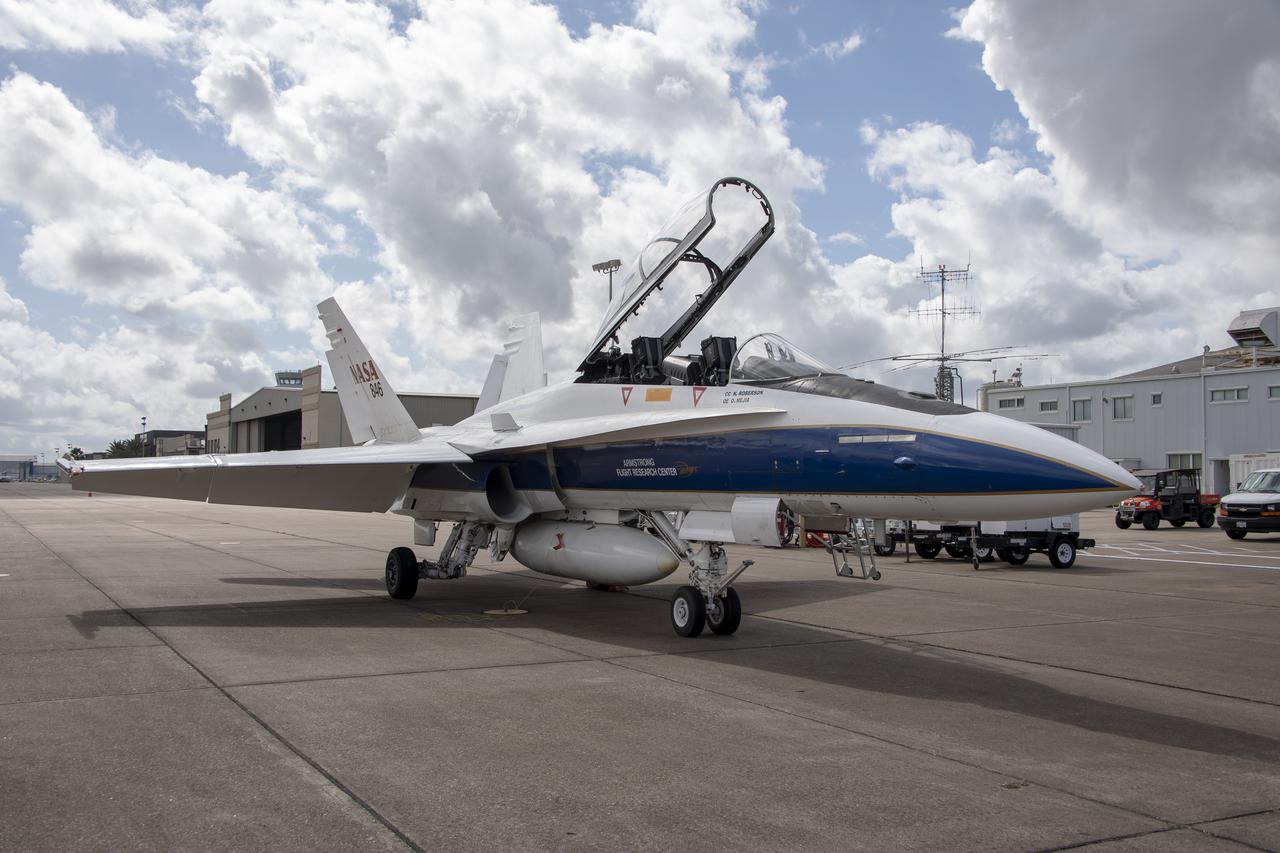
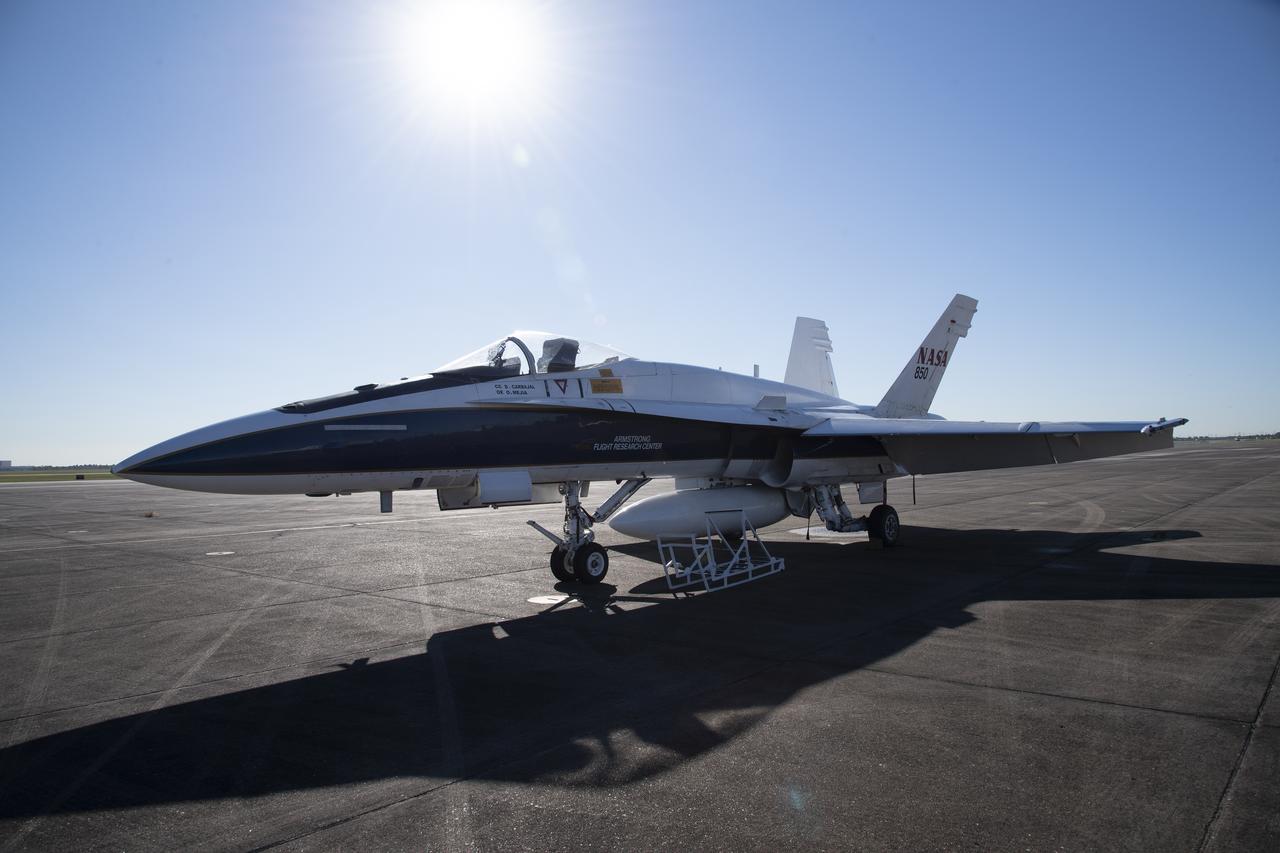
NASA's F/A-18 research aircraft stands ready prior to a QSF18 supersonic research flight off the coast of Galveston, Texas.
NASA F/A-18 Research Aircraft Prior to QSF18 Flight
NASA's F/A-18 research aircraft stands ready prior to a QSF18 supersonic research flight off the coast of Galveston, Texas.
NASA F/A-18 Research Aircraft Prior to QSF18 Flight
NASA's F/A-18 research aircraft stands ready prior to a QSF18 supersonic research flight off the coast of Galveston, Texas.
NASA F/A-18 Research Aircraft Prior to QSF18 Flight
NASA's F/A-18 research aircraft stands ready prior to a QSF18 supersonic research flight off the coast of Galveston, Texas.
NASA F/A-18 Research Aircraft Prior to QSF18 Flight
NASA’s F/A-18 research aircraft stands ready prior to a QSF18 supersonic research flight off the coast of Galveston, Texas.
NASA F/A-18 Research Aircraft Prior to QSF18 Flight
NASA’s F/A-18 research aircraft stands ready prior to a QSF18 supersonic research flight off the coast of Galveston, Texas.
NASA F/A-18 Research Aircraft Prior to QSF18 Flight
NASA's F/A-18 research aircraft stands ready prior to a QSF18 supersonic research flight off the coast of Galveston, Texas.
NASA F/A-18 Research Aircraft Prior to QSF18 Flight
NASA’s F/A-18 research aircraft stands ready prior to a QSF18 supersonic research flight off the coast of Galveston, Texas.
NASA F/A-18 Research Aircraft Prior to QSF18 Flight
NASA's F/A-18 research aircraft stands ready prior to a QSF18 supersonic research flight off the coast of Galveston, Texas.
NASA F/A-18 Research Aircraft Prior to QSF18 Flight
NASA's F/A-18 research aircraft stands ready prior to a QSF18 supersonic research flight off the coast of Galveston, Texas.
NASA F/A-18 Research Aircraft Prior to QSF18 Flight
NASA's F/A-18 research aircraft stands ready prior to a QSF18 supersonic research flight off the coast of Galveston, Texas.
NASA F/A-18 Research Aircraft Prior to QSF18 Flight
NASA’s F/A-18 research aircraft stands ready prior to a QSF18 supersonic research flight off the coast of Galveston, Texas.
NASA F/A-18 Research Aircraft Prior to QSF18 Flight
NASA’s F/A-18 research aircraft stands ready prior to a QSF18 supersonic research flight off the coast of Galveston, Texas.
NASA F/A-18 Research Aircraft Prior to QSF18 Flight
NASA's F/A-18 research aircraft stands ready prior to a QSF18 supersonic research flight off the coast of Galveston, Texas.
NASA F/A-18 Research Aircraft Prior to QSF18 Flight
NASA’s F/A-18 research aircraft stands ready prior to a QSF18 supersonic research flight off the coast of Galveston, Texas.
NASA F/A-18 Research Aircraft Prior to QSF18 Flight
NASA’s F/A-18 research aircraft stands ready prior to a QSF18 supersonic research flight off the coast of Galveston, Texas.
NASA F/A-18 Research Aircraft Prior to QSF18 Flight
NASA’s F/A-18 research aircraft stands ready prior to a QSF18 supersonic research flight off the coast of Galveston, Texas.
NASA F/A-18 Research Aircraft Prior to QSF18 Flight
A NASA F/A-18 demonstrates different volumes of sonic booms for attendees of a NASA Social at the NASA Armstrong Flight Research Center in California.
AFRC2016-0154-071
Smoke generators show the twisting paths of wingtip vortices behind two NASA Dryden F/A-18 jets used in the Autonomous Formation Flight (AFF) program
EC01-0328-3
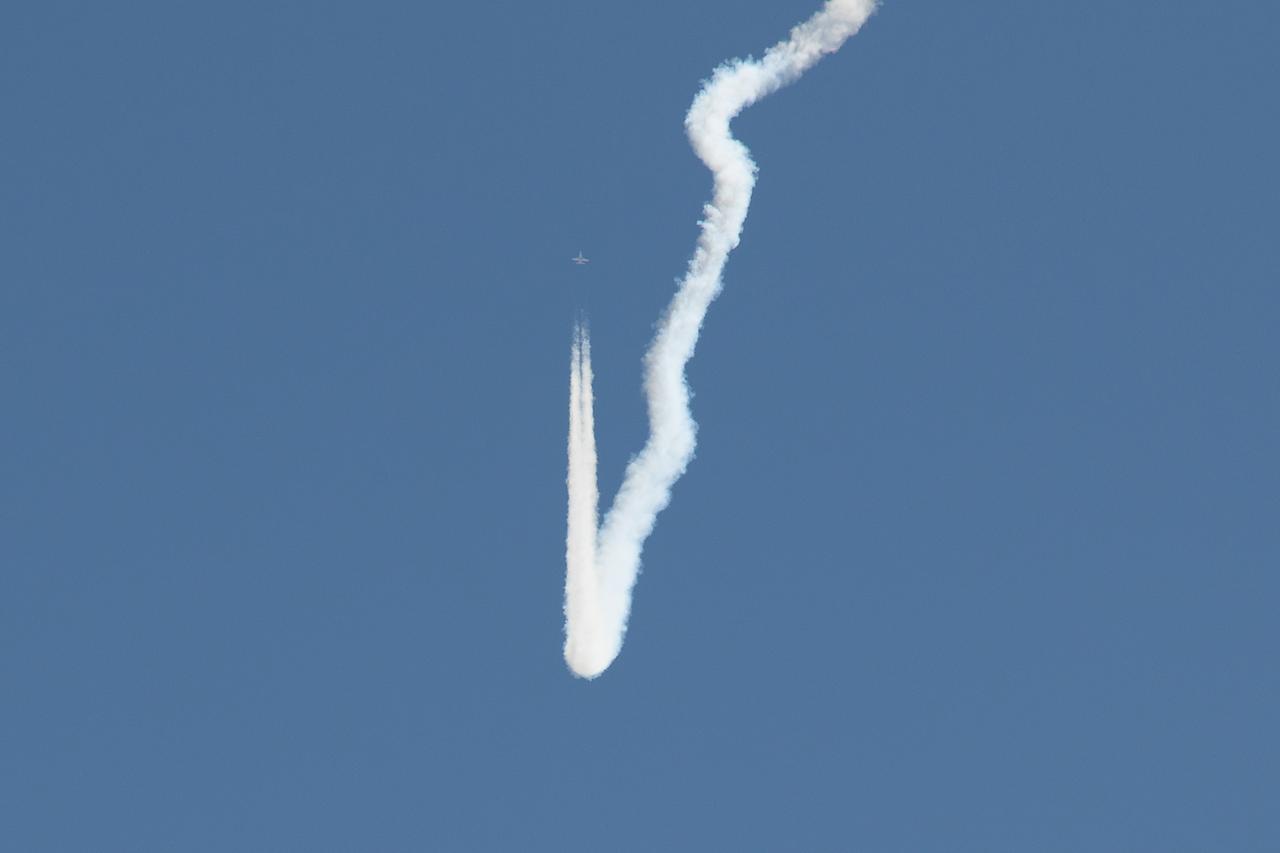
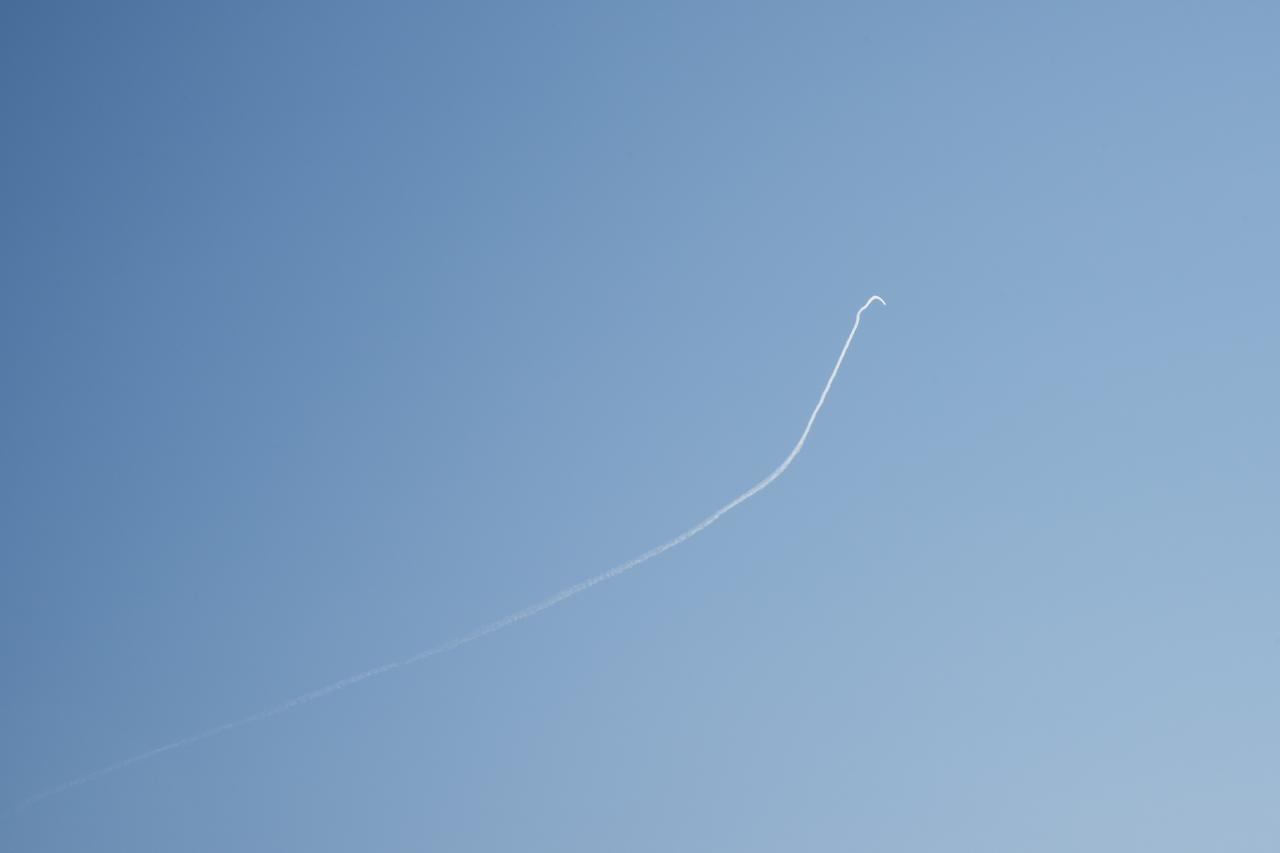
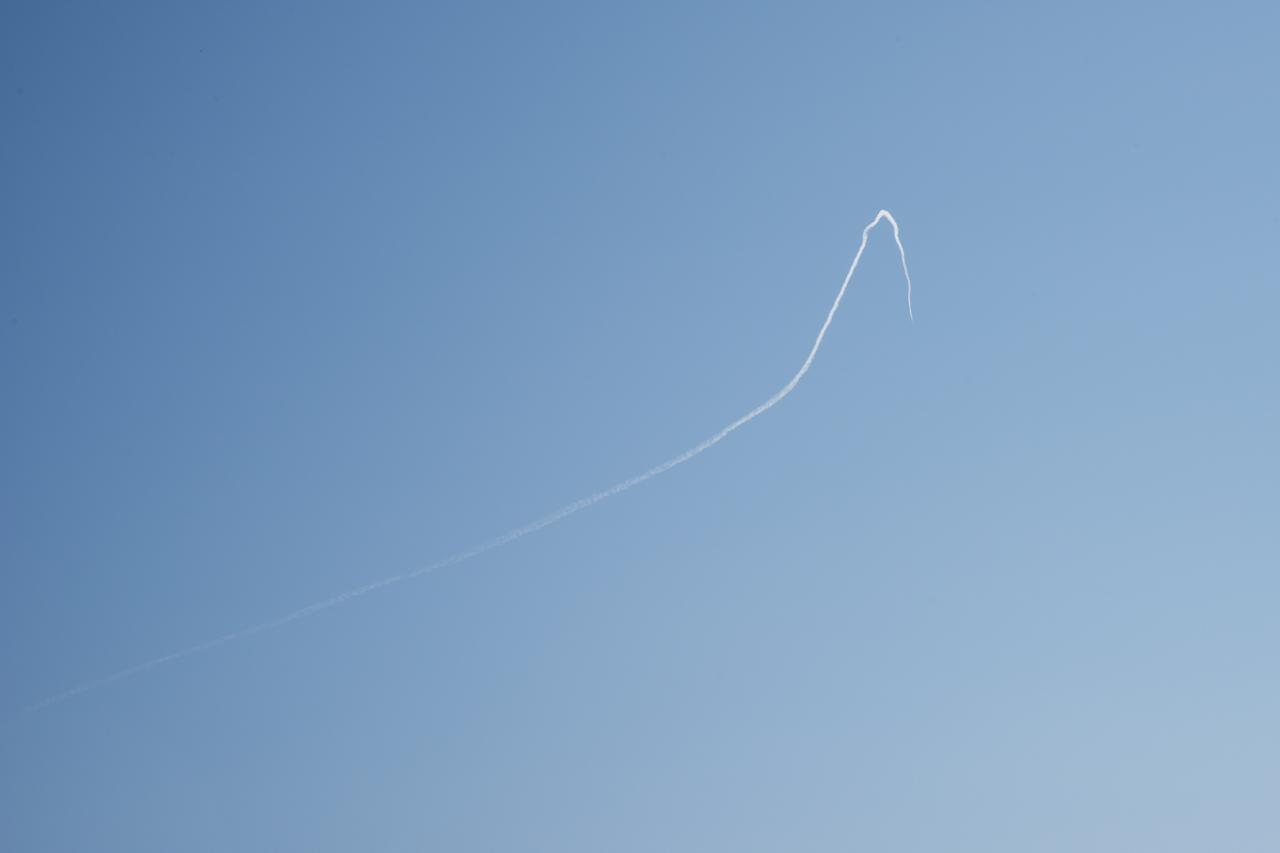
A contrail of the NASA F/A-18 research aircraft is seen off the coast of Galveston, performing the quiet supersonic dive maneuver in support of the QSF18 flight series.
Contrail of NASA F/A-18 Seen Off Coast During QSF18 Flight
A contrail of the NASA F/A-18 research aircraft is seen off the coast of Galveston, performing the quiet supersonic dive maneuver in support of the QSF18 flight series.
Contrail of NASA F/A-18 Seen Off Coast During QSF18 Flight
A contrail of the NASA F/A-18 research aircraft is seen off the coast of Galveston, performing the quiet supersonic dive maneuver in support of the QSF18 flight series.
Contrail of NASA F/A-18 Seen Off Coast During QSF18 Flight
A contrail of the NASA F/A-18 research aircraft is seen off the coast of Galveston, performing the quiet supersonic dive maneuver in support of the QSF18 flight series.
Contrail of NASA F/A-18 Seen Off Coast During QSF18 Flight
F/A-18 E/F Model: 11ft. W.T. Test #207-1-11 (Wind Tunnel Test Crew) Joe Haudrich, Greg Krakeler, Tom Ccatee, Ron Hathaway, Bud Lanig, Hung Nguyen
ARC-1994-AC94-0134-20
NASA’s 2017 astronaut candidates (L to R) Jessica Watkins, Jenni Sidey-Gibbons, Joshua Kutryk, and Jasmin Moghbeli practice flying in an F-18 aircraft cockpit simulator at Armstrong Flight Research Center, in Southern California. The F-18’s are flown for research support and pilot proficiency. Currently, the F-18’s are being used to conduct supersonic research in support of the X-59 QueSST overall mission.
Astronauts Pilot F-18 Simulator at Armstrong Flight Research Center
Scaled Composites' Proteus aircraft with an F/A-18 Hornet and a Beechcraft KingAir from NASA's Dryden Flight Research Center during a low-level flyby at Mojave Airport in Southern California.  The unique tandem-wing Proteus was the testbed for a series of UAV collision-avoidance flight demonstrations. An Amphitech 35GHz radar unit installed below Proteus' nose was the primary sensor for the Detect, See and Avoid tests.
Scaled Composites' Proteus aircraft with an F/A-18 Hornet and a Beechcraft KingAir from NASA's Dryden Flight Research Center during a low-level flyby at Mojave Airport in Southern California.
Two NASA Dryden F/A-18s flown by research pilots Frank Batteas and Nils Larson were captured by photographer Lori Losey from a third F/A-18 flown by Dick Ewers as they flew in tight formation over the desert at Edwards Air Force Base.
ED07-0110-12
One of NASA's F/A-18 Hornets on the ramp at the Dryden Flight Research Center, Edwards, California at dawn August 6, 1993. F-18 aircraft, on loan to NASA by the U.S. Navy, were flown at Dryden as support aircraft and as research testbeds. As support aircraft, they were used primarily for safety chase, pilot proficiency and aerial photography. As research aircraft, they were involved in thrust vectoring and high angle of attack research, as well as numerous smaller scale experiments.
EC93-42116-2
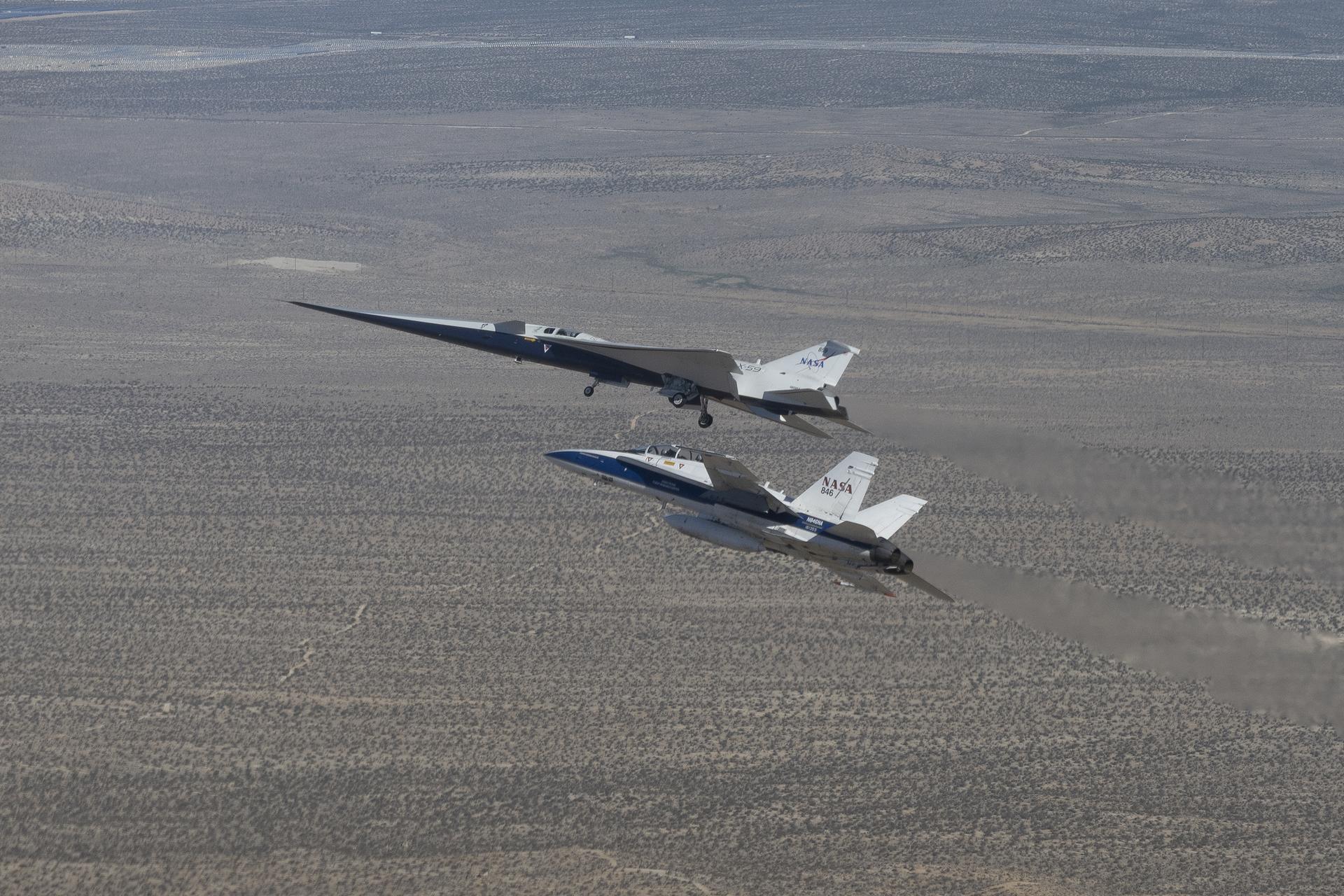
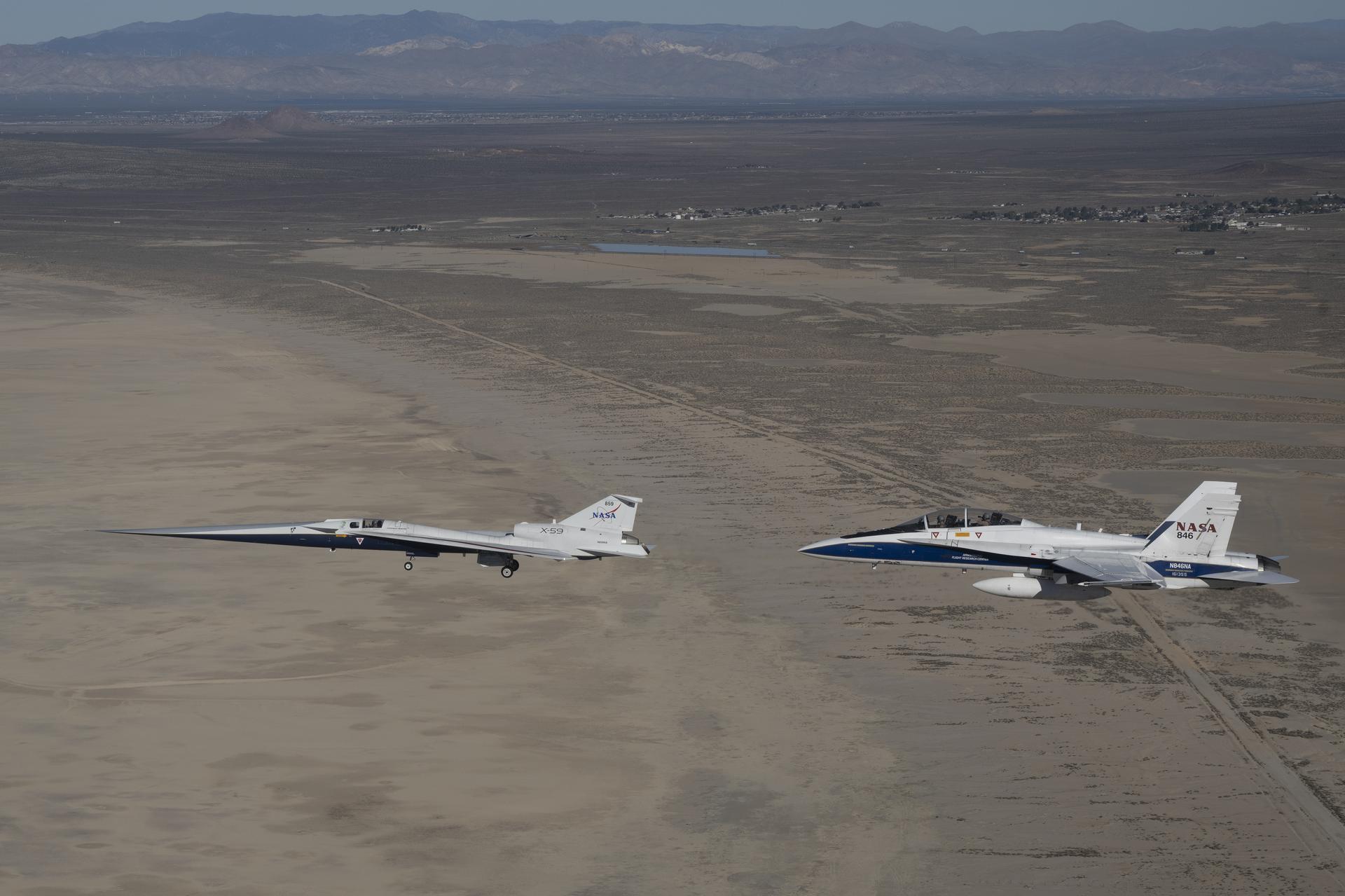
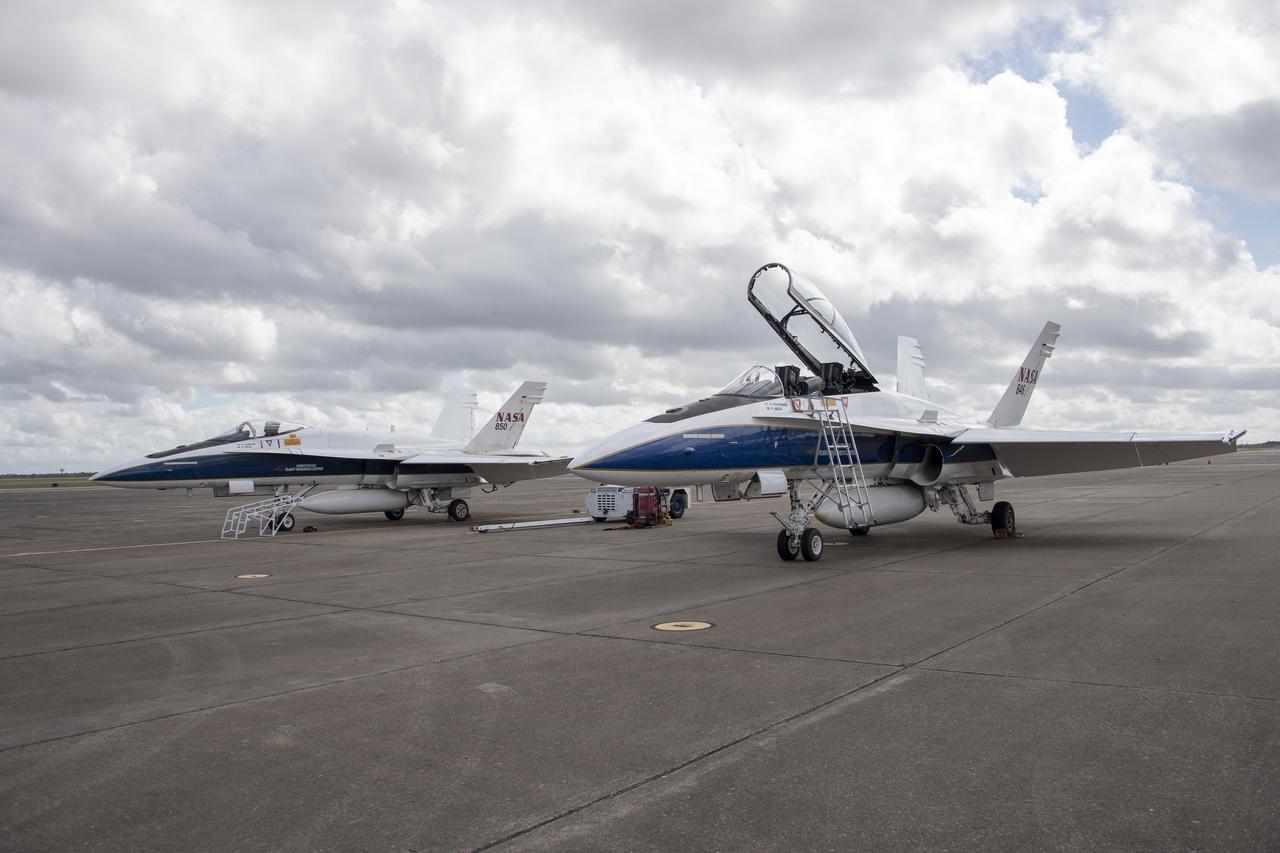
NASA deployed two F/A-18 research aircraft from NASA’s Armstrong Flight Research Center in California to fly the Quiet Supersonic Flights 2018 campaign, or QSF18. Having more than one aircraft allows pilots to conduct quick turnarounds with different aircrews between flights, fitting in as many targeted research flights as necessary.
NASA F/A-18 Aircraft Sit in Hangar
NASA deployed two F/A-18 research aircraft from NASA’s Armstrong Flight Research Center in California to fly the Quiet Supersonic Flights 2018 campaign, or QSF18. Having more than one aircraft allows pilots to conduct quick turnarounds with different aircrews between flights, fitting in as many targeted research flights as necessary.
NASA F/A-18 Aircraft Sit in Hangar
NASA deployed two F/A-18 research aircraft from NASA’s Armstrong Flight Research Center in California to fly the Quiet Supersonic Flights 2018 campaign, or QSF18. Having more than one aircraft allows pilots to conduct quick turnarounds with different aircrews between flights, fitting in as many targeted research flights as necessary.
NASA F/A-18 Aircraft Sit in Hangar
NASA deployed two F/A-18 research aircraft from NASA’s Armstrong Flight Research Center in California to fly the Quiet Supersonic Flights 2018 campaign, or QSF18. Having more than one aircraft allows pilots to conduct quick turnarounds with different aircrews between flights, fitting in as many targeted research flights as necessary.
NASA F/A-18 Aircraft Sit in Hangar
NASA deployed two F/A-18 research aircraft from NASA’s Armstrong Flight Research Center in California to fly the Quiet Supersonic Flights 2018 campaign, or QSF18. Having more than one aircraft allows pilots to conduct quick turnarounds with different aircrews between flights, fitting in as many targeted research flights as necessary.
NASA F/A-18 Aircraft Sit in Hangar
NASA deployed two F/A-18 research aircraft from NASA’s Armstrong Flight Research Center in California to fly the Quiet Supersonic Flights 2018 campaign, or QSF18. Having more than one aircraft allows pilots to conduct quick turnarounds with different aircrews between flights, fitting in as many targeted research flights as necessary.
NASA F/A-18 Aircraft Sit in Hangar
Proteus and an F/A-18 Hornet from NASA's Dryden Flight Research Center are seen here in flight over Las Cruces, New Mexico.
Scaled Composites' Proteus and an F/A-18 Hornet from NASA's Dryden Flight Research Center are seen here in flight over Las Cruces, New Mexico.
Dryden Flight Research Center's SR-71B Blackbird aircraft, NASA tail number 831, is destined for the Kalamazoo Air Zoo museum in Kalamazoo, Mich., and the F-18 High Angle-of-Attack Research Vehicle (HARV) aircraft, NASA tail number 840, is going to the Virginia Air and Space Center in Hampton, Va.  NASA's SR-71B was one of only two SR-71 trainer aircraft built, and served NASA in that role, as well as for some high-speed research, from 1991 to 1999.  The F-18 HARV provided some of the most comprehensive data on the high-angle-of-attack flight regime, flying at angles of up to 70 degrees from the horizontal. The HARV flew 385 research flights at Dryden from 1987 through 1996.
NASA's SR-71B and F-18 HARV aircraft left Edwards Air Force Base, Calif., on March 24, 2003
Safety Day Events 2008 Keynote speaker at the !0th Annual Safety Awareness Week Lt Col Wes Sharp shares his reveting account of an F-18 midair collision, his insight into the root cause, lessons he learned and how to excell under pressure to perform.
ARC-2008-ACD08-0201-006
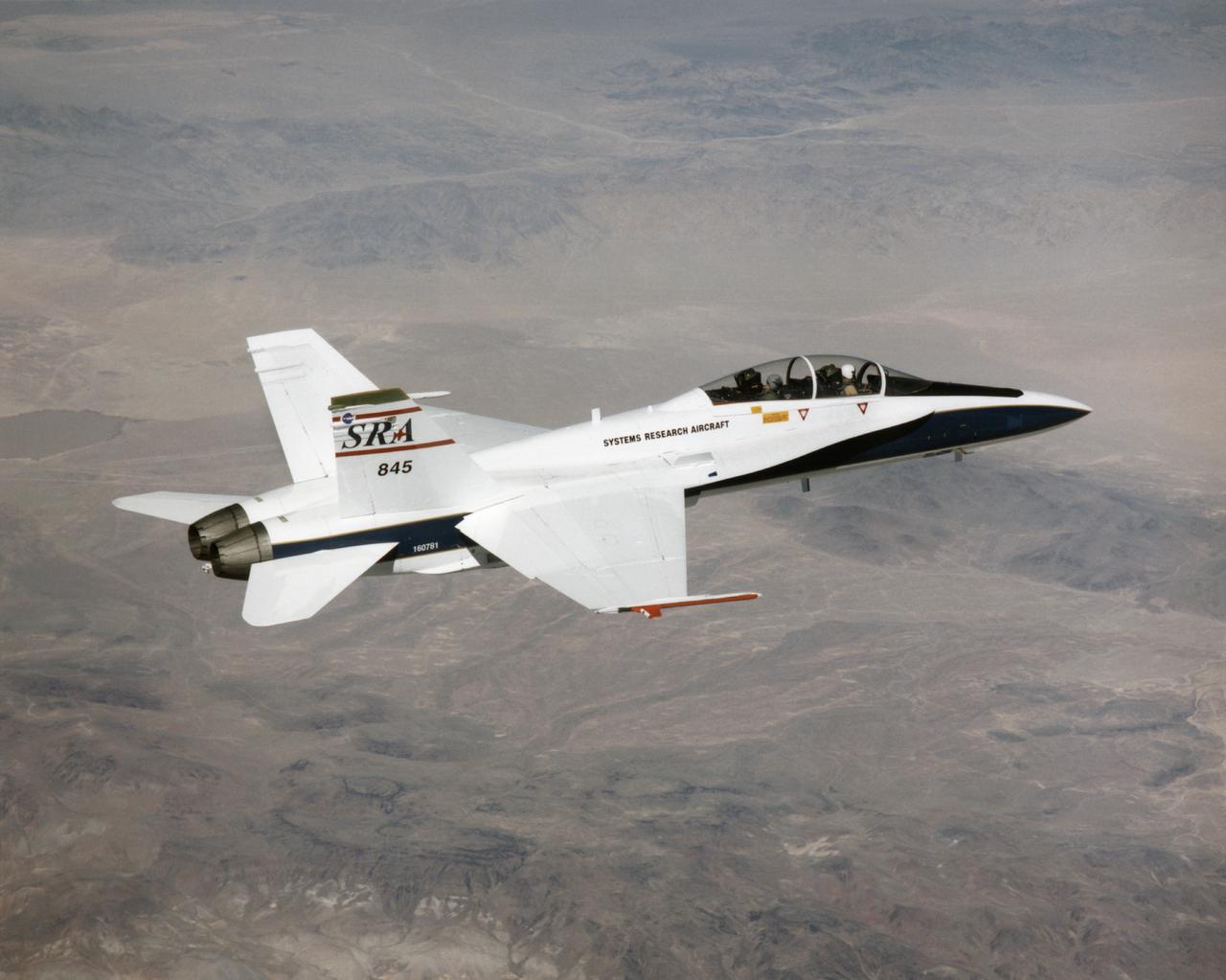
Testing autonomous software for AARD program using a NASA F/A-18 #845 following a chartered Sabreliner.
ED06-0110-04
F/A-18 #845 behind an Omega Air Boeing 707 tanker during an Autonomous Airborne Refueling Demonstration (AARD) flight.
ED05-0223-07
Testing autonomous software for AARD program using a NASA F/A-18 #845 following a chartered Sabreliner.
ED06-0110-08
These two NASA F/A-18 aircraft are flying a test point for the Autonomous Formation Flight project over California's Mojave Desert.
EC01-0267-1
F/A-18 #845 HUD and video camera setup for Autonomous Airborne Refueling Demonstration (AARD) project
ED06-0075-11