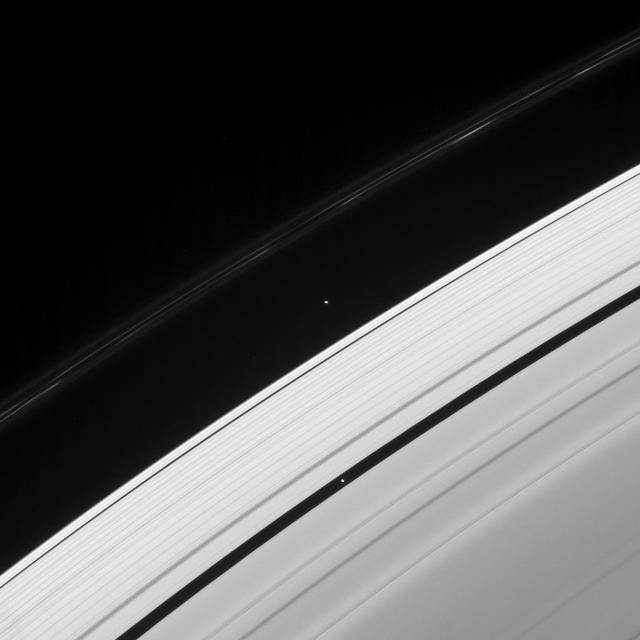
Pan in the Fast Lane
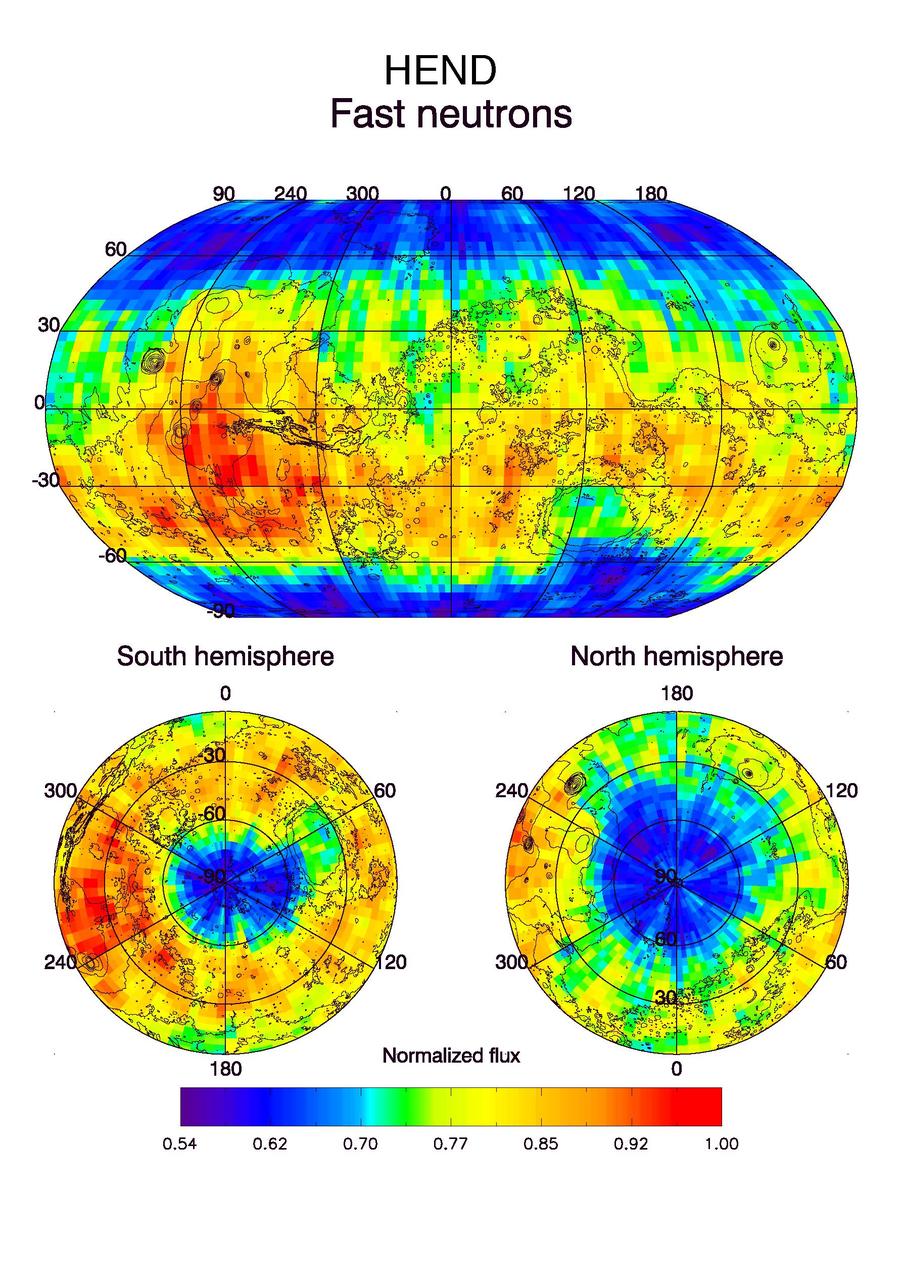
Observations by NASA Mars Odyssey spacecraft show a global view of Mars in high-energy, or fast, neutrons.
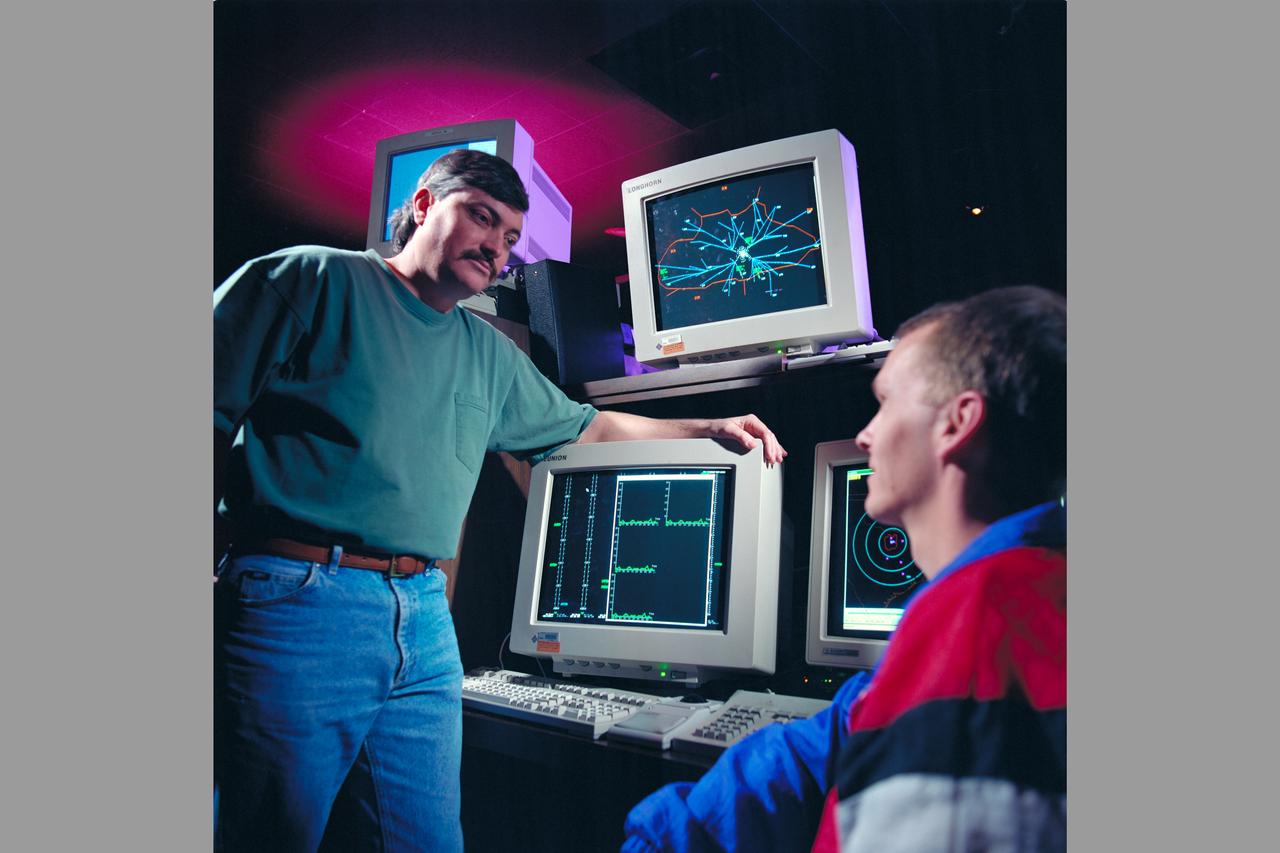
FAST CTAS system operation trials at Dallas/Ft Worth, Tx (DFW TRACON ATC Automation Tool)
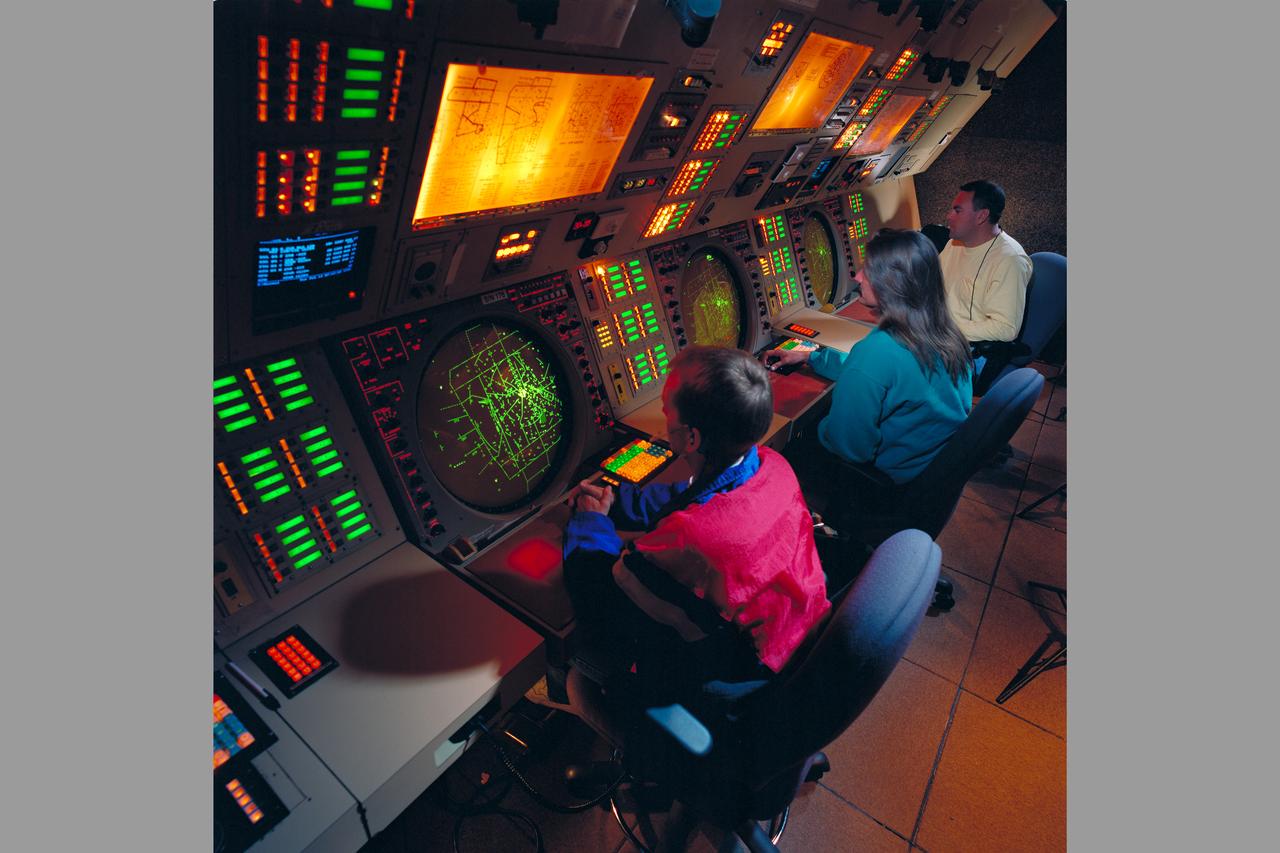
FAST CTAS system operation trials at Dallas/Ft Worth, Tx (DFW TRACON ATC Automation Tool)
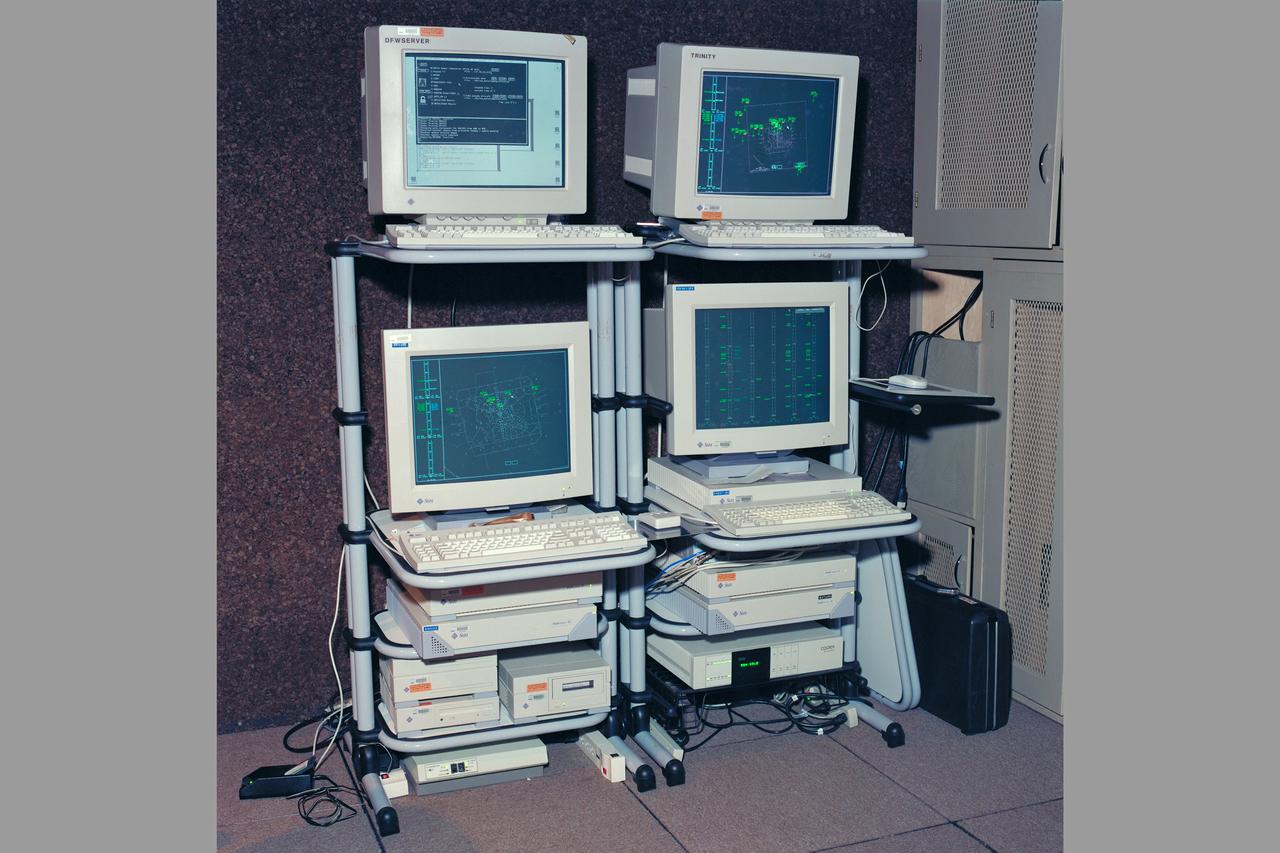
FAST CTAS system operation trials at Dallas/Ft Worth, Tx (DFW TRACON ATC Automation Tool)
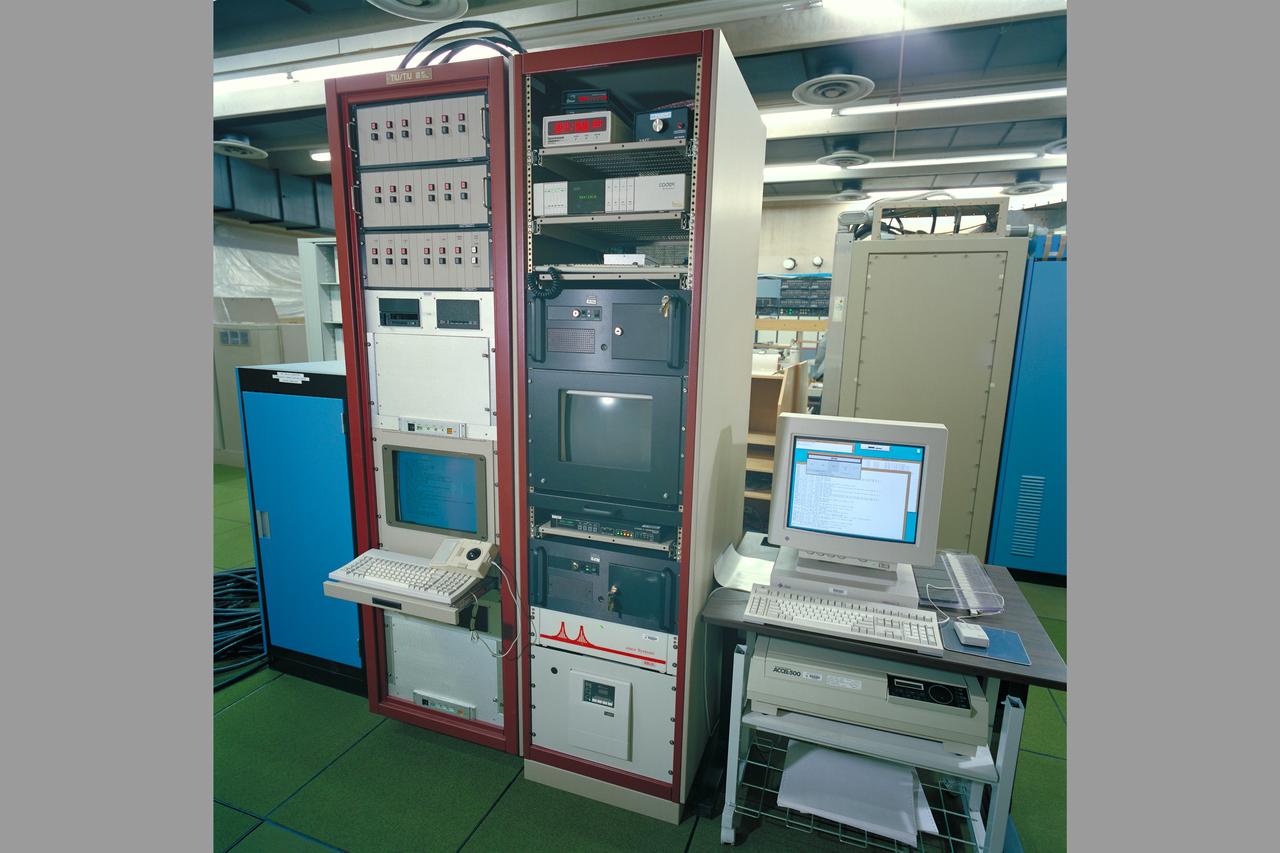
FAST CTAS system operation trials at Dallas/Ft Worth, Tx (DFW TRACON ATC Automation Tool)
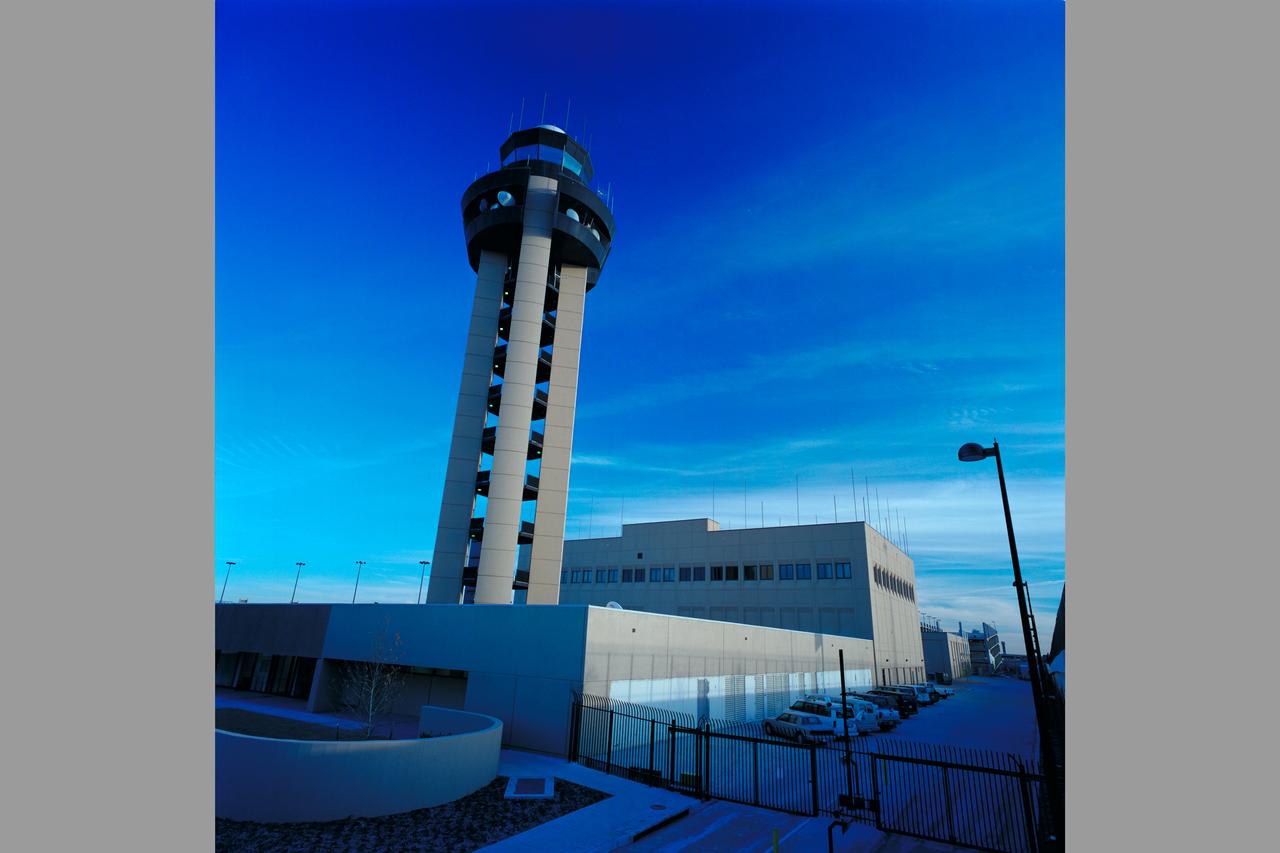
FAST CTAS system operation trials at Dallas/Ft Worth, Tx (DFW TRACON ATC Automation Tool)
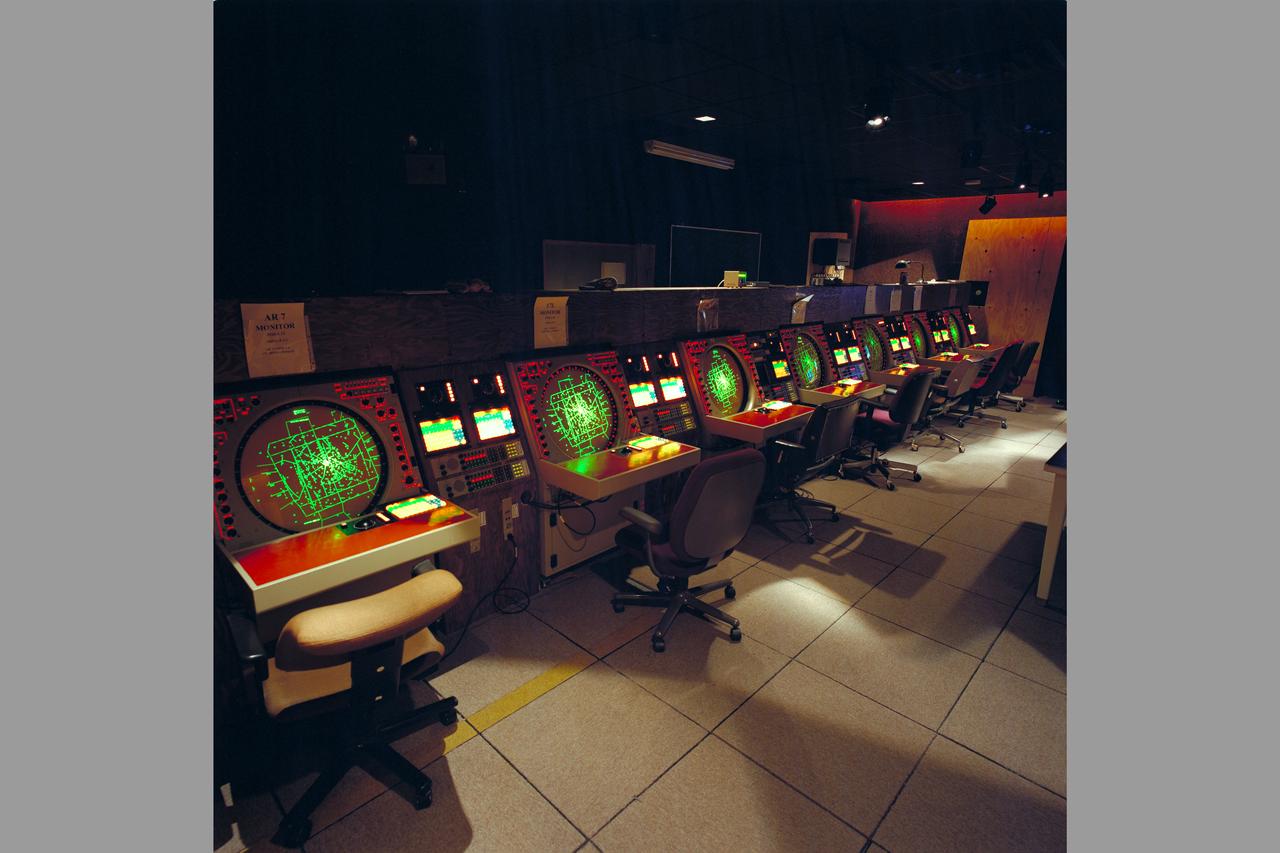
FAST CTAS system operation trials at Dallas/Ft Worth, Tx (DFW TRACON ATC Automation Tool)
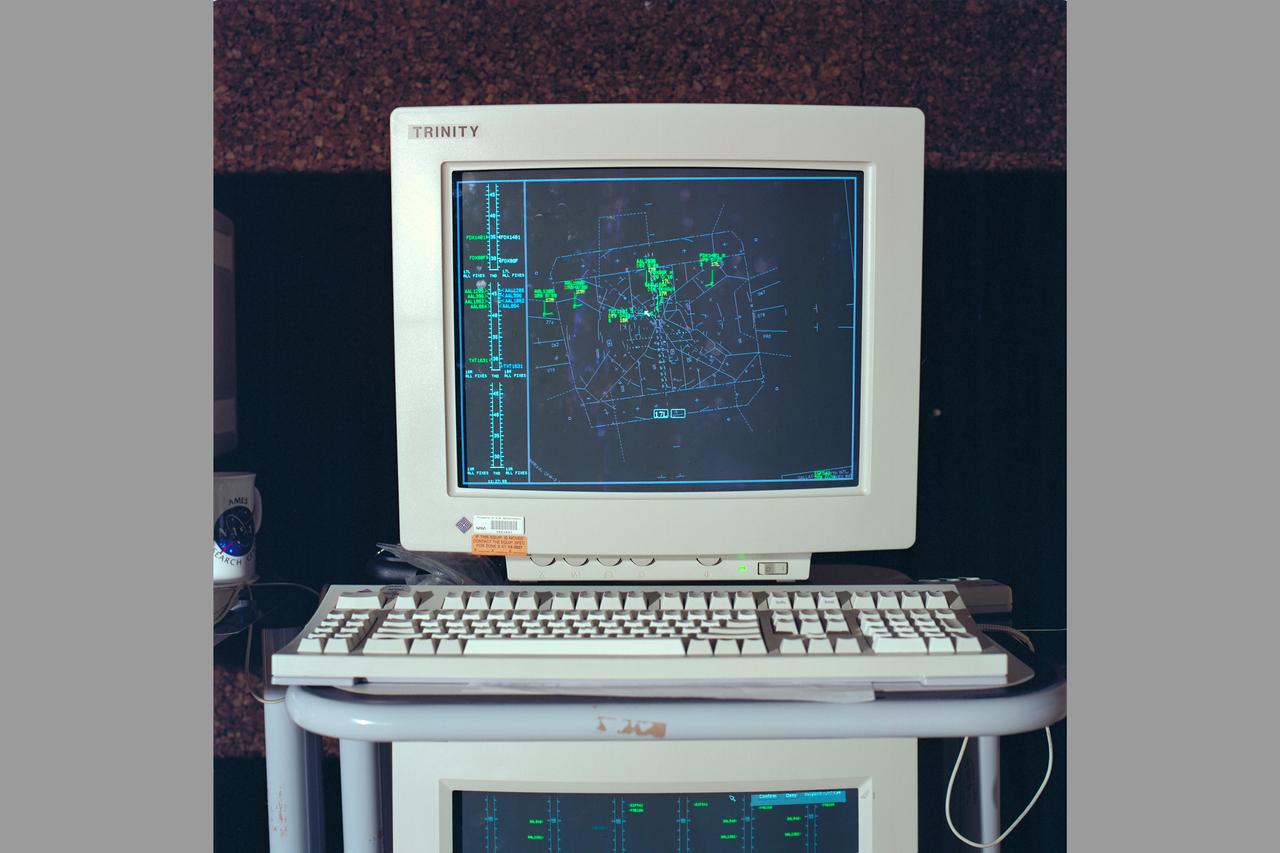
FAST CTAS system operation trials at Dallas/Ft Worth, Tx (DFW TRACON ATC Automation Tool)
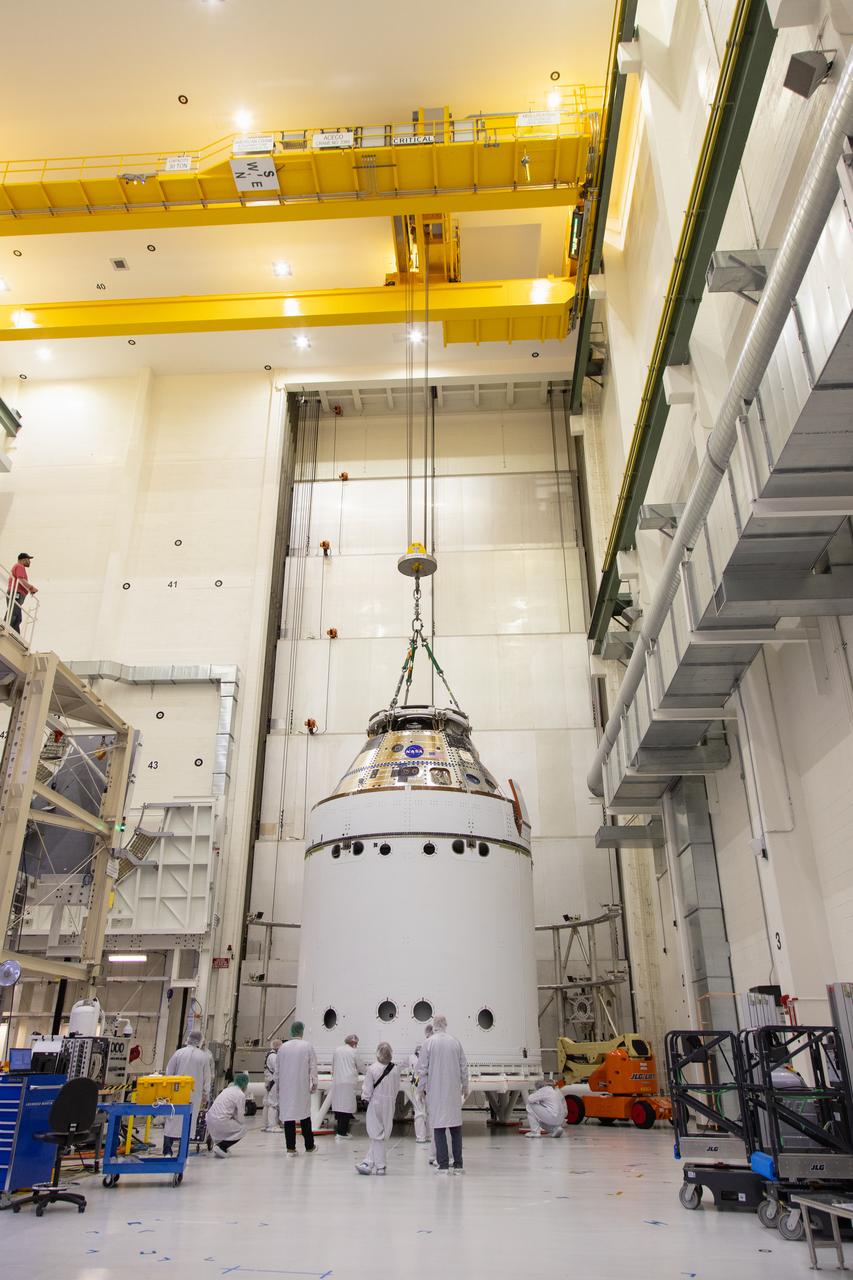
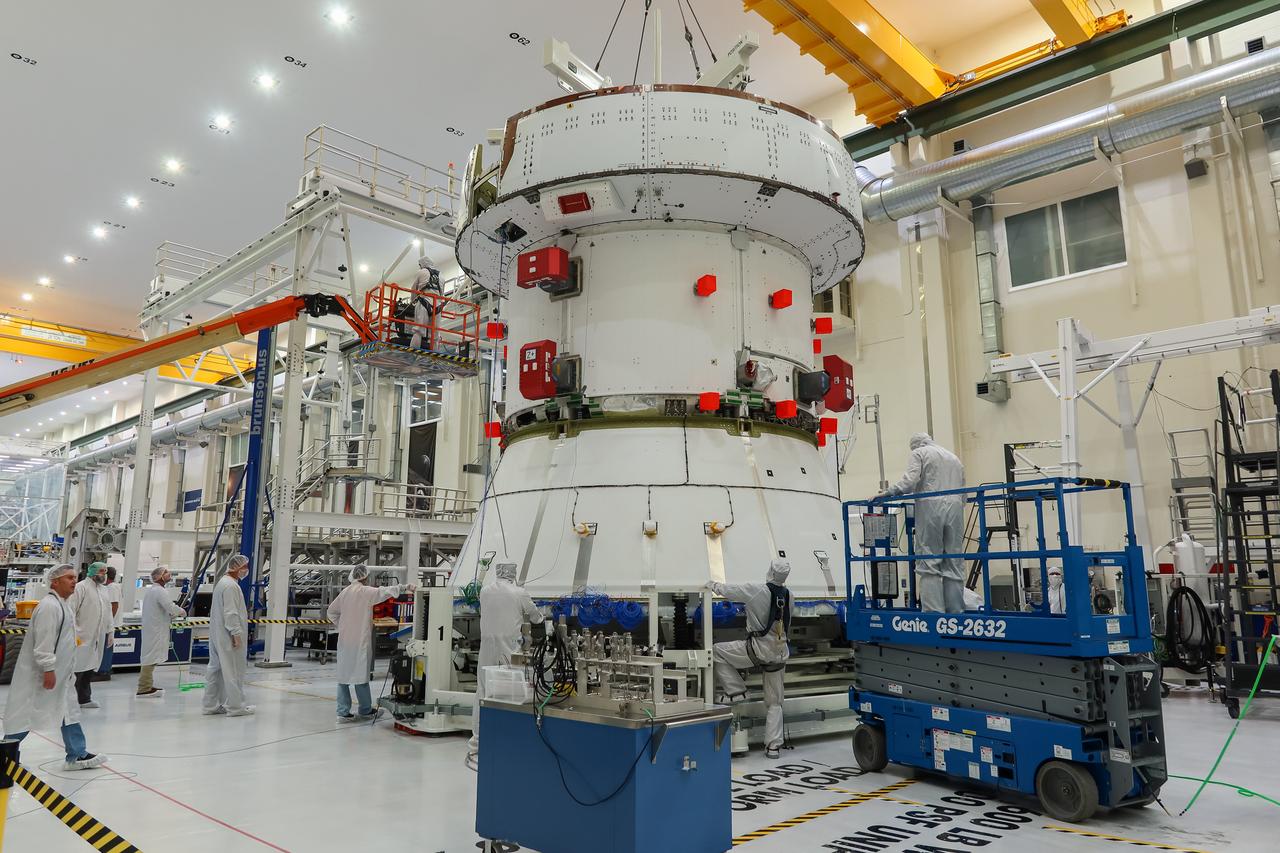
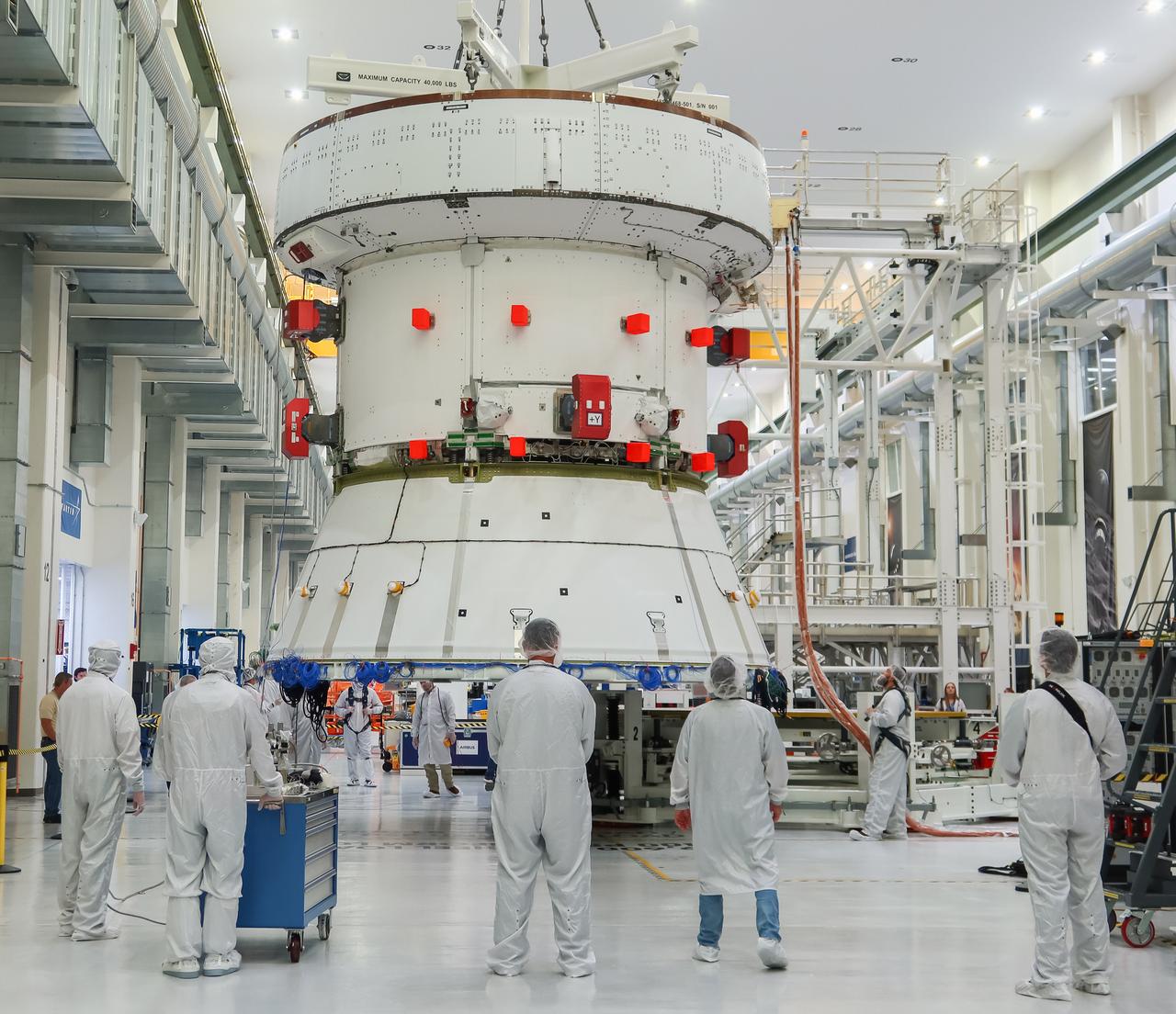
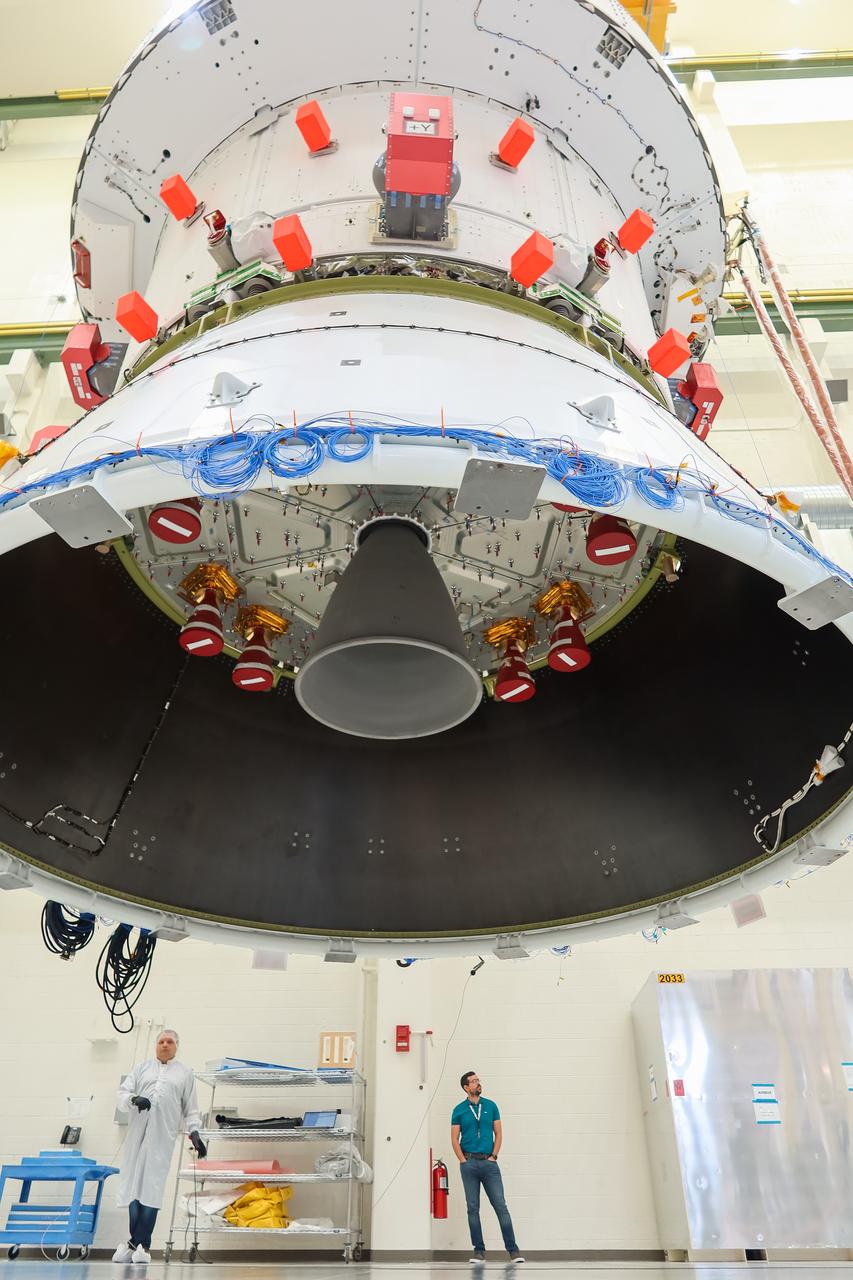
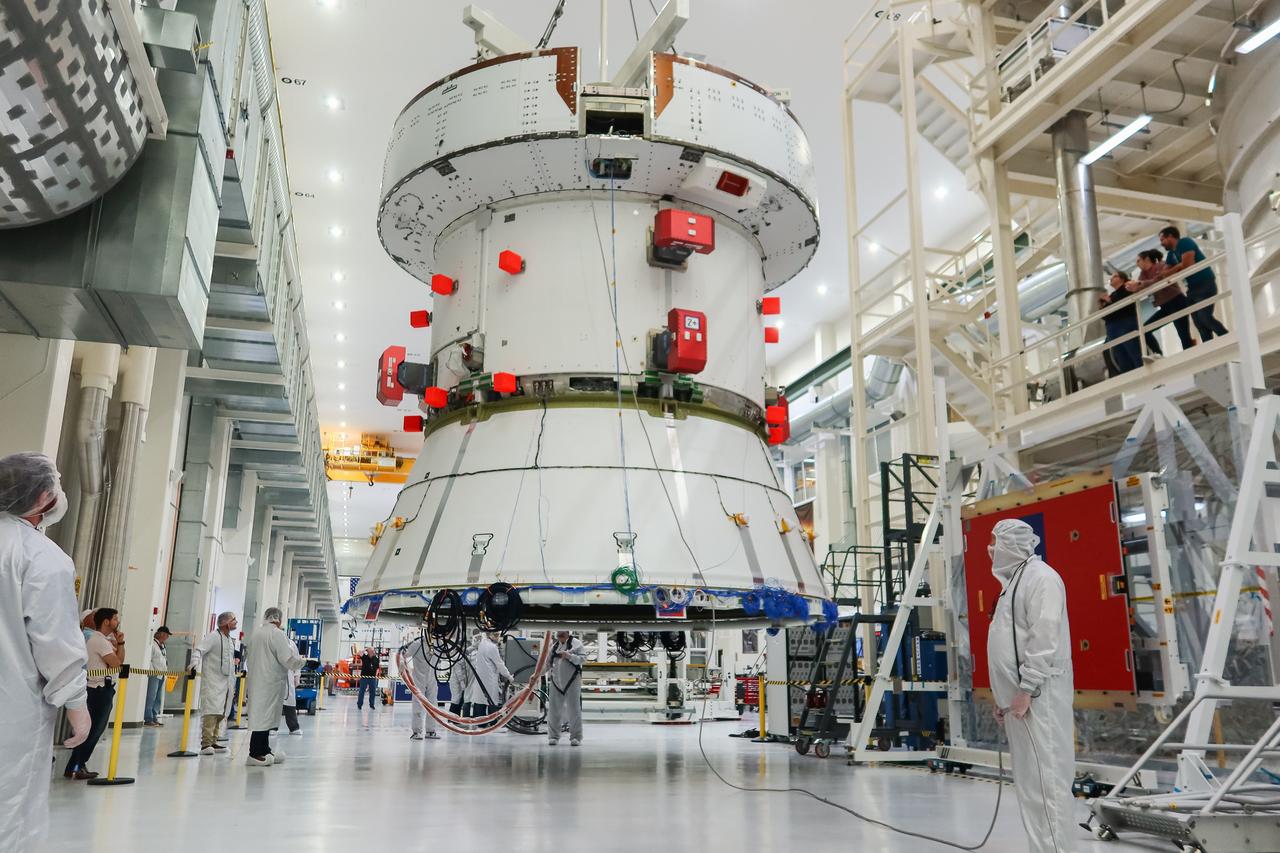
A crane returns NASA’s Artemis II Orion spacecraft to the Final Assembly and System Testing (FAST) cell inside the Neil A. Armstrong Operations and Checkout Building at NASA’s Kennedy Space Center in Florida on Friday, March 21, 2025, following installation of four solar array winds and adapter jettison fairings. Once complete, the Orion spacecraft will be transported to other facilities for fueling and integration with its launch abort system before arriving at the Vehicle Assembly Building where it will be stacked atop the SLS (Space Launch System) by NASA’s Exploration Ground System team at the Vehicle Assembly Building in preparations for Artemis II launch operations.
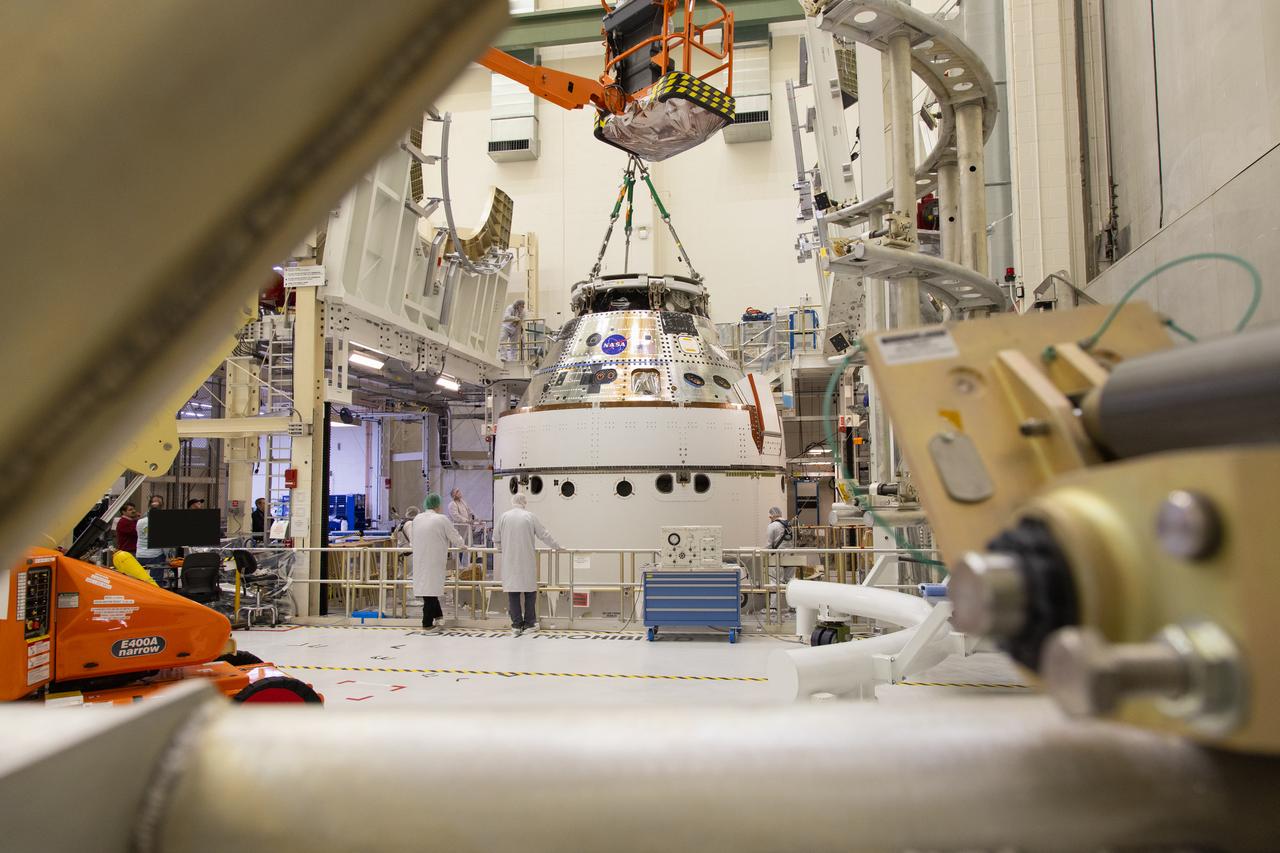
A crane returns NASA’s Artemis II Orion spacecraft to the Final Assembly and System Testing (FAST) cell inside the Neil A. Armstrong Operations and Checkout Building at NASA’s Kennedy Space Center in Florida on Friday, March 21, 2025, following installation of four solar array winds and adapter jettison fairings. Once complete, the Orion spacecraft will be transported to other facilities for fueling and integration with its launch abort system before arriving at the Vehicle Assembly Building where it will be stacked atop the SLS (Space Launch System) by NASA’s Exploration Ground System team at the Vehicle Assembly Building in preparations for Artemis II launch operations.
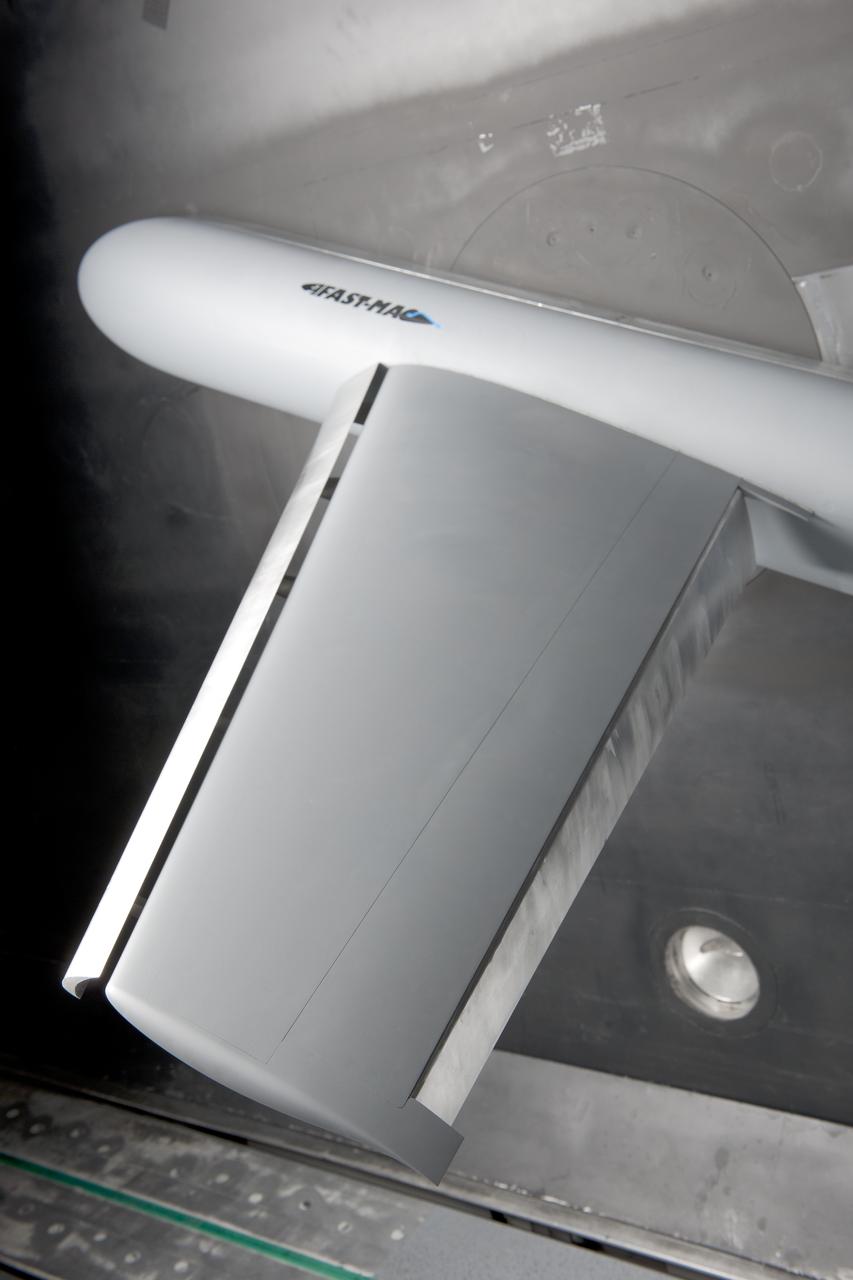
(NTF) National Transonic Facility Test 213-SFW Flow Control II, Fast-MAC Model: The fundamental Aerodynamics Subsonic Transonic-Modular Active Control (Fast-MAC) Model was tested for the 2nd time in the NTF. The objectives were to document the effects of Reynolds numbers on circulation control aerodynamics and to develop and open data set for CFD code validation. Image taken in building 1236, National Transonic Facility
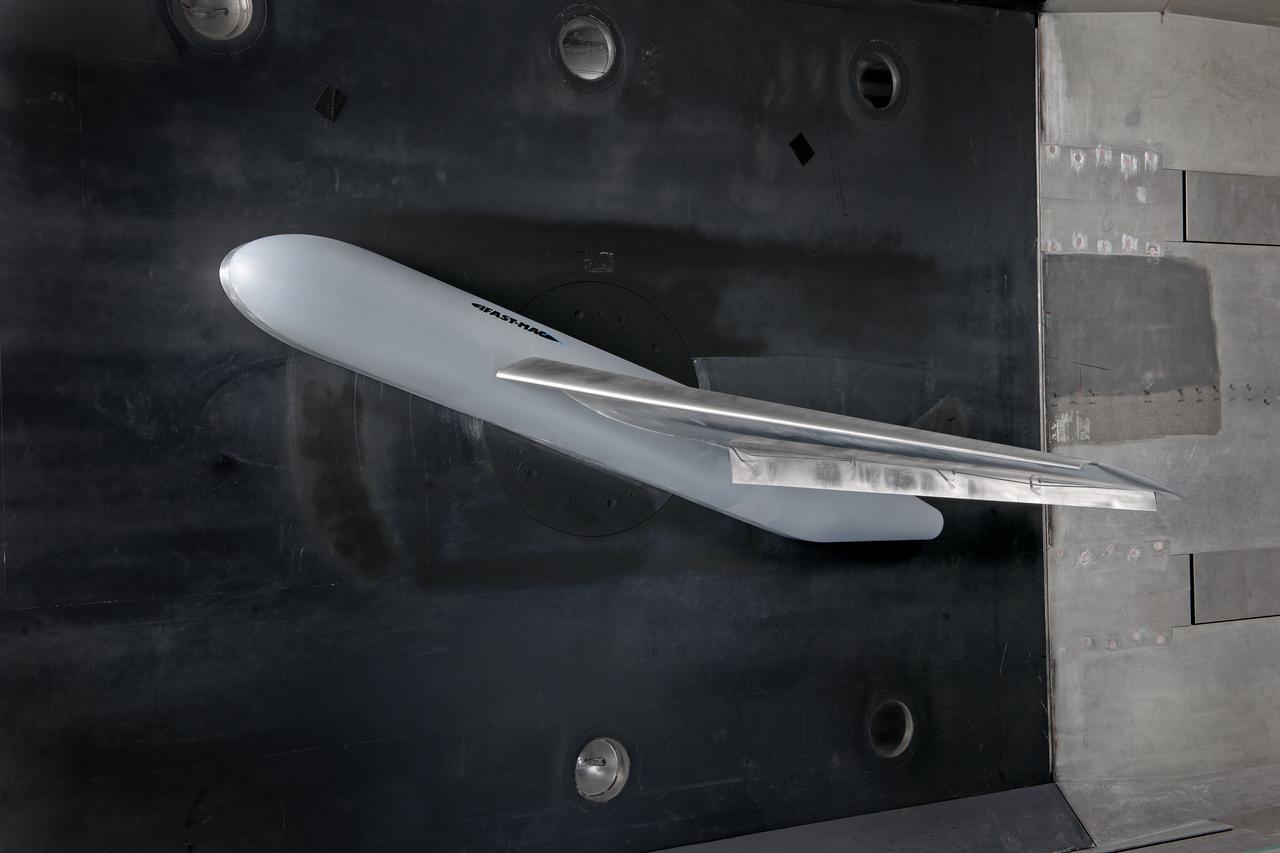
(NTF) National Transonic Facility Test 213-SFW Flow Control II, Fast-MAC Model: The fundamental Aerodynamics Subsonic Transonic-Modular Active Control (Fast-MAC) Model was tested for the 2nd time in the NTF. The objectives were to document the effects of Reynolds numbers on circulation control aerodynamics and to develop and open data set for CFD code validation. Image taken in building 1236, National Transonic Facility
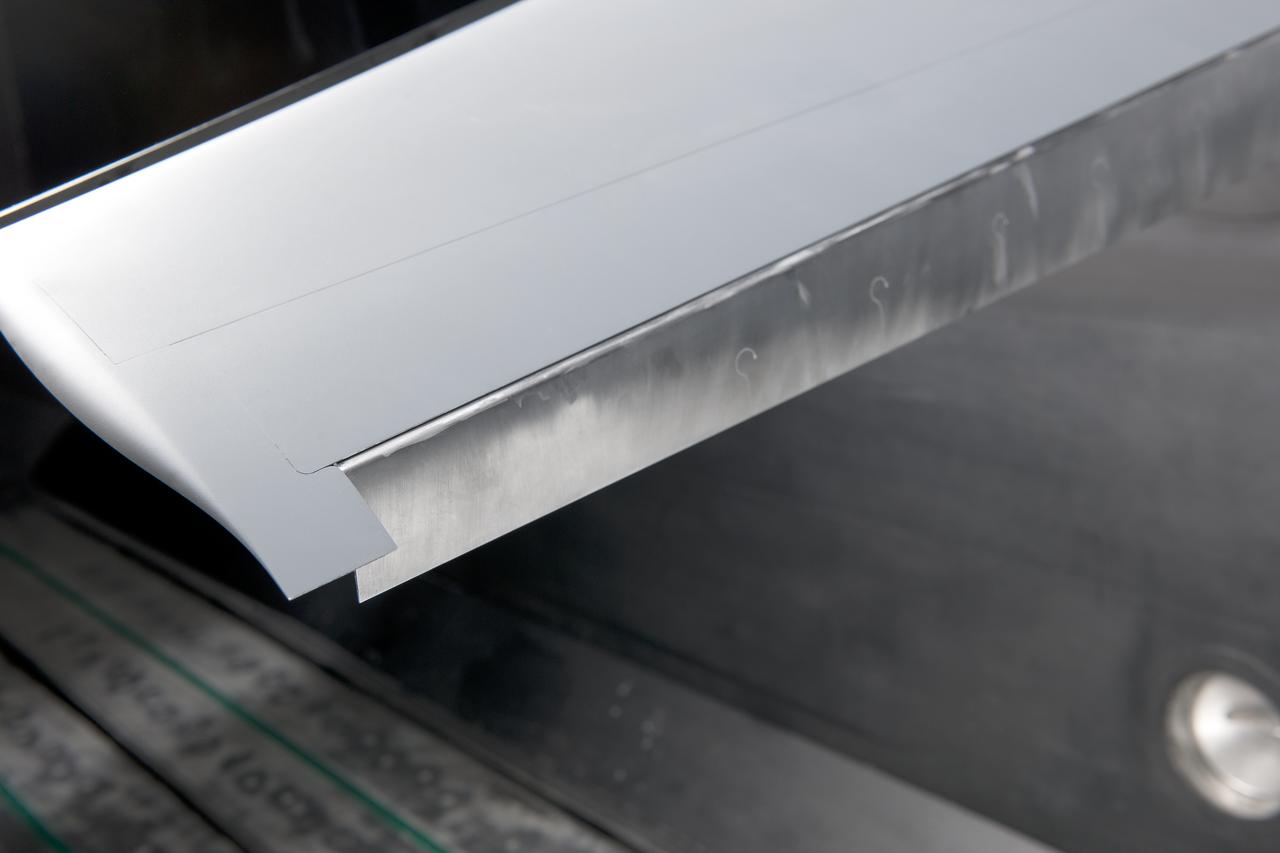
(NTF) National Transonic Facility Test 213-SFW Flow Control II, Fast-MAC Model: The fundamental Aerodynamics Subsonic Transonic-Modular Active Control (Fast-MAC) Model was tested for the 2nd time in the NTF. The objectives were to document the effects of Reynolds numbers on circulation control aerodynamics and to develop and open data set for CFD code validation. Image taken in building 1236, National Transonic Facility
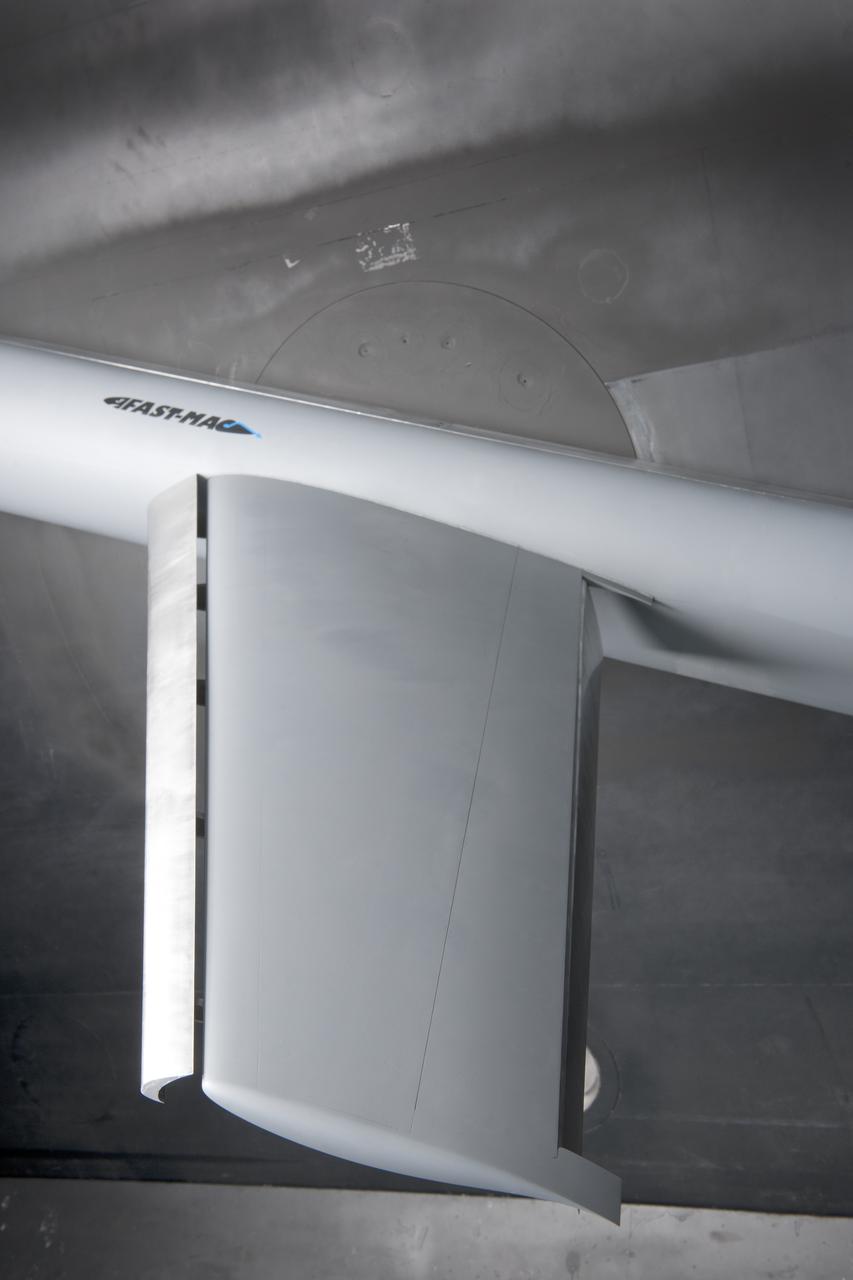
(NTF) National Transonic Facility Test 213-SFW Flow Control II, Fast-MAC Model: The fundamental Aerodynamics Subsonic Transonic-Modular Active Control (Fast-MAC) Model was tested for the 2nd time in the NTF. The objectives were to document the effects of Reynolds numbers on circulation control aerodynamics and to develop and open data set for CFD code validation. Image taken in building 1236, National Transonic Facility
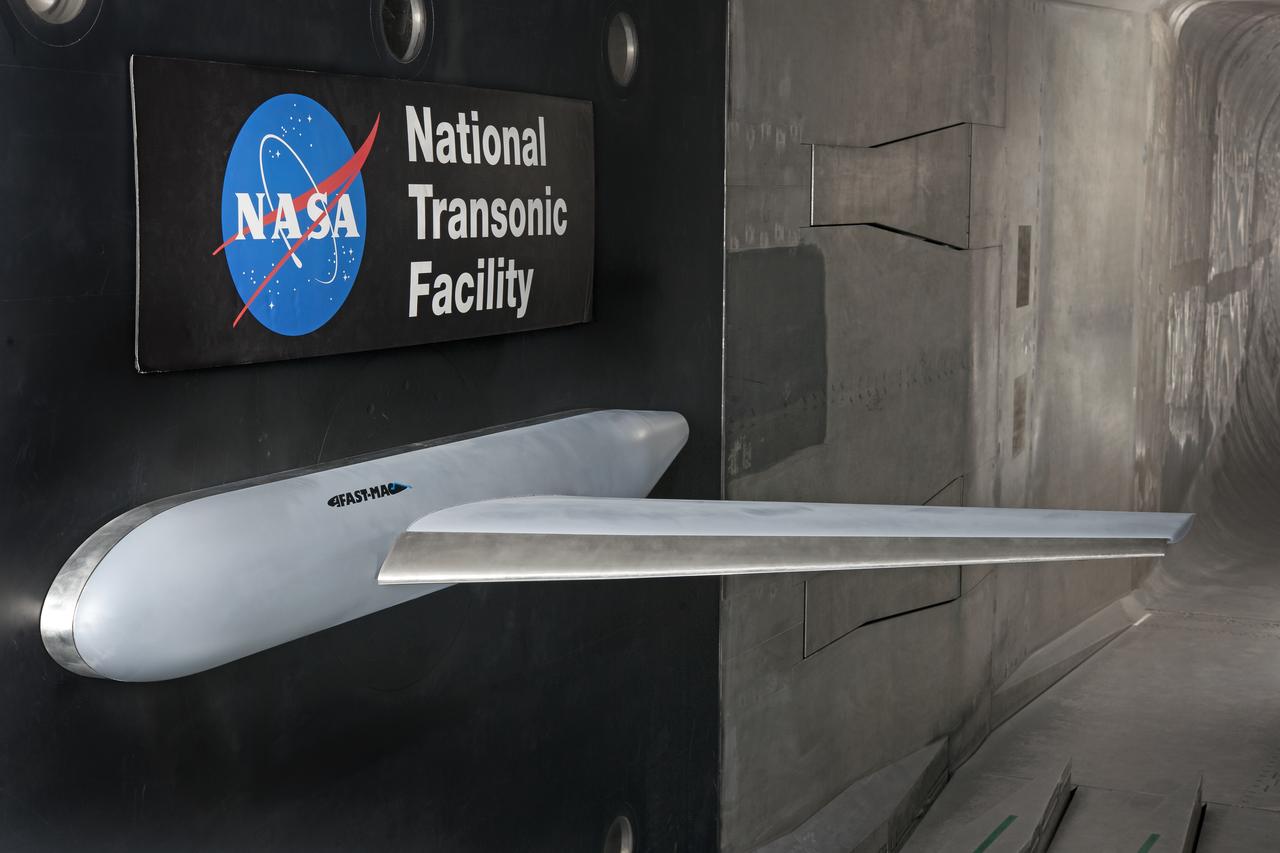
(NTF) National Transonic Facility Test 213-SFW Flow Control II, Fast-MAC Model: The fundamental Aerodynamics Subsonic Transonic-Modular Active Control (Fast-MAC) Model was tested for the 2nd time in the NTF. The objectives were to document the effects of Reynolds numbers on circulation control aerodynamics and to develop and open data set for CFD code validation. Image taken in building 1236, National Transonic Facility
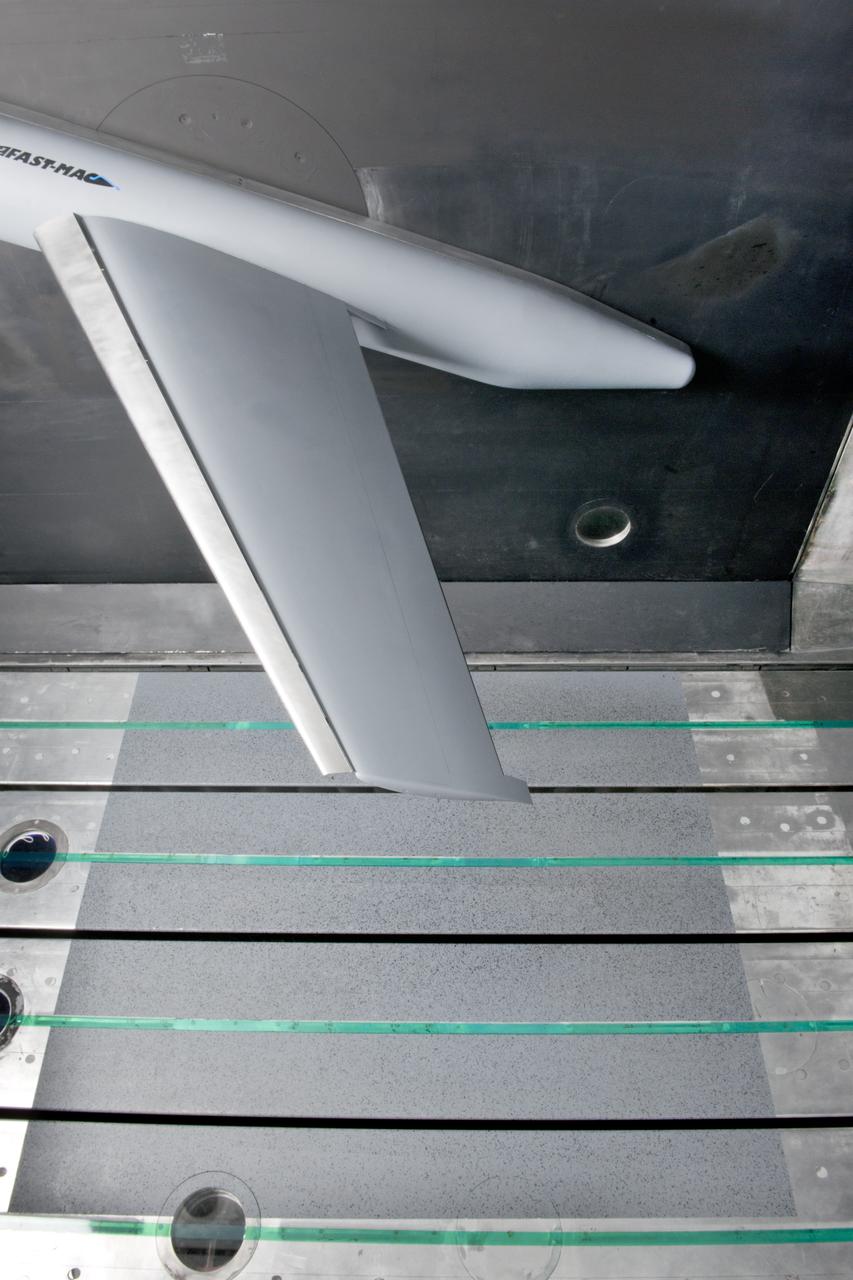
(NTF) National Transonic Facility Test 213-SFW Flow Control II, Fast-MAC Model: The fundamental Aerodynamics Subsonic Transonic-Modular Active Control (Fast-MAC) Model was tested for the 2nd time in the NTF. The objectives were to document the effects of Reynolds numbers on circulation control aerodynamics and to develop and open data set for CFD code validation. Image taken in building 1236, National Transonic Facility
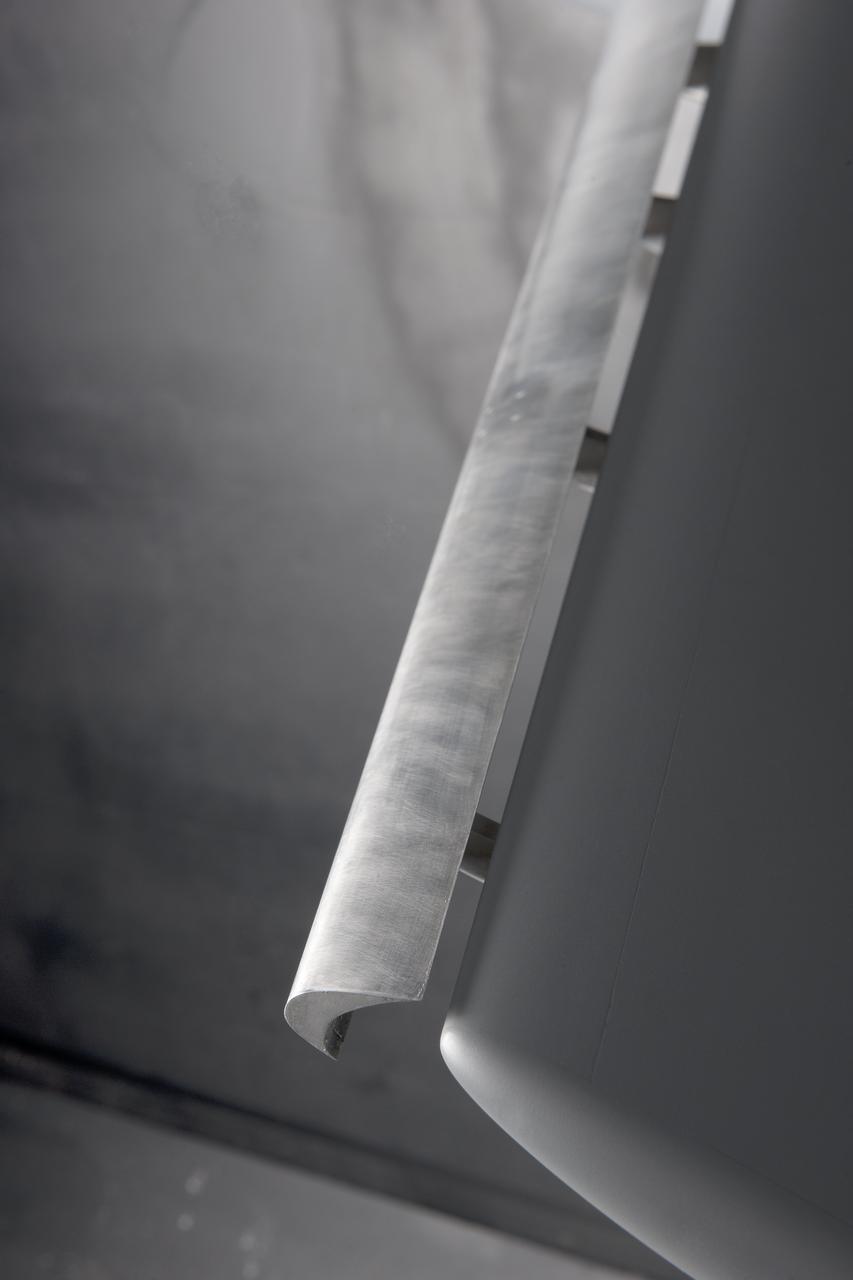
(NTF) National Transonic Facility Test 213-SFW Flow Control II, Fast-MAC Model: The fundamental Aerodynamics Subsonic Transonic-Modular Active Control (Fast-MAC) Model was tested for the 2nd time in the NTF. The objectives were to document the effects of Reynolds numbers on circulation control aerodynamics and to develop and open data set for CFD code validation. Image taken in building 1236, National Transonic Facility
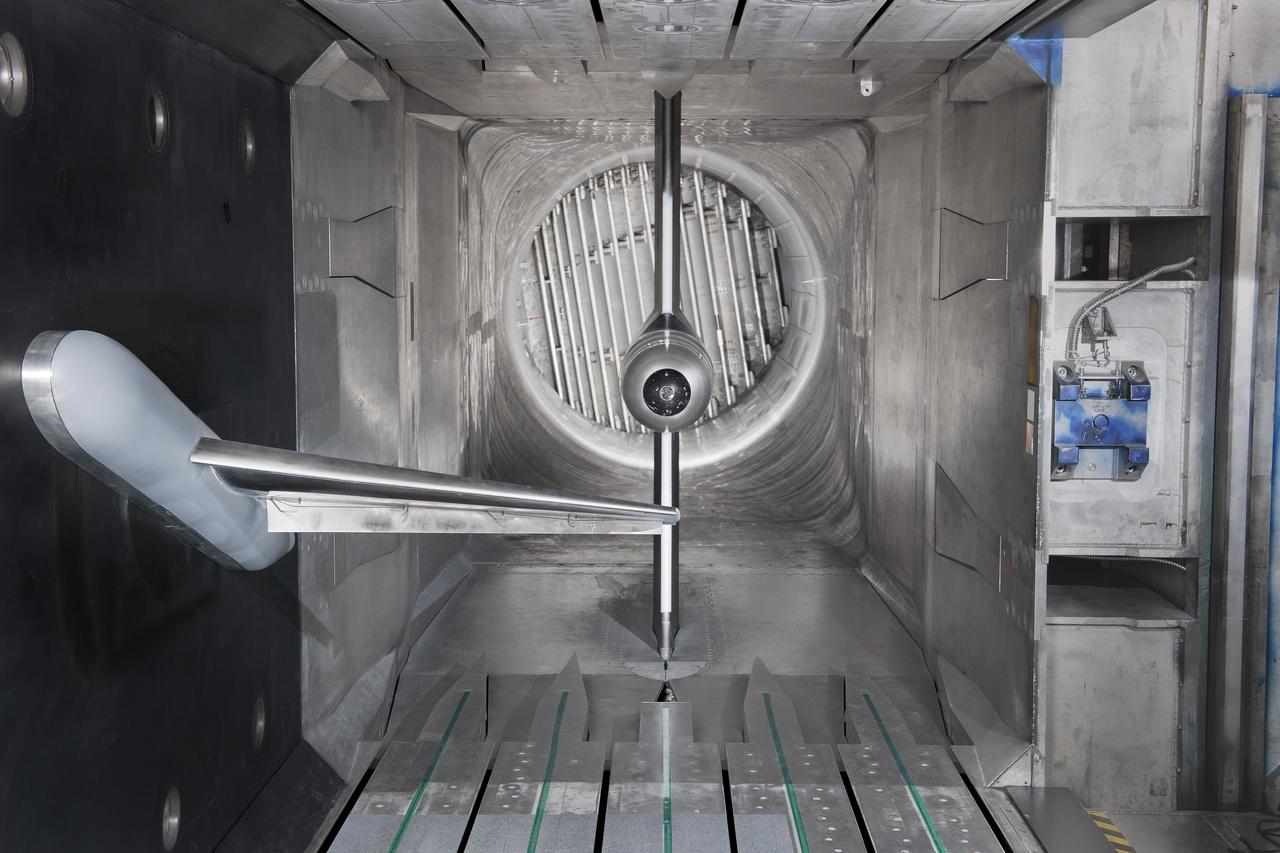
(NTF) National Transonic Facility Test 213-SFW Flow Control II, Fast-MAC Model: The fundamental Aerodynamics Subsonic Transonic-Modular Active Control (Fast-MAC) Model was tested for the 2nd time in the NTF. The objectives were to document the effects of Reynolds numbers on circulation control aerodynamics and to develop and open data set for CFD code validation. Image taken in building 1236, National Transonic Facility
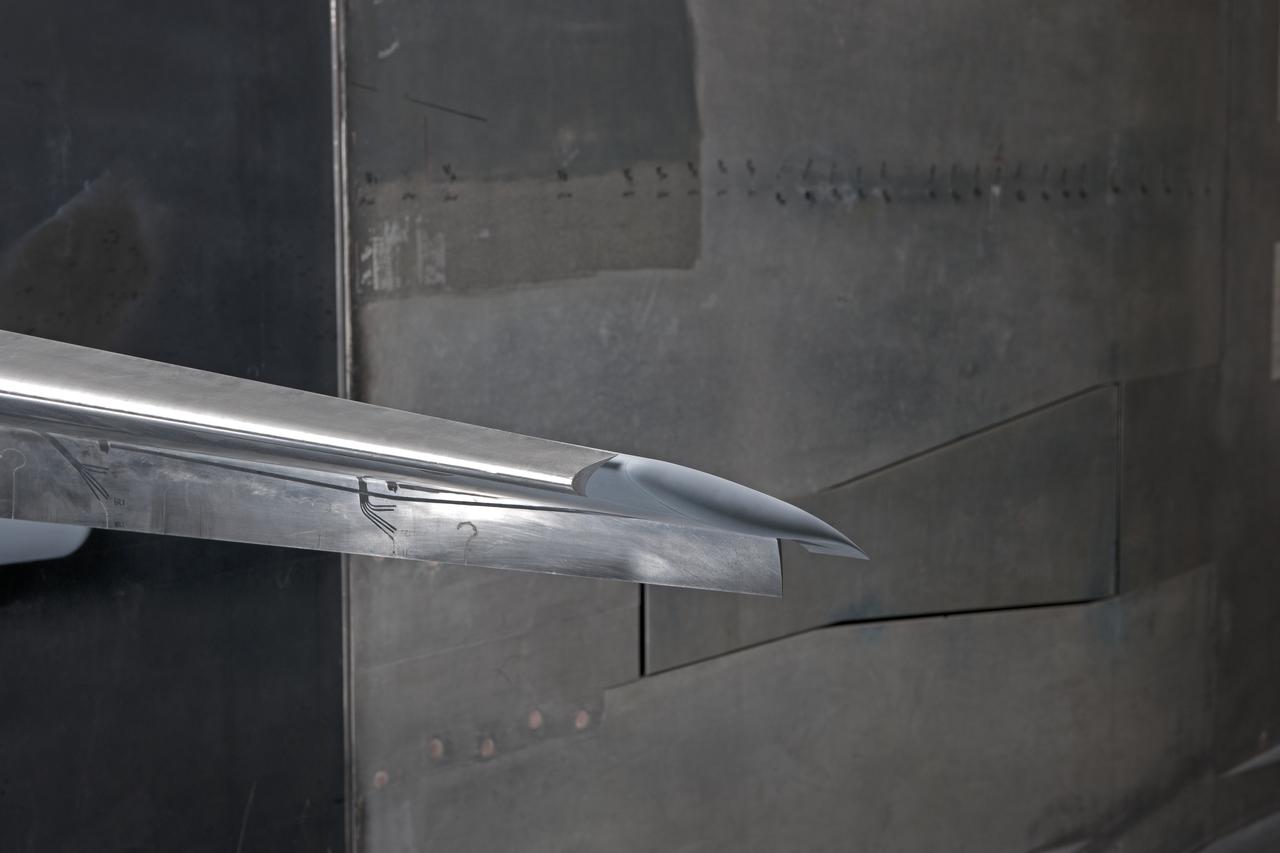
(NTF) National Transonic Facility Test 213-SFW Flow Control II, Fast-MAC Model: The fundamental Aerodynamics Subsonic Transonic-Modular Active Control (Fast-MAC) Model was tested for the 2nd time in the NTF. The objectives were to document the effects of Reynolds numbers on circulation control aerodynamics and to develop and open data set for CFD code validation. Image taken in building 1236, National Transonic Facility

An engineer at NASA's Jet Propulsion Laboratory is shown here with the fast steering mirror, a component of the Coronagraph Instrument on NASA's Nancy Grace Roman Space Telescope. The mirror can make small movements that correct for slight wobbling of the observatory. The incoming image needs to be perfectly sharp in order for the instrument to suppress light from a star while allowing the light from planets orbiting it to pass through. Although the technologies differ, it's analogous to image stabilization in digital cameras, in which the camera lens moves to counteract the shake of your hands and keep the image sharp. https://photojournal.jpl.nasa.gov/catalog/PIA25437
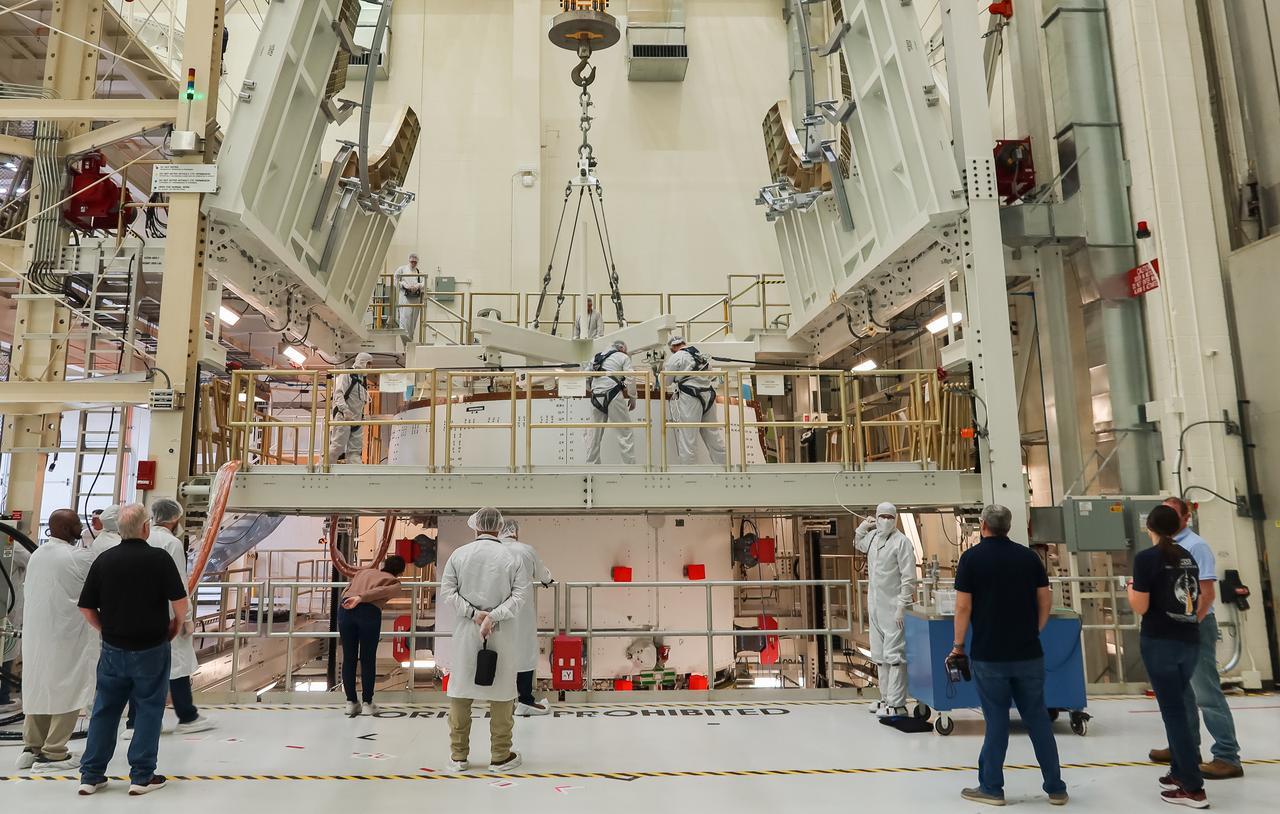
The European Service Module (ESM) for NASA’s Artemis II mission is secured inside the FAST (final assembly and system testing) cell in the high bay of the Neil A. Armstrong Operations and Checkout Building at NASA’s Kennedy Space Center in Florida on May 22, 2023. The ESM is in the FAST cell for final checkouts before it is stacked with the Orion crew module. Technicians are removing the crane that was used to move the ESM. The powerhouse that will fuel and propel Orion in space, the ESM will be used for Artemis II, the first Artemis mission flying crew aboard Orion.
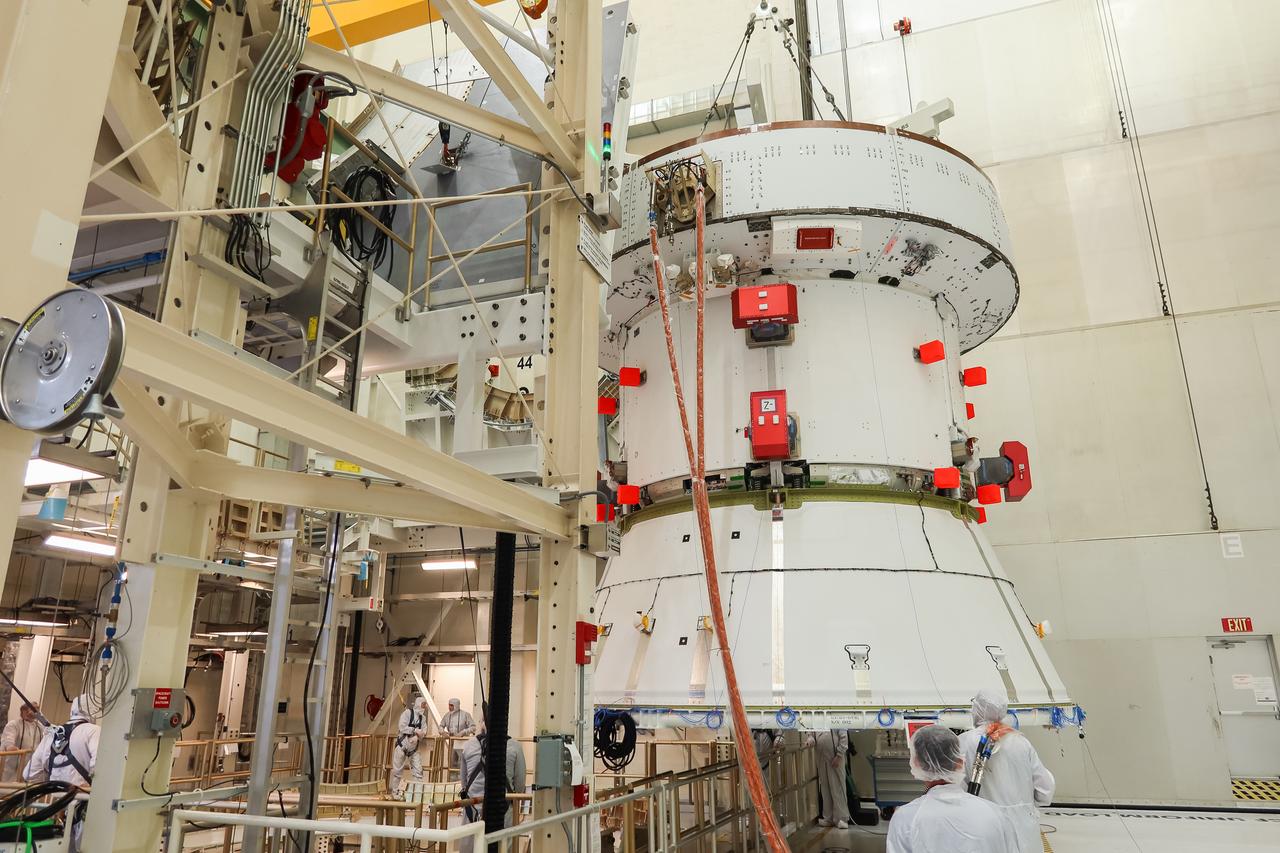
A crane slowly moves the European Service Module (ESM) for NASA’s Artemis II mission into the FAST (final assembly and system testing) cell inside the high bay of the Neil A. Armstrong Operations and Checkout Building at NASA’s Kennedy Space Center in Florida on May 22, 2023. Teams from NASA and Lockheed Martin are transferring the service module to the FAST cell for final checkouts before it is stacked with the Orion crew module.. The powerhouse that will fuel and propel Orion in space, the ESM will be used for Artemis II, the first Artemis mission flying crew aboard Orion.
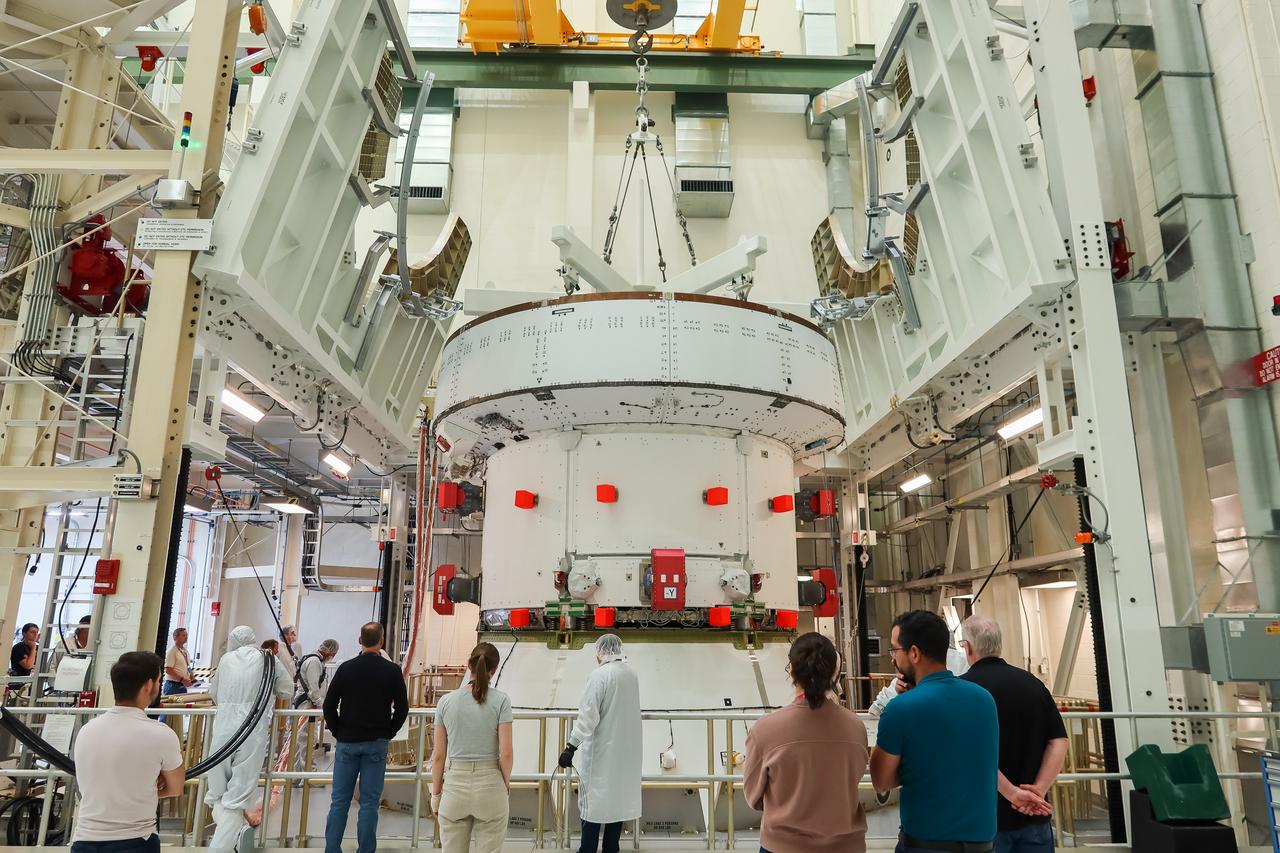
A crane lowers the European Service Module (ESM) for NASA’s Artemis II mission into the FAST (final assembly and system testing) cell inside the high bay of the Neil A. Armstrong Operations and Checkout Building at NASA’s Kennedy Space Center in Florida on May 22, 2023. Teams from NASA and Lockheed Martin are transferring the service module to the FAST cell for final checkouts before it is stacked with the Orion crew module. The powerhouse that will fuel and propel Orion in space, the ESM will be used for Artemis II, the first Artemis mission flying crew aboard Orion.
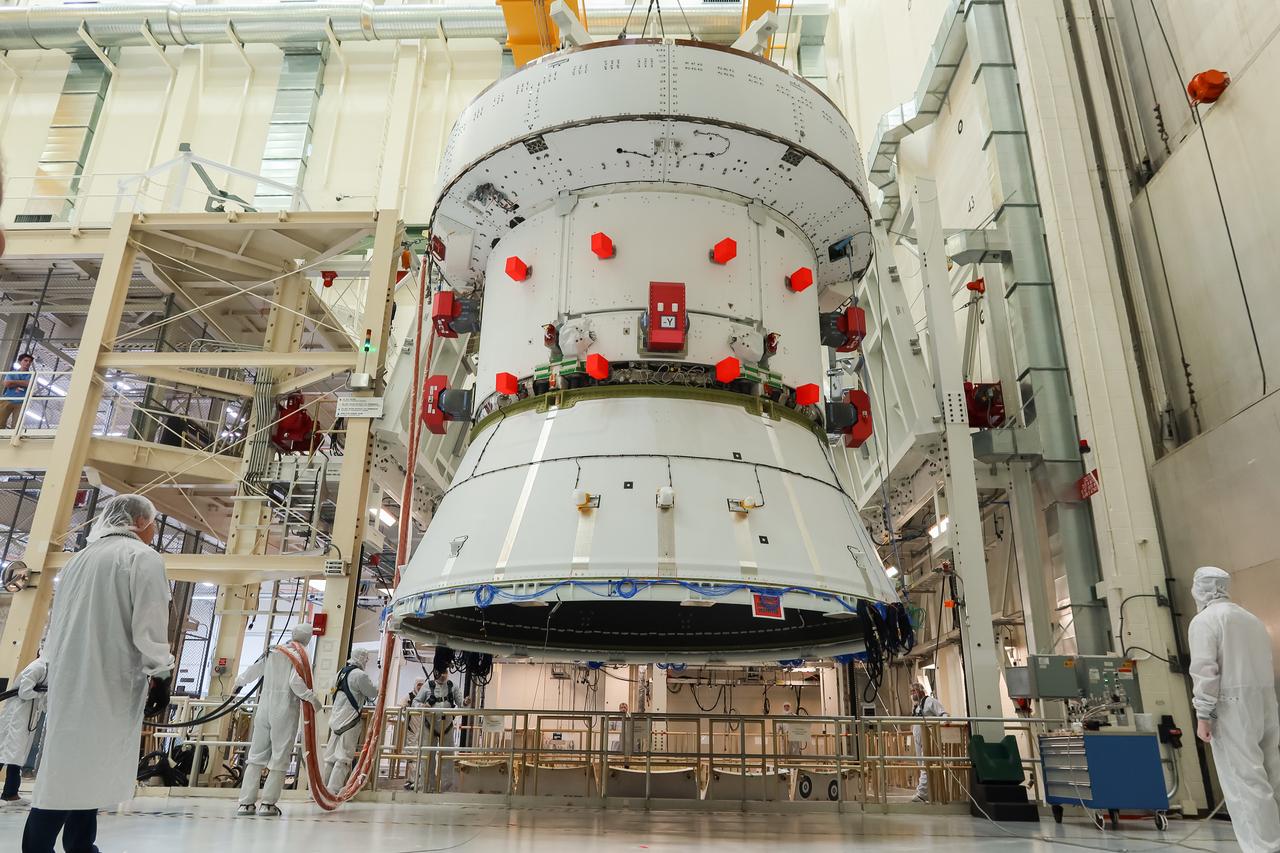
The European Service Module (ESM) for NASA’s Artemis II mission arrives at the Final Assembly and System Testing (FAST) cell inside the high bay of the Neil A. Armstrong Operations and Checkout Building at NASA’s Kennedy Space Center in Florida on May 22, 2023. Teams from NASA and Lockheed Martin are transferring the service module to the FAST (final assembly and system testing) cell for final checkouts before it is stacked with the Orion crew module.. The powerhouse that will fuel and propel Orion in space, the ESM will be used for Artemis II, the first Artemis mission flying crew aboard Orion.
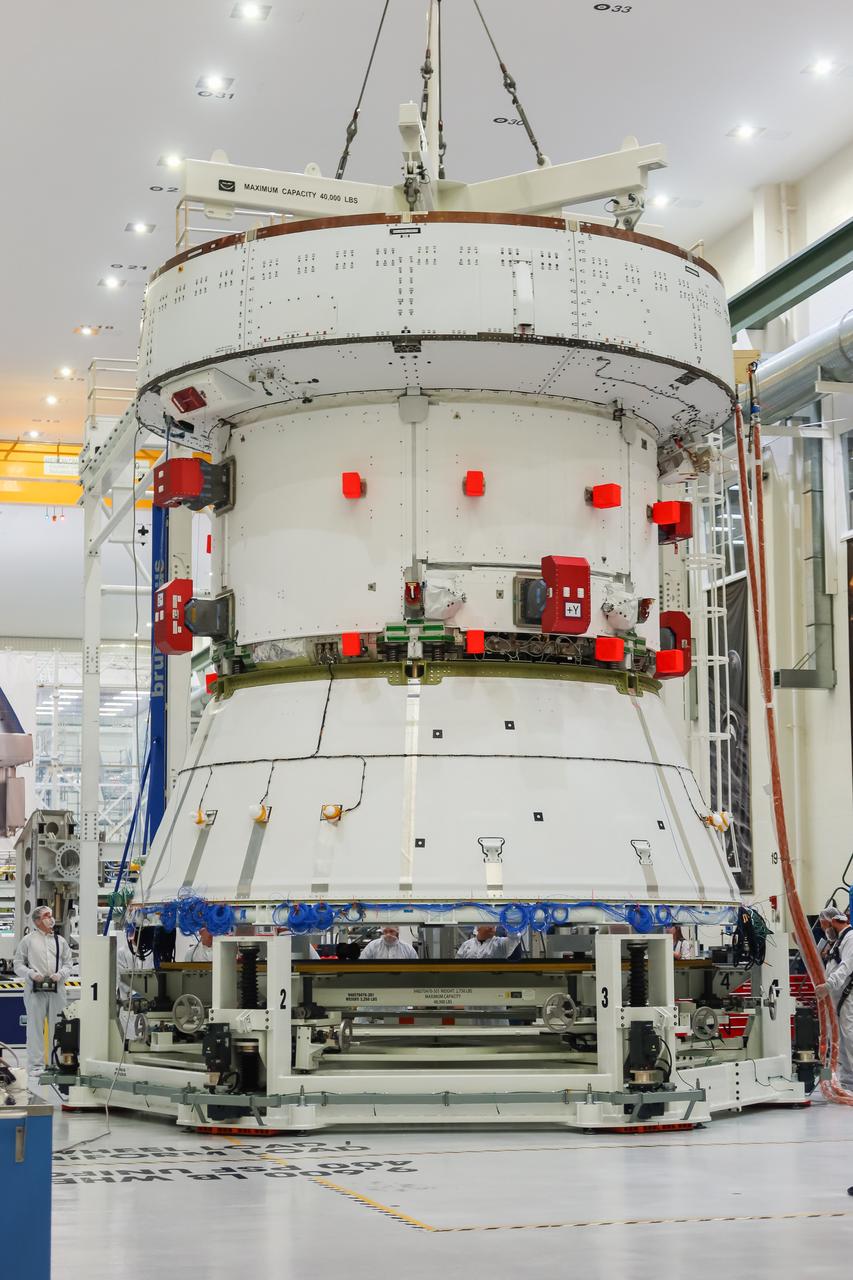
The European Service Module (ESM) for NASA’s Artemis II mission is lifted by crane inside the high bay of the Neil A. Armstrong Operations and Checkout Building at NASA’s Kennedy Space Center in Florida on May 22, 2023. Teams from NASA and Lockheed Martin are preparing the service module for transfer to the FAST (final assembly and system testing) cell for final checkouts before it is stacked with the Orion crew module. The powerhouse that will fuel and propel Orion in space, the ESM will be used for Artemis II, the first Artemis mission flying crew aboard Orion.
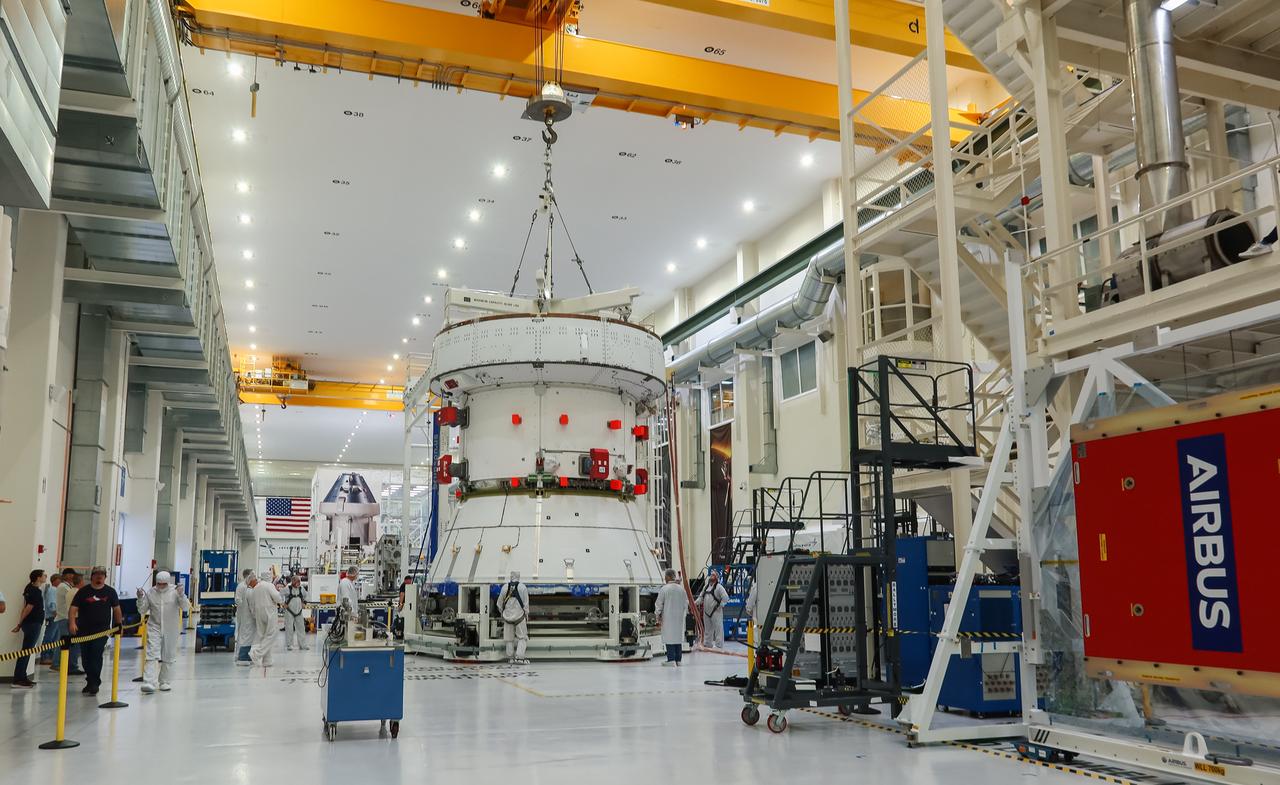
The European Service Module (ESM) for NASA’s Artemis II mission is lifted by crane inside the high bay of the Neil A. Armstrong Operations and Checkout Building at NASA’s Kennedy Space Center in Florida on May 22, 2023. Teams from NASA and Lockheed Martin are preparing the service module for transfer to the FAST (final assembly and system testing) cell for final checkouts before it is stacked with the Orion crew module. The powerhouse that will fuel and propel Orion in space, the ESM will be used for Artemis II, the first Artemis mission flying crew aboard Orion.

Dr. Kelly Fast, acting planetary defense officer for NASA’s Planetary Defense Coordination Office, asks NASA Administrator Jared Isaacman and NASA Associate Administrator Amit Kshatriya a question during a monthly coffee and donuts with the Administrator event, Tuesday, Feb. 24, 2026, at the Mary W. Jackson NASA Headquarters building in Washington. Photo Credit: (NASA/Aubrey Gemignani)
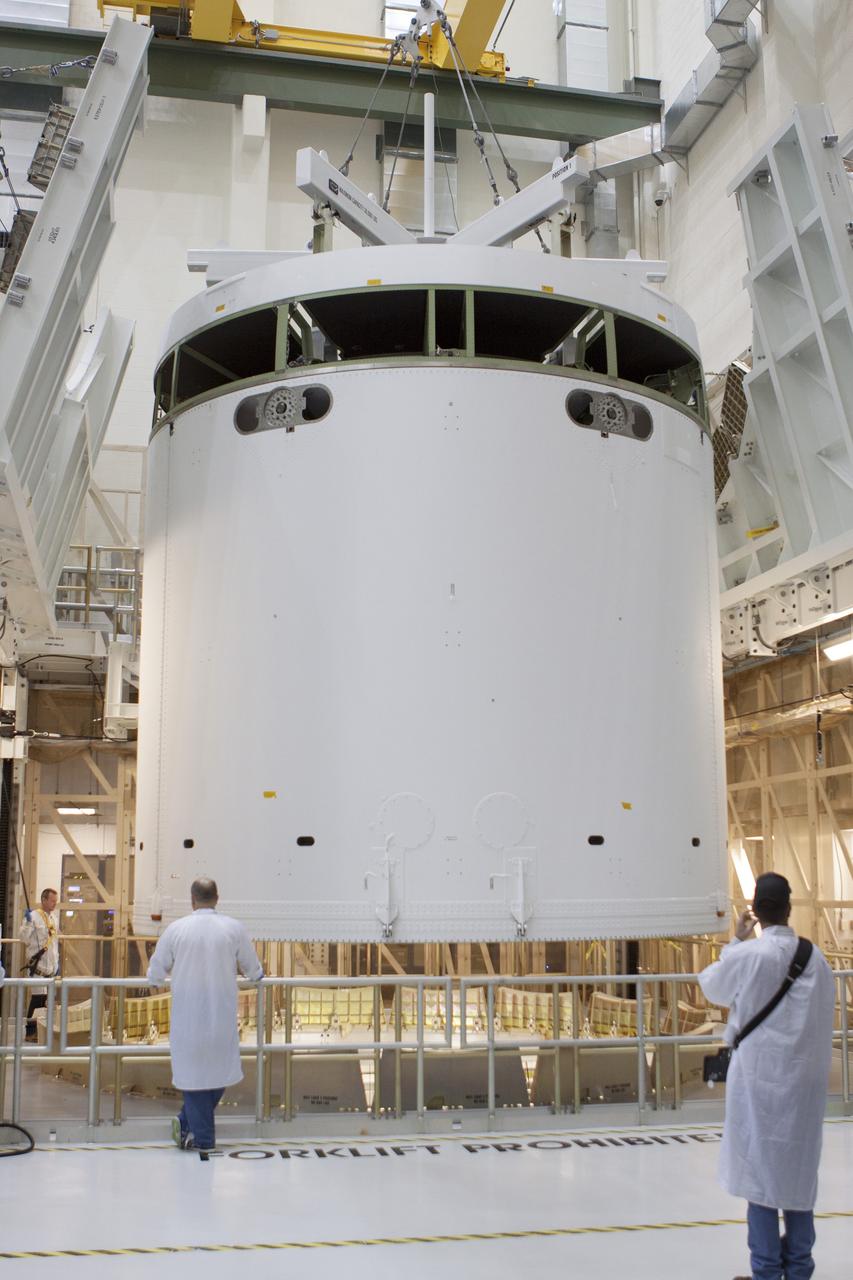
CAPE CANAVERAL, Fla. -- Inside the Operations and Checkout Building high bay at NASA's Kennedy Space Center in Florida, NASA and Lockheed Martin engineers and technicians monitor the progress as a crane lowers the Orion service module into the Final Assembly and System Testing, or FAST, cell. The Orion crew module will be stacked on the service module in the FAST cell and then both modules will be put through their final system tests for Exploration Flight Test-1, or EFT-1, before rolling out of the facility for integration with the United Launch Alliance Delta IV Heavy rocket. Orion is the exploration spacecraft designed to carry astronauts to destinations not yet explored by humans, including an asteroid and Mars. It will have emergency abort capability, sustain the crew during space travel and provide safe re-entry from deep space return velocities. The first unpiloted test flight of Orion, EFT-1, is scheduled to launch later this year atop a Delta IV rocket from Cape Canaveral Air Force Station in Florida to an altitude of 3,600 miles above the Earth's surface. The two-orbit, four-hour flight test will help engineers evaluate the systems critical to crew safety including the heat shield, parachute system and launch abort system. For more information, visit http://www.nasa.gov/orion. Photo credit: NASA/Glenn Benson
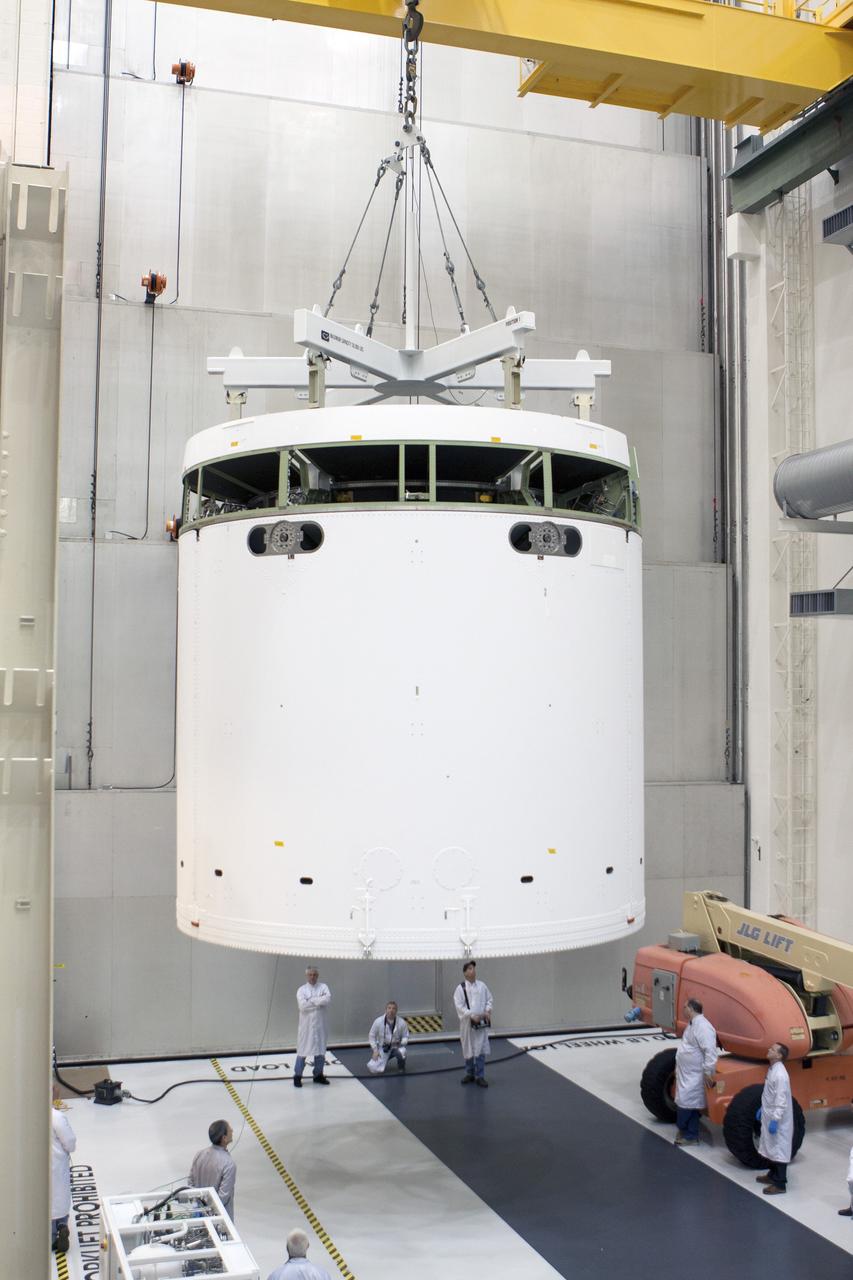
CAPE CANAVERAL, Fla. -- Inside the Operations and Checkout Building high bay at NASA's Kennedy Space Center in Florida, NASA and Lockheed Martin engineers and technicians monitor the progress as a crane is used to move the Orion service module to the Final Assembly and System Testing, or FAST, cell further down the aisle. The Orion crew module will be stacked on the service module in the FAST cell and then both modules will be put through their final system tests for Exploration Flight Test-1, or EFT-1, before rolling out of the facility for integration with the United Launch Alliance Delta IV Heavy rocket. Orion is the exploration spacecraft designed to carry astronauts to destinations not yet explored by humans, including an asteroid and Mars. It will have emergency abort capability, sustain the crew during space travel and provide safe re-entry from deep space return velocities. The first unpiloted test flight of Orion, EFT-1, is scheduled to launch later this year atop a Delta IV rocket from Cape Canaveral Air Force Station in Florida to an altitude of 3,600 miles above the Earth's surface. The two-orbit, four-hour flight test will help engineers evaluate the systems critical to crew safety including the heat shield, parachute system and launch abort system. For more information, visit http://www.nasa.gov/orion. Photo credit: NASA/Glenn Benson
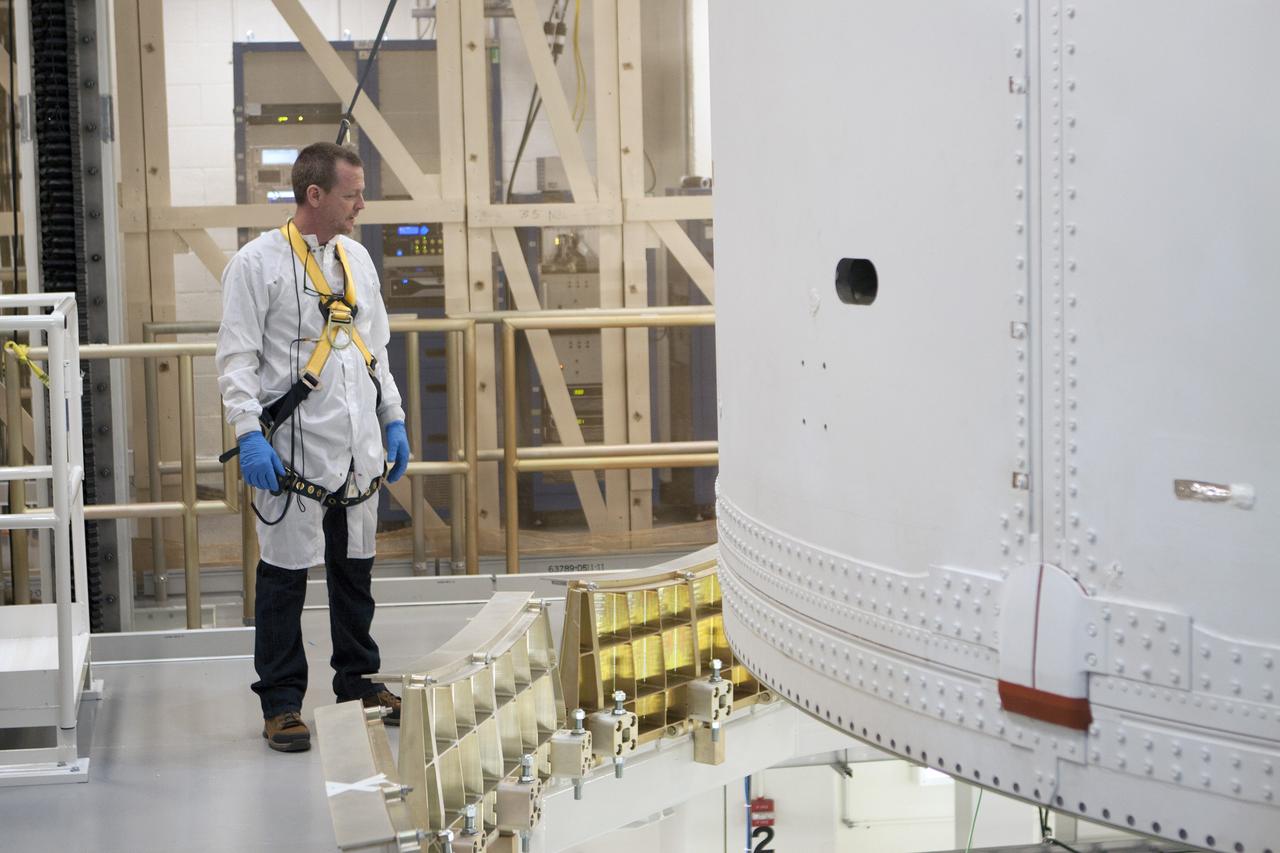
CAPE CANAVERAL, Fla. -- Inside the Operations and Checkout Building high bay at NASA's Kennedy Space Center in Florida, a Lockheed Martin technician monitors the progress as a crane lowers the Orion service module into the Final Assembly and System Testing, or FAST, cell further down the aisle. The Orion crew module will be stacked on the service module in the FAST cell and then both modules will be put through their final system tests for Exploration Flight Test-1, or EFT-1, before rolling out of the facility for integration with the United Launch Alliance Delta IV Heavy rocket. Orion is the exploration spacecraft designed to carry astronauts to destinations not yet explored by humans, including an asteroid and Mars. It will have emergency abort capability, sustain the crew during space travel and provide safe re-entry from deep space return velocities. The first unpiloted test flight of Orion, EFT-1, is scheduled to launch later this year atop a Delta IV rocket from Cape Canaveral Air Force Station in Florida to an altitude of 3,600 miles above the Earth's surface. The two-orbit, four-hour flight test will help engineers evaluate the systems critical to crew safety including the heat shield, parachute system and launch abort system. For more information, visit http://www.nasa.gov/orion. Photo credit: NASA/Glenn Benson
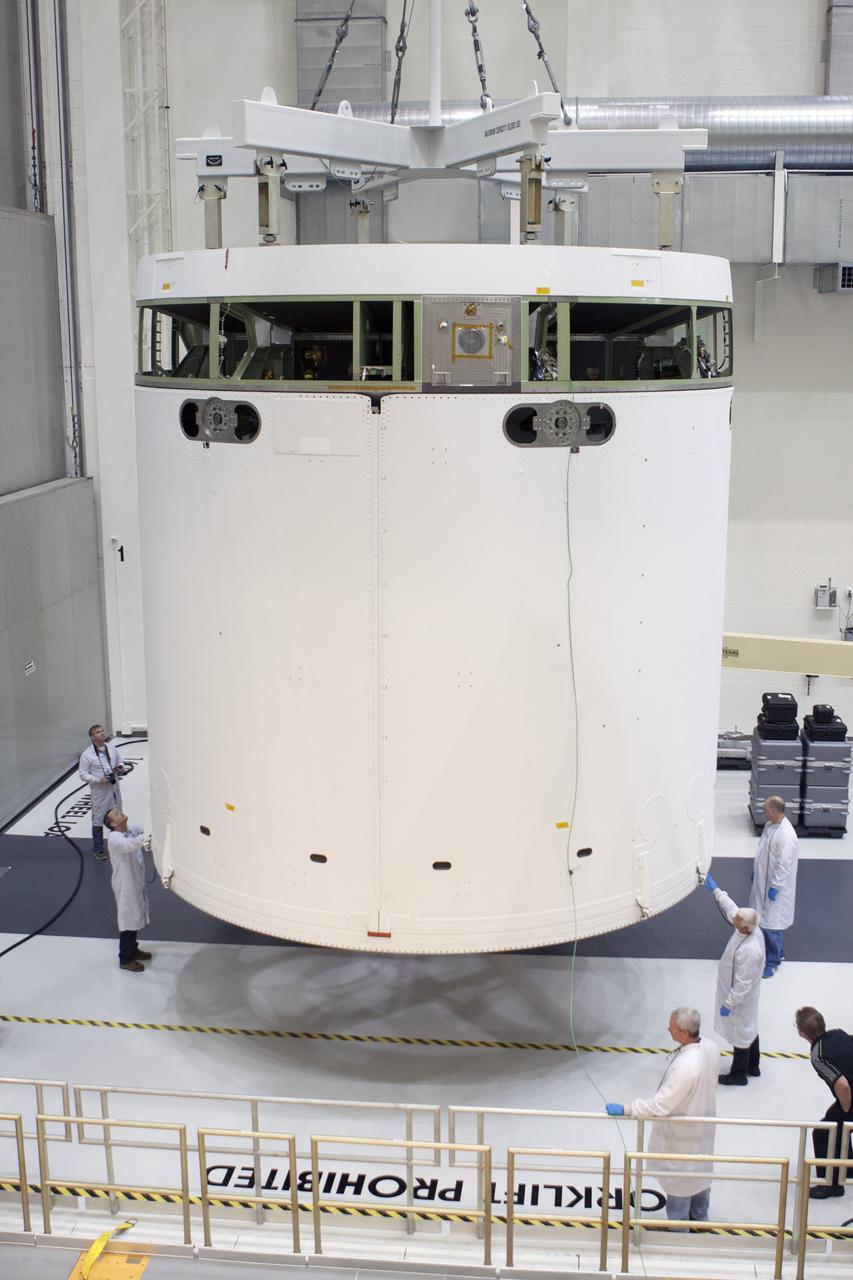
CAPE CANAVERAL, Fla. -- Inside the Operations and Checkout Building high bay at NASA's Kennedy Space Center in Florida, NASA and Lockheed Martin engineers and technicians help guide the Orion service module into the Final Assembly and System Testing, or FAST, cell. The Orion crew module will be stacked on the service module in the FAST cell and then both modules will be put through their final system tests for Exploration Flight Test-1, or EFT-1, before rolling out of the facility for integration with the United Launch Alliance Delta IV Heavy rocket. Orion is the exploration spacecraft designed to carry astronauts to destinations not yet explored by humans, including an asteroid and Mars. It will have emergency abort capability, sustain the crew during space travel and provide safe re-entry from deep space return velocities. The first unpiloted test flight of Orion, EFT-1, is scheduled to launch later this year atop a Delta IV rocket from Cape Canaveral Air Force Station in Florida to an altitude of 3,600 miles above the Earth's surface. The two-orbit, four-hour flight test will help engineers evaluate the systems critical to crew safety including the heat shield, parachute system and launch abort system. For more information, visit http://www.nasa.gov/orion. Photo credit: NASA/Glenn Benson
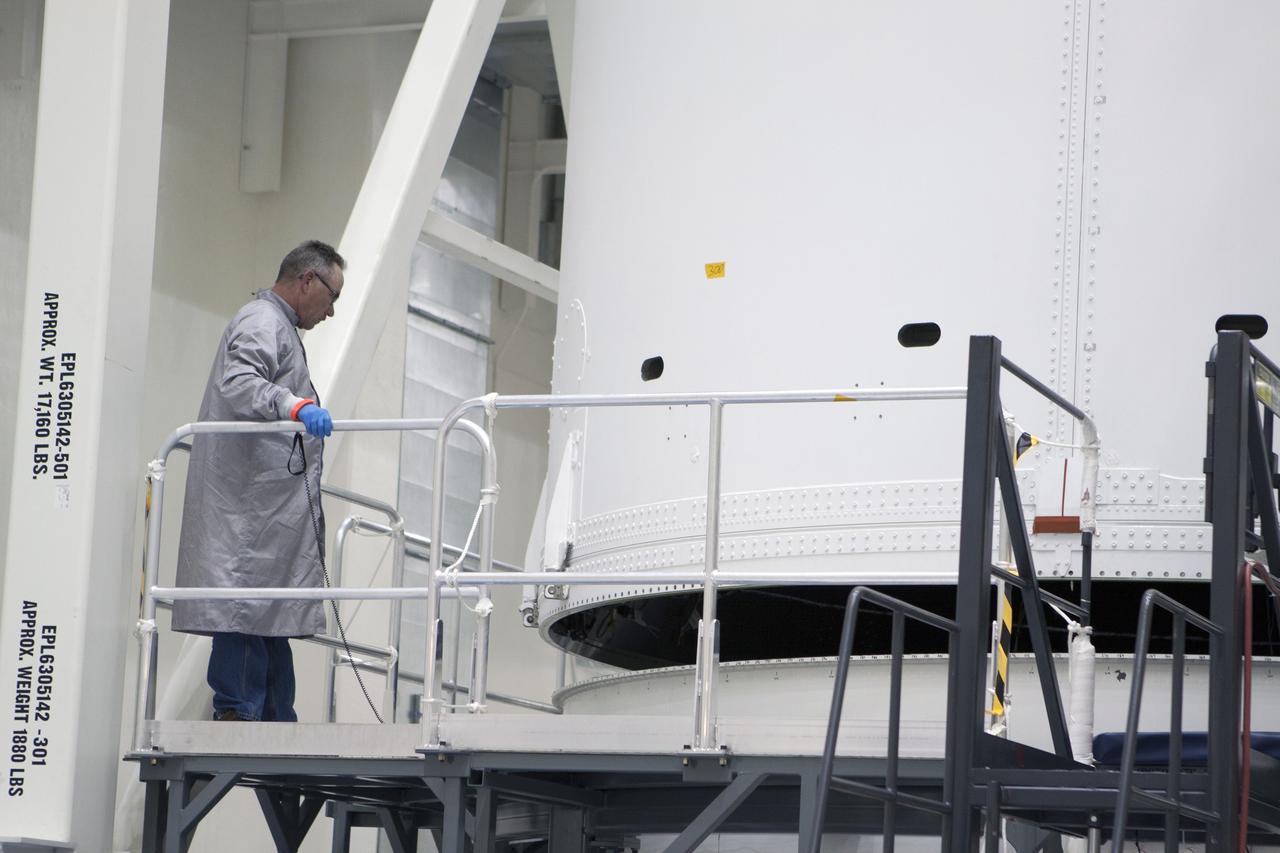
CAPE CANAVERAL, Fla. -- Inside the Operations and Checkout Building high bay at NASA's Kennedy Space Center in Florida, a Lockheed Martin technician monitors the progress as a crane is used to lift the Orion service module from a test stand and move it to the Final Assembly and System Testing, or FAST, cell further down the aisle. The Orion crew module will be stacked on the service module in the FAST cell and then both modules will be put through their final system tests for Exploration Flight Test-1, or EFT-1, prior to rolling out of the facility for integration with the United Launch Alliance Delta IV Heavy rocket. Orion is the exploration spacecraft designed to carry astronauts to destinations not yet explored by humans, including an asteroid and Mars. It will have emergency abort capability, sustain the crew during space travel and provide safe re-entry from deep space return velocities. The first unpiloted test flight of Orion, EFT-1, is scheduled to launch later this year atop a Delta IV rocket from Cape Canaveral Air Force Station in Florida to an altitude of 3,600 miles above the Earth's surface. The two-orbit, four-hour flight test will help engineers evaluate the systems critical to crew safety including the heat shield, parachute system and launch abort system. For more information, visit http://www.nasa.gov/orion. Photo credit: NASA/Glenn Benson
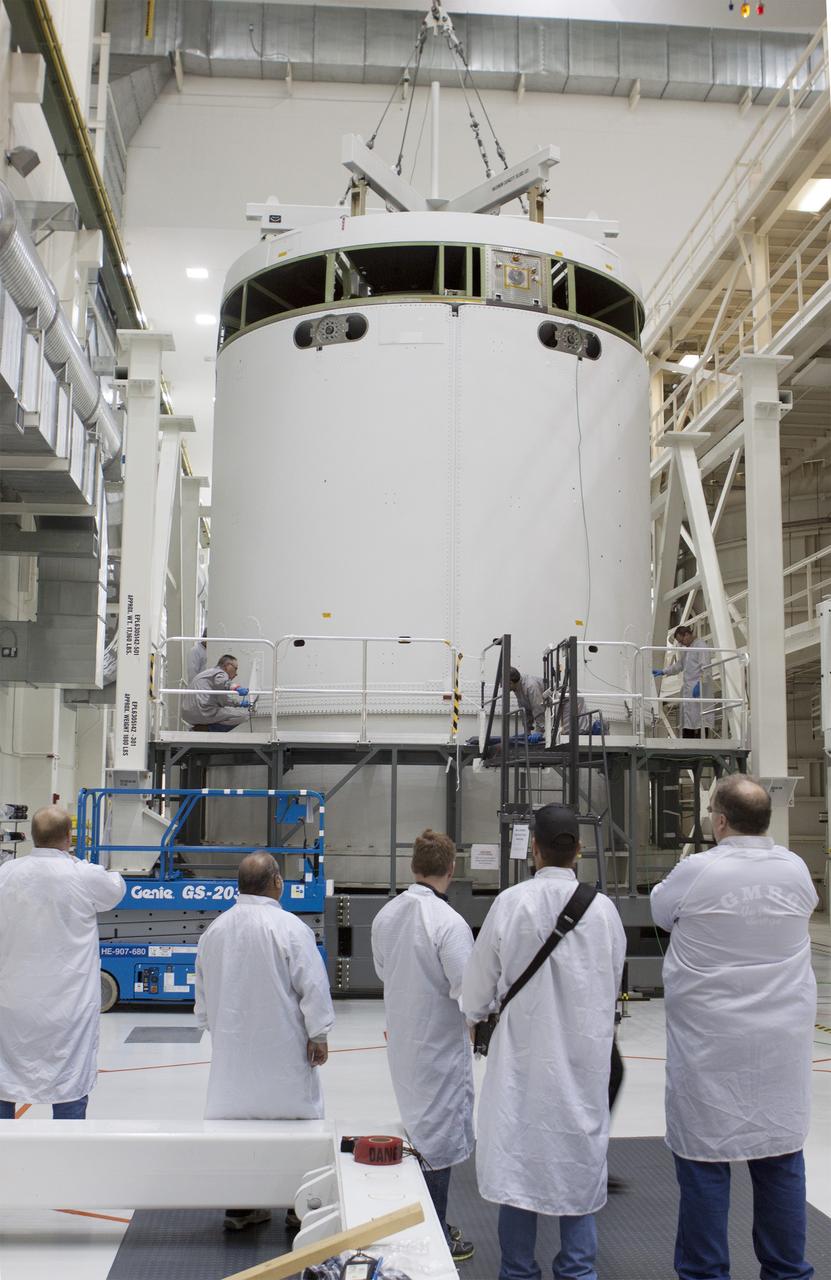
CAPE CANAVERAL, Fla. -- Inside the Operations and Checkout Building high bay at NASA's Kennedy Space Center in Florida, NASA and Lockheed Martin technicians and engineers prepare to move the Orion service module to the Final Assembly and System Testing, or FAST, cell further down the aisle. The Orion crew module will be stacked on the service module in the FAST cell and then both modules will be put through their final system tests for Exploration Flight Test-1, or EFT-1, prior to rolling out of the facility for integration with the United Launch Alliance Delta IV Heavy rocket. Orion is the exploration spacecraft designed to carry astronauts to destinations not yet explored by humans, including an asteroid and Mars. It will have emergency abort capability, sustain the crew during space travel and provide safe re-entry from deep space return velocities. The first unpiloted test flight of Orion, EFT-1, is scheduled to launch later this year atop a Delta IV rocket from Cape Canaveral Air Force Station in Florida to an altitude of 3,600 miles above the Earth's surface. The two-orbit, four-hour flight test will help engineers evaluate the systems critical to crew safety including the heat shield, parachute system and launch abort system. For more information, visit http://www.nasa.gov/orion. Photo credit: NASA/Glenn Benson
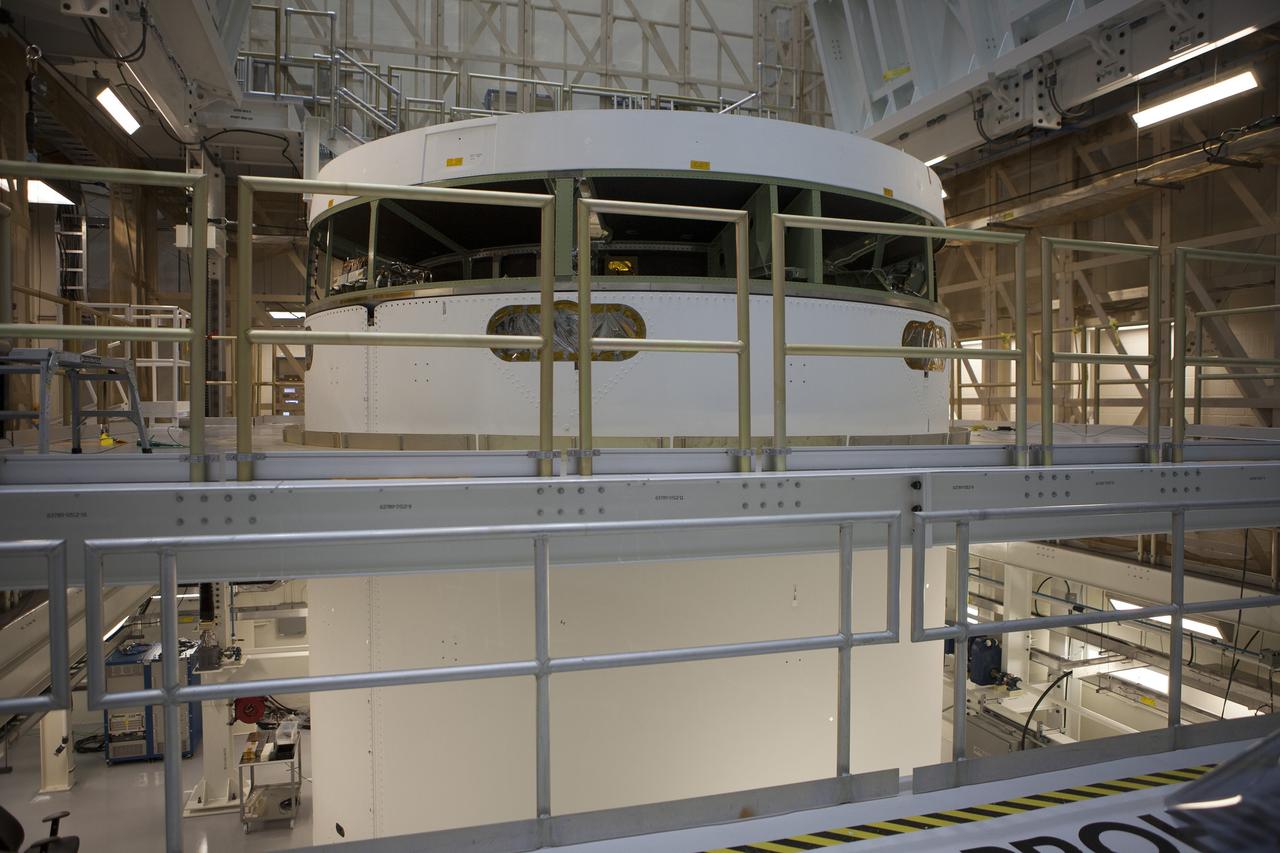
CAPE CANAVERAL, Fla. -- Inside the Operations and Checkout Building high bay at NASA's Kennedy Space Center in Florida, the Orion service module has been secured in the Final Assembly and System Testing, or FAST, cell. The Orion crew module will be stacked on the service module in the FAST cell and then both modules will be put through their final system tests for Exploration Flight Test-1, or EFT-1, before rolling out of the facility for integration with the United Launch Alliance Delta IV Heavy rocket. Orion is the exploration spacecraft designed to carry astronauts to destinations not yet explored by humans, including an asteroid and Mars. It will have emergency abort capability, sustain the crew during space travel and provide safe re-entry from deep space return velocities. The first unpiloted test flight of Orion, EFT-1, is scheduled to launch later this year atop a Delta IV rocket from Cape Canaveral Air Force Station in Florida to an altitude of 3,600 miles above the Earth's surface. The two-orbit, four-hour flight test will help engineers evaluate the systems critical to crew safety including the heat shield, parachute system and launch abort system. For more information, visit http://www.nasa.gov/orion. Photo credit: NASA/Glenn Benson
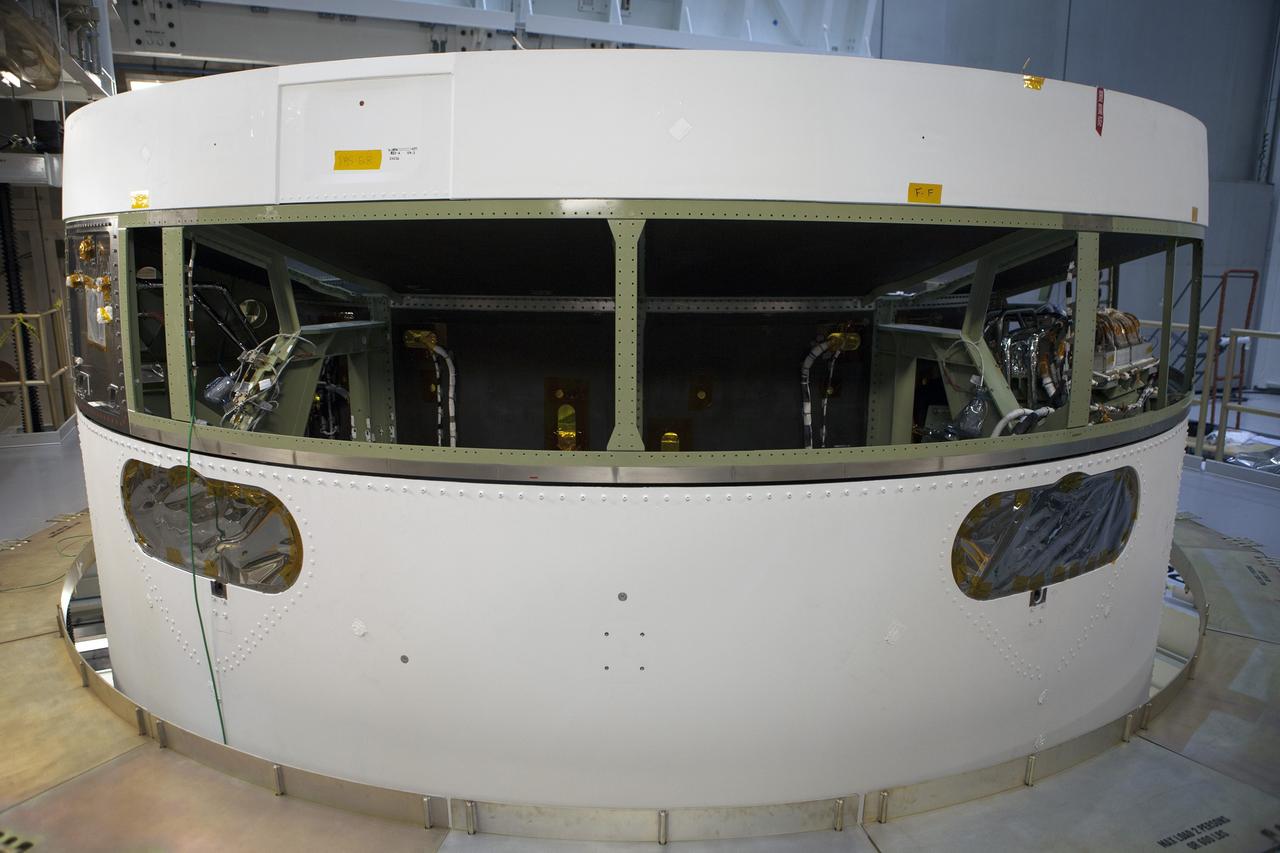
CAPE CANAVERAL, Fla. -- Inside the Operations and Checkout Building high bay at NASA's Kennedy Space Center in Florida, the Orion service module has been secured in the Final Assembly and System Testing, or FAST, cell. The Orion crew module will be stacked on the service module in the FAST cell and then both modules will be put through their final system tests for Exploration Flight Test-1, or EFT-1, before rolling out of the facility for integration with the United Launch Alliance Delta IV Heavy rocket. Orion is the exploration spacecraft designed to carry astronauts to destinations not yet explored by humans, including an asteroid and Mars. It will have emergency abort capability, sustain the crew during space travel and provide safe re-entry from deep space return velocities. The first unpiloted test flight of Orion, EFT-1, is scheduled to launch later this year atop a Delta IV rocket from Cape Canaveral Air Force Station in Florida to an altitude of 3,600 miles above the Earth's surface. The two-orbit, four-hour flight test will help engineers evaluate the systems critical to crew safety including the heat shield, parachute system and launch abort system. For more information, visit http://www.nasa.gov/orion. Photo credit: NASA/Glenn Benson
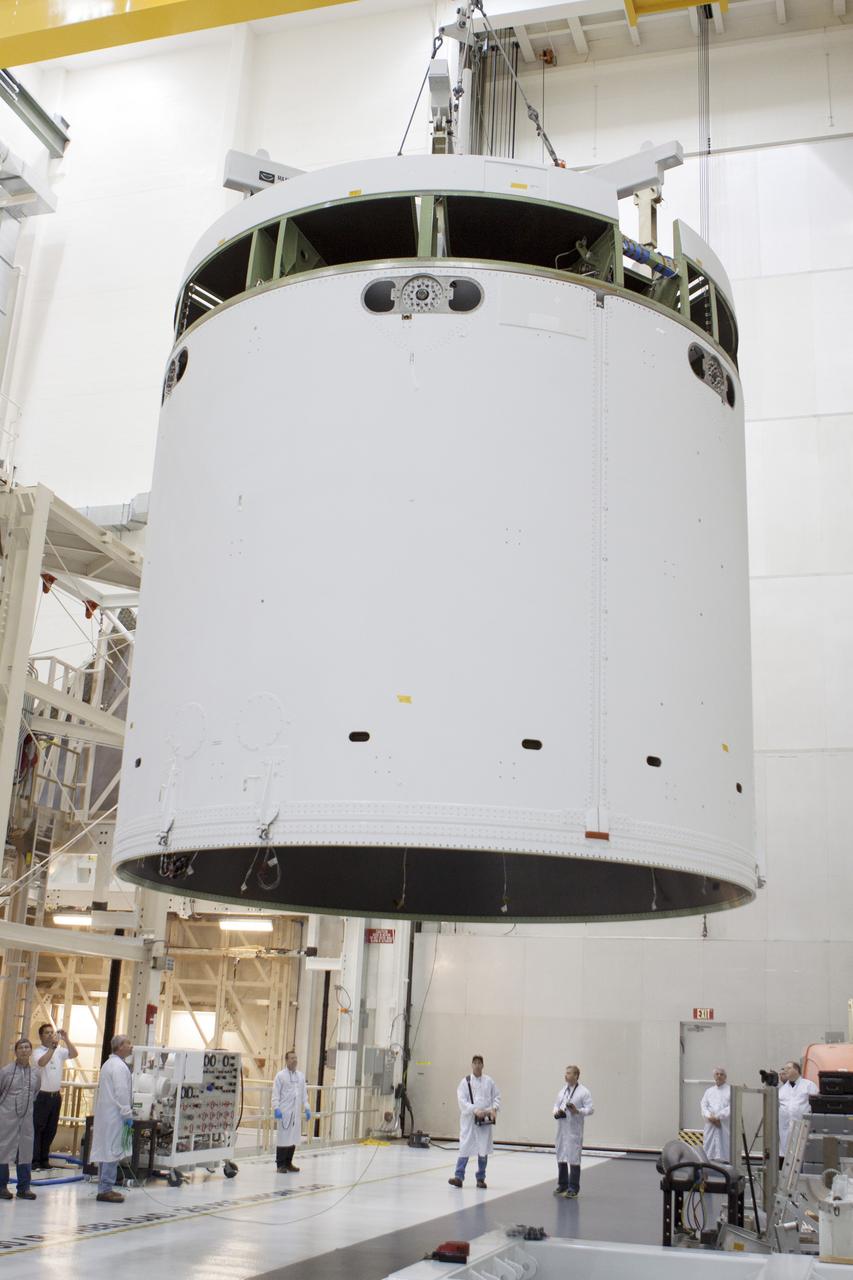
CAPE CANAVERAL, Fla. -- Inside the Operations and Checkout Building high bay at NASA's Kennedy Space Center in Florida, NASA and Lockheed Martin engineers and technicians monitor the progress as a crane is used to move the Orion service module to the Final Assembly and System Testing, or FAST, cell further down the aisle. The Orion crew module will be stacked on the service module in the FAST cell and then both modules will be put through their final system tests for Exploration Flight Test-1, or EFT-1, before rolling out of the facility for integration with the United Launch Alliance Delta IV Heavy rocket. Orion is the exploration spacecraft designed to carry astronauts to destinations not yet explored by humans, including an asteroid and Mars. It will have emergency abort capability, sustain the crew during space travel and provide safe re-entry from deep space return velocities. The first unpiloted test flight of Orion, EFT-1, is scheduled to launch later this year atop a Delta IV rocket from Cape Canaveral Air Force Station in Florida to an altitude of 3,600 miles above the Earth's surface. The two-orbit, four-hour flight test will help engineers evaluate the systems critical to crew safety including the heat shield, parachute system and launch abort system. For more information, visit http://www.nasa.gov/orion. Photo credit: NASA/Glenn Benson
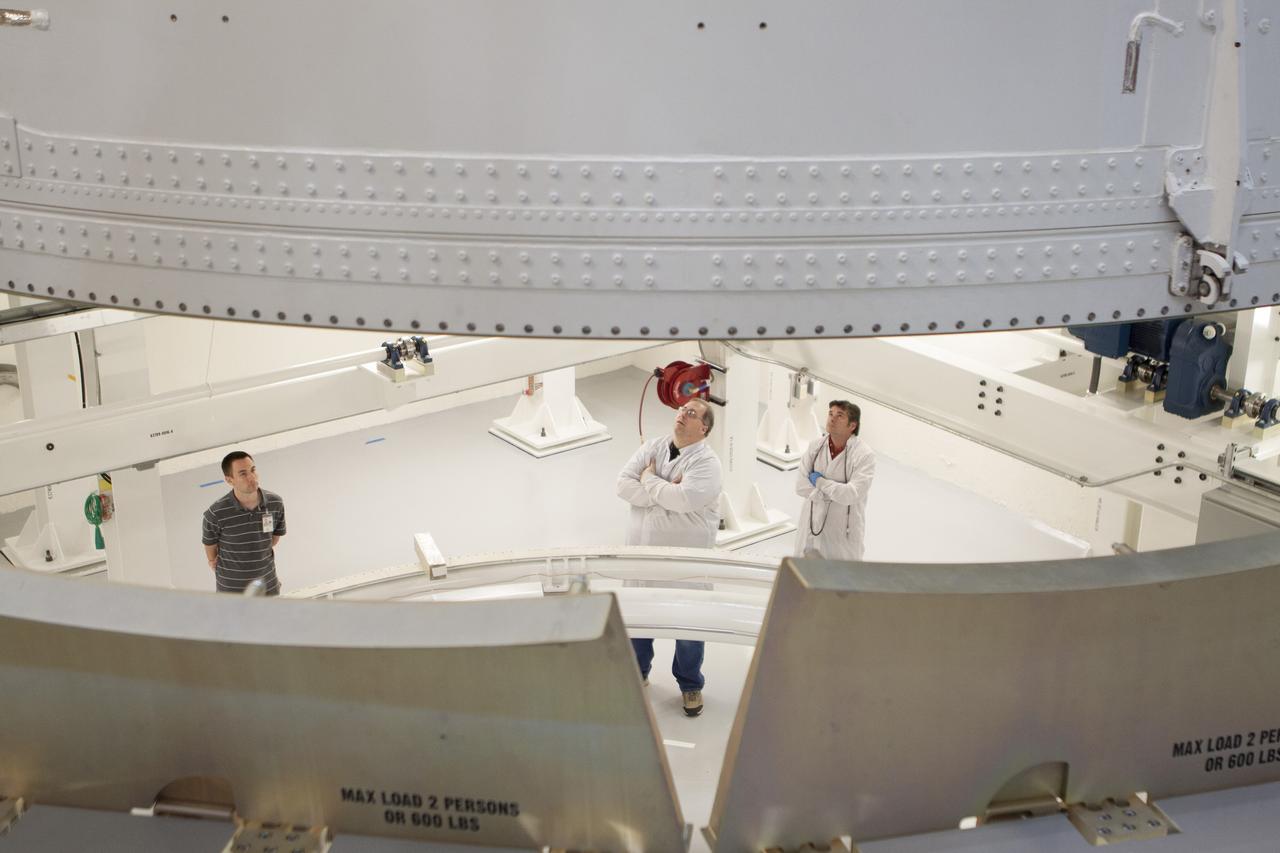
CAPE CANAVERAL, Fla. -- Inside the Operations and Checkout Building high bay at NASA's Kennedy Space Center in Florida, NASA and Lockheed Martin engineers and technicians monitor the progress as a crane lowers the Orion service module into the Final Assembly and System Testing, or FAST, cell. The Orion crew module will be stacked on the service module in the FAST cell and then both modules will be put through their final system tests for Exploration Flight Test-1, or EFT-1, before rolling out of the facility for integration with the United Launch Alliance Delta IV Heavy rocket. Orion is the exploration spacecraft designed to carry astronauts to destinations not yet explored by humans, including an asteroid and Mars. It will have emergency abort capability, sustain the crew during space travel and provide safe re-entry from deep space return velocities. The first unpiloted test flight of Orion, EFT-1, is scheduled to launch later this year atop a Delta IV rocket from Cape Canaveral Air Force Station in Florida to an altitude of 3,600 miles above the Earth's surface. The two-orbit, four-hour flight test will help engineers evaluate the systems critical to crew safety including the heat shield, parachute system and launch abort system. For more information, visit http://www.nasa.gov/orion. Photo credit: NASA/Glenn Benson
Preparations are underway to lift the European Service Module (ESM) for NASA’s Artemis II mission by crane inside the high bay of the Neil A. Armstrong Operations and Checkout Building at NASA’s Kennedy Space Center in Florida on May 22, 2023. Teams from NASA and Lockheed Martin are preparing the service module for transfer to the FAST (final assembly and system testing) cell for final checkouts before it is stacked with Orion crew module. The powerhouse that will fuel and propel Orion in space, the ESM will be used for Artemis II, the first Artemis mission flying crew aboard Orion.
Engineers and technicians monitor the progress as the European Service Module (ESM) for NASA’s Artemis II mission is lifted by crane inside the high bay of the Neil A. Armstrong Operations and Checkout Building at NASA’s Kennedy Space Center in Florida on May 22, 2023. Teams from NASA and Lockheed Martin are preparing the service module for transfer to the FAST (final assembly and system testing) cell for final checkouts before it is stacked with the Orion crew module.. The powerhouse that will fuel and propel Orion in space, the ESM will be used for Artemis II, the first Artemis mission flying crew aboard Orion.
A view looking up from beneath the European Service Module (ESM) for NASA’s Artemis II mission as it is moved by crane along the center aisle of the high bay inside the Neil A. Armstrong Operations and Checkout Building at NASA’s Kennedy Space Center in Florida on May 22, 2023. Teams from NASA and Lockheed Martin are transferring the service module to the FAST (final assembly and system testing) cell for final checkouts before it is stacked with the Orion crew module.. The powerhouse that will fuel and propel Orion in space, the ESM will be used for Artemis II, the first Artemis mission flying crew aboard Orion.
The European Service Module (ESM) for NASA’s Artemis II mission is lifted by crane and moved along the center aisle of the high bay inside the Neil A. Armstrong Operations and Checkout Building at NASA’s Kennedy Space Center in Florida on May 22, 2023. Teams from NASA and Lockheed Martin are preparing the service module for transfer to the FAST (final assembly and system testing) cell for final checkouts before it is stacked with the Orion crew module.. The powerhouse that will fuel and propel Orion in space, the ESM will be used for Artemis II, the first Artemis mission flying crew aboard Orion.
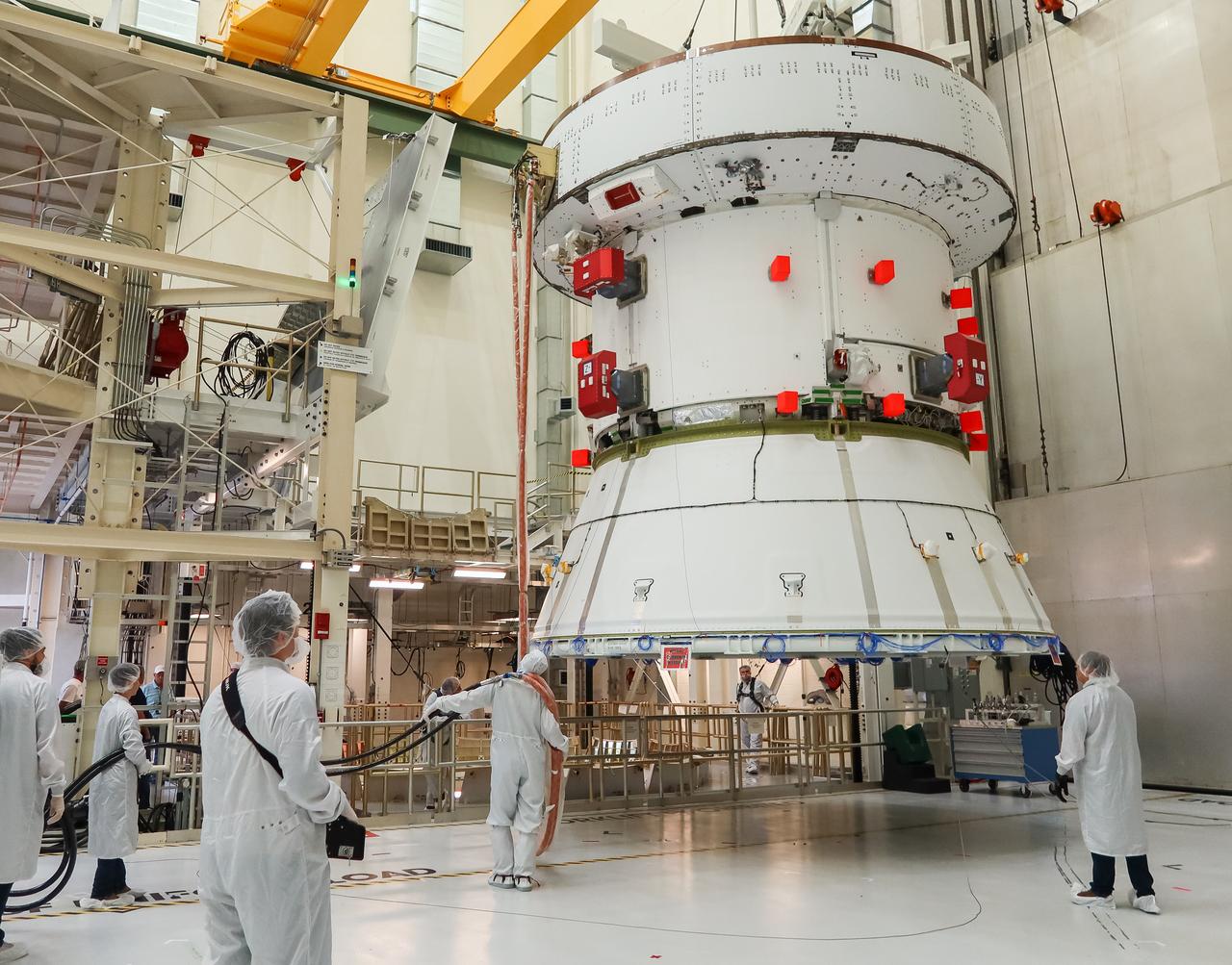
A crane moves the European Service Module (ESM) for NASA’s Artemis II mission along the center aisle of the high bay inside the Neil A. Armstrong Operations and Checkout Building at NASA’s Kennedy Space Center in Florida on May 22, 2023. Teams from NASA and Lockheed Martin are transferring the service module to the FAST (final assembly and system testing) cell for final checkouts before it is stacked with the Orion crew module.. The powerhouse that will fuel and propel Orion in space, the ESM will be used for Artemis II, the first Artemis mission flying crew aboard Orion.

Engineers and technicians monitor the progress as the European Service Module (ESM) for NASA’s Artemis II mission is lifted by crane inside the high bay of the Neil A. Armstrong Operations and Checkout Building at NASA’s Kennedy Space Center in Florida on May 22, 2023. Teams from NASA and Lockheed Martin are preparing the service module for transfer to the FAST (final assembly and system testing) cell for final checkouts before it is stacked with the Orion crew module.. The powerhouse that will fuel and propel Orion in space, the ESM will be used for Artemis II, the first Artemis mission flying crew aboard Orion.
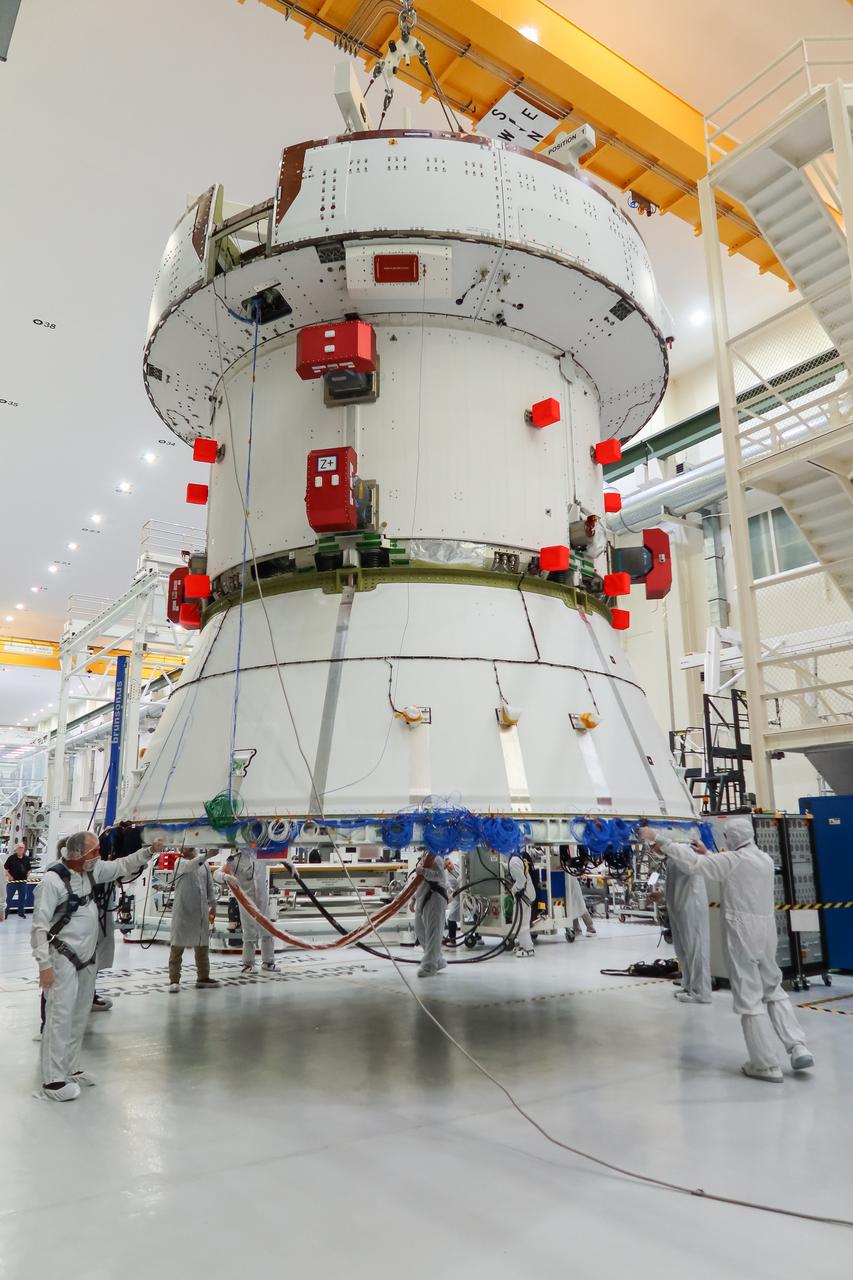
The European Service Module (ESM) for NASA’s Artemis II mission is lifted by crane and moved along the center aisle of the high bay inside the Neil A. Armstrong Operations and Checkout Building at NASA’s Kennedy Space Center in Florida on May 22, 2023. Teams from NASA and Lockheed Martin are preparing the service module for transfer to the FAST (final assembly and system testing) cell for final checkouts before it is stacked with the Orion crew module.. The powerhouse that will fuel and propel Orion in space, the ESM will be used for Artemis II, the first Artemis mission flying crew aboard Orion.
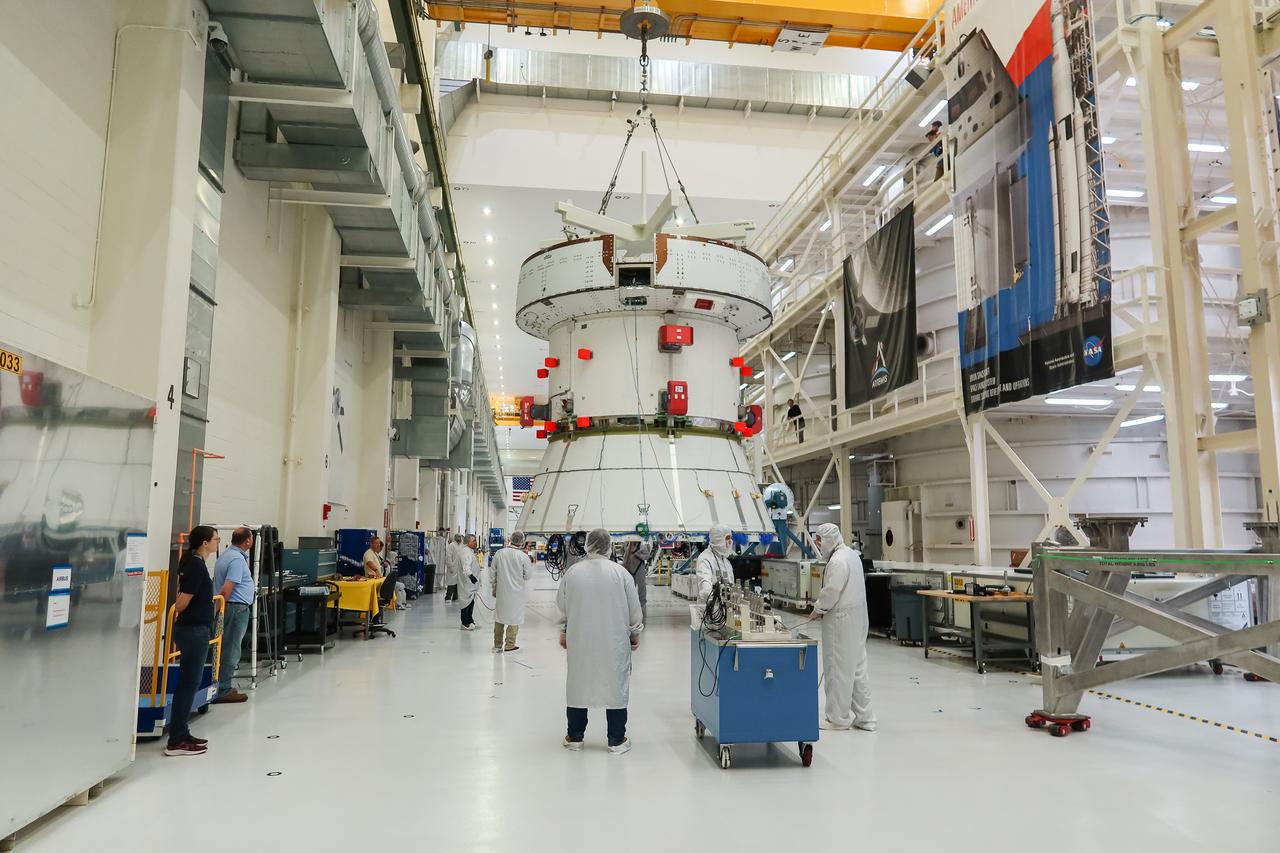
A crane moves the European Service Module (ESM) for NASA’s Artemis II mission along the center aisle of the high bay inside the Neil A. Armstrong Operations and Checkout Building at NASA’s Kennedy Space Center in Florida on May 22, 2023. Teams from NASA and Lockheed Martin are preparing the service module for transfer to the FAST (final assembly and system testing) cell for final checkouts before it is stacked with the Orion crew module.. The powerhouse that will fuel and propel Orion in space, the ESM will be used for Artemis II, the first Artemis mission flying crew aboard Orion.
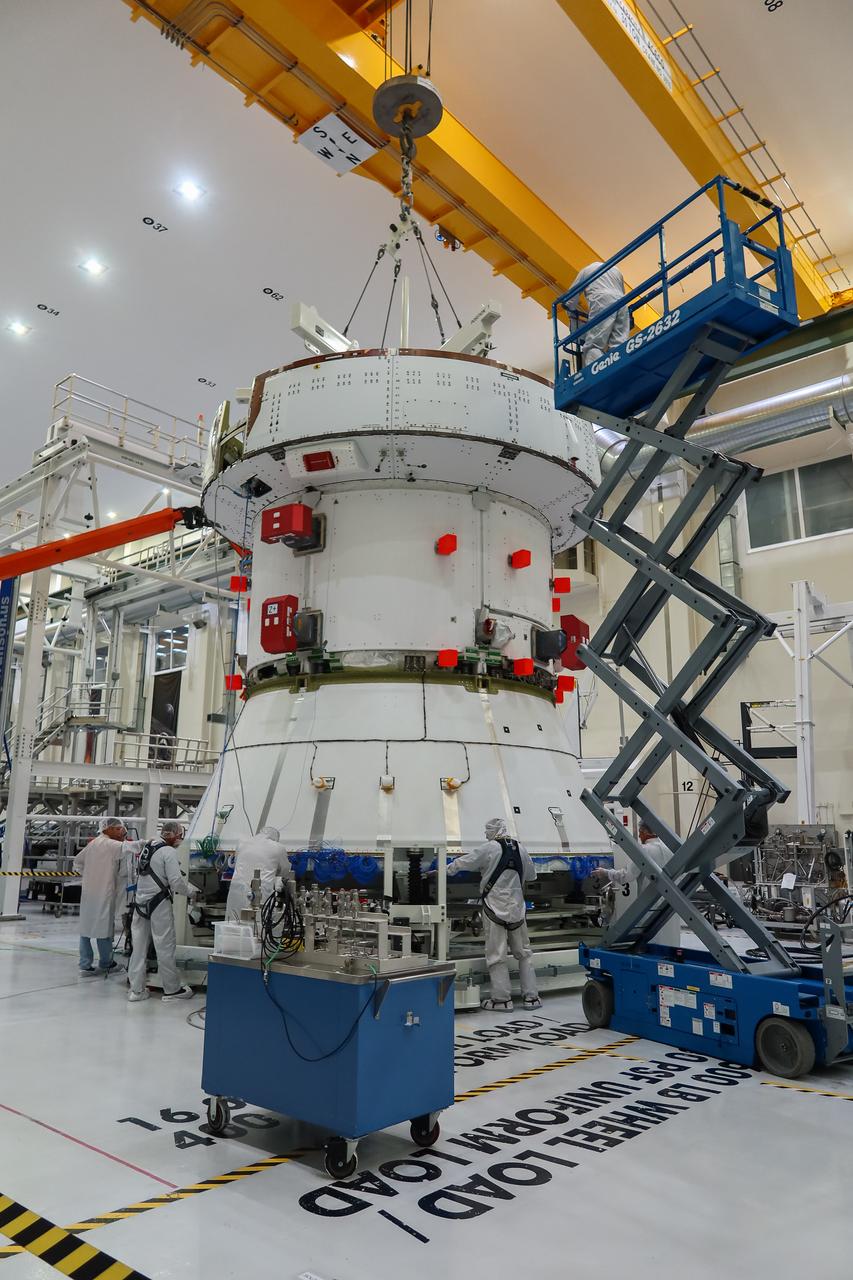
Preparations are underway to lift the European Service Module (ESM) for NASA’s Artemis II mission by crane inside the high bay of the Neil A. Armstrong Operations and Checkout Building at NASA’s Kennedy Space Center in Florida on May 22, 2023. Teams from NASA and Lockheed Martin are preparing the service module for transfer to the FAST (final assembly and system testing) cell for final checkouts before it is stacked with the Orion crew module. The powerhouse that will fuel and propel Orion in space, the ESM will be used for Artemis II, the first Artemis mission flying crew aboard Orion.
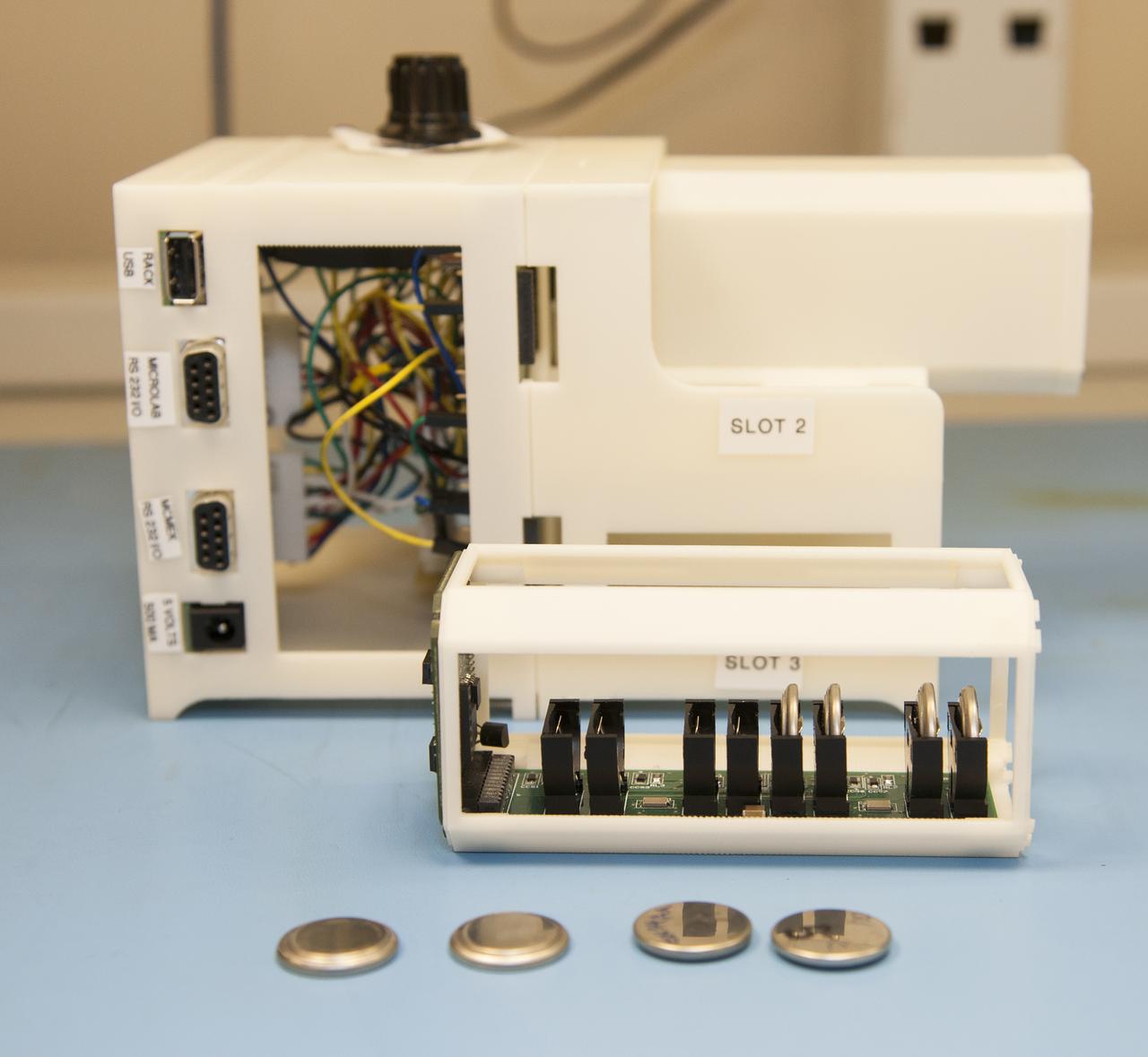
These are the components of the Desert Christian experiment launched to space Dec. 3 that could one day lead to fast-charging batteries.
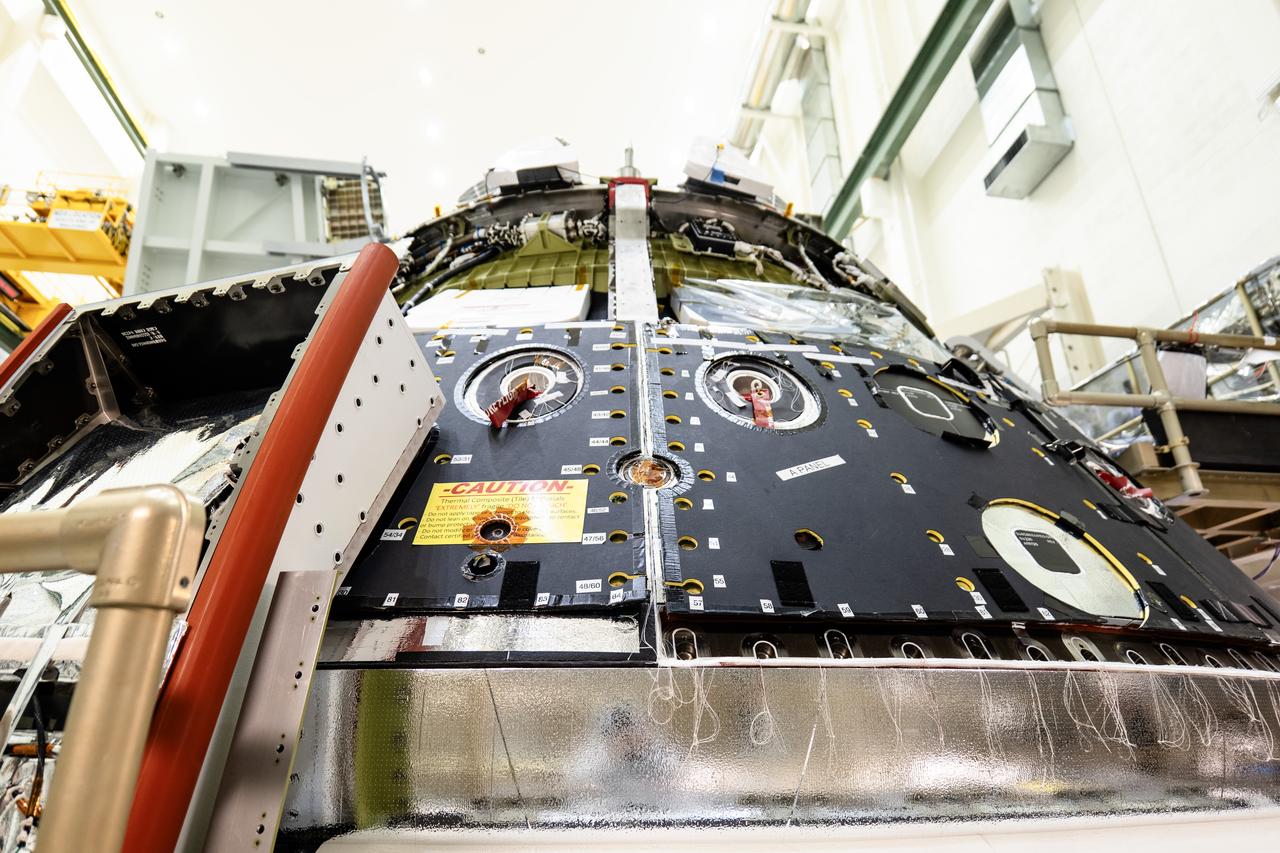
The Orion spacecraft for NASA’s Artemis II mission undergoes checkouts in the Final Assembly and System Testing (FAST) cell inside the high bay of the Neil A. Armstrong Operations and Checkout Building at NASA’s Kennedy Space Center in Florida on Monday, Dec. 15, 2024. The Orion spacecraft will carry NASA astronauts Victor Glover, Christina Koch, and Reid Wiseman, as well as CSA (Canadian Space Agency) astronaut Jeremy Hansen, on a 10-day journey around the Moon and back for the Artemis II test flight.
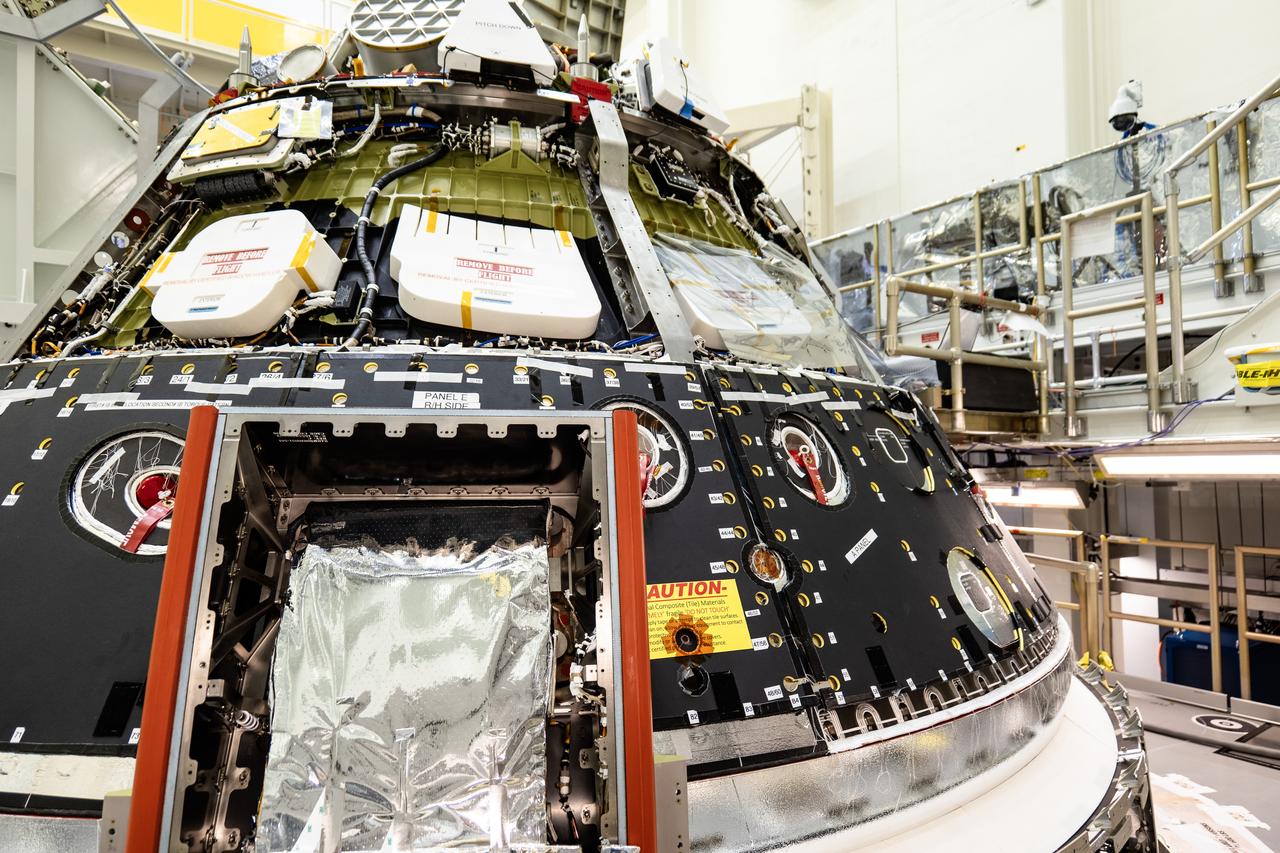
The Orion spacecraft for NASA’s Artemis II mission undergoes checkouts in the Final Assembly and System Testing (FAST) cell inside the high bay of the Neil A. Armstrong Operations and Checkout Building at NASA’s Kennedy Space Center in Florida on Monday, Dec. 15, 2024. The Orion spacecraft will carry NASA astronauts Victor Glover, Christina Koch, and Reid Wiseman, as well as CSA (Canadian Space Agency) astronaut Jeremy Hansen, on a 10-day journey around the Moon and back for the Artemis II test flight.
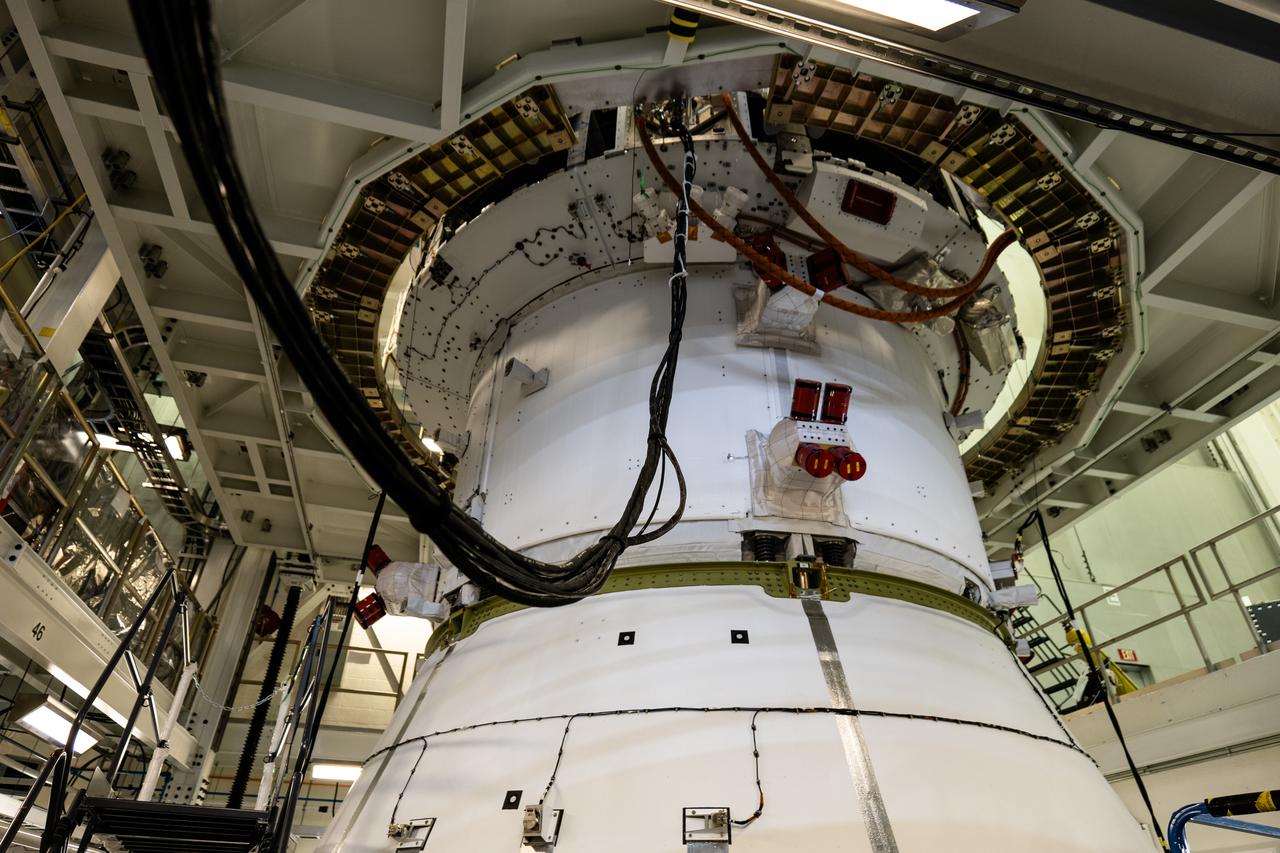
The Orion spacecraft for NASA’s Artemis II mission undergoes checkouts in the Final Assembly and System Testing (FAST) cell inside the high bay of the Neil A. Armstrong Operations and Checkout Building at NASA’s Kennedy Space Center in Florida on Monday, Dec. 15, 2024. The Orion spacecraft will carry NASA astronauts Victor Glover, Christina Koch, and Reid Wiseman, as well as CSA (Canadian Space Agency) astronaut Jeremy Hansen, on a 10-day journey around the Moon and back for the Artemis II test flight.
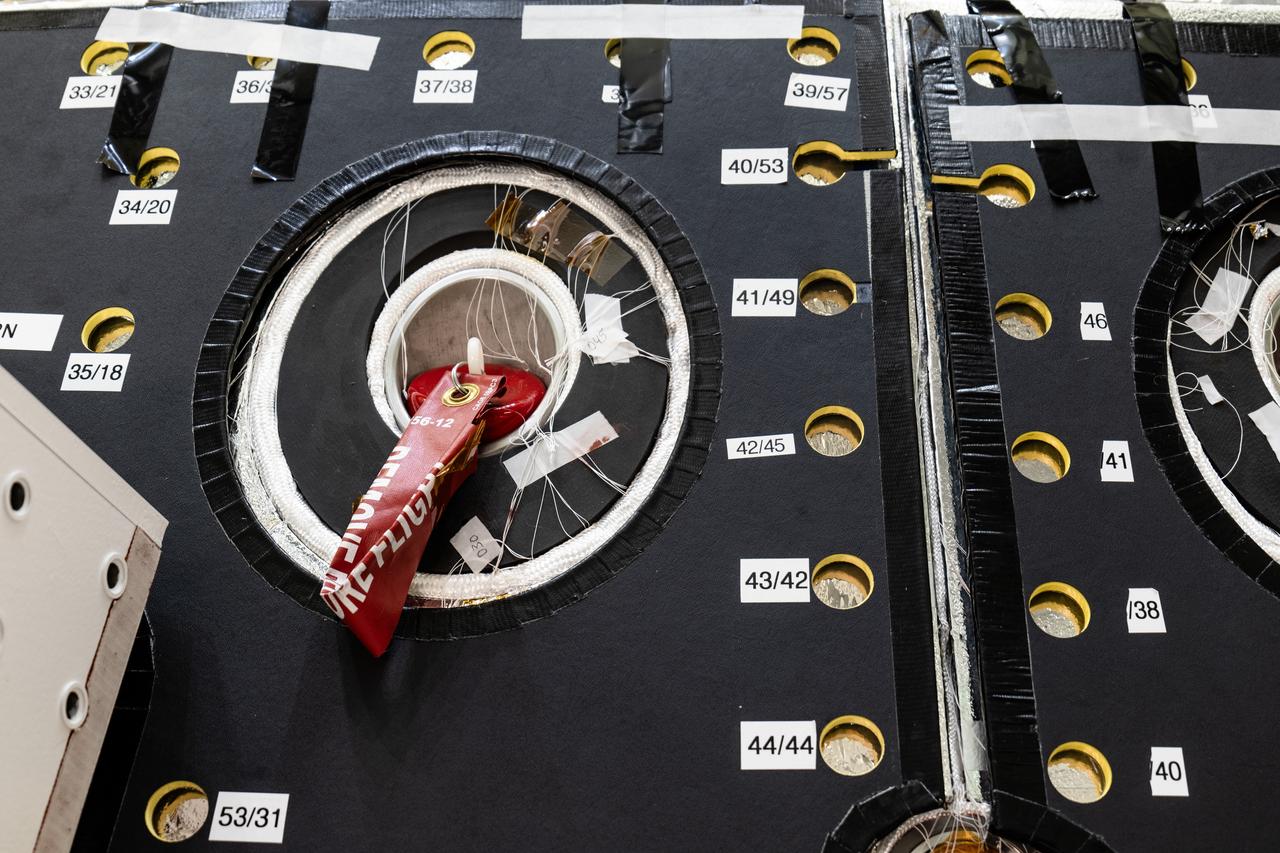
The Orion spacecraft for NASA’s Artemis II mission undergoes checkouts in the Final Assembly and System Testing (FAST) cell inside the high bay of the Neil A. Armstrong Operations and Checkout Building at NASA’s Kennedy Space Center in Florida on Monday, Dec. 15, 2024. The Orion spacecraft will carry NASA astronauts Victor Glover, Christina Koch, and Reid Wiseman, as well as CSA (Canadian Space Agency) astronaut Jeremy Hansen, on a 10-day journey around the Moon and back for the Artemis II test flight.
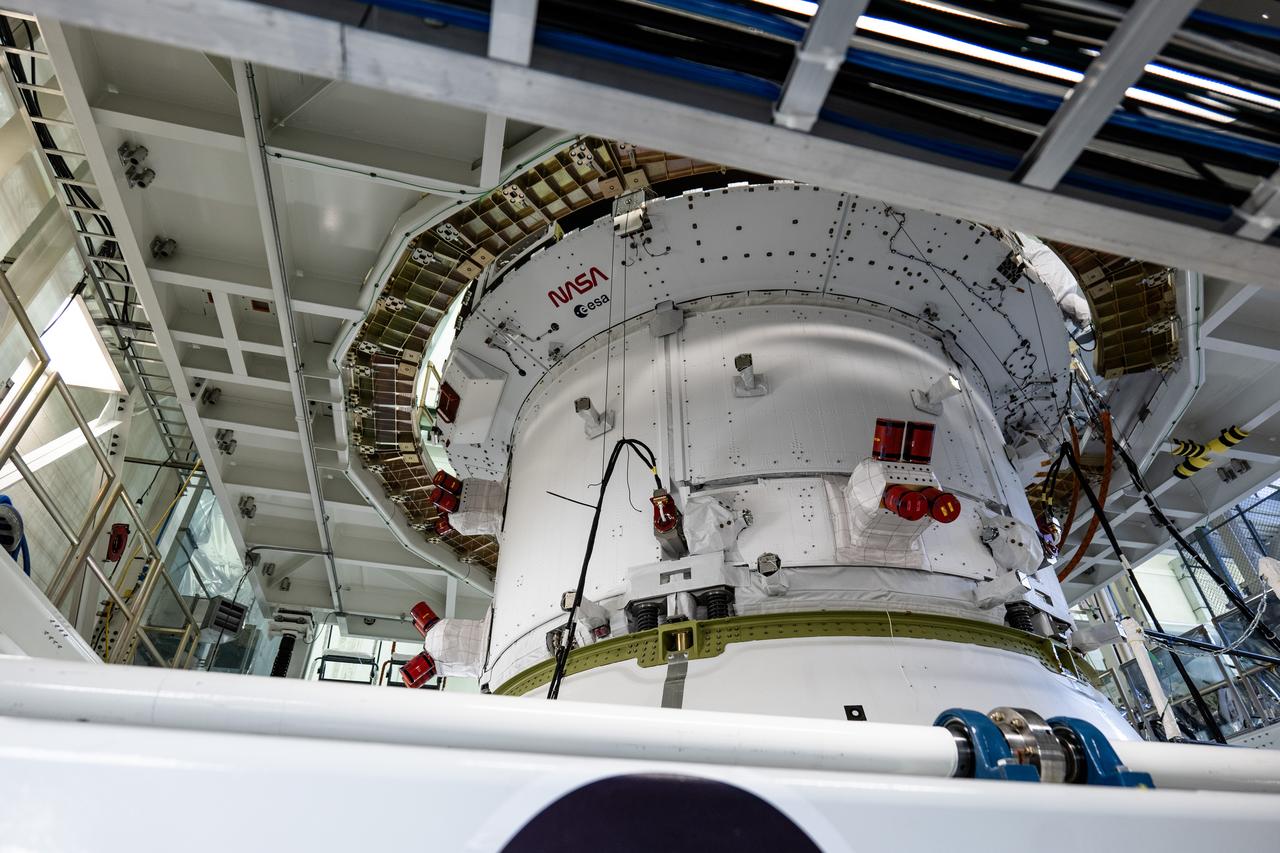
The Orion spacecraft for NASA’s Artemis II mission undergoes checkouts in the Final Assembly and System Testing (FAST) cell inside the high bay of the Neil A. Armstrong Operations and Checkout Building at NASA’s Kennedy Space Center in Florida on Monday, Dec. 15, 2024. The Orion spacecraft will carry NASA astronauts Victor Glover, Christina Koch, and Reid Wiseman, as well as CSA (Canadian Space Agency) astronaut Jeremy Hansen, on a 10-day journey around the Moon and back for the Artemis II test flight.
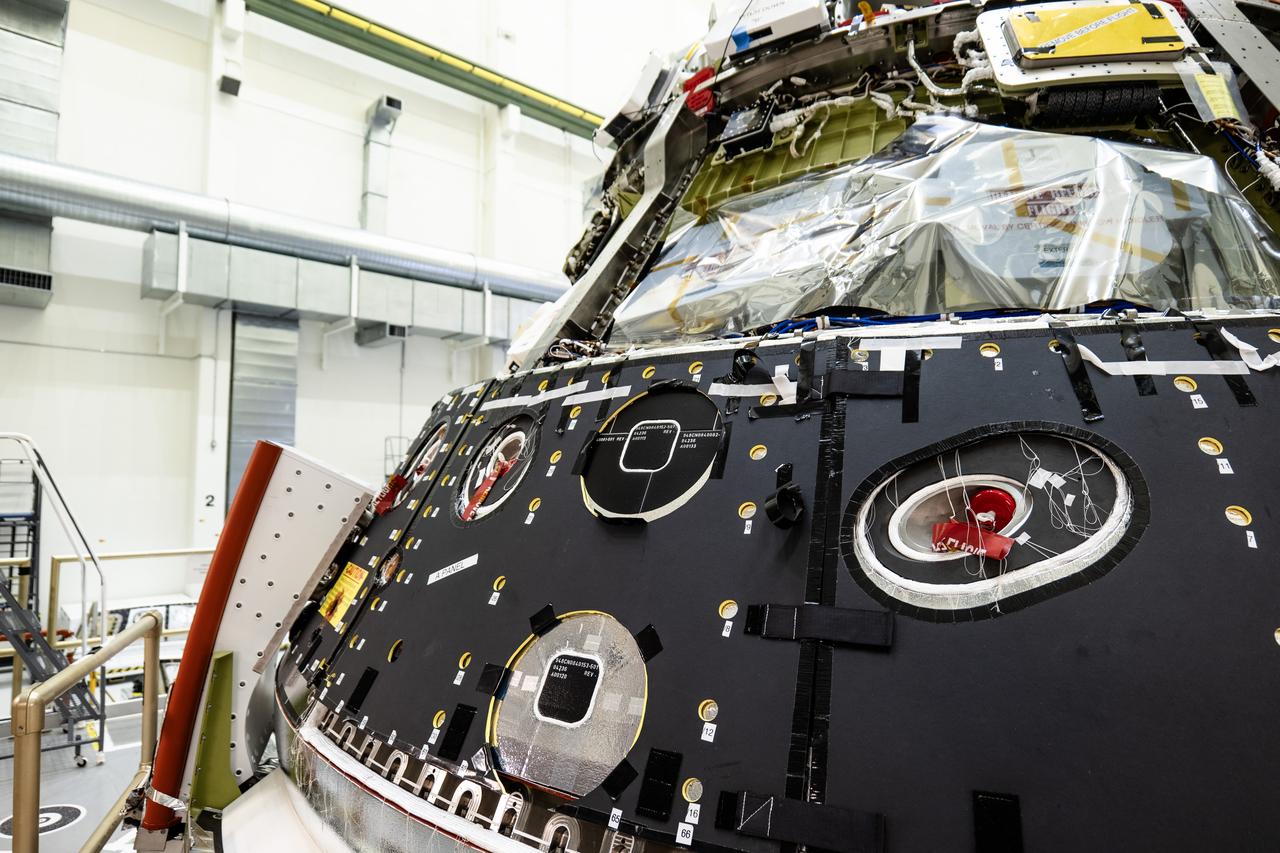
The Orion spacecraft for NASA’s Artemis II mission undergoes checkouts in the Final Assembly and System Testing (FAST) cell inside the high bay of the Neil A. Armstrong Operations and Checkout Building at NASA’s Kennedy Space Center in Florida on Monday, Dec. 15, 2024. The Orion spacecraft will carry NASA astronauts Victor Glover, Christina Koch, and Reid Wiseman, as well as CSA (Canadian Space Agency) astronaut Jeremy Hansen, on a 10-day journey around the Moon and back for the Artemis II test flight.

The Orion spacecraft for NASA’s Artemis II mission undergoes checkouts in the Final Assembly and System Testing (FAST) cell inside the high bay of the Neil A. Armstrong Operations and Checkout Building at NASA’s Kennedy Space Center in Florida on Monday, Dec. 15, 2024. The Orion spacecraft will carry NASA astronauts Victor Glover, Christina Koch, and Reid Wiseman, as well as CSA (Canadian Space Agency) astronaut Jeremy Hansen, on a 10-day journey around the Moon and back for the Artemis II test flight.
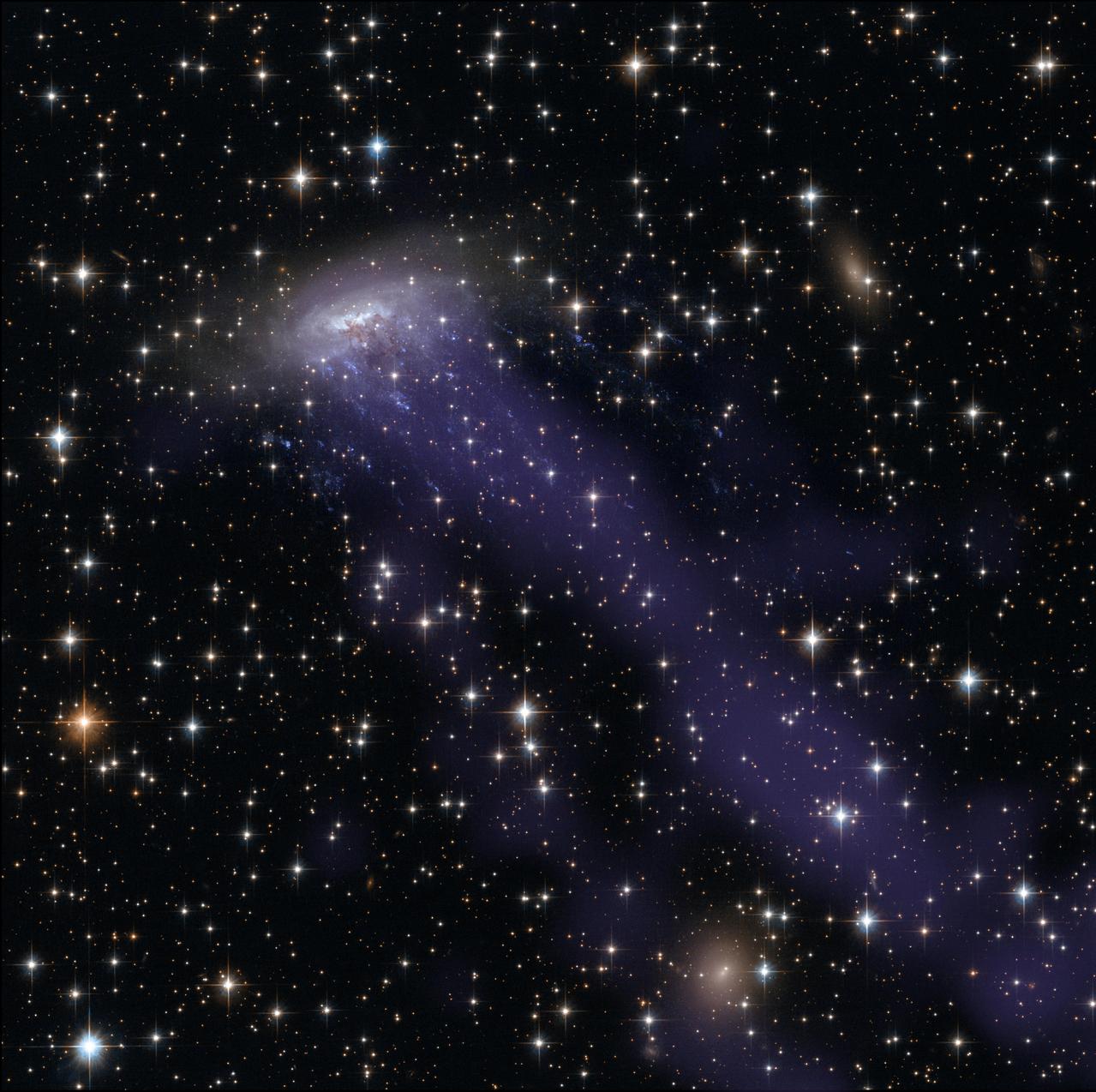
This image combines NASA/ESA Hubble Space Telescope observations with data from the Chandra X-ray Observatory. As well as the electric blue ram pressure stripping streaks seen emanating from ESO 137-001, a giant gas stream can be seen extending towards the bottom of the frame, only visible in the X-ray part of the spectrum. Credit: NASA, ESA, CXC The spiral galaxy ESO 137-001 looks like a dandelion caught in a breeze in this new Hubble Space Telescope image. The galaxy is zooming toward the upper right of this image, in between other galaxies in the Norma cluster located over 200 million light-years away. The road is harsh: intergalactic gas in the Norma cluster is sparse, but so hot at 180 million degrees Fahrenheit that it glows in X-rays. The spiral plows through the seething intra-cluster gas so rapidly – at nearly 4.5 million miles per hour — that much of its own gas is caught and torn away. Astronomers call this "ram pressure stripping." The galaxy’s stars remain intact due to the binding force of their gravity. Tattered threads of gas, the blue jellyfish-tendrils trailing ESO 137-001 in the image, illustrate the process. Ram pressure has strung this gas away from its home in the spiral galaxy and out over intergalactic space. Once there, these strips of gas have erupted with young, massive stars, which are pumping out light in vivid blues and ultraviolet. The brown, smoky region near the center of the spiral is being pushed in a similar manner, although in this case it is small dust particles, and not gas, that are being dragged backwards by the intra-cluster medium. Read more here: <a href="http://1.usa.gov/P0HSFh" rel="nofollow">1.usa.gov/P0HSFh</a> <b><a href="http://www.nasa.gov/audience/formedia/features/MP_Photo_Guidelines.html" rel="nofollow">NASA image use policy.</a></b> <b><a href="http://www.nasa.gov/centers/goddard/home/index.html" rel="nofollow">NASA Goddard Space Flight Center</a></b> enables NASA’s mission through four scientific endeavors: Earth Science, Heliophysics, Solar System Exploration, and Astrophysics. Goddard plays a leading role in NASA’s accomplishments by contributing compelling scientific knowledge to advance the Agency’s mission. <b>Follow us on <a href="http://twitter.com/NASAGoddardPix" rel="nofollow">Twitter</a></b> <b>Like us on <a href="http://www.facebook.com/pages/Greenbelt-MD/NASA-Goddard/395013845897?ref=tsd" rel="nofollow">Facebook</a></b> <b>Find us on <a href="http://instagram.com/nasagoddard?vm=grid" rel="nofollow">Instagram</a></b>
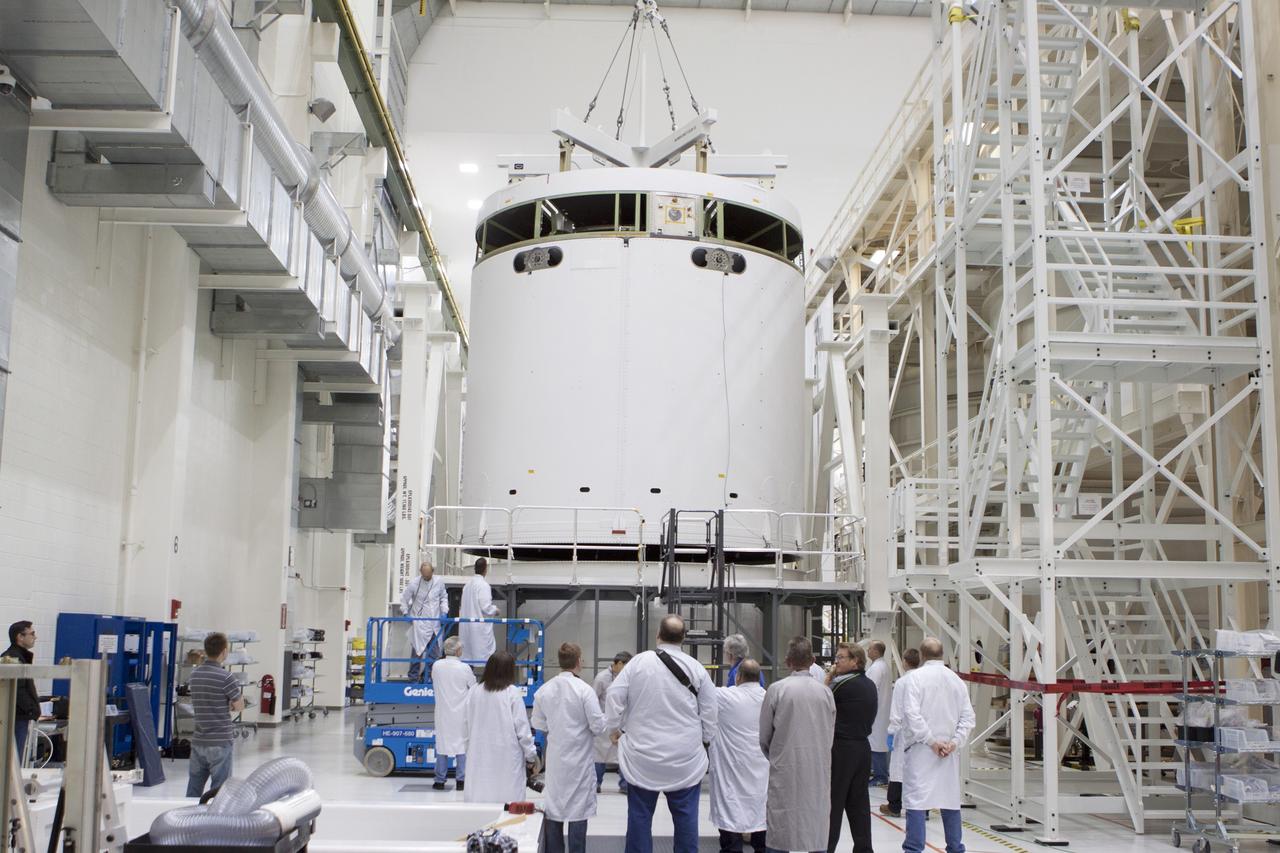
CAPE CANAVERAL, Fla. -- Inside the Operations and Checkout Building high bay at NASA's Kennedy Space Center in Florida, NASA and Lockheed Martin technicians and engineers monitor the progress as a crane is used to lift the Orion service module from a test stand and move it to the Final Assembly and System Testing, or FAST, cell further down the aisle. The Orion crew module will be stacked on the service module in the FAST cell and then both modules will be put through their final system tests for Exploration Flight Test-1, or EFT-1, before rolling out of the facility for integration with the United Launch Alliance Delta IV Heavy rocket. Orion is the exploration spacecraft designed to carry astronauts to destinations not yet explored by humans, including an asteroid and Mars. It will have emergency abort capability, sustain the crew during space travel and provide safe re-entry from deep space return velocities. The first unpiloted test flight of Orion, EFT-1, is scheduled to launch later this year atop a Delta IV rocket from Cape Canaveral Air Force Station in Florida to an altitude of 3,600 miles above the Earth's surface. The two-orbit, four-hour flight test will help engineers evaluate the systems critical to crew safety including the heat shield, parachute system and launch abort system. For more information, visit http://www.nasa.gov/orion. Photo credit: NASA/Glenn Benson

Kelly Fast, MAVEN program scientist, NASA Headquarters, discusses the upcoming launch of the Mars Atmosphere and Volatile Evolution (MAVEN) mission, at a press conference at NASA Headquarters in Washington on Monday, Oct. 28th, 2013. MAVEN is the agency's next mission to Mars and the first devoted to understanding the upper atmosphere of the Red Planet. (Photo credit: NASA/Jay Westcott)
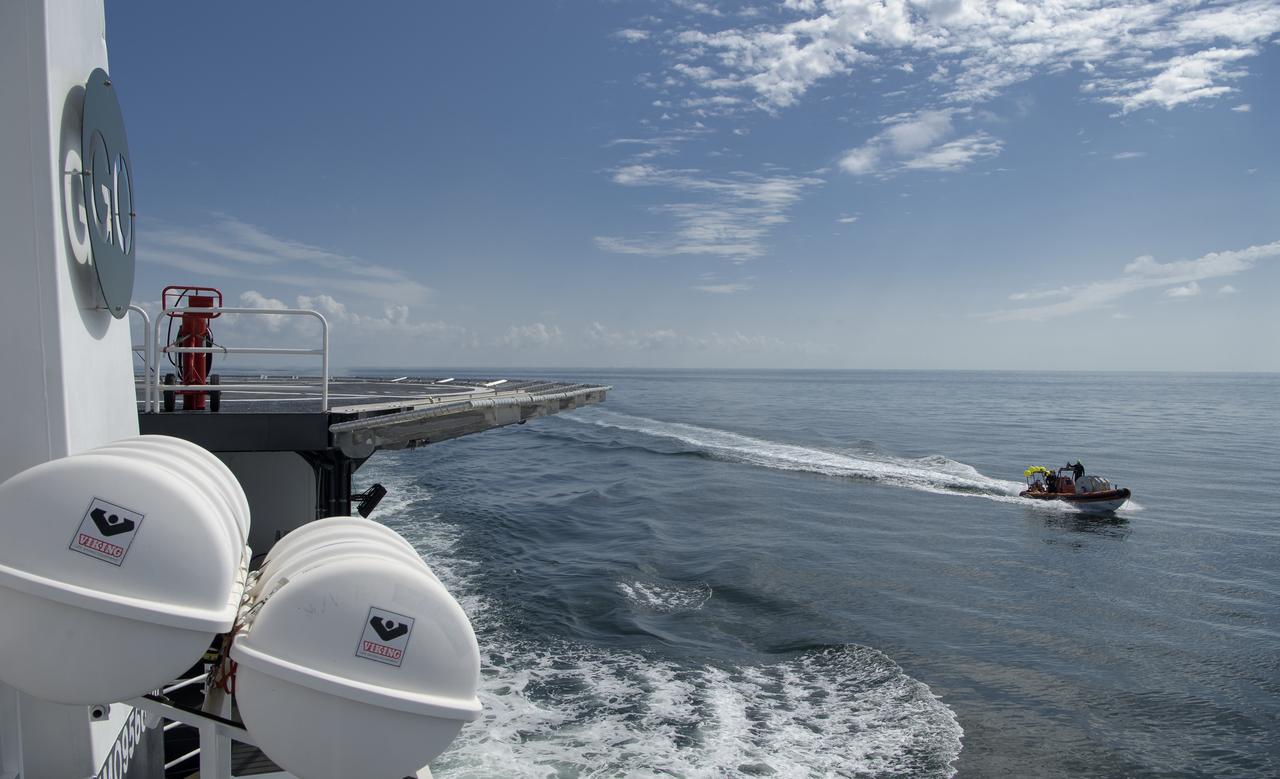
SpaceX support teams are deployed on fast boats from the SpaceX GO Navigator recovery ship ahead of the landing of the SpaceX Crew Dragon Endeavour spacecraft with NASA astronauts Robert Behnken and Douglas Hurley onboard, Sunday, Aug. 2, 2020 in the Gulf of Mexico off the cost of Pensacola, Florida. The Demo-2 test flight for NASA's Commercial Crew Program is the first to deliver astronauts to the International Space Station and return them to Earth onboard a commercially built and operated spacecraft. Behnken and Hurley are returning after spending 64 days in space. Photo Credit: (NASA/Bill Ingalls)

SpaceX support teams are deployed on fast boats from the SpaceX GO Navigator recovery ship ahead of the landing of the SpaceX Crew Dragon Endeavour spacecraft with NASA astronauts Robert Behnken and Douglas Hurley onboard, Sunday, Aug. 2, 2020 in the Gulf of Mexico off the cost of Pensacola, Florida. The Demo-2 test flight for NASA's Commercial Crew Program is the first to deliver astronauts to the International Space Station and return them to Earth onboard a commercially built and operated spacecraft. Behnken and Hurley are returning after spending 64 days in space. Photo Credit: (NASA/Bill Ingalls)
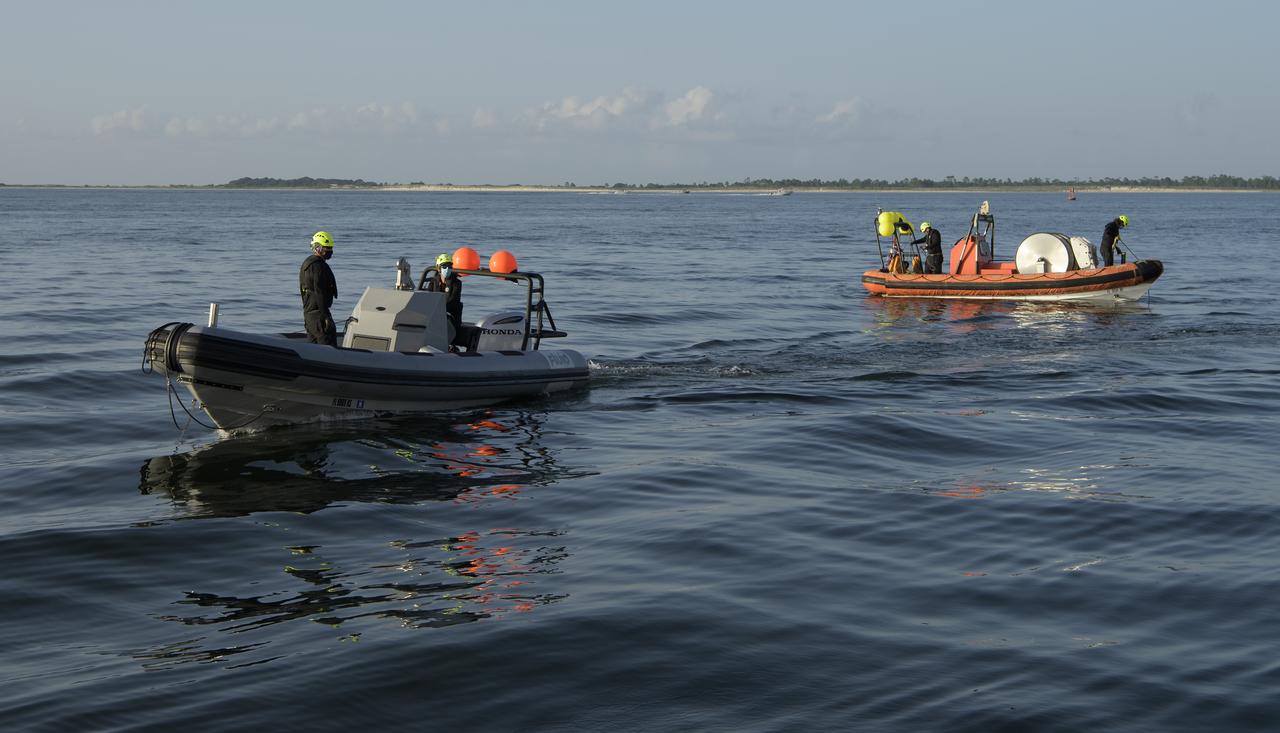
SpaceX support teams are deployed on fast boats from the SpaceX GO Navigator recovery ship ahead of the landing of the SpaceX Crew Dragon Endeavour spacecraft with NASA astronauts Robert Behnken and Douglas Hurley onboard, Sunday, Aug. 2, 2020 in the Gulf of Mexico off the cost of Pensacola, Florida. The Demo-2 test flight for NASA's Commercial Crew Program is the first to deliver astronauts to the International Space Station and return them to Earth onboard a commercially built and operated spacecraft. Behnken and Hurley are returning after spending 64 days in space. Photo Credit: (NASA/Bill Ingalls)

SpaceX support teams are deployed on fast boats from the SpaceX GO Navigator recovery ship ahead of the landing of the SpaceX Crew Dragon Endeavour spacecraft with NASA astronauts Robert Behnken and Douglas Hurley onboard, Sunday, Aug. 2, 2020 in the Gulf of Mexico off the cost of Pensacola, Florida. The Demo-2 test flight for NASA's Commercial Crew Program is the first to deliver astronauts to the International Space Station and return them to Earth onboard a commercially built and operated spacecraft. Behnken and Hurley are returning after spending 64 days in space. Photo Credit: (NASA/Bill Ingalls)
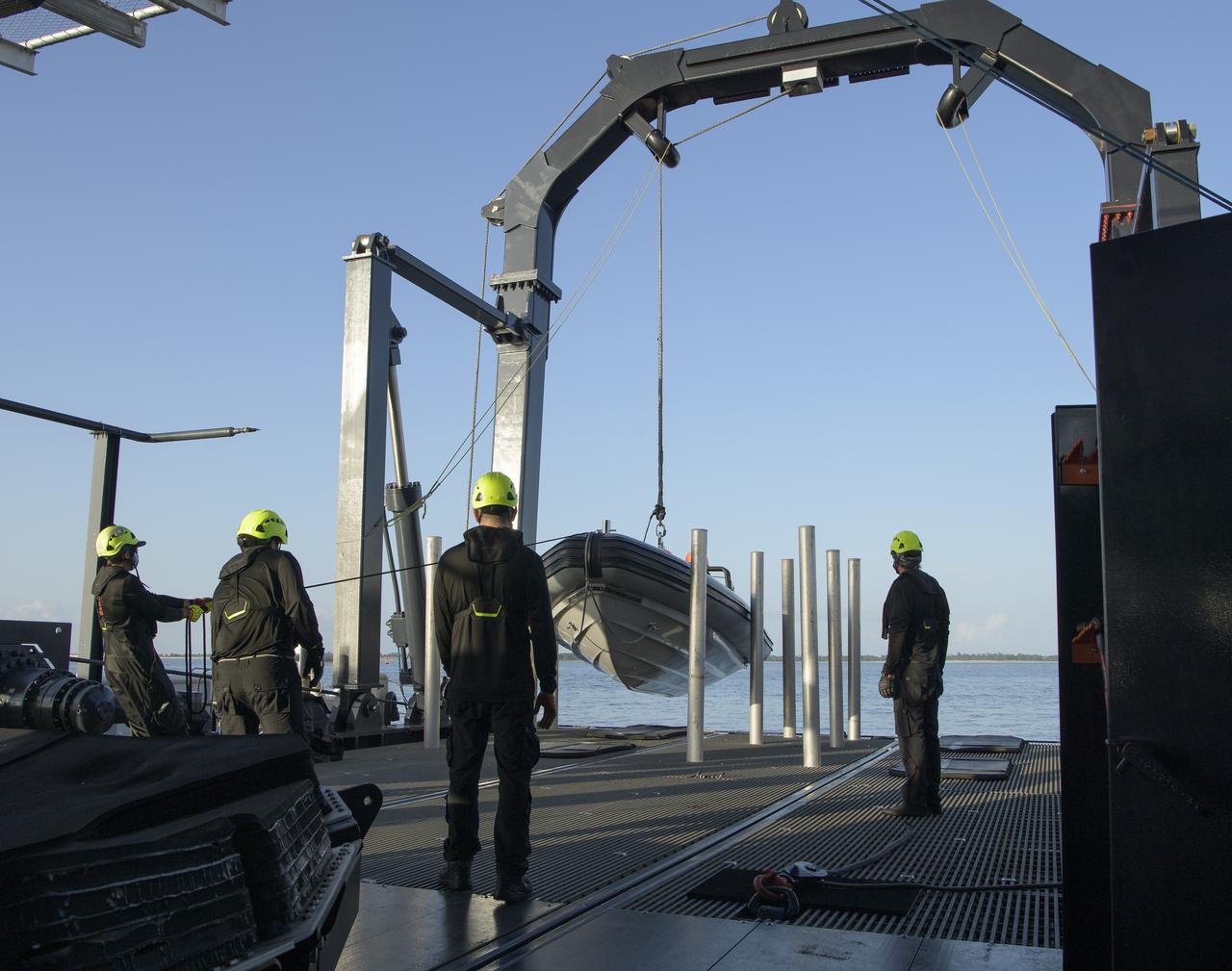
SpaceX support teams onboard the SpaceX GO Navigator recovery ship deploy one of the fast boats ahead of the landing of the SpaceX Crew Dragon Endeavour spacecraft with NASA astronauts Robert Behnken and Douglas Hurley onboard, Sunday, Aug. 2, 2020 in the Gulf of Mexico off the cost of Pensacola, Florida. The Demo-2 test flight for NASA's Commercial Crew Program is the first to deliver astronauts to the International Space Station and return them to Earth onboard a commercially built and operated spacecraft. Behnken and Hurley are returning after spending 64 days in space. Photo Credit: (NASA/Bill Ingalls)

This diagram based on results from NASA Galaxy Evolution Explorer and the Anglo-Australian Telescope illustrates two ways to measure how fast the universe is expanding.
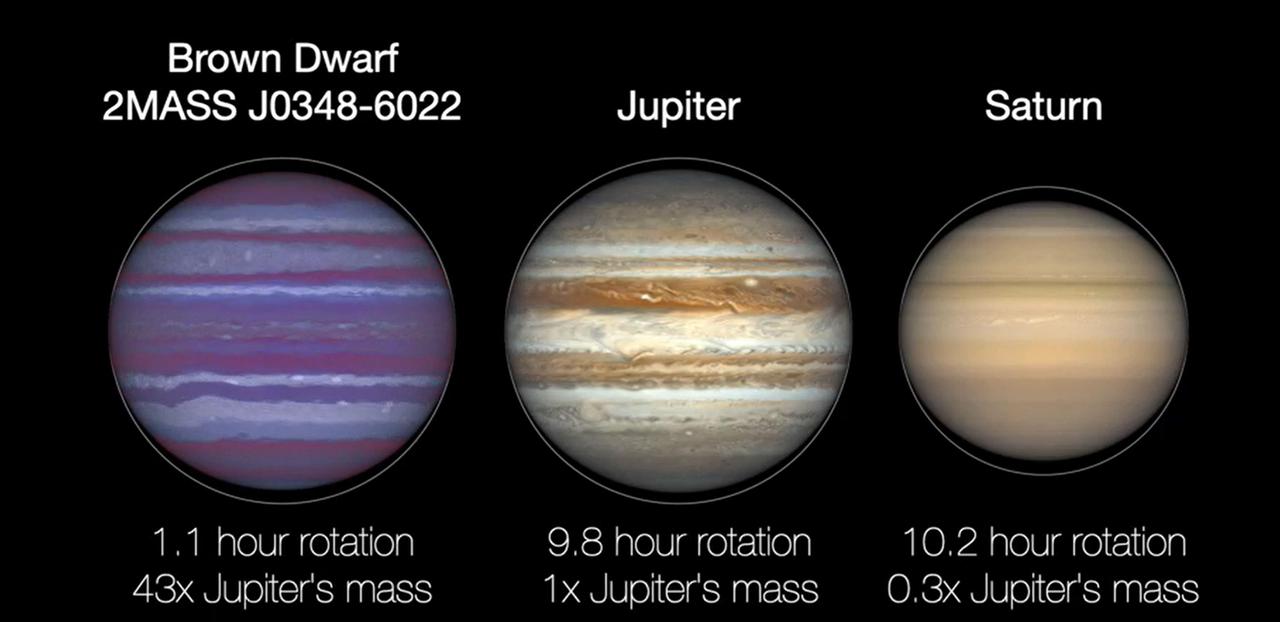
All spinning objects, from carousels to planets, generate centripetal force. If a planet rotates too fast, that force can pull it apart. Before that happens, the planet will experience "flattening," or bulging around its midsection, as seen in this animated illustration of a brown dwarf, Jupiter, and Saturn. Animation available at https://photojournal.jpl.nasa.gov/catalog/PIA24376
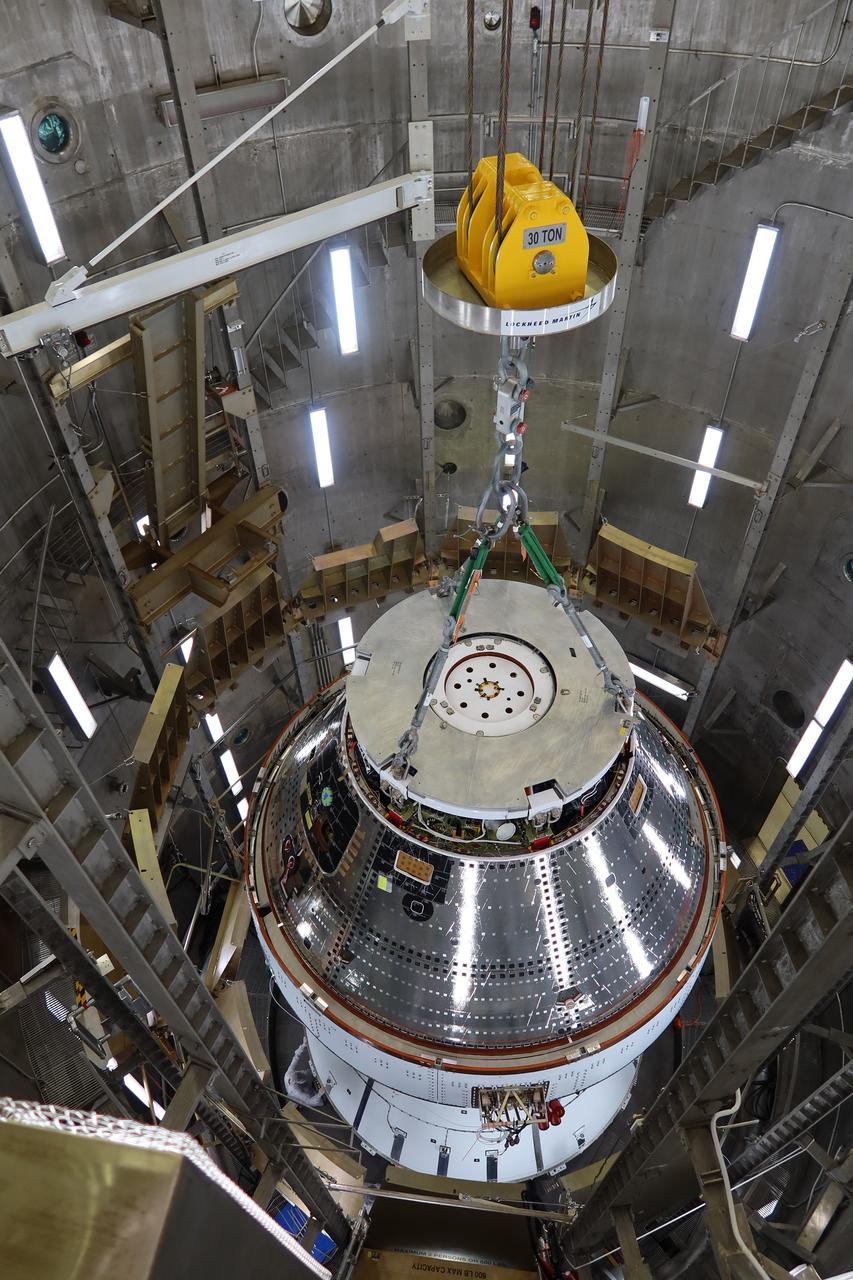
A team wearing bunny suits inside the Operations and Checkout Building at NASA's Kennedy Space Center in Florida on Saturday, April 27, 2024 prepare the Artemis II Orion spacecraft to be lifted by a 30 ton crane out of a vacuum chamber following a series of electromagnetic compatibility and interference testing.
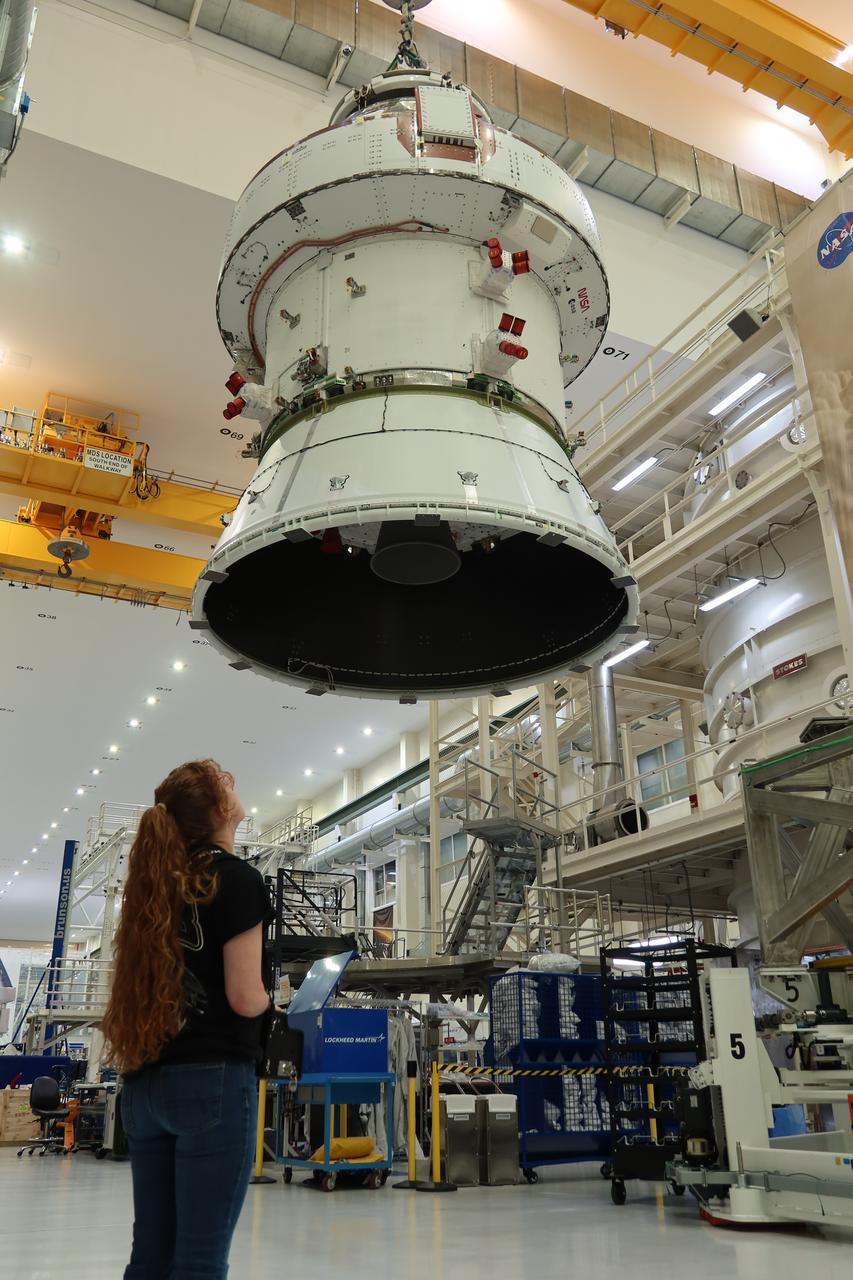
The Orion spacecraft crew module for NASA’s Artemis II mission is viewed by crane operator Rebekah Tolatovicz as it is transferred across the Neil A. Armstrong Operations and Checkout Building at NASA’s Kennedy Space Center in Florida on Saturday, April 27, 2024, following a series of electromagnetic compatibility and interference testing.

A team wearing bunny suits inside the Operations and Checkout Building at NASA's Kennedy Space Center in Florida on Saturday, April 27, 2024 prepare the Artemis II Orion spacecraft to be lifted by a 30 ton crane out of a vacuum chamber following a series of electromagnetic compatibility and interference testing.
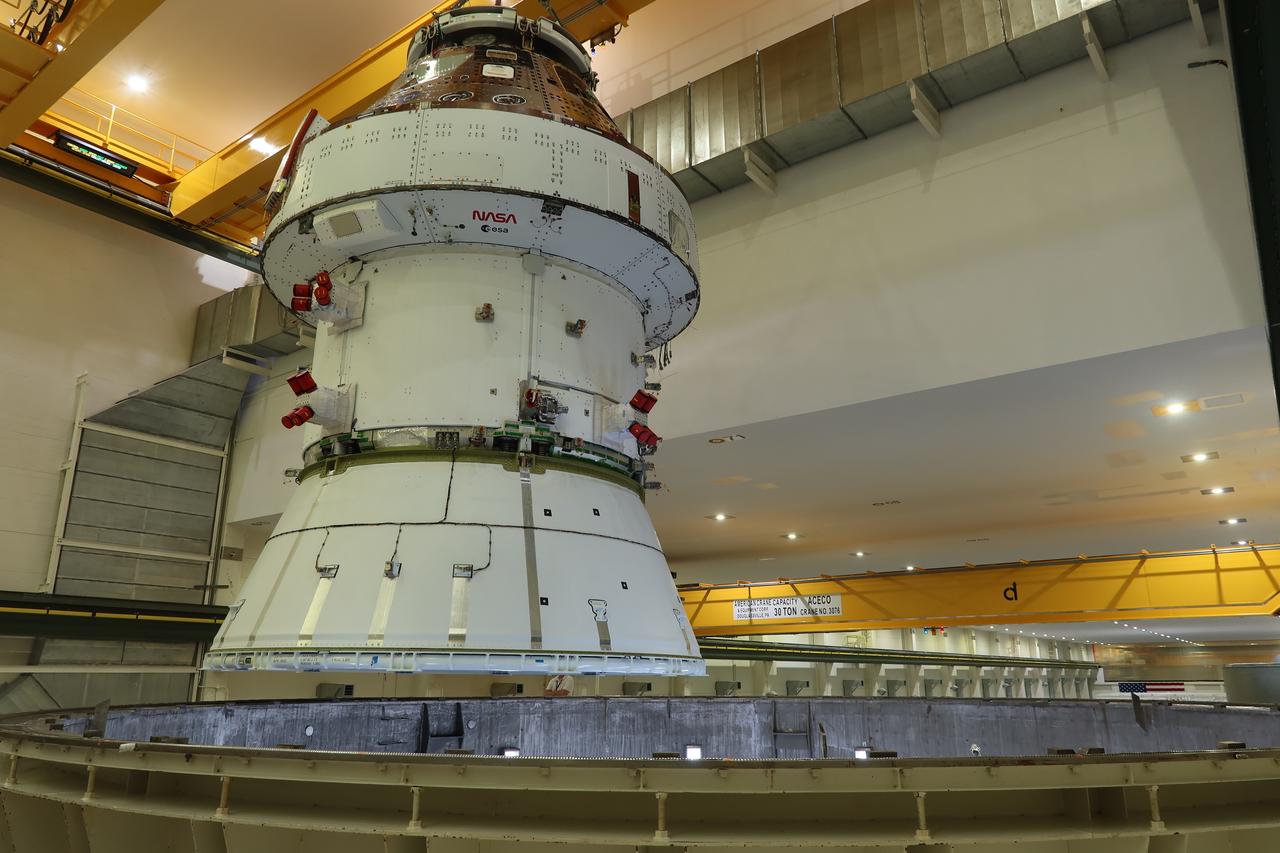
The Orion spacecraft crew for NASA’s Artemis II mission is photographed being transferred across the Neil Armstrong Operations and Checkout Building at NASA’s Kennedy Space Center in Florida on Saturday, April 27, 2024 following a series of electromagnetic compatibility and interference testing.
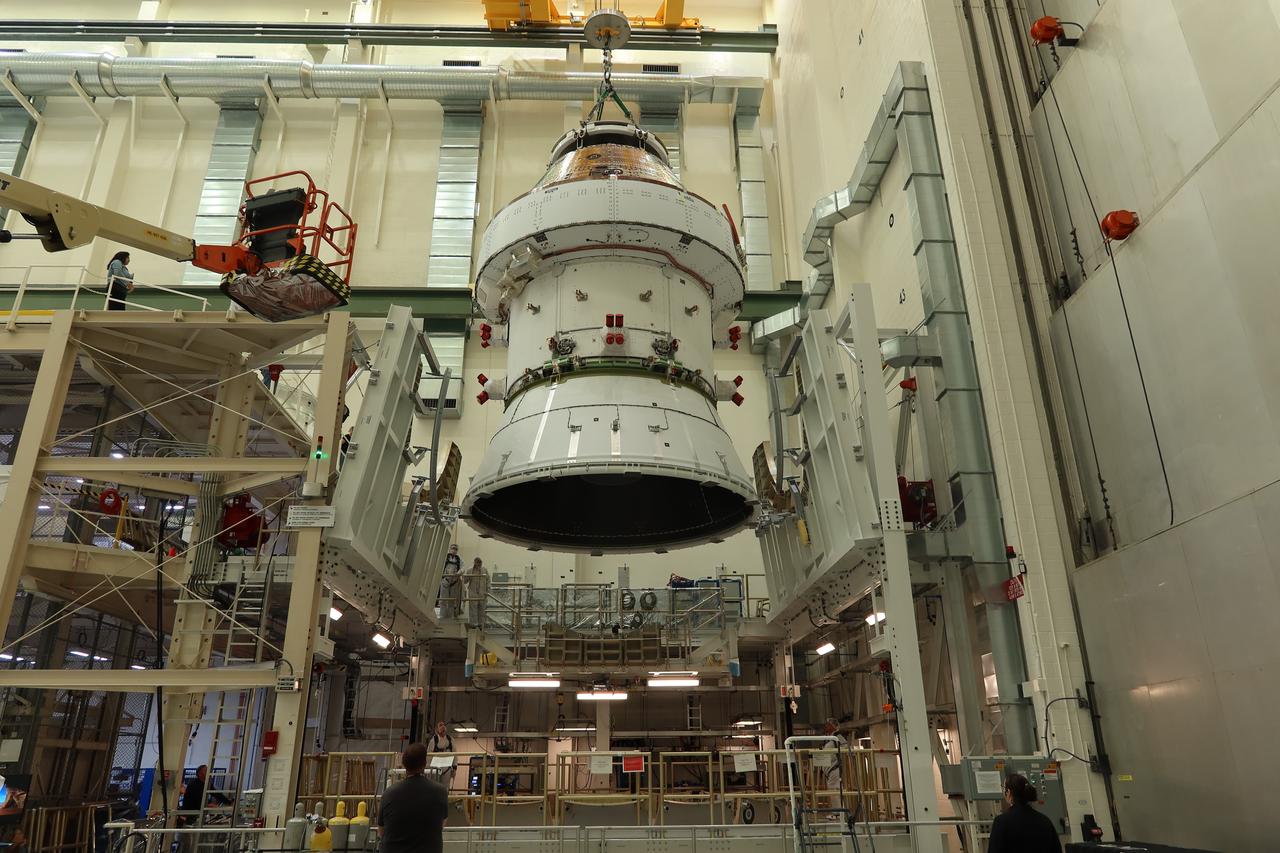
The Orion spacecraft crew module for NASA’s Artemis II mission is photographed being lowered inside the Final Assembly and System Testing cell by a 30 ton crane at the Neil Armstrong Operations and Checkout Building at NASA’s Kennedy Space Center in Florida on Saturday, April 27, 2024. Four astronauts will venture around the Moon in the Orion spacecraft on Artemis II, the first crewed mission on NASA's path to establishing a long-term presence at the Moon for science and exploration through the Artemis campaign.
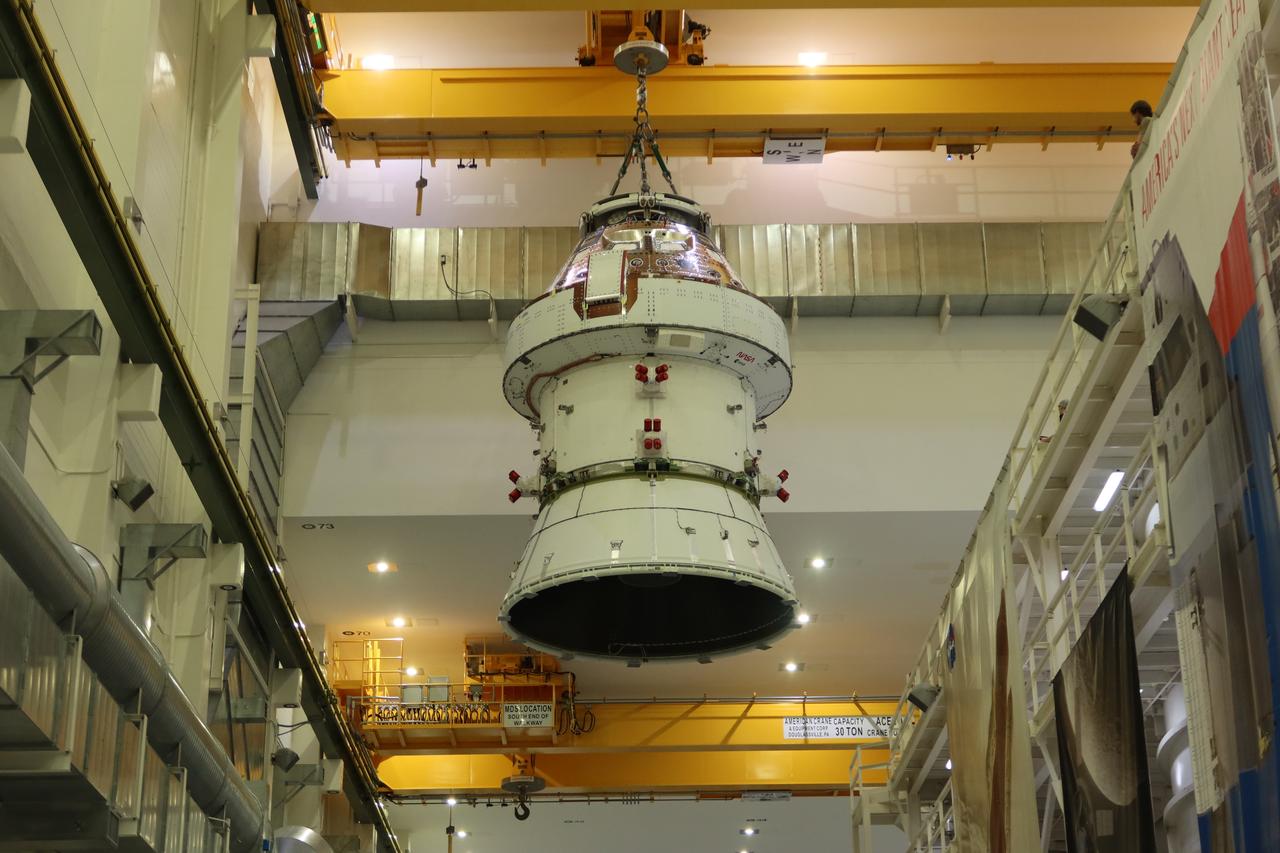
The Orion spacecraft crew for NASA’s Artemis II mission is photographed being transferred across the Neil Armstrong Operations and Checkout Building at NASA’s Kennedy Space Center in Florida on Saturday, April 27, 2024 following a series of electromagnetic compatibility and interference testing.
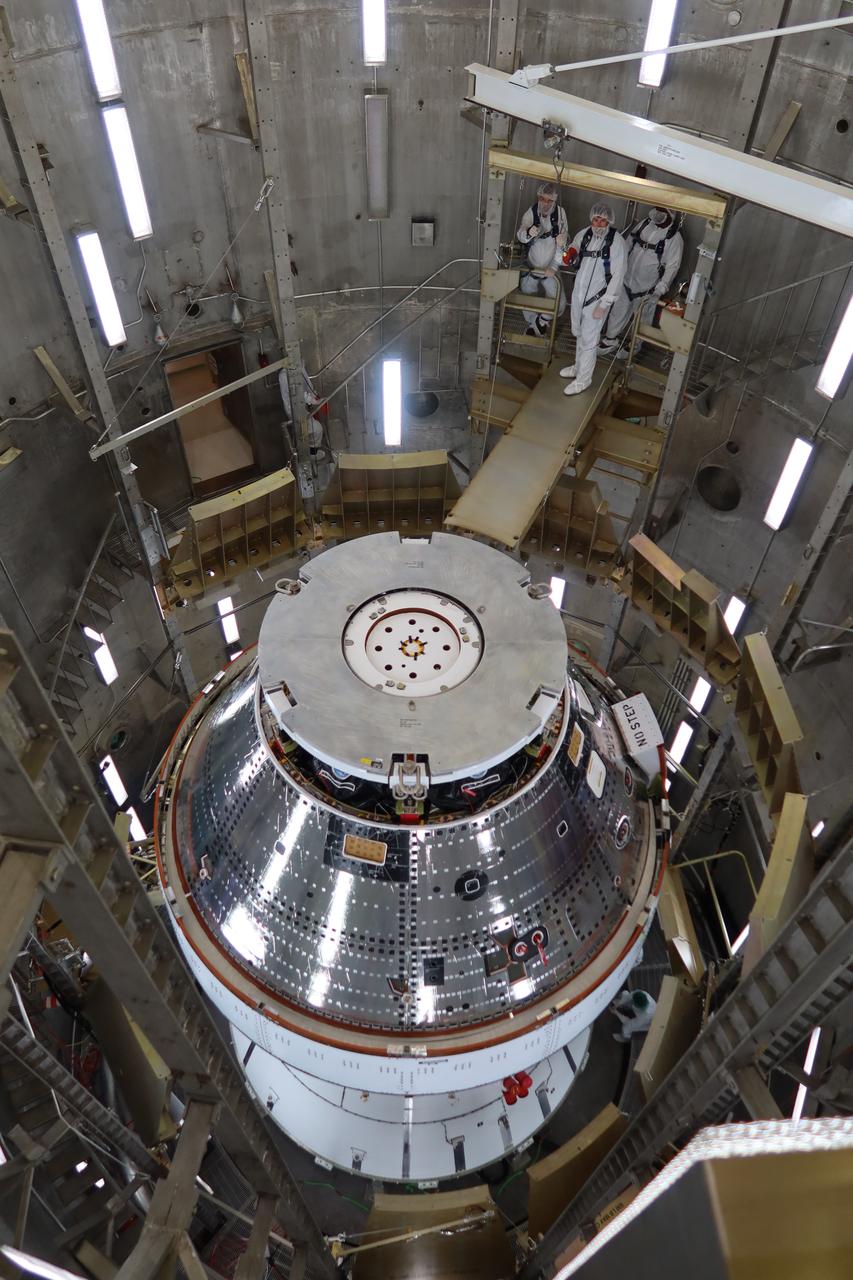
A team wearing bunny suits inside the Operations and Checkout Building at NASA's Kennedy Space Center in Florida on Saturday, April 27, 2024 prepare the Artemis II Orion spacecraft to be lifted by a 30 ton crane out of a vacuum chamber following a series of electromagnetic compatibility and interference testing.
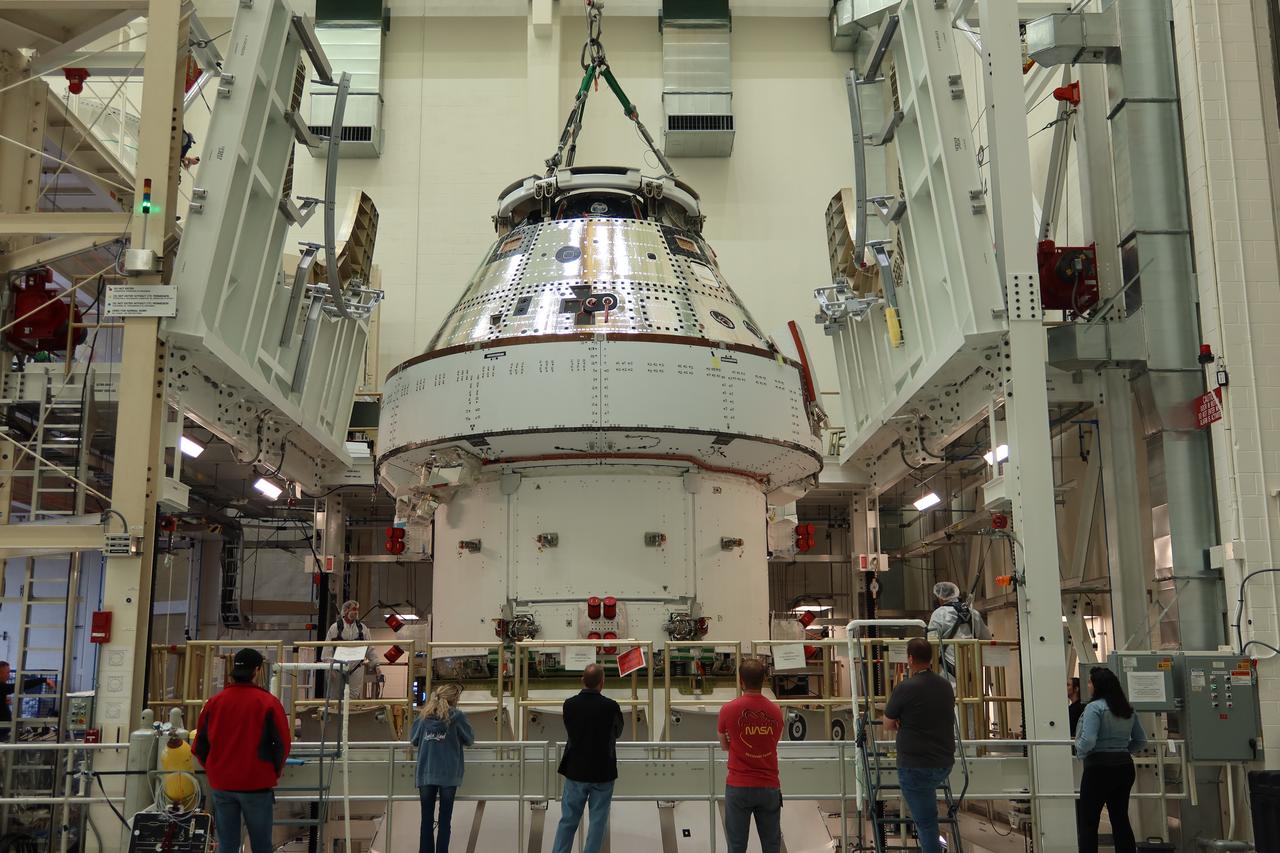
The Orion spacecraft crew module for NASA’s Artemis II mission is photographed being lowered inside the Final Assembly and System Testing cell by a 30 ton crane at the Neil Armstrong Operations and Checkout Building at NASA’s Kennedy Space Center in Florida on Saturday, April 27, 2024. Four astronauts will venture around the Moon in the Orion spacecraft on Artemis II, the first crewed mission on NASA's path to establishing a long-term presence at the Moon for science and exploration through the Artemis campaign.

The Orion spacecraft crew module for NASA’s Artemis II mission is viewed by crane operator Rebekah Tolatovicz as it is transferred across the Neil A. Armstrong Operations and Checkout Building at NASA’s Kennedy Space Center in Florida on Saturday, April 27, 2024, following a series of electromagnetic compatibility and interference testing.
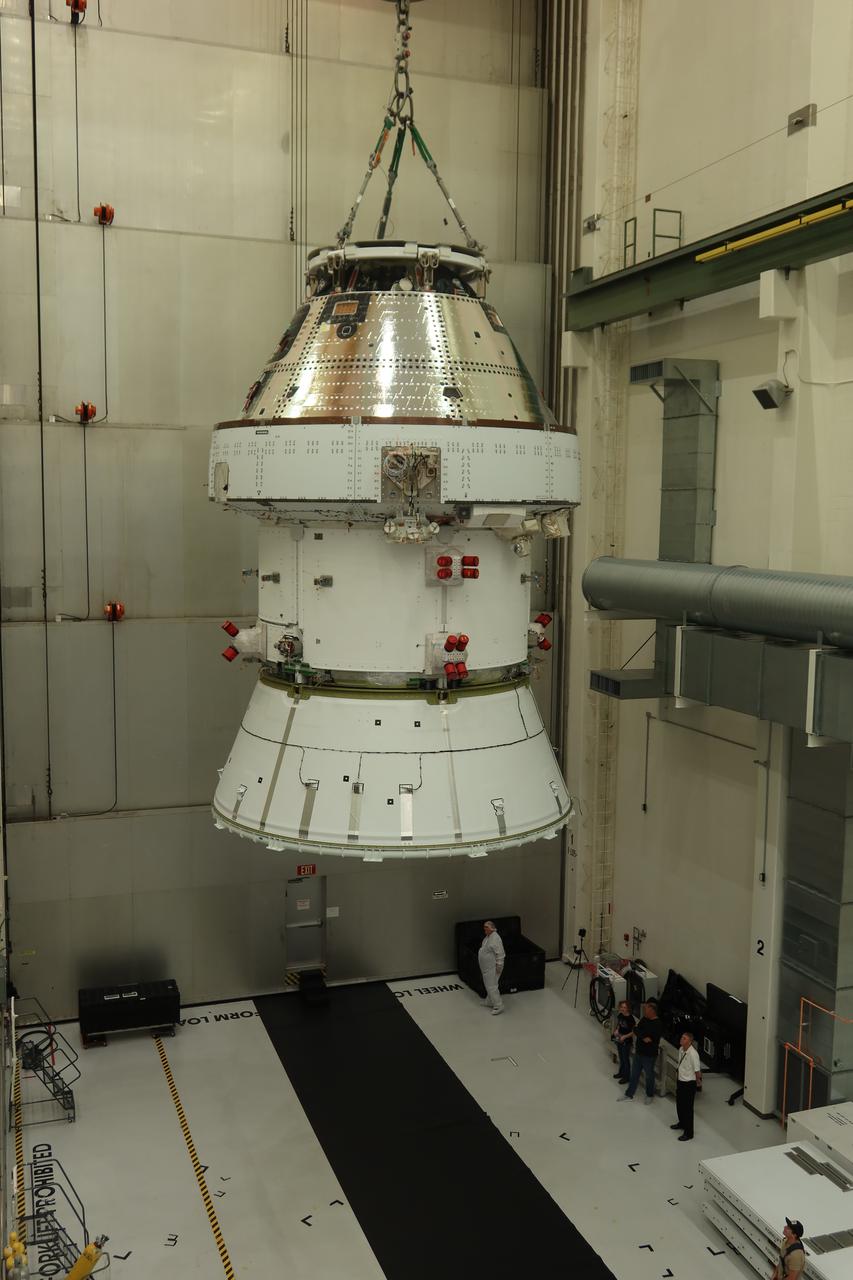
The Orion spacecraft crew for NASA’s Artemis II mission is photographed being transferred across the Neil Armstrong Operations and Checkout Building at NASA’s Kennedy Space Center in Florida on Saturday, April 27, 2024 following a series of electromagnetic compatibility and interference testing.
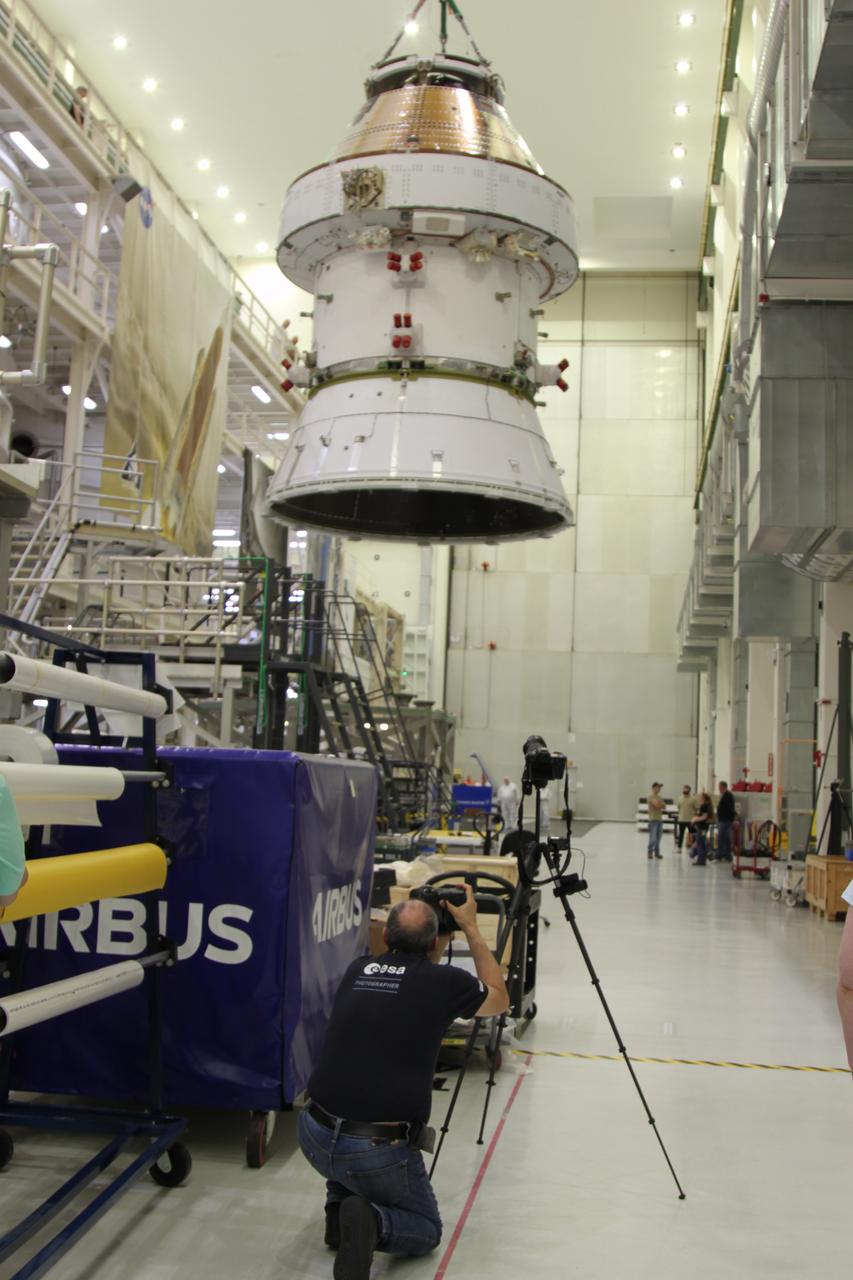
The Orion spacecraft crew for NASA’s Artemis II mission is photographed being transferred across the Neil Armstrong Operations and Checkout Building at NASA’s Kennedy Space Center in Florida on Saturday, April 27, 2024 following a series of electromagnetic compatibility and interference testing.

The Orion spacecraft crew for NASA’s Artemis II mission is photographed being transferred across the Neil Armstrong Operations and Checkout Building at NASA’s Kennedy Space Center in Florida on Saturday, April 27, 2024 following a series of electromagnetic compatibility and interference testing.
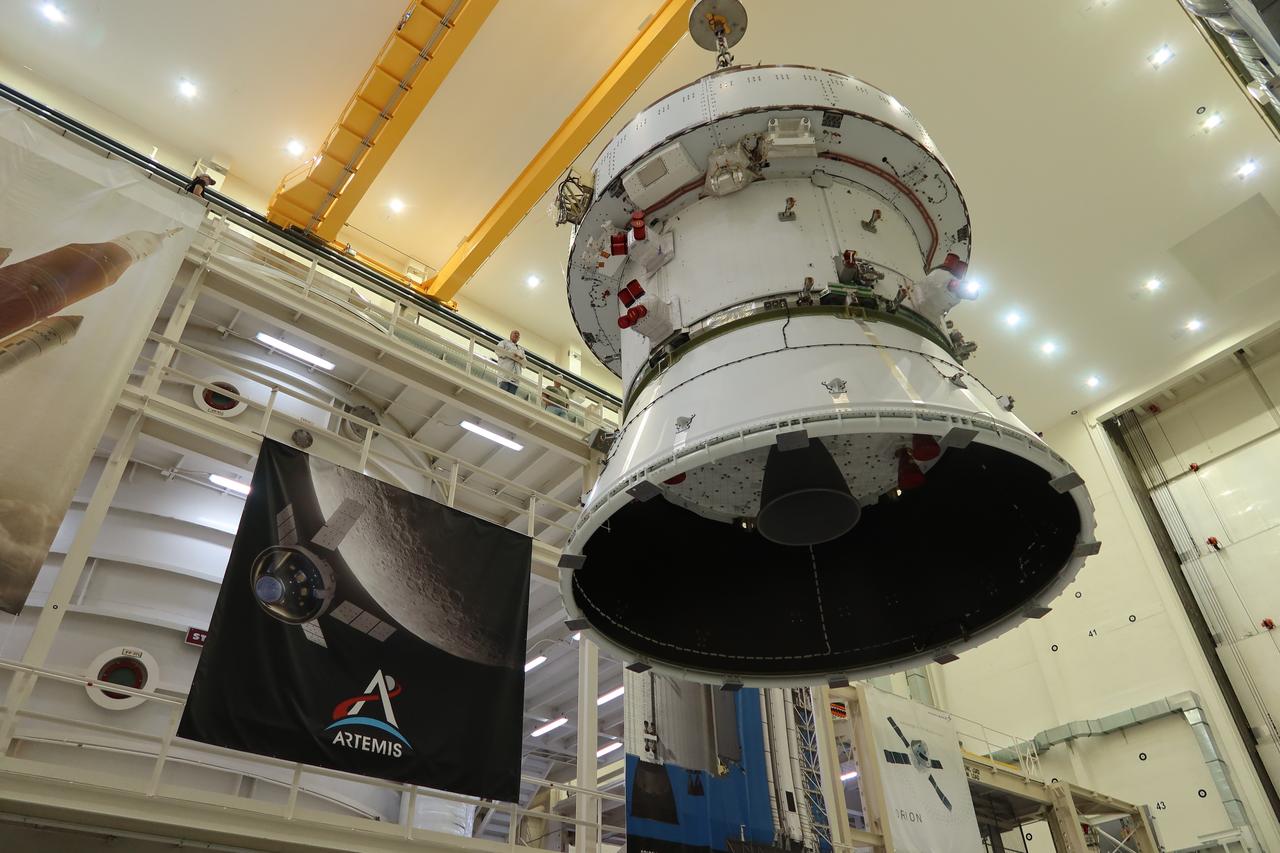
The Orion spacecraft crew for NASA’s Artemis II mission is photographed being transferred across the Neil Armstrong Operations and Checkout Building at NASA’s Kennedy Space Center in Florida on Saturday, April 27, 2024 following a series of electromagnetic compatibility and interference testing.
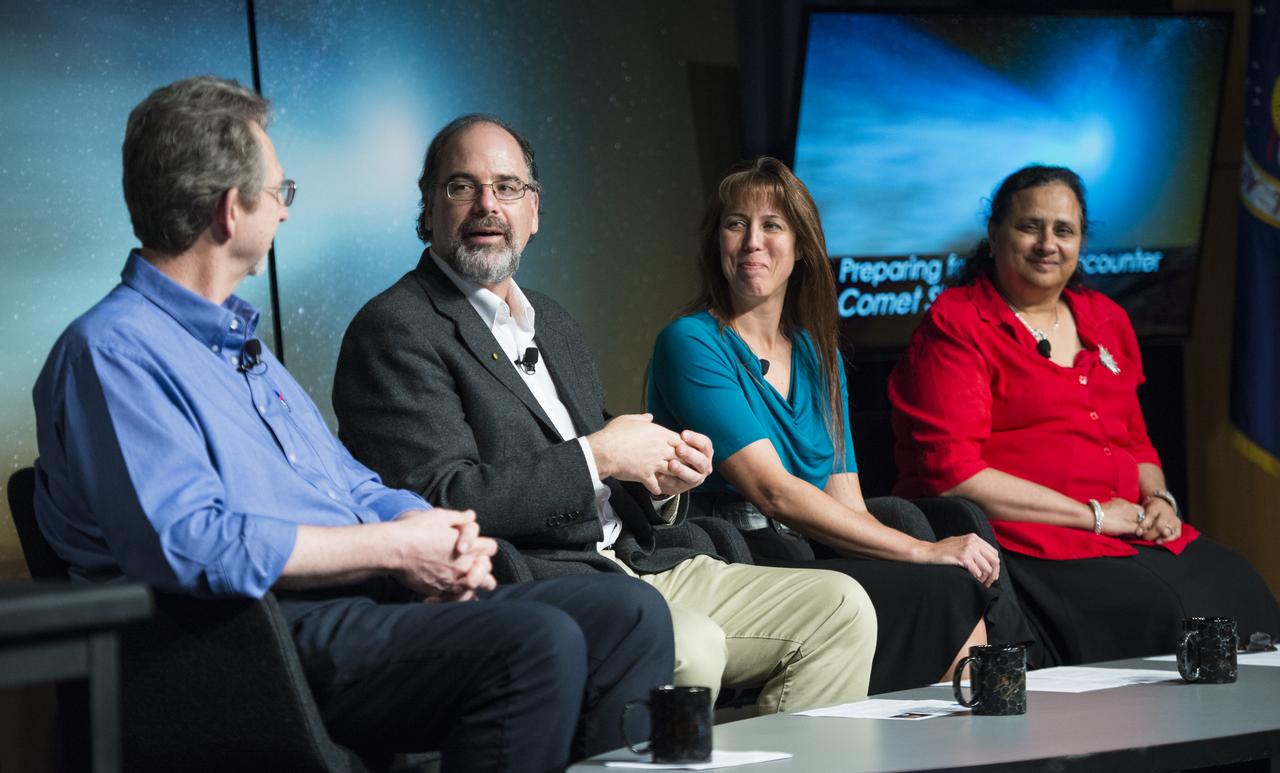
Panelists, from left, Jim Green, director, Planetary Science Division, NASA Headquarters, Washington, Carey Lisse, senior astrophysicist, Johns Hopkins University Applied Physics Laboratory, Laurel, Maryland, Kelly Fast, program scientist, Planetary Science Division, NASA Headquarters, Washington, and Padma Yanamandra-Fisher, senior research scientist, Space Science Institute, Rancho Cucamonga Branch, California, are seen during a media briefing where they outlined how space and Earth-based assets will be used to image and study comet Siding Spring during its Sunday, Oct. 19 flyby of Mars, Thursday, Oct. 9, 2014 at NASA Headquarters in Washington. (Photo credit: NASA/Joel Kowsky)

SpaceX fast boat teams are seen in the Atlantic Ocean as NASA, ESA (European Space Agency), and SpaceX teams prepare for the landing of the SpaceX Crew Dragon Freedom spacecraft with NASA astronauts Kjell Lindgren, Robert Hines, Jessica Watkins, and ESA (European Space Agency) astronaut Samantha Cristoforetti aboard, Friday, Oct. 14, 2022, off the coast of Jacksonville, Florida. Lindgren, Hines, Watkins, and Cristoforetti are returning after 170 days in space as part of Expeditions 67 and 68 aboard the International Space Station. Photo Credit: (NASA/Bill Ingalls)
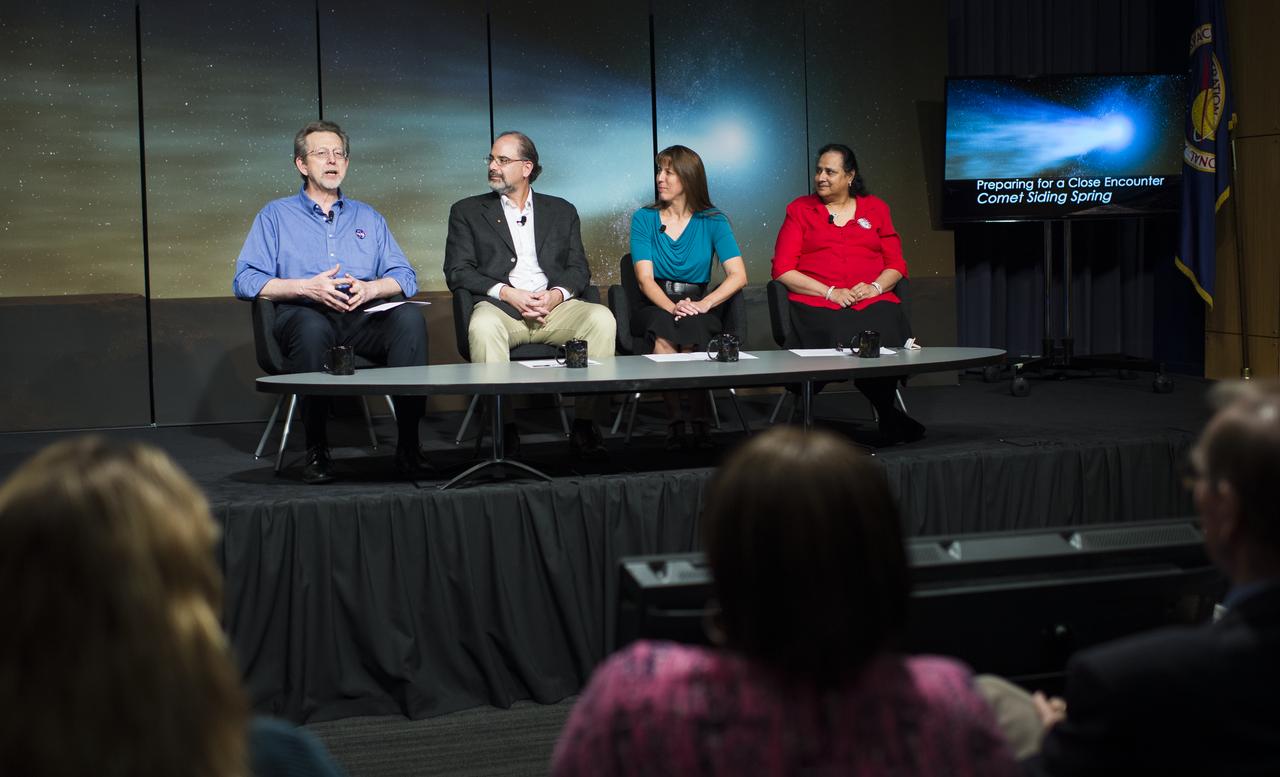
Panelists, from left, Jim Green, director, Planetary Science Division, NASA Headquarters, Washington, Carey Lisse, senior astrophysicist, Johns Hopkins University Applied Physics Laboratory, Laurel, Maryland, Kelly Fast, program scientist, Planetary Science Division, NASA Headquarters, Washington, and Padma Yanamandra-Fisher, senior research scientist, Space Science Institute, Rancho Cucamonga Branch, California, are seen during a media briefing where they outlined how space and Earth-based assets will be used to image and study comet Siding Spring during its Sunday, Oct. 19 flyby of Mars, Thursday, Oct. 9, 2014 at NASA Headquarters in Washington. (Photo credit: NASA/Joel Kowsky)

Jim Green, director, Planetary Science Division, NASA Headquarters, Washington, left, is seen with fellow panelists Carey Lisse, senior astrophysicist, Johns Hopkins University Applied Physics Laboratory, Laurel, Maryland, Kelly Fast, program scientist, Planetary Science Division, NASA Headquarters, Washington, and Padma Yanamandra-Fisher, senior research scientist, Space Science Institute, Rancho Cucamonga Branch, California during a media briefing where they outlined how space and Earth-based assets will be used to image and study comet Siding Spring during its Sunday, Oct. 19 flyby of Mars, Thursday, Oct. 9, 2014 at NASA Headquarters in Washington. Photo Credit: (NASA/Joel Kowsky)
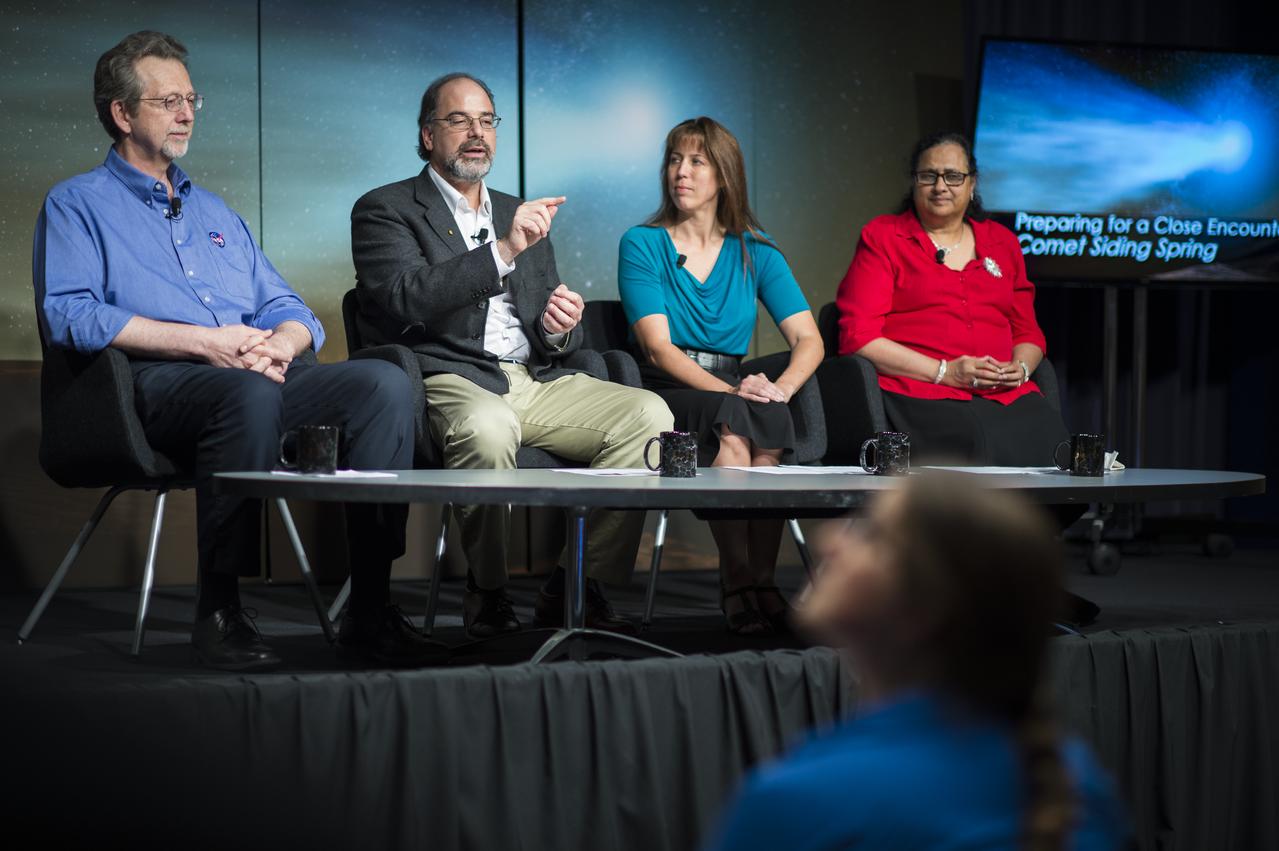
Panelists, from left, Jim Green, director, Planetary Science Division, NASA Headquarters, Washington, Carey Lisse, senior astrophysicist, Johns Hopkins University Applied Physics Laboratory, Laurel, Maryland, Kelly Fast, program scientist, Planetary Science Division, NASA Headquarters, Washington, and Padma Yanamandra-Fisher, senior research scientist, Space Science Institute, Rancho Cucamonga Branch, California, are seen during a media briefing where they outlined how space and Earth-based assets will be used to image and study comet Siding Spring during its Sunday, Oct. 19 flyby of Mars, Thursday, Oct. 9, 2014 at NASA Headquarters in Washington. (Photo credit: NASA/Joel Kowsky)
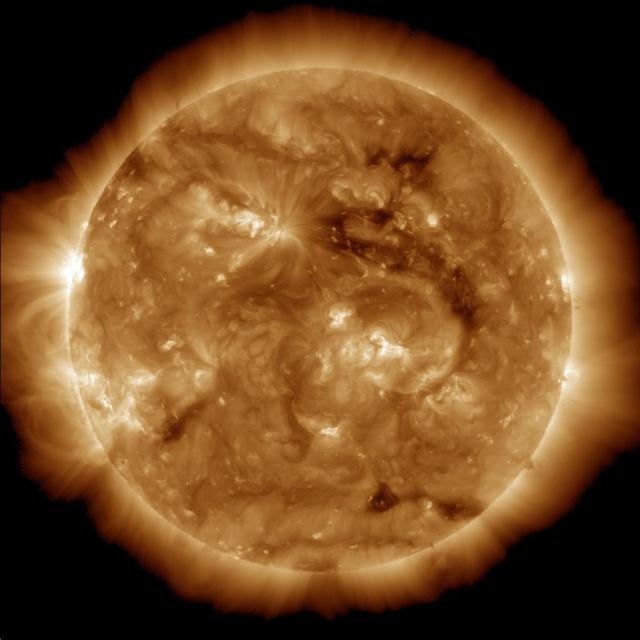
The dark region seen on the face of the sun at the end of March 2013 is a coronal hole just above and to the right of the middle of the picture, which is a source of fast solar wind leaving the sun in this image from NASA Solar Dynamic Observatory.
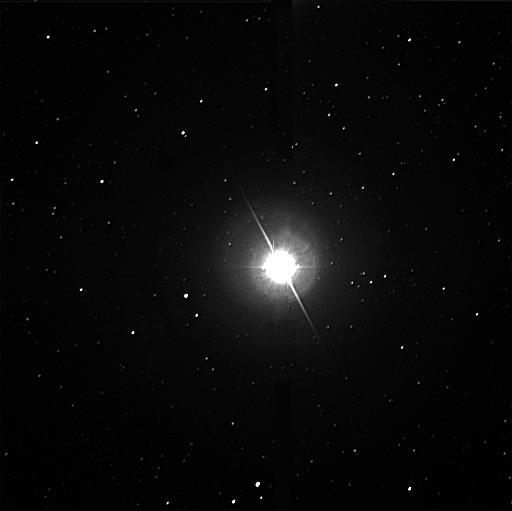
Altair, a star spinning so fast its mid-section is stretched out has been directly measured by an ultra-high-resolution NASA telescope system on Palomar Mountain near San Diego.
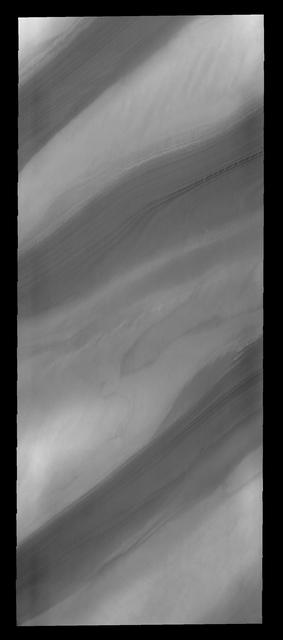
With summer fast approaching, the frost has sublimated away and the layers that make up the north polar cap are easily discernable, as seen by NASA 2001 Mars Odyssey spacecraft.

Supermassive black holes at the cores of galaxies blast radiation and ultra-fast winds outward, as illustrated in this artist conception based on NASA NuSTAR and ESA XMM-Newton telescopes.

This plot of data from two space telescopes, NASA NuSTAR and ESA XMM-Newton determines for the first time the shape of ultra-fast winds from supermassive black holes, or quasars.
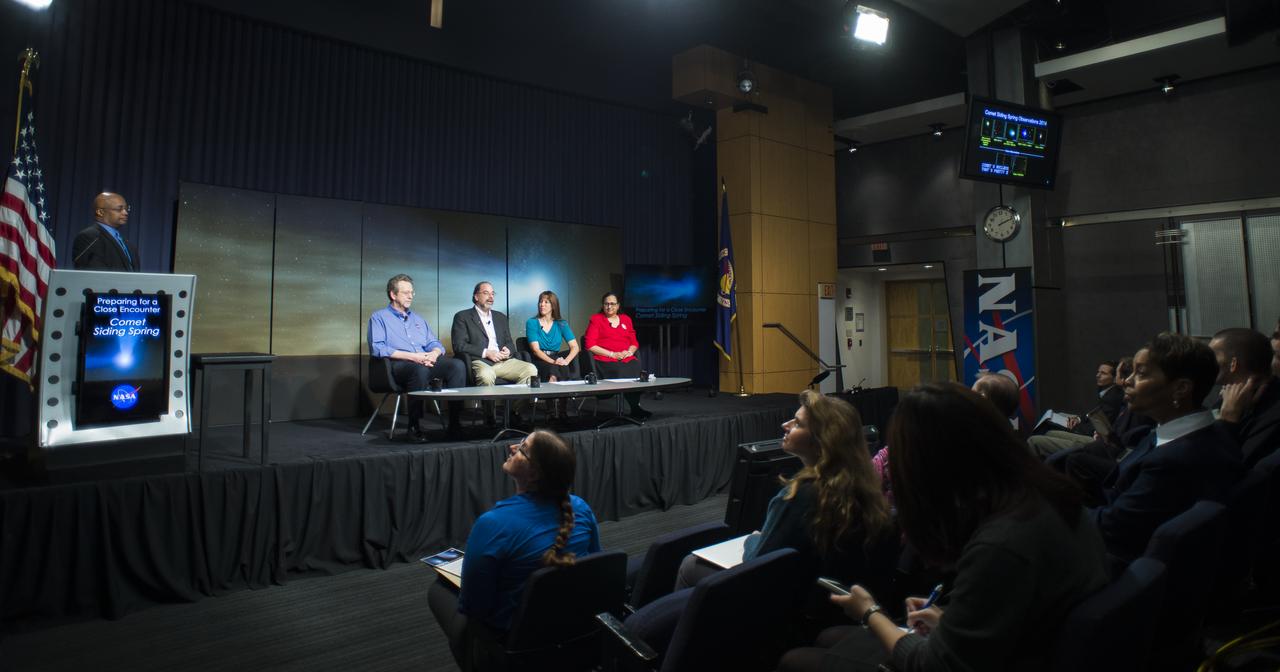
Dwayne Brown, NASA public affairs officer, left, moderates a media briefing where panelist, seated from left, Jim Green, director, Planetary Science Division, NASA Headquarters, Washington, Carey Lisse, senior astrophysicist, Johns Hopkins University Applied Physics Laboratory, Laurel, Maryland, Kelly Fast, program scientist, Planetary Science Division, NASA Headquarters, Washington, and Padma Yanamandra-Fisher, senior research scientist, Space Science Institute, Rancho Cucamonga Branch, California, outlined how space and Earth-based assets will be used to image and study comet Siding Spring during its Sunday, Oct. 19 flyby of Mars, Thursday, Oct. 9, 2014 at NASA Headquarters in Washington. (Photo credit: NASA/Joel Kowsky)
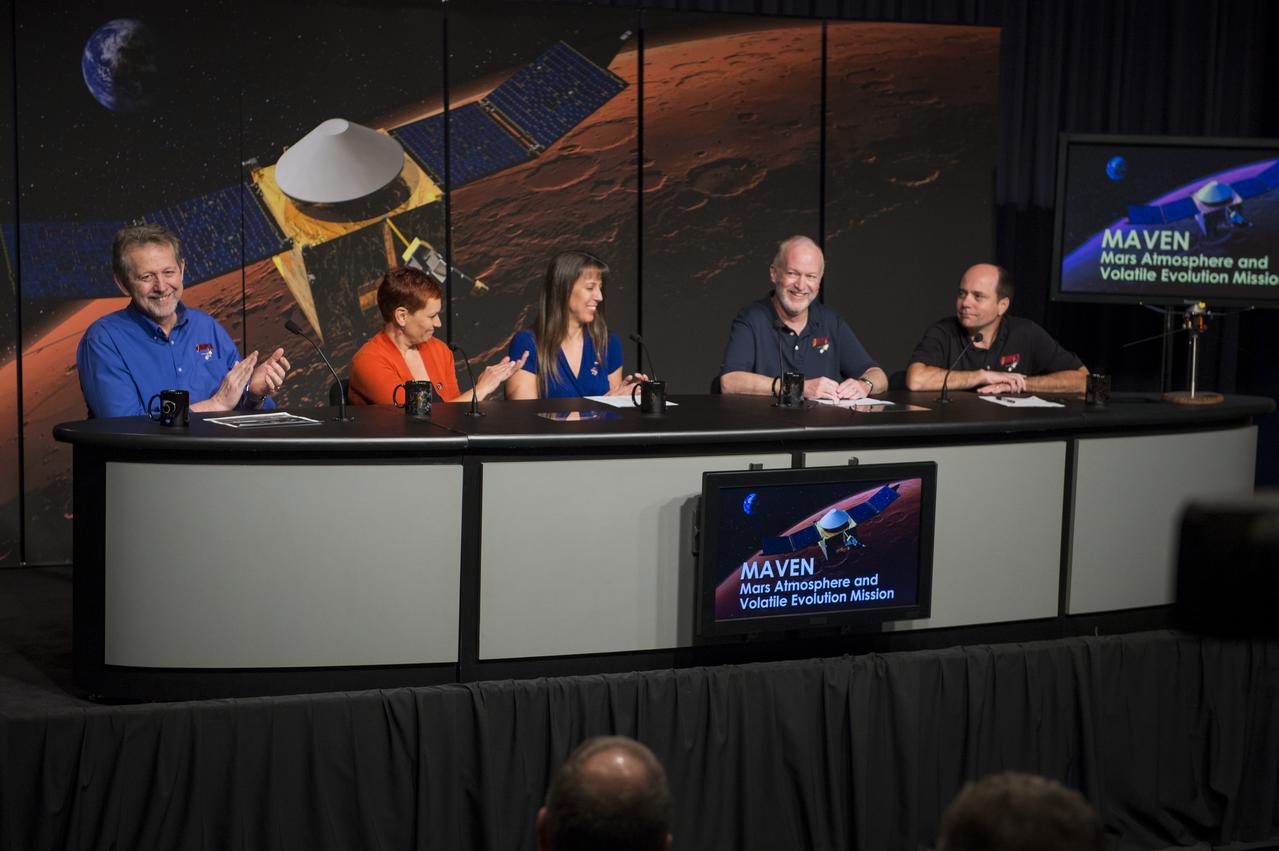
L-R: Jim Green, director, Planetary Science Division, NASA Headquarters, Lisa May, MAVEN program executive, NASA Headquarters, Kelly Fast, MAVEN program scientist, NASA Headquarters, Bruce Jakosky, MAVEN principal investigator, University of Colorado Boulder Laboratory for Atmospheric and Space Physics, and David Mitchell, MAVEN project manager, NASA's Goddard Space Flight Center, Greenbelt, Md. are applauded at the end of a panel discussion on the upcoming launch of the Mars Atmosphere and Volatile Evolution (MAVEN) mission, at a press conference at NASA Headquarters in Washington on Monday, Oct. 28th, 2013. MAVEN is the agency's next mission to Mars and the first devoted to understanding the upper atmosphere of the Red Planet. (Photo credit: NASA/Jay Westcott)
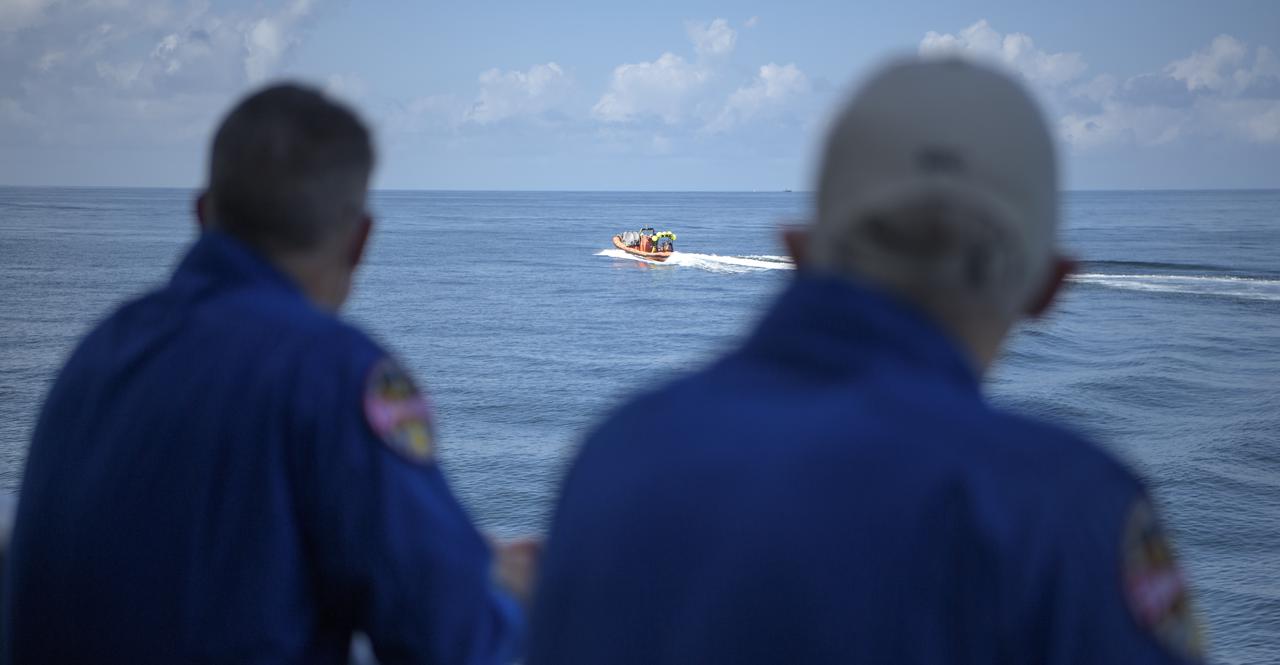
NASA astronaut and Crew Recovery Chief Shane Kimbrough, left, and NASA Chief Astronaut Pat Forrester watch as SpaceX support teams are deployed on fast boats from the SpaceX GO Navigator recovery ship ahead of the landing of the SpaceX Crew Dragon Endeavour spacecraft with NASA astronauts Robert Behnken and Douglas Hurley onboard, Sunday, Aug. 2, 2020 in the Gulf of Mexico off the cost of Pensacola, Florida. The Demo-2 test flight for NASA's Commercial Crew Program is the first to deliver astronauts to the International Space Station and return them to Earth onboard a commercially built and operated spacecraft. Behnken and Hurley are returning after spending 64 days in space. Photo Credit: (NASA/Bill Ingalls)
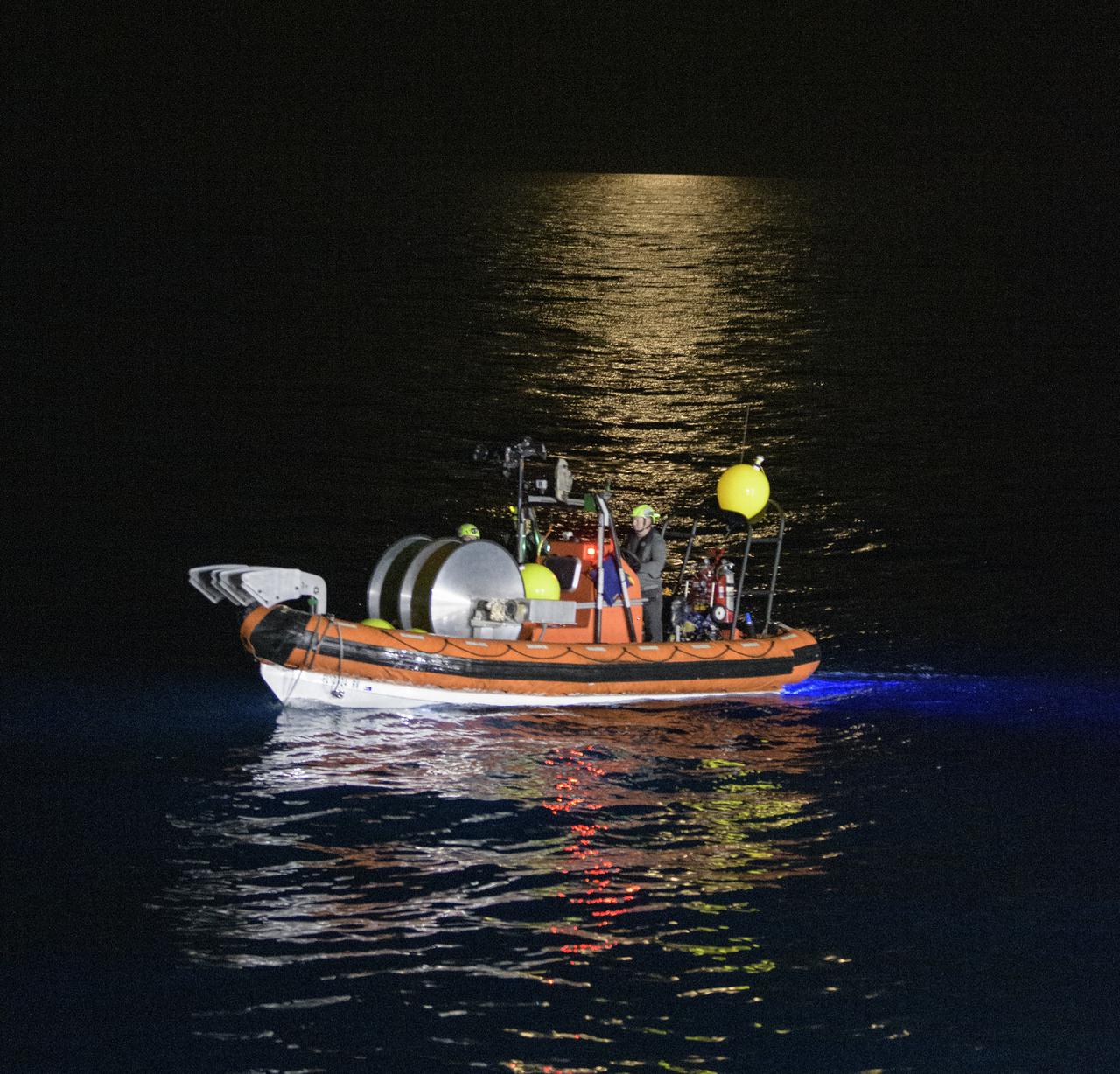
SpaceX support teams deploy in fast boats off the SpaceX GO Navigator recovery ship as they prepare for the landing of the SpaceX Crew Dragon Resilience spacecraft with NASA astronauts Mike Hopkins, Shannon Walker, and Victor Glover, and Japan Aerospace Exploration Agency (JAXA) astronaut Soichi Noguchi aboard in the Gulf of Mexico off the coast of Panama City, Florida, Sunday, May 2, 2021. NASA’s SpaceX Crew-1 mission is the first crew rotation flight of the SpaceX Crew Dragon spacecraft and Falcon 9 rocket with astronauts to the International Space Station as part of the agency’s Commercial Crew Program. Photo Credit: (NASA/Bill Ingalls)
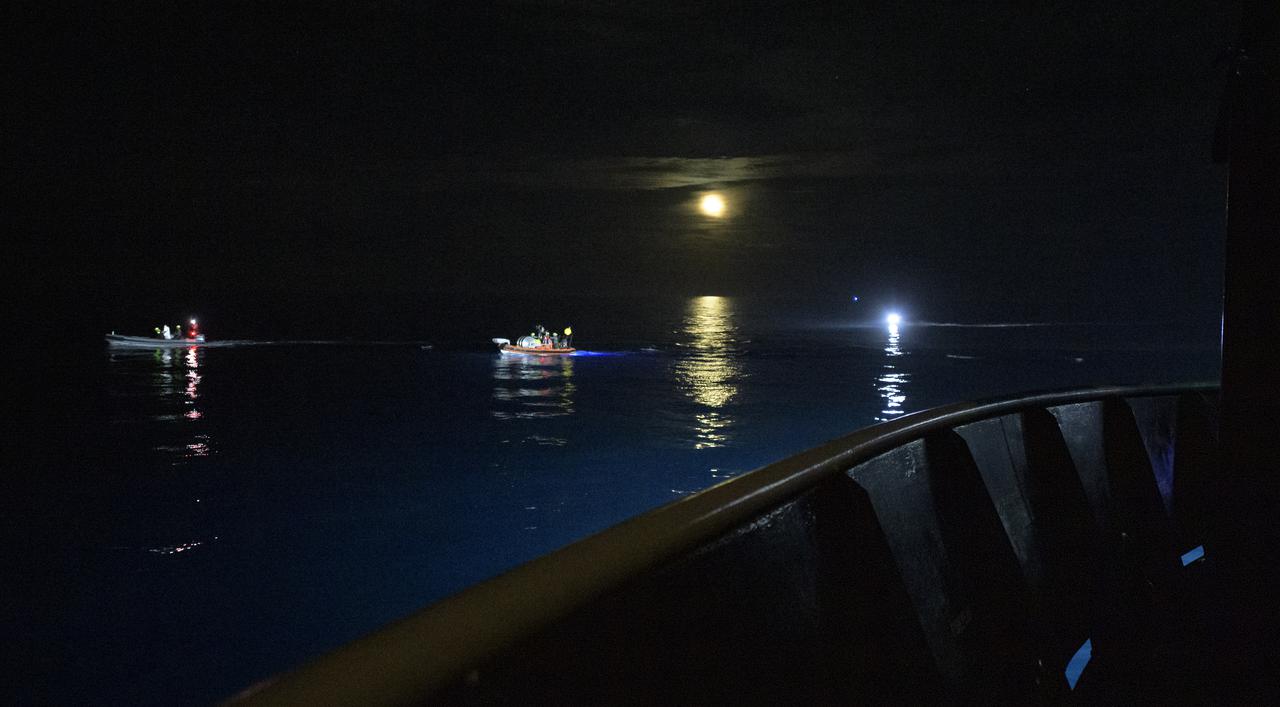
SpaceX support teams deploy in fast boats off the SpaceX GO Navigator recovery ship as they prepare for the landing of the SpaceX Crew Dragon Resilience spacecraft with NASA astronauts Mike Hopkins, Shannon Walker, and Victor Glover, and Japan Aerospace Exploration Agency (JAXA) astronaut Soichi Noguchi aboard in the Gulf of Mexico off the coast of Panama City, Florida, Sunday, May 2, 2021. NASA’s SpaceX Crew-1 mission is the first crew rotation flight of the SpaceX Crew Dragon spacecraft and Falcon 9 rocket with astronauts to the International Space Station as part of the agency’s Commercial Crew Program. Photo Credit: (NASA/Bill Ingalls)
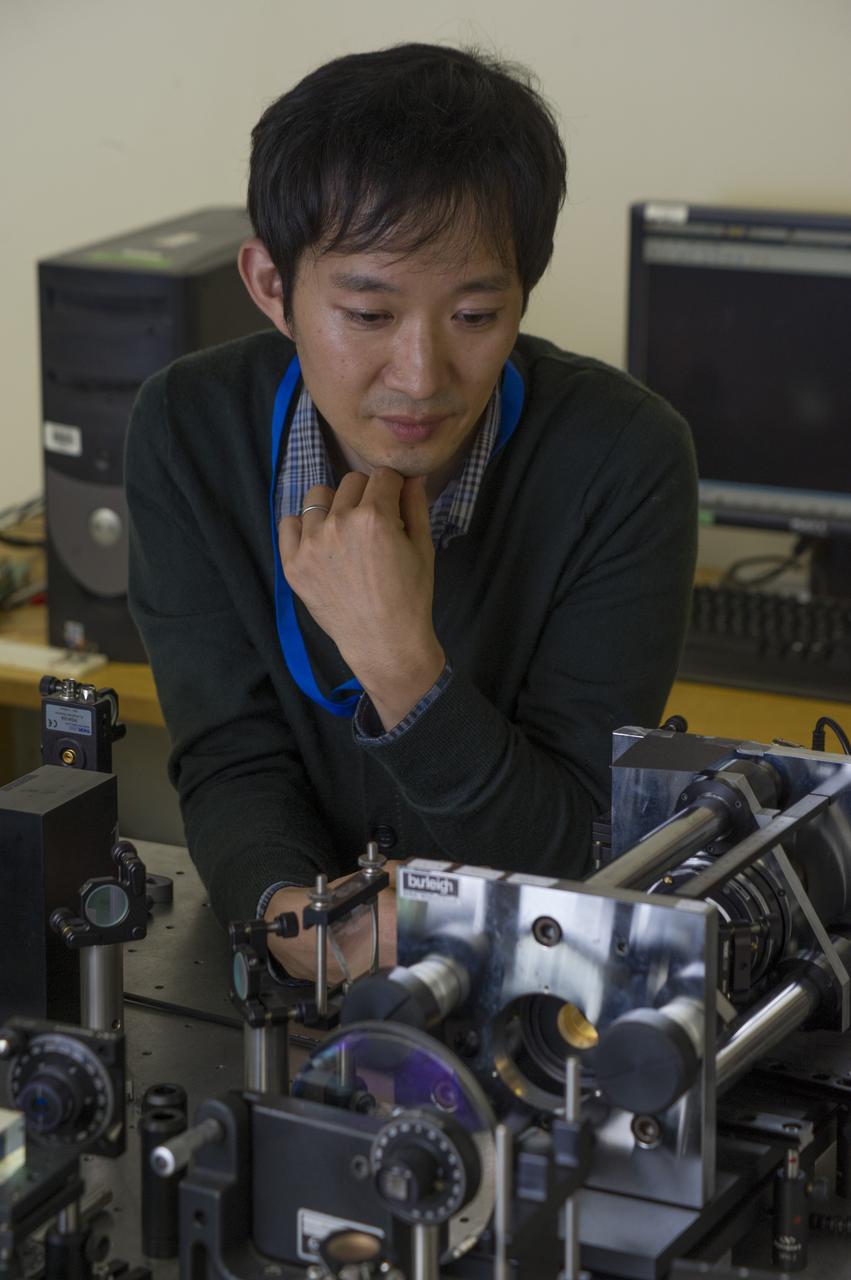
ARMY CONTRACTOR HONGROK CHANG IN THE FAST LIGHT OPTICAL GYROSCOPE LAB

FAST QUIET EXPERIMENT TEST ON THE MACH 3 BURNER RIG
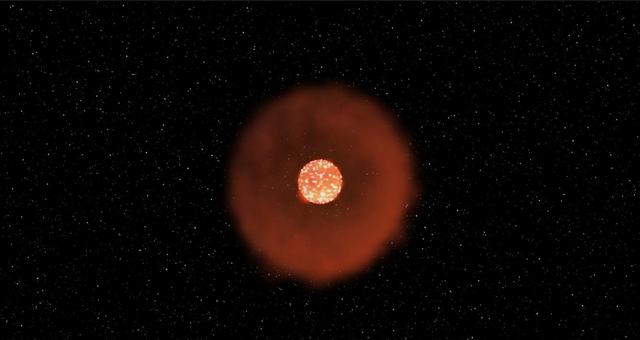
This frame from an animation shows a kind of stellar explosion called a Fast-Evolving Luminous Transient. In this case, a giant star "burps" out a shell of gas and dust about a year before exploding. Most of the energy from the supernova turns into light when it hits this previously ejected material, resulting in a short, but brilliant burst of radiation. Stellar explosions forge and distribute materials that make up the world in which we live, and also hold clues to how fast the universe is expanding. By understanding supernovae, scientists can unlock mysteries that are key to what we are made of and the fate of our universe. But to get the full picture, scientists must observe supernovae from a variety of perspectives, especially in the first moments of the explosion. That's really difficult -- there's no telling when or where a supernova might happen next. An animation is available at https://photojournal.jpl.nasa.gov/catalog/PIA22351
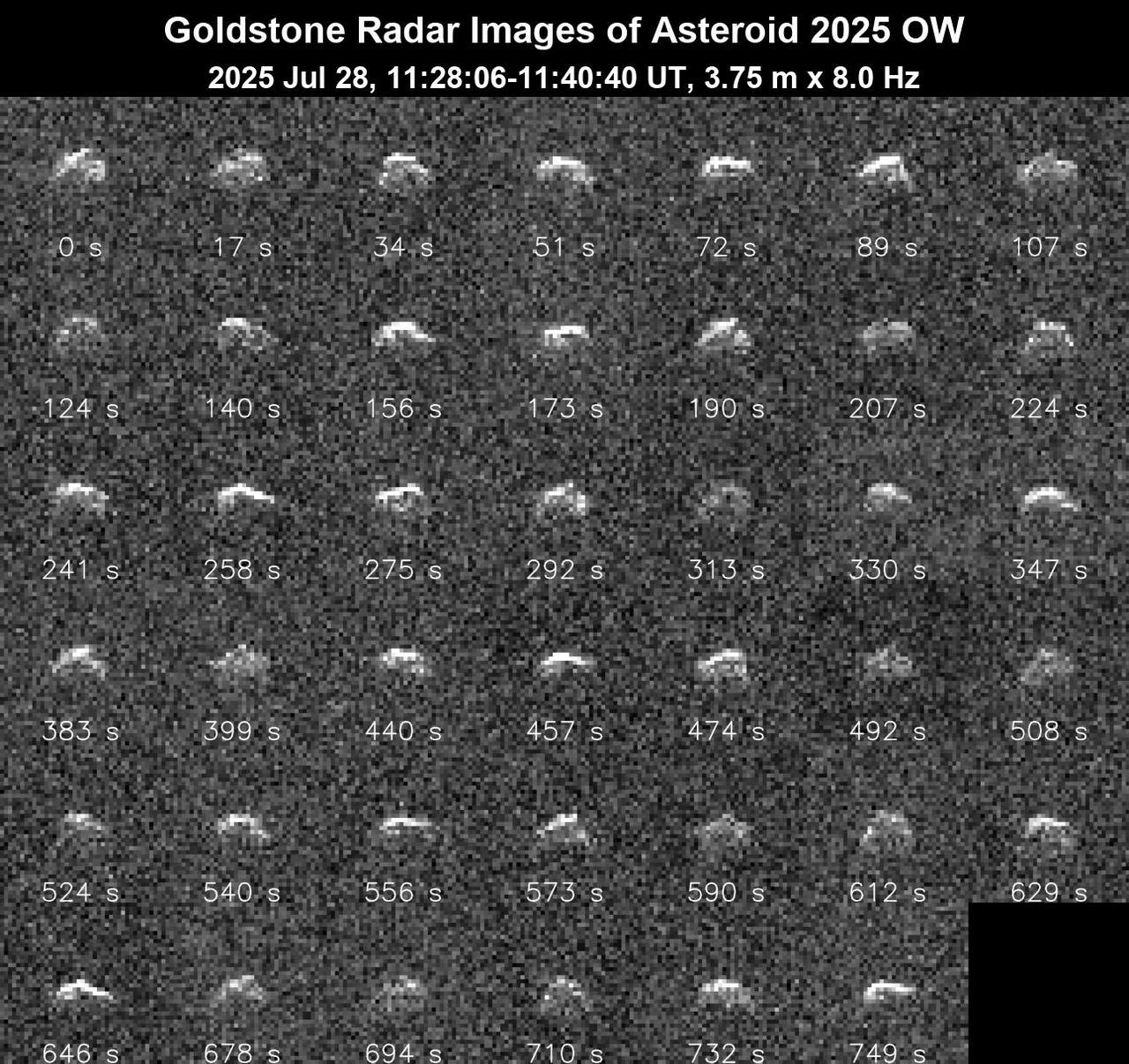
This series of 41 radar images obtained by the Deep Space Network's Goldstone Solar System Radar on July 28, 2025, shows the near-Earth asteroid 2025 OW as it made its close approach with our planet. The asteroid safely passed at about 400,000 miles (640,000 kilometers), or 1.6 times the distance from Earth to the Moon. The asteroid was discovered on July 4, 2025, by the NASA-funded Pan-STARRS2 survey telescope on Haleakala in Maui, Hawaii. These Goldstone observations suggest that 2025 OW is about 200 feet (60 meters) wide and has an irregular shape. The observations also indicate that it is rapidly spinning, completing one rotation every 1½ to 3 minutes, making it one of the fastest-spinning near-Earth asteroids that the powerful radar system has observed. The observations resolve surface features down to 12 feet (3.75 meters) wide. Asteroids can be "spun up" by sunlight being unevenly absorbed and re-emitted across their irregular surfaces. As photons (quantum particles of light) carry a tiny amount of momentum away from the asteroid, a tiny amount of torque is applied and, over time, the asteroid's spin can increase – a phenomenon known as the YORP effect. For 2025 OW to maintain such a fast rotation without breaking apart, it may be a solid object rather than a loosely bound rubble pile like many asteroids. The Goldstone measurements have allowed scientists to greatly reduce uncertainties in the asteroid's distance from Earth and in its future motion for many decades. This July 28 close approach is the closest asteroid 2025 OW will come to Earth for the foreseeable future. Animation available at https://photojournal.jpl.nasa.gov/catalog/PIA26587
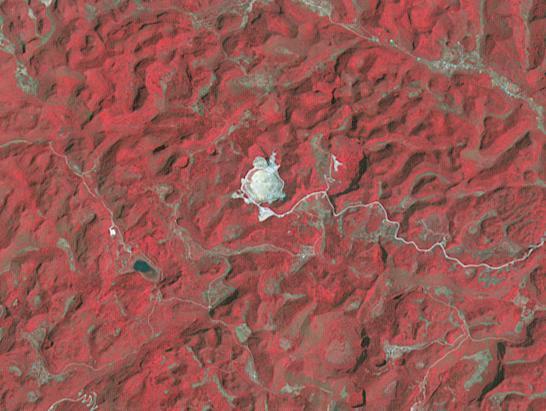
The Five-hundred-meter Aperture Spherical Telescope (FAST) is a radio telescope in China's Guizhou Province. When it is completed in September, it will be the world's second largest radio telescope, with a diameter of 500m.The largest telescope is the operating Russian RATAN-600, with a diameter of 576m. The image was acquired April 14, 2013, covers an area of 6.2 by 8.2 km, and is located at 25.7 degrees north, 106.9 degrees east. http://photojournal.jpl.nasa.gov/catalog/PIA20986
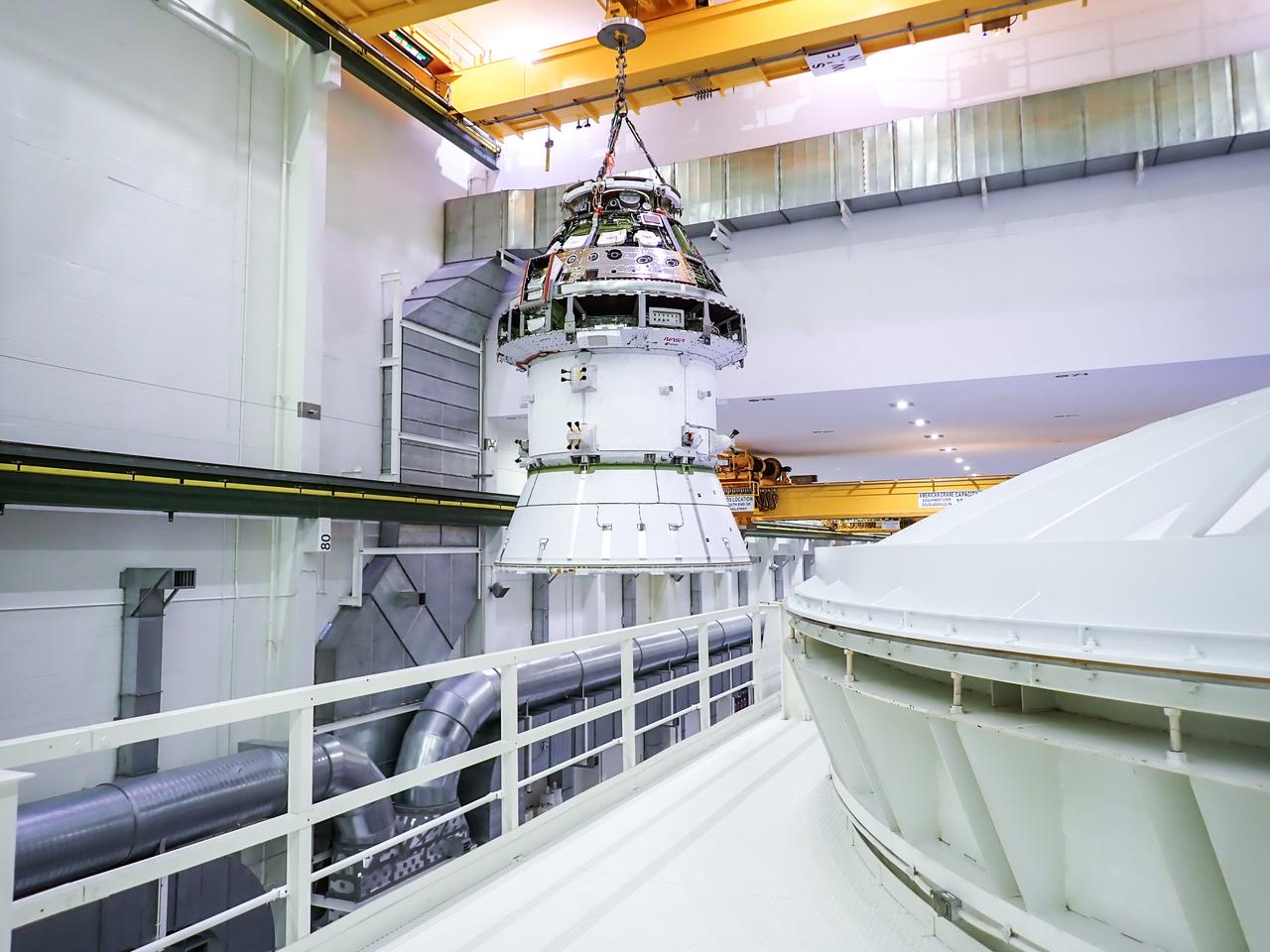
On Thursday, Dec. 5, 2024, a team returns the Artemis II Orion spacecraft to the Final Assembly and Test cell from a vacuum chamber inside the Neil A. Armstrong Operations and Checkout Building at NASA's Kennedy Space Center in Florida where it underwent vacuum testing.
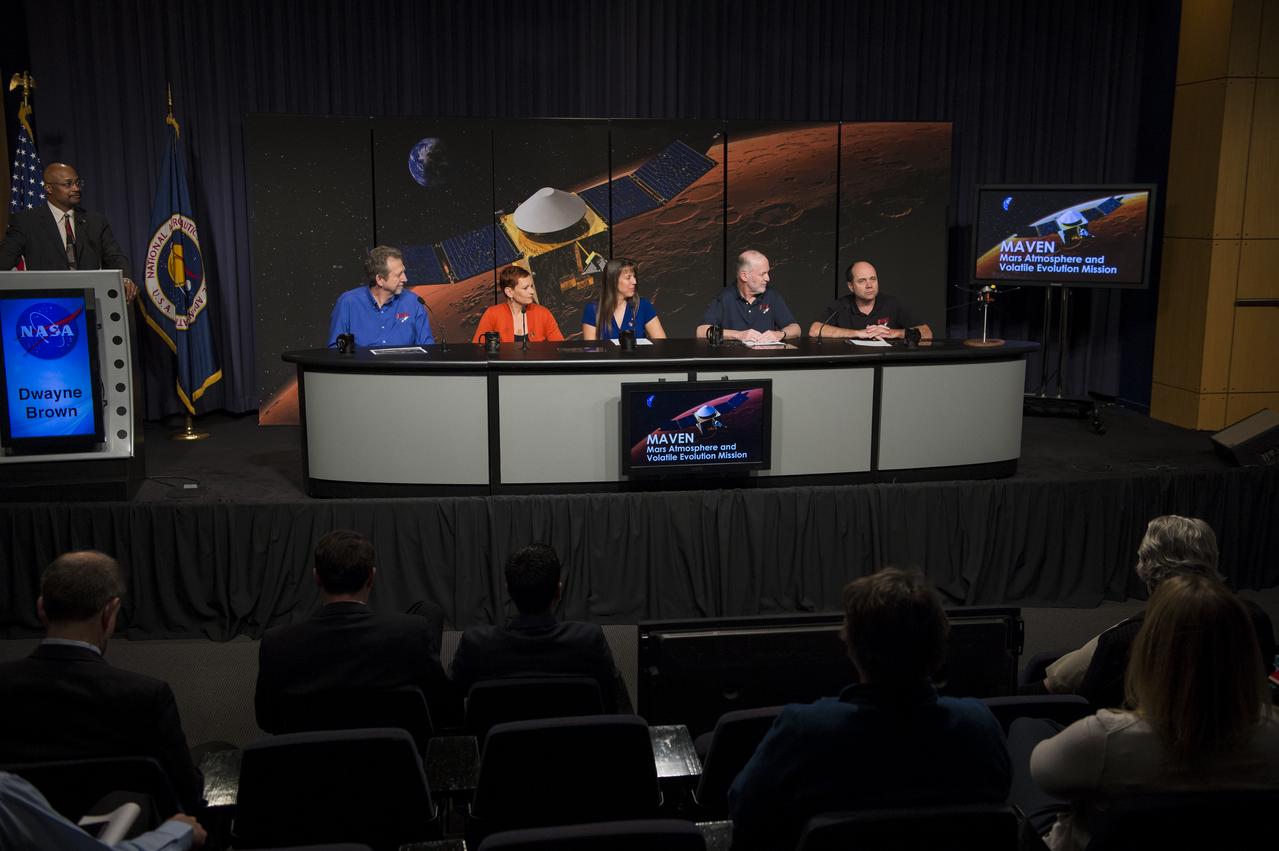
L-R: Dwayne Brown, NASA Public Affairs Officer, Jim Green, director, Planetary Science Division, NASA Headquarters, Lisa May, MAVEN program executive, NASA Headquarters, Kelly Fast, MAVEN program scientist, NASA Headquarters, Bruce Jakosky, MAVEN principal investigator, University of Colorado Boulder Laboratory for Atmospheric and Space Physics, and David Mitchell, MAVEN project manager, NASA's Goddard Space Flight Center, Greenbelt, Md. discuss the upcoming launch of the Mars Atmosphere and Volatile Evolution (MAVEN) mission, at a press conference at NASA Headquarters in Washington on Monday, Oct. 28th, 2013. MAVEN is the agency's next mission to Mars and the first devoted to understanding the upper atmosphere of the Red Planet. (Photo credit: NASA/Jay Westcott)