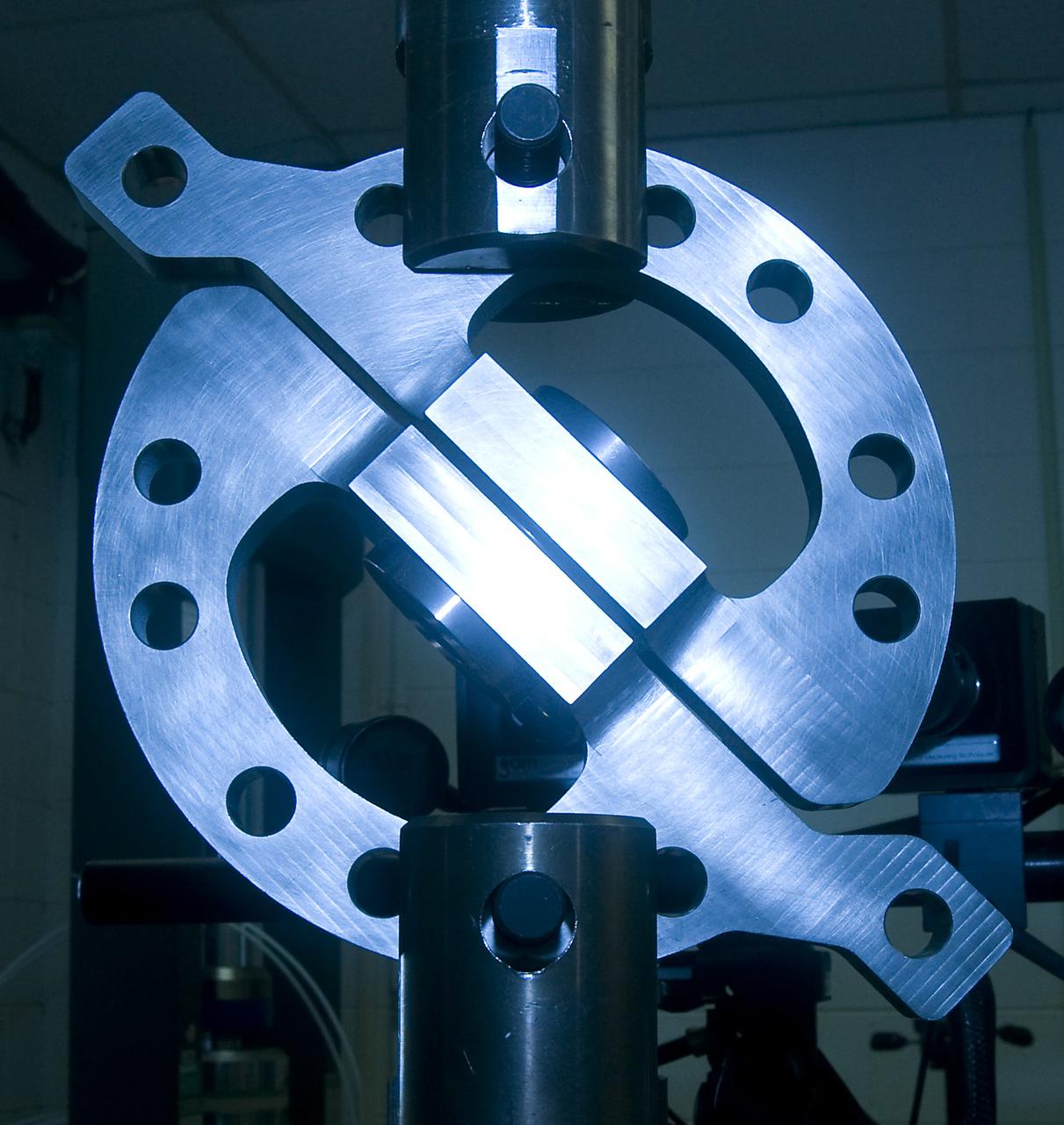
DEVELOPMENT TESTING BEING CONDUCTED AT THE REQUEST OF THE MSFC DYNAMICS, LOADS, AND STRENGTH BRANCH (EV31) TO STUDY THE FAILURE BEHAVIOR OF FASTENERS SUBJECTED TO COMBINED SHEAR AND TENSION LOADING. THE DATA FROM THIS TESTING WILL BE USED TO DEVELOP APPROPRIATE STRUCTURAL ANALYSIS METHODS AS PART OF A FASTENER STANDARDS EFFORT SPONSORED BY THE NASA ENGINEERING SAFETY CENTER (NESC). THE TEST FIXTURE WAS DESIGNED AND FABRICATED THROUGH THE MSFC MECHANICAL FABRICATION BRANCH (ES23). THE TESTING ORGANIZATION IS THE MSFC MATERIALS TEST BRANCH (EM10).
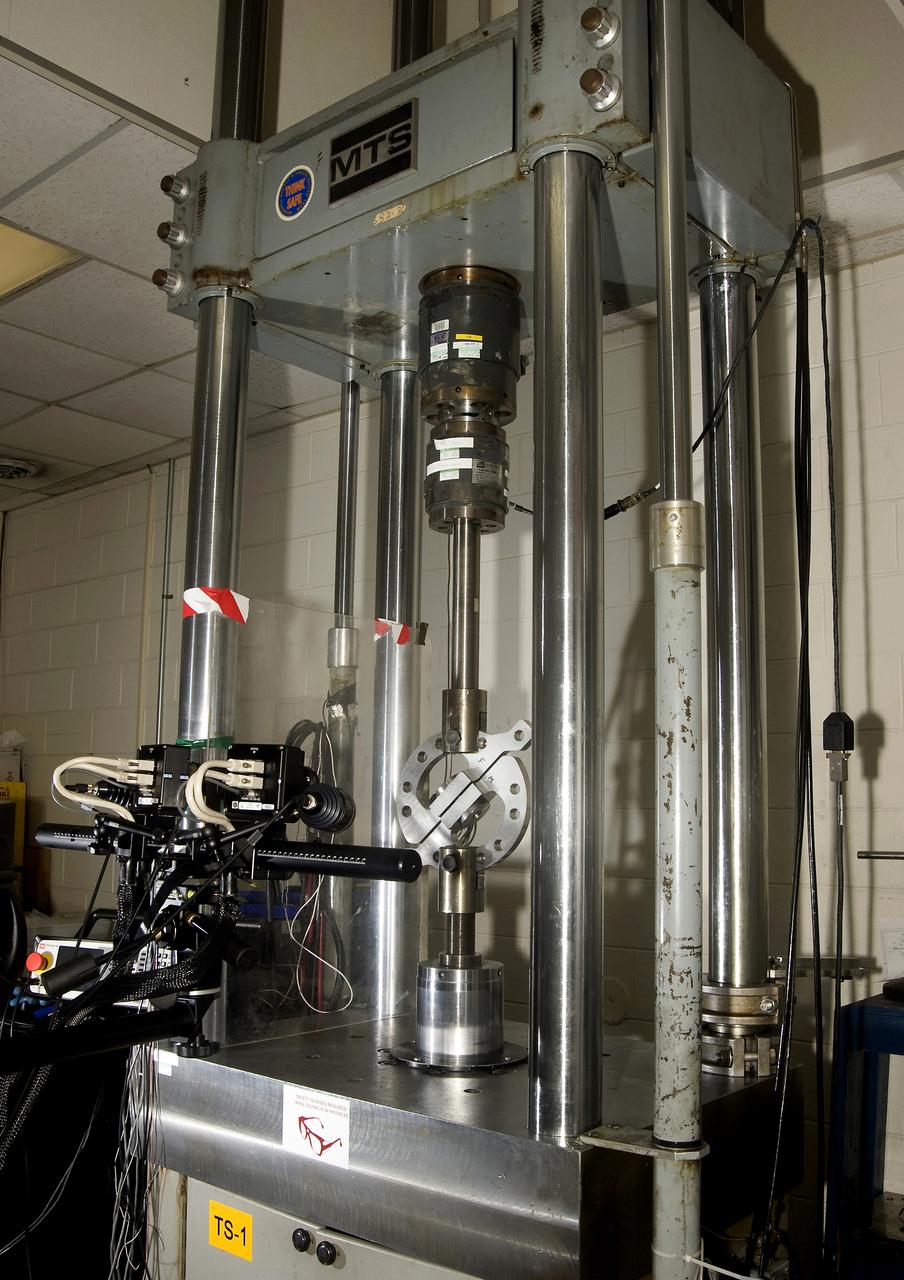
DEVELOPMENT TESTING BEING CONDUCTED AT THE REQUEST OF THE MSFC DYNAMICS, LOADS, AND STRENGTH BRANCH (EV31) TO STUDY THE FAILURE BEHAVIOR OF FASTENERS SUBJECTED TO COMBINED SHEAR AND TENSION LOADING. THE DATA FROM THIS TESTING WILL BE USED TO DEVELOP APPROPRIATE STRUCTURAL ANALYSIS METHODS AS PART OF A FASTENER STANDARDS EFFORT SPONSORED BY THE NASA ENGINEERING SAFETY CENTER (NESC). THE TEST FIXTURE WAS DESIGNED AND FABRICATED THROUGH THE MSFC MECHANICAL FABRICATION BRANCH (ES23). THE TESTING ORGANIZATION IS THE MSFC MATERIALS TEST BRANCH (EM10).
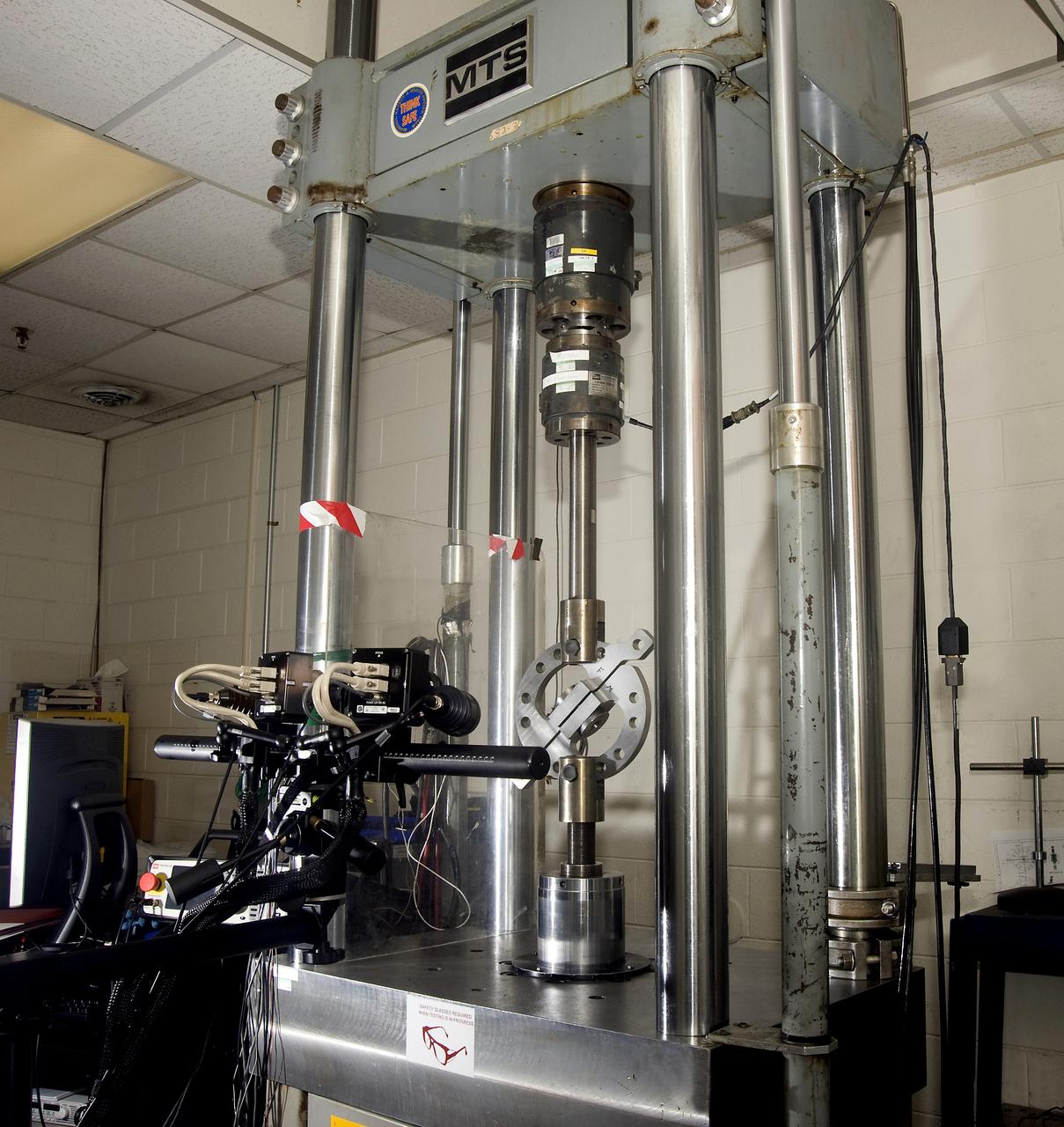
DEVELOPMENT TESTING BEING CONDUCTED AT THE REQUEST OF THE MSFC DYNAMICS, LOADS, AND STRENGTH BRANCH (EV31) TO STUDY THE FAILURE BEHAVIOR OF FASTENERS SUBJECTED TO COMBINED SHEAR AND TENSION LOADING. THE DATA FROM THIS TESTING WILL BE USED TO DEVELOP APPROPRIATE STRUCTURAL ANALYSIS METHODS AS PART OF A FASTENER STANDARDS EFFORT SPONSORED BY THE NASA ENGINEERING SAFETY CENTER (NESC). THE TEST FIXTURE WAS DESIGNED AND FABRICATED THROUGH THE MSFC MECHANICAL FABRICATION BRANCH (ES23). THE TESTING ORGANIZATION IS THE MSFC MATERIALS TEST BRANCH (EM10).
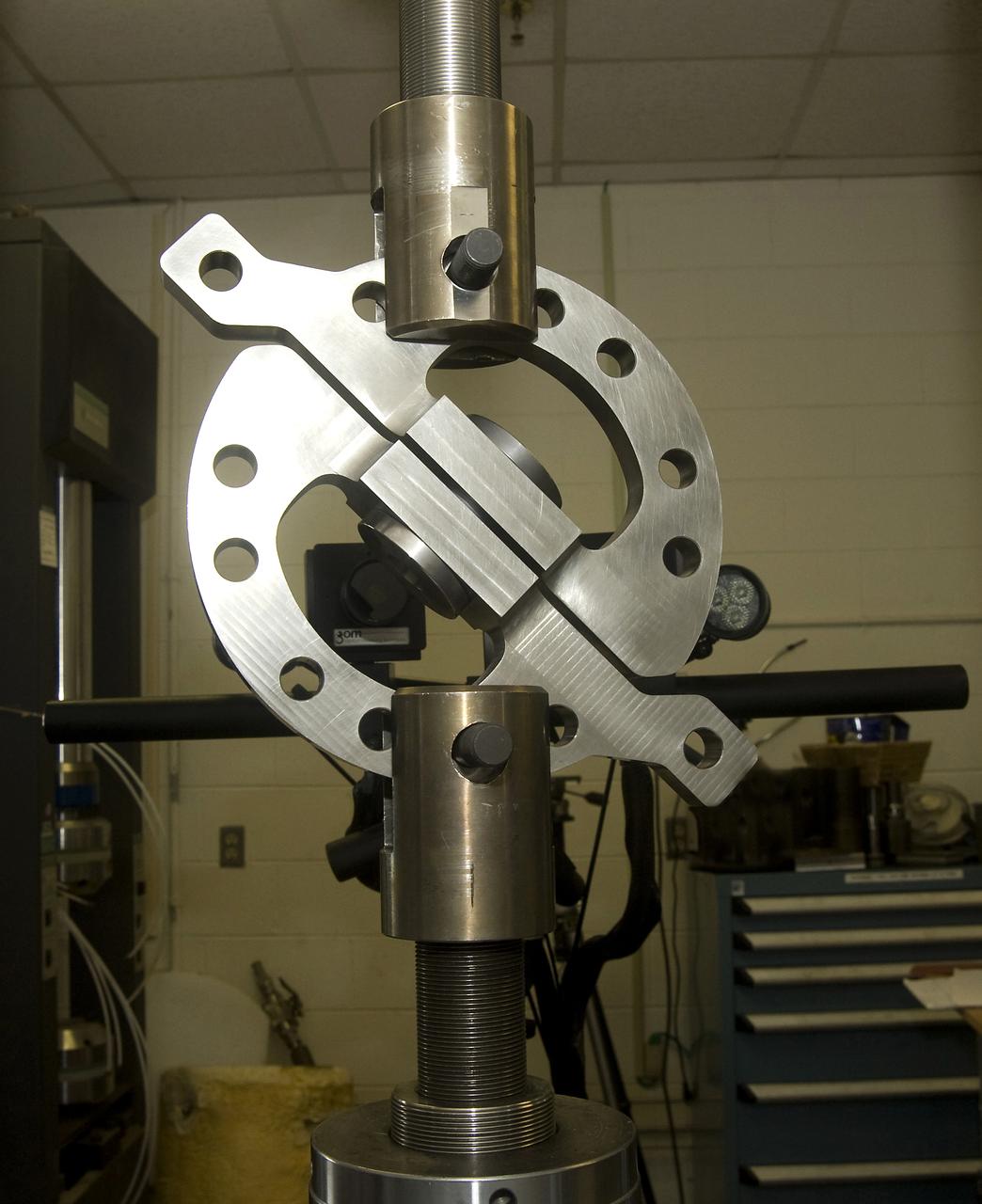
DEVELOPMENT TESTING BEING CONDUCTED AT THE REQUEST OF THE MSFC DYNAMICS, LOADS, AND STRENGTH BRANCH (EV31) TO STUDY THE FAILURE BEHAVIOR OF FASTENERS SUBJECTED TO COMBINED SHEAR AND TENSION LOADING. THE DATA FROM THIS TESTING WILL BE USED TO DEVELOP APPROPRIATE STRUCTURAL ANALYSIS METHODS AS PART OF A FASTENER STANDARDS EFFORT SPONSORED BY THE NASA ENGINEERING SAFETY CENTER (NESC). THE TEST FIXTURE WAS DESIGNED AND FABRICATED THROUGH THE MSFC MECHANICAL FABRICATION BRANCH (ES23). THE TESTING ORGANIZATION IS THE MSFC MATERIALS TEST BRANCH (EM10).
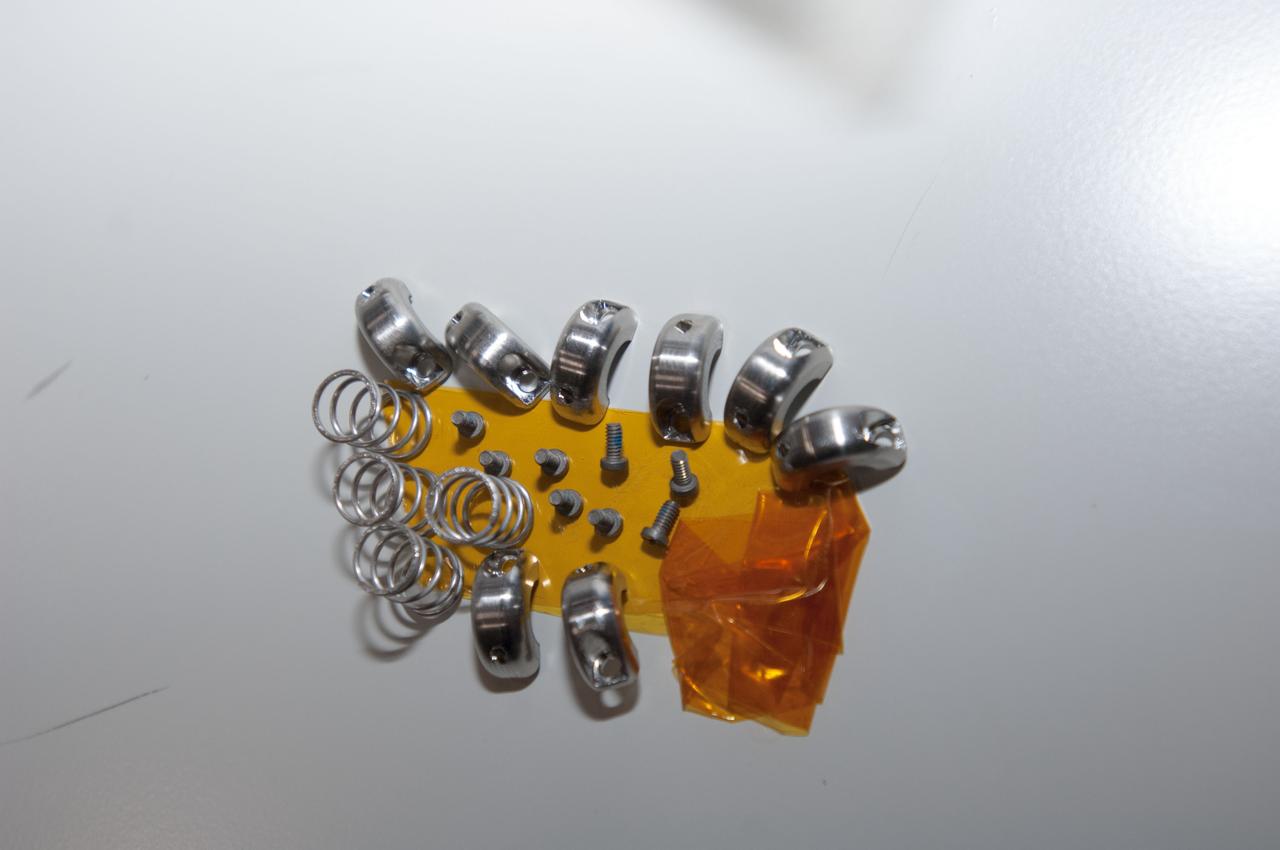
Documentation of retainers, springs and screws used during Expedition 35 Ku Communications (Comm) Unit fastener modifications. Parts are attached to Kapton tape.
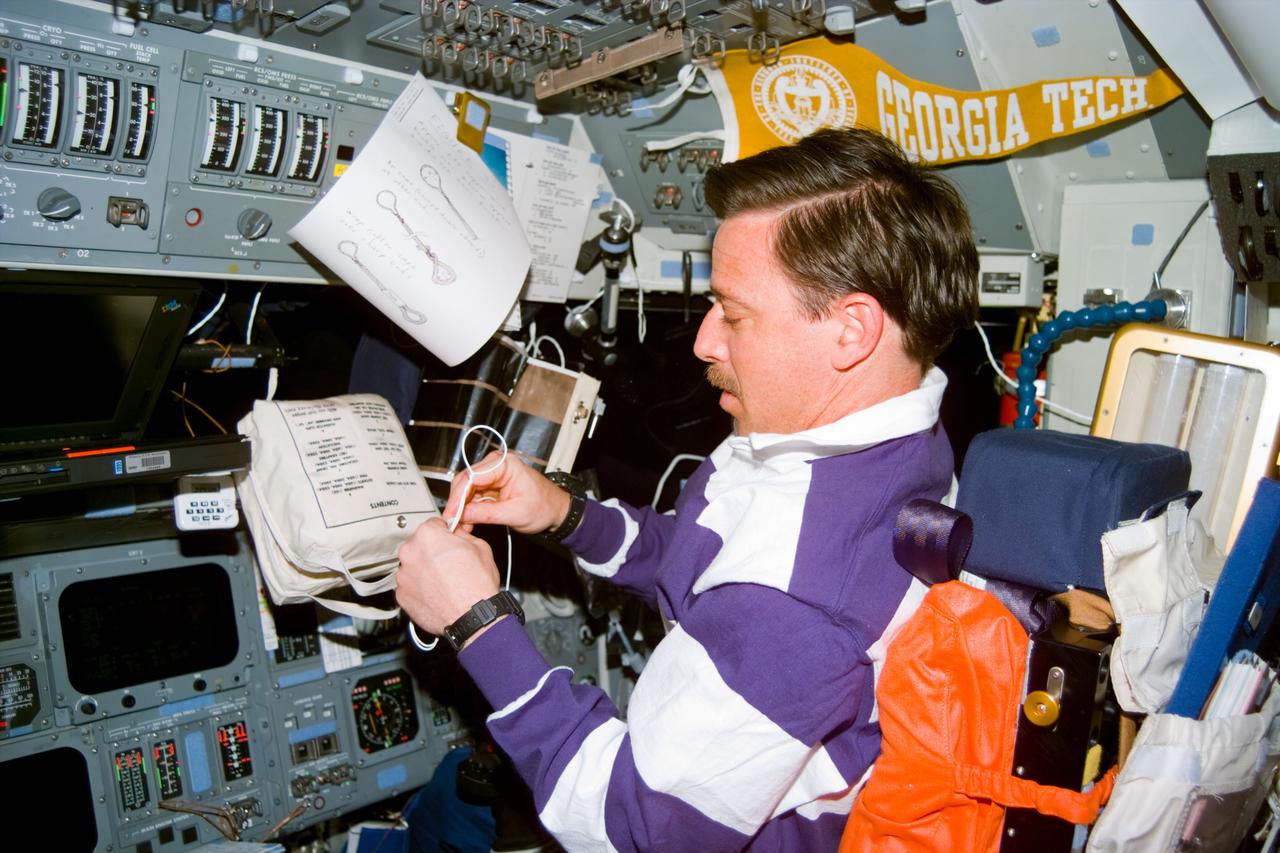
S82-E-5597 (17 Feb. 1997) --- Astronaut Scott J. Horowitz at pilot's station works with a hand-fashioned loop fastener device to be used in support of the additional STS-82 Extravehicular Activity (EVA) to service Hubble Space Telescope (HST). Note sketches overhead which were sent by ground controllers to guide the pilot's engineering of the task. This view was taken with an Electronic Still Camera (ESC).
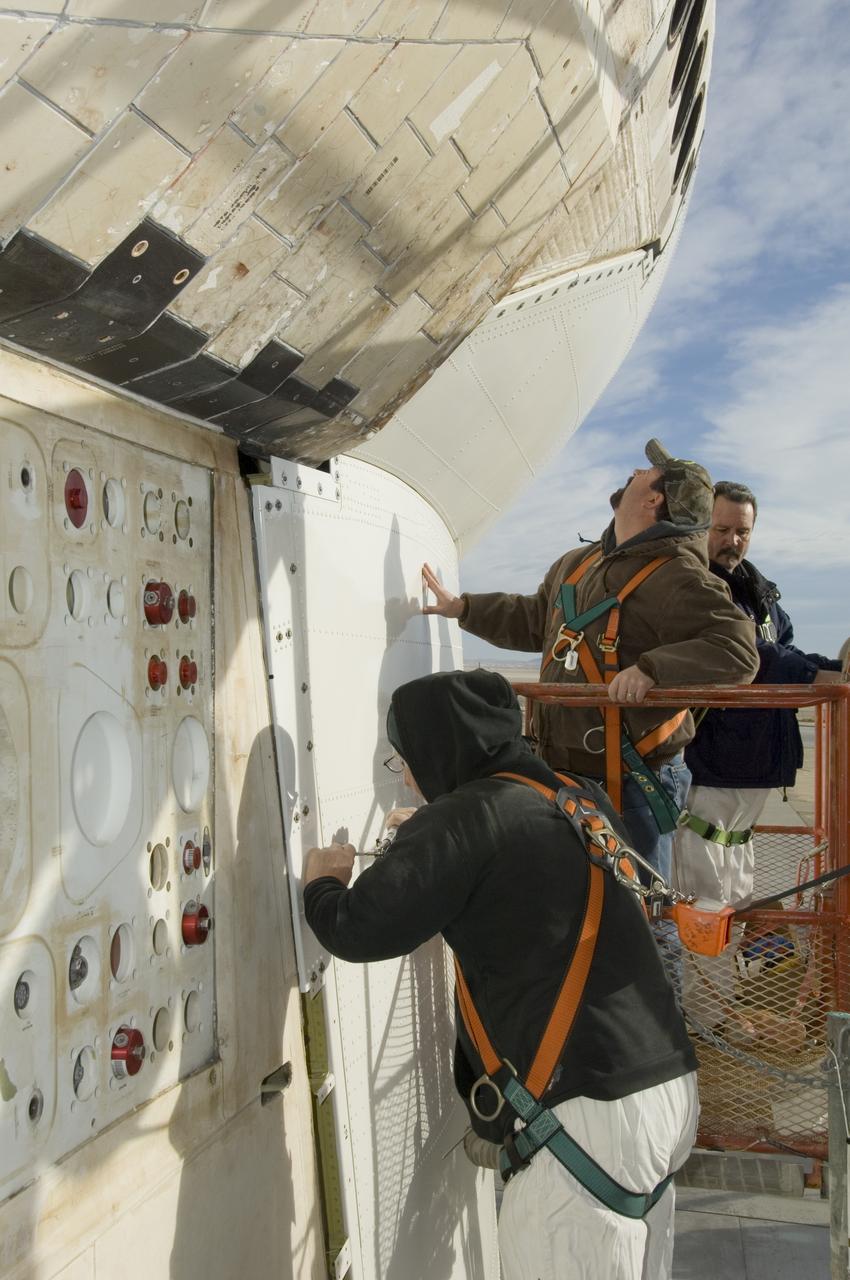
Technicians fasten down the flanges of the aerodynamic tail cone after installation on NASA's Space Shuttle Endeavour prior to its ferry flight from NASA's Dryden Flight Research Center to NASA's Kennedy Space Center in Florida.
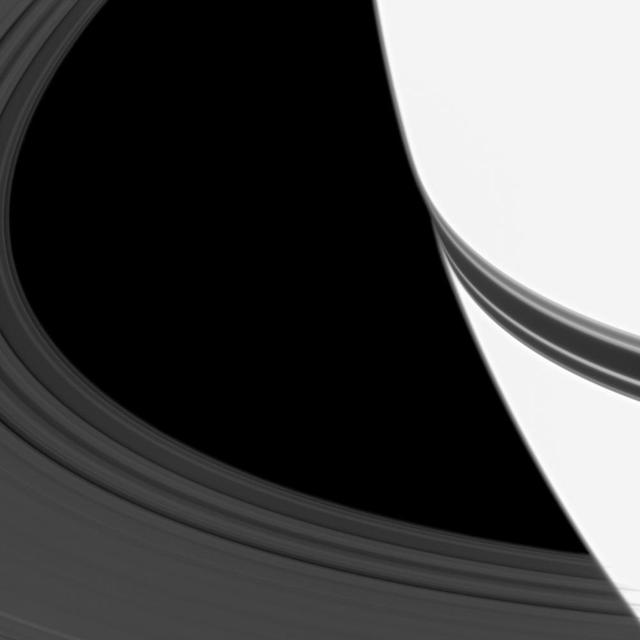
The shadow of Saturn rings looks like a belt fastened around the planet equator in this image. Overexposure to bring out the ring details makes Saturn appear especially bright.
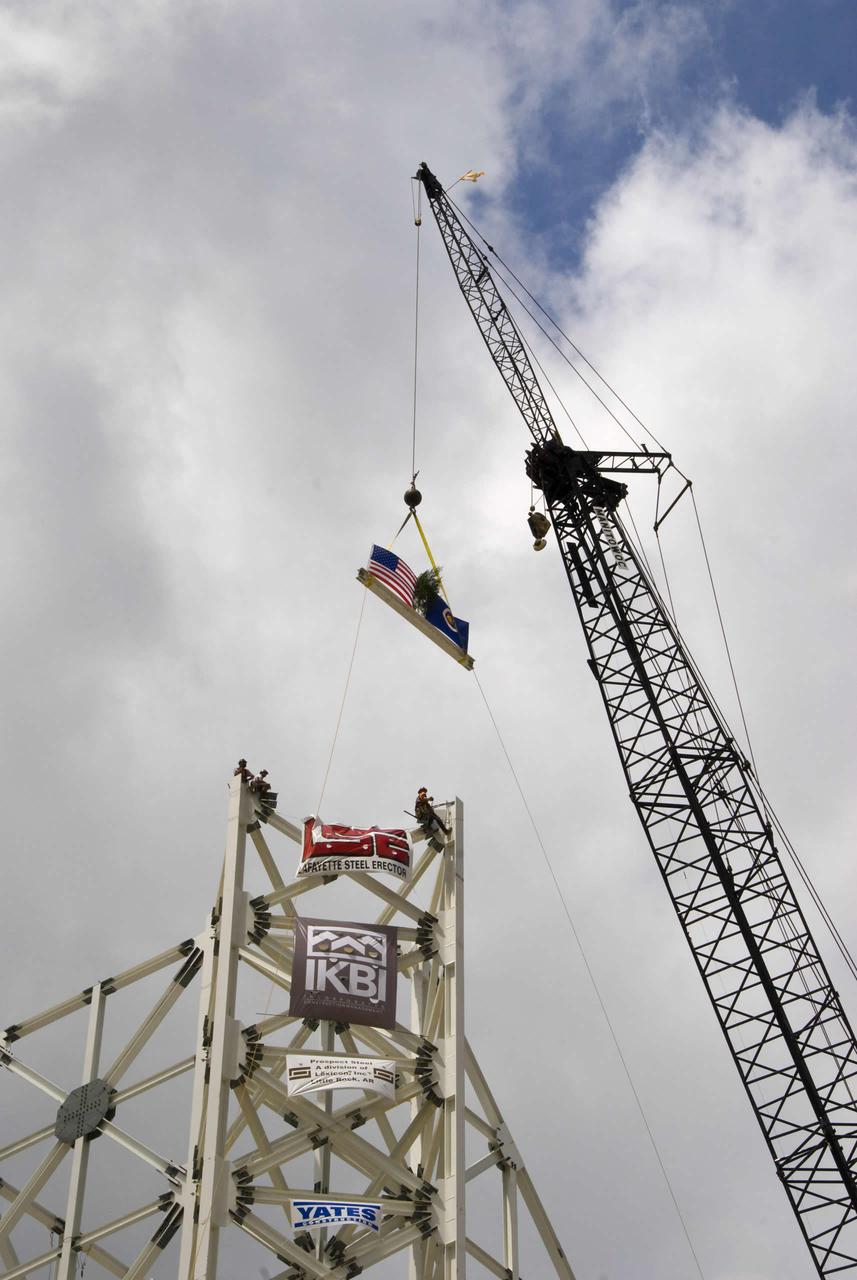
The final structural steel beam, bearing flags and the names of project workers, is hoisted and fastened into place atop the A-3 Test Stand.
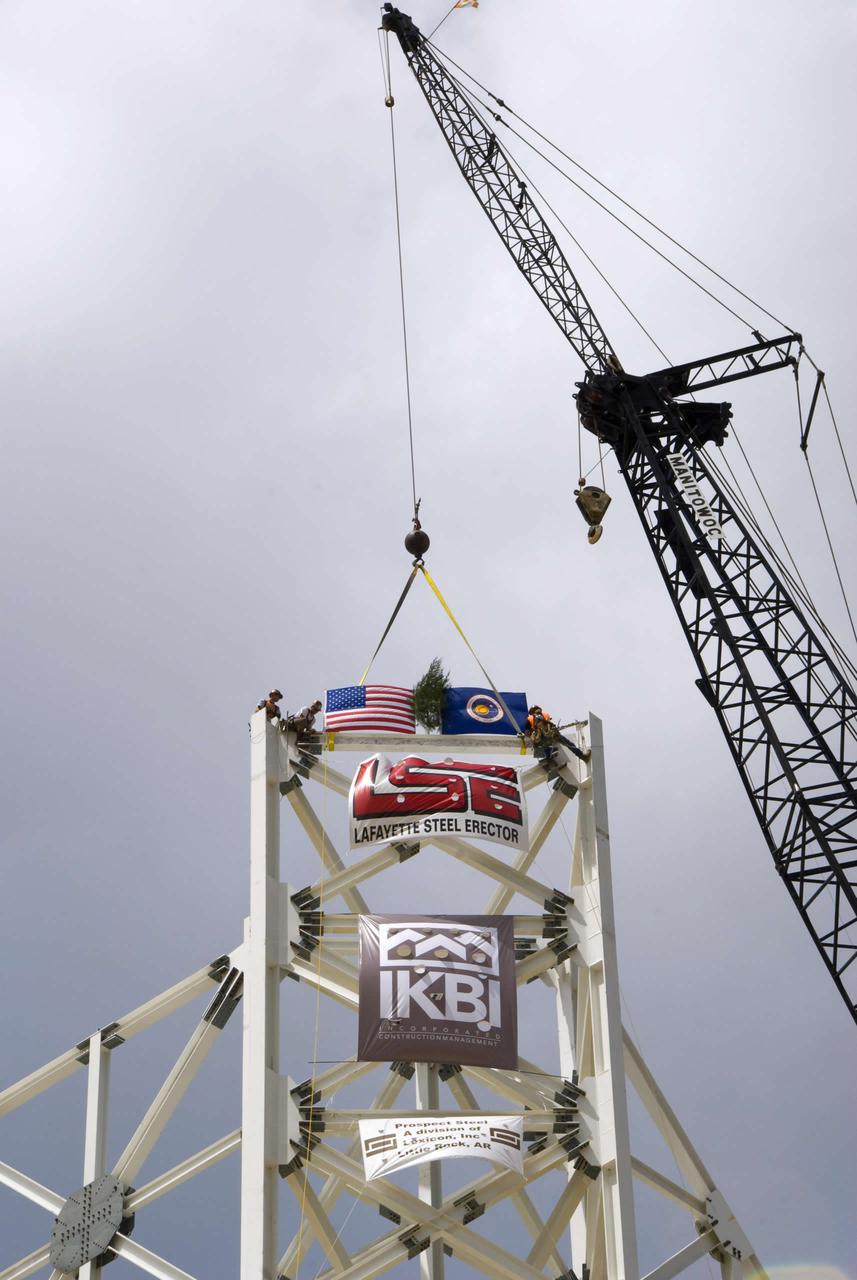
The final structural steel beam, bearing flags and the names of project workers, is hoisted and fastened into place atop the A-3 Test Stand.

Lockheed Martin technicians work to align and check the fastener holes on the X-59’s fuselage skin. The aircraft, under construction at Lockheed Martin Skunk Works in Palmdale, California, will demonstrate the ability to fly supersonic while reducing the loud sonic boom to a quiet sonic thump.
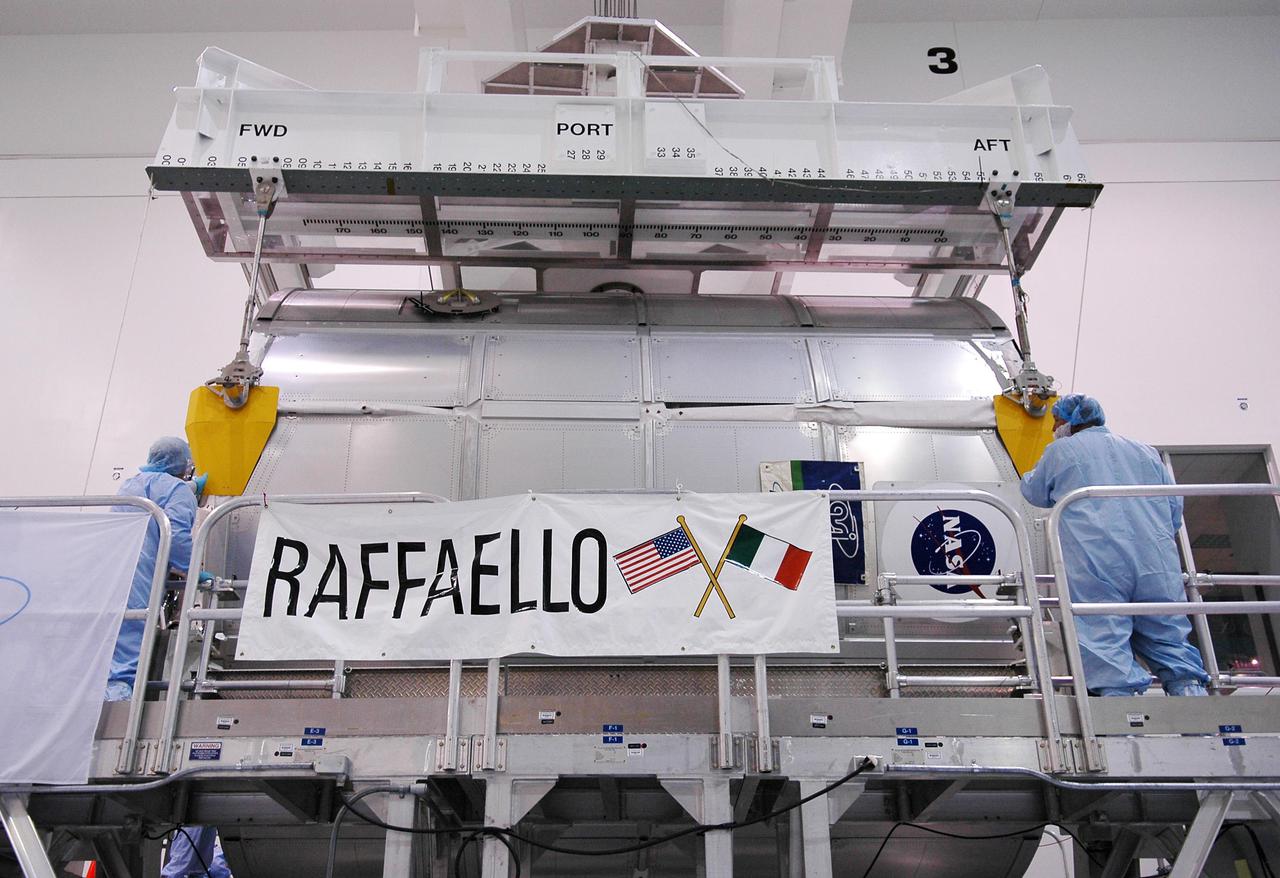
KENNEDY SPACE CENTER, FLA. - In the Space Station Processing Facility at NASA’s Kennedy Space Center, the Multi-Purpose Logistics Module Raffaello is lowered onto its work stand. The module is being moved to allow the processing team access in order to address concerns with mechanical fasteners inside the module that do not incorporate an adequate secondary locking feature. The assessment and additional work is being conducted to ensure that the fasteners do not disengage during ascent. Raffaello is scheduled to launch on Discovery's Return to Flight mission STS-114.
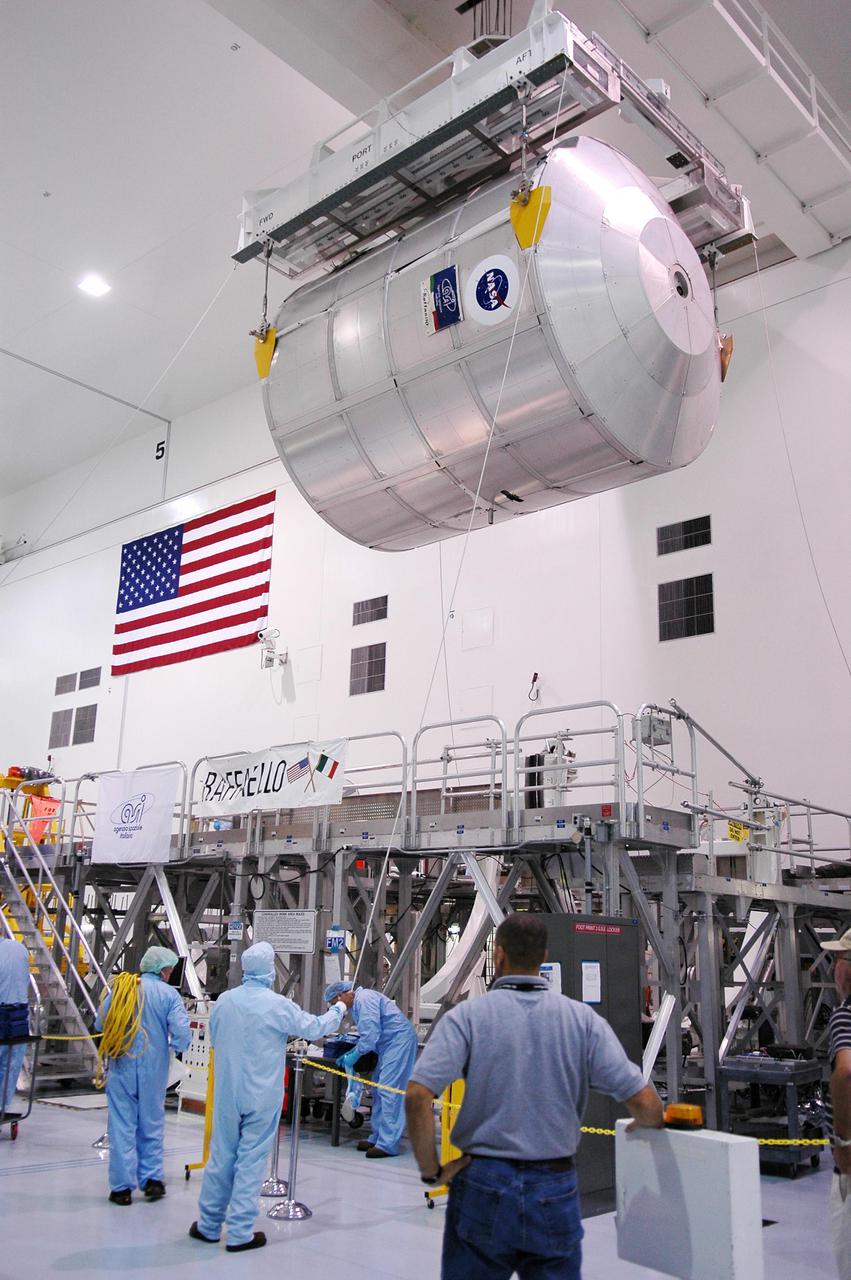
KENNEDY SPACE CENTER, FLA. - In the Space Station Processing Facility at NASA’s Kennedy Space Center, the Multi-Purpose Logistics Module Raffaello is lowered toward its work stand. The module is being moved to allow the processing team access in order to address concerns with mechanical fasteners inside the module that do not incorporate an adequate secondary locking feature. The assessment and additional work is being conducted to ensure that the fasteners do not disengage during ascent. Raffaello is scheduled to launch on Discovery's Return to Flight mission STS-114.
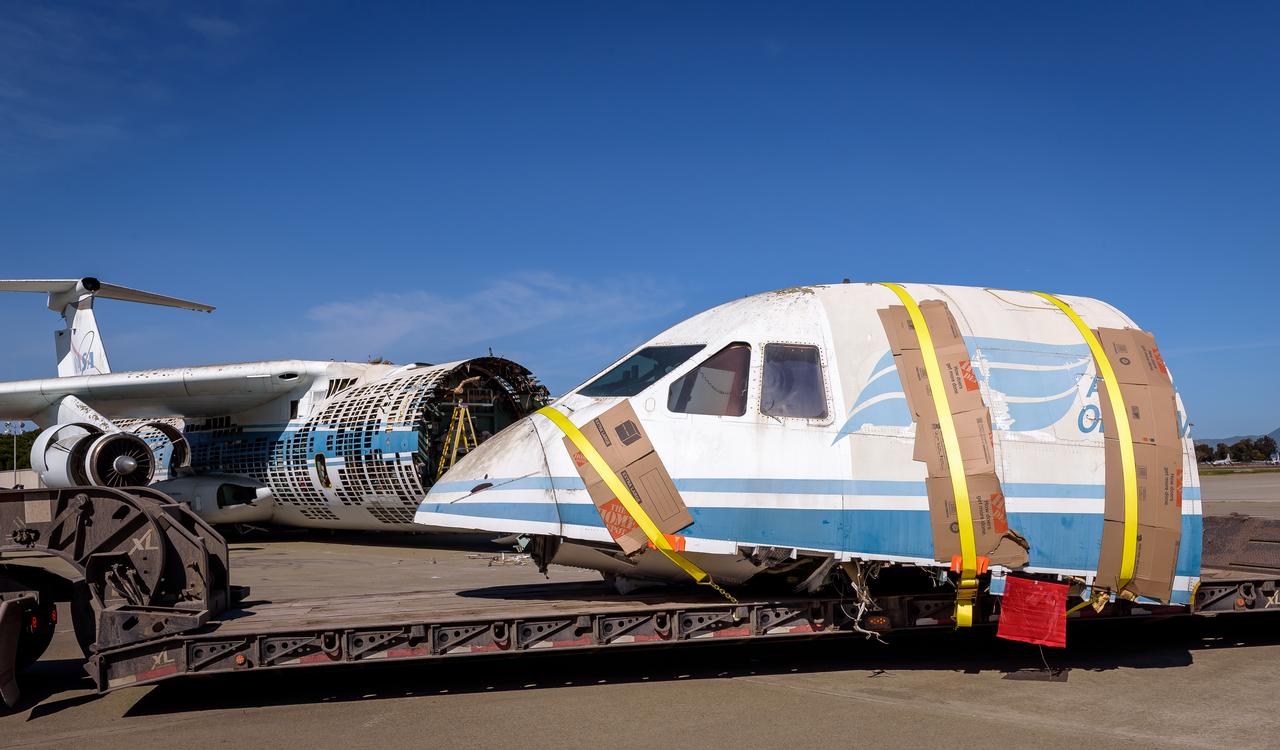
Yellow straps fasten the cockpit of the modified C-141 Kuiper Airborne Observatory, (KAO) (NASA-714), to the trailer that carries it off the N211 apron at Moffett Field, California.
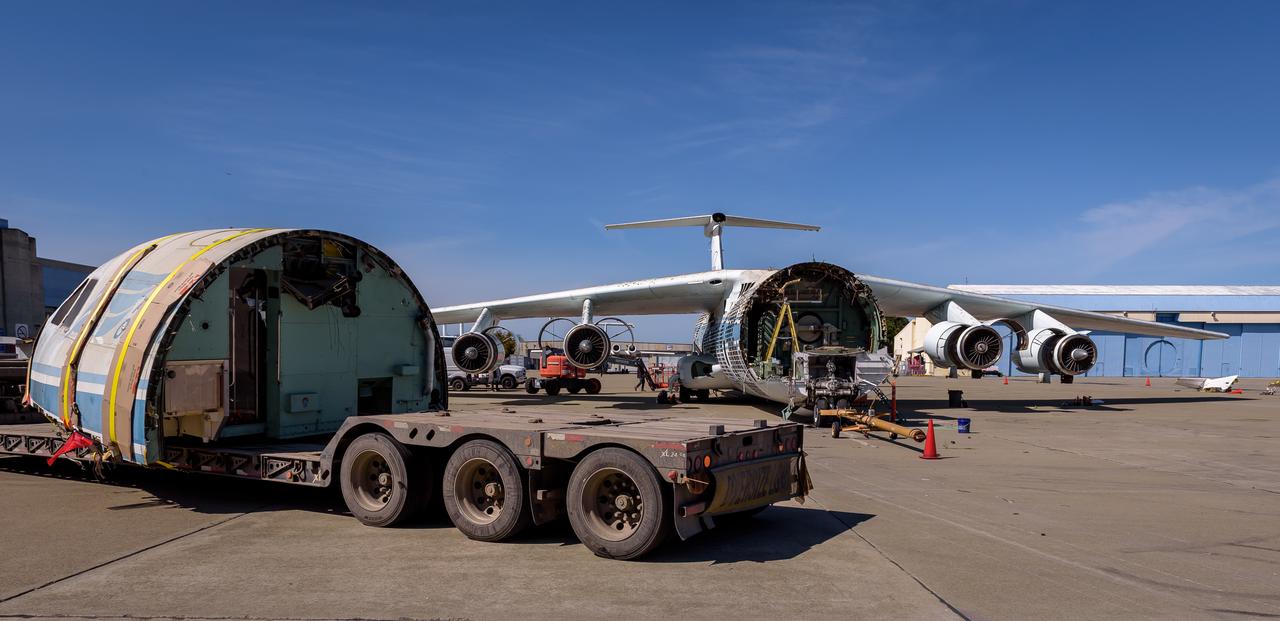
Yellow straps fasten the cockpit of the modified C-141 Kuiper Airborne Observatory, (KAO) (NASA-714), to the trailer that carries it off the N211 apron at Moffett Field, California.
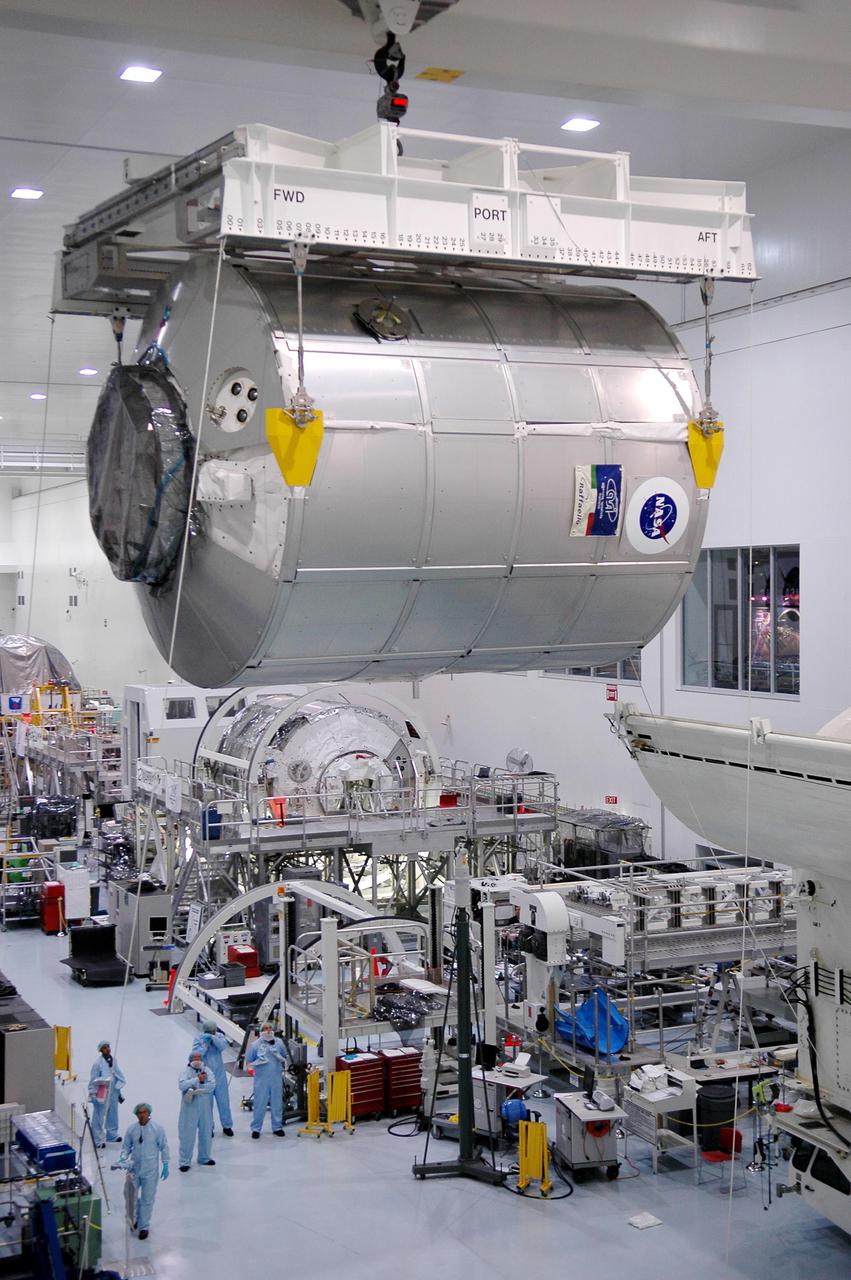
KENNEDY SPACE CENTER, FLA. - In the Space Station Processing Facility at NASA’s Kennedy Space Center, the Multi-Purpose Logistics Module Raffaello is moved away from the Payload Transportation Canister at right where it was waiting transfer to the pad. The module is being moved back to its work stand to allow the processing team access in order to address concerns with mechanical fasteners inside the module that do not incorporate an adequate secondary locking feature. The assessment and additional work is being conducted to ensure that the fasteners do not disengage during ascent. Raffaello is scheduled to launch on Discovery's Return to Flight mission STS-114.
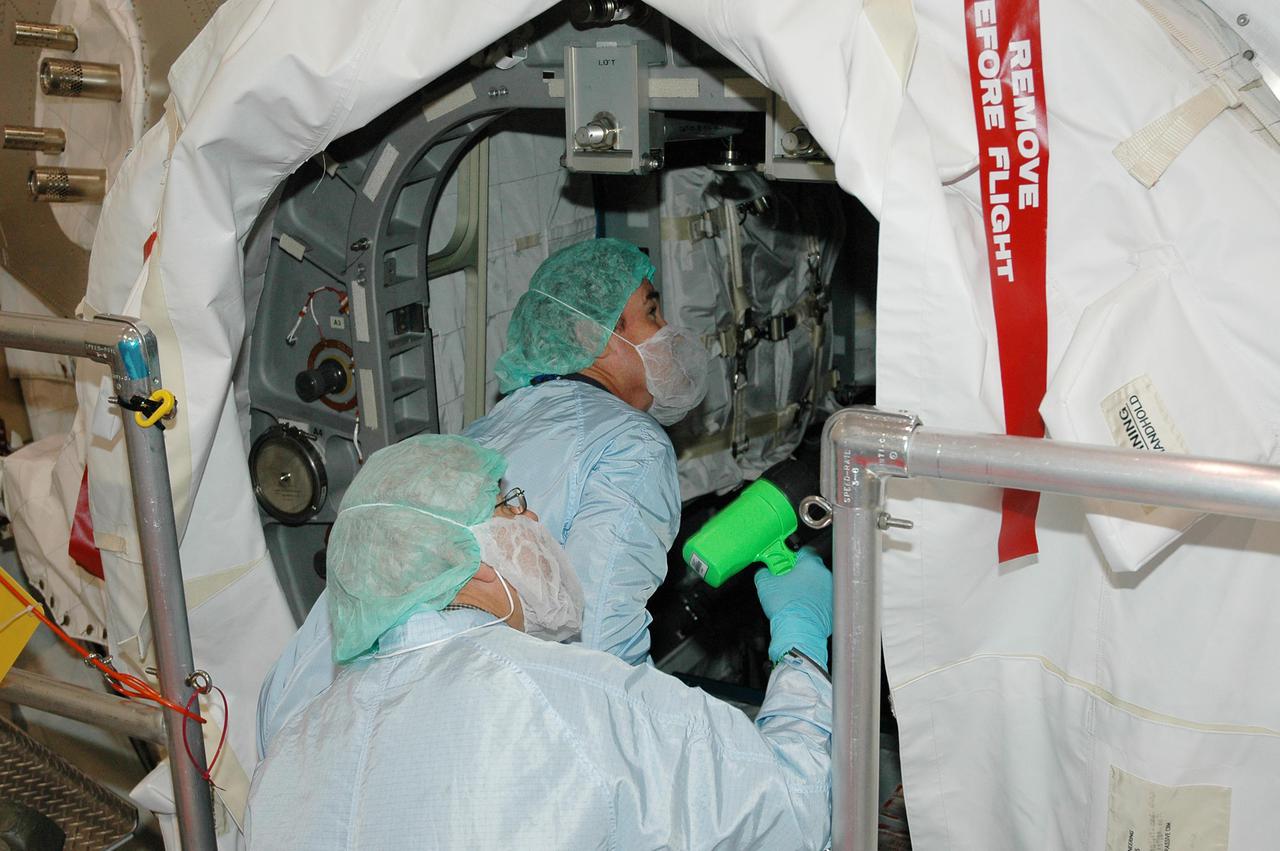
KENNEDY SPACE CENTER, FLA. - In the Space Station Processing Facility, workers make a final check inside the hatch of the Multi-Purpose Logistics Module Raffaello before it is closed. Previously loaded into the Payload Canister Transporter, Raffaello was moved back to its work stand to allow the processing team access to address concerns with mechanical fasteners inside the module that do not incorporate an adequate secondary locking feature. The assessment and additional work was conducted to ensure that the fasteners do not disengage during ascent. Raffaello is scheduled to launch on Discovery’s Return to Flight mission STS-114. The launch window extends July 13 to July 31.
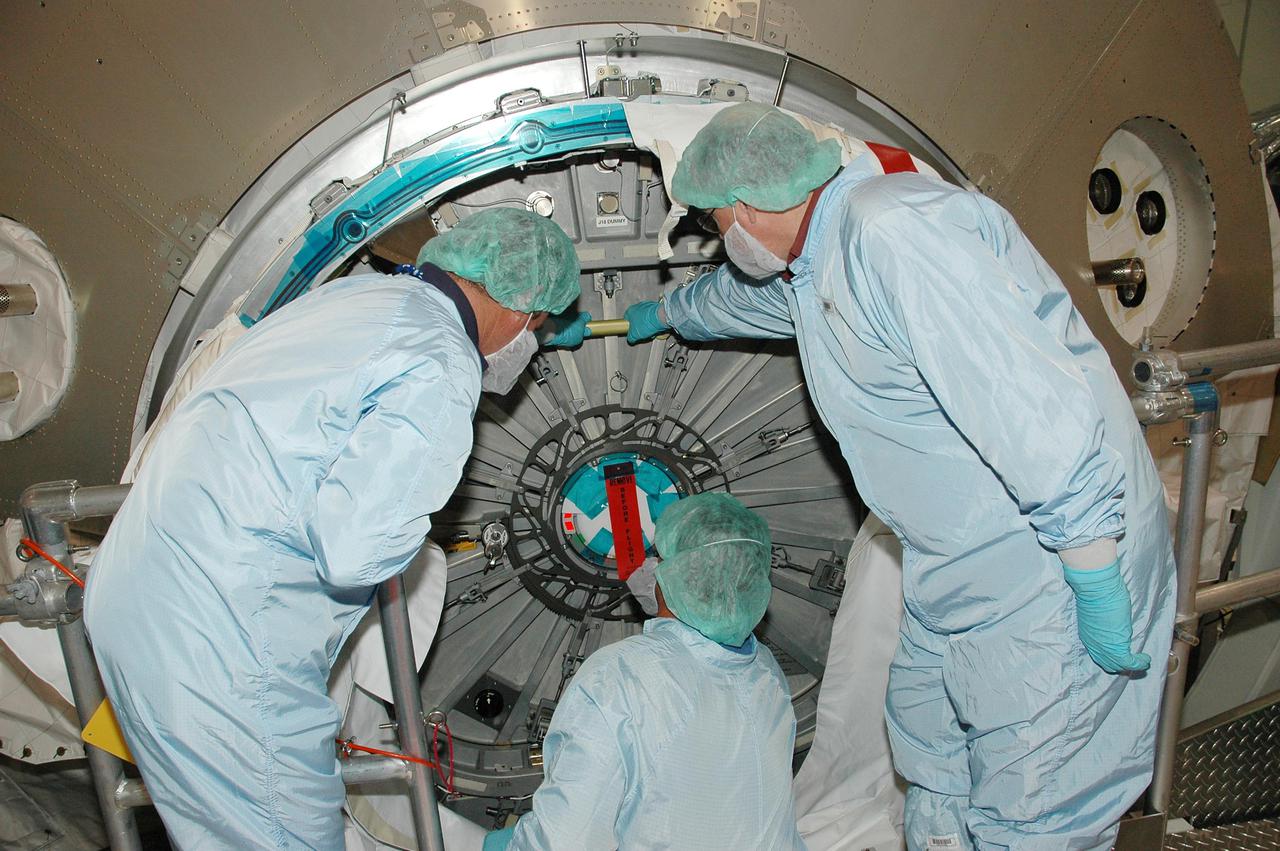
KENNEDY SPACE CENTER, FLA. - In the Space Station Processing Facility, workers close the hatch opening on the Multi-Purpose Logistics Module Raffaello. Previously loaded into the Payload Canister Transporter, Raffaello was moved back to its work stand to allow the processing team access to address concerns with mechanical fasteners inside the module that do not incorporate an adequate secondary locking feature. The assessment and additional work was conducted to ensure that the fasteners do not disengage during ascent. Raffaello is scheduled to launch on Discovery’s Return to Flight mission STS-114. The launch window extends July 13 to July 31.
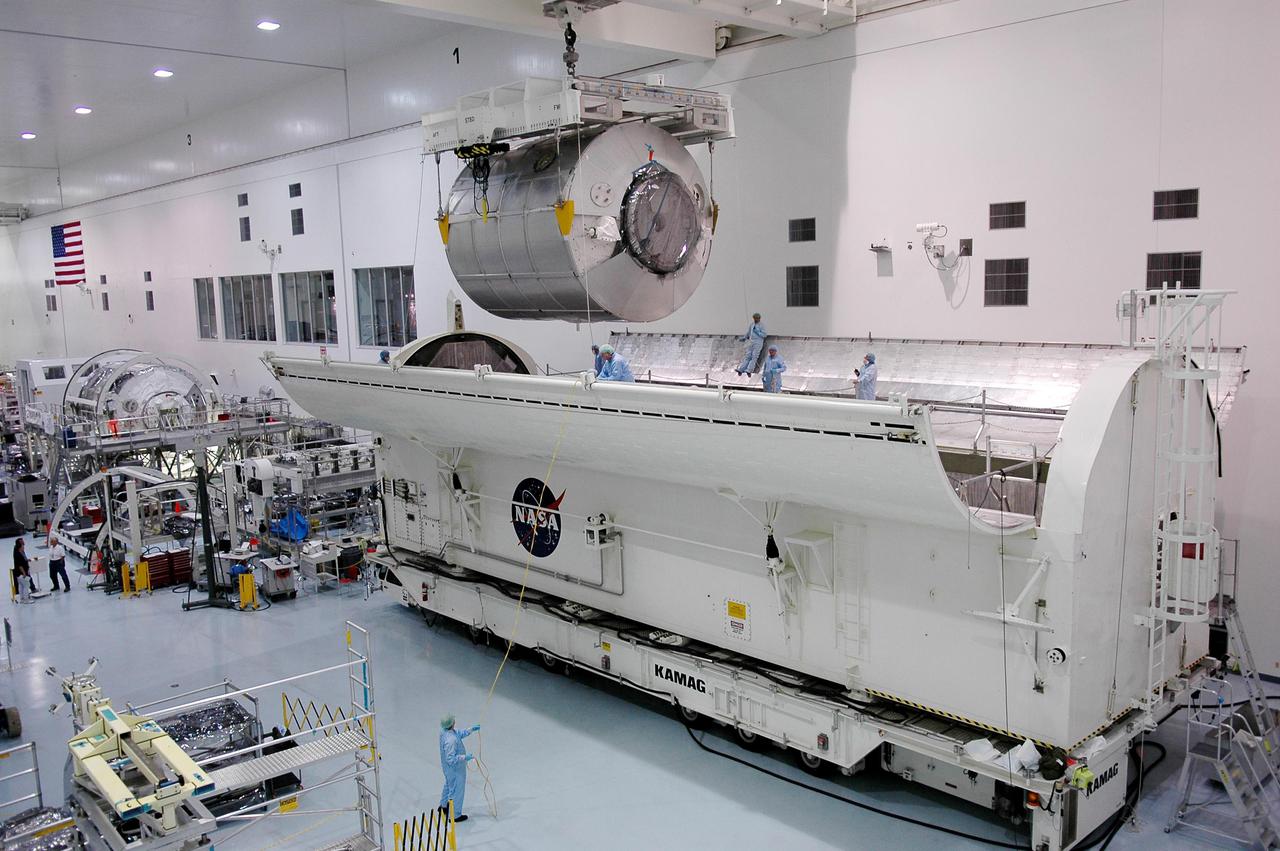
KENNEDY SPACE CENTER, FLA. - In the Space Station Processing Facility at NASA’s Kennedy Space Center, the Multi-Purpose Logistics Module Raffaello is lifted out of the Payload Transportation Canister where it was waiting transfer to the pad. The module is being moved back to its work stand to allow the processing team access in order to address concerns with mechanical fasteners inside the module that do not incorporate an adequate secondary locking feature. The assessment and additional work is being conducted to ensure that the fasteners do not disengage during ascent. Raffaello is scheduled to launch on Discovery's Return to Flight mission STS-114.

KENNEDY SPACE CENTER, FLA. - In the Space Station Processing Facility at NASA’s Kennedy Space Center, the Multi-Purpose Logistics Module Raffaello is lifted away from the Payload Transportation Canister where it was waiting transfer to the pad. The module is being moved back to its work stand to allow the processing team access to address concerns with mechanical fasteners inside the module that do not incorporate an adequate secondary locking feature. The assessment and additional work is being conducted to ensure that the fasteners do not disengage during ascent. Raffaello is scheduled to launch on Discovery's Return to Flight mission STS-114.
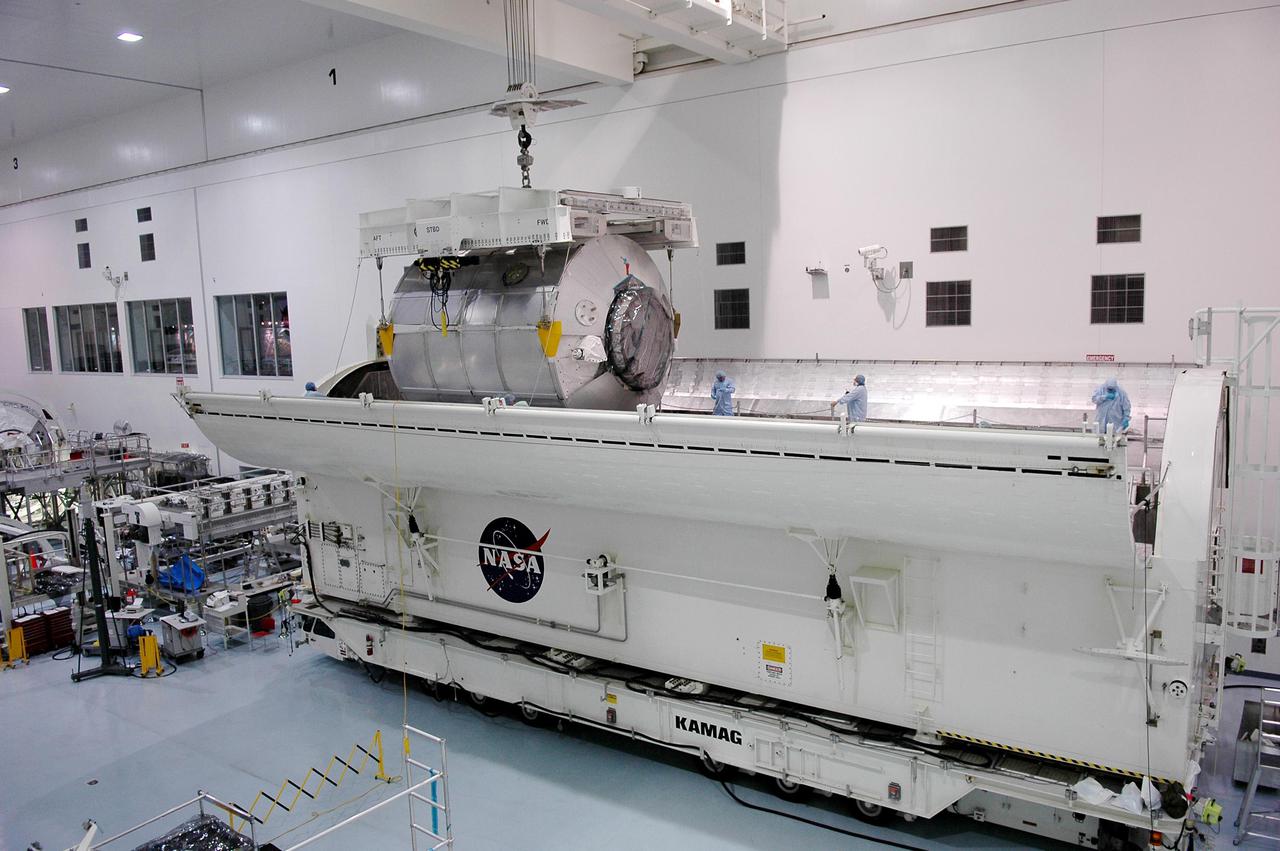
KENNEDY SPACE CENTER, FLA. - In the Space Station Processing Facility at NASA’s Kennedy Space Center, the Multi-Purpose Logistics Module Raffaello is lifted out of the Payload Transportation Canister where it was waiting transfer to the pad. The module is being moved back to its work stand to allow the processing team access in order to address concerns with mechanical fasteners inside the module that do not incorporate an adequate secondary locking feature. The assessment and additional work is being conducted to ensure that the fasteners do not disengage during ascent. Raffaello is scheduled to launch on Discovery's Return to Flight mission STS-114.
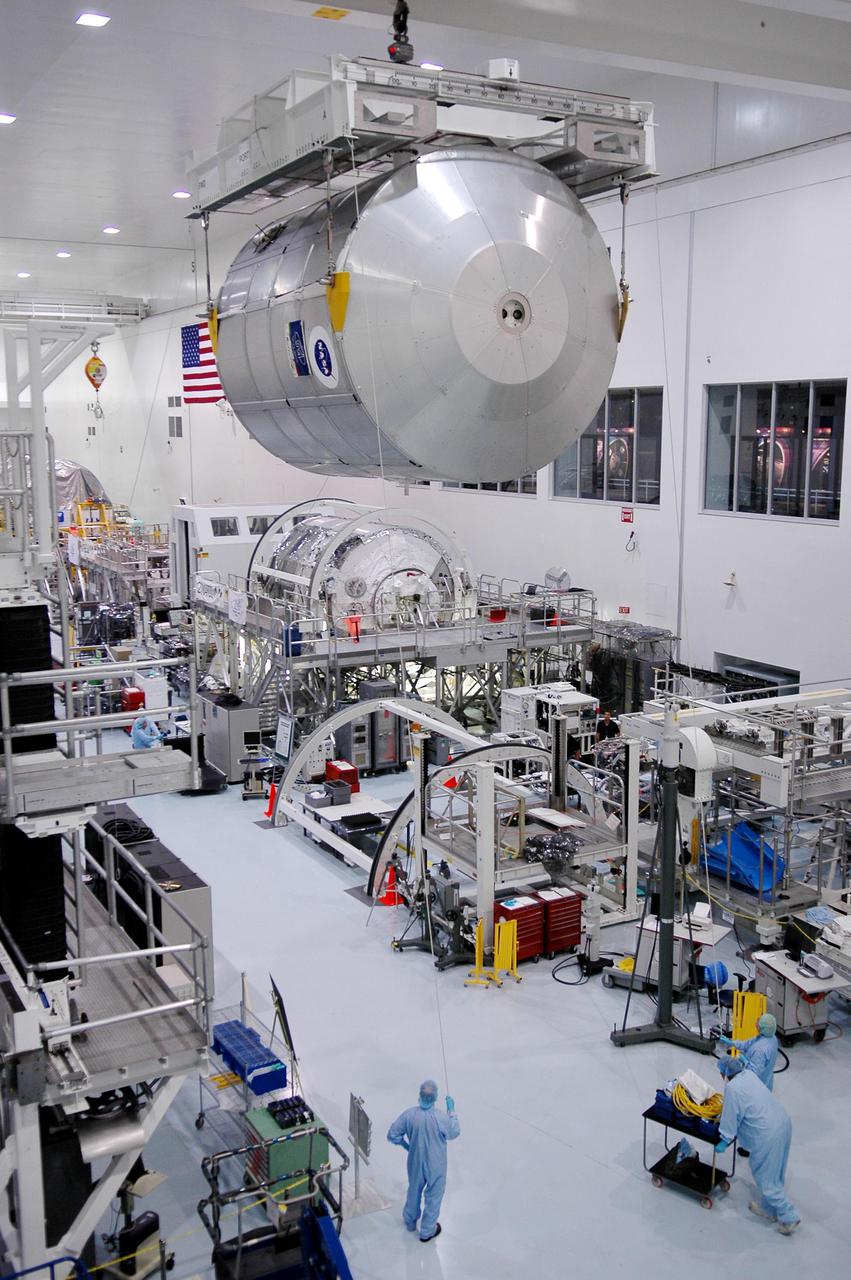
KENNEDY SPACE CENTER, FLA. - In the Space Station Processing Facility at NASA’s Kennedy Space Center, the Multi-Purpose Logistics Module Raffaello moves across the room to a work stand. The module is being moved back to its work stand to allow the processing team access in order to address concerns with mechanical fasteners inside the module that do not incorporate an adequate secondary locking feature. The assessment and additional work is being conducted to ensure that the fasteners do not disengage during ascent. Raffaello is scheduled to launch on Discovery's Return to Flight mission STS-114.
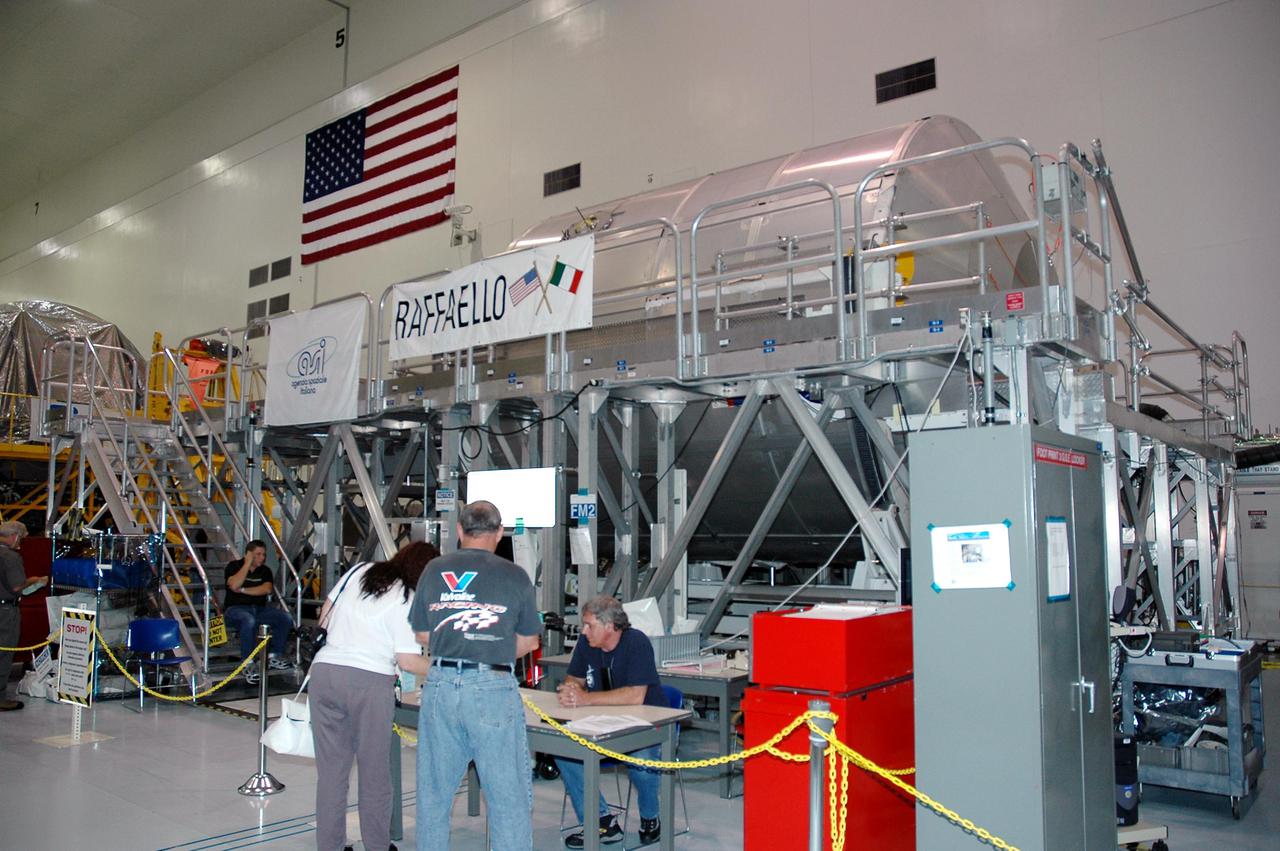
KENNEDY SPACE CENTER, FLA. - In the Space Station Processing Facility, the Multi-Purpose Logistics Module Raffaello (background) sits on a work stand. It is ready for hatch closure after recent testing. Previously loaded into the Payload Canister Transporter, Raffaello was moved back to its work stand to allow the processing team access to address concerns with mechanical fasteners inside the module that do not incorporate an adequate secondary locking feature. The assessment and additional work was conducted to ensure that the fasteners do not disengage during ascent. Raffaello is scheduled to launch on Discovery’s Return to Flight mission STS-114. The launch window extends July 13 to July 31.
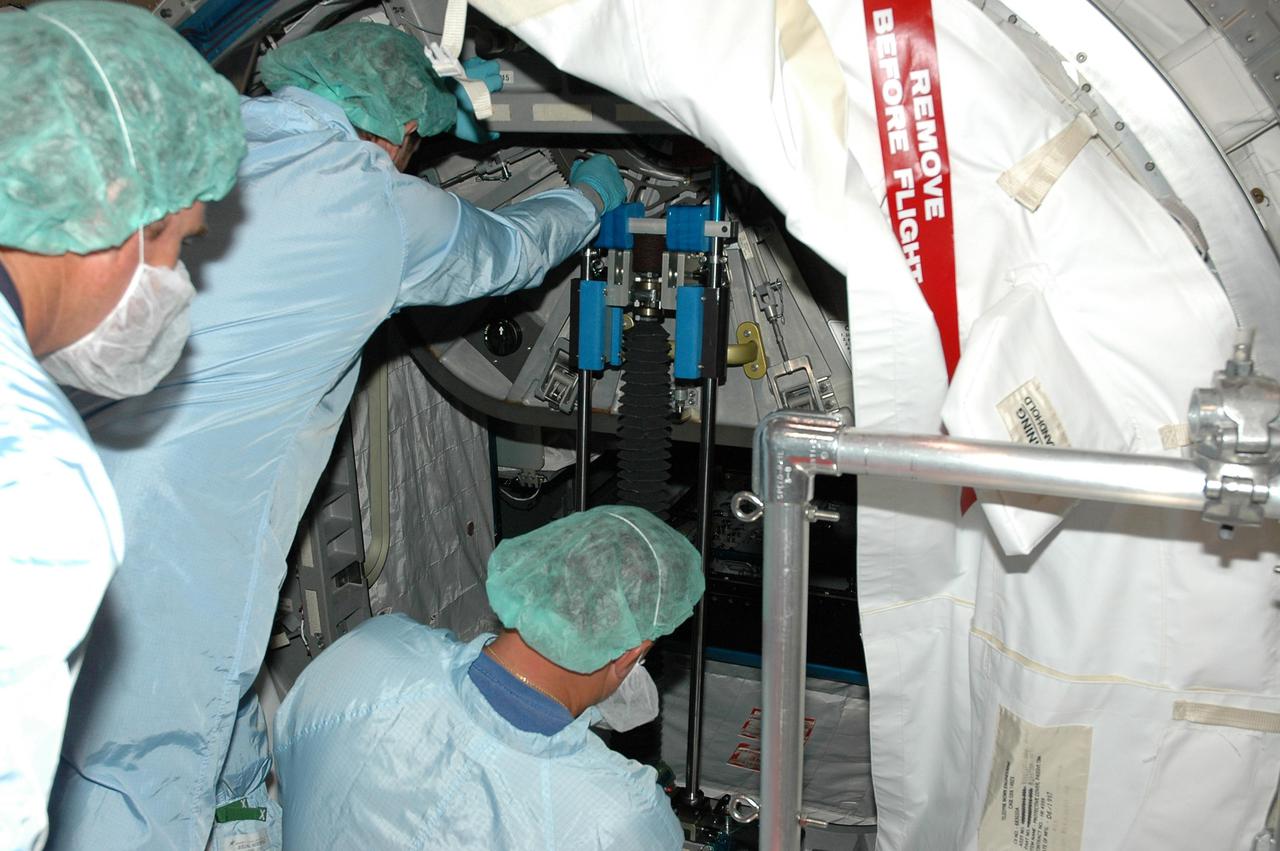
KENNEDY SPACE CENTER, FLA. - In the Space Station Processing Facility, workers check the hatch opening on the Multi-Purpose Logistics Module Raffaello before closing the hatch. Previously loaded into the Payload Canister Transporter, Raffaello was moved back to its work stand to allow the processing team access to address concerns with mechanical fasteners inside the module that do not incorporate an adequate secondary locking feature. The assessment and additional work was conducted to ensure that the fasteners do not disengage during ascent. Raffaello is scheduled to launch on Discovery’s Return to Flight mission STS-114. The launch window extends July 13 to July 31.
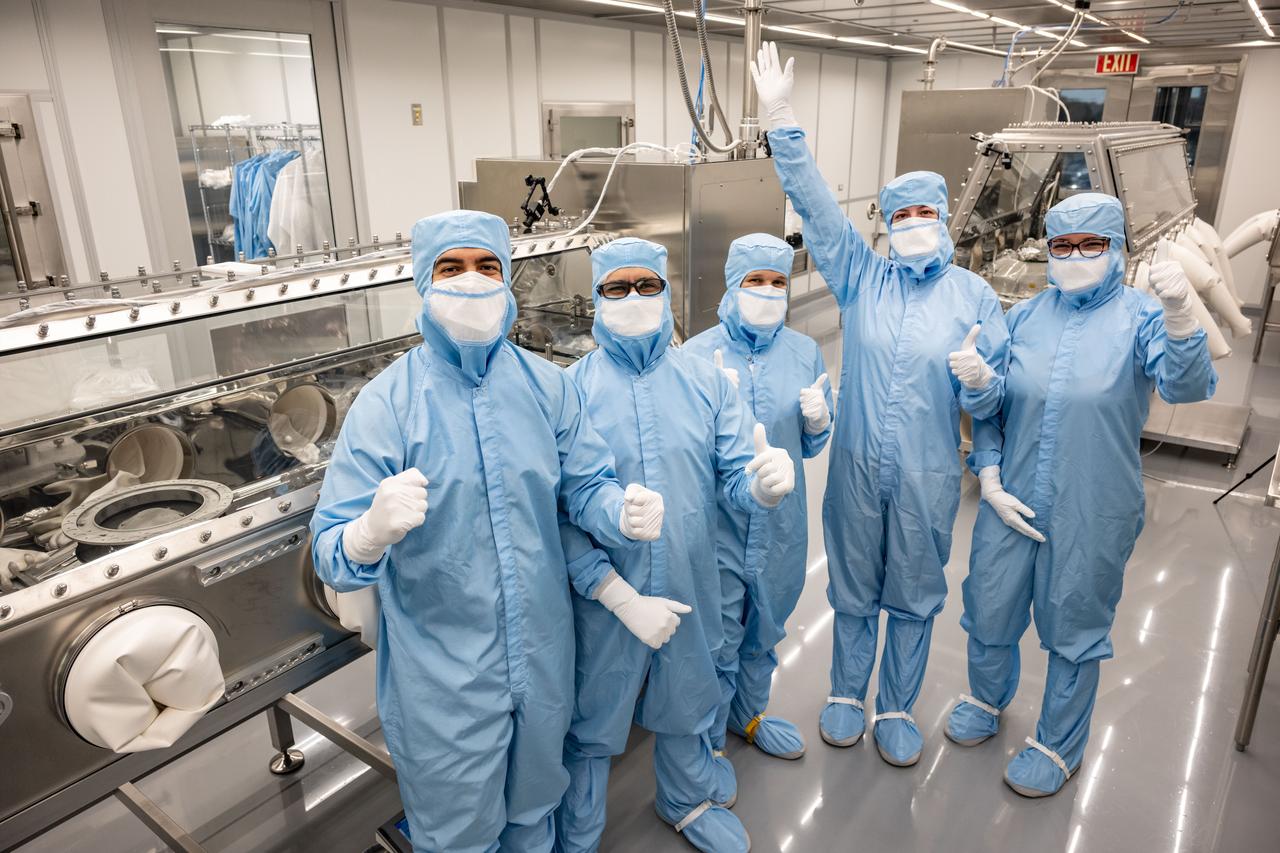
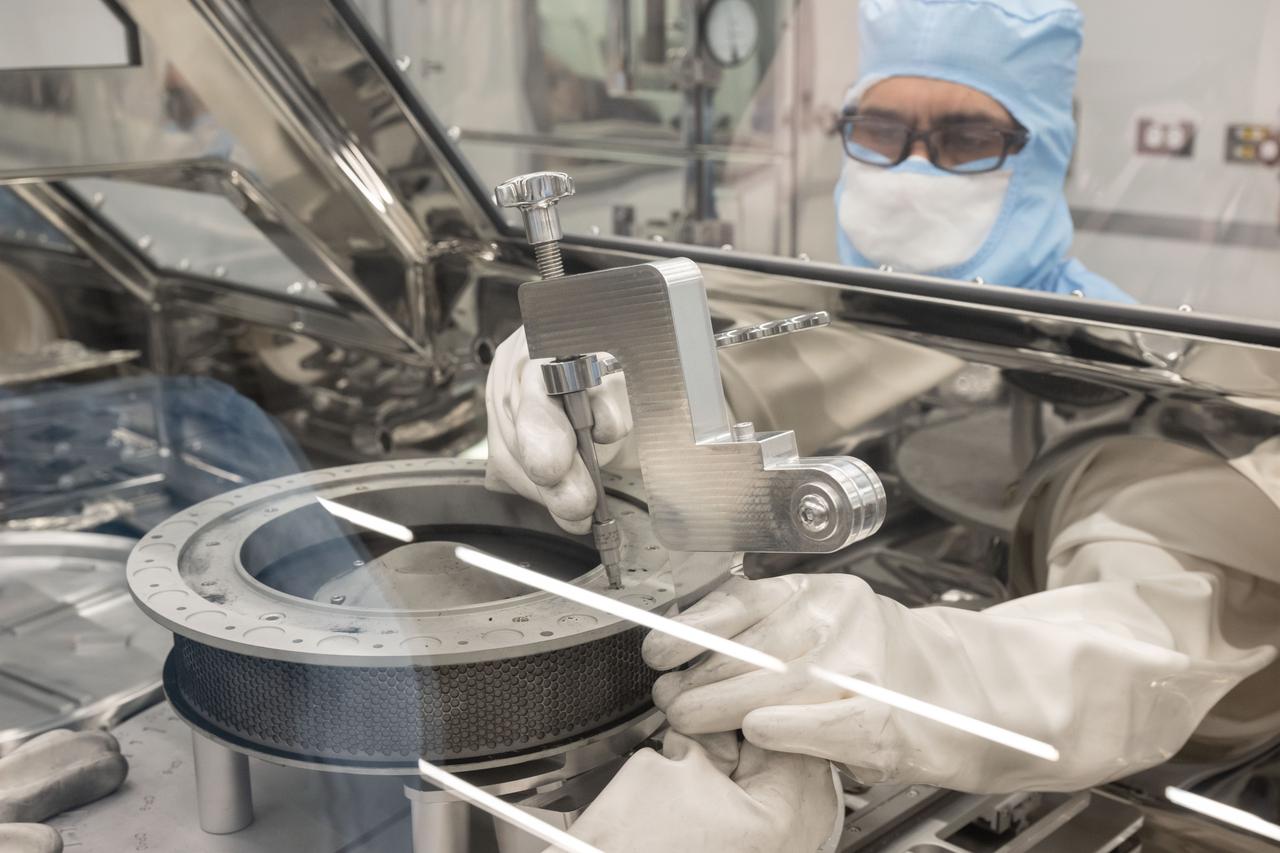
OSIRIS REx curation team attempting to remove the two stuck fasteners that are currently prohibiting the complete opening of the TAGSAM head. Photo Date: January 10, 2024. Location: Bldg. 31 - 2nd Floor - OSIRIS-REx lab. Photographer: Robert Markowitz

JSC2000-02225 (March 2000) --- Astronaut Daniel C. Burbank, mission specialist, fastens the communications carrier assembly (CCA) on his launch and entry suit (LES). Burbank was about to join his six STS-106 crewmates for a simulation exercise in the Systems Integration Facility at the Johnson Space Center (JSC).
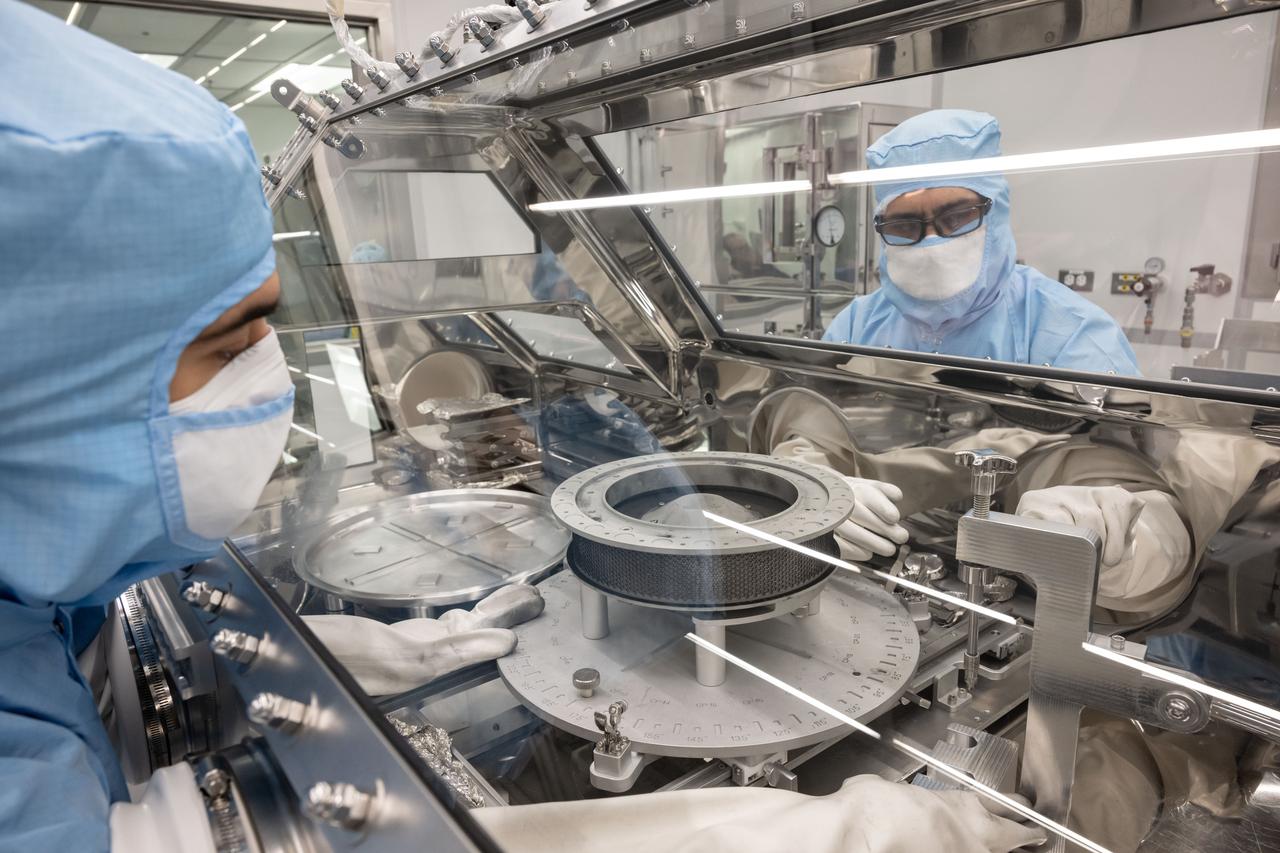
OSIRIS REx curation team attempting to remove the two stuck fasteners that are currently prohibiting the complete opening of the TAGSAM head. Photo Date: January 10, 2024. Location: Bldg. 31 - 2nd Floor - OSIRIS-REx lab. Photographer: Robert Markowitz
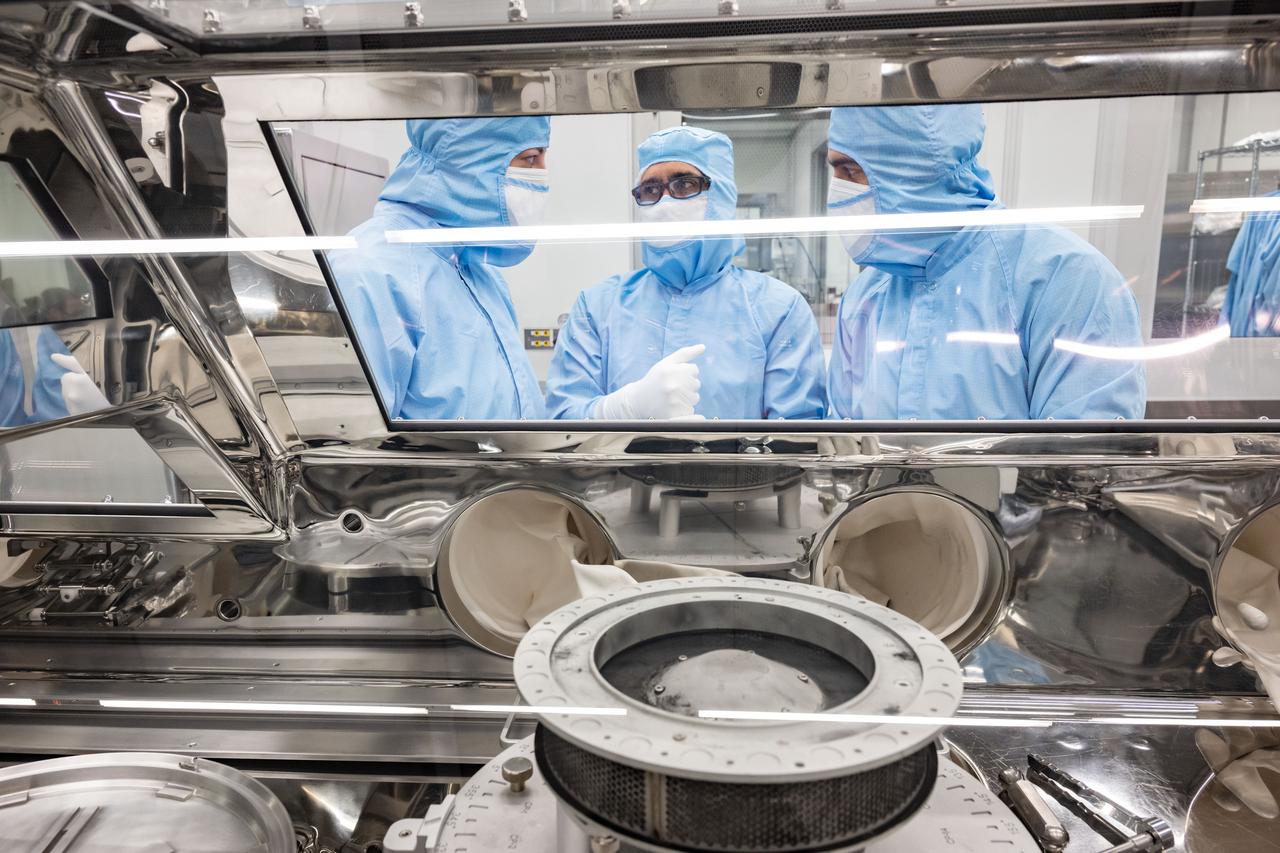
OSIRIS REx curation team attempting to remove the two stuck fasteners that are currently prohibiting the complete opening of the TAGSAM head. Photo Date: January 10, 2024. Location: Bldg. 31 - 2nd Floor - OSIRIS-REx lab. Photographer: Robert Markowitz

41D-09-028 (30 Aug-5 Sept 1984) --- Astronaut Judith A. Resnik, mission specialist, rests in a Shuttle zip-up bag in the mid-deck of the Earth-orbiting Space Shuttle Discovery. A package of rehydratable food is fastened to a nearby stowage locker door.
OSIRIS REx curation team attempting to remove the two stuck fasteners that are currently prohibiting the complete opening of the TAGSAM head. Photo Date: January 10, 2024. Location: Bldg. 31 - 2nd Floor - OSIRIS-REx lab. Photographer: Robert Markowitz
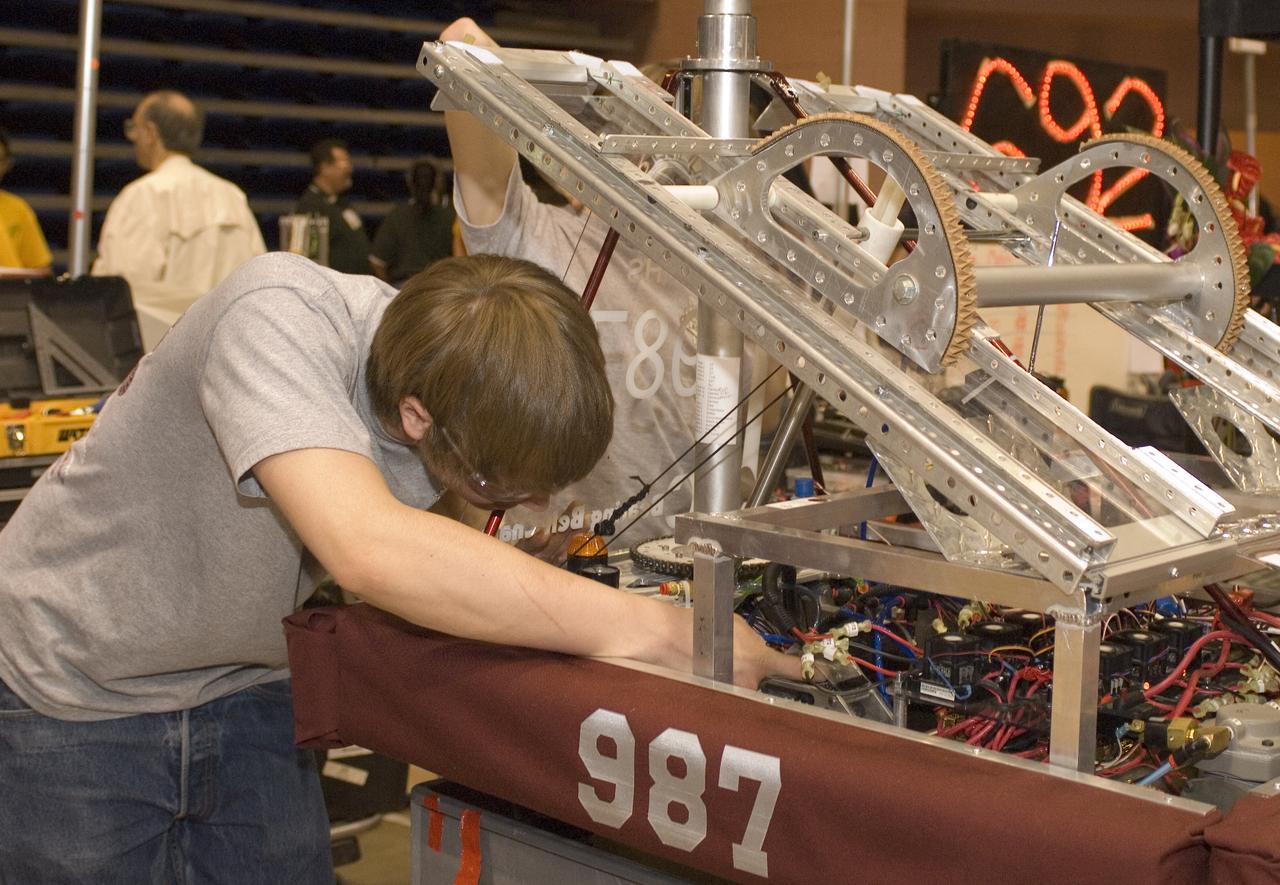
Silicon Valley FIRST Regional Robotics competition: HIGHROLLERS - TEAM 987 - Bearing Belt Chain/Alcoa Fastening Systems/VSR Lock/NASA/Summerlin Children's Forum & Cimarron-Memorial High School, Las Vegas, Nevada (NV)
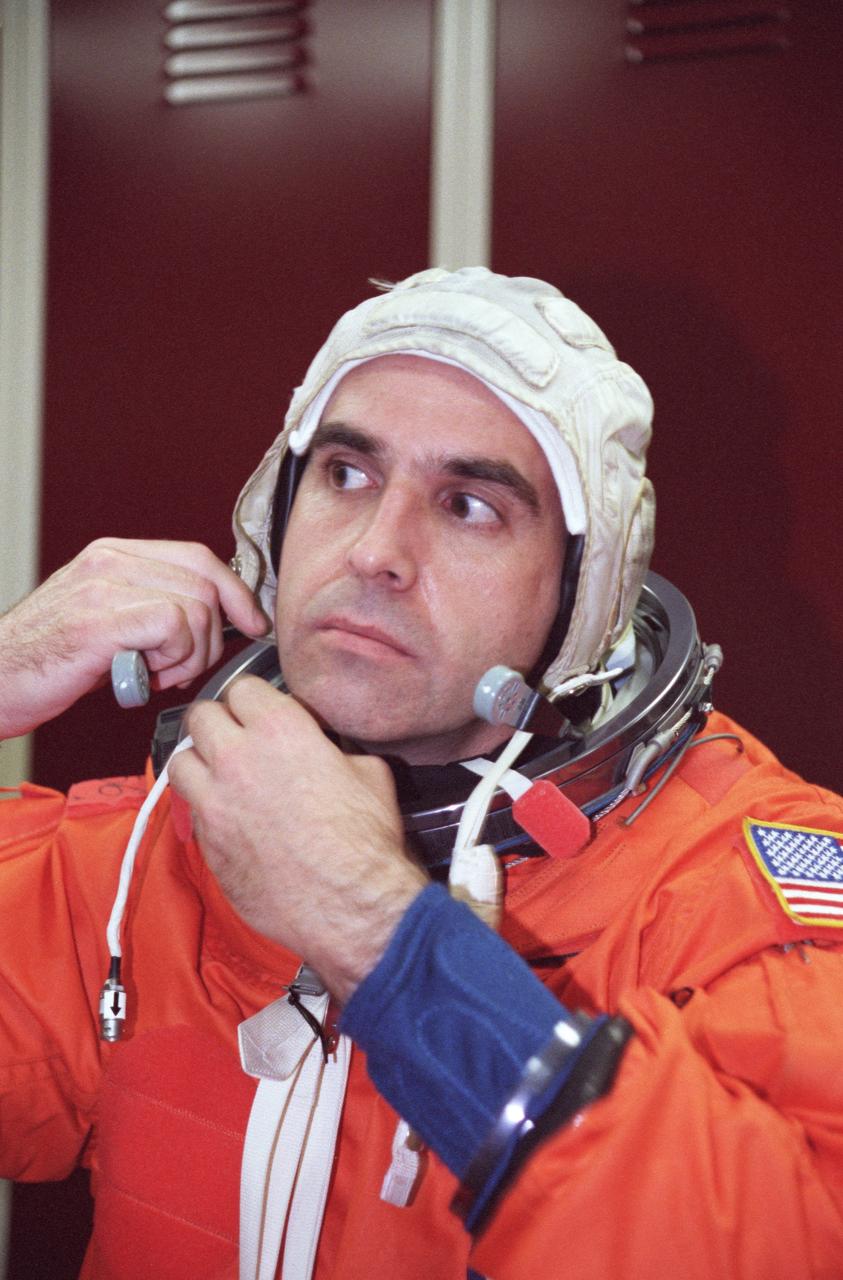
JSC2000-02219 (March 2000) --- Astronaut Richard A. Mastracchio, mission specialist, fastens his communications carrier assembly (CCA), part of the launch and entry suit (LES), during a training session at the Johnson Space Center's Systems Integration Facility.
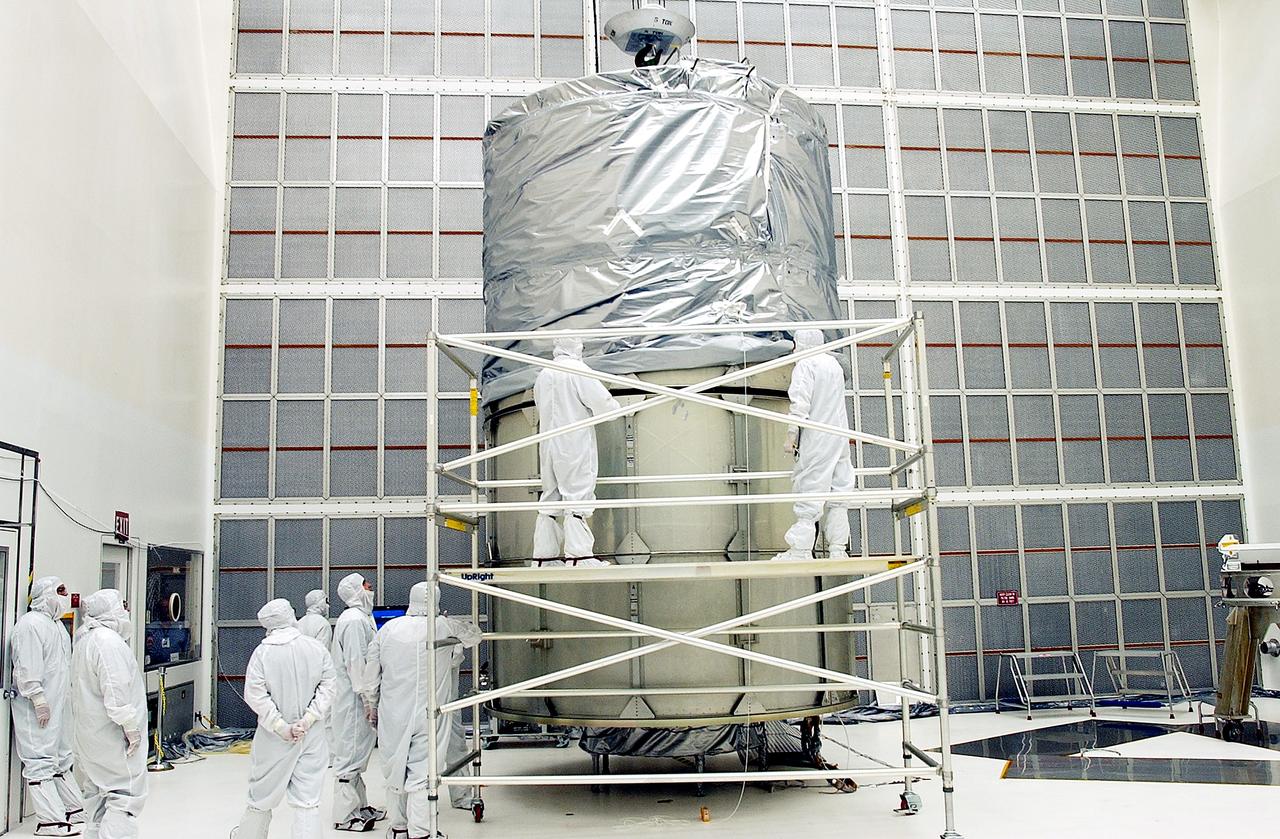
KENNEDY SPACE CENTER, FLA. - Working from a stand, technicians fasten the upper portion of the canister to the middle panels around the Space Infrared Telescope Facility (SIRTF). The spacecraft will be transported to Launch Complex 17-B for mating with its launch vehicle, the Delta II rocket. SIRTF consists of three cryogenically cooled science instruments and an 0.85-meter telescope, and is one of NASA's largest infrared telescopes to be launched. SIRTF will obtain images and spectra by detecting the infrared energy, or heat, radiated by objects in space. Most of this infrared radiation is blocked by the Earth's atmosphere and cannot be observed from the ground.
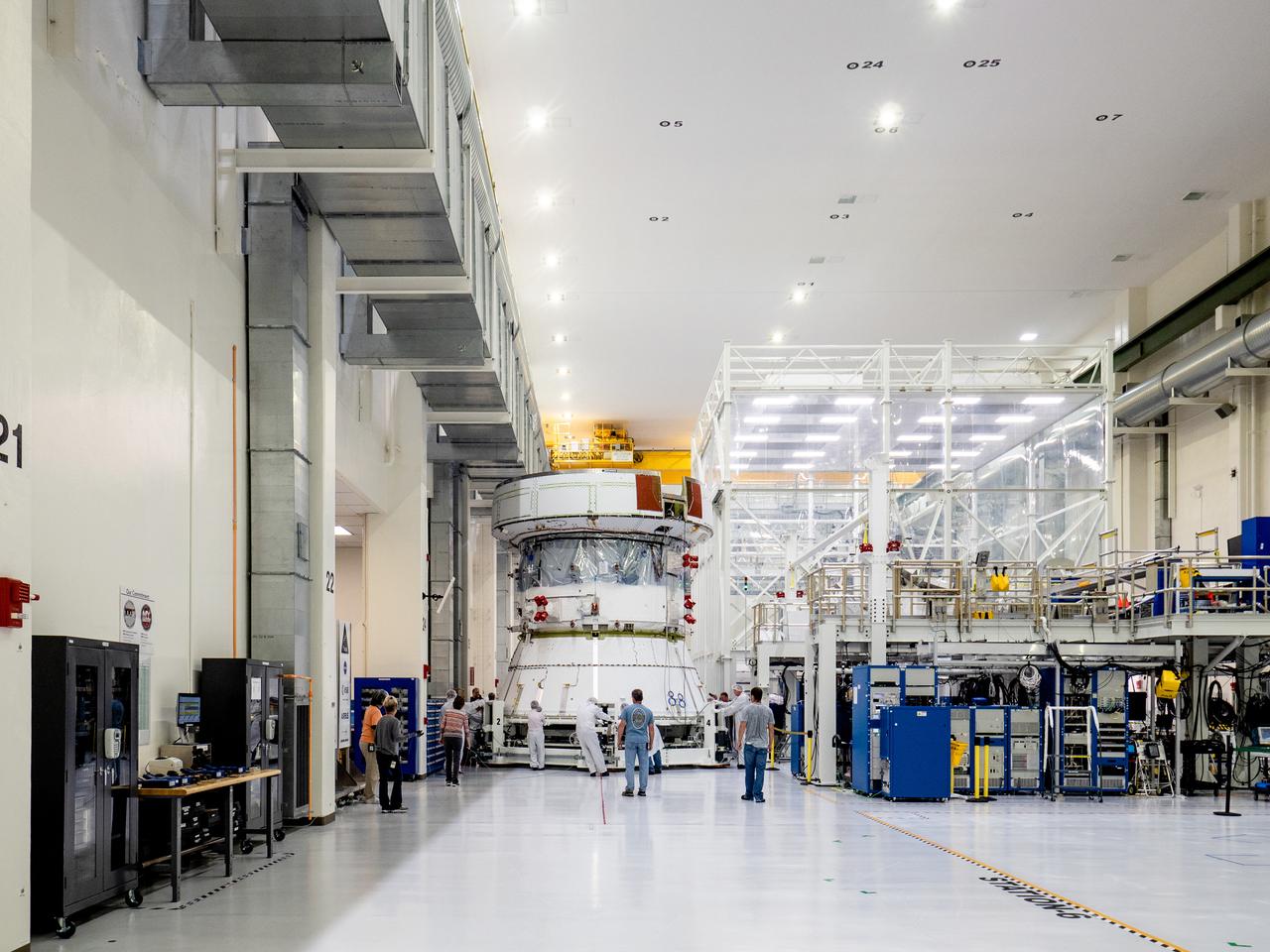
On April 29, Orion’s Service Module, shown here on May 3, 2019, moved to the lift station inside the assembly bay for installation and fastening of systems in preparation for Direct Field Acoustics Test (DFAT). The Service Module will move down to the east end of the bay next week where it will be surrounded with speakers and exposed to the acoustic level that will be experienced in space.
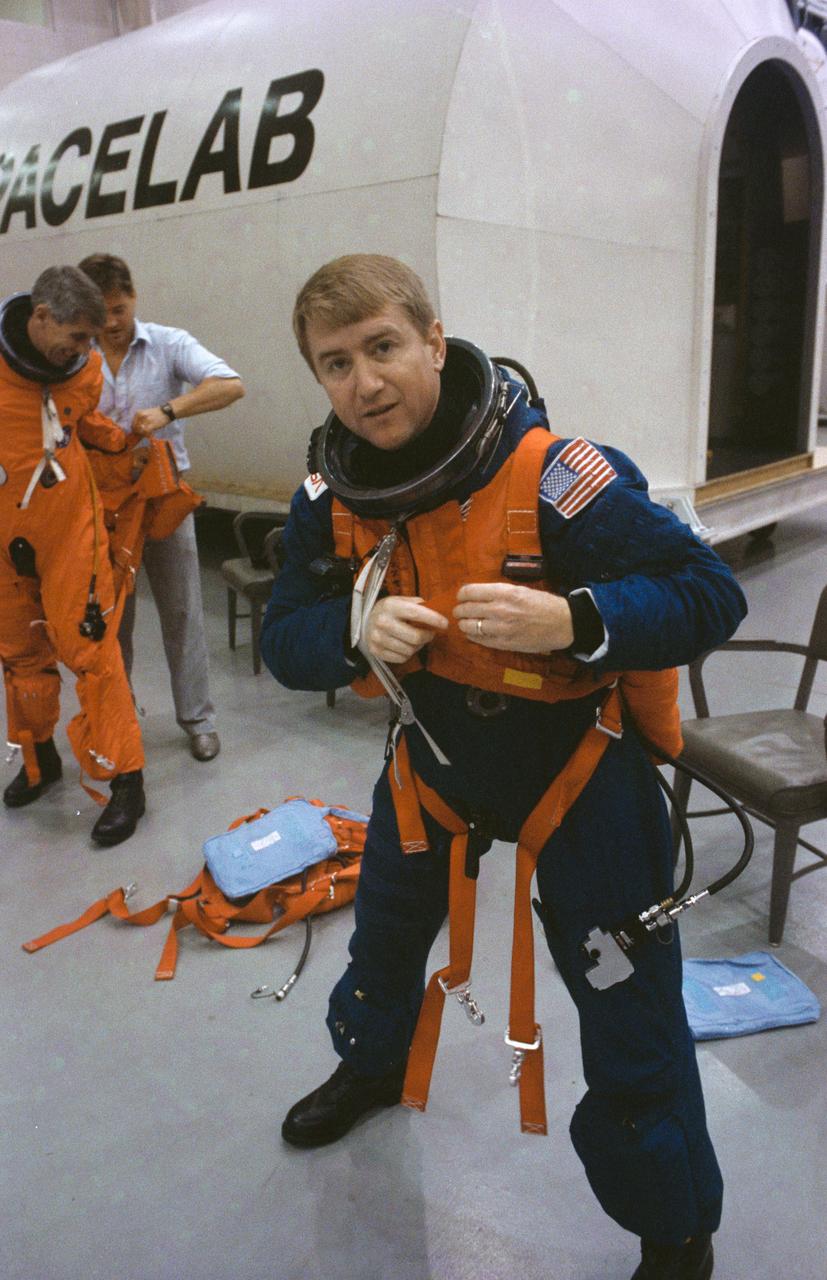
STS-38 crewmembers don launch and entry suit (LES) equipment prior to emergency egress training in JSC's Mockup and Integration Laboratory (MAIL) Bldg 9A. Pilot Frank L. Culbertson, wearing navy blue LES, fastens parachute strap and Mission Specialist (MS) Robert C. Springer, wearing orange LES, dons parachute pack with a technician's assistance in front of a Spacelab module mockup.
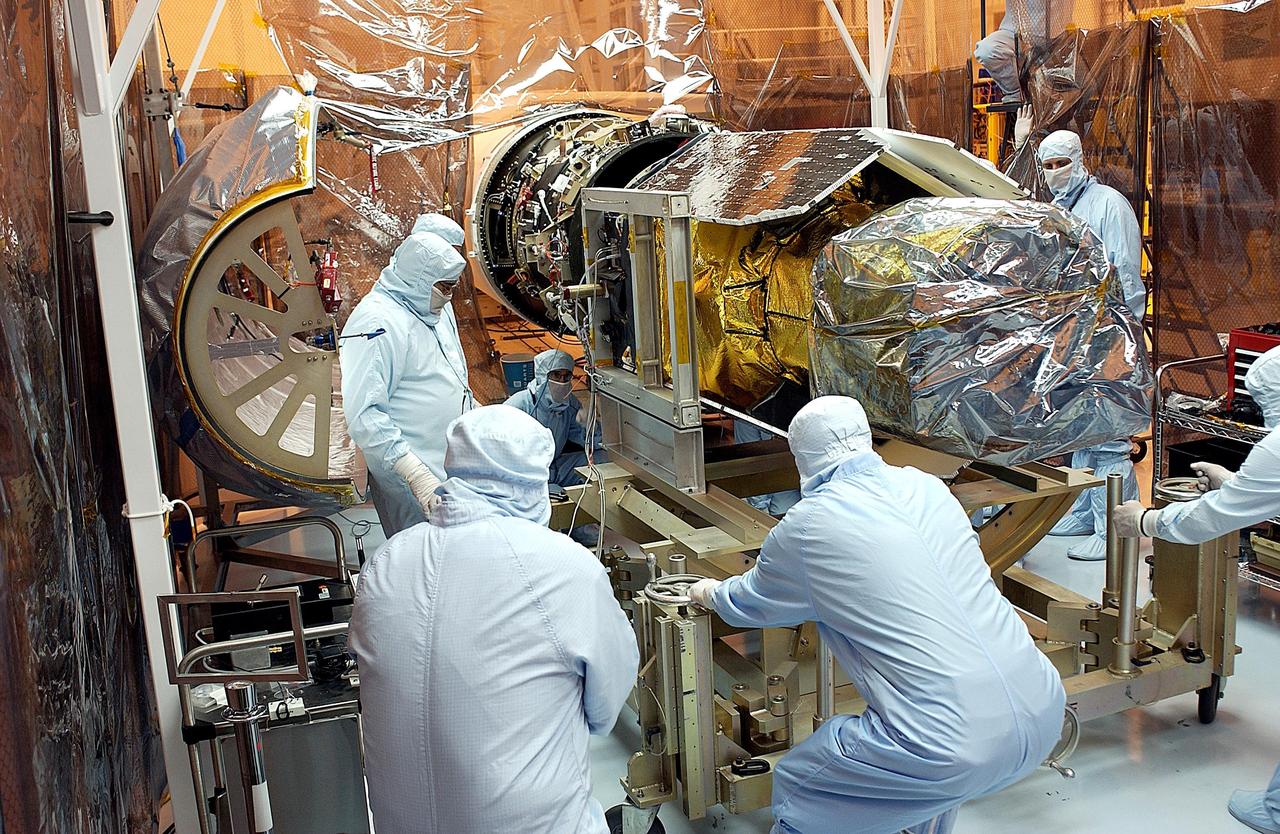
KENNEDY SPACE CENTER, FLA. -- Workers push the Galaxy Evolution Explorer (GALEX) spacecraft toward the Pegasus XL launch vehicle for a second mating. The March 26 launch was delayed to enable protective covers to be added to the Optical Wheel Assembly (OWA) on GALEX to avoid the possibility of a missing electrical cable fastener floating into and jamming the mechanism when GALEX is in orbit. Launch of GALEX is now scheduled for no earlier than April 26.
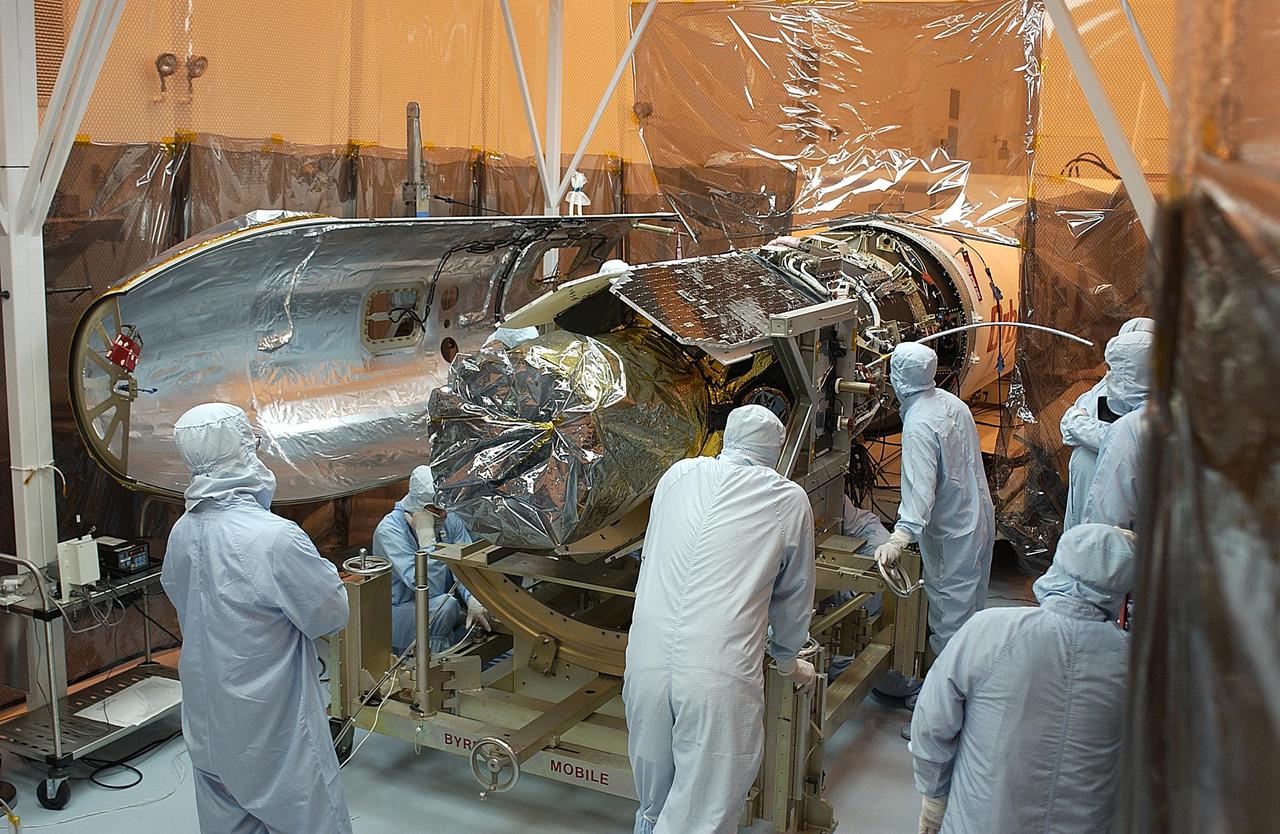
KENNEDY SPACE CENTER, FLA. -- Workers make adjustments on the Galaxy Evolution Explorer (GALEX) spacecraft during the second mating with the Pegasus XL launch vehicle. The March 26 launch was delayed to enable protective covers to be added to the Optical Wheel Assembly (OWA) on GALEX to avoid the possibility of a missing electrical cable fastener floating into and jamming the mechanism when GALEX is in orbit. Launch of GALEX is now scheduled for no earlier than April 26.
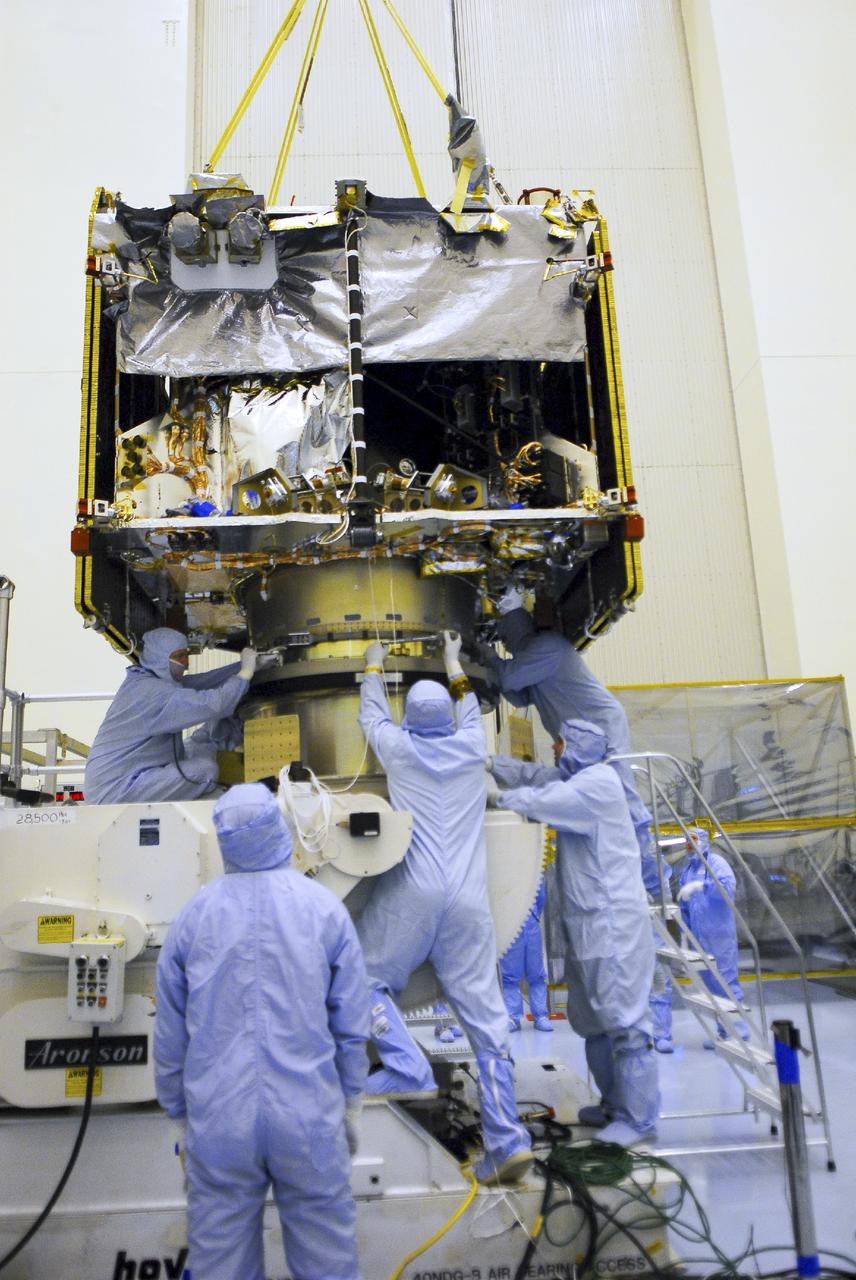
CAPE CANAVERAL, Fla. – Engineers fasten NASA’s Mars Atmosphere and Volatile Evolution MAVEN spacecraft to a processing stand inside the Payload Hazardous Servicing Facility on Aug. 3, 2013, at the agency’s Kennedy Space Center in Florida. MAVEN will be prepared inside the facility for its scheduled November launch to Mars. Positioned in an orbit above the Red Planet, MAVEN will study the upper atmosphere of Mars in unprecedented detail. Photo credit: NASA/Tim Jacobs
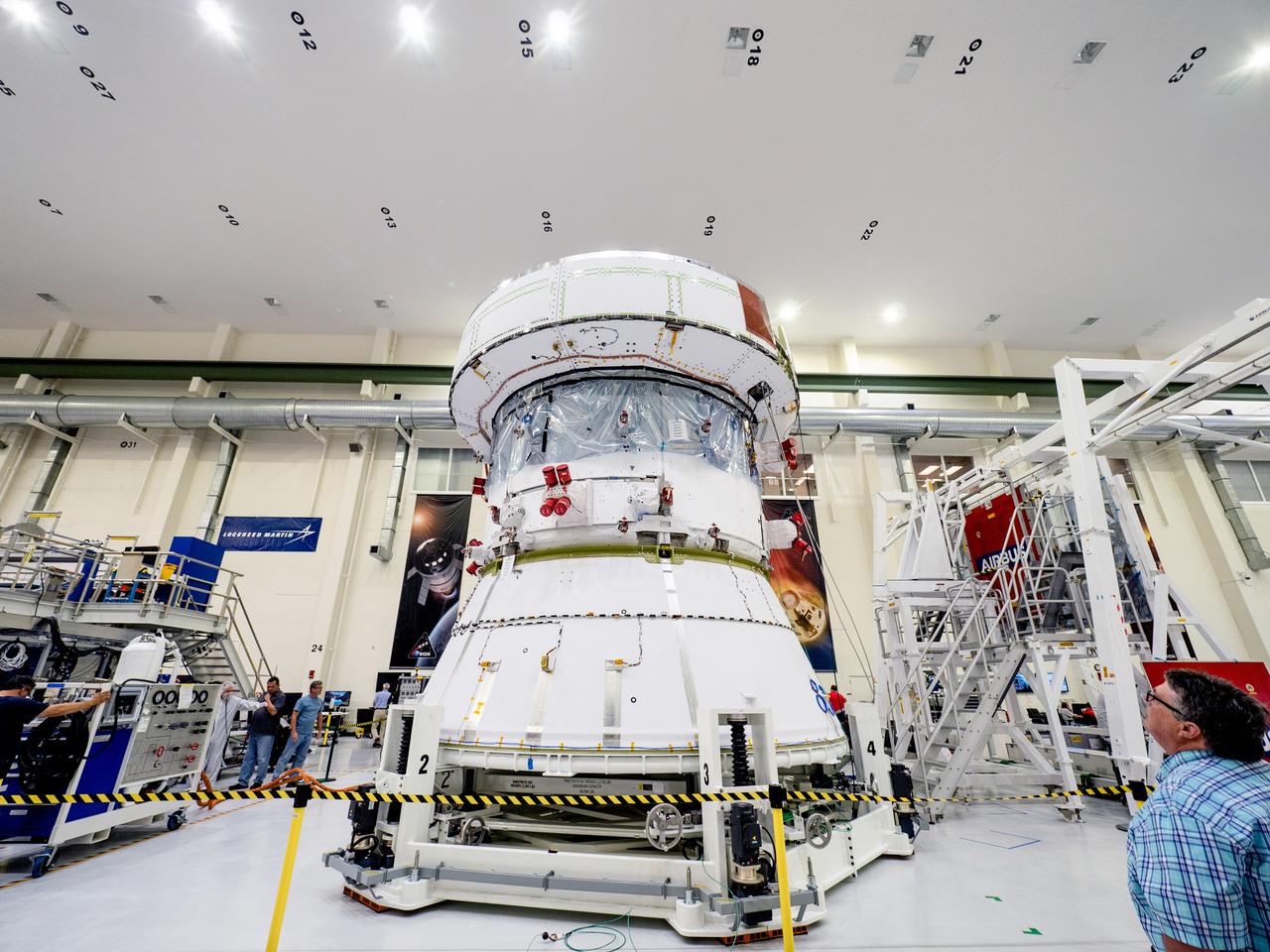
On April 29, Orion’s Service Module, shown here on May 3, 2019, moved to the lift station inside the assembly bay for installation and fastening of systems in preparation for Direct Field Acoustics Test (DFAT). The Service Module will move down to the east end of the bay next week where it will be surrounded with speakers and exposed to the acoustic level that will be experienced in space.
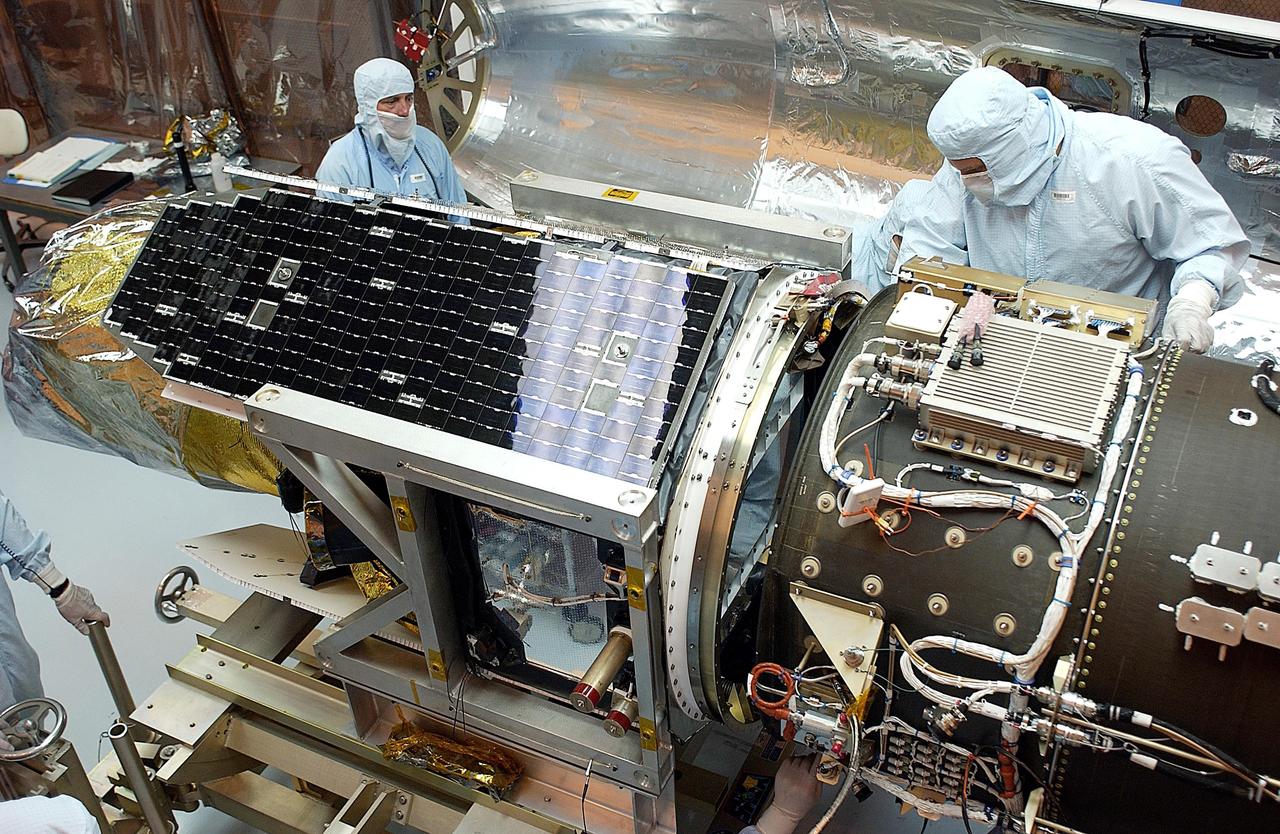
KENNEDY SPACE CENTER, FLA. -- Workers make adjustments on the Galaxy Evolution Explorer (GALEX) spacecraft during the second mating with the Pegasus XL launch vehicle. The March 26 launch was delayed to enable protective covers to be added to the Optical Wheel Assembly (OWA) on GALEX to avoid the possibility of a missing electrical cable fastener floating into and jamming the mechanism when GALEX is in orbit. Launch of GALEX is now scheduled for no earlier than April 26.
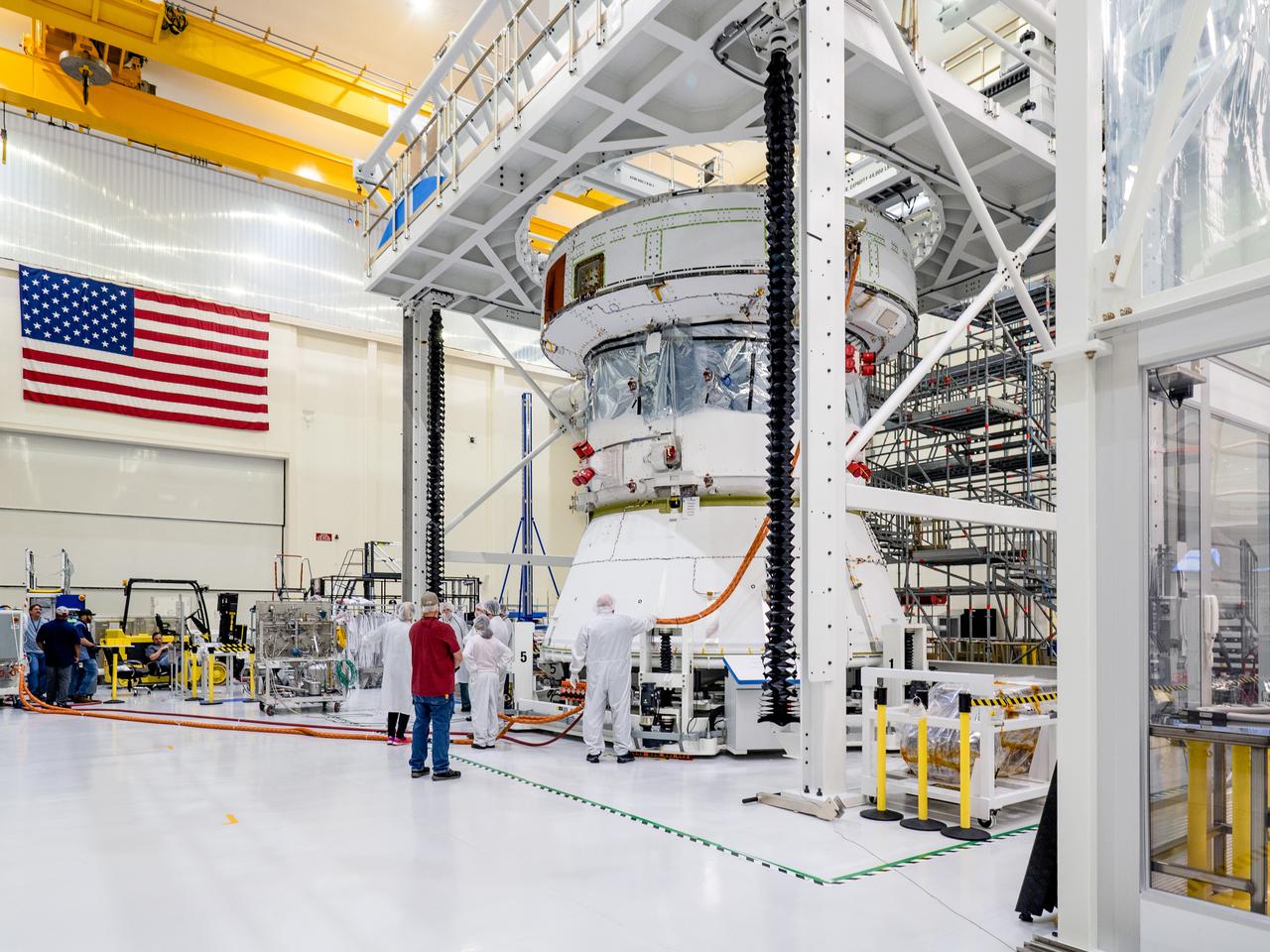
On April 29, Orion’s Service Module, shown here on May 3, 2019, moved to the lift station inside the assembly bay for installation and fastening of systems in preparation for Direct Field Acoustics Test (DFAT). The Service Module will move down to the east end of the bay next week where it will be surrounded with speakers and exposed to the acoustic level that will be experienced in space.
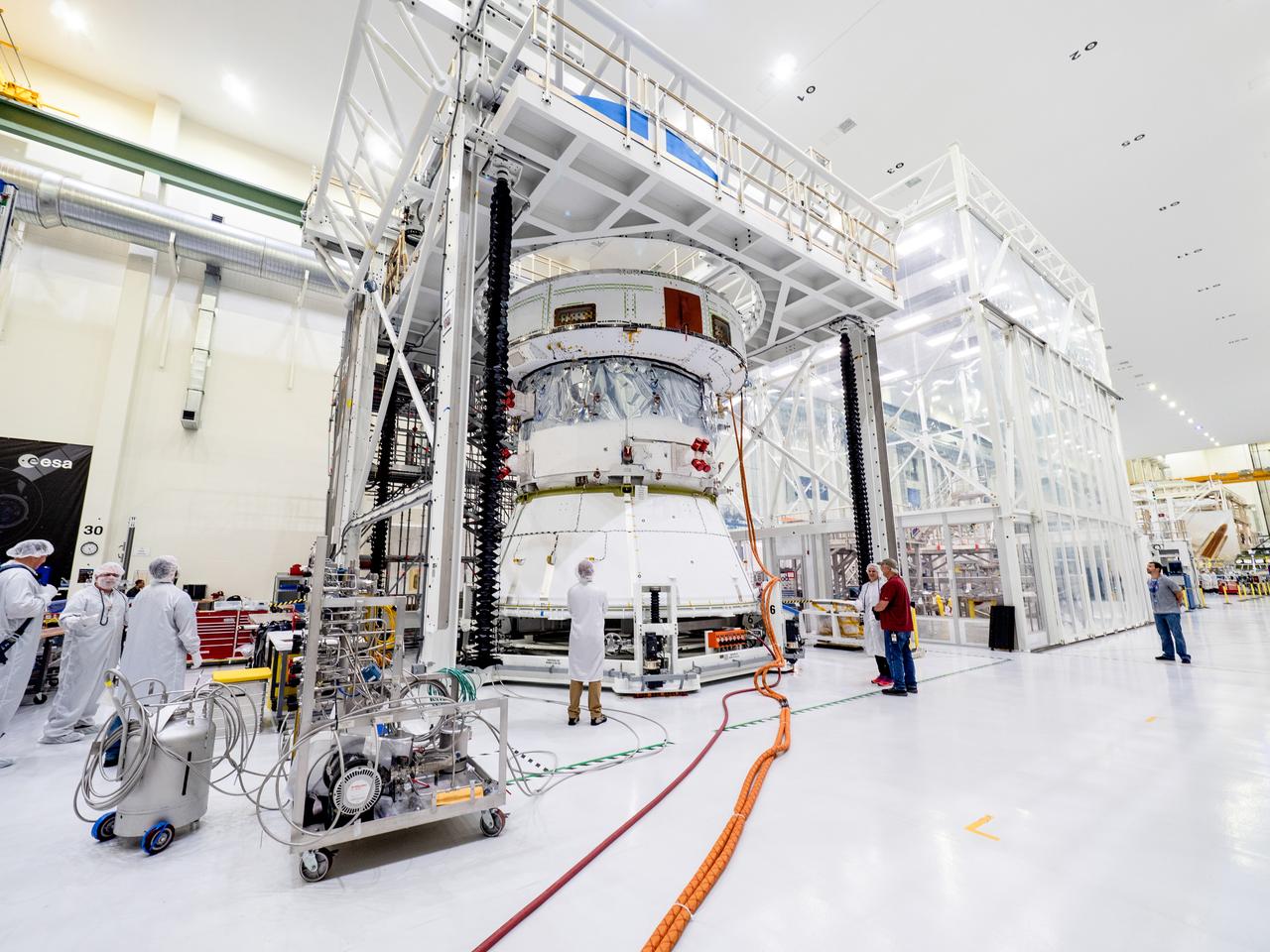
On April 29, Orion’s Service Module, shown here on May 3, 2019, moved to the lift station inside the assembly bay for installation and fastening of systems in preparation for Direct Field Acoustics Test (DFAT). The Service Module will move down to the east end of the bay next week where it will be surrounded with speakers and exposed to the acoustic level that will be experienced in space.
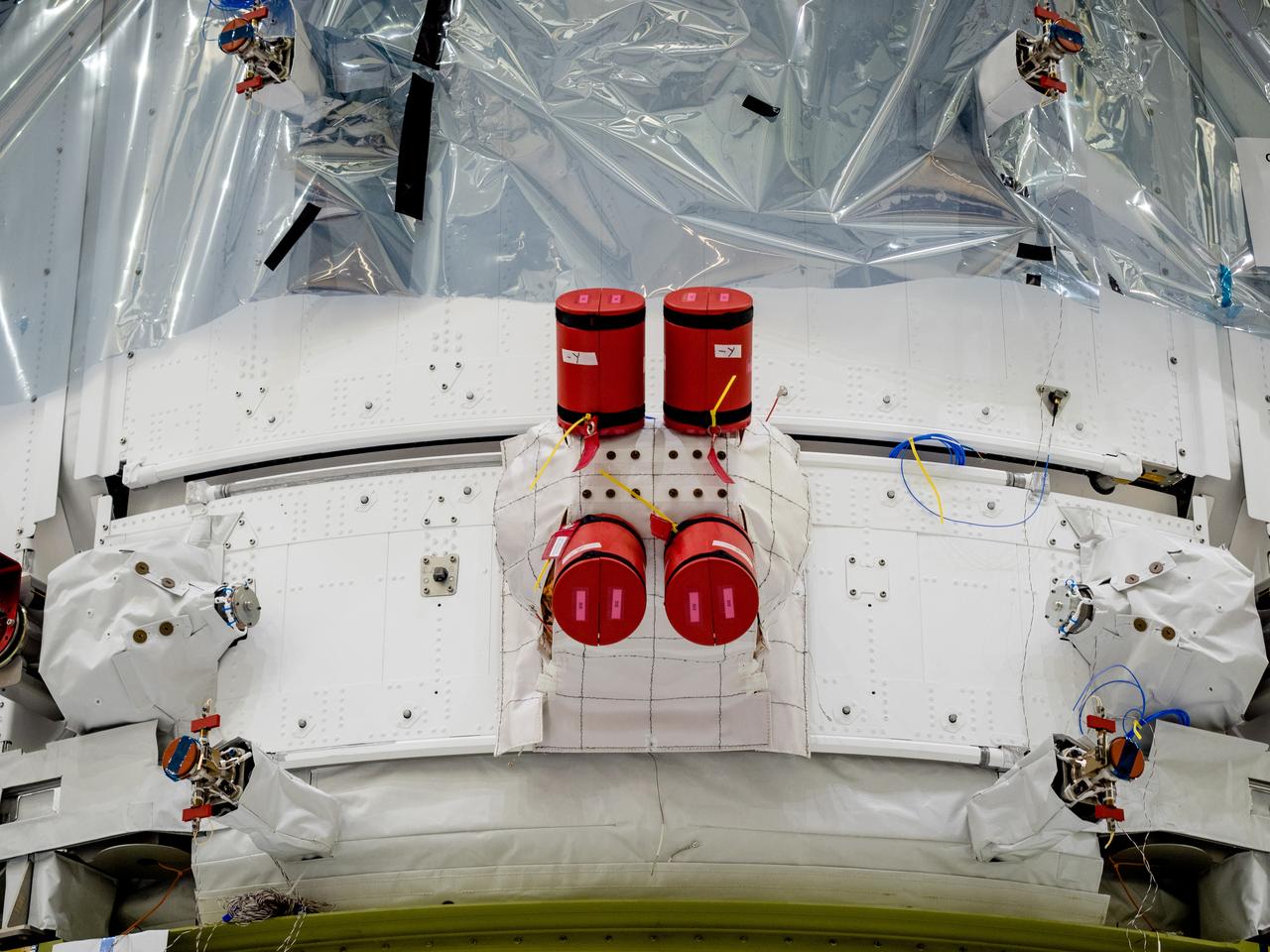
On April 29, Orion’s Service Module, shown here on May 3, 2019, moved to the lift station inside the assembly bay for installation and fastening of systems in preparation for Direct Field Acoustics Test (DFAT). The Service Module will move down to the east end of the bay next week where it will be surrounded with speakers and exposed to the acoustic level that will be experienced in space.
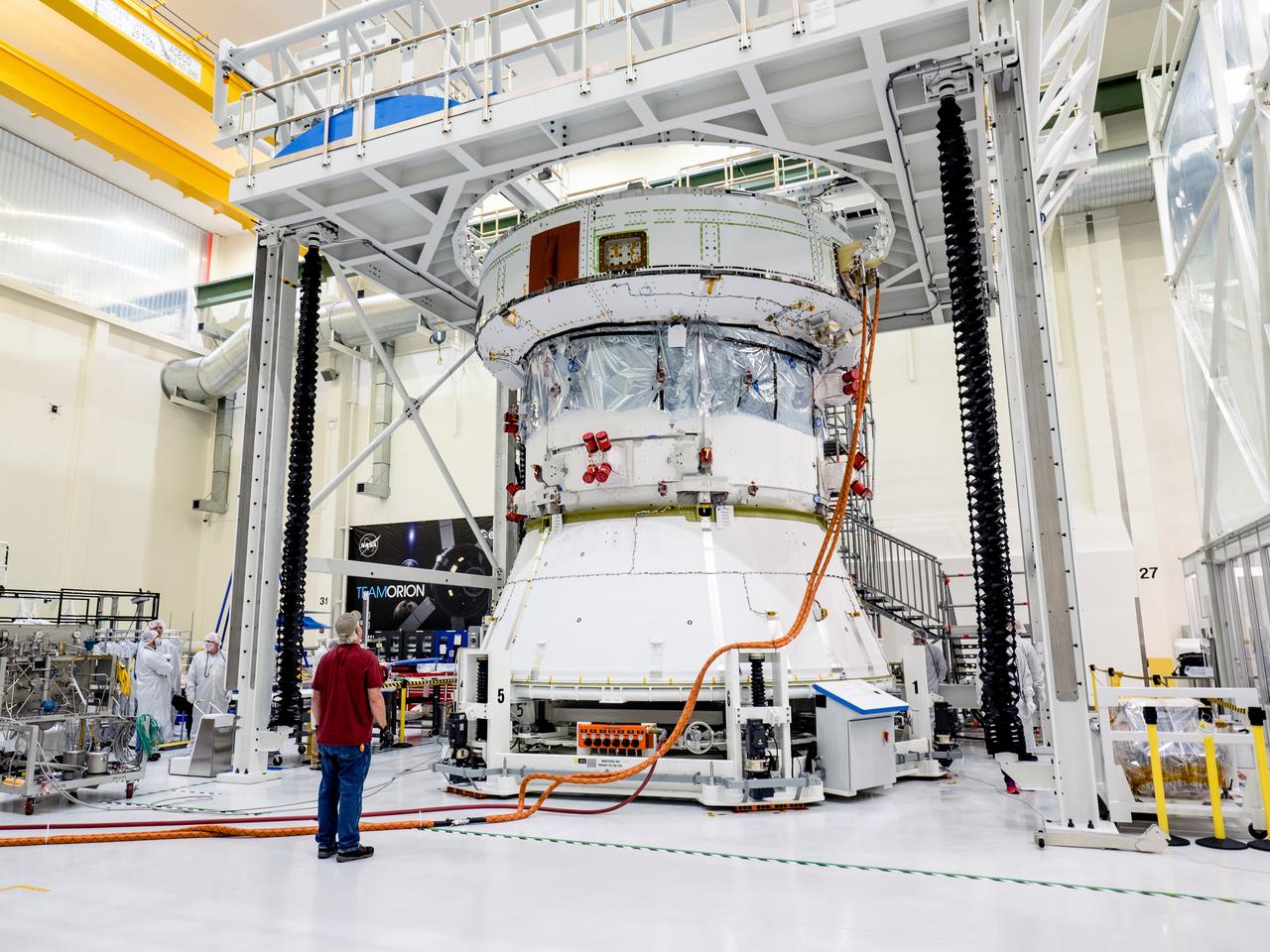
On April 29, Orion’s Service Module, shown here on May 3, 2019, moved to the lift station inside the assembly bay for installation and fastening of systems in preparation for Direct Field Acoustics Test (DFAT). The Service Module will move down to the east end of the bay next week where it will be surrounded with speakers and exposed to the acoustic level that will be experienced in space.
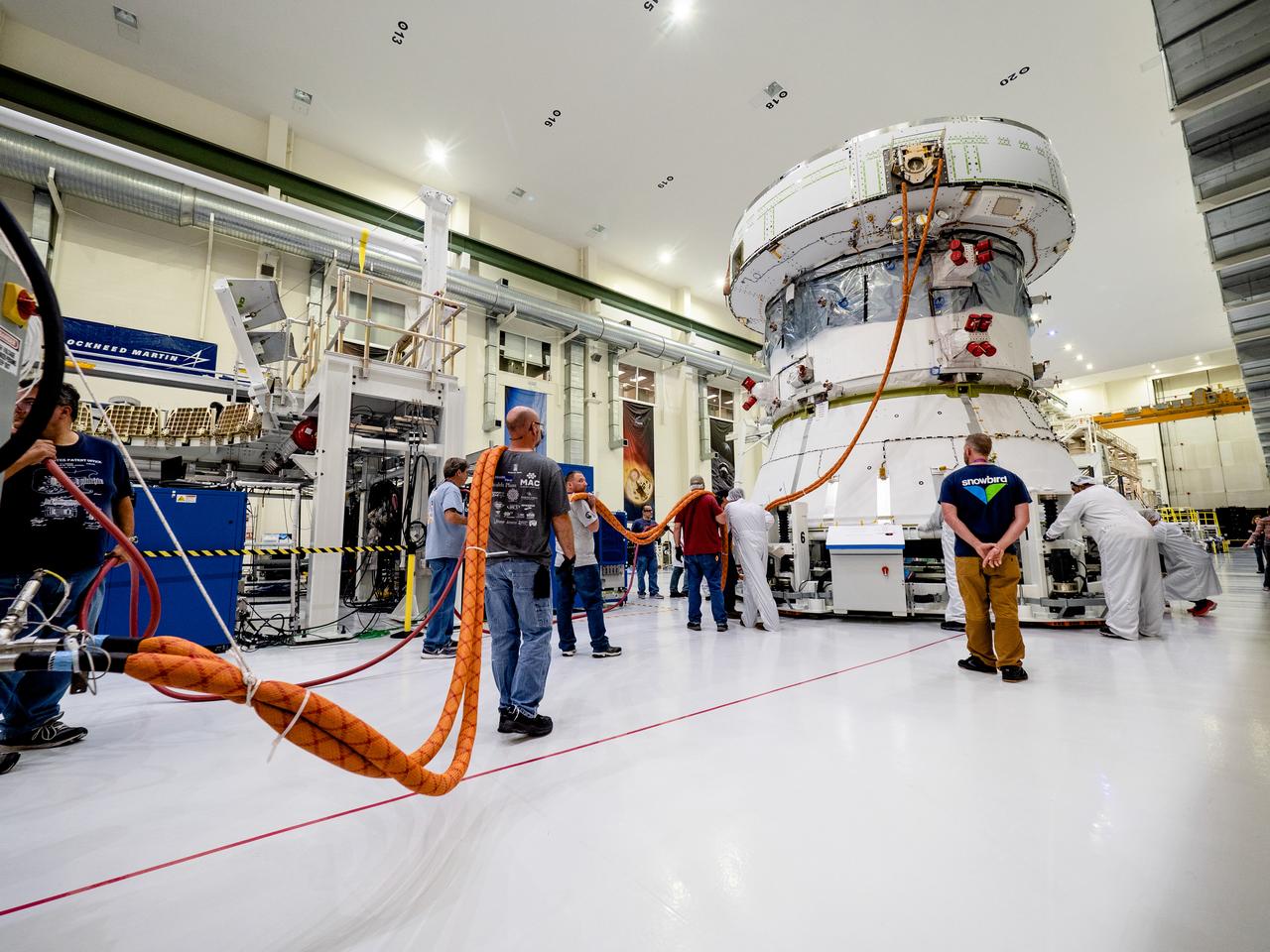
On April 29, Orion’s Service Module, shown here on May 3, 2019, moved to the lift station inside the assembly bay for installation and fastening of systems in preparation for Direct Field Acoustics Test (DFAT). The Service Module will move down to the east end of the bay next week where it will be surrounded with speakers and exposed to the acoustic level that will be experienced in space.
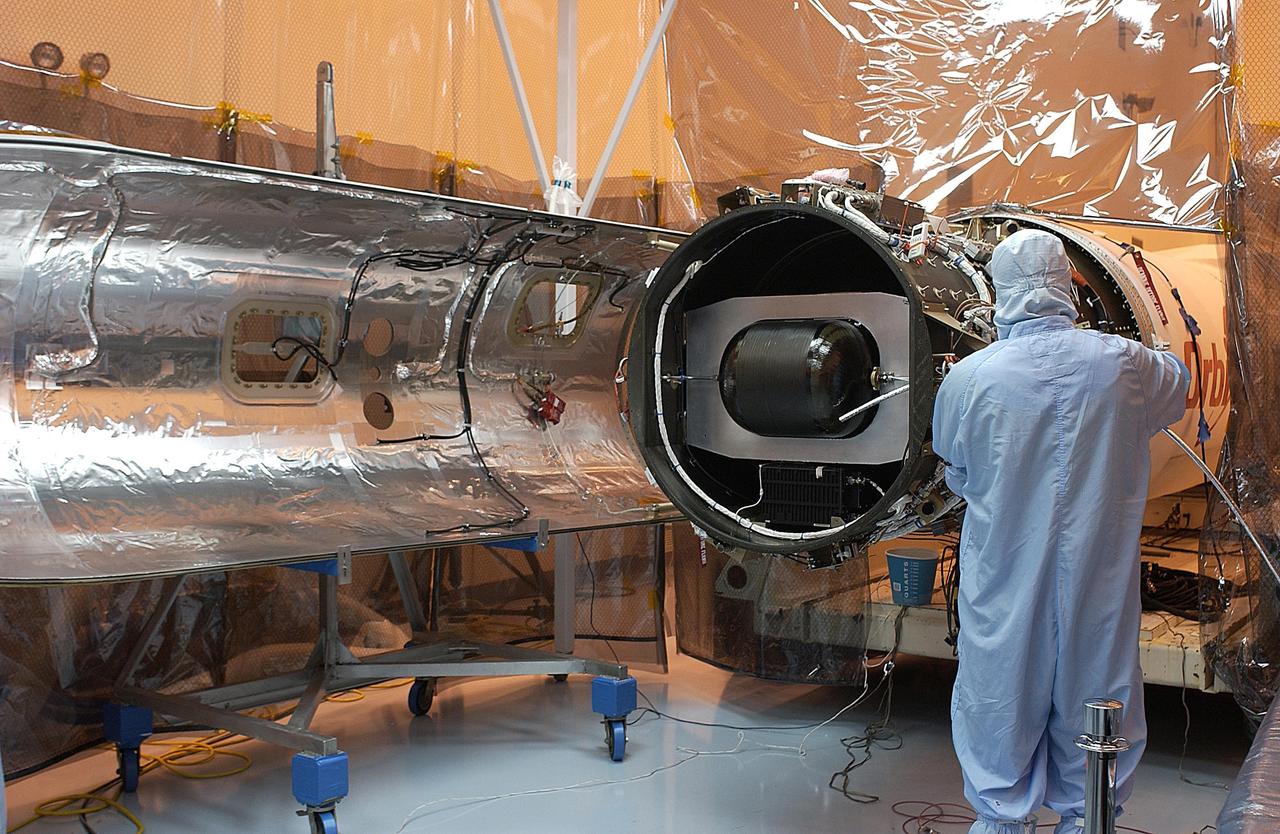
KENNEDY SPACE CENTER, FLA. - Workers prepare the Pegasus XL launch vehicle for re-mate with the Galaxy Evolution Explorer (GALEX) spacecraft. The March 26 launch was delayed to enable protective covers to be added to the Optical Wheel Assembly (OWA) on GALEX to avoid the possibility of a missing electrical cable fastener floating into and jamming the mechanism when GALEX is in orbit. Launch of GALEX is now scheduled for no earlier than April 26.
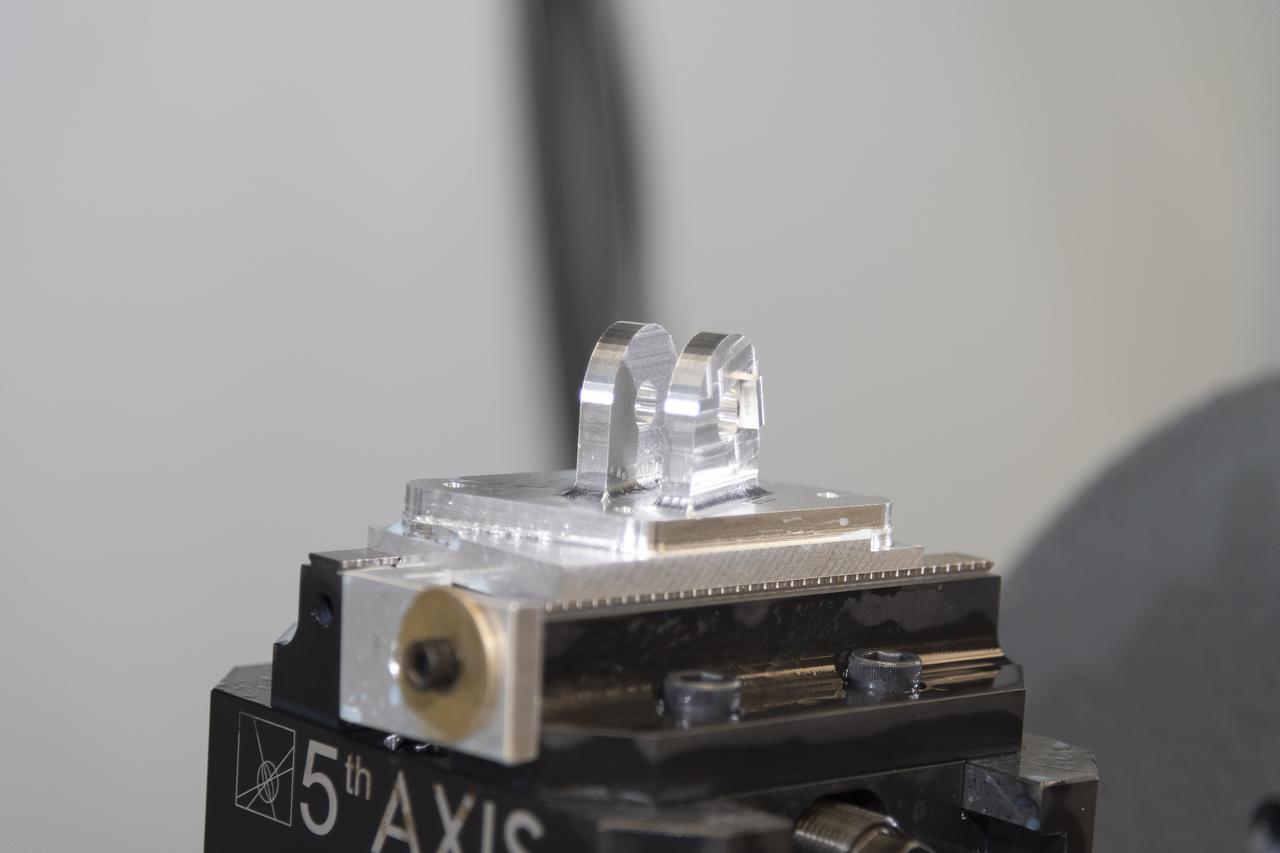
A block of aluminum is transformed by a machine programmed to cut, rotate, and turn it to make a forward wing strut fastener for a 10-foot model of the Transonic Truss-Braced Wing at NASA’s Armstrong Flight Research Center, in Edwards, California. The aircraft concept involves a wing braced on an aircraft using diagonal struts that also add lift and could result in significantly improved aerodynamics.
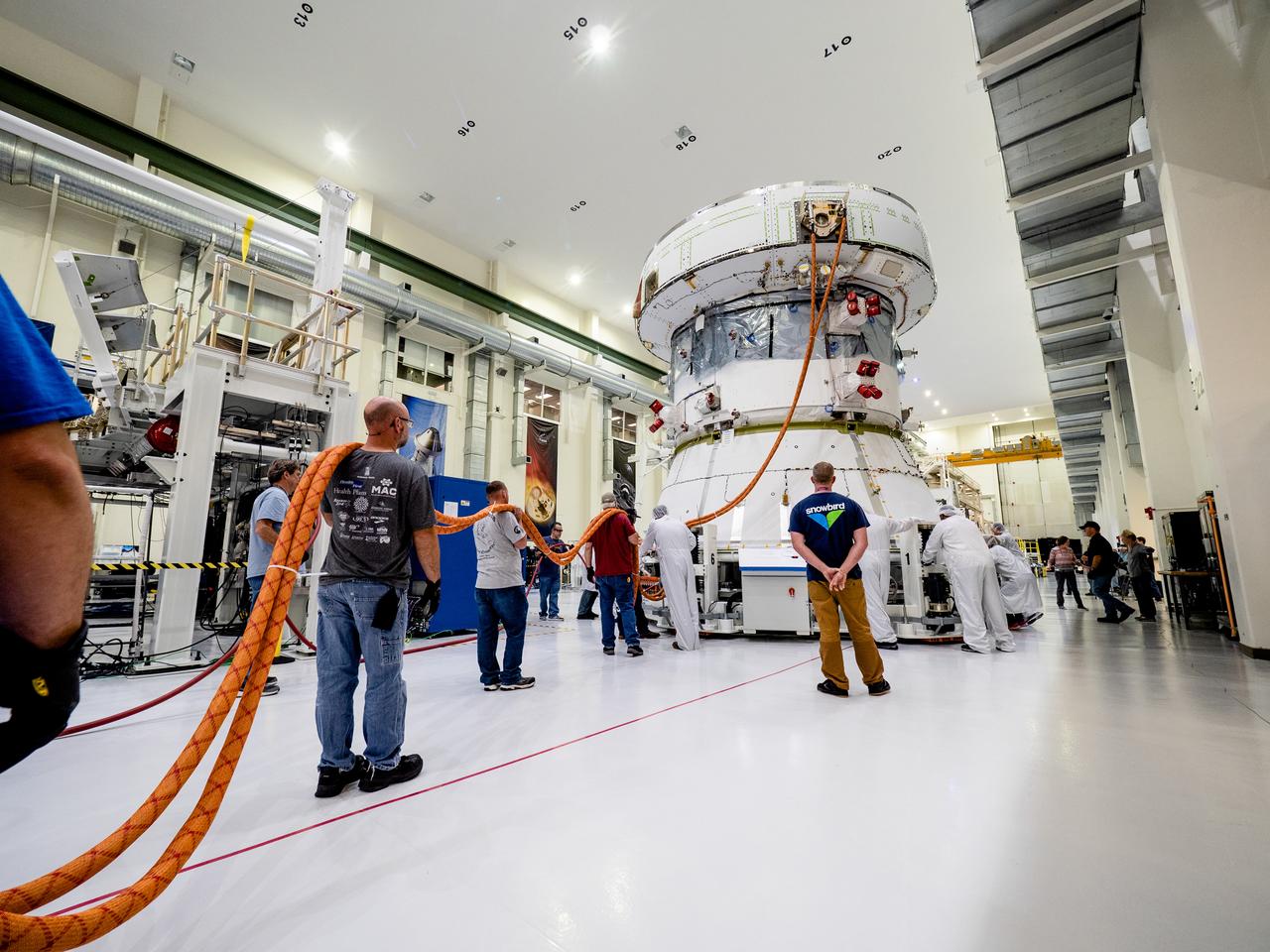
On April 29, Orion’s Service Module, shown here on May 3, 2019, moved to the lift station inside the assembly bay for installation and fastening of systems in preparation for Direct Field Acoustics Test (DFAT). The Service Module will move down to the east end of the bay next week where it will be surrounded with speakers and exposed to the acoustic level that will be experienced in space.
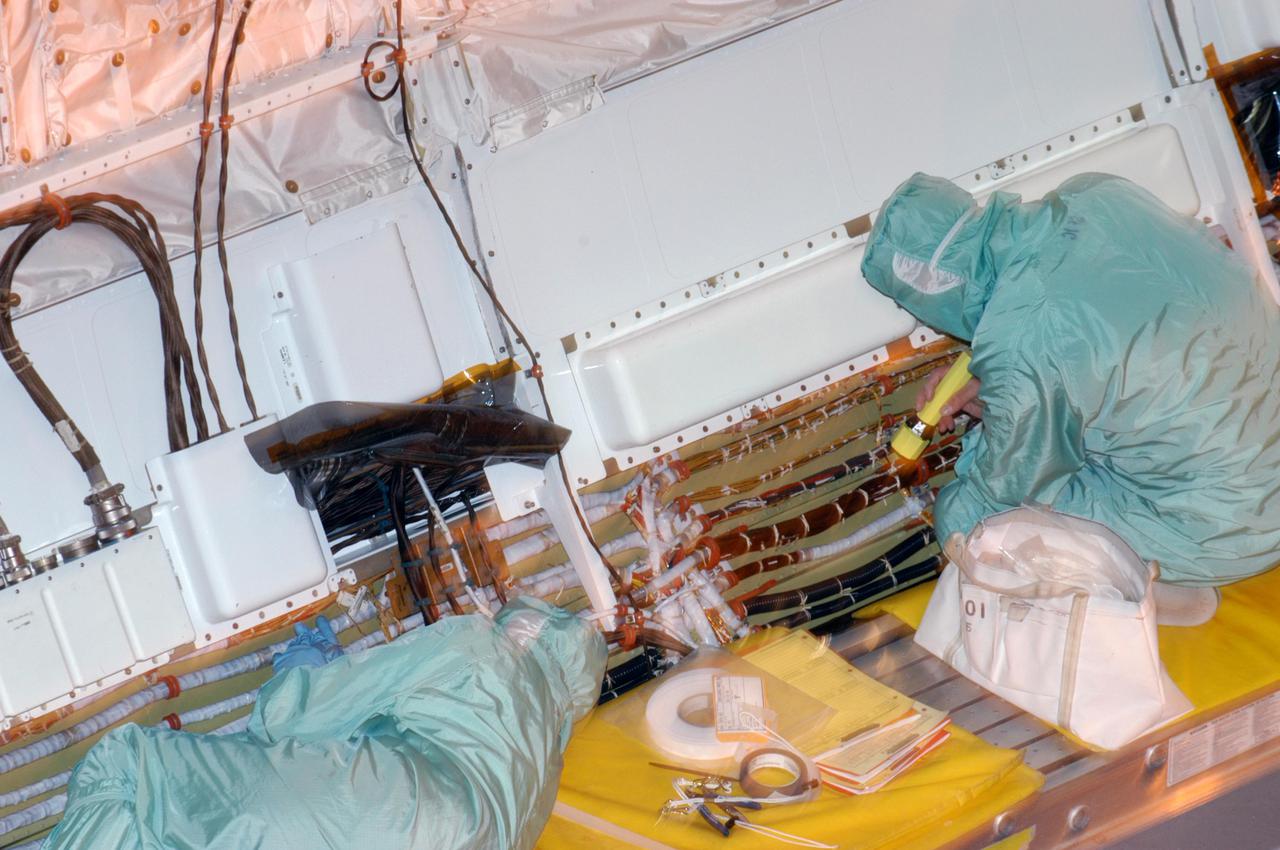
KENNEDY SPACE CENTER, FLA. - In the Orbiter Processing Facility at NASA’s Kennedy Space Center in Florida, workers are removing wire tray covers on Discovery and adding chafe prevention. Boroscope inspections revealed the need for the protection to prevent fasteners from causing minor chafing on the tubing surrounding the wires. Discovery is the designated orbiter for Return to Flight mission STS-114 to the International Space Station. The launch window for the mission is May 15 to June 3, 2005.
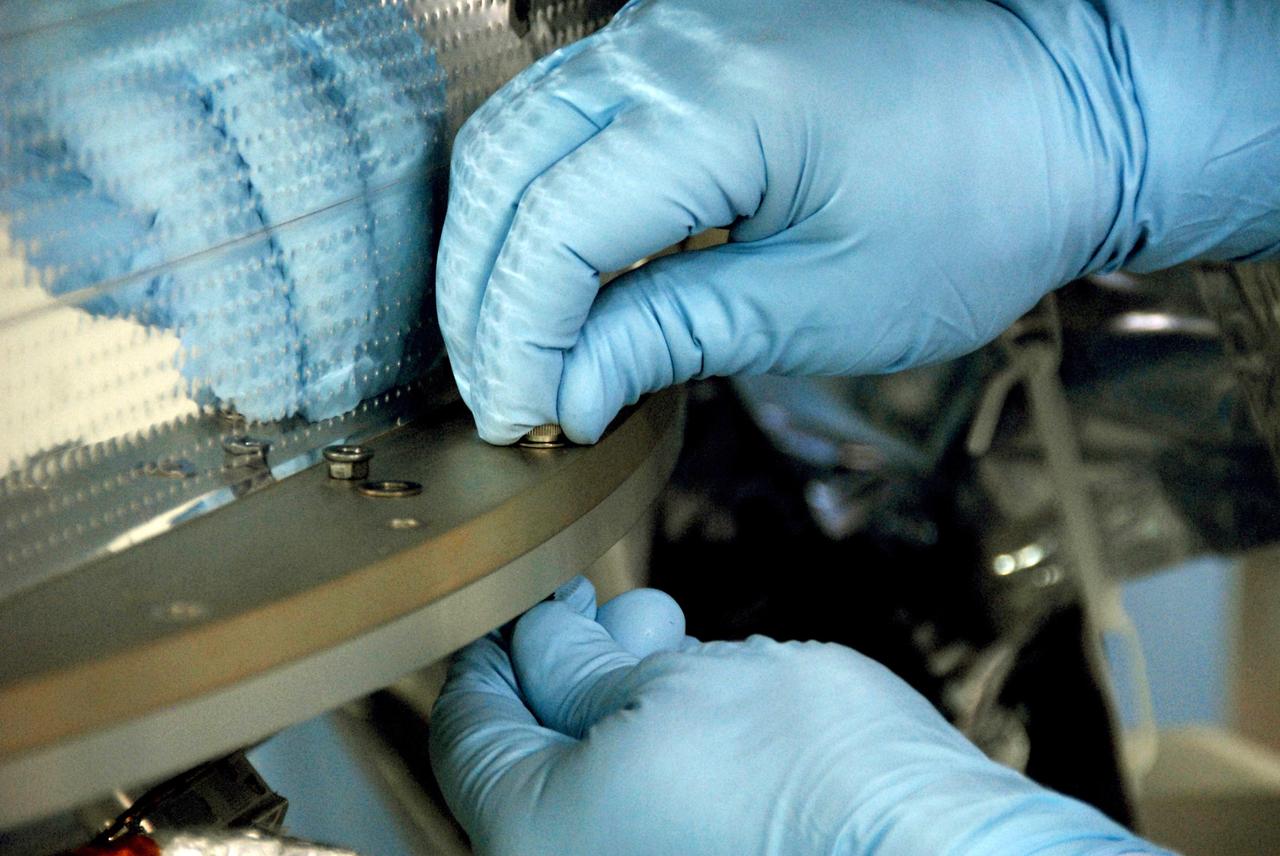
VANDENBERG AIR FORCE BASE, Calif. -- At Vandenberg Air Force Base's Astrotech processing facility in California, a technician fastens NASA's Wide-field Infrared Survey Explorer, or WISE, spacecraft onto the flight conical adapter and test stand. The satellite will survey the entire sky at infrared wavelengths, creating a cosmic clearinghouse of hundreds of millions of objects, which will be catalogued, providing a vast storehouse of knowledge about the solar system, the Milky Way, and the universe. Launch is scheduled no earlier than Dec. 7. Photo credit: NASA/Doug Kolkow

On April 29, Orion’s service module, shown here on May 2, 2019, moved to the lift station inside the assembly bay for installation and fastening of systems in preparation for Direct Field Acoustics Test (DFAT). The service module will move down to the east end of the bay next week where it will be surrounded with speakers and exposed to the acoustic level that will be experienced in space.
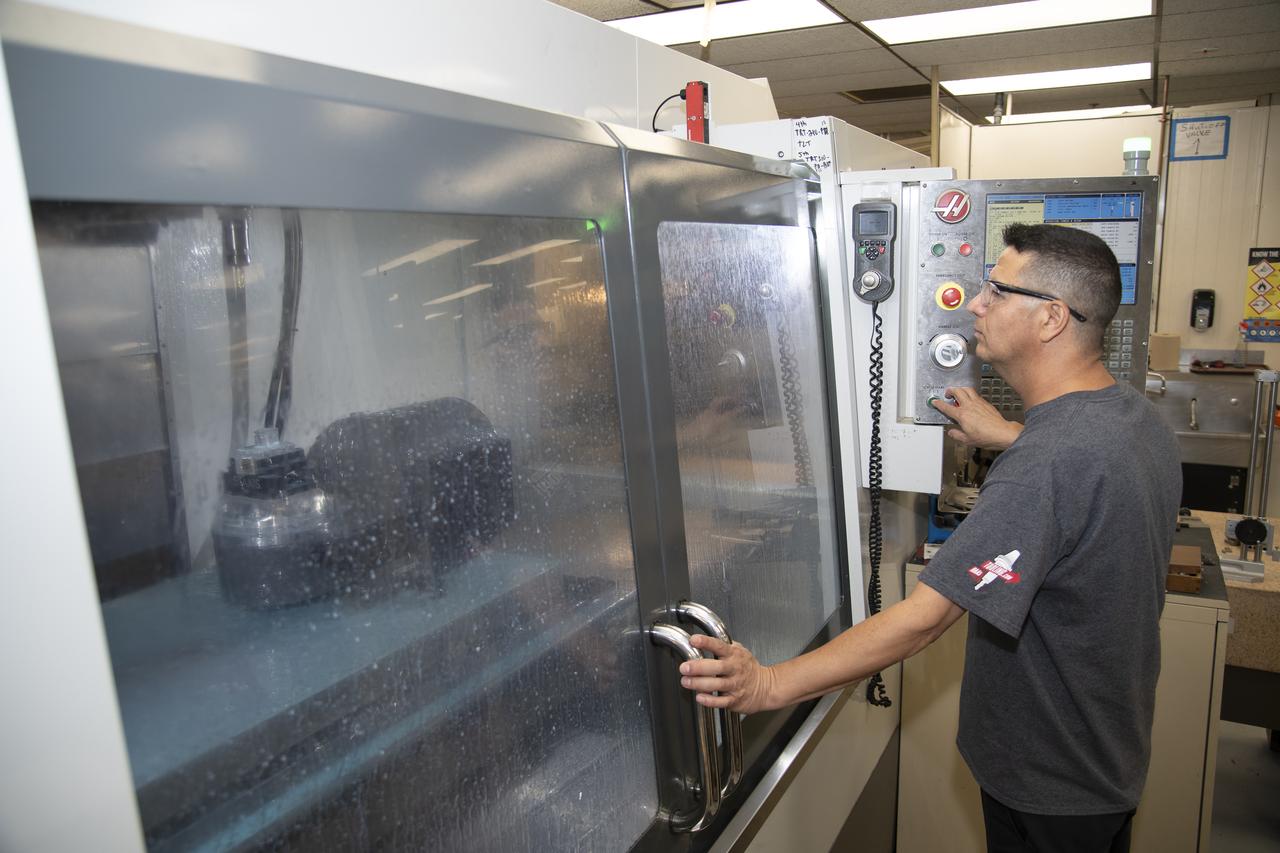
Jose Vasquez uses a machine to cut, rotate and turn a block of aluminum to make a forward wing strut fastener for a 10-foot model of the Transonic Truss-Braced Wing at NASA’s Armstrong Flight Research Center, in Edwards, California. The aircraft concept involves a wing braced on an aircraft using diagonal struts that also add lift and could result in significantly improved aerodynamics.
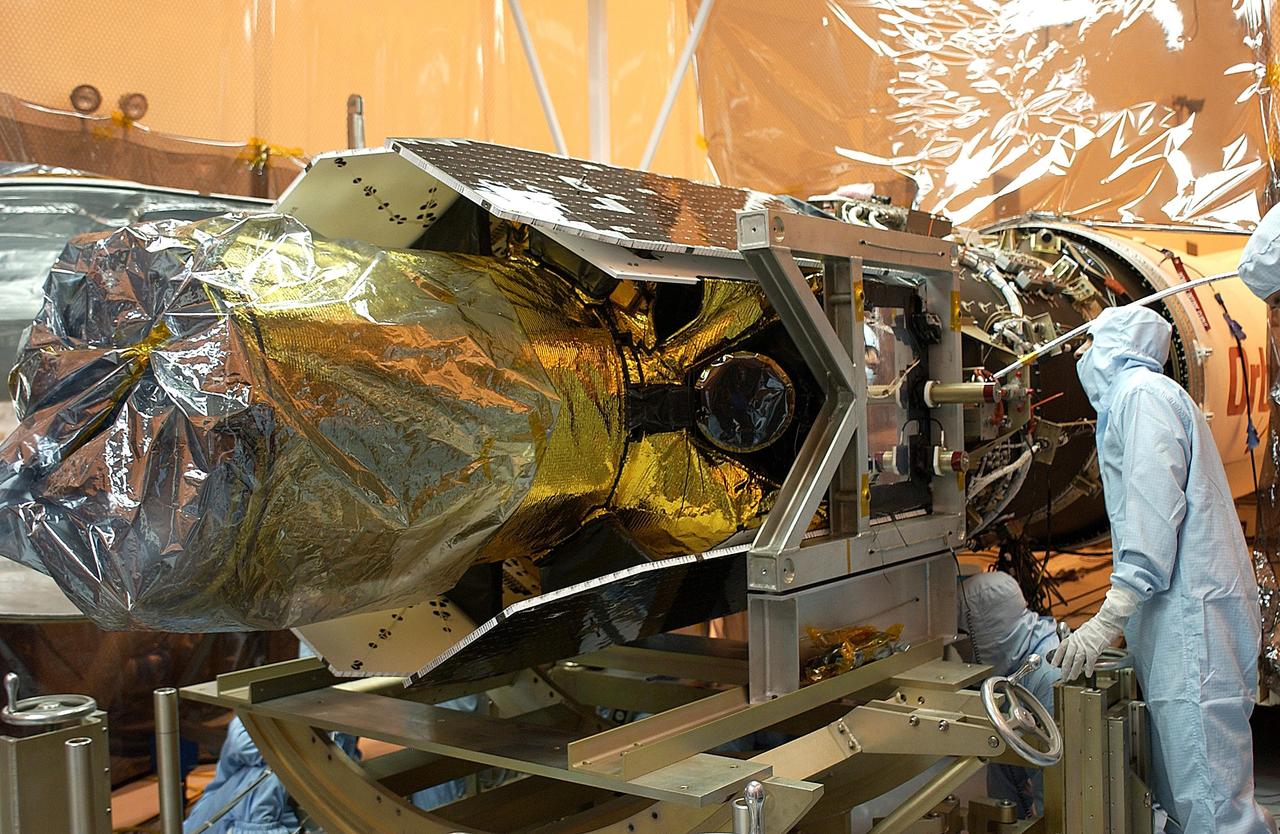
KENNEDY SPACE CENTER, FLA. -- A worker makes adjustments on the Galaxy Evolution Explorer (GALEX) spacecraft during the second mating with the Pegasus XL launch vehicle. The March 26 launch was delayed to enable protective covers to be added to the Optical Wheel Assembly (OWA) on GALEX to avoid the possibility of a missing electrical cable fastener floating into and jamming the mechanism when GALEX is in orbit. Launch of GALEX is now scheduled for no earlier than April 26. .
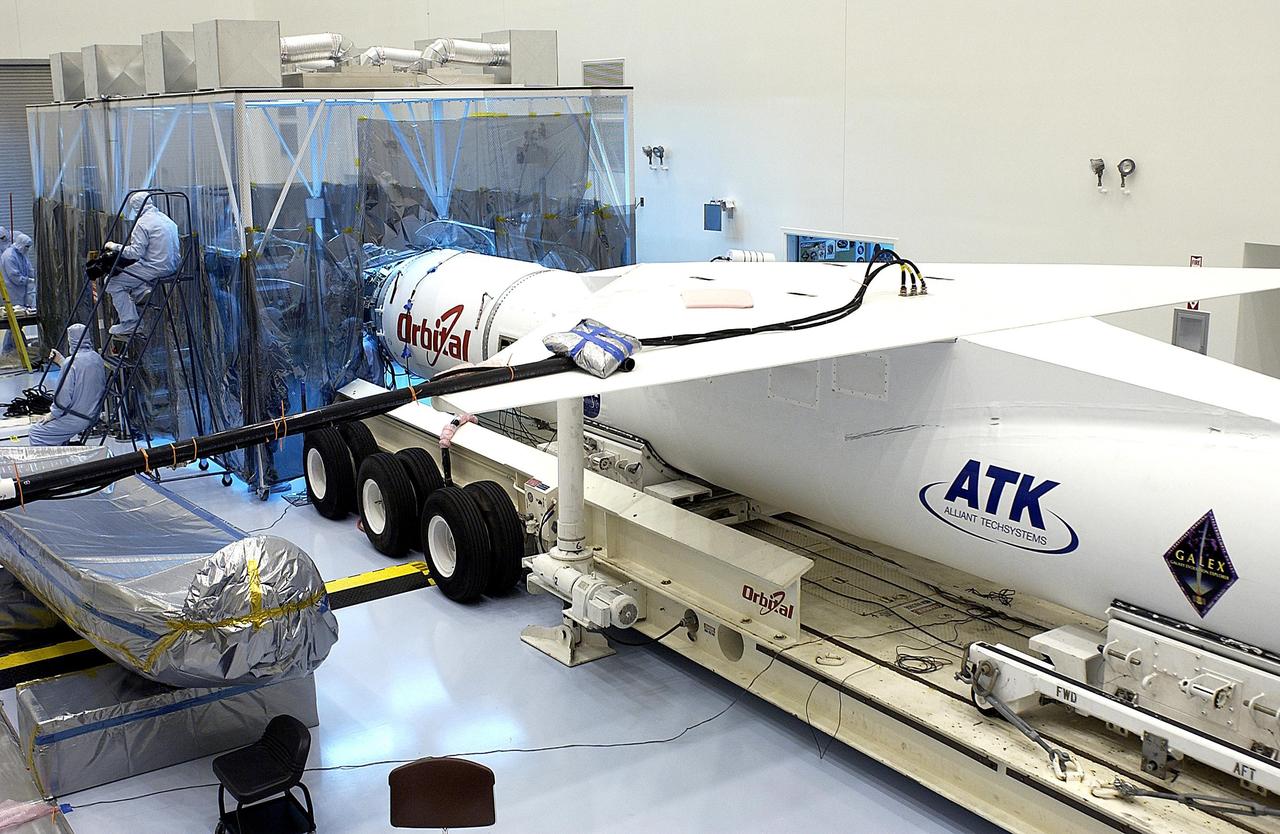
KENNEDY SPACE CENTER, FLA. - The Pegasus XL launch vehicle is ready for a re-mate with the Galaxy Evolution Explorer (GALEX) spacecraft. The March 26 launch was delayed to enable protective covers to be added to the Optical Wheel Assembly (OWA) on GALEX to avoid the possibility of a missing electrical cable fastener floating into and jamming the mechanism when GALEX is in orbit. Launch of GALEX is now scheduled for no earlier than April 26.
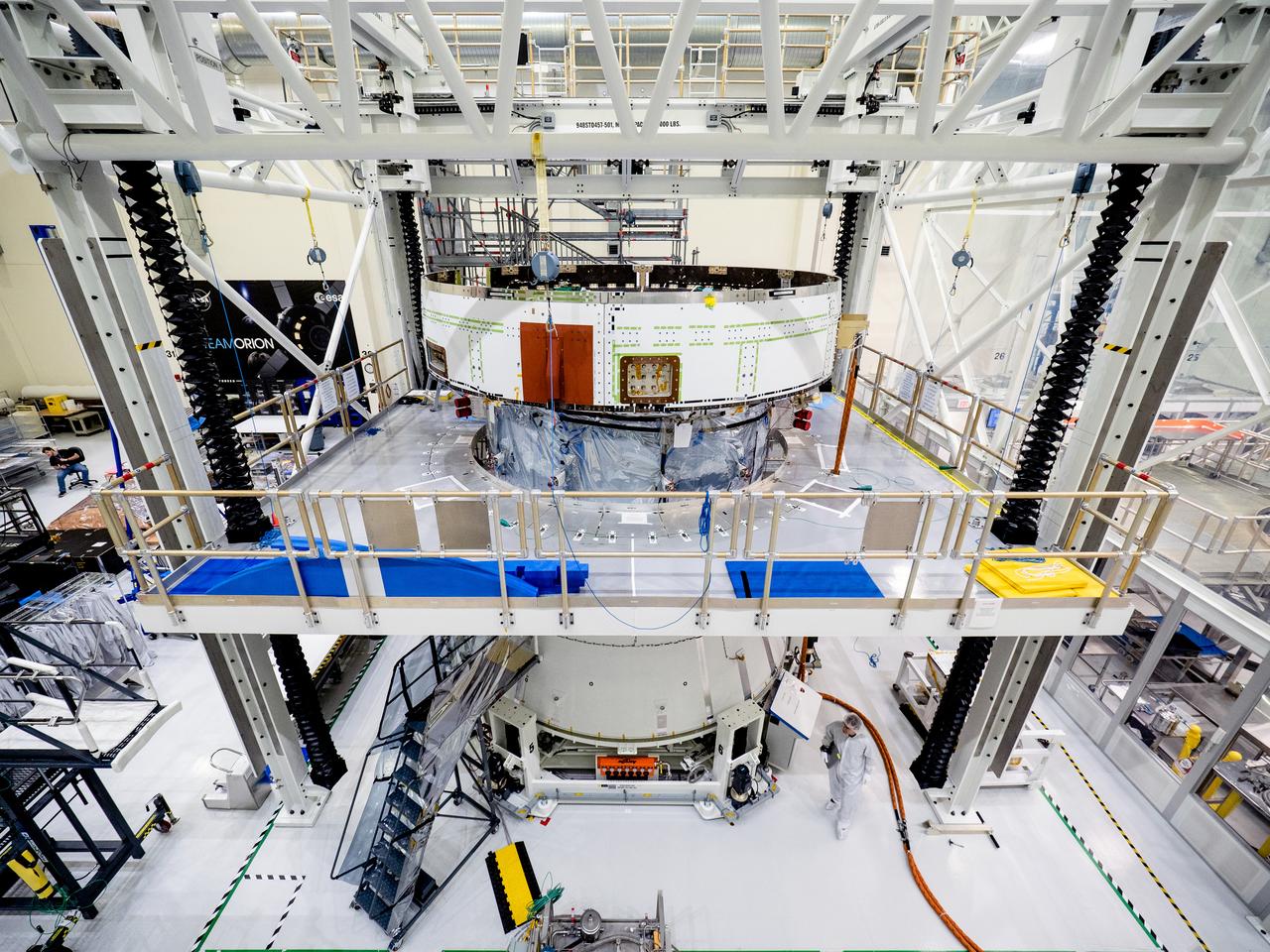
On April 29, Orion’s service module, shown here on May 2, 2019, moved to the lift station inside the assembly bay for installation and fastening of systems in preparation for Direct Field Acoustics Test (DFAT). The service module will move down to the east end of the bay next week where it will be surrounded with speakers and exposed to the acoustic level that will be experienced in space.
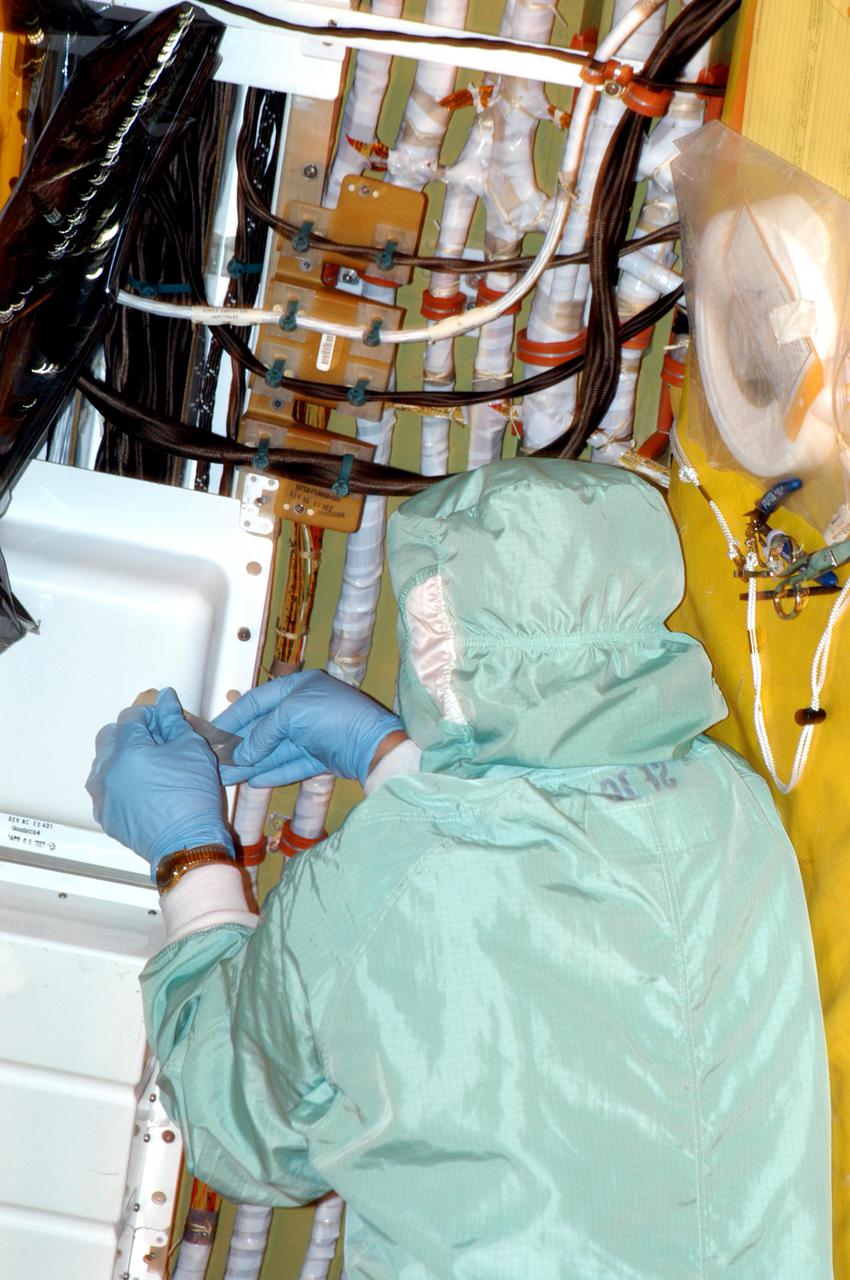
KENNEDY SPACE CENTER, FLA. - In the Orbiter Processing Facility at NASA’s Kennedy Space Center in Florida, a worker are removing wire tray covers on Discovery and adding chafe prevention. Boroscope inspections revealed the need for the protection to prevent fasteners from causing minor chafing on the tubing surrounding the wires. Discovery is the designated orbiter for Return to Flight mission STS-114 to the International Space Station. The launch window for the mission is May 15 to June 3, 2005.
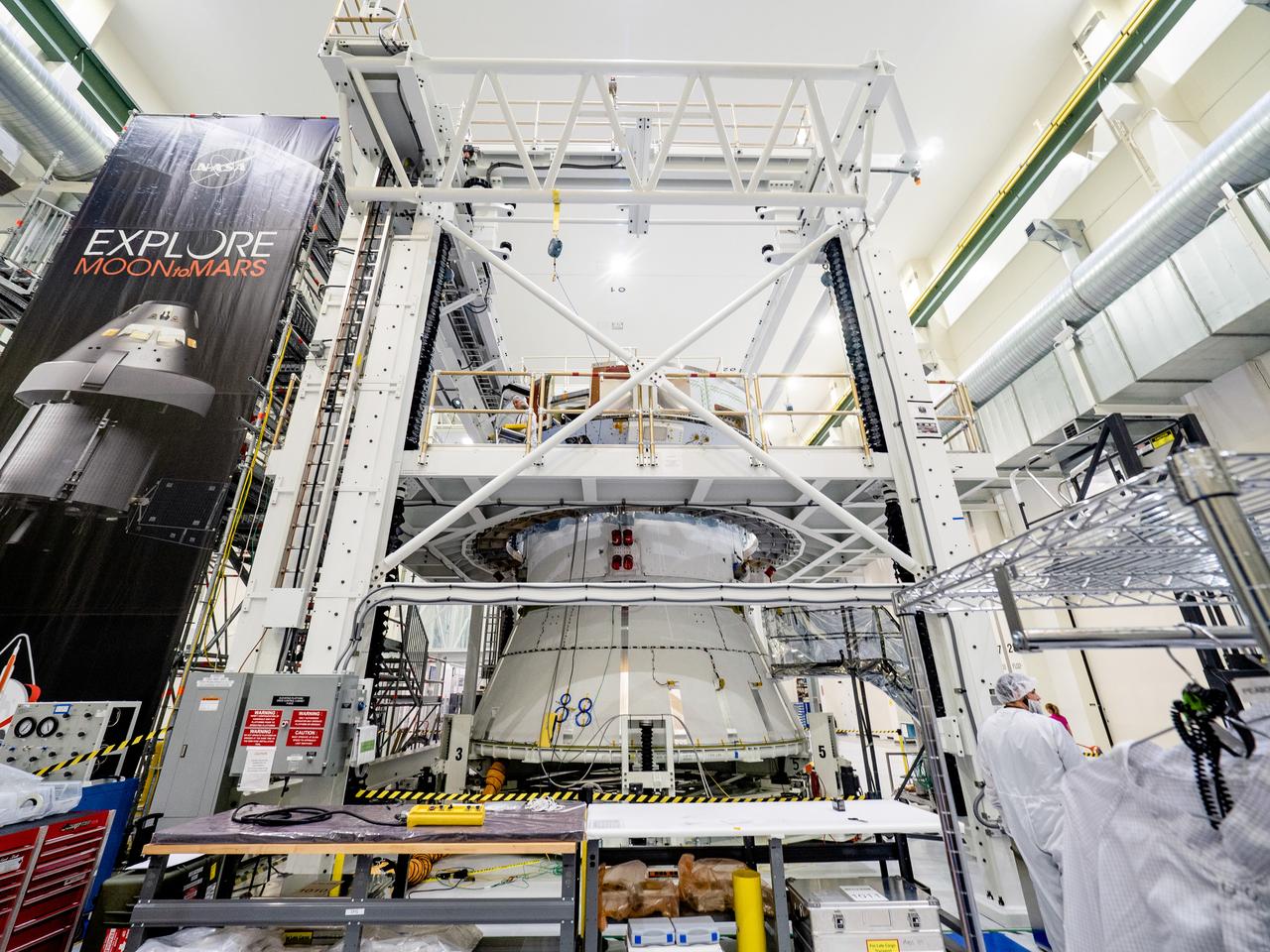
On April 29, Orion’s service module, shown here on May 2, 2019, moved to the lift station inside the assembly bay for installation and fastening of systems in preparation for Direct Field Acoustics Test (DFAT). The service module will move down to the east end of the bay next week where it will be surrounded with speakers and exposed to the acoustic level that will be experienced in space.

On April 29, Orion’s Service Module, shown here on May 3, 2019, moved to the lift station inside the assembly bay for installation and fastening of systems in preparation for Direct Field Acoustics Test (DFAT). The Service Module will move down to the east end of the bay next week where it will be surrounded with speakers and exposed to the acoustic level that will be experienced in space.
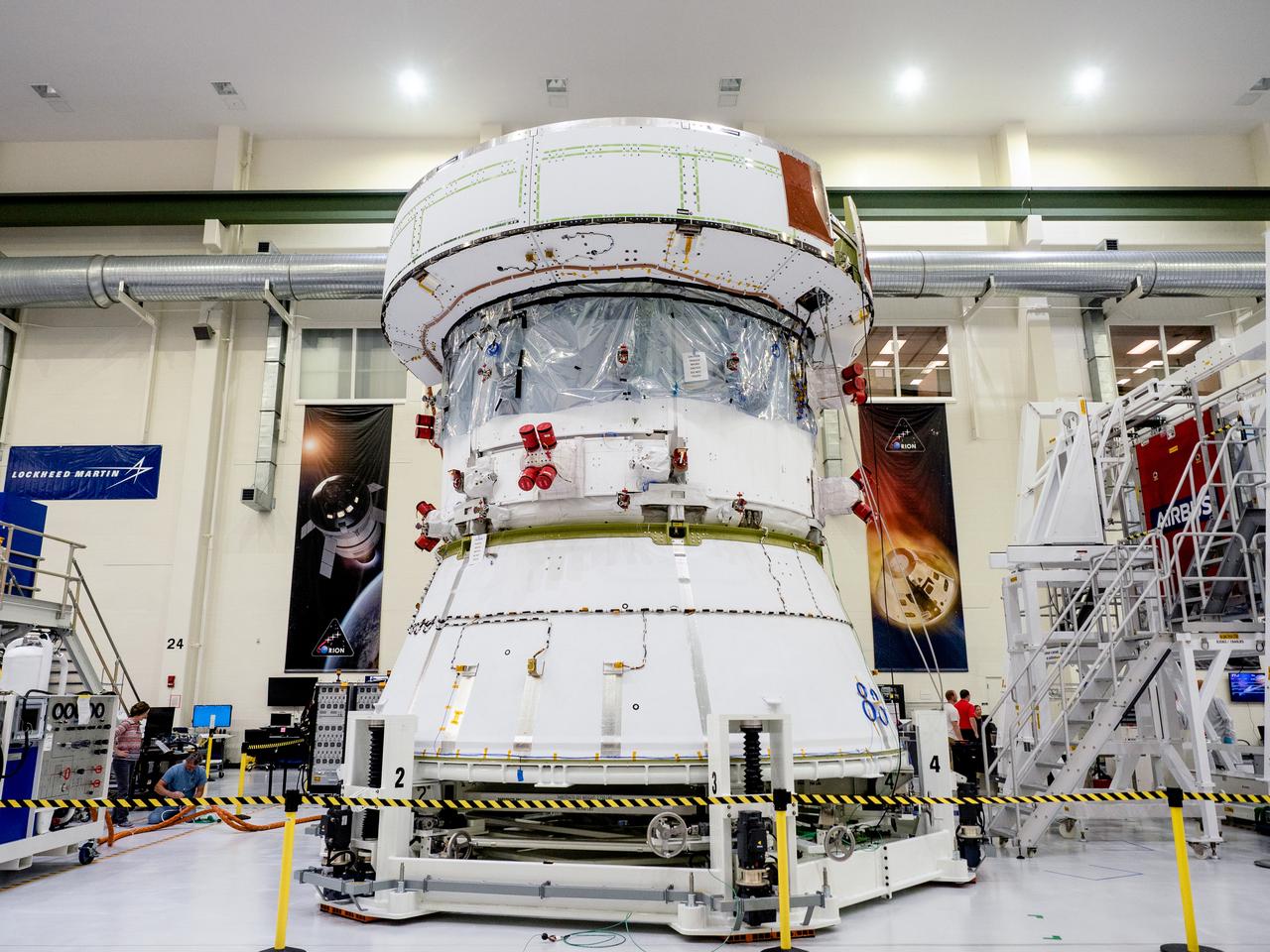
On April 29, Orion’s Service Module, shown here on May 3, 2019, moved to the lift station inside the assembly bay for installation and fastening of systems in preparation for Direct Field Acoustics Test (DFAT). The Service Module will move down to the east end of the bay next week where it will be surrounded with speakers and exposed to the acoustic level that will be experienced in space.
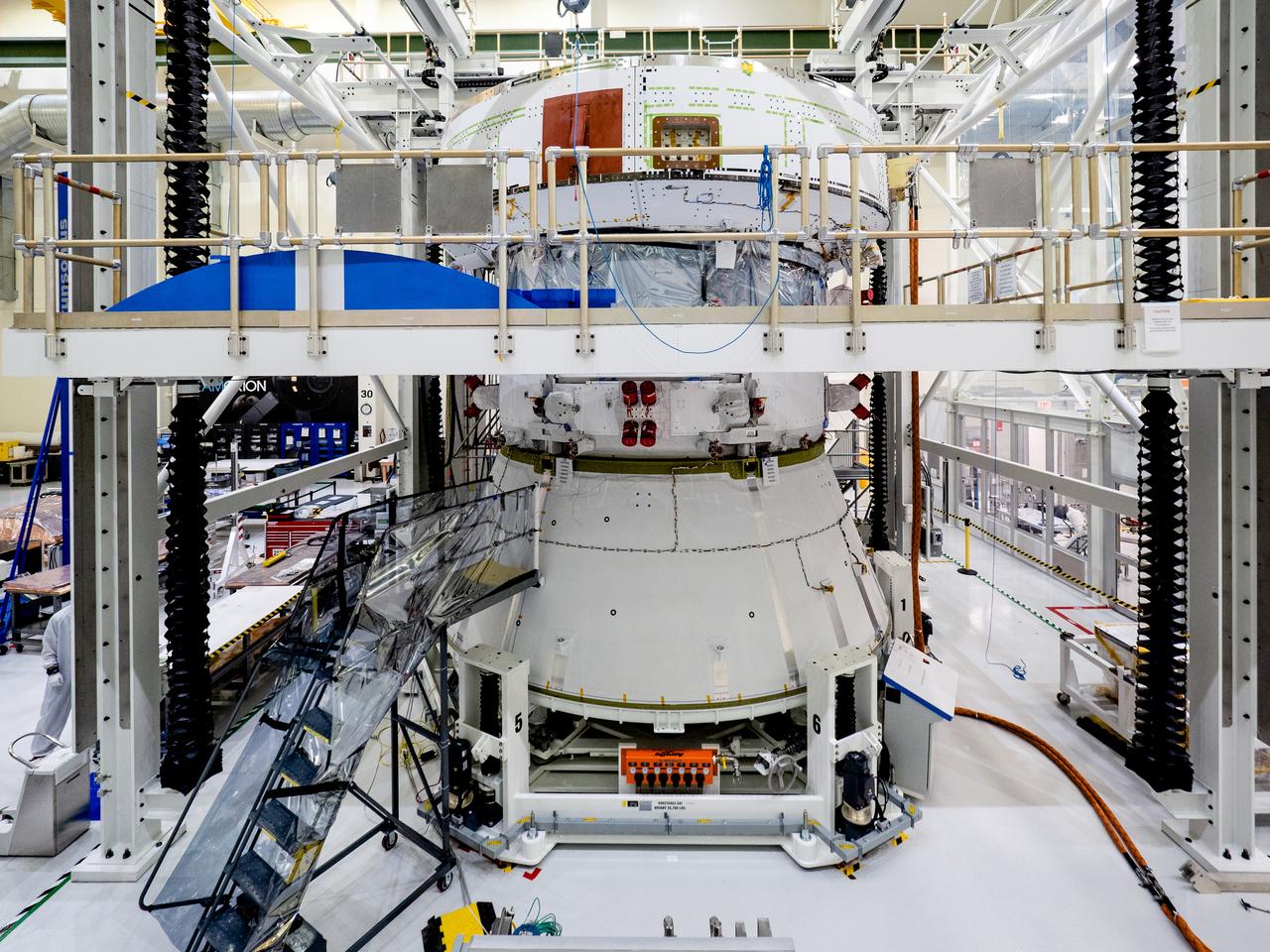
On April 29, Orion’s service module, shown here on May 2, 2019, moved to the lift station inside the assembly bay for installation and fastening of systems in preparation for Direct Field Acoustics Test (DFAT). The service module will move down to the east end of the bay next week where it will be surrounded with speakers and exposed to the acoustic level that will be experienced in space.
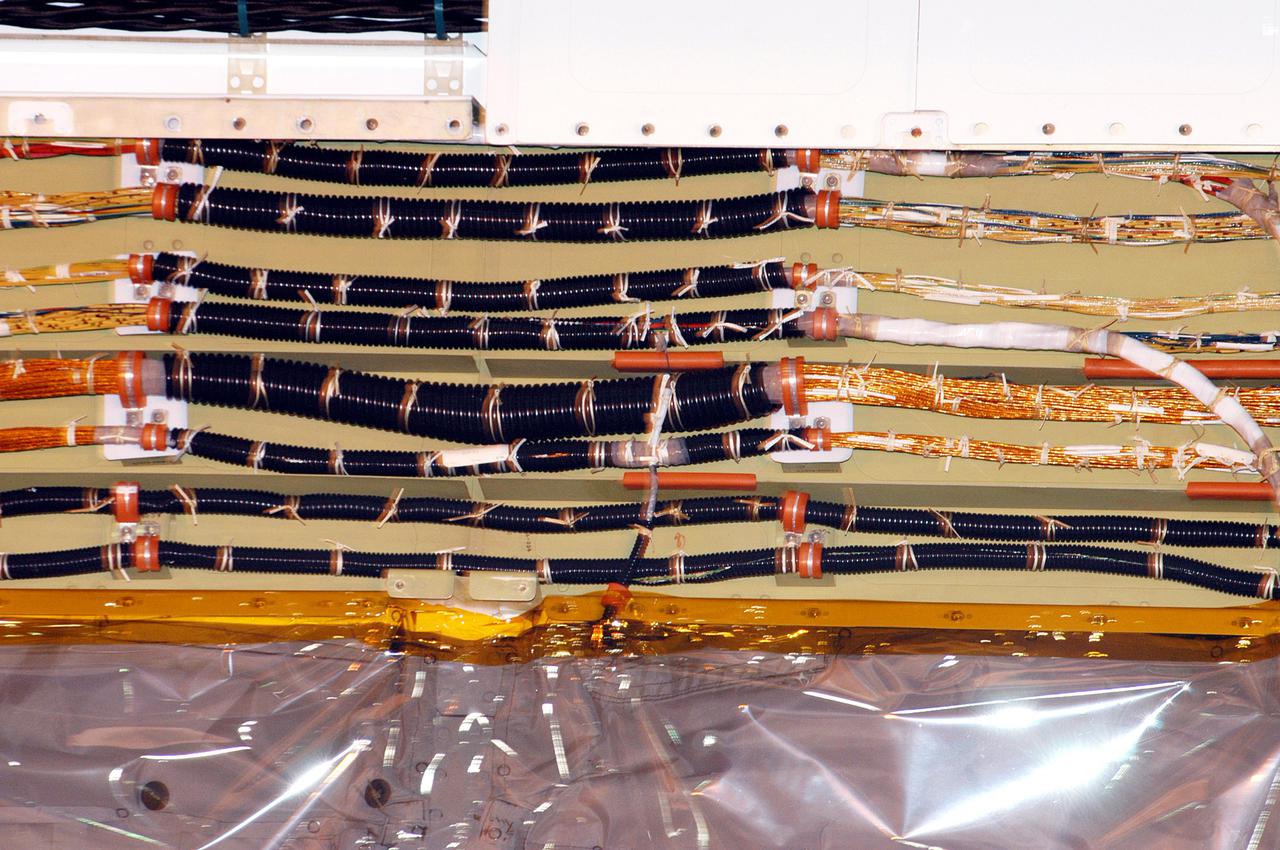
KENNEDY SPACE CENTER, FLA. - In the Orbiter Processing Facility at NASA’s Kennedy Space Center in Florida, workers are removing wire tray covers on Discovery and adding chafe prevention. The wiring is seen here. Boroscope inspections revealed the need for the protection to prevent fasteners from causing minor chafing on the tubing surrounding the wires. Discovery is the designated orbiter for Return to Flight mission STS-114 to the International Space Station. The launch window for the mission is May 15 to June 3, 2005.
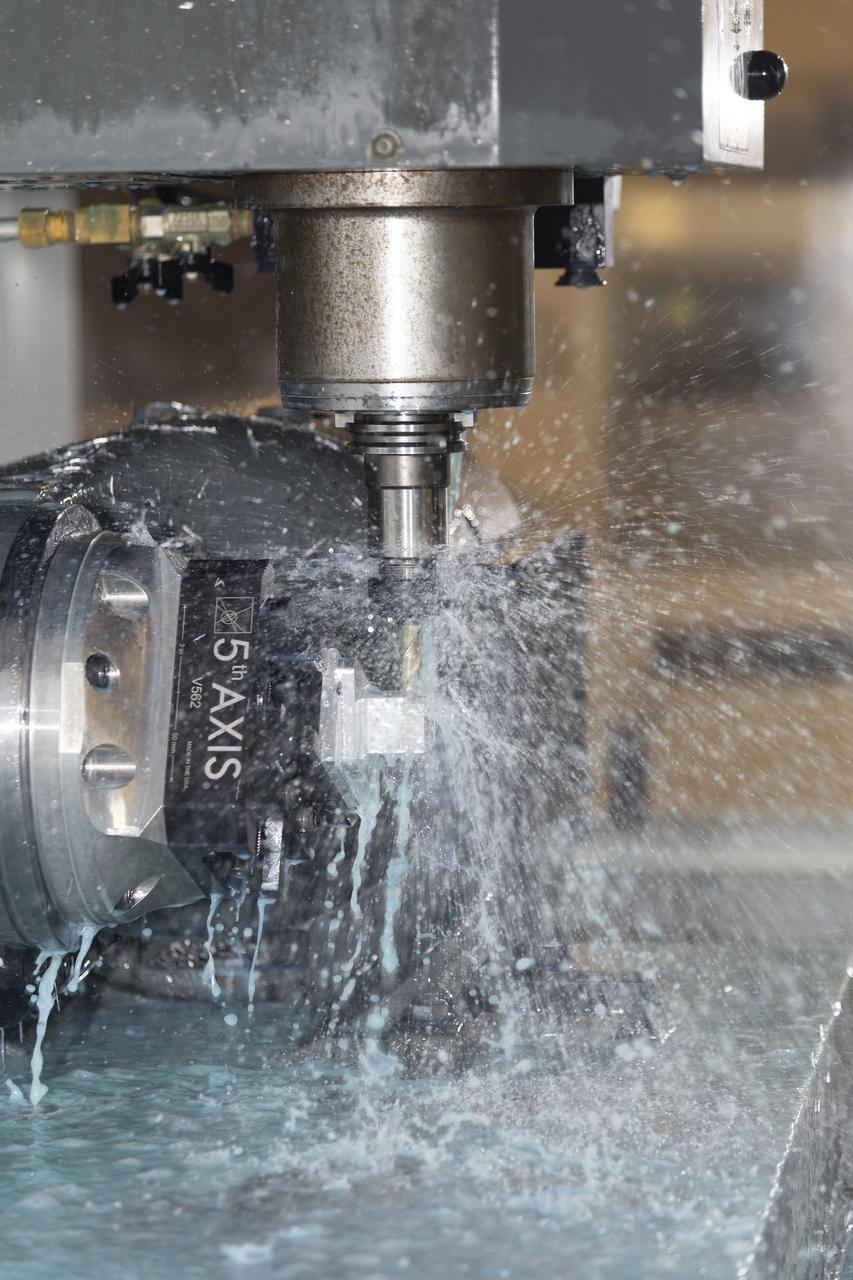
A machine cuts, rotates, and turns a block of aluminum to make a forward wing strut fastener for a 10-foot model of the Transonic Truss-Braced Wing at NASA’s Armstrong Flight Research Center, in Edwards, California. The aircraft concept involves a wing braced on an aircraft using diagonal struts that also add lift and could result in significantly improved aerodynamics.

According to one ancient legend, a Chinese official named Wan Hoo attempted a flight to the moon using a large wicker chair to which were fastened 47 large rockets. Forty seven assistants, each armed with a torch, rushed forward to light the fuses. In a moment, there was a tremendous roar accompanied by billowing clouds of smoke. When the smoke cleared, the flying chair and Wan Hoo were gone.
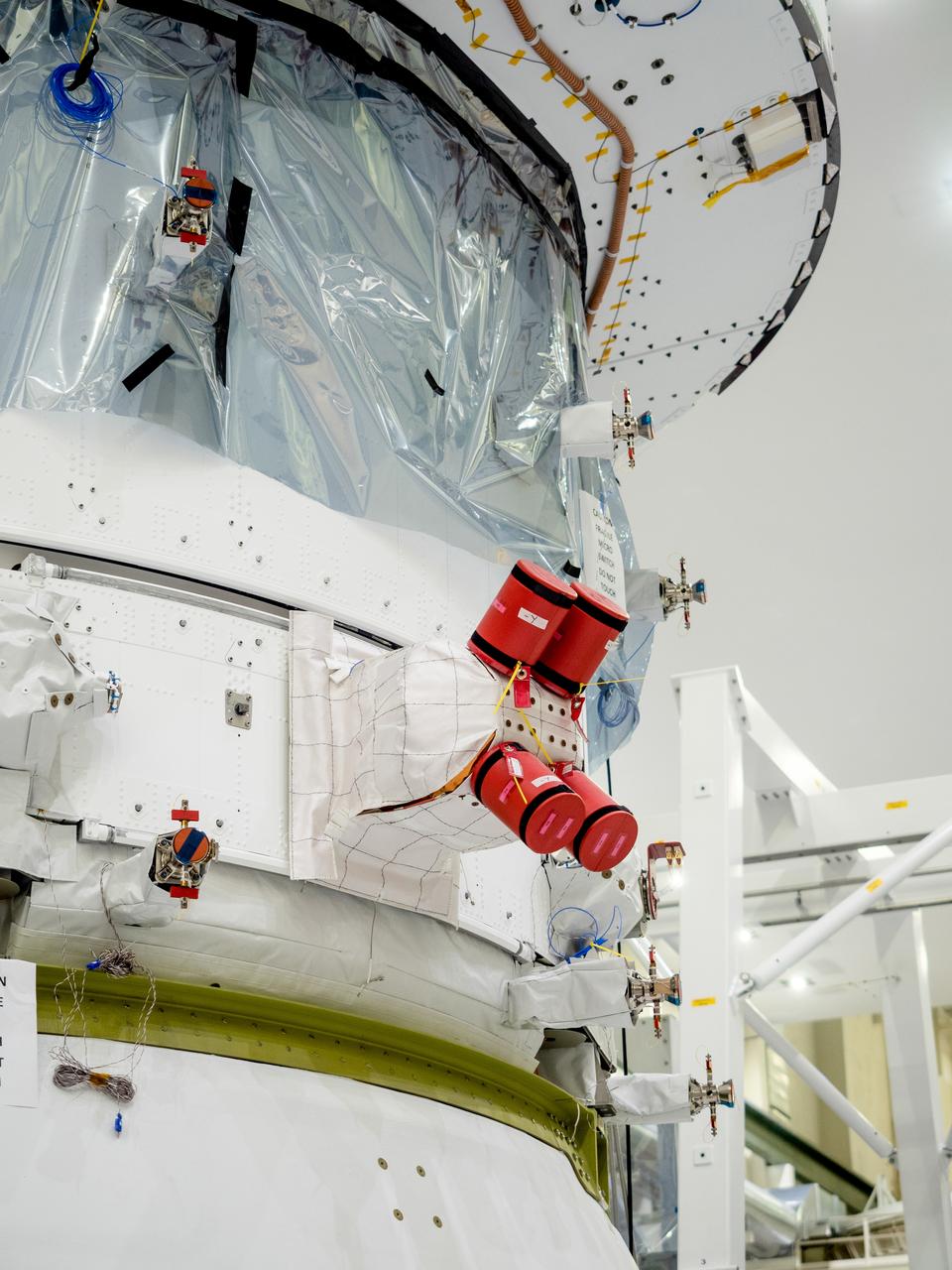
On April 29, Orion’s Service Module, shown here on May 3, 2019, moved to the lift station inside the assembly bay for installation and fastening of systems in preparation for Direct Field Acoustics Test (DFAT). The Service Module will move down to the east end of the bay next week where it will be surrounded with speakers and exposed to the acoustic level that will be experienced in space.
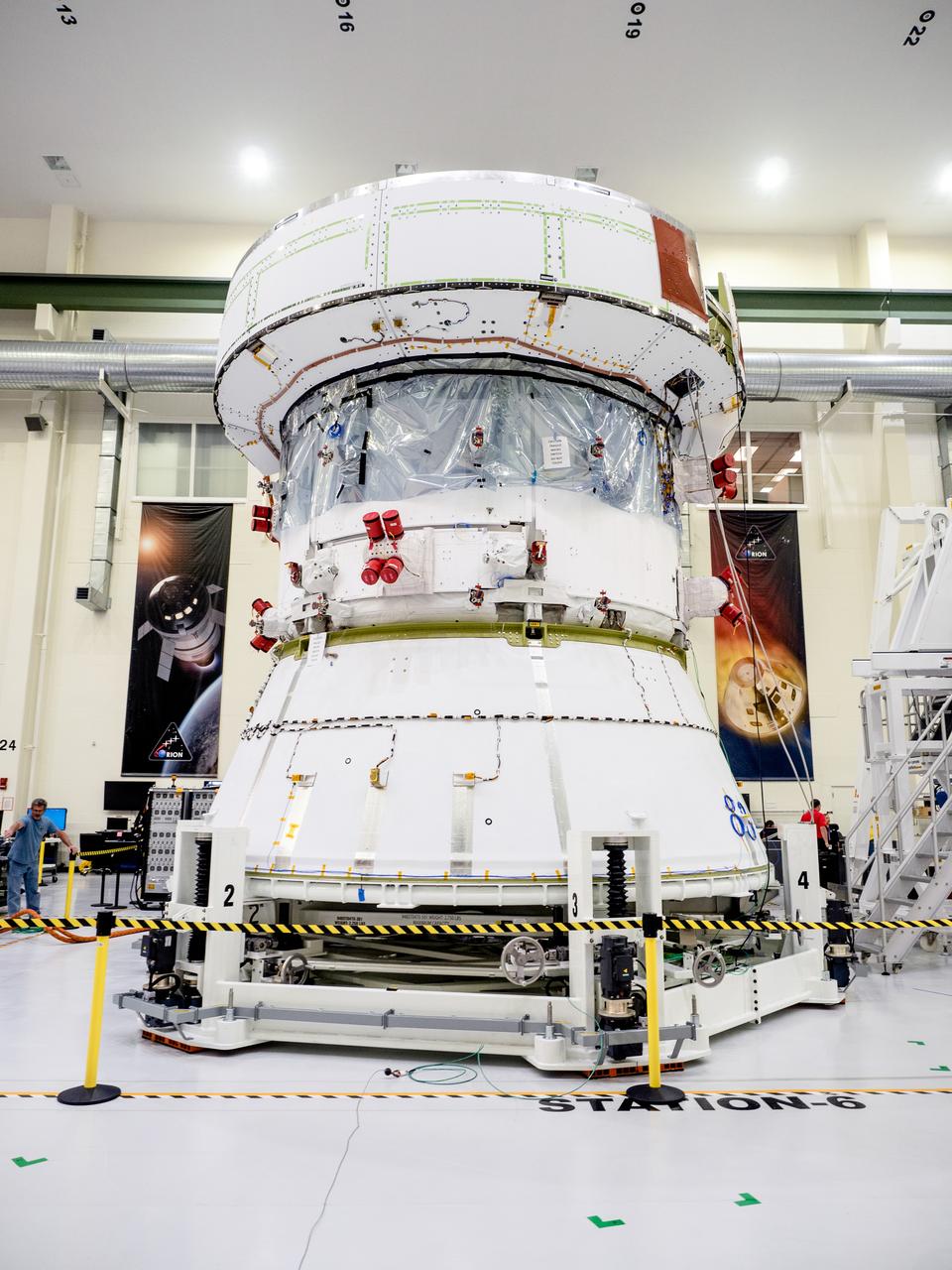
On April 29, Orion’s Service Module, shown here on May 3, 2019, moved to the lift station inside the assembly bay for installation and fastening of systems in preparation for Direct Field Acoustics Test (DFAT). The Service Module will move down to the east end of the bay next week where it will be surrounded with speakers and exposed to the acoustic level that will be experienced in space.
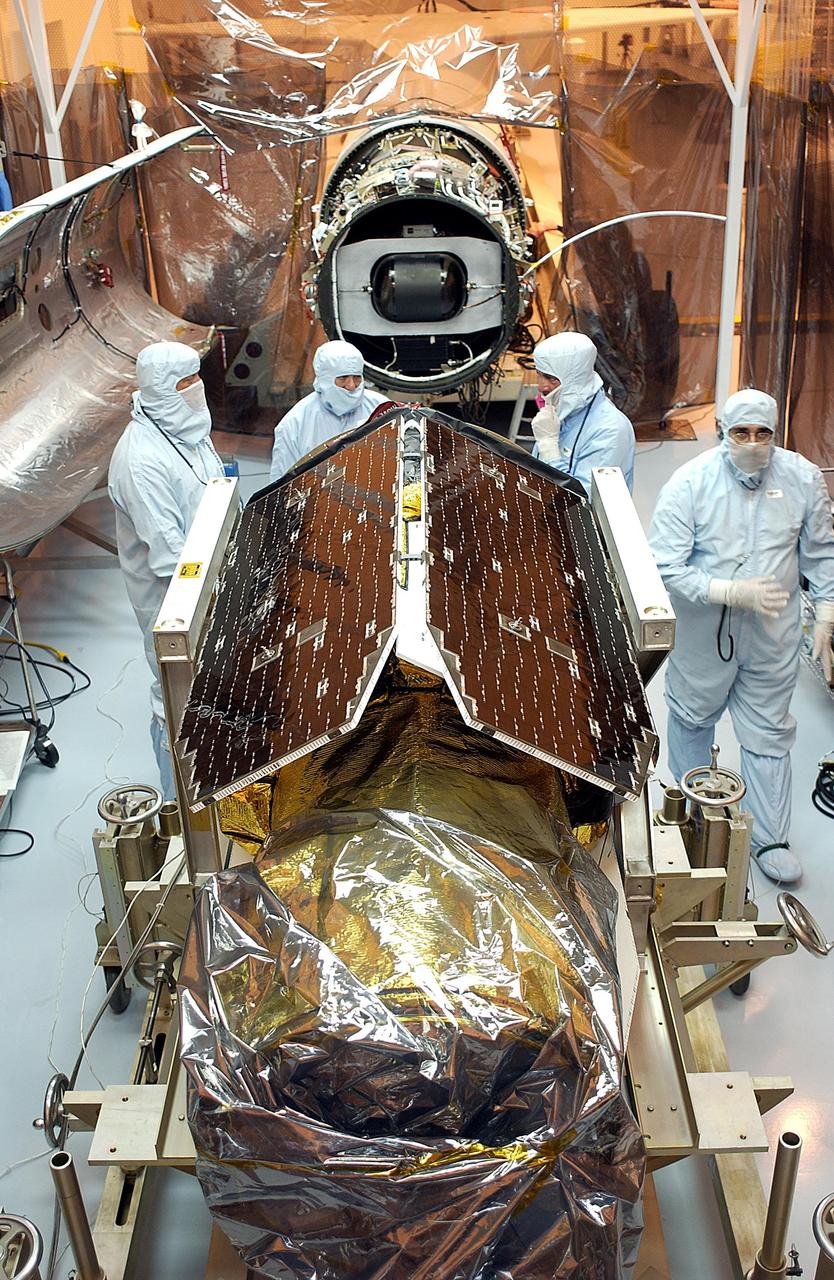
KENNEDY SPACE CENTER, FLA. - Workers prepare the Galaxy Evolution Explorer (GALEX) spacecraft for re-mate with the Pegasus XL launch vehicle. The March 26 launch was delayed to enable protective covers to be added to the Optical Wheel Assembly (OWA) to avoid the possibility of a missing electrical cable fastener floating into and jamming the mechanism when GALEX is in orbit. Launch of GALEX is now scheduled for no earlier than April 26.
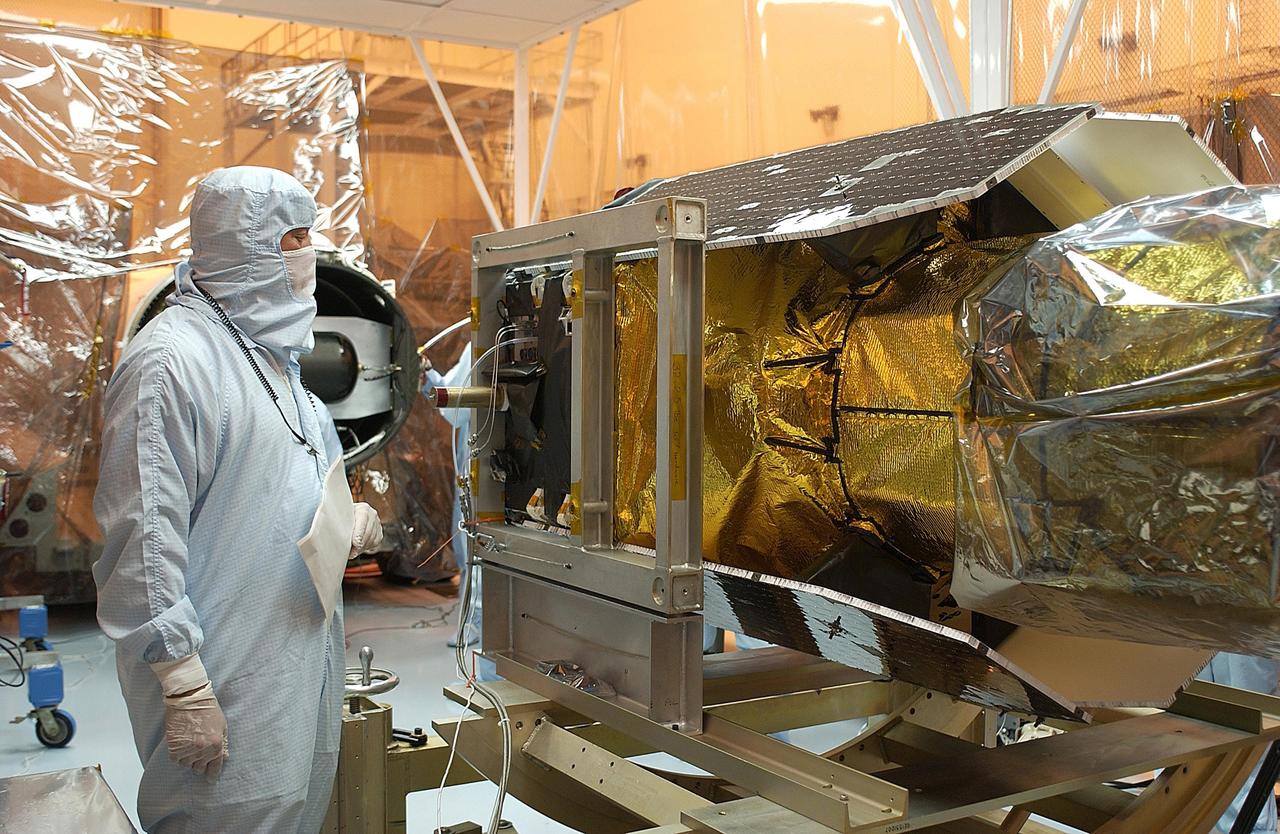
KENNEDY SPACE CENTER, FLA. -- Workers prepare the Pegasus XL launch vehicle for re-mate with the Galaxy Evolution Explorer (GALEX) spacecraft. The March 26 launch was delayed to enable protective covers to be added to the Optical Wheel Assembly (OWA) on GALEX to avoid the possibility of a missing electrical cable fastener floating into and jamming the mechanism when GALEX is in orbit. Launch of GALEX is now scheduled for no earlier than April 26.

On April 29, Orion’s service module, shown here on May 2, 2019, moved to the lift station inside the assembly bay for installation and fastening of systems in preparation for Direct Field Acoustics Test (DFAT). The service module will move down to the east end of the bay next week where it will be surrounded with speakers and exposed to the acoustic level that will be experienced in space.
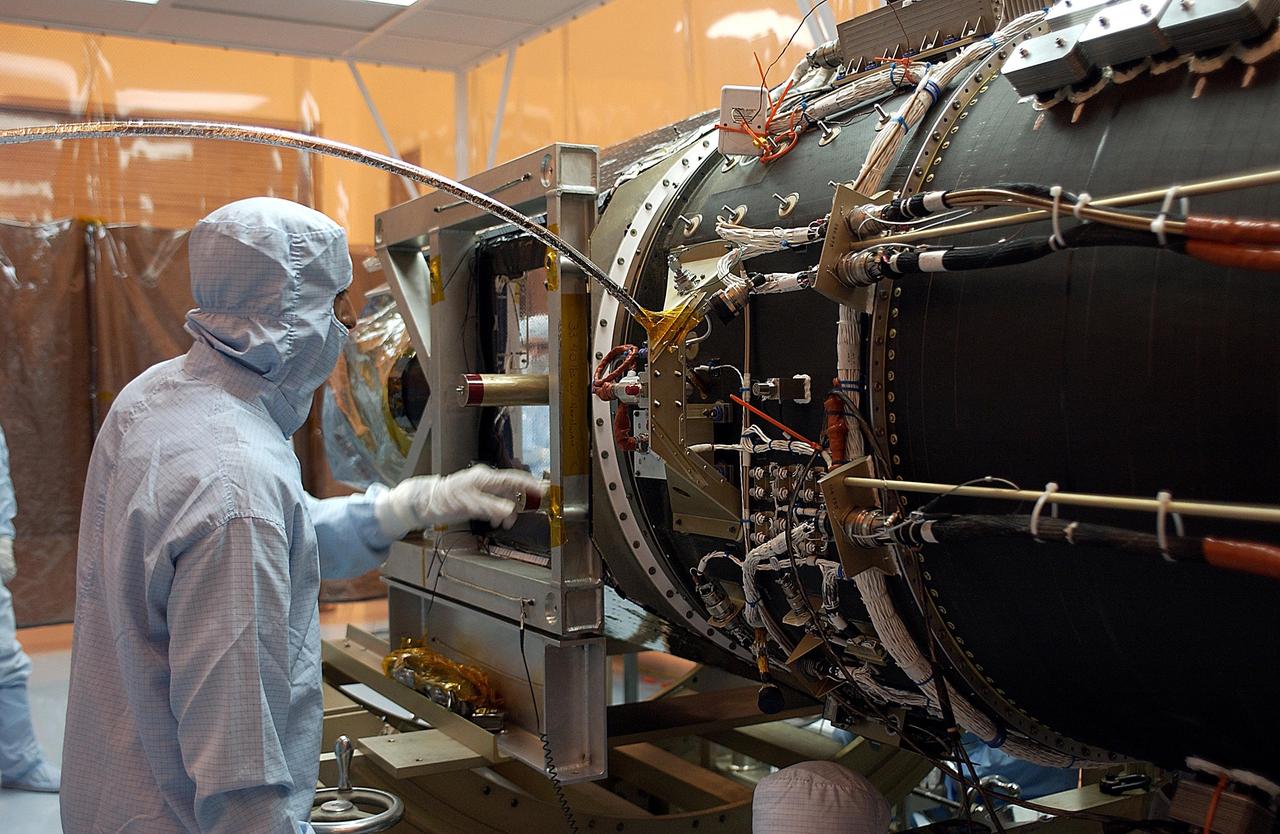
KENNEDY SPACE CENTER, FLA. - A worker makes adjustments on the Galaxy Evolution Explorer (GALEX) spacecraft during the second mating with the Pegasus XL launch vehicle. The March 26 launch was delayed to enable protective covers to be added to the Optical Wheel Assembly (OWA) on GALEX to avoid the possibility of a missing electrical cable fastener floating into and jamming the mechanism when GALEX is in orbit. Launch of GALEX is now scheduled for no earlier than April 26.

On April 29, Orion’s Service Module, shown here on May 3, 2019, moved to the lift station inside the assembly bay for installation and fastening of systems in preparation for Direct Field Acoustics Test (DFAT). The Service Module will move down to the east end of the bay next week where it will be surrounded with speakers and exposed to the acoustic level that will be experienced in space.
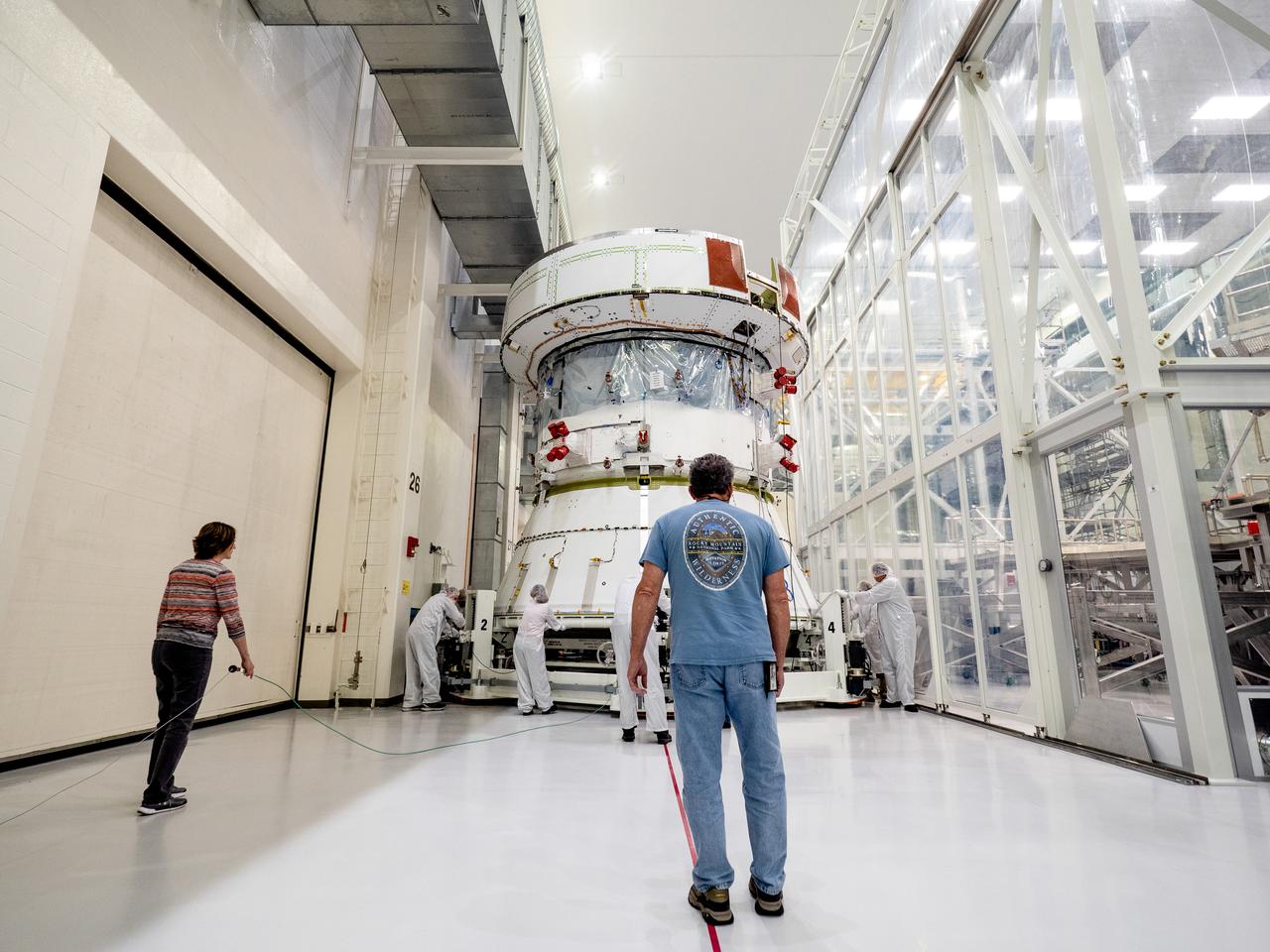
On April 29, Orion’s Service Module, shown here on May 3, 2019, moved to the lift station inside the assembly bay for installation and fastening of systems in preparation for Direct Field Acoustics Test (DFAT). The Service Module will move down to the east end of the bay next week where it will be surrounded with speakers and exposed to the acoustic level that will be experienced in space.
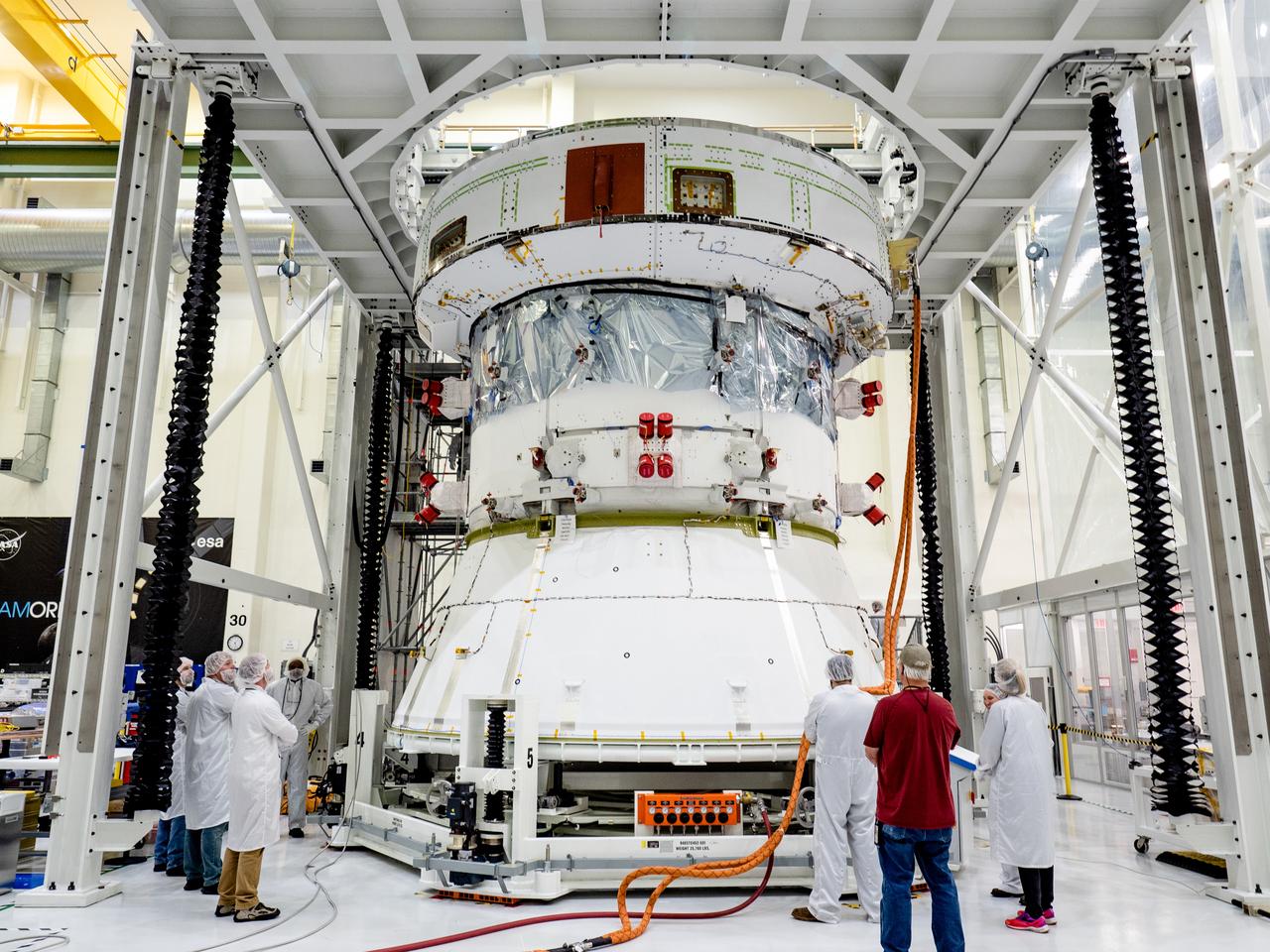
On April 29, Orion’s Service Module, shown here on May 3, 2019, moved to the lift station inside the assembly bay for installation and fastening of systems in preparation for Direct Field Acoustics Test (DFAT). The Service Module will move down to the east end of the bay next week where it will be surrounded with speakers and exposed to the acoustic level that will be experienced in space.
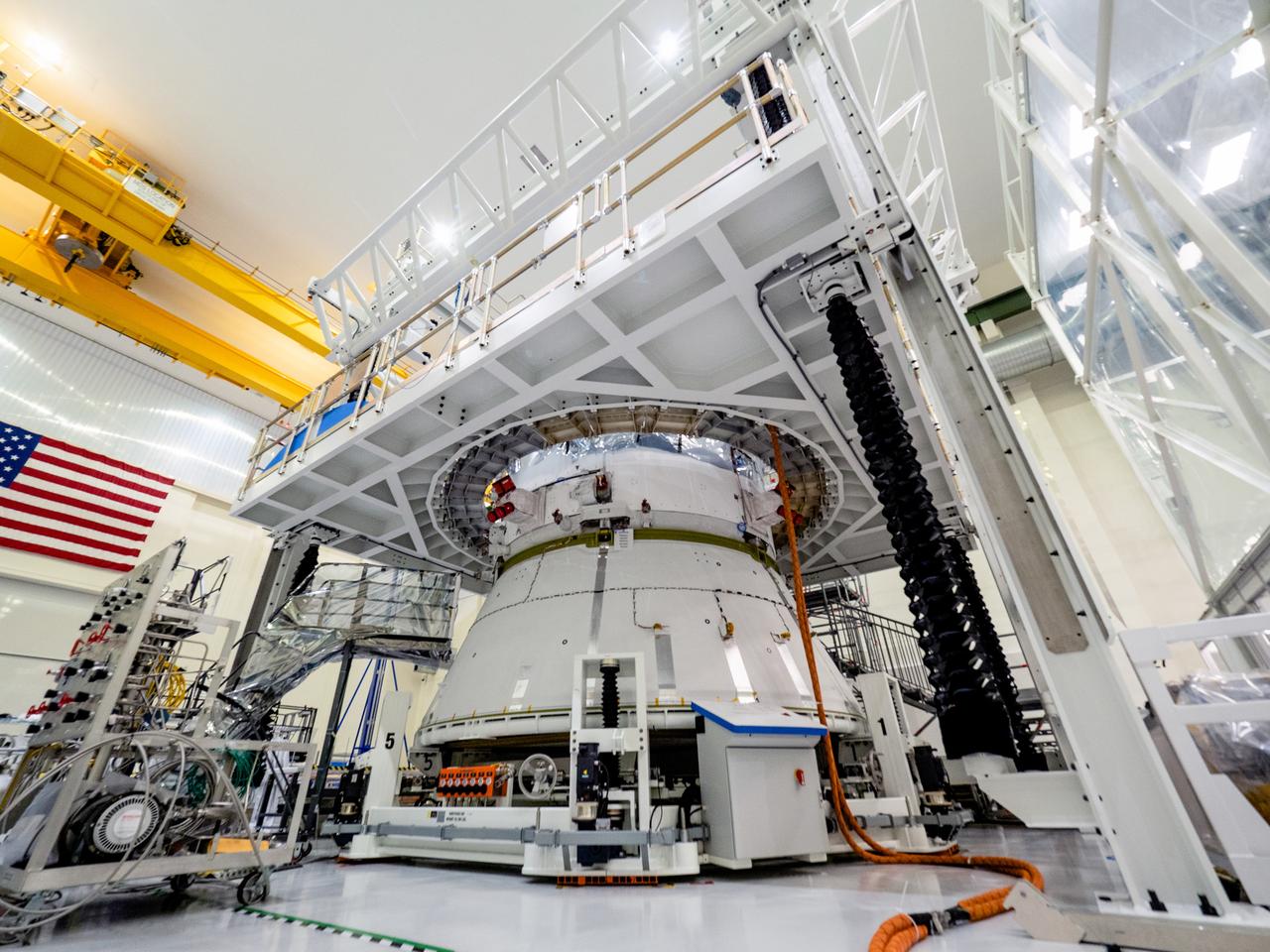
On April 29, Orion’s service module, shown here on May 2, 2019, moved to the lift station inside the assembly bay for installation and fastening of systems in preparation for Direct Field Acoustics Test (DFAT). The service module will move down to the east end of the bay next week where it will be surrounded with speakers and exposed to the acoustic level that will be experienced in space.
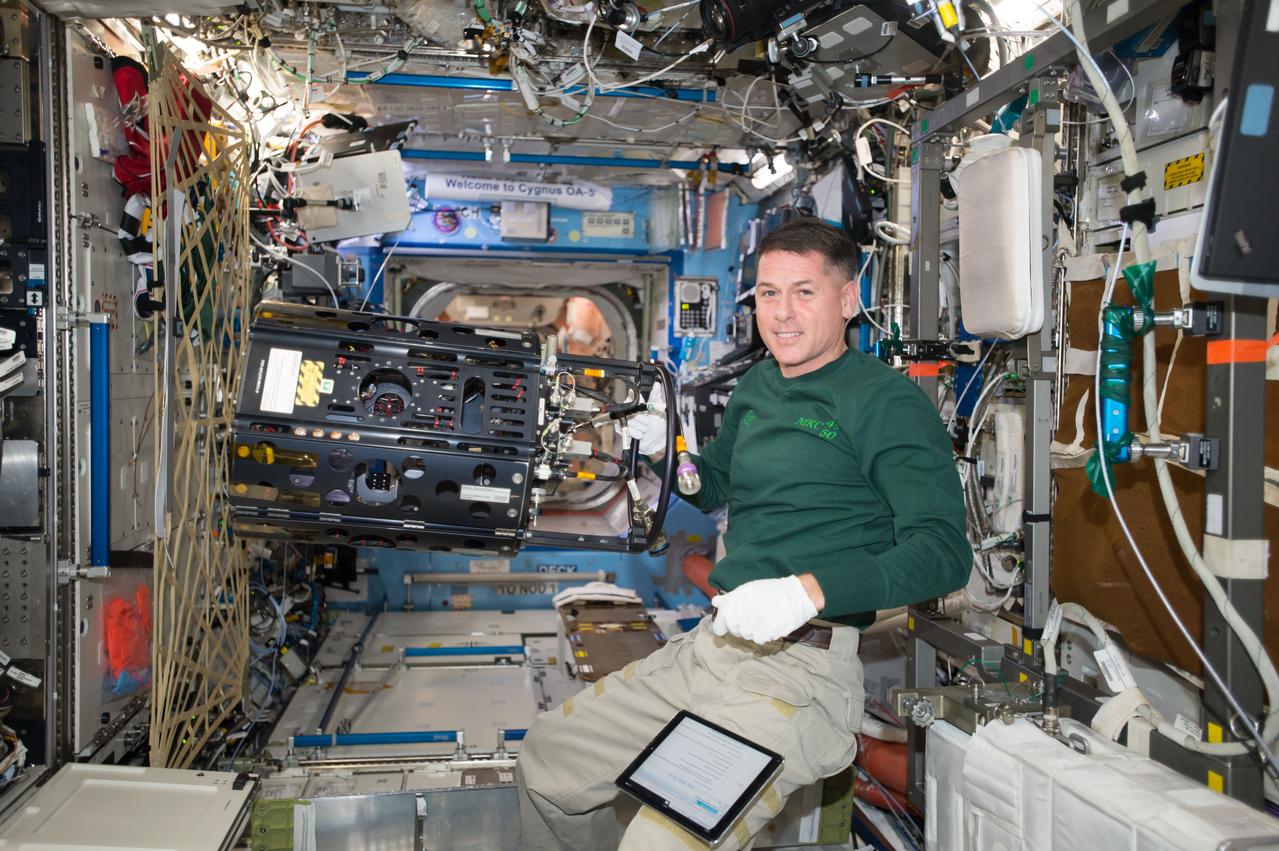
iss050e034393 (1/18/2017) --- NASA astronaut Shane Kimbrough during Combustion Integration Rack (CIR) Multi-user Droplet Combustion Apparatus (MDCA) Troubleshooting in the U.S. Laboratory. MDCA was removed from the CIR Combustion Chamber and spring fastener was repaired. The CIR is used to perform combustion experiments in microgravity. The CIR can be reconfigured easily on orbit to accommodate a variety of combustion experiments.
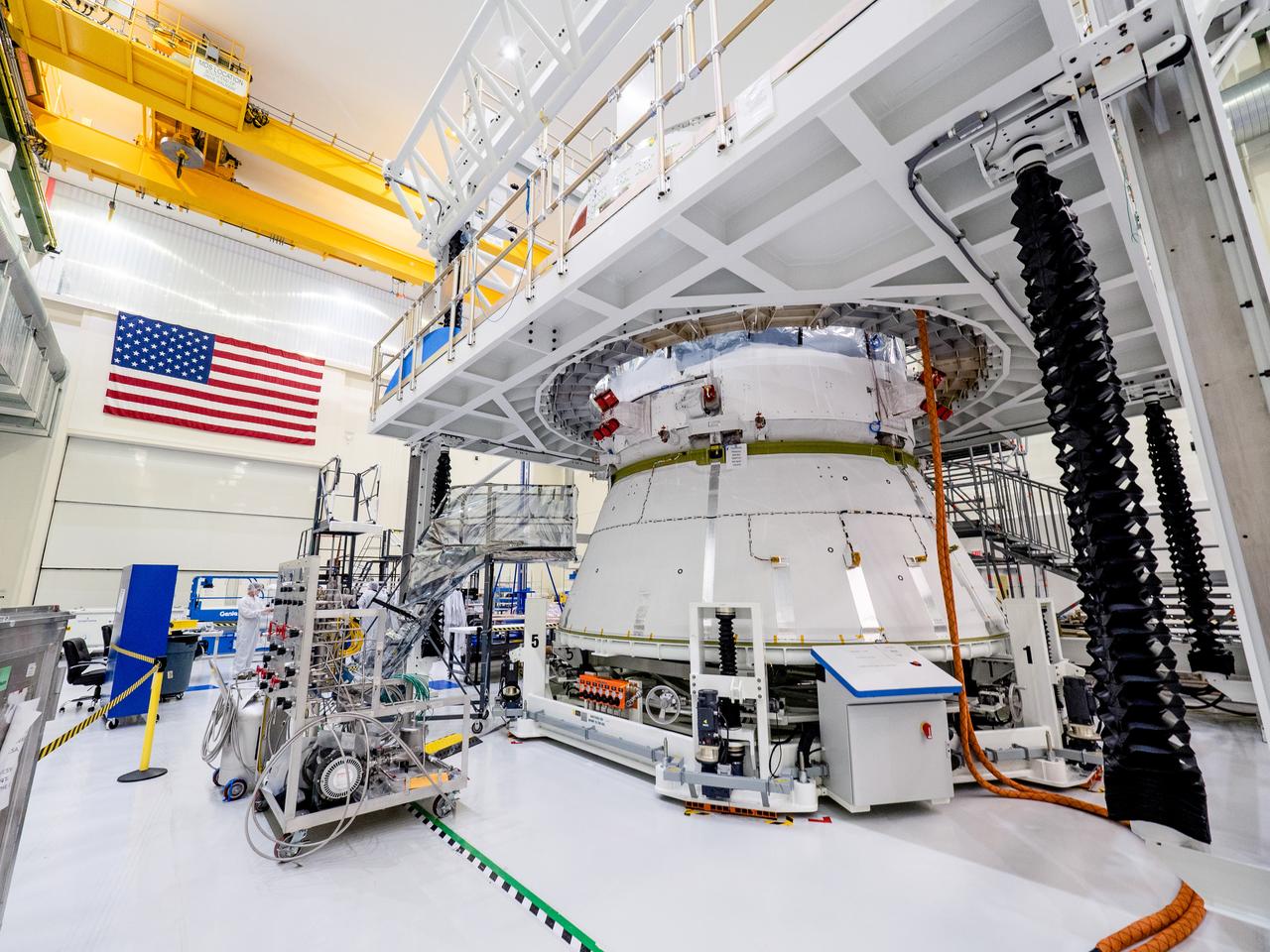
On April 29, Orion’s service module, shown here on May 2, 2019, moved to the lift station inside the assembly bay for installation and fastening of systems in preparation for Direct Field Acoustics Test (DFAT). The service module will move down to the east end of the bay next week where it will be surrounded with speakers and exposed to the acoustic level that will be experienced in space.
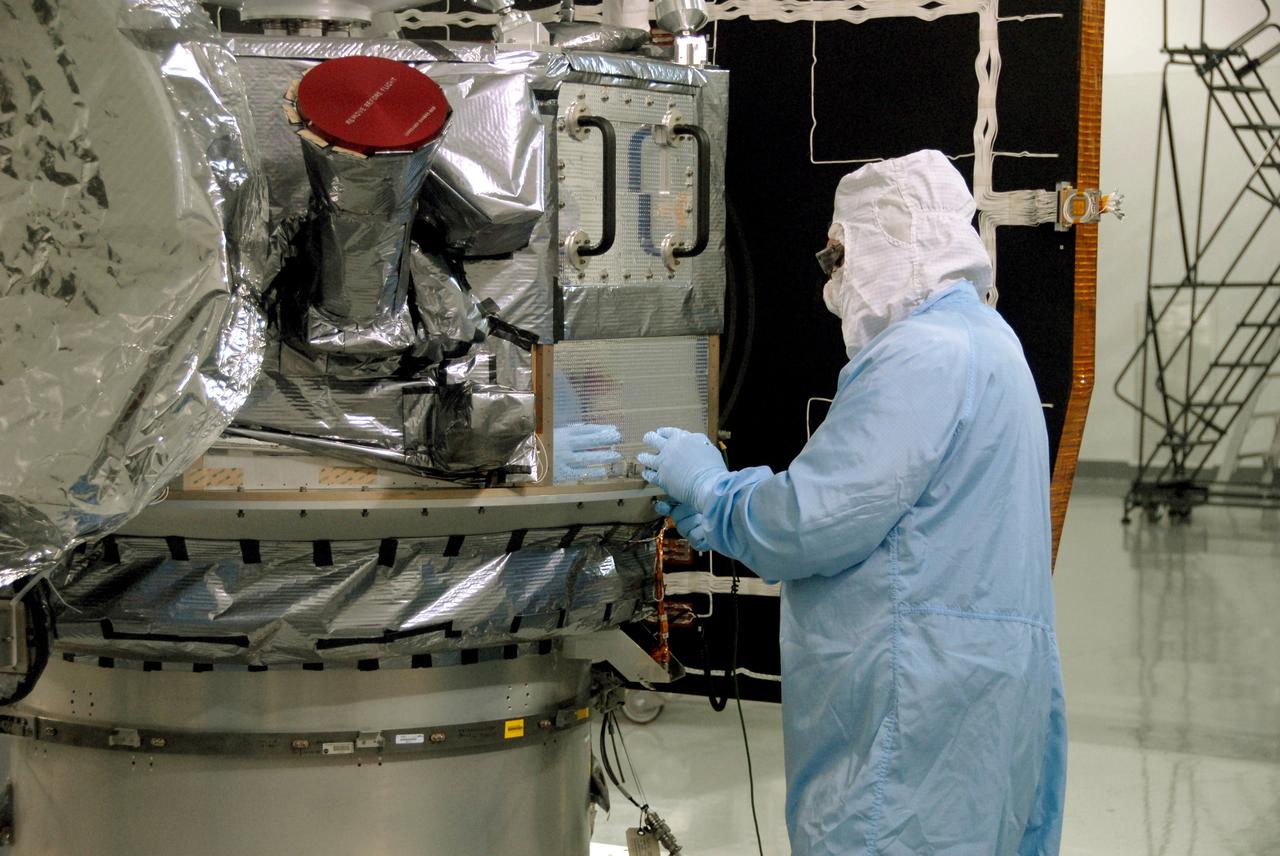
VANDENBERG AIR FORCE BASE, Calif. -- At Vandenberg Air Force Base's Astrotech processing facility in California, a technician fastens NASA's Wide-field Infrared Survey Explorer, or WISE, spacecraft onto the flight conical adapter and test stand. The satellite will survey the entire sky at infrared wavelengths, creating a cosmic clearinghouse of hundreds of millions of objects, which will be catalogued, providing a vast storehouse of knowledge about the solar system, the Milky Way, and the universe. Launch is scheduled no earlier than Dec. 7. Photo credit: NASA/Doug Kolkow
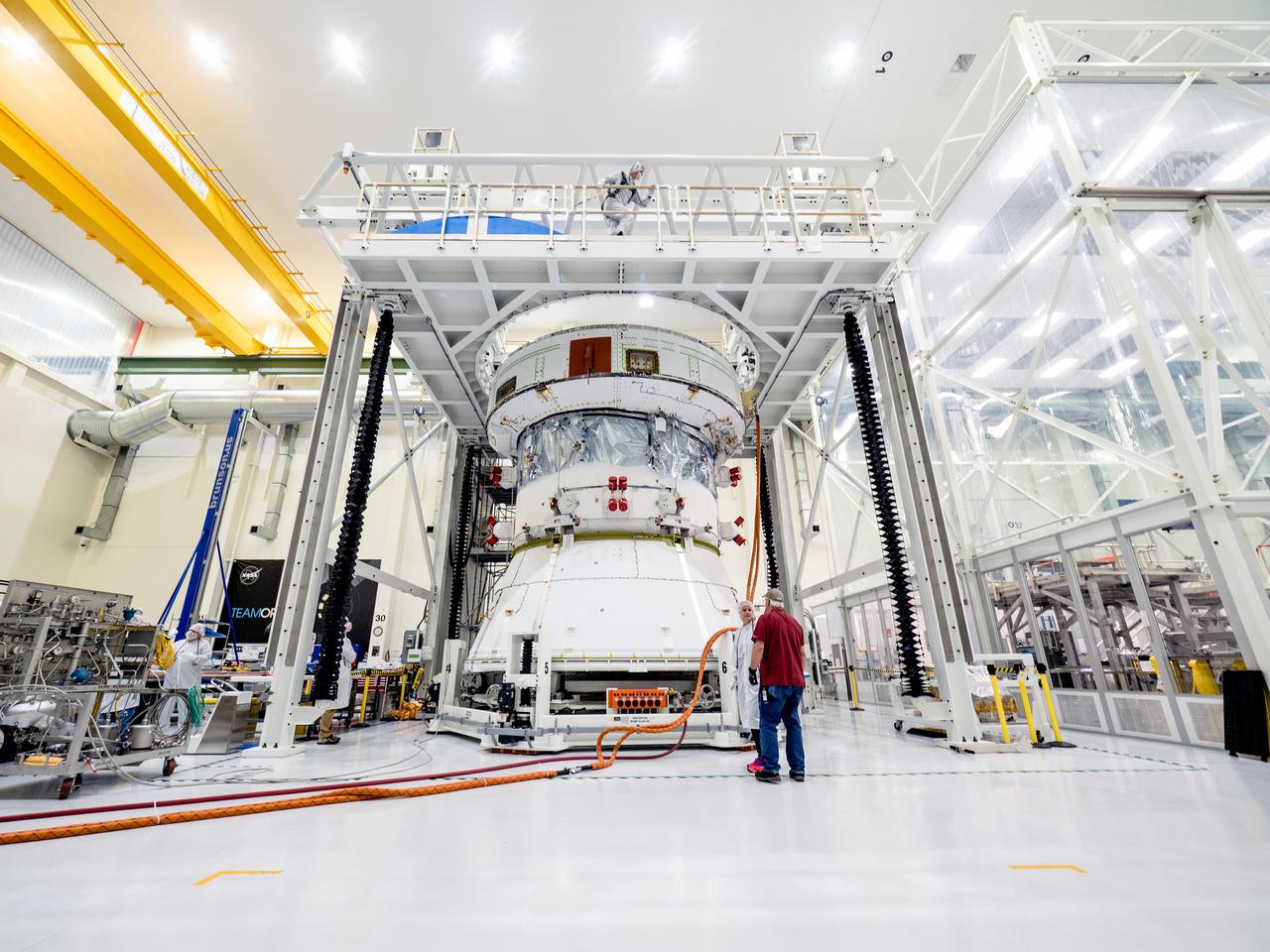
On April 29, Orion’s Service Module, shown here on May 3, 2019, moved to the lift station inside the assembly bay for installation and fastening of systems in preparation for Direct Field Acoustics Test (DFAT). The Service Module will move down to the east end of the bay next week where it will be surrounded with speakers and exposed to the acoustic level that will be experienced in space.
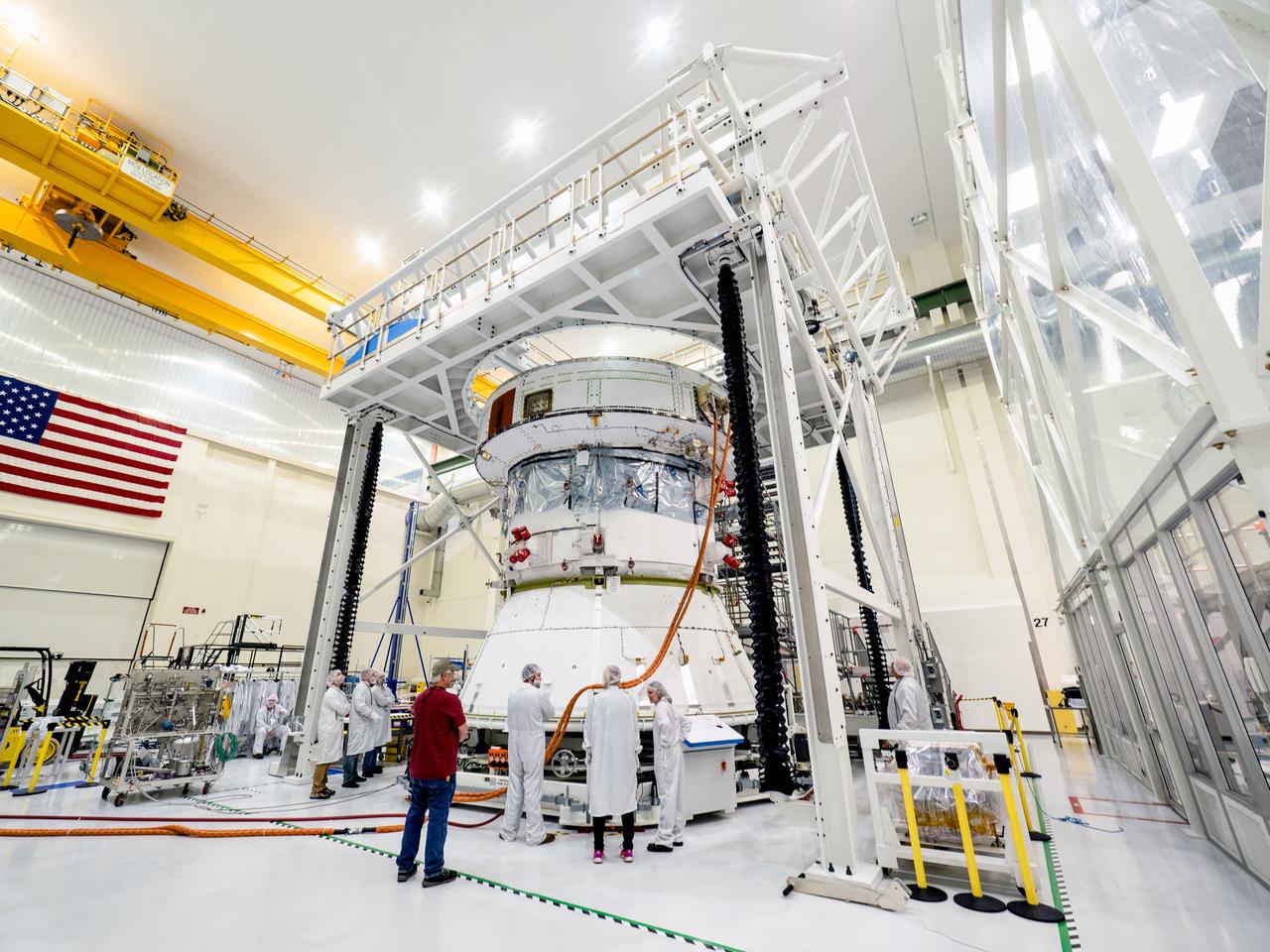
On April 29, Orion’s Service Module, shown here on May 3, 2019, moved to the lift station inside the assembly bay for installation and fastening of systems in preparation for Direct Field Acoustics Test (DFAT). The Service Module will move down to the east end of the bay next week where it will be surrounded with speakers and exposed to the acoustic level that will be experienced in space.
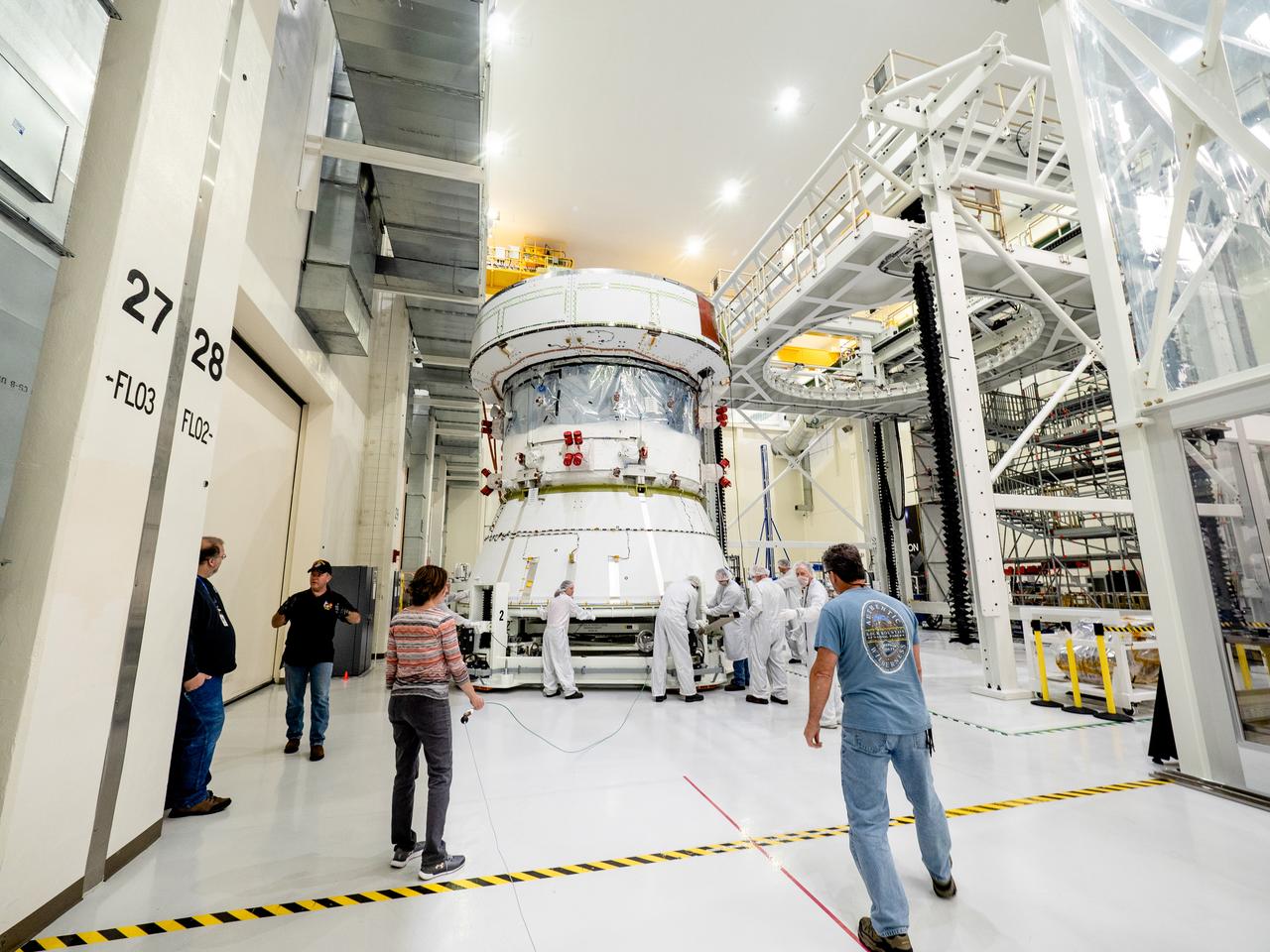
On April 29, Orion’s Service Module, shown here on May 3, 2019, moved to the lift station inside the assembly bay for installation and fastening of systems in preparation for Direct Field Acoustics Test (DFAT). The Service Module will move down to the east end of the bay next week where it will be surrounded with speakers and exposed to the acoustic level that will be experienced in space.
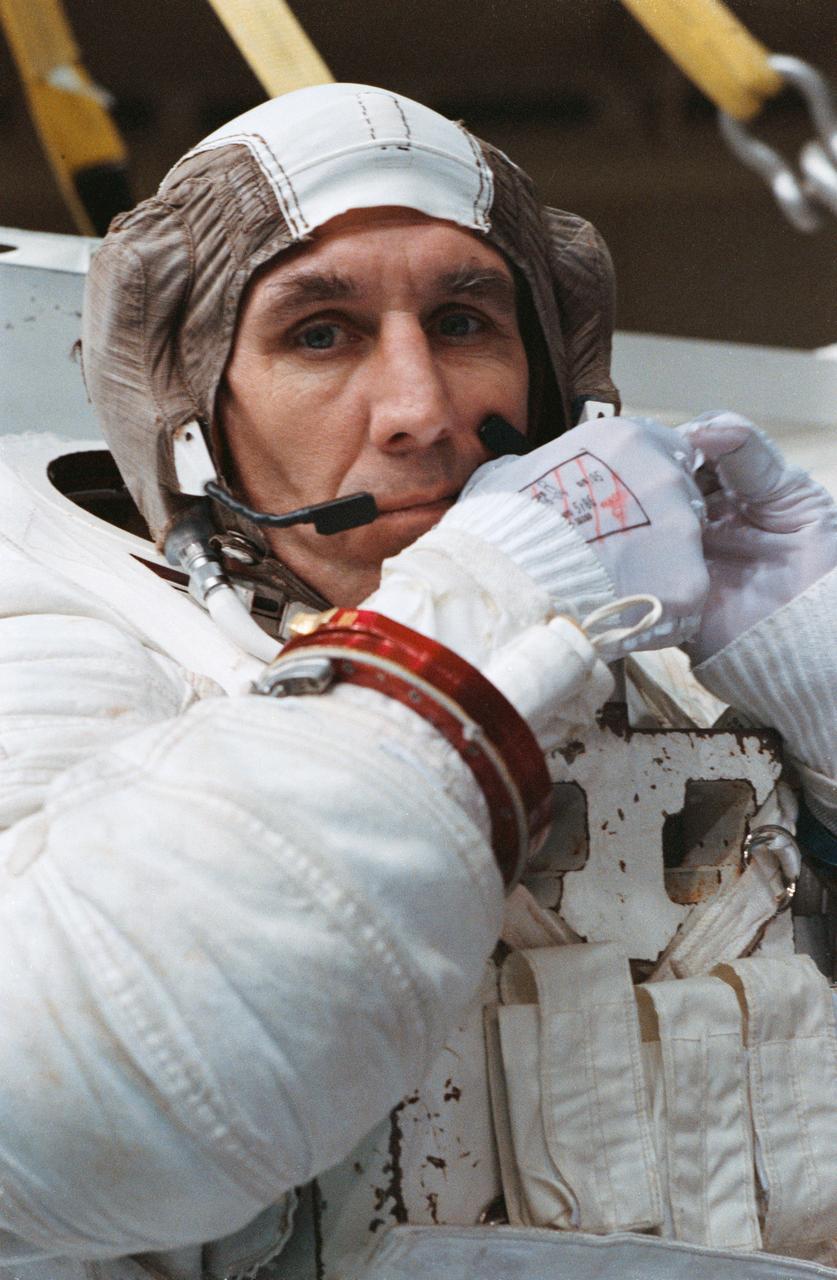
STS-38 Mission Specialist (MS) Robert C. Springer, wearing extravehicular mobility unit (EMU), fastens the strap on his communications carrier assembly (CCA) cap during suit donning in JSC's Weightless Environment Training Facility (WETF) Bldg 29. Positioned on the WETF platform at pool side, Springer is preparing for an underwater extravehicular activity (EVA) simulation. During the training exercise, Springer will rehearse contingency EVA procedures for the STS-38 mission aboard Atlantis, Orbiter Vehicle (OV) 104.
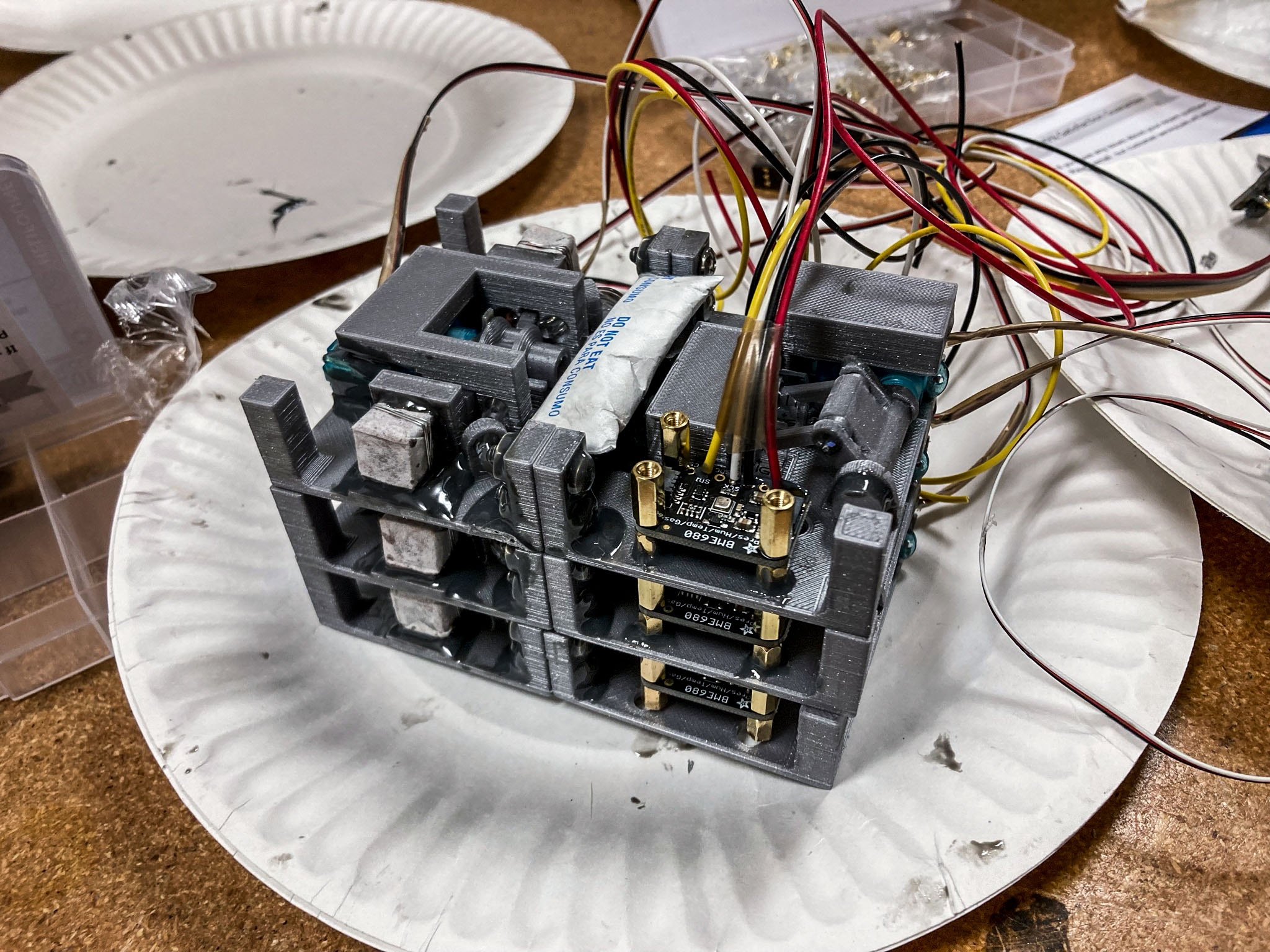
jsc2022e042479 (2/3/2022) --- This image shows three modules of flight hardware for the Biopolymer Research for In-Situ Capabilities investigation, launching aboard SpaceX’s 25th commercial resupply services mission to the International Space Station. The hardware is 3D printed in gray PLA, a desiccant packet is epoxied in the center of the module, and a pressure and humidity sensor is fastened to the left. Each module makes two bricks, for a total of six bricks that will be made in space. This investigation studies how microgravity affects the process of creating biopolymer soil composite (BSC), a concrete alternative that could be made with on-site material such as lunar or Martian dust. Image curtsey of James Wall.
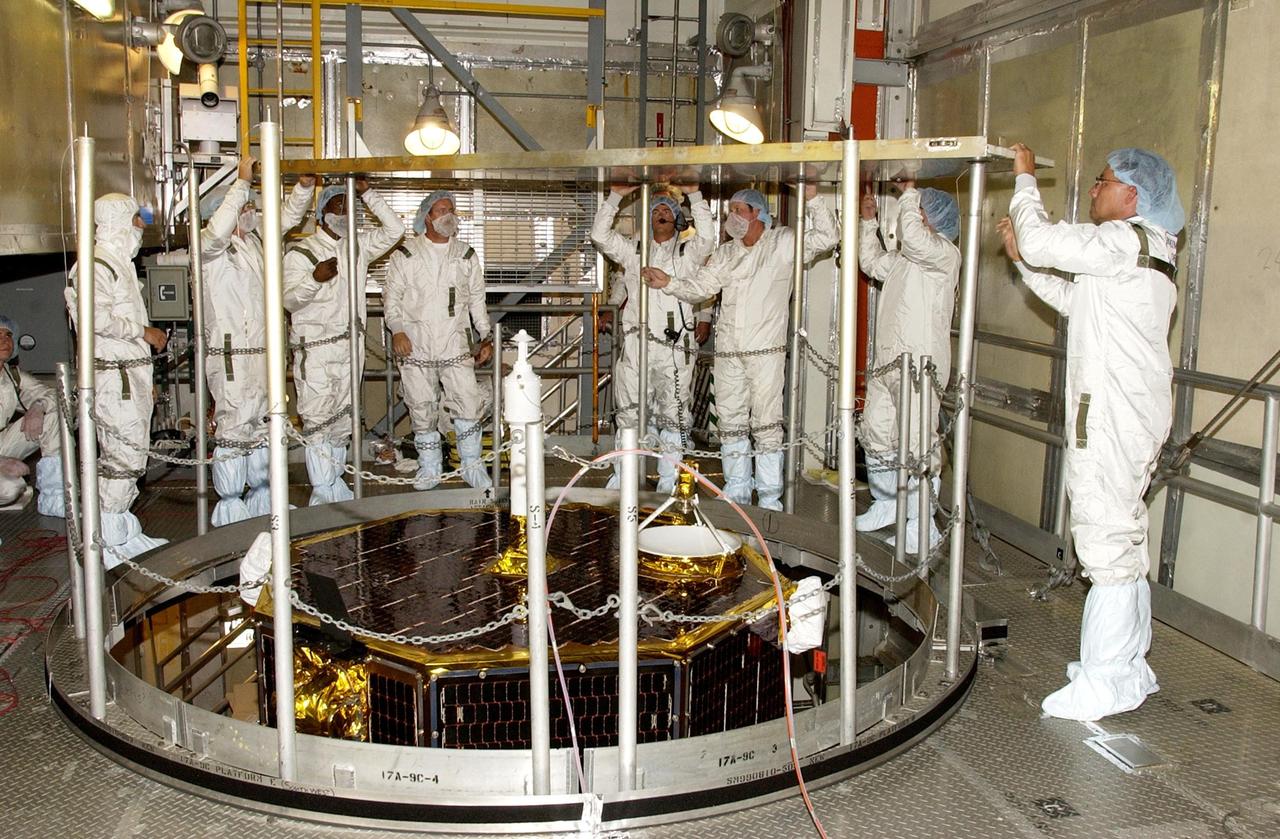
KENNEDY SPACE CENTER, FLA. -- Workers on the tower at Launch Complex 17-A, Cape Canaveral Air Force Station, fasten a support above the Comet Nucleus Tour (CONTOUR) spacecraft. CONTOUR will provide the first detailed look into the heart of a comet -- the nucleus. Flying as close as 60 miles (100 kilometers) to at least two comets, the spacecraft will take the sharpest pictures yet of a nucleus while analyzing the gas and dust that surround these rocky, icy building blocks of the solar system. Launch of CONTOUR aboard a Boeing Delta II rocket is scheduled for July 1, 2002

KENNEDY SPACE CENTER, FLA. - Foreign object debris shields are installed and a borescope inspection is conducted on the Galaxy Evolution Explorer (GALEX) spacecraft in the Payload Hazardous Servicing Facility. Technicians are looking for a small fastener and associated clip missing from a demated connector identified during preflight testing. GALEX is an orbiting space telescope that will observe galaxies in ultraviolet light across 10 billion years of cosmic history. During its 29-month mission, GALEX will produce the first comprehensive map of a Universe of galaxies under construction, bringing more understanding to how galaxies like the Milky Way were formed. The GALEX launch date in late April is currently under review.
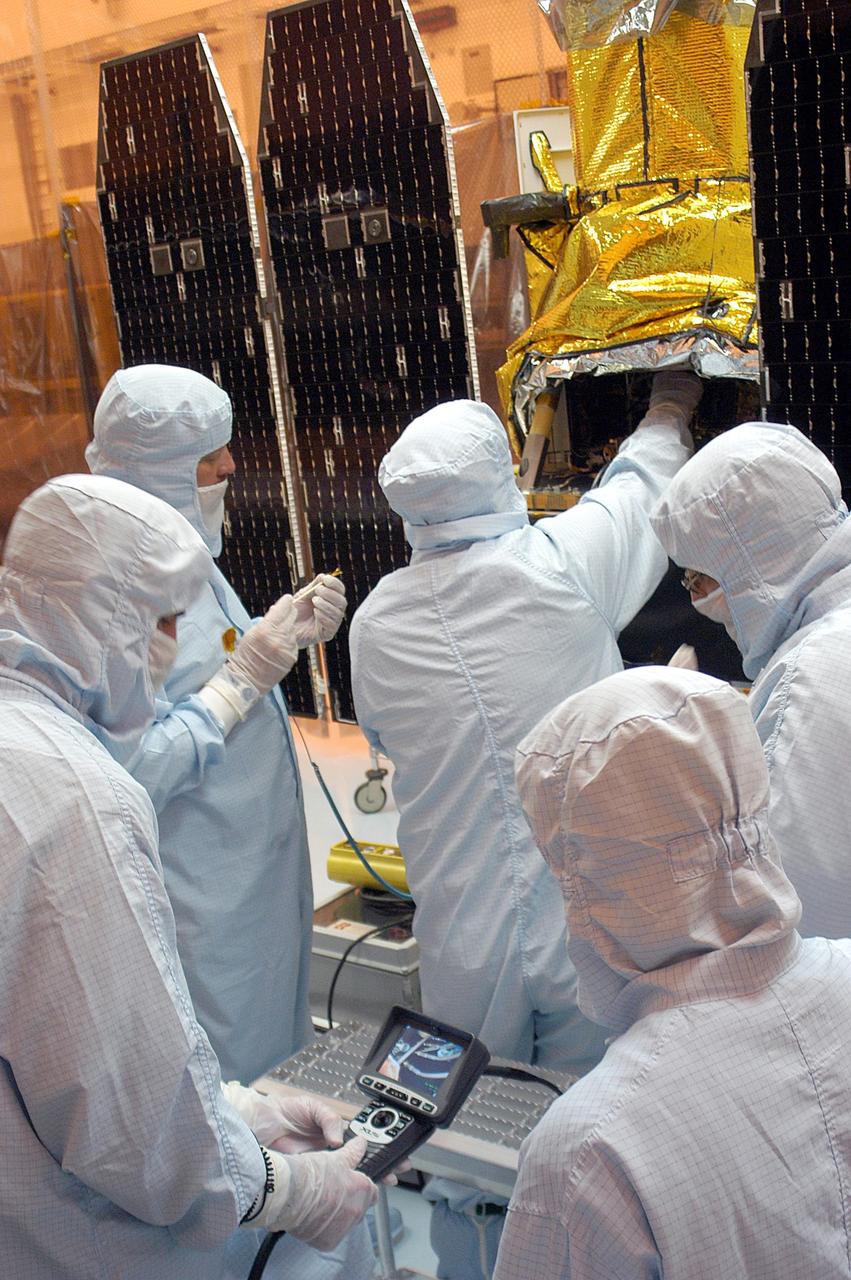
KENNEDY SPACE CENTER, FLA. - Foreign object debris shields are installed and a borescope inspection is conducted on the Galaxy Evolution Explorer (GALEX) spacecraft in the Payload Hazardous Servicing Facility. Technicians are looking for a small fastener and associated clip missing from a demated connector identified during preflight testing. GALEX is an orbiting space telescope that will observe galaxies in ultraviolet light across 10 billion years of cosmic history. During its 29-month mission, GALEX will produce the first comprehensive map of a Universe of galaxies under construction, bringing more understanding to how galaxies like the Milky Way were formed. The GALEX launch date in late April is currently under review.
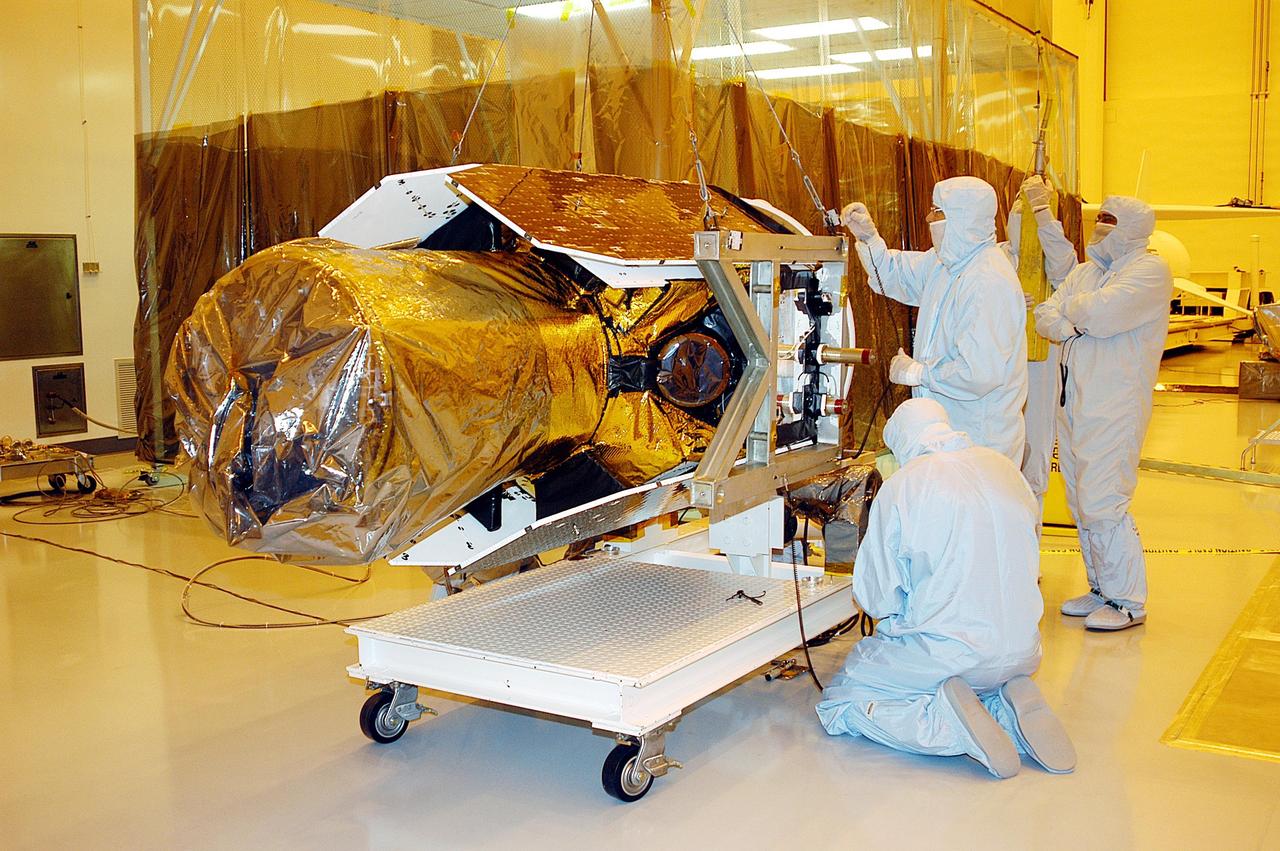
KENNEDY SPACE CENTER, FLA. - The Galaxy Evolution Explorer (GALEX) spacecraft is demated from its Pegasus launch vehicle and secured to a workstand in the Payload Hazardous Servicing Facility. A borescope inspection will be conducted to locate a small fastener and associated clip missing from a demated connector identified during preflight testing. GALEX is an orbiting space telescope that will observe galaxies in ultraviolet light across 10 billion years of cosmic history. During its 29-month mission, GALEX will produce the first comprehensive map of a Universe of galaxies under construction, bringing more understanding to how galaxies like the Milky Way were formed. The GALEX launch date in late April is currently under review.
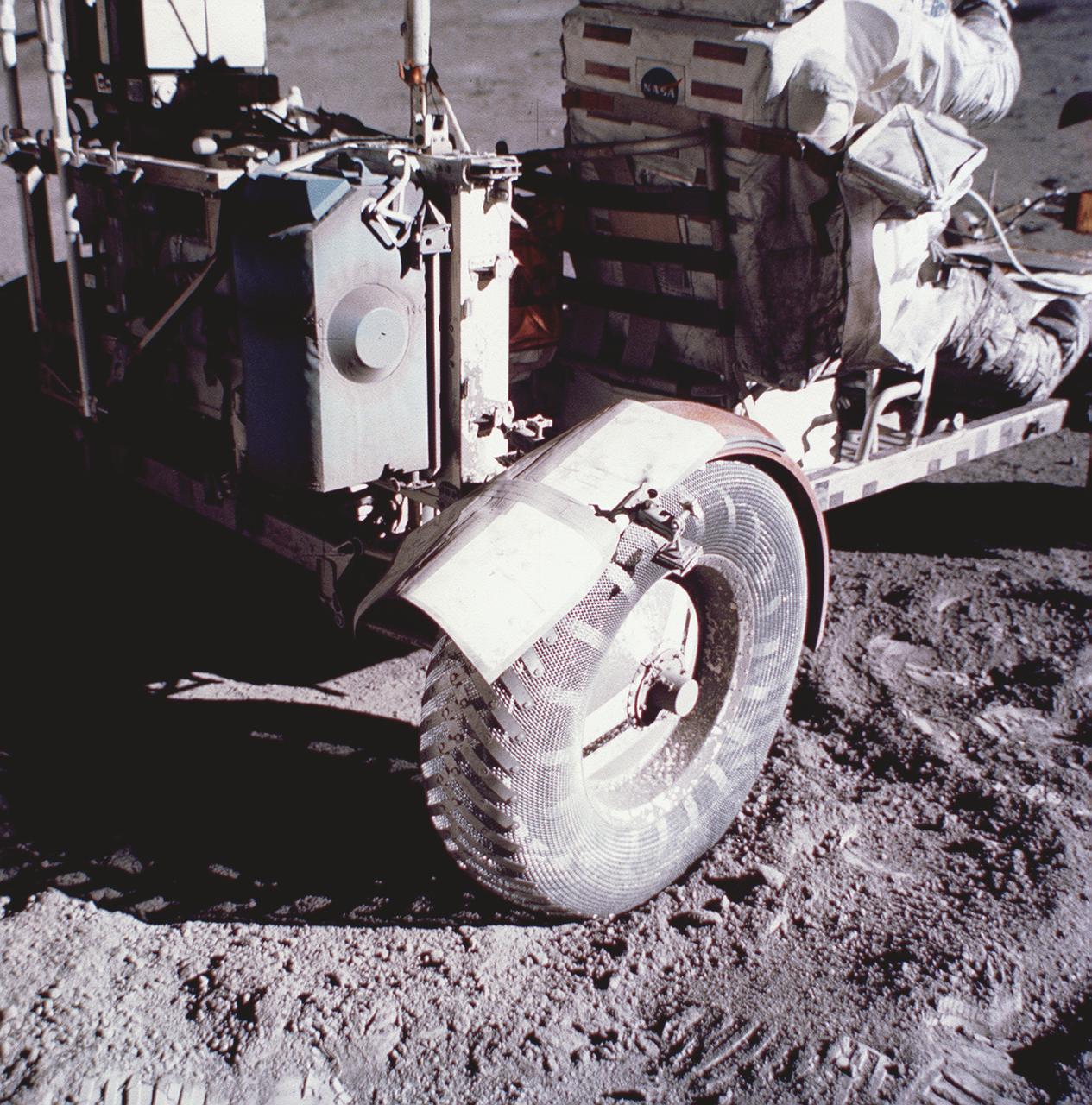
This photograph taken during the Apollo 17 mission (the last mission of the Apollo Program), depicts stiff plasticized maps being taped together and fastened by clamps to patch a broken fender of the Lunar Roving Vehicle (LRV). Powered by battery, the lightweight electric car greatly increased the range of mobility and productivity on the scientific traverses for astronauts. It weighed 462 pounds (77 pounds on the Moon) and could carry two suited astronauts, their gear and cameras, and several hundred pounds of bagged samples. The LRV's mobility was quite high. It could climb and descend slopes of about 25 degrees. The LRV was designed and developed by the Marshall Space Flight Center and built by the Boeing Company.
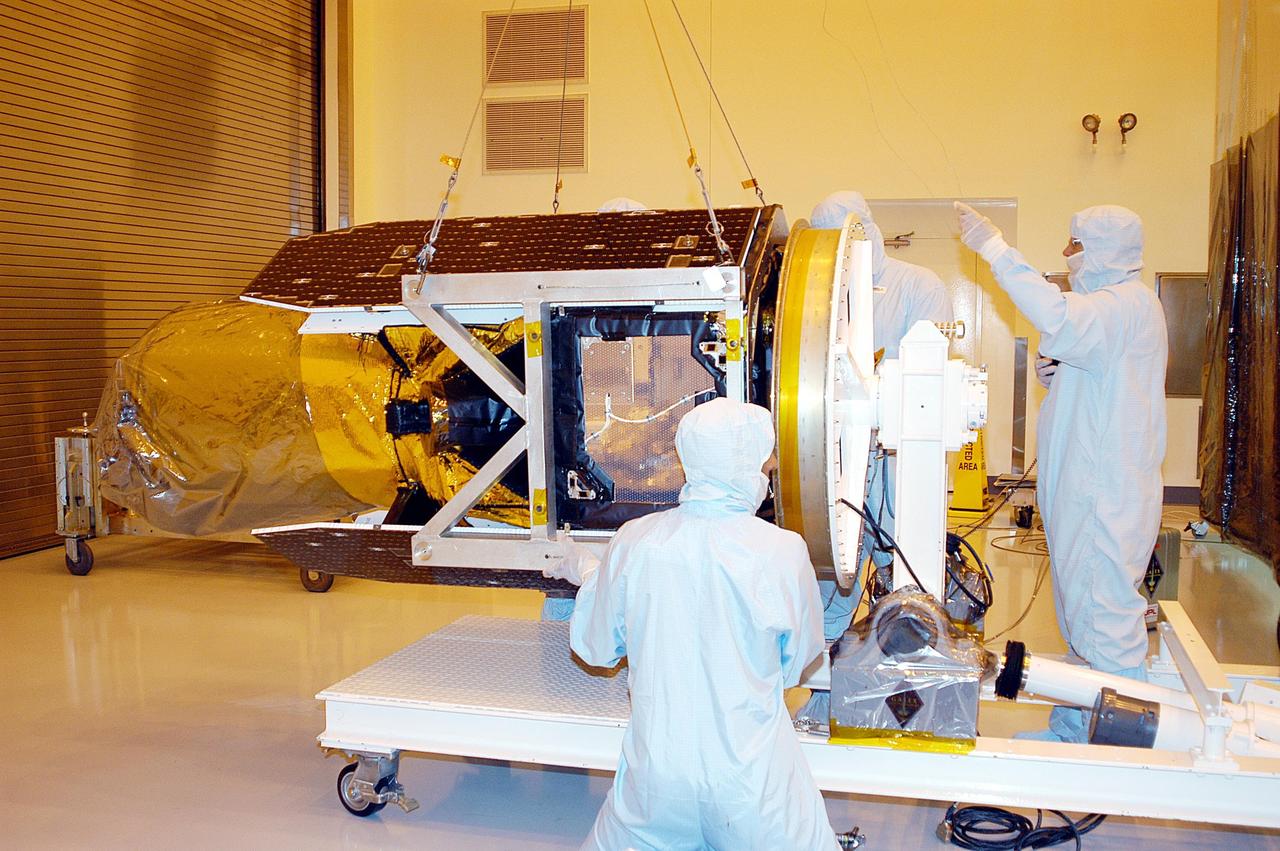
KENNEDY SPACE CENTER, FLA. - The Galaxy Evolution Explorer (GALEX) spacecraft is demated from its Pegasus launch vehicle and secured to a workstand in the Payload Hazardous Servicing Facility. A borescope inspection will be conducted to locate a small fastener and associated clip missing from a demated connector identified during preflight testing. GALEX is an orbiting space telescope that will observe galaxies in ultraviolet light across 10 billion years of cosmic history. During its 29-month mission, GALEX will produce the first comprehensive map of a Universe of galaxies under construction, bringing more understanding to how galaxies like the Milky Way were formed. The GALEX launch date in late April is currently under review.
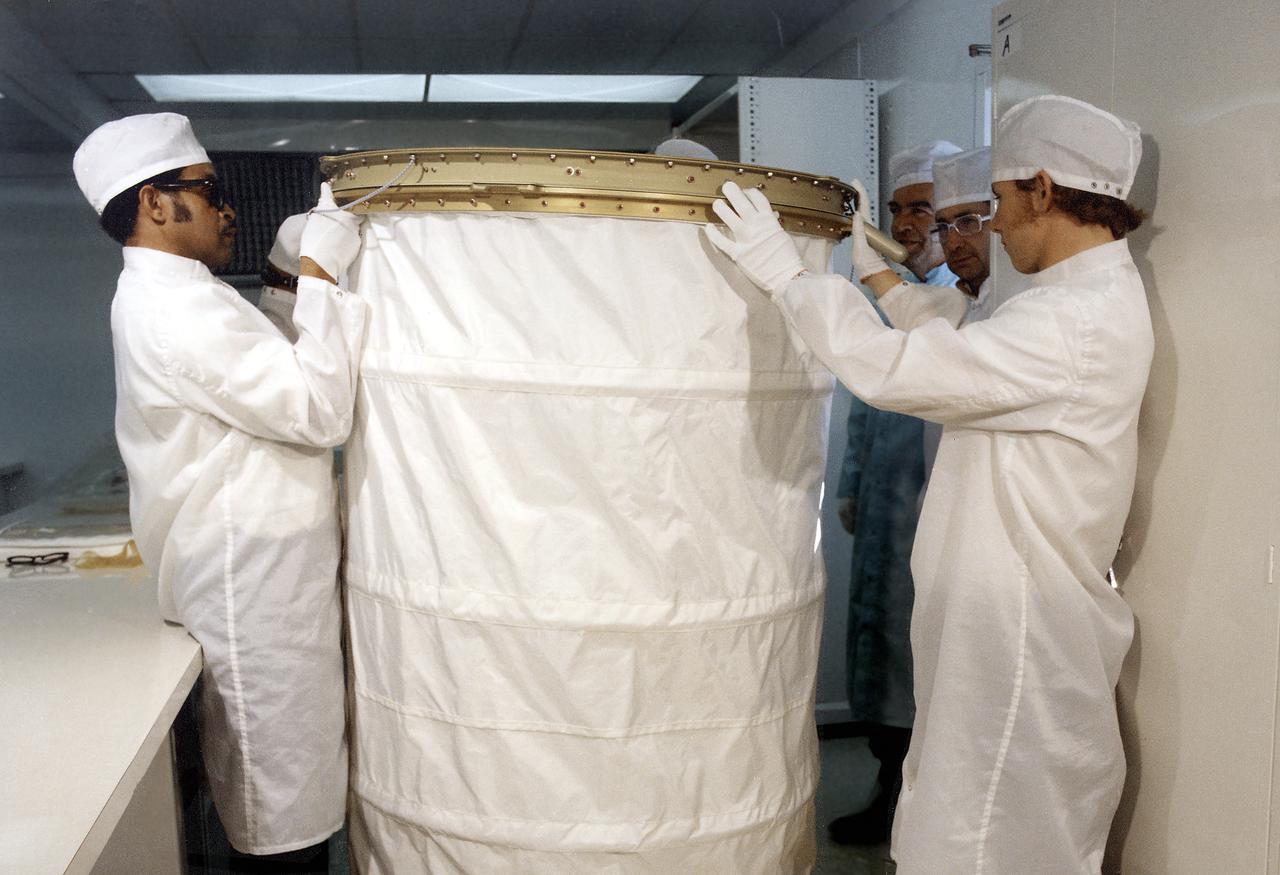
In this photograph, the Orbital Workshop shower compartment was unfolded by technicians for inspection. The shower compartment was a cylindrical cloth enclosure that was folded flat when not in use. The bottom ring of the shower was fastened to the floor and contained foot restraints. The upper ring contained the shower head and hose. To use the shower, the astronaut filled a pressurized portable bottle with heated water and attached the bottle to the ceiling. A flexible hose cornected the water bottle to a handheld shower head. The astronaut pulled the cylindrical shower wall up into position and bathed, using liquid soap. Both soap and water were carefully rationed, having been premeasured for economical use.
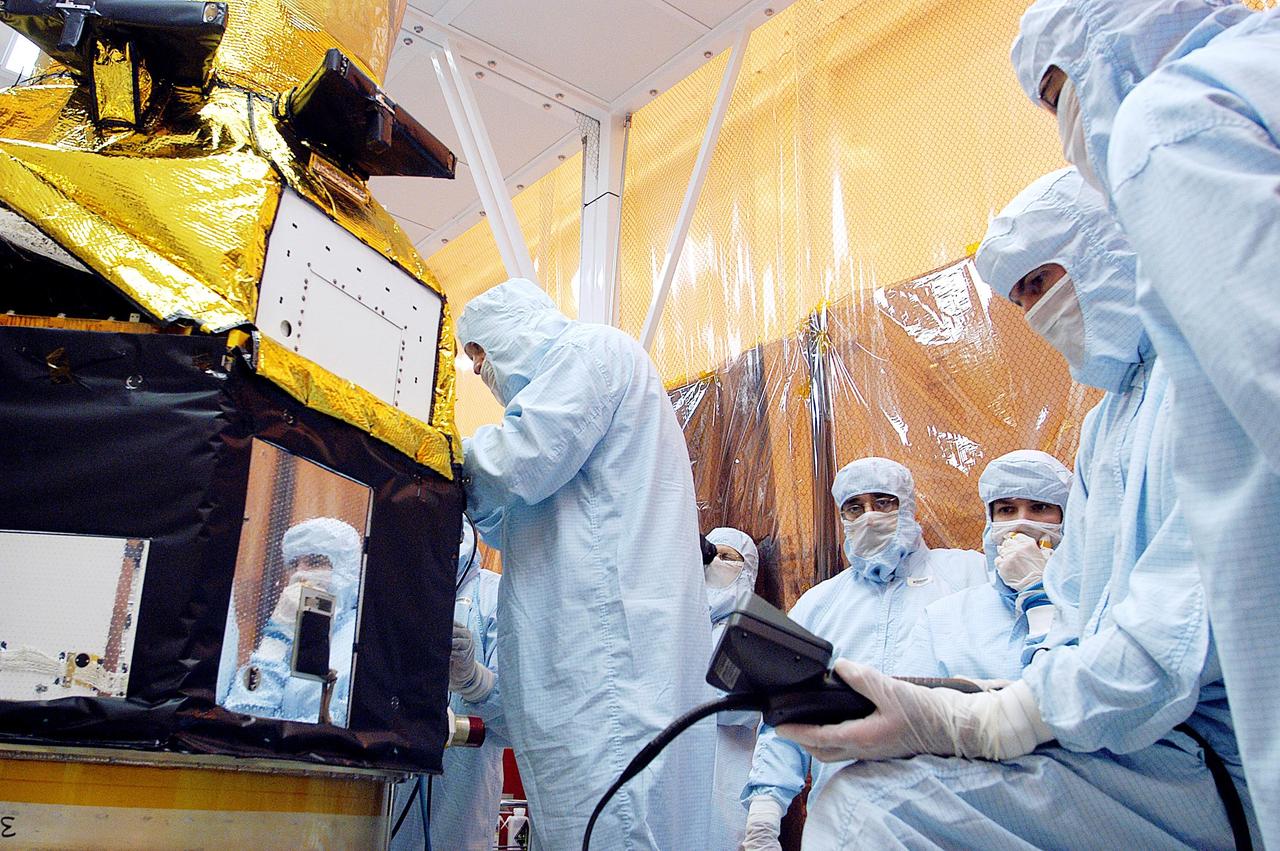
KENNEDY SPACE CENTER, FLA. - Foreign object debris shields are installed and a borescope inspection is conducted on the Galaxy Evolution Explorer (GALEX) spacecraft in the Payload Hazardous Servicing Facility. Technicians are looking for a small fastener and associated clip missing from a demated connector identified during preflight testing. GALEX is an orbiting space telescope that will observe galaxies in ultraviolet light across 10 billion years of cosmic history. During its 29-month mission, GALEX will produce the first comprehensive map of a Universe of galaxies under construction, bringing more understanding to how galaxies like the Milky Way were formed. The GALEX launch date in late April is currently under review.
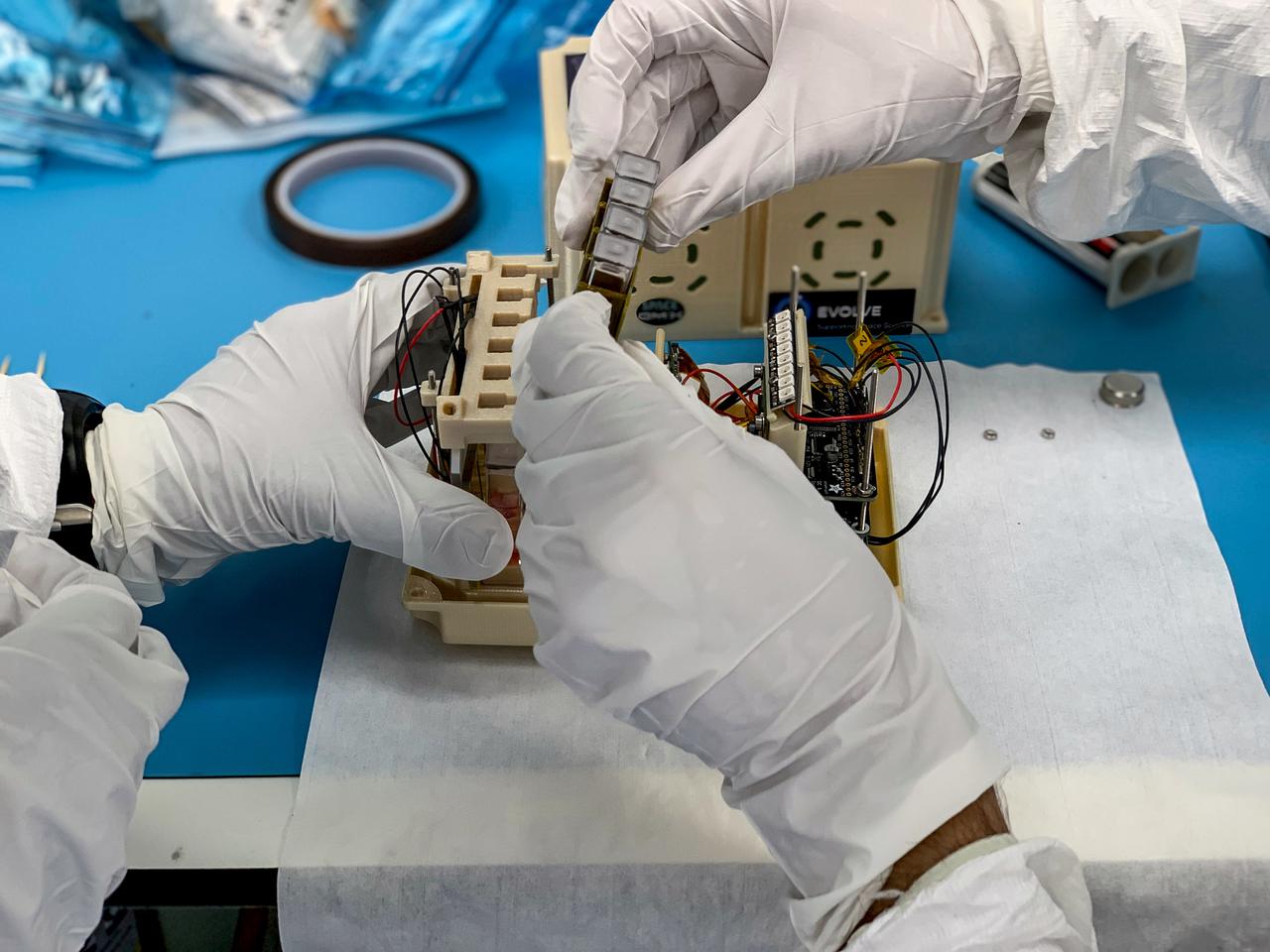
jsc2021e037896 (8/12/2021) --- A preflight imagevshows integration of 2nd to 5th sample cuvettes to fit between the first and last samples cuvettes. The sample cuvettes are securely fastened in place using tools and under strict clean room preparations. The Ice Cubes #9 – Project Maleth (Space Omics Analysis of the Skin Microbiome of Diabetic Foot Ulcers, or SpaceOMIX) investigation that studies Diabetes Mellitus Type 2 and Diabetic Foot Ulcers (DFU) using genetics and space biosciences is new and innovative research. Image courtesy Space Applications Services.
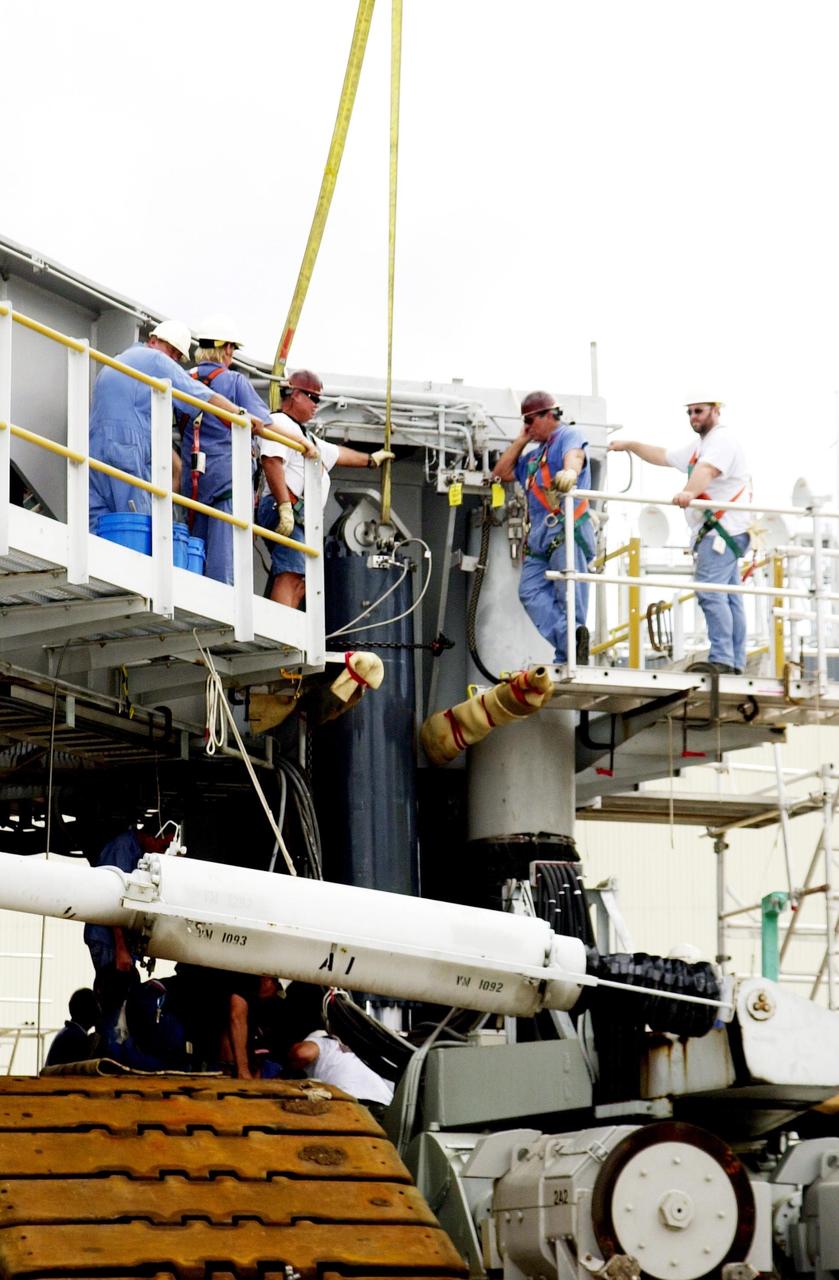
KENNEDY SPACE CENTER, FLA. -- Near the bottom of the repaired Jacking, Equalization and Leveling (JEL) cylinder, workers fasten the JEL to Crawler Transporter No. 2. There are 16 cylinders and 32 bearings per crawler. During recent routine maintenance inspections, technicians removed two of the 16 JEL cylinders on the crawler to gain access to the bearings and found three of the four bearings cracked. Further eddy current inspections indicated that cracks were present on 15 of the bearings.. Technicians have removed and replaced 14 of the bearings on CT-2, which is being repaired in order to enable Atlantis' rollout for mission STS-112, scheduled for launch no earlier than Oct. 2.

KENNEDY SPACE CENTER, FLA. - Foreign object debris shields are installed and a borescope inspection is conducted on the Galaxy Evolution Explorer (GALEX) spacecraft in the Payload Hazardous Servicing Facility. Technicians are looking for a small fastener and associated clip missing from a demated connector identified during preflight testing. GALEX is an orbiting space telescope that will observe galaxies in ultraviolet light across 10 billion years of cosmic history. During its 29-month mission, GALEX will produce the first comprehensive map of a Universe of galaxies under construction, bringing more understanding to how galaxies like the Milky Way were formed. The GALEX launch date in late April is currently under review.

Crews at NASA’s Michoud Assembly Facility in New Orleans reinstalled the iconic NASA meatball logo to the side of the 43-acre factory following a months-long project to replace the corrugated asbestos paneling original to the building’s construction on the outer façade of the facility. The new paneling is an insulated metal sandwich panel, which provides an increased insulation R-value. The new fastening system can withstand significant wind loads, adding greater protection against hurricanes, tornados, and other storm-related events common to the area; and is critical to help protect vital hardware for the Space Launch System rockets and the Orion Spacecrafts manufactured at Michoud for NASA’s Artemis missions, which will land the first woman and first person of color on the moon. Image credit: NASA/Michael DeMocker
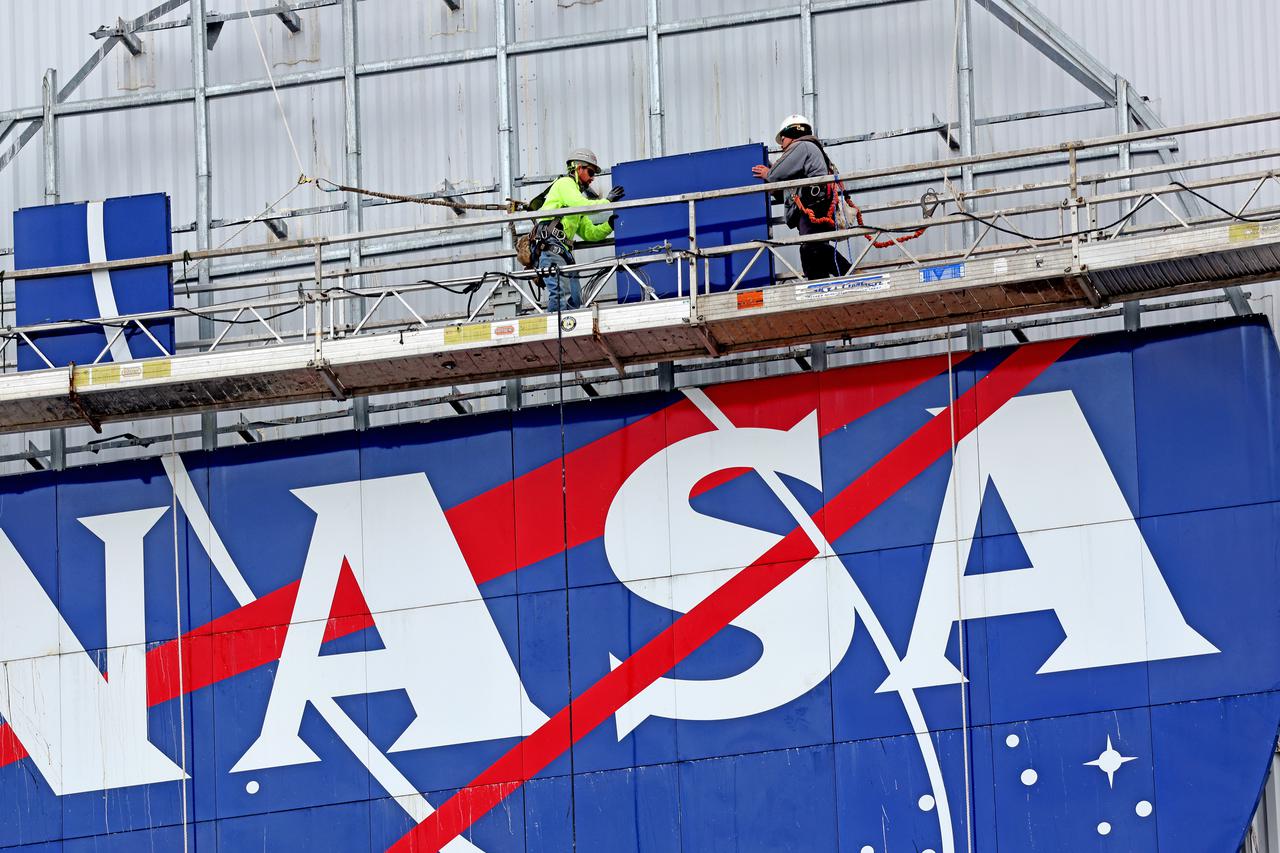
Crews at NASA’s Michoud Assembly Facility in New Orleans reinstall the iconic NASA meatball logo to the side of the 43-acre factory following a months-long project to replace the corrugated asbestos paneling original to the building’s construction on the outer façade of the facility. The new paneling is an insulated metal sandwich panel, which provides an increased insulation R-value. The new fastening system can withstand significant wind loads, adding greater protection against hurricanes, tornados, and other storm-related events common to the area; and is critical to help protect vital hardware for the Space Launch System rockets and the Orion Spacecrafts manufactured at Michoud for NASA’s Artemis missions, which will land the first woman and first person of color on the moon. Image credit: NASA/Michael DeMocker
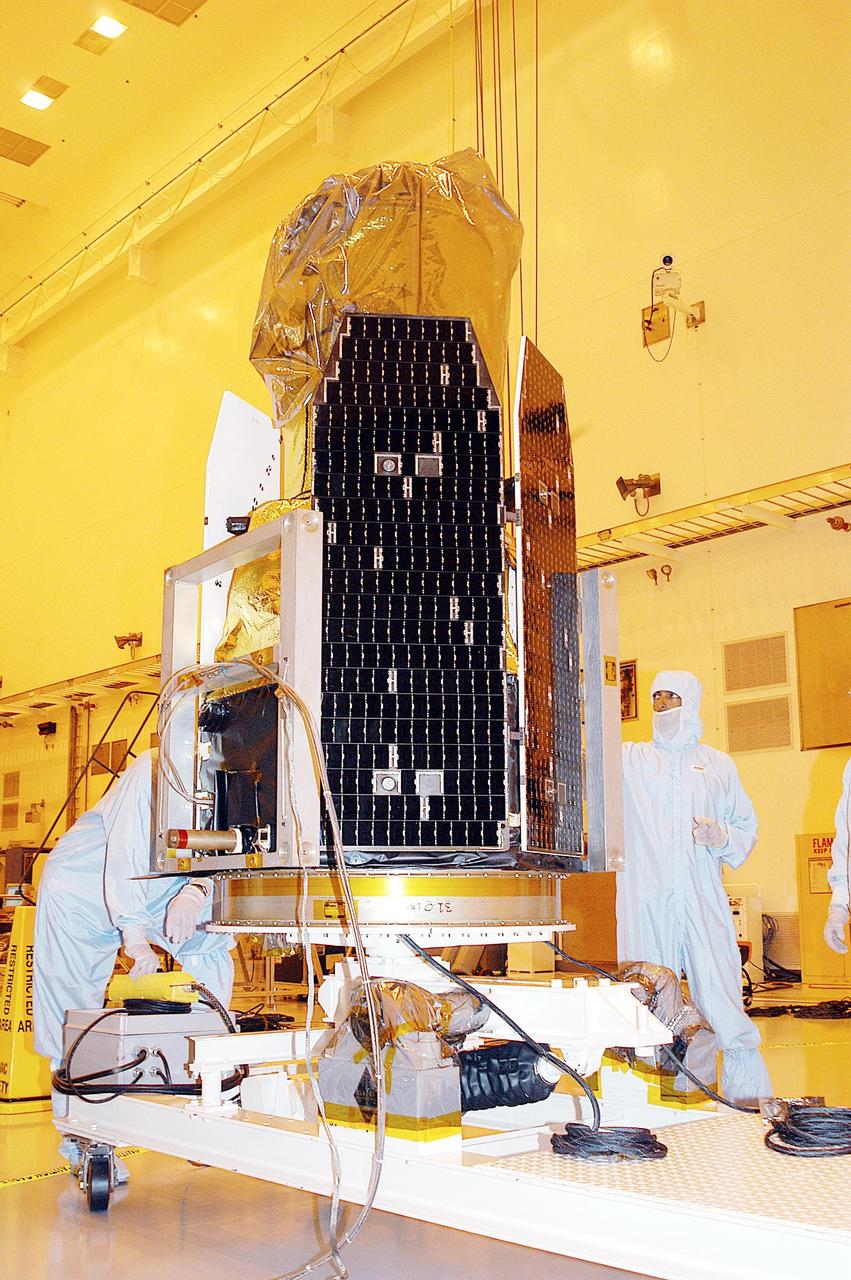
KENNEDY SPACE CENTER, FLA. - Technicians lift the Galaxy Evolution Explorer (GALEX) spacecraft into a vertical position after it is demated from its Pegasus launch vehicle in the Payload Hazardous Servicing Facility. A borescope inspection will be conducted to locate a small fastener and associated clip missing from a demated connector identified during preflight testing. GALEX is an orbiting space telescope that will observe galaxies in ultraviolet light across 10 billion years of cosmic history. During its 29-month mission, GALEX will produce the first comprehensive map of a Universe of galaxies under construction, bringing more understanding to how galaxies like the Milky Way were formed. The GALEX launch date in late April is currently under review.
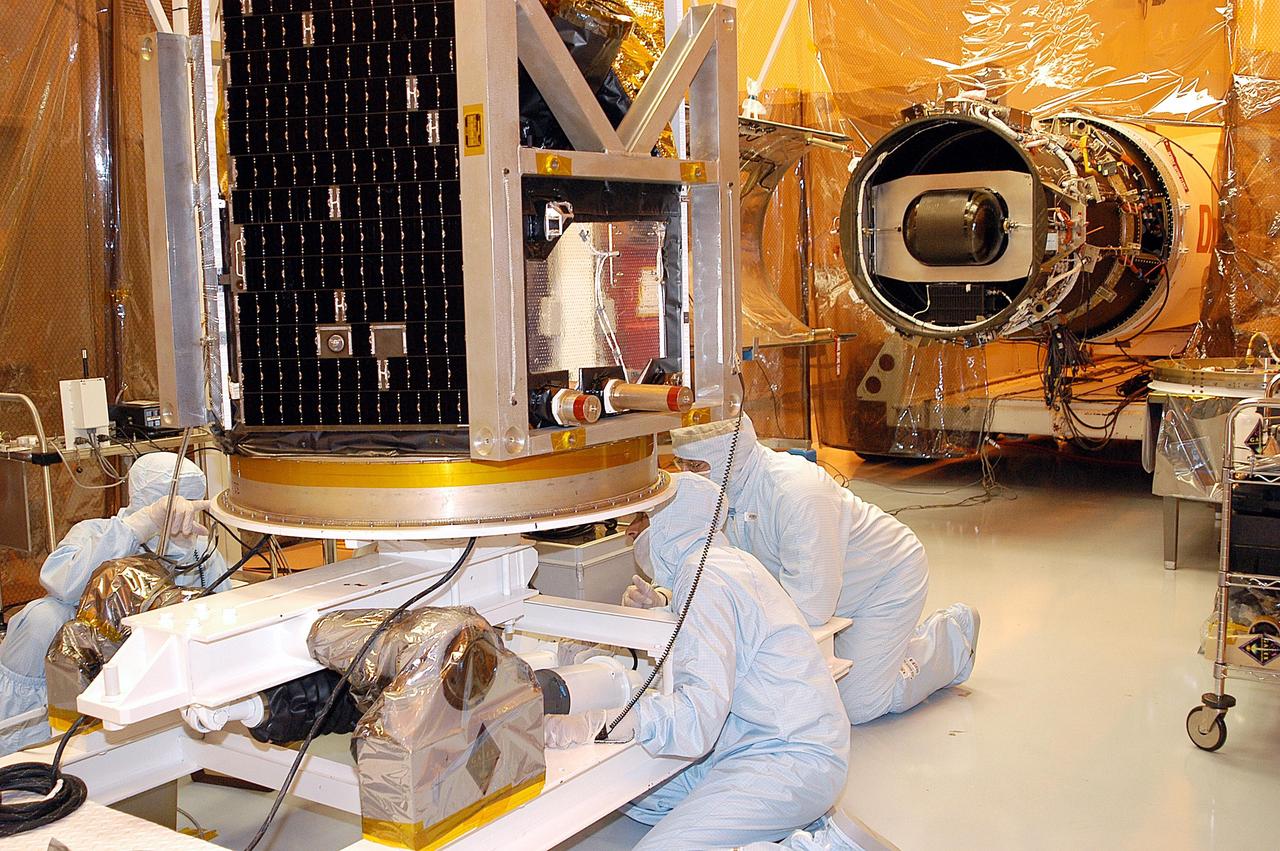
KENNEDY SPACE CENTER, FLA. - Technicians verify that the Galaxy Evolution Explorer (GALEX) spacecraft is secure on its workstand after being moved into a vertical position in the Payload Hazardous Servicing Facility. On the right is the Pegasus launch vehicle from which it was demated. A borescope inspection will be conducted on the spacecraft to locate a small fastener and associated clip missing from a demated connector identified during preflight testing. GALEX is an orbiting space telescope that will observe galaxies in ultraviolet light across 10 billion years of cosmic history. During its 29-month mission, GALEX will produce the first comprehensive map of a Universe of galaxies under construction, bringing more understanding to how galaxies like the Milky Way were formed. The GALEX launch date in late April is currently under review.
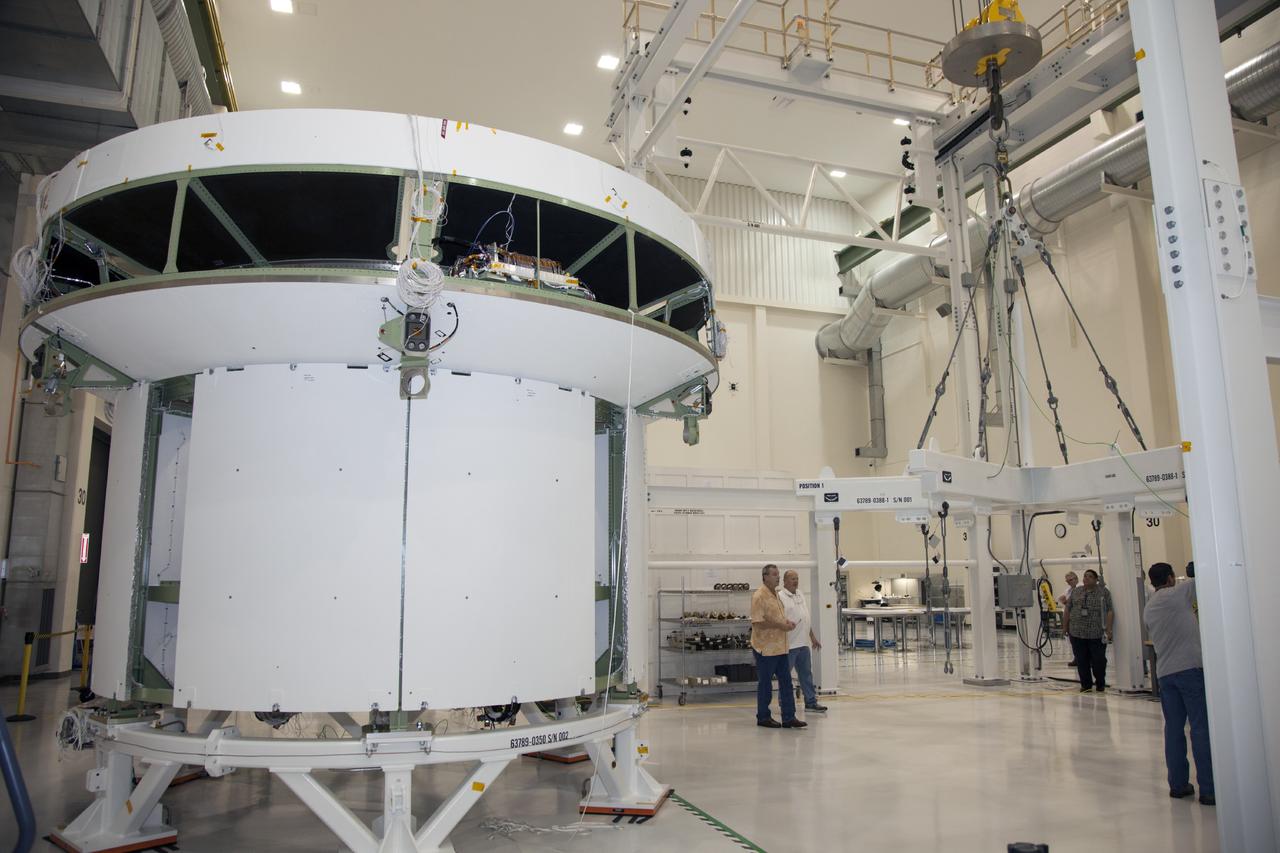
CAPE CANAVERAL, Fla. -- Inside the Operations and Checkout Building high bay at NASA’s Kennedy Space Center in Florida, technicians are preparing a crane to lift the service module bulkhead for the Orion spacecraft. The service module will be mated to the spacecraft adapter cone for testing. Technicians have applied shims, drilled fasteners and built up the cable harnesses on the bulkhead. Orion is the exploration spacecraft designed to carry astronauts to destinations not yet explored by humans, including an asteroid and Mars. It will have emergency abort capability, sustain the crew during space travel and provide safe re-entry from deep space return velocities. The first unpiloted test flight of the Orion is scheduled to launch in 2014 atop a Delta IV rocket and in 2017 on NASA’s Space Launch System rocket. For more information, visit http://www.nasa.gov/orion. Photo credit: NASA/Daniel Casper
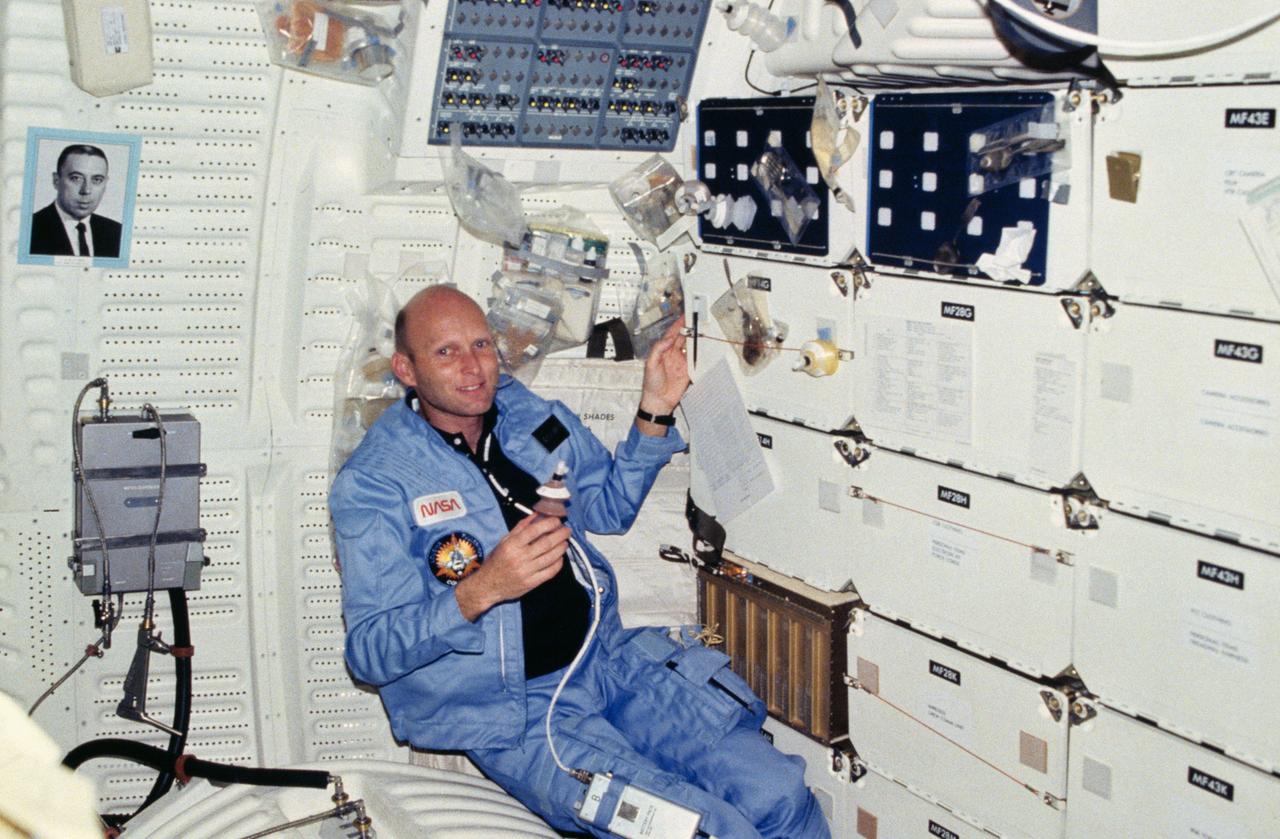
S82-28912 (March 1982) --- This picture, photographed with a 35mm camera operated by astronaut Jack R. Lousma, STS-3 commander, shows astronaut C. Gordon Fullerton, crew pilot, busy with mealtime preparations aboard the Earth-orbiting Columbia. The astronaut has positioned himself in the corner of the middeck area. Fullerton holds a beverage in his right hand in an accordion-like squeeze dispenser. Many packages of pre-packaged dehydrated foods and other meal items can be seen in the photo. Many are fastened to the locker doors and to trays in the locker doors by velcro. Reminiscent of STS-2 days, a portrait of George W. S. Abbey, director of flight operations at JSC, is at left edge. Photo credit: NASA
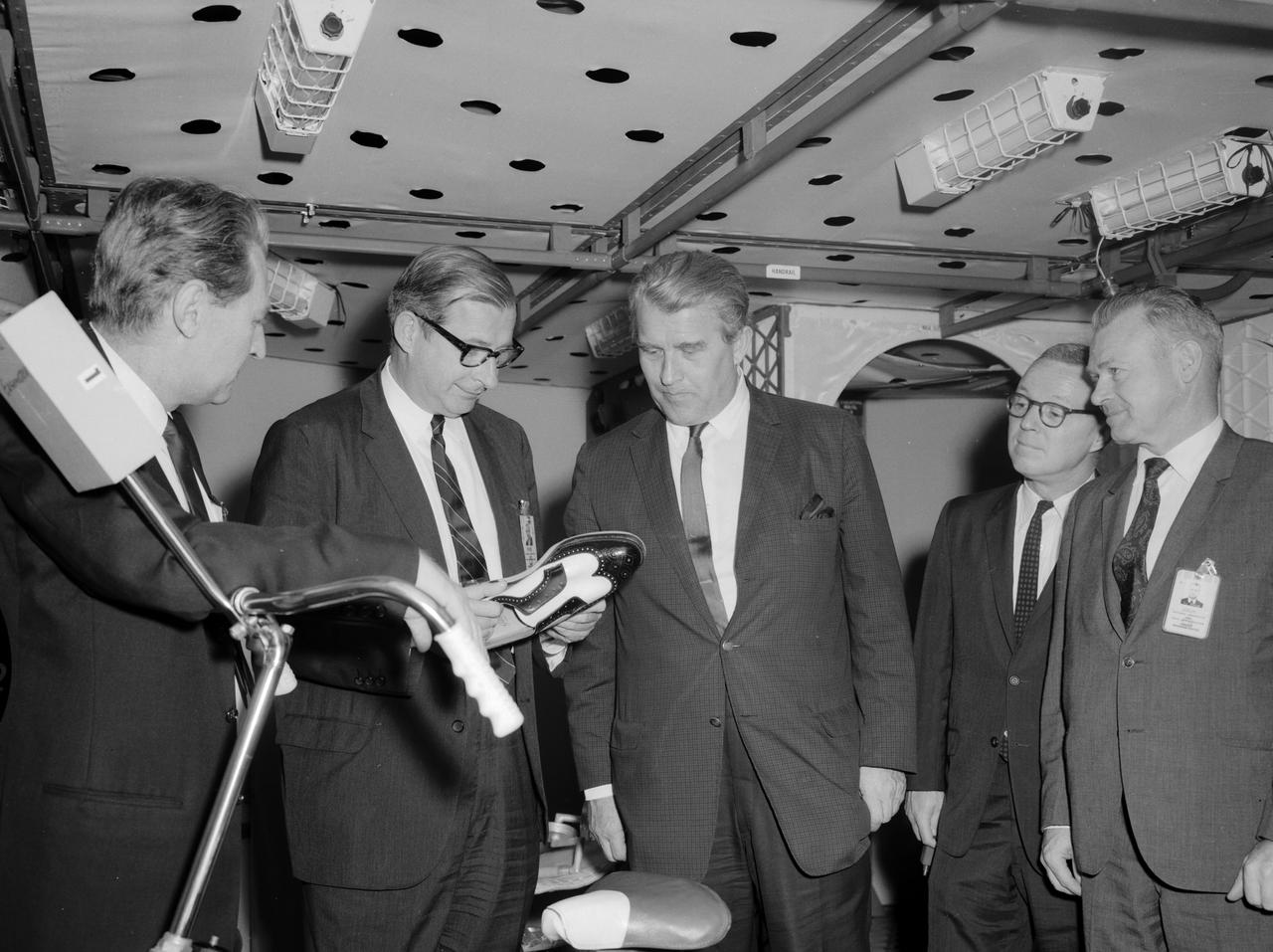
Pictured from the left, in the Saturn I mockup, are: William Brooksbank, Marshall Space Flight Center (MSFC) Propulsion and Vehicle Engineering Laboratory; Dr. Thomas O. Paine, Deputy Administrator of the National Aeronautics and Space Administration (NASA); Dr. Wernher von Braun, MSFC director; Colonel Clare F. Farley, executive officer of the Office of the Administrator; and Charles J. Donlan, newly appointed deputy associate administrator for Manned Space Flight, technical. The party examined an ordinary man’s shoe (held by Paine) outfitted for use in the Saturn I Workshop. The shoe had a unique fastener built into the sole to allow an astronaut to move about the workshop floor and to remain in one position if he desired. Dr. Paine and his party indulged in a two-day tour at the Marshall Space Flight Center getting acquainted with Marshall personnel and programs. It was Paine’s first visit to the center since assuming the NASA post on February 1, 1968.
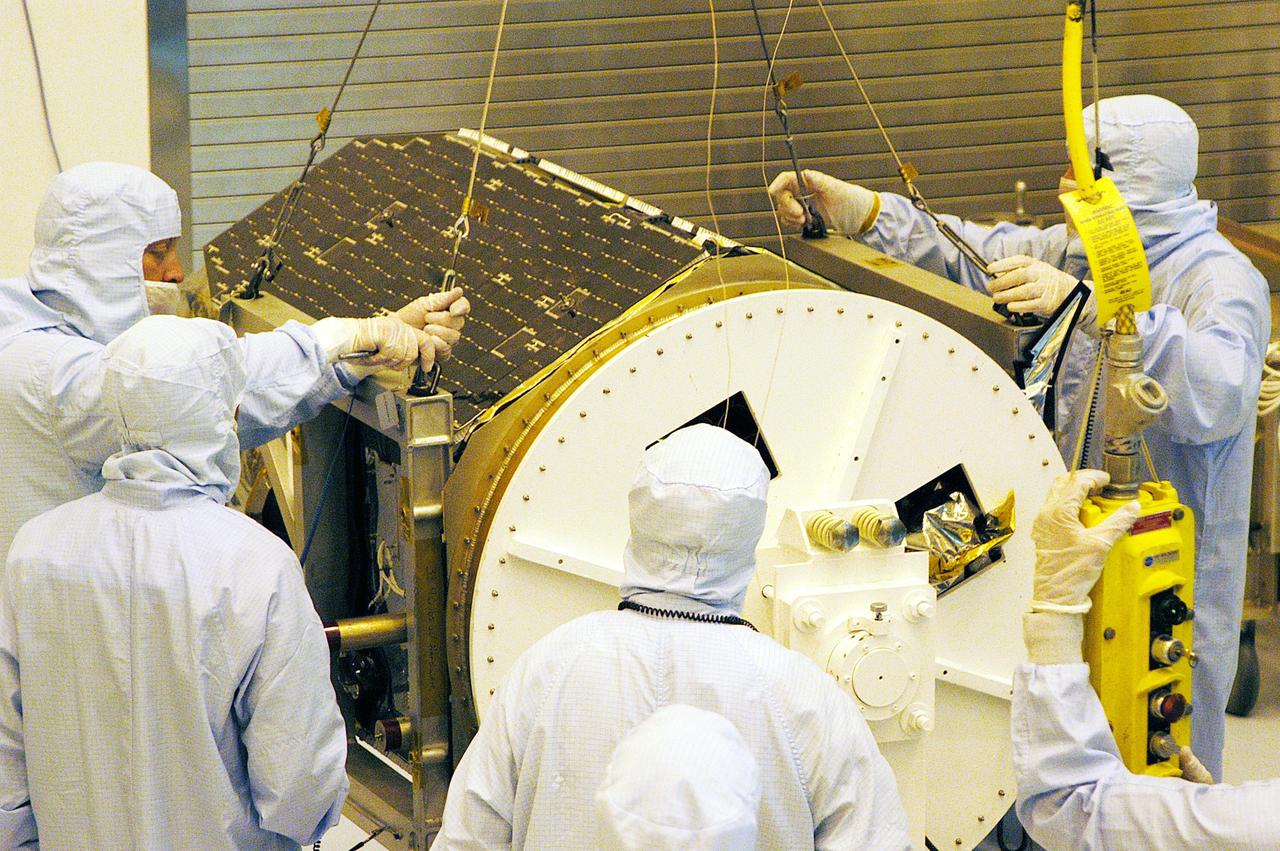
KENNEDY SPACE CENTER, FLA. - Technicians prepare to lift the Galaxy Evolution Explorer (GALEX) spacecraft into a vertical position after it is demated from its Pegasus launch vehicle in the Payload Hazardous Servicing Facility. A borescope inspection will be conducted to locate a small fastener and associated clip missing from a demated connector identified during preflight testing. GALEX is an orbiting space telescope that will observe galaxies in ultraviolet light across 10 billion years of cosmic history. During its 29-month mission, GALEX will produce the first comprehensive map of a Universe of galaxies under construction, bringing more understanding to how galaxies like the Milky Way were formed. The GALEX launch date in late April is currently under review.