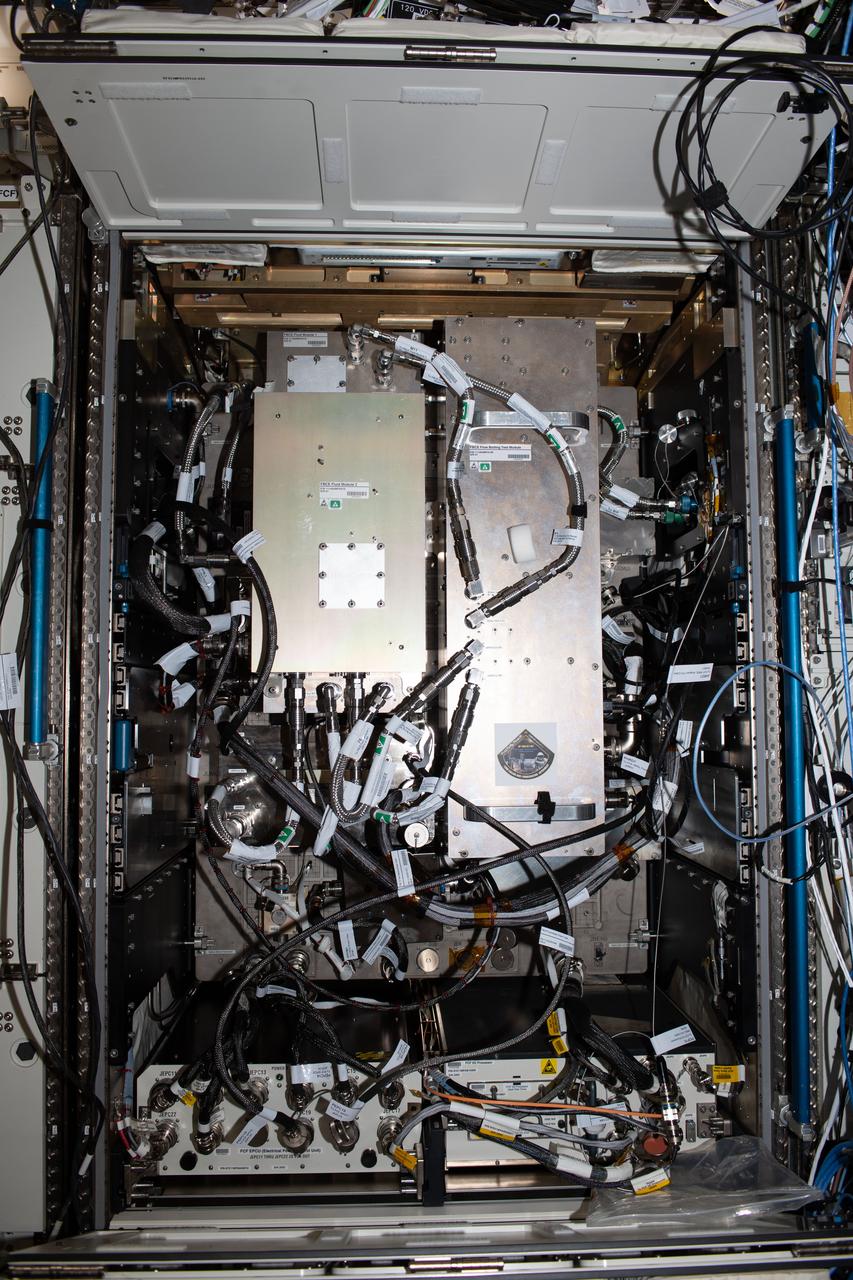
iss066e087939 (12/9/2021) --- A view of the Fluids and Combustion Facility (FCF), used for the Flow Boiling and Condensation Experiment (FBCE) during Expedition 66. The study may improve thermal systems for Earth and other planetary environments.
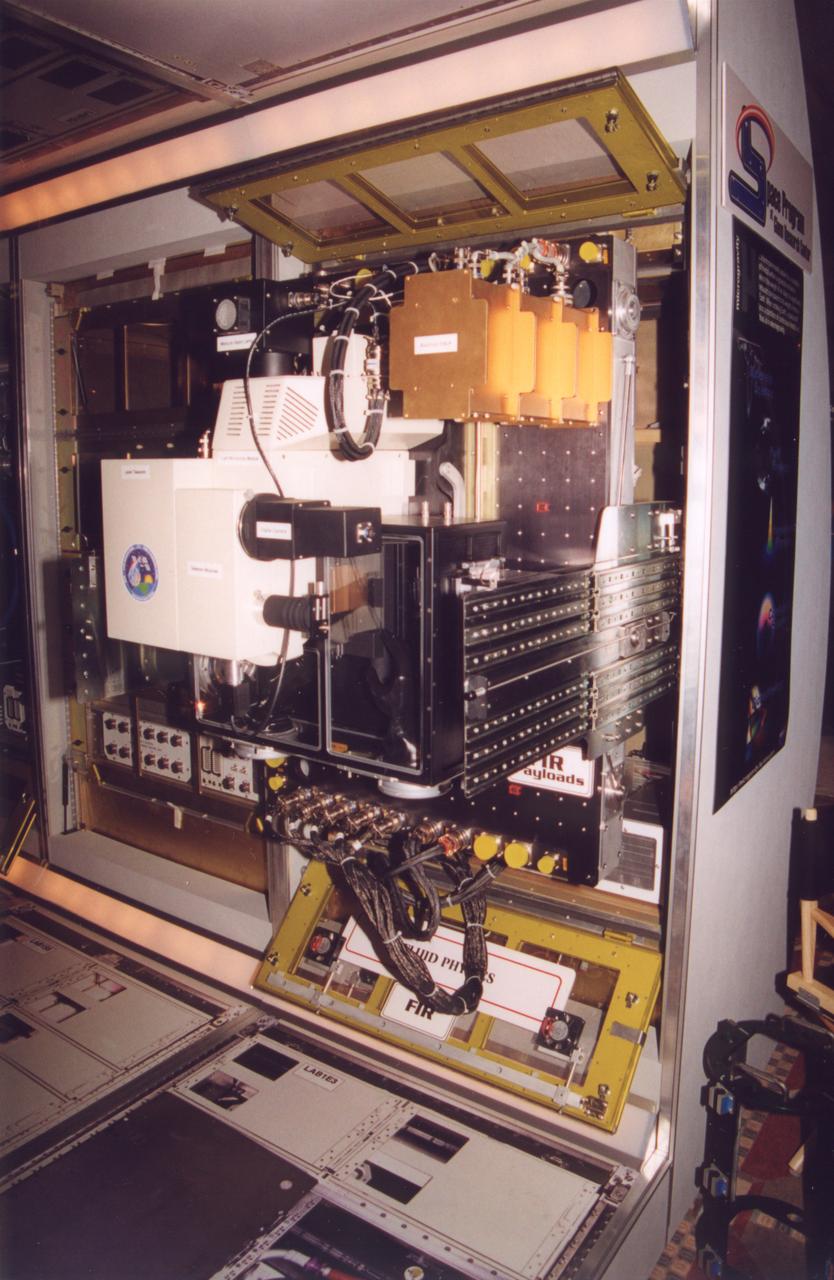
The optical bench for the Fluids Integrated Rack section of the Fluids and Combustion Facility (FCF) is shown extracted for servicing. The FCF will be installed, in phases, in the Destiny, the U.S. Laboratory Module of the International Space Station (ISS), and will accommodate multiple users for a range of investigations. This is an engineering mockup; the flight hardware is subject to change as designs are refined. The FCF is being developed by the Microgravity Science Division (MSD) at the NASA Glenn Research Center. (Photo credit: NASA/Marshall Space Flight Center)
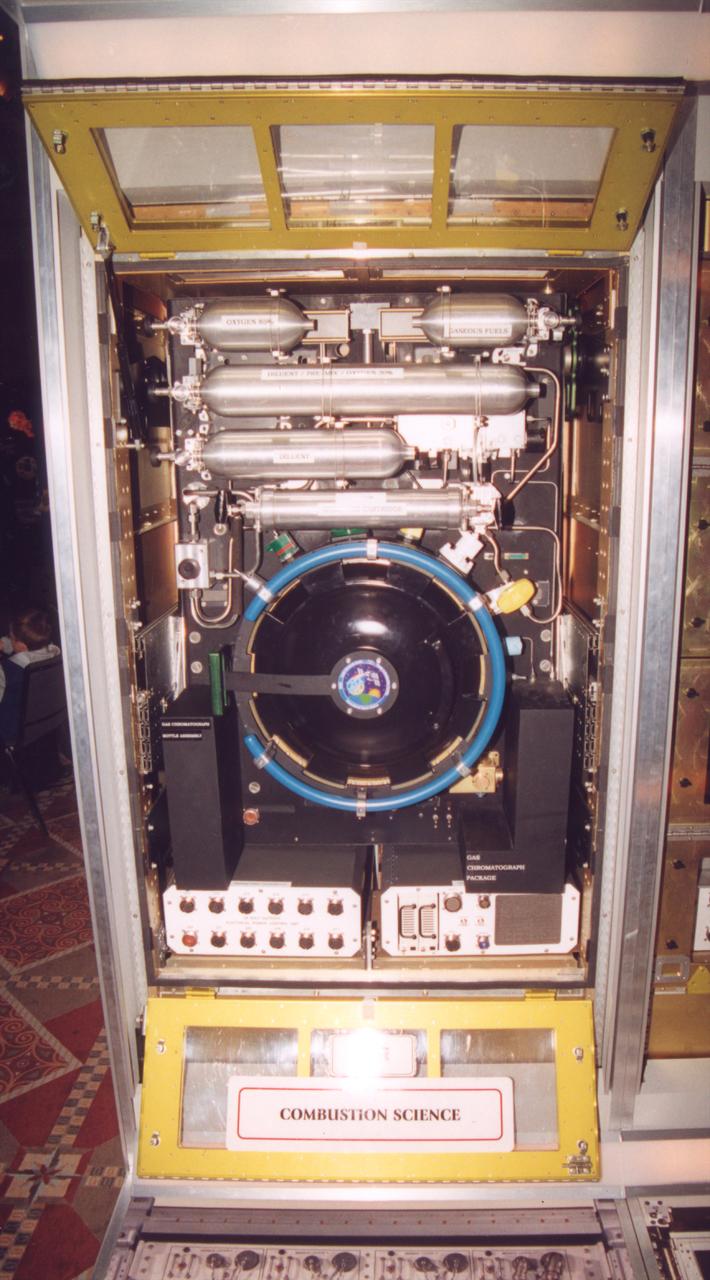
The combustion chamber for the Combustion Integrated Rack section of the Fluids and Combustion Facility (FCF) is shown in its operational configuration. The FCF will be installed, in phases, in the Destiny, the U.S. Laboratory Module of the International Space Station (ISS), and will accommodate multiple users for a range of investigations. This is an engineering mockup; the flight hardware is subject to change as designs are refined. The FCF is being developed by the Microgravity Science Division (MSD) at the NASA Glenn Research Center. (Photo credit: NASA/Marshall Space Flight Center)
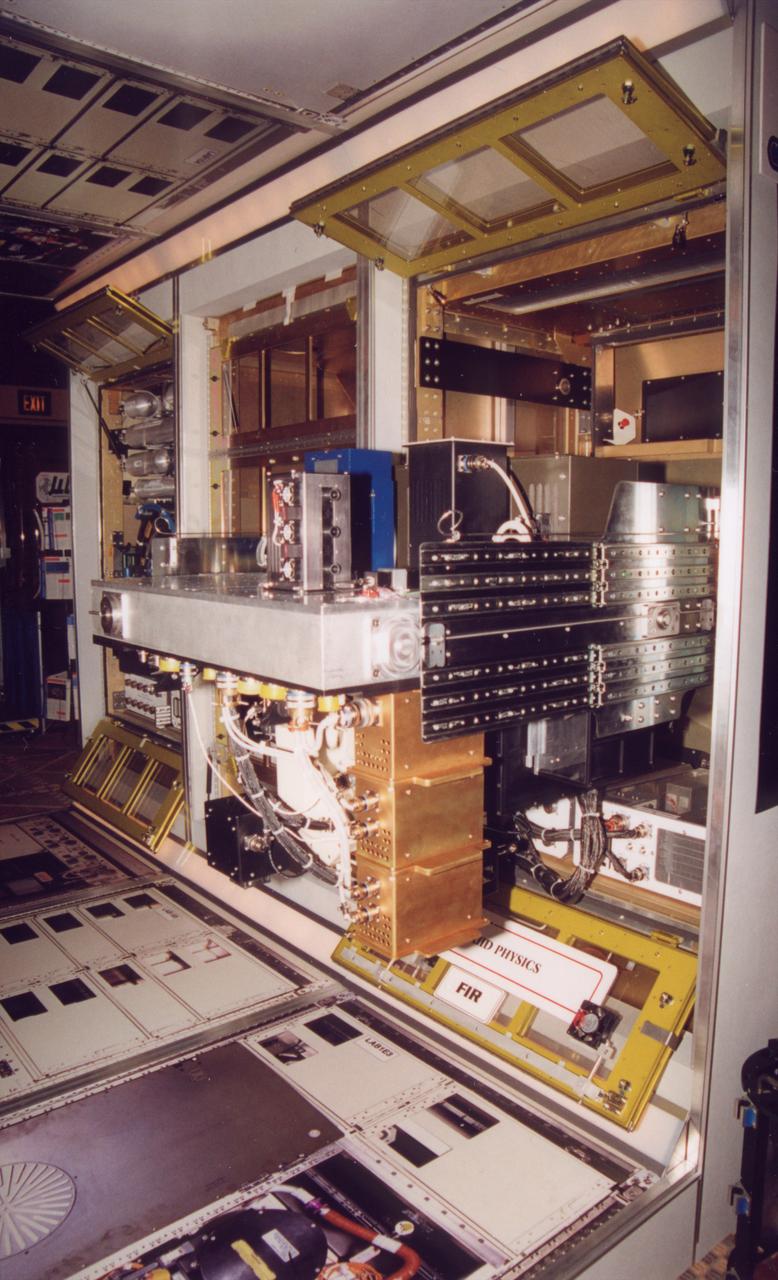
The optical bench for the Fluids Integrated Rack section of the Fluids and Combustion Facility (FCF) is shown extracted for servicing and with the optical bench rotated 90 degrees to access the rear elements. The FCF will be installed, in phases, in the Destiny, the U.S. Laboratory Module of the International Space Station (ISS), and will accommodate multiple users for a range of investigations. This is an engineering mockup; the flight hardware is subject to change as designs are refined. The FCF is being developed by the Microgravity Science Division (MSD) at the NASA Glenn Research Center. (Photo credit: NASA/Marshall Space Flight Center)
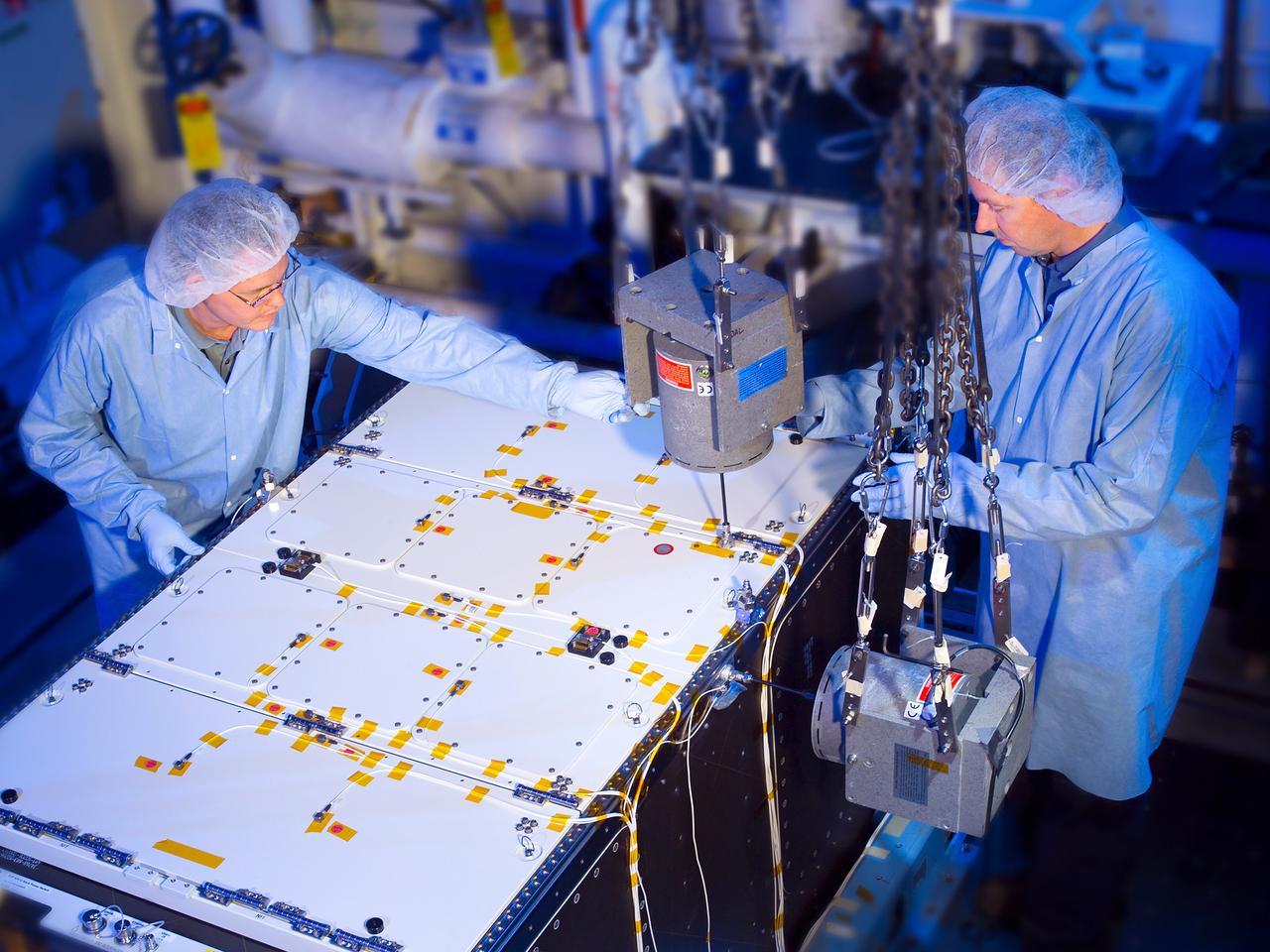
Fluids and Combustion Facility (FCF), Combustion Integration Rack (CIR) during testing in the Structural Dynamics Laboratory (SDL). The Fluids and Combustion Facility (FCF) is a set of two International Space Station (ISS) research facilities designed to support physical and biological experiments in support of technology development and validation in space. The FCF consists of two modular, reconfigurable racks called the Combustion Integration Rack (CIR) and the Fluids Integration Rack (FIR). The CIR and FIR were developed at NASAʼs Glenn Research Center.
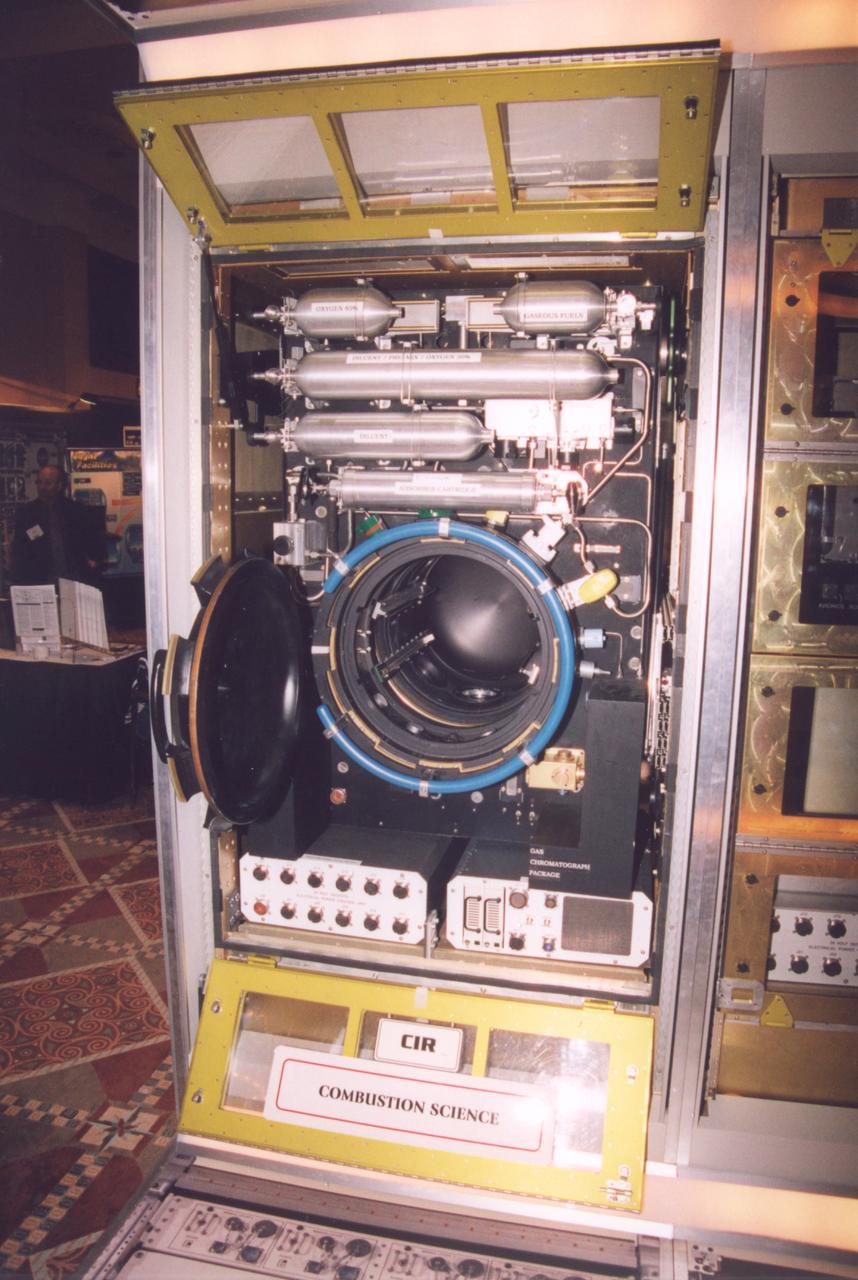
The combustion chamber for the Combustion Integrated Rack section of the Fluids and Combustion Facility (FCF) is shown opened for installation of burn specimens. The FCF will be installed, in phases, in the Destiny, the U.S. Laboratory Module of the International Space Station (ISS), and will accommodate multiple users for a range of investigations. This is an engineering mockup; the flight hardware is subject to change as designs are refined. The FCF is being developed by the Microgravity Science Division (MSD) at the NASA Glenn Research Center. (Photo credit: NASA/Marshall Space Flight Center)

The optical bench for the Fluids Integrated Rack section of the Fluids and Combustion Facility (FCF) is shown extracted for servicing and with the optical bench rotated 90 degrees for access to the rear elements. The FCF will be installed, in phases, in the Destiny, the U.S. Laboratory Module of the International Space Station (ISS), and will accommodate multiple users for a range of investigations. This is an engineering mockup; the flight hardware is subject to change as designs are refined. The FCF is being developed by the Microgravity Science Division (MSD) at the NASA Glenn Research Center. (Photo credit: NASA/Marshall Space Flight Center)
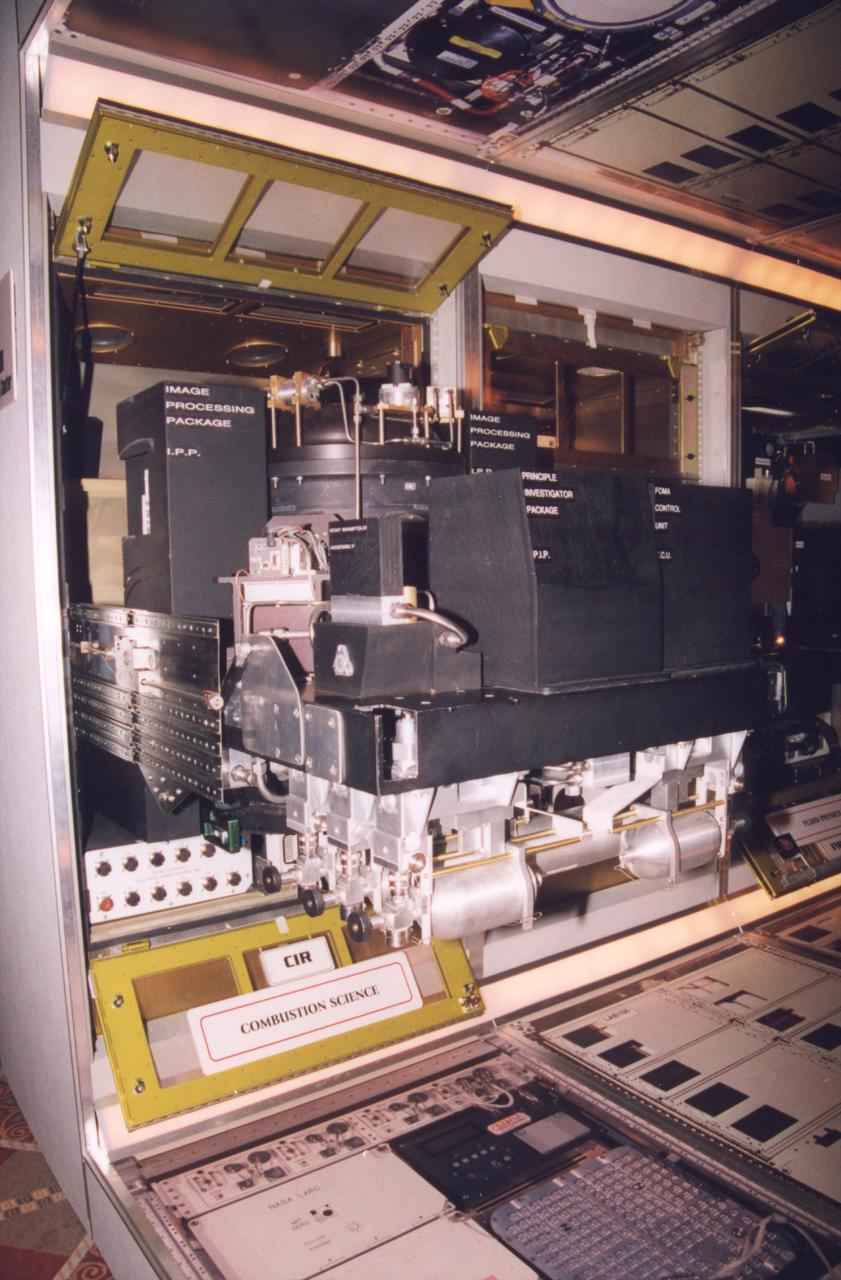
The combustion chamber for the Combustion Integrated Rack section of the Fluids and Combustion Facility (FCF) is shown extracted for servicing and with the optical bench rotated 90 degrees for access to the rear elements. The FCF will be installed, in phases, in the Destiny, the U.S. Laboratory Module of the International Space Station (ISS), and will accommodate multiple users for a range of investigations. This is an engineering mockup; the flight hardware is subject to change as designs are refined. The FCF is being developed by the Microgravity Science Division (MSD) at the NASA Glenn Research Center. (Photo credit: NASA/Marshall Space Flight Center)
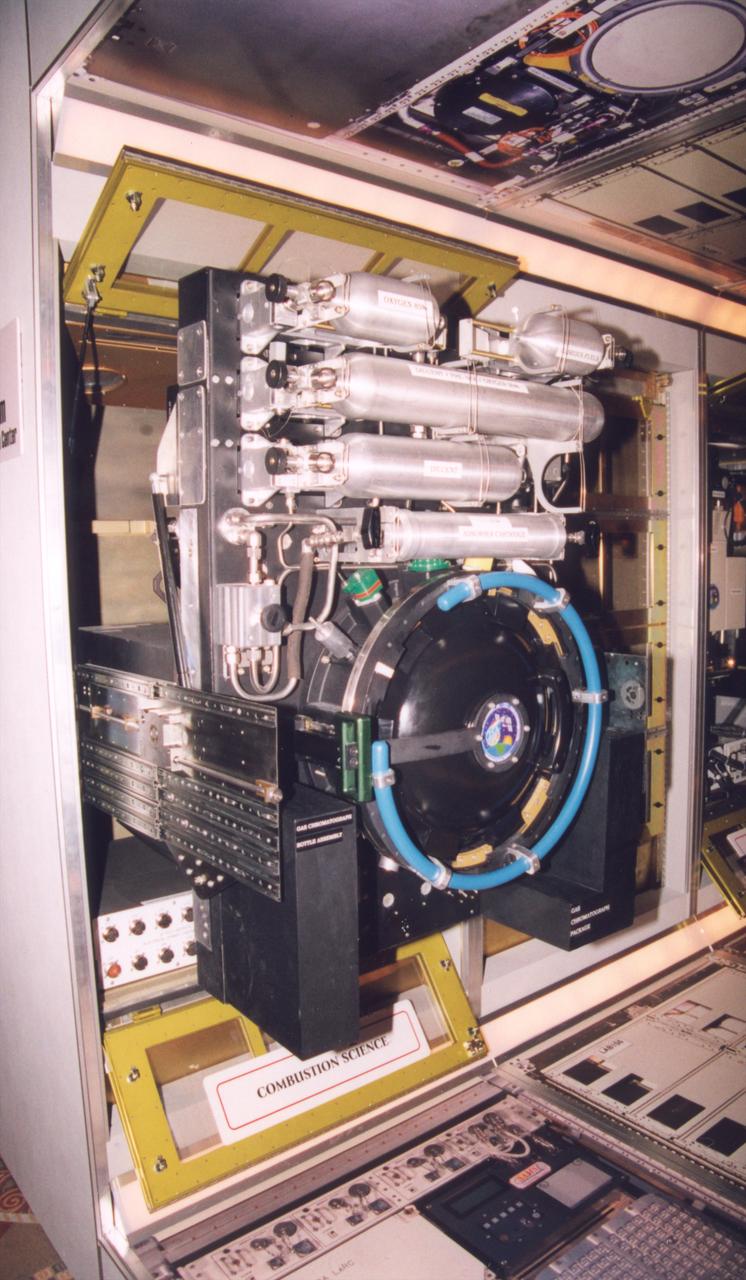
The combustion chamber for the Combustion Integrated Rack section of the Fluids and Combustion Facility (FCF) is shown extracted for servicing. The FCF will be installed, in phases, in the Destiny, the U.S. Laboratory Module of the International Space Station (ISS), and will accommodate multiple users for a range of investigations. This is an engineering mockup; the flight hardware is subject to change as designs are refined. The FCF is being developed by the Microgravity Science Division (MSD) at the NASA Glenn Research Center. (Photo credit: NASA/Marshall Space Flight Center)
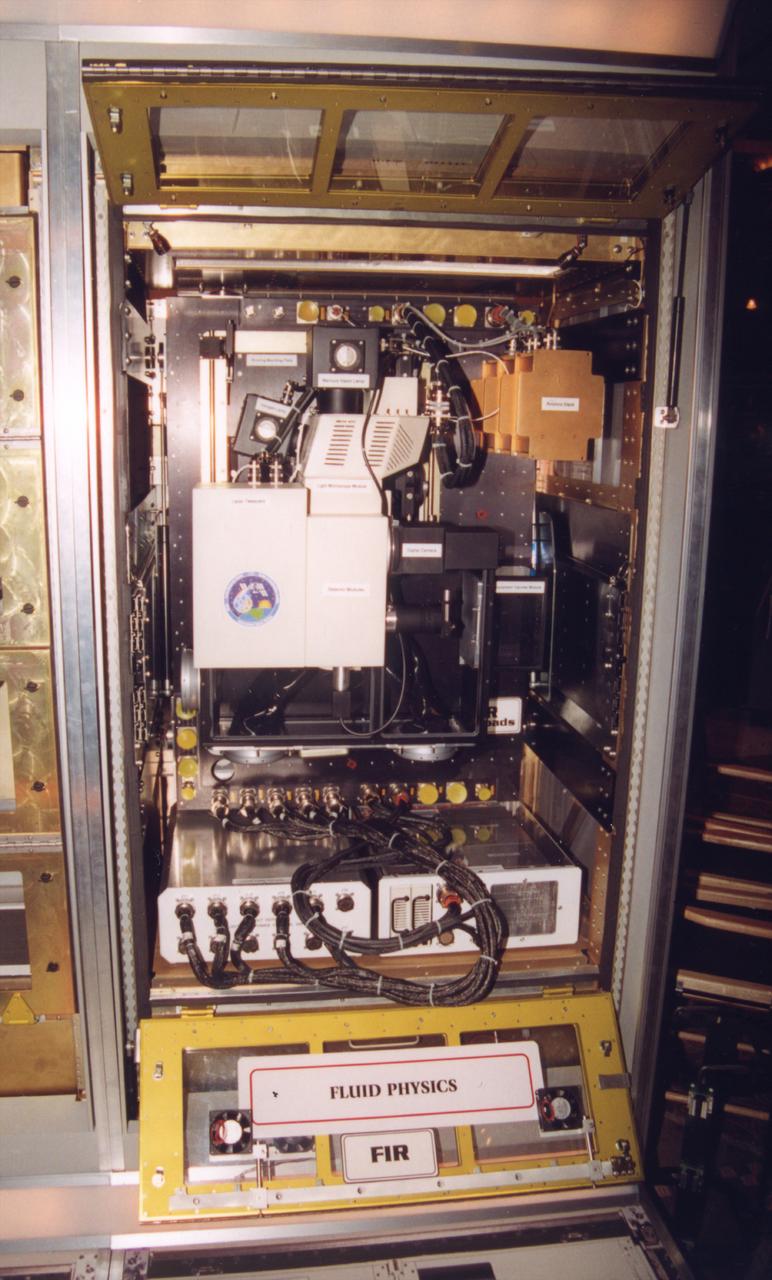
The optical bench for the Fluid Integrated Rack section of the Fluids and Combustion Facility (FCF) is shown in its operational configuration. The FCF will be installed, in phases, in the Destiny, the U.S. Laboratory Module of the International Space Station (ISS), and will accommodate multiple users for a range of investigations. This is an engineering mockup; the flight hardware is subject to change as designs are refined. The FCF is being developed by the Microgravity Science Division (MSD) at the NASA Glenn Research Center. (Photo credit: NASA/Marshall Space Flight Center)
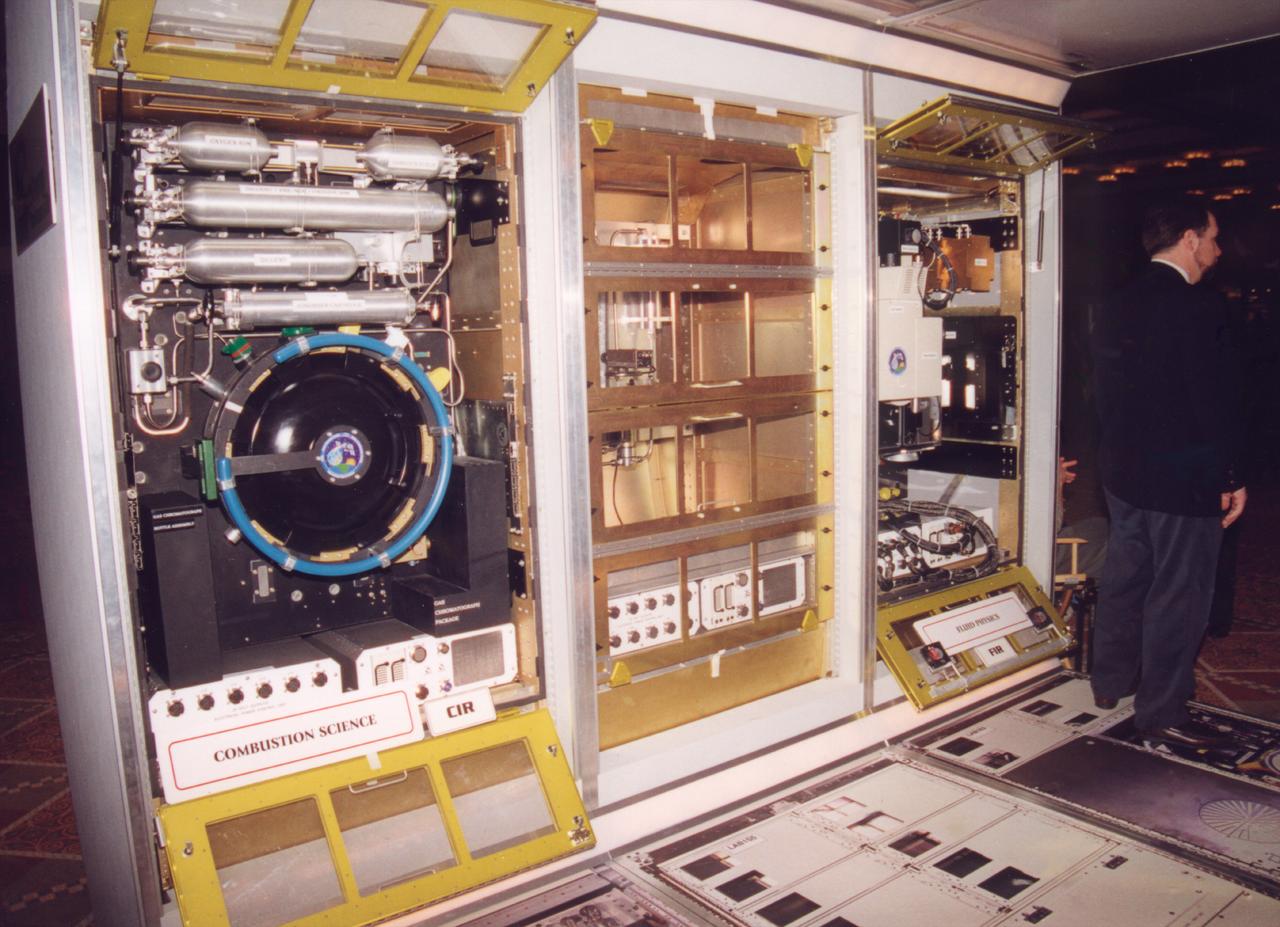
The Fluids and Combustion Facility (FCF) is a modular, multi-user facility to accommodate microgravity science experiments on board Destiny, the U.S. Laboratory Module for the International Space Station (ISS). The FCF will be a permanet facility aboard the ISS, and will be capable of accommodating up to ten science investigations per year. It will support the NASA Science and Technology Research Plans for the International Space Station (ISS) which require sustained systematic research of the effects of reduced gravity in the areas of fluid physics and combustion science. From left to right are the Combustion Integrated Rack, the Shared Rack, and the Fluids Integrated Rack. The FCF is being developed by the Microgravity Science Division (MSD) at the NASA Glenn Research Center. (Photo Credit: NASA/Marshall Space Flight Center)
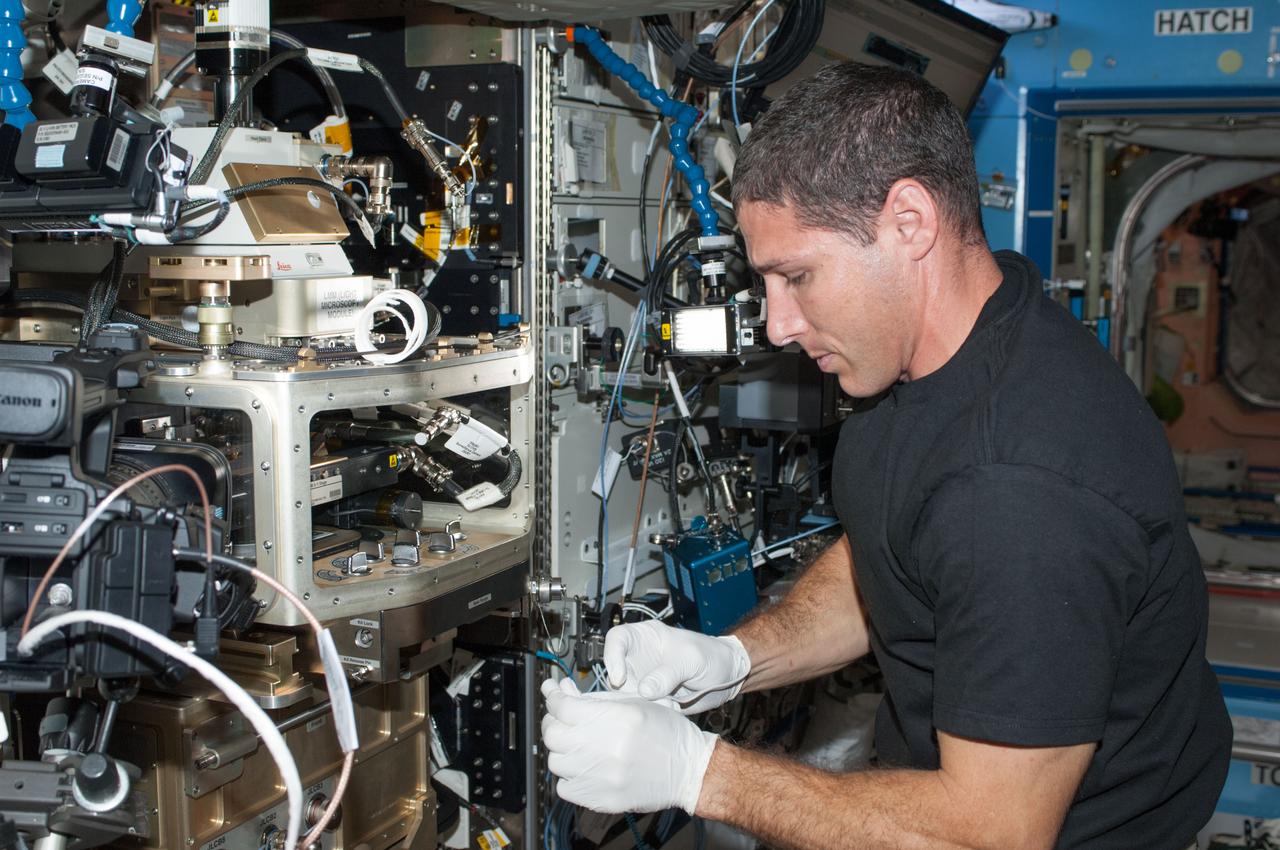
ISS037-E-013951 (14 Oct. 2013) --- NASA astronaut Michael Hopkins, Expedition 37 flight engineer, works at the Light Microscopy Module (LMM) in the Fluids Integrated Rack / Fluids Combustion Facility (FIR/FCF) located in the Destiny laboratory of the International Space Station.
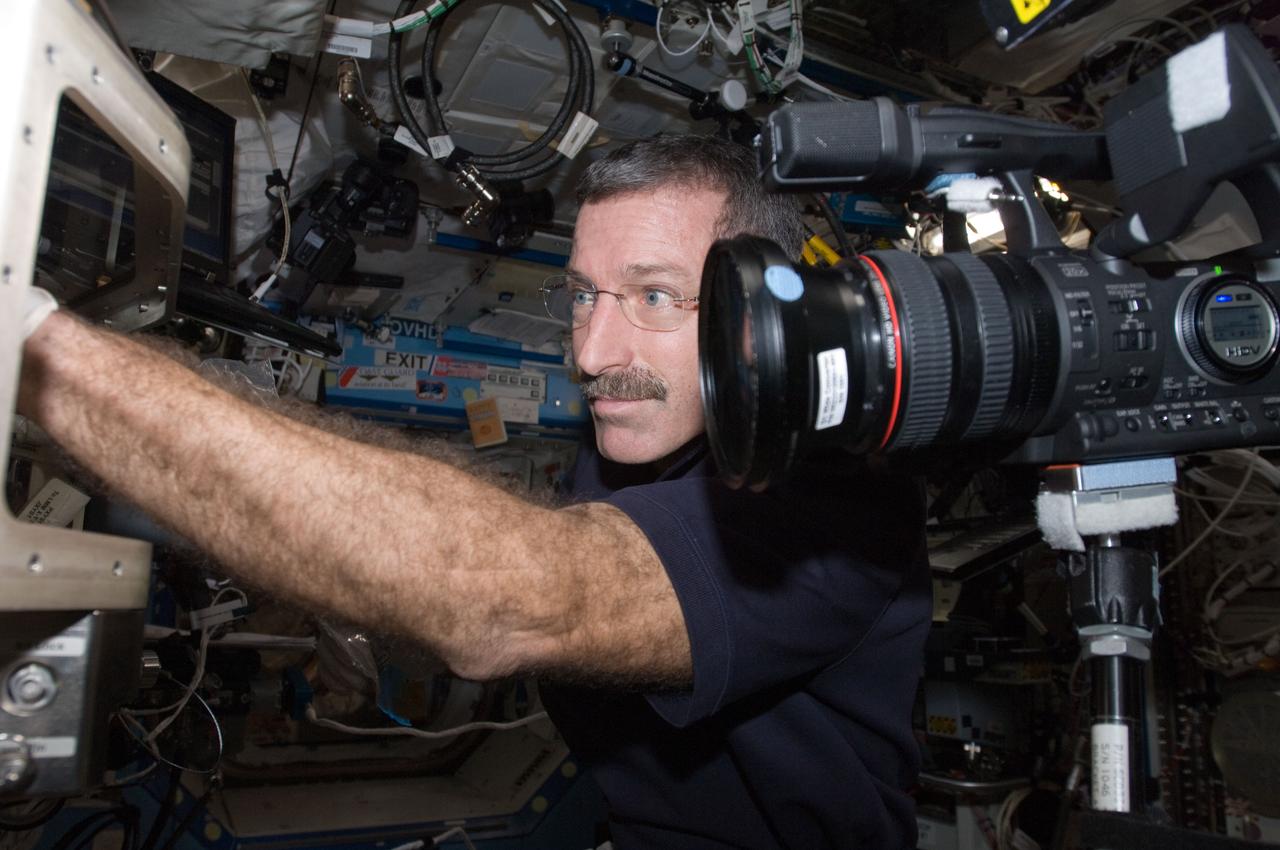
ISS030-E-007426 (1 Dec. 2011) --- NASA astronaut Dan Burbank, Expedition 30 commander, works at the Light Microscopy Module (LMM) in the Fluids Integrated Rack / Fluids Combustion Facility (FIR/FCF) located in the Destiny laboratory of the International Space Station.
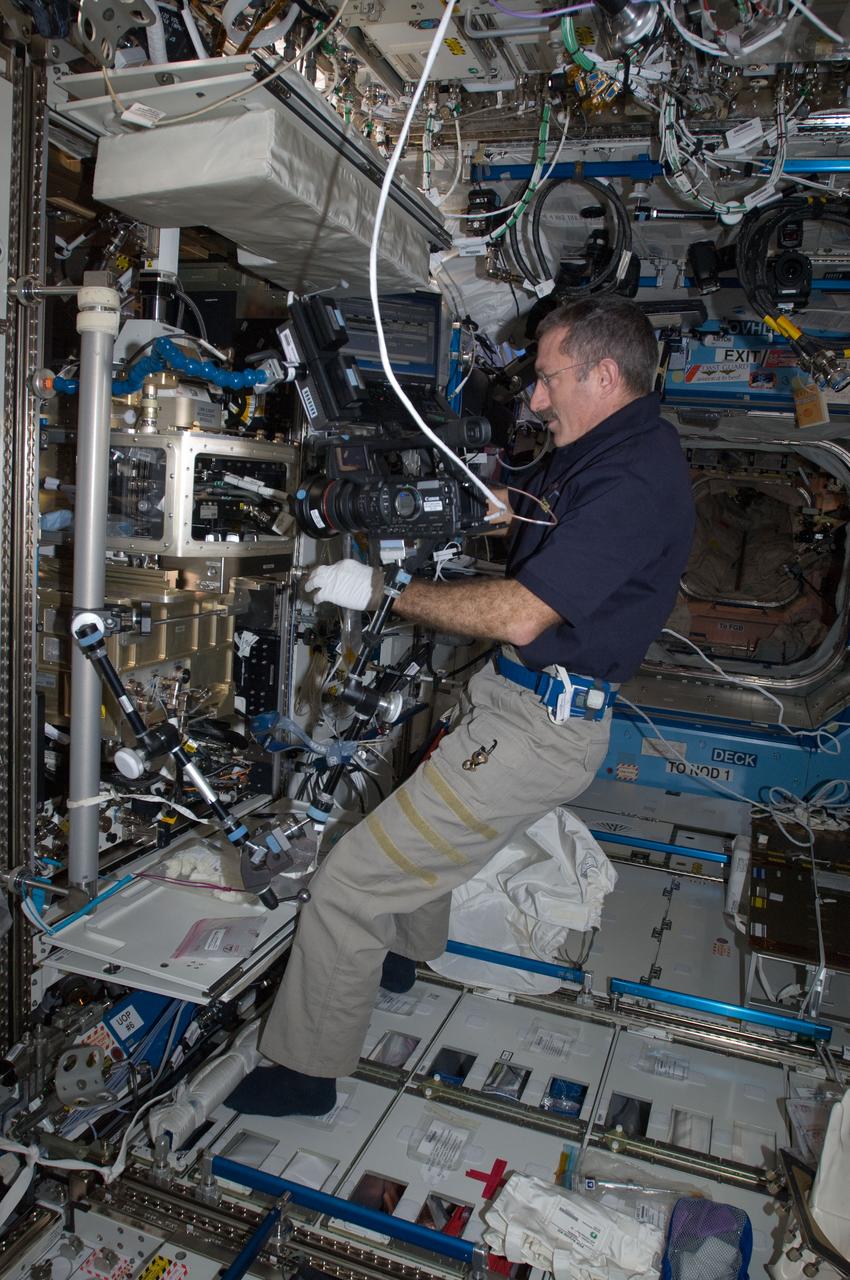
ISS030-E-007428 (1 Dec. 2011) --- NASA astronaut Dan Burbank, Expedition 30 commander, works at the Light Microscopy Module (LMM) in the Fluids Integrated Rack / Fluids Combustion Facility (FIR/FCF) located in the Destiny laboratory of the International Space Station.
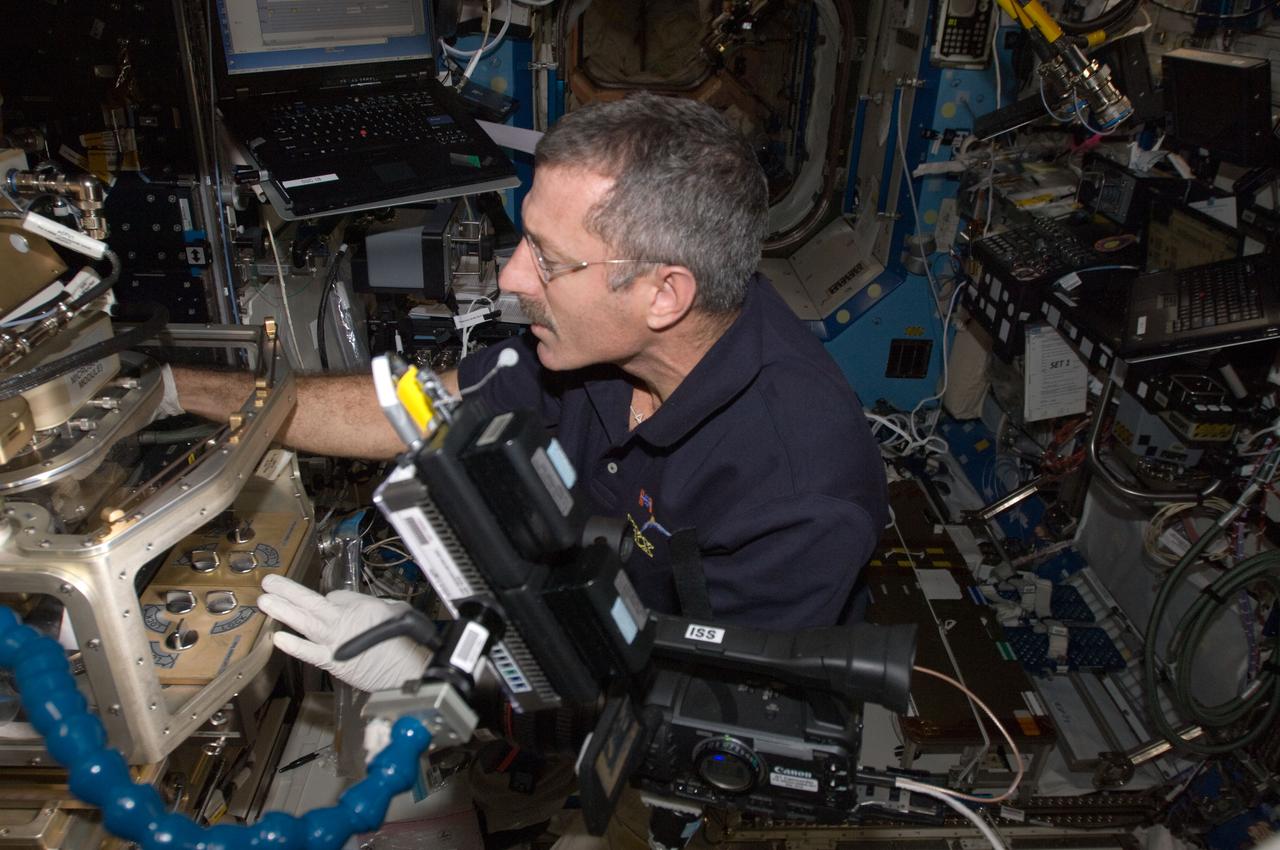
ISS030-E-007429 (1 Dec. 2011) --- NASA astronaut Dan Burbank, Expedition 30 commander, works at the Light Microscopy Module (LMM) in the Fluids Integrated Rack / Fluids Combustion Facility (FIR/FCF) located in the Destiny laboratory of the International Space Station.
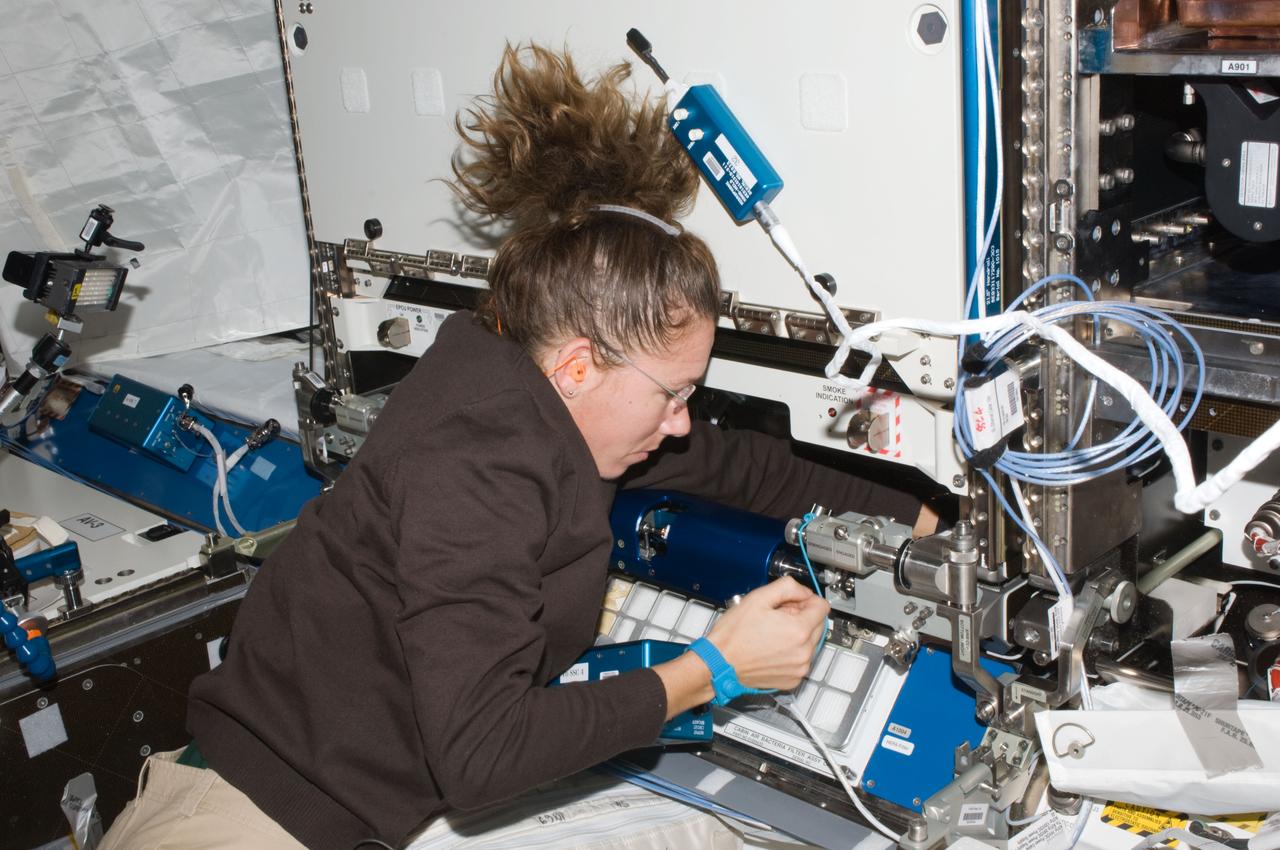
ISS018-E-017796 (5 Jan. 2009) --- Astronaut Sandra Magnus, Expedition 18 flight engineer, works on the Fluids and Combustion Facility (FCF) Combustion Integration Rack (CIR) Passive Rack Isolation System (PaRIS) in the Destiny laboratory of the International Space Station.
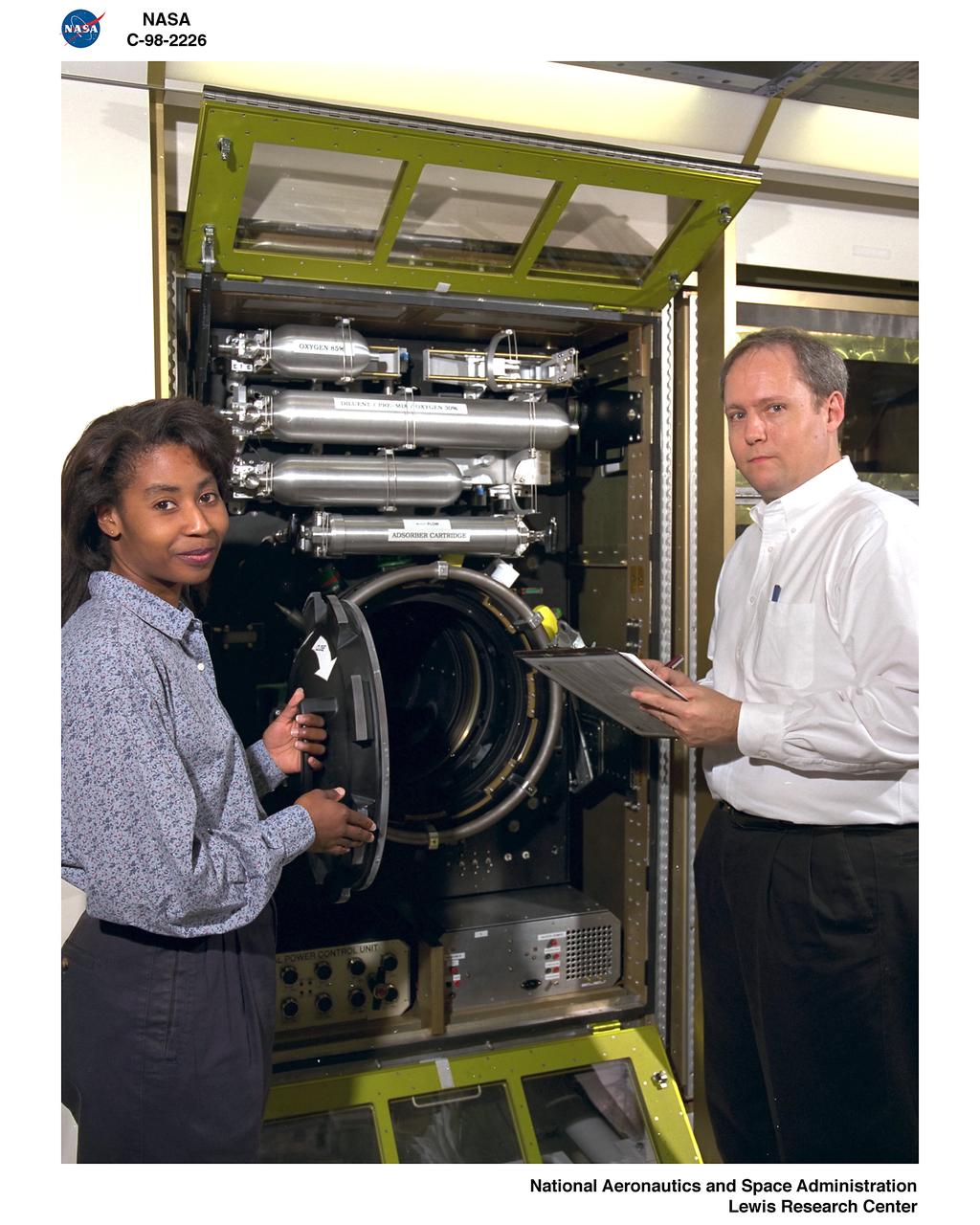
RECORDING THE SHUTTLE CREW REVIEW FCF
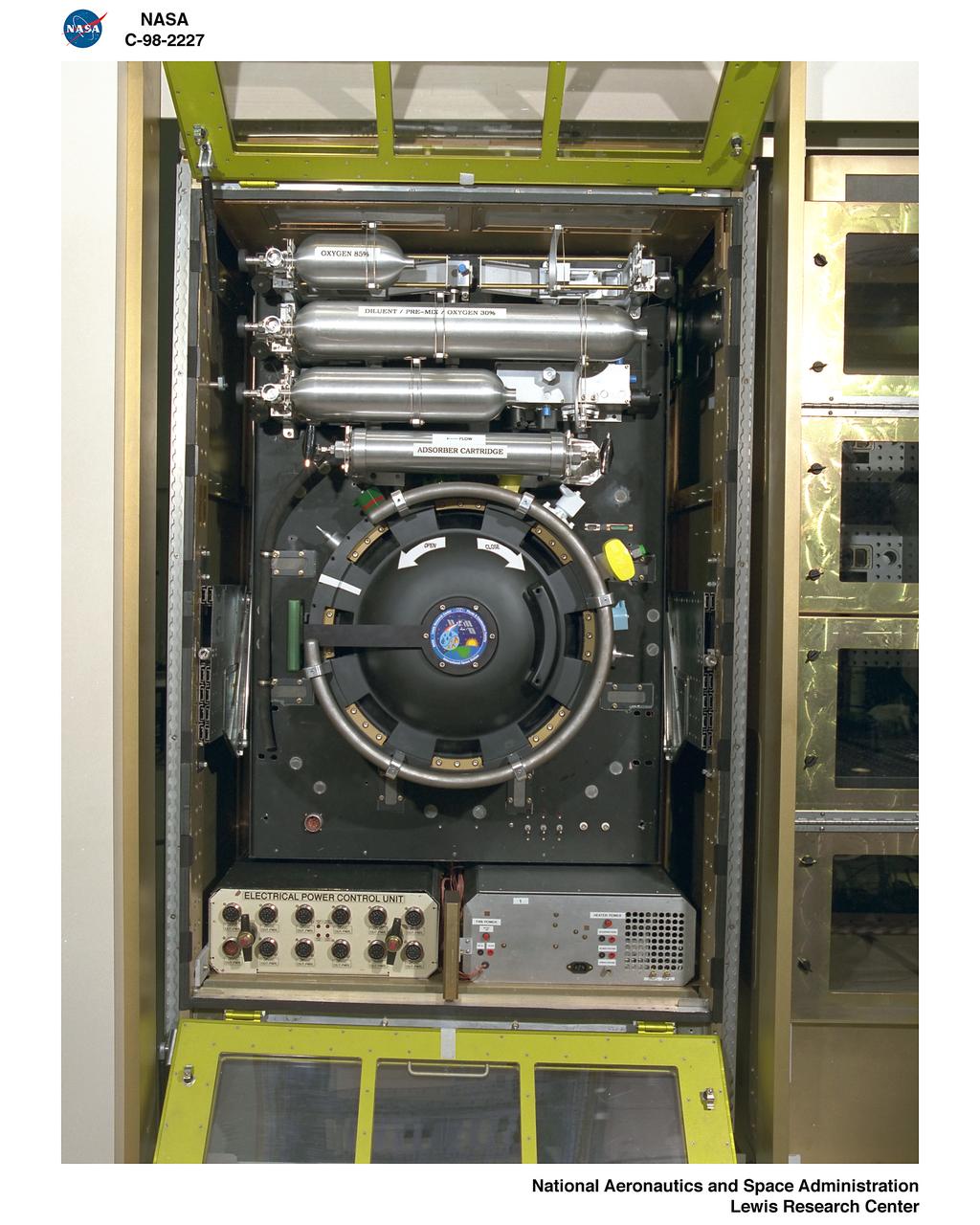
RECORDING THE SHUTTLE CREW REVIEW FCF
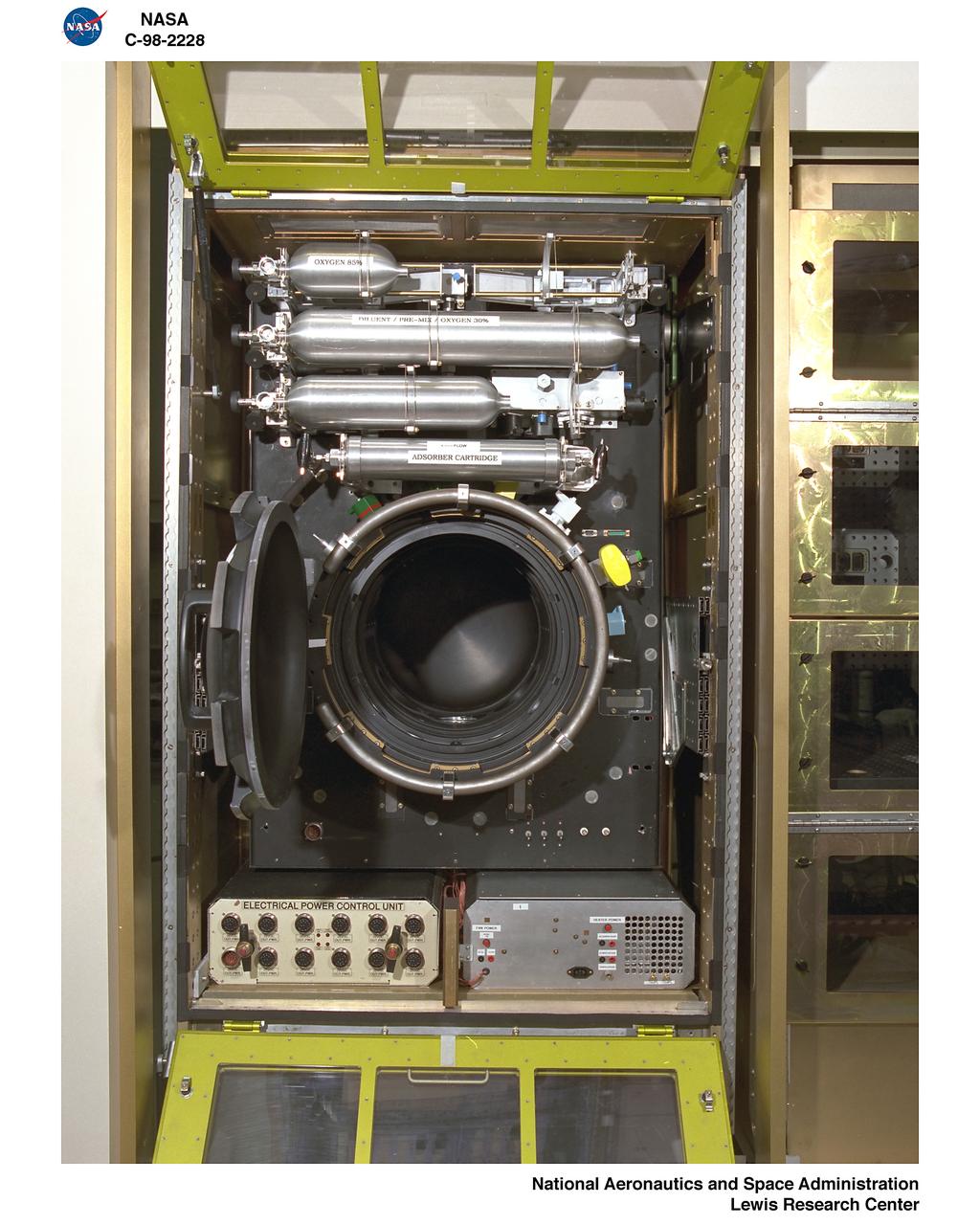
RECORDING THE SHUTTLE CREW REVIEW FCF
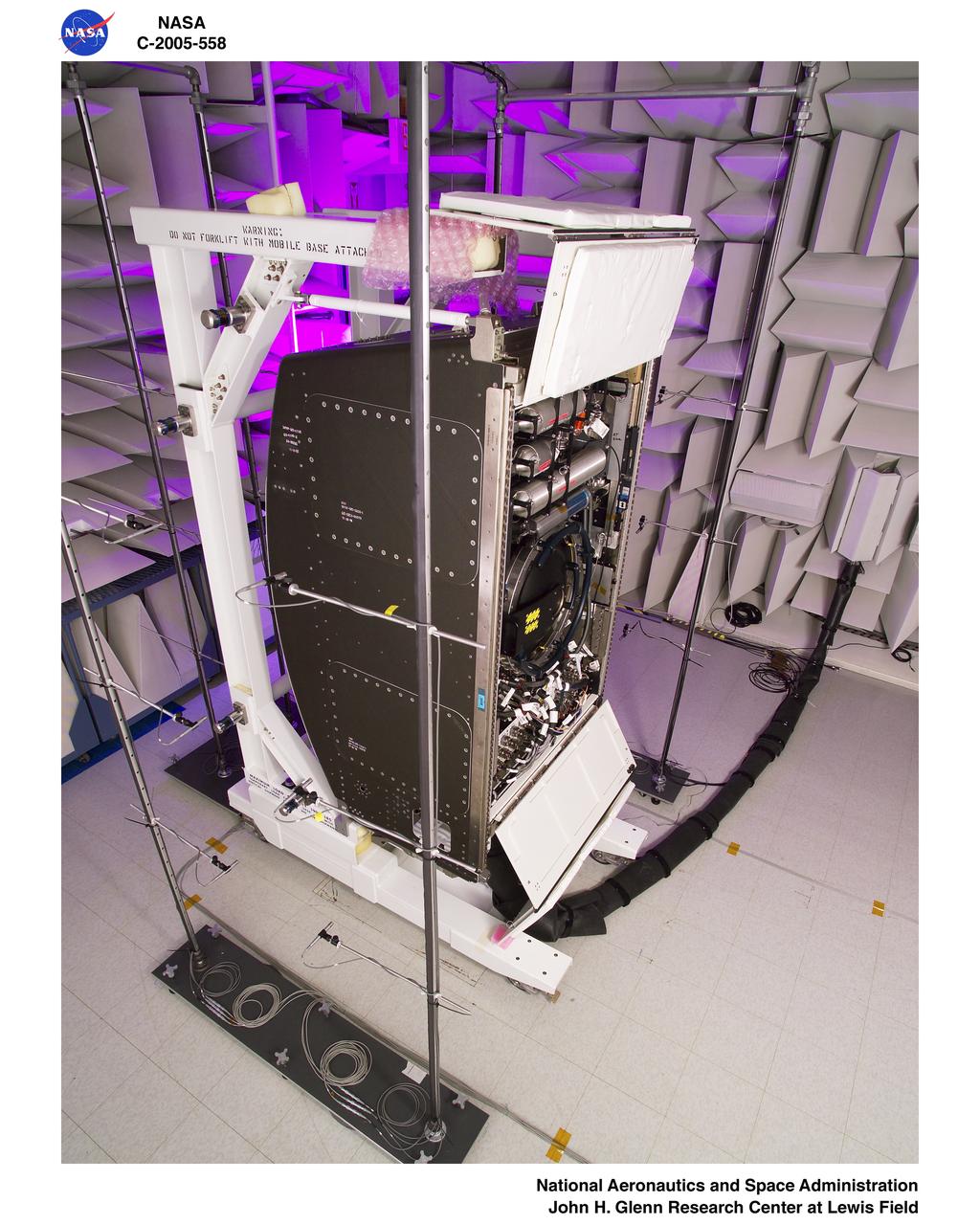
Fluids and Combustion Facility (FCF) Combustion Integrated Rack (CIR) in the Acoustic Testing Laboratory (ATL), Camera file: G6QH5821
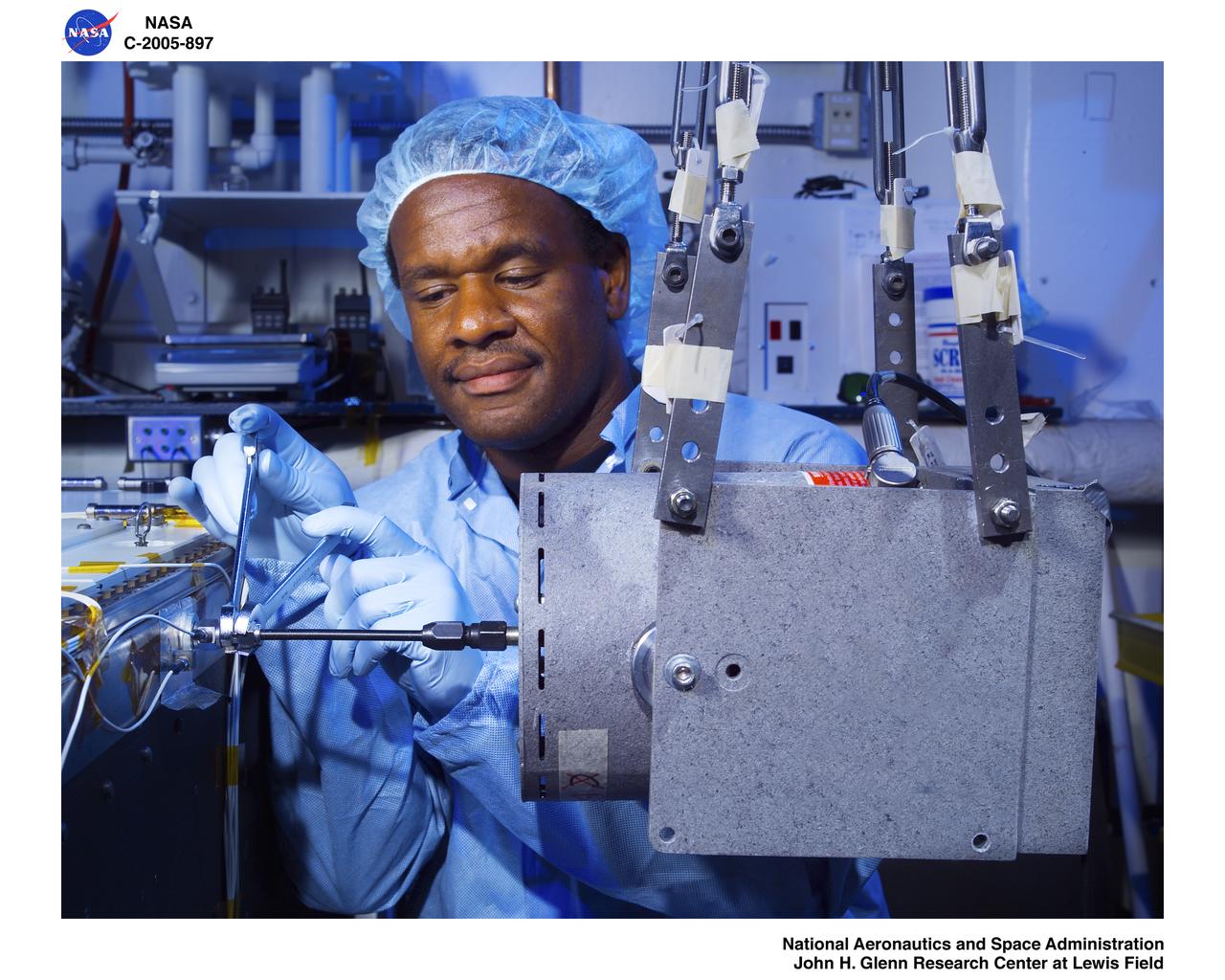
Fluids and Combustion Facility (FCF), Combustion Integration Rack (CIR) during testing in the Structural Dynamics Laboratory (SDL)

Fluids and Combustion Facility (FCF), Combustion Integrated Rack (CIR) during testing in the Structural Dynamics Laboratory (SDL)
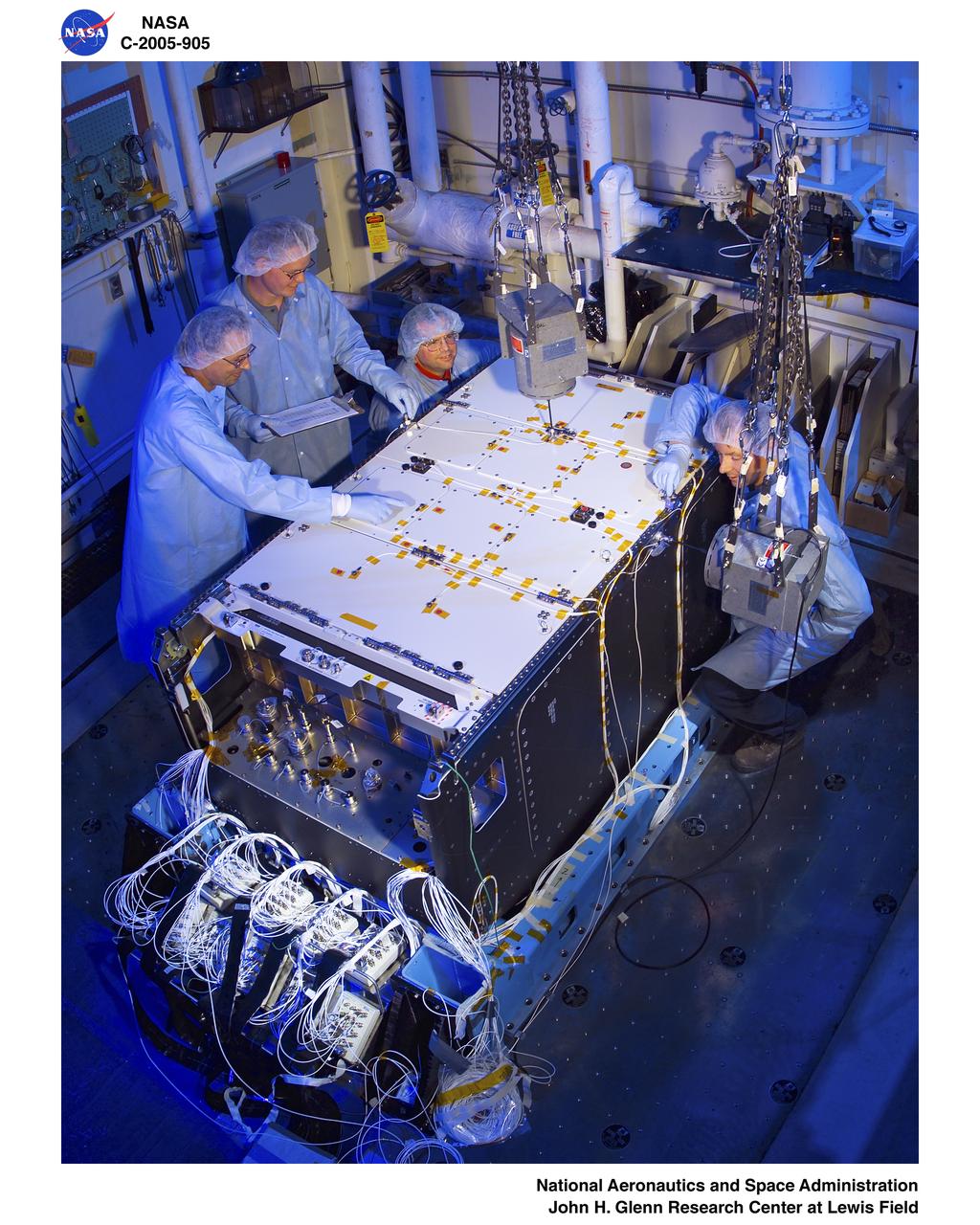
Fluids and Combustion Facility (FCF), Combustion Integration Rack (CIR) during testing in the Structural Dynamics Laboratory (SDL)
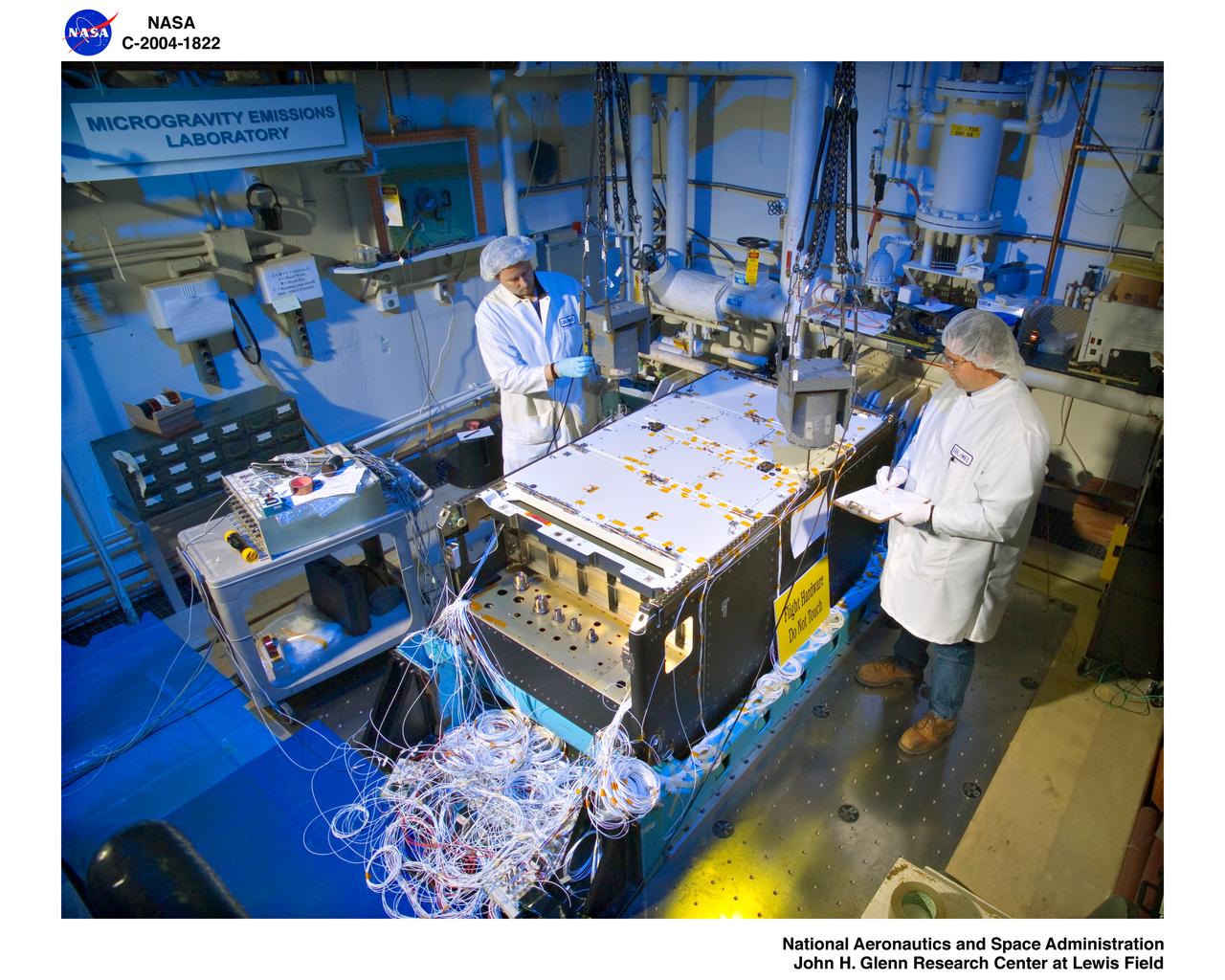
Fluids and Combustion Facility (FCF) Combustion Integrated Rack (CIR) Ground Integration Unit (GIU) Modal Test in the Structural Dynamics Laboratory at NASA Glenn
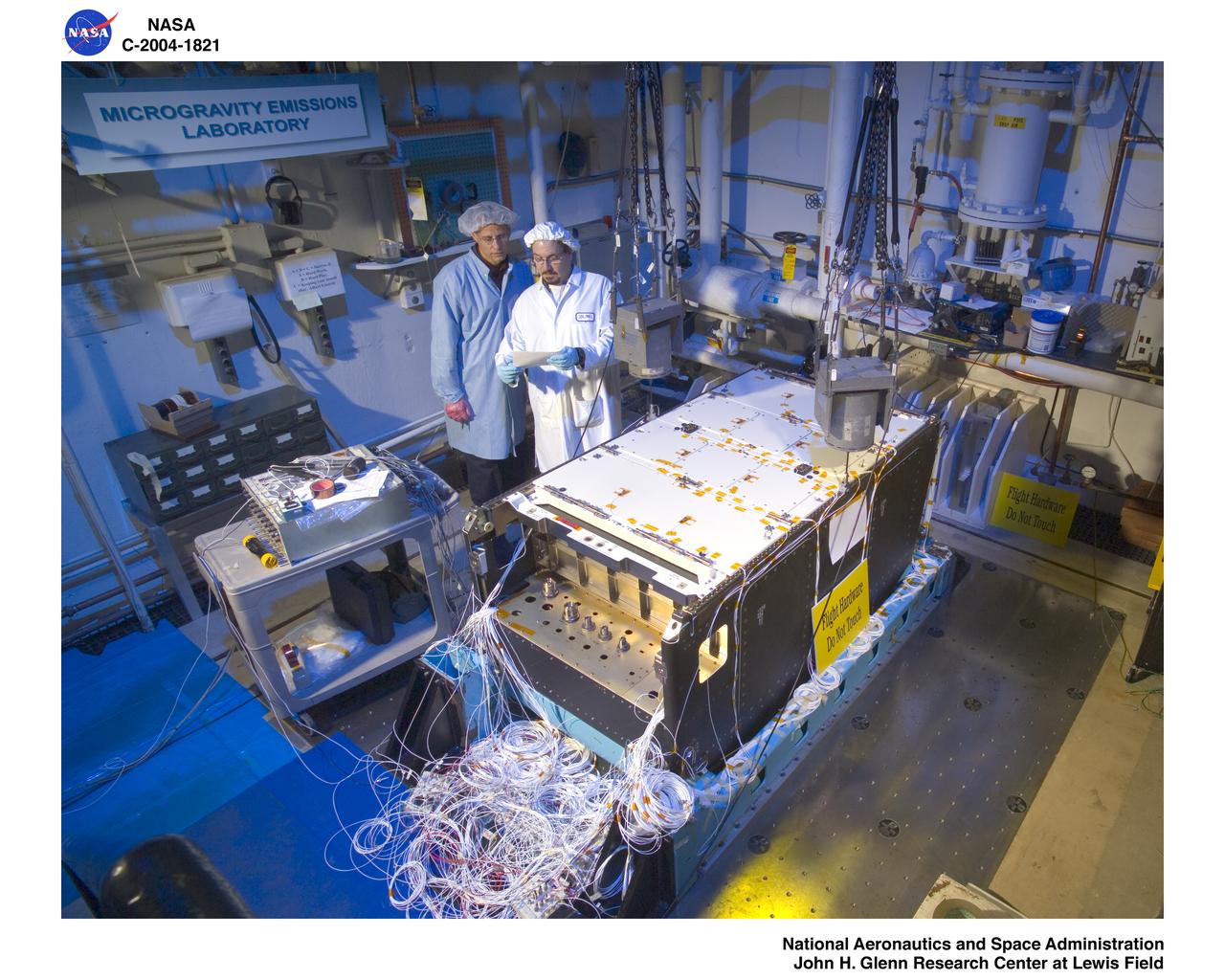
Fluids and Combustion Facility (FCF) Combustion Integrated Rack (CIR) Ground Integration Unit (GIU) Modal Test in the Structural Dynamics Laboratory at NASA Glenn
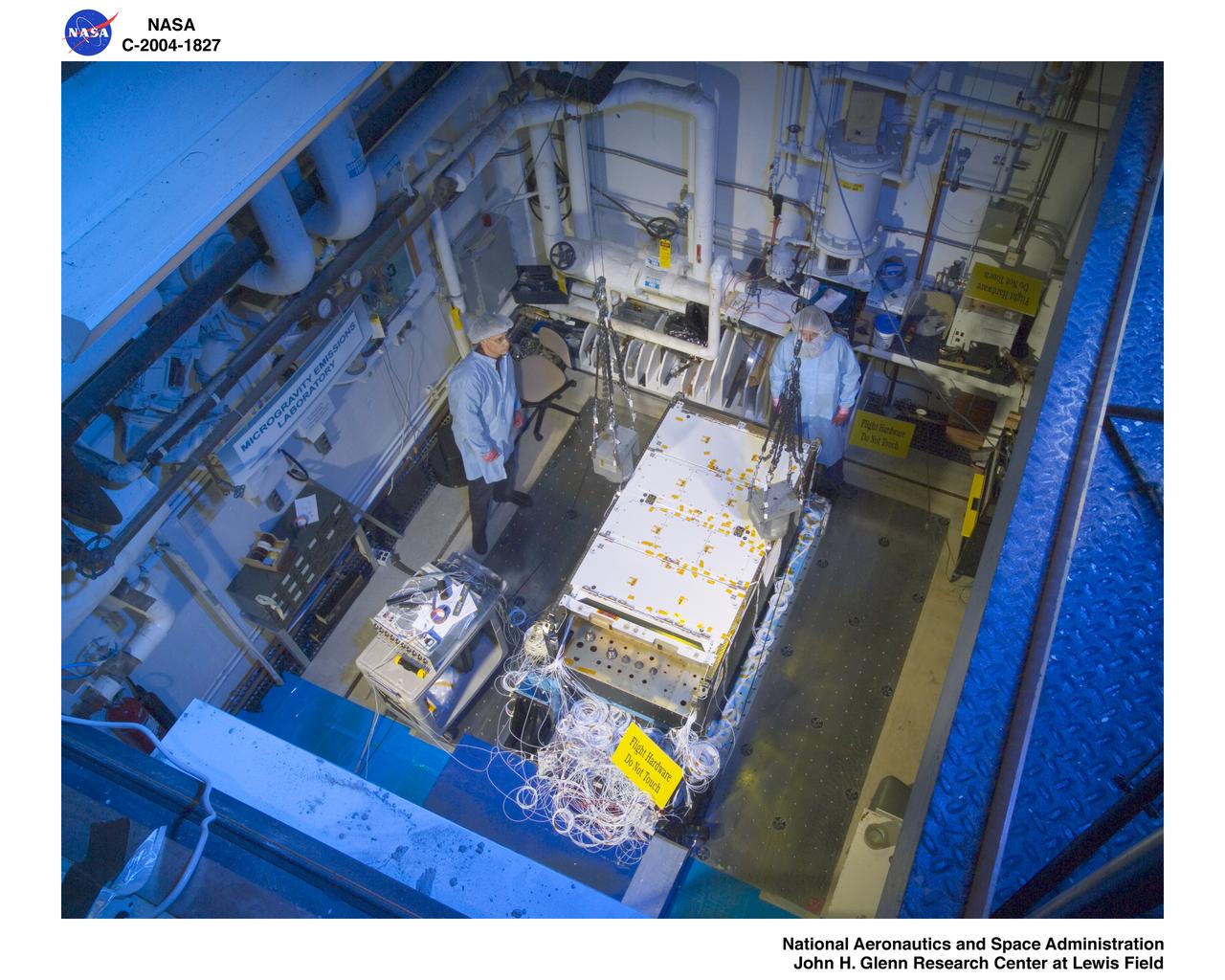
Fluids and Combustion Facility (FCF) Combustion Integrated Rack (CIR) Ground Integration Unit (GIU) Modal Test in the Structural Dynamics Laboratory at NASA Glenn
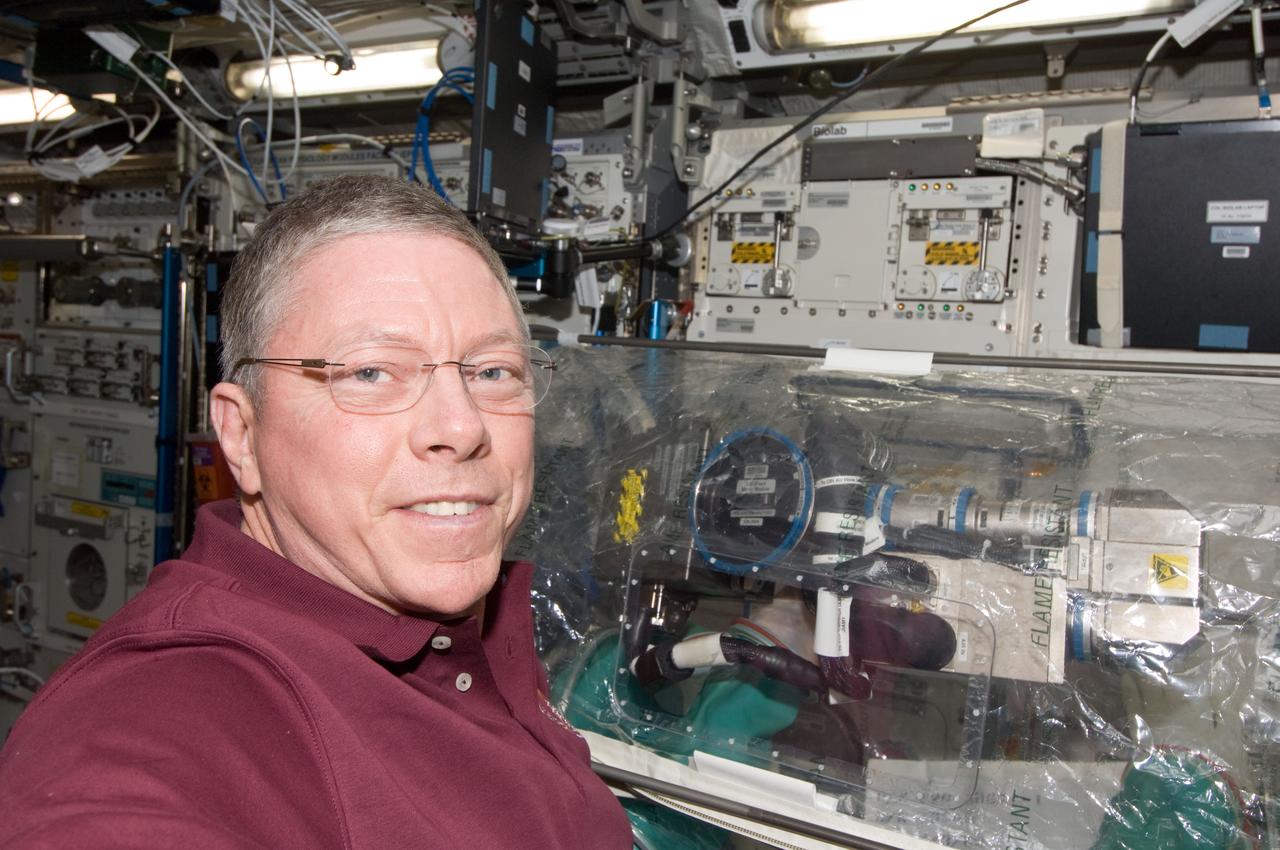
ISS029-E-029756 (17 Oct. 2011) --- NASA astronaut Mike Fossum, Expedition 29 commander, works on the Combustion Integrated Rack / Fluids & Combustion Facility (CIR FCF) in the Destiny laboratory of the International Space Station.
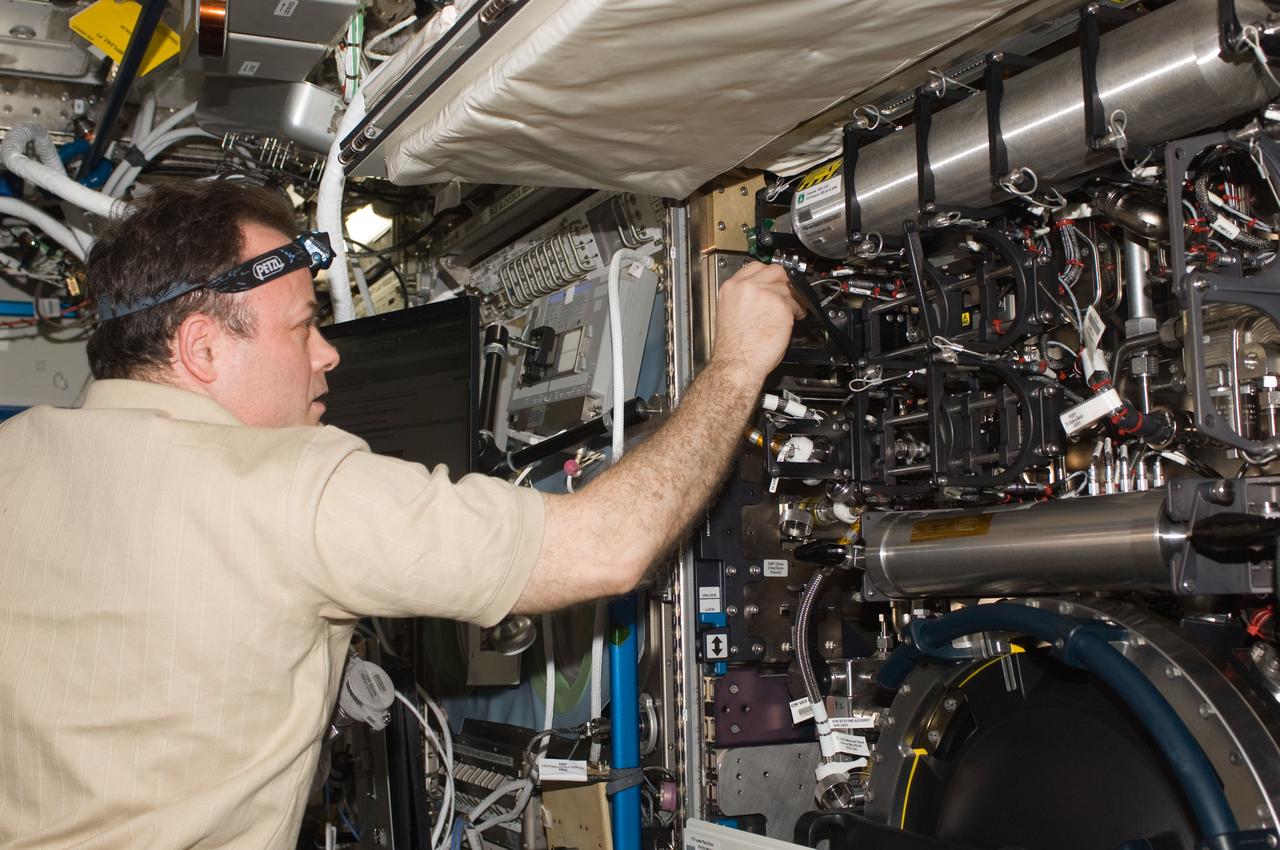
ISS028-E-026400 (17 Aug. 2011) --- NASA astronaut Ron Garan, Expedition 28 flight engineer, works with the Combustion Integrated Rack (CIR) Fluids and Combustion Facility (FCF) in the Destiny laboratory of the International Space Station.
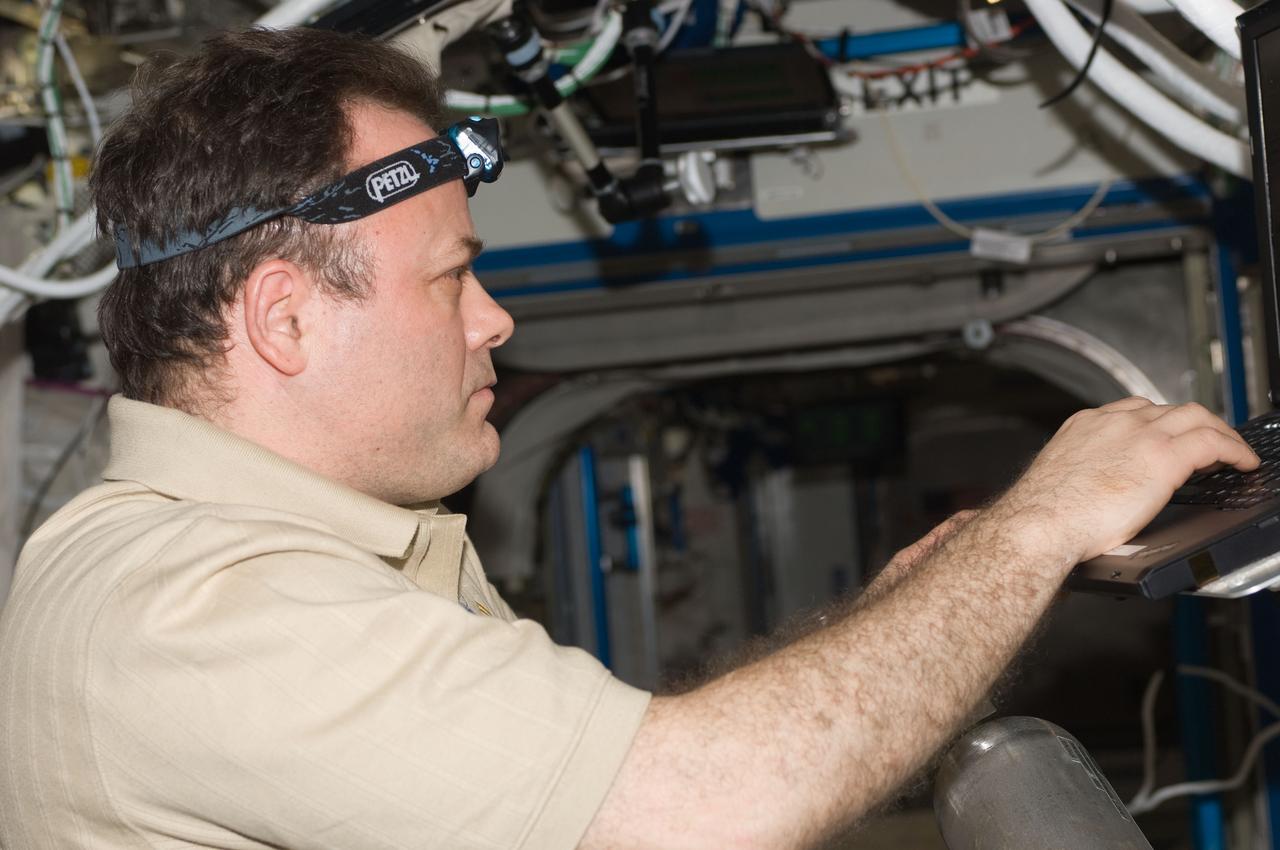
ISS028-E-026402 (17 Aug. 2011) --- NASA astronaut Ron Garan, Expedition 28 flight engineer, works with the Combustion Integrated Rack (CIR) Fluids and Combustion Facility (FCF) in the Destiny laboratory of the International Space Station.
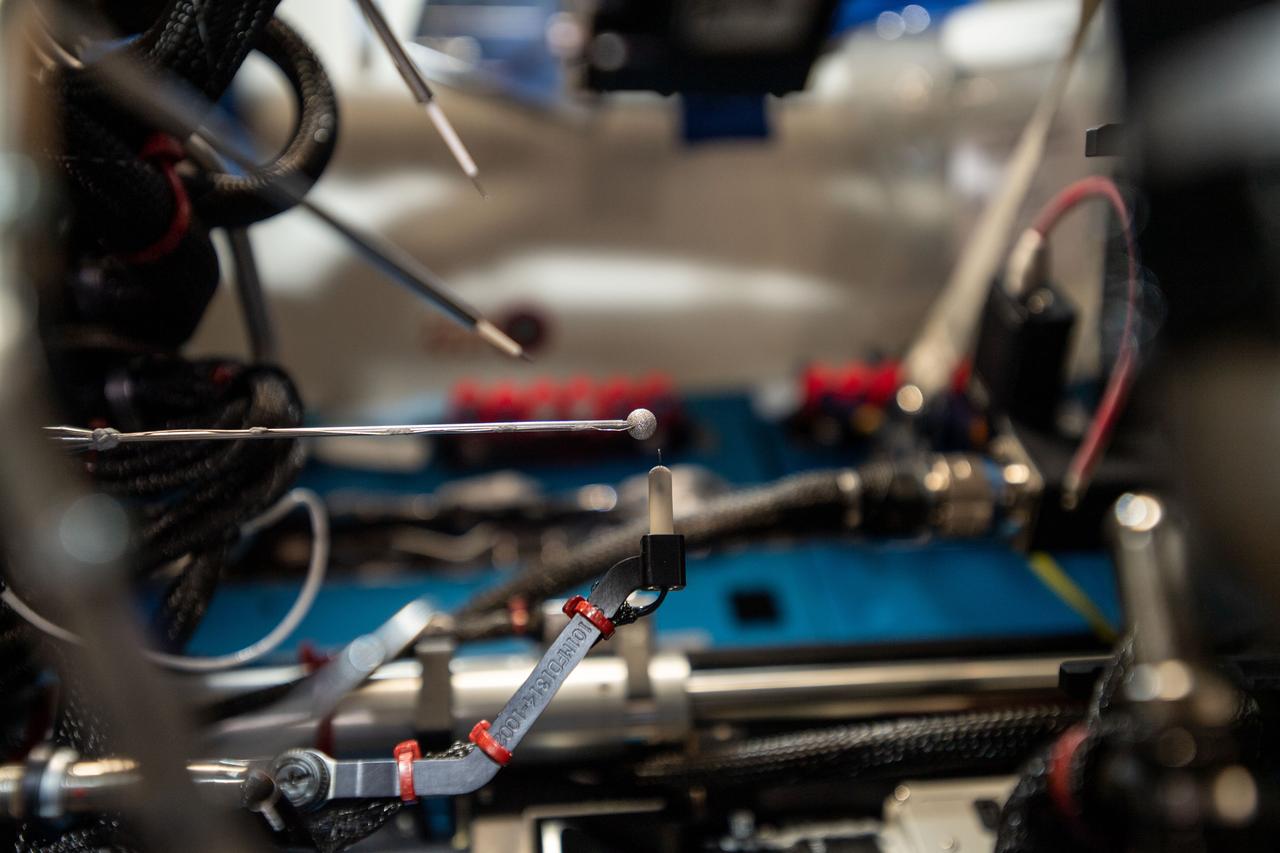
iss059e103188 (6/14/2019) --- Photo documentation taken aboard the International Space Station (ISS) during the Fluids and Combustion Facility (FCF) Combustion Integration Rack (CIR) / Advanced Combustion via Microgravity Experiments (ACME) / Flame Design hardware replacement.
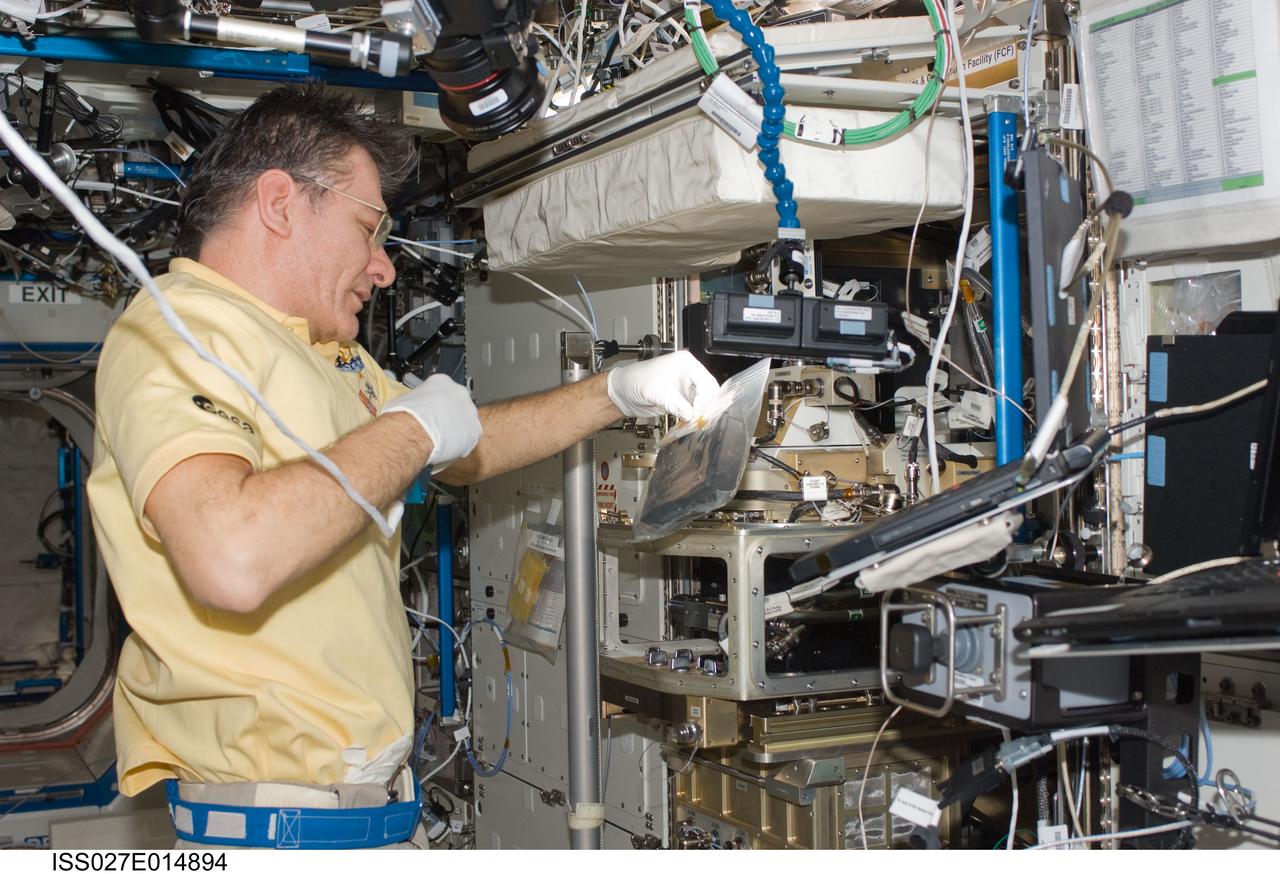
ISS027-E-014894 (21 April 2011) --- European Space Agency astronaut Paolo Nespoli, Expedition 27 flight engineer, works with the Light Microscopy Module (LMM) in the Destiny laboratory of the International Space Station.
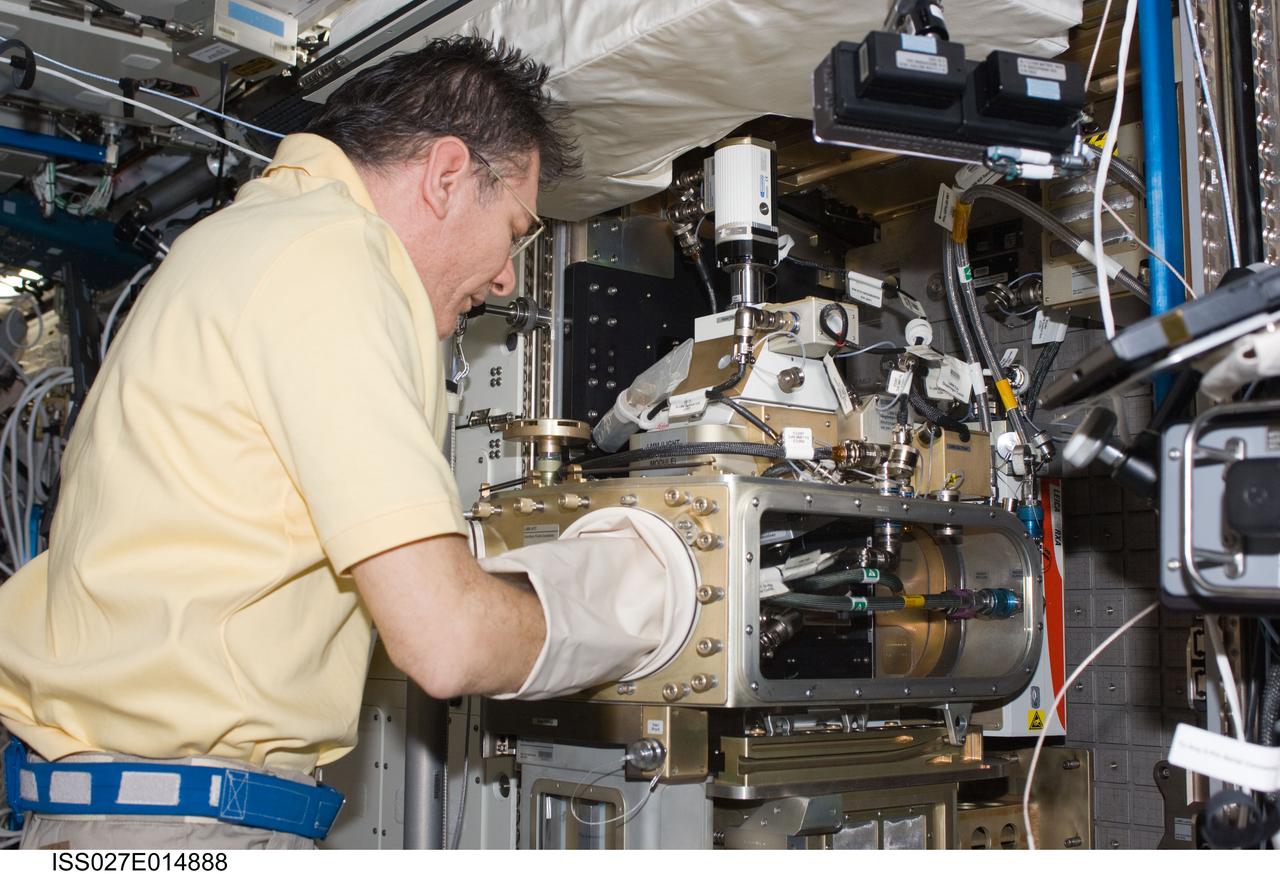
ISS027-E-014888 (21 April 2011) --- European Space Agency astronaut Paolo Nespoli, Expedition 27 flight engineer, works with the Light Microscopy Module (LMM) in the Destiny laboratory of the International Space Station.
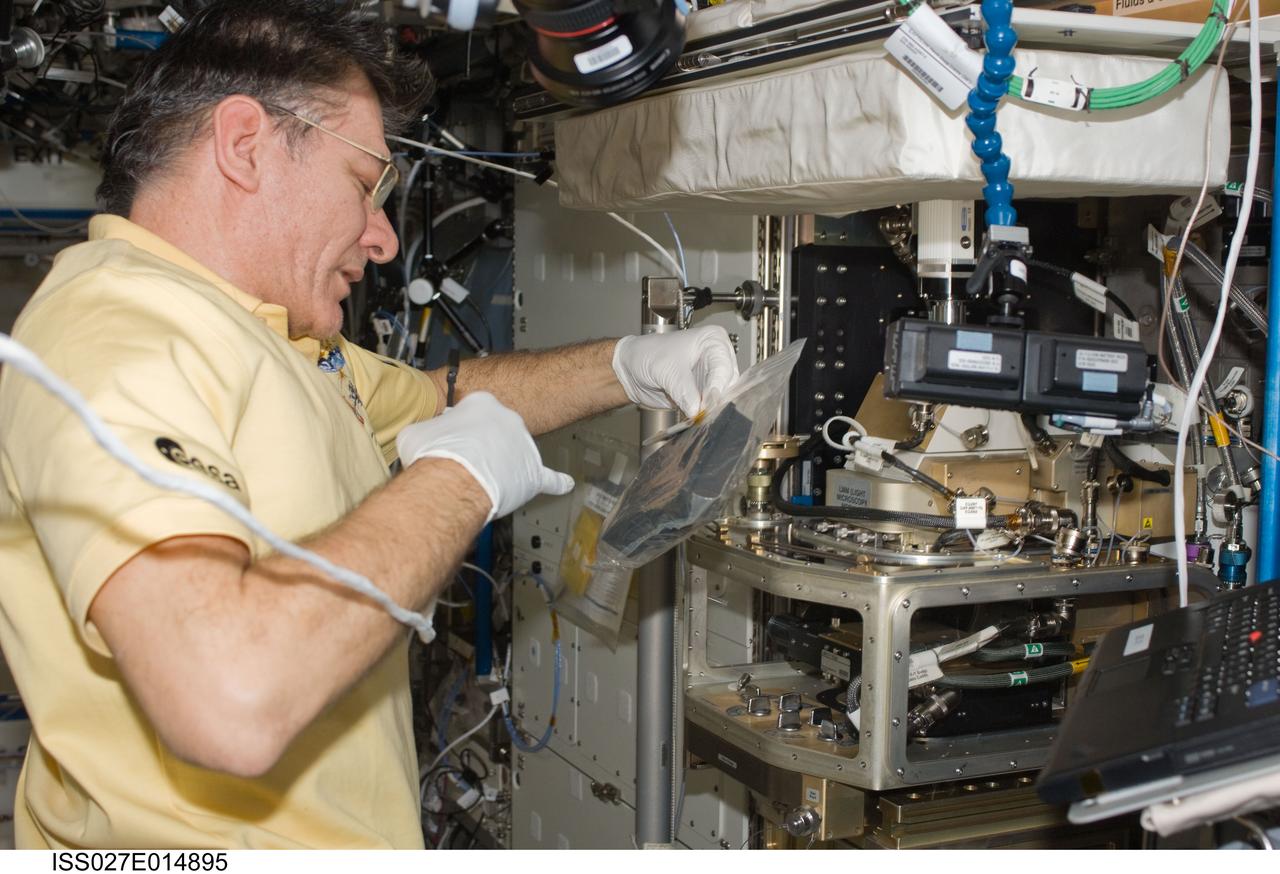
ISS027-E-014895 (21 April 2011) --- European Space Agency astronaut Paolo Nespoli, Expedition 27 flight engineer, works with the Light Microscopy Module (LMM) in the Destiny laboratory of the International Space Station.
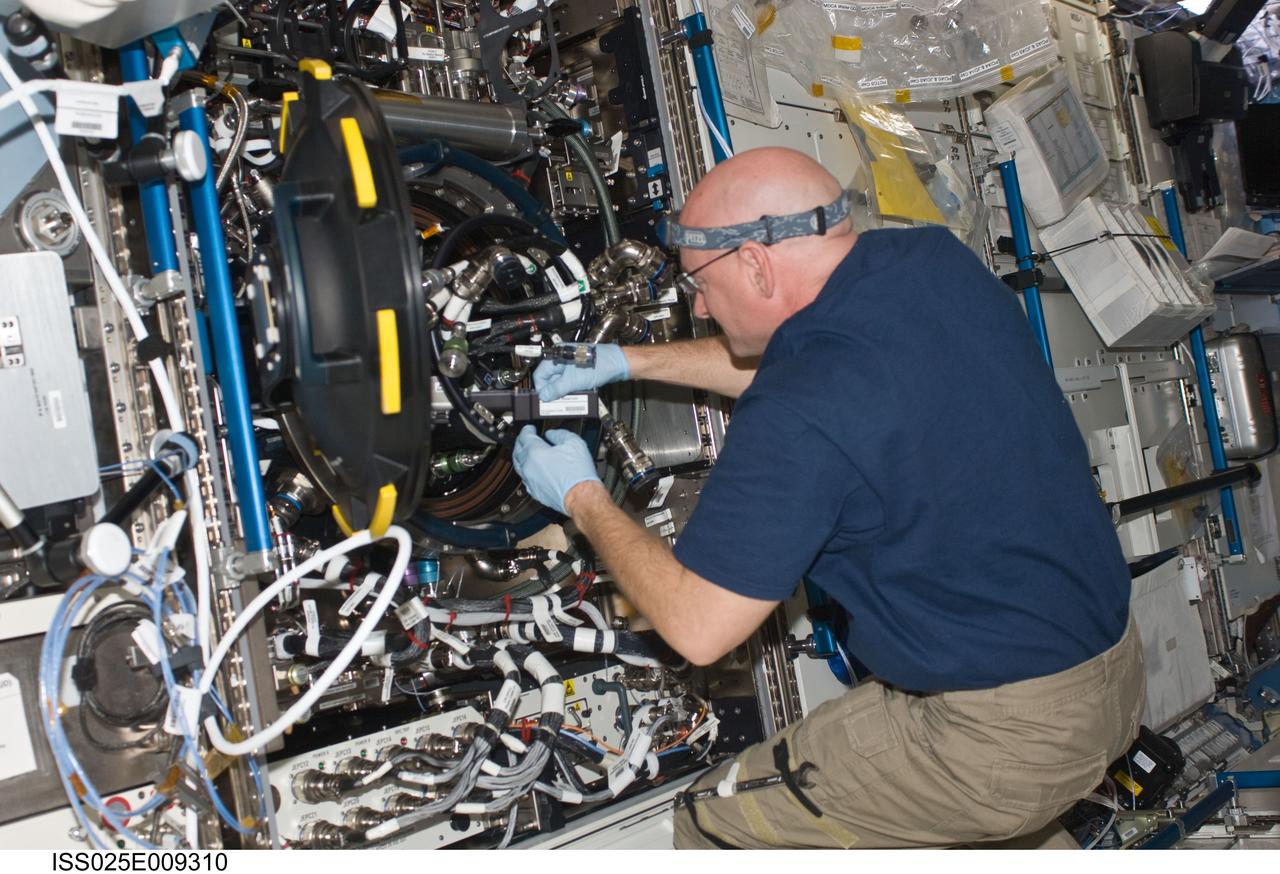
ISS025-E-009310 (26 Oct. 2010) --- NASA astronaut Scott Kelly, Expedition 25 flight engineer, works on the Combustion Integrated Rack (CIR) Multi-user Drop Combustion Apparatus (MDCA) in the Destiny laboratory of the International Space Station. Kelly set up an experiment run on the Fluids & Combustion Facility (FCF) with a new fuel reservoir, ground-assisted by Payload Operations Integration Center/Huntsville (POIC).
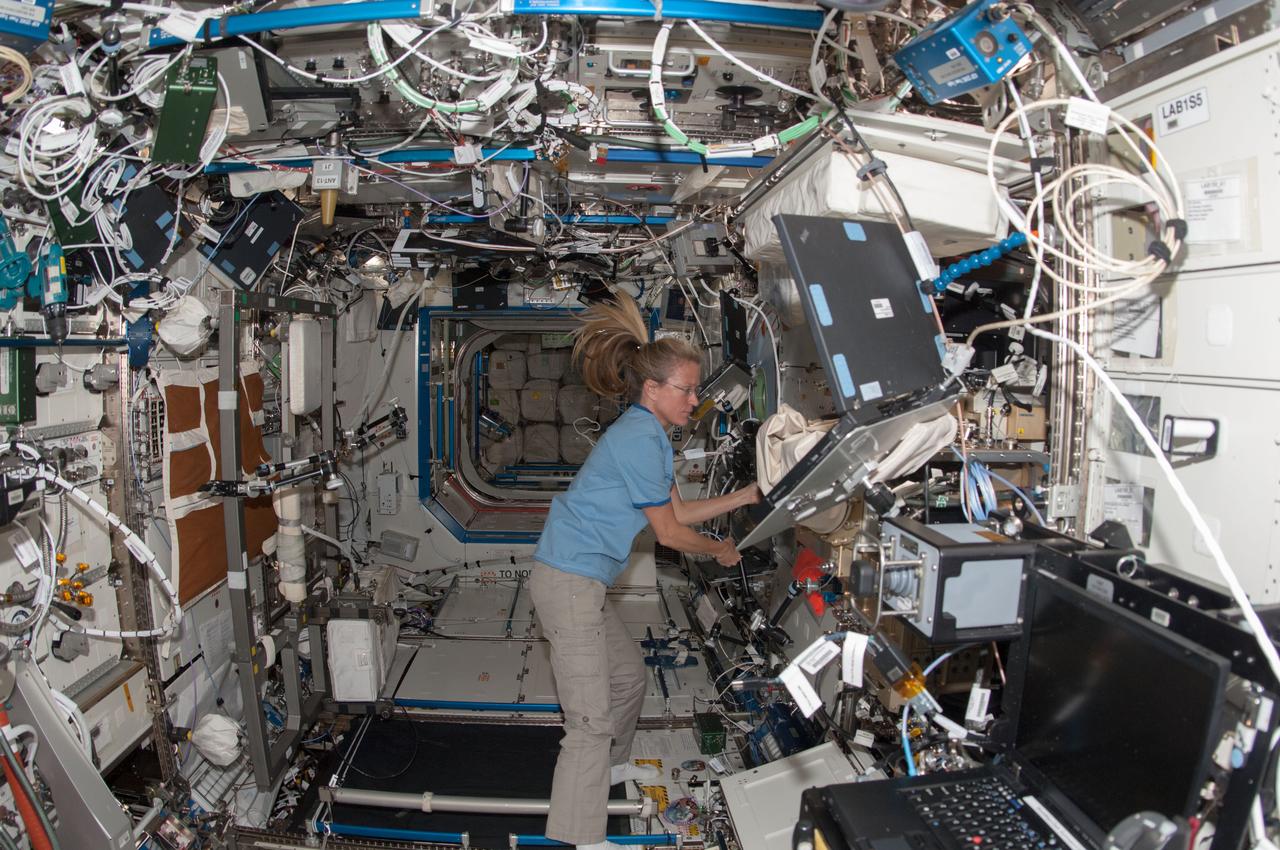
In the International Space Stations Destiny laboratory,NASA astronaut Karen Nyberg,Expedition 36 flight engineer,speaks into a microphone while conducting a session with the Advanced Colloids Experiment (ACE)-1 sample preparation at the Light Microscopy Module (LMM) in the Fluids Integrated Rack / Fluids Combustion Facility (FIR/FCF). ACE-1 is a series of microscopic imaging investigations that uses the microgravity environment to examine flow characteristics and the evolution and ordering effects within a group of colloidal materials.
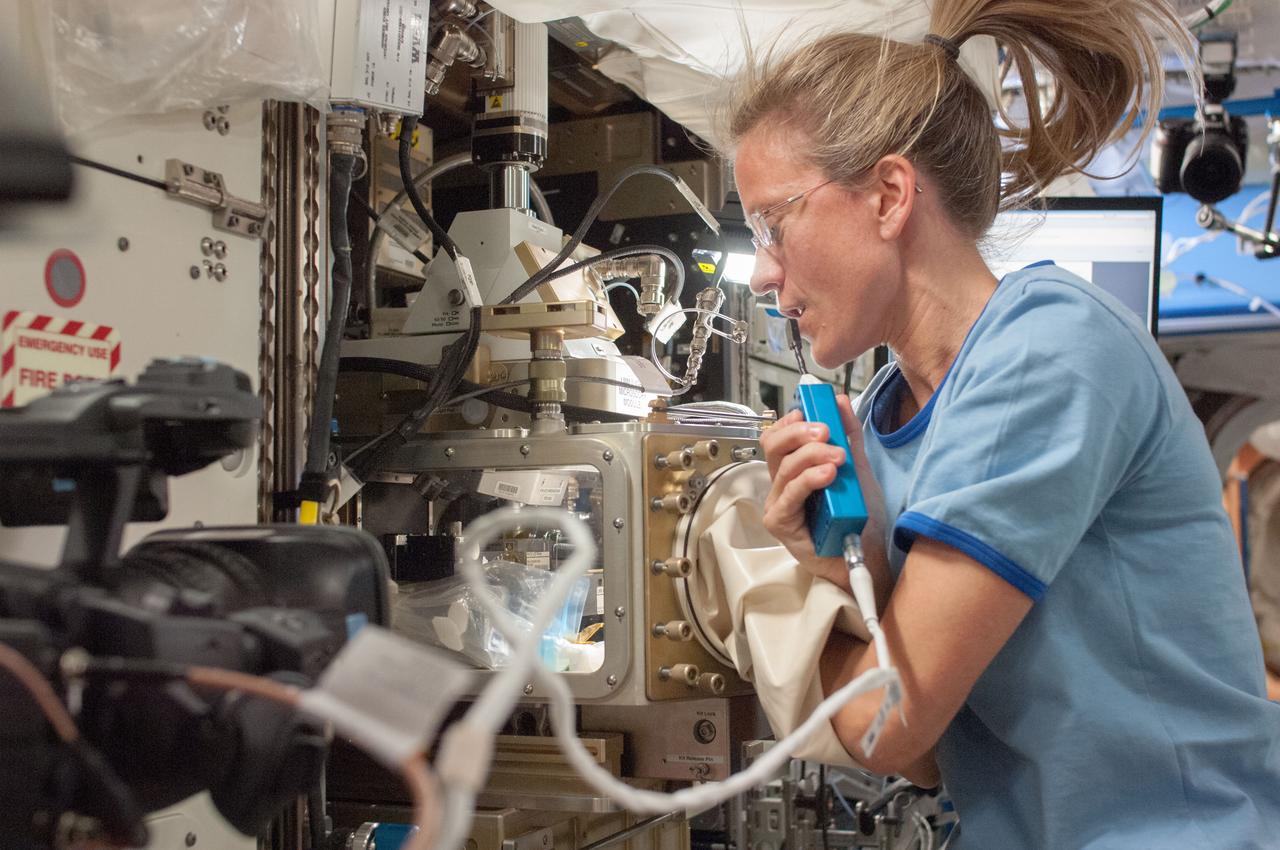
ISS036-E-019830 (24 June 2013) --- In the International Space Station’s Destiny laboratory, NASA astronaut Karen Nyberg, Expedition 36 flight engineer, speaks into a microphone while conducting a session with the Advanced Colloids Experiment (ACE)-1 sample preparation at the Light Microscopy Module (LMM) in the Fluids Integrated Rack / Fluids Combustion Facility (FIR/FCF). ACE-1 is a series of microscopic imaging investigations that uses the microgravity environment to examine flow characteristics and the evolution and ordering effects within a group of colloidal materials.
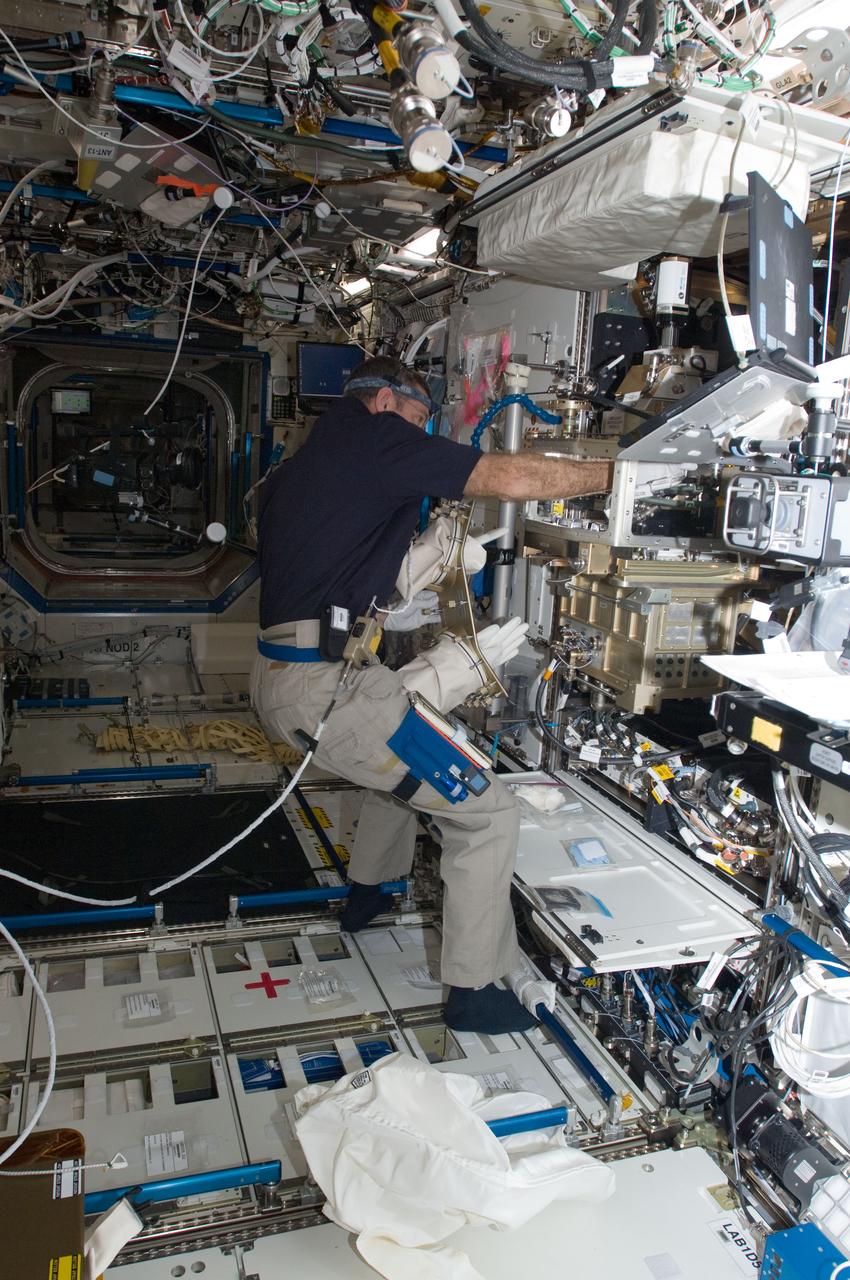
ISS030-E-007418 (1 Dec. 2011) --- In the International Space Station’s Destiny laboratory, NASA astronaut Dan Burbank, Expedition 30 commander, conducts a session with the Preliminary Advanced Colloids Experiment (PACE) at the Light Microscopy Module (LMM) in the Fluids Integrated Rack / Fluids Combustion Facility (FIR/FCF). PACE is designed to investigate the capability of conducting high magnification colloid experiments with the LMM for determining the minimum size particles which can be resolved with it.
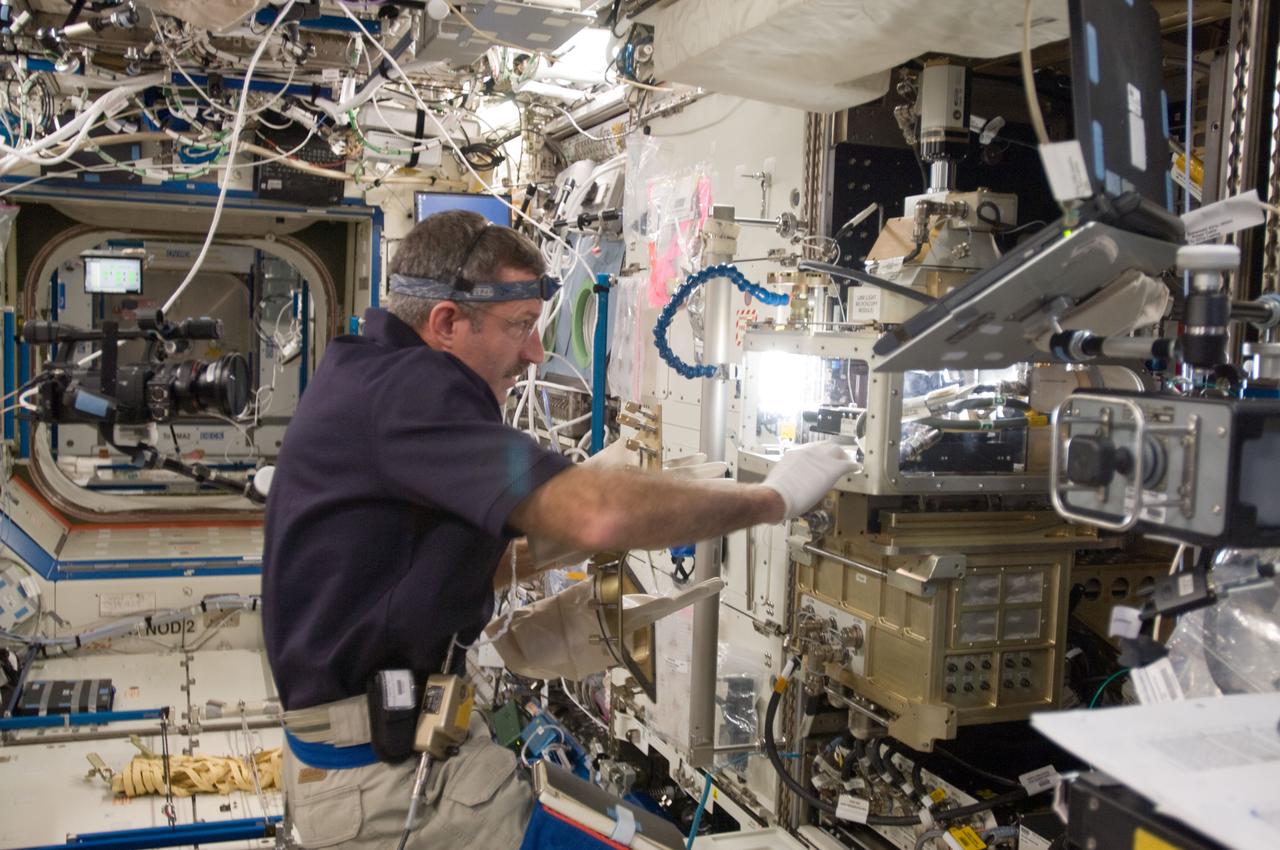
ISS030-E-007417 (1 Dec. 2011) --- In the International Space Station?s Destiny laboratory, NASA astronaut Dan Burbank, Expedition 30 commander, conducts a session with the Preliminary Advanced Colloids Experiment (PACE) at the Light Microscopy Module (LMM) in the Fluids Integrated Rack / Fluids Combustion Facility (FIR/FCF). PACE is designed to investigate the capability of conducting high magnification colloid experiments with the LMM for determining the minimum size particles which can be resolved with it.
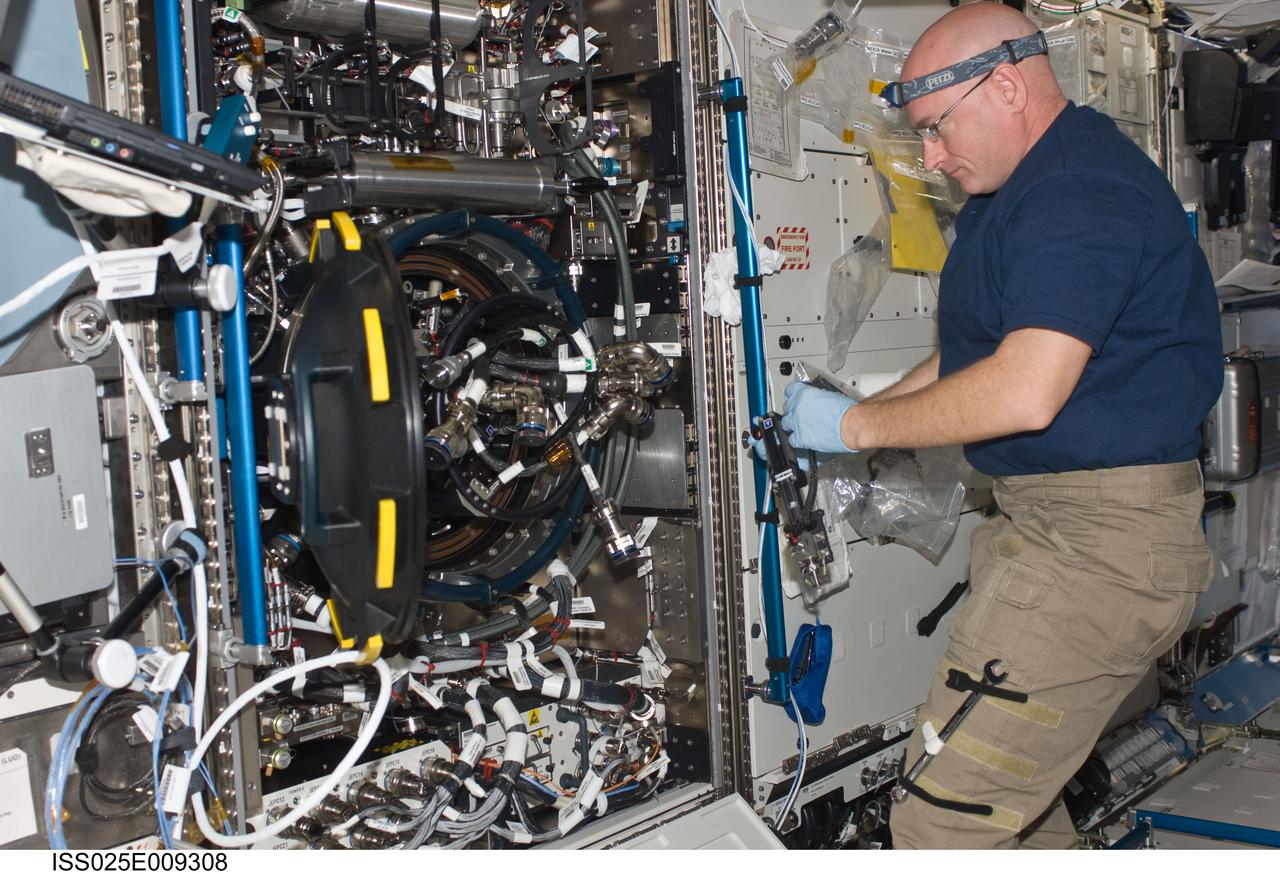
ISS025-E-009308 (26 Oct. 2010) --- NASA astronaut Scott Kelly, Expedition 25 flight engineer, works on the Combustion Integrated Rack (CIR) Multi-user Drop Combustion Apparatus (MDCA) in the Destiny laboratory of the International Space Station. Kelly set up an experiment run on the Fluids & Combustion Facility (FCF) with a new fuel reservoir, ground-assisted by Payload Operations Integration Center/Huntsville (POIC).
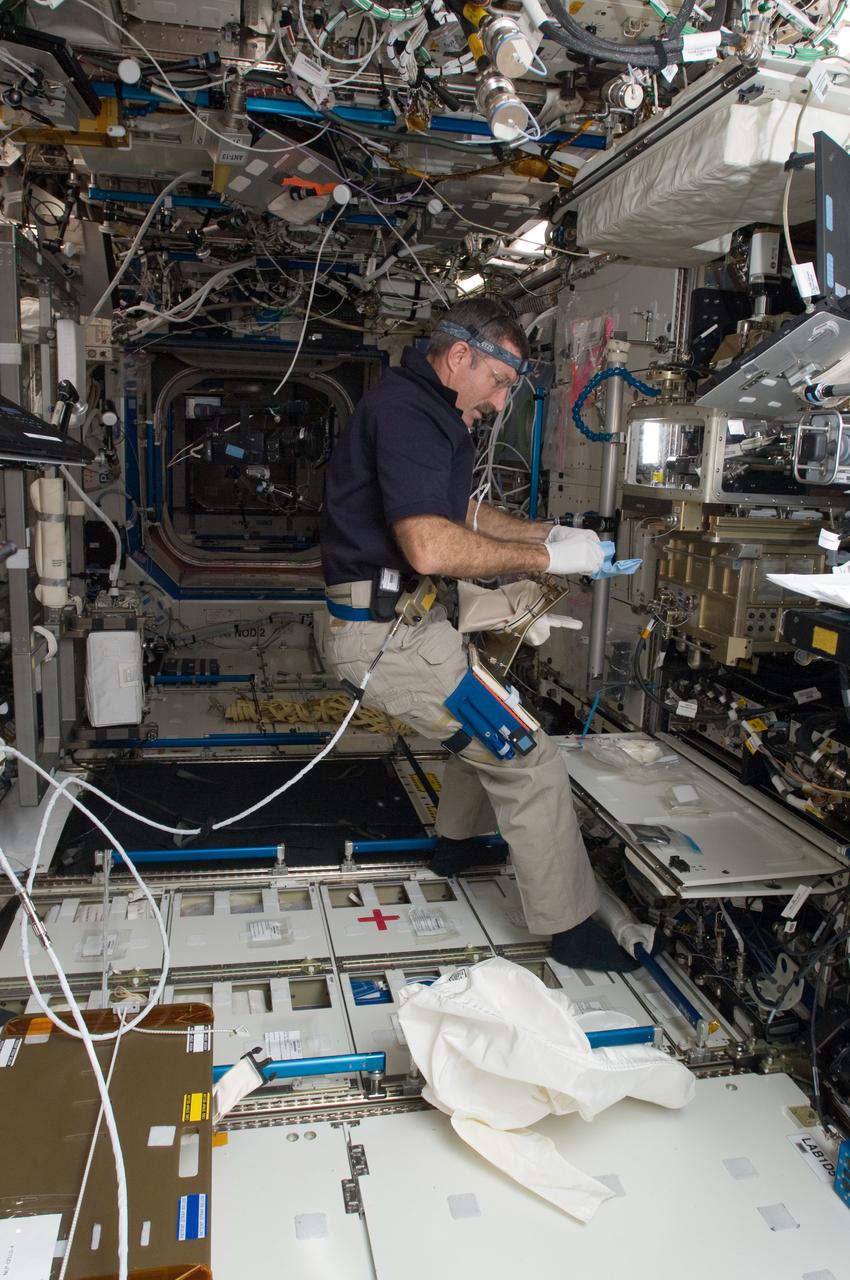
ISS030-E-007419 (1 Dec. 2011) --- In the International Space Station’s Destiny laboratory, NASA astronaut Dan Burbank, Expedition 30 commander, conducts a session with the Preliminary Advanced Colloids Experiment (PACE) at the Light Microscopy Module (LMM) in the Fluids Integrated Rack / Fluids Combustion Facility (FIR/FCF). PACE is designed to investigate the capability of conducting high magnification colloid experiments with the LMM for determining the minimum size particles which can be resolved with it.
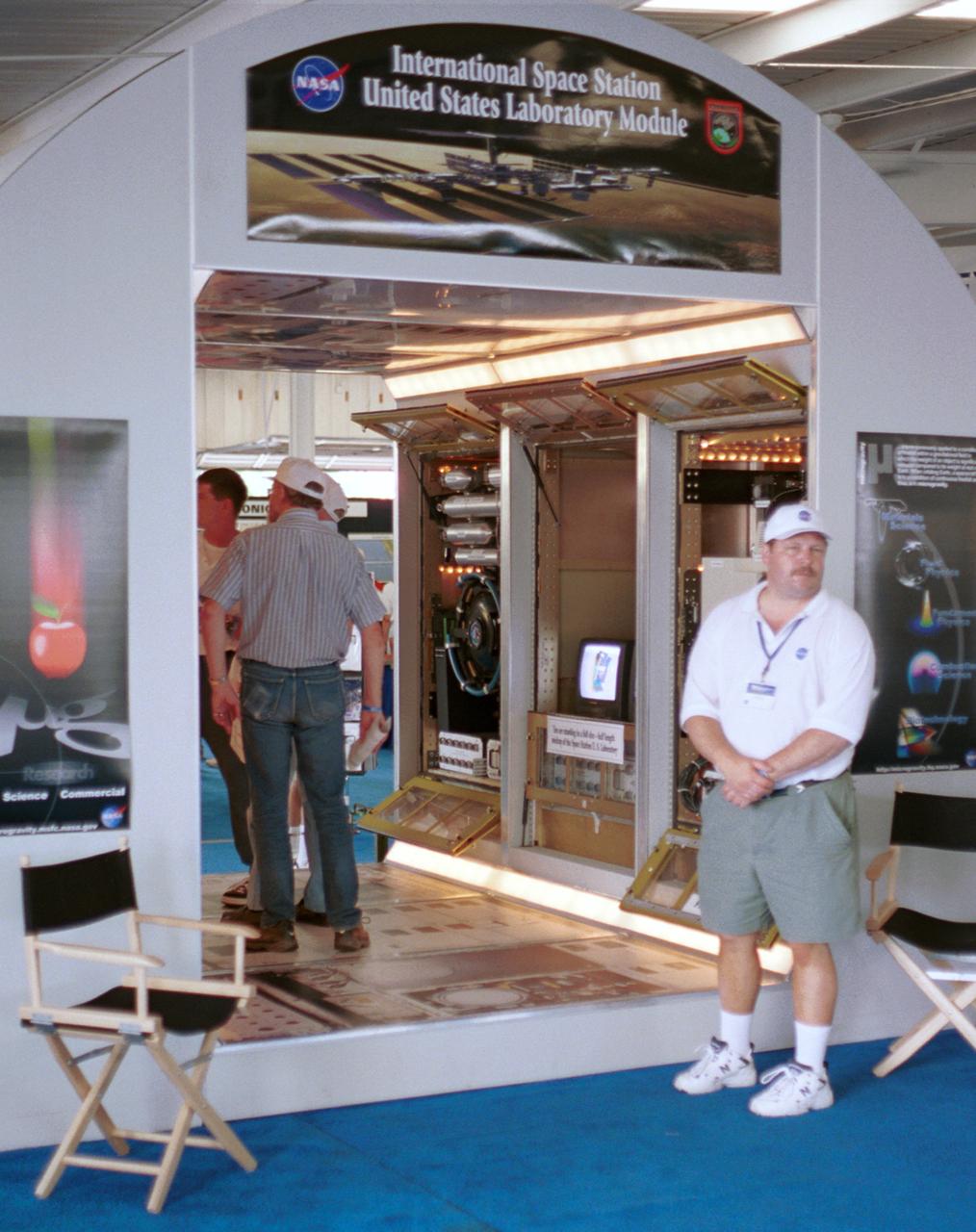
Thomas Turk, an engineer with NASA's Glenn Research Center, waits for more visitors at a mockup of part of Destiny, the U.S. laboratory module that will be attached to the International Space Station (ISS) in Year 2001. Visible behind Turk are engineering models of the three racks that will make up the Fluids and Combustion Facility (FCF) in the module. The mockup is full scale, although Destiny will be twice as long to accomodate six experiment racks along each side. The exhibit was part of the NASA outreach activity at AirVenture 2000 sponsored by the Expeprimental Aircraft Association in Oshkosh, WI.
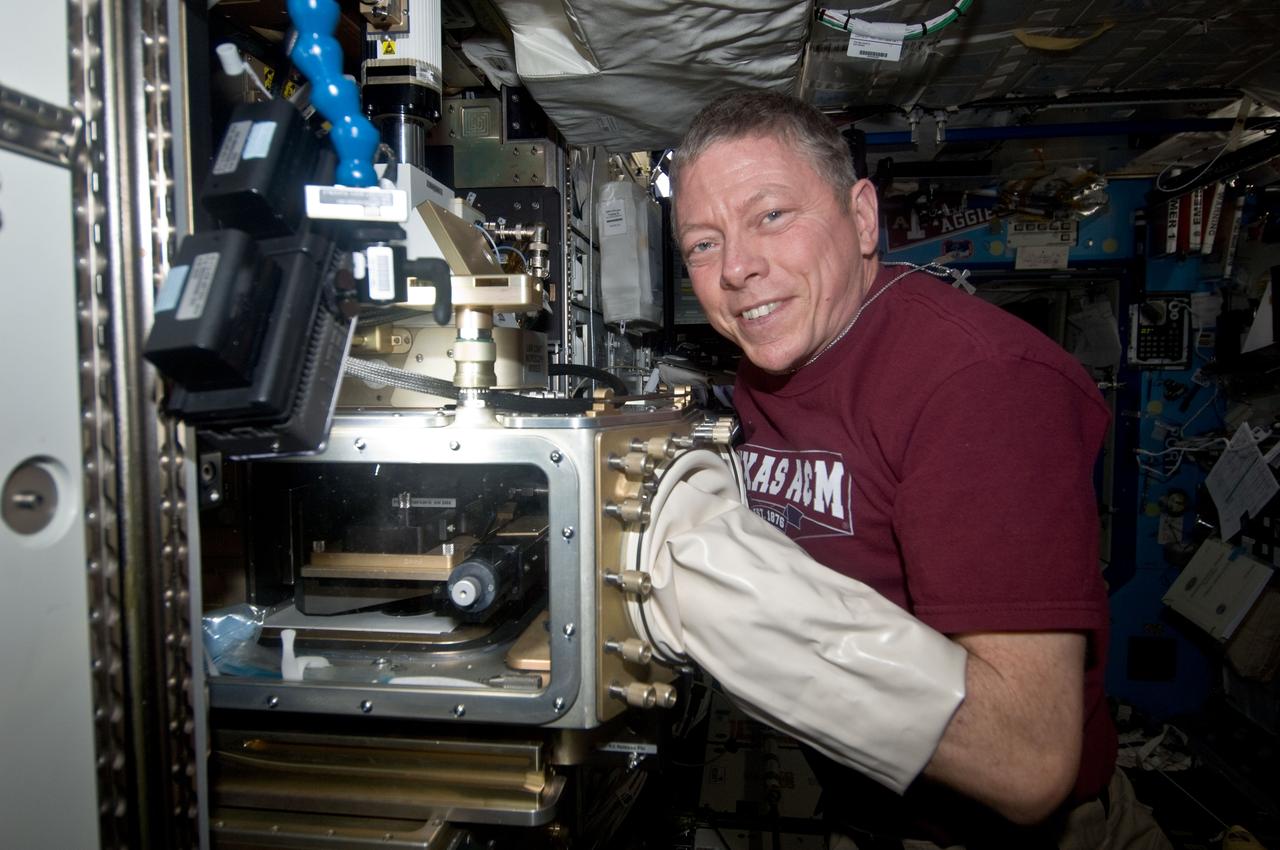
ISS029-E-025108 (11 Oct. 2011) --- NASA astronaut Mike Fossum, Expedition 29 commander, works on the Fluids Integrated Rack/Fluids and Combustion Facility (FIR/FCF), conducting another session with the Preliminary Advanced Colloids Experiment (PACE). Fossum is working at the Light Microscopy Module (LMM) in the Destiny laboratory of the International Space Station.
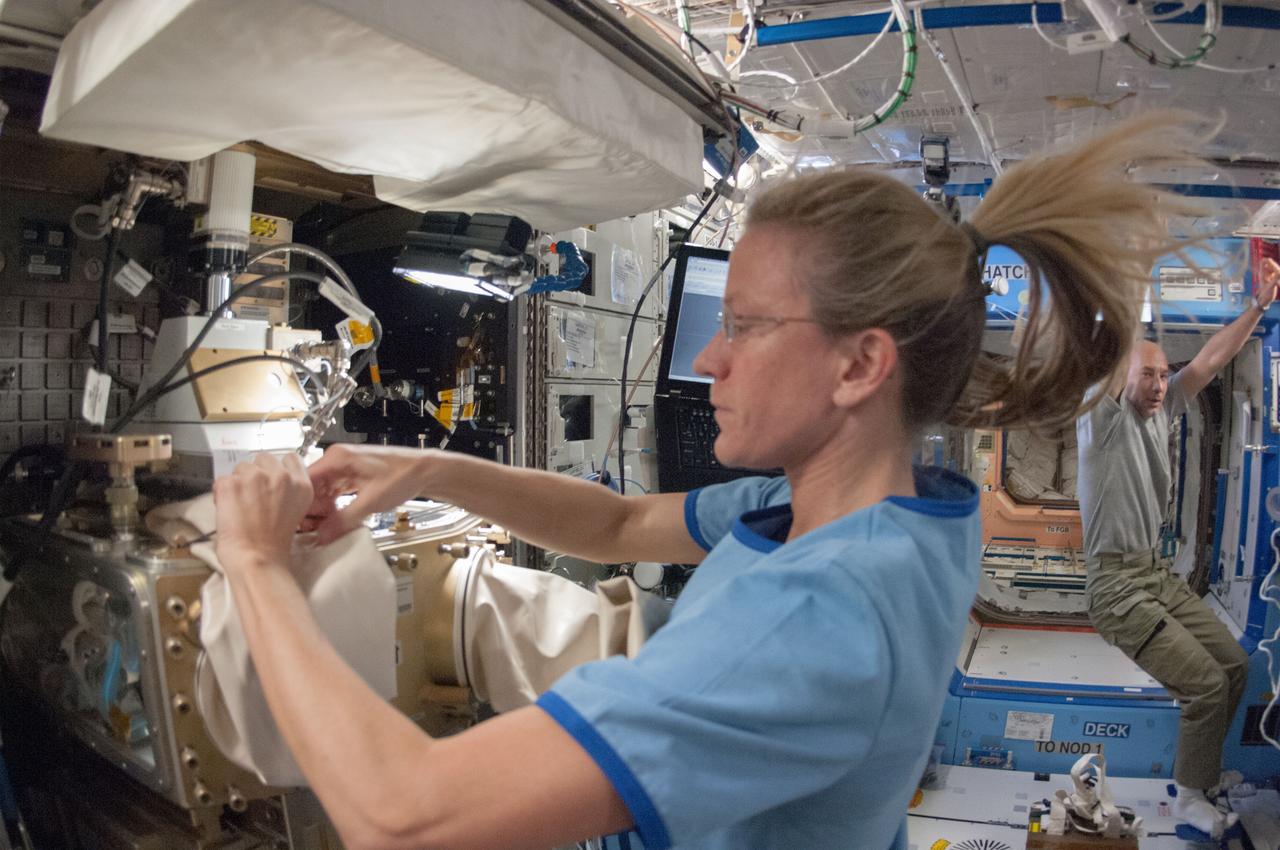
ISS036-E-019760 (24 June 2013) --- In the International Space Station’s Destiny laboratory, NASA astronaut Karen Nyberg, Expedition 36 flight engineer, conducts a session with the Advanced Colloids Experiment (ACE)-1 sample preparation at the Light Microscopy Module (LMM) in the Fluids Integrated Rack / Fluids Combustion Facility (FIR/FCF). ACE-1 is a series of microscopic imaging investigations that uses the microgravity environment to examine flow characteristics and the evolution and ordering effects within a group of colloidal materials.
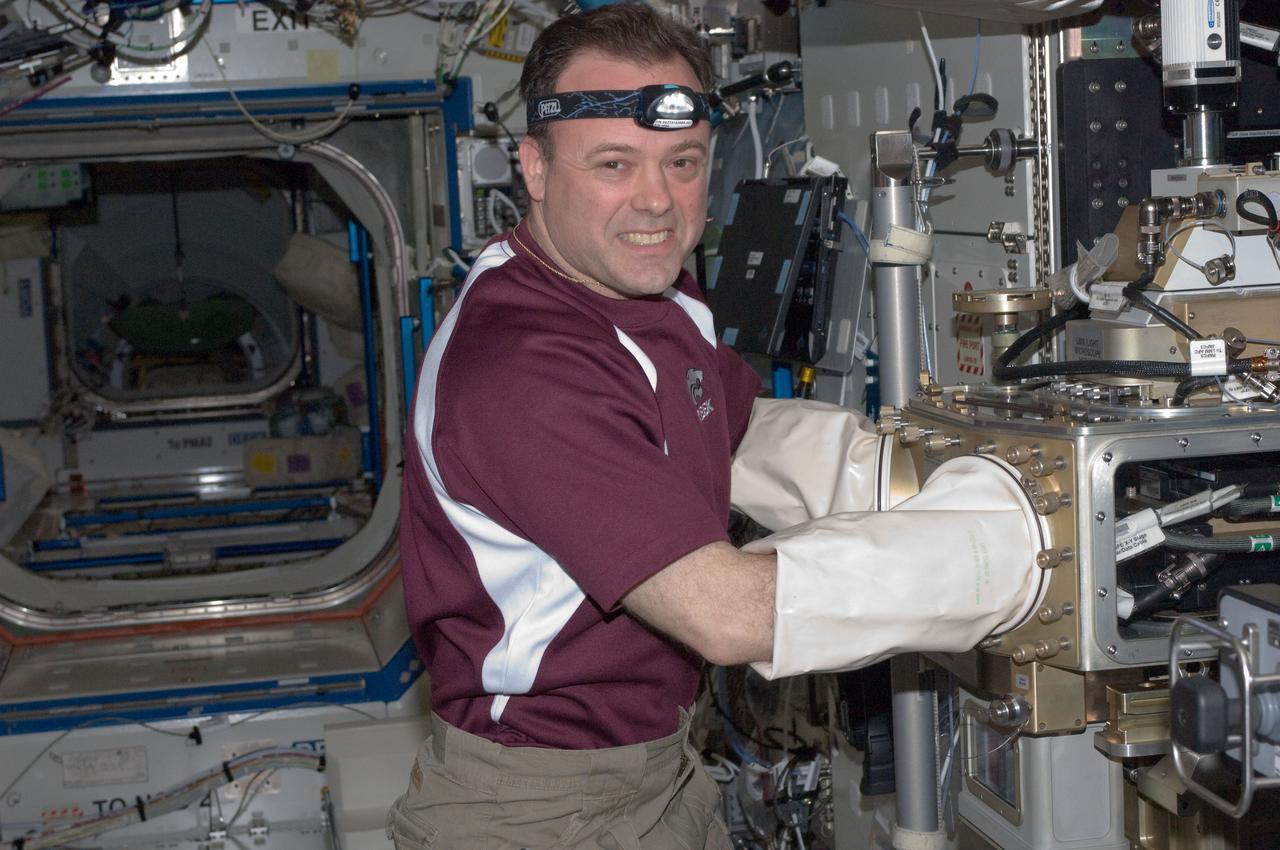
ISS028-E-005602 (26 May 2011) --- NASA astronaut Ron Garan, Expedition 28 flight engineer, services the Fluids Combustion Facility in the Fluids Integrated Rack on the Destiny lab aboard the International Space Station by changing out the Bio sample on the Bio Base. Garan and two Russian cosmonaut crewmates for Expedition 28 will be joined by three more crew members on the station in about one and a half weeks.
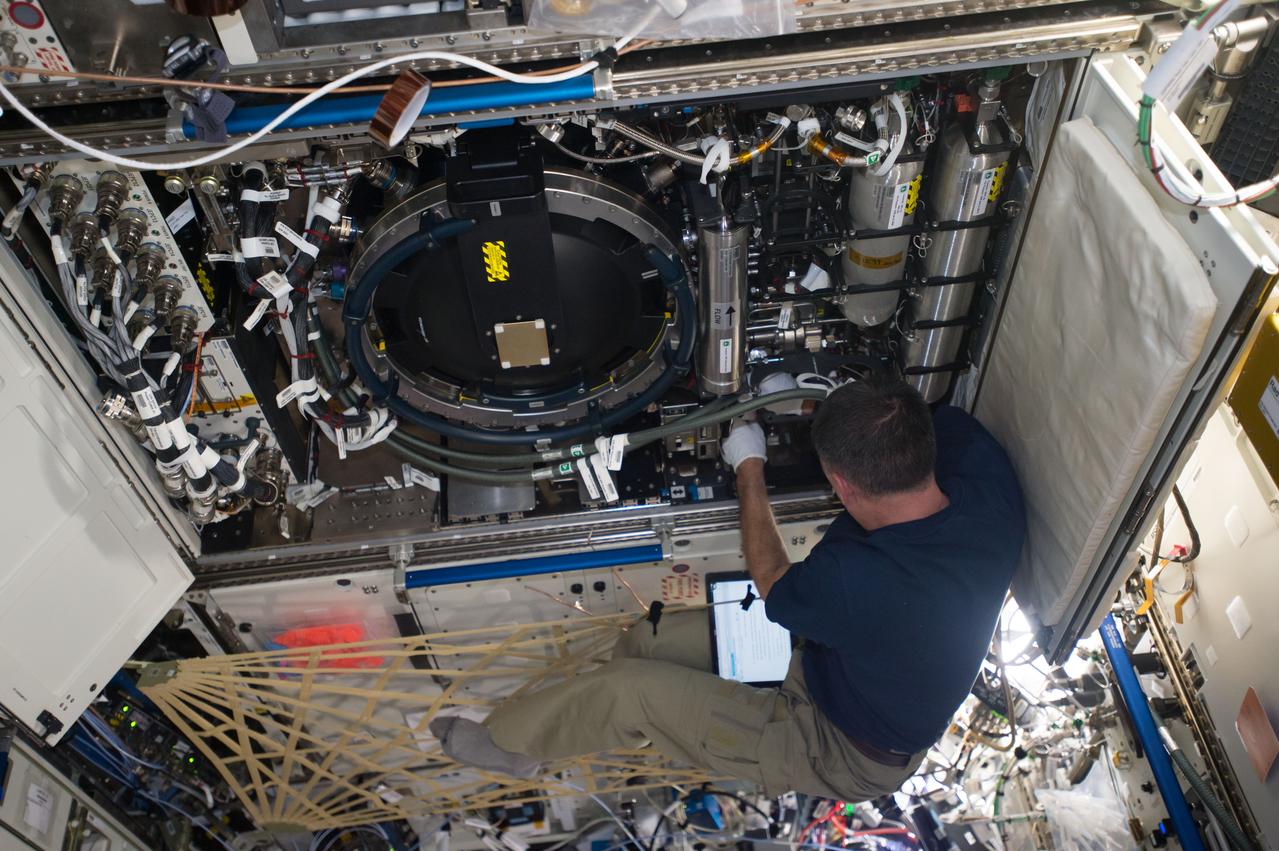
iss050e020199 (12/29/2016) --- NASA astronaut Shane Kimbrough reconfiguring the Combustion Integrated Rack (CIR) High Bit Depth/Multispectral (HiBMS) imaging packages at Universal Mounting Location (UML) 7 and UML 8. The CIR is used to perform combustion experiments in microgravity and can be reconfigured easily on orbit to accommodate a variety of combustion experiments.
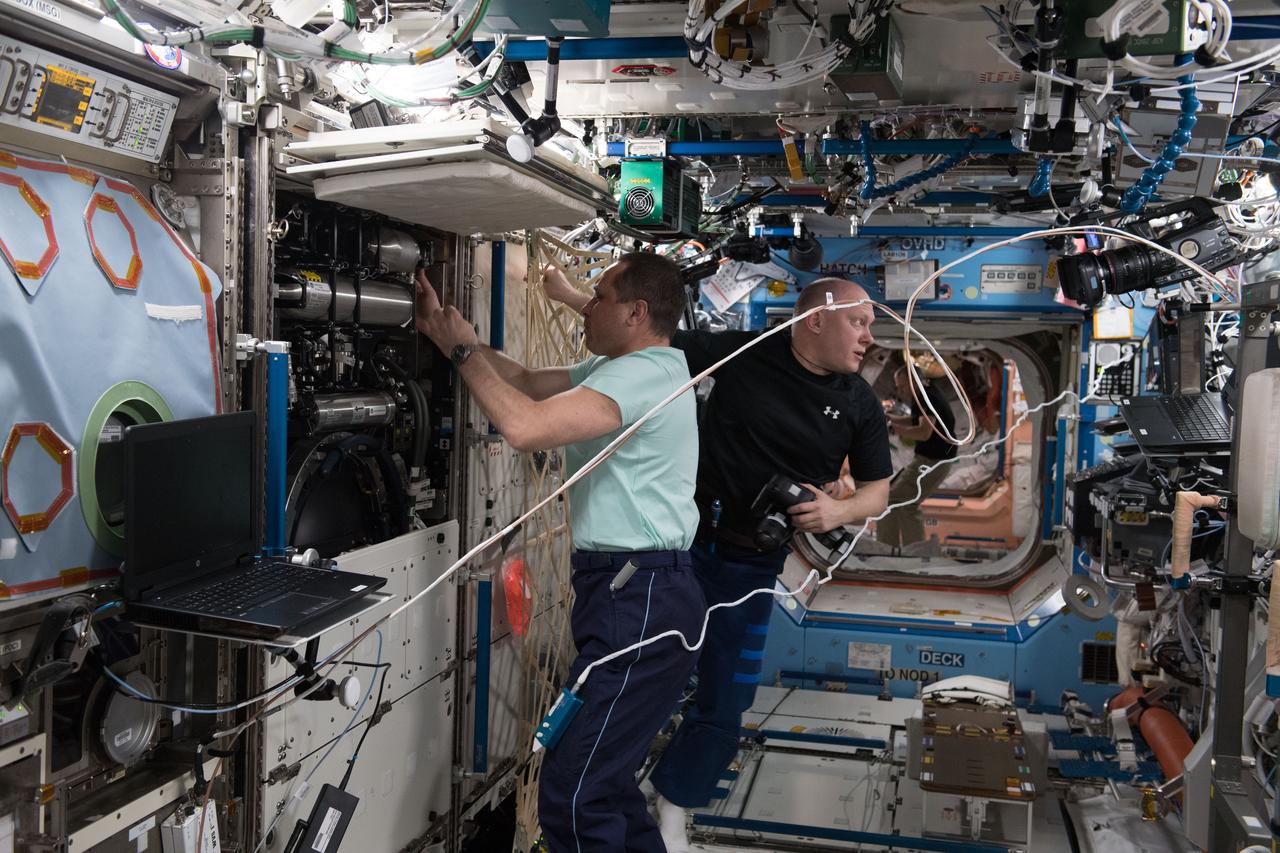
iss055e005587 (March 26, 2018) --- Expedition 55 Commander Anton Shkaplerov (foreground) and Flight Engineer Oleg Artemyev, both cosmonauts representing Roscosmos, replace manifold bottles inside the the Destiny lab module's Combustion Integrated Rack.
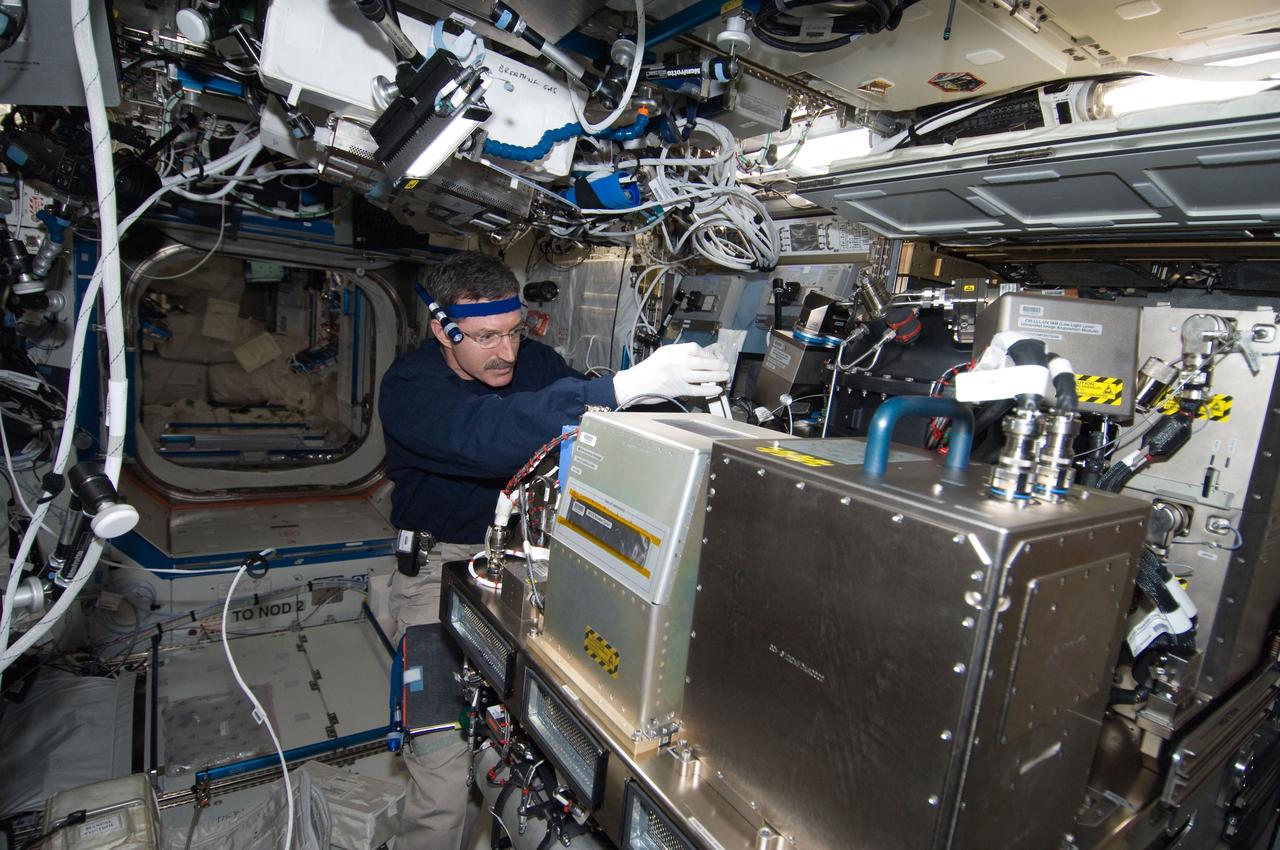
ISS030-E-234735 (10 April 2012) --- NASA astronaut Dan Burbank, Expedition 30 commander, works on the Combustion Integrated Rack (CIR) in the Destiny laboratory of the International Space Station. Burbank disconnected the Moderate Temperature Loop (MTL), Vacuum Exhaust System (VES) and station nitrogen lines of the Optics Bench, translated and rotated it out of the way and replaced a Fluids and Combustion Facility / Diagnostic Control Module (FCF DCM) on its back. Afterwards, Burbank returned the Optics Bench to its nominal position and reconnected the MTL, VES and station nitrogen lines.
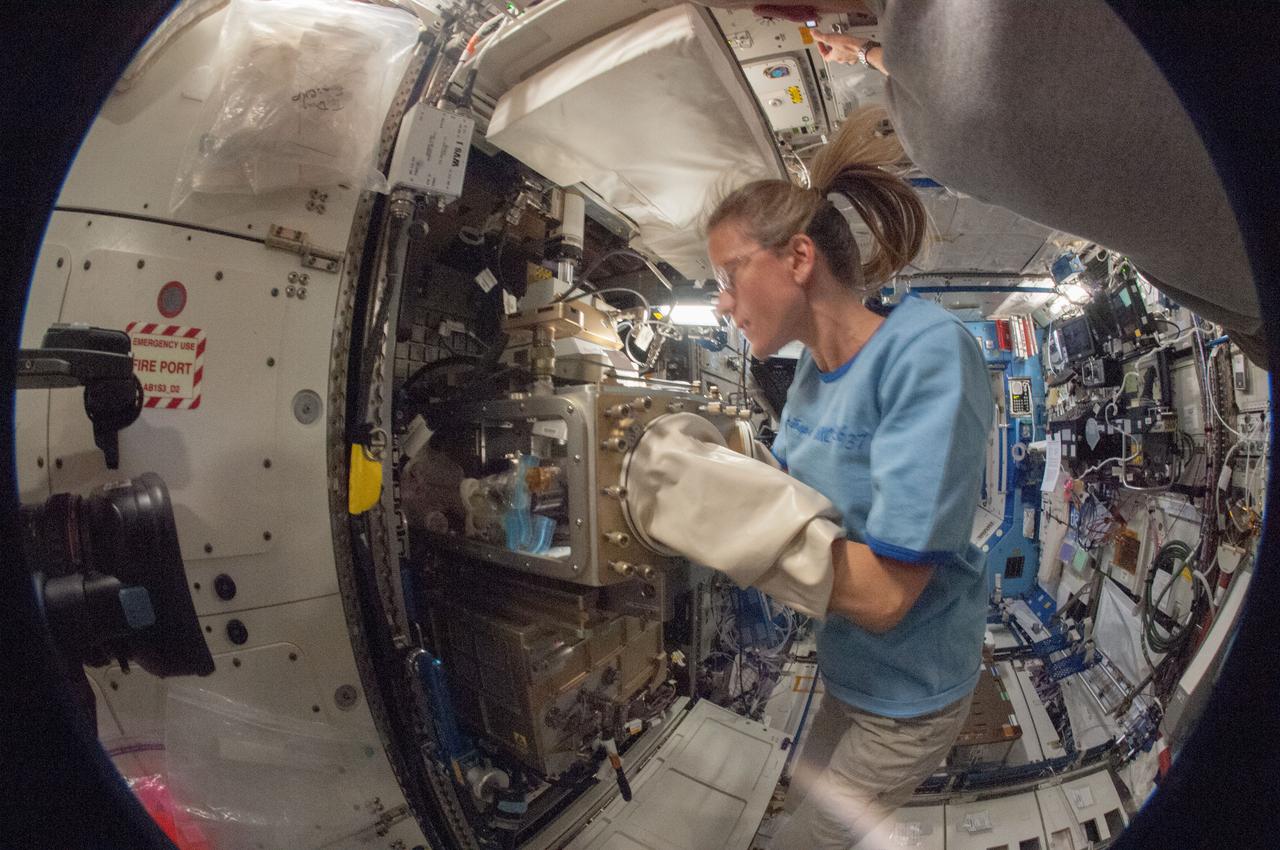
ISS036-E-019783 (24 June 2013) --- In the International Space Station’s Destiny laboratory, a fisheye lens attached to an electronic still camera was used to capture this image of NASA astronaut Karen Nyberg, Expedition 36 flight engineer, as she conducts a session with the Advanced Colloids Experiment (ACE)-1 sample preparation at the Light Microscopy Module (LMM) in the Fluids Integrated Rack / Fluids Combustion Facility (FIR/FCF). ACE-1 is a series of microscopic imaging investigations that uses the microgravity environment to examine flow characteristics and the evolution and ordering effects within a group of colloidal materials.