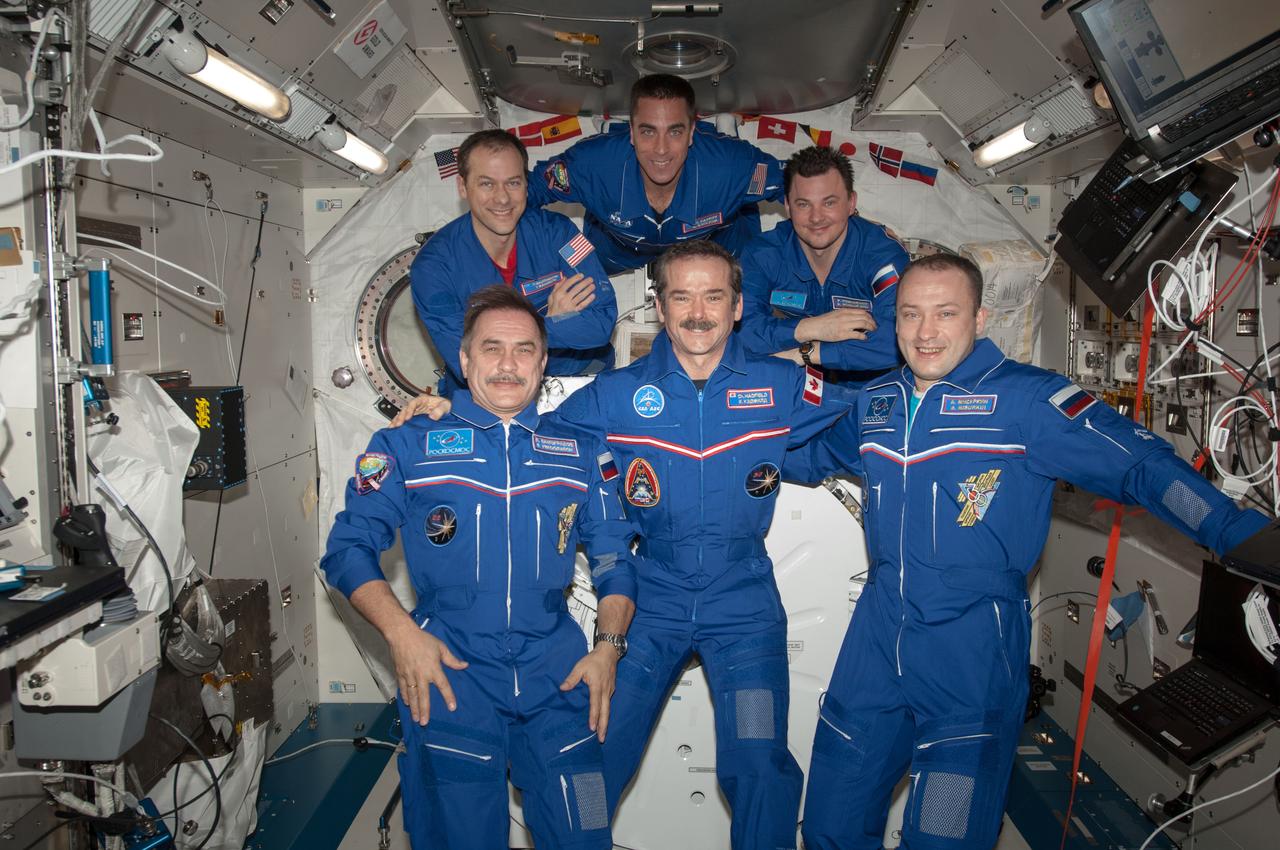
Expedition 35 crewmembers pose for an in-flight portrait in the Kibo Japanese Experiment Pressurized Module (JPM). From left, are (front row) flight engineer (FE) Pavel Vinogradov, commander Chris Hadfield, FE Alexander Misurkin, (back row) FE Tom Marshburn, FE Chris Cassidy, and FE Roman Romanenko. Vinogradov, Misurkin and Romanenko are Roscosmos cosmonauts; Hadfield is a Canadian Space Agency (CSA) astronaut.
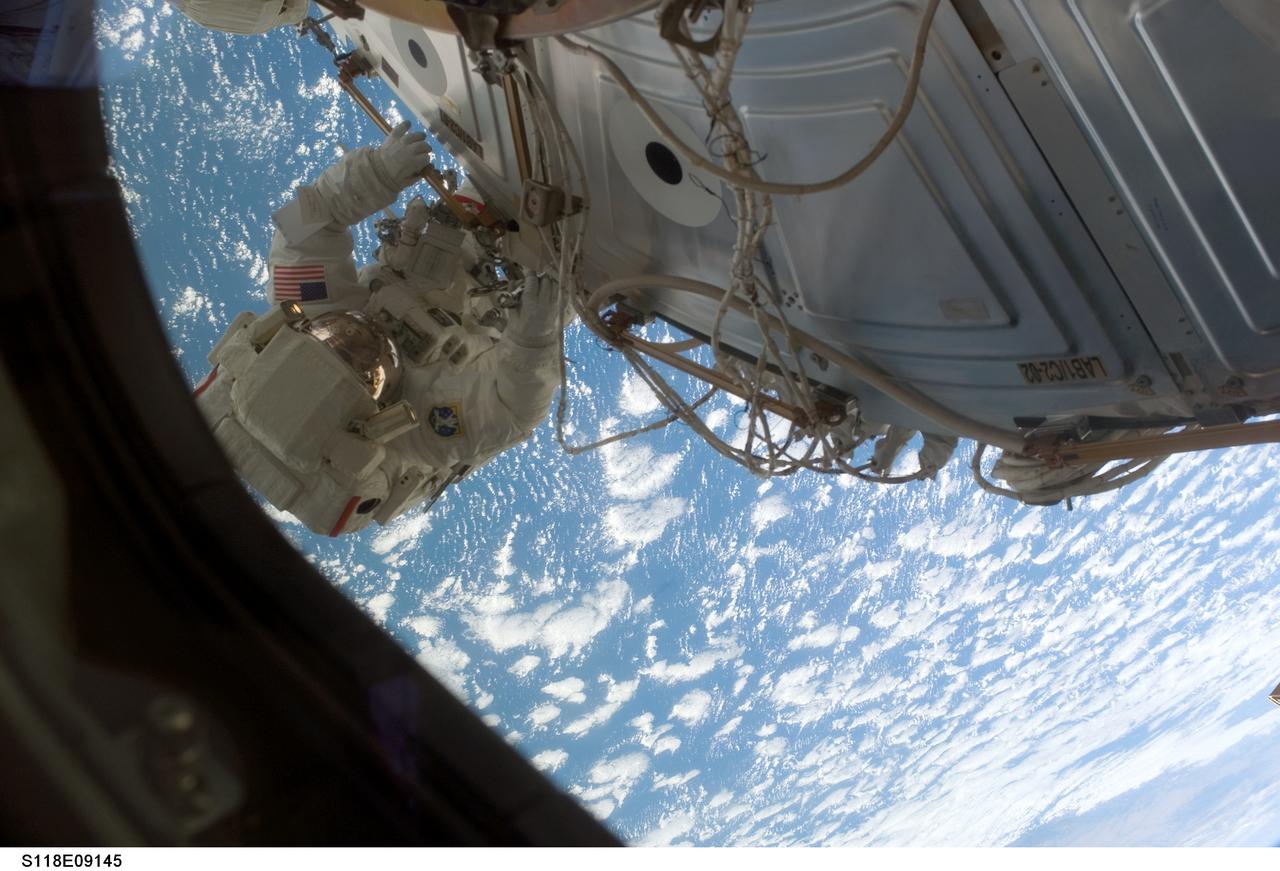
View of Expedition 15 Flight Engineer (FE-2), Clayton Anderson, working to install External Wireless Instrumentation System (EWIS) antennas on the exterior of the U.S. Laboratory/Destiny. Photo taken during the fourth session of Extravehicular Activity (EVA 4) for STS-118 / Expedition 15 joint operations.
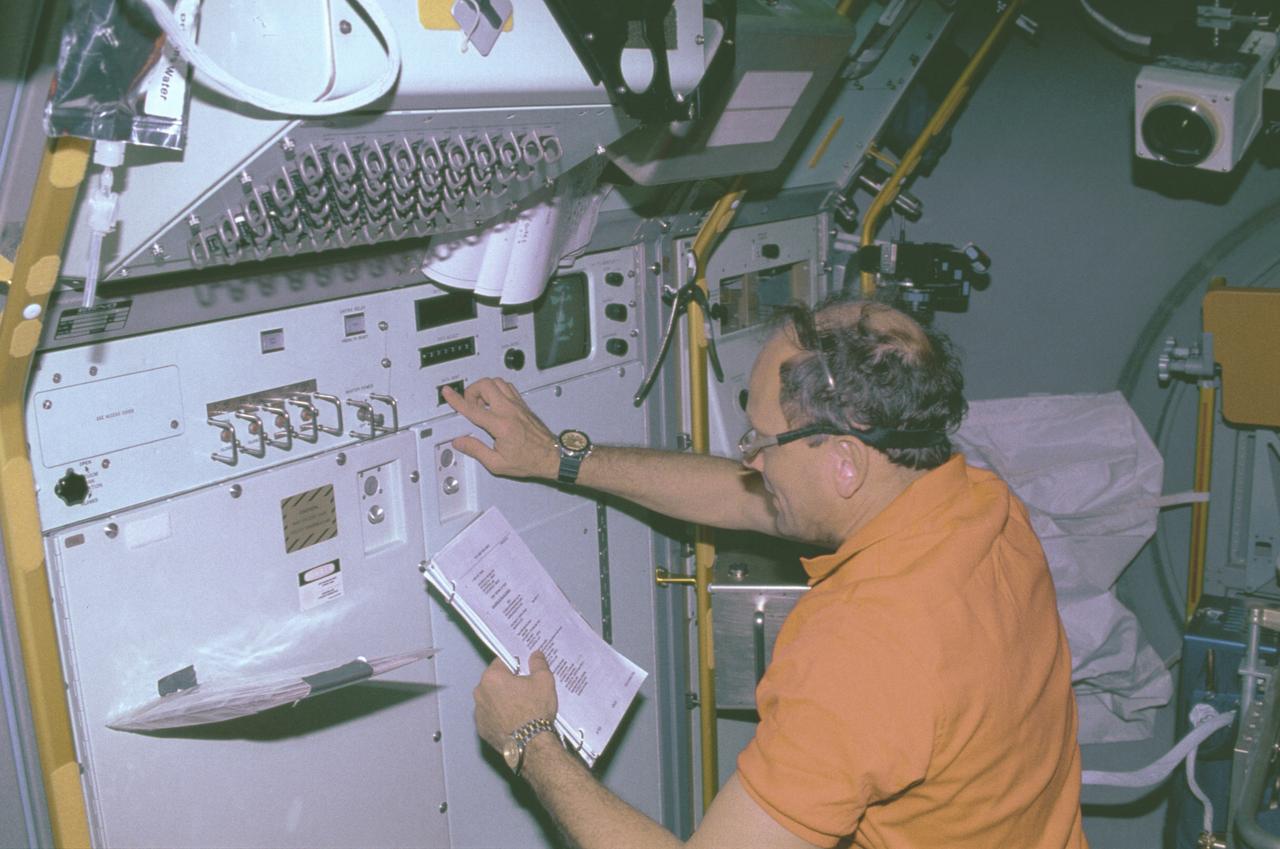
The IML-1 mission was the first in a series of Shuttle flights dedicated to fundamental materials and life sciences research with the international partners. The participating space agencies included: NASA, the 14-nation European Space Agency (ESA), the Canadian Space Agency (CSA), The French National Center of Space Studies (CNES), the German Space Agency and the German Aerospace Research Establishment (DAR/DLR), and the National Space Development Agency of Japan (NASDA). Dedicated to the study of life and materials sciences in microgravity, the IML missions explored how life forms adapt to weightlessness and investigated how materials behave when processed in space. Both life and materials sciences benefited from the extended periods of microgravity available inside the Spacelab science module in the cargo bay of the Space Shuttle Orbiter. This photograph shows Astronaut Norman Thagard performing the fluid experiment at the Fluid Experiment System (FES) facility inside the laboratory module. The FES facility had sophisticated optical systems for imaging fluid flows during materials processing, such as experiments to grow crystals from solution and solidify metal-modeling salts. A special laser diagnostic technique recorded the experiments, holograms were made for post-flight analysis, and video was used to view the samples in space and on the ground. Managed by the Marshall Space Flight Center (MSFC), the IML-1 mission was launched on January 22, 1992 aboard the Shuttle Orbiter Discovery (STS-42).
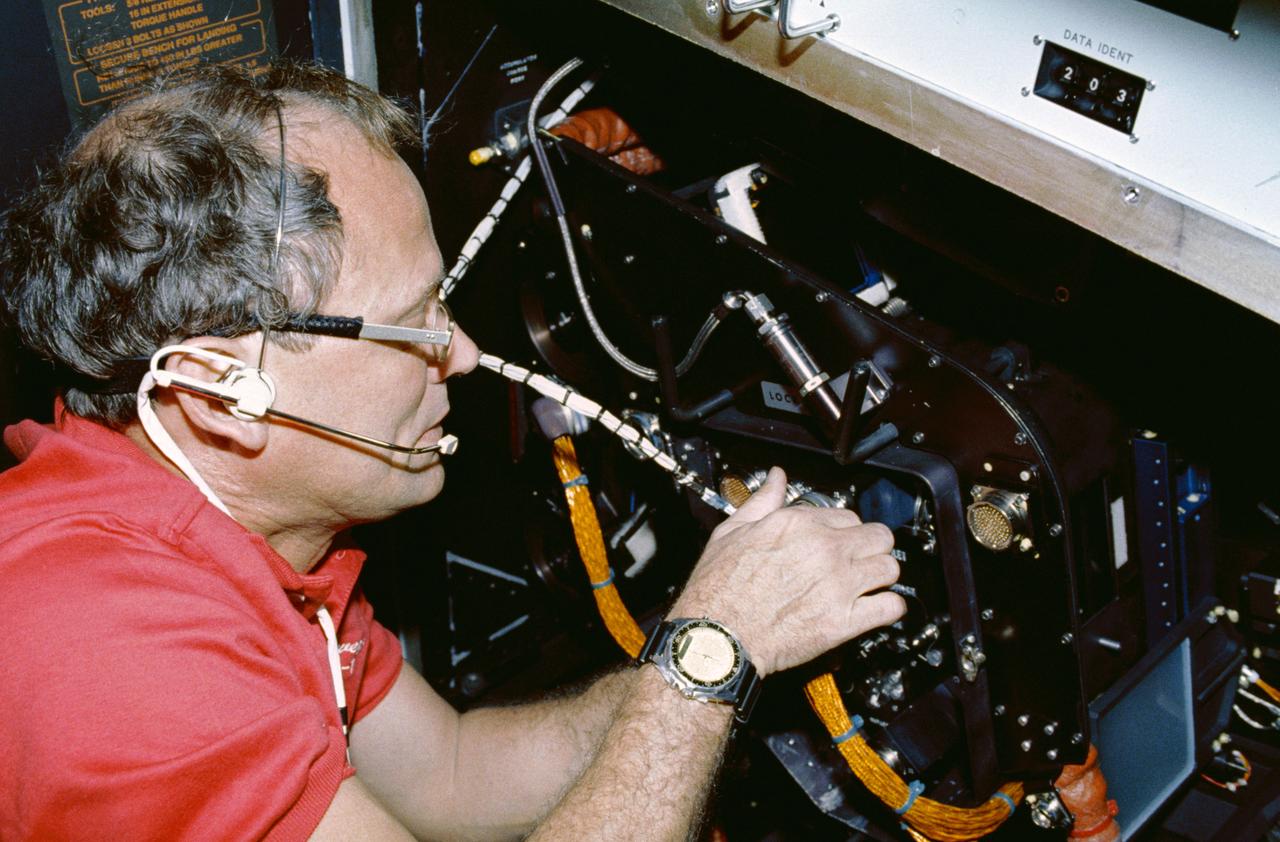
STS042-05-006 (22-30 Jan 1992) --- Astronaut Norman E. Thagard, payload commander, performs the Fluids Experiment System (FES) in the International Microgravity Laboratory (IML-1) science module. The FES is a NASA-developed facility that produces optical images of fluid flows during the processing of materials in space. The system's sophisticated optics consist of a laser to make holograms of samples and a video camera to record images of flows in and around samples. Thagard was joined by six fellow crewmembers for eight days of scientific research aboard Discovery in Earth-orbit. Most of their on-duty time was spent in this IML-1 science module, positioned in the cargo bay and attached via a tunnel to Discovery's airlock.
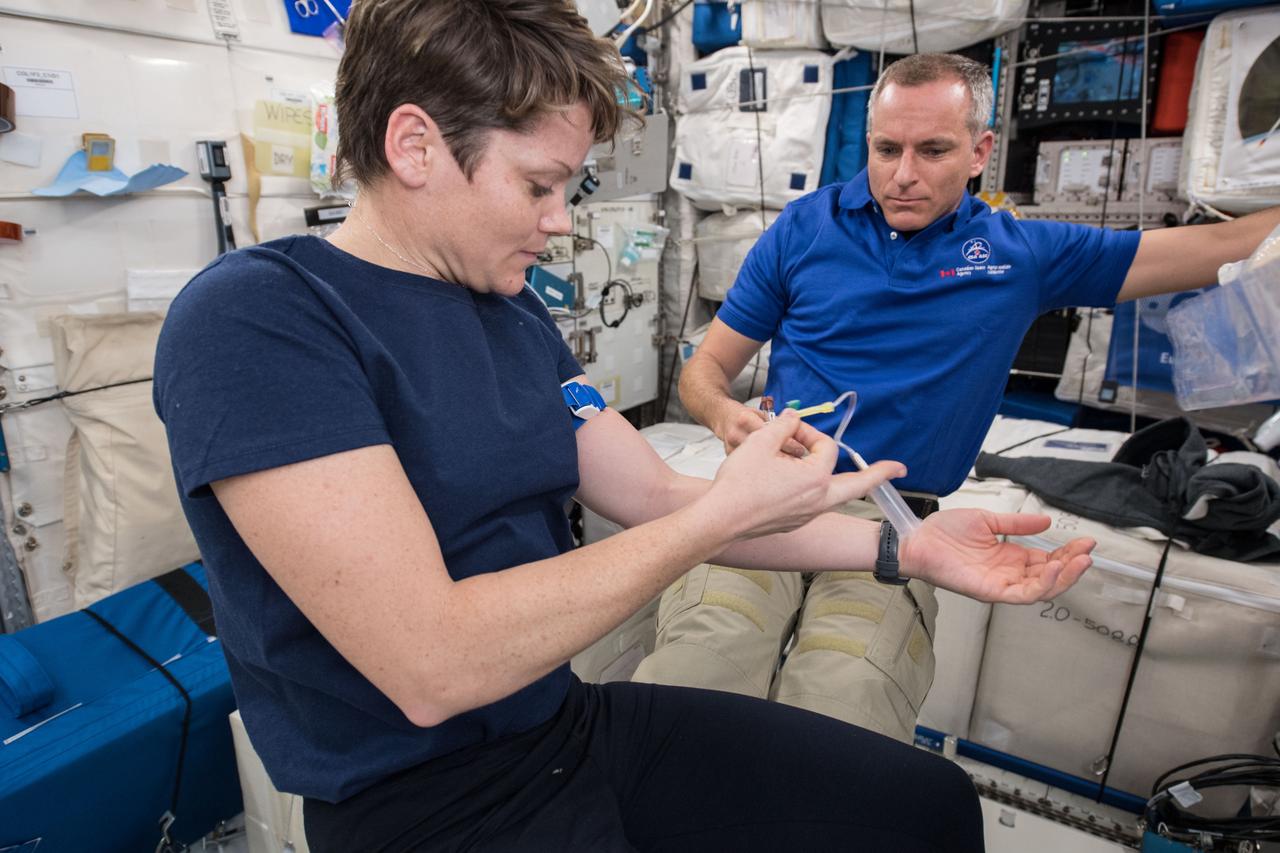
(12/8/2018) --- Flight Engineer (FE) Anne McClain prepares to draw her blood for the Marrow Study (Bone Marrow Adipose Reaction: Red Or White?). FE David Saint-Jacques assists. Photo was taken in the Columbus European Laboratory.
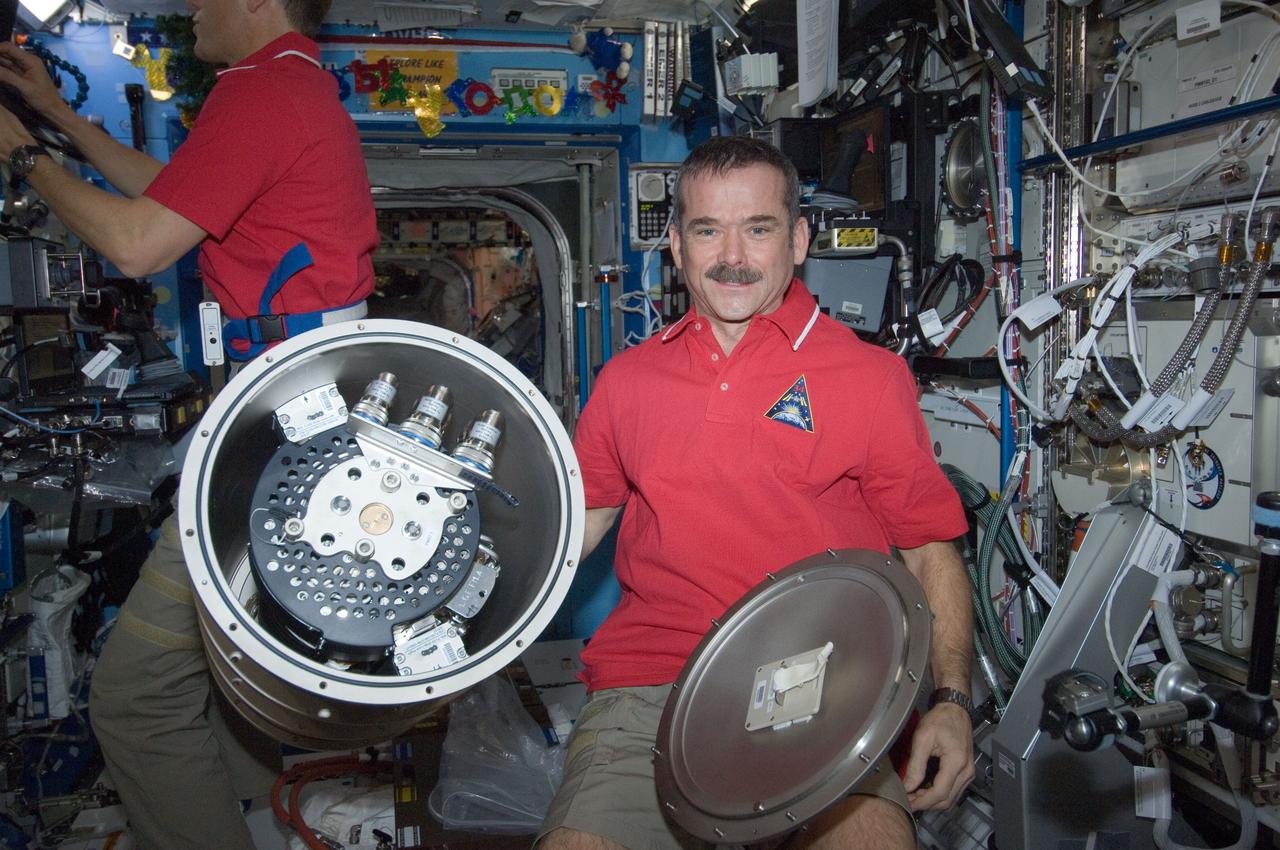
View of Canada Space Agency (CSA) Chris Hadfield, Expedition 34 Flight Engineer (FE), poses with a Materials Science Laboratory (MSL) Furnace Launch Support Structure (FLSS) in the U.S. Laboratory. Tom Marshburn (background), Expedition 34 FE uses laptop computer. Photo was taken during Expedition 34.
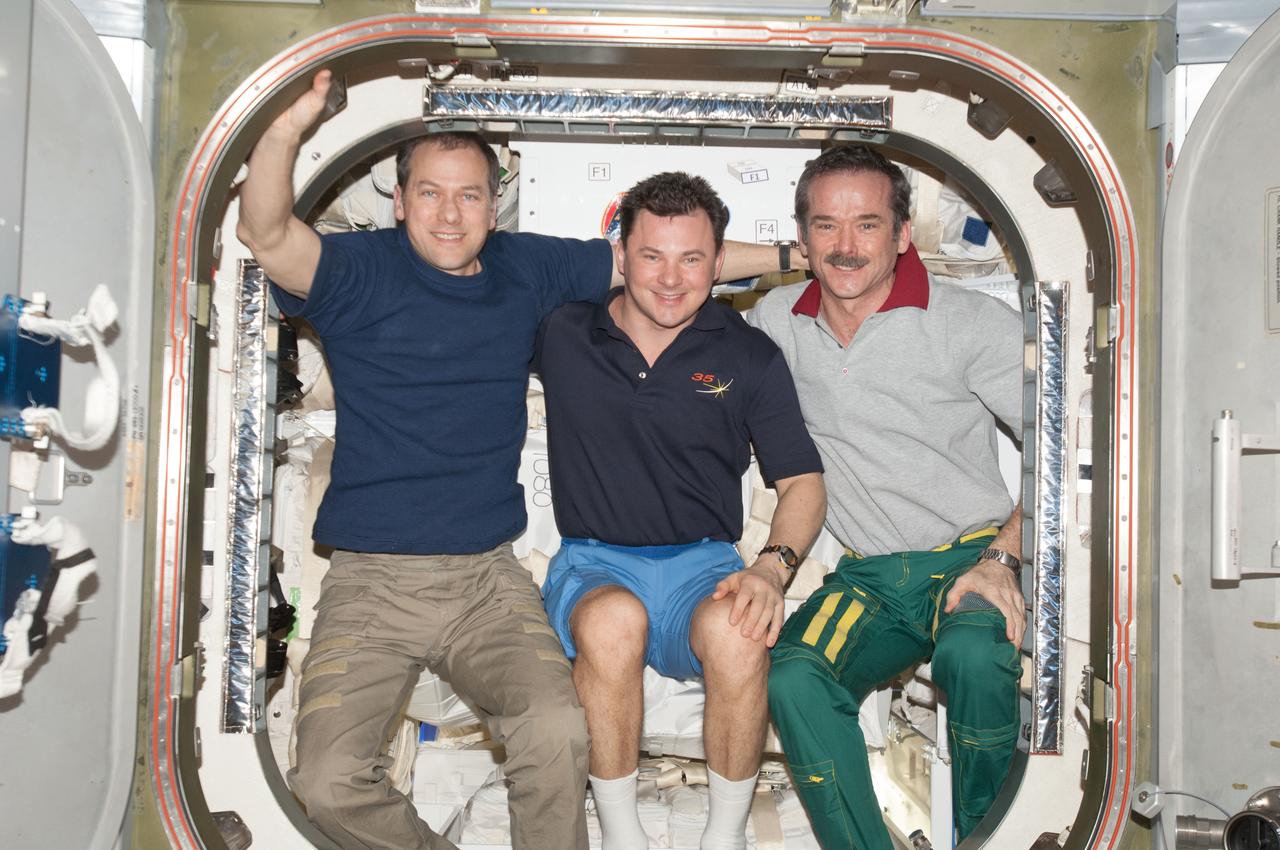
Expedition 35 flight engineer (FE) Tom Marshburn, FE Roman Romanenko, and commander Chris Hadfield pose for a photo in the SpaceX Dragon Commercial Resupply Services-2 (CRS-2) spacecraft. Romanenko is a Roscosmos cosmonaut and Hadfield is a Canadian Space Agency (CSA) astronaut.
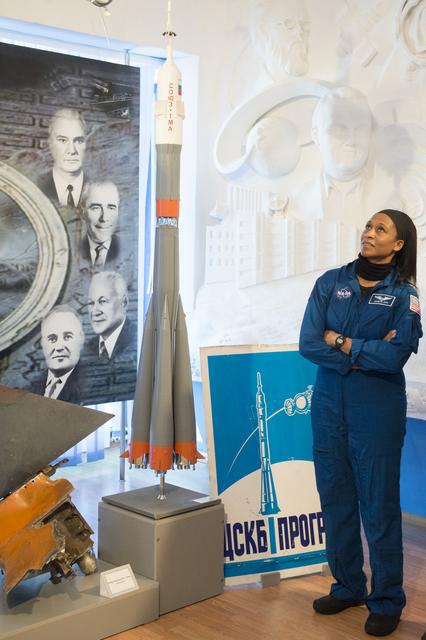
jsc2017e136937 - At the Baikonur Museum in Baikonur, Kazakhstan, Expedition 54-55 backup crewmember Jeanette Epps of NASA views a model of a Soyuz rocket Dec. 6 during a traditional pre-launch visit to the facility. Epps, Sergey Prokopyev of the Russian Fe
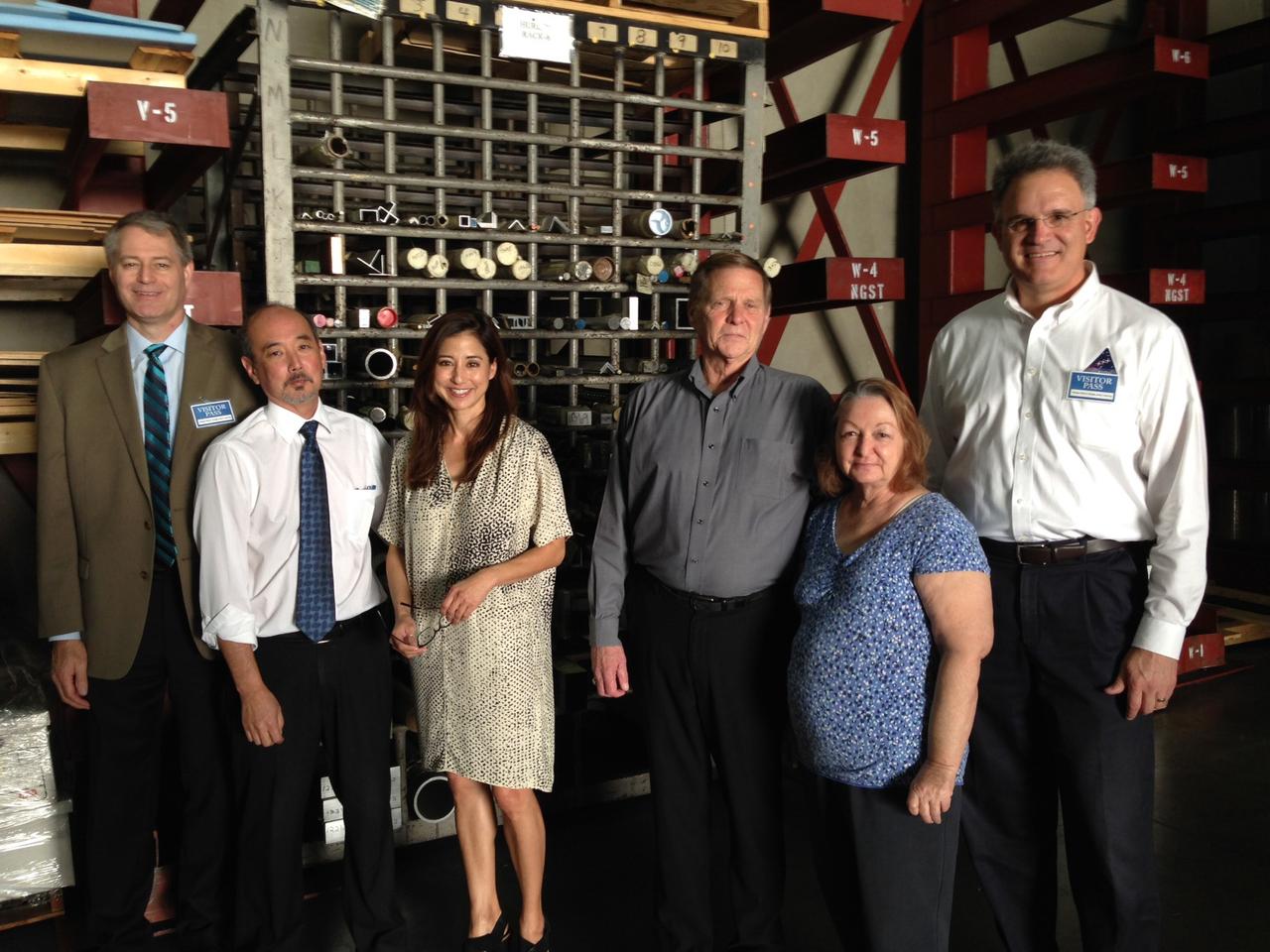
The Orion team visits Hurlen Corporation in Santa Fe Springs, CA on Jan. 29, 2014. Part of Batch image transfer from Flickr.
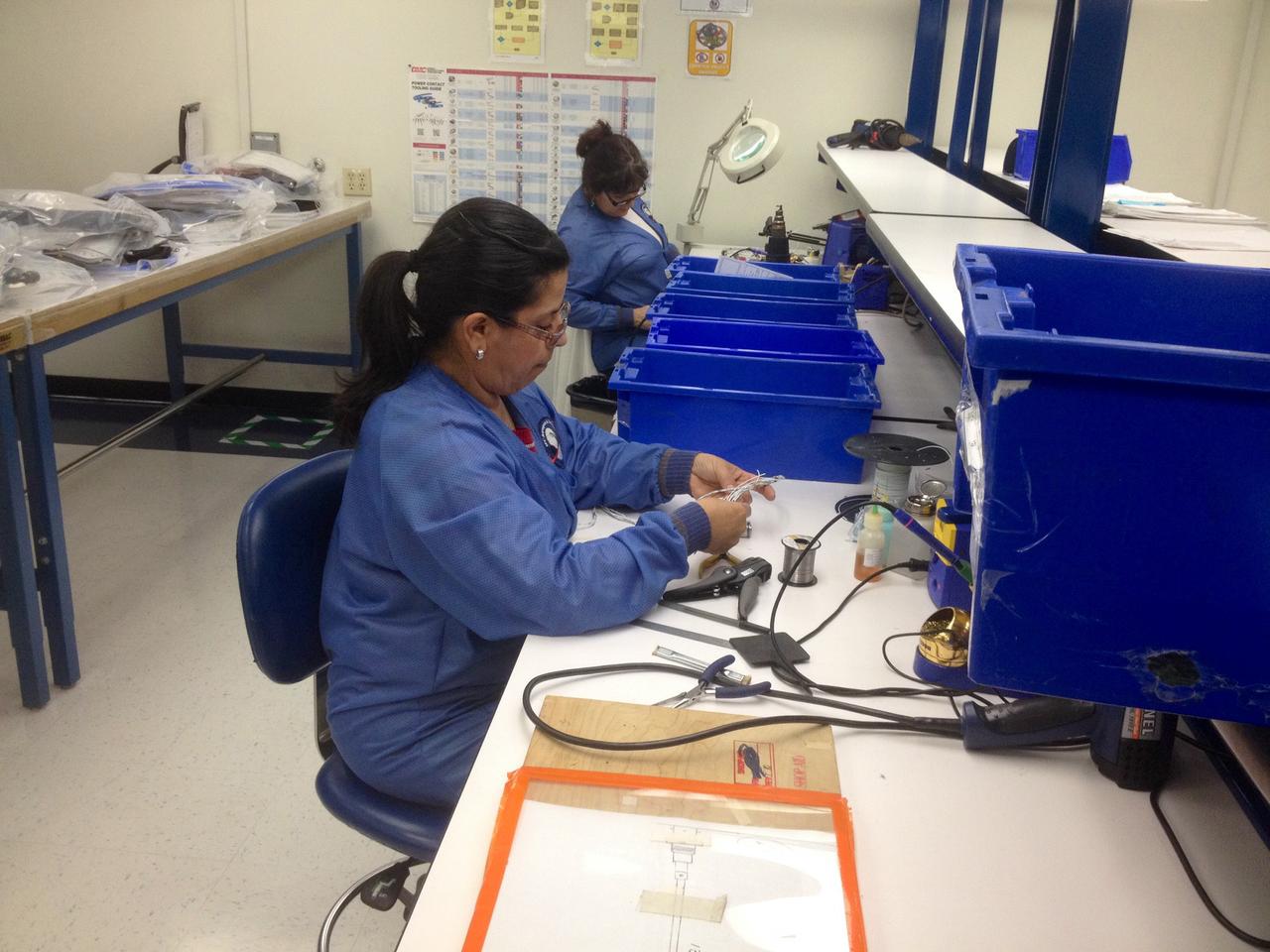
The Orion team visits Hurlen Corporation in Santa Fe Springs, CA on Jan. 29, 2014. Part of Batch image transfer from Flickr.
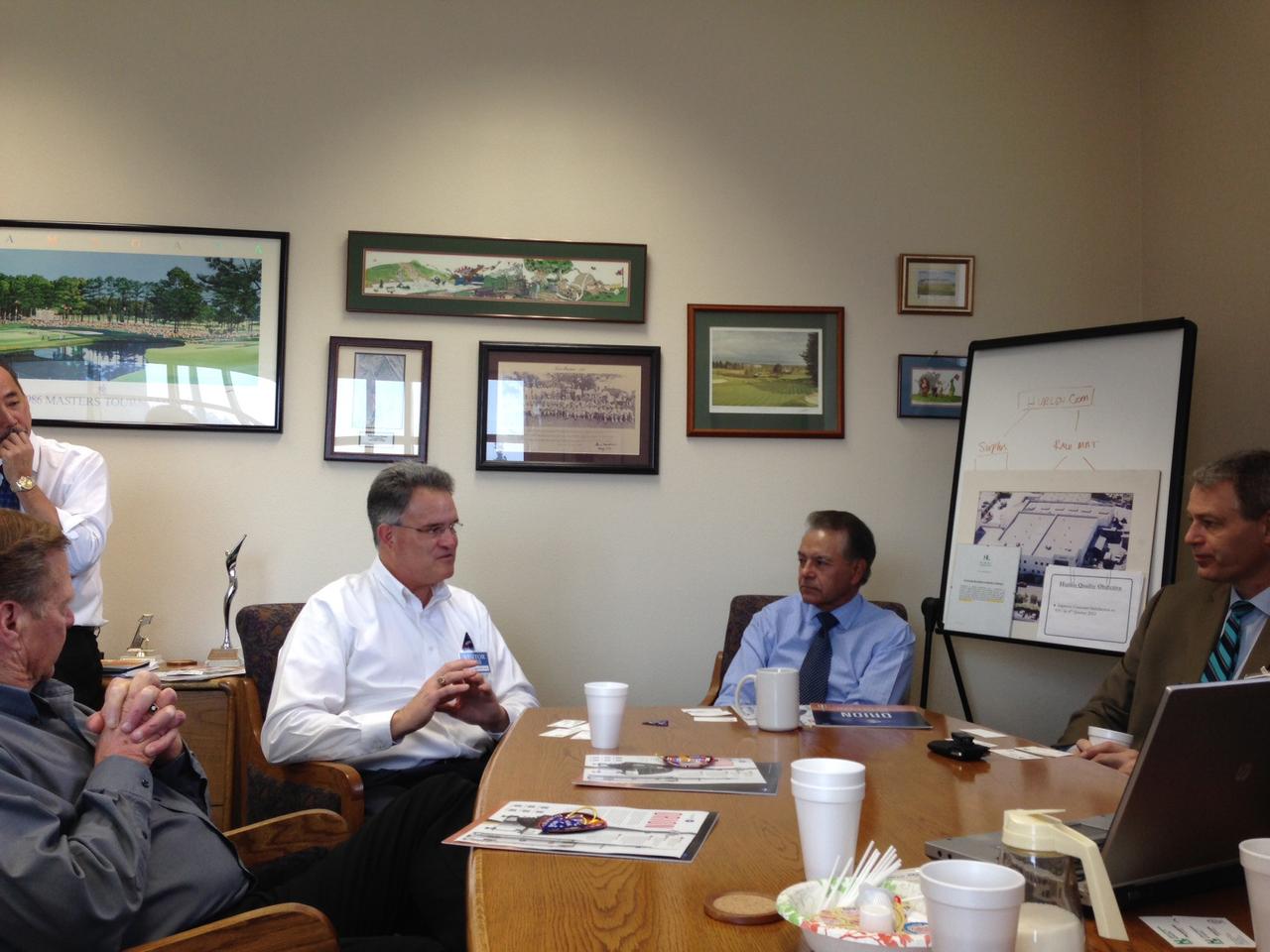
The Orion team visits Hurlen Corporation in Santa Fe Springs, CA on Jan. 29, 2014. Part of Batch image transfer from Flickr.
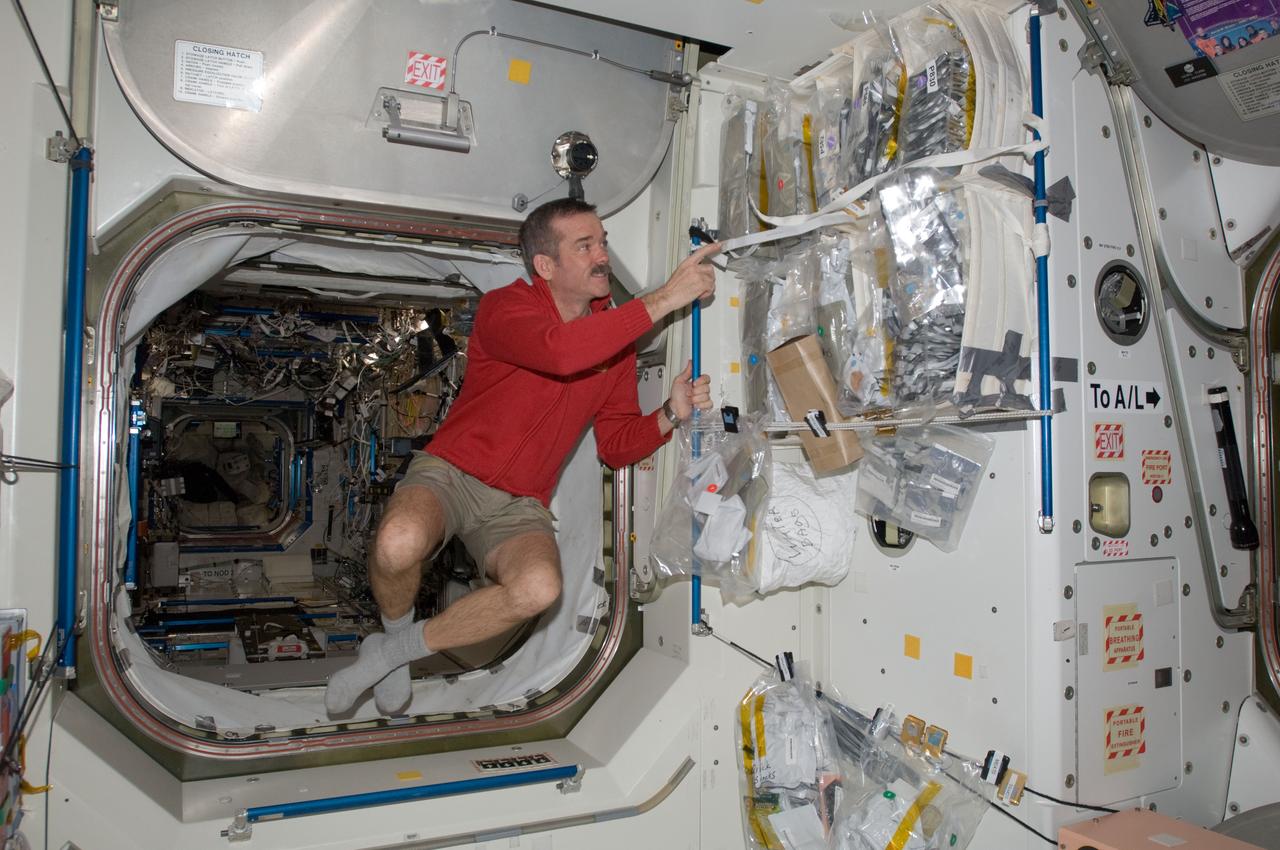
View of Chris Hadfield,Expedition 34 Flight Engineer (FE), points to stowed food packets,in the Node 1. Photo was taken during Expedition 34.
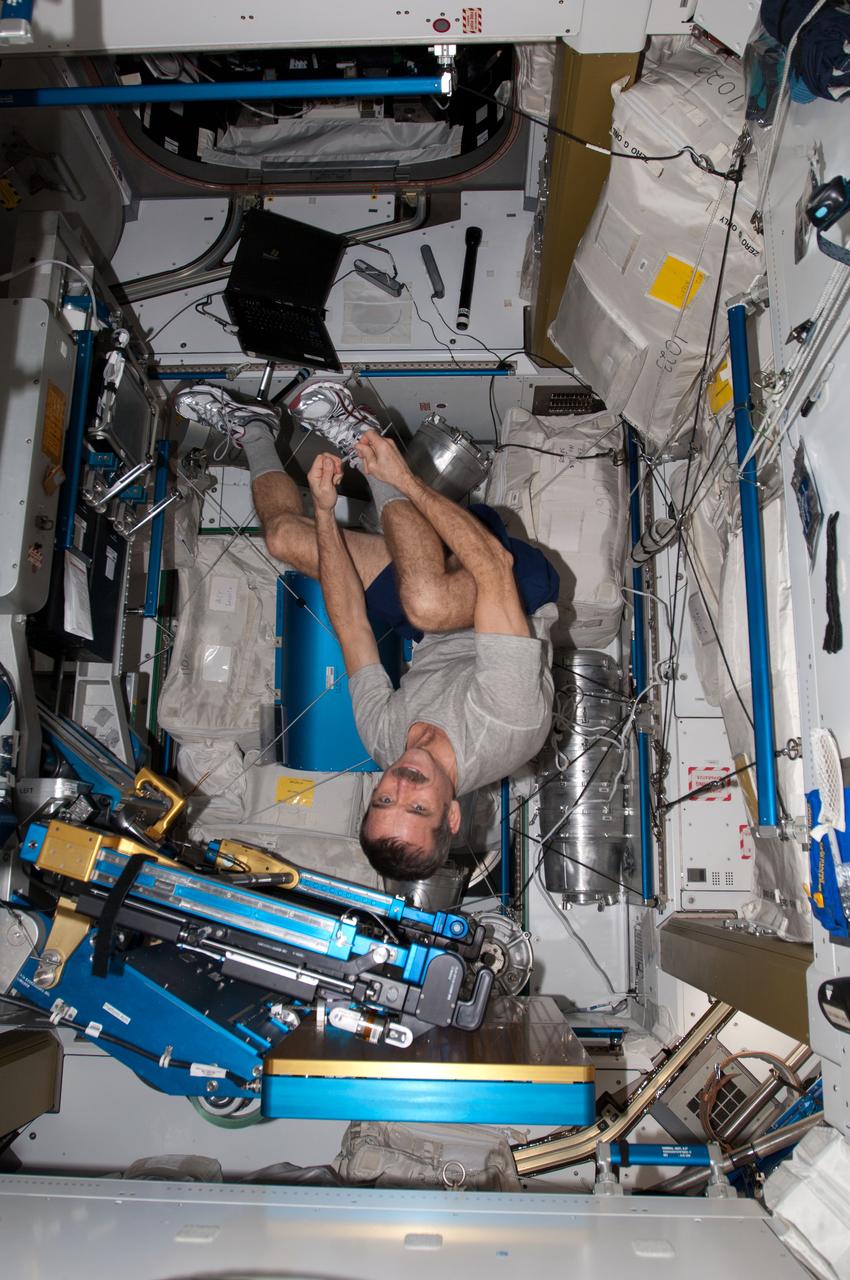
View of Canadian Space Agency (CSA) Chris Hadfield,Expedition 34 Flight Engineer (FE),putting on tennis shoes,in the Node 3.
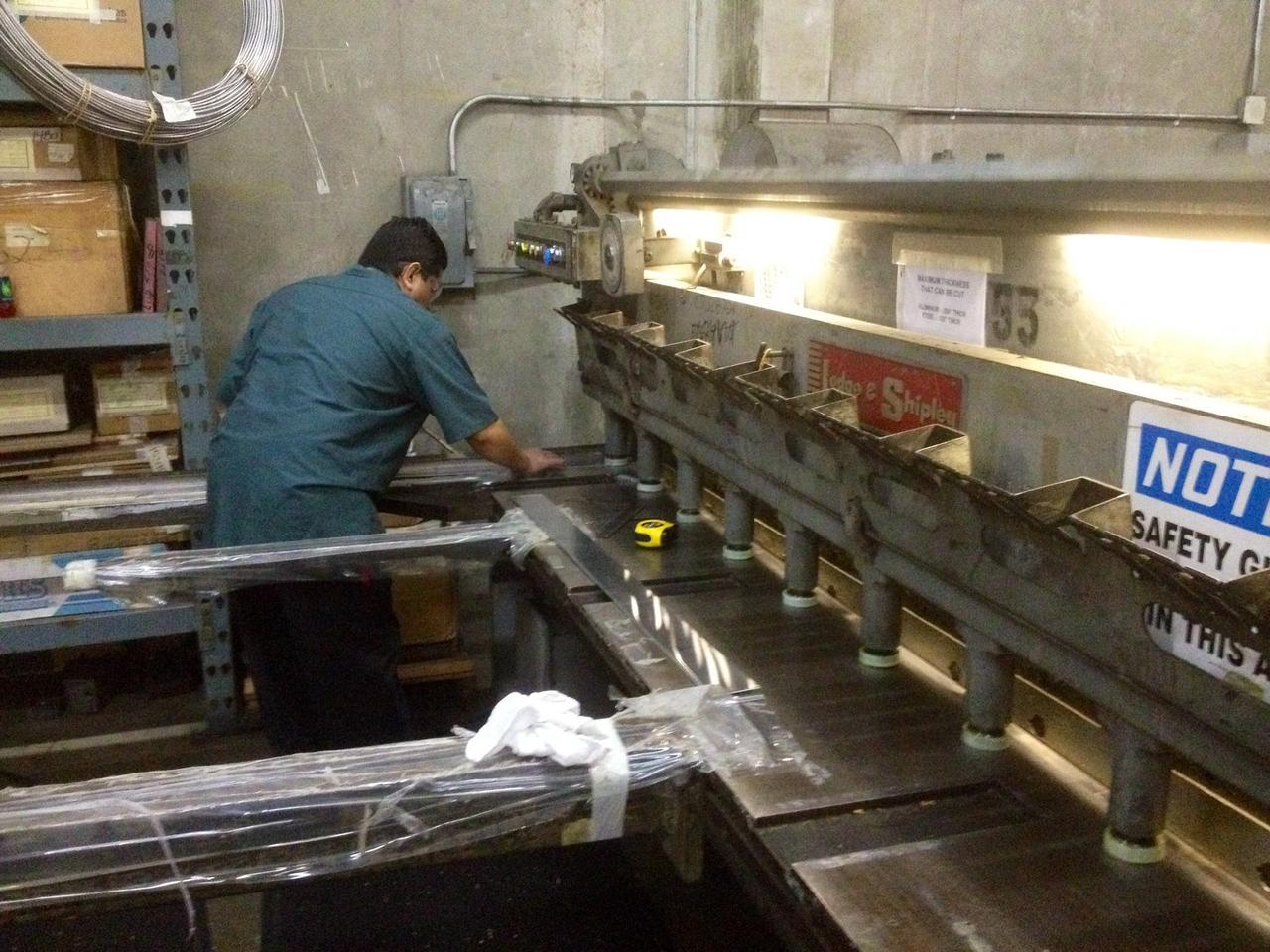
The Orion team visits Hurlen Corporation in Santa Fe Springs, CA on Jan. 29, 2014. Part of Batch image transfer from Flickr.
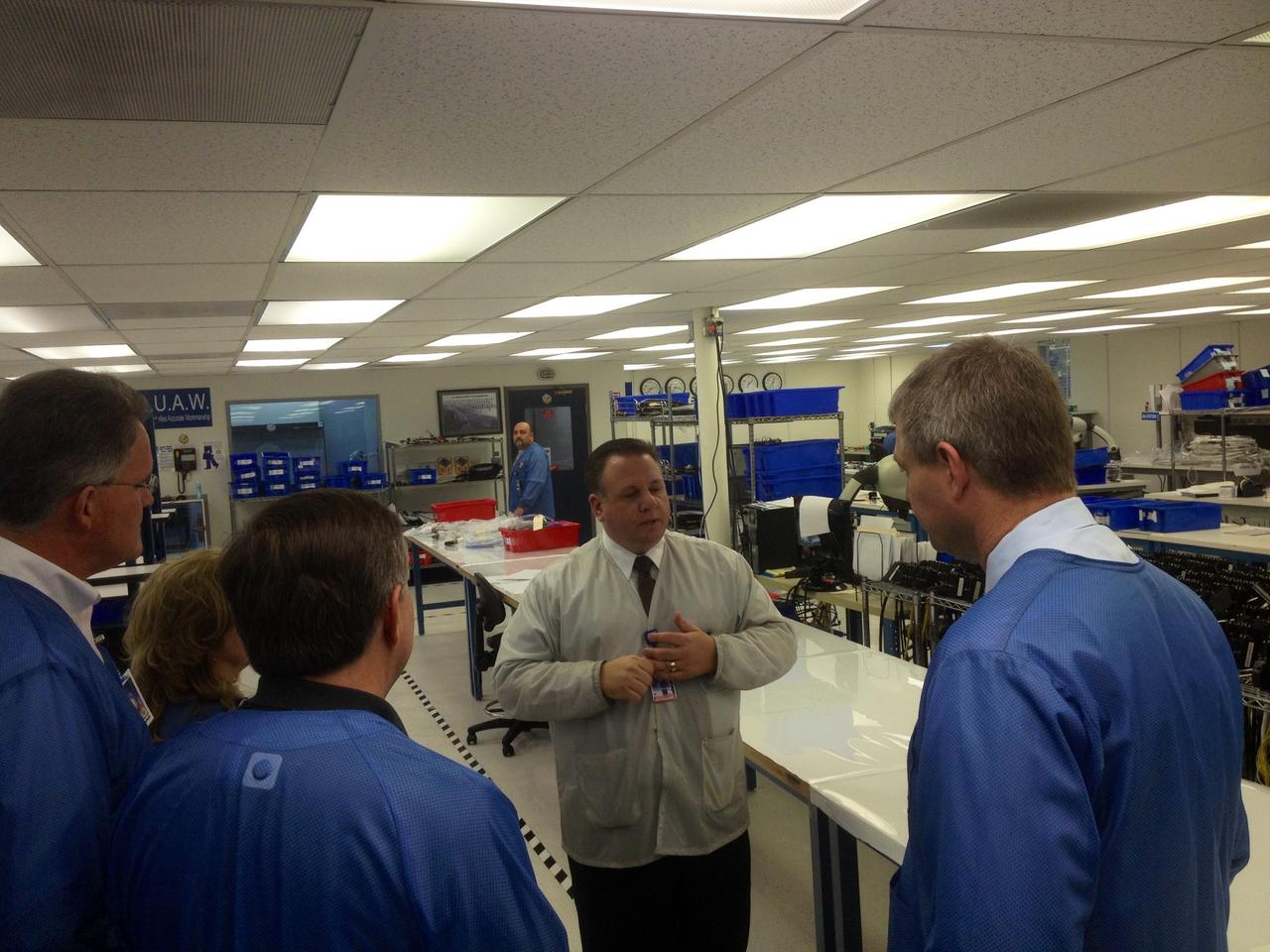
The Orion team visits Hurlen Corporation in Santa Fe Springs, CA on Jan. 29, 2014. Part of Batch image transfer from Flickr.
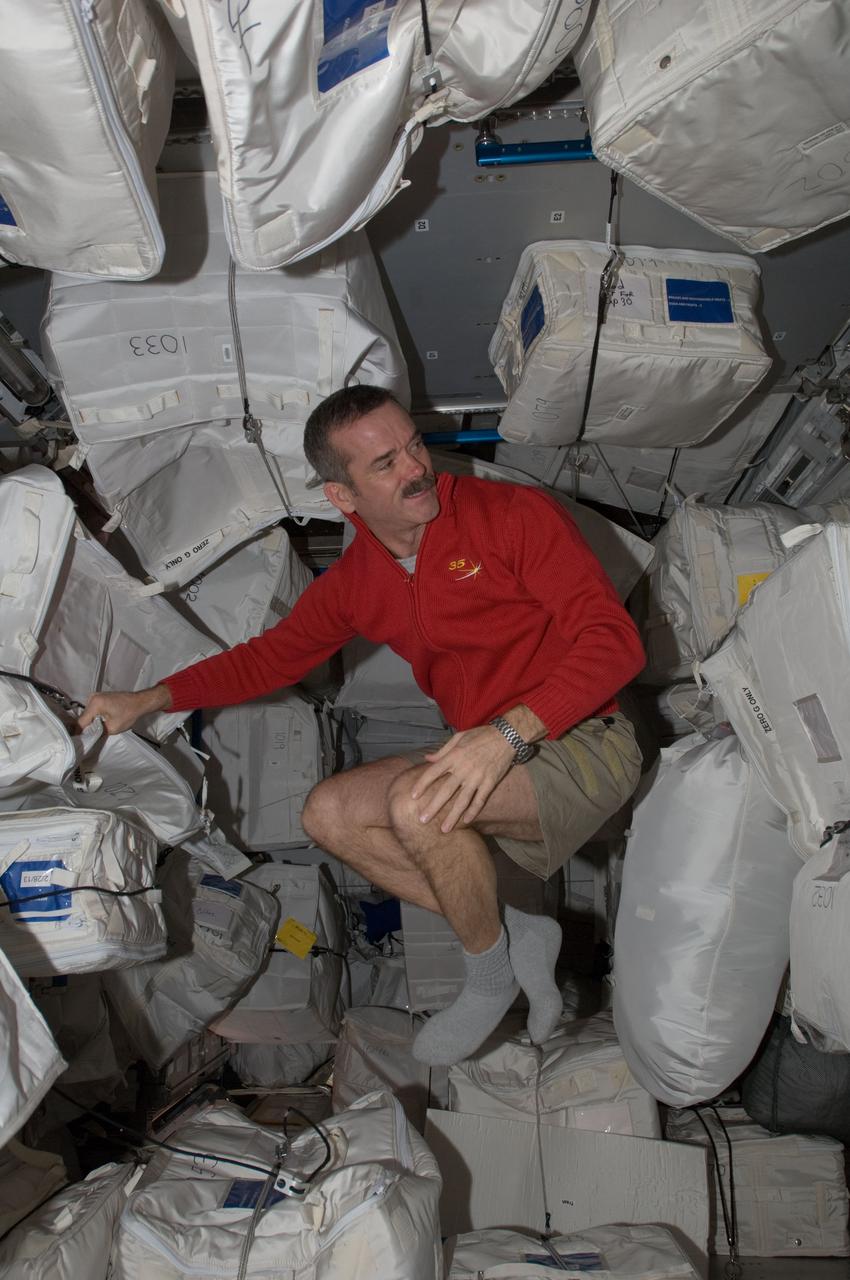
View of Chris Hadfield,Expedition 34 Flight Engineer (FE),floats near stowed Cargo Transfer Bags (CTBs). Photo was taken during Expedition 34.
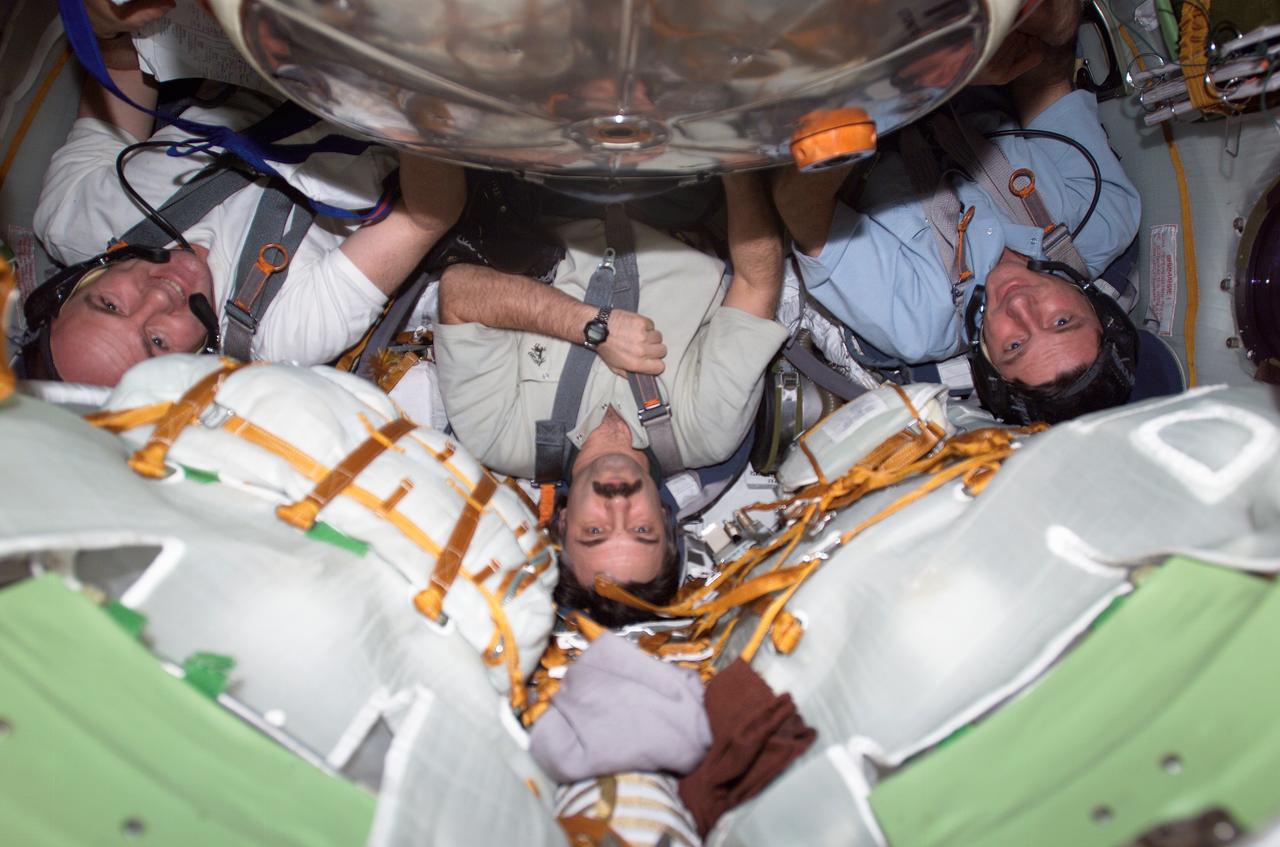
ISS008-E-22361 (27 April 2004) --- Astronaut C. Michael Foale (left), Expedition 8 commander and NASA ISS science officer; cosmonaut Alexander Y. Kaleri, flight engineer (FE) representing Russia’s Federal Space Agency; and European Space Agency (ESA) astronaut Andre Kuipers of the Netherlands participate in the Soyuz descent training exercise, which is standard procedure for each crew returning on a Soyuz. During the descent, Kaleri, as Soyuz commander, will occupy the middle couch, with FE-1 Kuipers in the left seat and FE-2 Foale in the Descent Module’s right “Kazbek” couch. The ISS Soyuz 7 is scheduled to undock from the Station at 3:52 p.m. (CDT) Thursday, April 29.
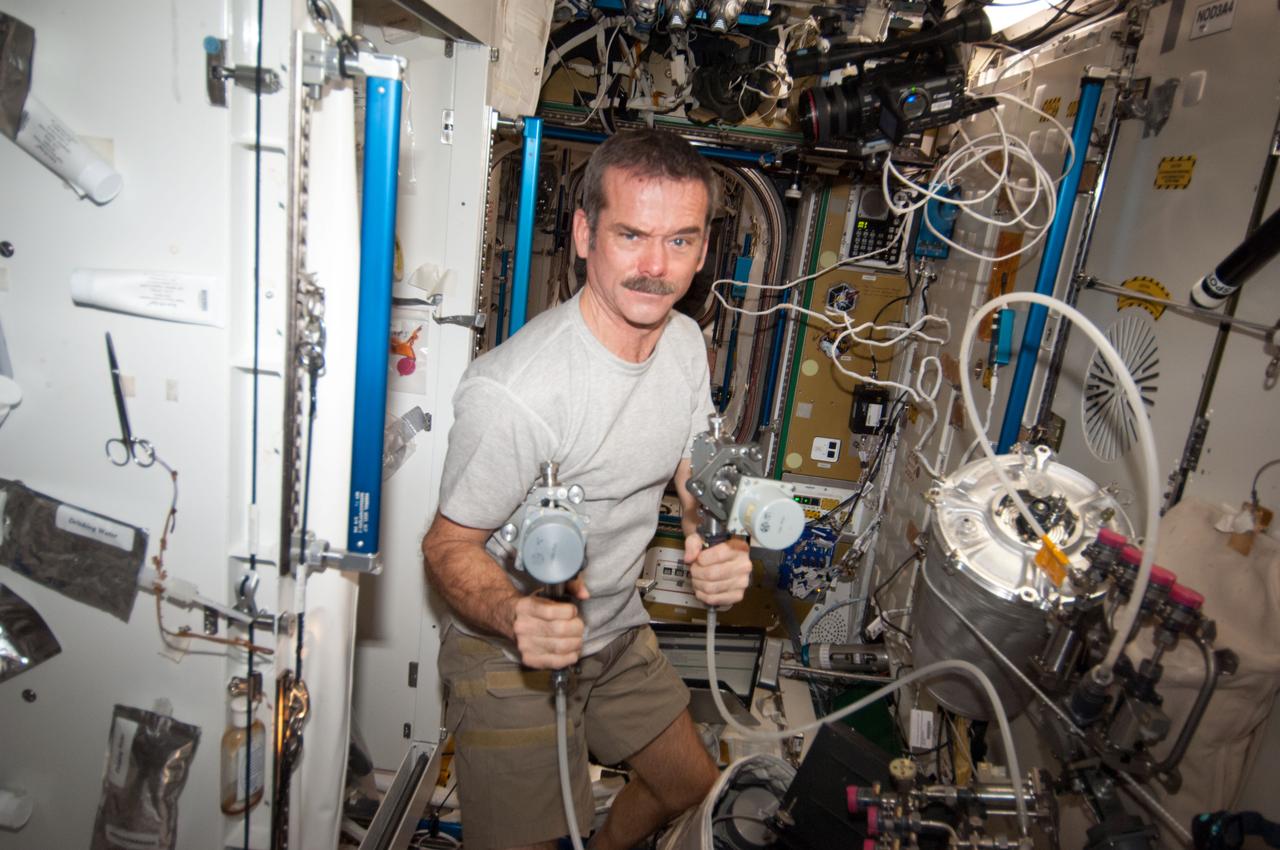
View of Canadian Space Agency (CSA) Chris Hadfield, Expedition 34 Flight Engineer (FE), during Waste and Hygiene Compartment (WHC) routine annual maintenance, in the Node 3. Photo was taken during Expedition 34.
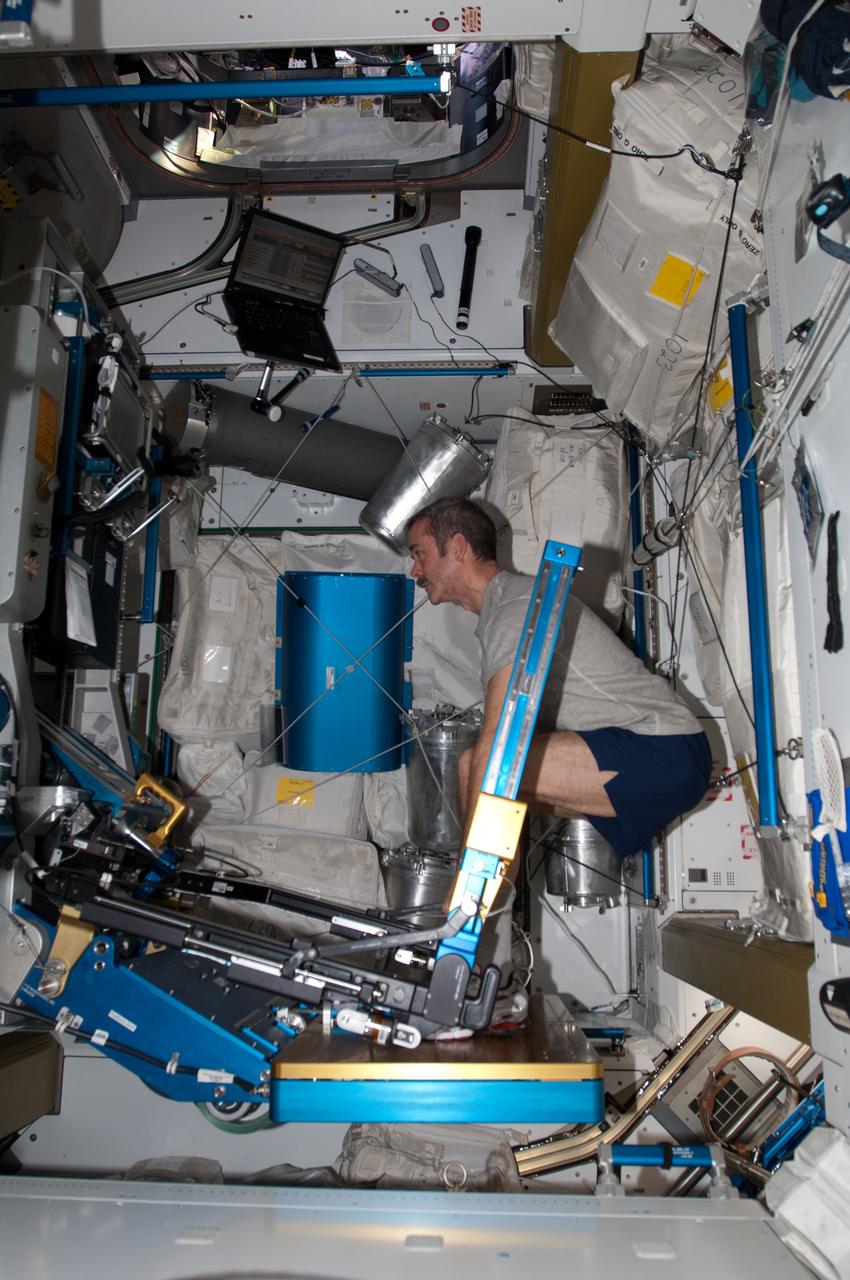
View of Canadian Space Agency (CSA) Chris Hadfield,Expedition 34 Flight Engineer (FE),exercising on the Advanced Resistive Exercise Device (ARED),in the Node 3. Photo was taken during Expedition 34.
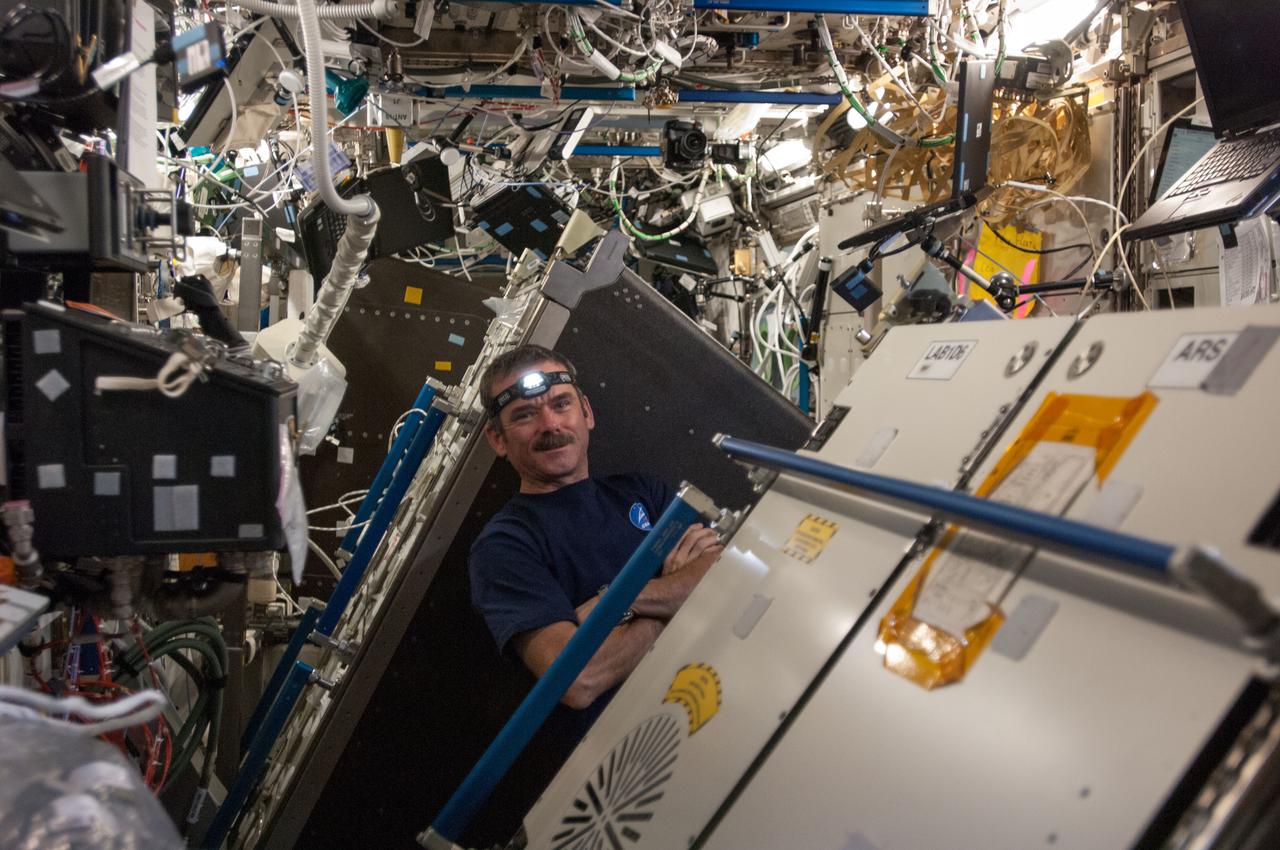
View of Canadian Space Agency (CSA) Chris Hadfield,Expedition 34 Flight Engineer (FE) posing for photo in the U.S. Laboratory. Photo was taken during Expedition 34.
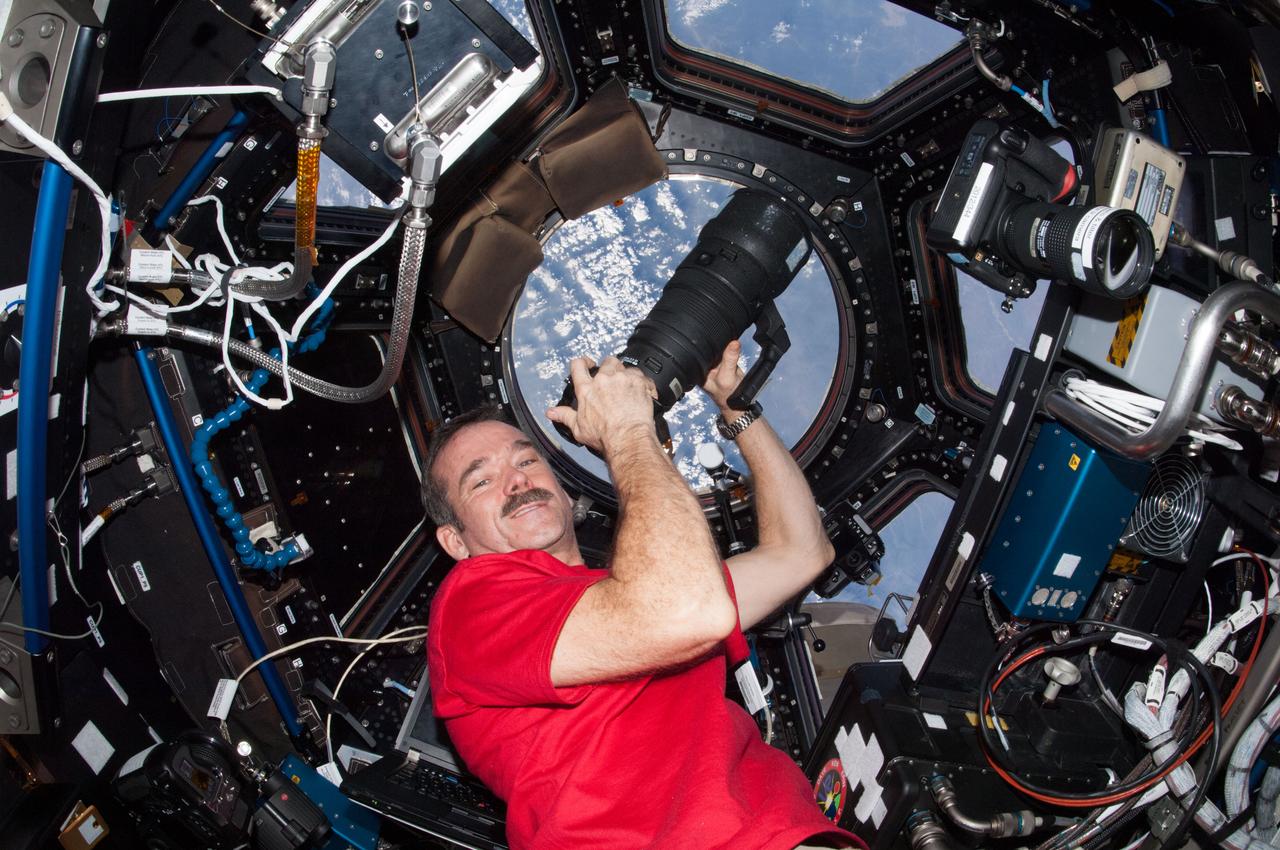
View of Canadian Space Agency (CSA) Chris Hadfield,Expedition 34 Flight Engineer (FE),using still camera,in the Cupola Module. Photo was taken during Expedition 34.
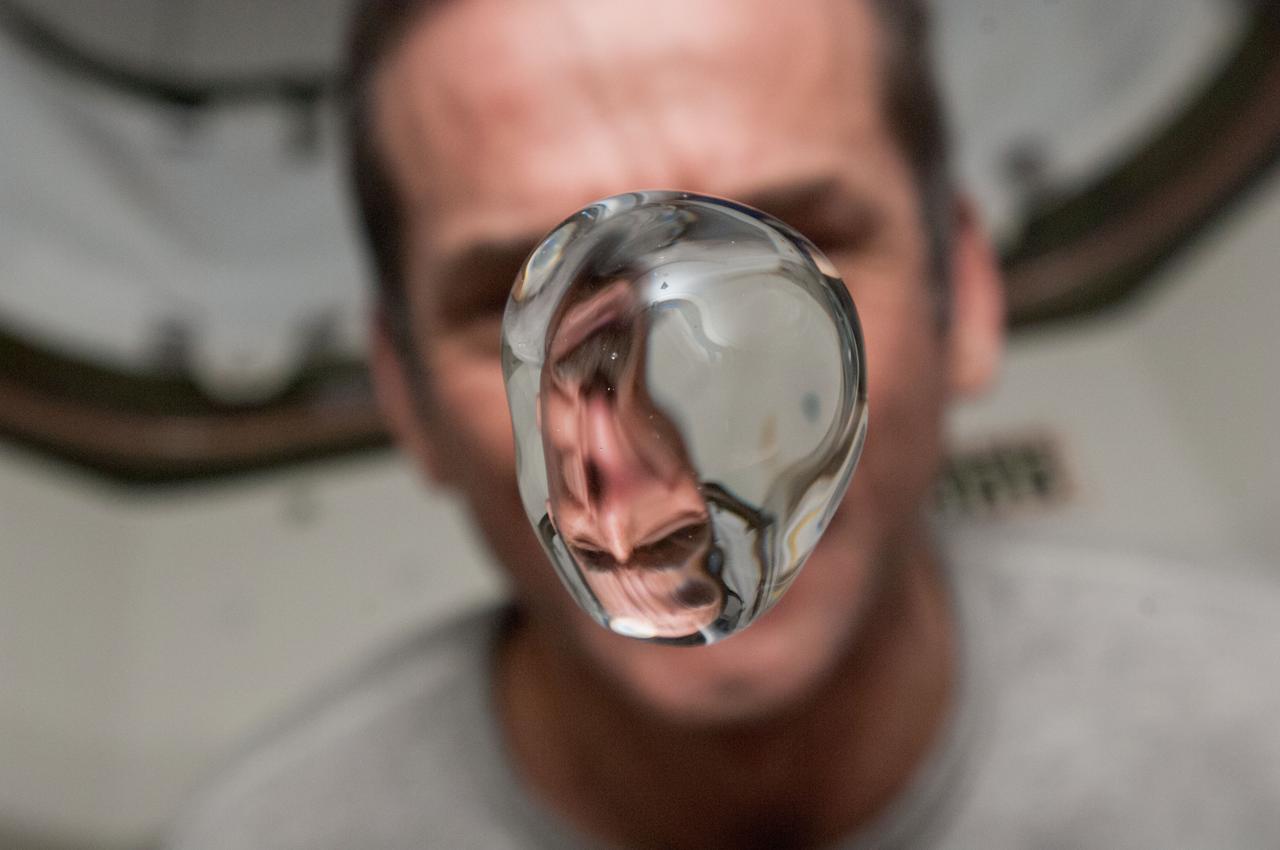
View of Canadian Space Agency (CSA) Chris Hadfield,Expedition 34 Flight Engineer (FE),watching a water bubble float freely,showing his image refracted,in the Node 1. Photo was taken during Expedition 34.
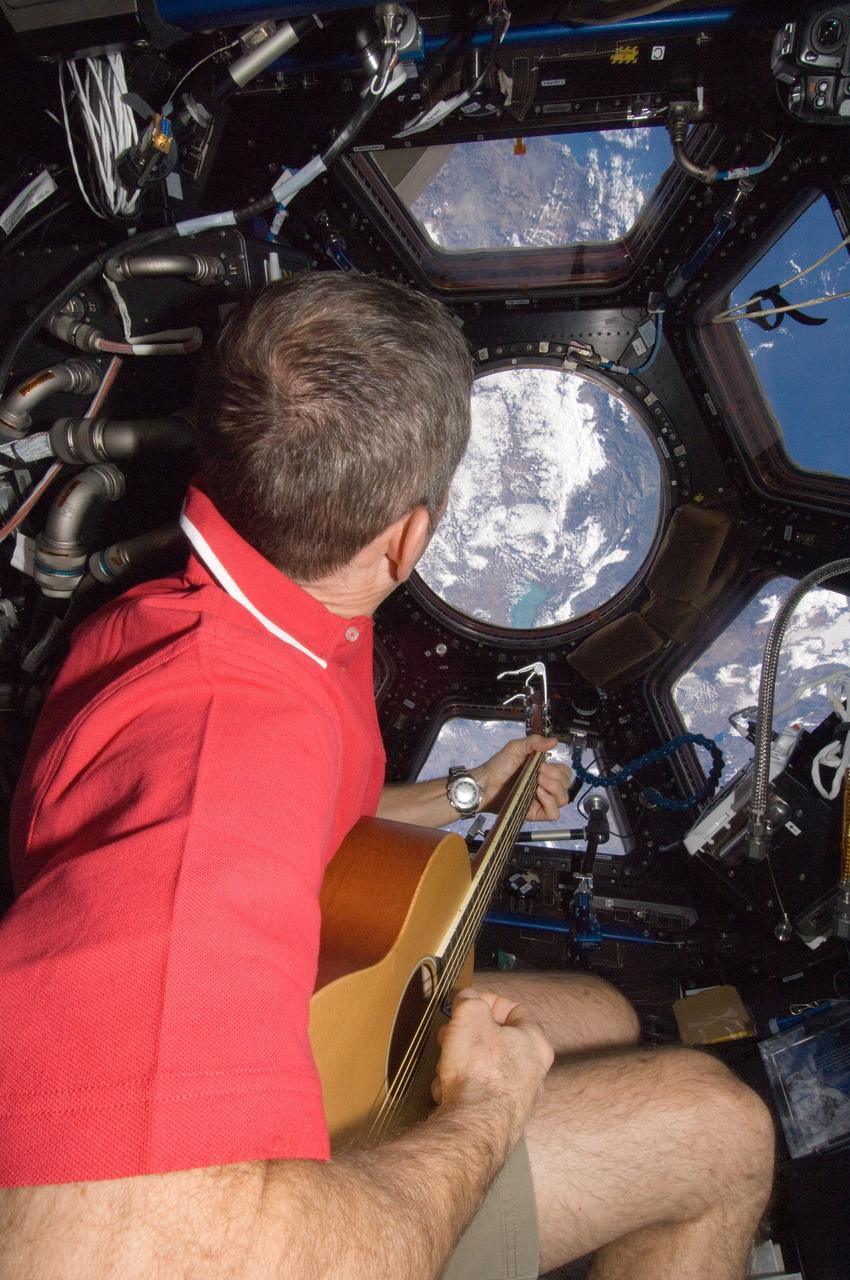
View of Canadian Space Agency (CSA) Chris Hadfield,Expedition 34 Flight Engineer (FE),playing guitar in the Cupola Module. Photo was taken during Expedition 34.
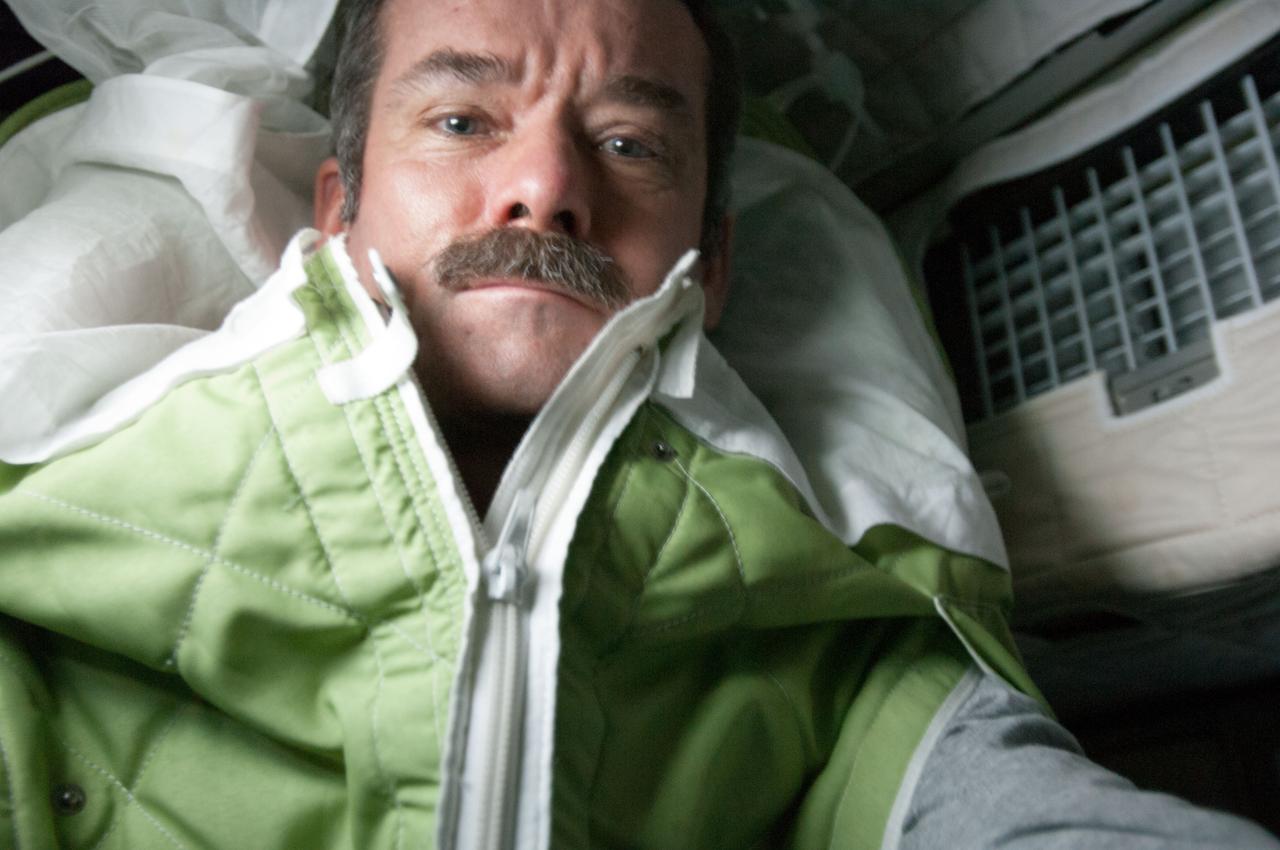
View of Canadian Space Agency (CSA) Chris Hadfield, Expedition 34 Flight Engineer (FE), in sleep station, in the Node 2. Photo was taken during Expedition 34.
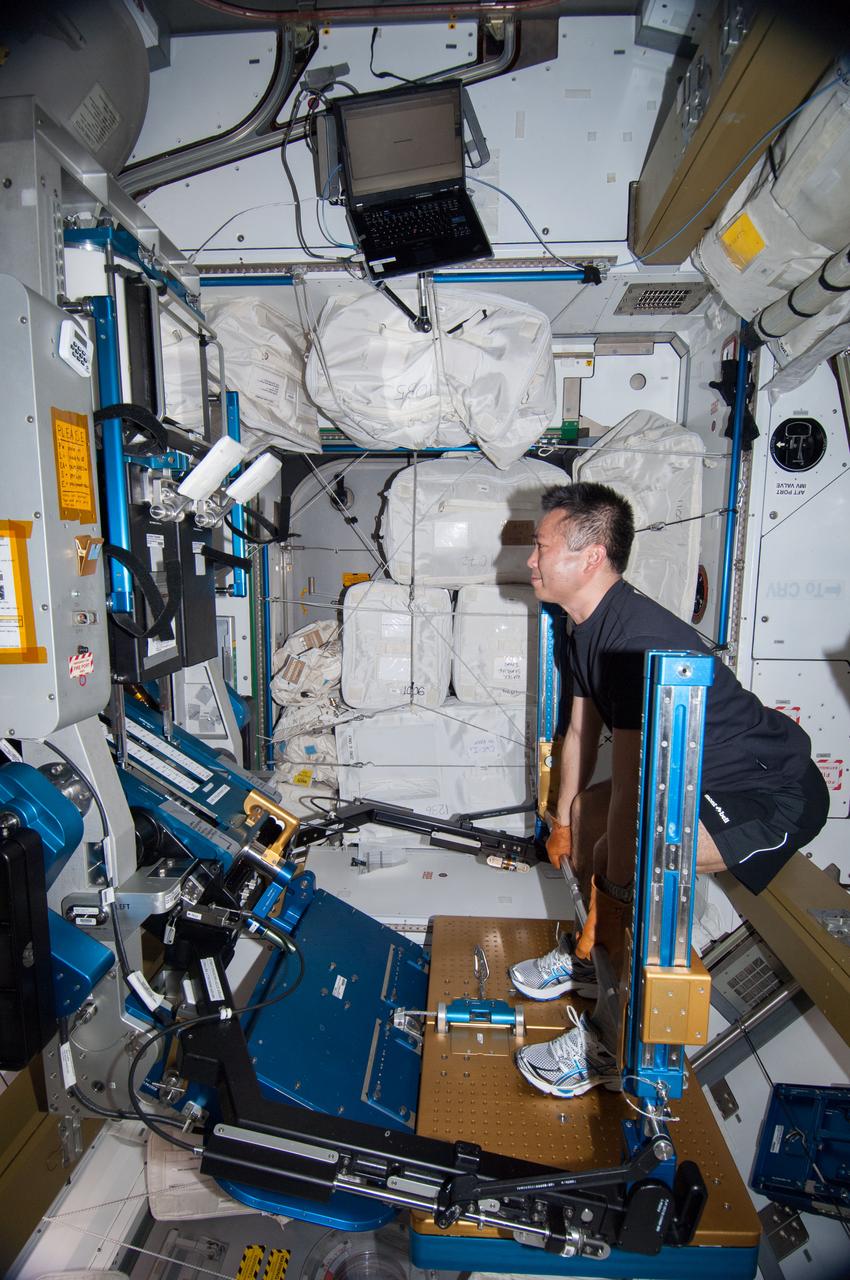
View of Koichi Wakata, Expedition 38 Flight Engineer (FE), exercising on the Advanced Resistive Exercise Device (aRED), in the Node 3. Photo was taken during Expedition 38. Image was released by astronaut on Twitter.
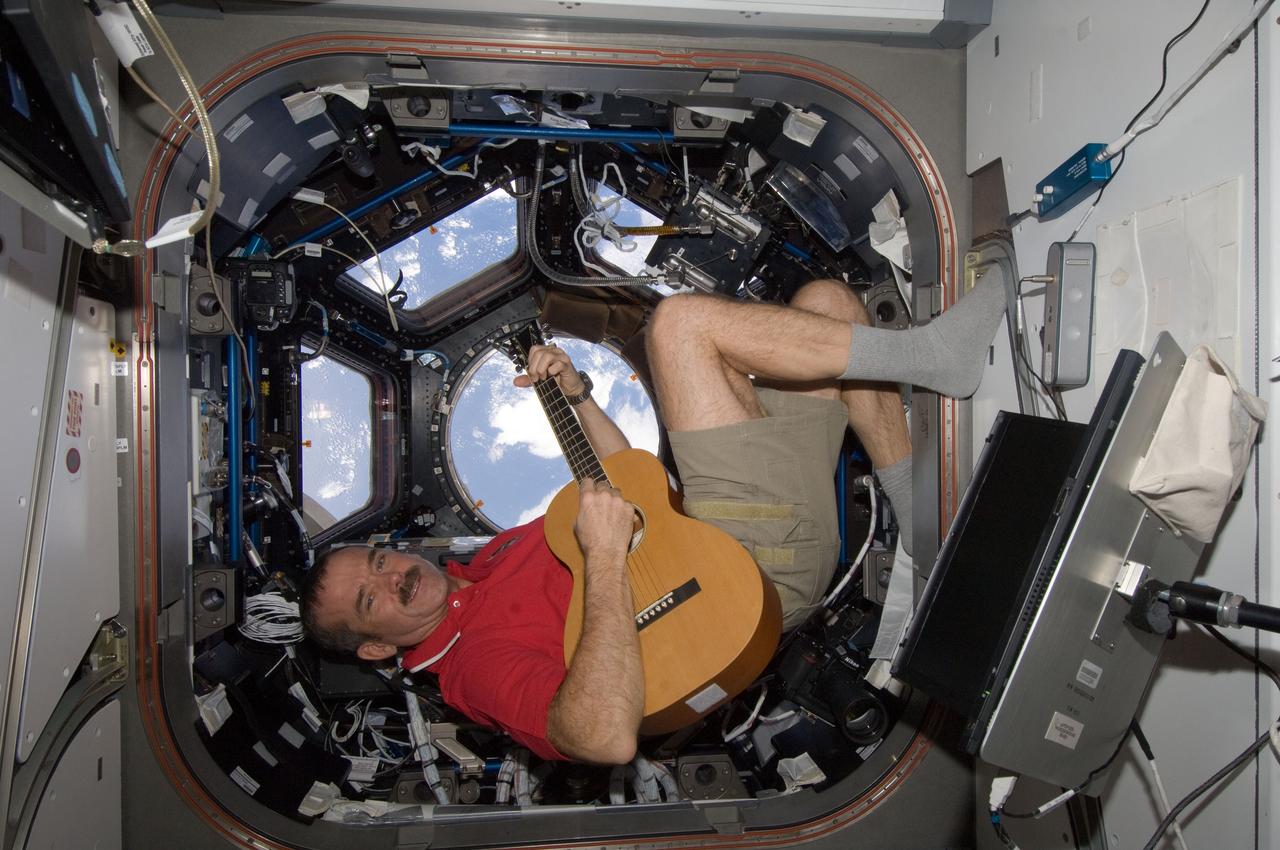
View of Canadian Space Agency (CSA) Chris Hadfield, Expedition 34 Flight Engineer (FE), playing guitar in the Cupola Module. Photo was taken during Expedition 34.
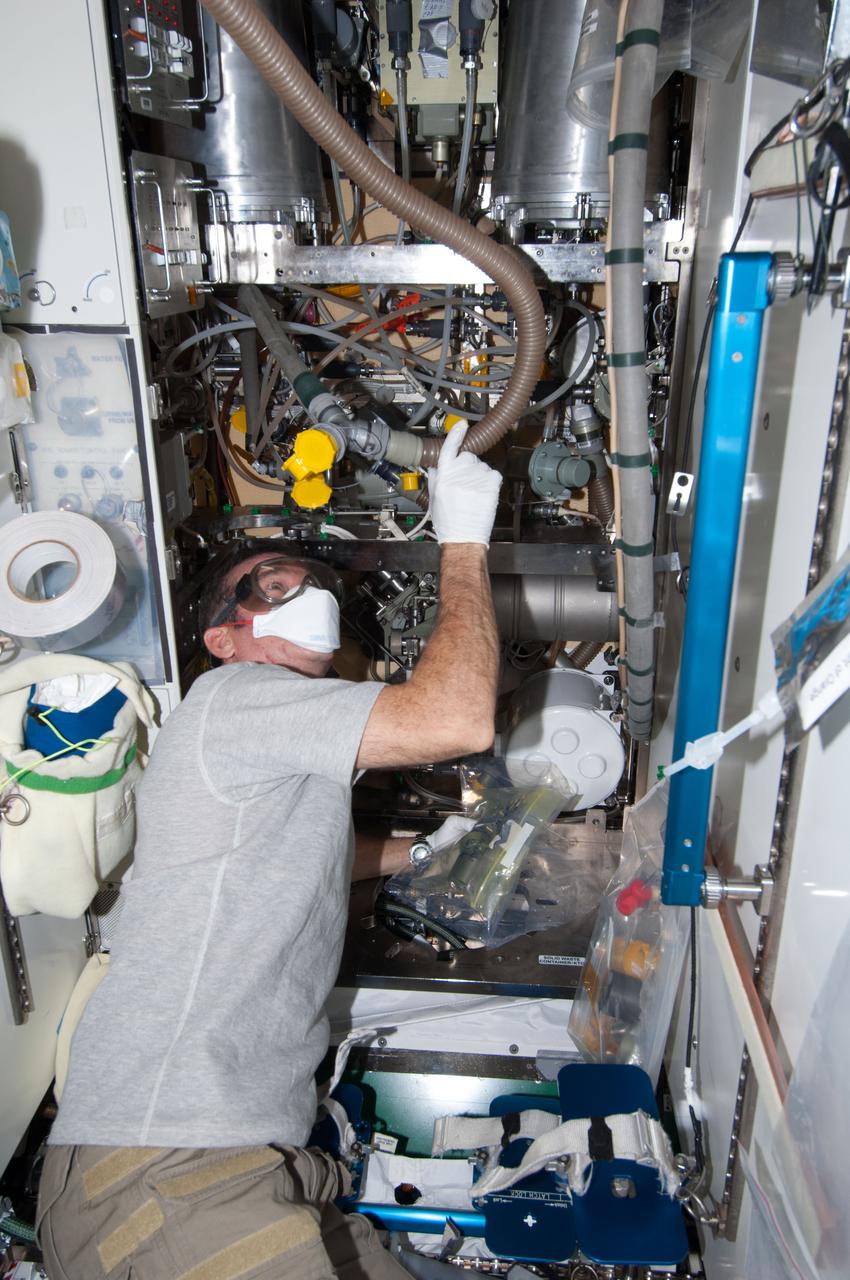
View of Canadian Space Agency (CSA) Chris Hadfield,Expedition 34 Flight Engineer (FE),performing Waste and Hygiene Compartment (WHC) overhaul,in the Node 3. Photo was taken during Expedition 34.
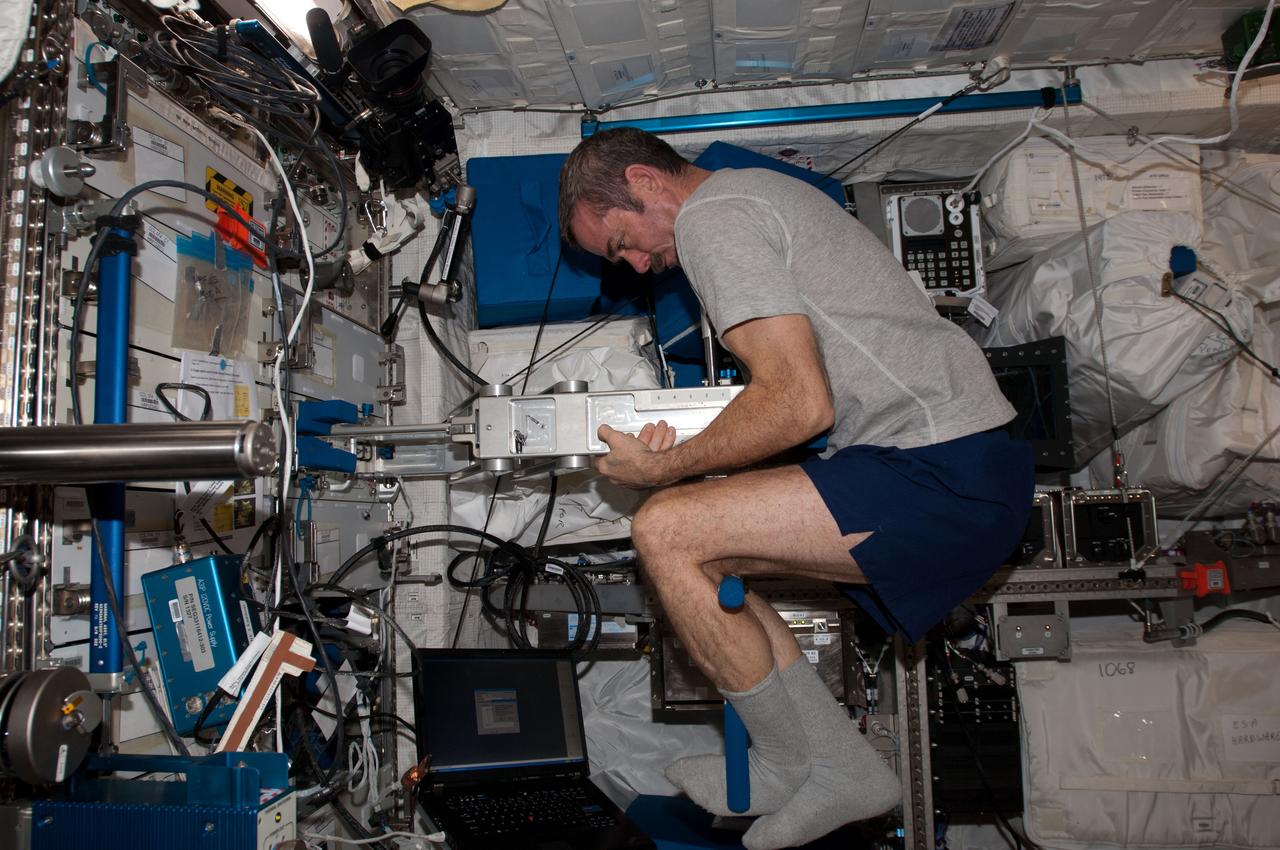
View of Canadian Space Agency (CSA) Chris Hadfield, Expedition 34 Flight Engineer (FE), using the Space Linear Acceleration Mass Measurement Device (SLAMMD) in the Columbus Module. Photo was taken during Expedition 34.
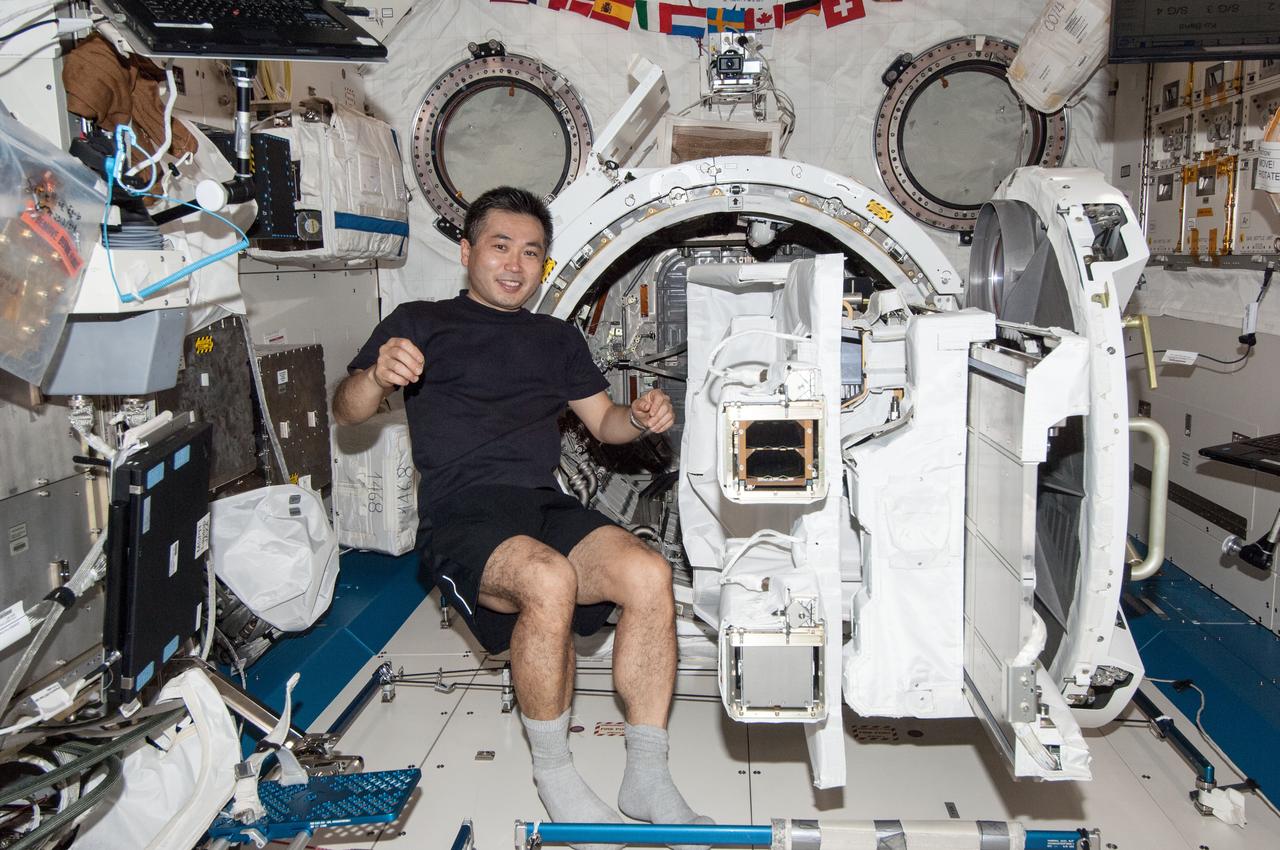
View of Koichi Wakata,Expedition 38 Flight Engineer (FE),in the Japanese Experiment Module (JEM) Pressurized Module (JPM). JEM Small Satellite Orbital Deployer (J-SSOD) installed on the Multi-Purpose Experiment Platform (MPEP),is visible. Photo was taken during Expedition 38. Image was released by astronaut on Twitter.
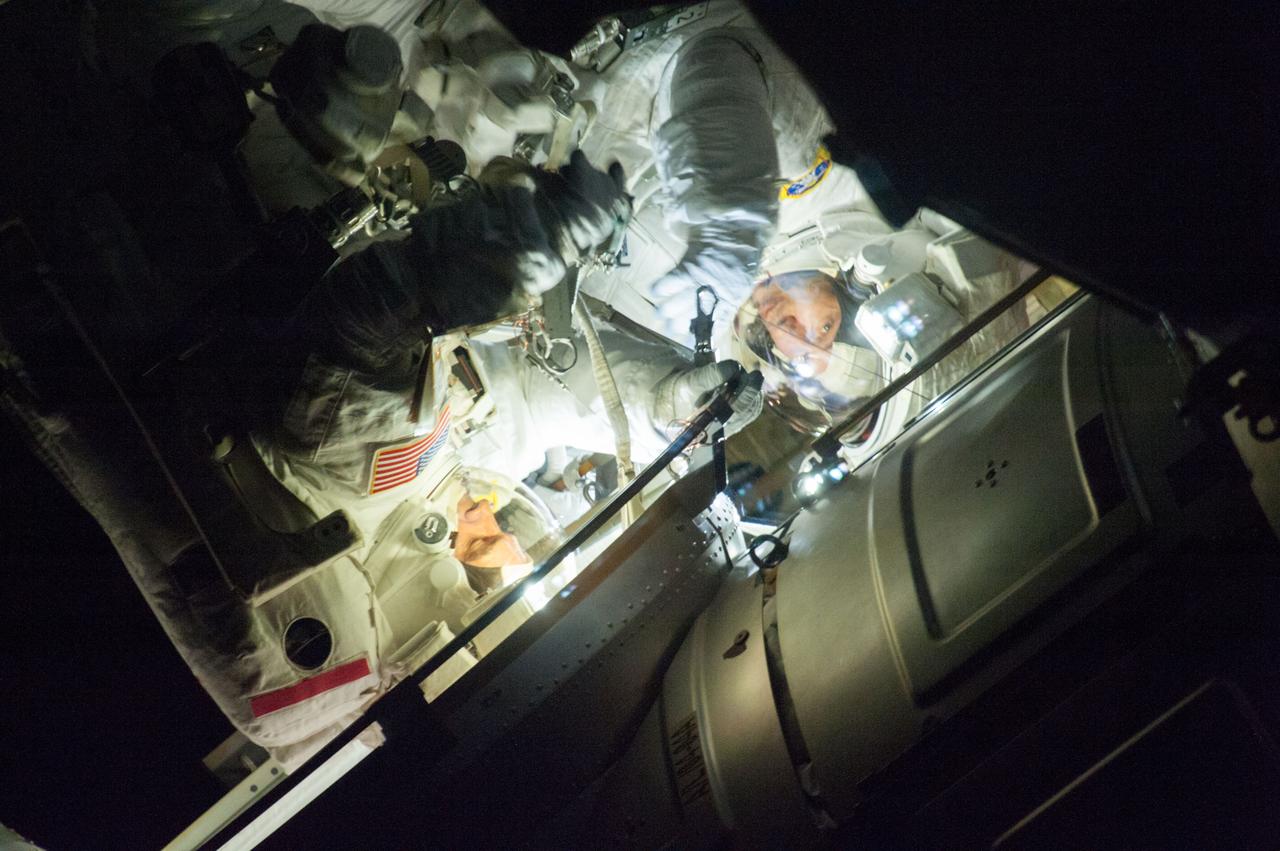
View of Rick Mastracchio and Mike Hopkins,both Expedition 38 Flight Engineers (FEs),after egress from airlock (A/L) during International Space Station (ISS) Extravehicular Activity (EVA) 25. Image was released by astronaut on Twitter.
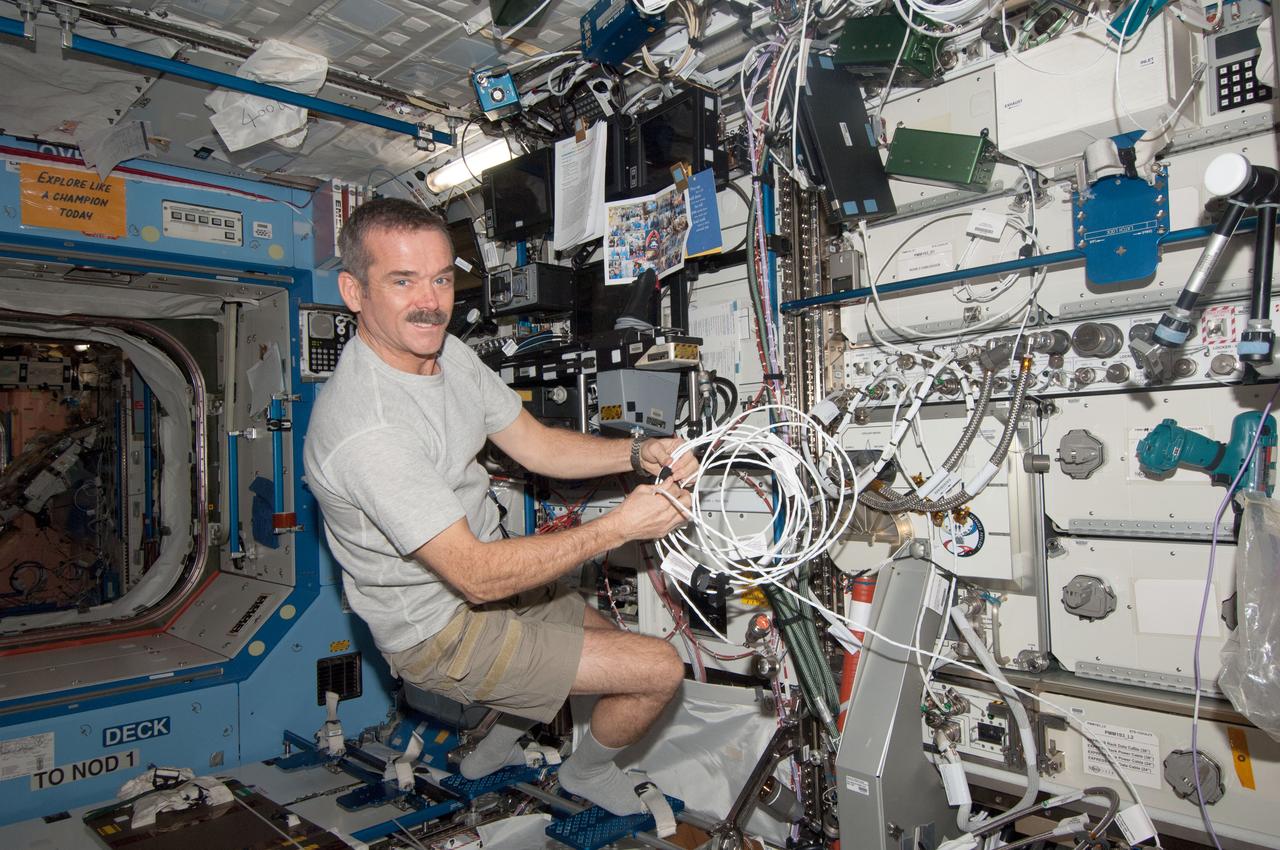
View of Canadian Space Agency (CSA) Chris Hadfield, Expedition 34 Flight Engineer (FE), wiring the condensate transfer pump, in the U.S. Laboratory. Image was released via astronaut Twitter. Original camera number is 268C1459. Photo was taken during Expedition 34.
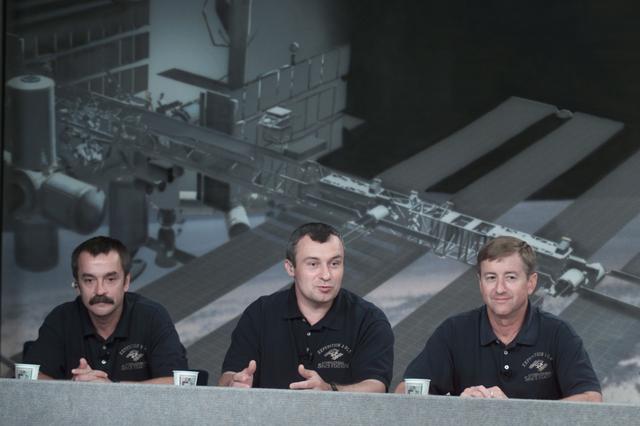
The Expedition 3 crew answers questions during the press conference. From left to right: Cosmonauts Mikhail Tyurin and Vladimir N. Dezhurov, both Expedition 3 Flight Engineers (FE), and Astronaut Frank L. Culbertson, Expedition 3 Mission Commander.
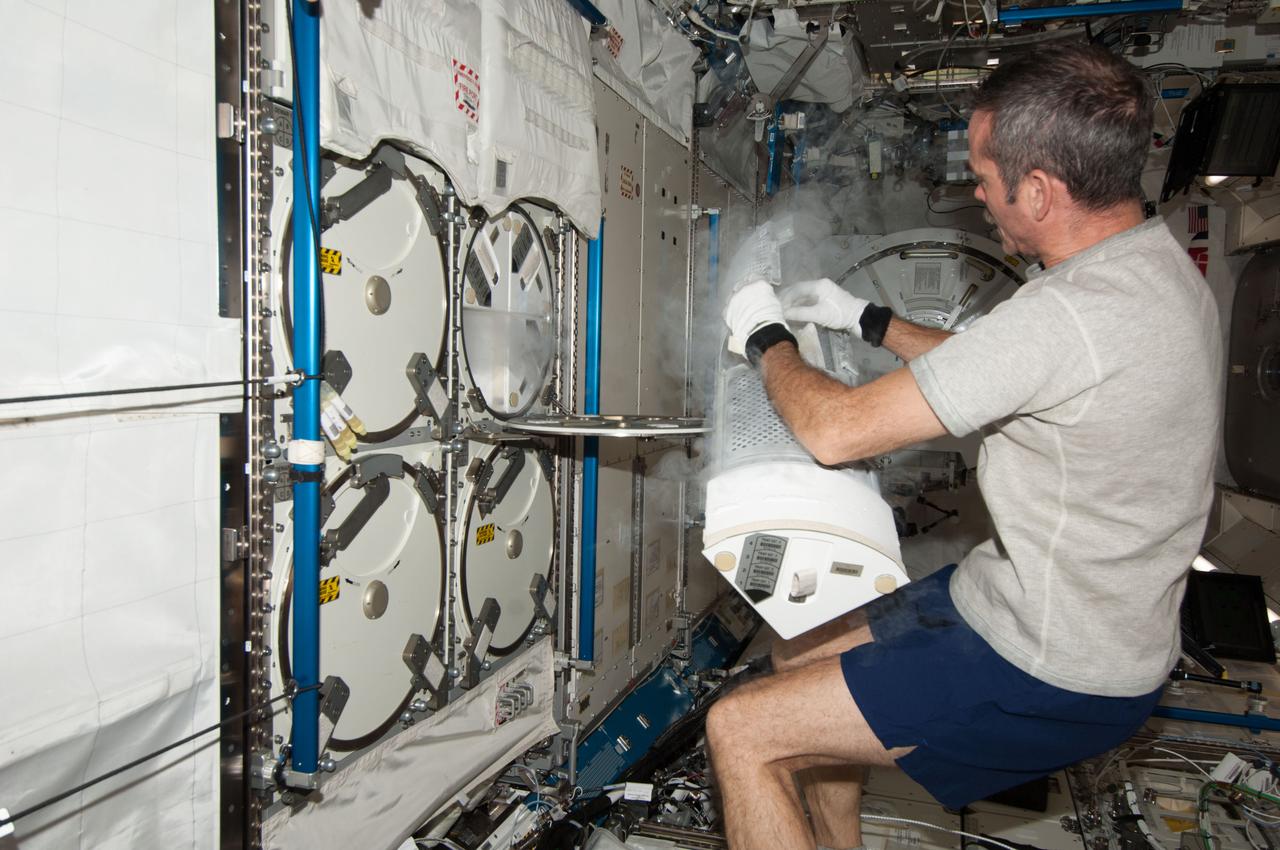
View of Canadian Space Agency (CSA) Chris Hadfield,Expedition 34 Flight Engineer (FE),preparing to insert biological samples in the Minus Eighty Laboratory Freezer for International Space Station (ISS) - (MELFI-1),in the Japanese Experiment Module (JEM) Pressurized Module (JPM). Photo was taken during Expedition 34.
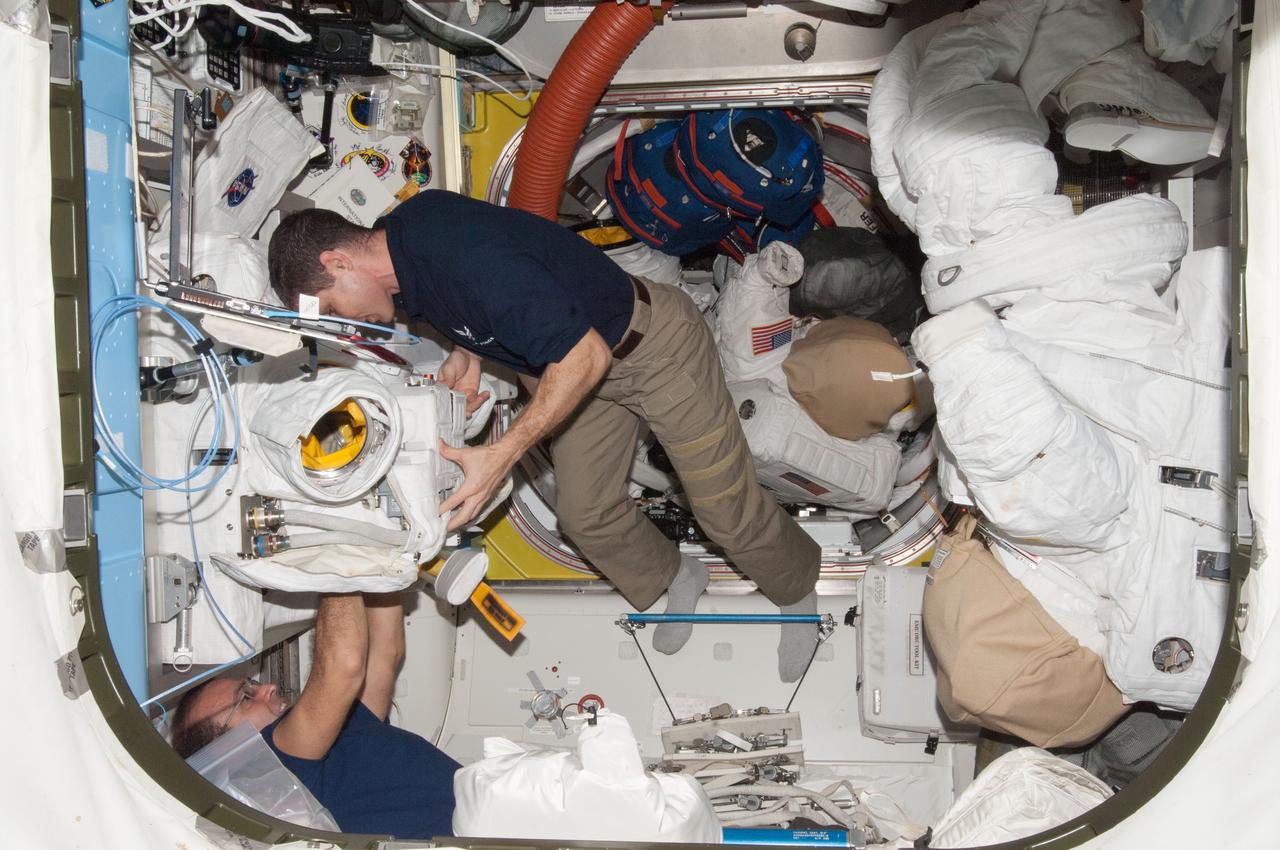
View of Mike Hopkins, Expedition 38 Flight Engineer (FE), during remove and replace (R&R) of Hard Upper Torso (HUT) of Extravehicular Mobility Unit (EMU), in the airlock (A/L) during preparation for EVA-24. Photo was taken during Expedition 38. Image was released by astronaut on Twitter.
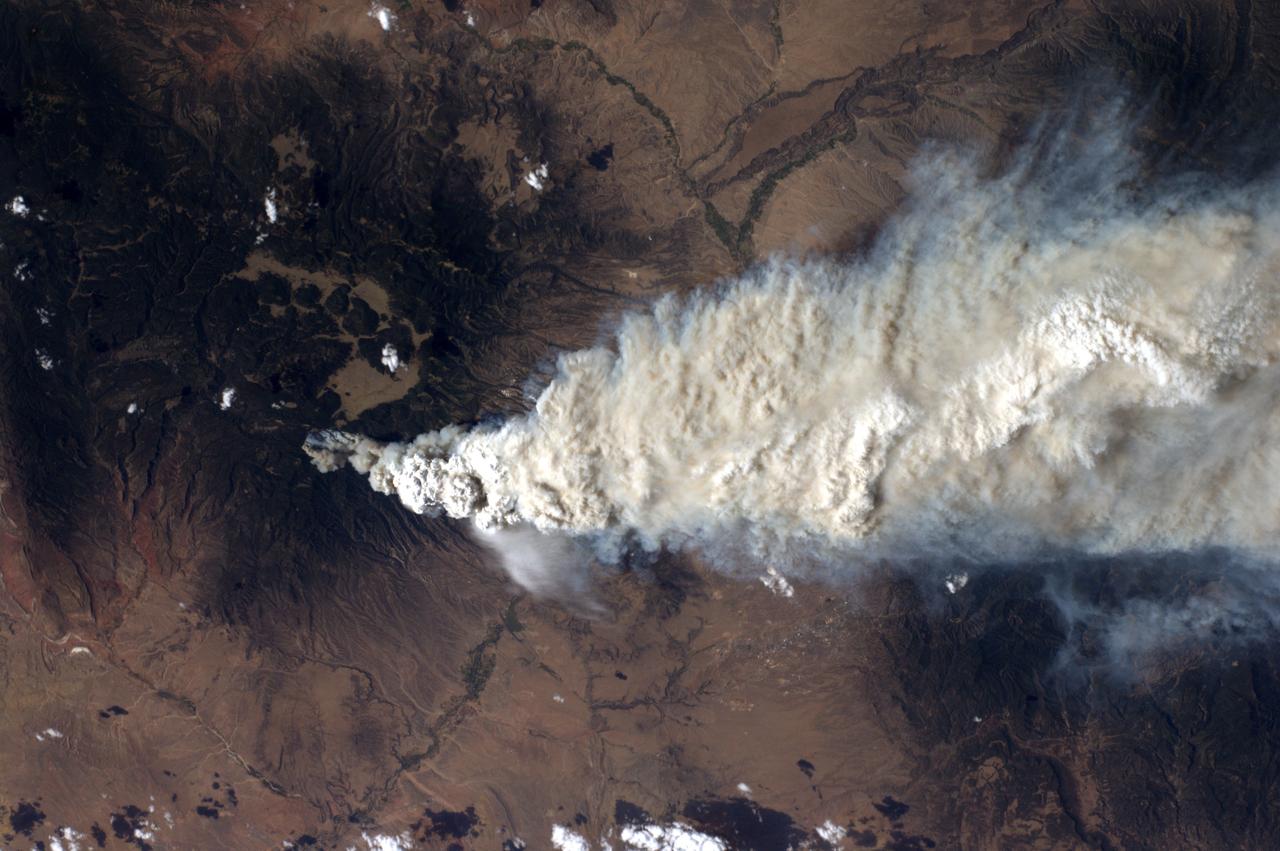
ISS028-E-010044 (27 June 2011) --- A crew member aboard the International Space Station, flying at an altitude of approximately 235 statute miles on June 27, 2011, exposed this still photograph of a major fire in the Jemez Mountains of the Santa Fe National Forest in north-central New Mexico. The fire is just southwest of Los Alamos National Laboratories.
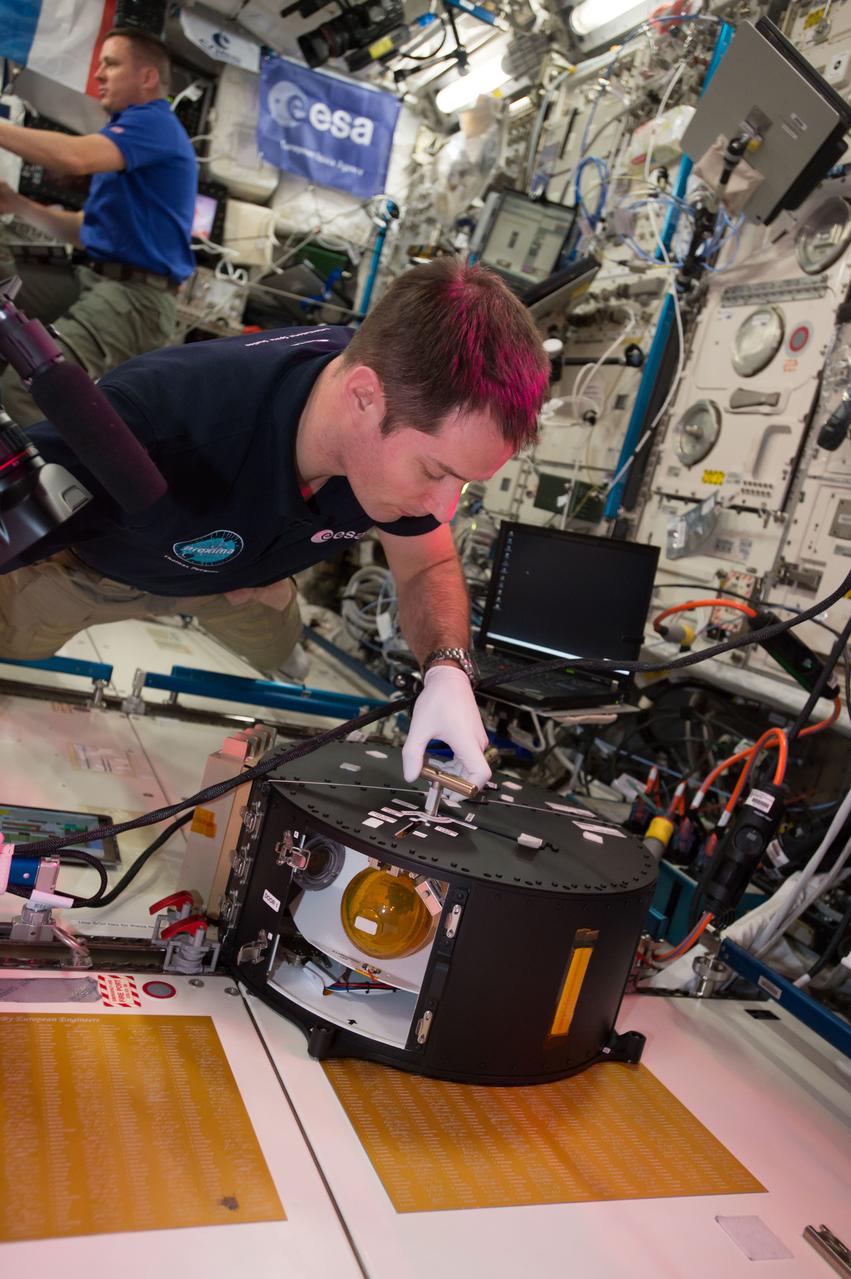
iss051e036148 (5/3/2016) --- European Space Agency (ESA) astronaut Thomas Pesquet works with Fluid Dynamics in Space (FLUIDICS) hardware during the completion of experiment runs. FE Jack Fischer is visible in the background. Image was taken in the Columbus European Laboratory. The FLUIDICS investigation evaluates the Center of Mass (CoM) position regarding a temperature gradient on a representation of a fuel tank. The observation of capillary wave turbulence on the surface of a fluid layer in a low-gravity environment can provide insights into measuring the existing volume in a sphere.
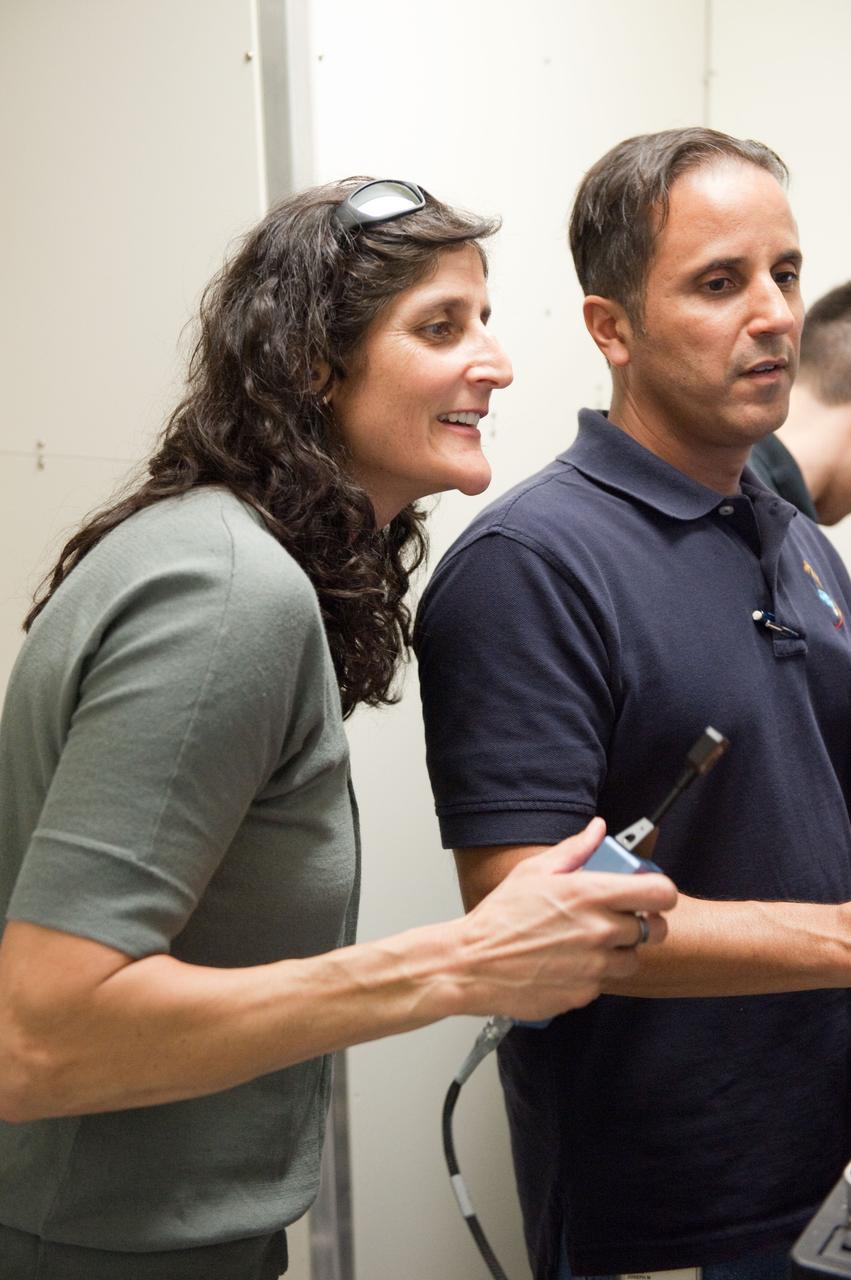
Date: 03-08-12 Location: Bldg 5, SSTF Subject: Expedition 32 (Soyuz 31) crew membesr Aki Hoshide, Sunita Williams and Joseph Acaba during JAXA's HTV sim, FE Rendezvous/Deployment in building 5's space station training facility with Robo instructor Melanie Miller. Photographer: James Blair
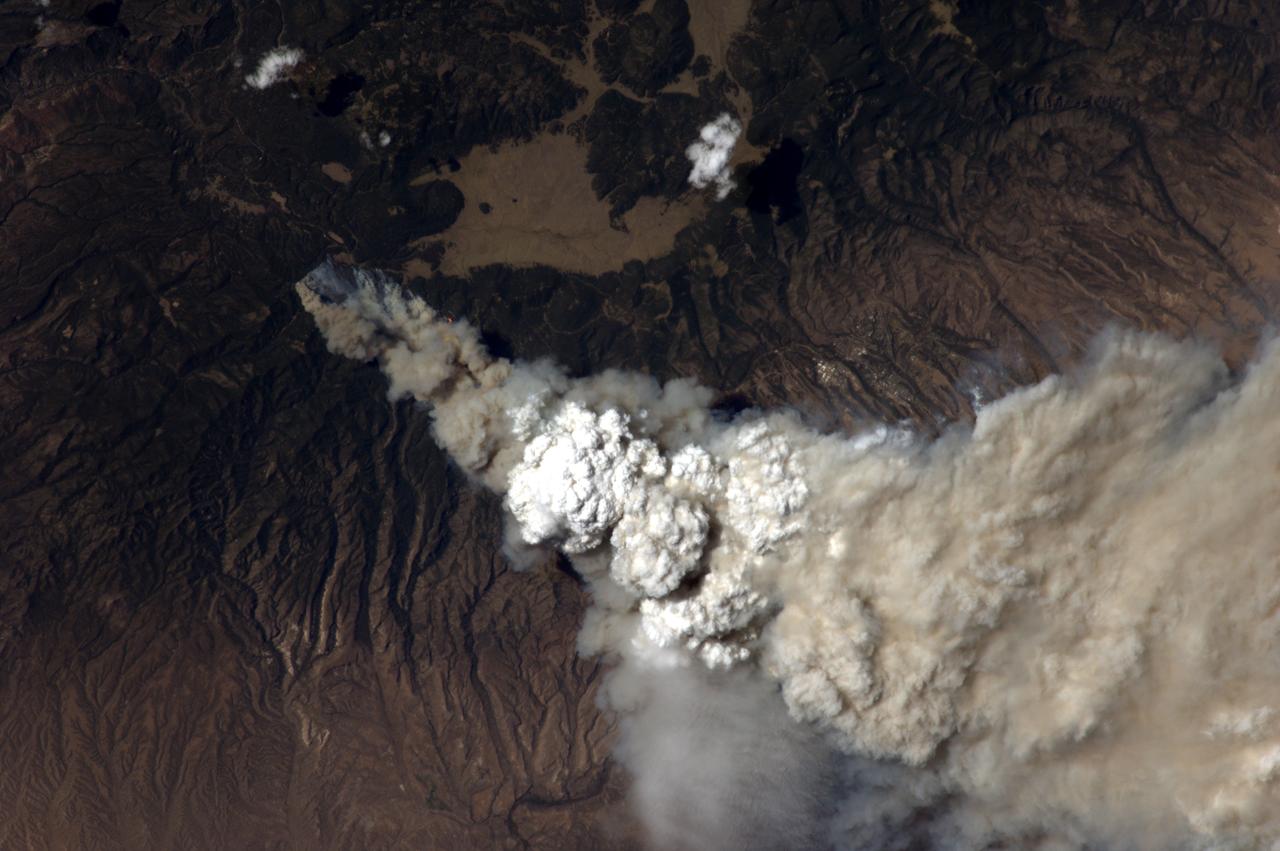
ISS028-E-010043 (27 June 2011) --- A crew member aboard the International Space Station, flying at an altitude of approximately 235 statute miles on June 27, 2011, exposed this still photograph of a major fire in the Jemez Mountains of the Santa Fe National Forest in north-central New Mexico. The fire is just southwest of Los Alamos National Laboratories, which can be seen just right of center.
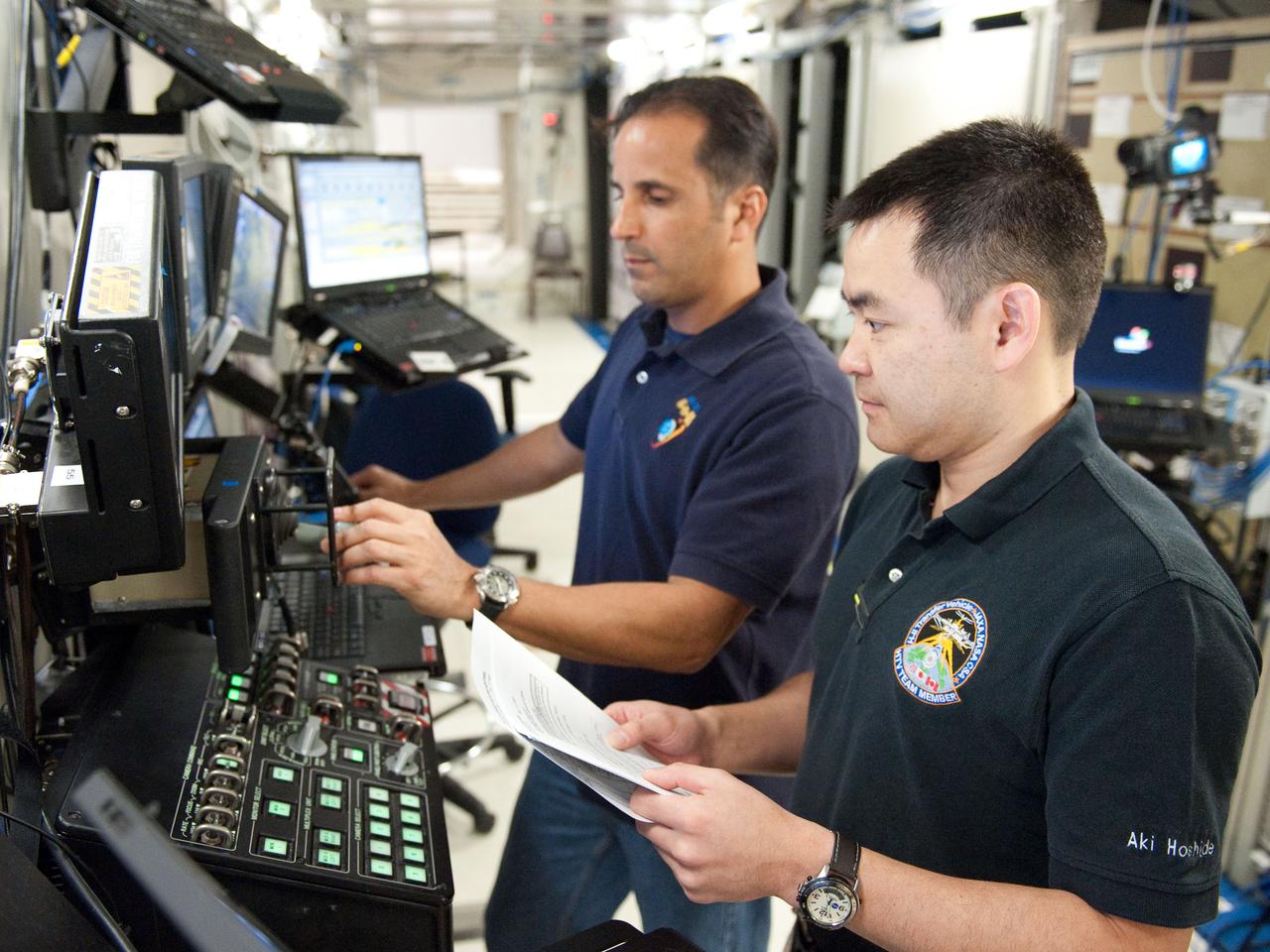
Date: 03-08-12 Location: Bldg 5, SSTF Subject: Expedition 32 (Soyuz 31) crew membesr Aki Hoshide, Sunita Williams and Joseph Acaba during JAXA's HTV sim, FE Rendezvous/Deployment in building 5's space station training facility with Robo instructor Melanie Miller. Photographer: James Blair
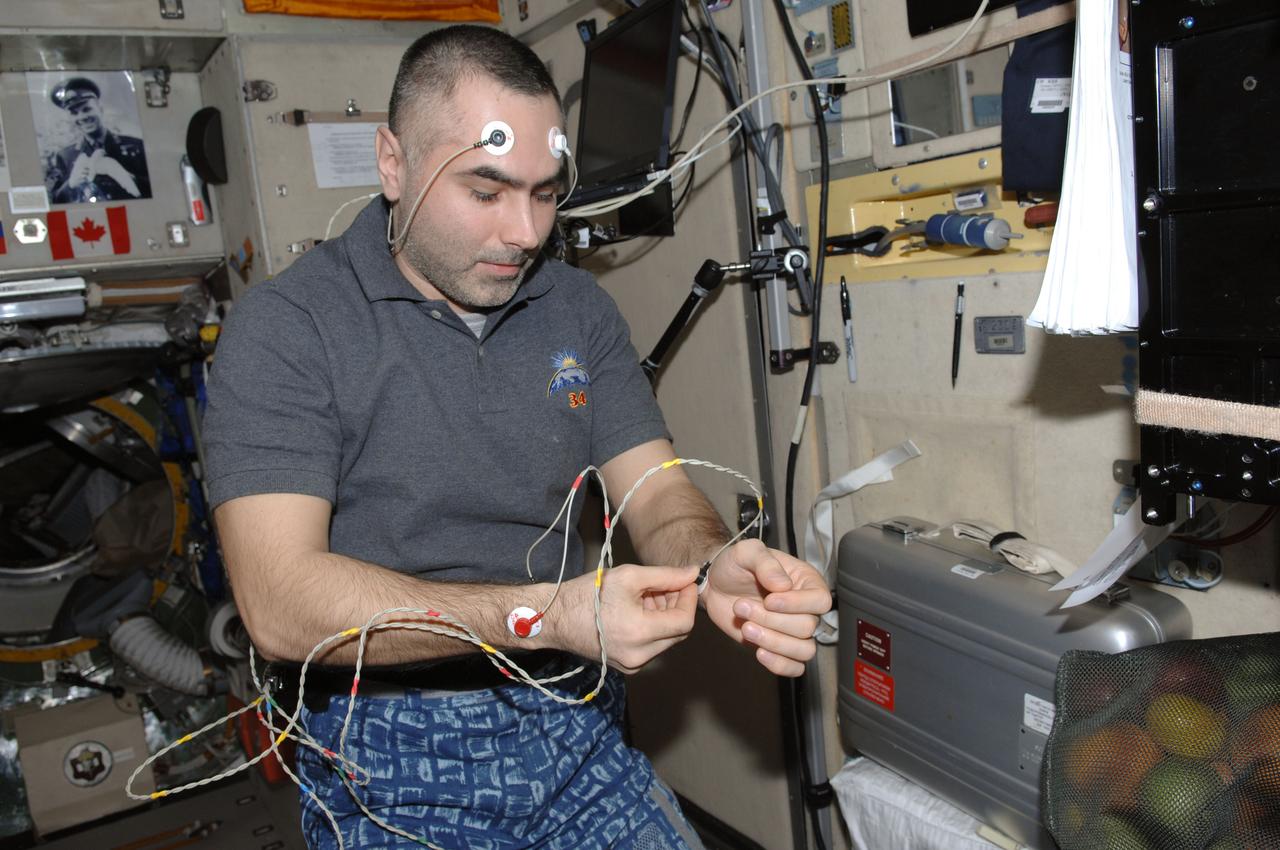
iss034e045766 (2/13/2013) --- Cosmonaut Evgeny Tarelkin, Expedition 34 Flight Engineer (FE), conducting SPRUT-2 Experiment, in the Service Module (SM) aboard the International Space Station (ISS). The Study of Changes in Body Composition and Distribution of Fluids Within the Human Body During Long-term Spaceflight (Sprut-2) studies the change in body composition and fluid distribution in the human body during long-term spaceflight in order to evaluate adaptation mechanisms and improve countermeasures.
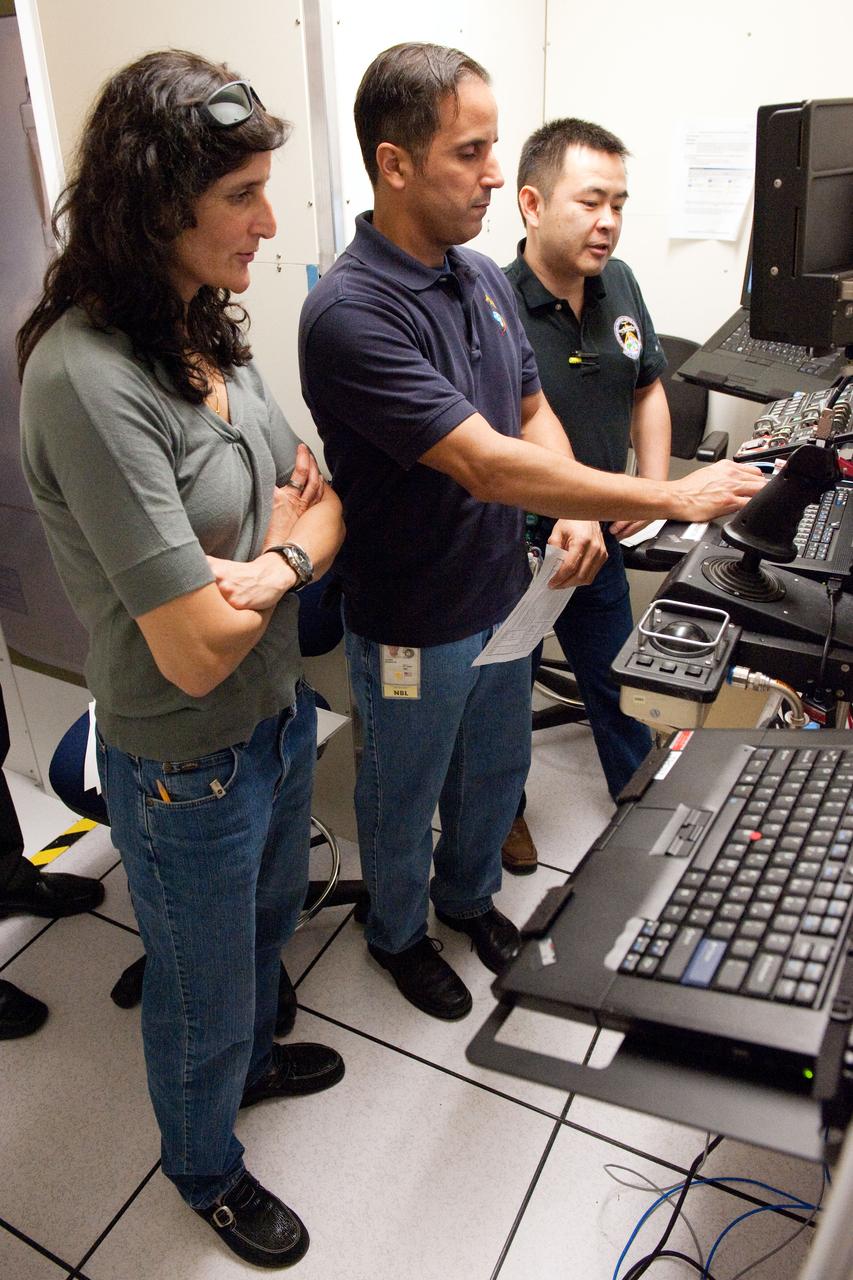
Date: 03-08-12 Location: Bldg 5, SSTF Subject: Expedition 32 (Soyuz 31) crew membesr Aki Hoshide, Sunita Williams and Joseph Acaba during JAXA's HTV sim, FE Rendezvous/Deployment in building 5's space station training facility with Robo instructor Melanie Miller. Photographer: James Blair
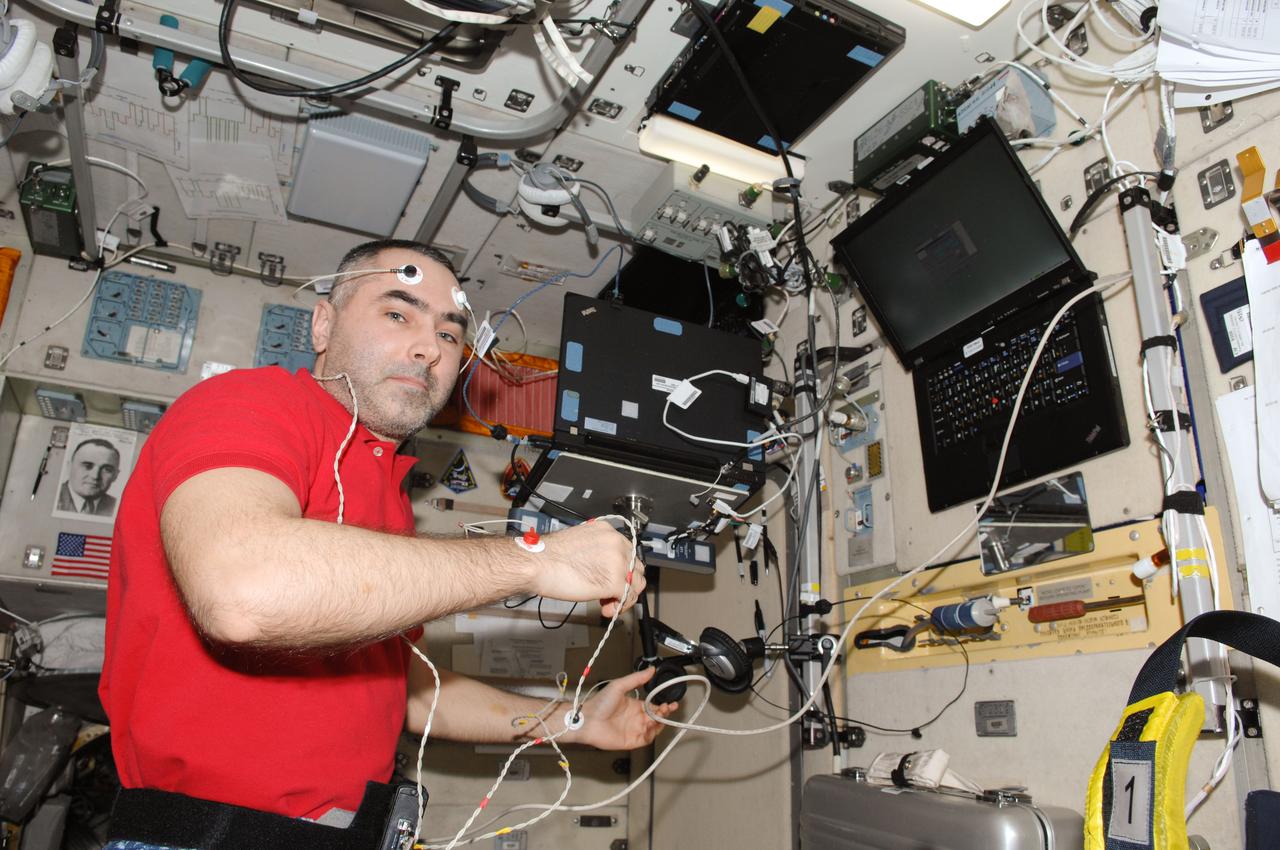
iss034e061633 (3/6/2013) --- Cosmonaut Evgeny Tarelkin, Flight Engineer (FE) conducting Sprut-2 Experiment run, in the Service Module (SM) aboard the International Space Station (ISS). The Study of Changes in Body Composition and Distribution of Fluids Within the Human Body During Long-term Spaceflight (Sprut-2) studies the change in body composition and fluid distribution in the human body during long-term spaceflight in order to evaluate adaptation mechanisms and improve countermeasures.
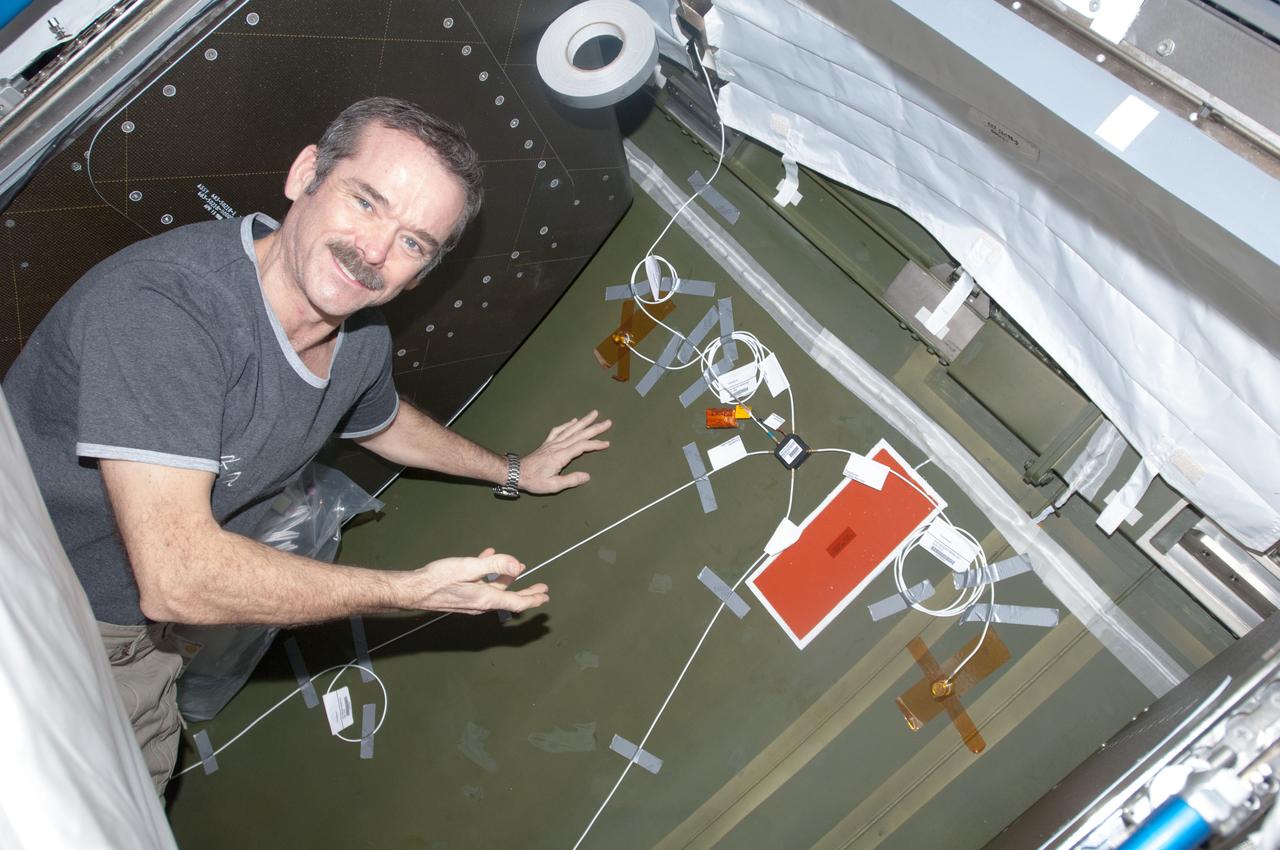
View of Canadian Space Agency (CSA) Chris Hadfield,Expedition 34 Flight Engineer (FE),installing Ultra-Sonic Background Noise Tests (UBNT) sensors behind rack in the U.S. Laboratory using the International Space Station (ISS) as Testbed for Analog Research (ISTAR) procedures. These sensors detect high frequency noise levels generated by ISS hardware and equipment operating within the U.S. Laboratory. Photo was taken during Expedition 34.
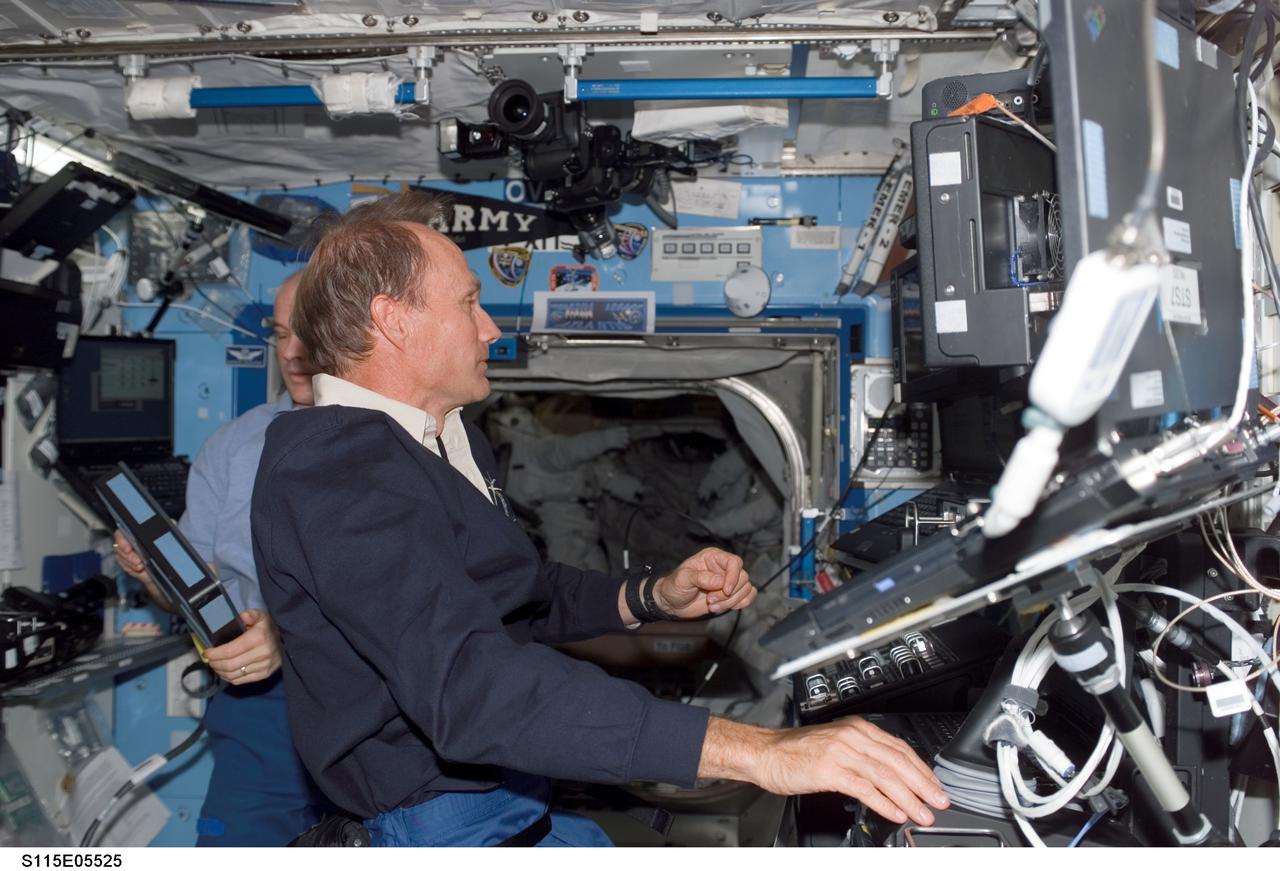
View of Astronauts Steve MacLean, Canadian Space Agency (CSA), Mission Specialist (MS), and Jeffrey N. Williams, Expedition 13 Flight Engineer (FE) and NASA Space Station Science Officer working at the Space Stations Robotic Arm to slowly move the 17 and a half ton P3/P4 truss to the port side of the Integrated Truss System. They will align it using a television camera and then mate it to the P1. Photo was taken in the U.S. Laboratory/Destiny during Expedition 13 / STS-115 joint operations.
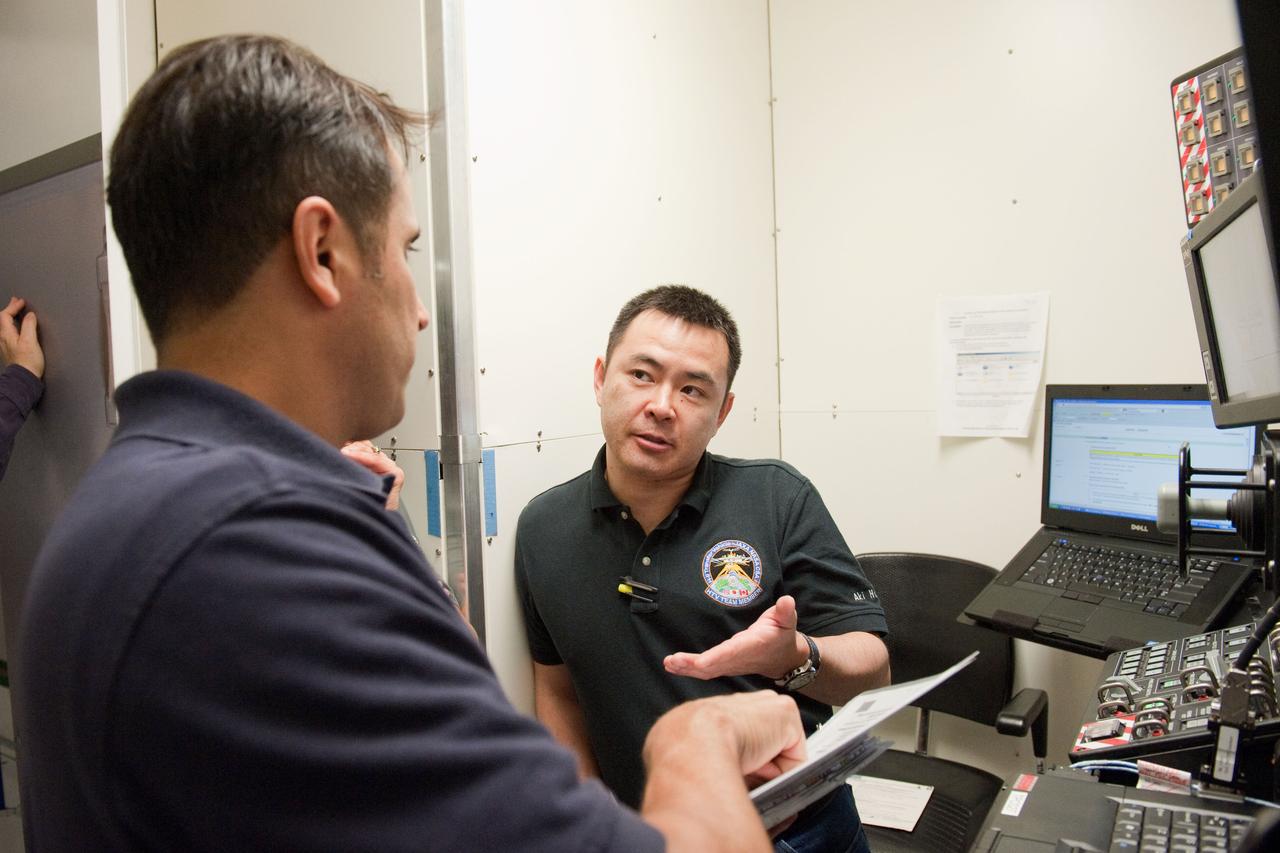
Date: 03-08-12 Location: Bldg 5, SSTF Subject: Expedition 32 (Soyuz 31) crew membesr Aki Hoshide, Sunita Williams and Joseph Acaba during JAXA's HTV sim, FE Rendezvous/Deployment in building 5's space station training facility with Robo instructor Melanie Miller. Photographer: James Blair
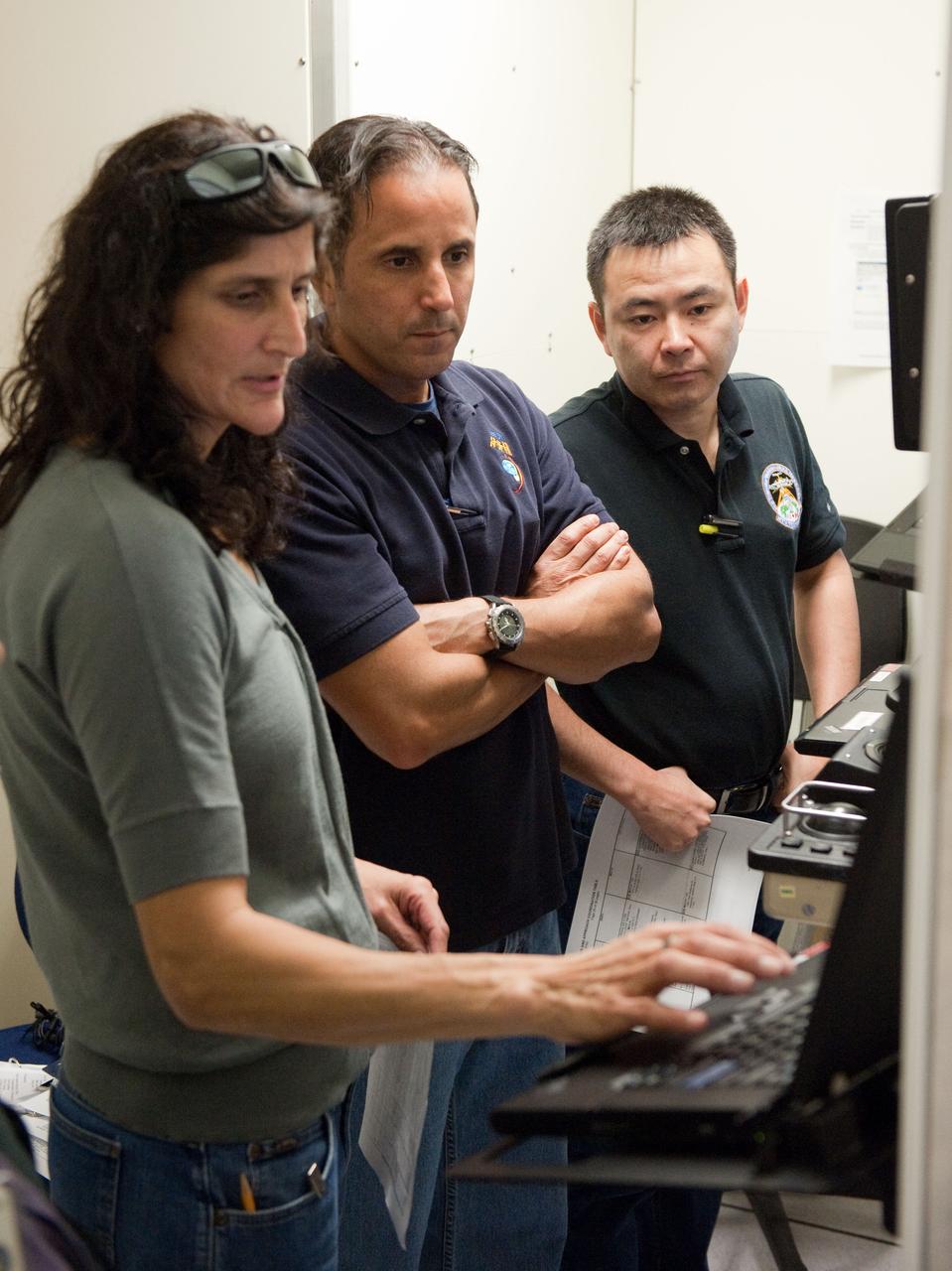
Date: 03-08-12 Location: Bldg 5, SSTF Subject: Expedition 32 (Soyuz 31) crew membesr Aki Hoshide, Sunita Williams and Joseph Acaba during JAXA's HTV sim, FE Rendezvous/Deployment in building 5's space station training facility with Robo instructor Melanie Miller. Photographer: James Blair
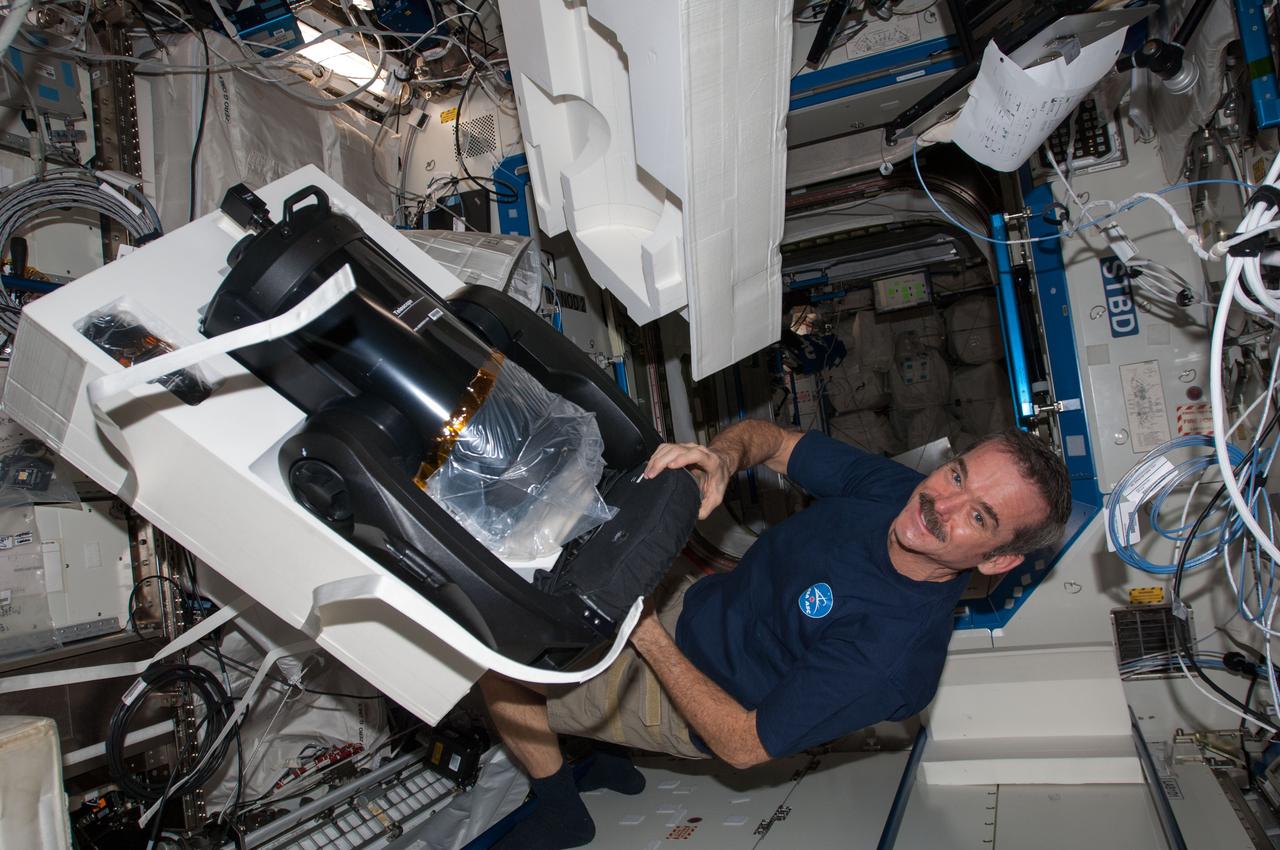
View of Canadian Space Agency (CSA) Chris Hadfield,Expedition 34 Flight Engineer (FE),unpacking ISS SERVIR Environmental Research and Visualization System (ISERV) in the U.S. Laboratory. ISERV is a fully automated image data acquisition system in the Window Observational Research Facility (WORF) rack. Kevin Ford,Expedition 34 Commander is visible on the right of frame. Photo was taken during Expedition 34.
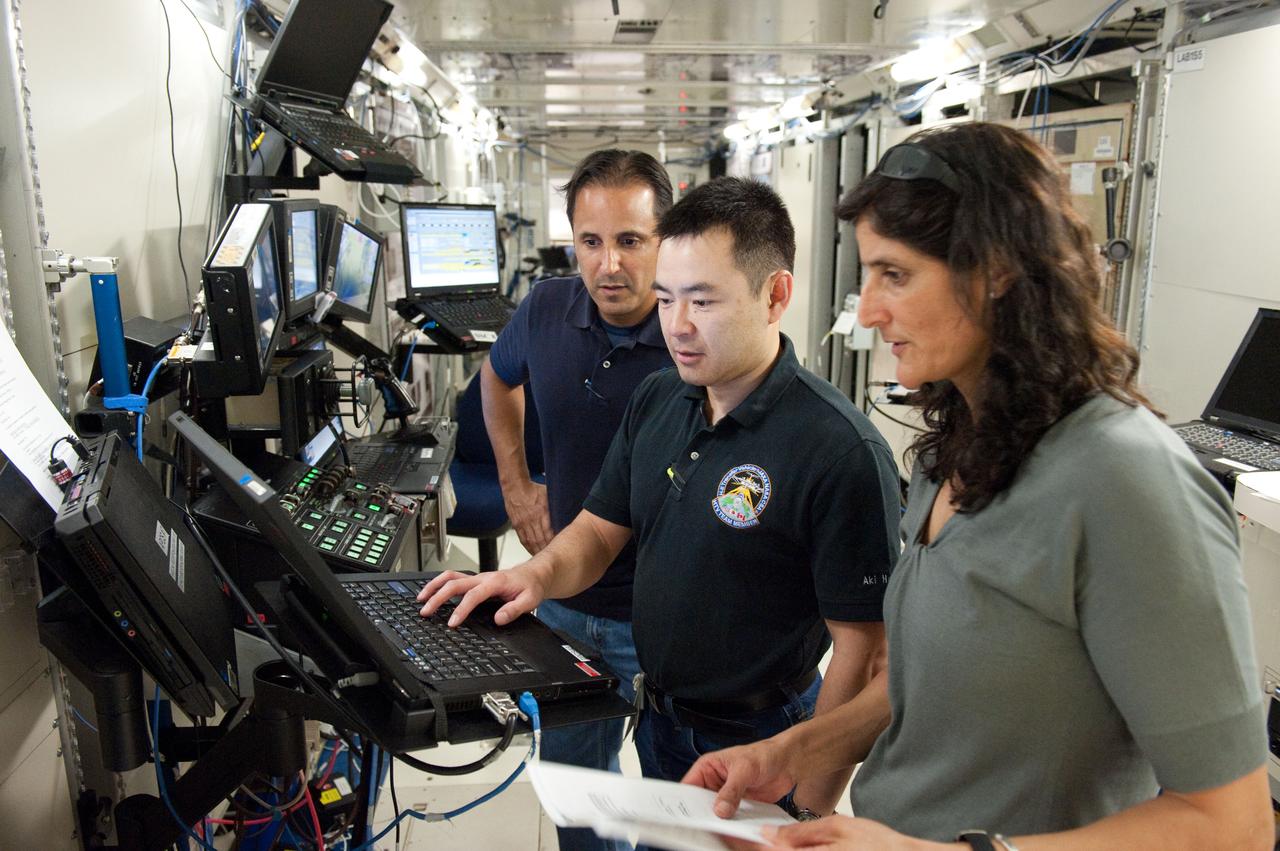
Date: 03-08-12 Location: Bldg 5, SSTF Subject: Expedition 32 (Soyuz 31) crew membesr Aki Hoshide, Sunita Williams and Joseph Acaba during JAXA's HTV sim, FE Rendezvous/Deployment in building 5's space station training facility with Robo instructor Melanie Miller. Photographer: James Blair
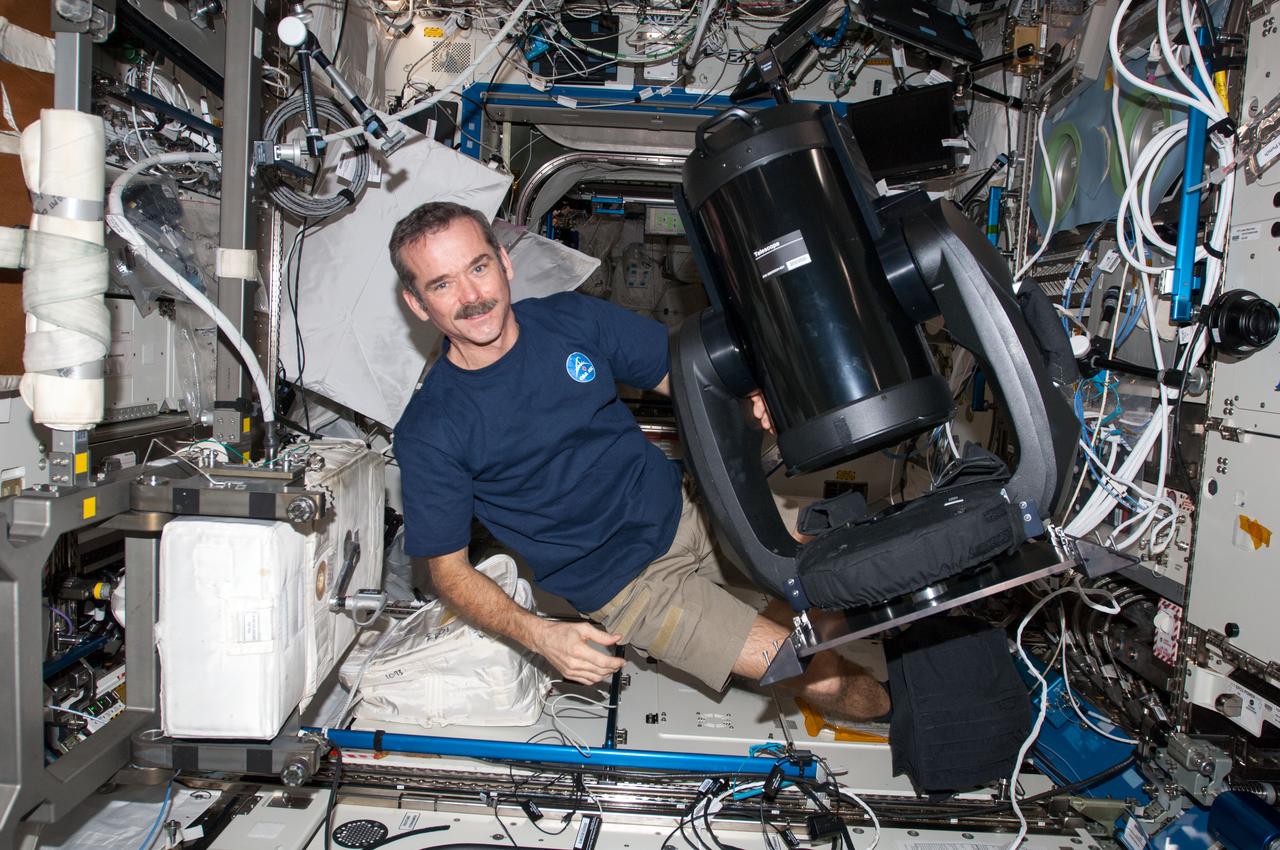
View of Canadian Space Agency (CSA) Chris Hadfield,Expedition 34 Flight Engineer (FE), preparing to setup the ISS SERVIR Environmental Research and Visualization System (ISERV) in the U.S. Laboratory. ISERV is a fully automated image data acquisition system in the Window Observational Research Facility (WORF) rack. Kevin Ford,Expedition 34 Commander is visible on the right of frame. Photo was taken during Expedition 34.
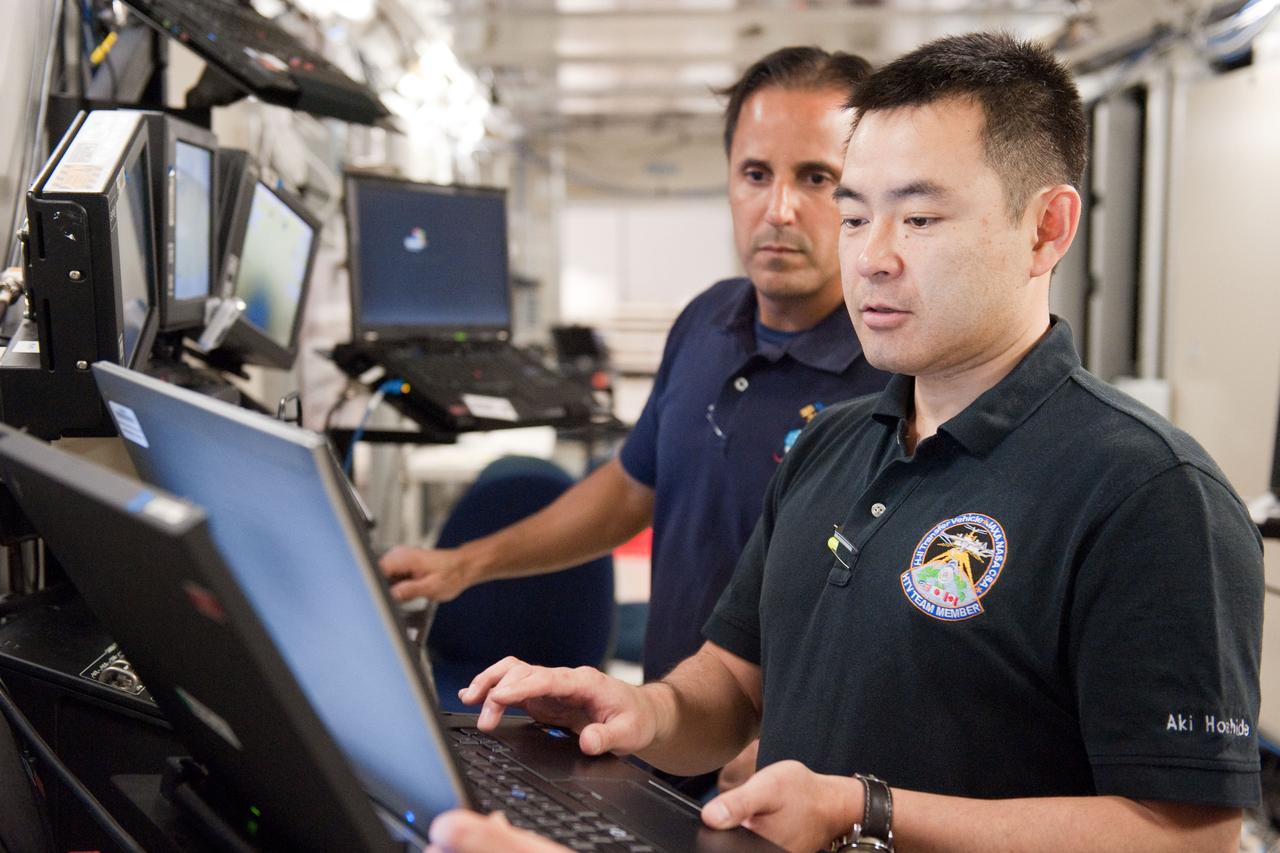
Date: 03-08-12 Location: Bldg 5, SSTF Subject: Expedition 32 (Soyuz 31) crew membesr Aki Hoshide, Sunita Williams and Joseph Acaba during JAXA's HTV sim, FE Rendezvous/Deployment in building 5's space station training facility with Robo instructor Melanie Miller. Photographer: James Blair
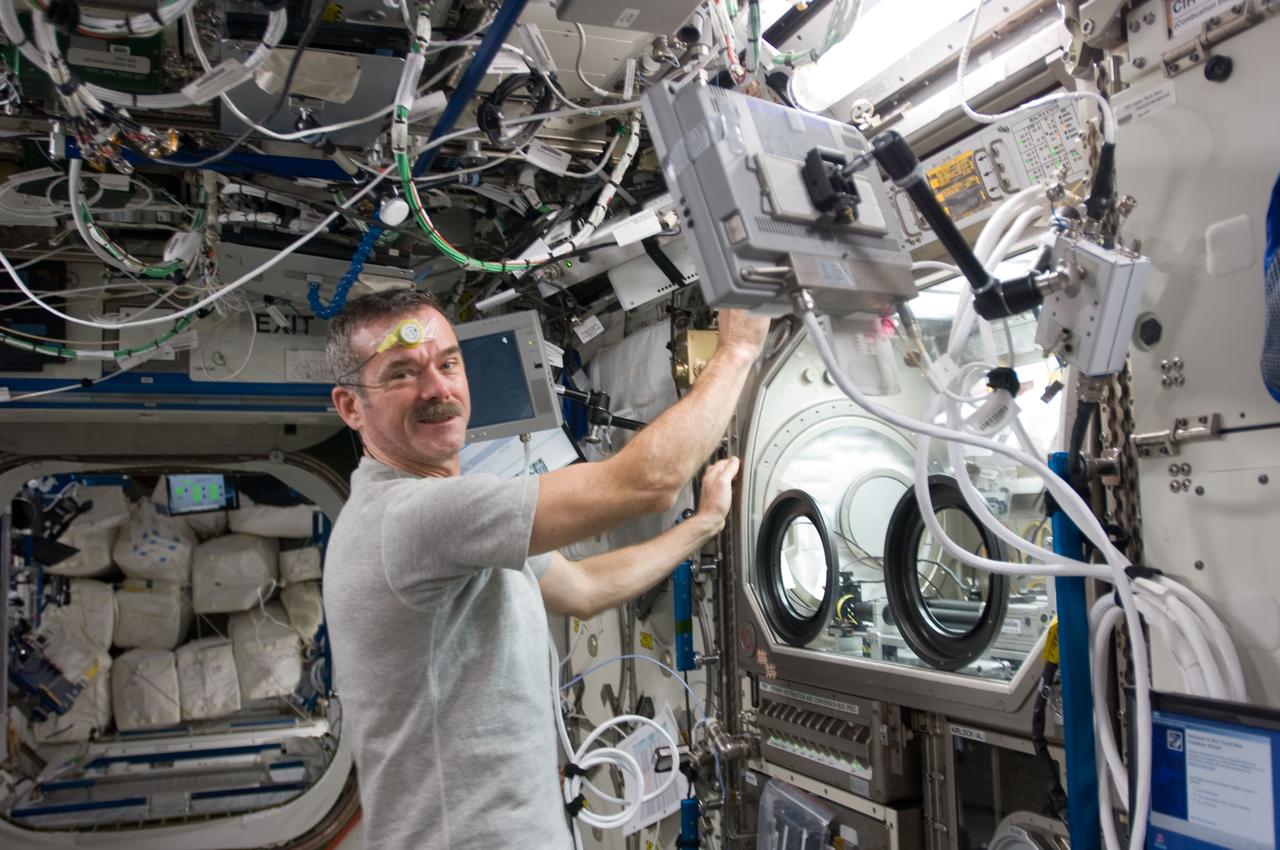
View of Canadian Space Agency (CSA) Chris Hadfield,Expedition 34 Flight Engineer (FE), during the Investigating the Structure of Paramagnetic Aggregates from Colloidal Emulsions 3 (InSPACE-3) experiment. InSPACE-3 collects and records data on fluids containing ellipsoid-shaped particles that change the physical properties of the fluids in response to magnetic fields. Photo was taken during Expedition 34.
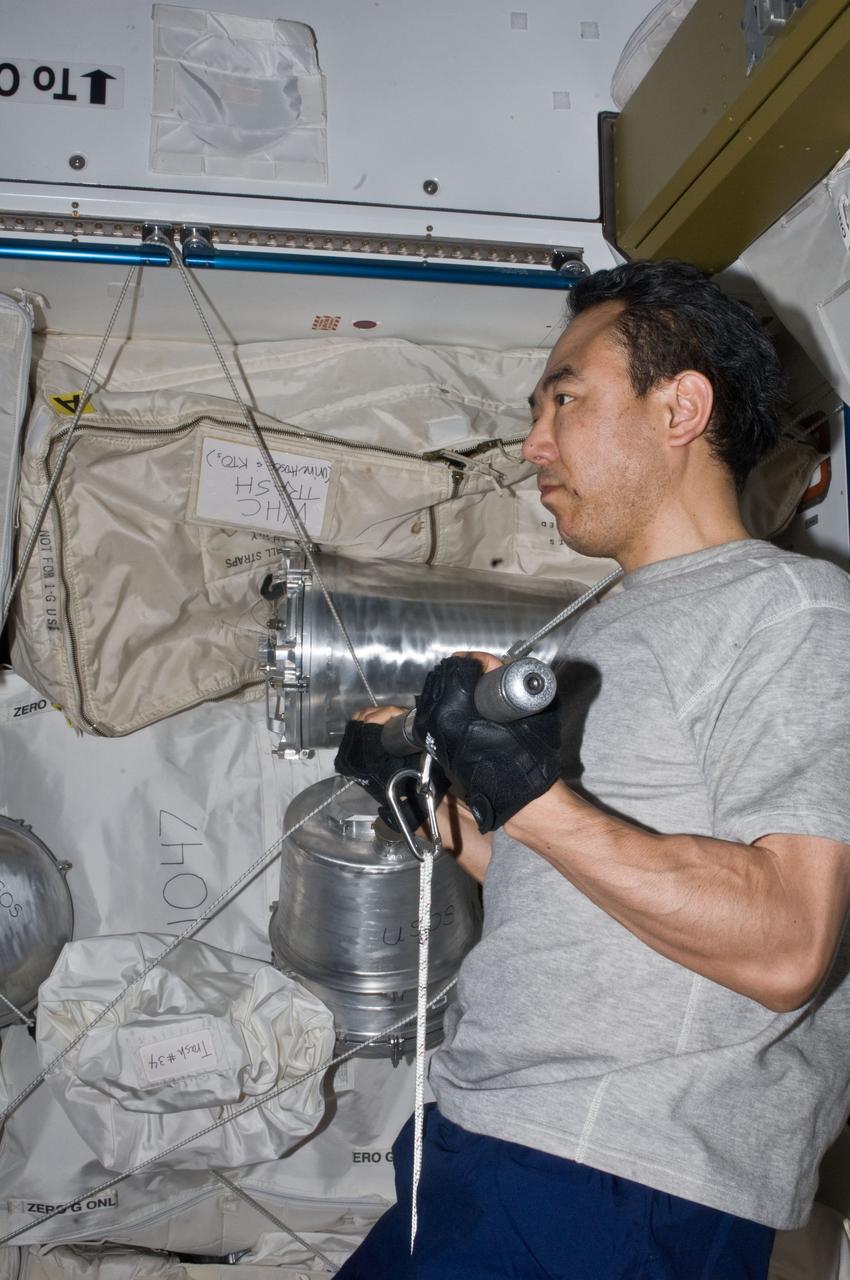
ISS028-E-019507 (30 July 2011) --- Japan Aerospace Exploration Agency astronaut Satoshi Furukawa, Expedition 28 flight engineer, uses the short bar for the advanced Resistive Exercise Device (aRED) equipment to perform upper body strengthening pull-ups in the Tranquility node of the International Space Station.
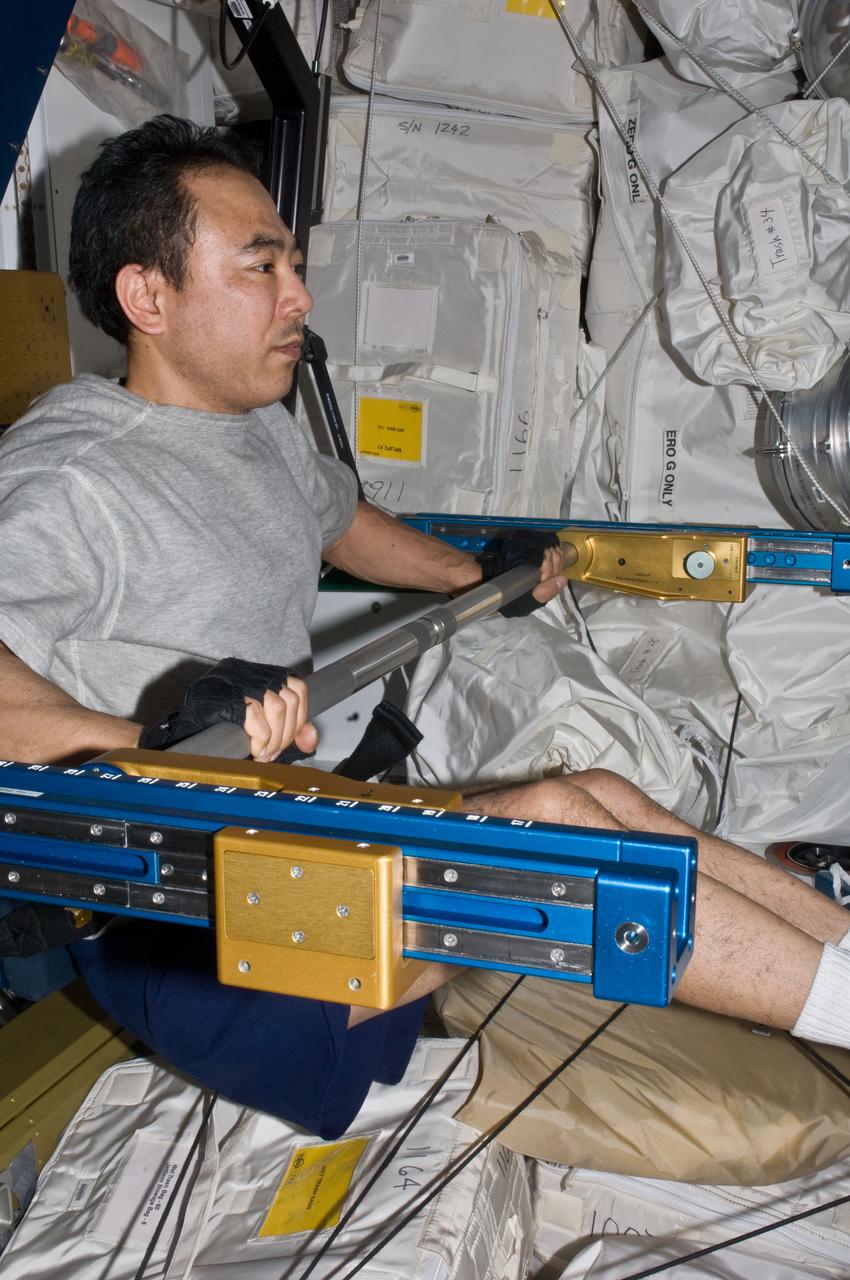
ISS028-E-019528 (30 July 2011) --- Japan Aerospace Exploration Agency astronaut Satoshi Furukawa, Expedition 28 flight engineer, exercises using the advanced Resistive Exercise Device (aRED) in the Tranquility node of the International Space Station.
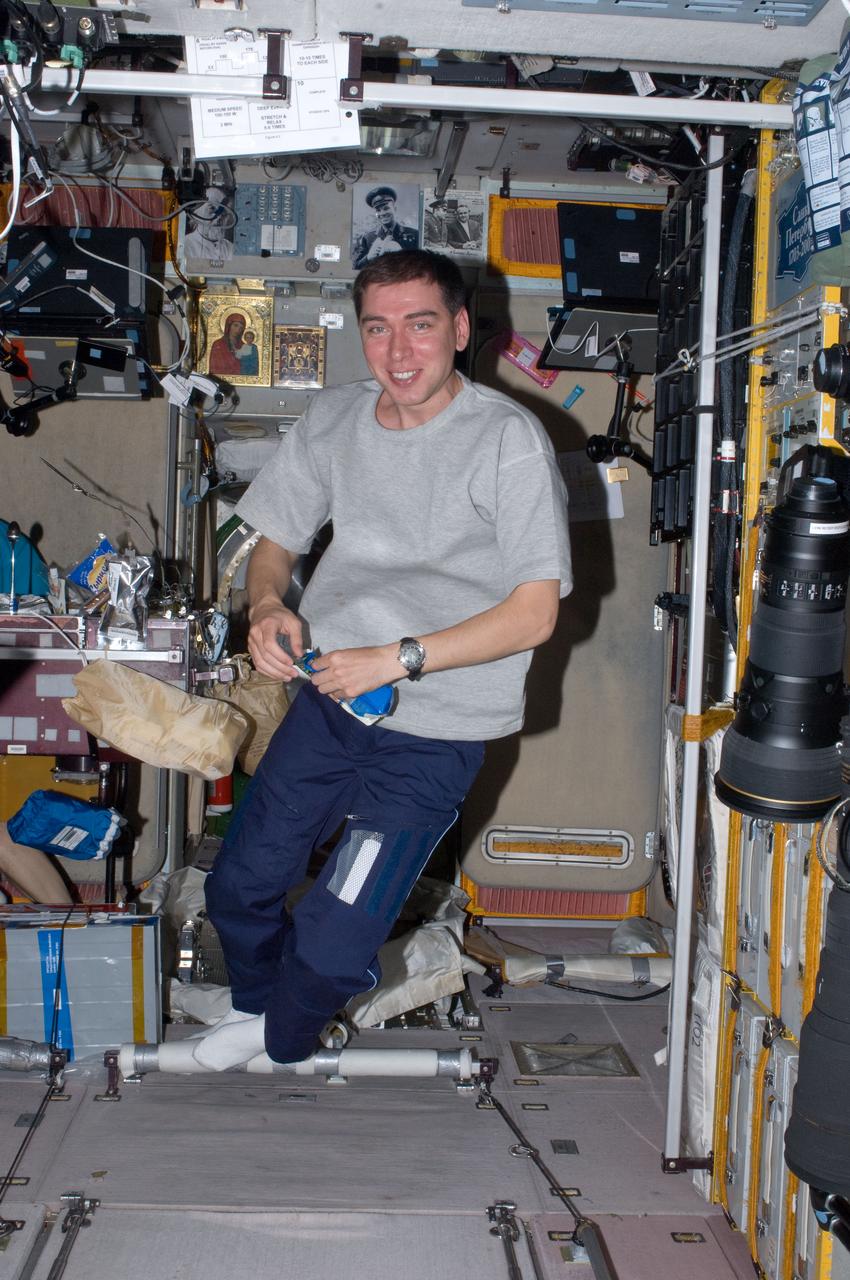
ISS028-E-007684 (17 June 2011) --- Russian cosmonaut Sergei Volkov, Expedition 28 flight engineer, is pictured near the galley in the Zvezda Service Module of the International Space Station.
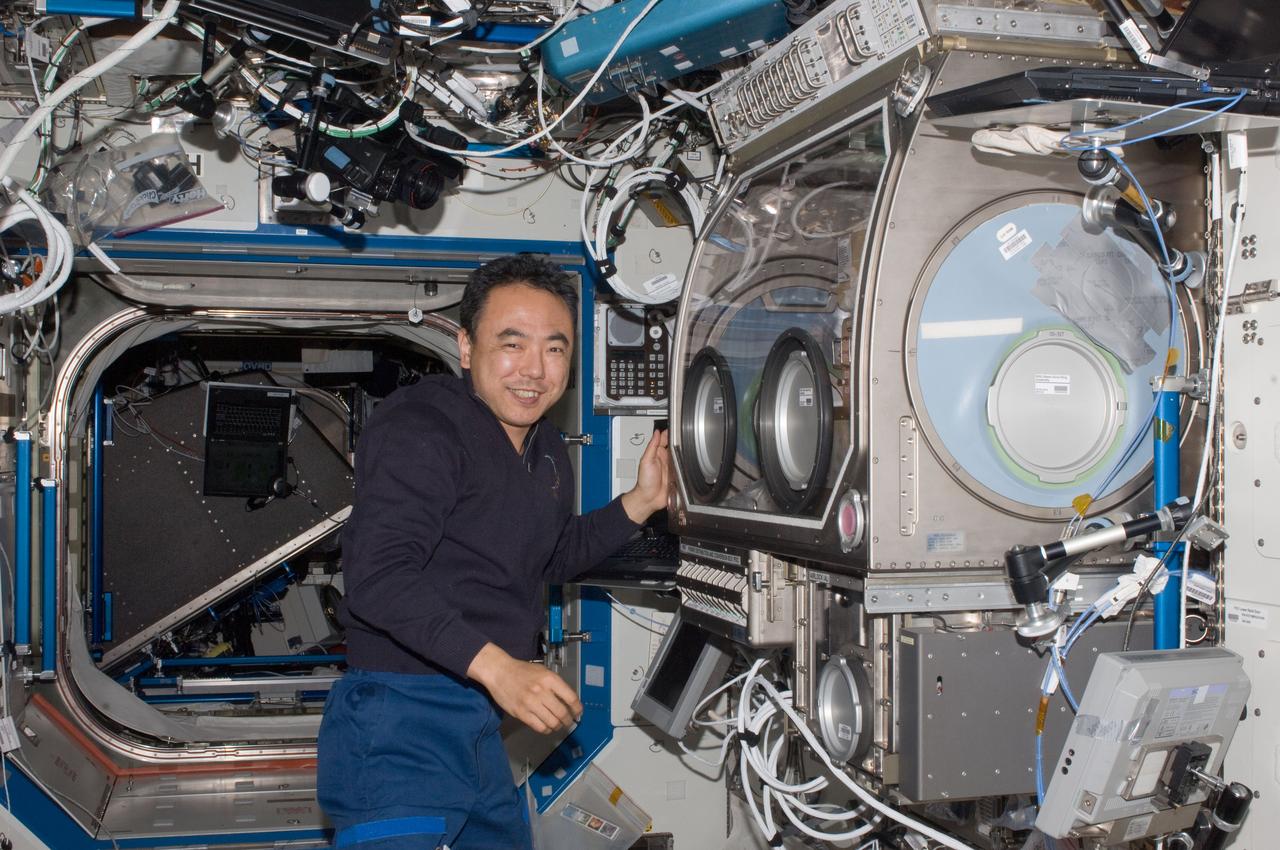
ISS028-E-012405 (30 June 2011) --- Japan Aerospace Exploration Agency astronaut Satoshi Furukawa, Expedition 28 flight engineer, is pictured near the Microgravity Science Glovebox (MSG) located in the Destiny laboratory of the International Space Station.
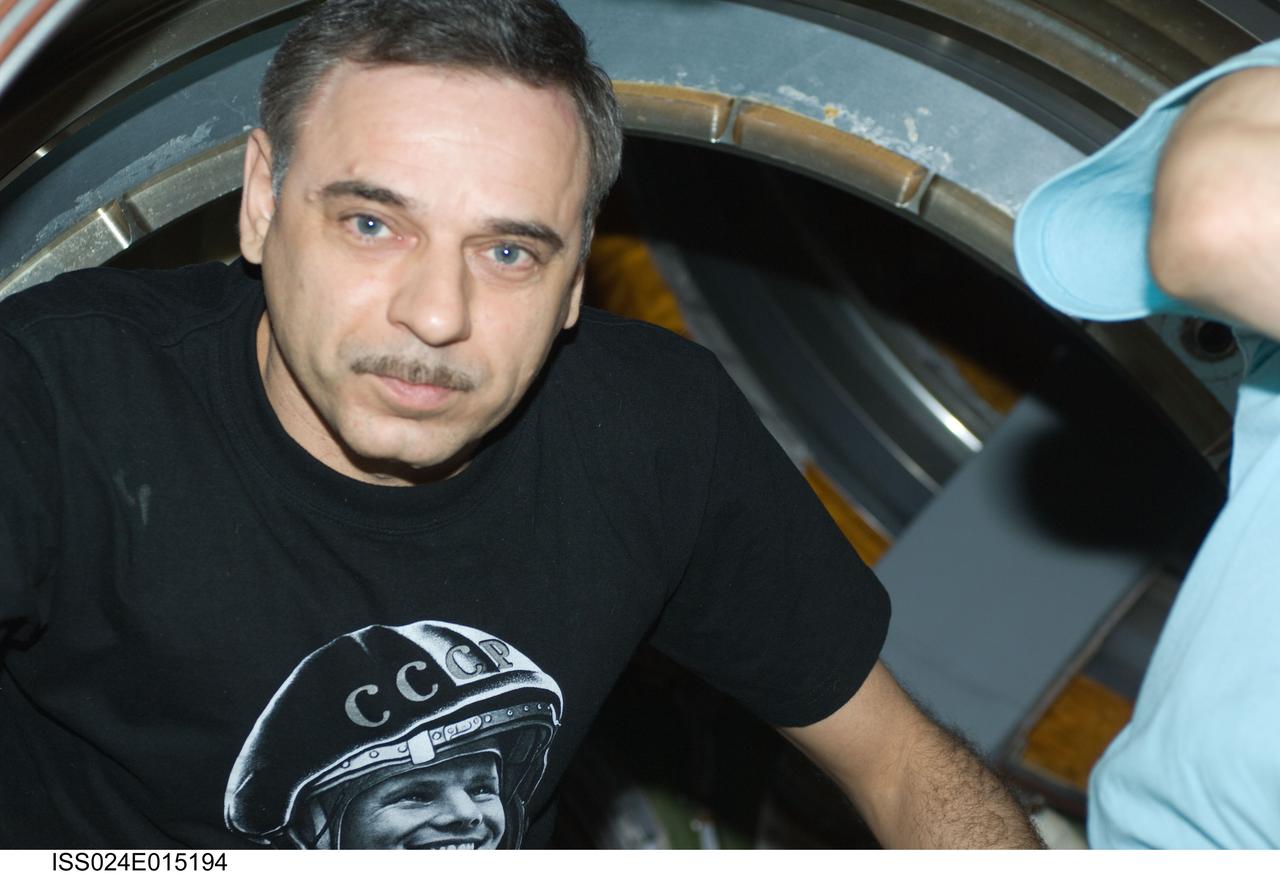
ISS024-E-015194 (23 Sept. 2010) --- Russian cosmonaut Mikhail Kornienko, Expedition 24 flight engineer, makes final preparations for his departure in the Soyuz TMA-18 docked to the Poisk Mini-Research Module 2 (MRM2) of the International Space Station. The Soyuz undocked at 10:02 p.m. (EDT) on Sept. 24, 2010, carrying Kornienko, Russian cosmonaut Alexander Skvortsov and NASA astronaut Tracy Caldwell Dyson (both out of frame). Originally scheduled for Sept. 23, the Soyuz undocked a day later due to a Poisk-side hatch sensor problem, which prevented hooks on the Poisk side of the docking interface from opening.
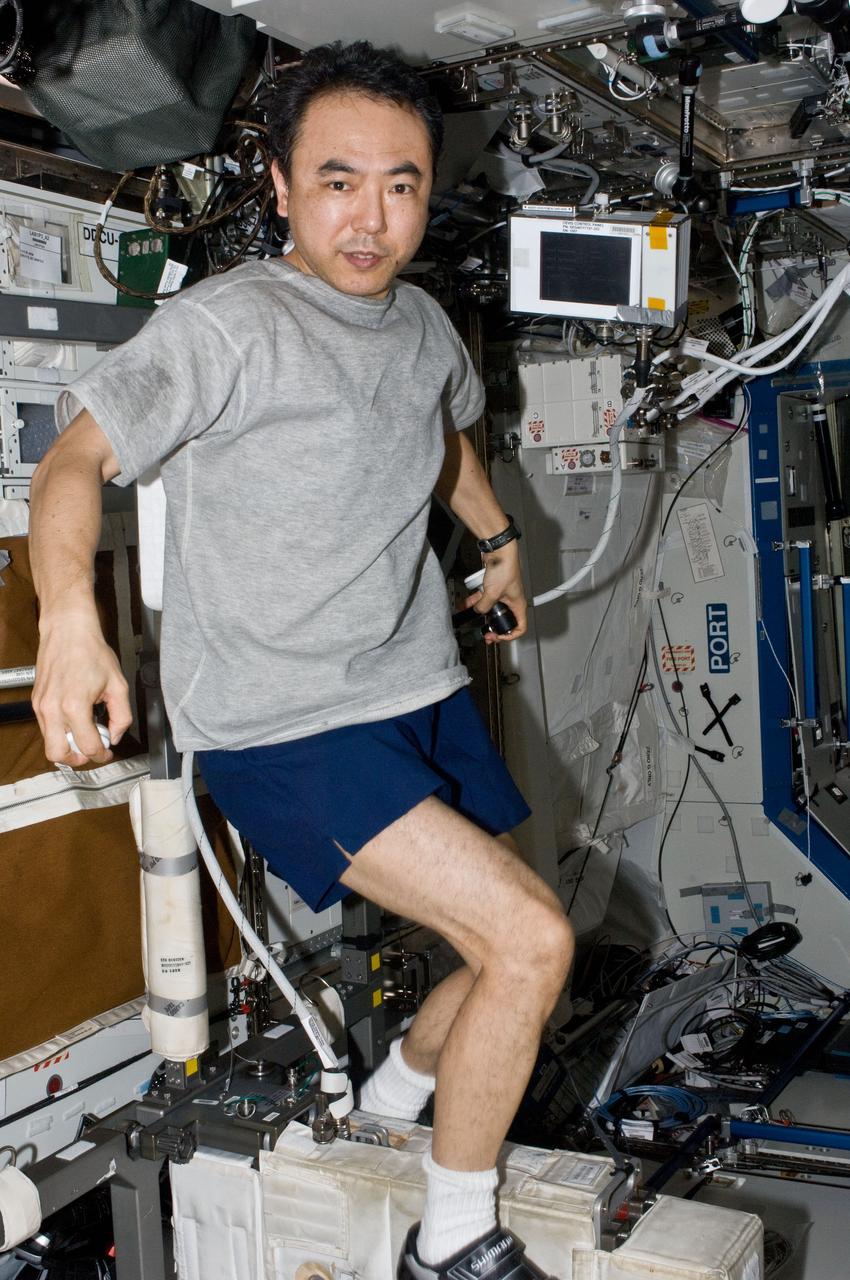
ISS028-E-019560 (30 July 2011) --- Japan Aerospace Exploration Agency astronaut Satoshi Furukawa, Expedition 28 flight engineer, exercises on the Cycle Ergometer with Vibration Isolation System (CEVIS) in the Destiny laboratory of the International Space Station.
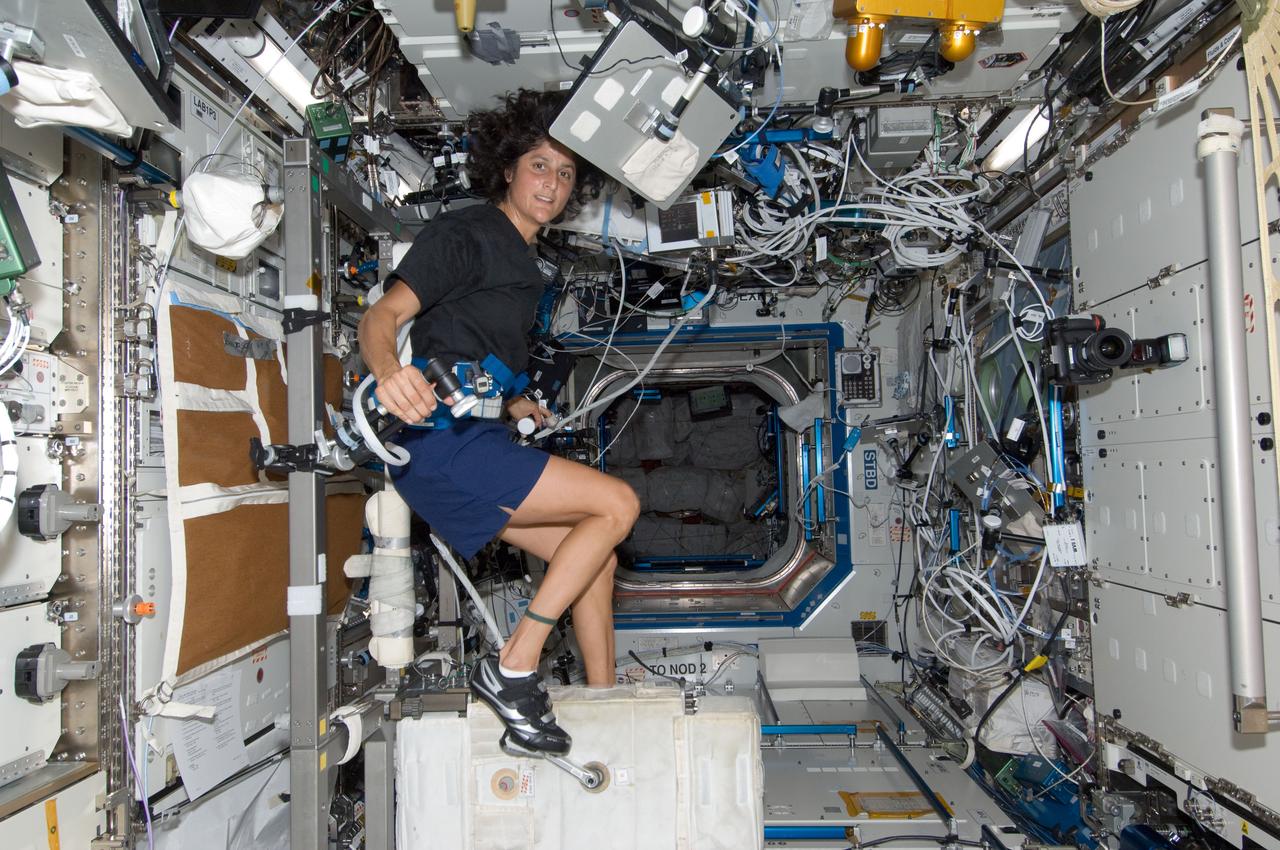
ISS032-E-008595 (20 July 2012) --- NASA astronaut Sunita Williams, Expedition 32 flight engineer, exercises on the Cycle Ergometer with Vibration Isolation System (CEVIS) in the Destiny laboratory of the International Space Station.
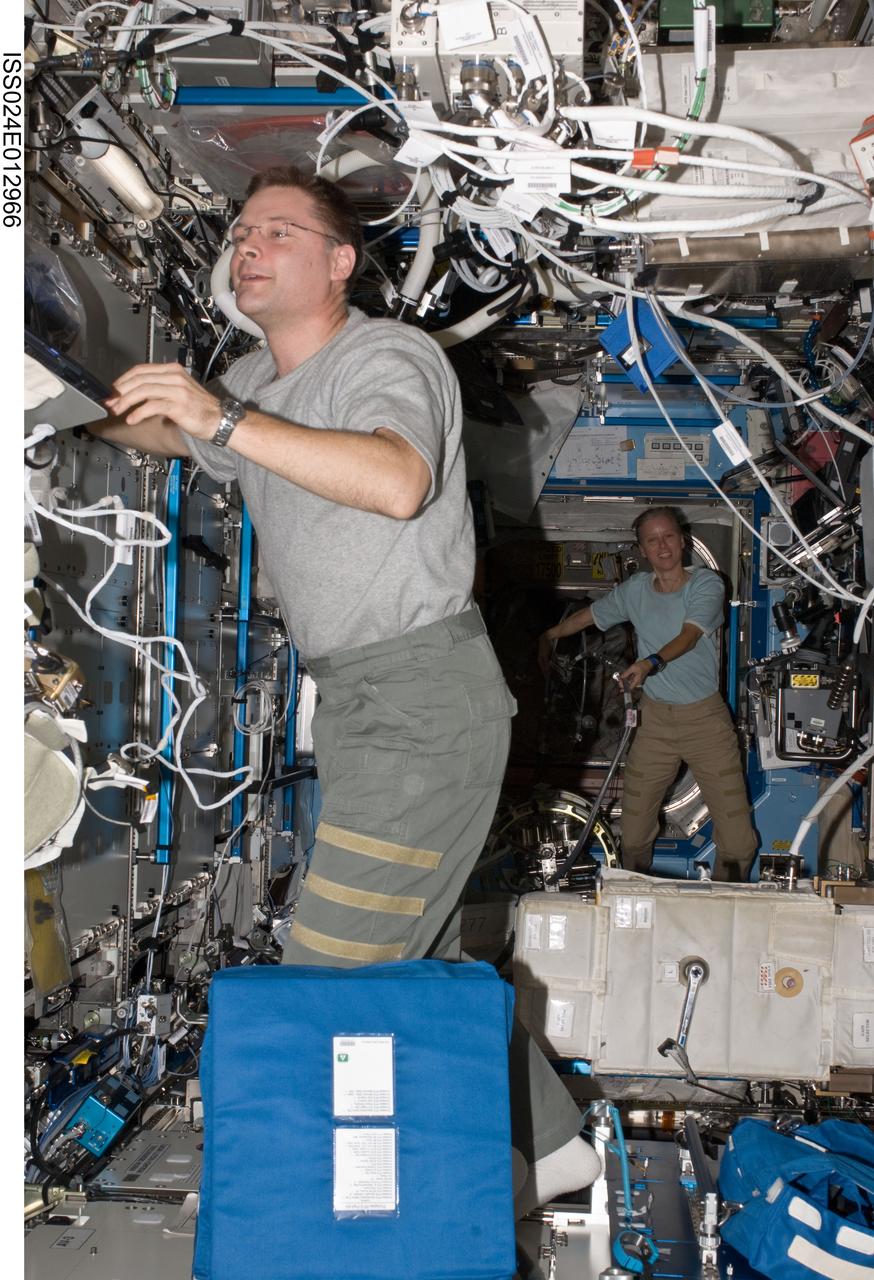
ISS024-E-012966 (31 Aug. 2010) --- NASA astronauts Doug Wheelock and Shannon Walker, both Expedition 24 flight engineers, work in the Destiny laboratory of the International Space Station.
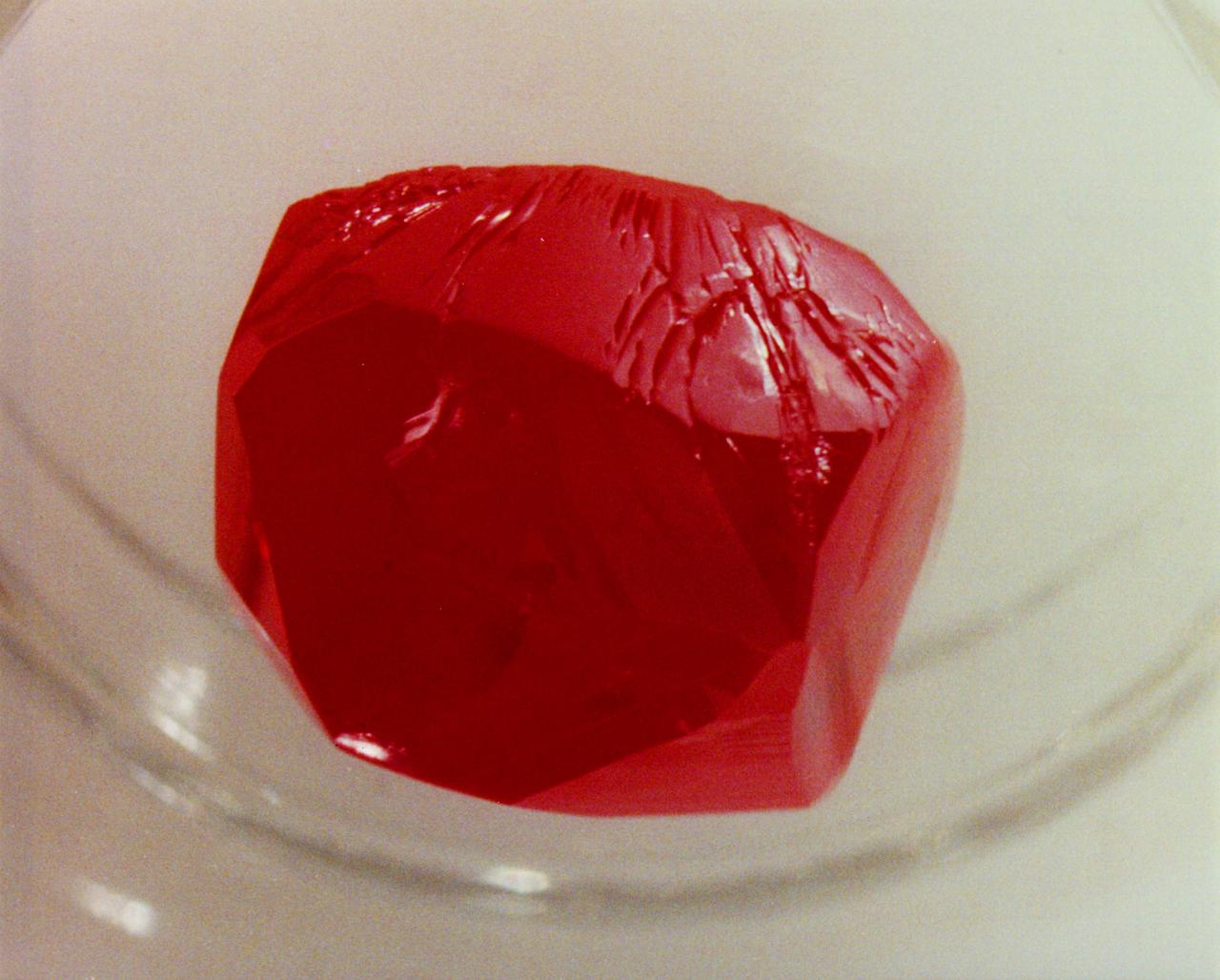
Vapor Crystal Growth System developed in IML-1, Mercuric Iodide Crystal grown in microgravity FES/VCGS (Fluids Experiment System/Vapor Crystal Growth Facility). During the mission, mercury iodide source material was heated, vaporized, and transported to a seed crystal where the vapor condensed. Mercury iodide crystals have practical uses as sensitive X-ray and gamma-ray detectors. In addition to their excellent optical properties, these crystals can operate at room temperature, which makes them useful for portable detector devices for nuclear power plant monitoring, natural resource prospecting, biomedical applications, and astronomical observing.
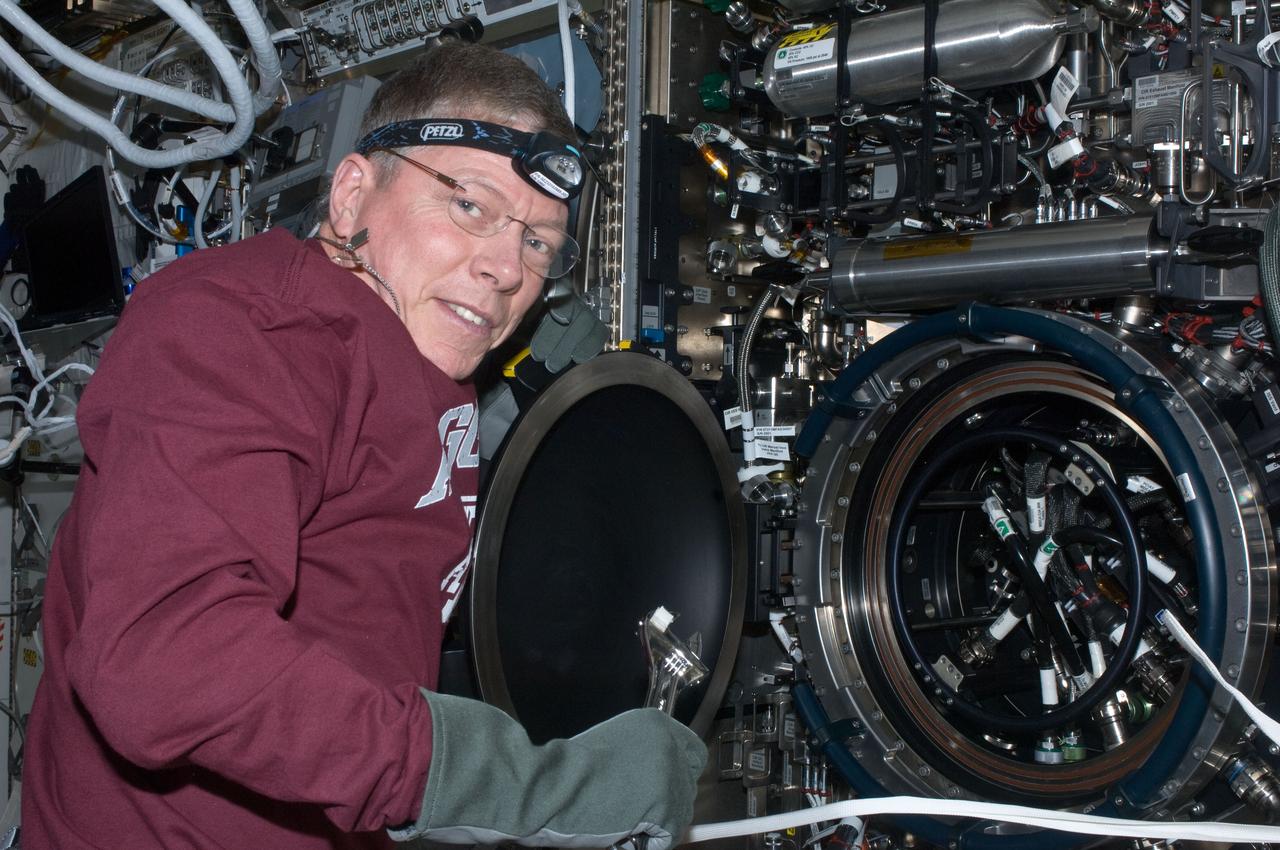
ISS028-E-020221 (1 Aug. 2011) --- NASA astronaut Mike Fossum, Expedition 28 flight engineer, services the Multi-user Drop Combustion Apparatus / Chamber Insert Assembly (MDCA CIA) in the Destiny laboratory of the International Space Station.
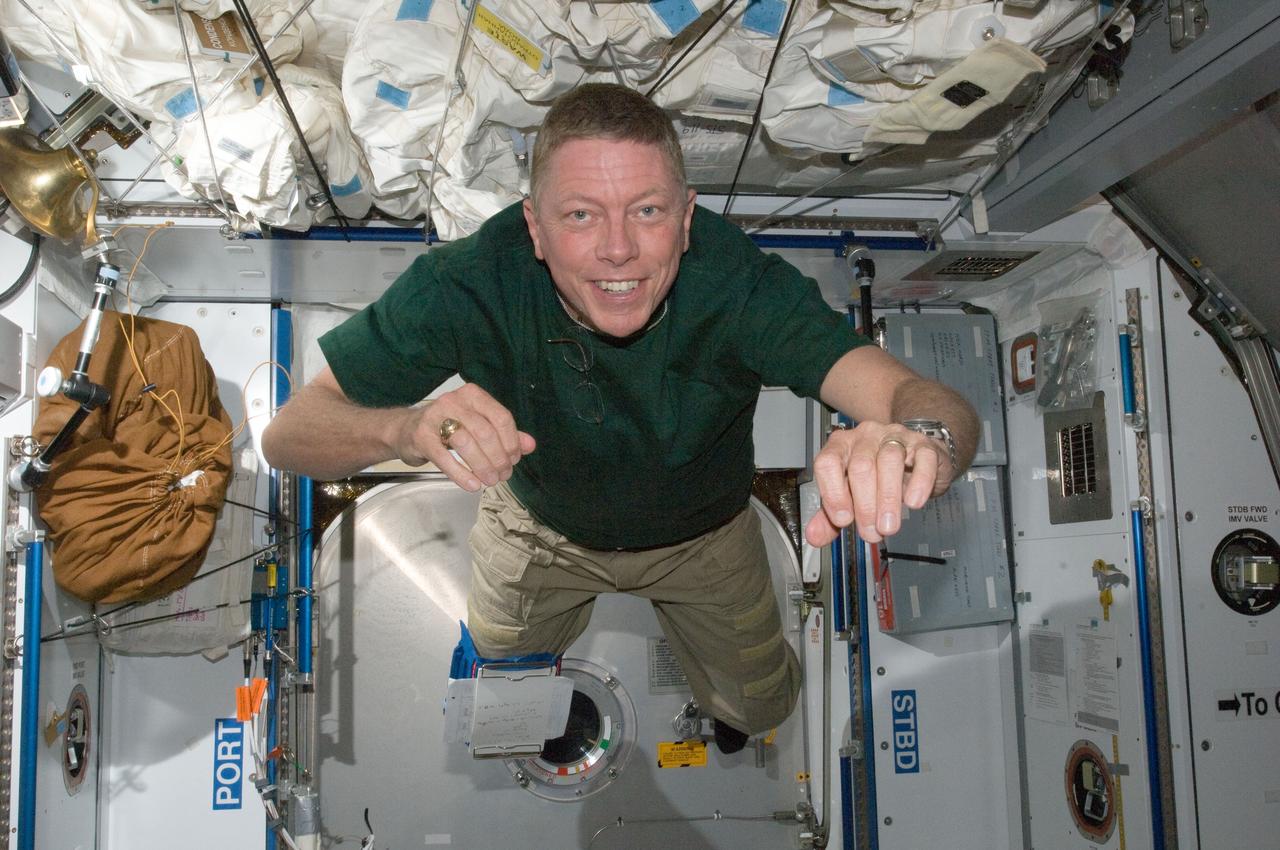
ISS028-E-007701 (12 June 2011) --- NASA astronaut Mike Fossum, Expedition 28 flight engineer, is pictured floating freely in the Harmony node of the International Space Station.
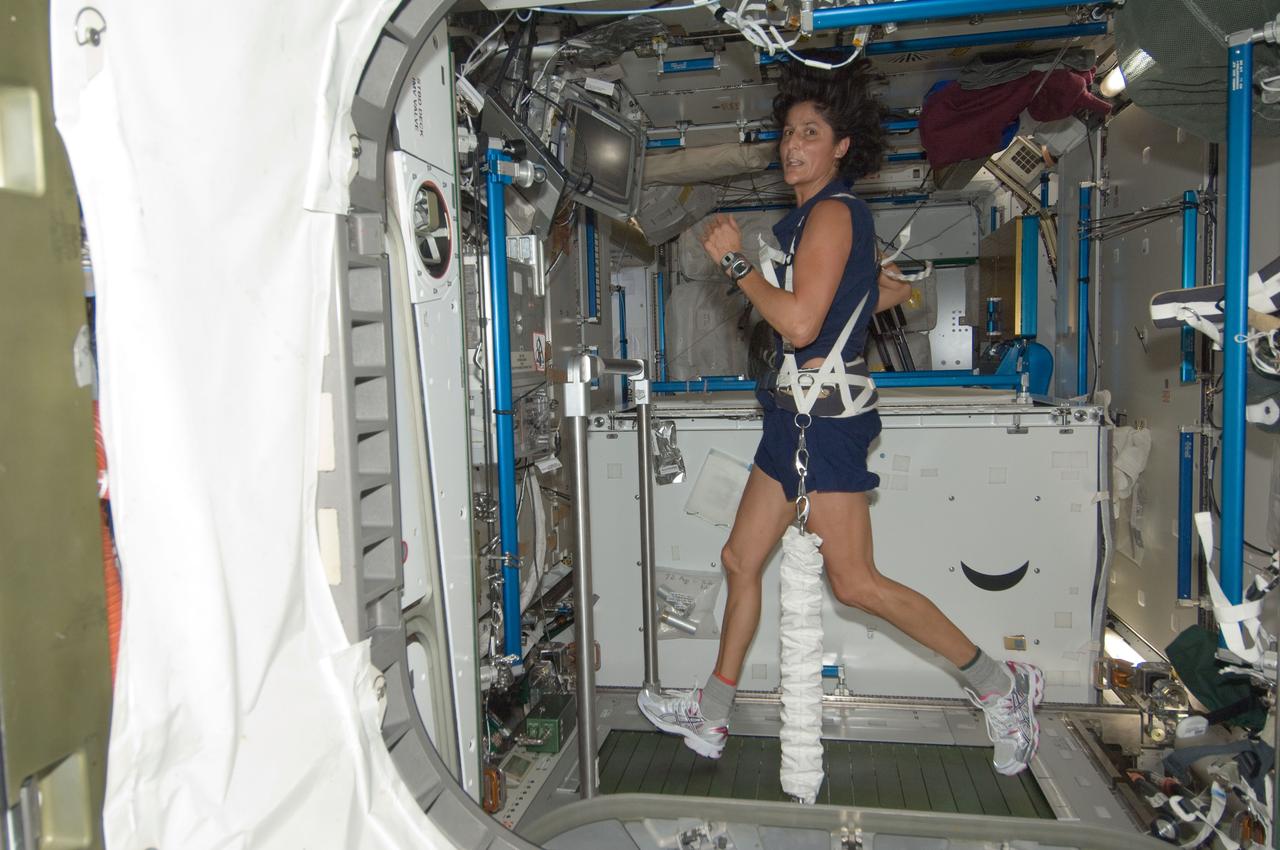
ISS032-E-011693 (4 Aug. 2012) --- NASA astronaut Sunita Williams, Expedition 32 flight engineer, equipped with a bungee harness, exercises on the Combined Operational Load Bearing External Resistance Treadmill (COLBERT) in the Tranquility node of the International Space Station.
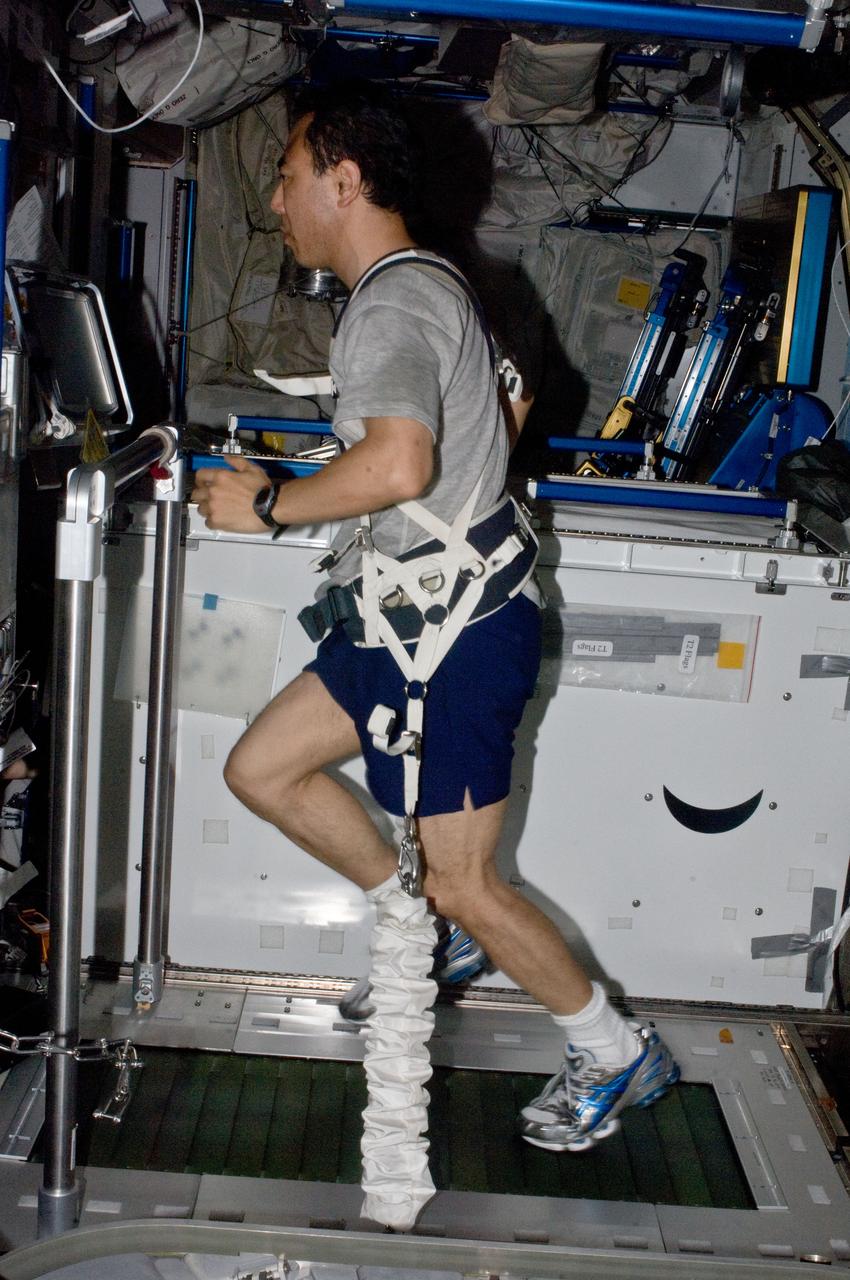
ISS028-E-019535 (30 July 2011) --- Japan Aerospace Exploration Agency astronaut Satoshi Furukawa, Expedition 28 flight engineer, equipped with a bungee harness, exercises on the Combined Operational Load Bearing External Resistance Treadmill (COLBERT) in the Tranquility node of the International Space Station.
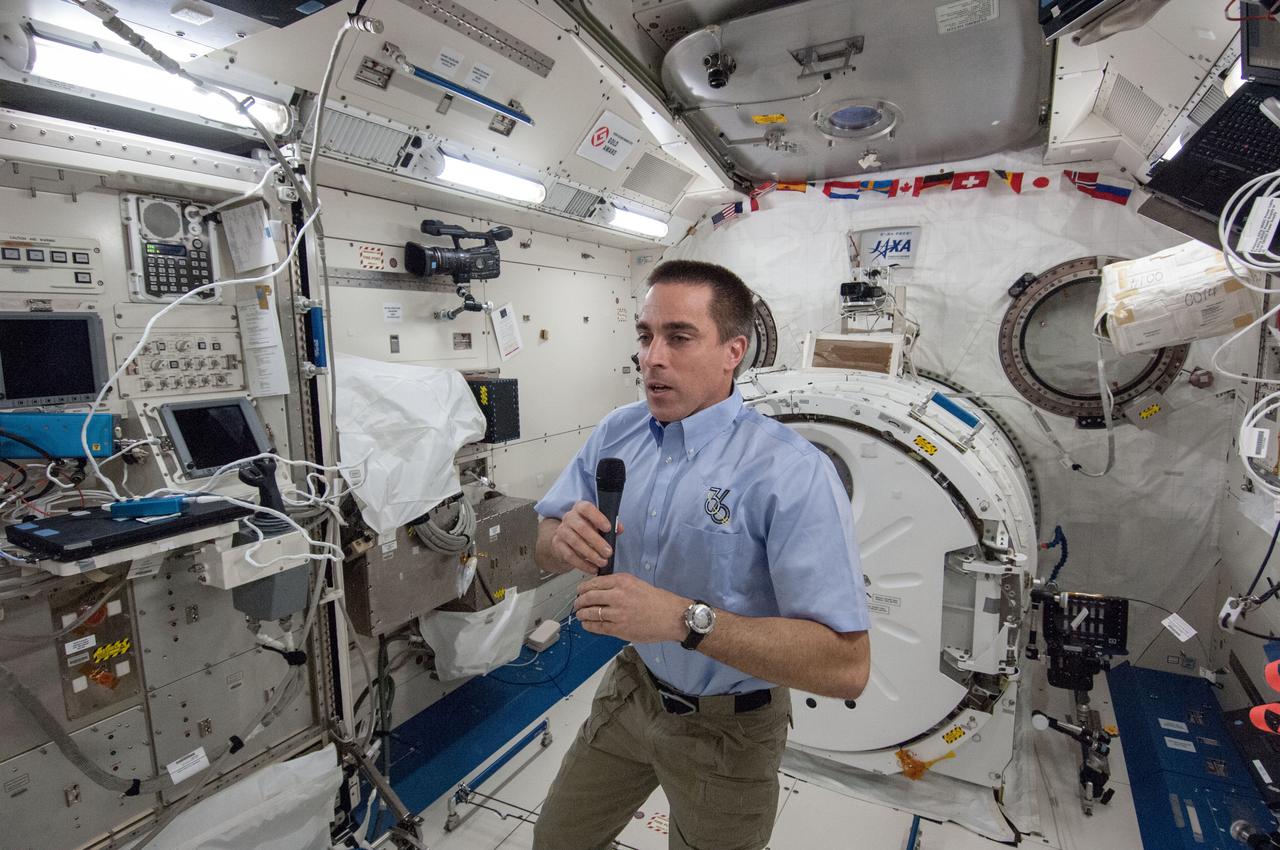
ISS036-E-003252 (22 May 2013) --- In the JAXA Kibo lab of the International Space Station, Expedition 35 Flight Engineer Chris Cassidy of NASA speaks with an aggregate of Florida students and a Florida reporter and an educator during an event that allowed a series of questions and answers on May 22, 2013.
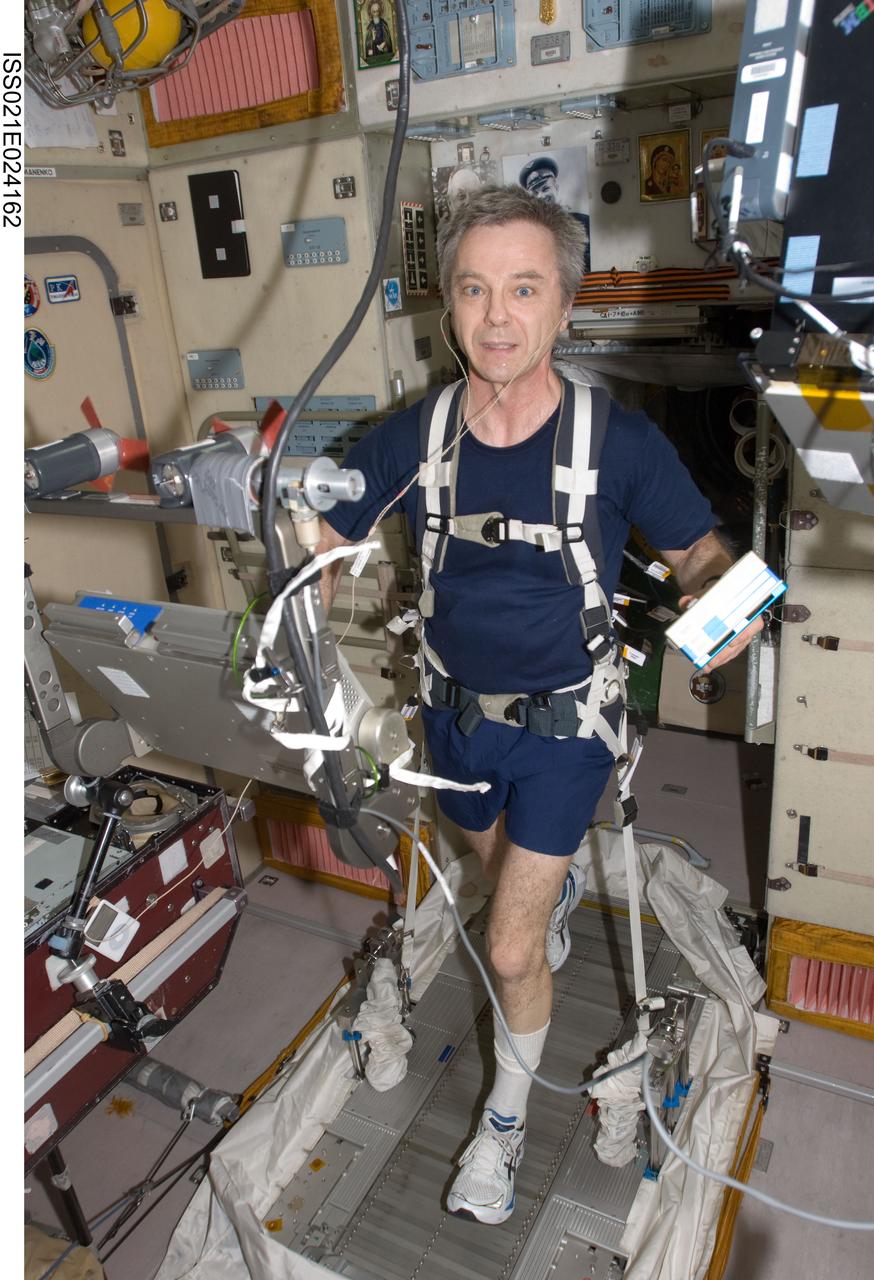
ISS021-E-024162 (11 Nov. 2009) --- Canadian Space Agency astronaut Robert Thirsk, Expedition 21 flight engineer, equipped with a bungee harness, exercises on the Treadmill Vibration Isolation System (TVIS) in the Zvezda Service Module of the International Space Station.
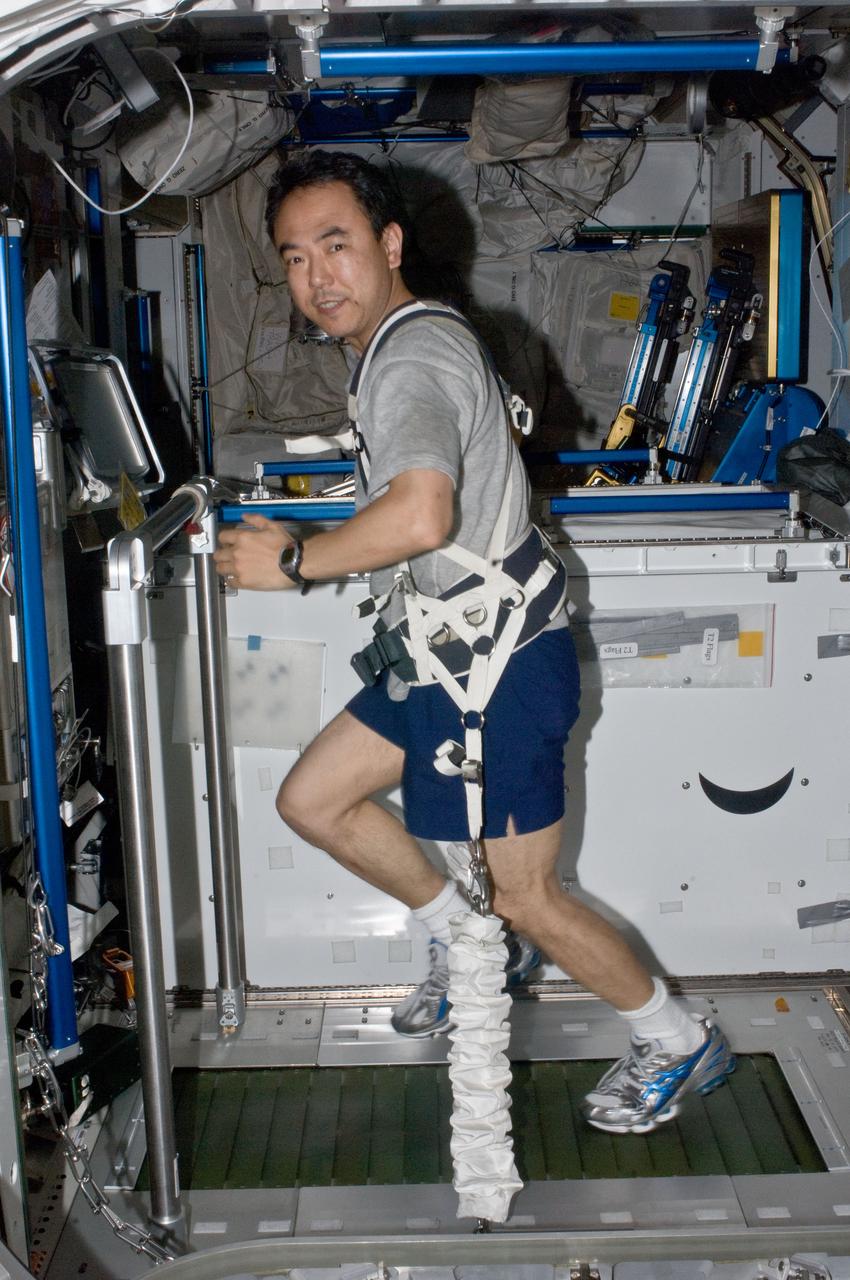
ISS028-E-019530 (30 July 2011) --- Japan Aerospace Exploration Agency astronaut Satoshi Furukawa, Expedition 28 flight engineer, equipped with a bungee harness, exercises on the Combined Operational Load Bearing External Resistance Treadmill (COLBERT) in the Tranquility node of the International Space Station.
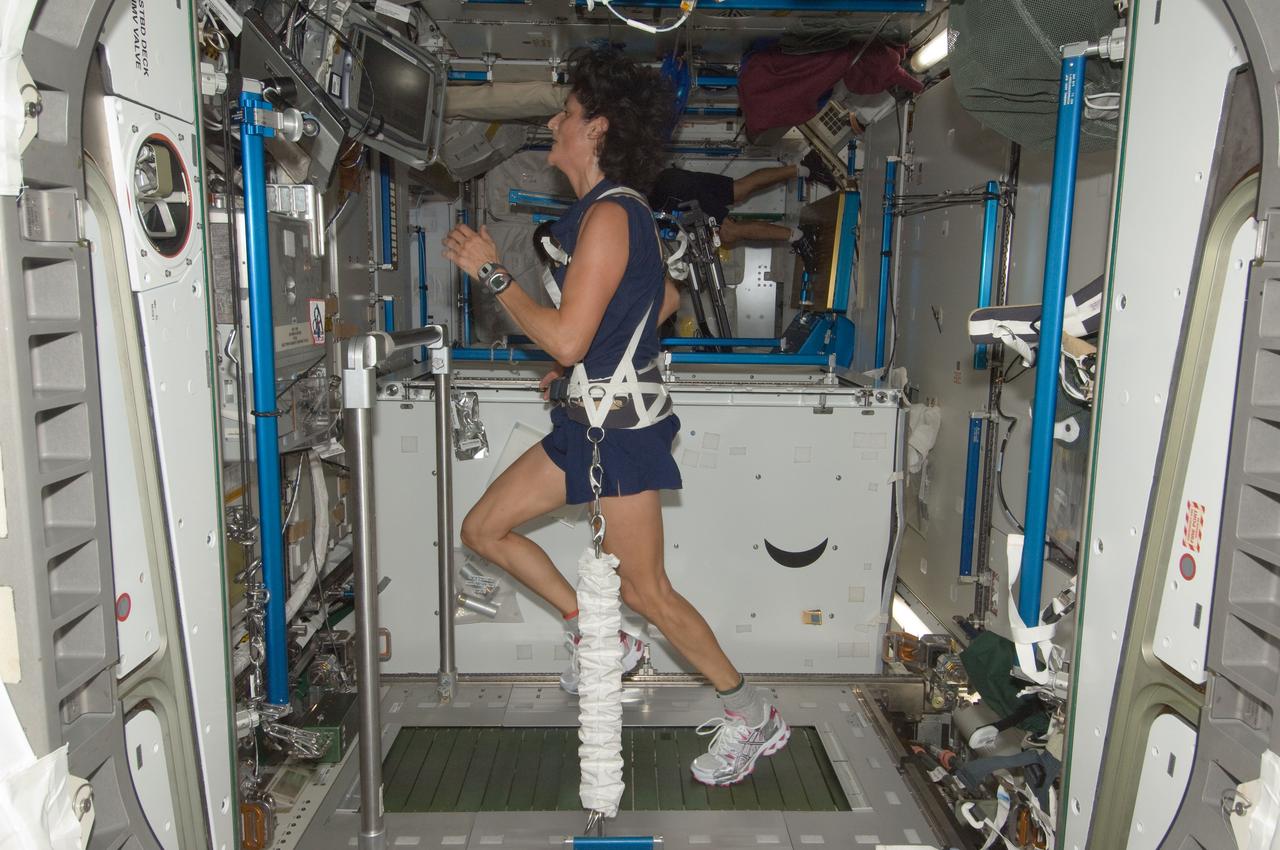
ISS032-E-011700 (4 Aug. 2012) --- NASA astronaut Sunita Williams, Expedition 32 flight engineer, equipped with a bungee harness, exercises on the Combined Operational Load Bearing External Resistance Treadmill (COLBERT) in the Tranquility node of the International Space Station.
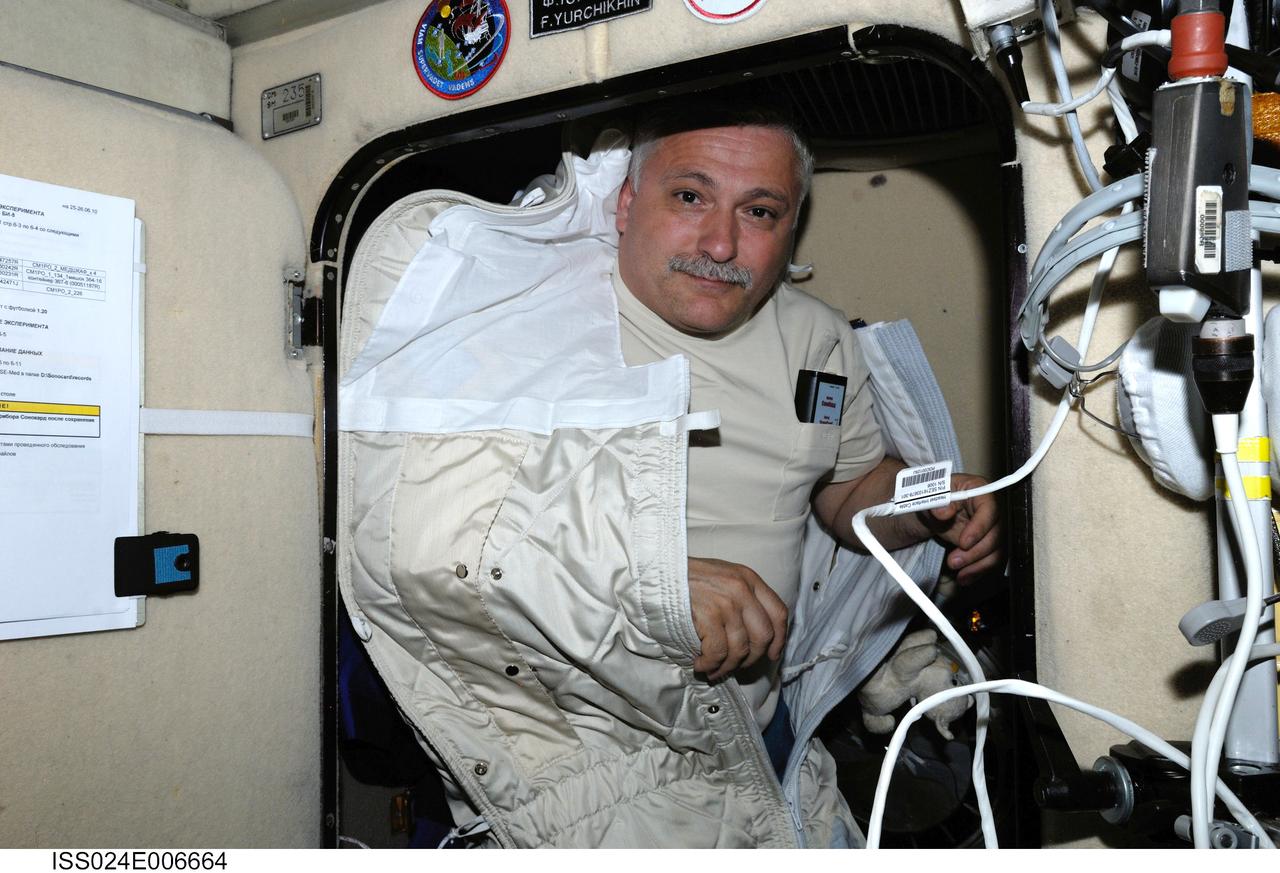
ISS024-E-006664 (25 June 2010) --- With most of his body tucked away in a sleeping bag, Russian cosmonaut Fyodor Yurchikhin, Expedition 24 flight engineer, is pictured in his crew quarters compartment in the Zvezda Service Module of the International Space Station.
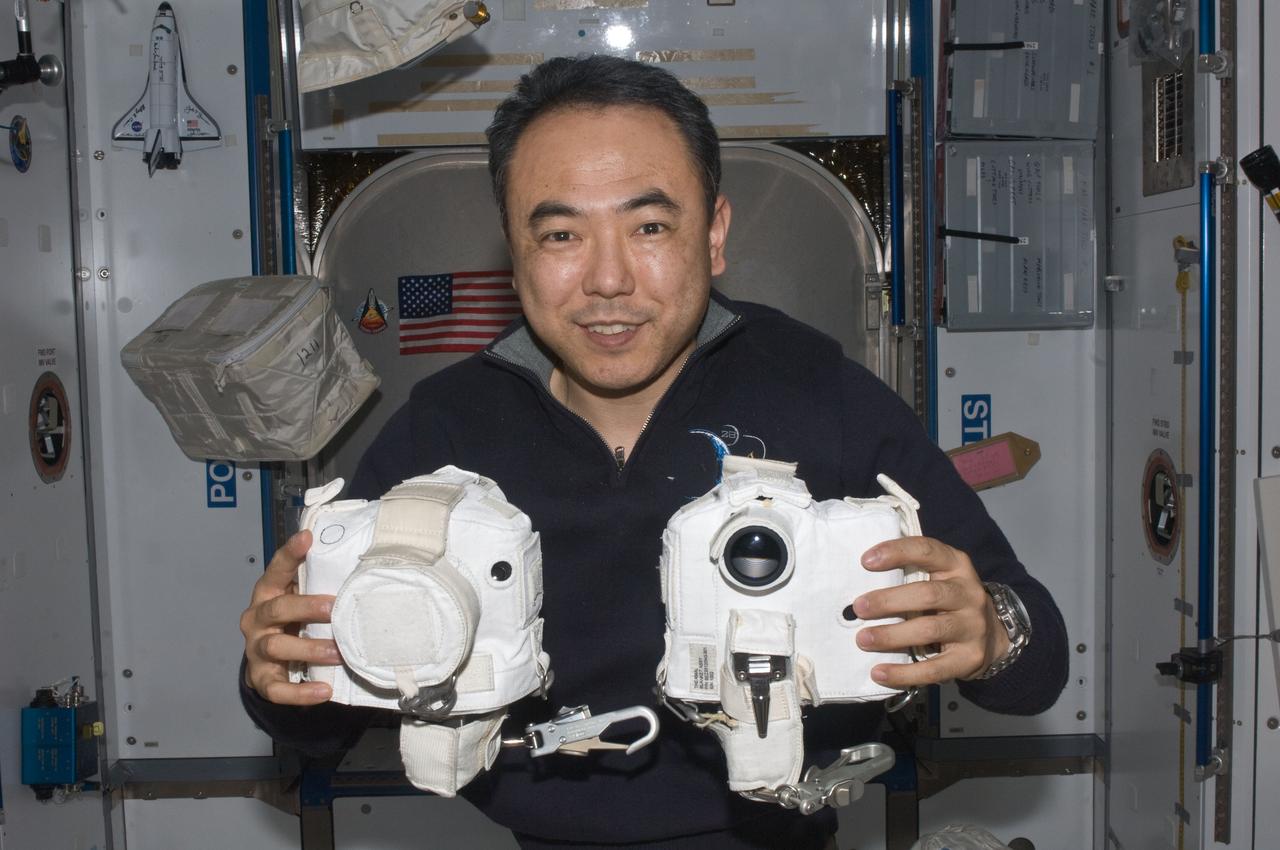
ISS028-E-020222 (1 Aug. 2011) --- Japan Aerospace Exploration Agency astronaut Satoshi Furukawa, Expedition 28 flight engineer, poses for a photo while holding extravehicular activities (EVA) camera equipment in the Harmony node of the International Space Station.
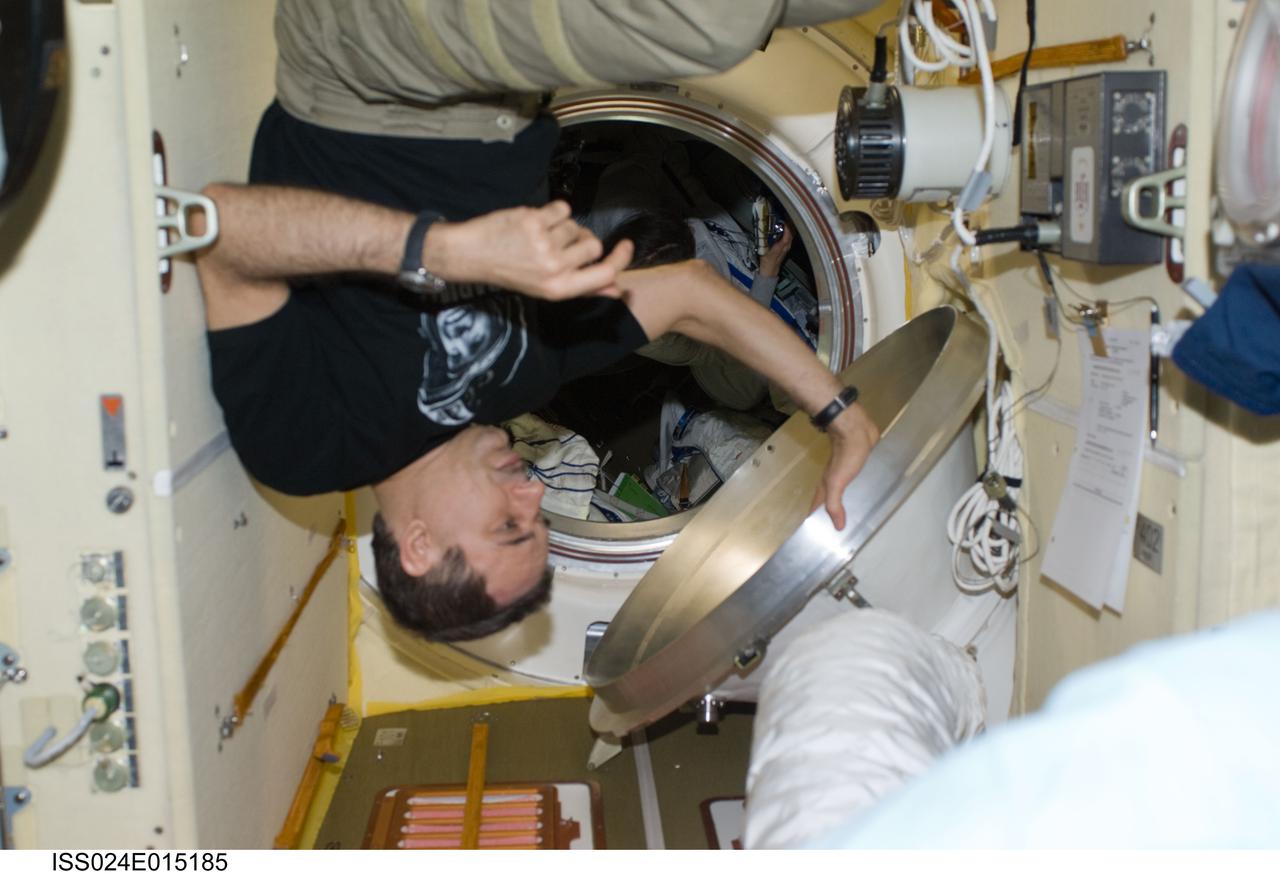
ISS024-E-015185 (23 Sept. 2010) --- Russian cosmonaut Mikhail Kornienko, Expedition 24 flight engineer, makes final preparations for his departure in the Soyuz TMA-18 docked to the Poisk Mini-Research Module 2 (MRM2) of the International Space Station. The Soyuz undocked at 10:02 p.m. (EDT) on Sept. 24, 2010, carrying Kornienko, Russian cosmonaut Alexander Skvortsov and NASA astronaut Tracy Caldwell Dyson (both out of frame). Originally scheduled for Sept. 23, the Soyuz undocked a day later due to a Poisk-side hatch sensor problem, which prevented hooks on the Poisk side of the docking interface from opening.
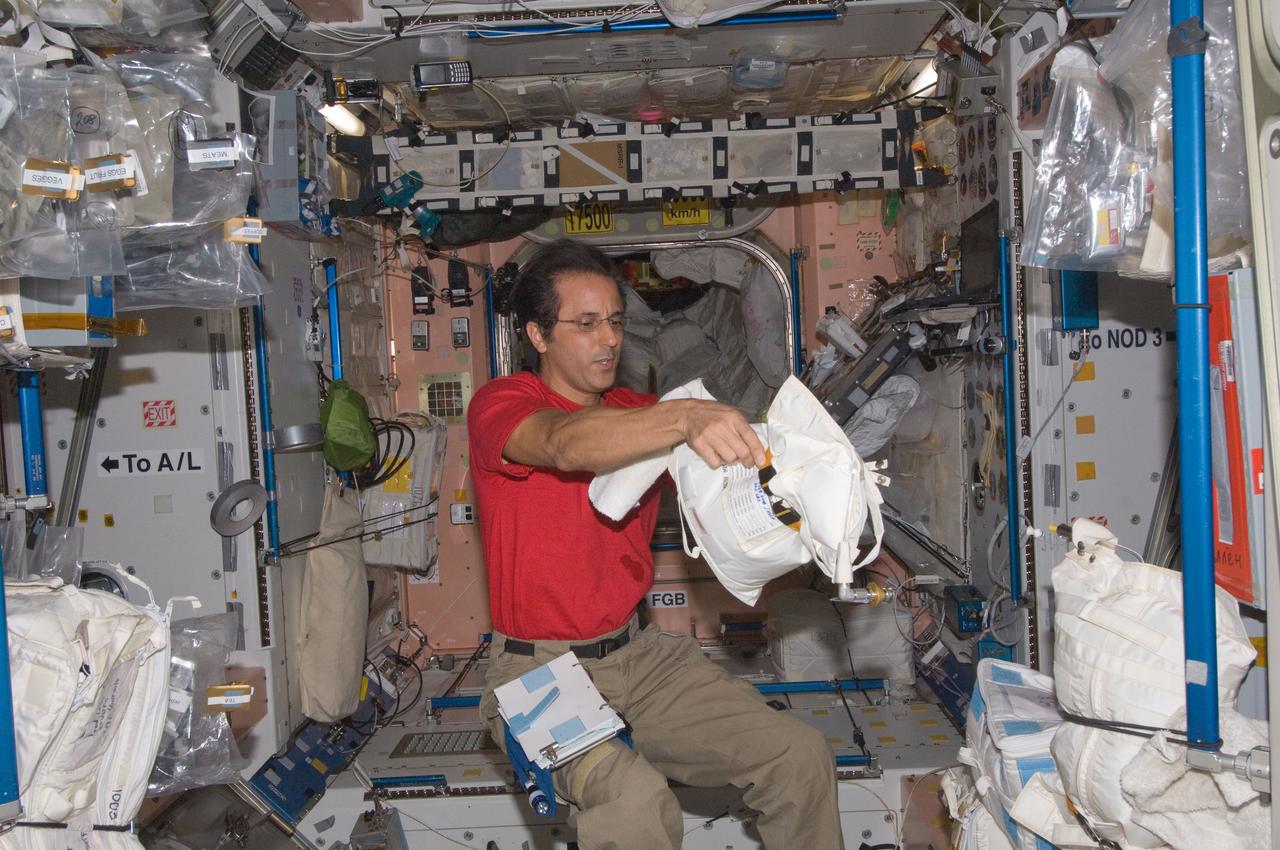
ISS032-E-011037 (31 July 2012) --- NASA astronaut Joe Acaba, Expedition 32 flight engineer, works with a stowage container in the Unity node of the International Space Station.
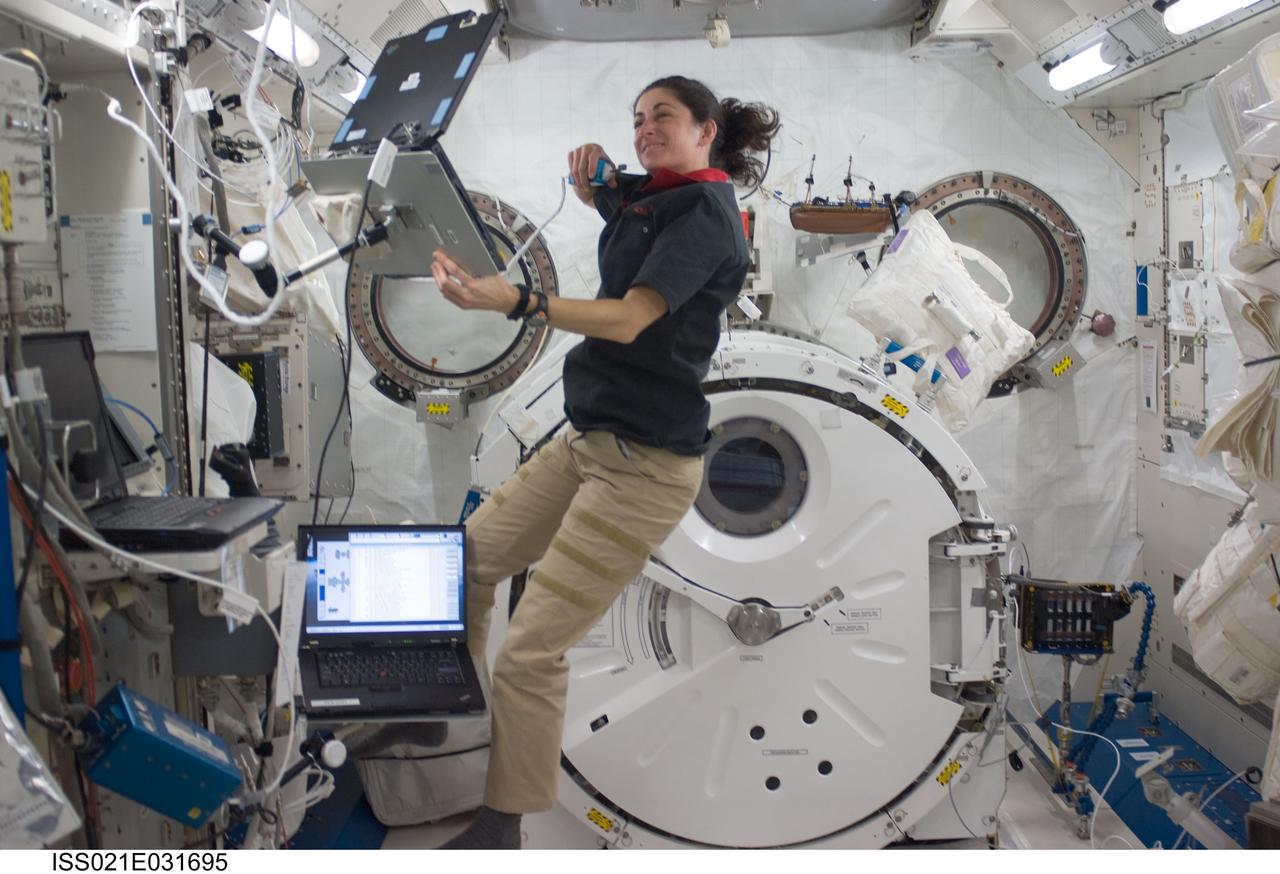
ISS021-E-031695 (22 Nov. 2009) --- Astronaut Nicole Stott, STS-129 mission specialist, uses a communication system near a computer in the Kibo laboratory of the International Space Station while space shuttle Atlantis remains docked with the station.
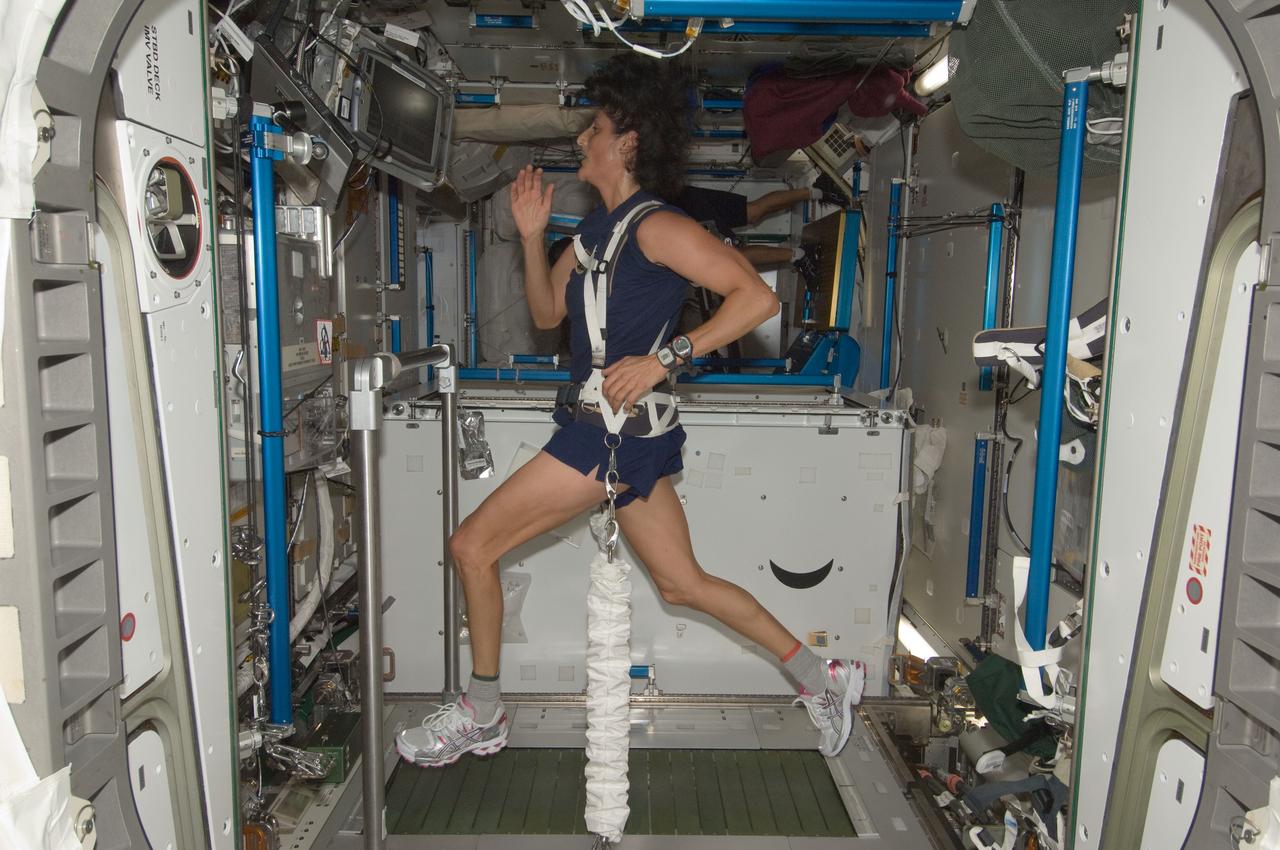
ISS032-E-011701 (4 Aug. 2012) --- NASA astronaut Sunita Williams, Expedition 32 flight engineer, equipped with a bungee harness, exercises on the Combined Operational Load Bearing External Resistance Treadmill (COLBERT) in the Tranquility node of the International Space Station.
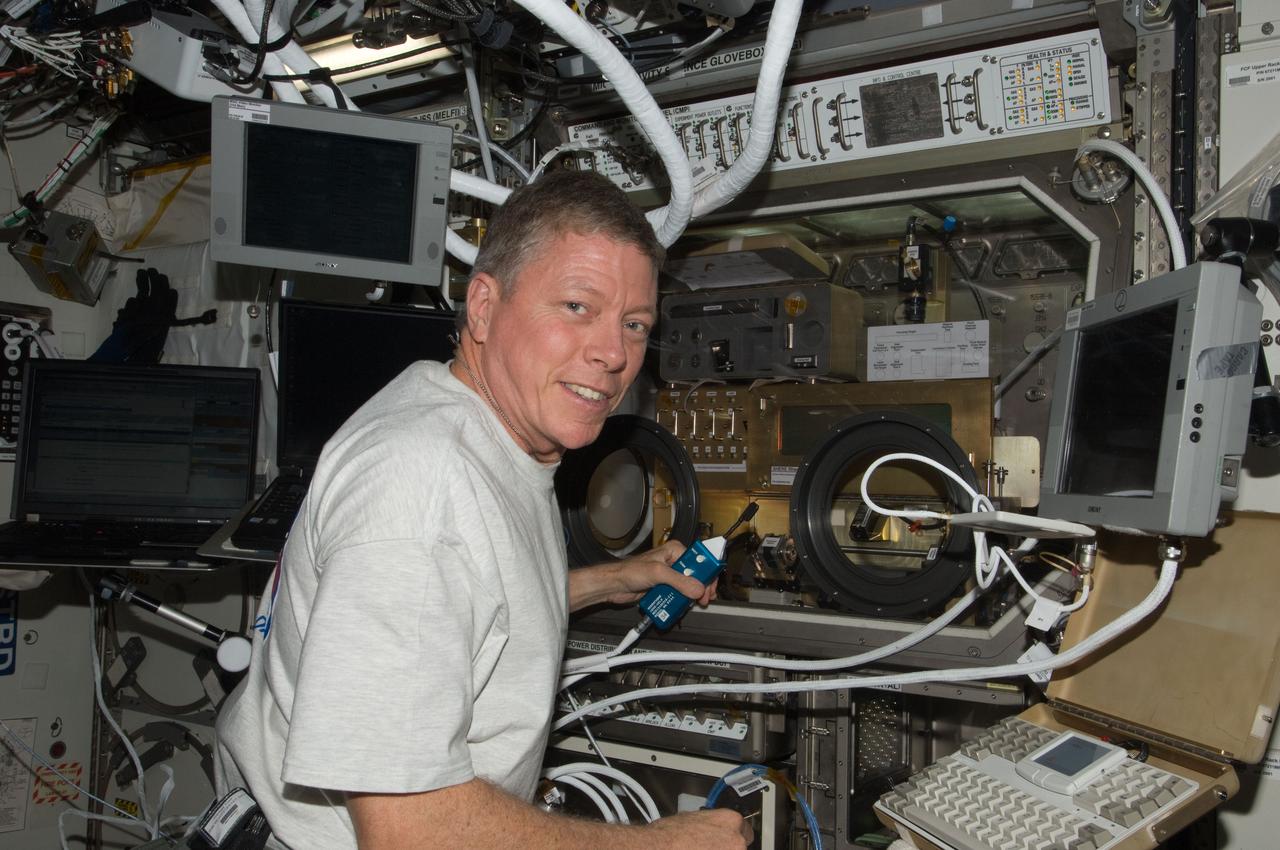
ISS028-E-020679 (3 Aug. 2011) --- NASA astronaut Mike Fossum, Expedition 28 flight engineer, works with Shear History Extensional Rheology Experiment (SHERE) hardware inside the Microgravity Science Glovebox (MSG) located in the Destiny laboratory of the International Space Station.
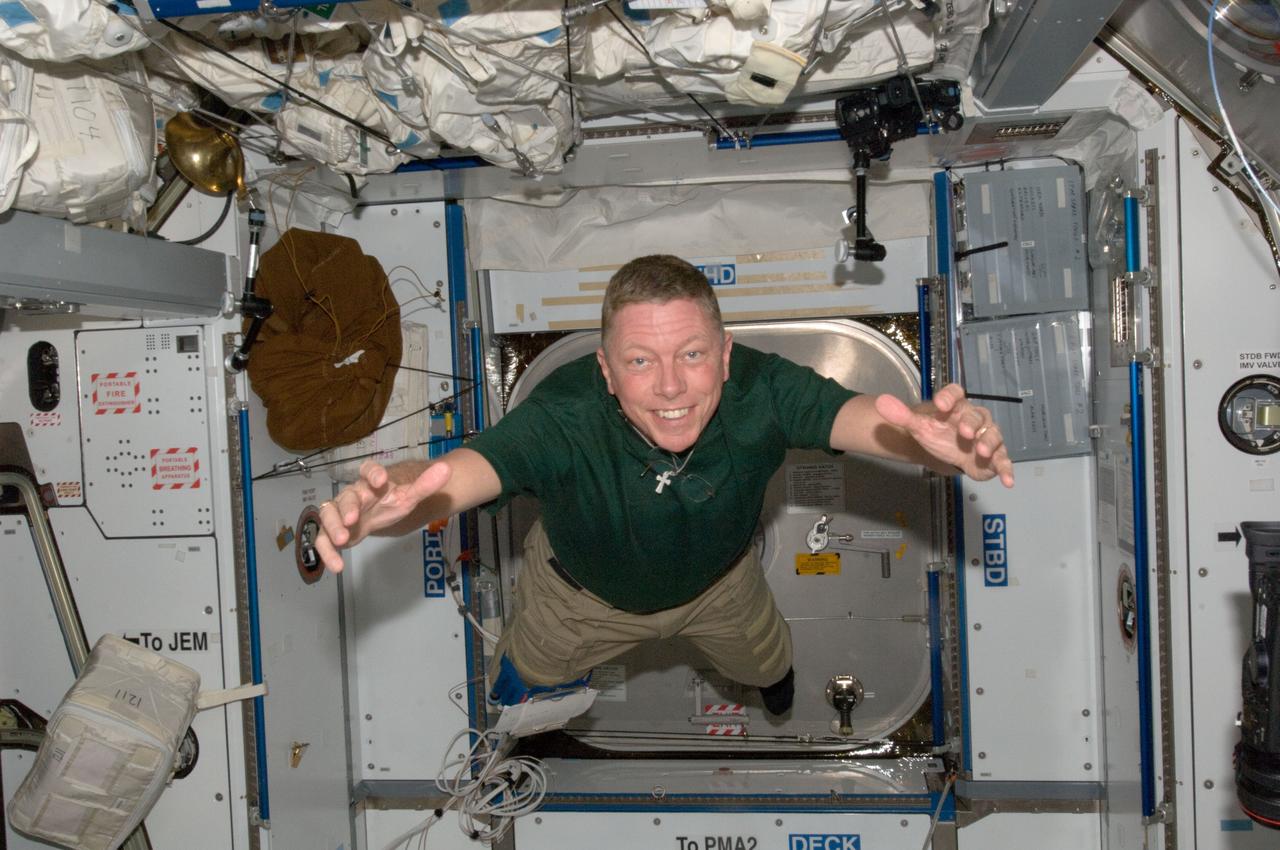
ISS028-E-007695 (12 June 2011) --- NASA astronaut Mike Fossum, Expedition 28 flight engineer, is pictured floating freely in the Harmony node of the International Space Station.
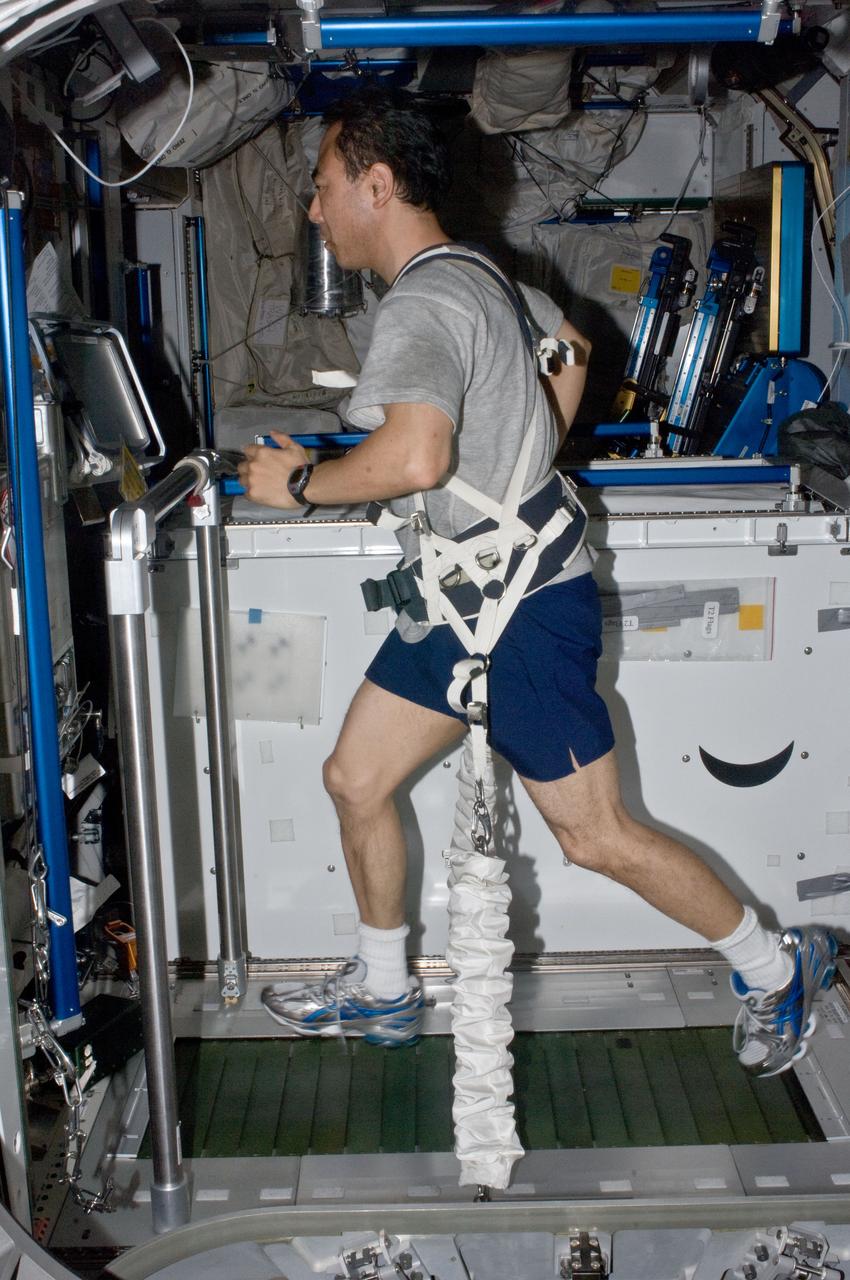
ISS028-E-019529 (30 July 2011) --- Japan Aerospace Exploration Agency astronaut Satoshi Furukawa, Expedition 28 flight engineer, equipped with a bungee harness, exercises on the Combined Operational Load Bearing External Resistance Treadmill (COLBERT) in the Tranquility node of the International Space Station.
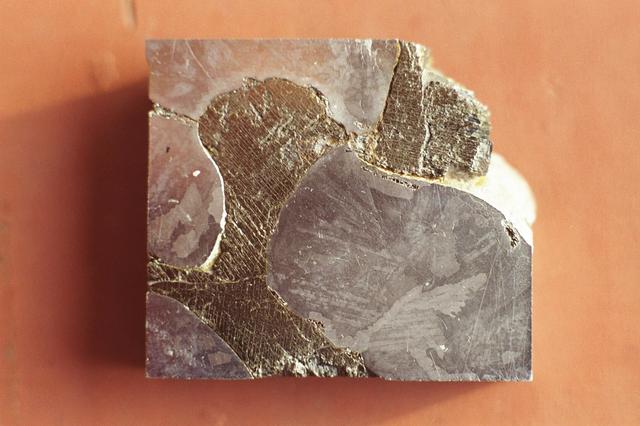
This is a macro photograph of an etched surface of the Mundrabilla meteorite, a small piece of the approximately 3.9 billion-year-old meteorite that was first discovered in Western Australia in 1911. Two more giant chunks, together weighing about 17 tons, were found in 1966. Researchers can learn much from this natural crystal growth experiment since it has spent several hundred million years cooling, and would be impossible to emulate in a lab. This single slice, taken from a 6 ton piece recovered in 1966, measures only 2 square inches. The macro photograph shows a metallic iron-nickel alloy phase of kamcite (38% Ni) and taenite (6% Ni) at bottom right, bottom left, and top left. The darker material is an iron sulfide (FeS or troilite) with a parallel precipitates of duabreelite (iron chromium sulfide (FeCr2S4).
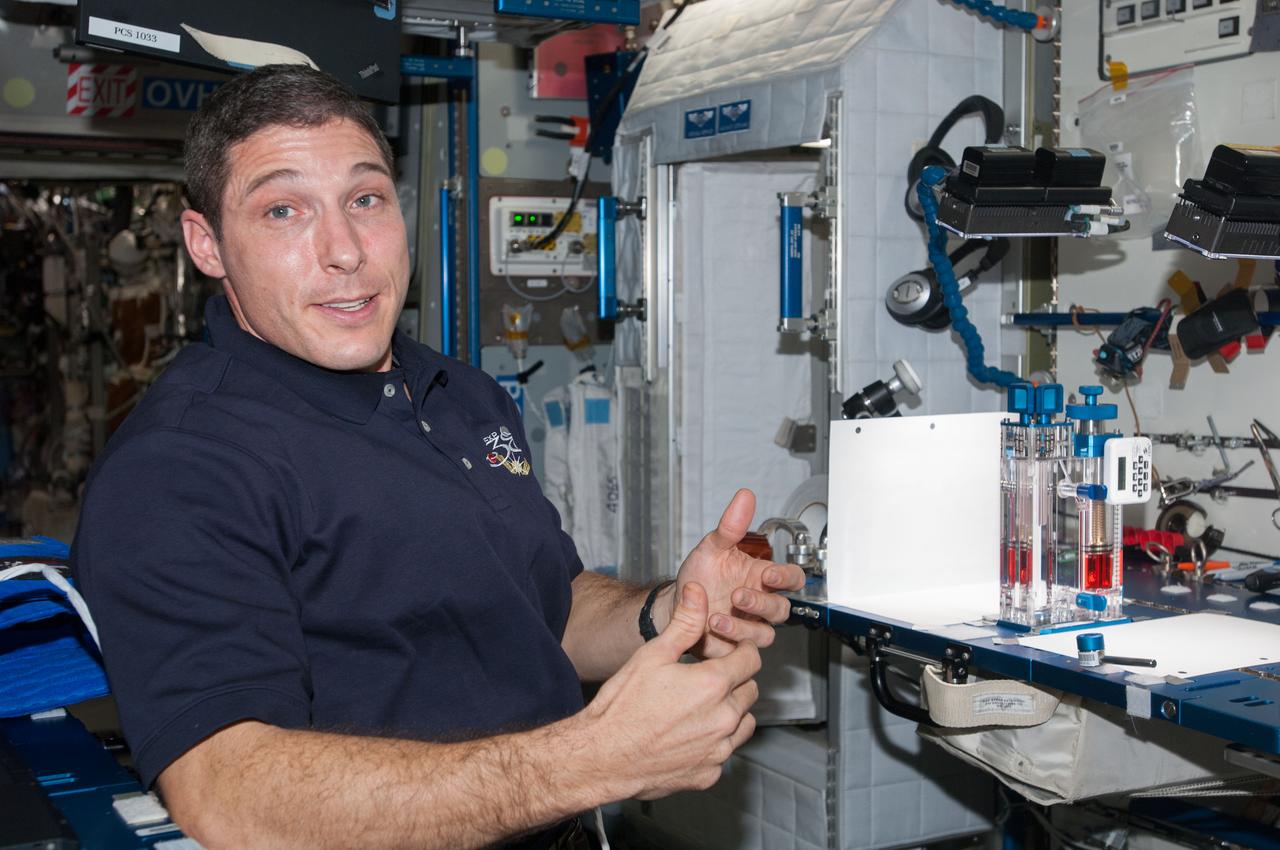
View of Flight Engineer (FE) Mike Hopkins initiating a CFE-2 (Capillary Flow Experiment - 2) Interior Corner Flow - 5 (ICF-5) test run. Liquids behave differently in space than they do on Earth, so containers that can process, hold or transport them must be designed carefully to work in microgravity. The Capillary Flow Experiment-2 furthers research on wetting, which is a liquid's ability to spread across a surface, and its impact over large length scales in strange container shapes in microgravity environments. This work will improve our capabilities to quickly and accurately predict how related processes occur, and allow us to design better systems to process liquids aboard spacecraft (i.e., liquid fuel tanks, thermals fluids, and water processing for life support). Image was released by astronaut on Twitter.
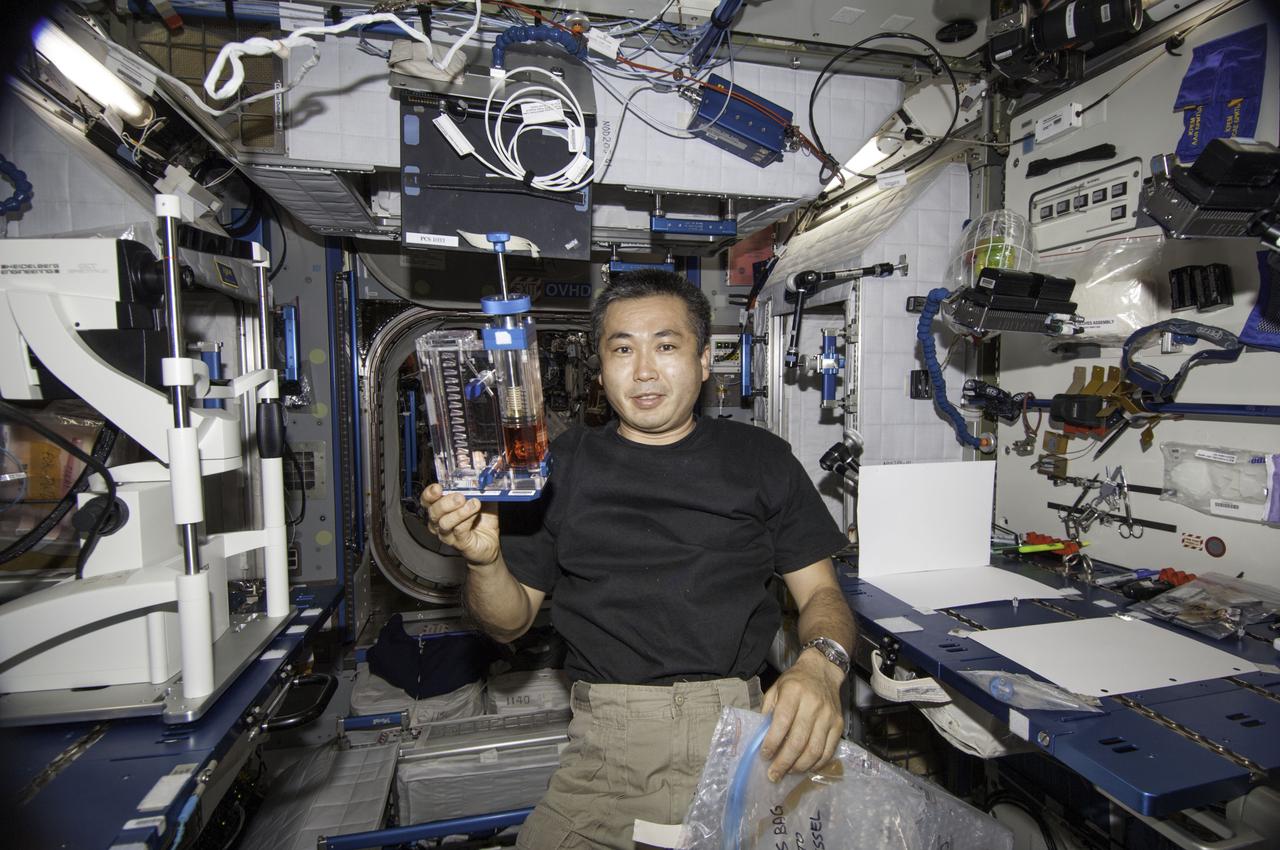
View of Flight Engineer (FE) Koichi Wakata posing for a photo during a CFE-2 (Capillary Flow Experiment - 2) Interior Corner Flow - 8 (ICF-8) test run. Liquids behave differently in space than they do on Earth, so containers that can process, hold or transport them must be designed carefully to work in microgravity. The Capillary Flow Experiment-2 furthers research on wetting, which is a liquid's ability to spread across a surface, and its impact over large length scales in strange container shapes in microgravity environments. This work will improve capabilities to quickly and accurately predict how related processes occur, and allow us to design better systems to process liquids aboard spacecraft (i.e., liquid fuel tanks, thermals fluids, and water processing for life support). Image was released by astronaut on Twitter.
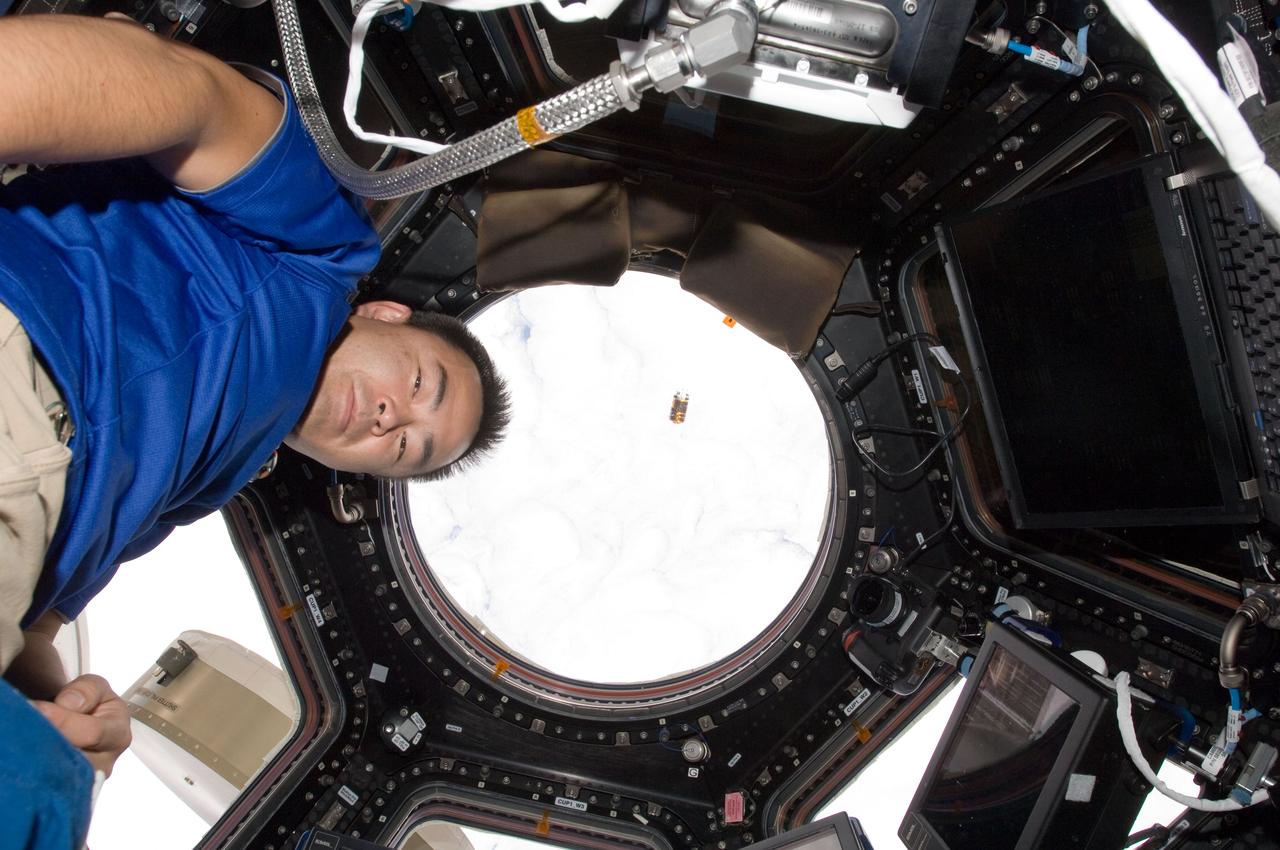
ISS032-E-010583 (27 July 2012) --- Japan Aerospace Exploration Agency astronaut Aki Hoshide is pictured near the windows in the International Space Station?s Cupola as the unpiloted Japan Aerospace Exploration Agency (JAXA) H-II Transfer Vehicle (HTV-3) approaches the station. Hoshide and NASA astronaut Joe Acaba (out of frame), both Expedition 32 flight engineers, used the station's Canadarm2 robotic arm to capture and berth the HTV-3 to the Earth-facing port of the station's Harmony node. The attachment was completed at 10:34 a.m. (EDT) on July 27, 2012.
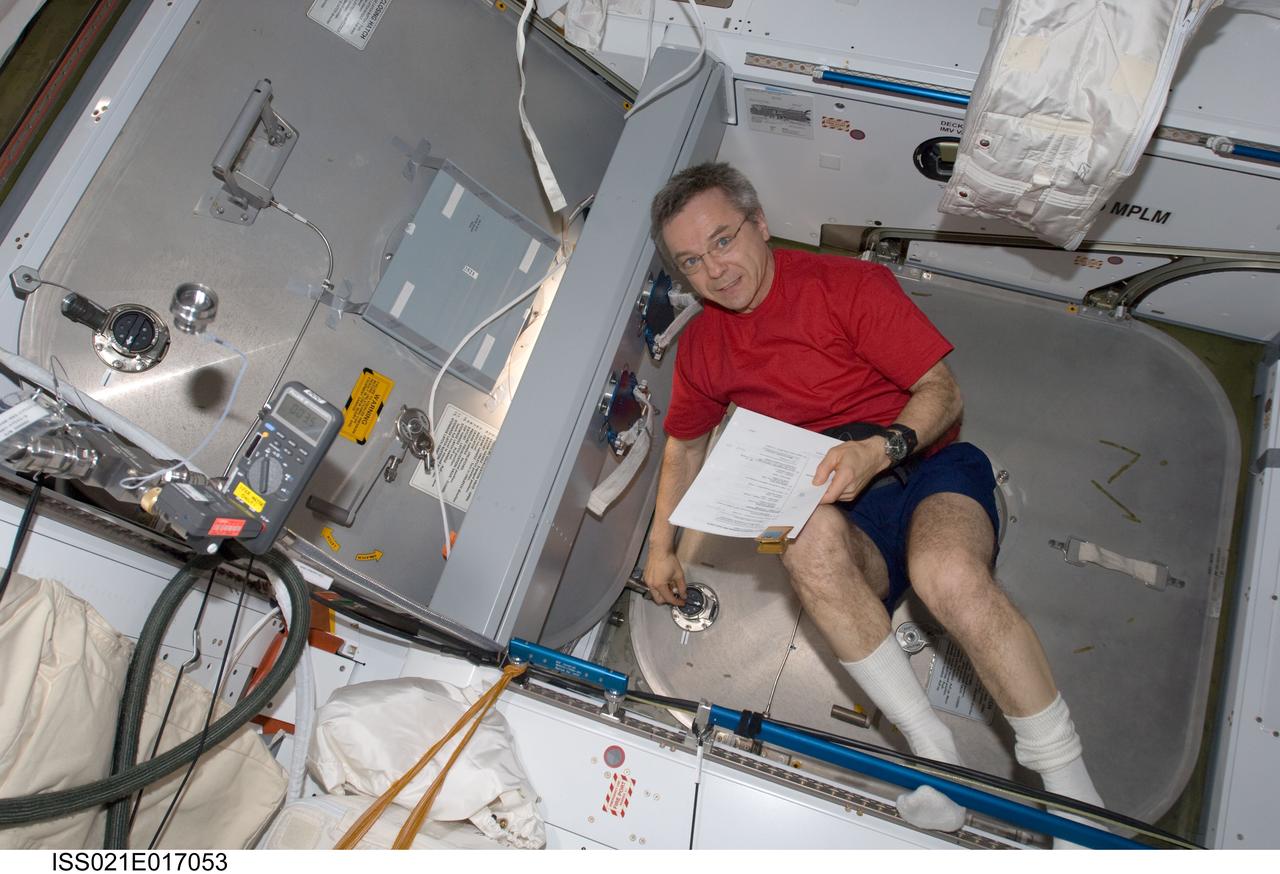
ISS021-E-017053 (30 Oct. 2009) --- Canadian Space Agency astronaut Robert Thirsk, Expedition 21 flight engineer, is pictured while working in the Harmony node of the International Space Station.
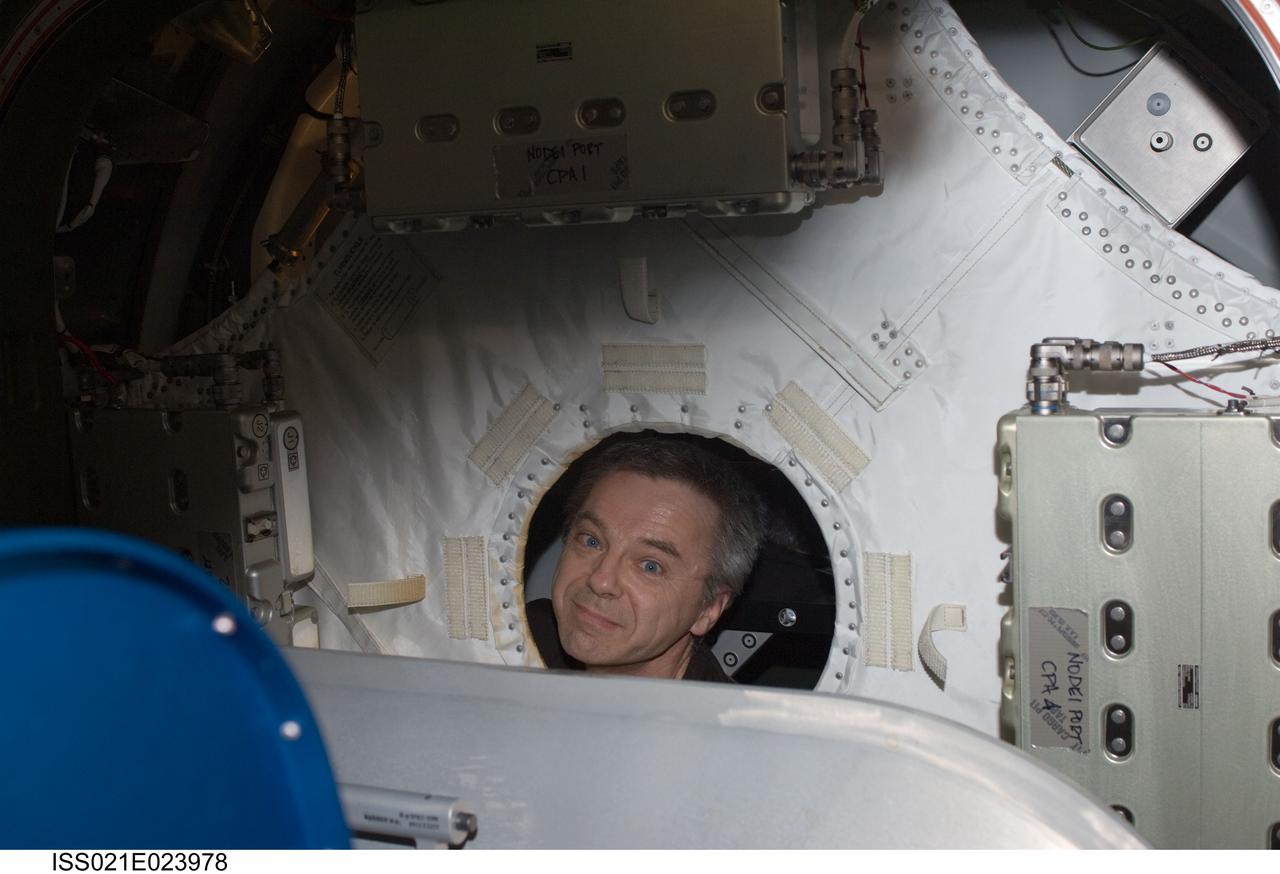
ISS021-E-023978 (4 Nov. 2009) --- Canadian Space Agency astronaut Robert Thirsk, Expedition 21 flight engineer, looks through an opening on a hatch cover in the Unity node of the International Space Station.
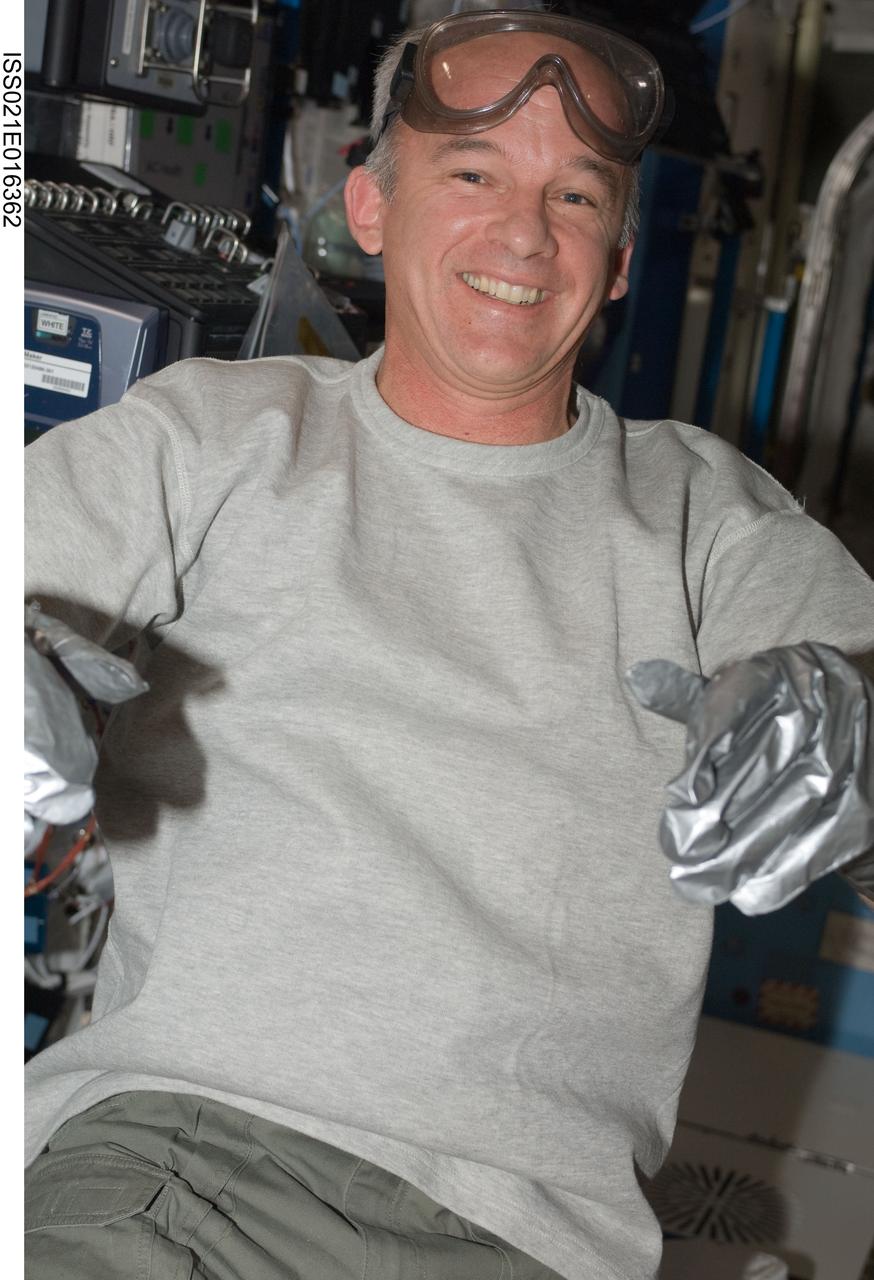
ISS021-E-016362 (29 Oct. 2009) --- NASA astronaut Jeffrey Williams, Expedition 21 flight engineer, is pictured while working in the Destiny laboratory of the International Space Station.

ISS024-E-014263 (11 Sept. 2010) --- NASA astronaut Tracy Caldwell Dyson, Expedition 24 flight engineer, looks through a window in the Cupola of the International Space Station. A blue and white part of Earth and the blackness of space are visible through the windows.
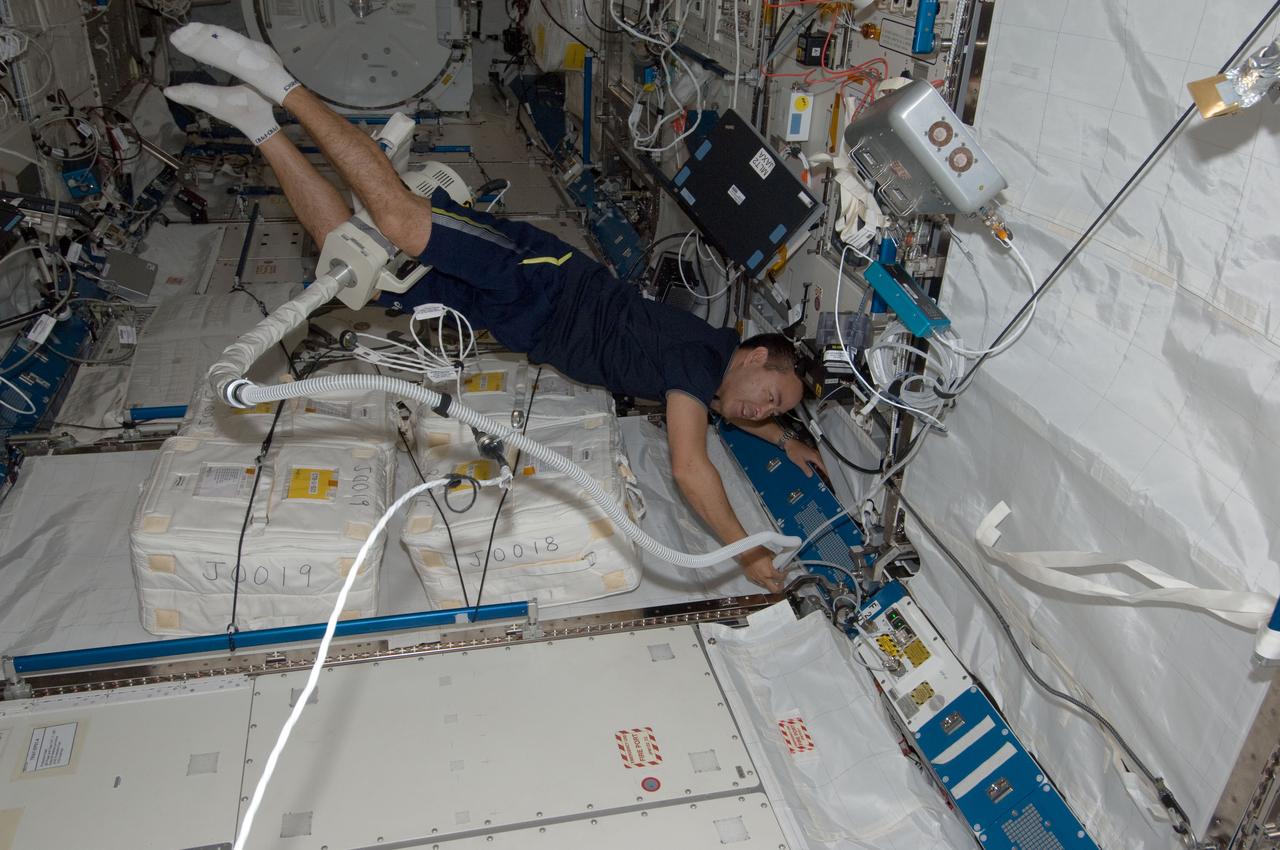
ISS032-E-010377 (28 July 2012) --- Japan Aerospace Exploration Agency astronaut Aki Hoshide, Expedition 32 flight engineer, uses a vacuum cleaner during housekeeping operations in the Kibo laboratory of the International Space Station.
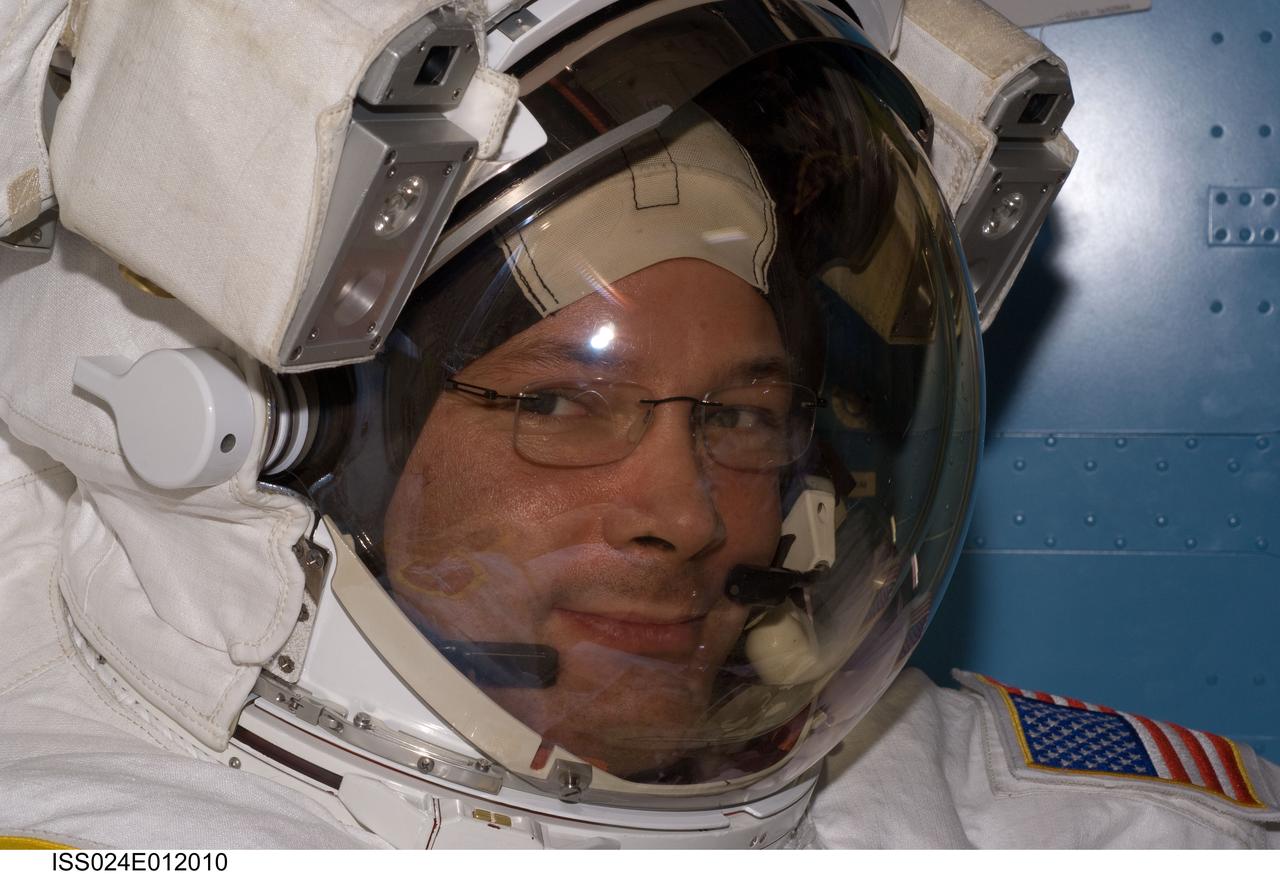
ISS024-E-012010 (16 Aug. 2010) --- NASA astronaut Doug Wheelock, Expedition 24 flight engineer, attired in his Extravehicular Mobility Unit (EMU) spacesuit, is pictured in the Quest airlock of the International Space Station as the final of three planned spacewalks to remove and replace an ammonia pump module that failed July 31 draws to a close.
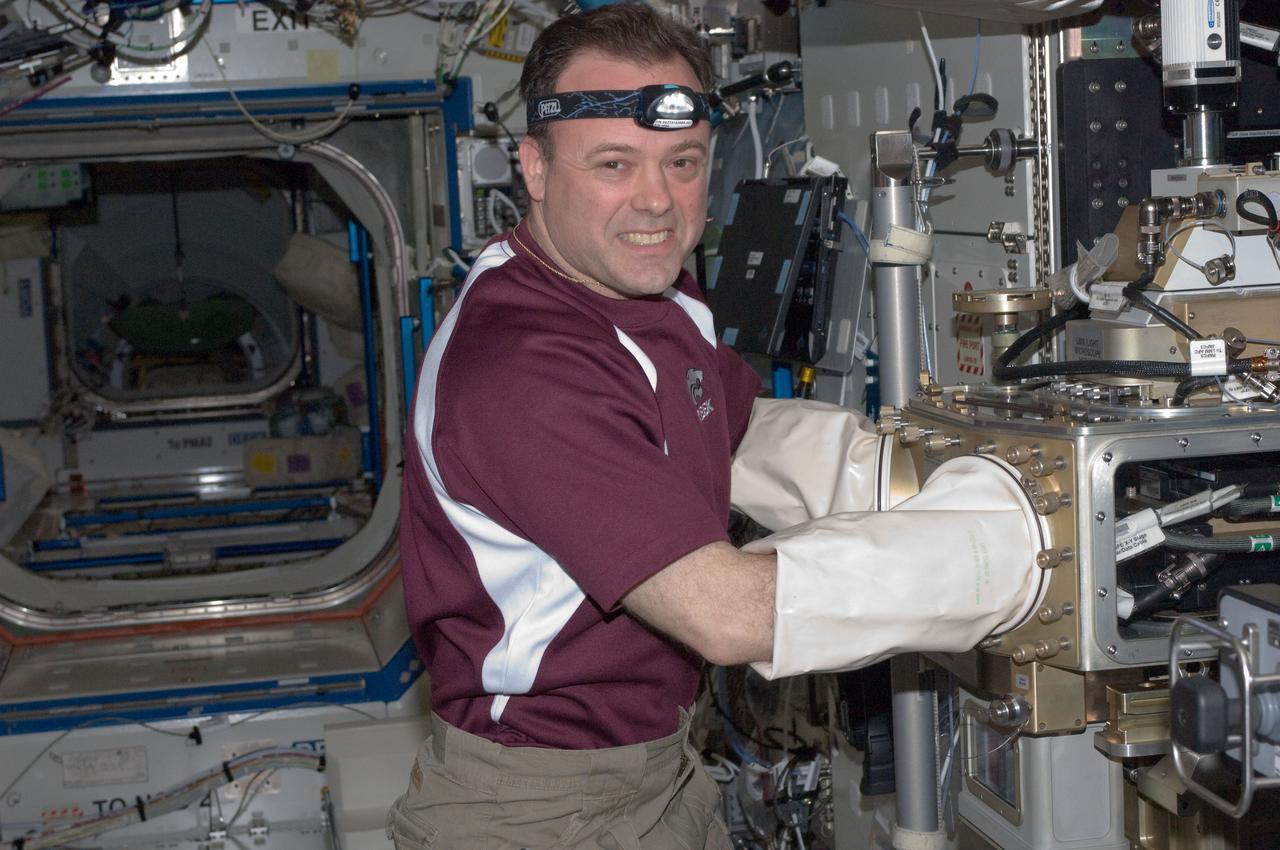
ISS028-E-005602 (26 May 2011) --- NASA astronaut Ron Garan, Expedition 28 flight engineer, services the Fluids Combustion Facility in the Fluids Integrated Rack on the Destiny lab aboard the International Space Station by changing out the Bio sample on the Bio Base. Garan and two Russian cosmonaut crewmates for Expedition 28 will be joined by three more crew members on the station in about one and a half weeks.
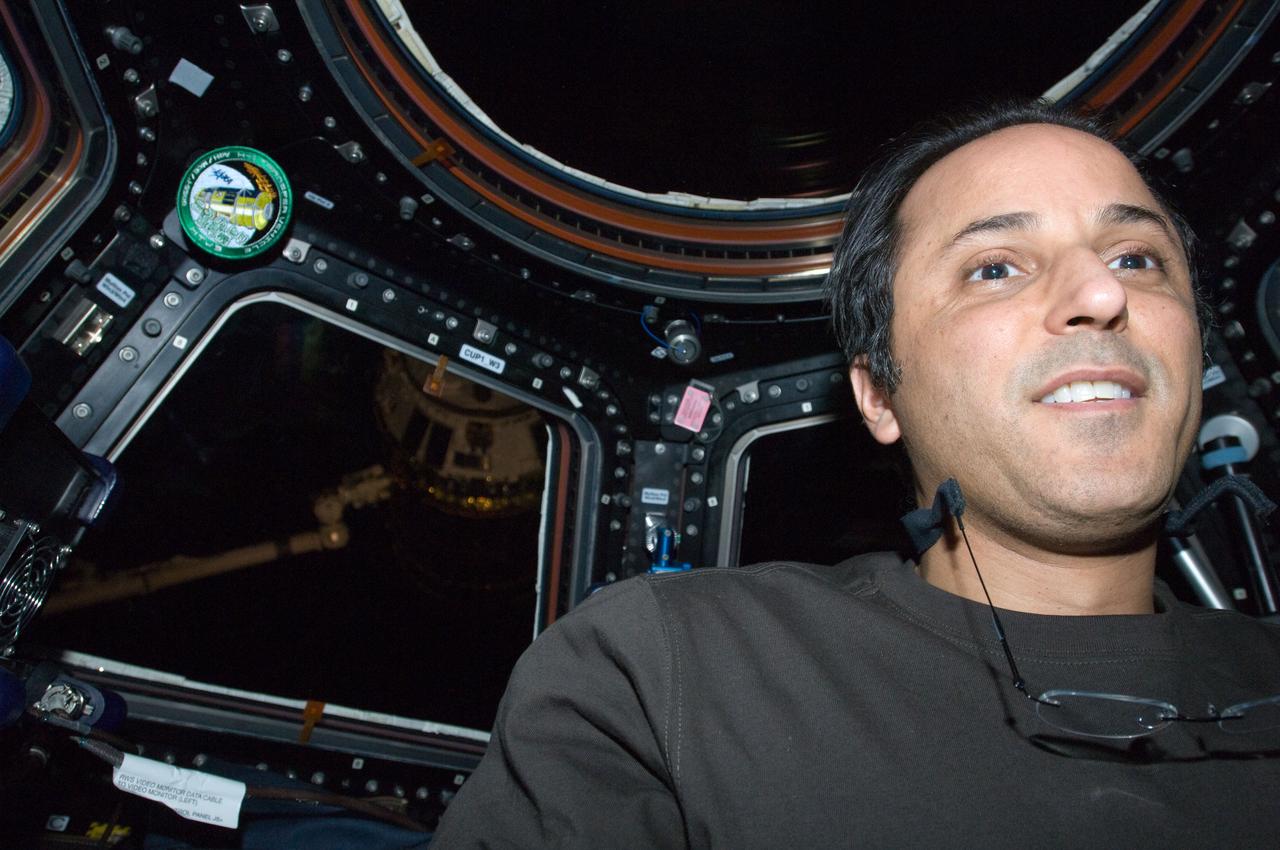
ISS032-E-010613 (27 July 2012) --- NASA astronaut Joe Acaba is pictured in the International Space Station?s Cupola as the unpiloted Japan Aerospace Exploration Agency (JAXA) H-II Transfer Vehicle (HTV-3) approaches the station. Acaba and Japan Aerospace Exploration Agency astronaut Aki Hoshide (out of frame), both Expedition 32 flight engineers, used the station's Canadarm2 robotic arm to capture and berth the HTV-3 to the Earth-facing port of the station's Harmony node. The attachment was completed at 10:34 a.m. (EDT) on July 27, 2012.

ISS028-E-007757 (16 June 2011) --- Japan Aerospace Exploration Agency astronaut Satoshi Furukawa, Expedition 28 flight engineer, is pictured floating freely in the Destiny laboratory of the International Space Station.
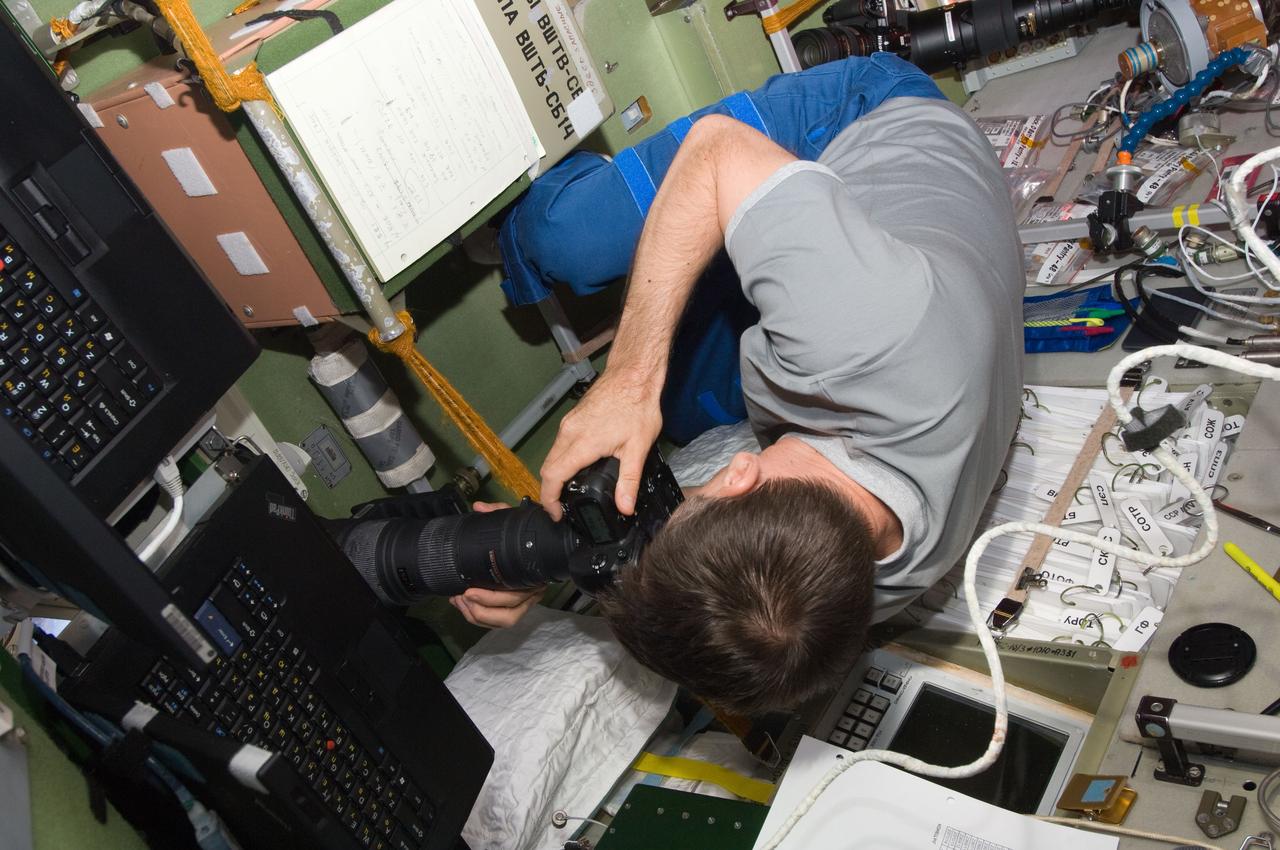
ISS032-E-010071 (22 July 2012) --- Russian cosmonaut Yuri Malenchenko, Expedition 32 flight engineer, uses a still camera at a window in the International Space Station’s Zvezda Service Module during undocking activities of the unpiloted Progress 47 resupply spacecraft. The Progress temporarily undocked from the station’s Pirs Docking Compartment on July 22, 2012 in order to perform a series of engineering tests during re-docking designed to verify an upgraded automated rendezvous system that will facilitate future dockings of Russian vehicles to the space station. Progress 47 separated from the station to a distance of about 100 miles and held position for 24 hours.
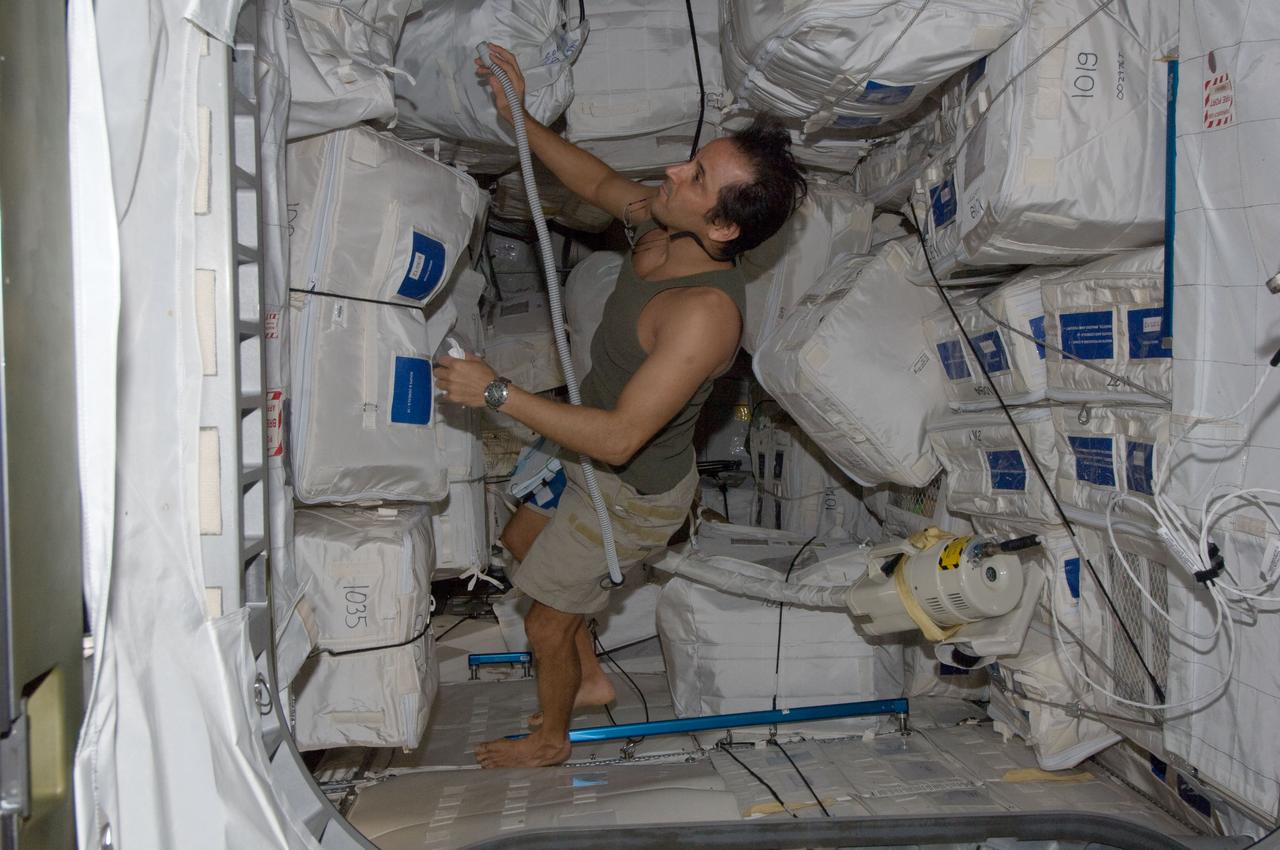
ISS032-E-011881 (4 Aug. 2012) --- NASA astronaut Joe Acaba, Expedition 32 flight engineer, uses a vacuum cleaner during housekeeping operations in the Permanent Multipurpose Module (PMM) of the International Space Station.
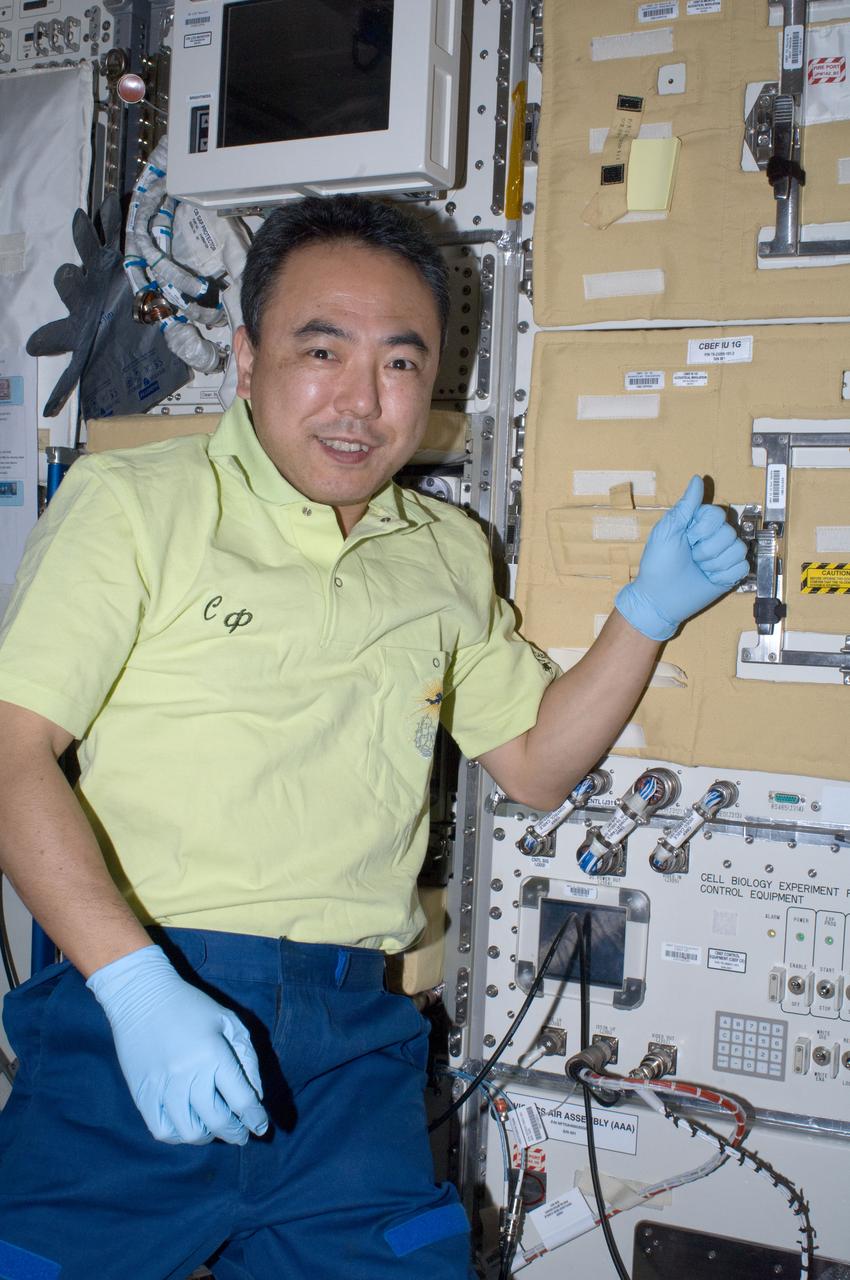
ISS028-E-009727 (25 June 2011) --- Japan Aerospace Exploration Agency astronaut Satoshi Furukawa, Expedition 28 flight engineer, is pictured near the Cell Biology Experiment Facility (CBEF) in the Kibo laboratory of the International Space Station.
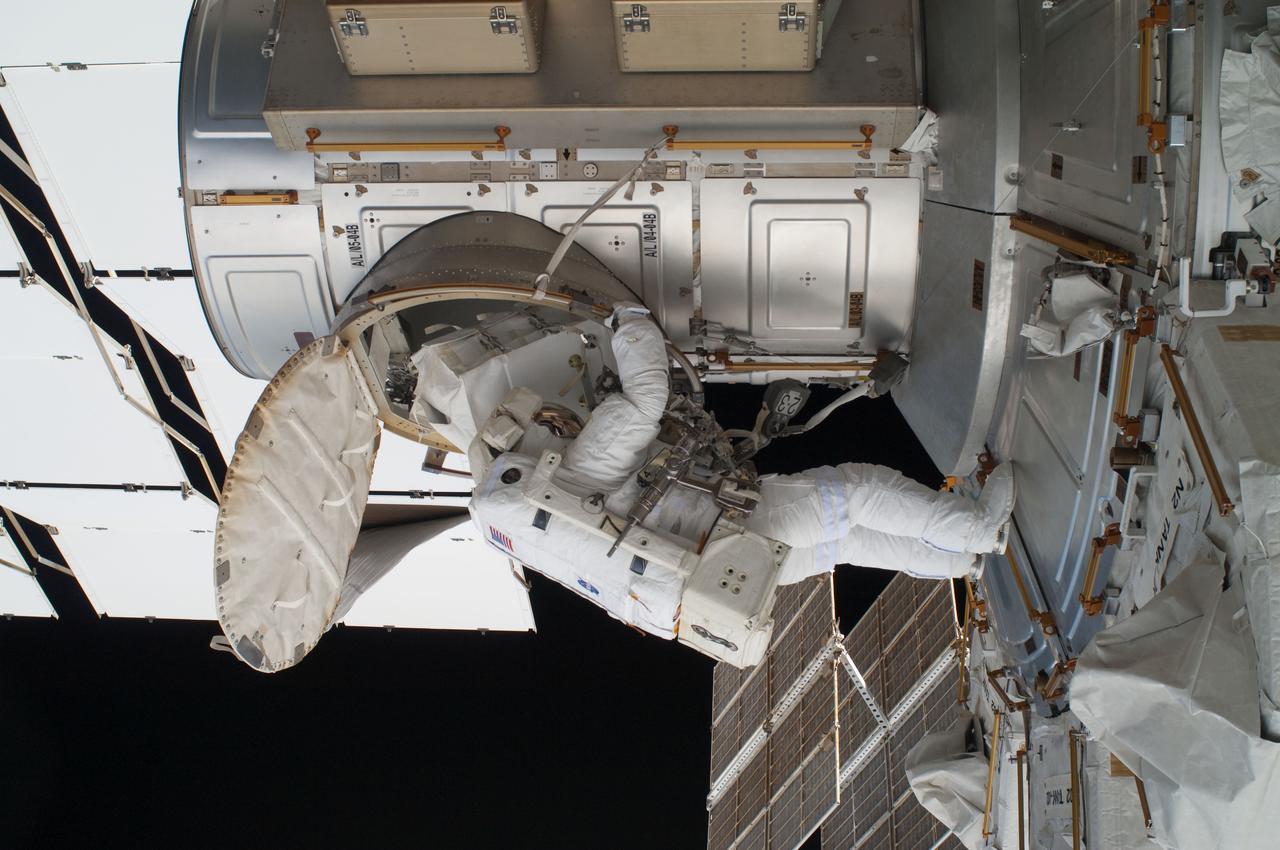
ISS028-E-016253 (12 July 2011) --- NASA astronaut Ron Garan, Expedition 28 flight engineer, egresses the Quest airlock on the International Space Station as he prepares to join crewmate Mike Fossum on a July 12 spacewalk.
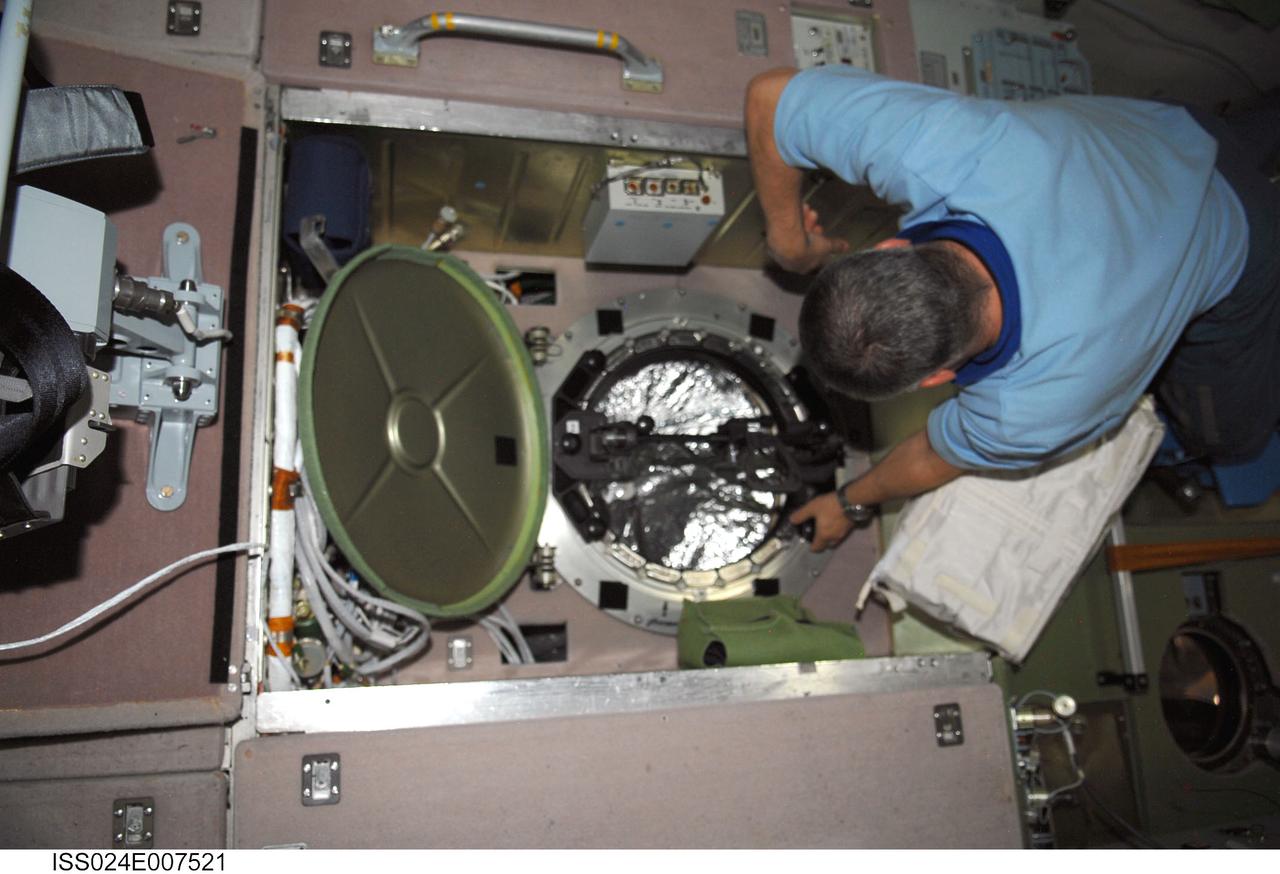
ISS024-E-007521 (8 July 2010) --- In the International Space Station’s Zvezda Service Module, Russian cosmonaut Fyodor Yurchikhin, Expedition 24 flight engineer, prepares to conduct a session for Russia's Environmental Safety Agency (EKON), making observations and taking KPT-3 aerial photography of environmental conditions on Earth.
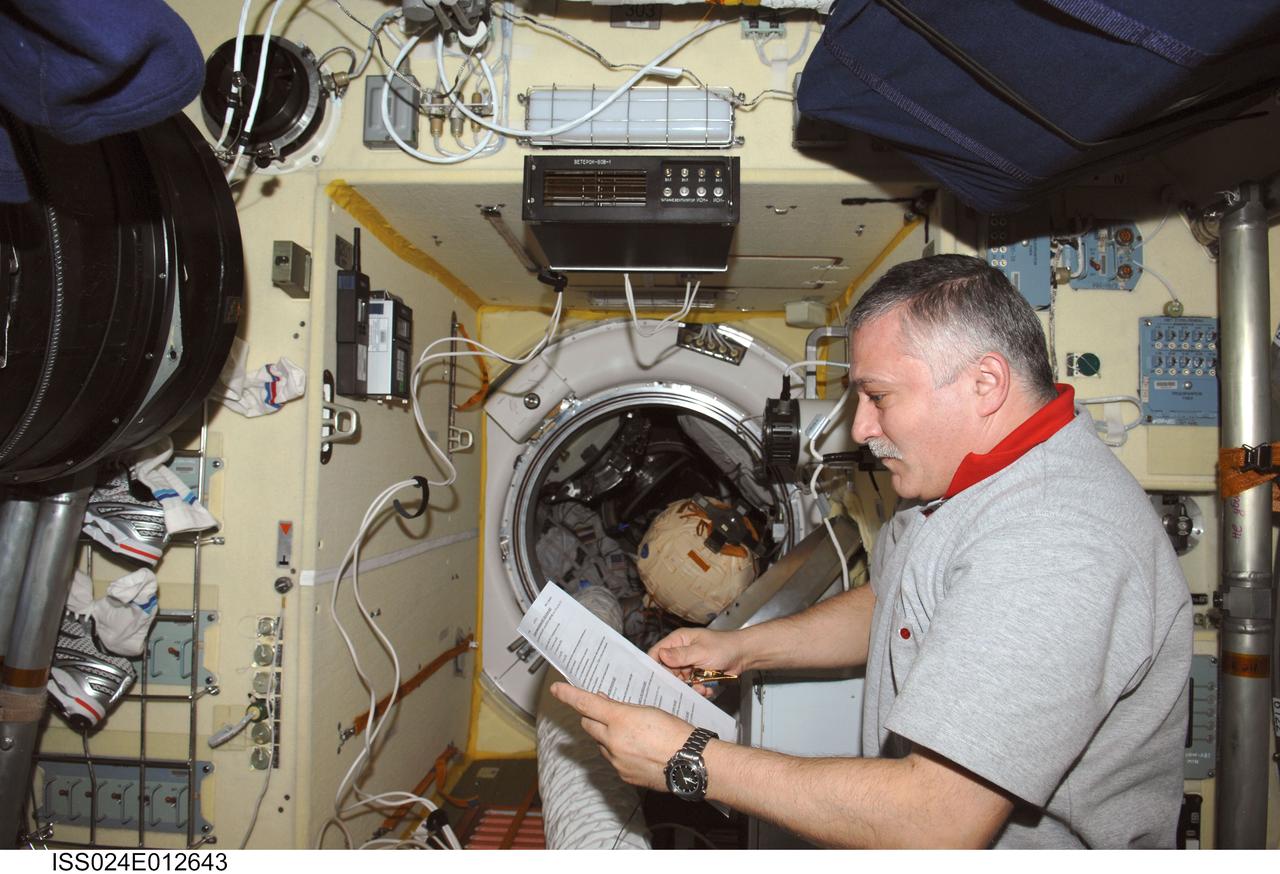
ISS024-E-012643 (27 Aug. 2010) --- Russian cosmonaut Fyodor Yurchikhin, Expedition 24 flight engineer, reads a checklist in the Poisk Mini-Research Module 2 (MRM2) of the International Space Station.
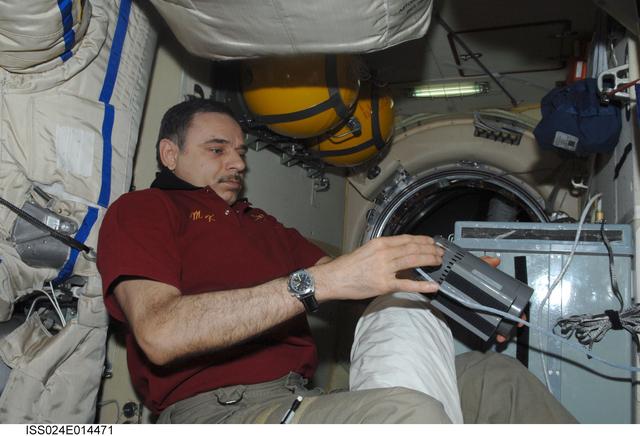
ISS024-E-014471 (14 Sept. 2010) --- Russian cosmonaut Mikhail Kornienko, Expedition 24 flight engineer, services the BTKh-28 KASKAD (Cascade) payload in the Pirs Docking Compartment of the International Space Station.
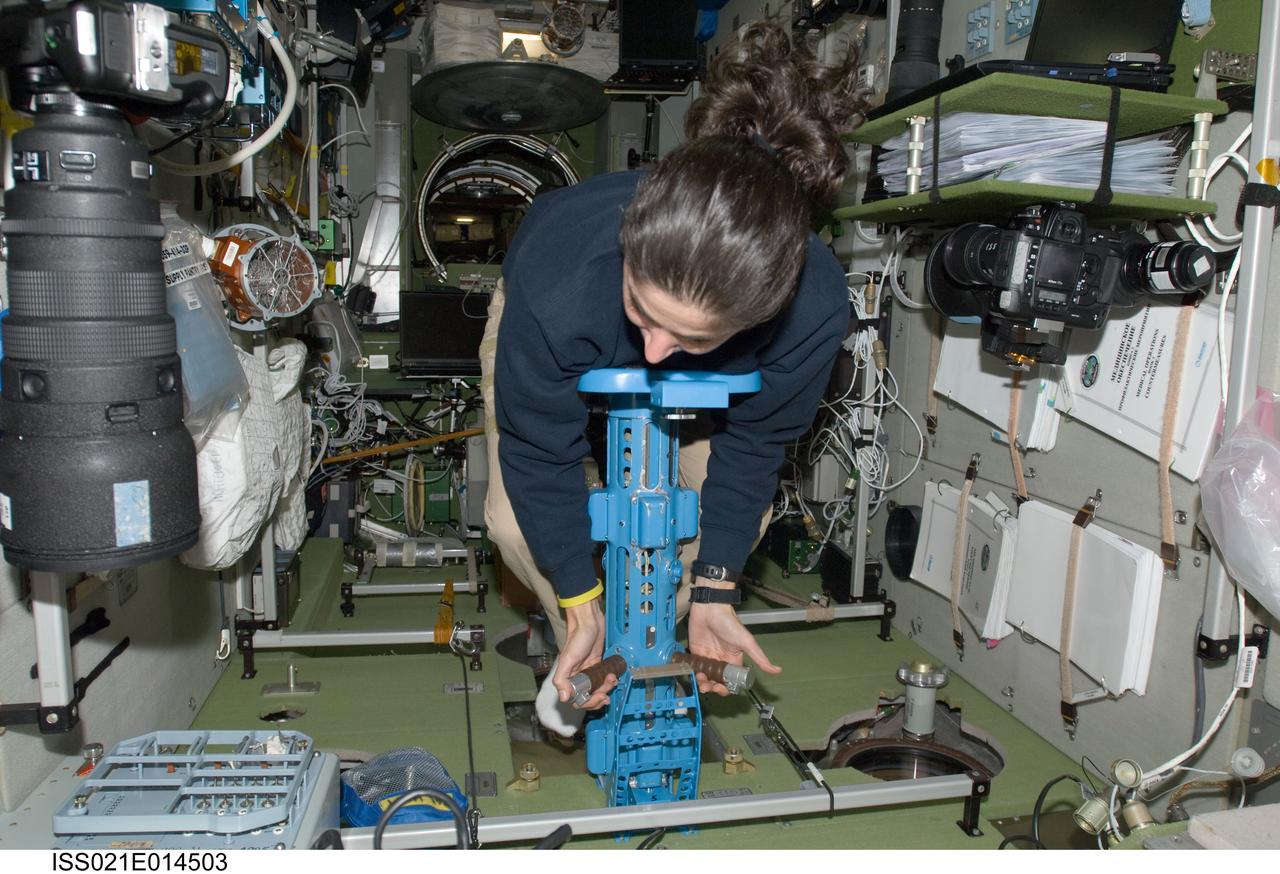
ISS021-E-014503 (12 Oct. 2009) --- NASA astronaut Nicole Stott, Expedition 21 flight engineer, uses the IM mass measurement device to perform the PZEh-MO-8/Body Mass Measurement Russian biomedical routine assessments in the Zvezda Service Module of the International Space Station.
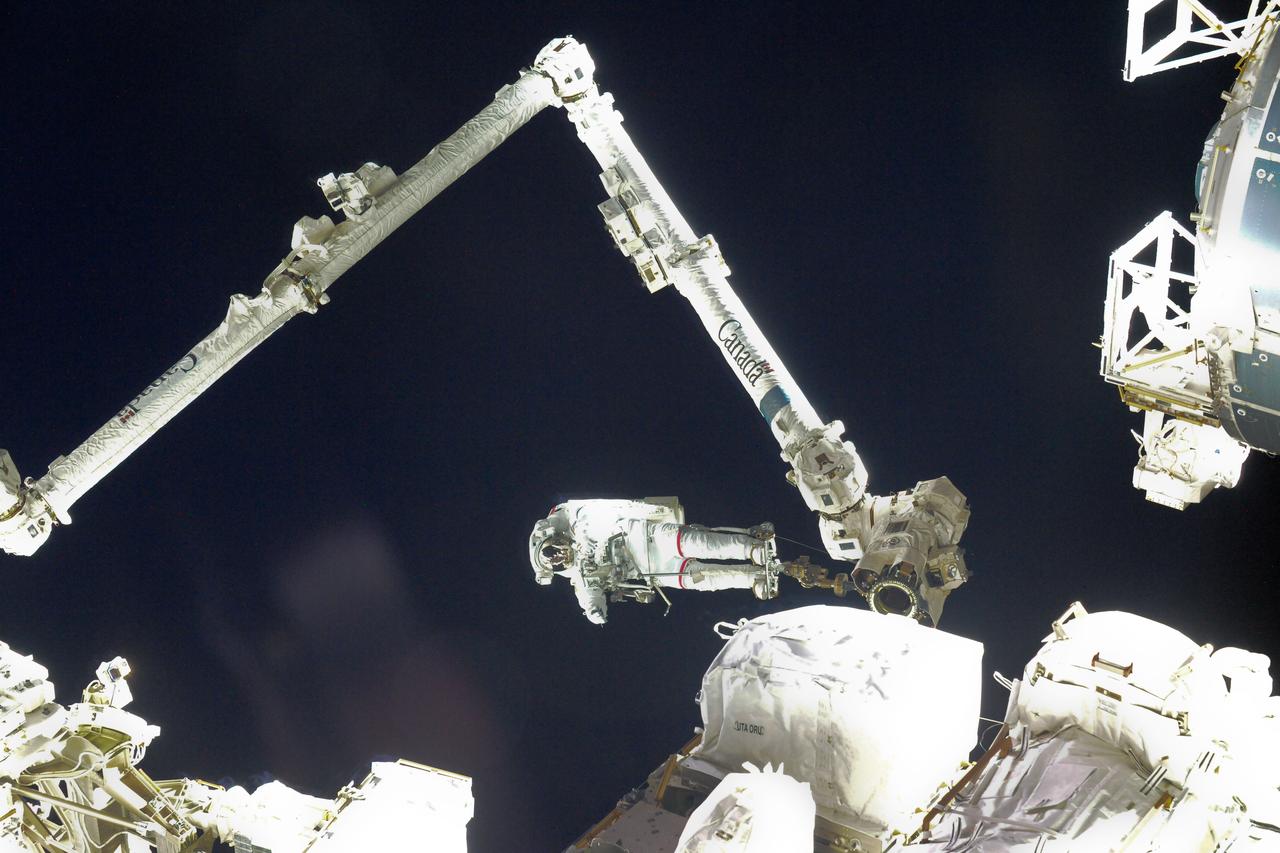
Russian Return EVA16, 17 Part 207 pt2
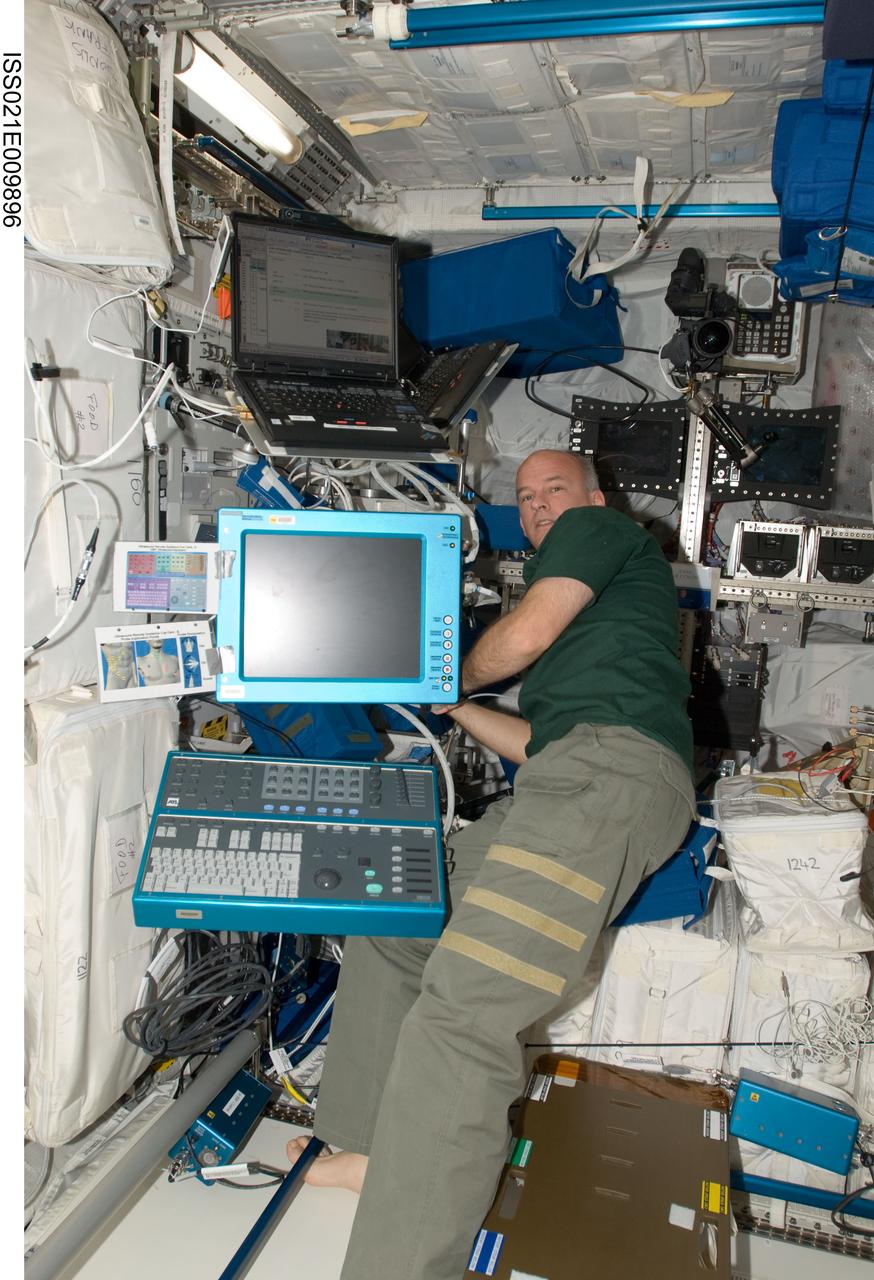
ISS021-E-009896 (17 Oct. 2009) --- NASA astronaut Jeffrey Williams, Expedition 21 flight engineer, works in the Columbus laboratory of the International Space Station.