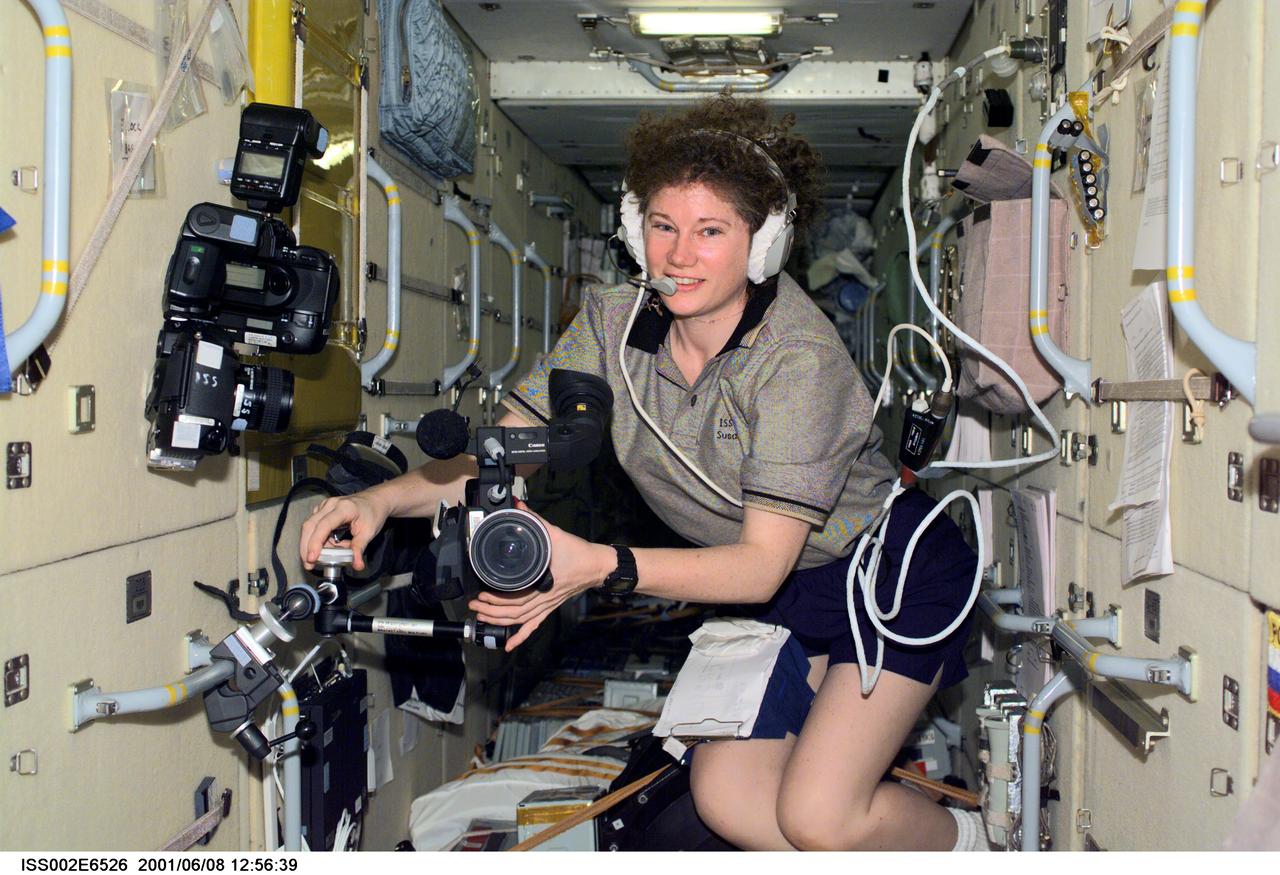
ISS002-E-6526 (8 June 2001) --- Astronaut Susan J. Helms, Expedition Two flight engineer, mounts a video camera onto a bracket in the Zarya or Functional Cargo Block (FGB) of the International Space Station (ISS). The image was recorded with a digital still camera. Alternate NASA ID of 0202499.
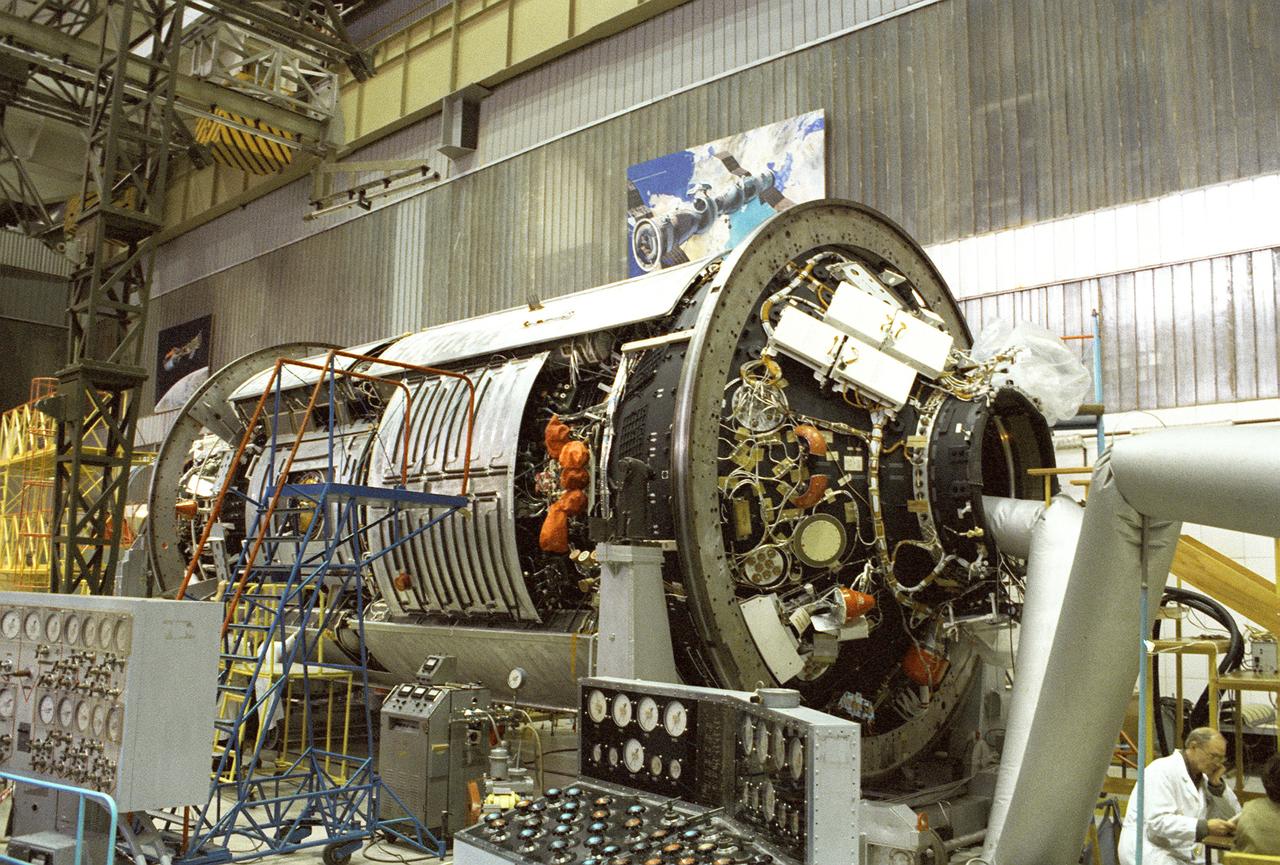
In this photograph, Russians are working on the aft portion of the United States-funded, Russian-built Functional Cargo Bay (FGB) also known as Zarya (Russian for sunrise). Built at Khrunichev, the FGB began pre-launch testing shortly after this photo was taken. Launched by a Russian Proton rocket from the Baikonu Cosmodrome on November 20, 1998, Zarya was the first element of the International Space Station (ISS) followed by the U.S. Unity Node. The aft docking mechanism, Pirs, on the far right with ventilation ducting rurning through it, will be docked with the third Station element, the Russian Service Module, or Zvezda.
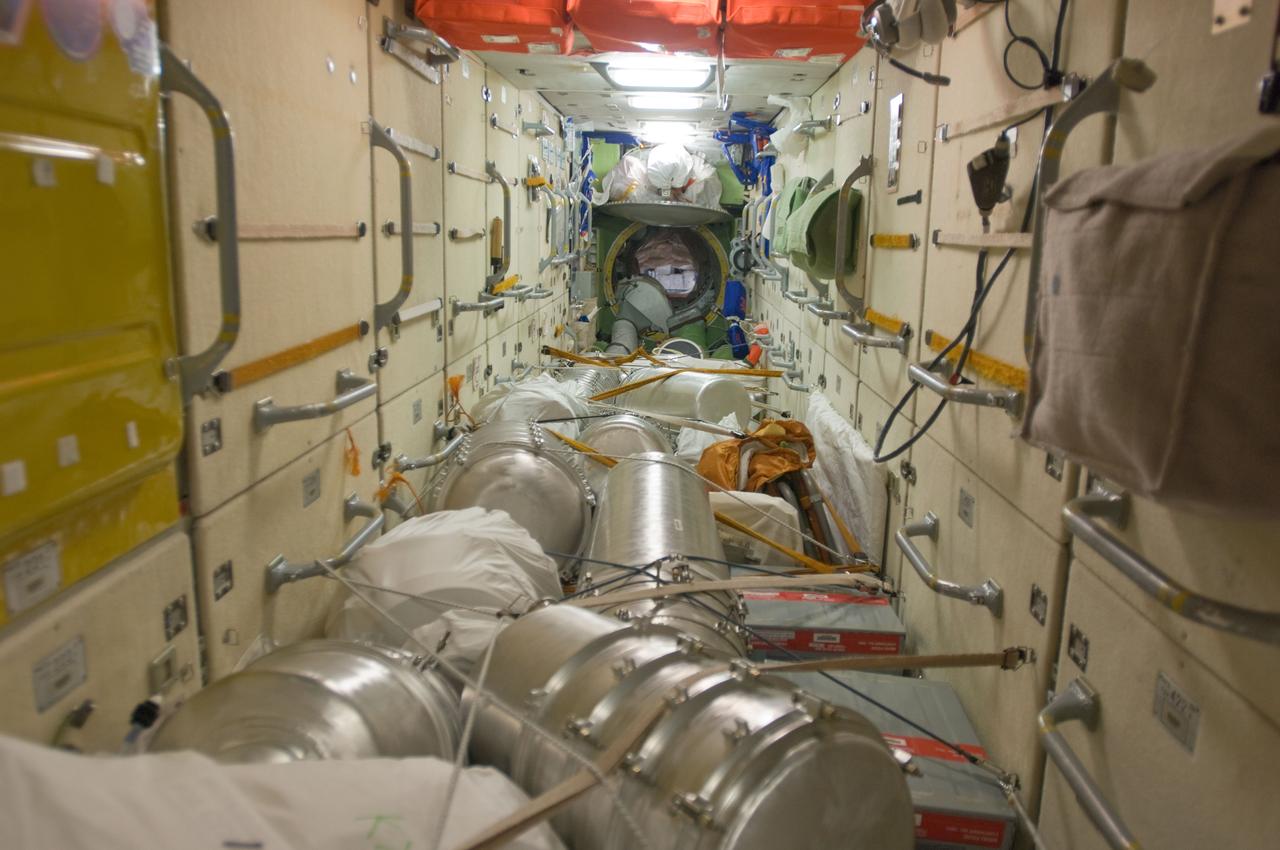
Forward (FWD) view of the Functional Cargo Block (FGB). Photo was taken during Expedition 34.
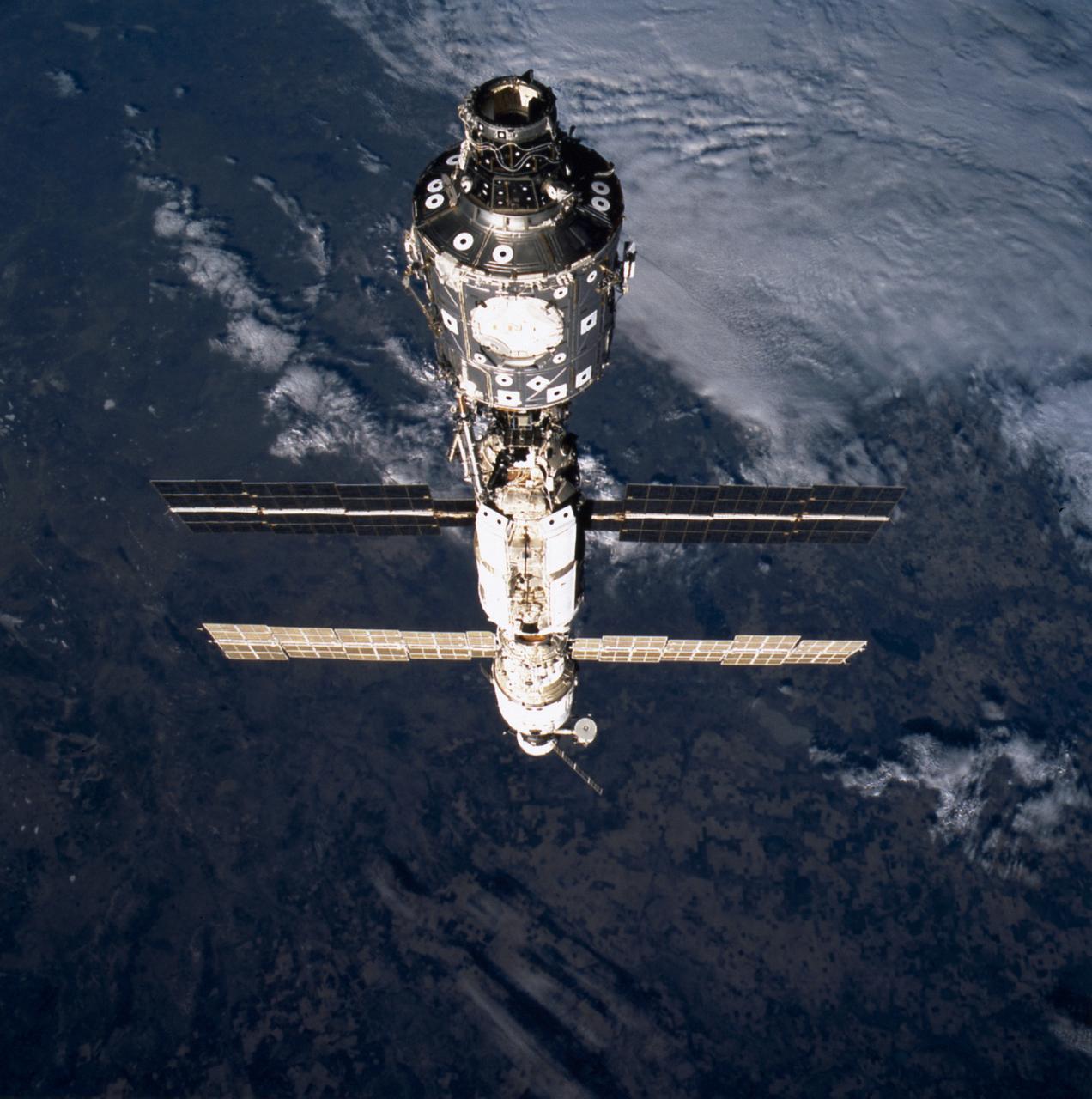
This image of the International Space Station (ISS) was taken during the STS-106 mission. The ISS component nearest the camera is the U.S. built Node 1 or Unity module, which cornected with the Russian built Functional Cargo Block (FGB) or Zarya. The FGB was linked with the Service Module or Zvezda. On the far end is the Russian Progress supply ship.
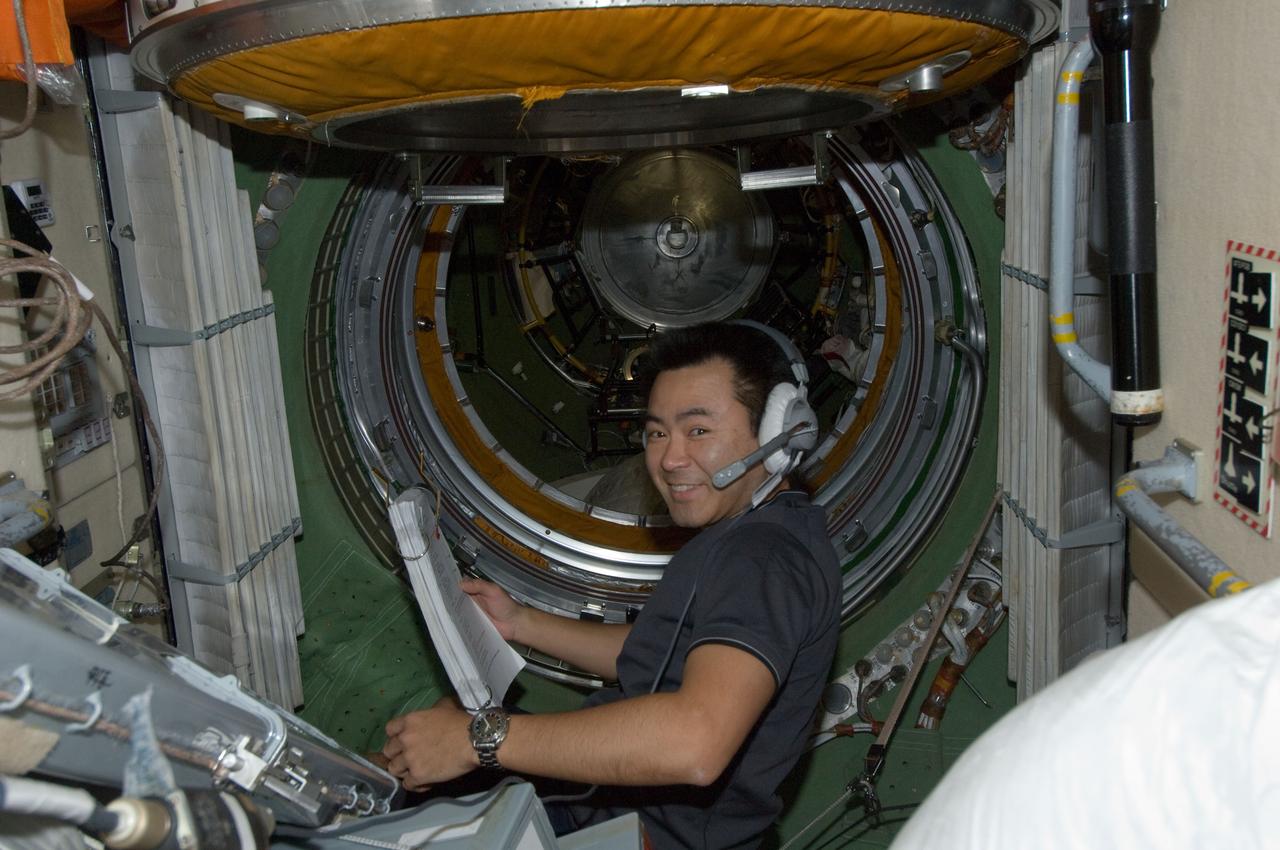
ISS032-E-020821 (20 Aug. 2012) --- Japan Aerospace Exploration Agency astronaut Aki Hoshide, Expedition 32 flight engineer, wearing a communication headset, works in the Zarya Functional Cargo Block (FGB) of the International Space Station.
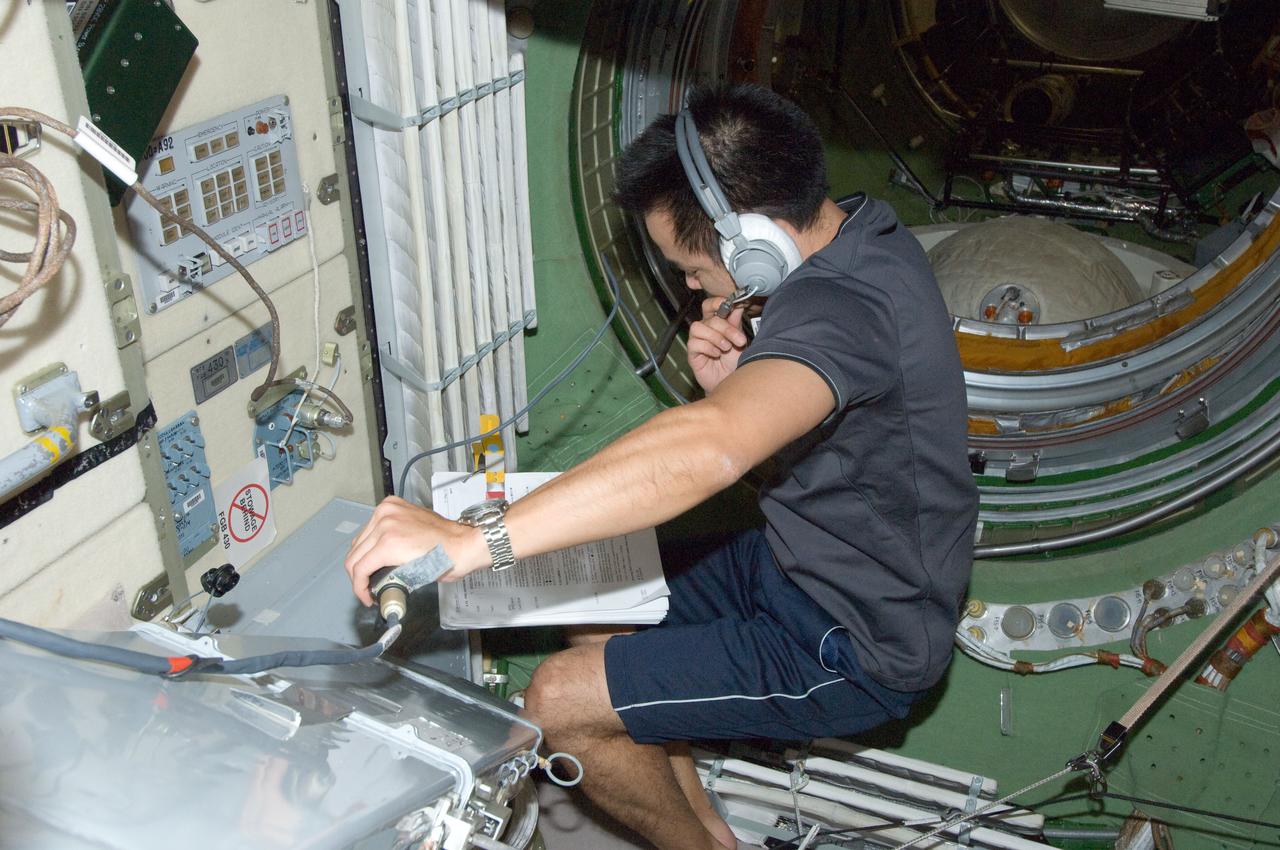
ISS032-E-020817 (20 Aug. 2012) --- Japan Aerospace Exploration Agency astronaut Aki Hoshide, Expedition 32 flight engineer, wearing a communication headset, works in the Zarya Functional Cargo Block (FGB) of the International Space Station.
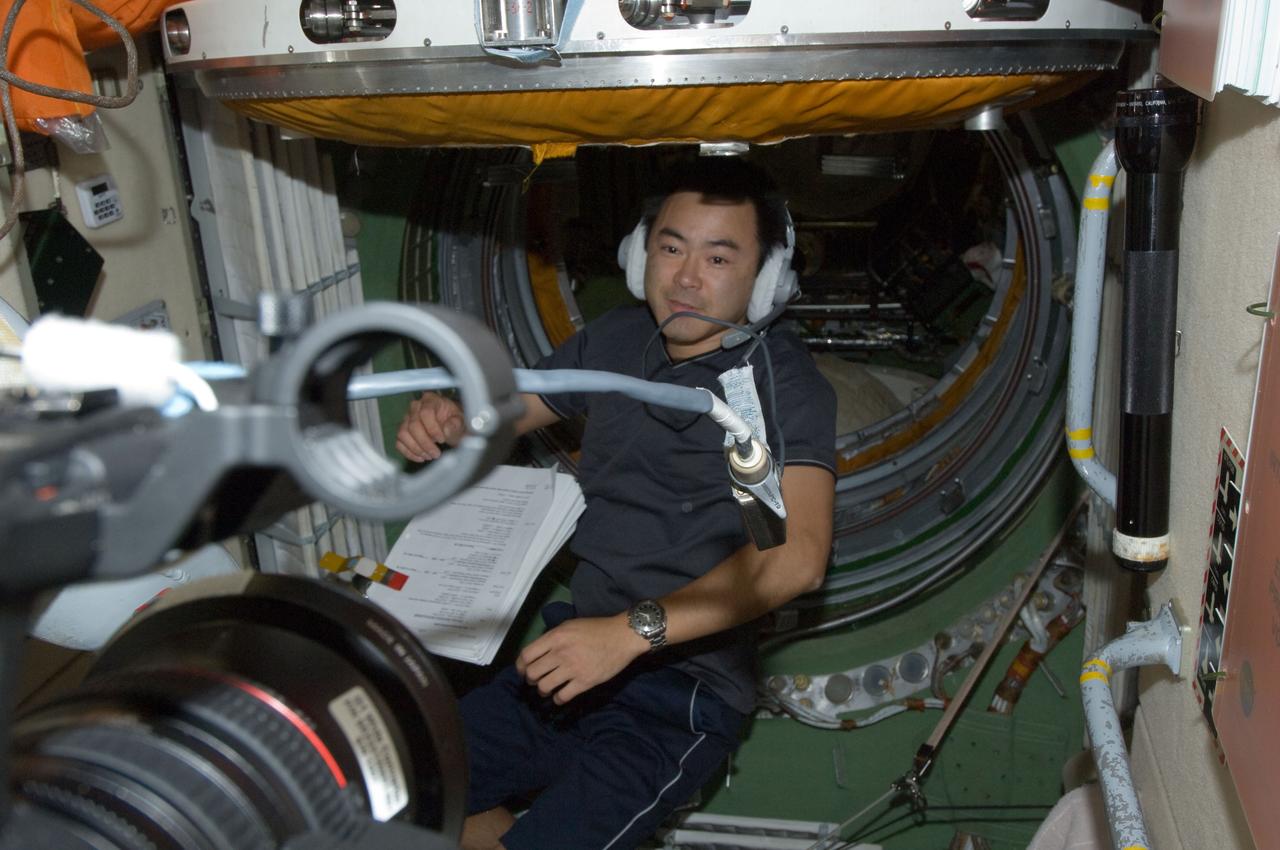
ISS032-E-020818 (20 Aug. 2012) --- Japan Aerospace Exploration Agency astronaut Aki Hoshide, Expedition 32 flight engineer, wearing a communication headset, works in the Zarya Functional Cargo Block (FGB) of the International Space Station.
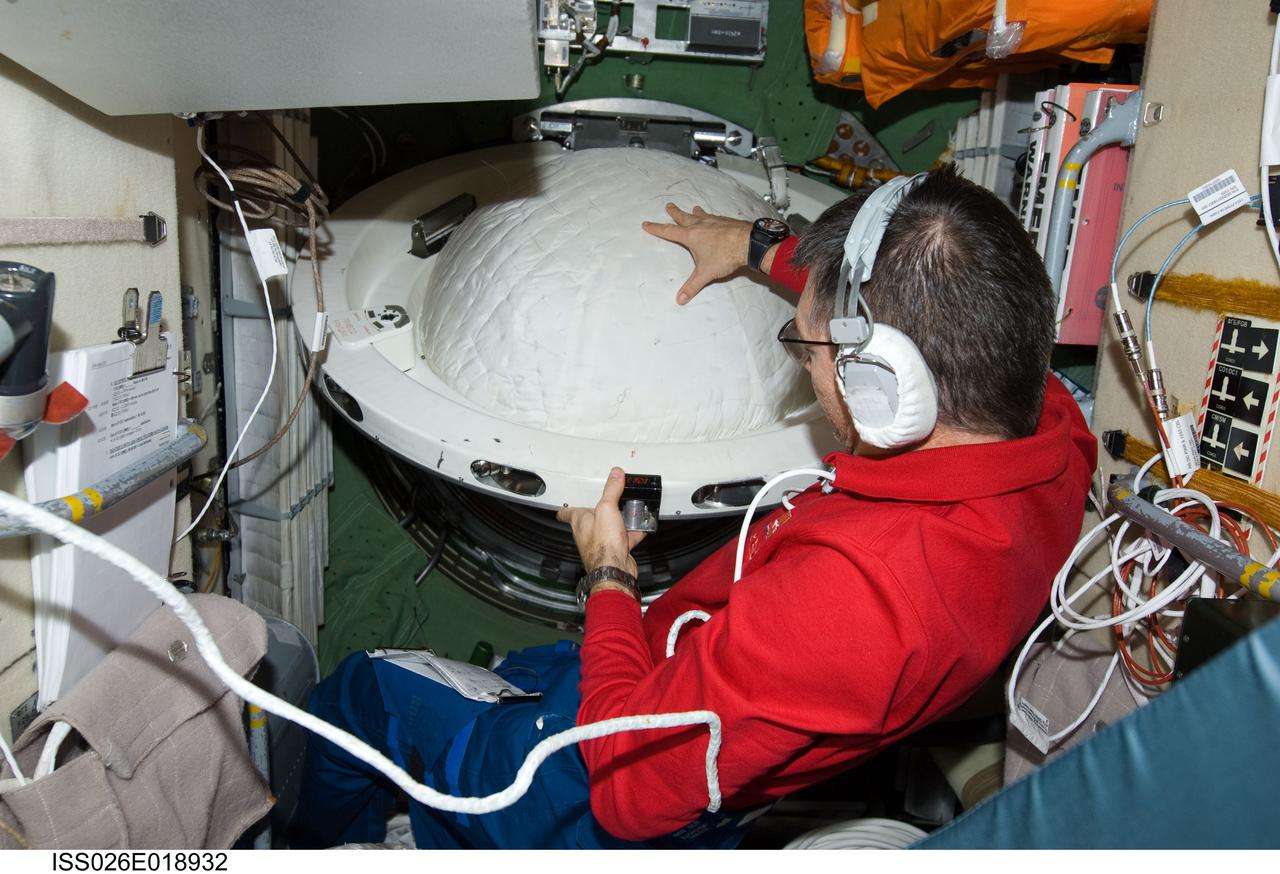
ISS026-E-018932 (21 Jan. 2011) --- While wearing a communication system headset, European Space Agency astronaut Paolo Nespoli, Expedition 26 flight engineer, closes a hatch in the Zarya Functional Cargo Block (FGB) of the International Space Station.
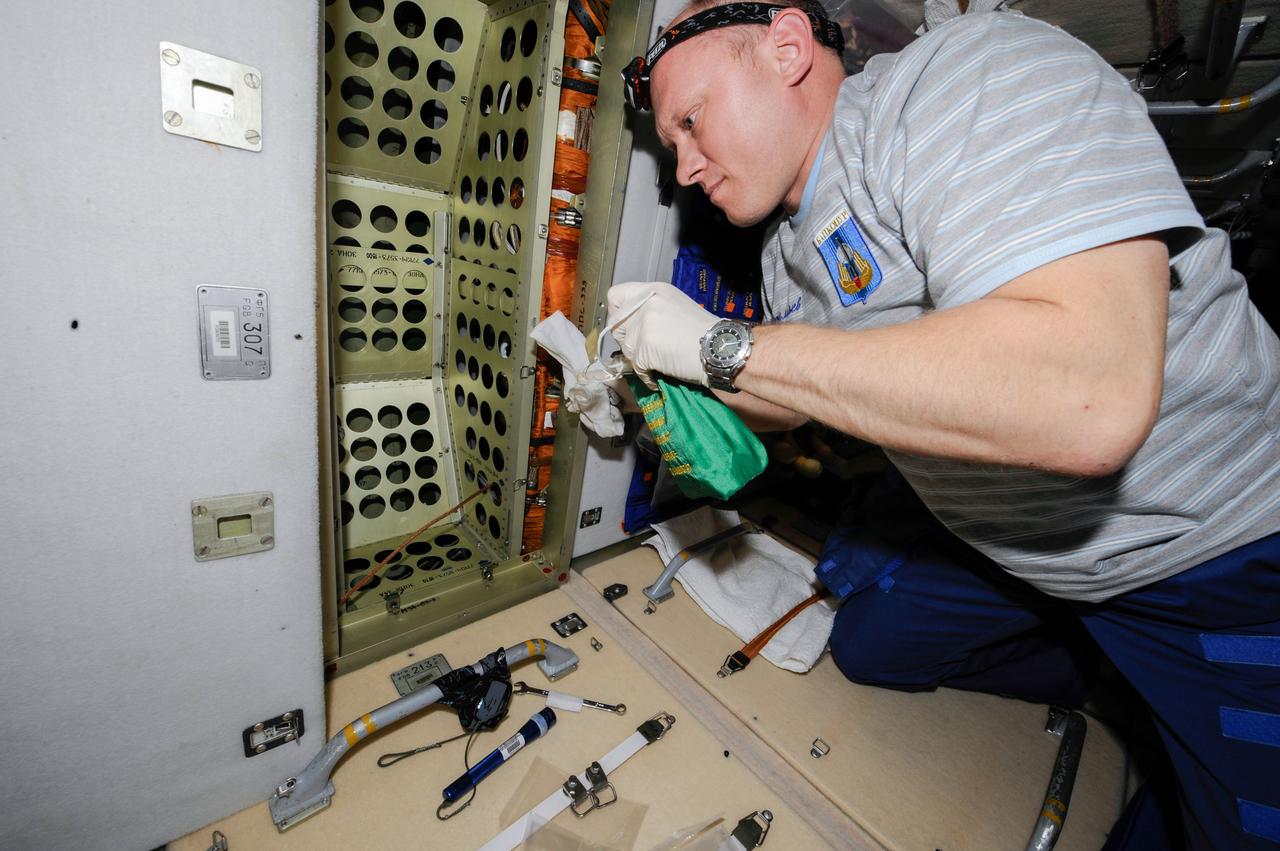
Expedition 39 flight engineer and Roscosmos cosmonaut Oleg Artemyev works to treat the area behind Panel 307 with a fungicide. Image was taken in the Zarya Functional Cargo Block (FGB).
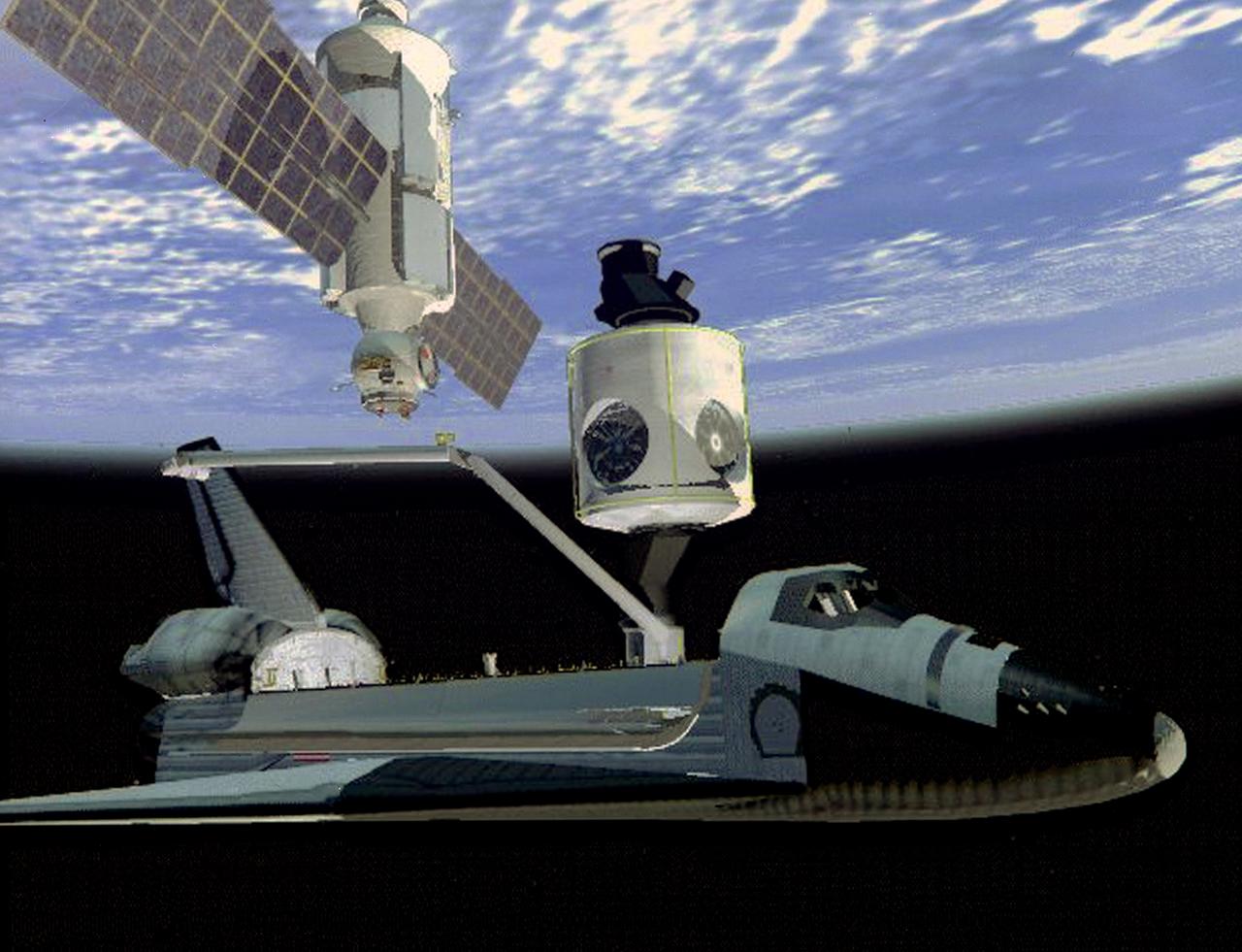
S98-09020 (21 July 1997) --- The Space Shuttle Endeavour prepares to capture the Functional Cargo Block (FGB) using the shuttle's mechanical arm in this artist's depiction of the first Space Shuttle assembly flight for the International Space Station (ISS), mission STS-88 scheduled to launch in July 1998. The shuttle will carry the first United States-built component for the station, a connecting module called Node 1, and attach it to the already orbiting FGB, which supplies early electrical power and propulsion. The FGB will have been launched about two weeks earlier on a Russian Proton rocket from the Baikonur Cosmodrome, Kazahkstan. Once the FGB is captured using the mechanical arm, astronaut Nancy J. Currie will maneuver the arm to dock the FGB to the conical mating adapter at the top of Node 1 in the Shuttle's cargo bay. In ensuing days, three Extravehicular Activity?s (EVA) by astronauts Jerry L. Ross and James H. Newman will be performed to make power, data and utility connections between the two modules.
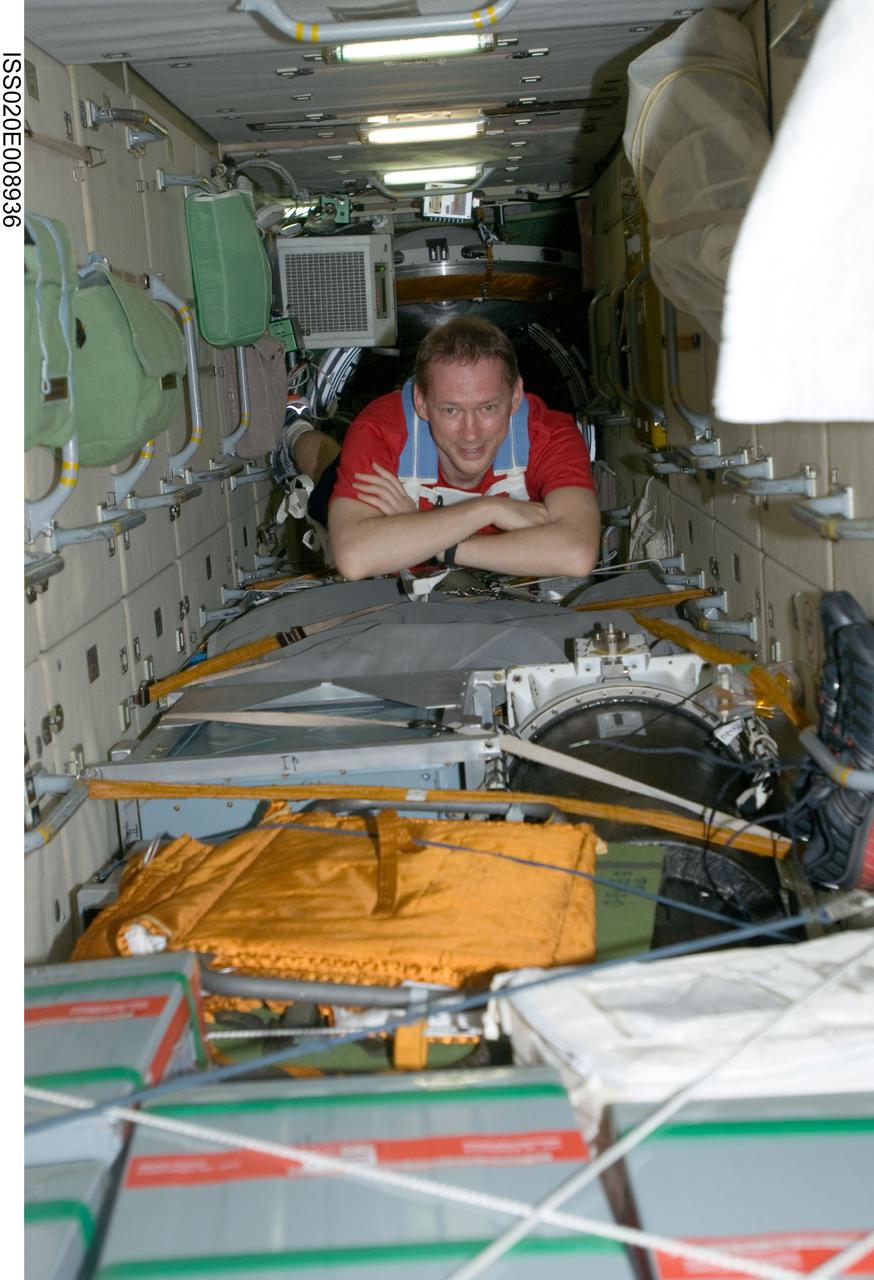
ISS020-E-008936 (14 June 2009) --- European Space Agency astronaut Frank De Winne, Expedition 20 flight engineer, floats through the Zarya functional cargo block (FGB) of the International Space Station.
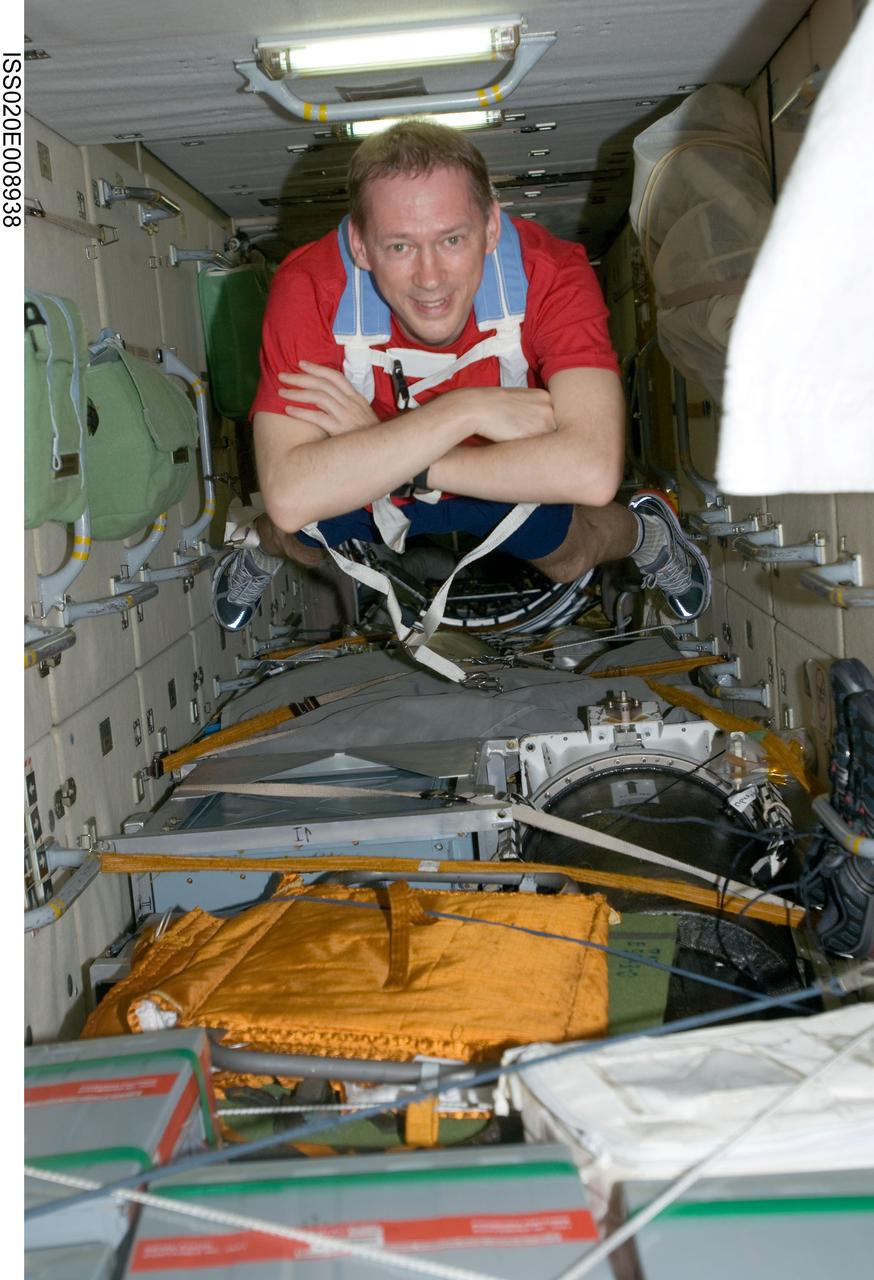
ISS020-E-008938 (14 June 2009) --- European Space Agency astronaut Frank De Winne, Expedition 20 flight engineer, floats through the Zarya functional cargo block (FGB) of the International Space Station.
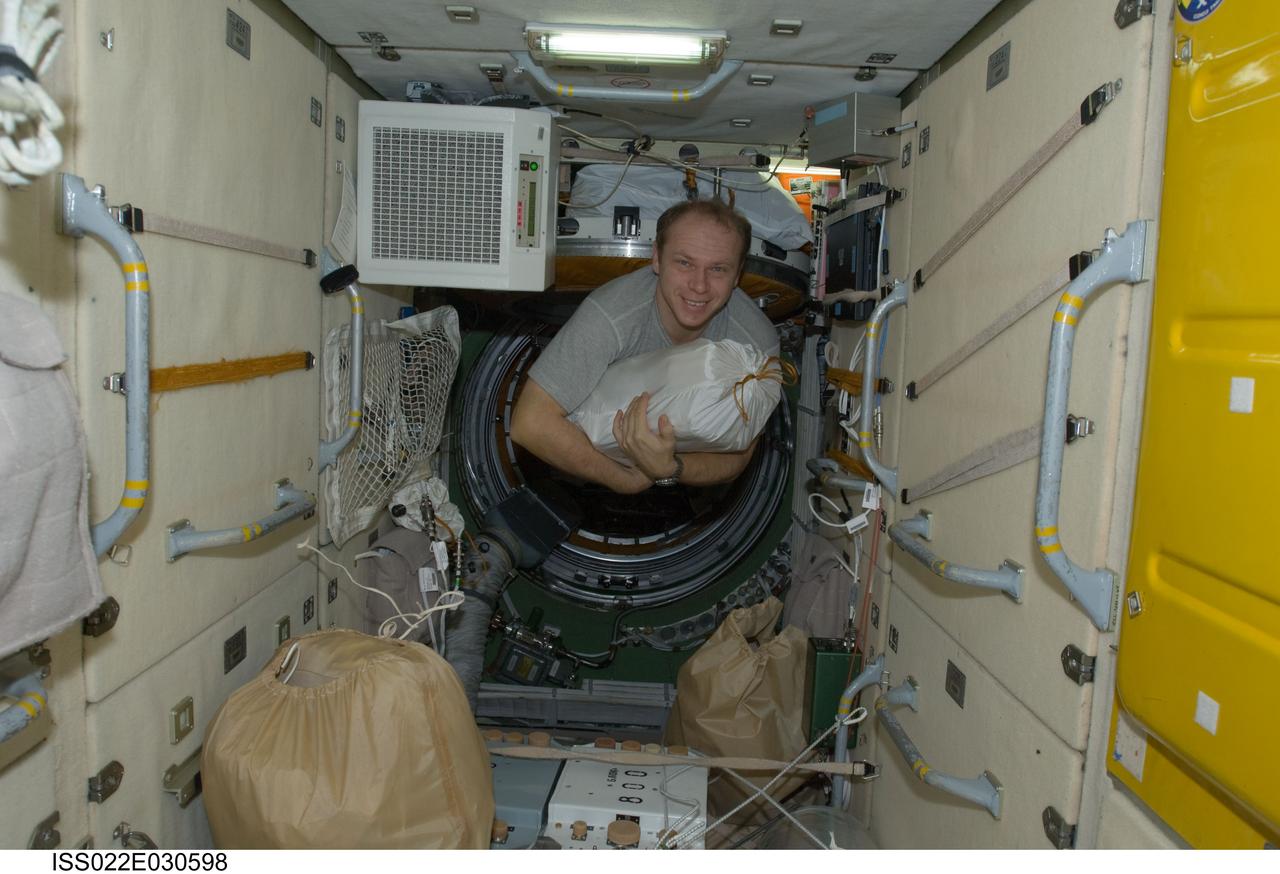
ISS022-E-030598 (19 Jan. 2010) --- Russian cosmonaut Oleg Kotov, Expedition 22 flight engineer, moves a stowage bag in the Zarya Functional Cargo Block (FGB) of the International Space Station.
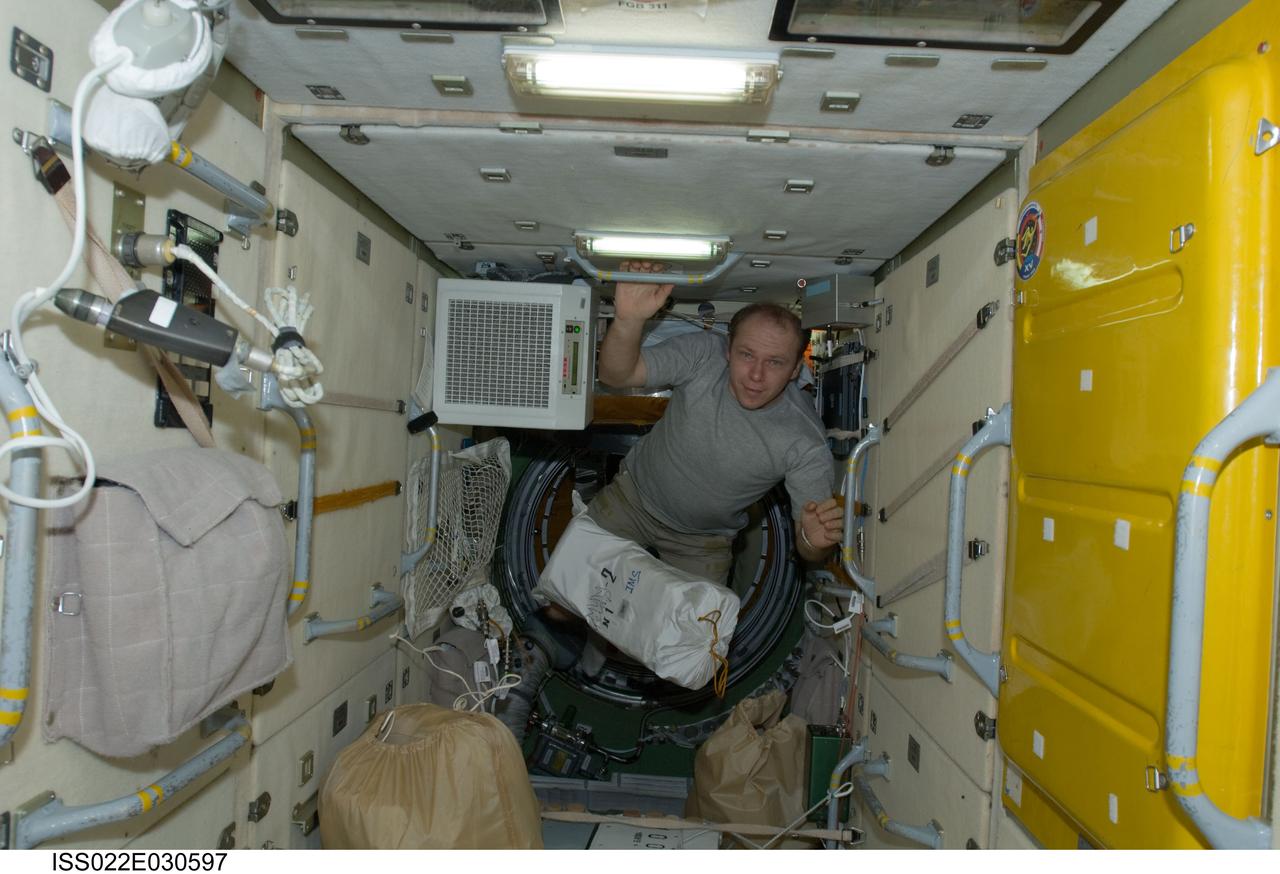
ISS022-E-030597 (19 Jan. 2010) --- Russian cosmonaut Oleg Kotov, Expedition 22 flight engineer, is pictured near a stowage bag floating freely in the Zarya Functional Cargo Block (FGB) of the International Space Station.
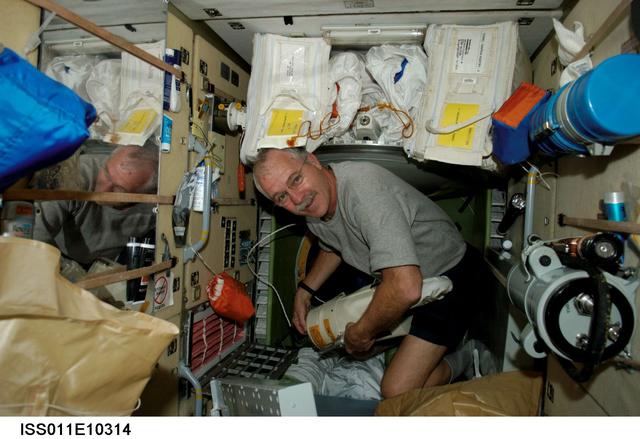
ISS011-E-10314 (4 May 2005) --- Astronaut John L. Phillips, Expedition 11 NASA Space Station science officer and flight engineer, assembles a vacuum cleaner in the functional cargo block (FGB) or Zarya on the International Space Station.
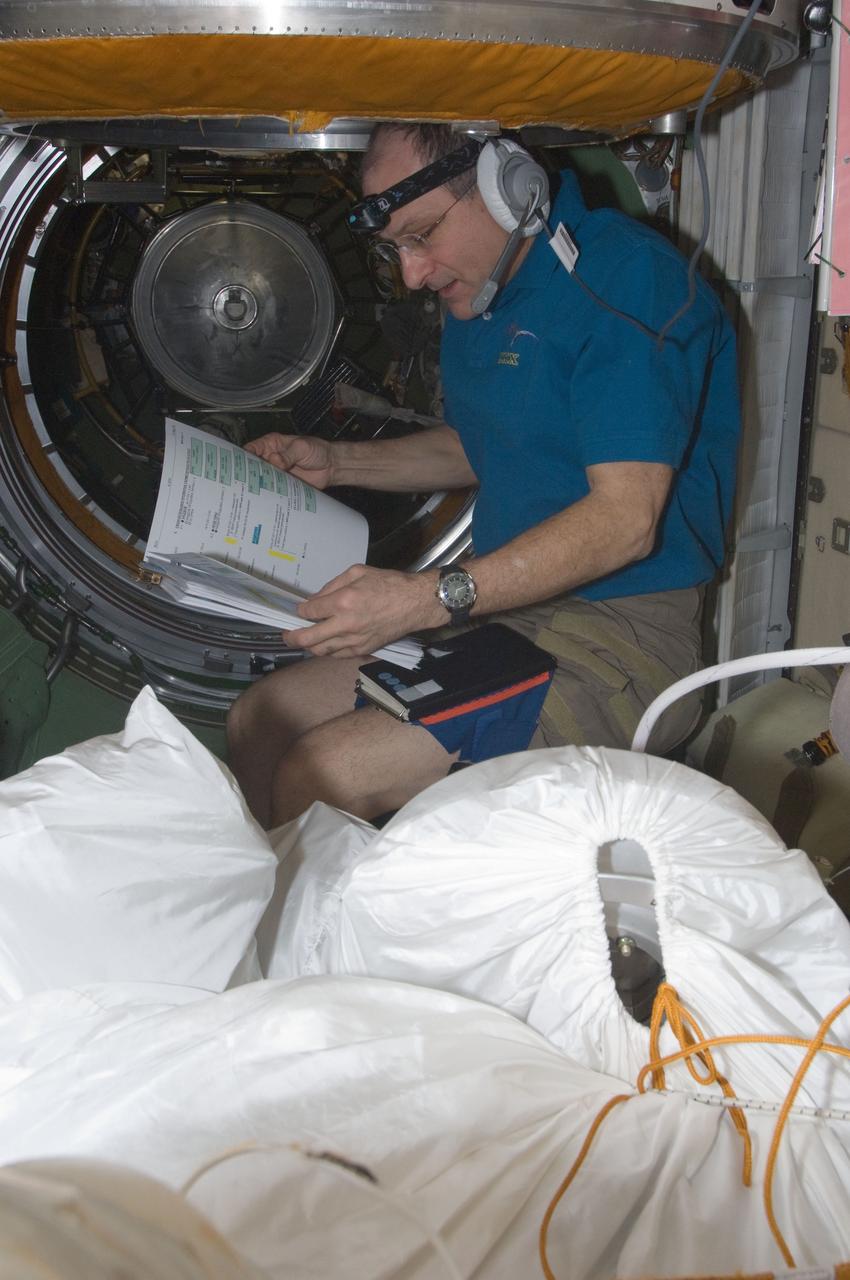
ISS030-E-078304 (16 Feb. 2012) --- NASA astronaut Don Pettit, Expedition 30 flight engineer, reads a procedures checklist in the Zarya Functional Cargo Block (FGB) of the International Space Station as the crew prepares for a session of extravehicular activity (EVA) to continue outfitting the International Space Station.
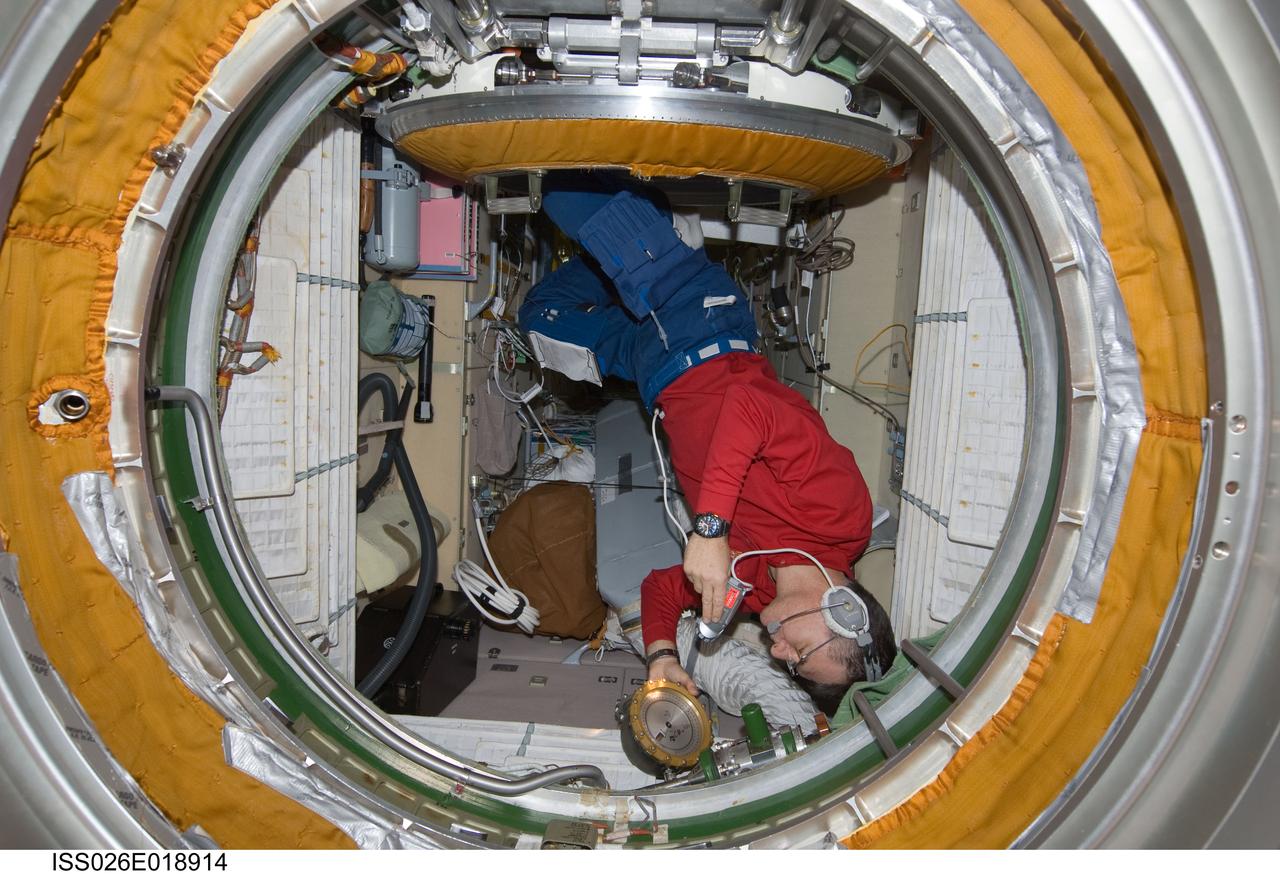
ISS026-E-018914 (21 Jan. 2011) --- While wearing a communication system headset, European Space Agency astronaut Paolo Nespoli, Expedition 26 flight engineer, uses a flashlight while checking an Absolute Pressure gauge in the Zarya Functional Cargo Block (FGB) of the International Space Station.
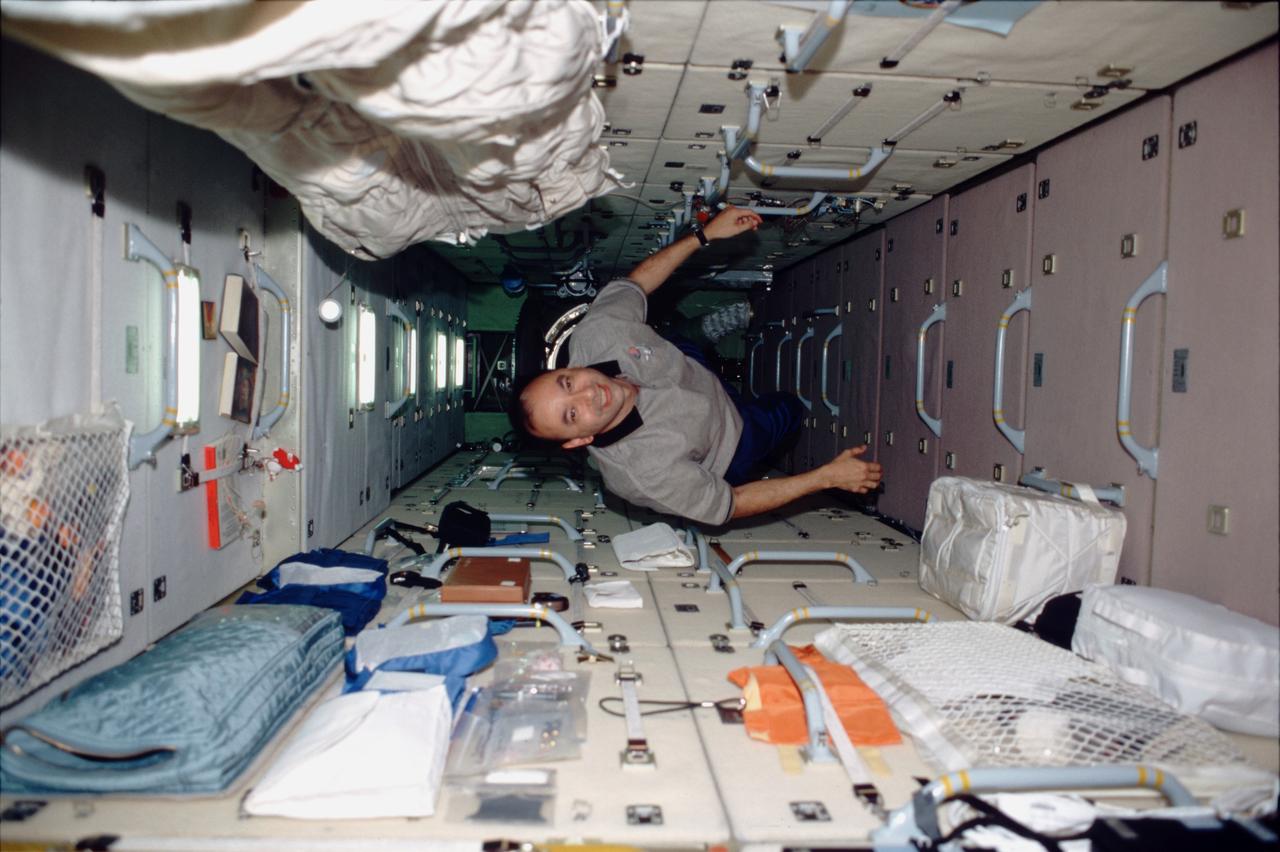
STS098-320-008 (7-20 February 2001) --- Astronaut Mark L. Polansky, STS-98 pilot, translates through the Zarya functional cargo block (FGB) while visiting and working aboard the International Space Station (ISS).
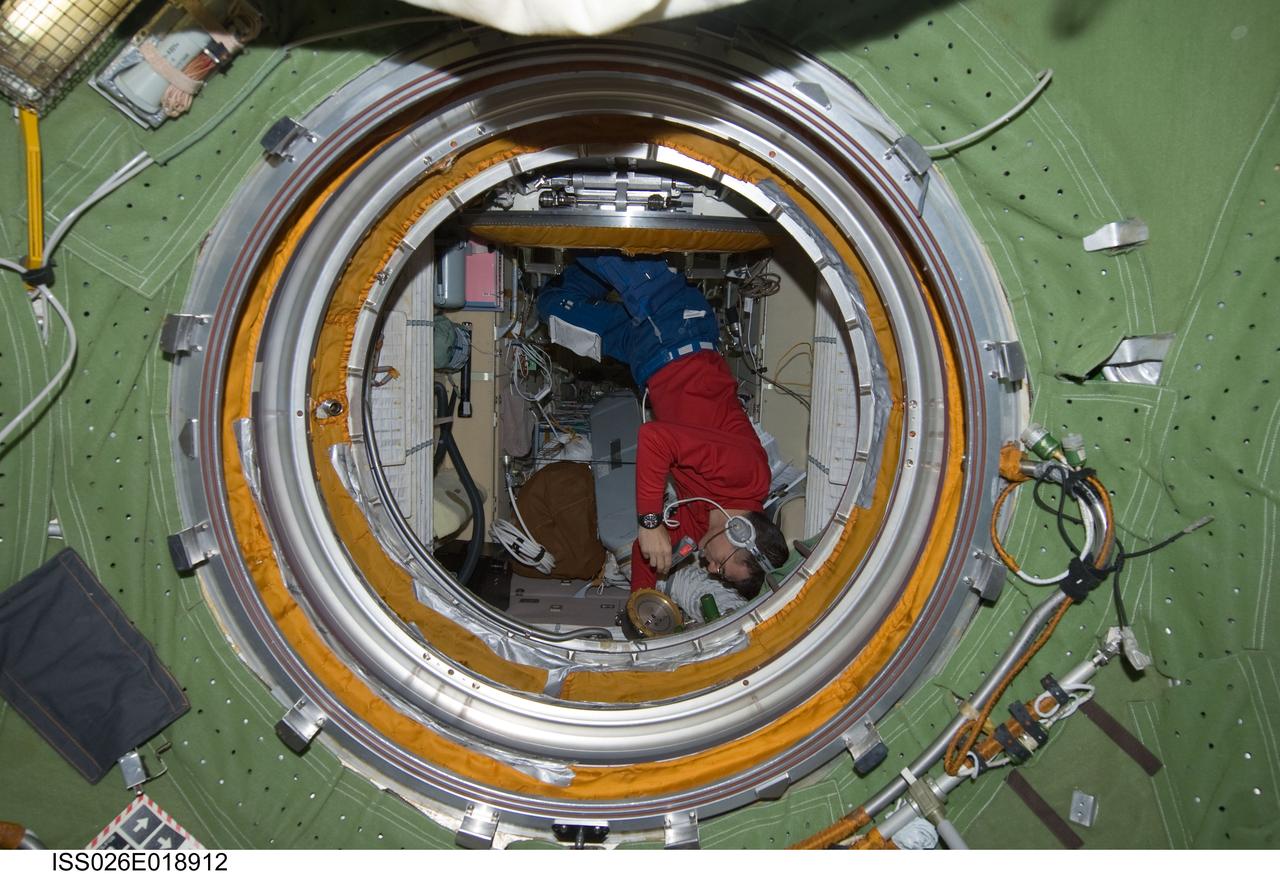
ISS026-E-018912 (21 Jan. 2011) --- While wearing a communication system headset, European Space Agency astronaut Paolo Nespoli, Expedition 26 flight engineer, uses a flashlight while checking an Absolute Pressure gauge in the Zarya Functional Cargo Block (FGB) of the International Space Station.
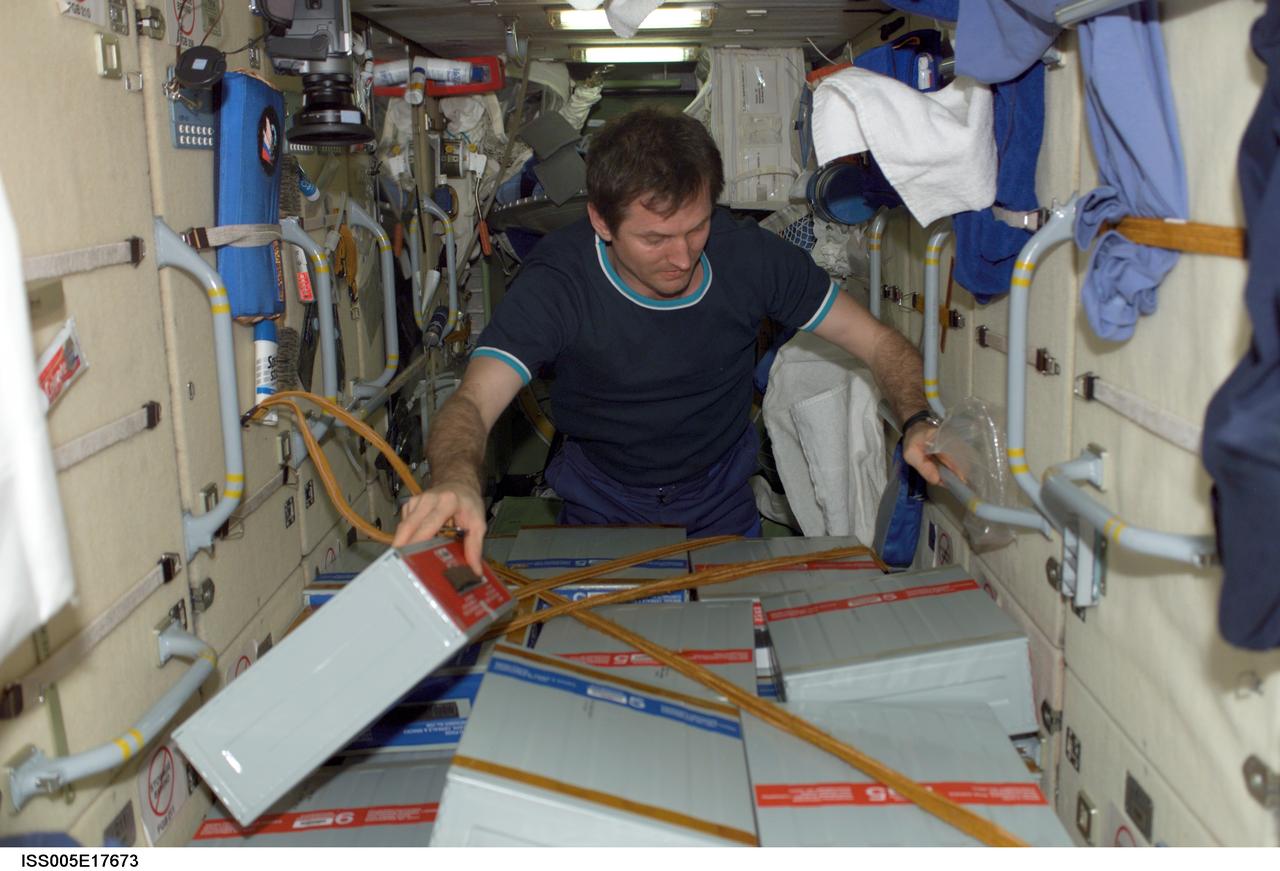
ISS005-E-17673 (17 October 2002) --- Cosmonaut Sergei Y. Treschev, Expedition Five flight engineer representing Rosaviakosmos, checks stowage boxes in the functional cargo block (FGB), or Zarya, on the International Space Station (ISS).
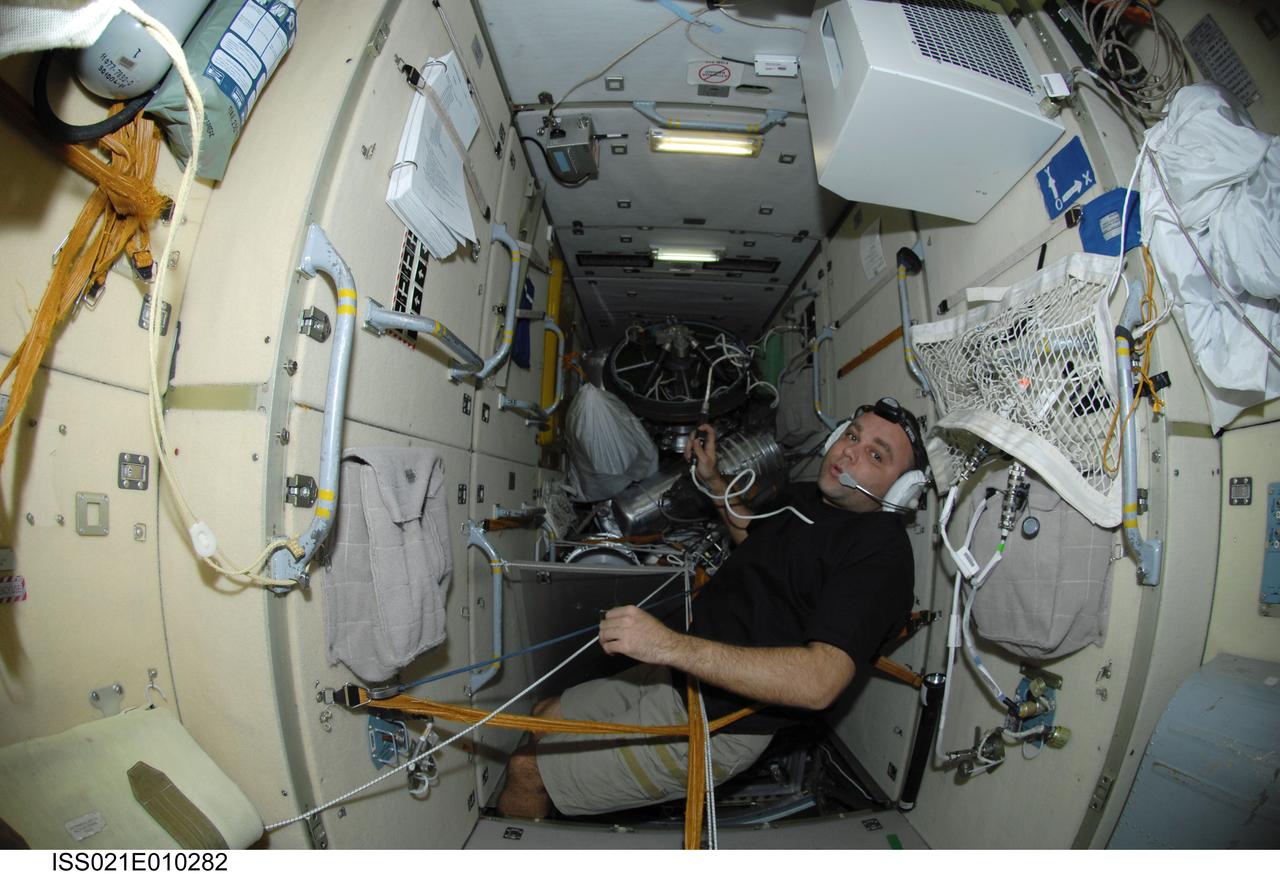
ISS021-E-010282 (21 Oct. 2009) --- Russian cosmonaut Maxim Suraev, Expedition 21 flight engineer, uses a communication system while working in the Zarya Functional Cargo Block (FGB) of the International Space Station.
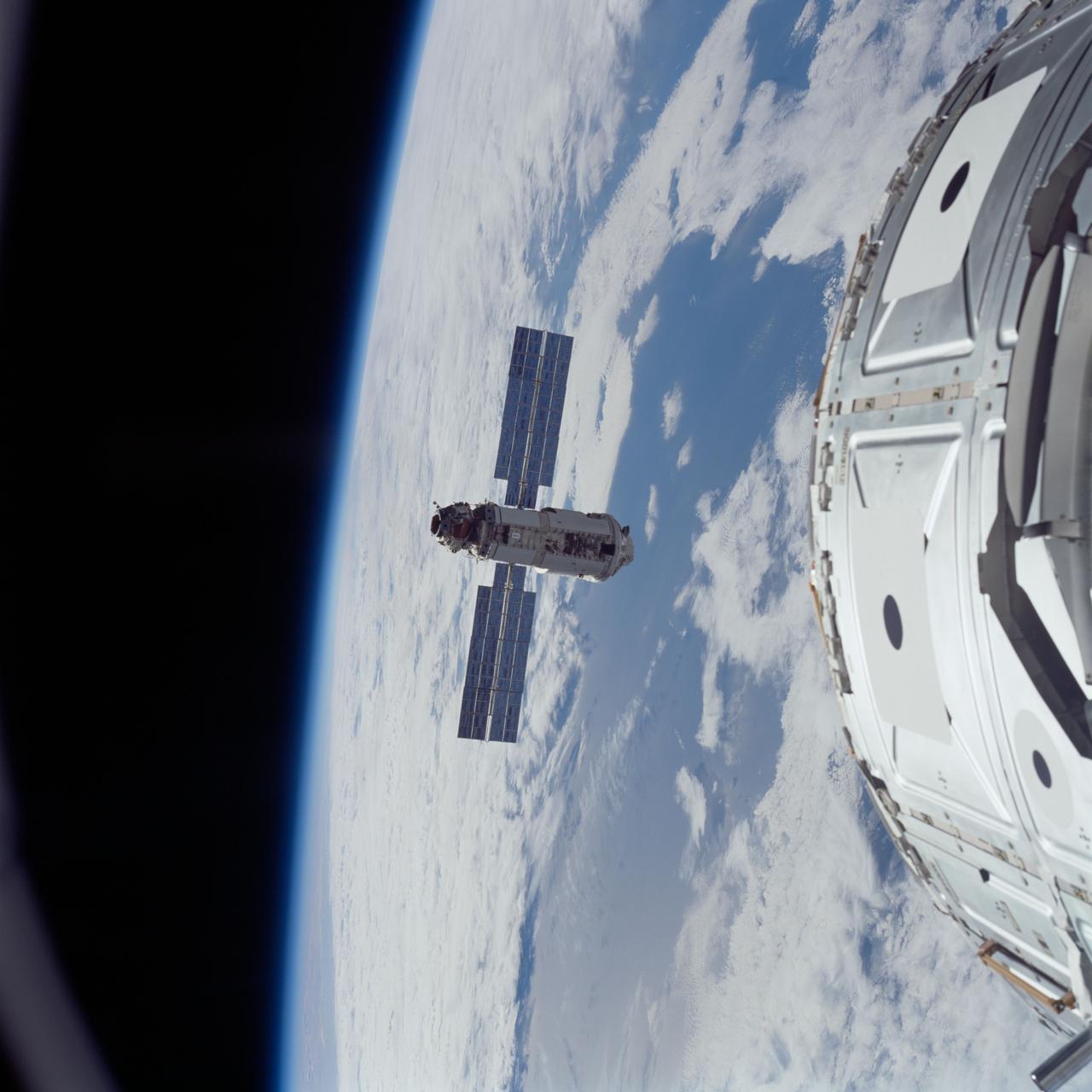
STS088-737-056 (4-15 Dec. 1998) --- With the U.S.-built Unity module in the foreground, the Space Shuttle Endeavour approaches the Russian-built FGB (Zarya) module in Earth-orbit. Once the two spacecraft were docked, three extravehicular activities (EVA) and a great deal of interior, shirt-sleeve environment work was accomplished by the crew to ready the tandem for its International Space Station (ISS) duty.
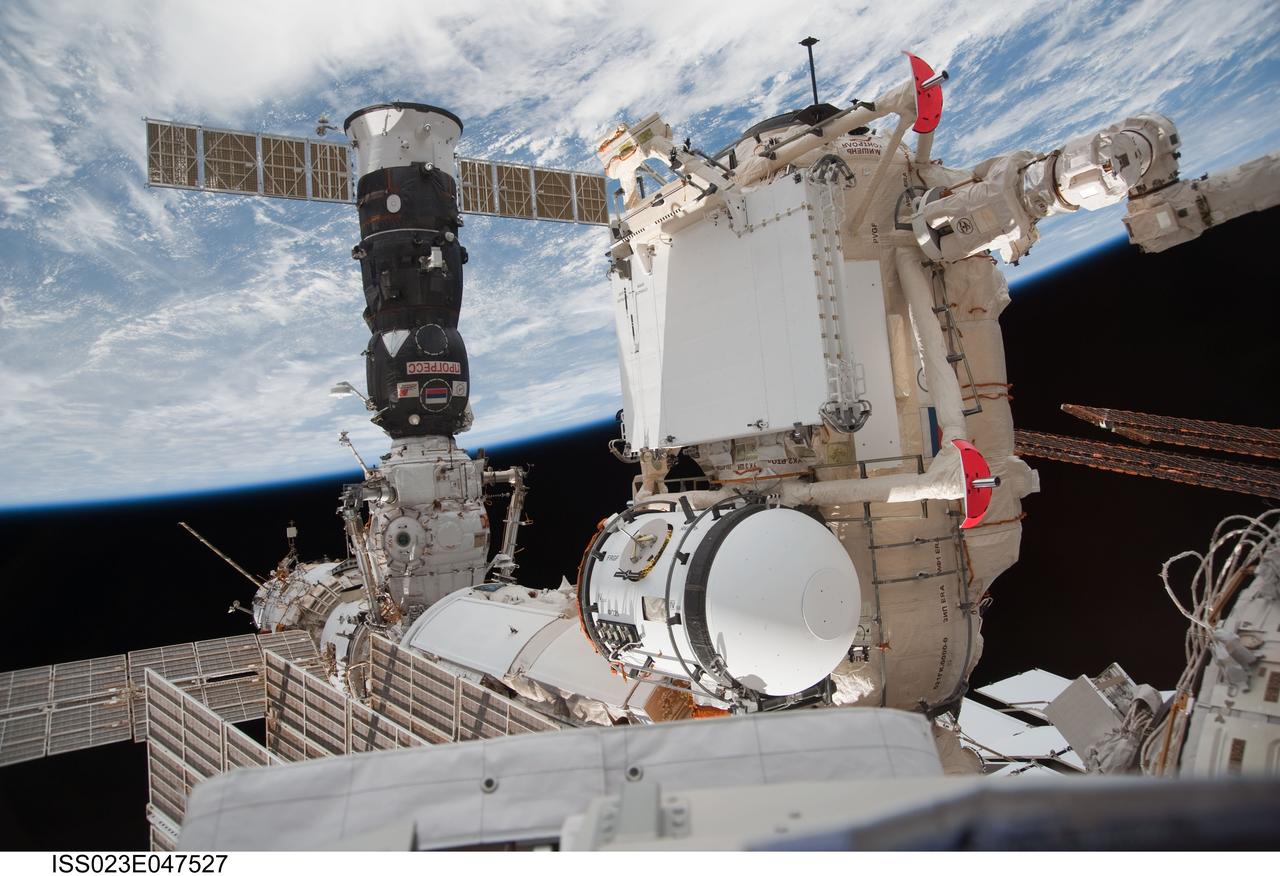
ISS023-E-047527 (18 May 2010) --- In the grasp of the station?s robotic Canadarm2, the Russian-built Mini-Research Module 1 (MRM-1) is attached to the Earth-facing port of the Zarya Functional Cargo Block (FGB) of the International Space Station. Named Rassvet, Russian for "dawn," the module is the second in a series of new pressurized components for Russia. Rassvet will be used for cargo storage and will provide an additional docking port to the station.
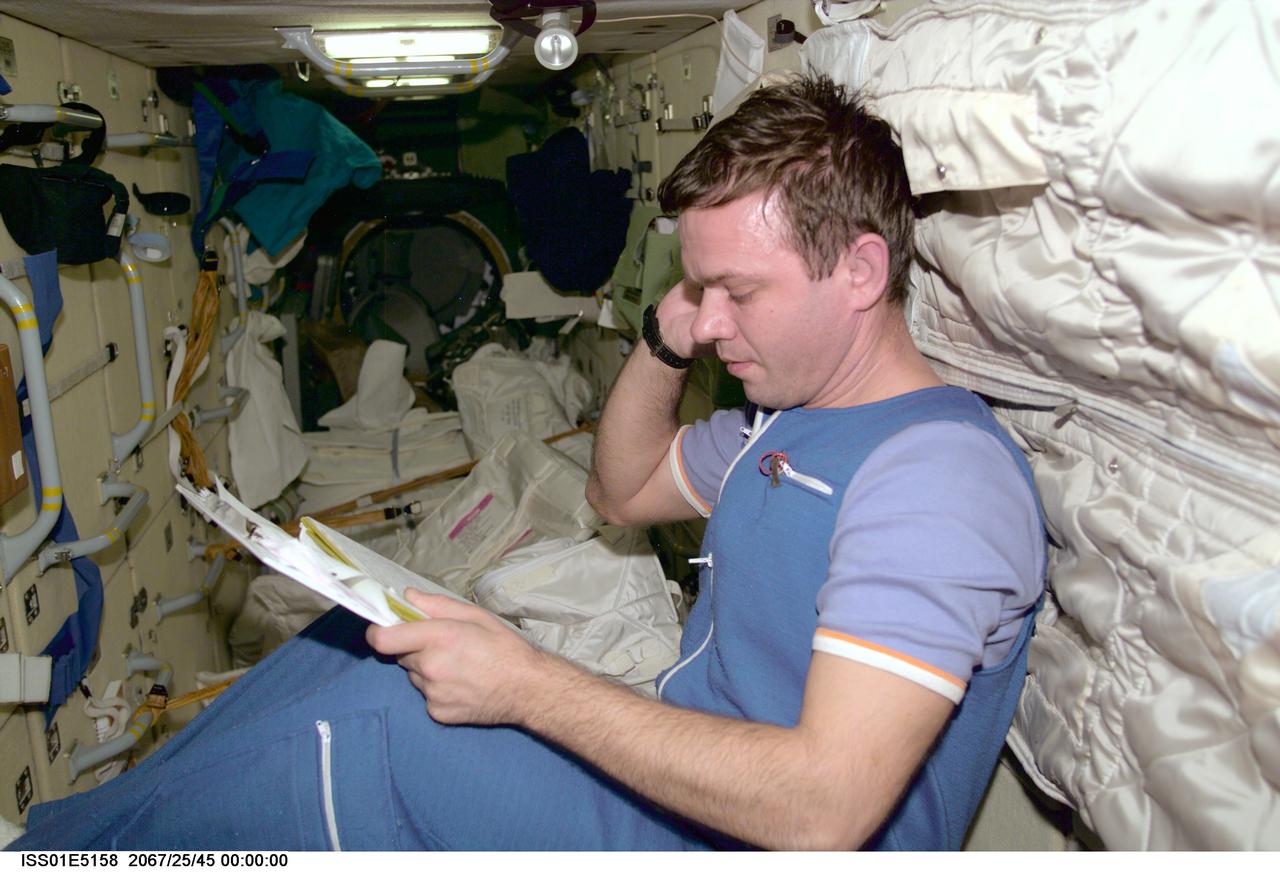
ISS01-E-5158 (December 2000) --- Cosmonaut Yuri P. Gidzenko, Expedition One Soyuz commander, looks over an ISS document on a clipboard in the Zarya Functional Cargo Block (FGB). The image was taken with a digital still camera and down linked from the station to ground controllers in Houston.
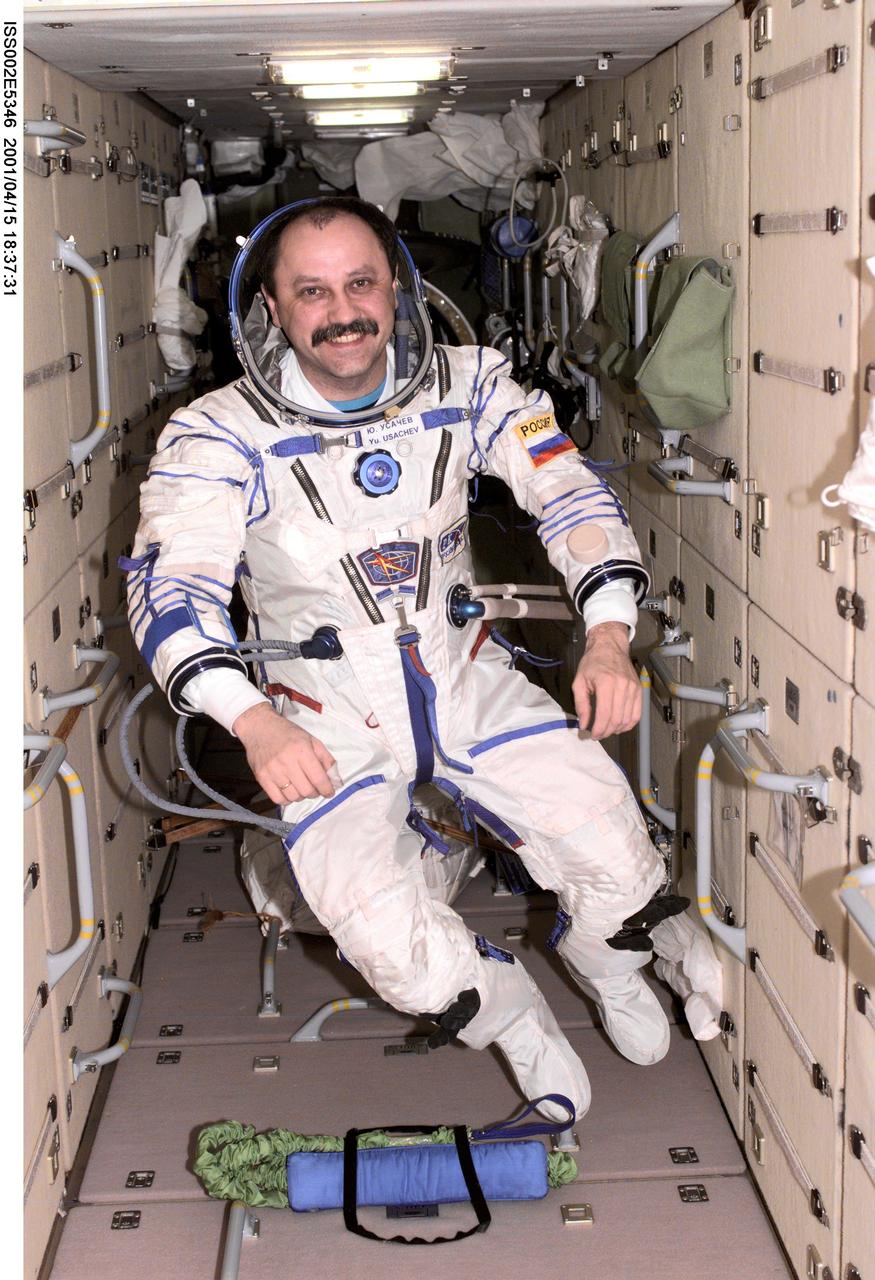
ISS002-E-5346 (15 April 2001) --- Cosmonaut Yury V. Usachev, Expedition Two mission commander, dons a Russian Sokol suit in the Zarya / Functional Cargo Block (FGB) of the International Space Station (ISS). This image was recorded with a digital still camera.

STS088-359-029 (4-15 Dec. 1998) --- Astronauts James H. Newman and Nancy J. Currie, both mission specialists, work in the FGB or Zarya Module of the International Space Station (ISS). The two were using the computers to confer with ground controllers about tasks they were attempting to perform in Zarya.
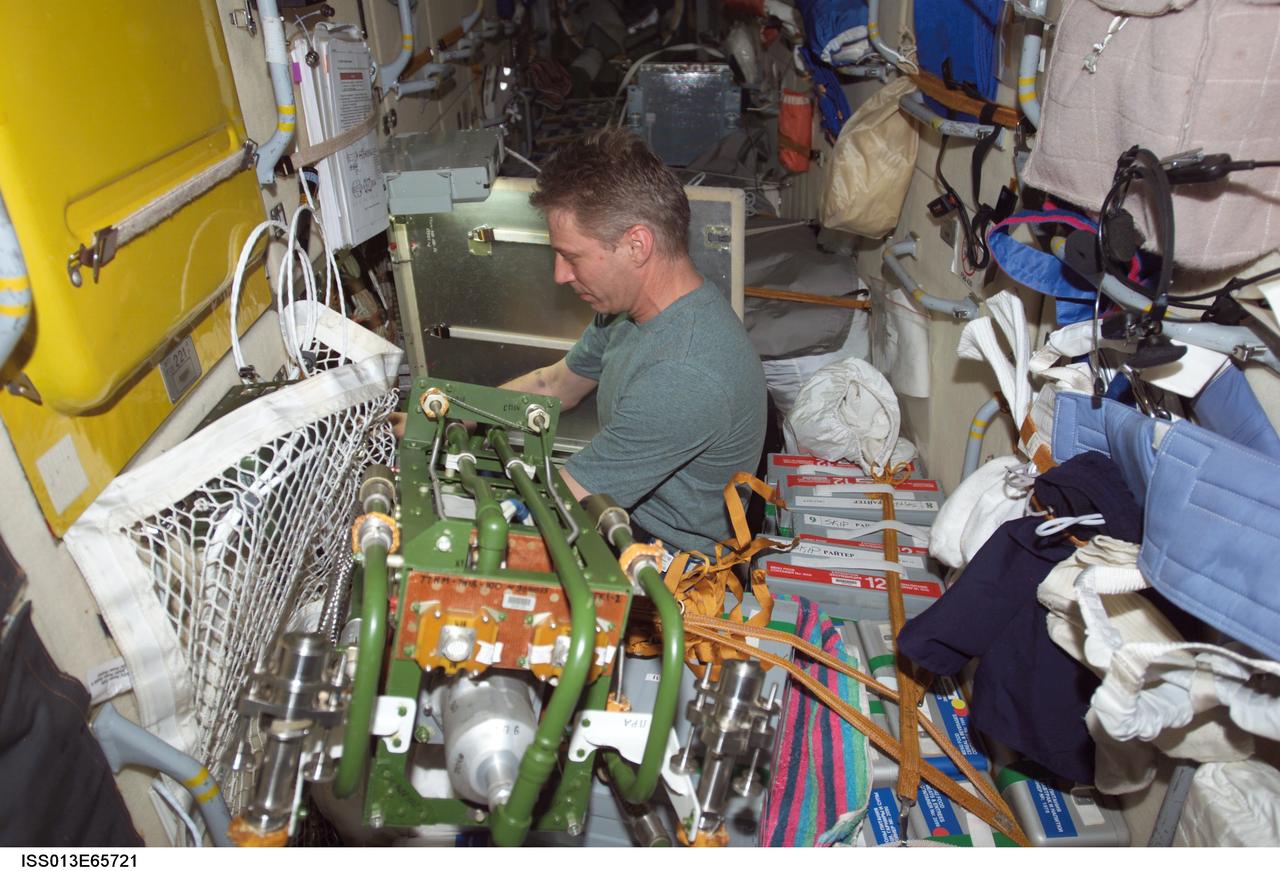
ISS013-E-65721 (10 Aug. 2006) --- European Space Agency (ESA) astronaut Thomas Reiter, Expedition 13 flight engineer, replaces the number two replaceable pump panel (SPN) in the number one loop (VGK1) of the International Space Station's Zarya functional cargo block (FGB) thermal control system with a new spare from stowage.
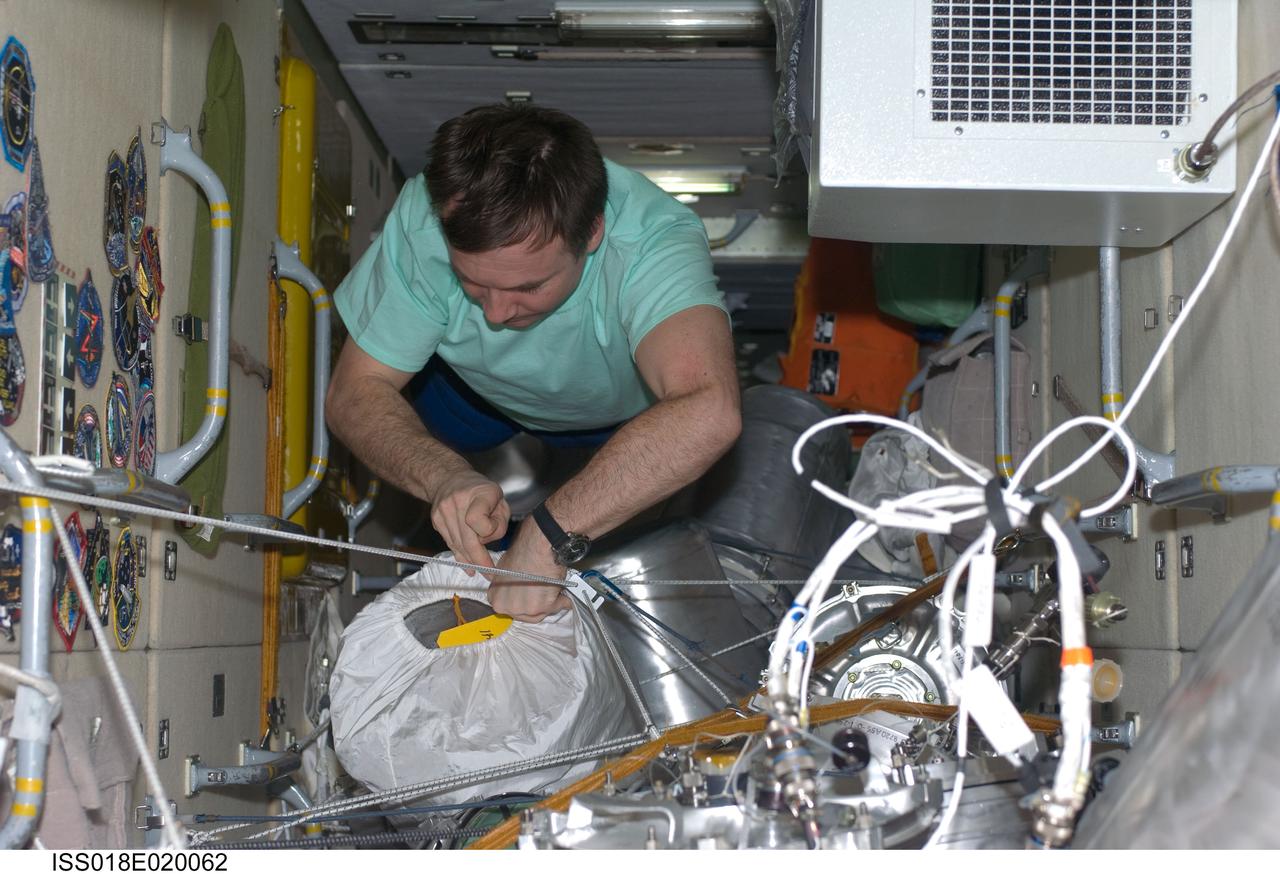
ISS018-E-020062 (14 Jan. 2009) --- Cosmonaut Yury Lonchakov, Expedition 18 flight engineer, works with supplies and equipment stowed in the functional cargo block (FGB) or Zarya of the International Space Station.
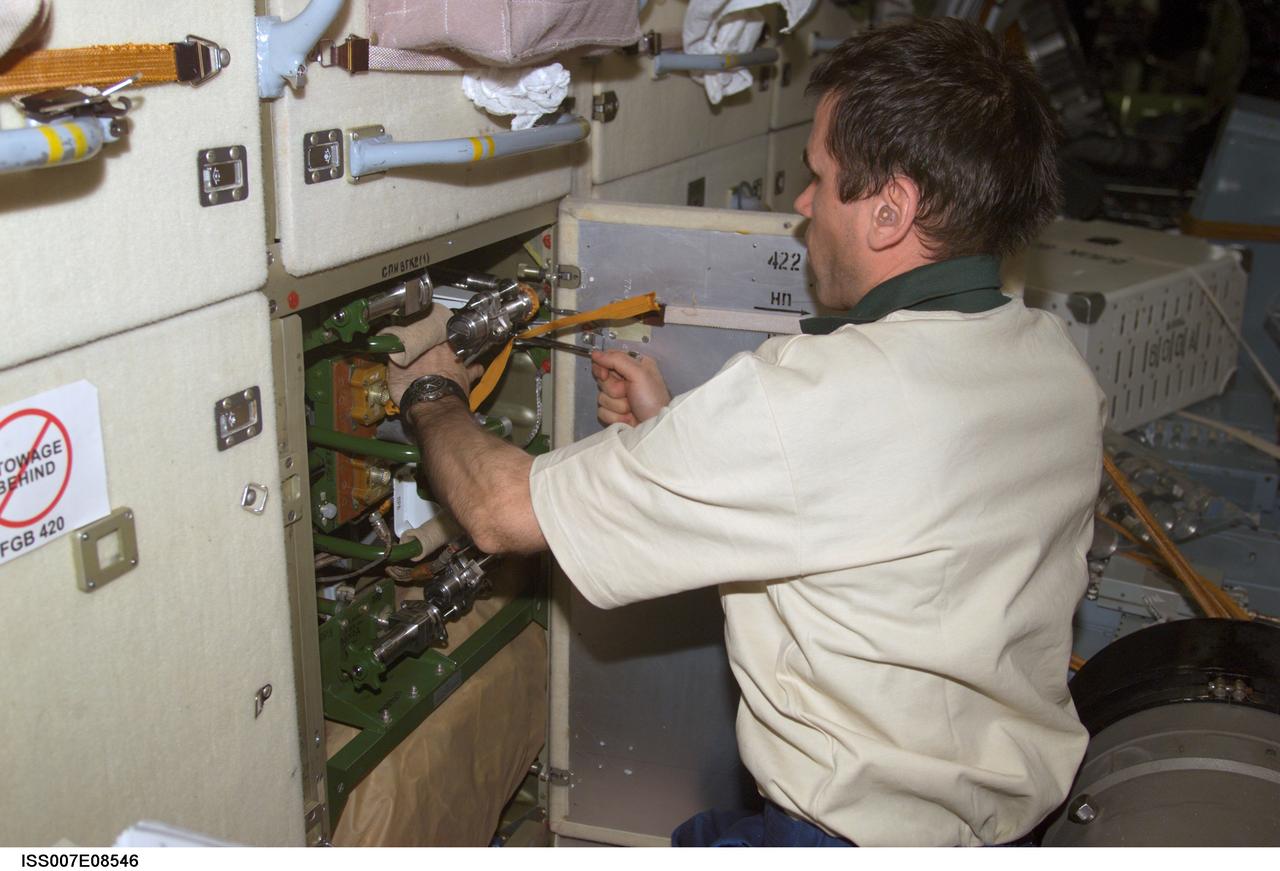
ISS007-E-08546 (24 June 2003) --- Cosmonaut Yuri I. Malenchenko, Expedition 7 mission commander, works in the functional cargo block (FGB), or Zarya, on the International Space Station (ISS). Malenchenko represents Rosaviakosmos.
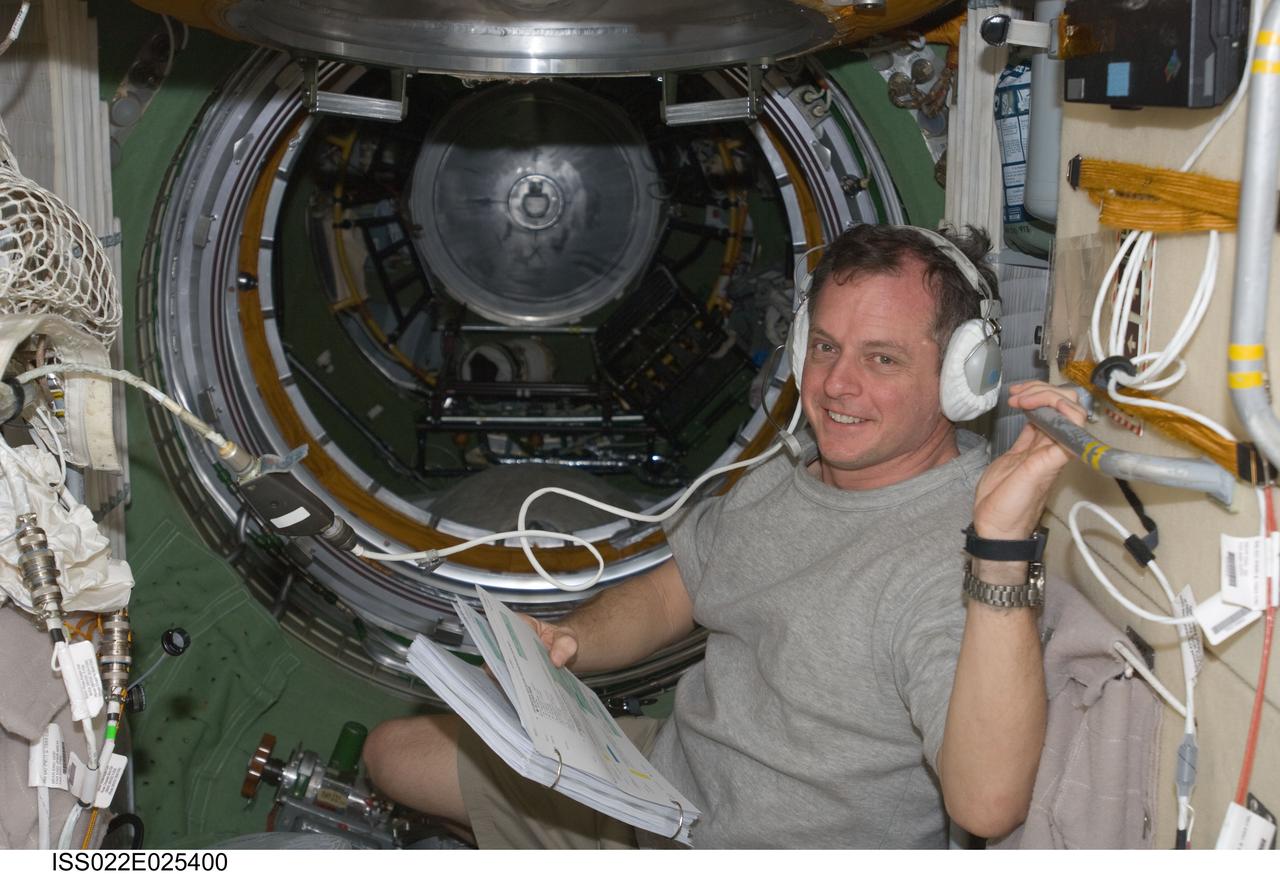
ISS022-E-025400 (14 Jan. 2010) --- NASA astronaut T.J. Creamer, Expedition 22 flight engineer, uses a communication system in the Zarya Functional Cargo Block (FGB) of the International Space Station.
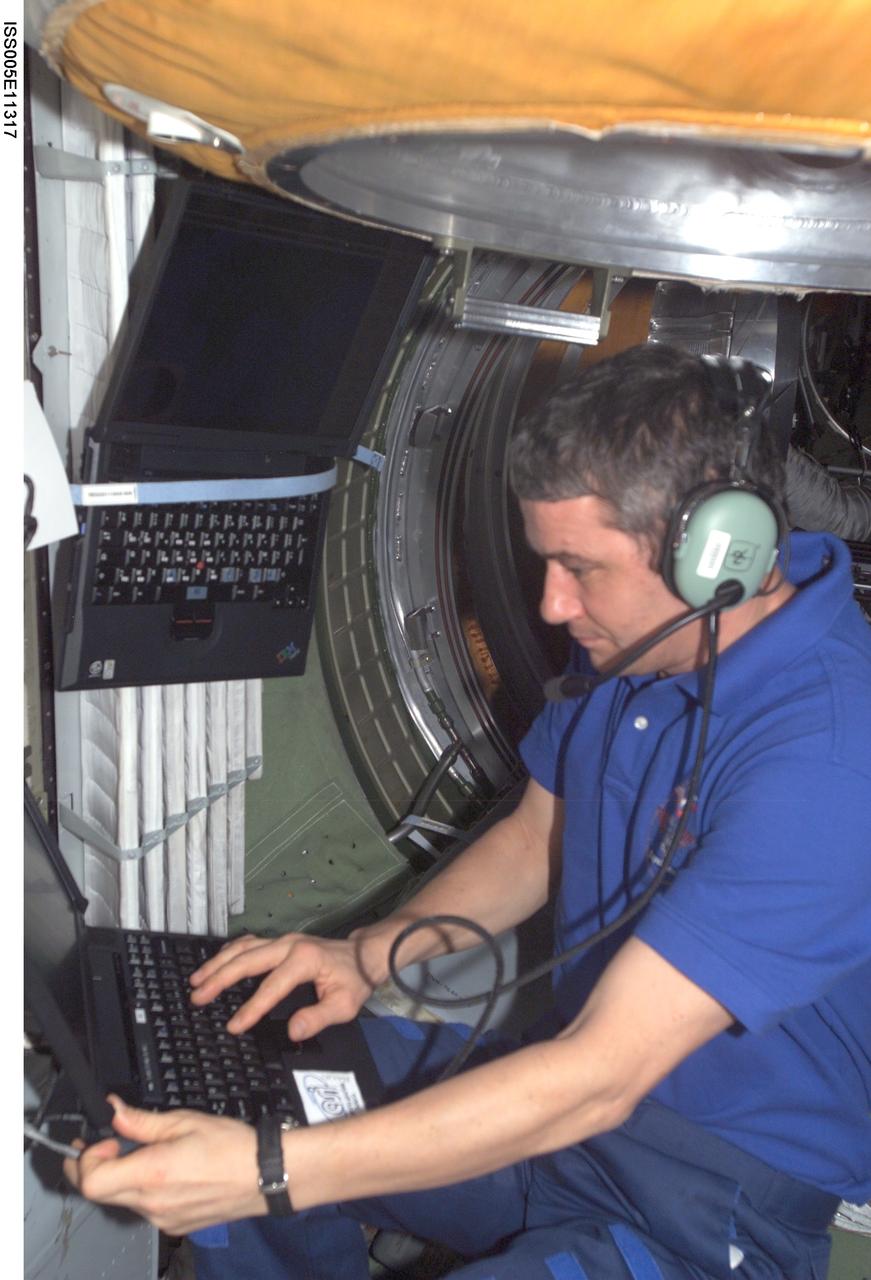
ISS005-E-11317 (27 August 2002) --- Cosmonaut Valery G. Korzun, Expedition Five mission commander, uses an amateur radio in the functional cargo block (FGB) on the International Space Station (ISS). Korzun represents Rosaviakosmos.
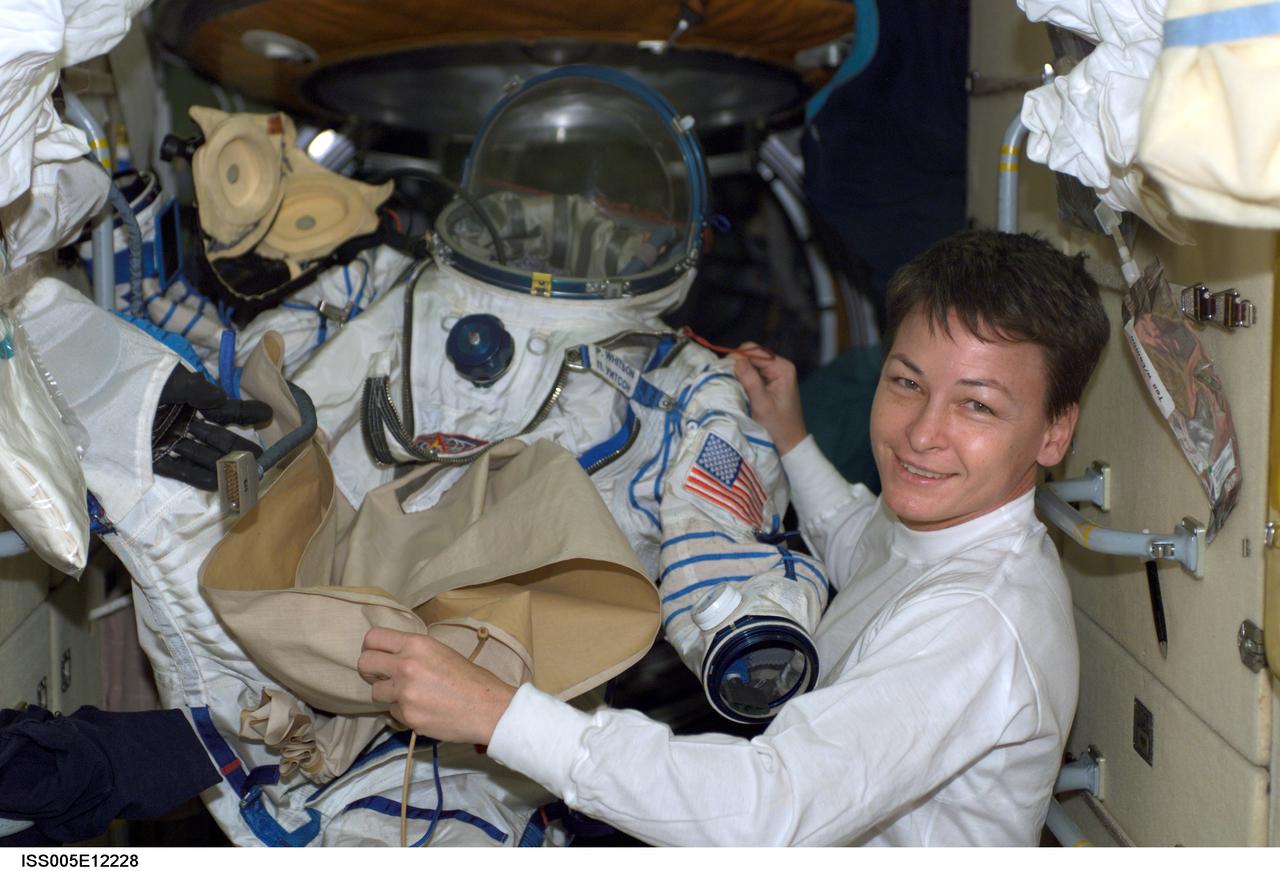
ISS005-E-12228 (3 September 2002) --- Astronaut Peggy A. Whitson, Expedition Five flight engineer, is pictured holding a Russian Sokol suit in the functional cargo block (FGB), or Zarya on the International Space Station (ISS).
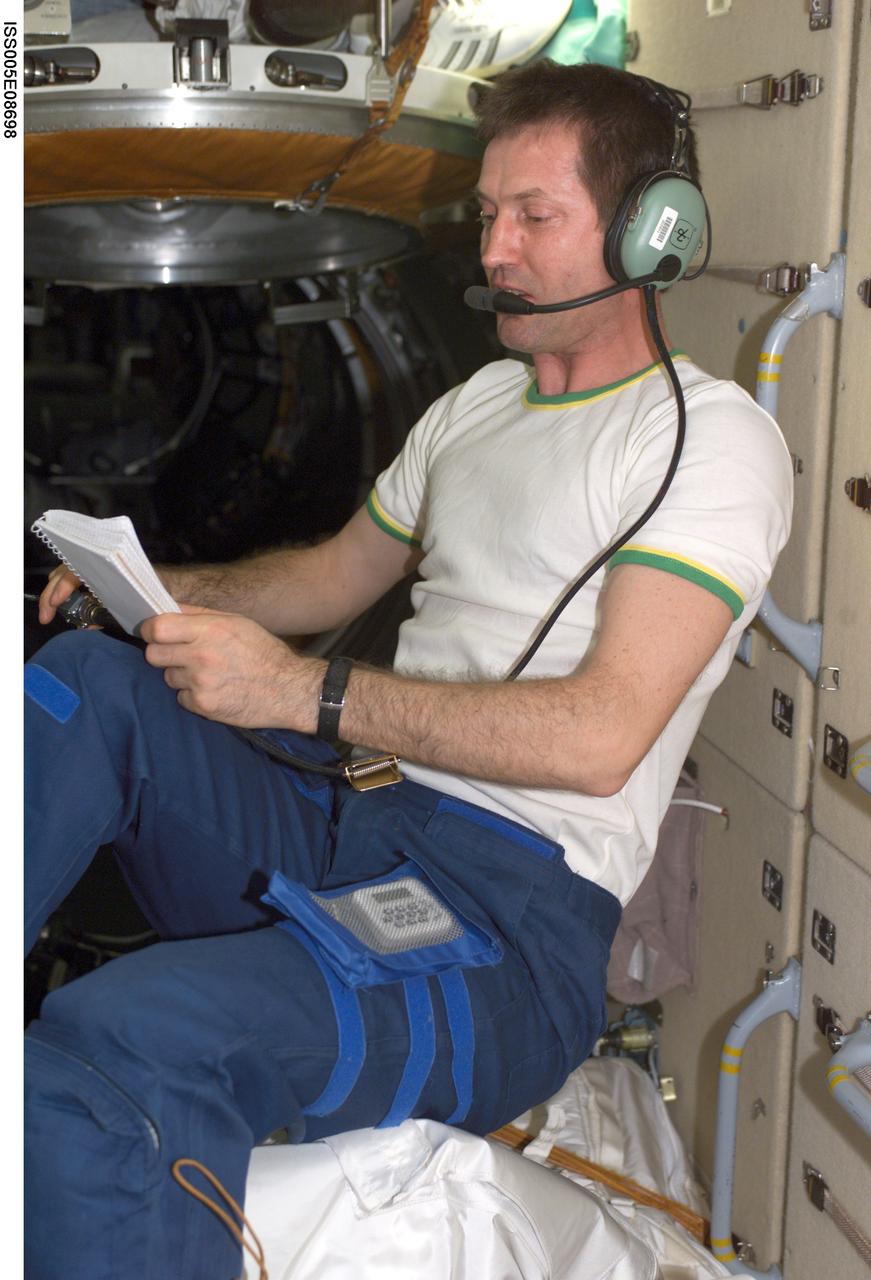
ISS005-E-08698 (6 August 2002) --- Cosmonaut Sergei Y. Treschev, Expedition Five flight engineer, uses an amateur radio in the functional cargo block (FGB) on the International Space Station (ISS). Treschev represents Rosaviakosmos.
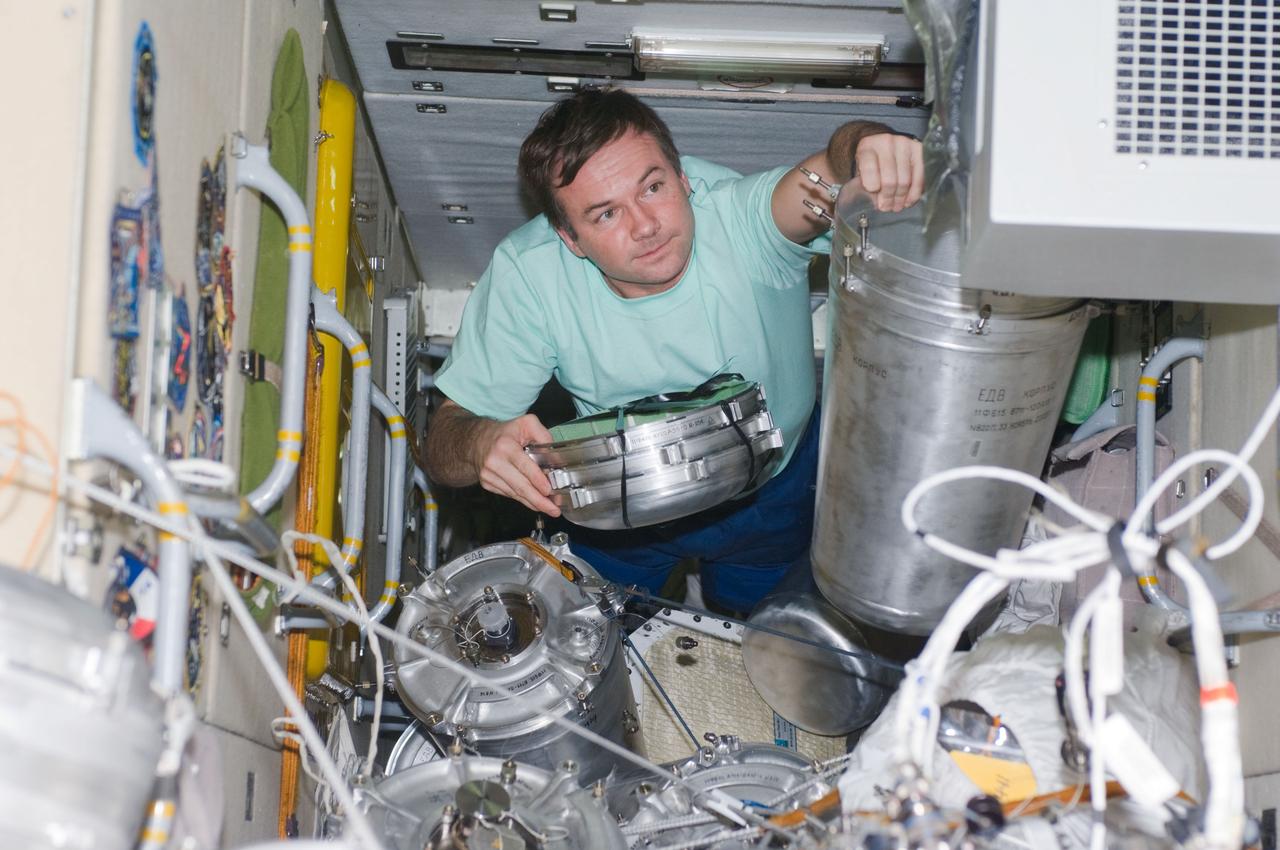
ISS018-E-020075 (14 Jan. 2009) --- Cosmonaut Yury Lonchakov, Expedition 18 flight engineer, works with supplies and equipment stowed in the functional cargo block (FGB) or Zarya of the International Space Station.
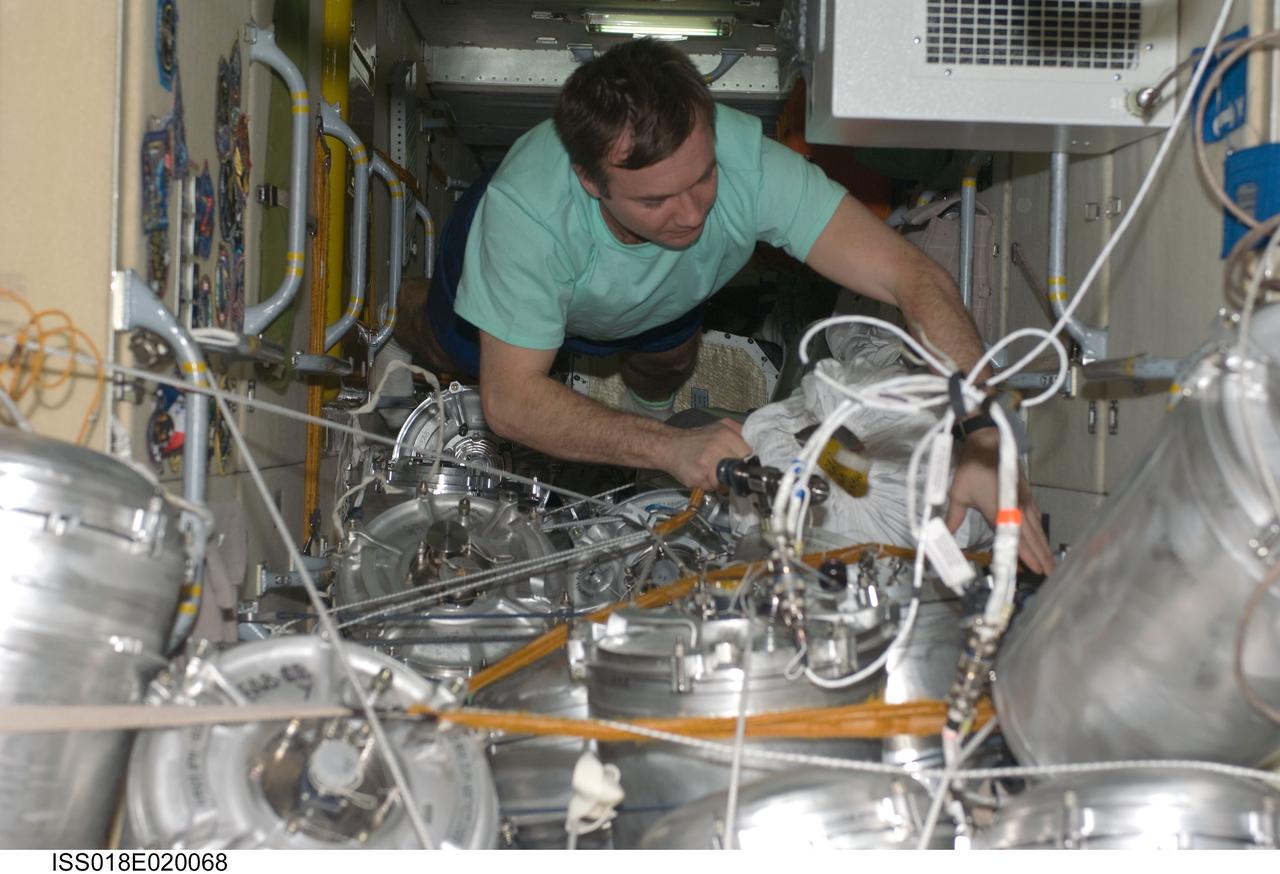
ISS018-E-020068 (14 Jan. 2009) --- Cosmonaut Yury Lonchakov, Expedition 18 flight engineer, works with supplies and equipment stowed in the functional cargo block (FGB) or Zarya of the International Space Station.
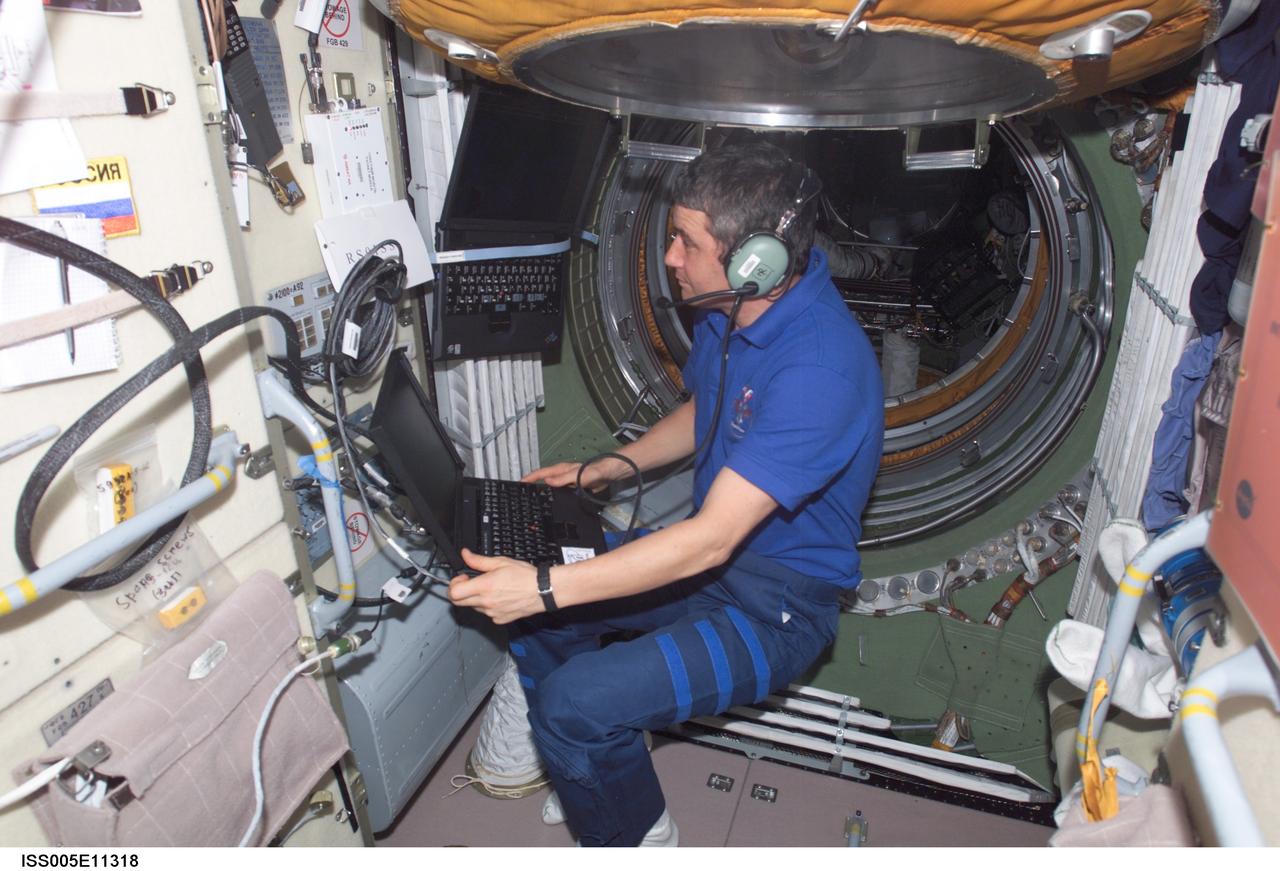
ISS005-E-11318 (27 August 2002) --- Cosmonaut Valery G. Korzun, Expedition Five mission commander, uses an amateur radio in the functional cargo block (FGB) on the International Space Station (ISS). Korzun represents Rosaviakosmos.
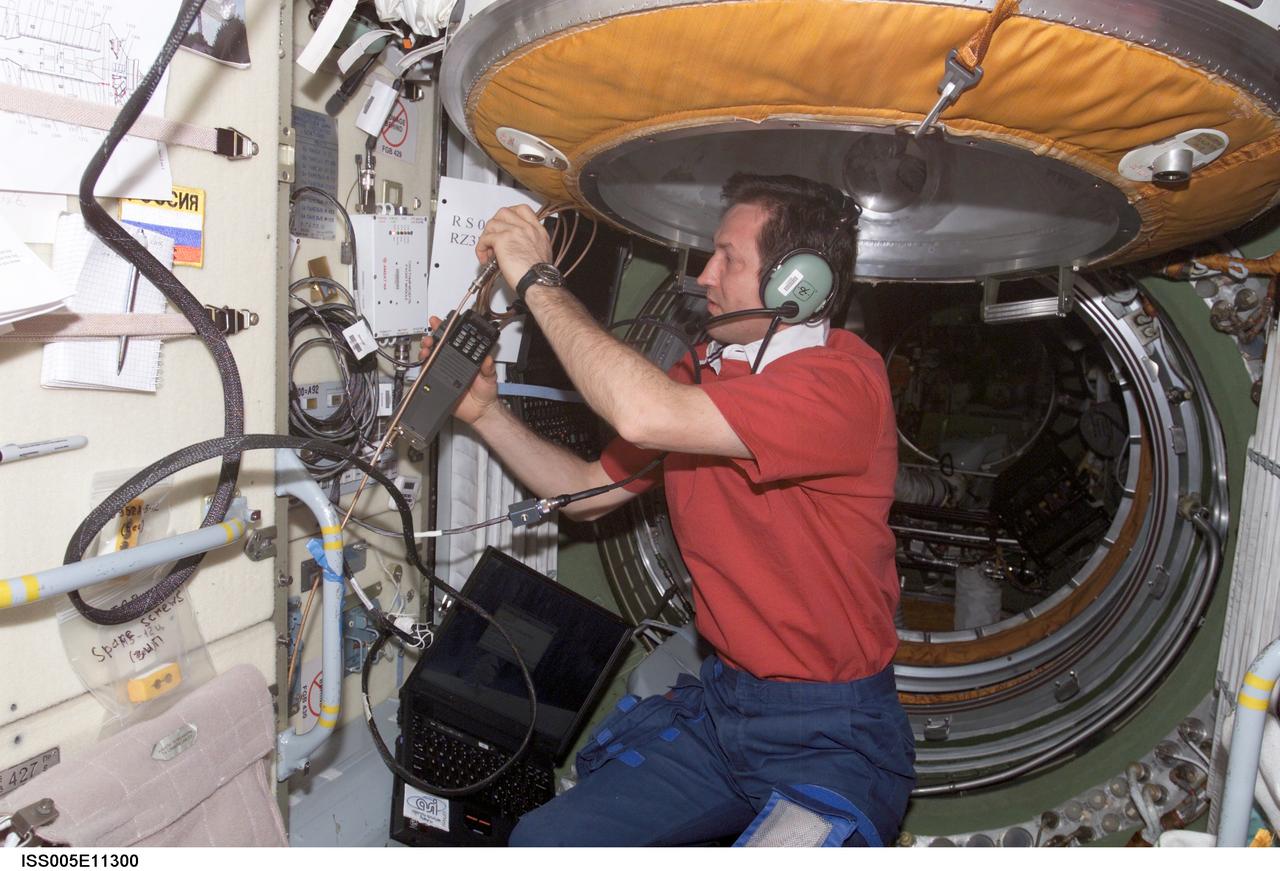
ISS005-E-11300 (27 August 2002) --- Cosmonaut Sergei Y. Treschev, Expedition Five flight engineer, uses an amateur radio in the functional cargo block (FGB) on the International Space Station (ISS). Treschev represents Rosaviakosmos.
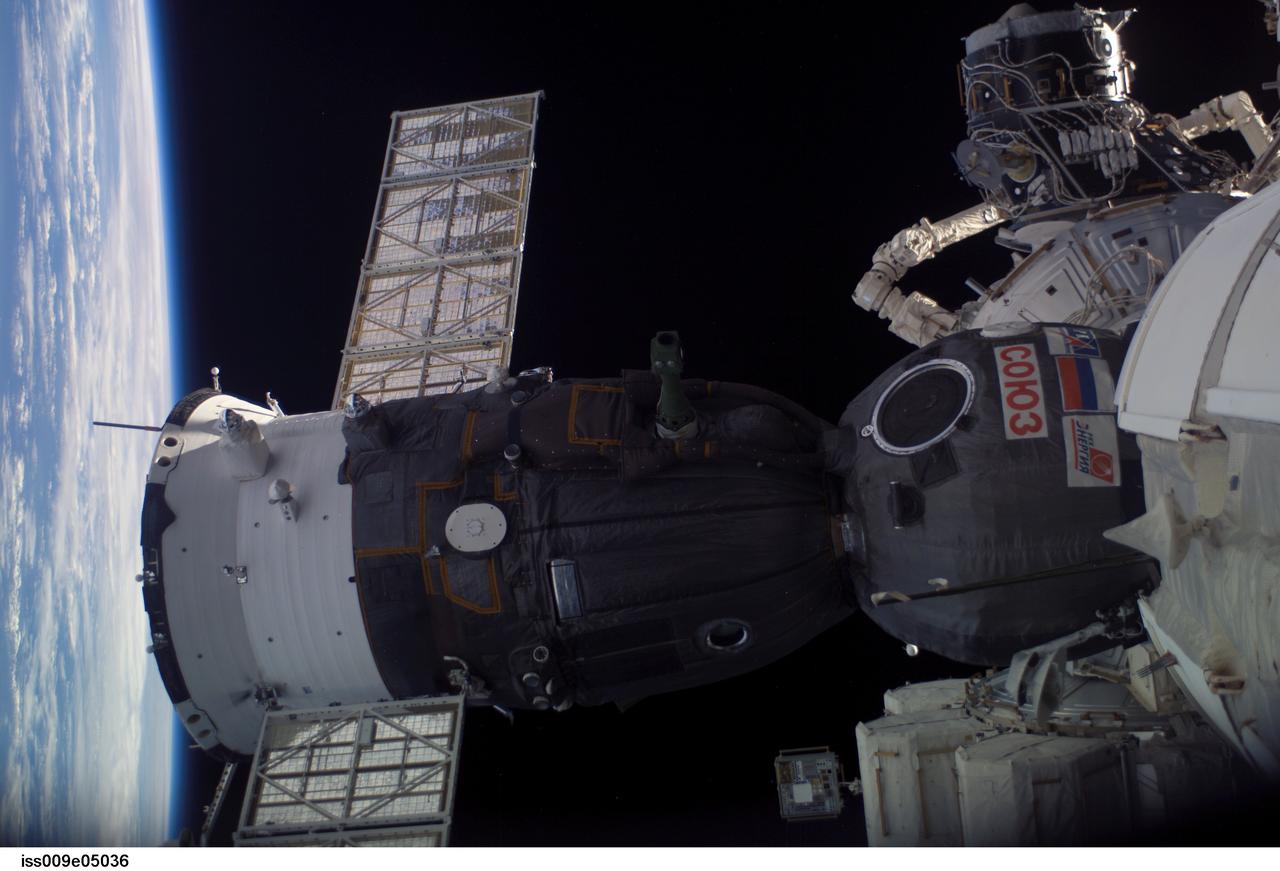
ISS009-E-05036 (29 April 2004) --- The blackness of space and Earth’s horizon provide the backdrop for this scene of the Soyuz TMA-4 spacecraft, docked to the Zarya functional cargo block (FGB) nadir port on the International Space Station (ISS). The scene was photographed by an Expedition 9 crewmember.
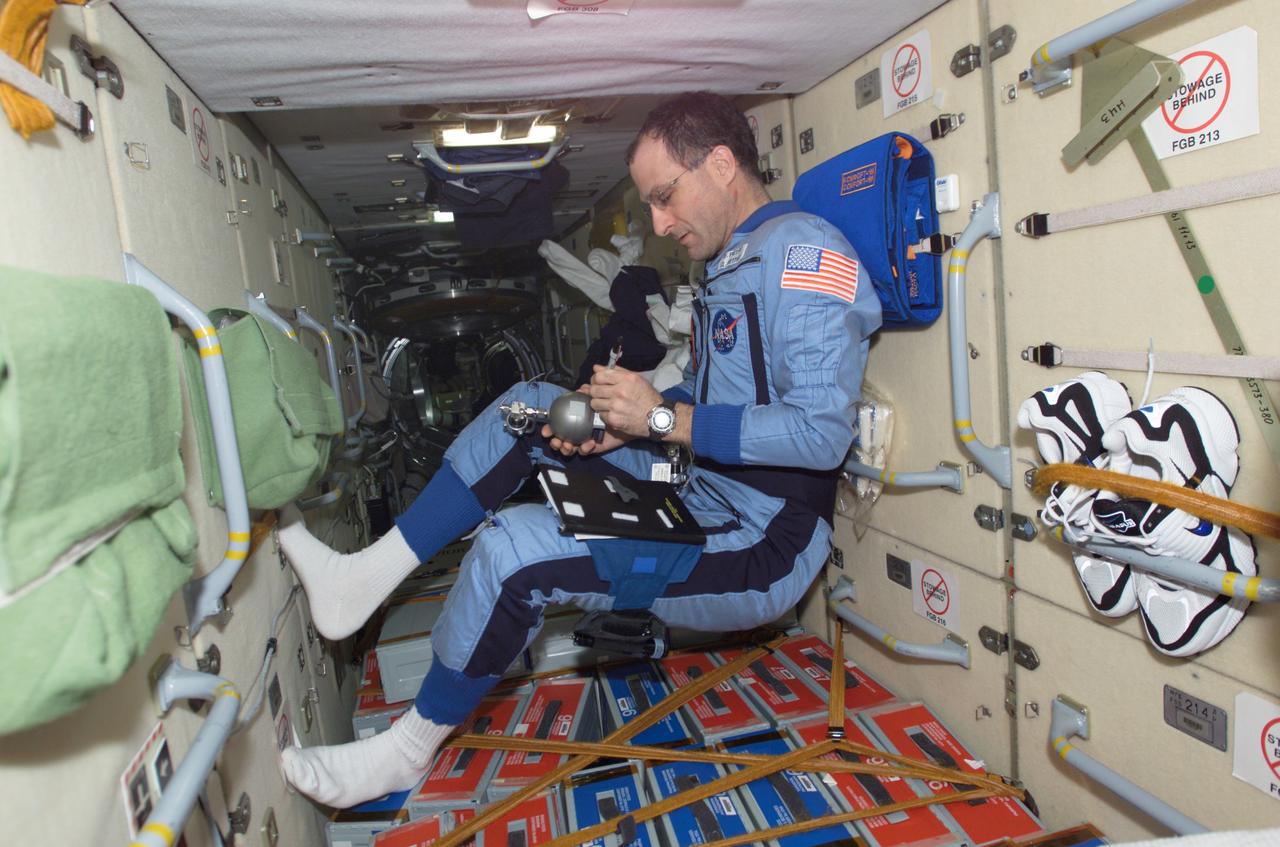
ISS006-E-20835 (22 January 2003) --- Astronaut Donald R. Pettit, Expedition 6 NASA ISS science officer, holds a Grab Sample Container (GSC) in the functional cargo block (FGB), or Zarya, on the International Space Station (ISS). GSC is used for collecting air samples as part of ISS environmental monitoring.
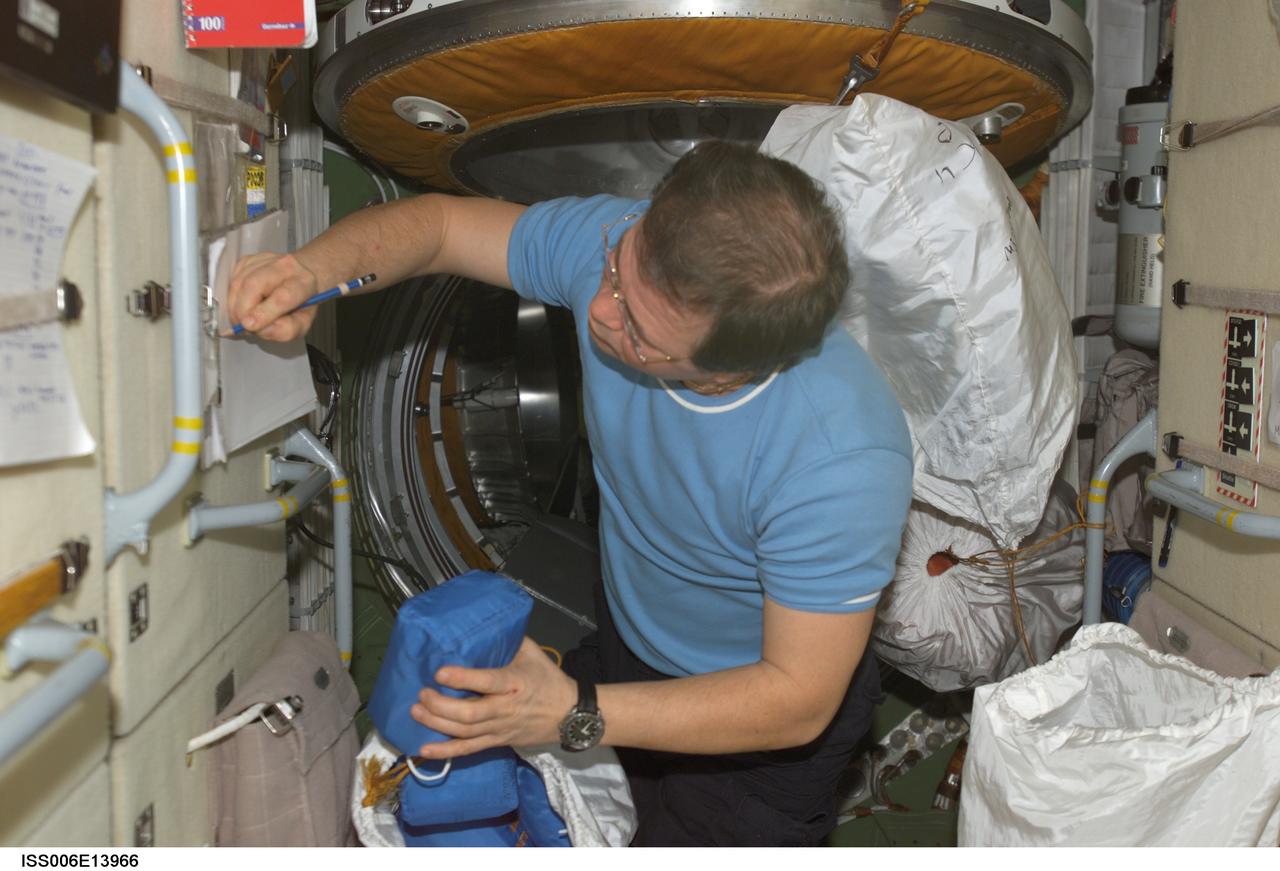
ISS006-E-13966 (2 January 2003) --- Cosmonaut Nikolai M. Budarin, Expedition Six flight engineer, takes inventory of equipment in the functional cargo block (FGB), or Zarya, on the International Space Station (ISS). Budarin represents Rosaviakosmos.
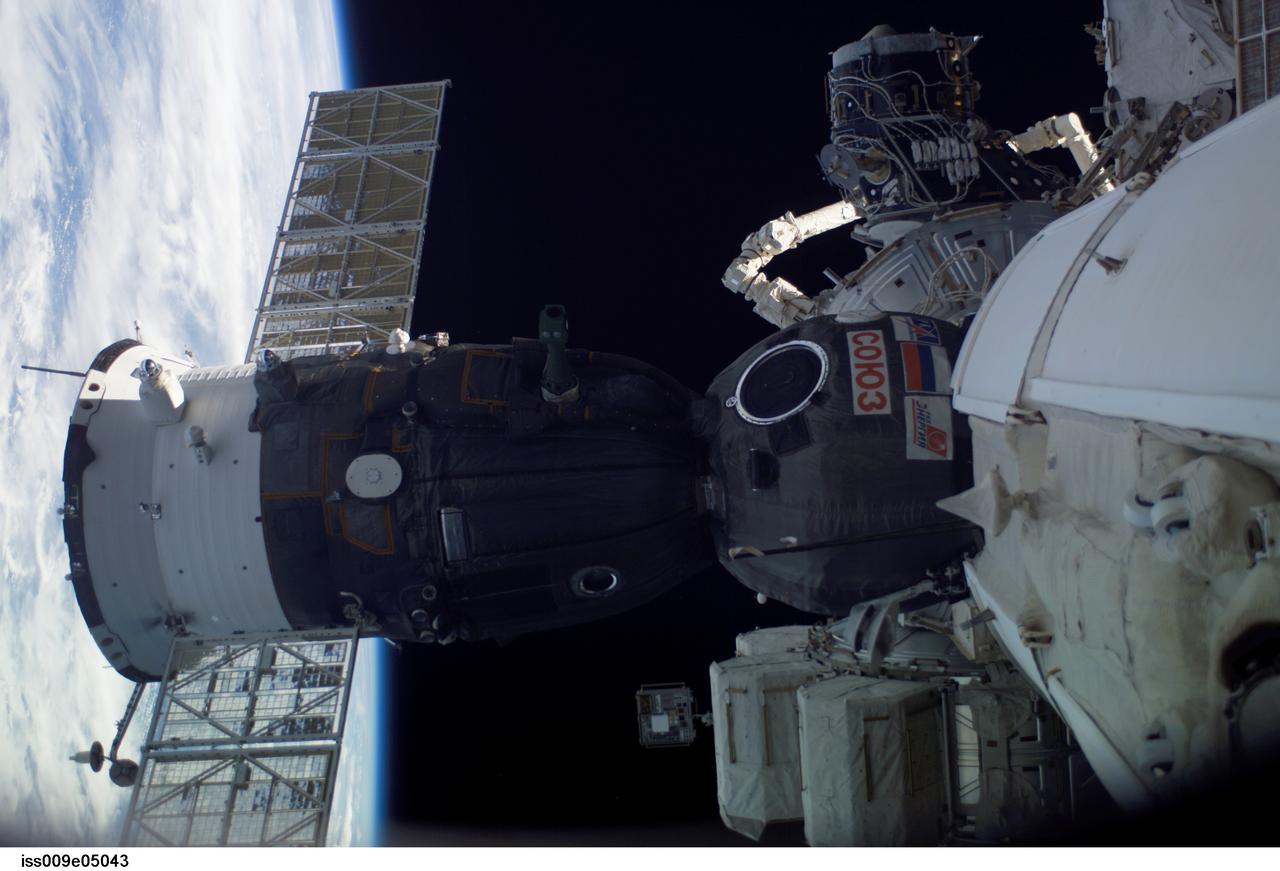
ISS009-E-05043 (29 April 2004) --- The blackness of space and Earth’s horizon provide the backdrop for this scene of the Soyuz TMA-4 spacecraft, docked to the Zarya functional cargo block (FGB) nadir port on the International Space Station (ISS). The scene was photographed by an Expedition 9 crewmember.
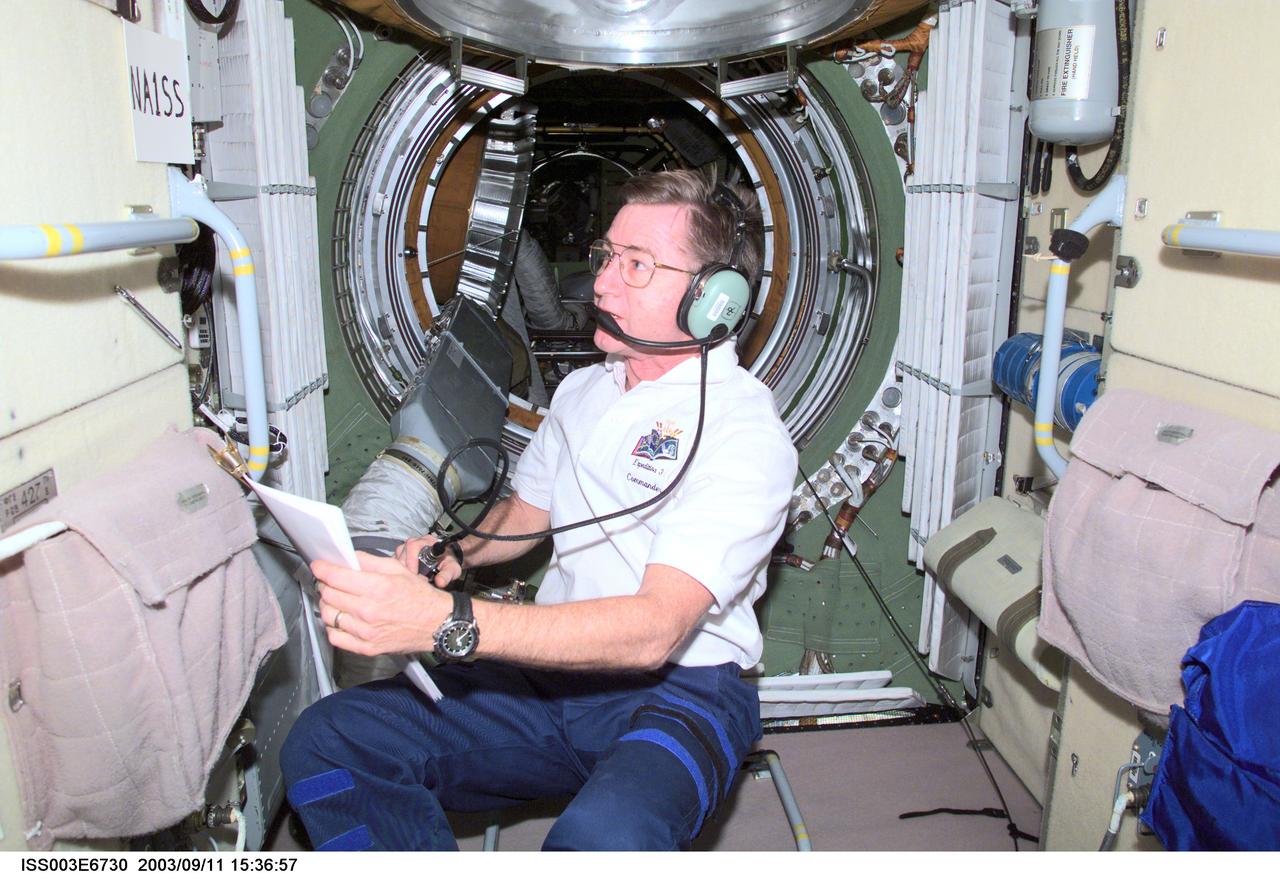
ISS003-E-6730 (October 2001) --- Astronaut Frank L. Culbertson, Jr., Expedition Three mission commander, uses a ham radio in the functional cargo block (FGB), or Zarya on the International Space Station (ISS). This image was taken with a digital still camera.
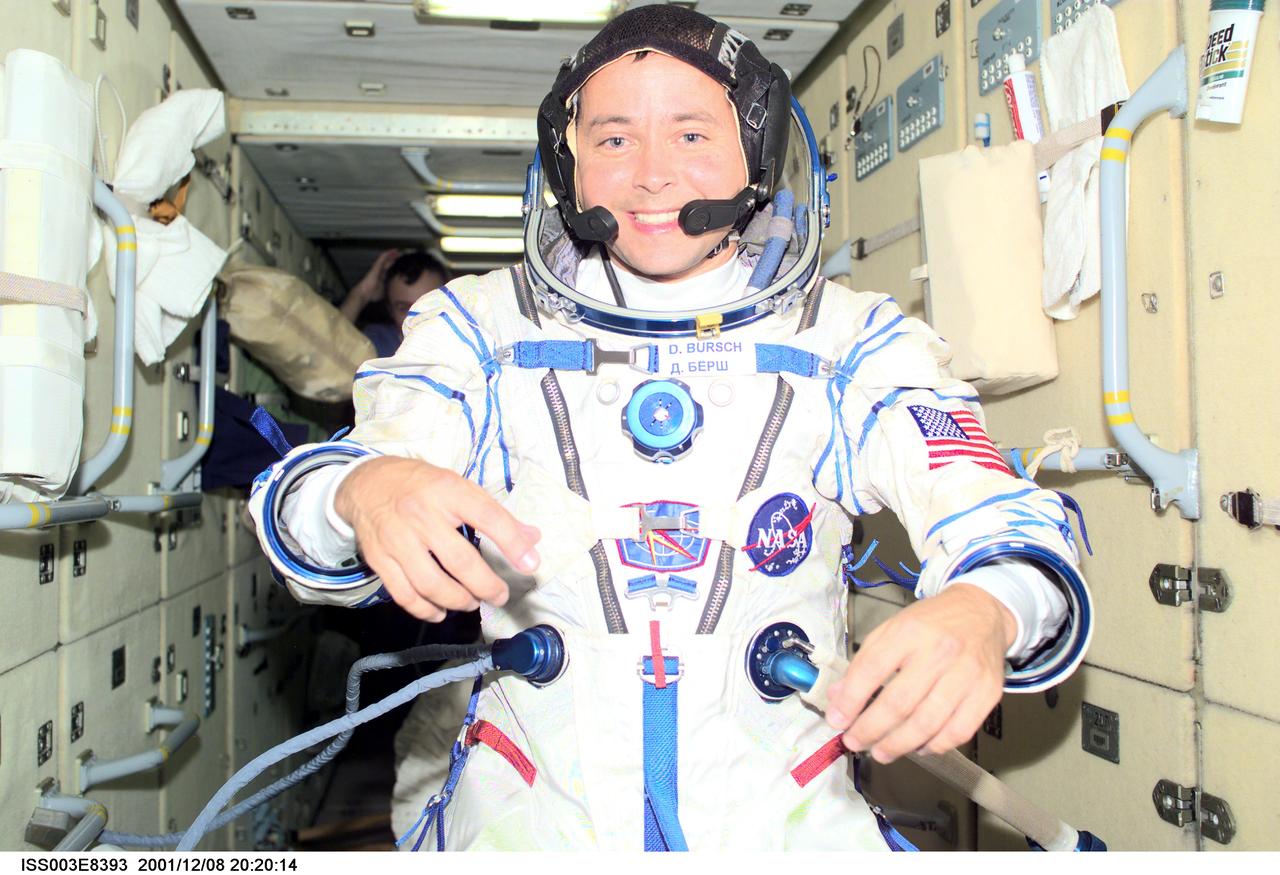
ISS003-E-8393 (8 December 2001) --- Astronaut Daniel W. Bursch, Expedition Four flight engineer, wearing a Russian Sokol suit, is photographed in the functional cargo block (FGB), or Zarya on the International Space Station (ISS). The image was taken with a digital still camera.
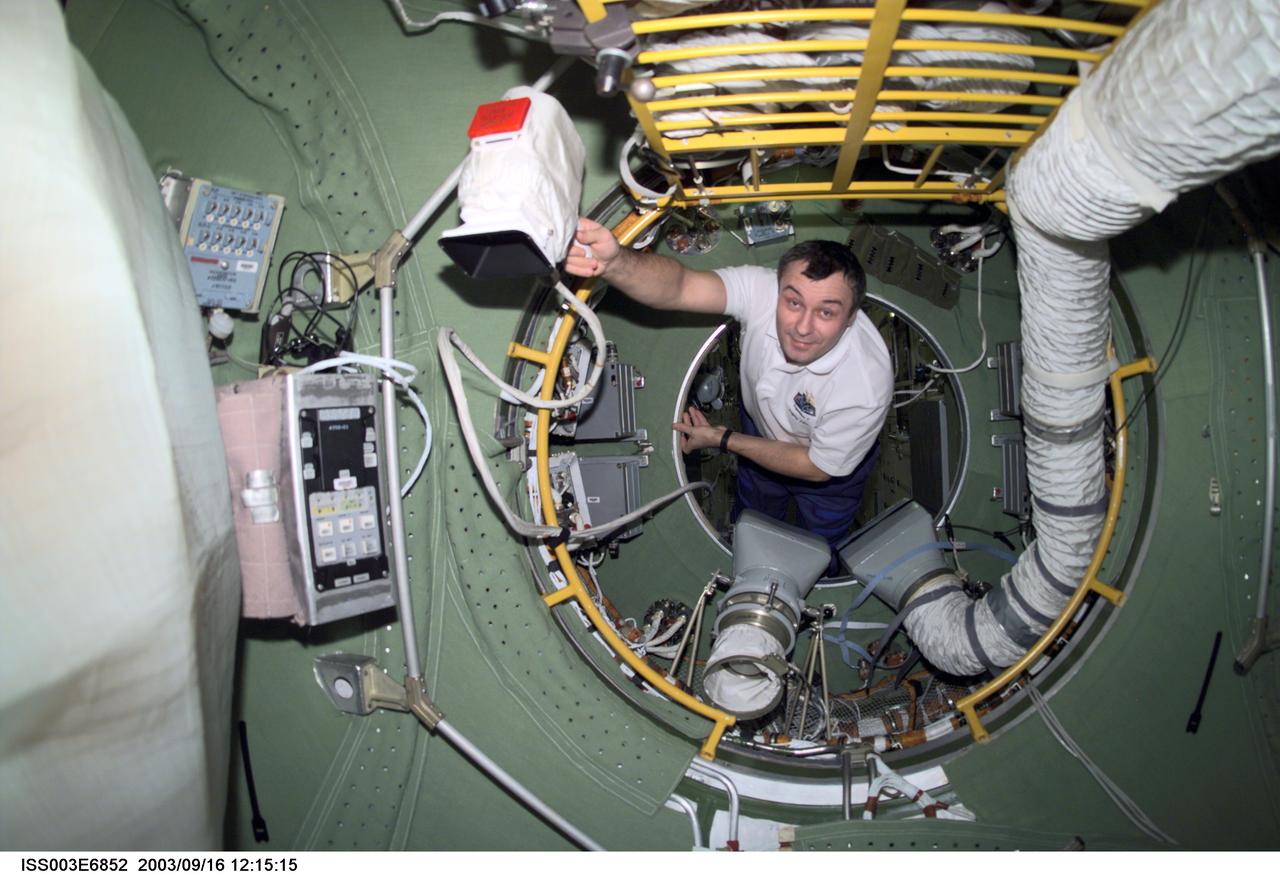
ISS003-E-6852 (October 2001) --- Cosmonaut Vladimir N. Dezhurov, Expedition Three flight engineer, floats in the pressurized adapter of the functional cargo block (FGB), or Zarya on the International Space Station (ISS). Dezhurov represents Rosaviakosmos. This image was taken with a digital still camera.
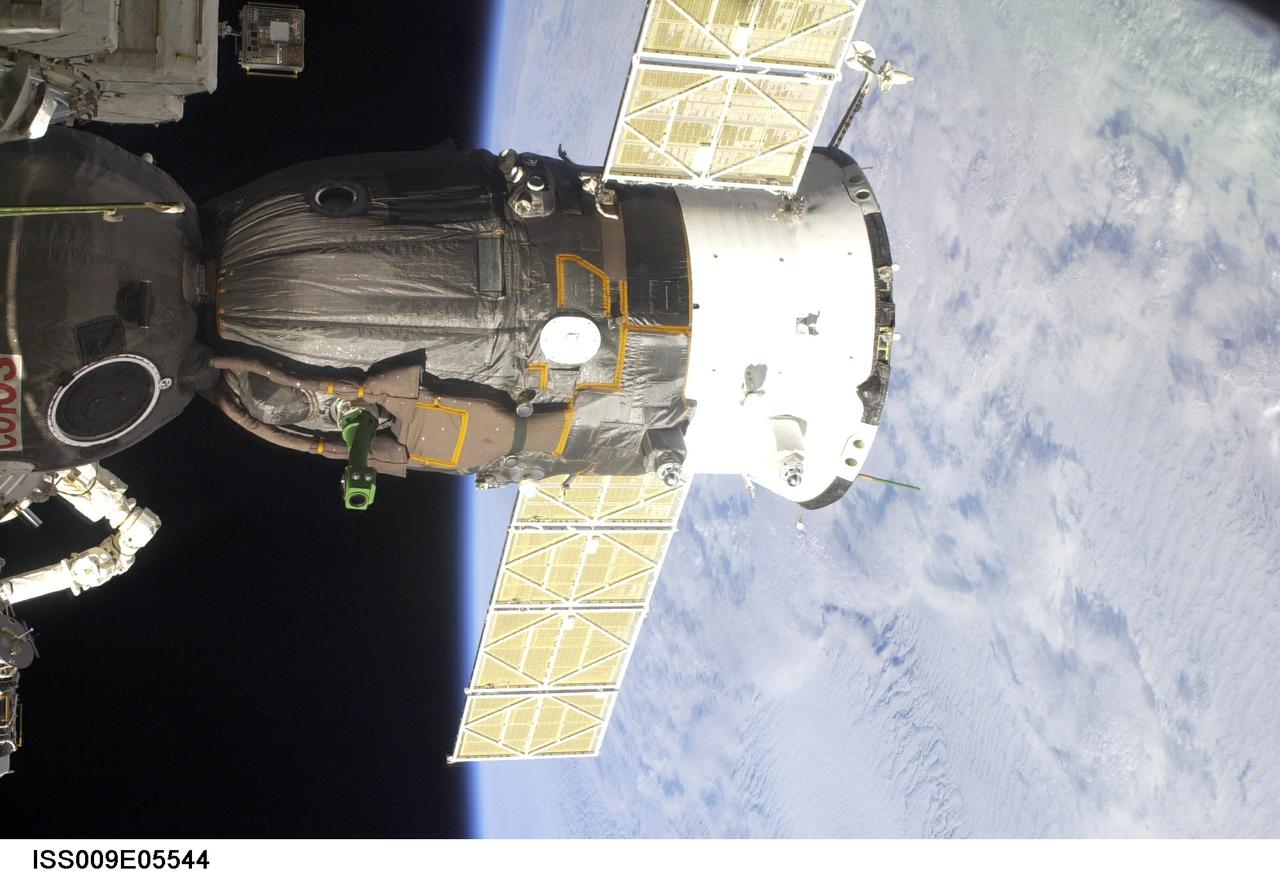
ISS009-E-05544 (May 2004) --- The blackness of space and Earth’s horizon provide the backdrop for this scene of the Soyuz TMA-4 spacecraft, docked to the Zarya functional cargo block (FGB) nadir port on the International Space Station (ISS). The scene was photographed by an Expedition 9 crewmember.
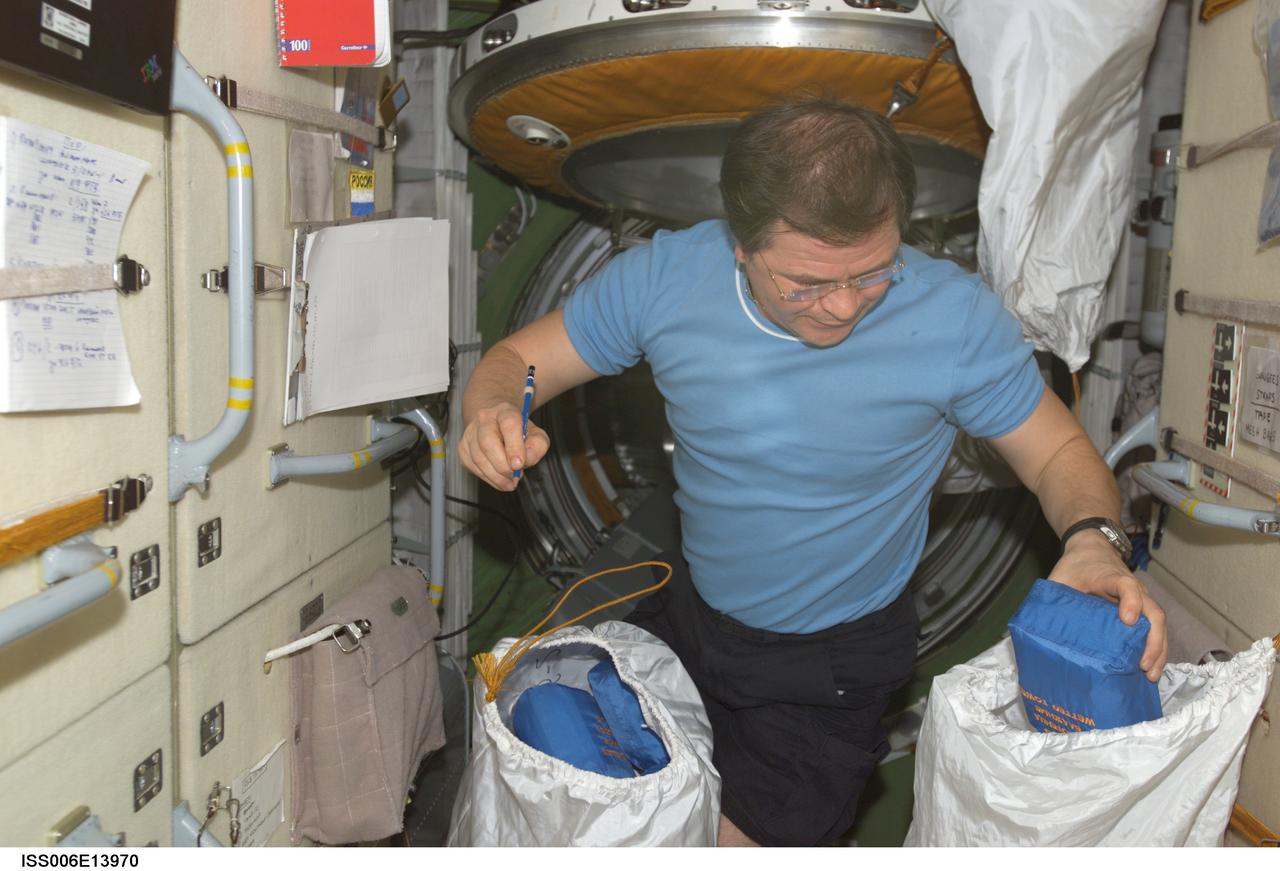
ISS006-E-13970 (2 January 2003) --- Cosmonaut Nikolai M. Budarin, Expedition Six flight engineer, takes inventory of equipment in the functional cargo block (FGB), or Zarya, on the International Space Station (ISS). Budarin represents Rosaviakosmos.
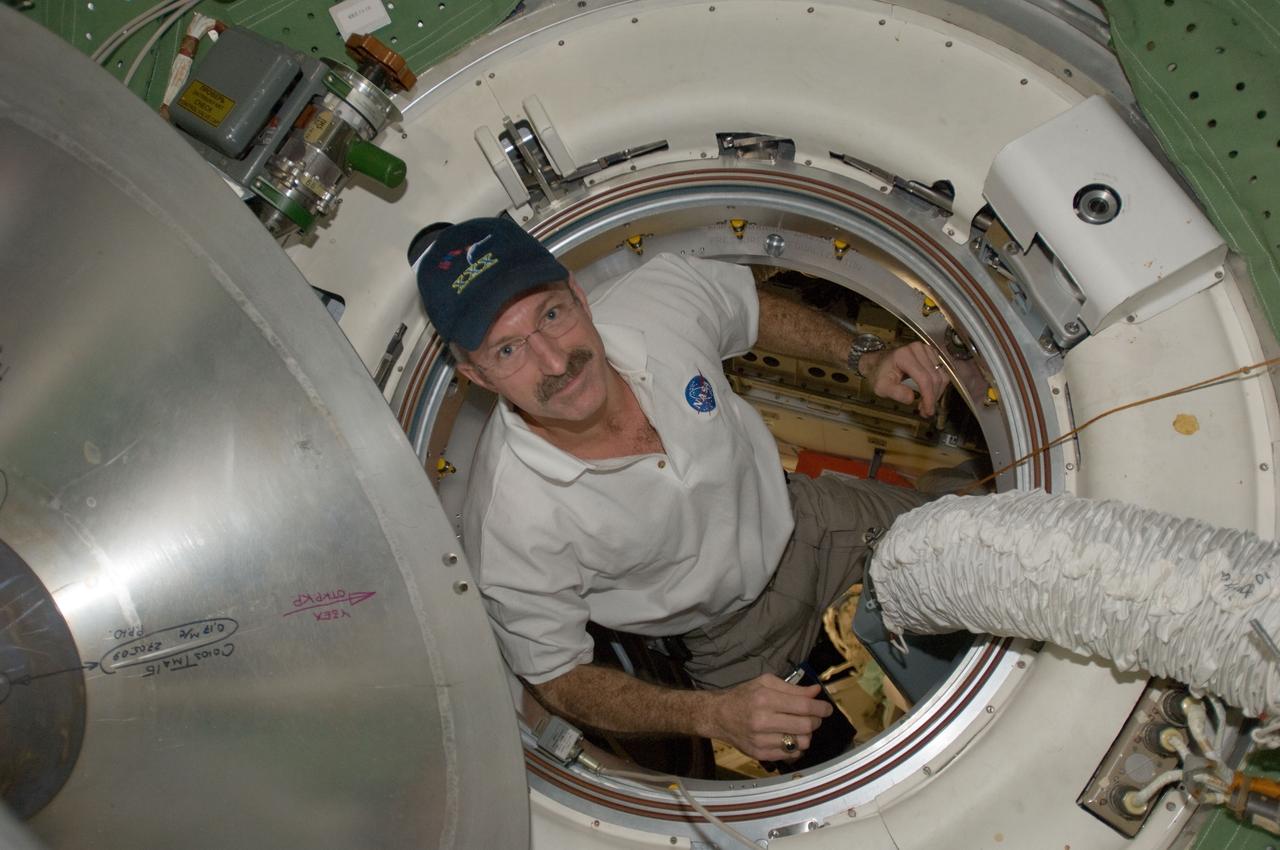
ISS030-E-050953 (27 Jan. 2012) --- NASA astronaut Dan Burbank, Expedition 30 commander, is pictured in a hatch as he exits the Rassvet Mini-Research Module 1 (MRM-1) into the Zarya Functional Cargo Block (FGB) transfer compartment of the International Space Station.
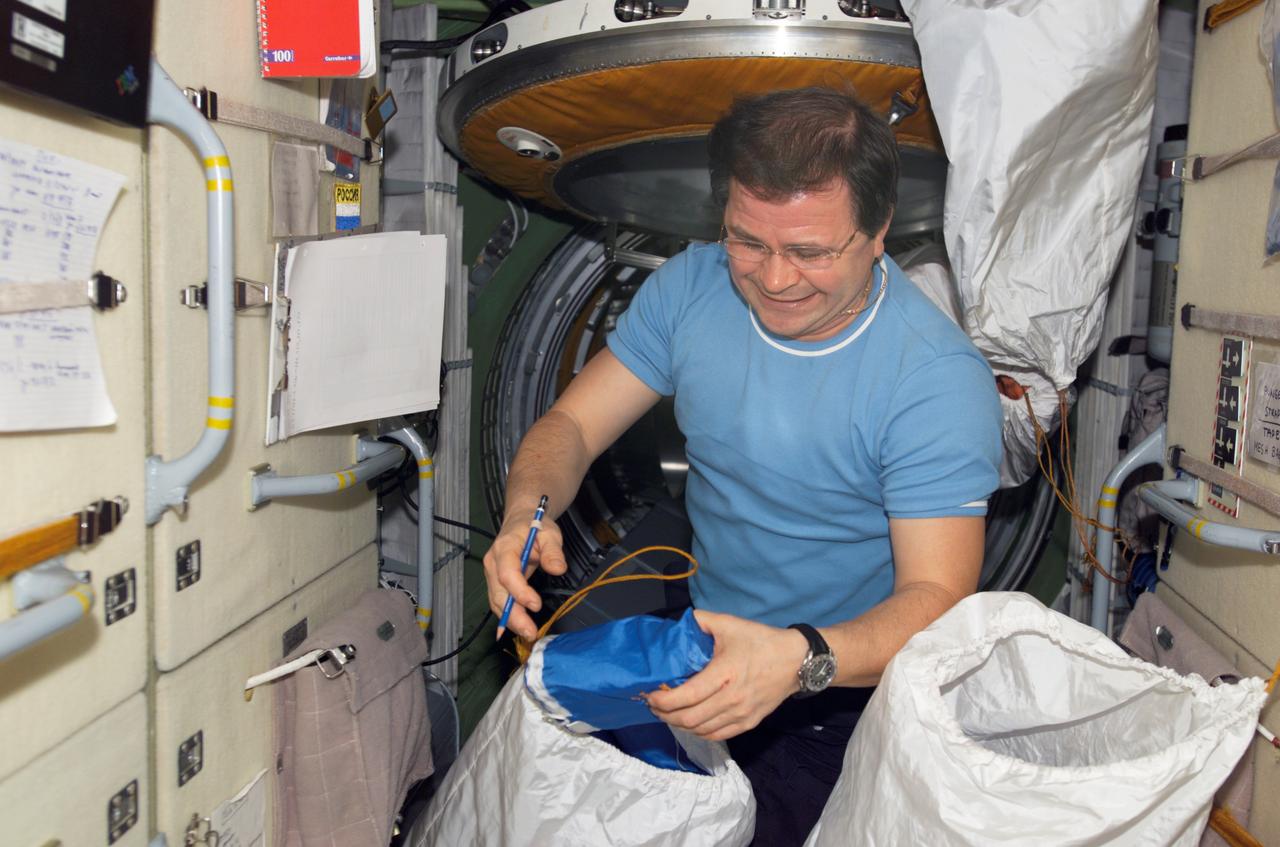
ISS006-E-13971 (2 January 2003) --- Cosmonaut Nikolai M. Budarin, Expedition 6 flight engineer, takes inventory of equipment in the functional cargo block (FGB), or Zarya, on the International Space Station (ISS). Budarin represents Rosaviakosmos.
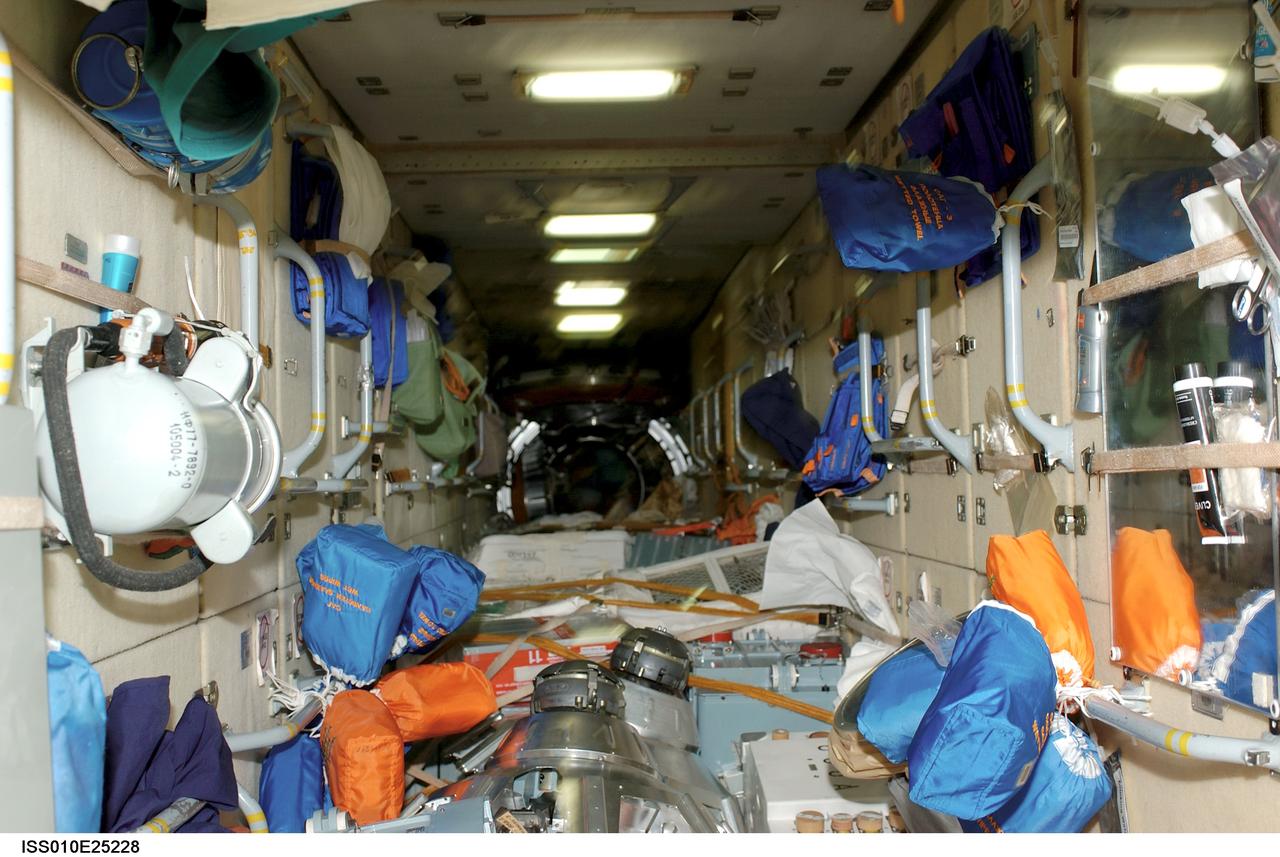
ISS010-E-25228 (20 April 2005) --- This view shows supplies and equipment stowed in the functional cargo block (FGB) or Zarya photographed by a crewmember on the International Space Station (ISS). At the time this photo was taken the Expedition 10 and 11 crews were onboard the Station.
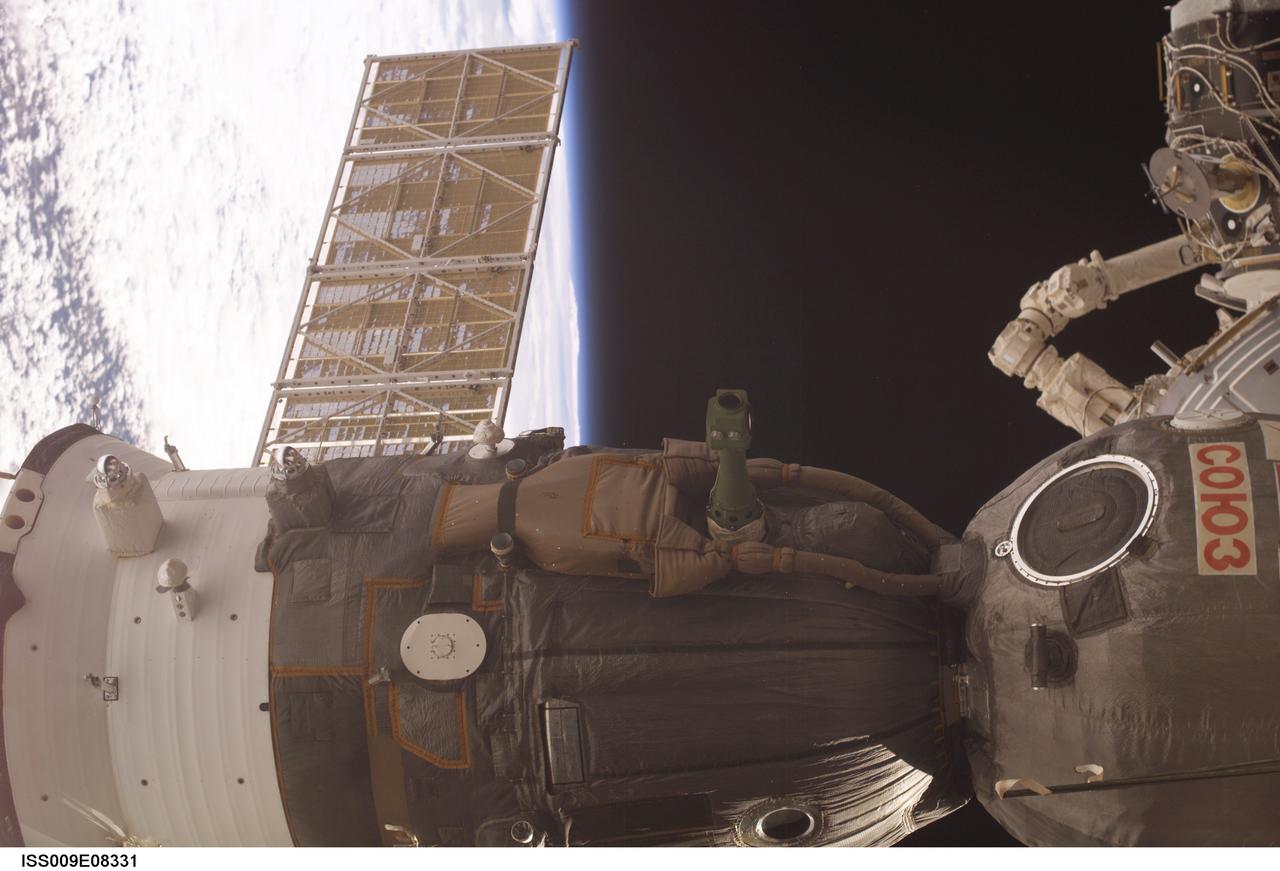
ISS009-E-08331 (24 May 2004) --- The blackness of space and Earth’s horizon provide the backdrop for this scene of the Soyuz TMA-4 spacecraft, docked to the Zarya functional cargo block (FGB) nadir port of the International Space Station (ISS). The scene was photographed by an Expedition 9 crewmember.
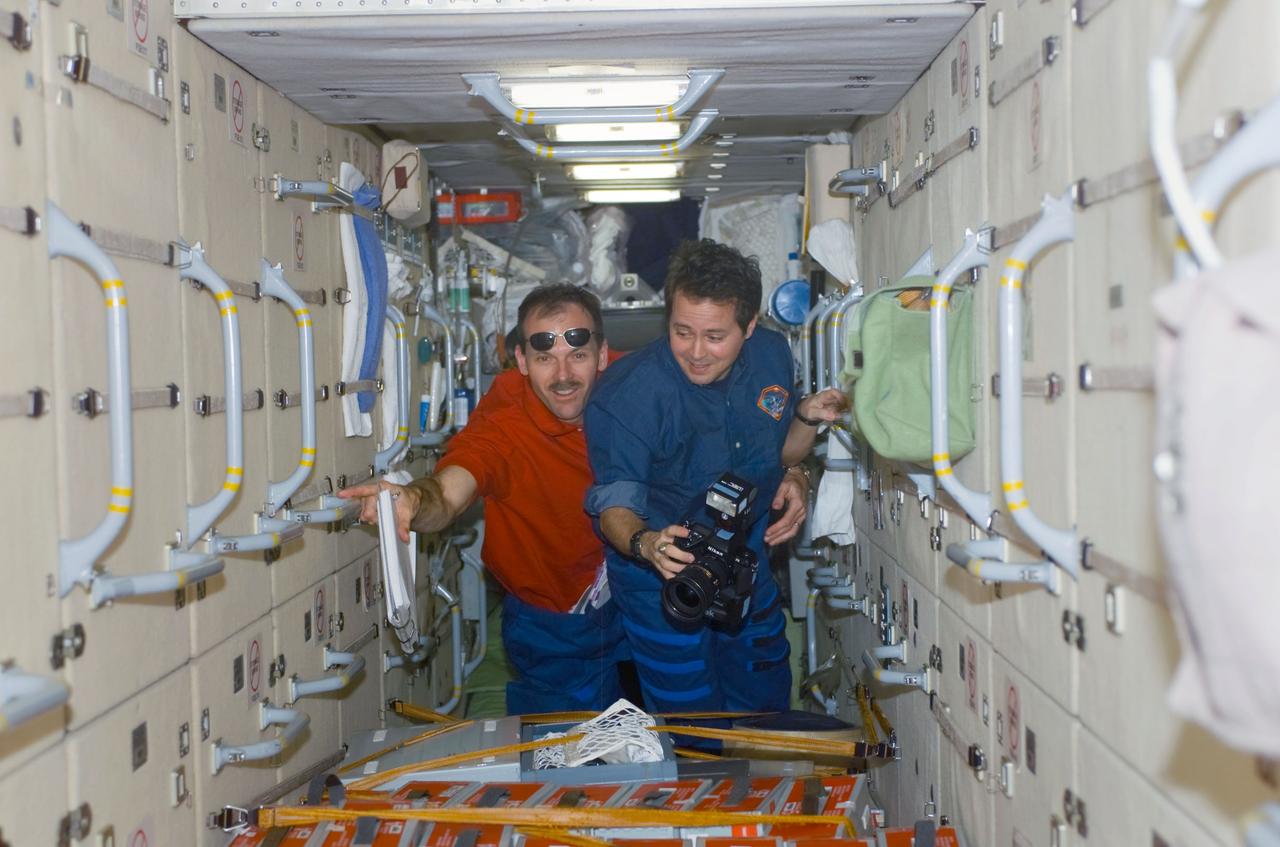
STS110-E-5115 (10 April 2002) --- Astronauts Daniel W. Bursch (right), Expedition Four flight engineer, and Steven L. Smith, STS-110 mission specialist, traverse through the functional cargo block (FGB), or Zarya on the International Space Station (ISS). The image was taken with a digital still camera.
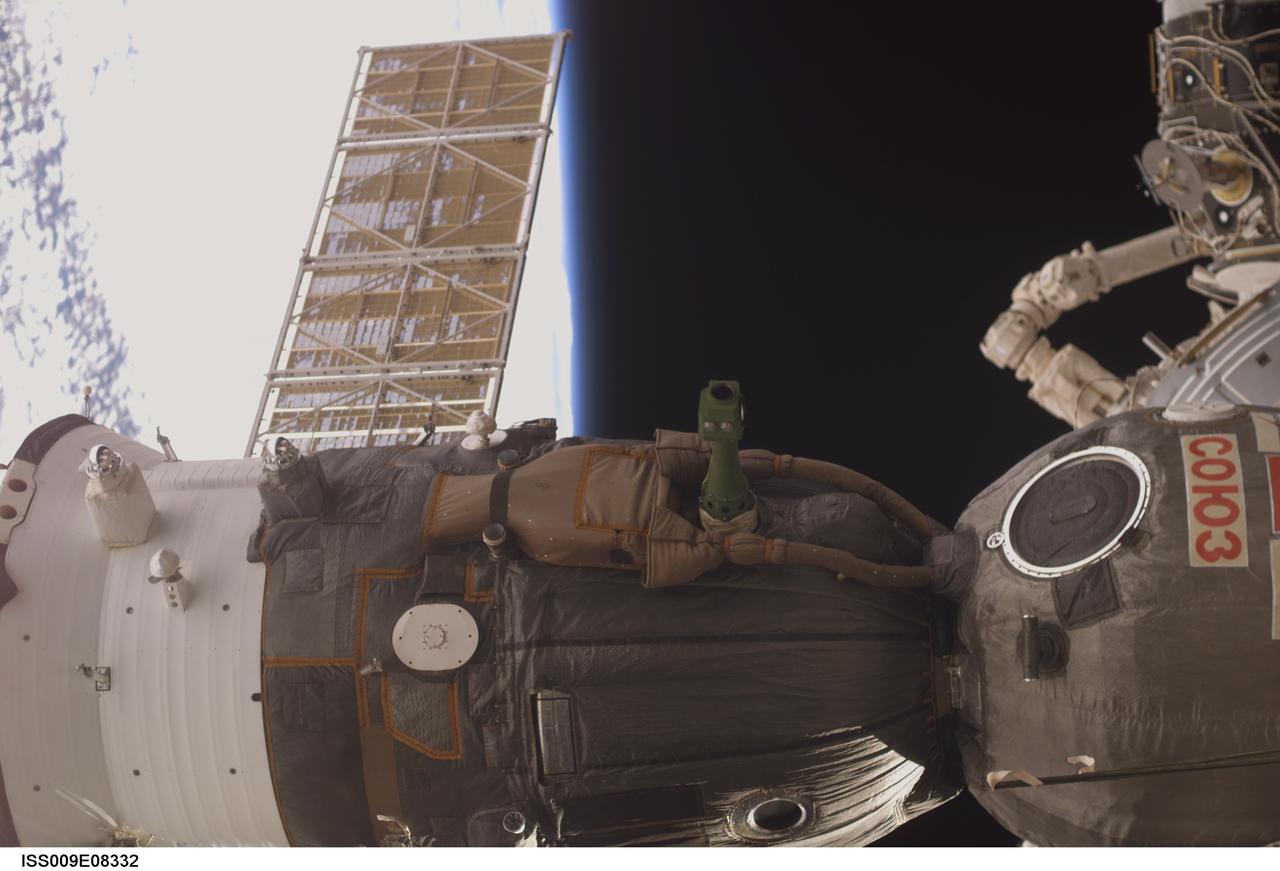
ISS009-E-08332 (24 May 2004) --- The blackness of space and Earth’s horizon provide the backdrop for this scene of the Soyuz TMA-4 spacecraft, docked to the Zarya functional cargo block (FGB) nadir port of the International Space Station (ISS). The scene was photographed by an Expedition 9 crewmember.
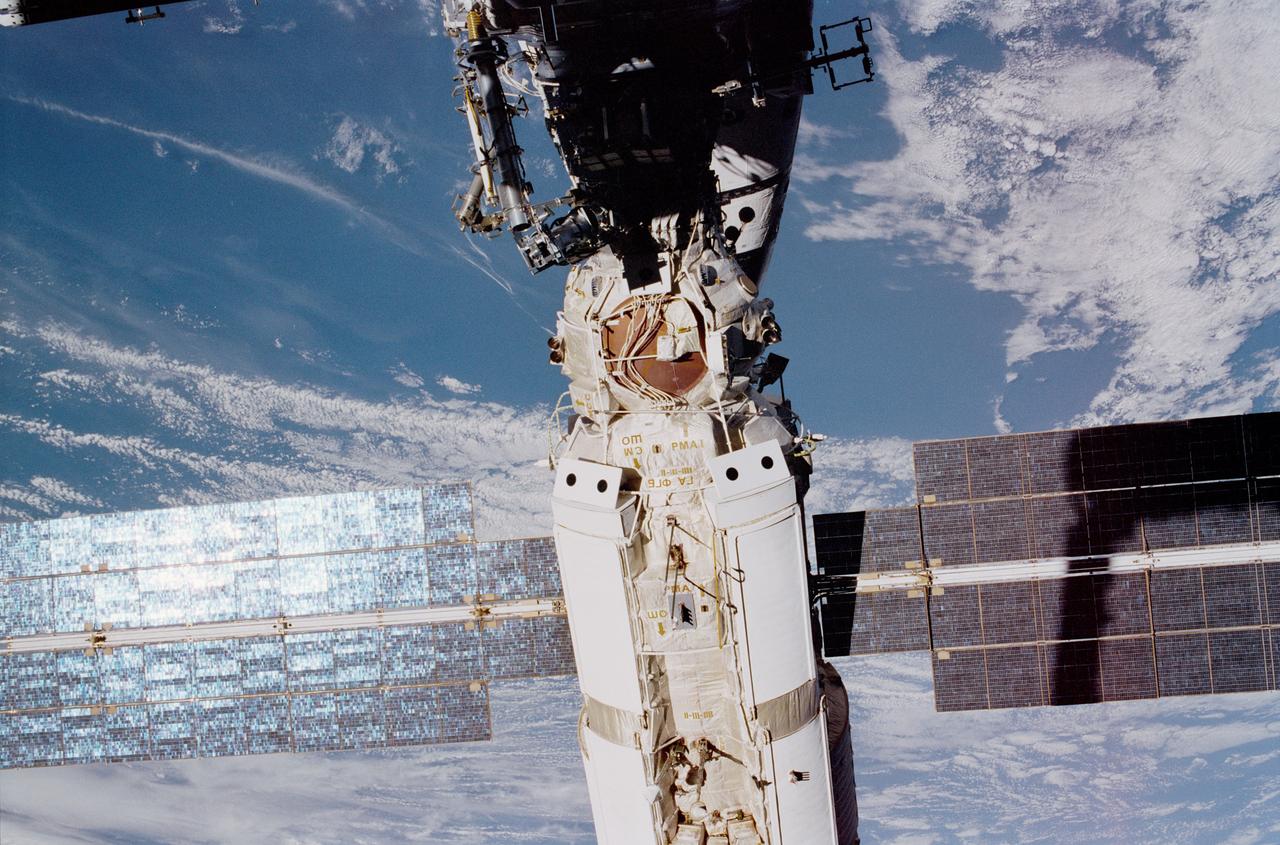
STS097-374-024 (3 December 2000) --- Backdropped by the Earth with partial cloud cover, the Functional Cargo Block (FGB) or Zarya is photographed with sunglint on the array. The photo was taken by astronaut Joseph R. Tanner during the first STS-97 space walk.
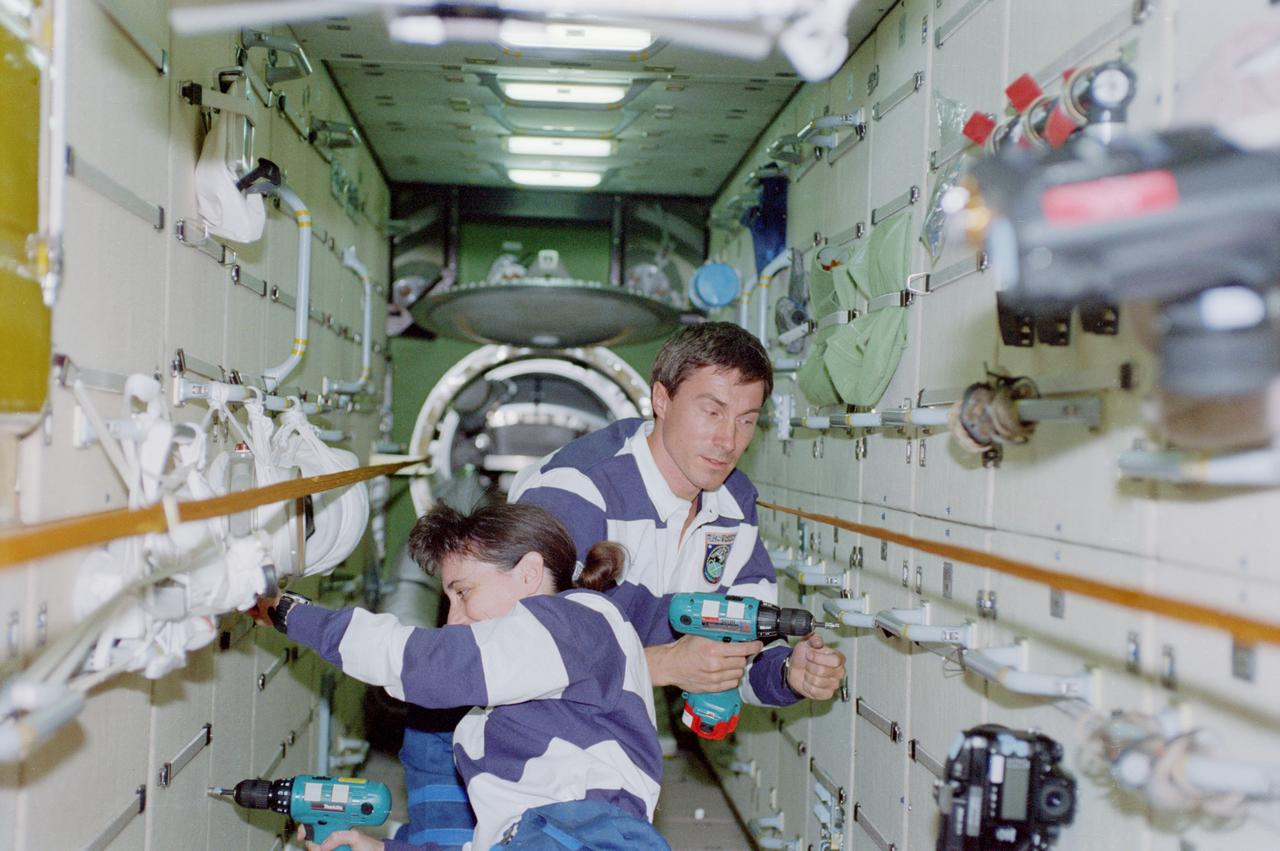
STS088-357-011 (4-15 Dec. 1998) --- Astronaut Nancy J. Currie, mission specialist, and cosmonaut Sergei K. Krikalev, mission specialist representing the Russian Space Agency (RSA), work in the FGB or Zarya Module of the International Space Station (ISS). The two are using battery powered tools to extract bolts.

ISS003-E-8391 (8 December 2001) --- Astronaut Carl E. Walz, Expedition Four flight engineer, wearing a Russian Sokol suit, is photographed in the functional cargo block (FGB), or Zarya on the International Space Station (ISS). The image was taken with a digital still camera.
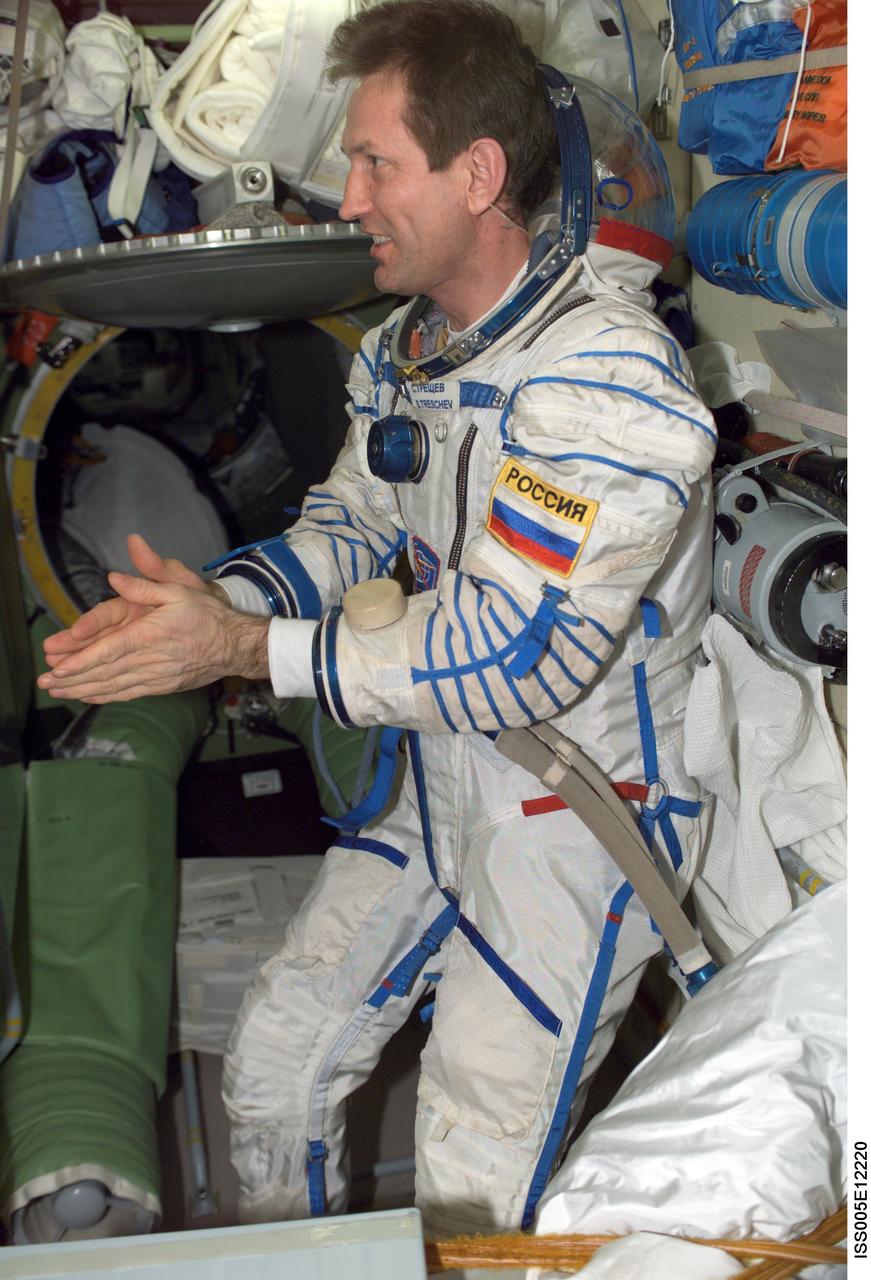
ISS005-E-12220 (3 September 2002) --- Cosmonaut Sergei Y. Treschev, Expedition Five flight engineer, wearing a Russian Sokol suit, is pictured in the functional cargo block (FGB), or Zarya on the International Space Station (ISS). Treschev represents Rosaviakosmos.
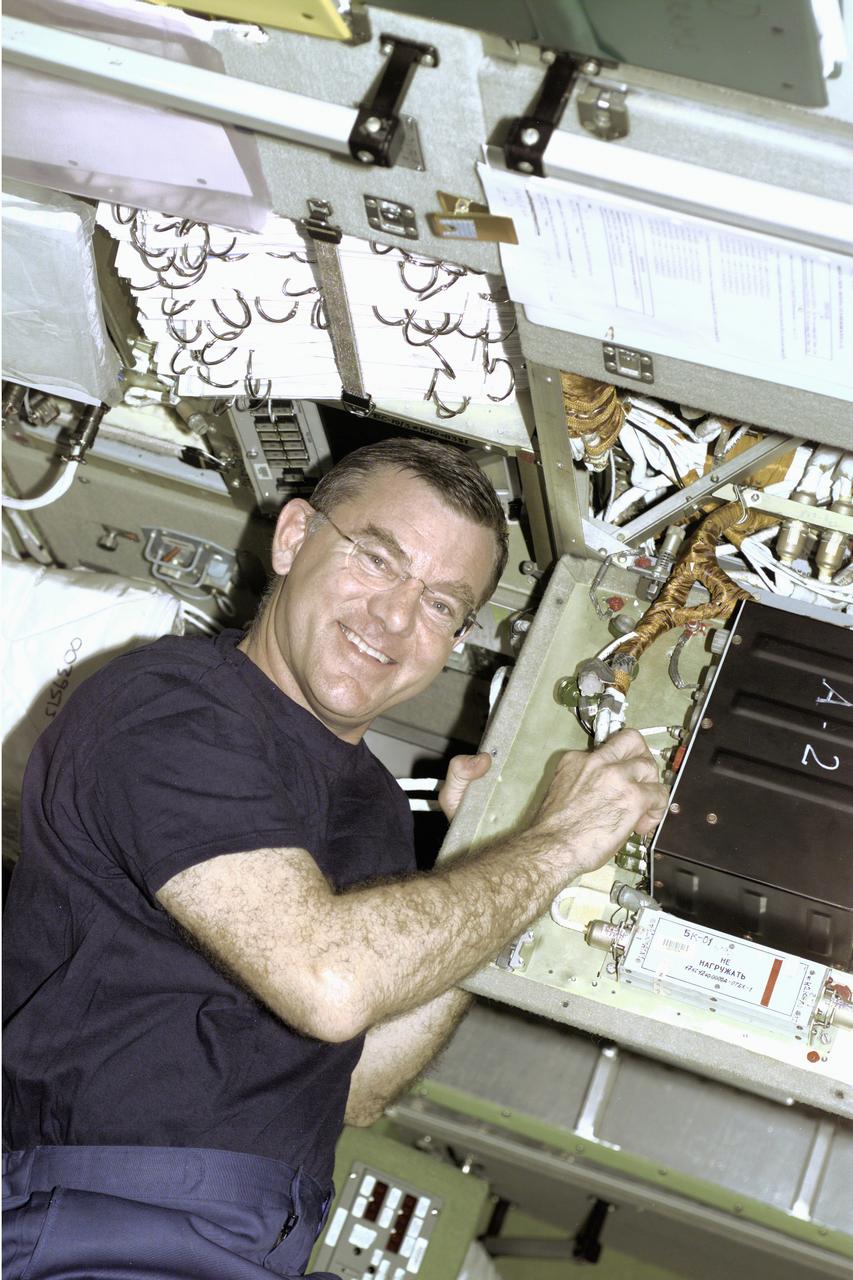
Astronaut James S. Voss, Expedition Two flight engineer, performs an electronics task in the Russian Zvezda Service Module on the International Space Station (ISS). Zvezda is linked to the Russian-built Functional Cargo Block (FGB), or Zarya, the first component of the ISS. Zarya was launched on a Russian Proton rocket prior to the launch of Unity, the first U.S.-built component to the ISS. Zvezda (Russian word for star), the third component of the ISS and the primary Russian contribution to the ISS, was launched by a three-stage Proton rocket on July 12, 2000. Zvezda serves as the cornerstone for early human habitation of the station, providing living quarters, a life support system, electrical power distribution, a data processing system, a flight control system, and a propulsion system. It also provides a communications system that includes remote command capabilities from ground flight controllers. The 42,000-pound module measures 43 feet in length and has a wing span of 98 feet. Similar in layout to the core module of Russia's Mir space station, it contains 3 pressurized compartments and 13 windows that allow ultimate viewing of Earth and space.
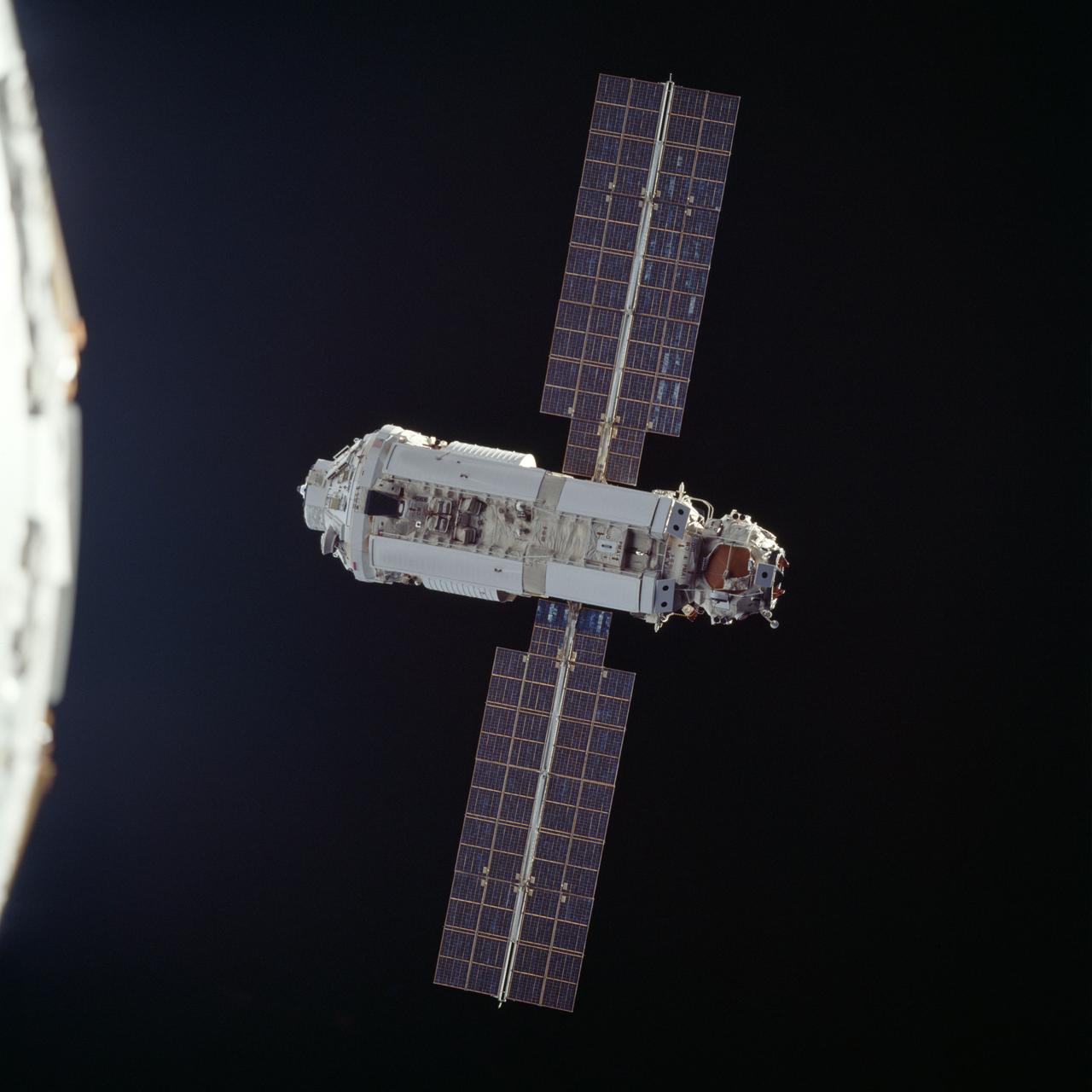
STS088-719-059 (6 Dec. 1998) --- Backdropped against the darkness of space, the Russian-built FGB, also called Zarya, approaches the out-of-frame Space Shuttle Endeavour and the U.S.-built Node 1, also called Unity. Inside Endeavour's cabin, the STS-88 crew readied the remote manipulator system (RMS) for Zarya capture as they awaited the rendezvous.
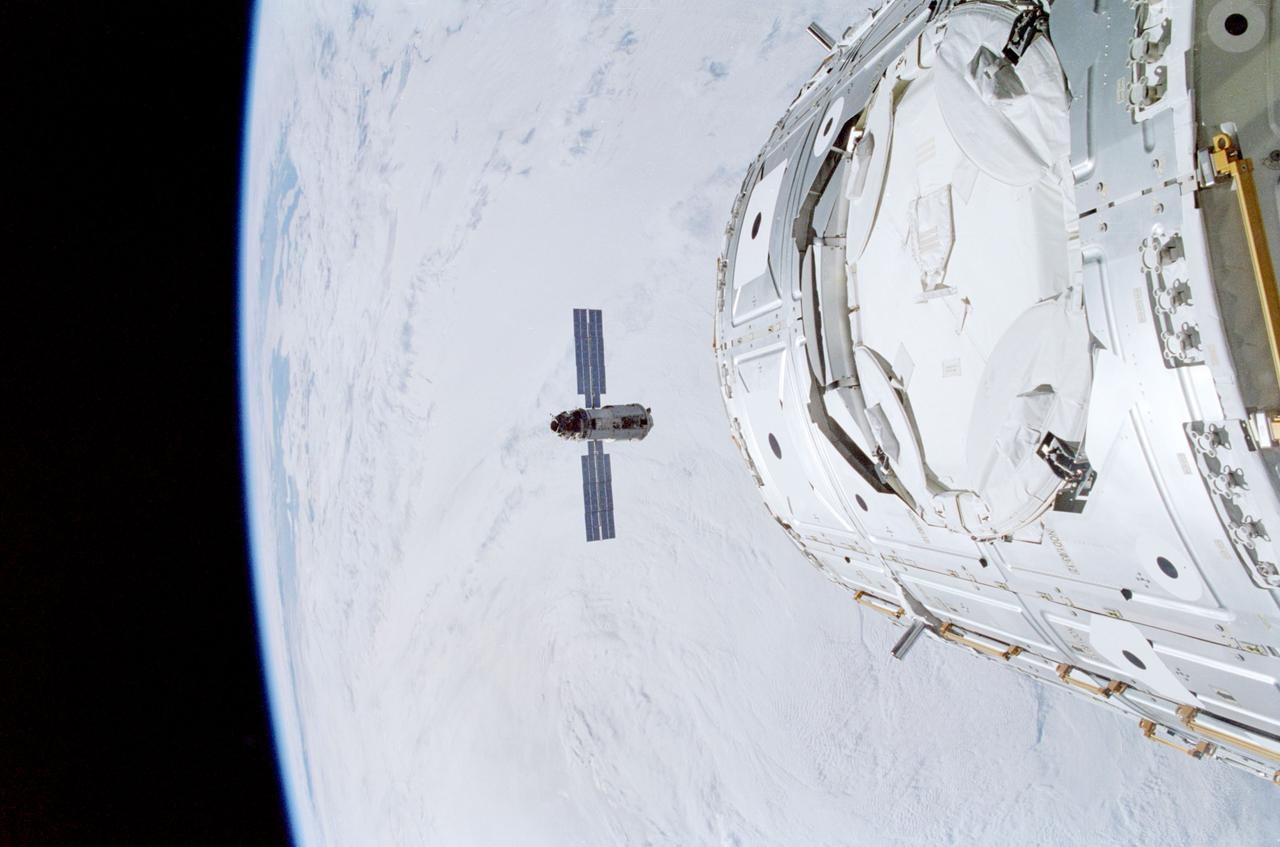
STS088-341-015 (6 Dec. 1998) --- Backdropped against a blanket of heavy cloud cover, the Russian-built FGB, also called Zarya, approaches the Space Shuttle Endeavour and the U.S.-built Node 1, also called Unity (foreground). Inside Endeavour's cabin, the STS-88 crew readied the remote manipulator system (RMS) for Zarya capture as they awaited the rendezvous.
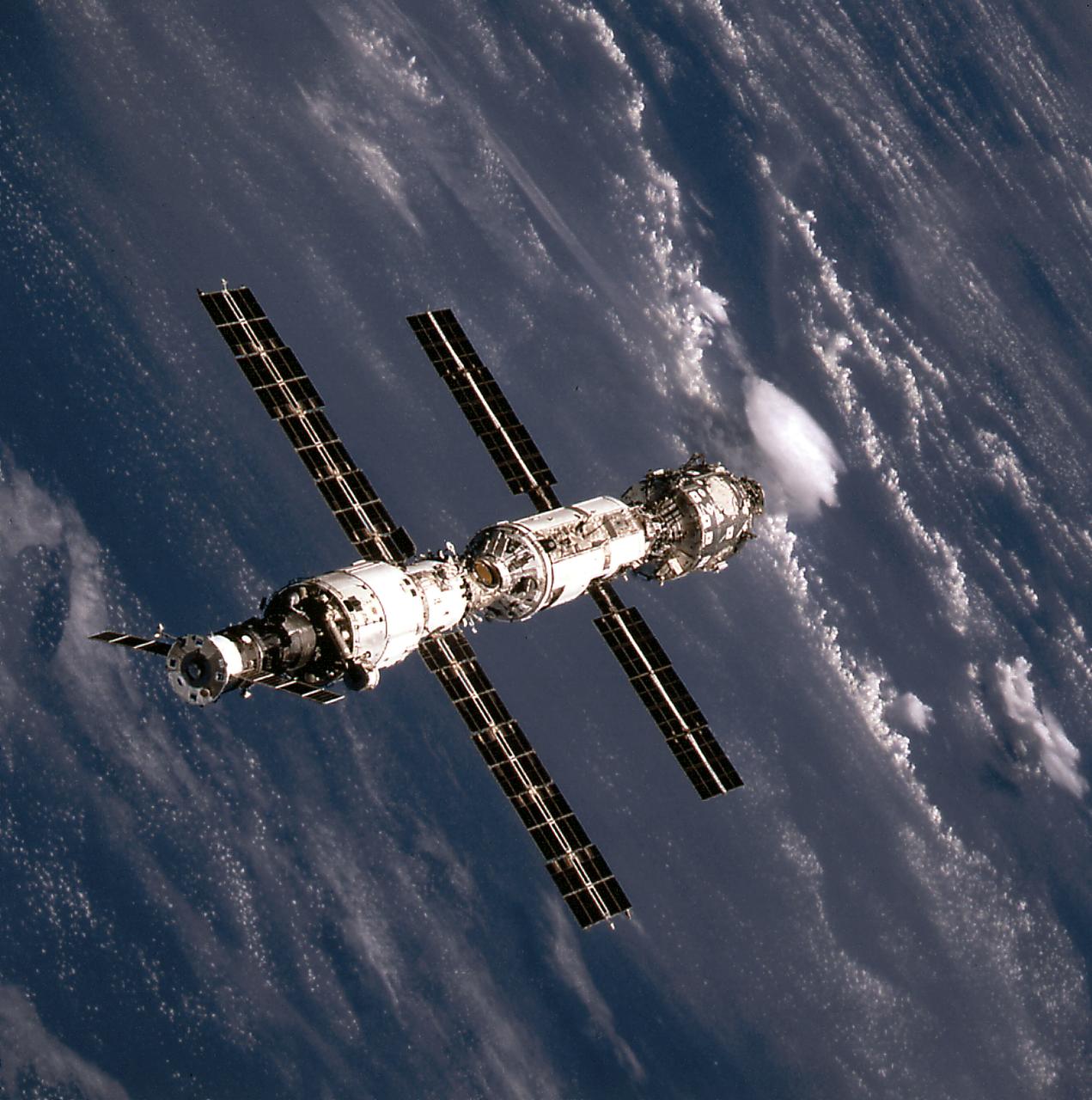
This image of the International Space Station (ISS) was taken when Space Shuttle Atlantis (STS-106 mission) approached the ISS for docking. At the top is the Russian Progress supply ship that is linked with the Russian built Service Module or Zvezda. The Zvezda is cornected with the Russian built Functional Cargo Block (FGB) or Zarya. The U.S. built Node 1 or Unity module is seen at the bottom.
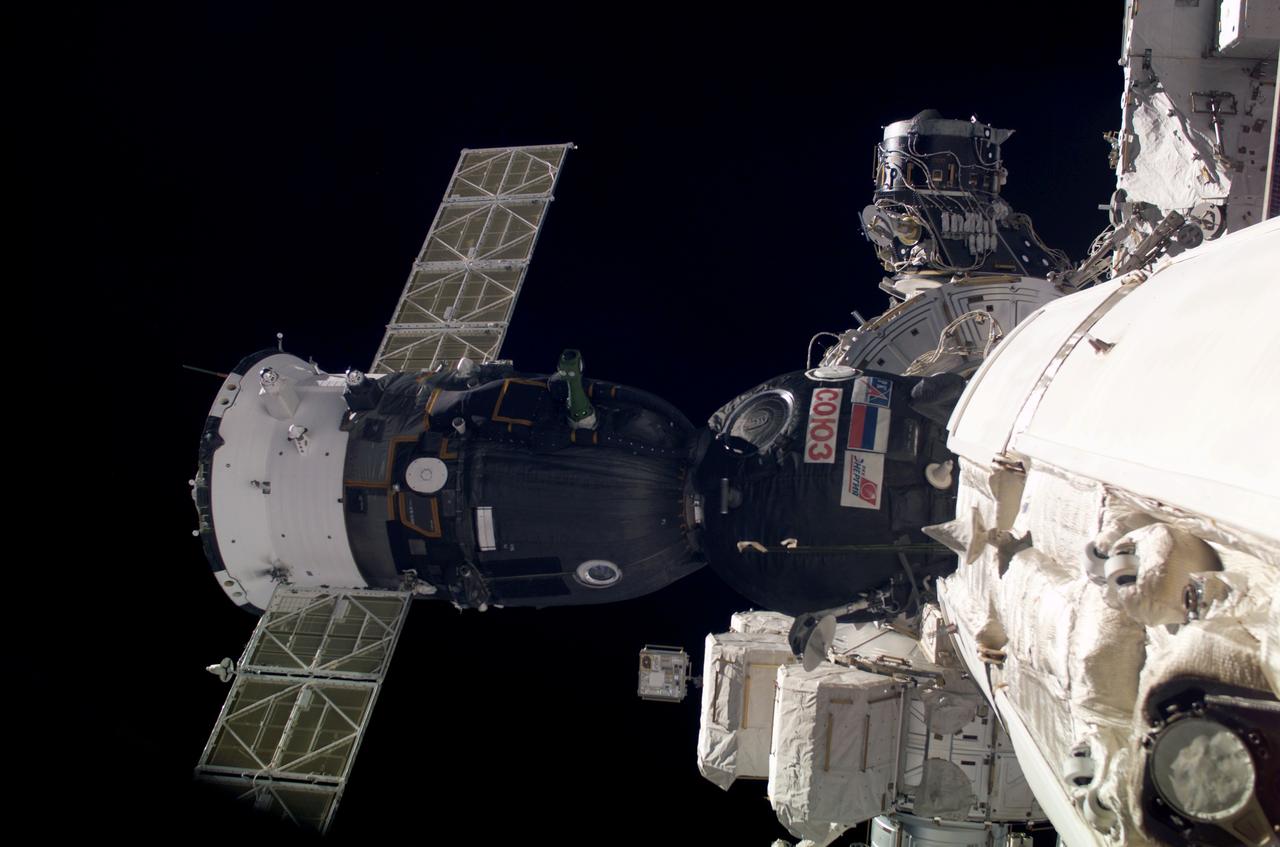
ISS006-E-48631 (28 April 2003) --- The Soyuz TMA-2 spacecraft, which carried the Expedition 7 crew, is docked to the functional cargo block (FGB) nadir port on the International Space Station (ISS).
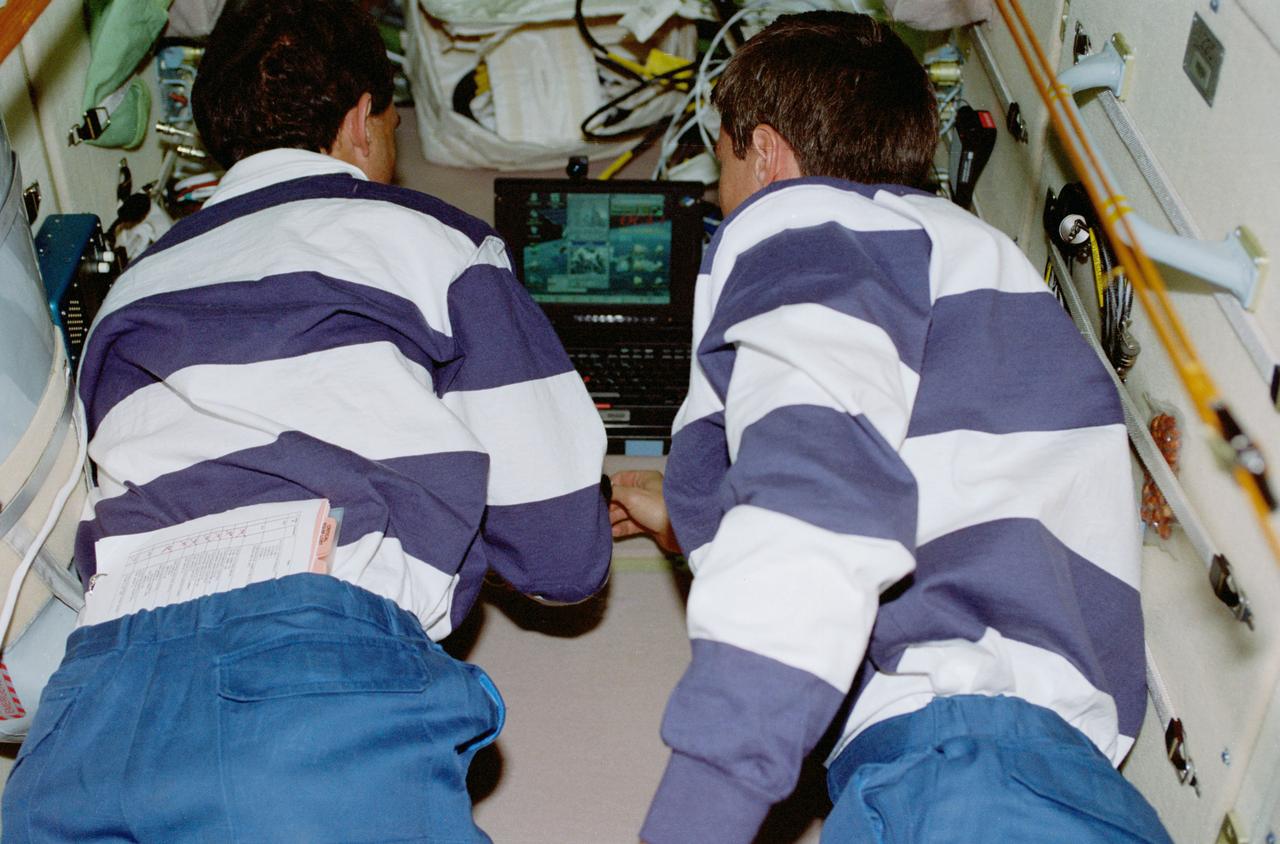
STS088-359-005 (4-15 Dec. 1998) --- Cosmonaut Sergei K. Krikalev (right), mission specialist representing the Russian Space Agency (RSA), and astronaut James H. Newman, mission specialist, participate in video teleconference with ground controllers while working in the Russian-built FGB or Zarya Module. Zarya is docked with the United States-built Unity (Node 1) Module, which is temporarily docked in Space Shuttle Endeavour?s cargo bay. The mission specialists, along with other members of the crew, were in the process of setting up interior systems of Zarya.
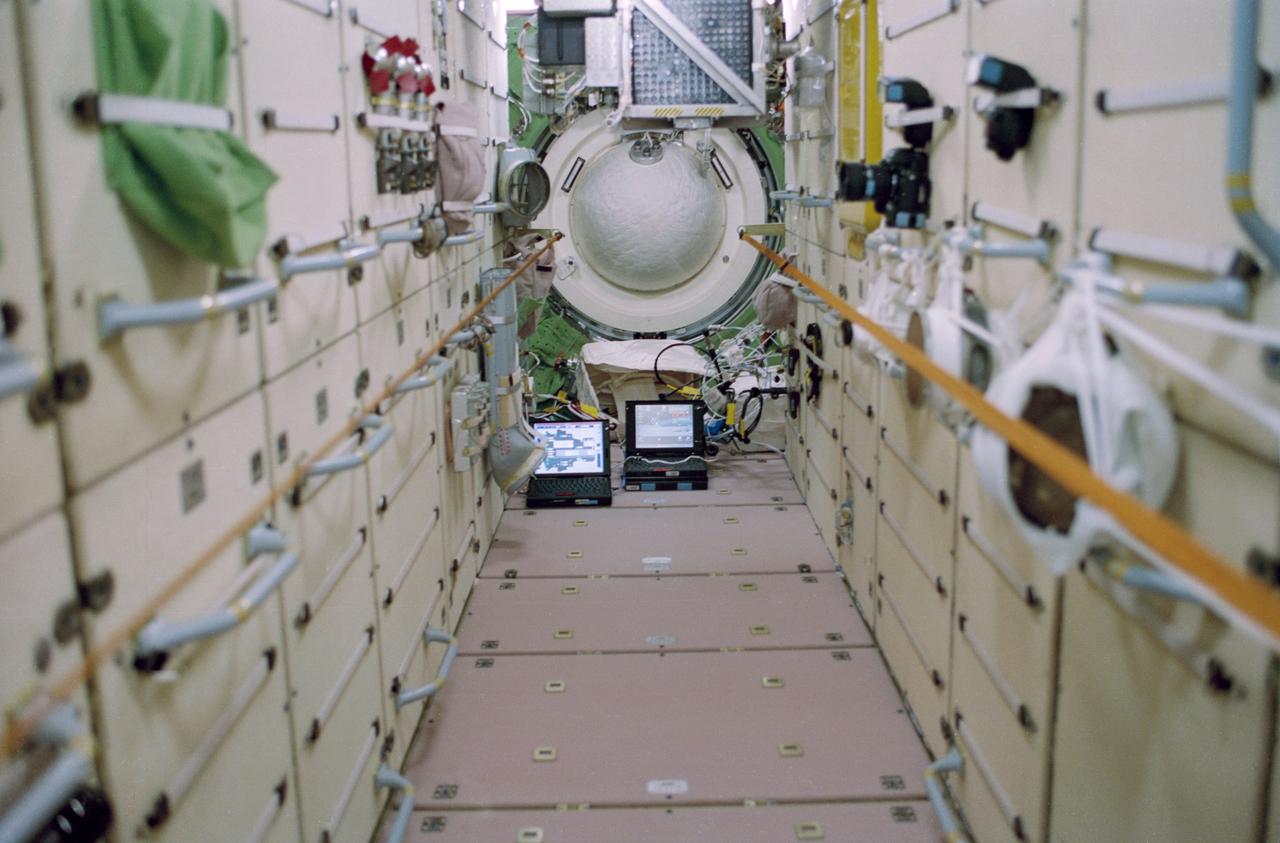
STS088-359-026 (4-15 Dec. 1998) --- An interior shot of the Russian-built FGB (called Zarya) module reveals the work of the crew who had earlier spent hours readying the International Space Station (ISS) module for its impending release. The crew members were in the midst of a video conference at the time the photo was taken. After devoting the major portion of its mission time to various tasks to ready Zarya and the docked United States-built node (called Unity), the six-member crew released the tandem from the Space Shuttle Endeavour?s cargo bay toward mission?s end.
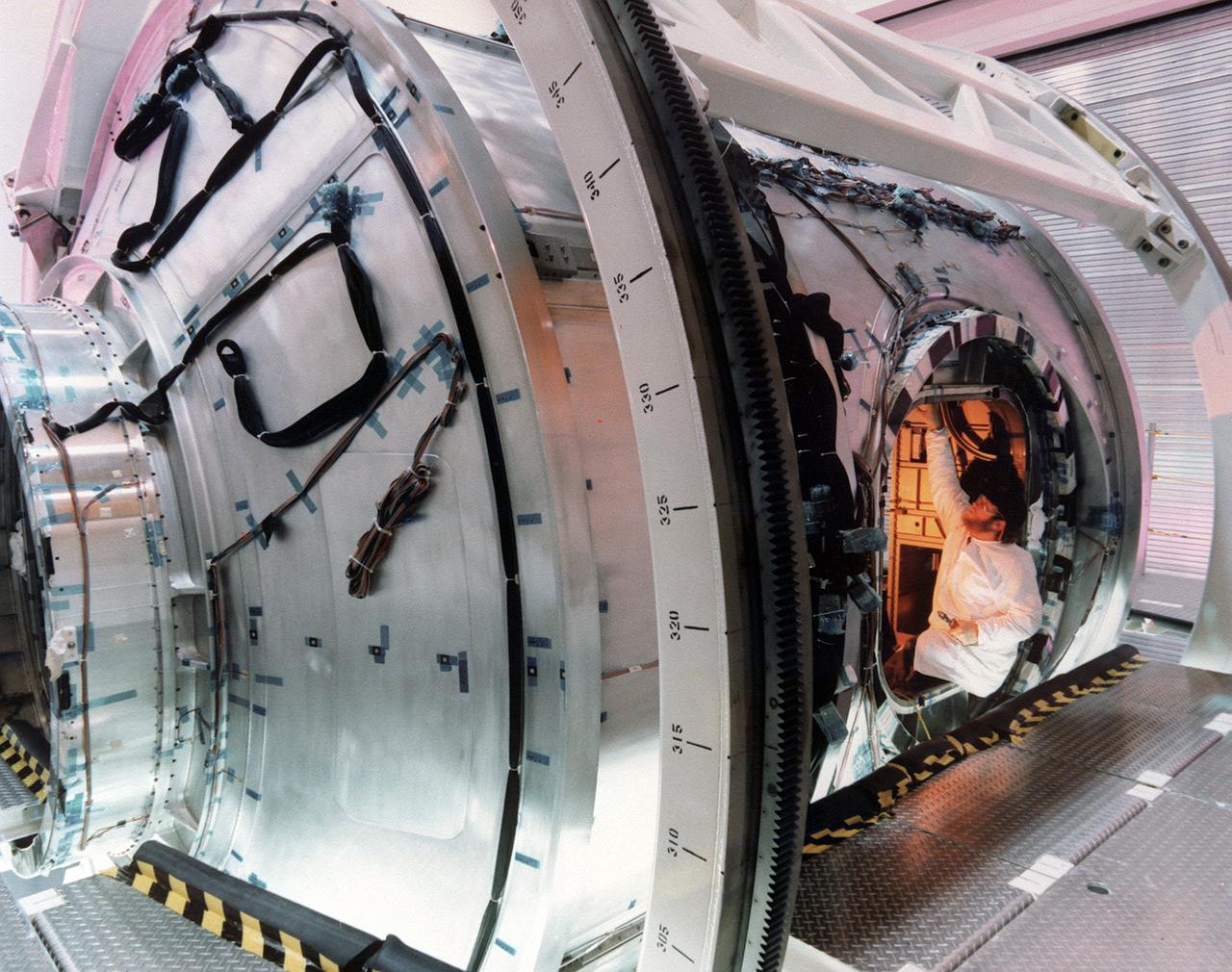
This photograph, taken by the Boeing Company,shows Boeing technicians preparing to install one of six hatches or doors to the Node 1 (also called Unity), the first U.S. Module for the International Space Station (ISS). The Node 1, or Unity, serves as a cornecting passageway to Space Station modules and was manufactured by the Boeing Company at the Marshall Space Flight Center from 1994 to 1997. The U.S. built Unity module was launched aboard the orbiter Endeavour (STS-88 mission) on December 4, 1998 and connected to the Zarya, the Russian-built Functional Energy Block (FGB). The Zarya was launched on a Russian proton rocket prior to the launch of the Unity. The ISS is a multidisciplinary laboratory, technology test bed, and observatory that will provide unprecedented undertakings in scientific, technological, and international experimentation.
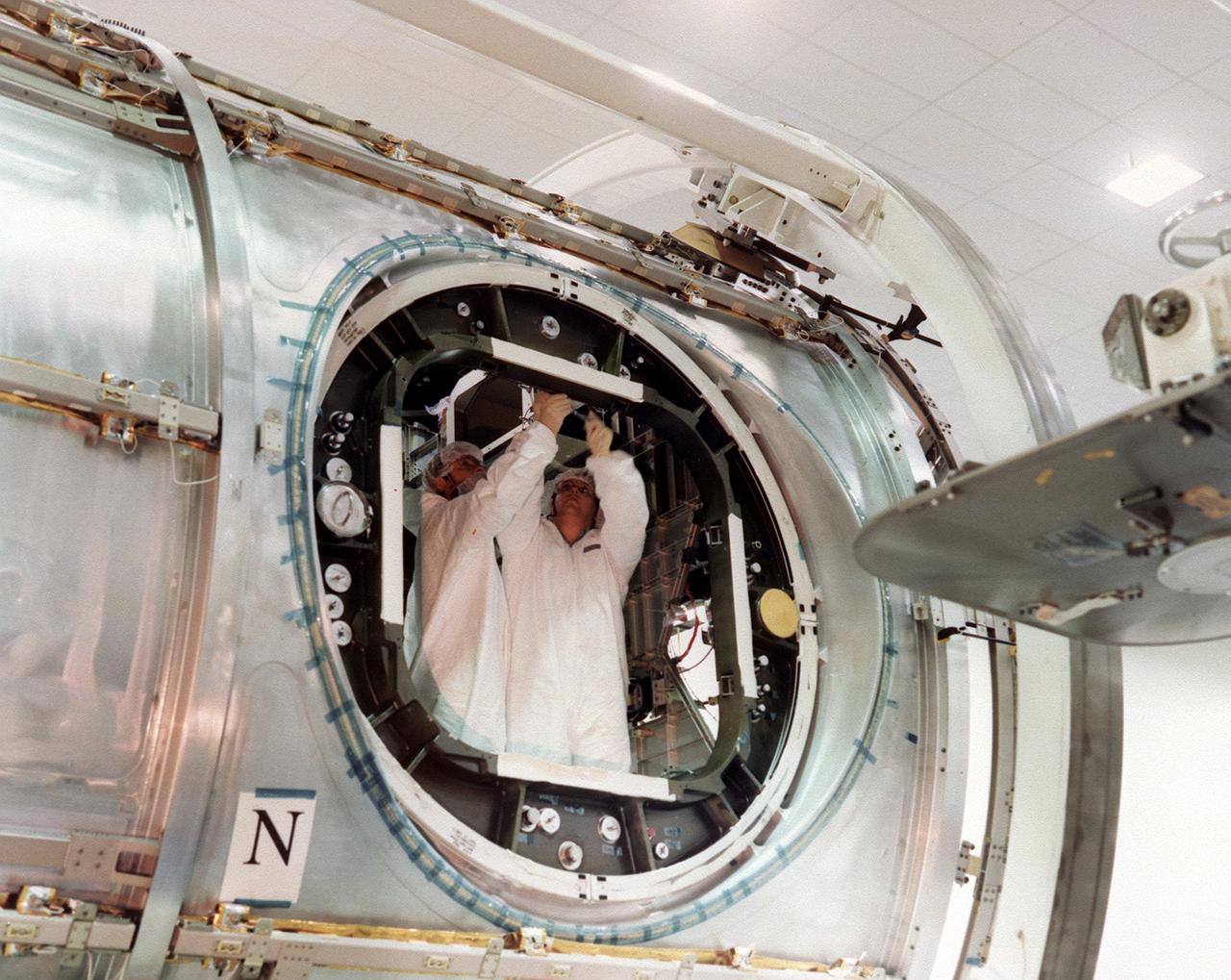
This photograph, taken by the Boeing Company, shows Boeing technicians preparing to install one of six hatches or doors to the Node 1 (also called Unity), the first U.S. Module for the International Space Station (ISS). The Node 1, or Unity, serves as a cornecting passageway to Space Station modules and was manufactured by the Boeing Company at the Marshall Space Flight Center from 1994 to 1997. The U.S. built Unity module was launched aboard the orbiter Endeavour (STS-88 mission) on December 4, 1998 and connected to the Zarya, the Russian-built Functional Energy Block (FGB). The Zarya was launched on a Russian proton rocket prior to the launch of the Unity. The ISS is a multidisciplinary laboratory, technology test bed, and observatory that will provide unprecedented undertakings in scientific, technological, and international experimentation.
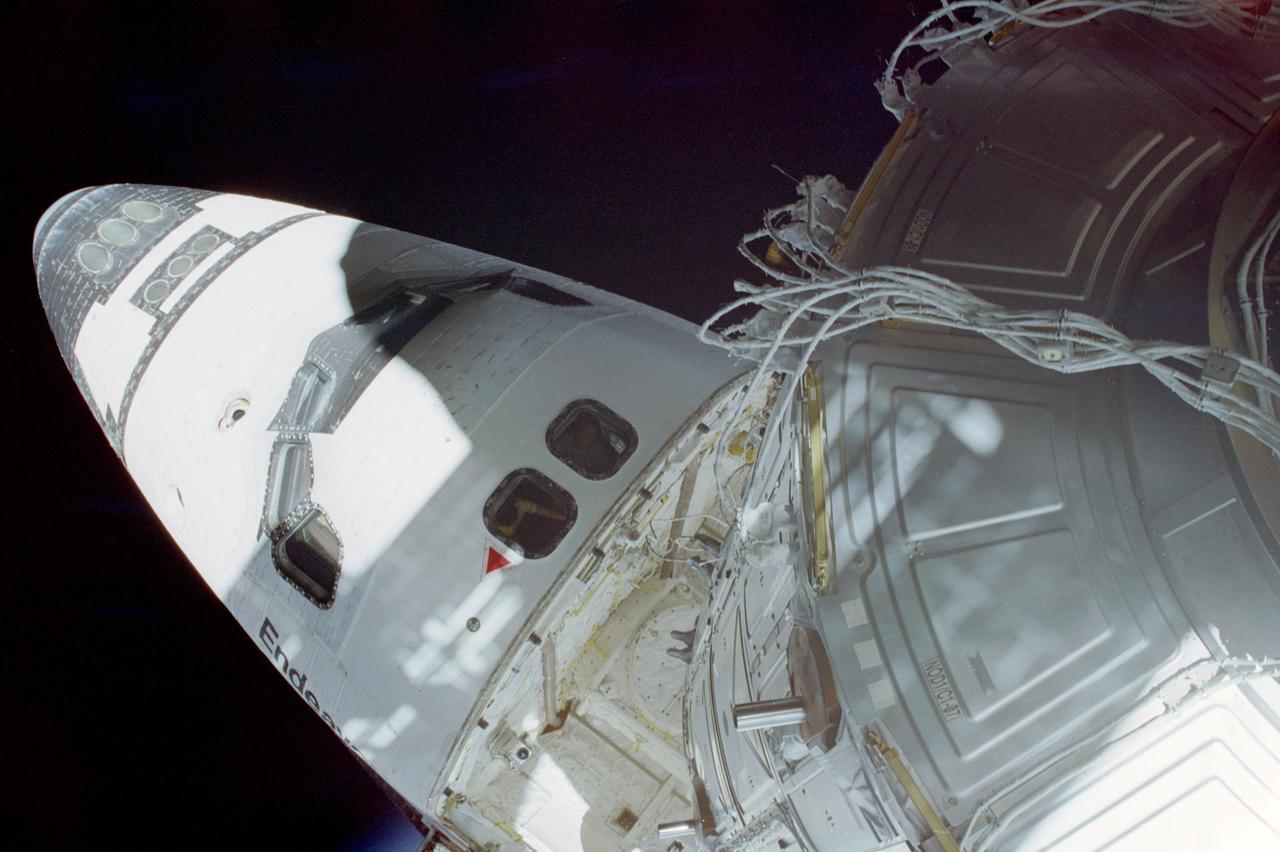
STS088-344-016 (4-15 Dec. 1998) --- This scene photographed from the top of Node 1 shows the nose of the Space Shuttle Endeavour, during one of three Extravehicular Activities (EVA) by astronaut Jerry L. Ross and James H. Newman (both out of frame). The EVA was part of the overall effort to ready for release the recently-joined Russian-built Zarya Module (FGB) and the United States-built Unity (Node 1) Module.
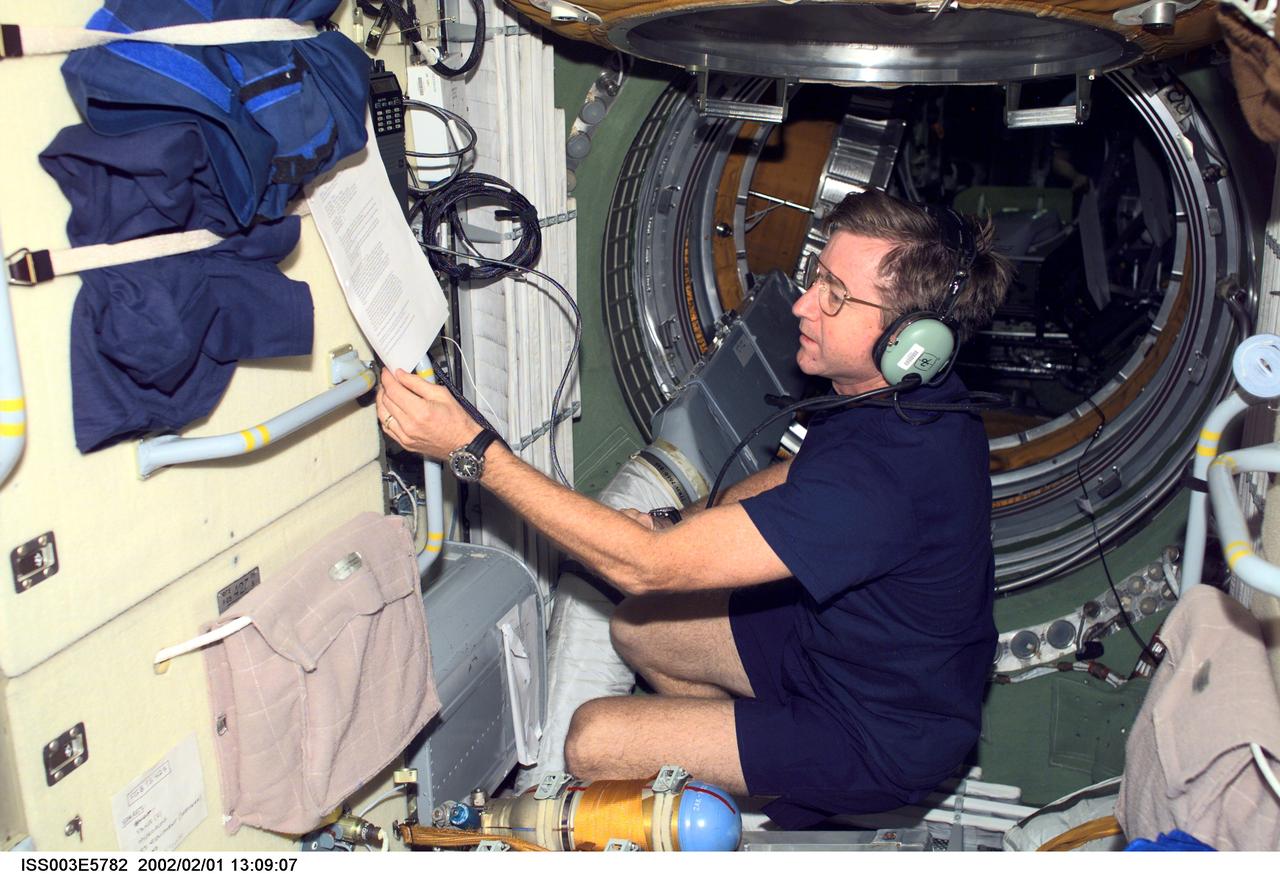
ISS003-E-5782 (September 2001) --- Astronaut Frank L. Culbertson, Jr., Expedition Three mission commander, operates the amateur radio equipment in the Zarya or functional cargo block (FGB) of the International Space Station (ISS). This image was taken with a digital still camera. Please note: The date identifiers on some frames are not accurate due to a technical problem with one of the Expedition Three cameras. When a specific date is given in the text or description portion, it is correct.
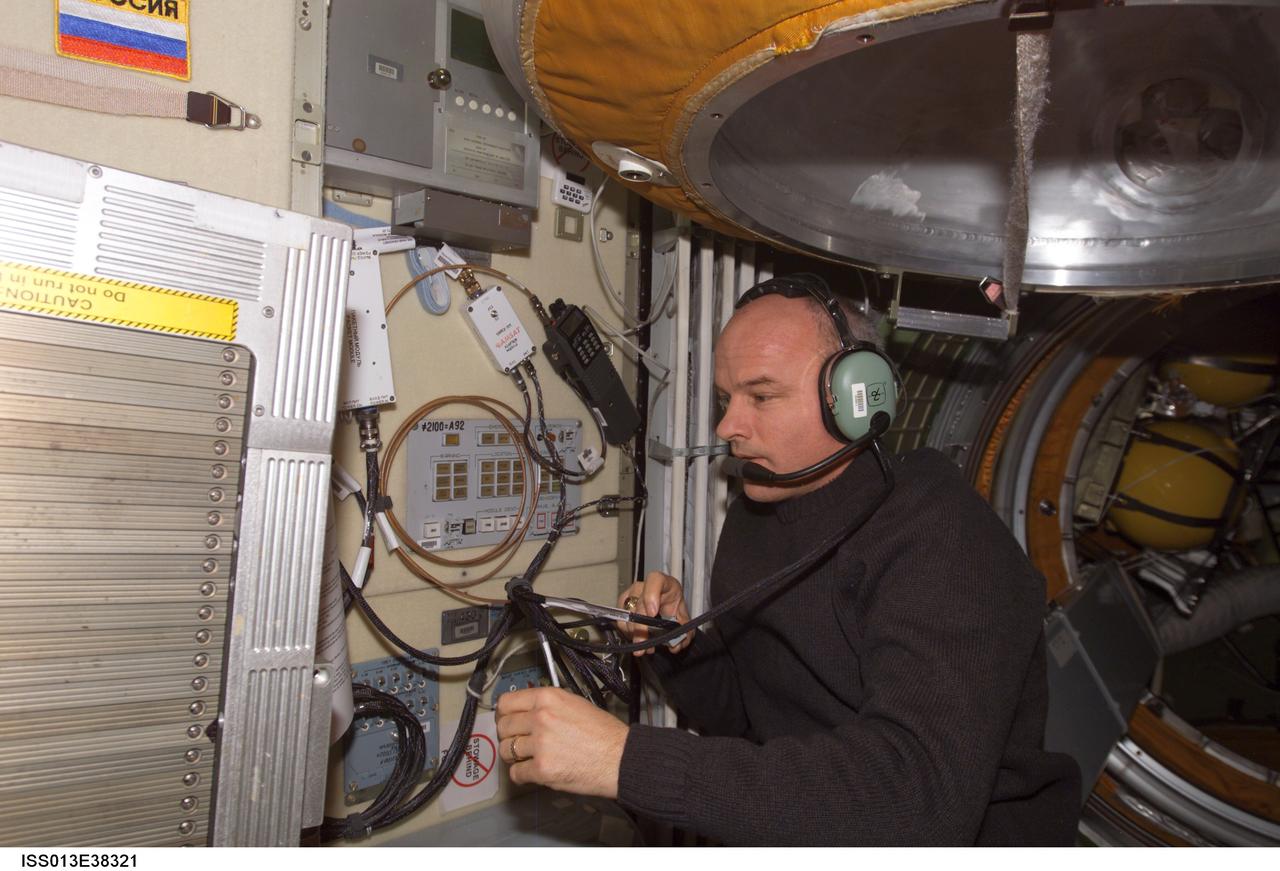
ISS013-E-38321 (17 June 2006) --- Astronaut Jeffrey N. Williams, Expedition 13 NASA space station science officer and flight engineer, uses the amateur radio system in the Zarya functional cargo block (FGB) to talk with school children during an Amateur Radio on the International Space Station (ARISS) contact. Two amateur radio stations are currently installed on the station.
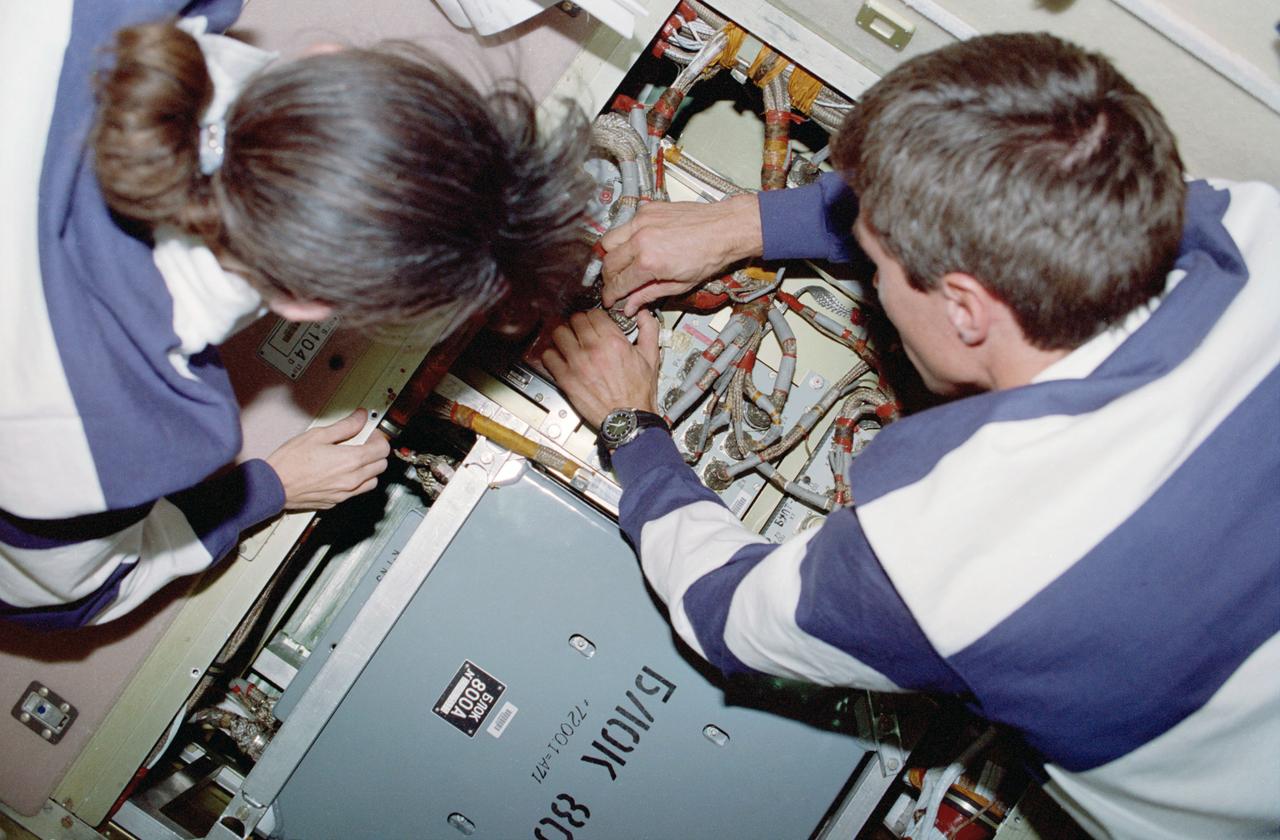
STS088-334-029 (4-15 Dec. 1998) --- Astronaut Nancy J. Currie, mission specialist, and cosmonaut Sergei K. Krikalev, mission specialist representing the Russian Space Agency (RSA), perform an in-flight maintenance on a battery charging unit on the Russian-built FGB Module (Zarya). One of Zarya's six batteries had experienced a problem discharging stored energy in its automatic configuration. Krikalev had swapped out an identical component during two previous flights on the Russia?s Mir Space Station.
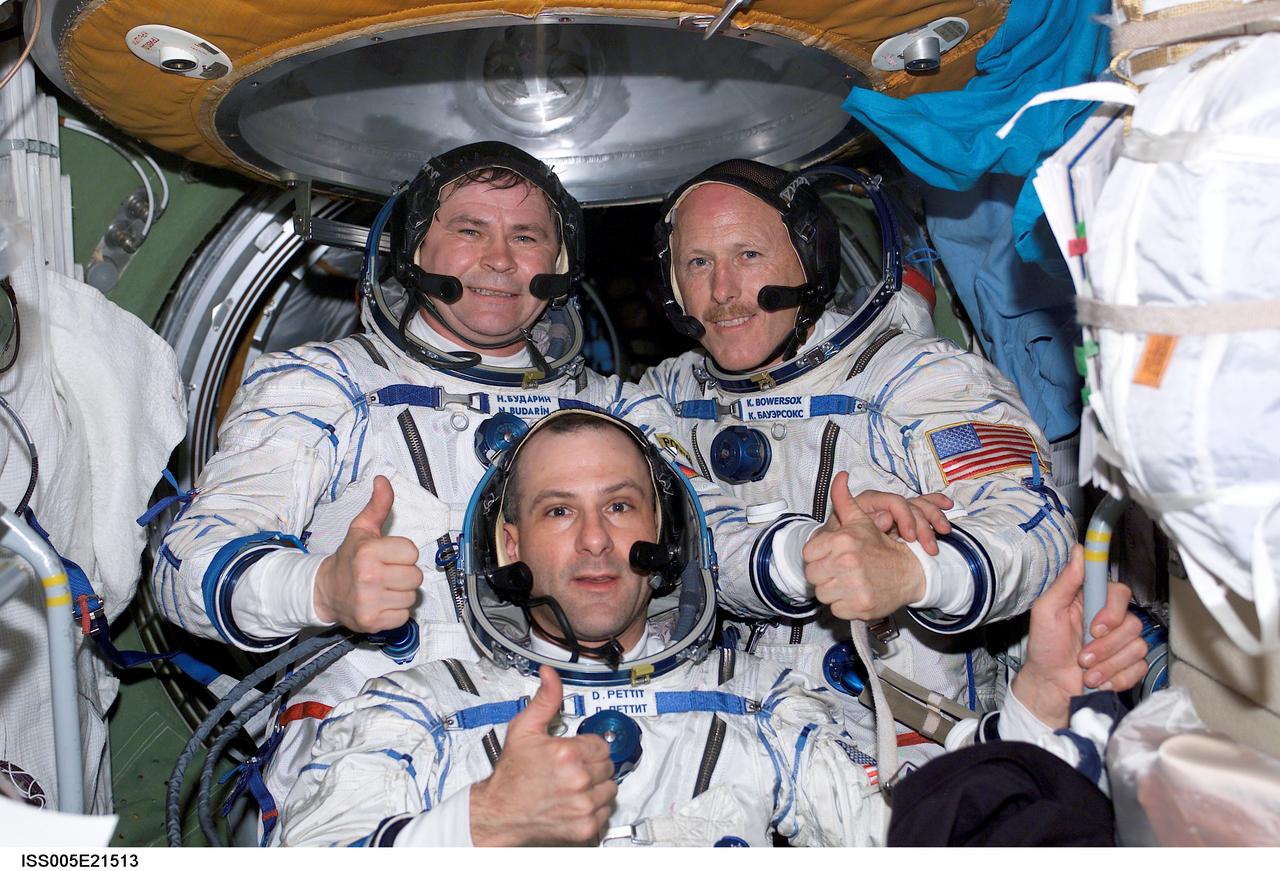
ISS005-E-21513 (26 November 2002) --- The Expedition Six crewmembers, wearing Russian Sokol suits, pose for a crew photo in the functional cargo block (FGB), or Zarya, on the International Space Station (ISS). Pictured are astronaut Donald R. Pettit (front), NASA ISS science officer; cosmonaut Nikolai M. Budarin (left back), flight engineer; and astronaut Kenneth D. Bowersox, mission commander. Budarin represents Rosaviakosmos.
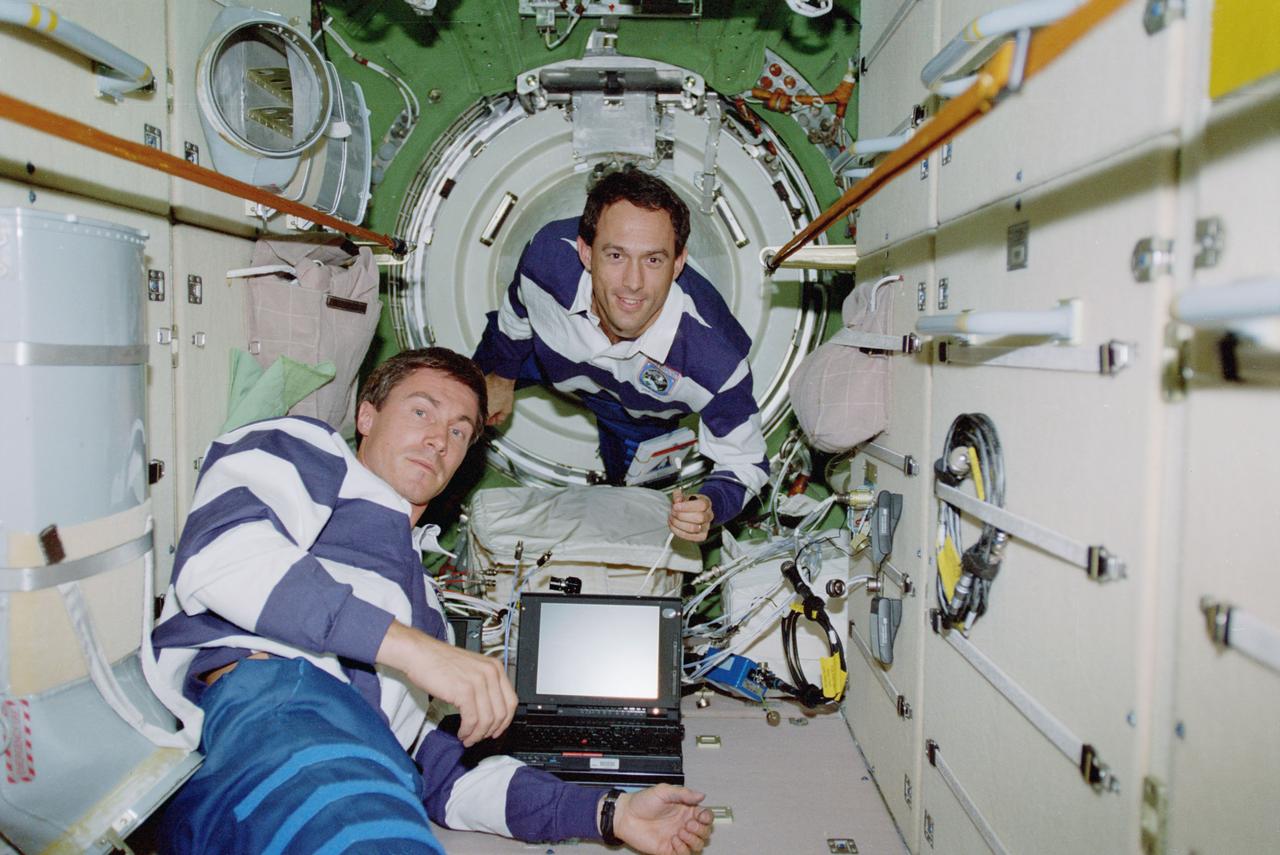
STS088-357-008 (4-15 Dec. 1998) --- Cosmonaut Sergei K. Krikalev (foreground), mission specialist representing the Russian Space Agency (RSA), and astronaut James H. Newman, mission specialist, participate in video teleconference with ground controllers while working in the Russian-built FGB or Zarya Module. At the time the photo was made, Zarya was docked with the United States-built Unity (Node 1) Module, which was temporarily connected to the Space Shuttle Endeavour?s cargo bay. The mission specialists, along with other members of the crew, were in the process of setting up interior systems of Zarya.
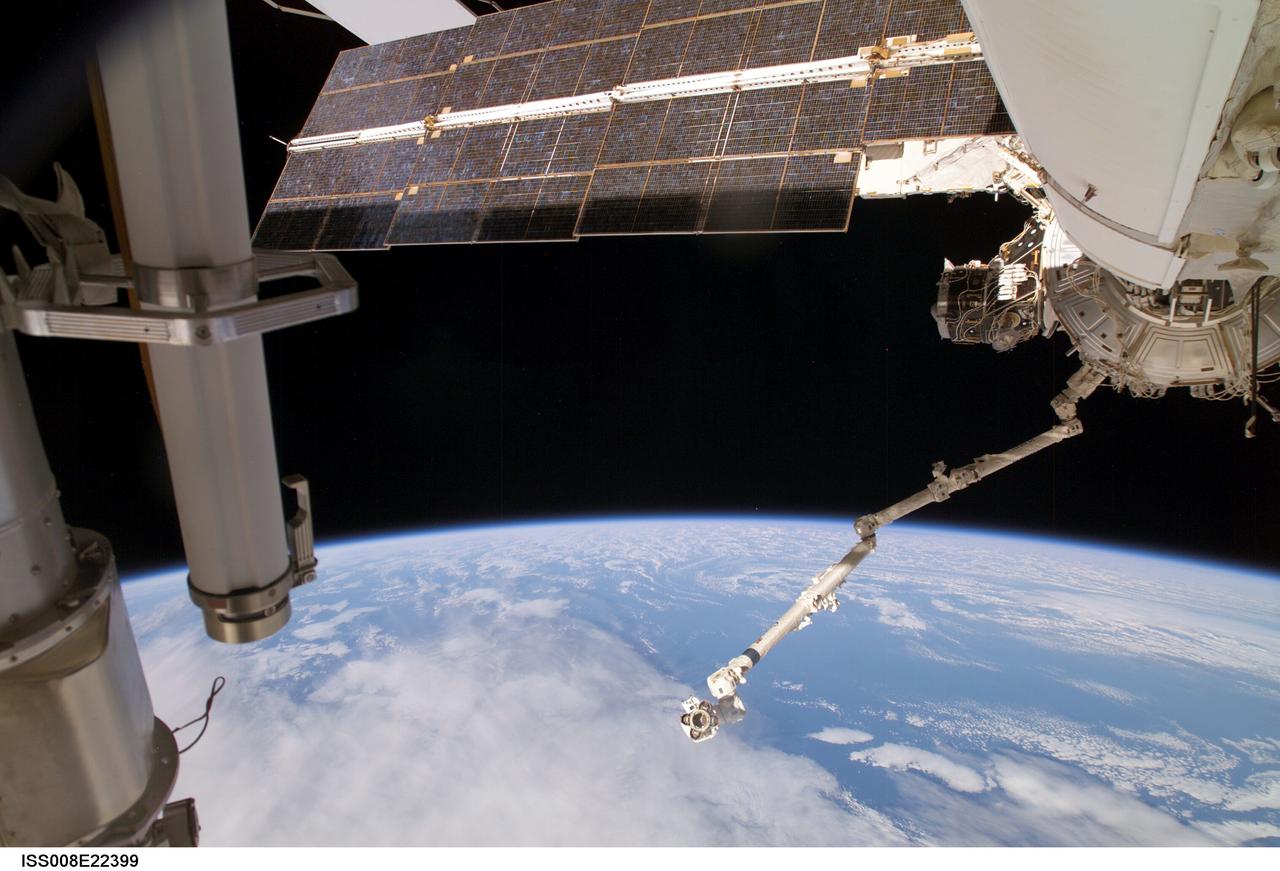
ISS008-E-22399 (28 February 2004) --- This view, taken during Expedition 8 extravehicular activity (EVA), shows the Strela Cargo Boom at left; and the functional cargo block (FGB) or Zarya; Pressurized Mating Adapter (PMA-3); Destiny laboratory and Canadarm2, or Space Station Remote Manipulator System (SSRMS), at right, backdropped against Earth’s horizon and the blackness of space.
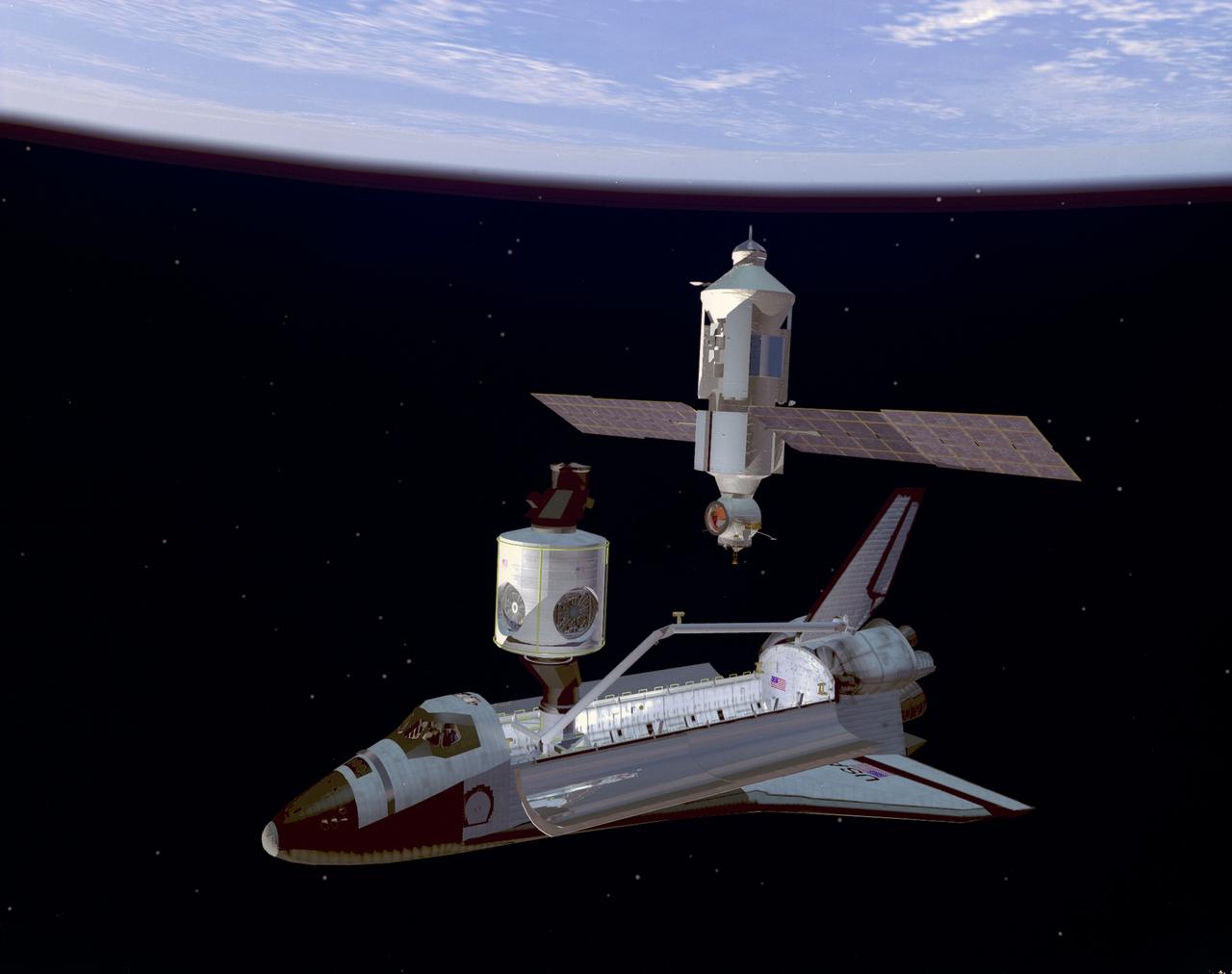
S98-04904 (21 July 1997) --- The Space Shuttle Endeavour prepares to capture the Functional Cargo Block (FGB) using the shuttle's mechanical arm in this artist's depiction of the first Space Shuttle assembly flight for the International Space Station (ISS), mission STS-88 scheduled to launch in December 1998. The shuttle will carry the first United States-built component for the station, a connecting module called Node 1 or Unity, and attach it to the already orbiting FGB, which supplies early electrical power and propulsion. The FGB, Zarya, will have been launched about two weeks earlier on a Russian Proton rocket from the Baikonur Cosmodrome, Kazahkstan. Once the FGB is captured using the mechanical arm, astronaut Nancy J. Currie will maneuver the arm to dock the FGB to the conical mating adapter at the top of Node 1 in the Shuttle's cargo bay. In ensuing days, three Extravehicular Activity?s (EVA) by astronauts Jerry L. Ross and James H. Newman will be performed to make power, data and utility connections between the two modules.
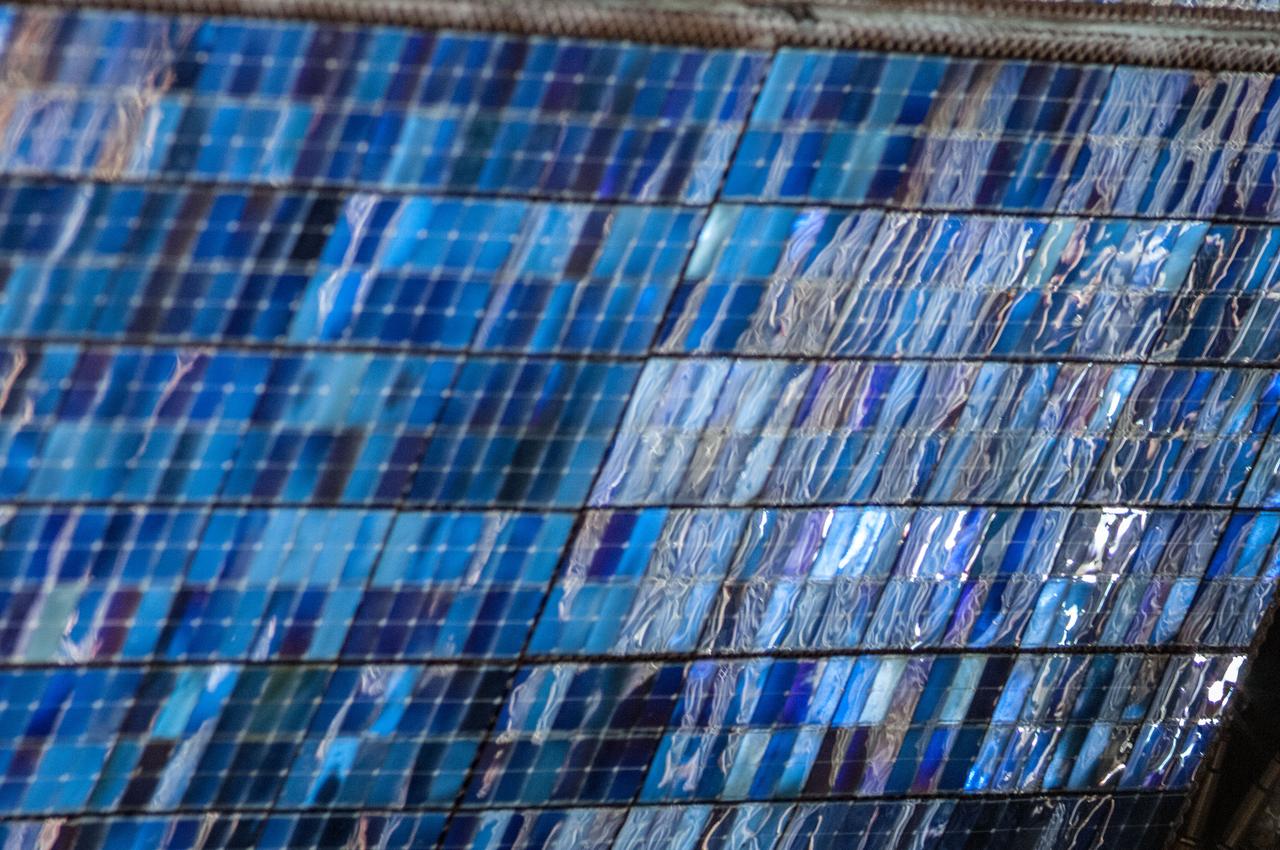
View of FGB solar array panels taken during Russian extravehicular activity (EVA) 36 in support of assembly and maintenance on the International Space Station.
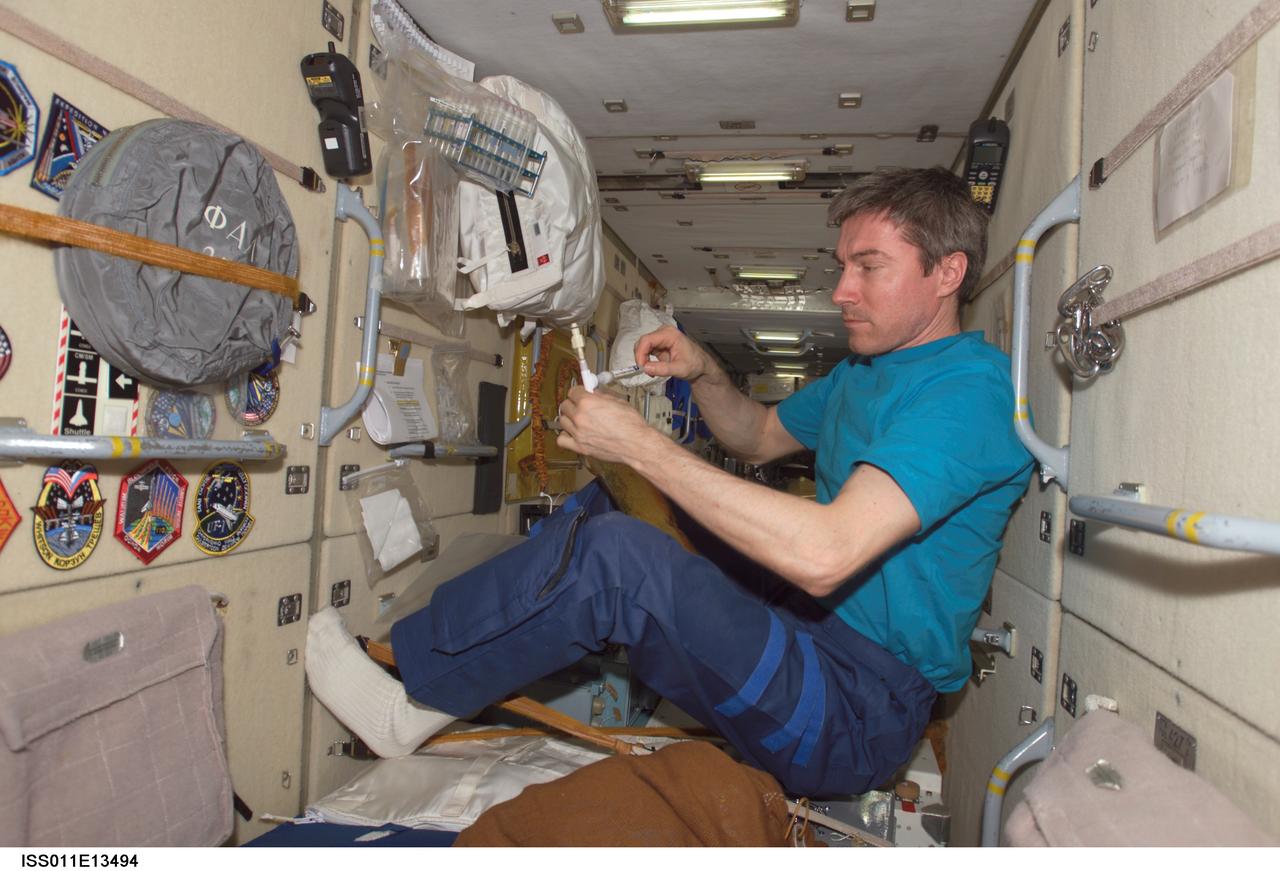
ISS011-E-13494 (22 September 2005) --- Cosmonaut Sergei K. Krikalev, Expedition 11 commander representing Russia's Federal Space Agency, inserts a syringe into a bag while working in the Zarya module of the international space station.
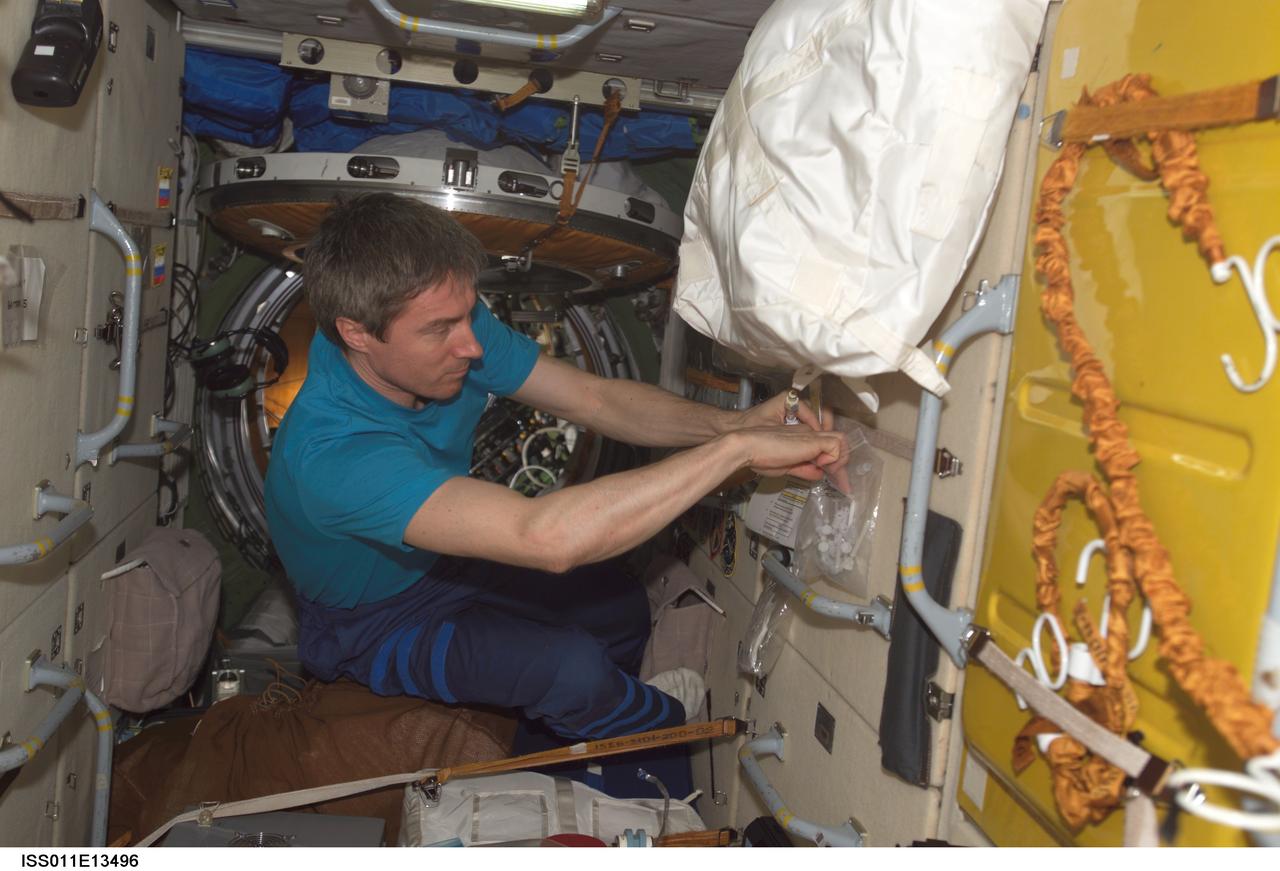
ISS011-E-13496 (22 September 2005) --- Cosmonaut Sergei K. Krikalev, Expedition 11 commander representing Russia's Federal Space Agency, reaches into a bag for supplies in the Zarya module of the international space station.
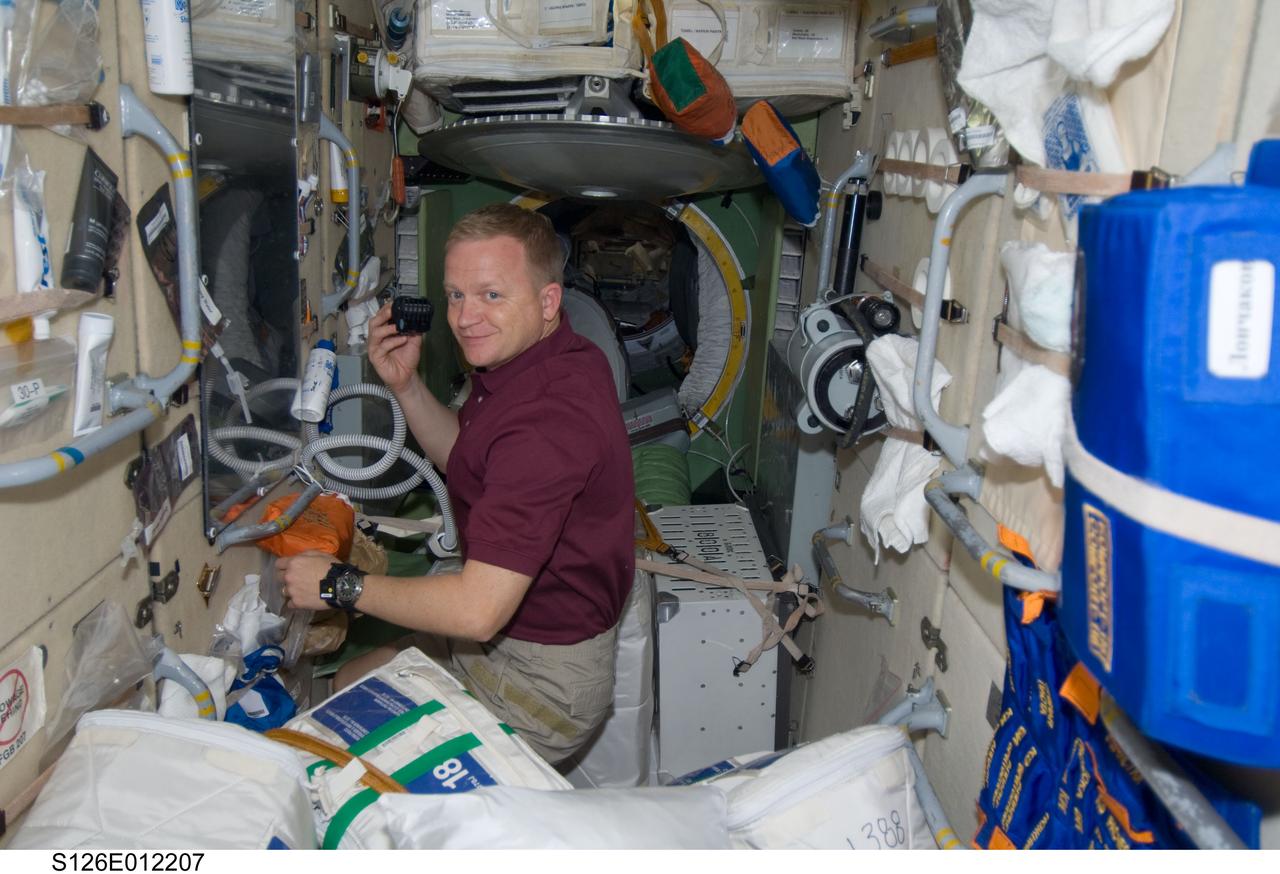
S126-E-012207 (27 Nov. 2008) --- Astronaut Eric Boe, STS-126 pilot, shaves his face on the aft side of the Zarya functional cargo block aboard the International Space Station on Thanksgiving Day.
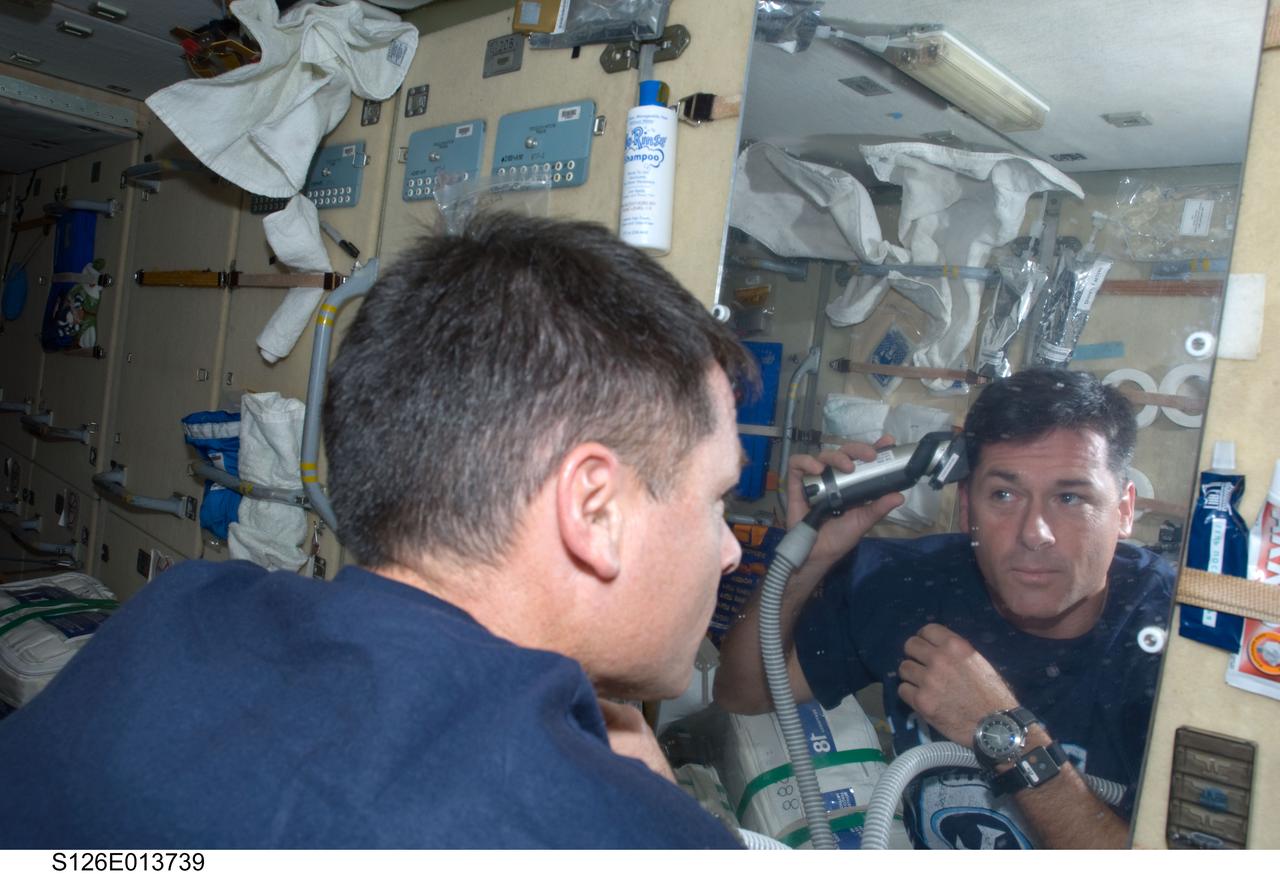
S126-E-013739 (27 Nov. 2008) --- Astronaut Shane Kimbrough, STS-126 mission specialist, gives himself a hair trim on the aft side of the Zarya functional cargo block aboard the International Space Station on Thanksgiving Day. One more day remains for the Space Shuttle Endeavour to be docked with the station.
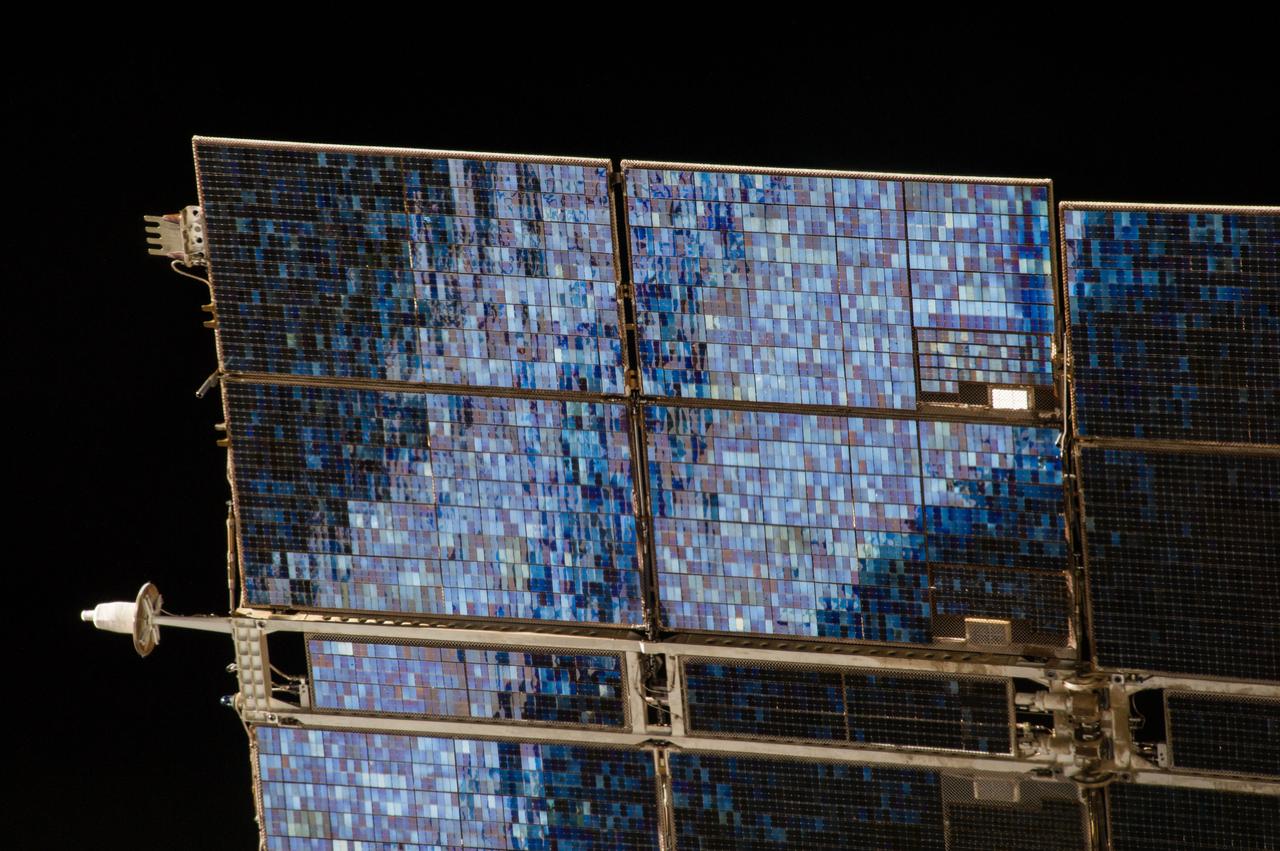
ISS040-E-008074 (6 June 2014) --- A portion of the solar array panels on the Zarya Functional Cargo Block (FGB) is featured in this image photographed by an Expedition 40 crew member aboard the International Space Station.
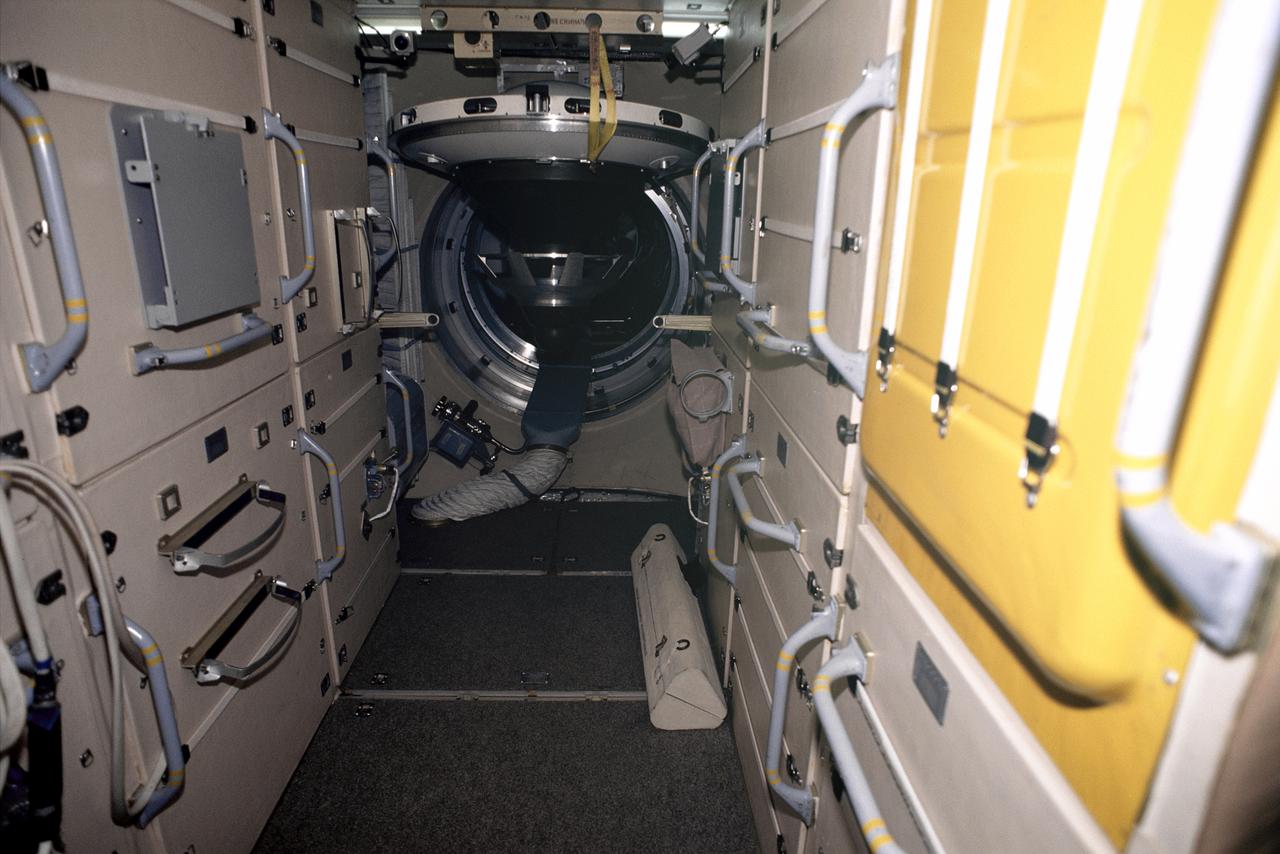
JSC2000-E-18632 (June 2000) --- An interior shot of the Zarya Functional Cargo Bay (FGB) trainer/mockup at the Gagarin Cosmonaut Training Center in Russia. This photo was taken prior to a training session by the Expedition One crew.
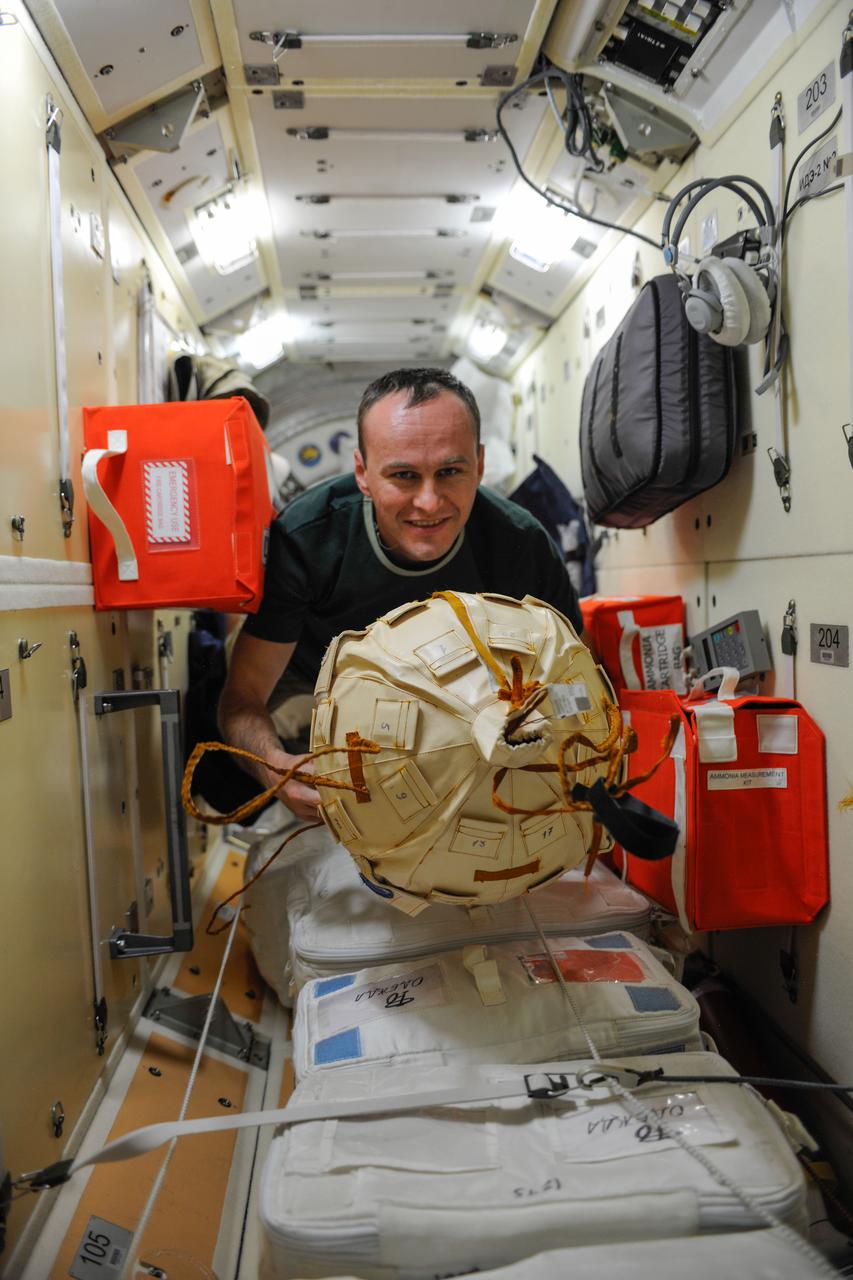
ISS037-E-003211 (27 Sept. 2013) --- Russian cosmonaut Sergey Ryazanskiy, Expedition 37 flight engineer, moves cargo in the Zarya Functional Cargo Block (FGB) of the International Space Station.
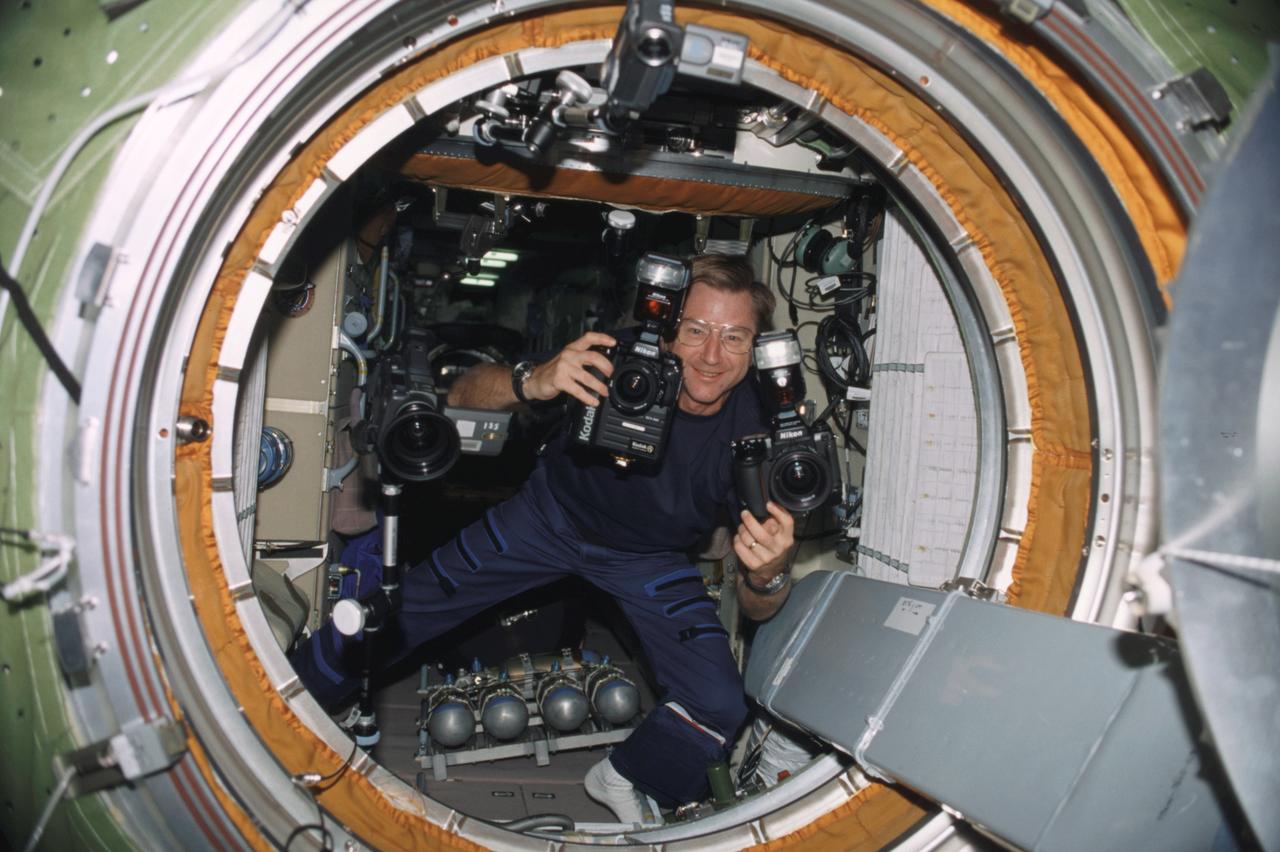
ISS003-316-028 (17 September 2001) --- Astronaut Frank L. Culbertson, Jr., Expedition Three mission commander, carries cameras through the functional cargo block (FGB), or Zarya, hatch on the International Space Station (ISS).
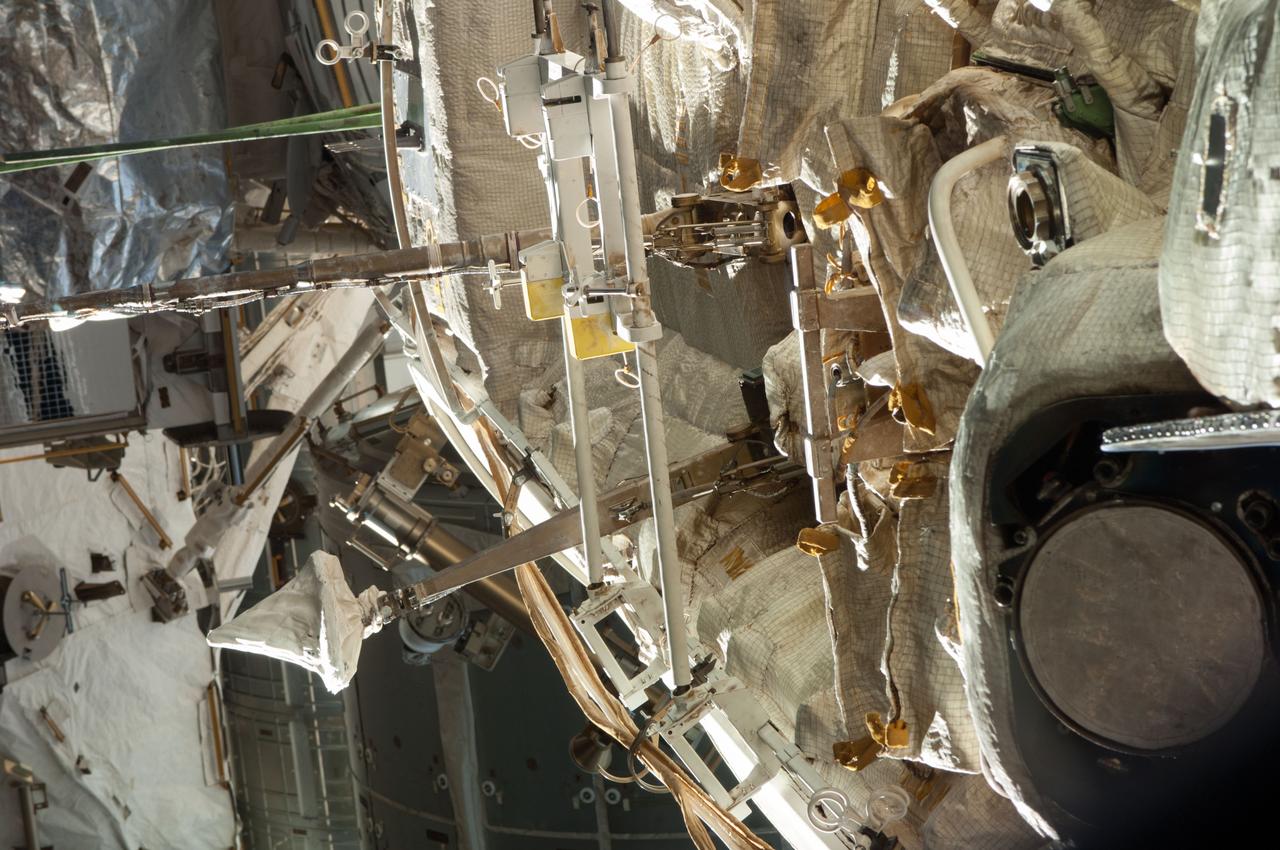
Survey view of a portion of the Zarya Functional Cargo Block (FGB) taken through a window in the Russian segment of the ISS during Expedition 35. Portions of the S0 and Z1 Truss segments are also in view.
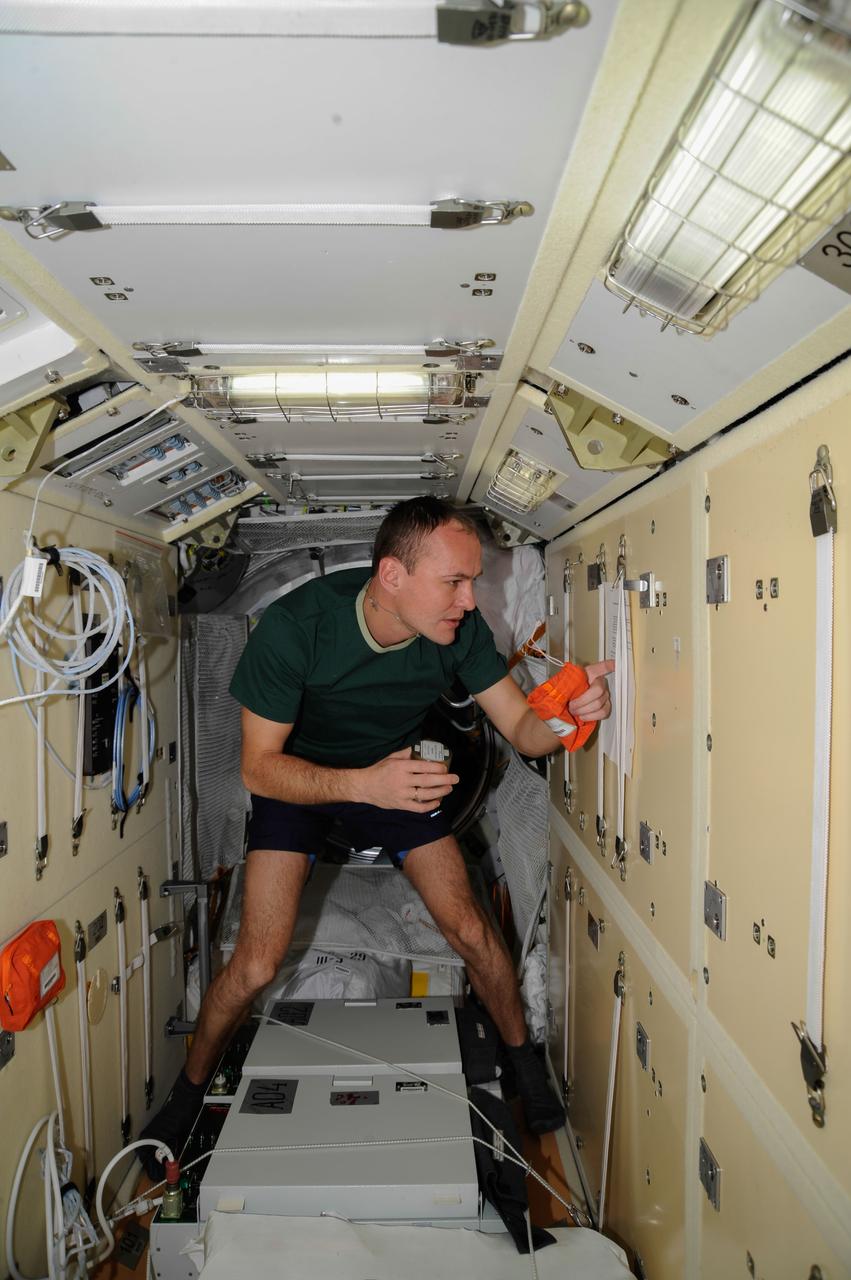
ISS037-E-002634 (26 Sept. 2013) --- Recently-arrived Russian cosmonaut Sergey Ryazanskiy, Expedition 37 flight engineer, is pictured in the Zarya Functional Cargo Block (FGB) of the International Space Station.
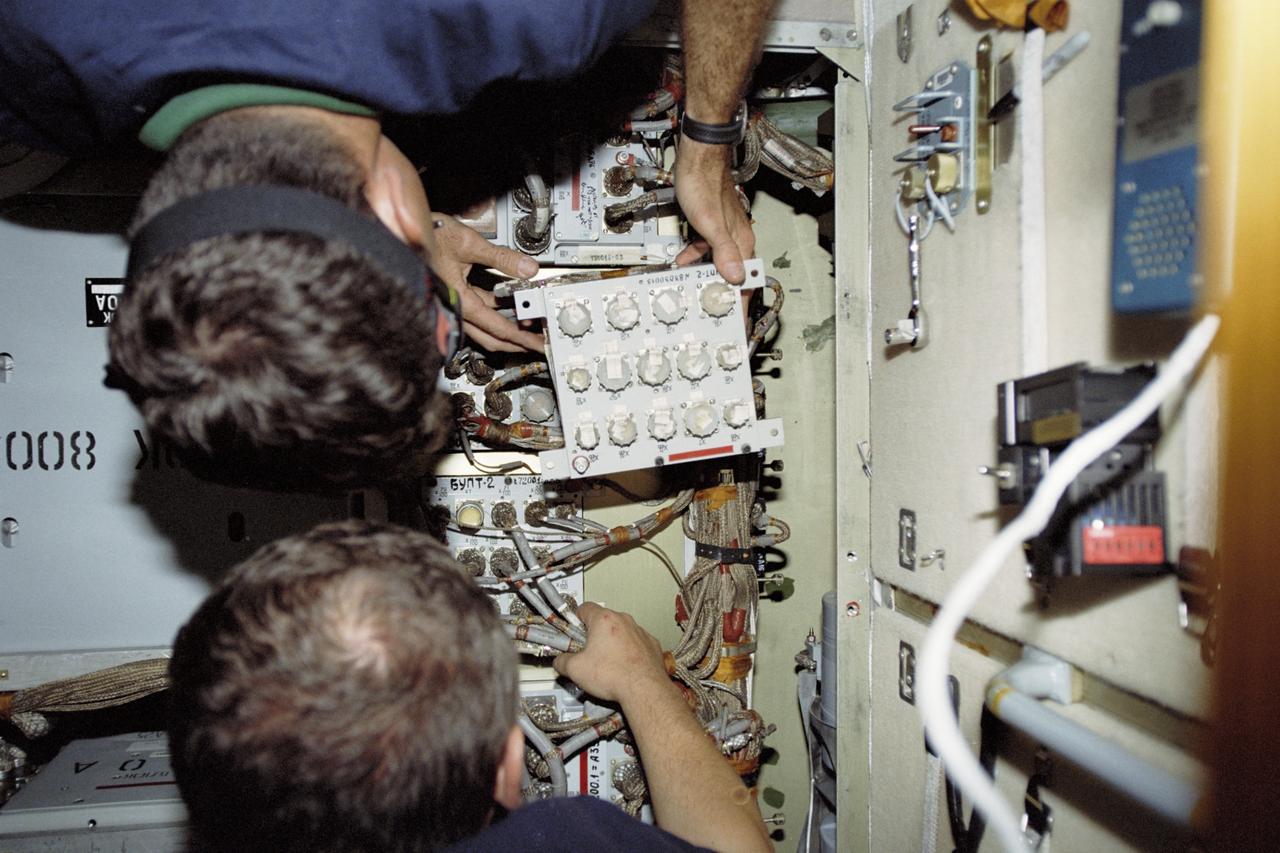
STS-106 Mission Specialist (MS) Daniel Burbank (with headband light) and MS / cosmonaut Boris Morukov work on the storage batteries in the Functional Cargo Block (FGB) / Zarya.
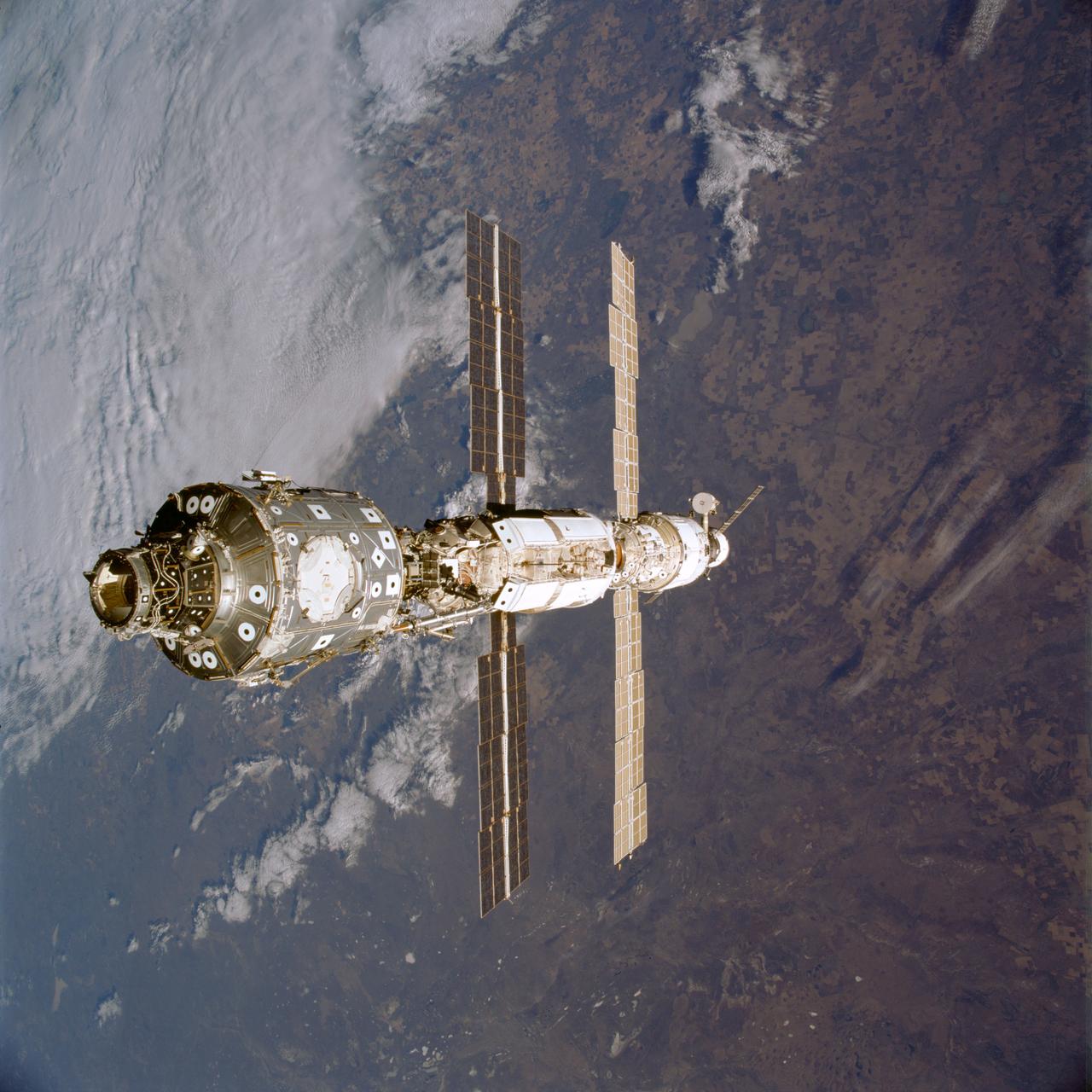
STS106-709-026 (8-20 September 2000) --- The STS-106 crew members used a 70mm handheld camera to capture this view of the International Space Station (ISS) over a moderately cloud-covered land area. The station component nearest the camera is the U.S.-built Unity node, which is connected with the Russian-built Functional Cargo Block (FGB) or Zarya. The FGB was linked in July with the Service Module or Zvezda, seen near the bottom of ISS in this angle. On the far end, next to the service module, is the Progress supply ship, which joined ISS in August.
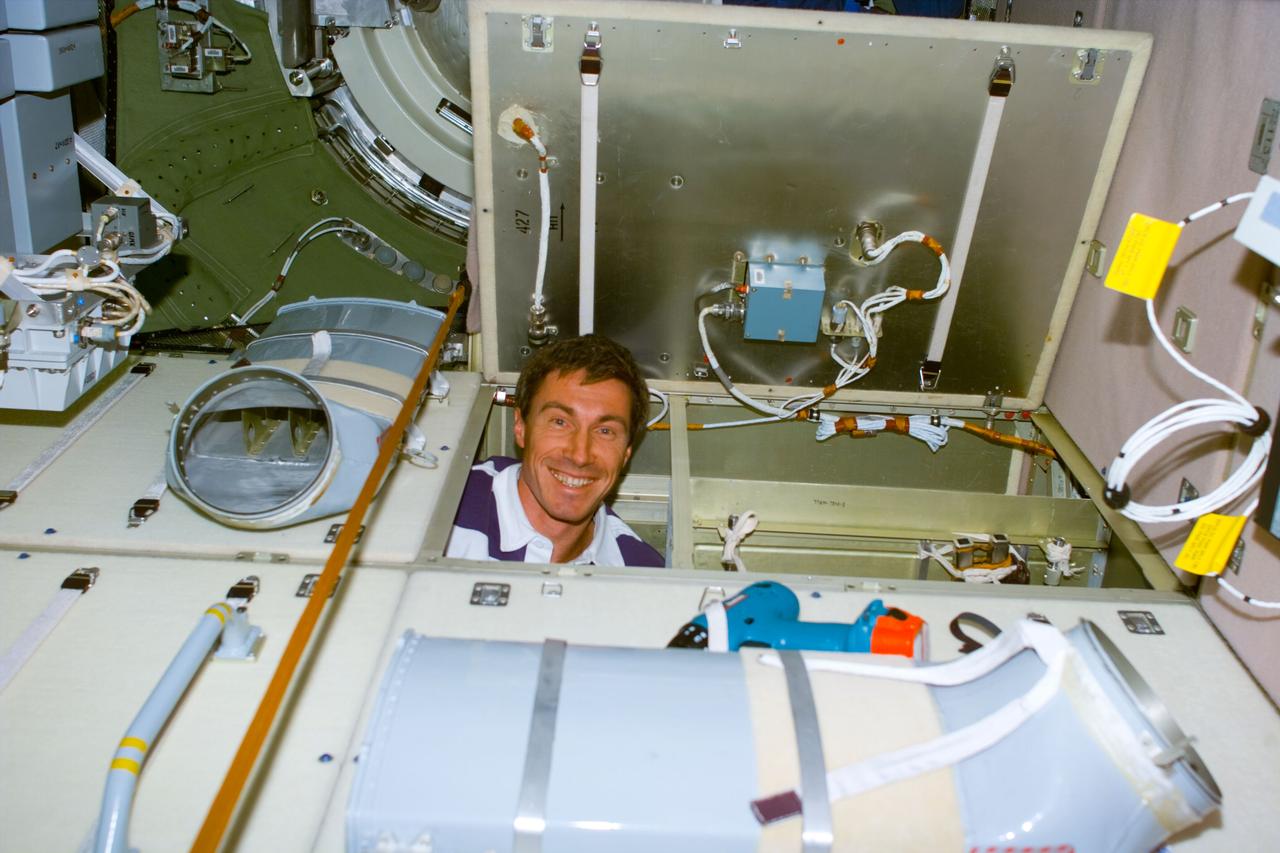
S88-E-5086 (12-11-98) --- Sergei Krikalev, mission specialist representing the Russian Space Agency (RSA), pokes his head up from inside one of the bays inside the walls on the Russian-built Zarya module. Krikalev and astronaut Nancy J. Currie replaced a faulty unit which controls the discharging of stored energy from one of Zarya's six batteries. The photo was taken with an electronic still camera (ESC) at 05:41:18 GMT, Dec. 11.
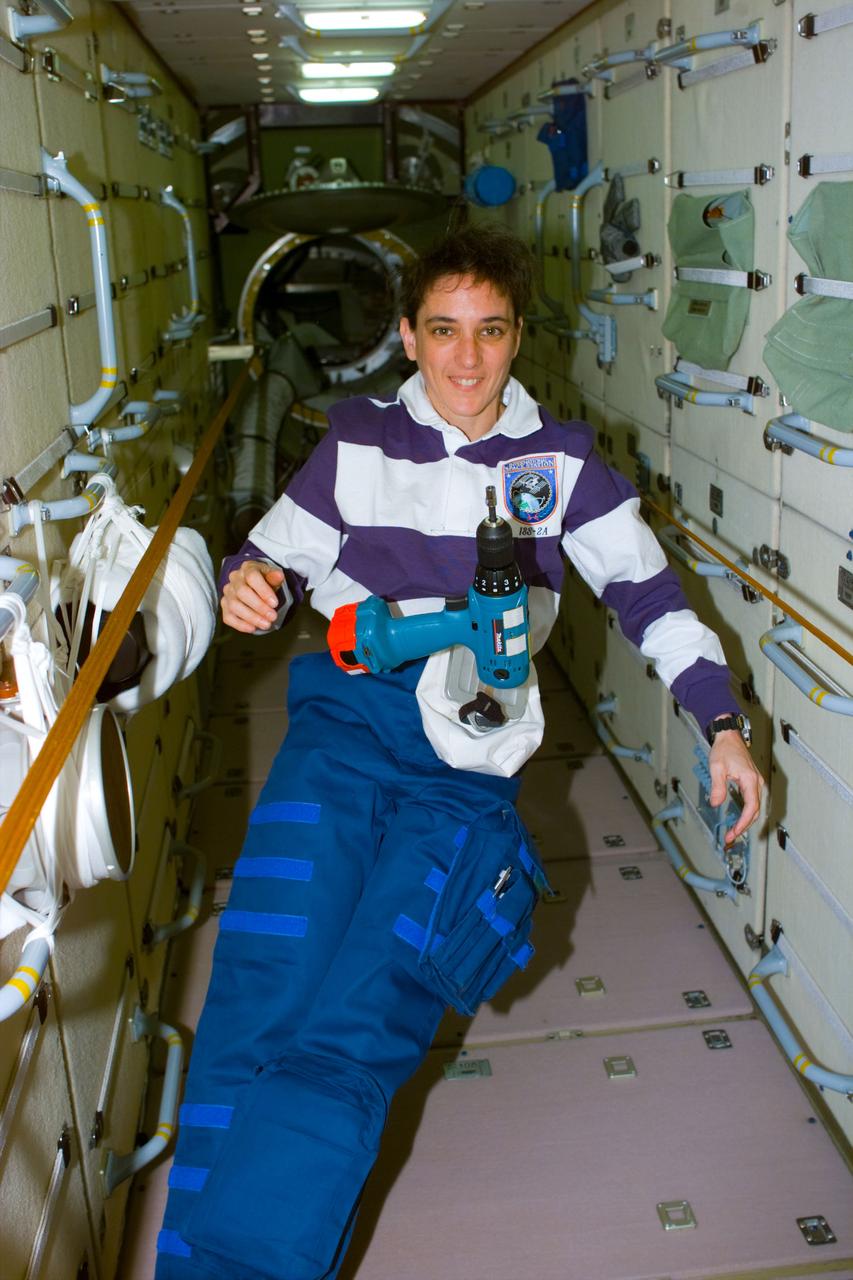
S88-E-5083 (12-11-98) --- Astronaut Nancy J. Currie, mission specialist, with a rechargeable power tool on Zarya. One of Currie's tasks was to replace a faulty unit which controls the discharging of stored energy from one of the Russian-built module's six batteries. The photo was taken with an electronic still camera (ESC) at 05:24:08 GMT, Dec. 11.
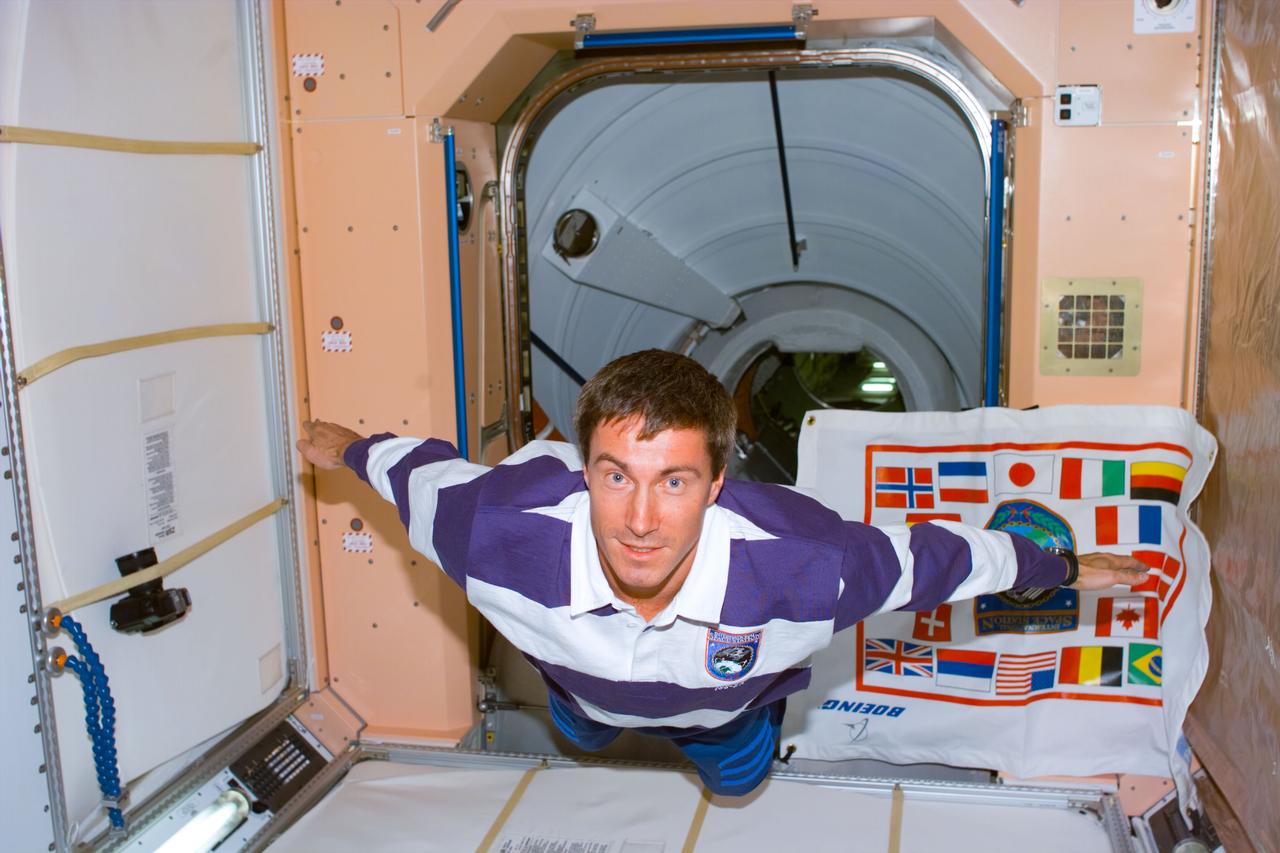
S88-E-5089 (12-11-98) --- Sergei Krikalev, mission specialist representing the Russian Space Agency (RSA), floats in the Unity module on Flight Day 8. A banner displaying the flags of all the ISS participants is at right.
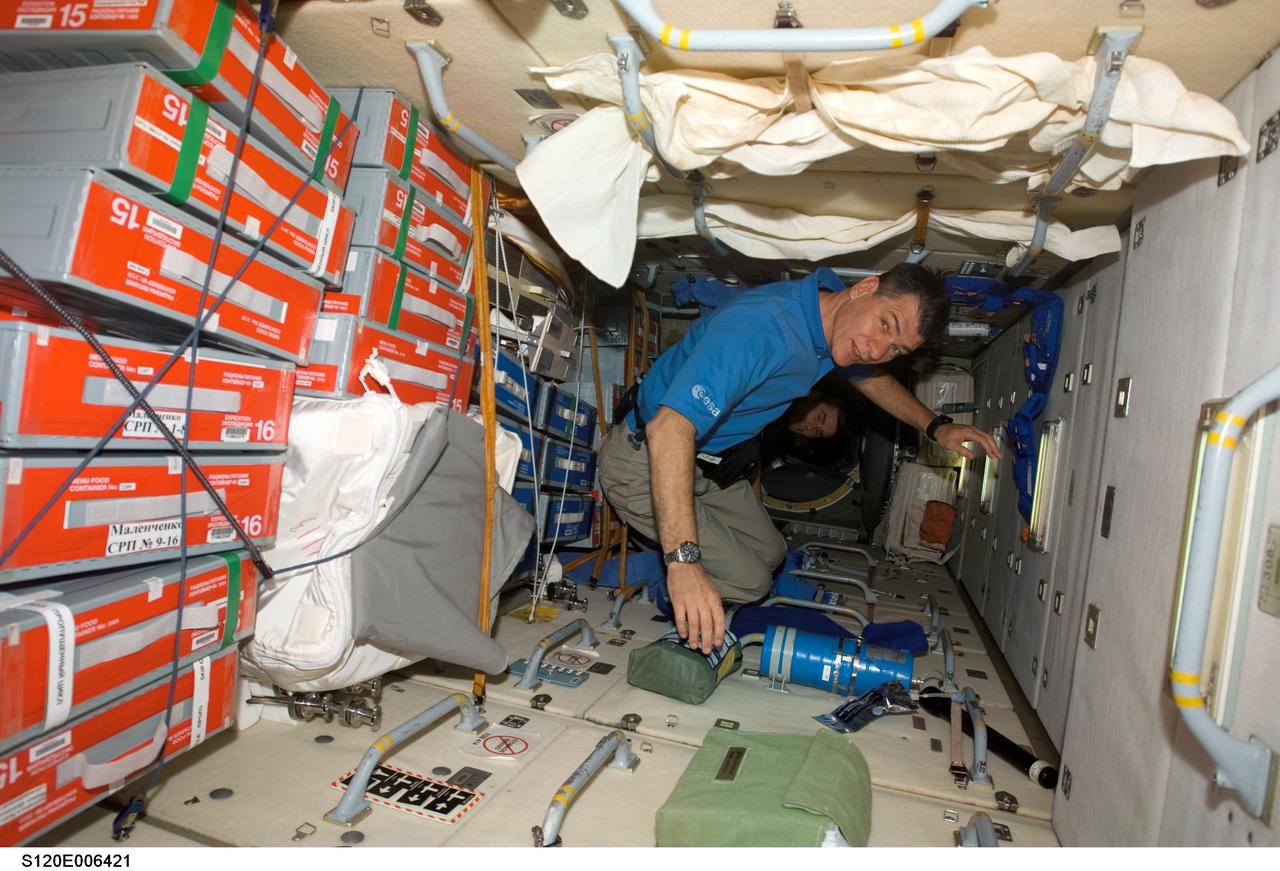
S120-E-006421 (25 Oct. 2007) --- European Space Agency (ESA) astronaut Paolo Nespoli, STS-120 mission specialist, photographed in the Zarya module of the International Space Station while Space Shuttle Discovery is docked with the station. Various food stowage cases are visible at left.
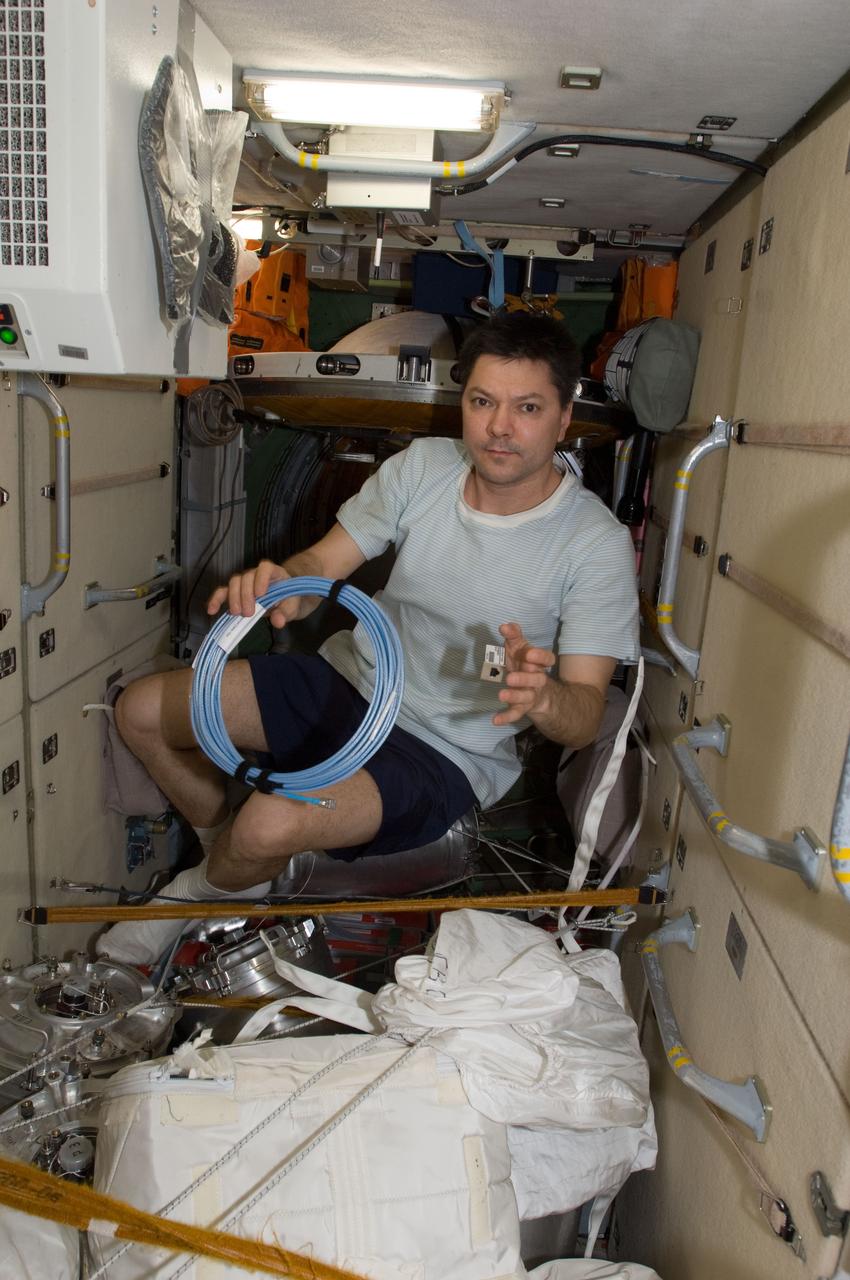
ISS030-E-047172 (23 Jan. 2012) --- In the International Space Station?s Zarya module, Russian cosmonaut Oleg Kononenko, Expedition 30 flight engineer, works with cables to set up a video downlink test via Ku-band in preparation for the docking of the unpiloted ISS Progress 46 supply vehicle, scheduled to dock on Jan. 27.
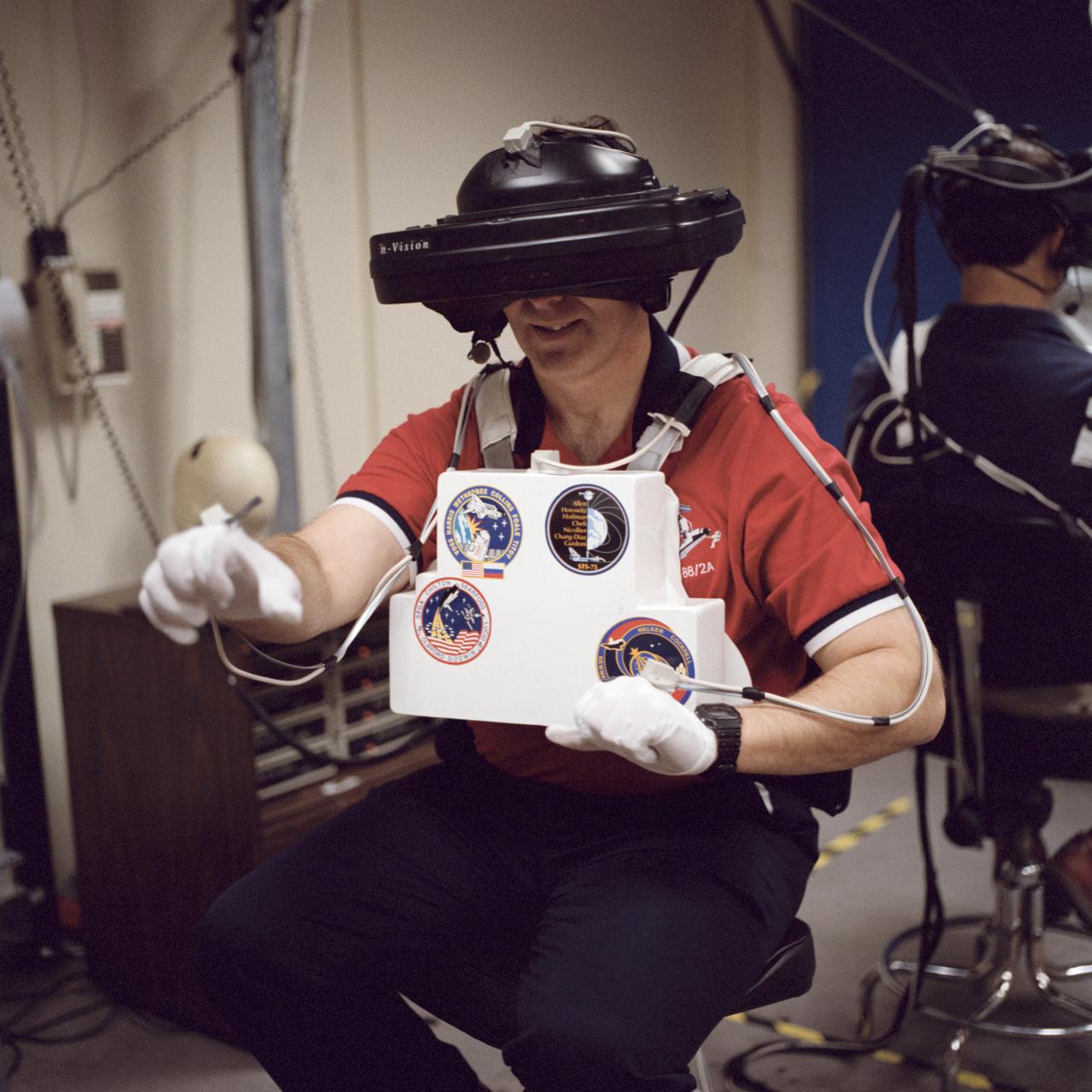
S98-05079 (8 Apr. 1998) --- Astronaut Jerry L. Ross, assigned as a mission specialist for the mission, uses specialized gear to train for his duties aboard the Space Shuttle Endeavour. This type virtual reality training allows each of the assigned Extravehicular Activity (EVA) astronauts -- Ross and James H. Newman -- to wear a helmet and special gloves to look at computer displays simulating actual movements around the various locations on the International Space Station (ISS) hardware with which they'll be working. One of those elements will be the Functional Cargo Block (FGB), which will have been launched a couple of weeks prior to STS-88. Once the FGB is captured using the Remote Manipulator System (RMS) of the Endeavour, astronaut Nancy J. Currie will maneuver the robot arm to dock the FGB to the conical mating adapter at the top of Node 1, to be carried in the Shuttle's cargo bay. In ensuing days, three EVA space walks by Ross and Newman will be performed to make power, data and utility connections between the two modules. Currie also uses this same lab to train for her RMS controlling duties.
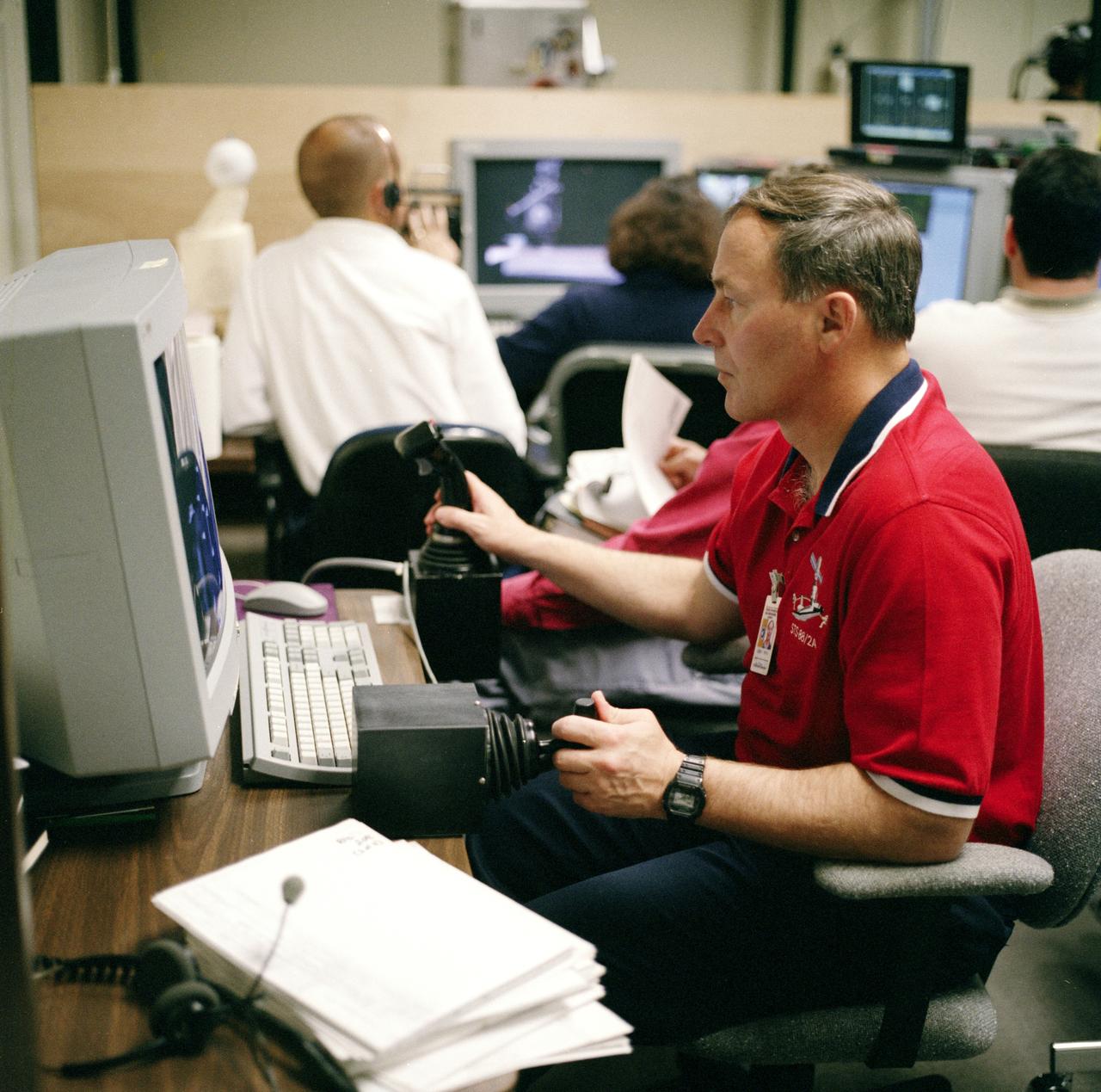
S98-05074 (8 Apr. 1998) --- Astronaut Jerry L. Ross, assigned as a mission specialist for the mission, uses special gear and software to train for his duties aboard the Space Shuttle Endeavour. This type virtual reality training supplements practice for each of the assigned space-walking astronauts -- Ross and James H. Newman -- during which they wear a helmet and special gloves to look at computer displays simulating actual movements around the various locations on the early International Space Station (ISS) hardware with which they'll be working. One of those elements will be the Functional Cargo Block (FGB), which will have been launched a couple of weeks prior to STS-88. Once the FGB is captured using the Remote Manipulator System (RMS) of the Endeavour, astronaut Nancy J. Currie will maneuver the robot arm to dock the FGB to the conical mating adapter at the top of Node 1, to be carried in the Shuttle's cargo bay. In ensuing days, three space walks by Ross and Newman will be performed to make power, data and utility connections between the two modules. Currie also uses this same lab to train for her RMS controlling duties.
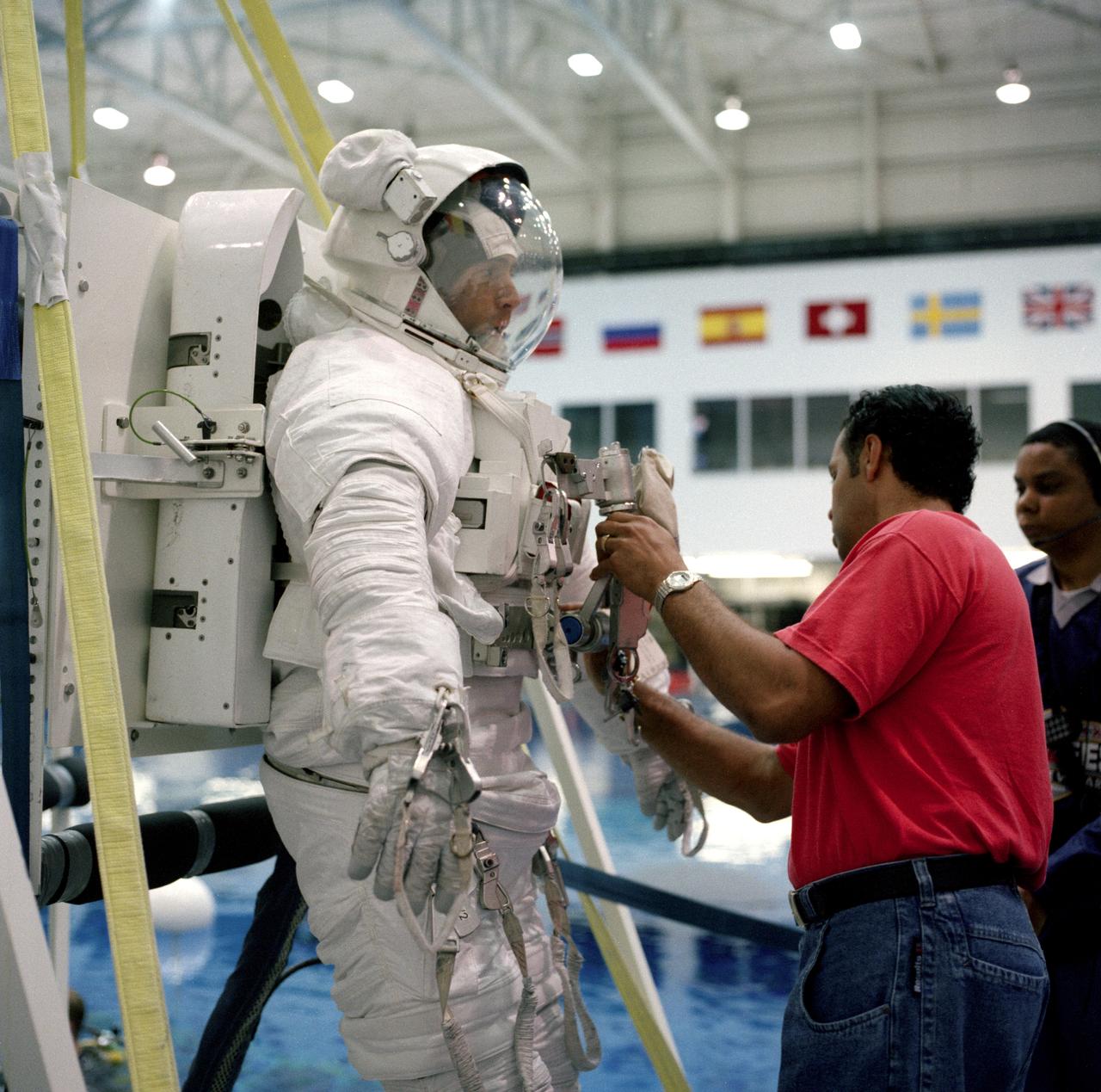
S98-09040 (June 1998) --- Astronaut James H. Newman, mission specialist, gets final touches on the training version of his Extravehicular Mobility Unit (EMU) space suit prior to being submerged in the waters of the Neutral Buoyancy Laboratory (NBL) at the Johnson Space Center (JSC). The two assigned space walkers -- Newman and Jerry L. Ross -- shared the platform as it was lowered into the water where the pair moments later were training with full-scale mockups of the International Space Station (ISS) hardware with which they'll be working in space. One of those elements will be the Functional Cargo Block (FGB), which will have been launched a couple of weeks prior to STS-88. Once the FGB is captured using the Remote Manipulator System (RMS) of the Space Shuttle Endeavour, astronaut Nancy J. Currie, mission specialist, will maneuver the robot arm to dock the FGB to the conical mating adapter at the top of Node 1, to be carried in the Space Shuttle's cargo bay. In ensuing days, three Extravehicular Activity?s (EVA) by Ross and Newman will be performed to make power, data and utility connections between the two modules.
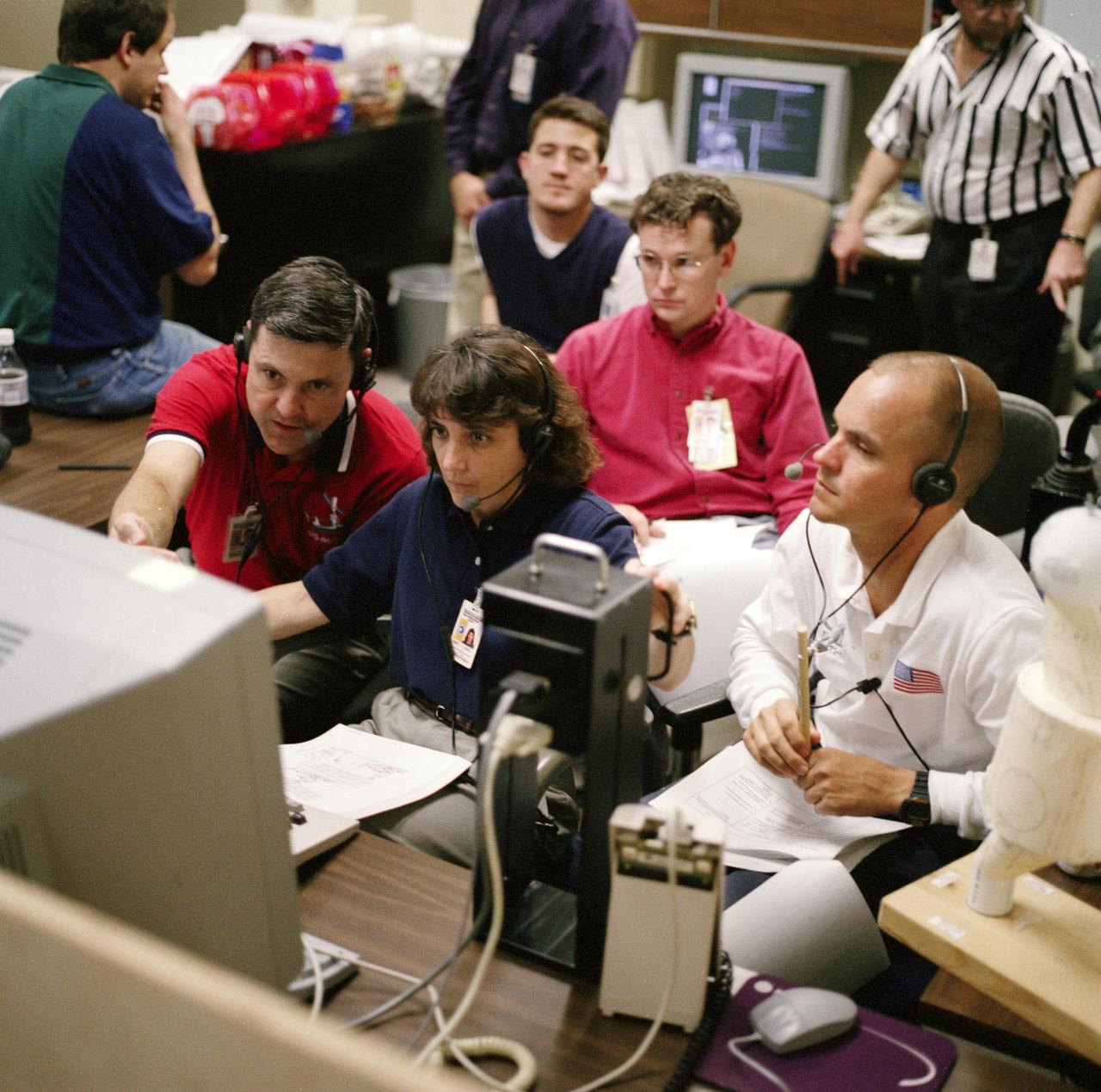
S98-05078 (8 Apr. 1998) --- With crew mates looking on, astronaut Nancy J. Currie, mission specialist, uses hardware in the virtual reality lab at the Johnson Space Center (JSC) to train for her duties aboard the Space Shuttle Endeavour. She is flanked by astronaut Robert Cabana (left), commander; and Frederick W. Sturckow (right), pilot. This type computer interface paired with virtual reality training hardware for the assigned space-walking astronauts -- Jerry L. Ross and James H. Newman -- helps to prepare the entire team for dealing with International Space Station (ISS) elements. One of those elements will be the Functional Cargo Block (FGB), which will have been launched a couple of weeks prior to STS-88. Once the FGB is captured using the Remote Manipulator System (RMS) of the Endeavour, Currie will maneuver the robot arm to dock the FGB to the conical mating adapter at the top of Node 1, to be carried in the Endeavour's cargo bay. In ensuing days, three Extravehicular Activity?s (EVA) by Ross and Newman will be performed to make power, data and utility connections between the two modules. Looking on is Scott A. Bleisath (behind Currie), with the EVA Systems Group at JSC.
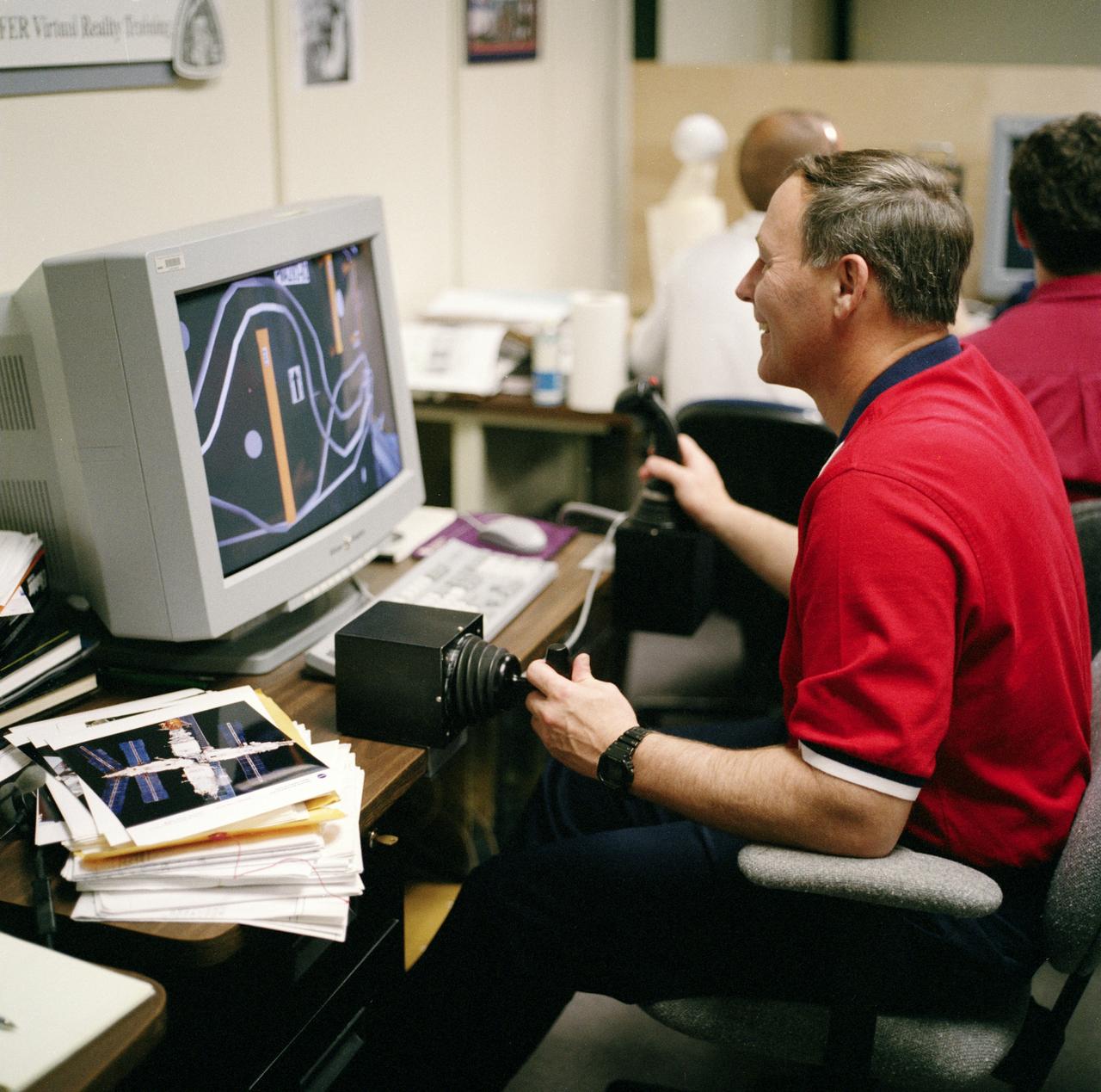
S98-05076 (8 Apr. 1998) --- Astronaut Jerry L. Ross, assigned as a mission specialist for the mission, uses special gear and software to train for his duties aboard the Space Shuttle Endeavour. This type virtual reality training supplements practice for each of the assigned space-walking astronauts -- Ross and James H. Newman -- during which they wear a helmet and special gloves to look at computer displays simulating actual movements around the various locations on the early International Space Station (ISS) hardware with which they'll be working. One of those elements will be the Functional Cargo Block (FGB), which will have been launched a couple of weeks prior to STS-88. Once the FGB is captured using the Remote Manipulator System (RMS) of the Endeavour, astronaut Nancy J. Currie will maneuver the robot arm to dock the FGB to the conical mating adapter at the top of Node 1, to be carried in the Shuttle's cargo bay. In ensuing days, three space walks by Ross and Newman will be performed to make power, data and utility connections between the two modules. Currie also uses this same lab to train for her RMS controlling duties.
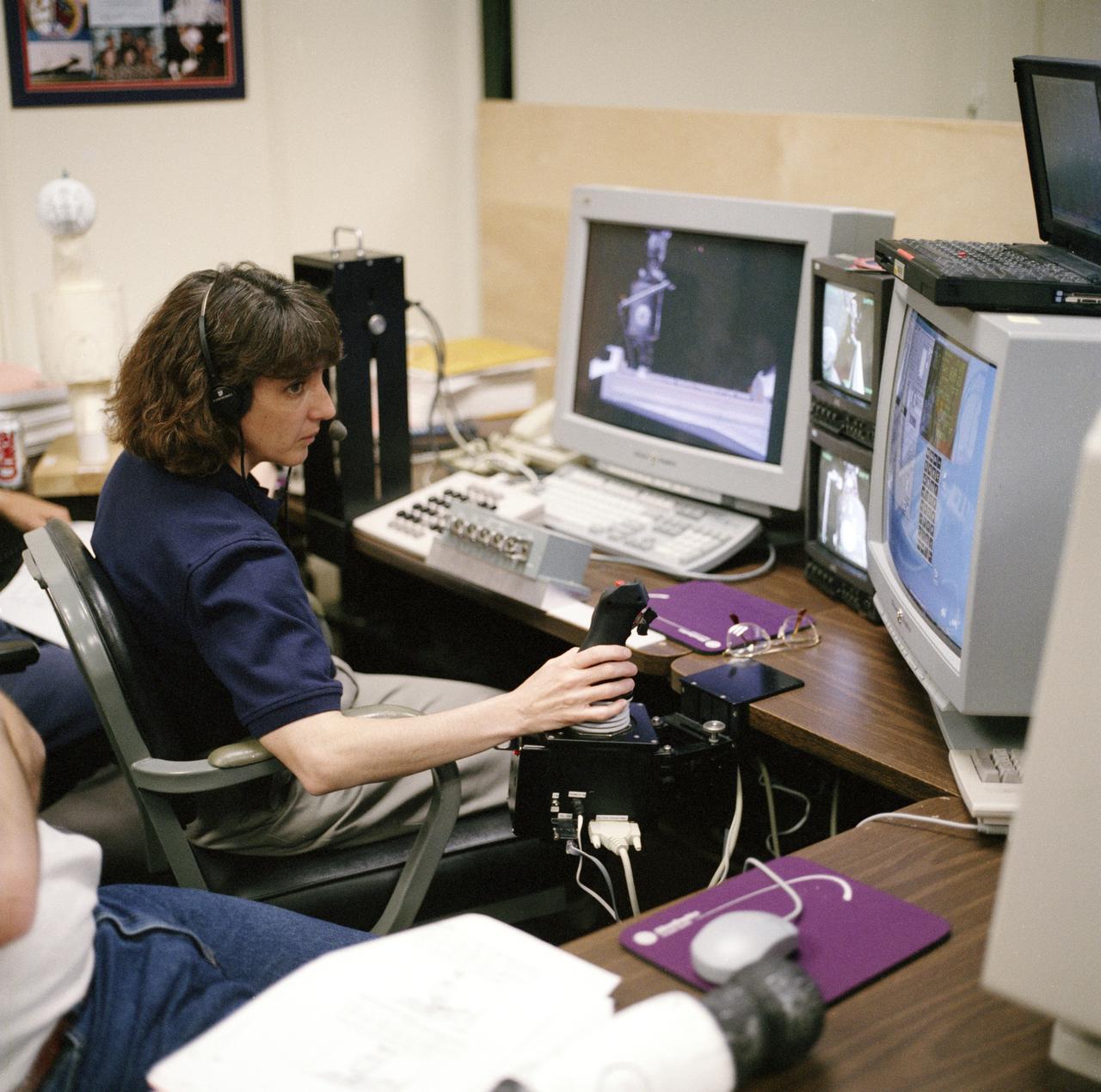
S98-05075 (8 Apr. 1998) --- Astronaut Nancy J. Currie, assigned as a mission specialist for the mission, uses hardware in the virtual reality lab at the Johnson Space Center (JSC) to train for her duties aboard the Space Shuttle Endeavour. This type computer interface paired with virtual reality training hardware for the assigned space-walking astronauts -- in this case, Jerry L. Ross and James H. Newman -- helps to prepare the entire team for dealing with International Space Station (ISS) elements. One of those elements will be the Functional Cargo Block (FGB), which will have been launched a couple of weeks prior to STS-88. Once the FGB is captured using the Remote Manipulator System (RMS) of the Endeavour, Currie will maneuver the robot arm to dock the FGB to the conical mating adapter at the top of Node 1, to be carried in the Endeavour?s cargo bay. In ensuing days, three Extravehicular Activity?s (EVA) by Ross and Newman will be performed to make power, data and utility connections between the two modules.
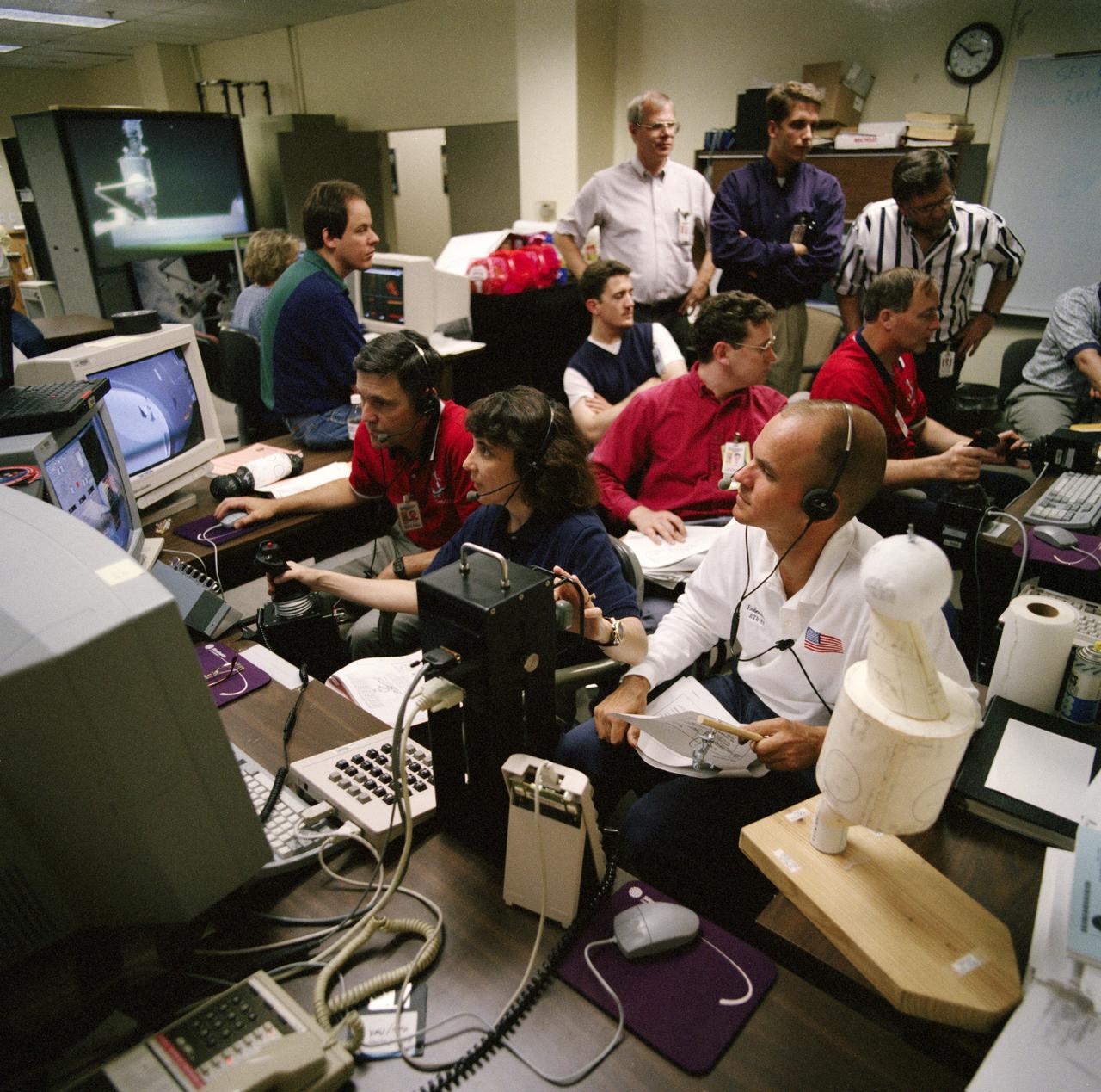
S98-05077 (8 Apr. 1998) --- With crew mates looking on, astronaut Nancy J. Currie, mission specialist, uses hardware in the virtual reality lab at the Johnson Space Center (JSC) to train for her duties aboard the Space Shuttle Endeavour. She is flanked by astronaut Robert Cabana (left), commander; and Frederick W. Sturckow (right), pilot. This type computer interface paired with virtual reality training hardware for the assigned space-walking astronauts -- Jerry L. Ross and James H. Newman -- helps to prepare the entire team for dealing with International Space Station (ISS) elements. One of those elements will be the Functional Cargo Block (FGB), which will have been launched a couple of weeks prior to STS-88. Once the FGB is captured using the Remote Manipulator System (RMS) of the Endeavour, Currie will maneuver the robot arm to dock the FGB to the conical mating adapter at the top of Node 1, to be carried in the Endeavour's cargo bay. In ensuing days, three Extravehicular Activity?s (EVA) by Ross and Newman will be performed to make power, data and utility connections between the two modules. Looking on is Scott A. Bleisath (behind Currie), with the EVA Systems Group at JSC.
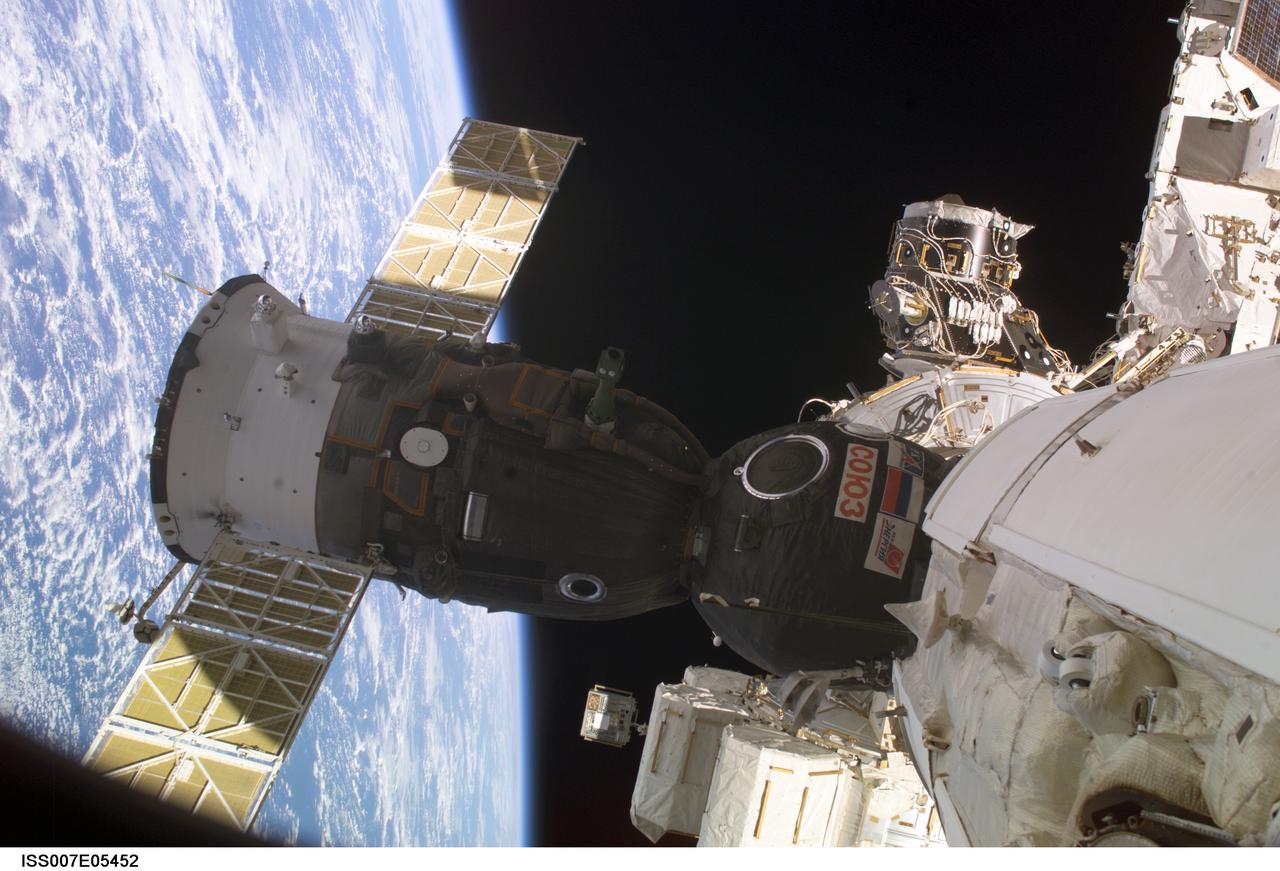
ISS007-E-05452 (14 May 2003) --- The Soyuz TMA-2 spacecraft, docked to the functional cargo block (FGB) nadir port on the International Space Station (ISS), was photographed by an Expedition Seven crewmember. The blackness of space and Earth’s horizon provide the backdrop for the scene.
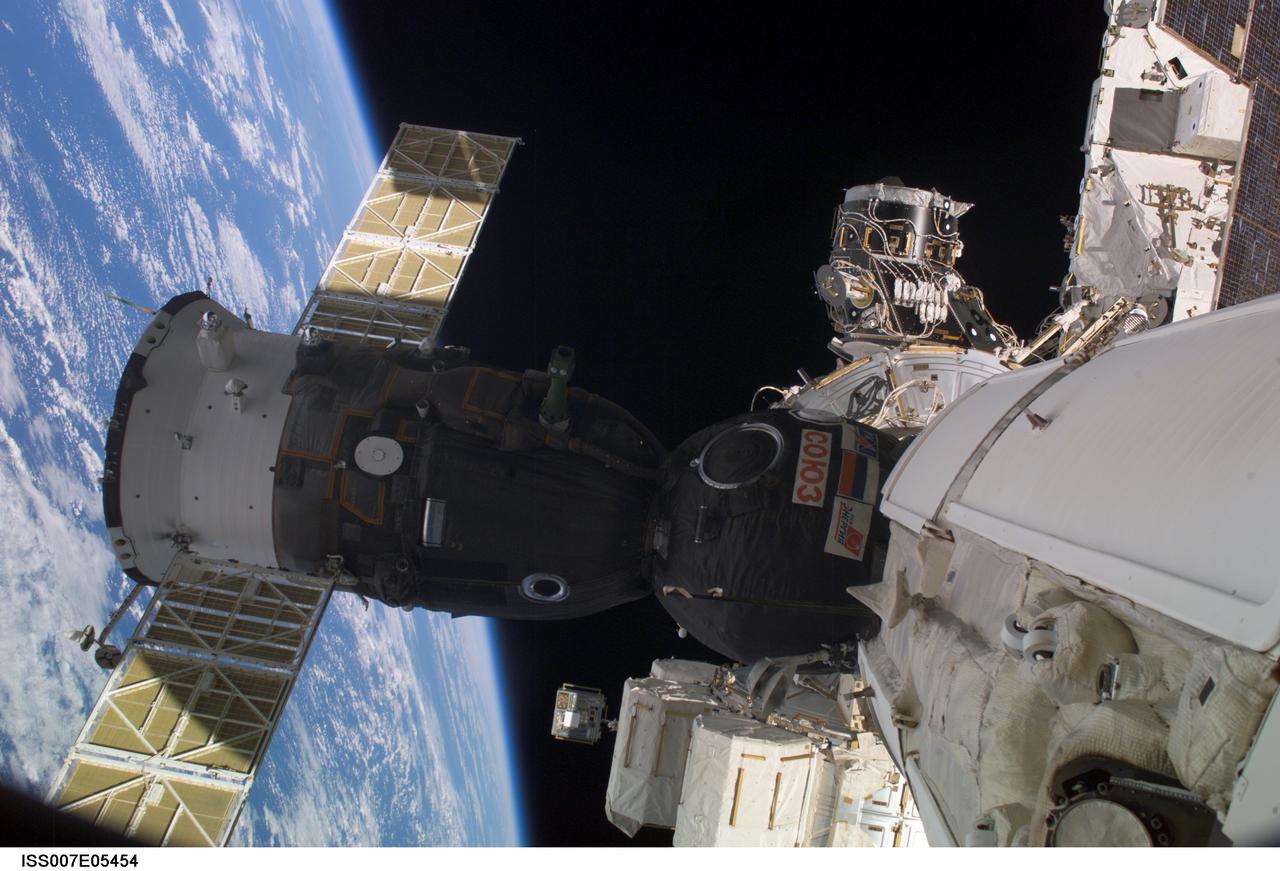
ISS007-E-05454 (14 May 2003) --- The Soyuz TMA-2 spacecraft, docked to the functional cargo block (FGB) nadir port on the International Space Station (ISS), was photographed by an Expedition Seven crewmember. The blackness of space and Earth’s horizon provide the backdrop for the scene.