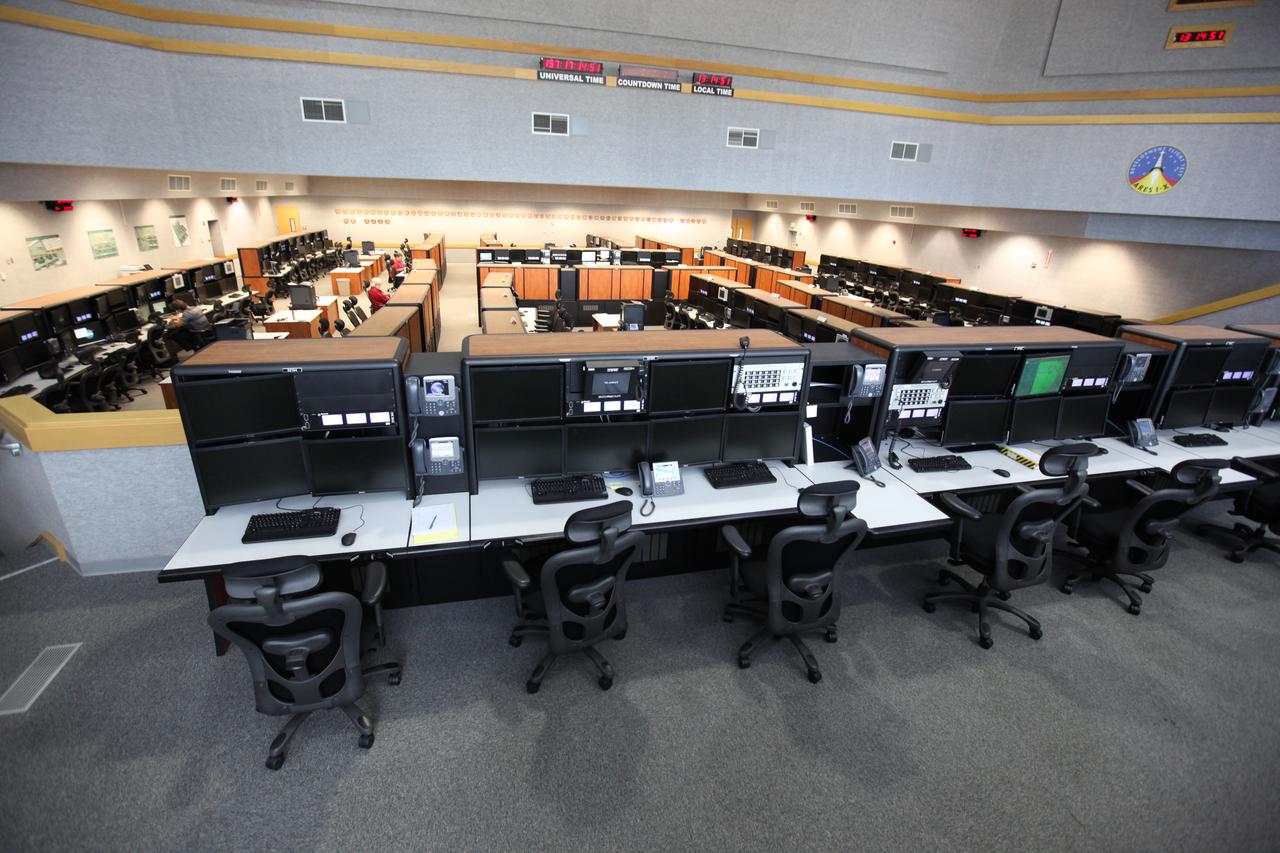
Photos of Firing Room 1 inside the Launch Control Center (LCC) at Kennedy Space Center.
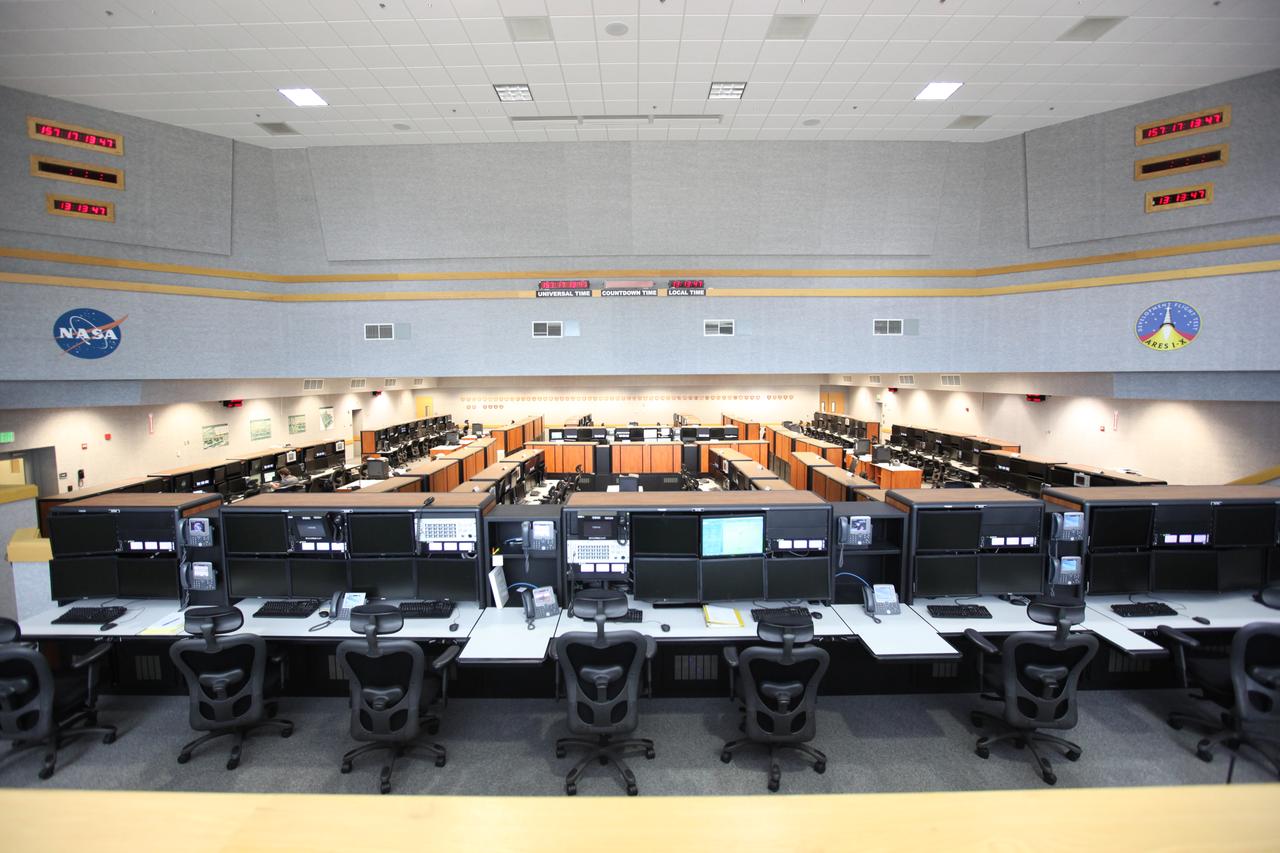
Photos of Firing Room 1 inside the Launch Control Center (LCC) at Kennedy Space Center.
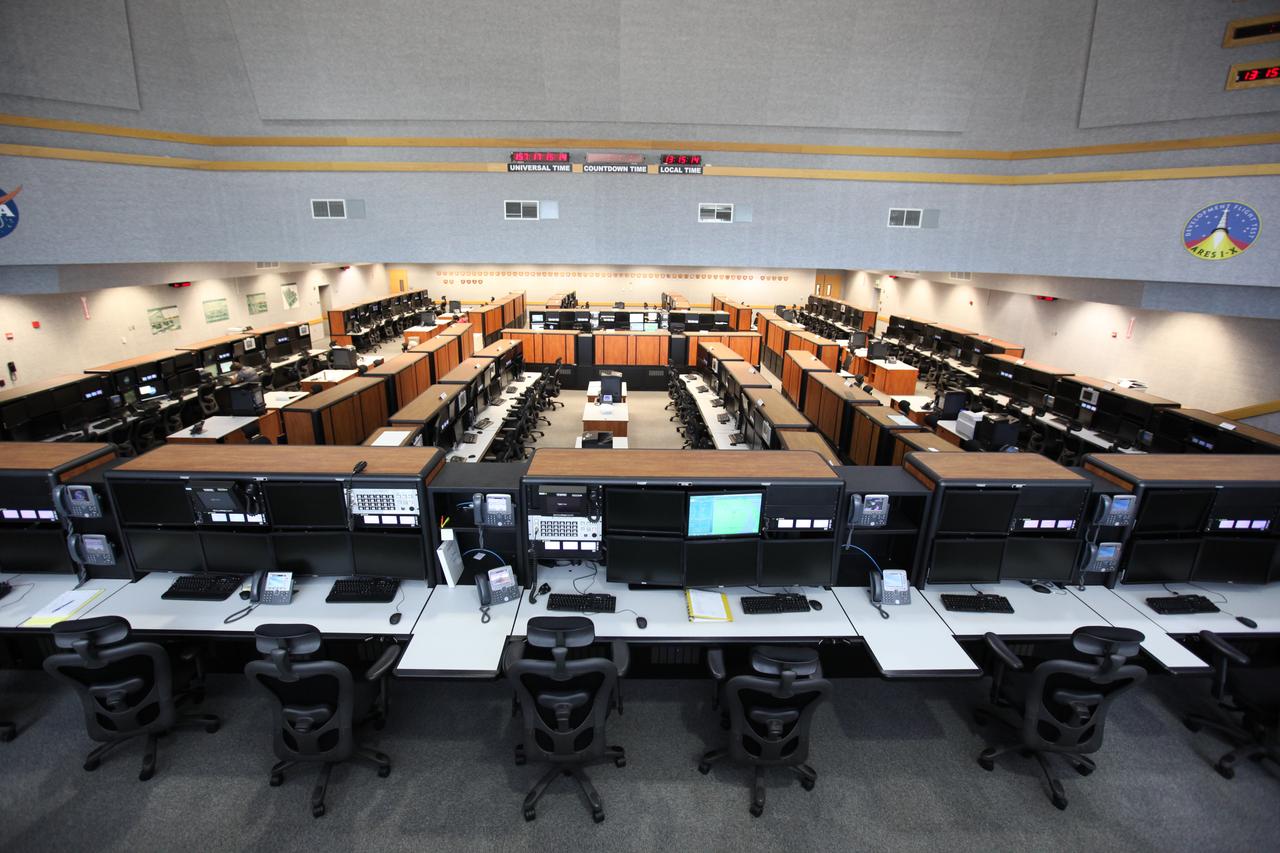
Photos of Firing Room 1 inside the Launch Control Center (LCC) at Kennedy Space Center.
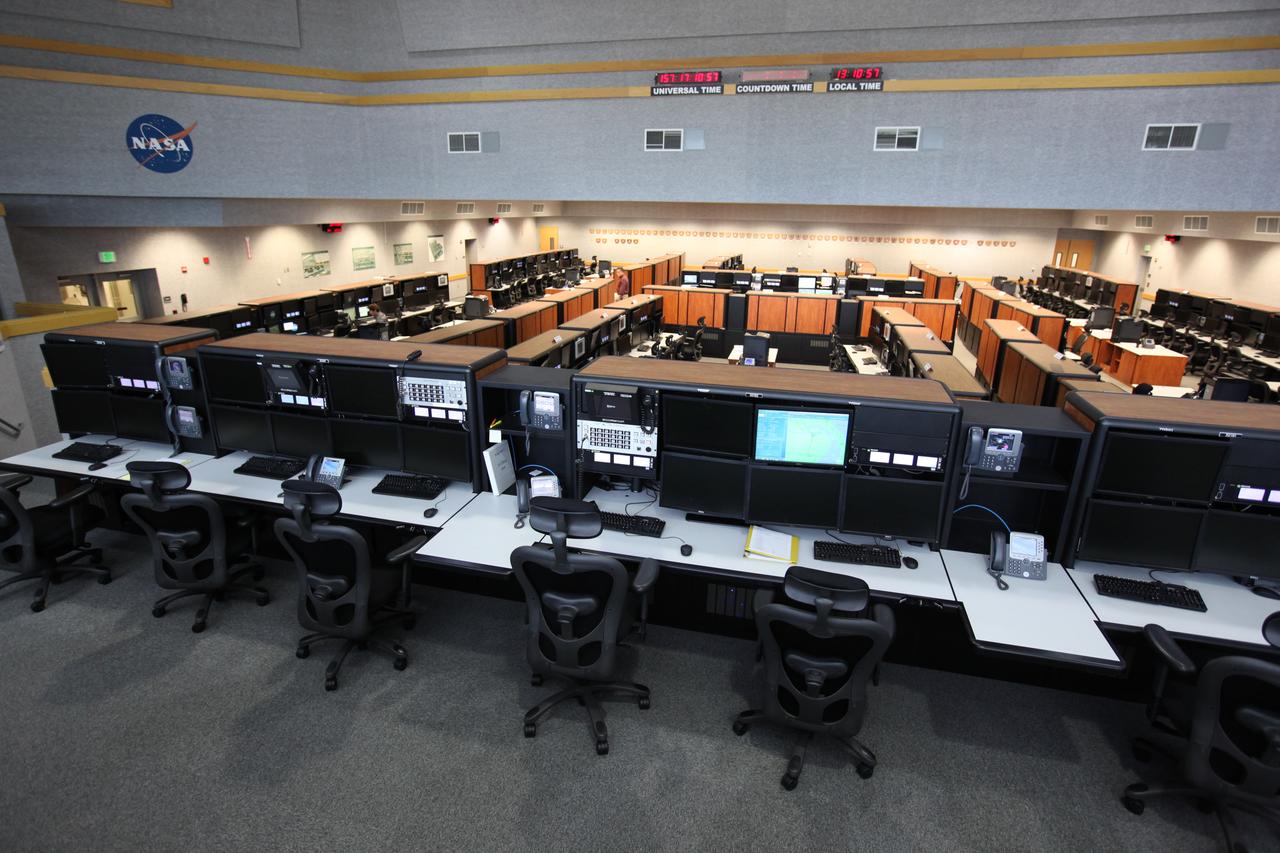
Photos of Firing Room 1 inside the Launch Control Center (LCC) at Kennedy Space Center.
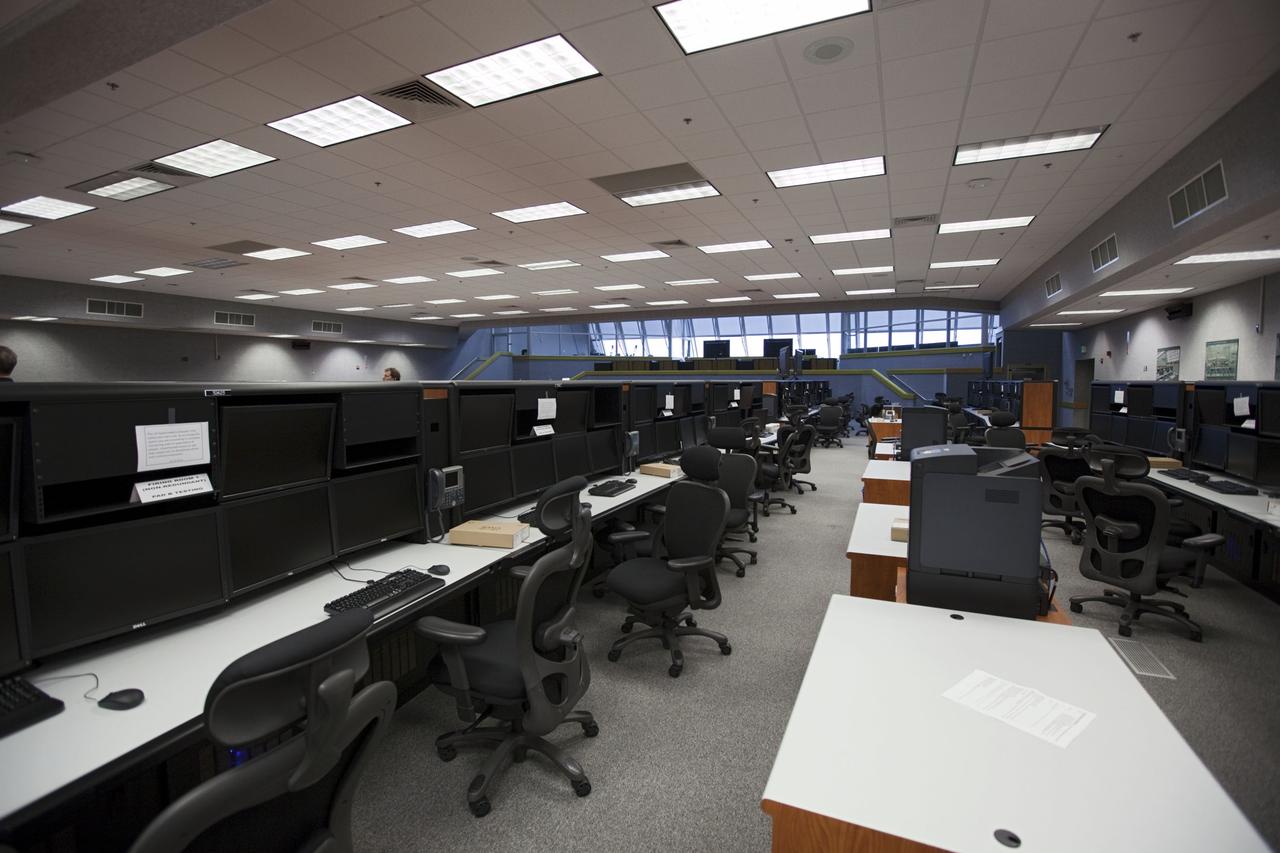
CAPE CANAVERAL, Fla. – Firing Room 1, also known as the Young-Crippen Firing Room, has been outfitted with computer, communications and networking systems to host rockets and spacecraft that are currently under development. The firing room is where the launch of rockets and spacecraft are controlled at NASA's Kennedy Space Center in Florida. Flight controllers also monitor processing and preparations of launch vehicles from the firing room. There are four firing rooms inside the Launch Control Center at Kennedy. Photo credit: NASA/Dmitri Gerondidakis
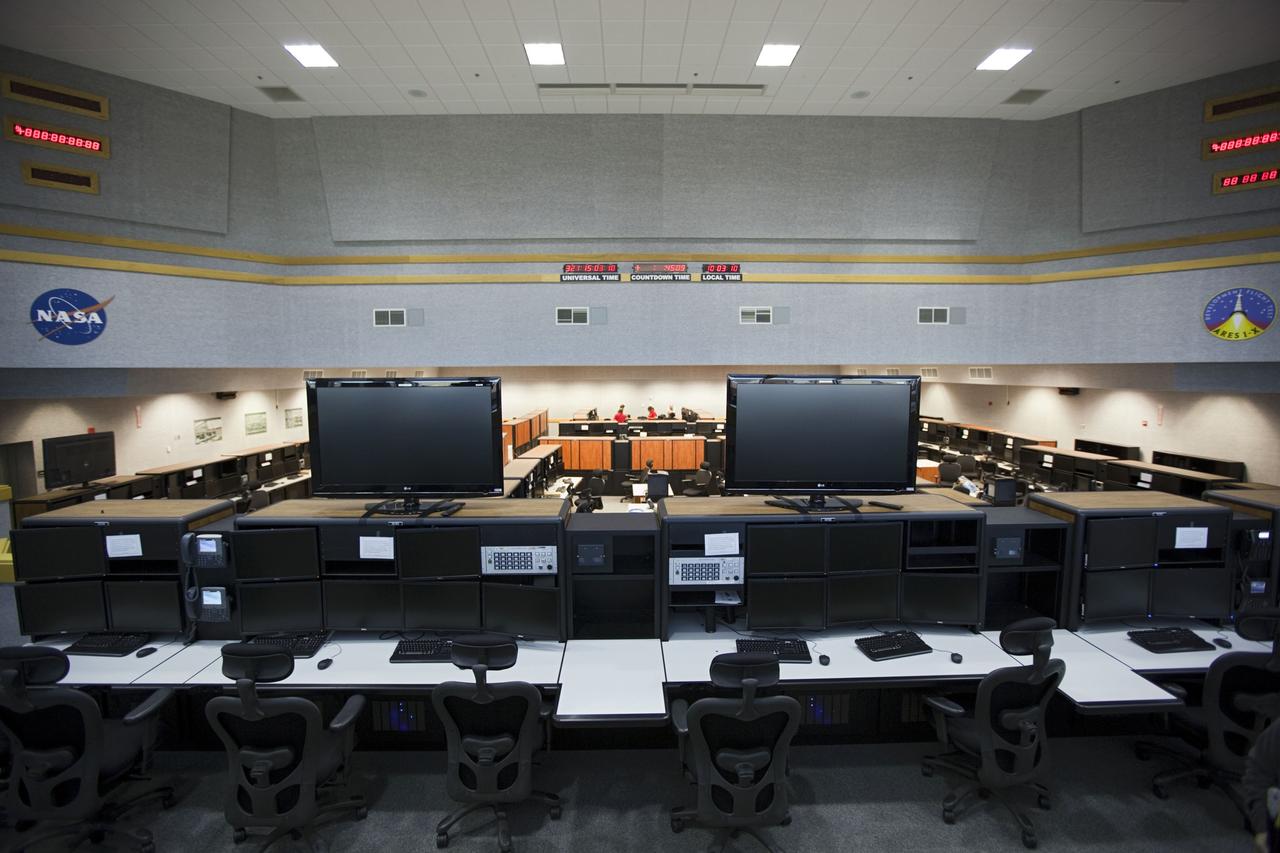
CAPE CANAVERAL, Fla. – Firing Room 1, also known as the Young-Crippen Firing Room, has been outfitted with computer, communications and networking systems to host rockets and spacecraft that are currently under development. The firing room is where the launch of rockets and spacecraft are controlled at NASA's Kennedy Space Center in Florida. Flight controllers also monitor processing and preparations of launch vehicles from the firing room. There are four firing rooms inside the Launch Control Center at Kennedy. Photo credit: NASA/Dmitri Gerondidakis
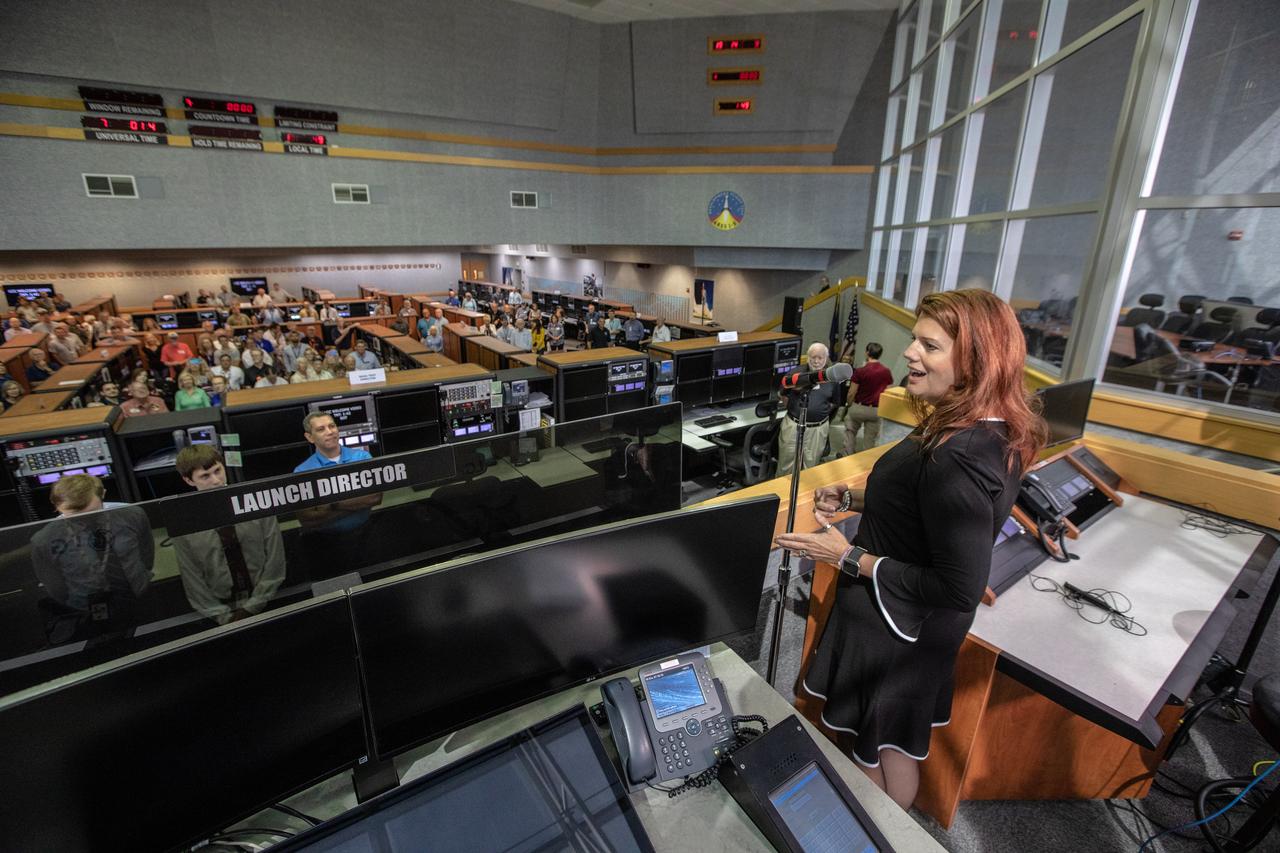
On July 16, 2019, the 50th anniversary of the Apollo 11 launch to the Moon, Artemis 1 Launch Director Charlie Blackwell-Thompson stands in Firing Room 1 in the Launch Control Center at NASA's Kennedy Space Center in Floirda. Apollo 11 and Artemis 1 launch team members mingle in the firing room.
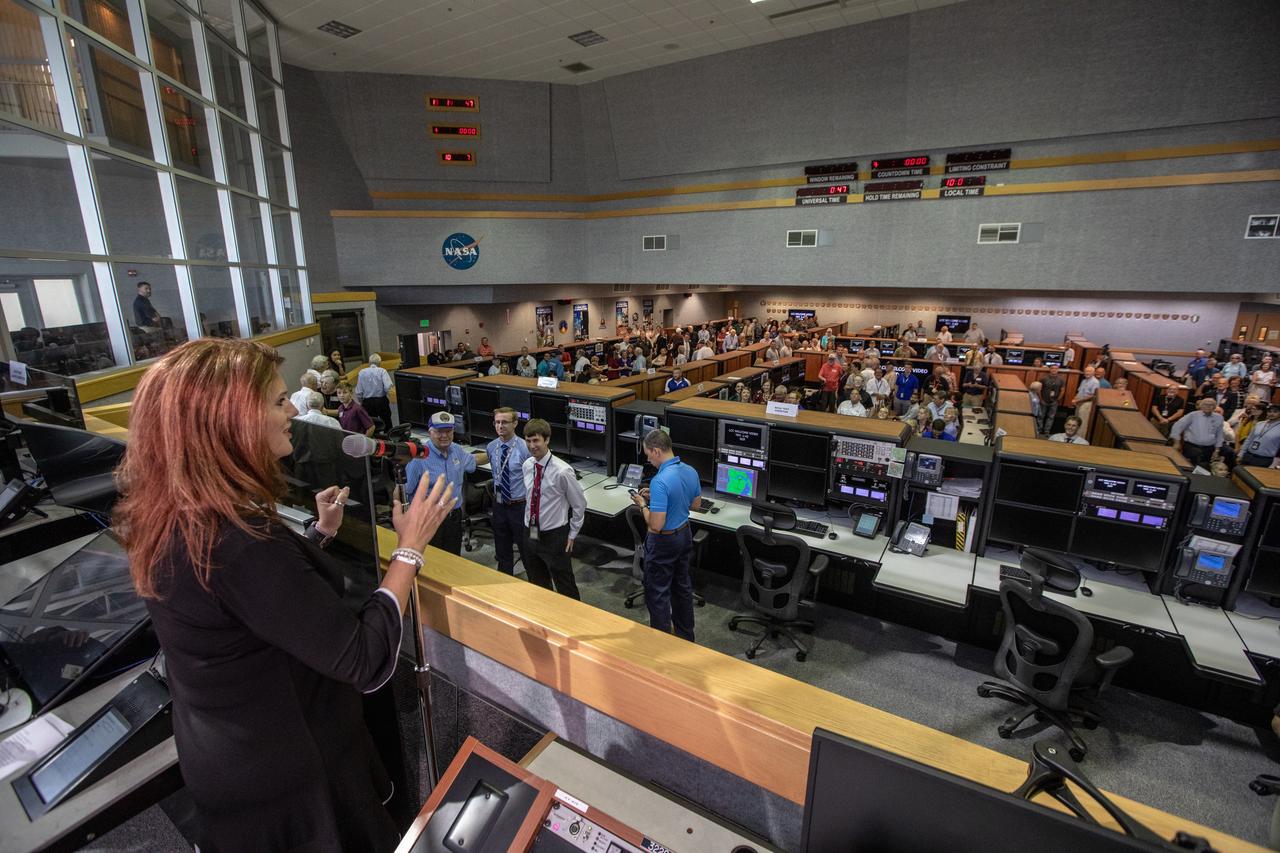
On July 16, 2019, the 50th anniversary of the Apollo 11 launch to the Moon, Artemis 1 Launch Director Charlie Blackwell-Thompson stands in Firing Room 1 in the Launch Control Center at NASA's Kennedy Space Center in Floirda. Apollo 11 and Artemis 1 launch team members mingle in the firing room.
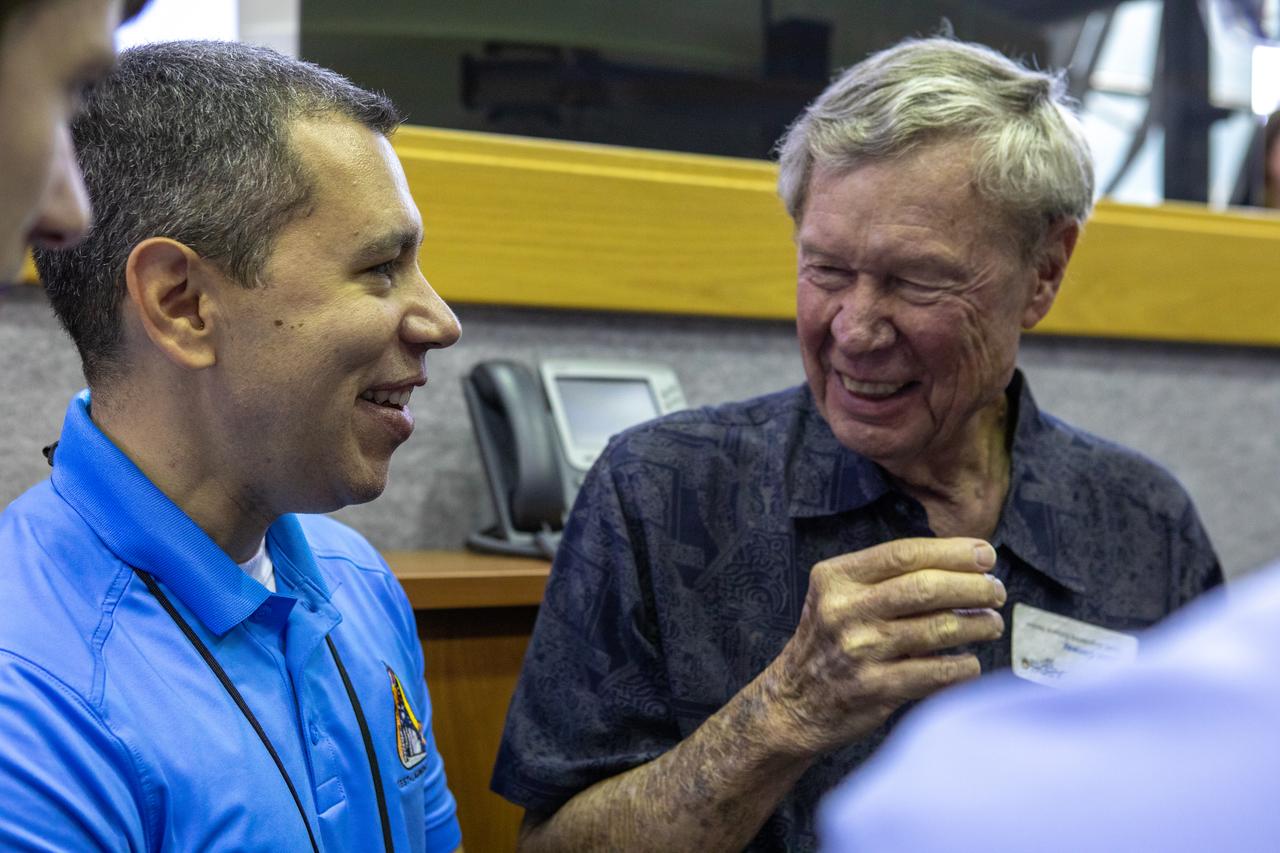
On July 16, 2019, the 50th anniversary of the Apollo 11 launch to the Moon, Apollo-era and Artemis 1 launch team members mingle in Launch Control Center Firing Room 1 at NASA's Kennedy Space Center in Florida.
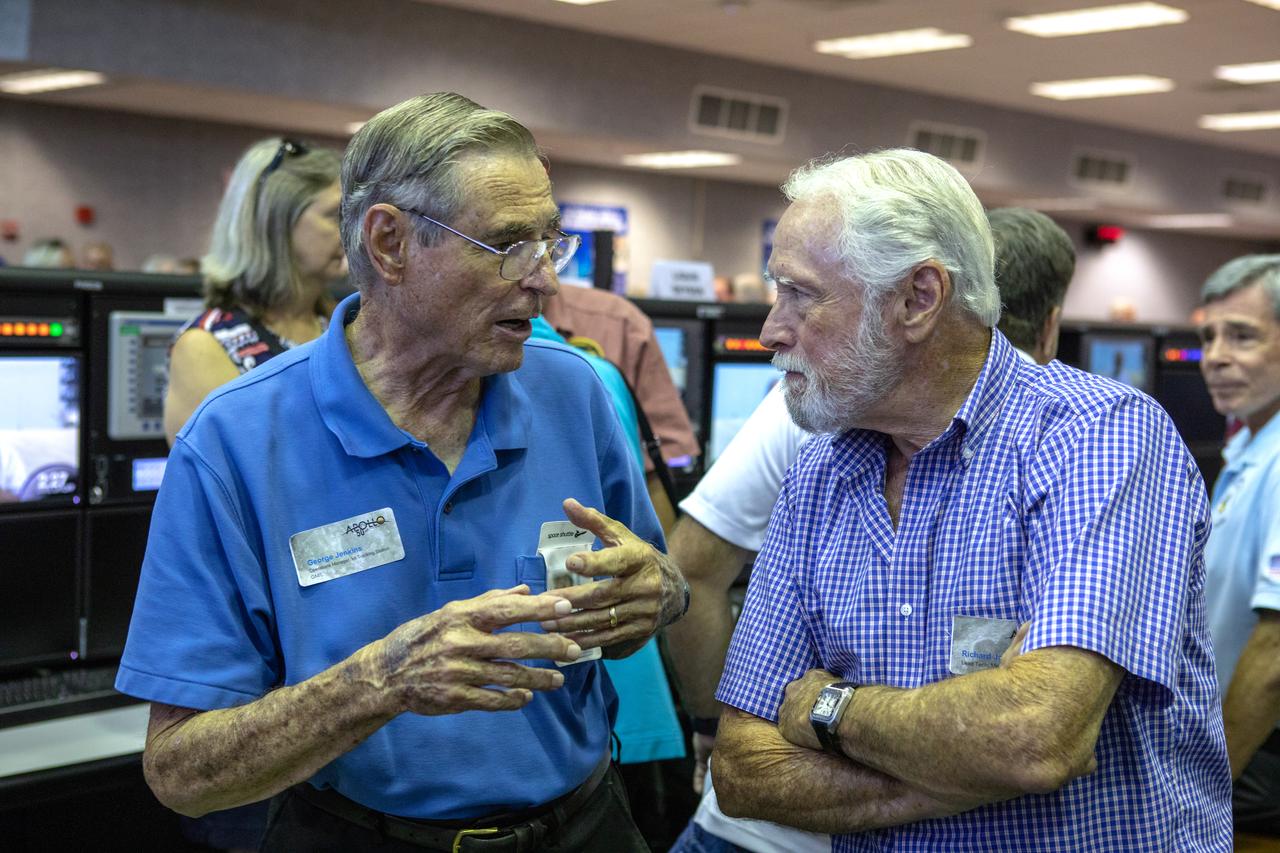
On July 16, 2019, the 50th anniversary of the Apollo 11 launch, Apollo-era launch team members mingle in Launch Control Center Firing Room 1 at NASA's Kennedy Space Center in Florida.
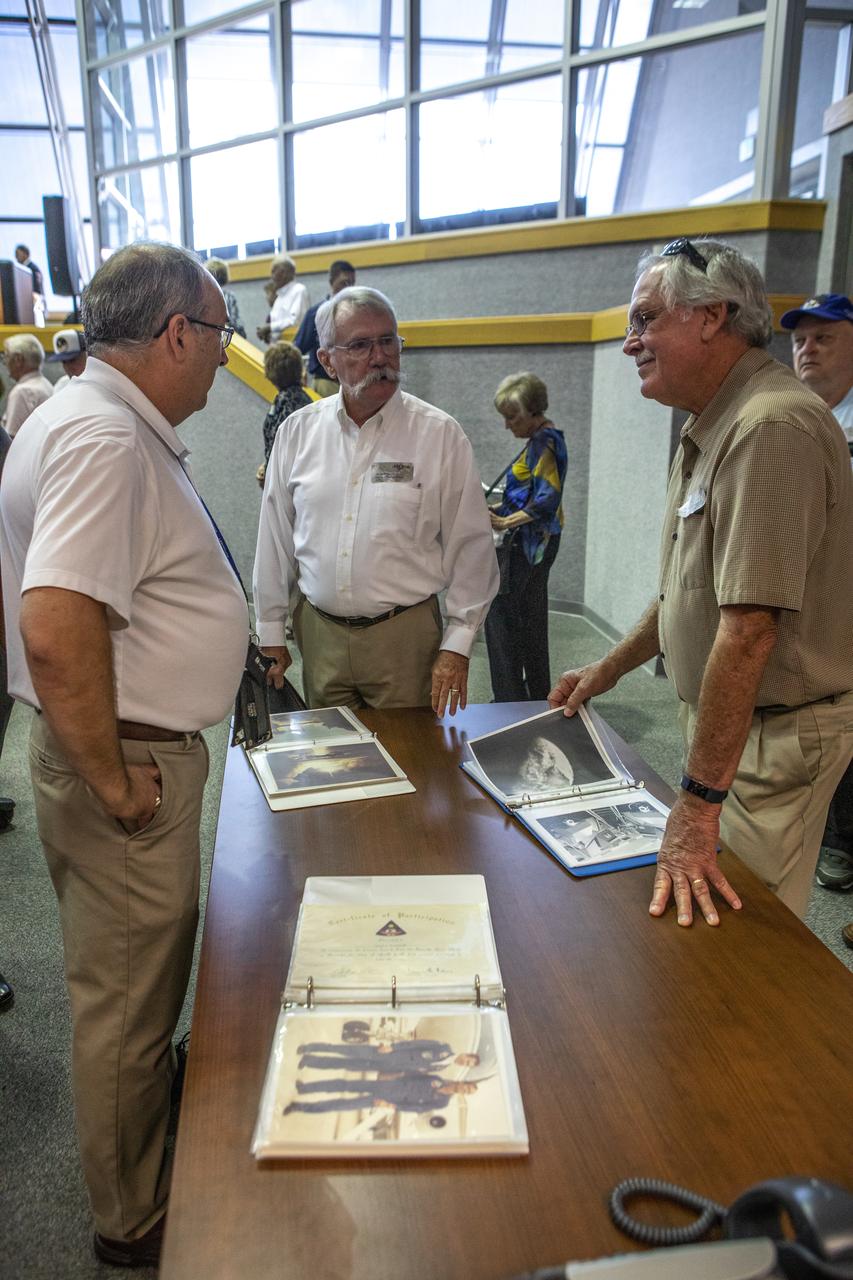
On July 16, 2019, the 50th anniversary of the Apollo 11 launch, Apollo-era and Artemis-1 launch team members mingle in Launch Control Center Firing Room 1 at NASA's Kennedy Space Center in Florida.
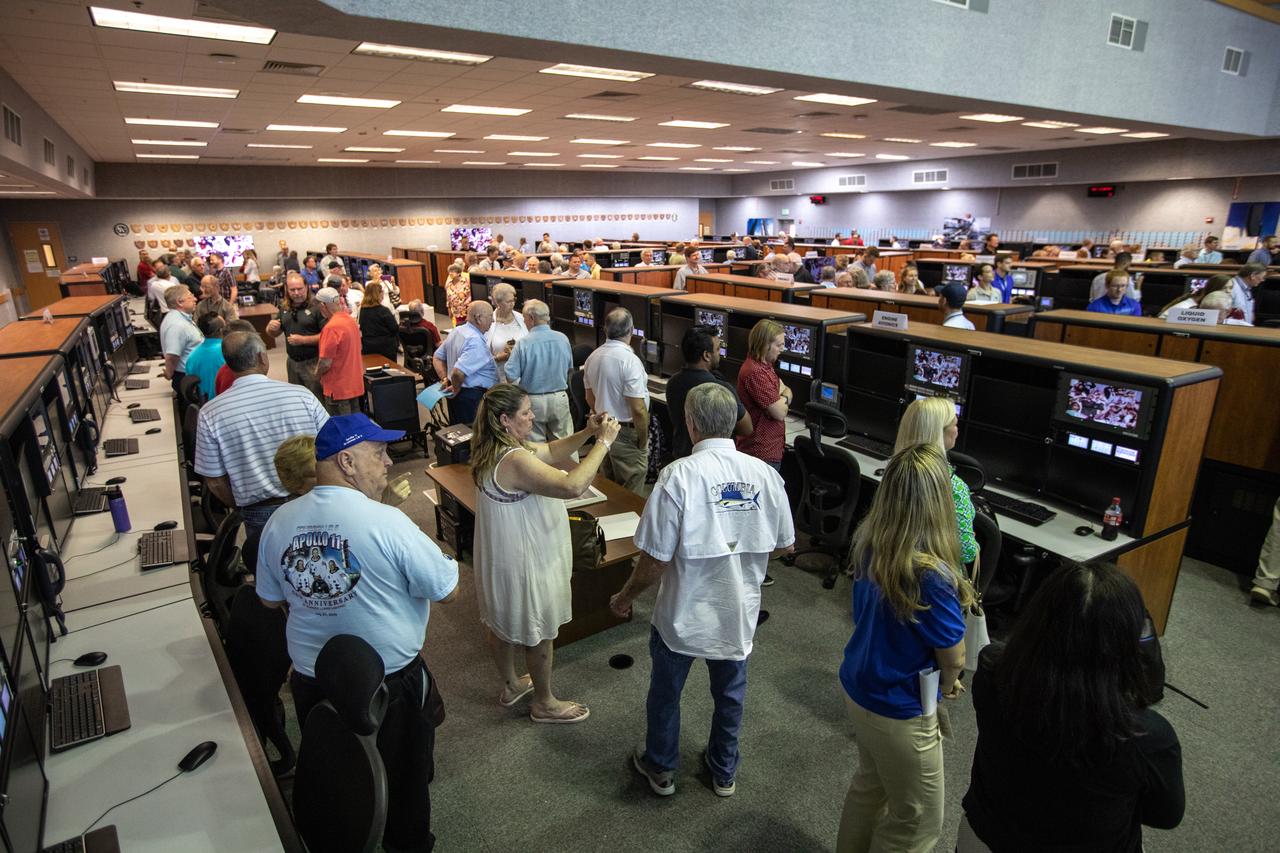
On July 16, 2019, the 50th anniversary of the Apollo 11 launch, Apollo-era and Artemis-1 launch team members mingle in Launch Control Center Firing Room 1 at NASA's Kennedy Space Center in Florida.
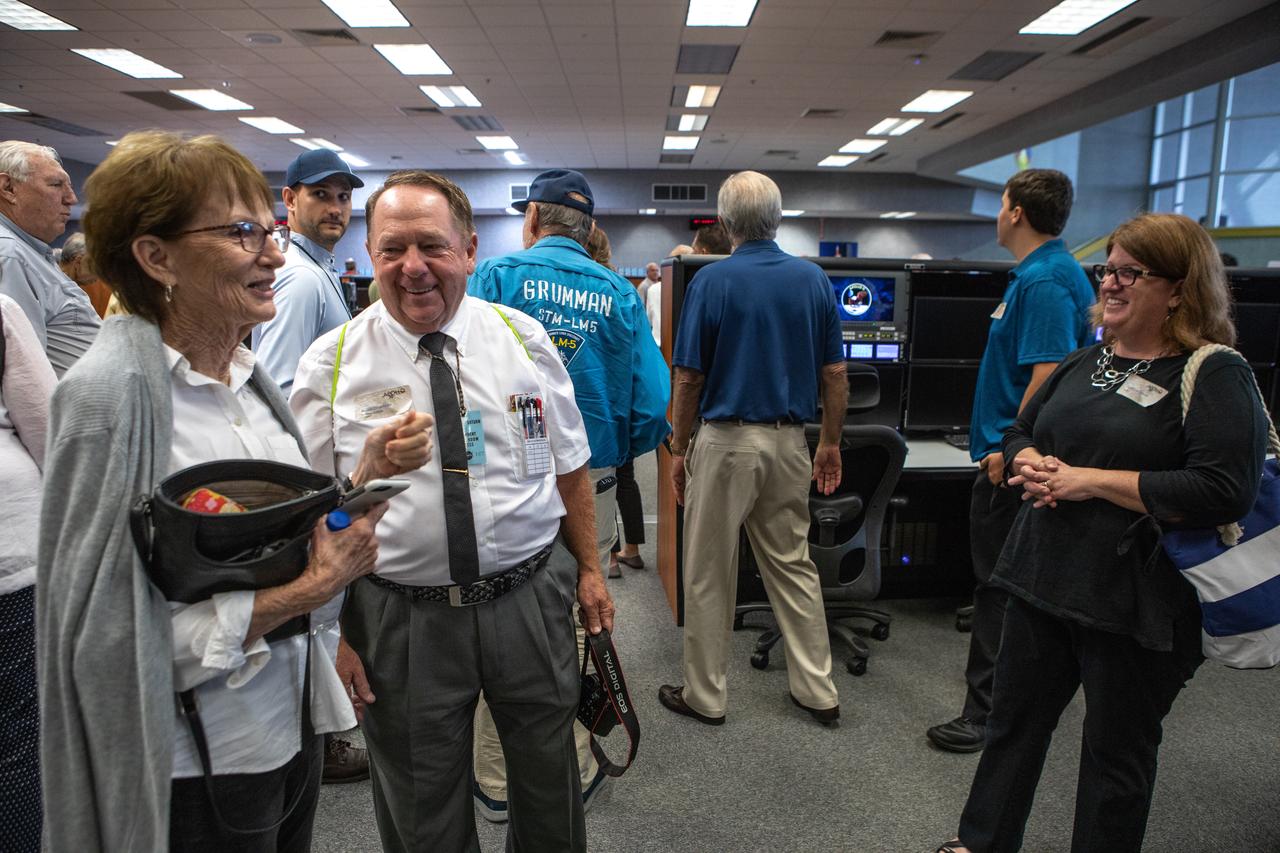
On July 16, 2019, the 50th anniversary of the Apollo 11 launch, Apollo-era and Artemis 1 launch team members mingle in Launch Control Center Firing Room 1 at NASA's Kennedy Space Center in Florida.
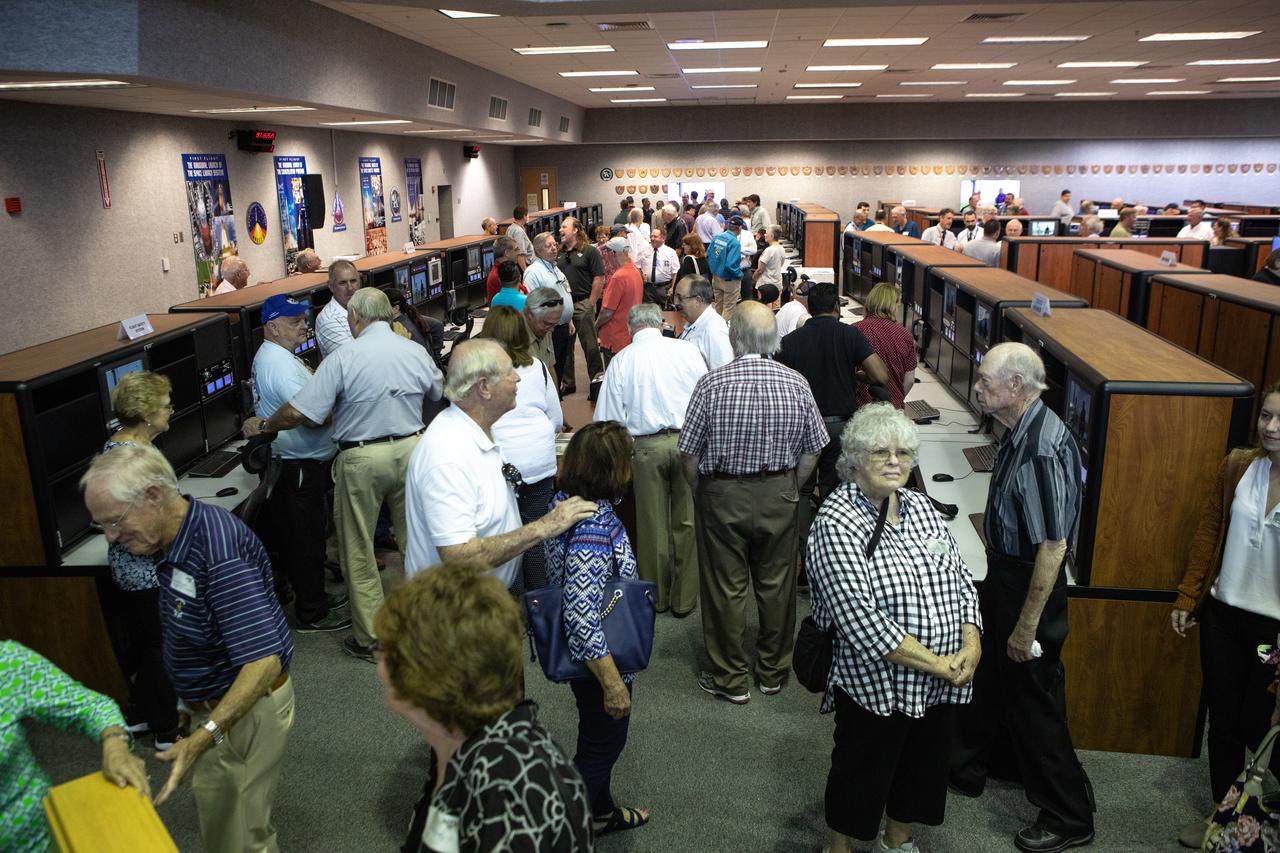
On July 16, 2019, the 50th anniversary of the Apollo 11 launch, Apollo-era and Artemis-1 launch team members mingle in Launch Control Center Firing Room 1 at NASA's Kennedy Space Center in Florida.
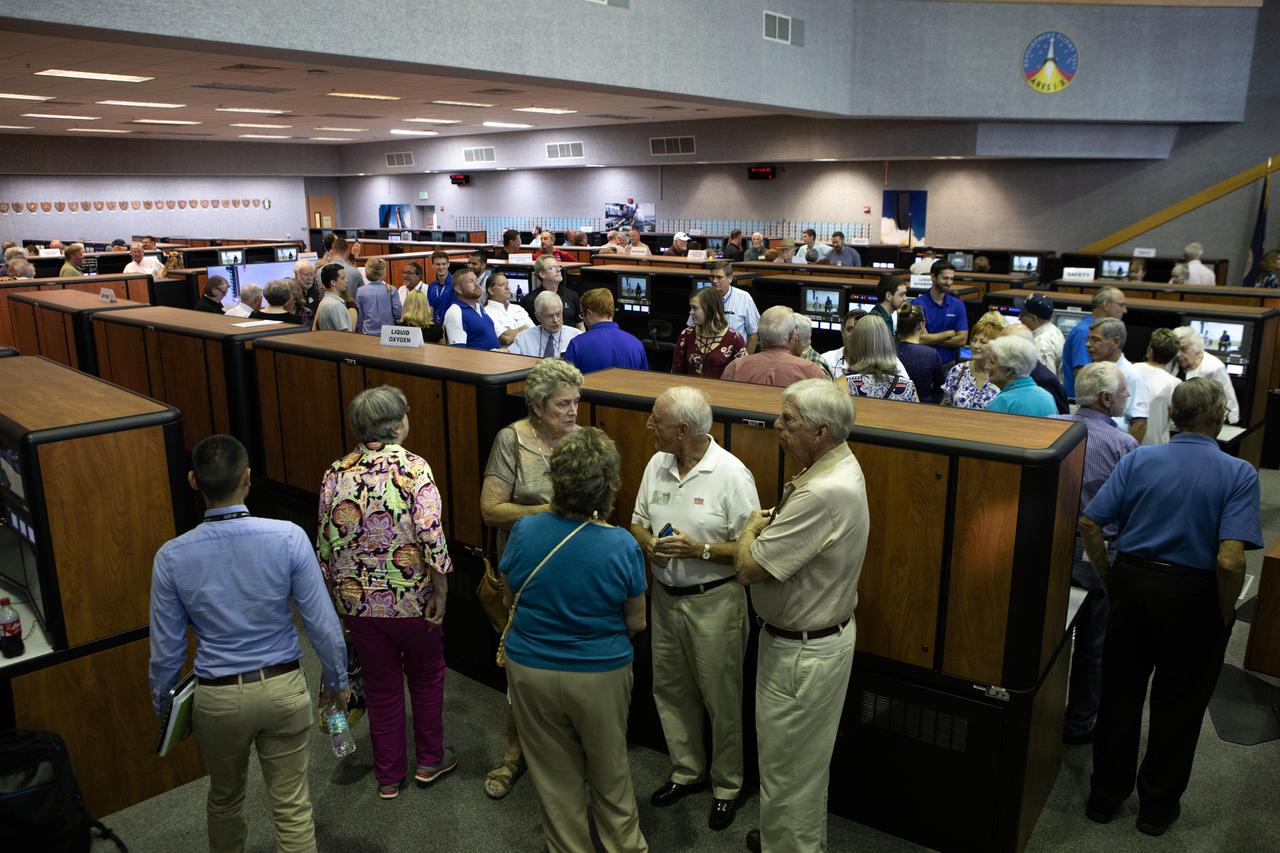
On July 16, 2019, the 50th anniversary of the Apollo 11 launch, Apollo-era and Artemis-1 launch team members mingle in Launch Control Center Firing Room 1 at NASA's Kennedy Space Center in Florida.
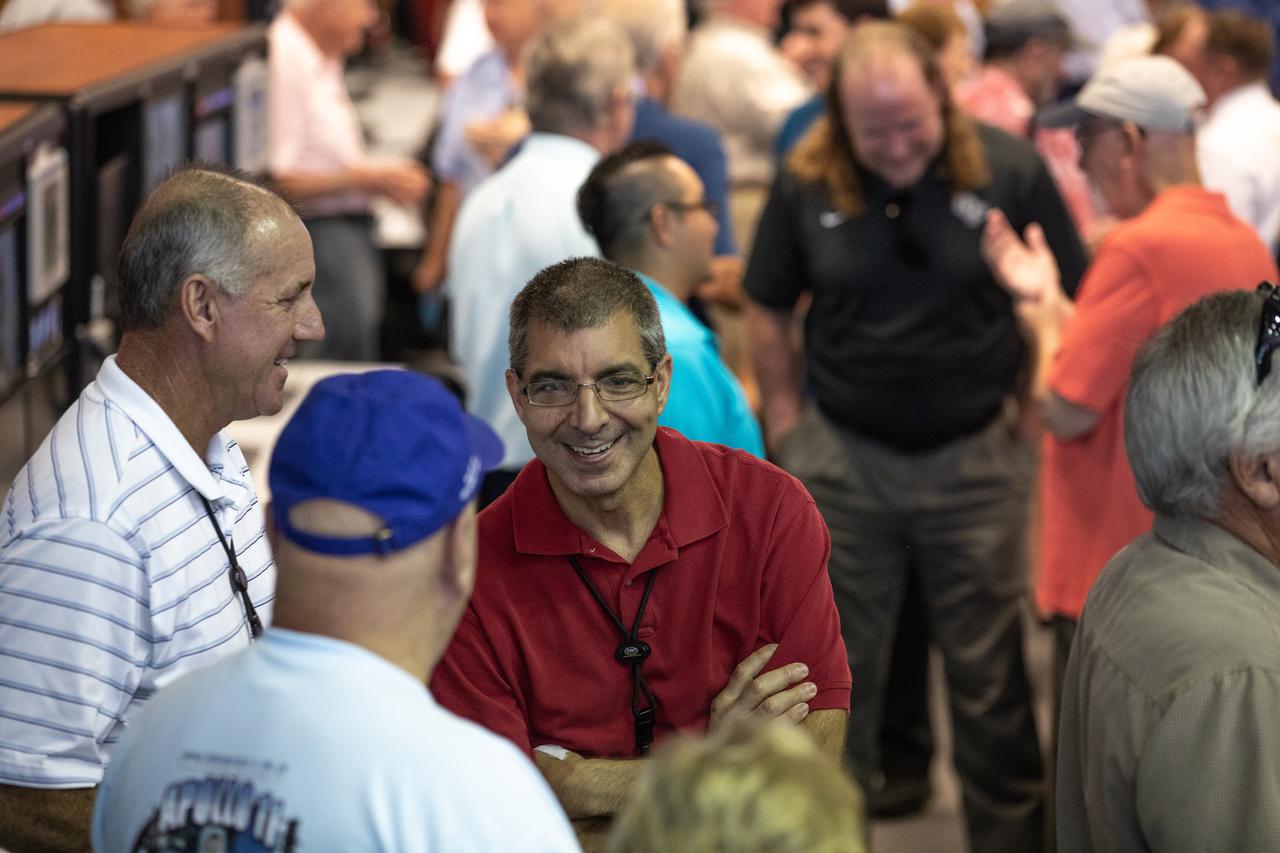
On July 16, 2019, the 50th anniversary of the Apollo 11 launch, Apollo-era and Artemis-1 launch team members mingle in Launch Control Center Firing Room 1 at NASA's Kennedy Space Center in Florida.
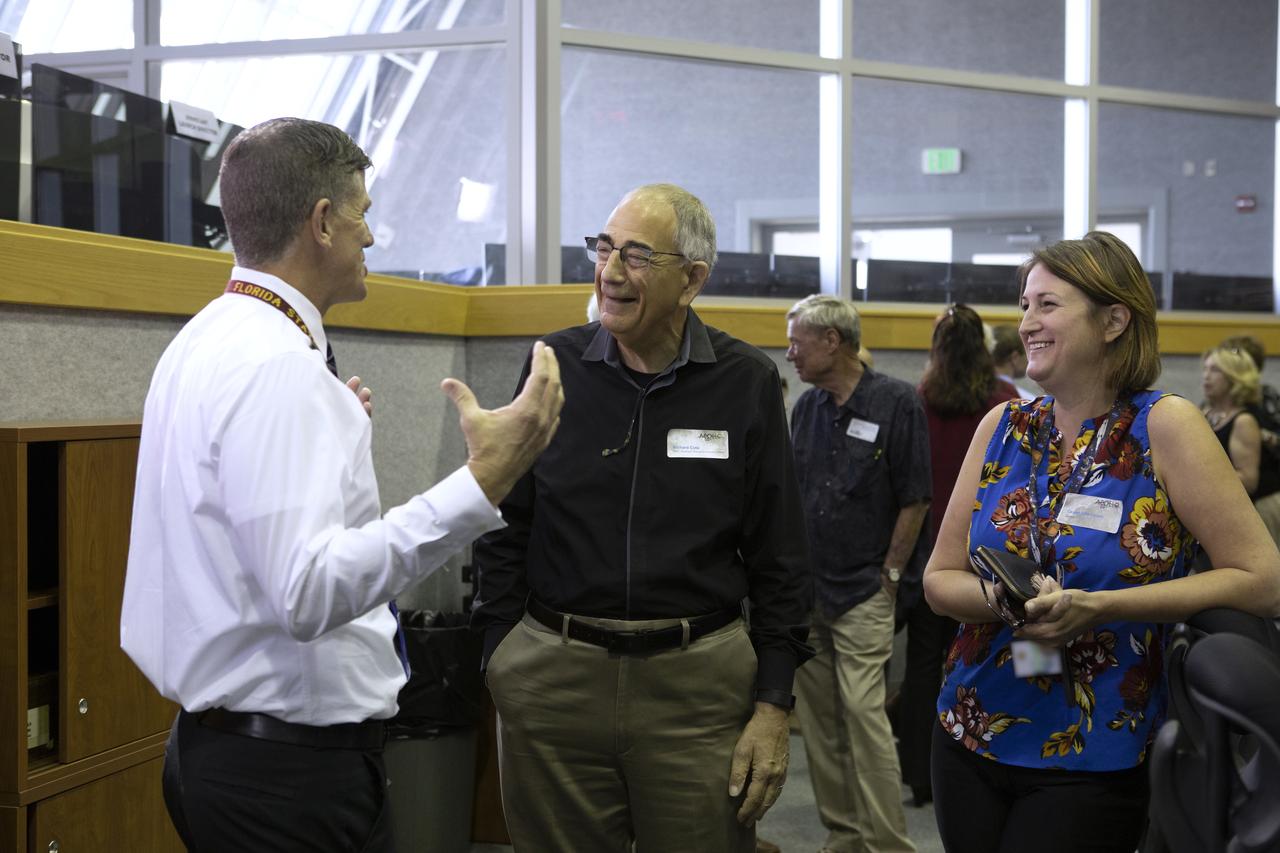
On July 16, 2019, the 50th anniversary of the Apollo 11 launch, Apollo-era and Artemis 1 launch team members mingle in Launch Control Center Firing Room 1 at NASA's Kennedy Space Center in Florida.
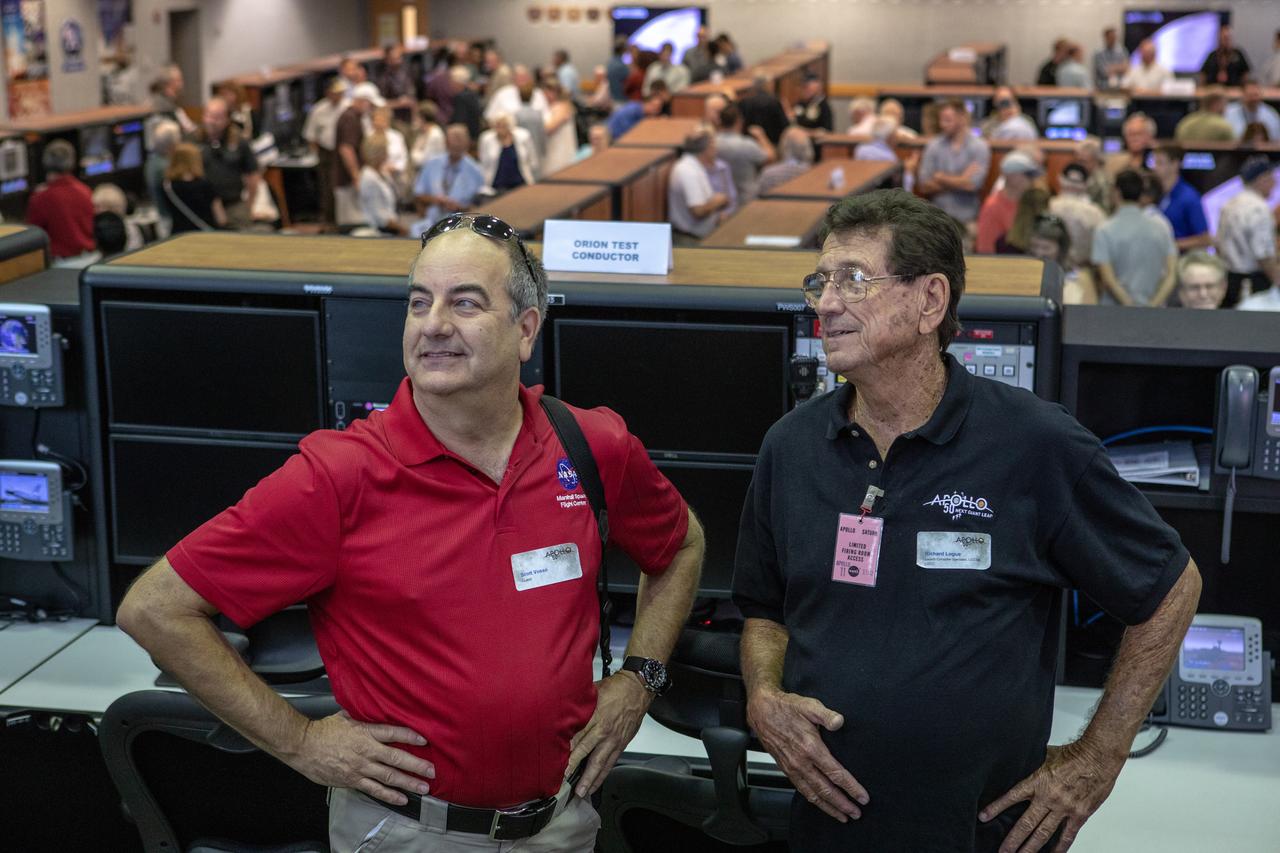
On July 16, 2019, the 50th anniversary of the Apollo 11 launch to the Moon; Apollo-era and Artemis 1 launch team members mingle in Launch Control Center Firing Room 1 at NASA's Kennedy Space Center in Florida.
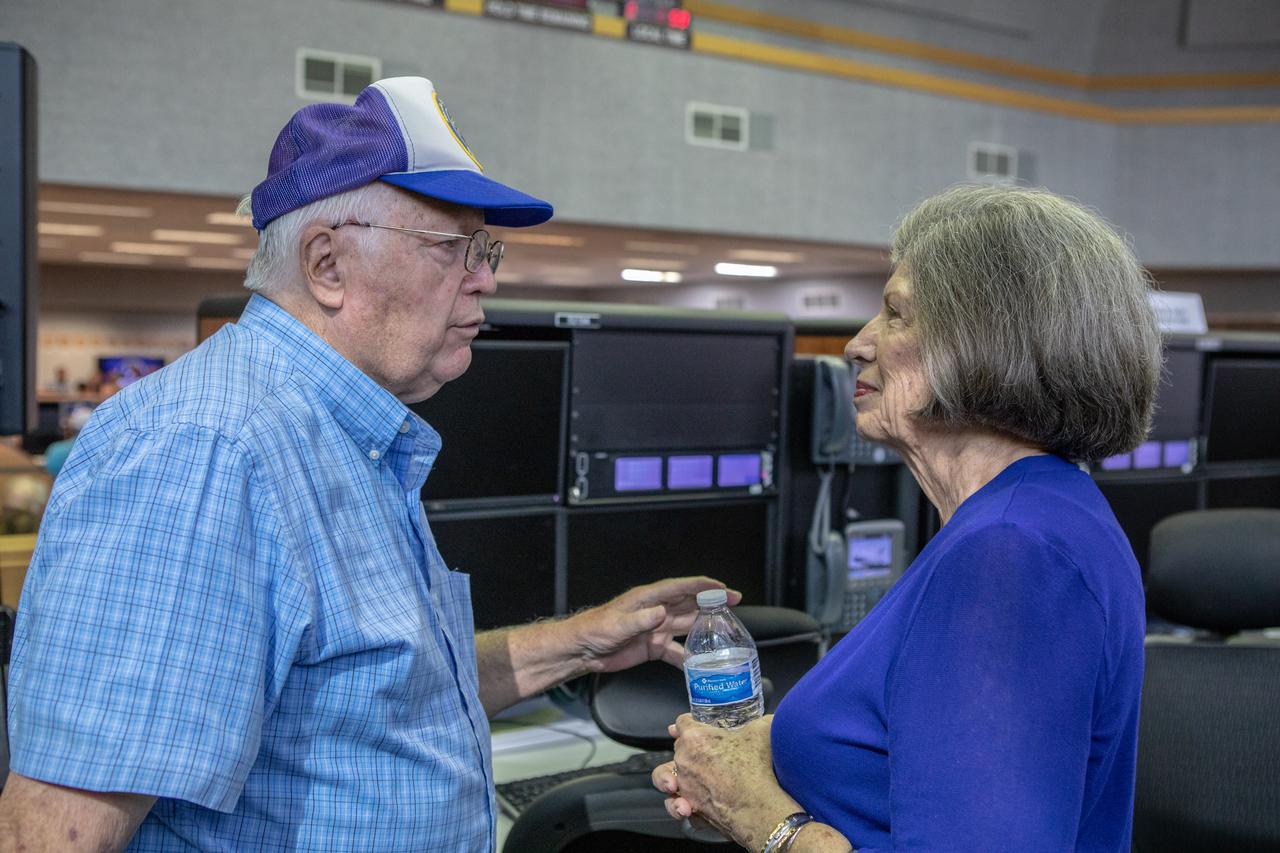
On July 16, 2019, the 50th anniversary of the Apollo 11 launch to the Moon; Apollo launch team member JoAnn Morgan, right, talks with a fellow team member in Launch Control Center Firing Room 1 at NASA's Kennedy Space Center in Florida. Morgan was the only female in the firing room during Apollo 11 launch countdown activities.
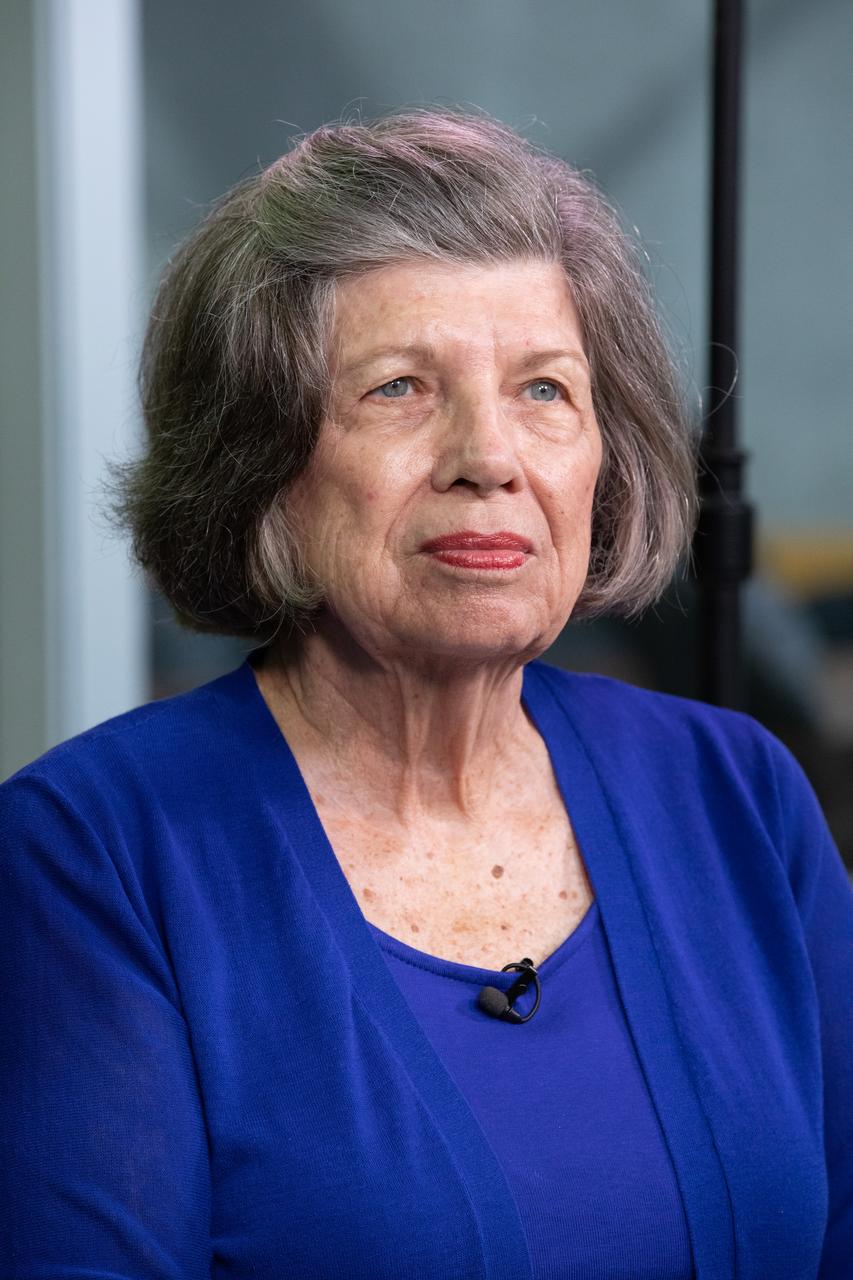
On July 16, 2019, the 50th anniversary of the Apollo 11 launch, Apollo-era launch team member JoAnn Morgan visits Launch Control Center Firing Room 1 at NASA's Kennedy Space Center in Florida. Morgan was the only female in the firing room during Apollo 11 launch countdown activites. Apollo 11 launched on a Saturn V rocket at 9:32 a.m. on July 16, 1969.

On July 16, 2019, the 50th anniversary of the Apollo 11 launch, Apollo launch team members mingle in Launch Control Center Firing Room 1 at NASA's Kennedy Space Center in Florida. At right is Bob Sieck, Apollo launch team member and former space shuttle launch director.
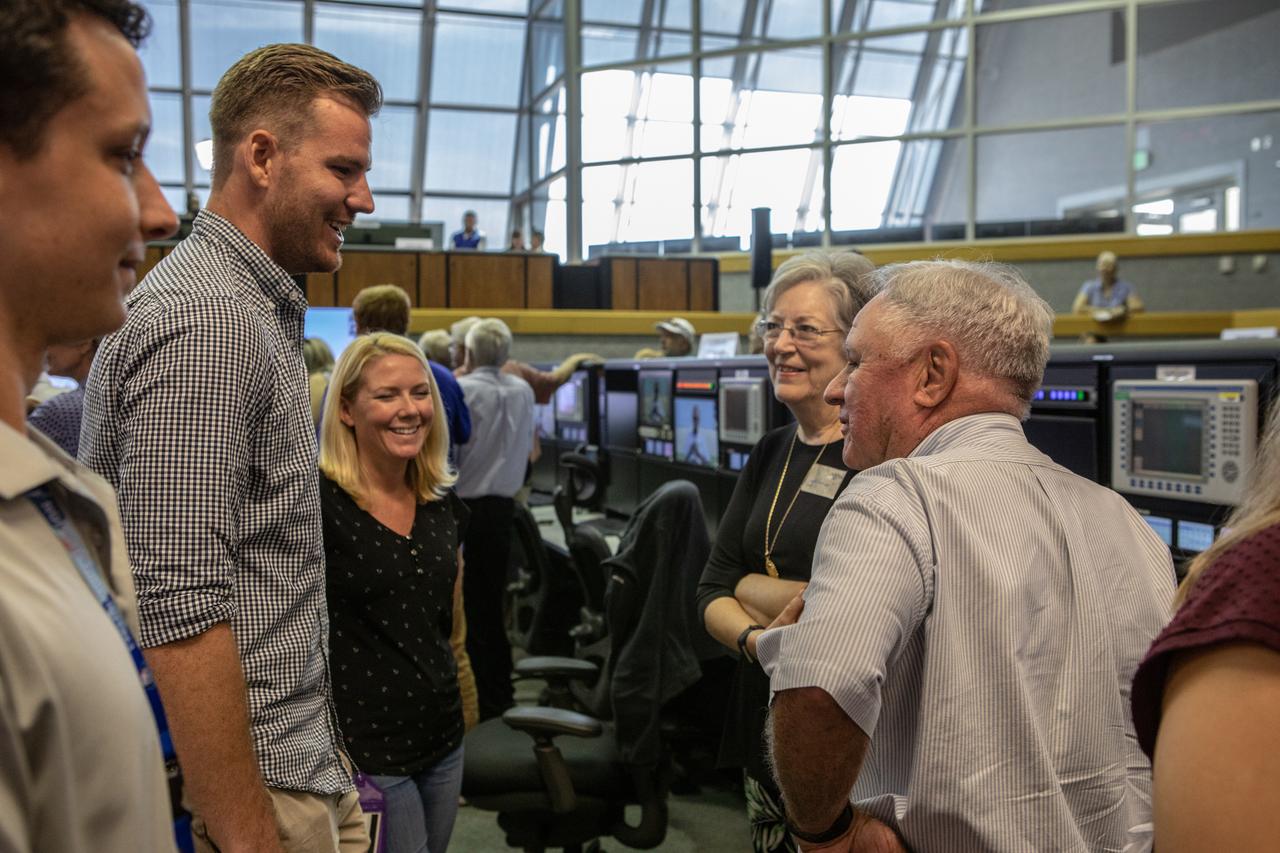
On July 16, 2019, the 50th anniversary of the Apollo 11 launch to the Moon, Apollo-era and Artemis 1 launch team members mingle in Launch Control Center Firing Room 1 at NASA's Kennedy Space Center in Florida.
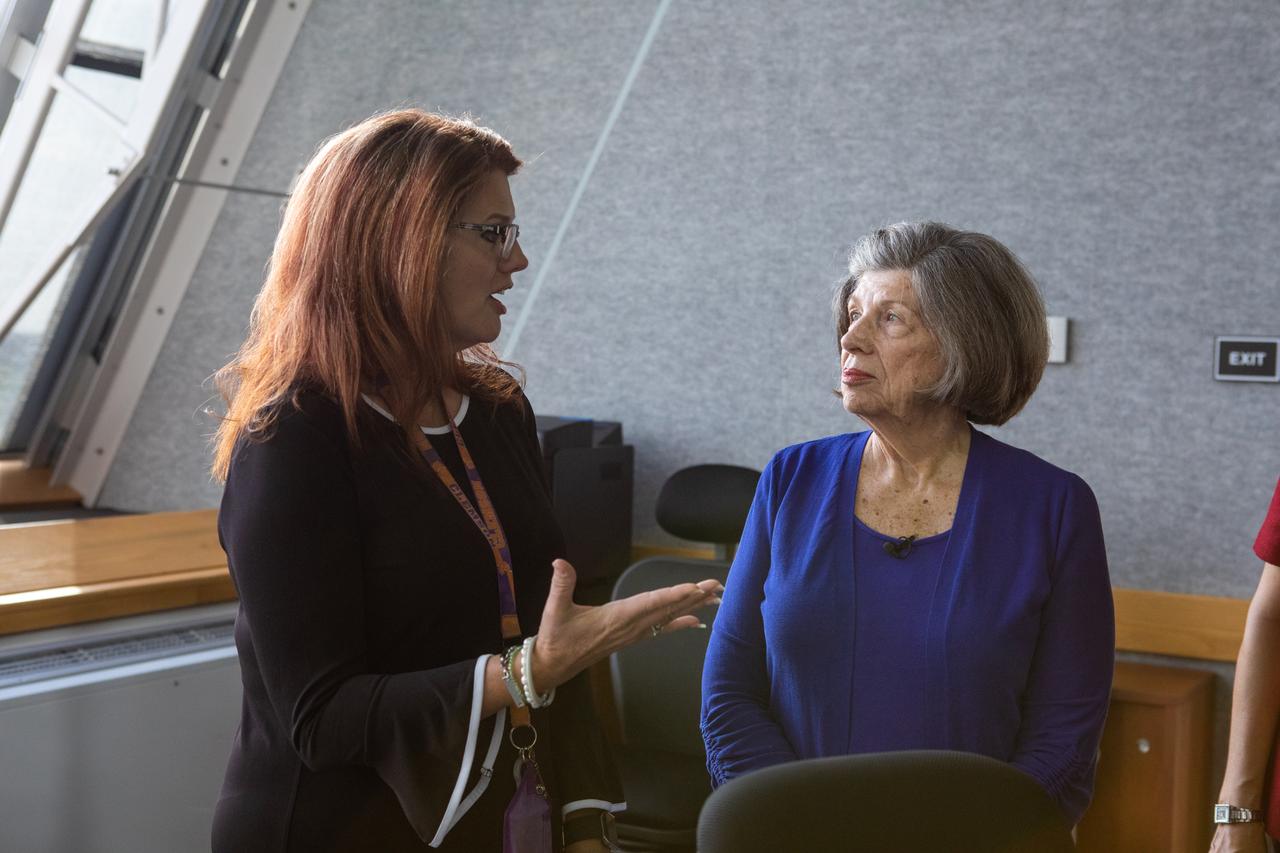
On July 16, 2019, the 50th anniversary of the Apollo 11 launch to the Moon, Artemis 1 Launch Director Charlie Blackwell-Thompson, left, talks with Apollo-era launch team member JoAnn Morgan in Launch Control Center Firing Room 1 at NASA's Kennedy Space Center in Florida. Morgan was the only woman in the firing room during Apollo 11 countdown activities. Blackwell-Thompson is the first female launch director. Apollo 11 launched atop the Saturn V rocket at 9:32 a.m. on July 16, 1969.
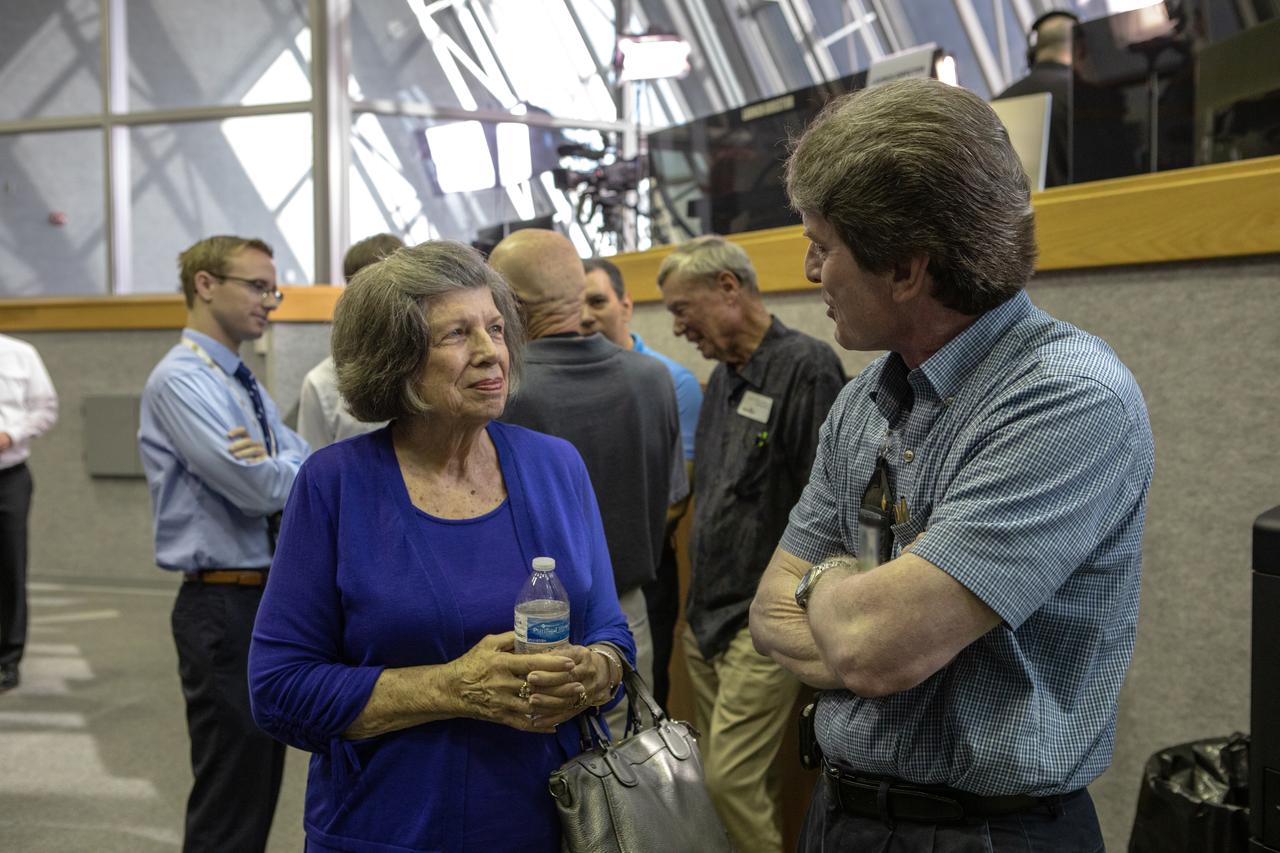
On July 16, 2019, the 50th anniversary of the Apollo 11 launch to the Moon, Apollo-era launch team member JoAnn Morgan, left, talks with an Artemis 1 launch team member in Launch Control Center Firing Room 1 at NASA's Kennedy Space Center in Florida. Morgan was the only female launch team member in the firing room during Apollo 11 launch countdown activities.
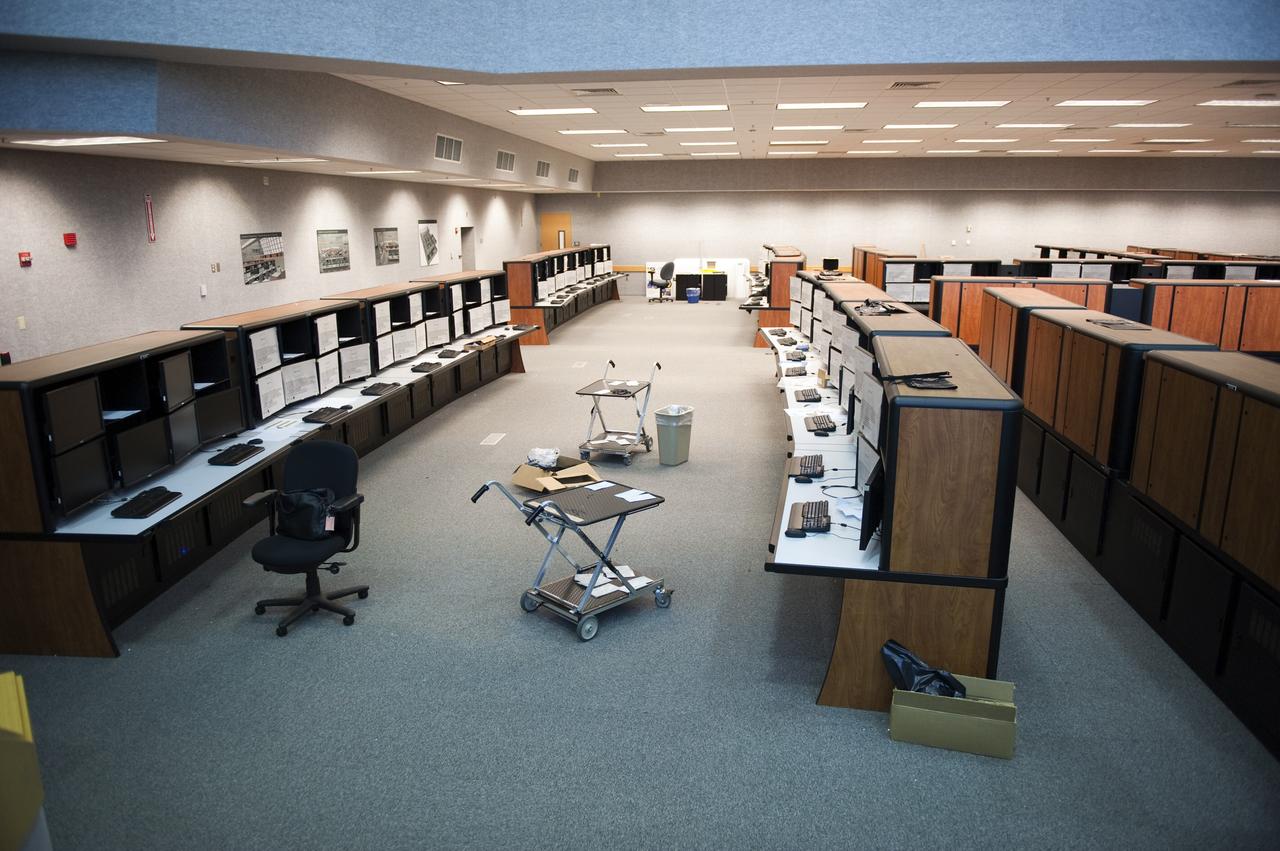
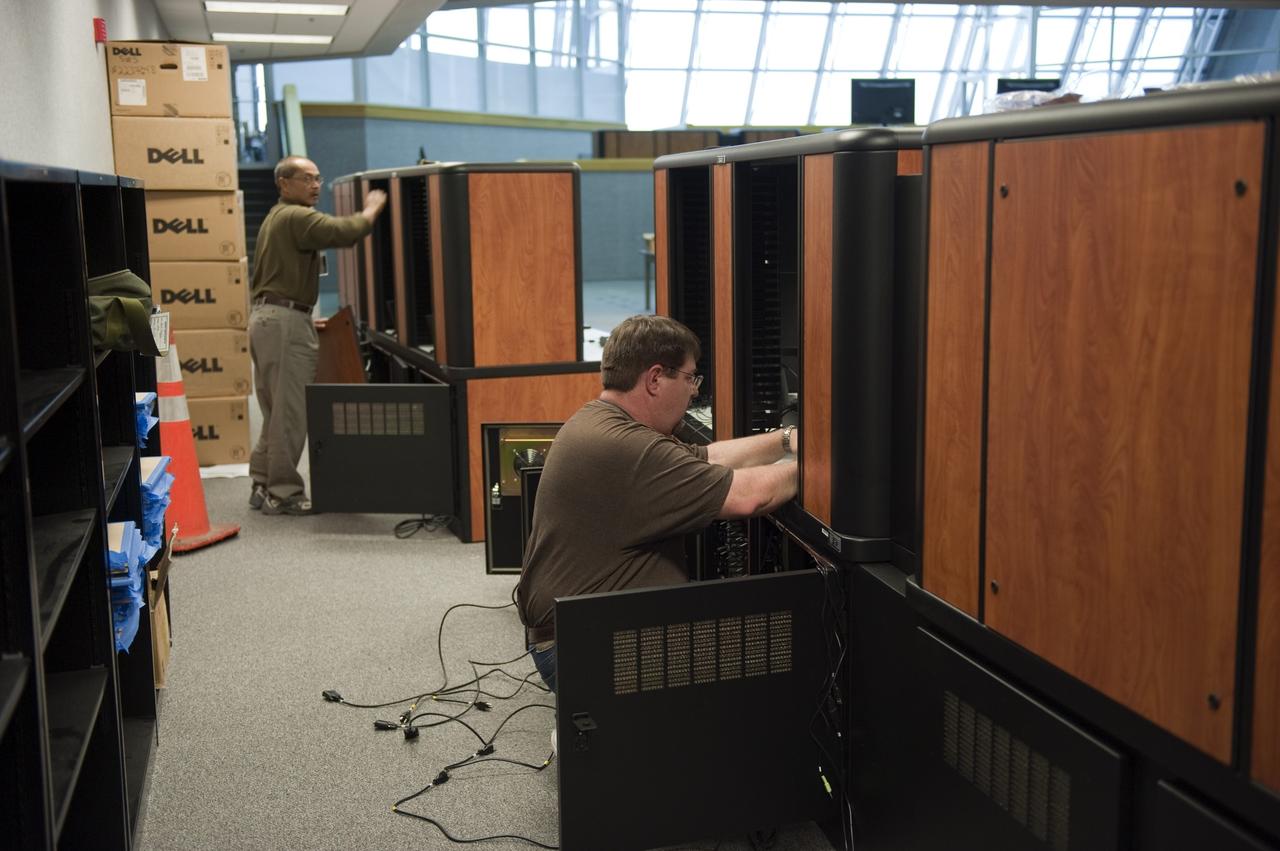
CAPE CANAVERAL, Fla. -- At NASA's Kennedy Space Center in Florida, remodeling for launches of future human spaceflight vehicles continues in the Launch Control Center's Young-Crippen Firing Room. Consoles already have been rewired for the comprehensive upgrade and are now being outfitted with new computers and monitors. Known as Firing Room 1 in the Apollo era, it was re-named as a tribute to the Space Shuttle Program's first crewed mission, STS-1, which was flown by Commander John Young and Pilot Robert Crippen in April 1981. The firing room most recently was set up to support the Ares I-X flight test in Oct. 2009. Photo credit: NASA/Kim Shiflett
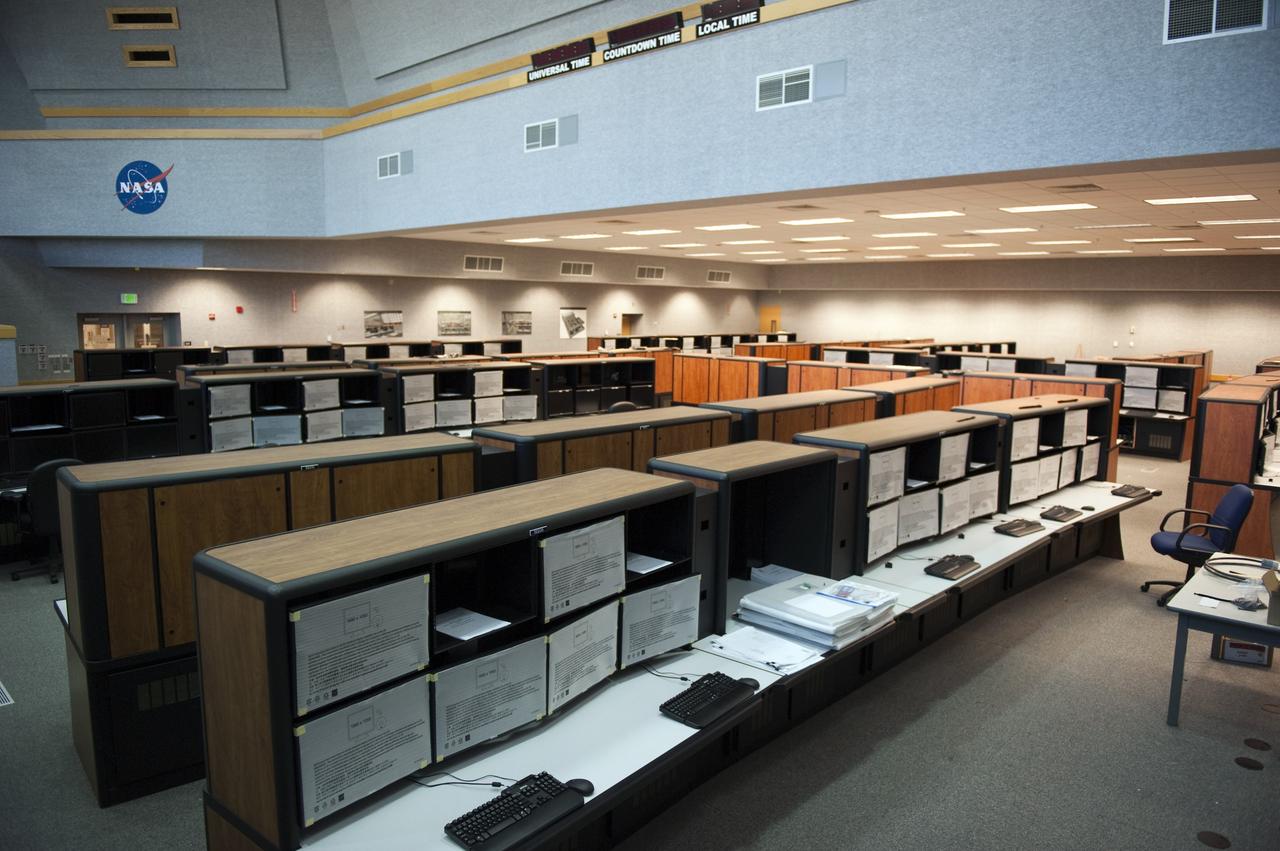
CAPE CANAVERAL, Fla. -- At NASA's Kennedy Space Center in Florida, remodeling for launches of future human spaceflight vehicles continues in the Launch Control Center's Young-Crippen Firing Room. Consoles already have been rewired for the comprehensive upgrade and are now being outfitted with new computers and monitors. Known as Firing Room 1 in the Apollo era, it was re-named as a tribute to the Space Shuttle Program's first crewed mission, STS-1, which was flown by Commander John Young and Pilot Robert Crippen in April 1981. The firing room most recently was set up to support the Ares I-X flight test in Oct. 2009. Photo credit: NASA/Kim Shiflett
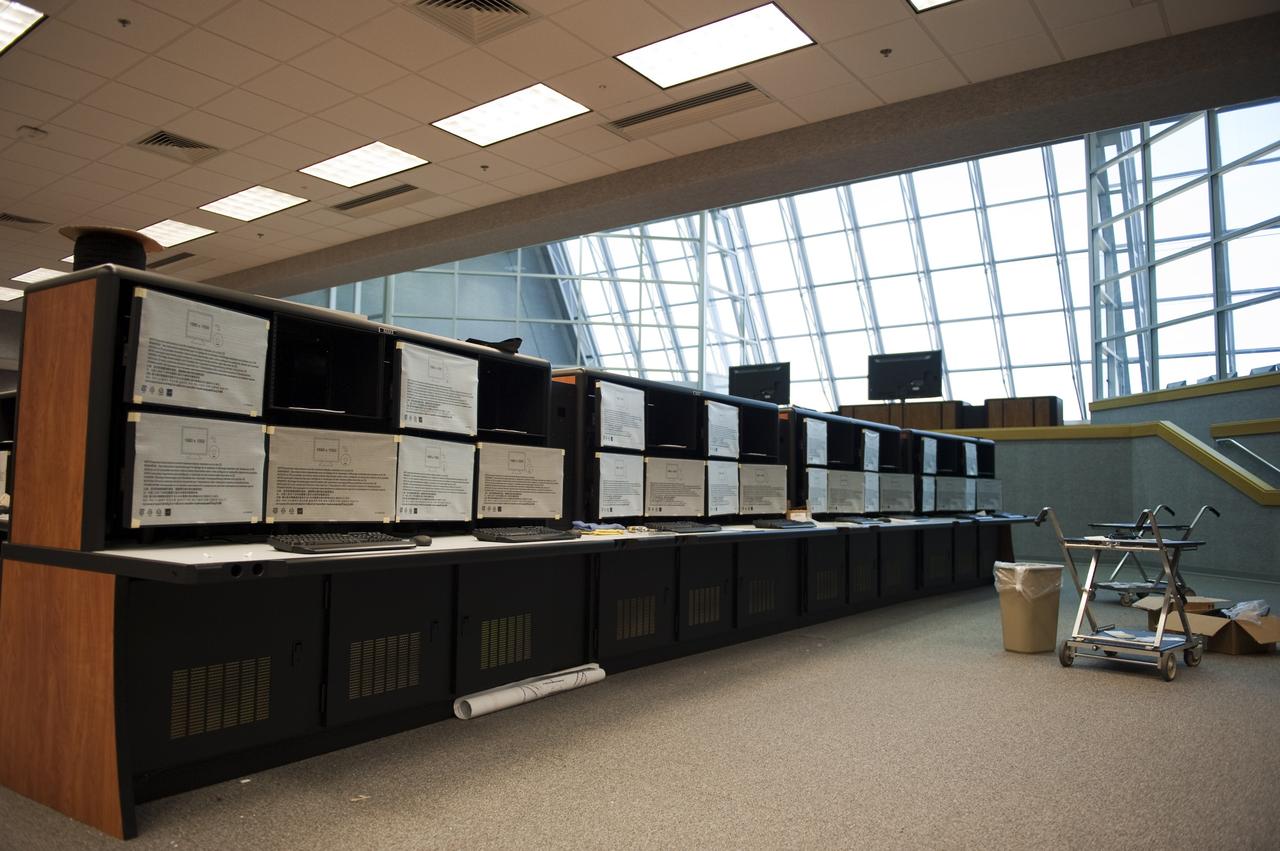
CAPE CANAVERAL, Fla. -- At NASA's Kennedy Space Center in Florida, remodeling for launches of future human spaceflight vehicles continues in the Launch Control Center's Young-Crippen Firing Room. Consoles already have been rewired for the comprehensive upgrade and are now being outfitted with new computers and monitors. Known as Firing Room 1 in the Apollo era, it was re-named as a tribute to the Space Shuttle Program's first crewed mission, STS-1, which was flown by Commander John Young and Pilot Robert Crippen in April 1981. The firing room most recently was set up to support the Ares I-X flight test in Oct. 2009. Photo credit: NASA/Kim Shiflett
CAPE CANAVERAL, Fla. -- At NASA's Kennedy Space Center in Florida, remodeling for launches of future human spaceflight vehicles continues in the Launch Control Center's Young-Crippen Firing Room. Consoles already have been rewired for the comprehensive upgrade and are now being outfitted with new computers and monitors. Known as Firing Room 1 in the Apollo era, it was re-named as a tribute to the Space Shuttle Program's first crewed mission, STS-1, which was flown by Commander John Young and Pilot Robert Crippen in April 1981. The firing room most recently was set up to support the Ares I-X flight test in Oct. 2009. Photo credit: NASA/Kim Shiflett

On July 16, 2019, the 50th anniversary of the Apollo 11 launch to the Moon, astronaut Michael Collins speaks to launch team members from Apollo 11 and the current launch team for Artemis 1 in Firing Room 1 in the Launch Control Center at NASA’s Kennedy Space Center in Florida.
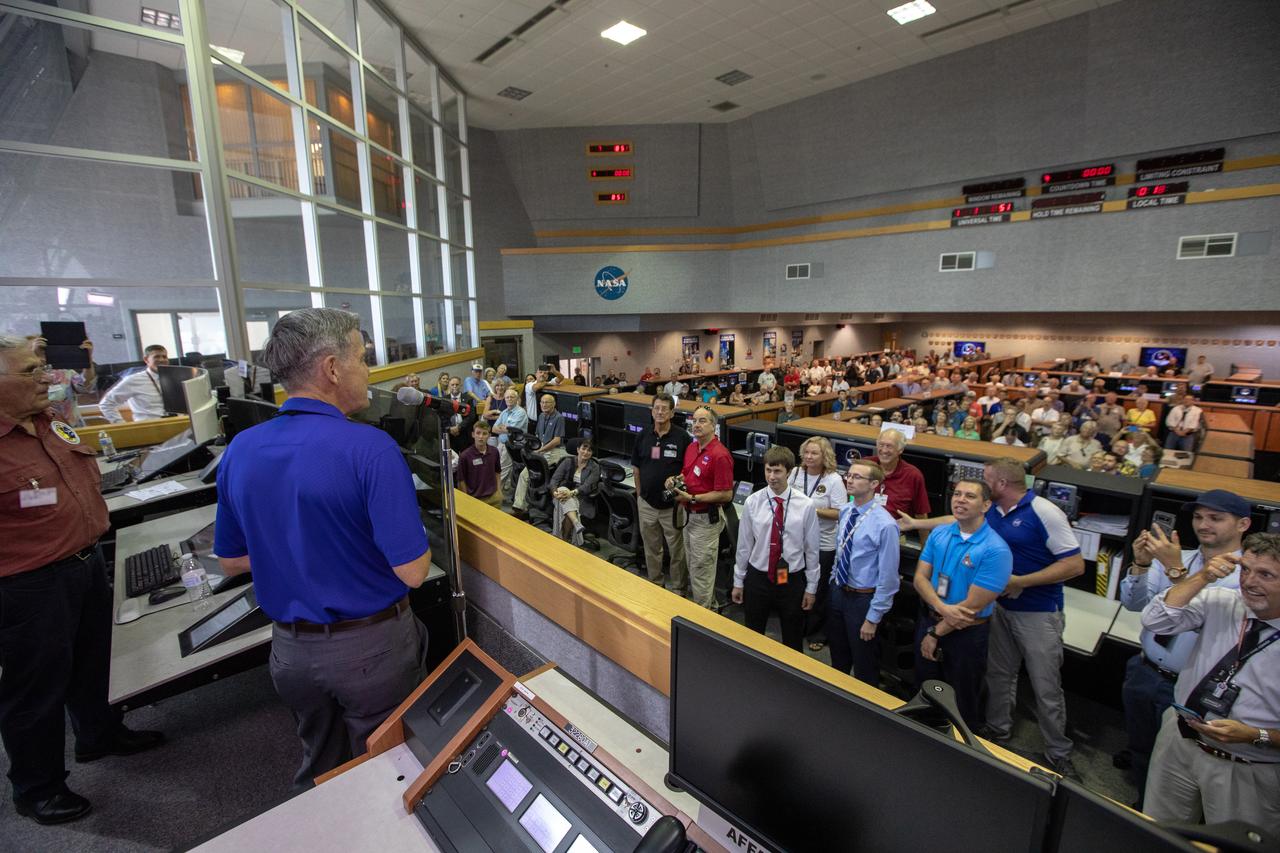
On July 16, 2019, the 50th anniversary of the Apollo 11 launch to the Moon, Kennedy Space Center Director Bob Cabana speaks to launch team members from Apollo 11 and the current launch team for Artemis 1 in Firing Room 1 in the Launch Control Center at NASA’s Kennedy Space Center in Florida.
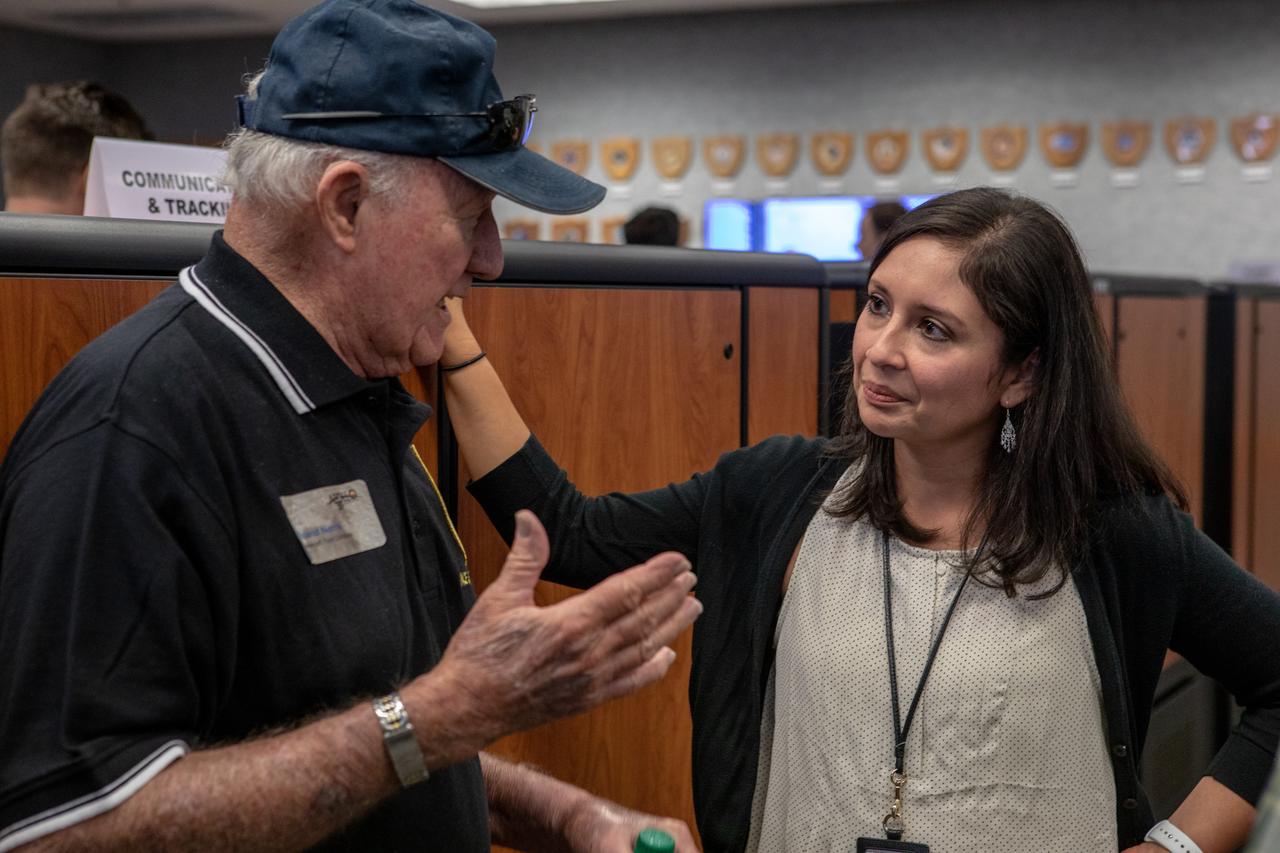
On July 16, 2019, the 50th anniversary of the Apollo 11 launch to the Moon, Jessica Parsons, right, technical assistant to the Artemis 1 launch director, talks with a member of the Apollo 11 launch team in Launch Control Center Firing Room 1 at NASA's Kennedy Space Center in Florida.
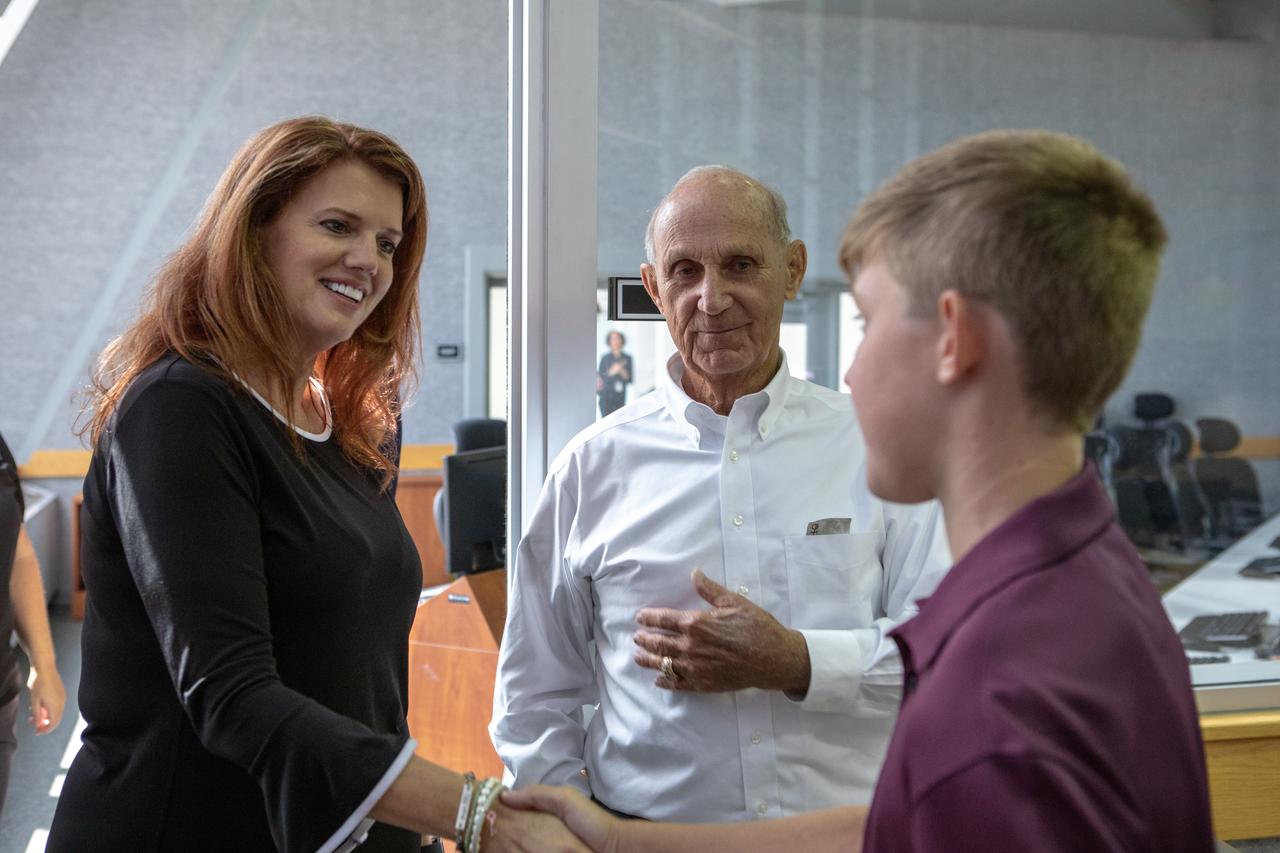
On July 16, 2019, the 50th anniversary of the Apollo 11 launch to the Moon, Artemis 1 Launch Director Charlie Blackwell-Thompson, left, talks with an Apollo 11 launch team member and family in Launch Control Center Firing Room 1 at NASA's Kennedy Space Center in Florida.
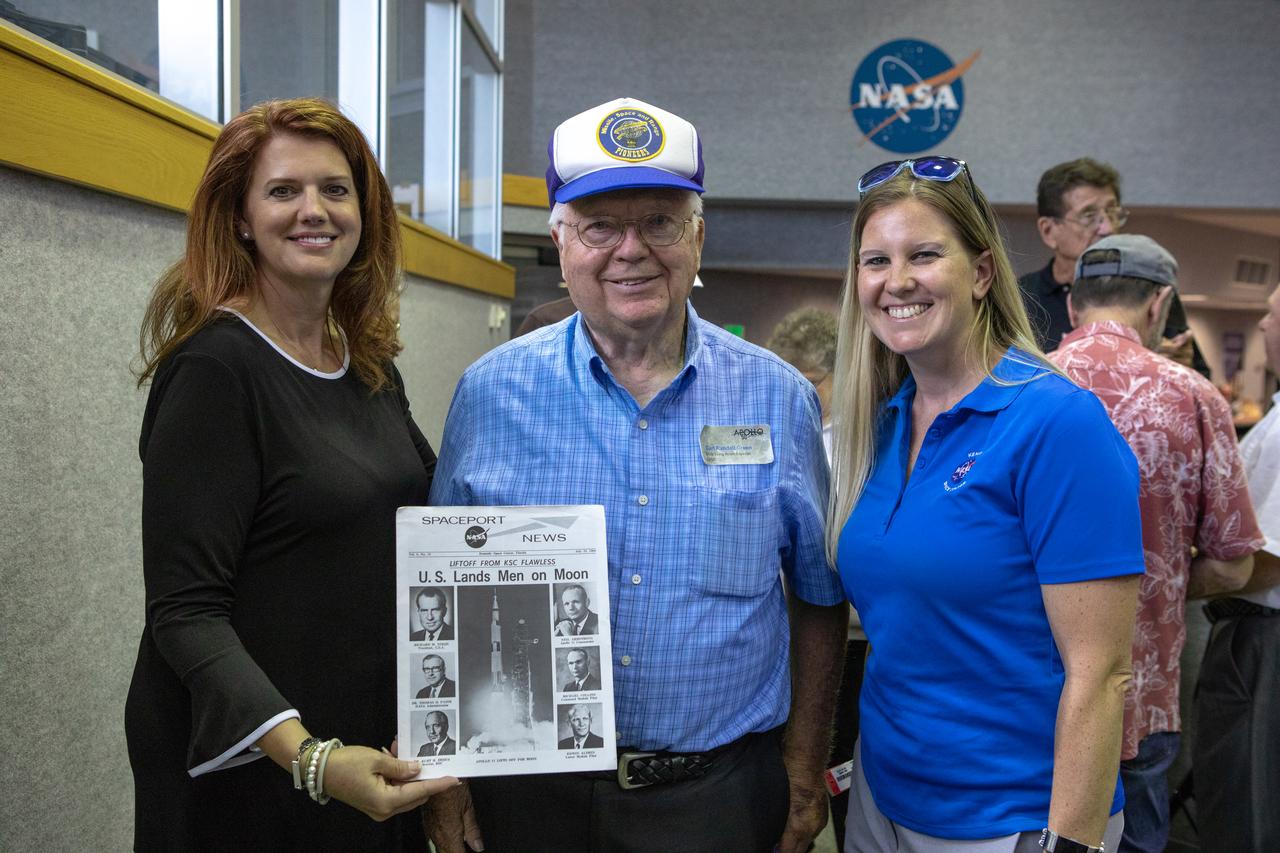
On July 16, 2019, the 50th anniversary of the Apollo 11 launch, Apollo-era and Artemis 1 workers gathered together in Launch Control Center Firing Room 1 at NASA's Kennedy Space Center in Florida. From left, are Artemis 1 Launch Director Charlie Blackwell-Thompson, Apollo-era launch team member Carl Green, and Tiffany Lindsley Wardlow, strategic communications specialist in Exploration Ground Systems.
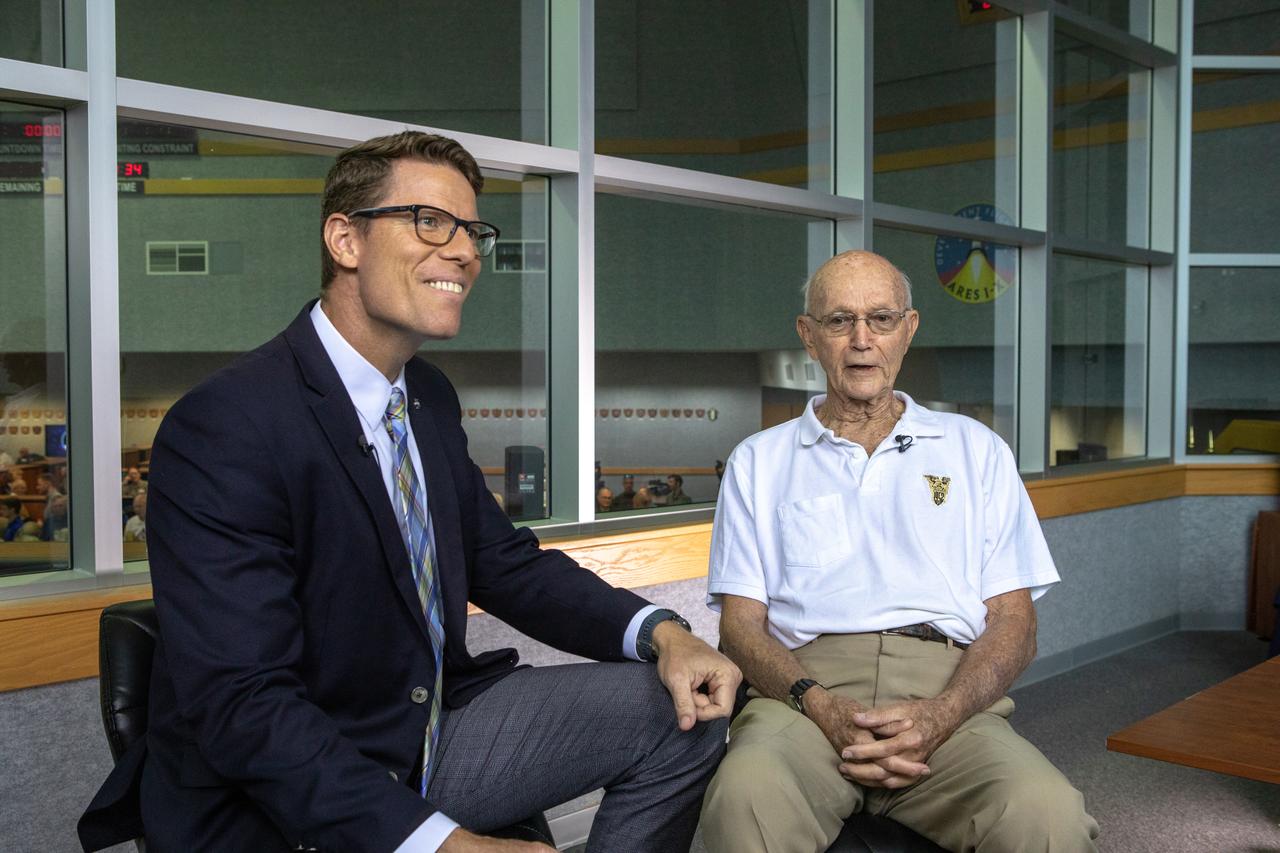
On July 16, 2019, the 50th anniversary of the Apollo 11 launch, Apollo 11 astronaut Michael Collins talks to NASA’s Derrol Nail at Launch Control Center Firing Room 1 at NASA's Kennedy Space Center in Florida. Collins talked about the moments leading up to the Apollo 11 launch at 9:32 a.m. on July 16, 1969.
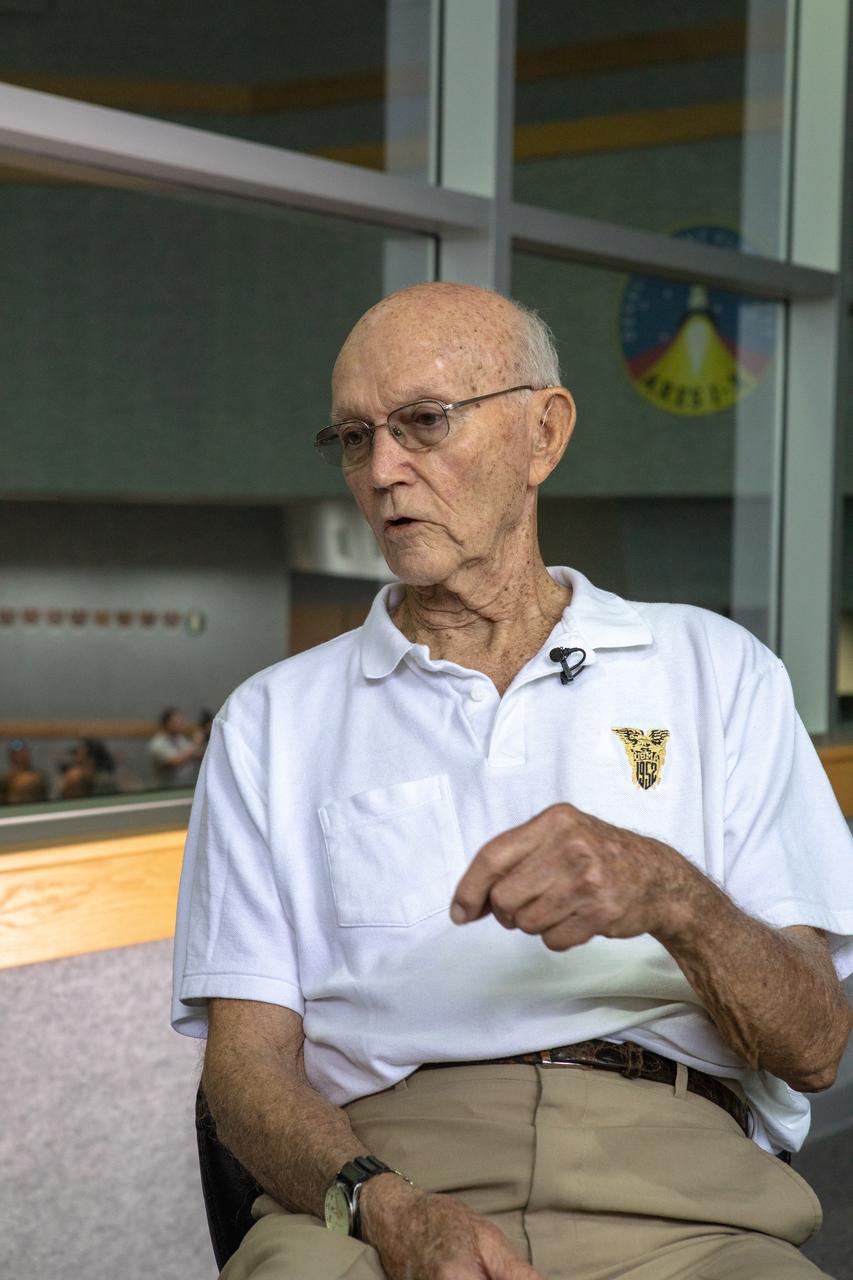
On July 16, 2019, the 50th anniversary of the Apollo 11 launch, Apollo 11 astronaut Michael Collins talks to NASA’s Derrol Nail at Launch Control Center Firing Room 1 at NASA's Kennedy Space Center in Florida. Collins talked about the moments leading up to the Apollo 11 launch at 9:32 a.m. on July 16, 1969.
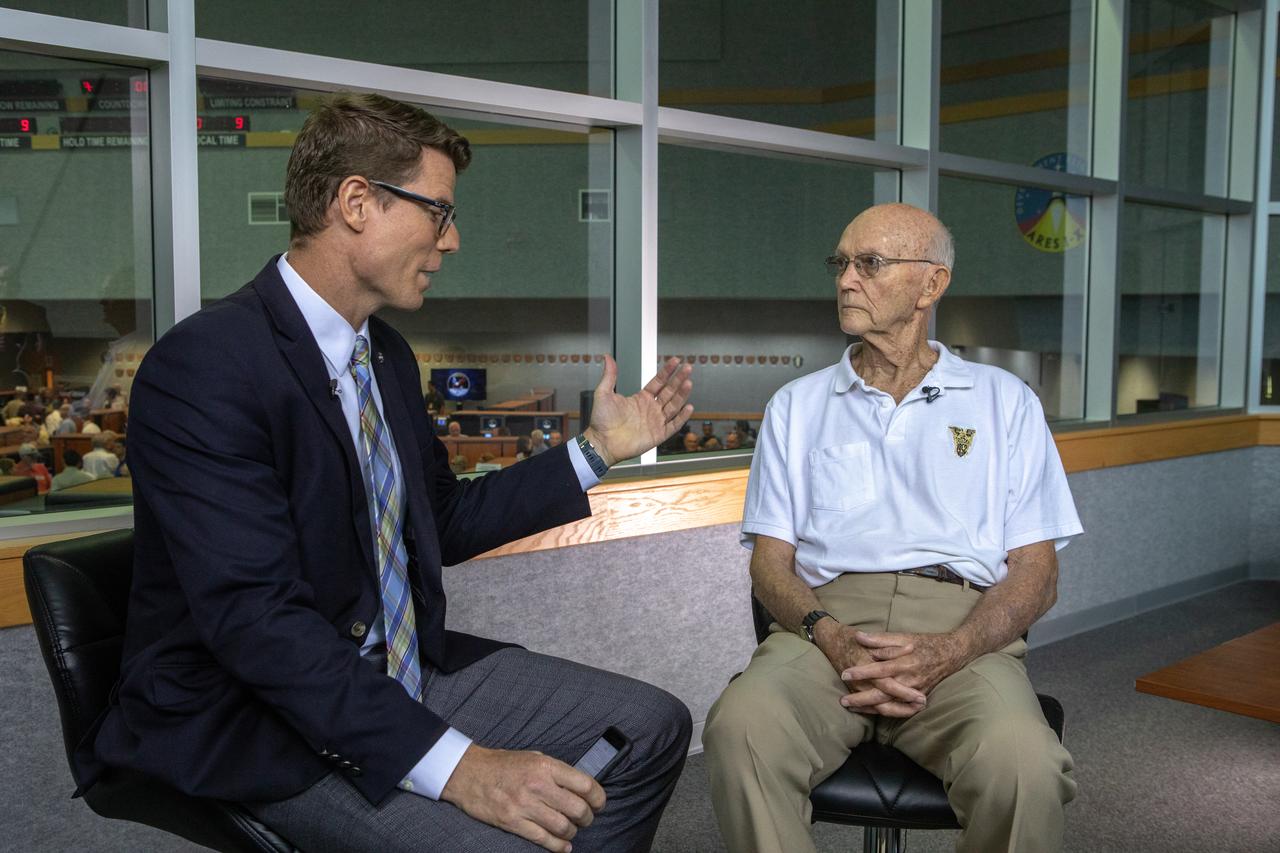
On July 16, 2019, the 50th anniversary of the Apollo 11 launch, Apollo 11 astronaut Michael Collins talks to NASA’s Derrol Nail at Launch Control Center Firing Room 1 at NASA's Kennedy Space Center in Florida. Collins talked about the moments leading up to the Apollo 11 launch at 9:32 a.m. on July 16, 1969.
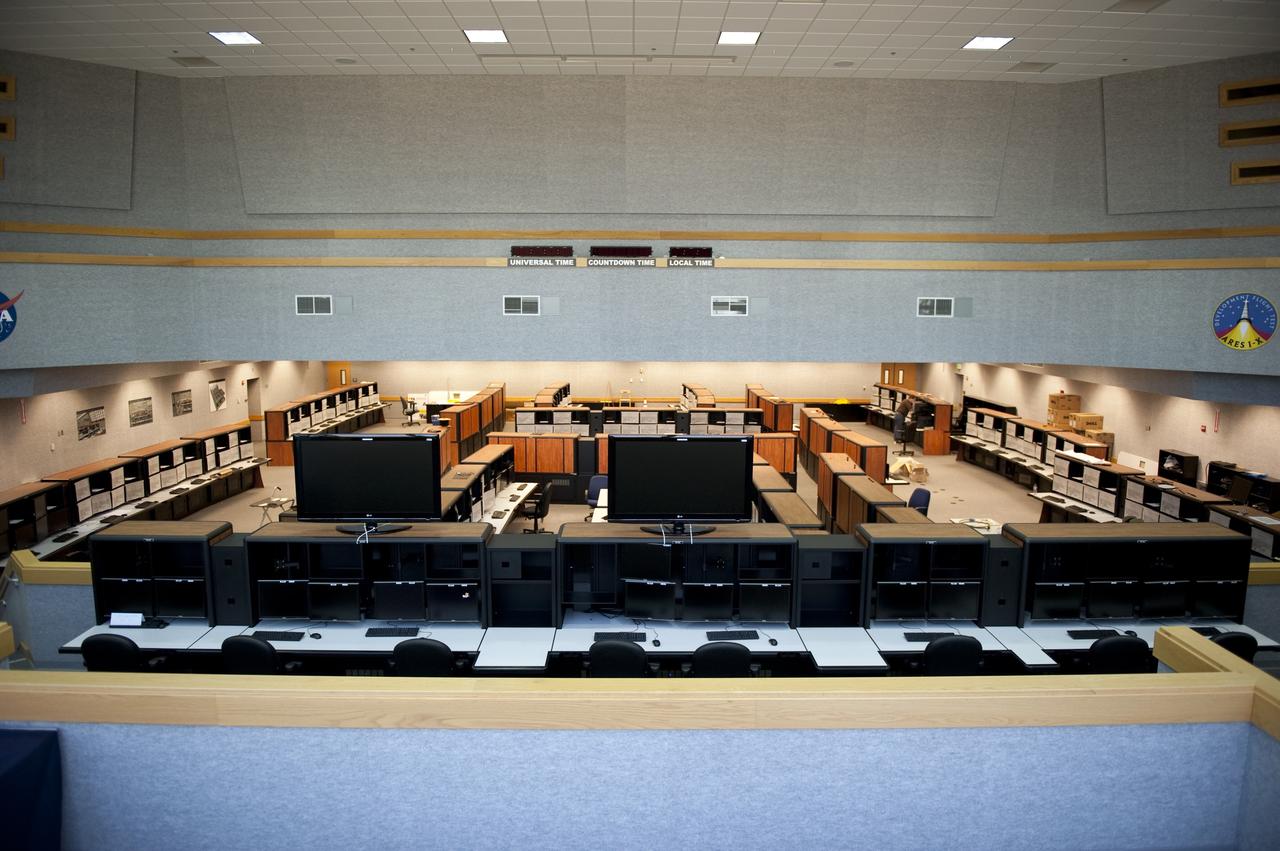
CAPE CANAVERAL, Fla. -- At NASA's Kennedy Space Center in Florida, remodeling for launches of future human spaceflight vehicles takes place in the Launch Control Center's Young-Crippen Firing Room. Consoles already have been rewired for the comprehensive upgrade and are now being outfitted with new computers and monitors. From here, the launch team members who give a final "go/no-go" to launch, can see the rest of the team. Known as Firing Room 1 in the Apollo era, it was re-named as a tribute to the Space Shuttle Program's first crewed mission, STS-1, which was flown by Commander John Young and Pilot Robert Crippen in April 1981. The firing room most recently was set up to support the Ares I-X flight test in Oct. 2009. Photo credit: NASA/Kim Shiflett
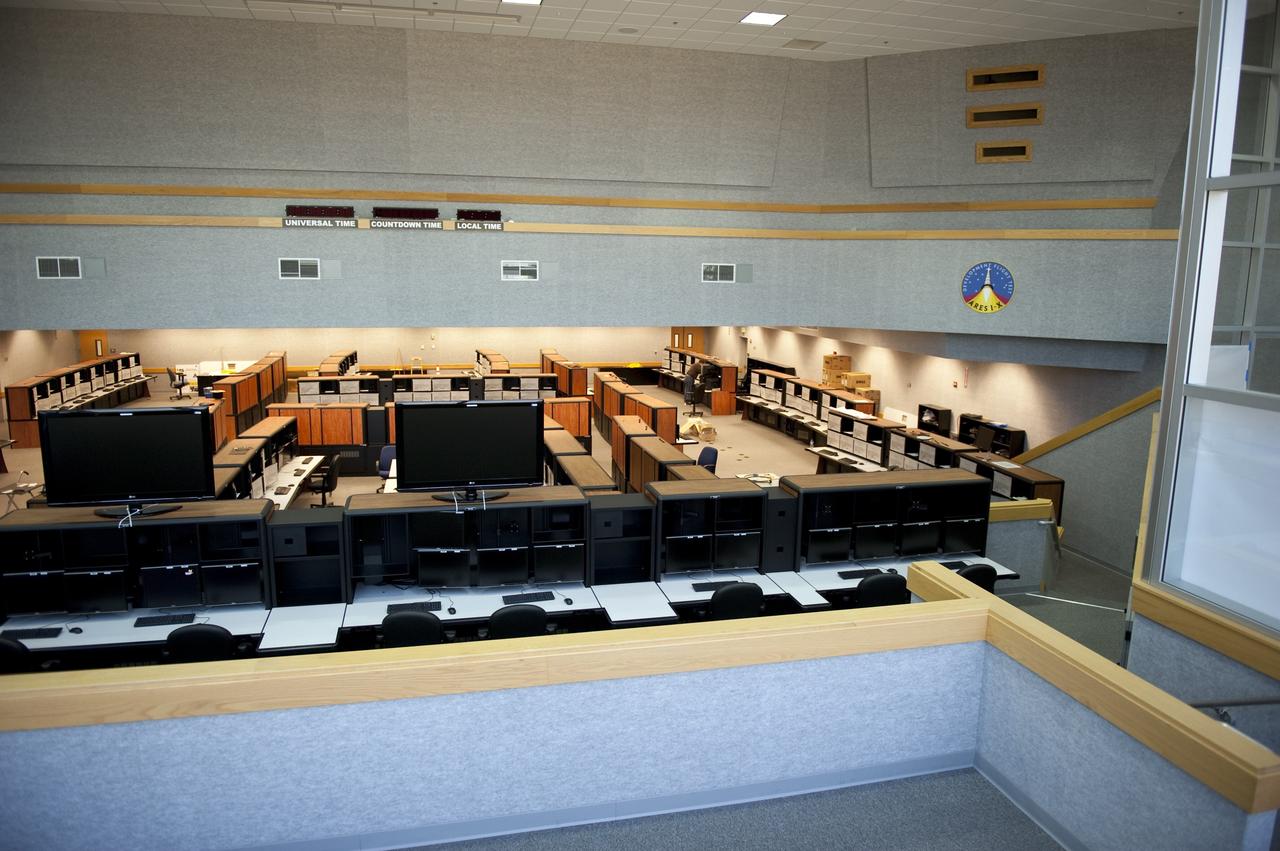
CAPE CANAVERAL, Fla. -- At NASA's Kennedy Space Center in Florida, remodeling for launches of future human spaceflight vehicles takes place in the Launch Control Center's Young-Crippen Firing Room. Consoles already have been rewired for the comprehensive upgrade and are now being outfitted with new computers and monitors. From here, the launch team members who give a final "go/no-go" to launch, can see the rest of the team. Known as Firing Room 1 in the Apollo era, it was re-named as a tribute to the Space Shuttle Program's first crewed mission, STS-1, which was flown by Commander John Young and Pilot Robert Crippen in April 1981. The firing room most recently was set up to support the Ares I-X flight test in Oct. 2009. Photo credit: NASA/Kim Shiflett
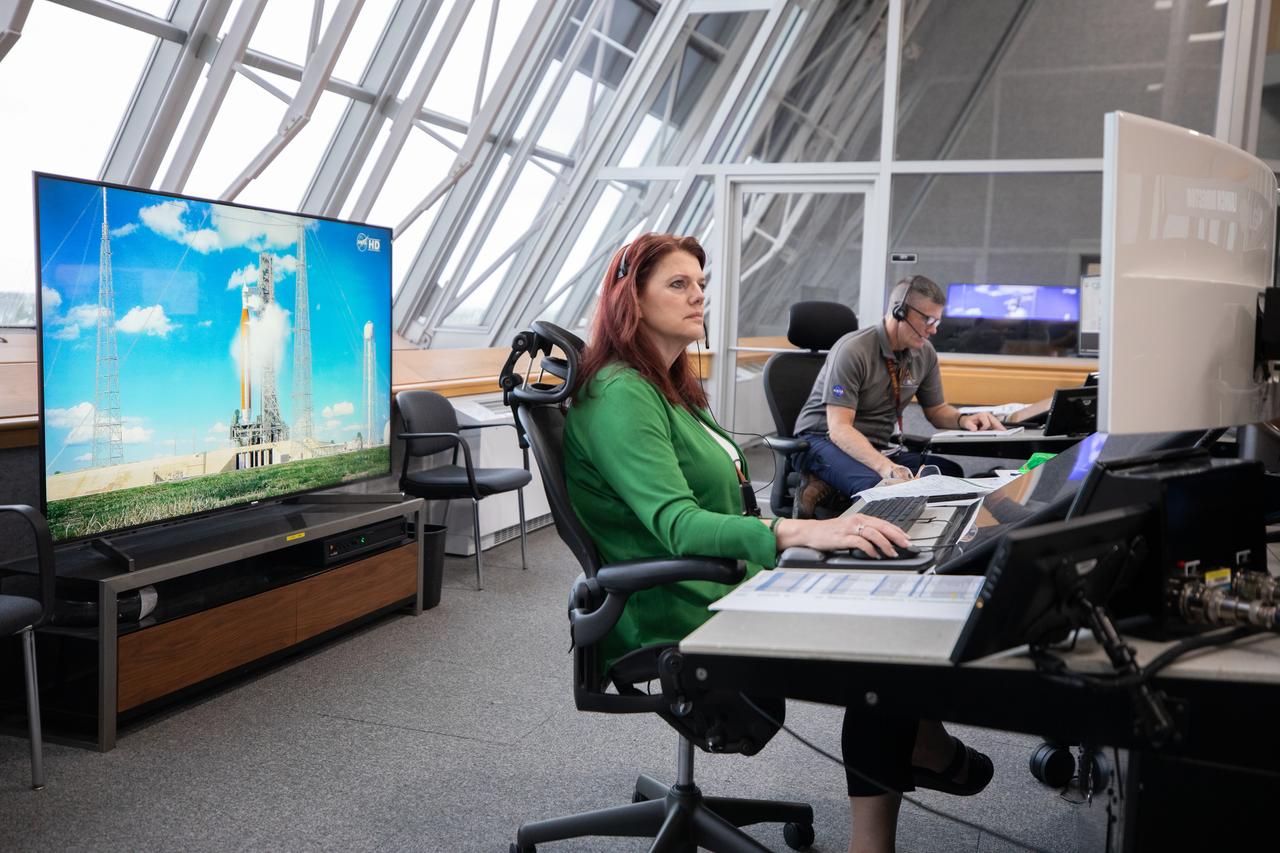
Charlie Blackwell-Thompson, Artemis launch director, Exploration Ground Systems at NASA’s Kennedy Space Center in Florida, participates in the Artemis II Terminal Count Simulation #11 inside Firing Room 1 in the Launch Control Center at NASA’s Kennedy on Thursday, Nov. 7, 2024. The simulations go through launch day scenarios to help launch team members test software and make adjustments if needed during countdown operations. Four astronauts will venture around the Moon on Artemis II, the first crewed mission on NASA’s path to establishing a long-term presence for science and exploration through Artemis.
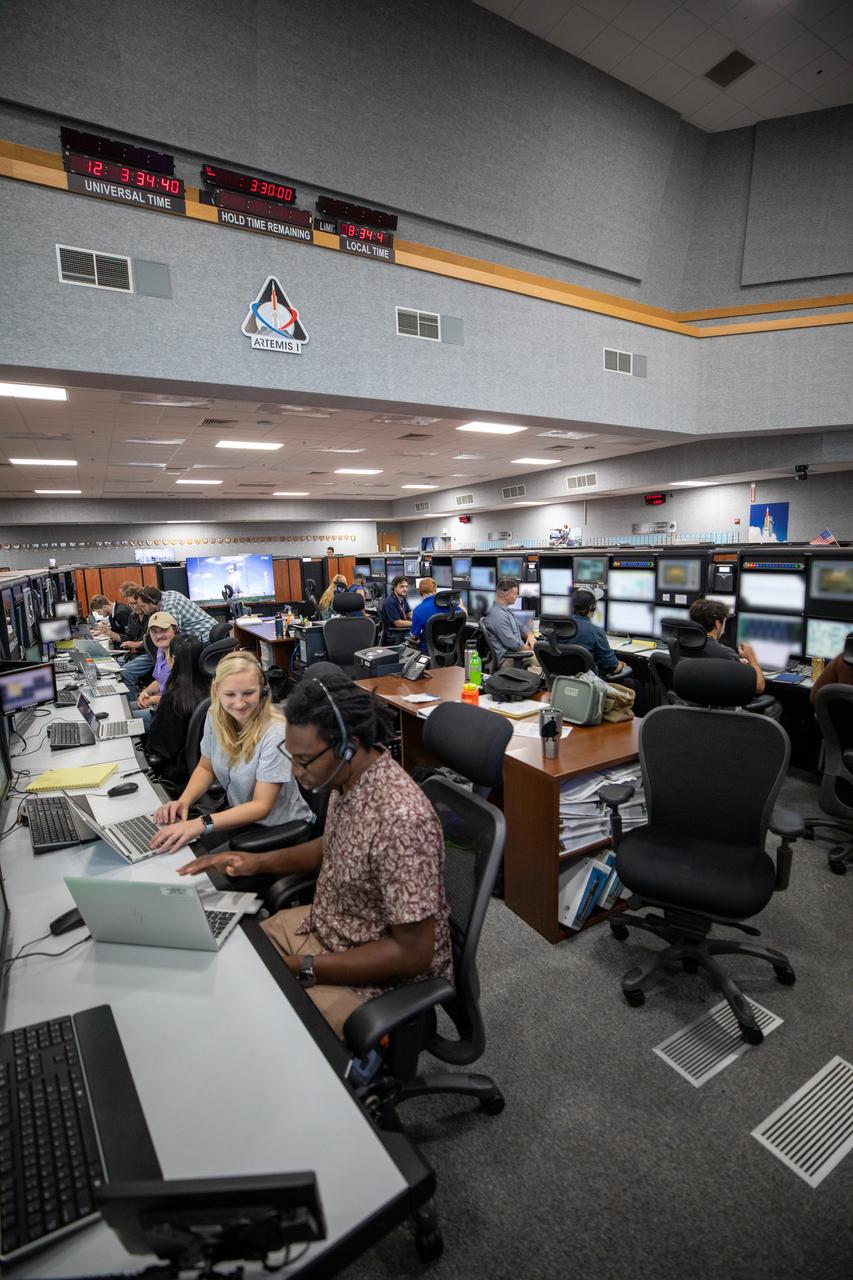
Members of the Artemis launch team participate in the Artemis II Terminal Count Simulation #11 inside Firing Room 1 in the Launch Control Center at NASA’s Kennedy Space Center in Florida on Thursday, Nov. 7, 2024. The simulations go through launch day scenarios to help launch team members test software and make adjustments if needed during countdown operations. Four astronauts will venture around the Moon on Artemis II, the first crewed mission on NASA’s path to establishing a long-term presence for science and exploration through Artemis.
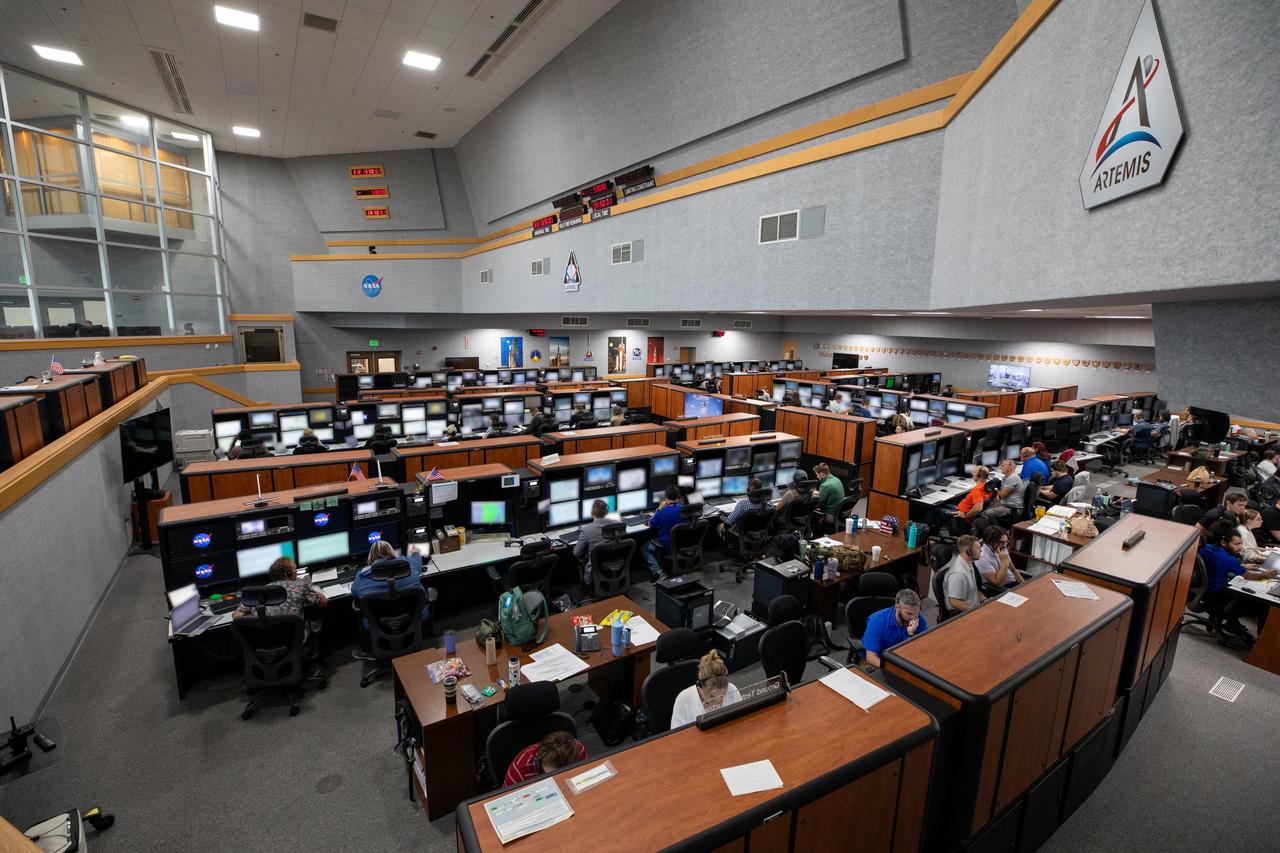
Members of the Artemis launch team participate in the Artemis II Terminal Count Simulation #11 inside Firing Room 1 in the Launch Control Center at NASA’s Kennedy Space Center in Florida on Thursday, Nov. 7, 2024. The simulations go through launch day scenarios to help launch team members test software and make adjustments if needed during countdown operations. Four astronauts will venture around the Moon on Artemis II, the first crewed mission on NASA’s path to establishing a long-term presence for science and exploration through Artemis.
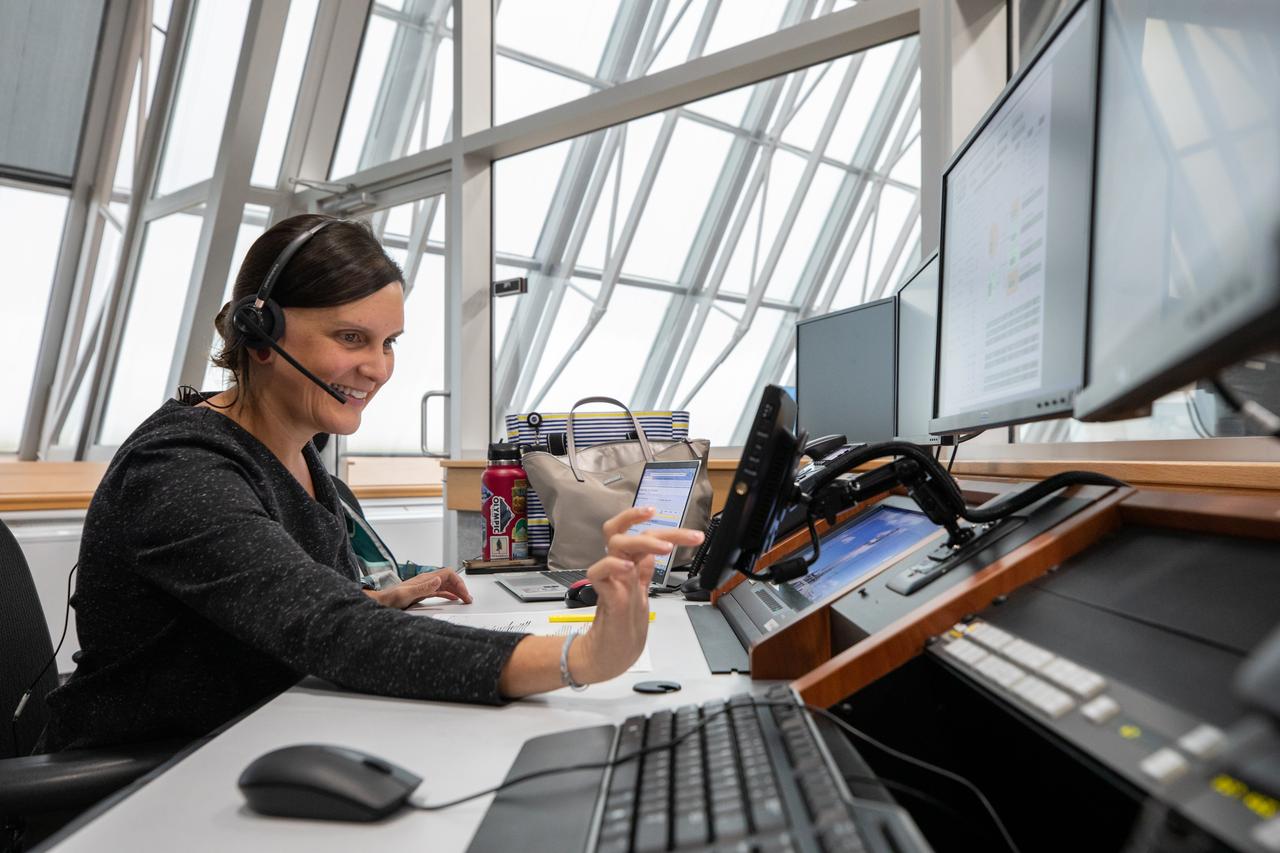
Mari Forrestel, Artemis launch director technical assistant, Exploration Ground Systems at NASA’s Kennedy Space Center in Florida, participates in the Artemis II Terminal Count Simulation #11 inside Firing Room 1 in the Launch Control Center at NASA’s Kennedy on Thursday, Nov. 7, 2024. The simulations go through launch day scenarios to help launch team members test software and make adjustments if needed during countdown operations. Four astronauts will venture around the Moon on Artemis II, the first crewed mission on NASA’s path to establishing a long-term presence for science and exploration through Artemis.
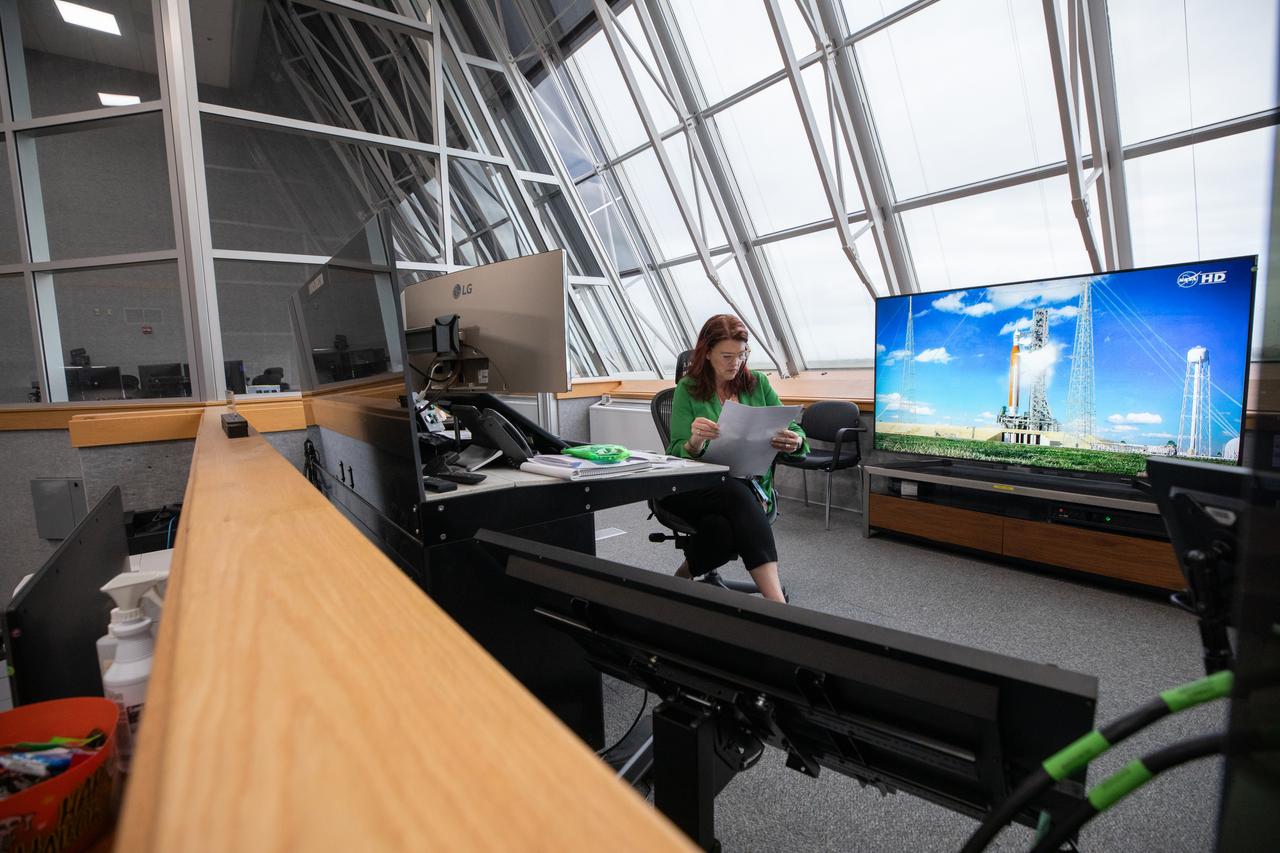
Charlie Blackwell-Thompson, Artemis launch director, Exploration Ground Systems at NASA’s Kennedy Space Center in Florida, participates in the Artemis II Terminal Count Simulation #11 inside Firing Room 1 in the Launch Control Center at NASA’s Kennedy on Thursday, Nov. 7, 2024. The simulations go through launch day scenarios to help launch team members test software and make adjustments if needed during countdown operations. Four astronauts will venture around the Moon on Artemis II, the first crewed mission on NASA’s path to establishing a long-term presence for science and exploration through Artemis.
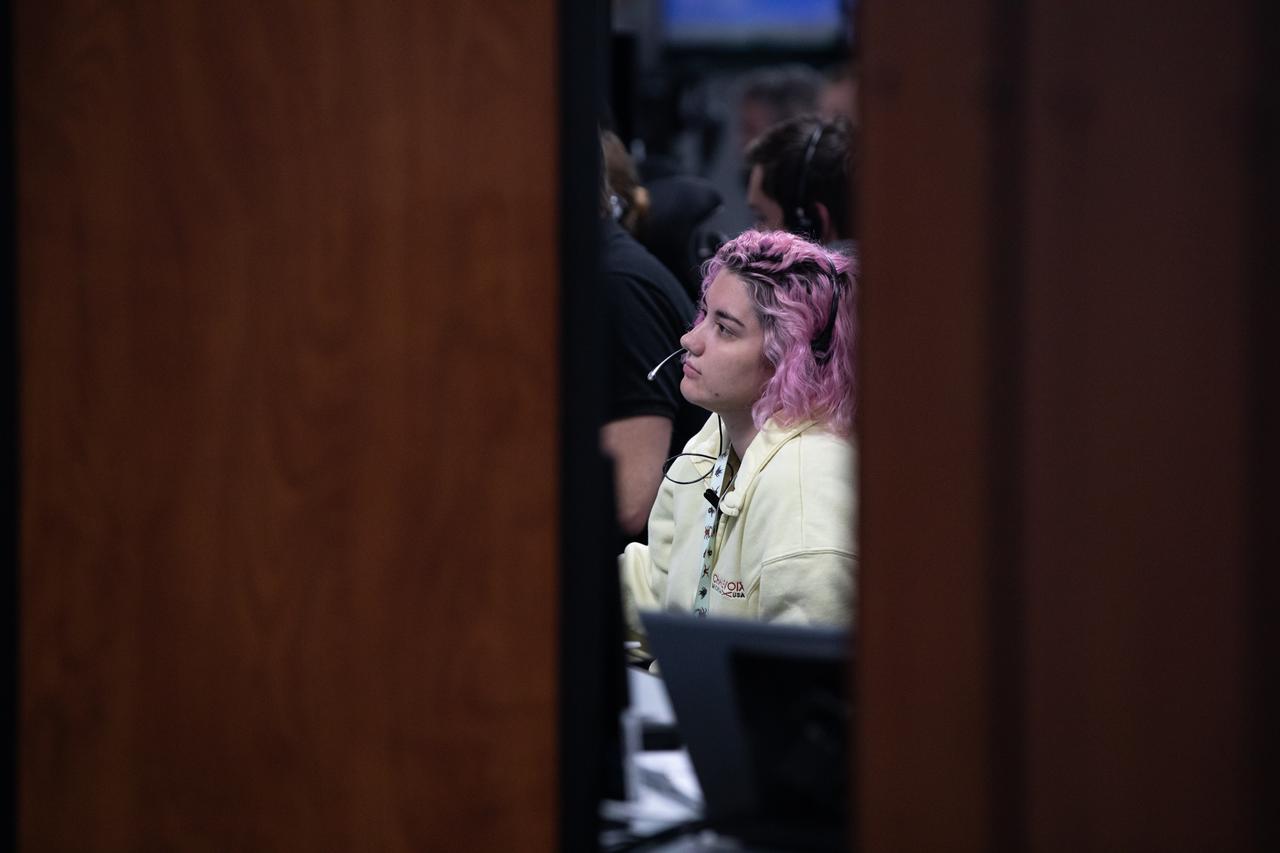
Members of the Artemis launch team participate in the Artemis II Terminal Count Simulation #11 inside Firing Room 1 in the Launch Control Center at NASA’s Kennedy Space Center in Florida on Thursday, Nov. 7, 2024. The simulations go through launch day scenarios to help launch team members test software and make adjustments if needed during countdown operations. Four astronauts will venture around the Moon on Artemis II, the first crewed mission on NASA’s path to establishing a long-term presence for science and exploration through Artemis.
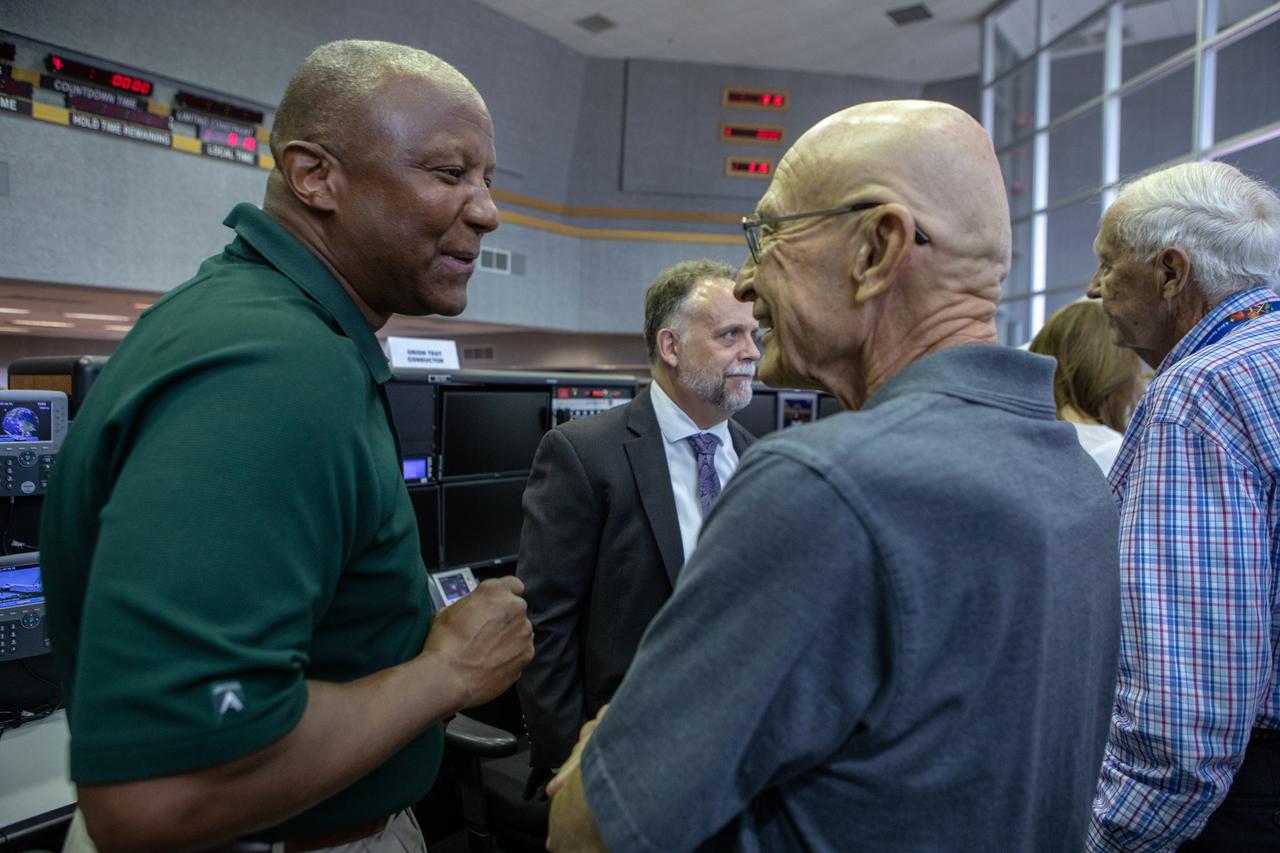
On July 16, 2019, the 50th anniversary of the Apollo 11 launch to the Moon, Kelvin Manning, left, Kennedy Space Center associate director, technical, talks to Bob Sieck, former Apollo 11 launch team member and space shuttle launch director, in Firing Room 1 in the Launch Control Center at NASA’s Kennedy Space Center in Florida. In the background is Sean Quinn, director of Engineering.
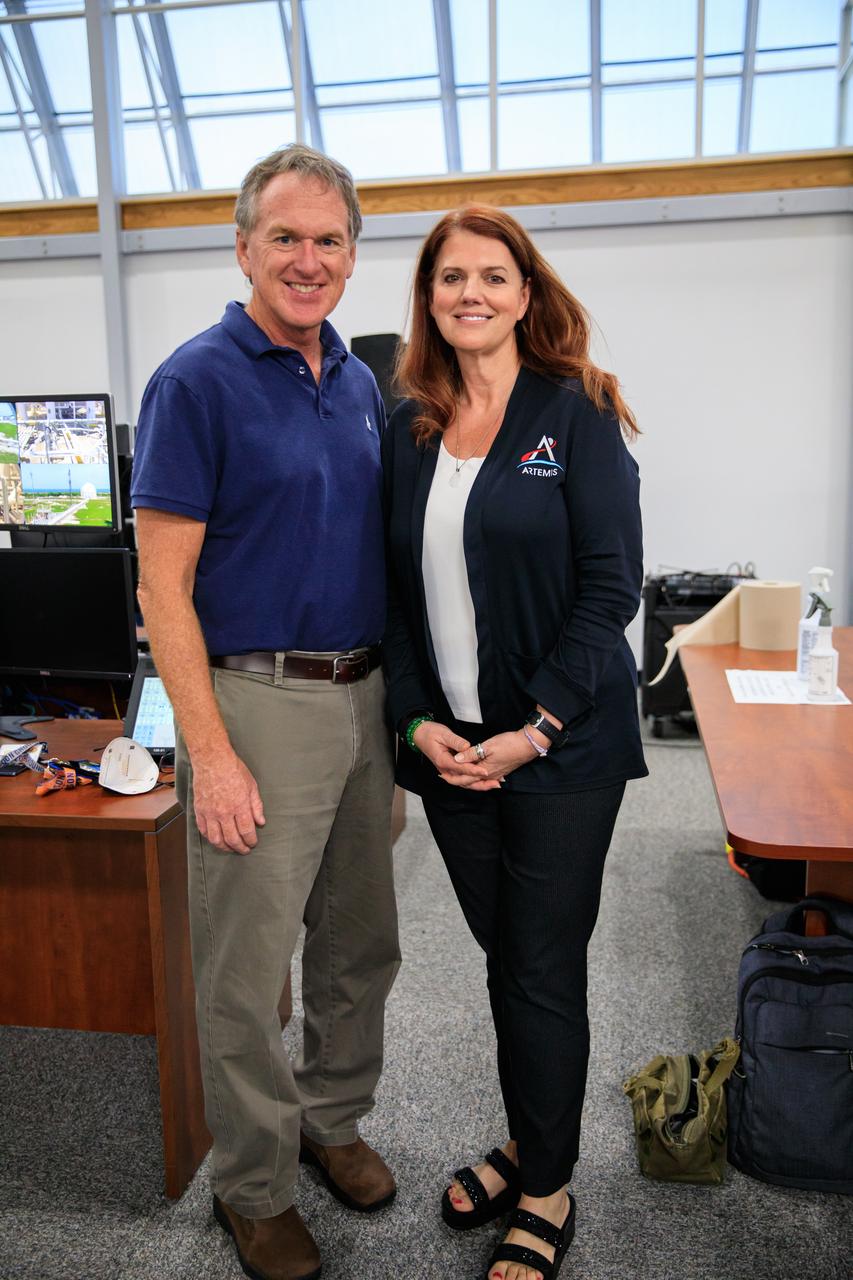
NASA’s Exploration Ground Systems Manager Mike Bolger (left) and Artemis I Launch Director Charlie Blackwell-Thompson are photographed inside Firing Room 2 of the Rocco A. Petrone Launch Control Center at the agency’s Kennedy Space Center in Florida during a certification ceremony on Aug. 12, 2022. The ceremony was held to commemorate the certification of the Artemis I launch team following their launch simulation held in December 2021. During the ceremony, Bolger and Blackwell-Thompson handed out certificates to individual members of the launch team. The first in an increasingly complex series of missions, Artemis I will test NASA’s Space Launch System rocket and Orion spacecraft as an integrated system prior to crewed flights to the Moon. Through Artemis, NASA will land the first woman and the first person of color on the lunar surface, paving the way for long-term lunar presence and using the Moon as a steppingstone before venturing to Mars.
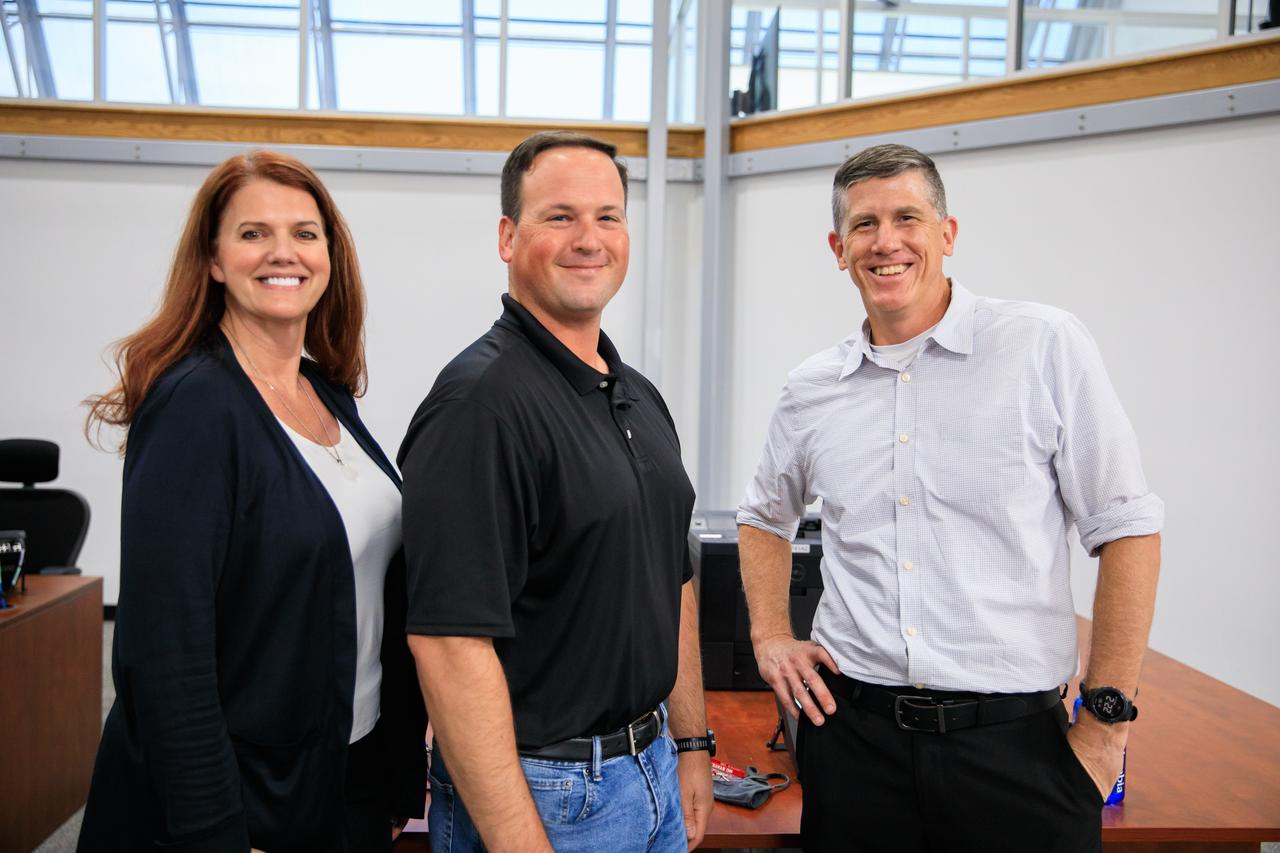
From left, Artemis I Launch Director Charlie Blackwell-Thompson, Technical Assistant to the Launch Director Wes Mosedale, and Assistant Launch Director Jeremy Graeber are photographed inside Firing Room 2 of the Rocco A. Petrone Launch Control Center at the agency’s Kennedy Space Center in Florida during a certification ceremony on Aug. 12, 2022. The ceremony was held to commemorate the certification of the Artemis I launch team following their launch simulation held in December 2021. During the ceremony, management staff handed out certificates to individual team members. The first in an increasingly complex series of missions, Artemis I will test NASA’s Space Launch System rocket and Orion spacecraft as an integrated system prior to crewed flights to the Moon. Through Artemis, NASA will land the first woman and the first person of color on the lunar surface, paving the way for long-term lunar presence and using the Moon as a steppingstone before venturing to Mars.
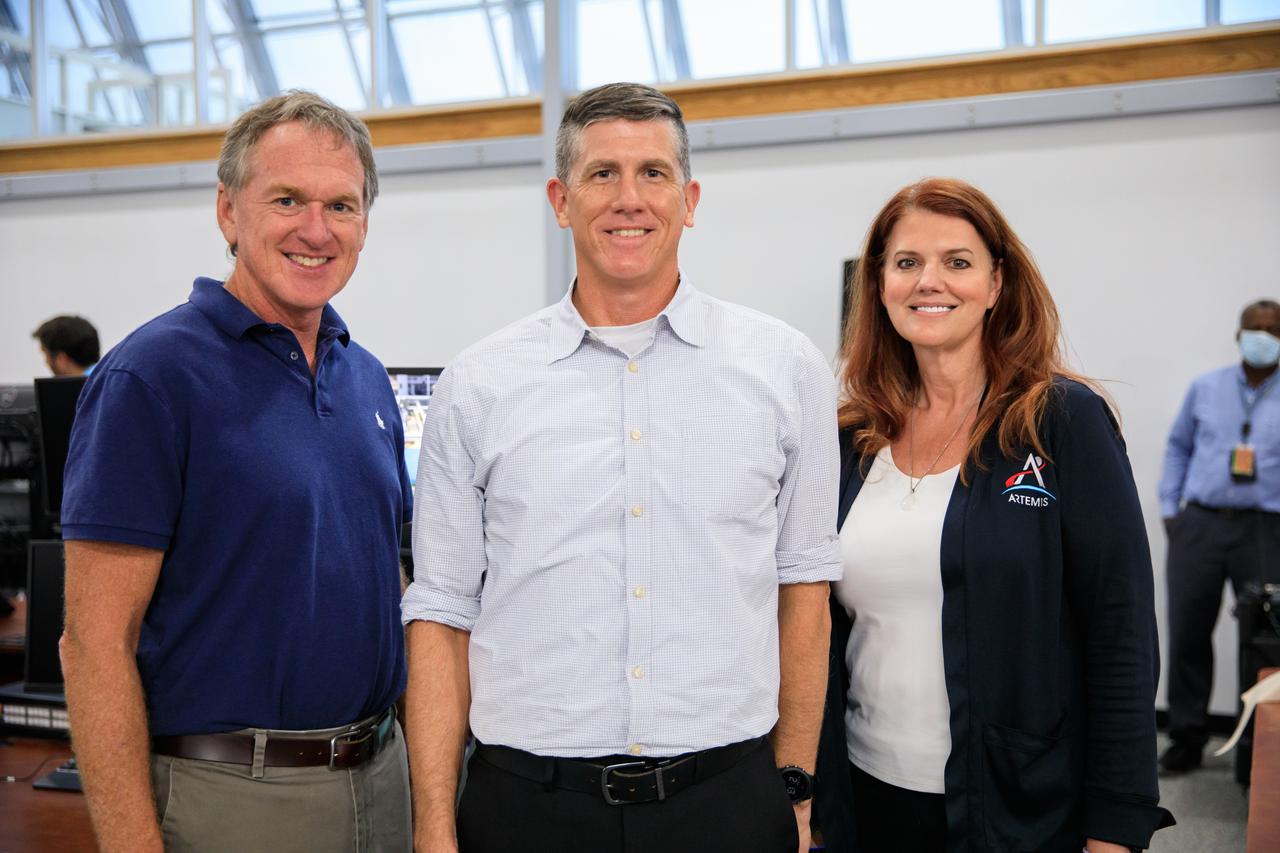
From left, NASA’s Exploration Ground Systems Manager Mike Bolger, Artemis I Assistant Launch Director Jeremy Graeber, and Launch Director Charlie Blackwell-Thompson are photographed inside Firing Room 2 of the Rocco A. Petrone Launch Control Center at the agency’s Kennedy Space Center in Florida during a certification ceremony on Aug. 12, 2022. The ceremony was held to commemorate the certification of the Artemis I launch team following their launch simulation held in December 2021. During the ceremony, Bolger, Graeber, and Blackwell-Thompson handed out certificates to individual members of the launch team. The first in an increasingly complex series of missions, Artemis I will test NASA’s Space Launch System rocket and Orion spacecraft as an integrated system prior to crewed flights to the Moon. Through Artemis, NASA will land the first woman and the first person of color on the lunar surface, paving the way for long-term lunar presence and using the Moon as a steppingstone before venturing to Mars.
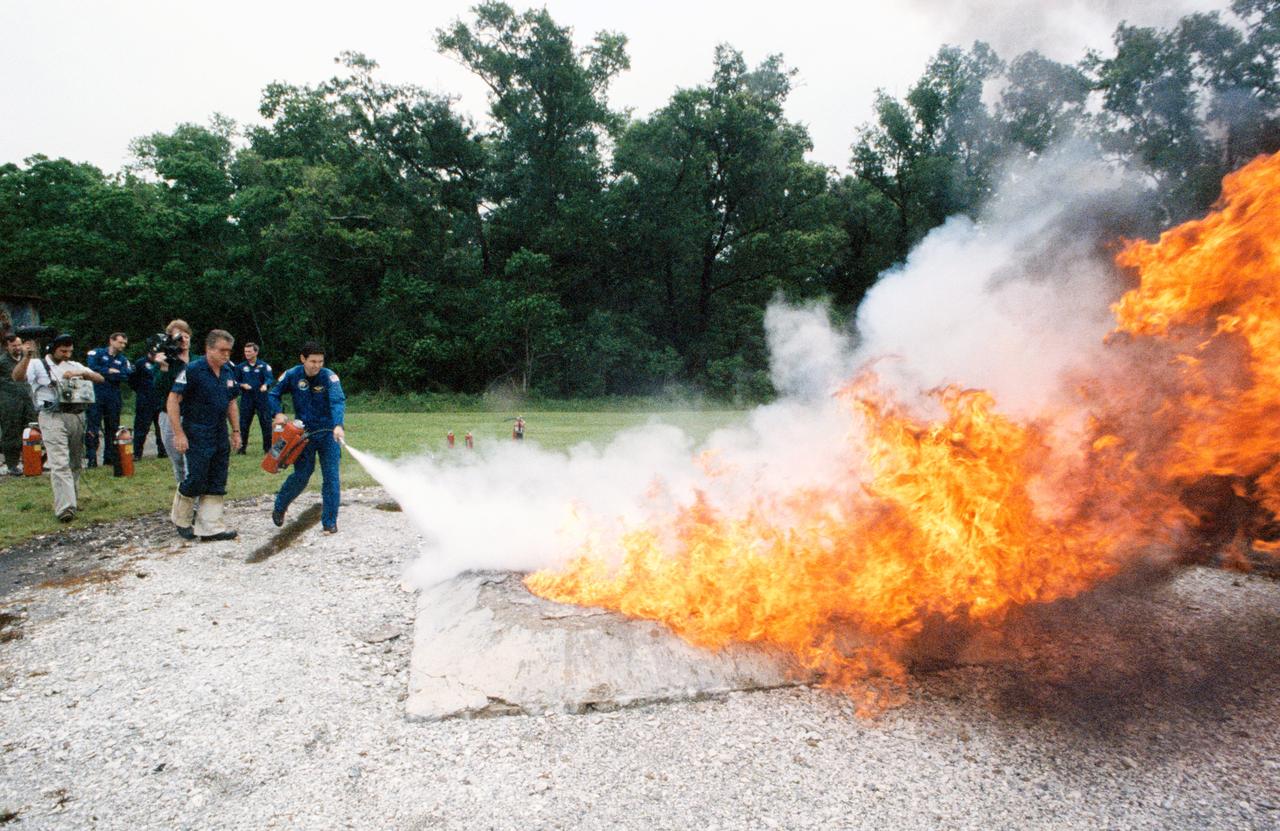
S90-38933 (4 May 1990) --- The STS-41 astronaut crew participates in fire control training exercises at the Johnson Space Center (JSC). Controlling the fire extinguisher at left frame is astronaut Robert D. Cabana, STS-41 pilot. Watching in the background are other STS-41 astronauts who participated in the session. They were Richard N. Richards, William M. Shepherd, Bruce E. Melnick and Thomas D. Akers. This type training is provided all crewmembers assigned to seats aboard Space Shuttle. Members of the both the Houston and Pasadena fire departments instruct the sessions.
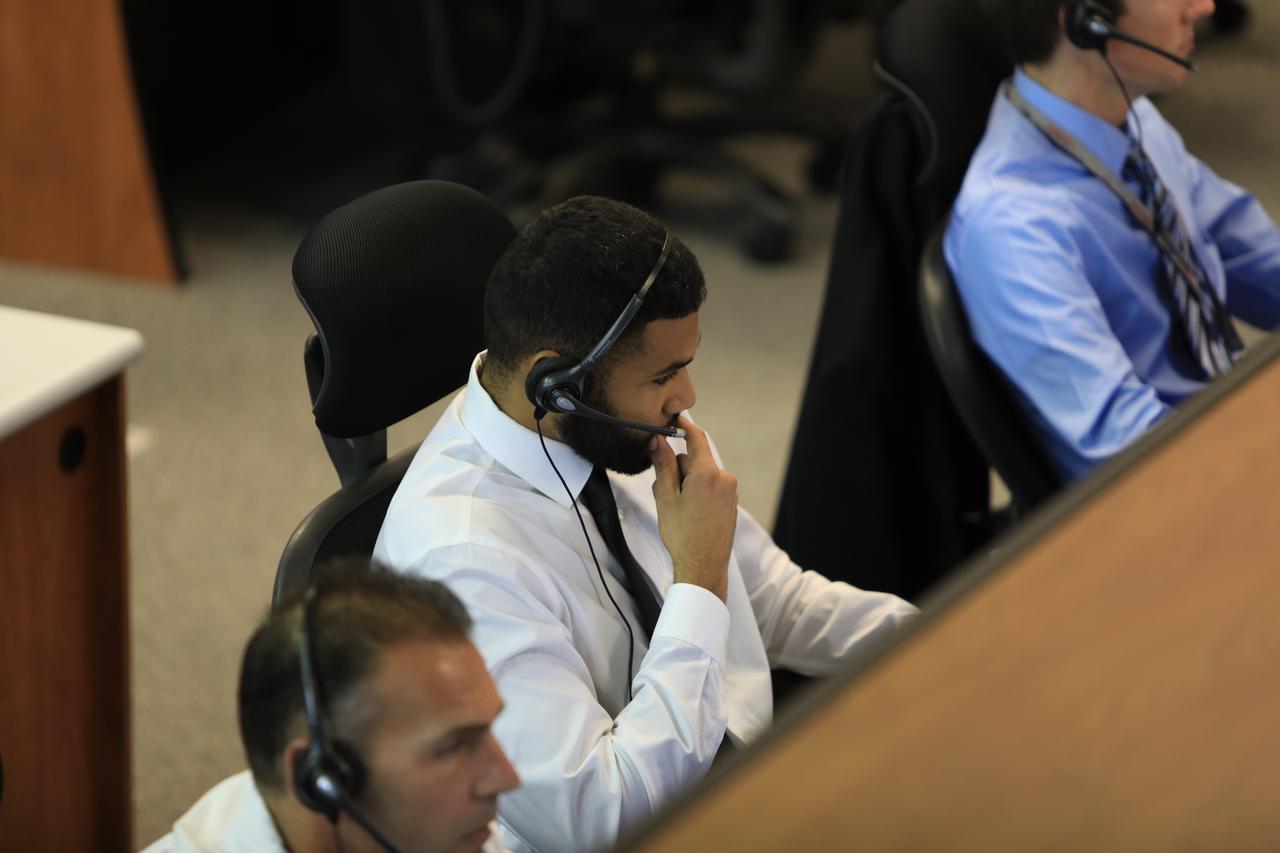
Michael Guzman, an umbilical engineer, monitors his console in Firing Room 1 in the Launch Control Center at NASA’s Kennedy Space Center in Florida, during a terminal countdown demonstration for Exploration Mission 1, or EM-1, on Dec. 14, 2018. The launch will be the first integrated test of the Space Launch System rocket and Orion spacecraft that will eventually take astronauts beyond low-Earth orbit to destinations such as the Moon and Mars. The countdown demonstration was intended to validate the launch team's capability to perform an EM-1 countdown and respond to challenges put into the system for practice.
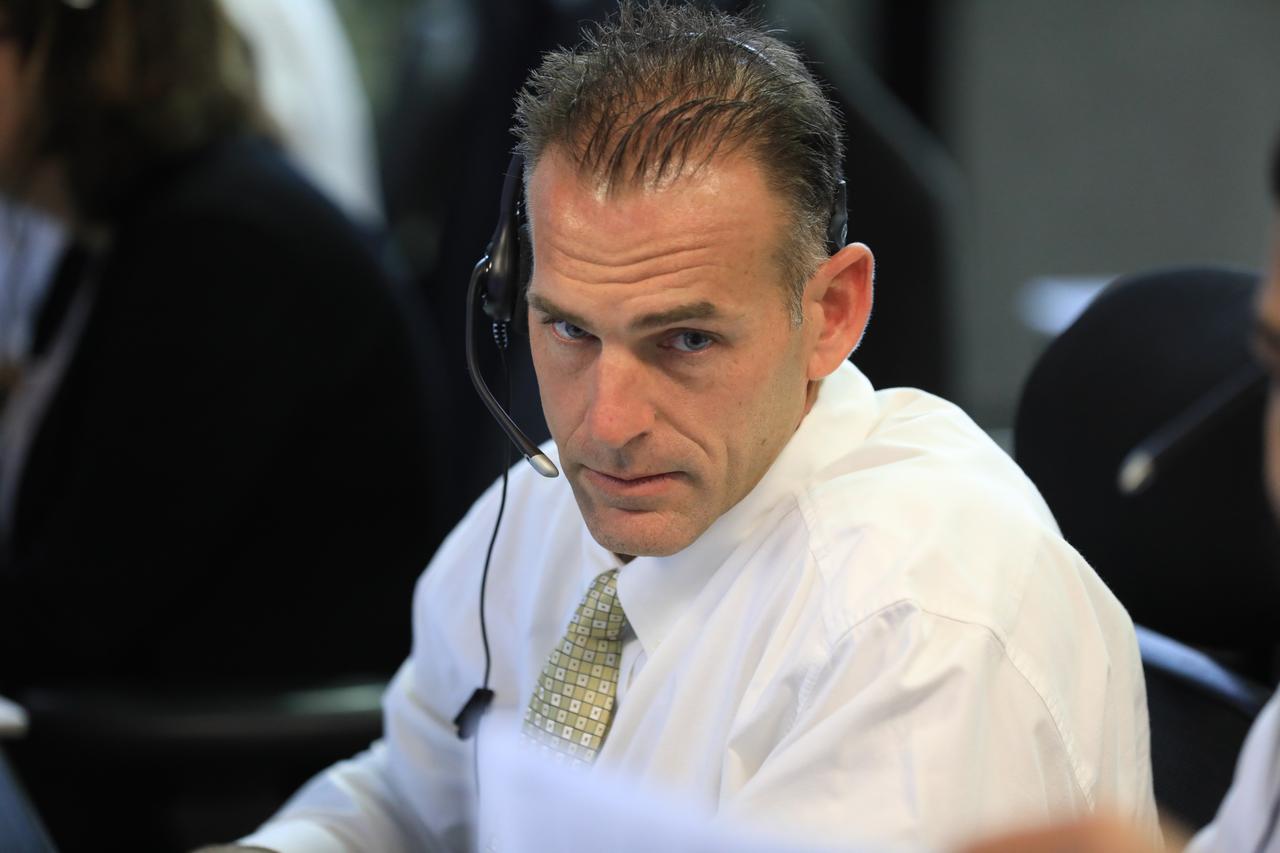
Mark Tripp, center, monitors his console in Firing Room 1 in the Launch Control Center at NASA’s Kennedy Space Center in Florida, during a terminal countdown demonstration for Exploration Mission 1, or EM-1, on Dec. 14, 2018. The launch will be the first integrated test of the Space Launch System rocket and Orion spacecraft that will eventually take astronauts beyond low-Earth orbit to destinations such as the Moon and Mars. The countdown demonstration was intended to validate the launch team's capability to perform an EM-1 countdown and respond to challenges put into the system for practice.

Charlie Blackwell-Thompson, launch director, Exploration Ground Systems Program, participates in the Artemis III terminal countdown simulation on Thursday, May 7, 2026, inside Firing Room 1 of the Rocco A. Petrone Launch Control Center at NASA’s Kennedy Space Center in Florida. This marked the first simulation the launch team performed ahead of Artemis III.
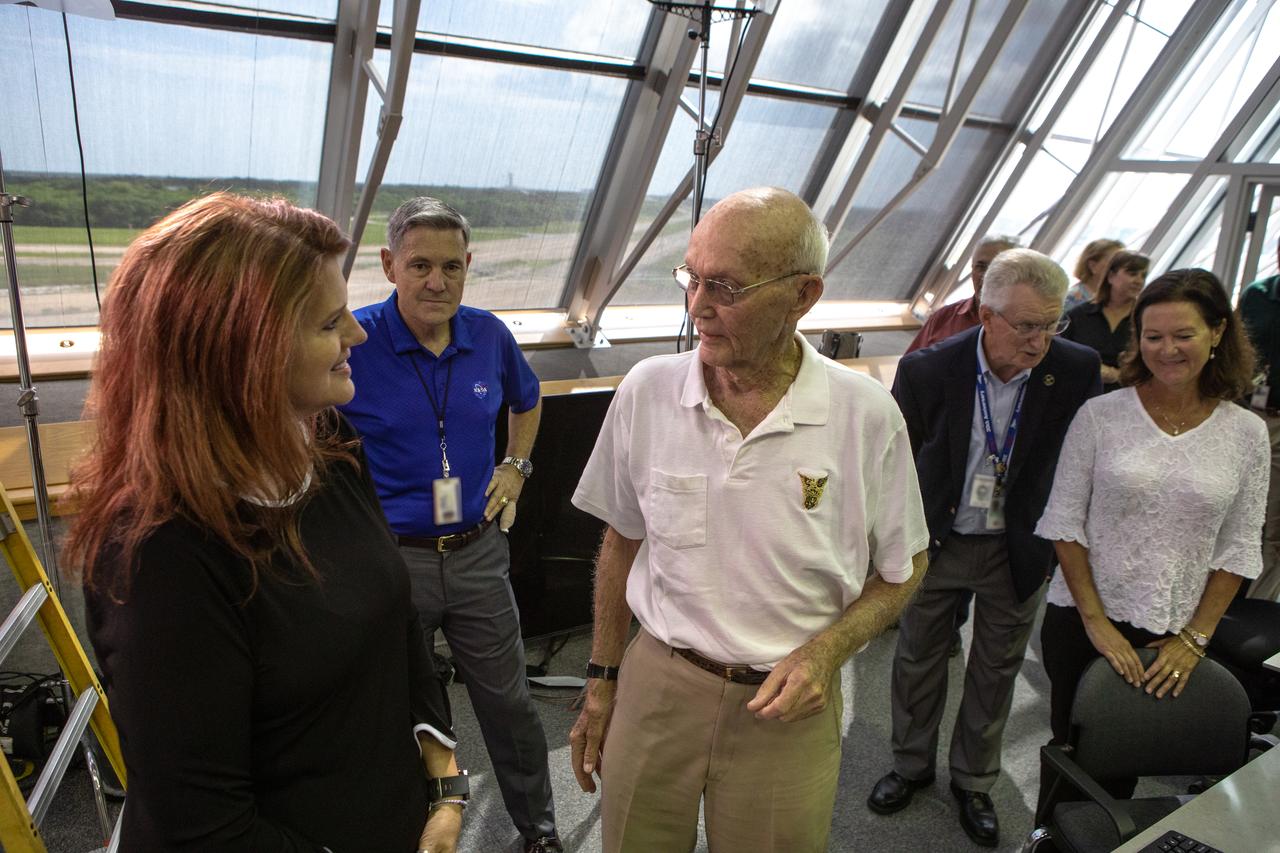
On July 16, 2019, the 50th anniversary of the Apollo 11 launch to the Moon, Apollo 11 and Artemis 1 launch team members mingle in Launch Control Center Firing Room 1 at NASA's Kennedy Space Center in Florida. Artemis 1 Launch Director Charlie Blackwell-Thompson, left, talks to Apollo 11 astronaut Michael Collins. In the background is Kennedy Director Bob Cabana.
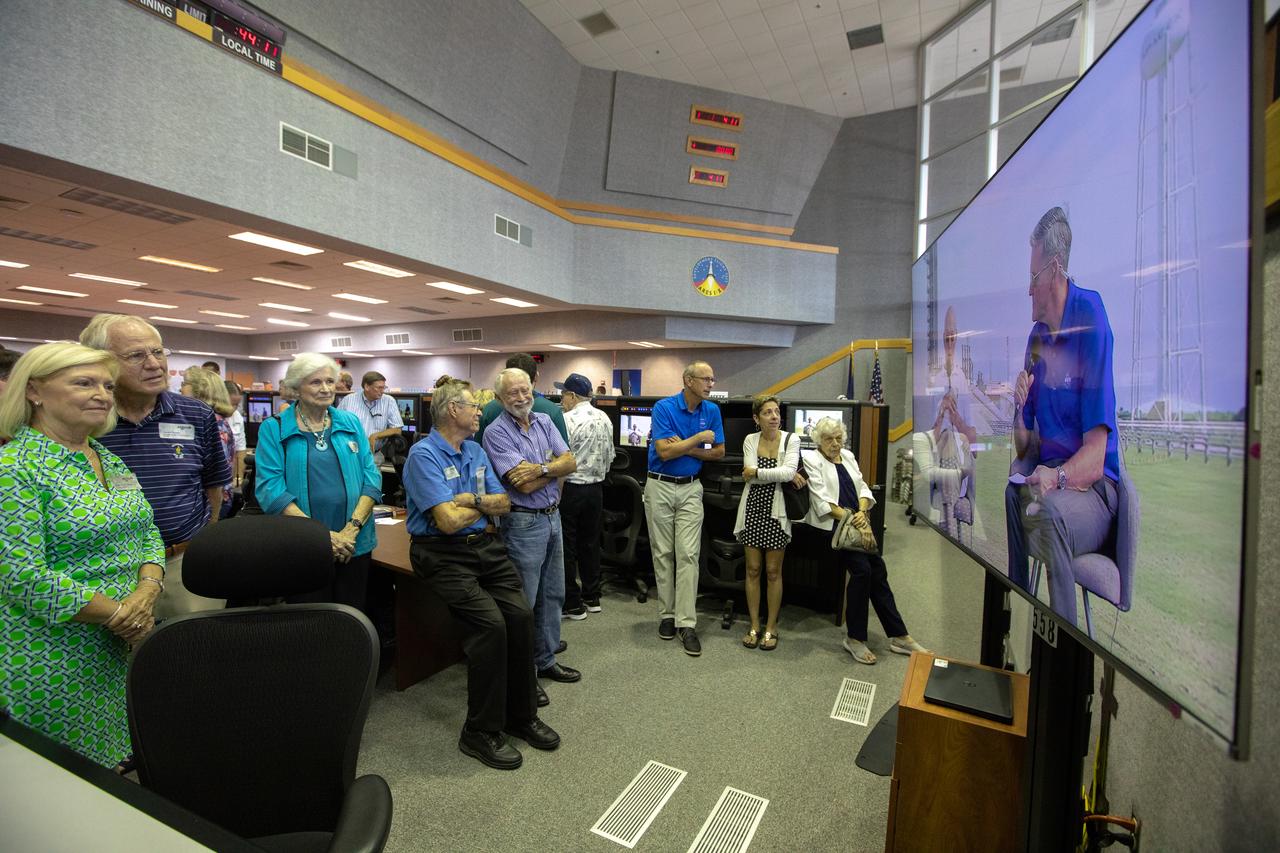
On July 16, 2019, the 50th anniversary of the Apollo 11 launch to the Moon, Apollo-era and Artemis 1 launch team members watch a live broadcast on monitors in Launch Control Center Firing Room 1 at NASA's Kennedy Space Center in Florida. On screen, Kennedy Center Director Bob Cabana is talking with Apollo 11 astronaut Michael Collins at Launch Complex 39A, the site of the Apollo 11 launch.

On July 16, 2019, the 50th anniversary of the Apollo 11 launch to the Moon, Apollo 11 and Artemis 1 launch team members mingle in Launch Control Center Firing Room 1 at NASA's Kennedy Space Center in Florida. Artemis 1 Launch Director Charlie Blackwell-Thompson, left, talks to Apollo 11 astronaut Michael Collins. In the background is Kennedy Director Bob Cabana.
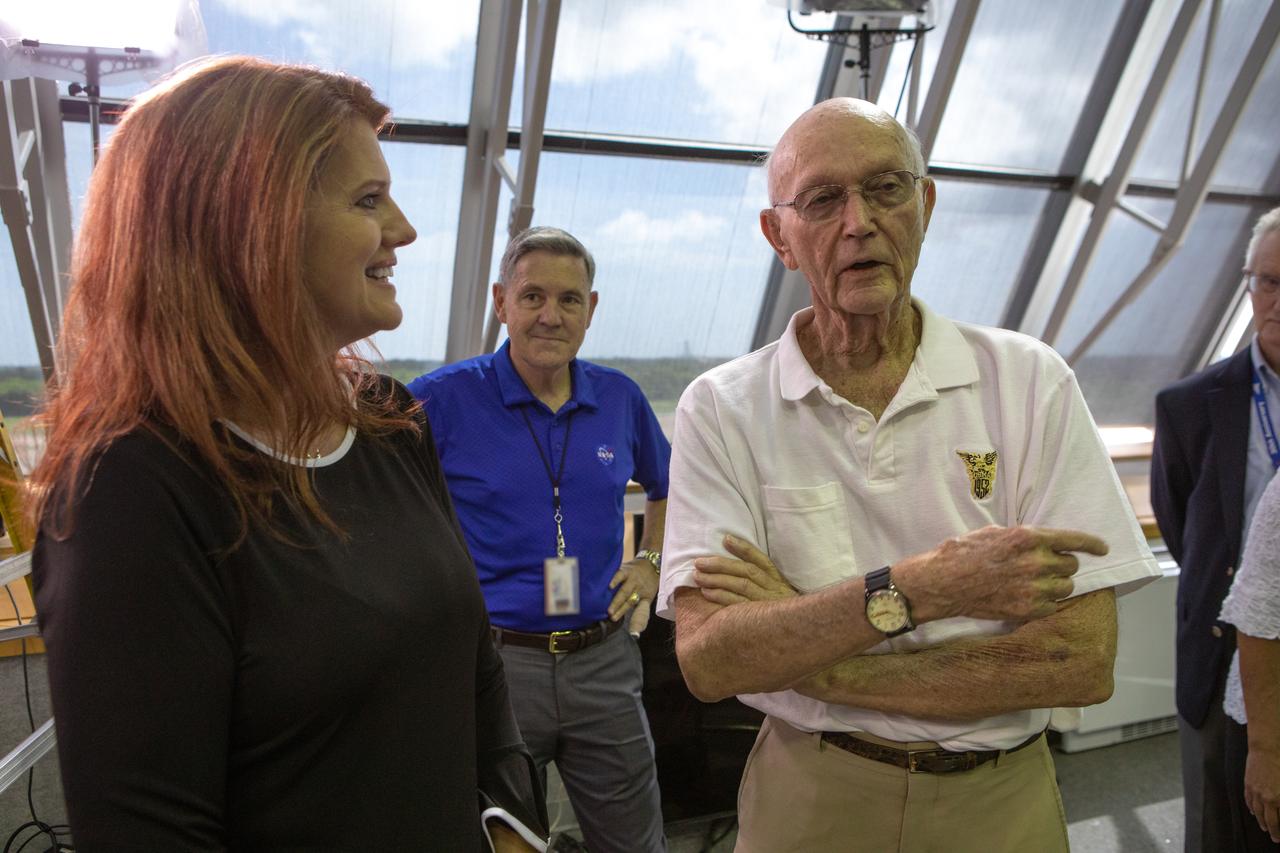
On July 16, 2019, the 50th anniversary of the Apollo 11 launch to the Moon, Apollo 11 and Artemis 1 launch team members mingle in Launch Control Center Firing Room 1 at NASA's Kennedy Space Center in Florida. Artemis 1 Launch Director Charlie Blackwell-Thompson, left, talks to Apollo 11 astronaut Michael Collins. In the background is Kennedy Director Bob Cabana.
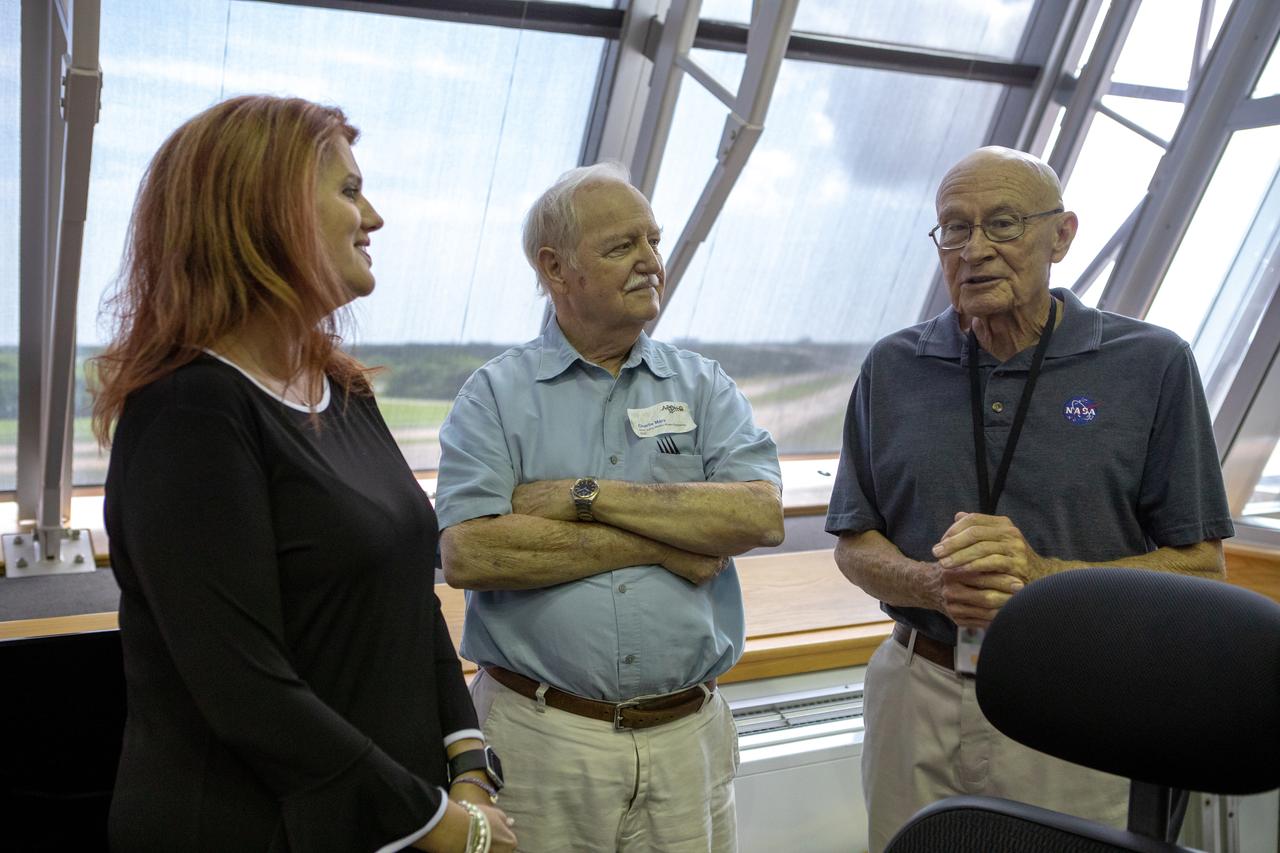
On July 16, 2019, the 50th anniversary of the Apollo 11 launch to the Moon; Apollo-era and Artemis launch team members mingle in Launch Control Center Firing Room 1 at NASA's Kennedy Space Center in Florida. From left, are Charlie Blackwell-Thompson, Artemis 1 launch director; Charlie Mars, Apollo 11 launch team member; and Bob Sieck, Apollo 11 launch team member and former space shuttle launch director.
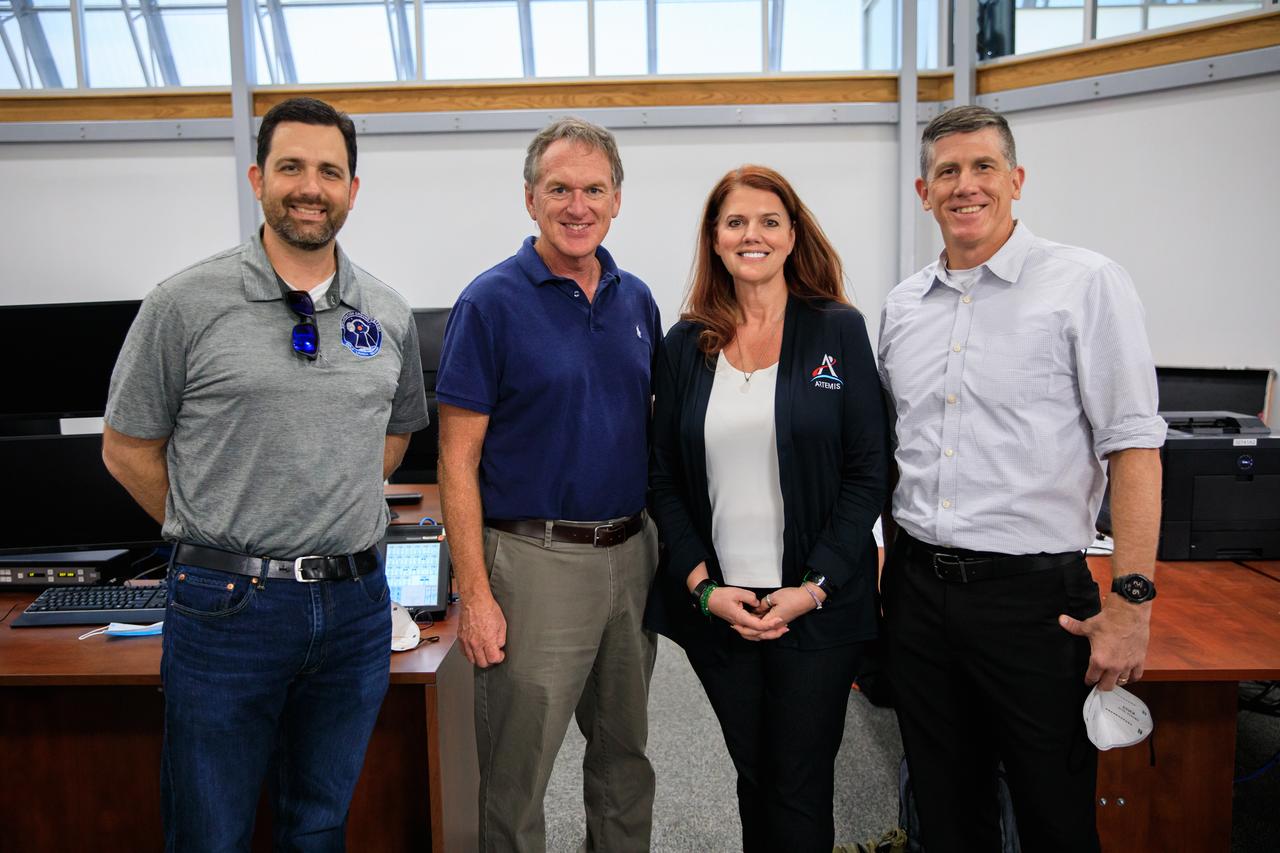
From left, NASA’s Exploration Ground Systems (EGS) Deputy Manager Jeremy Parsons, EGS Manager Mike Bolger, Artemis I Launch Director Charlie Blackwell-Thompson, and Assistant Launch Director Jeremy Graeber are photographed inside Firing Room 2 of the Rocco A. Petrone Launch Control Center at the agency’s Kennedy Space Center in Florida during a certification ceremony on Aug. 12, 2022. The ceremony was held to commemorate the certification of the Artemis I launch team following their launch simulation held in December 2021. During the ceremony, management staff handed out certificates to individual team members. The first in an increasingly complex series of missions, Artemis I will test NASA’s Space Launch System rocket and Orion spacecraft as an integrated system prior to crewed flights to the Moon. Through Artemis, NASA will land the first woman and the first person of color on the lunar surface, paving the way for long-term lunar presence and using the Moon as a steppingstone before venturing to Mars.
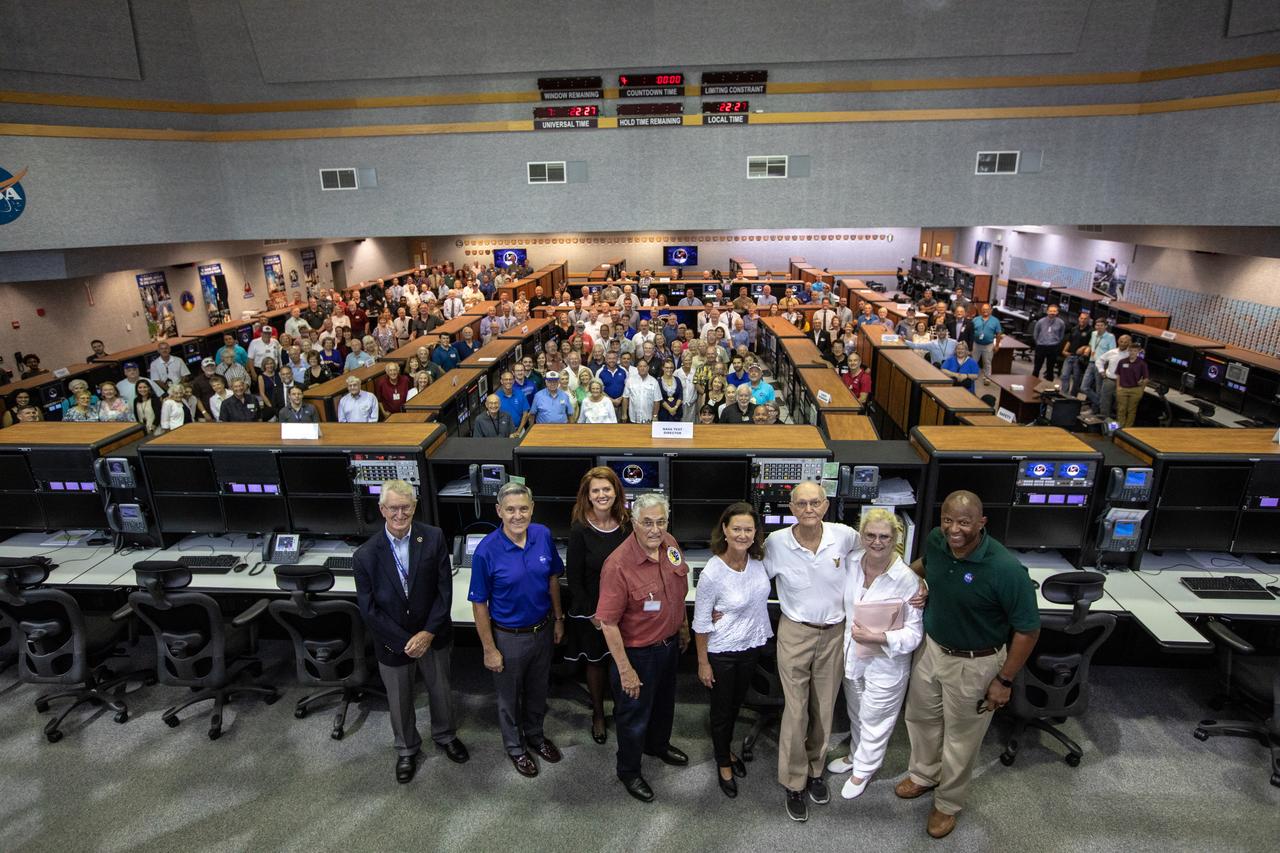
On July 16, 2019, the 50th anniversary of the Apollo 11 launch to the Moon, launch team members from Apollo 11 and Artemis 1 mingled in Launch Control Center Firing Room 1 at NASA's Kennedy Space Center in Florida. From left, are John Tribe, Apollo 11 launch team member; Kennedy Space Center Director Bob Cabana; Artemis 1 Launch Director Charlie Blackwell-Thompson; Harrison Schmitt, Apollo 17 astronaut; Apollo 11 astronaut Michael Collins, with his daughters Ann (left) and Kate (right); and Kelvin Manning, associate director, technical.
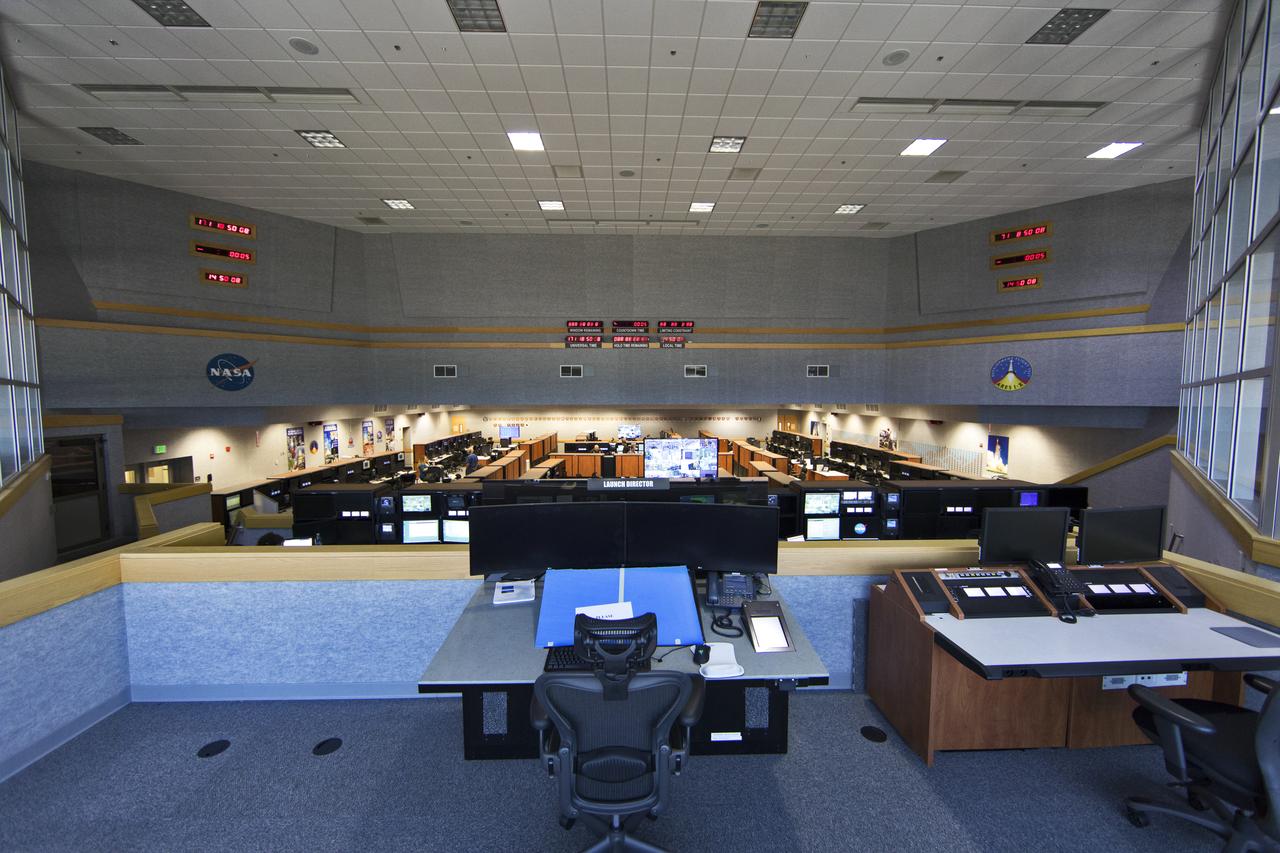
A view of Firing Room 1 in the Launch Control Center (LCC) at NASA's Kennedy Space Center in Florida. The Apollo and shuttle-era firing rooms in the LCC have been upgraded. The upper deck includes a work station in development for the EM-1 launch director. Exploration Ground Systems upgraded Firing Room 1 to support the launch of NASA's Space Launch System rocket and Orion spacecraft on Exploration Mission-1 and deep space missions.

An Artemis launch team member participates in the Artemis III terminal countdown simulation on Thursday, May 7, 2026, inside Firing Room 1 of the Rocco A. Petrone Launch Control Center at NASA’s Kennedy Space Center in Florida. This marked the first simulation the launch team performed ahead of Artemis III.

Maria Zapata, test conductor, participates in the Artemis III terminal countdown simulation on Thursday, May 7, 2026, inside Firing Room 1 of the Rocco A. Petrone Launch Control Center at NASA’s Kennedy Space Center in Florida. This marked the first simulation the launch team performed ahead of Artemis III.

An Artemis launch team member participates in the Artemis III terminal countdown simulation on Thursday, May 7, 2026, inside Firing Room 1 of the Rocco A. Petrone Launch Control Center at NASA’s Kennedy Space Center in Florida. This marked the first simulation the launch team performed ahead of Artemis III.

An Artemis launch team member participates in the Artemis III terminal countdown simulation on Thursday, May 7, 2026, inside Firing Room 1 of the Rocco A. Petrone Launch Control Center at NASA’s Kennedy Space Center in Florida. This marked the first simulation the launch team performed ahead of Artemis III.

An Artemis launch team member participates in the Artemis III terminal countdown simulation on Thursday, May 7, 2026, inside Firing Room 1 of the Rocco A. Petrone Launch Control Center at NASA’s Kennedy Space Center in Florida. This marked the first simulation the launch team performed ahead of Artemis III.

Sierra Sewdass, test conductor, participates in the Artemis III terminal countdown simulation on Thursday, May 7, 2026, inside Firing Room 1 of the Rocco A. Petrone Launch Control Center at NASA’s Kennedy Space Center in Florida. This marked the first simulation the launch team performed ahead of Artemis III.

Maria Zapata, test conductor, participates in the Artemis III terminal countdown simulation on Thursday, May 7, 2026, inside Firing Room 1 of the Rocco A. Petrone Launch Control Center at NASA’s Kennedy Space Center in Florida. This marked the first simulation the launch team performed ahead of Artemis III.

A blue sky and fluffy clouds serve as the backdrop in this view of the exterior of the Launch Control Center (LCC) at NASA's Kennedy Space Center in Florida. The Apollo and shuttle-era firing rooms in the LCC have been upgraded. Exploration Ground Systems upgraded Firing Room 1 to support the launch of NASA's Space Launch System rocket and Orion spacecraft on Exploration Mission-1 and deep space missions.
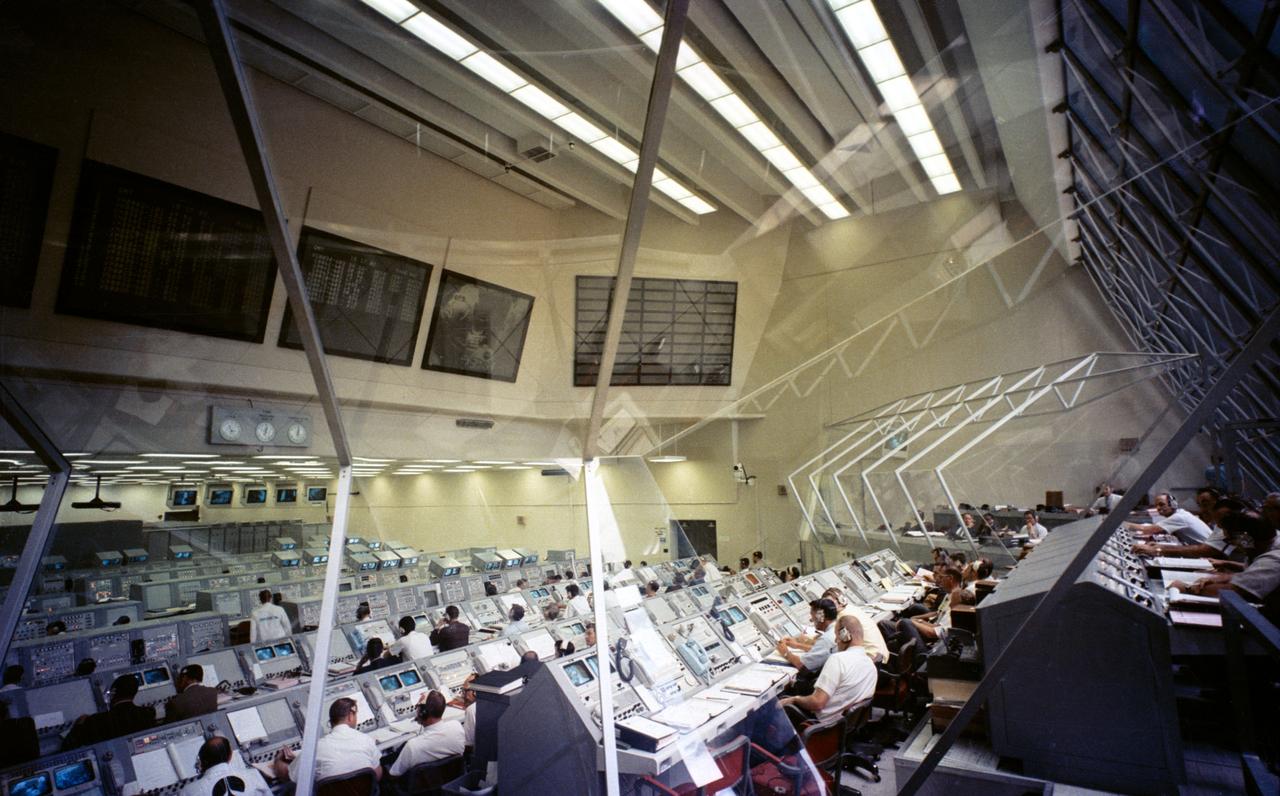
S69-34332 (13 May 1969) --- Overall view of Firing Room 3 of the Launch Control Center, Launch Complex 39, Kennedy Space Center, Florida, during an Apollo 10 Countdown Demonstration Test. The crew of the scheduled Apollo 10 lunar orbit mission will be astronauts Thomas P. Stafford, commander; John W. Young, command module pilot; and Eugene A. Cernan, lunar module pilot. The Launch Control Center is at the Vehicle Assembly Building. The Apollo 10 space vehicle will be launched from Pad 39B.
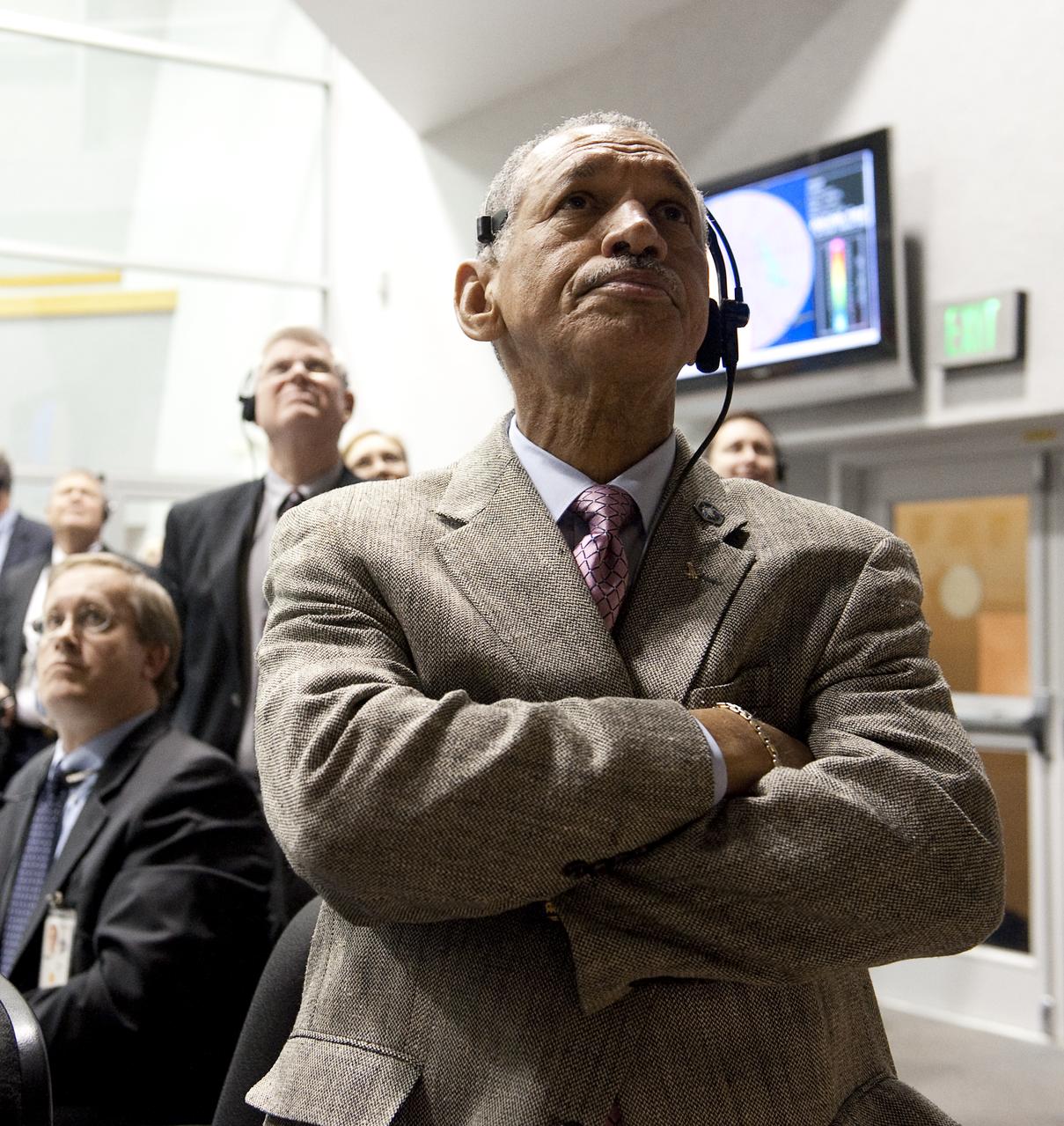
NASA Administrator Charles Bolden looks out the window of Firing Room Four in the Launch Control Center during the launch of the space shuttle Endeavour and the start of the STS-130 mission at NASA Kennedy Space Center in Cape Canaveral, Fla. on Monday Feb. 8, 2010. Endeavour and its crew will deliver to the International Space Station a third connecting module, the Italian-built Tranquility node and the seven-windowed cupola, which will be used as a control room for robotics. The mission will feature three spacewalks. Photo Credit: (NASA/Bill Ingalls)
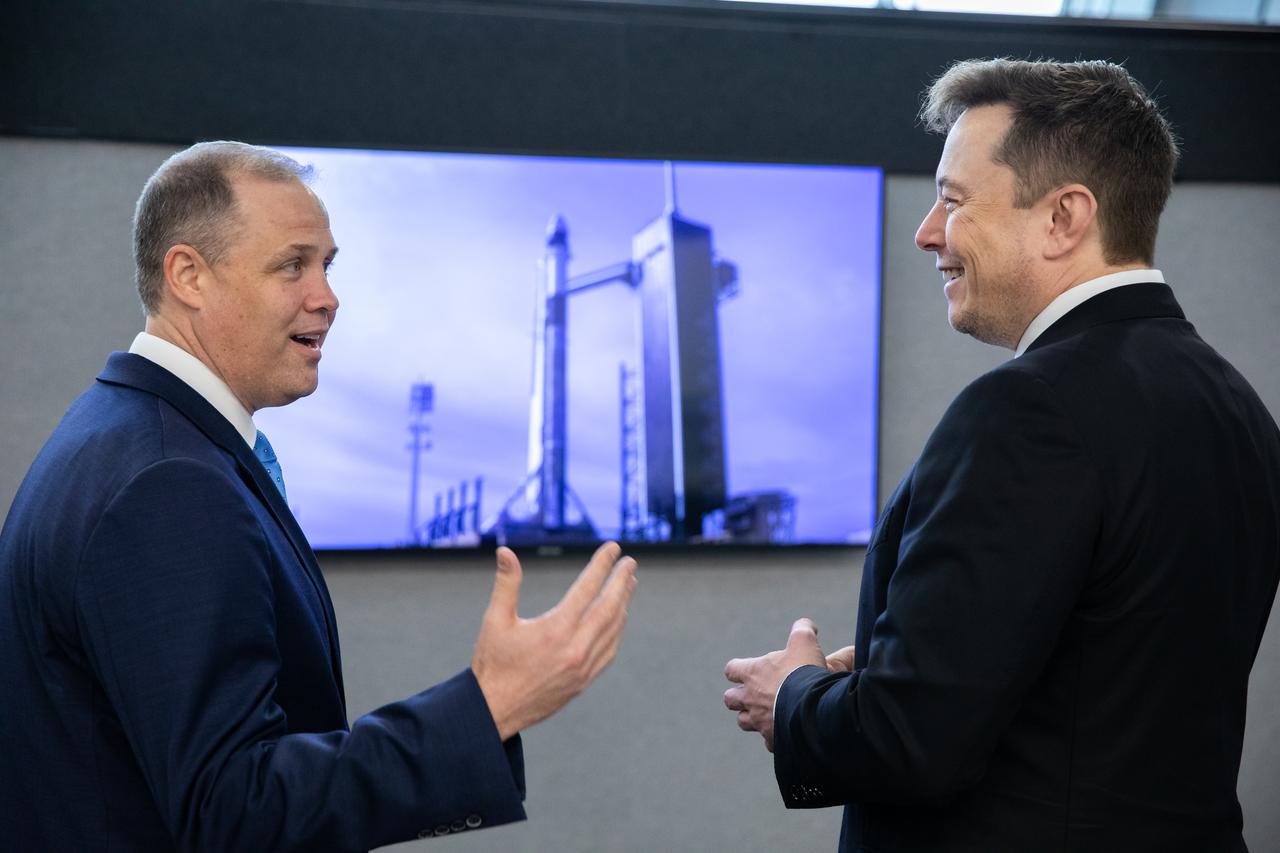
NASA Administrator Jim Bridenstine, left, and SpaceX Chief Engineer Elon Musk converse inside Firing Room 4 in Kennedy Space Center’s Launch Control Center while awaiting the liftoff of a SpaceX Falcon 9 rocket and Crew Dragon spacecraft on the uncrewed In-Flight Abort Test, Jan. 19, 2020. The test demonstrated the spacecraft’s escape capabilities in preparation for crewed flights to the International Space Station as part of the agency’s Commercial Crew Program.
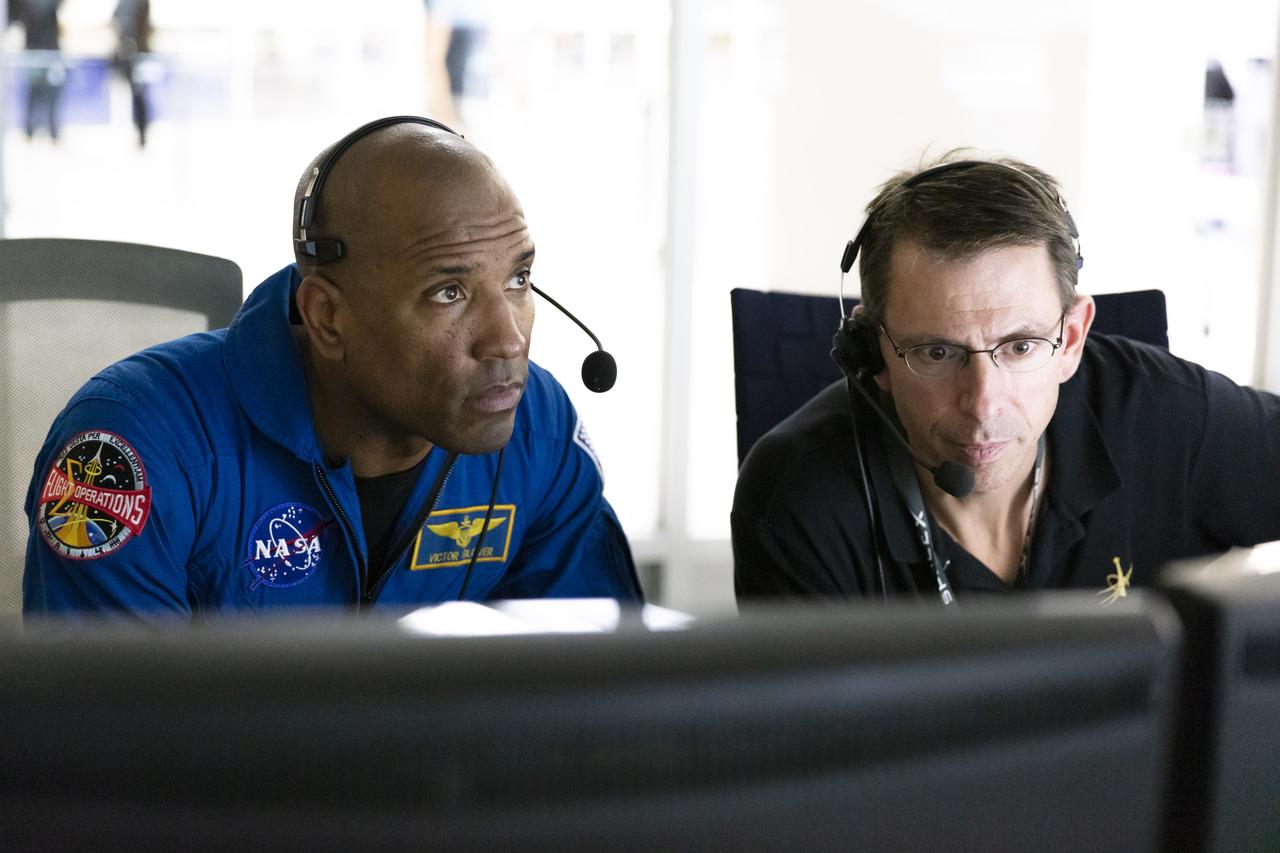
NASA astronaut Victor Glover, left, and a SpaceX employee, seated at consoles inside SpaceX Mission Control in Hawthorne, California, monitor the Crew Dragon spacecraft static fire engine tests taking place at Cape Canaveral Air Force Station in Florida on Nov. 13, 2019. The tests will help validate the Crew Dragon’s launch escape system ahead of the upcoming in-flight abort demonstration as part of NASA’s Commercial Crew Program. Glover will fly to the International Space Station on the second crewed flight of Crew Dragon.
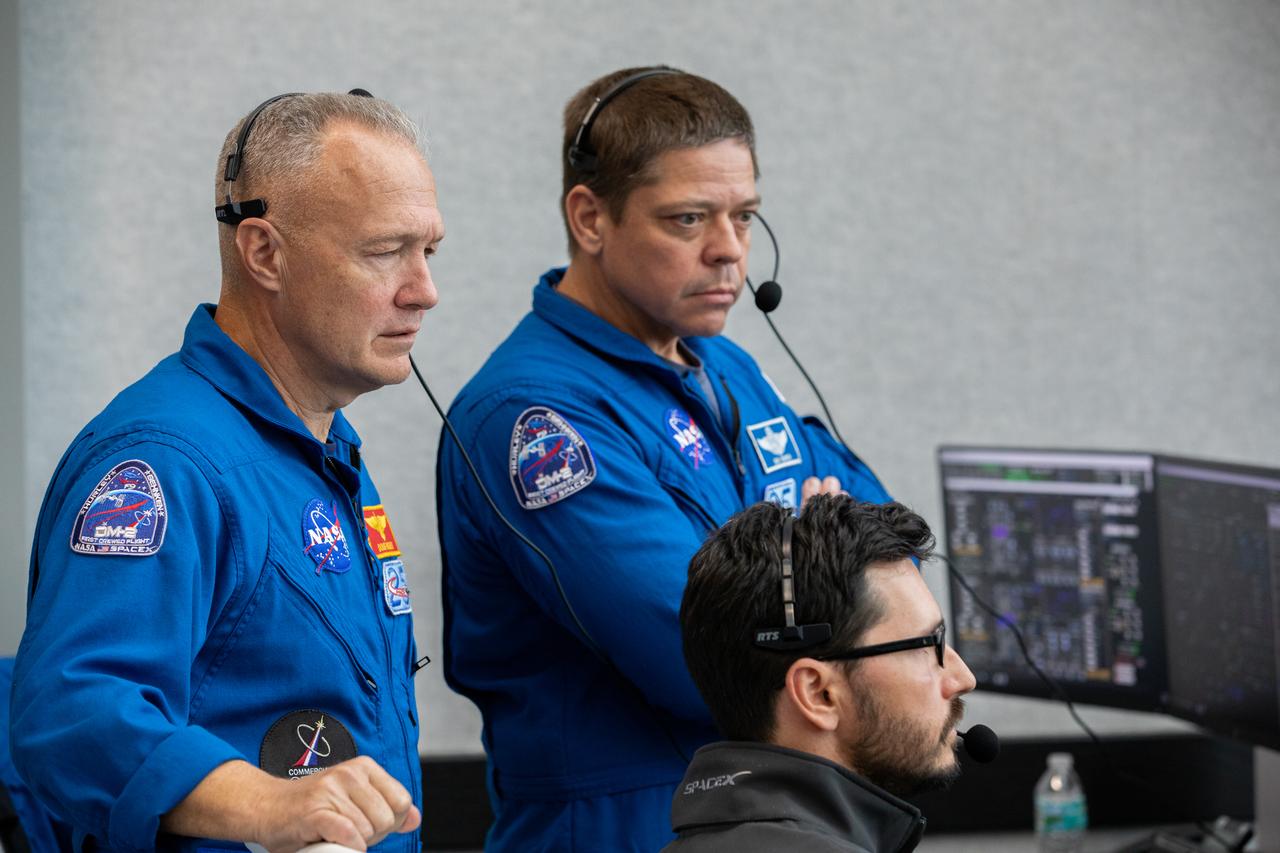
NASA astronauts Doug Hurley, left, and Bob Behnken watch the liftoff of a SpaceX Falcon 9 rocket and Crew Dragon spacecraft on the uncrewed In-Flight Abort Test, Jan. 19, 2020, inside Firing Room 4 in Kennedy Space Center’s Launch Control Center. The test demonstrated the spacecraft’s escape capabilities in preparation for crewed flights to the International Space Station as part of the agency’s Commercial Crew Program.
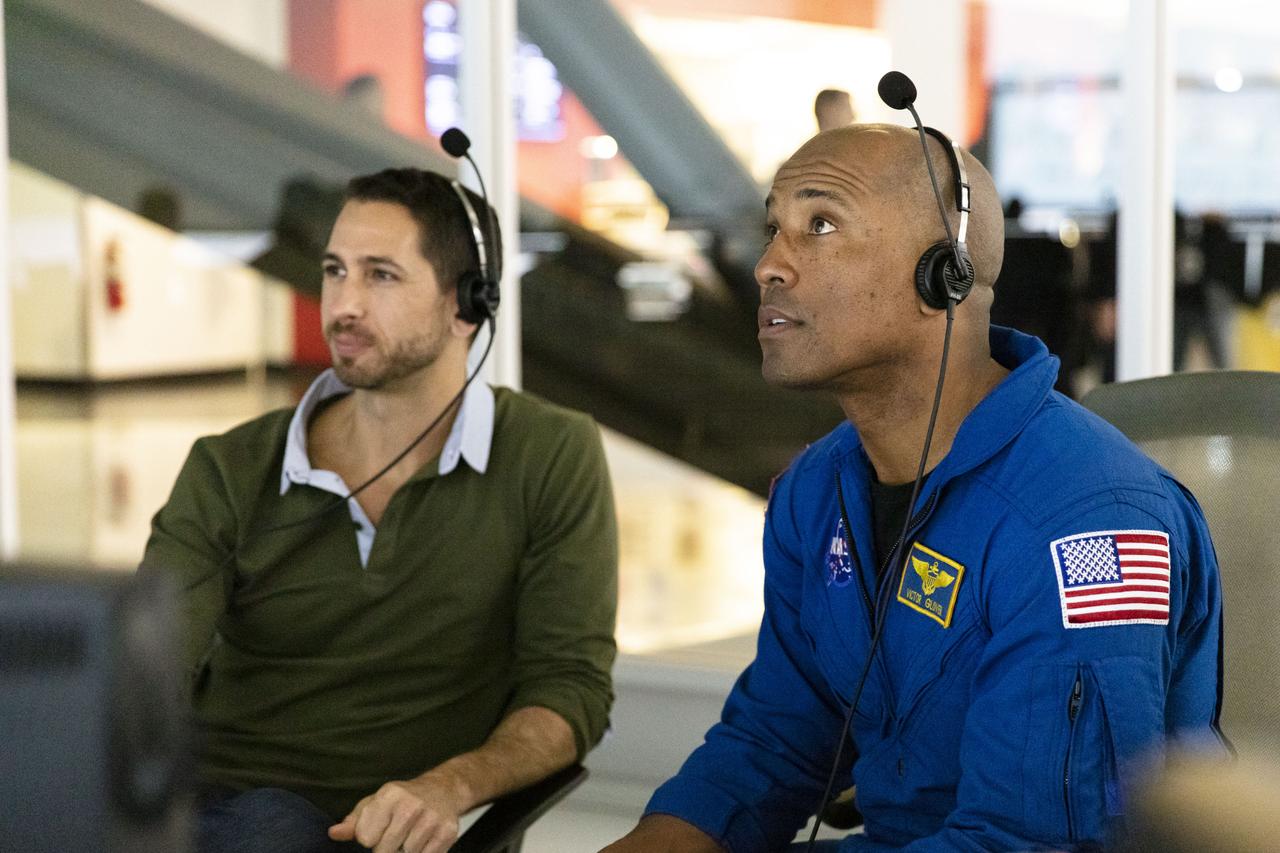
NASA astronaut Victor Glover, right, and a SpaceX employee, seated at consoles inside SpaceX Mission Control in Hawthorne, California, monitor the Crew Dragon spacecraft static fire engine tests taking place at Cape Canaveral Air Force Station in Florida on Nov. 13, 2019. The tests will help validate the Crew Dragon’s launch escape system ahead of the upcoming in-flight abort demonstration as part of NASA’s Commercial Crew Program. Glover will fly to the International Space Station on the second crewed flight of Crew Dragon.
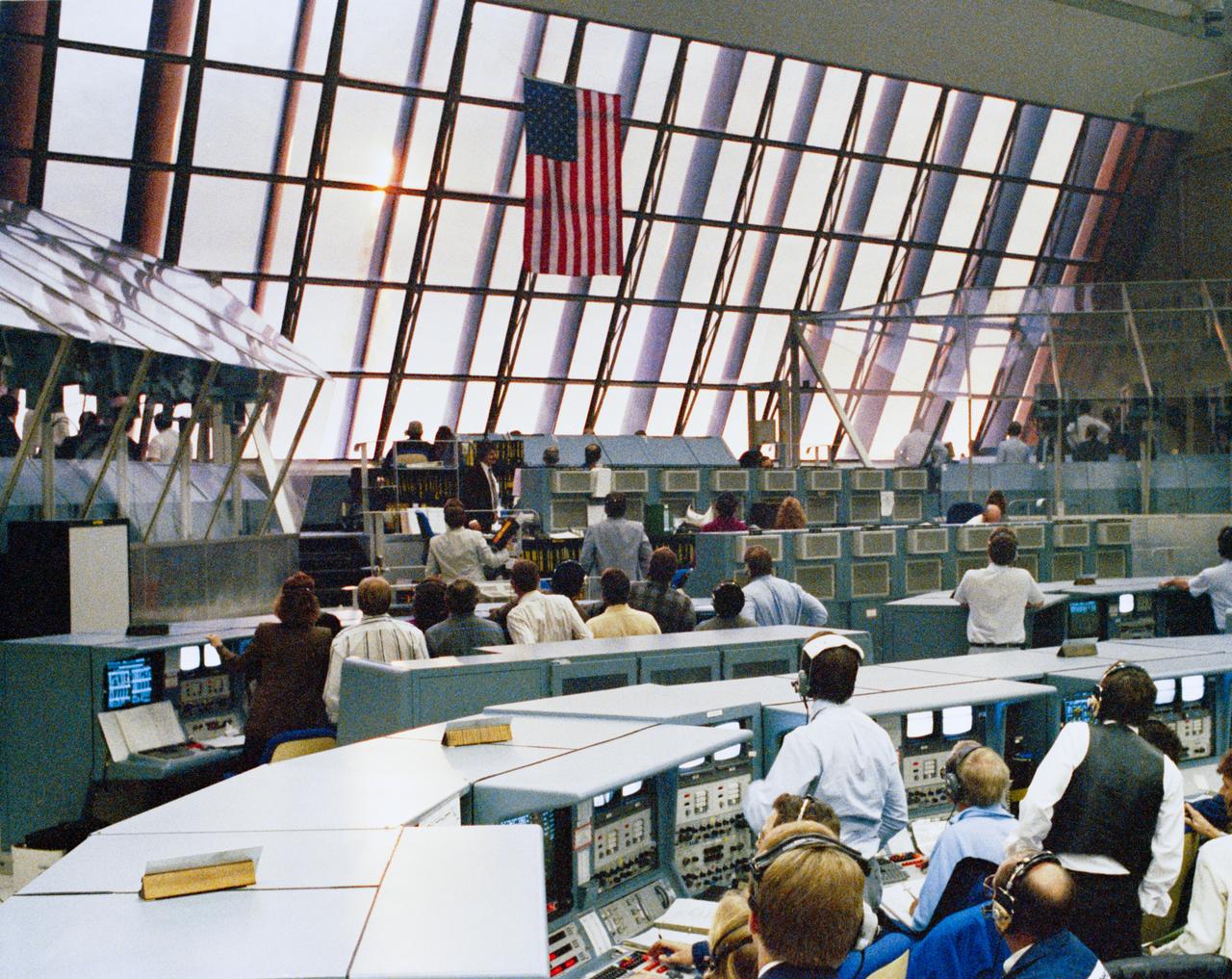
S90-29047 99Jan 1990) --- At the conclusion of another successful countdown, members of the KSC launch team in Firing Room 1 rivet their eyes on the skies to the east of the Launch Control Center. Their reward was a glimpse of Columbia burning its way upward up from Complex 39's Pad A. The brilliant flame of the boosters hurled shadows and patches of light into the firing room's interior. Launch of the STS-32 mission at 7:35 a.m. EST today marked the beginning of a busy year which could see the launch of as many as 10 missions.
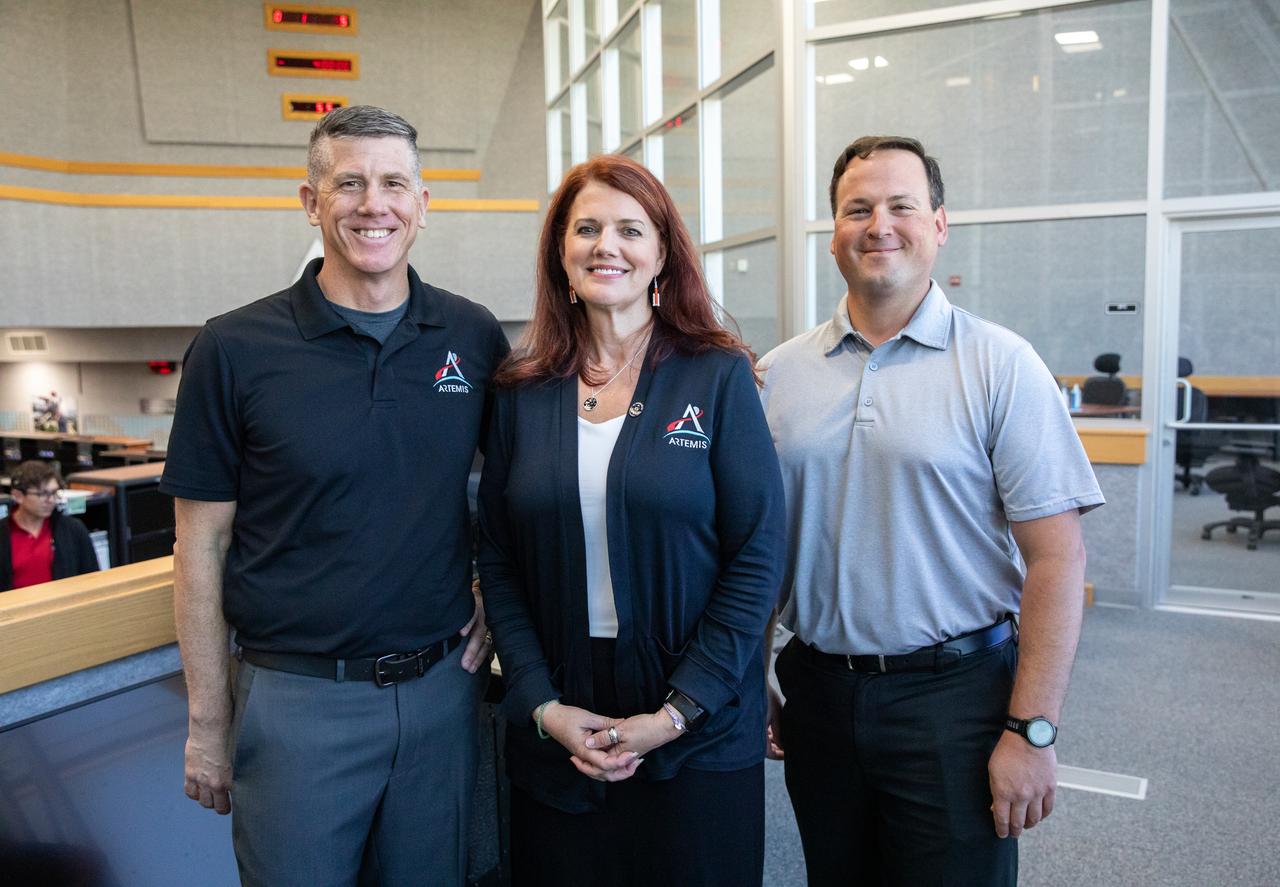
Artemis Launch Director Charlie Blackwell-Thompson, center, is inside Firing Room 1 of the Launch Control Center at NASA’s Kennedy Space Center in Florida during the inaugural Artemis I launch director awards and plaque ceremony on March 24, 2023. At left is Jeremy Graeber, Artemis assistant launch director. At right is Wes Mosedale, technical assistant to the launch director. Following tradition from the Apollo and Space Shuttle Programs, the Artemis I plaque was added to the wall in Firing Room 1 by Blackwell-Thompson. The first in a series of increasingly complex missions, Artemis I launched successfully from Kennedy’s Launch Pad 39B at 1:47 a.m. EST on Nov. 16, 2022.

Jeff Spaulding, senior NASA test director, Exploration Ground Systems Program, participates in the Artemis III terminal countdown simulation on Thursday, May 7, 2026, inside Firing Room 1 of the Rocco A. Petrone Launch Control Center at NASA’s Kennedy Space Center in Florida. This marked the first simulation the launch team performed ahead of Artemis III.
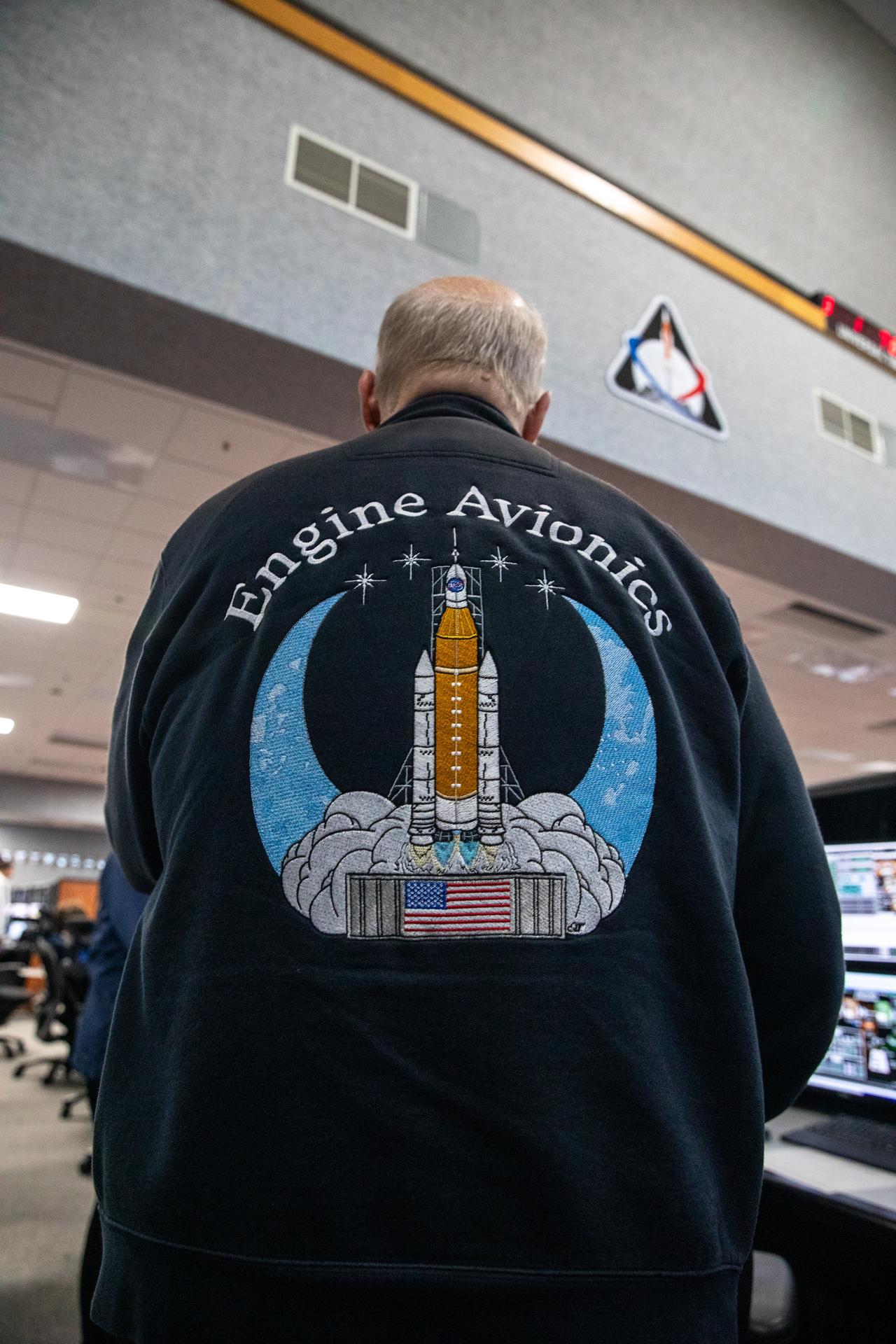
Members of the Artemis I launch team, including personnel with NASA’s Exploration Ground Systems (EGS) and contractor Jacobs, monitor activities during the ninth formal terminal countdown simulation inside Firing Room 1 in the Launch Control Center at NASA’s Kennedy Space Center in Florida on June 24, 2021. This is part of a series of simulations to help the team prepare for the launch of Artemis I, the uncrewed first flight of the Space Launch System rocket and Orion spacecraft.
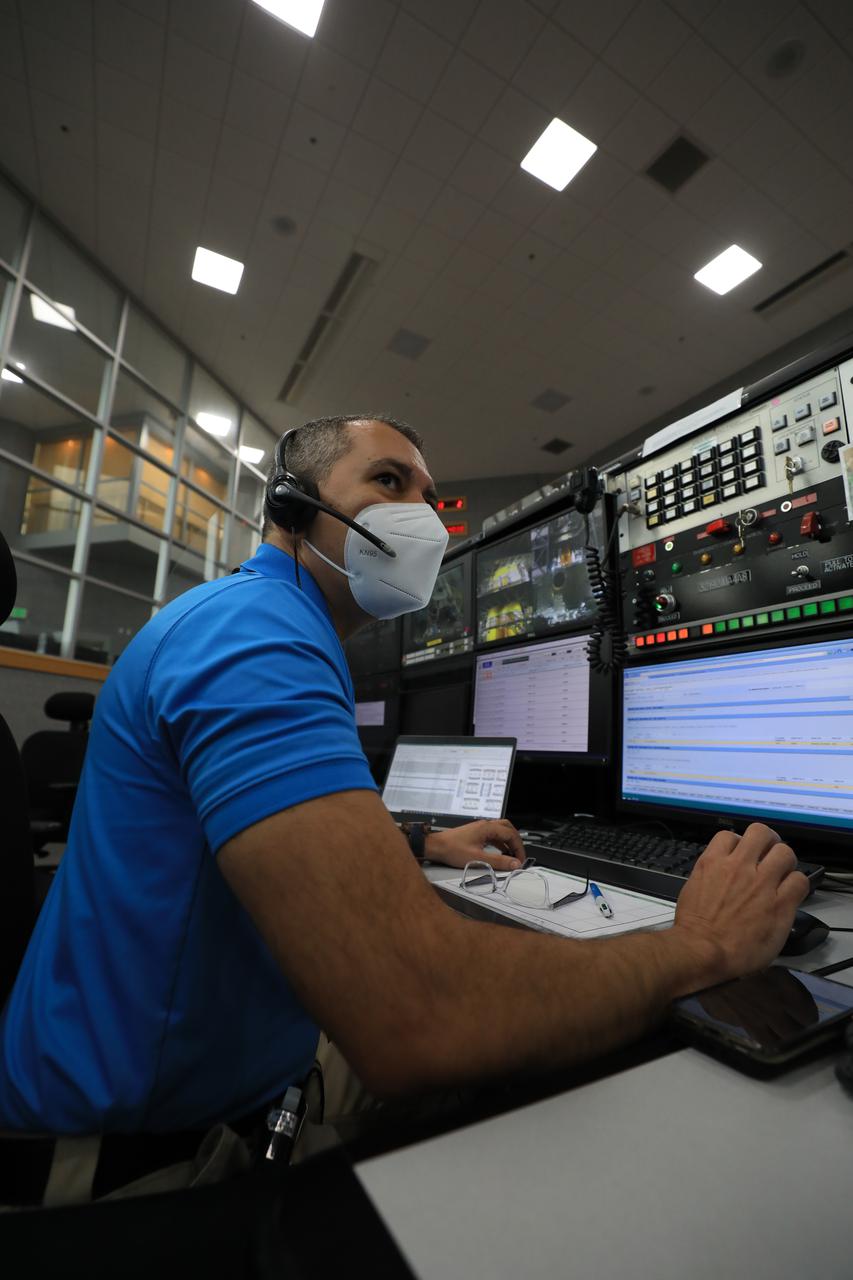
An Artemis launch team member participates in an Artemis II launch countdown simulation inside Firing Room 1 in the Launch Control Center at NASA’s Kennedy Space Center in Florida on Wednesday, Nov. 5, 2025. The simulations go through launch day scenarios to help launch team members test software and make adjustments if needed during countdown operations. For Artemis II, four astronauts will venture around the Moon, the first crewed mission on NASA’s path to establishing a long-term presence for science and exploration through Artemis.

Vanessa Stroh, project engineer, Exploration Ground Systems Program, participates in the Artemis III terminal countdown simulation on Thursday, May 7, 2026, inside Firing Room 1 of the Rocco A. Petrone Launch Control Center at NASA’s Kennedy Space Center in Florida. This marked the first simulation the launch team performed ahead of Artemis III.
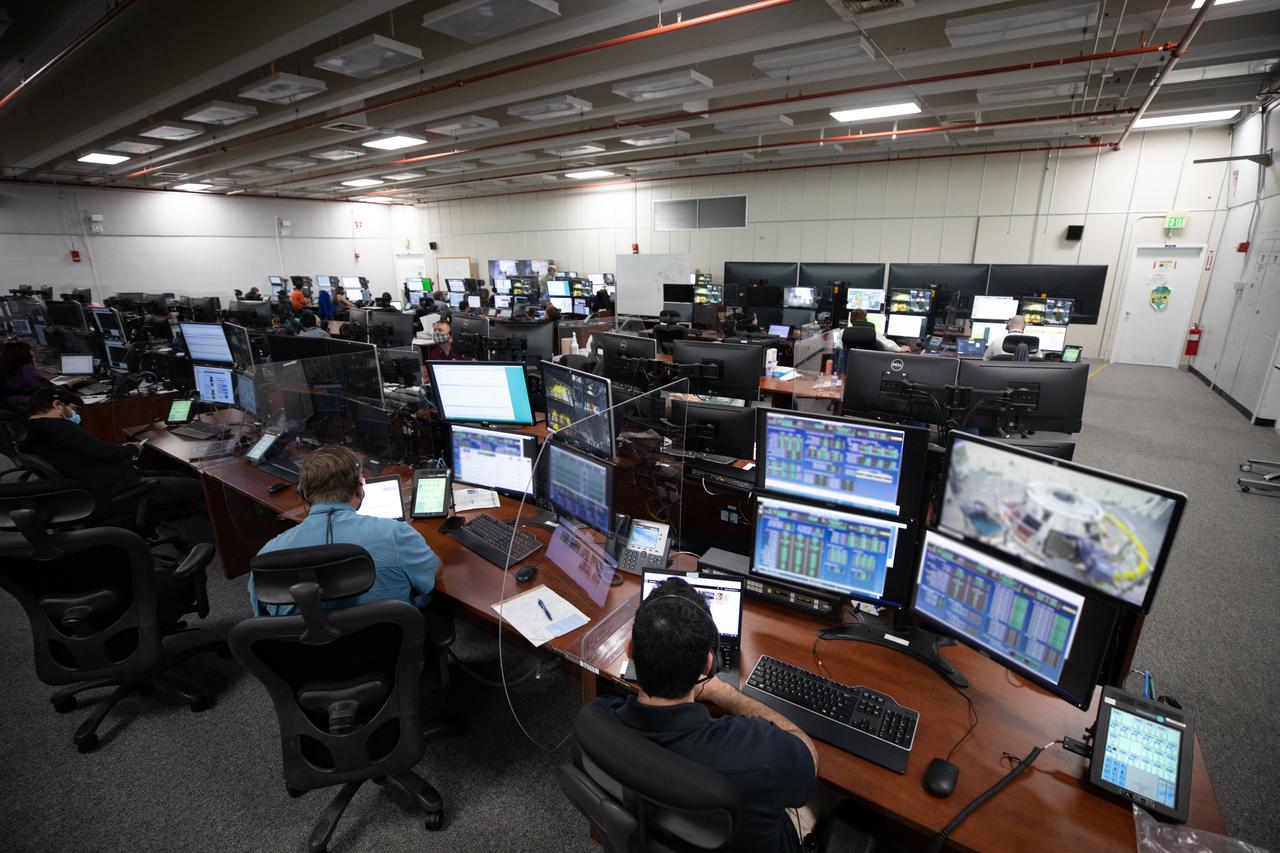
Members of the Artemis I launch team, including personnel with NASA’s Exploration Ground Systems (EGS) and contractor Jacobs, monitor activities during the ninth formal terminal countdown simulation inside Firing Room 2 in the Launch Control Center at NASA’s Kennedy Space Center in Florida on June 24, 2021. This is part of a series of simulations to help the team prepare for the launch of Artemis I, the uncrewed first flight of the Space Launch System rocket and Orion spacecraft.
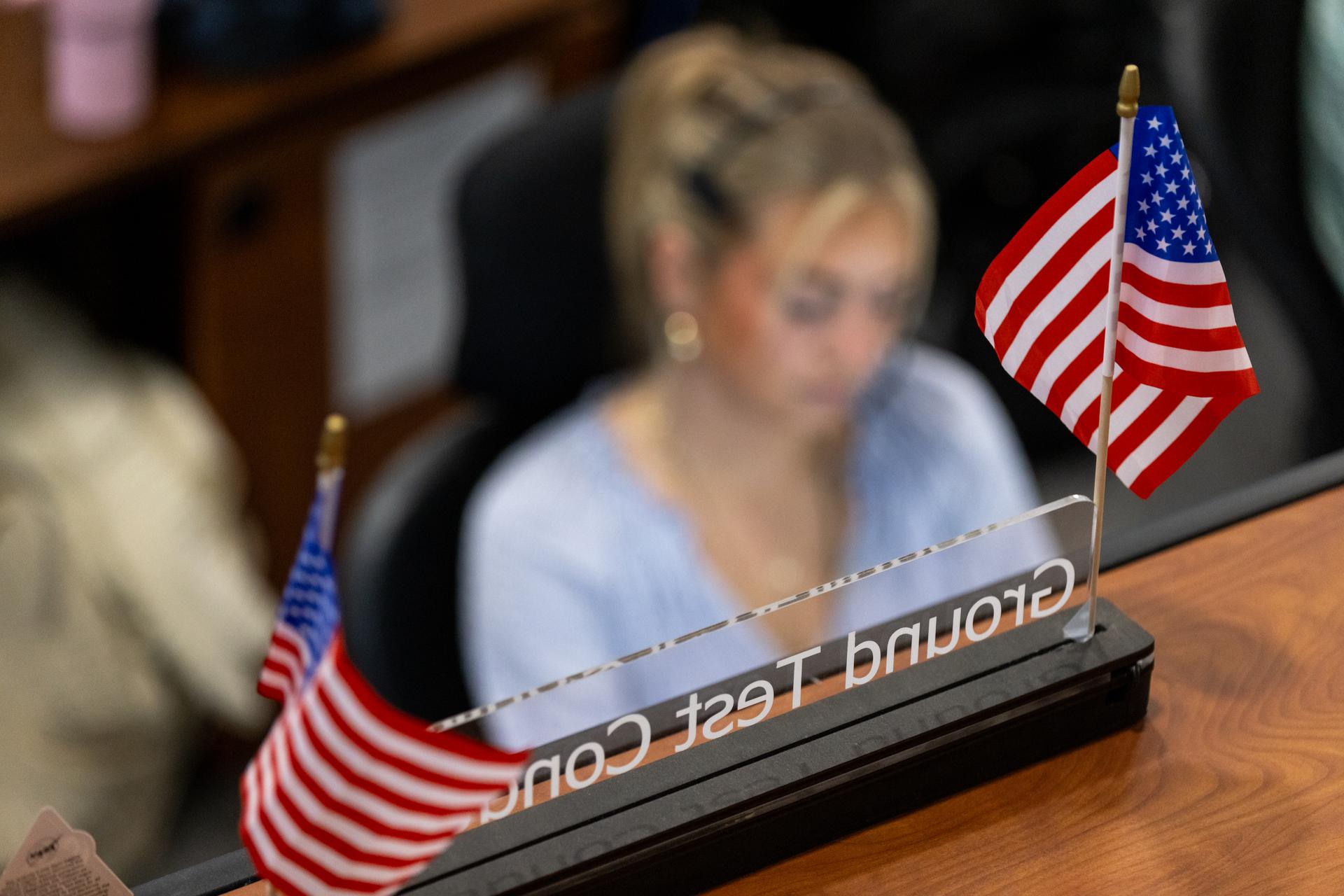
An Artemis launch team member participates in an Artemis II launch countdown simulation inside Firing Room 1 in the Launch Control Center at NASA’s Kennedy Space Center in Florida on Wednesday, Nov. 5, 2025. The simulations go through launch day scenarios to help launch team members test software and make adjustments if needed during countdown operations. For Artemis II, four astronauts will venture around the Moon, the first crewed mission on NASA’s path to establishing a long-term presence for science and exploration through Artemis.

Jeremy Graeber, assistant launch director, Exploration Ground Systems Program, participates in the Artemis III terminal countdown simulation on Thursday, May 7, 2026, inside Firing Room 1 of the Rocco A. Petrone Launch Control Center at NASA’s Kennedy Space Center in Florida. This marked the first simulation the launch team performed ahead of Artemis III.
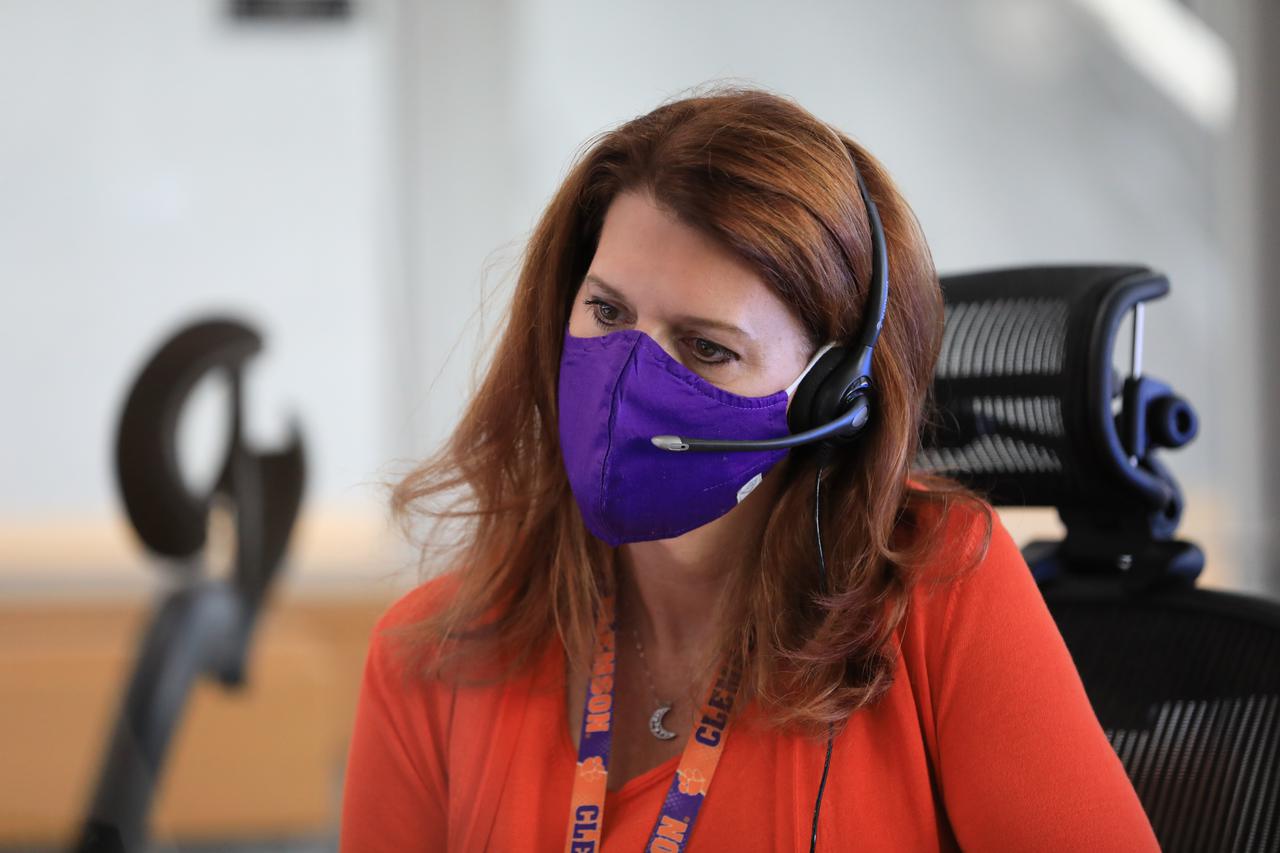
Artemis I Launch Director Charlie Blackwell-Thompson monitors activities during the ninth formal terminal countdown simulation inside Firing Room 1 in the Launch Control Center at NASA’s Kennedy Space Center in Florida on June 24, 2021. Members of the Artemis I launch team include personnel with NASA’s Exploration Ground Systems (EGS) and contractor Jacobs. This is part of a series of simulations to help the team prepare for the launch of Artemis I, the uncrewed first flight of the Space Launch System rocket and Orion spacecraft.
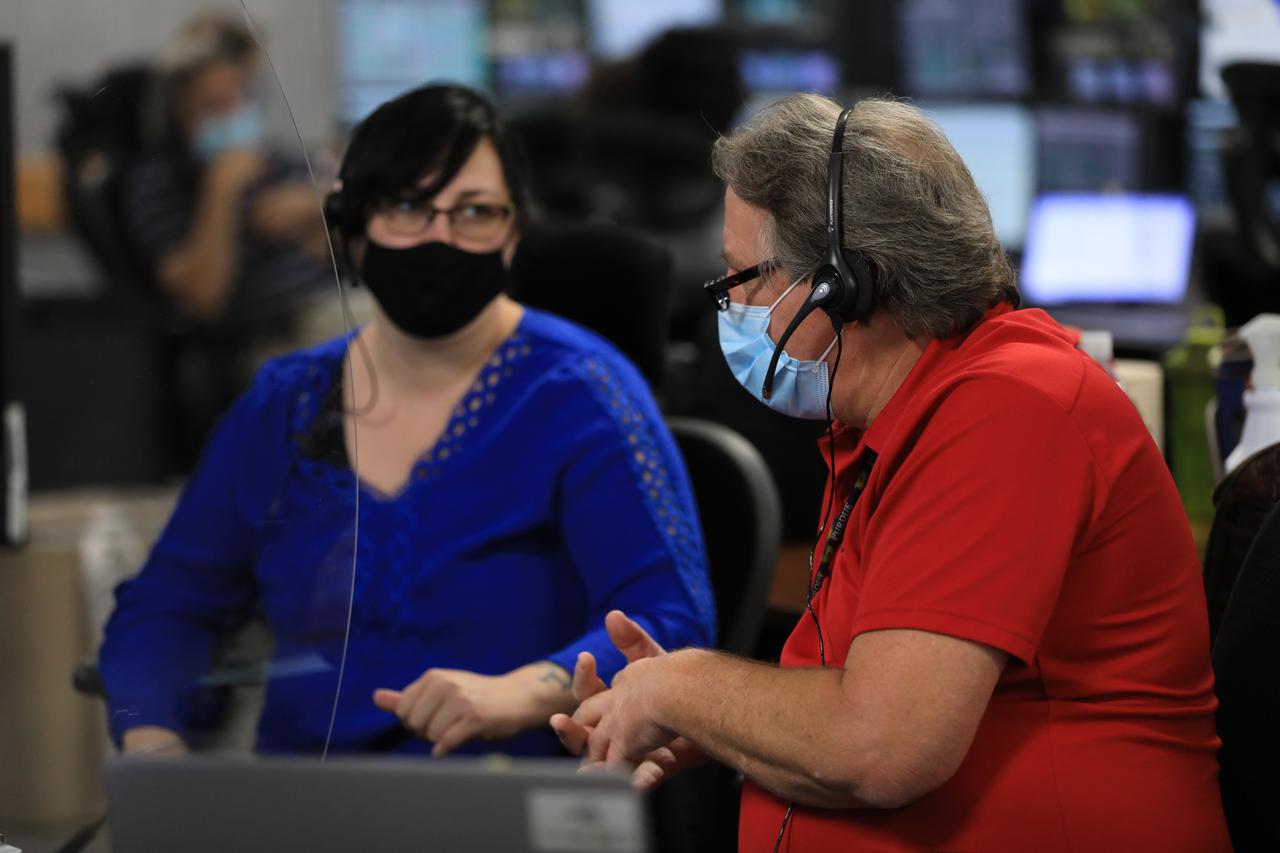
Members of the Artemis I launch team, including personnel with NASA’s Exploration Ground Systems (EGS) and contractor Jacobs, monitor activities during the ninth formal terminal countdown simulation inside Firing Room 1 in the Launch Control Center at NASA’s Kennedy Space Center in Florida on June 24, 2021. This is part of a series of simulations to help the team prepare for the launch of Artemis I, the uncrewed first flight of the Space Launch System rocket and Orion spacecraft.

Charlie Blackwell-Thompson, launch director, Exploration Ground Systems Program, participates in the Artemis III terminal countdown simulation on Thursday, May 7, 2026, inside Firing Room 1 of the Rocco A. Petrone Launch Control Center at NASA’s Kennedy Space Center in Florida. This marked the first simulation the launch team performed ahead of Artemis III.
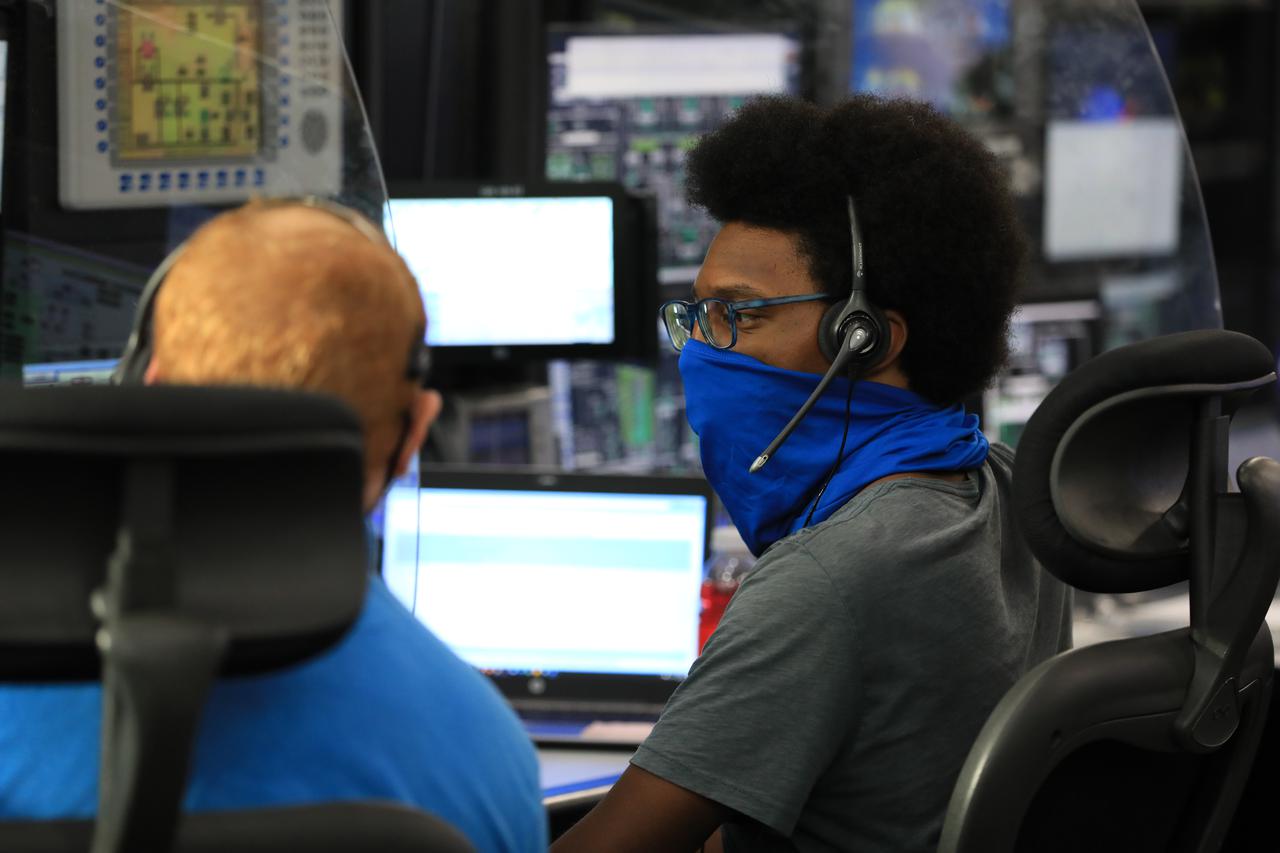
Artemis I launch team member Joshua Jones monitors activities during the ninth formal terminal countdown simulation inside Firing Room 1 in the Launch Control Center at NASA’s Kennedy Space Center in Florida on June 24, 2021. The Artemis I launch team includes personnel with NASA’s Exploration Ground Systems (EGS) and contractor Jacobs. This is part of a series of simulations to help the team prepare for the launch of Artemis I, the uncrewed first flight of the Space Launch System rocket and Orion spacecraft.

From left to right, Dmitriy Bank, NASA test director, and Paul Sierpinski, Artemis assistant landing and recovery director, participate in the Artemis III terminal countdown simulation on Thursday, May 7, 2026, inside Firing Room 1 of the Rocco A. Petrone Launch Control Center at NASA’s Kennedy Space Center in Florida. This marked the first simulation the launch team performed ahead of Artemis III.
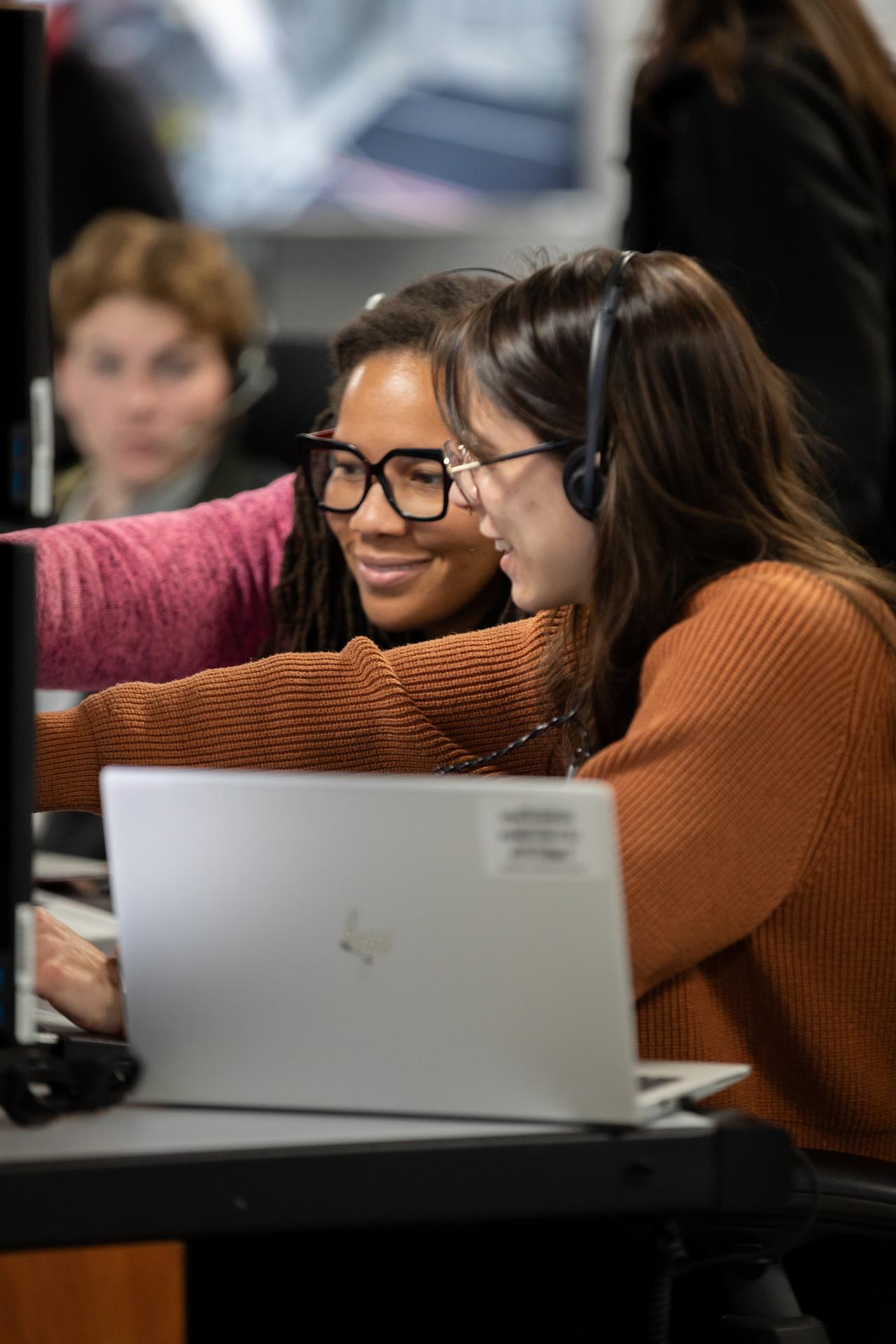
Artemis launch team members participate in an Artemis II launch countdown simulation inside Firing Room 1 in the Launch Control Center at NASA’s Kennedy Space Center in Florida on Wednesday, Nov. 5, 2025. The simulations go through launch day scenarios to help launch team members test software and make adjustments if needed during countdown operations. For Artemis II, four astronauts will venture around the Moon, the first crewed mission on NASA’s path to establishing a long-term presence for science and exploration through Artemis.
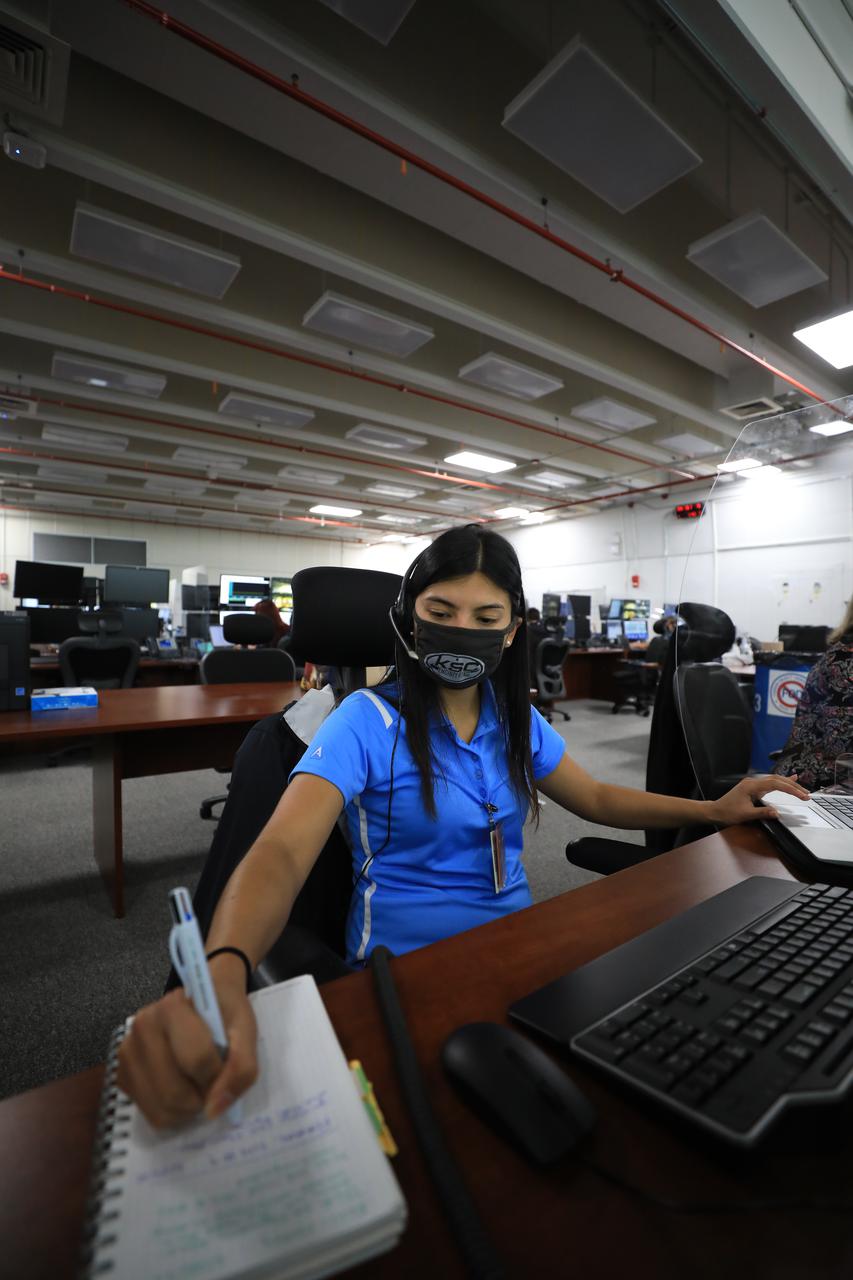
Members of the Artemis I launch team, including personnel with NASA’s Exploration Ground Systems (EGS) and contractor Jacobs, monitor activities during the ninth formal terminal countdown simulation inside Firing Room 2 in the Launch Control Center at NASA’s Kennedy Space Center in Florida on June 24, 2021. This is part of a series of simulations to help the team prepare for the launch of Artemis I, the uncrewed first flight of the Space Launch System rocket and Orion spacecraft.
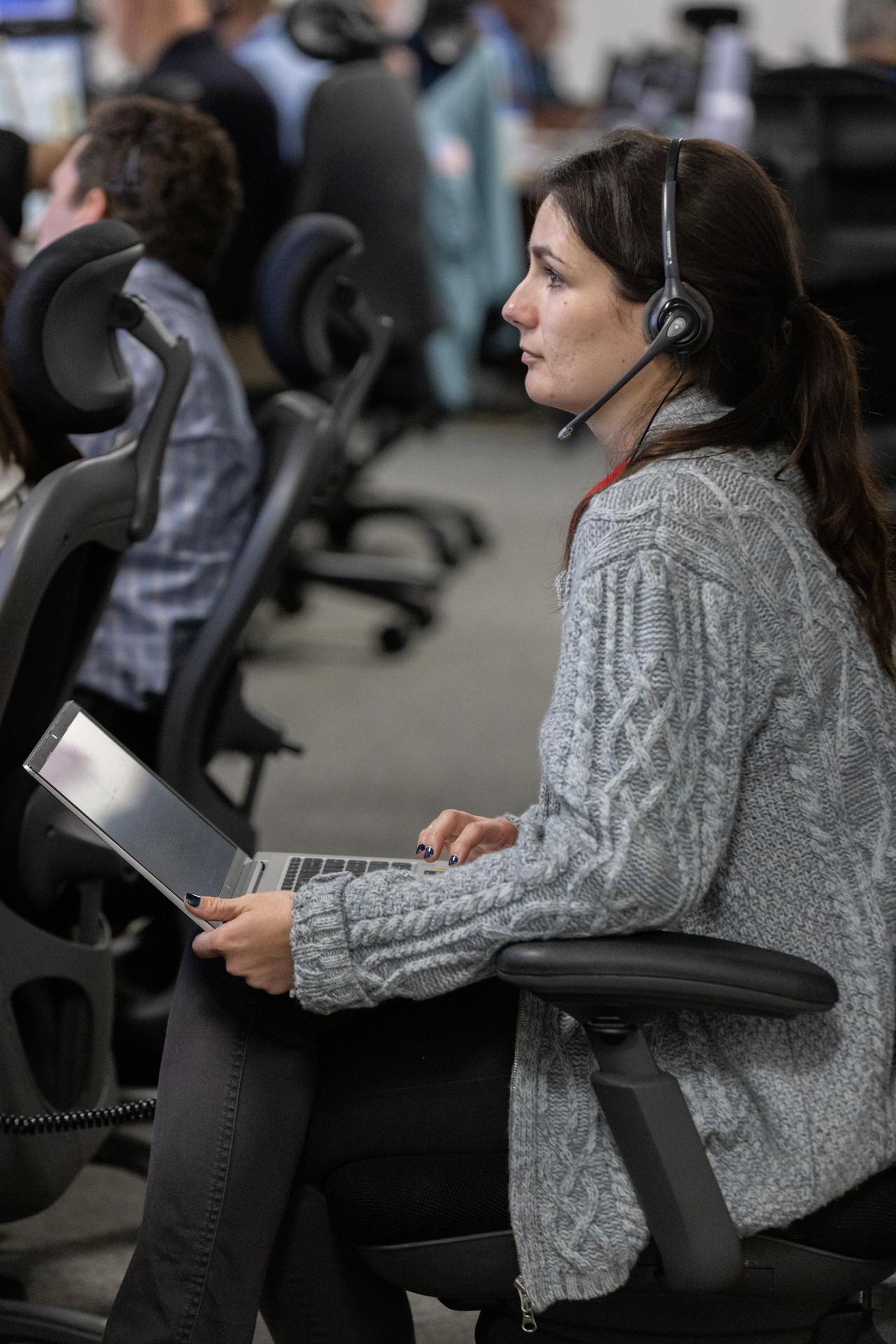
An Artemis launch team member participates in an Artemis II launch countdown simulation inside Firing Room 1 in the Launch Control Center at NASA’s Kennedy Space Center in Florida on Wednesday, Nov. 5, 2025. The simulations go through launch day scenarios to help launch team members test software and make adjustments if needed during countdown operations. For Artemis II, four astronauts will venture around the Moon, the first crewed mission on NASA’s path to establishing a long-term presence for science and exploration through Artemis.

Jeremy Graeber, assistant launch director, Exploration Ground Systems Program, participates in the Artemis III terminal countdown simulation on Thursday, May 7, 2026, inside Firing Room 1 of the Rocco A. Petrone Launch Control Center at NASA’s Kennedy Space Center in Florida. This marked the first simulation the launch team performed ahead of Artemis III.
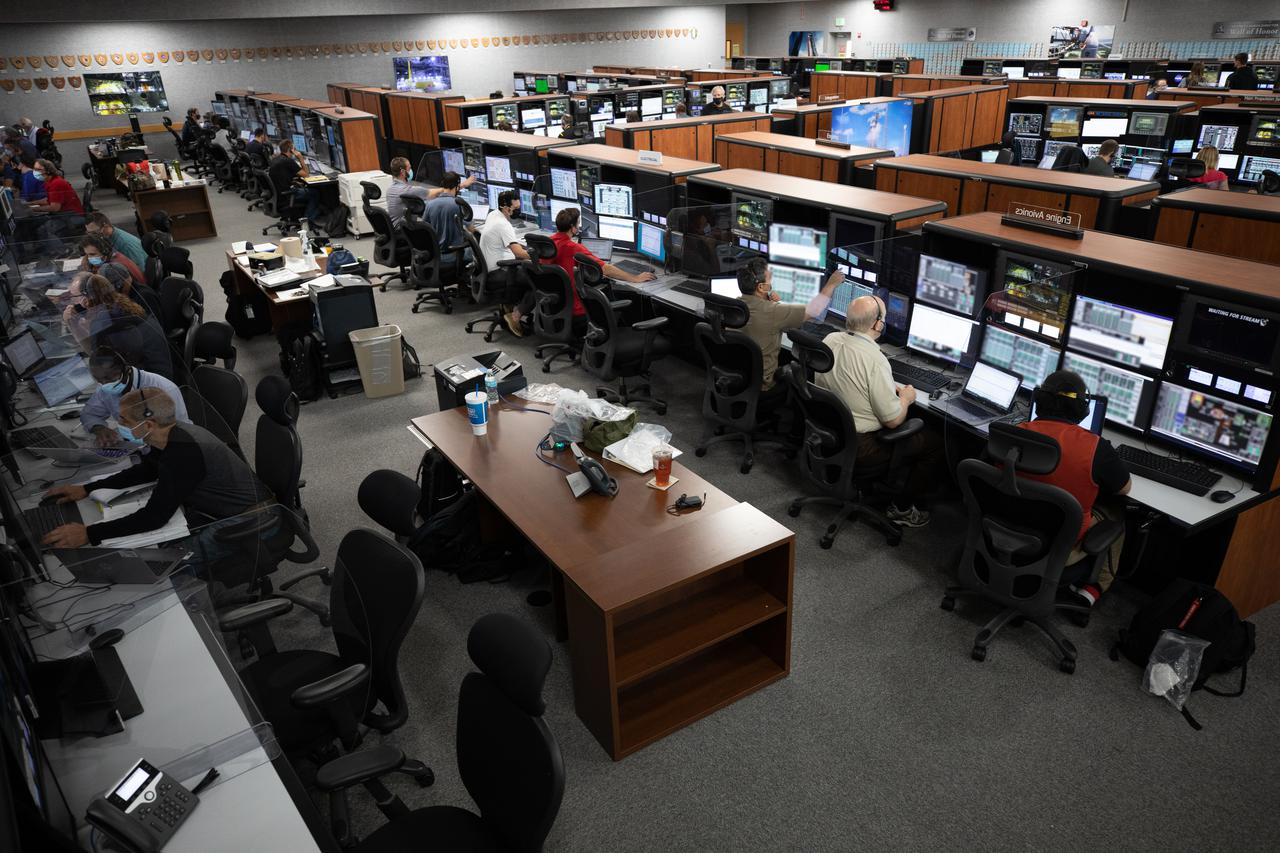
Members of the Artemis I launch team, including personnel with NASA’s Exploration Ground Systems (EGS) and contractor Jacobs, monitor activities during the ninth formal terminal countdown simulation inside Firing Room 1 in the Launch Control Center at NASA’s Kennedy Space Center in Florida on June 24, 2021. This is part of a series of simulations to help the team prepare for the launch of Artemis I, the uncrewed first flight of the Space Launch System rocket and Orion spacecraft.
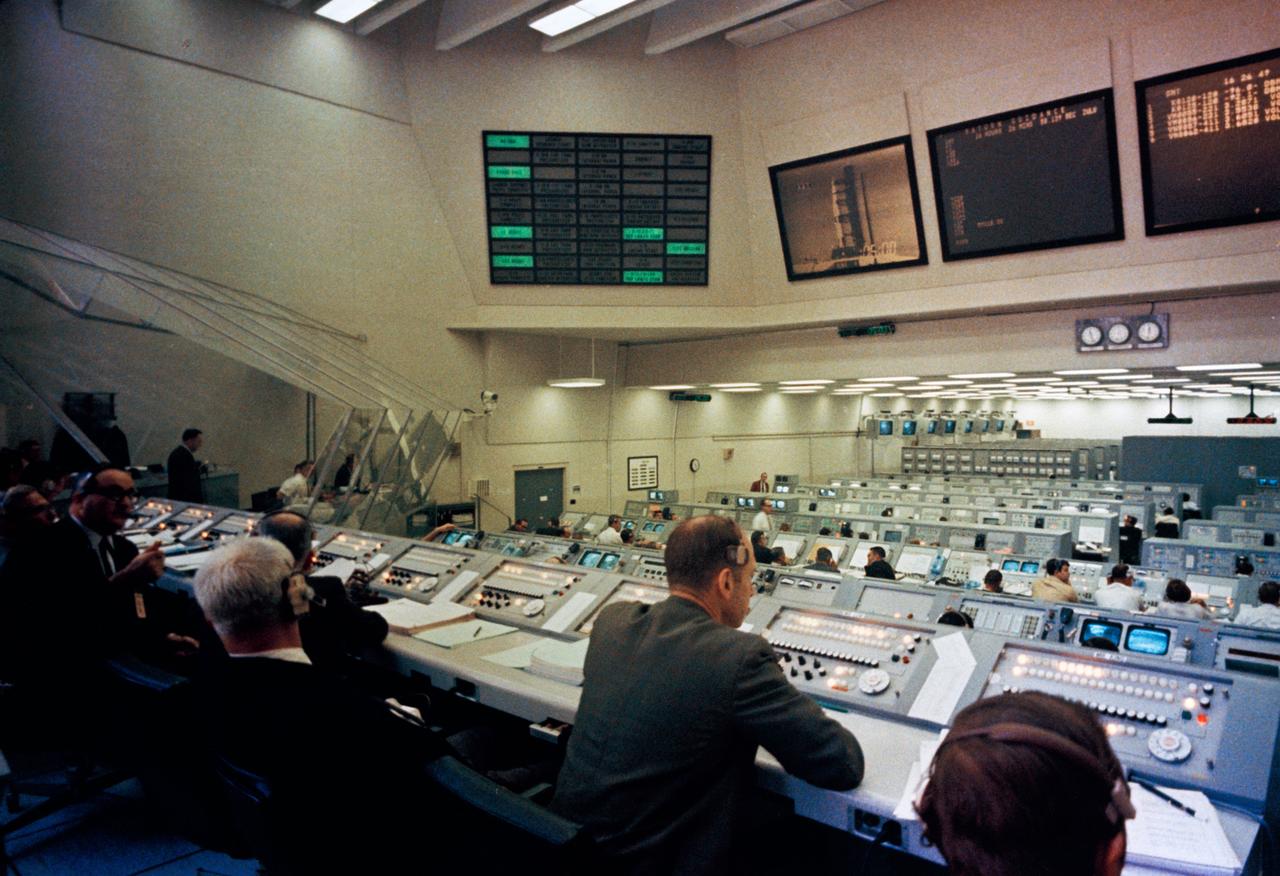
S69-25880 (23 Feb. 1969) --- Overall view of Firing Room 2 in the Launch Control Center, Launch Complex 39, Kennedy Space Center, during an Apollo 9 Countdown Demonstration Test. Astronauts James A. McDivitt, David R. Scott, and Russell L. Schweickart were participating in a training exercise in preparation for their scheduled 10-day Earth-orbital space mission.

Inside the Launch Control Center’s Firing Room 1 at NASA’s Kennedy Space Center in Florida, members of the Artemis I launch team rehearse the procedures for fueling the Space Launch System (SLS) rocket with super cold propellants, or cryogenics, on Aug. 18, 2020. During the cryogenic simulation, potential problem scenarios were introduced to test the tools, processes, and procedures necessary for fueling the rocket. Artemis I will be the first integrated test flight of SLS and the Orion spacecraft – the system that will ultimately land the first woman and the next man on the Moon by 2024.

Inside the Launch Control Center’s Firing Room 1 at NASA’s Kennedy Space Center in Florida, members of the Artemis I launch team rehearse the procedures for fueling the Space Launch System (SLS) rocket with super cold propellants, or cryogenics, on Aug. 18, 2020. During the cryogenic simulation, potential problem scenarios were introduced to test the tools, processes, and procedures necessary for fueling the rocket. Artemis I will be the first integrated test flight of SLS and the Orion spacecraft – the system that will ultimately land the first woman and the next man on the Moon by 2024.

Inside the Launch Control Center’s Firing Room 1 at NASA’s Kennedy Space Center in Florida, members of the Artemis I launch team rehearse the procedures for fueling the Space Launch System (SLS) rocket with super cold propellants, or cryogenics, on Aug. 18, 2020. During the cryogenic simulation, potential problem scenarios were introduced to test the tools, processes, and procedures necessary for fueling the rocket. Artemis I will be the first integrated test flight of SLS and the Orion spacecraft – the system that will ultimately land the first woman and the next man on the Moon by 2024.

Artemis I Launch Director Charlie Blackwell-Thompson stands at her console inside the Launch Control Center’s Firing Room 1 at NASA’s Kennedy Space Center in Florida during a simulation rehearsing propellant loading on Aug. 18, 2020. The simulation involved members of the launch team practicing the procedures for loading the Space Launch System (SLS) rocket with cryogenics, or super cold propellants. During the exercise, potential problem scenarios were introduced to test the tools, processes, and procedures necessary for fueling the rocket. Artemis I will be the first integrated test flight of SLS and the Orion spacecraft – the system that will ultimately land the first woman and the next man on the Moon by 2024.

Artemis I Launch Director Charlie Blackwell-Thompson stands at her console inside the Launch Control Center’s Firing Room 1 at NASA’s Kennedy Space Center in Florida during a simulation rehearsing propellant loading on Aug. 18, 2020. The simulation involved members of the launch team practicing the procedures for loading the Space Launch System (SLS) rocket with cryogenics, or super cold propellants. During the exercise, potential problem scenarios were introduced to test the tools, processes, and procedures necessary for fueling the rocket. Artemis I will be the first integrated test flight of SLS and the Orion spacecraft – the system that will ultimately land the first woman and the next man on the Moon by 2024.

Inside the Launch Control Center’s Firing Room 1 at NASA’s Kennedy Space Center in Florida, members of the Artemis I launch team rehearse the procedures for fueling the Space Launch System (SLS) rocket with super cold propellants, or cryogenics, on Aug. 18, 2020. During the cryogenic simulation, potential problem scenarios were introduced to test the tools, processes, and procedures necessary for fueling the rocket. Artemis I will be the first integrated test flight of SLS and the Orion spacecraft – the system that will ultimately land the first woman and the next man on the Moon by 2024.