
SPARKY THE FIRE DOG, MASCOT FOR THE NATIONAL FIRE PROTECTION ASSOCIATION, TEAMS UP WITH PATRICK SCHEUERMANN AT THE MARSHALL CENTER SEPT. 26 TO PROMOTE THE NATIONWIDE FIRE PREVENTION WEEK CAMPAIGN, “WORKING SMOKE ALARMS SAVE LIVES: TEST YOURS EVERY MONTH!”-
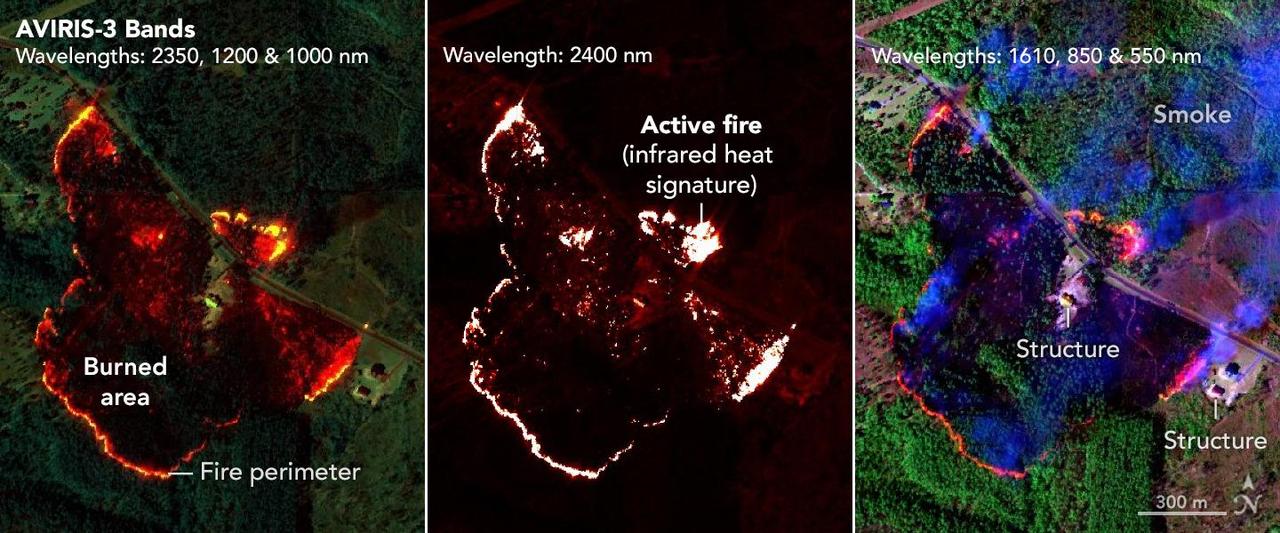
NASA's AVIRIS-3 sensor, an airborne imaging spectrometer built and operated by the agency's Jet Propulsion Laboratory in Southern California, captured infrared data of a wildfire 4 miles (2.5 kilometers) southwest of the unincorporated community of Perdido, Alabama, on March 21, 2025. Within minutes of flying over, real-time maps of the fire were sent via satellite internet to firefighters with the Alabama Forestry Commission, who used it to contain the fire, preventing it from reaching six buildings. The first image in the series combines reflection data from AVIRIS-3 (Airborne Visible Infrared Imaging Spectrometer 3) at three infrared wavelengths that are invisible to the human eye – 2,350 nanometers, 1,200 nanometers, and 1,000 nanometers. In the resulting composite image, the colors indicate where the fire was burning most intensely. Orange and red areas show cooler-burning areas, while yellow indicates the most intense flames. Burned areas show up as dark red or brown. The second image in the series looks solely at the 2,400 nanometers wavelength. The images are particularly useful for seeing hot spots and the perimeters of fires, which show brightly against a red background. The third image in the series combines light at 1,610 nanometers, 850 nanometers, and 550 nanometers. This view shows burn areas and smoke. The AVIRIS-3 sensor belongs to a line of imaging spectrometers built at JPL since 1986. The instruments have been used to study a wide range of phenomena – including fire – by measuring sunlight reflecting from the planet's surface. Data from imaging spectrometers like AVIRIS-3 typically takes days or weeks to be processed into highly detailed, multilayer image products used for research. By simplifying the calibration algorithms, researchers were able to process data on a computer aboard the plane in a sliver of the time it otherwise would have taken, and airborne satellite internet connectivity enabled the images to be distributed almost immediately, while the plane was still in flight, rather than after it landed. Flying about 9,000 feet (3,000 meters) in altitude aboard a NASA King Air B200 research plane, AVIRIS-3 collected data on the Castleberry Fire while preparing for prescribed burn experiments that took place in the Geneva State Forest in Alabama on March 28 and at Fort Stewart-Hunter Army Airfield in Georgia from April 14 to 20. The burns were part of a NASA 2025 FireSense Airborne Campaign. https://photojournal.jpl.nasa.gov/catalog/PIA26498
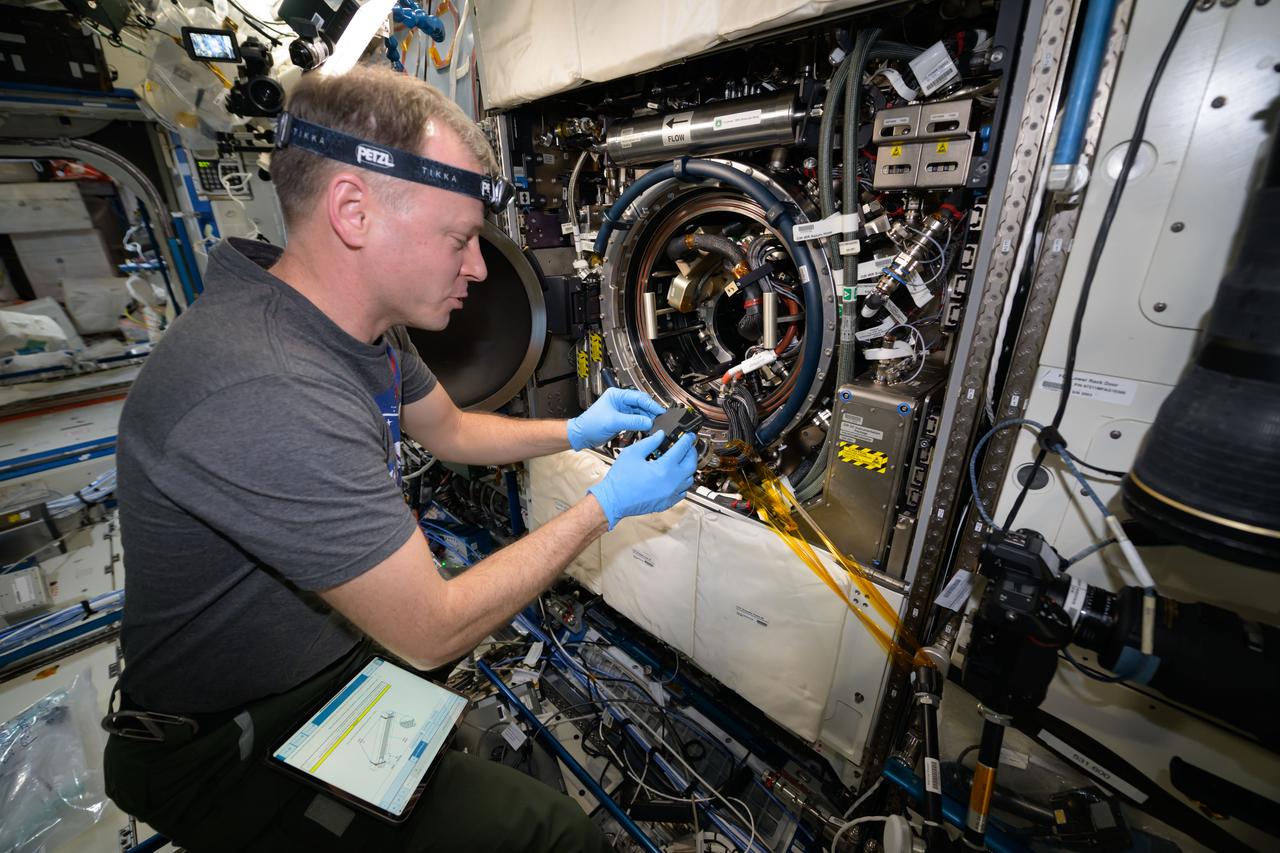
iss072e394546 (Dec. 18, 2024) --- NASA astronaut and Expedition 72 Flight Engineer Nick Hague processes samples inside the Destiny laboratory module's Combustion Integrated Rack. Those samples are being observed for how they burn in weightlessness to learn how to prevent fires on spacecraft.
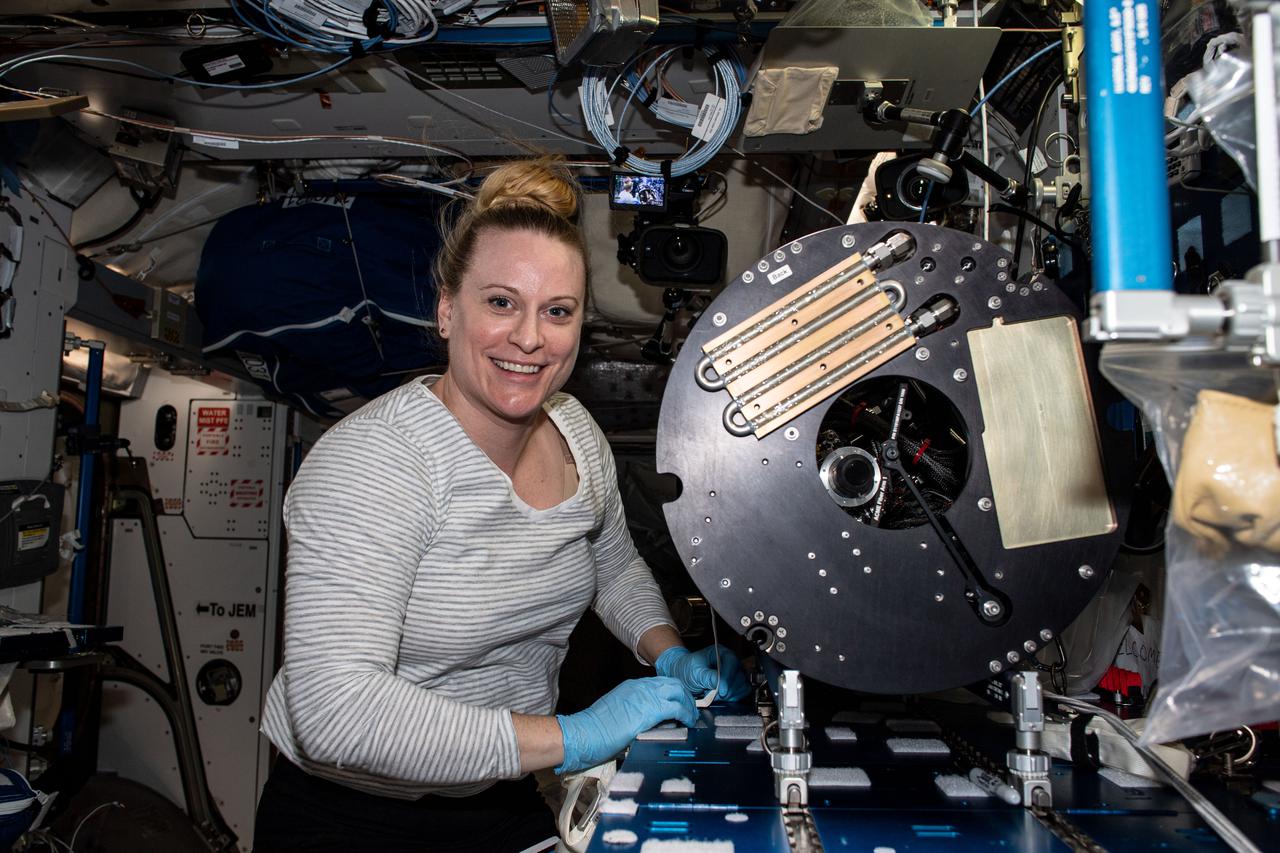
iss064e025973 (Jan., 25, 2021) --- NASA astronaut and Expedition 64 Flight Engineer Kate Rubins services hardware inside the Unity module to support a suite of combustion investigations known as Advanced Combustion Microgravity Experiments, or ACME. The ACME project is a set of six independent studies of gaseous flames that may help to improve fuel efficiency, reduce pollution and prevent spacecraft fires.
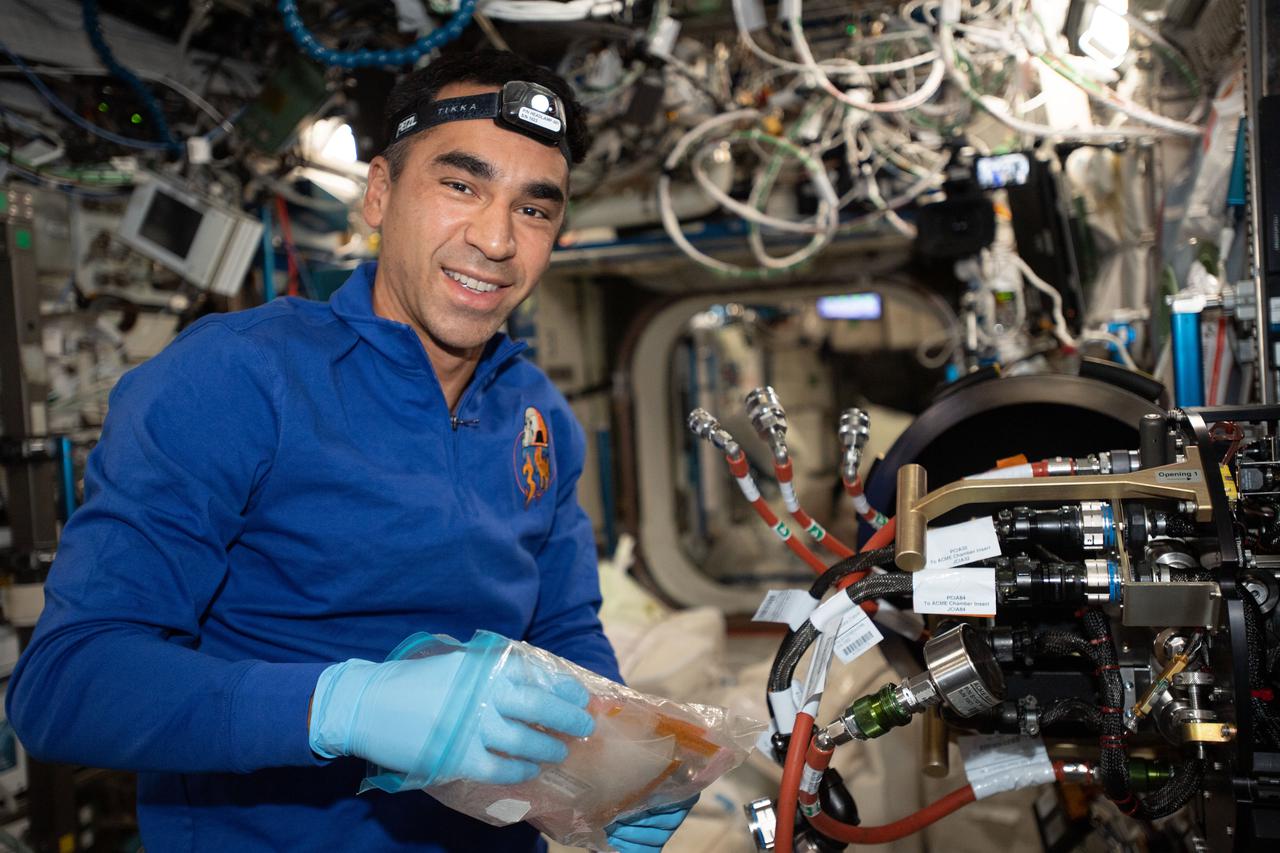
iss066e114415 (Jan. 6, 2022) --- NASA astronaut and Expedition 66 Flight Engineer Raja Chari replaces hardware inside the Combustion Integrated Rack that supports the ACME (Advanced Combustion via Microgravity Experiments) study. ACME is a series of six independent studies of gaseous flames seeking to improve fuel efficiency, reduce pollution, and promote spacecraft fire prevention.
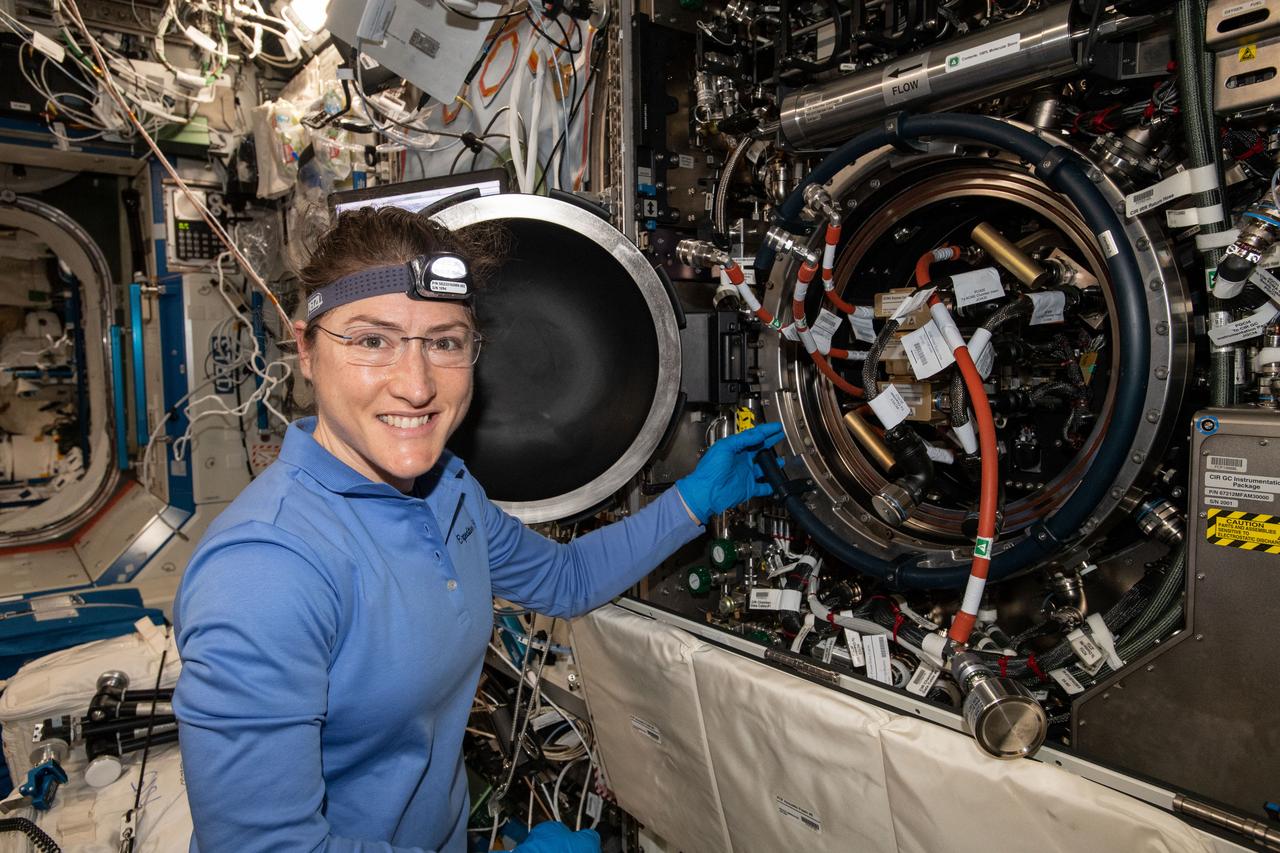
iss059e017127 (April 9, 2018) --- NASA astronaut and Expedition 59 Flight Engineer Christina Koch works inside the U.S. Destiny laboratory module's Combustion Integrated Rack. She was replacing hardware for a series of experiments collectively known as Advanced Combustion via Microgravity Experiments (ACME). ACME is a set of six independent studies researching improved fuel efficiency and reduced pollutant production in practical combustion on Earth, as well as spacecraft fire prevention through innovative research focused on materials flammability.
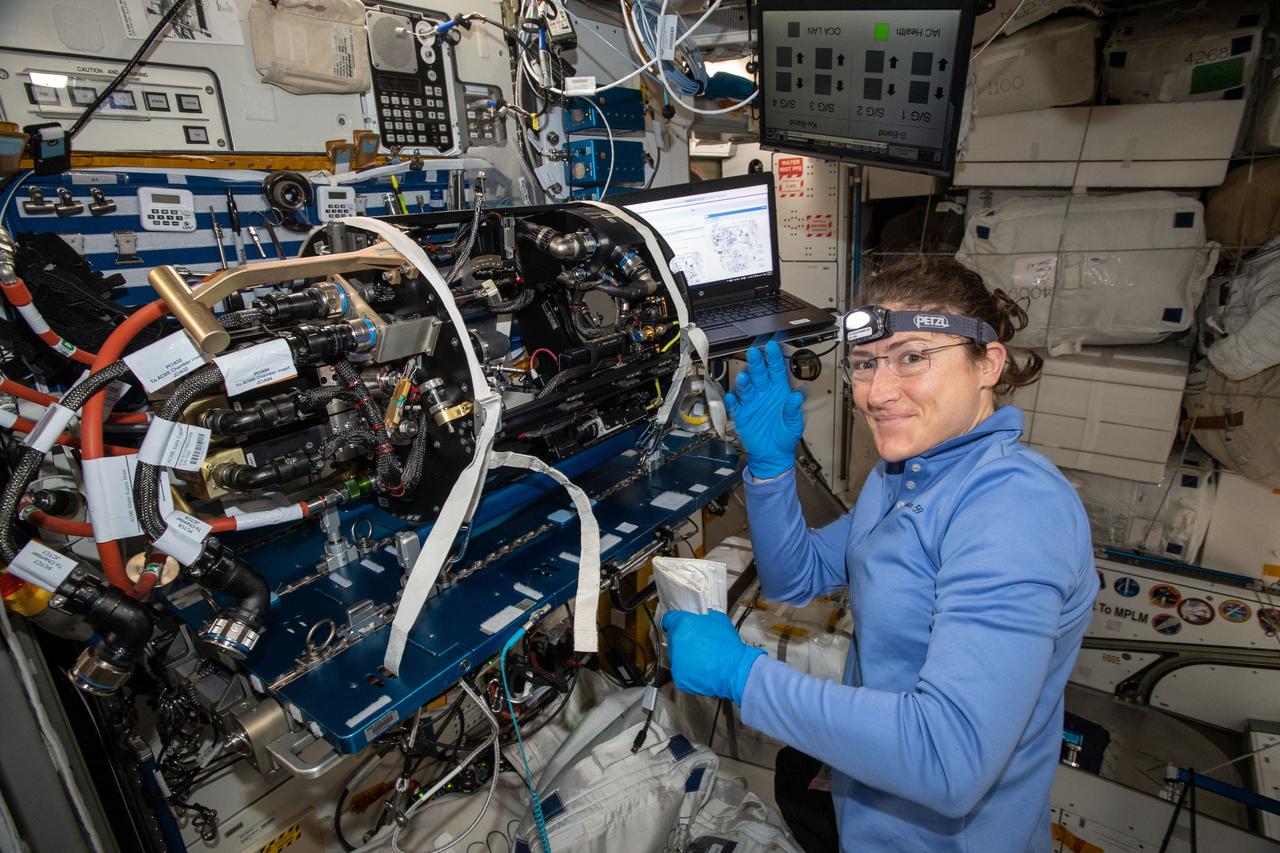
iss059e017072 (April 9, 2018) --- NASA astronaut and Expedition 59 Flight Engineer Christina Koch works on the Unity module's Maintenance Work Area where the Advanced Combustion via Microgravity Experiments (ACME) Chamber Insert was attached for hardware replacement. ACME is a set of five independent studies researching improved fuel efficiency and reduced pollutant production in practical combustion on Earth, as well as spacecraft fire prevention through innovative research focused on materials flammability.
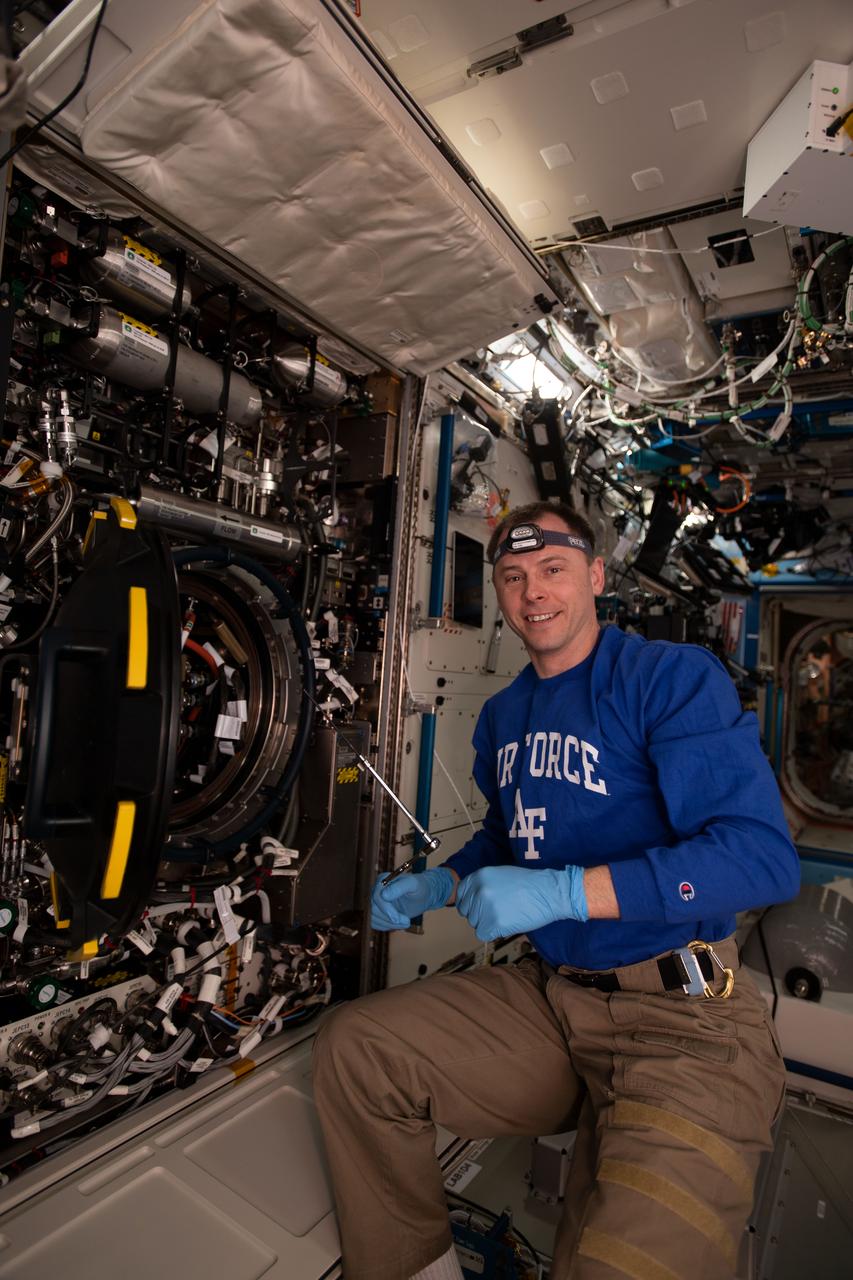
iss059e085880 (May 31, 2019) --- NASA astronaut Nick Hague replaces hardware inside the Combustion Integrated Rack supporting the Advanced Combustion via Microgravity Experiments (ACME). ACME is a set of five independent studies researching improved fuel efficiency and reduced pollutant production in practical combustion on Earth, as well as spacecraft fire prevention through innovative research focused on materials flammability.
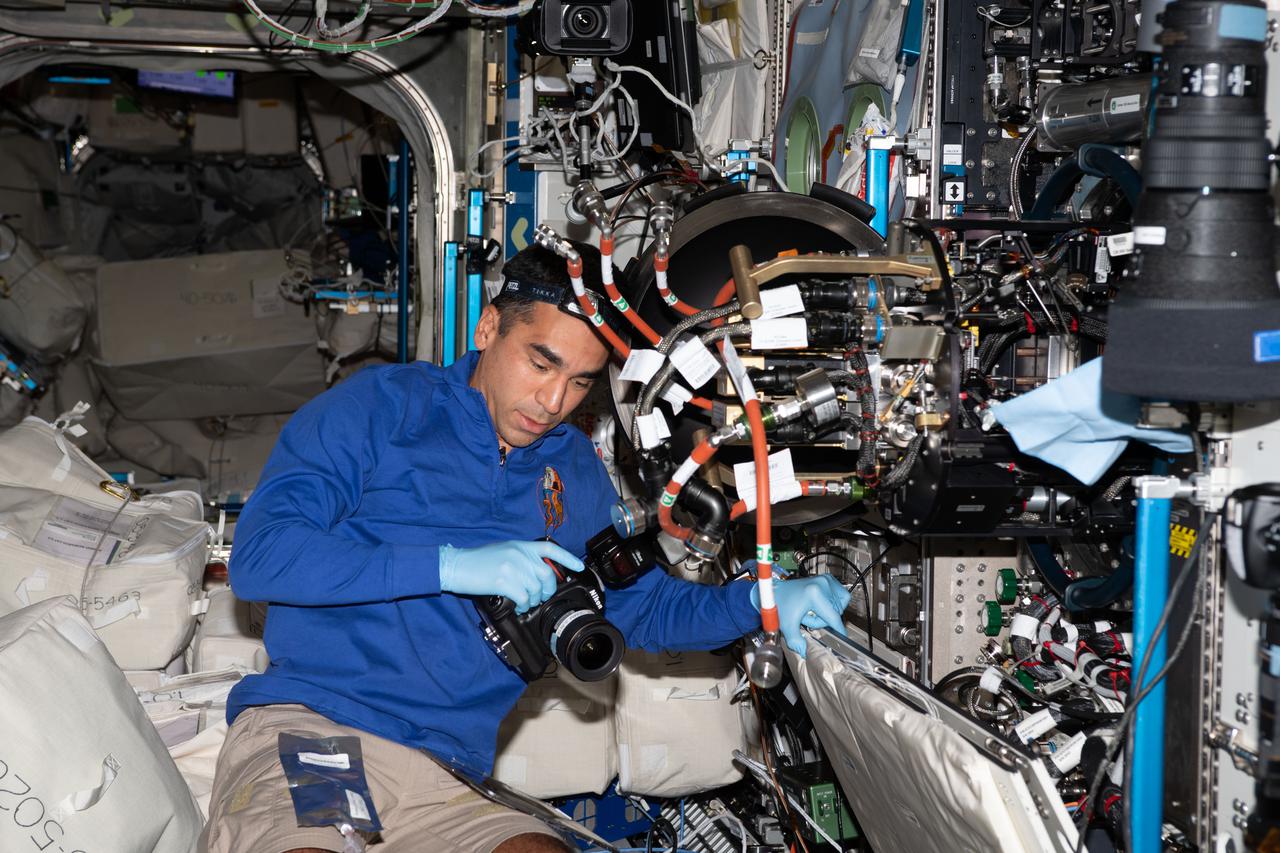
iss066e114301 (Jan. 17, 2022) --- NASA astronaut and Expedition 66 Flight Engineer Raja Chari replaces hardware inside the Combustion Integrated Rack that supports the ACME (Advanced Combustion via Microgravity Experiments) study. ACME is a series of six independent studies of gaseous flames seeking to improve fuel efficiency, reduce pollution, and promote spacecraft fire prevention.
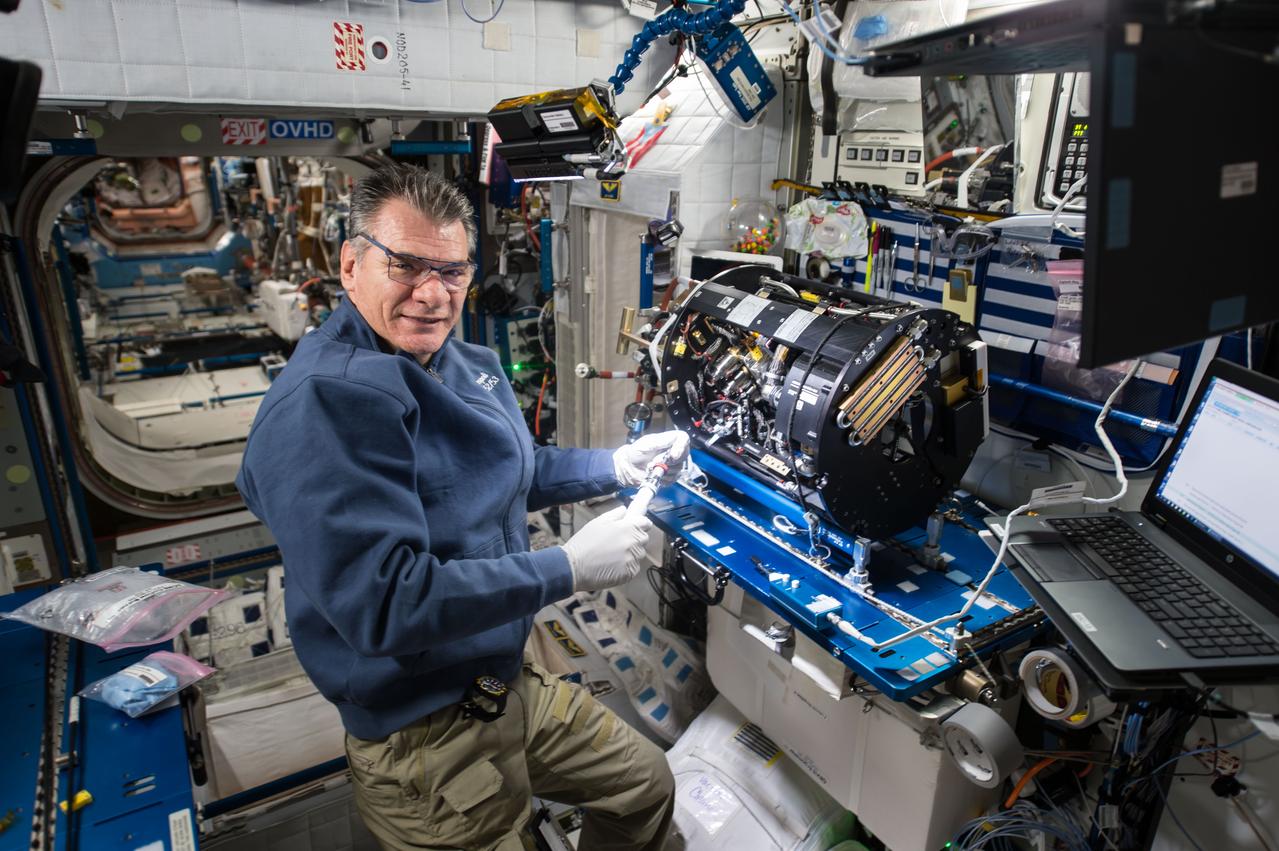
iss053e098185 (Oct. 12, 2017) --- Flight Engineer Paolo Nespoli works inside the Harmony module to configure the Combustion Integrated Rack and enable the Advanced Combustion Microgravity Experiment (ACME). The primary and secondary goals of ACME are the improved fuel efficiency and reduced pollutant production in practical combustion on Earth, and spacecraft fire prevention through innovative research focused on materials flammability.
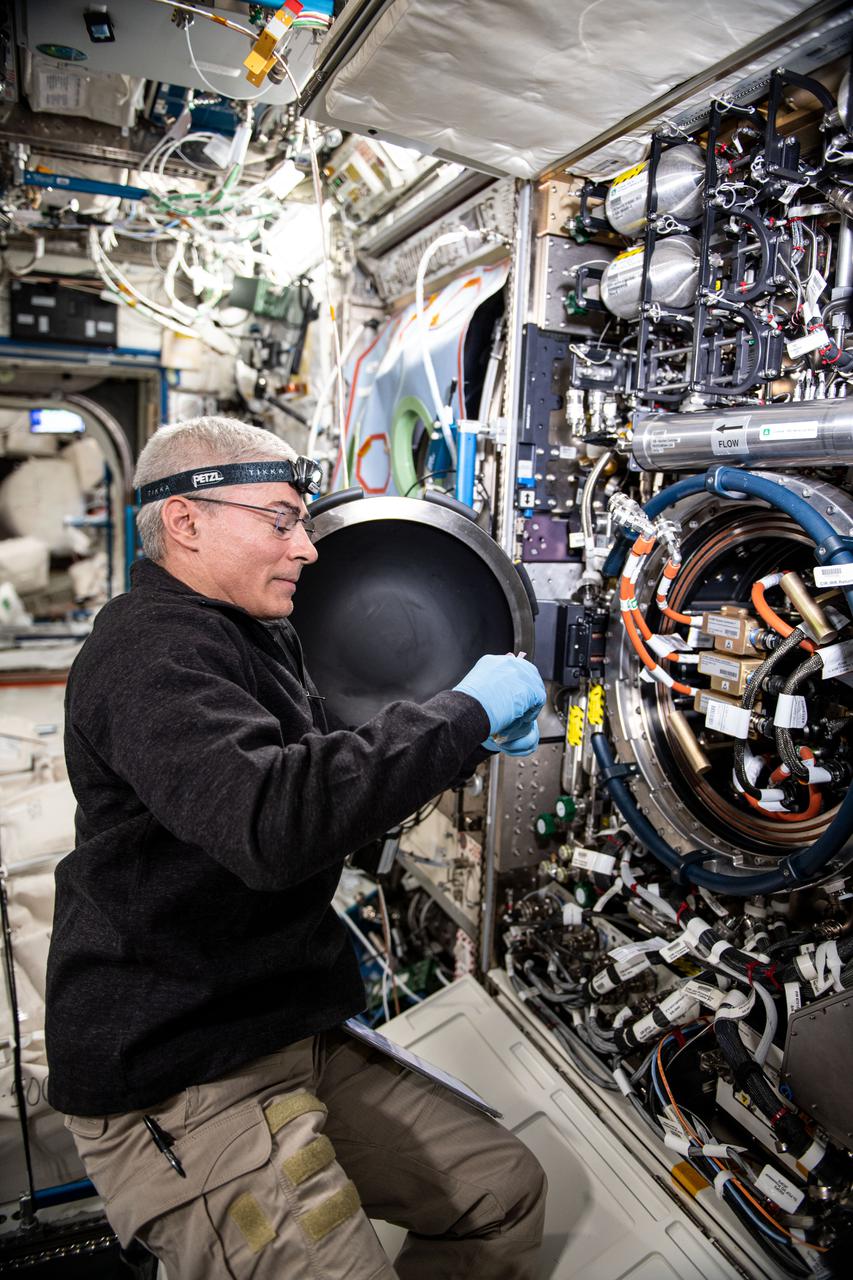
iss065e369687 (Sept. 8, 2021) ----NASA astronaut and Expedition 65 Flight Engineer Mark Vande Hei replaces an igniter inside the U.S. Destiny laboratory module's Combustion Integrated Rack for the ACME series of space combustion studies. ACME, or the Advanced Combustion via Microgravity Experiments, is a set of six independent studies of gaseous flames that seeks to improve fuel efficiency and reduce pollutants on Earth, and improve spacecraft fire prevention by focusing on decreasing the flammability of materials.
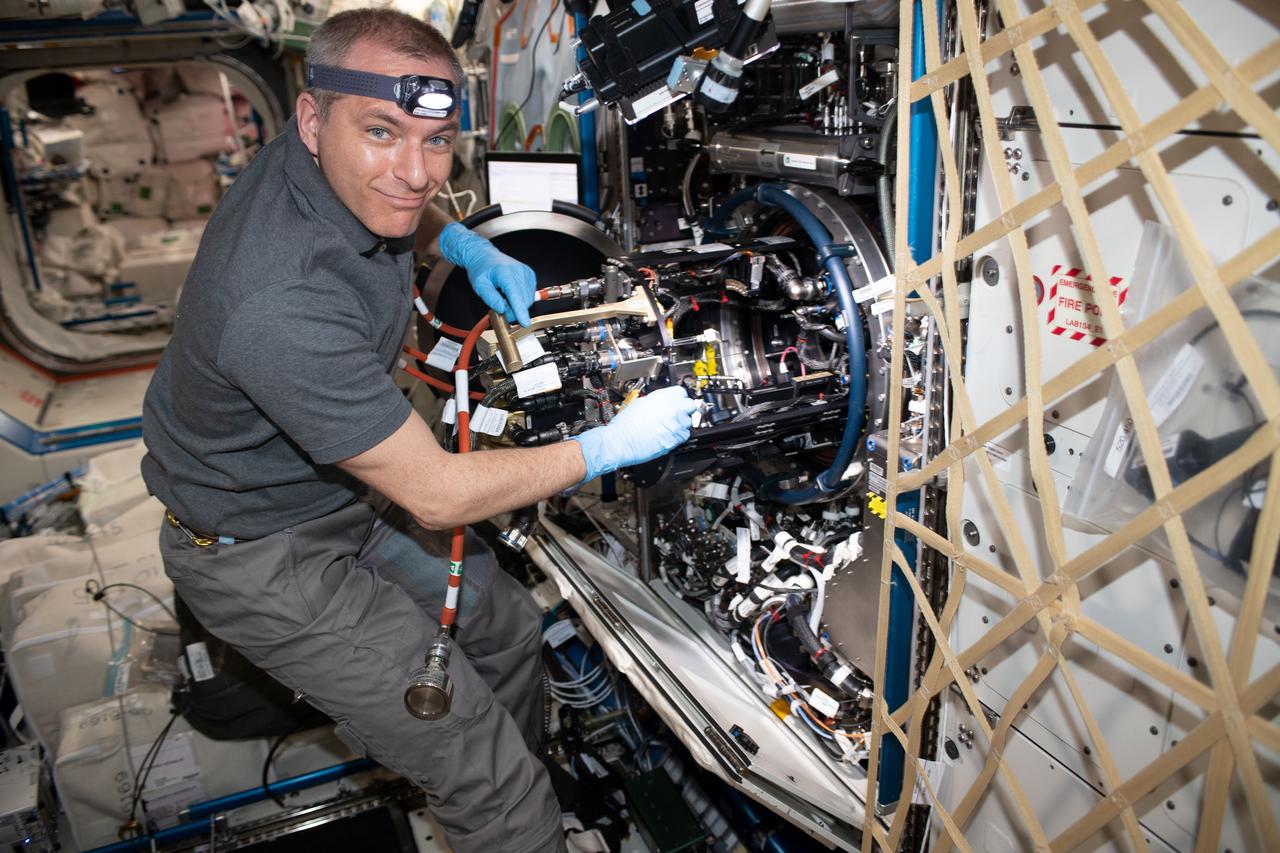
iss059e060847 (May 12, 2019) --- Astronaut David Saint-Jacques of the Canadian Space Agency works on the Combustion Integrated Rack located inside the U.S. Destiny laboratory module. Saint-Jacques was working on hardware supporting the Advanced Combustion via Microgravity Experiments (ACME). ACME is a set of five independent studies of gaseous flames exploring improved fuel efficiency, reduced pollution and spacecraft fire prevention.
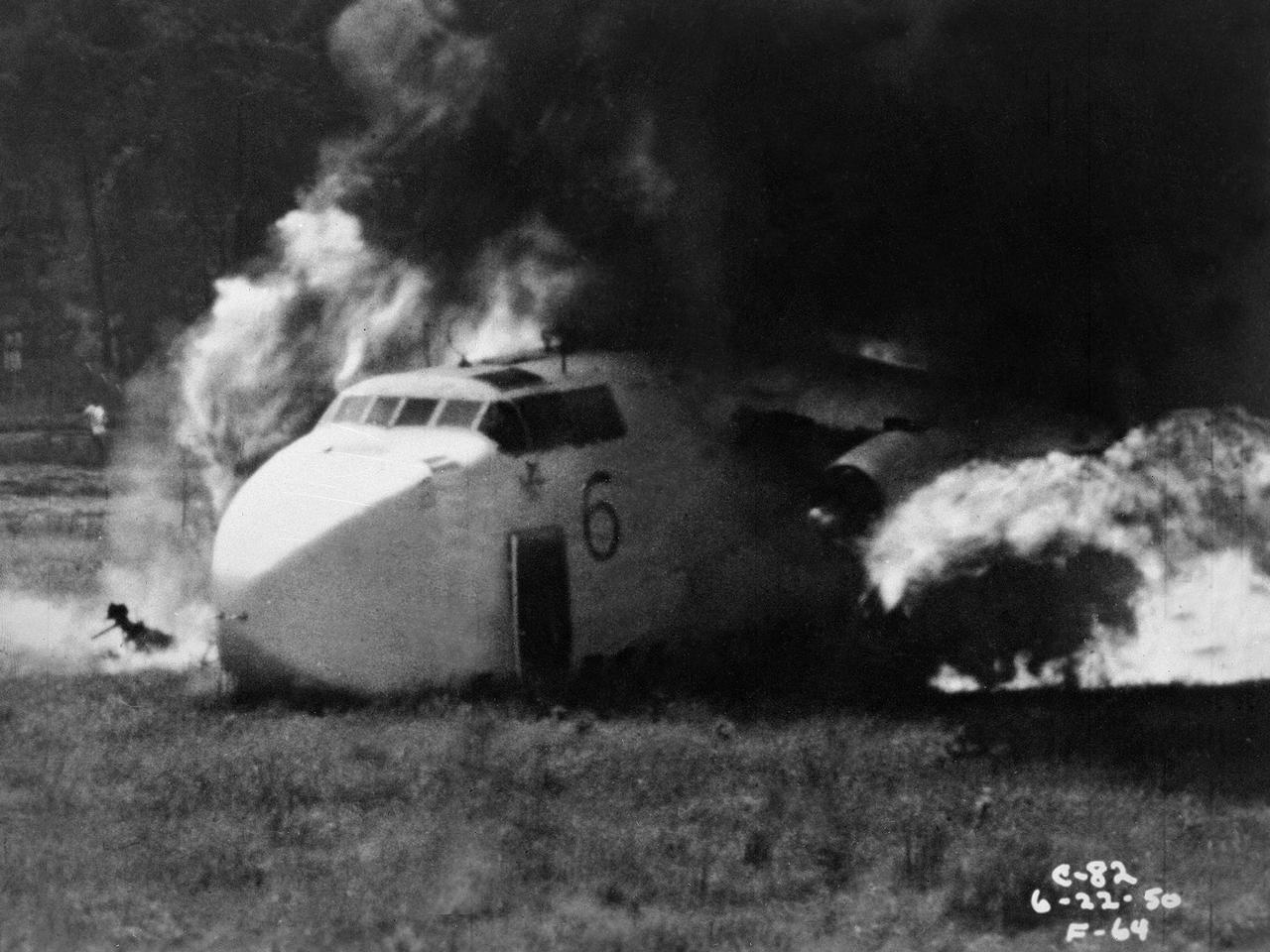
Researchers at the National Advisory Committee for Aeronautics (NACA) Lewis Flight Propulsion Laboratory purposely crash a Fairchild C-82 Packet aircraft to study flame propagation. A rash of passenger aircraft crashes in 1946 and 1947 spurred a White House call for an investigatory board staffed by members of the Civil Aeronautics Board, military, and the NACA. The group addressed fire segregation, extinguishment, and prevention. The NACA established a Subcommittee on Aircraft Fire Prevention in February 1948 to coordinate its efforts. The Lewis team simulated situations in which an aircraft failed to become airborne during takeoff resulting in crashes into embankments and other objects. The Lewis researchers initially used surplus C-46 and C-82 military transport planes. In these situations, the aircraft generally suffered damage to its fuel system and other components, but was structurally survivable. The aircraft were mounted to a rail that ran down a 1700-foot long test runway. The aircraft was secured at the starting point with an anchor pier so it could get its engines up to takeoff speed before launching down the track. Barriers at the end of the runway were designed to simulate a variety of different types of crashes. Telemetry and high-speed cameras were crucial elements in these studies. The preliminary testing phase identified potential ignition sources and analyzed the spread of flammable materials.
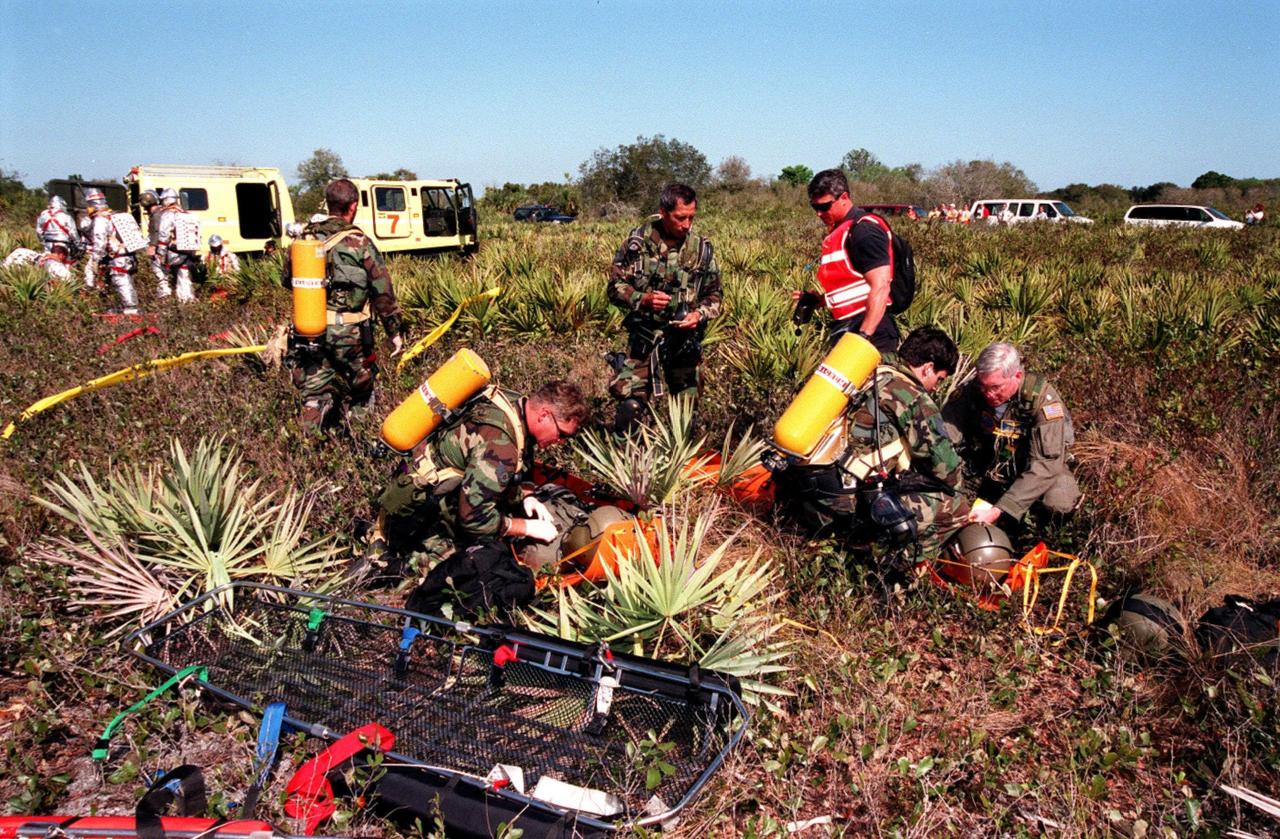
KENNEDY SPACE CENTER, FLA. -- In the simulated rescue mission, the KSC response team takes part in the unlikely scenario of a Shuttle mishap at the Shuttle Landing Facility. The Mode 7 simulation of an astronaut rescue exercised all aspects of command and control, search and rescue, and medical procedures required for a successful rescue. The remote location of the mock-up prevents a totally land-based crew rescue, and calls on a NASA UH-1 helicopter to locate the site and four Air Force HH-60 helicopters to drop emergency equipment and fire/rescue workers to prepare the "crew" for preliminary triage. The helicopters later are used to remove the crew five astronaut candidates, one representative from the Vehicle Integration Test office, and one fire/rescue worker. The exercise concluded with airlifted "patients" arriving safely in the emergency rooms of participating area hospitals.
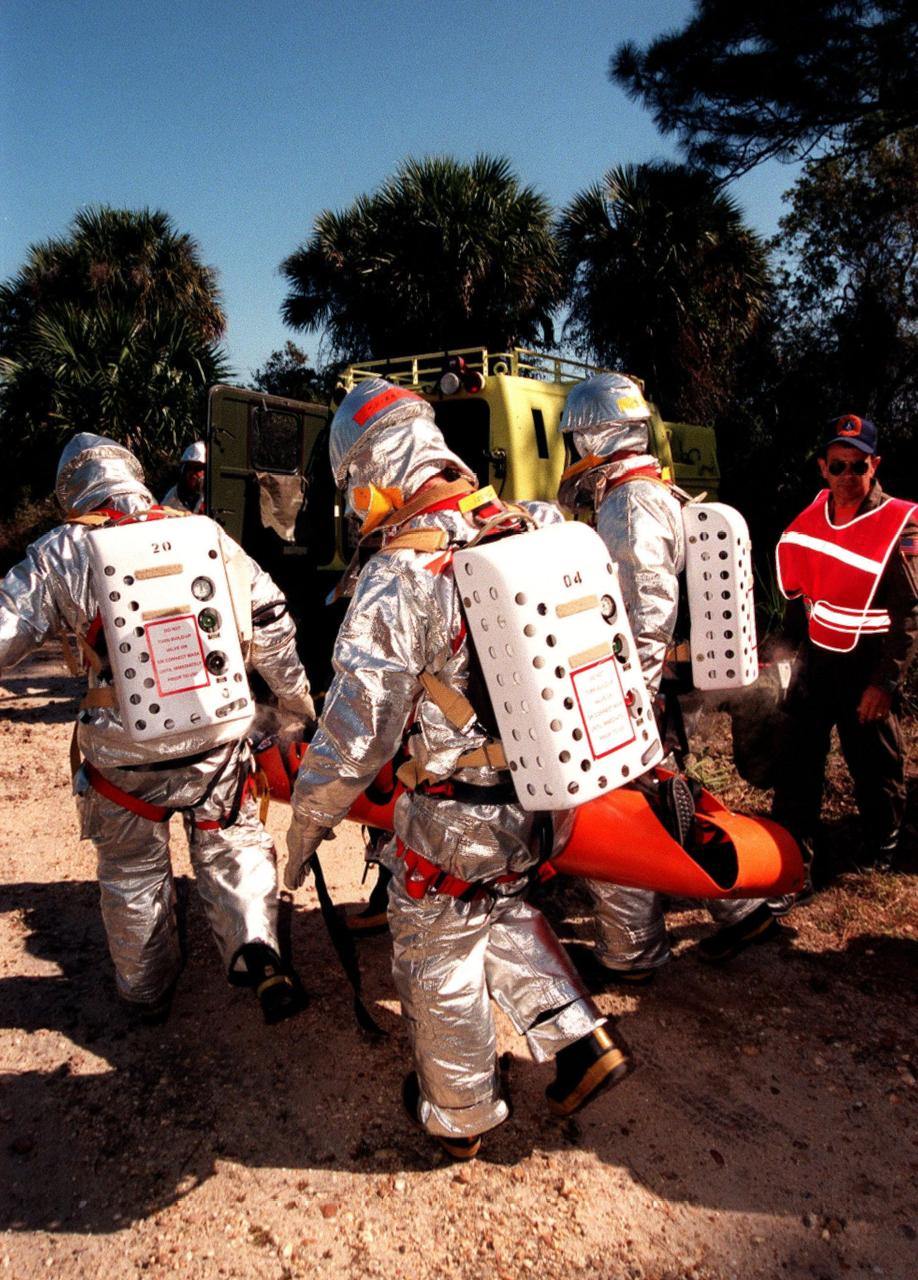
KENNEDY SPACE CENTER, FLA. -- In the woods next to the Shuttle Landing Facility (SLF), the KSC response team takes part in training for the unlikely scenario of a Shuttle mishap at the SLF. The Mode 7 simulation of an astronaut rescue exercises all aspects of command and control, search and rescue, and medical procedures required for a successful rescue. The remote location of the mock-up prevents a totally land-based crew rescue, and calls on a NASA UH-1 helicopter to locate the site and four Air Force HH-60 helicopters to drop emergency equipment and fire/rescue workers to prepare the "crew" for preliminary triage. The helicopters later are used to remove the crew five astronaut candidates, one representative from the Vehicle Integration Test office, and one fire/rescue worker. The exercise concluded with airlifted "patients" arriving safely in the emergency rooms of participating area hospitals
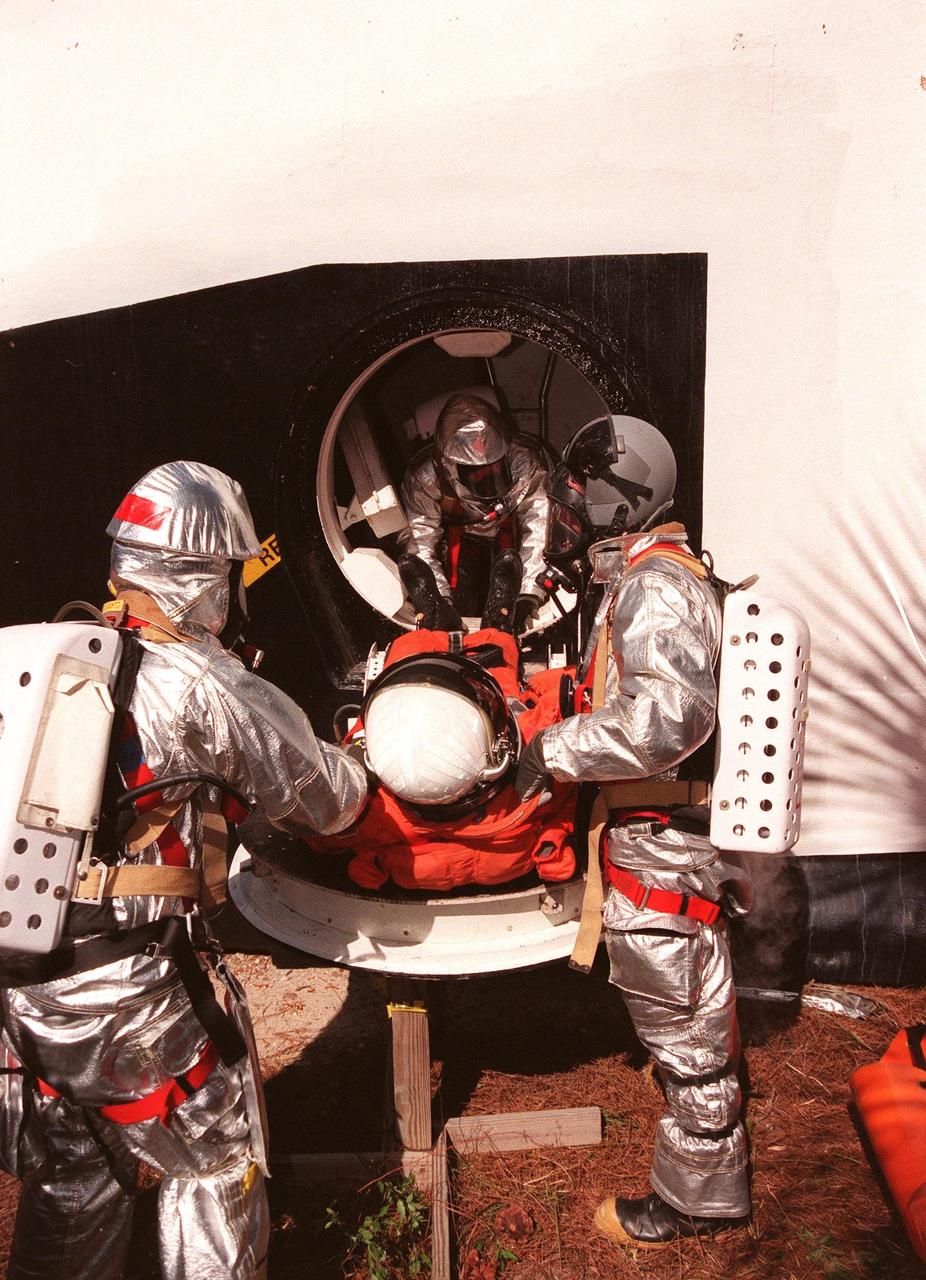
KENNEDY SPACE CENTER, FLA. -- During a simulated rescue mission in the woods near the Shuttle Landing Facility, the KSC response team removes a Shuttle "crew" member from the mock orbiter. The response team is training for the unlikely scenario of a Shuttle mishap at the SLF. The Mode 7 simulation of an astronaut rescue exercises all aspects of command and control, search and rescue, and medical procedures required for a successful rescue. The remote location of the mock-up prevents a totally land-based crew rescue, and calls on a NASA UH-1 helicopter to locate the site and four Air Force HH-60 helicopters to drop emergency equipment and fire/rescue workers to prepare the "crew" for preliminary triage. The helicopters later are used to remove the crew five astronaut candidates, one representative from the Vehicle Integration Test office, and one fire/rescue worker. The exercise concluded with airlifted "patients" arriving safely in the emergency rooms of participating area hospitals
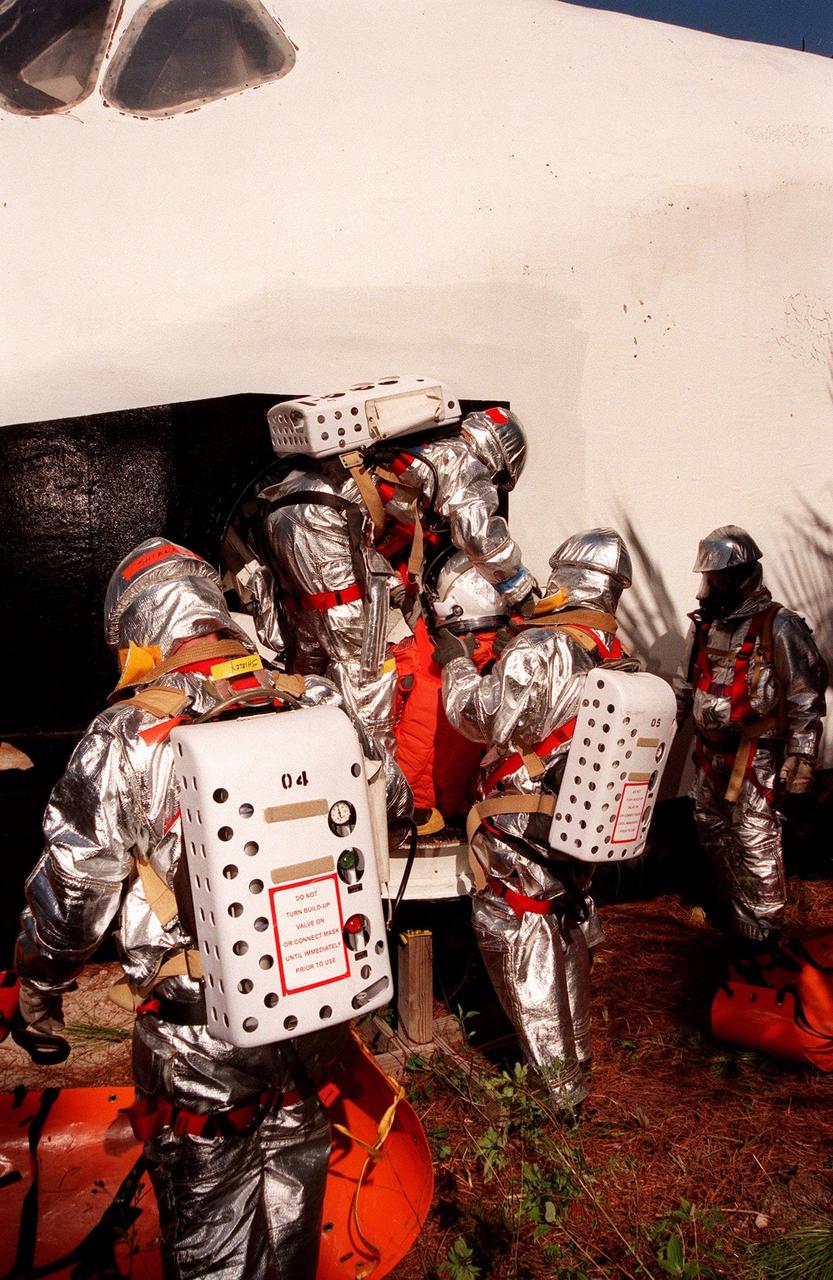
During a simulated rescue mission in the woods near the Shuttle Landing Facility (SLF), the KSC response team removes a crew member from a mock Shuttle. The response team is training for the unlikely scenario of a Shuttle mishap at the SLF. The Mode 7 simulation of an astronaut rescue exercises all aspects of command and control, search and rescue, and medical procedures required for a successful rescue. The remote location of the mock-up prevents a totally land-based crew rescue, and calls on a NASA UH-1 helicopter to locate the site and four Air Force HH-60 helicopters to drop emergency equipment and fire/rescue workers to prepare the "crew" for preliminary triage. The helicopters later are used to remove the crew five astronaut candidates, one representative from the Vehicle Integration Test office, and one fire/rescue worker. The exercise concluded with airlifted "patients" arriving safely in the emergency rooms of participating area hospitals
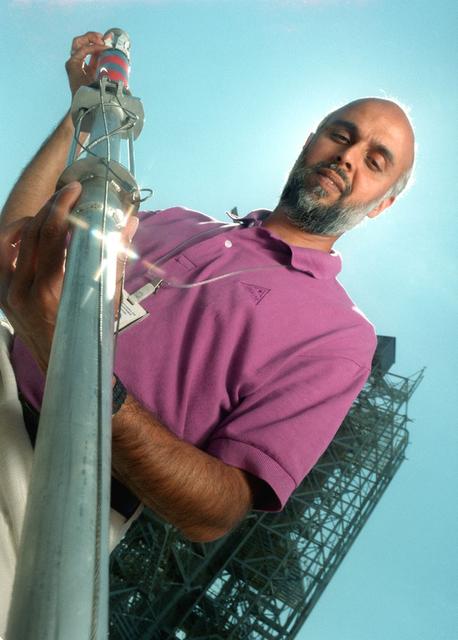
The dart and associated launching system was developed by engineers at MSFC to collect a sample of the aluminum oxide particles during the static fire testing of the Shuttle's solid rocket motor. The dart is launched through the exhaust and recovered post test. The particles are collected on sticky copper tapes affixed to a cylindrical shaft in the dart. A protective sleeve draws over the tape after the sample is collected to prevent contamination. The sample is analyzed under a scarning electron microscope under high magnification and a particle size distribution is determined. This size distribution is input into the analytical model to predict the radiative heating rates from the motor exhaust. Good prediction models are essential to optimizing the development of the thermal protection system for the Shuttle.
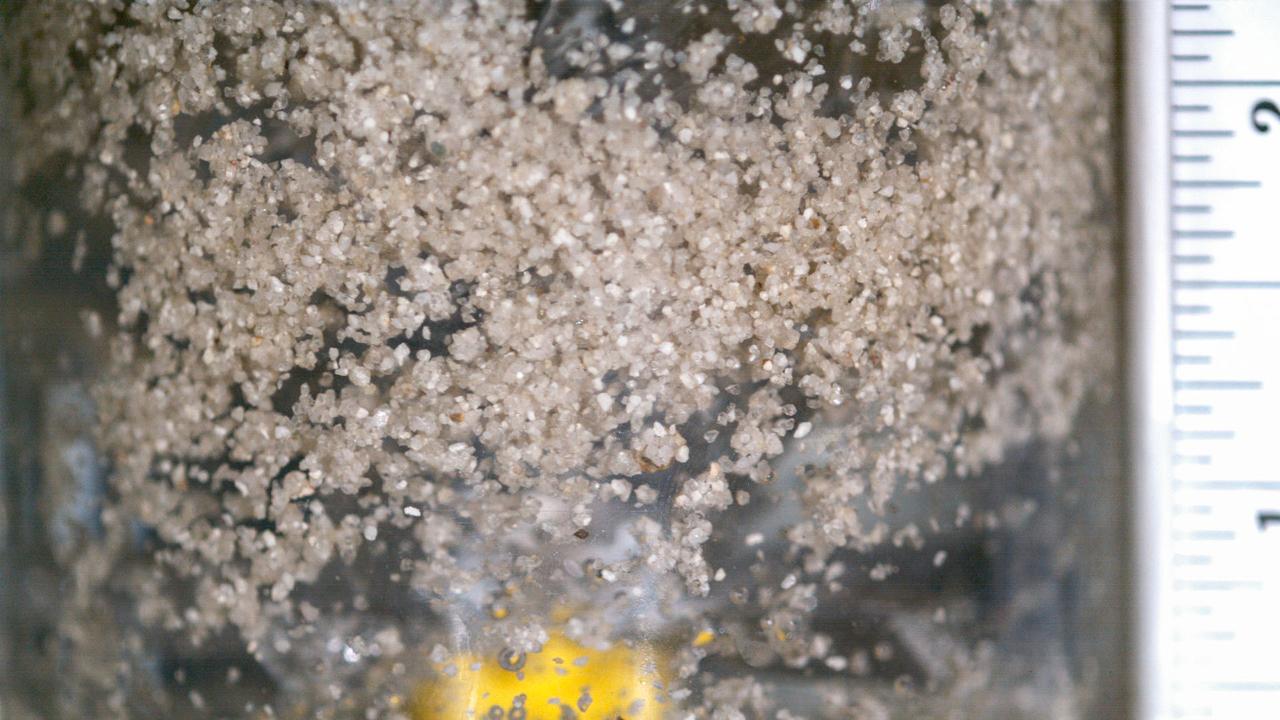
jsc2022e072959 (9/16/2022) --- Coarse hydrophobic sand is mixed for 25 seconds with water and air. Researchers observe a decent amount of agglomerates (air bubbles) covered by hydrophobic sand particles flowing in the water body. There are also free sand particles floating around. Catastrophic Post-Wildfire Mudflows studies the formation and stability of this bubble-sand structure in microgravity. A better understanding of these phenomena could improve the understanding, modeling, and predicting of mudflows and support development of innovative solutions to prevent catastrophic post-fire events. Image courtesy of the UCSD Geo-Micromechanics Research Group.
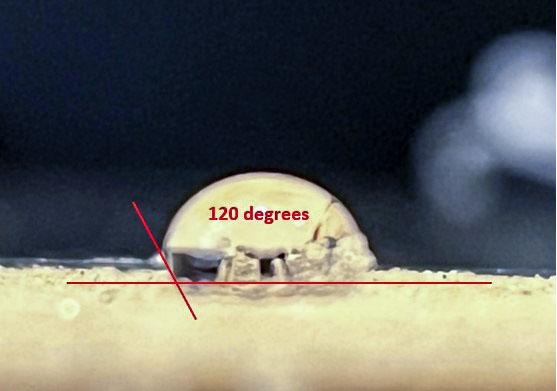
jsc2022e072961 (9/16/2022) --- Researchers drop a water droplet on the flat surface of hydrophobic fine sand. The water droplet has a contact angle of 120 degrees at the three-phase interface. The water droplet stands up and has a more rounded shape than a flattened shape compared to normal hydrophilic sand. Catastrophic Post-Wildfire Mudflows studies the formation and stability of this bubble-sand structure in microgravity. A better understanding of these phenomena could improve the understanding, modeling, and predicting of mudflows and support development of innovative solutions to prevent catastrophic post-fire events. Image courtesy of the UCSD Geo-Micromechanics Research Group.
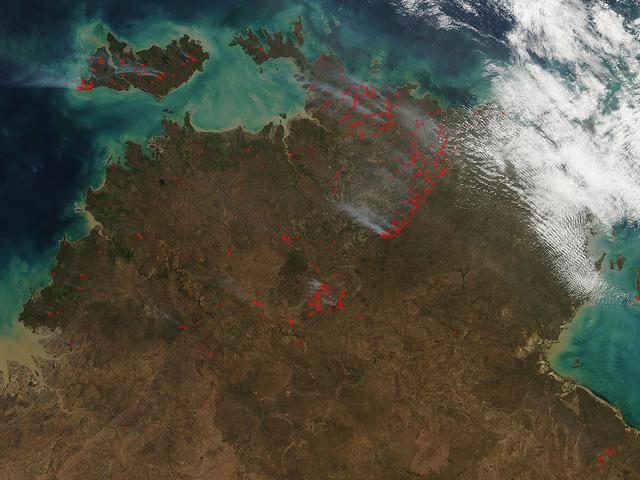
The Aqua satellite collected this natural-color image of fires in Australia with the Moderate Resolution Imaging Spectroradiometer (MODIS) instrument on June 30, 2017. The image looks at multiple fires and smoke from those fires burning in northern Australia and the island of Bathurst on June 30, 2017. The Northern Territory fire incident map does show some incidents of grass and shrub fires, in the past 24 hours, but it also shows areas of what are called "strategic fires" which are those set by fire experts to rid an area of overgrowth, brush, dead grass and shrubs to prevent fires from spreading in the event of a lightning strike. NASA image courtesy Jeff Schmaltz, MODIS Rapid Response Team <b><a href="http://www.nasa.gov/audience/formedia/features/MP_Photo_Guidelines.html" rel="nofollow">NASA image use policy.</a></b> <b><a href="http://www.nasa.gov/centers/goddard/home/index.html" rel="nofollow">NASA Goddard Space Flight Center</a></b> enables NASA’s mission through four scientific endeavors: Earth Science, Heliophysics, Solar System Exploration, and Astrophysics. Goddard plays a leading role in NASA’s accomplishments by contributing compelling scientific knowledge to advance the Agency’s mission. <b>Follow us on <a href="http://twitter.com/NASAGoddardPix" rel="nofollow">Twitter</a></b> <b>Like us on <a href="http://www.facebook.com/pages/Greenbelt-MD/NASA-Goddard/395013845897?ref=tsd" rel="nofollow">Facebook</a></b> <b>Find us on <a href="http://instagrid.me/nasagoddard/?vm=grid" rel="nofollow">Instagram</a></b>
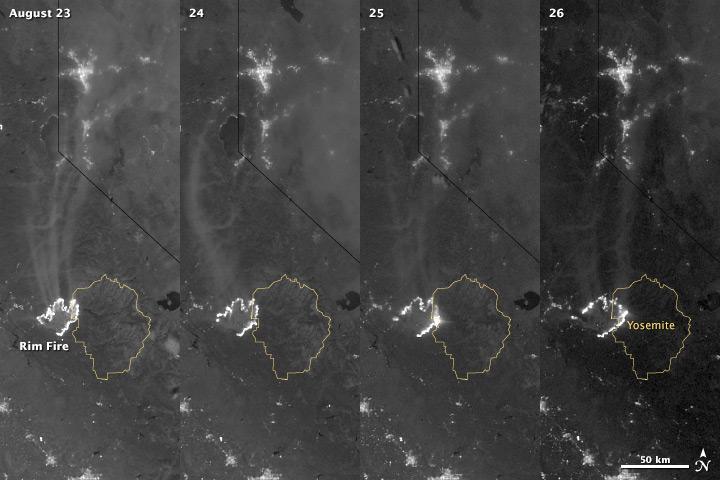
The winter of 2013 was among the driest on record for California, setting the stage for an active fire season. By August 26, the Rim Fire had made its way into the record books. At just 15 percent contained, the fire is now the 13th largest in California since records began in 1932. Apart from being large, the fire is also threatening one of the United States’ greatest natural treasures: Yosemite National Park. The Visible Infrared Imaging Radiometer Suite (VIIRS) on the Suomi NPP satellite tracked the growth of the fire between August 23 and August 26 in this series of nighttime images. The VIIRS day-night band is extremely sensitive to low light, making it possible to see the fire front from space. The brightest, most intense parts of the fire glow white, exceeding the brightness of the lights of Reno, Nevada to the north. Pale gray smoke streams north away from the fire throughout the sequence. The perimeter of the fire grows from day to day along different fronts, depending on winds and fire fighting efforts. On August 24, fire fighters focused their efforts on containing the western edge of the fire to prevent it from burning into Tuolumne City and the populated Highway 108 corridor. They also fought the eastern edge of the fire to protect Yosemite National Park. These efforts are evident in the image: Between August 23 and 24, the eastern edge of the fire held steady, and the western edge receded. The fire grew in the southeast. On the morning of August 25 fire managers reported that the fire was growing in the north and east. In the image, the most intense activity is just inside Yosemite National Park. Fire fighters reported that the Rim Fire continued to be extremely active on its eastern front on the morning of August 26, and this activity is visible in the image. By 8:00 a.m., the fire had burned 149,780 acres. The fire forced firefighters in Yosemite National Park to take measures to protect the Merced and Tuolumne Groves of Giant Sequoias, but the National Park Service reported that the trees were not in imminent danger. While parts of the park are closed, webcams show that most of the park has not been impacted. The Rim Fire started on the afternoon of August 17. It has destroyed 23 structures and threatened 4,500 other buildings. Its cause is under investigation. More details: <a href="http://1.usa.gov/18ilEAA" rel="nofollow">1.usa.gov/18ilEAA</a> NASA Earth Observatory image by Jesse Allen and Robert Simmon, using VIIRS Day Night Band data. Caption by Holli Riebeek. Instrument: Suomi NPP - VIIRS <b><a href="http://www.nasa.gov/audience/formedia/features/MP_Photo_Guidelines.html" rel="nofollow">NASA image use policy.</a></b> <b><a href="http://www.nasa.gov/centers/goddard/home/index.html" rel="nofollow">NASA Goddard Space Flight Center</a></b> enables NASA’s mission through four scientific endeavors: Earth Science, Heliophysics, Solar System Exploration, and Astrophysics. Goddard plays a leading role in NASA’s accomplishments by contributing compelling scientific knowledge to advance the Agency’s mission. <b>Follow us on <a href="http://twitter.com/NASA_GoddardPix" rel="nofollow">Twitter</a></b> <b>Like us on <a href="http://www.facebook.com/pages/Greenbelt-MD/NASA-Goddard/395013845897?ref=tsd" rel="nofollow">Facebook</a></b> <b>Find us on <a href="http://instagram.com/nasagoddard?vm=grid" rel="nofollow">Instagram</a></b>
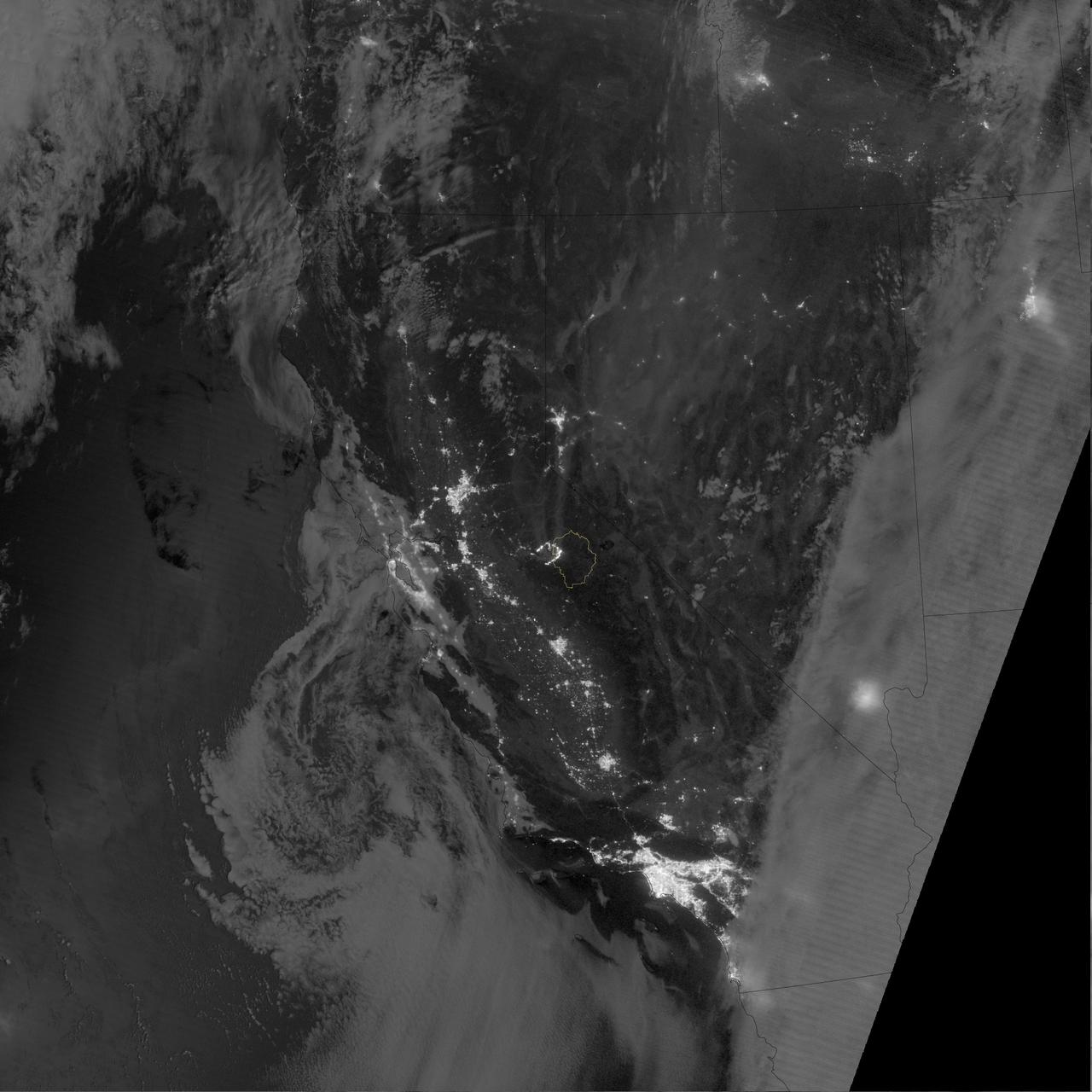
The winter of 2013 was among the driest on record for California, setting the stage for an active fire season. By August 26, the Rim Fire had made its way into the record books. At just 15 percent contained, the fire is now the 13th largest in California since records began in 1932. Apart from being large, the fire is also threatening one of the United States’ greatest natural treasures: Yosemite National Park. The Visible Infrared Imaging Radiometer Suite (VIIRS) on the Suomi NPP satellite tracked the growth of the fire between August 23 and August 26 in a series of nighttime images. The VIIRS day-night band is extremely sensitive to low light, making it possible to see the fire front from space. The brightest, most intense parts of the fire glow white, exceeding the brightness of the lights of Reno, Nevada to the north. Pale gray smoke streams north away from the fire throughout the sequence. The perimeter of the fire grows from day to day along different fronts, depending on winds and fire fighting efforts. On August 24, fire fighters focused their efforts on containing the western edge of the fire to prevent it from burning into Tuolumne City and the populated Highway 108 corridor. They also fought the eastern edge of the fire to protect Yosemite National Park. These efforts are evident in the image: Between August 23 and 24, the eastern edge of the fire held steady, and the western edge receded. The fire grew in the southeast. On the morning of August 25 fire managers reported that the fire was growing in the north and east. In the image, the most intense activity is just inside Yosemite National Park. Fire fighters reported that the Rim Fire continued to be extremely active on its eastern front on the morning of August 26, and this activity is visible in the image. By 8:00 a.m., the fire had burned 149,780 acres. The fire forced firefighters in Yosemite National Park to take measures to protect the Merced and Tuolumne Groves of Giant Sequoias, but the National Park Service reported that the trees were not in imminent danger. While parts of the park are closed, webcams show that most of the park has not been impacted. The Rim Fire started on the afternoon of August 17. It has destroyed 23 structures and threatened 4,500 other buildings. Its cause is under investigation. More details: <a href="http://1.usa.gov/18ilEAA" rel="nofollow">1.usa.gov/18ilEAA</a> NASA Earth Observatory image by Jesse Allen and Robert Simmon, using VIIRS Day Night Band data. Caption by Holli Riebeek. Instrument: Suomi NPP - VIIRS <b><a href="http://www.nasa.gov/audience/formedia/features/MP_Photo_Guidelines.html" rel="nofollow">NASA image use policy.</a></b> <b><a href="http://www.nasa.gov/centers/goddard/home/index.html" rel="nofollow">NASA Goddard Space Flight Center</a></b> enables NASA’s mission through four scientific endeavors: Earth Science, Heliophysics, Solar System Exploration, and Astrophysics. Goddard plays a leading role in NASA’s accomplishments by contributing compelling scientific knowledge to advance the Agency’s mission. <b>Follow us on <a href="http://twitter.com/NASA_GoddardPix" rel="nofollow">Twitter</a></b> <b>Like us on <a href="http://www.facebook.com/pages/Greenbelt-MD/NASA-Goddard/395013845897?ref=tsd" rel="nofollow">Facebook</a></b> <b>Find us on <a href="http://instagram.com/nasagoddard?vm=grid" rel="nofollow">Instagram</a></b>
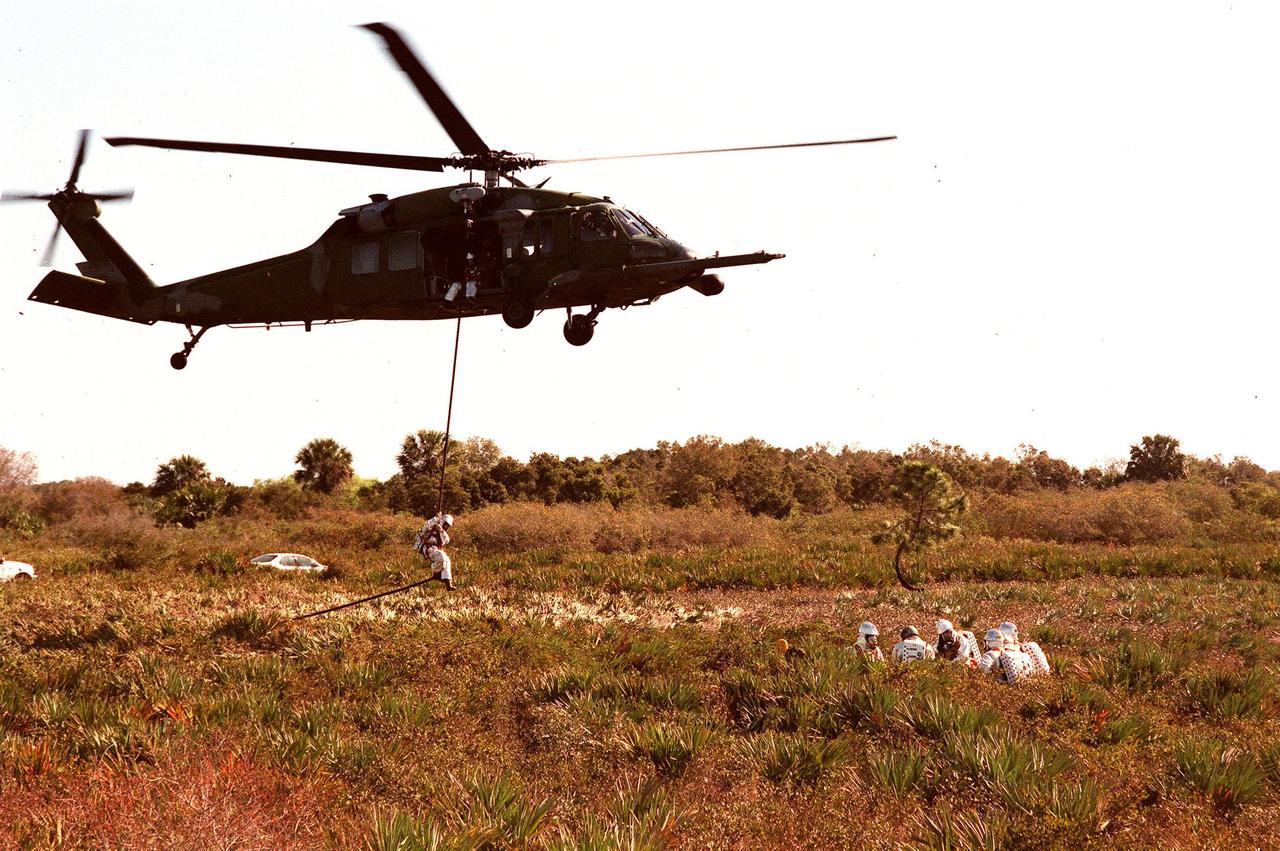
KENNEDY SPACE CENTER, FLA. -- During a simulated rescue mission in the woods near the Shuttle Landing Facility (SLF), a fire/rescue worker practices disembarking from an Air Force HH-60 helicopter. The KSC response team is training for the unlikely scenario of a Shuttle mishap at the SLF. The Mode 7 simulation of an astronaut rescue exercises all aspects of command and control, search and rescue, and medical procedures required for a successful rescue. The remote location of the mock-up prevents a totally land-based crew rescue, and calls on a NASA UH-1 helicopter to locate the site and four Air Force HH-60 helicopters to drop emergency equipment and fire/rescue workers to prepare the "crew" for preliminary traige. The helicopters are used later to remove the crew five astronaut candidates, one representative from the Vehicle Integration Test office, and one fire/rescue worker. The exercise will conclude with airlifted "patients" arriving safely in the emergency rooms of participating area hospitals
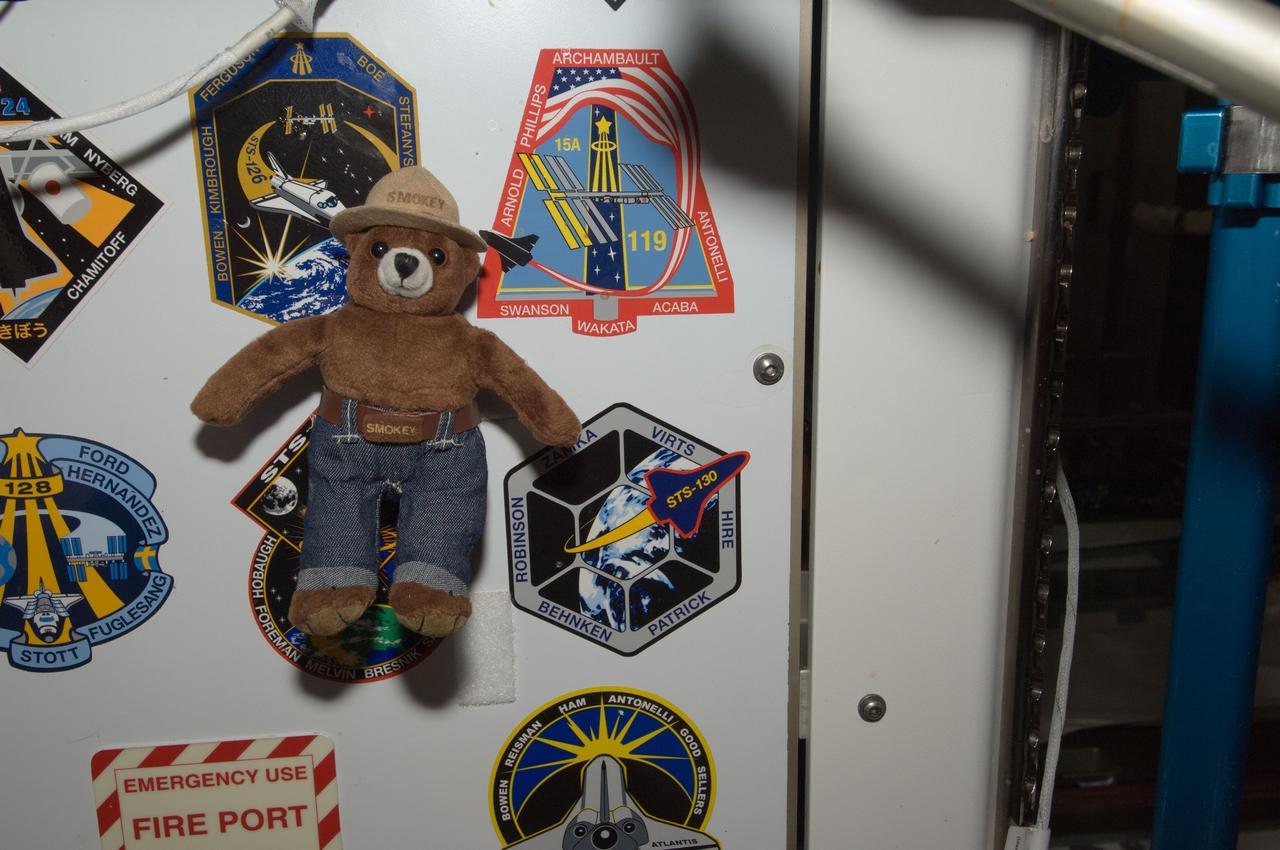
ISS032-E-011654 (3 Aug. 2012) --- Smokey Bear floats freely near crew insignias placed in the Unity node of the International Space Station. On May 15, 2012, Smokey traveled aboard the Soyuz spacecraft with NASA astronaut Joe Acaba and Russian cosmonauts Gennady Padalka and Sergei Revin to the space station. As a recognized symbol for wildland fire prevention, his presence on the orbiting complex also highlights the many areas of active space station research related to Earth observations, plant growth and combustion and materials sciences, as well as existing spinoff technologies in these areas. NASA, the U.S. Forest Service (USFS) and the Texas Forest Service are teaming up to celebrate Smokey's 68th birthday Aug. 9 at NASA's Johnson Space Center in Houston.

ISS032-E-011678 (3 Aug. 2012) --- Smokey Bear floats freely near a hatchway on the International Space Station. On May 15, 2012, Smokey traveled aboard the Soyuz spacecraft with NASA astronaut Joe Acaba and Russian cosmonauts Gennady Padalka and Sergei Revin to the space station. As a recognized symbol for wildland fire prevention, his presence on the orbiting complex also highlights the many areas of active space station research related to Earth observations, plant growth and combustion and materials sciences, as well as existing spinoff technologies in these areas. NASA, the U.S. Forest Service (USFS) and the Texas Forest Service are teaming up to celebrate Smokey's 68th birthday Aug. 9 at NASA's Johnson Space Center in Houston.
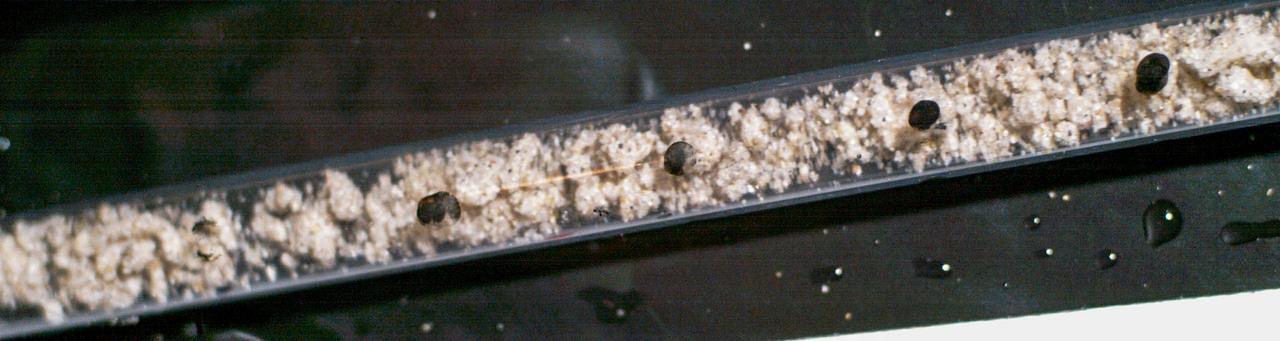
jsc2022e072960 (9/16/2022) --- Front view of flow of mixture of hydrophobic medium sand particles, water, and air. After mixing hydrophobic medium sand particles with water and air, researchers flow the mixture through the pipe. Both agglomerates and excess free sand particles are visible. Researchers also observe the segregation phenomenon during the flow of this particular mixture. Agglomerates do not occupy the pipe uniformly and do not always flow at the same speed. Catastrophic Post-Wildfire Mudflows studies the formation and stability of this bubble-sand structure in microgravity. A better understanding of these phenomena could improve the understanding, modeling, and predicting of mudflows and support development of innovative solutions to prevent catastrophic post-fire events. Image courtesy of the UCSD Geo-Micromechanics Research Group.
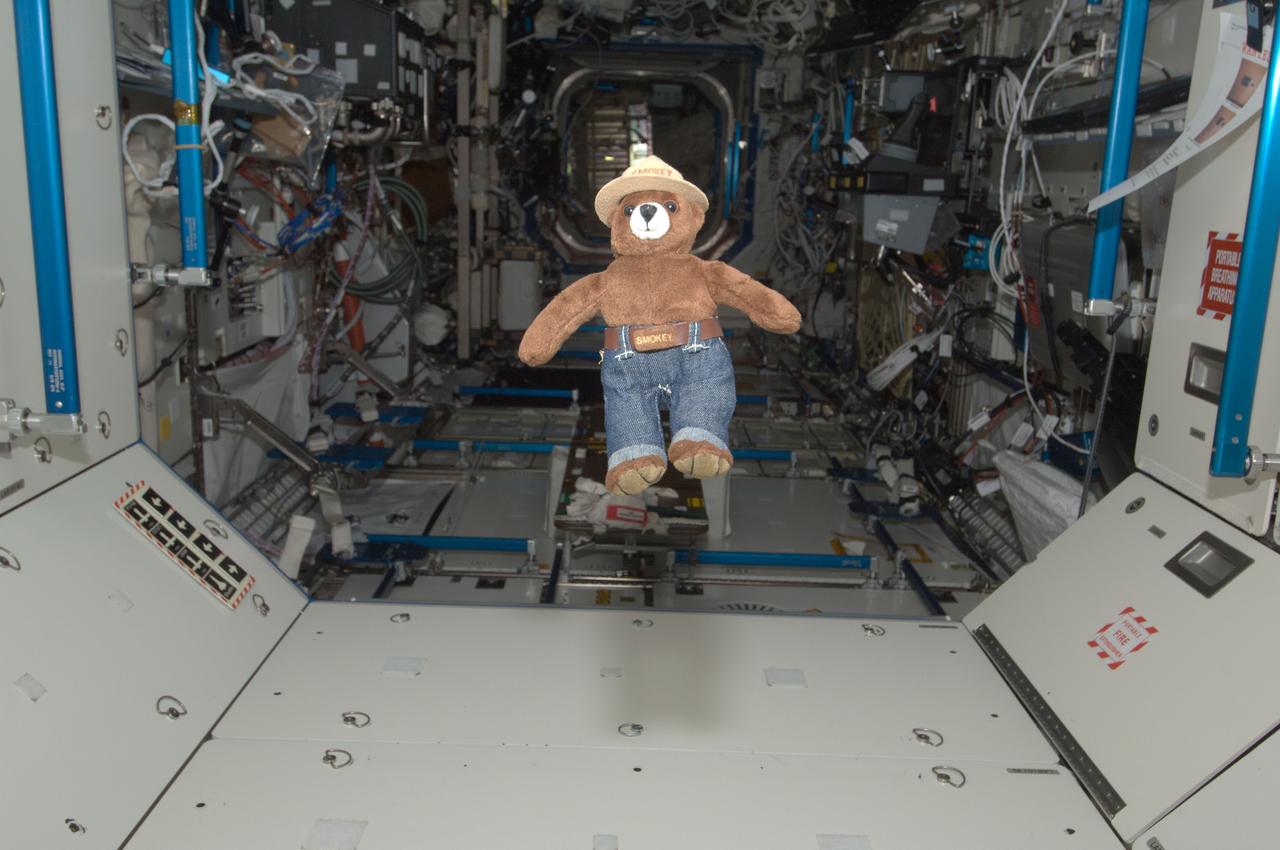
ISS032-E-011666 (3 Aug. 2012) --- Smokey Bear floats freely in the hatchway of the International Space Station’s Destiny laboratory. On May 15, 2012, Smokey traveled aboard the Soyuz spacecraft with NASA astronaut Joe Acaba and Russian cosmonauts Gennady Padalka and Sergei Revin to the space station. As a recognized symbol for wildland fire prevention, his presence on the orbiting complex also highlights the many areas of active space station research related to Earth observations, plant growth and combustion and materials sciences, as well as existing spinoff technologies in these areas. NASA, the U.S. Forest Service (USFS) and the Texas Forest Service are teaming up to celebrate Smokey's 68th birthday Aug. 9 at NASA's Johnson Space Center in Houston.
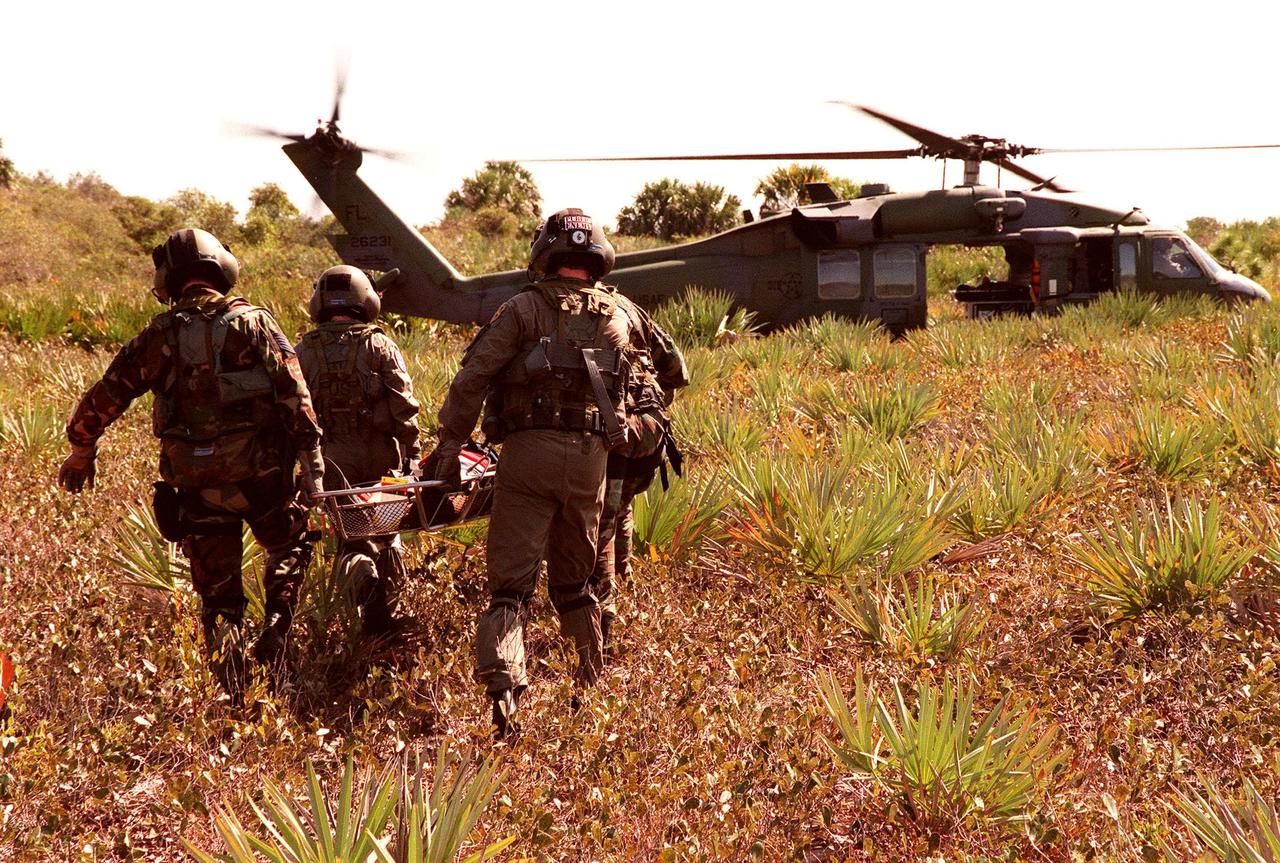
KENNEDY SPACE CENTER, FLA. -- During a simulated rescue mission in the woods near the Shuttle Landing Facility (SLF), the KSC response team practices carrying an injured crew member to an Air Force HH-60 helicopter for transport to a local hospital. The response team is training for the unlikely scenario of a Shuttle mishap at the SLF. The Mode 7 simulation of an astronaut rescue exercises all aspects of command and control, search and rescue, and medical procedures required for a successful rescue. The remote location of the mock-up prevents a totally land-based crew rescue, and calls on a NASA UH-1 helicopter to locate the site and four Air Force HH-60 helicopters to reach the site, drop emergency equipment and later remove the "crew" five astronaut candidates, one representative from the Vehicle Integration Test office, and one fire/rescue worker. The exercise will conclude with airlifted "patients" arriving safely in the emergency rooms of participating area hospitals
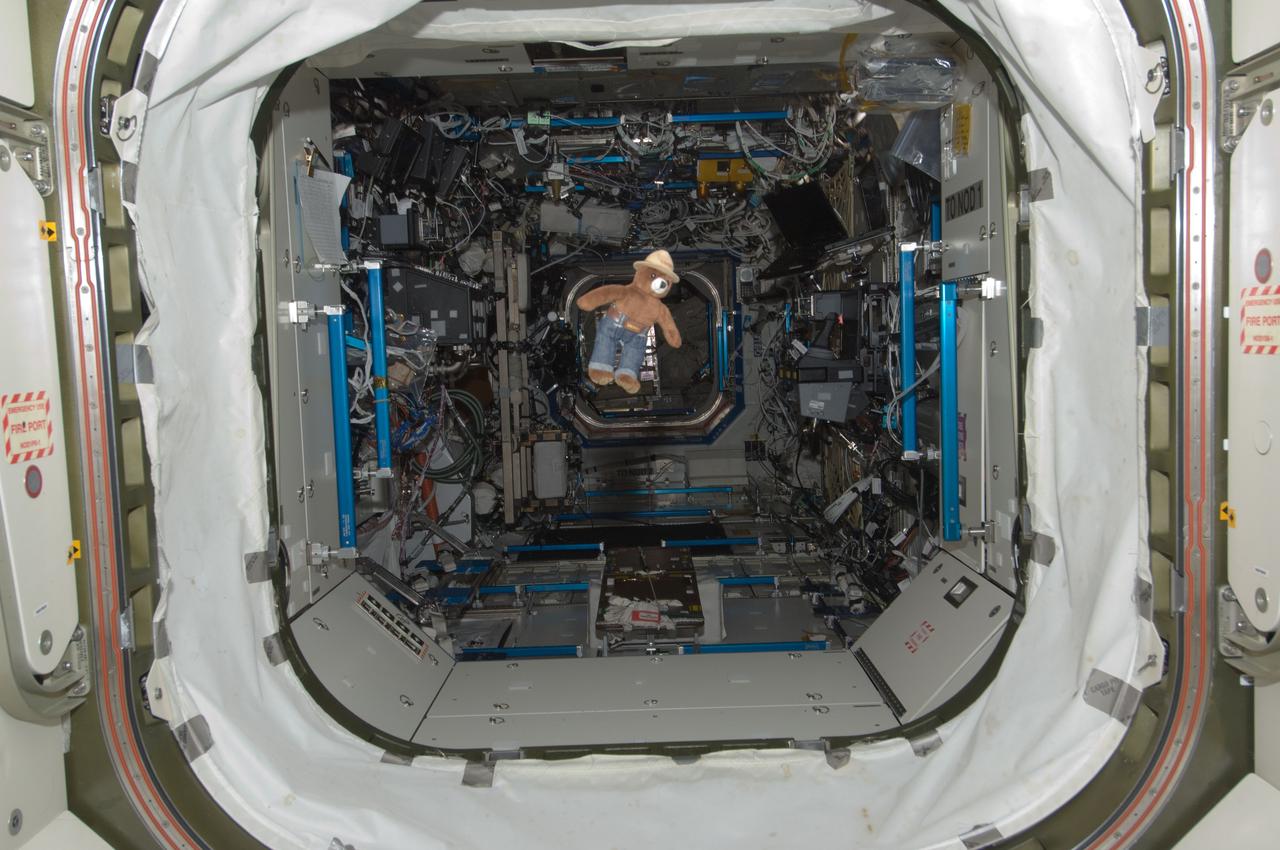
ISS032-E-011664 (3 Aug. 2012) --- Smokey Bear floats freely in the hatchway of the International Space Station’s Destiny laboratory. On May 15, 2012, Smokey traveled aboard the Soyuz spacecraft with NASA astronaut Joe Acaba and Russian cosmonauts Gennady Padalka and Sergei Revin to the space station. As a recognized symbol for wildland fire prevention, his presence on the orbiting complex also highlights the many areas of active space station research related to Earth observations, plant growth and combustion and materials sciences, as well as existing spinoff technologies in these areas. NASA, the U.S. Forest Service (USFS) and the Texas Forest Service are teaming up to celebrate Smokey's 68th birthday Aug. 9 at NASA's Johnson Space Center in Houston.
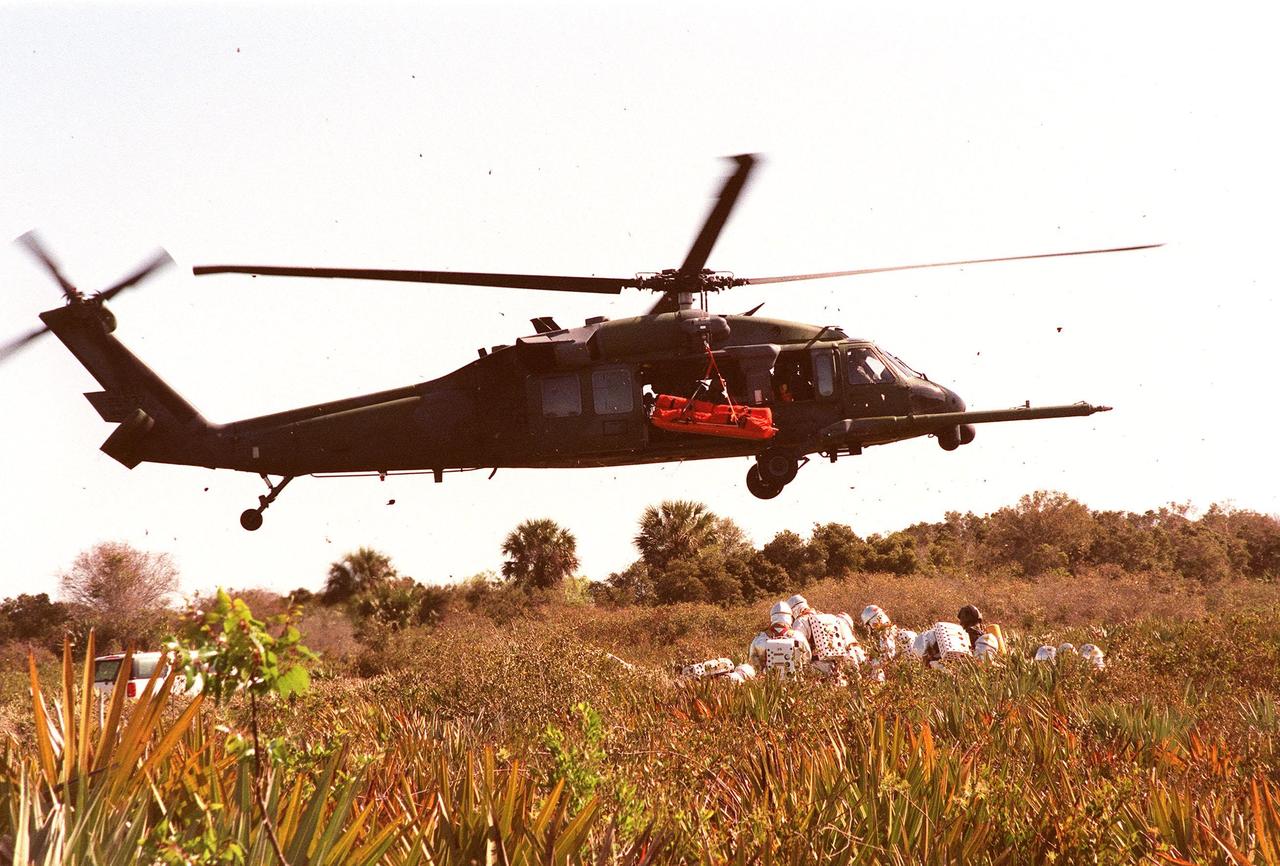
KENNEDY SPACE CENTER, FLA. -- During a simulated rescue mission in the woods near the Shuttle Landing Facility (SLF), the KSC response team practices lifting an injured crew member to an Air Force HH-60 helicopter for transport to a local hospital. The response team is training for the unlikely scenario of a Shuttle mishap at the SLF. The Mode 7 simulation of an astronaut rescue exercises all aspects of command and control, search and rescue, and medical procedures required for a successful rescue. The remote location of the mock-up prevents a totally land-based crew rescue, and calls on a NASA UH-1 helicopter to locate the site and four Air Force HH-60 helicopters to reach and prepare the "crew" five astronaut candidates, one representative from the Vehicle Integration Test office, and one fire/rescue worker for preliminary triage. The exercise will conclude with airlifted "patients" arriving safely in the emergency rooms of participating area hospitals
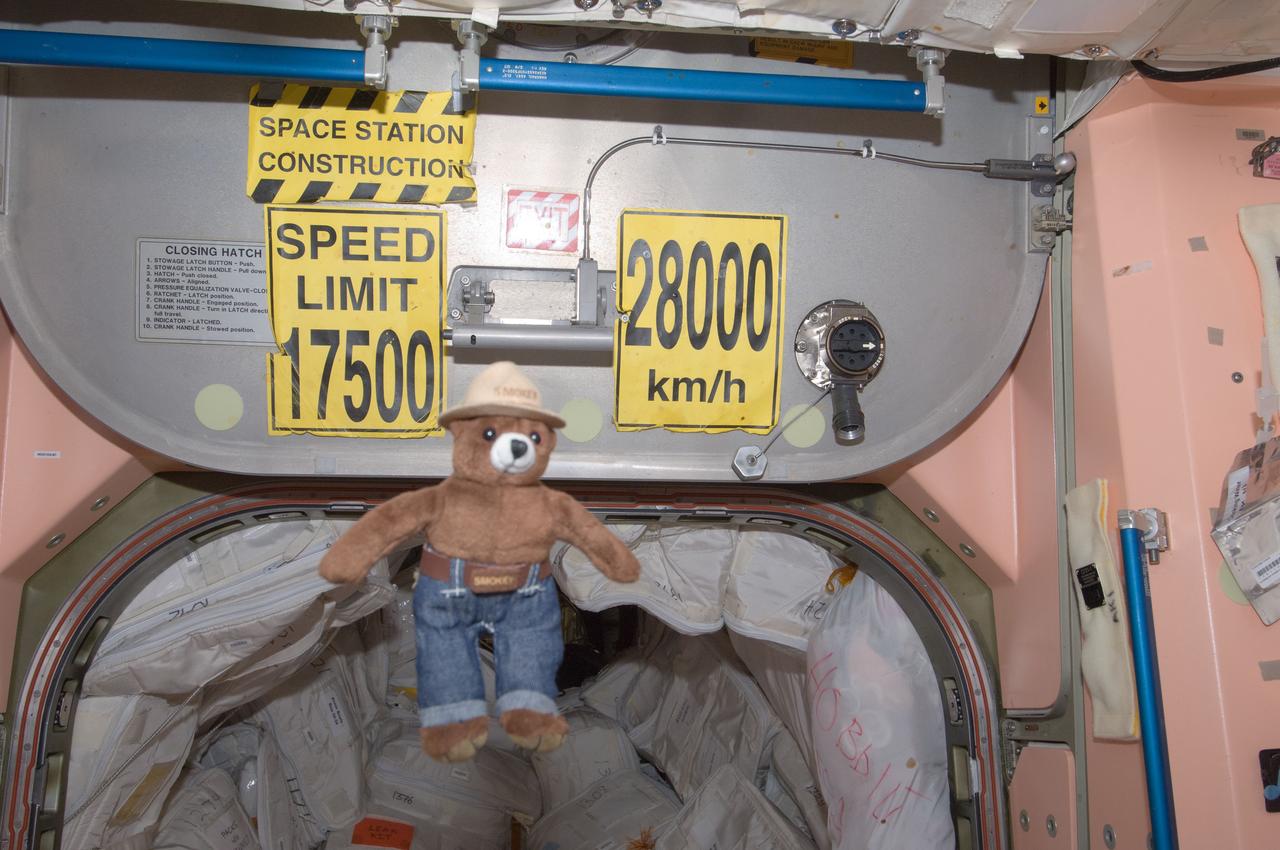
ISS032-E-011662 (3 Aug. 2012) --- Smokey Bear floats freely in the Unity node of the International Space Station. On May 15, 2012, Smokey traveled aboard the Soyuz spacecraft with NASA astronaut Joe Acaba and Russian cosmonauts Gennady Padalka and Sergei Revin to the space station. As a recognized symbol for wildland fire prevention, his presence on the orbiting complex also highlights the many areas of active space station research related to Earth observations, plant growth and combustion and materials sciences, as well as existing spinoff technologies in these areas. NASA, the U.S. Forest Service (USFS) and the Texas Forest Service are teaming up to celebrate Smokey's 68th birthday Aug. 9 at NASA's Johnson Space Center in Houston.
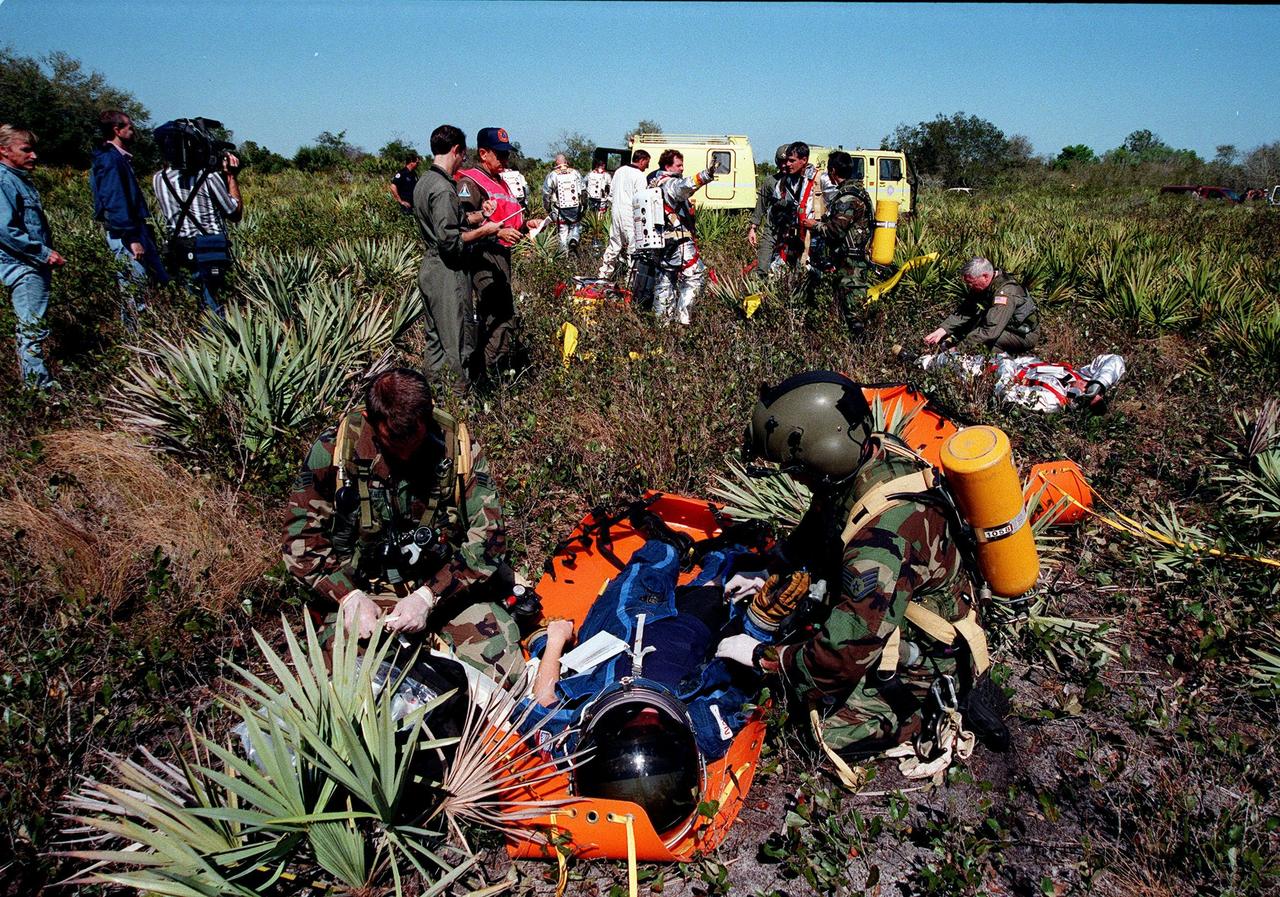
KENNEDY SPACE CENTER, FLA. -- During a simulated rescue mission in the woods near the Shuttle Landing Facility (SLF), the KSC response team practices stabilizing an injured crew member before transport to a local hospital by helicopter. The response team is training for the unlikely scenario of a Shuttle mishap at the SLF. The Mode 7 simulation of an astronaut rescue exercises all aspects of command and control, search and rescue, and medical procedures required for a successful rescue. The remote location of the mock-up prevents a totally land-based crew rescue, and calls on a NASA UH-1 helicopter to locate the site and four Air Force HH-60 helicopters to drop emergency equipment and fire/rescue workers who will prepare the "crew" for preliminary triage. The helicopters later will help remove the crew five astronaut candidates, one representative from the Vehicle Integration Test office, and one fire/rescue worker. The exercise will conclude with airlifted "patients" arriving safely in the emergency rooms of participating area hospitals
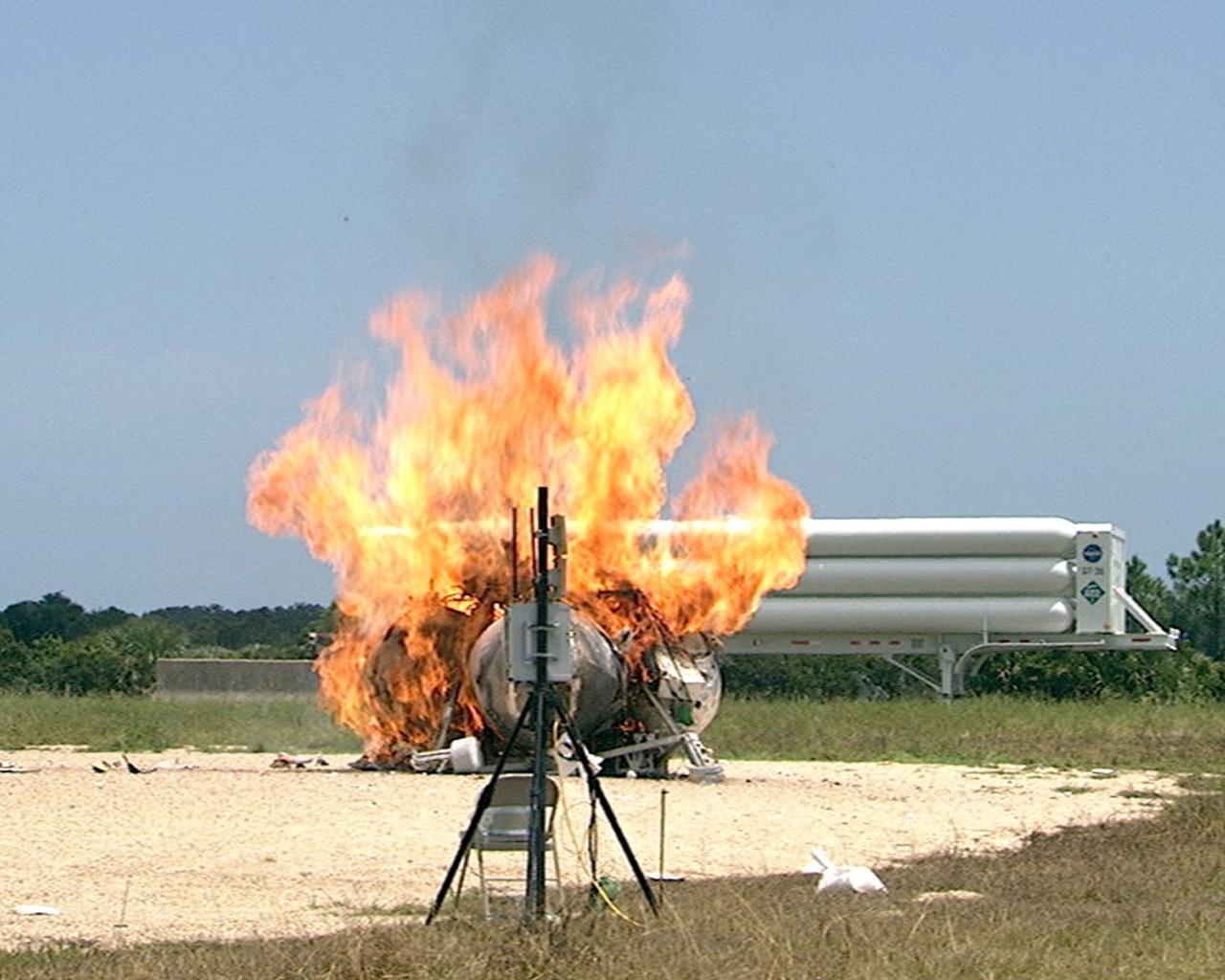
CAPE CANAVERAL, Fla. – During a free-flight test of the Project Morpheus vehicle at the Shuttle Landing Facility at NASA’s Kennedy Space Center in Florida, the vehicle lifted off the ground and then experienced a hardware component failure, which prevented it from maintaining stable flight. No one was injured and the resulting fire was extinguished by Kennedy fire personnel. Engineers are looking into the test data and the agency will release information as it becomes available. Failures such as these were anticipated prior to the test, and are part of the development process for any complex spaceflight hardware. Testing of the prototype lander had been ongoing at NASA’s Johnson Space Center in Houston in preparation for its first free-flight test at Kennedy Space Center. Morpheus was manufactured and assembled at JSC and Armadillo Aerospace. Morpheus is large enough to carry 1,100 pounds of cargo to the moon – for example, a humanoid robot, a small rover, or a small laboratory to convert moon dust into oxygen. The primary focus of the test is to demonstrate an integrated propulsion and guidance, navigation and control system that can fly a lunar descent profile to exercise the Autonomous Landing and Hazard Avoidance Technology, or ALHAT, safe landing sensors and closed-loop flight control. For more information on Project Morpheus, visit http://morpheuslander.jsc.nasa.gov/. Photo credit: NASA
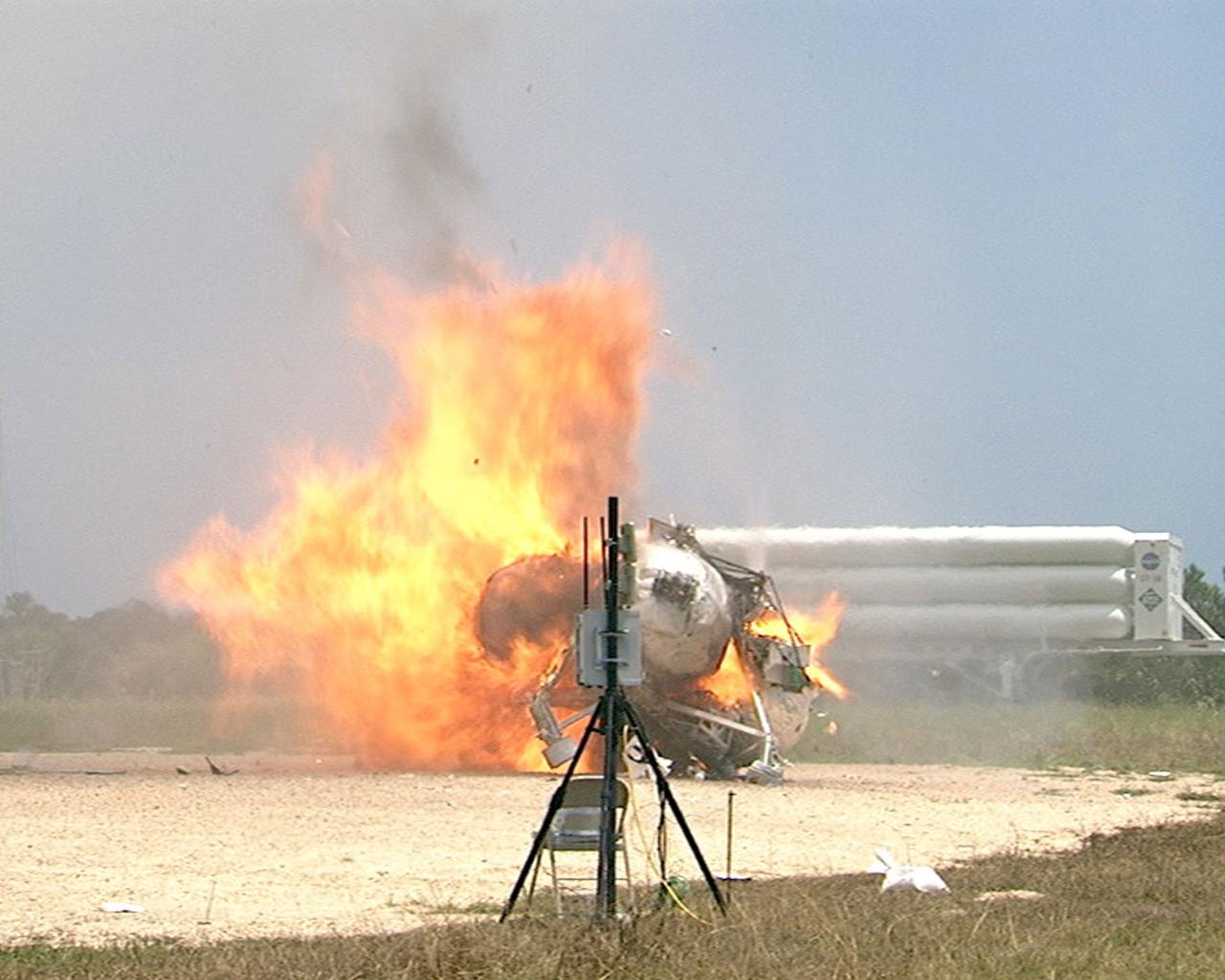
CAPE CANAVERAL, Fla. – During a free-flight test of the Project Morpheus vehicle at the Shuttle Landing Facility at NASA’s Kennedy Space Center in Florida, the vehicle lifted off the ground and then experienced a hardware component failure, which prevented it from maintaining stable flight. No one was injured and the resulting fire was extinguished by Kennedy fire personnel. Engineers are looking into the test data and the agency will release information as it becomes available. Failures such as these were anticipated prior to the test, and are part of the development process for any complex spaceflight hardware. Testing of the prototype lander had been ongoing at NASA’s Johnson Space Center in Houston in preparation for its first free-flight test at Kennedy Space Center. Morpheus was manufactured and assembled at JSC and Armadillo Aerospace. Morpheus is large enough to carry 1,100 pounds of cargo to the moon – for example, a humanoid robot, a small rover, or a small laboratory to convert moon dust into oxygen. The primary focus of the test is to demonstrate an integrated propulsion and guidance, navigation and control system that can fly a lunar descent profile to exercise the Autonomous Landing and Hazard Avoidance Technology, or ALHAT, safe landing sensors and closed-loop flight control. For more information on Project Morpheus, visit http://morpheuslander.jsc.nasa.gov/. Photo credit: NASA
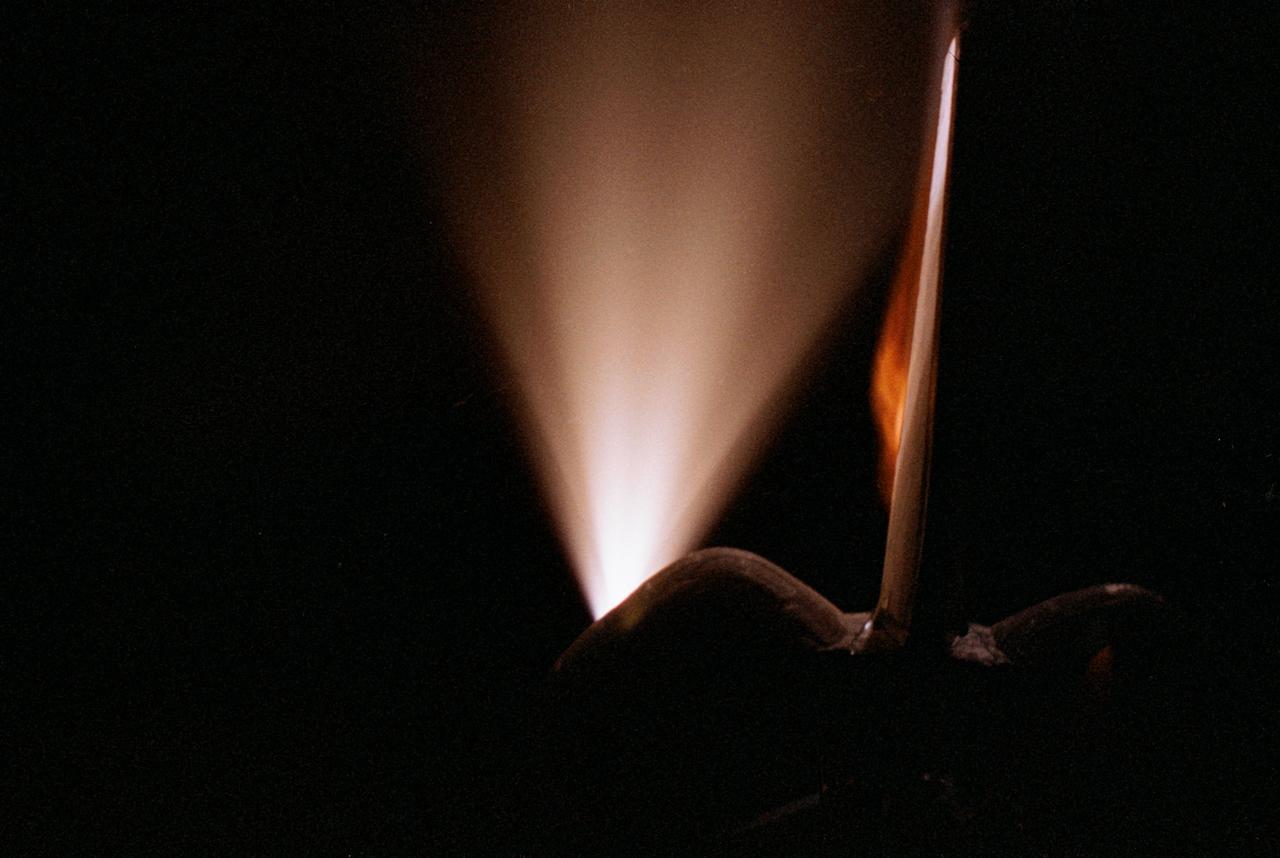
STS070-386-027 (13-22 JULY 1995) --- High-speed film provided this close-up view of the Space Shuttle Discovery’s aft, featuring the ignition of one of the primary thrusters. Note the impact of the firing on the starboard side of the vertical stabilizer. Crew members told a August 11, 1995, gathering of Johnson Space Center (JSC) employees that the Window Experiment (WINDEX) paid close attention to surface glow, jet plumes, water dumps, aurora and airglow. The data collection is part of an effort to avoid misinterpretation of measurements of Earth, the solar system and starts taken from satellites in low Earth-orbits and prevent damage to sensitive systems and solar arrays during rendezvous and docking. Such firings of the thrusters increase local densities of gases in the atmosphere dramatically and introduce non-natural elements that react with the atmosphere dramatically and spacecraft systems enveloped by the thruster plume. WINDEX recorded phenomena associated with thruster start-up and shut-down transients and observed the effect of the transients on Shuttle glow phenomenon.
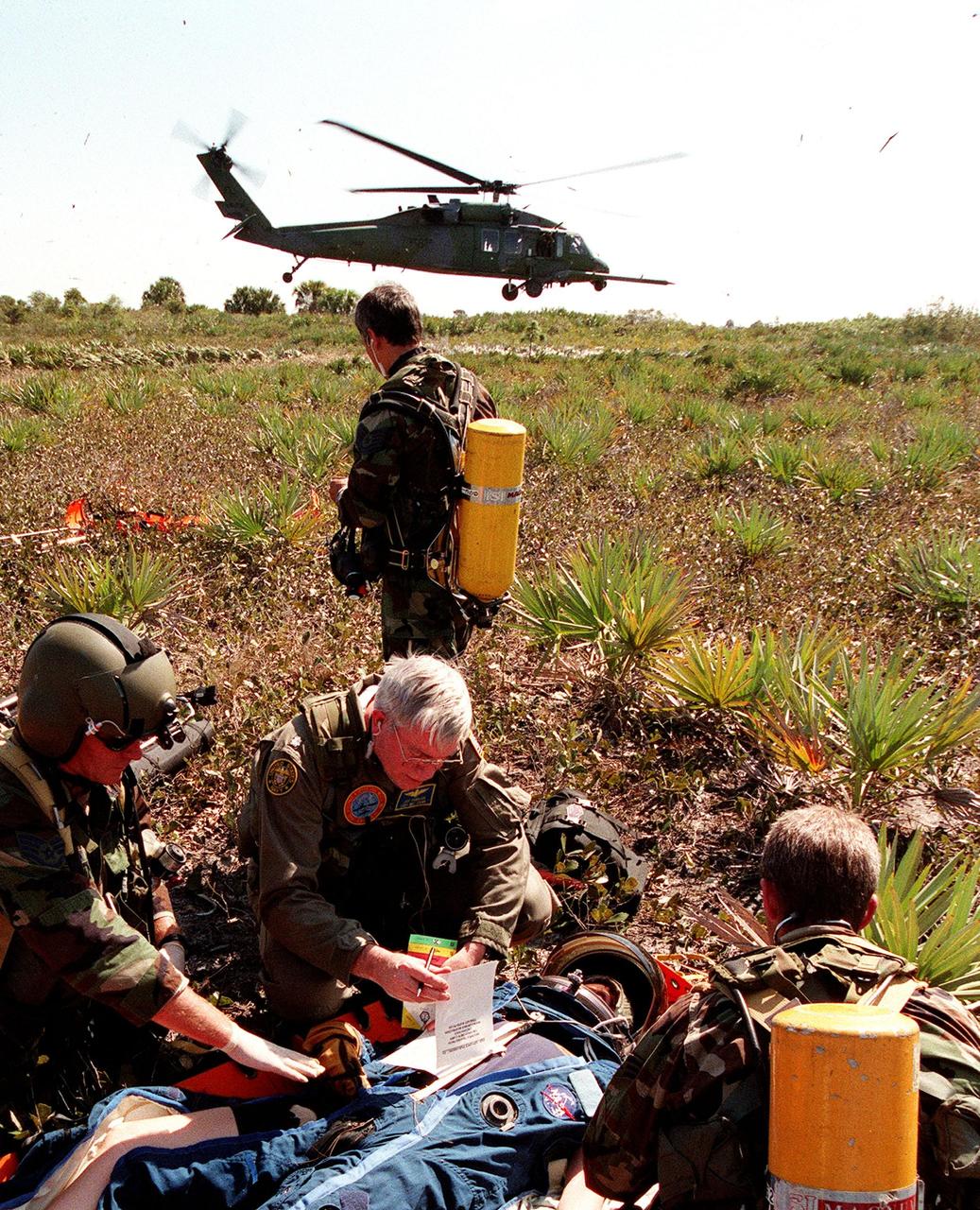
KENNEDY SPACE CENTER, FLA. -- During a simulated rescue mission in the woods near the Shuttle Landing Facility (SLF), the KSC response team practices stabilizing an injured crew member before transport to a local hospital by an Air Force HH-60 helicopter. The response team is training for the unlikely scenario of a Shuttle mishap at the SLF. The Mode 7 simulation of an astronaut rescue exercises all aspects of command and control, search and rescue, and medical procedures required for a successful rescue. The remote location of the mock-up prevents a totally land-based crew rescue, and calls on a NASA UH-1 helicopter to locate the site and four HH-60 helicopters to drop emergency equipment and fire/rescue workers to prepare the "crew" for preliminary triage. The helicopters are then used to remove the crew five astronaut candidates, one representative from the Vehicle Integration Test office, and one fire/rescue worker. The exercise will conclude with airlifted "patients" arriving safely in the emergency rooms of participating area hospitals
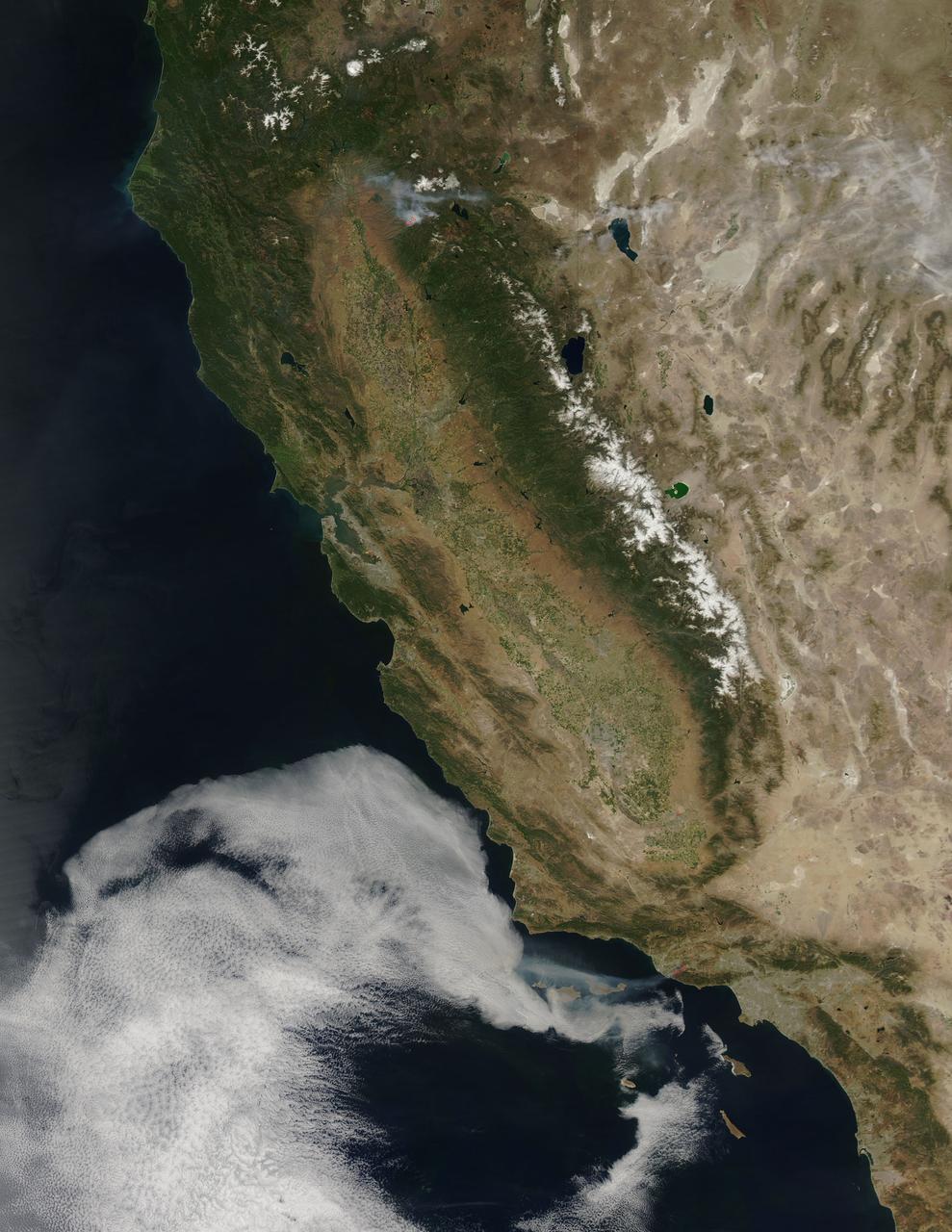
According to the NBCnews.com, Southern California firefighters were battling a growing, brush-fueled wildfire early Friday that had reached the beach in Ventura County and was pushing toward the upscale city of Malibu, officials said. Dubbed the Springs Fire, this "monster" of a wildfire has been made worse by howling Santa Ana winds and unusually dry vegetation. As of 2 am local time in California on Friday the 3rd, it was within "seven or eight miles" of Malibu, Ventura County Fire Department spokesman Bill Nash said. Weather conditions are not cooperating in the containment of this fire. The Weather Channel has predicted dry winds from offshore that will bring gusts of 40 to 50 miles per hour to the Southern California region on Friday the 3rd which could easily spread the fire. A complication to the winds is the extremely dry plant life left from a season in which only about five inches of rain fell in the area. The Springs Fire grew to 10,000 acres and was ten percent contained as of early Friday morning, according to the California Department of Forestry and Fire Prevention. Evacuations took place Thursday, and as of Friday morning 15 homes had been damaged. More than 2,000 homes and 100 commercial properties were under threat from the fire and those numbers could grow with weather conditions today (May 3). Currently the fire is burning in a rural area outside of Malibu, but it doesn't have to go very far to get to some expensive homes and more populated areas. It's current direction has it burning down the mountainside toward Malibu. Firefighters expect to receive help from tankers and helicopters in the air Friday morning, according to a release from the Ventura County Fire Department. The cause of the fire remained under investigation Friday. There had been no lightning or other natural fire-starting phenomenon in the area when the blaze began, Nash said. This natural-color satellite image was collected by the Moderate Resolution Imaging Spectroradiometer (MODIS) aboard the Aqua satellite on May 02, 2013. Actively burning areas, detected by MODIS’s thermal bands, are outlined in red. NASA image courtesy Jeff Schmaltz LANCE/EOSDIS MODIS Rapid Response Team, GSFC. Caption by Lynn Jenner with information from NBCnews.com <b><a href="http://www.nasa.gov/audience/formedia/features/MP_Photo_Guidelines.html" rel="nofollow">NASA image use policy.</a></b> <b><a href="http://www.nasa.gov/centers/goddard/home/index.html" rel="nofollow">NASA Goddard Space Flight Center</a></b> enables NASA’s mission through four scientific endeavors: Earth Science, Heliophysics, Solar System Exploration, and Astrophysics. Goddard plays a leading role in NASA’s accomplishments by contributing compelling scientific knowledge to advance the Agency’s mission. <b>Follow us on <a href="http://twitter.com/NASA_GoddardPix" rel="nofollow">Twitter</a></b> <b>Like us on <a href="http://www.facebook.com/pages/Greenbelt-MD/NASA-Goddard/395013845897?ref=tsd" rel="nofollow">Facebook</a></b> <b>Find us on <a href="http://instagram.com/nasagoddard?vm=grid" rel="nofollow">Instagram</a></b>
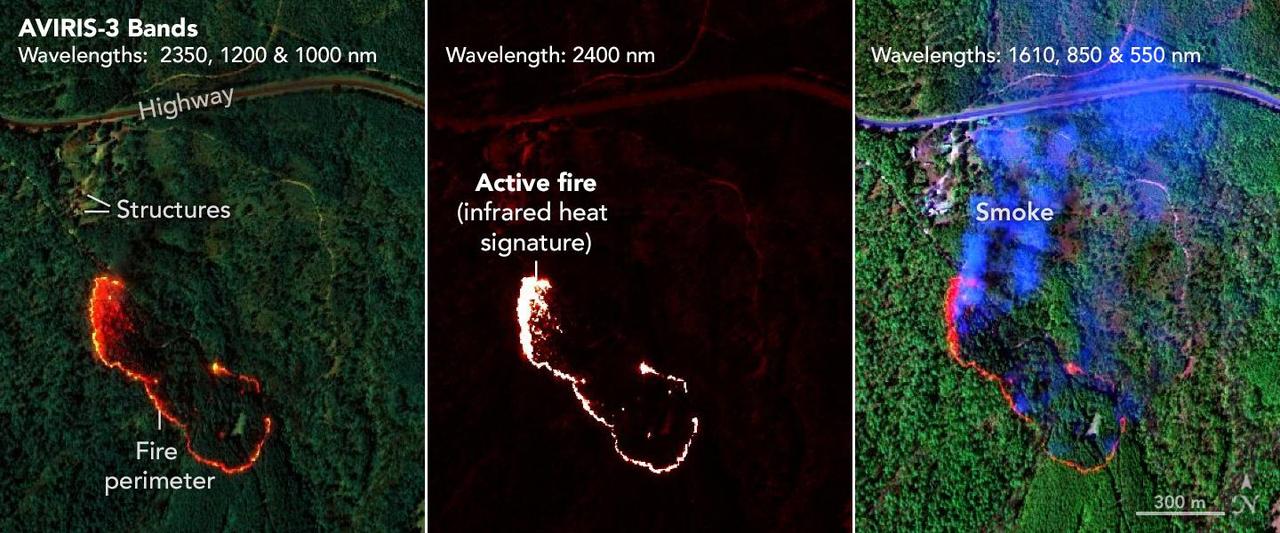
NASA's AVIRIS-3 sensor, an airborne imaging spectrometer built and operated by the agency's Jet Propulsion Laboratory in Southern California, captured infrared data on a wildfire about 3 miles (5 kilometers) west of the town of Mount Vernon, Alabama, on March 21, 2025. Within minutes of flying over, real-time maps of the fire were sent via satellite internet to firefighters with the Alabama Forestry Commission, who used it to contain the fire, preventing it from reaching four buildings. The first image in the series combines reflection data from AVIRIS-3 (Airborne Visible Infrared Imaging Spectrometer 3) at three infrared wavelengths that are invisible to the human eye – 2,350 nanometers, 1,200 nanometers, and 1,000 nanometers. In the resulting composite image, the colors indicate where the fire was burning most intensely. Orange and red areas show cooler-burning areas, while yellow indicates the most intense flames. Burned areas show up as dark red or brown. The second image in the series looks solely at the 2,400 nanometers wavelength. This wavelength is particularly useful for seeing hot spots and the perimeters of fires, which show brightly against a red background. The third image in the series combines light at 1,610 nanometers, 850 nanometers, and 550 nanometers. This view shows burn areas and smoke. The AVIRIS-3 sensor belongs to a line of imaging spectrometers built at JPL since 1986. The instruments have been used to study a wide range of phenomena – including fire – by measuring sunlight reflecting from the planet's surface. Data from imaging spectrometers like AVIRIS-3 typically takes days or weeks to be processed into highly detailed, multilayer image products used for research. By simplifying the calibration algorithms, researchers were able to process data on a computer aboard the plane in a sliver of the time it otherwise would have taken, and airborne satellite internet connectivity enabled the images to be distributed almost immediately, while the plane was still in flight, rather than after it landed. Flying about 9,000 feet (3,000 meters) in altitude aboard a NASA King Air B200 research plane, AVIRIS-3 collected data on the Castleberry Fire while preparing for prescribed burn experiments that took place in the Geneva State Forest in Alabama on March 28 and at Fort Stewart-Hunter Army Airfield in Georgia from April 14 to 20. The burns were part of a NASA 2025 FireSense Airborne Campaign. https://photojournal.jpl.nasa.gov/catalog/PIA26499
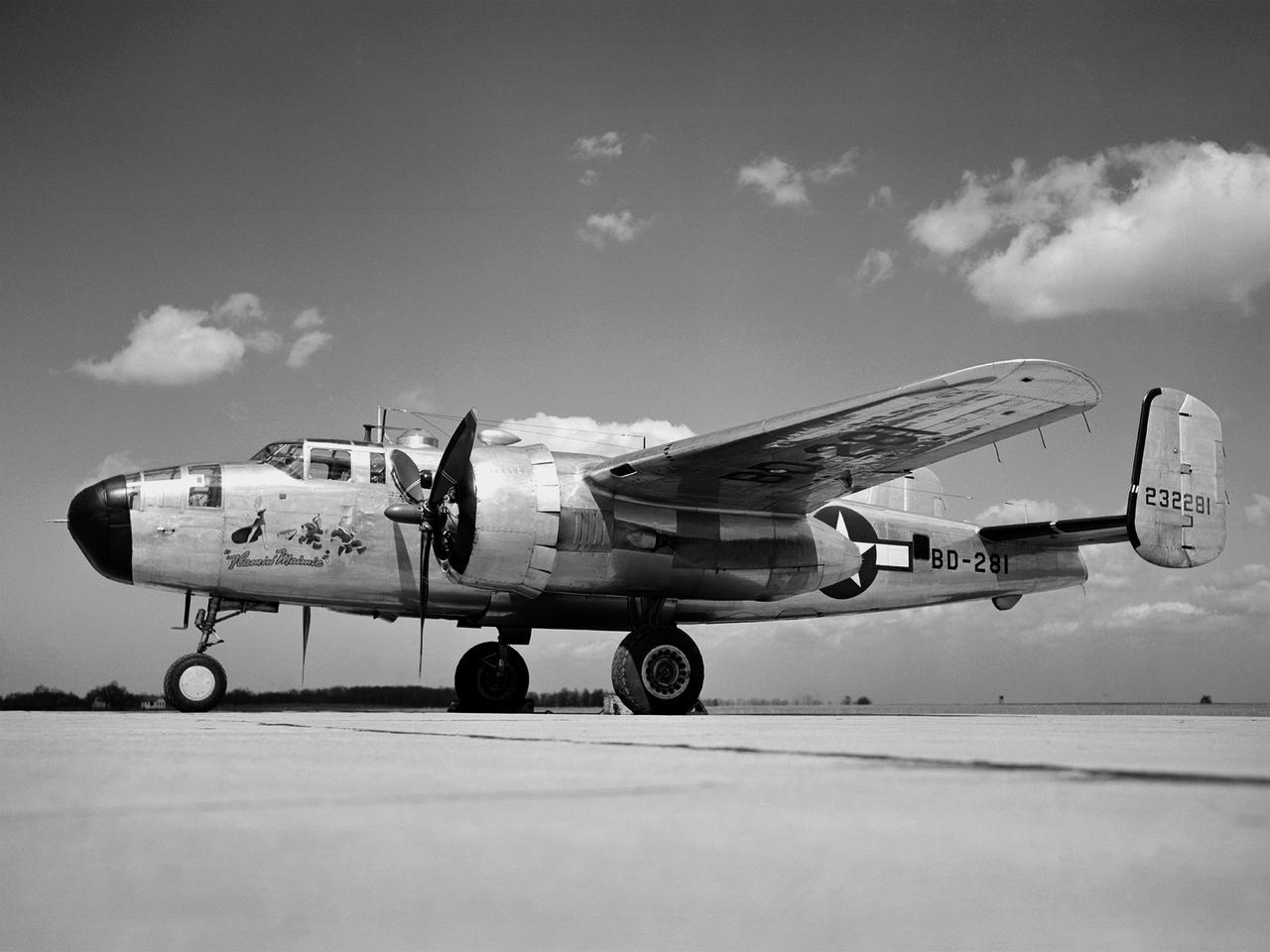
In 1946 the Lewis Flight Propulsion Laboratory became the NACA’s official icing research center. In addition to the Icing Research Tunnel, the lab possessed several aircraft modified for icing work, including a Consolidated B-24M Liberator and a North American XB-25E Mitchell, seen here. The XB-25E’s frequent engine fires allegedly resulted in its “Flamin’ Maimie” nickname. The aircraft’s nose art, visible in this photograph, includes a leather-jacketed mechanic with an extinguisher fleeing a fiery woman. North American developed the B-25 in the mid-1930s as a transport aircraft, but it was hurriedly reconfigured as a medium bomber for World War II. This XB-25E was a single prototype designed in 1942 specifically to test an exhaust gas ice prevention system developed by NACA researcher Lewis Rodert. The system circulated the engines’ hot bleed air to the wings, windshield, and tail. The XB-25E was utilized at the NACA’s Ames Aeronautical Laboratory for two years before being transferred to Cleveland in July 1944. NACA Lewis mechanics modified the aircraft further by installing electrical heating in the front fuselage, propellers, inboard sing, cowls, and antennae. Lewis pilots flew the B-24M and XB-25E into perilous weather conditions all across the country to study both deicing technologies and the physics of ice-producing clouds. These dangerous flights led to advances in weather sensing instruments and flight planning.
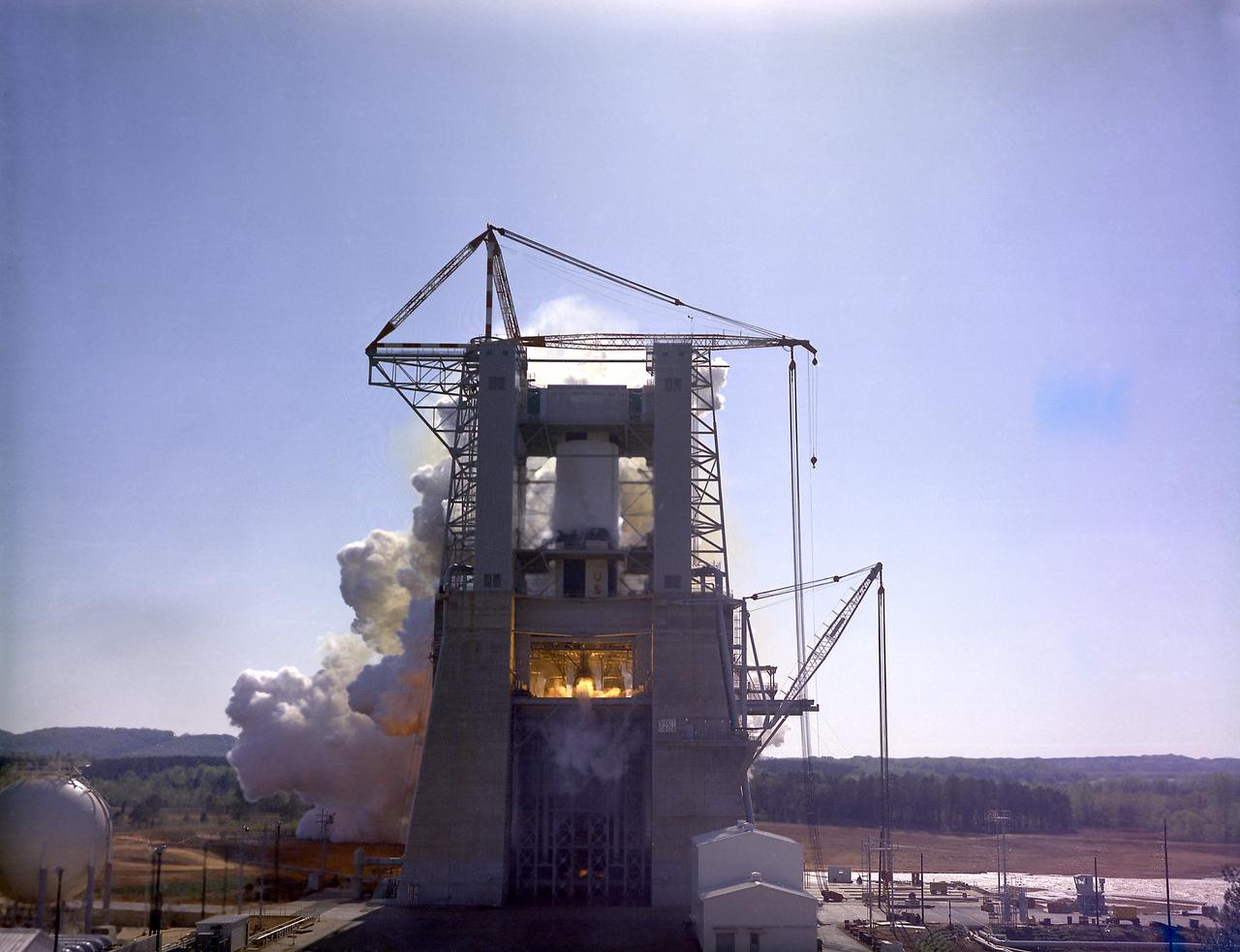
This photograph depicts a dramatic view of the first test firing of all five F-1 engines for the Saturn V S-IC stage at the Marshall Space Flight Center. The testing lasted a full duration of 6.5 seconds. It also marked the first test performed in the new S-IC static test stand and the first test using the new control blockhouse. The S-IC stage is the first stage, or booster, of a 364-foot long rocket that ultimately took astronauts to the Moon. Operating at maximum power, all five of the engines produced 7,500,000 pounds of thrust. Required to hold down the brute force of a 7,500,000-pound thrust, the S-IC static test stand was designed and constructed with the strength of hundreds of tons of steel and cement, planted down to bedrock 40 feet below ground level. The structure was topped by a crane with a 135-foot boom. With the boom in the up position, the stand was given an overall height of 405 feet, placing it among the highest structures in Alabama at the time. When the Saturn V S-IC first stage was placed upright in the stand , the five F-1 engine nozzles pointed downward on a 1,900 ton, water-cooled deflector. To prevent melting damage, water was sprayed through small holes in the deflector at the rate 320,000 gallons per minute.
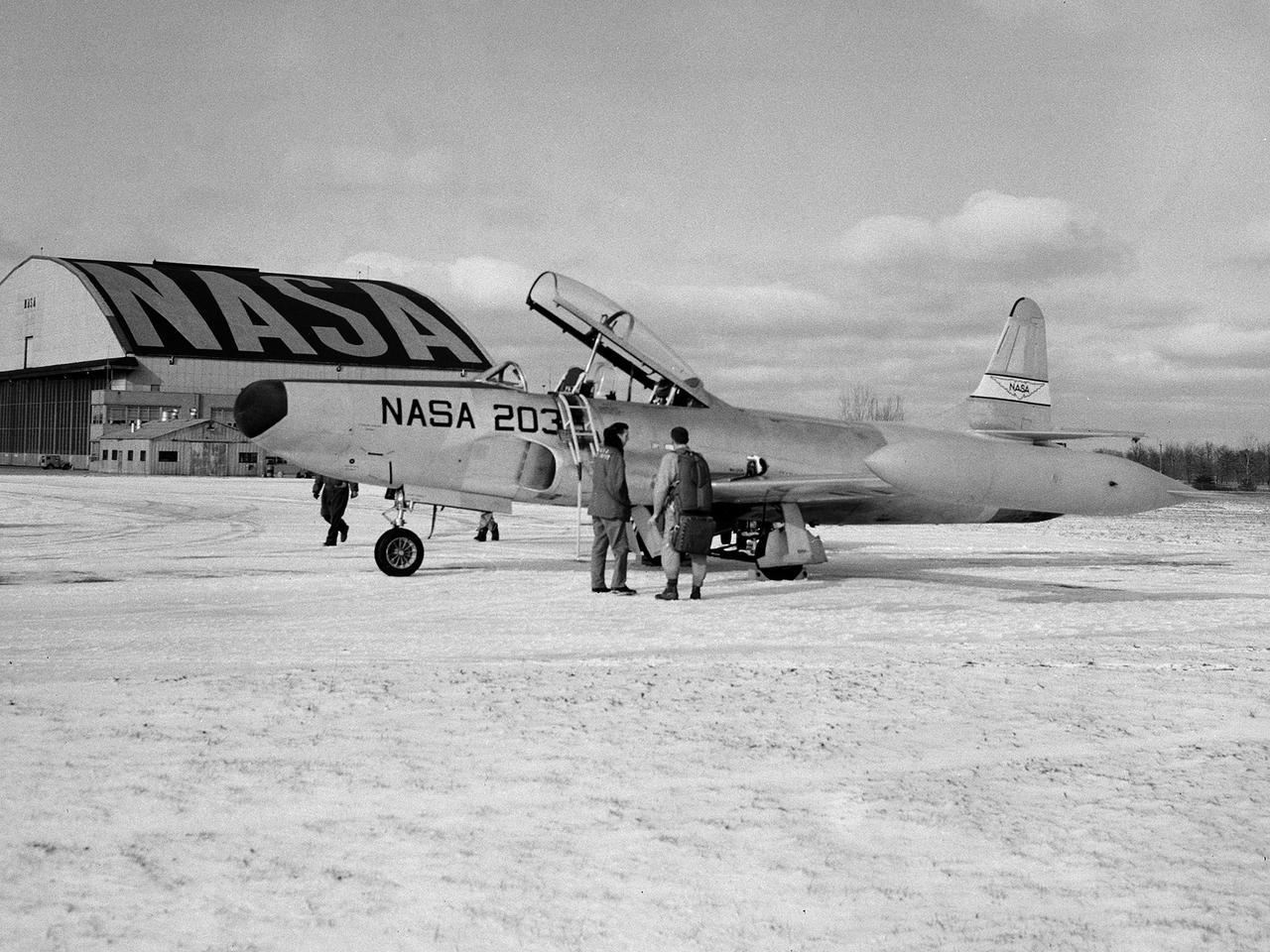
A Lockheed F-94B Starfire on the hangar apron at the National Aeronautics and Space Administration (NASA) Lewis Research Center in Cleveland, Ohio. The Air Force contracted Lockheed in November 1948 to create the new F-94s fighters. The first test flight occurred only months later in April 1949. This quick turnaround was due to the fact that the F-94 was based largely on the TF-80 fighter and constructed with parts from the P-80, including its two General Electric I-40 turbojet engines. The F-94Bs entered the Korean War in late 1951, but were initially prevented from flying over enemy territory due to fear that their fire control system would be copied by the enemy if an F-94B went down. The Starfire went on to perform scores of missions escorting B-29 and B-26 bombers deep into enemy territory and acting as interceptors against enemy fighters. In mid-1954 the F-94s were retired from active military service. Lewis acquired the F-94B Starfire in April 1956. At the time, the aircraft industry was preparing for the first use of jet engines for commercial aviation. The amount of noise generated by the engines was a major obstacle. Lewis undertook an extensive program to understand the causes of the noise and develop methods for reducing it. This program included the study of aerodynamic sound at high speed and altitude using the F-94B.
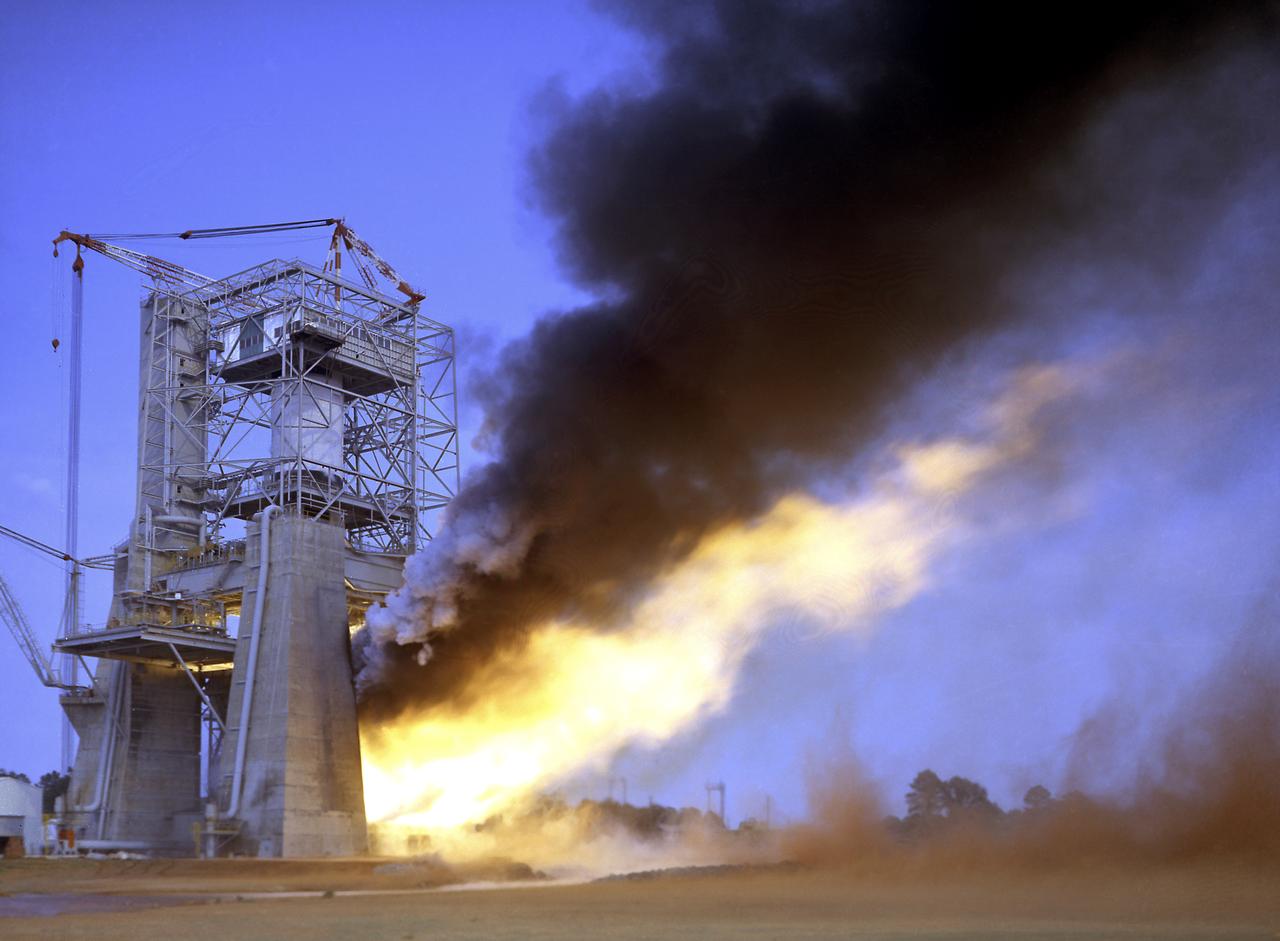
This photograph depicts a view of the test firing of all five F-1 engines for the Saturn V S-IC test stage at the Marshall Space Flight Center. The S-IC stage is the first stage, or booster, of a 364-foot long rocket that ultimately took astronauts to the Moon. Operating at maximum power, all five of the engines produced 7,500,000 pounds of thrust. The S-IC Static Test Stand was designed and constructed with the strength of hundreds of tons of steel and cement, planted down to bedrock 40 feet below ground level, and was required to hold down the brute force of the 7,500,000-pound thrust. The structure was topped by a crane with a 135-foot boom. With the boom in the up position, the stand was given an overall height of 405 feet, placing it among the highest structures in Alabama at the time. When the Saturn V S-IC first stage was placed upright in the stand , the five F-1 engine nozzles pointed downward on a 1,900-ton, water-cooled deflector. To prevent melting damage, water was sprayed through small holes in the deflector at the rate 320,000 gallons per minutes.
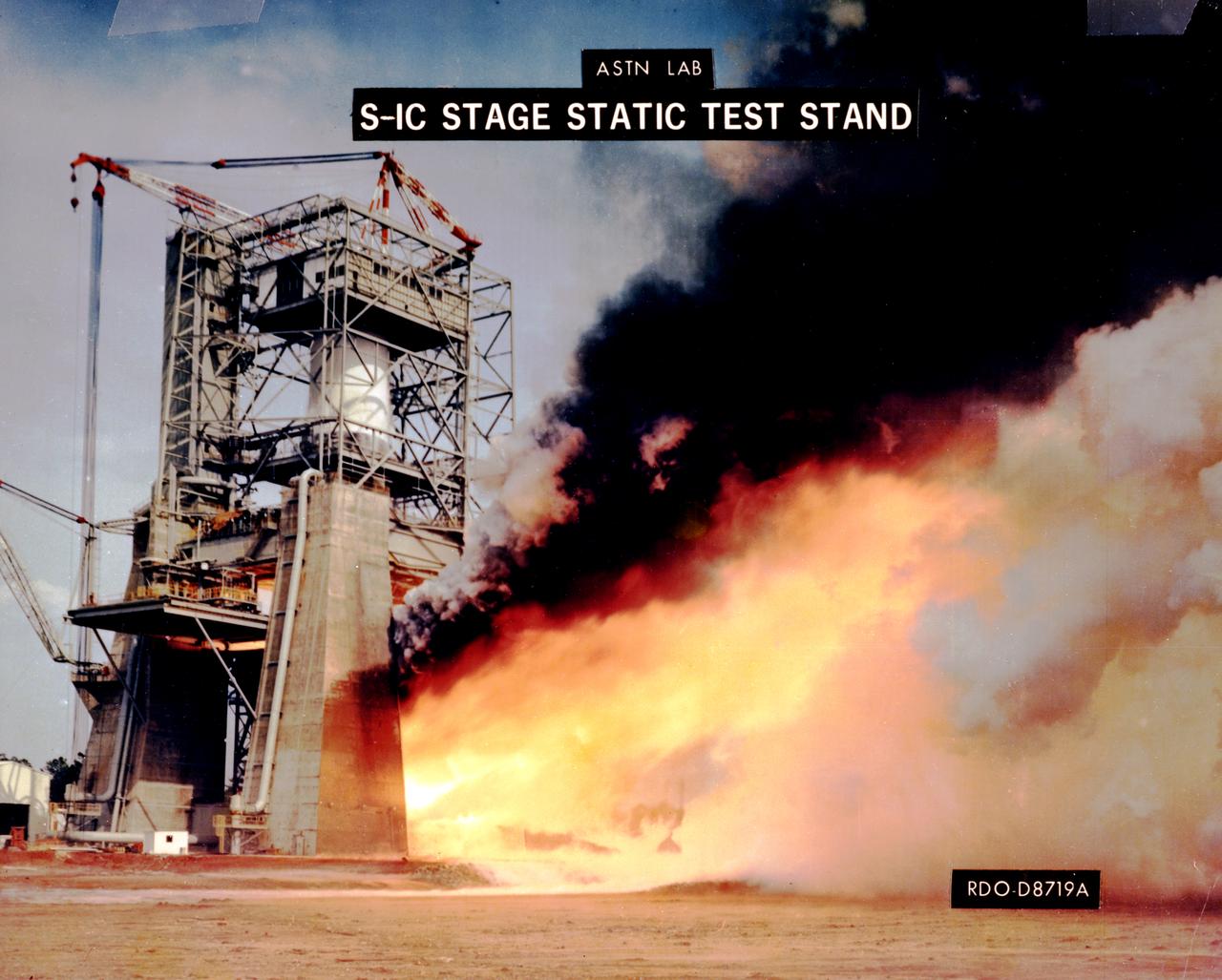
This photograph depicts a view of the test firing of all five F-1 engines for the Saturn V S-IC test stage at the Marshall Space Flight Center. The S-IC stage is the first stage, or booster, of a 364-foot long rocket that ultimately took astronauts to the Moon. Operating at maximum power, all five of the engines produced 7,500,000 pounds of thrust. The S-IC Static Test Stand was designed and constructed with the strength of hundreds of tons of steel and cement, planted down to bedrock 40 feet below ground level, and was required to hold down the brute force of the 7,500,000-pound thrust. The structure was topped by a crane with a 135-foot boom. With the boom in the up position, the stand was given an overall height of 405 feet, placing it among the highest structures in Alabama at the time. When the Saturn V S-IC first stage was placed upright in the stand , the five F-1 engine nozzles pointed downward on a 1,900-ton, water-cooled deflector. To prevent melting damage, water was sprayed through small holes in the deflector at the rate 320,000 gallons per minutes
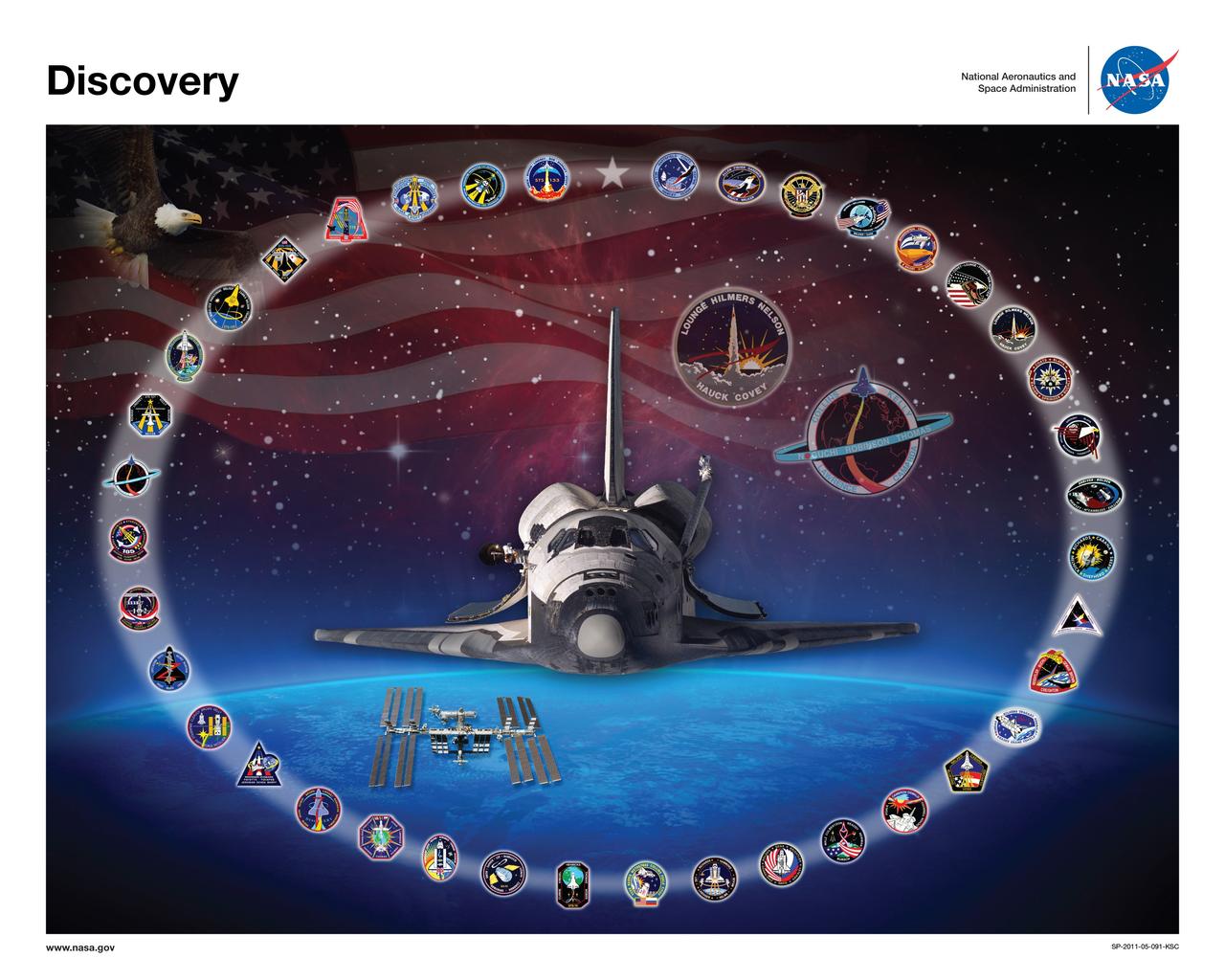
CAPE CANAVERAL, Fla. -- This is a version of space shuttle Discovery's orbiter tribute, or OV-103, which hangs in Firing Room 4 of the Launch Control Center at NASA's Kennedy Space Center in Florida. In 2011, the tribute was updated to reflect the crew member change on Discovery's final mission -- STS-133. Steve Bowen replaced Tim Kopra as a mission specialist on STS-133, after Kopra was injured in a bicycle accident that prevented him from flying into space. Discovery’s accomplishments include the first female shuttle pilot, Eileen Collins, on STS-63, John Glenn’s legendary return to space on STS-95, and the celebration of the 100th shuttle mission with STS-92. In addition, Discovery supported a number of Department of Defense programs, satellite deploy and repair missions and 13 International Space Station construction and operation flights. The tribute features Discovery demonstrating the rendezvous pitch maneuver on approach to the International Space Station during STS-114. Having accumulated the most space shuttle flights, Discovery’s 39 mission patches are shown circling the spacecraft. The background image was taken from the Hubble Space Telescope, which launched aboard Discovery on STS-31 and serviced by Discovery on STS-82 and STS-103. The American Flag and Bald Eagle represent Discovery’s two Return-to-Flight missions -- STS-26 and STS-114 -- and symbolize Discovery’s role in returning American astronauts to space. Five orbiter tributes are on display in the firing room, representing Atlantis, Challenger, Columbia, Endeavour and Discovery. Graphic design credit: NASA/Amy Lombardo. NASA publication number: SP-2010-08-164-KSC
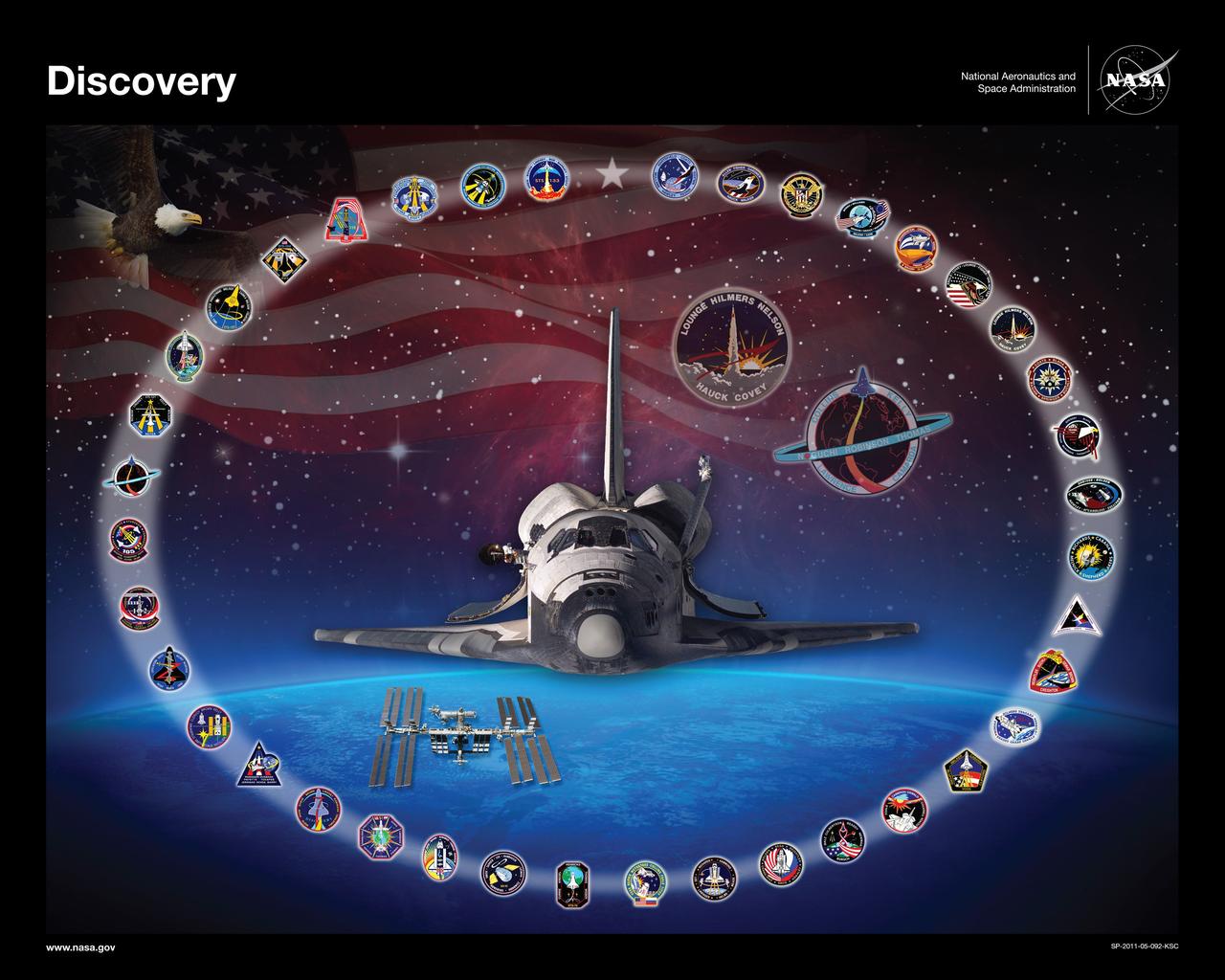
CAPE CANAVERAL, Fla. -- This is a printable version of space shuttle Discovery's orbiter tribute, or OV-103, which hangs in Firing Room 4 of the Launch Control Center at NASA's Kennedy Space Center in Florida. In 2011, the tribute was updated to reflect the crew member change on Discovery's final mission -- STS-133. Steve Bowen replaced Tim Kopra as a mission specialist on STS-133, after Kopra was injured in a bicycle accident that prevented him from flying into space. Discovery’s accomplishments include the first female shuttle pilot, Eileen Collins, on STS-63, John Glenn’s legendary return to space on STS-95, and the celebration of the 100th shuttle mission with STS-92. In addition, Discovery supported a number of Department of Defense programs, satellite deploy and repair missions and 13 International Space Station construction and operation flights. The tribute features Discovery demonstrating the rendezvous pitch maneuver on approach to the International Space Station during STS-114. Having accumulated the most space shuttle flights, Discovery’s 39 mission patches are shown circling the spacecraft. The background image was taken from the Hubble Space Telescope, which launched aboard Discovery on STS-31 and serviced by Discovery on STS-82 and STS-103. The American Flag and Bald Eagle represent Discovery’s two Return-to-Flight missions -- STS-26 and STS-114 -- and symbolize Discovery’s role in returning American astronauts to space. Five orbiter tributes are on display in the firing room, representing Atlantis, Challenger, Columbia, Endeavour and Discovery. Graphic design credit: NASA/Amy Lombardo. NASA publication number: SP-2010-08-164-KSC
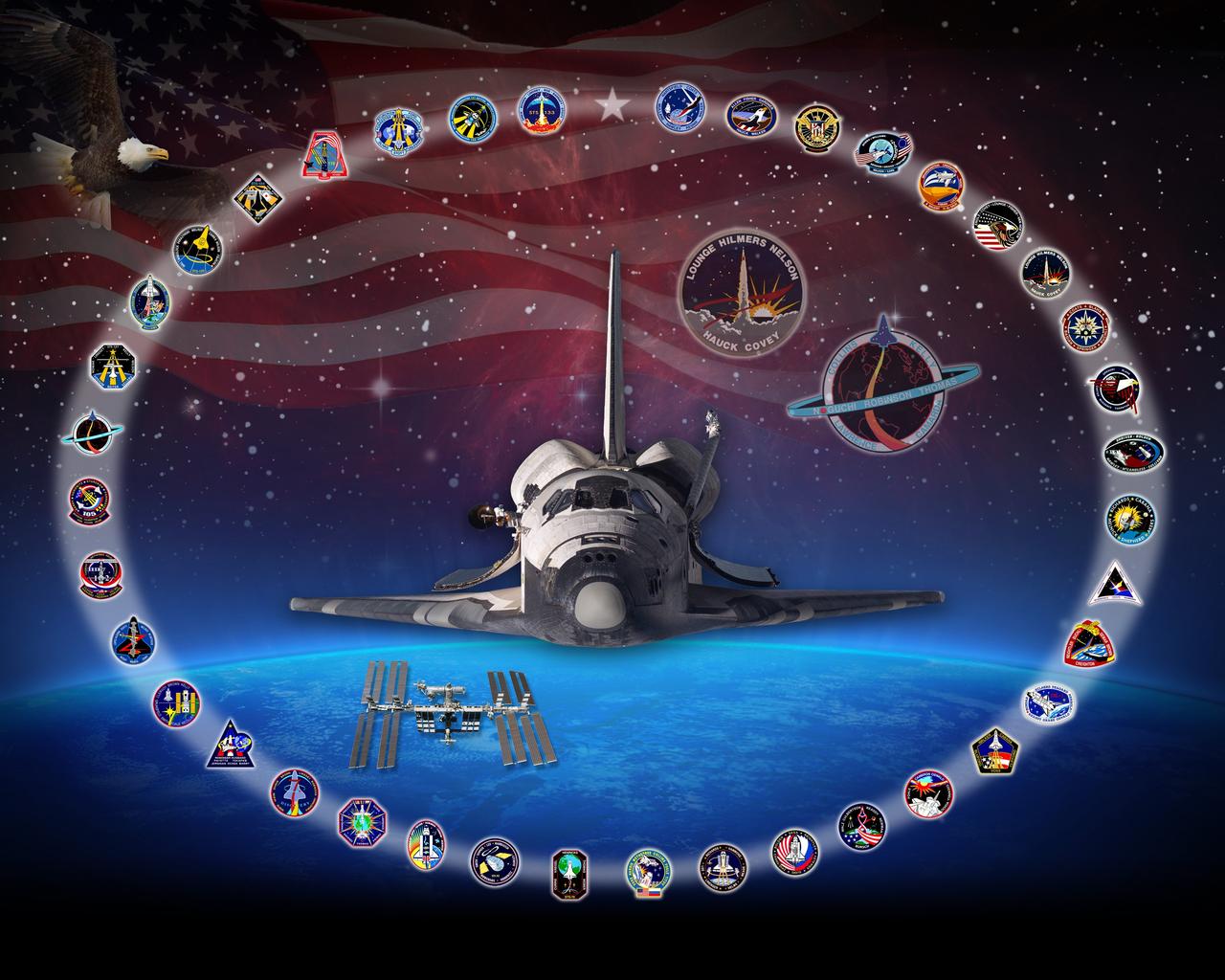
CAPE CANAVERAL, Fla. -- This orbiter tribute of space shuttle Discovery, or OV-103, hangs in Firing Room 4 of the Launch Control Center at NASA's Kennedy Space Center in Florida. In 2011, the tribute was updated to reflect the crew member change on Discovery's final mission -- STS-133. Steve Bowen replaced Tim Kopra as a mission specialist on STS-133, after Kopra was injured in a bicycle accident that prevented him from flying into space. Discovery’s accomplishments include the first female shuttle pilot, Eileen Collins, on STS-63, John Glenn’s legendary return to space on STS-95, and the celebration of the 100th shuttle mission with STS-92. In addition, Discovery supported a number of Department of Defense programs, satellite deploy and repair missions and 13 International Space Station construction and operation flights. The tribute features Discovery demonstrating the rendezvous pitch maneuver on approach to the International Space Station during STS-114. Having accumulated the most space shuttle flights, Discovery’s 39 mission patches are shown circling the spacecraft. The background image was taken from the Hubble Space Telescope, which launched aboard Discovery on STS-31 and serviced by Discovery on STS-82 and STS-103. The American Flag and Bald Eagle represent Discovery’s two Return-to-Flight missions -- STS-26 and STS-114 -- and symbolize Discovery’s role in returning American astronauts to space. Five orbiter tributes are on display in the firing room, representing Atlantis, Challenger, Columbia, Endeavour and Discovery. Graphic design credit: NASA/Amy Lombardo. NASA publication number: SP-2010-08-164-KSC
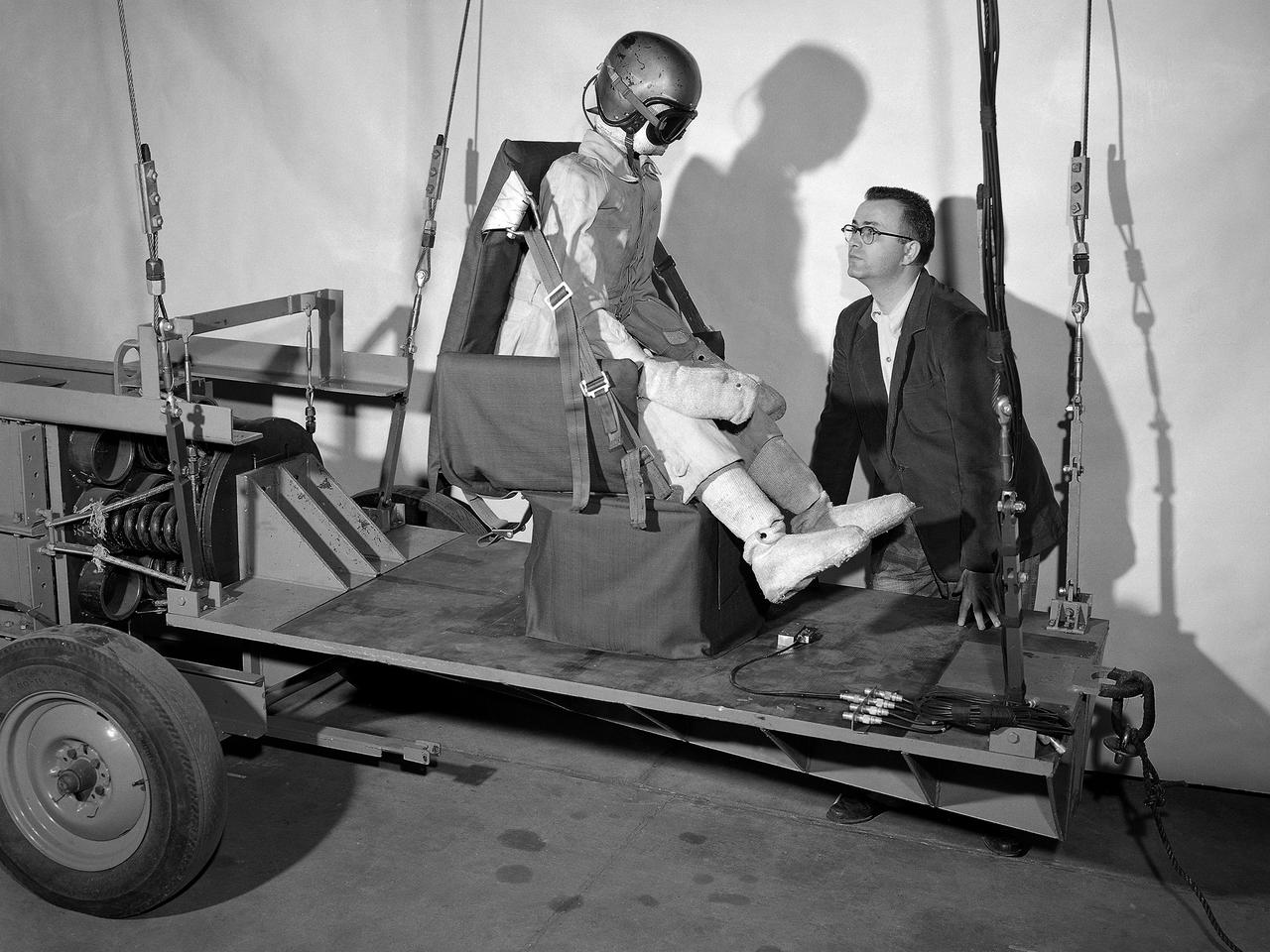
A researcher at the National Advisory Committee for Aeronautics (NACA) Lewis Flight Propulsion Laboratory prepares for a test of an NACA-designed aircraft seat. The laboratory had undertaken a multi-year investigation into the causes and prevention of fires on low altitude aircraft crashes. The program was expanded in the mid-1950s to include the study of impact on passengers, types of seat restraints, and seat design. The crash impact portion of the program began by purposely wrecking surplus Fairchild C-82 Packet and Piper Cub aircraft into barricades at the end of a test runway at the Ravenna Arsenal, located approximately 40 miles south of the Lewis lab in Cleveland. Instrumented dummies and cameras were installed in the pilot and passenger areas. After determining the different loads and their effects on the passengers, the NACA researchers began designing new types of seats and restraints. The result was an elastic seat that flexed upon impact, absorbing 75 percent of the loads before it slowly recoiled. This photograph shows the seats mounted on a pendulum with a large spring behind the platform to provide the jolt that mimicked the forces of a crash. The seat was constructed without any potentially damaging metal parts and included rubber-like material, an inflated back and arms, and a seat cushion. After the pendulum tests, the researchers compared the flexible seats to the rigid seats during a crash of a transport aircraft. They found the passengers in the rigid seats received 66 percent higher g-forces than the NACA-designed seats.
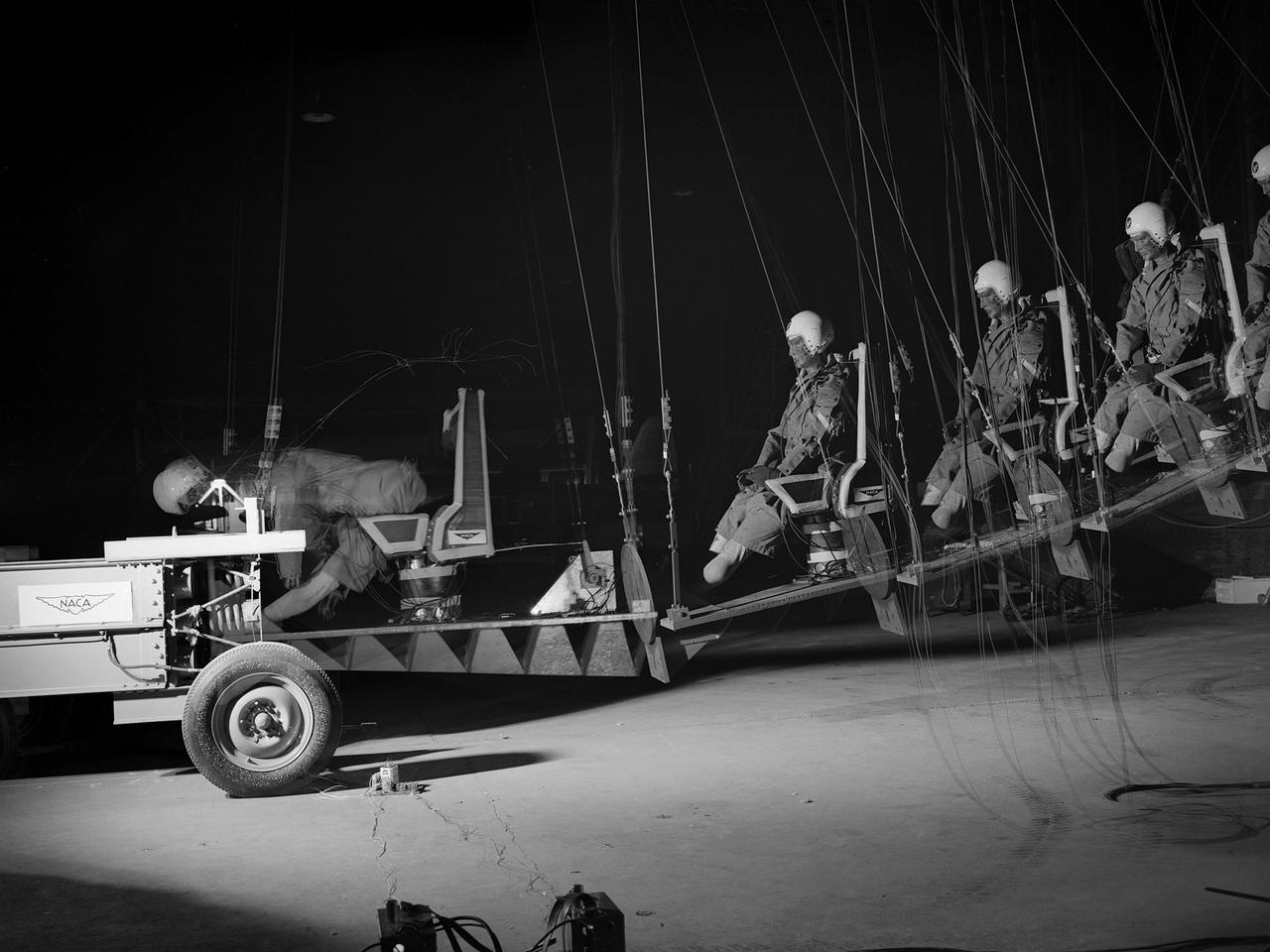
This time-lapse photograph shows the test of a pilot seat and restraint designed by researchers at the National Advisory Committee for Aeronautics (NACA) Lewis Flight Propulsion Laboratory. The laboratory had undertaken a multi-year investigation into the causes and preventative measures for fires resulting from low altitude aircraft crashes. The program was expanded in the mid-1950s to include the study of crash impact on passengers, new types of types of seat restraints, and better seat designs. The impact program began by purposely wrecking surplus transport Fairchild C-82 Packet and Piper Cub aircraft into barricades at the end of a test runway. Instrumented dummies and cameras were installed in the pilot and passenger areas. After determining the different loads experienced during a crash and the effects on the passengers, the NACA researchers began designing new types of seats and restraints. The result was an elastic seat that flexed upon impact, absorbing 75 percent of the loads before it slowly recoiled. This photograph shows the seats mounted on a pendulum with a large spring behind the platform to provide the jolt that mimicked the forces of a crash. The seat was constructed without any potentially damaging metal parts and included rubber-like material, an inflated back and arms, and a seat cushion. After the pendulum tests, the researchers compared the flexible seats to the rigid seats during a crash of a transport aircraft. They found the passengers in the rigid seats received 66 percent higher g-forces than the NACA-designed seats.