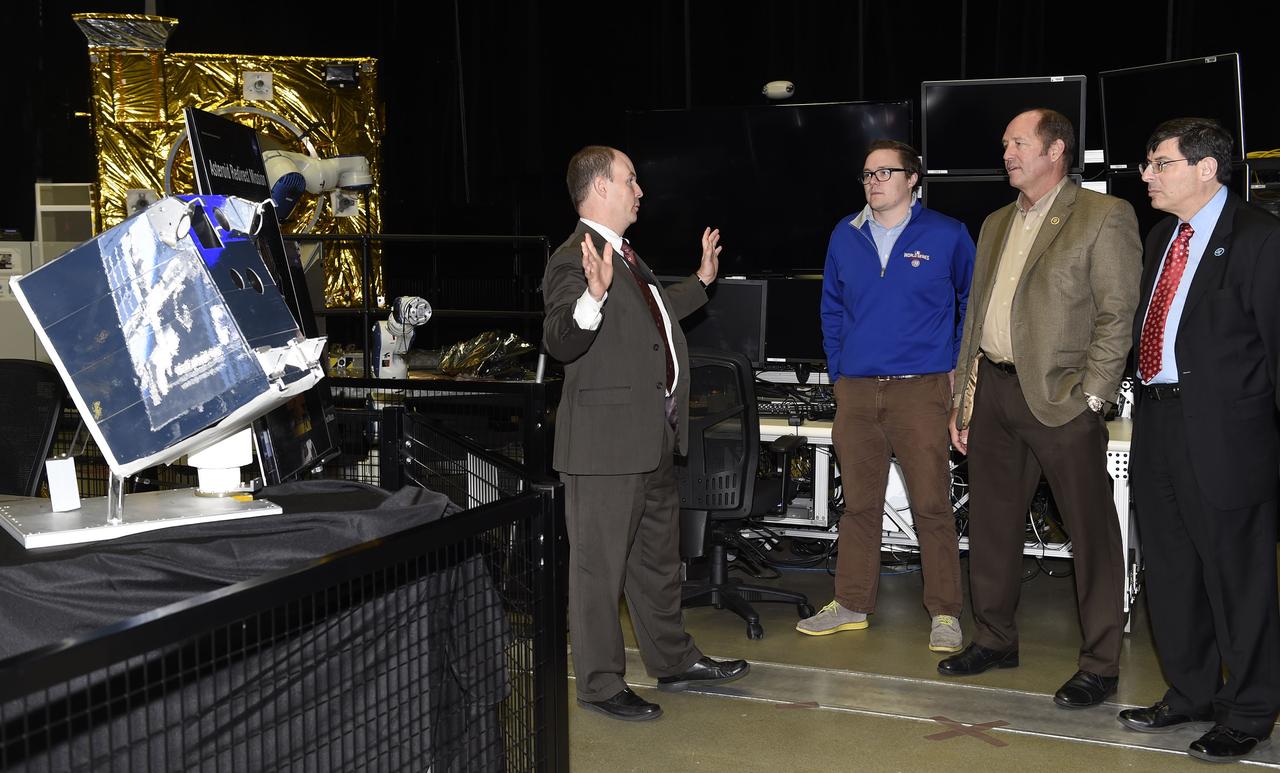
Reprresentative Ted Yoho (R-FL) and staff visited Goddard on Dec 9, 2016 via invitation from Center Director Chris Scolese. District staff was updated on current work at Goddard and toured Hyperwall, James Webb Space Telescope and Robotic Operations Center.
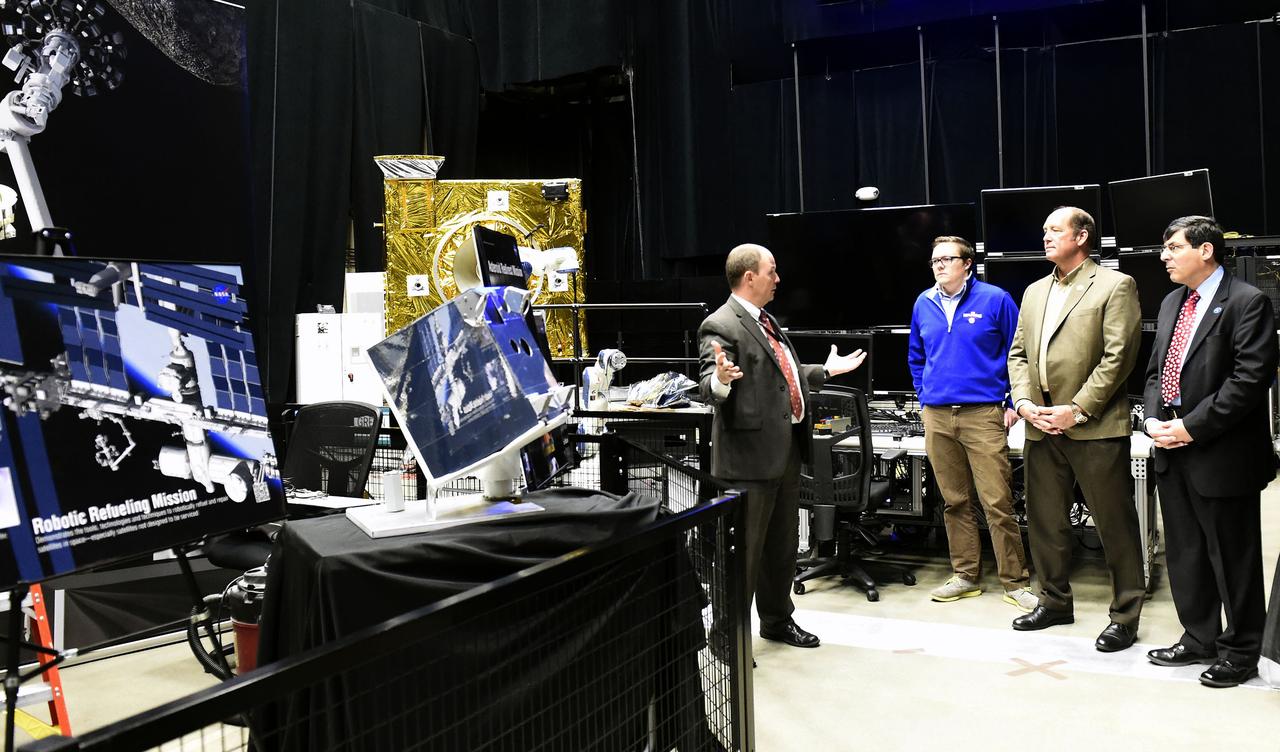
Representative Ted Yoho (R-FL) and staff visited Goddard on Dec 9, 2016 via invitation from Center Director Chris Scolese. District staff was updated on current work at Goddard and toured Hyperwall, James Webb Space Telescope, and Robotic Operations Center.
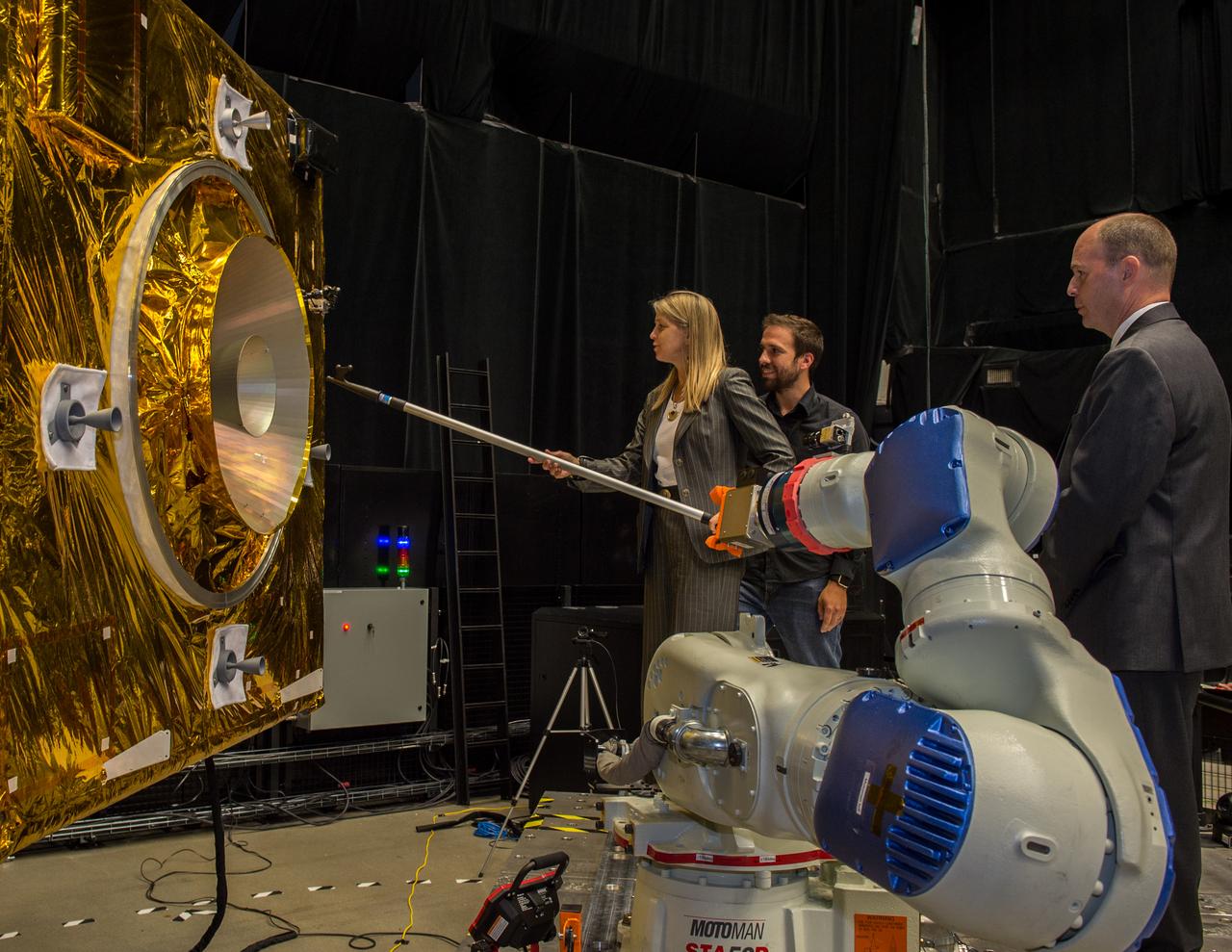
NASA Deputy Administrator Dr. Dava Newman tours Goddard Space Flight Center with Center Director Chris Scolese
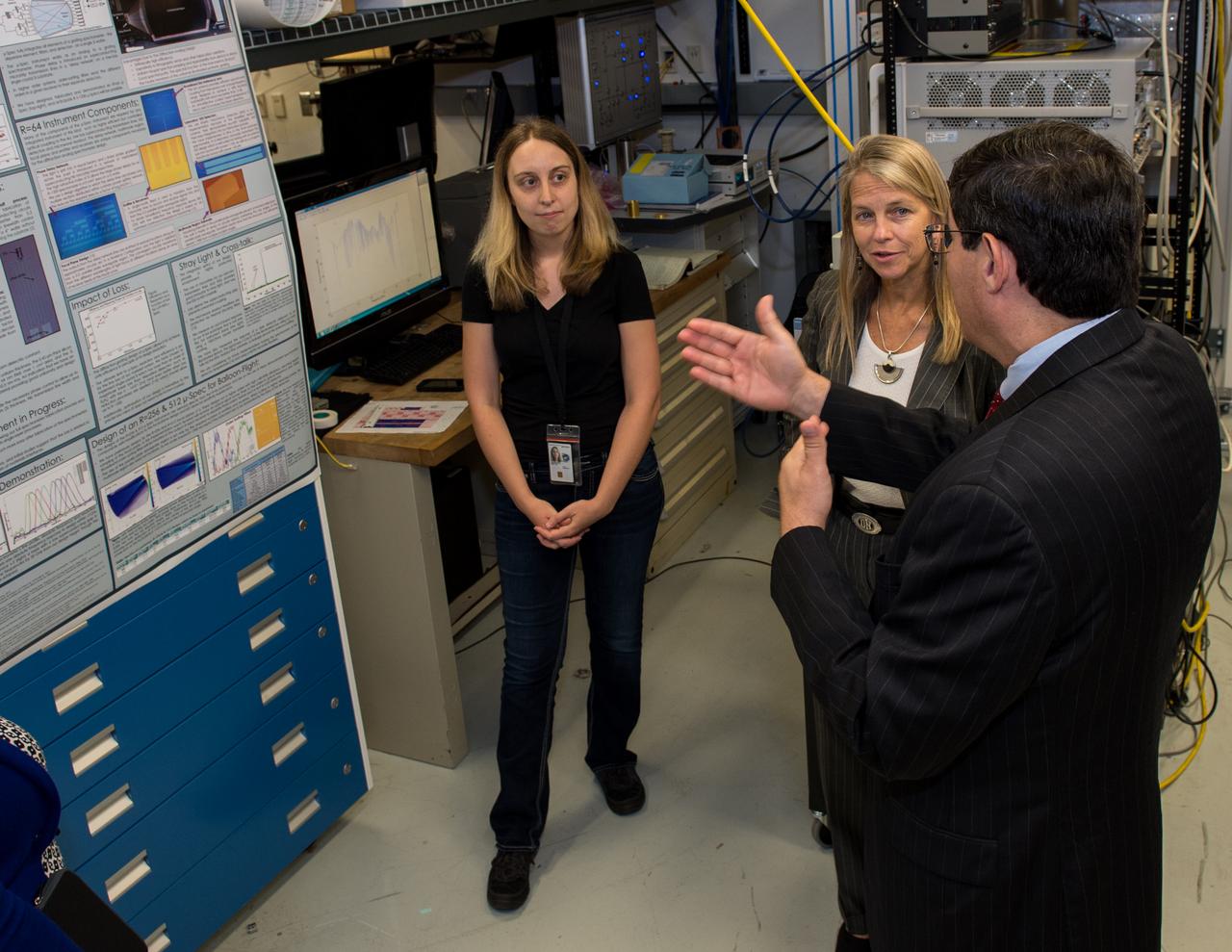
NASA Deputy Administrator Dr. Dava Newman tours Goddard Space Flight Center with Center Director Chris Scolese. Visit Microspec lab Emily Barrentine; Omid Noroozian; Thomas Stevenson; Ed Wollack
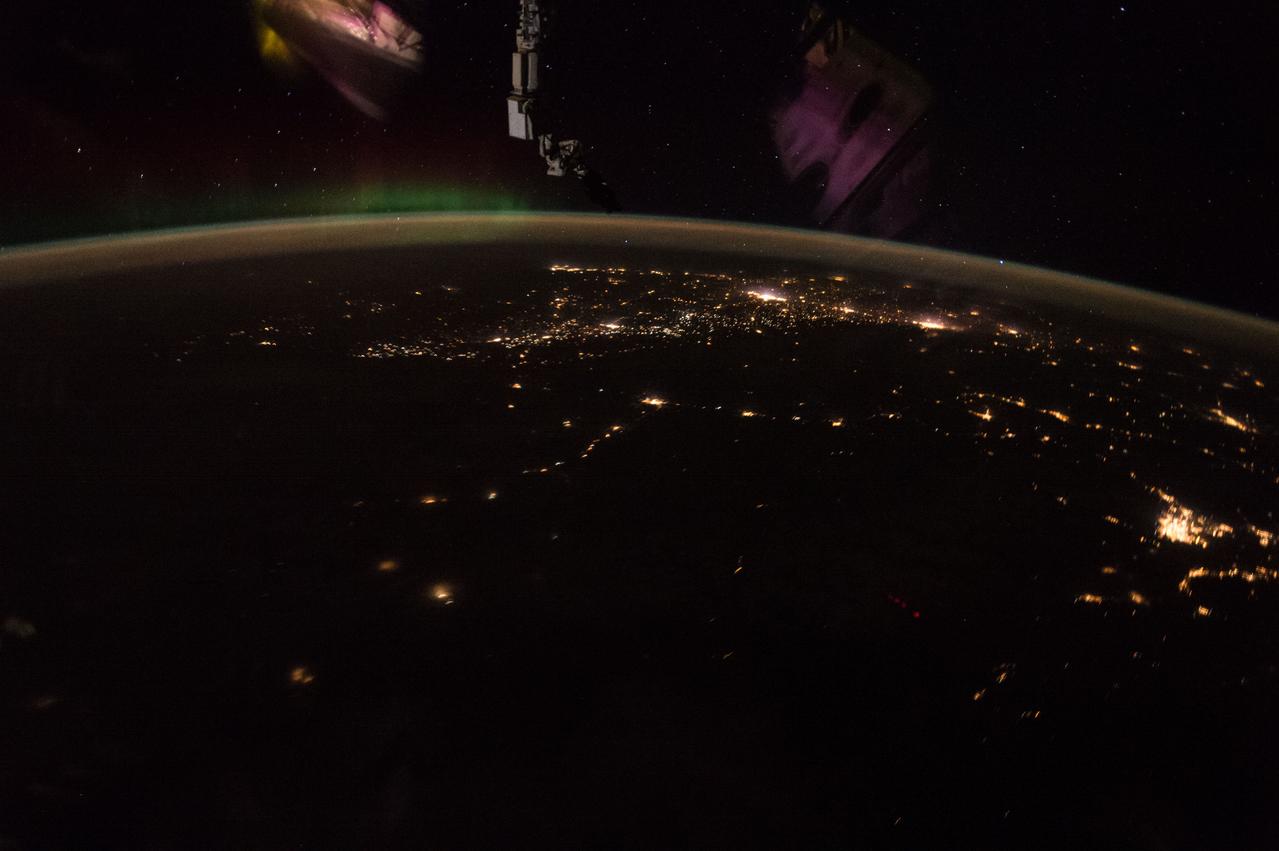
GMT334_11_14_Terry Virts_USA night FL sunrise atlantic clouds_123
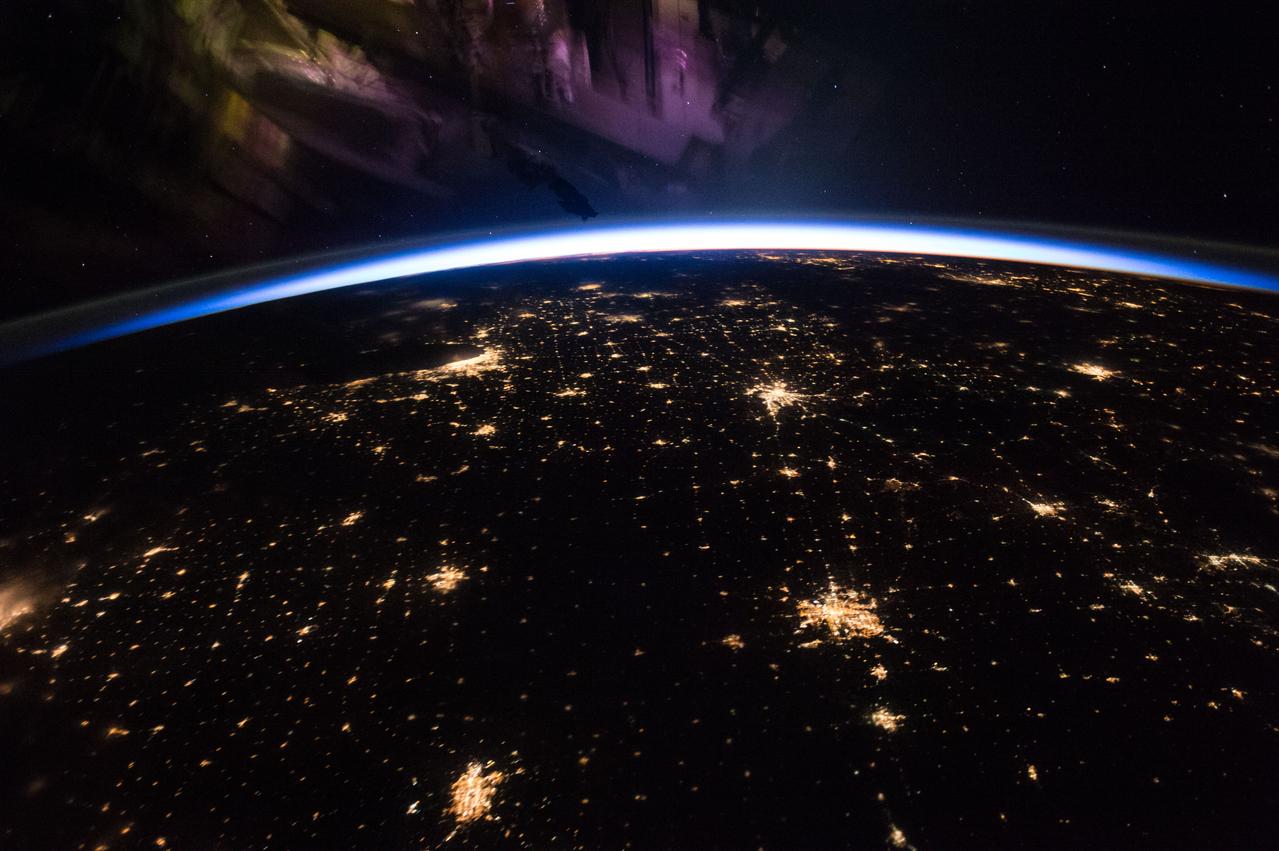
GMT334_11_14_Terry Virts_USA night FL sunrise atlantic clouds_123

GMT334_11_14_Terry Virts_USA night FL sunrise atlantic clouds_123
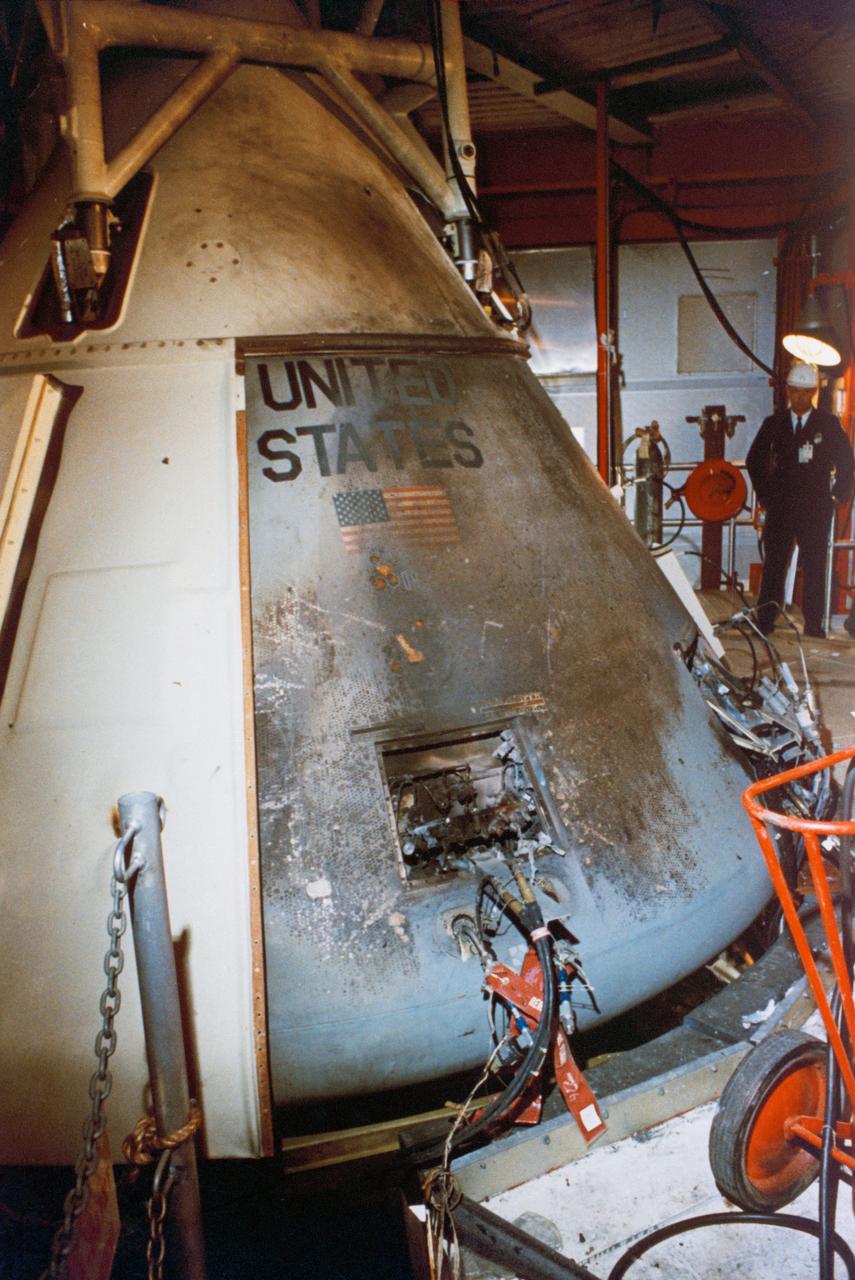
Closeup view of the interior of Apollo S/C 012 C/M, Pad 34, showing the effects of the intense heat of the flash fire which killed the Prime Crew of the A/S 204 Mission. CAPE KENNEDY, FL CAPE KENNEDY, FL
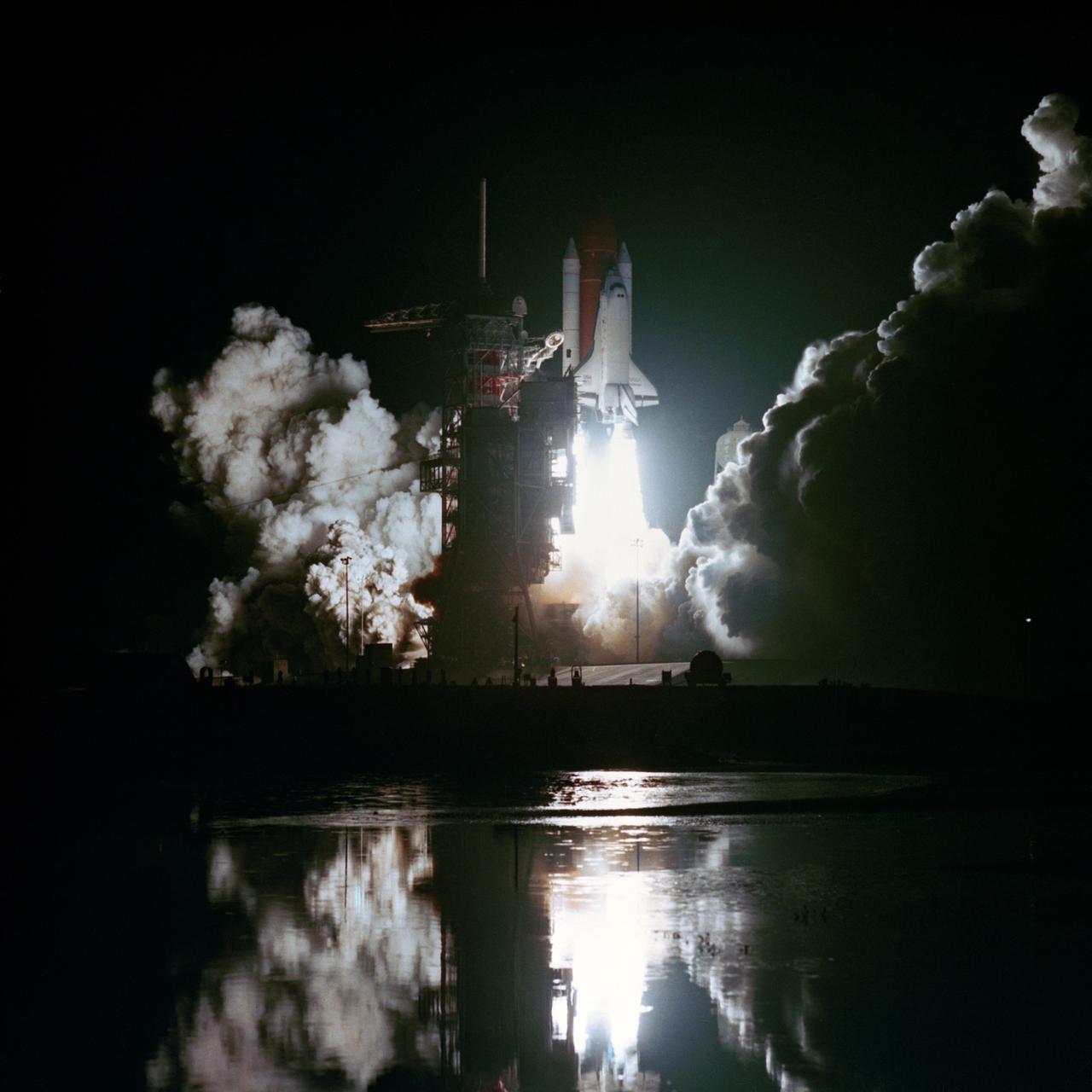
Night launch view of STS-8. Very nice shot. KSC, FL
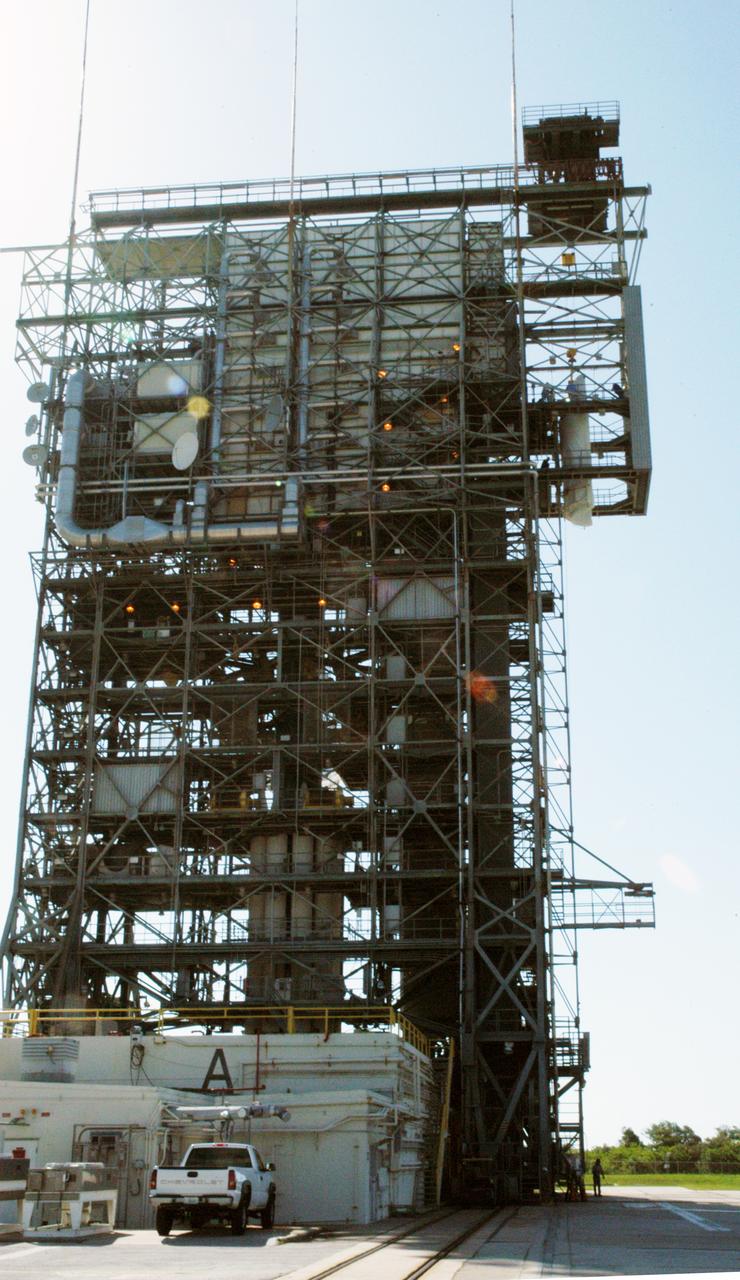
Fairing lift at CX-17, Cape Canaveral Air Force Station, FL.
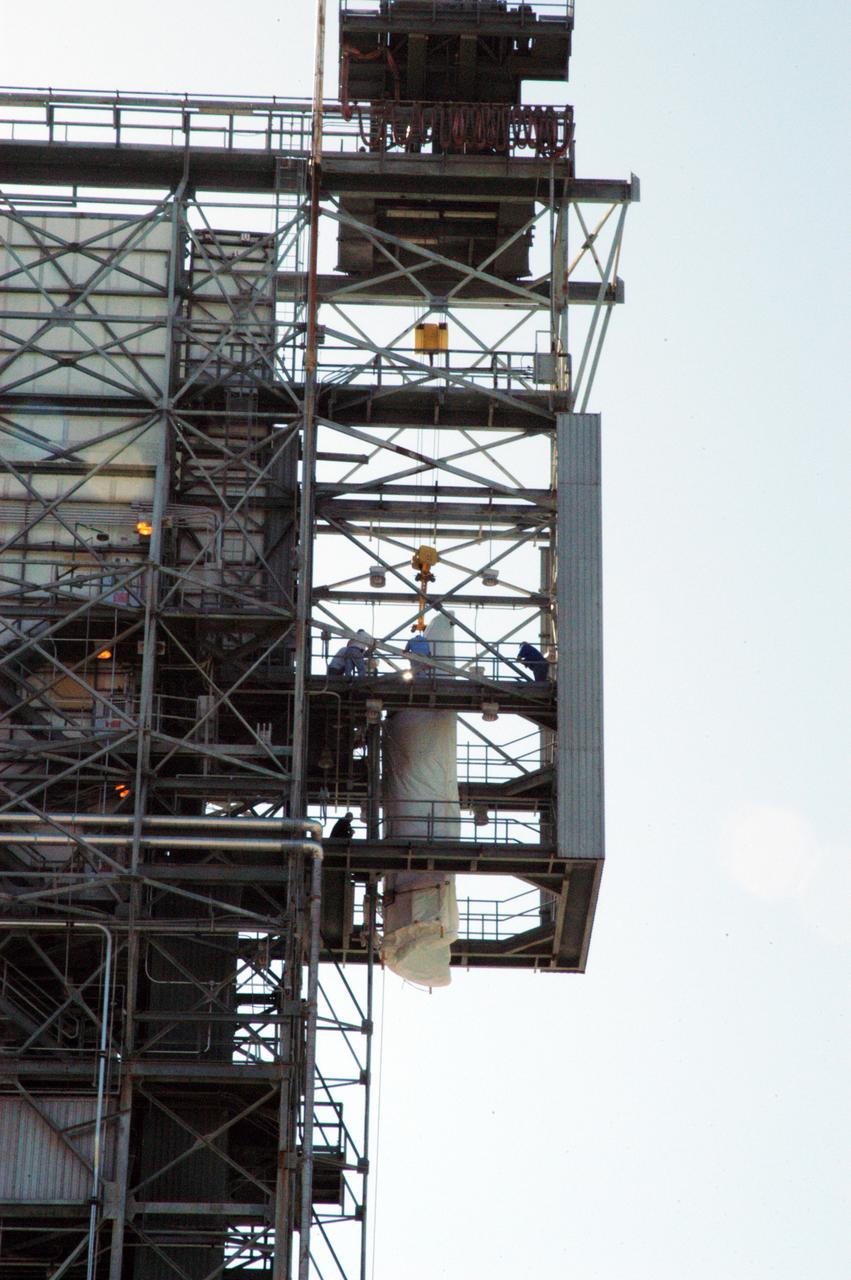
Fairing lift at CX-17, Cape Canaveral Air Force Station, FL.
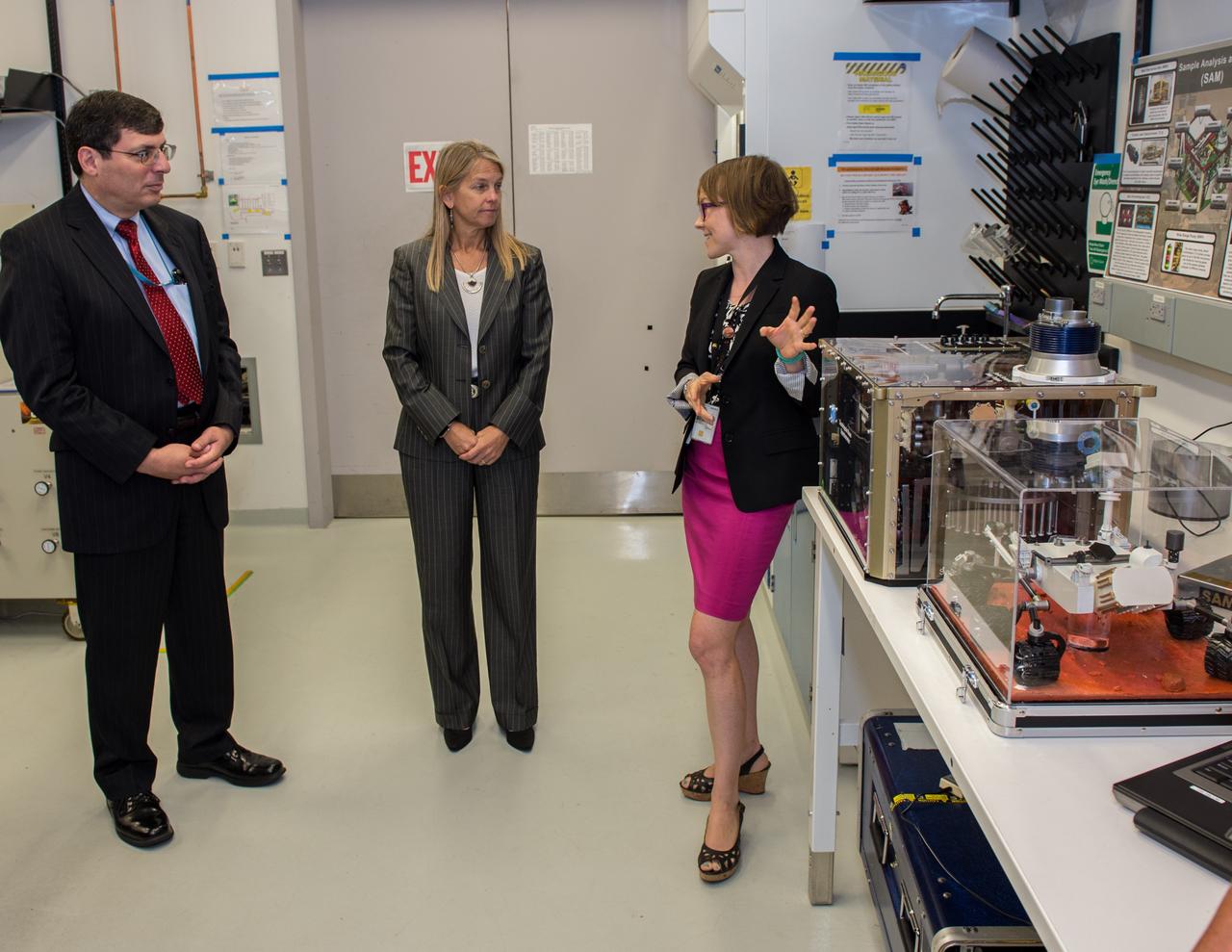
NASA Deputy Administrator Dr. Dava Newman tours Goddard Space Flight Center with Center Director Chris Scolese; Sample Analysis at Mars (SAM) instrument Test Bed; Dr. Melissa Trainer
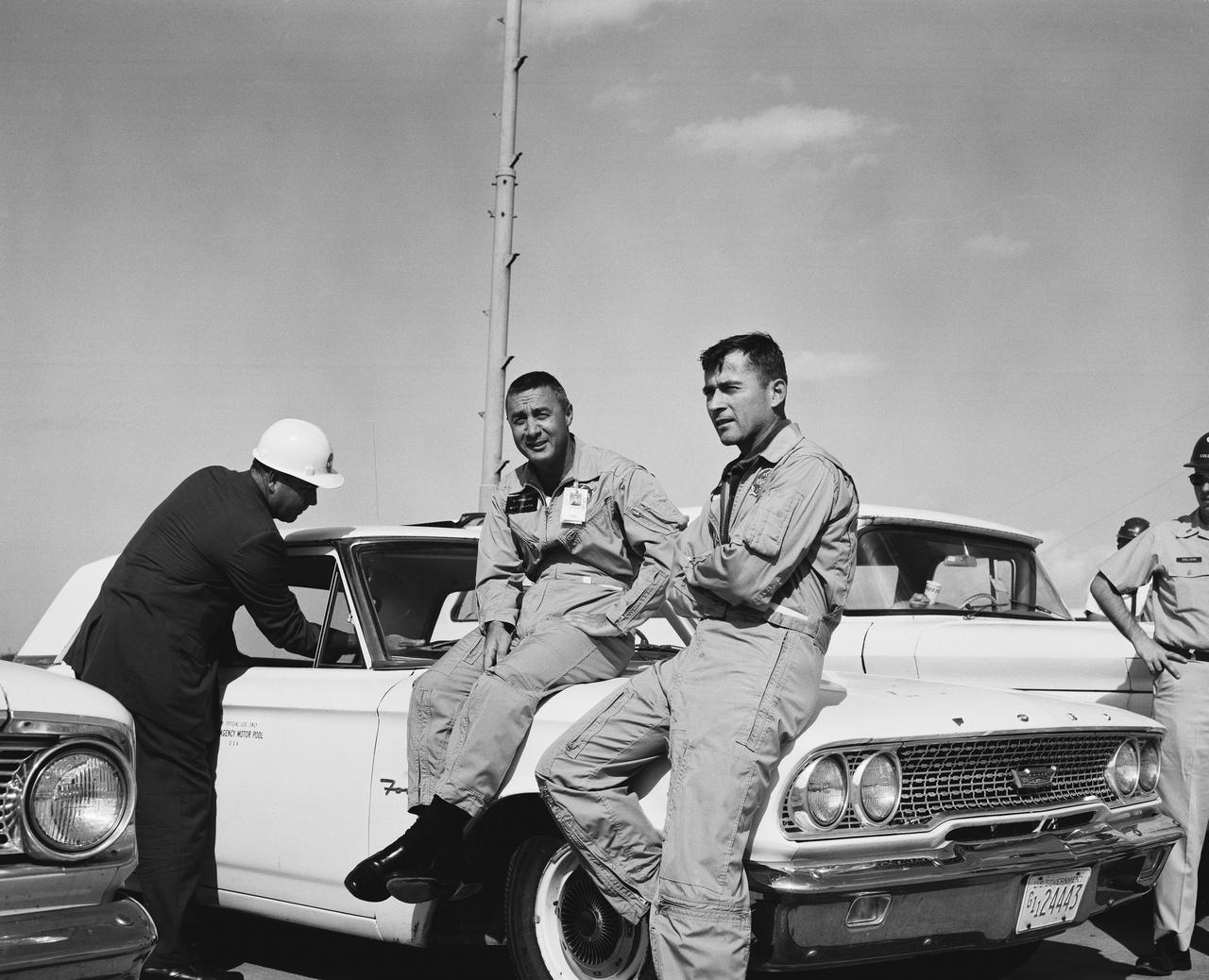
Astronauts Young and Virgil I. Grissom relax on the day of the proposed Gemini 6 Mission. CAPE KENNEDY, FL
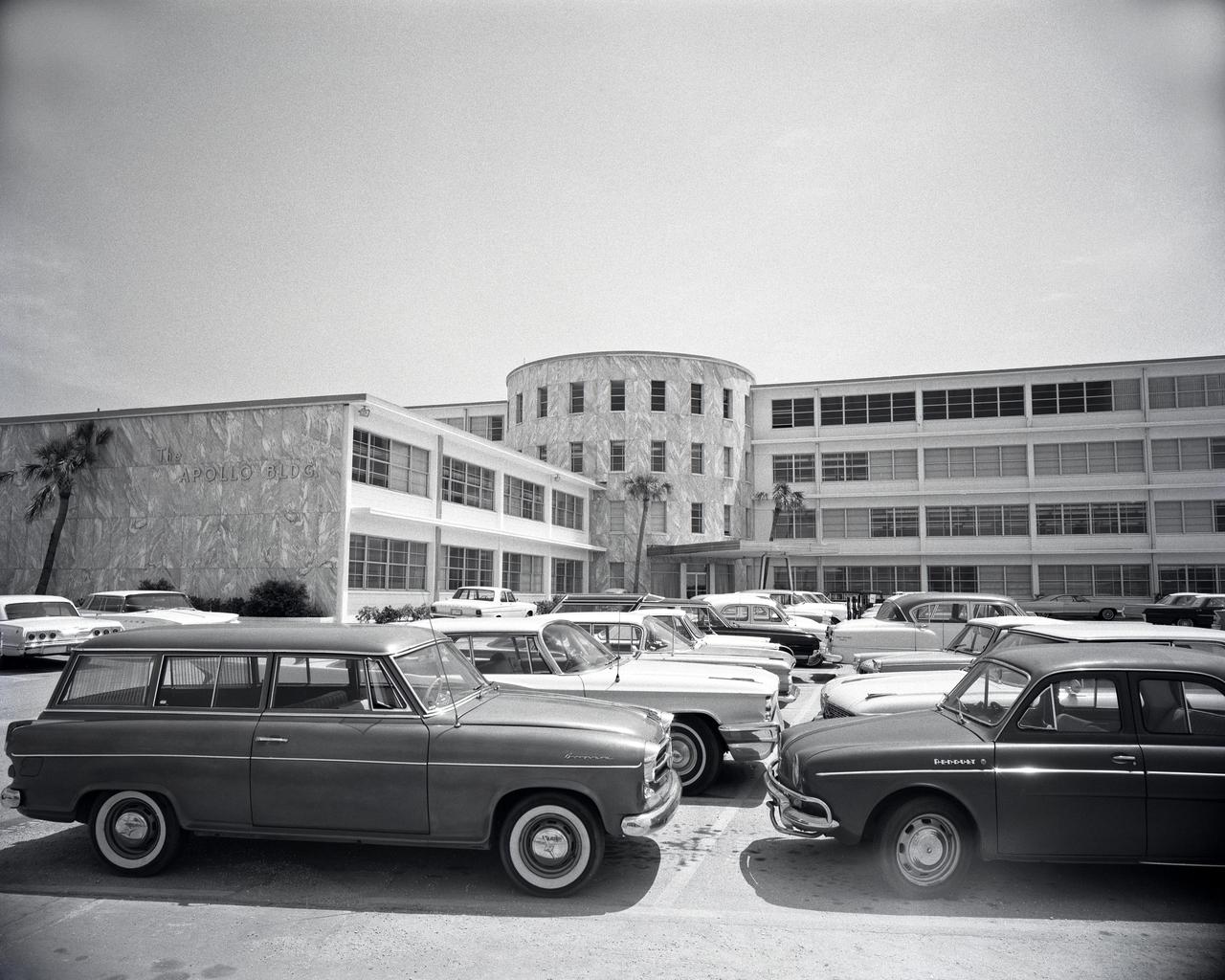
CAPE CANAVERAL, Fla. -- Apollo Office Building, Cocoa Beach, FL. NASA PIO photo. Photo credit: NASA
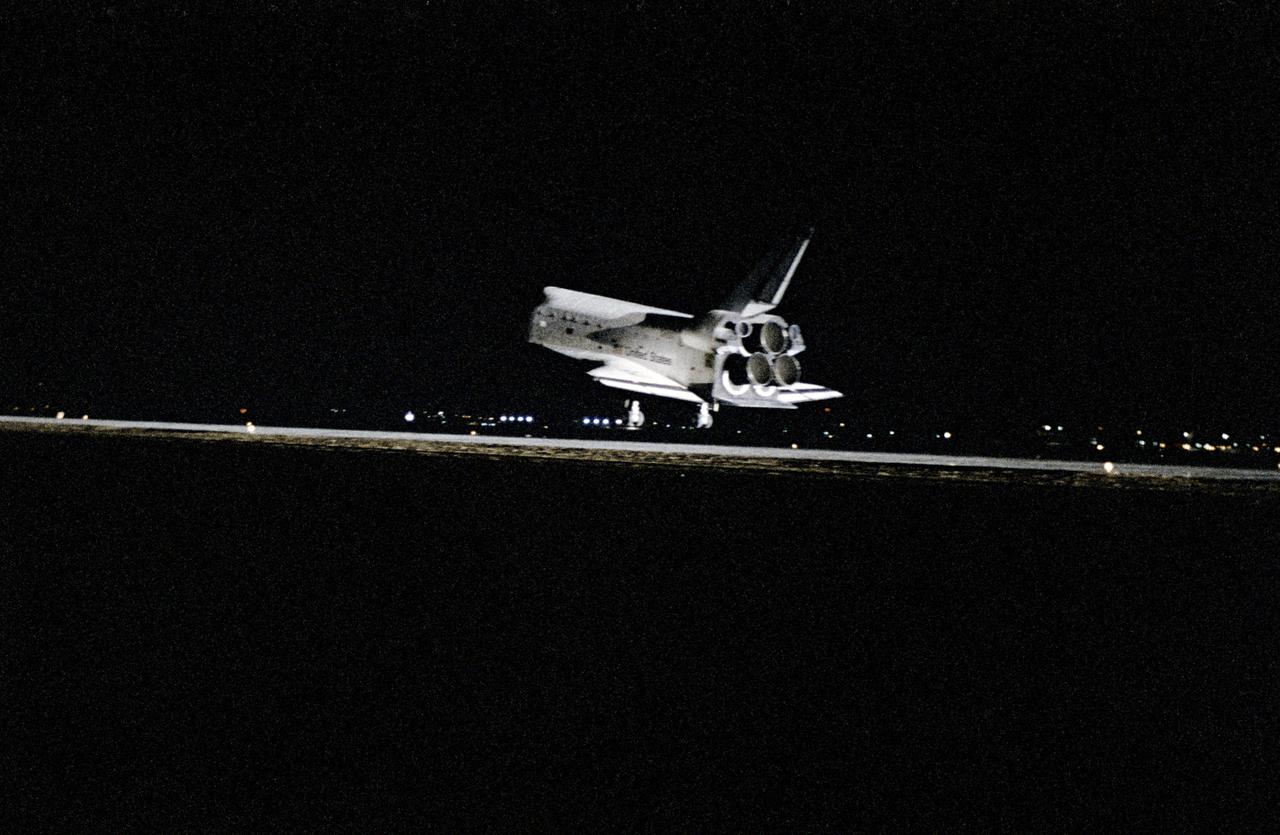
Night landing of STS-8, just before touchdown nose in dark. KSC, FL
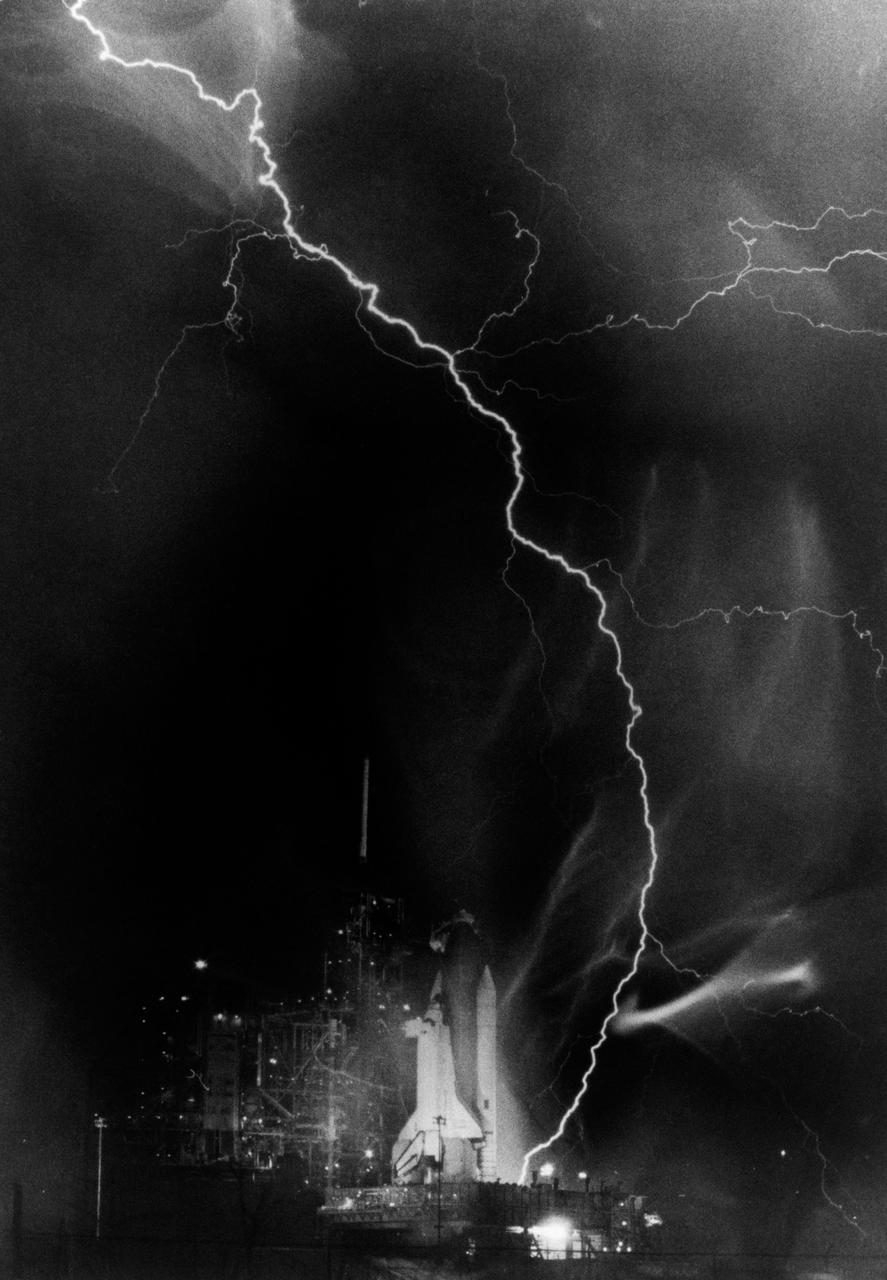
Lightning across the sky with Shuttle at launch pad on 08/30/1983. KSC, FL

Launch views of the Columbia from Pad 39A starting the STS-4 Mission, 06/27/1982. KSC, FL

Aerial, ground level and night views of STS-2 Rollout to and on Pad 39A, 08/31/1981. KSC, FL
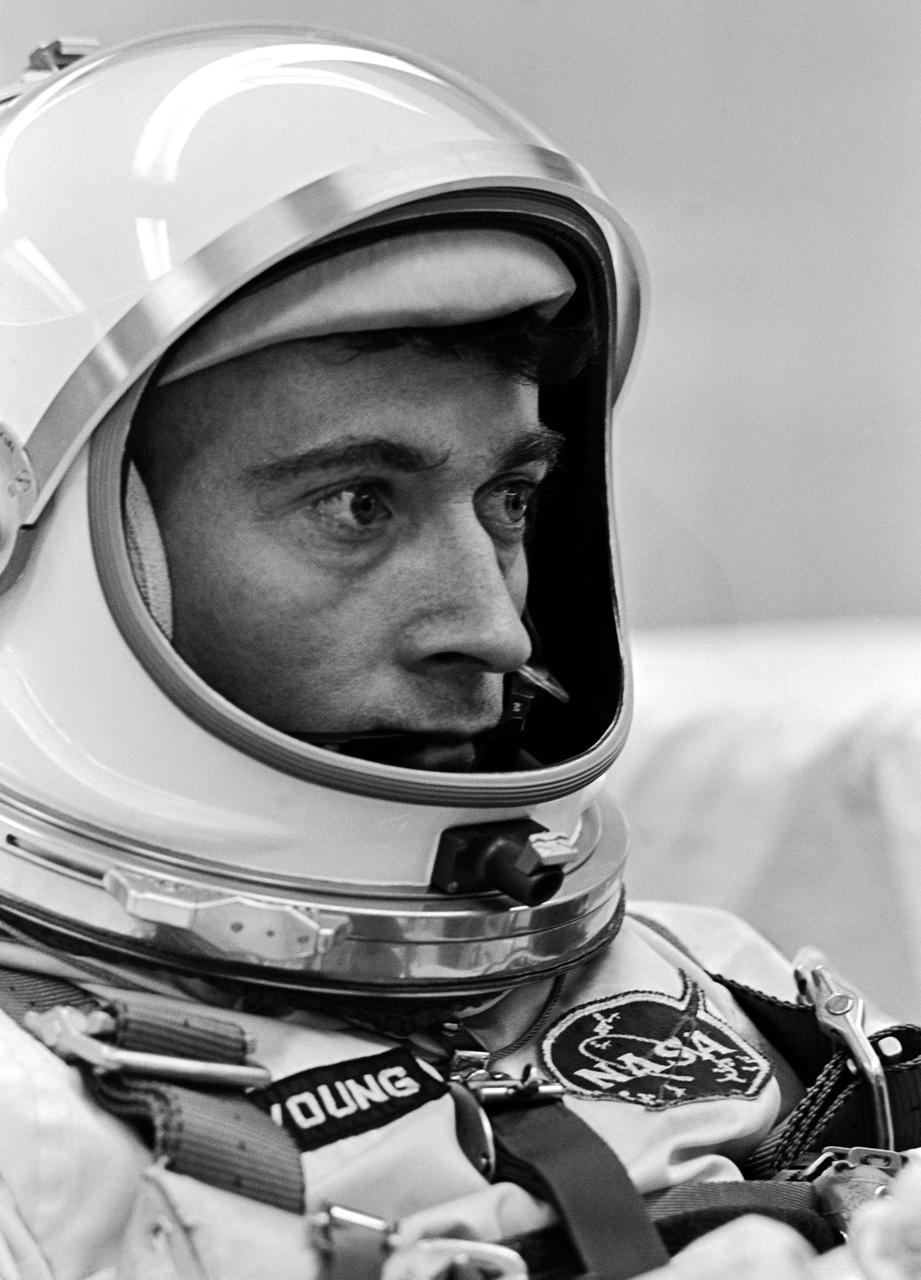
Closeup of Astronaut John W. Young, Pilot for the Gemini-III Spaceflight. CAPE KENNEDY, FL
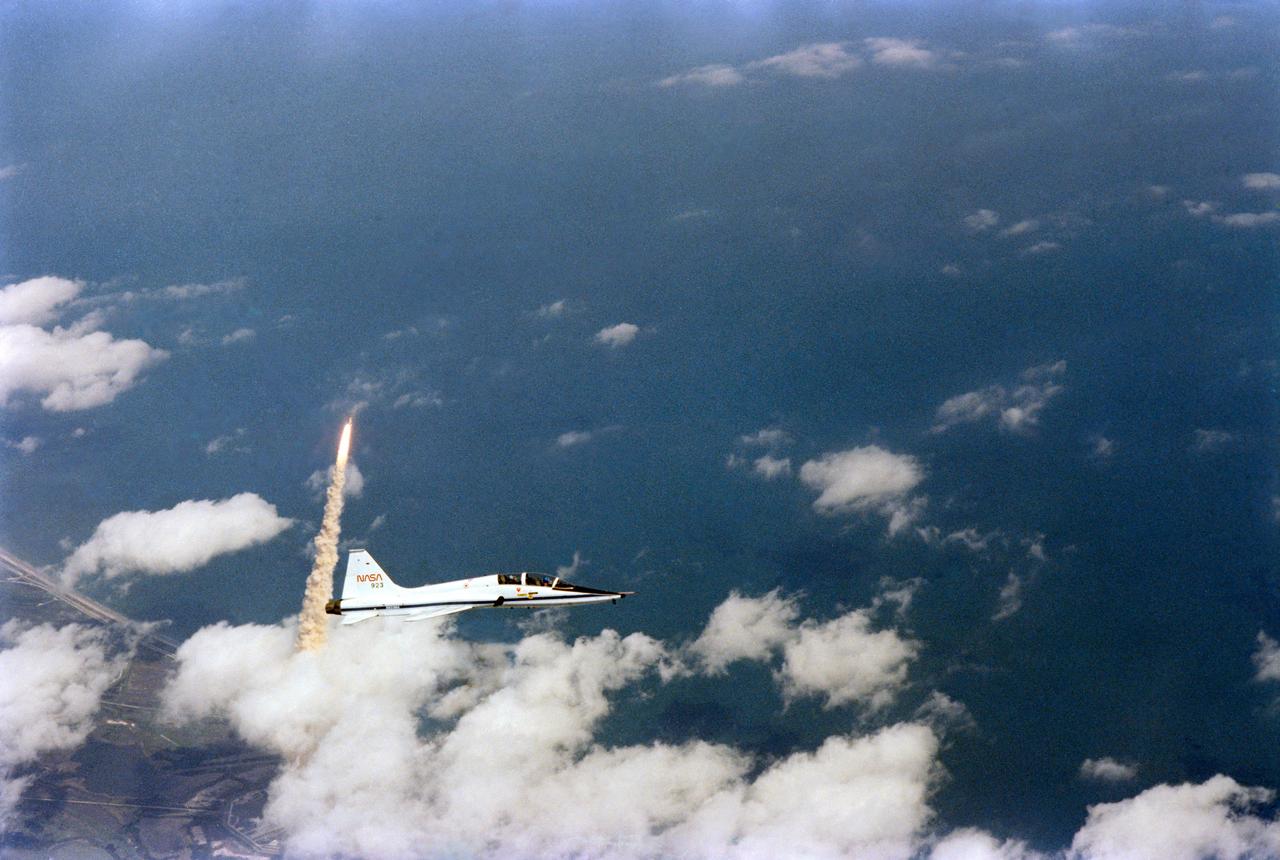
Air-to-air views of STS-3 Launch from T-38 Chase Aircraft. KSC, FL
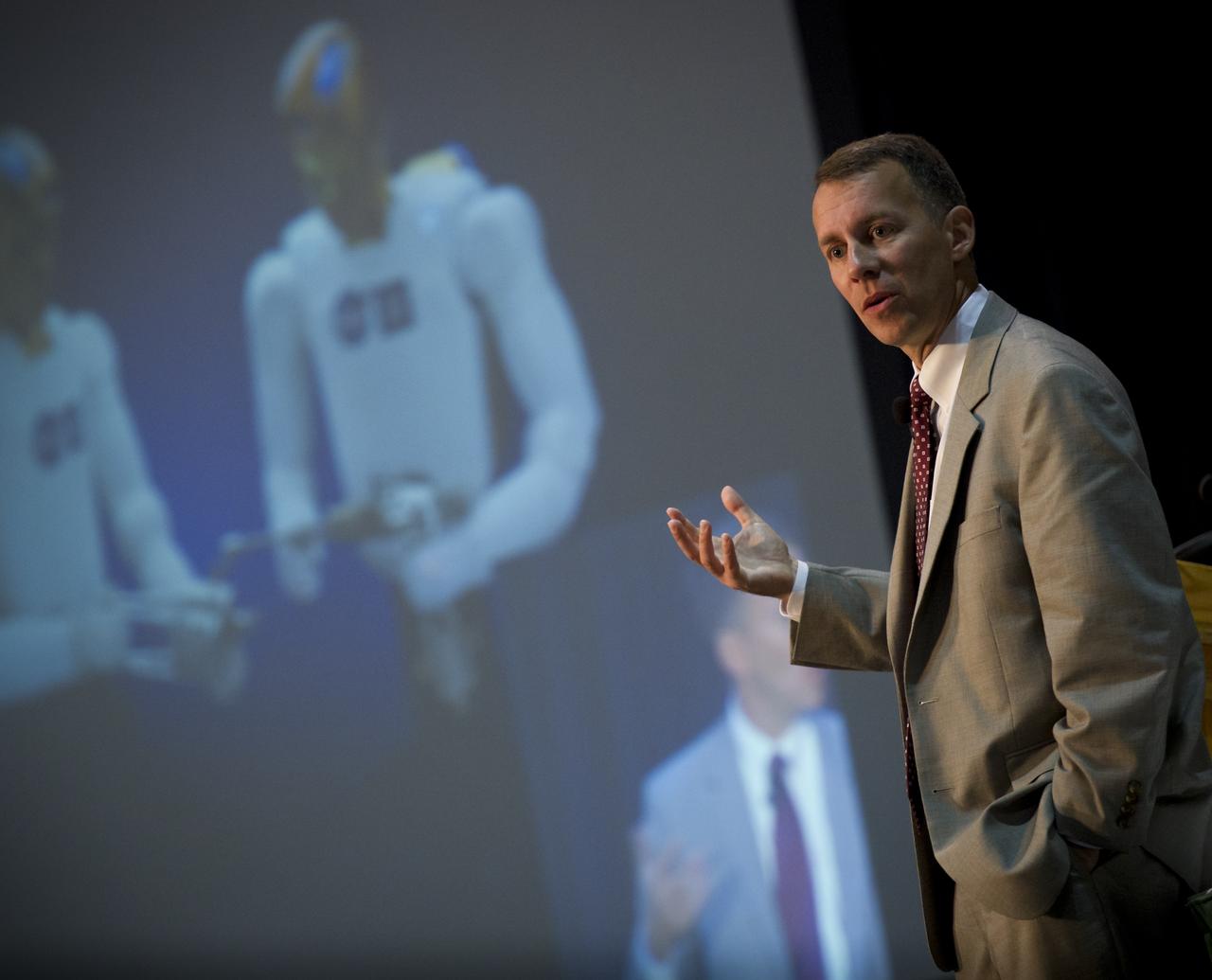
NASA Chief Technologist Bobby Braun talks about technology and innovation to attendees at the AARP "Orlando @50+" Conference in Orlando, Fl., Oct. 1, 2010. Photo Credit: (NASA/Bill Ingalls)
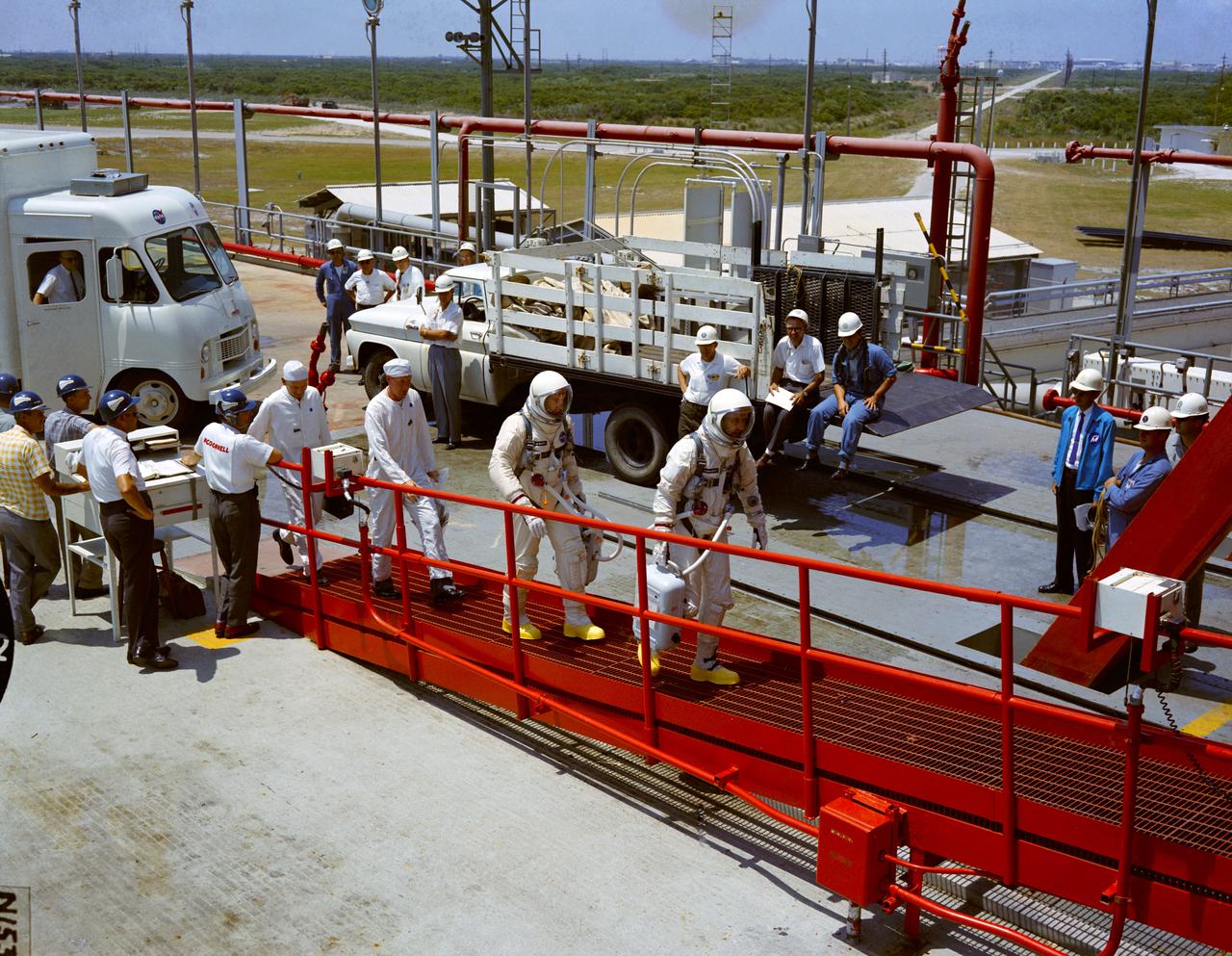
Astronauts White and James A. McDivitt are shown walking up the ramp toward the gantry elevator at Pad 19. CAPE KENNEDY, FL CN
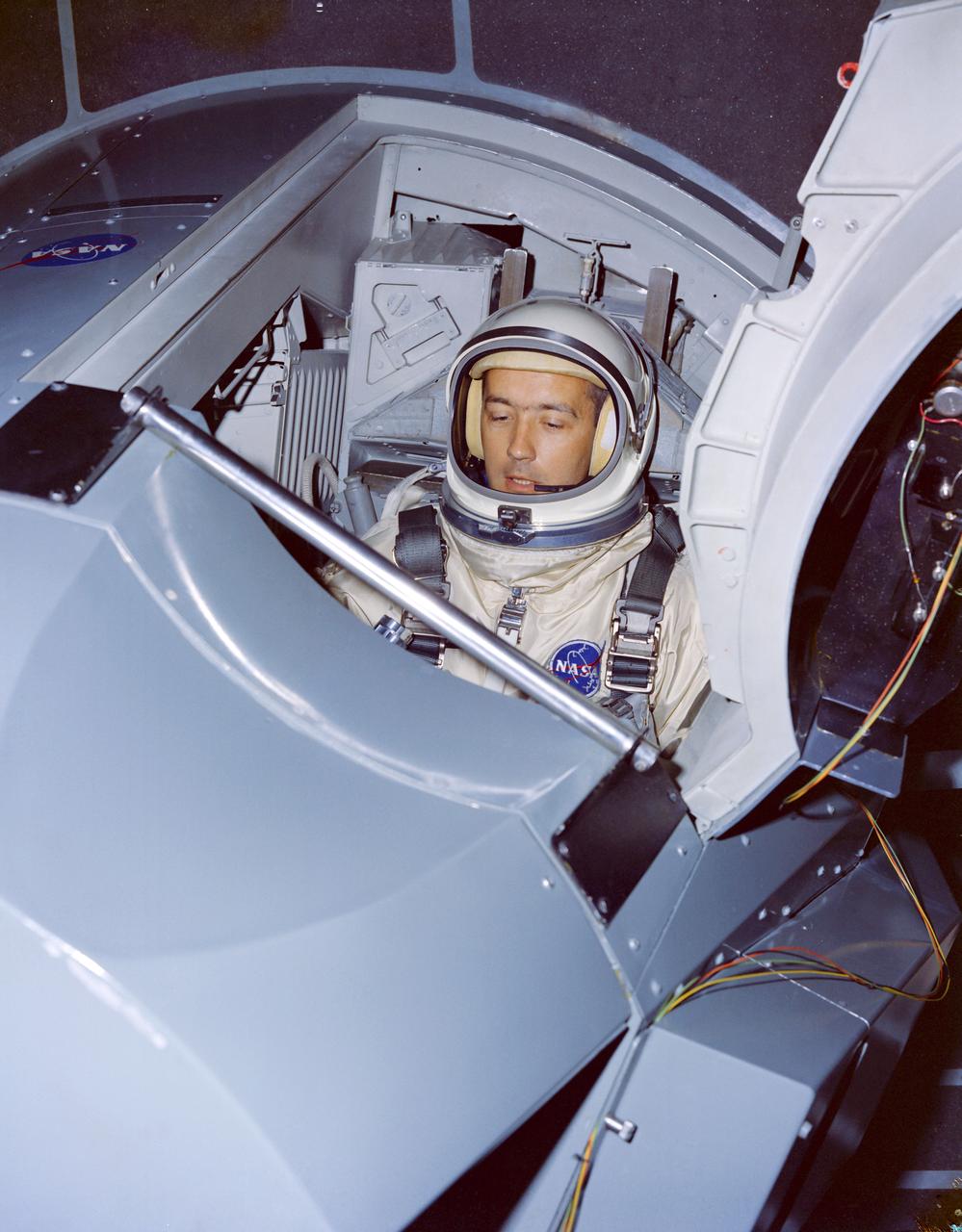
Astronauts James A. McDivitt and Edward H. White II, are shown going through tests in a Gemini Crew Simulator at the Cape. CAPE KENNEDY, FL CN
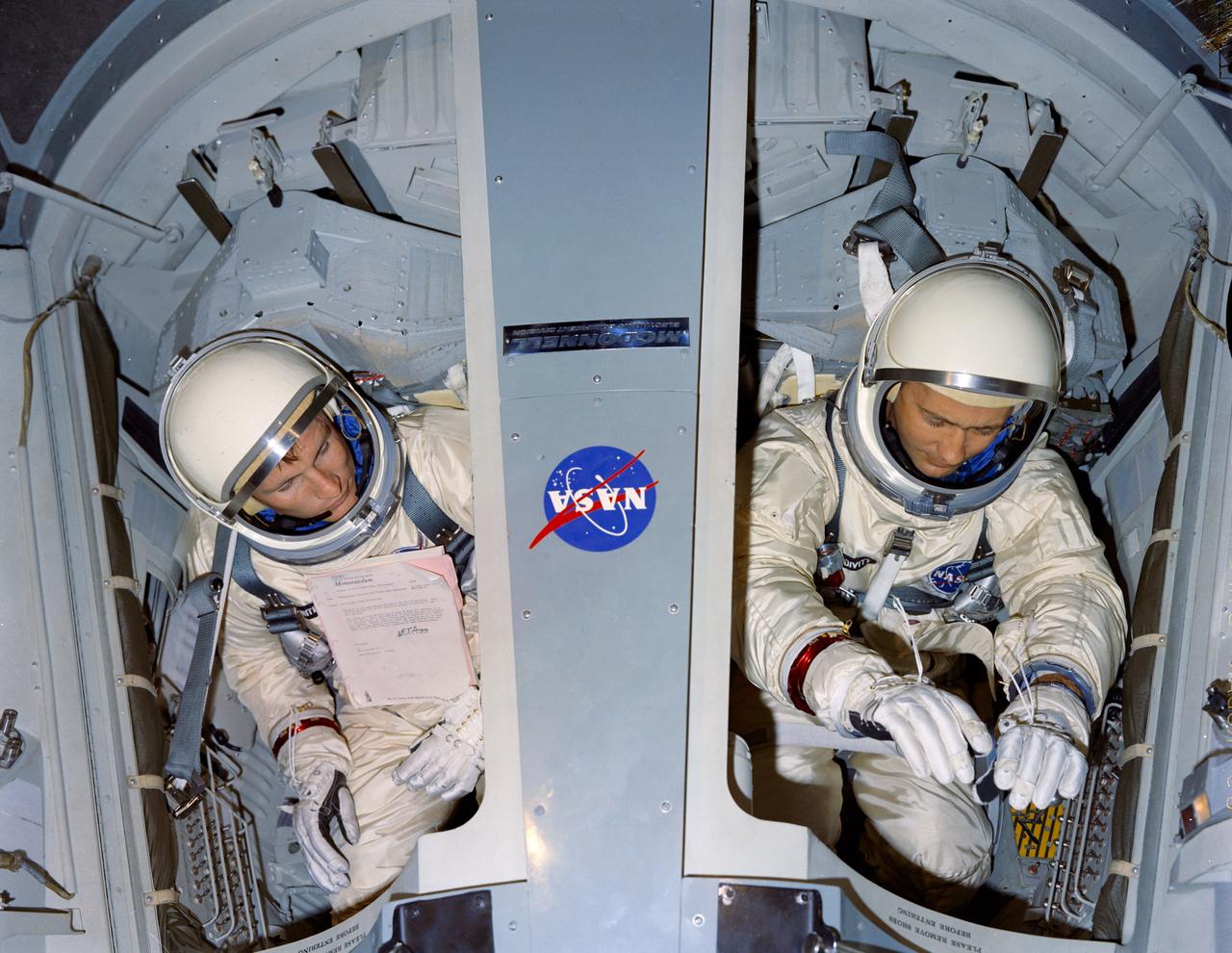
Astronauts Edward H. White II and James A. McDivitt are shown going through tests in a Gemini Crew Simulator at the Cape. CAPE KENNEDY, FL CN
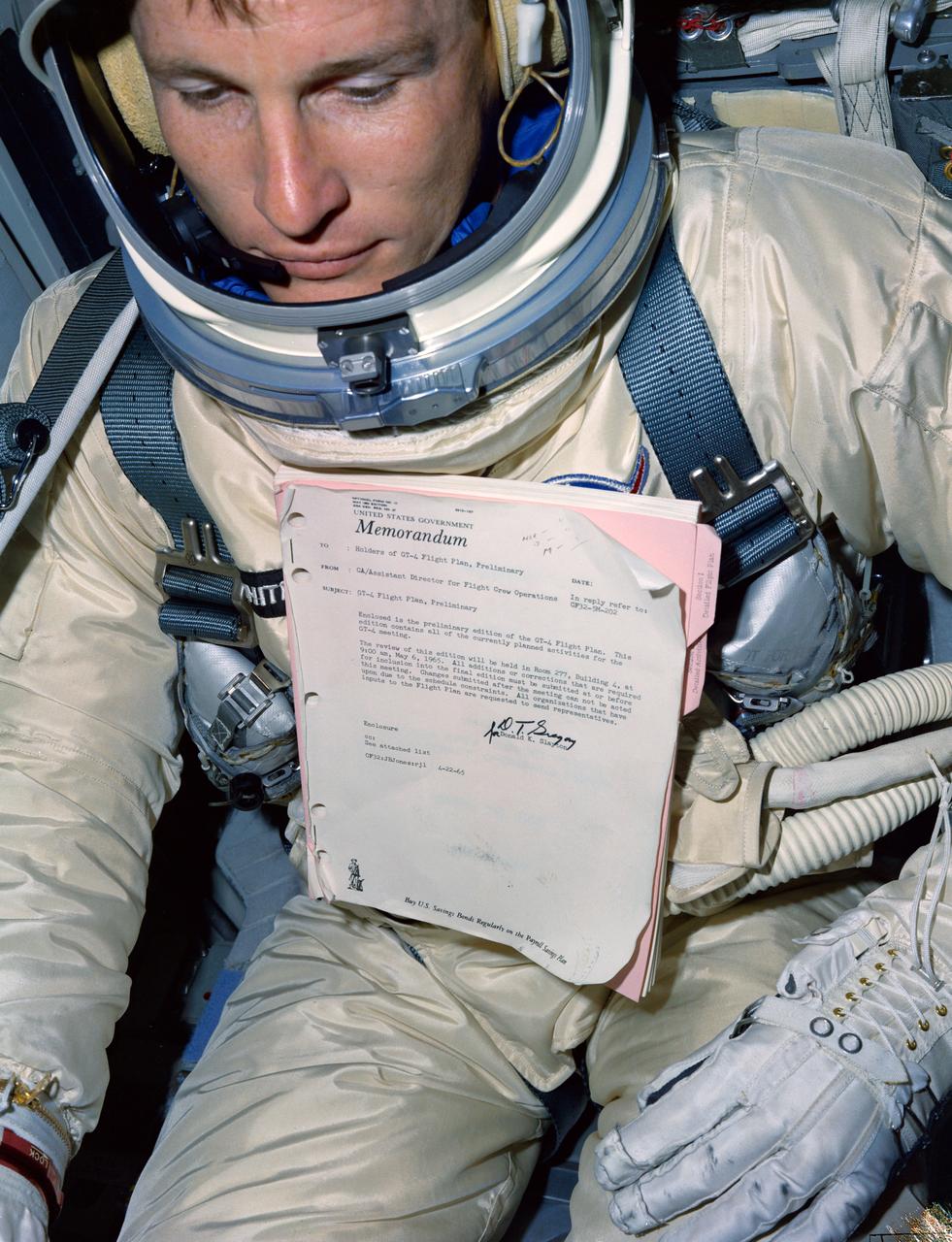
Astronauts Edward H. White II, and James A. McDivitt are going through tests in a Gemini Crew Simulator at the Cape. CAPE KENNEDY, FL B&W
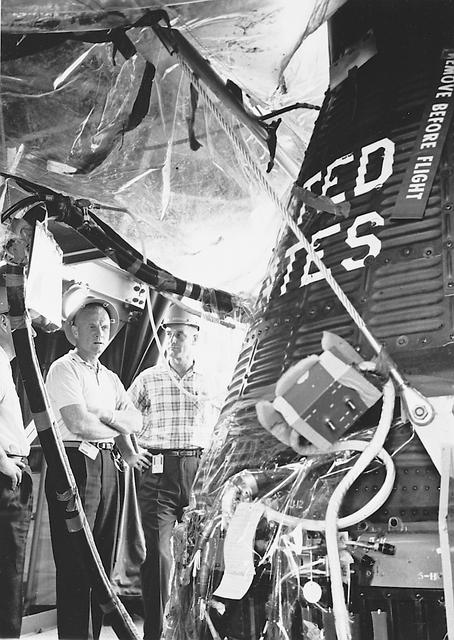
Astronauts John H. Glenn Jr. (center), and John Peterson (right), in gantry viewing Mercury Spacecraft during assembly. CAPE CANAVERAL, FL B&W
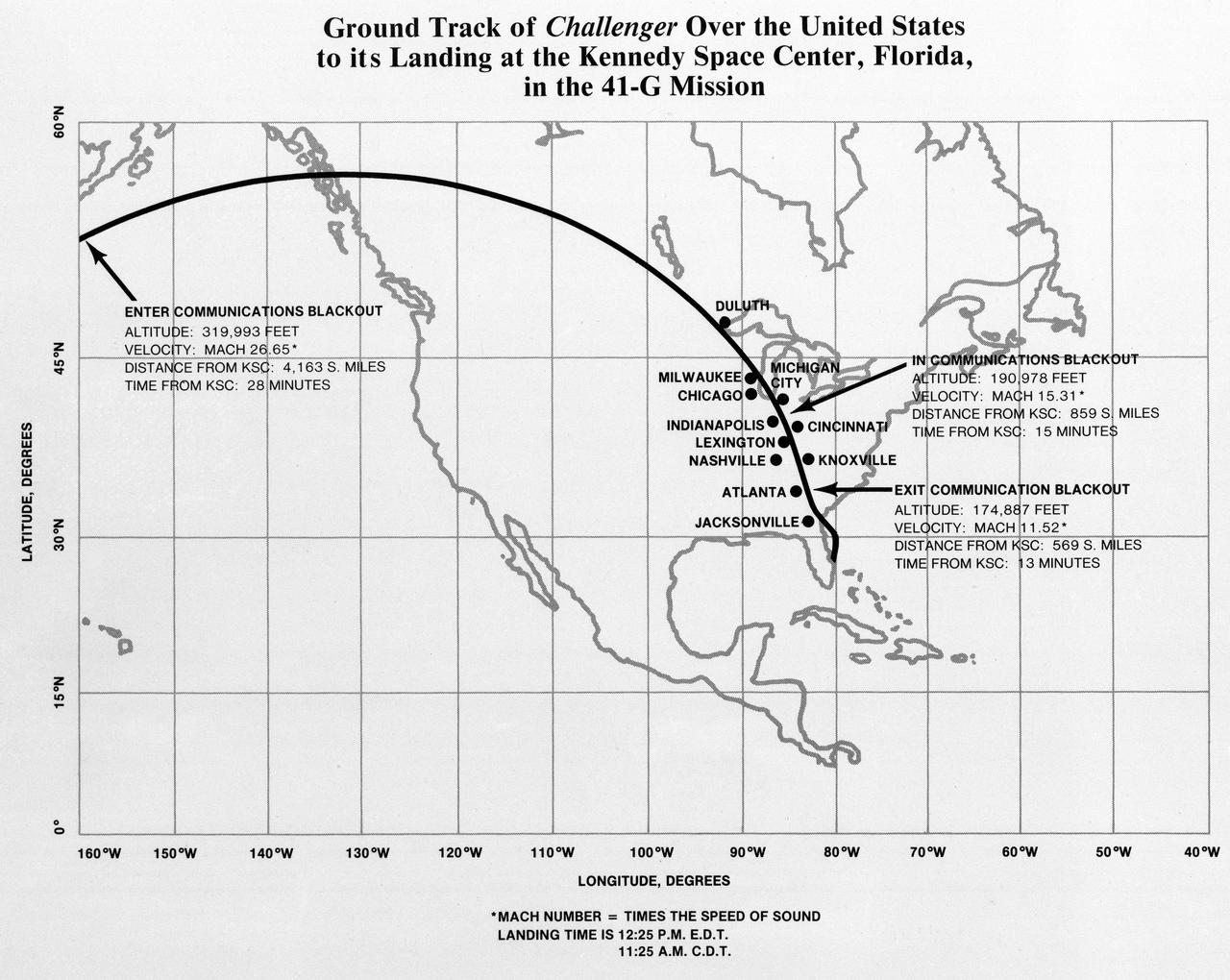
Art drawing of ground track over U.S. of landing for STS-41G. 1. ART CONCEPTS - STS-41G MAP (LANDING) KSC, FL
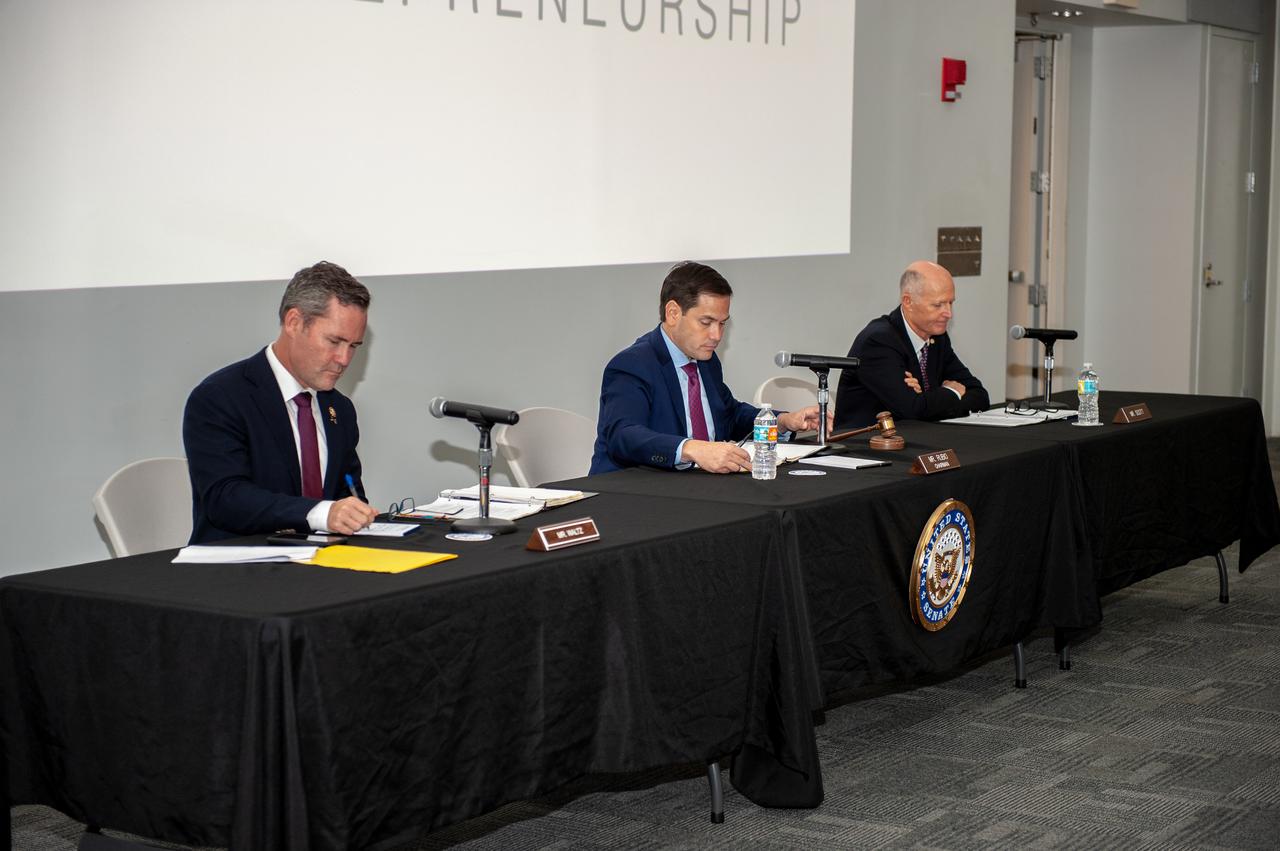
From left, Rep. Mike Waltz, R-FL, and Sens. Marco Rubio and Rick Scott, R-FL, participate in the U.S. Senate Committee on Small Business and Entrepreneurship field hearing on July 19, 2019, in the Astronaut Memorial Foundation facility at the Florida spaceport’s visitor complex. The topic of the field hearing was “Moon Landings to Mars Exploration: The Role of Small Business Innovation in America’s Space Program.”
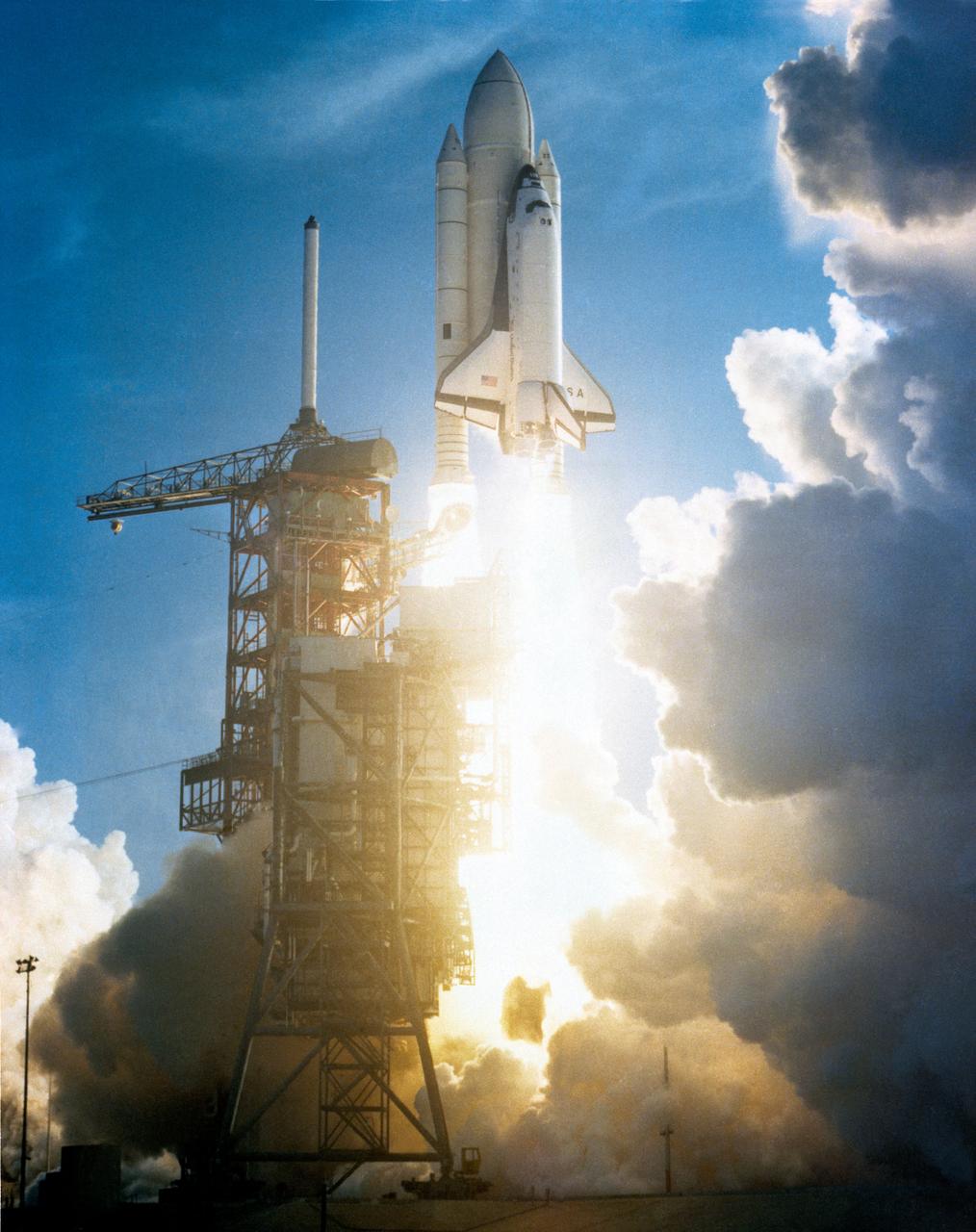
The Space Shuttle Columbia begins a new era of space transportation when it lifts off from NASA Kennedy Space Center (KSC). The reusable Orbiter, its two (2) fuel tanks and two (2) Solid Rocket Boosters (SRB) has just cleared the launch tower. Aboard the spacecraft are Astronauts John W. Young, Commander, and Robert L. Crippen, Pilot . 1. STS-I - LAUNCH KSC, FL KSC, FL Also available in 4x5 BW
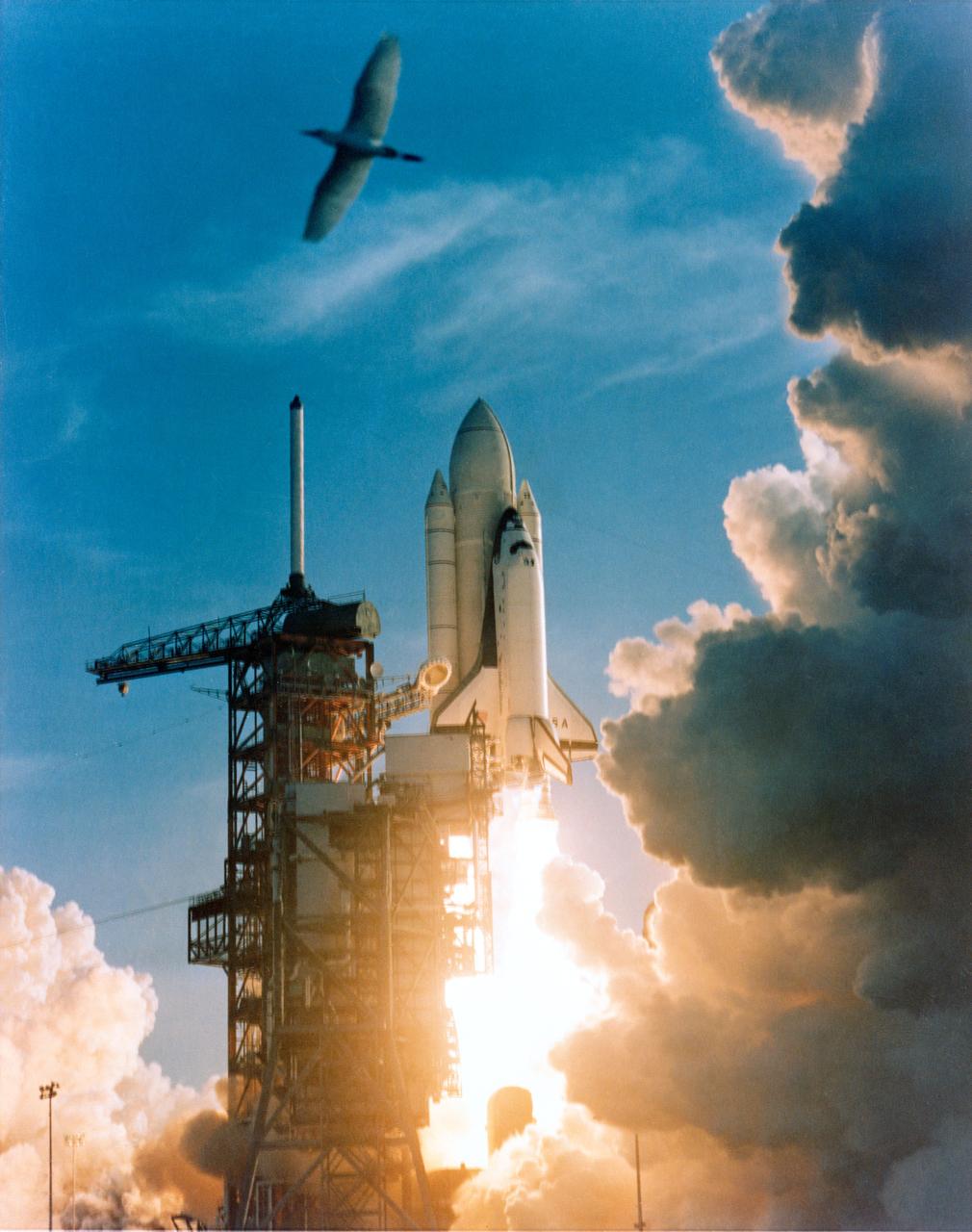
The Space Shuttle Columbia begins a new era of space transportation when it lifts off from NASA Kennedy Space Center (KSC). The reusable Orbiter, its two (2) fuel tanks and two (2) Solid Rocket Boosters (SRB) has just cleared the launch tower. Aboard the spacecraft are Astronauts John W. Young, Commander, and Robert L. Crippen, Pilot . 1. STS-I - LAUNCH KSC, FL KSC, FL Also available in 4x5 BW
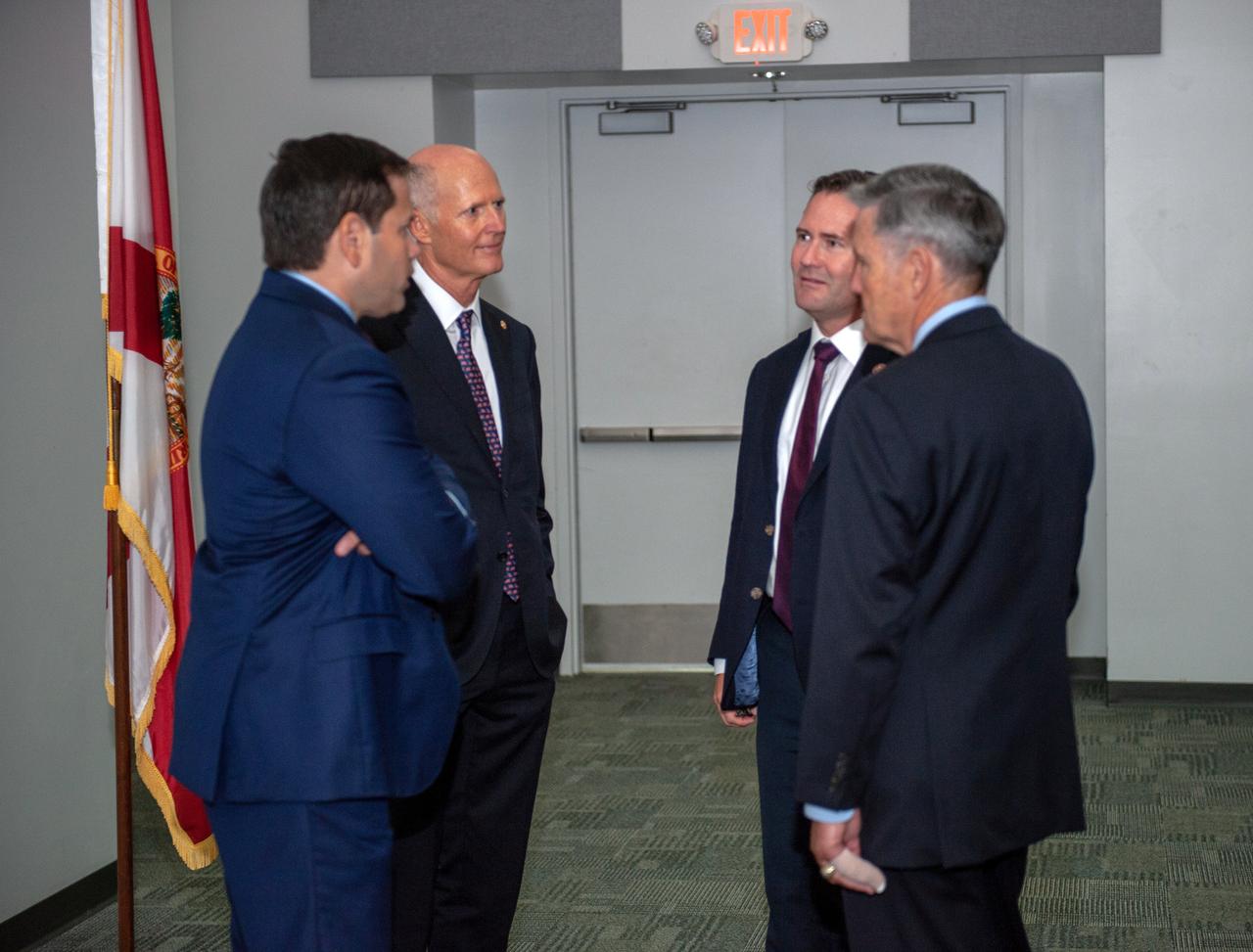
From left, Sens. Marco Rubio and Rick Scott, R-FL, and Rep. Mike Waltz, R-FL, speak with Kennedy Space Center Director Bob Cabana during the U.S. Senate Committee on Small Business and Entrepreneurship field hearing on July 19, 2019, in the Astronaut Memorial Foundation facility at the Florida spaceport’s visitor complex. The topic of the field hearing was “Moon Landings to Mars Exploration: The Role of Small Business Innovation in America’s Space Program.”
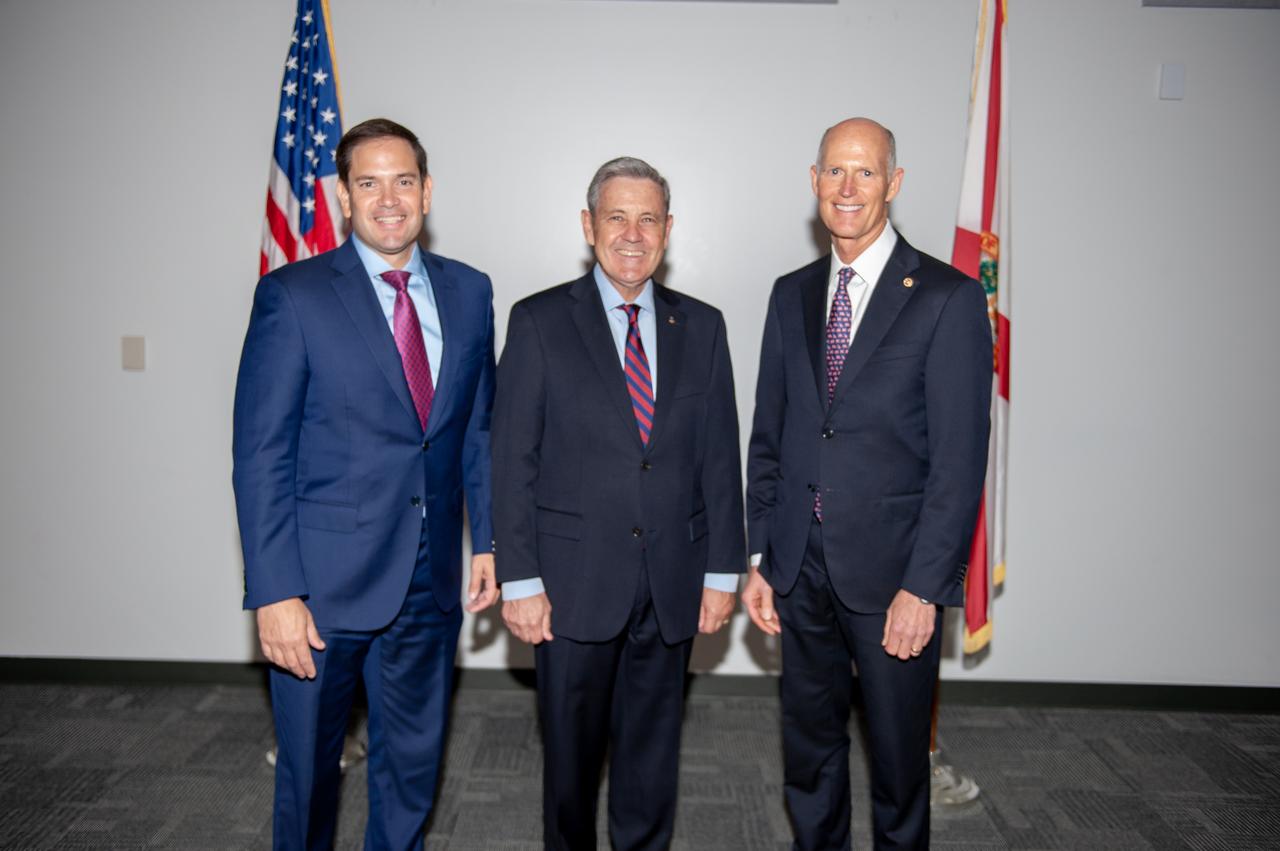
From left, Sen. Marco Rubio, R-FL, Kennedy Space Center Director Bob Cabana, and Sen. Rick Scott, R-FL, pause for a photo during the U.S. Senate Committee on Small Business and Entrepreneurship field hearing on July 19, 2019, in the Astronaut Memorial Foundation facility at the Florida spaceport’s visitor complex. The topic of the field hearing was “Moon Landings to Mars Exploration: The Role of Small Business Innovation in America’s Space Program.”
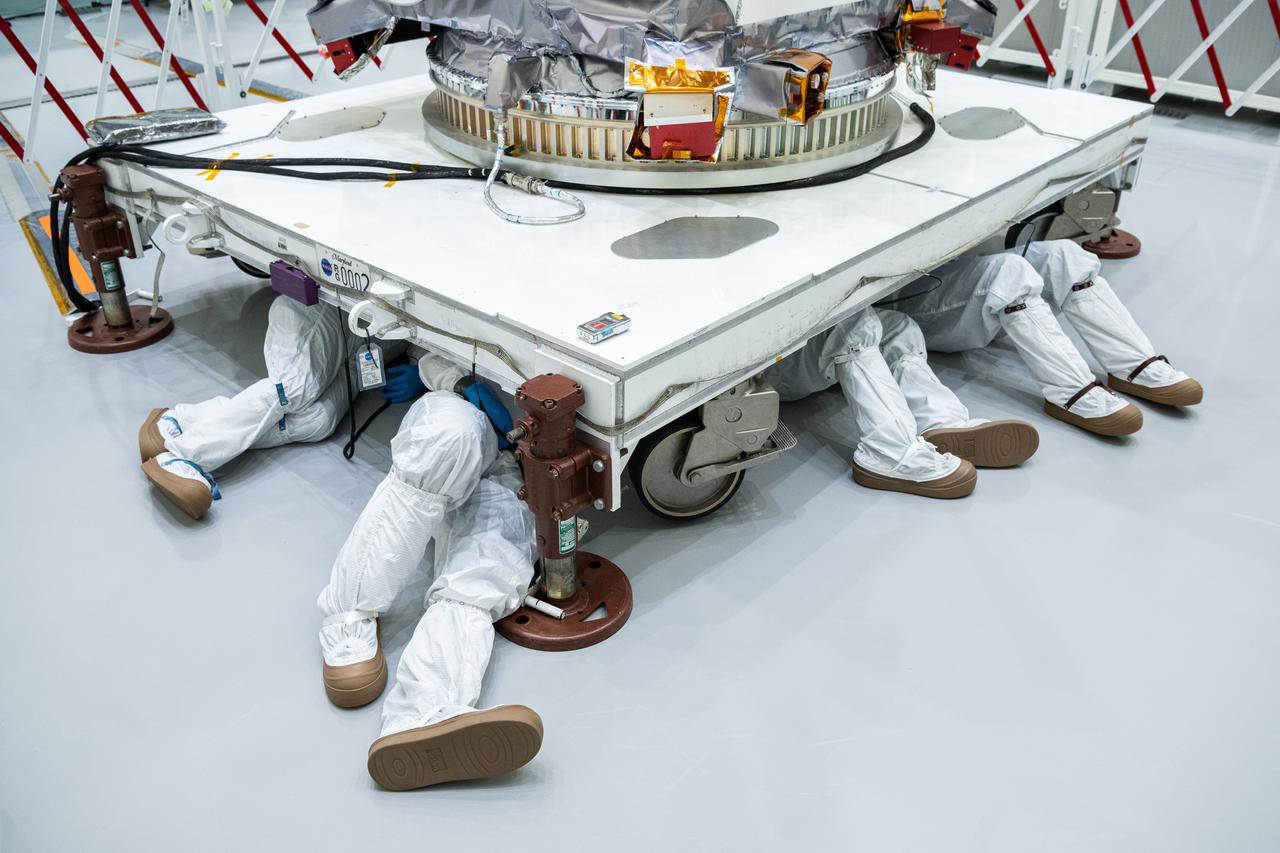
Engineers and Technicians from NASA’s Goddard Space Flight Center crawl under the PACE (Plankton, Aerosol, Cloud, ocean Ecosystem) spacecraft to inspect the +X side during payload processing at Astrotech Space Operations in Titusville, FL on January 27th, 2024.
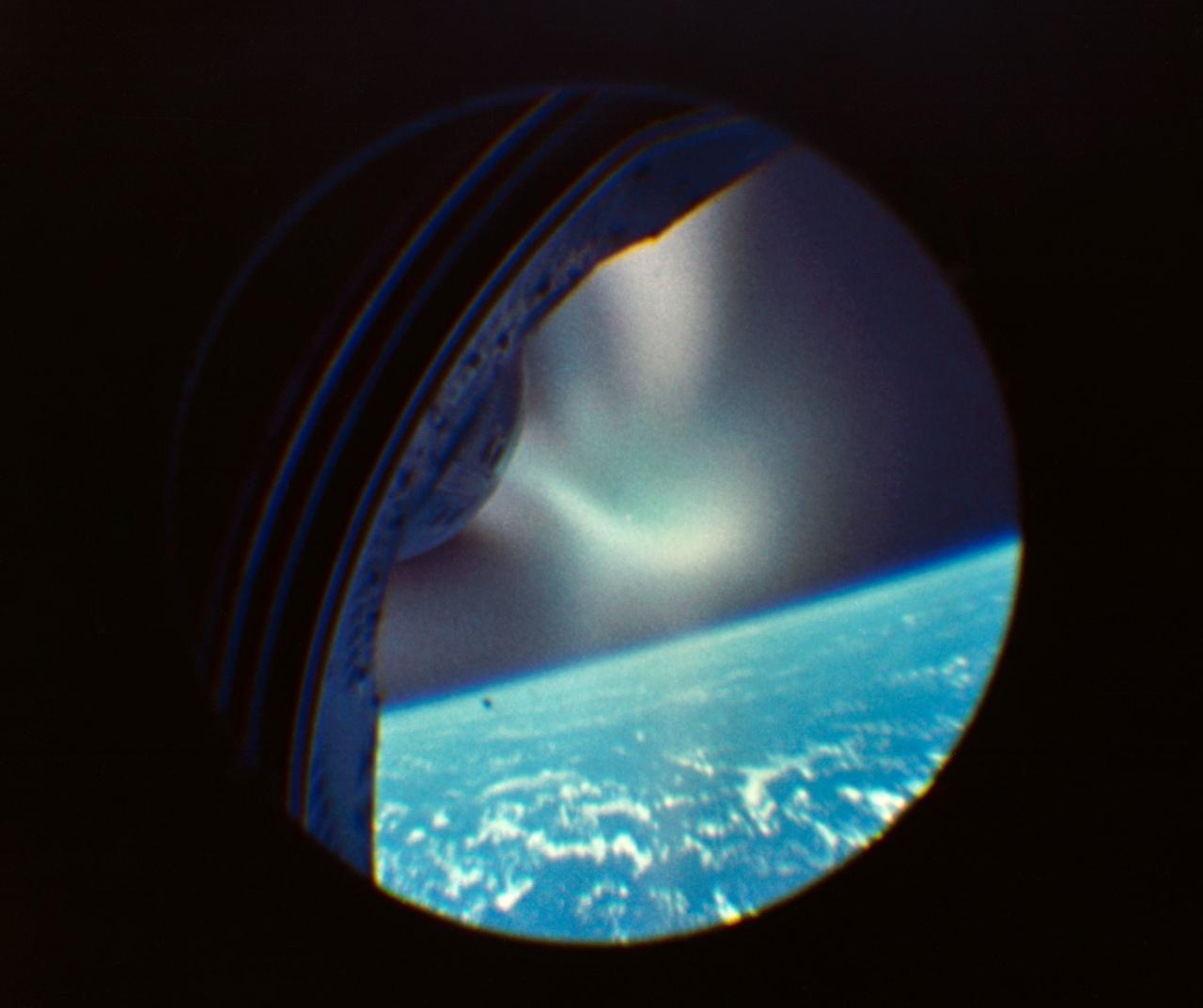
This photograph is an enlargement of a frame from a 16mm motion picture film which was mounted within the spacecraft to take film through the hatch window. CAPE KENNEDY, FL CN
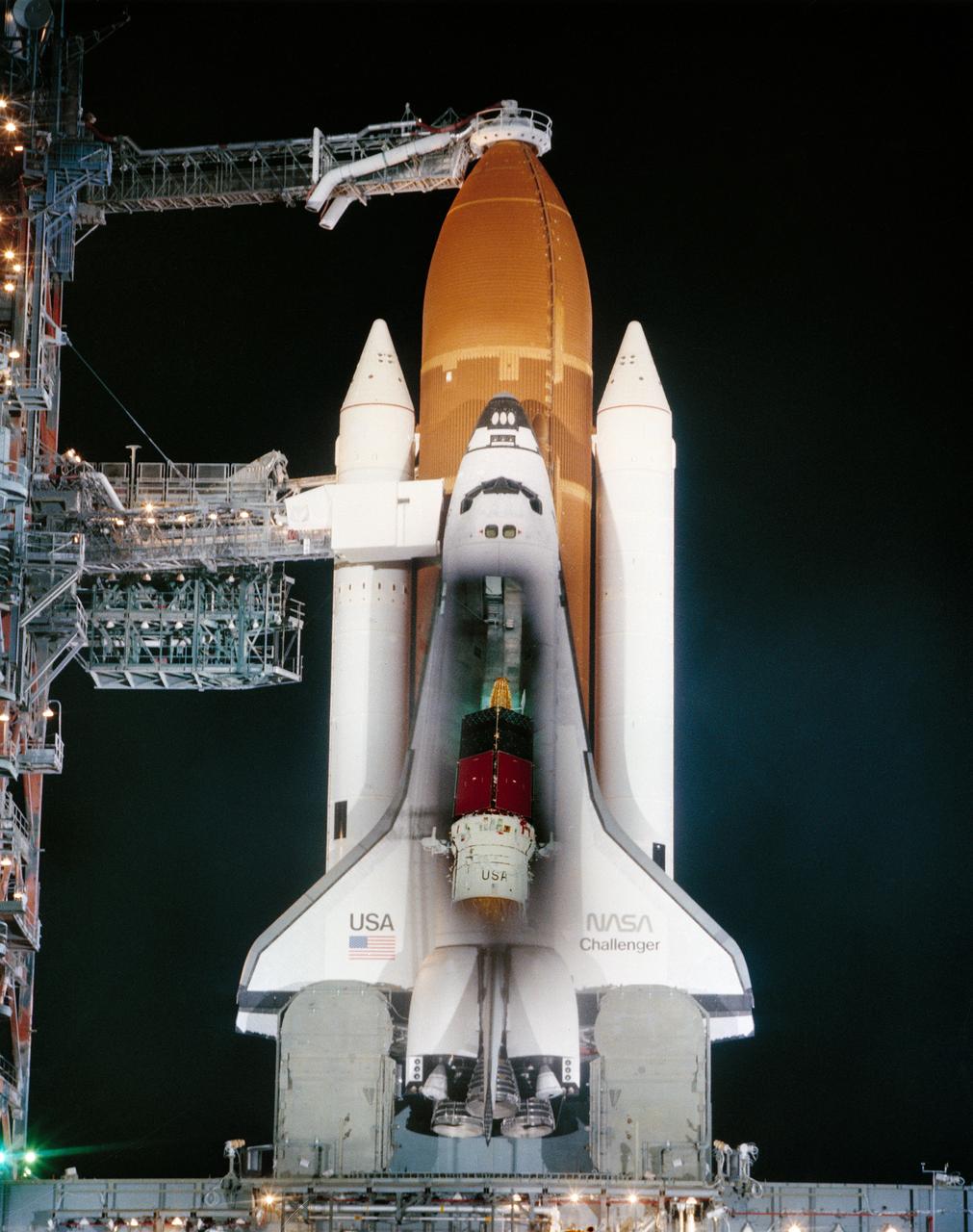
Composite view of the TDRS superimposed into Challenger Cargo Bay while on Pad 39A. 1. STS-6 - PREFLIGHT KSC, FL Also available in 4x5 B&W

THE FINAL PRODUCTION EXTERNAL TANK ROLLS TOWARDS IT’S BARGE RIDE TO CAPE CANVERAL, FL AFTER A CEREMONY MARKING THE OCCASION AT THE MICHOUD ASSEMBLY FACILITY IN NEW ORLEANS, LA.
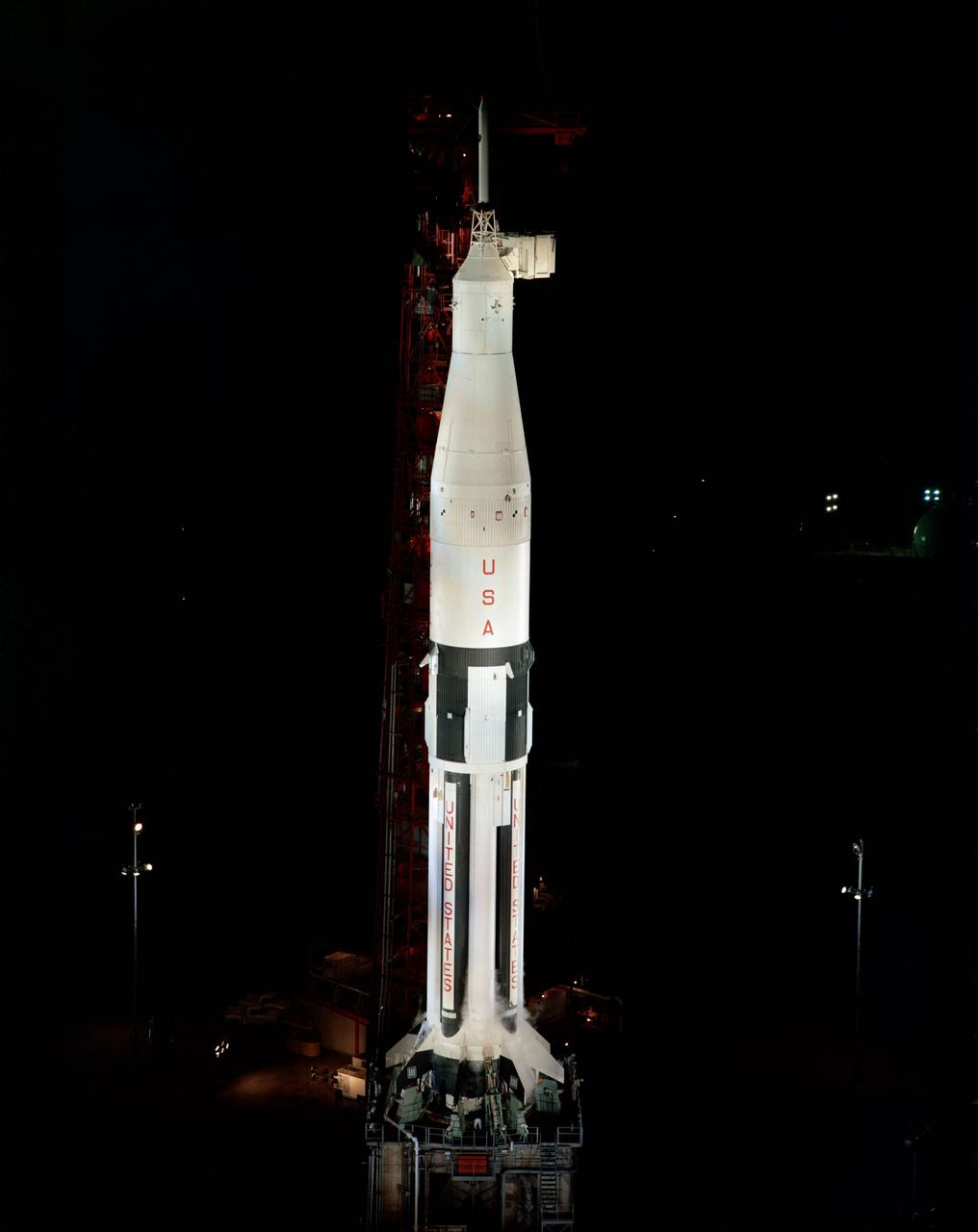
Apollo Spacecraft 009 atop the Saturn 1B launch vehicle is seen at Launch Complex 34 during the Saturn 1B countdown demonstration. Preparations are continuing for the Apollo Saturn 201 Test Flight. CAPE KENNEDY, FL CN
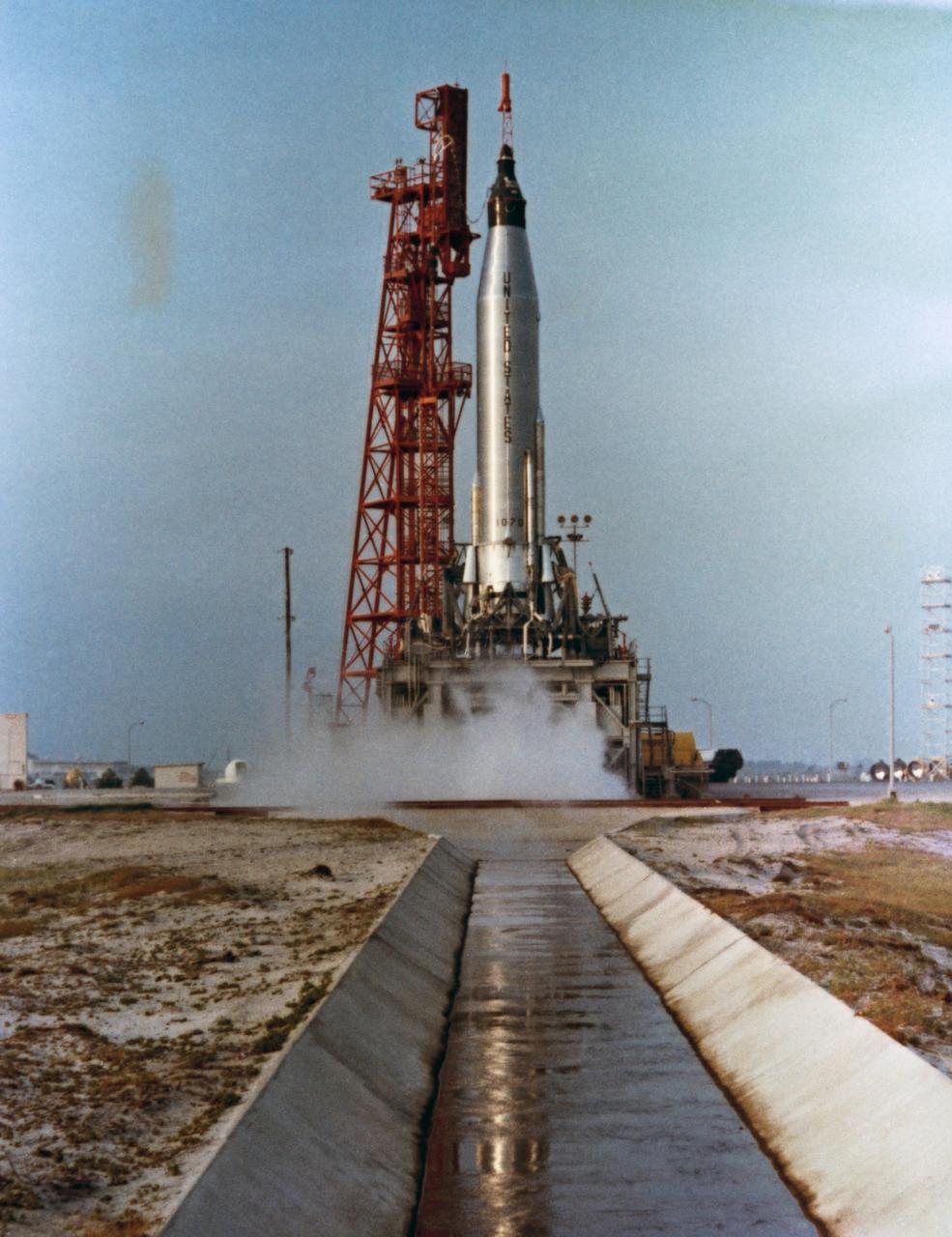
The MA-7 Booster ignites on the pad and is seconds away from actual liftoff. Aboard the spacecraft is Astronaut M. Scott Carpenter, the U.S. second man to orbit the Earth. CAPE CANAVERAL, FL CN
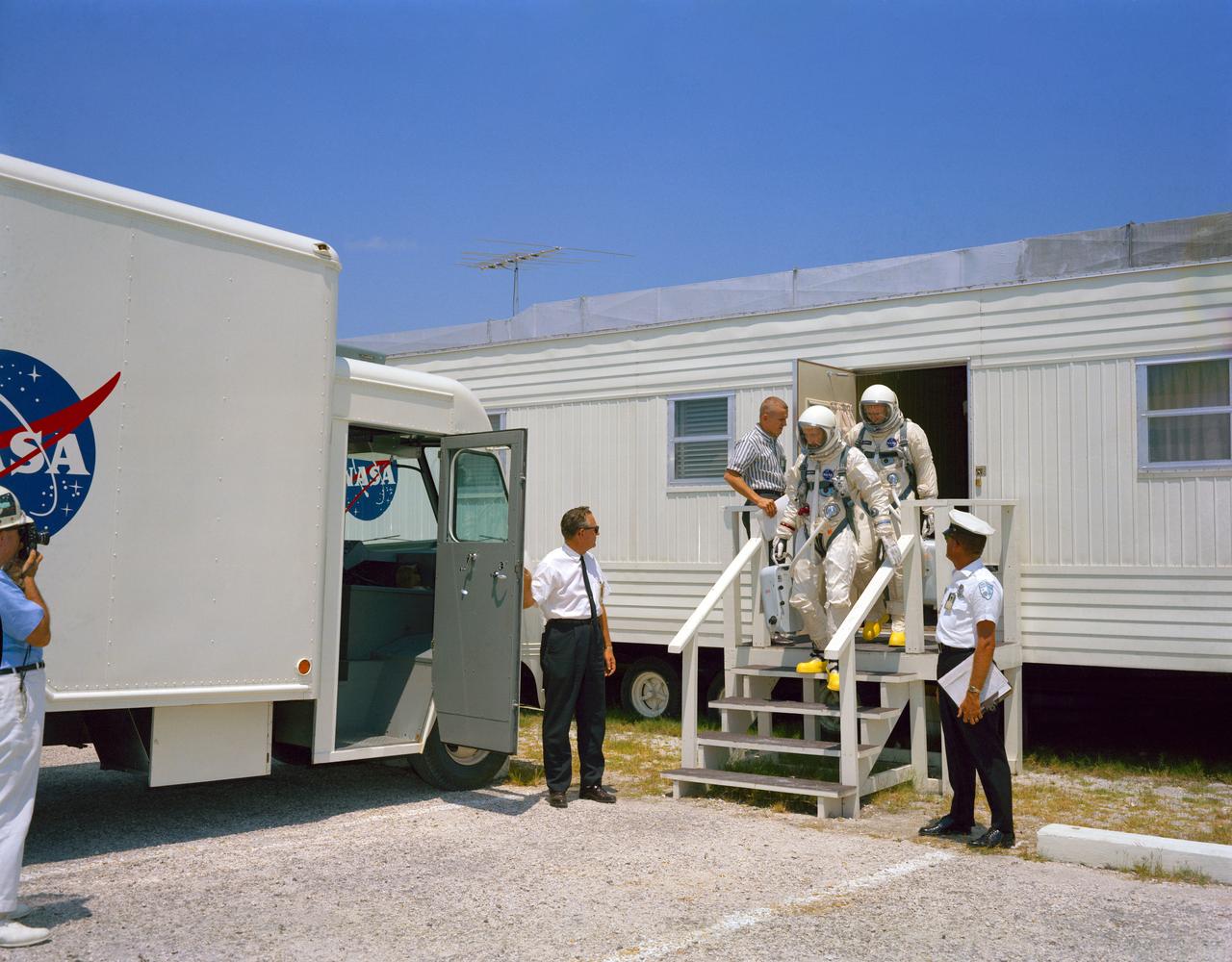
Astronauts Edward and James A. McDivitt are shown as they emerge from the suiting trailer located at Launch Complex 16. They are following in a Wet Mock Simulation Launch as a training exercise for GT-4. CAPE KENNEDY, FL B&W
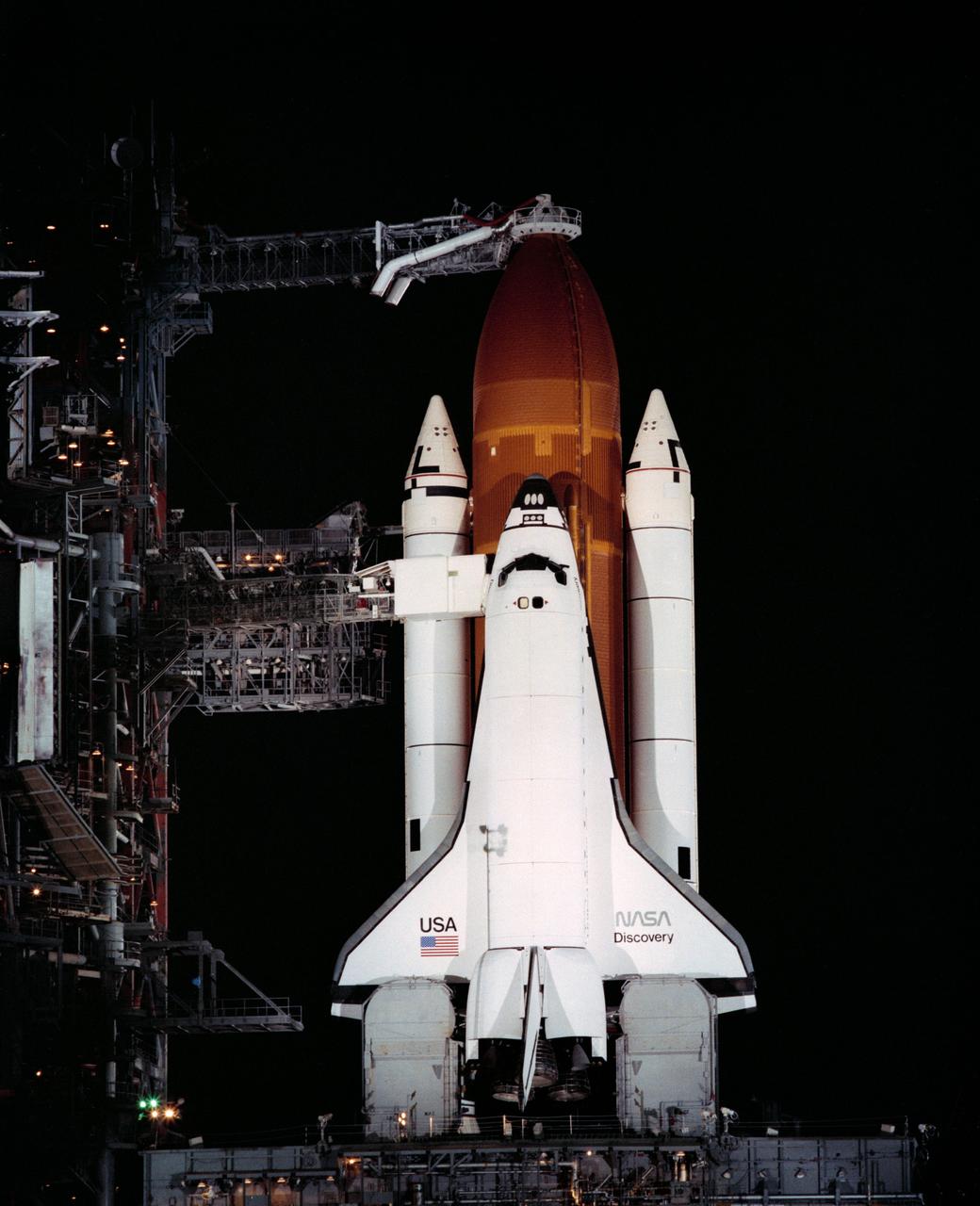
The Space Shuttle Discovery moves towards Pad "A" on the crawler transporter for its maiden flight. The Shuttle Discovery is poised atop Pad "A" at Complex 39 prior ot the STS-41D mission. KSC, FL
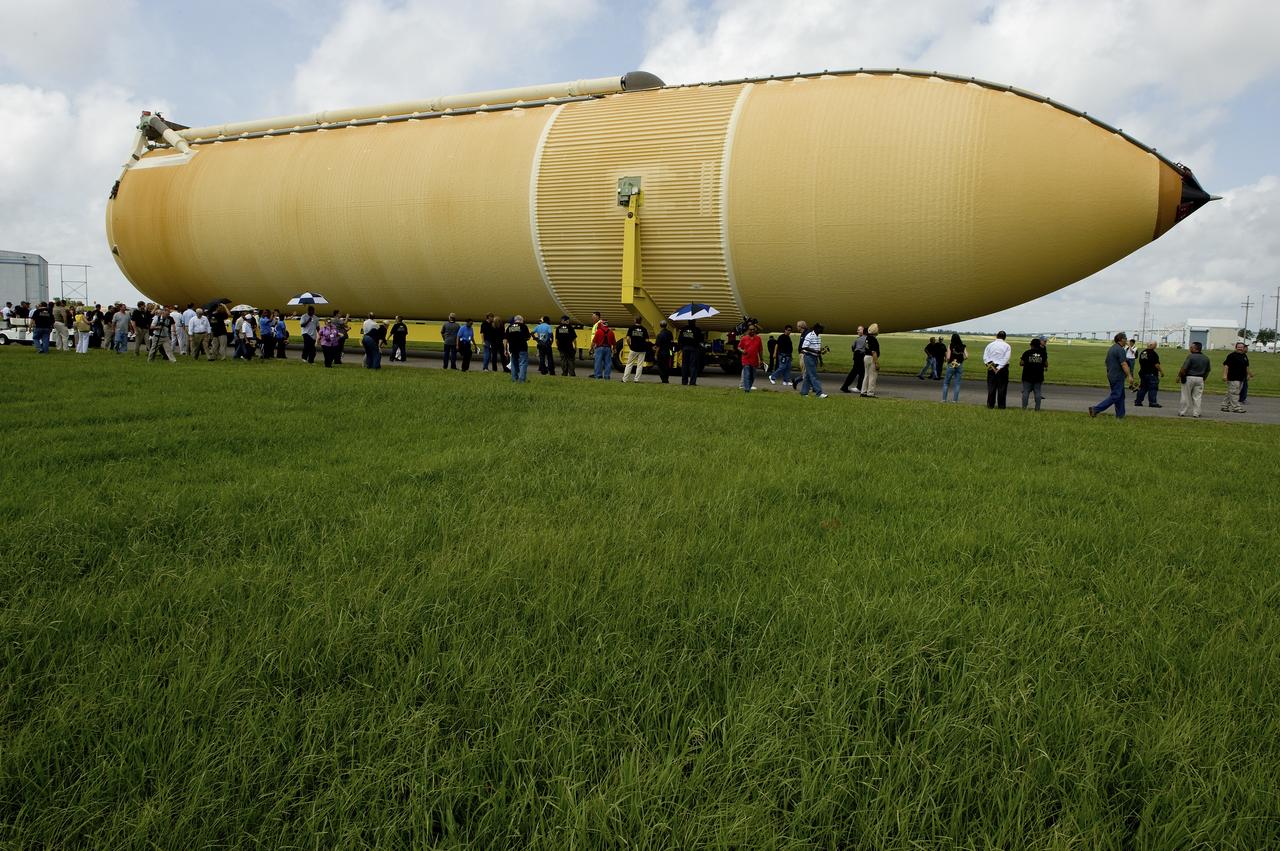
THE FINAL PRODUCTION EXTERNAL TANK ROLLS TOWARDS IT’S BARGE RIDE TO CAPE CANVERAL, FL AFTER A CEREMONY MARKING THE OCCASION AT THE MICHOUD ASSEMBLY FACILITY IN NEW ORLEANS, LA.
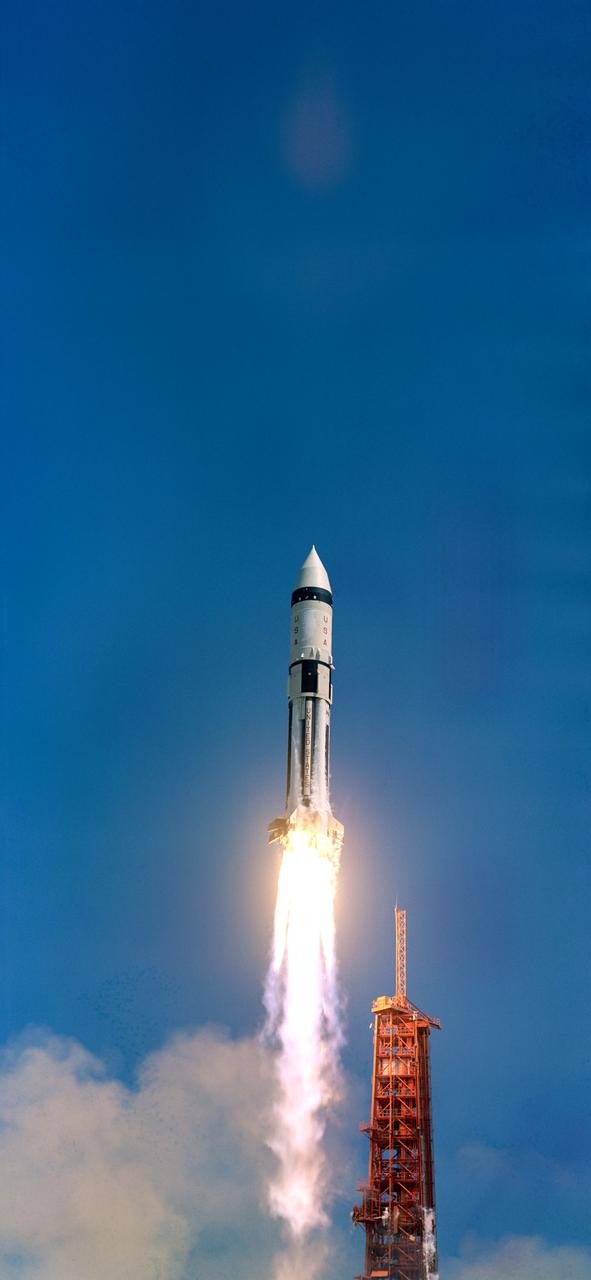
Liftoff of Saturn Mission 203, the second in the uprated Saturn 1 Development Mission Series, was accomplished from the Kennedy Space Center (KSC) Launch Complex 37 at 10:53 a.m., 07/05/1966. KSC, FL
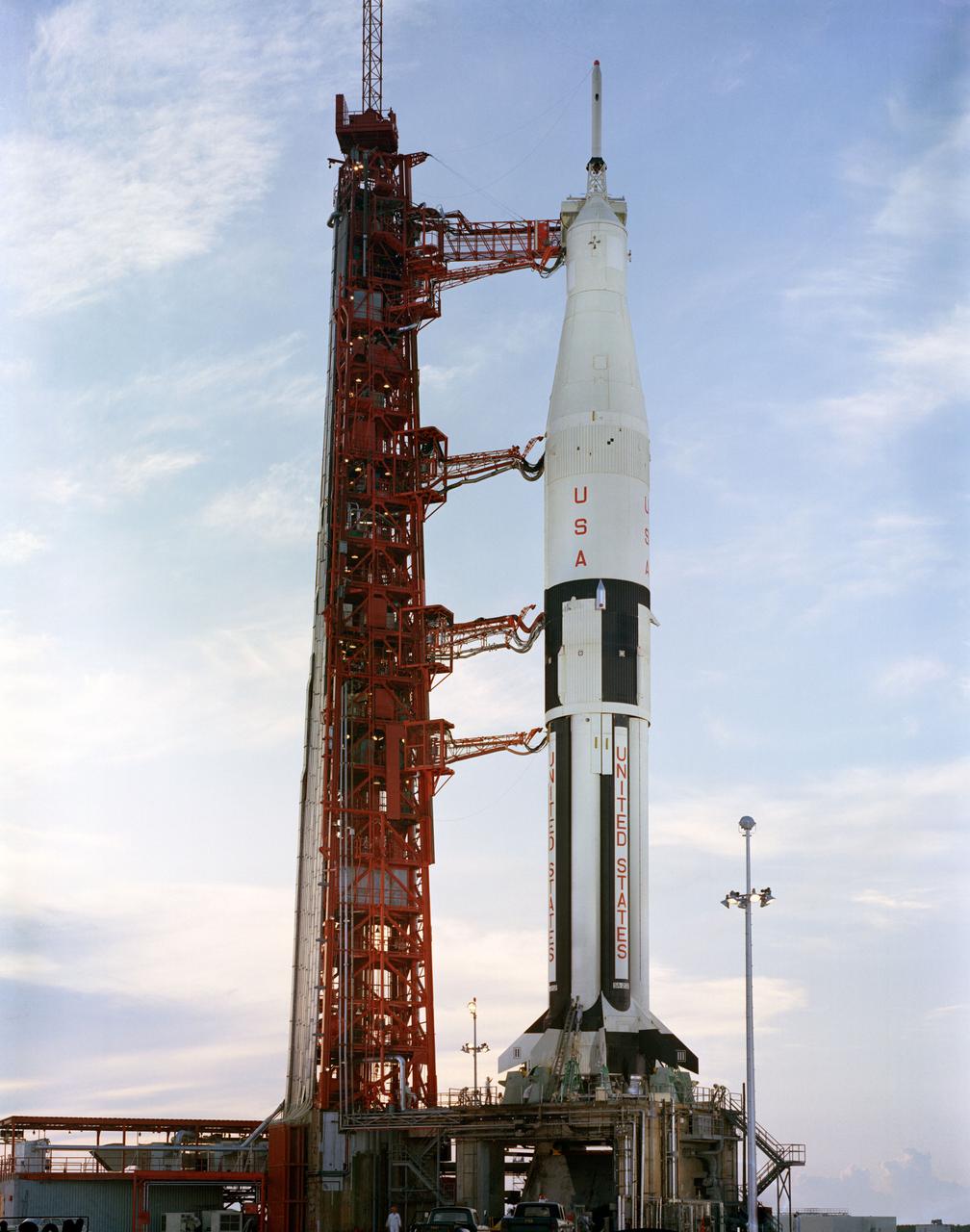
Scene at the LC-34 during an A/S 202 Prelaunch Alert. The mission was a step toward qualifying the Apollo Command and Service Modules (CSM) and the uprated Saturn I Launch Vehicle for manned flight. KSC, FL
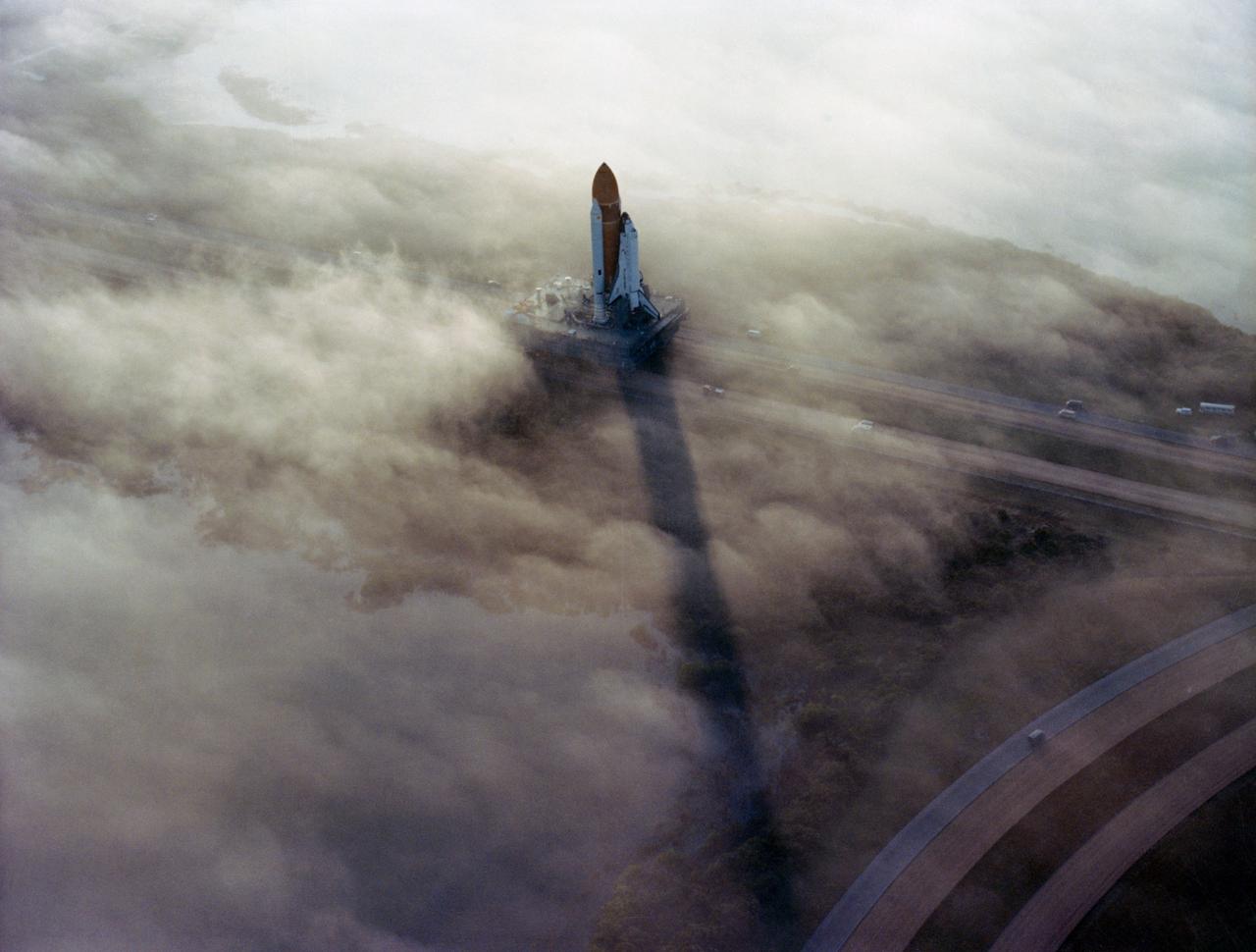
Two (2) views of the "Challenger" - STS-6 - being Rolled Out to Pad 39A in the morning fog, 11/30/1982. 1. KSC - STS-6 PREFLIGHT KSC, FL
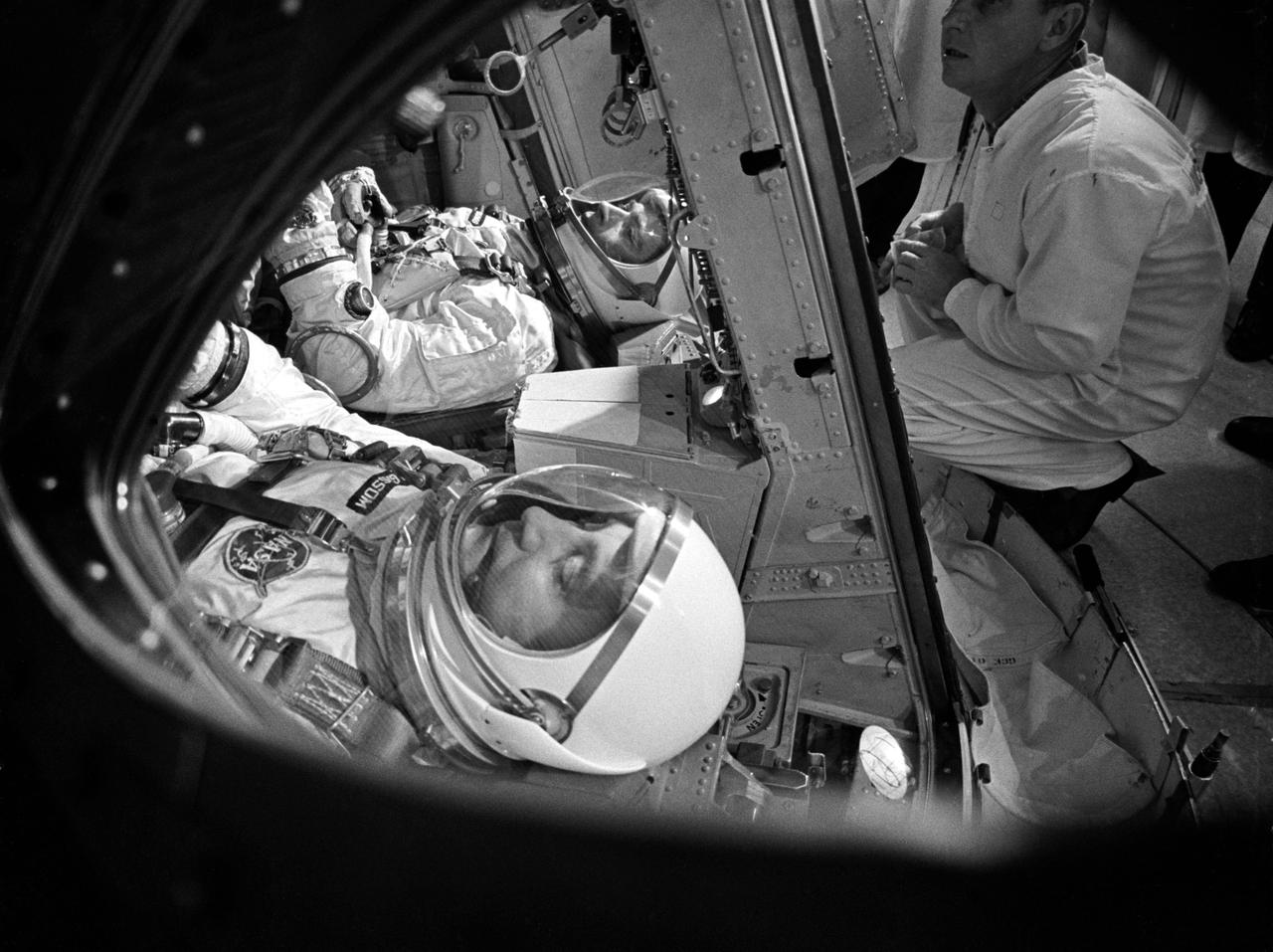
Final preparation for insertion of the crew members into the GT-III Spacecraft takes place in the white room atop the Launch Vehicle, Pad 19. CAPE KENNEDY, FL B&W
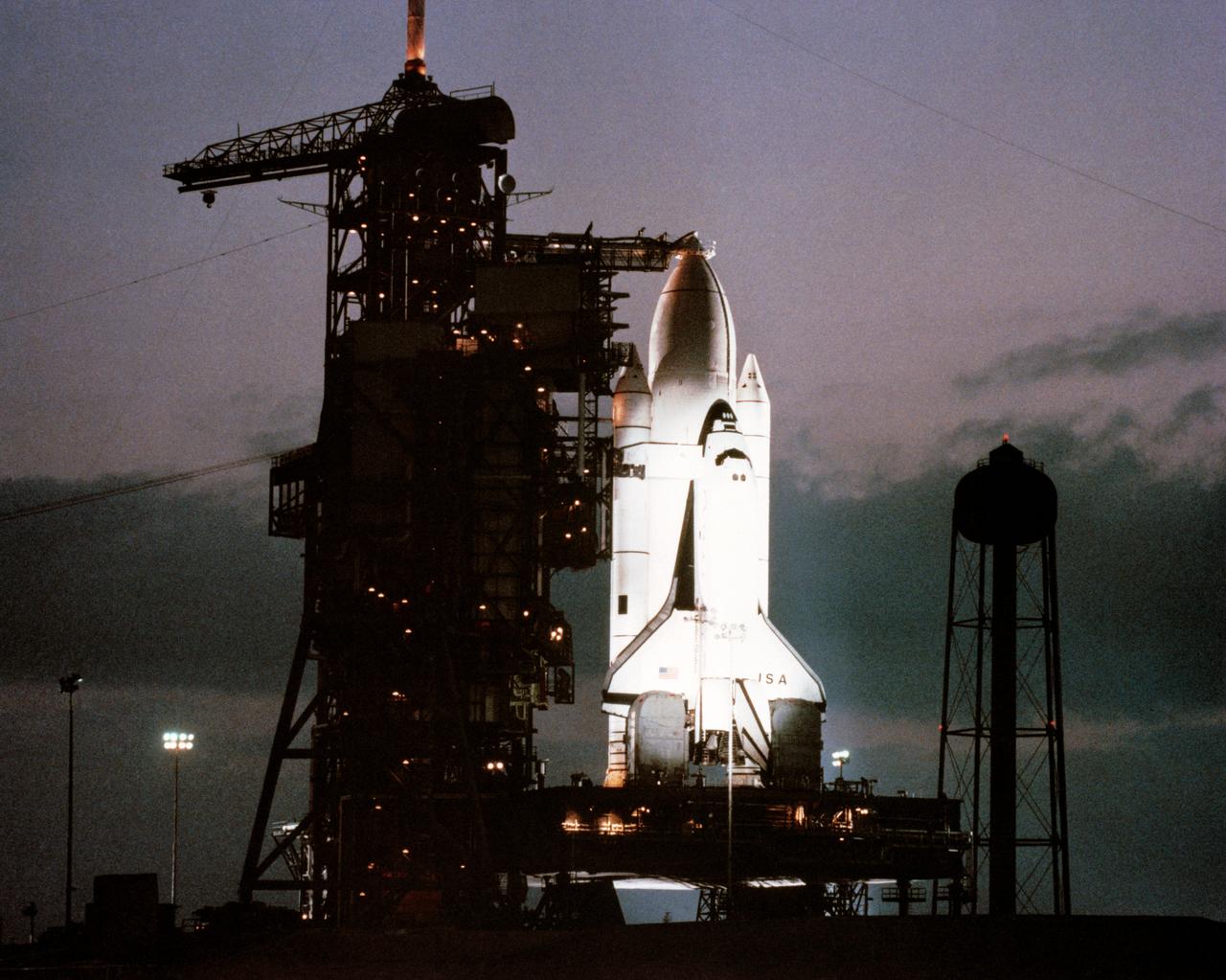
Space Shuttle Columbia, mated with its other Shuttle components, is attached to the launching pad. Wide-angle view of the Columbia sitting on its launch pad in the darkness. The launch complex is illuminated with lights along the structure. KSC, FL
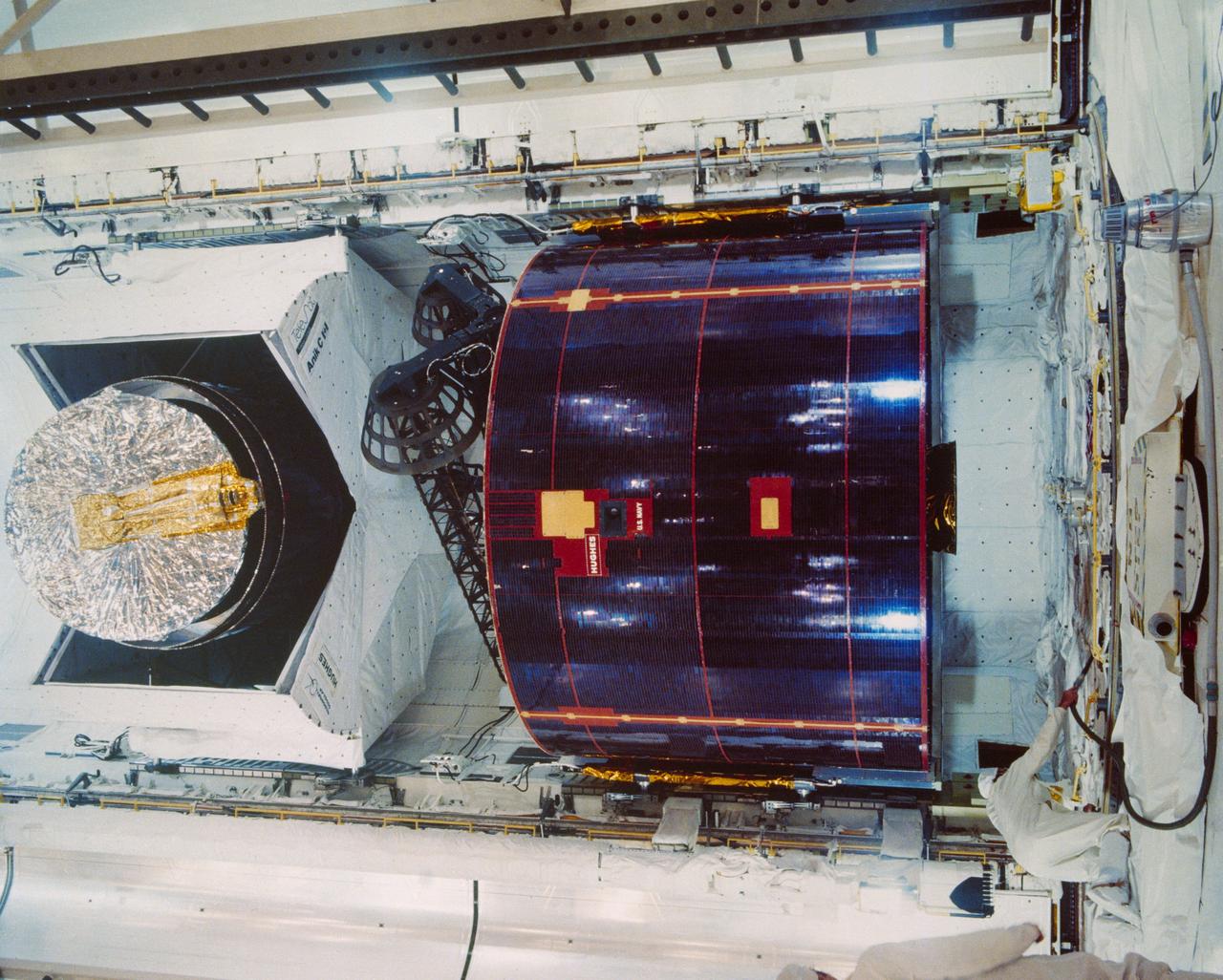
"Discovery" on pad and payload bay doors open to show satellite payloads. SEE: 108-KSC-85-PC-156 SEE: 108-KSC-85-PC-157 KSC, FL
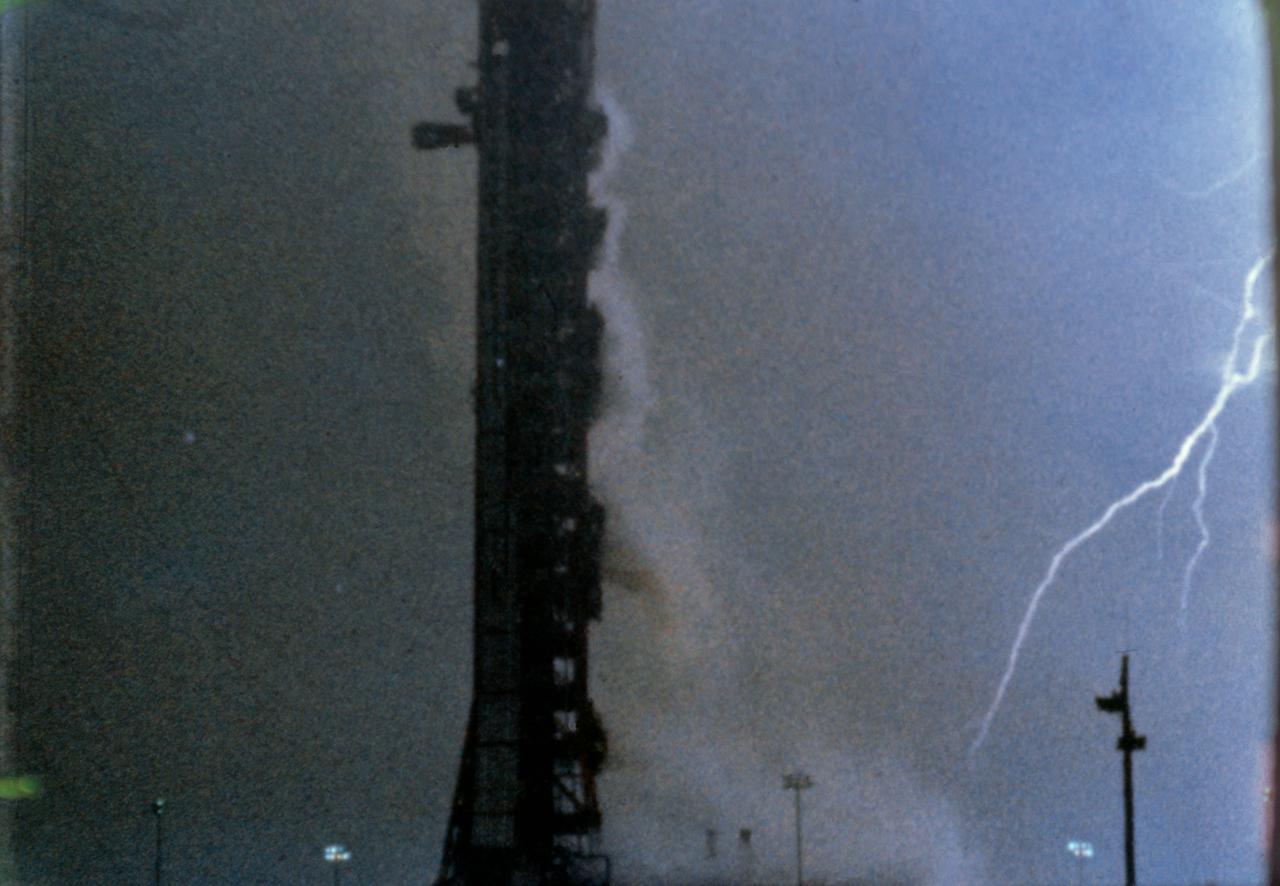
View of lightning striking near Pod 39A during the launch of Apollo XII from 16mm film. 1. APOLLO XII - LAUNCH (LIGHTNING) KENNEDY SPACE CENTER, FL
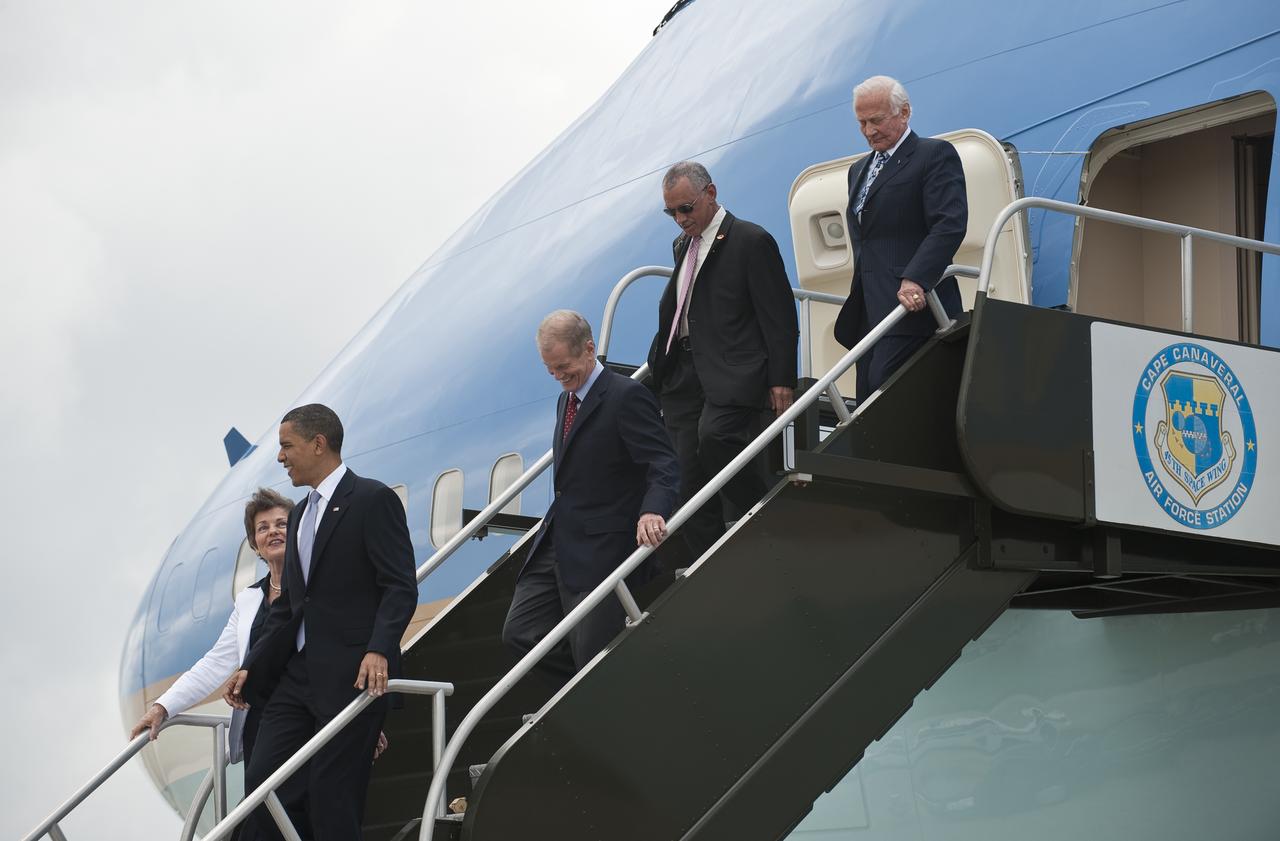
President Barack Obama, left, exits of Air Force One with, from left, Representative US Representative Suzanne M. Kosmas (D - FL), U.S Senator Bill Nelson (D-FL), NASA Administrator Charles Bolden, and Apollo 11 Astronaut Buzz Aldrin after landing at the NASA Kennedy Space Center in Cape Canaveral, Fla. on Thursday, April 15, 2010. Obama visited Kennedy to deliver remarks on the bold new course the administration is charting to maintain U.S. leadership in human space flight. Photo Credit: (NASA/Bill Ingalls)
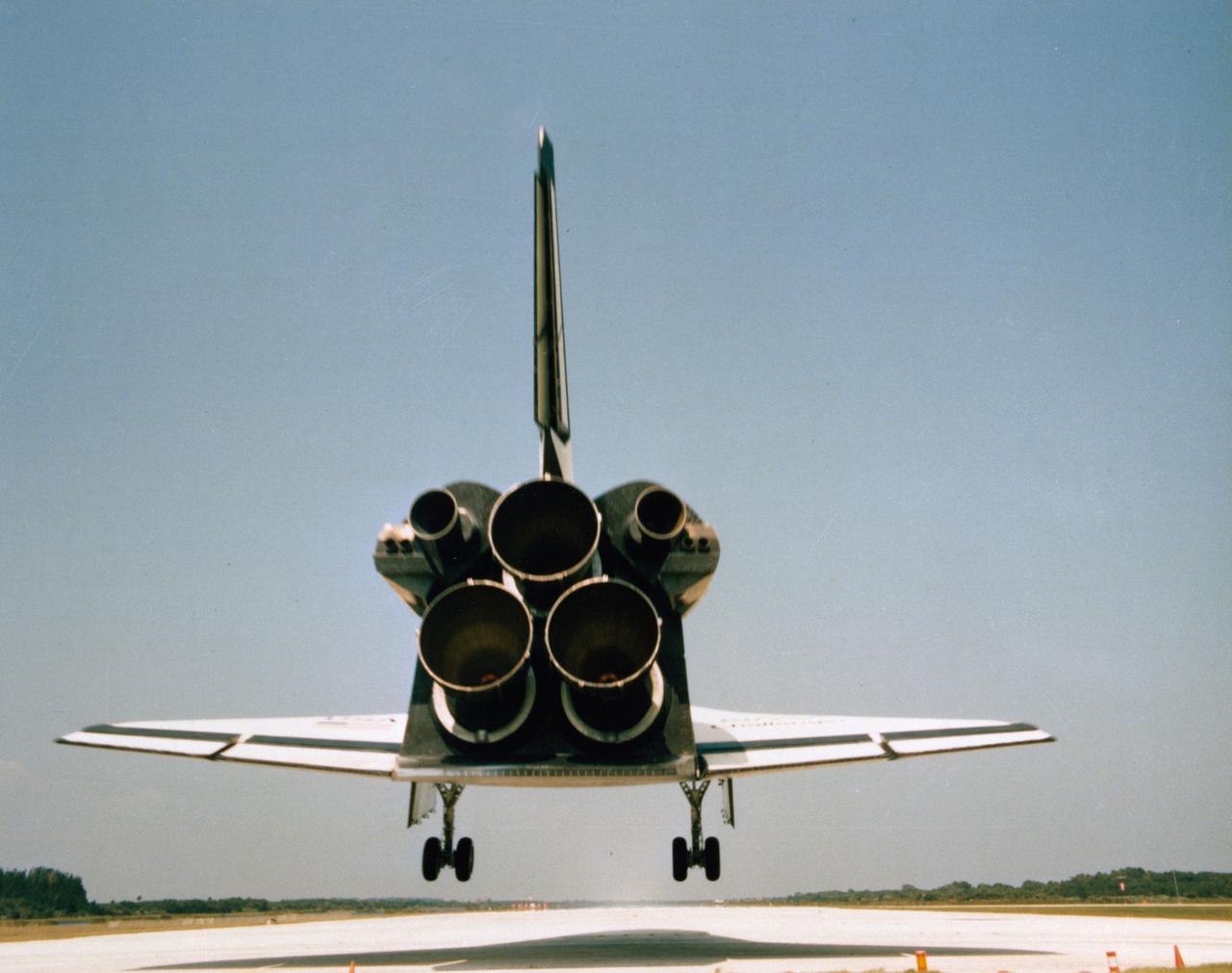
Landing of Orbiter Challenger at KSC at completion of 41G mission. View of the rear of the Orbiter as it approaches the runway with its landing gear extended. The main engines are clearly visible. The KSC Alternative Photo Number is 108-KSC-84PC-654 (43896). KSC, FL
![[14] ISO: 100 Aprt: F4 Shut: 60 Lens: 35 Exps: P Prog: Po ExpC: -1.3 Metr: Mtrx Fl s: Norm D md: S F md: S F ar: Spot Dist: 1.6m](https://images-assets.nasa.gov/image/s93e5050/s93e5050~medium.jpg)
[14] ISO: 100 Aprt: F4 Shut: 60 Lens: 35 Exps: P Prog: Po ExpC: -1.3 Metr: Mtrx Fl s: Norm D md: S F md: S F ar: Spot Dist: 1.6m
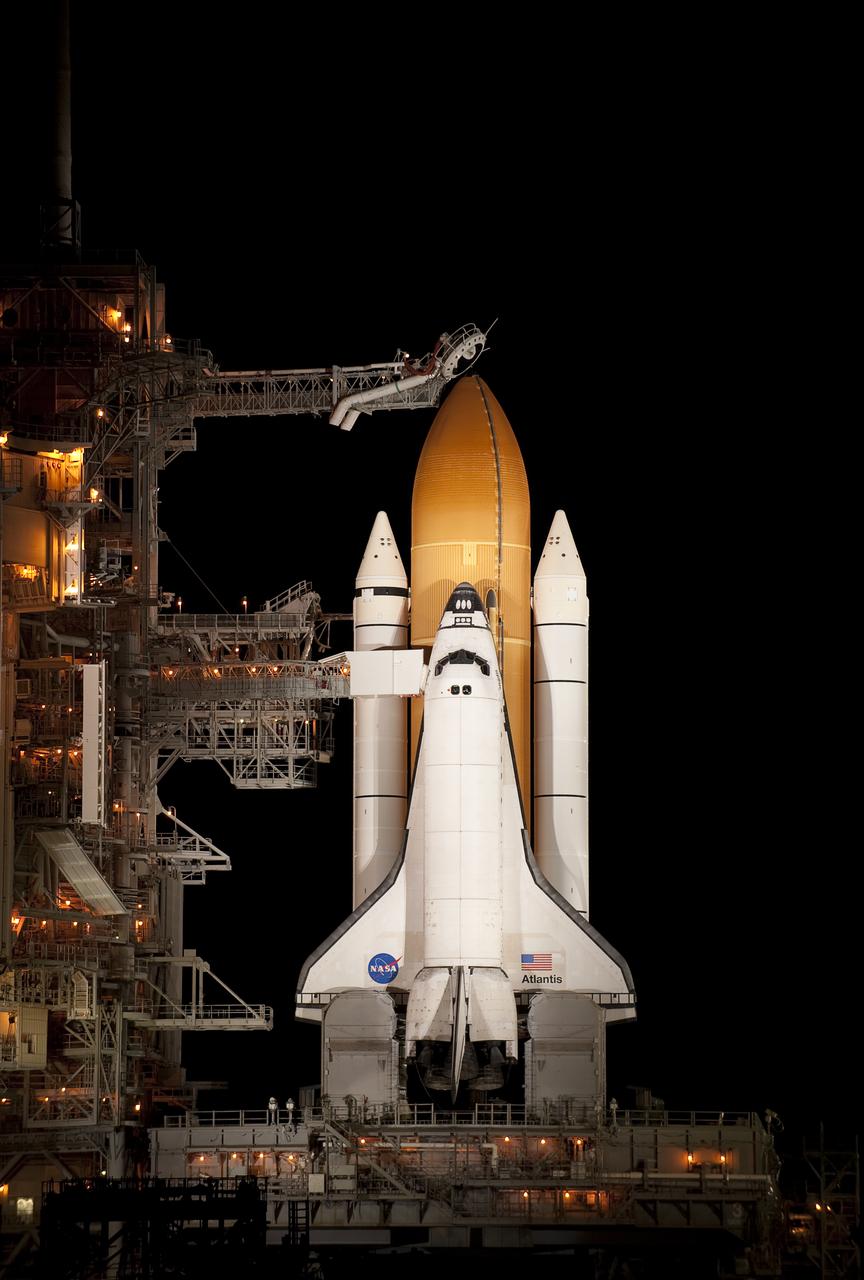
The space shuttle Atlantis is seen on launch pad 39a of the NASA Kennedy Space Center shortly after the rotating service structure was rolled back, Sunday, Nov. 15, 2009, Cape Canaveral, FL. Atlantis is scheduled to launch at 2:28p.m. EST, Monday, Nov. 16, 2009. Photo Credit: (NASA/Bill Ingalls)
![[56] ISO: 100 Aprt: F4 Shut: 60 Lens: 35 Exps: P Prog: Po ExpC: -1.3 Metr: Mtrx Fl s: Norm D md: S F md: S F ar: Spot Dist: 1.8m](https://images-assets.nasa.gov/image/s93e5067/s93e5067~medium.jpg)
[56] ISO: 100 Aprt: F4 Shut: 60 Lens: 35 Exps: P Prog: Po ExpC: -1.3 Metr: Mtrx Fl s: Norm D md: S F md: S F ar: Spot Dist: 1.8m
![[55] ISO: 100 Aprt: F4 Shut: 60 Lens: 35 Exps: P Prog: Po ExpC: -1.3 Metr: Mtrx Fl s: Norm D md: S F md: S F ar: Spot Dist: 1.8m](https://images-assets.nasa.gov/image/s93e5066/s93e5066~medium.jpg)
[55] ISO: 100 Aprt: F4 Shut: 60 Lens: 35 Exps: P Prog: Po ExpC: -1.3 Metr: Mtrx Fl s: Norm D md: S F md: S F ar: Spot Dist: 1.8m
![[19] ISO: 100 Aprt: F8 Shut: 250 Lens: 35 Exps: P Prog: Po ExpC: -1.3 Metr: Mtrx Fl s: Norm D md: S F md: S F ar: Spot Dist: 1.2m](https://images-assets.nasa.gov/image/s93e5055/s93e5055~medium.jpg)
[19] ISO: 100 Aprt: F8 Shut: 250 Lens: 35 Exps: P Prog: Po ExpC: -1.3 Metr: Mtrx Fl s: Norm D md: S F md: S F ar: Spot Dist: 1.2m
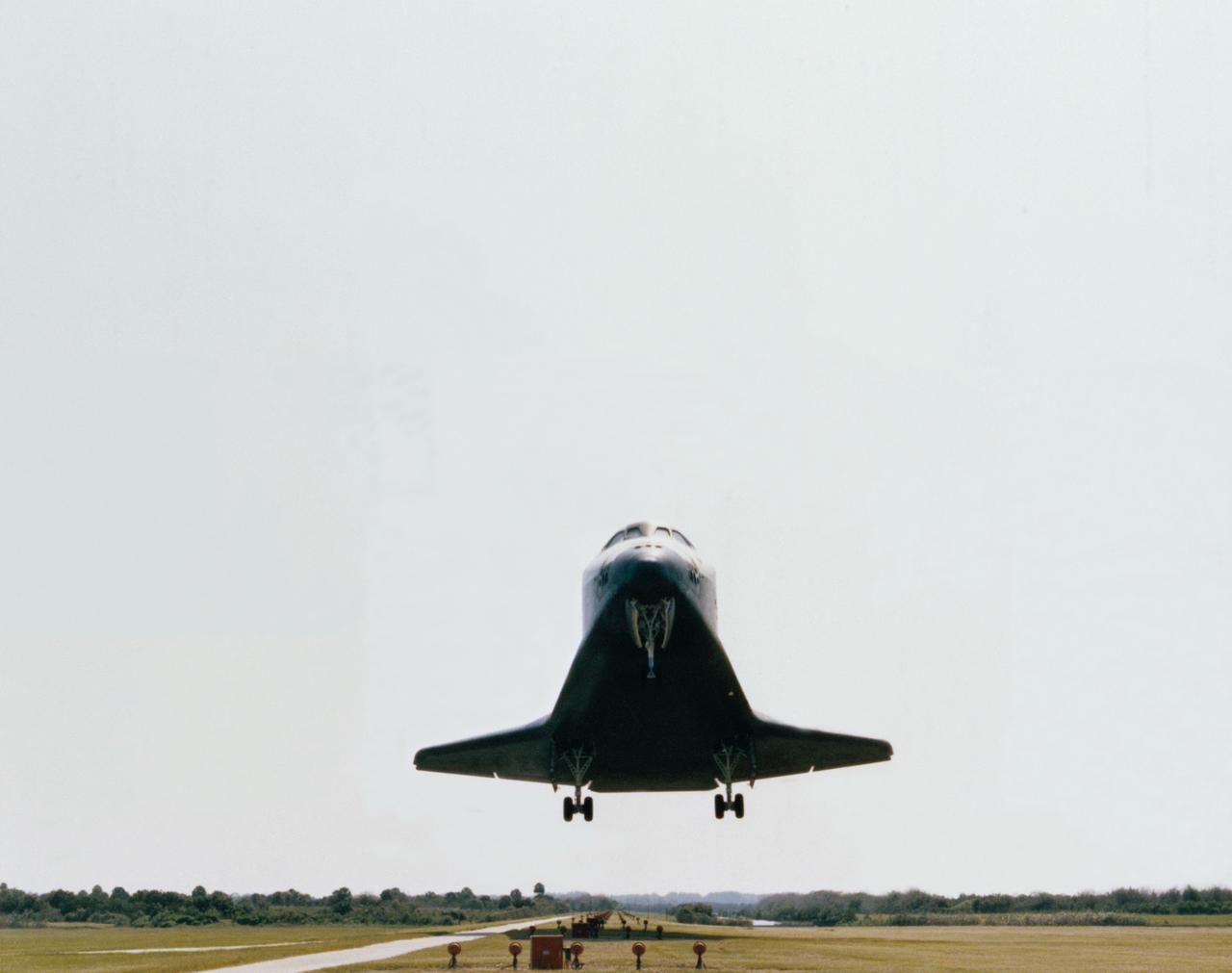
Landing of Orbiter Challenger at KSC completion of 41G Mission. Views closeup front view of the Orbiter approaching the runway, its landing gear extended in preparation for touchdown. The KSC Alternative Photo Number is 108-KSC-84PC-639. KSC, FL
![[22] ISO: 100 Aprt: F5.6 Shut: 250 Lens: 35 Exps: P Prog: Po ExpC: -1.3 Metr: Mtrx Fl s: Norm D md: S F md: S F ar: Spot Dist: 1.6m](https://images-assets.nasa.gov/image/s93e5058/s93e5058~medium.jpg)
[22] ISO: 100 Aprt: F5.6 Shut: 250 Lens: 35 Exps: P Prog: Po ExpC: -1.3 Metr: Mtrx Fl s: Norm D md: S F md: S F ar: Spot Dist: 1.6m
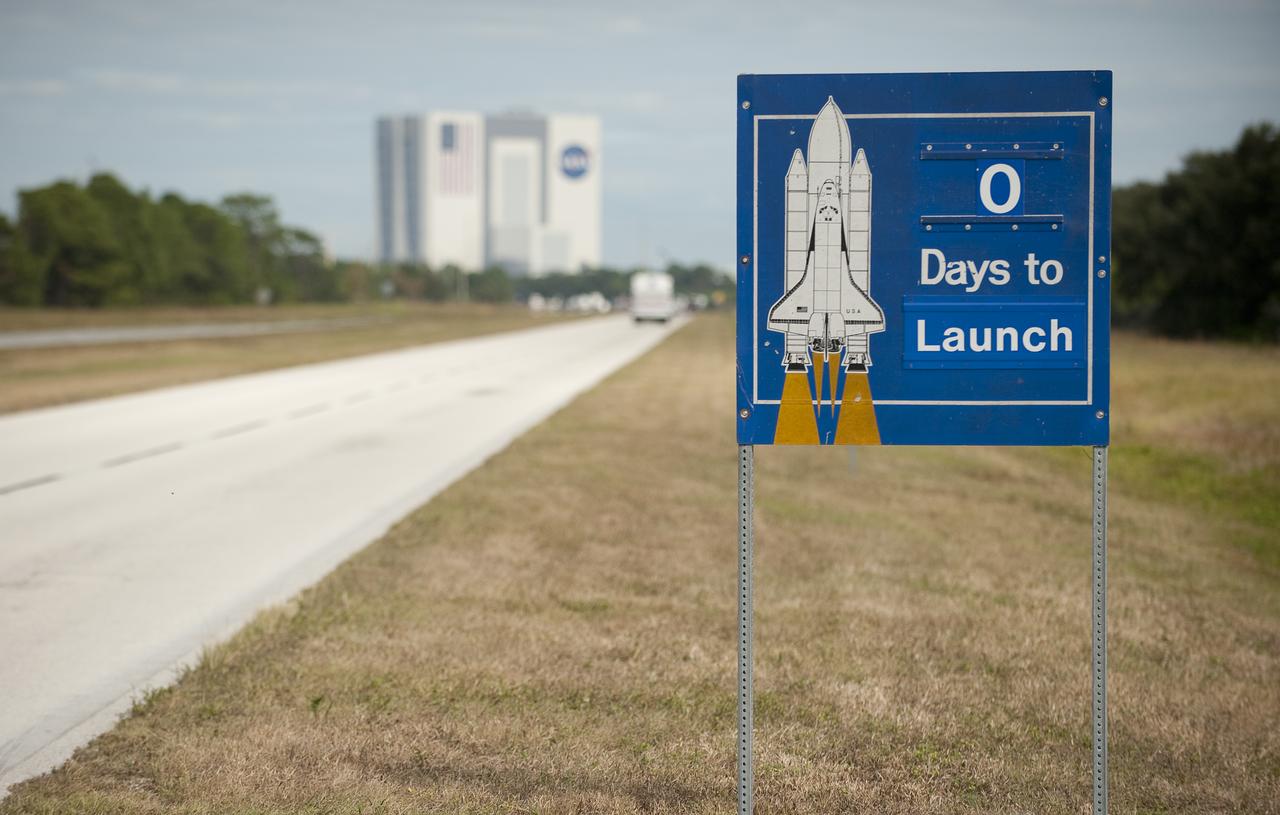
A launch countdown sign is seen along the road at NASA's Kennedy Space Center on Monday, Nov. 16, 2009, Cape Canaveral, FL. The space shuttle Atlantis is scheduled to launch at 2:28 p.m. EST Nov. 16. Photo Credit: (NASA/Bill Ingalls)
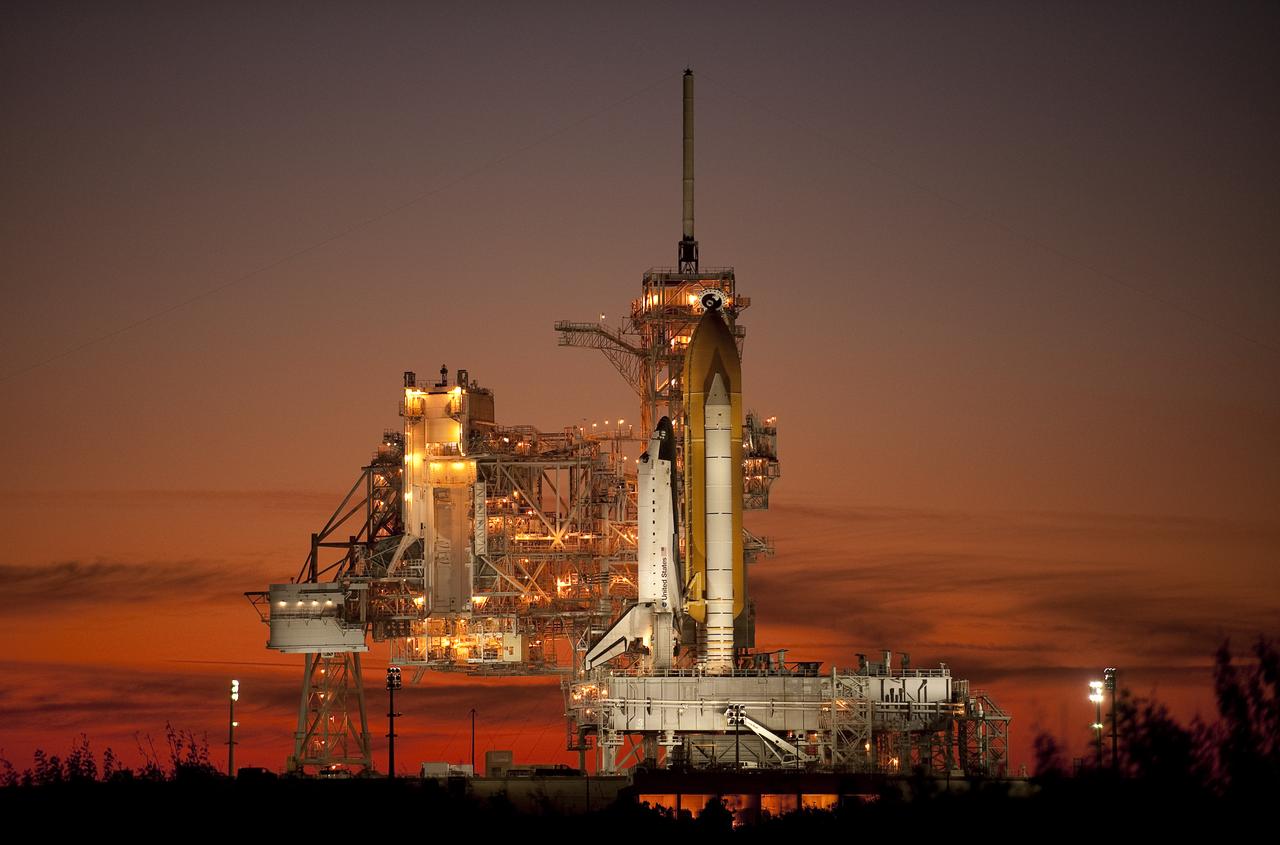
The space shuttle Atlantis is seen on launch pad 39a of the NASA Kennedy Space Center shortly after the rotating service structure was rolled back, Sunday, Nov. 15, 2009, Cape Canaveral, FL. Atlantis is scheduled to launch at 2:28p.m. EST, Monday, Nov. 16, 2009. Photo Credit: (NASA/Bill Ingalls)
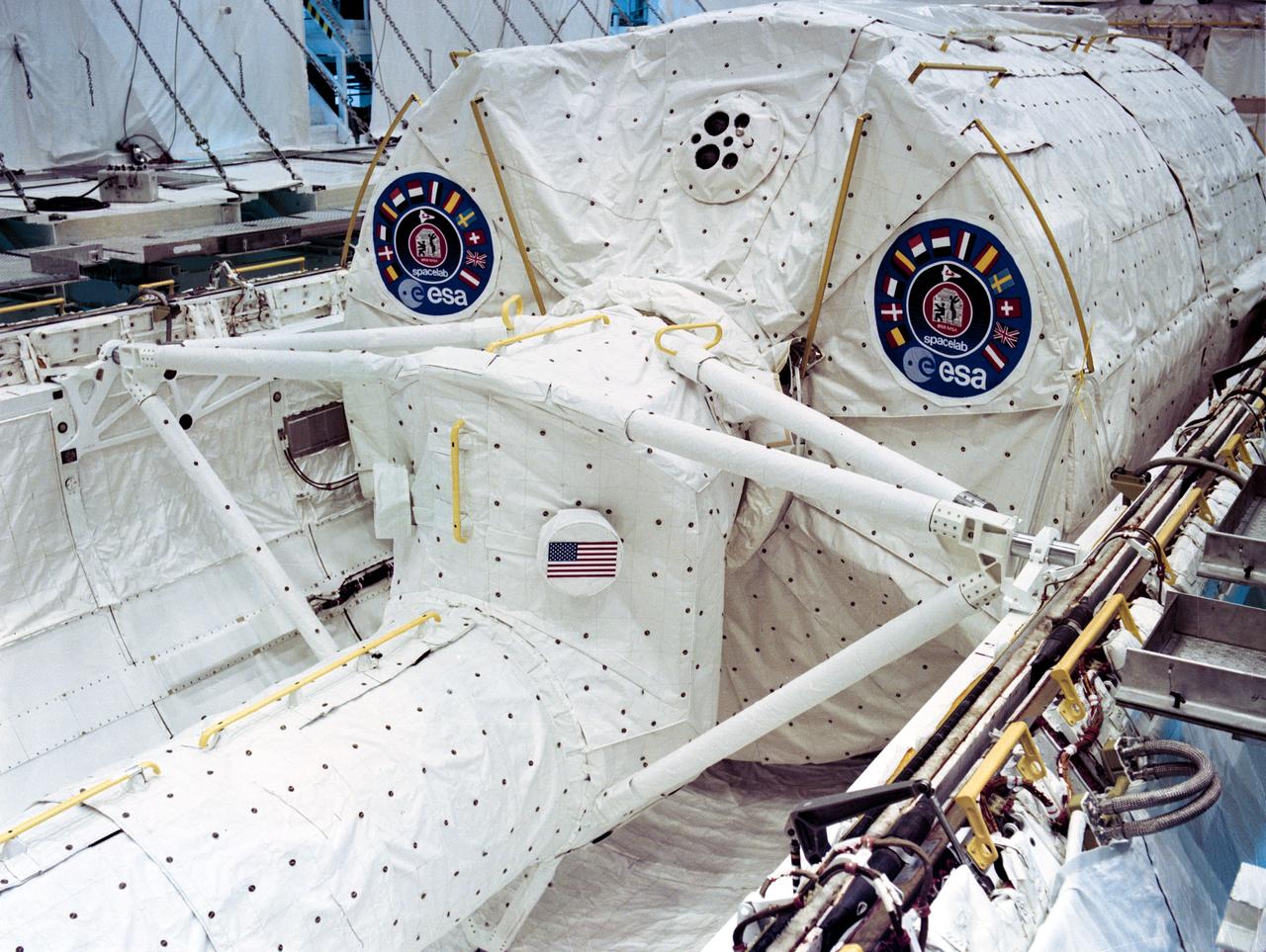
Spacelab I is installed in the Orbiter Columbia and connected to the Orbiter Crew Compartment by the Crew Access Tunnel. The tunnel allows the Astronauts to travel between the Orbiter Crew Compartment and the Spacelab in "shirt-sleeve" conditions. KSC, FL Also available in 4x5 B&W
![[54] ISO: 100 Aprt: F4 Shut: 60 Lens: 35 Exps: P Prog: Po ExpC: -1.3 Metr: Mtrx Fl s: Norm D md: S F md: S F ar: Spot Dist: 2.0m](https://images-assets.nasa.gov/image/s93e5065/s93e5065~medium.jpg)
[54] ISO: 100 Aprt: F4 Shut: 60 Lens: 35 Exps: P Prog: Po ExpC: -1.3 Metr: Mtrx Fl s: Norm D md: S F md: S F ar: Spot Dist: 2.0m
![[16] ISO: 100 Aprt: F4 Shut: 125 Lens: 35 Exps: P Prog: Po ExpC: -1.3 Metr: Mtrx Fl s: Norm D md: S F md: S F ar: Spot Dist: 1.4m](https://images-assets.nasa.gov/image/s93e5052/s93e5052~medium.jpg)
[16] ISO: 100 Aprt: F4 Shut: 125 Lens: 35 Exps: P Prog: Po ExpC: -1.3 Metr: Mtrx Fl s: Norm D md: S F md: S F ar: Spot Dist: 1.4m
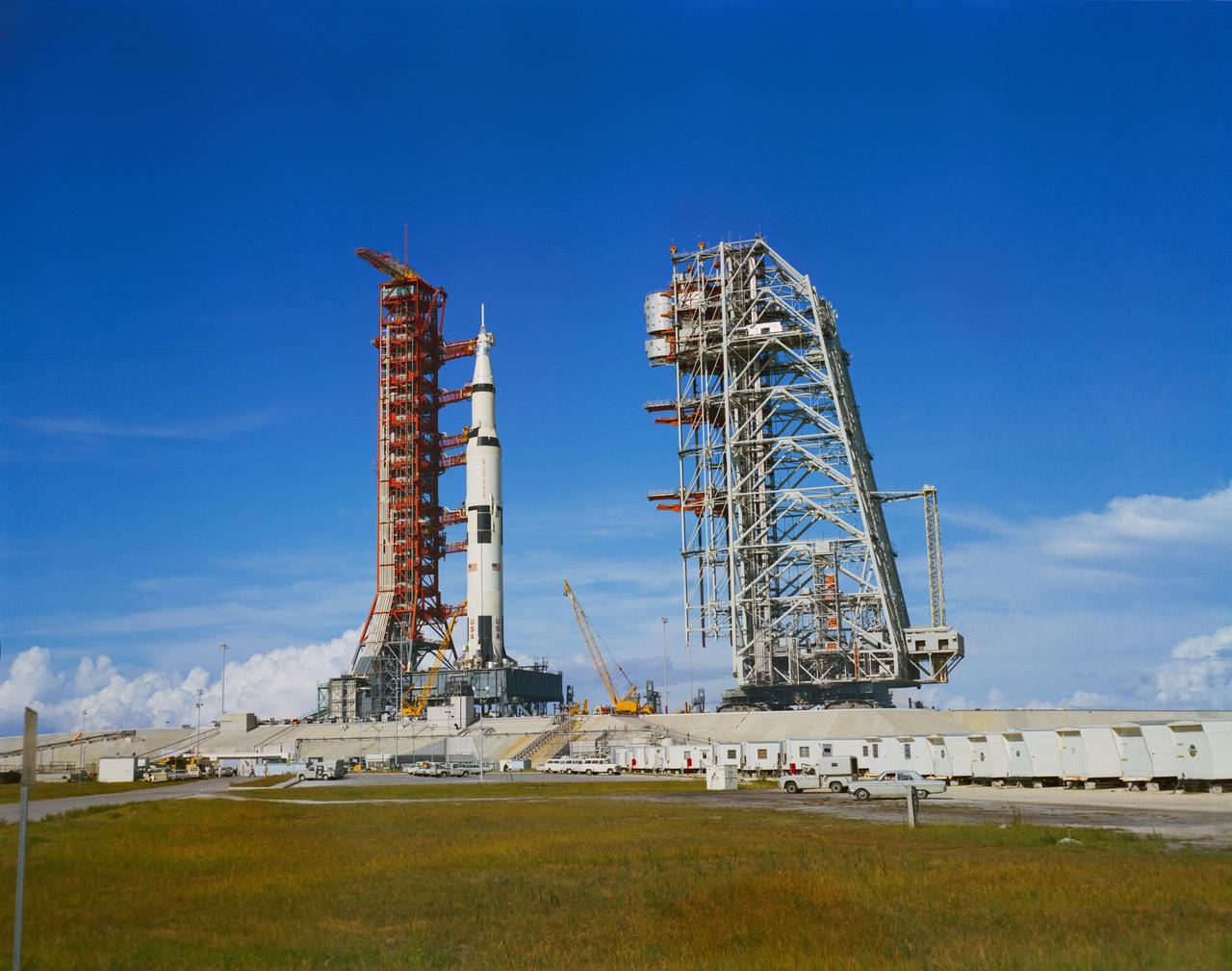
Apollo XI Launch Vehicle AS-506 and Spacecraft 107, Launch Pad 39A for CDDT (Countdown Demonstration Test), includes MSS (Mobile Service Structure) pullback, KSC. 1. APOLLO XI - PRELAUNCH KENNEDY SPACE CENTER, FL
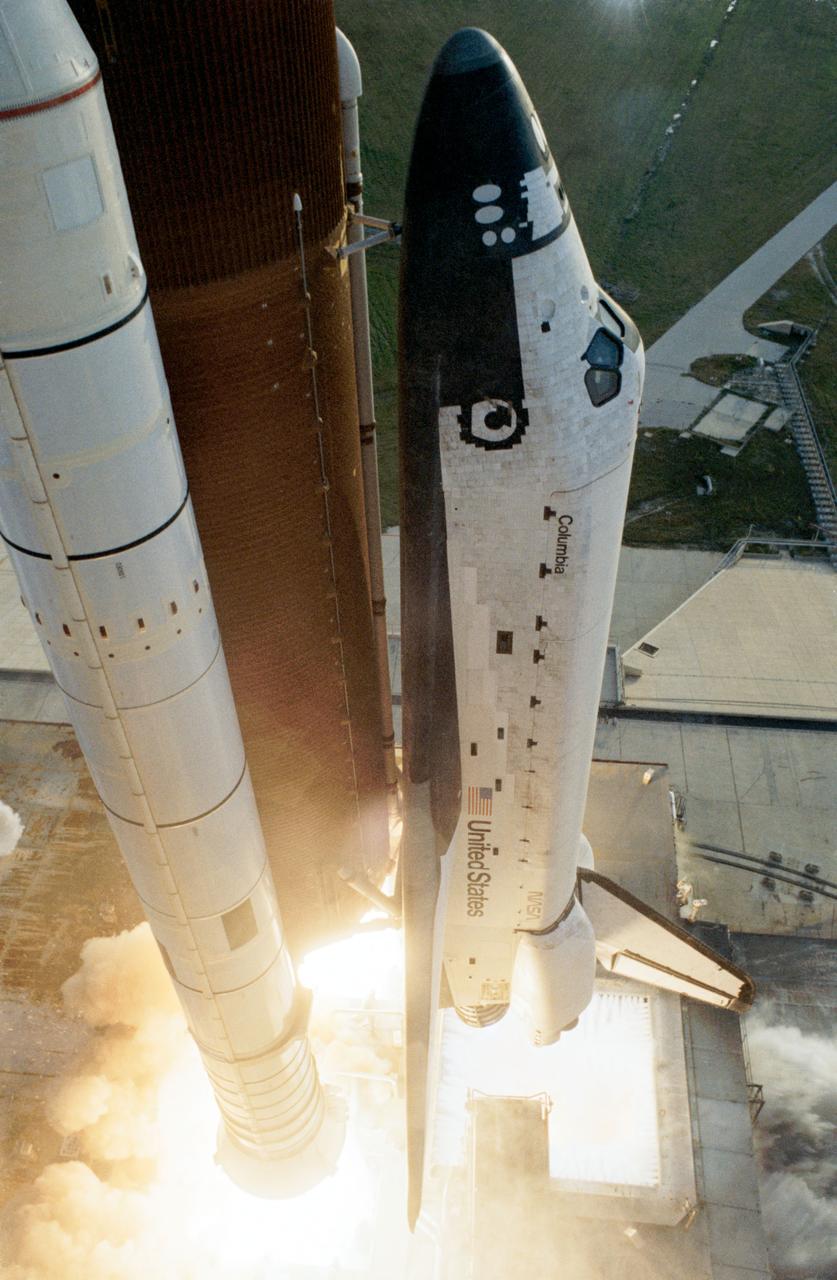
Views of the External Tank (ET) Beanie Cap in place just prior to Final Count, and another looking down from the Service Structure, with engines and rockets firing, just as it left the Pad deck, 11/11/1982. KSC, FL

The space shuttle Atlantis is seen on launch pad 39a of the NASA Kennedy Space Center shortly after the rotating service structure was rolled back, Sunday, Nov. 15, 2009, Cape Canaveral, FL. Atlantis is scheduled to launch at 2:28p.m. EST, Monday, Nov. 16, 2009. Photo Credit: (NASA/Bill Ingalls)
![[21] ISO: 100 Aprt: F4 Shut: 125 Lens: 35 Exps: P Prog: Po ExpC: -1.3 Metr: Mtrx Fl s: Norm D md: S F md: S F ar: Spot Dist: 1.8m](https://images-assets.nasa.gov/image/s93e5057/s93e5057~medium.jpg)
[21] ISO: 100 Aprt: F4 Shut: 125 Lens: 35 Exps: P Prog: Po ExpC: -1.3 Metr: Mtrx Fl s: Norm D md: S F md: S F ar: Spot Dist: 1.8m
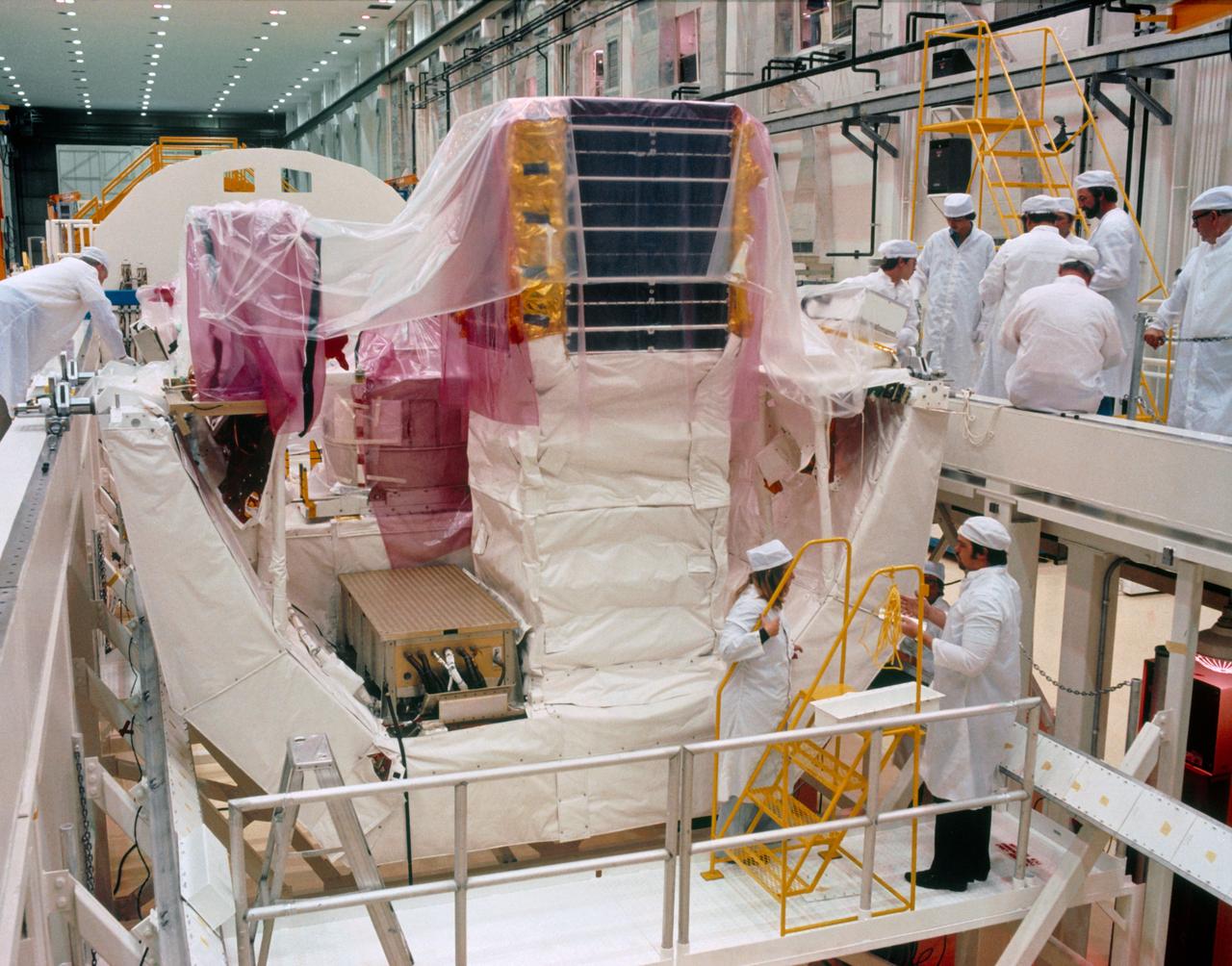
Views OSS-1 Payload Pallet, vehicle changing and potential experiment being checked out by technicians after its arrival at the Operations & Checkout (O&C) Bldg., 09/18/1981, for the STS-3 Mission 1. STS-3 - EXERIMENT (OSS-1) 2. SHUTTLE - PAYLOADS (OSS-1) KSC, FL
![[31] ISO: 200 Aprt: F11 Shut: 500 Lens: 50 Exps: S Prog: LA ExpC: 0.0 Metr: Cntr Fl s: Norm D md: S F md: M F ar: Spot Dist: 8.5m EARTHKAM PID: 14817](https://images-assets.nasa.gov/image/s89e5141/s89e5141~medium.jpg)
[31] ISO: 200 Aprt: F11 Shut: 500 Lens: 50 Exps: S Prog: LA ExpC: 0.0 Metr: Cntr Fl s: Norm D md: S F md: M F ar: Spot Dist: 8.5m EARTHKAM PID: 14817
![[50] ISO: 100 Aprt: F4 Shut: 60 Lens: 35 Exps: P Prog: Po ExpC: 0.0 Metr: Mtrx Fl s: Norm D md: S F md: S F ar: Spot Dist: 1.6m](https://images-assets.nasa.gov/image/s93e5082/s93e5082~medium.jpg)
[50] ISO: 100 Aprt: F4 Shut: 60 Lens: 35 Exps: P Prog: Po ExpC: 0.0 Metr: Mtrx Fl s: Norm D md: S F md: S F ar: Spot Dist: 1.6m
![[18] ISO: 100 Aprt: F5.6 Shut: 250 Lens: 35 Exps: P Prog: Po ExpC: -1.3 Metr: Mtrx Fl s: Norm D md: S F md: S F ar: Spot Dist: 1.0m](https://images-assets.nasa.gov/image/s93e5054/s93e5054~medium.jpg)
[18] ISO: 100 Aprt: F5.6 Shut: 250 Lens: 35 Exps: P Prog: Po ExpC: -1.3 Metr: Mtrx Fl s: Norm D md: S F md: S F ar: Spot Dist: 1.0m
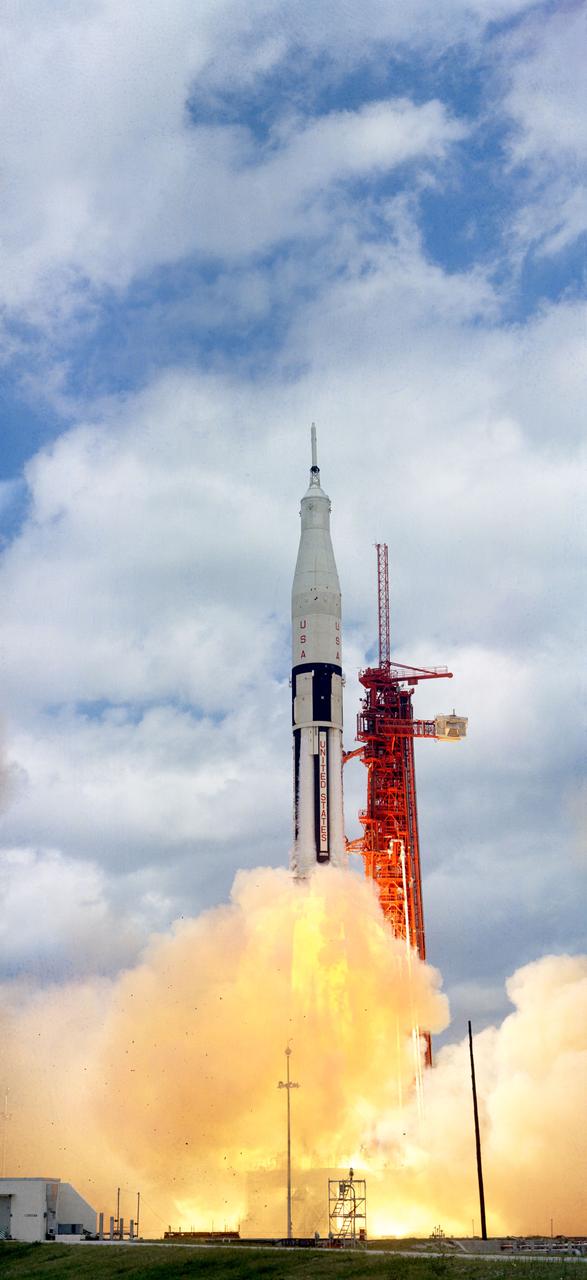
A/S Mission 202 was launched from the KSC Launch Complex (LC)-34 at 12:15 p.m., 08/25/1966. The mission was a step toward qualifying the Apollo Command and Service Modules (CSM)'s and the uprated Saturn I launch vehicle for manned flight. KSC, FL
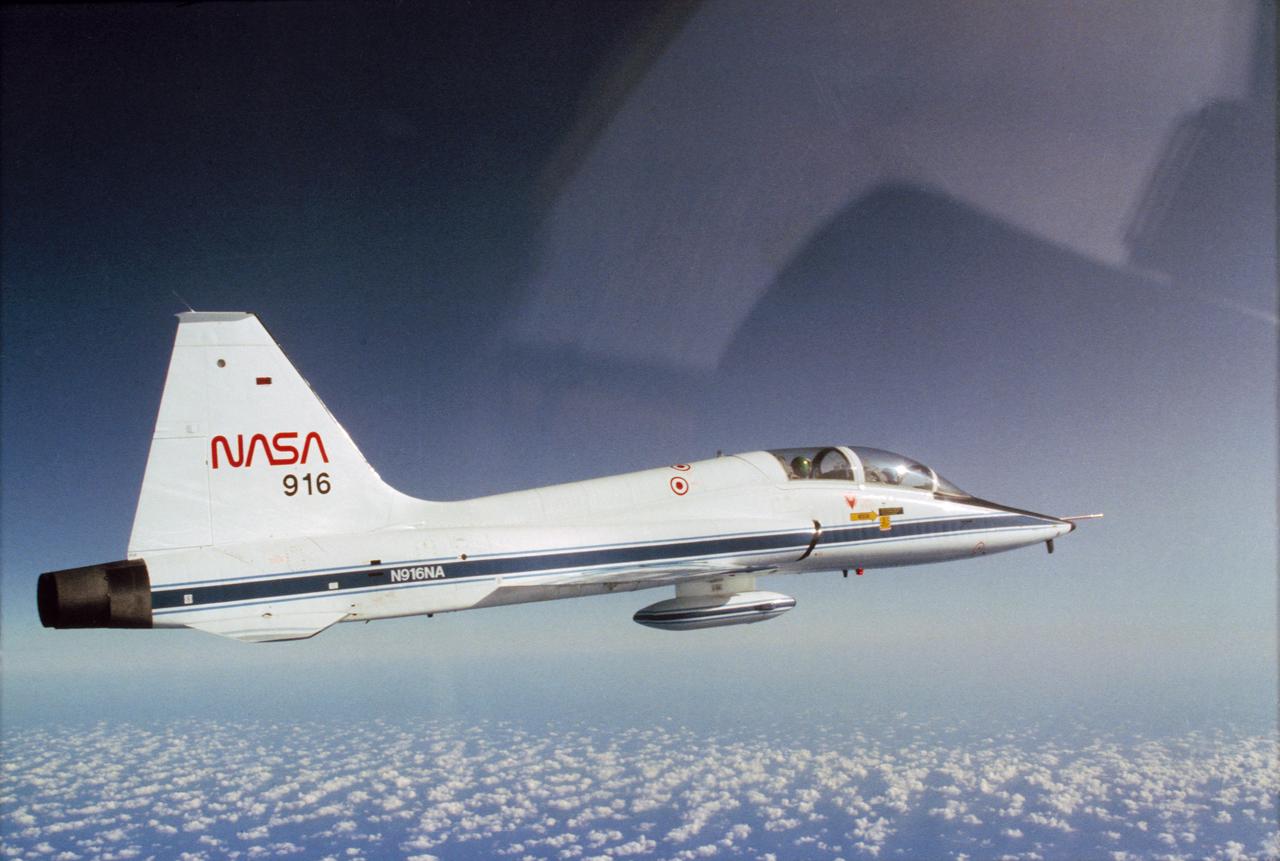
NASA 916, a T-38 jet aircraft, carrying astronauts Vance D. Brand (front station) and Robert F. Overmyer, heads for Kennedy Space Center in Florida. 1. STS-5 - PREFLIGHT KSC, FL Also available in 4x5 CN
![[94] ISO: 100 Aprt: F4 Shut: 60 Lens: 35 Exps: P Prog: Po ExpC: -1.3 Metr: Mtrx Fl s: Norm D md: S F md: S F ar: Spot Dist: 1.8m](https://images-assets.nasa.gov/image/s93e5069/s93e5069~medium.jpg)
[94] ISO: 100 Aprt: F4 Shut: 60 Lens: 35 Exps: P Prog: Po ExpC: -1.3 Metr: Mtrx Fl s: Norm D md: S F md: S F ar: Spot Dist: 1.8m
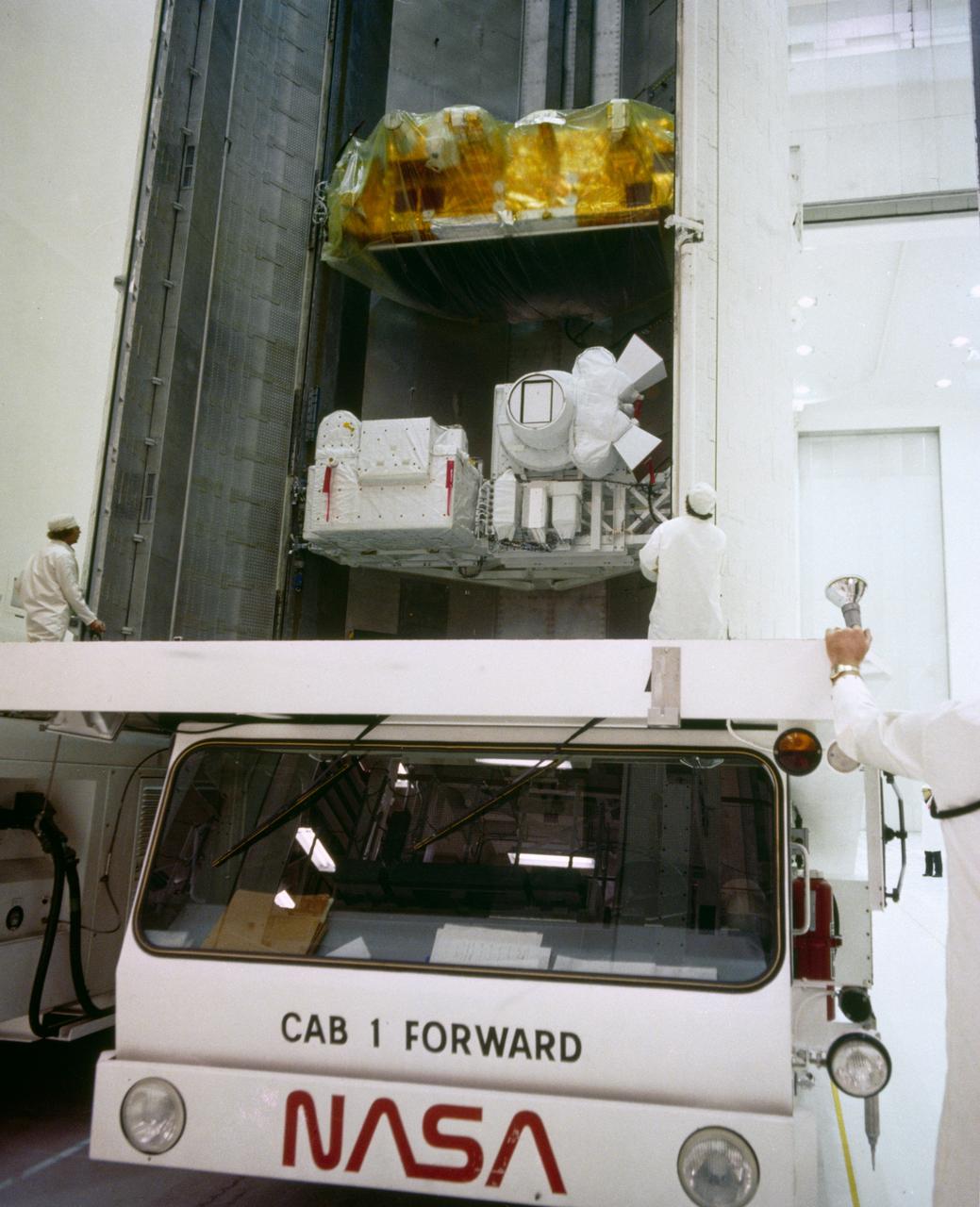
Payload canister transporter in Vertical Processing Facility Clean Room loaded with Earth Radiation Budget Experiment (ERBS), Large Format Camera (LFC), and Orbital Reservicing System (ORS) for STS-41G Mission. 1. STS-41G - EXPERIMENTS 2. CAMERAS - LFC KSC, FL Also available in 4x5 CN
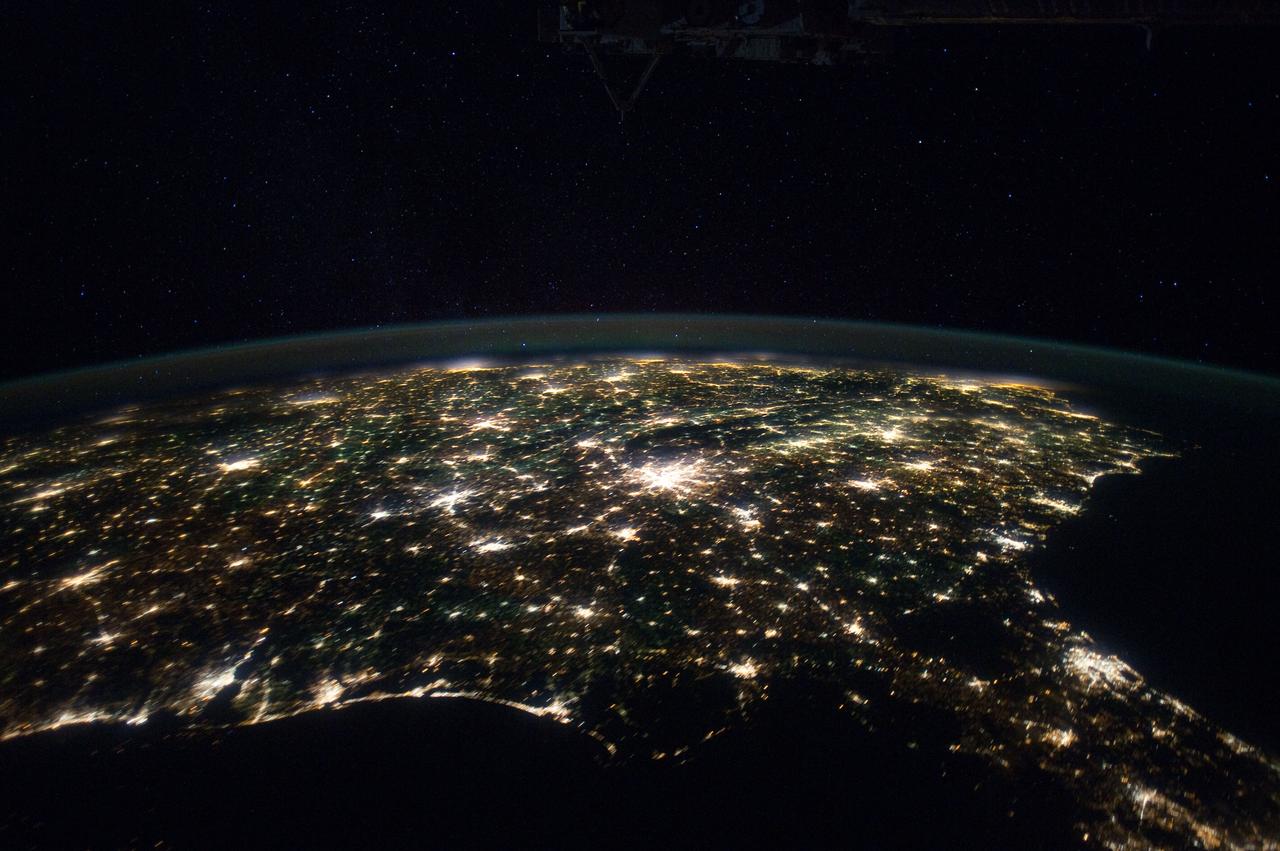
ISS030-E-055569 (29 Jan. 2012) --- Southeastern USA at night is featured in this image photographed by an Expedition 30 crew member on the International Space Station. The brightly lit metropolitan areas of Atlanta, GA (center) and Jacksonville, FL (lower right) appear largest in the image with numerous other urban areas forming an interconnected network of light across the region. A large dark region to the northwest of Jacksonville, FL is the Okefenokee National Wildlife Refuge; likewise the ridges of the Appalachian Mountains form dark swaths to the north of Atlanta, GA and west of Charlotte, NC (center). The faint gold and green line of airglow—caused by ultraviolet radiation exciting the gas molecules in the upper atmosphere—parallels the horizon (or Earth limb).
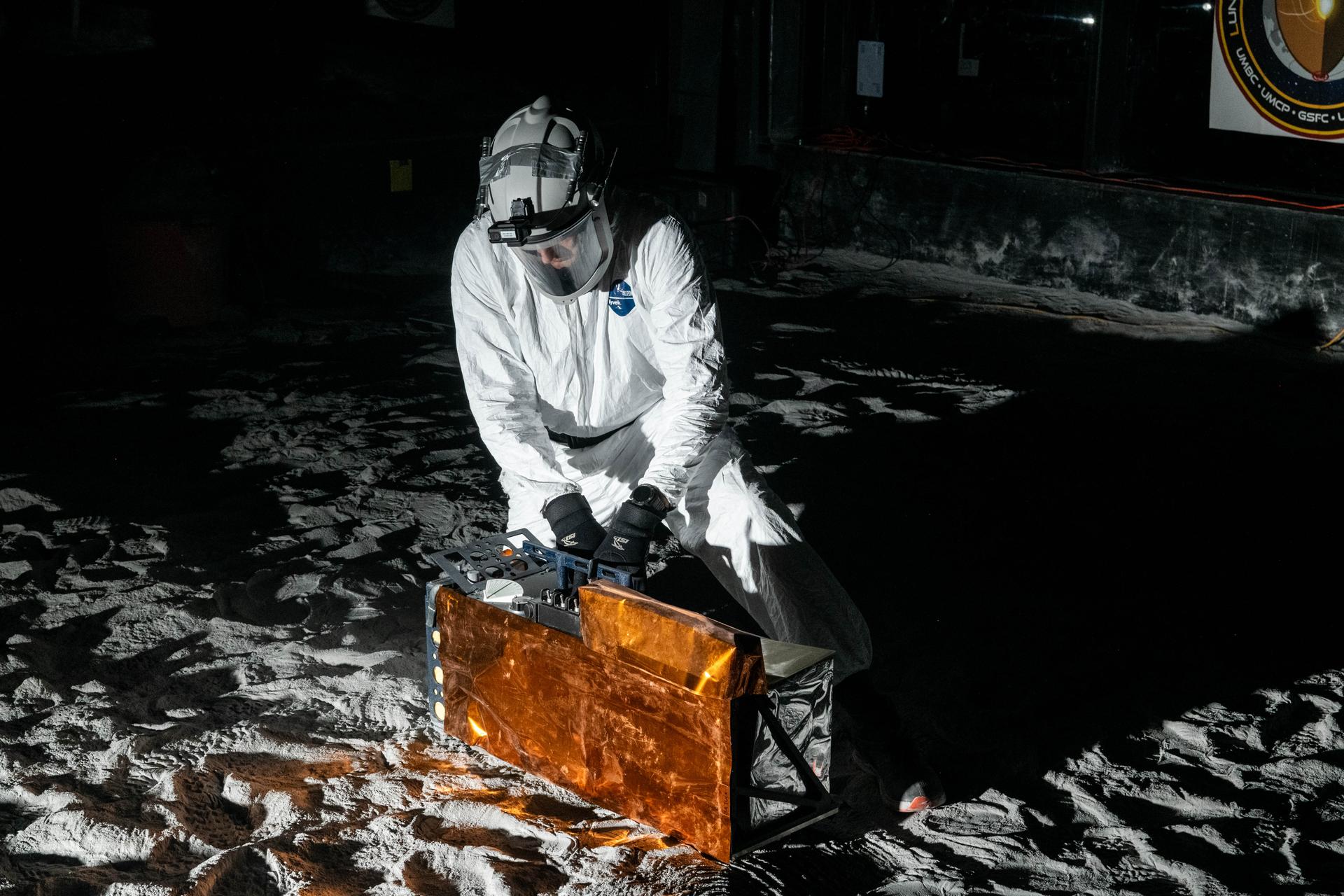
Artemis Scientist, Trevor Graff, performs instrument deployment exercises with a medium fidelity mock up of the Lunar Environment Monitoring Station (LEMS) in the lunar simulant bin at the Florida Space Institute Exolith Lab, Orlando, Fl., Aug 6, 2025. LEMS is a compact, autonomous, and self-sustaining seismometer suite designed to carry out continuous, long-term, monitoring of the lunar seismic environment at the South Polar region. Photo Credit: NASA/Katie Mellos.
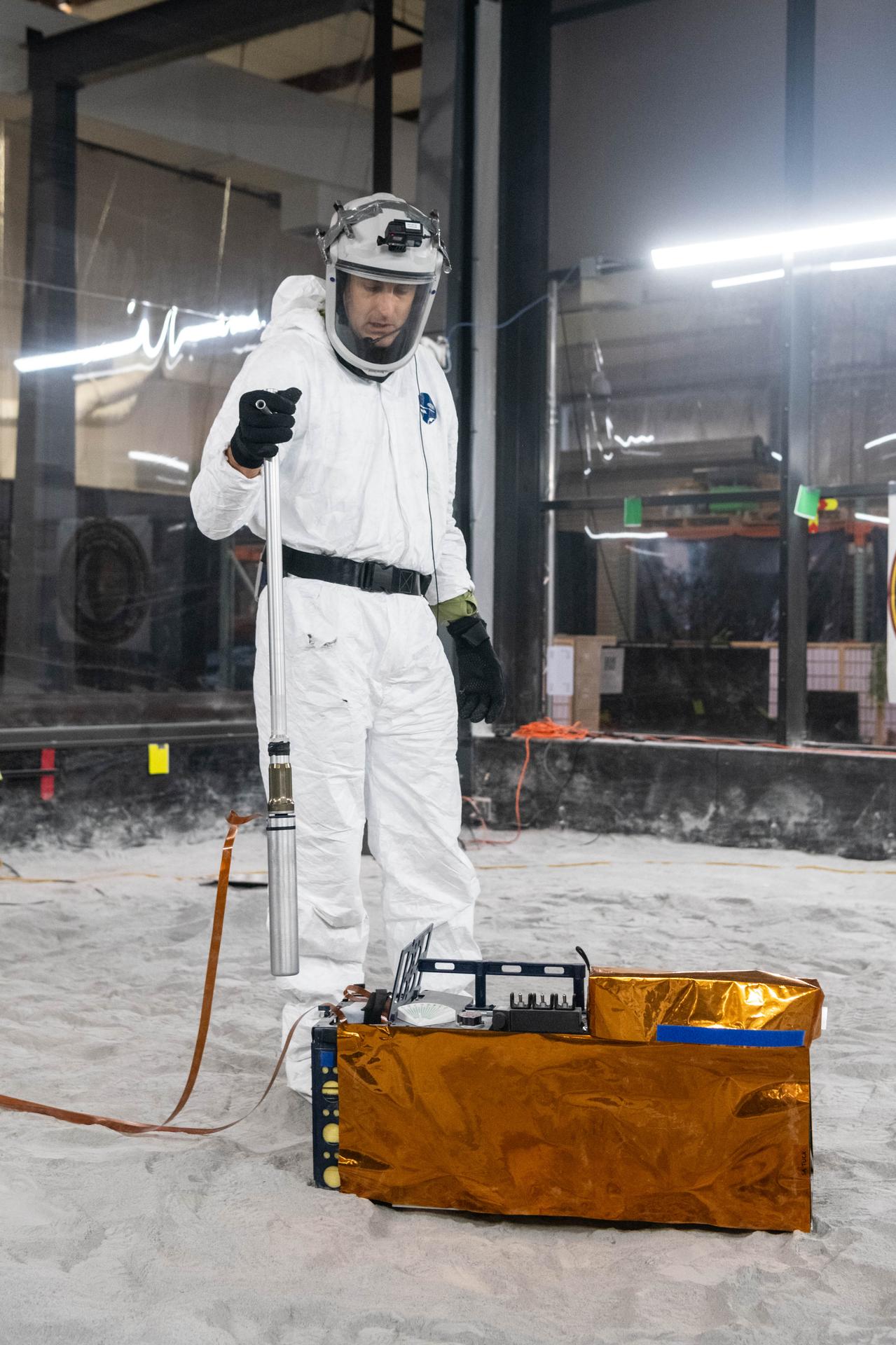
Artemis Scientist, Trevor Graff, performs instrument deployment exercises with a medium fidelity mock up of the Lunar Environment Monitoring Station (LEMS) in the lunar simulant bin at the Florida Space Institute Exolith Lab, Orlando, Fl., Aug 6, 2025. LEMS is a compact, autonomous, and self-sustaining seismometer suite designed to carry out continuous, long-term, monitoring of the lunar seismic environment at the South Polar region. Photo Credit: NASA/Katie Mellos.
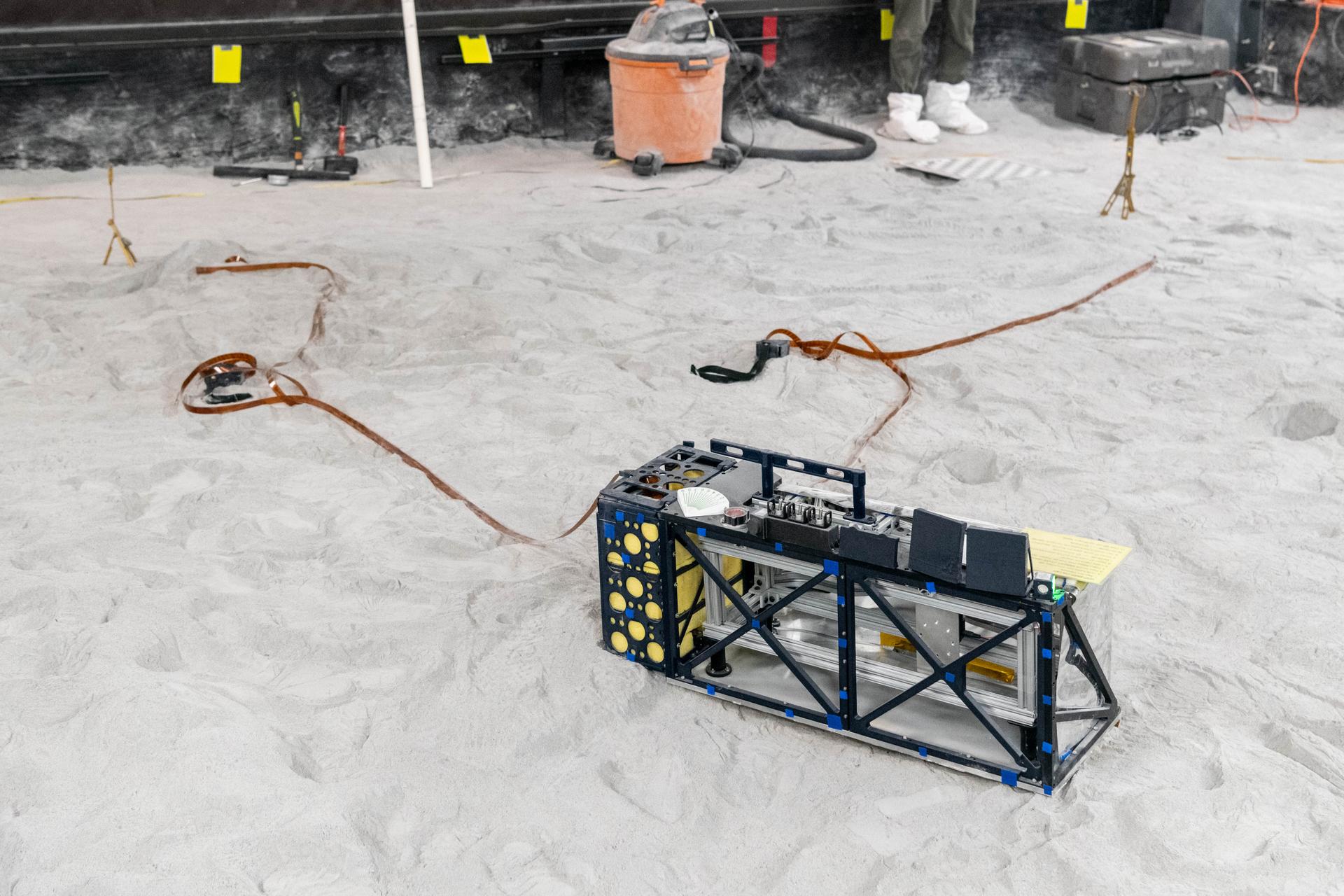
The Lunar Environment Monitoring Station (LEMS) medium fidelity instrument mock up is configured for instrument deployment exercises in the lunar simulant bin at the Florida Space Institute Exolith Lab, Orlando, Fl., Aug 6, 2025. LEMS is a compact, autonomous, and self-sustaining seismometer suite designed to carry out continuous, long-term, monitoring of the lunar seismic environment at the South Polar region. Photo Credit: NASA/Katie Mellos.
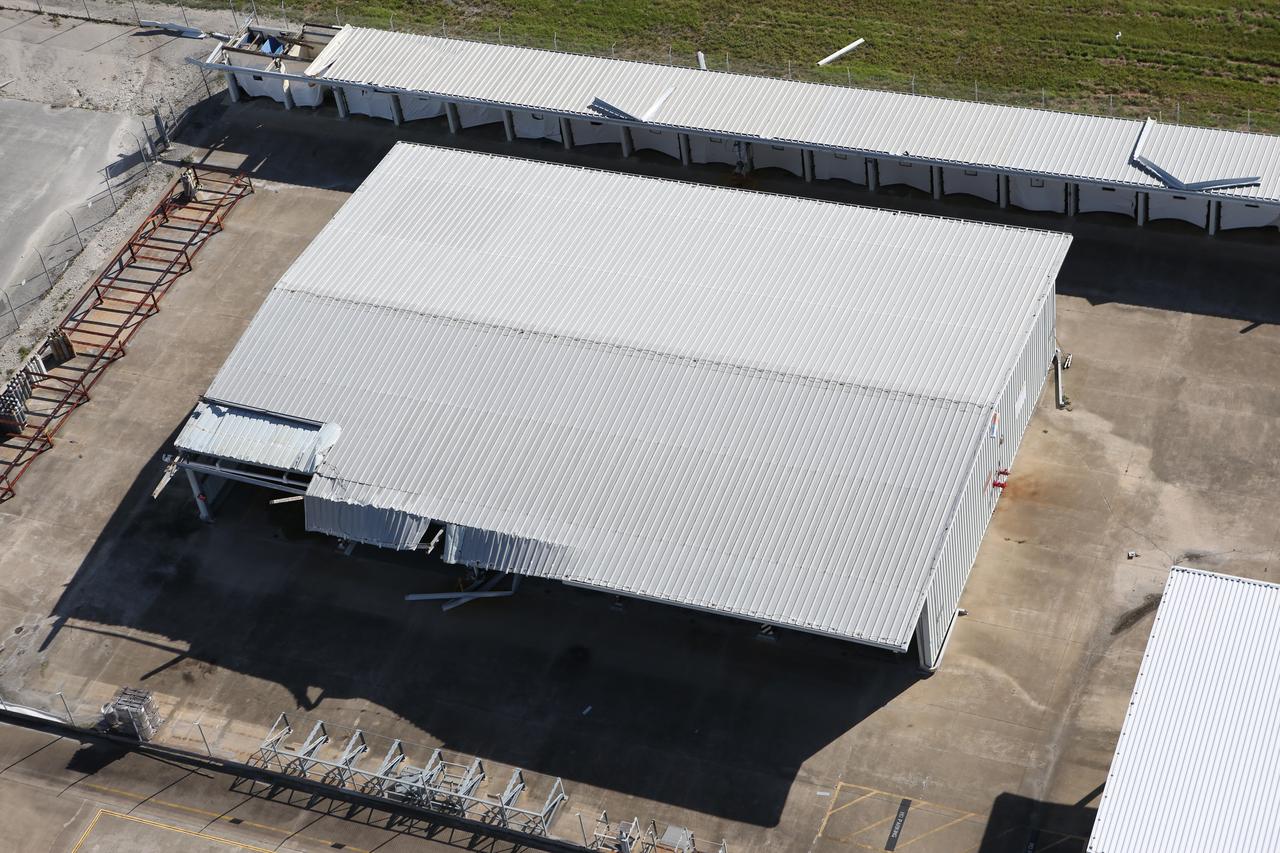
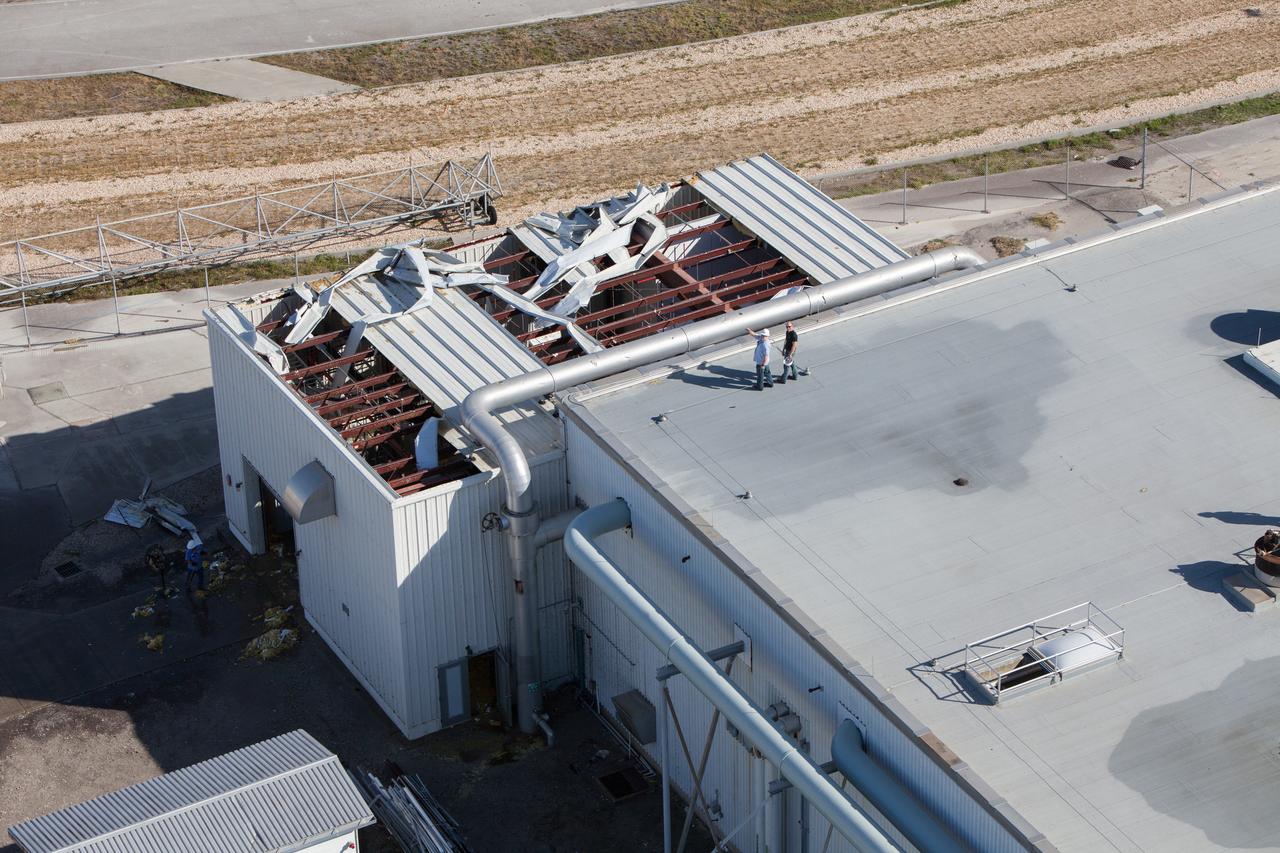
Damage to a facility roof is seen during an aerial survey of NASA's Kennedy Space Center in Florida on Saturday. The survey was performed to identify structures and facilities that may have sustained damage from Hurricane Matthew as the storm passed to the east of Kennedy on Oct. 6 and 7, 2016. Officials determined that the center received some isolated roof damage, damaged support buildings, a few downed power lines, and limited water intrusion. Beach erosion also occurred, although the storm surge was less than expected. NASA closed the center ahead of the storm’s onset and only a small team of specialists known as the Rideout Team was on the center as the storm approached and passed.
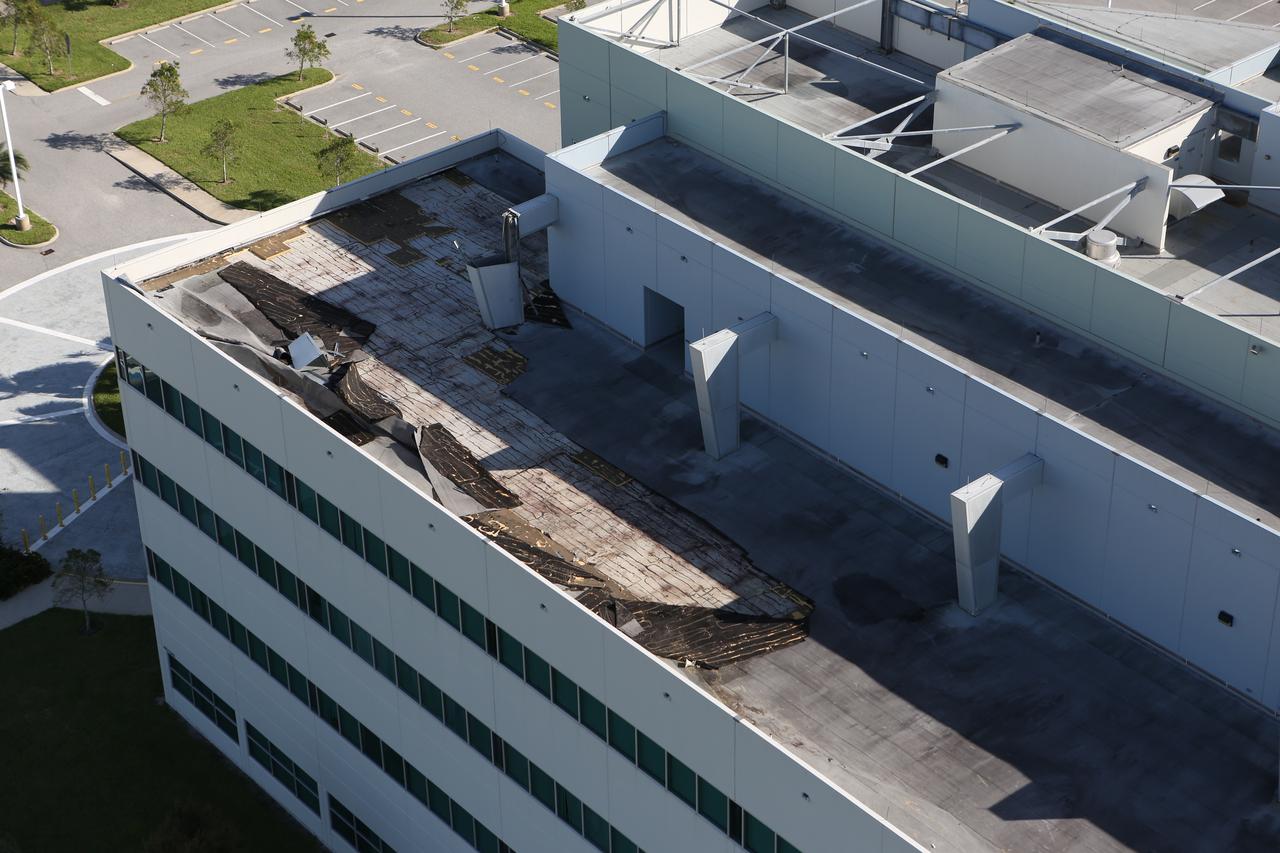
The roof of the Operations Support Building II is seen during an aerial survey of NASA's Kennedy Space Center in Florida on Saturday. The survey was performed to identify structures and facilities that may have sustained damage from Hurricane Matthew as the storm passed to the east of Kennedy on Oct. 6 and 7, 2016. Officials determined that the center received some isolated roof damage, damaged support buildings, a few downed power lines, and limited water intrusion. Beach erosion also occurred, although the storm surge was less than expected. NASA closed the center ahead of the storm’s onset and only a small team of specialists known as the Rideout Team was on the center as the storm approached and passed.
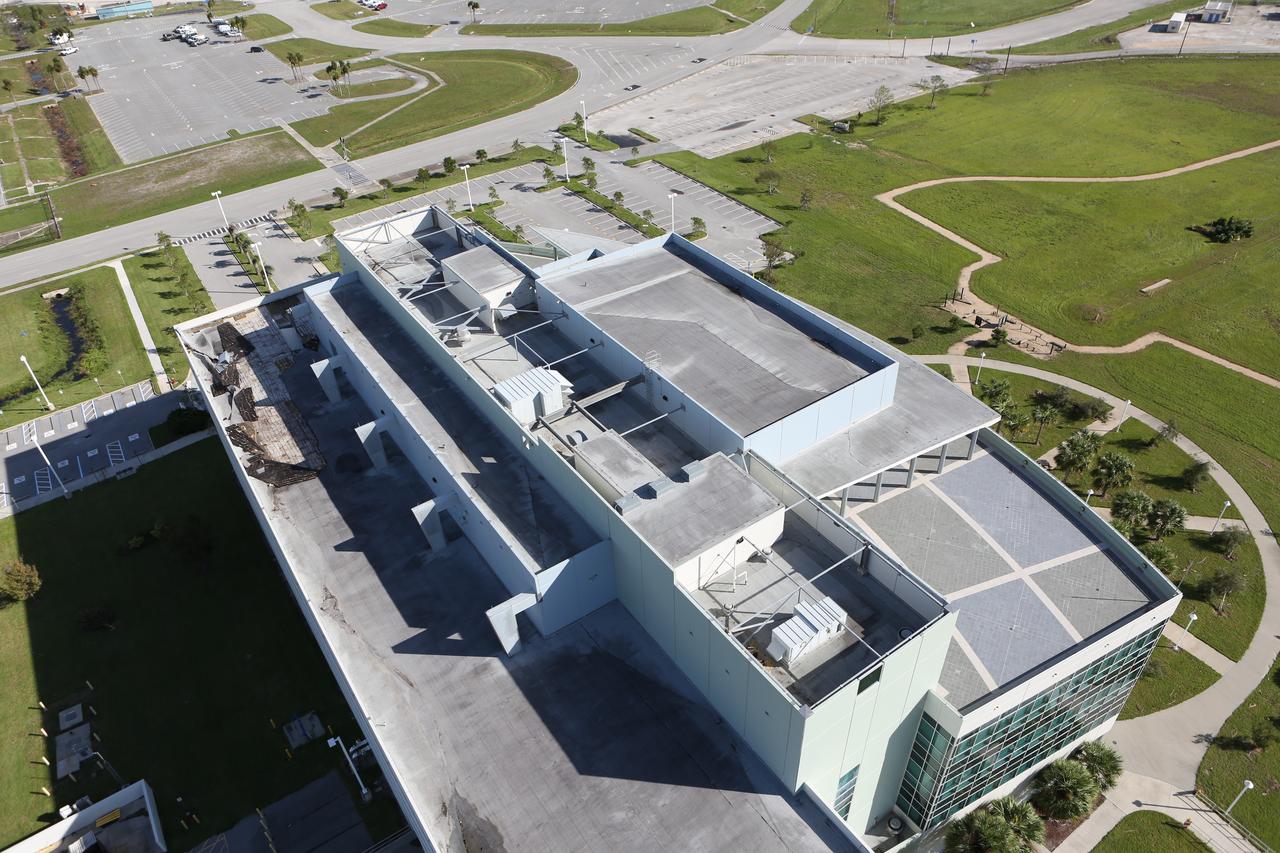
The roof of the Operations Support Building II is seen during an aerial survey of NASA's Kennedy Space Center in Florida on Saturday. The survey was performed to identify structures and facilities that may have sustained damage from Hurricane Matthew as the storm passed to the east of Kennedy on Oct. 6 and 7, 2016. Officials determined that the center received some isolated roof damage, damaged support buildings, a few downed power lines, and limited water intrusion. Beach erosion also occurred, although the storm surge was less than expected. NASA closed the center ahead of the storm’s onset and only a small team of specialists known as the Rideout Team was on the center as the storm approached and passed.
The NASA News Center is seen during an aerial survey of NASA's Kennedy Space Center in Florida on Saturday. The survey was performed to identify structures and facilities that may have sustained damage from Hurricane Matthew as the storm passed to the east of Kennedy on Oct. 6 and 7, 2016. Officials determined that the center received some isolated roof damage, damaged support buildings, a few downed power lines, and limited water intrusion. Beach erosion also occurred, although the storm surge was less than expected. NASA closed the center ahead of the storm’s onset and only a small team of specialists known as the Rideout Team was on the center as the storm approached and passed
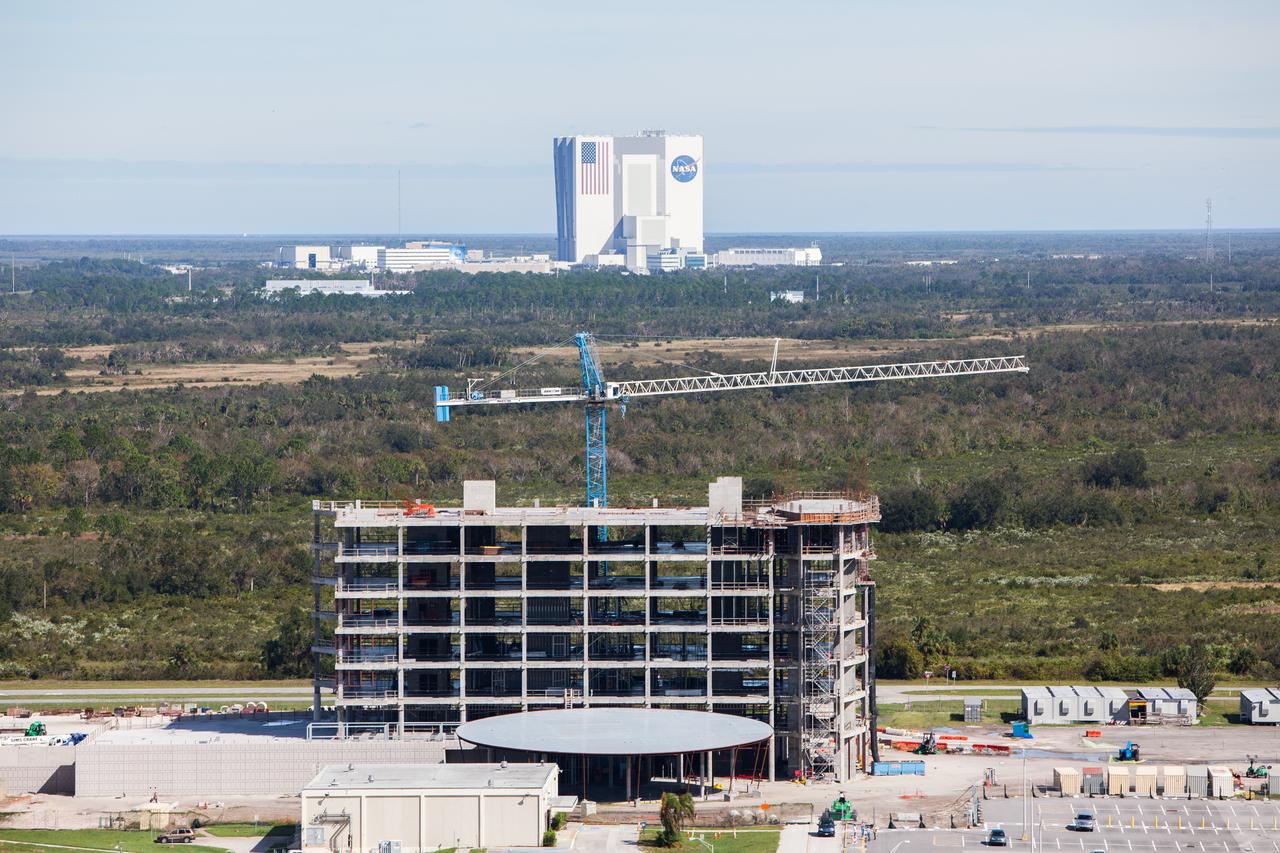
The Central Campus construction site is seen during an aerial survey of NASA's Kennedy Space Center in Florida on Saturday. The survey was performed to identify structures and facilities that may have sustained damage from Hurricane Matthew as the storm passed to the east of Kennedy on Oct. 6 and 7, 2016. Officials determined that the center received some isolated roof damage, damaged support buildings, a few downed power lines, and limited water intrusion. Beach erosion also occurred, although the storm surge was less than expected. NASA closed the center ahead of the storm’s onset and only a small team of specialists known as the Rideout Team was on the center as the storm approached and passed
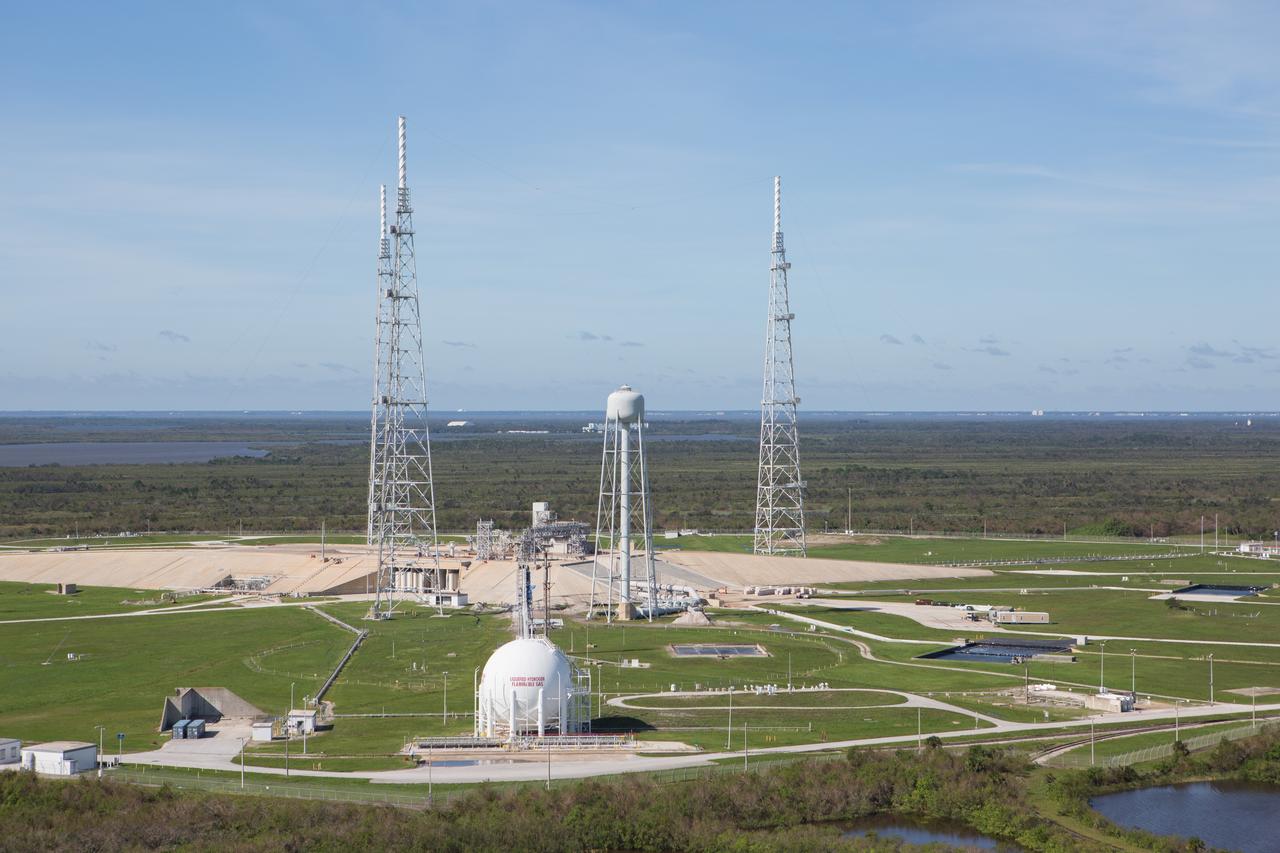
Launch Complex 39B is seen during an aerial survey of NASA's Kennedy Space Center in Florida on Saturday. The survey was performed to identify structures and facilities that may have sustained damage from Hurricane Matthew as the storm passed to the east of Kennedy on Oct. 6 and 7, 2016. Officials determined that the center received some isolated roof damage, damaged support buildings, a few downed power lines, and limited water intrusion. Beach erosion also occurred, although the storm surge was less than expected. NASA closed the center ahead of the storm’s onset and only a small team of specialists known as the Rideout Team was on the center as the storm approached and passed
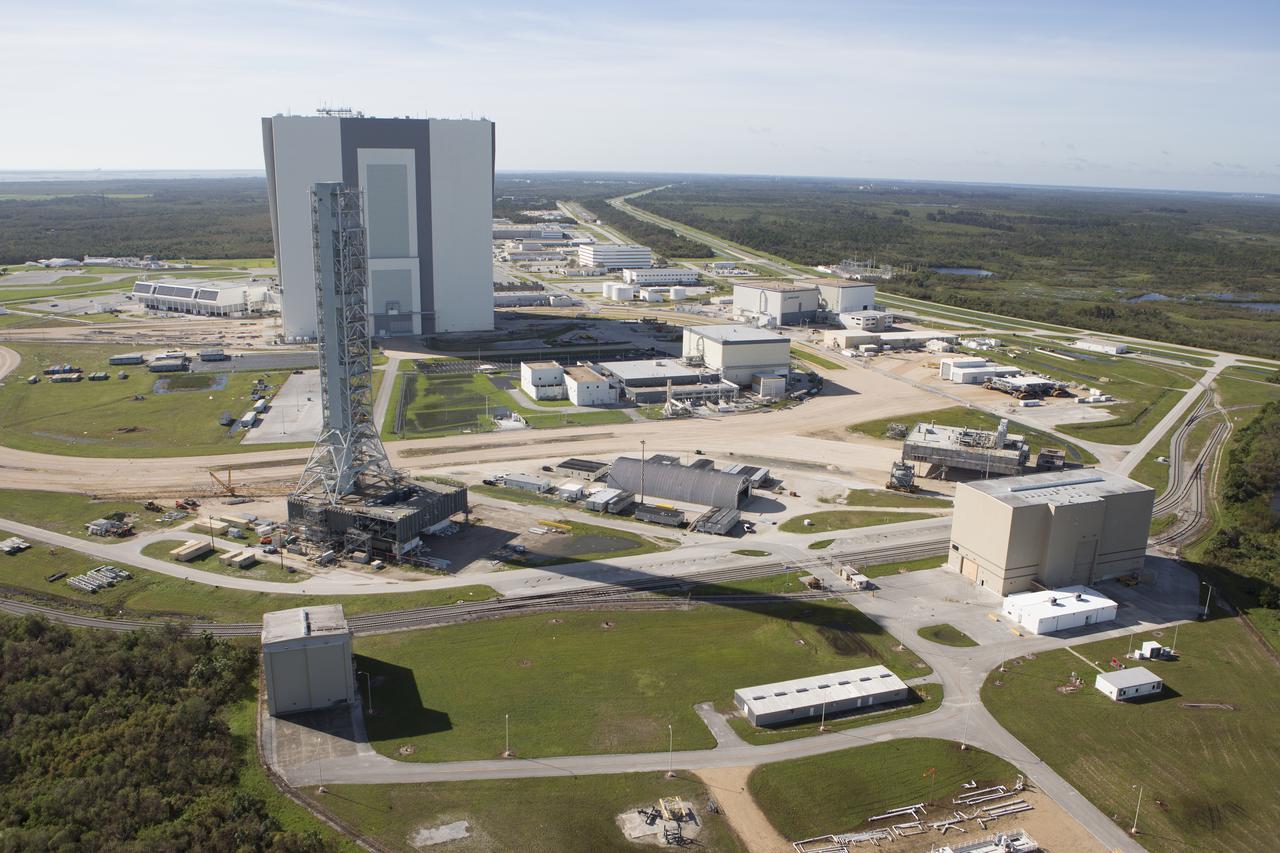
The Launch Complex 39 area is seen during an aerial survey of NASA's Kennedy Space Center in Florida on Saturday. The survey was performed to identify structures and facilities that may have sustained damage from Hurricane Matthew as the storm passed to the east of Kennedy on Oct. 6 and 7, 2016. Officials determined that the center received some isolated roof damage, damaged support buildings, a few downed power lines, and limited water intrusion. Beach erosion also occurred, although the storm surge was less than expected. NASA closed the center ahead of the storm’s onset and only a small team of specialists known as the Rideout Team was on the center as the storm approached and passed.
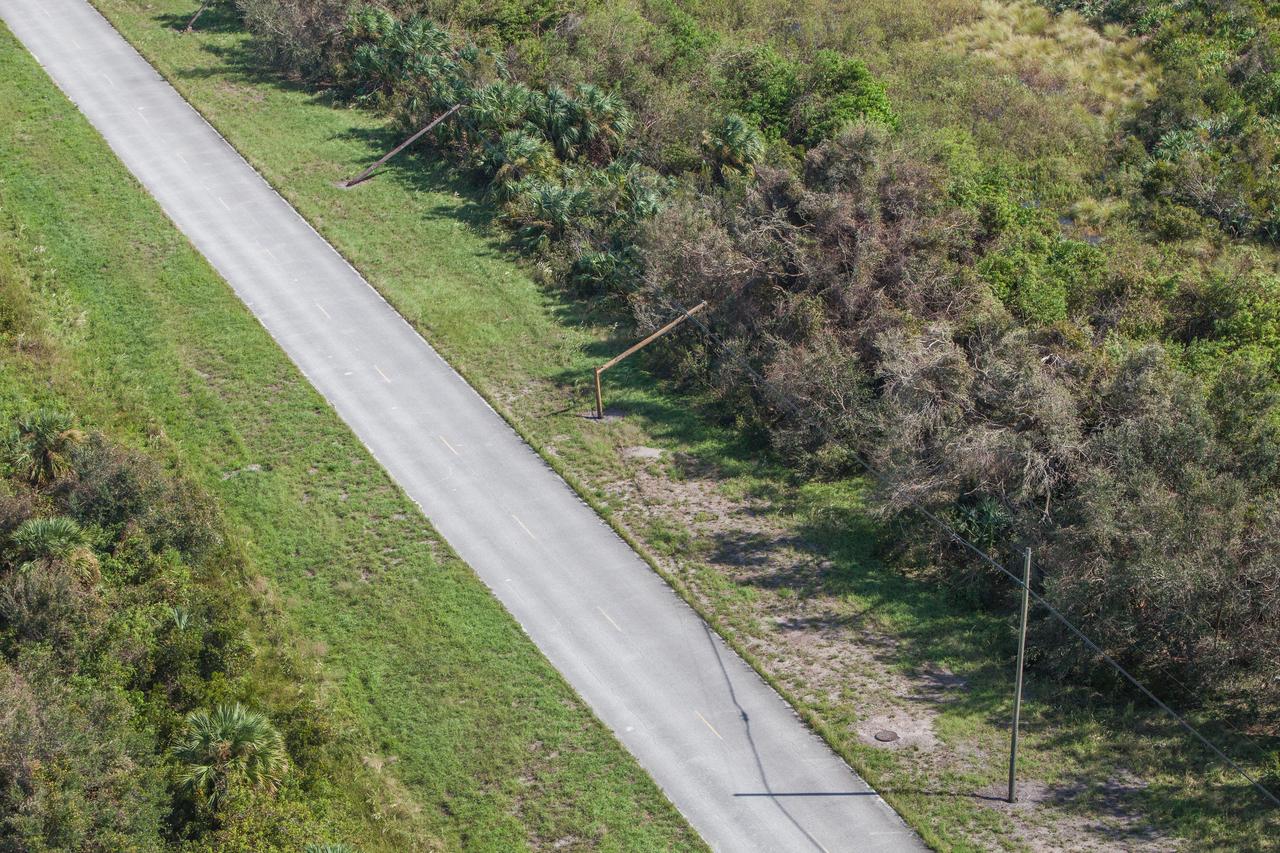
Damaged power lines are seen during an aerial survey of NASA's Kennedy Space Center in Florida on Saturday. The survey was performed to identify structures and facilities that may have sustained damage from Hurricane Matthew as the storm passed to the east of Kennedy on Oct. 6 and 7, 2016. Officials determined that the center received some isolated roof damage, damaged support buildings, a few downed power lines, and limited water intrusion. Beach erosion also occurred, although the storm surge was less than expected. NASA closed the center ahead of the storm’s onset and only a small team of specialists known as the Rideout Team was on the center as the storm approached and passed.
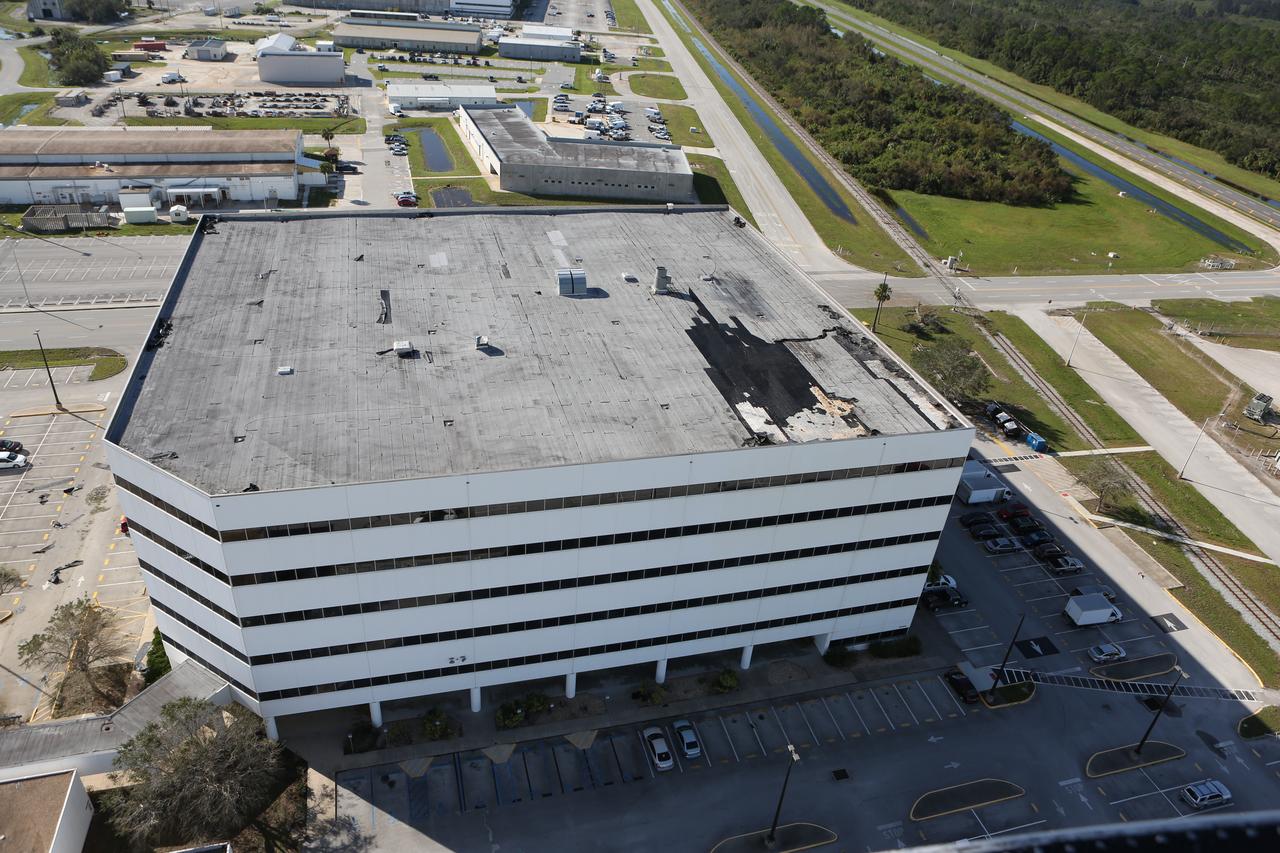
The roof of the Operations Support Building I is seen during an aerial survey of NASA's Kennedy Space Center in Florida on Saturday. The survey was performed to identify structures and facilities that may have sustained damage from Hurricane Matthew as the storm passed to the east of Kennedy on Oct. 6 and 7, 2016. Officials determined that the center received some isolated roof damage, damaged support buildings, a few downed power lines, and limited water intrusion. Beach erosion also occurred, although the storm surge was less than expected. NASA closed the center ahead of the storm’s onset and only a small team of specialists known as the Rideout Team was on the center as the storm approached and passed.
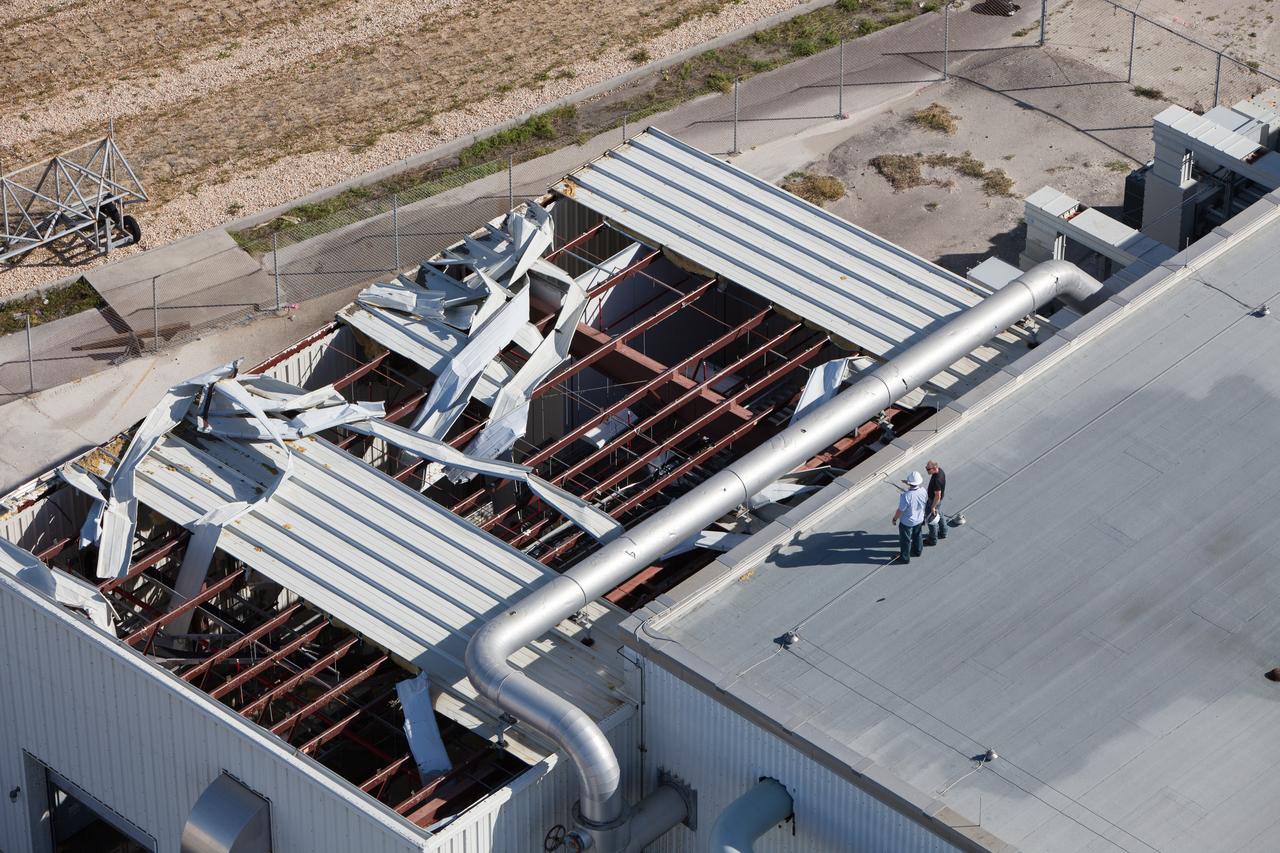
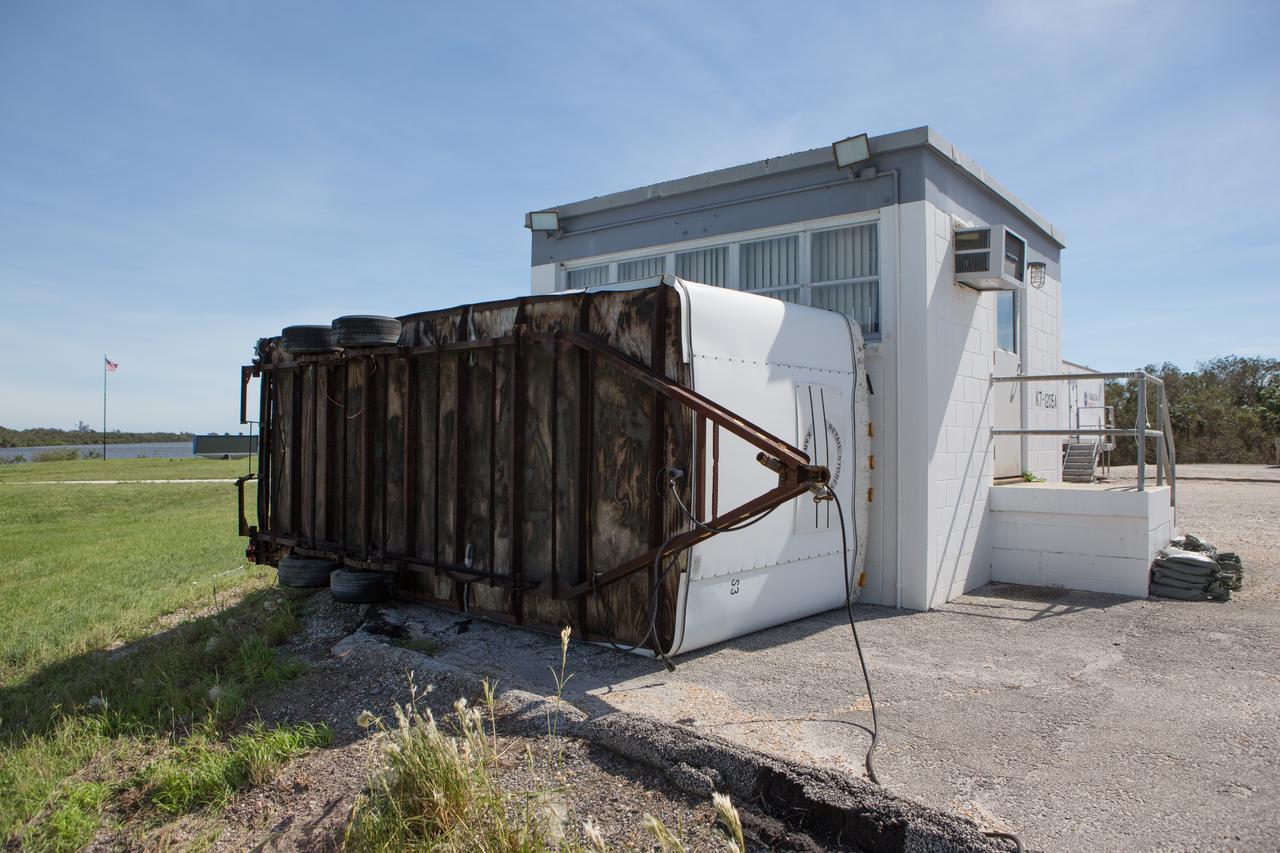
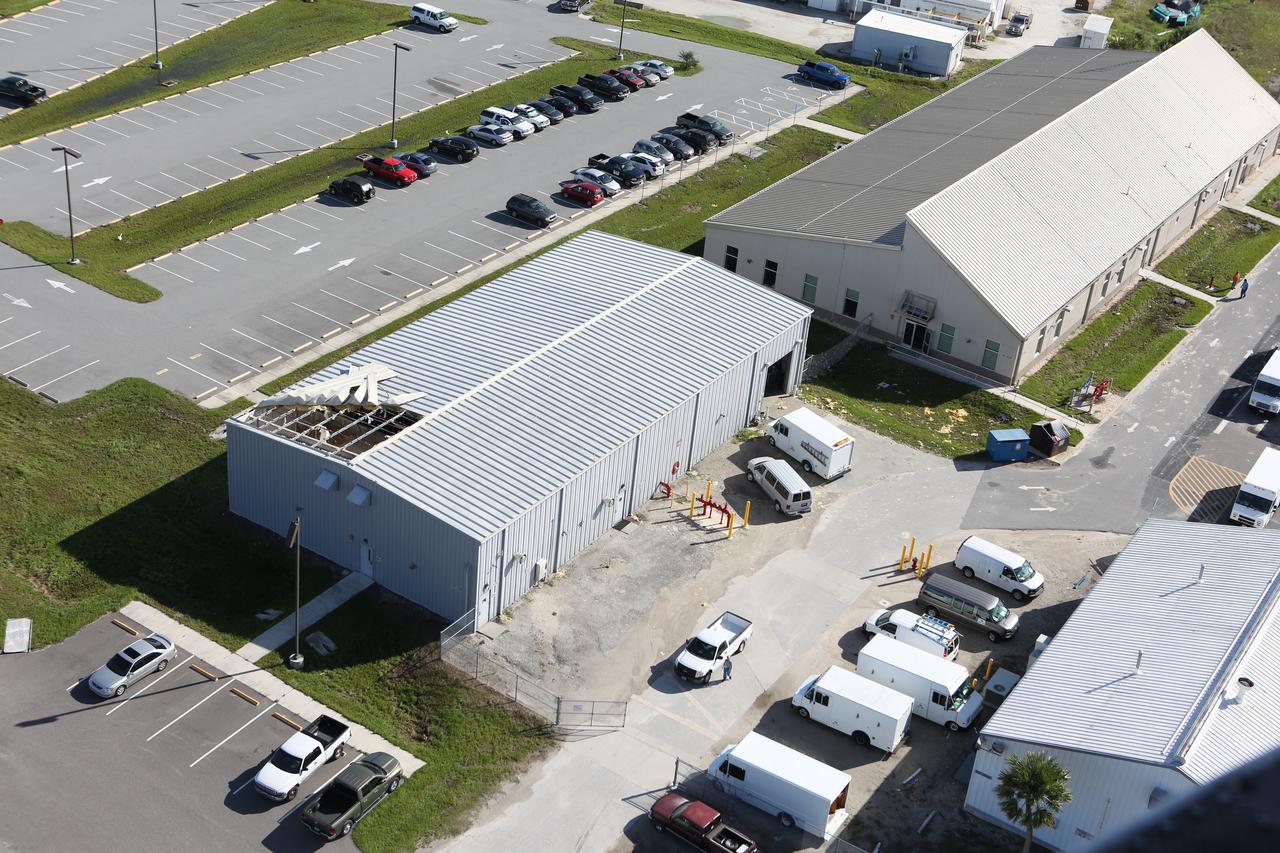
A support building is seen during an aerial survey of NASA's Kennedy Space Center in Florida on Saturday. The survey was performed to identify structures and facilities that may have sustained damage from Hurricane Matthew as the storm passed to the east of Kennedy on Oct. 6 and 7, 2016. Officials determined that the center received some isolated roof damage, damaged support buildings, a few downed power lines, and limited water intrusion. Beach erosion also occurred, although the storm surge was less than expected. NASA closed the center ahead of the storm’s onset and only a small team of specialists known as the Rideout Team was on the center as the storm approached and passed.
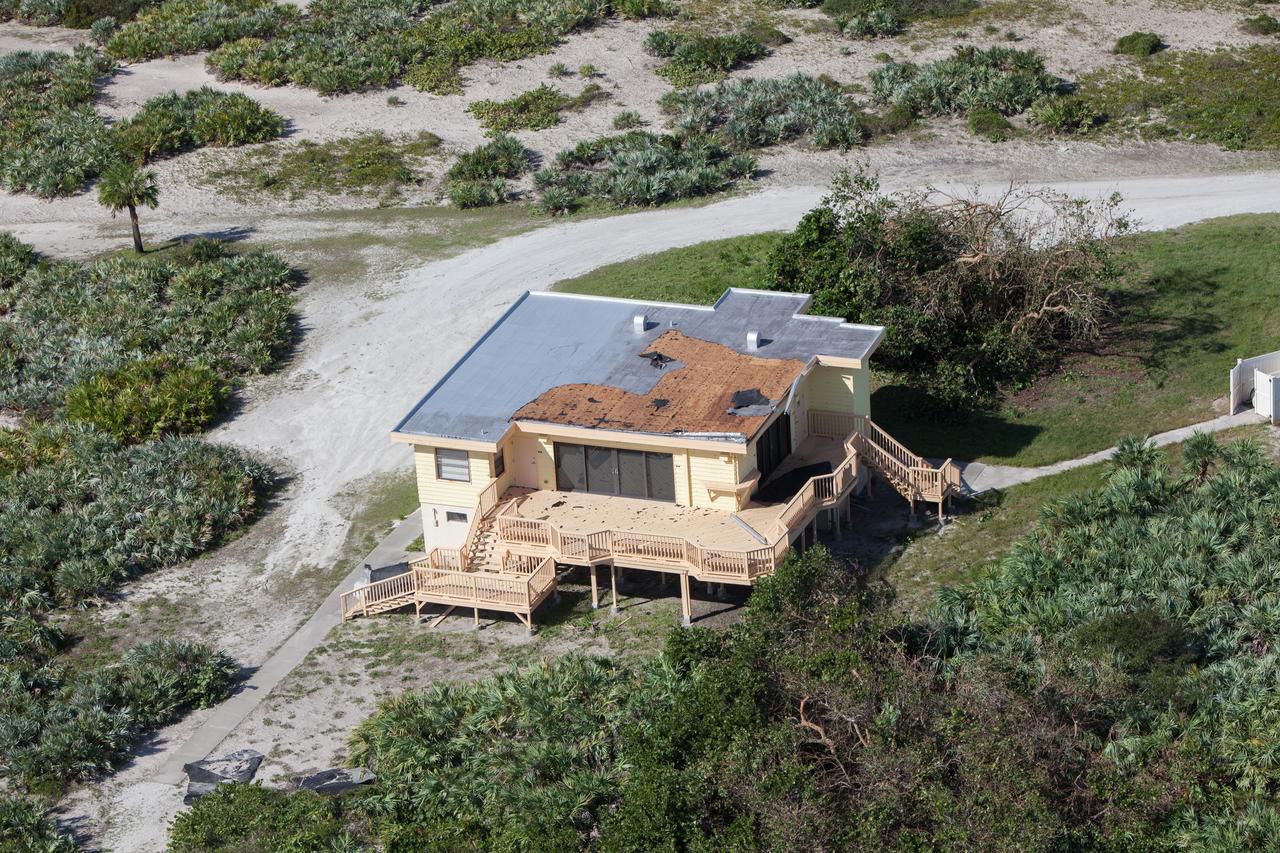
The Beach House is seen during an aerial survey of NASA's Kennedy Space Center in Florida on Saturday. The survey was performed to identify structures and facilities that may have sustained damage from Hurricane Matthew as the storm passed to the east of Kennedy on Oct. 6 and 7, 2016. Officials determined that the center received some isolated roof damage, damaged support buildings, a few downed power lines, and limited water intrusion. Beach erosion also occurred, although the storm surge was less than expected. NASA closed the center ahead of the storm’s onset and only a small team of specialists known as the Rideout Team was on the center as the storm approached and passed
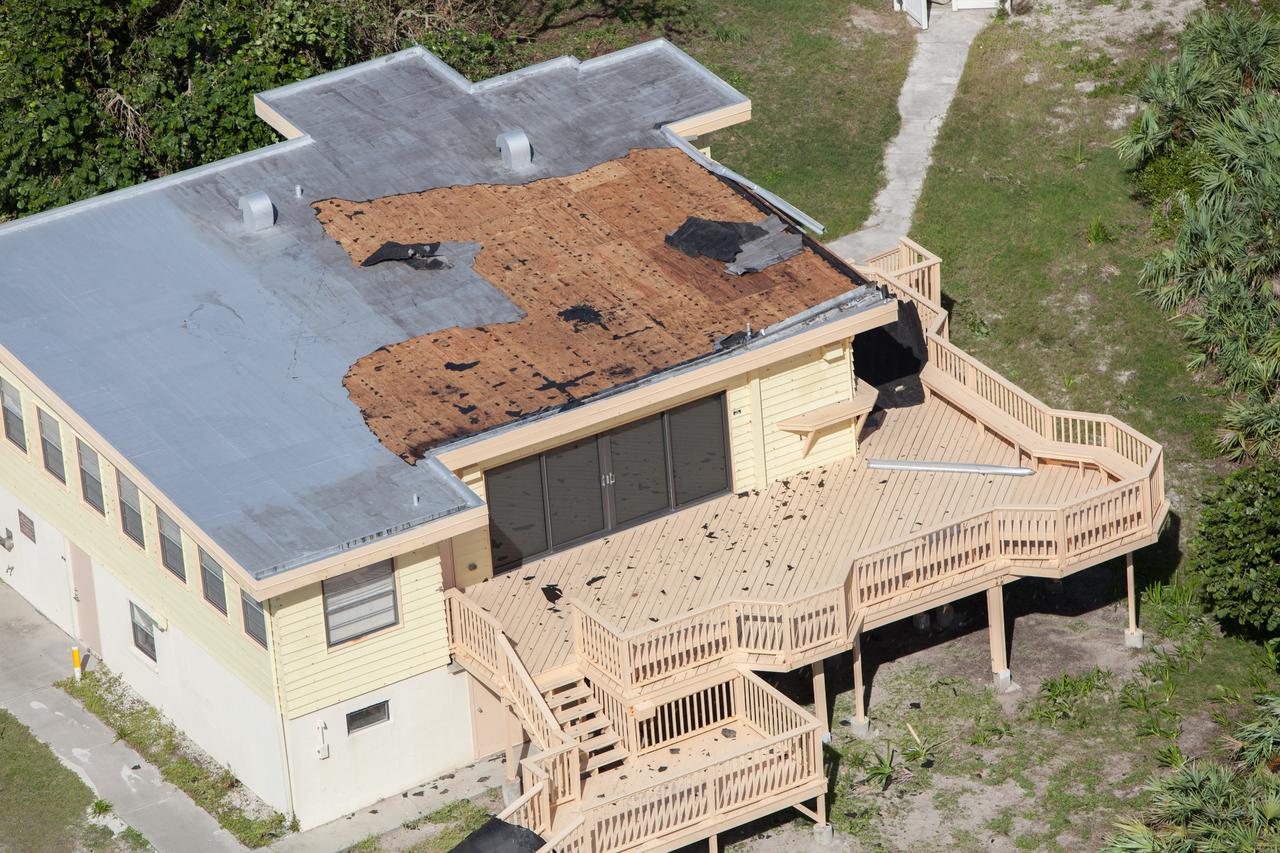
The Beach House is seen during an aerial survey of NASA's Kennedy Space Center in Florida on Saturday. The survey was performed to identify structures and facilities that may have sustained damage from Hurricane Matthew as the storm passed to the east of Kennedy on Oct. 6 and 7, 2016. Officials determined that the center received some isolated roof damage, damaged support buildings, a few downed power lines, and limited water intrusion. Beach erosion also occurred, although the storm surge was less than expected. NASA closed the center ahead of the storm’s onset and only a small team of specialists known as the Rideout Team was on the center as the storm approached and passed.
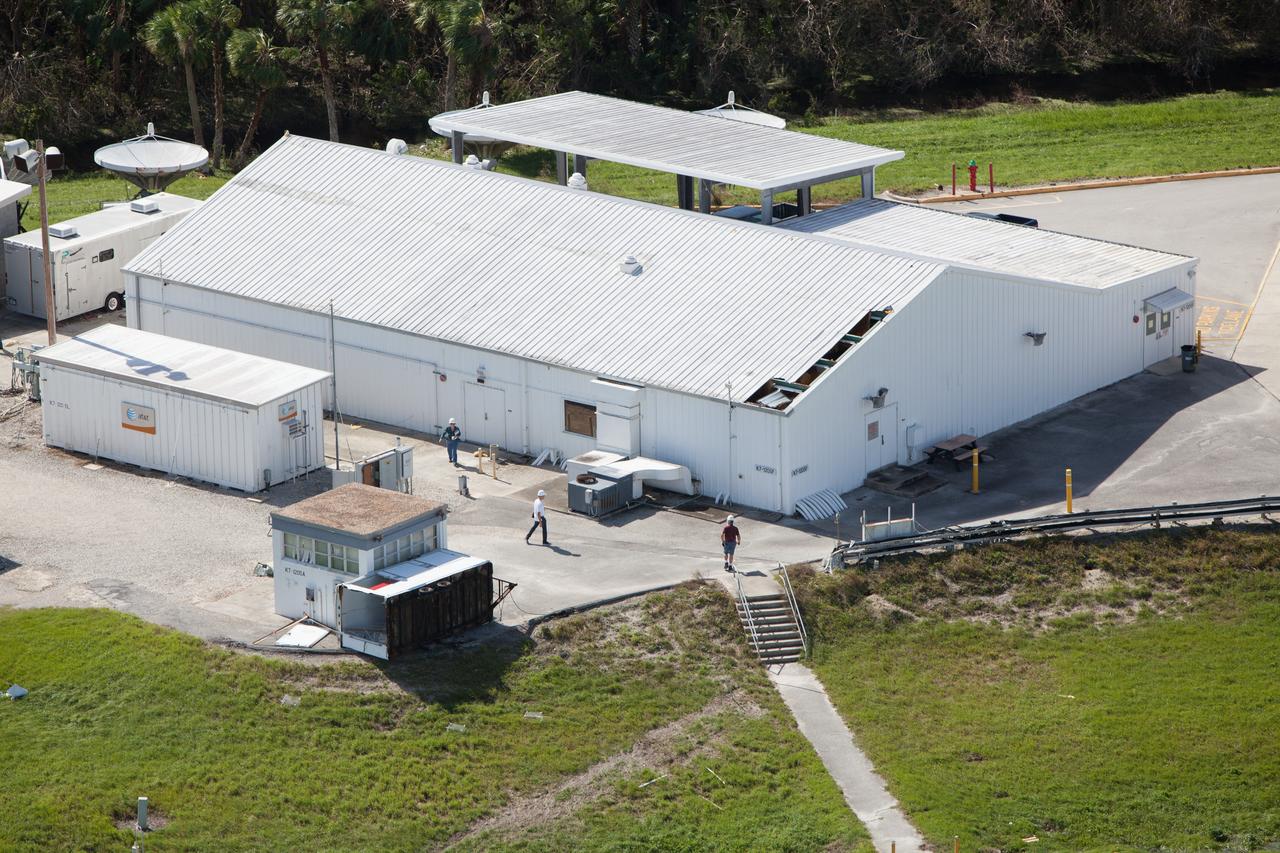
The NASA TV Support Building at the NASA News Center is seen during an aerial survey of NASA's Kennedy Space Center in Florida on Saturday. The survey was performed to identify structures and facilities that may have sustained damage from Hurricane Matthew as the storm passed to the east of Kennedy on Oct. 6 and 7, 2016. Officials determined that the center received some isolated roof damage, damaged support buildings, a few downed power lines, and limited water intrusion. Beach erosion also occurred, although the storm surge was less than expected. NASA closed the center ahead of the storm’s onset and only a small team of specialists known as the Rideout Team was on the center as the storm approached and passed.
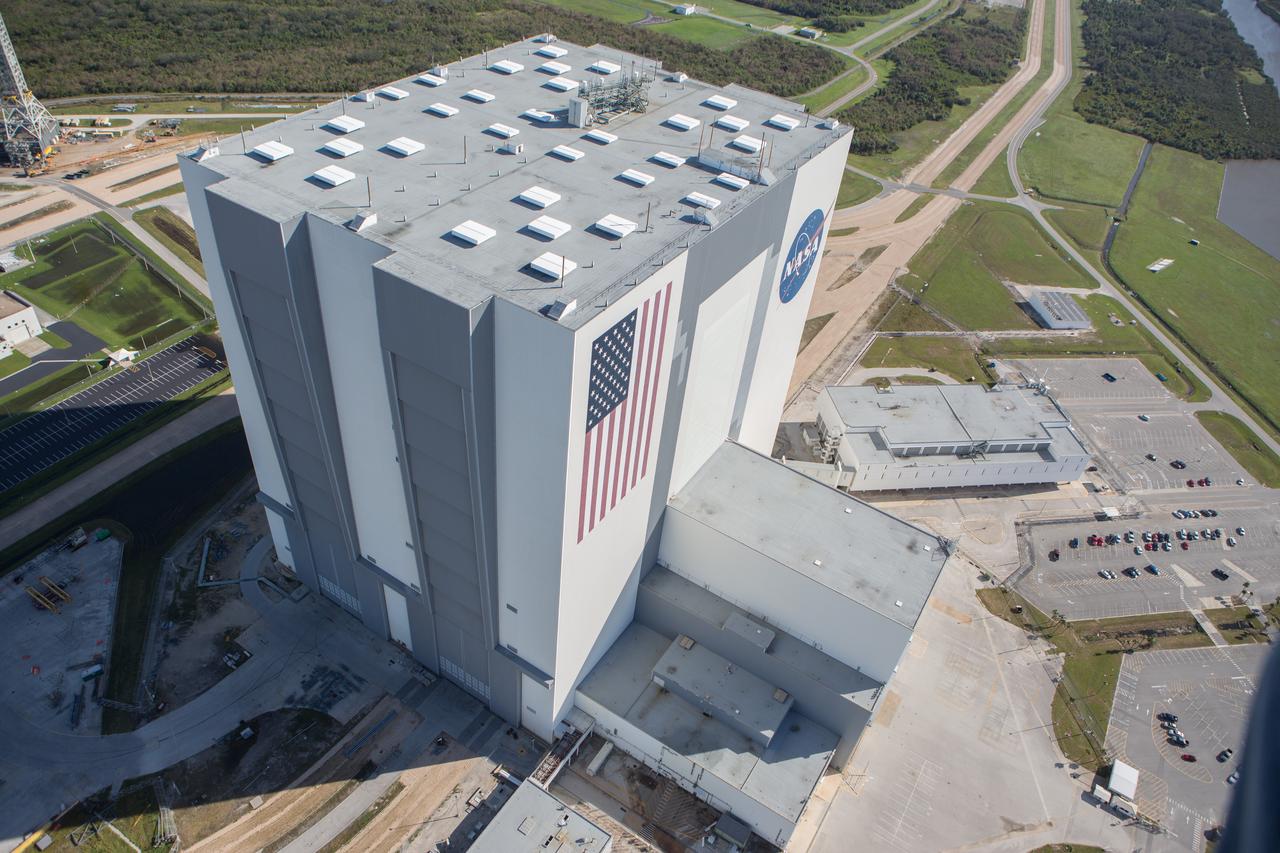
The Vehicle Assembly Building is seen during an aerial survey of NASA's Kennedy Space Center in Florida on Saturday. The survey was performed to identify structures and facilities that may have sustained damage from Hurricane Matthew as the storm passed to the east of Kennedy on Oct. 6 and 7, 2016. Officials determined that the center received some isolated roof damage, damaged support buildings, a few downed power lines, and limited water intrusion. Beach erosion also occurred, although the storm surge was less than expected. NASA closed the center ahead of the storm’s onset and only a small team of specialists known as the Rideout Team was on the center as the storm approached and passed.
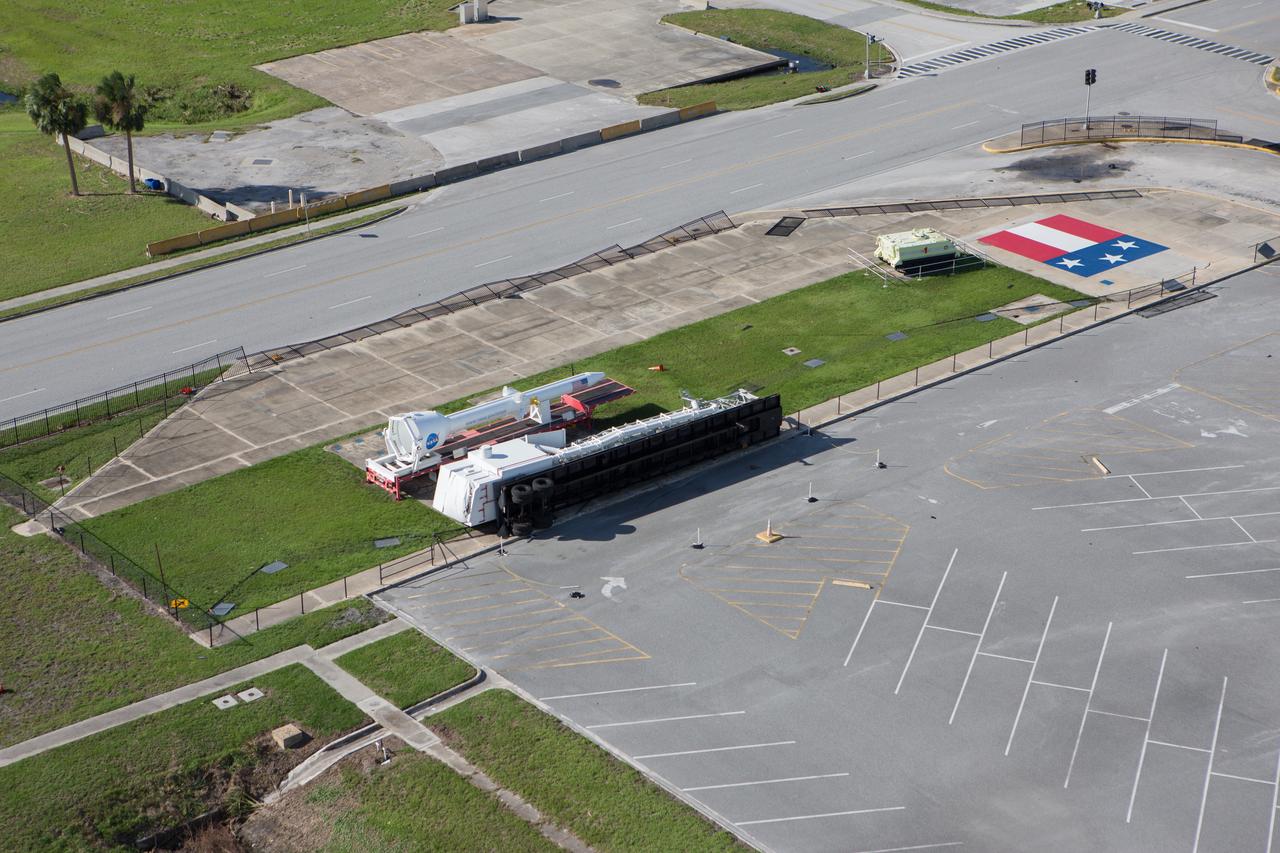
A display area in front of the Vehicle Assembly Building is seen during an aerial survey of NASA's Kennedy Space Center in Florida on Saturday. The survey was performed to identify structures and facilities that may have sustained damage from Hurricane Matthew as the storm passed to the east of Kennedy on Oct. 6 and 7, 2016. Officials determined that the center received some isolated roof damage, damaged support buildings, a few downed power lines, and limited water intrusion. Beach erosion also occurred, although the storm surge was less than expected. NASA closed the center ahead of the storm’s onset and only a small team of specialists known as the Rideout Team was on the center as the storm approached and passed.
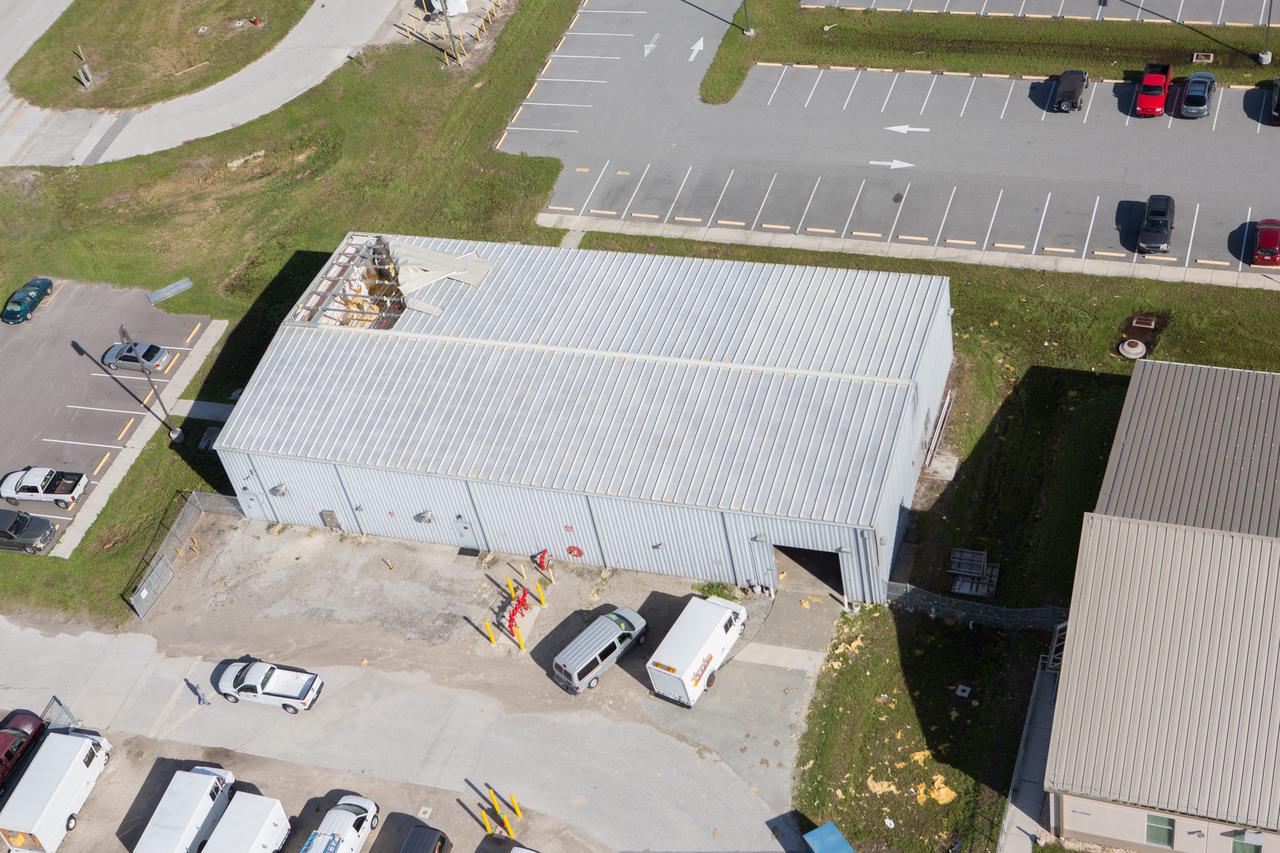
A support building is seen during an aerial survey of NASA's Kennedy Space Center in Florida on Saturday. The survey was performed to identify structures and facilities that may have sustained damage from Hurricane Matthew as the storm passed to the east of Kennedy on Oct. 6 and 7, 2016. Officials determined that the center received some isolated roof damage, damaged support buildings, a few downed power lines, and limited water intrusion. Beach erosion also occurred, although the storm surge was less than expected. NASA closed the center ahead of the storm’s onset and only a small team of specialists known as the Rideout Team was on the center as the storm approached and passed.
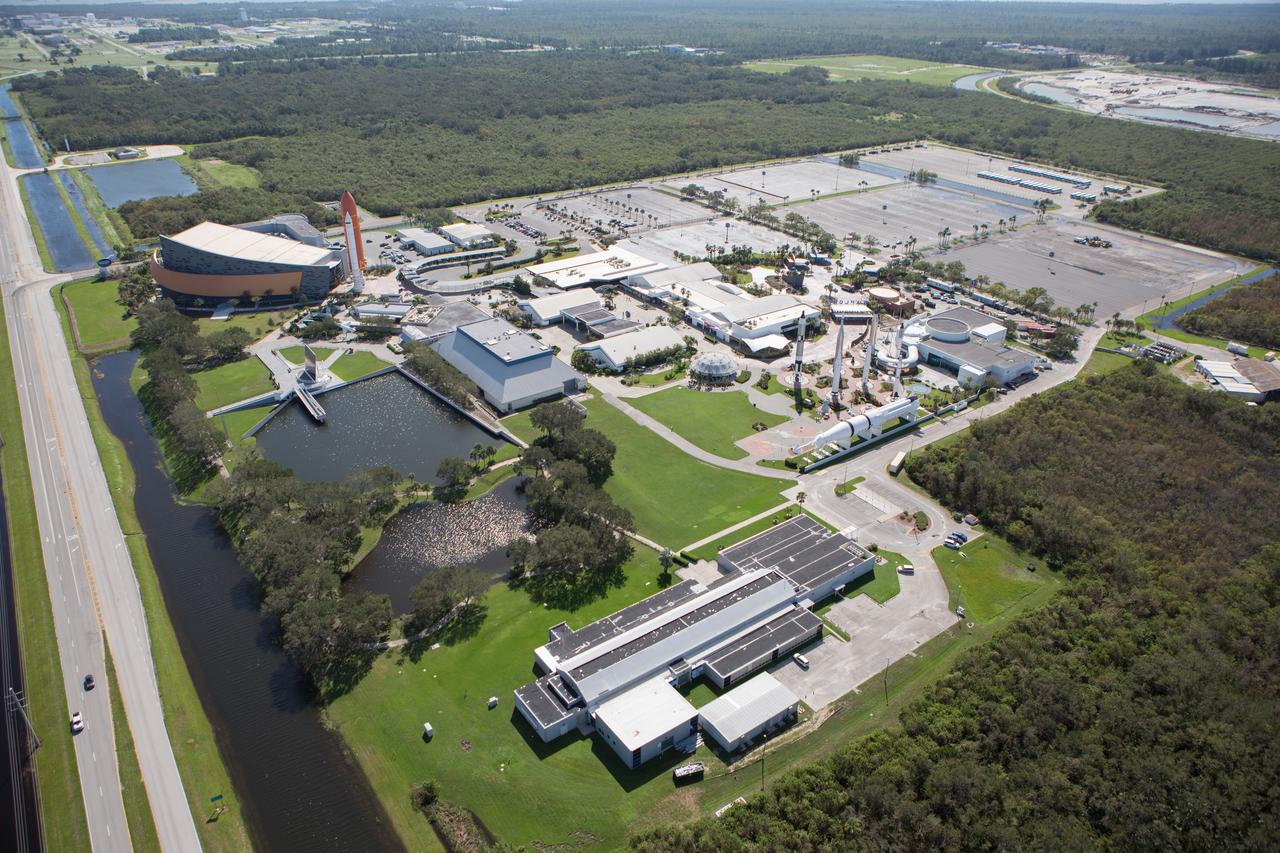
The Kennedy Space Center Visitor Complex is seen during an aerial survey of NASA's Kennedy Space Center in Florida on Saturday. The survey was performed to identify structures and facilities that may have sustained damage from Hurricane Matthew as the storm passed to the east of Kennedy on Oct. 6 and 7, 2016. Officials determined that the center received some isolated roof damage, damaged support buildings, a few downed power lines, and limited water intrusion. Beach erosion also occurred, although the storm surge was less than expected. NASA closed the center ahead of the storm’s onset and only a small team of specialists known as the Rideout Team was on the center as the storm approached and passed.
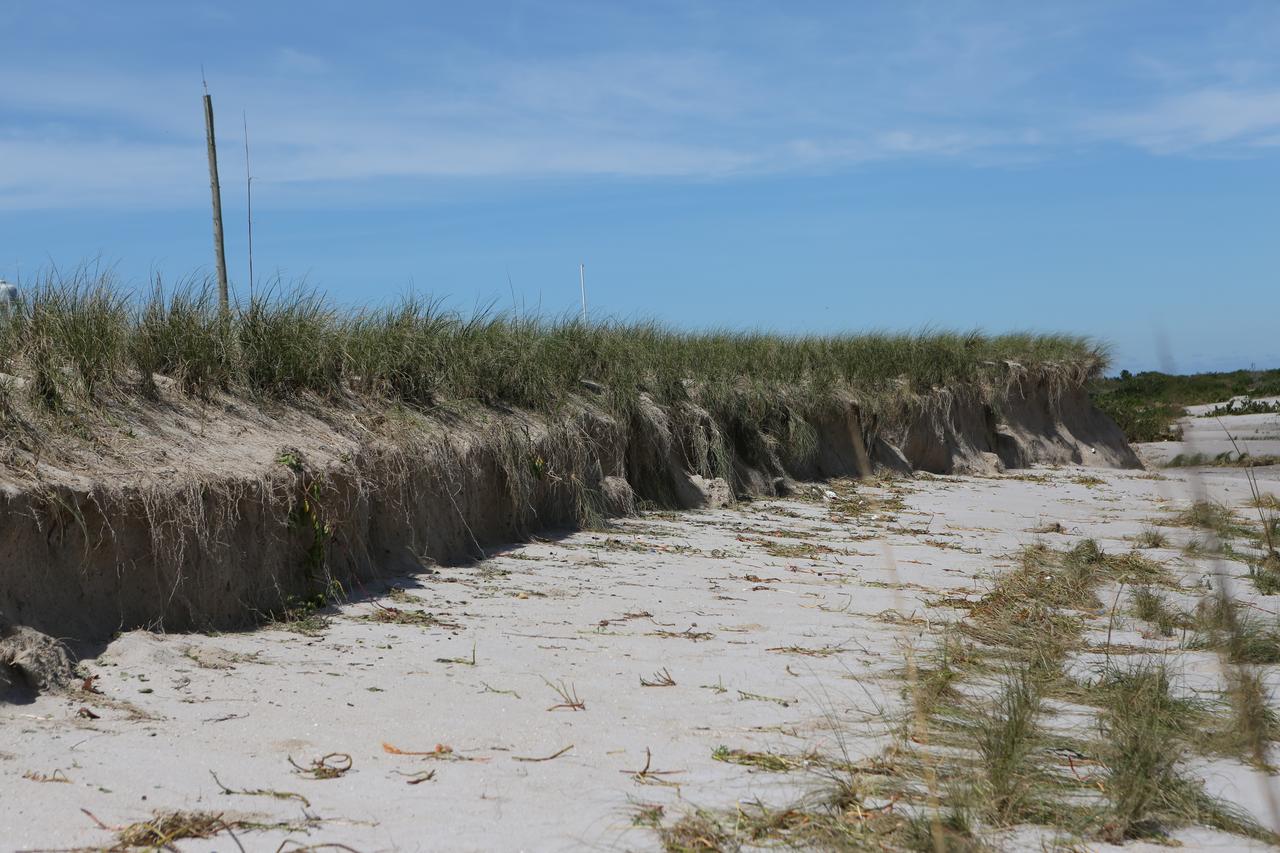
A beach area is seen during a survey of NASA's Kennedy Space Center in Florida on Saturday. The survey was performed to identify structures and facilities that may have sustained damage from Hurricane Matthew as the storm passed to the east of Kennedy on Oct. 6 and 7, 2016. Officials determined that the center received some isolated roof damage, damaged support buildings, a few downed power lines, and limited water intrusion. Beach erosion also occurred, although the storm surge was less than expected. NASA closed the center ahead of the storm’s onset and only a small team of specialists known as the Rideout Team was on the center as the storm approached and passed.
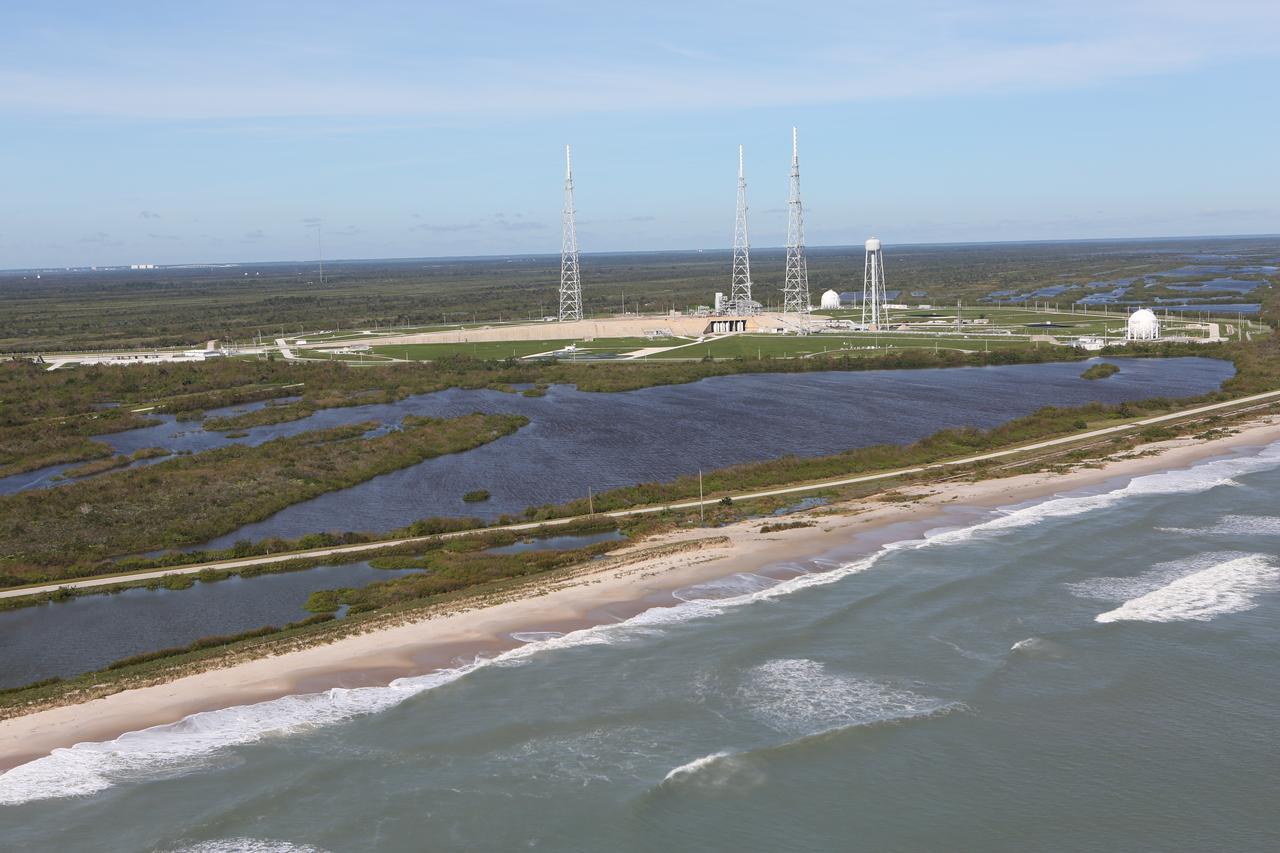
Launch Complex 39B is seen during an aerial survey of NASA's Kennedy Space Center in Florida on Saturday. The survey was performed to identify structures and facilities that may have sustained damage from Hurricane Matthew as the storm passed to the east of Kennedy on Oct. 6 and 7, 2016. Officials determined that the center received some isolated roof damage, damaged support buildings, a few downed power lines, and limited water intrusion. Beach erosion also occurred, although the storm surge was less than expected. NASA closed the center ahead of the storm’s onset and only a small team of specialists known as the Rideout Team was on the center as the storm approached and passed.
A support building is seen during an aerial survey of NASA's Kennedy Space Center in Florida on Saturday. The survey was performed to identify structures and facilities that may have sustained damage from Hurricane Matthew as the storm passed to the east of Kennedy on Oct. 6 and 7, 2016. Officials determined that the center received some isolated roof damage, damaged support buildings, a few downed power lines, and limited water intrusion. Beach erosion also occurred, although the storm surge was less than expected. NASA closed the center ahead of the storm’s onset and only a small team of specialists known as the Rideout Team was on the center as the storm approached and passed.
Damage to a facility roof is seen during an aerial survey of NASA's Kennedy Space Center in Florida on Saturday. The survey was performed to identify structures and facilities that may have sustained damage from Hurricane Matthew as the storm passed to the east of Kennedy on Oct. 6 and 7, 2016. Officials determined that the center received some isolated roof damage, damaged support buildings, a few downed power lines, and limited water intrusion. Beach erosion also occurred, although the storm surge was less than expected. NASA closed the center ahead of the storm’s onset and only a small team of specialists known as the Rideout Team was on the center as the storm approached and passed
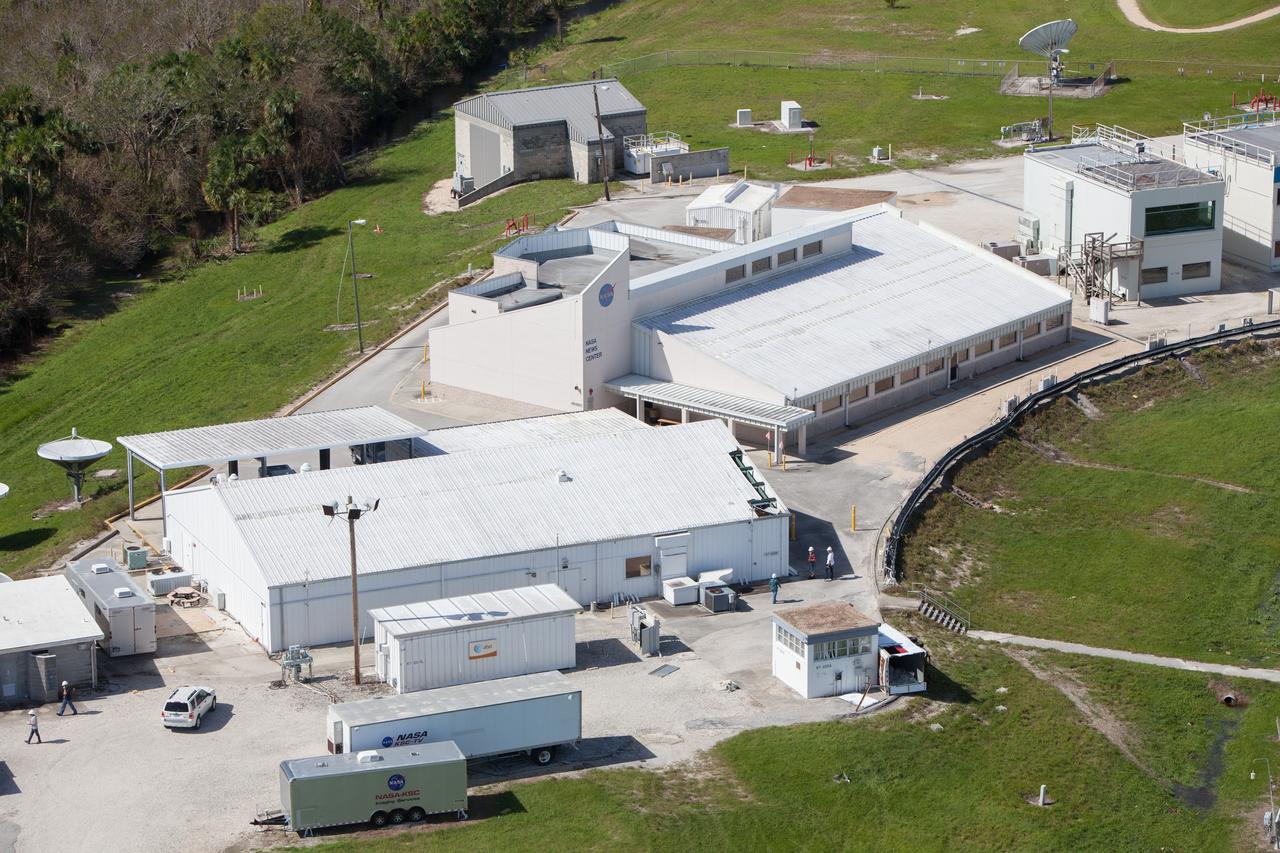
The NASA TV Support Building at the NASA News Center is seen during an aerial survey of NASA's Kennedy Space Center in Florida on Saturday. The survey was performed to identify structures and facilities that may have sustained damage from Hurricane Matthew as the storm passed to the east of Kennedy on Oct. 6 and 7, 2016. Officials determined that the center received some isolated roof damage, damaged support buildings, a few downed power lines, and limited water intrusion. Beach erosion also occurred, although the storm surge was less than expected. NASA closed the center ahead of the storm’s onset and only a small team of specialists known as the Rideout Team was on the center as the storm approached and passed.