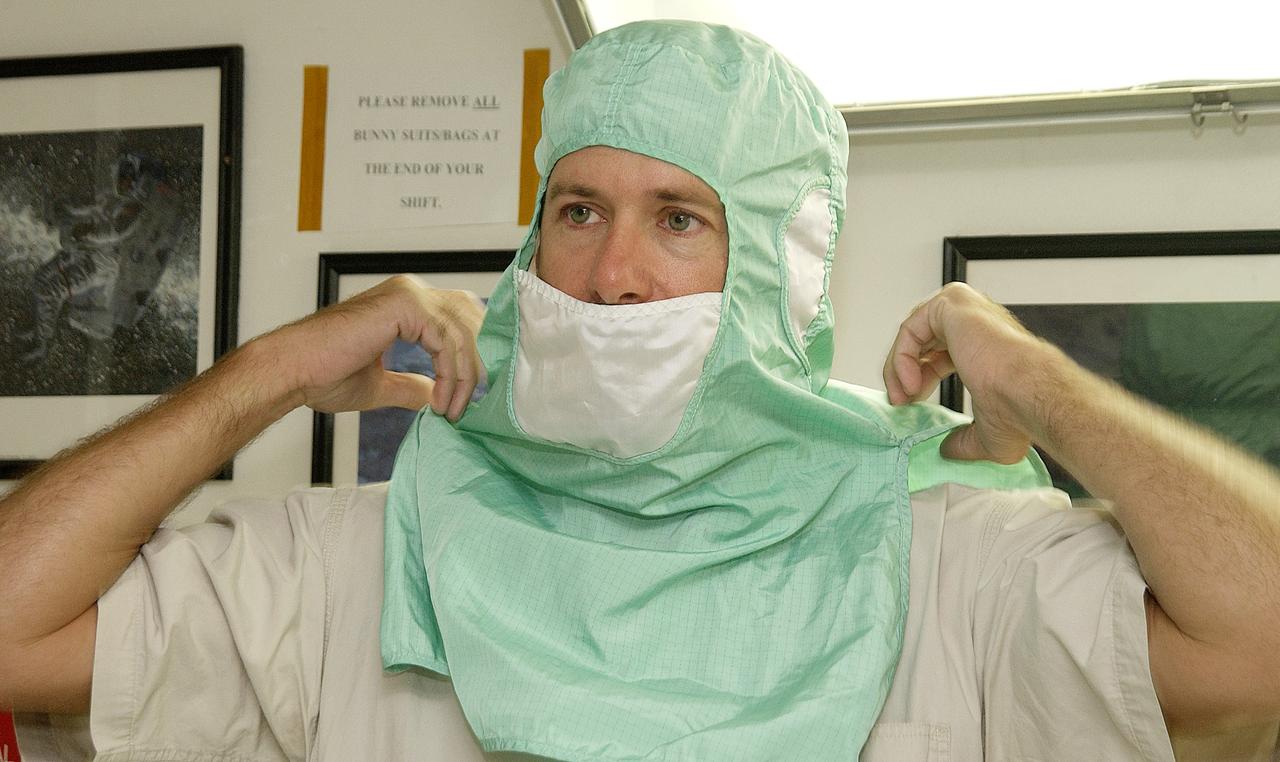
KENNEDY SPACE CENTER, FLA. - A KSC employee dons the head and face cover of a "bunny suit," part of standard clean room apparel, before entering a clean room. This apparel is designed to cover the hair, clothing and shoes of employees to prevent particulate matter from contaminating the space flight hardware being stored or processed in the clean room and is one aspect of KSC's Foreign Object Debris (FOD) control program, an important safety initiative.
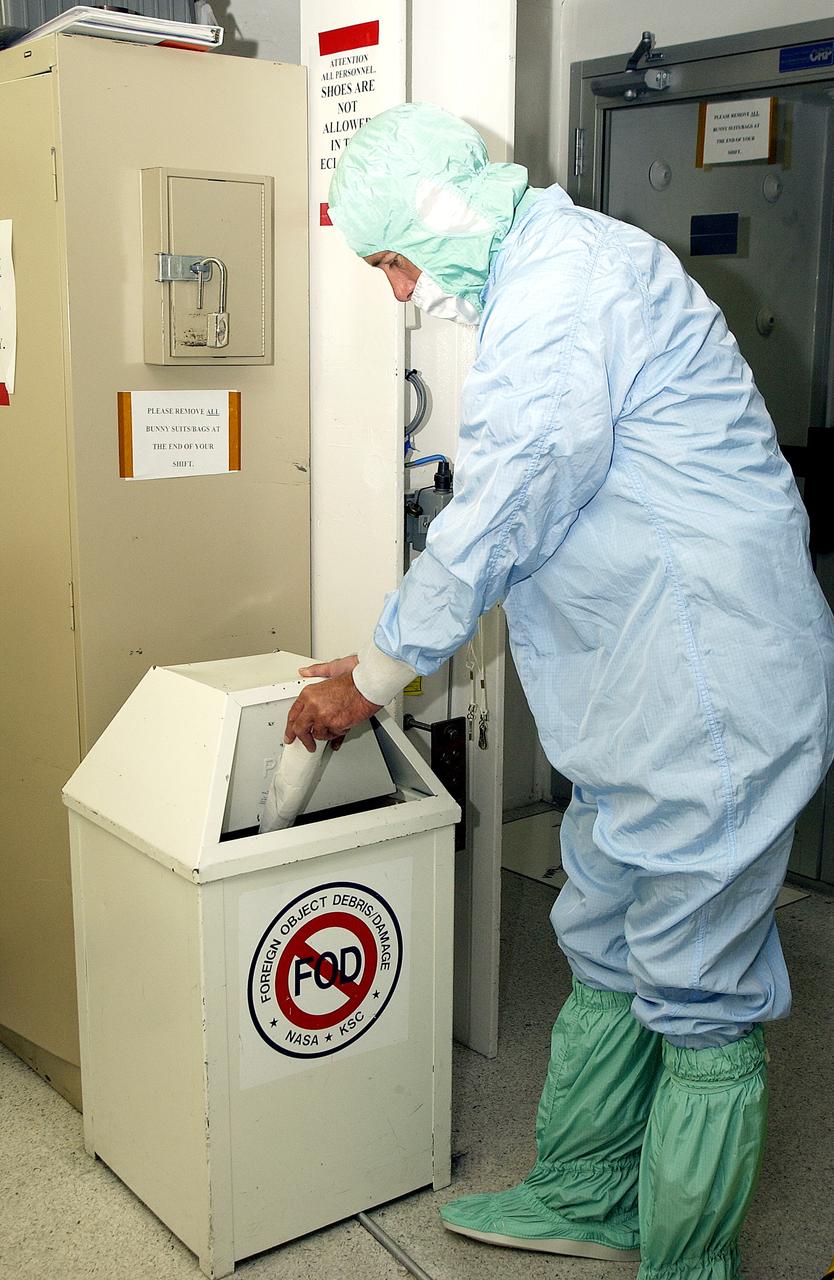
KENNEDY SPACE CENTER, FLA. - A KSC employee dressed in a "bunny suit," standard clean room apparel, disposes of some waste material into a container designated for the purpose. The apparel is designed to cover the hair, clothing and shoes of employees entering a clean room to prevent particulate matter from contaminating the space flight hardware being stored or processed in the room. The suit and container are both part of KSC's Foreign Object Debris (FOD) control program, an important safety initiative.
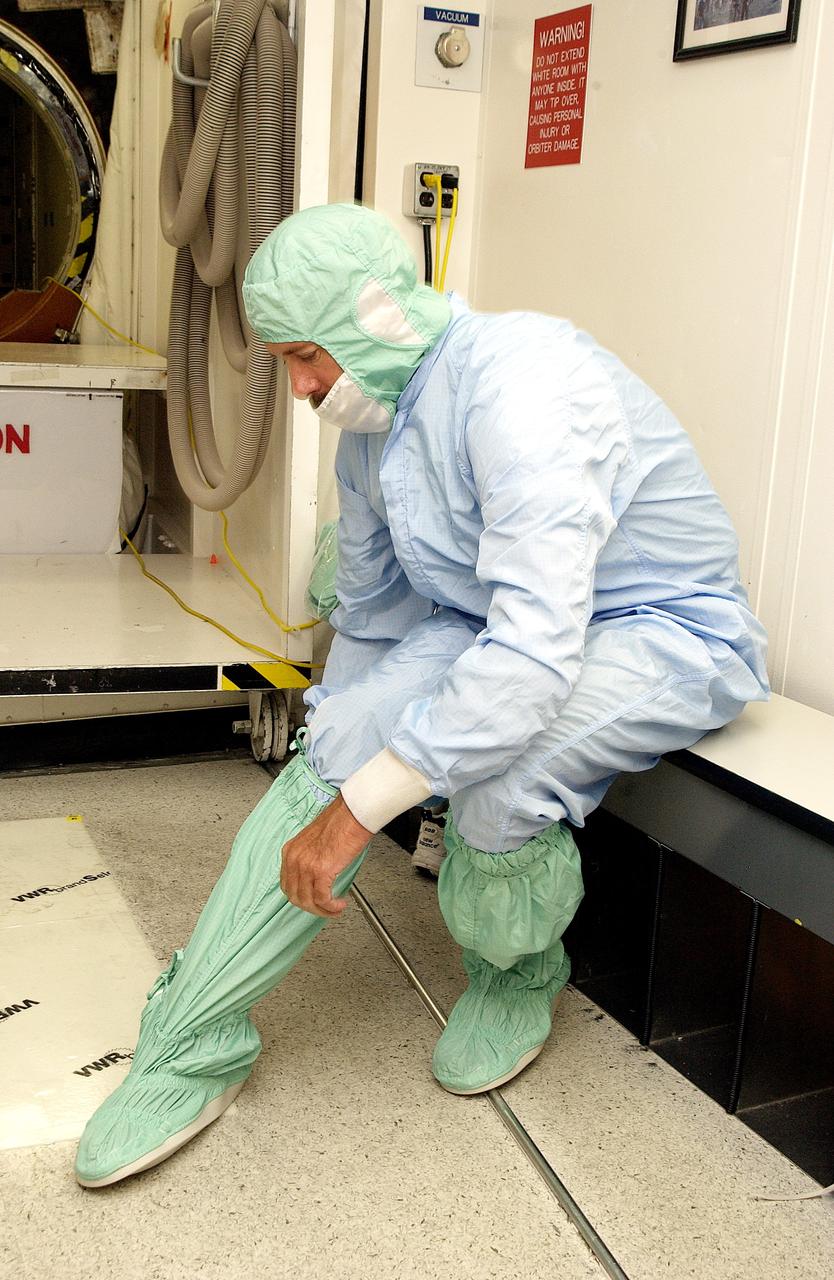
KENNEDY SPACE CENTER, FLA. - A KSC employee secures a foot and leg cover of his "bunny suit," part of standard clean room apparel, before entering a clean room. The apparel is designed to cover the hair, clothing and shoes of employees to prevent particulate matter from contaminating the space flight hardware being stored or processed in the clean room and is one aspect of KSC's Foreign Object Debris (FOD) control program, an important safety initiative.
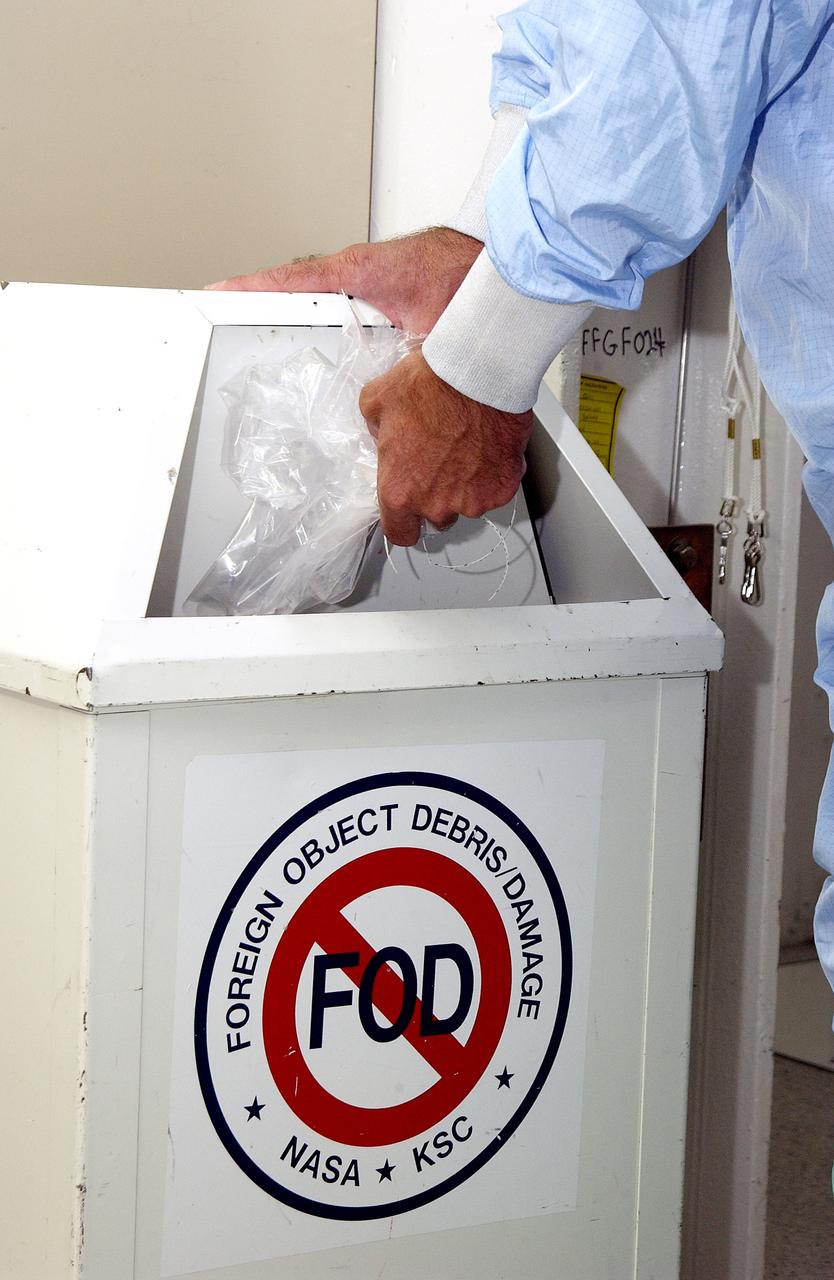
KENNEDY SPACE CENTER, FLA. - A KSC employee dressed in a "bunny suit," standard clean room apparel, disposes of some waste material into a container designated for the purpose. The apparel is designed to cover the hair, clothing and shoes of employees entering a clean room to prevent particulate matter from contaminating the space flight hardware being stored or processed in the room. The suit and container are both part of KSC's Foreign Object Debris (FOD) control program, an important safety initiative.
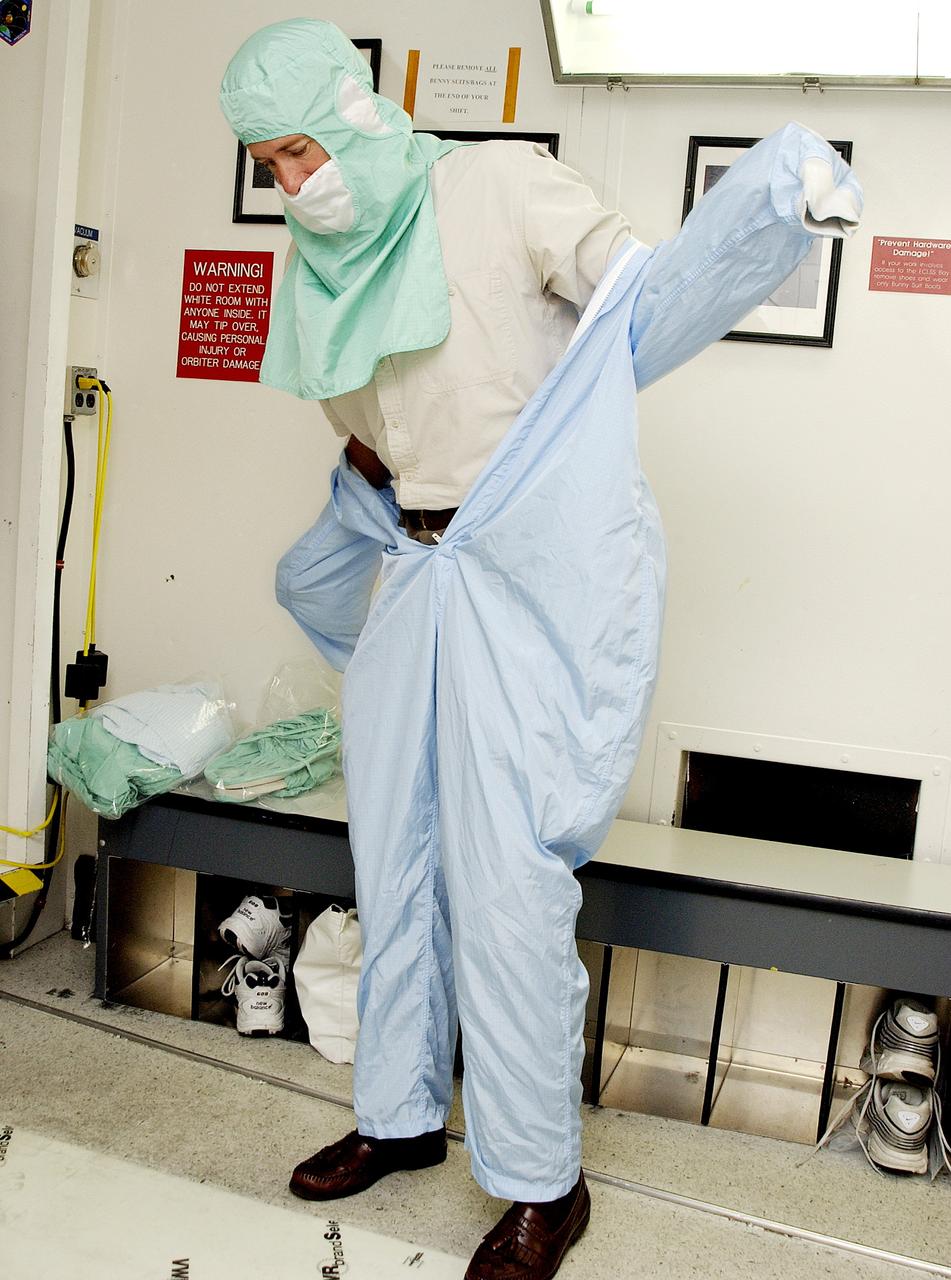
KENNEDY SPACE CENTER, FLA. - A KSC employee dons the coverall of a "bunny suit," part of standard clean room apparel, before entering a clean room. The apparel is designed to cover the hair, clothing and shoes of employees to prevent particulate matter from contaminating the space flight hardware being stored or processed in the clean room and is one aspect of KSC's Foreign Object Debris (FOD) control program, an important safety initiative.
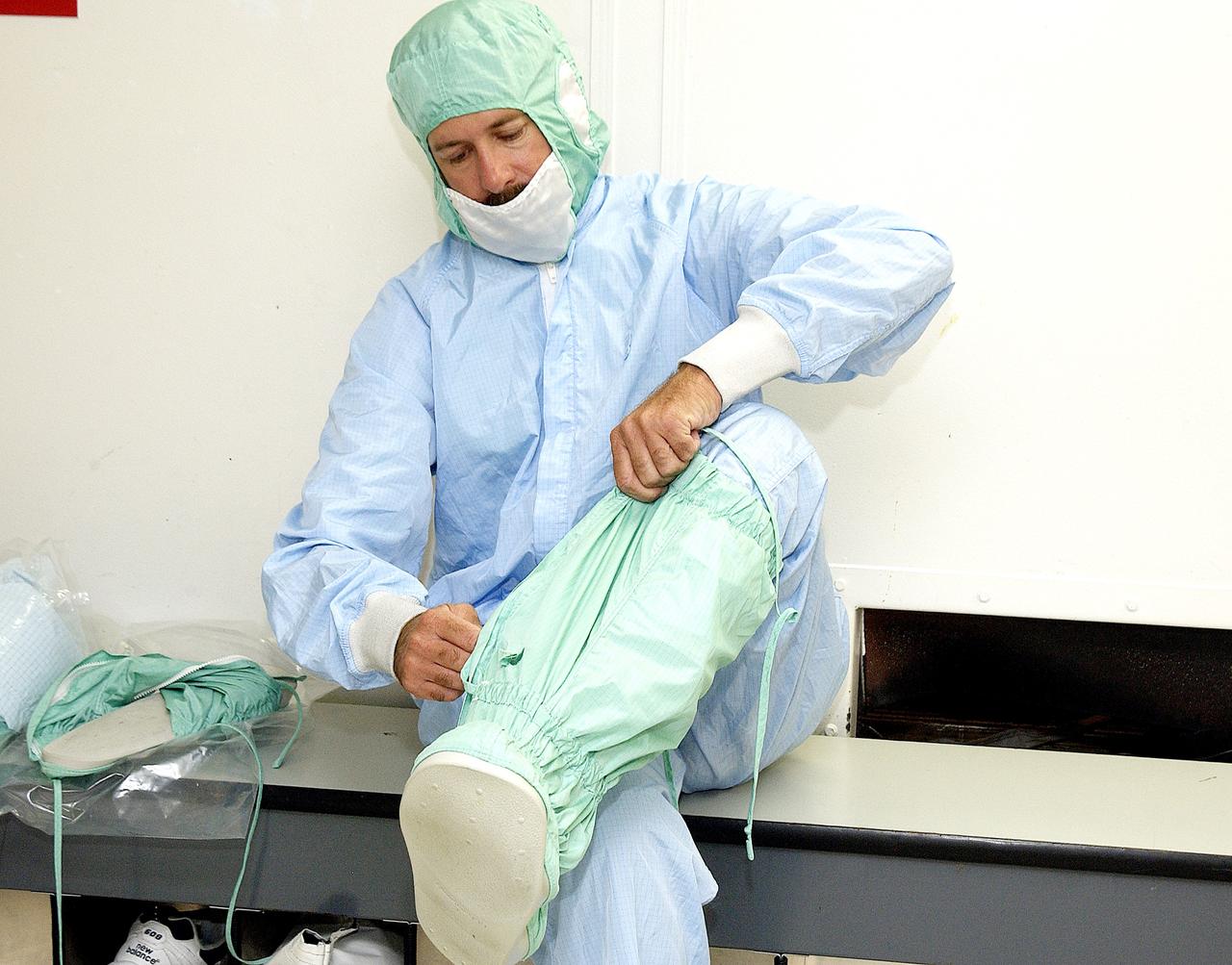
KENNEDY SPACE CENTER, FLA. - A KSC employee dons the foot and leg covers of a "bunny suit," part of standard clean room apparel, before entering a clean room. The apparel is designed to cover the hair, clothing and shoes of employees to prevent particulate matter from contaminating the space flight hardware being stored or processed in the clean room and is one aspect of KSC's Foreign Object Debris (FOD) control program, an important safety initiative.
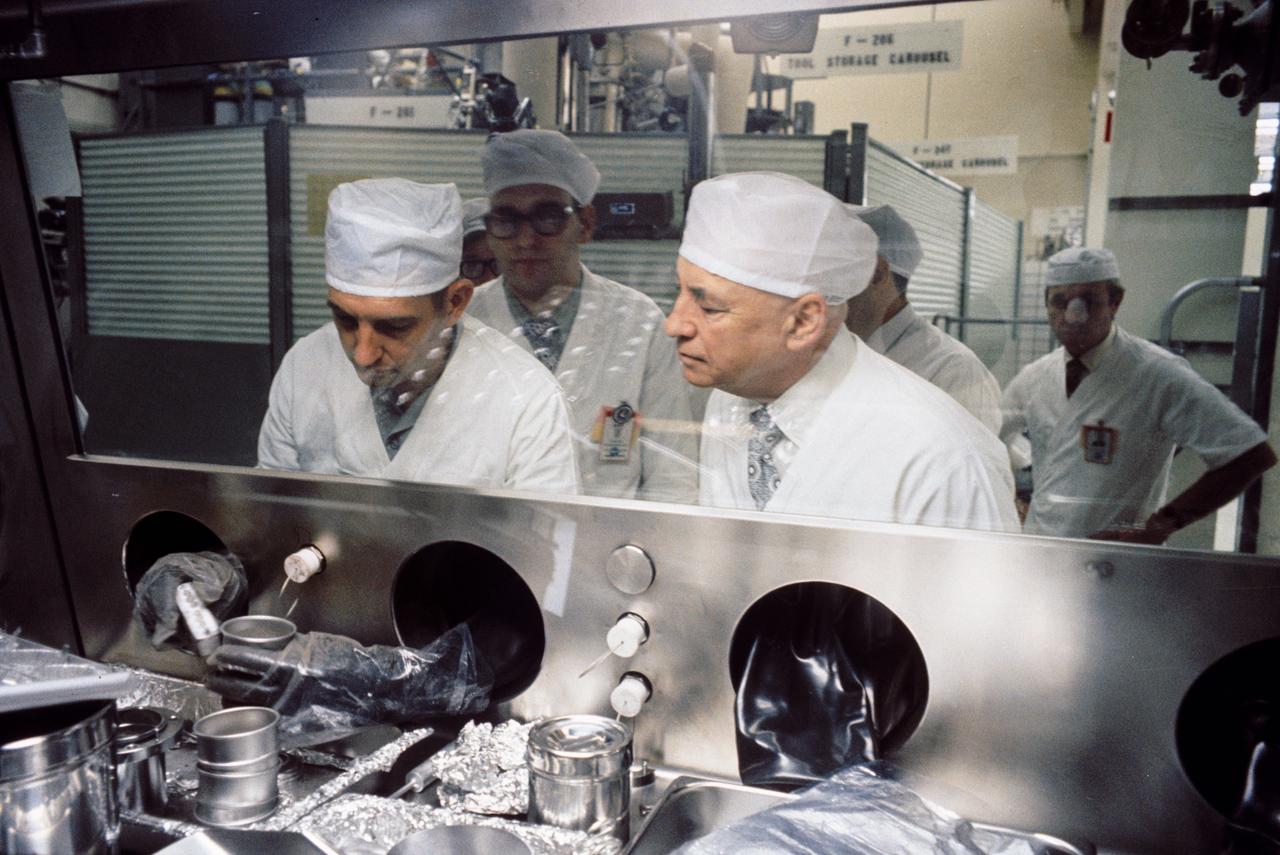
S73-34103 (1973) --- Wearing special germ-free clothing, Dr. Robert R. Gilruth, right, inspects lunar samples collected during the Apollo 17 mission, NASA's final Apollo flight.

STS059-32-016 (20 April 1994) --- Astronaut Linda M. Godwin, STS-59 payload commander, poses with the spacesuit she wore for launch. She will eventually wear the partial pressure suit for the entry phase of the Space Shuttle Endeavour's week and a half mission in Earth orbit.

Women dressed in traditional Kazak clothing pose for a photo after presenting the returning Expedition 9 and taxi flight crew members with gifts at the airport in Kustanay, Kazakhstan, Sunday, October 24, 2004. Photo Credit: (NASA/Bill Ingalls)
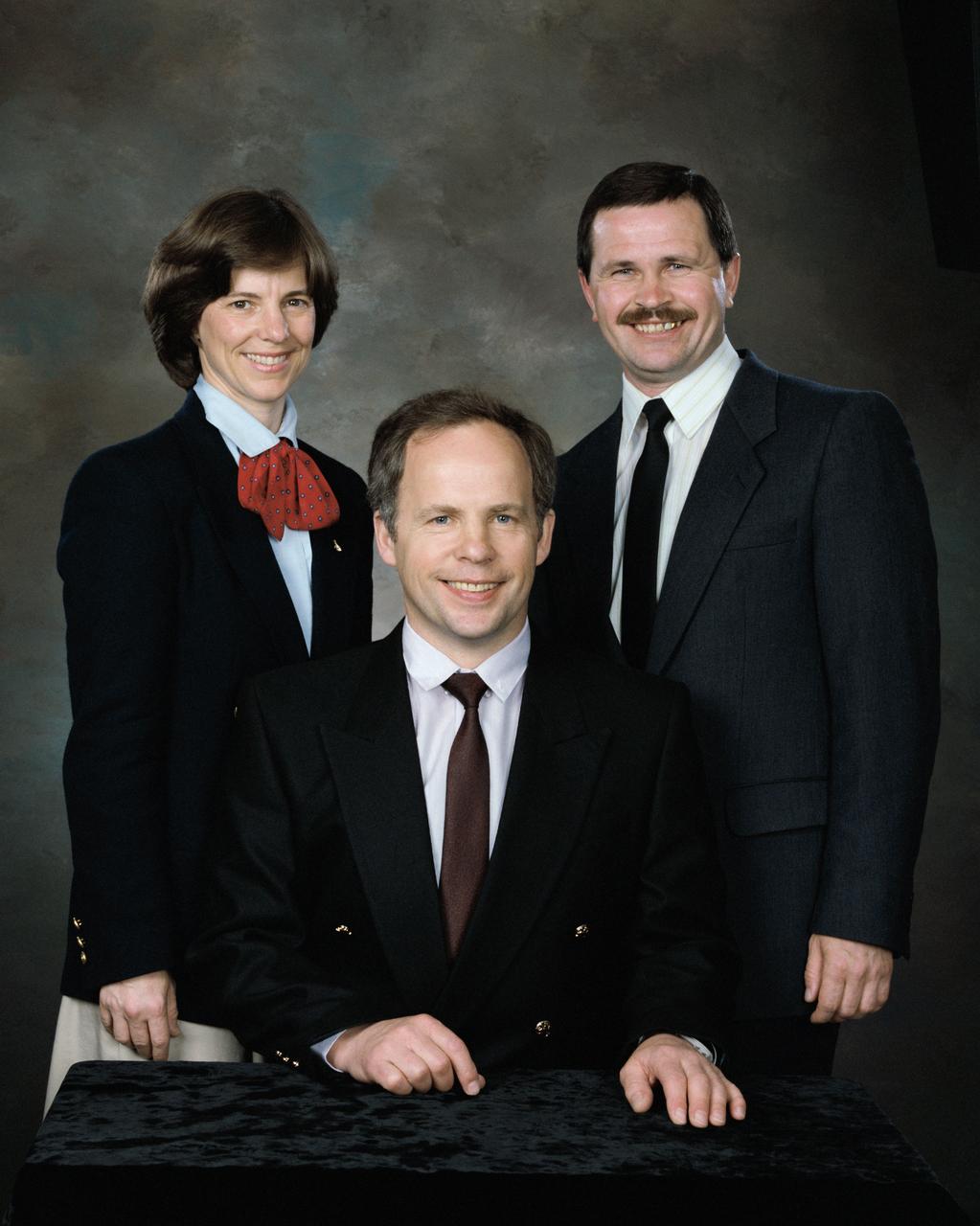
S94-34942 (27 May 1994) --- This is a portrait of (left to right) Bonnie J. Dunbar, Anatoliy Y. Solovyev, and Nikolai M. Budarin in civilian clothes. Dunbar is mission specialist for STS-71, and alternate crew member for Mir 18. Solovyev is commander for Mir 19, and Budarin is the flight engineer for that mission.
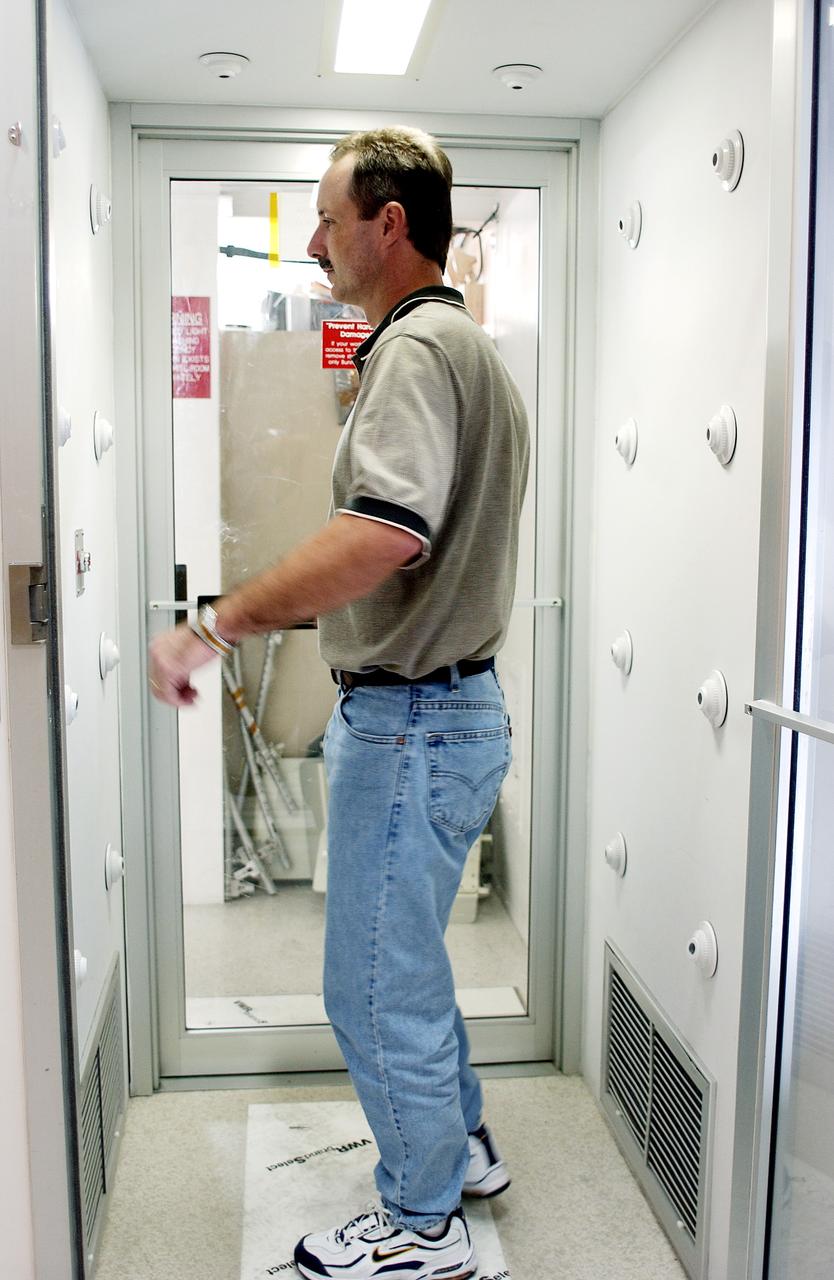
KENNEDY SPACE CENTER, FLA. - A KSC employee uses a clean-air shower before entering a clean room. Streams of pressurized air directed at the occupant from nozzles in the chamber's ceiling and walls are designed to dislodge particulate matter from hair, clothing and shoes. The adhesive mat on the floor captures soil from shoe soles, as well as particles that fall on its surface. Particulate matter has the potential to contaminate the space flight hardware being stored or processed in the clean room. The shower is part of KSC's Foreign Object Debris (FOD) control program, an important safety initiative.
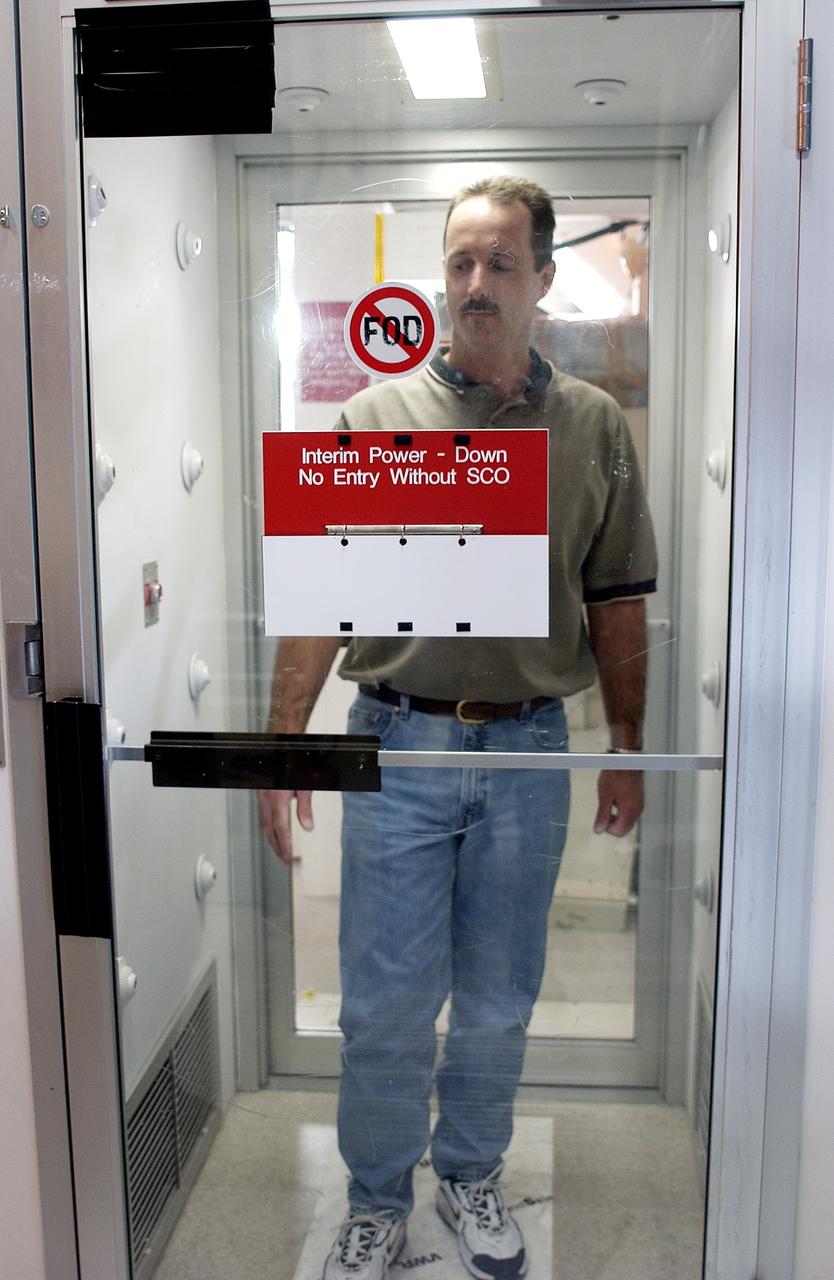
KENNEDY SPACE CENTER, FLA. - A KSC employee uses a clean-air shower before entering a clean room. Streams of pressurized air directed at the occupant from nozzles in the chamber's ceiling and walls are designed to dislodge particulate matter from hair, clothing and shoes. The adhesive mat on the floor captures soil from shoe soles, as well as particles that fall on its surface. Particulate matter has the potential to contaminate the space flight hardware being stored or processed in the clean room. The shower is part of KSC's Foreign Object Debris (FOD) control program, an important safety initiative.
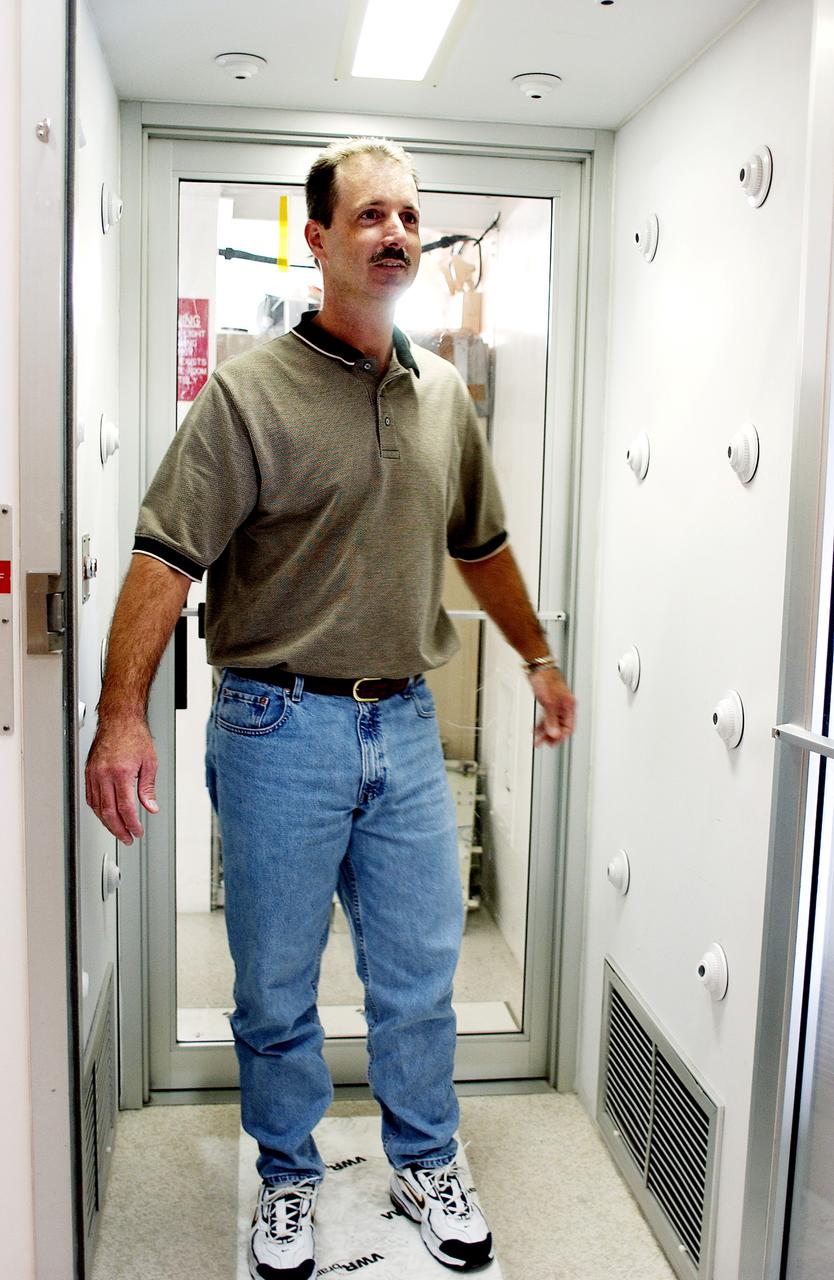
KENNEDY SPACE CENTER, FLA. - A KSC employee uses a clean-air shower before entering a clean room. Streams of pressurized air directed at the occupant from nozzles in the chamber's ceiling and walls are designed to dislodge particulate matter from hair, clothing and shoes. The adhesive mat on the floor captures soil from shoe soles, as well as particles that fall on its surface. Particulate matter has the potential to contaminate the space flight hardware being stored or processed in the clean room. The shower is part of KSC's Foreign Object Debris (FOD) control program, an important safety initiative.
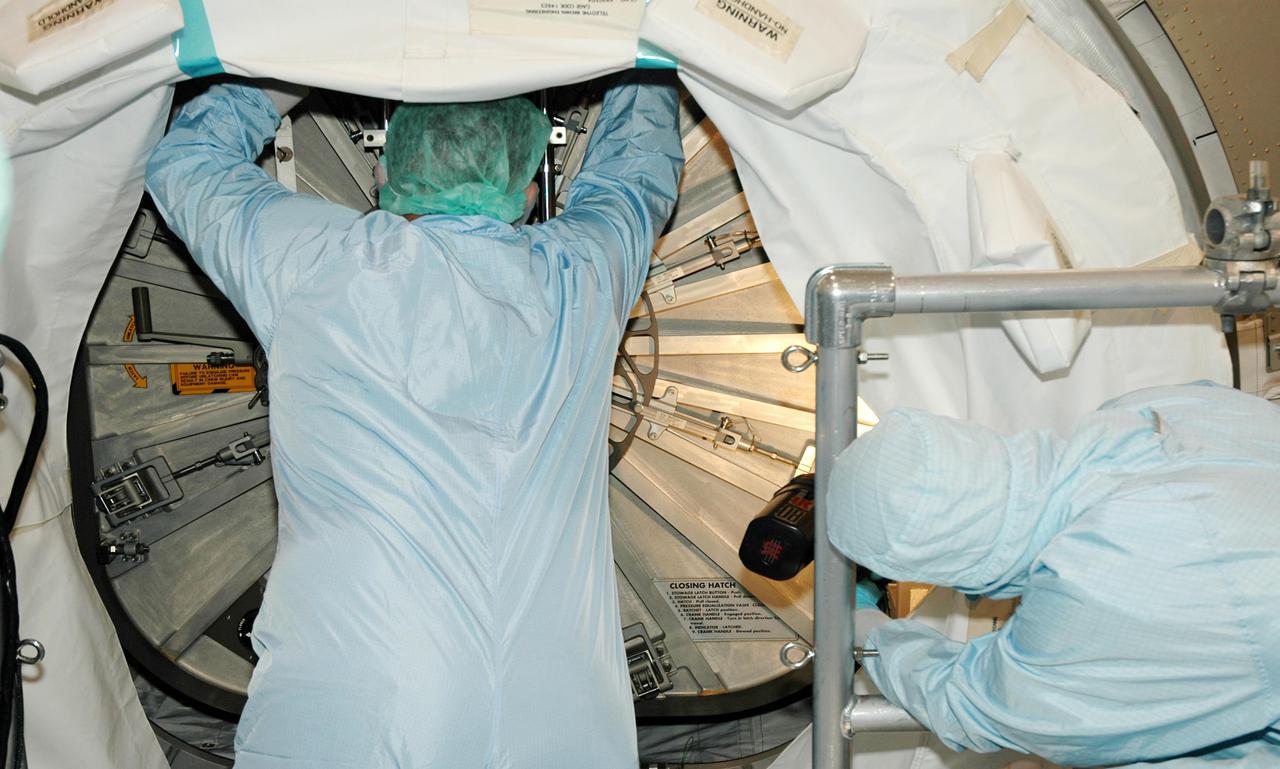
KENNEDY SPACE CENTER, FLA. -- Workers in the Space Station Processing Facility close the hatch for flight on Italian-built Multi-Purpose Logistics Module Raffaello, a significant milestone on the road to Return to Flight. The module will travel to the International Space Station aboard Space Shuttle Discovery’s Return to Flight mission STS-114. Raffaello carries 12 racks of cargo, including food, clothing, spare parts and research equipment, to the Station. Shuttle Discovery is targeted for launch in a window extending May 15 through June 3.
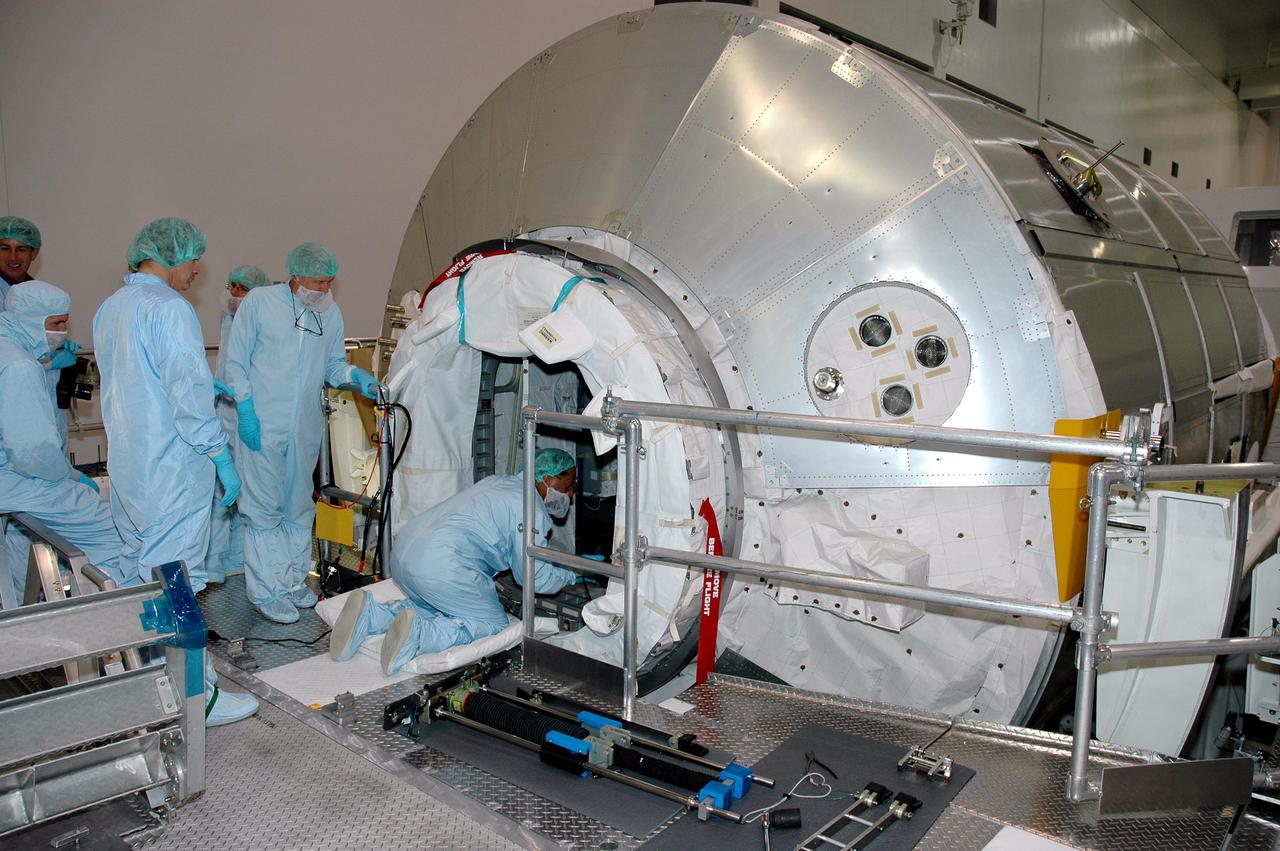
KENNEDY SPACE CENTER, FLA. -- Workers in the Space Station Processing Facility prepare to close the hatch for flight on Italian-built Multi-Purpose Logistics Module Raffaello, a significant milestone on the road to Return to Flight. The module will travel to the International Space Station aboard Space Shuttle Discovery’s Return to Flight mission STS-114. Raffaello carries 12 racks of cargo, including food, clothing, spare parts and research equipment, to the Station. Shuttle Discovery is targeted for launch in a window extending May 15 through June 3.
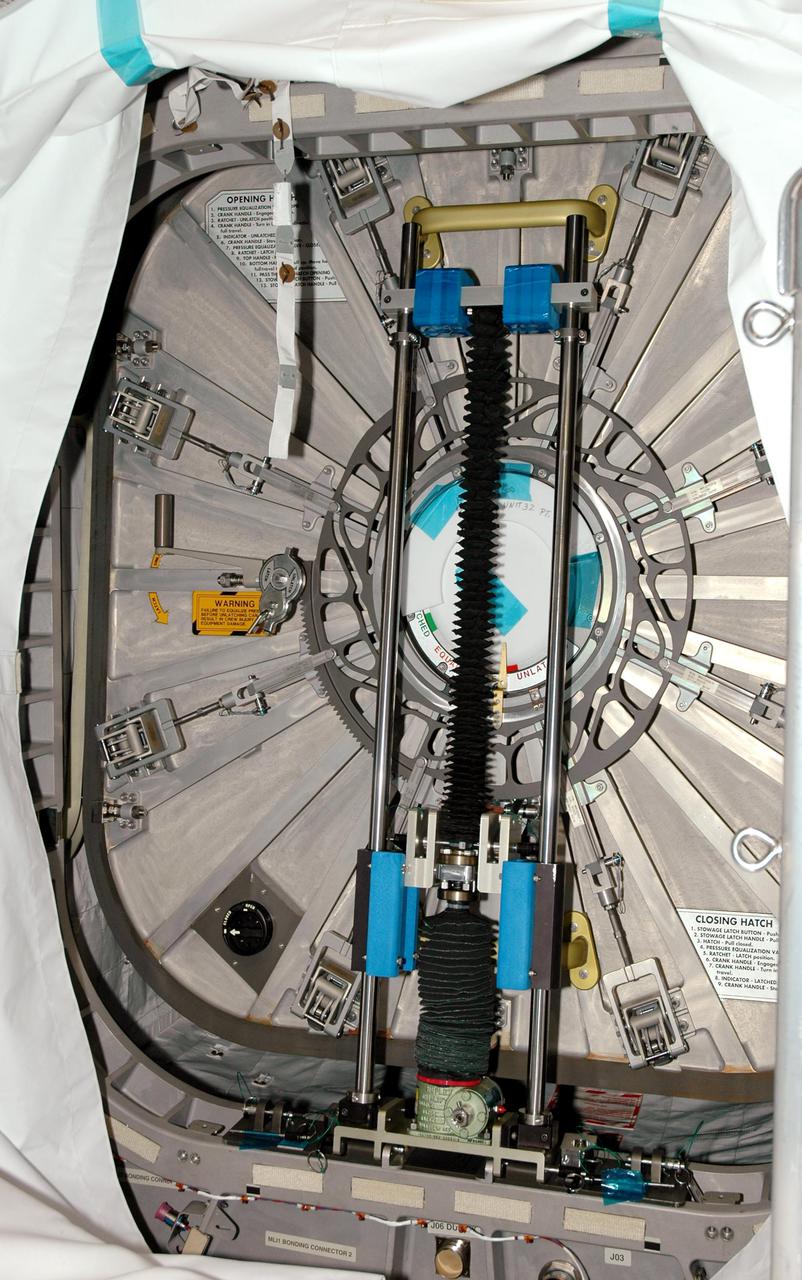
KENNEDY SPACE CENTER, FLA. -- In the Space Station Processing Facility, the hatch door on Italian-built Multi-Purpose Logistics Module Raffaello is closed, a significant milestone on the road to Return to Flight. The module will travel to the International Space Station aboard Space Shuttle Discovery’s Return to Flight mission STS-114. Raffaello carries 12 racks of cargo, including food, clothing, spare parts and research equipment, to the Station. Shuttle Discovery is targeted for launch in a window extending May 15 through June 3.
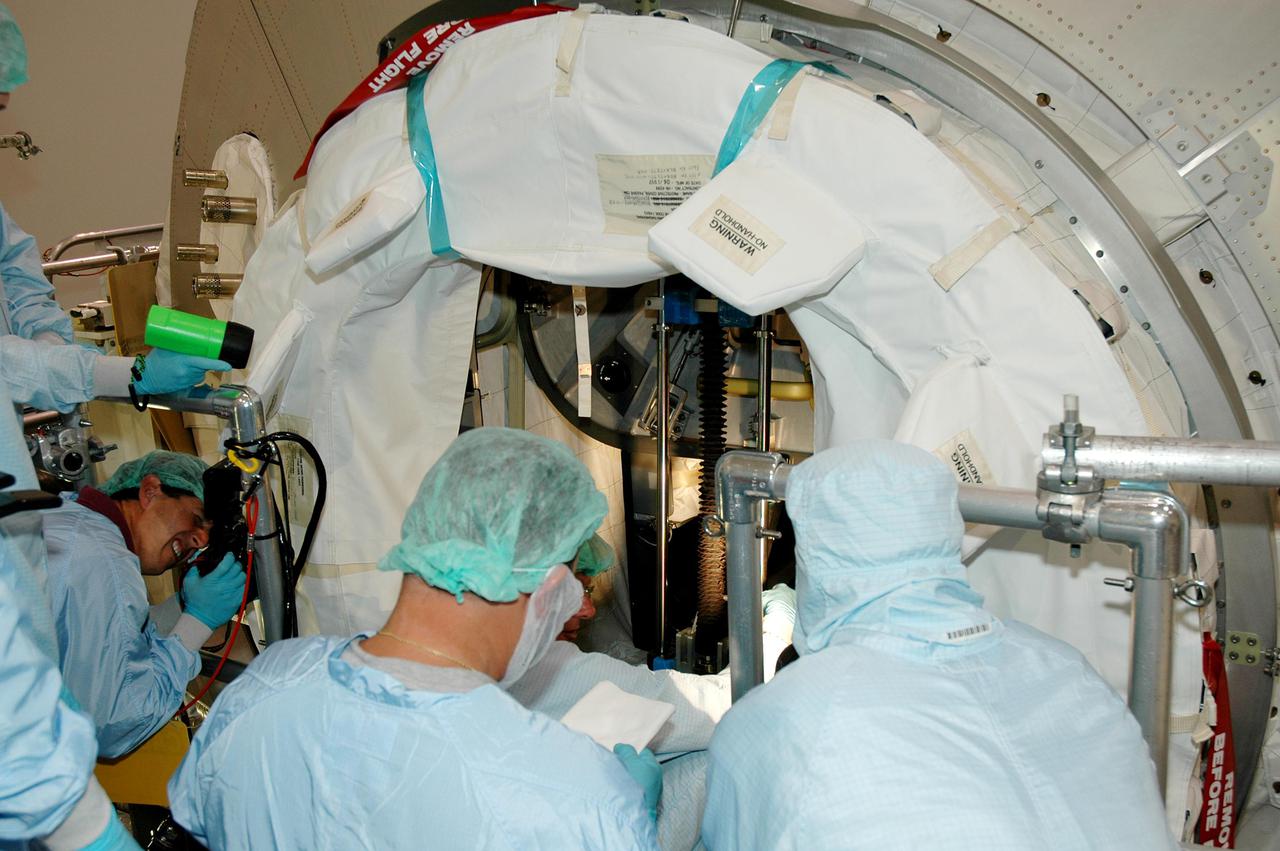
KENNEDY SPACE CENTER, FLA. -- Workers in the Space Station Processing Facility take final measurements flight on Italian-built Multi-Purpose Logistics Module Raffaello as they prepare to close the hatch for flight, a significant milestone on the road to Return to Flight. The module will travel to the International Space Station aboard Space Shuttle Discovery’s Return to Flight mission STS-114. Raffaello carries 12 racks of cargo, including food, clothing, spare parts and research equipment, to the Station. Shuttle Discovery is targeted for launch in a window extending May 15 through June 3.
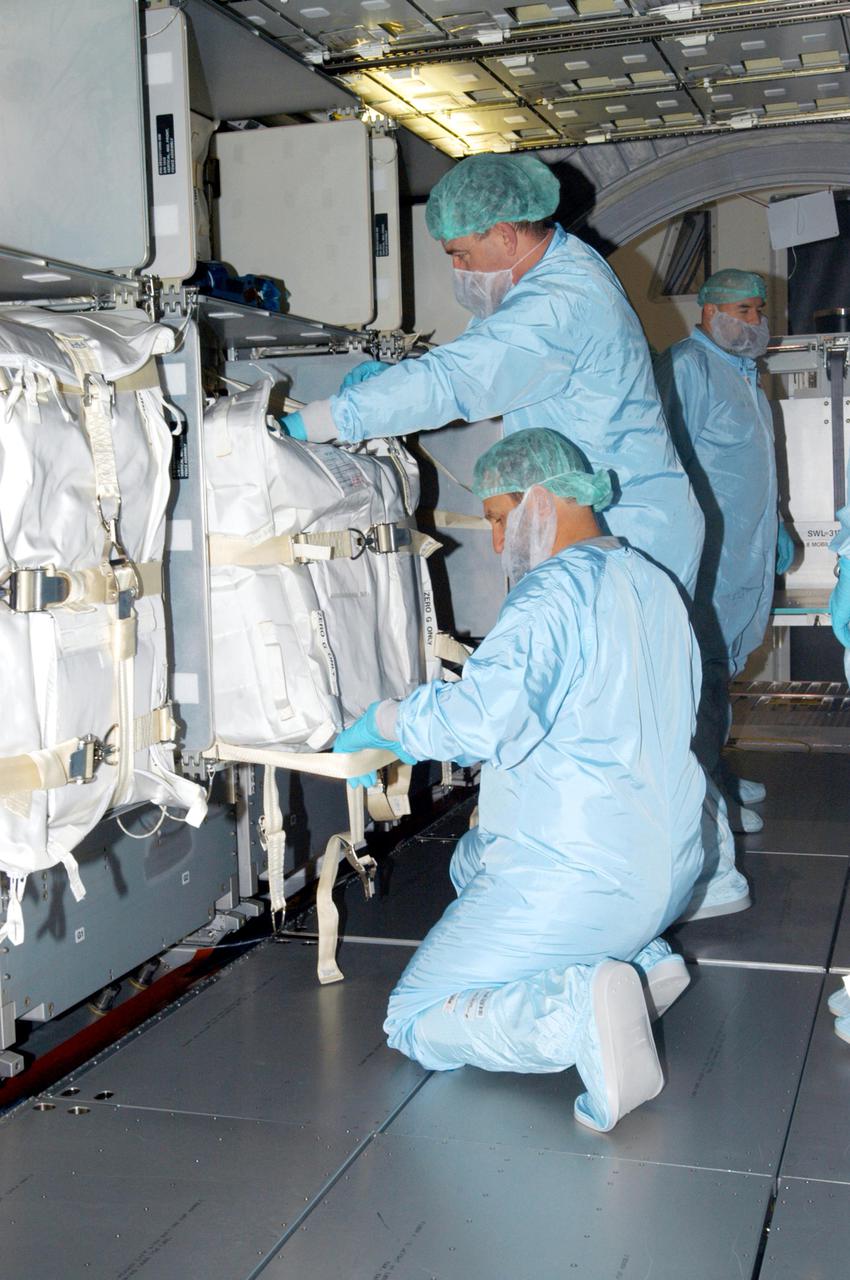
KENNEDY SPACE CENTER, FLA. - Technicians in the Space Station Processing Facility at NASA’s Kennedy Space Center place resupply stowage bags into containers known as resupply stowage racks inside the Italian-built Multi-Purpose Logistics Module Raffaello. The module will deliver a variety of supplies including food, clothing and spare parts to the International Space Station. Raffaello will launch on Space Shuttle Discovery’s Return to Flight mission, STS-114. The launch window is May 15 to June 3.
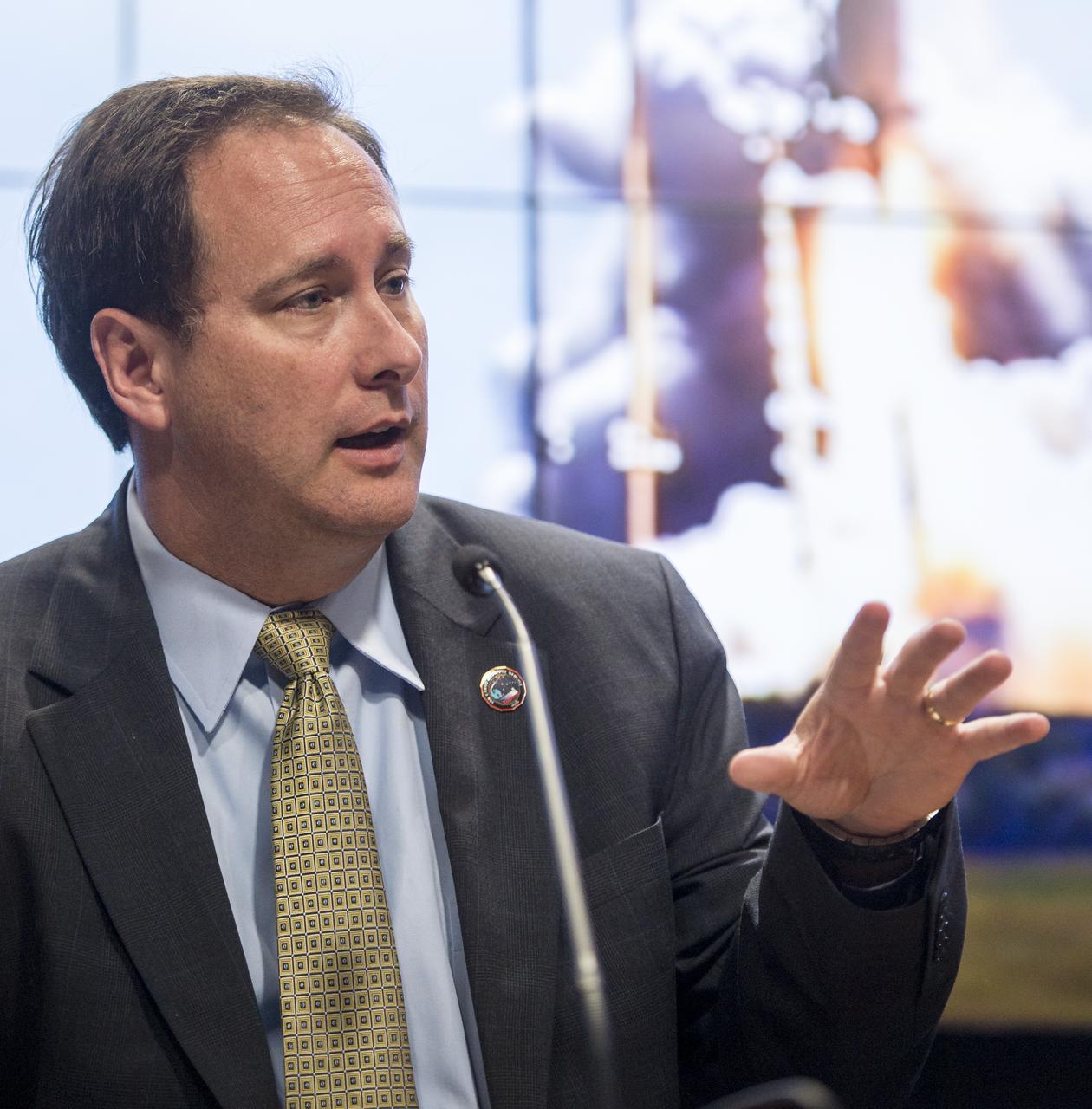
Robert Lightfoot, associate administrator, NASA, talks during a press conference held after the successful launch of the Antares rocket, with the Cygnus cargo spacecraft aboard, Wednesday, Sept. 18, 2013, NASA Wallops Flight Facility, Virginia. Cygnus is on its way to rendezvous with the space station. The spacecraft will deliver about 1,300 pounds (589 kilograms) of cargo, including food and clothing, to the Expedition 37 crew. Photo Credit: (NASA/Bill Ingalls)
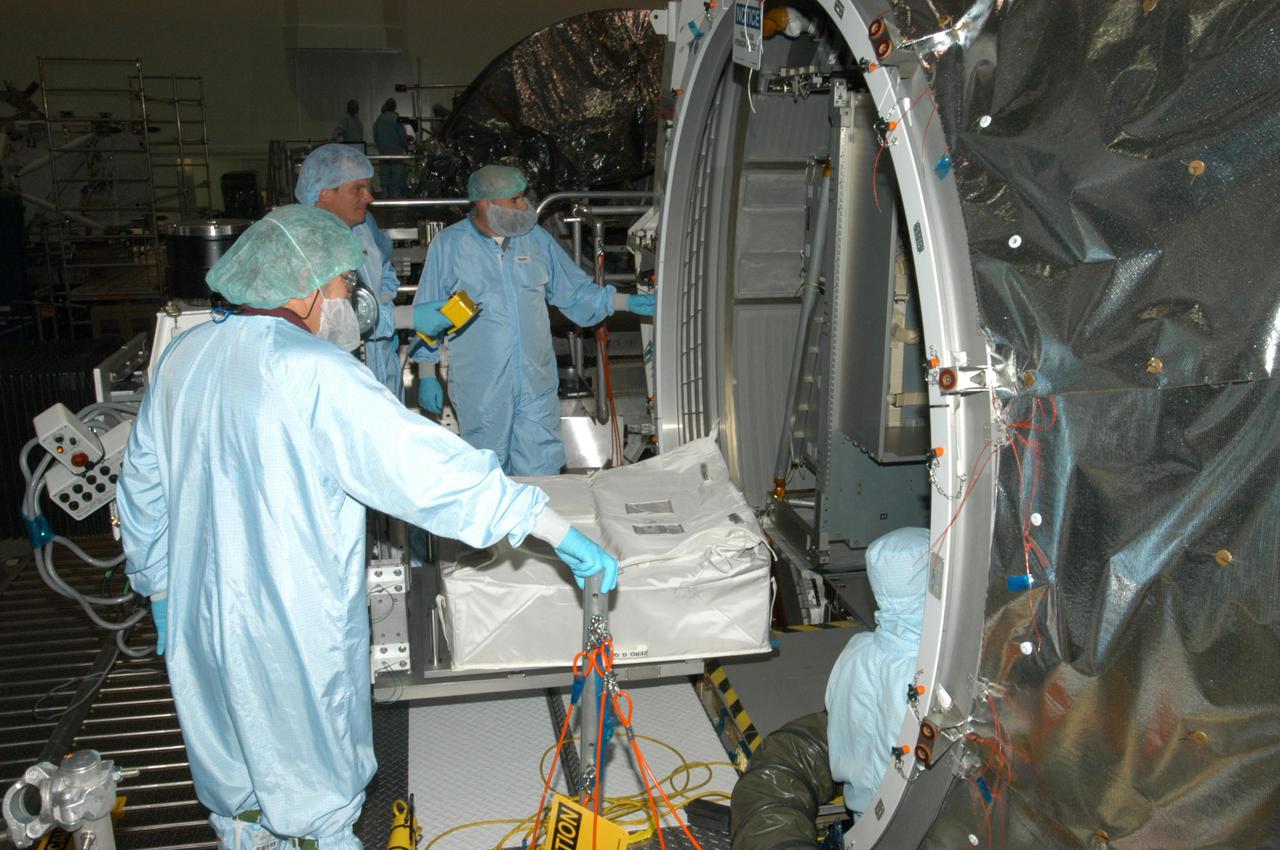
KENNEDY SPACE CENTER, FLA. - Technicians in the Space Station Processing Facility at NASA’s Kennedy Space Center begin moving resupply stowage bags into the Italian-built Multi-Purpose Logistics Module Raffaello. The bags will be placed in containers known as resupply stowage. The module will deliver a variety of supplies including food, clothing and spare parts to the International Space Station. Raffaello will launch on Space Shuttle Discovery’s Return to Flight mission, STS-114. The launch window is May 15 to June 3.
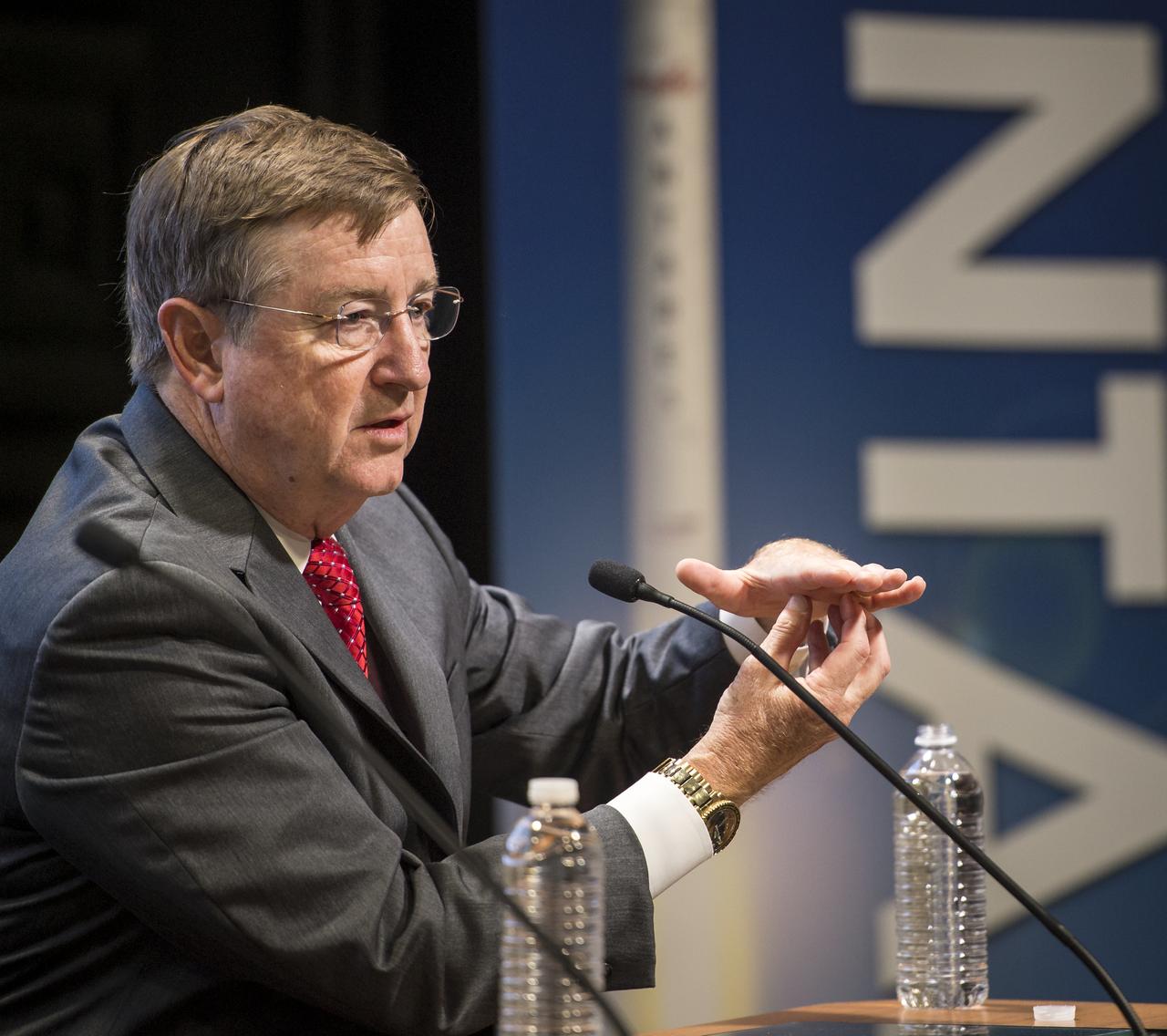
Frank Culbertson, executive vice president, Orbital Sciences Corporation, talks during a press conference held after the successful launch of the Antares rocket, with the Cygnus cargo spacecraft aboard, Wednesday, Sept. 18, 2013, NASA Wallops Flight Facility, Virginia. Cygnus is on its way to rendezvous with the space station. The spacecraft will deliver about 1,300 pounds (589 kilograms) of cargo, including food and clothing, to the Expedition 37 crew. Photo Credit: (NASA/Bill Ingalls)

Frank Culbertson, executive vice president, Orbital Sciences Corporation, talks during a press conference held after the successful launch of the Antares rocket, with the Cygnus cargo spacecraft aboard, Wednesday, Sept. 18, 2013, NASA Wallops Flight Facility, Virginia. Cygnus is on its way to rendezvous with the space station. The spacecraft will deliver about 1,300 pounds (589 kilograms) of cargo, including food and clothing, to the Expedition 37 crew. Photo Credit: (NASA/Bill Ingalls)
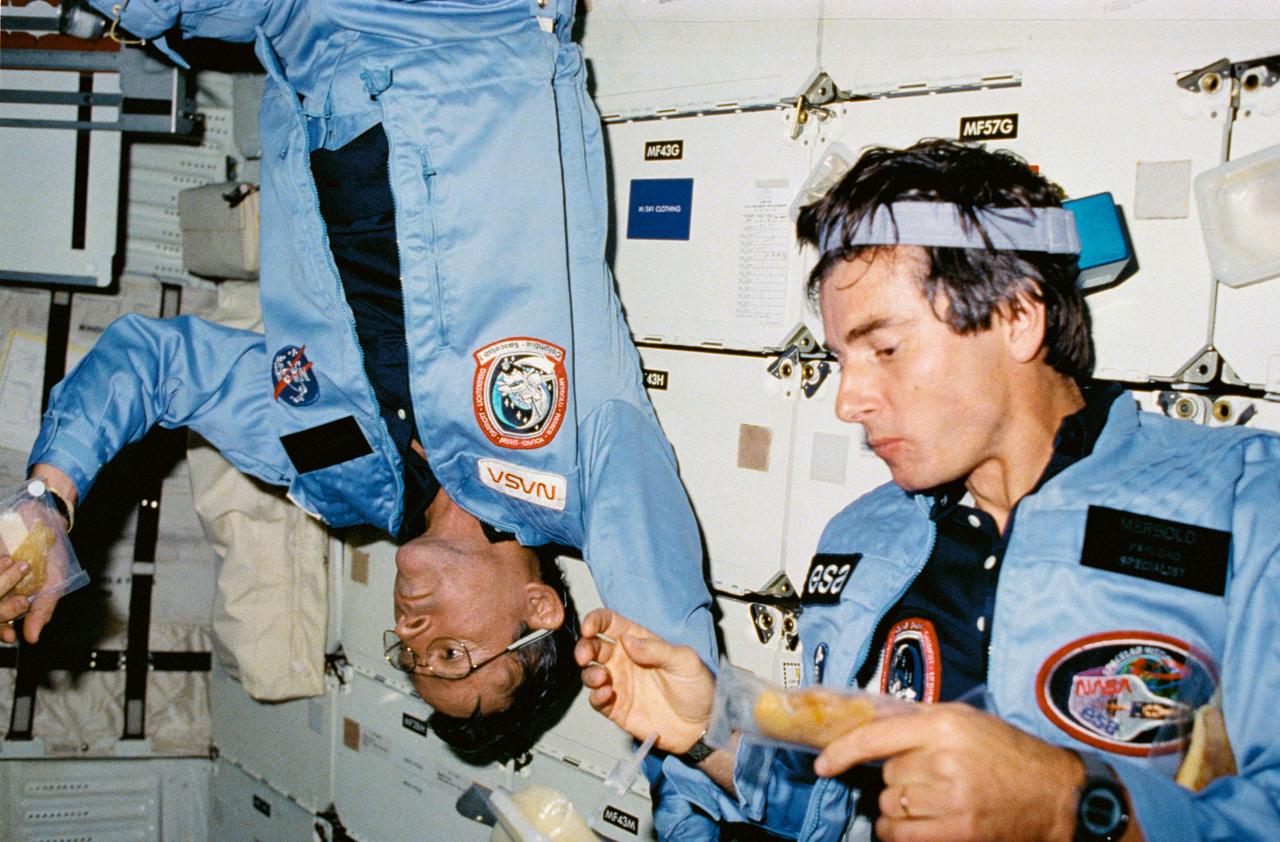
STS009-003-075 (28 November - 8 December 1983) --- Astronaut John W. Young (left), STS-9 crew commander; and Ulf Merbold, payload specialist, enjoy a meal in the middeck of the Earth-orbiting Space Shuttle Columbia. Merbold is a physicist from the Federal Republic of Germany, representing the European Space Agency (ESA) on this 10-day flight. Many of the nearby stowage lockers are used for clothing and food. The photograph was made with a 35mm camera.
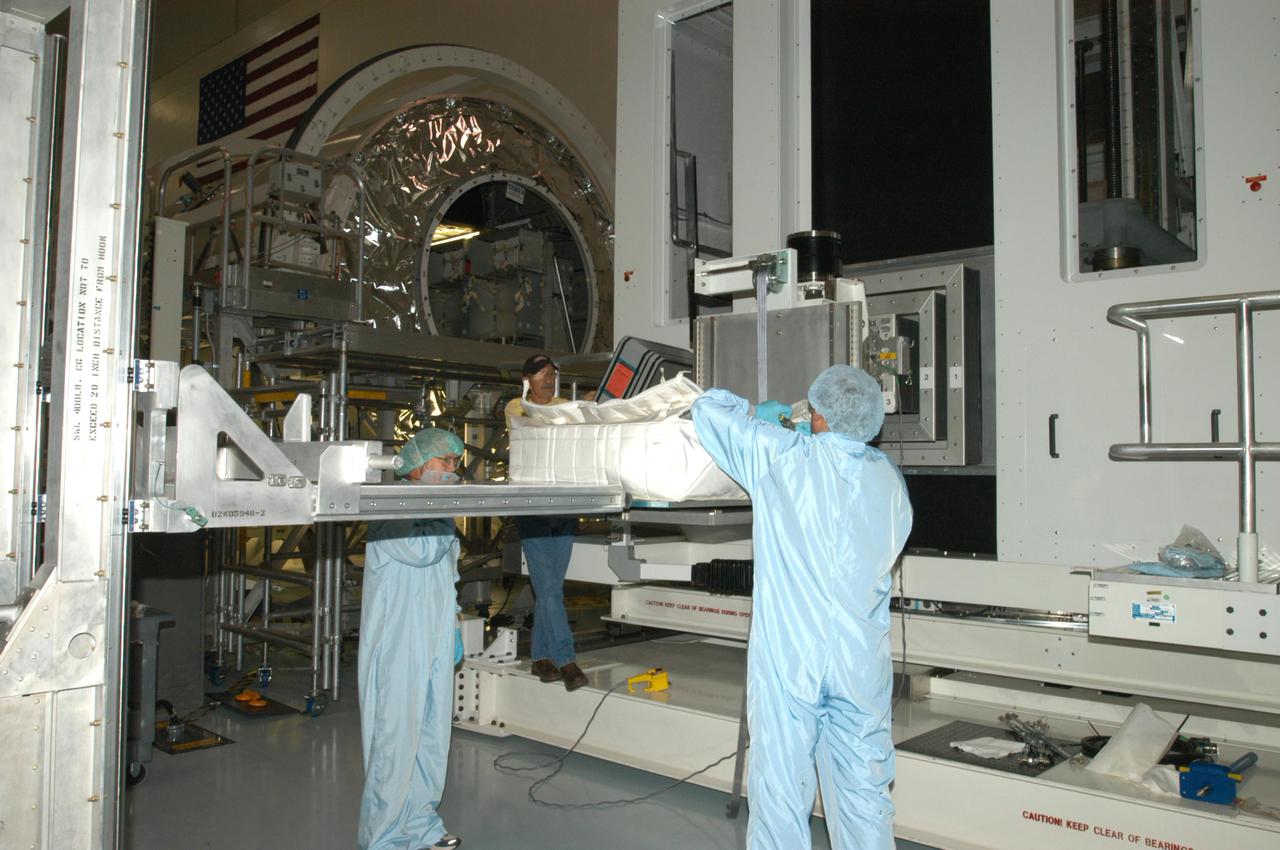
KENNEDY SPACE CENTER, FLA. - Technicians in the Space Station Processing Facility at NASA’s Kennedy Space Center finish loading resupply stowage bags to be placed in containers known as resupply stowage racks inside the Italian-built Multi-Purpose Logistics Module Raffaello. The module will deliver a variety of supplies including food, clothing and spare parts to the International Space Station. Raffaello will launch on Space Shuttle Discovery’s Return to Flight mission, STS-114. The launch window is May 15 to June 3.
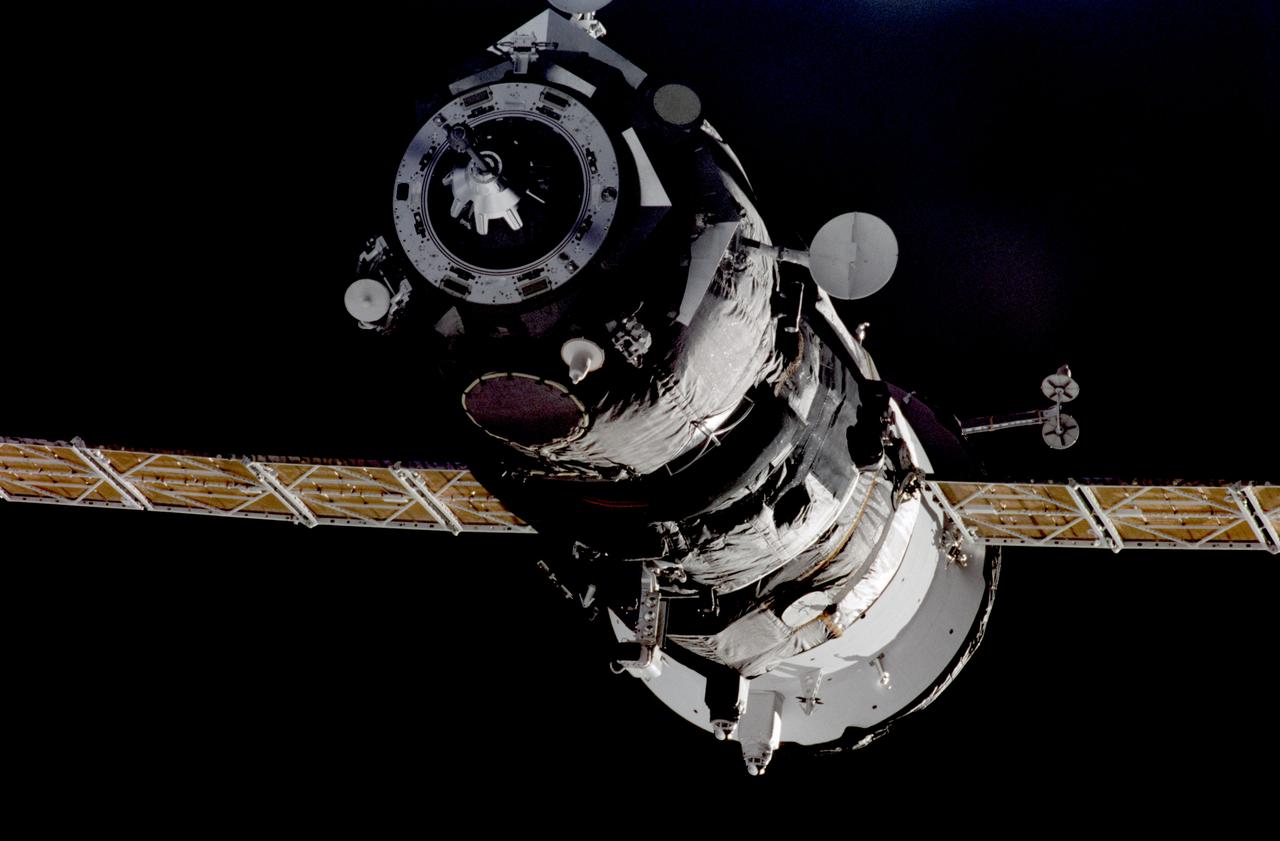
ISS01-324-002 (18 November 2000) --- A Progress supply ship linked up to the orbiting International Space Station (ISS) at 3:48 GMT, November 18, bringing Expedition 1 commander William M. Shepherd, pilot Yuri P. Gidzenko and flight engineer Sergei K. Krikalev two tons of food, clothing, hardware and holiday gifts from their families. The photograph was taken with a 35mm camera and the film was later handed over to the STS-97 crew members for return to Earth and subsequent processing.
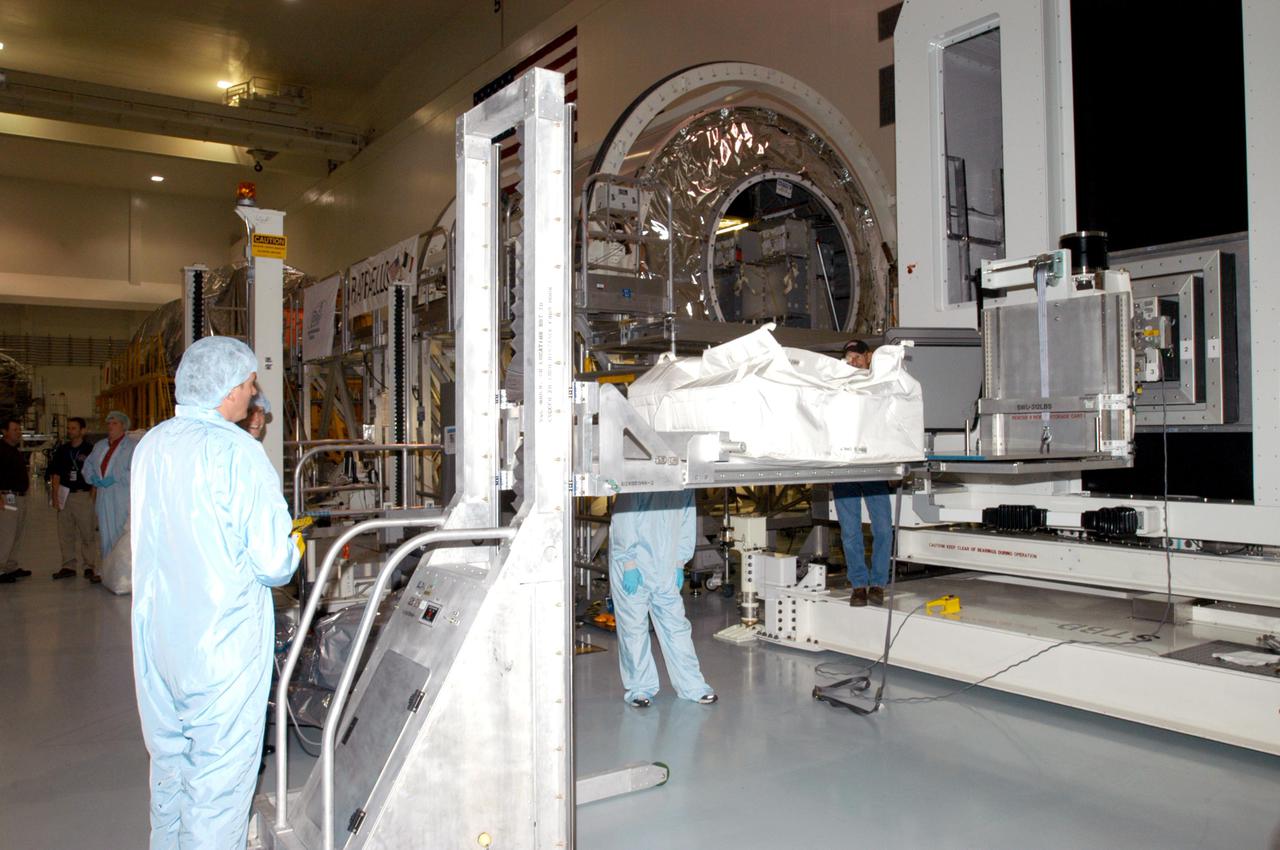
KENNEDY SPACE CENTER, FLA. - Technicians in the Space Station Processing Facility at NASA’s Kennedy Space Center get ready to move more resupply stowage bags into containers known as resupply stowage racks inside the Italian-built Multi-Purpose Logistics Module Raffaello. The module will deliver a variety of supplies including food, clothing and spare parts to the International Space Station. Raffaello will launch on Space Shuttle Discovery’s Return to Flight mission, STS-114. The launch window is May 15 to June 3.
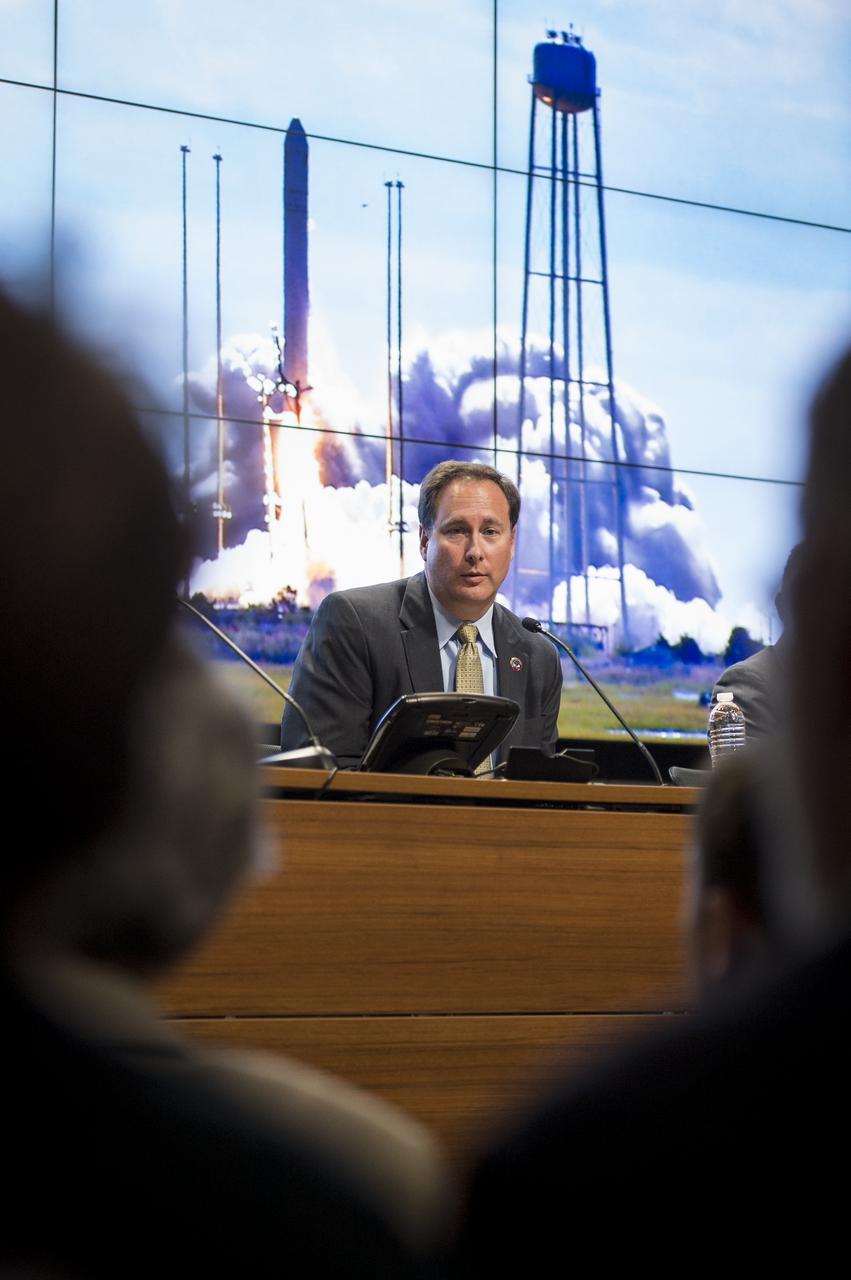
Robert Lightfoot, associate administrator, NASA, talks during a press conference held after the successful launch of the Antares rocket, with the Cygnus cargo spacecraft aboard, Wednesday, Sept. 18, 2013, NASA Wallops Flight Facility, Virginia. Cygnus is on its way to rendezvous with the space station. The spacecraft will deliver about 1,300 pounds (589 kilograms) of cargo, including food and clothing, to the Expedition 37 crew. Photo Credit: (NASA/Bill Ingalls)
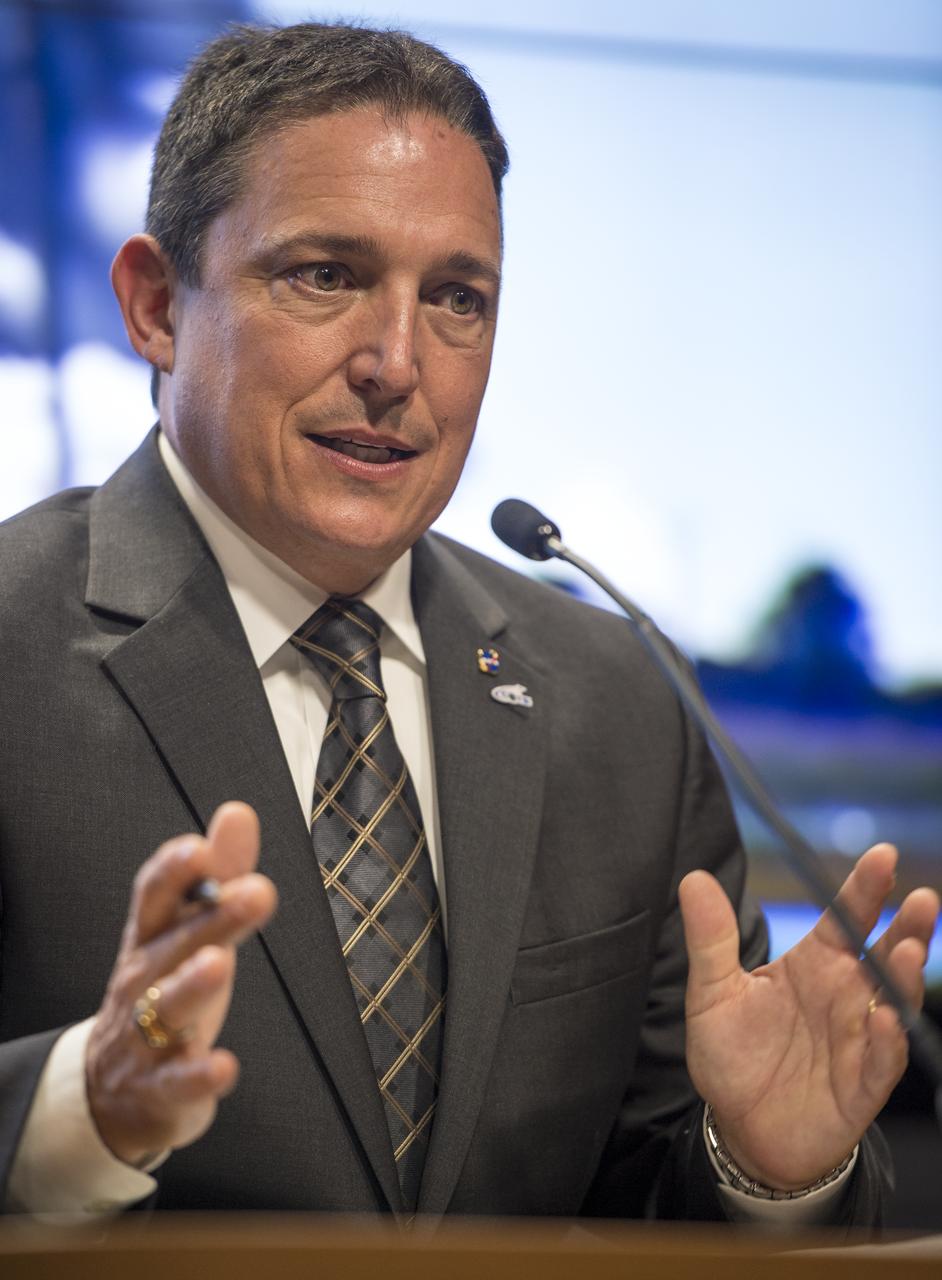
Alan Lindenmoyer, program manager, NASA's Commercial Crew and Cargo Program, talks during a press conference held after the successful launch of the Orbital Sciences Corporation Antares rocket, with the Cygnus cargo spacecraft aboard, Wednesday, Sept. 18, 2013, NASA Wallops Flight Facility, Virginia. Cygnus is on its way to rendezvous with the space station. The spacecraft will deliver about 1,300 pounds (589 kilograms) of cargo, including food and clothing, to the Expedition 37 crew. Photo Credit: (NASA/Bill Ingalls)
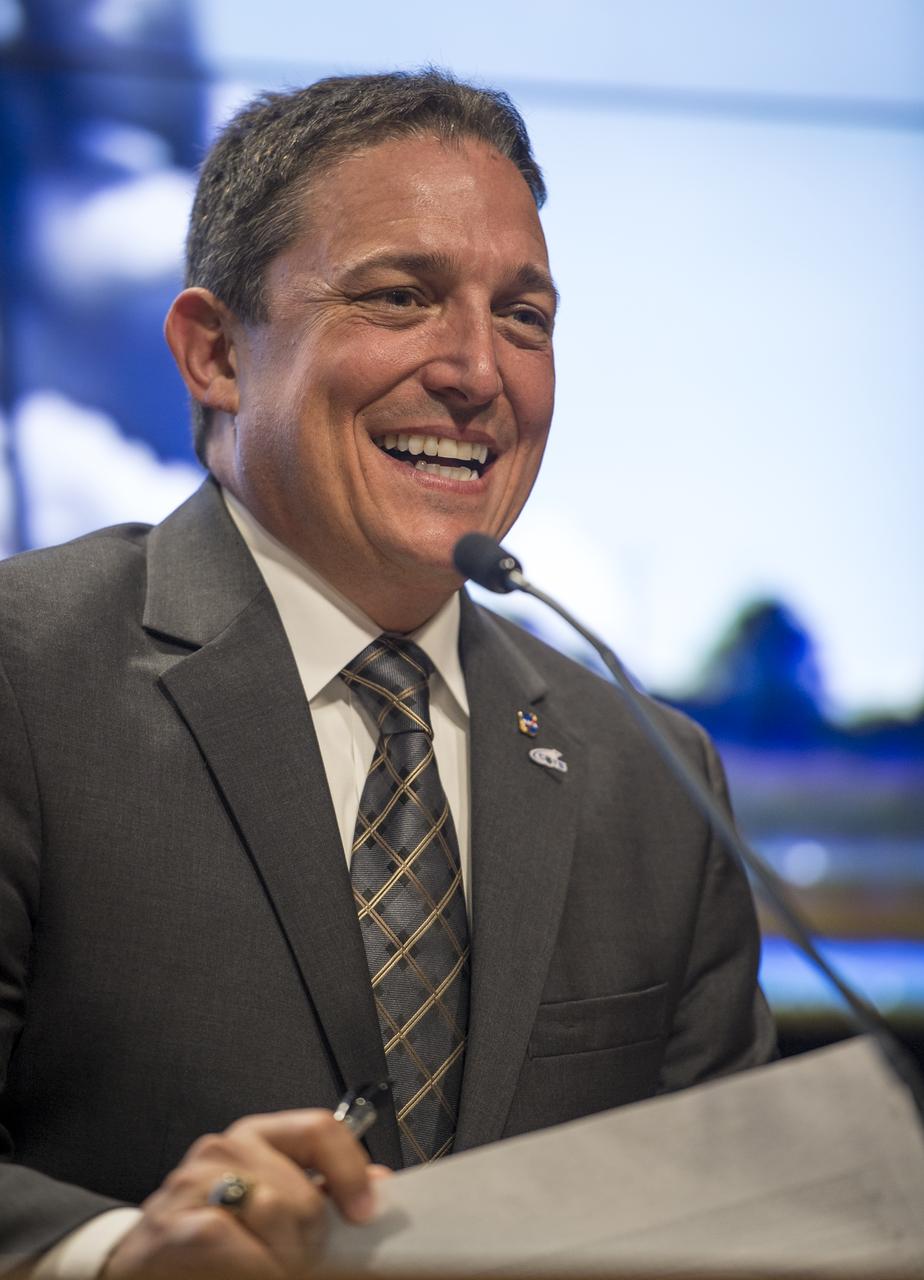
Alan Lindenmoyer, program manager, NASA's Commercial Crew and Cargo Program, talks during a press conference held after the successful launch of the Orbital Sciences Corporation Antares rocket, with the Cygnus cargo spacecraft aboard, Wednesday, Sept. 18, 2013, NASA Wallops Flight Facility, Virginia. Cygnus is on its way to rendezvous with the space station. The spacecraft will deliver about 1,300 pounds (589 kilograms) of cargo, including food and clothing, to the Expedition 37 crew. Photo Credit: (NASA/Bill Ingalls)
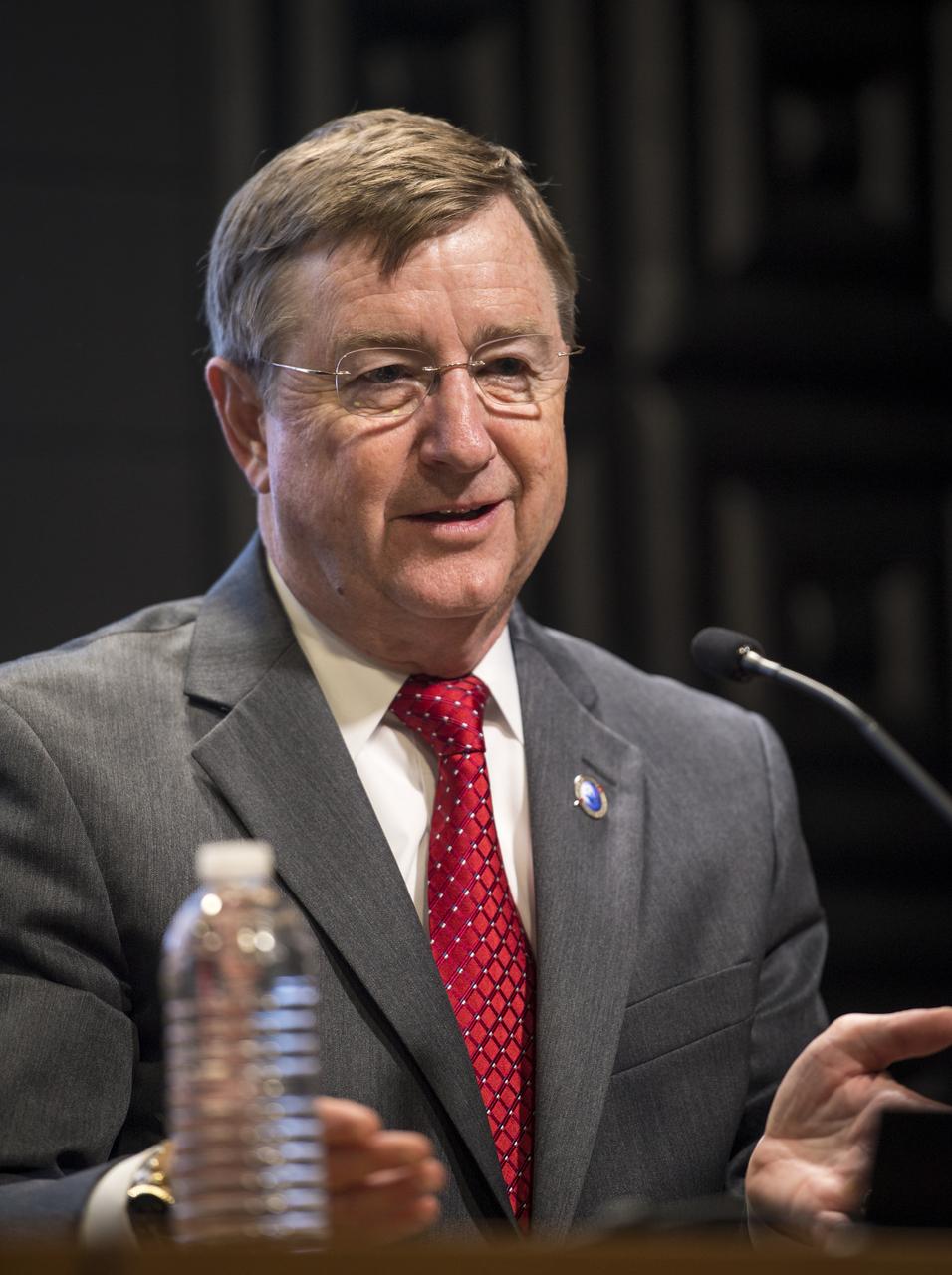
Frank Culbertson, executive vice president, Orbital Sciences Corporation, talks during a press conference held after the successful launch of the Antares rocket, with the Cygnus cargo spacecraft aboard, Wednesday, Sept. 18, 2013, NASA Wallops Flight Facility, Virginia. Cygnus is on its way to rendezvous with the space station. The spacecraft will deliver about 1,300 pounds (589 kilograms) of cargo, including food and clothing, to the Expedition 37 crew. Photo Credit: (NASA/Bill Ingalls)
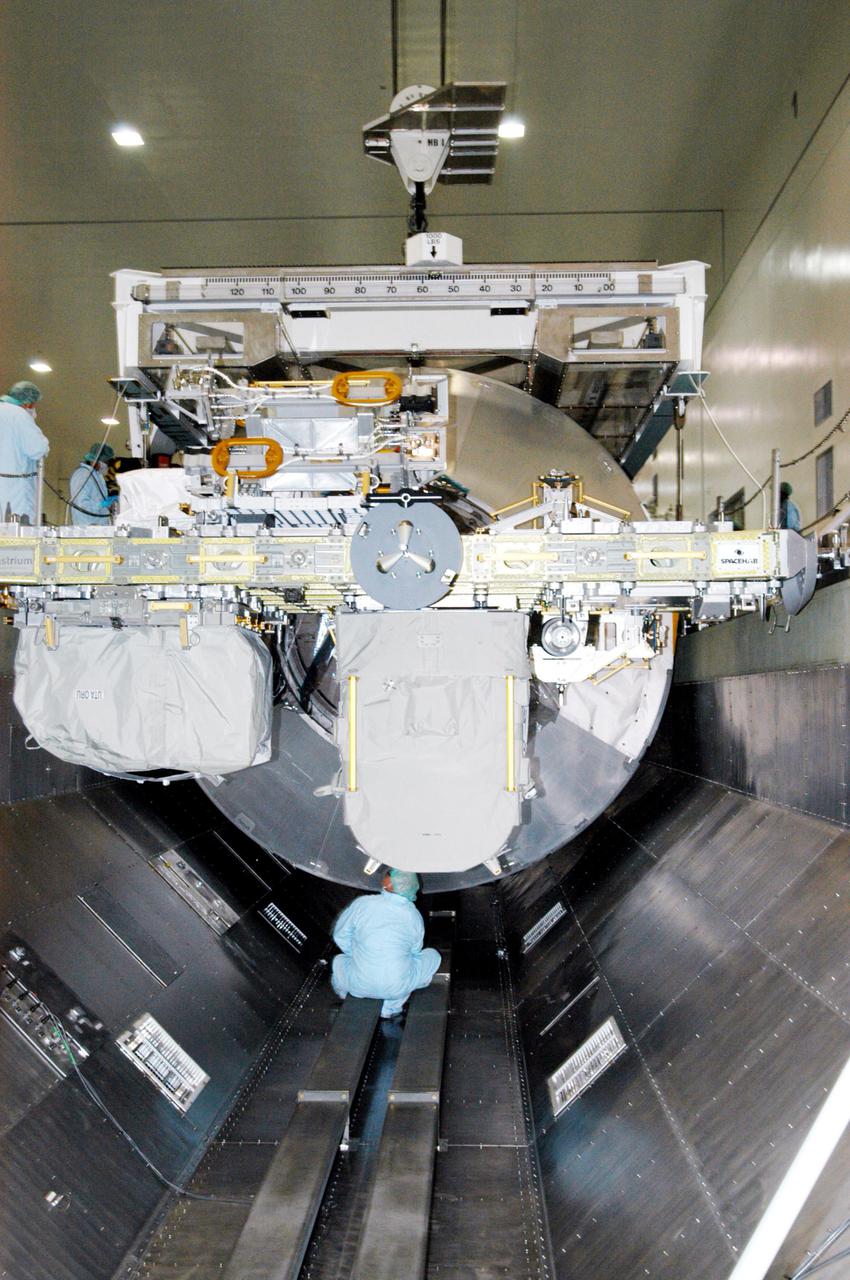
KENNEDY SPACE CENTER, FLA. - In the Space Station Processing Facility, engineers install the Multi-Purpose Logistics Module Raffaello in the Payload Transportation Canister. It rests behind the External Stowage Platform-2. The canister will transfer the payloads to Launch Pad 39-B. Raffaello will travel aboard Space Shuttle Discovery on Return to Flight Mission STS-114 to the International Space Station. Raffaello will carry 12 racks of cargo to the Station, including food, clothing, spare parts and research equipment. The Boeing Company, a KSC and NASA prime contractor for ISS element processing, prepared Raffaello for flight. The module was built by the Italian Space Agency for NASA under a cooperative space agreement.
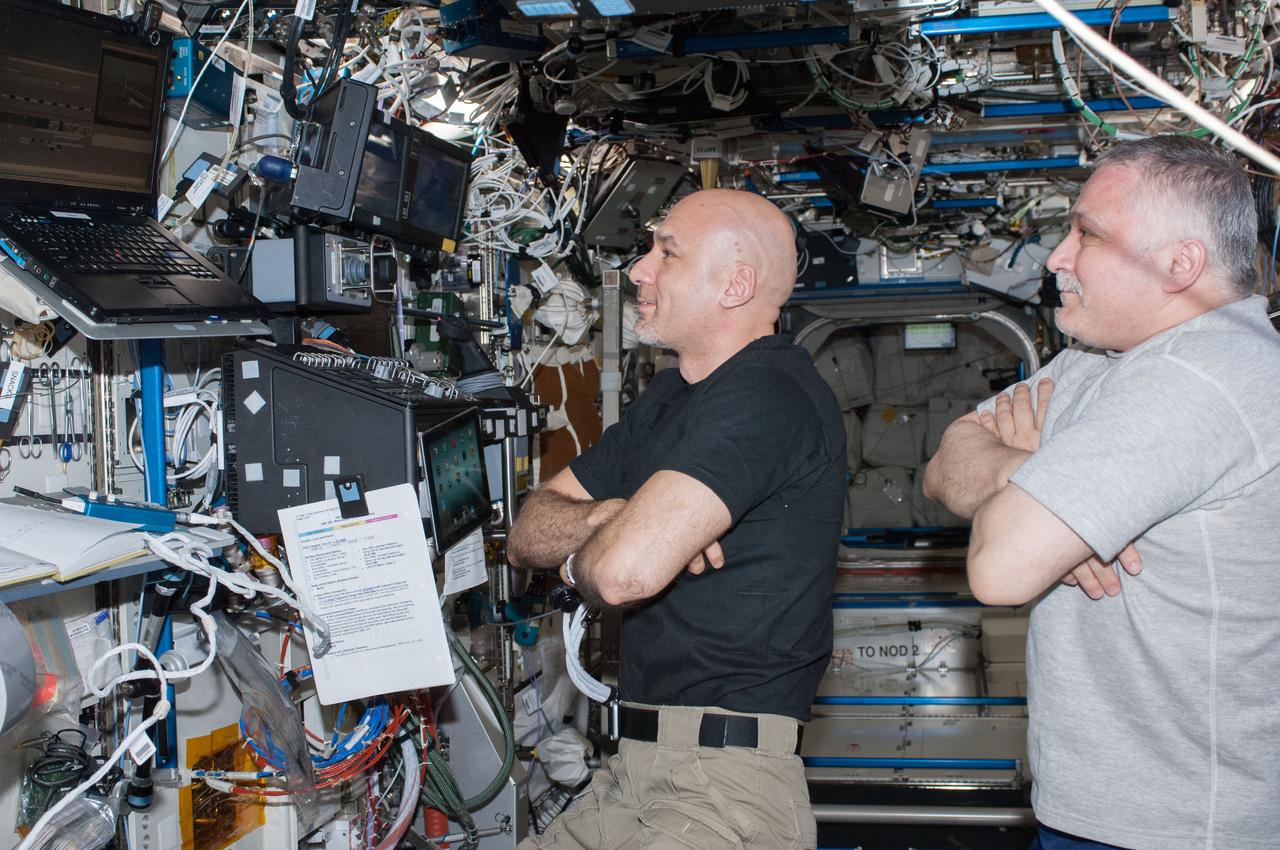
ISS037-E-001901 (18 Sept. 2013) --- In the International Space Station’s Destiny laboratory, Russian cosmonaut Fyodor Yurchikhin (right), Expedition 37 commander; and European Space Agency astronaut Luca Parmitano, flight engineer, watch the launch of the Orbital Sciences Corporation Antares rocket, with the Cygnus cargo spacecraft aboard, from Pad-0A of the Mid-Atlantic Regional Spaceport (MARS) NASA Wallops Flight Facility, Virginia. Cygnus is on its way to rendezvous with the space station and will deliver about 1,300 pounds (589 kilograms) of cargo, including food and clothing, to the Expedition 37 crew.
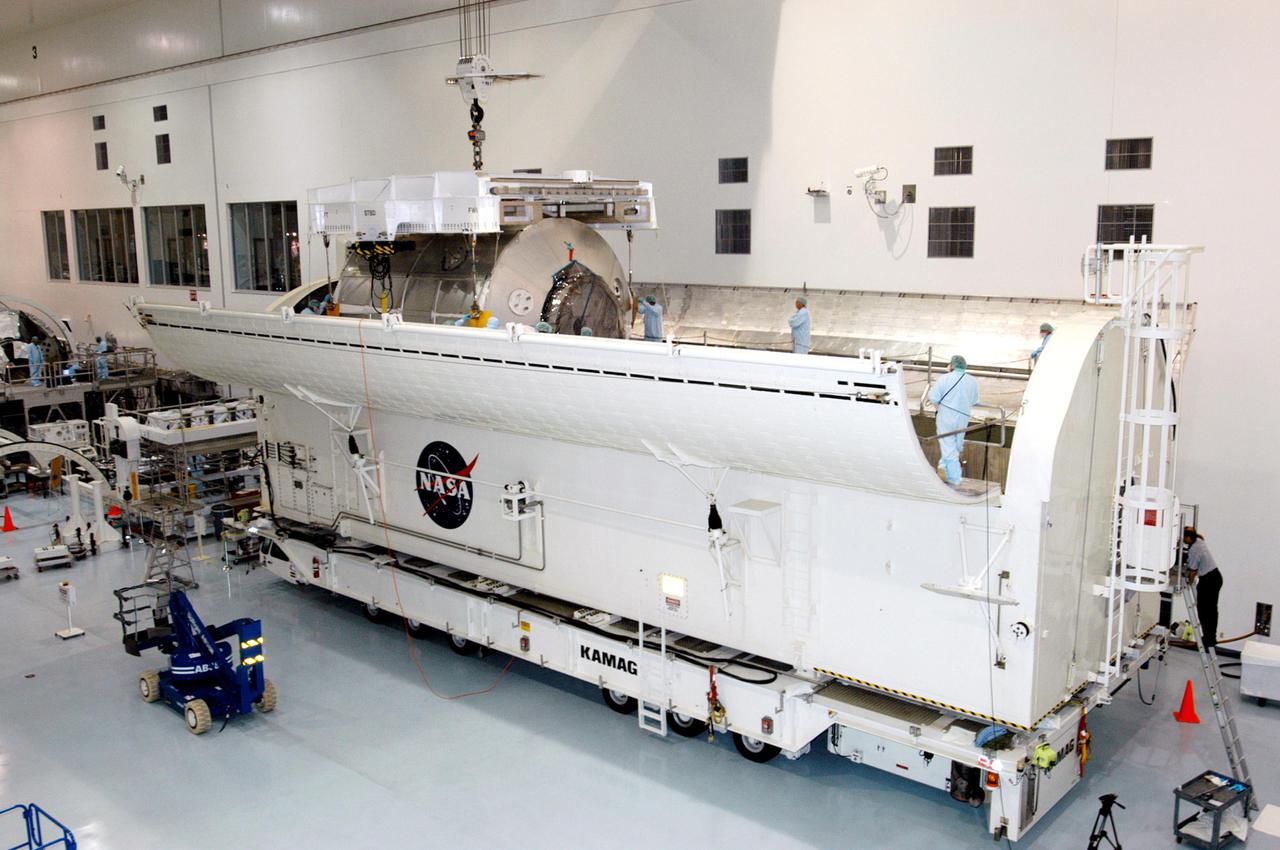
KENNEDY SPACE CENTER, FLA. - In the Space Station Processing Facility, the Multi-Purpose Logistics Module Raffaello is lowered into the Payload Transportation Canister for installation and transfer to Launch Pad 39-B. Raffaello will travel aboard Space Shuttle Discovery on Return to Flight Mission STS-114 to the International Space Station. Raffaello will carry 12 racks of cargo to the Station, including food, clothing, spare parts and research equipment. The Boeing Company, a KSC and NASA prime contractor for ISS element processing, prepared Raffaello for flight. The module was built by the Italian Space Agency for NASA under a cooperative space agreement.
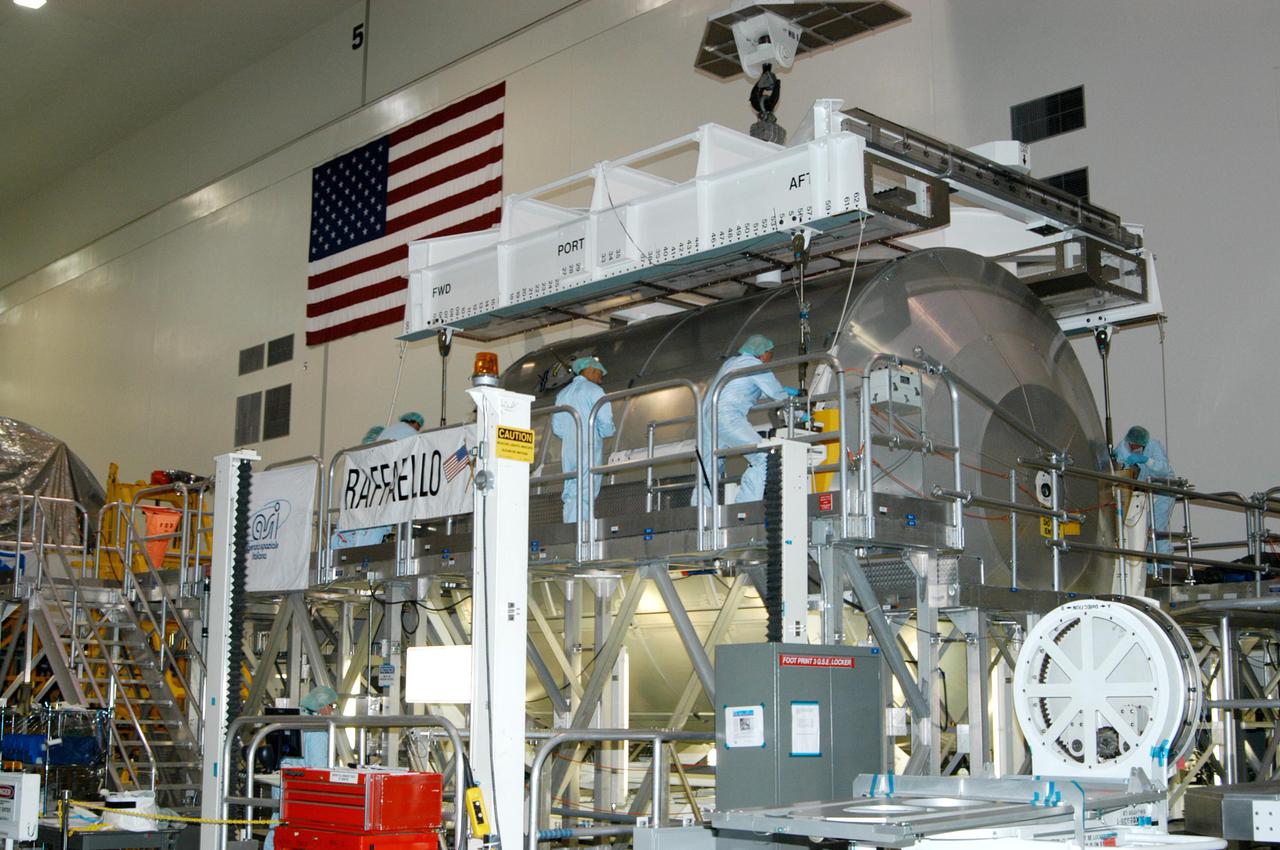
KENNEDY SPACE CENTER, FLA. - In the Space Station Processing Facility, workers attach an overhead crane to the Multi-Purpose Logistics Module Raffaello, which is being moved to the Payload Transportation Canister for installation and transfer to Launch Pad 39-B. Raffaello will travel aboard Space Shuttle Discovery on Return to Flight Mission STS-114 to the International Space Station. Raffaello will carry 12 racks of cargo to the Station, including food, clothing, spare parts and research equipment. The Boeing Company, a KSC and NASA prime contractor for ISS element processing, prepared Raffaello for flight. The module was built by the Italian Space Agency for NASA under a cooperative space agreement.
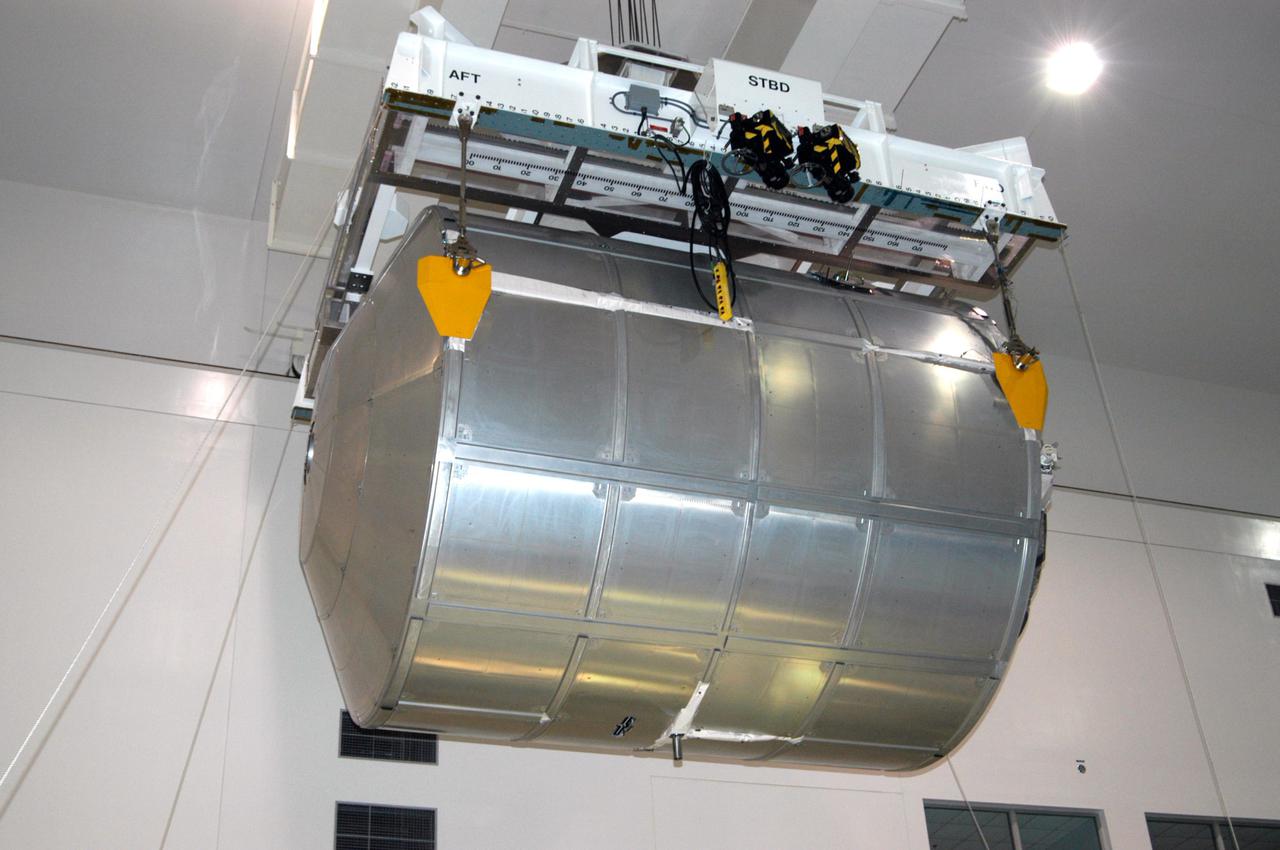
KENNEDY SPACE CENTER, FLA. - In the Space Station Processing Facility, the Multi-Purpose Logistics Module Raffaello moves across the floor to the Payload Transportation Canister for installation and transfer to Launch Pad 39-B. Raffaello will travel aboard Space Shuttle Discovery on Return to Flight Mission STS-114 to the International Space Station. Raffaello will carry 12 racks of cargo to the Station, including food, clothing, spare parts and research equipment. The Boeing Company, a KSC and NASA prime contractor for ISS element processing, prepared Raffaello for flight. The module was built by the Italian Space Agency for NASA under a cooperative space agreement.
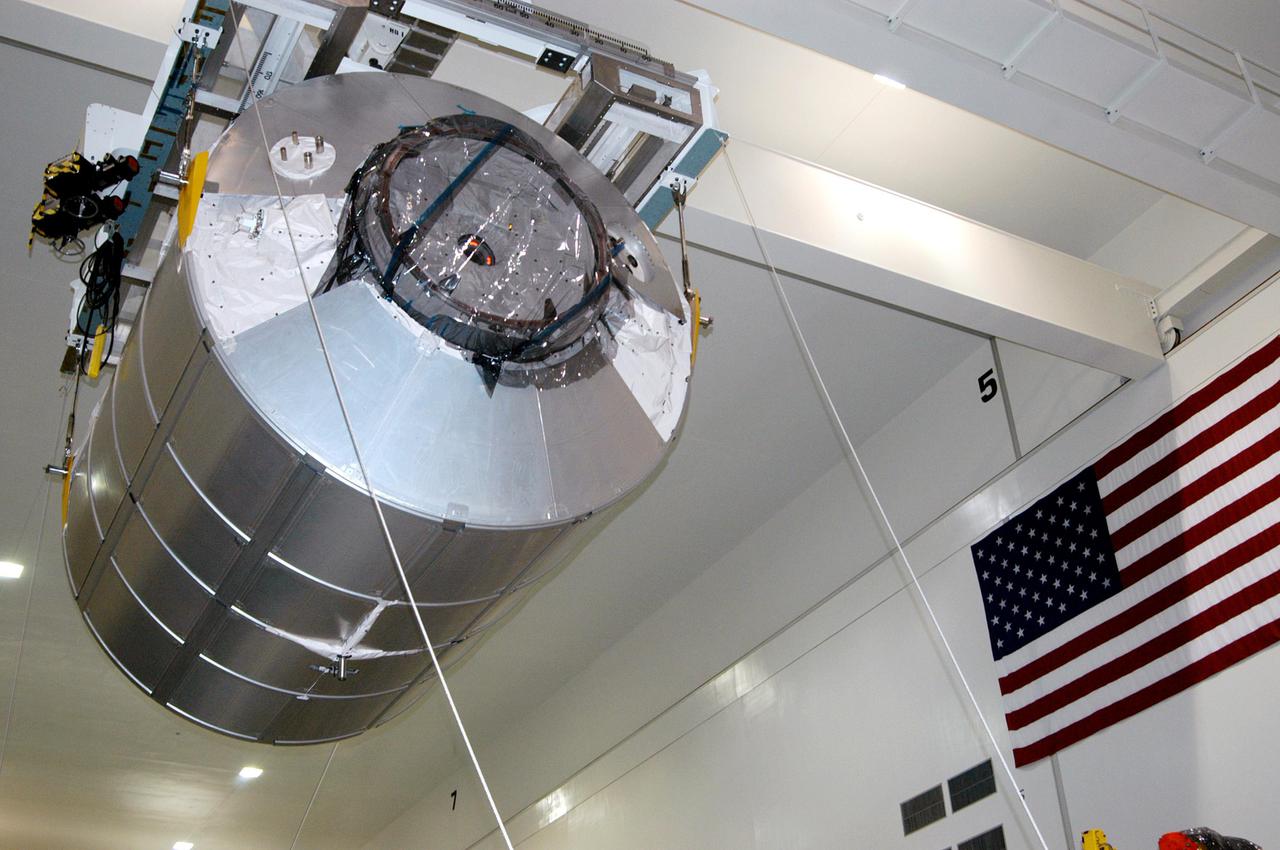
KENNEDY SPACE CENTER, FLA. - In the Space Station Processing Facility, the Multi-Purpose Logistics Module Raffaello moves across the floor to the Payload Transportation Canister for installation and transfer to Launch Pad 39-B. Raffaello will travel aboard Space Shuttle Discovery on Return to Flight Mission STS-114 to the International Space Station. Raffaello will carry 12 racks of cargo to the Station, including food, clothing, spare parts and research equipment. The Boeing Company, a KSC and NASA prime contractor for ISS element processing, prepared Raffaello for flight. The module was built by the Italian Space Agency for NASA under a cooperative space agreement.
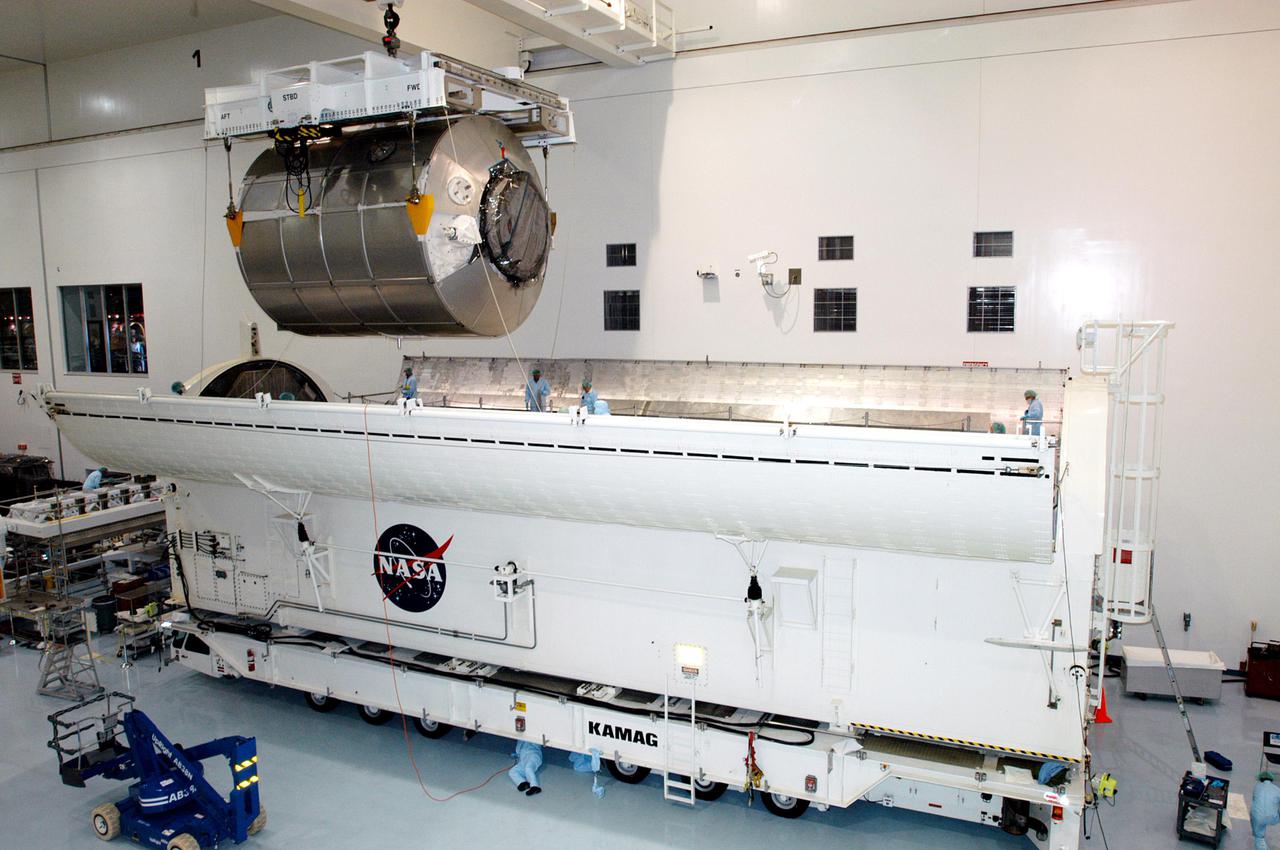
KENNEDY SPACE CENTER, FLA. - In the Space Station Processing Facility, the Multi-Purpose Logistics Module Raffaello is lowered into the Payload Transportation Canister for installation and transfer to Launch Pad 39-B. Raffaello will travel aboard Space Shuttle Discovery on Return to Flight Mission STS-114 to the International Space Station. Raffaello will carry 12 racks of cargo to the Station, including food, clothing, spare parts and research equipment. The Boeing Company, a KSC and NASA prime contractor for ISS element processing, prepared Raffaello for flight. The module was built by the Italian Space Agency for NASA under a cooperative space agreement.
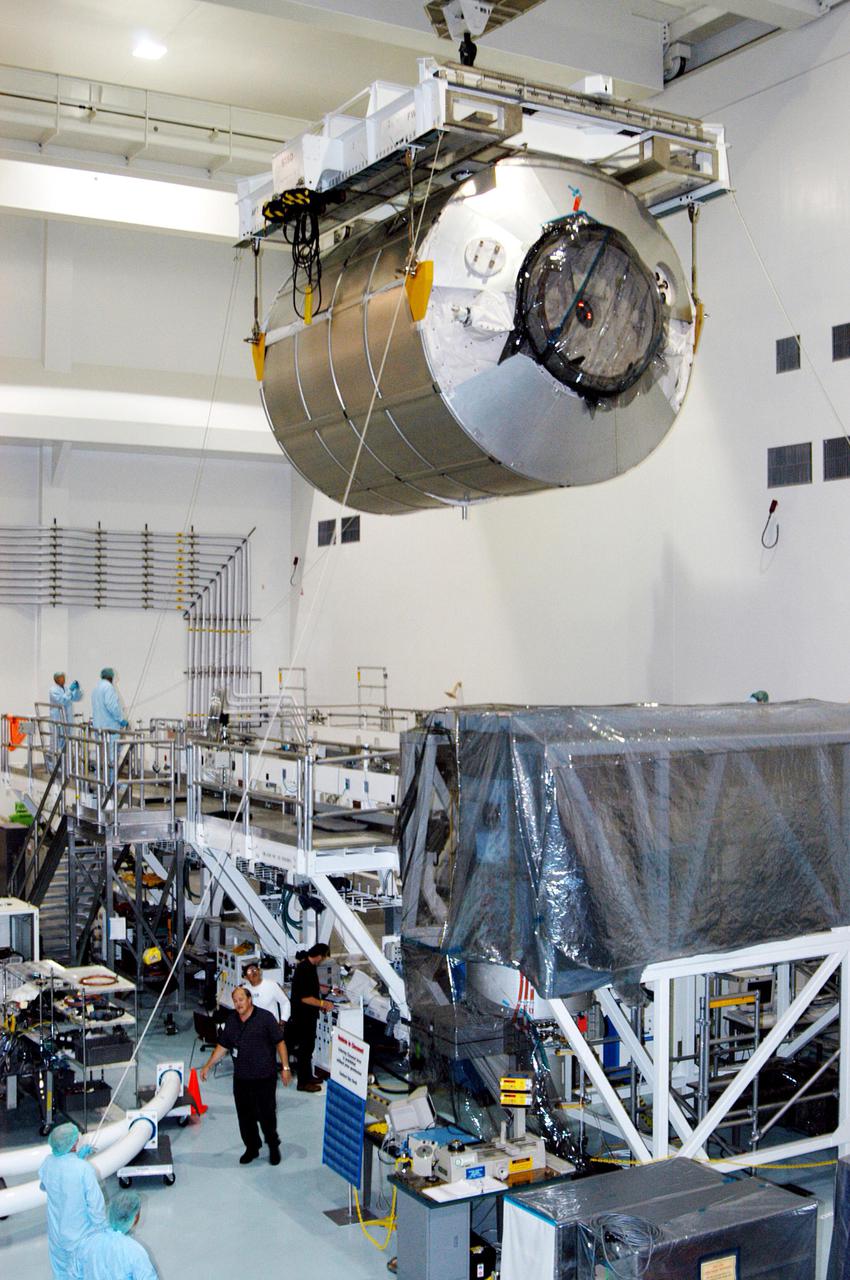
KENNEDY SPACE CENTER, FLA. - In the Space Station Processing Facility, the Multi-Purpose Logistics Module Raffaello moves across the floor to the Payload Transportation Canister for installation and transfer to Launch Pad 39-B. Raffaello will travel aboard Space Shuttle Discovery on Return to Flight Mission STS-114 to the International Space Station. Raffaello will carry 12 racks of cargo to the Station, including food, clothing, spare parts and research equipment. The Boeing Company, a KSC and NASA prime contractor for ISS element processing, prepared Raffaello for flight. The module was built by the Italian Space Agency for NASA under a cooperative space agreement.
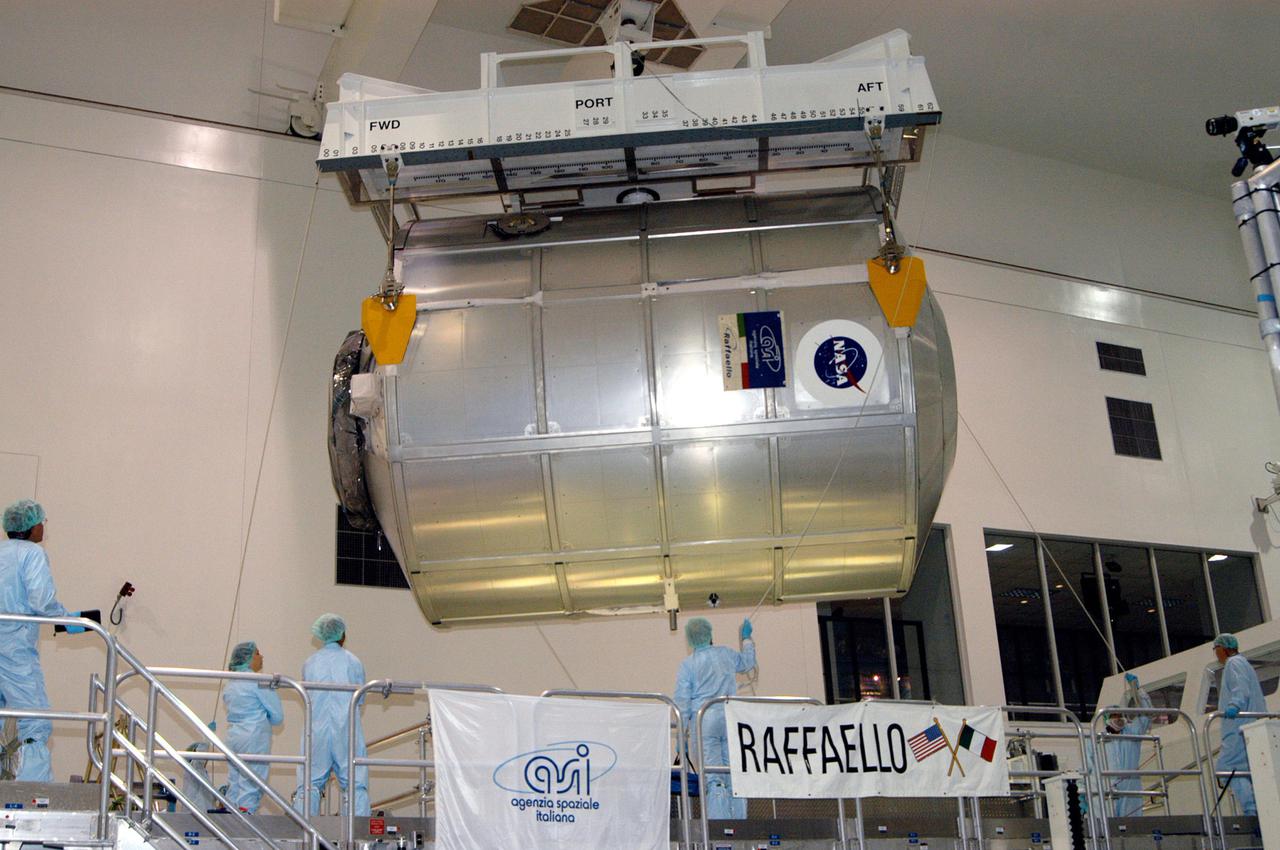
KENNEDY SPACE CENTER, FLA. - In the Space Station Processing Facility, workers stand by as the Multi-Purpose Logistics Module Raffaello is lifted off its stand. Raffaello is being moved to the Payload Transportation Canister for installation and transfer to Launch Pad 39-B. Raffaello will travel aboard Space Shuttle Discovery on Return to Flight Mission STS-114 to the International Space Station. Raffaello will carry 12 racks of cargo to the Station, including food, clothing, spare parts and research equipment. The Boeing Company, a KSC and NASA prime contractor for ISS element processing, prepared Raffaello for flight. The module was built by the Italian Space Agency for NASA under a cooperative space agreement.
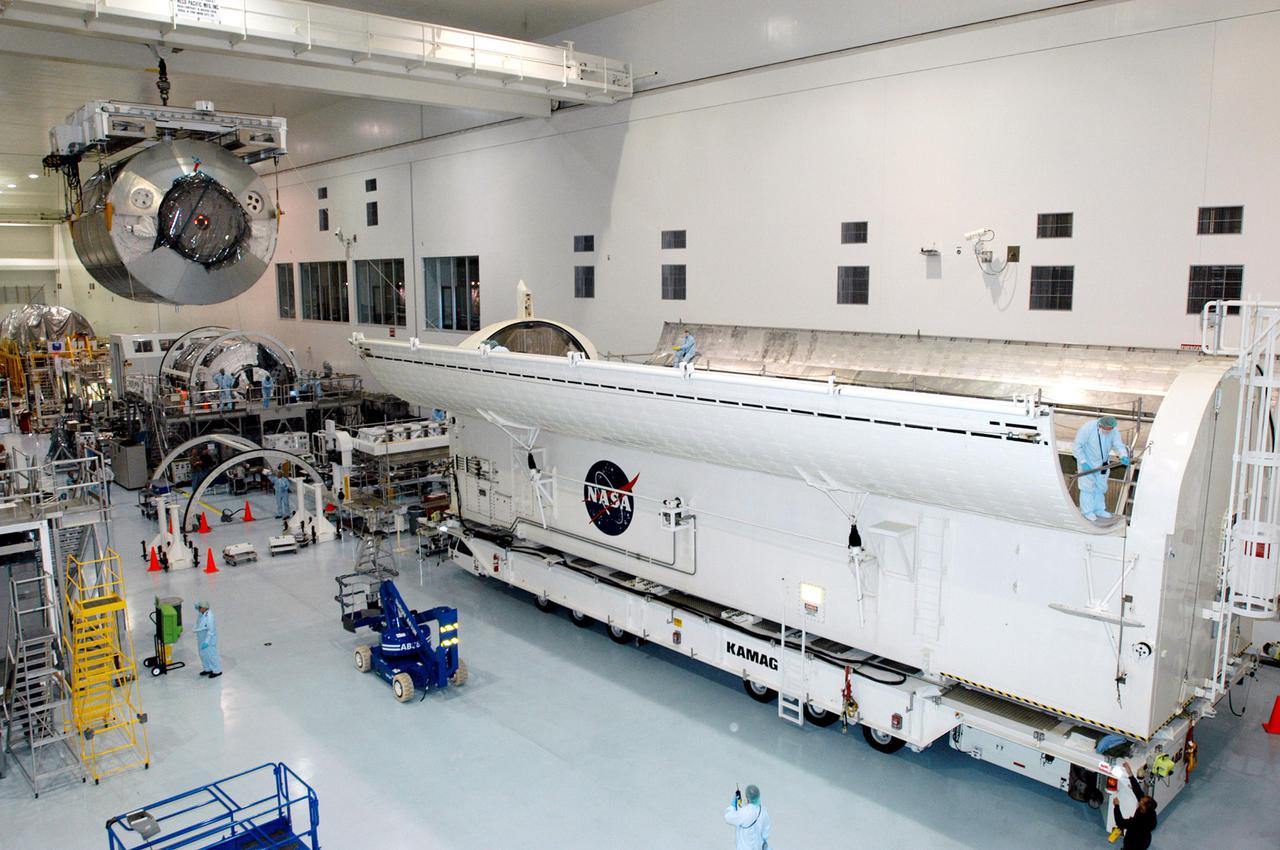
KENNEDY SPACE CENTER, FLA. - In the Space Station Processing Facility, the Multi-Purpose Logistics Module Raffaello moves near the Payload Transportation Canister for installation and transfer to Launch Pad 39-B. Raffaello will travel aboard Space Shuttle Discovery on Return to Flight Mission STS-114 to the International Space Station. Raffaello will carry 12 racks of cargo to the Station, including food, clothing, spare parts and research equipment. The Boeing Company, a KSC and NASA prime contractor for ISS element processing, prepared Raffaello for flight. The module was built by the Italian Space Agency for NASA under a cooperative space agreement.
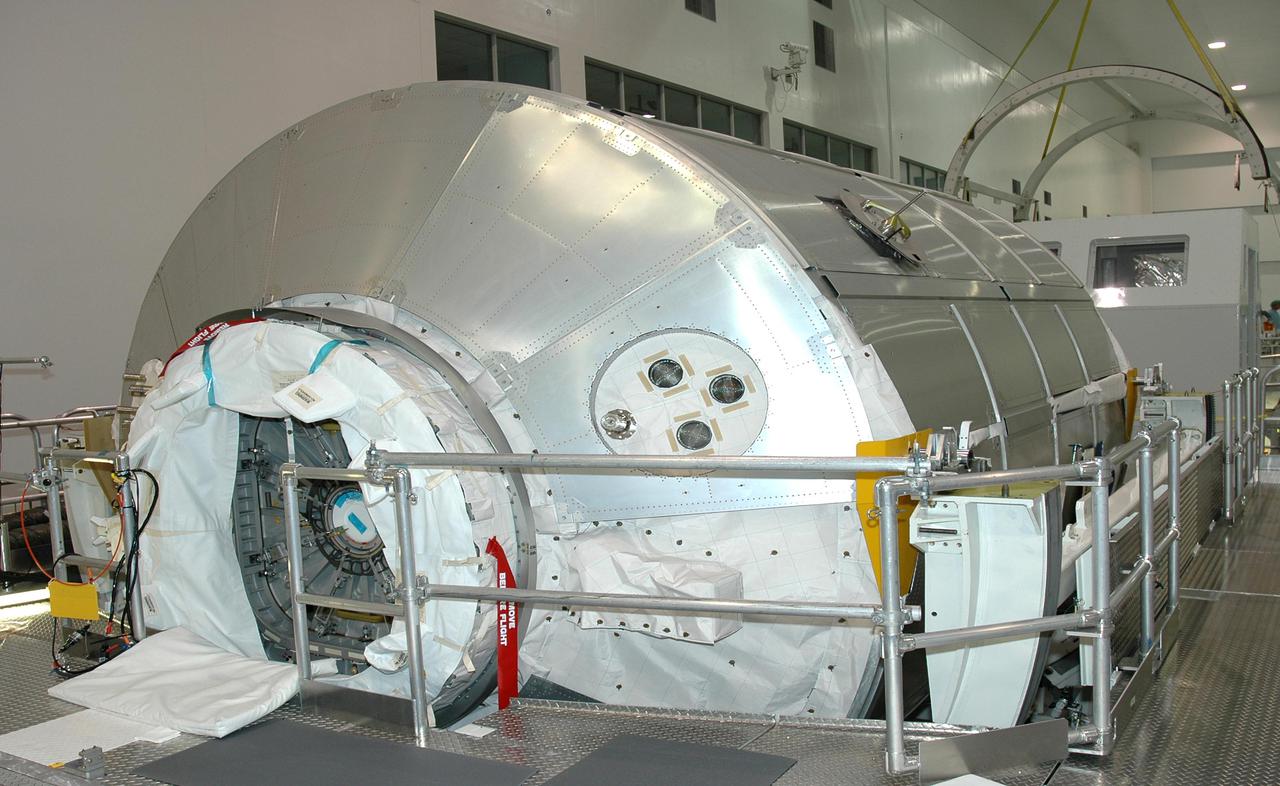
KENNEDY SPACE CENTER, FLA. -- In the Space Station Processing Facility, Italian-built Multi-Purpose Logistics Module Raffaello is closed and ready for transfer to a payload canister and trip to Launch Complex 39B for transfer to Space Shuttle Discovery. The module will travel to the International Space Station aboard Space Shuttle Discovery’s Return to Flight mission STS-114. Raffaello carries 12 racks of cargo, including food, clothing, spare parts and research equipment, to the Station. Shuttle Discovery is targeted for launch in a window extending May 15 through June 3.
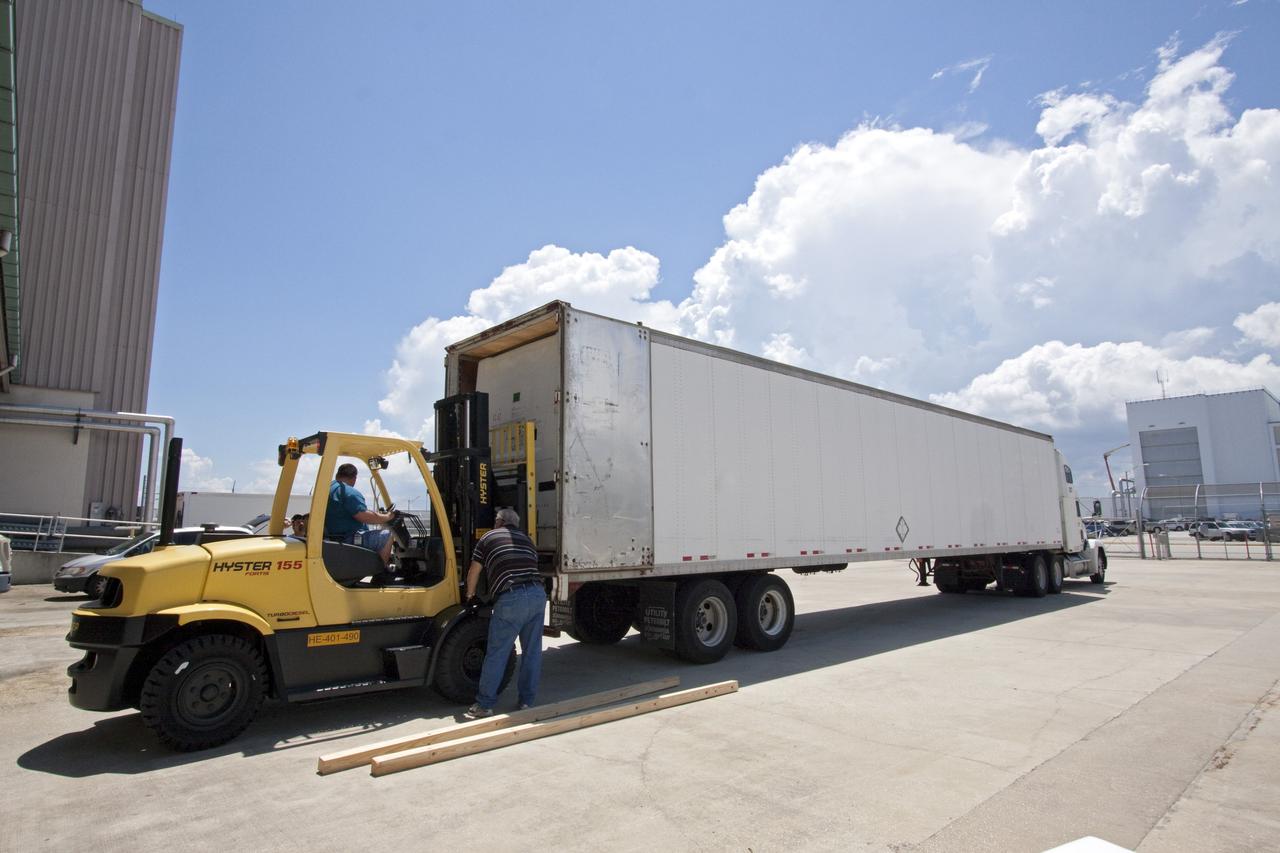
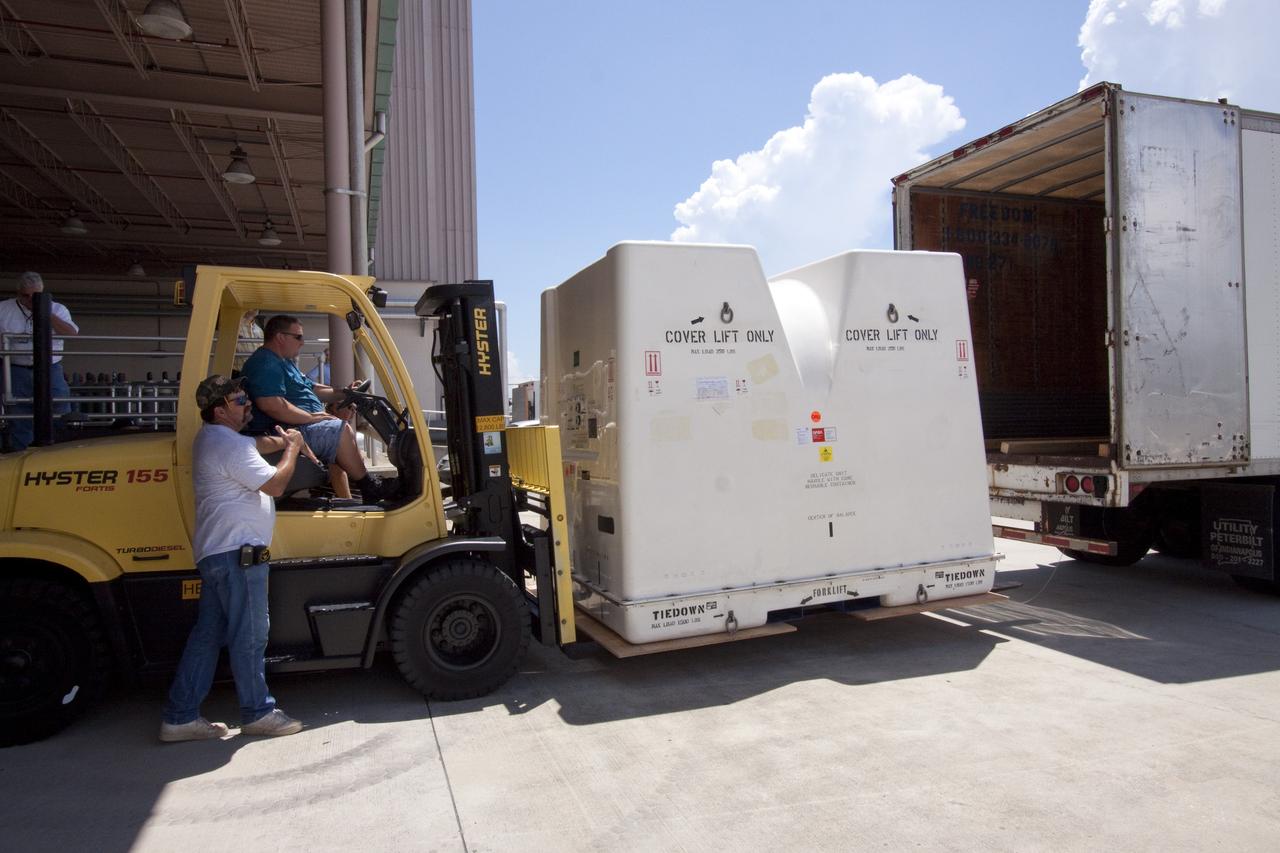
CAPE CANAVERAL, Fla. -- In the Space Station Processing Facility at NASA's Kennedy Space Center in Florida, a forklift moves shipping containers packed with tools and flight support equipment for orbital replacement units into a tractor-trailer for their trip to the Japanese Aerospace Exploration Agency's Tanegashima Space Center. There, the six units, including the flex hose rotary coupler, will be processed for launch to the International Space Station aboard HTV-2, scheduled for Jan. 20, 2011. HTV-2 is an uncrewed cargo transporter that will be launched by the H-IIB launch vehicle. It is designed to deliver up to 6 tons of supplies, including food, clothes and experiment devices to the space station. Photo credit: NASA/Jack Pfaller
CAPE CANAVERAL, Fla. -- In the Space Station Processing Facility at NASA's Kennedy Space Center in Florida, a forklift moves shipping containers packed with tools and flight support equipment for orbital replacement units into a tractor-trailer for their trip to the Japanese Aerospace Exploration Agency's Tanegashima Space Center. There, the six units, including the flex hose rotary coupler, will be processed for launch to the International Space Station aboard HTV-2, scheduled for Jan. 20, 2011. HTV-2 is an uncrewed cargo transporter that will be launched by the H-IIB launch vehicle. It is designed to deliver up to 6 tons of supplies, including food, clothes and experiment devices to the space station. Photo credit: NASA/Jack Pfaller
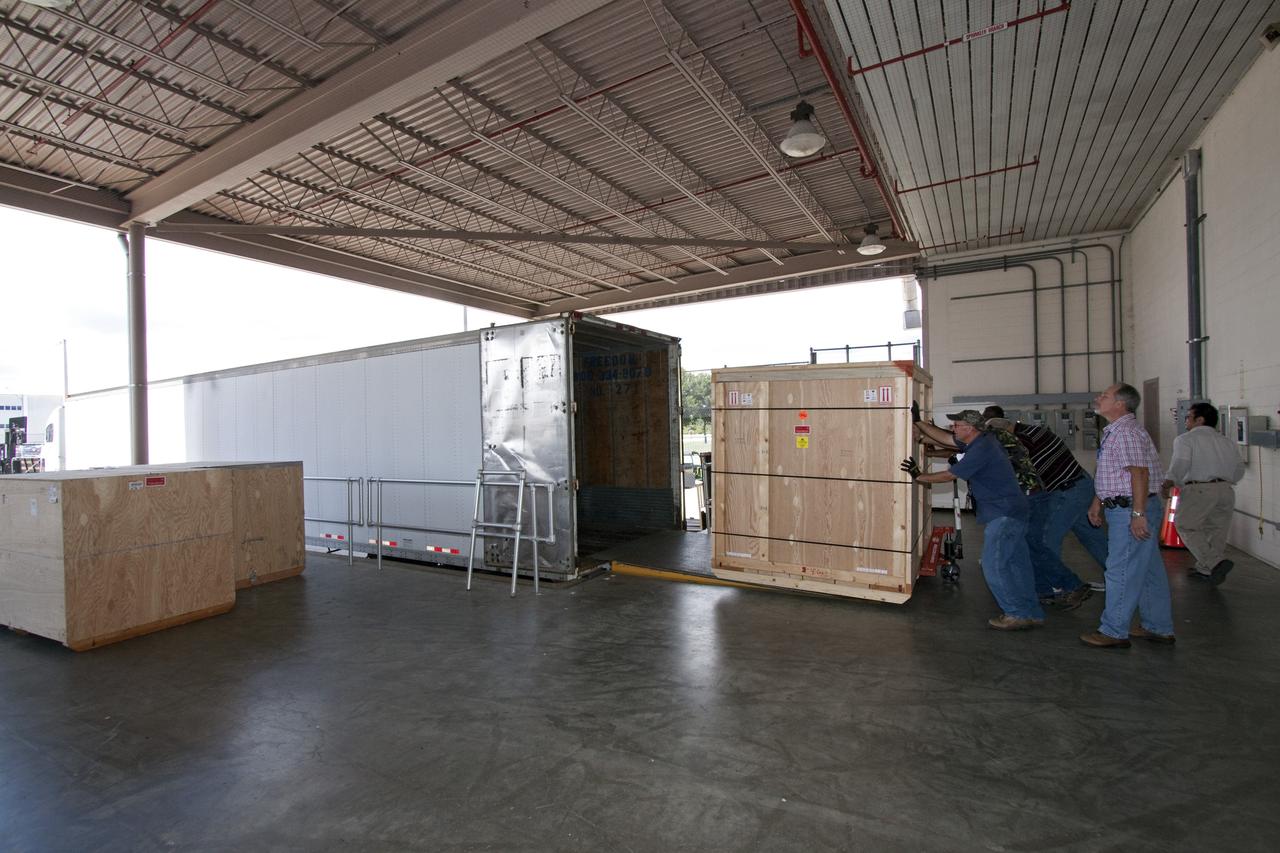
CAPE CANAVERAL, Fla. -- In the Space Station Processing Facility at NASA's Kennedy Space Center in Florida, shipping containers packed with tools and flight support equipment for orbital replacement units are loaded into a tractor-trailer for their trip to the Japanese Aerospace Exploration Agency's Tanegashima Space Center. There, the six units, including the flex hose rotary coupler, will be processed for launch to the International Space Station aboard HTV-2, scheduled for Jan. 20, 2011. HTV-2 is an uncrewed cargo transporter that will be launched by the H-IIB launch vehicle. It is designed to deliver up to 6 tons of supplies, including food, clothes and experiment devices to the space station. Photo credit: NASA/Jack Pfaller
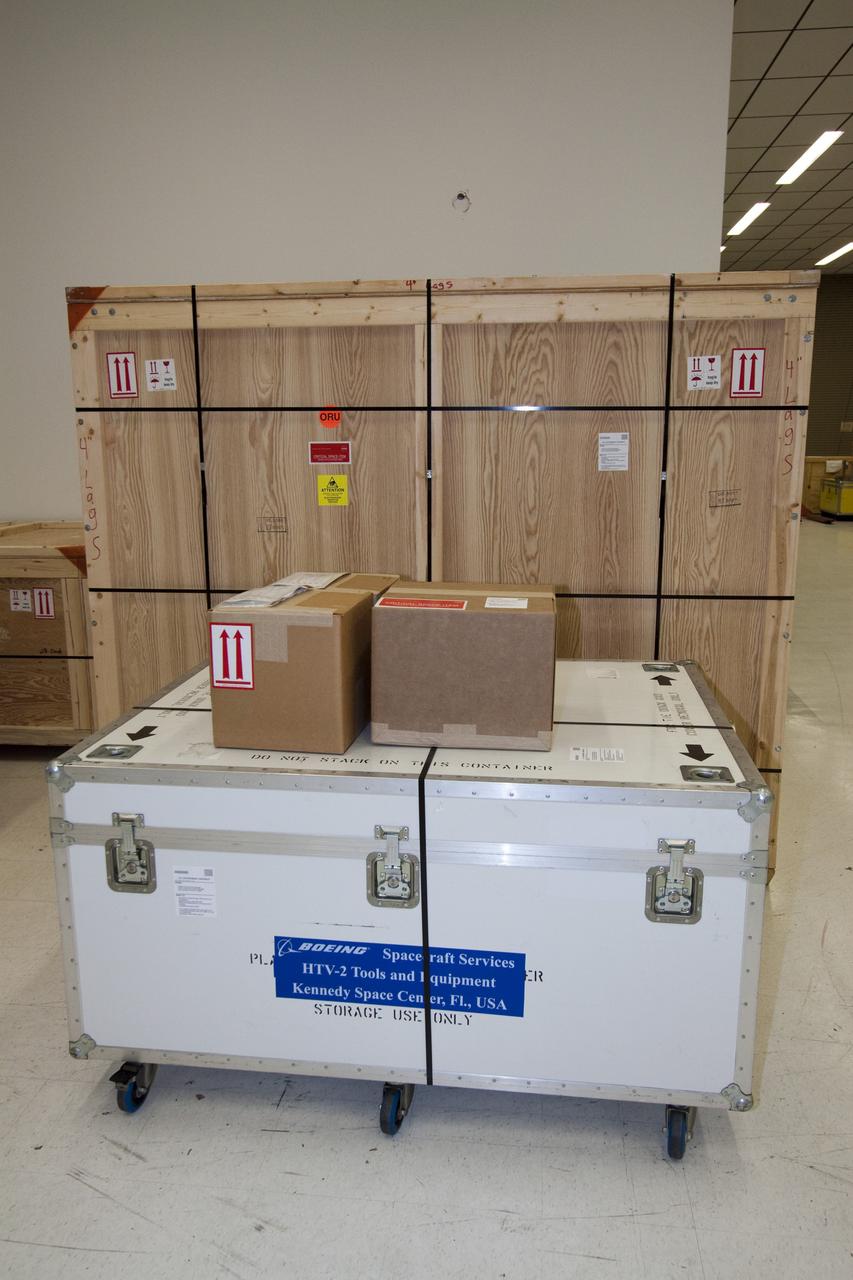
CAPE CANAVERAL, Fla. -- In the Space Station Processing Facility at NASA's Kennedy Space Center in Florida, shipping containers packed with tools and flight support equipment for orbital replacement units are ready for their trip to the Japanese Aerospace Exploration Agency's Tanegashima Space Center. There, the six units, including the flex hose rotary coupler, will be processed for launch to the International Space Station aboard HTV-2, scheduled for Jan. 20, 2011. HTV-2 is an uncrewed cargo transporter that will be launched by the H-IIB launch vehicle. It is designed to deliver up to 6 tons of supplies, including food, clothes and experiment devices to the space station. Photo credit: NASA/Jack Pfaller

Josh Byerly, public affairs officer, NASA, left, Robert Lightfoot, associate administrator, NASA, second from left, Alan Lindenmoyer, program manager, NASA's Commercial Crew and Cargo Program, and, Frank Culbertson, executive vice president, Orbital Sciences Corporation, right, are seen during a press conference held after the successful launch of the Antares rocket, with the Cygnus cargo spacecraft aboard, Wednesday, Sept. 18, 2013, NASA Wallops Flight Facility, Virginia. Cygnus is on its way to rendezvous with the space station. The spacecraft will deliver about 1,300 pounds (589 kilograms) of cargo, including food and clothing, to the Expedition 37 crew. Photo Credit: (NASA/Bill Ingalls)
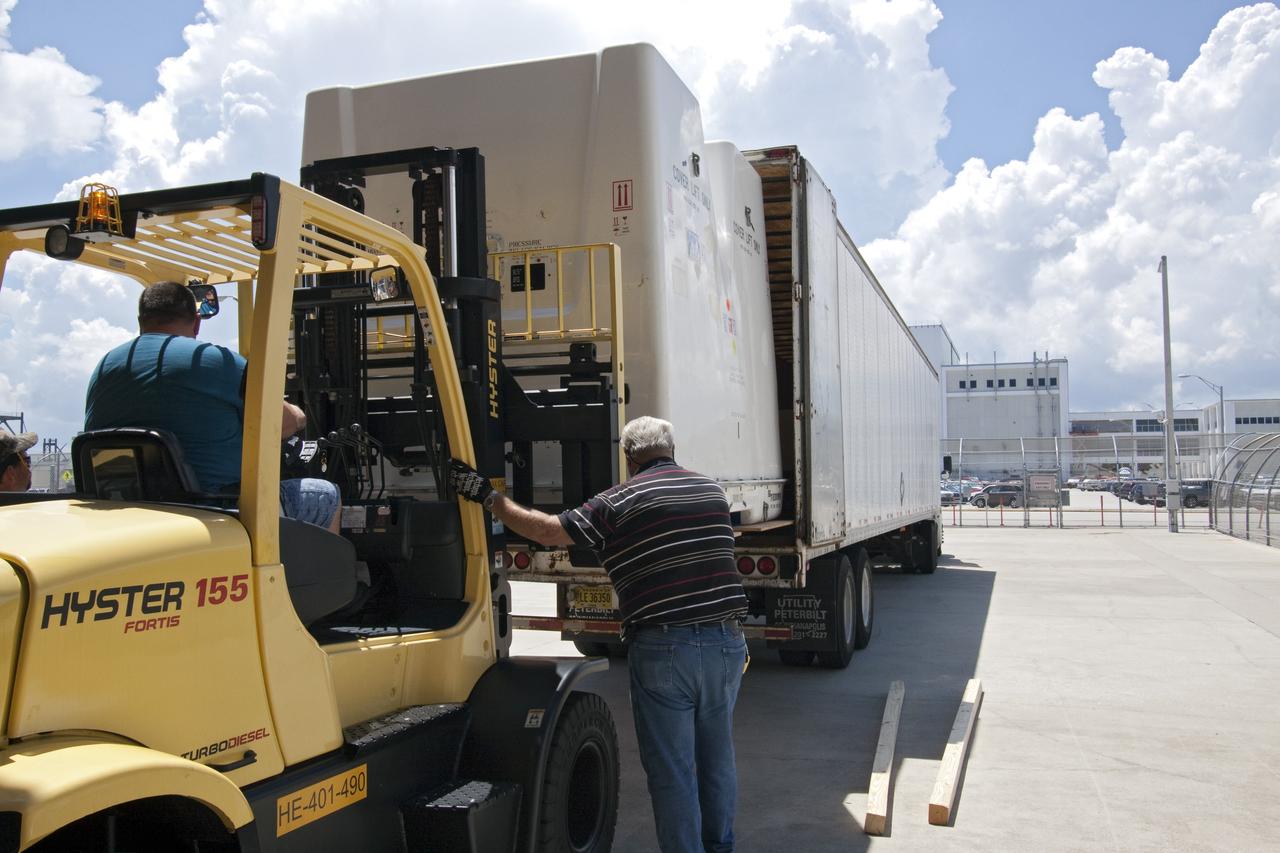
CAPE CANAVERAL, Fla. -- In the Space Station Processing Facility at NASA's Kennedy Space Center in Florida, a forklift moves shipping containers packed with tools and flight support equipment for orbital replacement units into a tractor-trailer for their trip to the Japanese Aerospace Exploration Agency's Tanegashima Space Center. There, the six units, including the flex hose rotary coupler, will be processed for launch to the International Space Station aboard HTV-2, scheduled for Jan. 20, 2011. HTV-2 is an uncrewed cargo transporter that will be launched by the H-IIB launch vehicle. It is designed to deliver up to 6 tons of supplies, including food, clothes and experiment devices to the space station. Photo credit: NASA/Jack Pfaller
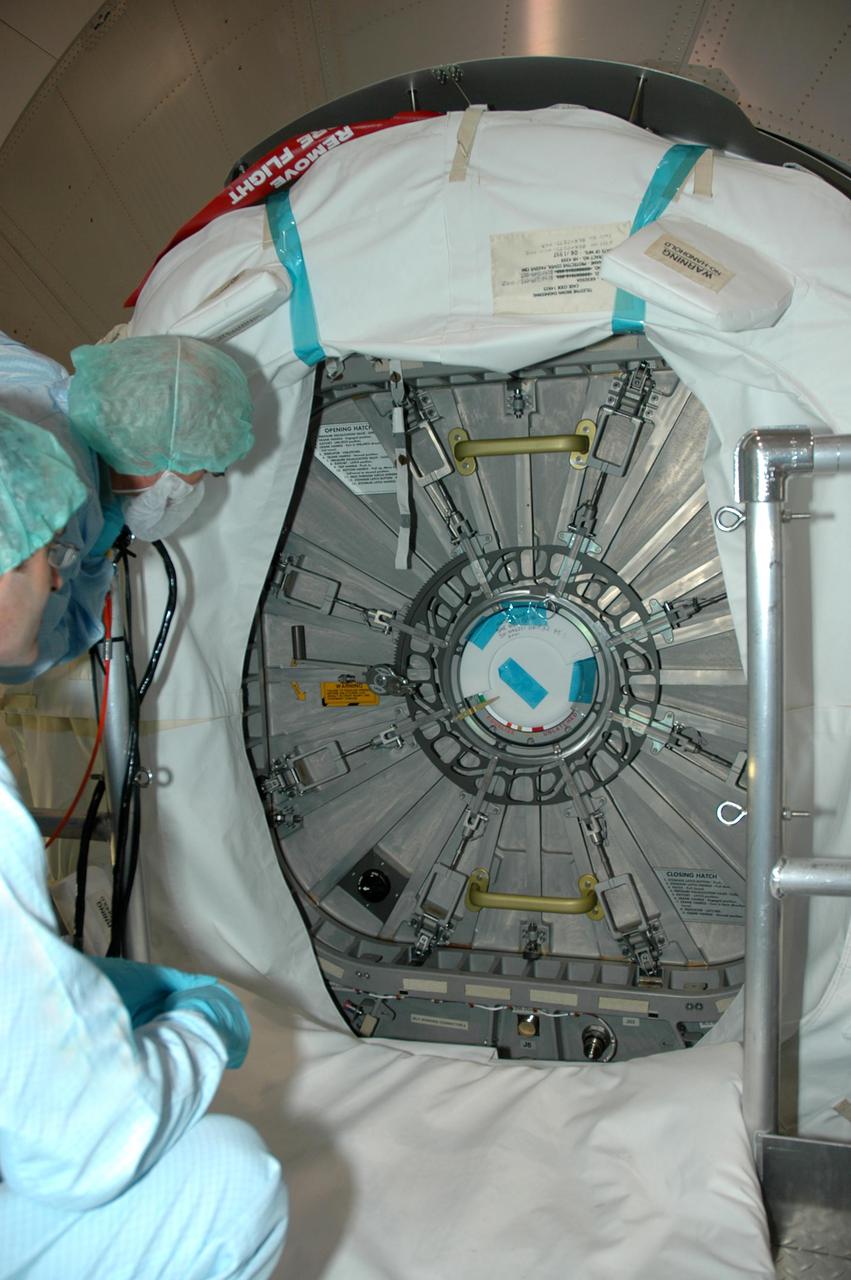
KENNEDY SPACE CENTER, FLA. -- In the Space Station Processing Facility, Italian-built Multi-Purpose Logistics Module Raffaello is closed and ready for transfer to a payload canister and trip to Launch Complex 39B for transfer to Space Shuttle Discovery. The module will travel to the International Space Station aboard Space Shuttle Discovery’s Return to Flight mission STS-114. Raffaello carries 12 racks of cargo, including food, clothing, spare parts and research equipment, to the Station. Shuttle Discovery is targeted for launch in a window extending May 15 through June 3.
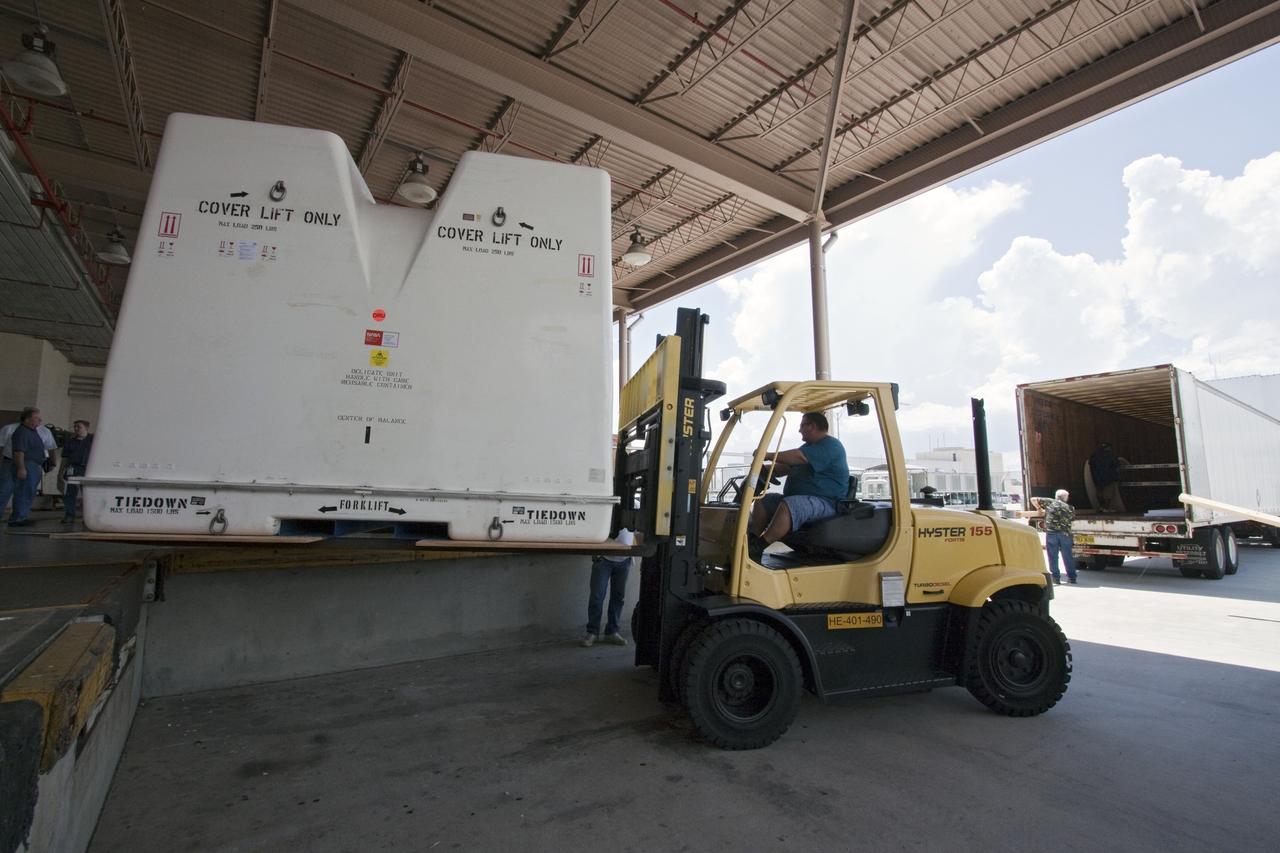
CAPE CANAVERAL, Fla. -- In the Space Station Processing Facility at NASA's Kennedy Space Center in Florida, a forklift moves shipping containers packed with tools and flight support equipment for orbital replacement units into a tractor-trailer for their trip to the Japanese Aerospace Exploration Agency's Tanegashima Space Center. There, the six units, including the flex hose rotary coupler, will be processed for launch to the International Space Station aboard HTV-2, scheduled for Jan. 20, 2011. HTV-2 is an uncrewed cargo transporter that will be launched by the H-IIB launch vehicle. It is designed to deliver up to 6 tons of supplies, including food, clothes and experiment devices to the space station. Photo credit: NASA/Jack Pfaller
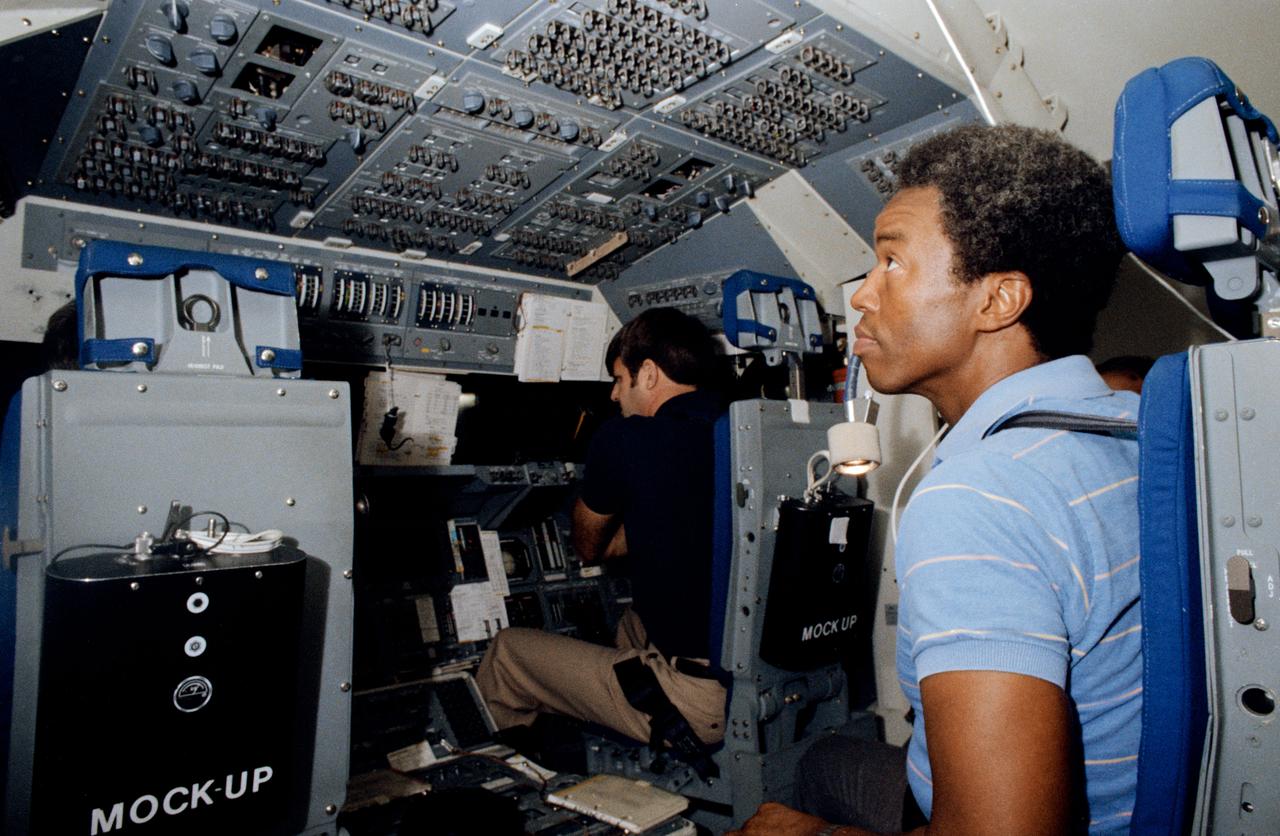
S83-33032 (23 May 1983) --- Astronauts Guion S. Bluford, right, and Daniel C. Brandenstein man their respective Challenger entry and ascent stations in the Shuttle Mission Simulator (SMS) at NASA's Johnson Space Center (JSC) during a training session for the STS-8 mission. Brandenstein is in the pilot's station, while Bluford, a mission specialist, occupies one of the two aft flight deck seats. Both are wearing civilian clothes for this training exercise. This motion based simulator represents the scene of a great deal of training and simulation activity, leading up to crew preparedness for Space Transportation System (STS) mission. Photo credt: NASA/Otis Imboden, National Geographic
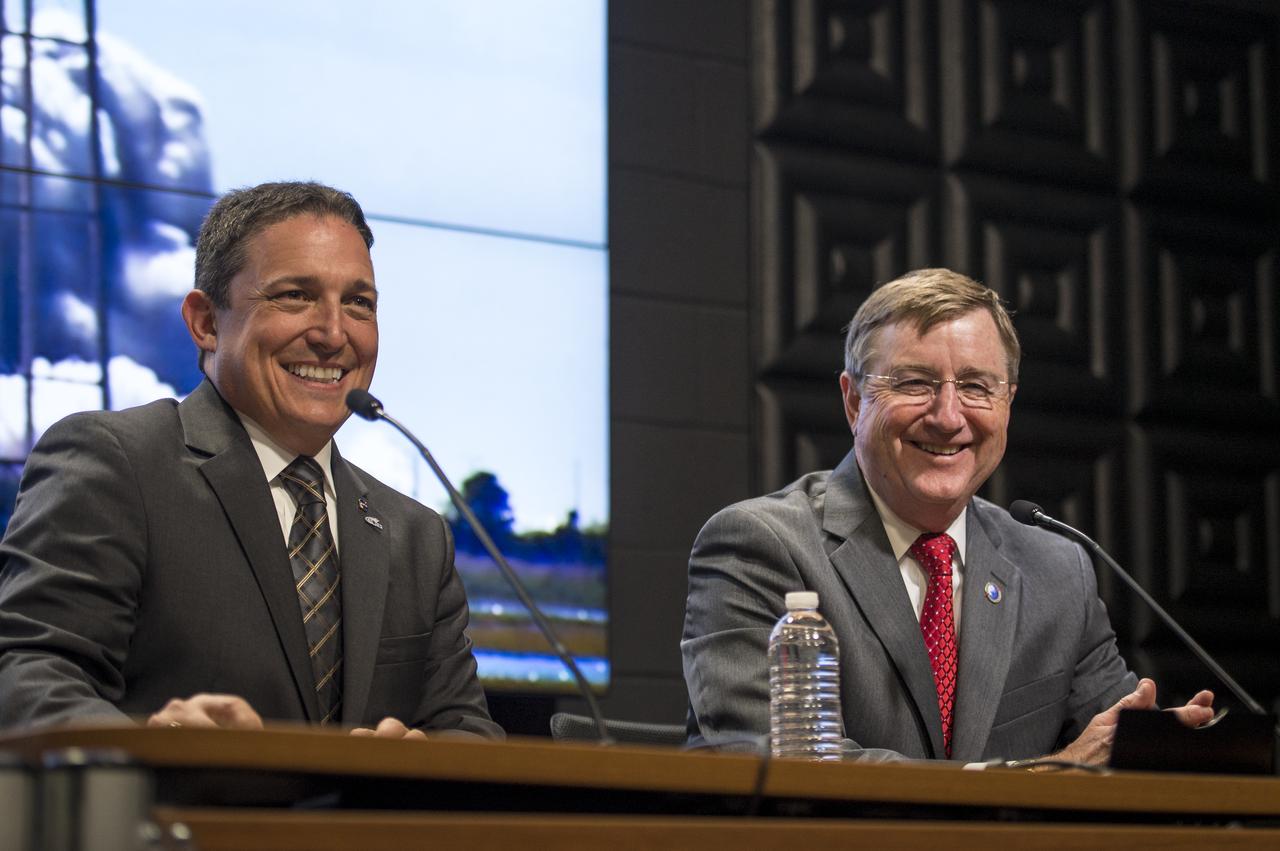
Alan Lindenmoyer, program manager, NASA's Commercial Crew and Cargo Program, left, and, Frank Culbertson, executive vice president, Orbital Sciences Corporation,are seen during a press conference held after the successful launch of the Orbital Sciences Antares rocket, with the Cygnus cargo spacecraft aboard, Wednesday, Sept. 18, 2013, NASA Wallops Flight Facility, Virginia. Cygnus is on its way to rendezvous with the space station. The spacecraft will deliver about 1,300 pounds (589 kilograms) of cargo, including food and clothing, to the Expedition 37 crew. Photo Credit: (NASA/Bill Ingalls)
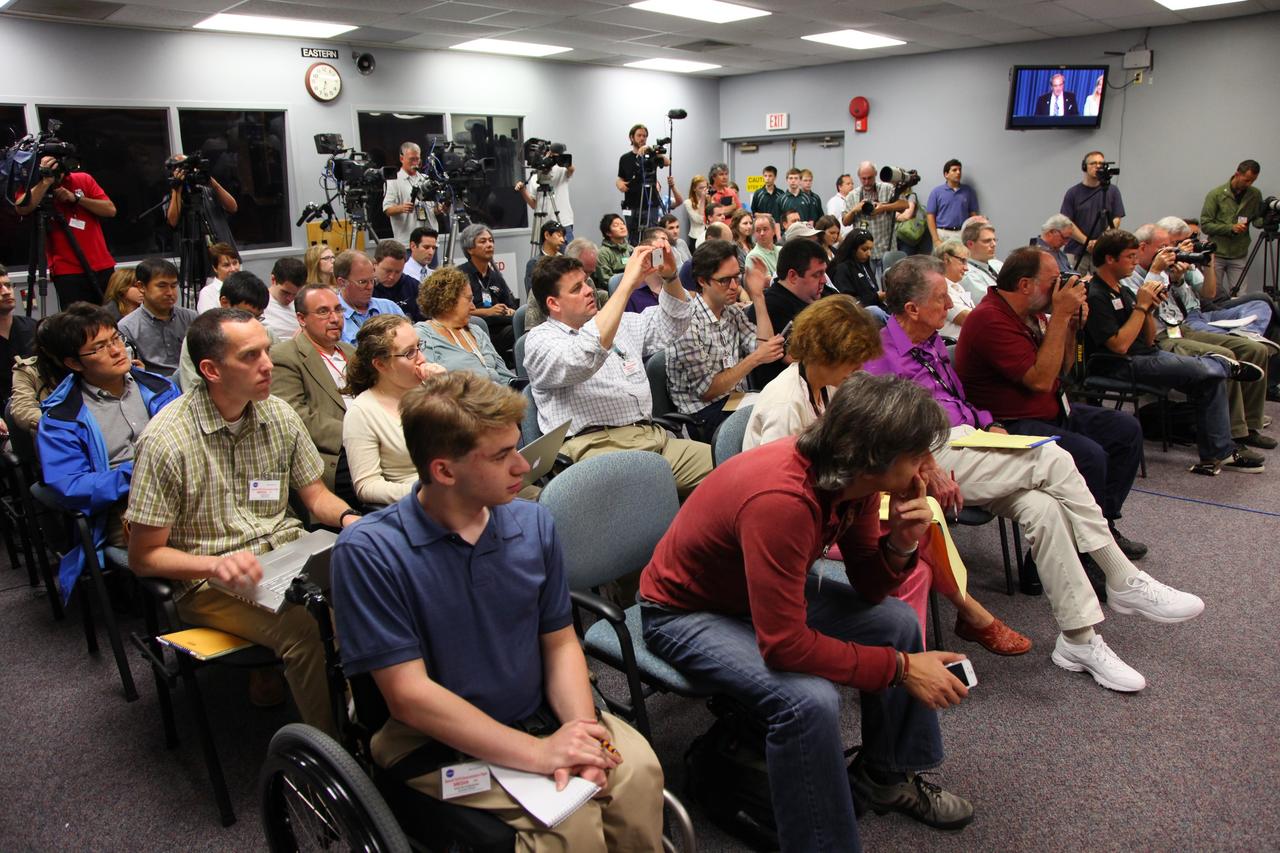
CAPE CANAVERAL, Fla. – Media representatives pack the Press Site auditorium at NASA’s Kennedy Space Center in Florida for a news conference following the launch abort of the SpaceX demonstration test flight. The next opportunity for liftoff of the SpaceX Falcon 9 rocket to carry the Dragon capsule to orbit is 4:33 a.m. EDT on May 22. The launch will be the company's second demonstration test flight for NASA's Commercial Orbital Transportation Services Program, or COTS. During the flight, the capsule will conduct a series of check-out procedures to test and prove its systems, including rendezvous and berthing with the International Space Station. If the capsule performs as planned, the cargo and experiments it is carrying will be transferred to the station. The cargo includes food, water and provisions for the station’s Expedition crews, such as clothing, batteries and computer equipment. Under COTS, NASA has partnered with two aerospace companies to deliver cargo to the station. For more information, visit http://www.nasa.gov/spacex. Photo credit: NASA/Gianni Woods
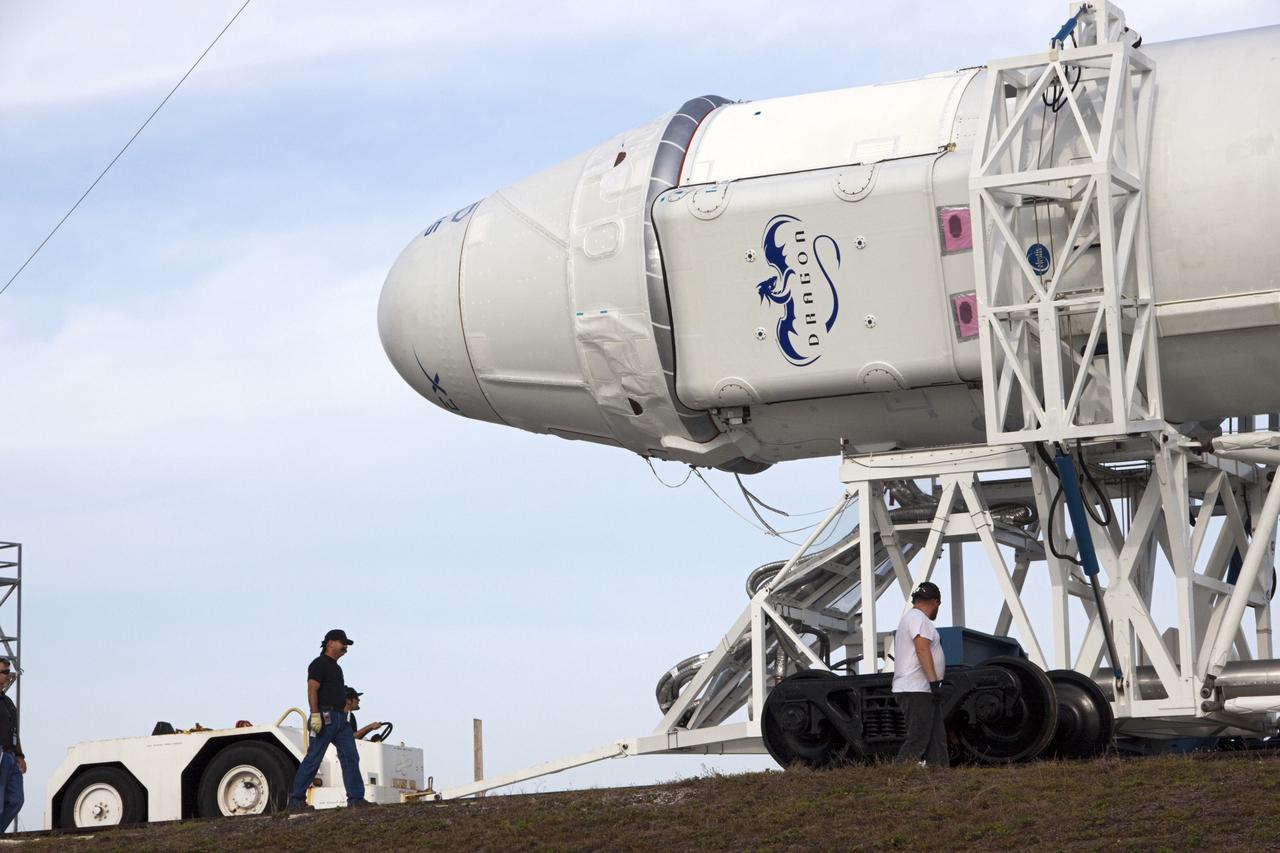
CAPE CANAVERAL, Fla. – As technicians monitor the progress of the transporter, the SpaceX Falcon 9 rocket with its Dragon spacecraft arrive at Space Launch Complex-40 on Cape Canaveral Air Force Station in Florida. Liftoff with the SpaceX Falcon 9 is set for 4:55 a.m. EDT on May 19. The launch will be the company's second demonstration test flight for NASA's Commercial Orbital Transportation Services Program, or COTS. During the flight, the capsule will conduct a series of check-out procedures to test and prove its systems, including rendezvous and berthing with the International Space Station. If the capsule performs as planned, the cargo and experiments it is carrying will be transferred to the station. The cargo includes food, water and provisions for the station’s Expedition crews, such as clothing, batteries and computer equipment. Under COTS, NASA has partnered with two aerospace companies to deliver cargo to the station. For more information, visit http://www.nasa.gov/spacex Photo credit: NASA/Jim Grossmann
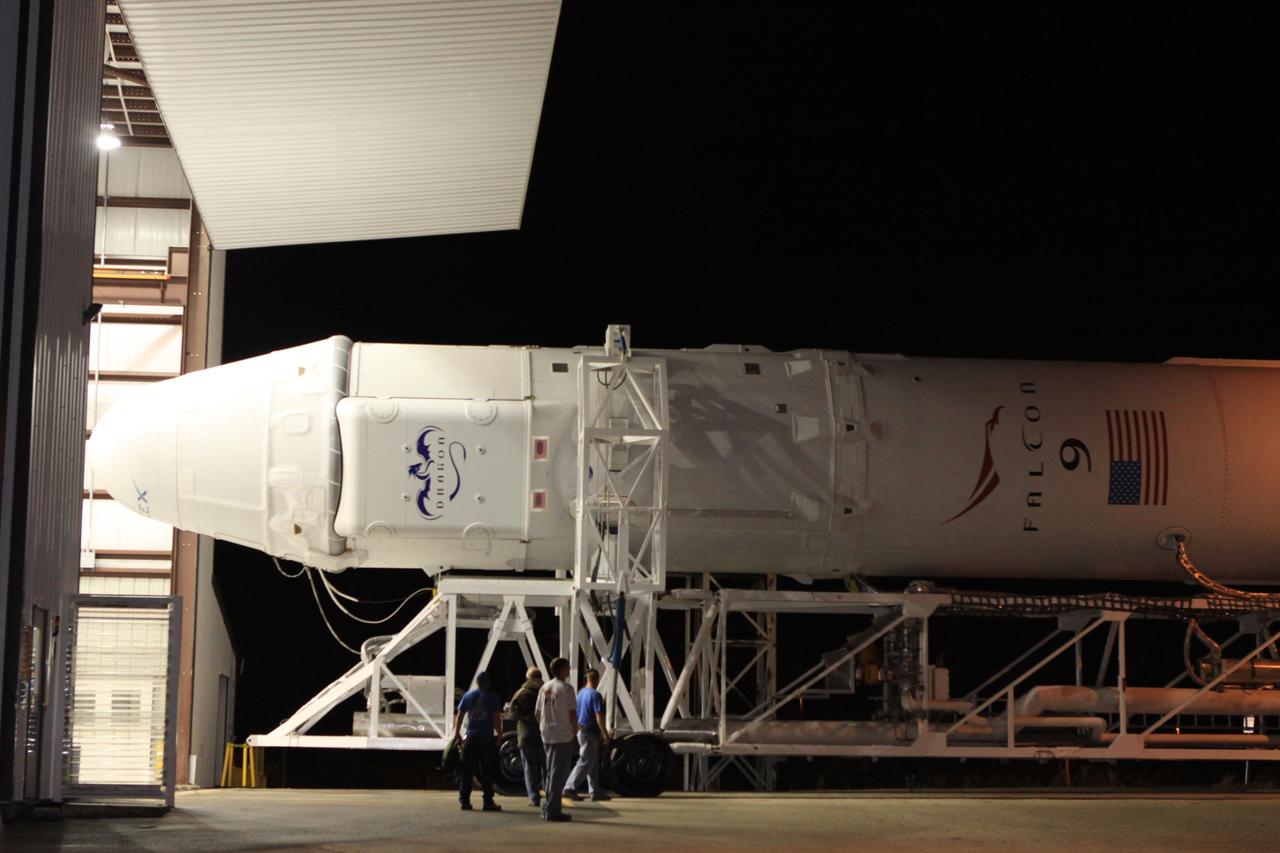
CAPE CANAVERAL, Fla. – The SpaceX Falcon 9 rocket begins its move from the processing facility to the pad at Space Launch Complex-40 on Cape Canaveral Air Force Station in Florida. Liftoff with the SpaceX Dragon capsule aboard is set for 4:55 a.m. EDT on May 19. The launch will be the company's second demonstration test flight for NASA's Commercial Orbital Transportation Services Program, or COTS. During the flight, the capsule will conduct a series of check-out procedures to test and prove its systems, including rendezvous and berthing with the International Space Station. If the capsule performs as planned, the cargo and experiments it is carrying will be transferred to the station. The cargo includes food, water and provisions for the station’s Expedition crews, such as clothing, batteries and computer equipment. Under COTS, NASA has partnered with two aerospace companies to deliver cargo to the station. For more information, visit http://www.nasa.gov/spacex. Photo credit: NASA/Jim Grossmann
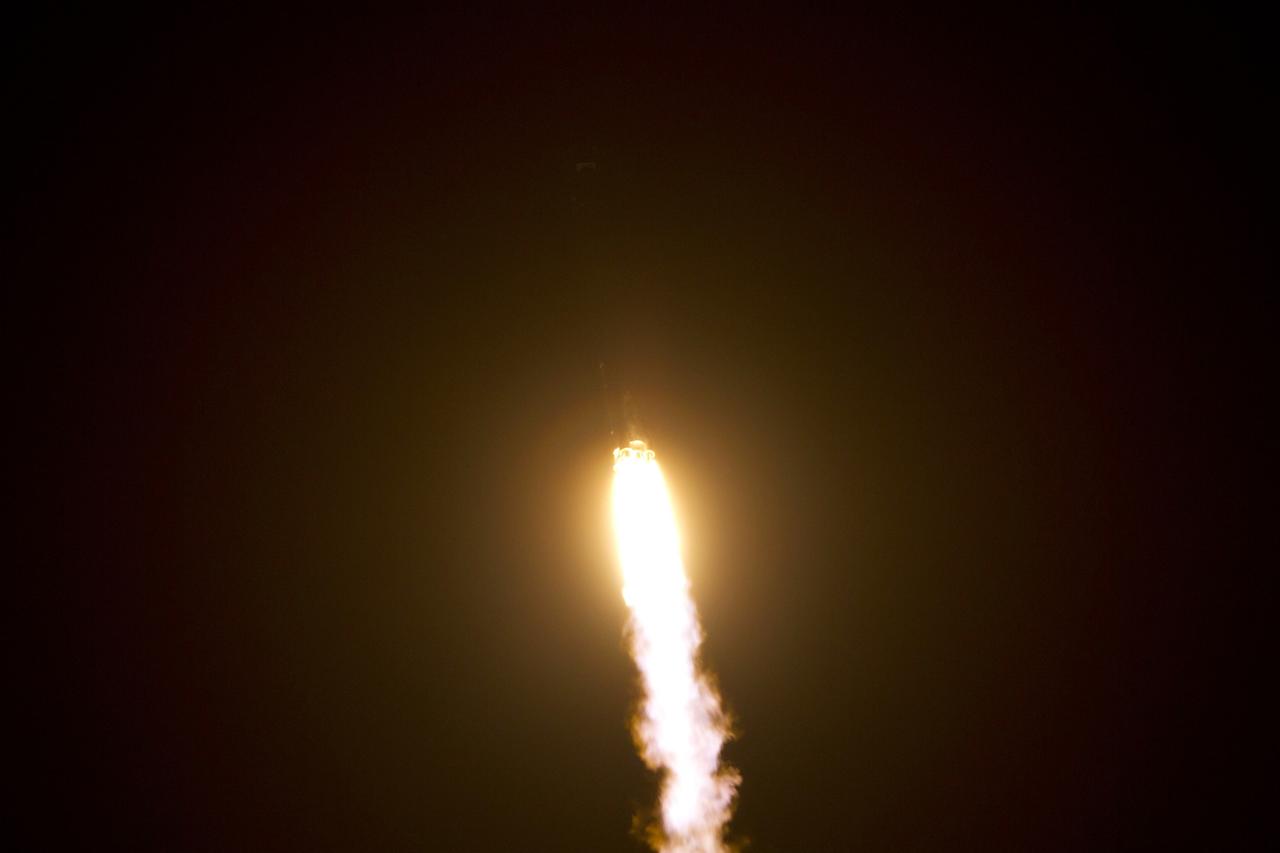
CAPE CANAVERAL, Fla. – On Cape Canaveral Air Force Station in Florida, Space Launch Complex-40 is ablaze as the SpaceX Falcon 9 rocket begins its ascent after liftoff at 3:44 a.m. EDT. The launch is the company's second demonstration test flight for NASA's Commercial Orbital Transportation Services, or COTS, Program. During the flight, the Dragon capsule will conduct a series of check-out procedures to test and prove its systems, including rendezvous and berthing with the International Space Station. If the capsule performs as planned, the cargo and experiments it is carrying will be transferred to the station. The cargo includes food, water and provisions for the station’s Expedition crews, such as clothing, batteries and computer equipment. Under COTS, NASA has partnered with two aerospace companies to deliver cargo to the station. For more information, visit http://www.nasa.gov/spacex. Photo credit: NASA/Rick Wetherington, Tim Powers and Tim Terry
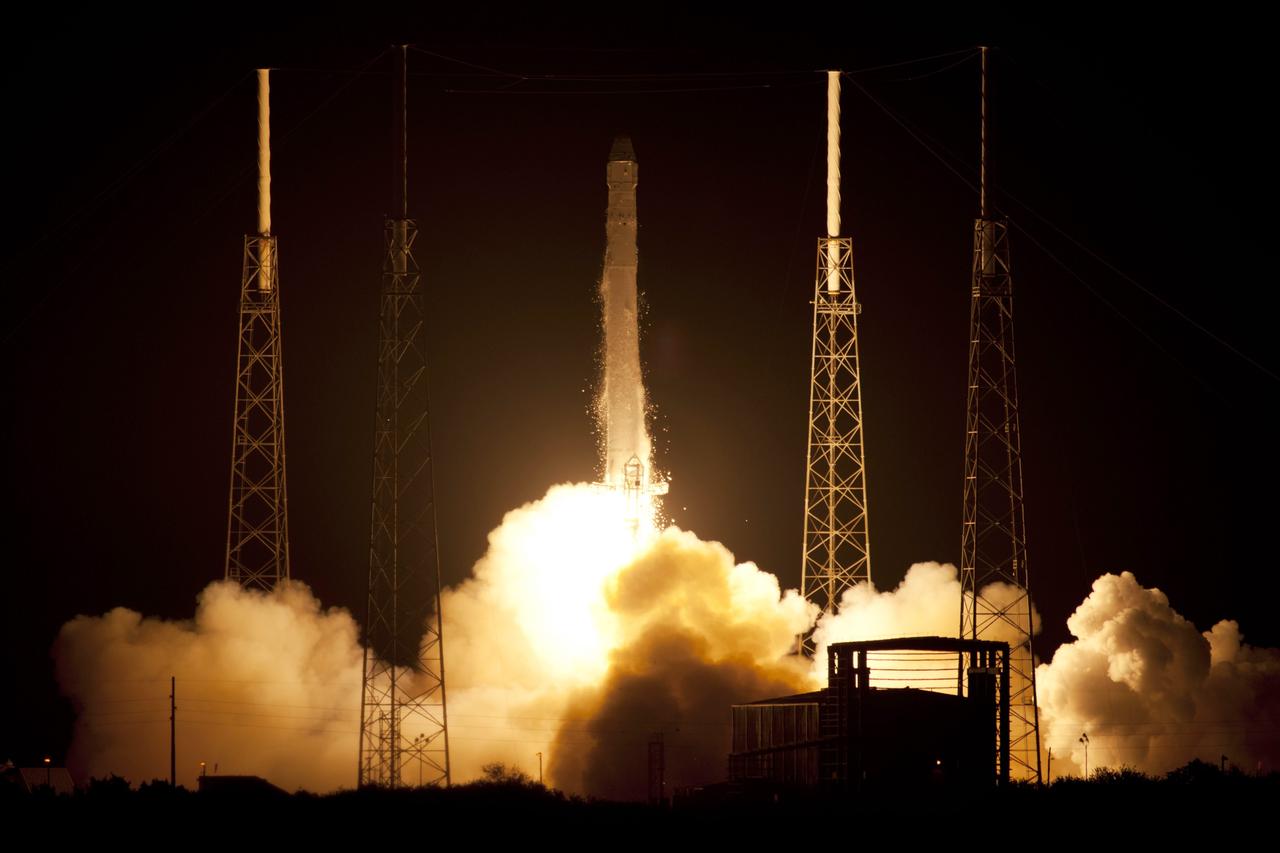
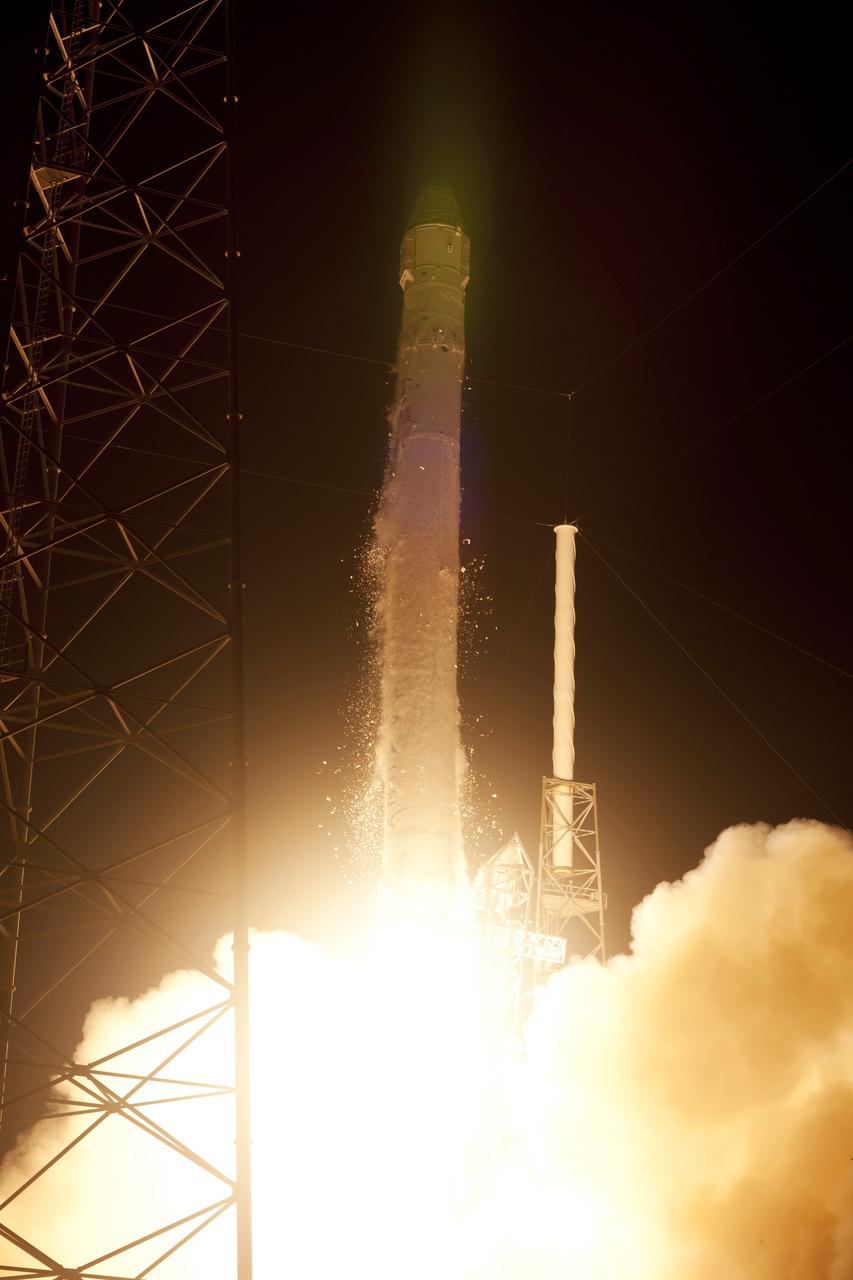
CAPE CANAVERAL, Fla. – Frost and ice breaks away from the SpaceX Falcon 9 rocket following ignition of its nine Merlin engines at 3:44 a.m. EDT at Space Launch Complex-40 on Cape Canaveral Air Force Station in Florida. The launch is the company's second demonstration test flight for NASA's Commercial Orbital Transportation Services, or COTS, Program. During the flight, the Dragon capsule will conduct a series of check-out procedures to test and prove its systems, including rendezvous and berthing with the International Space Station. If the capsule performs as planned, the cargo and experiments it is carrying will be transferred to the station. The cargo includes food, water and provisions for the station’s Expedition crews, such as clothing, batteries and computer equipment. Under COTS, NASA has partnered with two aerospace companies to deliver cargo to the station. For more information, visit http://www.nasa.gov/spacex. Photo credit: NASA/Rick Wetherington, Tim Powers and Tim Terry
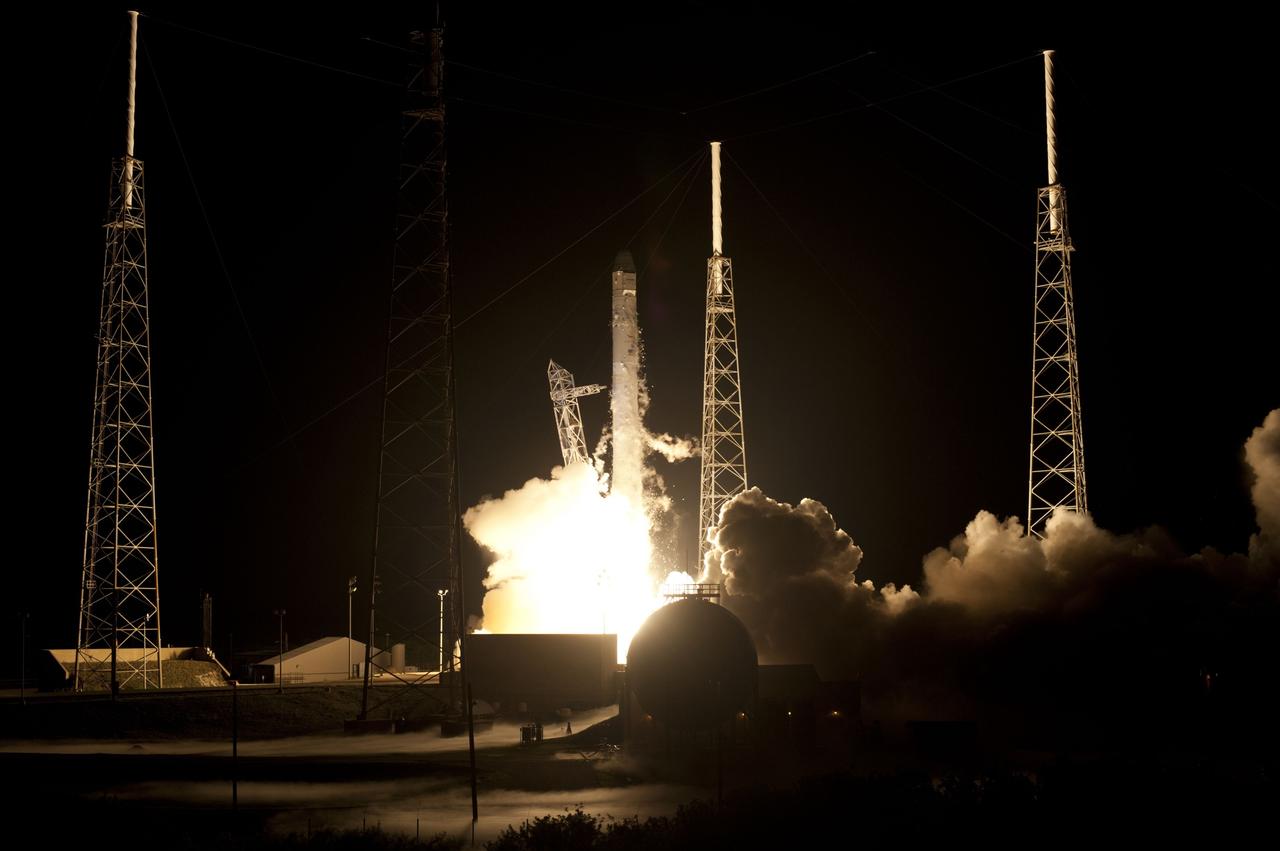
CAPE CANAVERAL, Fla. – The SpaceX Falcon 9 rocket begins its ascent to space at 3:44 a.m. EDT from Space Launch Complex-40 on Cape Canaveral Air Force Station in Florida. The launch is the company's second demonstration test flight for NASA's Commercial Orbital Transportation Services, or COTS, program. During the flight, the Dragon capsule will conduct a series of check-out procedures to test and prove its systems, including rendezvous and berthing with the International Space Station. If the capsule performs as planned, the cargo and experiments it is carrying will be transferred to the station. The cargo includes food, water and provisions for the station’s Expedition crews, such as clothing, batteries and computer equipment. Under COTS, NASA has partnered with two aerospace companies to deliver cargo to the station. For more information, visit http://www.nasa.gov/spacex. Photo credit: NASA/Rick Wetherington, Tim Powers and Tim Terry
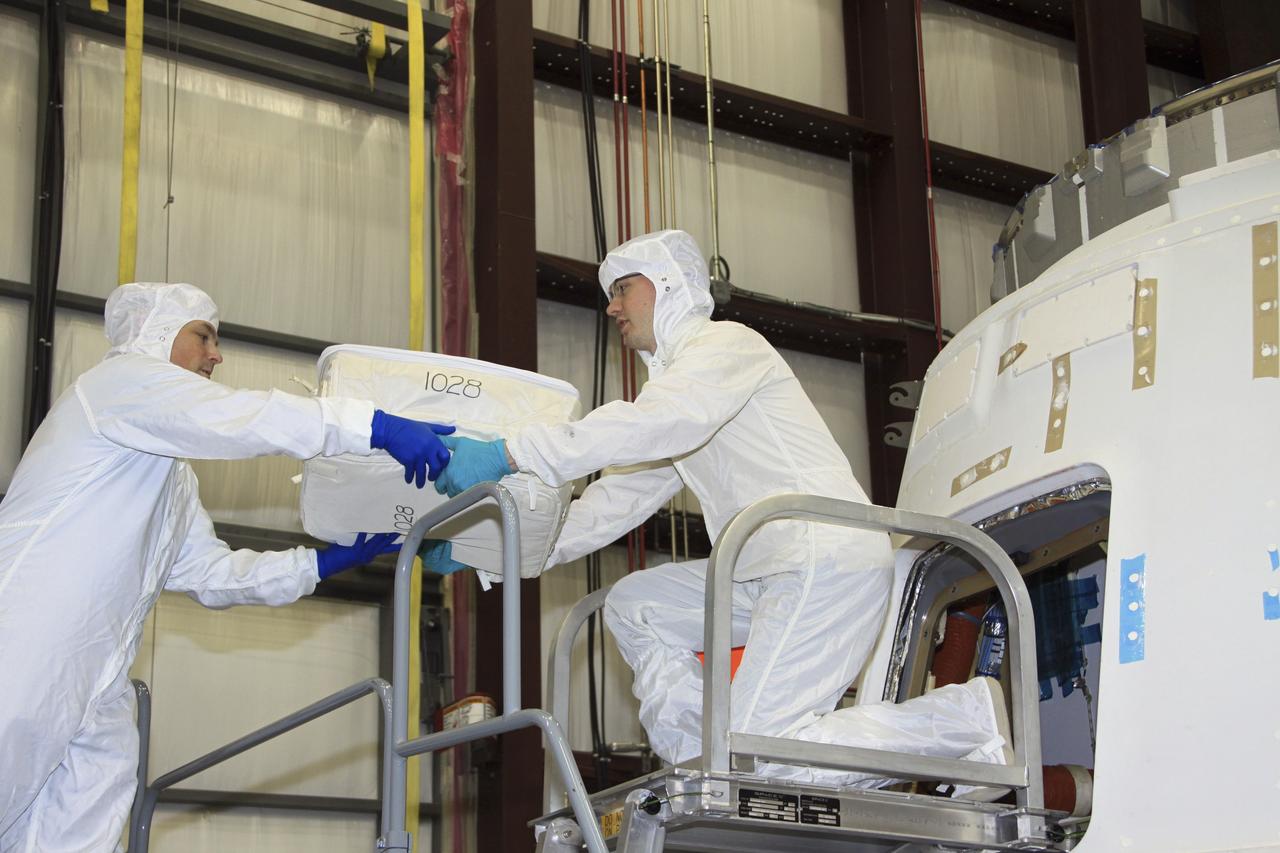
CAPE CANAVERAL, Fla. – In a processing hangar at Space Launch Complex-40 on Cape Canaveral Air Force Station in Florida, Space Exploration Technologies technicians load cargo into the Dragon capsule in preparation for its scheduled April 30 liftoff aboard a Falcon 9 rocket. Known as SpaceX, the launch will be the company's second demonstration test flight for NASA's Commercial Orbital Transportation Services program, or COTS. During the flight, the capsule will conduct a series of checkout procedures to test and prove its systems, including rendezvous and berthing with the International Space Station. The cargo includes food and provisions for the station’s Expedition crews, such as clothing, batteries, and computer equipment. Under COTS, NASA has partnered with two private companies to launch cargo safely to the station. For more information, visit http://www.nasa.gov/spacex. Photo credit: NASA/Jim Grossmann
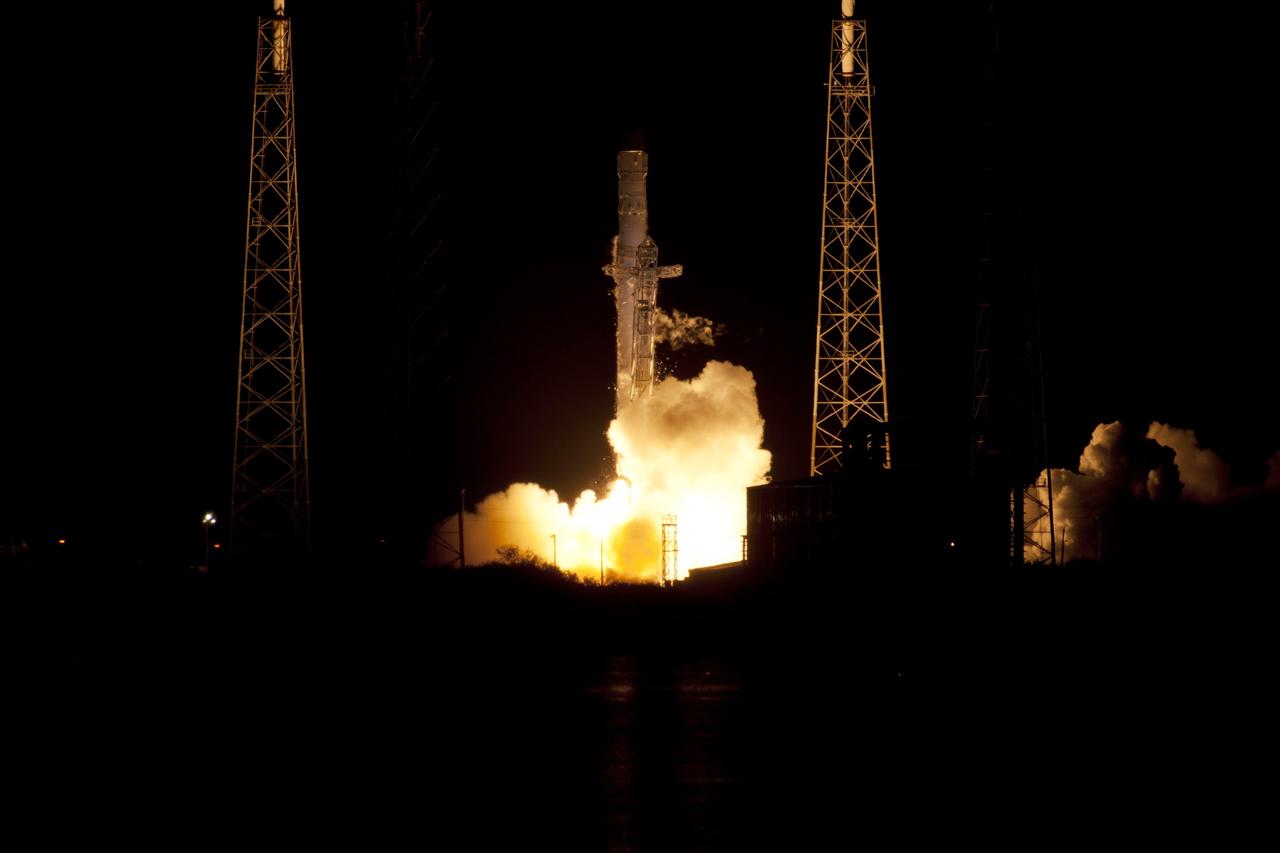
CAPE CANAVERAL, Fla. – The nine Merlin engines beneath the SpaceX Falcon 9 rocket roar to life at 3:44 a.m. EDT at Space Launch Complex-40 on Cape Canaveral Air Force Station in Florida. The launch is the company's second demonstration test flight for NASA's Commercial Orbital Transportation Services, or COTS, Program. During the flight, the Dragon capsule will conduct a series of check-out procedures to test and prove its systems, including rendezvous and berthing with the International Space Station. If the capsule performs as planned, the cargo and experiments it is carrying will be transferred to the station. The cargo includes food, water and provisions for the station’s Expedition crews, such as clothing, batteries and computer equipment. Under COTS, NASA has partnered with two aerospace companies to deliver cargo to the station. For more information, visit http://www.nasa.gov/spacex. Photo credit: NASA/Rick Wetherington, Tim Powers and Tim Terry
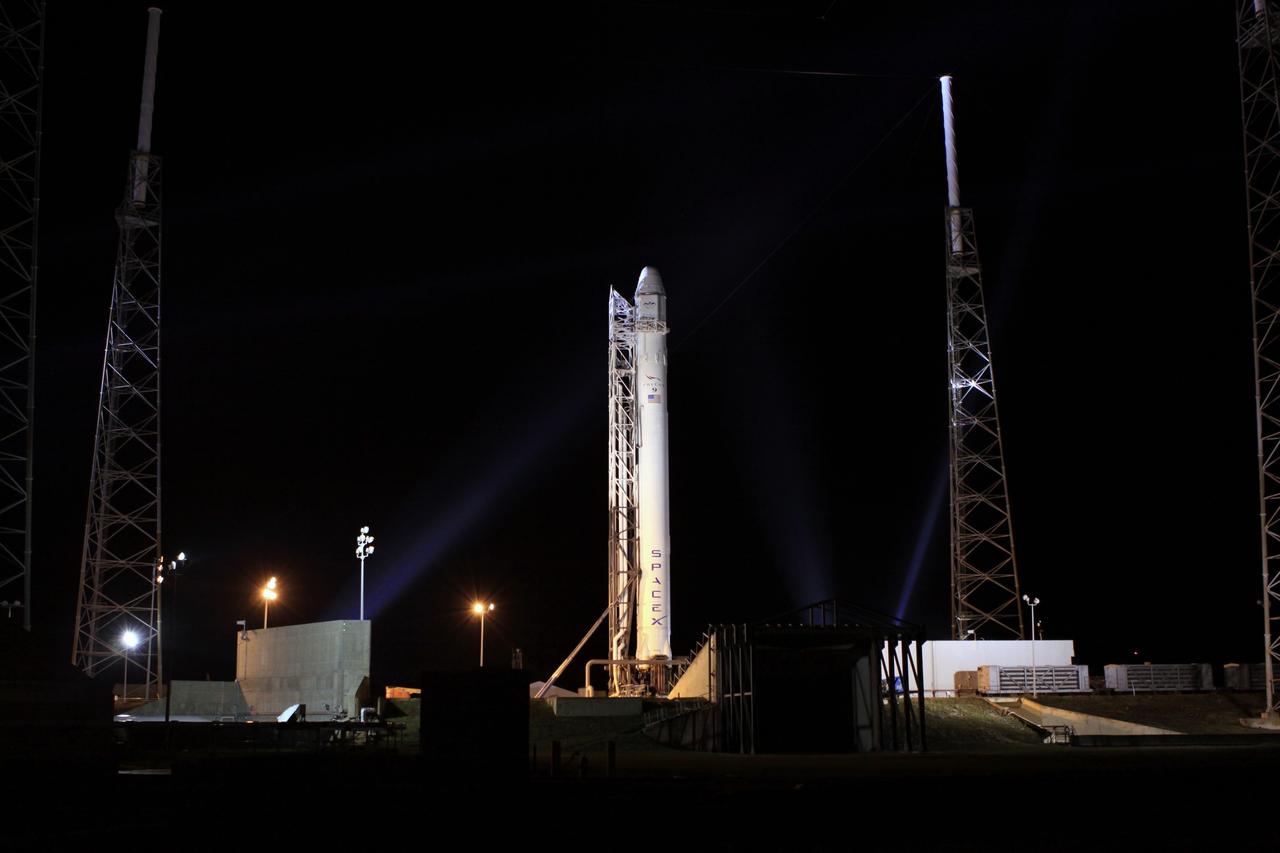
CAPE CANAVERAL, Fla. – The SpaceX Falcon 9 rocket is nestled between the lightning protection system towers surrounding the pad at Space Launch Complex-40 on Cape Canaveral Air Force Station in Florida. Liftoff with the SpaceX Dragon capsule aboard is set for 4:55 a.m. EDT on May 19. The launch will be the company's second demonstration test flight for NASA's Commercial Orbital Transportation Services Program, or COTS. During the flight, the capsule will conduct a series of check-out procedures to test and prove its systems, including rendezvous and berthing with the International Space Station. If the capsule performs as planned, the cargo and experiments it is carrying will be transferred to the station. The cargo includes food, water and provisions for the station’s Expedition crews, such as clothing, batteries and computer equipment. Under COTS, NASA has partnered with two aerospace companies to deliver cargo to the station. For more information, visit http://www.nasa.gov/spacex. Photo credit: NASA/Jim Grossmann

CAPE CANAVERAL, Fla. – On Cape Canaveral Air Force Station in Florida, Space Launch Complex-40 is ablaze as the SpaceX Falcon 9 rocket lifts off at 3:44 a.m. EDT. The launch is the company's second demonstration test flight for NASA's Commercial Orbital Transportation Services, or COTS, Program. During the flight, the Dragon capsule will conduct a series of check-out procedures to test and prove its systems, including rendezvous and berthing with the International Space Station. If the capsule performs as planned, the cargo and experiments it is carrying will be transferred to the station. The cargo includes food, water and provisions for the station’s Expedition crews, such as clothing, batteries and computer equipment. Under COTS, NASA has partnered with two aerospace companies to deliver cargo to the station. For more information, visit http://www.nasa.gov/spacex. Photo credit: NASA/Rick Wetherington, Tim Powers and Tim Terry
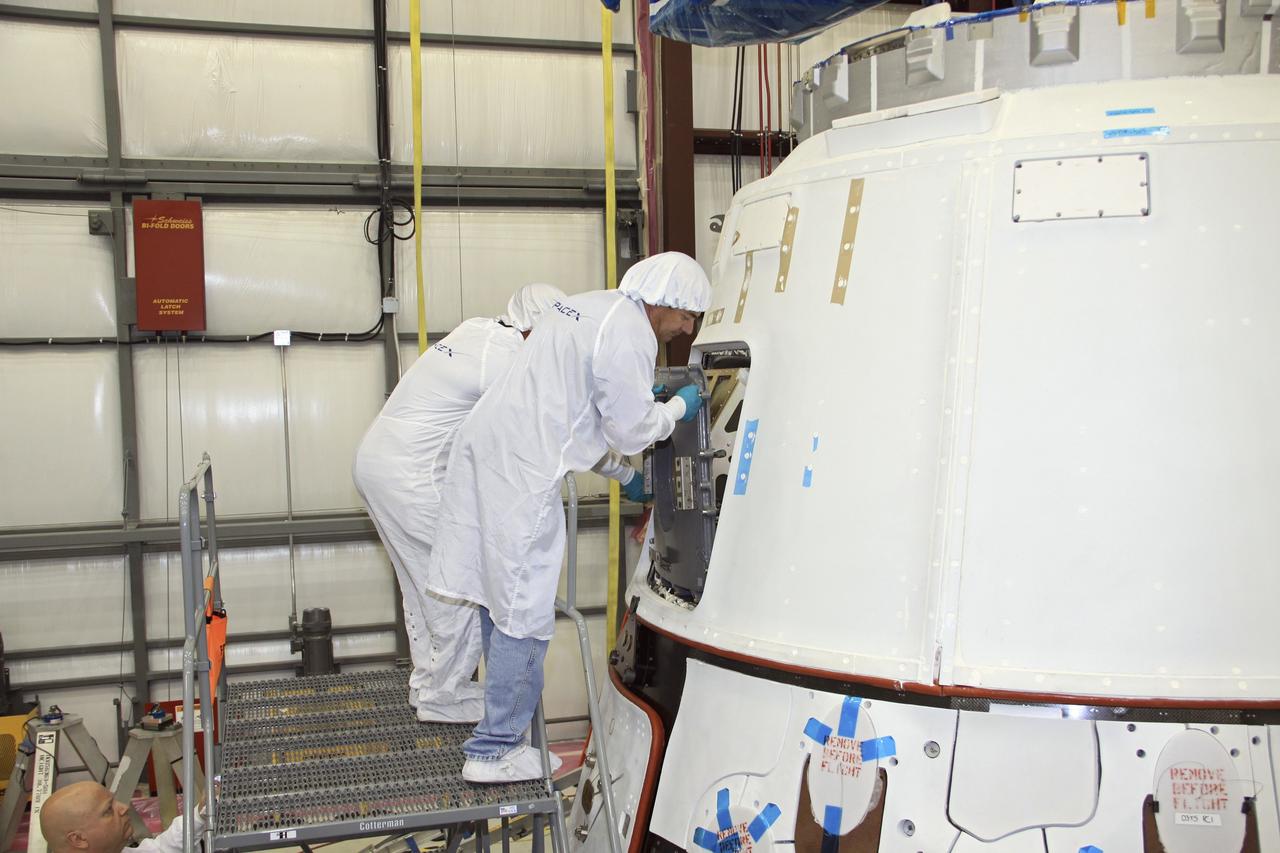
CAPE CANAVERAL, Fla. – In a processing hangar at Space Launch Complex-40 on Cape Canaveral Air Force Station in Florida, Space Exploration Technologies technicians close the hatch of the Dragon capsule. The hatch was open for cargo to be stowed in the capsule in preparation for its scheduled April 30 liftoff aboard a Falcon 9 rocket. Known as SpaceX, the launch will be the company's second demonstration test flight for NASA's Commercial Orbital Transportation Services program, or COTS. During the flight, the capsule will conduct a series of checkout procedures to test and prove its systems, including rendezvous and berthing with the International Space Station. The cargo includes food and provisions for the station’s Expedition crews, such as clothing, batteries, and computer equipment. Under COTS, NASA has partnered with two private companies to launch cargo safely to the station. For more information, visit http://www.nasa.gov/spacex. Photo credit: NASA/Jim Grossmann
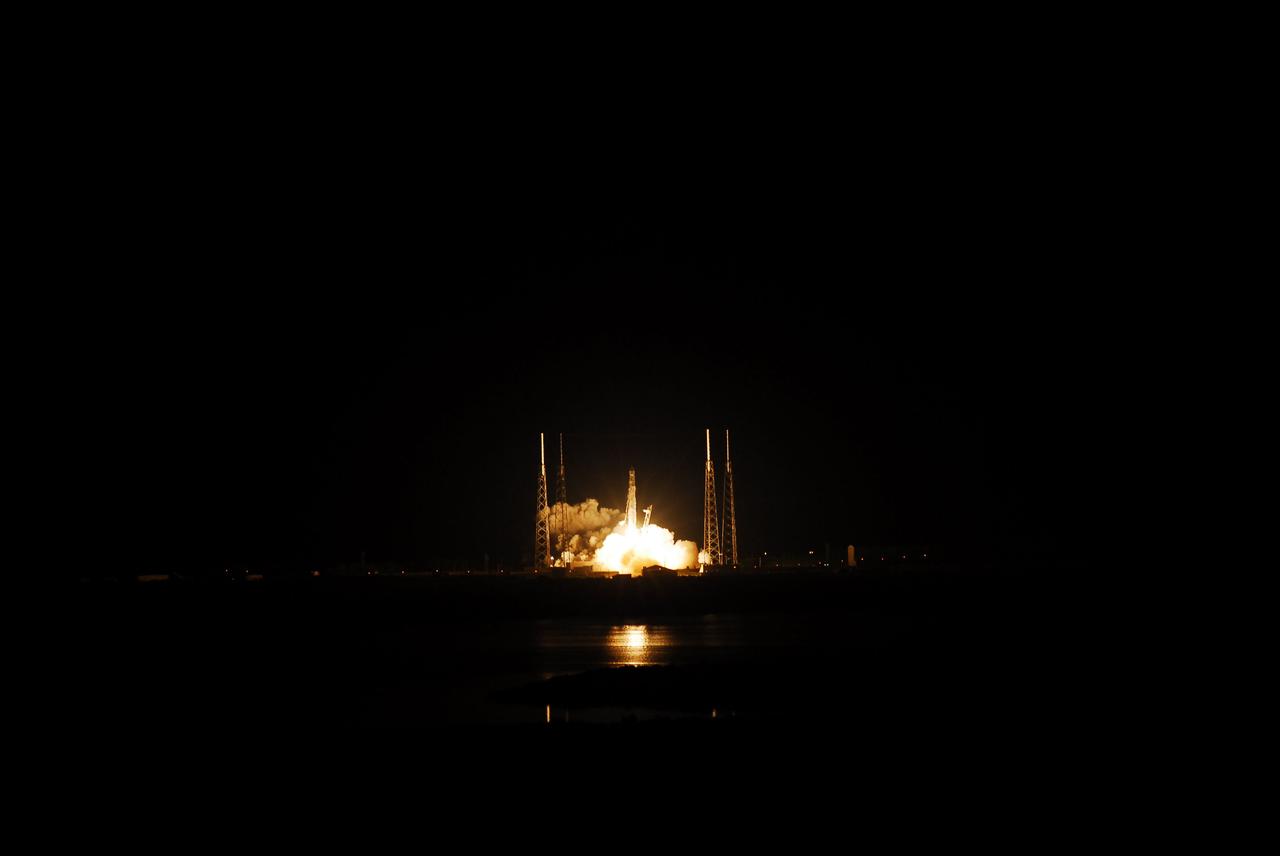
CAPE CANAVERAL, Fla. – The SpaceX Falcon 9 rocket lifts off Space Launch Complex-40 on Cape Canaveral Air Force Station in Florida at 3:44 a.m. EDT, carrying the Dragon capsule to orbit. The launch is the company's second demonstration test flight for NASA's Commercial Orbital Transportation Services, or COTS, Program. During the flight, the Dragon will conduct a series of check-out procedures to test and prove its systems, including rendezvous and berthing with the International Space Station. If the capsule performs as planned, the cargo and experiments it is carrying will be transferred to the station. The cargo includes food, water and provisions for the station’s Expedition crews, such as clothing, batteries and computer equipment. Under COTS, NASA has partnered with two aerospace companies to deliver cargo to the station. For more information, visit http://www.nasa.gov/spacex. Photo credit: NASA/Alan Ault
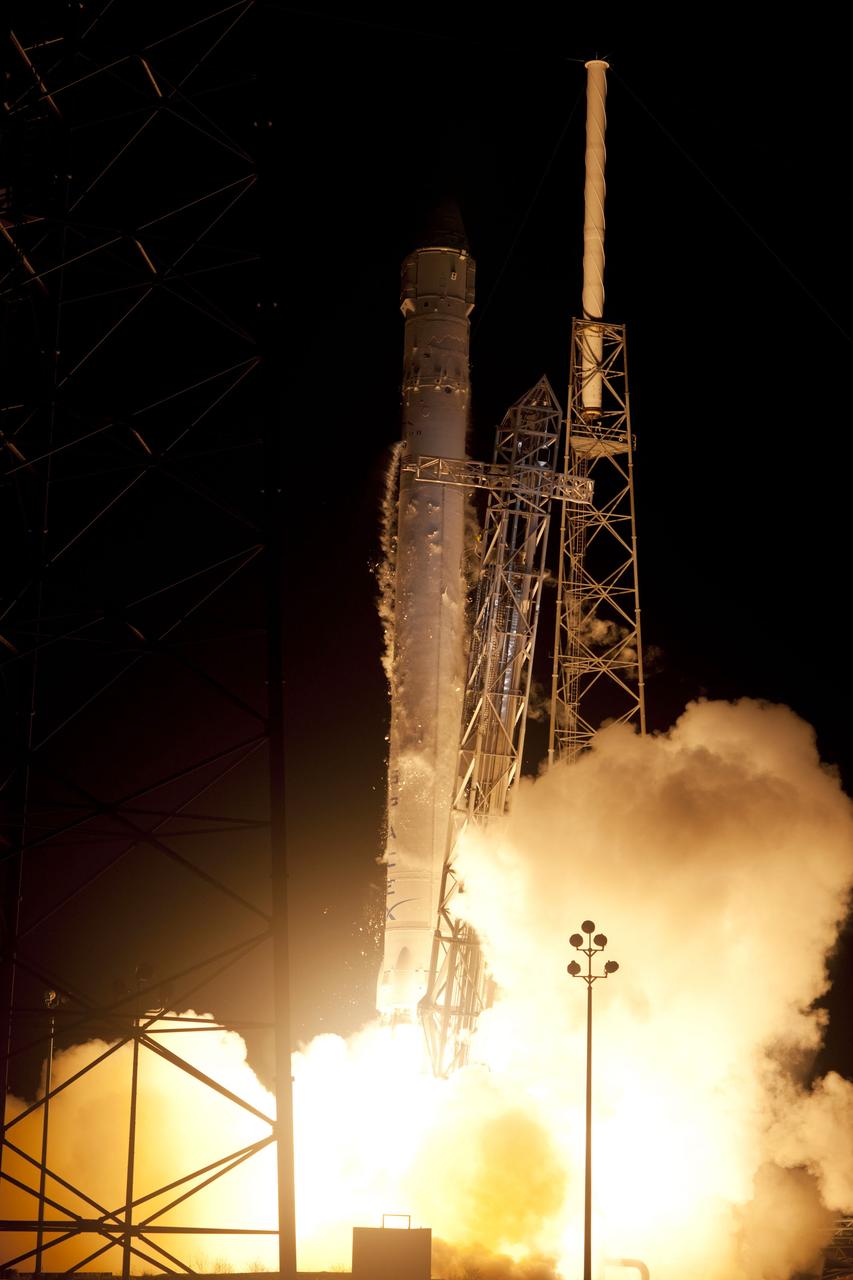
CAPE CANAVERAL, Fla. – Frost and ice breaks away from the SpaceX Falcon 9 rocket following ignition of its nine Merlin engines at 3:44 a.m. EDT at Space Launch Complex-40 on Cape Canaveral Air Force Station in Florida. The launch is the company's second demonstration test flight for NASA's Commercial Orbital Transportation Services, or COTS, Program. During the flight, the Dragon capsule will conduct a series of check-out procedures to test and prove its systems, including rendezvous and berthing with the International Space Station. If the capsule performs as planned, the cargo and experiments it is carrying will be transferred to the station. The cargo includes food, water and provisions for the station’s Expedition crews, such as clothing, batteries and computer equipment. Under COTS, NASA has partnered with two aerospace companies to deliver cargo to the station. For more information, visit http://www.nasa.gov/spacex. Photo credit: NASA/Rusty Backer
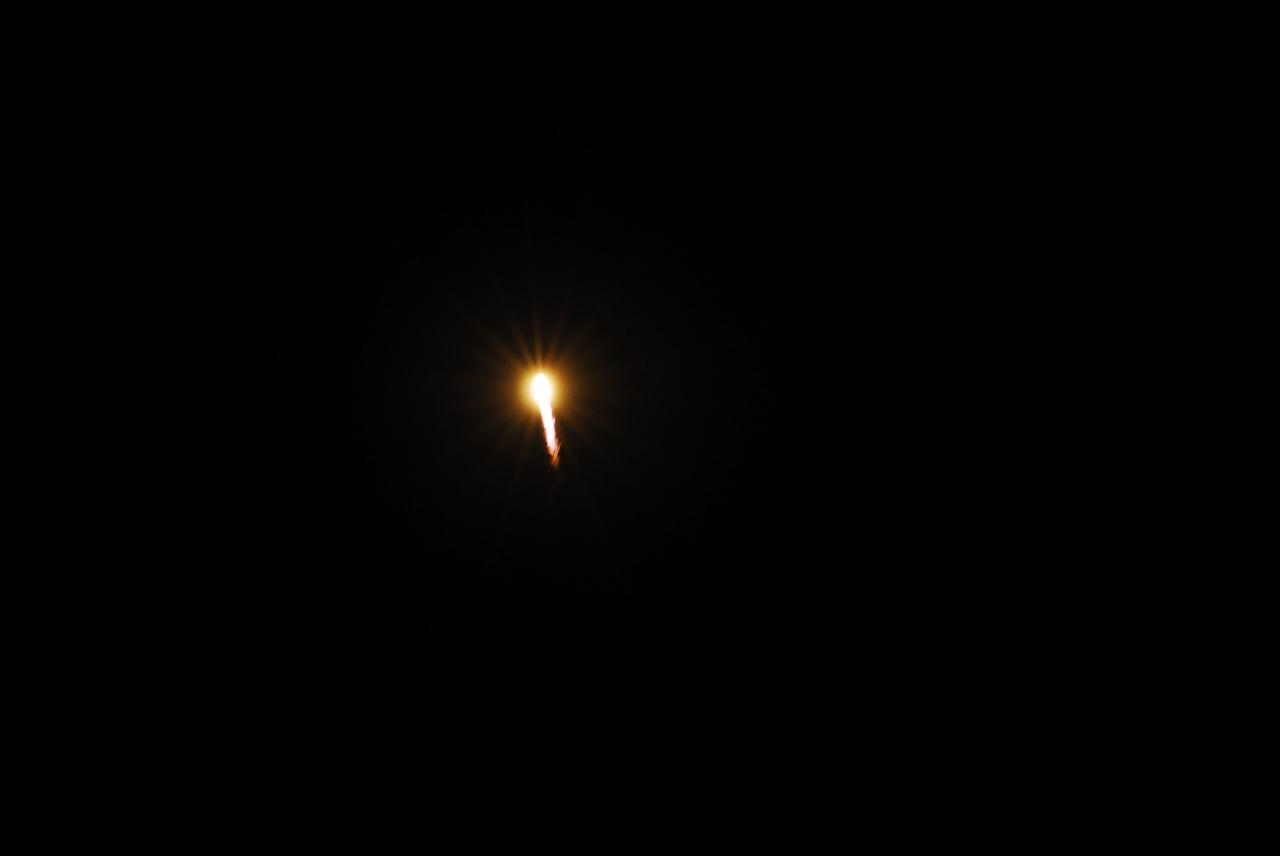
CAPE CANAVERAL, Fla. – The SpaceX Dragon capsule, powered by nine Merlin engines on the Falcon 9 rocket, soars into orbit at 3:44 a.m. EDT, leaving Space Launch Complex-40 on Cape Canaveral Air Force Station in Florida behind. The launch is the company's second demonstration test flight for NASA's Commercial Orbital Transportation Services, or COTS, Program. During the flight, the Dragon will conduct a series of check-out procedures to test and prove its systems, including rendezvous and berthing with the International Space Station. If the capsule performs as planned, the cargo and experiments it is carrying will be transferred to the station. The cargo includes food, water and provisions for the station’s Expedition crews, such as clothing, batteries and computer equipment. Under COTS, NASA has partnered with two aerospace companies to deliver cargo to the station. For more information, visit http://www.nasa.gov/spacex. Photo credit: NASA/Alan Ault
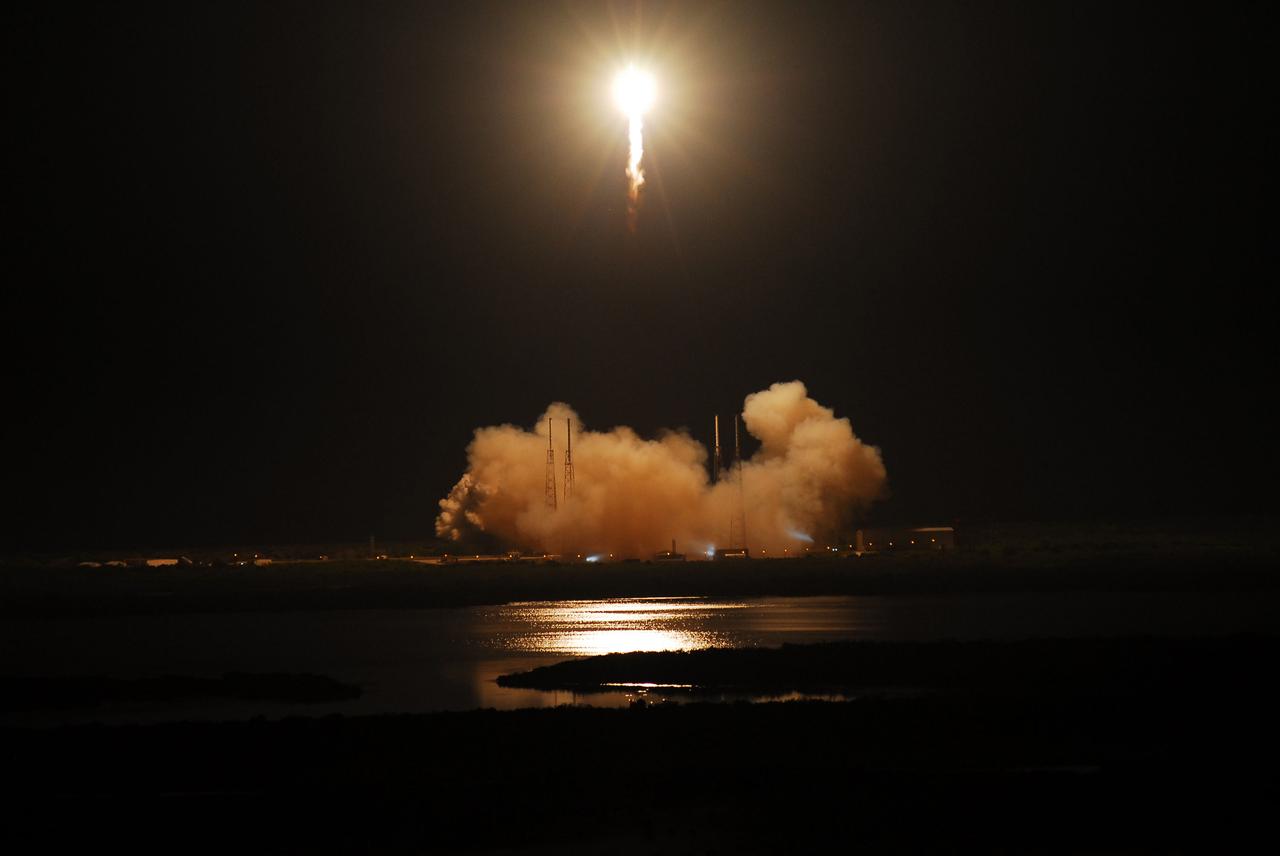
CAPE CANAVERAL, Fla. – Powered by nine Merlin engines, the SpaceX Falcon 9 rocket roars into space from Space Launch Complex-40 on Cape Canaveral Air Force Station in Florida at 3:44 a.m. EDT, carrying the Dragon capsule to orbit. The launch is the company's second demonstration test flight for NASA's Commercial Orbital Transportation Services, or COTS, Program. During the flight, the Dragon will conduct a series of check-out procedures to test and prove its systems, including rendezvous and berthing with the International Space Station. If the capsule performs as planned, the cargo and experiments it is carrying will be transferred to the station. The cargo includes food, water and provisions for the station’s Expedition crews, such as clothing, batteries and computer equipment. Under COTS, NASA has partnered with two aerospace companies to deliver cargo to the station. For more information, visit http://www.nasa.gov/spacex. Photo credit: NASA/Alan Ault
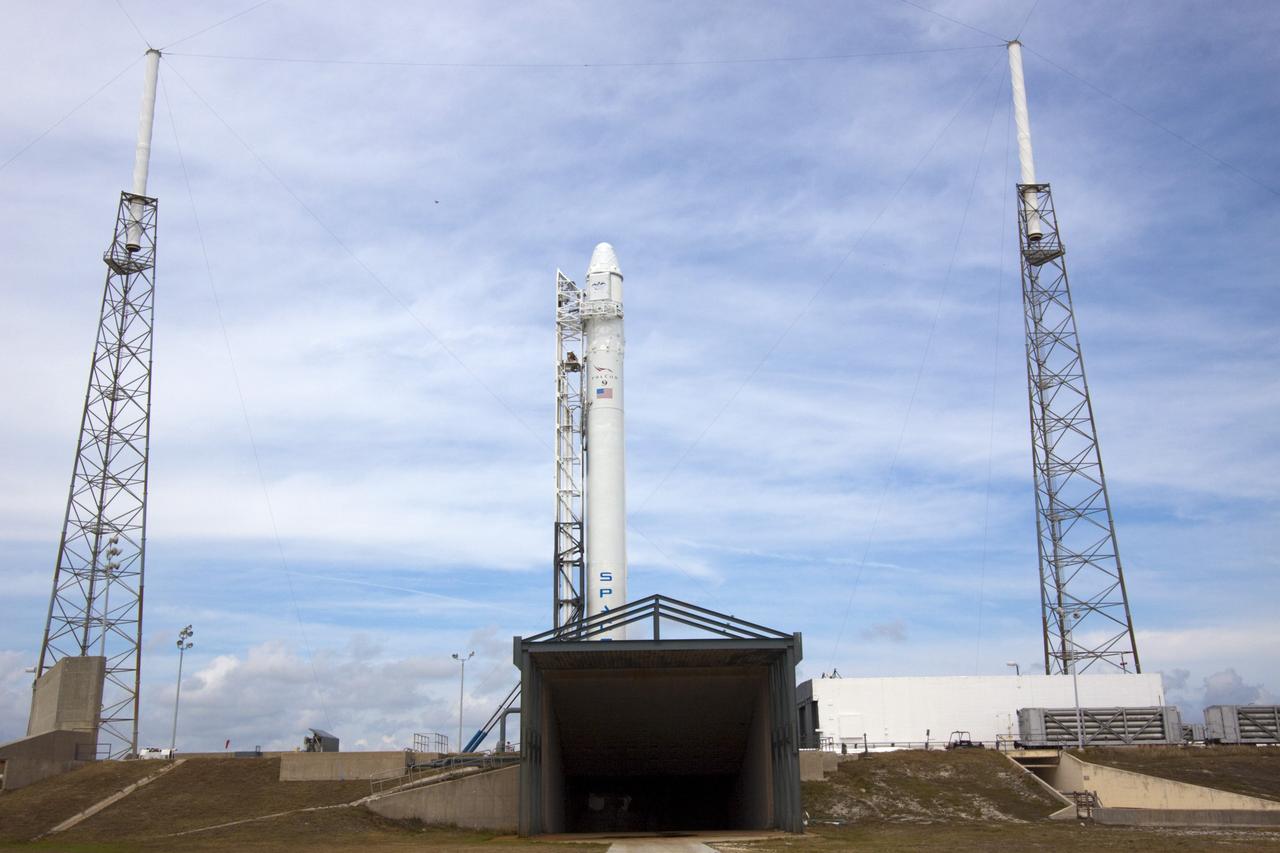
CAPE CANAVERAL, Fla. – Partially hidden behind a flame and exhaust deflector, the SpaceX Falcon 9 rocket stands at Space Launch Complex-40 on Cape Canaveral Air Force Station in Florida. Liftoff with the SpaceX Dragon capsule aboard is set for 4:55 a.m. EDT on May 19. The launch will be the company's second demonstration test flight for NASA's Commercial Orbital Transportation Services Program, or COTS. During the flight, the capsule will conduct a series of check-out procedures to test and prove its systems, including rendezvous and berthing with the International Space Station. If the capsule performs as planned, the cargo and experiments it is carrying will be transferred to the station. The cargo includes food, water and provisions for the station’s Expedition crews, such as clothing, batteries and computer equipment. Under COTS, NASA has partnered with two aerospace companies to deliver cargo to the station. For more information, visit http://www.nasa.gov/spacex Photo credit: NASA/Jim Grossmann
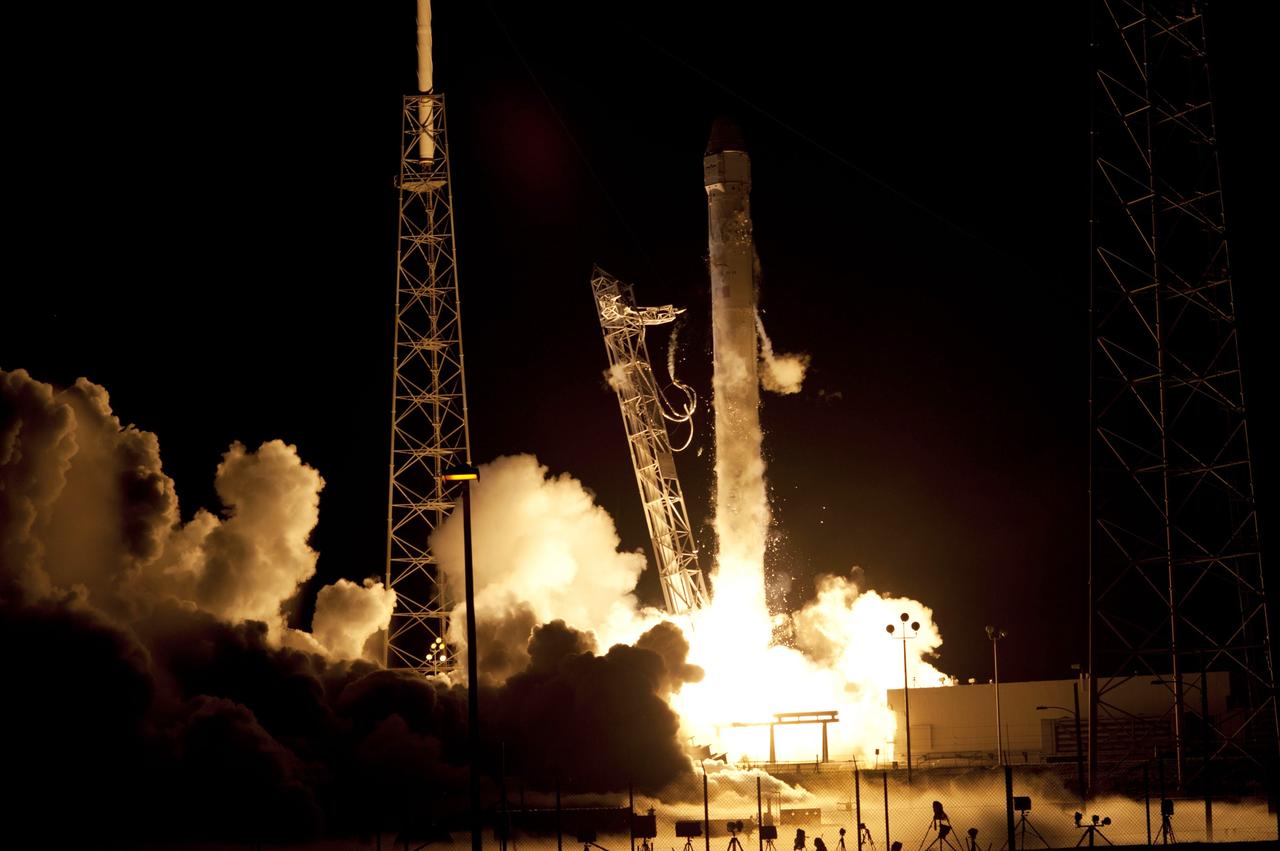
CAPE CANAVERAL, Fla. – Frost and ice breaks away from the SpaceX Falcon 9 rocket following ignition of its nine Merlin engines at 3:44 a.m. EDT at Space Launch Complex-40 on Cape Canaveral Air Force Station in Florida. The launch is the company's second demonstration test flight for NASA's Commercial Orbital Transportation Services, or COTS, Program. During the flight, the Dragon capsule will conduct a series of check-out procedures to test and prove its systems, including rendezvous and berthing with the International Space Station. If the capsule performs as planned, the cargo and experiments it is carrying will be transferred to the station. The cargo includes food, water and provisions for the station’s Expedition crews, such as clothing, batteries and computer equipment. Under COTS, NASA has partnered with two aerospace companies to deliver cargo to the station. For more information, visit http://www.nasa.gov/spacex. Photo credit: NASA/Rick Wetherington, Tim Powers and Tim Terry
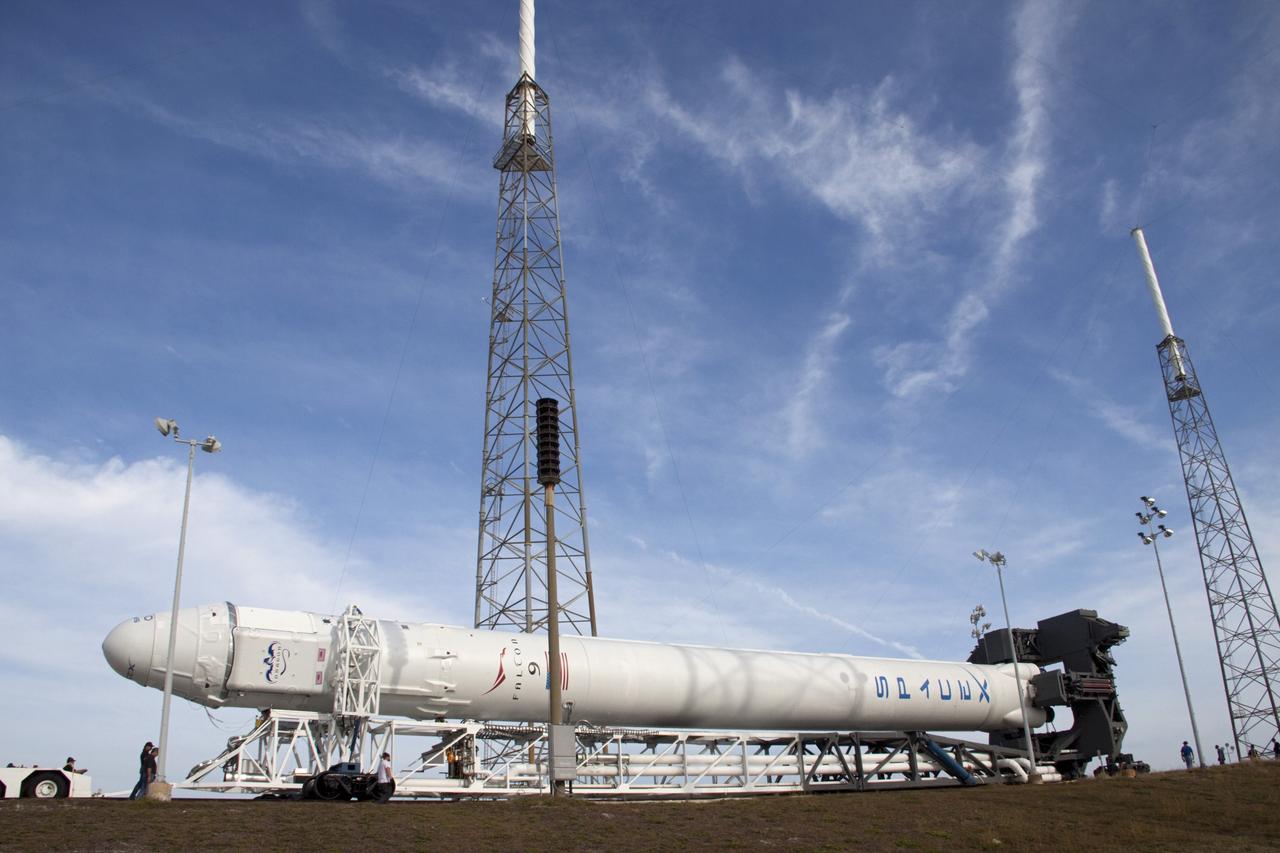
CAPE CANAVERAL, Fla. – The 227-foot-tall 69.2 meter) SpaceX Falcon 9 rocket arrives at Space Launch Complex-40 on Cape Canaveral Air Force Station in Florida. Liftoff with the SpaceX Dragon capsule aboard is set for 4:55 a.m. EDT on May 19. The launch will be the company's second demonstration test flight for NASA's Commercial Orbital Transportation Services Program, or COTS. During the flight, the capsule will conduct a series of check-out procedures to test and prove its systems, including rendezvous and berthing with the International Space Station. If the capsule performs as planned, the cargo and experiments it is carrying will be transferred to the station. The cargo includes food, water and provisions for the station’s Expedition crews, such as clothing, batteries and computer equipment. Under COTS, NASA has partnered with two aerospace companies to deliver cargo to the station. For more information, visit http://www.nasa.gov/spacex Photo credit: NASA/Jim Grossmann
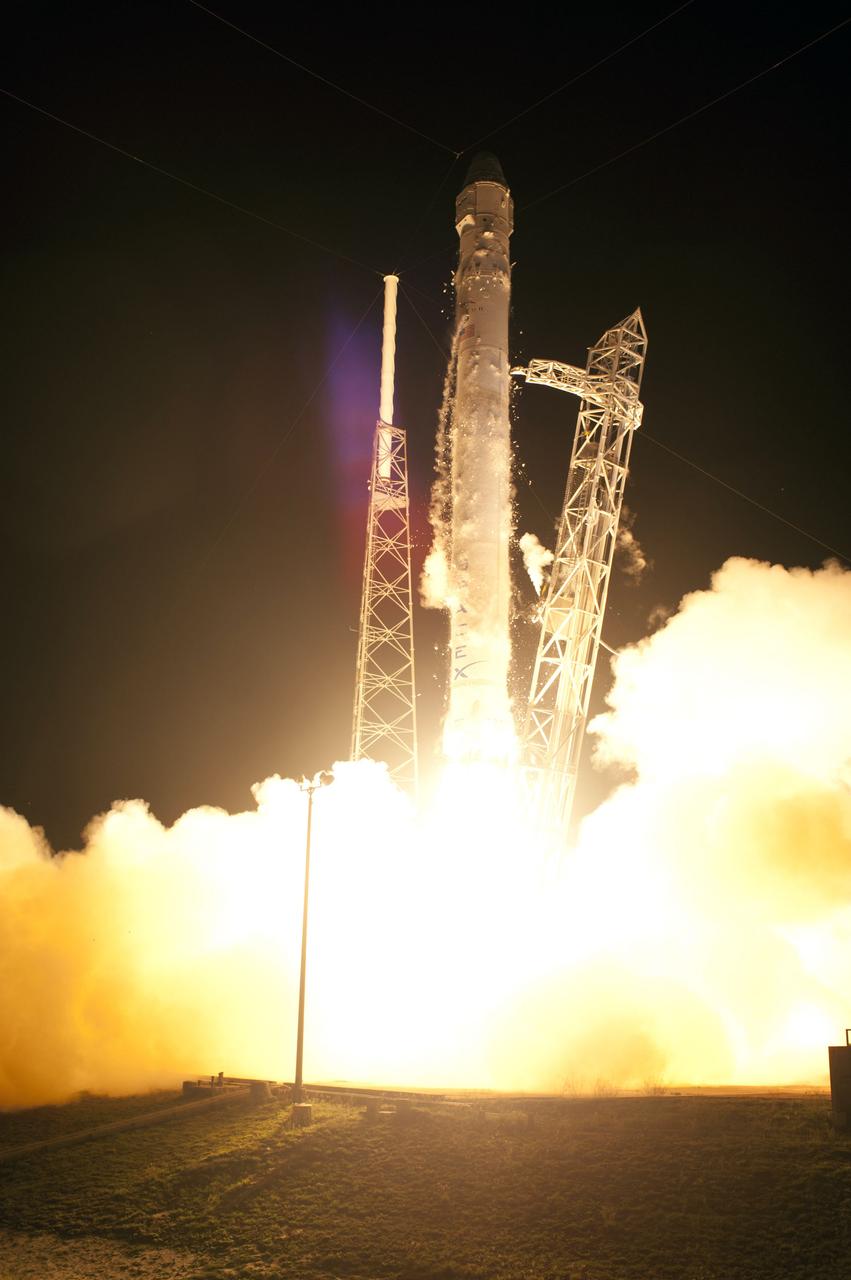
CAPE CANAVERAL, Fla. – On Cape Canaveral Air Force Station in Florida, Space Launch Complex-40 is ablaze as the SpaceX Falcon 9 rocket lifts off at 3:44 a.m. EDT. The launch is the company's second demonstration test flight for NASA's Commercial Orbital Transportation Services, or COTS, Program. During the flight, the Dragon capsule will conduct a series of check-out procedures to test and prove its systems, including rendezvous and berthing with the International Space Station. If the capsule performs as planned, the cargo and experiments it is carrying will be transferred to the station. The cargo includes food, water and provisions for the station’s Expedition crews, such as clothing, batteries and computer equipment. Under COTS, NASA has partnered with two aerospace companies to deliver cargo to the station. For more information, visit http://www.nasa.gov/spacex. Photo credit: NASA/Rick Wetherington, Tim Powers and Tim Terry
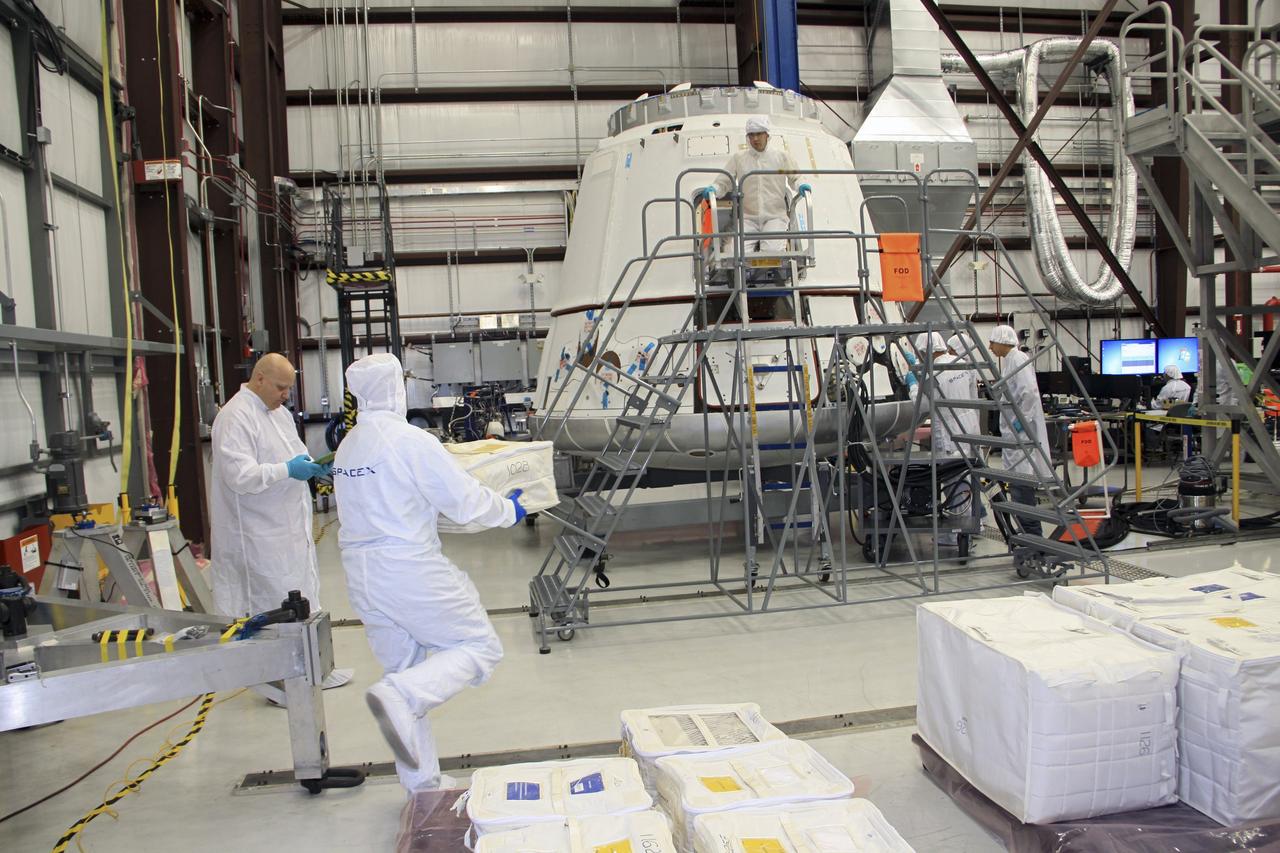
CAPE CANAVERAL, Fla. – In a processing hangar at Space Launch Complex-40 on Cape Canaveral Air Force Station in Florida, Space Exploration Technologies technicians load cargo into the Dragon capsule in preparation for its scheduled April 30 liftoff aboard a Falcon 9 rocket. Known as SpaceX, the launch will be the company's second demonstration test flight for NASA's Commercial Orbital Transportation Services program, or COTS. During the flight, the capsule will conduct a series of checkout procedures to test and prove its systems, including rendezvous and berthing with the International Space Station. The cargo includes food and provisions for the station’s Expedition crews, such as clothing, batteries, and computer equipment. Under COTS, NASA has partnered with two private companies to launch cargo safely to the station. For more information, visit http://www.nasa.gov/spacex. Photo credit: NASA/Jim Grossmann
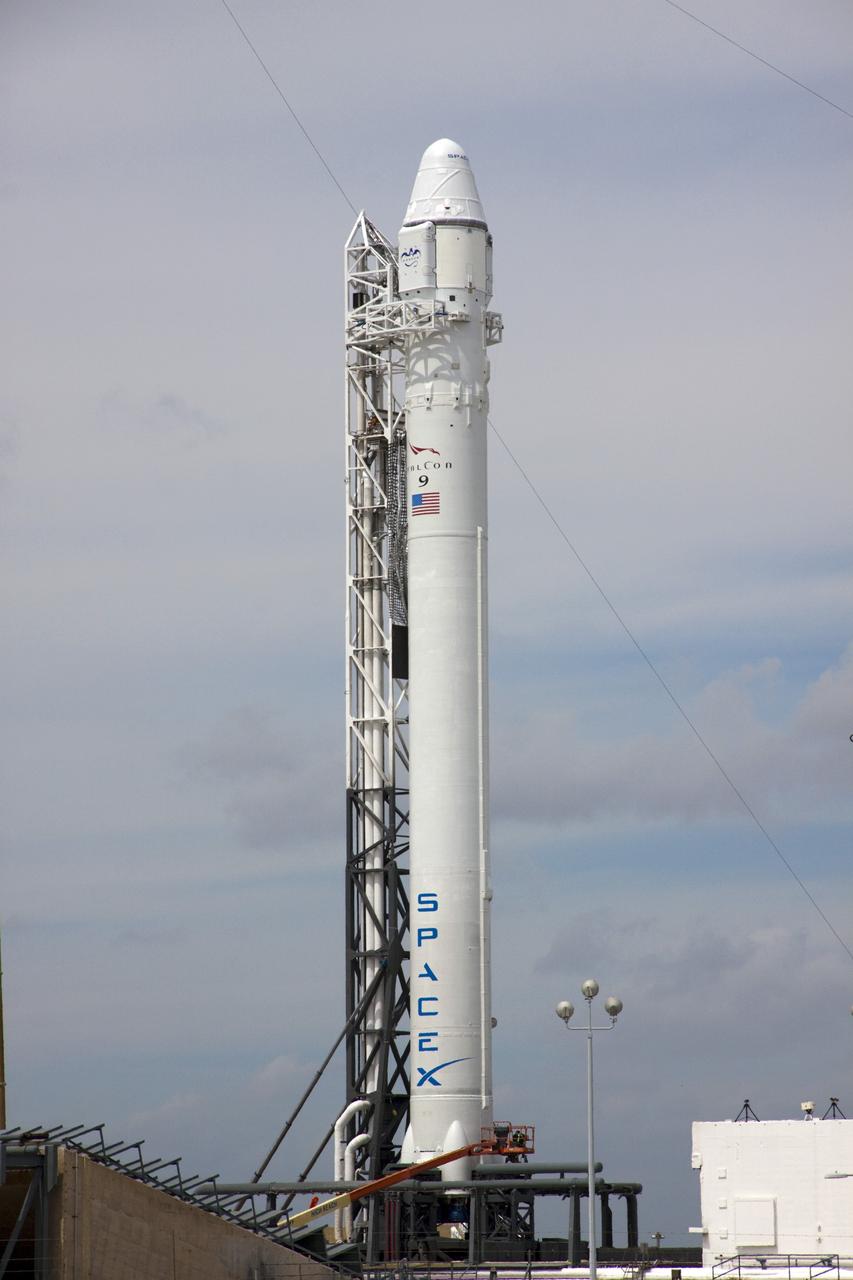
CAPE CANAVERAL, Fla. – The 227-foot-tall 69.2 meter) SpaceX Falcon 9 rocket stands at Space Launch Complex-40 on Cape Canaveral Air Force Station in Florida. Liftoff with the SpaceX Dragon capsule aboard is set for 4:55 a.m. EDT on May 19. The launch will be the company's second demonstration test flight for NASA's Commercial Orbital Transportation Services Program, or COTS. During the flight, the capsule will conduct a series of check-out procedures to test and prove its systems, including rendezvous and berthing with the International Space Station. If the capsule performs as planned, the cargo and experiments it is carrying will be transferred to the station. The cargo includes food, water and provisions for the station’s Expedition crews, such as clothing, batteries and computer equipment. Under COTS, NASA has partnered with two aerospace companies to deliver cargo to the station. For more information, visit http://www.nasa.gov/spacex Photo credit: NASA/Jim Grossmann
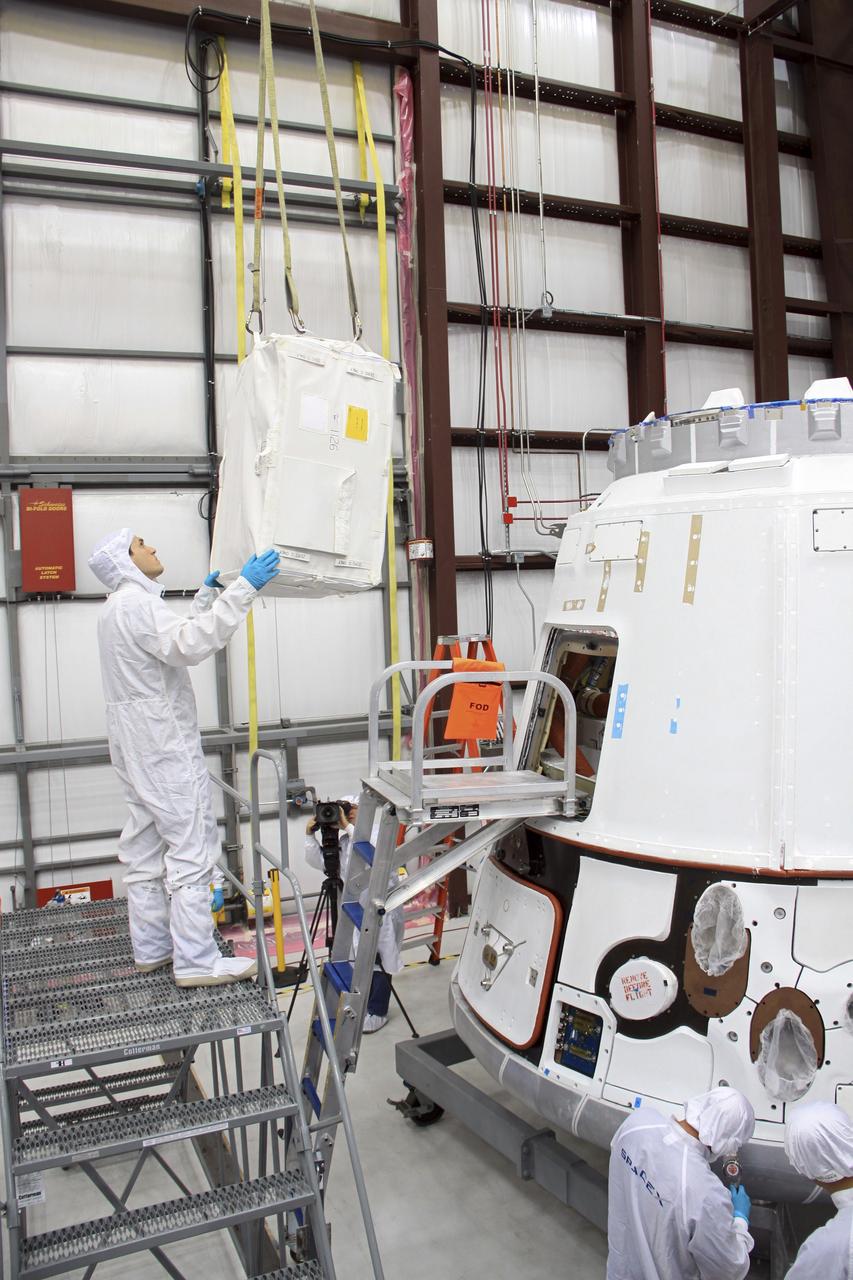
CAPE CANAVERAL, Fla. – In a processing hangar at Space Launch Complex-40 on Cape Canaveral Air Force Station in Florida, a cargo bag is lowered into the hands of a Space Exploration Technologies technician who will load it into the Dragon capsule in preparation for its scheduled April 30 liftoff aboard a Falcon 9 rocket. Known as SpaceX, the launch will be the company's second demonstration test flight for NASA's Commercial Orbital Transportation Services program, or COTS. During the flight, the capsule will conduct a series of checkout procedures to test and prove its systems, including rendezvous and berthing with the International Space Station. The cargo includes food and provisions for the station’s Expedition crews, such as clothing, batteries, and computer equipment. Under COTS, NASA has partnered with two private companies to launch cargo safely to the station. For more information, visit http://www.nasa.gov/spacex. Photo credit: NASA/Jim Grossmann
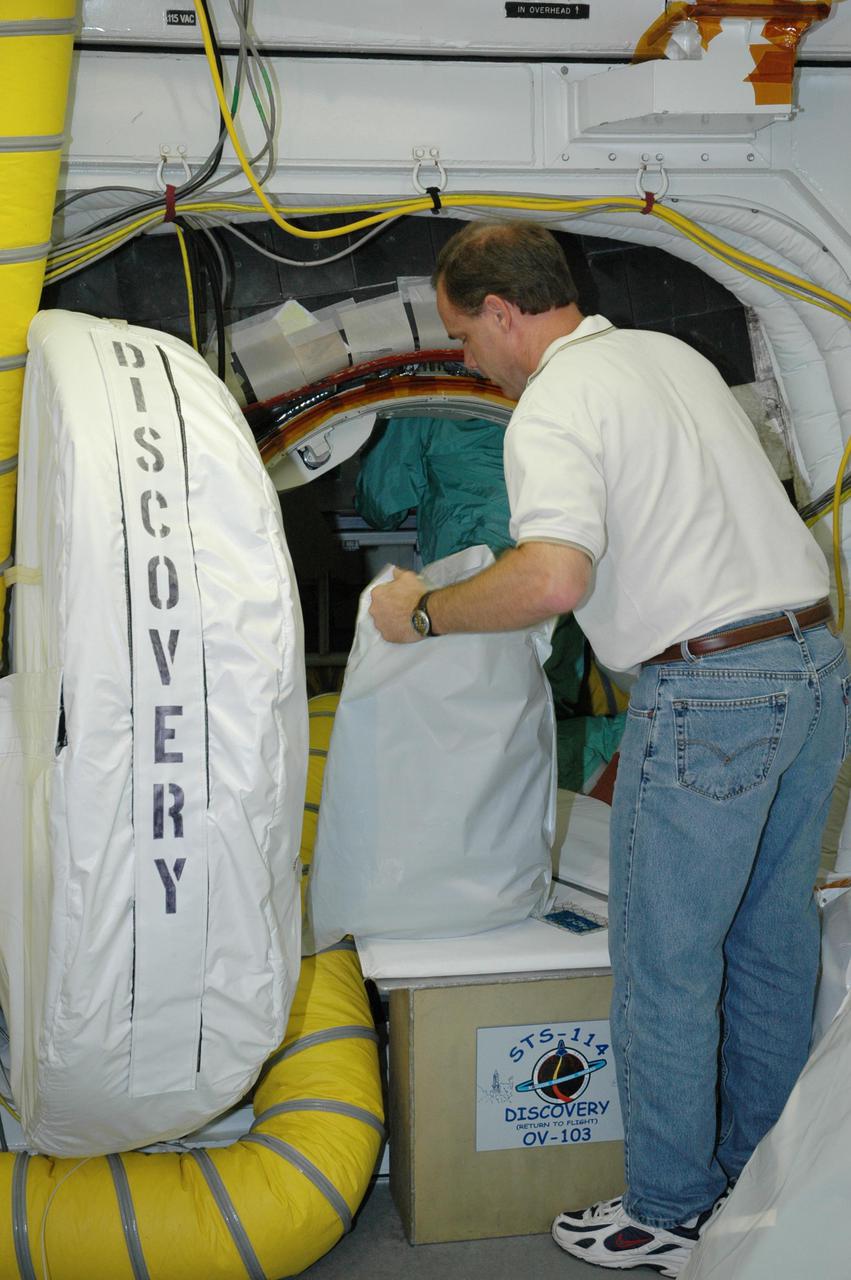
KENNEDY SPACE CENTER, FLA. - At Launch Pad 39B, United Space Alliance Flight Crew Systems engineer John Biegert uncovers a sleep restraint to be installed inside Space Shuttle Discovery, a final step in launch preparations. Launch of Discovery on its Return to Flight mission STS-114 is set for July 13, just days away. During its 12-day mission, Discovery’s seven-person crew will test new hardware and techniques to improve Shuttle safety, as well as deliver supplies to the International Space Station. Discovery’s payloads include the Multi-Purpose Logistics Module Raffaello, the Lightweight Multi-Purpose Experiment Support Structure Carrier (LMC), and the External Stowage Platform-2 (ESP-2). Raffaello will deliver supplies to the International Space Station including food, clothing and research equipment. The LMC will carry a replacement Control Moment Gyroscope and a tile repair sample box. The ESP-2 is outfitted with replacement parts.
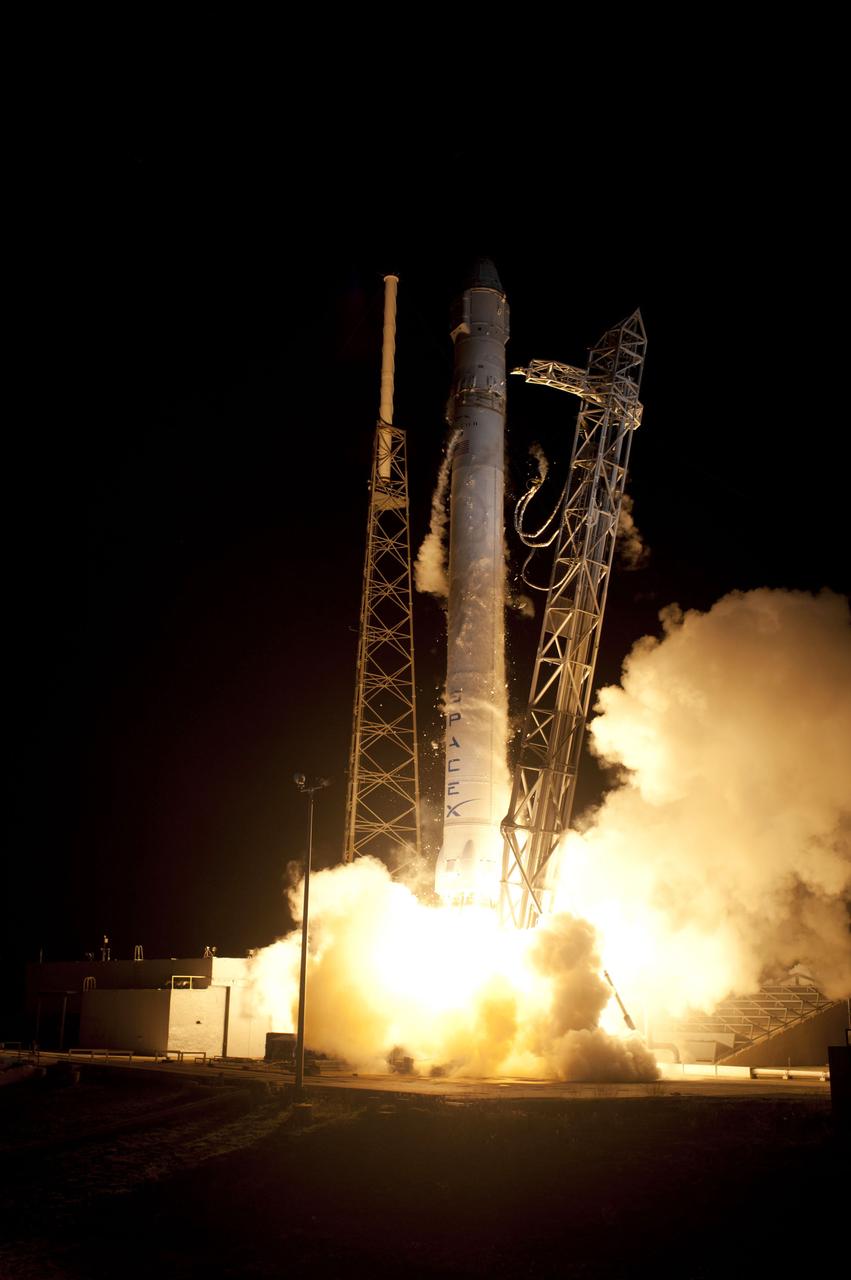
CAPE CANAVERAL, Fla. – Frost and ice breaks away from the SpaceX Falcon 9 rocket as its Merlin engines ignite at 3:44 a.m. EDT at Space Launch Complex-40 on Cape Canaveral Air Force Station in Florida. The launch is the company's second demonstration test flight for NASA's Commercial Orbital Transportation Services, or COTS, Program. During the flight, the Dragon capsule will conduct a series of check-out procedures to test and prove its systems, including rendezvous and berthing with the International Space Station. If the capsule performs as planned, the cargo and experiments it is carrying will be transferred to the station. The cargo includes food, water and provisions for the station’s Expedition crews, such as clothing, batteries and computer equipment. Under COTS, NASA has partnered with two aerospace companies to deliver cargo to the station. For more information, visit http://www.nasa.gov/spacex. Photo credit: NASA/Rick Wetherington, Tim Powers and Tim Terry
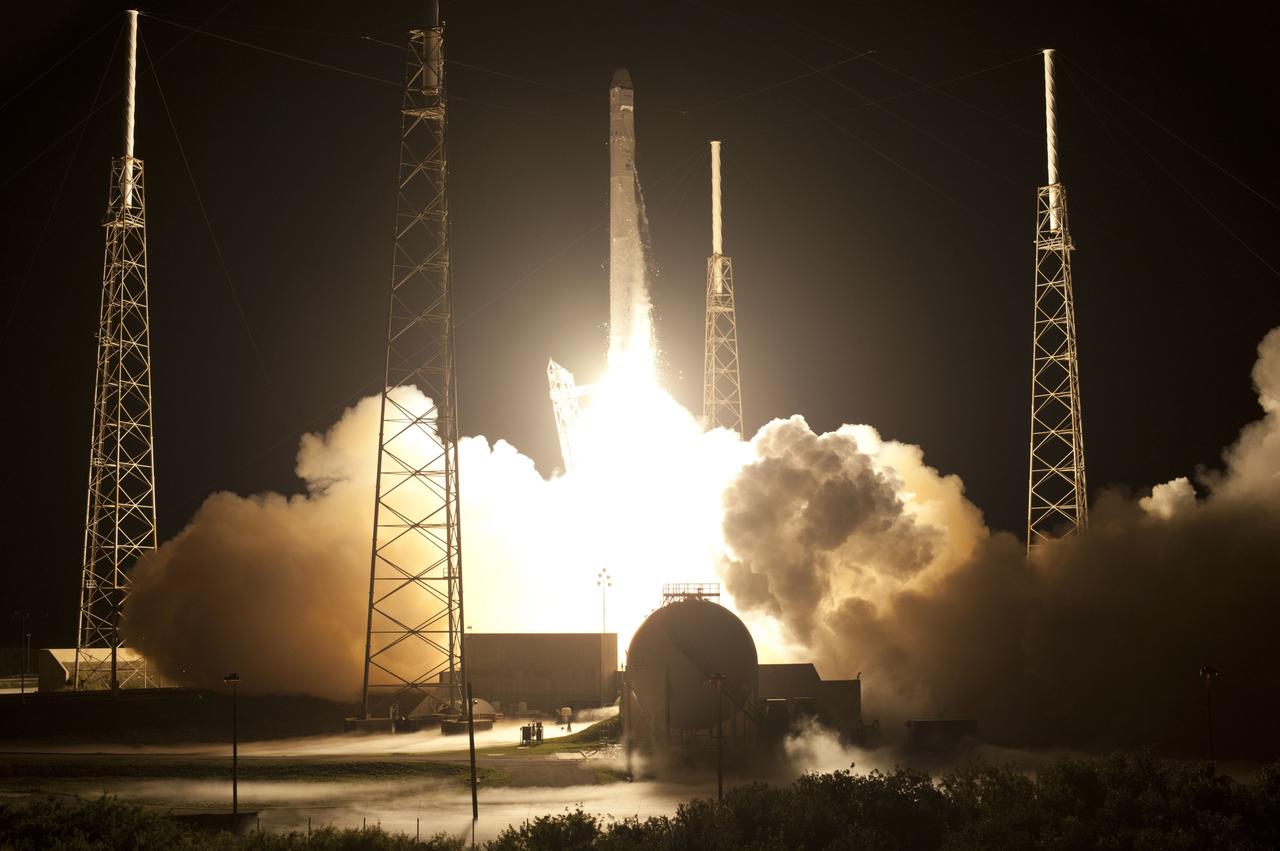
CAPE CANAVERAL, Fla. – Powered by nine Merlin engines, the SpaceX Falcon 9 rocket roars into space at 3:44 a.m. EDT from Space Launch Complex-40 on Cape Canaveral Air Force Station in Florida. The launch is the company's second demonstration test flight for NASA's Commercial Orbital Transportation Services, or COTS, program. During the flight, the Dragon capsule will conduct a series of check-out procedures to test and prove its systems, including rendezvous and berthing with the International Space Station. If the capsule performs as planned, the cargo and experiments it is carrying will be transferred to the station. The cargo includes food, water and provisions for the station’s Expedition crews, such as clothing, batteries and computer equipment. Under COTS, NASA has partnered with two aerospace companies to deliver cargo to the station. For more information, visit http://www.nasa.gov/spacex. Photo credit: NASA/Rick Wetherington, Tim Powers and Tim Terry
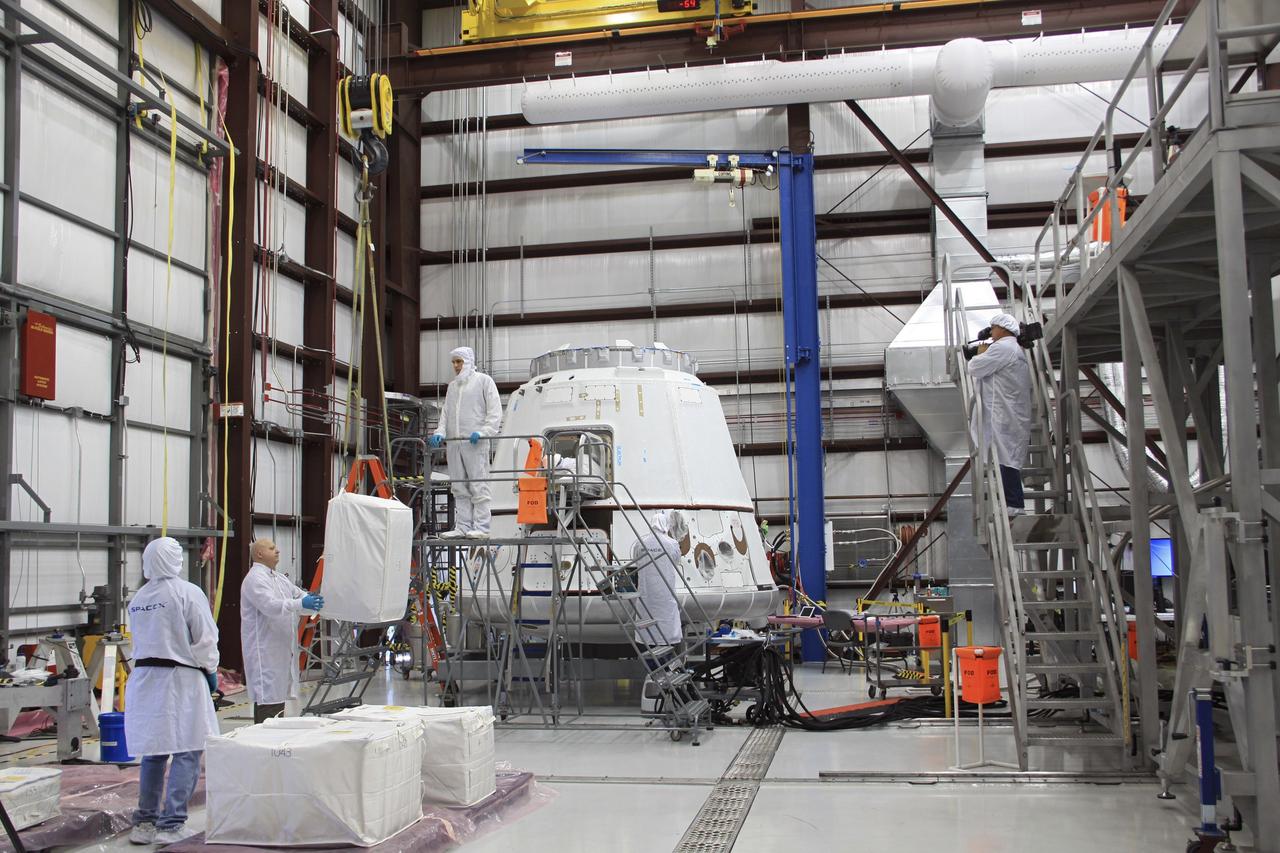
CAPE CANAVERAL, Fla. – In a processing hangar at Space Launch Complex-40 on Cape Canaveral Air Force Station in Florida, a Space Exploration Technologies technician attaches a cargo bag to the crane that will lift it toward the Dragon capsule where it will be stowed in preparation for its scheduled April 30 liftoff aboard a Falcon 9 rocket. Known as SpaceX, the launch will be the company's second demonstration test flight for NASA's Commercial Orbital Transportation Services program, or COTS. During the flight, the capsule will conduct a series of checkout procedures to test and prove its systems, including rendezvous and berthing with the International Space Station. The cargo includes food and provisions for the station’s Expedition crews, such as clothing, batteries, and computer equipment. Under COTS, NASA has partnered with two private companies to launch cargo safely to the station. For more information, visit http://www.nasa.gov/spacex. Photo credit: NASA/Jim Grossmann
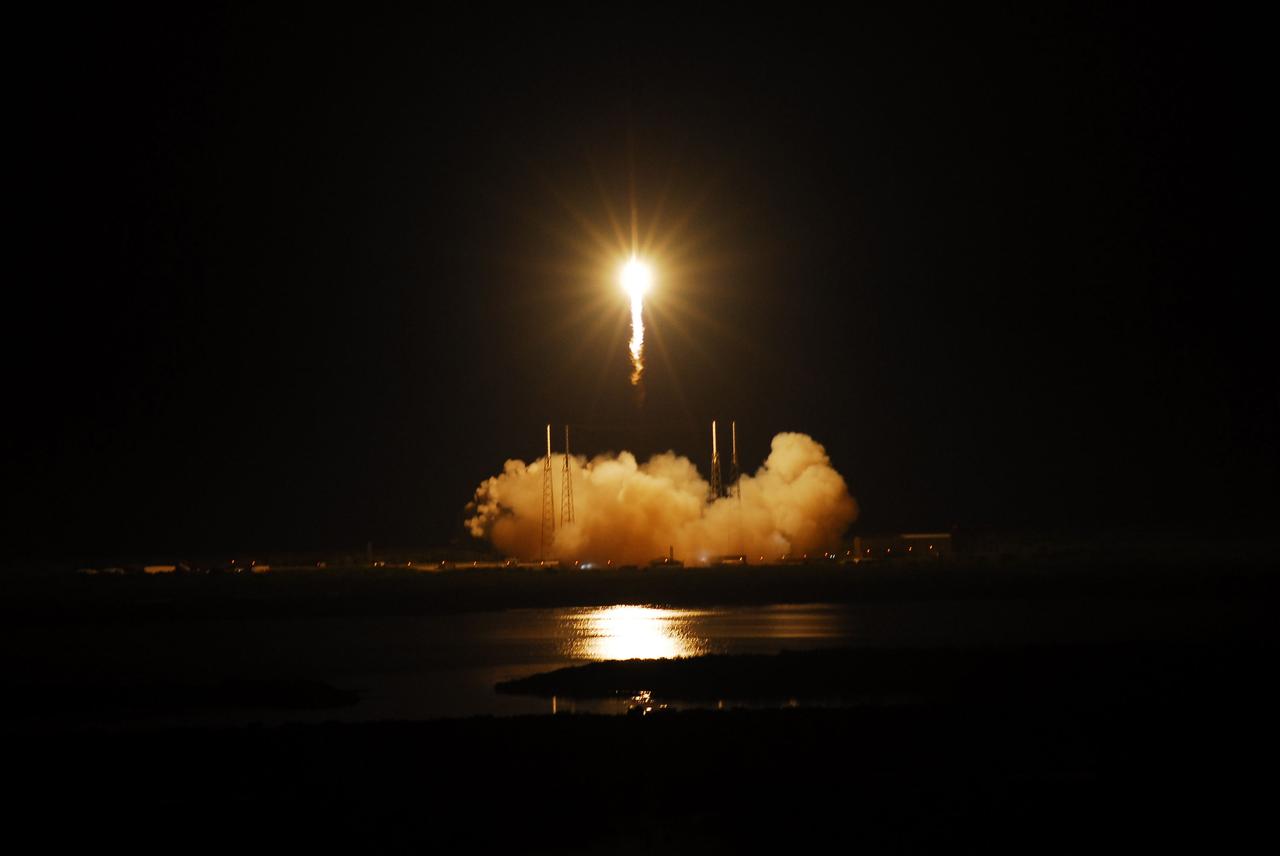
CAPE CANAVERAL, Fla. – On Cape Canaveral Air Force Station in Florida, Space Launch Complex-40 is ablaze as the SpaceX Falcon 9 rocket lifts off at 3:44 a.m. EDT. The launch is the company's second demonstration test flight for NASA's Commercial Orbital Transportation Services, or COTS, Program. During the flight, the Dragon capsule will conduct a series of check-out procedures to test and prove its systems, including rendezvous and berthing with the International Space Station. If the capsule performs as planned, the cargo and experiments it is carrying will be transferred to the station. The cargo includes food, water and provisions for the station’s Expedition crews, such as clothing, batteries and computer equipment. Under COTS, NASA has partnered with two aerospace companies to deliver cargo to the station. For more information, visit http://www.nasa.gov/spacex. Photo credit: NASA/Rusty Backer
CAPE CANAVERAL, Fla. – The SpaceX Falcon 9 rocket soars into space from Space Launch Complex-40 on Cape Canaveral Air Force Station in Florida at 3:44 a.m. EDT, carrying the Dragon capsule to orbit. The launch is the company's second demonstration test flight for NASA's Commercial Orbital Transportation Services, or COTS, Program. During the flight, the Dragon will conduct a series of check-out procedures to test and prove its systems, including rendezvous and berthing with the International Space Station. If the capsule performs as planned, the cargo and experiments it is carrying will be transferred to the station. The cargo includes food, water and provisions for the station’s Expedition crews, such as clothing, batteries and computer equipment. Under COTS, NASA has partnered with two aerospace companies to deliver cargo to the station. For more information, visit http://www.nasa.gov/spacex. Photo credit: NASA/Alan Ault
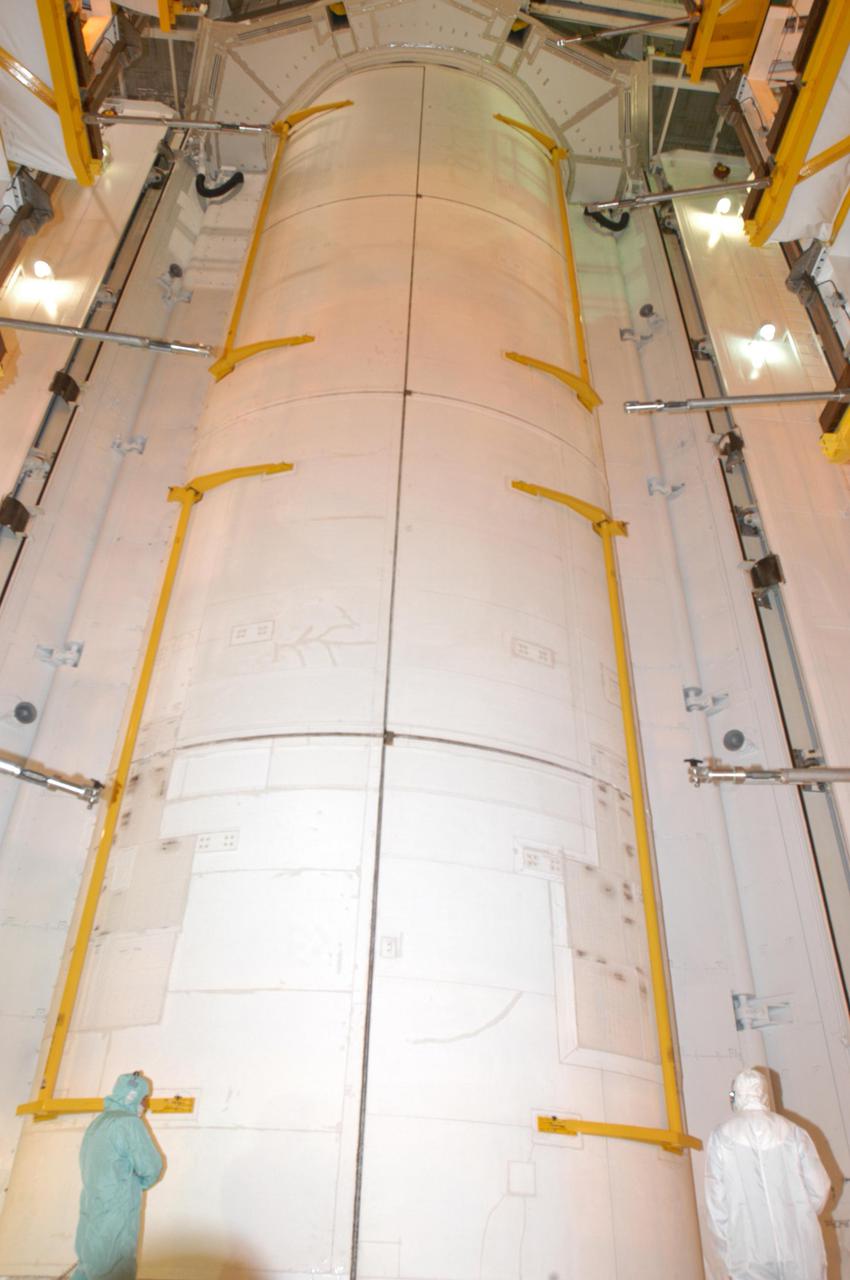
KENNEDY SPACE CENTER, FLA. - At Launch Pad 39B, the payload bay doors on Space Shuttle Discovery are closed for launch. Payload bay door closure is a significant milestone in the preparations for the first Return to Flight mission, STS-114. During its 12-day mission, Discovery’s seven-person crew will test new hardware and techniques to improve Shuttle safety, as well as deliver supplies to the International Space Station. Discovery’s payloads include the Multi-Purpose Logistics Module Raffaello, the Lightweight Multi-Purpose Experiment Support Structure Carrier (LMC), and the External Stowage Platform-2 (ESP-2). Raffaello will deliver supplies to the International Space Station including food, clothing and research equipment. The LMC supports a replacement Control Moment Gyroscope and a tile repair sample box. The ESP-2 is outfitted with replacement parts. Launch of mission STS-114 was set for July 13 at the conclusion of the Flight Readiness Review yesterday.
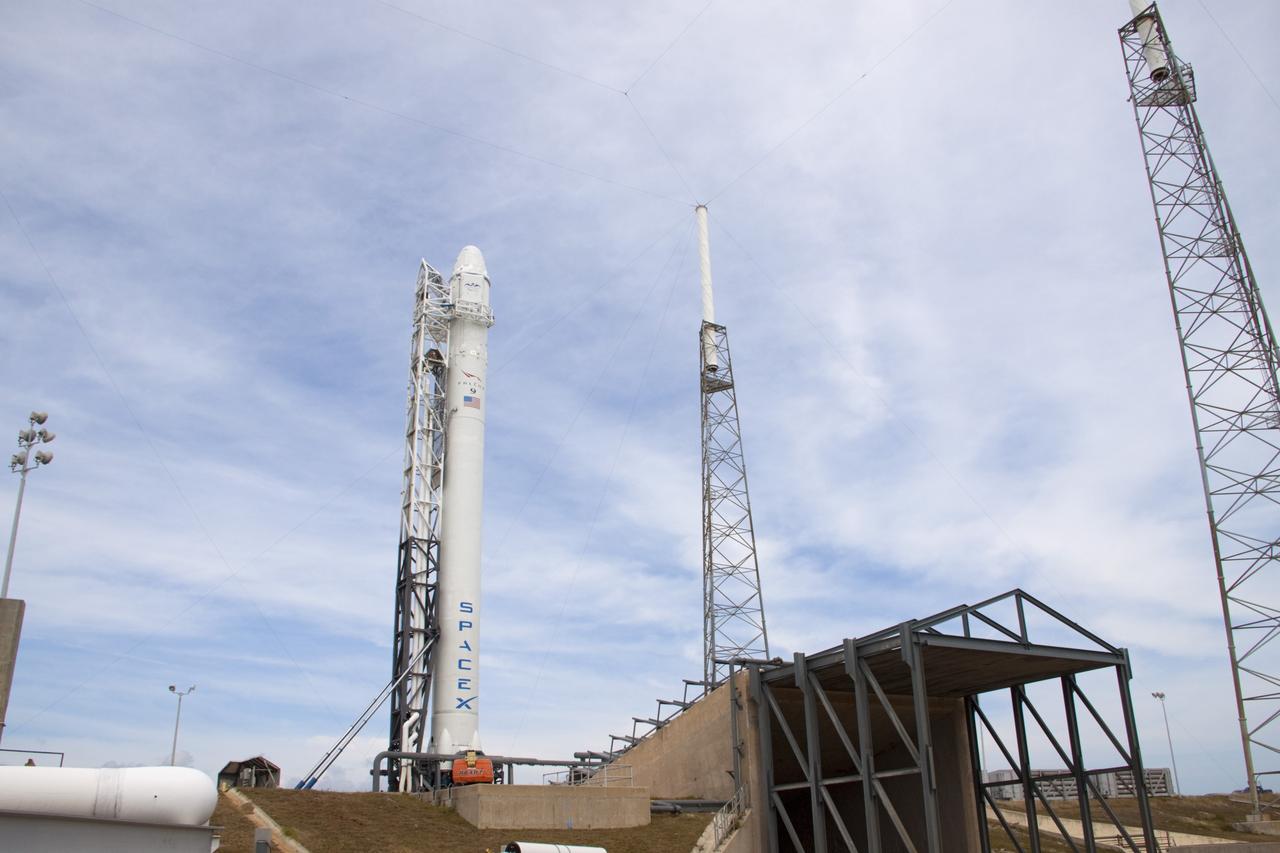
CAPE CANAVERAL, Fla. – The SpaceX Falcon 9 rocket stands at Space Launch Complex-40 on Cape Canaveral Air Force Station in Florida. Liftoff with the SpaceX Dragon capsule aboard is set for 4:55 a.m. EDT on May 19. The launch will be the company's second demonstration test flight for NASA's Commercial Orbital Transportation Services Program, or COTS. During the flight, the capsule will conduct a series of check-out procedures to test and prove its systems, including rendezvous and berthing with the International Space Station. If the capsule performs as planned, the cargo and experiments it is carrying will be transferred to the station. The cargo includes food, water and provisions for the station’s Expedition crews, such as clothing, batteries and computer equipment. Under COTS, NASA has partnered with two aerospace companies to deliver cargo to the station. For more information, visit http://www.nasa.gov/spacex Photo credit: NASA/Jim Grossmann
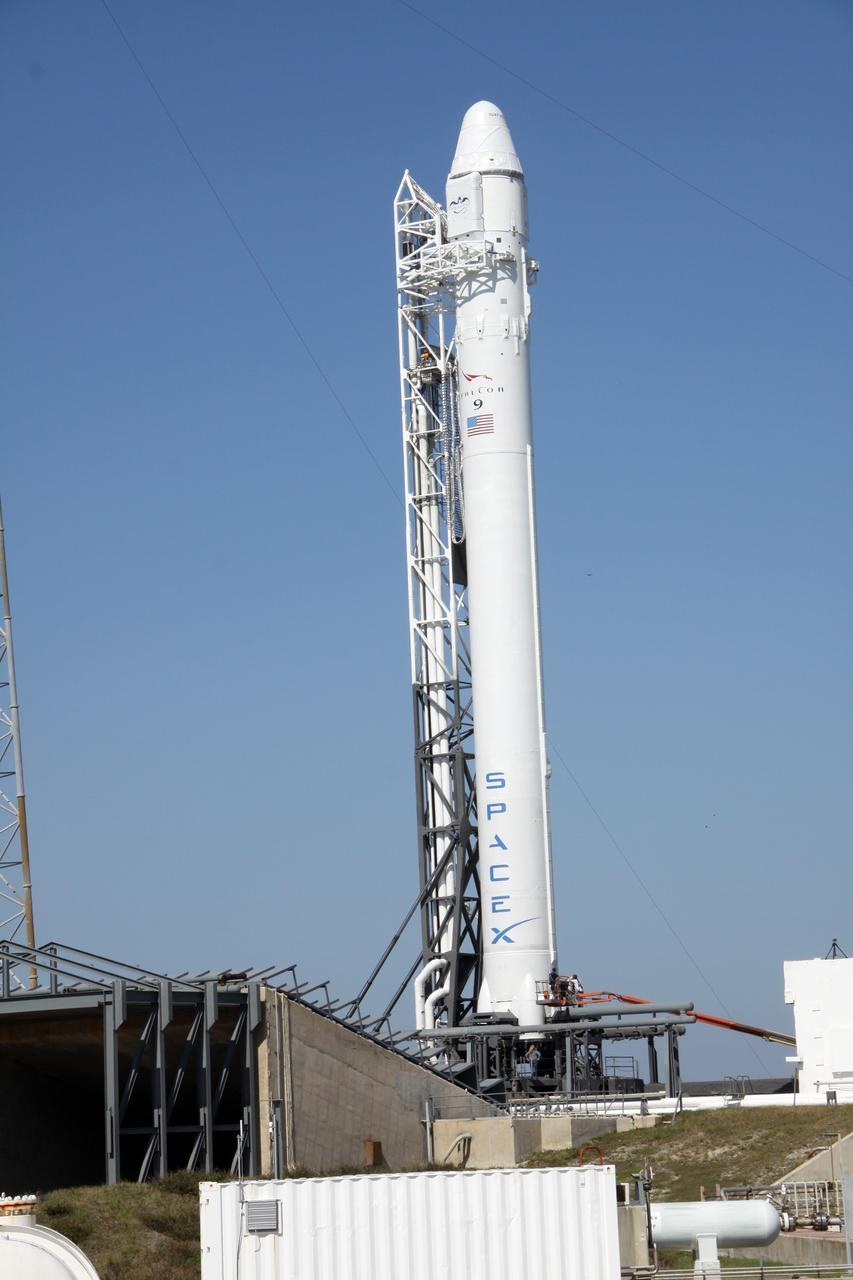
CAPE CANAVERAL, Fla. – A strongback provides connections to the SpaceX Falcon 9 rocket as final preparations for launch are completed at Space Launch Complex-40 on Cape Canaveral Air Force Station in Florida. Liftoff with the Dragon capsule on top is set for 4:55 a.m. EDT on May 19. The launch will be the company's second demonstration test flight for NASA's Commercial Orbital Transportation Services Program, or COTS. During the flight, the capsule will conduct a series of check-out procedures to test and prove its systems, including rendezvous and berthing with the International Space Station. If the capsule performs as planned, the cargo and experiments it is carrying will be transferred to the station. The cargo includes food, water and provisions for the station’s Expedition crews, such as clothing, batteries and computer equipment. Under COTS, NASA has partnered with two aerospace companies to deliver cargo to the station. For more information, visit http://www.nasa.gov/spacex. Photo credit: NASA/Ken Thornsley
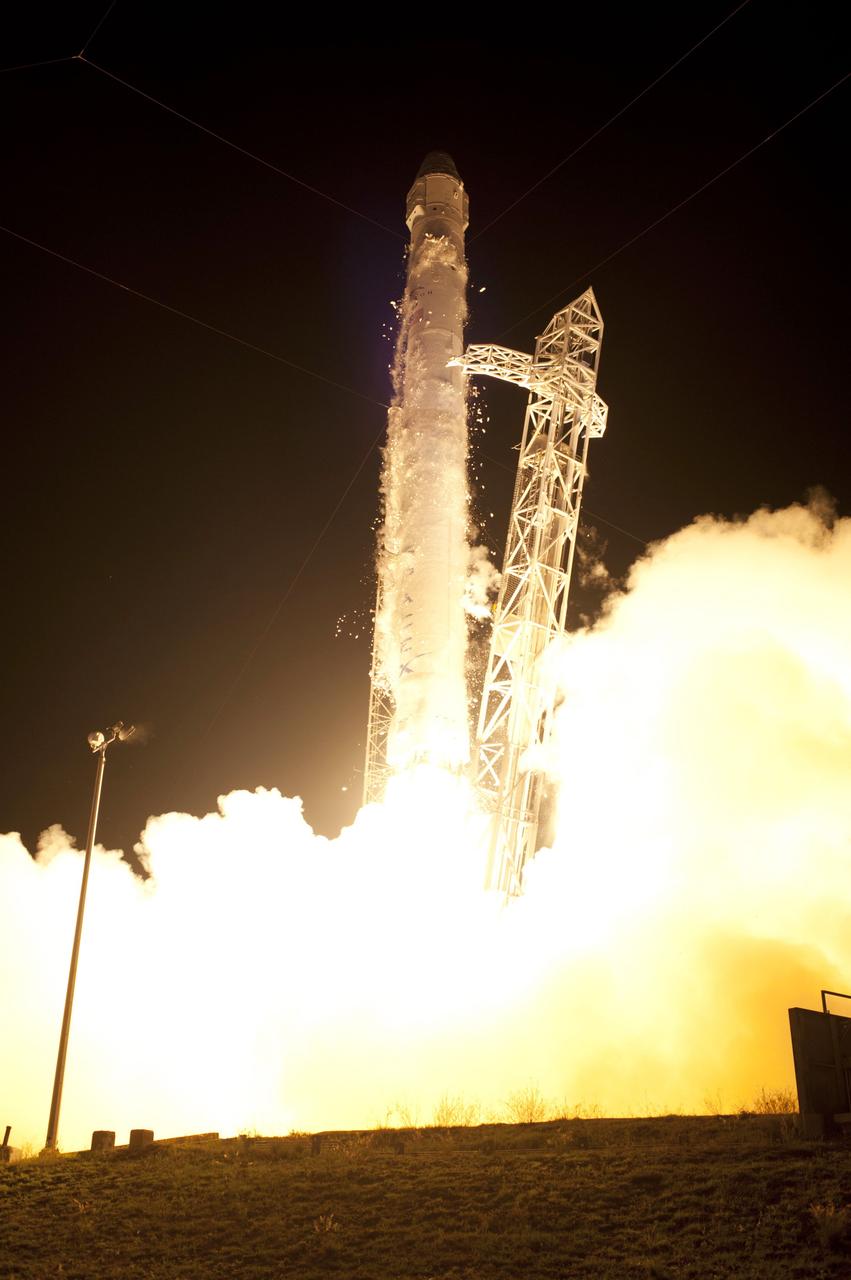
CAPE CANAVERAL, Fla. – Nine Merlin engines ignite under the SpaceX Falcon 9 rocket at 3:44 a.m. EDT at Space Launch Complex-40 on Cape Canaveral Air Force Station in Florida. The launch is the company's second demonstration test flight for NASA's Commercial Orbital Transportation Services, or COTS, Program. During the flight, the Dragon capsule will conduct a series of check-out procedures to test and prove its systems, including rendezvous and berthing with the International Space Station. If the capsule performs as planned, the cargo and experiments it is carrying will be transferred to the station. The cargo includes food, water and provisions for the station’s Expedition crews, such as clothing, batteries and computer equipment. Under COTS, NASA has partnered with two aerospace companies to deliver cargo to the station. For more information, visit http://www.nasa.gov/spacex. Photo credit: NASA/Rick Wetherington, Tim Powers and Tim Terry

CAPE CANAVERAL, Fla. – The SpaceX Falcon 9 rocket stands at Space Launch Complex-40 on Cape Canaveral Air Force Station in Florida. Liftoff with the SpaceX Dragon capsule aboard is set for 4:55 a.m. EDT on May 19. The launch will be the company's second demonstration test flight for NASA's Commercial Orbital Transportation Services Program, or COTS. During the flight, the capsule will conduct a series of check-out procedures to test and prove its systems, including rendezvous and berthing with the International Space Station. If the capsule performs as planned, the cargo and experiments it is carrying will be transferred to the station. The cargo includes food, water and provisions for the station’s Expedition crews, such as clothing, batteries and computer equipment. Under COTS, NASA has partnered with two aerospace companies to deliver cargo to the station. For more information, visit http://www.nasa.gov/spacex Photo credit: NASA/Jim Grossmann

CAPE CANAVERAL, Fla. – Powered by nine Merlin engines, the SpaceX Falcon 9 rocket lifts off Space Launch Complex-40 on Cape Canaveral Air Force Station in Florida at 3:44 a.m. EDT, carrying the Dragon capsule to orbit. The launch is the company's second demonstration test flight for NASA's Commercial Orbital Transportation Services, or COTS, Program. During the flight, the Dragon will conduct a series of check-out procedures to test and prove its systems, including rendezvous and berthing with the International Space Station. If the capsule performs as planned, the cargo and experiments it is carrying will be transferred to the station. The cargo includes food, water and provisions for the station’s Expedition crews, such as clothing, batteries and computer equipment. Under COTS, NASA has partnered with two aerospace companies to deliver cargo to the station. For more information, visit http://www.nasa.gov/spacex. Photo credit: NASA/Jim Grossmann
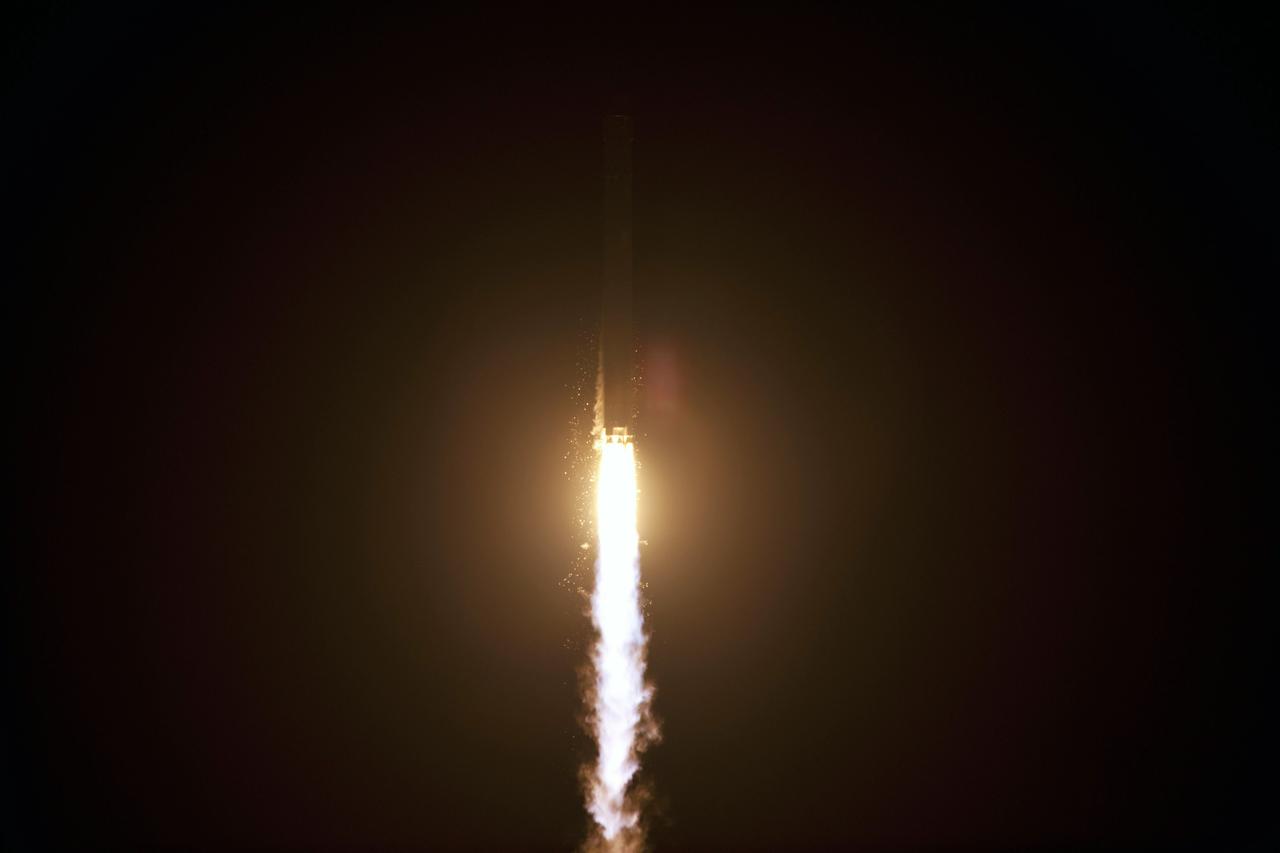
CAPE CANAVERAL, Fla. – On Cape Canaveral Air Force Station in Florida, Space Launch Complex-40 is ablaze as the SpaceX Falcon 9 rocket begins its ascent after liftoff at 3:44 a.m. EDT. The launch is the company's second demonstration test flight for NASA's Commercial Orbital Transportation Services, or COTS, Program. During the flight, the Dragon capsule will conduct a series of check-out procedures to test and prove its systems, including rendezvous and berthing with the International Space Station. If the capsule performs as planned, the cargo and experiments it is carrying will be transferred to the station. The cargo includes food, water and provisions for the station’s Expedition crews, such as clothing, batteries and computer equipment. Under COTS, NASA has partnered with two aerospace companies to deliver cargo to the station. For more information, visit http://www.nasa.gov/spacex. Photo credit: NASA/Rick Wetherington, Tim Powers and Tim Terry

CAPE CANAVERAL, Fla. – Frost and ice breaks away from the SpaceX Falcon 9 rocket following ignition of its nine Merlin engines at 3:44 a.m. EDT at Space Launch Complex-40 on Cape Canaveral Air Force Station in Florida. The launch is the company's second demonstration test flight for NASA's Commercial Orbital Transportation Services, or COTS, Program. During the flight, the Dragon capsule will conduct a series of check-out procedures to test and prove its systems, including rendezvous and berthing with the International Space Station. If the capsule performs as planned, the cargo and experiments it is carrying will be transferred to the station. The cargo includes food, water and provisions for the station’s Expedition crews, such as clothing, batteries and computer equipment. Under COTS, NASA has partnered with two aerospace companies to deliver cargo to the station. For more information, visit http://www.nasa.gov/spacex. Photo credit: NASA/Rick Wetherington, Tim Powers and Tim Terry
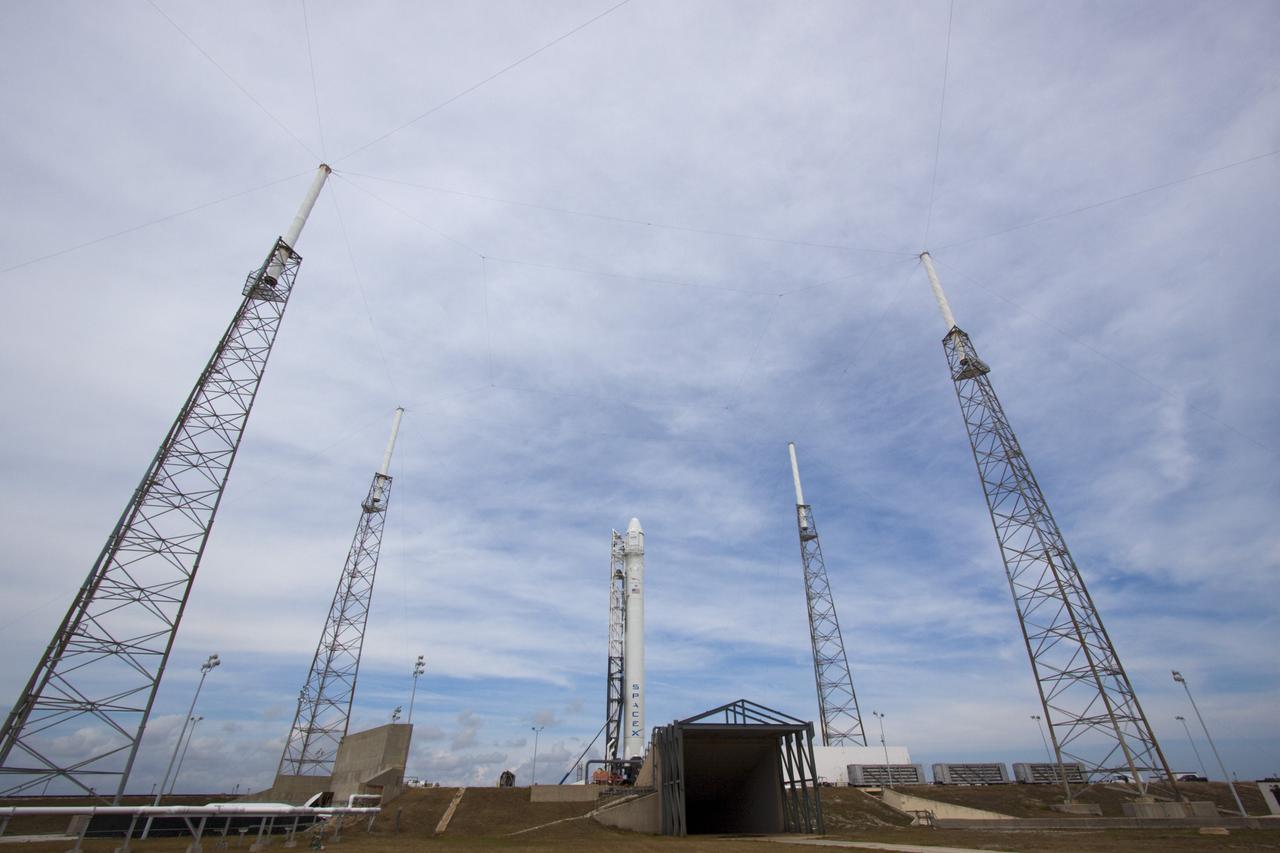
CAPE CANAVERAL, Fla. – Surrounded by four lightning suppression system towers, the SpaceX Falcon 9 rocket stands at Space Launch Complex-40 on Cape Canaveral Air Force Station in Florida. Liftoff with the SpaceX Dragon capsule aboard is set for 4:55 a.m. EDT on May 19. The launch will be the company's second demonstration test flight for NASA's Commercial Orbital Transportation Services Program, or COTS. During the flight, the capsule will conduct a series of check-out procedures to test and prove its systems, including rendezvous and berthing with the International Space Station. If the capsule performs as planned, the cargo and experiments it is carrying will be transferred to the station. The cargo includes food, water and provisions for the station’s Expedition crews, such as clothing, batteries and computer equipment. Under COTS, NASA has partnered with two aerospace companies to deliver cargo to the station. For more information, visit http://www.nasa.gov/spacex Photo credit: NASA/Jim Grossmann
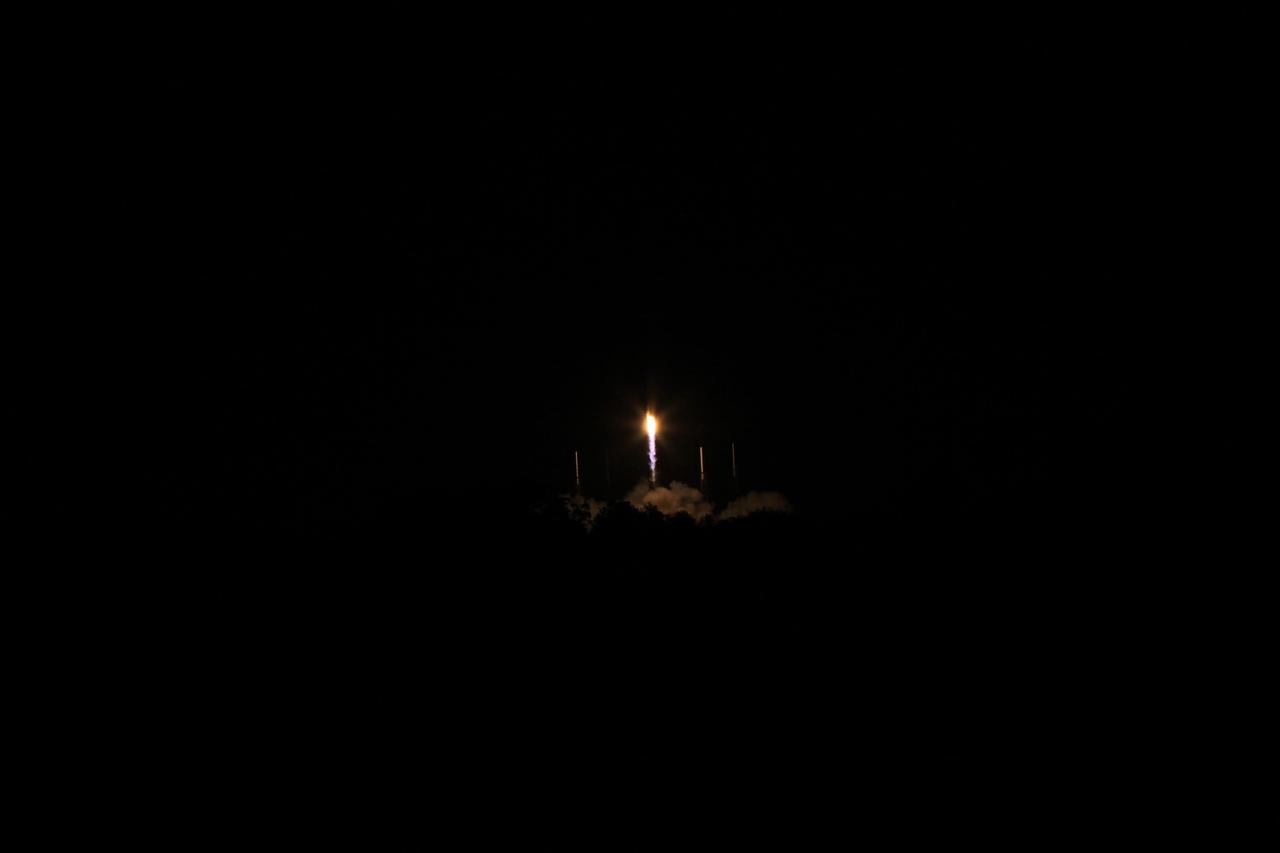
CAPE CANAVERAL, Fla. – The SpaceX Falcon 9 rocket soars off Space Launch Complex-40 on Cape Canaveral Air Force Station in Florida at 3:44 a.m. EDT, delivering the Dragon capsule to orbit. The launch is the company's second demonstration test flight for NASA's Commercial Orbital Transportation Services, or COTS, Program. During the flight, the Dragon will conduct a series of check-out procedures to test and prove its systems, including rendezvous and berthing with the International Space Station. If the capsule performs as planned, the cargo and experiments it is carrying will be transferred to the station. The cargo includes food, water and provisions for the station’s Expedition crews, such as clothing, batteries and computer equipment. Under COTS, NASA has partnered with two aerospace companies to deliver cargo to the station. For more information, visit http://www.nasa.gov/spacex. Photo credit: NASA/Jim Grossmann
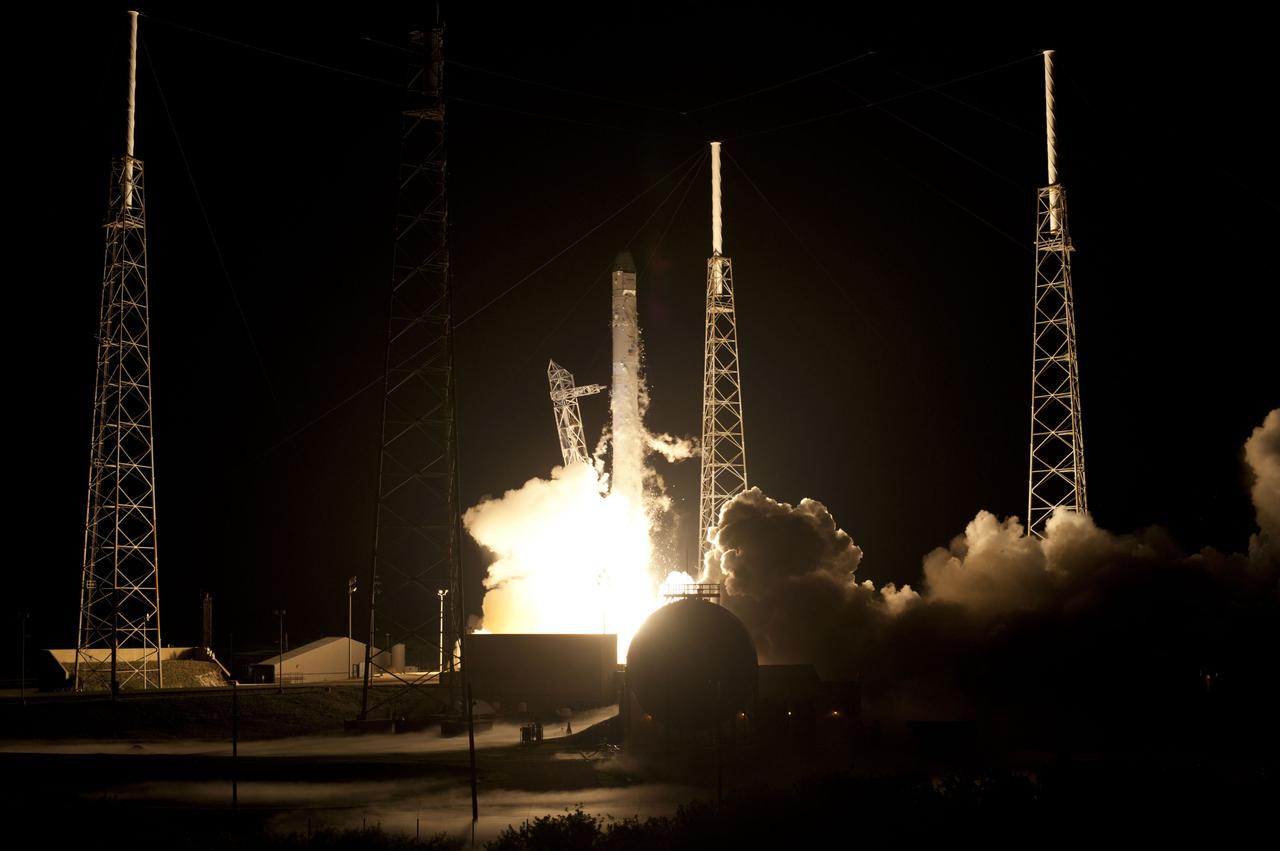
CAPE CANAVERAL, Fla. – The SpaceX Falcon 9 rocket begins its ascent to space at 3:44 a.m. EDT from Space Launch Complex-40 on Cape Canaveral Air Force Station in Florida. The launch is the company's second demonstration test flight for NASA's Commercial Orbital Transportation Services, or COTS, program. During the flight, the Dragon capsule will conduct a series of check-out procedures to test and prove its systems, including rendezvous and berthing with the International Space Station. If the capsule performs as planned, the cargo and experiments it is carrying will be transferred to the station. The cargo includes food, water and provisions for the station’s Expedition crews, such as clothing, batteries and computer equipment. Under COTS, NASA has partnered with two aerospace companies to deliver cargo to the station. For more information, visit http://www.nasa.gov/spacex. Photo credit: NASA/Rick Wetherington, Tim Powers and Tim Terry
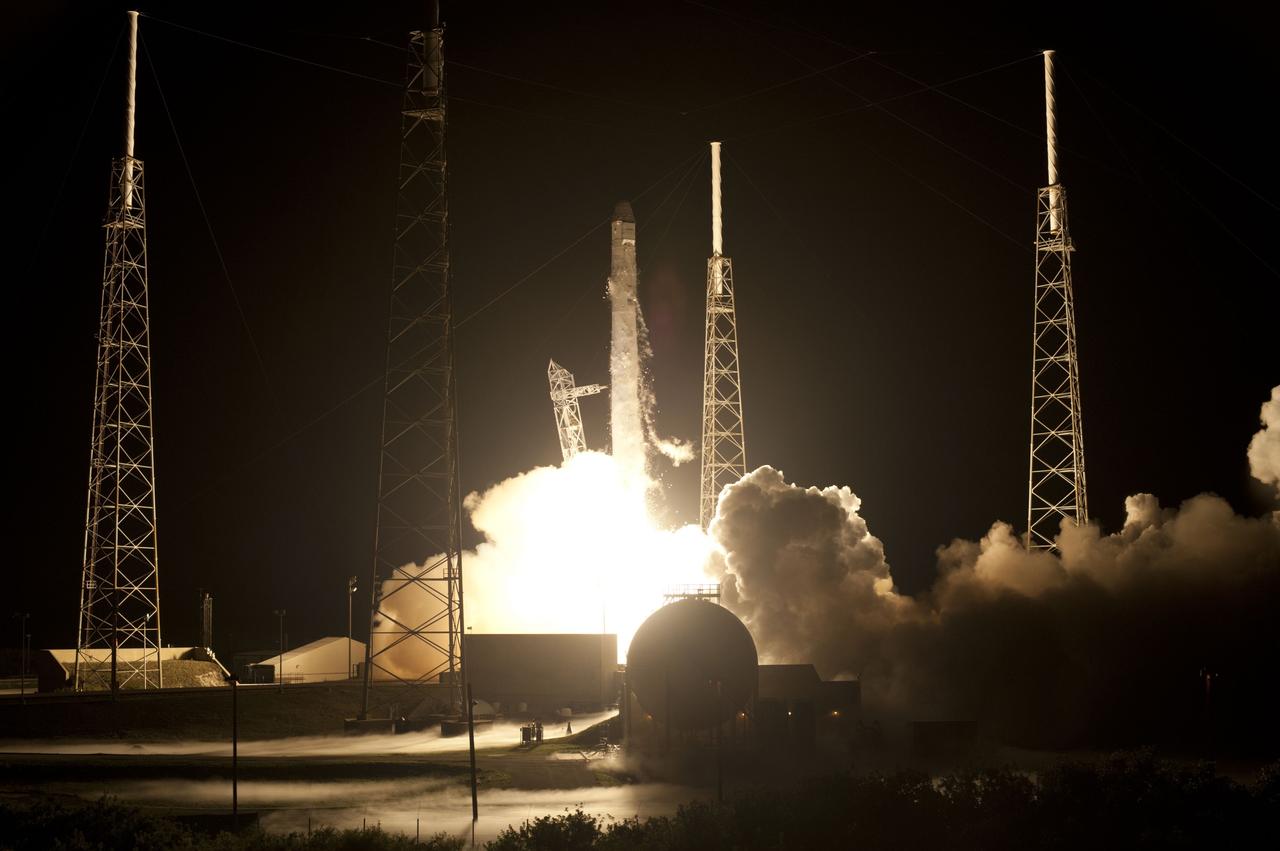
CAPE CANAVERAL, Fla. – On Cape Canaveral Air Force Station in Florida, Space Launch Complex-40 is ablaze as the SpaceX Falcon 9 rocket lifts off at 3:44 a.m. EDT. The launch is the company's second demonstration test flight for NASA's Commercial Orbital Transportation Services, or COTS, program. During the flight, the Dragon capsule will conduct a series of check-out procedures to test and prove its systems, including rendezvous and berthing with the International Space Station. If the capsule performs as planned, the cargo and experiments it is carrying will be transferred to the station. The cargo includes food, water and provisions for the station’s Expedition crews, such as clothing, batteries and computer equipment. Under COTS, NASA has partnered with two aerospace companies to deliver cargo to the station. For more information, visit http://www.nasa.gov/spacex. Photo credit: NASA/Rick Wetherington, Tim Powers and Tim Terry
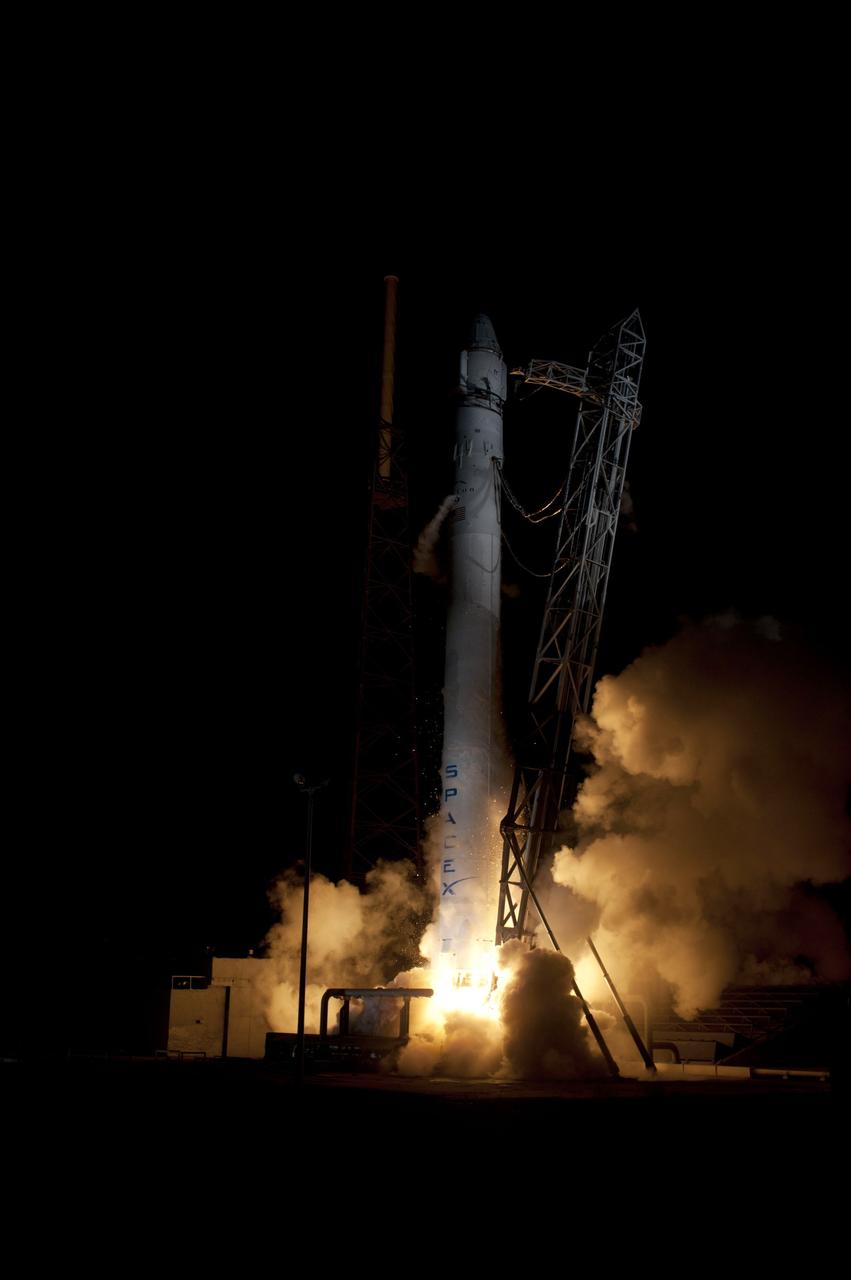
CAPE CANAVERAL, Fla. – An exhaust cloud begins to form around the SpaceX Falcon 9 rocket as it lifts off Space Launch Complex-40 on Cape Canaveral Air Force Station in Florida at 3:44 a.m. EDT. The launch is the company's second demonstration test flight for NASA's Commercial Orbital Transportation Services, or COTS, Program. During the flight, the Dragon capsule will conduct a series of check-out procedures to test and prove its systems, including rendezvous and berthing with the International Space Station. If the capsule performs as planned, the cargo and experiments it is carrying will be transferred to the station. The cargo includes food, water and provisions for the station’s Expedition crews, such as clothing, batteries and computer equipment. Under COTS, NASA has partnered with two aerospace companies to deliver cargo to the station. For more information, visit http://www.nasa.gov/spacex. Photo credit: NASA/Rick Wetherington, Tim Powers and Tim Terry
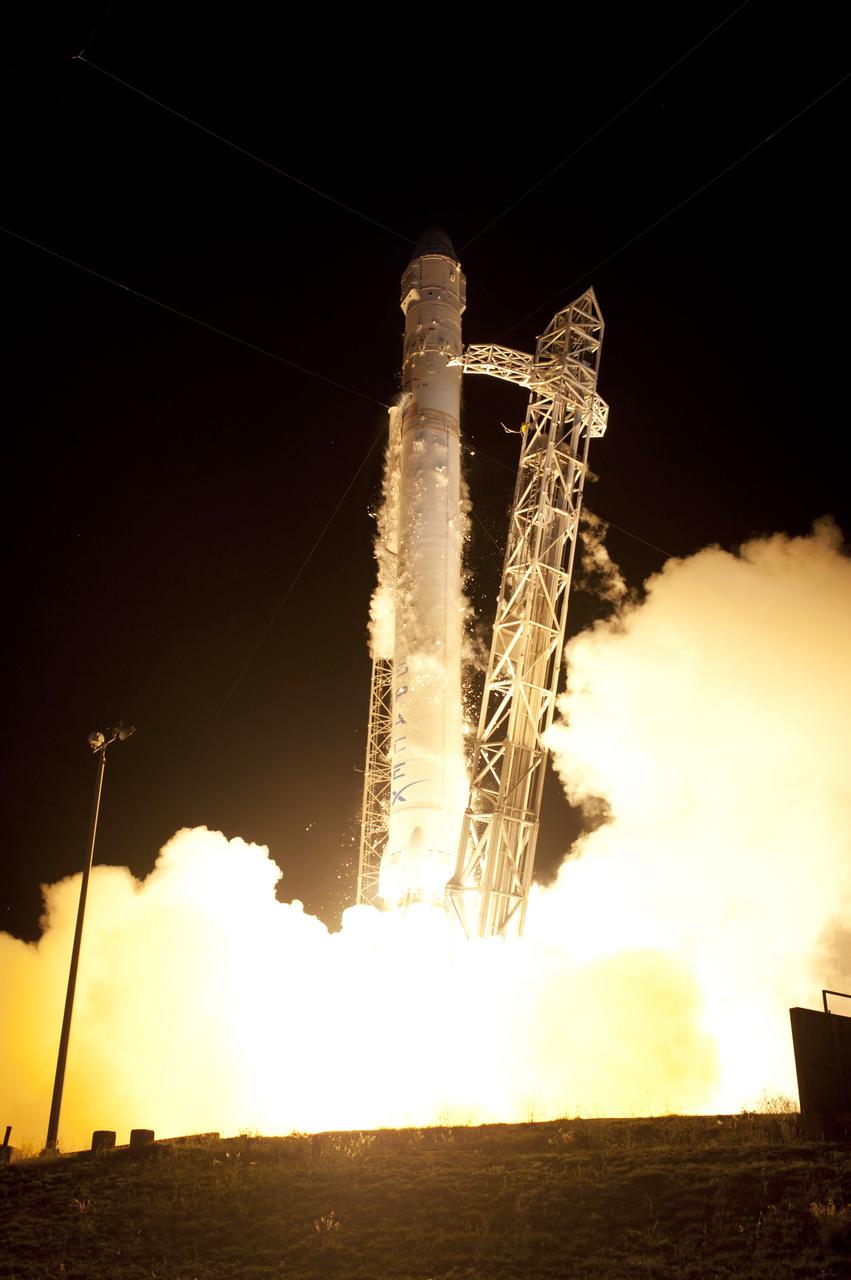
CAPE CANAVERAL, Fla. – Nine Merlin engines ignite under the SpaceX Falcon 9 rocket at 3:44 a.m. EDT at Space Launch Complex-40 on Cape Canaveral Air Force Station in Florida. The launch is the company's second demonstration test flight for NASA's Commercial Orbital Transportation Services, or COTS, Program. During the flight, the Dragon capsule will conduct a series of check-out procedures to test and prove its systems, including rendezvous and berthing with the International Space Station. If the capsule performs as planned, the cargo and experiments it is carrying will be transferred to the station. The cargo includes food, water and provisions for the station’s Expedition crews, such as clothing, batteries and computer equipment. Under COTS, NASA has partnered with two aerospace companies to deliver cargo to the station. For more information, visit http://www.nasa.gov/spacex. Photo credit: NASA/Rick Wetherington, Tim Powers and Tim Terry
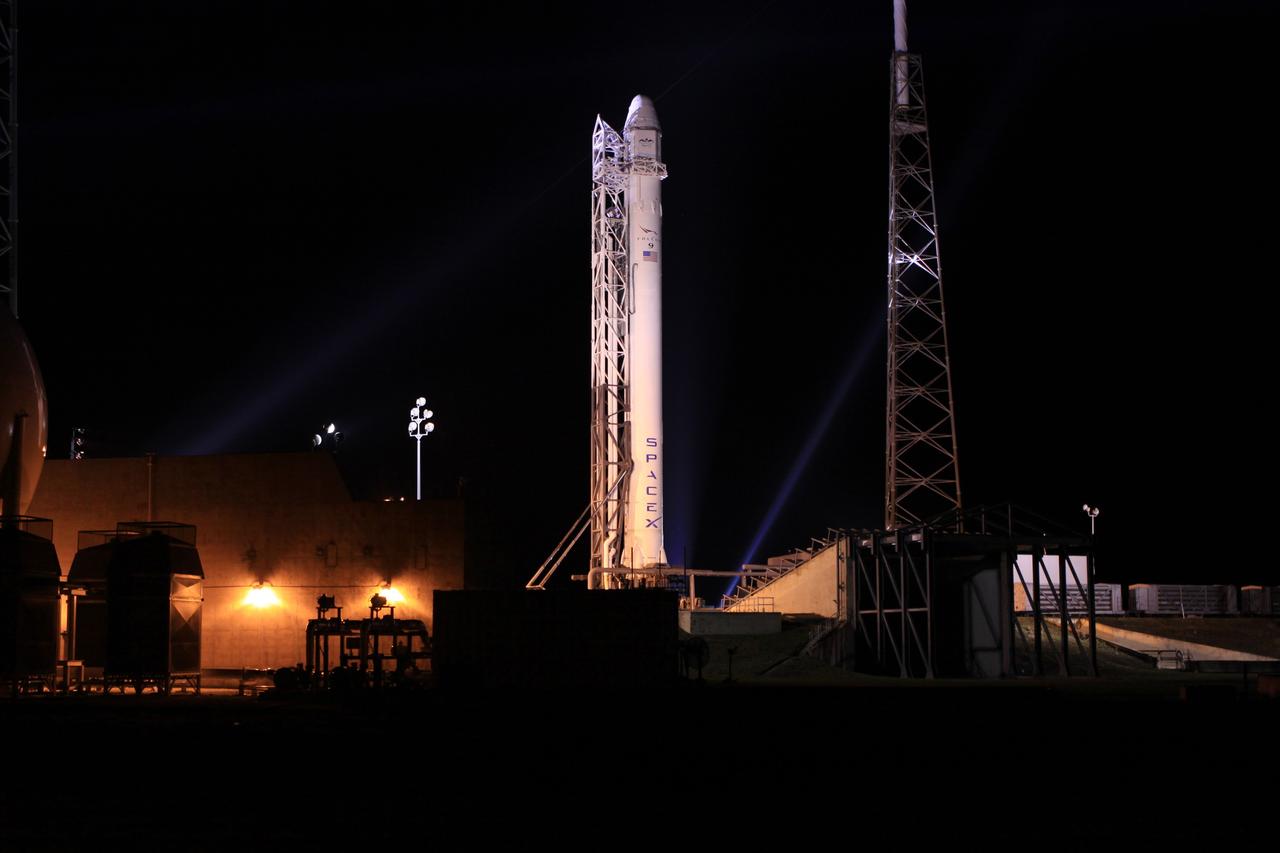
CAPE CANAVERAL, Fla. – A strongback lifts the SpaceX Falcon 9 rocket into a vertical position on the pad at Space Launch Complex-40 on Cape Canaveral Air Force Station in Florida. Liftoff with the SpaceX Dragon capsule aboard is set for 4:55 a.m. EDT on May 19. The launch will be the company's second demonstration test flight for NASA's Commercial Orbital Transportation Services Program, or COTS. During the flight, the capsule will conduct a series of check-out procedures to test and prove its systems, including rendezvous and berthing with the International Space Station. If the capsule performs as planned, the cargo and experiments it is carrying will be transferred to the station. The cargo includes food, water and provisions for the station’s Expedition crews, such as clothing, batteries and computer equipment. Under COTS, NASA has partnered with two aerospace companies to deliver cargo to the station. For more information, visit http://www.nasa.gov/spacex. Photo credit: NASA/Jim Grossmann
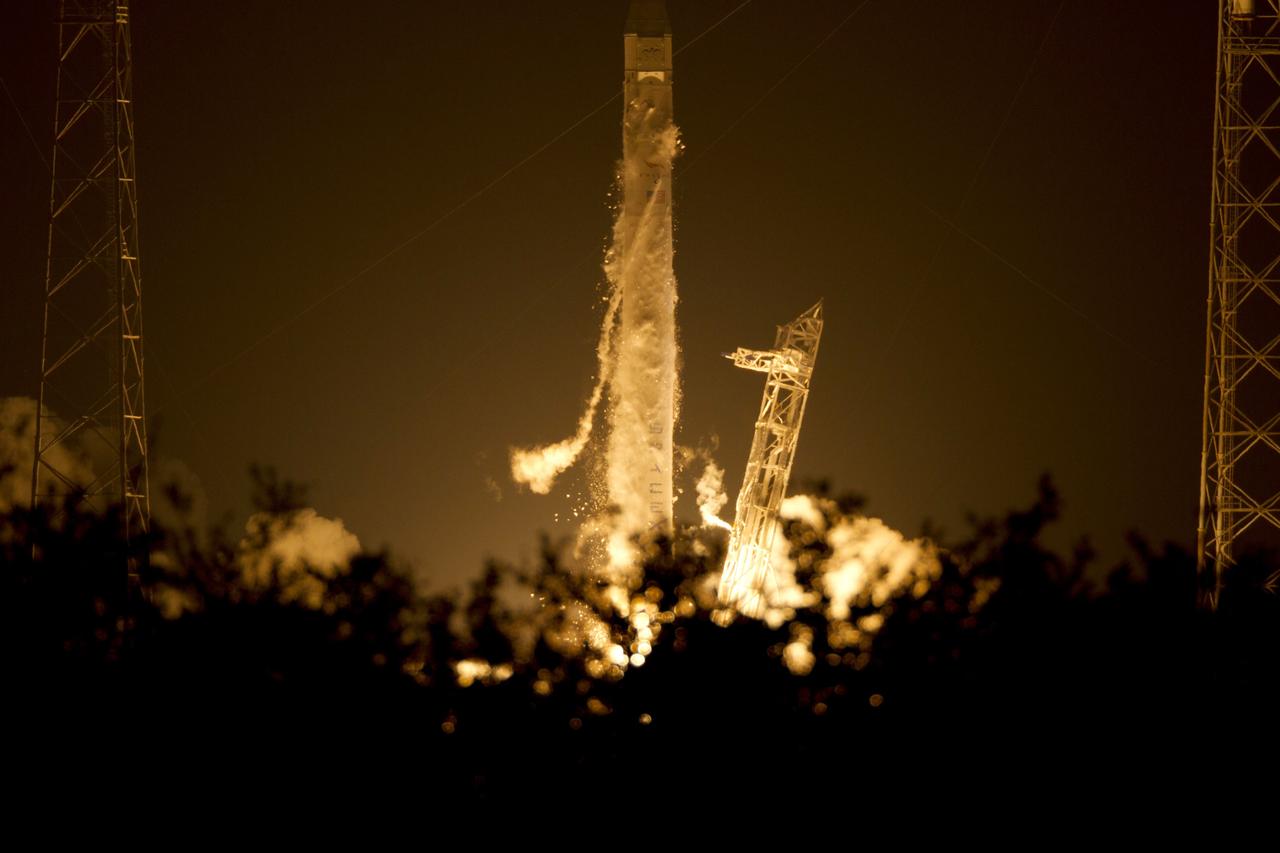
CAPE CANAVERAL, Fla. – Nine Merlin engines ignite under the SpaceX Falcon 9 rocket at 3:44 a.m. EDT at Space Launch Complex-40 on Cape Canaveral Air Force Station in Florida. The launch is the company's second demonstration test flight for NASA's Commercial Orbital Transportation Services, or COTS, Program. During the flight, the Dragon capsule will conduct a series of check-out procedures to test and prove its systems, including rendezvous and berthing with the International Space Station. If the capsule performs as planned, the cargo and experiments it is carrying will be transferred to the station. The cargo includes food, water and provisions for the station’s Expedition crews, such as clothing, batteries and computer equipment. Under COTS, NASA has partnered with two aerospace companies to deliver cargo to the station. For more information, visit http://www.nasa.gov/spacex. Photo credit: NASA/Rick Wetherington, Tim Powers and Tim Terry
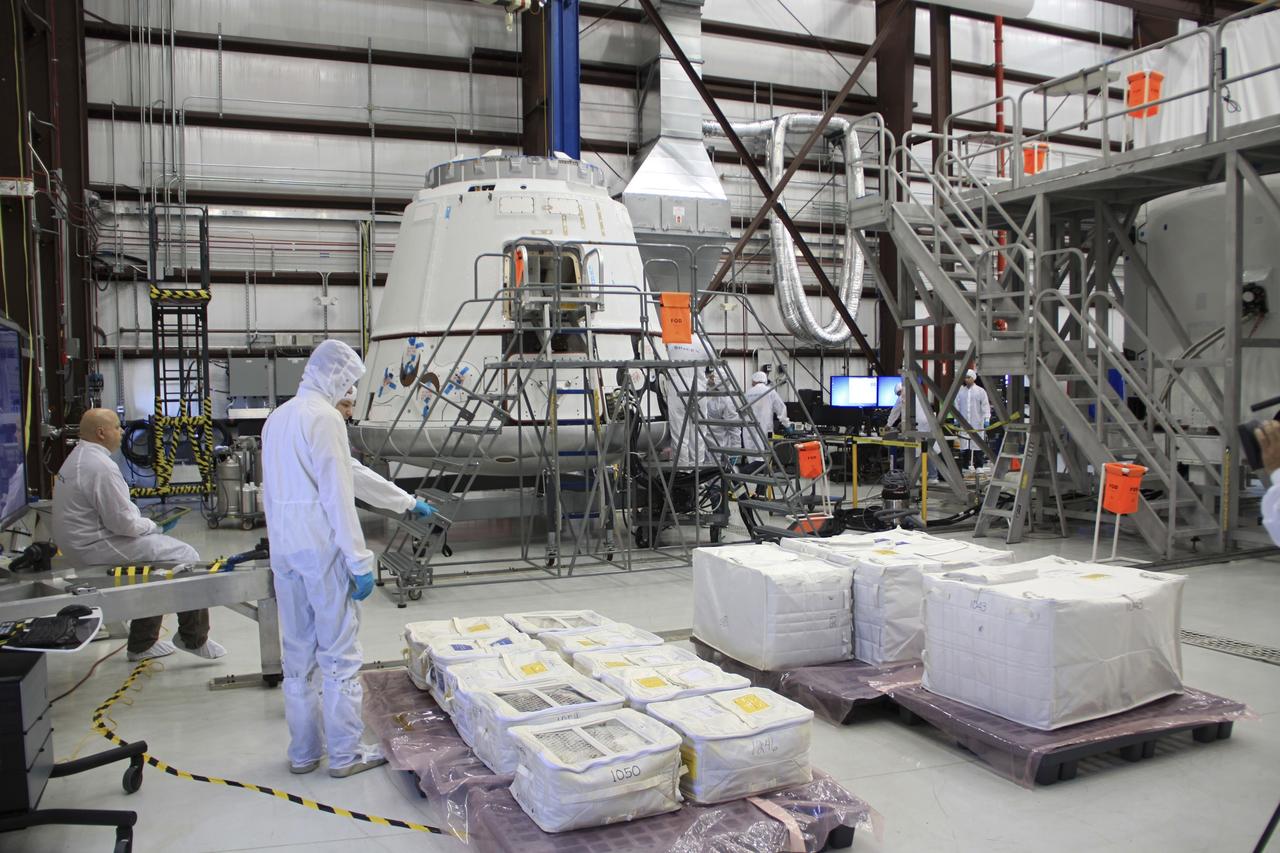
CAPE CANAVERAL, Fla. – In a processing hangar at Space Launch Complex-40 on Cape Canaveral Air Force Station in Florida, preparations are under way to load cargo into the Space Exploration Technologies Dragon capsule in preparation for its scheduled April 30 liftoff aboard a Falcon 9 rocket. Known as SpaceX, the launch will be the company's second demonstration test flight for NASA's Commercial Orbital Transportation Services program, or COTS. During the flight, the capsule will conduct a series of checkout procedures to test and prove its systems, including rendezvous and berthing with the International Space Station. The cargo includes food and provisions for the station’s Expedition crews, such as clothing, batteries, and computer equipment. Under COTS, NASA has partnered with two private companies to launch cargo safely to the station. For more information, visit http://www.nasa.gov/spacex. Photo credit: NASA/Jim Grossmann
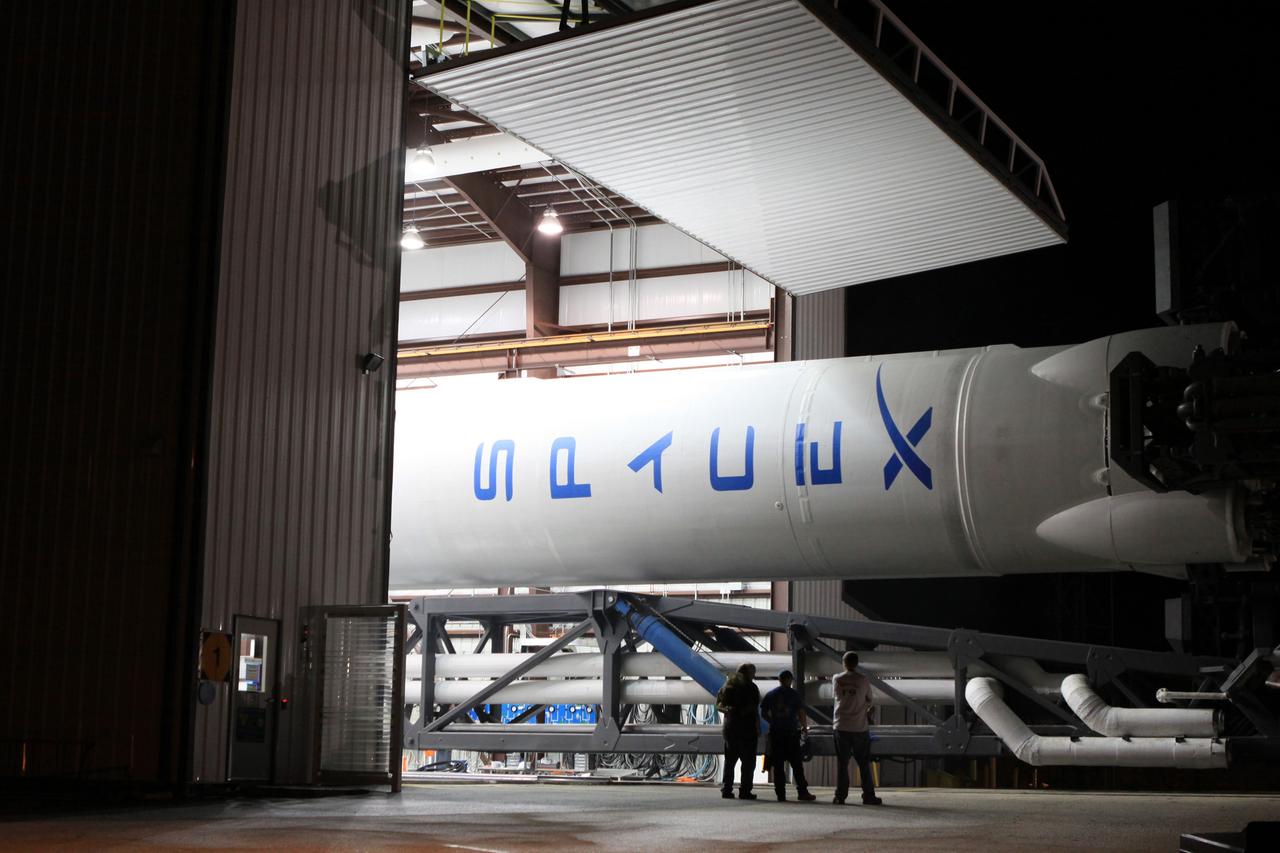
CAPE CANAVERAL, Fla. – Preparations are under way to roll the SpaceX Falcon 9 rocket out of the processing facility to the pad at Space Launch Complex-40 on Cape Canaveral Air Force Station in Florida. Liftoff with the SpaceX Dragon capsule aboard is set for 4:55 a.m. EDT on May 19. The launch will be the company's second demonstration test flight for NASA's Commercial Orbital Transportation Services Program, or COTS. During the flight, the capsule will conduct a series of check-out procedures to test and prove its systems, including rendezvous and berthing with the International Space Station. If the capsule performs as planned, the cargo and experiments it is carrying will be transferred to the station. The cargo includes food, water and provisions for the station’s Expedition crews, such as clothing, batteries and computer equipment. Under COTS, NASA has partnered with two aerospace companies to deliver cargo to the station. For more information, visit http://www.nasa.gov/spacex. Photo credit: NASA/Jim Grossmann
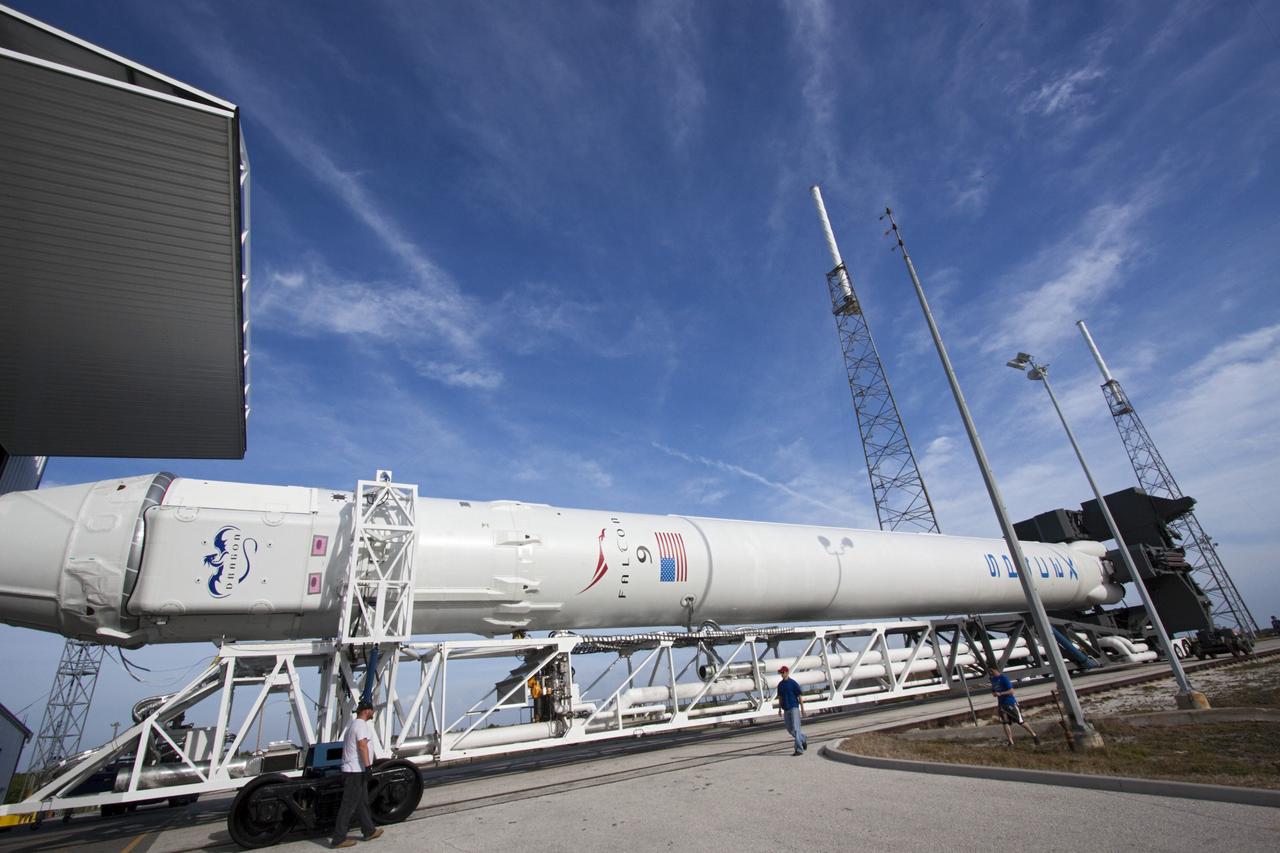
CAPE CANAVERAL, Fla. - The SpaceX Falcon 9 rocket arrives at Space Launch Complex-40 on Cape Canaveral Air Force Station in Florida. Liftoff with the SpaceX Dragon capsule aboard is set for 4:55 a.m. EDT on May 19. The launch will be the company's second demonstration test flight for NASA's Commercial Orbital Transportation Services Program, or COTS. During the flight, the capsule will conduct a series of check-out procedures to test and prove its systems, including rendezvous and berthing with the International Space Station. If the capsule performs as planned, the cargo and experiments it is carrying will be transferred to the station. The cargo includes food, water and provisions for the station’s Expedition crews, such as clothing, batteries and computer equipment. Under COTS, NASA has partnered with two aerospace companies to deliver cargo to the station. For more information, visit http://www.nasa.gov/spacex Photo credit: NASA/Jim Grossmann
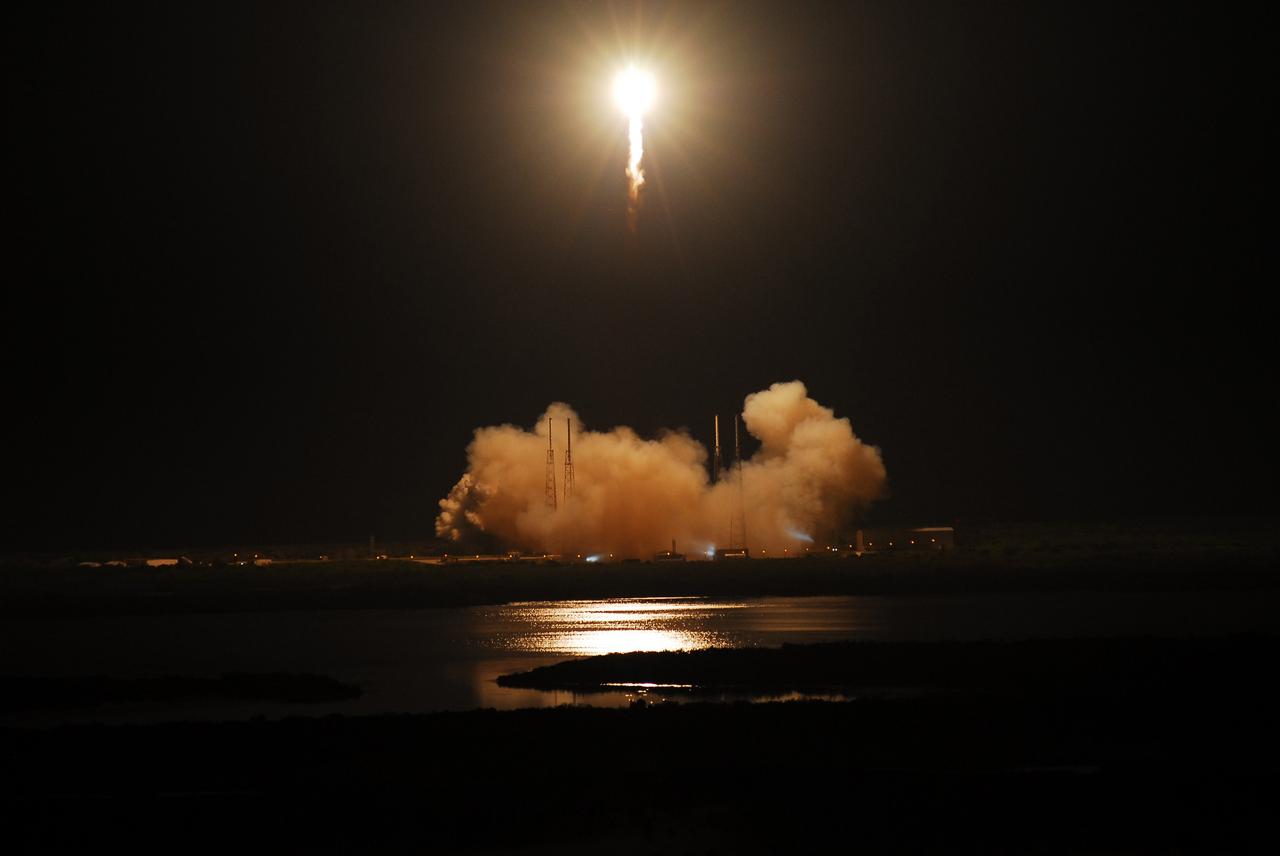
CAPE CANAVERAL, Fla. – Powered by nine Merlin engines, the SpaceX Falcon 9 rocket roars into space from Space Launch Complex-40 on Cape Canaveral Air Force Station in Florida at 3:44 a.m. EDT, carrying the Dragon capsule to orbit. The launch is the company's second demonstration test flight for NASA's Commercial Orbital Transportation Services, or COTS, Program. During the flight, the Dragon will conduct a series of check-out procedures to test and prove its systems, including rendezvous and berthing with the International Space Station. If the capsule performs as planned, the cargo and experiments it is carrying will be transferred to the station. The cargo includes food, water and provisions for the station’s Expedition crews, such as clothing, batteries and computer equipment. Under COTS, NASA has partnered with two aerospace companies to deliver cargo to the station. For more information, visit http://www.nasa.gov/spacex. Photo credit: NASA/Alan Ault
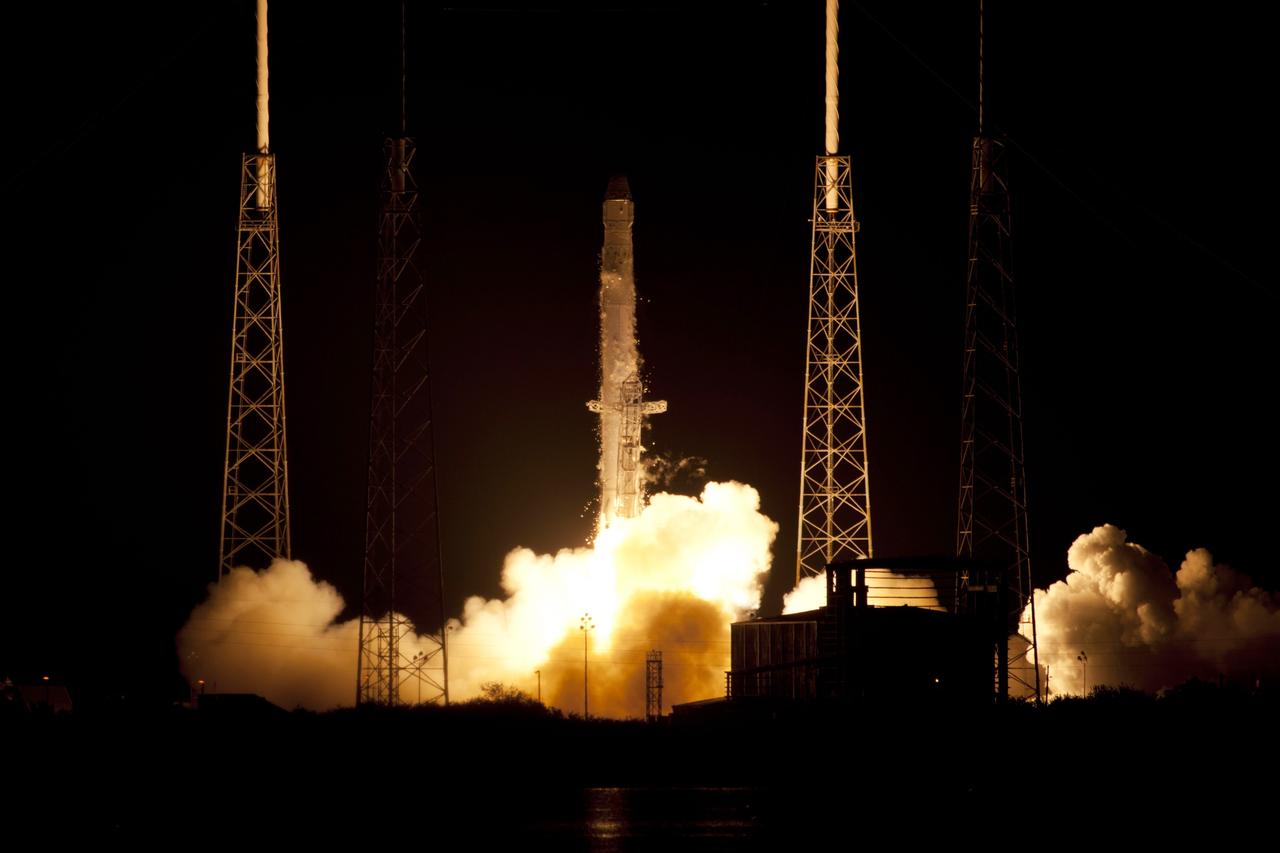
CAPE CANAVERAL, Fla. – Frost and ice breaks away from the SpaceX Falcon 9 rocket following ignition of its nine Merlin engines at 3:44 a.m. EDT at Space Launch Complex-40 on Cape Canaveral Air Force Station in Florida. The launch is the company's second demonstration test flight for NASA's Commercial Orbital Transportation Services, or COTS, Program. During the flight, the Dragon capsule will conduct a series of check-out procedures to test and prove its systems, including rendezvous and berthing with the International Space Station. If the capsule performs as planned, the cargo and experiments it is carrying will be transferred to the station. The cargo includes food, water and provisions for the station’s Expedition crews, such as clothing, batteries and computer equipment. Under COTS, NASA has partnered with two aerospace companies to deliver cargo to the station. For more information, visit http://www.nasa.gov/spacex. Photo credit: NASA/Rick Wetherington, Tim Powers and Tim Terry