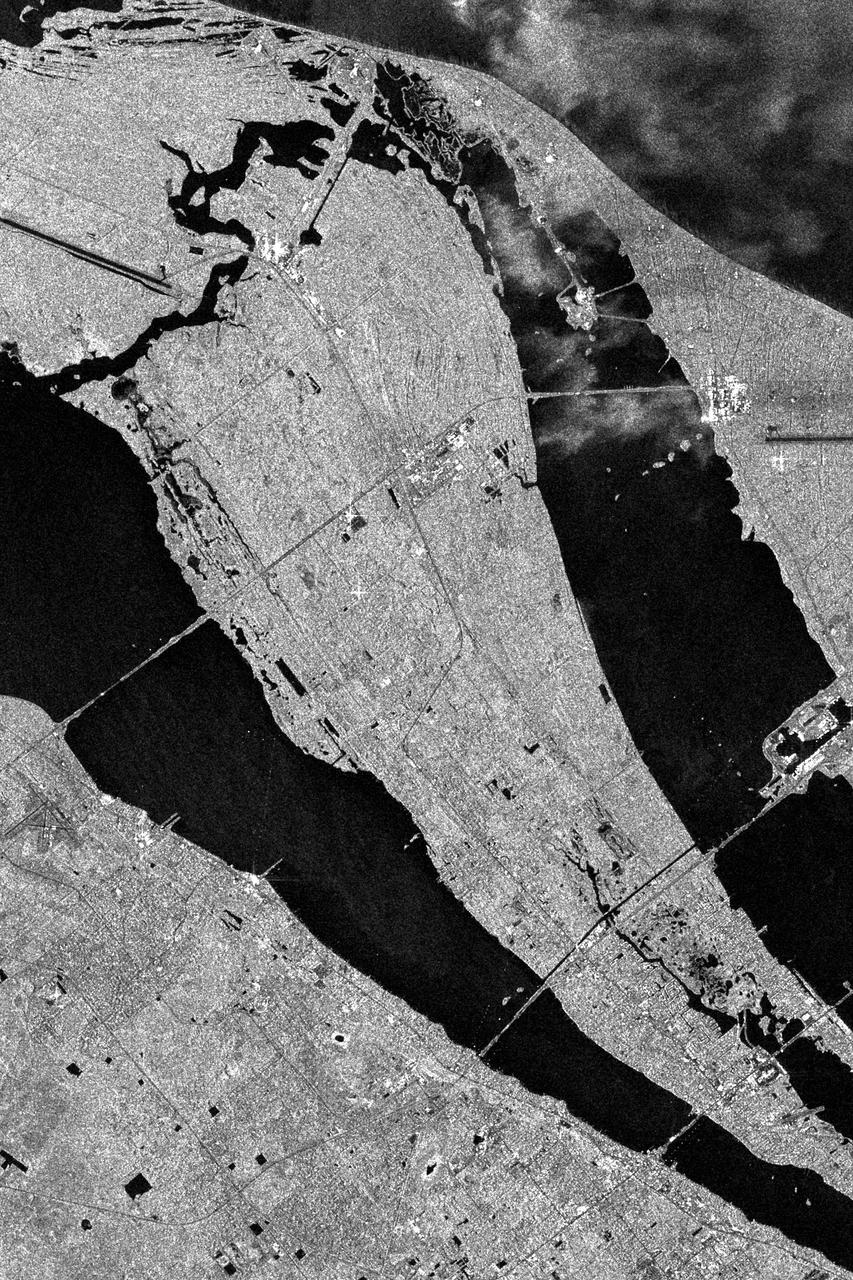
This is an X-band Synthetic Aperture Radar image spanning an area of about 20 kilometers by 40 kilometers 12 miles by 25 miles of NASA Kennedy Space Center, Florida.
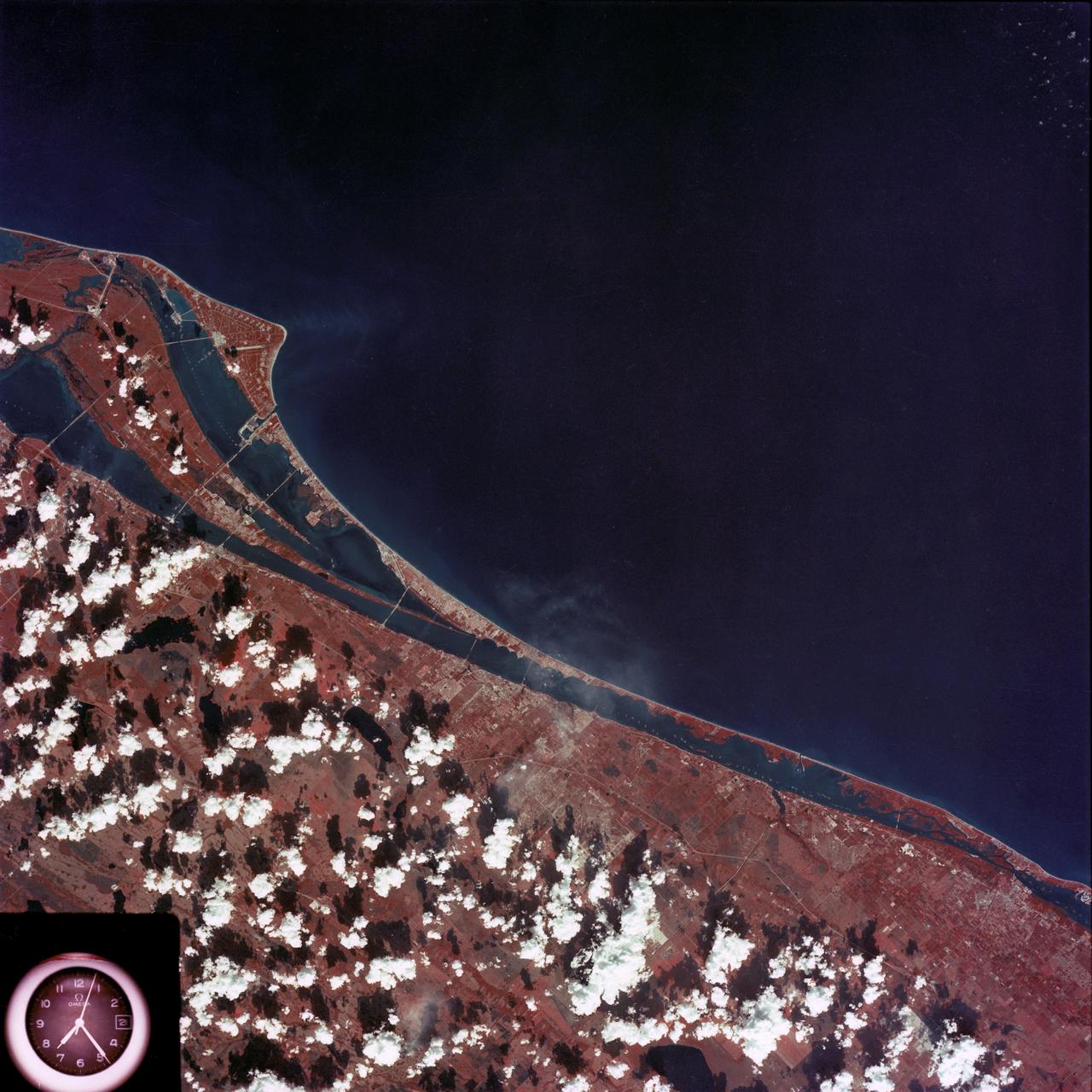
SL4-93-167 (February 1974) --- A vertical view of the Kennedy Space Center and the Florida Atlantic coast area is seen in this Skylab 4 Earth Resources Experiments Package S190-B (five-inch earth terrain camera) infrared photography taken from the Skylab space station in Earth orbit. This photograph shows the major land-ocean features of the Florida coast near Vero Beach northward to Cape Canaveral and the KSC complex. The launch pads for the Skylab missions are clearly visible. Identification of living vegetation is possible through the use of the color infrared film. Various shades of red portray differences in the vegetation such as shown in the patterns in the agricultural area near Vero Beach. In the Kennedy Space Center, the nearly continuous and uniform red color shows that most of the land areas are heavily vegetated. The white coastal beach areas are strongly contrasted to the red land and the blue Atlantic Ocean. Old dunal areas in KSC are visible on Merritt Island which is separated from the Launch areas by the Banana River and the mainland by the Indian River. Federal and state highways and numerous causeways over the rivers are easily identified. The Florida mainland is partly shadowed by small white clouds which cast a pronounced shadow to the east of each cloud indicated the Sun is west of solar noon. Federal agencies participating with NASA on the EREP project are the Departments of Agriculture, Commerce, Interior, the Environmental Protection Agency and the Core of Engineers. All EREP photography is available to the public through the Department of Interior's Earth Resources Observations Systems Data Center, Sioux Falls, South Dakota, 57198. Photo credit: NASA
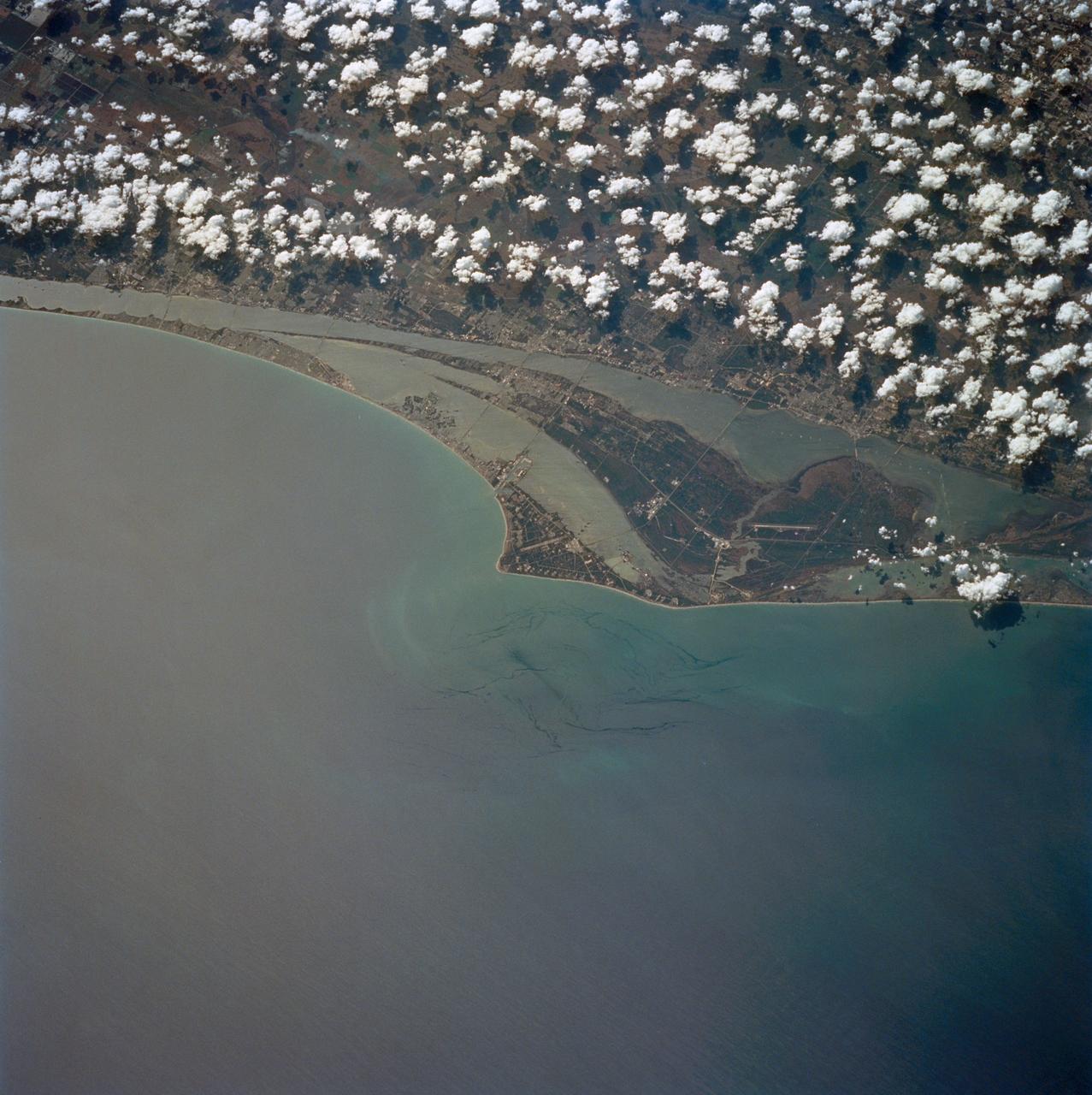
STS060-84-021 (3-11 Feb 1994) --- The Kennedy Space Center (KSC) and its partially cloud-covered environs were captured on 70mm by one of the STS-60 crew members during the eight-day mission. The Shuttle landing facility, on which Discovery landed February 11, 1994, visible at left center.
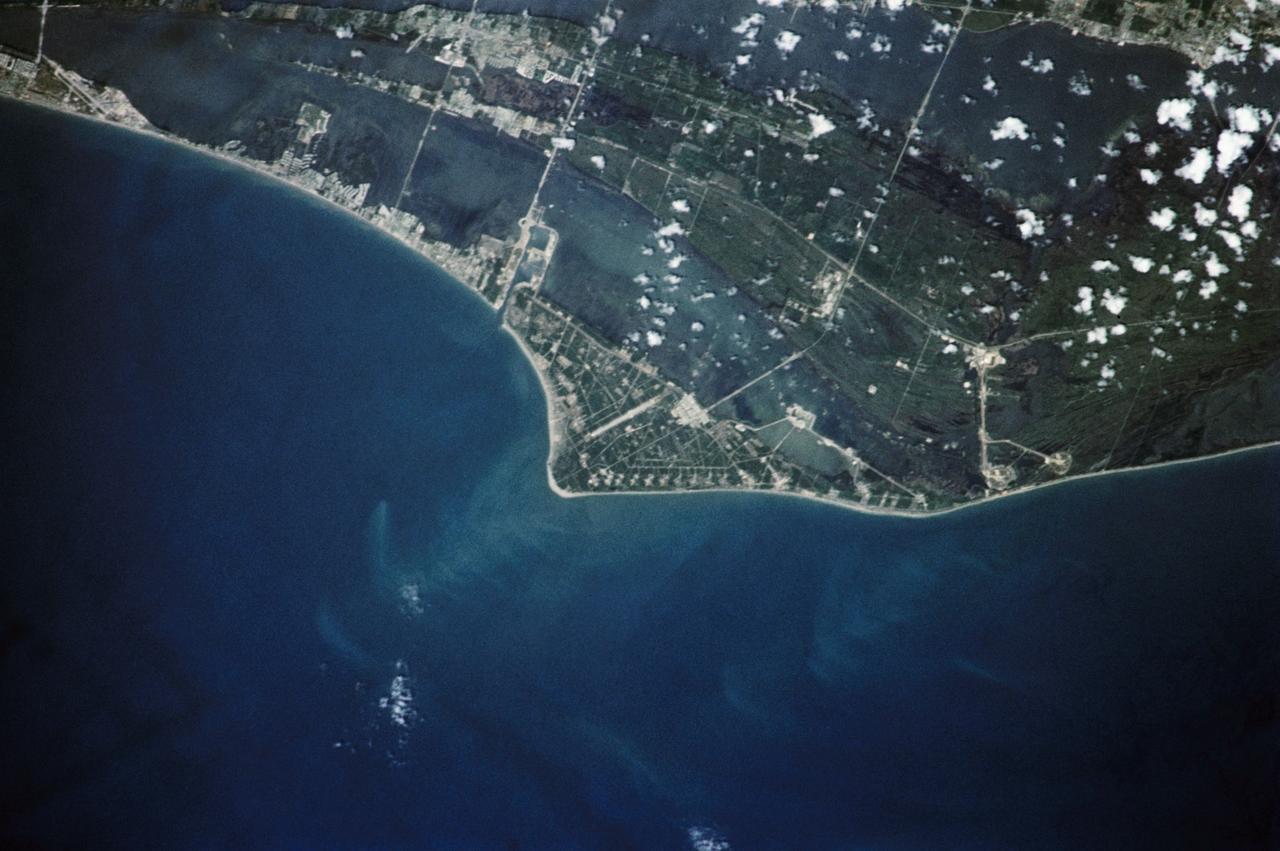
SL2-106-1194 (22 June 1973) --- This overhead view of the central eastern shore of Florida shows the Cape Canaveral and Kennedy Space Center (28.5N, 80.5W), where all of the NASA manned space missions originate. Sprinkled along the jutting cape are a number of KSC launch pads from the earlier Mercury, Gemini Apollo and Skylab series of spaceflights. Merritt Island, just south of Kennedy Space Center, is where the spacecraft liftoff tracking station is located. Photo credit: NASA
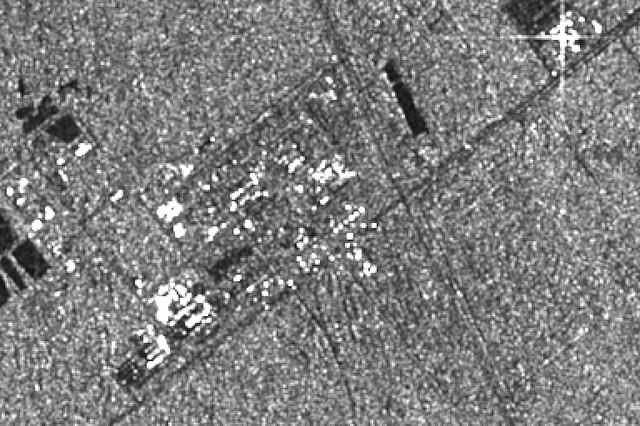
This image was produced during radar observations taken by the Spaceborne Imaging Radar-C/X-band Synthetic Aperture Radar as it flew over the Gulf Stream, Florida, and past the Atlantic Ocean on October 7, 1994. The data were produced using the X-band radar frequency. Knowing ahead of time that this region would be included in a regularly scheduled radar pass, the Kennedy Space Center team, who assembled and integrated the SIR-C/X-SAR equipment with the Spacelab pallet system, designed a set of radar reflectors from common construction materials and formed the letters "KSC" on the ground adjacent to the main headquarters building at the entrance to the Cape Canaveral launch facility. The point of light formed by the bright return from these reflectors are visible in the image. Other more diffuse bright spots are reflections from building faces, roofs and other large structures at the Kennedy Space Center complex. This frame covers an area of approximately 6 kilometers by 8 kilometers (4 miles by 5 miles), which was just a small portion of the data taken on this particular pass. http://photojournal.jpl.nasa.gov/catalog/PIA01747
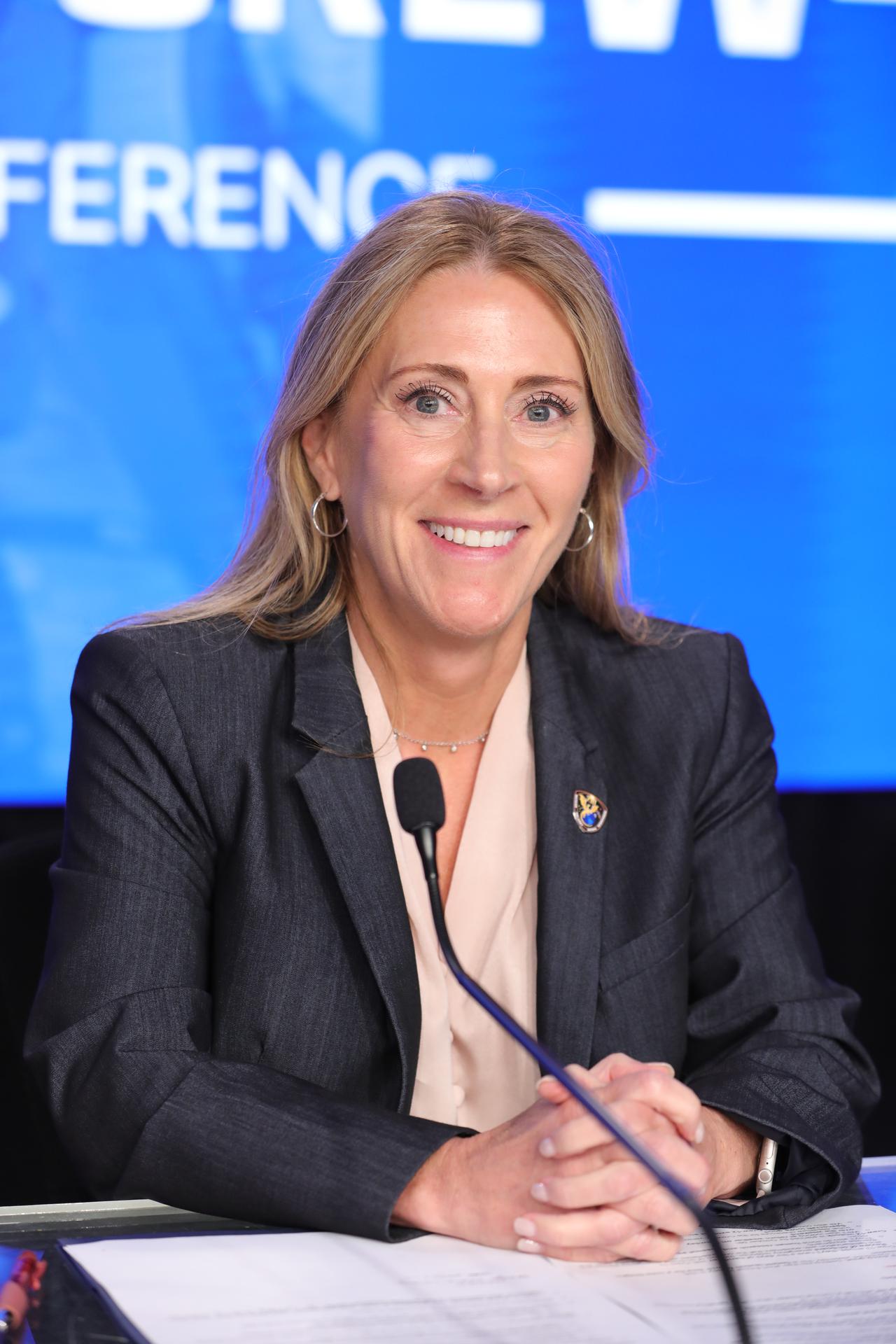
Dana Weigel, manager, Low Earth Orbit Program, NASA’s Johnson Space Center in Houston, participates in a postlaunch news conference at the agency’s Kennedy Space Center in Florida on Thursday, Oct. 1, 2026, following the launch of NASA’s SpaceX Crew-13 mission to the International Space Station. NASA astronauts Jessica Watkins and Luke Delaney, CSA (Canadian Space Agency) astronaut Joshua Kutryk, and Roscosmos cosmonaut Sergey Teteryatnikov launched to the International Space Station aboard SpaceX’s Dragon spacecraft and Falcon 9 rocket at 11:10 a.m. EDT on the 13th crew rotation mission with SpaceX to the space station.
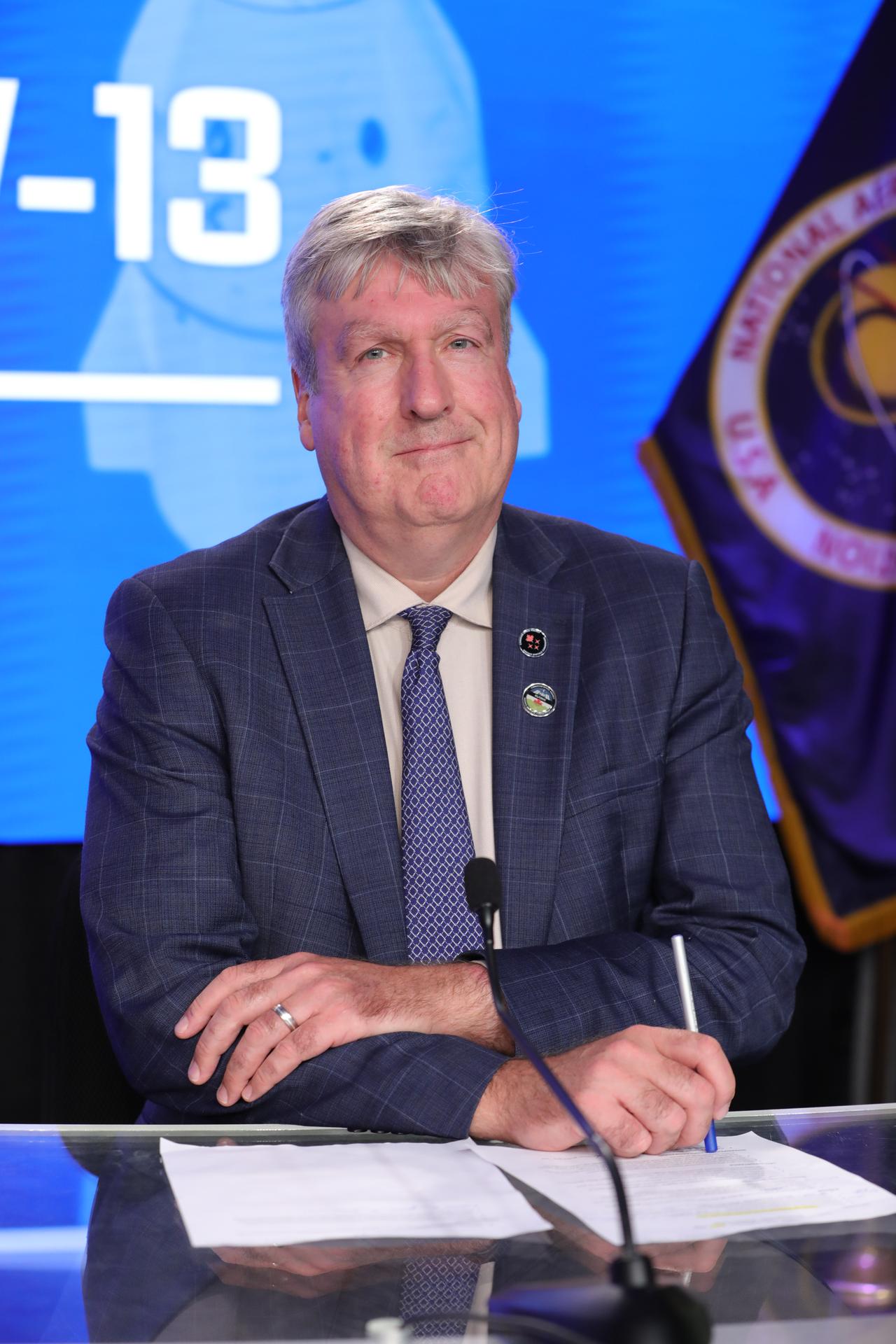
Mathieu Caron, director, Astronauts, Life Sciences, and Space Medicine, CSA (Canadian Space Agency), participates in a postlaunch news conference at the agency’s Kennedy Space Center in Florida on Thursday, Oct. 1, 2026, following the launch of NASA’s SpaceX Crew-13 mission to the International Space Station. NASA astronauts Jessica Watkins and Luke Delaney, CSA (Canadian Space Agency) astronaut Joshua Kutryk, and Roscosmos cosmonaut Sergey Teteryatnikov launched to the International Space Station aboard SpaceX’s Dragon spacecraft and Falcon 9 rocket at 11:10 a.m. EDT on the 13th crew rotation mission with SpaceX to the space station.
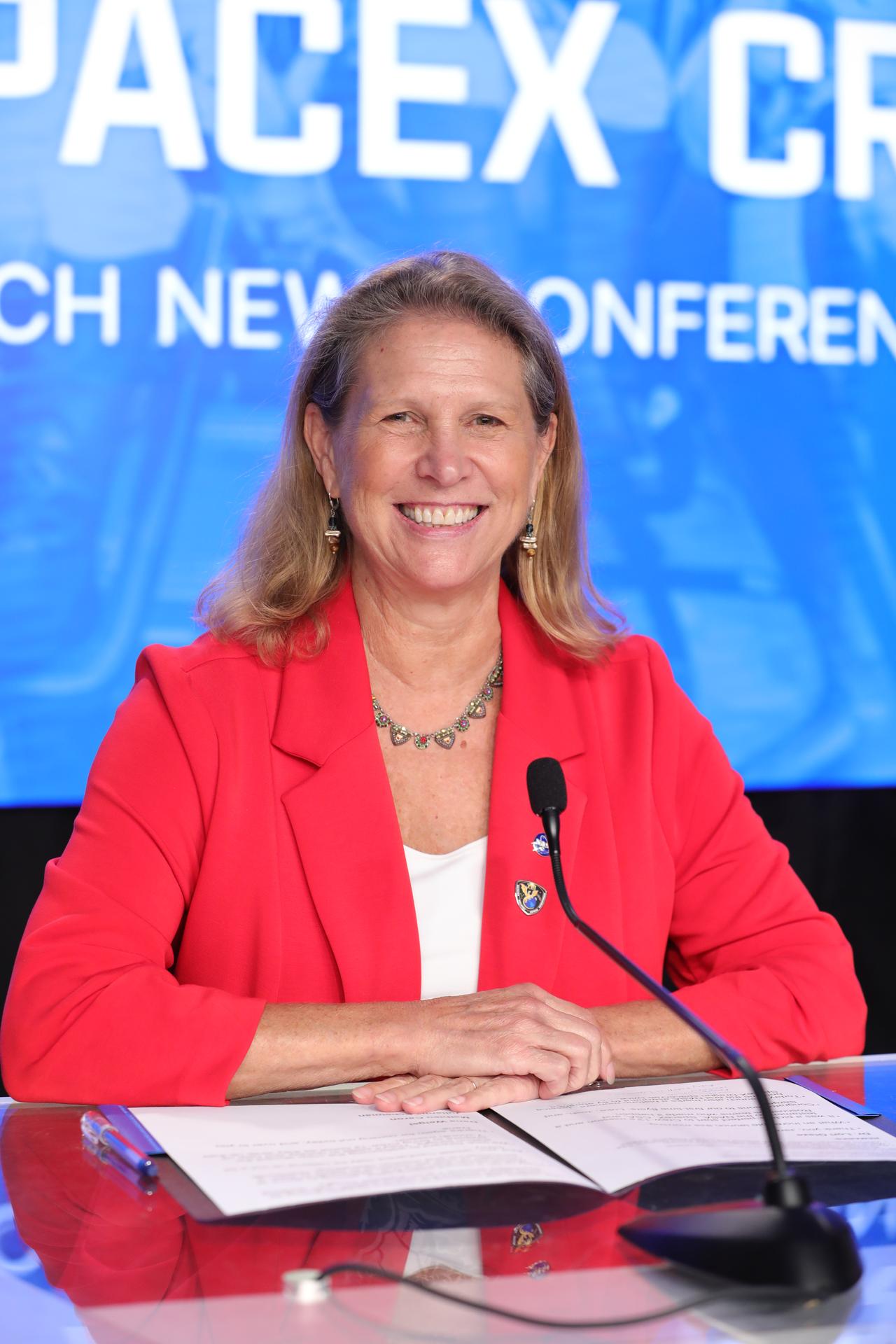
Dr. Lori Glaze, associate administrator, NASA’s Human Spaceflight Mission Directorate, participates in a postlaunch news conference at the agency’s Kennedy Space Center in Florida on Thursday, Oct. 1, 2026, following the launch of NASA’s SpaceX Crew-13 mission to the International Space Station. NASA astronauts Jessica Watkins and Luke Delaney, CSA (Canadian Space Agency) astronaut Joshua Kutryk, and Roscosmos cosmonaut Sergey Teteryatnikov launched to the International Space Station aboard SpaceX’s Dragon spacecraft and Falcon 9 rocket at 11:10 a.m. EDT on the 13th crew rotation mission with SpaceX to the space station.
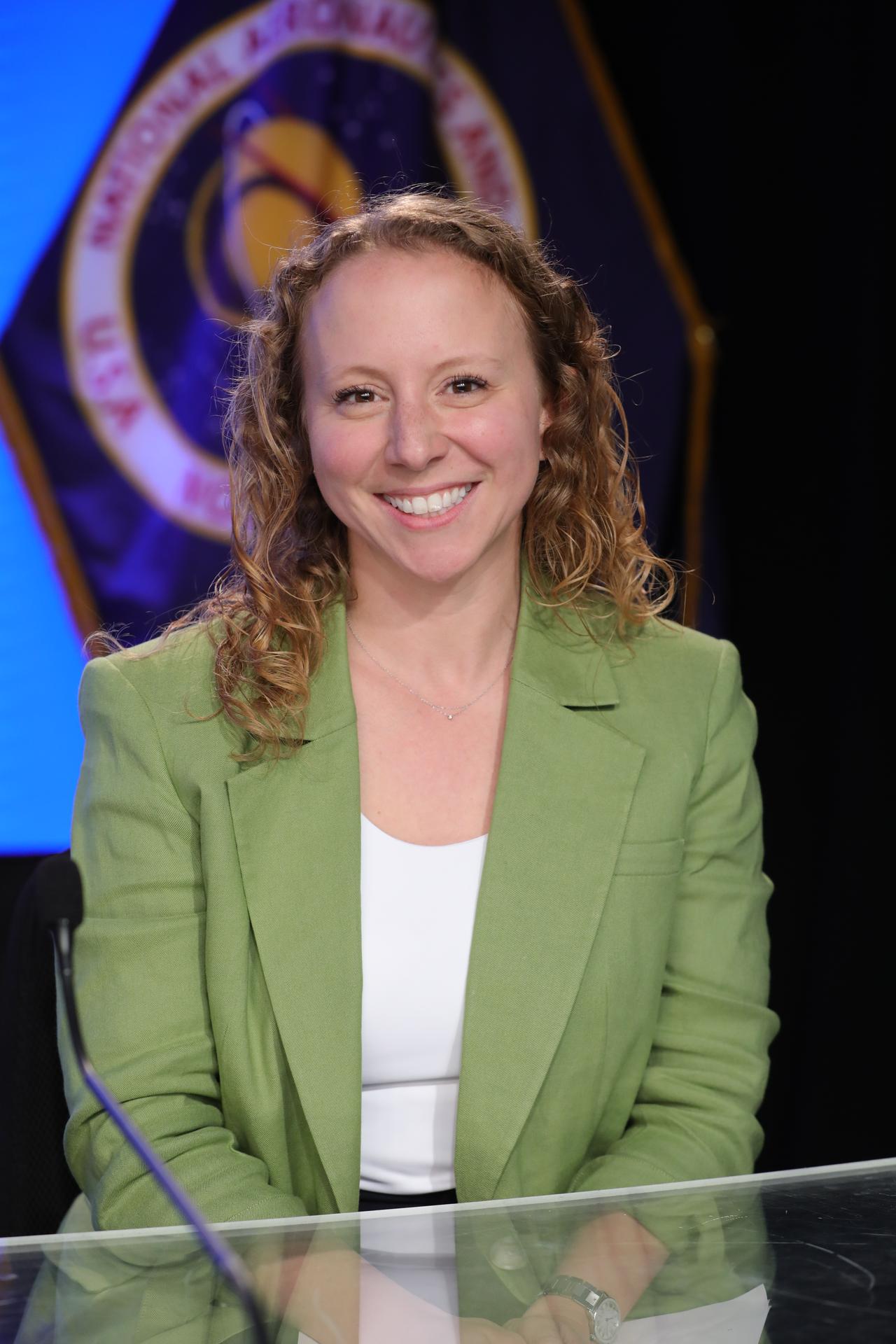
Julianna Scheiman, director, NASA Science and Dragon Programs, SpaceX, participates in a postlaunch news conference at the agency’s Kennedy Space Center in Florida on Thursday, Oct. 1, 2026, following the launch of NASA’s SpaceX Crew-13 mission to the International Space Station. NASA astronauts Jessica Watkins and Luke Delaney, CSA (Canadian Space Agency) astronaut Joshua Kutryk, and Roscosmos cosmonaut Sergey Teteryatnikov launched to the International Space Station aboard SpaceX’s Dragon spacecraft and Falcon 9 rocket at 11:10 a.m. EDT on the 13th crew rotation mission with SpaceX to the space station.
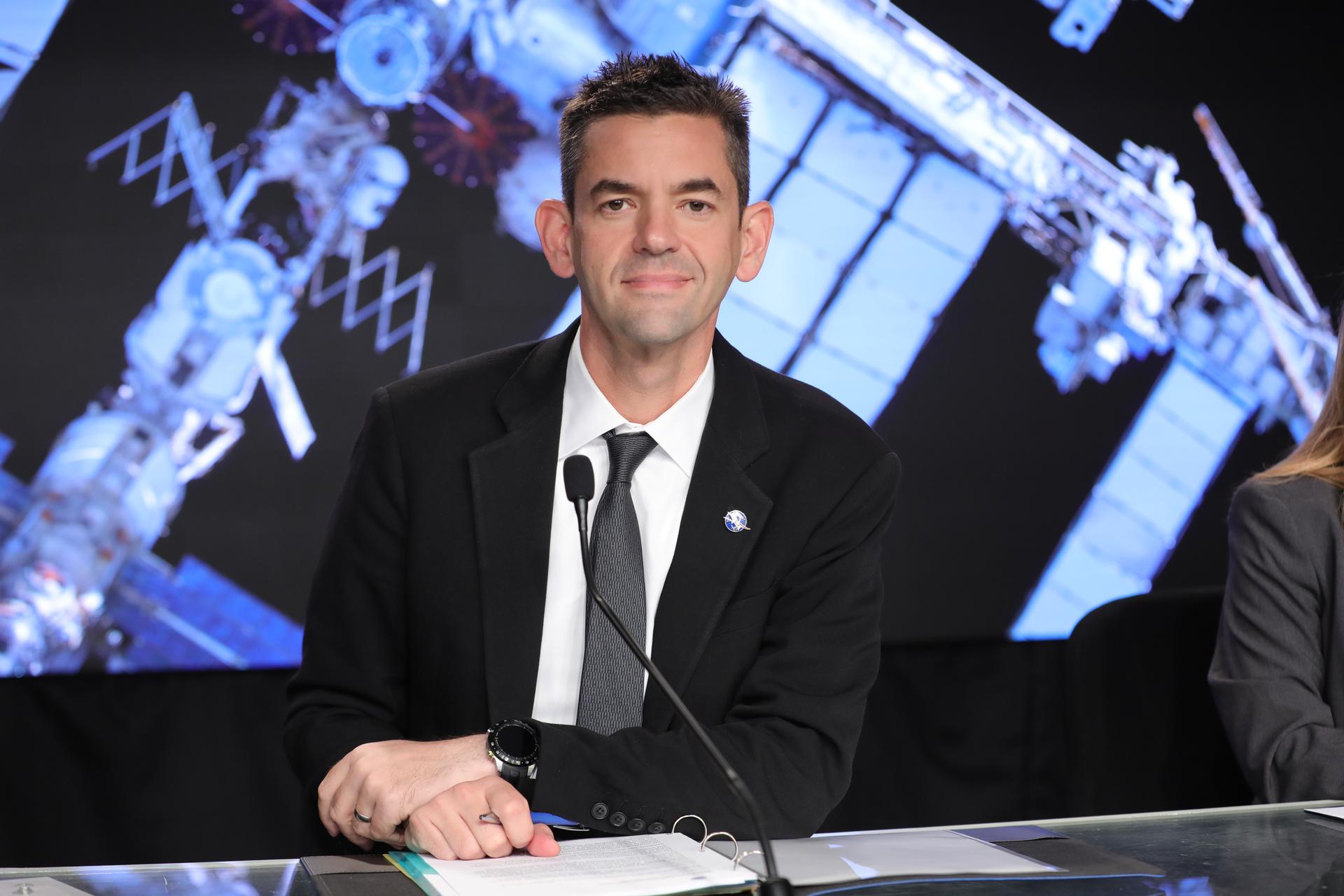
NASA Administrator Jared Isaacman participates in a news conference with NASA and Boeing leadership to discuss Starliner’s development and plans for regular crew flights to and from the International Space Station during a news conference Monday, Sept. 28, 2026, inside the John Holliman Auditorium of the NASA News Center at the agency’s Kennedy Space Center in Florida.
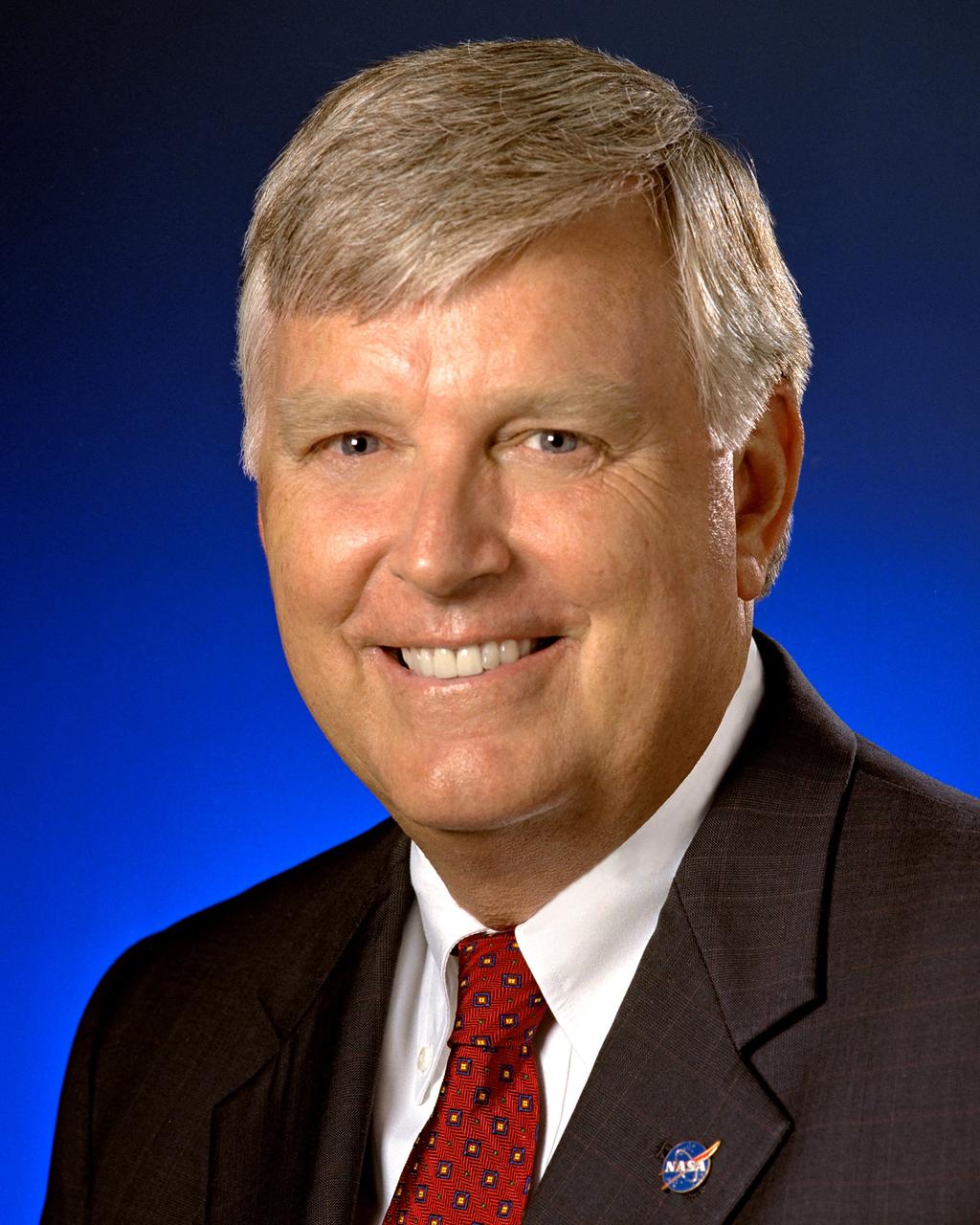
KENNEDY SPACE CENTER, FLA. - Official portrait of James W. Kennedy, the director of the NASA Kennedy Space Center in Florida from August 2003 to January 2007.
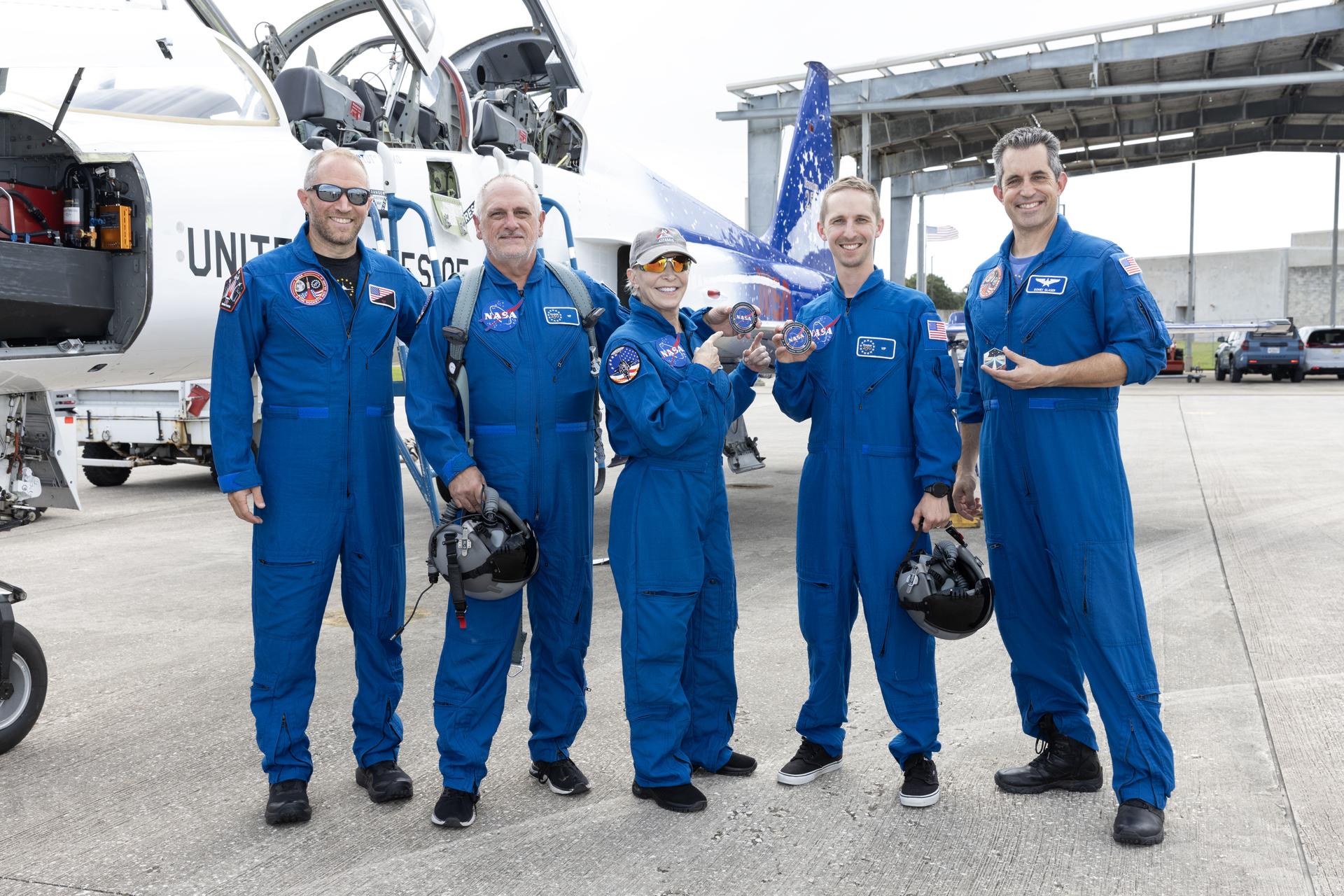
From left, pilot Doug "Tut" Demko, NASA employees Gary O’Neil, Tammy Fenk, Alec Jacobs, and pilot Scott "Gomex" Glaser participate in an employee incentive flying event using NASA Administrator Jared Isaacman's personal F-5 aircraft, Thursday, Sept. 17, 2026, at NASA’s Kennedy Space Center in Florida. As part of the agency’s Flight Experience Award program, the employees donned NASA flight suits, completed preflight briefings, and experienced a unique flight. The ride-along flight experience award program highlights NASA’s commitment to celebrating excellence across the workforce.
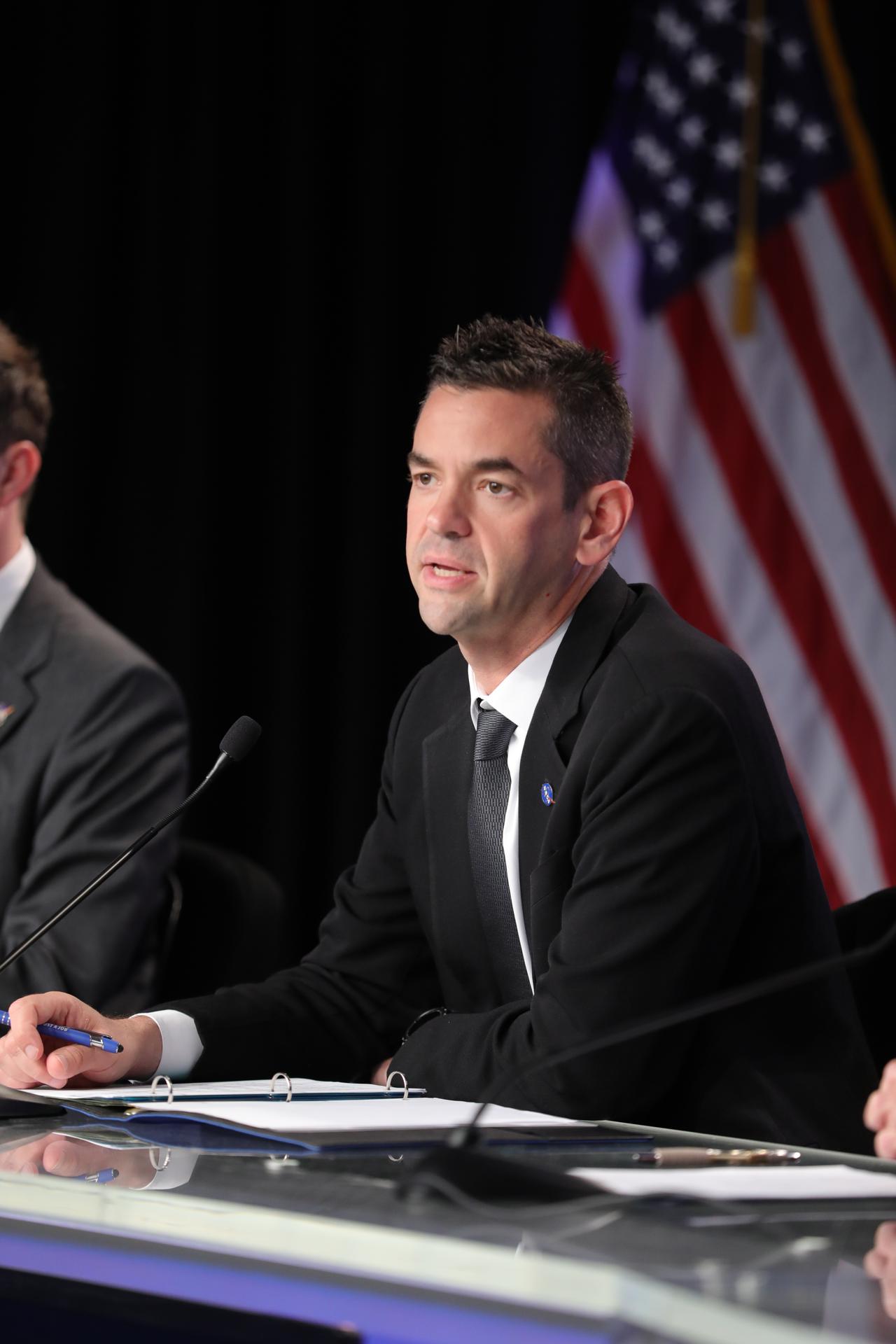
NASA Administrator Jared Isaacman participates in a news conference with NASA and Boeing leadership to discuss Starliner’s development and plans for regular crew flights to and from the International Space Station during a news conference Monday, Sept. 28, 2026, inside the John Holliman Auditorium of the NASA News Center at the agency’s Kennedy Space Center in Florida.
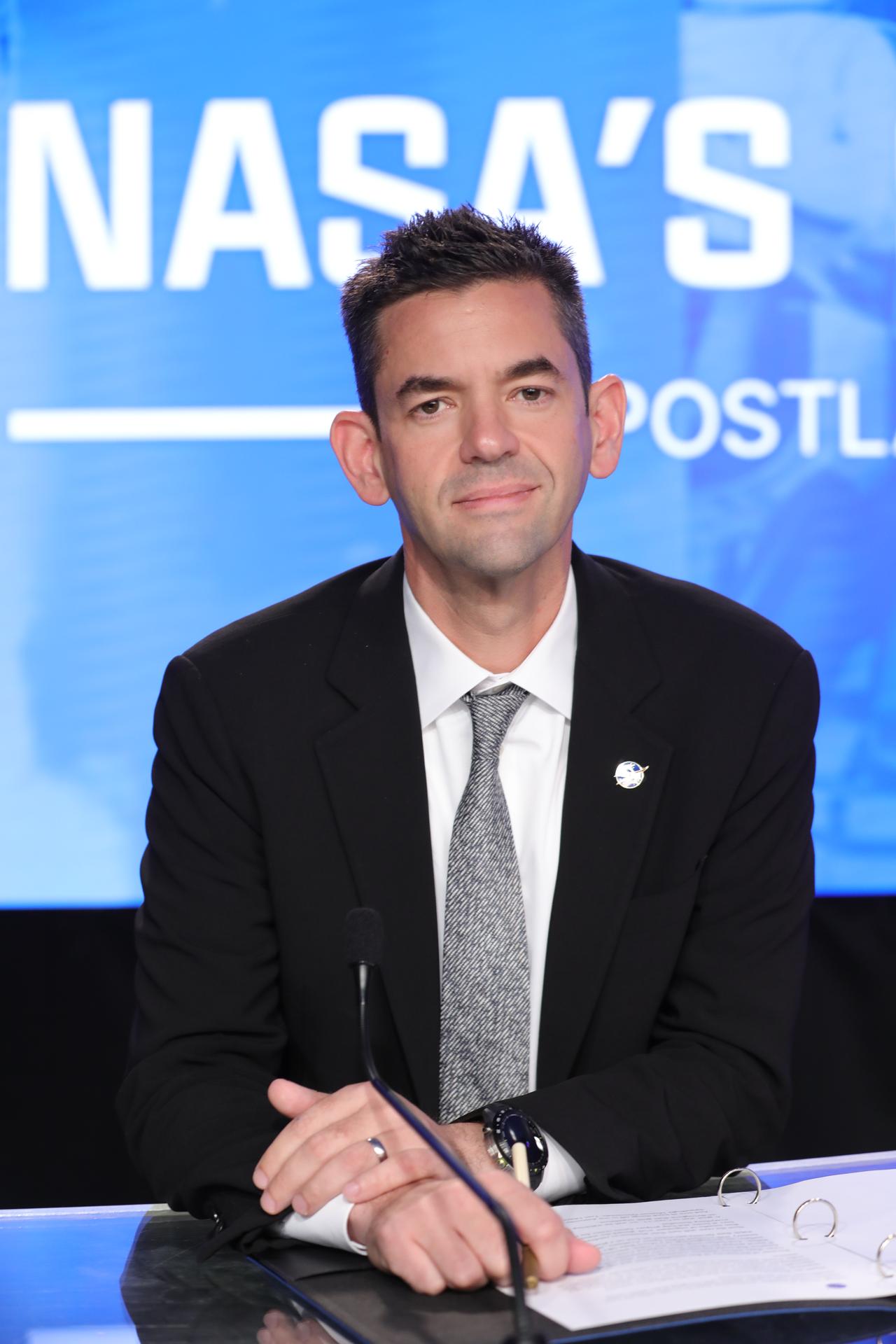
NASA Administrator Jared Isaacman participates in a postlaunch news conference at the agency’s Kennedy Space Center in Florida on Thursday, Oct. 1, 2026, following the launch of NASA’s SpaceX Crew-13 mission to the International Space Station. NASA astronauts Jessica Watkins and Luke Delaney, CSA (Canadian Space Agency) astronaut Joshua Kutryk, and Roscosmos cosmonaut Sergey Teteryatnikov launched to the International Space Station aboard SpaceX’s Dragon spacecraft and Falcon 9 rocket at 11:10 a.m. EDT on the 13th crew rotation mission with SpaceX to the space station.
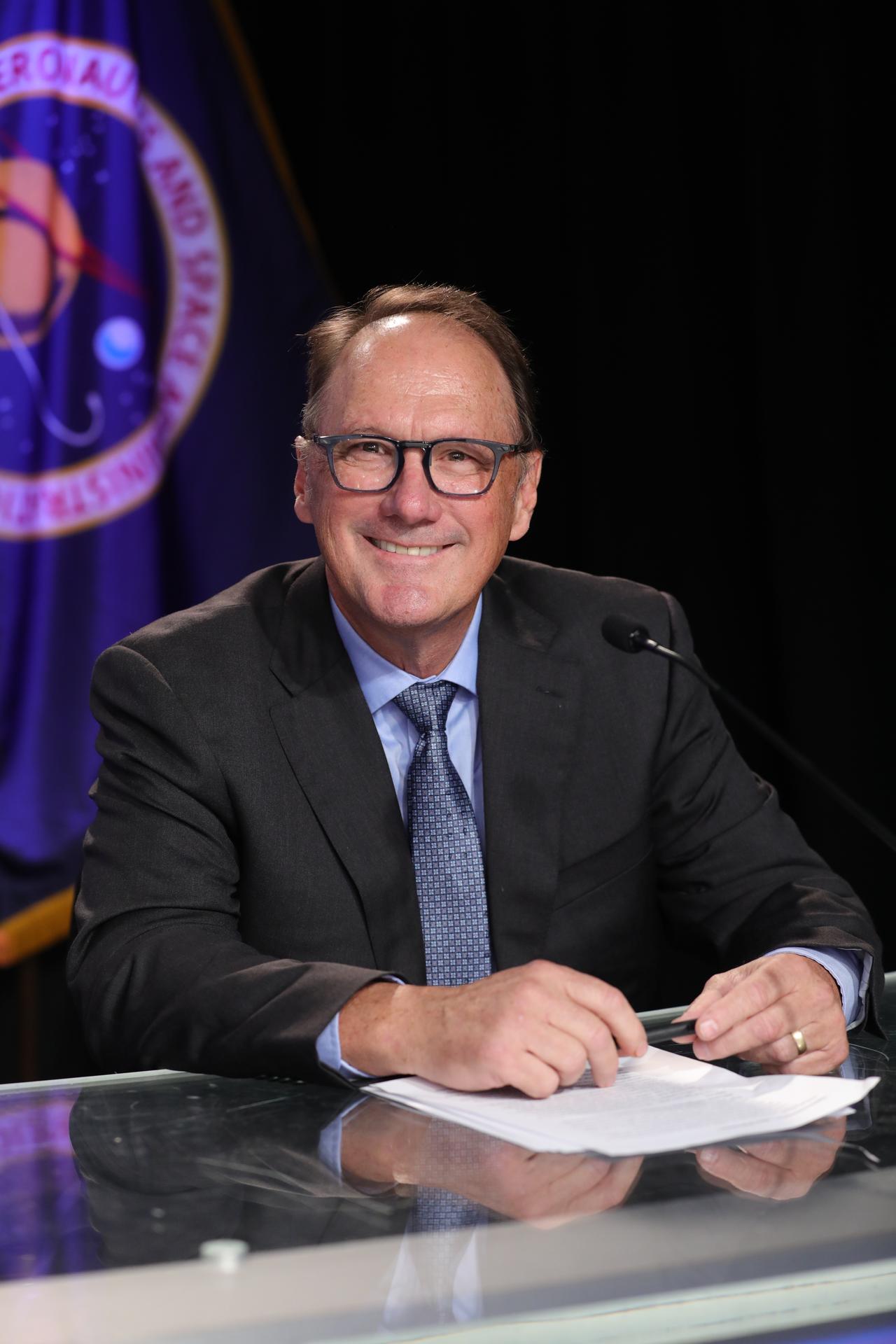
John Mulholland, vice president and program manager, Boeing Commercial Crew, participates in a news conference with NASA and Boeing leadership to discuss Starliner’s development and plans for regular crew flights to and from the International Space Station during a news conference Monday, Sept. 28, 2026, inside the John Holliman Auditorium of the NASA News Center at the agency’s Kennedy Space Center in Florida.
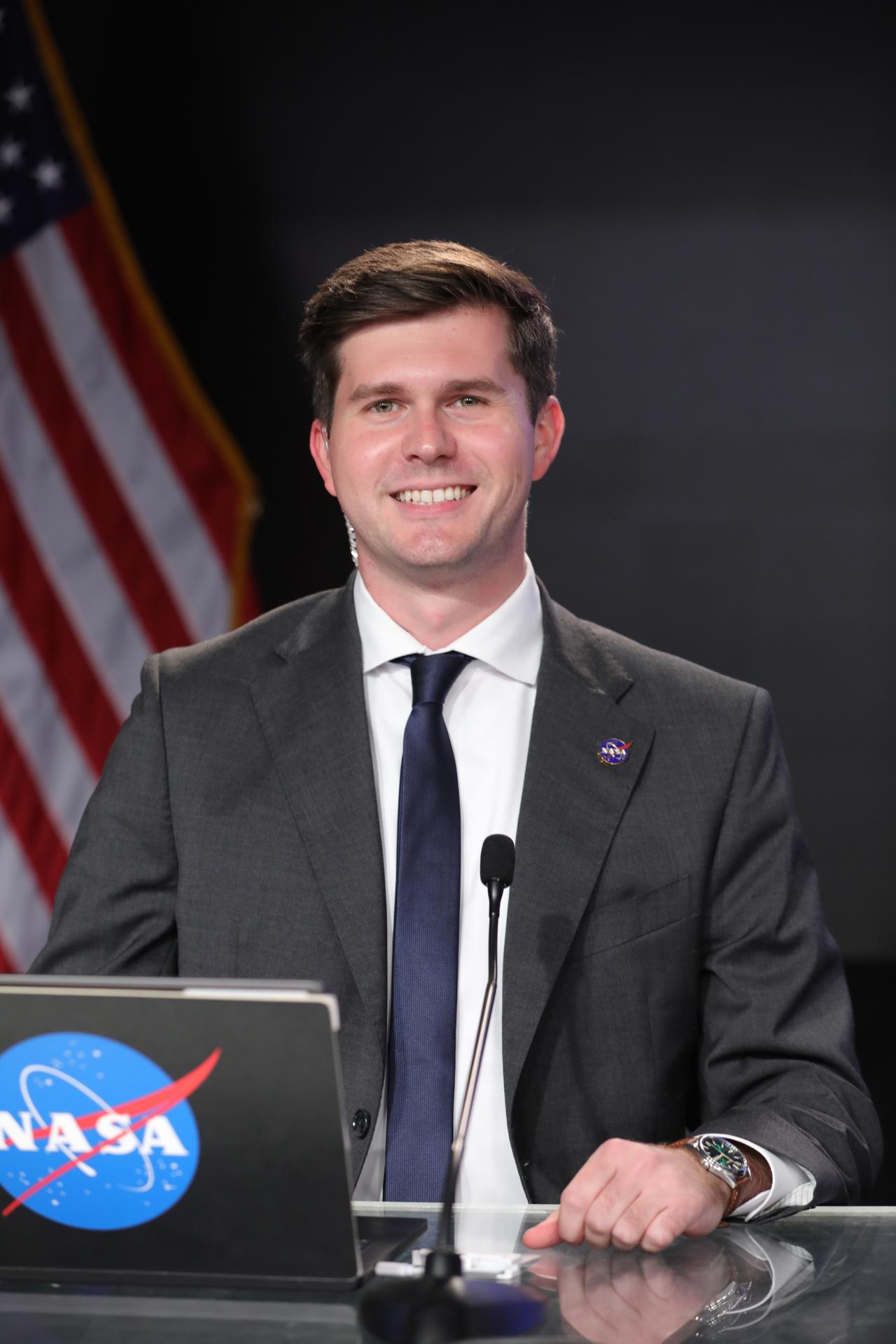
George Alderman, NASA deputy press secretary, hosts a news conference with NASA and Boeing leadership to discuss Starliner’s development and plans for regular crew flights to and from the International Space Station during a news conference Monday, Sept. 28, 2026, inside the John Holliman Auditorium of the NASA News Center at the agency’s Kennedy Space Center in Florida.
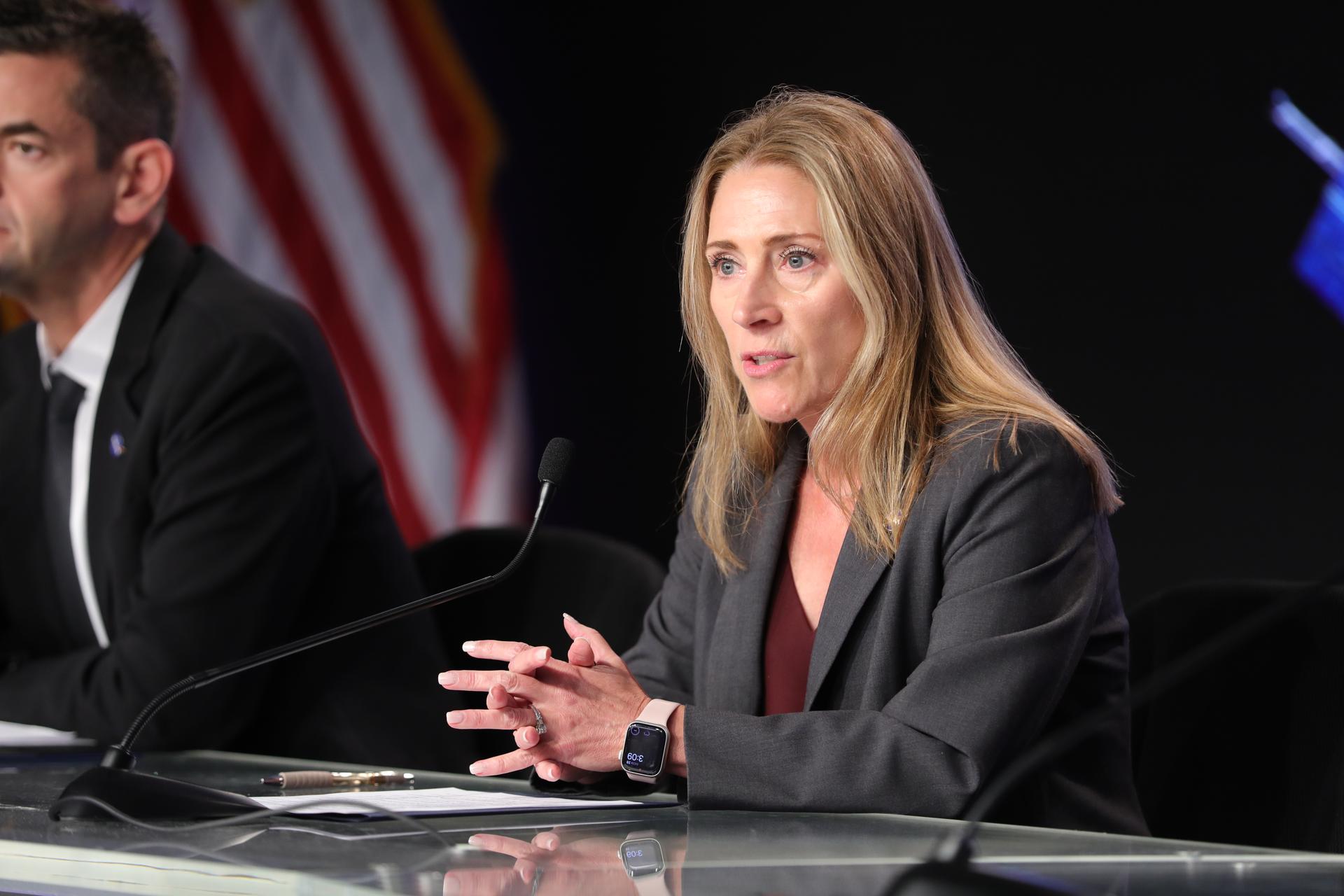
Dana Weigel, manager, NASA’s Low Earth Orbit Program, participates in a news conference with NASA and Boeing leadership to discuss Starliner’s development and plans for regular crew flights to and from the International Space Station during a news conference Monday, Sept. 28, 2026, inside the John Holliman Auditorium of the NASA News Center at the agency’s Kennedy Space Center in Florida.
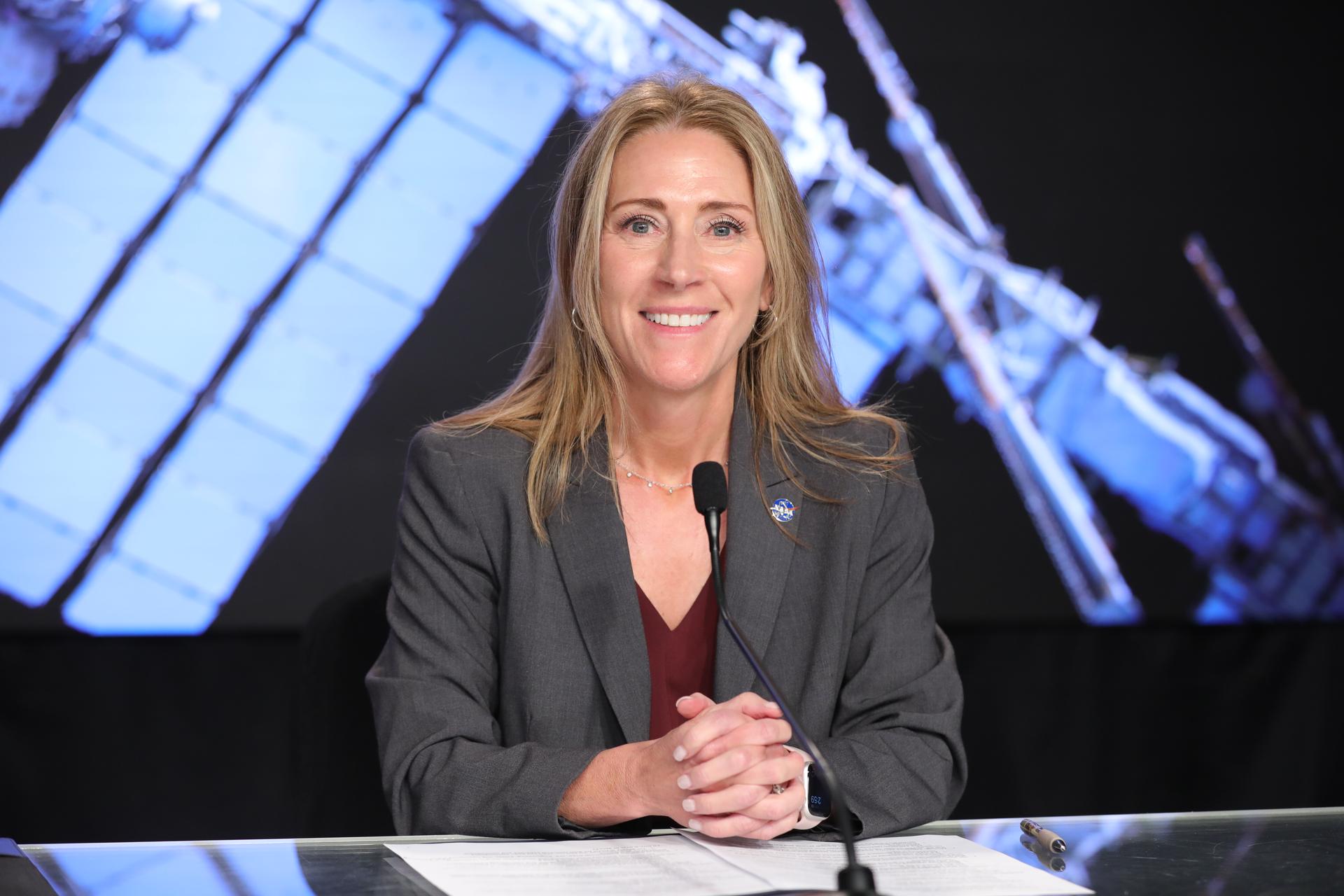
Dana Weigel, manager, NASA’s Low Earth Orbit Program, participates in a news conference with NASA and Boeing leadership to discuss Starliner’s development and plans for regular crew flights to and from the International Space Station during a news conference Monday, Sept. 28, 2026, inside the John Holliman Auditorium of the NASA News Center at the agency’s Kennedy Space Center in Florida.
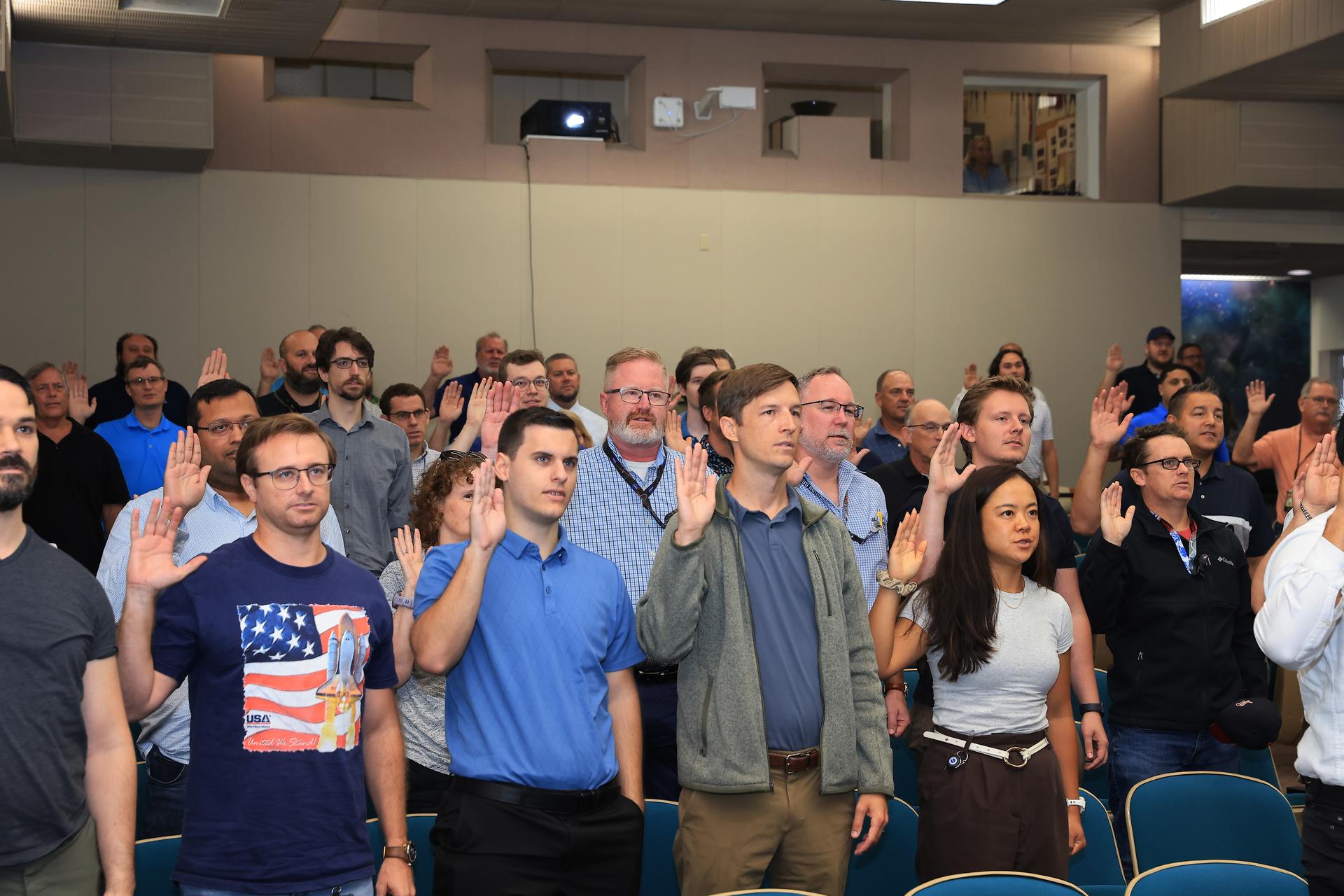
NASA’s Kennedy Space Center Director Brian Hughes swore in employees formerly from the Consolidated Operations, Management, Engineering, and Test (COMET) contract as new NASA civil servants on Monday, July 27, 2026, at NASA Kennedy in Florida. The latest round of civil servants is part of the administrator’s workforce directive to restore technical core competencies within the civil servants ranks.
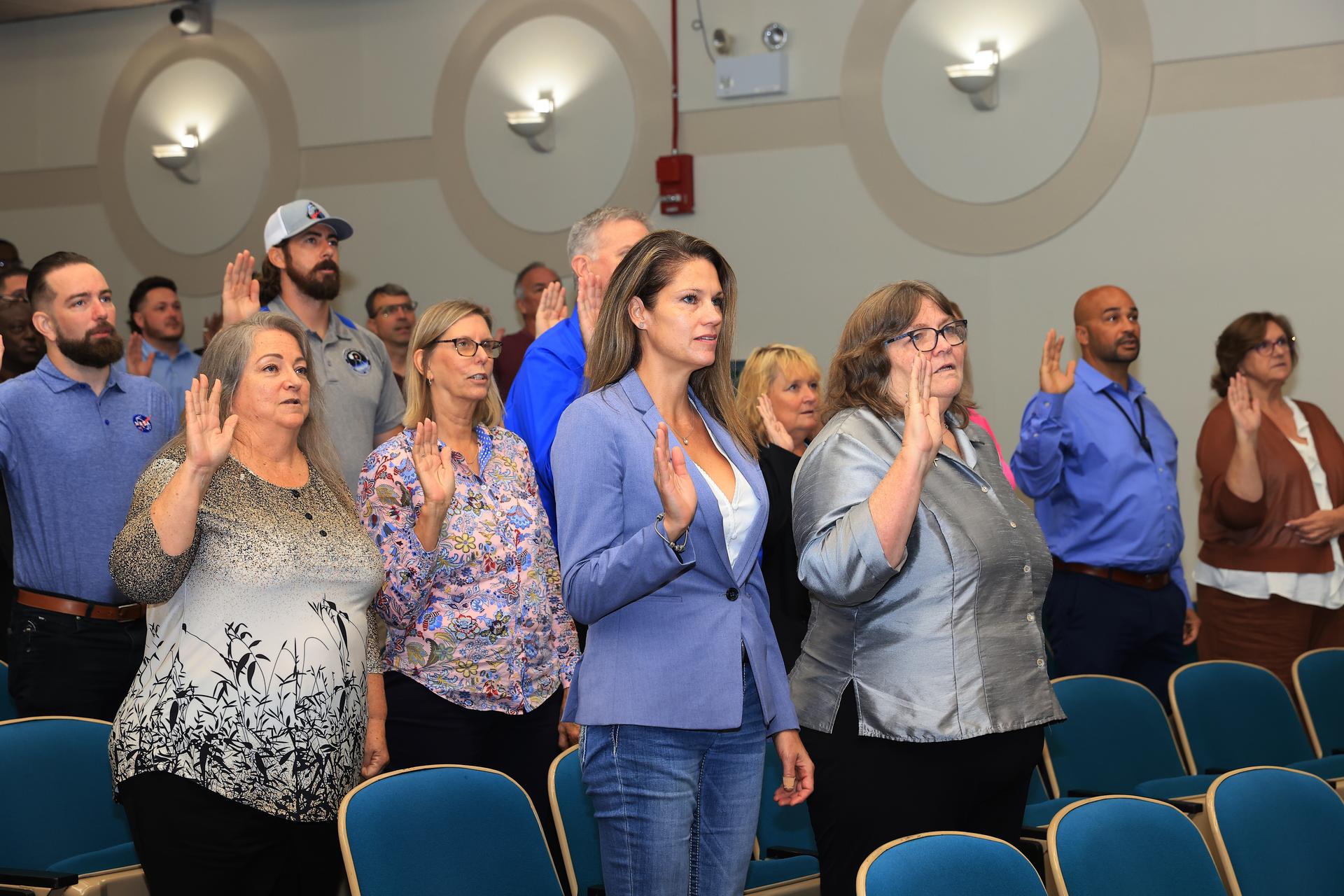
NASA’s Kennedy Space Center Director Brian Hughes swore in employees formerly from the Consolidated Operations, Management, Engineering, and Test (COMET) contract as new NASA civil servants on Monday, July 27, 2026, at NASA Kennedy in Florida. The latest round of civil servants is part of the administrator’s workforce directive to restore technical core competencies within the civil servants ranks.
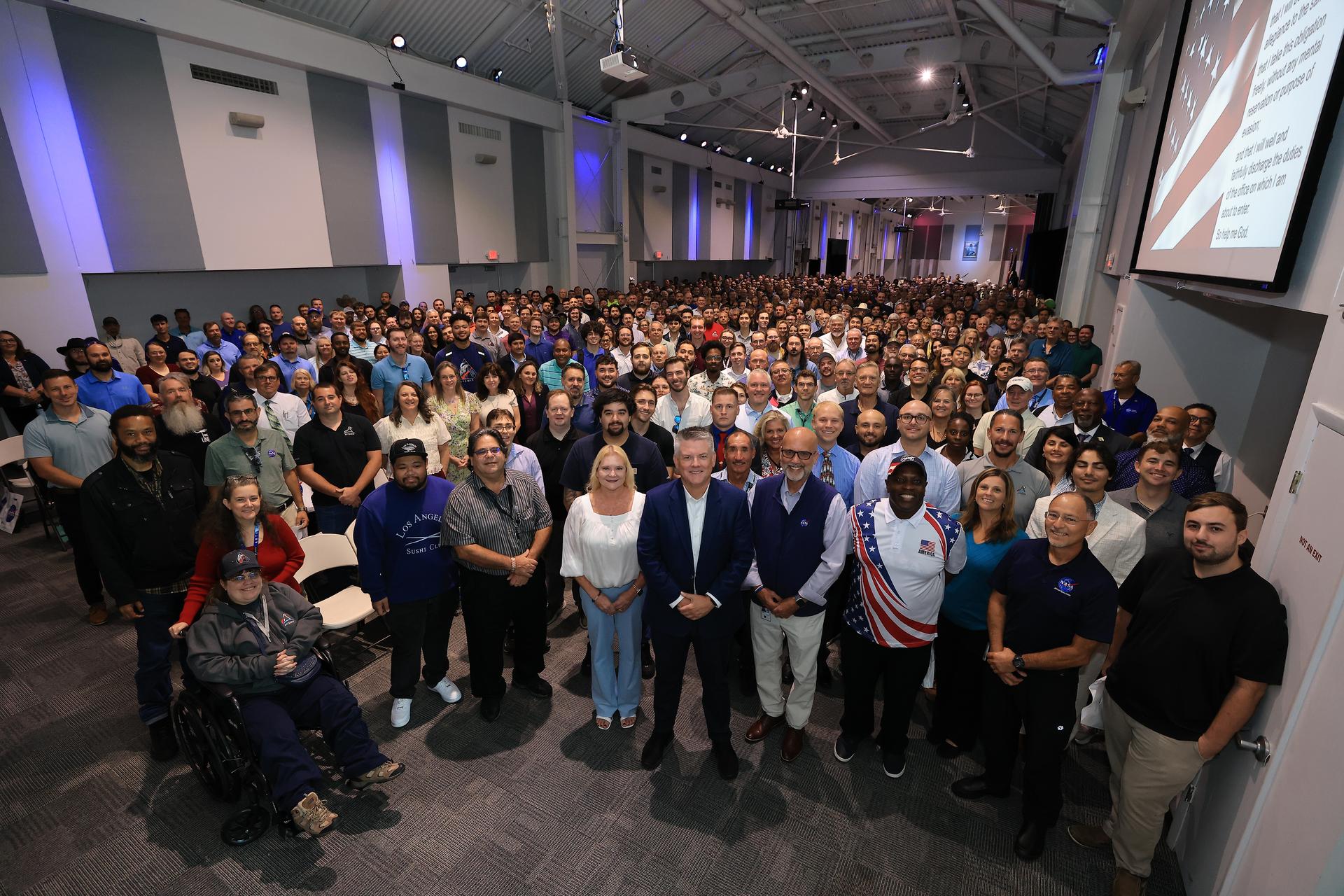
New NASA civil servants pose for a photograph with NASA’s Kennedy Space Center Director Brian Hughes (front, center) following their swearing-in ceremony on Monday, Sept. 21, 2026, inside the Astronauts Memorial Foundation’s Center for Space Education at the Kennedy Space Center Visitor Complex in Florida. The ceremony featured the swearing-in of employees formerly from the Consolidated Operations, Management, Engineering, and Test (COMET) contract, as well as outside hires, as part of the administrator’s workforce directive to restore technical core competencies within the civil servants ranks.
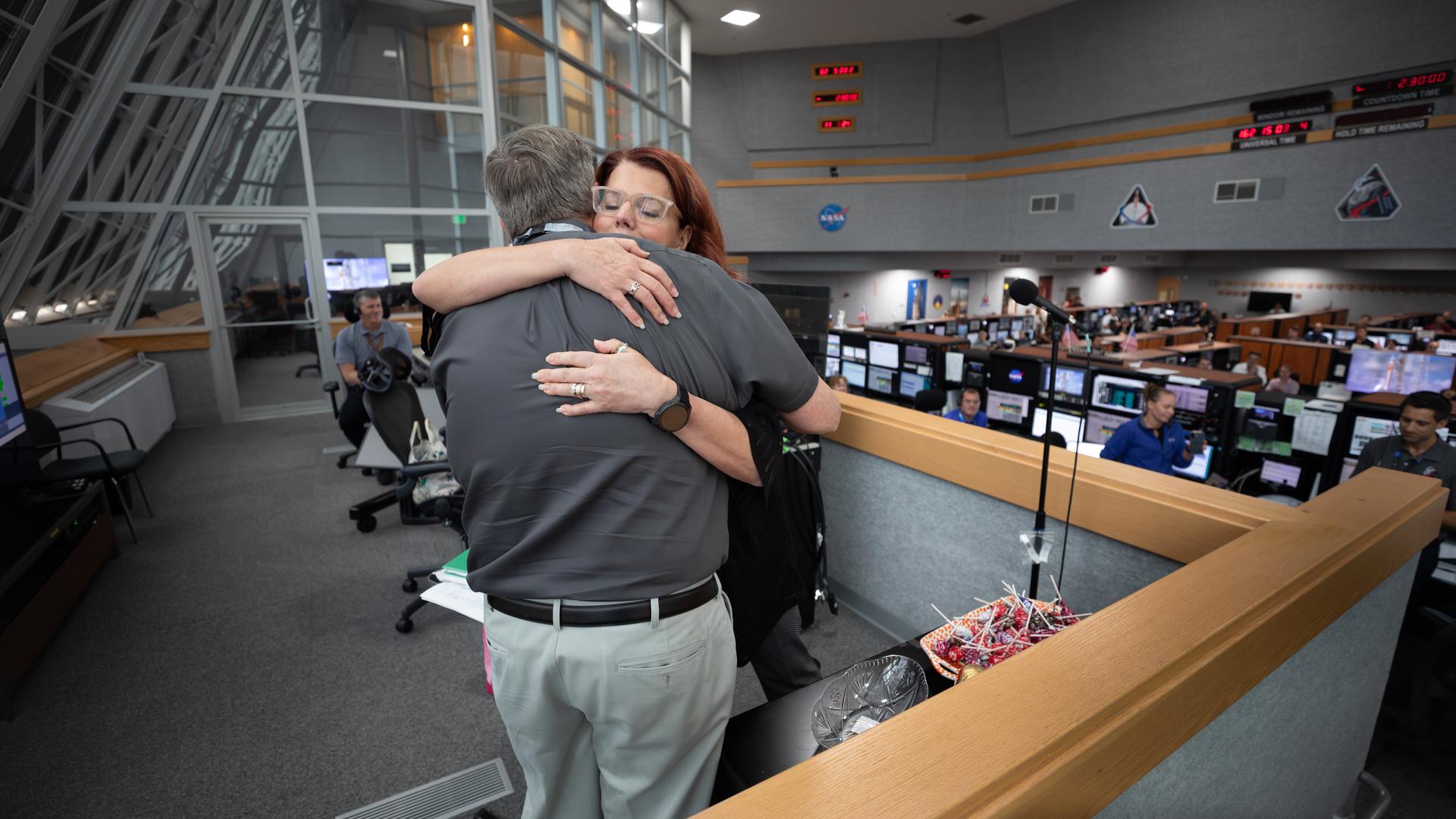
Artemis Launch Director Charlie Blackwell-Thompson gives NASA Test Director Jeff Spaulding a hug Thursday, June 11, 2026, following his retirement from the agency's Kennedy Space Center in Florida. Spaulding began his career at NASA in 1987 as a NASA operations engineer overseeing orbiter processing activities for seven shuttle missions. He later went on to lead the Artemis II launch team during planning, scheduling, and execution on Artemis II on April 1, 2026.
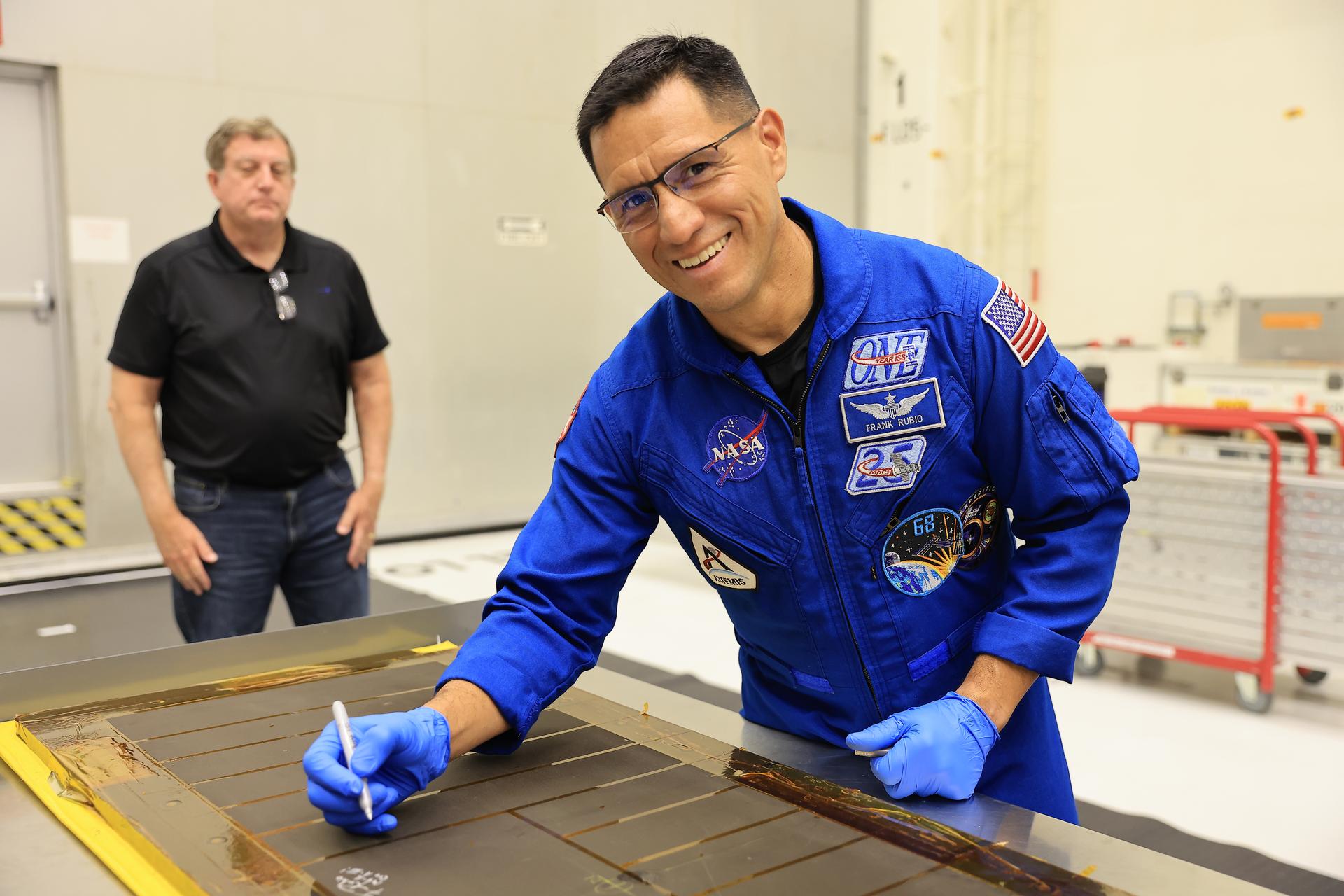
Artemis III NASA astronaut Frank Rubio, mission specialist, signs an interior center wall panel that will cover environmental control and life support system (ECLSS) components inside the Orion crew module in the Neil A. Armstrong Operations and Checkout Building at Kennedy Space Center in Florida on Wednesday, Sept. 2, 2026. The Artemis III primary and backup crew members, including Rubio; NASA astronaut Randy Bresnik, commander; ESA (European Space Agency) astronaut Luca Parmitano, pilot; NASA astronaut Andre Douglas, mission specialist; and NASA astronaut Bob Hines, backup crew member, visited Kennedy to view progress on Artemis III hardware, marking the first visit by the entire crew and backup crew to the Florida spaceport. On Orion, ECLSS will make the crew module a habitable, safe place for astronauts and is key to survival as they travel on deep space missions.
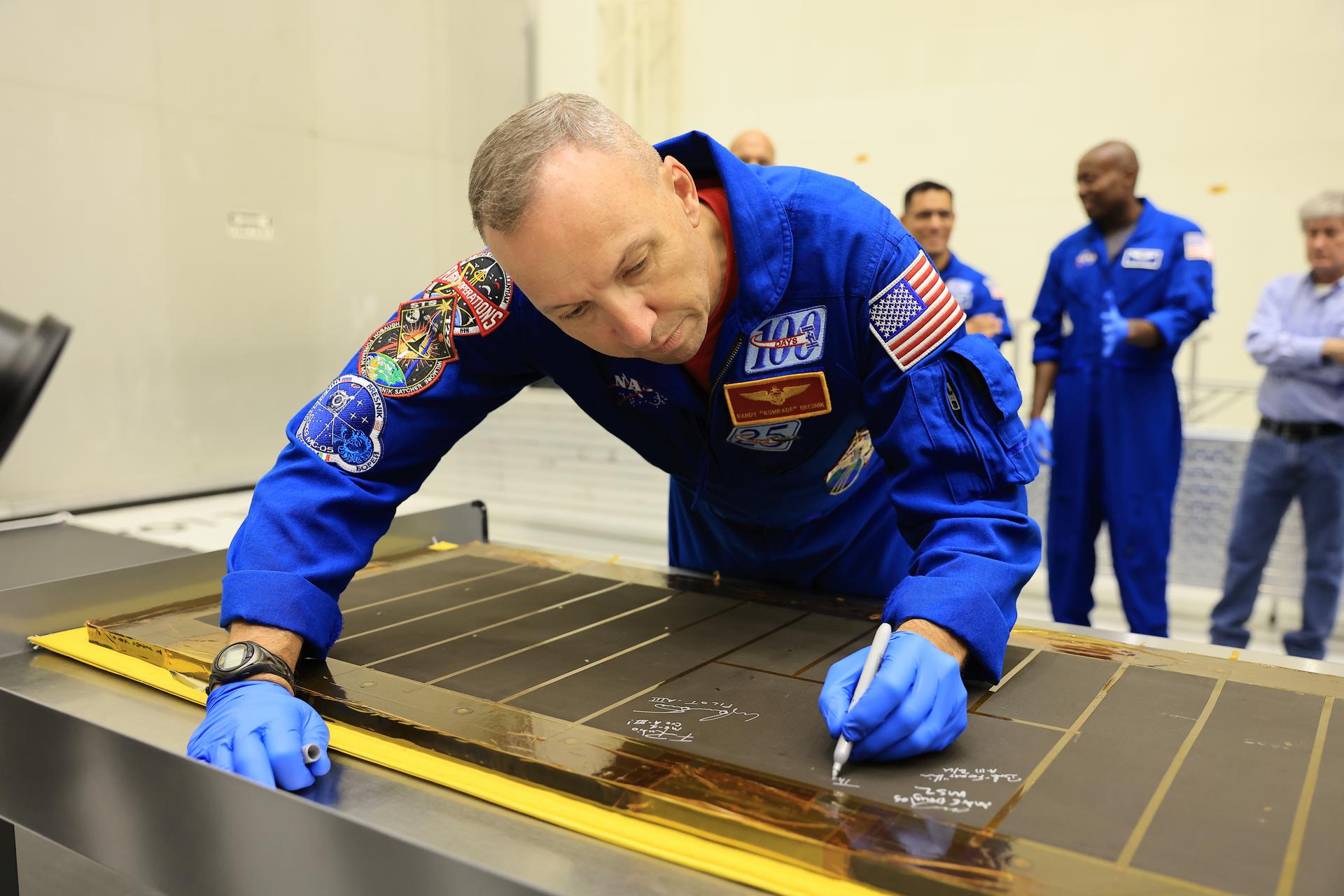
Artemis III NASA astronaut Randy Bresnik, commander, signs an interior center wall panel that will cover environmental control and life support system (ECLSS) components inside the Orion crew module in the Neil A. Armstrong Operations and Checkout Building at Kennedy Space Center in Florida on Wednesday, Sept. 2, 2026. The Artemis III primary and backup crew members, including Bresnik; ESA (European Space Agency) astronaut Luca Parmitano, pilot; NASA astronaut Andre Douglas, mission specialist; NASA astronaut Frank Rubio, mission specialist; and NASA astronaut Bob Hines, backup crew member, visited Kennedy to view progress on Artemis III hardware, marking the first visit by the entire crew and backup crew to the Florida spaceport. On Orion, ECLSS will make the crew module a habitable, safe place for astronauts and is key to survival as they travel on deep space missions.
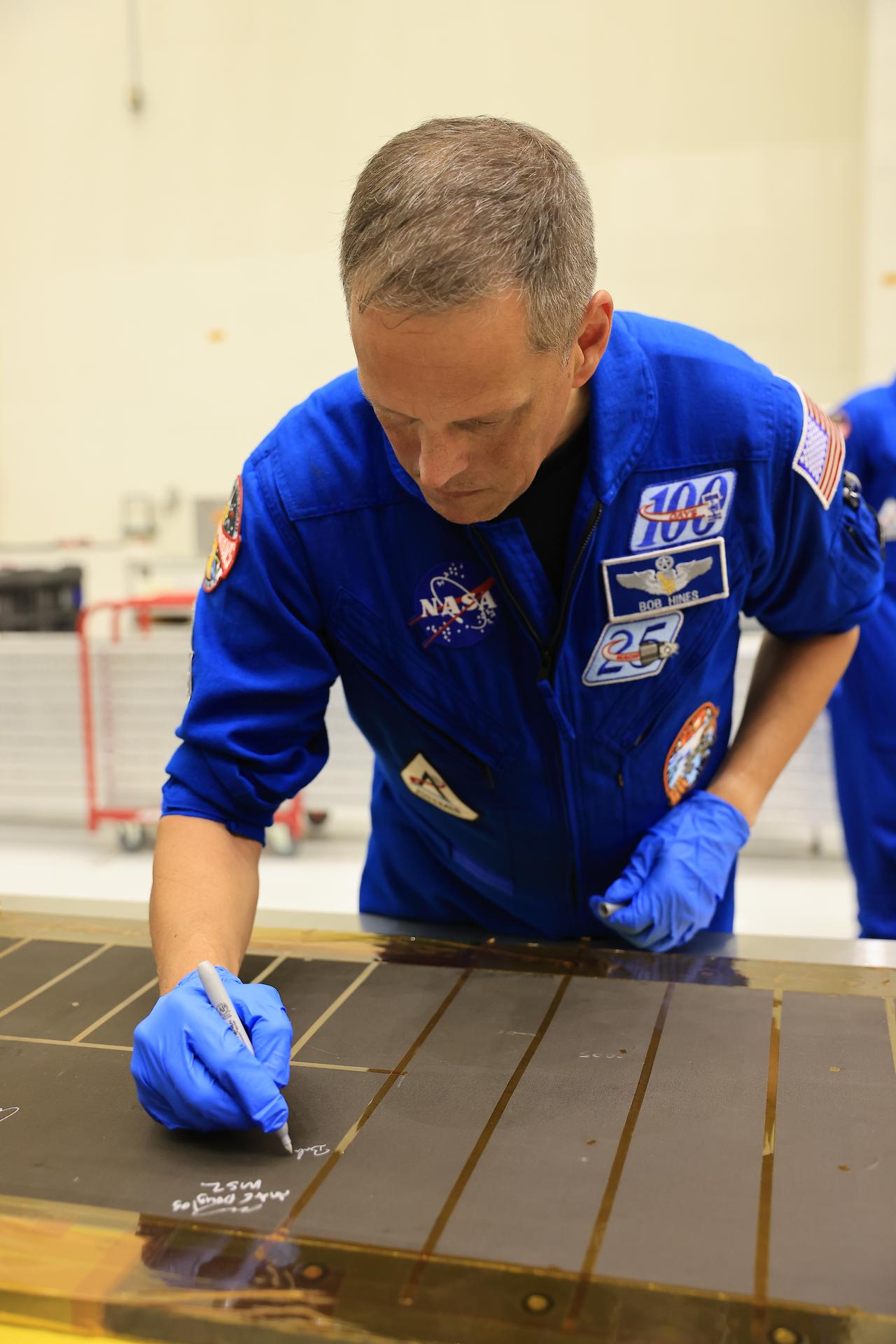
Artemis III NASA astronaut Bob Hines, backup crew member, signs an interior center wall panel that will cover environmental control and life support system (ECLSS) components inside the Orion crew module in the Neil A. Armstrong Operations and Checkout Building at Kennedy Space Center in Florida on Wednesday, Sept. 2, 2026. The Artemis III primary and backup crew members, including Hines; NASA astronaut Randy Bresnik, commander; ESA (European Space Agency) astronaut Luca Parmitano, pilot; NASA astronaut Andre Douglas, mission specialist; NASA astronaut Frank Rubio, mission specialist, visited Kennedy to view progress on Artemis III hardware, marking the first visit by the entire crew and backup crew to the Florida spaceport. On Orion, ECLSS will make the crew module a habitable, safe place for astronauts and is key to survival as they travel on deep space missions.
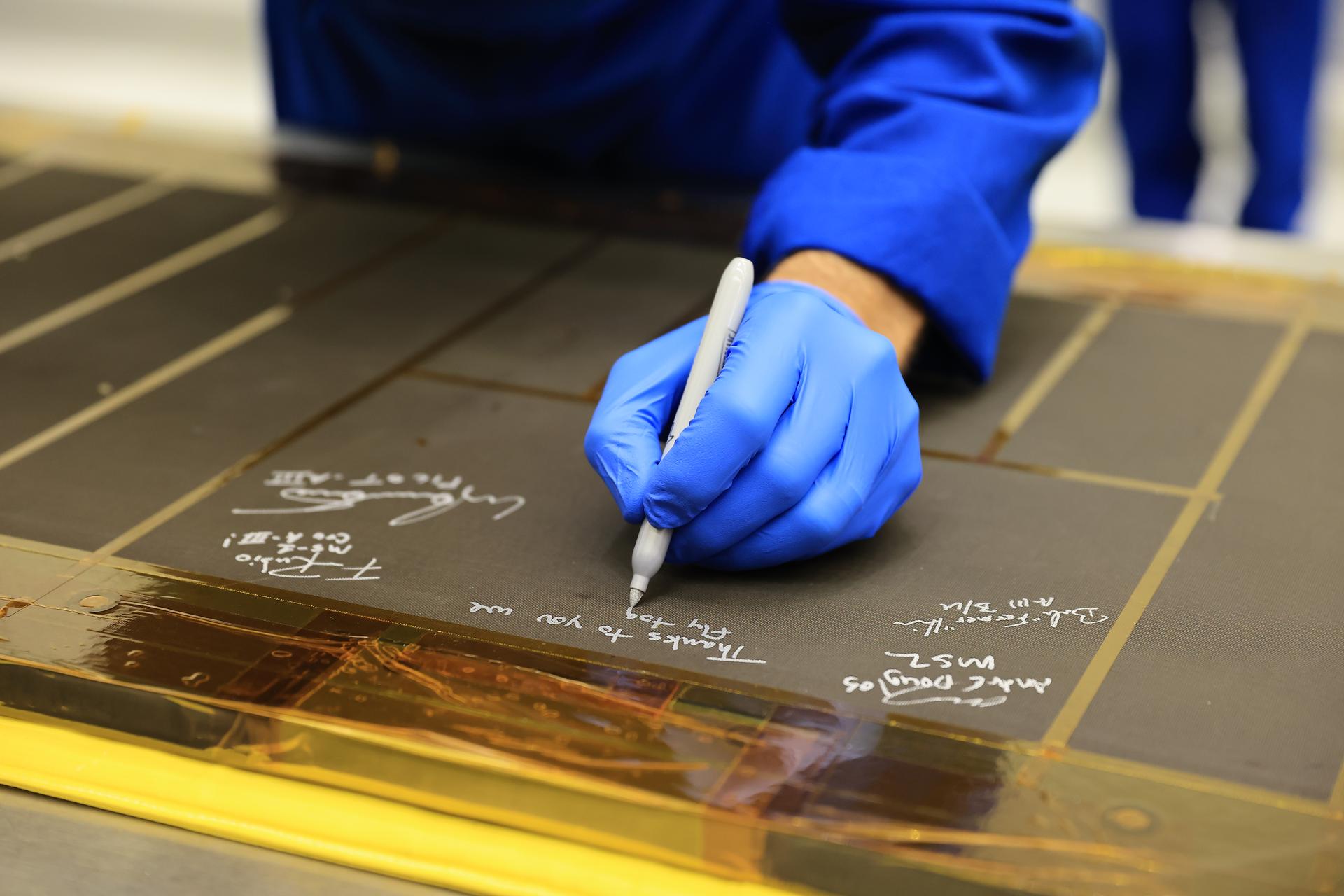
Artemis III NASA astronaut Randy Bresnik, commander, signs an interior center wall panel that will cover environmental control and life support system (ECLSS) components inside the Orion crew module in the Neil A. Armstrong Operations and Checkout Building at Kennedy Space Center in Florida on Wednesday, Sept. 2, 2026. The Artemis III primary and backup crew members, including Bresnik; ESA (European Space Agency) astronaut Luca Parmitano, pilot; NASA astronaut Andre Douglas, mission specialist; NASA astronaut Frank Rubio, mission specialist; and NASA astronaut Bob Hines, backup crew member, visited Kennedy to view progress on Artemis III hardware, marking the first visit by the entire crew and backup crew to the Florida spaceport. On Orion, ECLSS will make the crew module a habitable, safe place for astronauts and is key to survival as they travel on deep space missions.
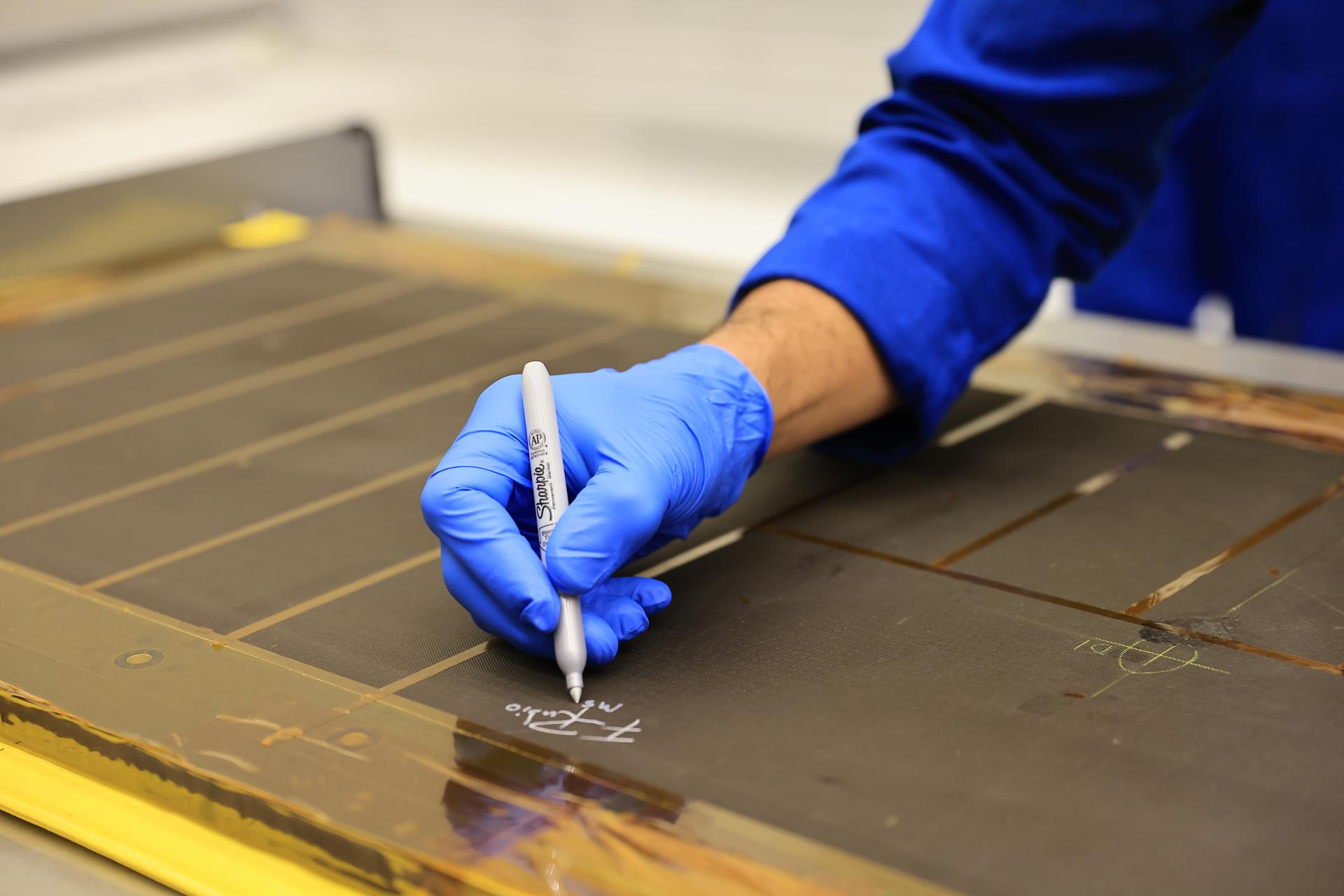
Artemis III NASA astronaut Frank Rubio, mission specialist, signs an interior center wall panel that will cover environmental control and life support system (ECLSS) components inside the Orion crew module in the Neil A. Armstrong Operations and Checkout Building at Kennedy Space Center in Florida on Wednesday, Sept. 2, 2026. The Artemis III primary and backup crew members, including Rubio; NASA astronaut Randy Bresnik, commander; ESA (European Space Agency) astronaut Luca Parmitano, pilot; NASA astronaut Andre Douglas, mission specialist; and NASA astronaut Bob Hines, backup crew member, visited Kennedy to view progress on Artemis III hardware, marking the first visit by the entire crew and backup crew to the Florida spaceport. On Orion, ECLSS will make the crew module a habitable, safe place for astronauts and is key to survival as they travel on deep space missions.
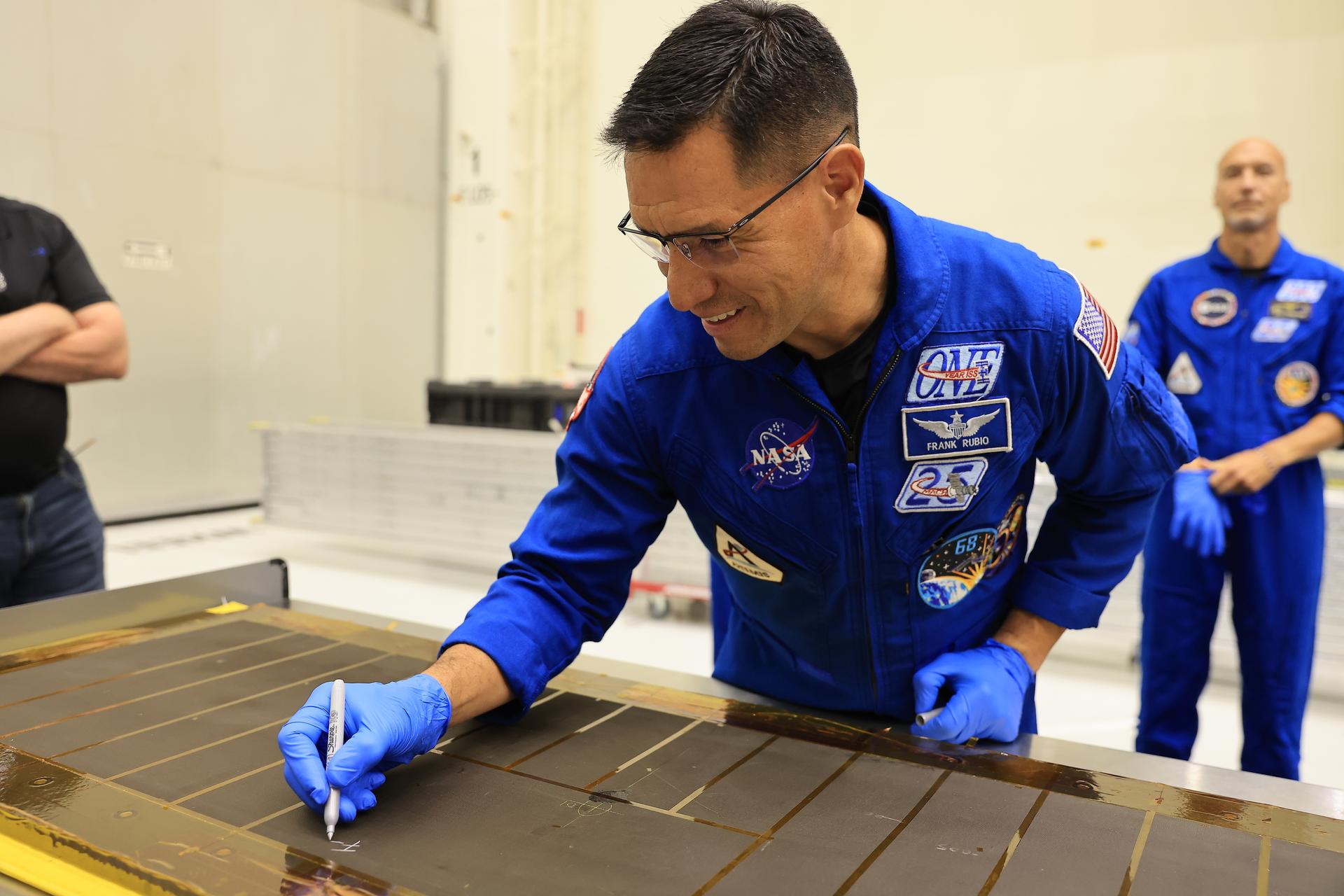
Artemis III NASA astronaut Frank Rubio, mission specialist, signs an interior center wall panel that will cover environmental control and life support system (ECLSS) components inside the Orion crew module in the Neil A. Armstrong Operations and Checkout Building at Kennedy Space Center in Florida on Wednesday, Sept. 2, 2026. The Artemis III primary and backup crew members, including Rubio; NASA astronaut Randy Bresnik, commander; ESA (European Space Agency) astronaut Luca Parmitano, pilot; NASA astronaut Andre Douglas, mission specialist; and NASA astronaut Bob Hines, backup crew member, visited Kennedy to view progress on Artemis III hardware, marking the first visit by the entire crew and backup crew to the Florida spaceport. On Orion, ECLSS will make the crew module a habitable, safe place for astronauts and is key to survival as they travel on deep space missions.
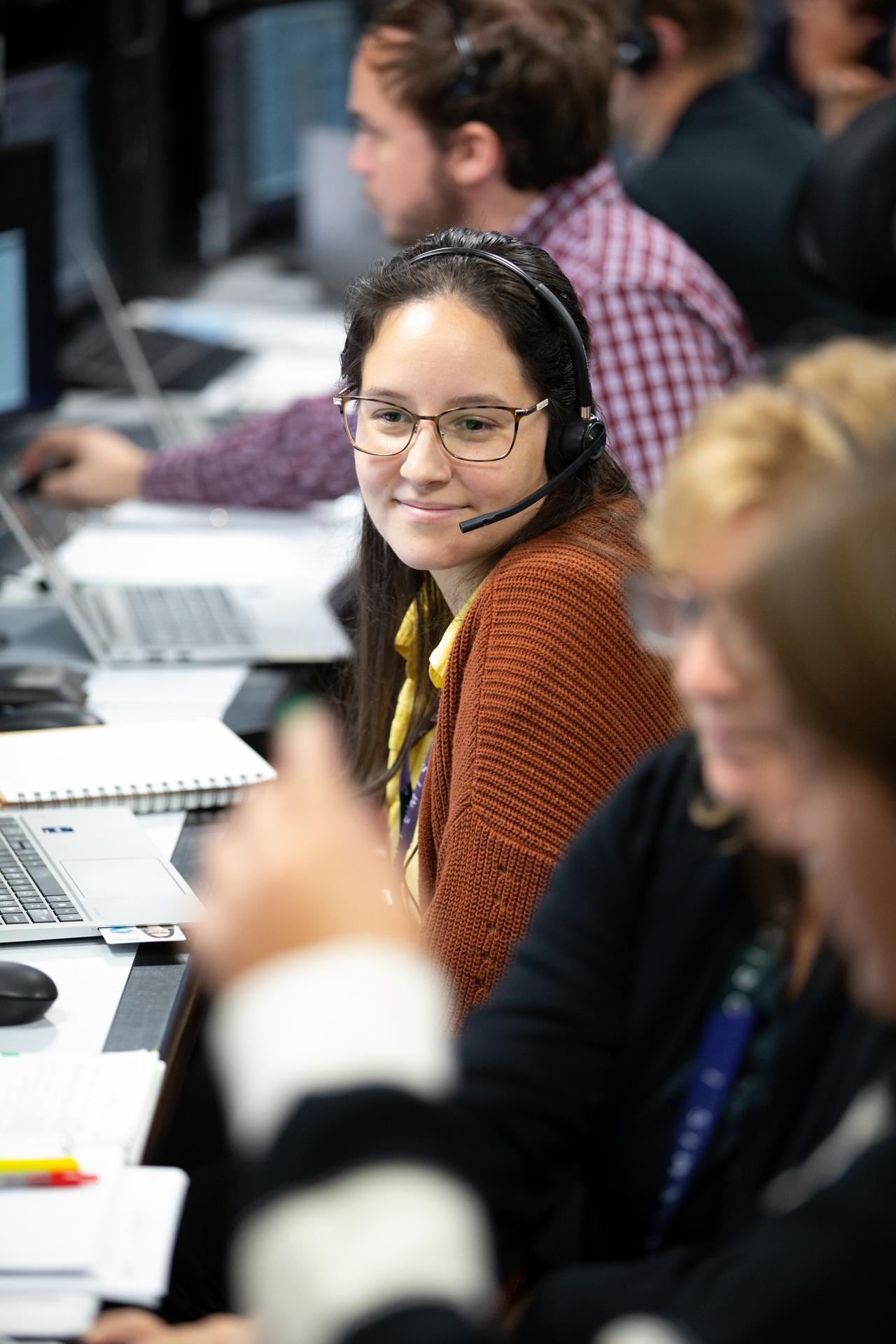
Artemis launch team members participate in a terminal countdown simulation for Artemis III on Thursday, Aug. 6, 2026, inside Firing Room 1 and 2 of the Rocco A. Petrone Launch Control Center at NASA’s Kennedy Space Center in Florida. The terminal count simulation conducted by NASA’s Exploration Ground Systems team runs through the final five hours of launch countdown, including terminal count - the remaining 10 minutes of the countdown. Artemis III will carry out a series of objectives in low Earth orbit designed to demonstrate critical systems needed for future lunar landings, beginning with Artemis IV.
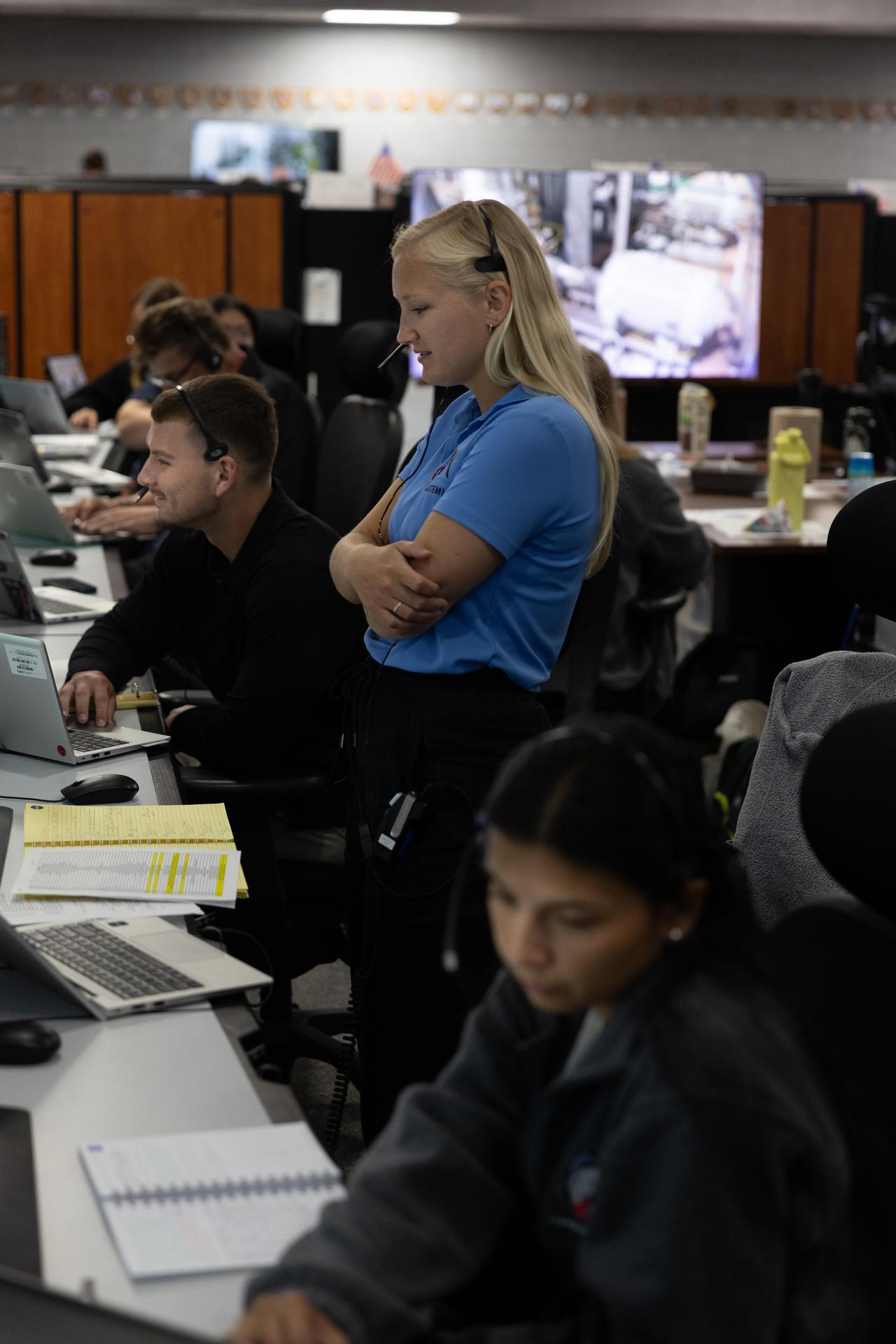
Artemis launch team members participate in a terminal countdown simulation for Artemis III on Thursday, Aug. 6, 2026, inside Firing Room 1 and 2 of the Rocco A. Petrone Launch Control Center at NASA’s Kennedy Space Center in Florida. The terminal count simulation conducted by NASA’s Exploration Ground Systems team runs through the final five hours of launch countdown, including terminal count - the remaining 10 minutes of the countdown. Artemis III will carry out a series of objectives in low Earth orbit designed to demonstrate critical systems needed for future lunar landings, beginning with Artemis IV.

In this aerial view, crews with Orion Marine Construction work to complete the westbound span of the Indian River Bridge while daily traffic moves along the upgraded eastbound lanes of the bridge leading to NASA’s Kennedy Space Center in Florida on Monday, Nov. 27, 2023. The bridge crosses the Indian River Lagoon and connects Kennedy and the Cape Canaveral Space Force Station to the mainland via State Road 405/NASA Causeway in nearby Titusville. The new high-rise bridge serves as the primary entrance and exit to the space center for employees and visitors. The new bridge spans replace a pair of two-lane drawbridges built in the mid-1960s to support NASA’s Apollo program. The first of the two new spans opened to the public ahead of schedule on June 9, 2023. In development for well over a decade, the load capacity, width, and grade of the bridge were designed to support the largest future payloads and vehicles at the spaceport while simultaneously supporting increased public traffic to and from Kennedy.
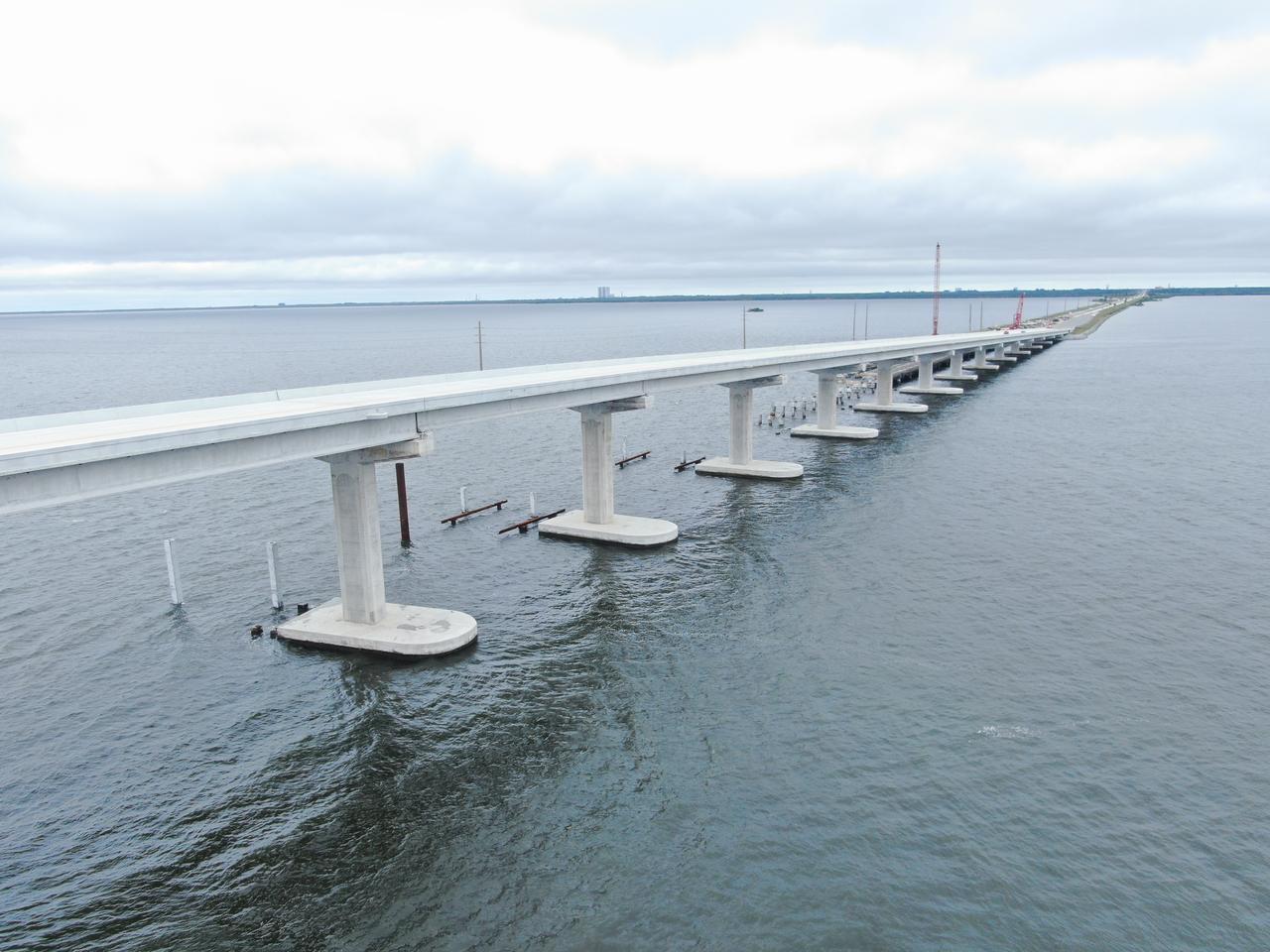
In this aerial view, crews with Orion Marine Construction work to complete the westbound span of the Indian River Bridge while daily traffic moves along the upgraded eastbound lanes of the bridge leading to NASA’s Kennedy Space Center in Florida on Monday, Nov. 27, 2023. The bridge crosses the Indian River Lagoon and connects Kennedy and the Cape Canaveral Space Force Station to the mainland via State Road 405/NASA Causeway in nearby Titusville. The new high-rise bridge serves as the primary entrance and exit to the space center for employees and visitors. The new bridge spans replace a pair of two-lane drawbridges built in the mid-1960s to support NASA’s Apollo program. The first of the two new spans opened to the public ahead of schedule on June 9, 2023. In development for well over a decade, the load capacity, width, and grade of the bridge were designed to support the largest future payloads and vehicles at the spaceport while simultaneously supporting increased public traffic to and from Kennedy.
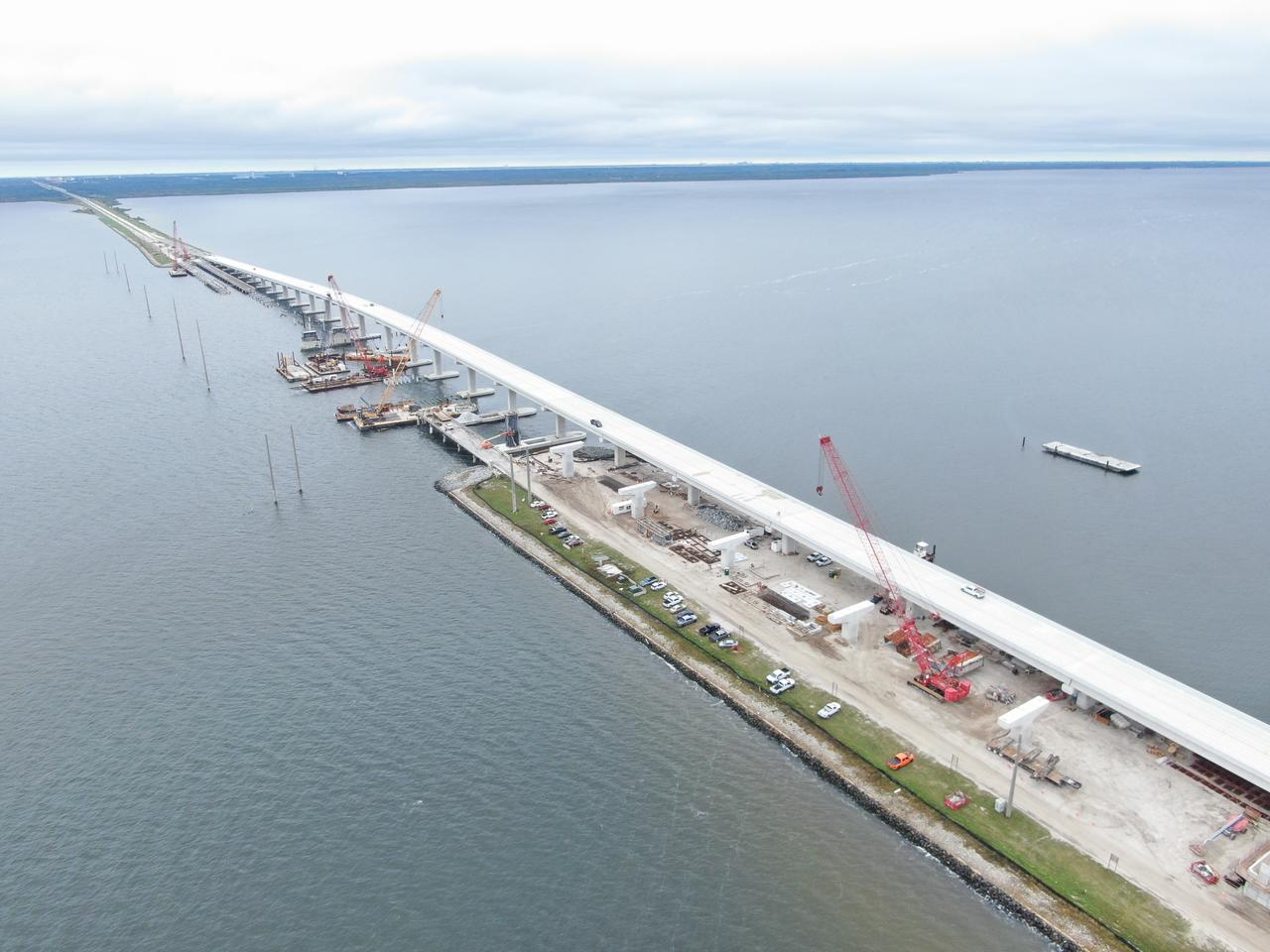
In this aerial view, crews with Orion Marine Construction work to complete the westbound span of the Indian River Bridge while daily traffic moves along the upgraded eastbound lanes of the bridge leading to NASA’s Kennedy Space Center in Florida on Monday, Nov. 27, 2023. The bridge crosses the Indian River Lagoon and connects Kennedy and the Cape Canaveral Space Force Station to the mainland via State Road 405/NASA Causeway in nearby Titusville. The new high-rise bridge serves as the primary entrance and exit to the space center for employees and visitors. The new bridge spans replace a pair of two-lane drawbridges built in the mid-1960s to support NASA’s Apollo program. The first of the two new spans opened to the public ahead of schedule on June 9, 2023. In development for well over a decade, the load capacity, width, and grade of the bridge were designed to support the largest future payloads and vehicles at the spaceport while simultaneously supporting increased public traffic to and from Kennedy.
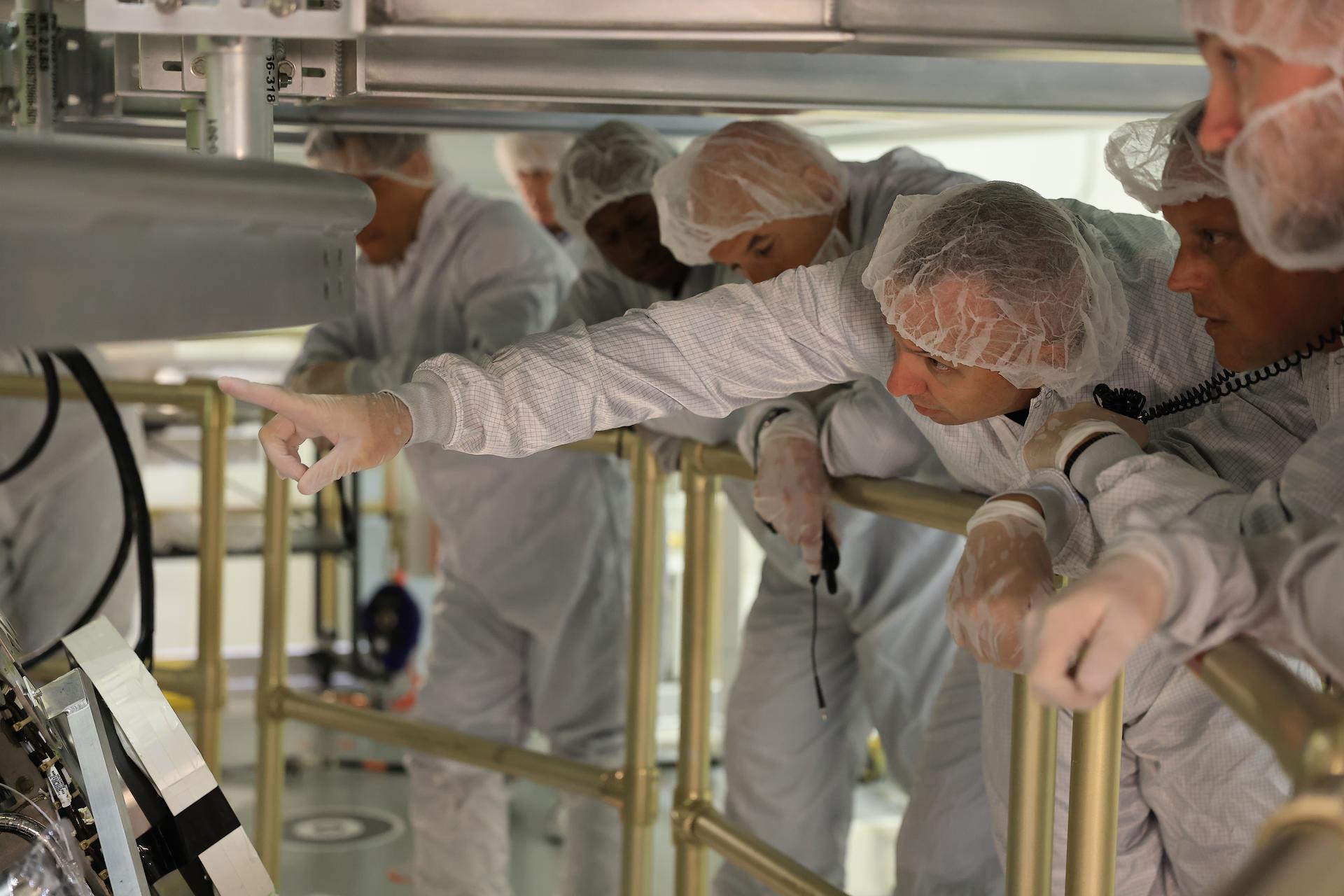
From left, the Artemis III primary and backup crew members, NASA astronauts Frank Rubio and Andre Douglas, ESA (European Space Agency) astronaut Luca Parmitano, and NASA astronauts Randy Bresnik and Bob Hines view the Orion spacecraft on Wednesday, Sept. 2, 2026, inside the Neil A. Armstrong Operations and Checkout building at NASA's Kennedy Space Center in Florida. This marked the first visit to Kennedy by the entire Artemis III crew and backup crew members. Artemis III will launch four crew members aboard the Orion spacecraft to carry out a series of objectives in low Earth orbit designed to demonstrate critical systems needed for future lunar landings, beginning with Artemis IV.
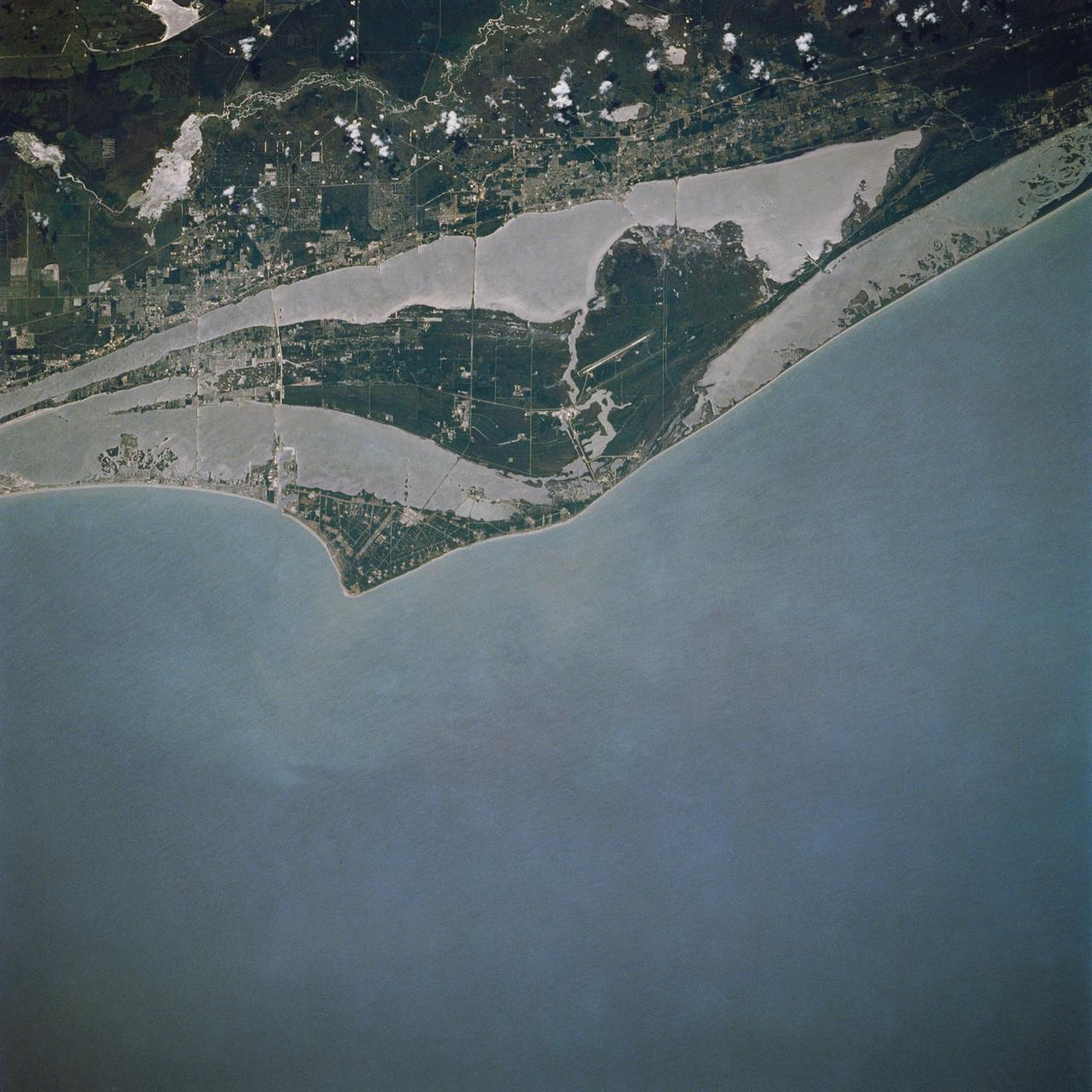
STS030-76-042 (4-8 May 1989) --- For two decades, astronauts have been photographing their launching area from space, but in terms of sharpness and clarity, NASA photo experts feel, few rival this STS-30 vertical scene over the Cape Canaveral area. Sprinkled along the jutting cape feature are a number of launching pads of Kennedy Space Center, and nearby is seen the Shuttle landing facility. Titusville can be seen just above center on the north; Cocoa, Cocoa Beach and Merritt Island are south, near bottom of the frame. St. Johns, Banana and Indian Rivers are easily traced as well.
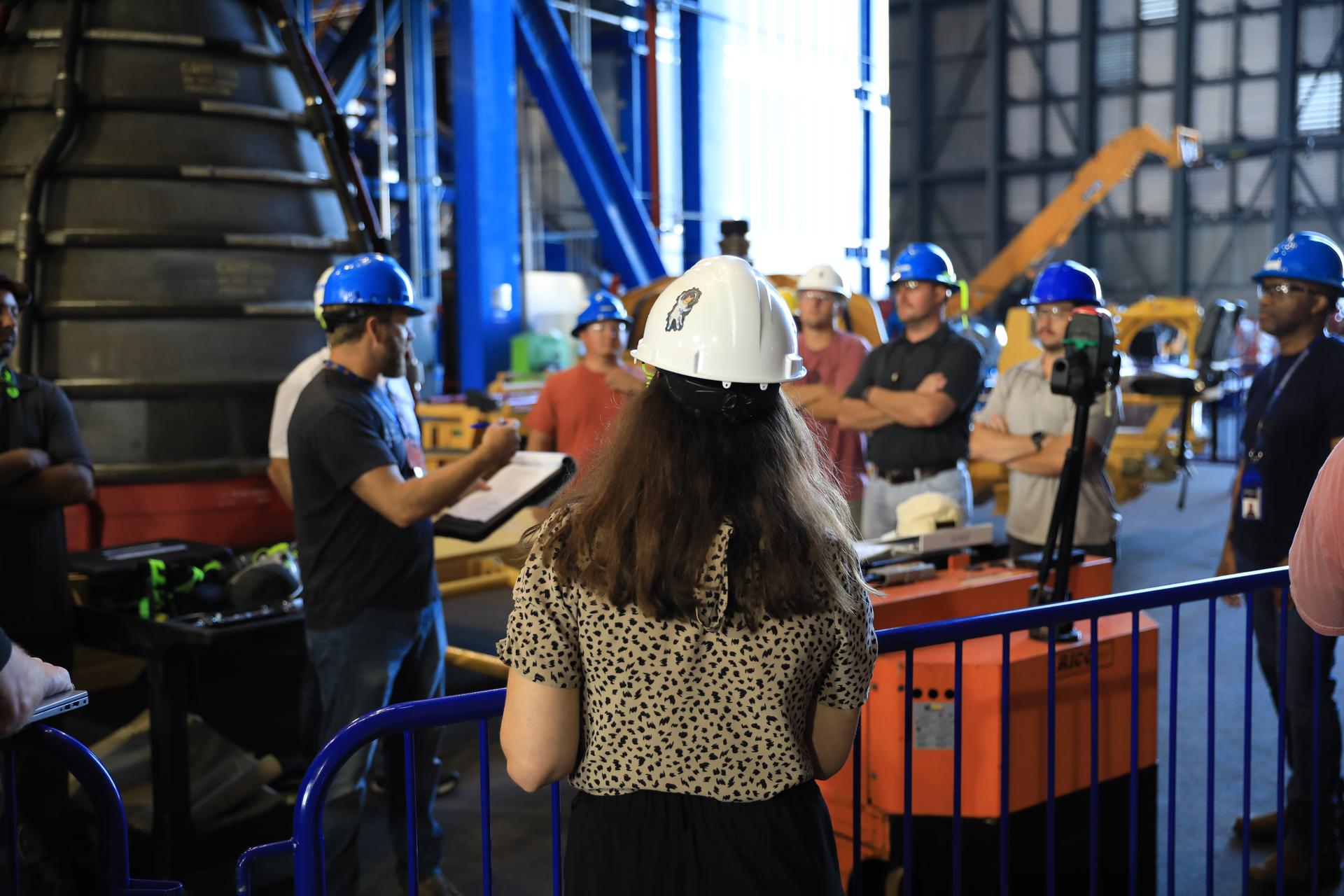
Employees discuss the lift and install operations for the RS-25 SLS (Space Launch System) rocket engines on Tuesday, Aug. 25, 2026, inside the Vehicle Assembly Building at NASA’s Kennedy Space Center in Florida. The engines will be installed in the SLS rocket core stage for integration atop the mobile launcher. During Artemis III, the four RS‑25 engines will launch the Orion spacecraft and its crew of four into low Earth orbit, generating more than two million pounds of thrust at liftoff.
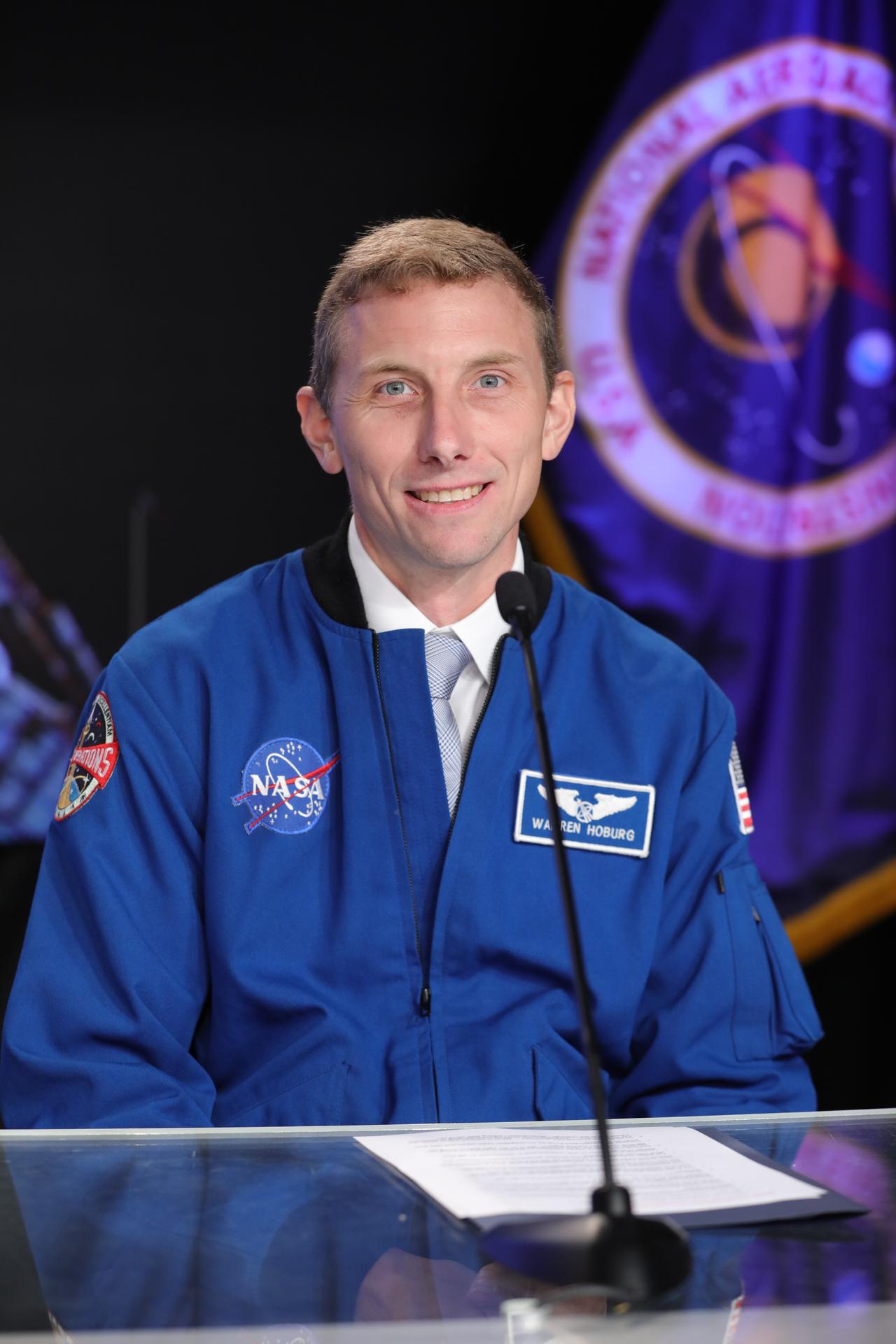
Woody Hoburg, NASA astronaut, and commander of the Starliner’s next crewed mission, participates in a news conference with NASA and Boeing leadership to discuss Starliner’s development and plans for regular crew flights to and from the International Space Station during a news conference Monday, Sept. 28, 2026, inside the John Holliman Auditorium of the NASA News Center at the agency’s Kennedy Space Center in Florida.
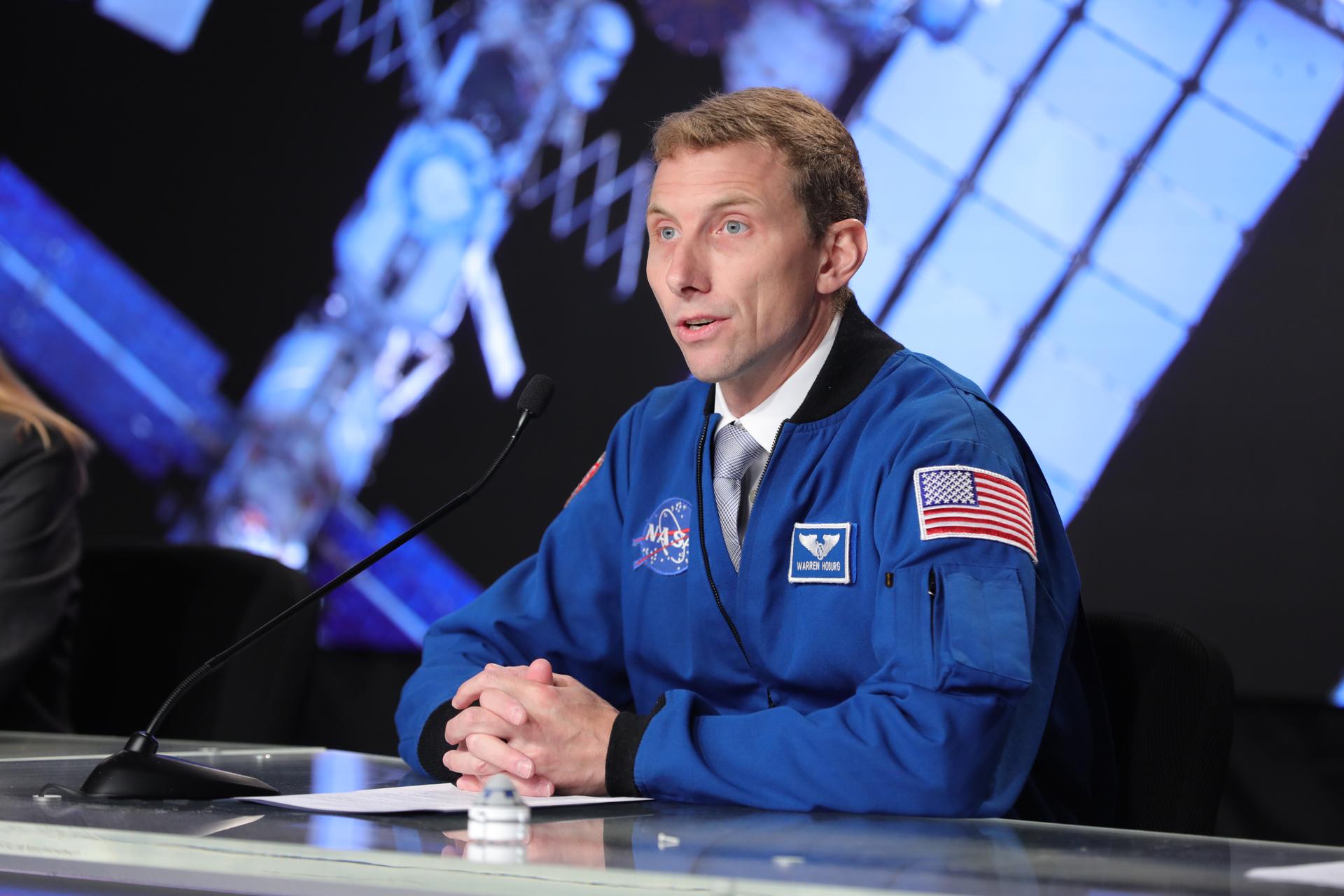
Woody Hoburg, NASA astronaut, and commander of the Starliner’s next crewed mission, participates in a news conference with NASA and Boeing leadership to discuss Starliner’s development and plans for regular crew flights to and from the International Space Station during a news conference Monday, Sept. 28, 2026, inside the John Holliman Auditorium of the NASA News Center at the agency’s Kennedy Space Center in Florida.
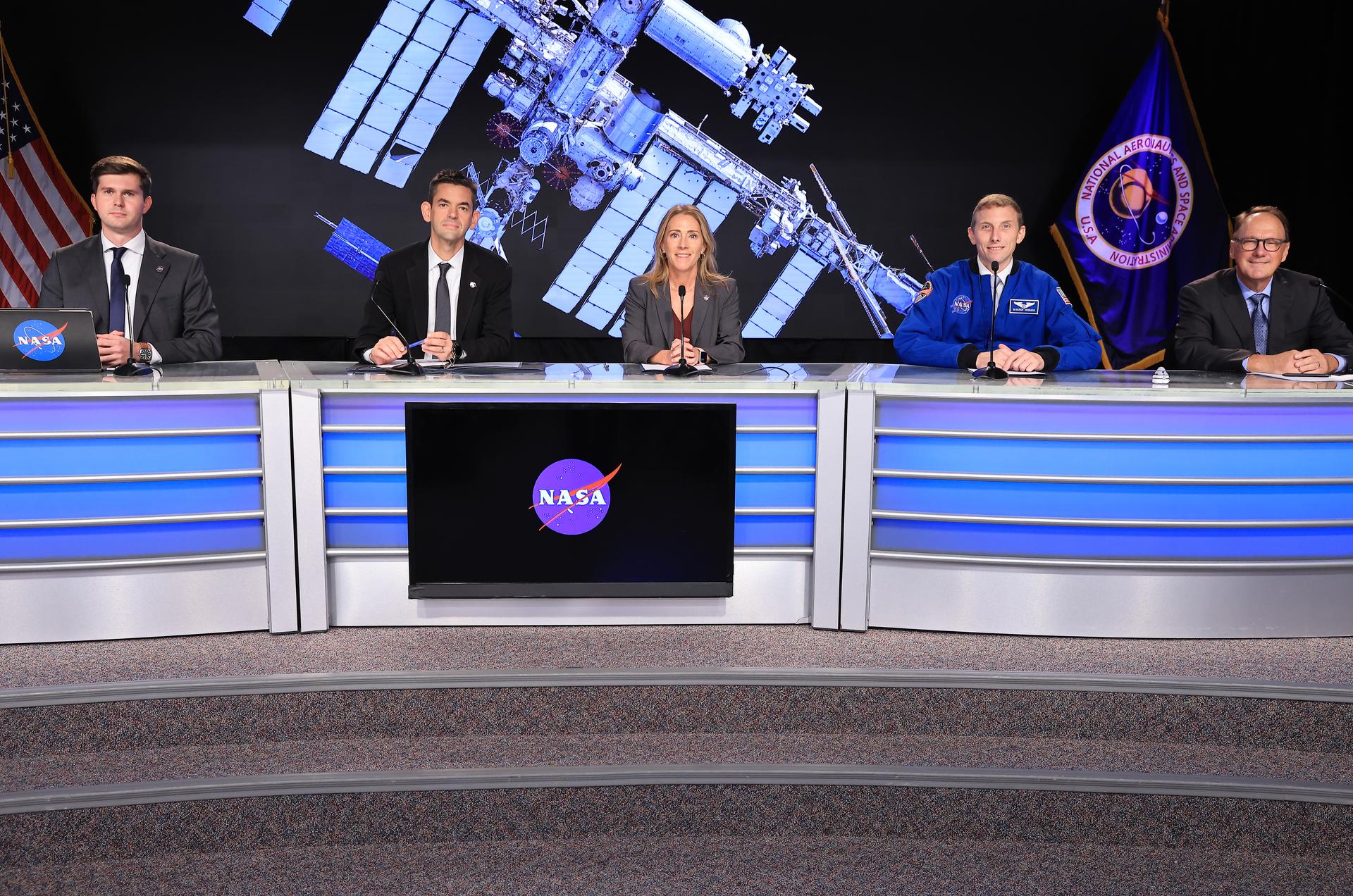
NASA and Boeing leadership discuss Starliner’s development and plans for regular crew flights to and from the International Space Station during a news conference Monday, Sept. 28, 2026, inside the John Holliman Auditorium of the NASA News Center at the agency’s Kennedy Space Center in Florida. From left to right, George Alderman, NASA deputy press secretary, NASA Administrator Jared Isaacman; Dana Weigel, manager, NASA’s Low Earth Orbit Program; Woody Hoburg, NASA astronaut, and commander of the Starliner’s next crewed mission; and John Mulholland, vice president and program manager, Boeing Commercial Crew.
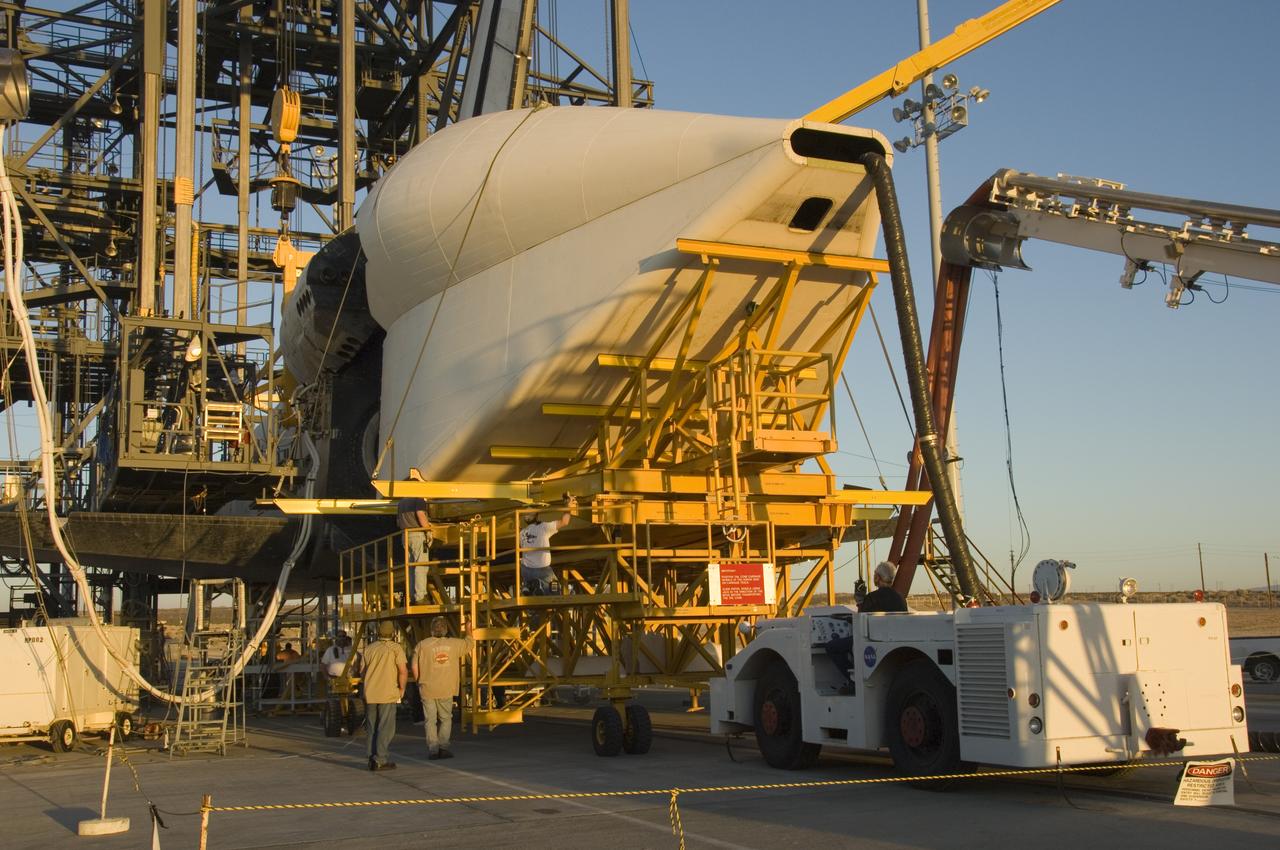
Technicians attach the tail cone, which helps reduce aerodynamic drag and turbulence during its ferry flight, to the Space Shuttle Atlantis in preparation for its return to NASA's Kennedy Space Center in Florida. After the tail-cone is installed, Discovery will be mounted on NASA's modified Boeing 747 Shuttle Carrier Aircraft, or SCA, for the return flight.
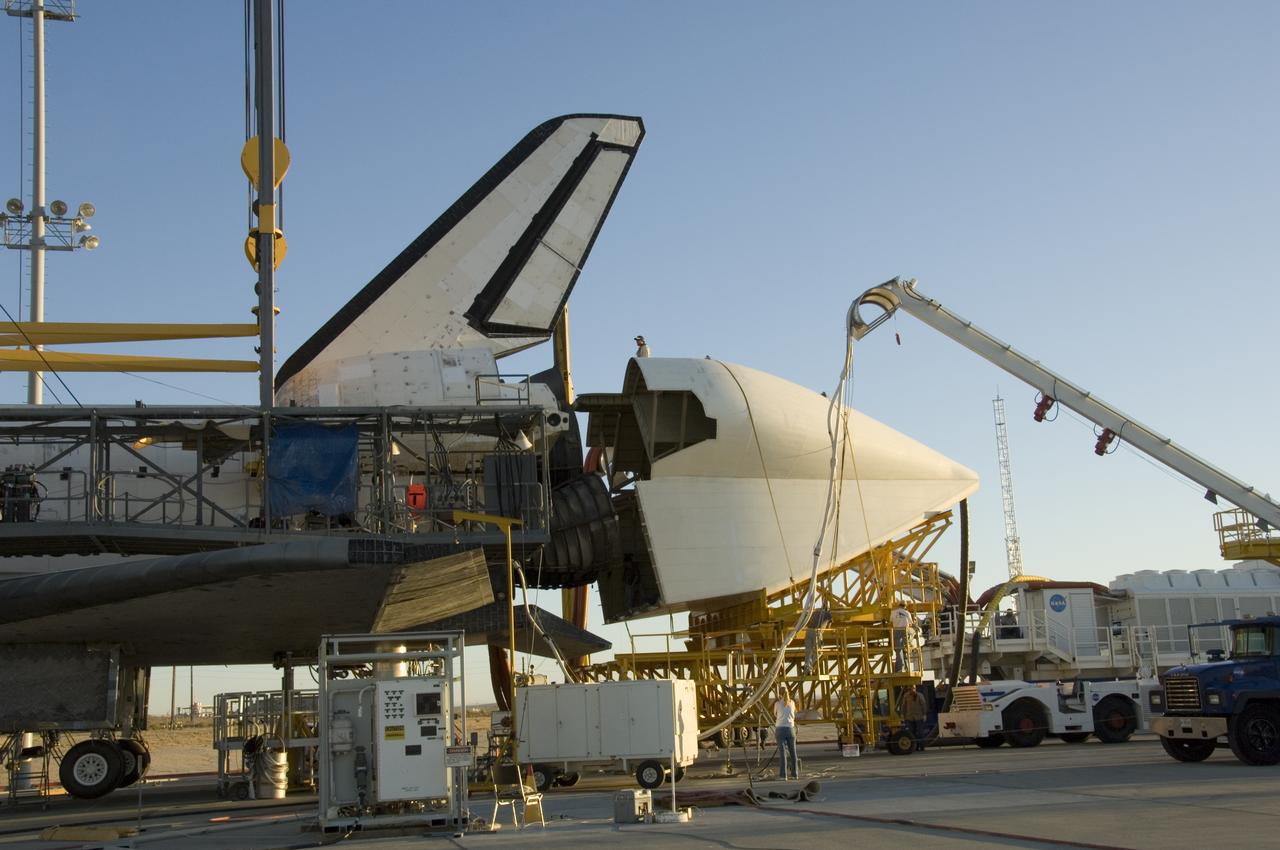
Technicians attach the tail cone, which helps reduce aerodynamic drag and turbulence during its ferry flight, to the Space Shuttle Atlantis in preparation for its return to NASA's Kennedy Space Center in Florida. After the tail-cone is installed, Discovery will be mounted on NASA's modified Boeing 747 Shuttle Carrier Aircraft, or SCA, for the return flight.

The Moon is seen during a total lunar eclipse, Tuesday, Nov. 8, 2022, at NASA’s Kennedy Space Center in Florida. Photo Credit: (NASA/Joel Kowsky)

The Moon is seen during a total lunar eclipse, Tuesday, Nov. 8, 2022, at NASA’s Kennedy Space Center in Florida. Photo Credit: (NASA/Joel Kowsky)

The Moon is seen during a total lunar eclipse, Tuesday, Nov. 8, 2022, at NASA’s Kennedy Space Center in Florida. Photo Credit: (NASA/Joel Kowsky)

The Space Shuttle Endeavour, atop NASA's 747 Shuttle Carrier Aircraft (SCA), taking off for the Kennedy Space Center shortly after its landing on 11 October 1994, at Edwards, California, to complete mission STS-68. Endeavour was being ferried from the Kennedy Space Center, Florida, to Air Force Plant 42, Palmdale, California, where it will undergo six months of inspections, modifications, and systems upgrades. The STS-68 11-day mission was devoted to radar imaging of Earth's geological features with the Space Radar Laboratory.
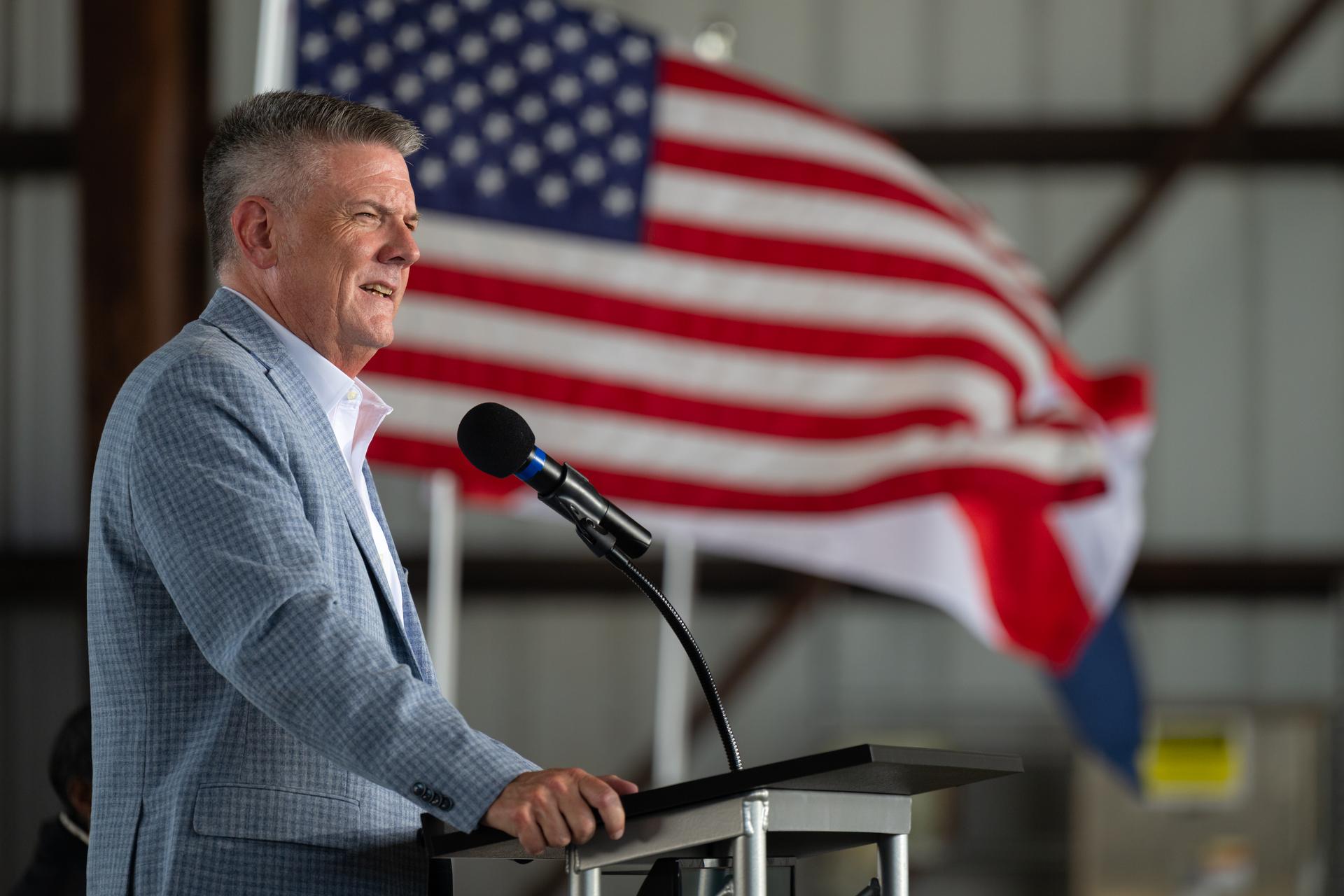
Kennedy Space Center Director Brian Hughes speaks during a press conference, Friday, Aug. 14, 2026, at NASA's Kennedy Space Center in Florida. NASA announced the two-day MAX POWER event, taking place in November 2026, which will feature air shows, skydiving stunts, technology demonstrations, spaceflight hardware, military aircraft, behind-the-scenes access to Kennedy, talks from NASA experts, and appearances by astronauts. Photo Credit: (NASA/John Kraus)
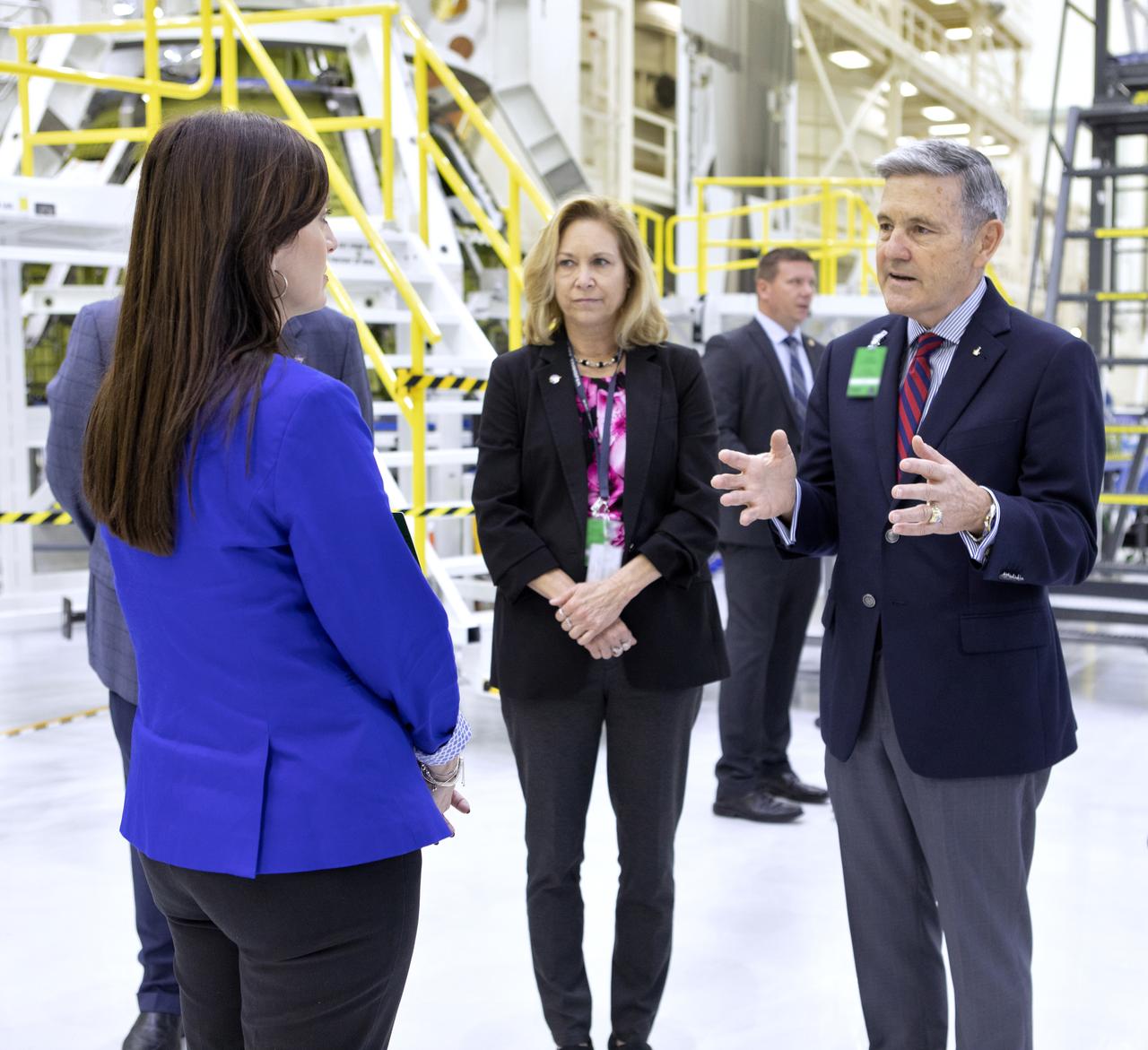
Kennedy Space Center Director Bob Cabana gives Florida Lt. Governor Jeanette Nunez (left) a tour of the Florida spaceport’s Neil Armstrong Operations and Checkout Building high bay on April 5, 2019. Also in attendance was Kennedy Deputy Director Janet Petro (center). During her tour, Nunez was shown NASA’s Orion spacecraft, which will be flown on the agency’s Exploration Mission-1 (EM-1). Orion will launch atop the Space Launch System rocket from Kennedy’s Launch Complex 39B. This uncrewed mission will provide the foundation for human deep space exploration and pave the way for the crewed EM-2 mission.
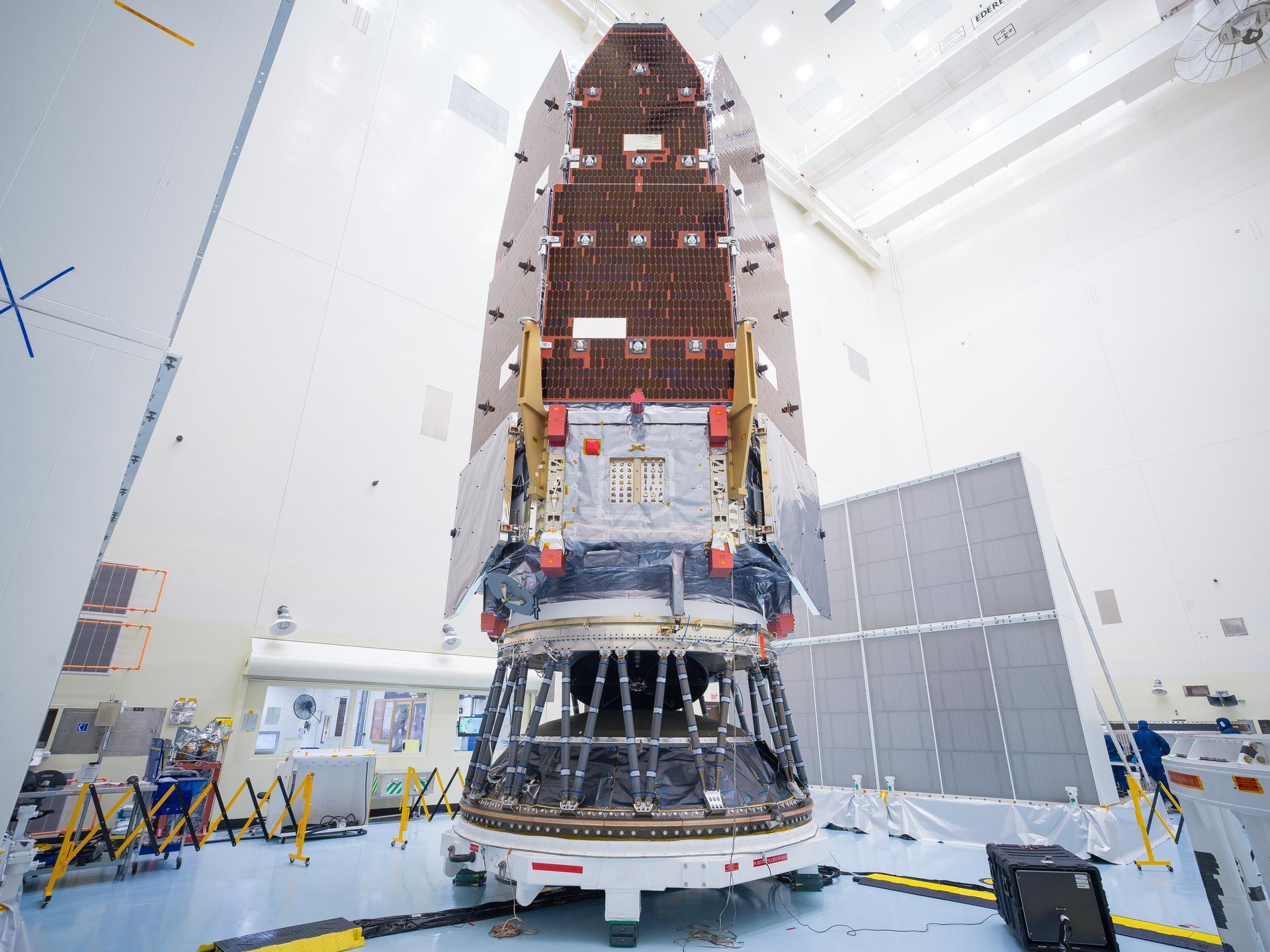
NASA's Nancy Grace Roman Space Telescope pictured on Friday, Aug. 7, 2026, after engineers and technicians working inside the Payload Hazardous Servicing Facility at NASA’s Kennedy Space Center in Florida had carefully mated the observatory to its payload adapter and a strut payload attach fitting, a specialized piece of hardware designed for large, heavy loads. This allows the team to secure the payload to the second stage on SpaceX’s Falcon Heavy rocket. Named for NASA’s first chief astronomer and “mother of the Hubble Space Telescope,” Roman will offer a field of view over 100 times larger than Hubble’s to study up to a billion galaxies, directly image exoplanets and planet‑forming disks, and address fundamental questions about dark energy, exoplanets, and infrared astrophysics.
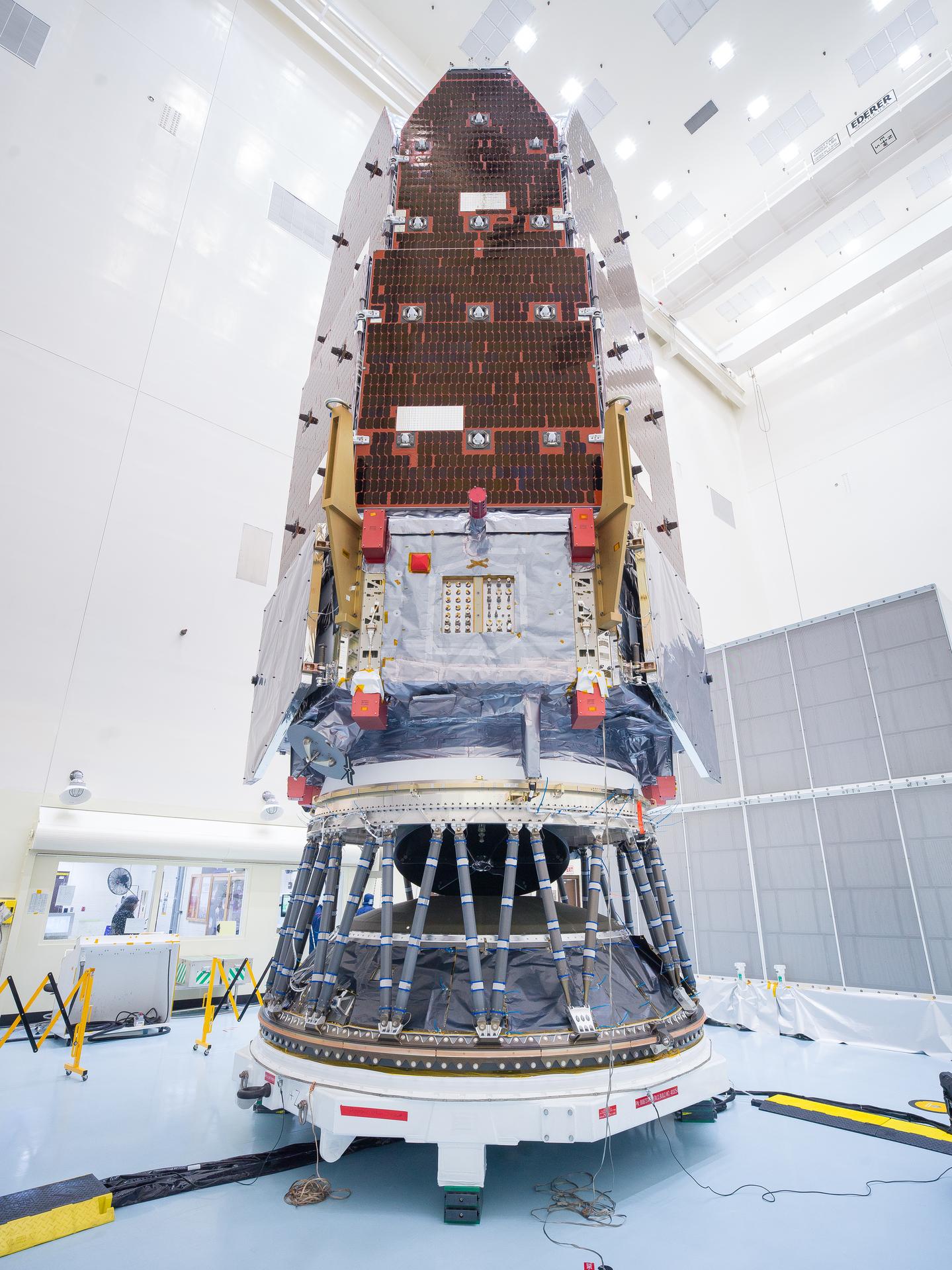
NASA's Nancy Grace Roman Space Telescope pictured on Friday, Aug. 7, 2026, after engineers and technicians working inside the Payload Hazardous Servicing Facility at NASA’s Kennedy Space Center in Florida had carefully mated the observatory to its payload adapter and a strut payload attach fitting, a specialized piece of hardware designed for large, heavy loads. This allows the team to secure the payload to the second stage on SpaceX’s Falcon Heavy rocket. Named for NASA’s first chief astronomer and “mother of the Hubble Space Telescope,” Roman will offer a field of view over 100 times larger than Hubble’s to study up to a billion galaxies, directly image exoplanets and planet‑forming disks, and address fundamental questions about dark energy, exoplanets, and infrared astrophysics.
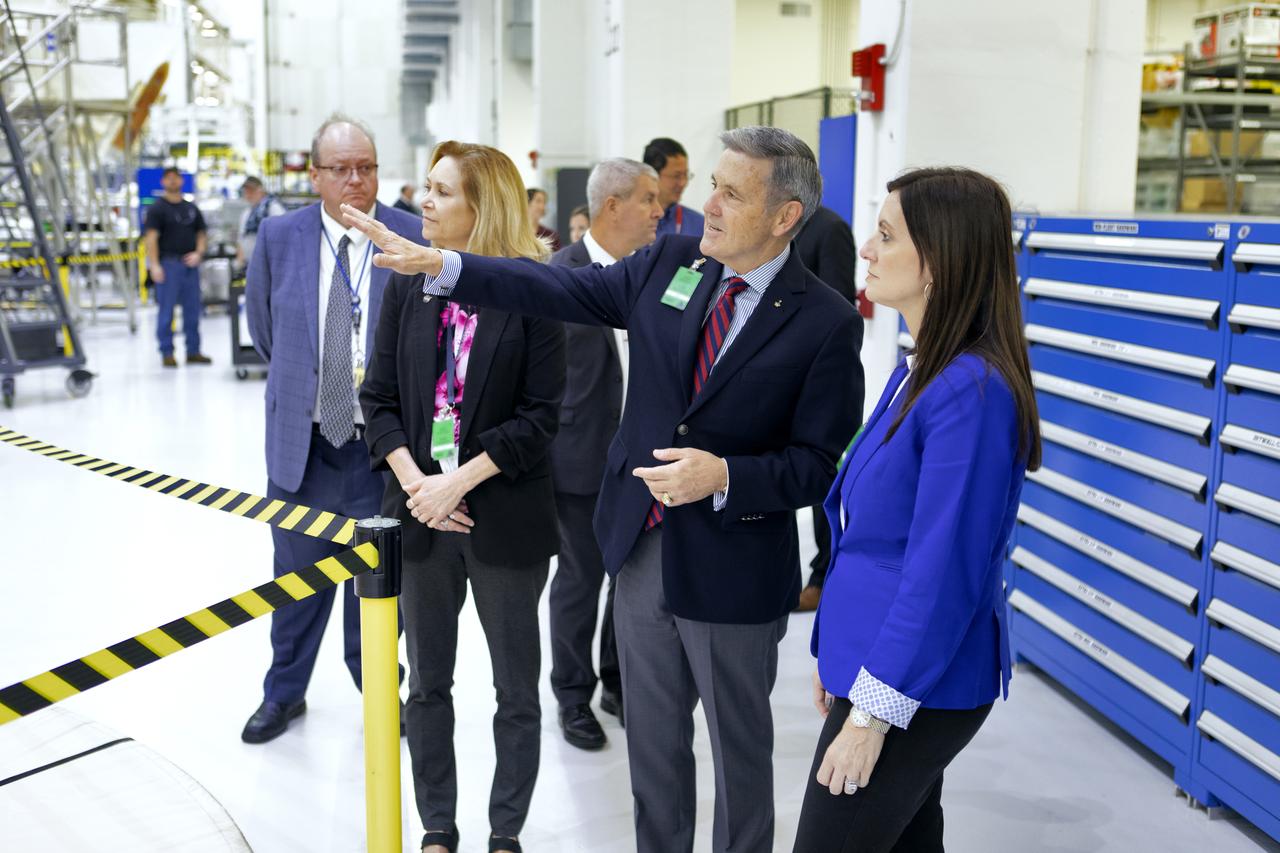
Kennedy Space Center Director Bob Cabana gives Florida Lt. Governor Jeanette Nunez (right) a tour of the Florida spaceport’s Neil Armstrong Operations and Checkout Building High Bay on April 5, 2019. Also in attendance was Kennedy Deputy Director Janet Petro (left). During her tour, Nunez was shown NASA’s Orion spacecraft, which will be flown on the agency’s Exploration Mission-1 (EM-1). Orion will launch atop the Space Launch System rocket from Kennedy’s Launch Complex 39B. This uncrewed mission will provide the foundation for human deep space exploration and pave the way for the crewed EM-2 mission.
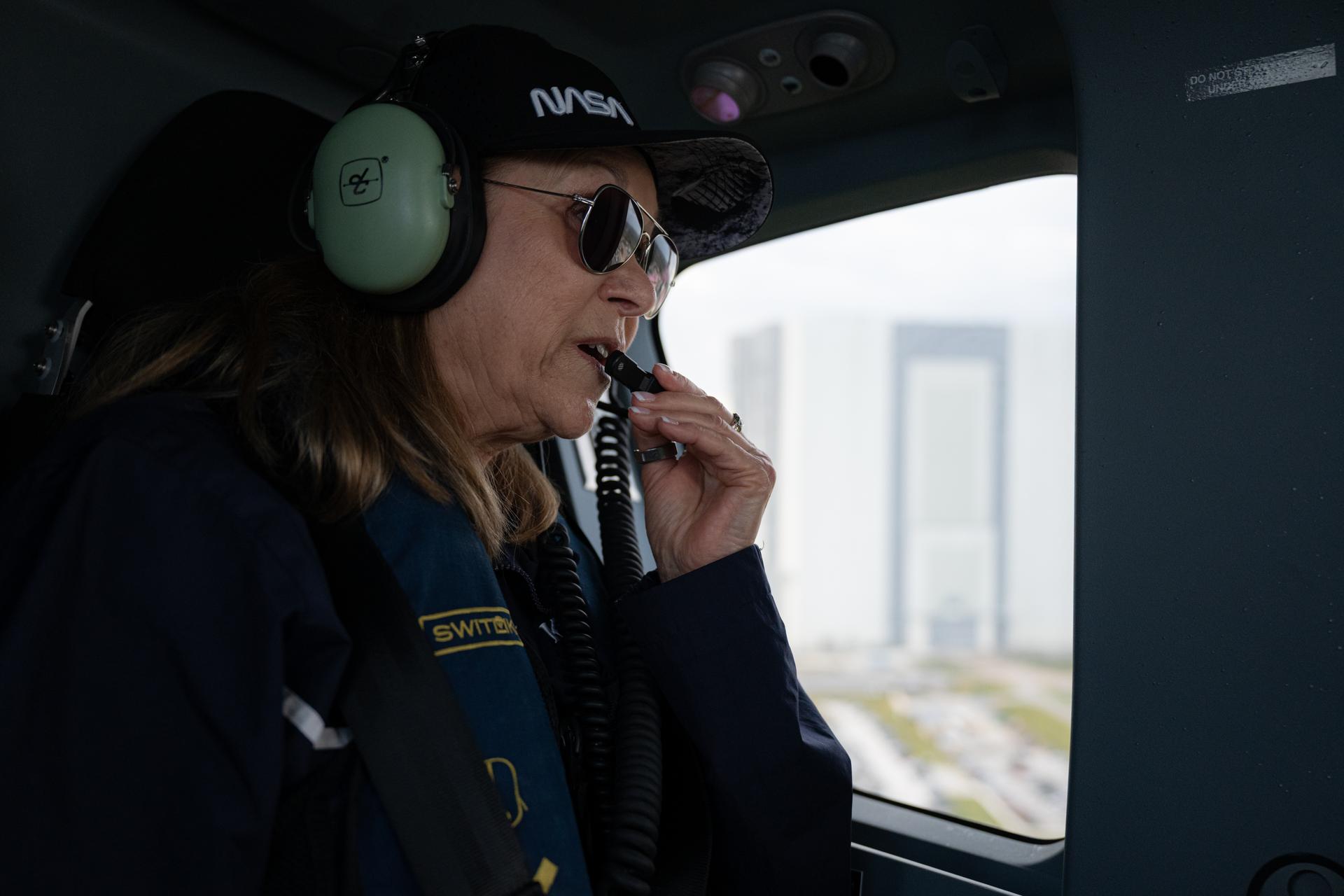
Janet Petro, director of NASA's Kennedy Space Center, participates in a helicopter tour of Kennedy Space Center, Tuesday, Jan. 13, 2026, in Florida. Photo Credit: (NASA/John Kraus)

The space shuttle Atlantis atop NASA's 747 Shuttle Carrier Aircraft (SCA) during takeoff for a return ferry flight to the Kennedy Space Center from Edwards, California. The STS-66 mission was dedicated to the third flight of the Atmospheric Laboratory for Applications and Science-3 (ATLAS-3), part of NASA's Mission to Planet Earth program. The astronauts also deployed and retrieved a free-flying satellite designed to study the middle and lower thermospheres and perform a series of experiments covering life sciences research and microgravity processing. The landing was at 7:34 a.m. (PST) 14 November 1994, after being waved off from the Kennedy Space Center, Florida, due to adverse weather.
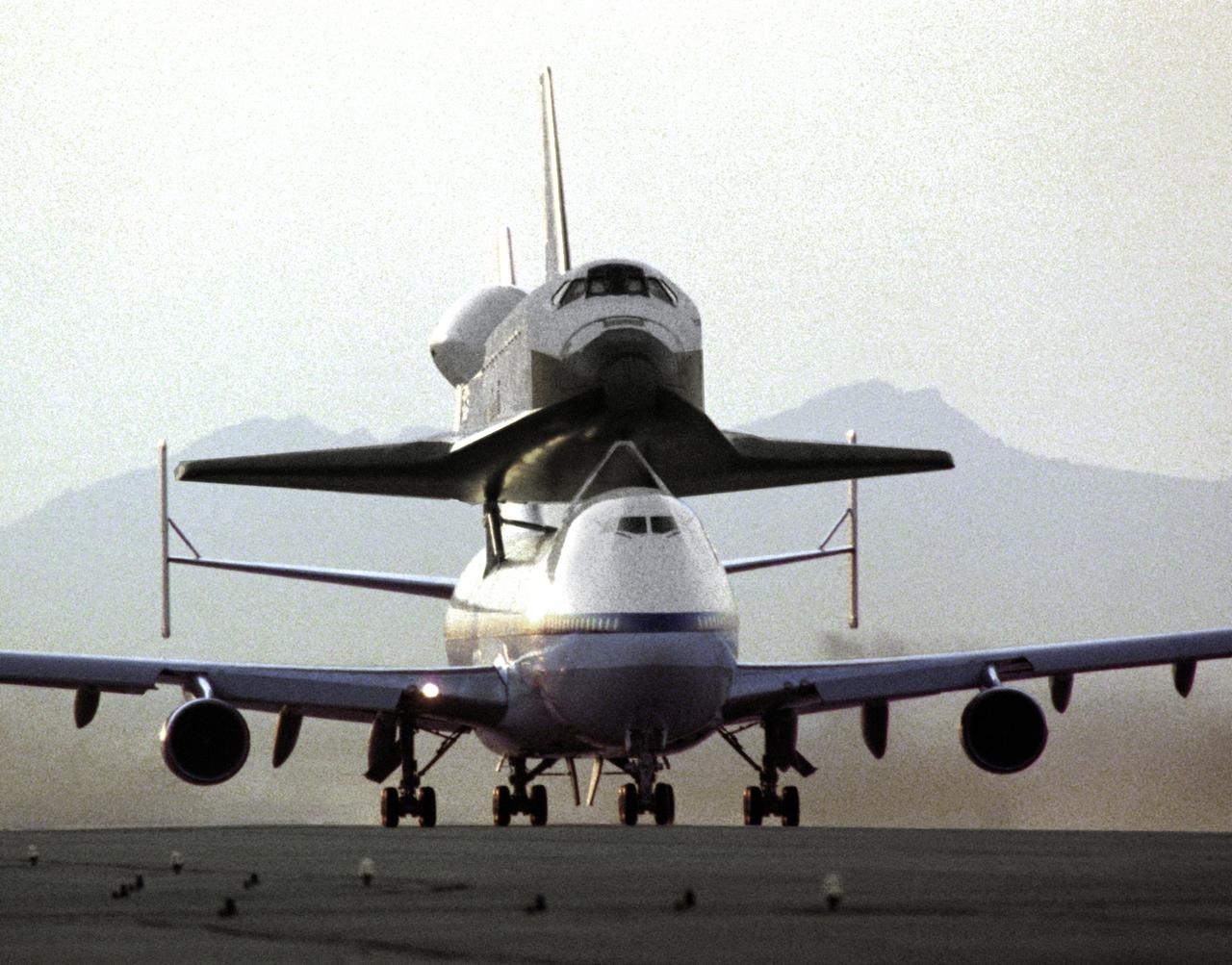
NASA's 747 Shuttle Carrier Aircraft No. 911, with the space shuttle orbiter Endeavour securely mounted atop its fuselage, taxies to the runway to begin the ferry flight from Rockwell's Plant 42 at Palmdale, California, where the orbiter was built, to the Kennedy Space Center, Florida. At Kennedy, the space vehicle was processed and launched on orbital mission STS-49, which landed at NASA's Ames-Dryden Flight Research Facility (later redesignated Dryden Flight Research Center), Edwards, California, 16 May 1992. NASA 911, the second modified 747 that went into service in November 1990, has special support struts atop the fuselage and internal strengthening to accommodate the added weight of the orbiters.
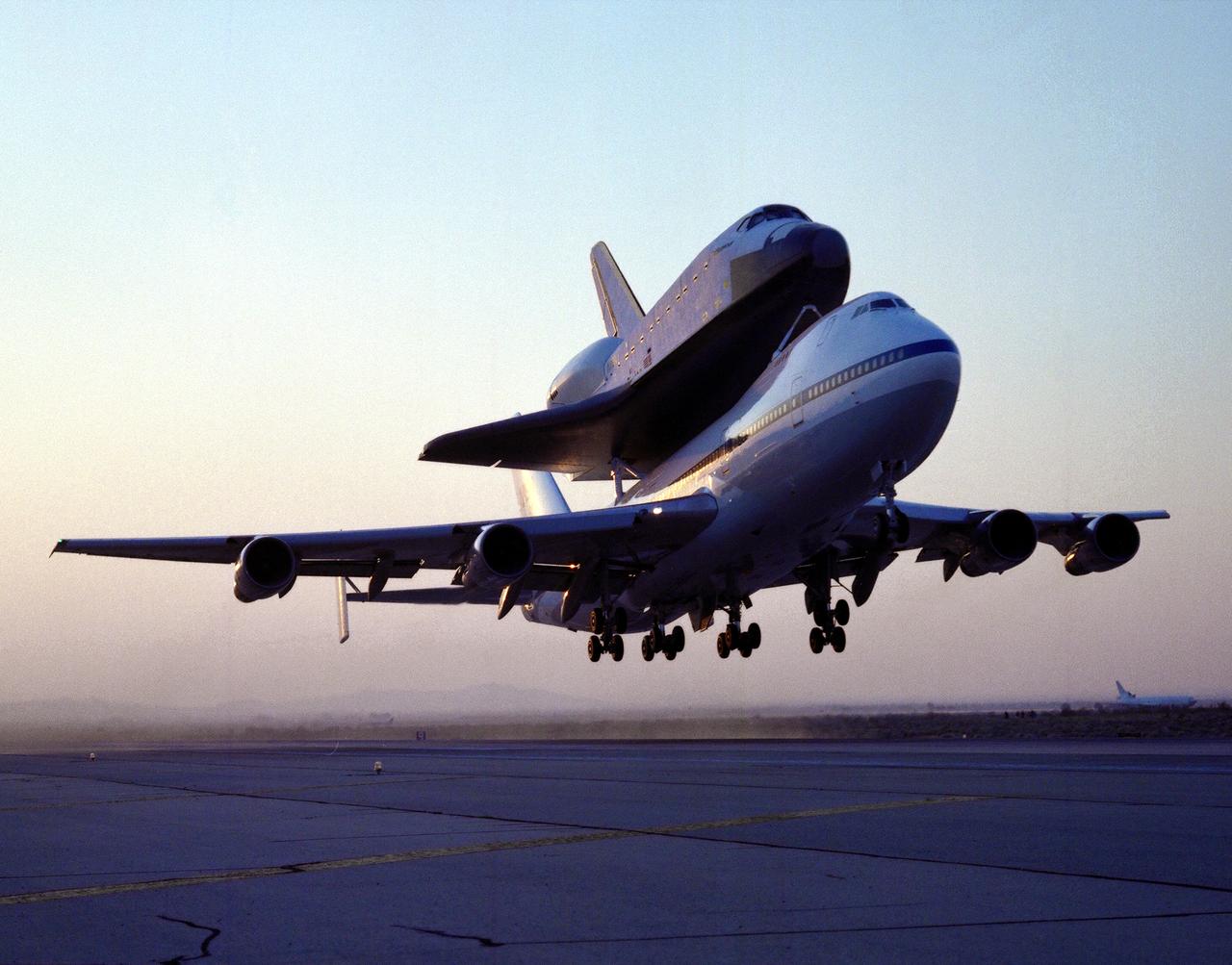
NASA's 747 Shuttle Carrier Aircraft No. 911, with the space shuttle orbiter Endeavour securely mounted atop its fuselage, begins the ferry flight from Rockwell's Plant 42 at Palmdale, California, where the orbiter was built, to the Kennedy Space Center, Florida. At Kennedy, the space vehicle was processed and launched on orbital mission STS-49, which landed at NASA's Ames-Dryden Flight Research Facility (later redesignated Dryden Flight Research Center), Edwards, California, 16 May 1992. NASA 911, the second modified 747 that went into service in November 1990, has special support struts atop the fuselage and internal strengthening to accommodate the added weight of the orbiters.
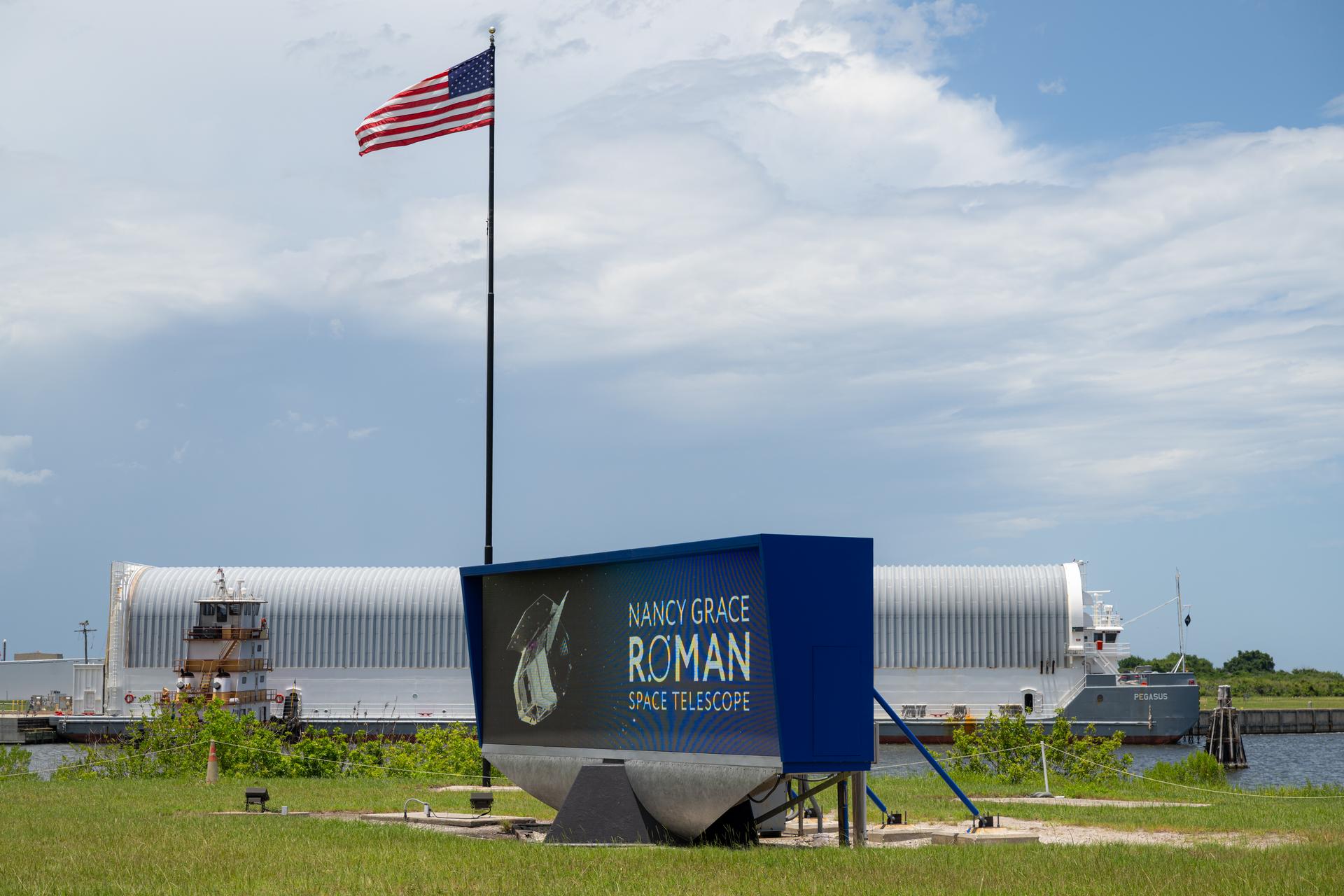
NASA’s Pegasus barge is seen, Sunday, June 21, at NASA’s Kennedy Space Center in Florida. The Pegasus barge delivered NASA’s Nancy Grace Roman Space Telescope and a weather cover for the Artemis III SLS (Space Launch System) rocket core stage to Kennedy. Photo Credit: (NASA/John Kraus)
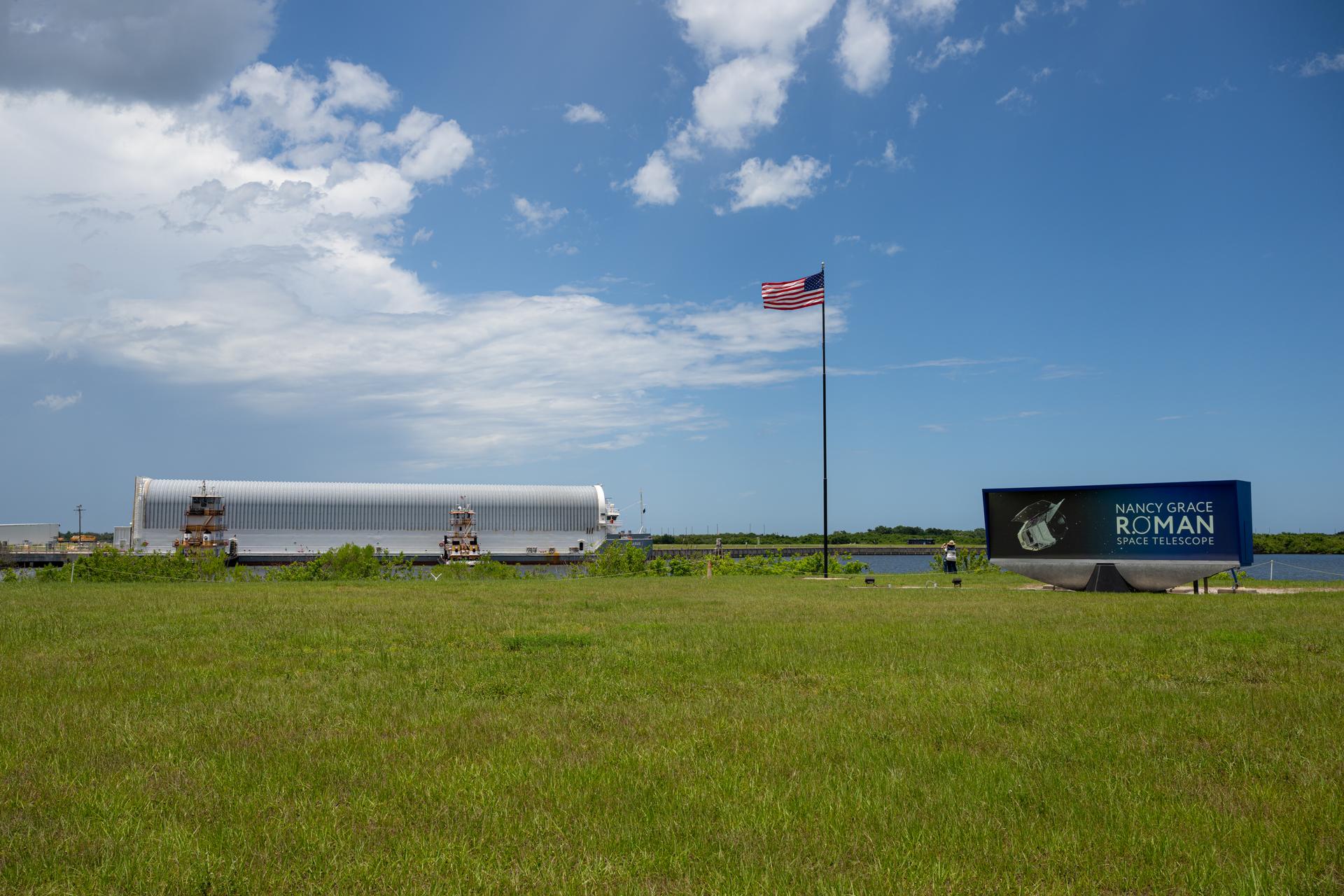
NASA’s Pegasus barge is seen, Sunday, June 21, at NASA’s Kennedy Space Center in Florida. The Pegasus barge delivered NASA’s Nancy Grace Roman Space Telescope and a weather cover for the Artemis III SLS (Space Launch System) rocket core stage to Kennedy. Photo Credit: (NASA/John Kraus)
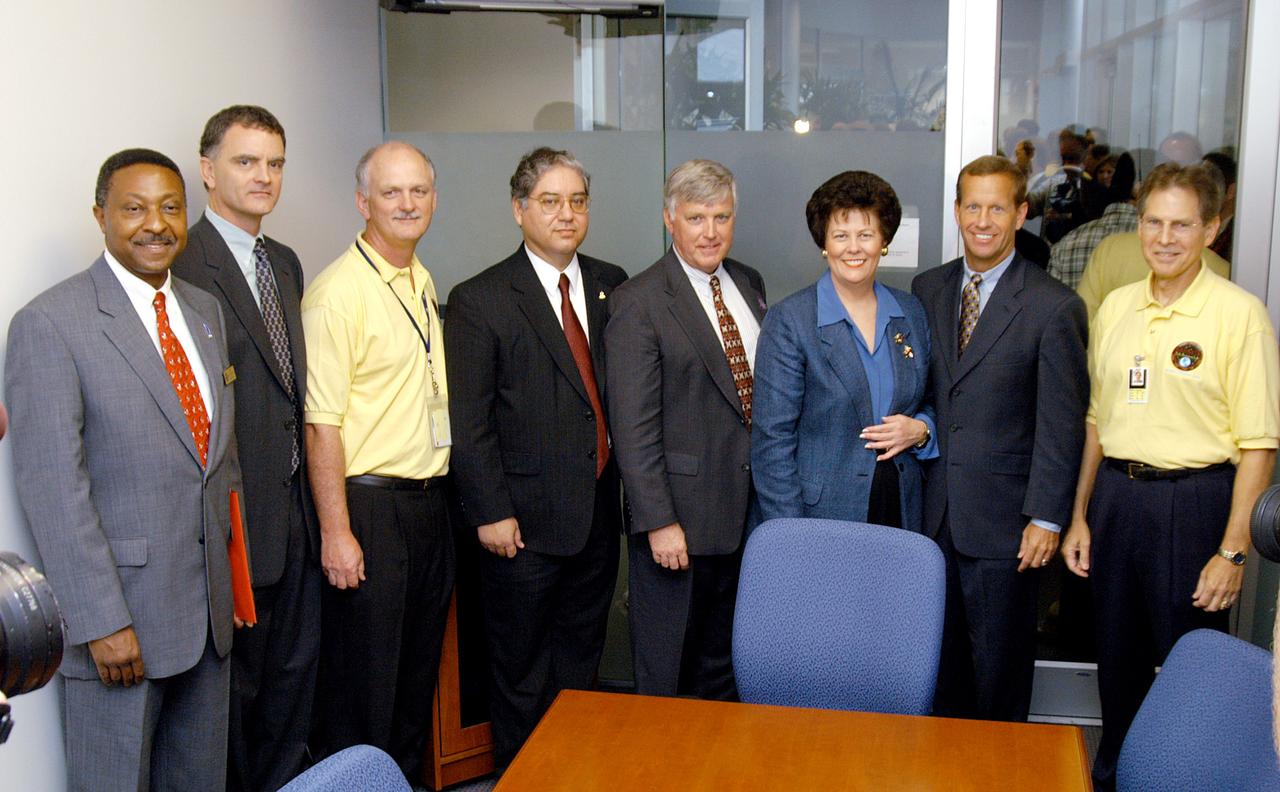
KENNEDY SPACE CENTER, FLA. - Officials of the NASA-Kennedy Space Center and the state of Florida pose for a group portrait at a dedication and ribbon-cutting ceremony for the Space Life Sciences Lab at the new lab. From left are Capt. Winston Scott, executive director of the Florida Space Authority; Dr. Robert J. Ferl, director of Space Agriculture Biotechnology Research and Education (SABRE), University of Florida; Charlie Quincy, chief of the Biological Sciences Office, Kennedy Space Center; Jose Perez-Morales, NASA Project Manager for the Space Life Sciences Lab; Jim Kennedy, director of the Kennedy Space Center; The Honorable Toni Jennings, lieutenant governor of the state of Florida; Frank T. Brogan, president of the Florida Atlantic University; and Dr. Samuel Durrance, executive director of the Florida Space Research Institute. Completed in August, the facility encompasses more than 100,000 square feet and was formerly known as the Space Experiment Research and Processing Laboratory or SERPL. The state, through the Florida Space Authority, built the research lab which is host to NASA, NASA’s Life Sciences Services contractor Dynamac Corp., Bionetics Corp., and researchers from the University of Florida. Dynamac Corp. leases the facility. The Florida Space Research Institute is responsible for gaining additional tenants from outside the NASA community.
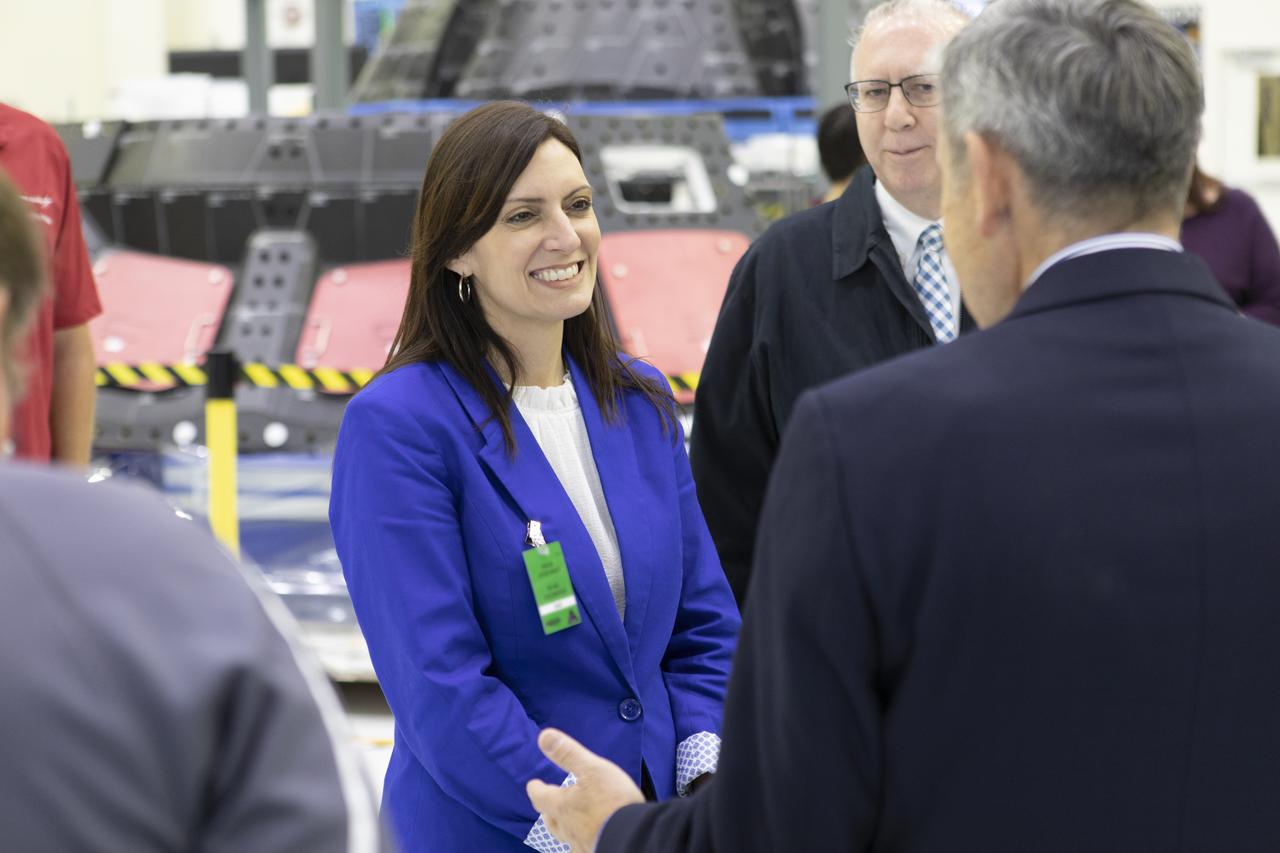
Kennedy Space Center Director Bob Cabana gives Florida Lt. Governor Jeanette Nunez a tour of the Florida spaceport’s Neil Armstrong Operations and Checkout Building high bay on April 5, 2019. During her tour, Nunez was shown NASA’s Orion spacecraft, which will be flown on the agency’s Exploration Mission-1 (EM-1). Orion will launch atop the Space Launch System rocket from Kennedy’s Launch Complex 39B. This uncrewed mission will provide the foundation for human deep space exploration and pave the way for the crewed EM-2 mission.
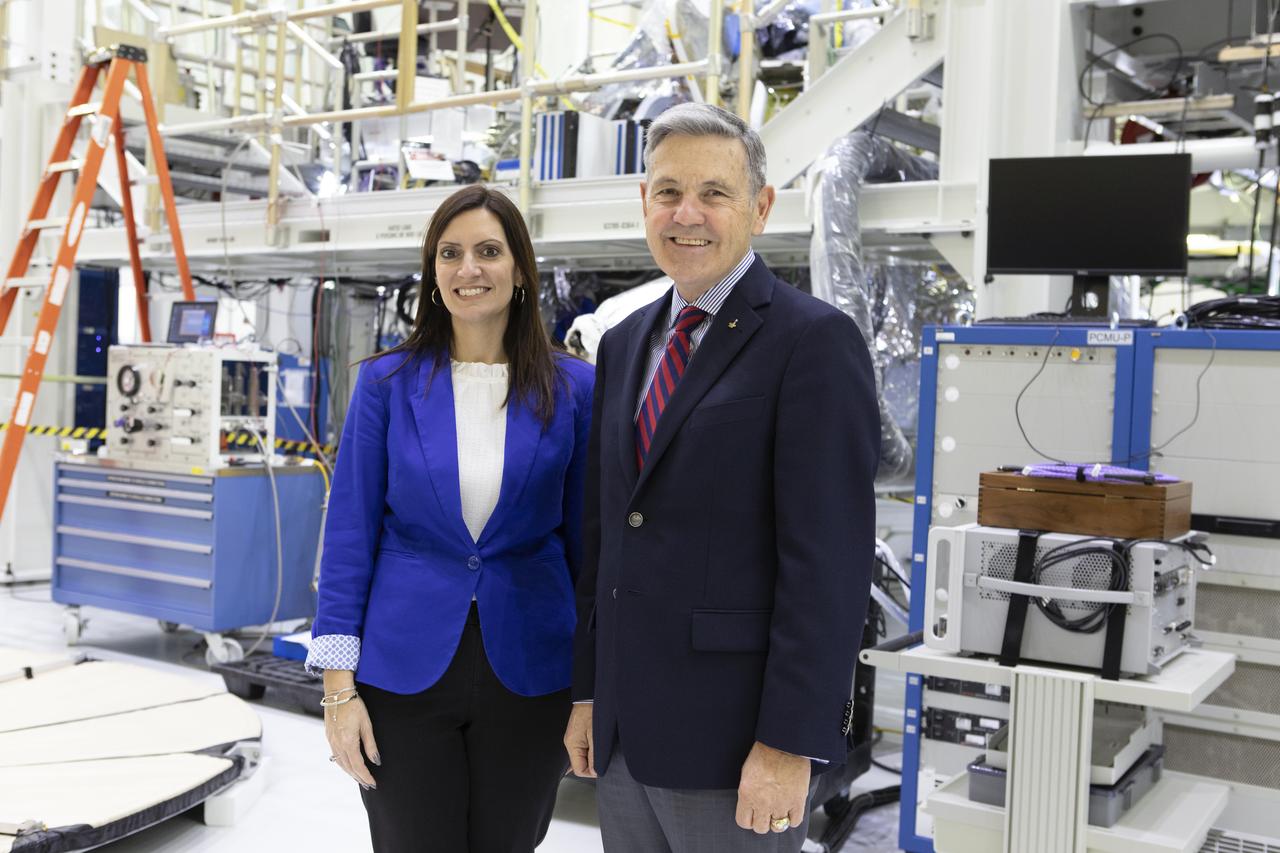
Florida Lt. Governor Jeanette Nunez and Kennedy Space Center Director Bob Cabana are photographed inside the Florida spaceport’s Neil Armstrong Operations and Checkout (O&C) Building high bay on April 5, 2019. During her tour of the O&C, Nunez was shown NASA’s Orion spacecraft, which will be flown on the agency’s Exploration Mission-1 (EM-1). Orion will launch atop the Space Launch System rocket from Kennedy’s Launch Complex 39B. This uncrewed mission will provide the foundation for human deep space exploration and pave the way for the crewed EM-2 mission.
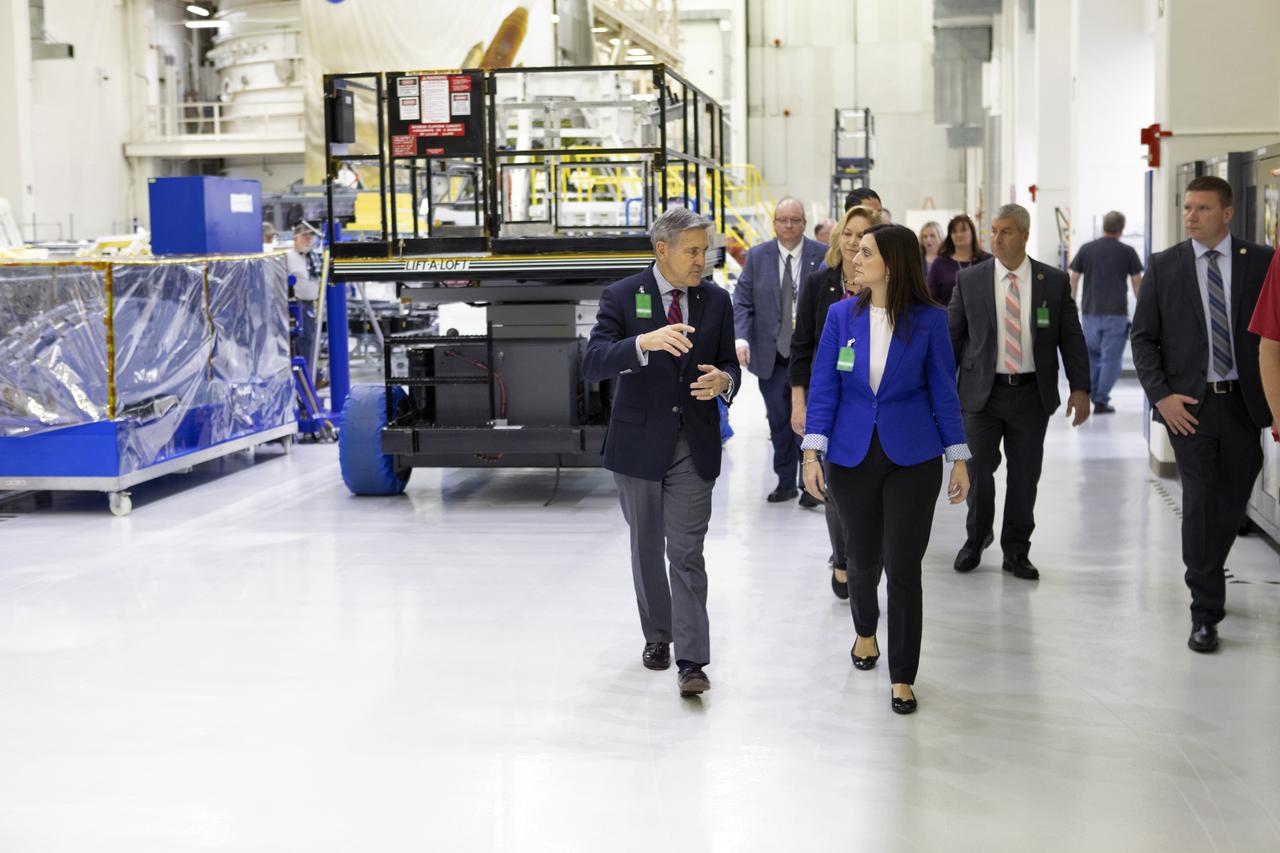
Kennedy Space Center Director Bob Cabana gives Florida Lt. Governor Jeanette Nunez a tour of the Florida spaceport’s Neil Armstrong Operations and Checkout Building high bay on April 5, 2019. During her tour, Nunez was shown NASA’s Orion spacecraft, which will be flown on the agency’s Exploration Mission-1 (EM-1). Orion will launch atop the Space Launch System rocket from Kennedy’s Launch Complex 39B. This uncrewed mission will provide the foundation for human deep space exploration and pave the way for the crewed EM-2 mission.
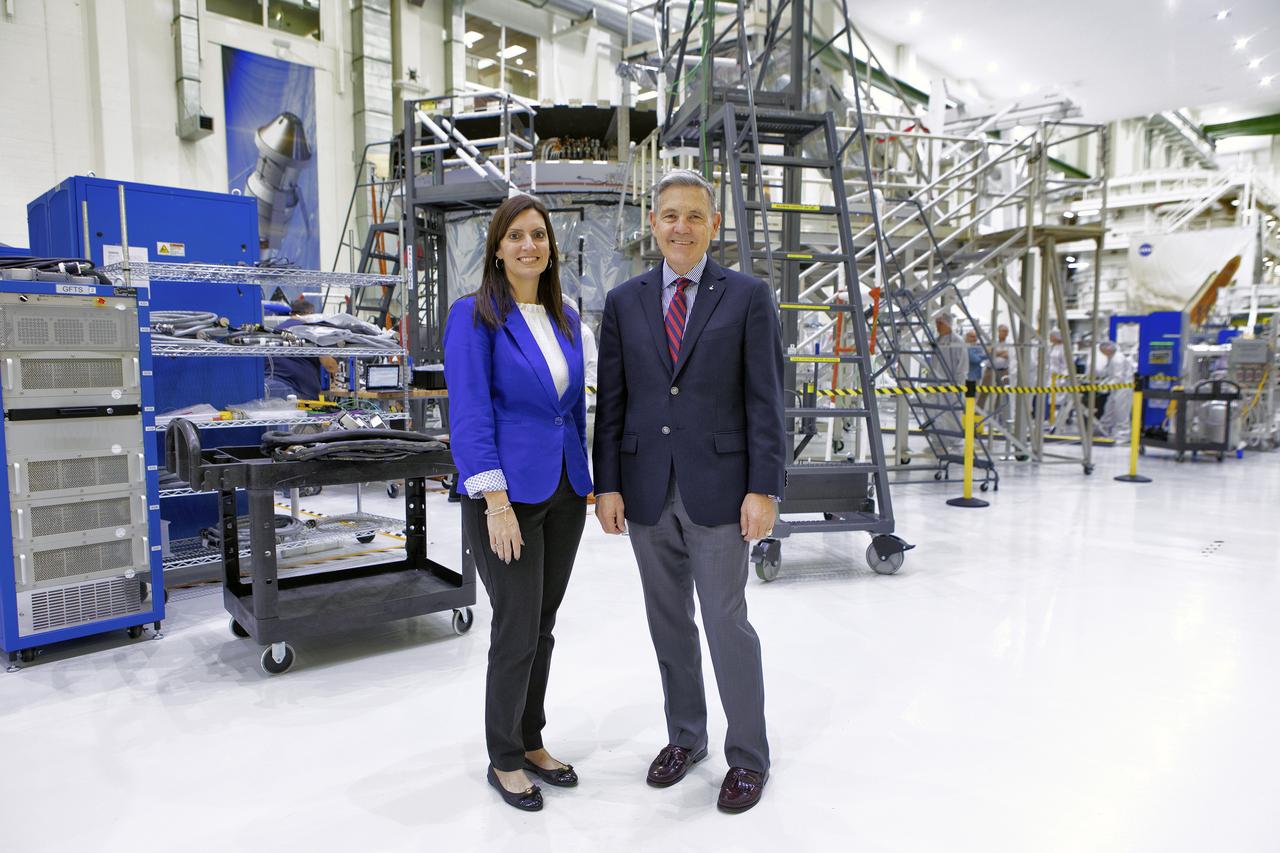
Florida Lt. Governor Jeanette Nunez and Kennedy Space Center Director Bob Cabana are photographed inside the Florida spaceport’s Neil Armstrong Operations and Checkout (O&C) Building high bay on April 5, 2019. During her tour of the O&C, Nunez was shown NASA’s Orion spacecraft, which will be flown on the agency’s Exploration Mission-1 (EM-1). Orion will launch atop the Space Launch System rocket from Kennedy’s Launch Complex 39B. This uncrewed mission will provide the foundation for human deep space exploration and pave the way for the crewed EM-2 mission.
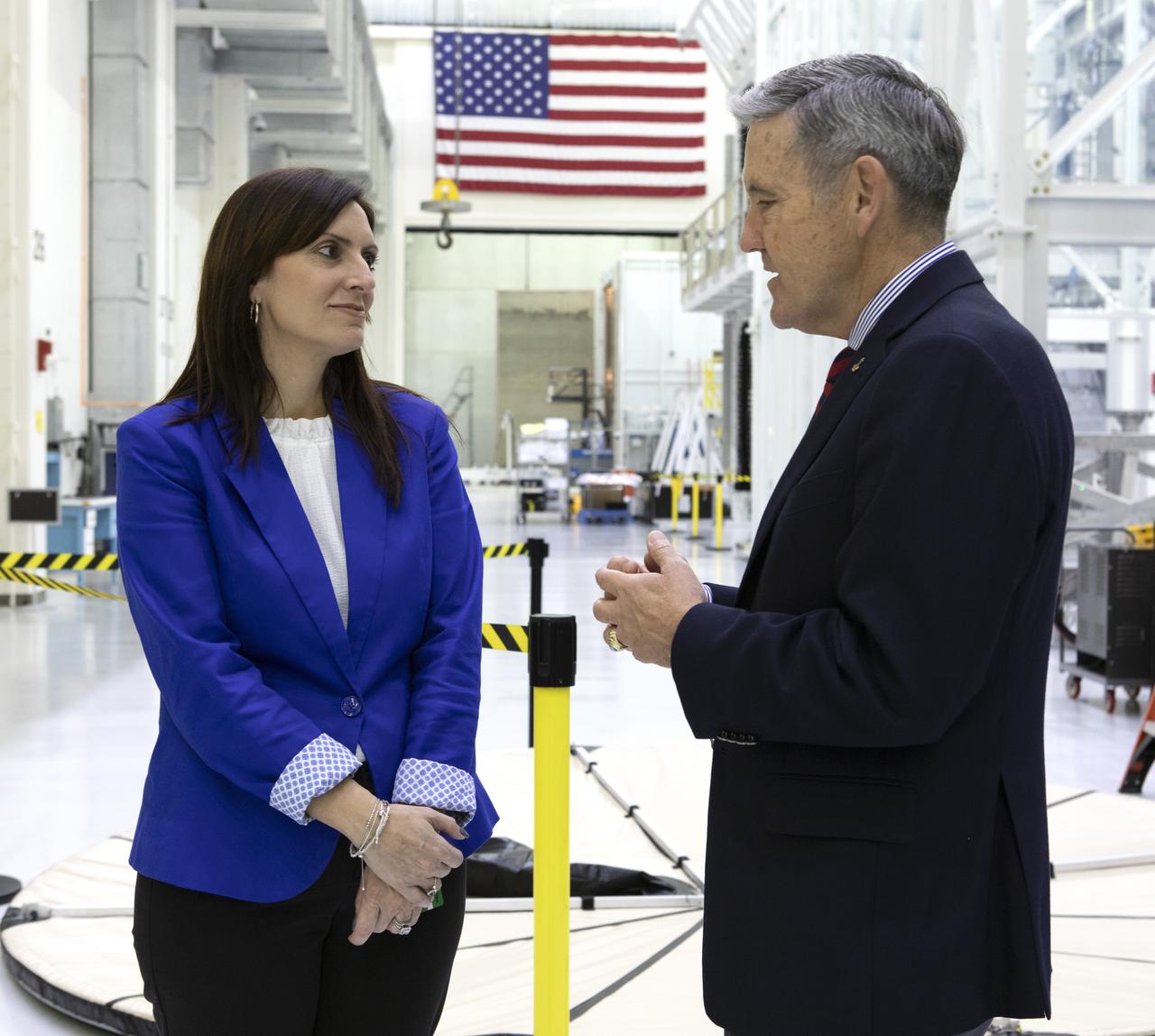
Kennedy Space Center Director Bob Cabana gives Florida Lt. Governor Jeanette Nunez a tour of the Florida spaceport’s Neil Armstrong Operations and Checkout Building high bay on April 5, 2019. During her tour, Nunez was shown NASA’s Orion spacecraft, which will be flown on the agency’s Exploration Mission-1 (EM-1). Orion will launch atop the Space Launch System rocket from Kennedy’s Launch Complex 39B. This uncrewed mission will provide the foundation for human deep space exploration and pave the way for the crewed EM-2 mission.
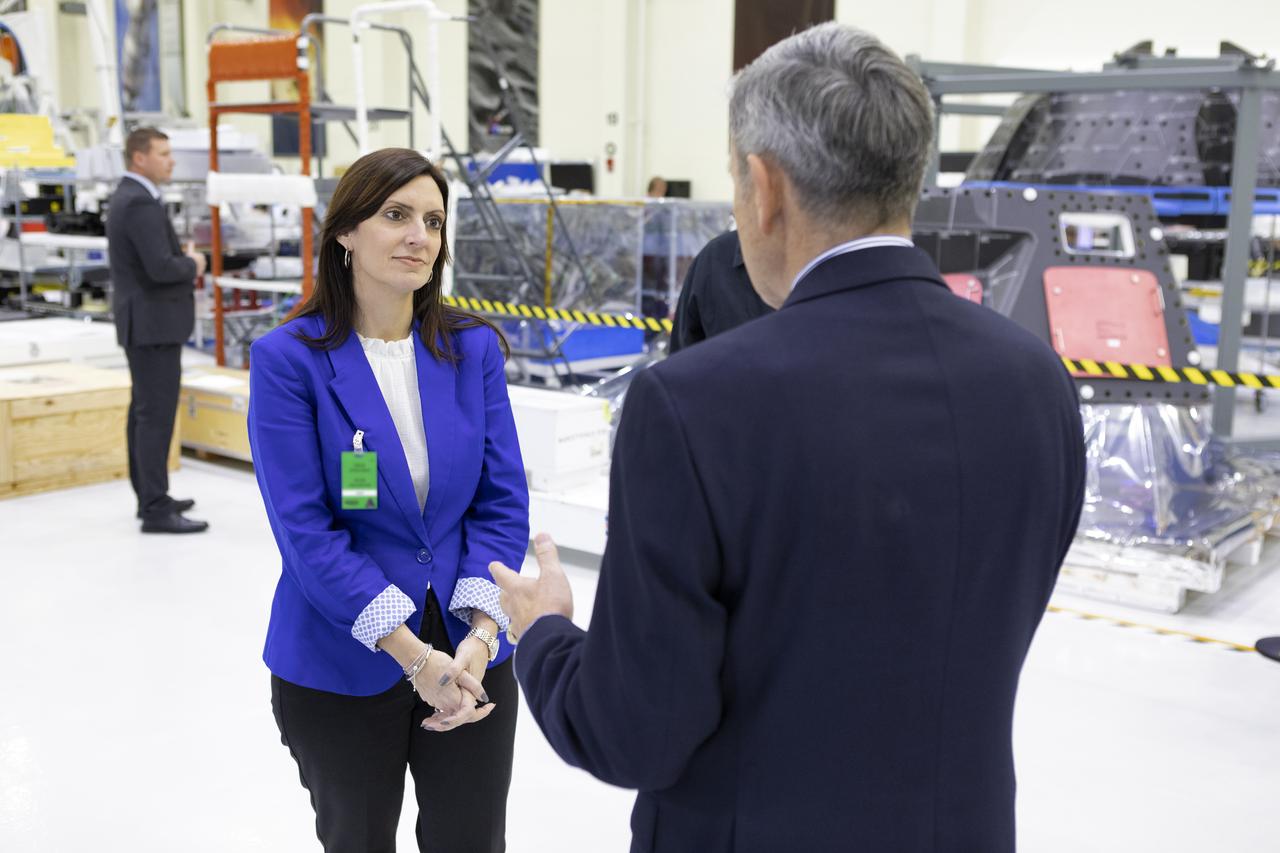
Kennedy Space Center Director Bob Cabana gives Florida Lt. Governor Jeanette Nunez a tour of the Florida spaceport’s Neil Armstrong Operations and Checkout Building high bay on April 5, 2019. During her tour, Nunez was shown NASA’s Orion spacecraft, which will be flown on the agency’s Exploration Mission-1 (EM-1). Orion will launch atop the Space Launch System rocket from Kennedy’s Launch Complex 39B. This uncrewed mission will provide the foundation for human deep space exploration and pave the way for the crewed EM-2 mission.
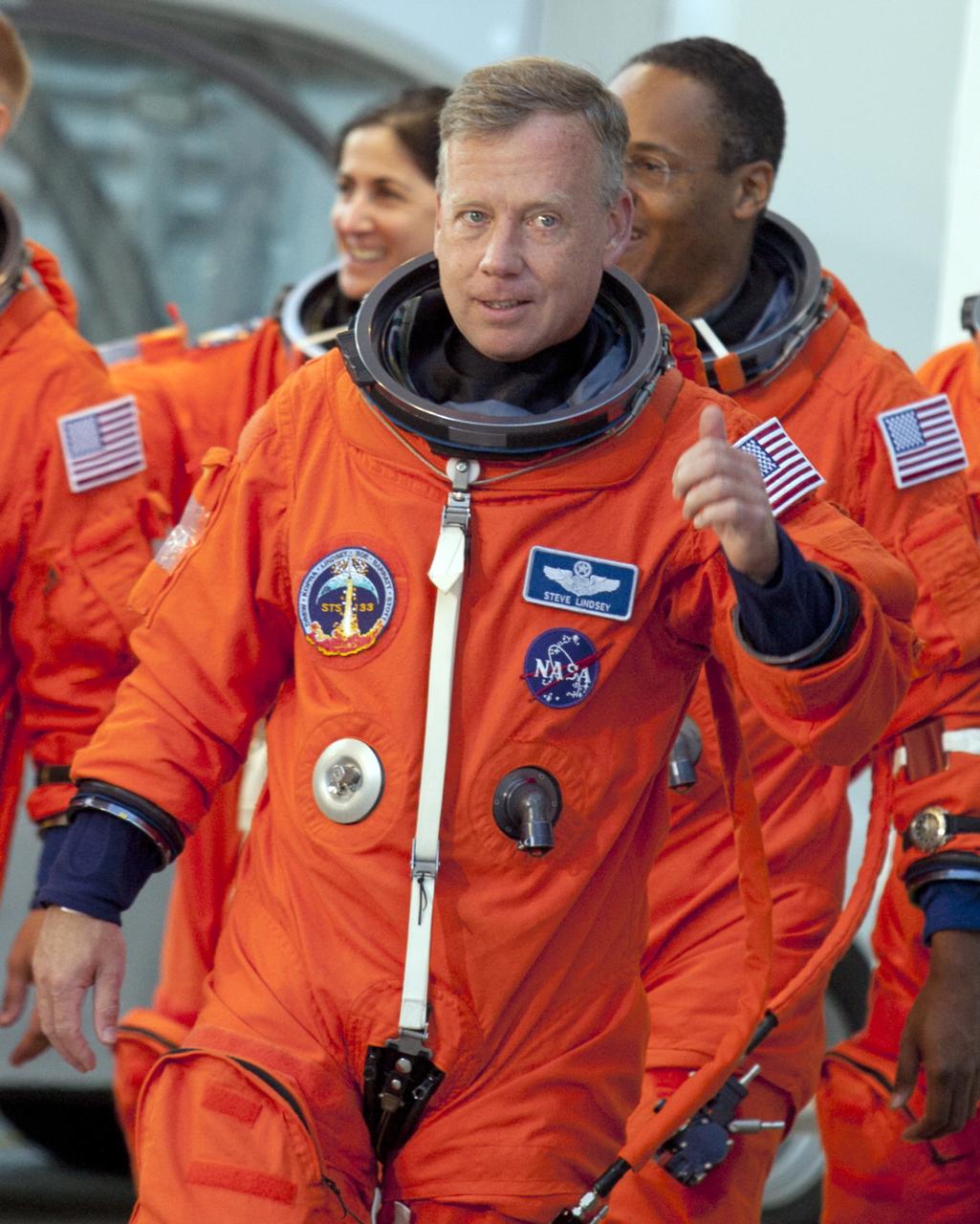
Shuttle Discovery STS-133 Mission Commander Steve Lindsey gives a thumbs up during a practice crew walkout at Kennedy Space Center, Cape Canaveral, Florida, USA 15 October 2010. The crew of six is headed to launch pad 39A for a mock countdown that completes the three day Terminal Countdown Demonstration Test. Shuttle Discovery is being prepared for what is to be it's final mission to the International Space Station, with launch scheduled for no earlier than 01 November 2010.
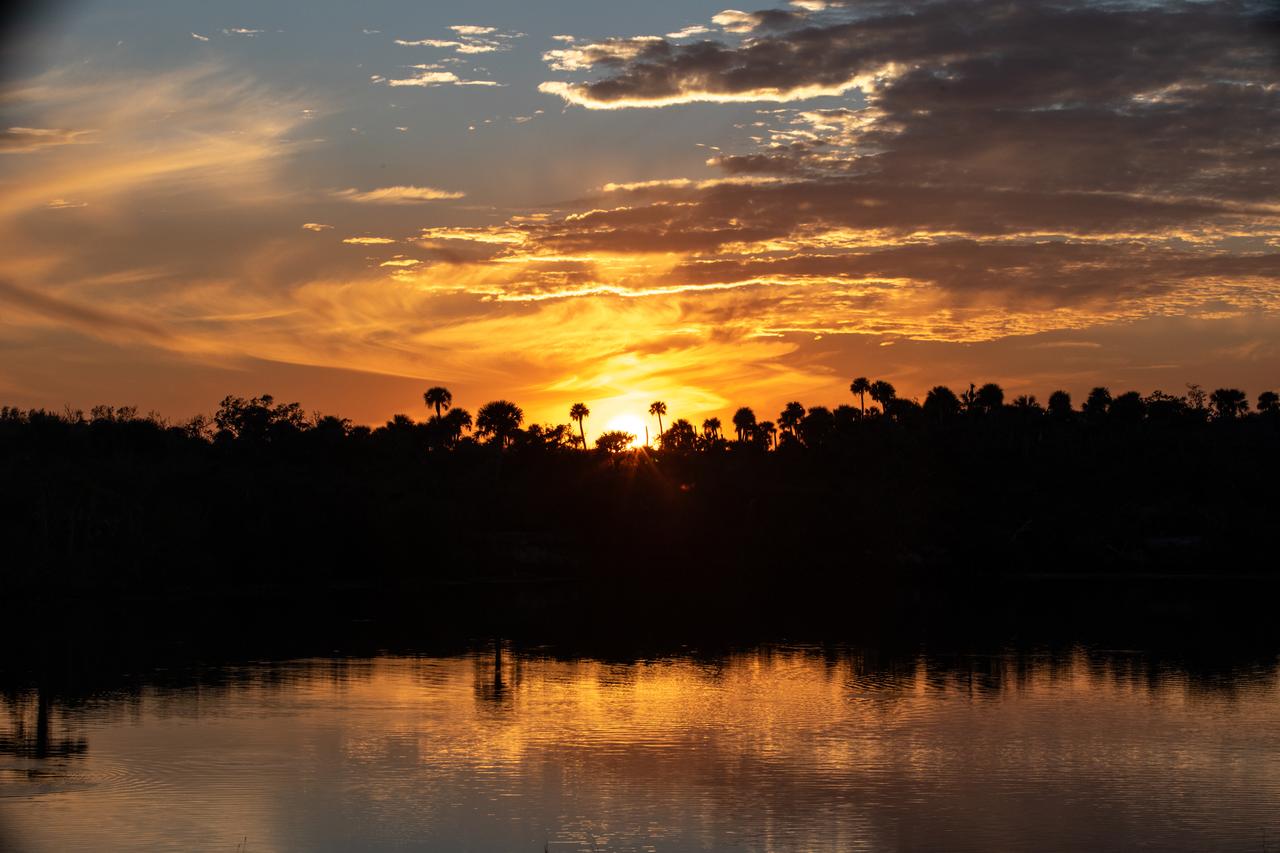
Photographers at NASA capture the sunset on Tuesday, Jan. 30, 2024, at the agency’s Kennedy Space Center in Florida.

Photographers at NASA capture the sunset on Tuesday, Jan. 30, 2024, near the headquarters building of the agency’s Kennedy Space Center in Florida.

Photographers at NASA capture the sunset on Tuesday, Jan. 30, 2024, near the headquarters building of the agency’s Kennedy Space Center in Florida.
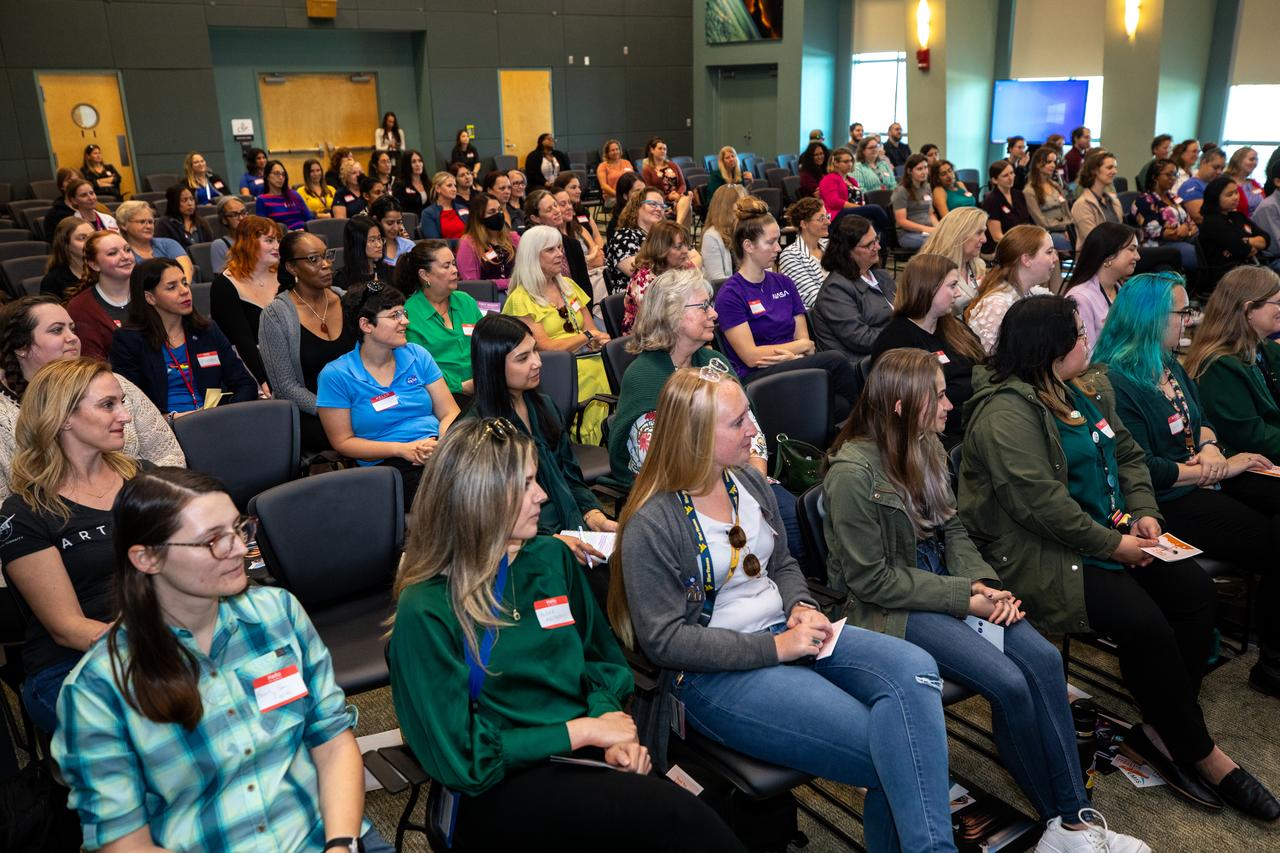
Employees from NASA’s Kennedy Space Center in Florida attend a panel discussion featuring women in leadership roles across NASA in honor of Women's History Month inside the Operations Support Building II at the agency’s Kennedy Space Center in Florida held on Friday, March 15, 2024. Participants in the Women Launching Women panel commemorate inspirational women and men who have lifted and helped others excel in their careers across the agency and offer words of advice for the current workforce include JoAnn Morgan, former associate director of Kennedy Space Center; Janet Petro, Kennedy Space Center director; Charlie Blackwell Thompson, NASA Artemis launch director; Lorna Kenna, vice president and program manager of Jacobs Space Operations Group; Kim Carter, Kennedy Space Center Office of Center Engagement and Business Integration Services director; and Casey Swails, NASA deputy associate administrator.
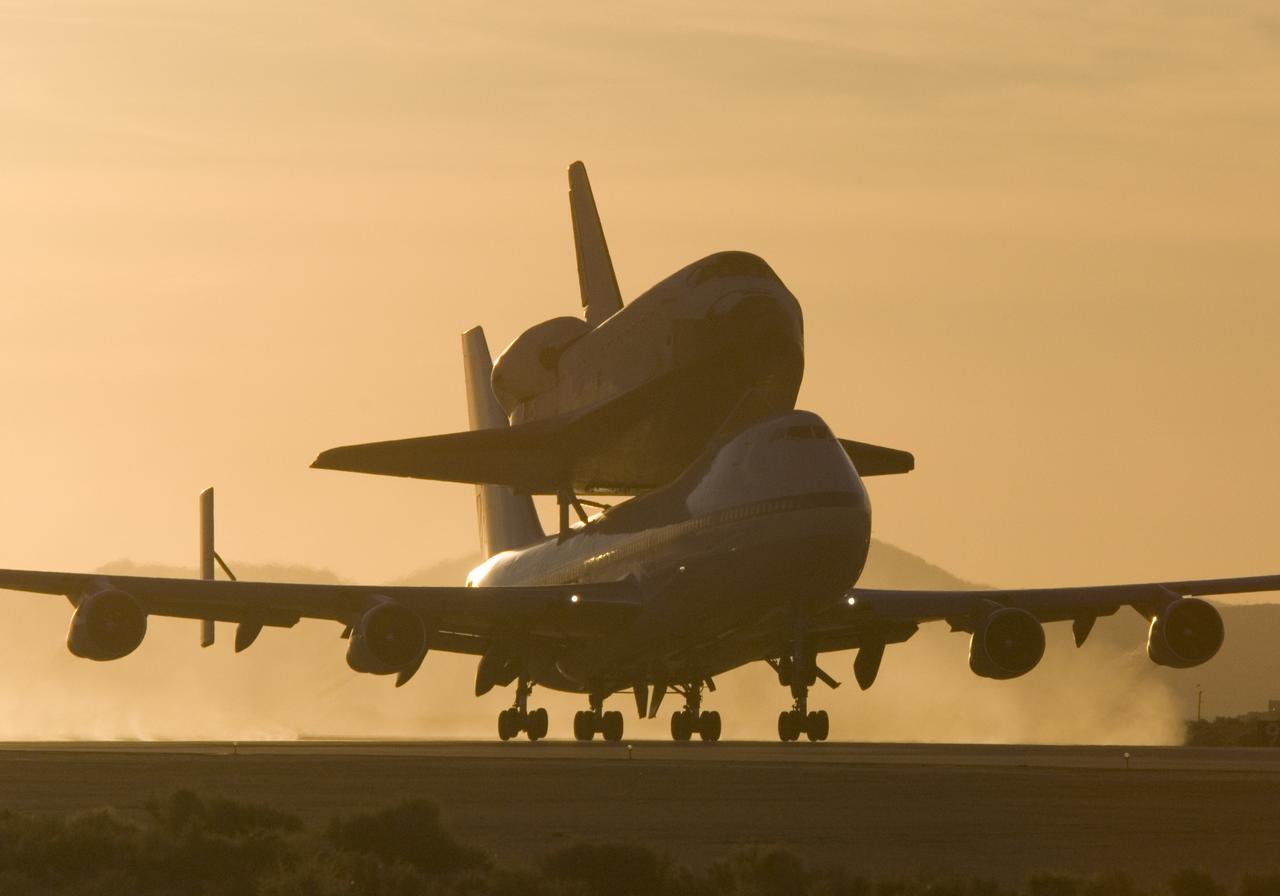
NASA's modified Boeing 747 Shuttle Carrier Aircraft with the Space Shuttle Atlantis on top lifts off from Edwards Air Force Base to begin its ferry flight back to the Kennedy Space Center in Florida. The cross-country journey will take approximately two days, with stops at several intermediate points for refueling.
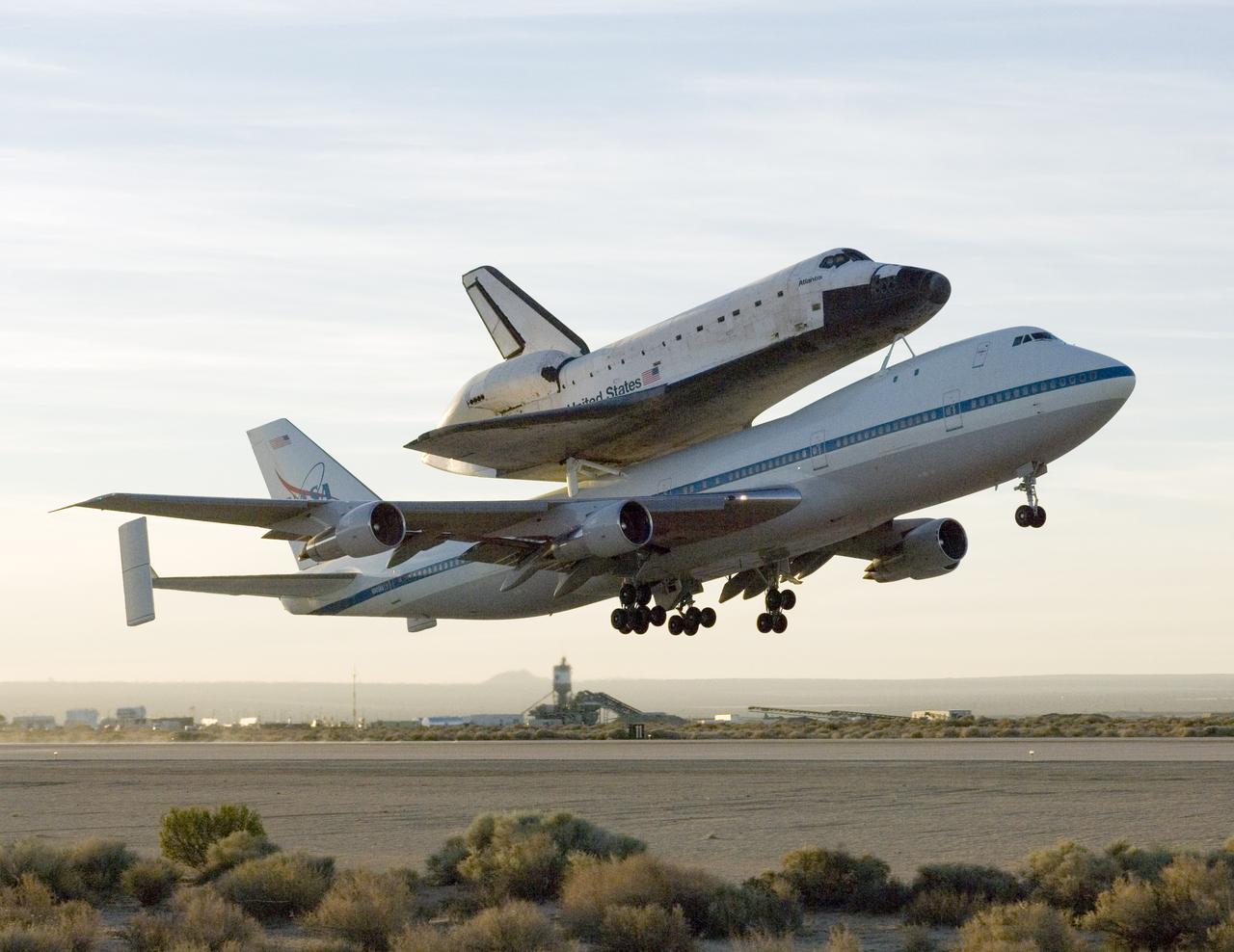
NASA's modified Boeing 747 Shuttle Carrier Aircraft with the Space Shuttle Atlantis on top lifts off from Edwards Air Force Base to begin its ferry flight back to the Kennedy Space Center in Florida. The cross-country journey will take approximately two days, with stops at several intermediate points for refueling.
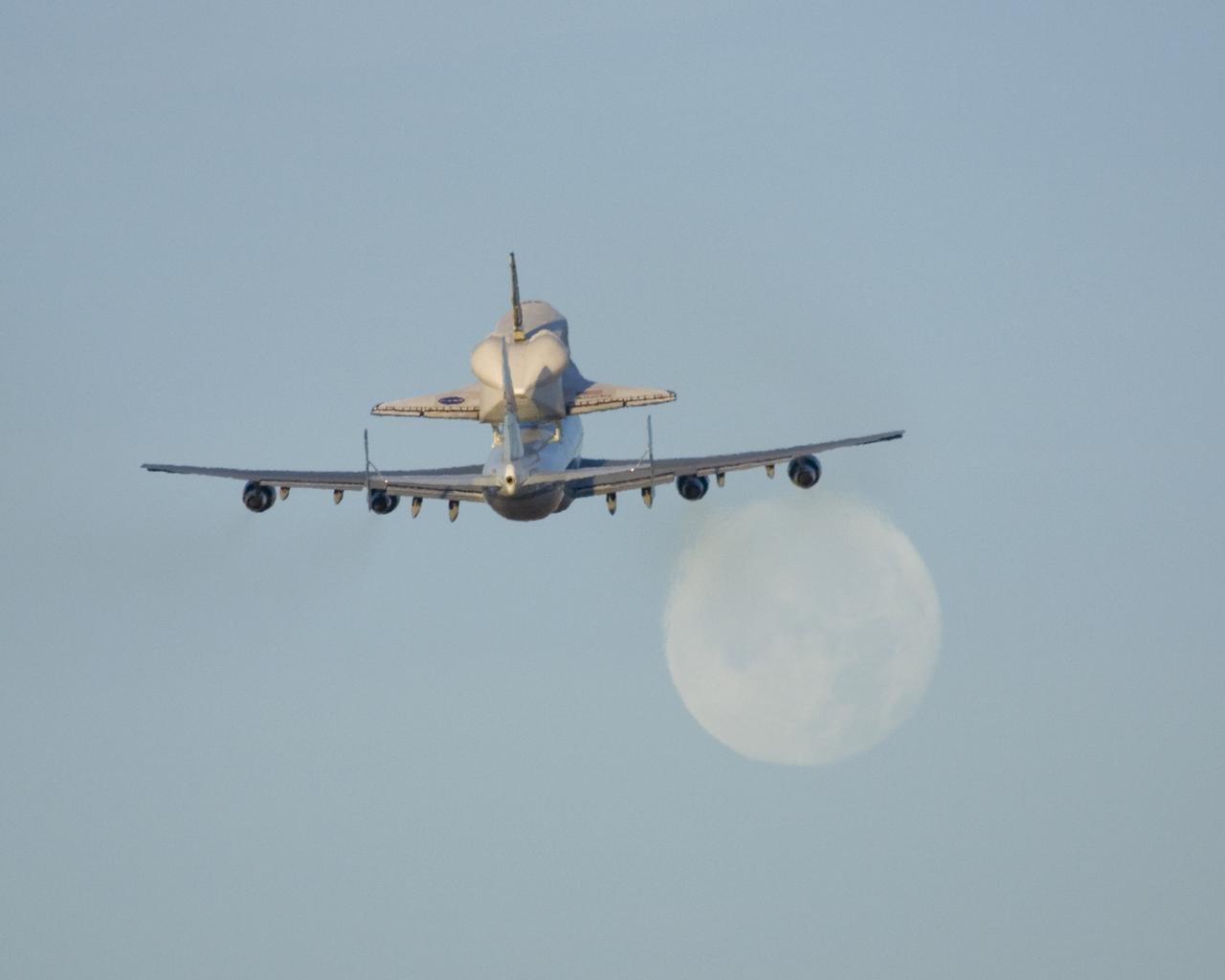
NASA's modified Boeing 747 Shuttle Carrier Aircraft with the Space Shuttle Atlantis on top lifts off from Edwards Air Force Base to begin its ferry flight back to the Kennedy Space Center in Florida. The cross-country journey will take approximately two days, with stops at several intermediate points for refueling.
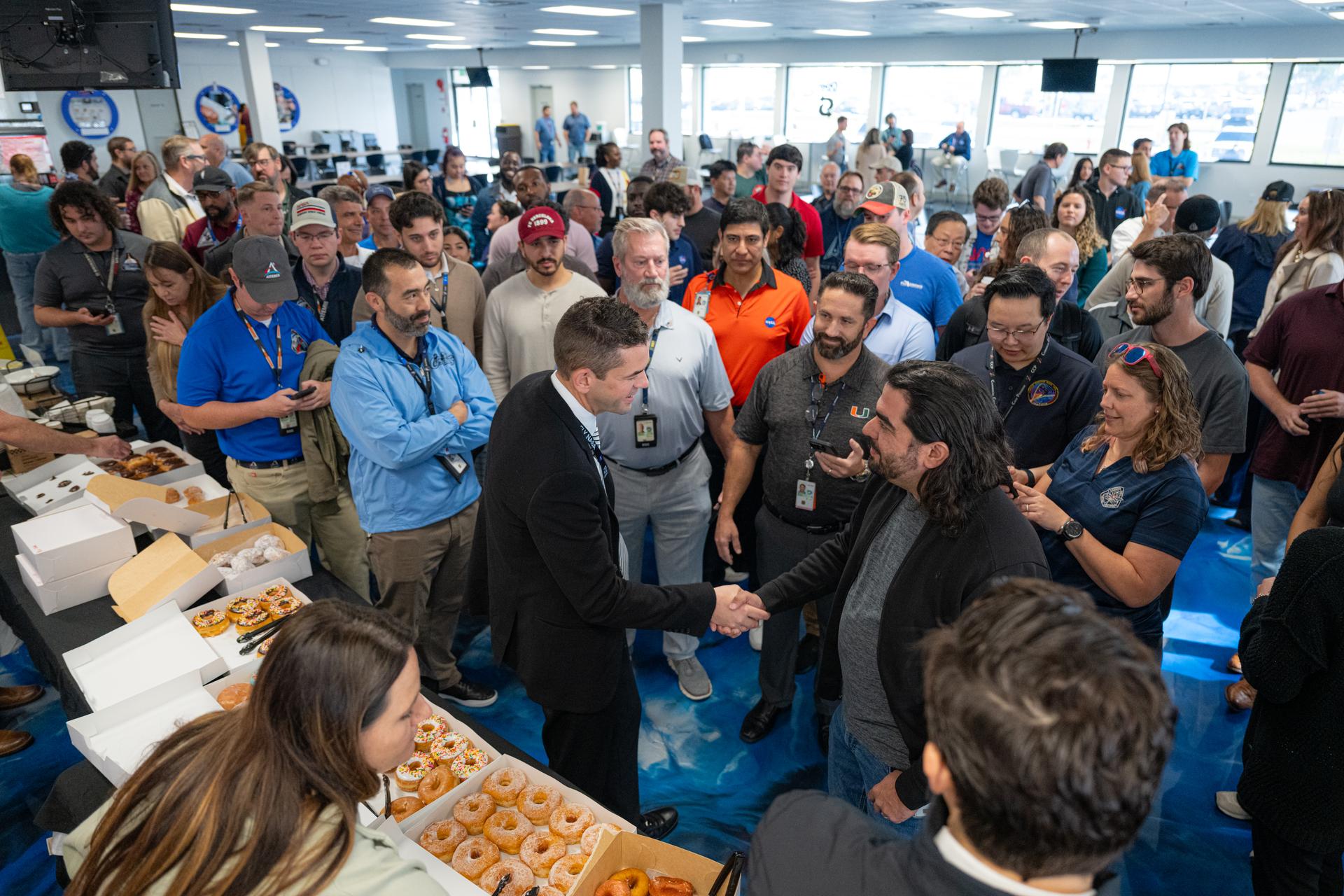
NASA Administrator Jared Isaacman, center, greets members of the workforce, Tuesday, Jan. 13, 2026, at NASA’s Kennedy Space Center in Florida. Kennedy marks the fourth stop in Isaacman’s roadshow to visit NASA facilities and engage directly with the agency’s workforce. Photo Credit: (NASA/John Kraus)
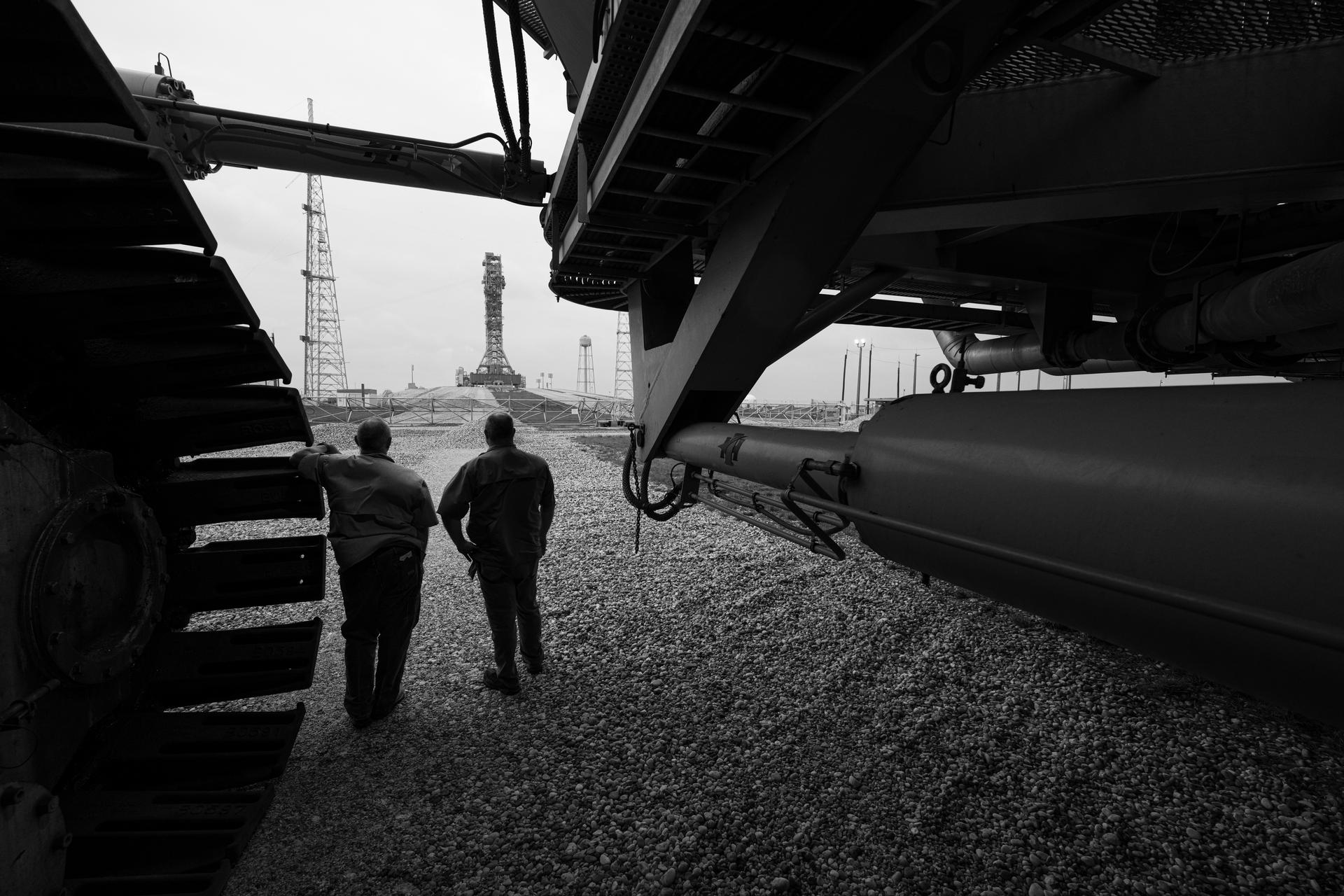
Clark Ford, element operations manager at NASA's Kennedy Space Center, left, and Doug Levine, contractor security manager at NASA's Kennedy Space Center, right, pose for a photograph with Crawler Transporter 2 outside the gate of Launch Complex 39B, Wednesday, Apr. 8, 2026, at NASA’s Kennedy Space Center in Florida. Photo Credit: (NASA/John Kraus)
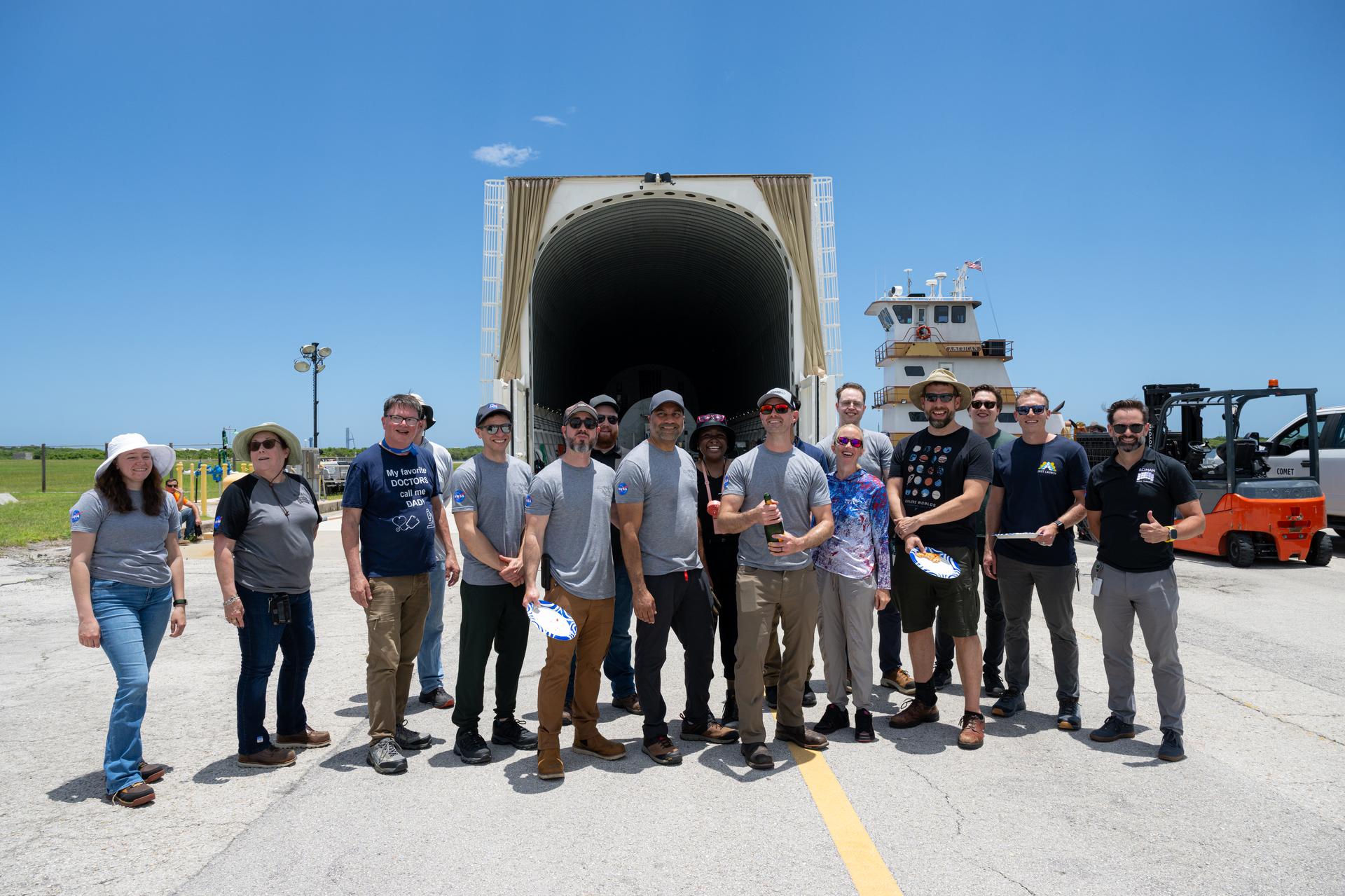
Members of the Nancy Grace Roman Space Telescope transport team pose for a photograph with NASA’s Pegasus barge, Sunday, June 21, at NASA’s Kennedy Space Center in Florida. The Pegasus barge delivered NASA’s Nancy Grace Roman Space Telescope and a weather cover for the Artemis III SLS (Space Launch System) rocket core stage to Kennedy. Photo Credit: (NASA/John Kraus)
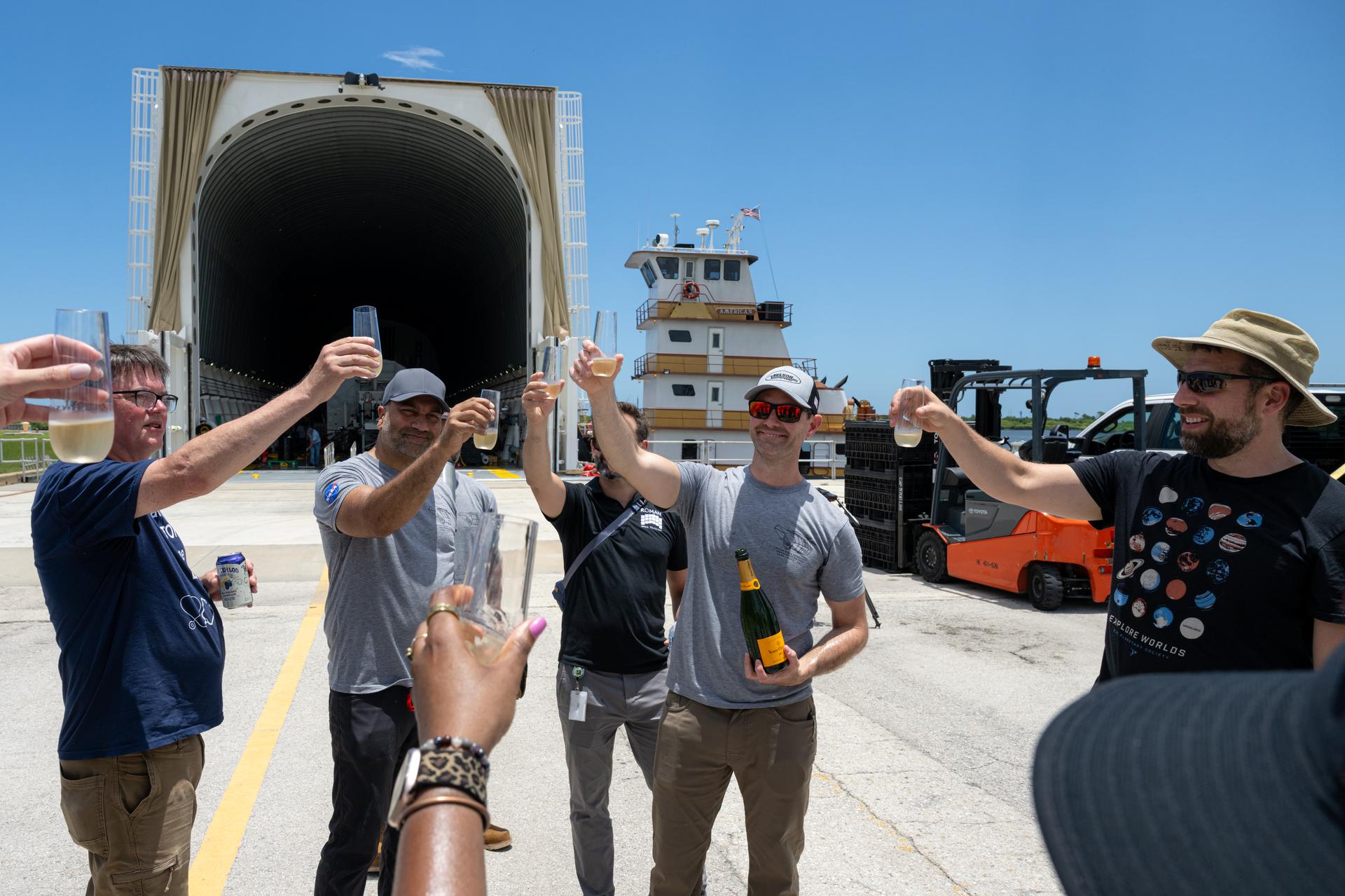
Members of the Nancy Grace Roman Space Telescope transport team celebrate with a toast following the arrival of NASA’s Pegasus barge, Sunday, June 21, at NASA’s Kennedy Space Center in Florida. The Pegasus barge delivered NASA’s Nancy Grace Roman Space Telescope and a weather cover for the Artemis III SLS (Space Launch System) rocket core stage to Kennedy. Photo Credit: (NASA/John Kraus)
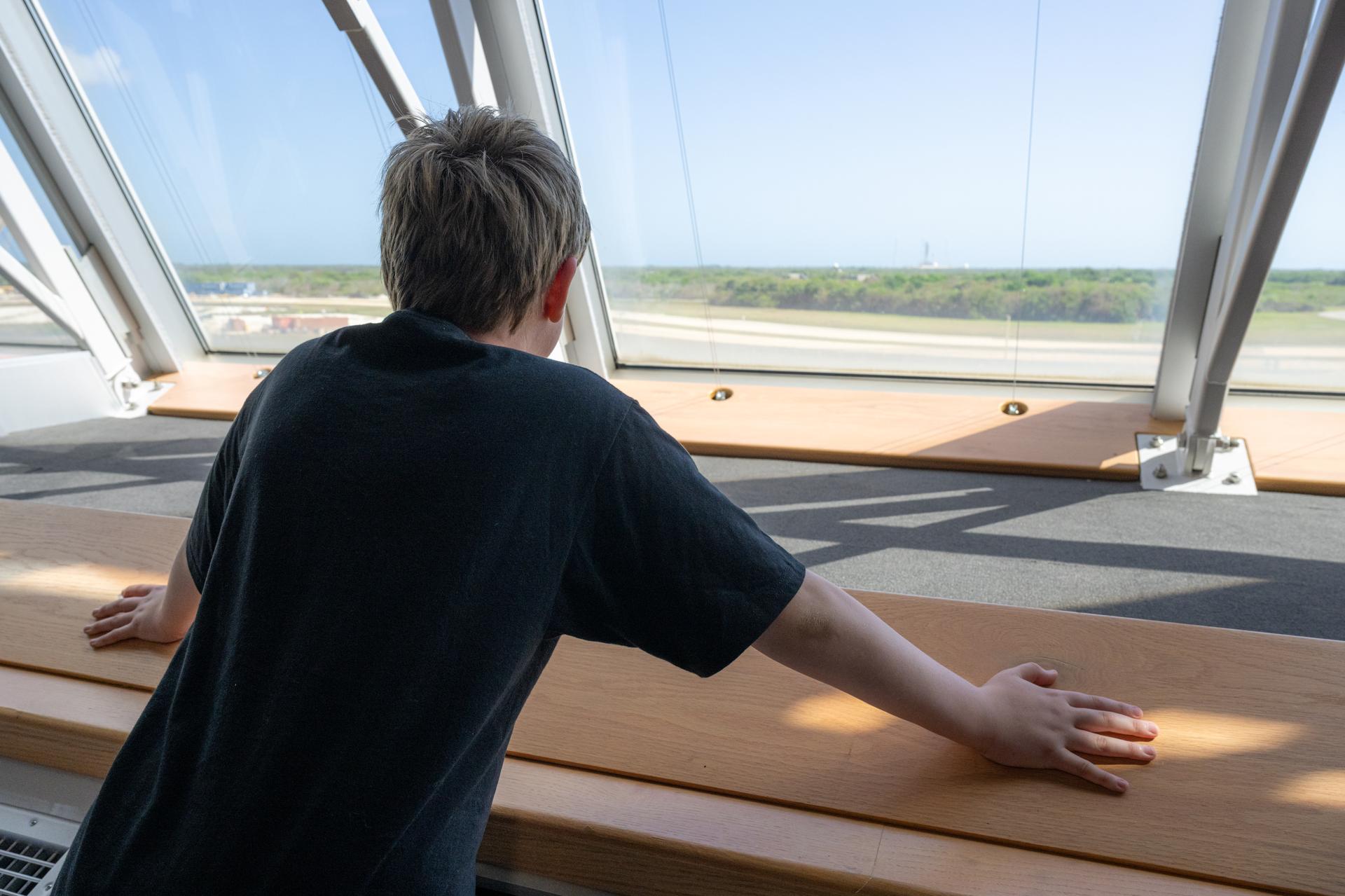
Eleven-year-old Hilt Boling is seen looking out of the windows of the Launch Control Center, Friday, Apr. 3, 2026, at NASA’s Kennedy Space Center in Florida. When asked during an April 1 television appearance why he loved space and being at the Artemis II launch, Boling exclaimed: “We’re going back to the freaking Moon, that’s why!” His comments received widespread social media attention in the following days. Photo Credit: (NASA/John Kraus)
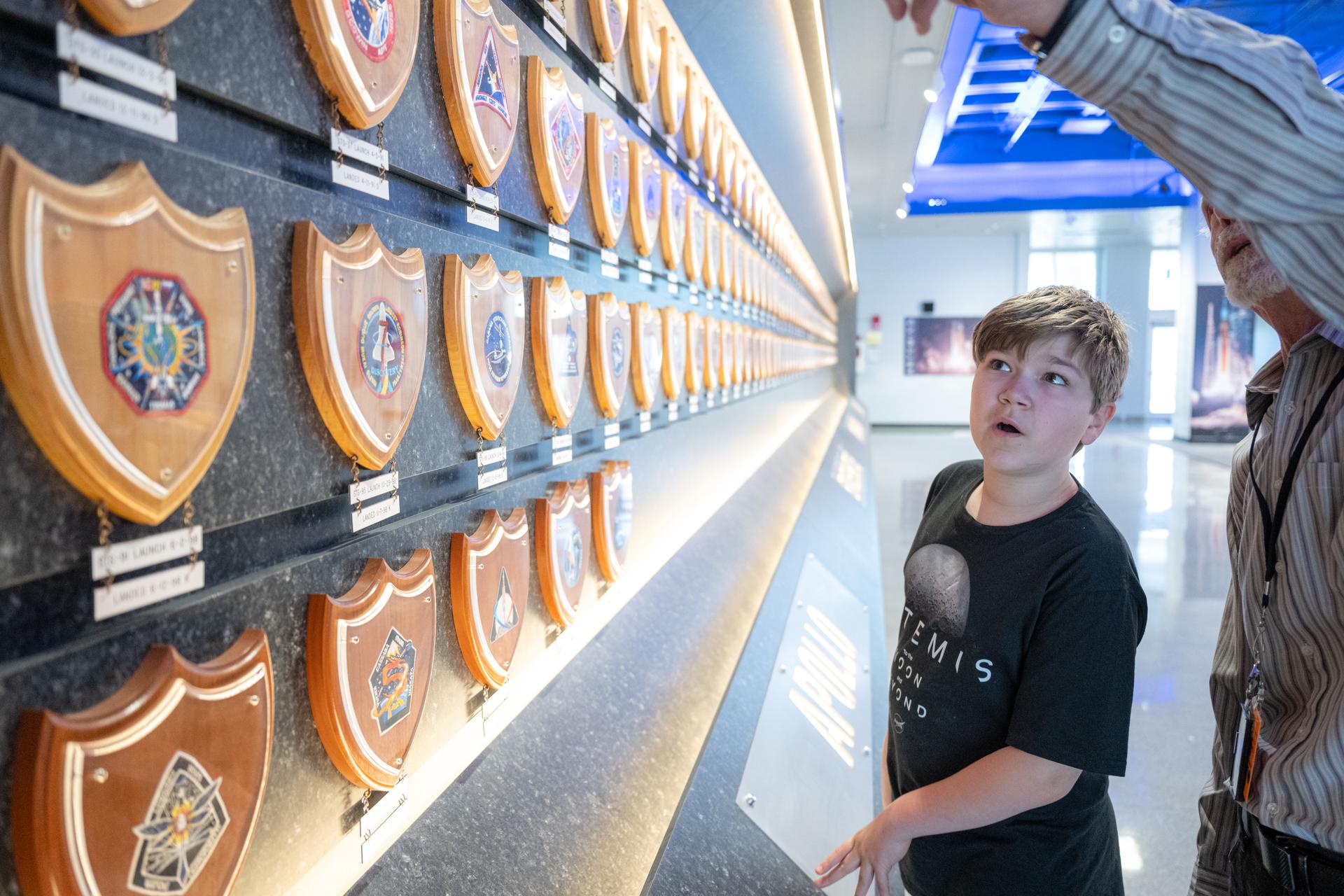
Eleven-year-old Hilt Boling is seen in the Launch Control Center, Friday, Apr. 3, 2026, at NASA’s Kennedy Space Center in Florida. When asked during an April 1 television appearance why he loved space and being at the Artemis II launch, Boling exclaimed: “We’re going back to the freaking Moon, that’s why!” His comments received widespread social media attention in the following days. Photo Credit: (NASA/John Kraus)
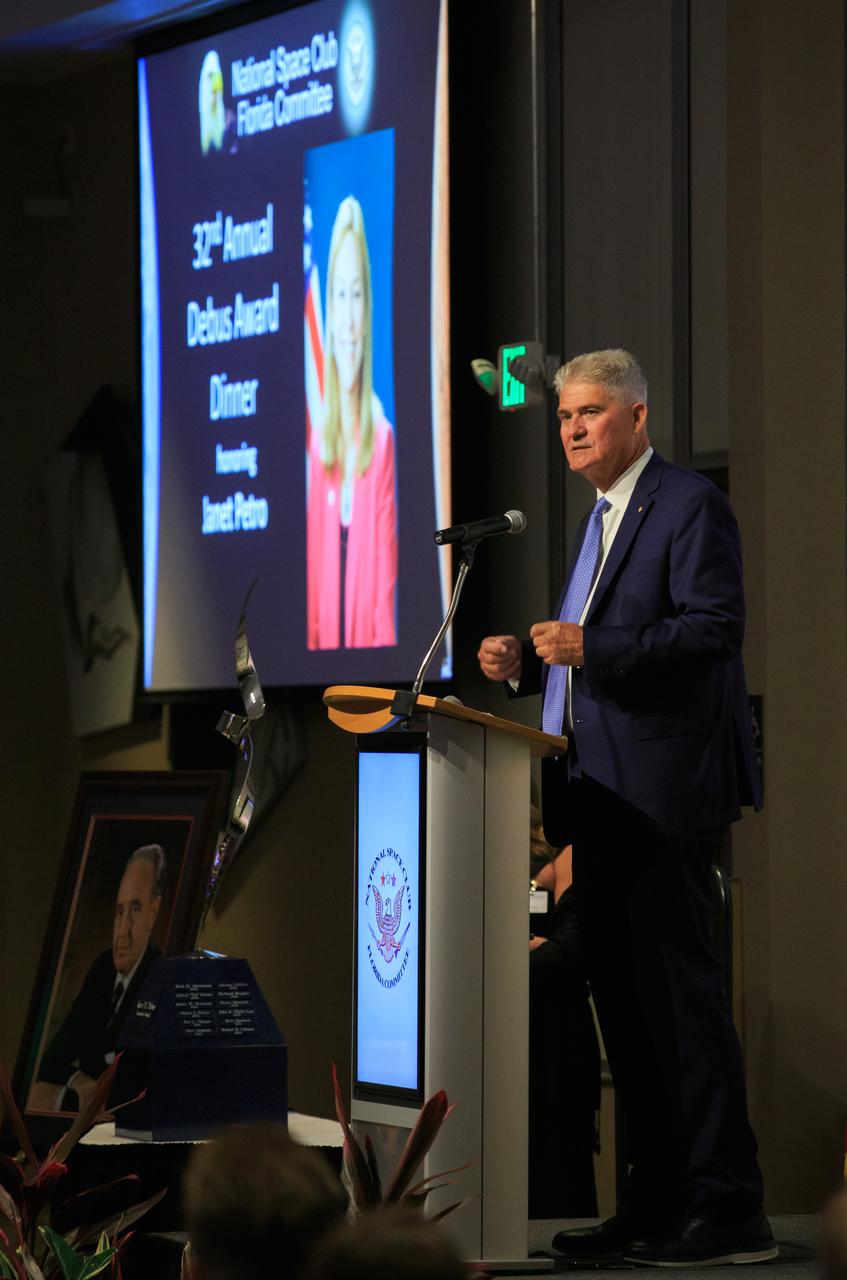
Bill Parsons, vice president of Human Space Programs at Peraton, speaks at a ceremony honoring Kennedy Space Center Director Janet Petro with the Dr. Kurt H. Debus Award on June 24, 2022, at the Florida spaceport’s visitor complex. The National Space Club Florida Committee presented Petro with the prestigious award for her contributions to America’s aerospace efforts within the state of Florida. The award – originating in 1990 – is named after Kennedy’s first director.
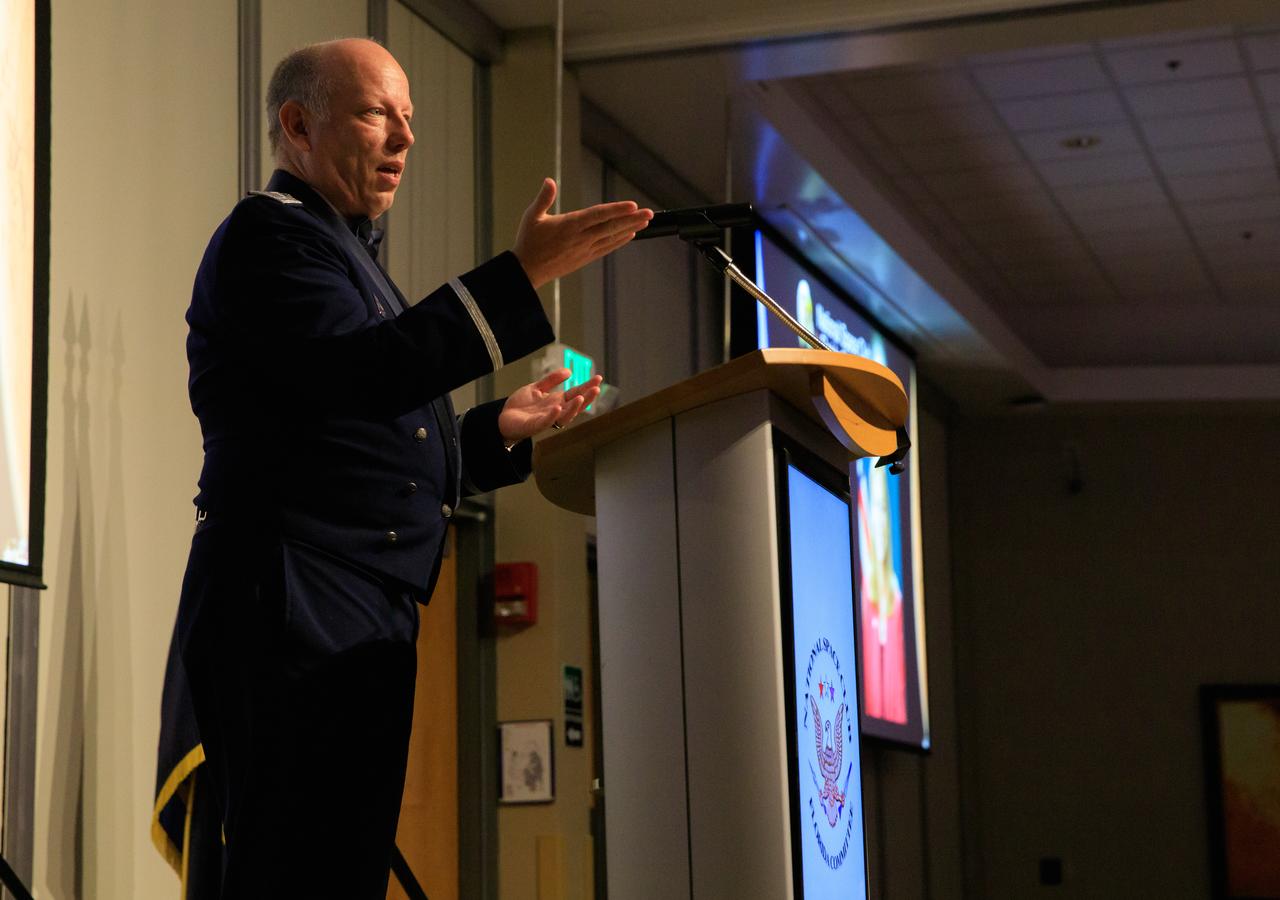
Brigadier General Stephen Purdy, commander of Space Launch Delta 45, speaks at a ceremony honoring Kennedy Space Center Director Janet Petro with the Dr. Kurt H. Debus Award on June 24, 2022, at the Florida spaceport’s visitor complex. The National Space Club Florida Committee presented Petro with the prestigious award for her contributions to America’s aerospace efforts within the state of Florida. The award – originating in 1990 – is named after Kennedy’s first director.
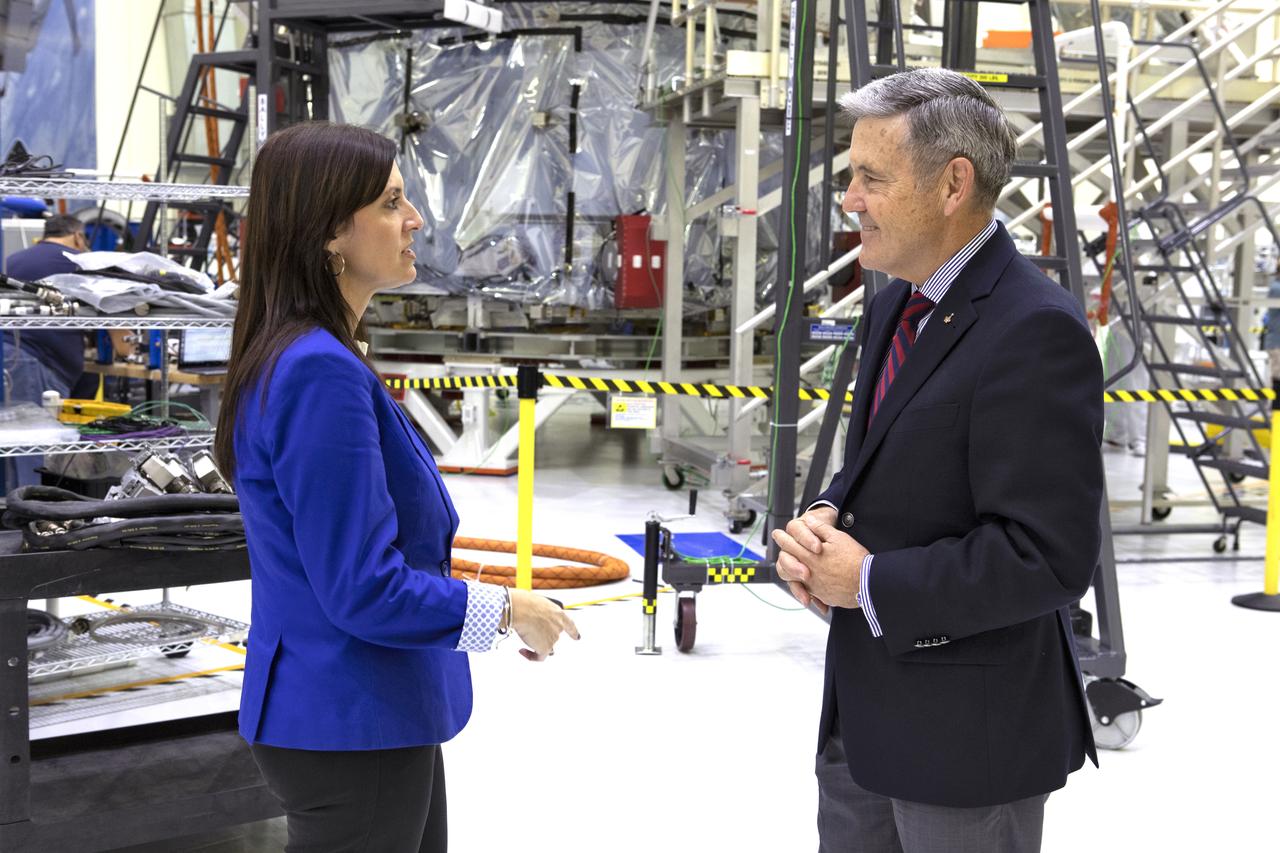
Florida Lt. Governor Jeanette Nunez is given a tour of the Neil Armstrong Operations and Checkout (O&C) Building high bay by Kennedy Space Center Director Bob Cabana on April 5, 2019. During the tour, Nunez was shown NASA’s Orion spacecraft, which will be flown on the agency’s Exploration Mission-1 (EM-1). Orion will launch atop the Space Launch System rocket from Kennedy’s Launch Complex 39B. This uncrewed mission will provide the foundation for human deep space exploration and pave the way for the crewed EM-2 mission.
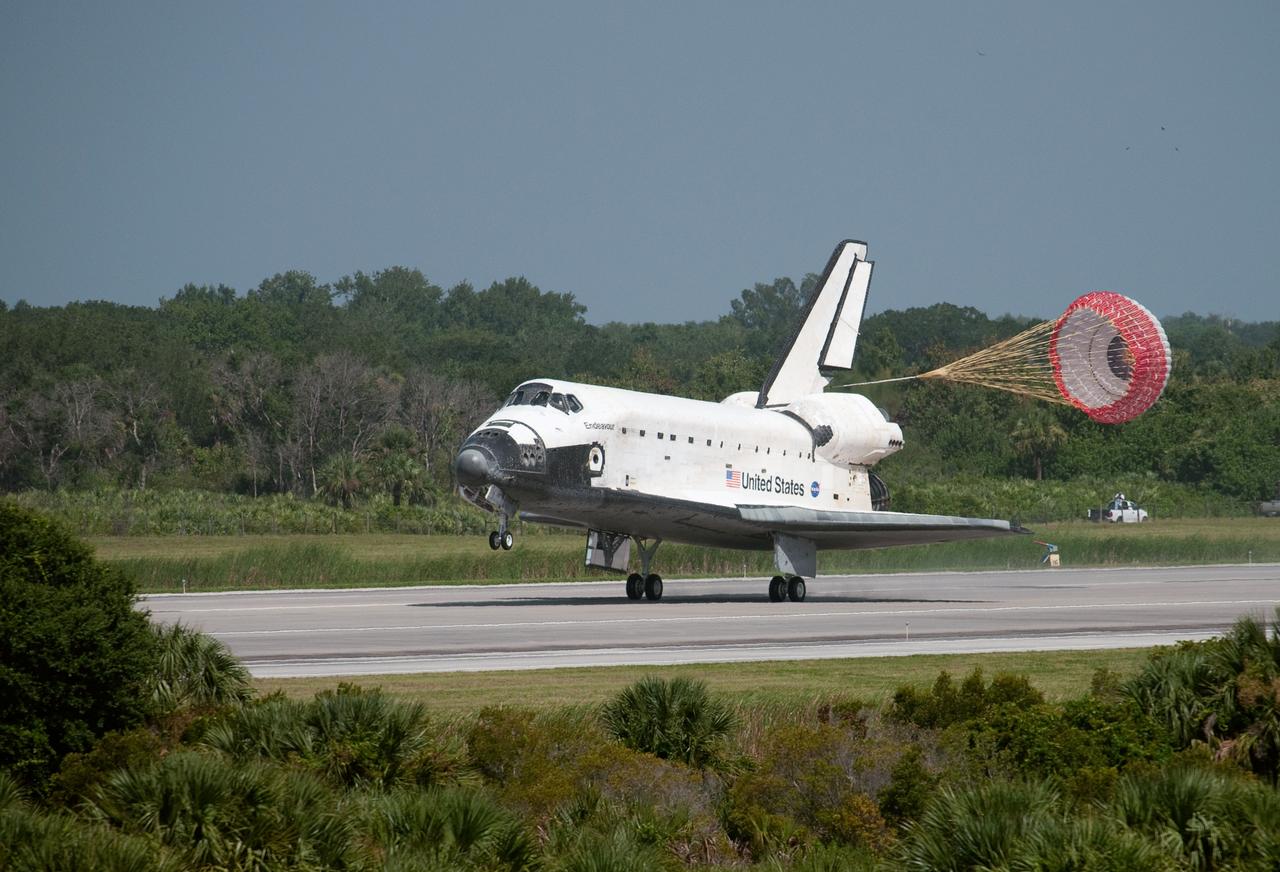
The space shuttle Endeavour and its crew land, Friday, July 31, 2009 at NASA's Kennedy Space Center in Cape Canaveral, Florida, completing a 16-day journey of more than 6.5 million miles. Endeavour delivered the final segment to the Japan Aerospace Exploration Agency's Kibo laboratory and a new crew member to the International Space Station. Photo Credit: (NASA/Bill Ingalls)
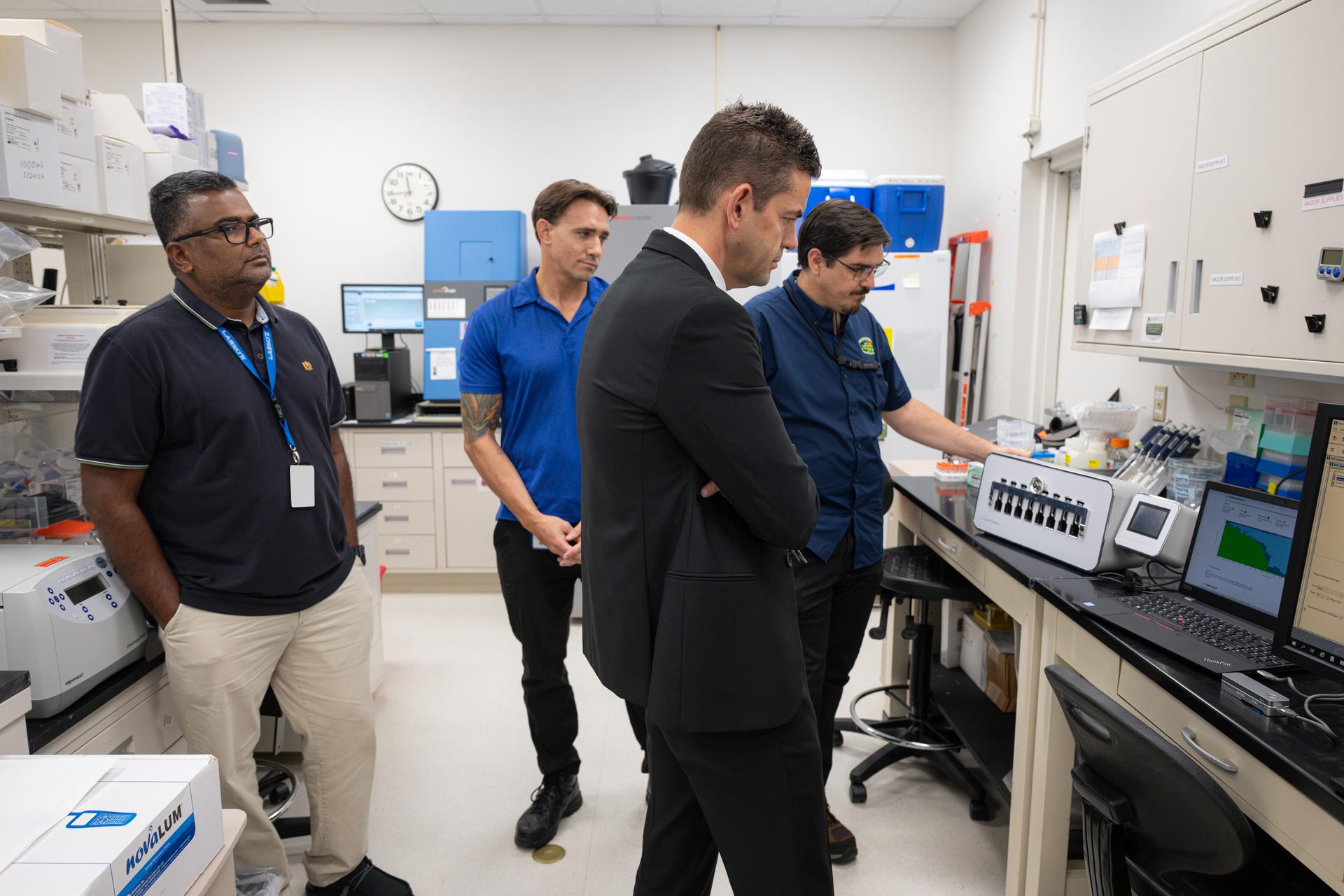
NASA Administrator Jared Isaacman visits the Life Sciences Laboratory, Friday, Aug. 14, 2026, at NASA's Kennedy Space Center in Florida. Photo Credit: (NASA/John Kraus)
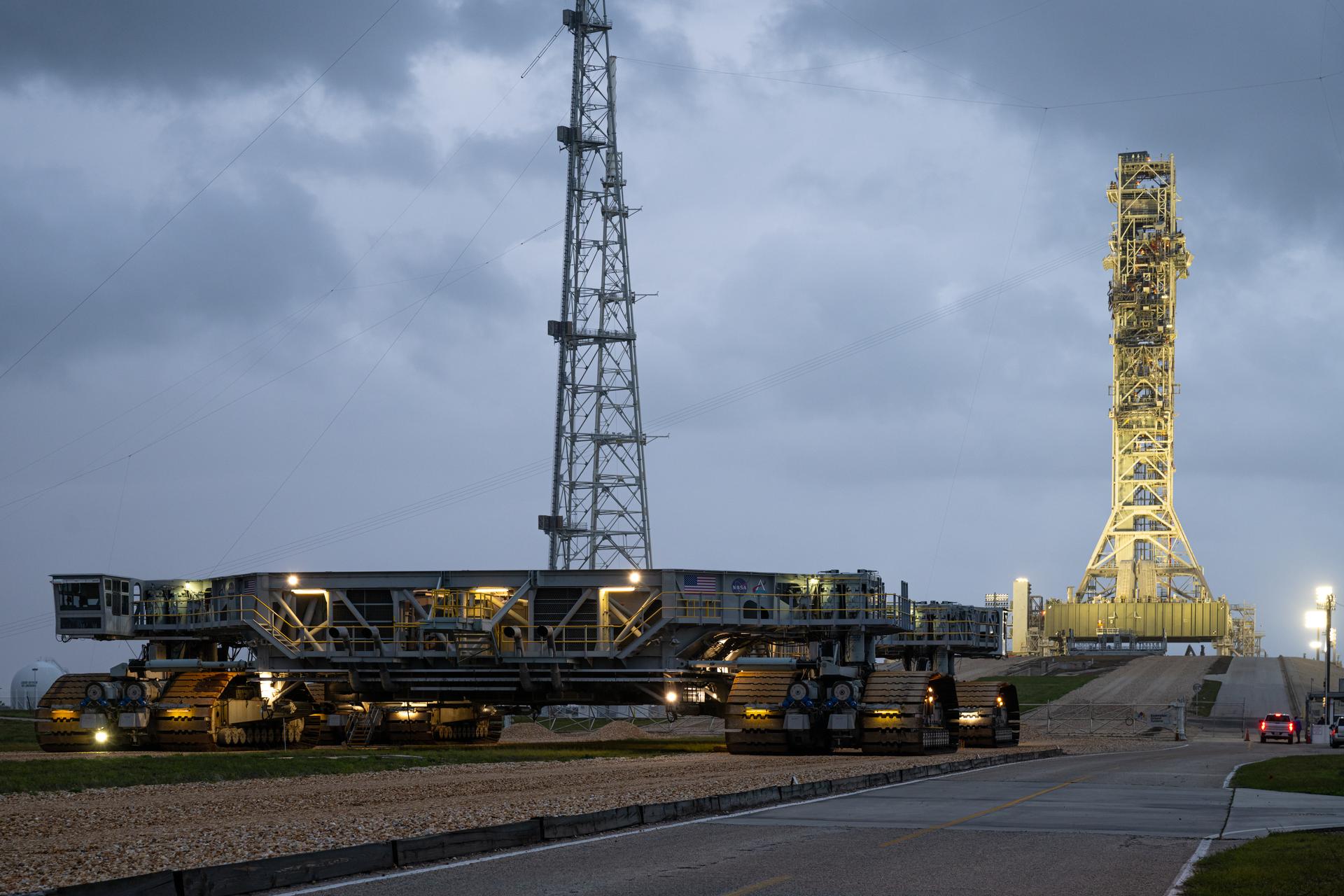
Crawler Transporter 2 is seen outside the gate of Launch Complex 39B, Wednesday, Apr. 8, 2026, at NASA’s Kennedy Space Center in Florida. Photo Credit: (NASA/John Kraus)

One of NASA Administrator Jared Isaacman's personal F-5 aircraft is seen at sunset, Friday, March 27, 2026, at NASA's Kennedy Space Center in Florida. Photo Credit: (NASA/John Kraus)
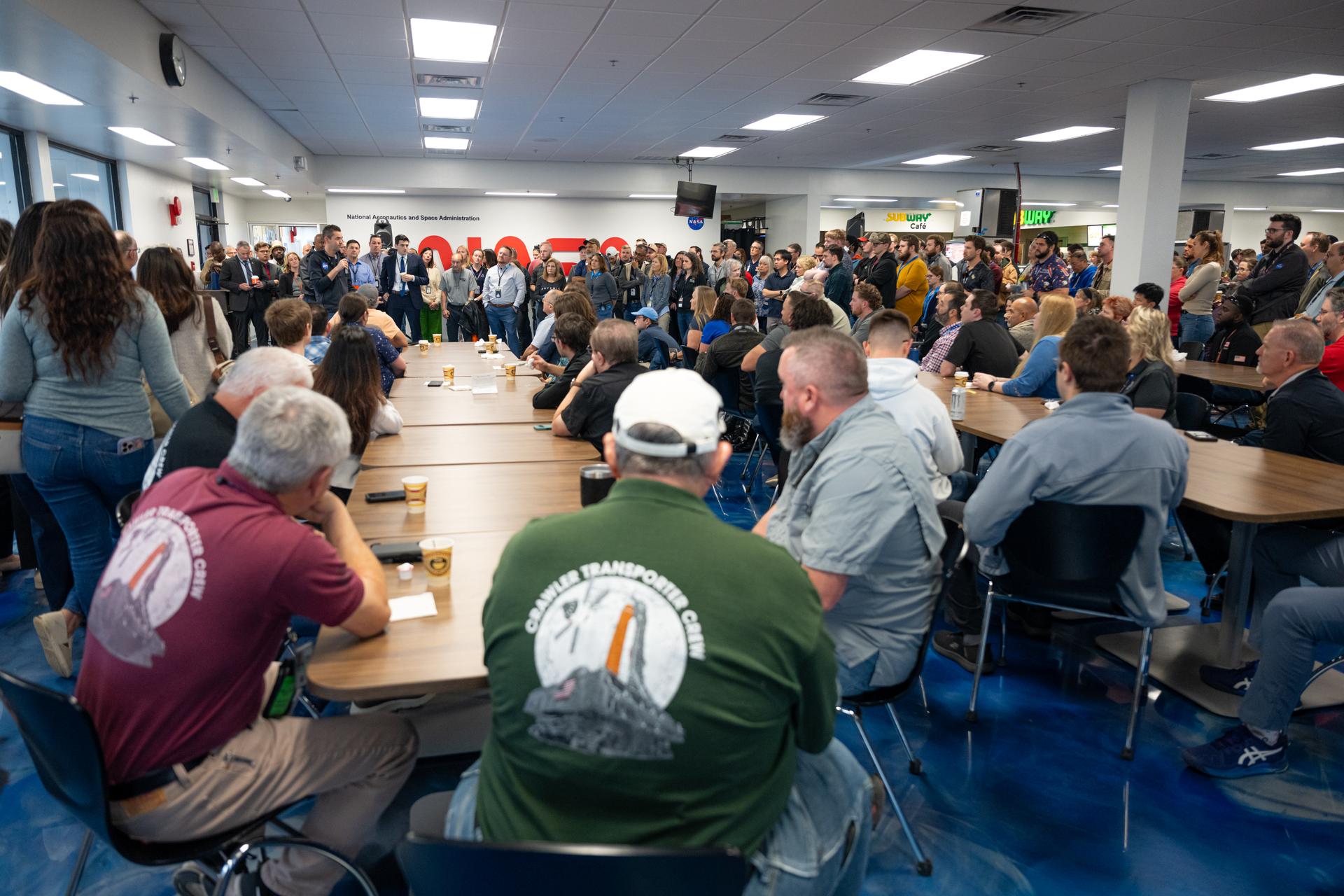
NASA Administrator Jared Isaacman speaks during a workforce Q&A session, Thursday, Jan. 22, 2026, at NASA’s Kennedy Space Center in Florida. Photo Credit: (NASA/John Kraus)
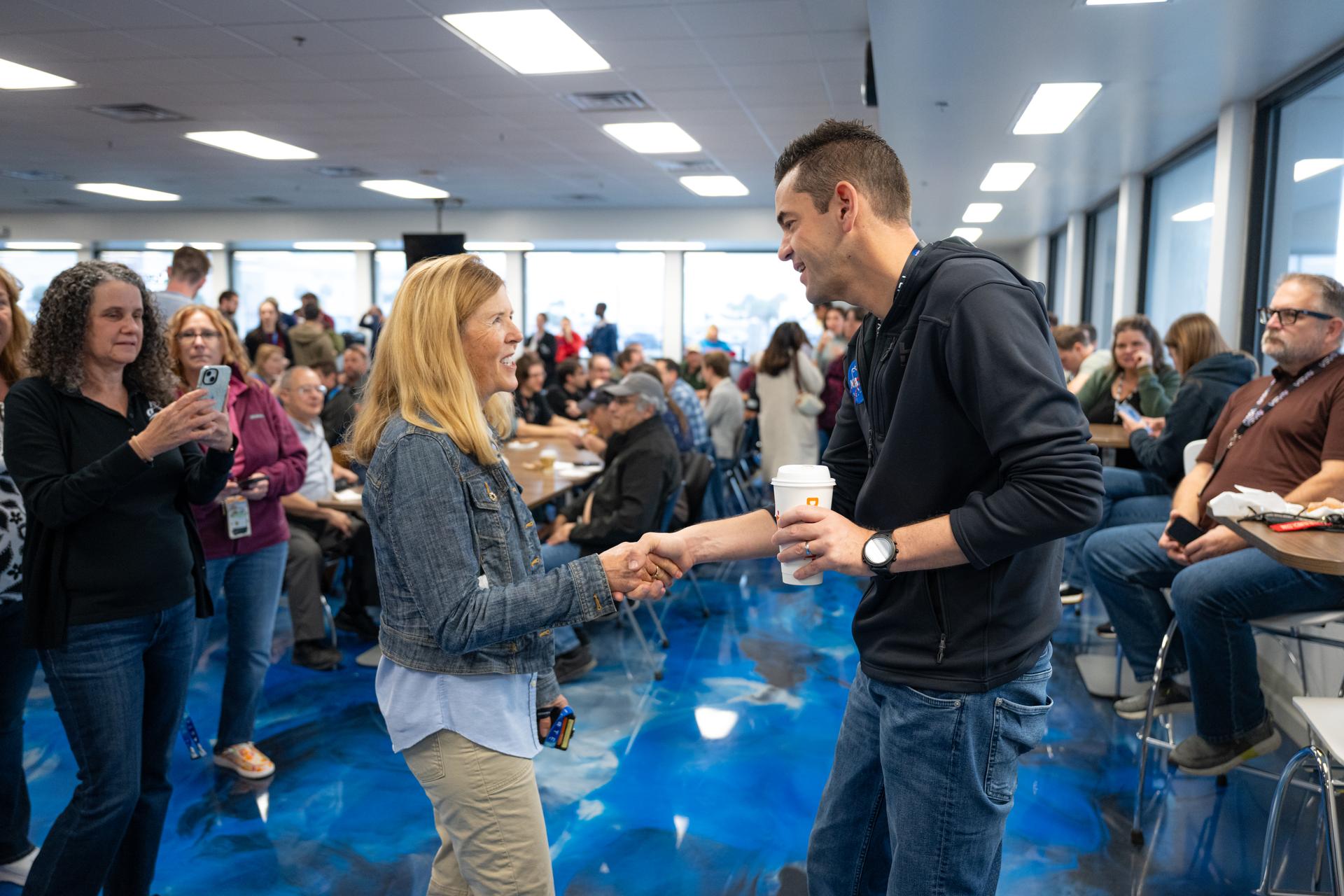
NASA Administrator Jared Isaacman, right, greets a member of the workforce, Thursday, Jan. 22, 2026, at NASA’s Kennedy Space Center in Florida. Photo Credit: (NASA/John Kraus)
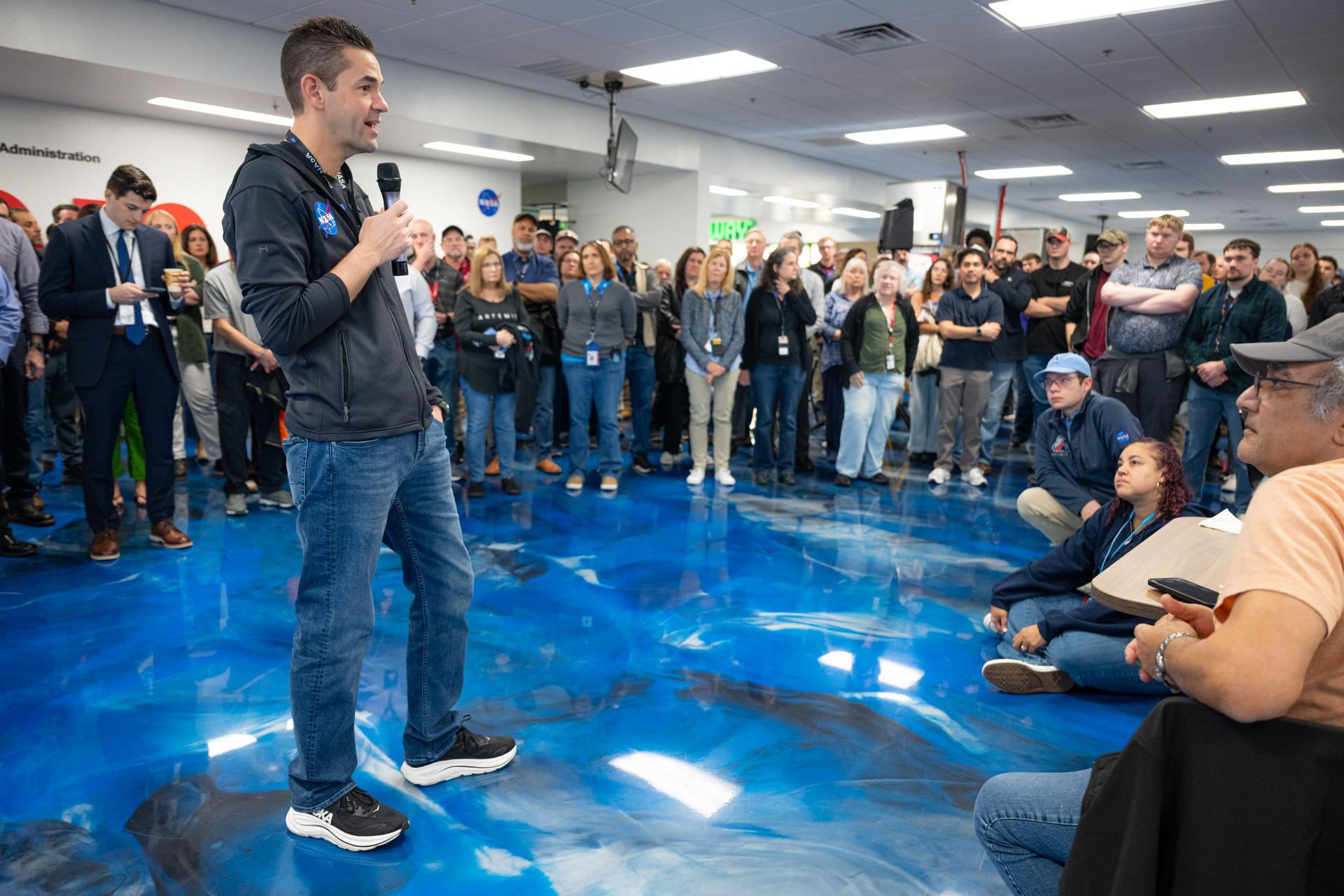
NASA Administrator Jared Isaacman, left, speaks during a workforce Q&A session, Thursday, Jan. 22, 2026, at NASA’s Kennedy Space Center in Florida. Photo Credit: (NASA/John Kraus)
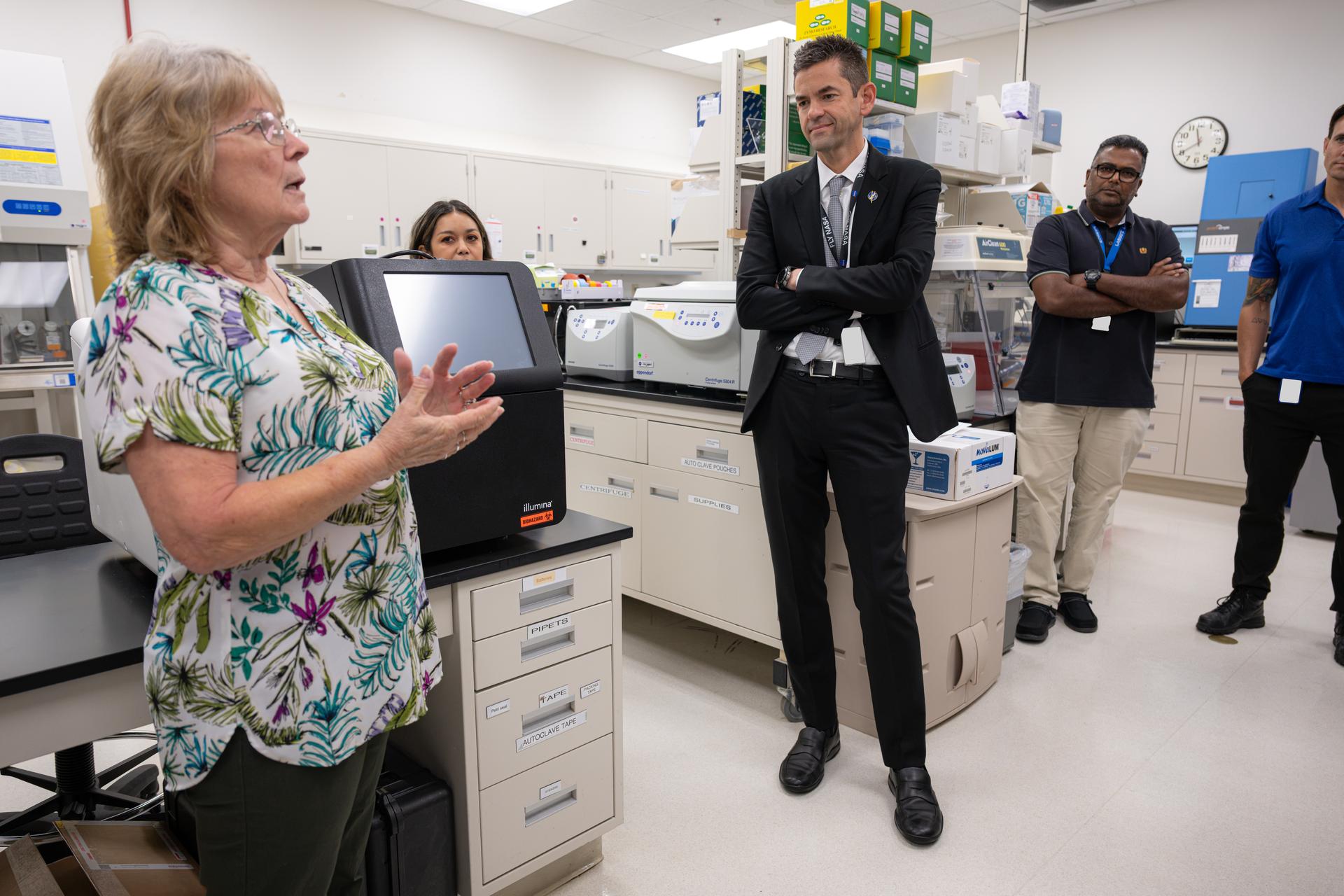
NASA Administrator Jared Isaacman visits the Life Sciences Laboratory, Friday, Aug. 14, 2026, at NASA's Kennedy Space Center in Florida. Photo Credit: (NASA/John Kraus)

Kennedy Space Center employees participate in a Town Hall meeting with NASA Administrator Jared Isaacman and Center Director Brian Hughes on Tuesday, June 16, 2026, in the Training Auditorium at NASA’s Kennedy Space Center in Florida.

NASA Administrator Jared Isaacman and Kennedy Space Center Director Brian Hughes speak with employees during a Town Hall meeting at the center’s Training Auditorium on Tuesday, June 16, 2026, at NASA’s Kennedy Space Center in Florida.

Kennedy Space Center employees participate in a Town Hall meeting with NASA Administrator Jared Isaacman and Center Director Brian Hughes on Tuesday, June 16, 2026, in the Training Auditorium at NASA’s Kennedy Space Center in Florida.
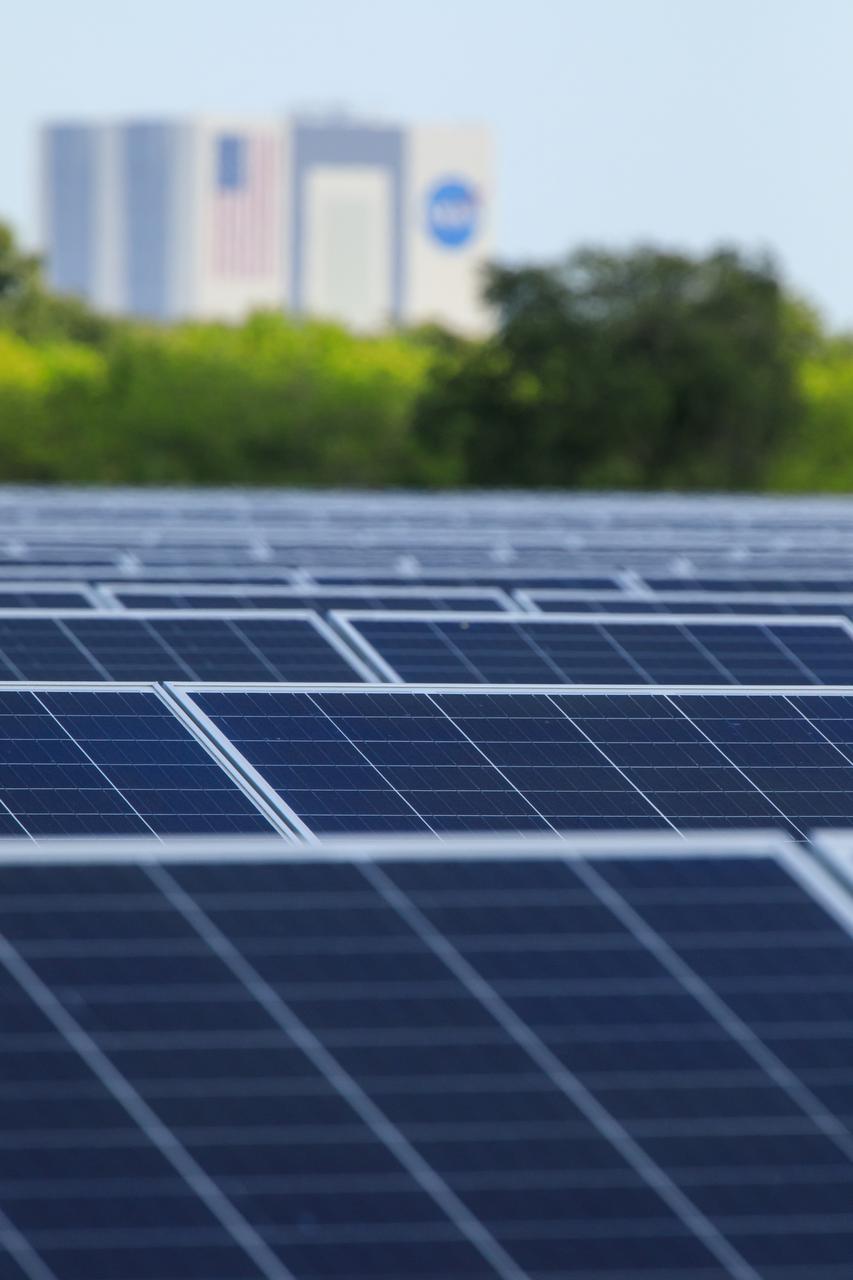
Seen here, with the iconic Vehicle Assembly Building in the background, is an up-close view of solar panels that are part of Florida Power and Light’s (FPL) new Discovery Solar Energy Center at NASA’s Kennedy Space Center in Florida. The 74.5-megawatt solar site spans 491 acres at Kennedy and contains about 250,000 solar panels. Harnessing energy from the Sun, the panels produce enough energy to power approximately 15,000 homes. The panels do not directly power anything at Kennedy, and instead, send energy directly to FPL’s electricity grid for distribution to existing customers. Construction began in spring 2020, and the energy center became fully operational on May 30, 2021.
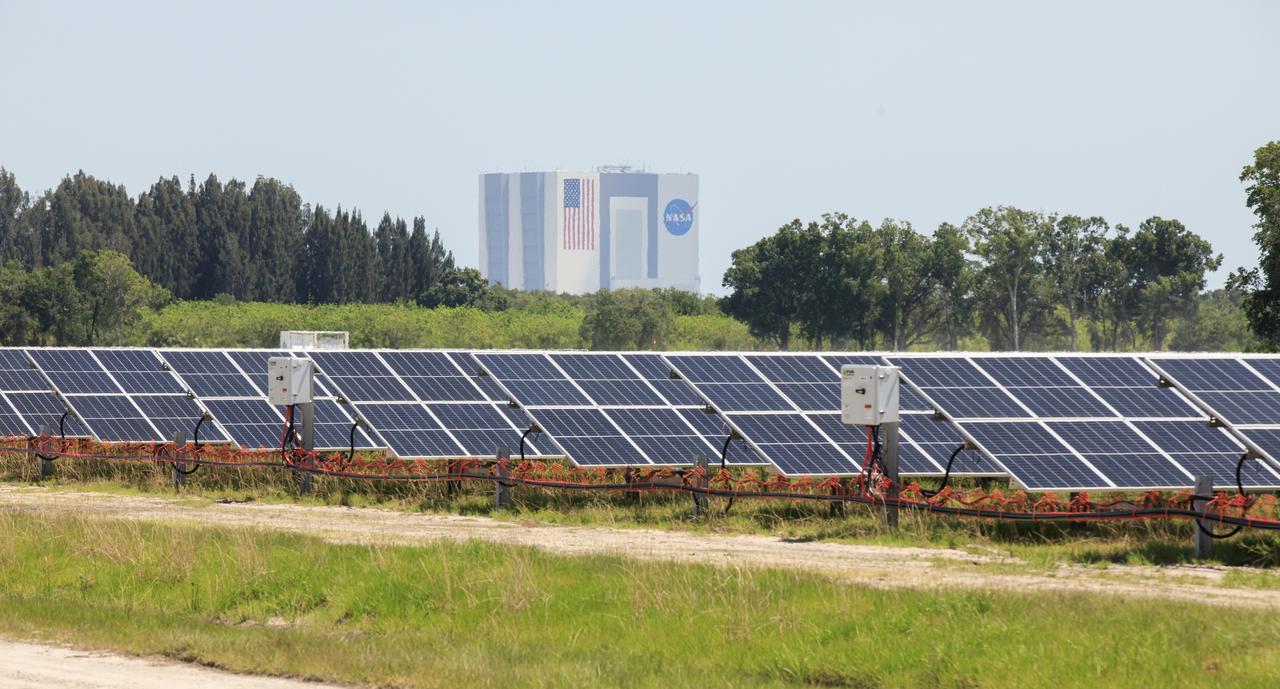
With the iconic Vehicle Assembly Building serving as the backdrop, a portion of the solar panels that make up Florida Power and Light’s (FPL) new Discovery Solar Energy Center is seen at NASA’s Kennedy Space Center in Florida. The 74.5-megawatt solar site spans 491 acres at Kennedy and contains about 250,000 solar panels. Harnessing energy from the Sun, the panels produce enough energy to power approximately 15,000 homes. The panels do not directly power anything at Kennedy, and instead, send energy directly to FPL’s electricity grid for distribution to existing customers. Construction began in spring 2020, and the energy center became fully operational on May 30, 2021.
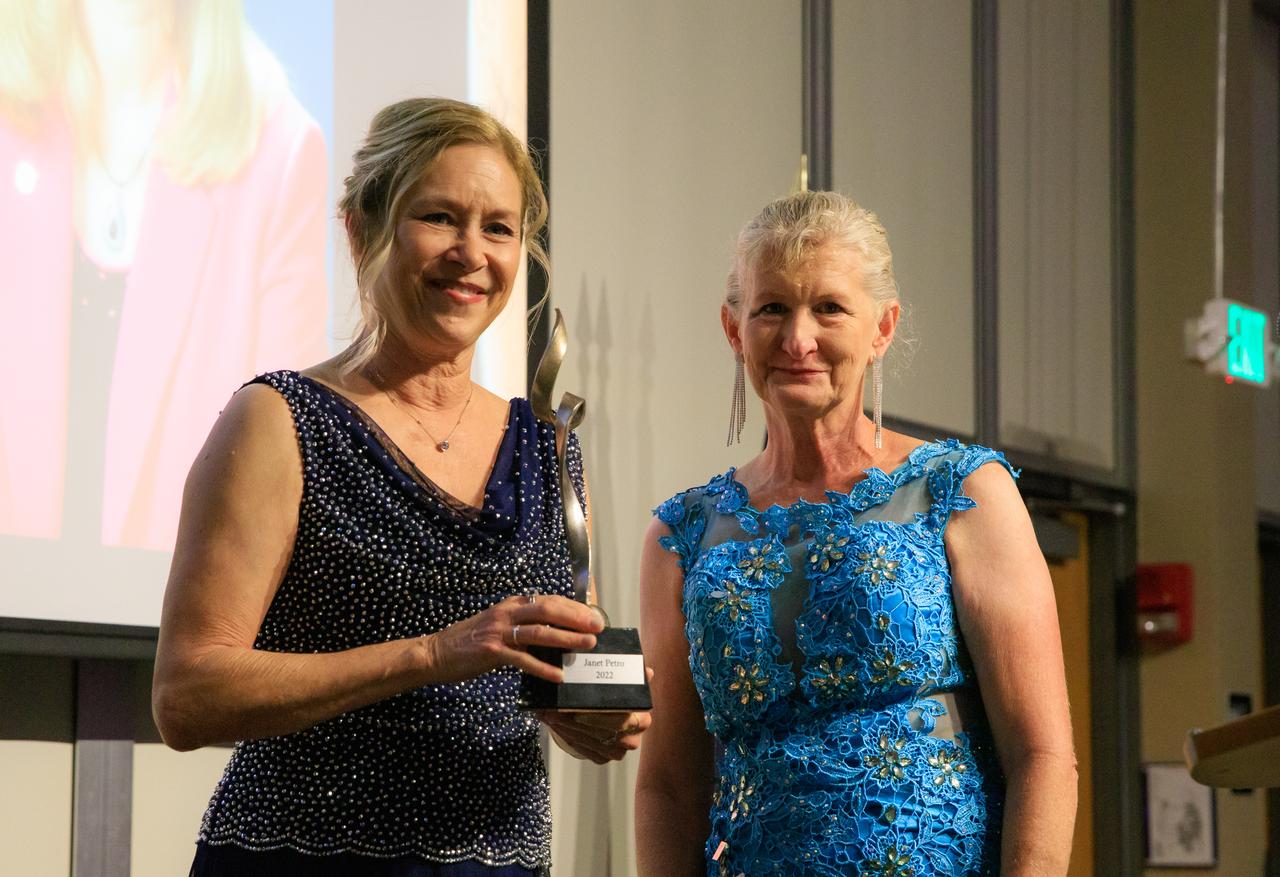
National Space Club Florida Chapter Chair Tara Miller presents Kennedy Space Center Director Janet Petro with the Dr. Kurt H. Debus Award during a ceremony held at the Florida spaceport’s visitor complex on June 24, 2022. The committee presented Petro with the prestigious award for her contributions to America’s aerospace efforts within the state of Florida. The award – originating in 1990 – is named after Kennedy’s first director.
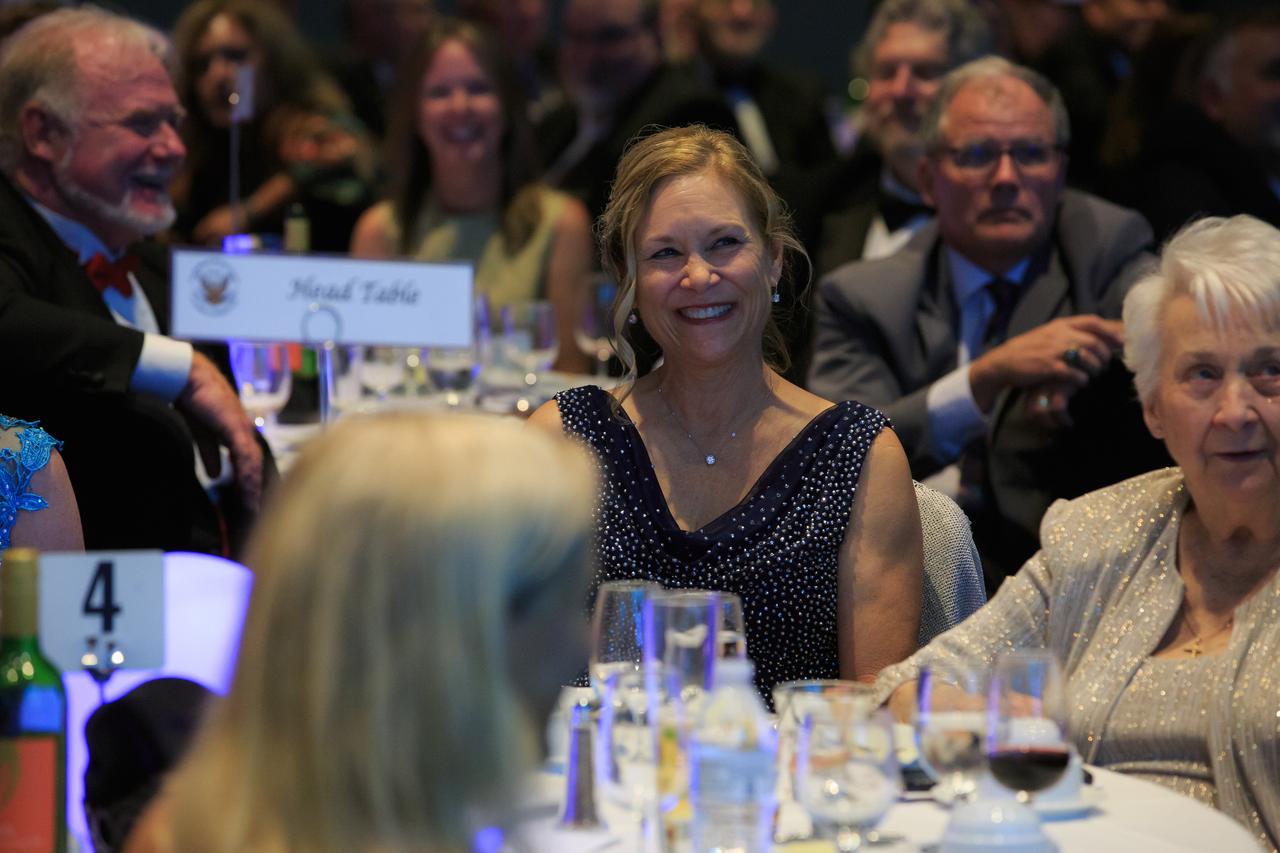
Kennedy Space Center Director Janet Petro is photographed in the audience during an award ceremony held in her honor on June 24, 2022, at the Florida spaceport’s visitor complex. The National Space Club Florida Committee presented Petro with the Dr. Kurt H. Debus Award for her contributions to America’s aerospace efforts within the state of Florida. The award – originating in 1990 – is named after Kennedy’s first director.
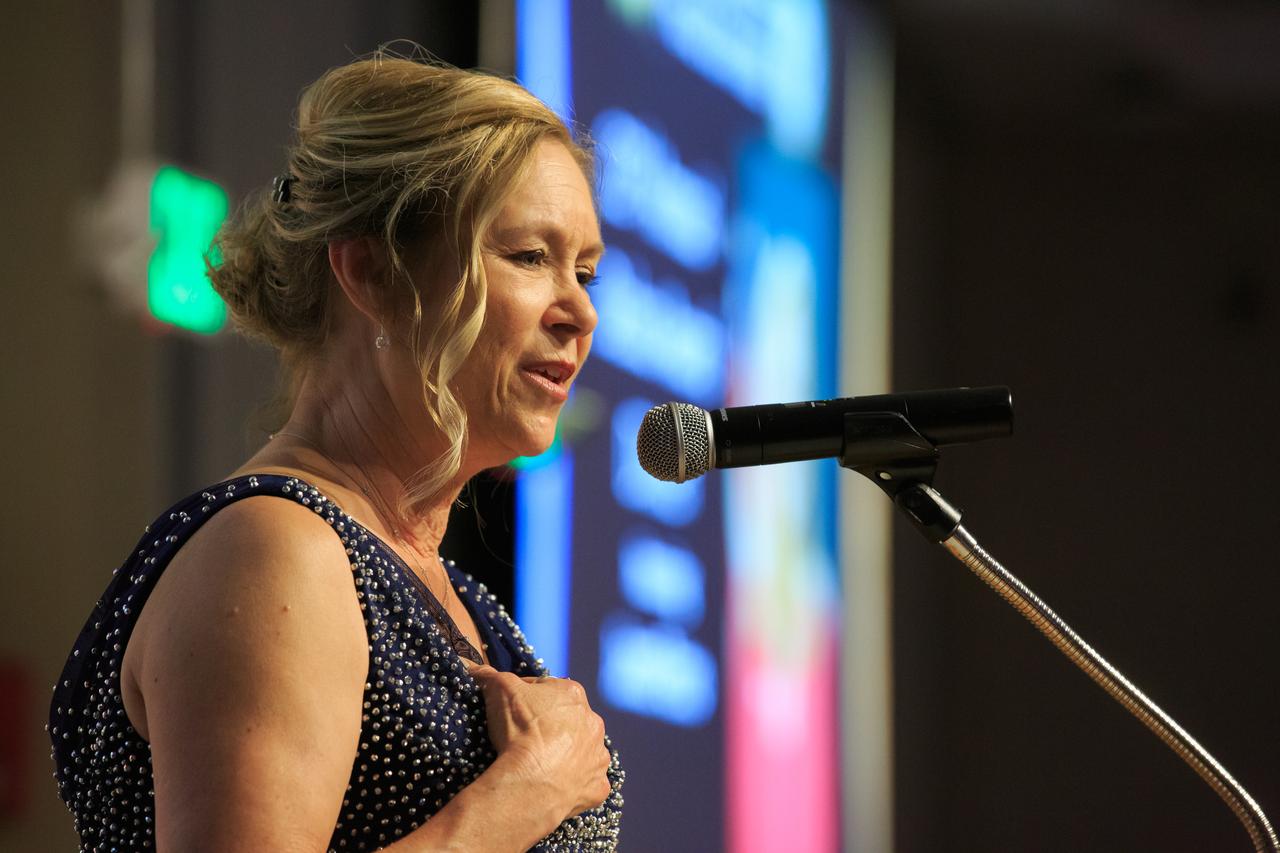
Kennedy Space Center Director Janet Petro addresses friends, colleagues, and family following her acceptance of the Dr. Kurt H. Debus Award on June 24, 2022, during a ceremony held at the Florida spaceport’s visitor complex. The National Space Club Florida Committee presented Petro with the prestigious award for her contributions to America’s aerospace efforts within the state of Florida. The award – originating in 1990 – is named after Kennedy’s first director.
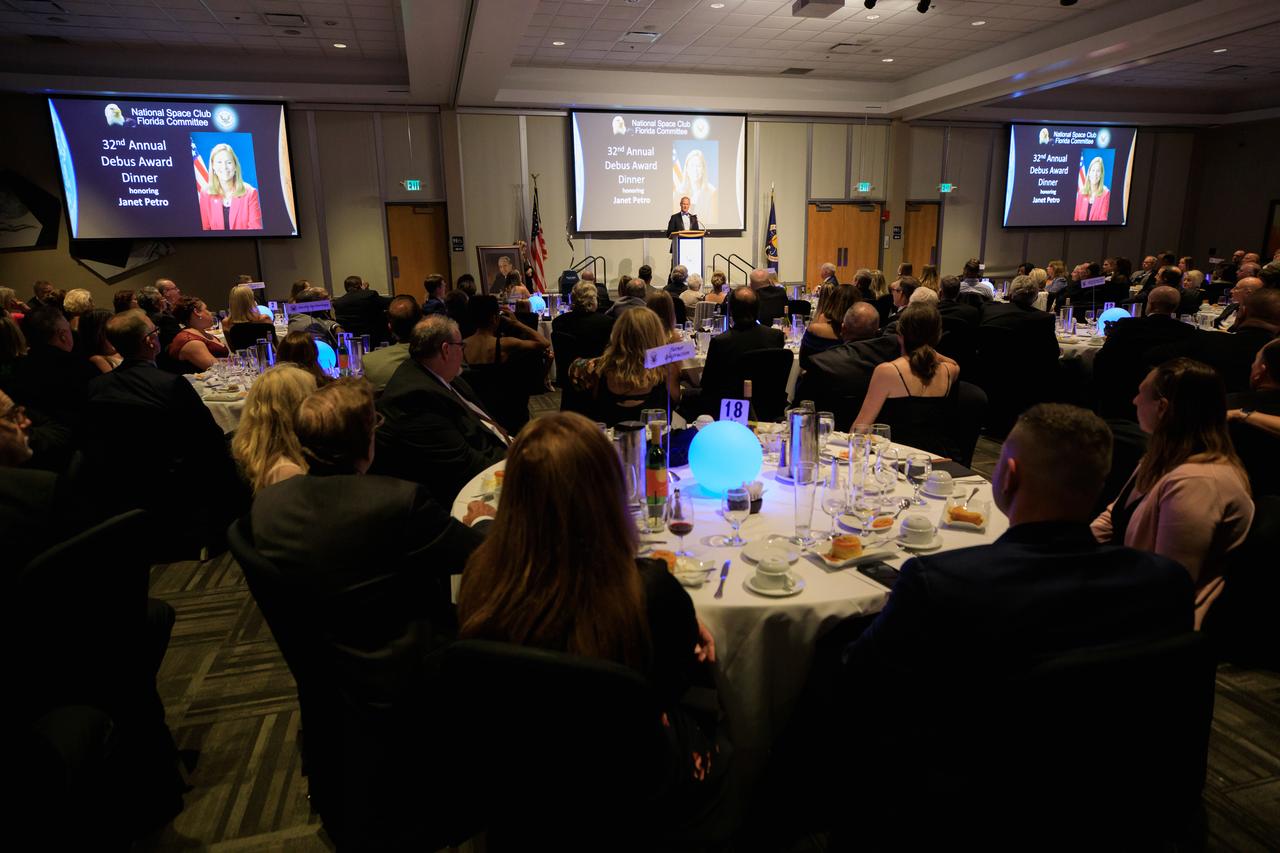
Scott Henderson, vice president of Test and Operations at Blue Origin, speaks at a ceremony honoring Kennedy Space Center Director Janet Petro with the Dr. Kurt H. Debus Award on June 24, 2022, at the Florida spaceport’s visitor complex. The National Space Club Florida Committee presented Petro with the prestigious award for her contributions to America’s aerospace efforts within the state of Florida. The award – originating in 1990 – is named after Kennedy’s first director.
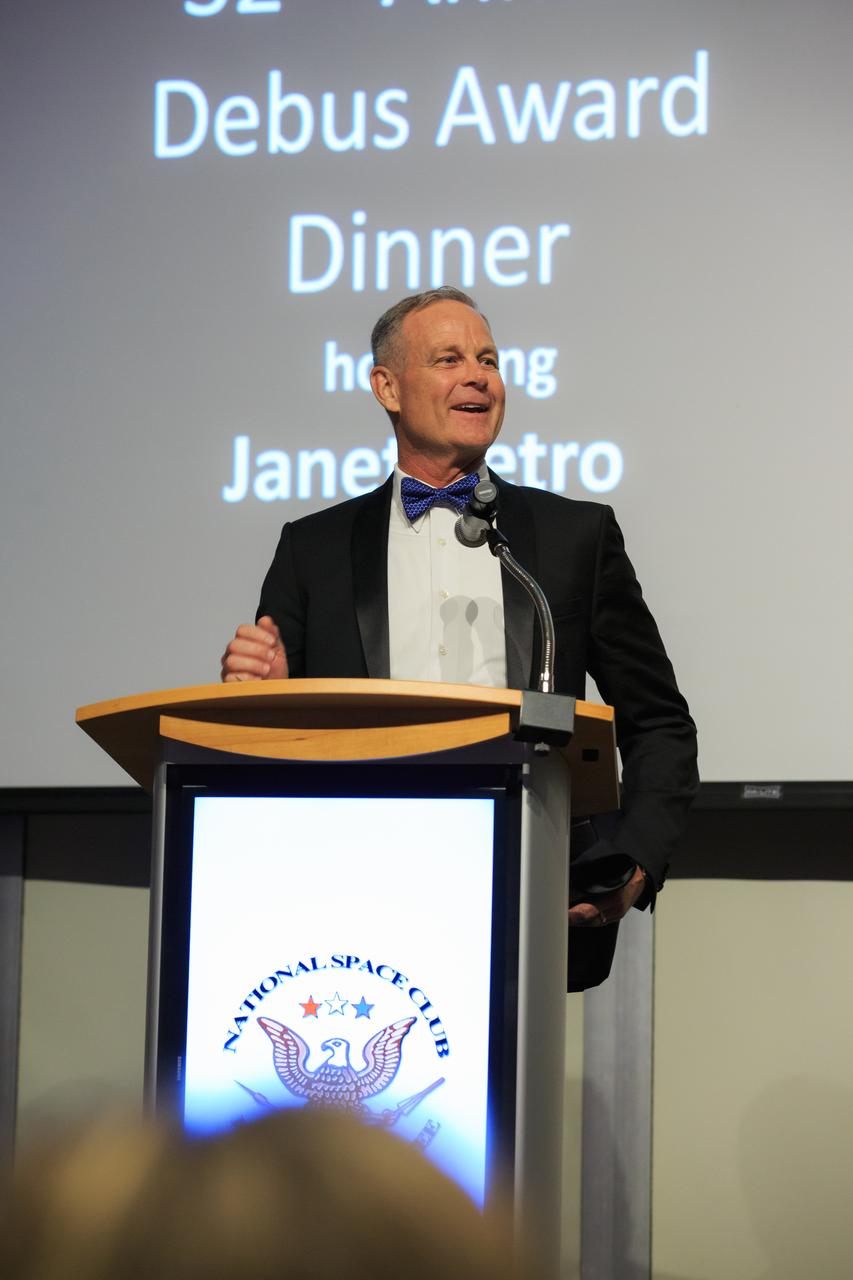
Scott Henderson, vice president of Test and Operations at Blue Origin, speaks at a ceremony honoring Kennedy Space Center Director Janet Petro with the Dr. Kurt H. Debus Award on June 24, 2022, at the Florida spaceport’s visitor complex. The National Space Club Florida Committee presented Petro with the prestigious award for her contributions to America’s aerospace efforts within the state of Florida. The award – originating in 1990 – is named after Kennedy’s first director.
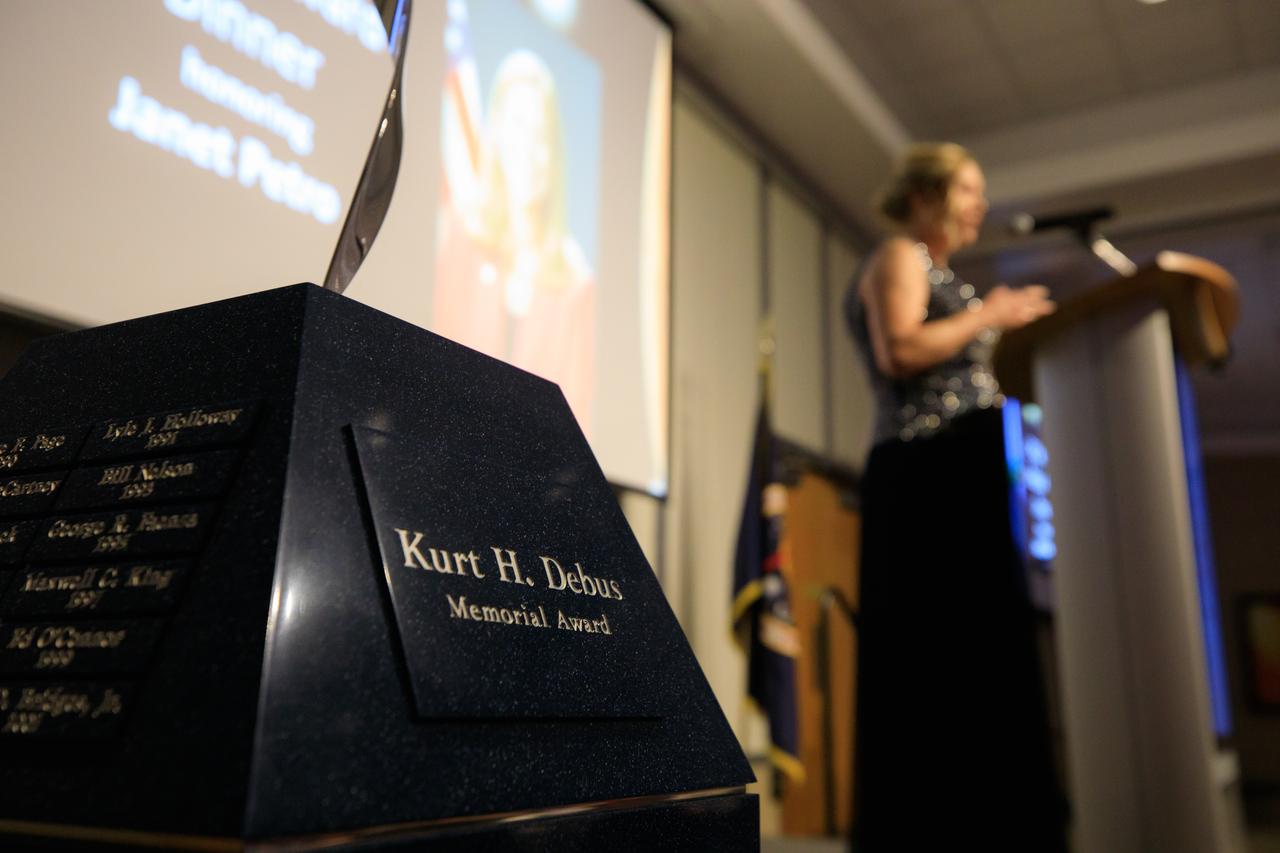
Kennedy Space Center Director Janet Petro addresses friends, colleagues, and family following her acceptance of the Dr. Kurt H. Debus Award on June 24, 2022, during a ceremony held at the Florida spaceport’s visitor complex. The National Space Club Florida Committee presented Petro with the prestigious award for her contributions to America’s aerospace efforts within the state of Florida. The award – originating in 1990 – is named after Kennedy’s first director.
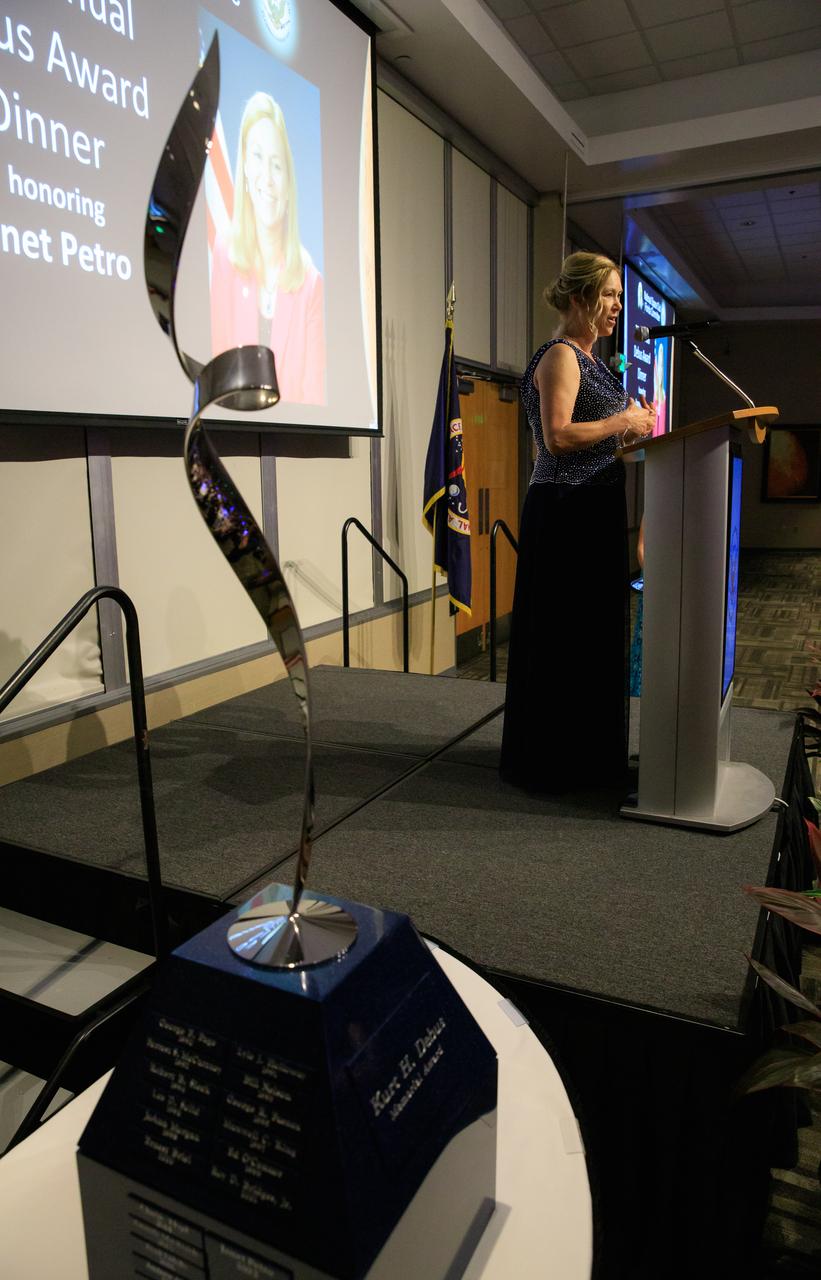
Kennedy Space Center Director Janet Petro addresses friends, colleagues, and family following her acceptance of the Dr. Kurt H. Debus Award on June 24, 2022, during a ceremony held at the Florida spaceport’s visitor complex. The National Space Club Florida Committee presented Petro with the prestigious award for her contributions to America’s aerospace efforts within the state of Florida. The award – originating in 1990 – is named after Kennedy’s first director.