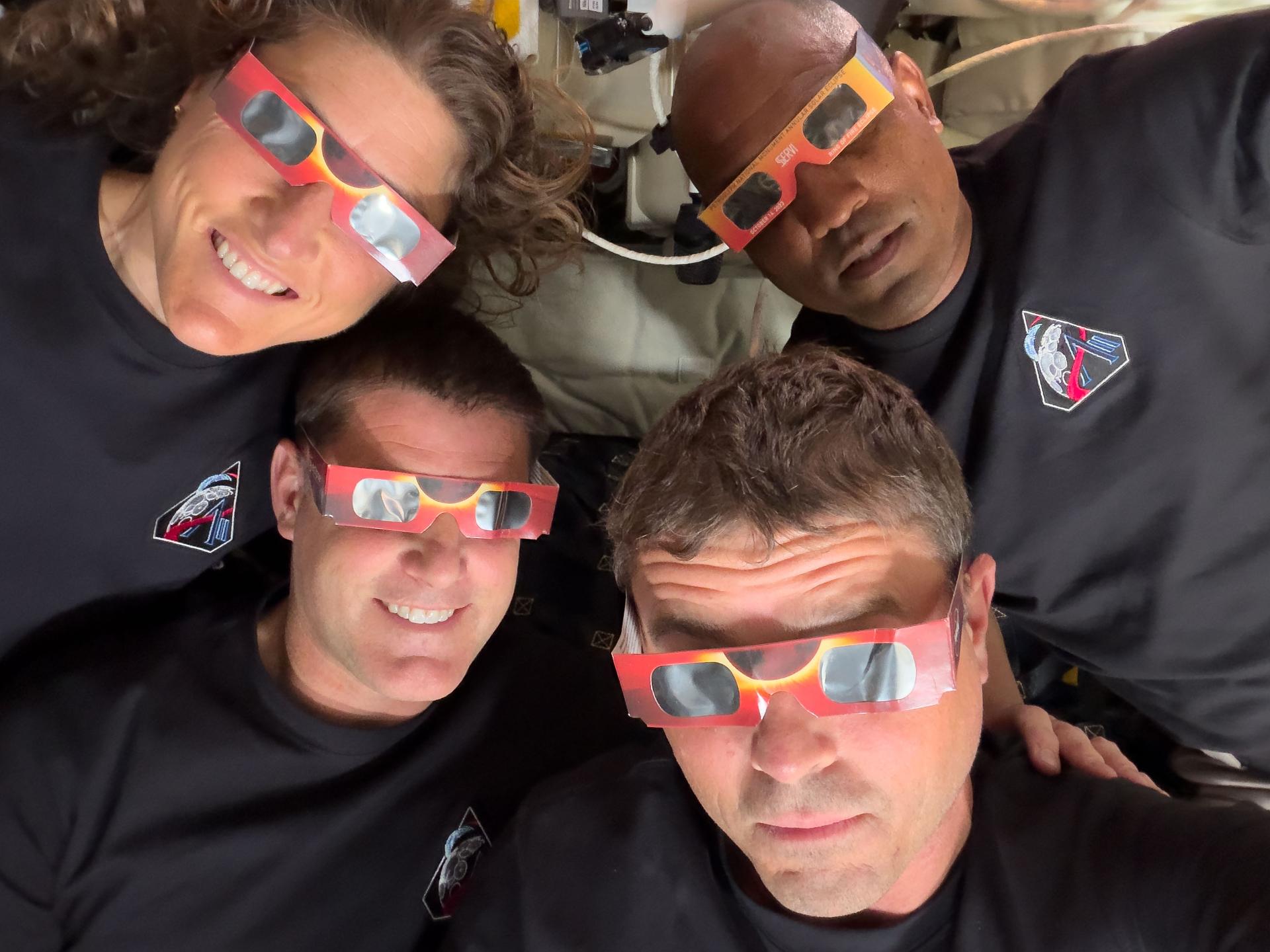
art002e009302 (April 6, 2026) – The Artemis II crew – Mission Specialist Christina Koch (top left), Mission Specialist Jeremy Hansen (bottom left), Commander Reid Wiseman (bottom right), and Pilot Victor Glover (top right) – uses eclipse viewers, identical to what NASA produced for the 2023 annular eclipse and 2024 total solar eclipse, to protect their eyes at key moments during the solar eclipse they experienced during their lunar flyby. This was the first use of eclipse glasses at the Moon to safely view a solar eclipse.
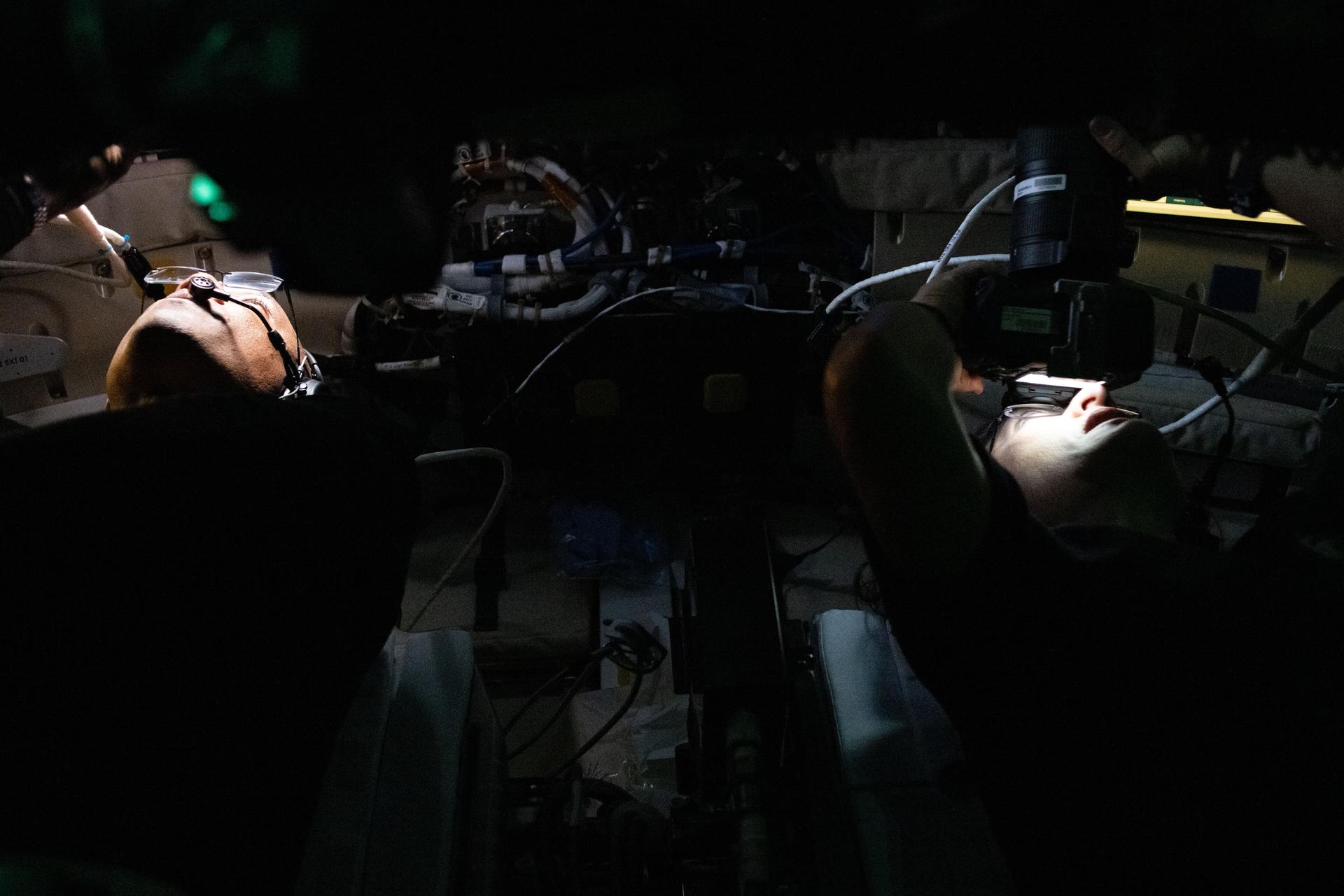
art002e016247 (April 6, 2026) – Artemis II Pilot Victor Glover, on the left, and Mission Specialist Christina Koch, on the right, gather images and observations of the lunar surface to share with the world during the lunar flyby on the sixth day of the mission. The crew spent approximately seven hours taking turns at the windows of the Orion spacecraft as they flew around the far side of the Moon. At closest approach, they came within 4,067 miles of the Moon’s surface. Credit: NASA
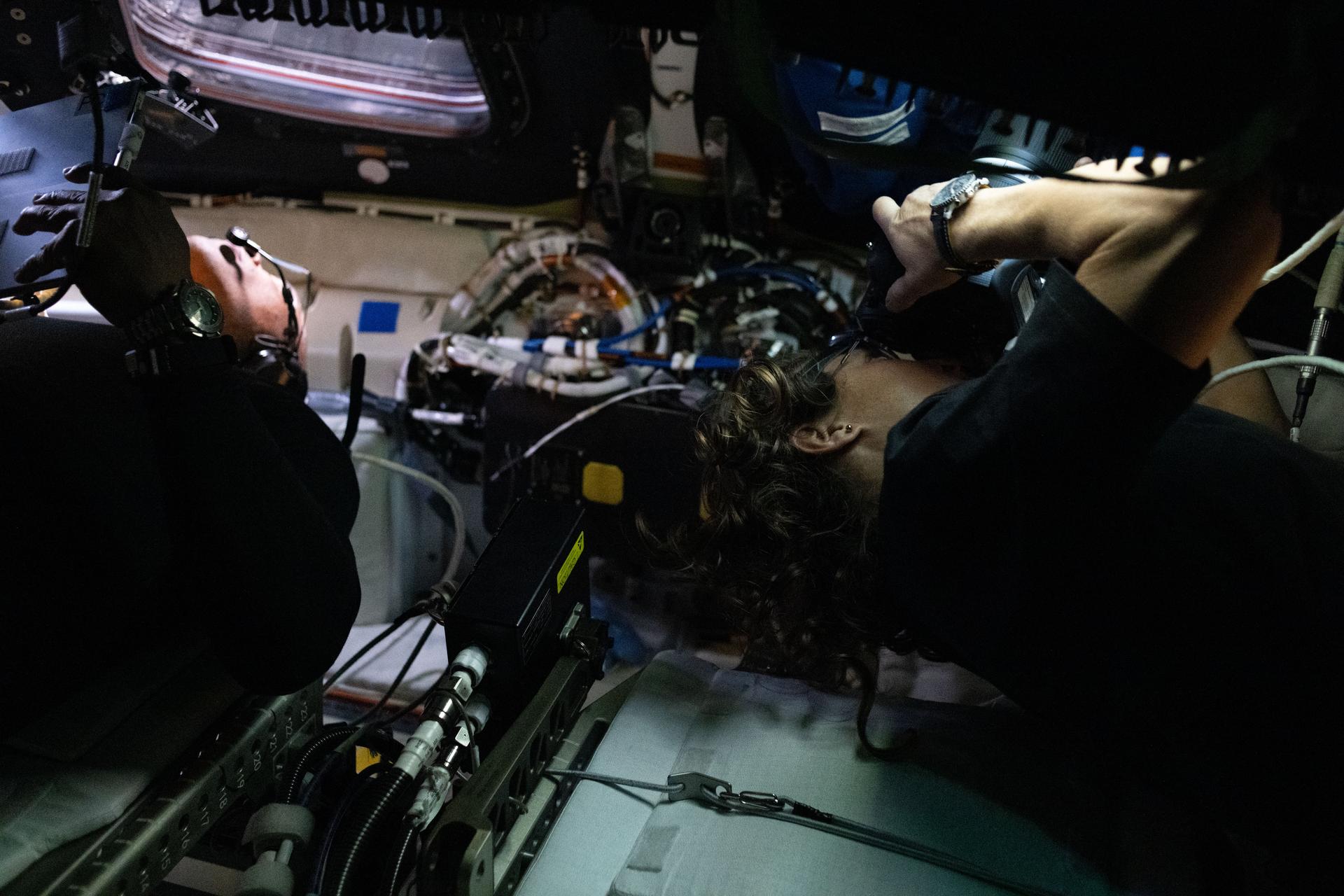
art002e016195 (April 6, 2026) – Artemis II Pilot Victor Glover, on the left, and Mission Specialist Christina Koch, on the right, gather images and observations of the lunar surface to share with the world during the lunar flyby on the sixth day of the mission. The crew spent approximately seven hours taking turns at the windows of the Orion spacecraft as they flew around the far side of the Moon. At closest approach, they came within 4,067 miles of the Moon’s surface.
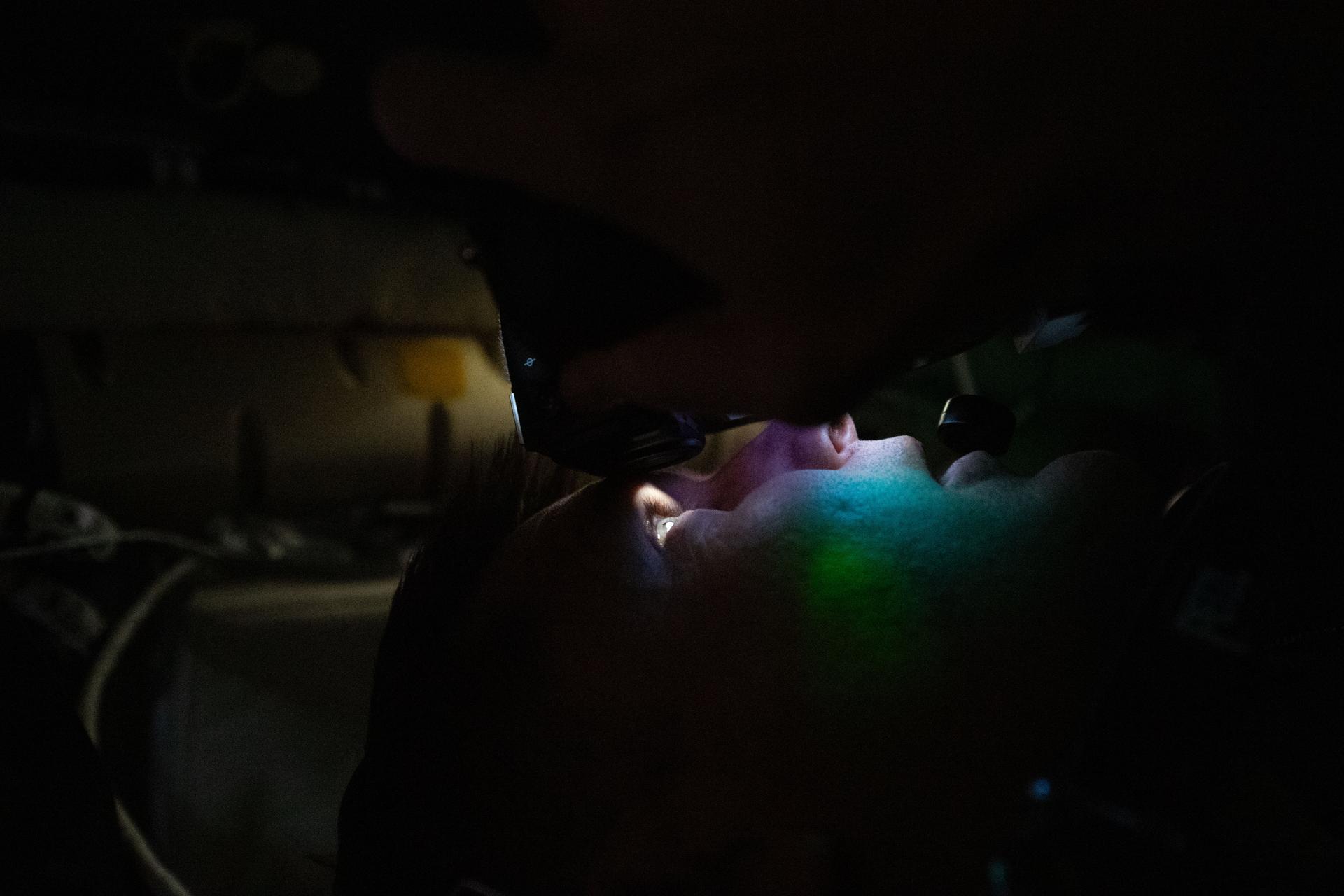
art002e014256 (April 6, 2026) – CSA (Canadian Space Agency) astronaut and Artemis II Mission Specialist Jeremy Hansen is seen making observations through the Orion spacecraft window early in the Artemis II lunar flyby. Due to last approximately seven hours, the lunar observation period was the duration of time that the crew is close enough to the Moon to make impactful science observations (4,070 miles altitude at closest approach) and the spacecraft was oriented such that the windows are pointed at the Moon. Credit: NASA
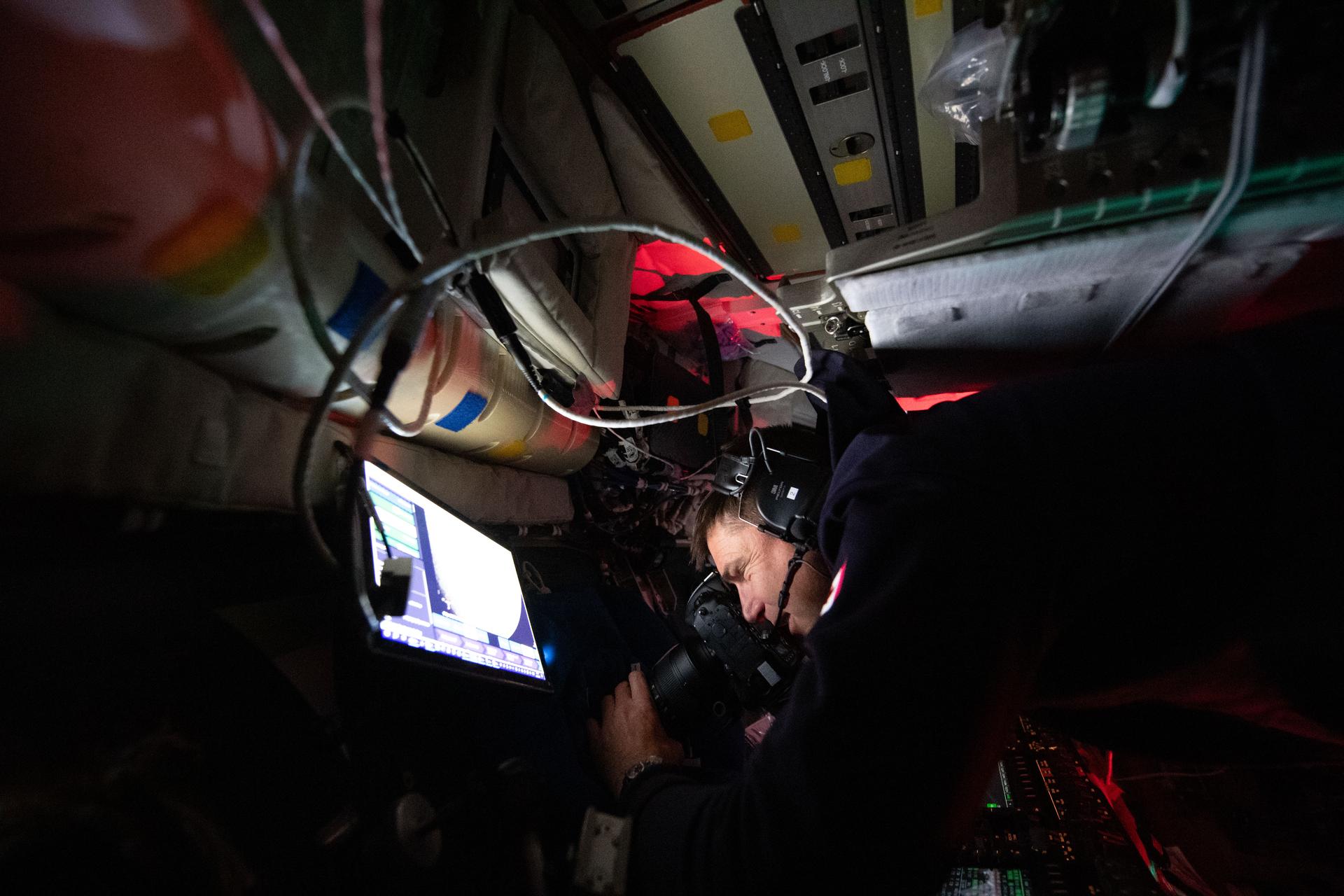
art002e014235 (April 6, 2026) – CSA (Canadian Space Agency) astronaut and Artemis II Mission Specialist Jeremy Hansen is seen taking images through the Orion spacecraft window during the Artemis II lunar flyby. Hansen and his fellow crewmates spent approximately seven hours taking turns at the Orion windows capturing science data to share with their team back on Earth. At closest approach, they came within 4,067 miles of the Moon’s surface.
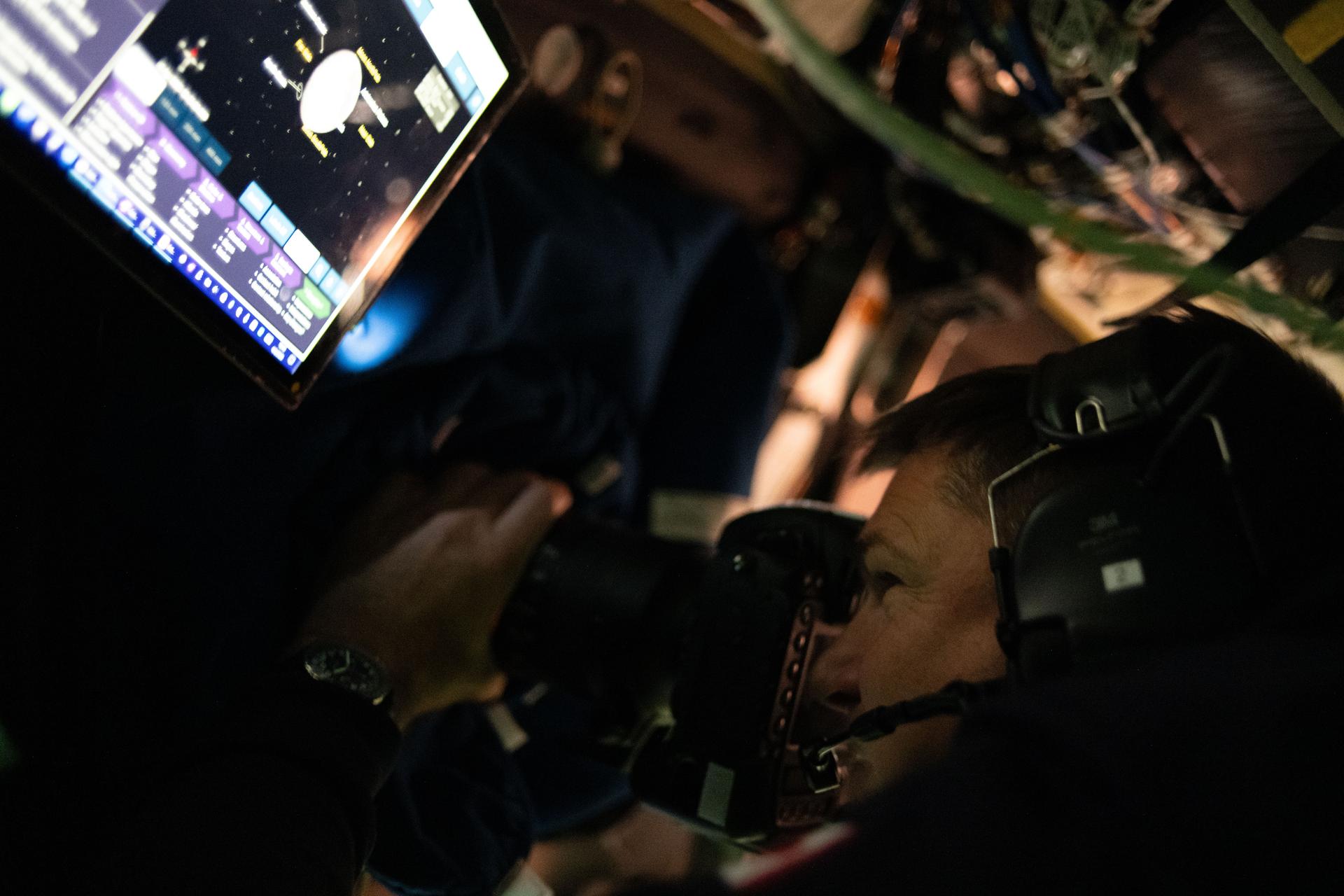
art002e016136 (April 6, 2026) – CSA (Canadian Space Agency) astronaut and Artemis II Mission Specialist Jeremy Hansen is seen taking images through the Orion spacecraft window during the Artemis II lunar flyby. Hansen and his fellow crewmates spent approximately seven hours taking turns at the Orion windows capturing science data to share with their team back on Earth. At closest approach, they came within 4,067 miles of the Moon’s surface.

art002e016171 (April 6, 2026) – CSA (Canadian Space Agency) astronaut and Artemis II Mission Specialist Jeremy Hansen pictured here in the Orion spacecraft during the Artemis II lunar flyby. Hansen and his fellow crewmates spent approximately seven hours taking turns at the Orion windows capturing science data to share with their team back on Earth. At closest approach, they came within 4,067 miles of the Moon’s surface.
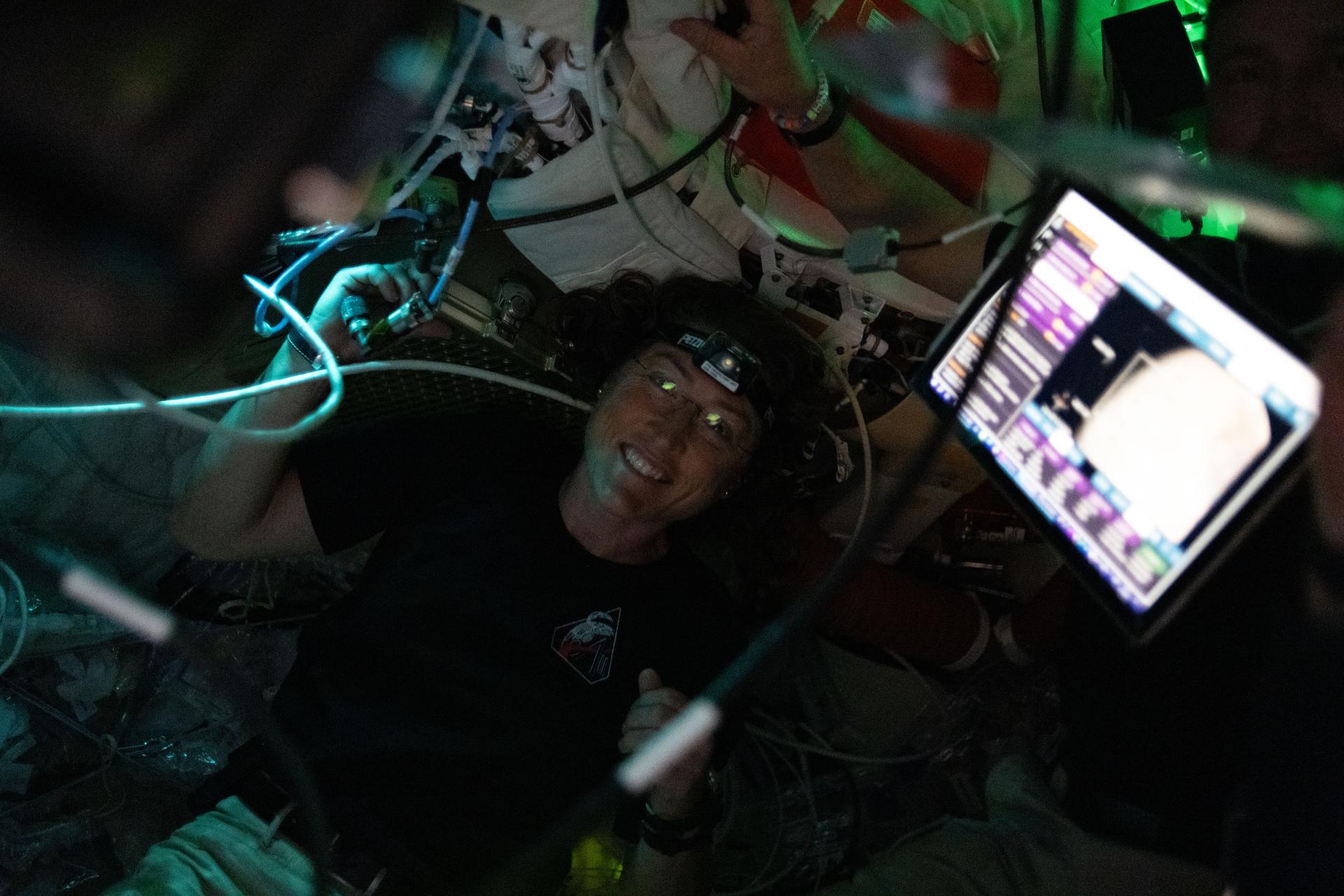
art002e016172 (April 6, 2026) – NASA astronaut and Artemis II Mission Specialist Christina Koch pictured here in the Orion spacecraft during the Artemis II lunar flyby. Koch and her fellow crewmates spent approximately seven hours taking turns at the Orion windows capturing science data to share with their team back on Earth. At closest approach, they came within 4,067 miles of the Moon’s surface.

Artemis lunar science team member, Alexandra Constantinou, works in the Science Mission Operations Room at NASA’s Johnson Space Center in Houston, where scientists analyzed imagery and audio recordings of lunar observations captured by the Artemis II astronauts during their lunar flyby on April 6, 2026. Credits: NASA/Helen Arase Vargas
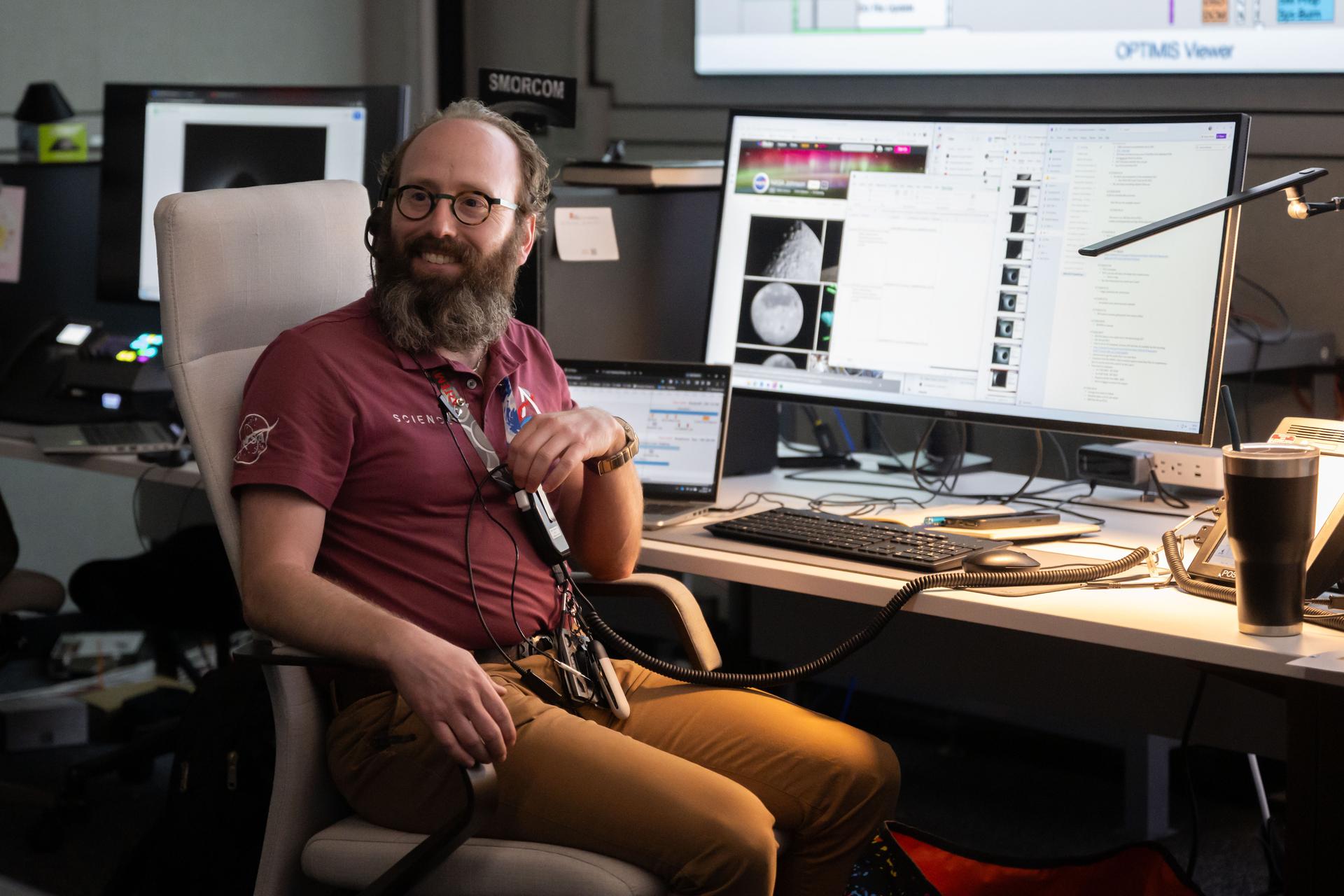
Artemis lunar science team member, Aaron Regberg, works in the Science Mission Operations Room, where scientists analyzed imagery and audio recordings of lunar observations captured by the Artemis II astronauts during their lunar flyby on April 6, 2026.
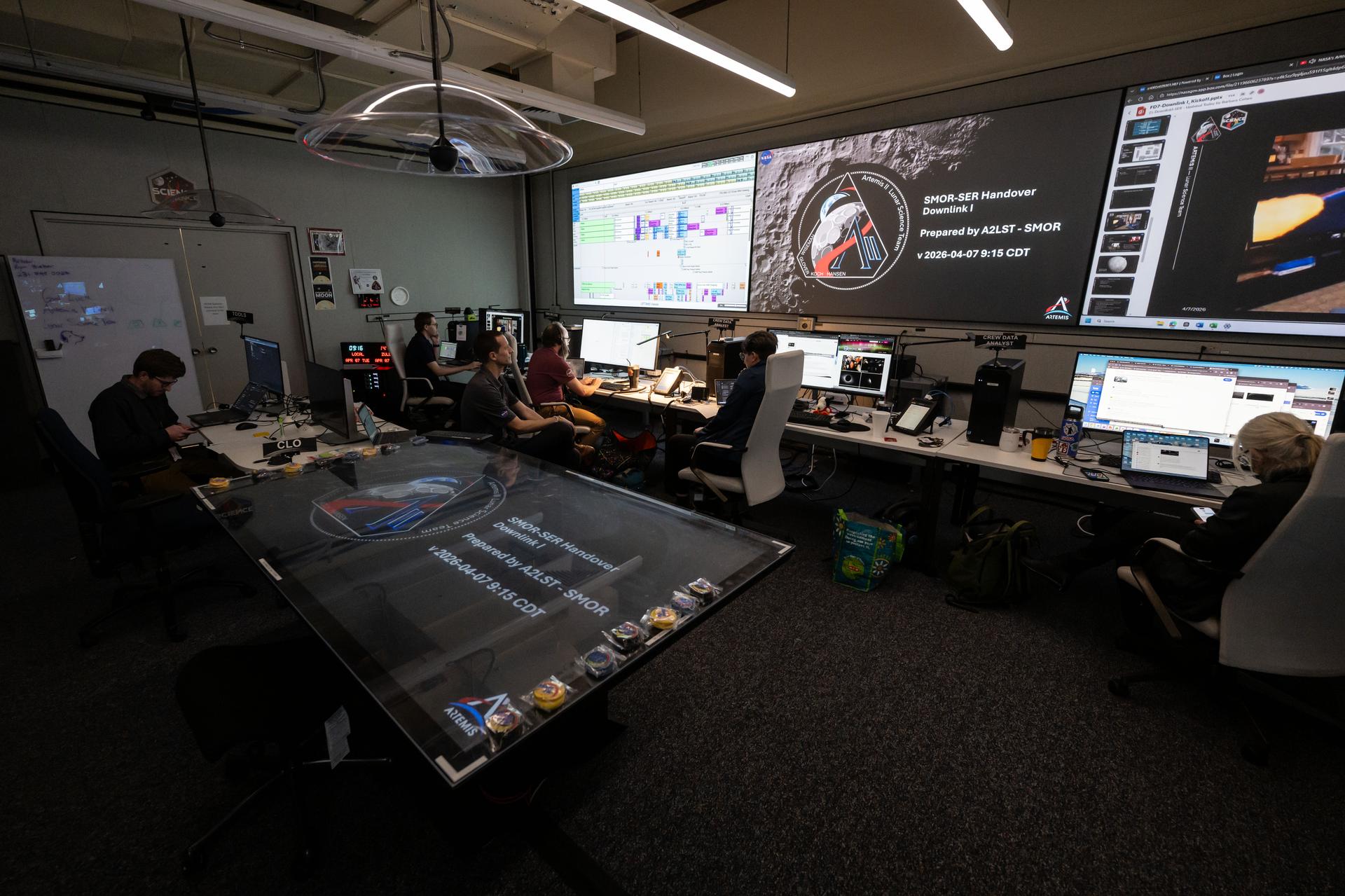
Artemis lunar science team members, work in the Science Mission Operations Room at NASA’s Johnson Space Center in Houston, analyzing imagery and audio recordings of lunar observations captured by the Artemis II astronauts during their lunar flyby on April 6, 2026.

Artemis lunar science team members, from left, Alexandra Constantinou, and David Hollibaugh-Baker, work in the Science Mission Operations Room at NASA’s Johnson Space Center in Houston. They are analyzing imagery and audio recordings of lunar observations captured by the Artemis II astronauts during their lunar flyby on April 6, 2026.

NASA Cassini imaging scientists processed this view of Saturn moon Hyperion, taken during a close flyby on May 31, 2015. This flyby marks the mission final close approach to Saturn largest irregularly shaped moon.
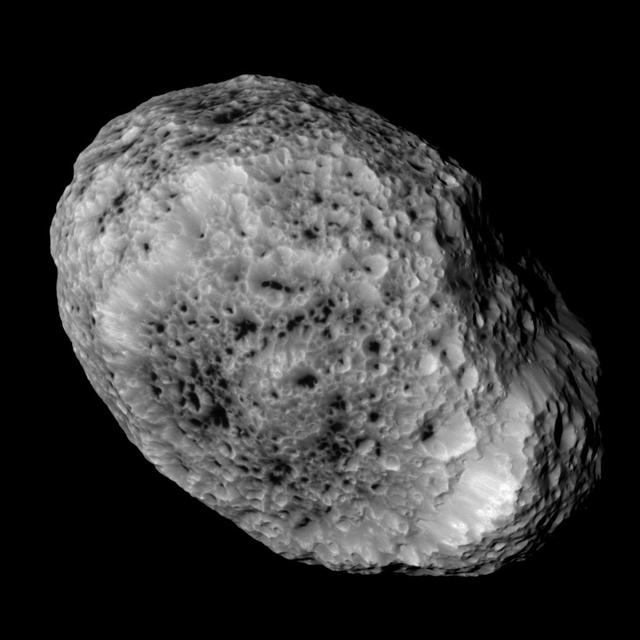
NASA Cassini imaging scientists processed this view of Saturn moon Hyperion, taken during a close flyby on May 31, 2015. This flyby marks the mission final close approach to Saturn largest irregularly shaped moon.

Galileo spacecraft image of the Moon recorded at 9:35 am Pacific Standard Time (PST), 12-09-90, after completing its first Earth Gravity Assist. Western hemisphere of the Moon was taken through a green filter at a range of about 350,000 miles. In the center is Orientale Basin, 600 miles in diameter, formed about 3.8 billion years ago by the impact of an asteroid-size body. Orientale's dark center is a small mare. To the right is the lunar near side with the great, dark Oceanus Procellarum above the small, circular, dark Mare Humorum below. Maria are broad plains formed mostly over 3 billion years ago as vast basaltic lava flows. To the left is the lunar far side with fewer maria, but, at lower left South-Pole-Aitken basin, about 1200 miles in diameter, which resembles Orientale but is much older and more weathered and battered by cratering. The intervening cratered highlands of both sides, as well as the maria, are dotted with bright young craters. This image was "reprojected" so as to center the Orientale Basin, and was filtered to enhance the visibility of small features. The digital image processing was done by DLR, the German Aerospace Research Establishment near Munich, an international collaborator in the Galileo mission. Photo was provided by Jet Propulsion Laboratory (JPL) with alternate number P-37327, 12-19-90.
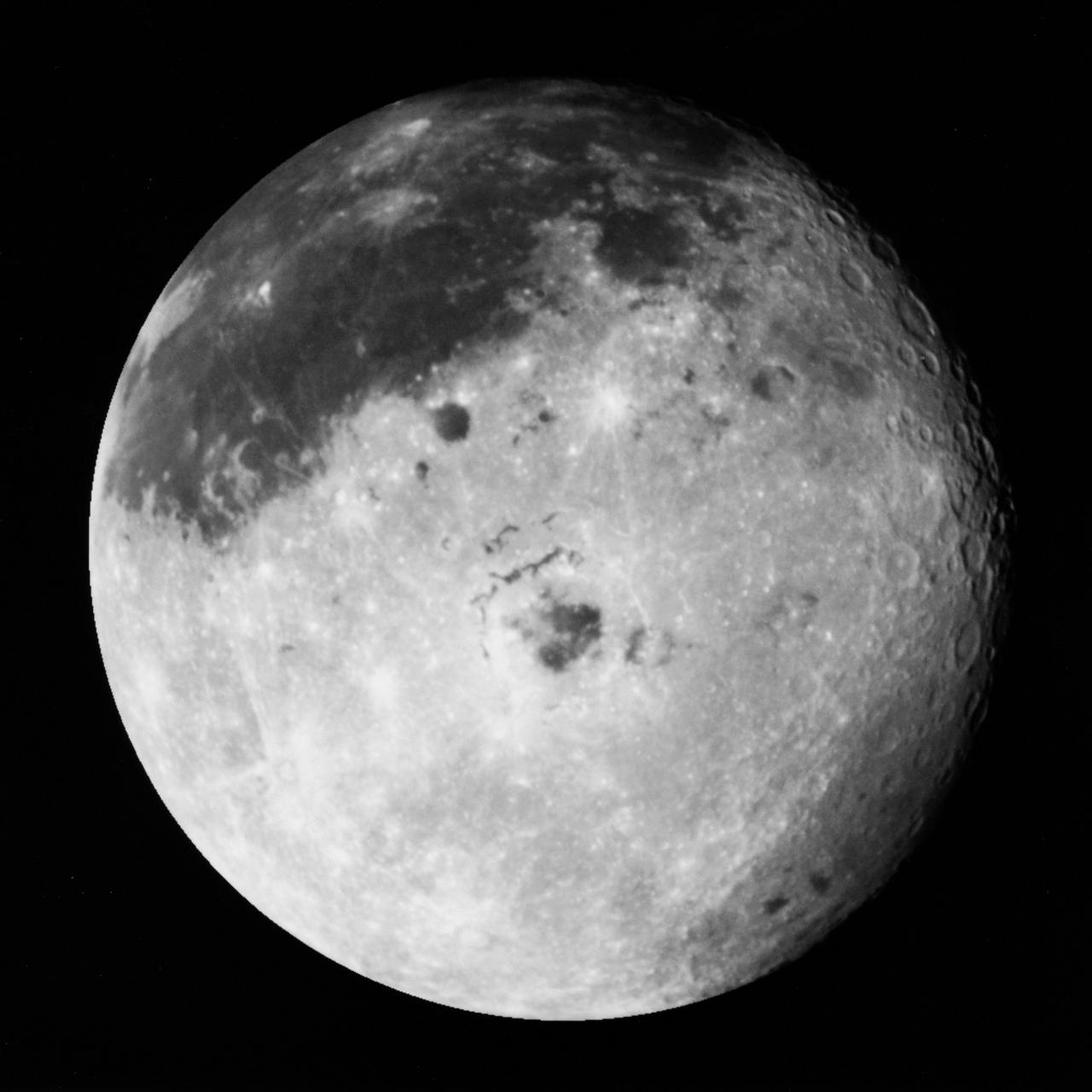
S90-55753 (9 Dec. 1990) --- This color image of the Moon was taken by the Galileo spacecraft at 9:25 a.m. (PST) December 9, 1990, at a range of about 350,000 miles. The color composite uses monochrome images taken through violet, red, and near infrared filters. The concentric, circular Orientale Basin, 600 miles across, is near the center; the near side is to the right, the far side to the left. At the upper right is the large, dark Oceanus Procellarum; below it is the smaller Mare Humorum. These, like the small dark Mare Orientale in the center of the basin, formed over 3 billion years ago as basaltic lava flows. At the lower left, among the southern cratered highlands of the far side, is the South-Pole-Aitken Basin, similar to Orientale but twice as great in diameter and much older and more degraded by crating and weathering. The cratered highlights of the near and far sides and the Maria are covered with scattered bright, young ray-craters.
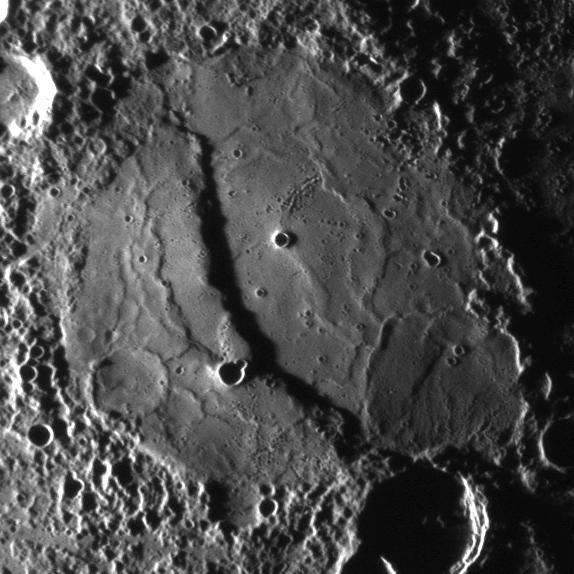
The scarp cutting through this crater was imaged as NASA MESSENGER approached the planet during the mission second Mercury flyby.

jsc2026e020501 (April 6, 2026) - NASA Flight Directors Diane Dailey, Pooja Jesrani, and Paul Konyha pictured in the White Flight Control Room during the Artemis II crew’s lunar flyby. Credit: NASA
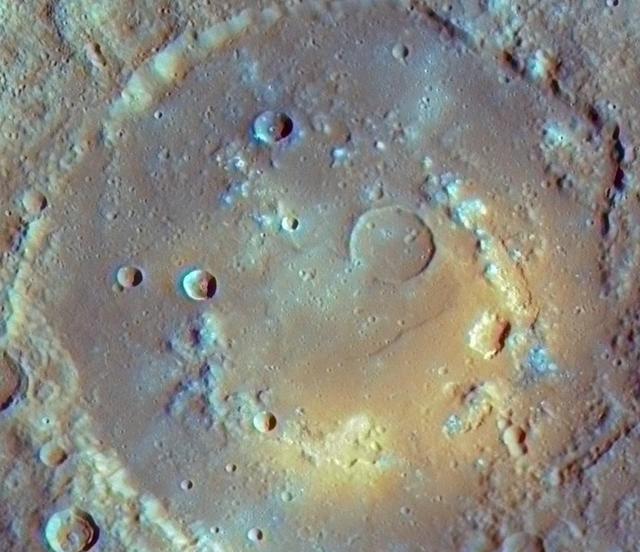
NASA MESSENGER high-resolution images obtained during the mission second Mercury flyby have revealed a number of irregularly shaped depressions on the floor of Praxiteles crater.
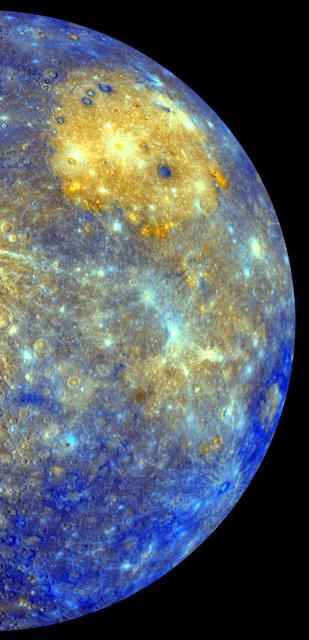
This spectacular color mosaic shows the eastern limb of Mercury as seen by NASA MESSENGER as the spacecraft departed the planet following the mission first Mercury flyby in January 2008.
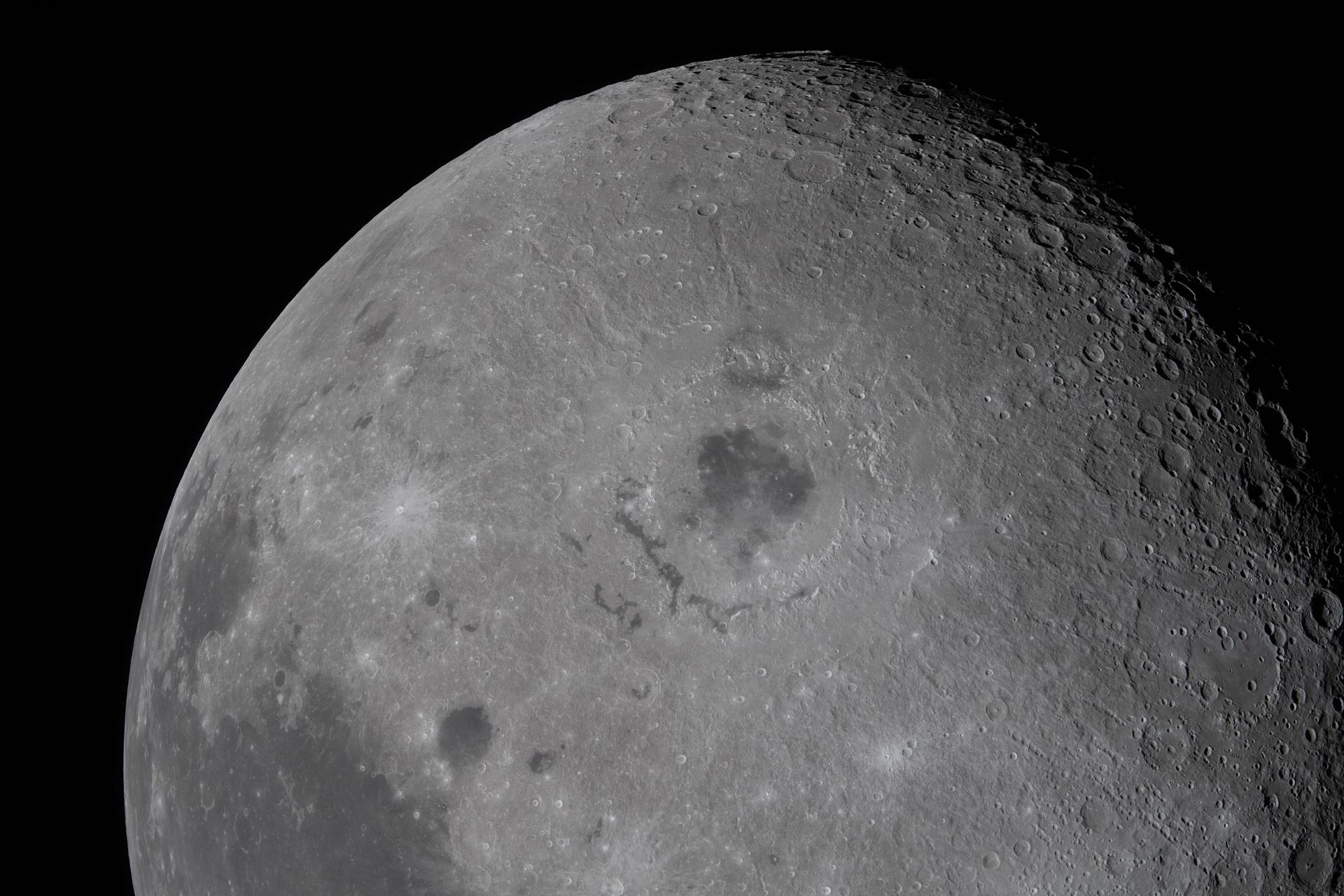
art002e009277 (April 6, 2026) - In this view of the Moon, taken by the Artemis II crew at 2:19 p.m. EDT, just before the crew began their observation period, Orientale basin is visible in the center, with a black patch of ancient lava in the center that punched through the Moon’s crust in an eruption billions of years ago. This 600-mile-wide impact crater lies along the transition between the near and far sides and is sometimes partly visible from Earth. The small, bright crater to its left is Byrgius, which has 250-mile rays extending out from its basin.
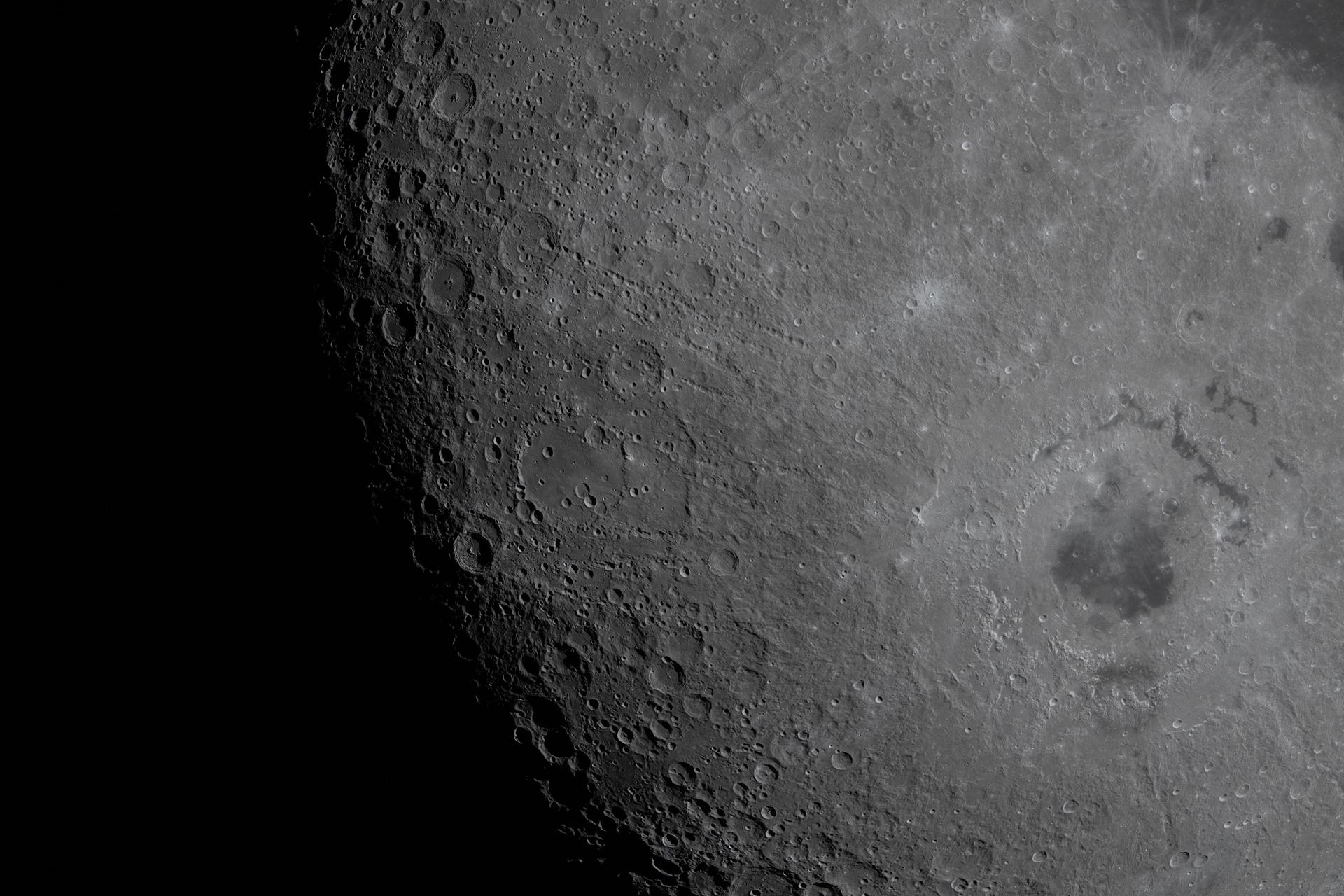
art002e009279 (April 6, 2026) – During their lunar flyby observation period, the Artemis II crew captured this image at 3:41 p.m. EDT, showing the rings of the Orientale basin, one of the Moon’s youngest and best-preserved large impact craters. These concentric rings offer scientists a rare window into how massive impacts shape planetary surfaces, helping refine models of crater formation and the Moon’s geologic history. At the 10 o’clock position of the Orientale basin, the two smaller craters – which the Artemis II crew has suggested be named Integrity and Carroll – are visible. These features highlight how crew observations can directly support surface feature identification and real-time science.
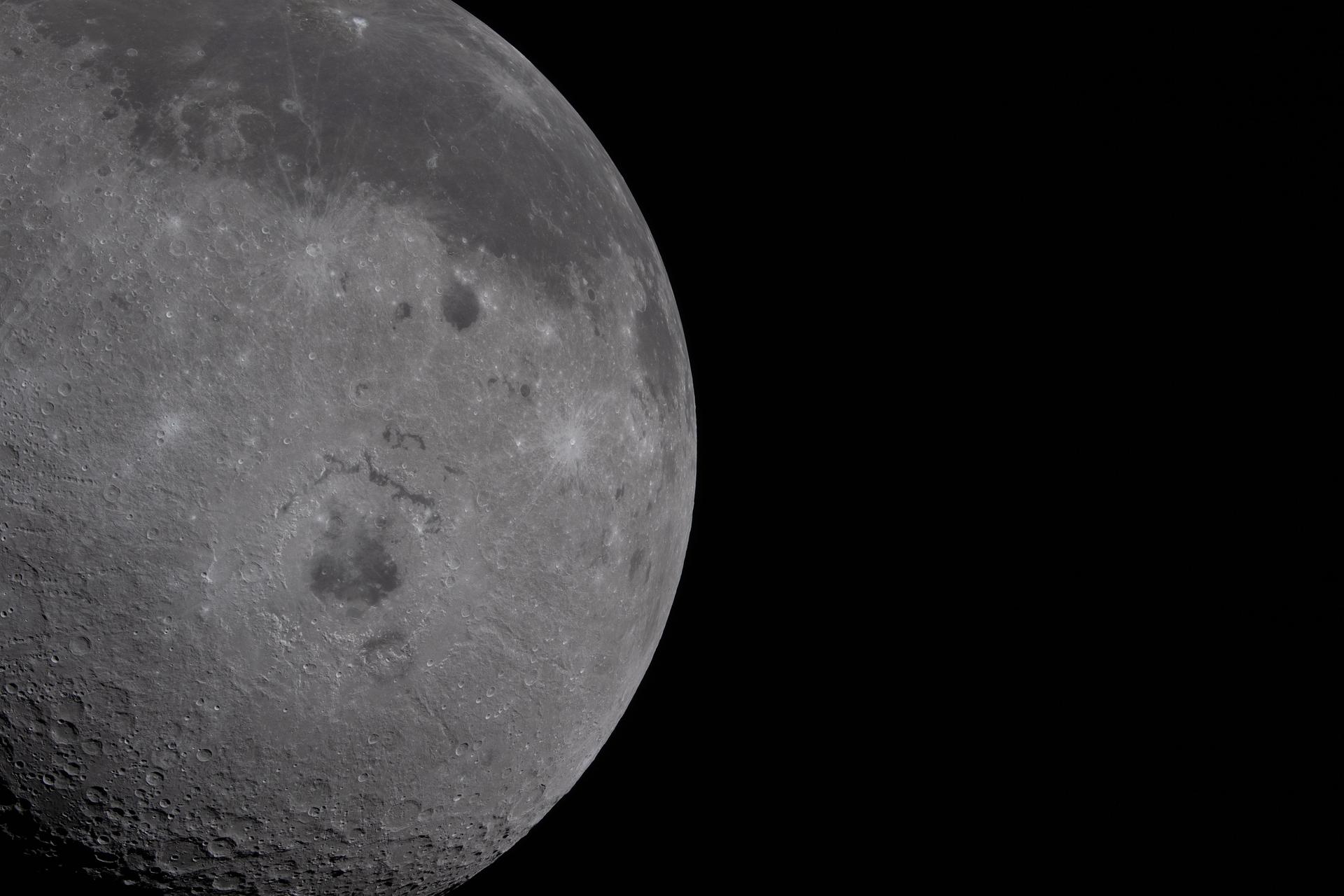
art002e009278 (April 6, 2026) - Just over half of the Moon fills the left half of the image. The near side, characterized by the dark patches of ancient lava, is visible on the top third of the lunar disk. Orientale basin, a round crater in the center with a black patch of ancient lava in the center, is wrapped in rings of mountains. The round black spot northeast of Orientale is Grimaldi crater, and Aristarchus crater is the bright white dot in the midst of a dark grey lava flow at the top of the image.

art002e016204 (April 6, 2026) – NASA astronaut and Artemis II Pilot Victor Glover pictured here in the Orion spacecraft during the Artemis II lunar flyby. Glover and his fellow crewmates spent approximately seven hours taking turns at the Orion windows capturing science data to share with their team back on Earth. At closest approach, they came within 4,067 miles of the Moon’s surface.
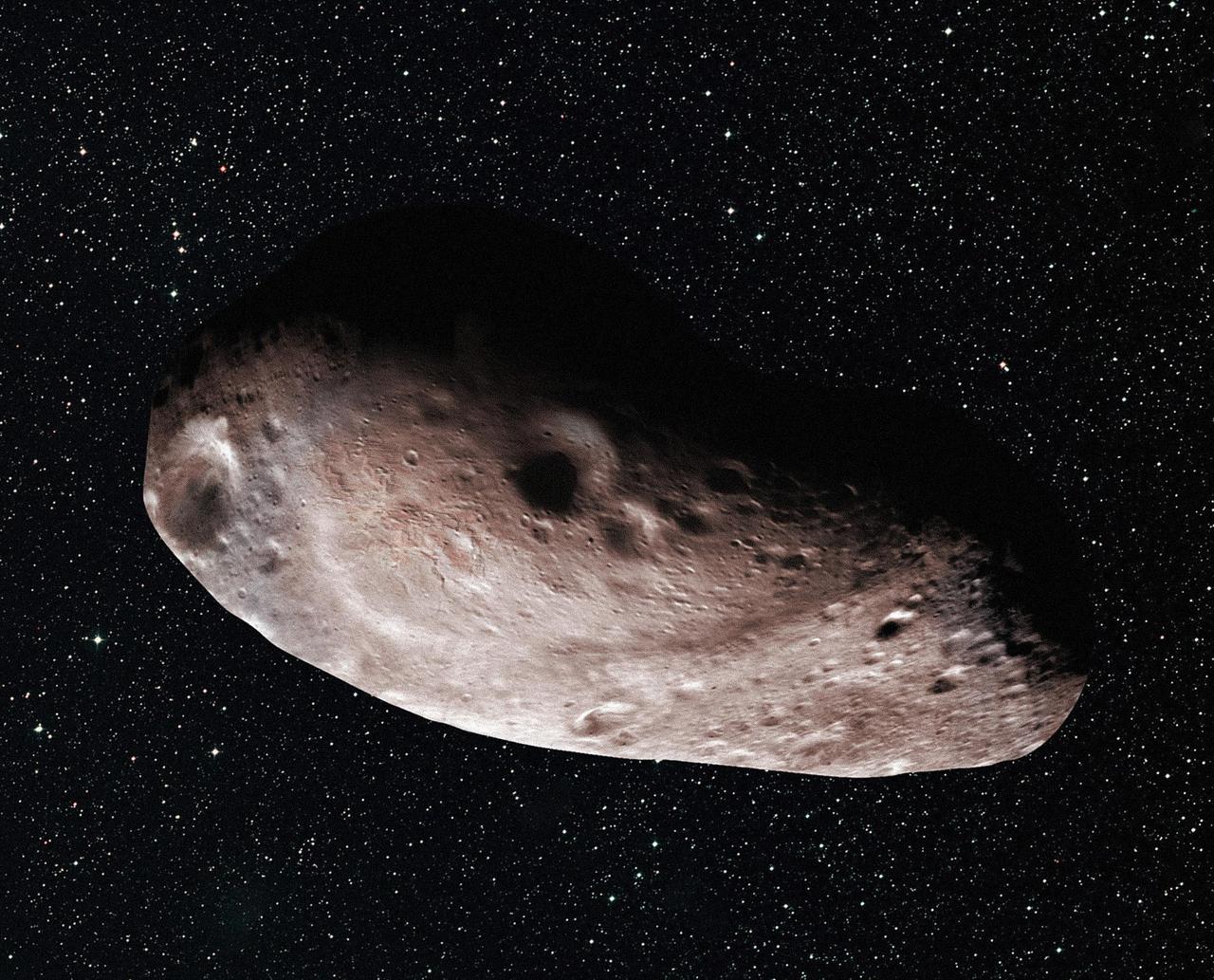
Artist's concept of Kuiper Belt object 2014 MU69, which is the next flyby target for NASA's New Horizons mission. Scientists speculate that the Kuiper Belt object could be a single body (above) with a large chunk taken out of it, or two bodies that are close together or even touching. https://photojournal.jpl.nasa.gov/catalog/PIA21868
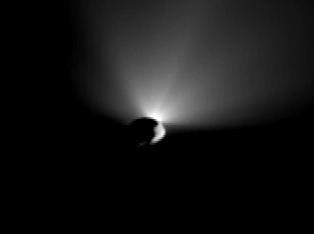
NASA Deep Impact flyby spacecraft took this image after it turned around to capture last shots of a receding comet Tempel 1. Earlier, the mission probe had smashed into the surface of Tempel 1.
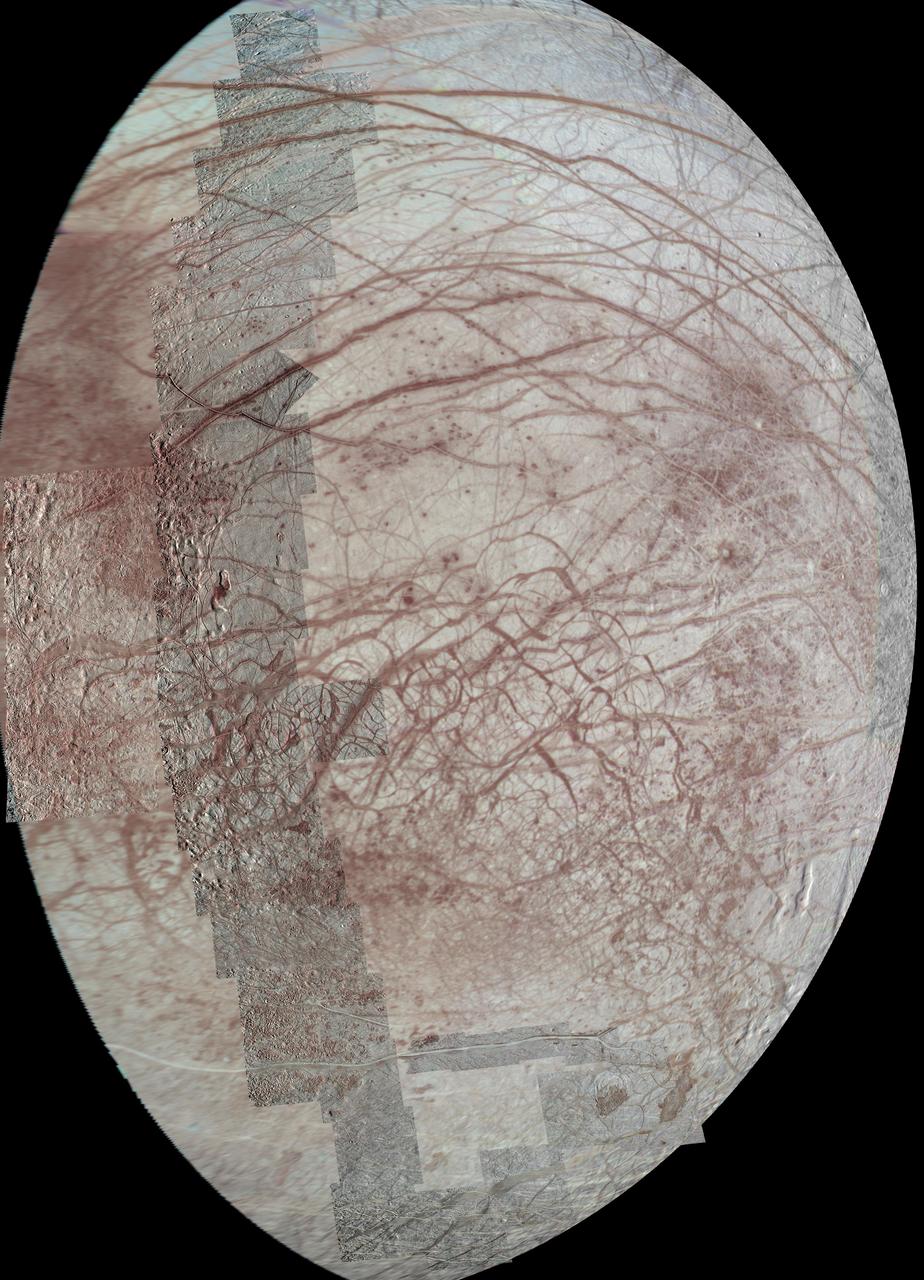
This view of Jupiter moon Europa features several regional-resolution mosaics overlaid on a lower resolution global view for context. The regional views were obtained during several different flybys of the moon by NASA Galileo mission.
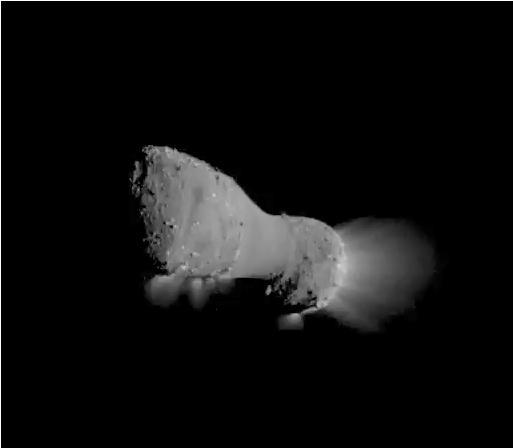
Image taken by NASA EPOXI mission spacecraft during its flyby of comet Hartley 2 on Nov. 4, 2010. The spacecraft came within about 700 kilometers 435 miles of the comet nucleus at the time of closest approach.
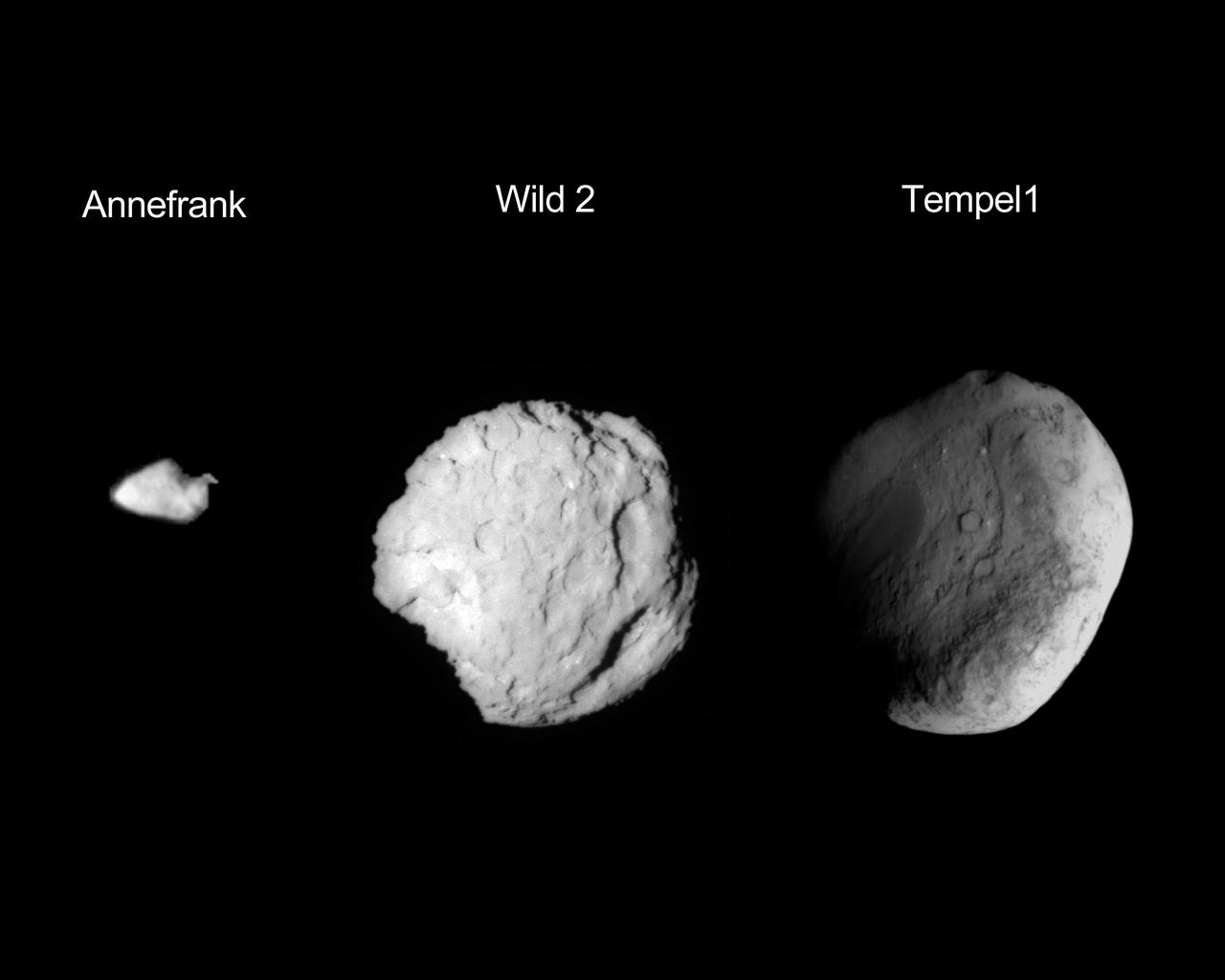
This composite image shows the three small worlds NASA Stardust spacecraft encountered during its 12 year mission. Stardust performed a flyby of asteroid Annefrank in 2002, Comet Wild in 2004, and Tempel 1 in 2011.
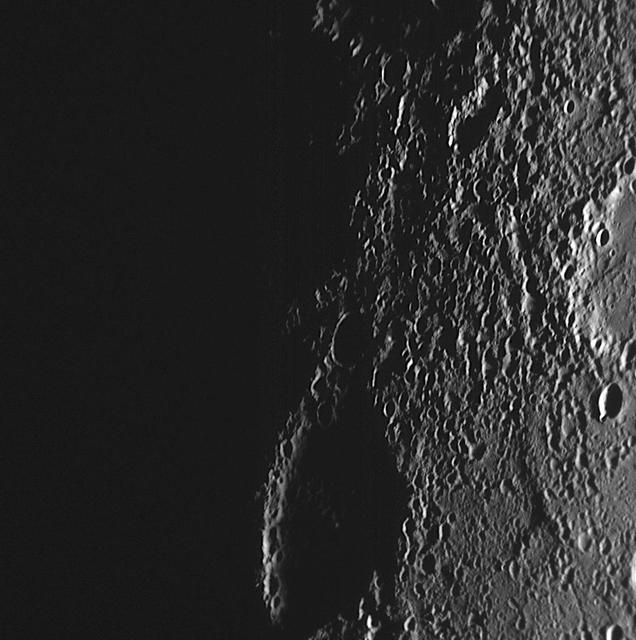
This high-resolution NAC image shows a view of Mercury dawn terminator, the division between the sunlit dayside and dark nightside of the planet, as seen as the MESSENGER spacecraft departed the planet during the mission second Mercury flyby.
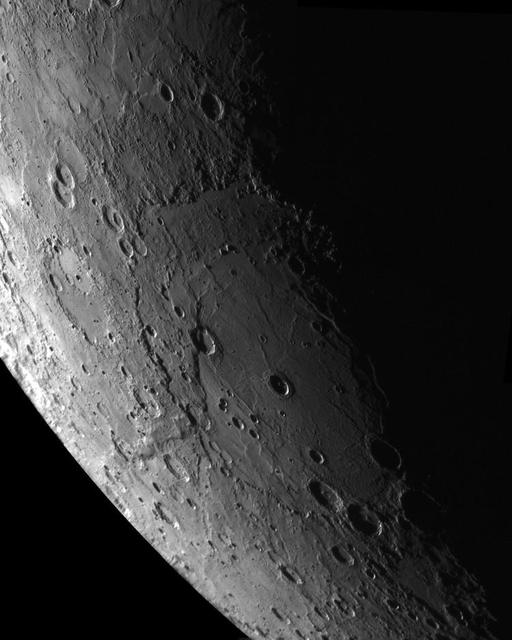
This mosaic was assembled using NAC images acquired as the MESSENGER spacecraft approached the planet during the mission second Mercury flyby The Rembrandt impact basin is seen at the center of the mosaic.
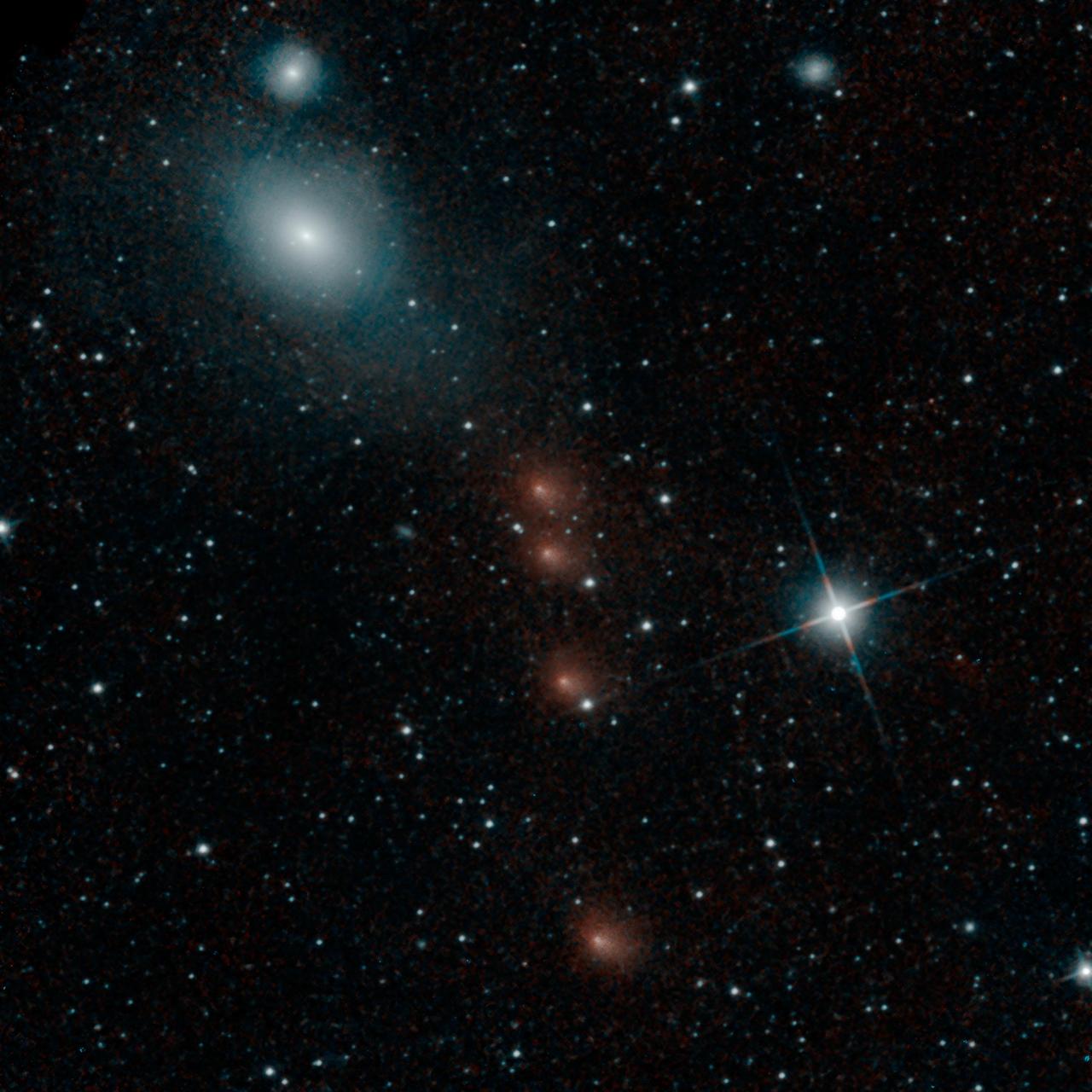
NASA NEOWISE mission detected comet C/2013 A1 Siding Spring on July 28, 2014, less than three months before this comet close flyby of Mars on Oct. 19.
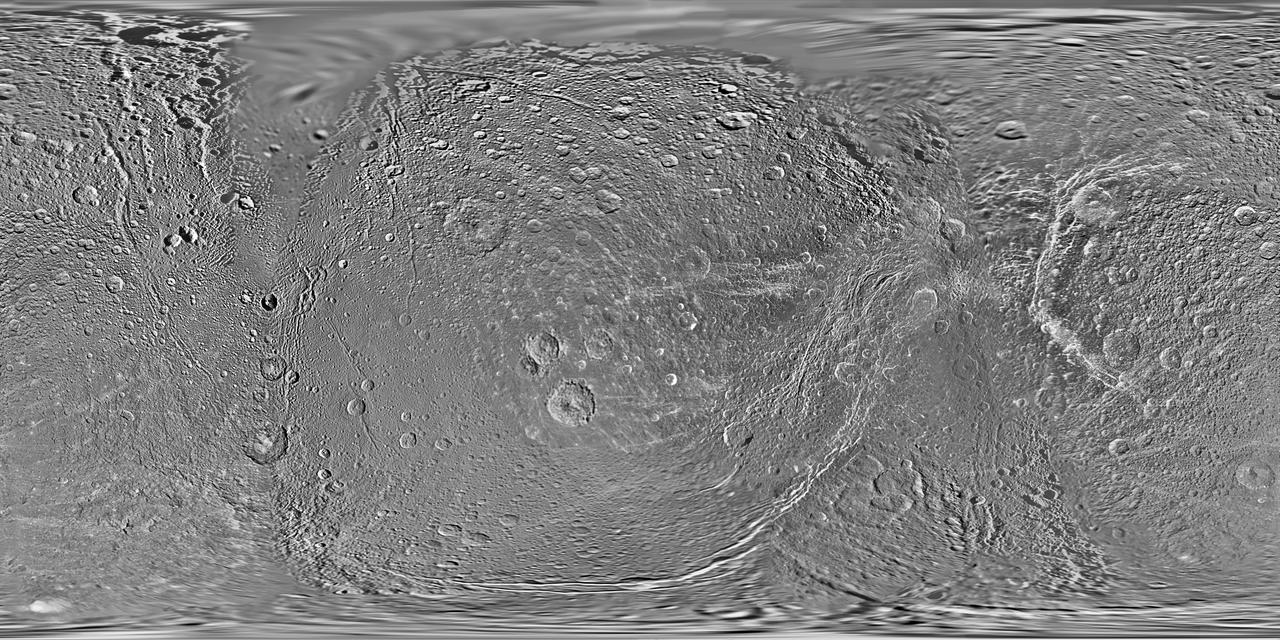
This global map of Saturn moon Dione was created using images taken during flybys by NASA Cassini spacecraft. Images from NASA Voyager mission fill the gaps in Cassini coverage.
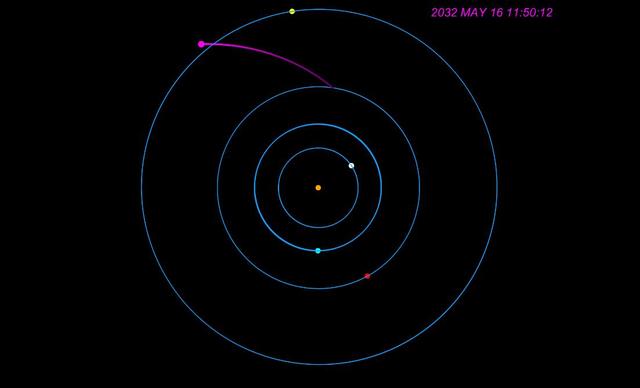
This animation shows how NASA's Europa Clipper spacecraft will orbit Jupiter and perform 49 flybys of Europa during its prime mission. The center orange dot represents Jupiter, with the simplified circular orbits of four of the planet's moons shown: Io (gray), Europa (blue), Ganymede (red), and Callisto (yellow). The Europa Clipper spacecraft is represented by the magenta dot looping in and out. At top right is a timestamp indicating when the flybys shown would occur; those depicted take place from April to July 2032. Europa Clipper's three main science objectives are to determine the thickness of the moon's icy shell and its interactions with the ocean below, to investigate its composition, and to characterize its geology. The mission's detailed exploration of Europa will help scientists better understand the astrobiological potential for habitable worlds beyond our planet. Animation available at https://photojournal.jpl.nasa.gov/catalog/PIA26463
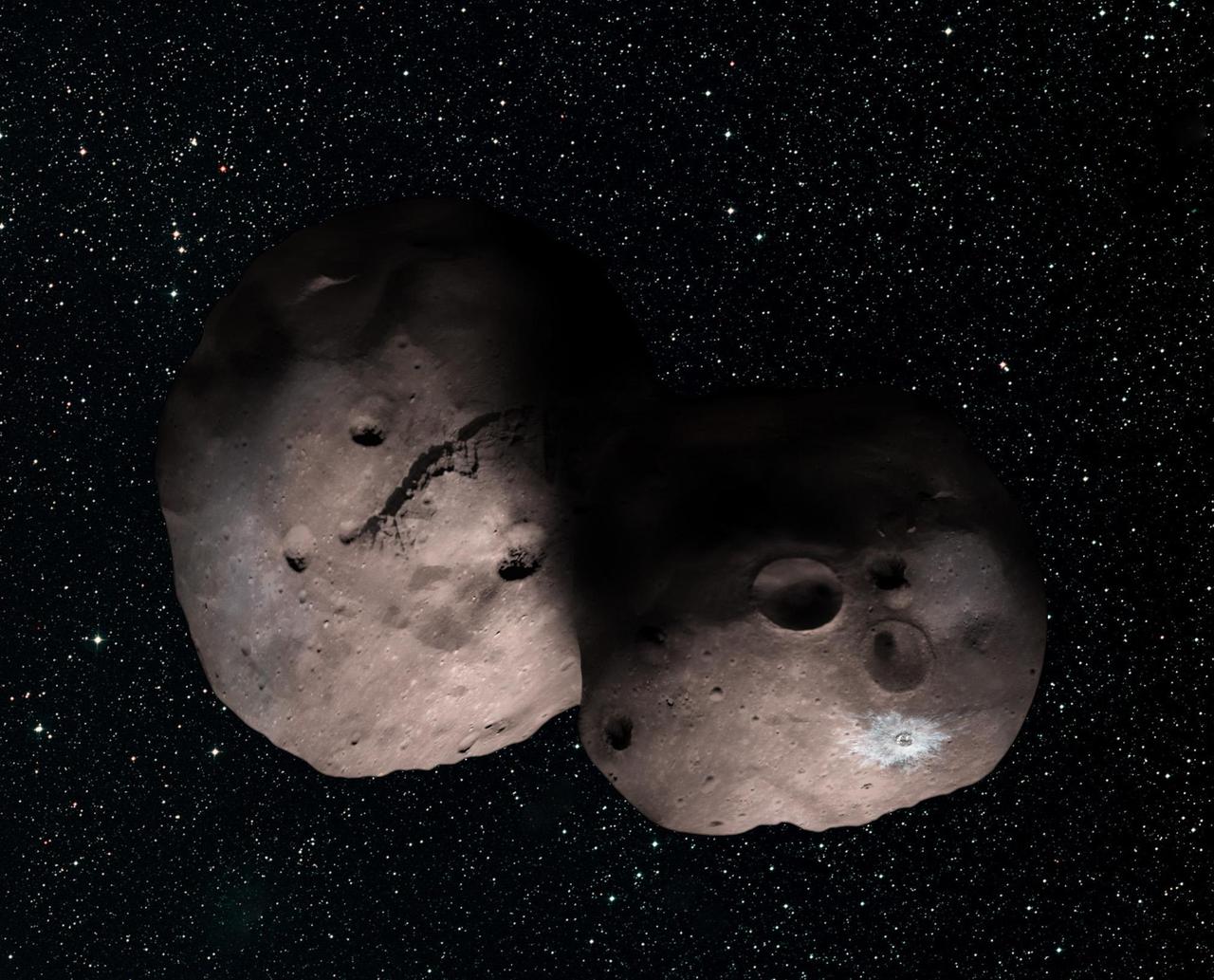
This is one artist's concept of Kuiper Belt object 2014 MU69, the next flyby target for NASA's New Horizons mission. This binary concept is based on telescope observations made at Patagonia, Argentina, on July 17, 2017, when MU69 passed in front of a star. New Horizons scientists theorize that it could be a single body with a large chunk taken out of it, or two bodies that are close together or even touching. https://photojournal.jpl.nasa.gov/catalog/PIA21867
KENNEDY SPACE CENTER, FLA. - MESSENGER, a NASA Discovery mission. The MESSENGER (MErcury Surface, Space ENvironment, GEochemistry, and Ranging) mission is a scientific investigation of the planet Mercury. MESSENGER will be launched in the summer of 2004 and will enter Mercury orbit in March of 2011, after one Earth flyby, two flybys of Venus, and three of Mercury along the way. The flyby and orbital phases of the mission will provide global mapping and detailed characterization of the planet's surface, interior, atmosphere and magnetosphere.
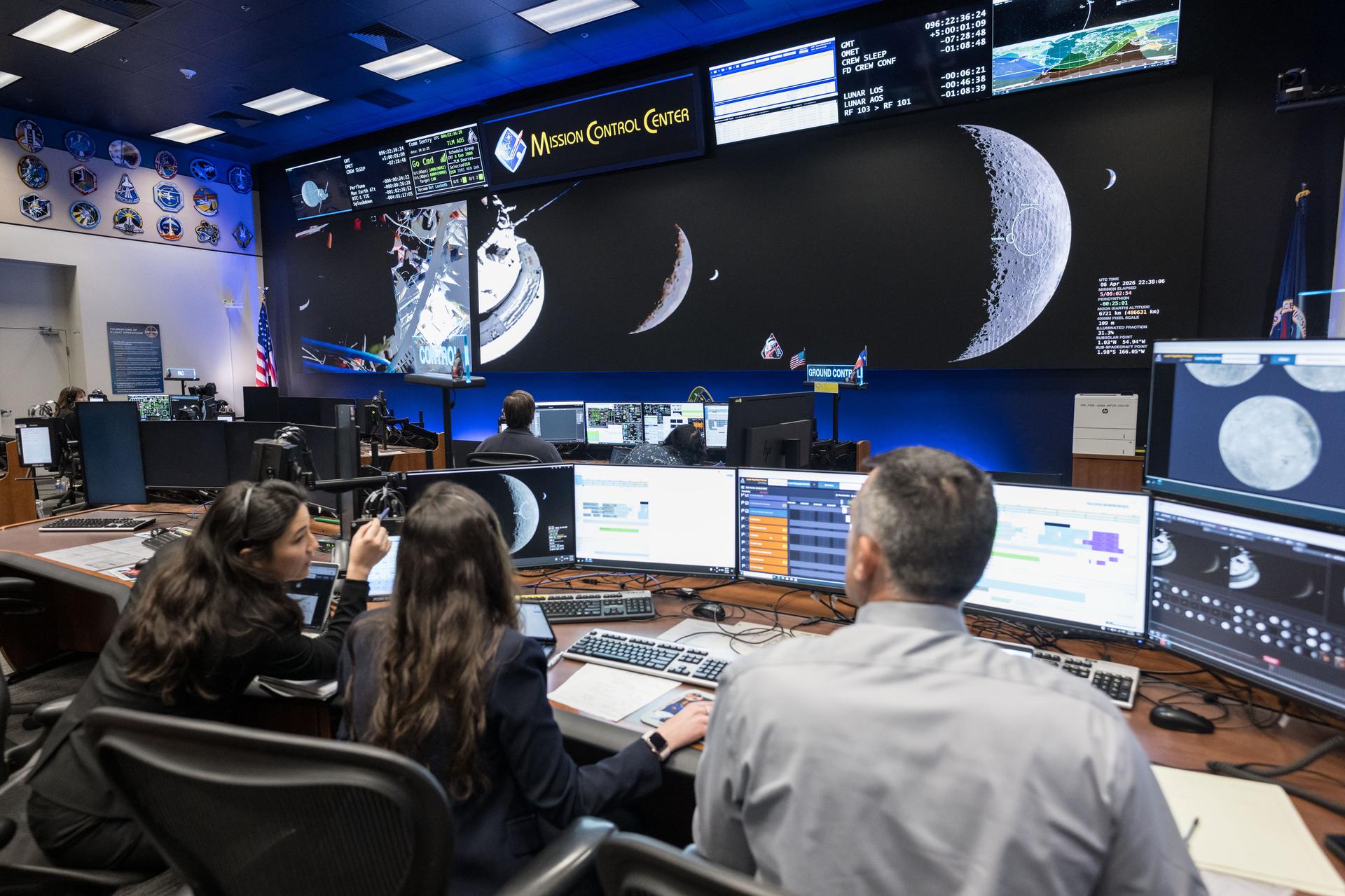
jsc2026e020490 (April 6, 2026) - Pictured from left to right, Angela Garcia, Dr. Kelsey Young, and Dr. Trevor Graff, the first science officers of the Artemis program in the White Flight Control Room in the Christopher C. Kraft Jr. Mission Control Center at NASA’s Johnson Space Center. Seen here about ten minutes before Earthset during Artemis II, these science officers are seen monitoring mission data in real-time from the Science console. They support flight controllers by analyzing scientific measurements and system performance. Their work helps ensure mission objectives are achieved safely and efficiently. Credit: NASA
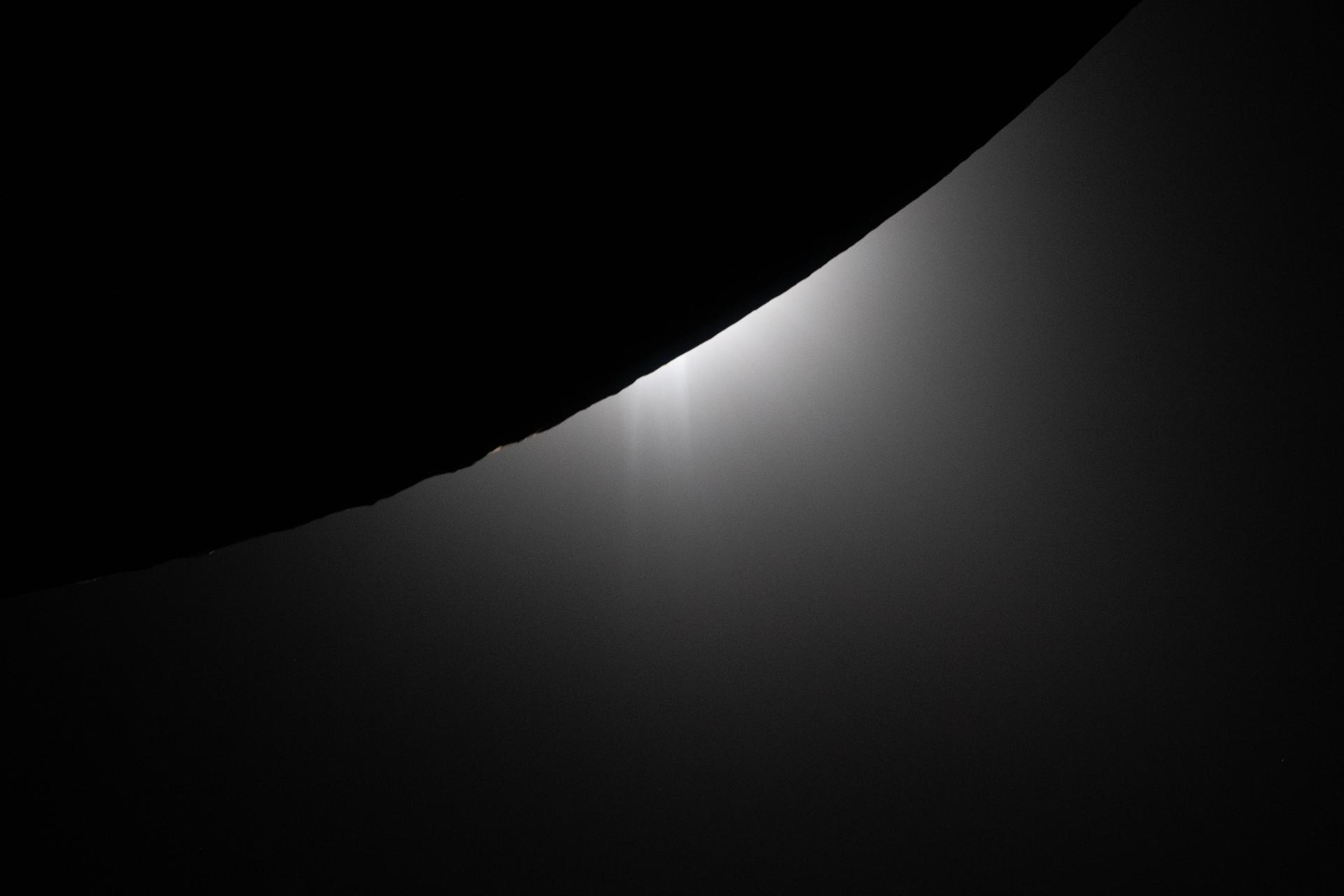
art002e010782 (April 6, 2026) - In this view captured by the Artemis II crew on the Orion spacecraft, a wedge of the Moon in nighttime is visible in the foreground, as the Sun is setting on the opposite side. This image captures the beginning of a total solar eclipse that astronauts were able to observe at the end of their lunar observation period during Orion’s closest approach to the Moon on April 6, 2026. Unlike minutes-long eclipses as viewed from Earth, the Artemis II crew witnessed the Sun hide behind the Moon for nearly an hour. Because the astronauts were so near the Moon, it appeared much larger than the Sun; because of this, it took longer for the Sun to make its transit across the Moon and peek out the other side. From Earth, in contrast, the Moon and Sun appear about the same size, so even small changes in their alignment quickly bring the Sun back into view, making totality much shorter. The bright rays of light, or streamers, that are running outward towards the bottom of the Moon disk are part of the Sun's corona. The corona is the outermost layer of the Sun's atmosphere and is only visible during a total solar eclipse. It is normally hidden by the bright light of the Sun's surface. In addition, the jagged edge of the Moon visible in this image reveals the topography of backlit mountains on the horizon.
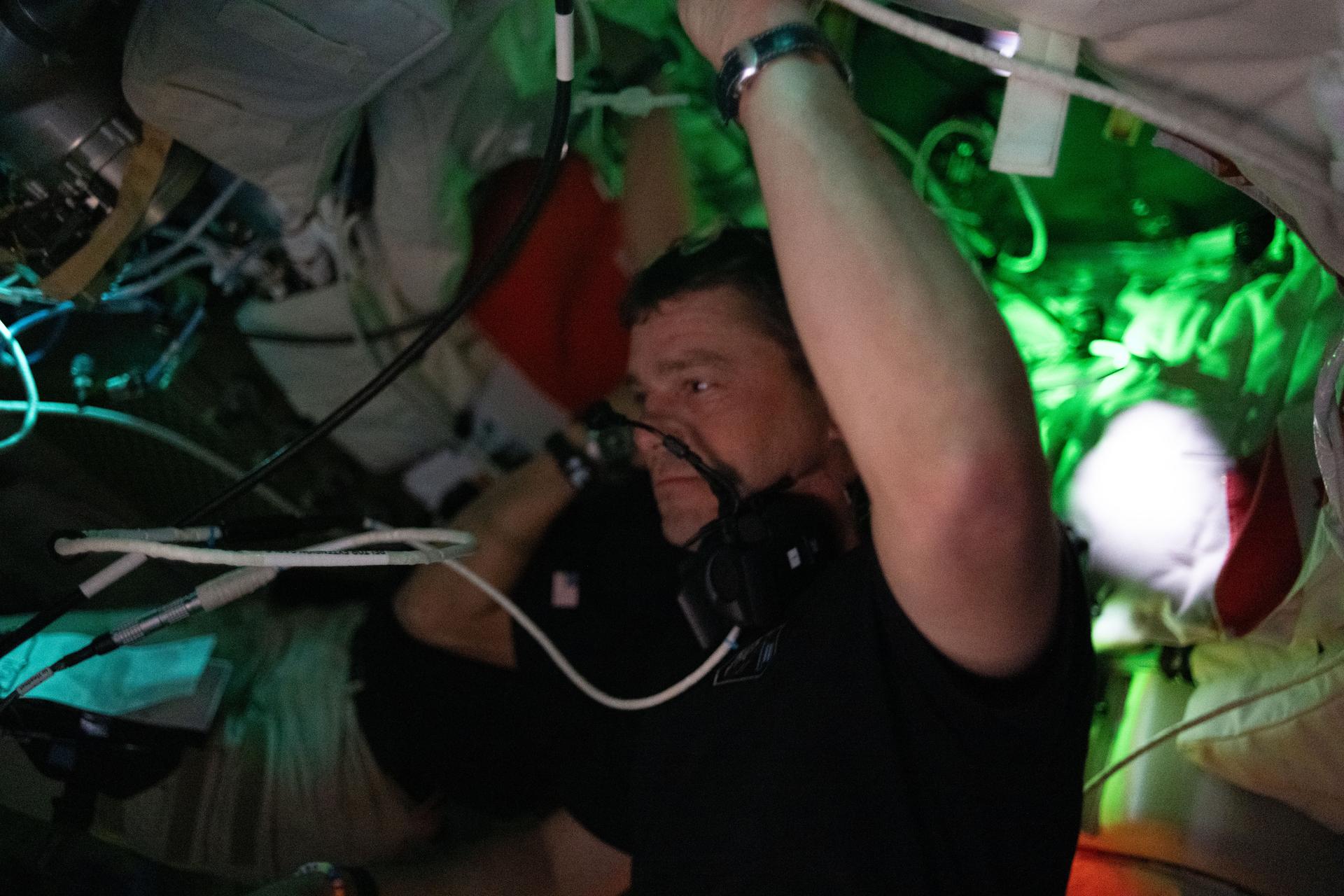
art002e016165 (April 6, 2026) – NASA astronaut and Artemis II Commander Reid Wiseman pictured here in the Orion spacecraft during the Artemis II lunar flyby. Wiseman and his fellow crewmates spent approximately seven hours taking turns at the Orion windows capturing science data to share with their team back on Earth. At closest approach, they came within 4,067 miles of the Moon’s surface.
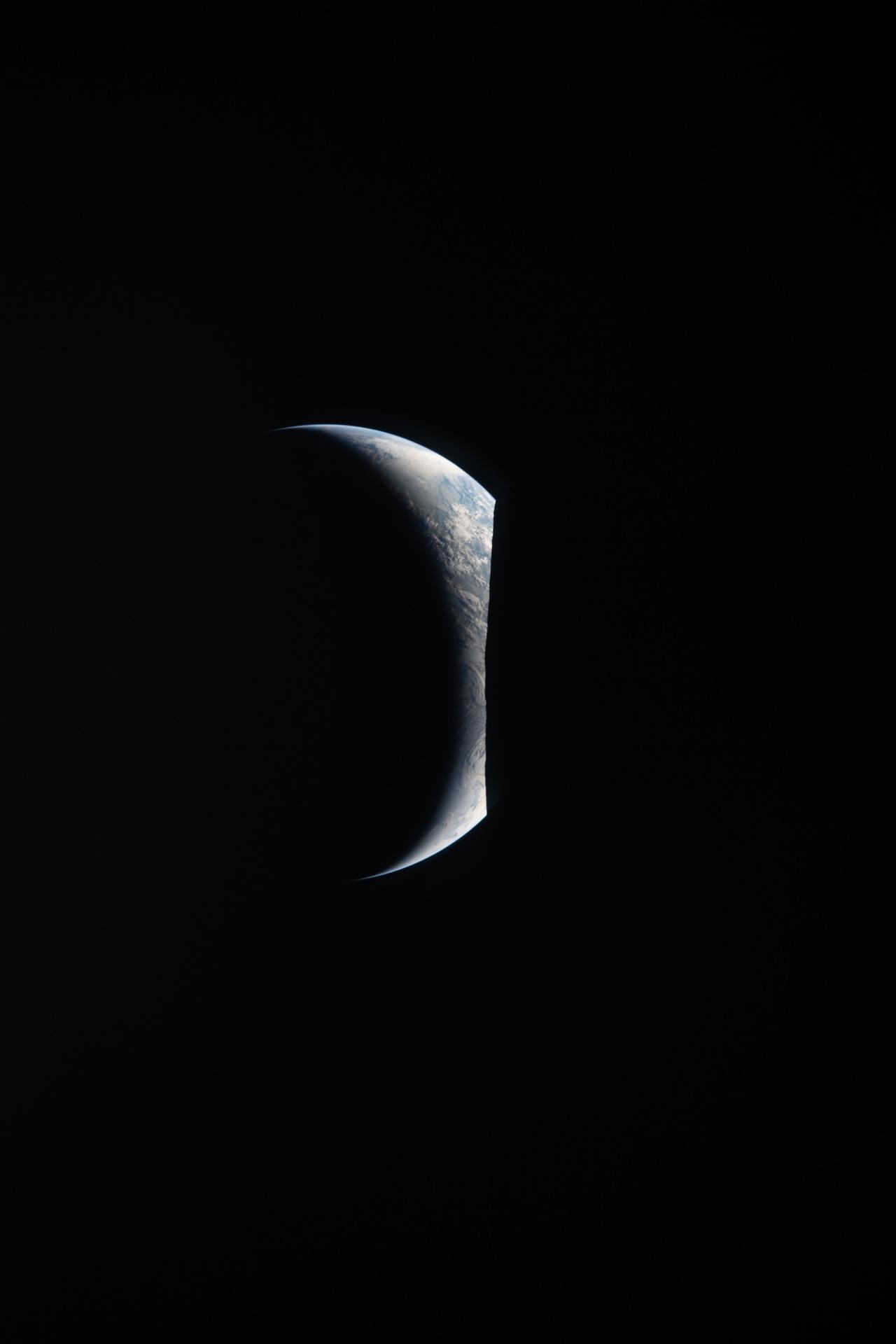
art002e009280 (April 6, 2026) – Earthrise captured through the Orion spacecraft window at 7:22 p.m. ET during the Artemis II crew’s flyby of the Moon’s far side. Earth appears as a delicate crescent, with only its left edge illuminated. The planet’s soft blue hue and scattered white cloud systems stand out on the right against the blackness of space, while the left side fades into night. Taken with a 400 mm lens, the image, Earthrise, reveals a striking alignment of Earth and Moon. In the foreground on the right, a portion of the Moon in night is barely visible save for its edge, which stands out in stark contrast against the illuminated side of Earth on the left. Along the Moon’s edge, rugged terrain is silhouetted against the bright crescent Earth. This photo was rotated 90 degrees clockwise for standard viewing orientation.
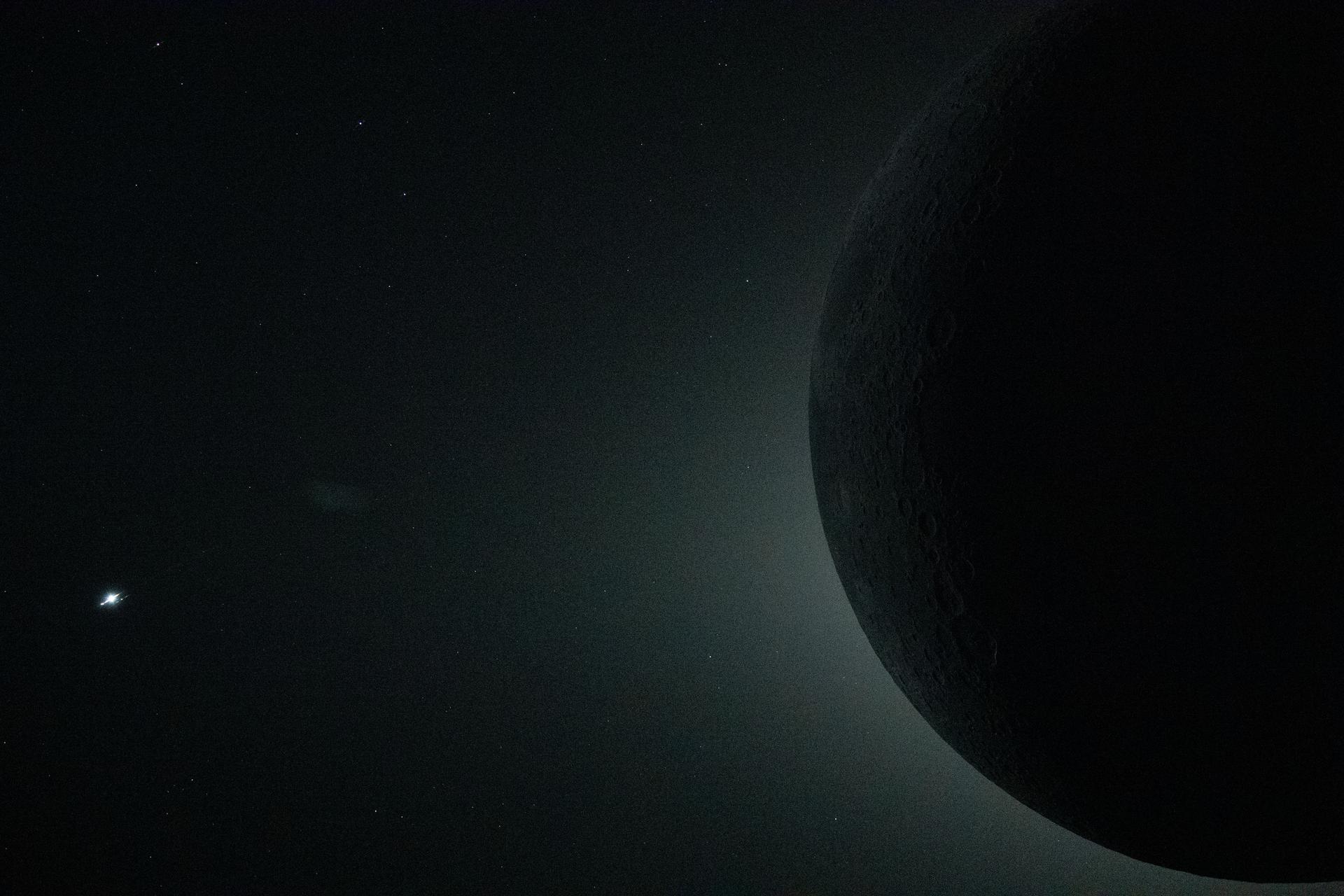
art002e009298 (April 6, 2026) – A close-up view from the Orion spacecraft during the Artemis II crew’s lunar flyby on April 6, 2026, captures a total solar eclipse, with only part of the Moon visible in the frame as it fully obscures the Sun. We see a glowing halo around the dark lunar disk. The science community is investigating whether this effect is due to the corona, zodiacal light, or a combination of the two. From this deep-space vantage point, the Moon appeared large enough to sustain nearly 54 minutes of totality, far longer than total solar eclipses typically seen from Earth. The bright silver glint on the left edge of the image is the planet Venus. The round, dark gray feature visible along the Moon’s horizon between the 9 and 10 o’clock positions is Mare Crisium, a feature visible from Earth. We see faint lunar features because light reflected off of Earth provides a source of illumination.
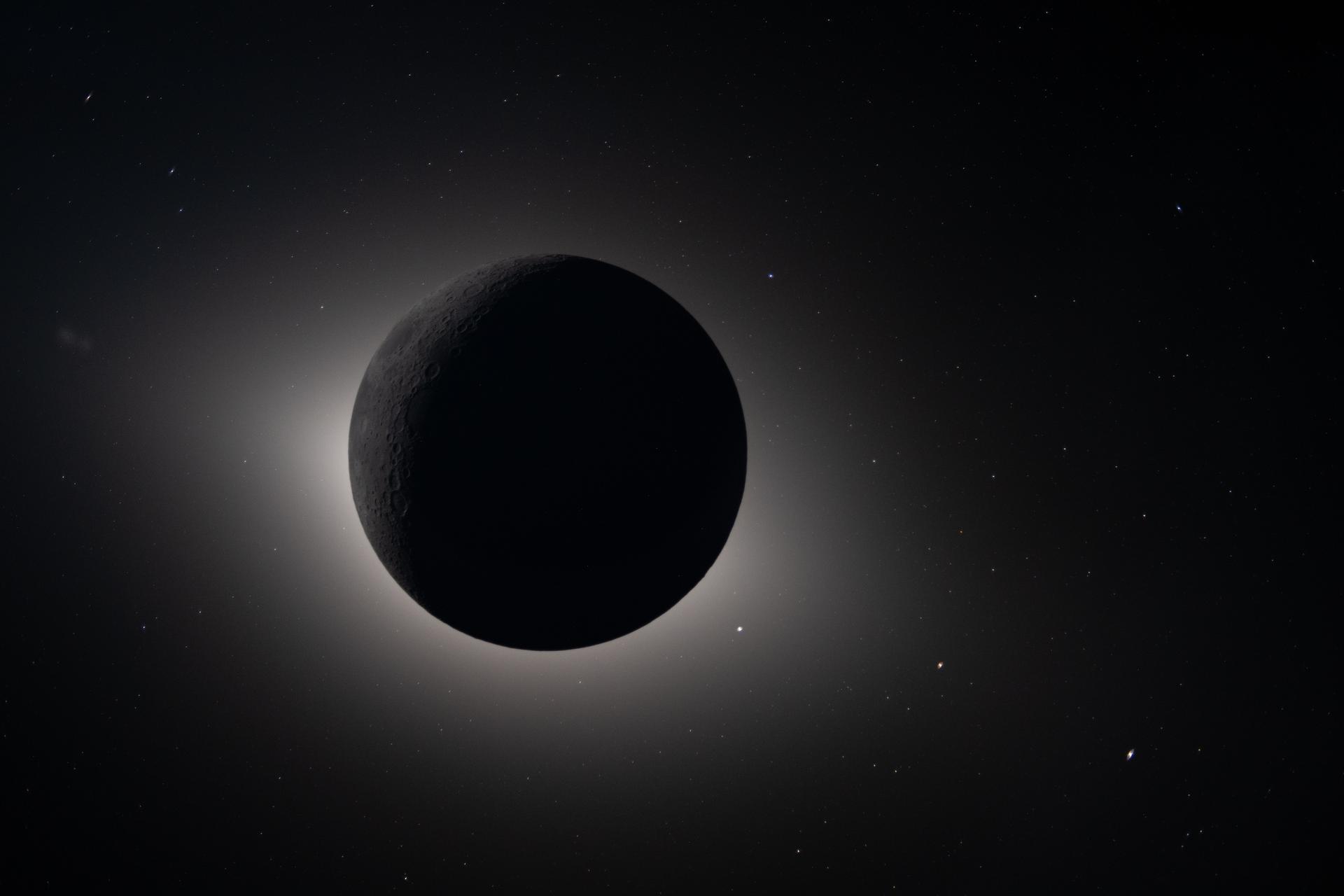
art002e009301 (April 6, 2026) – Captured by the Artemis II crew during their lunar flyby on April 6, 2026, this image shows the Moon fully eclipsing the Sun. From the crew’s perspective, the Moon appears large enough to completely block the Sun, creating nearly 54 minutes of totality and extending the view far beyond what is possible from Earth. We see a glowing halo around the dark lunar disk. The science community is investigating whether this effect is due to the corona, zodiacal light, or a combination of the two. Also visible are stars, typically too faint to see when imaging the Moon, but with the Moon in darkness stars are readily imaged. This unique vantage point provides both a striking visual and a valuable opportunity for astronauts to document their observations during humanity’s return to deep space. The faint glow of the nearside of the Moon is visible in this image, having been illuminated by light reflected off the Earth.
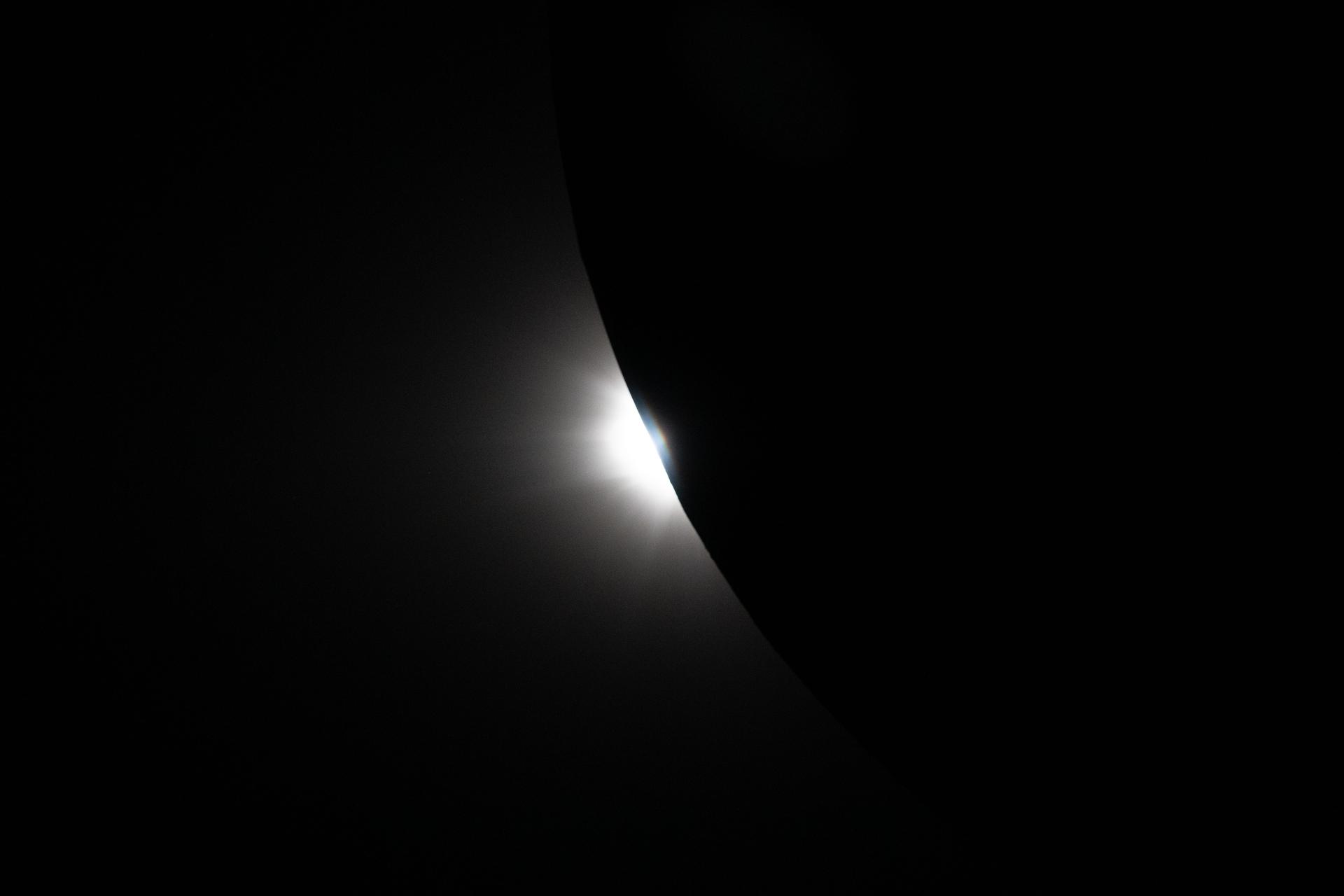
art002e009299 (April 6, 2026) – Captured from the Orion spacecraft near the end of the Artemis II lunar flyby on April 6, this image shows the Sun beginning to peek out from behind the Moon as the eclipse transitions out of totality. Only a portion of the Moon is visible in frame, its curved edge revealing a bright sliver of sunlight returning after nearly an hour of darkness. In final moments of the eclipse observed by the crew, the reemerging light creates a sharp contrast against the Moon’s silhouette and reveals lunar topography not usually visible along the lunar limb. This fleeting phase captures the dynamic alignment of the Sun, Moon, and spacecraft as Orion continues its journey back from the far side of the Moon.
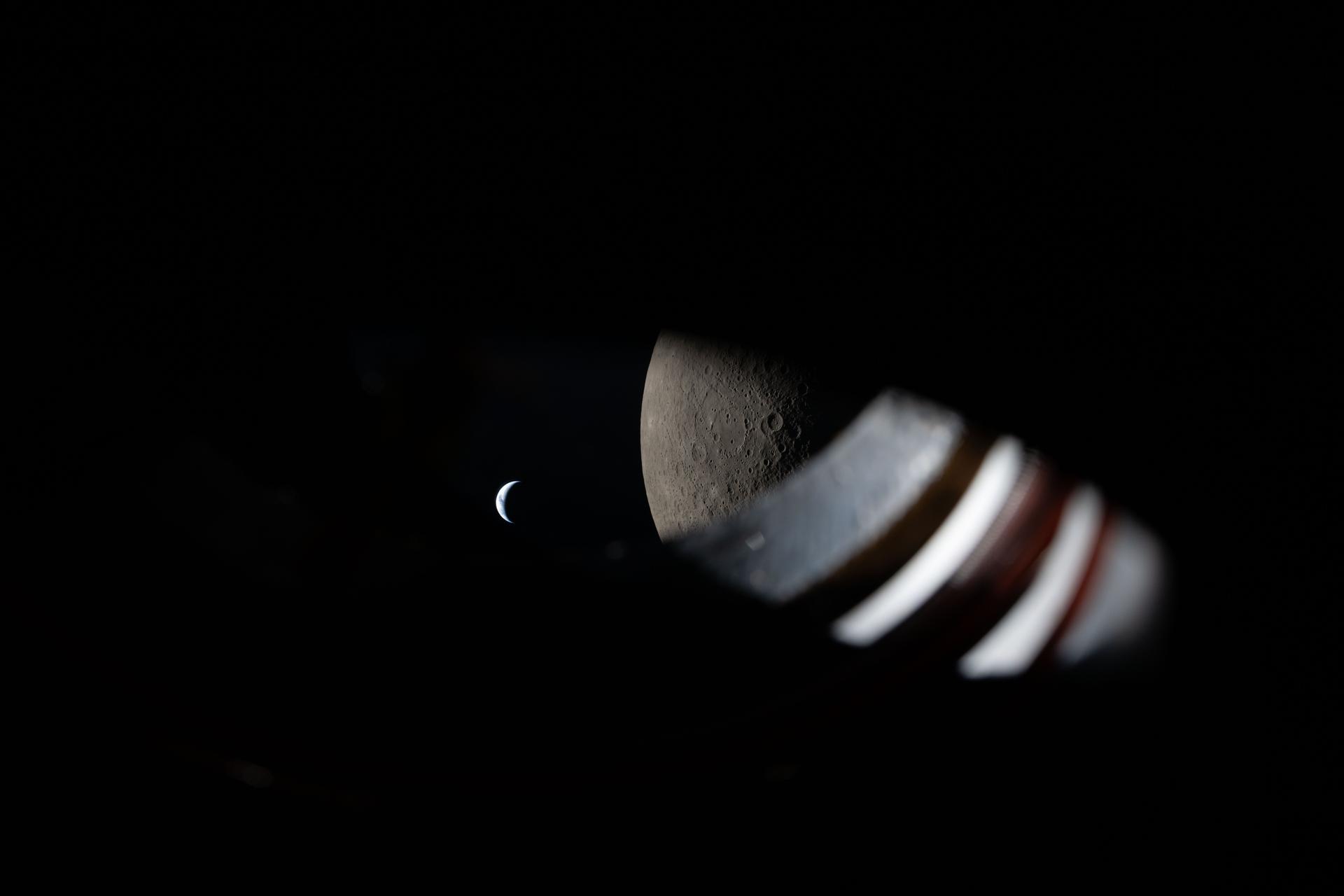
art002e012279 (April 6, 2026) - A view from the window of the Orion spacecraft approximately 9 minutes before Earthset during the Artemis II lunar flyby on April 6, 2026.
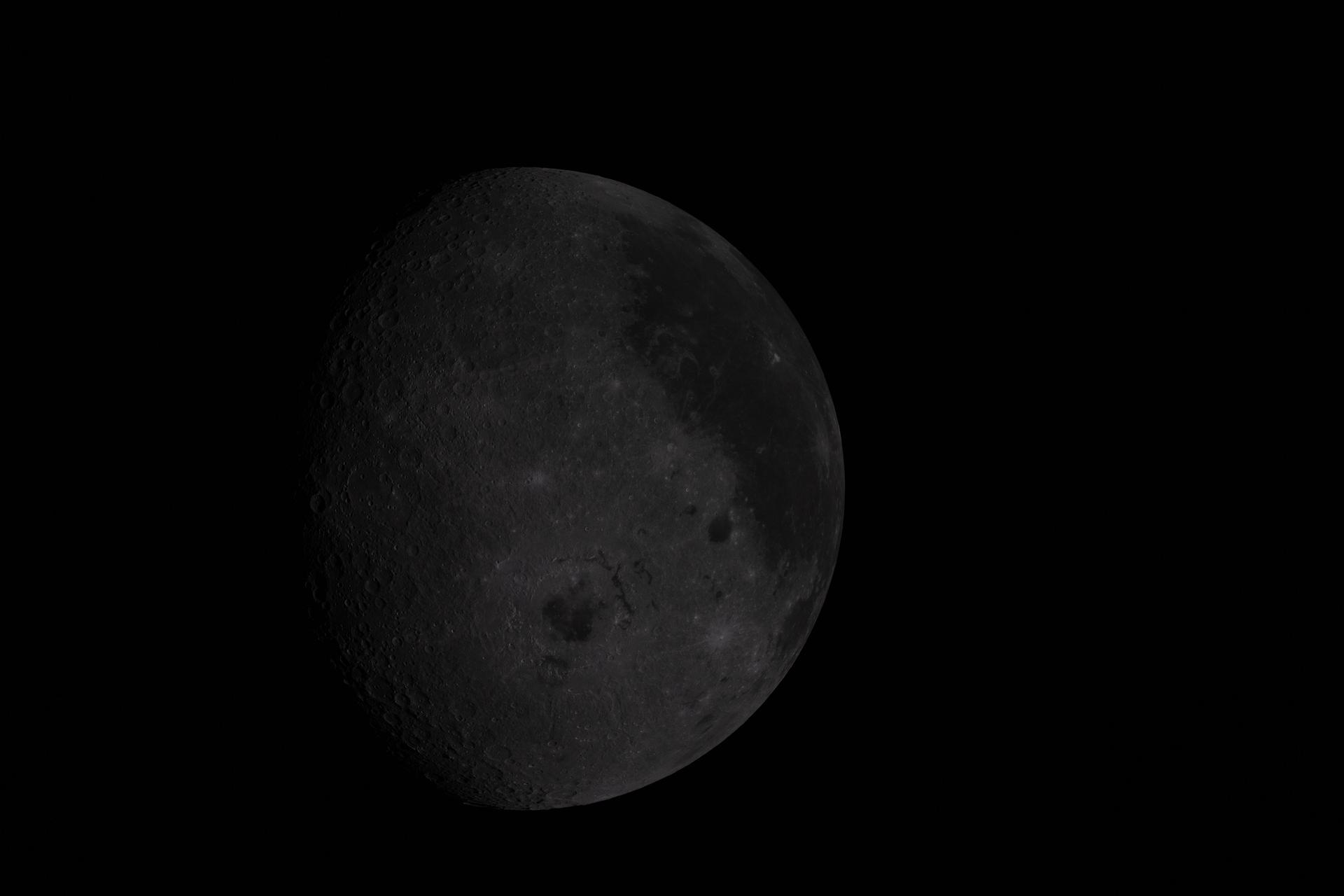
art002e012178 (April 7, 2026) - A shot from early in the Artemis II lunar flyby, taken with a smaller aperture setting, shows a moodier version of the Moon than some of the other flyby images with more typical lighting settings. The four crew members spent about 7 hours photographing and recording observations of the Moon as they flew around the far side on April 6, 2026.
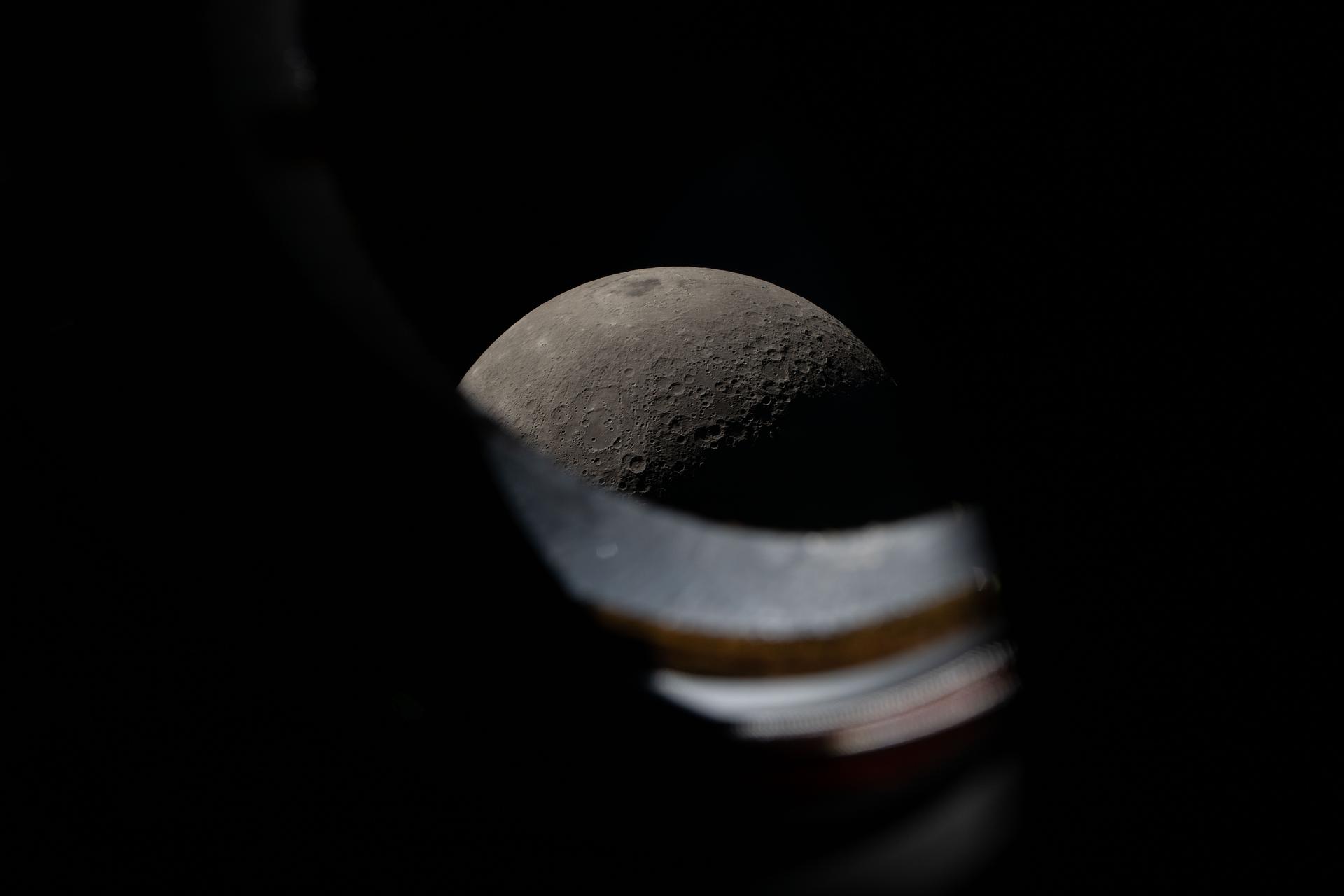
art002e012278 (April 6, 2026) - The Moon seen peeking above the window sill of the Orion spacecraft during the Artemis II lunar flyby on April 6, 2026. The Artemis II crew spent about 7 hours at the Orion windows during the flyby, taking photos and recording observations on the Moon to share with scientists on the ground.
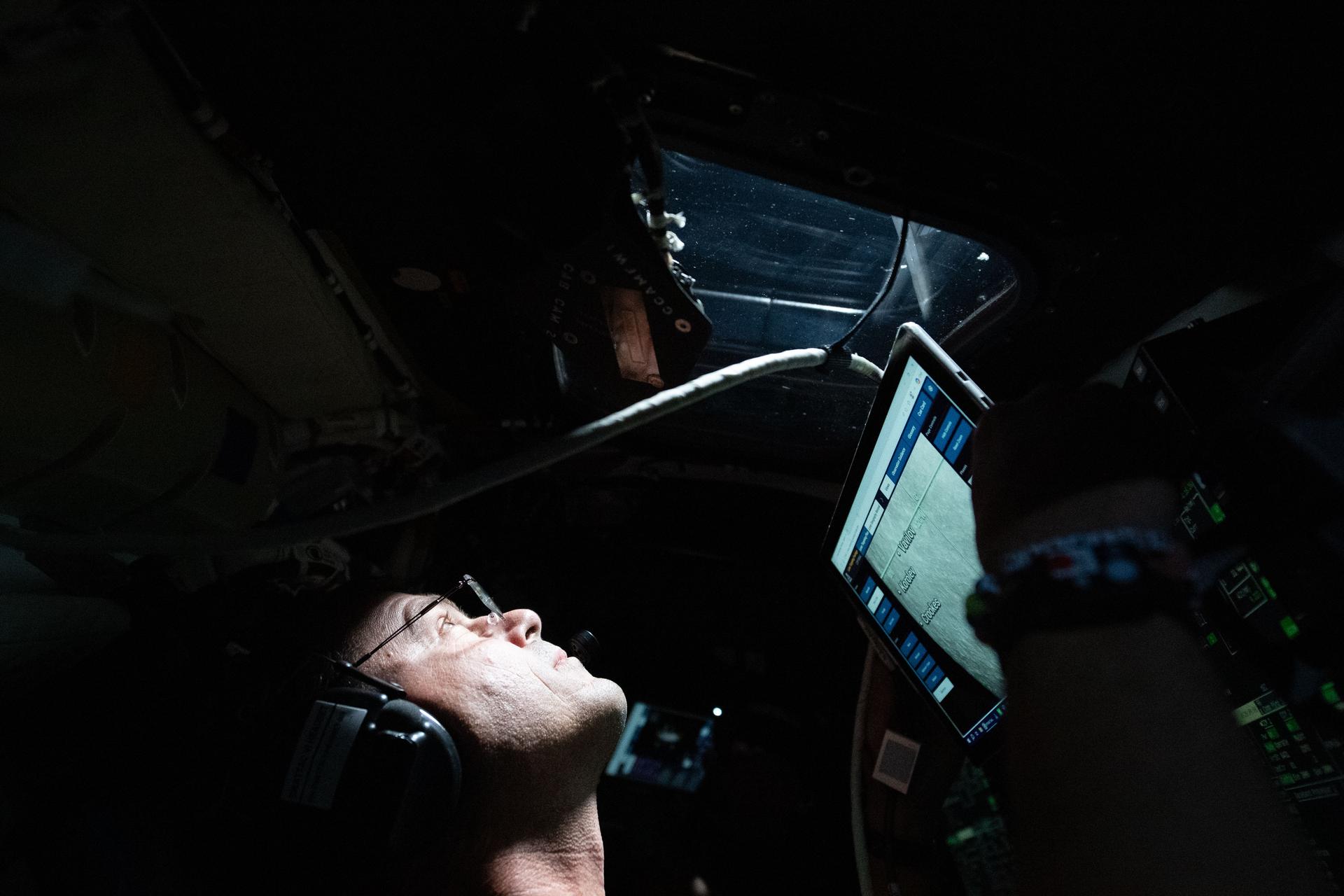
art002e014231 (April 6, 2026) – NASA astronaut and Artemis II Commander Reid Wiseman taking a moment during the seven-hour lunar observation period where the crew reported to the ground team their observations including color nuances, which will help enhance scientific understandings of the Moon. At the beginning of the window, as Orion approaches the Moon on the near side, the side we can see from Earth, people in parts of the eastern hemisphere can view some of the same features the astronauts will observe.

art002e014198 (April 6, 2026) – NASA astronaut and Artemis II Commander Reid Wiseman taking a moment during the seven-hour lunar observation period where the crew reported to the ground team their observations including color nuances, which will help enhance scientific understandings of the Moon. At the beginning of the window, as Orion approaches the Moon on the near side, the side we can see from Earth, people in parts of the eastern hemisphere can view some of the same features the astronauts will observe.
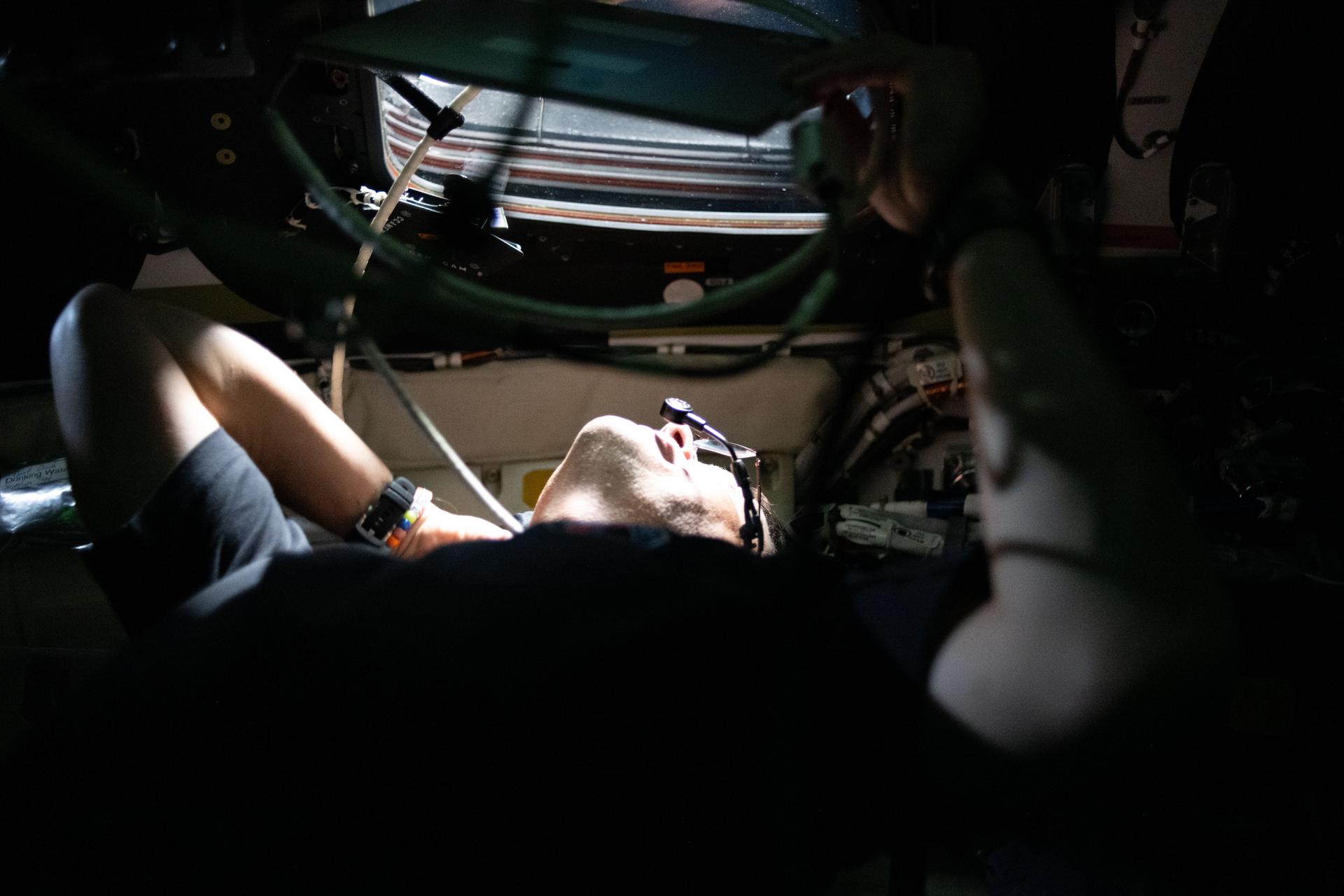
art002e016130 (April 6, 2026) – NASA astronaut and Artemis II Commander Reid Wiseman pictured here in the Orion spacecraft during the Artemis II lunar flyby. Wiseman and his fellow crewmates spent approximately seven hours taking turns at the Orion windows capturing science data to share with their team back on Earth. At closest approach, they came within 4,067 miles of the Moon’s surface.

art002e014195 (April 6, 2026) – NASA astronaut and Artemis II Commander Reid Wiseman pictured here in the Orion spacecraft during the Artemis II lunar flyby. Wiseman and his fellow crewmates spent approximately seven hours taking turns at the Orion windows capturing science data to share with their team back on Earth. At closest approach, they came within 4,067 miles of the Moon’s surface.
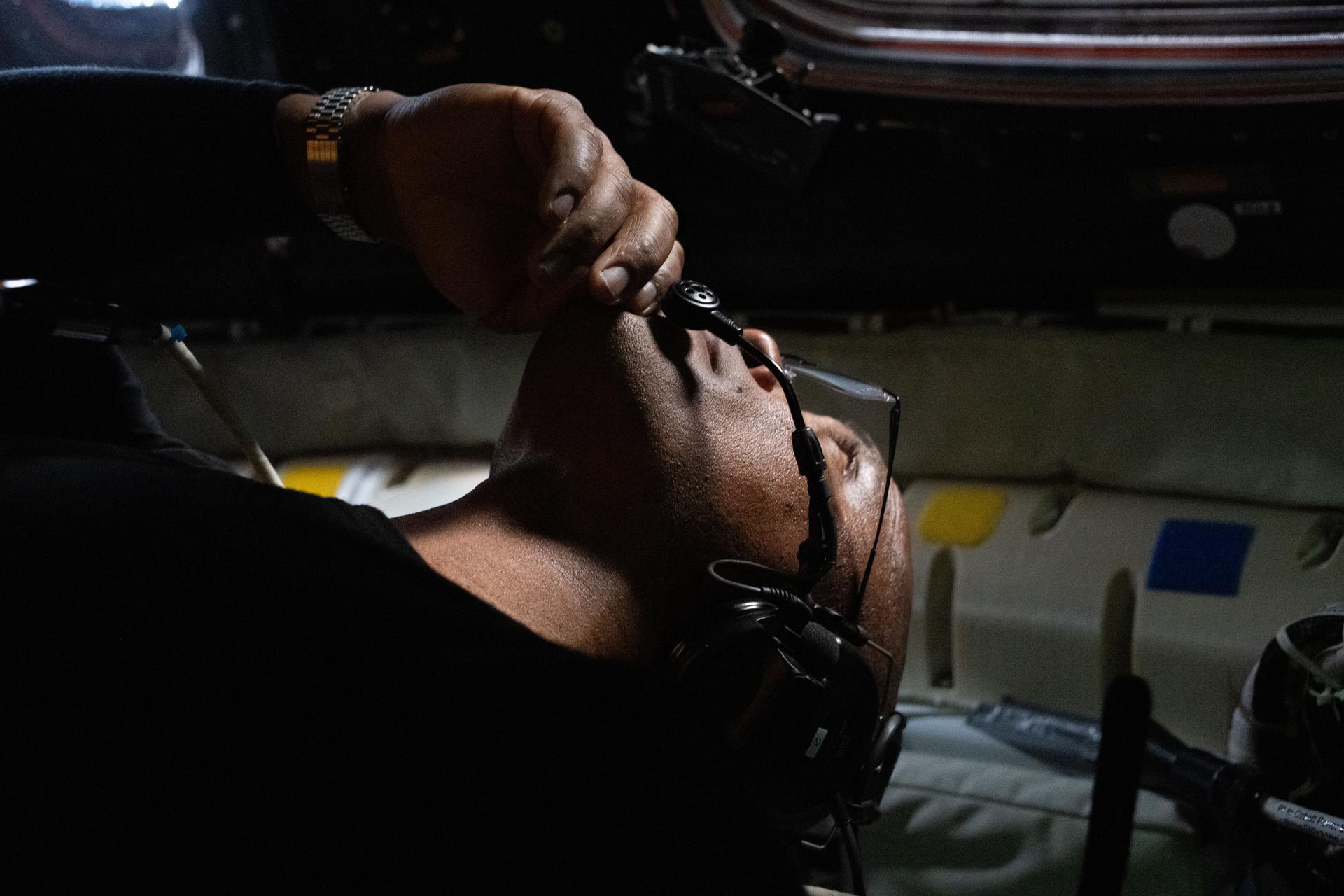
art002e016198 (April 6, 2026) – NASA astronaut and Artemis II Pilot Victor Glover pictured here in the Orion spacecraft during the Artemis II lunar flyby. Glover and his fellow crewmates spent approximately seven hours taking turns at the Orion windows capturing science data to share with their team back on Earth. At closest approach, they came within 4,067 miles of the Moon’s surface.
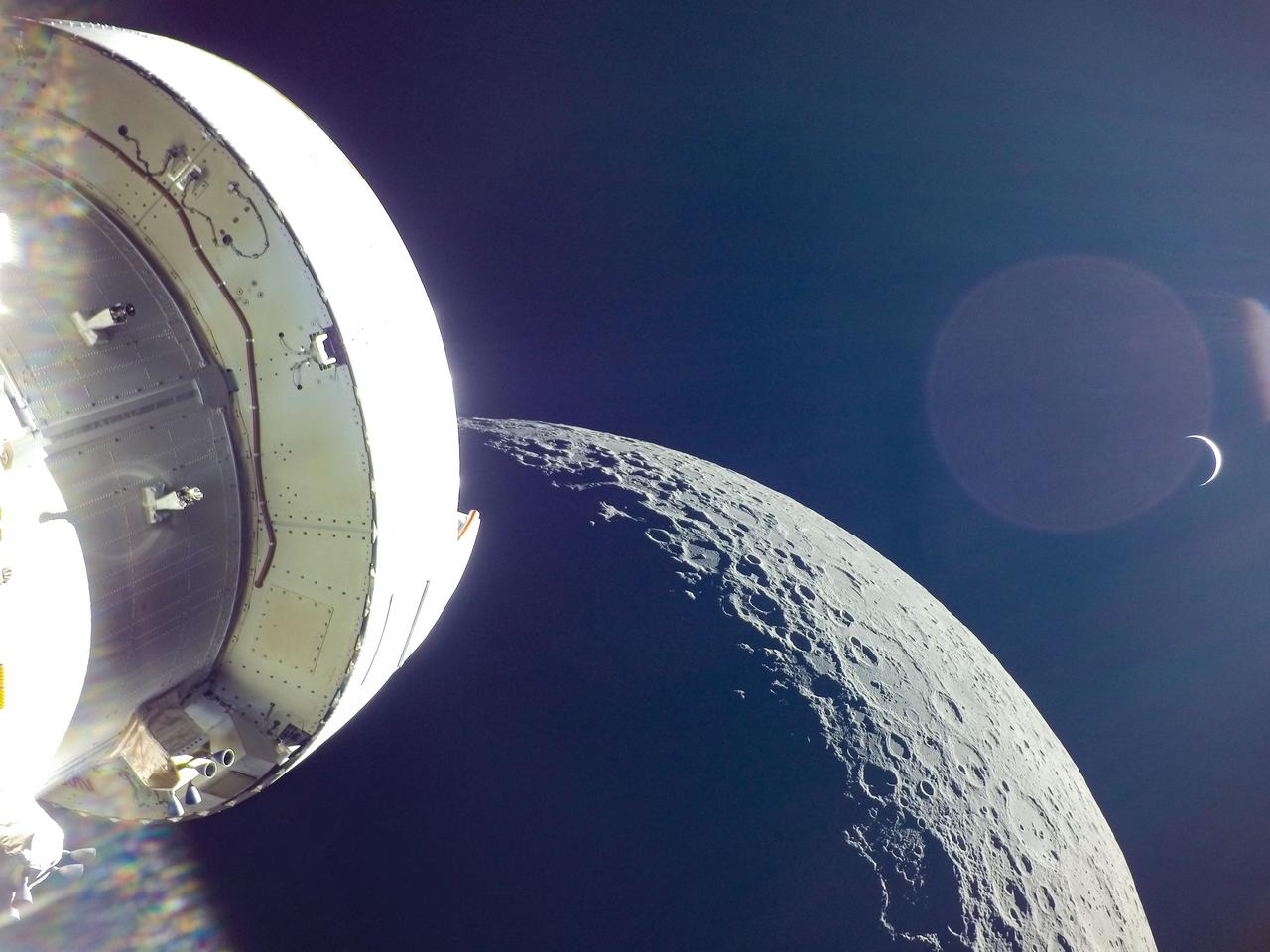
art0001e002092 (Dec. 5, 2022) On the 20th day of the Artemis I mission, Orion captured the Earth rising behind the Moon following the return powered flyby. The 3 minute, 27 second, return powered flyby burn, committed the spacecraft to a Dec. 11 splashdown in the Pacific Ocean.
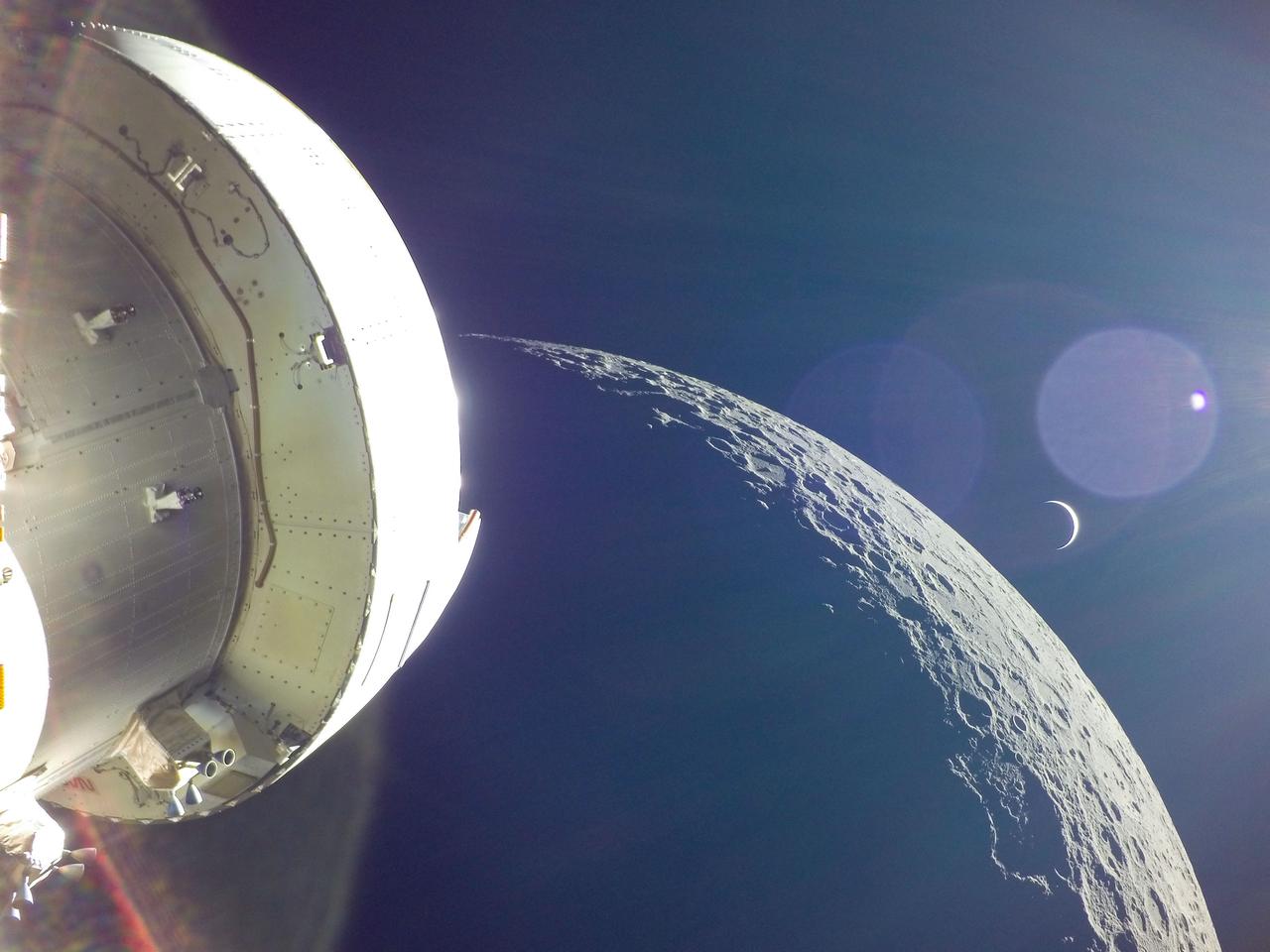
art0001e002083 (Dec. 5, 2022) On the 20th day of the Artemis I mission, Orion captured the Earth rising behind the Moon following the return powered flyby. The 3 minute, 27 second, return powered flyby burn, committed the spacecraft to a Dec. 11 splashdown in the Pacific Ocean.
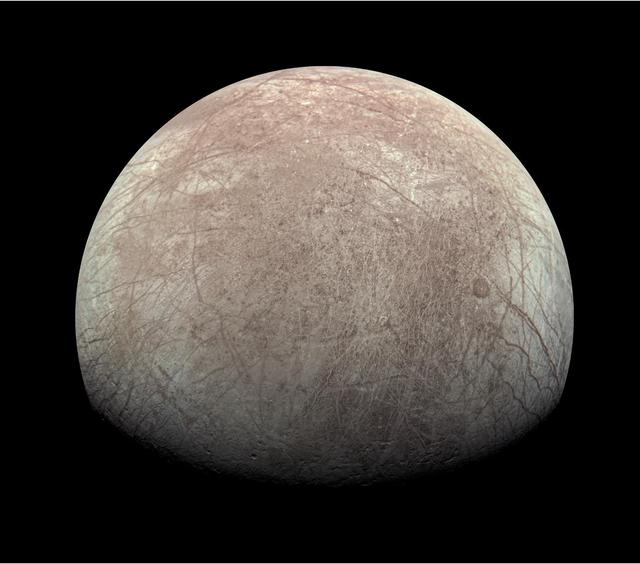
This view of Jupiter's icy moon Europa was captured by JunoCam, the public engagement camera aboard NASA's Juno spacecraft, during the mission's close flyby on Sept. 29, 2022. The picture is a composite of JunoCam's second, third, and fourth images taken during the flyby, as seen from the perspective of the fourth image. North is to the left. The images have a resolution of just over 0.5 to 2.5 miles per pixel (1 to 4 kilometers per pixel). As with our Moon and Earth, one side of Europa always faces Jupiter, and that is the side of Europa visible here. Europa's surface is crisscrossed by fractures, ridges, and bands, which have erased terrain older than about 90 million years. Citizen scientist Kevin M. Gill processed the images to enhance the color and contrast. https://photojournal.jpl.nasa.gov/catalog/PIA25695
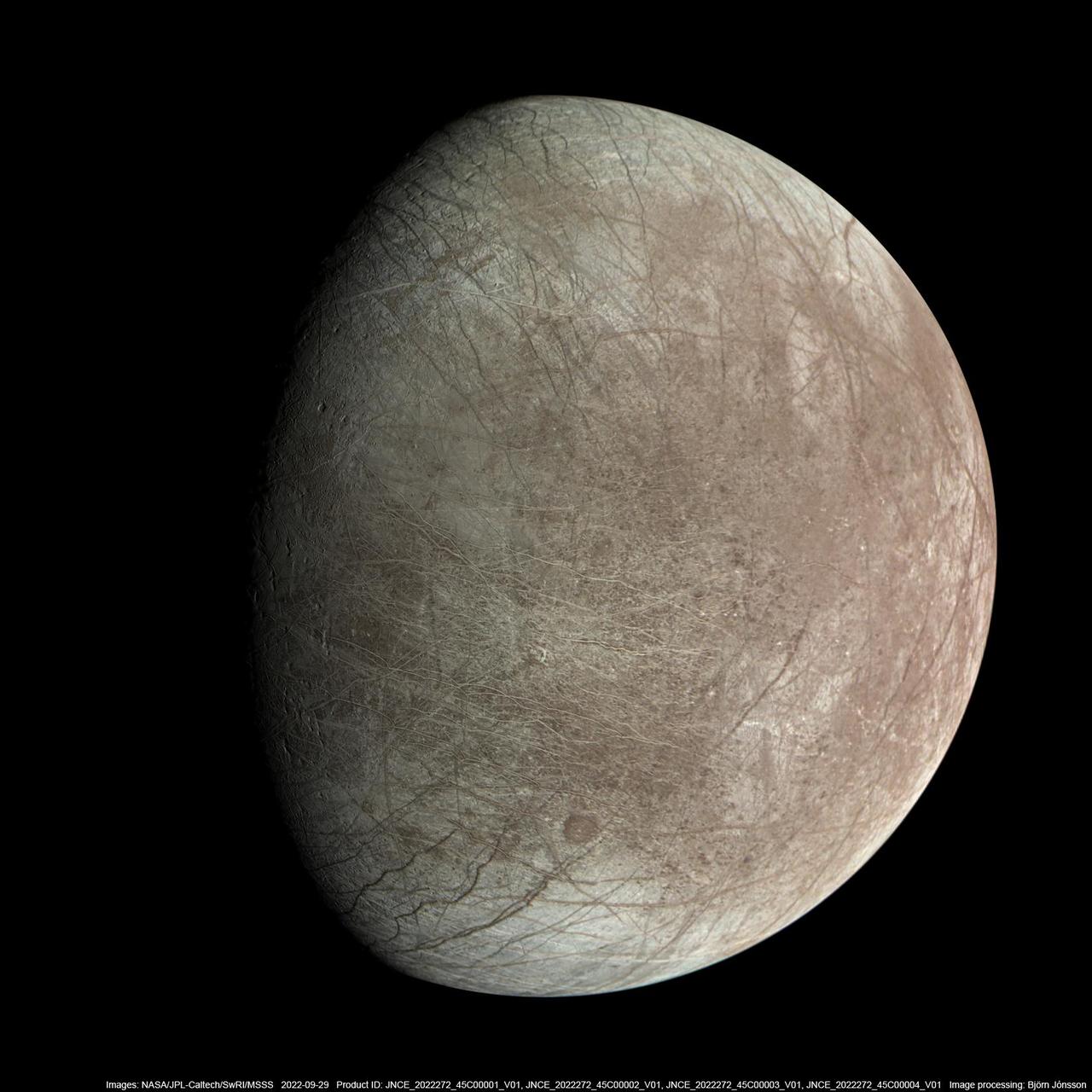
Jupiter's moon Europa was captured by the JunoCam instrument aboard NASA's Juno spacecraft during the mission's close flyby on Sept. 29, 2022. The picture is a composite of JunoCam's second, third, and fourth images taken during the flyby, as seen from the perspective of the fourth image. North is at the top. The resolution of images ranges from just over 0.5 to 2.5 miles per pixel (1 to 4 kilometers per pixel). As with our Moon and Earth, one side of Europa always faces Jupiter, and that is the side of Europa visible here. Europa's surface is crisscrossed by fractures, ridges, and bands, which have erased terrain older than about 90 million years. Citizen scientist Björn Jónsson processed the images to enhance the color and contrast. https://photojournal.jpl.nasa.gov/catalog/PIA26331
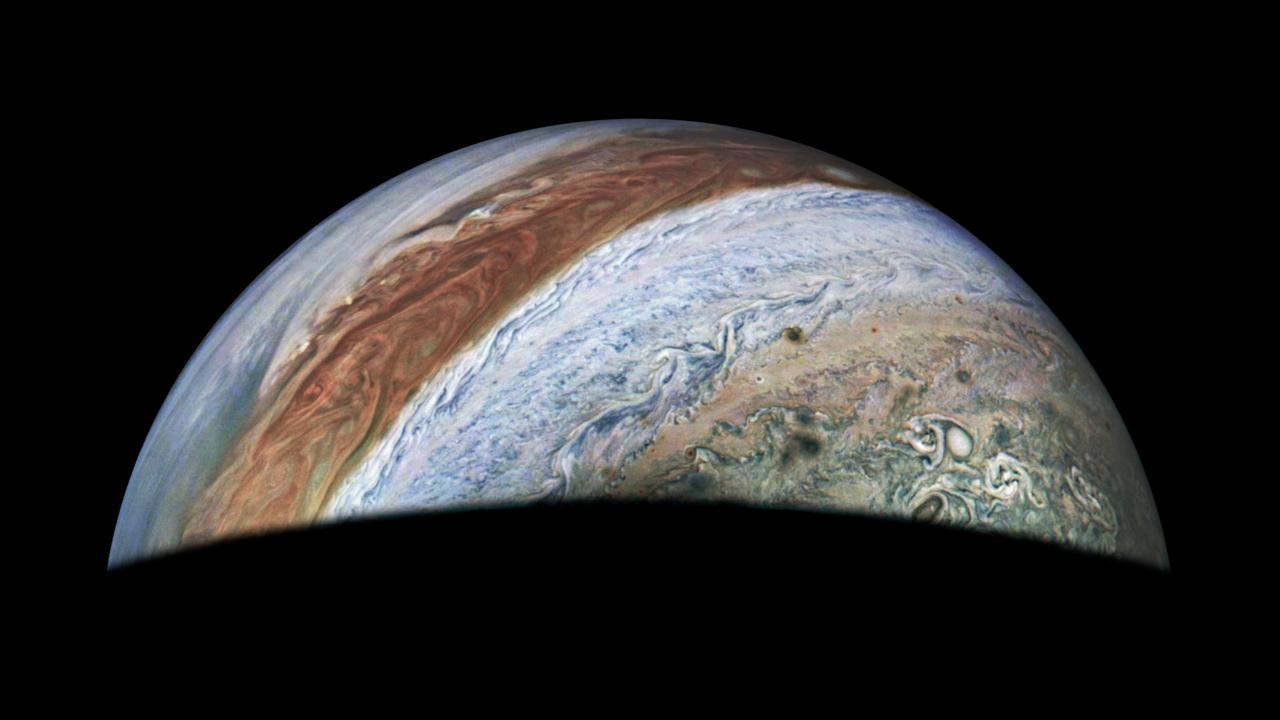
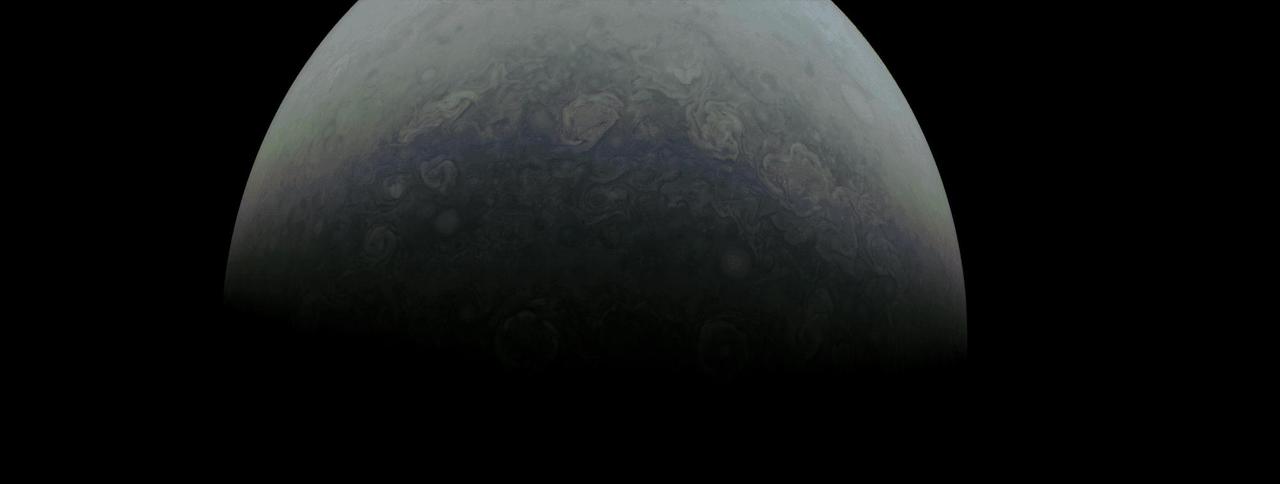
This view of Jupiter was captured by the JunoCam instrument aboard NASA's Juno spacecraft during the mission's 62nd close flyby of the giant planet on June 13, 2024. Citizen scientist Jackie Branc made the image using raw JunoCam data. https://photojournal.jpl.nasa.gov/catalog/PIA26350
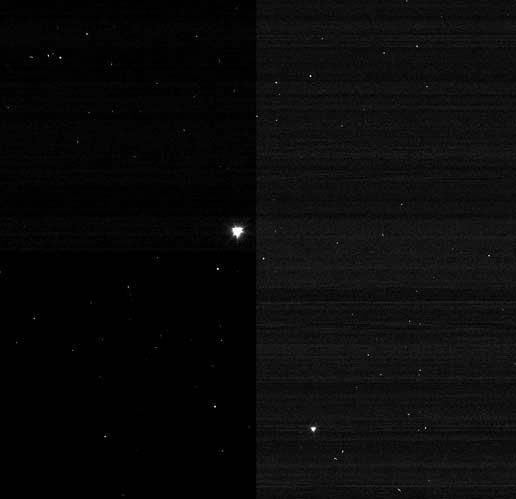
This image of NASA Deep Impact impactor probe was taken by the mission mother ship, or flyby spacecraft, after the two separated at 11:07 p.m. Pacific time, July 2 2:07 a.m. Eastern time, July 3, 2005.
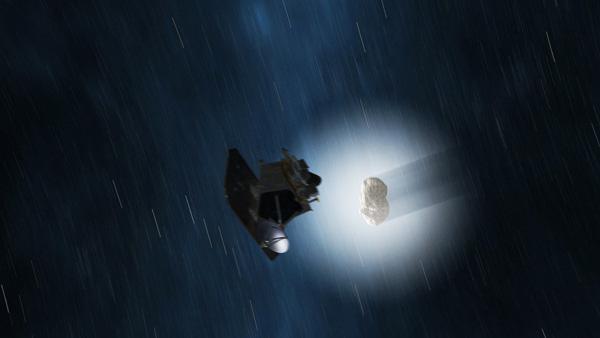
This artist concept shows a view of NASA EPOXI mission spacecraft during its Nov. 4, 2010 flyby of comet Hartley 2. The fluffy shell around the comet, called a coma, is made up of gas and dust that blew off the comet core, or nucleus.
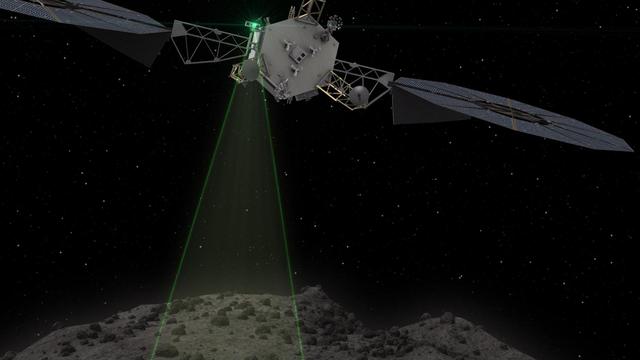
This graphic depicts the Asteroid Redirect Vehicle conducting a flyby of its target asteroid. During these flybys, the Asteroid Redirect Mission (ARM) would come within 0.6 miles (1 kilometer), generating imagery with resolution of up to 0.4 of an inch (1 centimeter) per pixel. The robotic segment of ARM will demonstrate advanced, high-power, high-throughput solar electric propulsion; advanced autonomous precision proximity operations at a low-gravity planetary body; and controlled touchdown and liftoff with a multi-ton mass. The crew segment of the mission will include spacewalk activities for sample selection, extraction, containment and return; and mission operations of integrated robotic and crewed vehicle stack -- all key components of future in-space operations for human missions to the Mars system. After collecting a multi-ton boulder from the asteroid, the robotic spacecraft will redirect the boulder to a crew-accessible orbit around the moon, where NASA plans to conduct a series of proving ground missions in the 2020s that will help validate capabilities needed for NASA's Journey to Mars. http://photojournal.jpl.nasa.gov/catalog/PIA21062

This composite image shows an infrared view of Saturn's moon Titan from NASA's Cassini spacecraft, acquired during the mission's "T-114" flyby on Nov. 13, 2015. The spacecraft's visual and infrared mapping spectrometer (VIMS) instrument made these observations, in which blue represents wavelengths centered at 1.3 microns, green represents 2.0 microns, and red represents 5.0 microns. A view at visible wavelengths (centered around 0.5 microns) would show only Titan's hazy atmosphere (as in PIA14909). The near-infrared wavelengths in this image allow Cassini's vision to penetrate the haze and reveal the moon's surface. During this Titan flyby, the spacecraft's closest-approach altitude was 6,200 miles (10,000 kilometers), which is considerably higher than those of typical flybys, which are around 750 miles (1,200 kilometers). The high flyby allowed VIMS to gather moderate-resolution views over wide areas (typically at a few kilometers per pixel). The view looks toward terrain that is mostly on the Saturn-facing hemisphere of Titan. The scene features the parallel, dark, dune-filled regions named Fensal (to the north) and Aztlan (to the south), which form the shape of a sideways letter "H." Several places on the image show the surface at higher resolution than elsewhere. These areas, called subframes, show more detail because they were acquired near closest approach. They have finer resolution, but cover smaller areas than data obtained when Cassini was farther away from Titan. Near the limb at left, above center, is the best VIMS view so far of Titan's largest confirmed impact crater, Menrva (first seen by the RADAR instrument in PIA07365). Similarly detailed subframes show eastern Xanadu, the basin Hotei Regio, and channels within bright terrains east of Xanadu. (For Titan maps with named features see http://planetarynames.wr.usgs.gov/Page/TITAN/target.) Due to the changing Saturnian seasons, in this late northern spring view, the illumination is significantly changed from that seen by VIMS during the "T-9" flyby on December 26, 2005 (PIA02145). The sun has moved higher in the sky in Titan's northern hemisphere, and lower in the sky in the south, as northern summer approaches. This change in the sun's angle with respect to Titan's surface has made high southern latitudes appear darker, while northern latitudes appear brighter. http://photojournal.jpl.nasa.gov/catalog/PIA20016
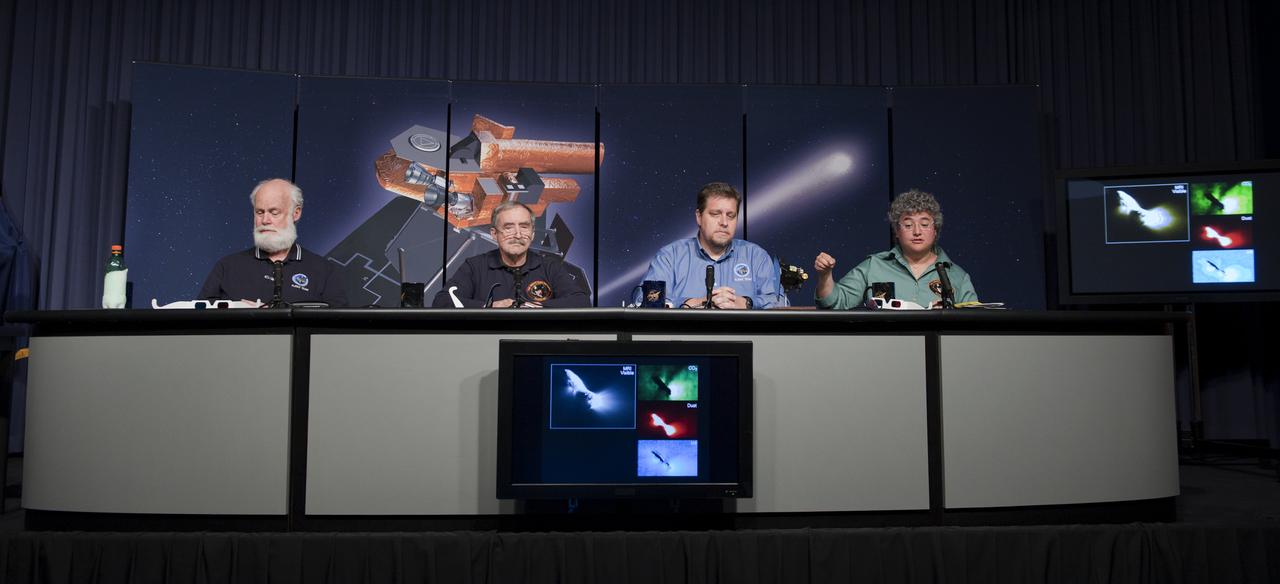
Jessica Sunshine, EPOXI Deputy Principal Investigator, University of Maryland, far right, discusses imagery sent back from the EPOXI Mission spacecraft during a press conference, Thursday, Nov. 18, 2010, at NASA Headquarters in Washington. The press conference was held to discuss the Nov. 4 successful flyby of Comet Hartley 2 by NASA's EPOXI Mission Spacecraft. Images from the flyby provided scientists the most extensive observations of a comet in history. Photo Credit: (NASA/Paul E. Alers)
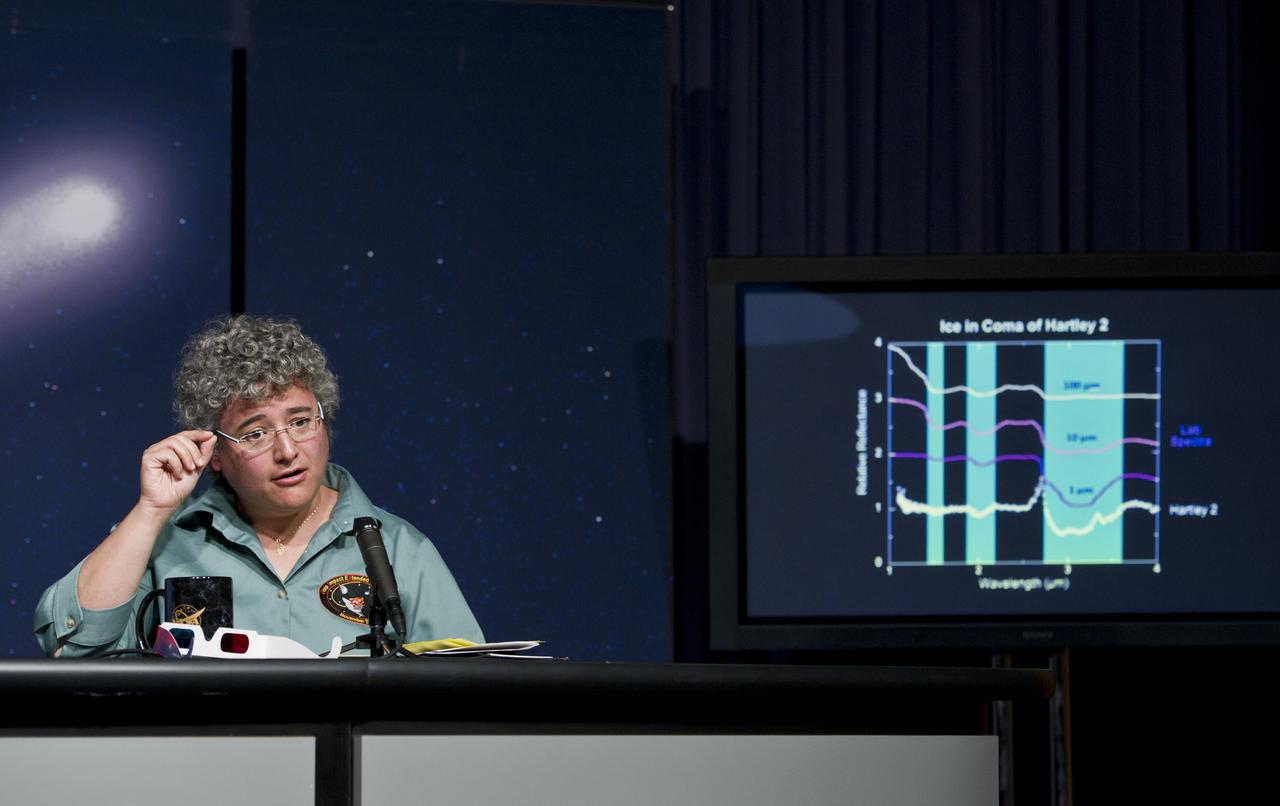
Jessica Sunshine, EPOXI Deputy Principal Investigator, University of Maryland, far right, discusses imagery sent back from the EPOXI Mission spacecraft during a press conference, Thursday, Nov. 18, 2010, at NASA Headquarters in Washington. The press conference was held to discuss the Nov. 4 successful flyby of Comet Hartley 2 by NASA's EPOXI Mission Spacecraft. Images from the flyby provided scientists the most extensive observations of a comet in history. Photo Credit: (NASA/Paul E. Alers)

(jsc2022e089094_alt) (Nov. 21, 2022) During day 6 of the 25.5 day mission, Vanessa Wyche, Johnson Space Center, Center Director and Flight Director Rick LaBrode, inside the Artemis Mission Control Room or the White Flight Control Room at the Johnson Space Center during the Outbound Powered Flyby (OPF) burn. The Outbound Powered Flyby burn, targeted the DRI burn and was performed as Orion flew by the Moon around 62 mi (100 km)

Jessica Sunshine, EPOXI Deputy Principal Investigator, University of Maryland, far right, discusses imagery sent back from the EPOXI Mission spacecraft during a press conference, Thursday, Nov. 18, 2010, at NASA Headquarters in Washington. The press conference was held to discuss the Nov. 4 successful flyby of Comet Hartley 2 by NASA's EPOXI Mission Spacecraft. Images from the flyby provided scientists the most extensive observations of a comet in history. Photo Credit: (NASA/Paul E. Alers)
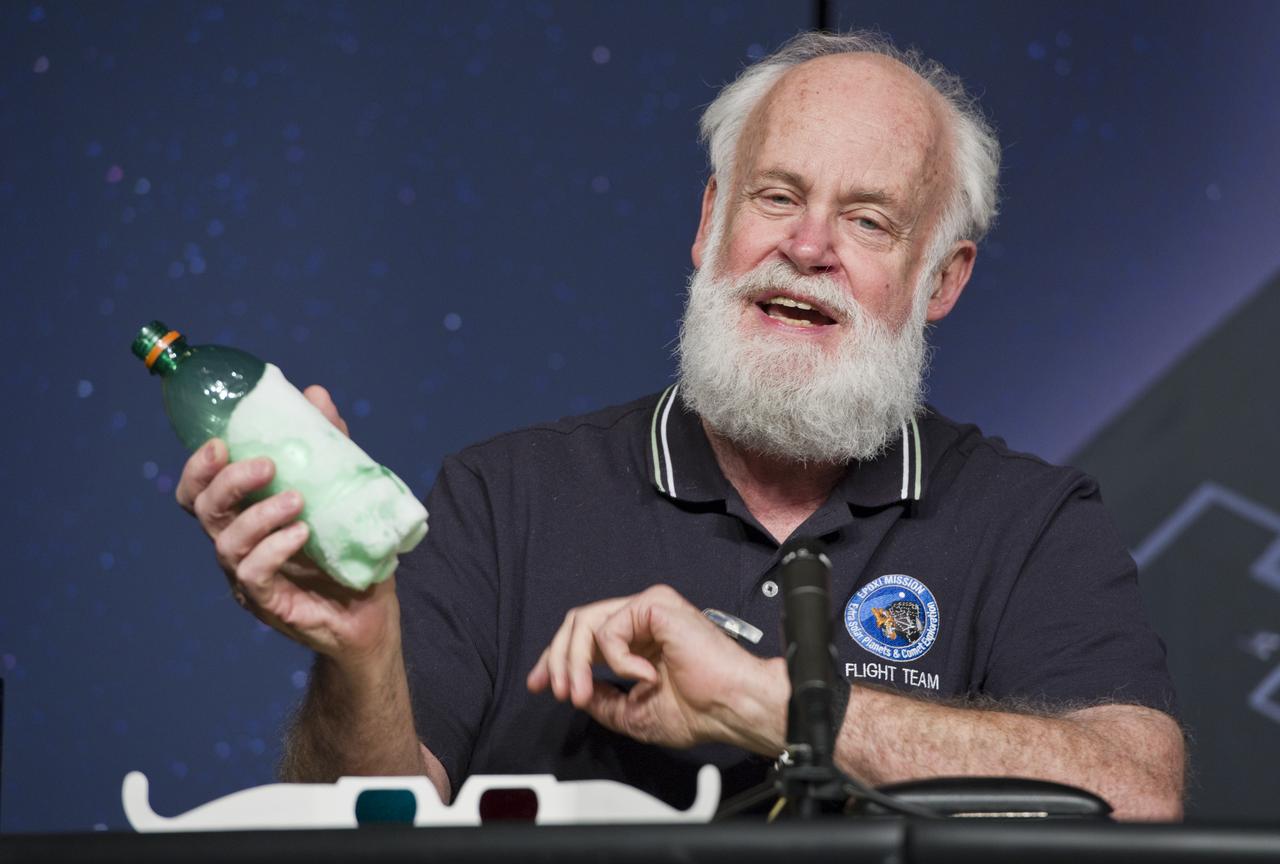
Michael A'Hearn, EPOXI Principal Investigator, University of Maryland, holds a plastic bottle containing ice to illustrate a point during a press conference, Thursday, Nov. 18, 2010, at NASA Headquarters in Washington. The press conference was held to discuss the Nov. 4 successful flyby of Comet Hartley 2 by NASA's EPOXI Mission Spacecraft. Images from the flyby provided scientists the most extensive observations of a comet in history. Photo Credit: (NASA/Paul E. Alers)
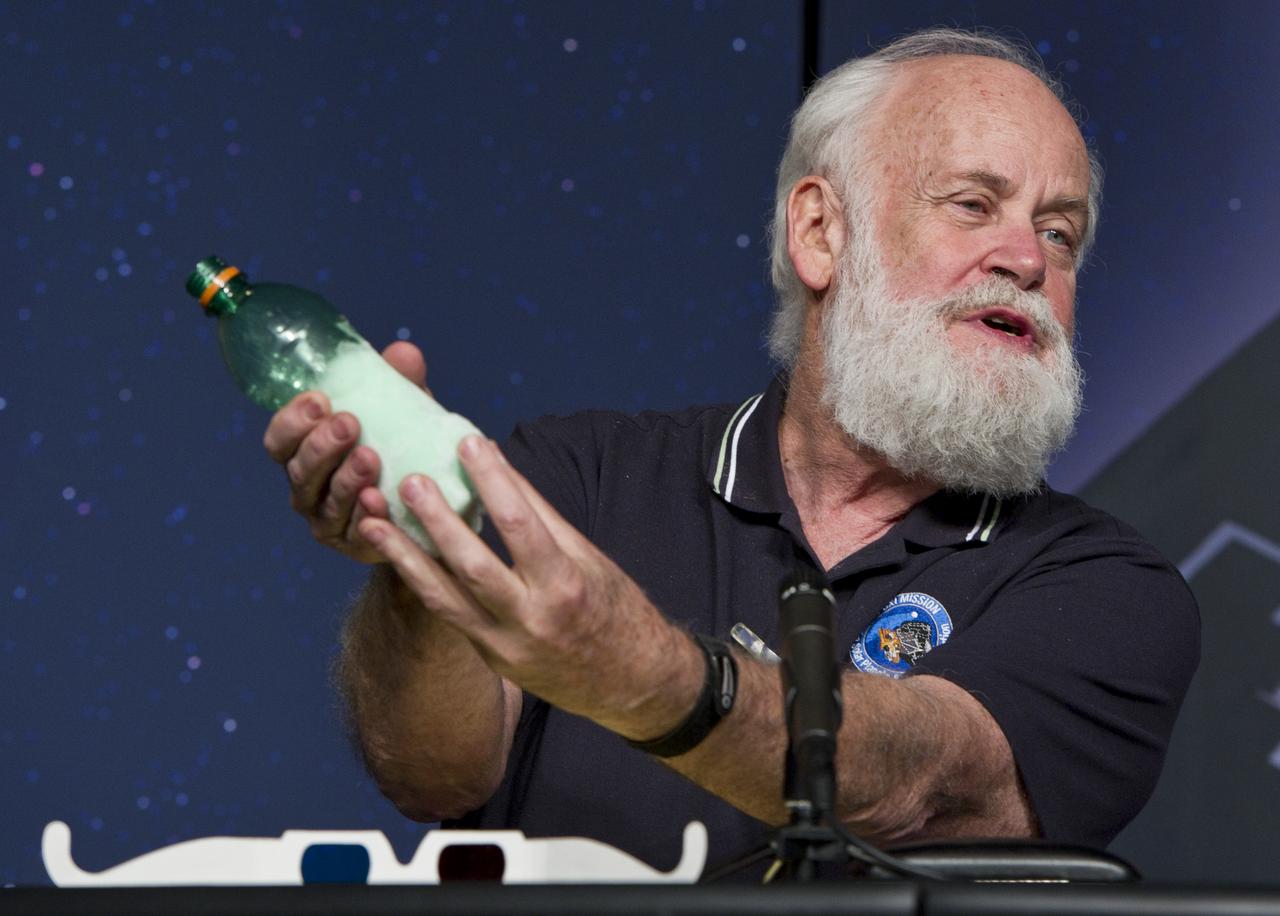
Michael A'Hearn, EPOXI Principal Investigator, University of Maryland, holds a plastic bottle containing ice to illustrate a point during a press conference, Thursday, Nov. 18, 2010, at NASA Headquarters in Washington. The press conference was held to discuss the Nov. 4 successful flyby of Comet Hartley 2 by NASA's EPOXI Mission Spacecraft. Images from the flyby provided scientists the most extensive observations of a comet in history. Photo Credit: (NASA/Paul E. Alers)
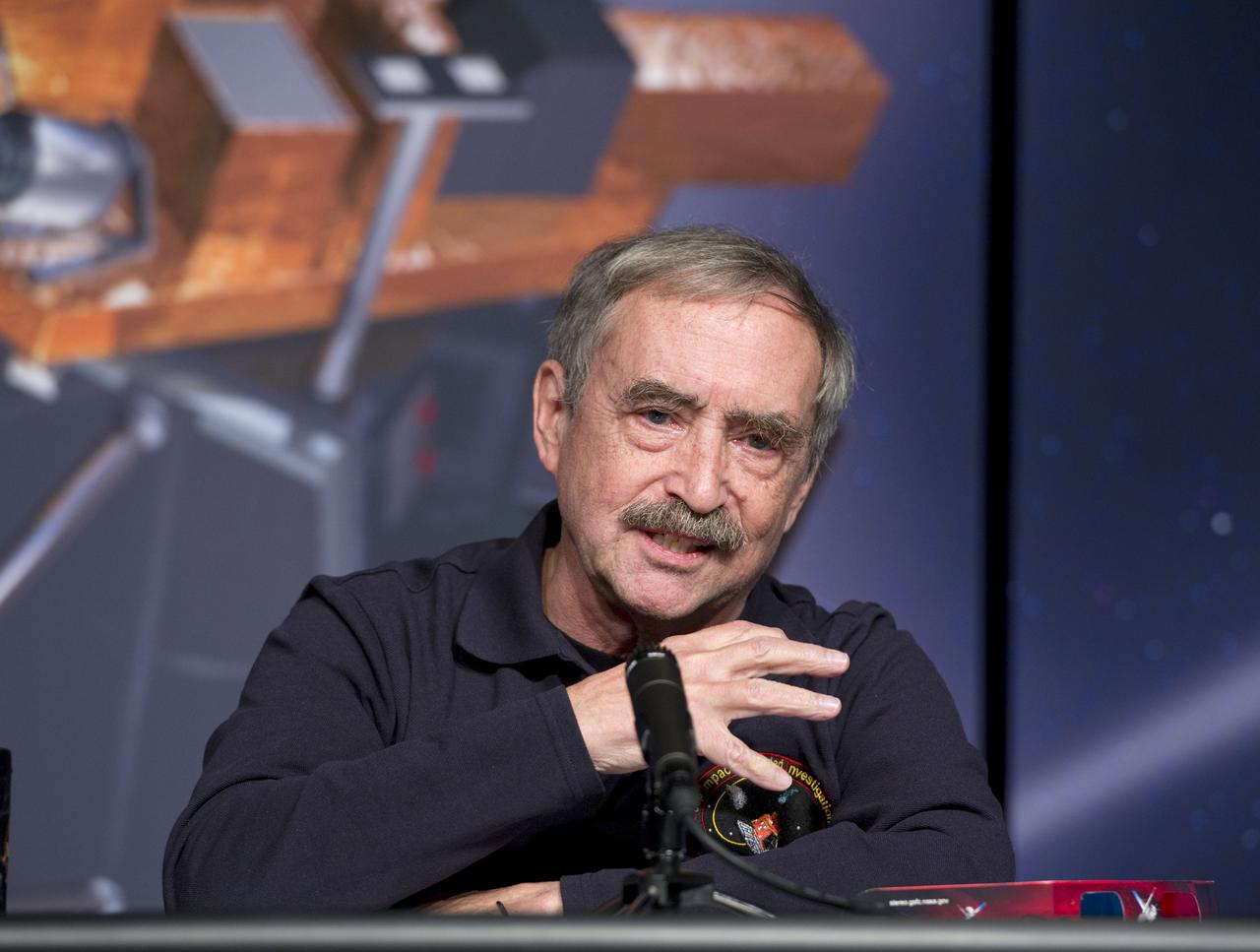
Pete Schultz, EPOXI scientist from Brown University, makes a point during a press conference, Thursday, Nov. 18, 2010, at NASA Headquarters in Washington. The press conference was held to discuss the Nov. 4 successful flyby of Comet Hartley 2 by NASA's EPOXI Mission Spacecraft. Images from the flyby provided scientists the most extensive observations of a comet in history. Photo Credit: (NASA/Paul E. Alers)

Tim Larson, EPOXI Project Manager from the Jet Propulsion Laboratory in Pasadena, Calif., speaks during a press conference, Thursday, Nov. 18, 2010, at NASA Headquarters in Washington. The press conference was held to discuss the Nov. 4 successful flyby of Comet Hartley 2 by NASA's EPOXI Mission Spacecraft. Images from the flyby provided scientists the most extensive observations of a comet in history. Photo Credit: (NASA/Paul E. Alers)
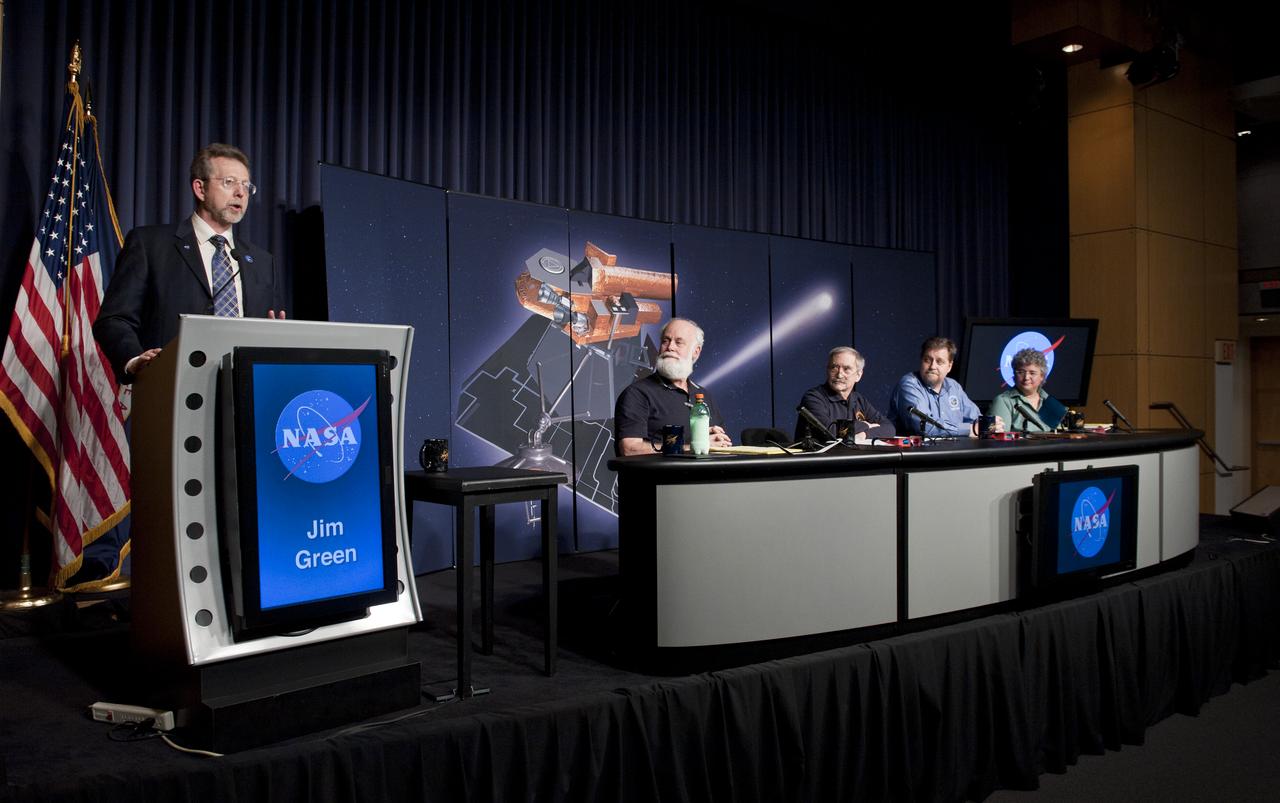
Dr. James Green, Director of Planetary Science, NASA Headquarters, at podium, speaks during a press conference, Thursday, Nov. 18, 2010, at NASA Headquarters in Washington. The press conference was held to discuss the Nov. 4 successful flyby of Comet Hartley 2 by NASA's EPOXI Mission Spacecraft. Images from the flyby provided scientists the most extensive observations of a comet in history. Photo Credit: (NASA/Paul E. Alers)

A New Horizons Pluto flyby coffee mug is seen as team members wait for a signal from the spacecraft that it is healthy and collected data during the flyby of Ultima Thule, Tuesday, Jan. 1, 2019 at the Mission Operations Center of the Johns Hopkins University Applied Physics Laboratory (APL) in Laurel, Maryland. Photo Credit: (NASA/Bill Ingalls)
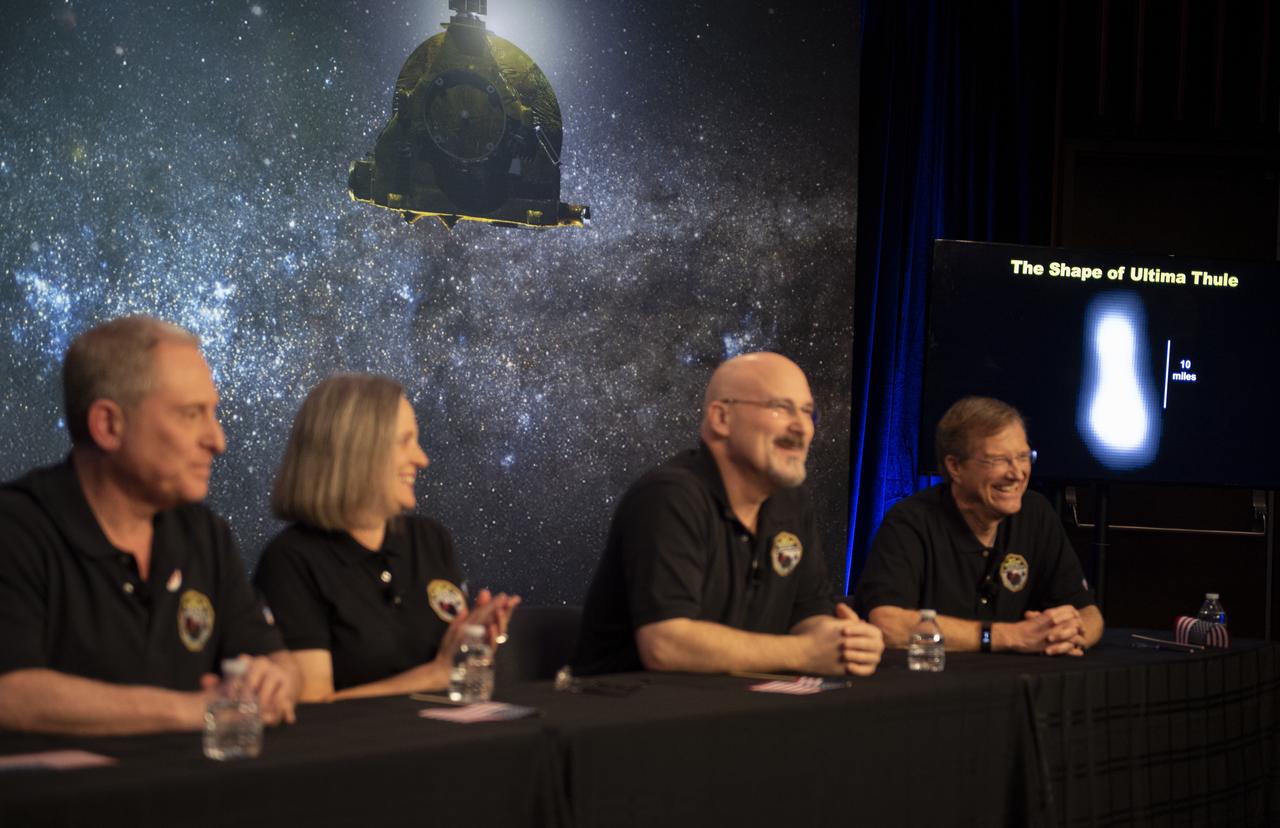
A new image of Ultima Thule is seen on a screen during a press conference after the team received confirmation from the New Horizons spacecraft that it has completed the flyby of Ultima Thule, Tuesday, Jan. 1, 2019 at Johns Hopkins University Applied Physics Laboratory (APL) in Laurel, Maryland. New Horizons principal investigator Alan Stern of the Southwest Research Institute (SwRI), Boulder, CO, New Horizons Mission Operations Manager Alice Bowman of the Johns Hopkins University Applied Physics Laboratory, New Horizons mission systems engineer Chris Hersman of the Johns Hopkins University Applied Physics Laboratory, and New Horizons project scientist Hal Weaver of the Johns Hopkins University Applied Physics Laboratory, spoke about the flyby and new pre-flyby information that was downlinked from the spacecraft. Photo Credit: (NASA/Joel Kowsky)
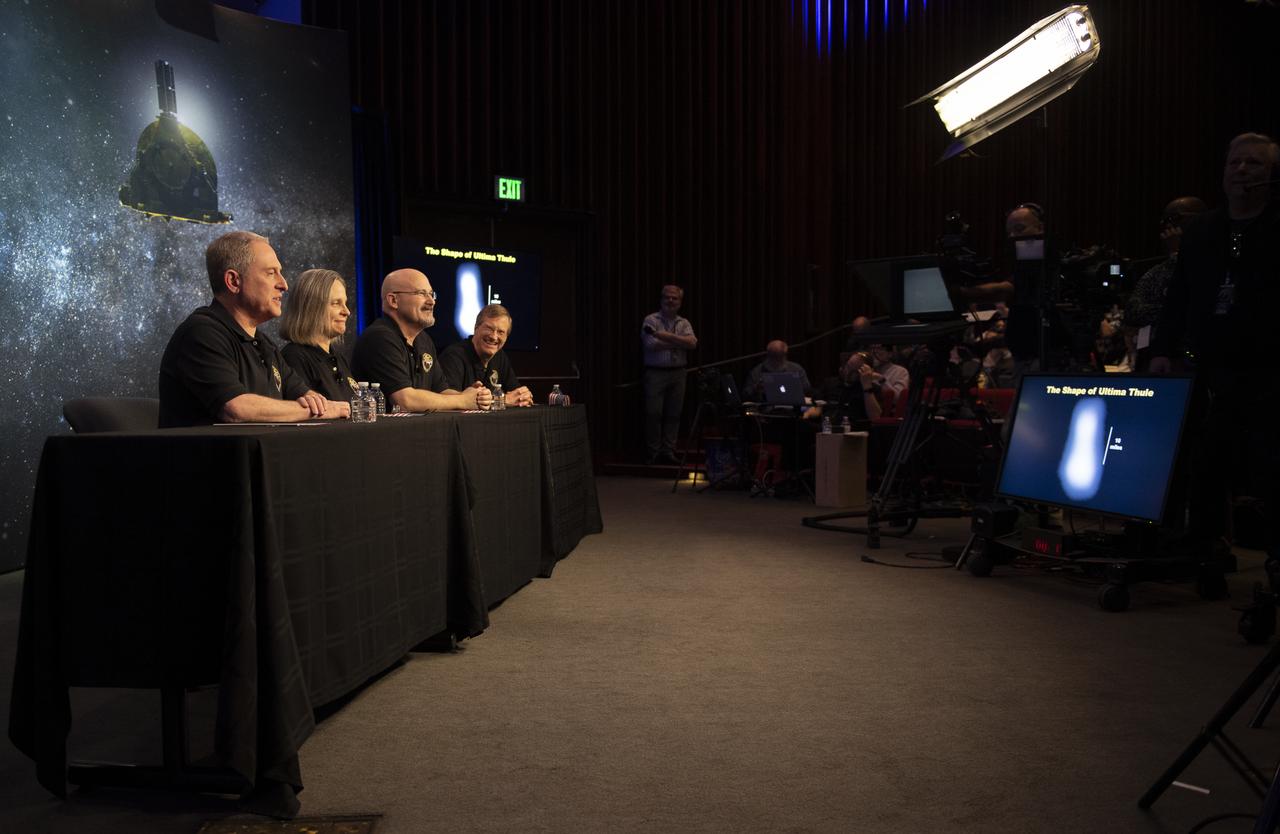
A new image of Ultima Thule is seen on a screen during a press conference after the team received confirmation from the New Horizons spacecraft that it has completed the flyby of Ultima Thule, Tuesday, Jan. 1, 2019 at Johns Hopkins University Applied Physics Laboratory (APL) in Laurel, Maryland. New Horizons principal investigator Alan Stern of the Southwest Research Institute (SwRI), Boulder, CO, New Horizons Mission Operations Manager Alice Bowman of the Johns Hopkins University Applied Physics Laboratory, New Horizons mission systems engineer Chris Hersman of the Johns Hopkins University Applied Physics Laboratory, and New Horizons project scientist Hal Weaver of the Johns Hopkins University Applied Physics Laboratory, spoke about the flyby and new pre-flyby information that was downlinked from the spacecraft. Photo Credit: (NASA/Joel Kowsky)
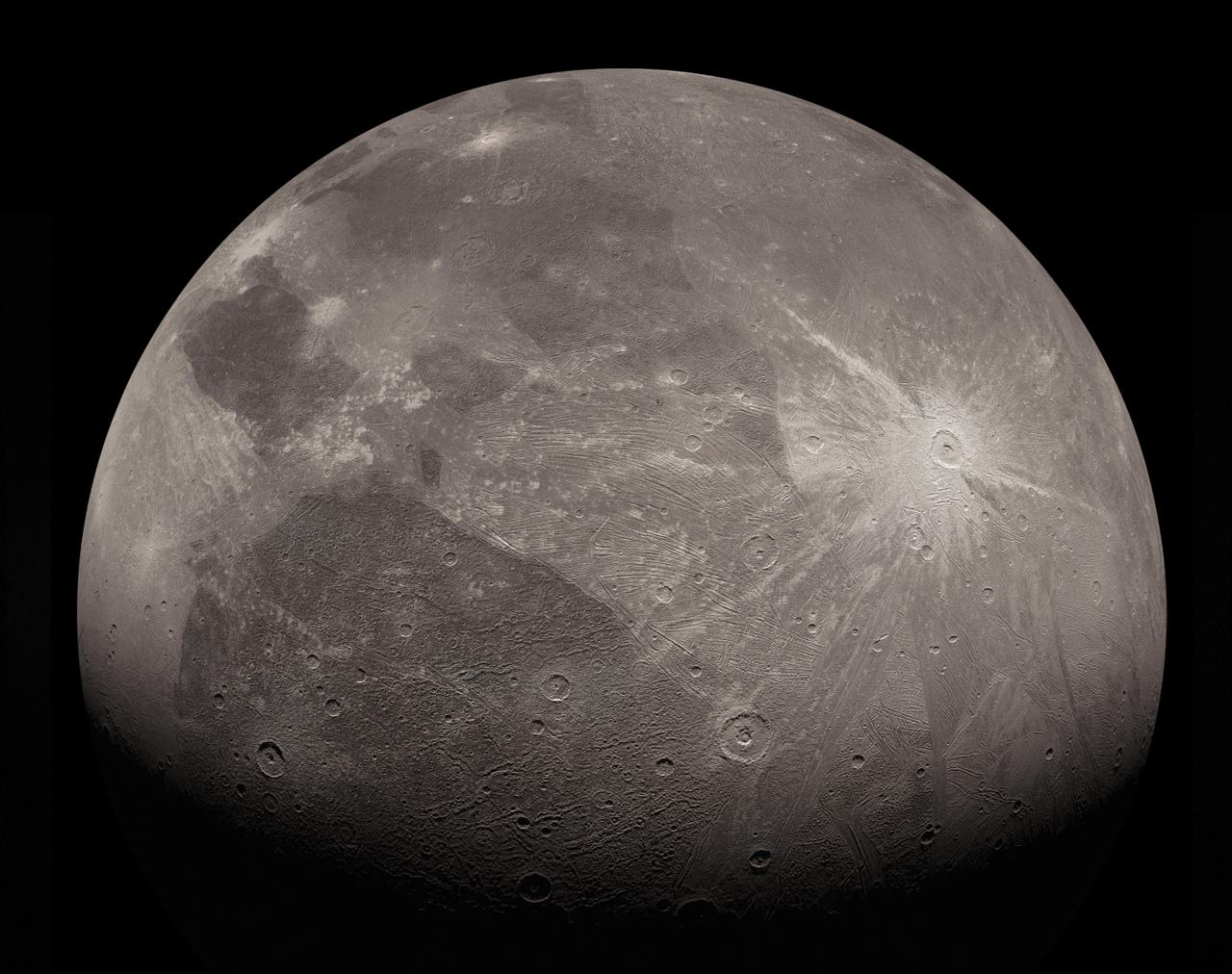
This enhanced image of the Jovian moon Ganymede was obtained by the JunoCam imager aboard NASA's Juno spacecraft during the mission's June 7, 2021, flyby of the icy moon on Juno's 34th pass close to Jupiter. This is an extended, upscaled and artistically enhanced version of a previously released JunoCam image: PIA24681. The missing top part of the original JunoCam image has been reconstructed, for the most part, using an additional image. To make the new, enhanced image, small surface features have been extracted from elsewhere on Ganymede's surface. During the June 7 flyby, Juno passed just 645 miles (1,038 kilometers) above the surface of the Ganymede, which is the solar system's largest moon. The spacecraft has been in orbit around Jupiter since July 4, 2016, but this was the first pass close to one of Jupiter's large moons. Juno is a spin-stabilized spacecraft (with a rotation rate of 2 rpm), and the JunoCam imager has a fixed field of view. To obtain Ganymede images as Juno rotated, the camera acquired a strip at a time as the target passed through its field of view. These image strips were captured separately through red, green and blue filters. To generate the final image product, the strips must be stitched together and the colors aligned. https://photojournal.jpl.nasa.gov/catalog/PIA25028
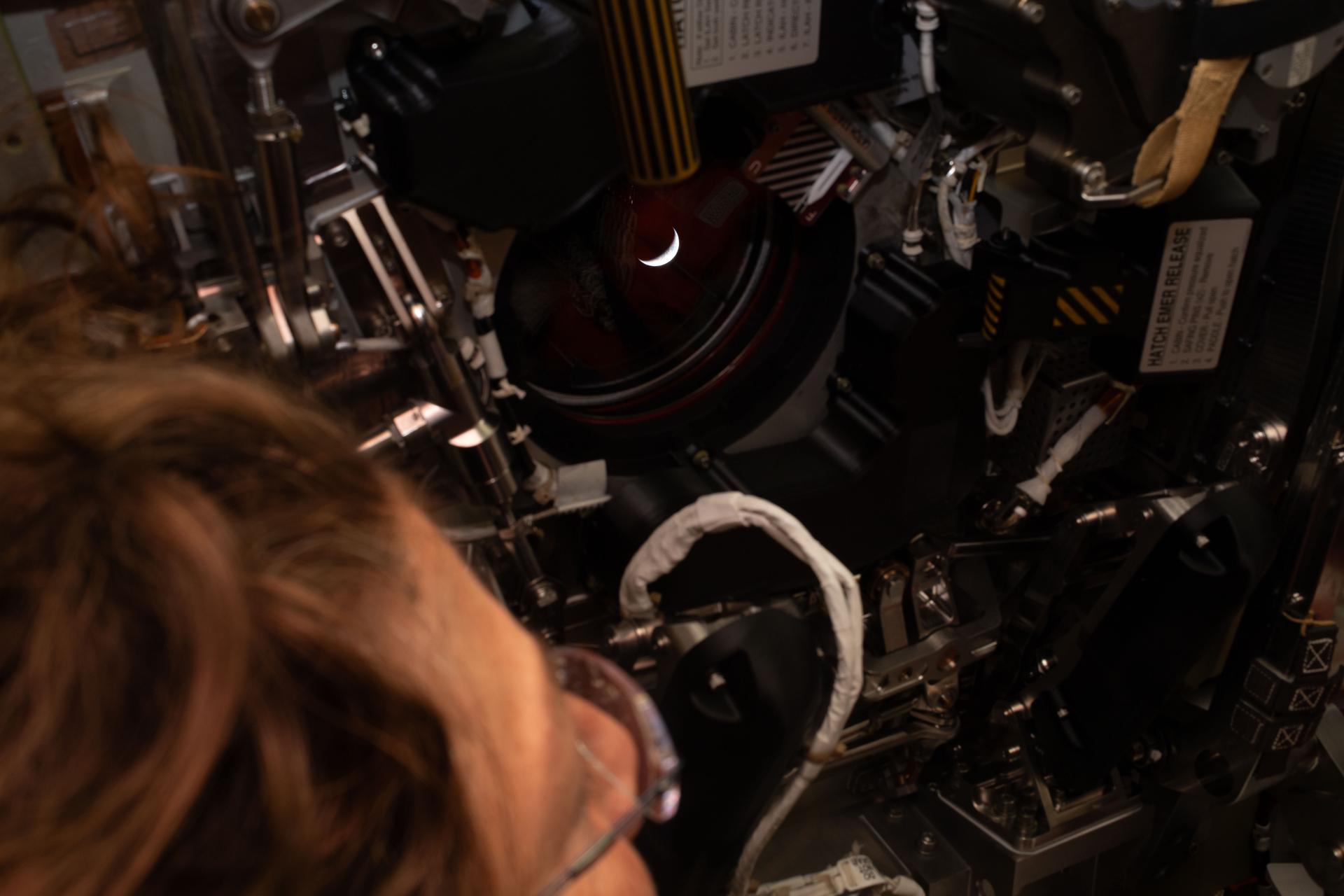
art002e009274 (April 6, 2026) - Artemis II mission specialist and NASA astronaut Christina Koch looks out one of the Orion spacecraft's windows back at Earth ahead of the crew's lunar flyby on April 6, 2026.
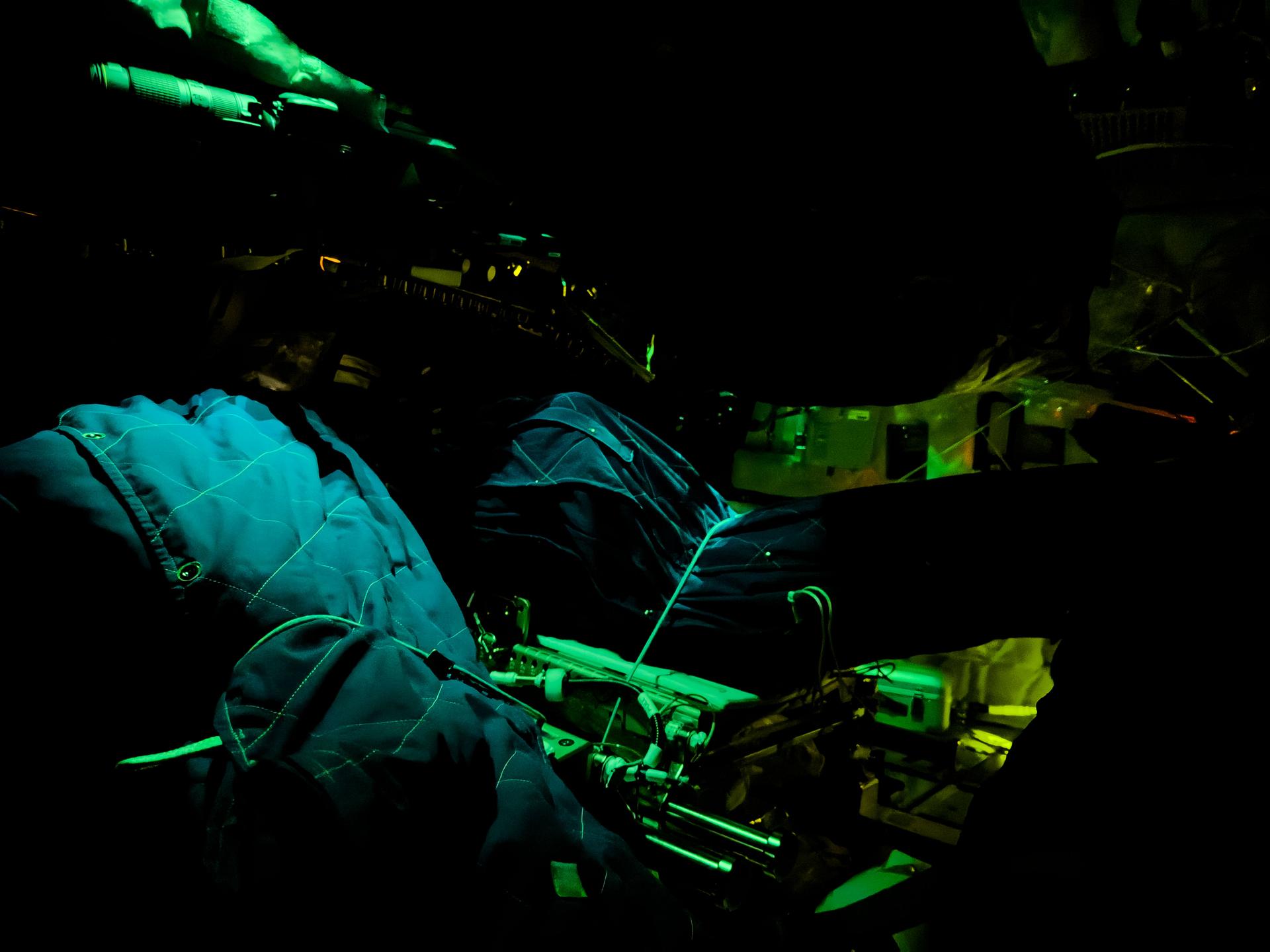
art002e009215 (April 6, 2026) - Artemis II crewmember sleeping bags are illuminated inside the Orion spacecraft on Flight Day 5 of the mission and ahead of the crew's lunar flyby on April 6, 2026.
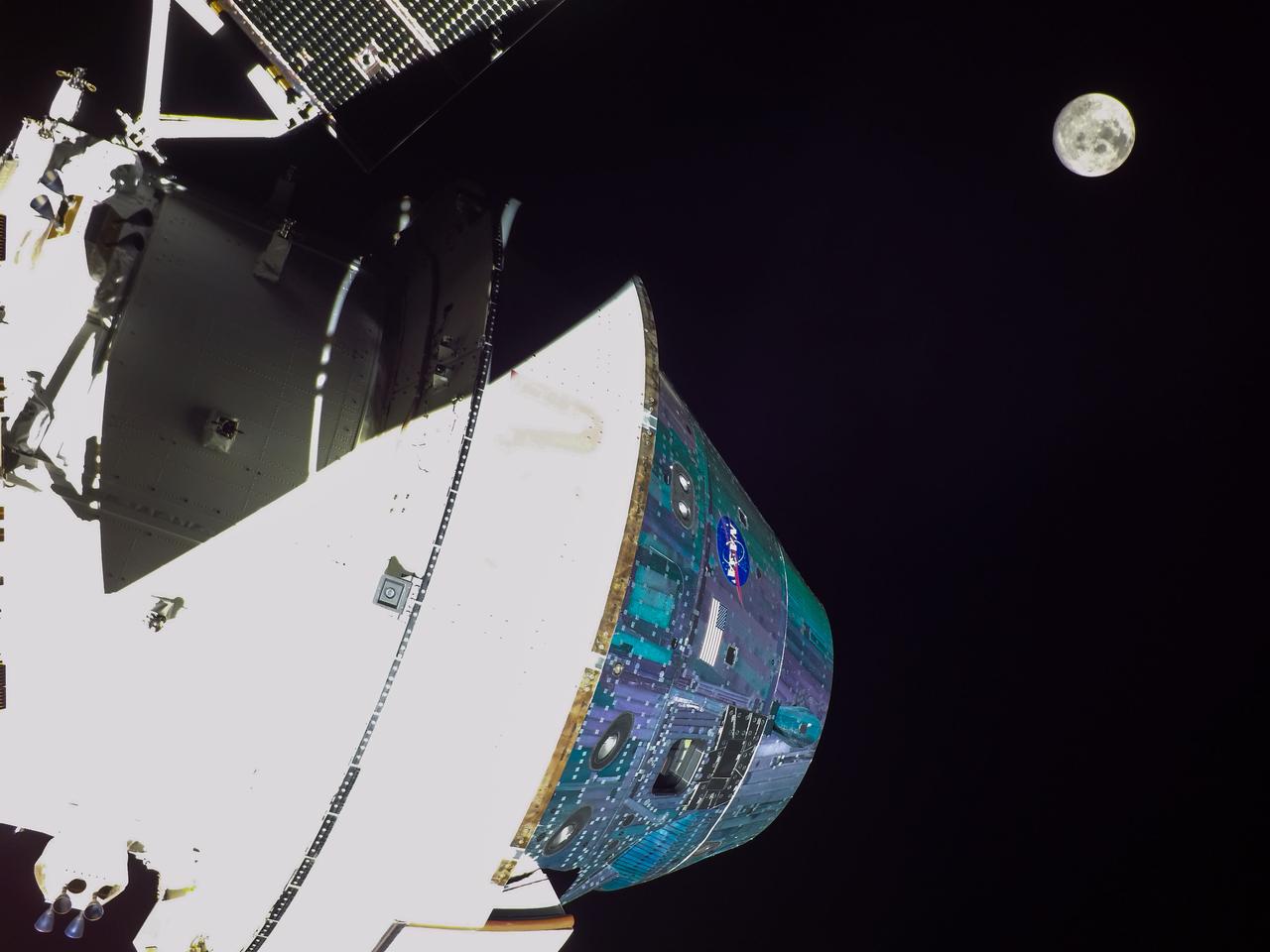
art001e002000 (Dec. 4, 2022) On the 19th day of the Artemis I mission, the Moon grows larger in frame as Orion prepares for the return powered flyby on Dec. 5, when it will pass approximately 79 miles above the lunar surface.
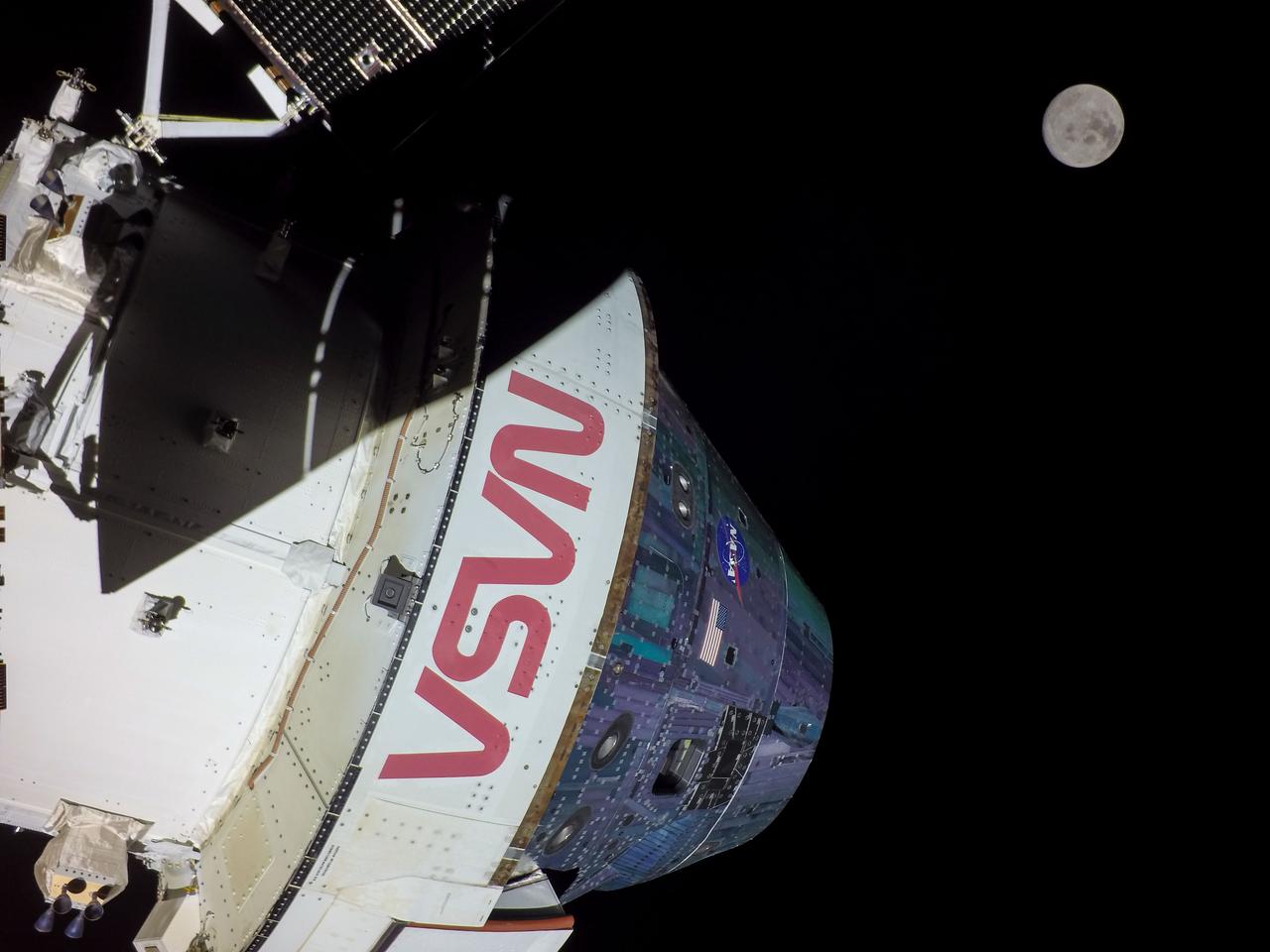
art001e001999 (Dec. 4, 2022) On the 19th day of the Artemis I mission, the Moon grows larger in frame as Orion prepares for the return powered flyby on Dec. 5, when it will pass approximately 79 miles above the lunar surface.
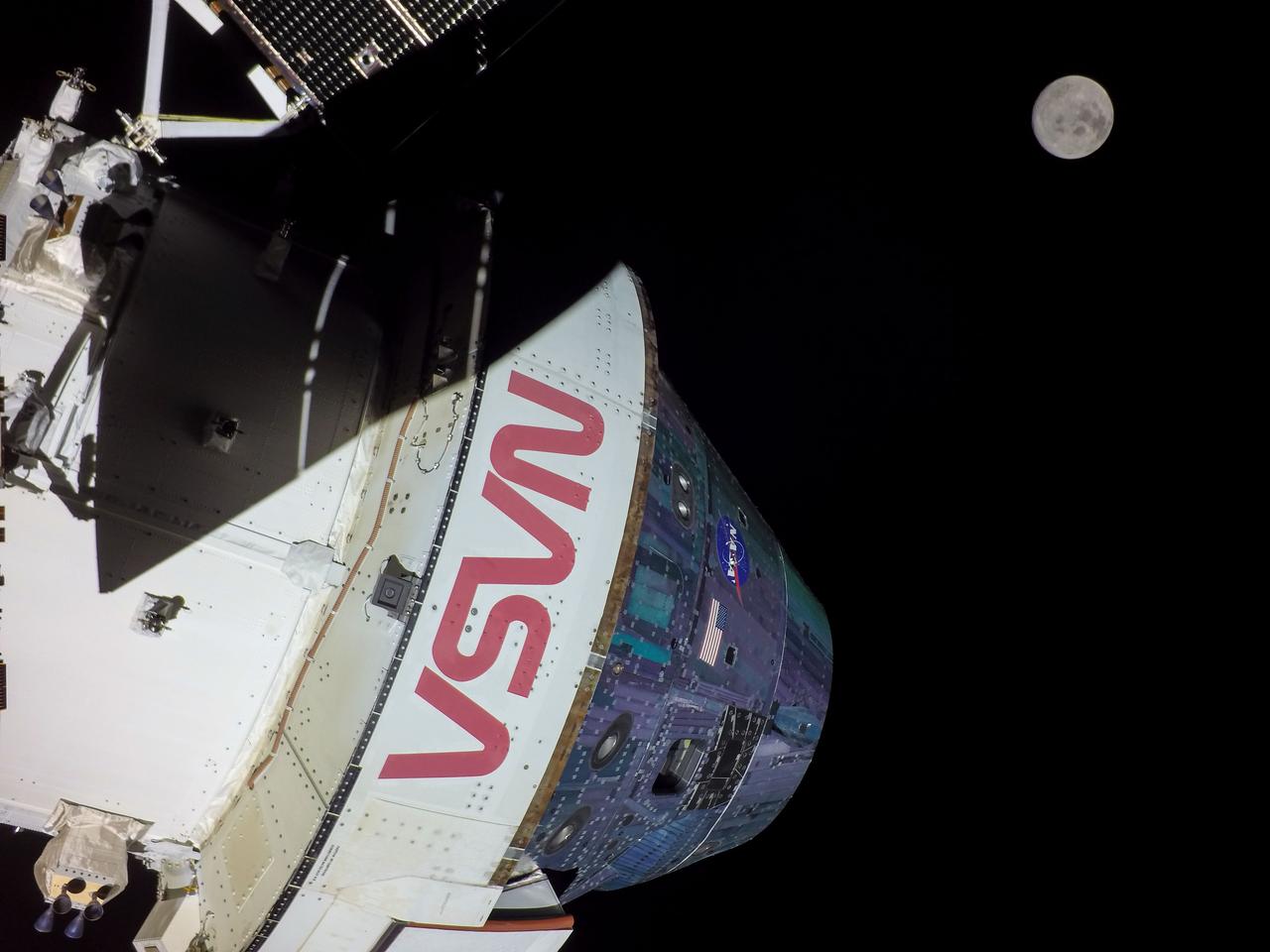
art001e001998 (Dec. 4, 2022) On the 19th day of the Artemis I mission, the Moon grows larger in frame as Orion prepares for the return powered flyby on Dec. 5, when it will pass approximately 79 miles above the lunar surface.
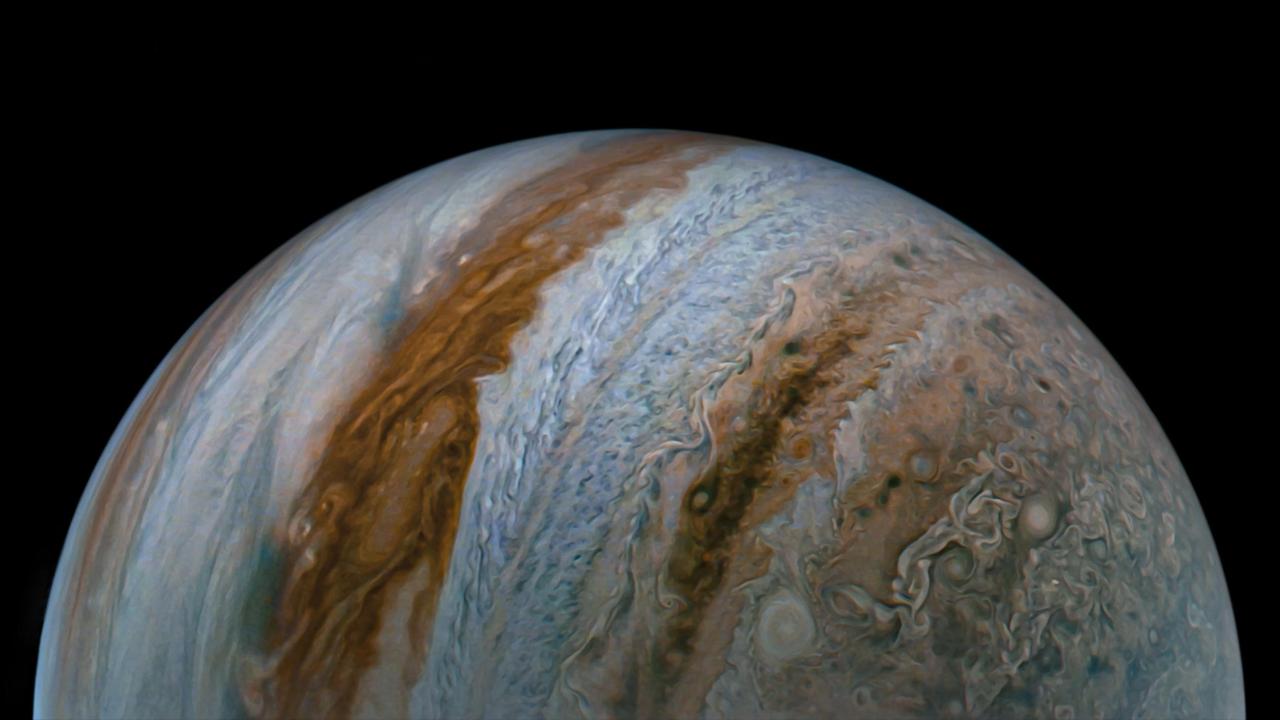
NASA's Juno spacecraft captured this view of Jupiter during the mission's 54th close flyby of the giant planet on Sept. 7, 2023. The colorful zones and belts in Jupiter's atmosphere run from the cloud tops down to approximately 1,860 miles (3,000 kilometers). Citizen scientist Tanya Oleksuik made this image using raw data from the JunoCam instrument, processing the data to enhance details in cloud features and colors. At the time the raw image was taken, the Juno spacecraft was about 52,400 miles (about 84,400 kilometers) above Jupiter's cloud tops. https://photojournal.jpl.nasa.gov/catalog/PIA26077
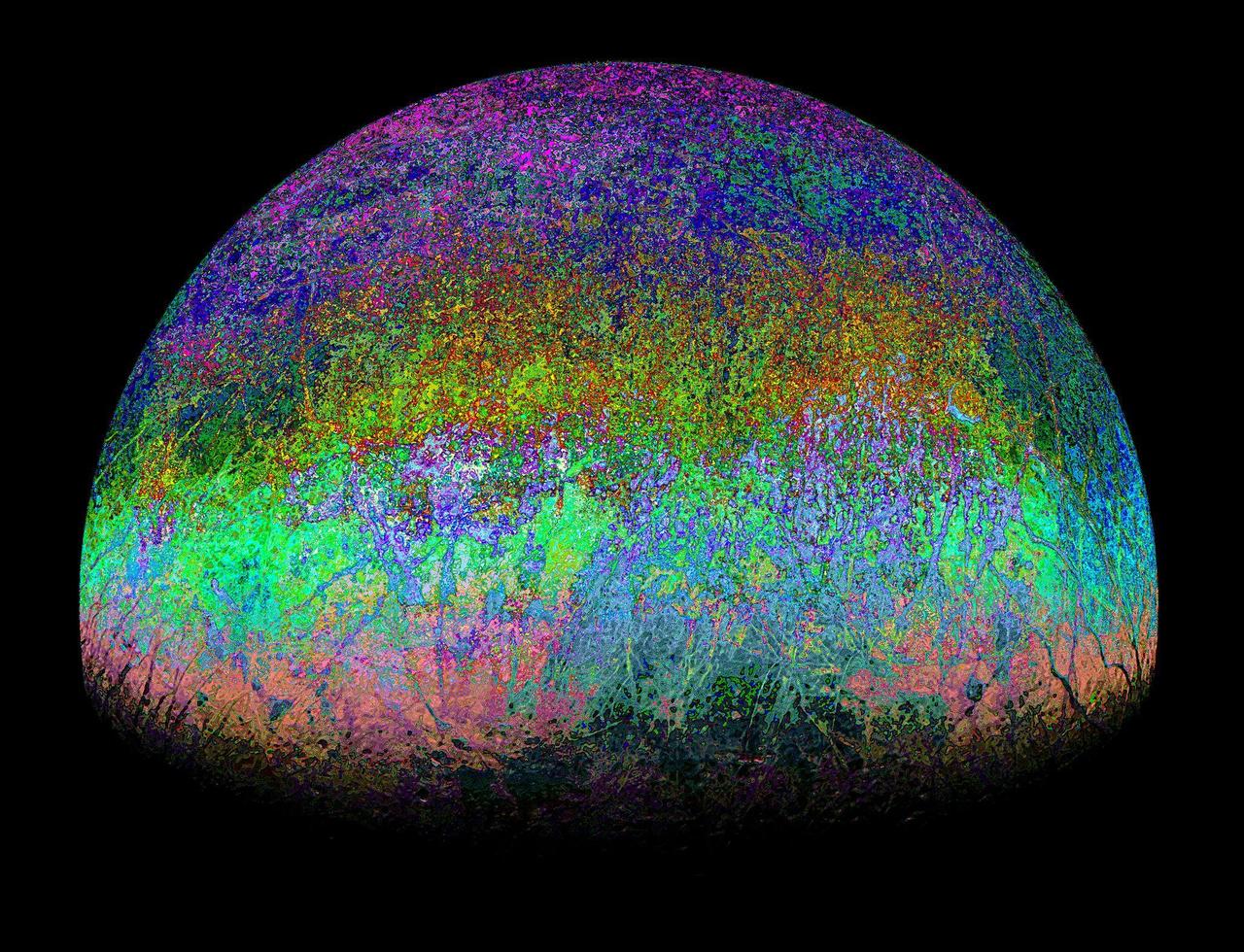
This highly stylized view of Jupiter's icy moon Europa is based on an image captured by JunoCam, the public engagement camera aboard NASA's Juno spacecraft, during the mission's close flyby on Sept. 29, 2022. Citizen scientist Fernando Garcia Navarro created the image by processing a JunoCam previously worked on by fellow citizen scientist Kevin M. Gill. Navarro calls his rendering "Fall Colors of Europa." In processing raw images taken by JunoCam, members of the public create deep-space portraits of the Jovian moon that aren't only awe-inspiring but also worthy of further scientific scrutiny. Juno citizen scientists have played an invaluable role in processing the numerous JunoCam images obtained during science operations at Jupiter. https://photojournal.jpl.nasa.gov/catalog/PIA25335
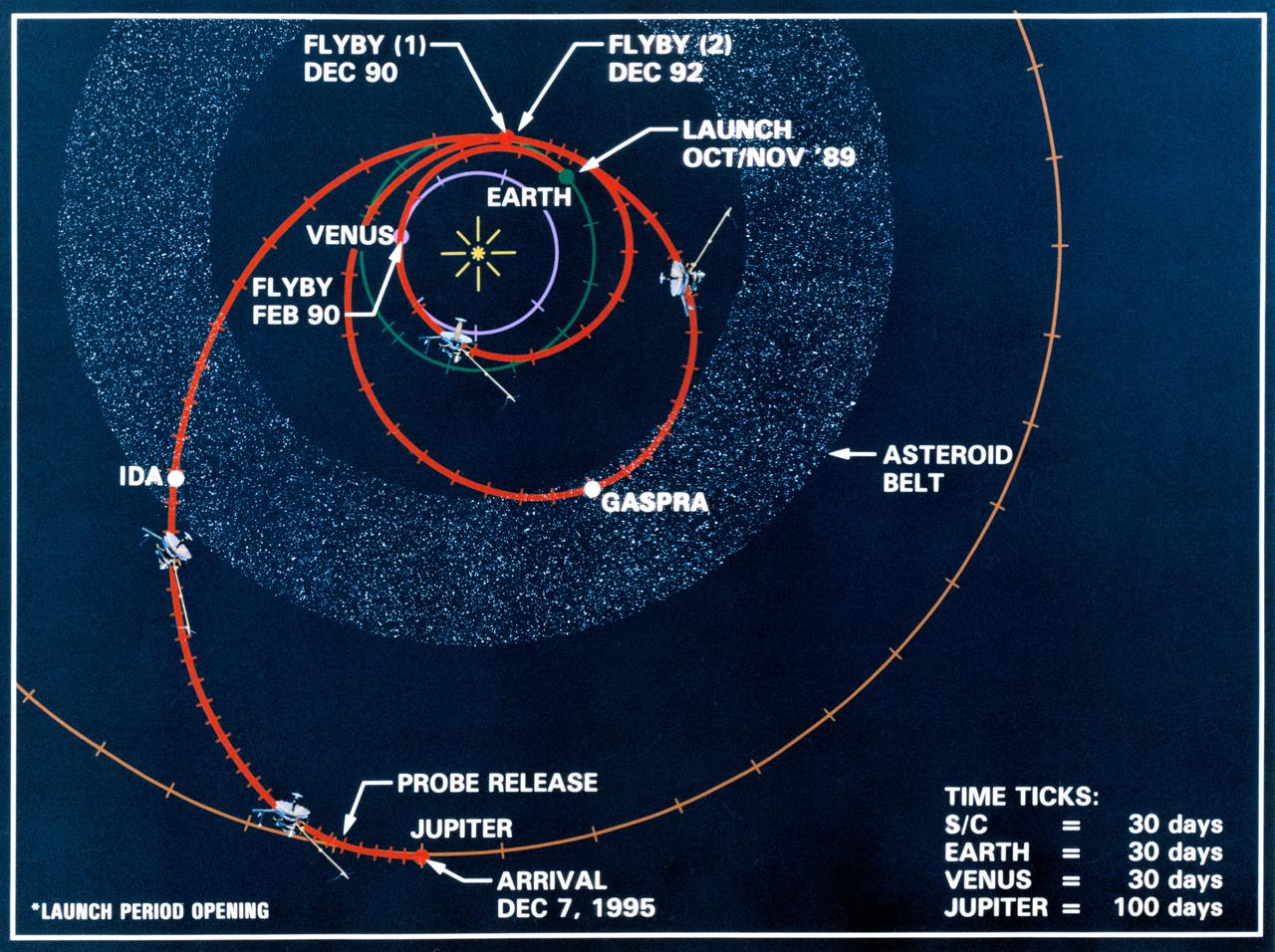
Line drawing charts the Galileo spacecraft's launch from low Earth orbit and its three planetary and two asteroid encounters in the course of its gravity-assisted flight to Jupiter. These encounters include Venus (February 1990), two Earth passes (December 1990 and December 1992), and the asteroids Gaspra and Ida in the asteroid belt. Galileo will release a probe and will arrive at Jupiter, 12-07-95.
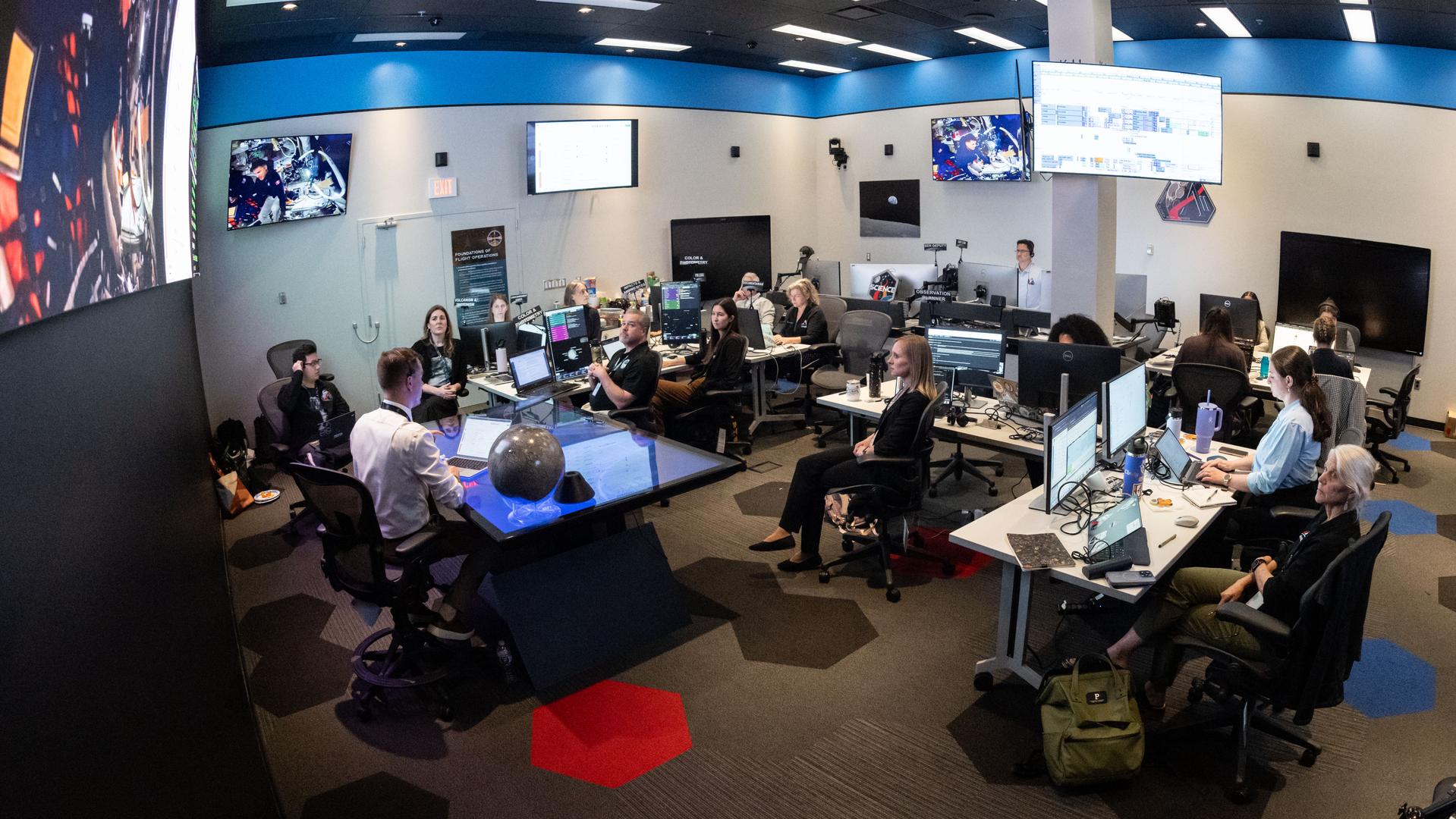
A view inside the Science Evaluation Room (SER) in Mission Control at NASA’s Johnson Space Center in Houston. The SER supports lunar science and planetary observations for the Artemis science officer in the mission’s main flight control room. Built specifically for Artemis missions with these science priorities in mind, the SER is equipped to support rapid data interpretation, collaborative analysis, real-time decision making, and seamless coordination between the science and operations teams. Credits: NASA/Bill Stafford

Artemis II deputy lunar science lead, Jacob Richardson, celebrates with a dance after hearing astronauts describe seeing impact flashes on the Moon during their lunar flyby on April 6, 2026. Richardson was monitoring the flyby from the Science Evaluation Room (SER) in Mission Control at NASA’s Johnson Space Center in Houston. Built specifically for Artemis missions with these science priorities in mind, the SER is equipped to support rapid data interpretation, collaborative analysis, real-time decision making, and seamless coordination between the science and operations teams. Credits: NASA/Luna Posadas Nava

art002e009206 (April 4, 2026) - NASA astronaut and Artemis II mission specialist Christina Koch, seen here on the fourth day of the mission, prepping for lunar flyby activities after completing aerobic exercise on the flywheel device. Credit: NASA
On April 9, 2022, as NASA's Juno mission completed its 41st close flyby of Jupiter, its JunoCam instrument captured what it would look like to ride along with the spacecraft. Citizen scientist Andrea Luck created this animated sequence using raw JunoCam image data. At about 87,000 miles (140,000 kilometers) in diameter, Jupiter is the largest planet in the solar system. At the point of closest approach on April 9, Juno was just over 2,050 miles (3,300 kilometers) above Jupiter's colorful cloud tops. At that moment, it was traveling at about 131,000 MPH (210,000 kilometers per hour) relative to the planet. By comparison, at closest approach Juno was more than 10 times closer to Jupiter than satellites in geosynchronous orbit are to Earth, traveling at a speed about five times faster than the Apollo missions did when they left Earth for the Moon. Movie available at https://photojournal.jpl.nasa.gov/catalog/PIA25016

A massive hot spot near the south pole of Io can be seen near the center of this annotated image taken by the JIRAM infrared imager aboard NASA's Juno on Dec. 27, 2024, during the spacecraft's flyby of the Jovian moon. The hot spot is larger than Earth's Lake Superior. At the time of closest approach during the flyby, Juno came within about 46,200 miles (74,400 kilometers) of the moon. JIRAM, short for Jovian Infrared Auroral Mapper, was contributed to the Juno mission by the Italian Space Agency. https://photojournal.jpl.nasa.gov/catalog/PIA26527
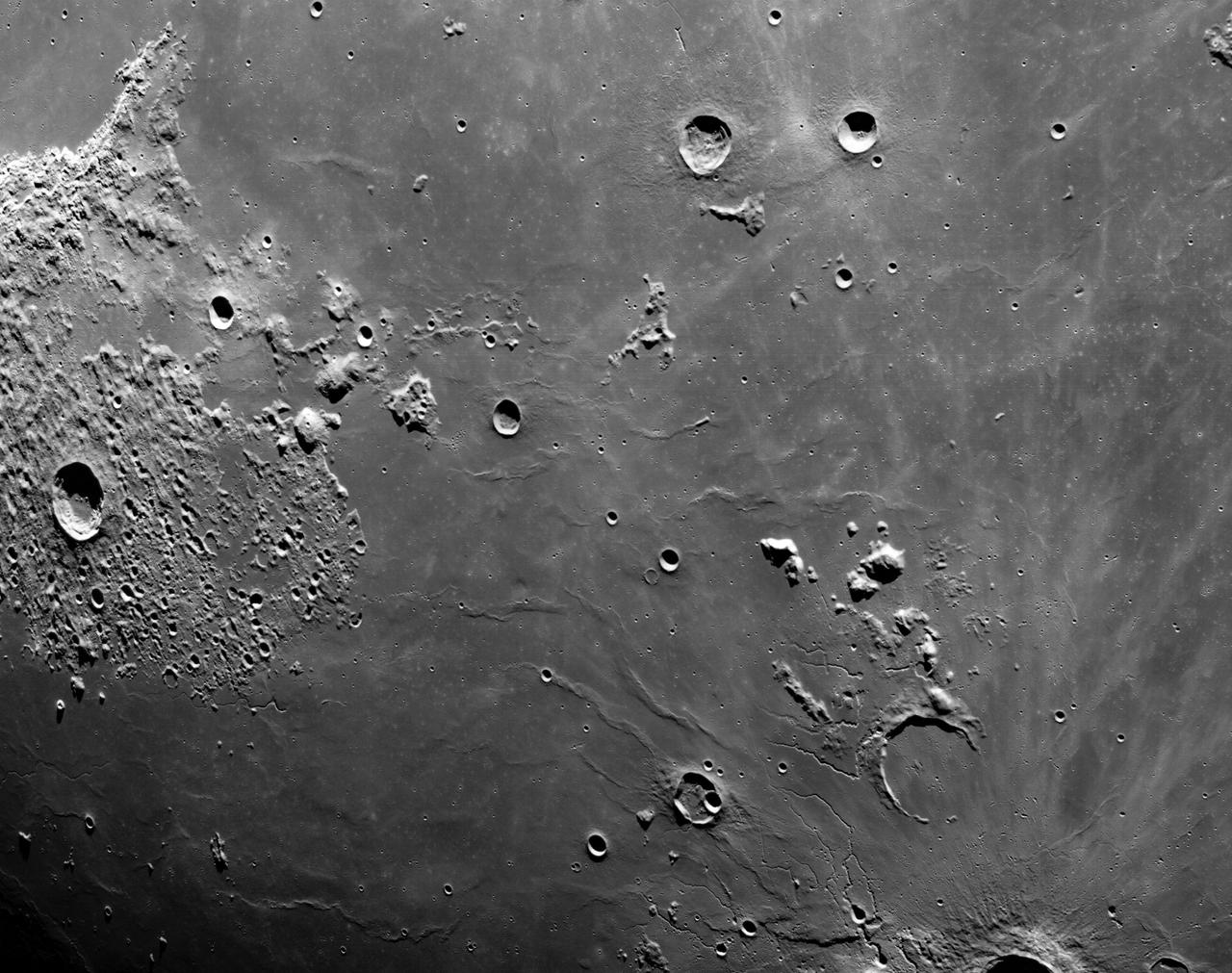
art001e002164 (Dec. 5, 2022): Cameras mounted on the crew module of the Orion spacecraft captured these views of the Moon’s surface. On flight day 20 of the Artemis I mission, the spacecraft made its second and final close approach to the Moon before its returned powered flyby burn.

New Horizons co-investigator John Spencer of the Southwest Research Institute (SwRI), Boulder, CO, speaks about the flyby of Ultima Thule during an overview of the New Horizons Mission, Monday, Dec. 31, 2018 at Johns Hopkins University Applied Physics Laboratory (APL) in Laurel, Maryland. Photo Credit: (NASA/Joel Kowsky)
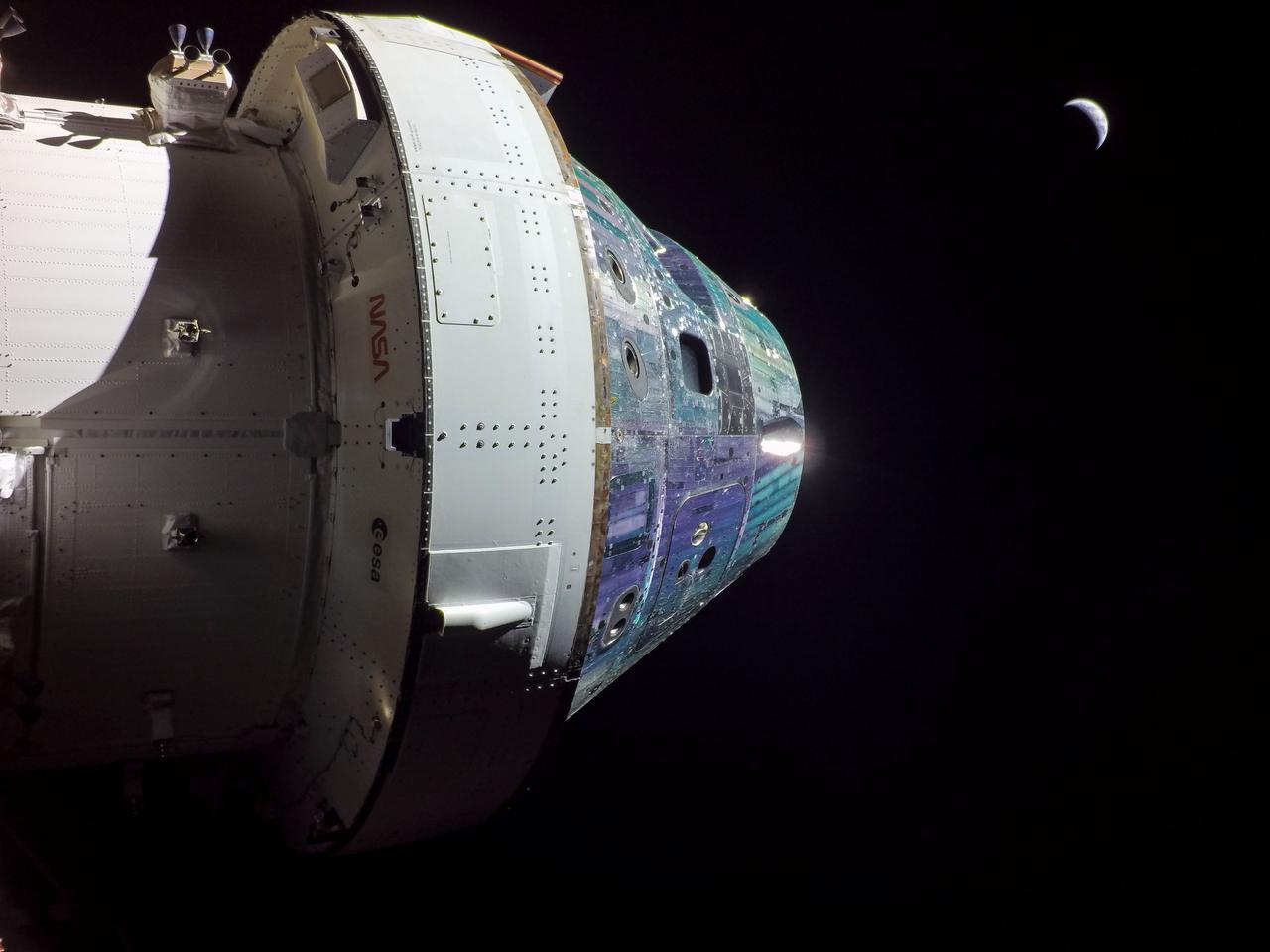
art001e002002 (Dec. 4, 2022) On the 19th day of the Artemis I mission, Orion captures Earth from a camera mounted on one of its solar arrays as the spacecraft prepares for the return powered flyby of the Moon on Dec. 5, when it will pass approximately 79 miles above the lunar surface.
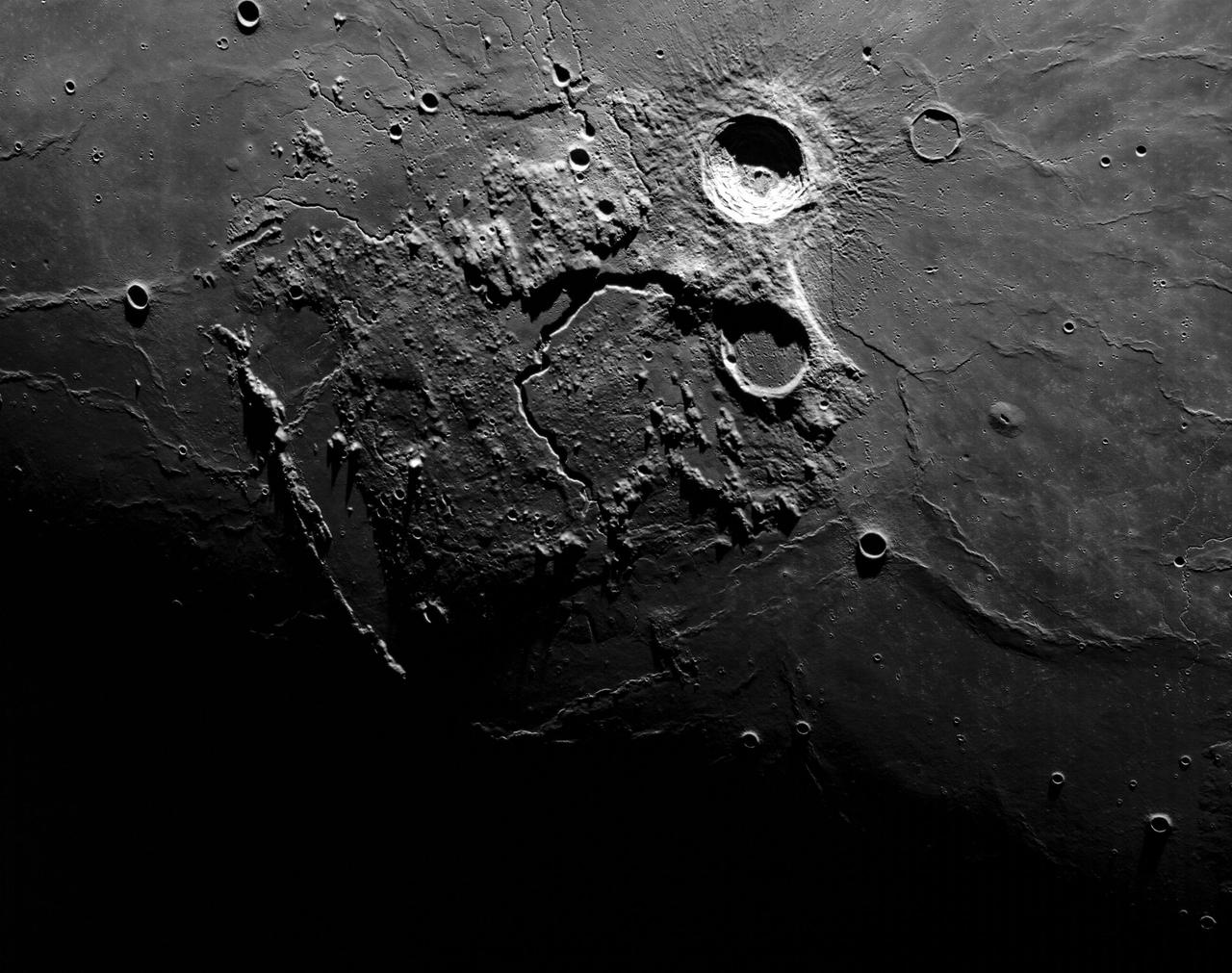
art001e002164 (Dec. 5, 2022): Cameras mounted on the crew module of the Orion spacecraft captured these views of the Moon’s surface. On flight day 20 of the Artemis I mission, the spacecraft made its second and final close approach to the Moon before its returned powered flyby burn.
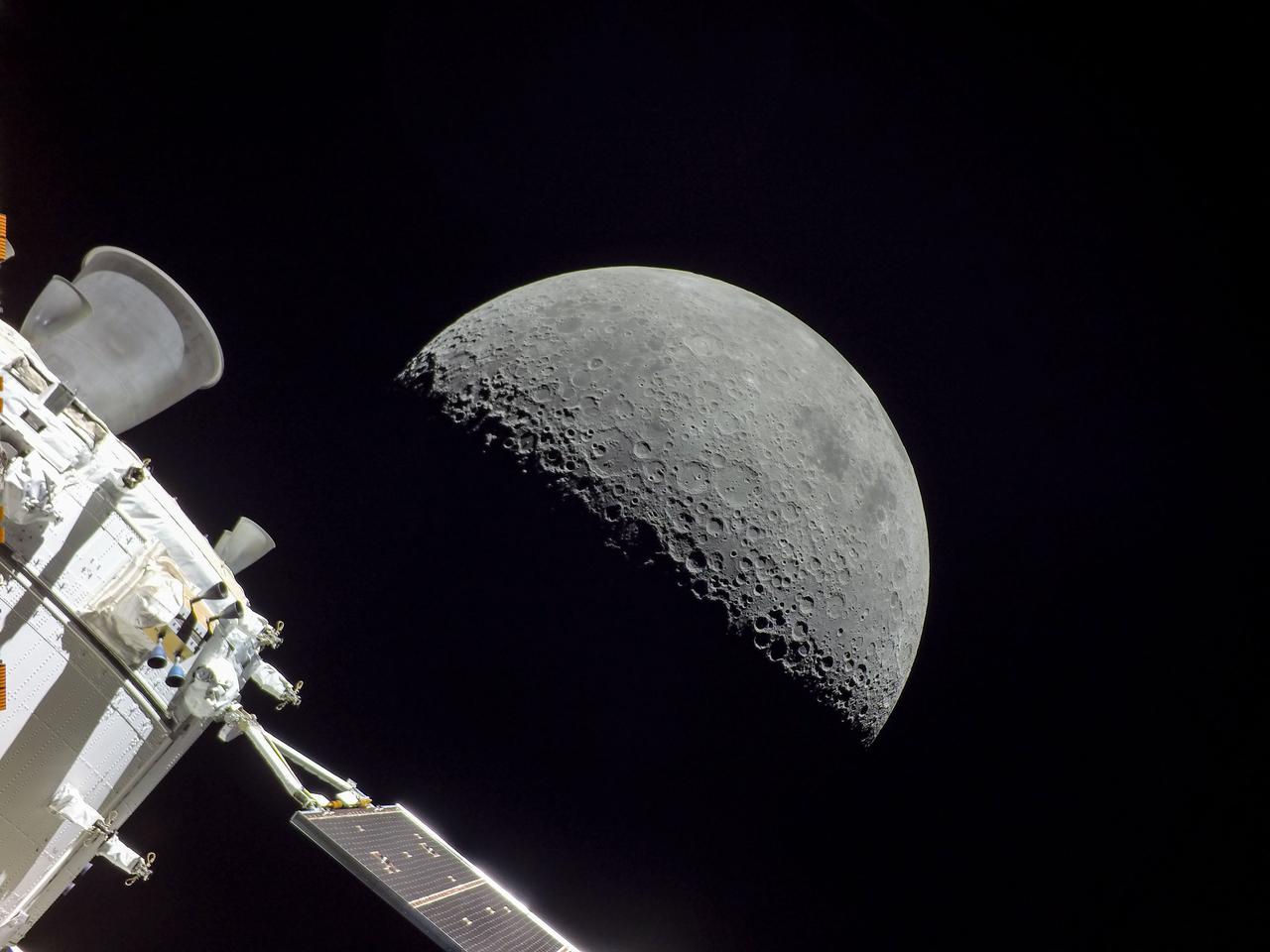
art001e002070 (Dec. 5, 2022) On flight day 20 of the Artemis I mission, Orion captured the Moon on the day of return powered flyby. The burn, which lasted 3 minutes, 27 seconds, committed the spacecraft to a Dec. 11 splashdown.
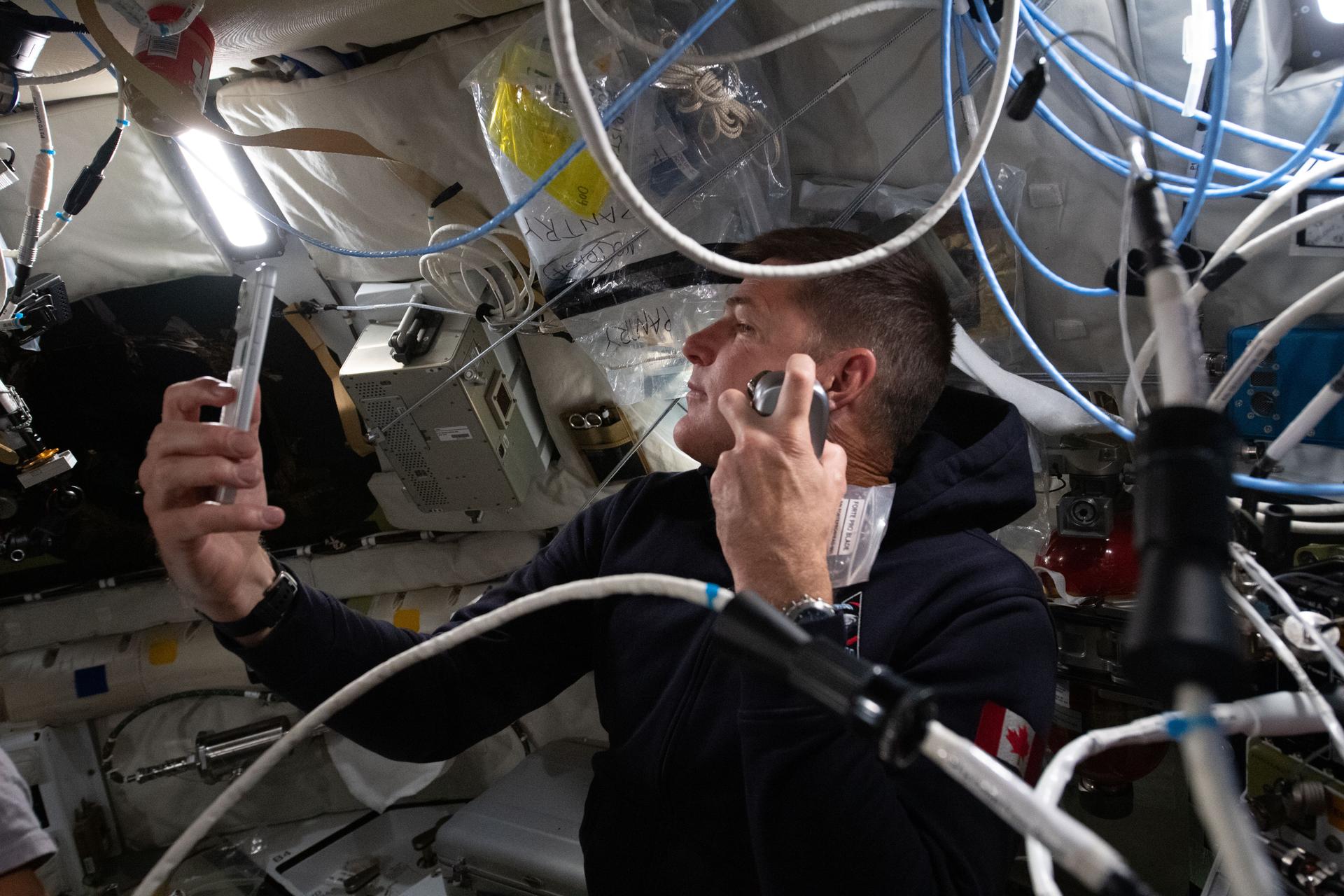
art002e009211 (April 6, 2026) - Artemis II mission specialist and CSA (Canadian Space Agency) astronaut Jeremy Hansen enjoys a shave inside the Orion spacecraft during Flight Day 5 and ahead of the crew's lunar flyby on April 6, 2026.
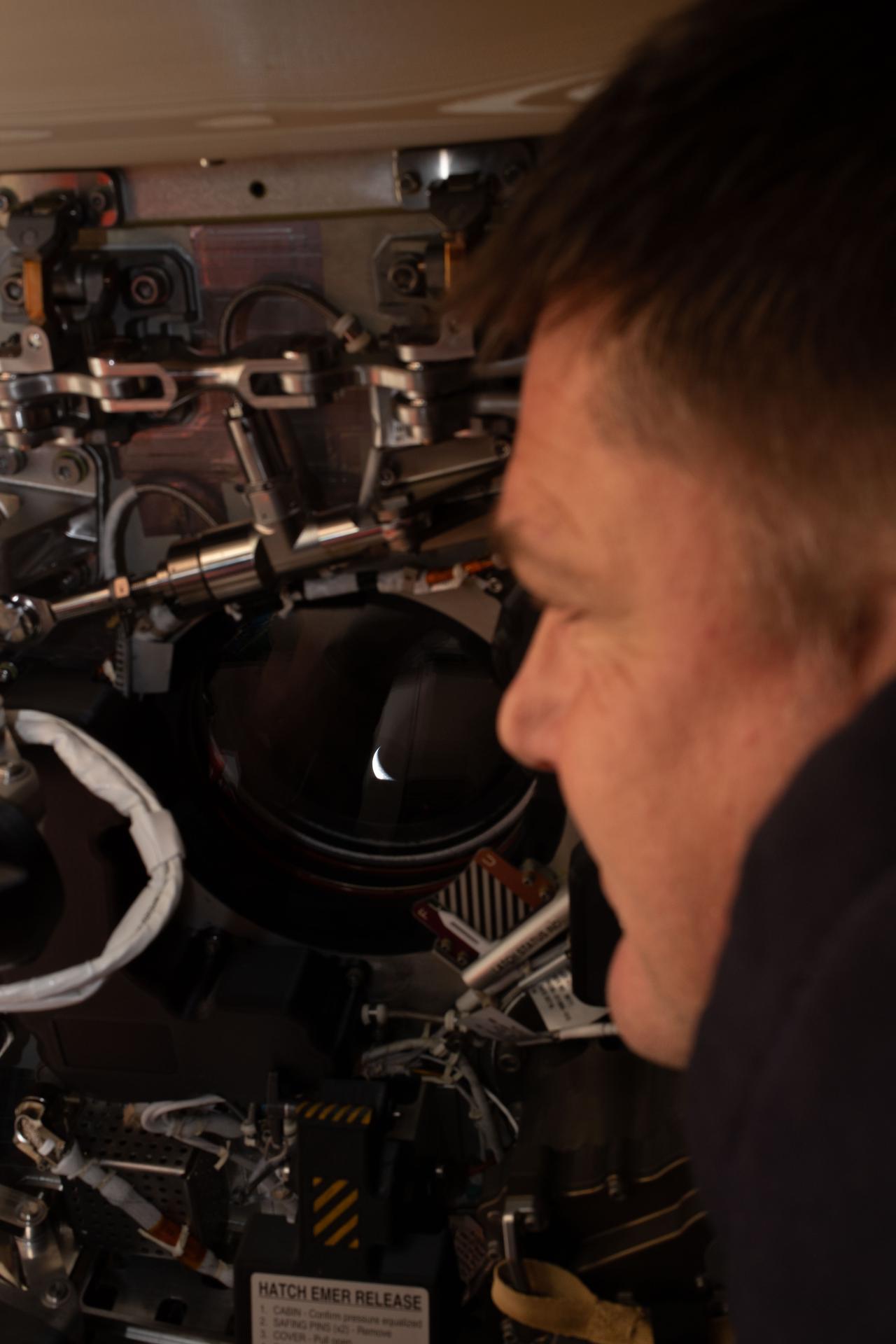
art002e009272 (April 6, 2026) - Artemis II mission specialist and CSA (Canadian Space Agency) astronaut Jeremy Hansen peers out one of the Orion spacecraft's windows looking back at Earth ahead of the crew's lunar flyby on April 6, 2026.
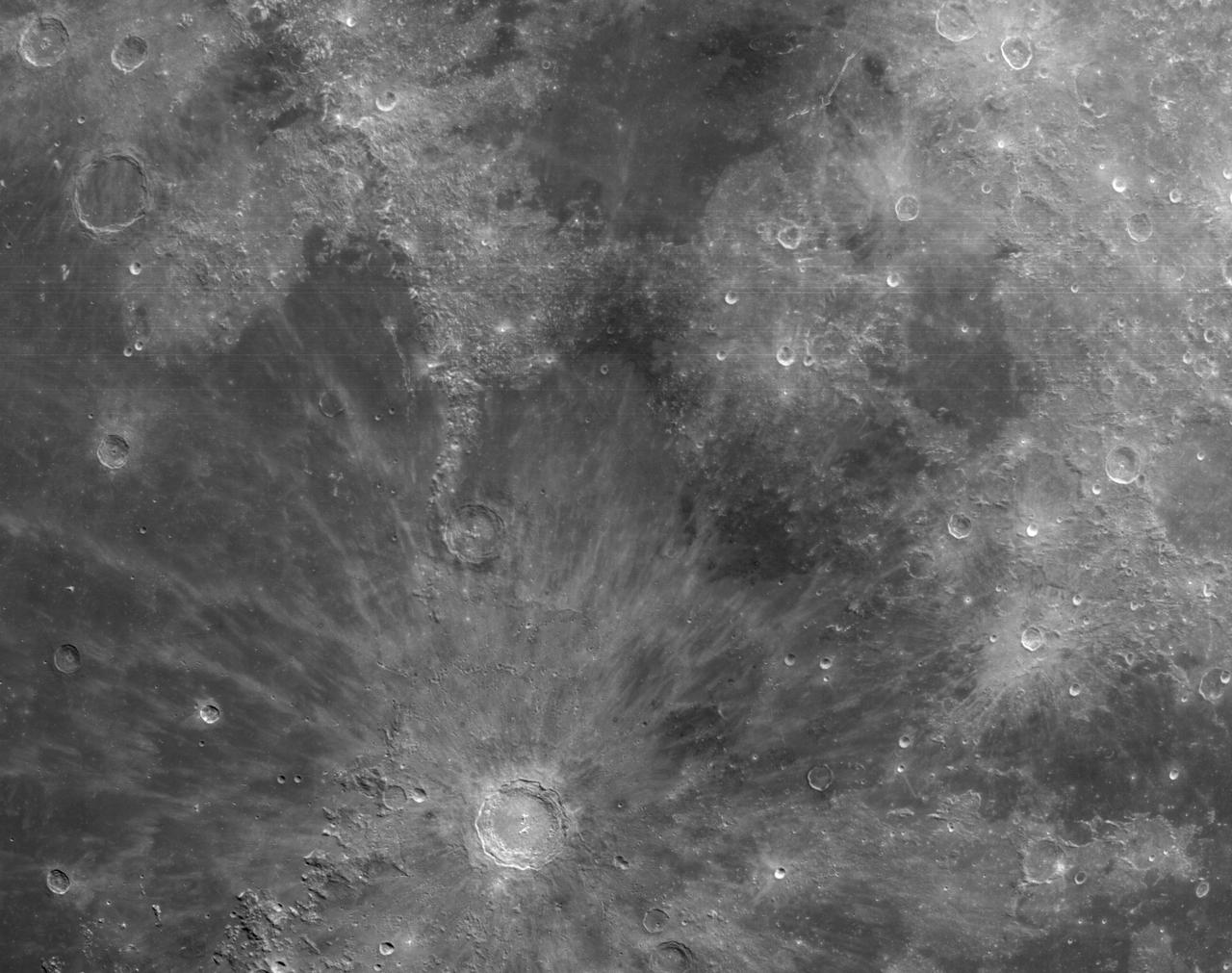
art001e002164 (Dec. 5, 2022): Cameras mounted on the crew module of the Orion spacecraft captured these views of the Moon’s surface. On flight day 20 of the Artemis I mission, the spacecraft made its second and final close approach to the Moon before its returned powered flyby burn.
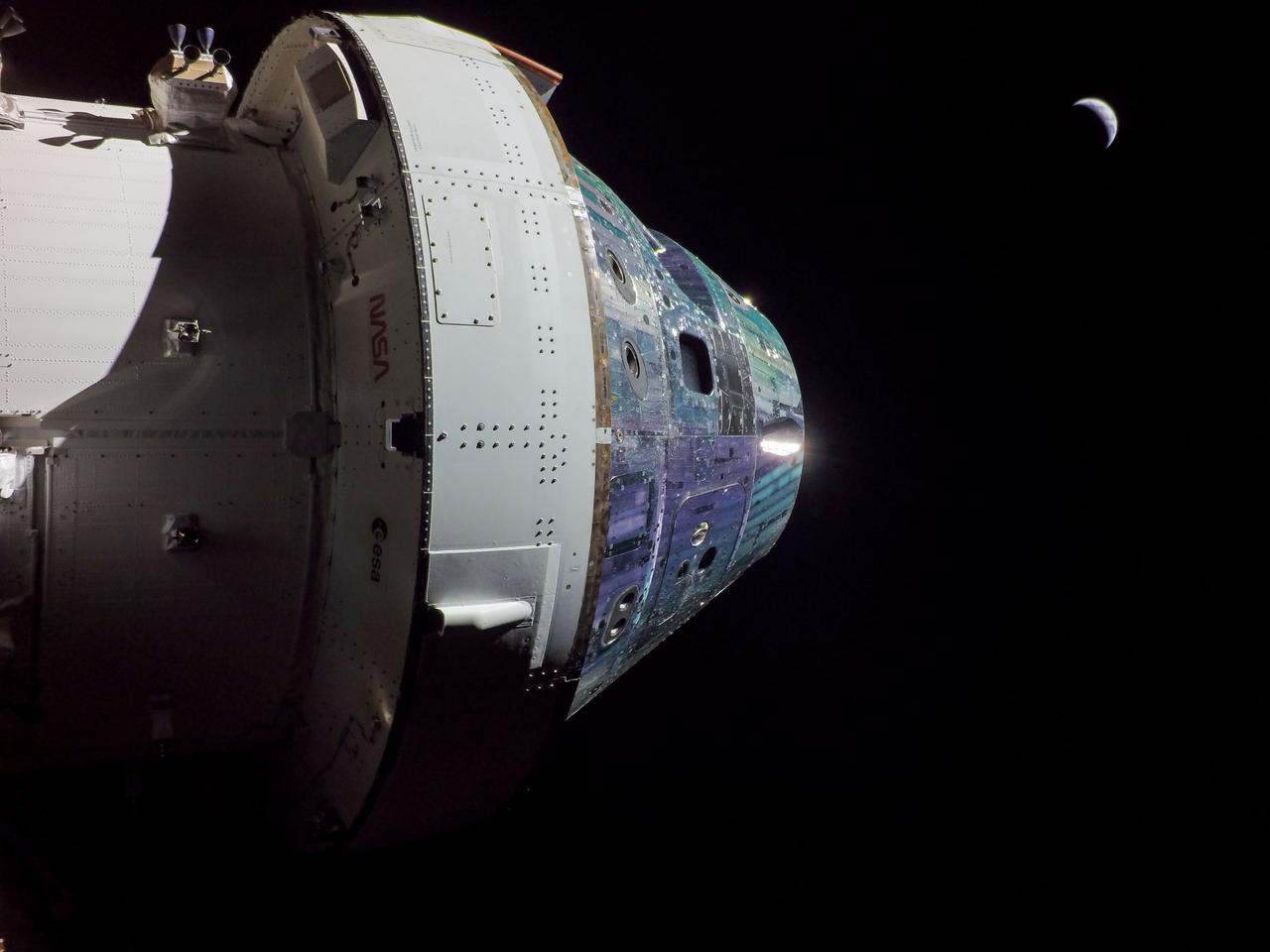
art001e002001 (Dec. 4, 2022) On the 19th day of the Artemis I mission, Orion captures Earth from a camera mounted on one of its solar arrays as the spacecraft prepares for the return powered flyby of the Moon on Dec. 5, when it will pass approximately 79 miles above the lunar surface.
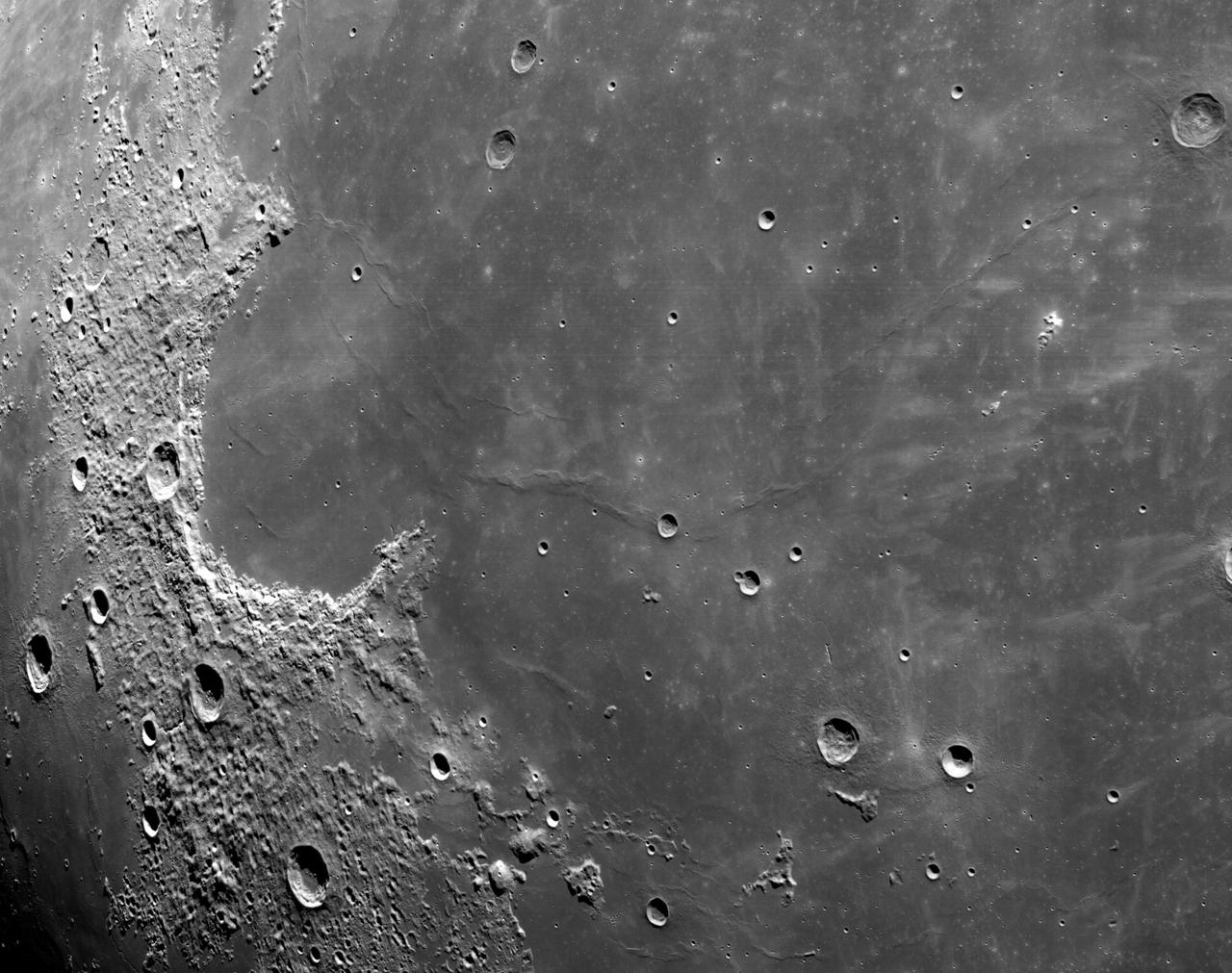
art001e002164 (Dec. 5, 2022): Cameras mounted on the crew module of the Orion spacecraft captured these views of the Moon’s surface. On flight day 20 of the Artemis I mission, the spacecraft made its second and final close approach to the Moon before its returned powered flyby burn.
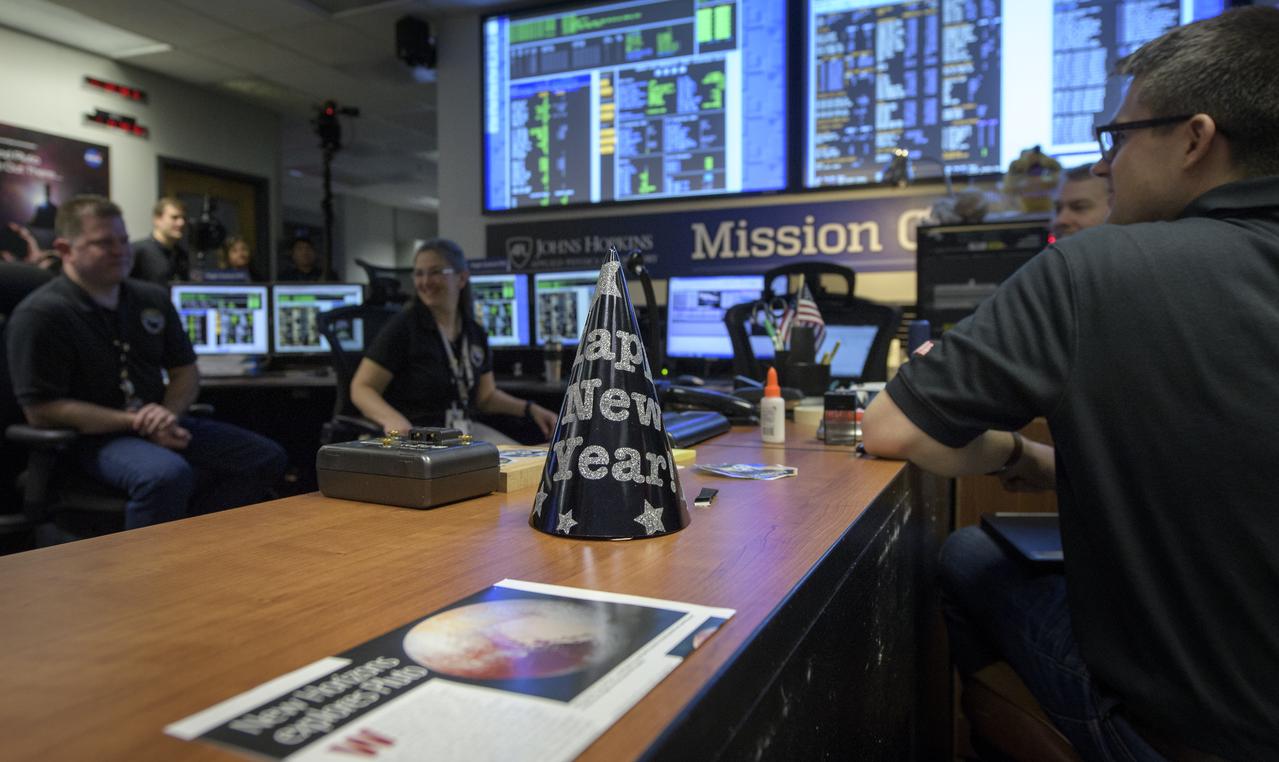
New Horizons team members wait for a signal from the spacecraft that it is healthy and collected data during the flyby of Ultima Thule, Tuesday, Jan. 1, 2019 at the Mission Operations Center of the Johns Hopkins University Applied Physics Laboratory (APL) in Laurel, Maryland. Photo Credit: (NASA/Bill Ingalls)
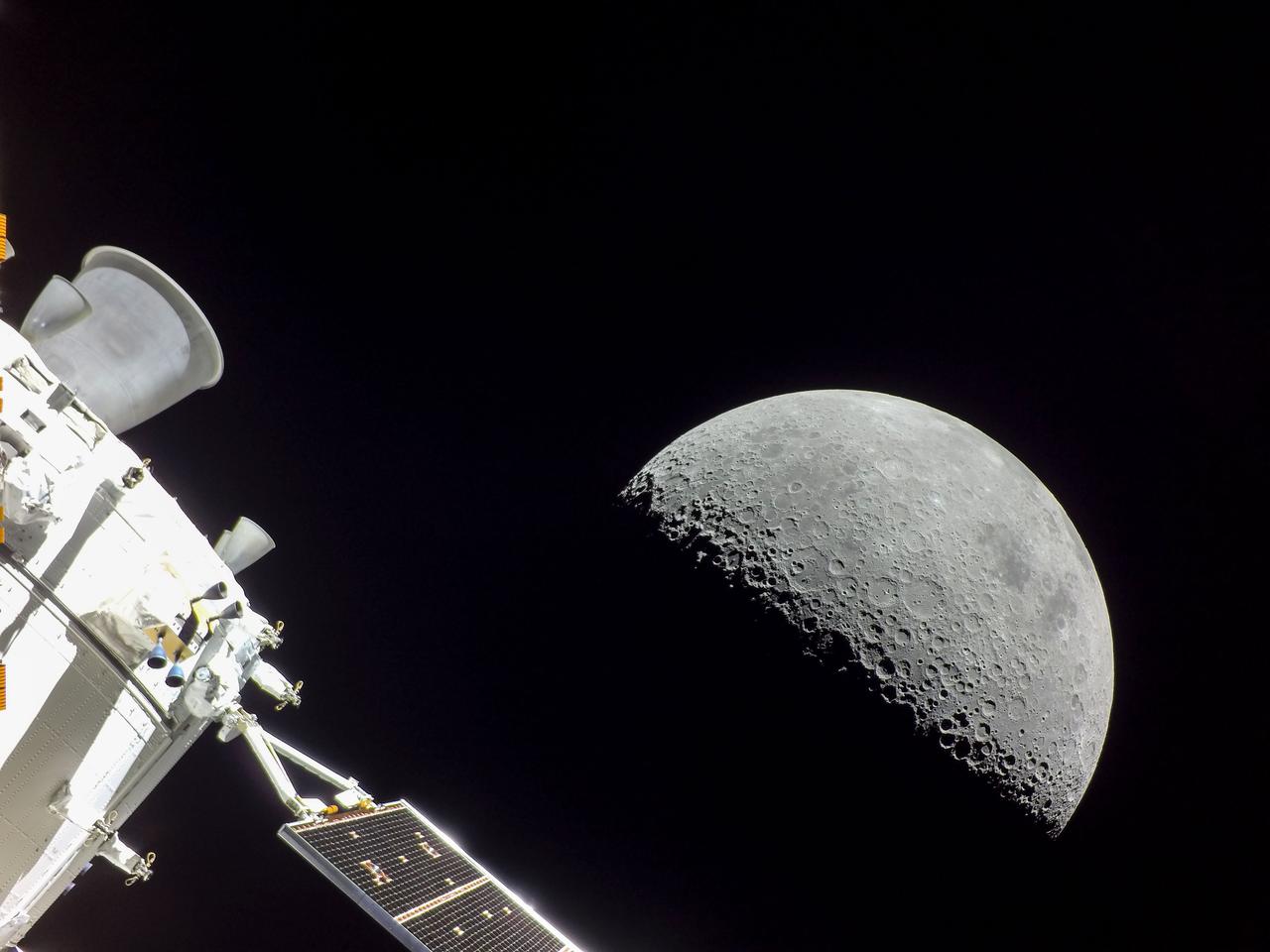
art001e002071 (Dec. 5, 2022) On flight day 20 of the Artemis I mission, Orion captured the Moon on the day of return powered flyby. The burn, which lasted 3 minutes, 27 seconds, committed the spacecraft to a Dec. 11 splashdown.
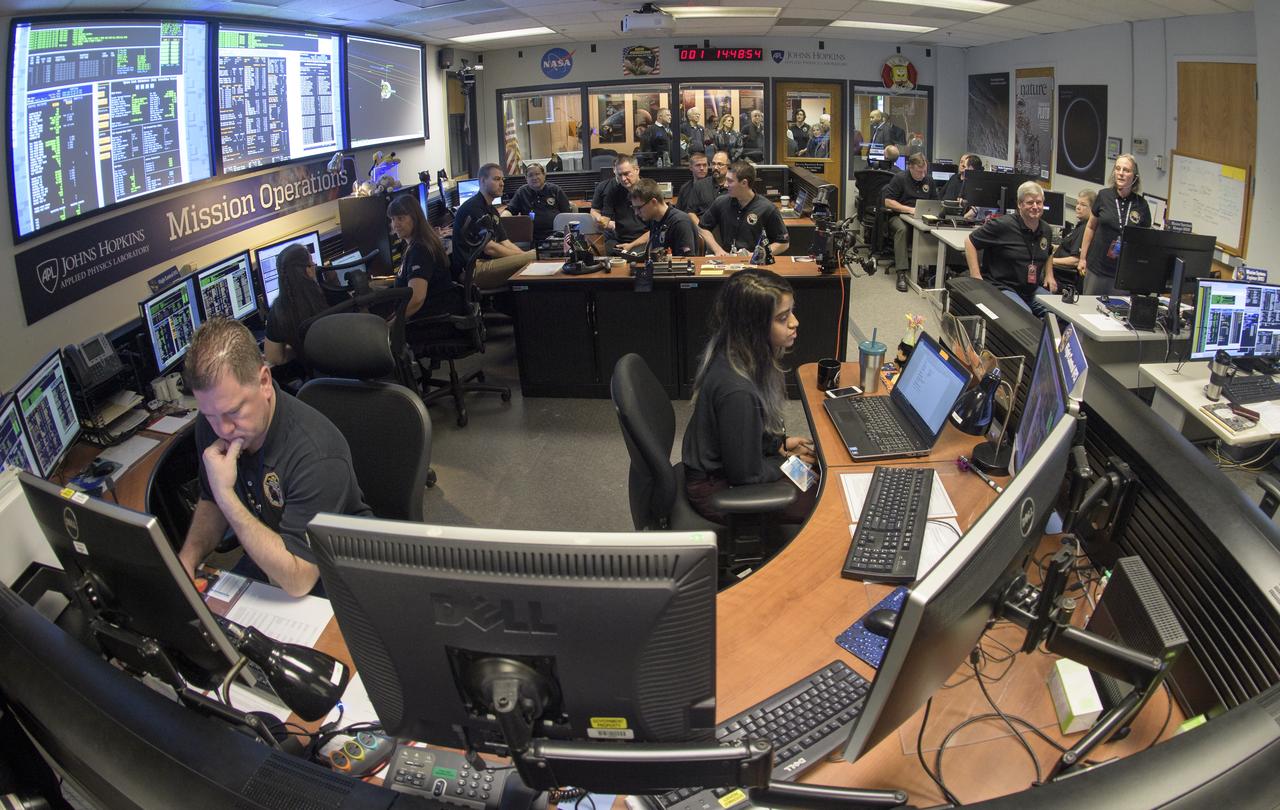
New Horizons team members wait for a signal from the spacecraft that it is healthy and collected data during the flyby of Ultima Thule, Tuesday, Jan. 1, 2019 at the Mission Operations Center of the Johns Hopkins University Applied Physics Laboratory (APL) in Laurel, Maryland. Photo Credit: (NASA/Bill Ingalls)
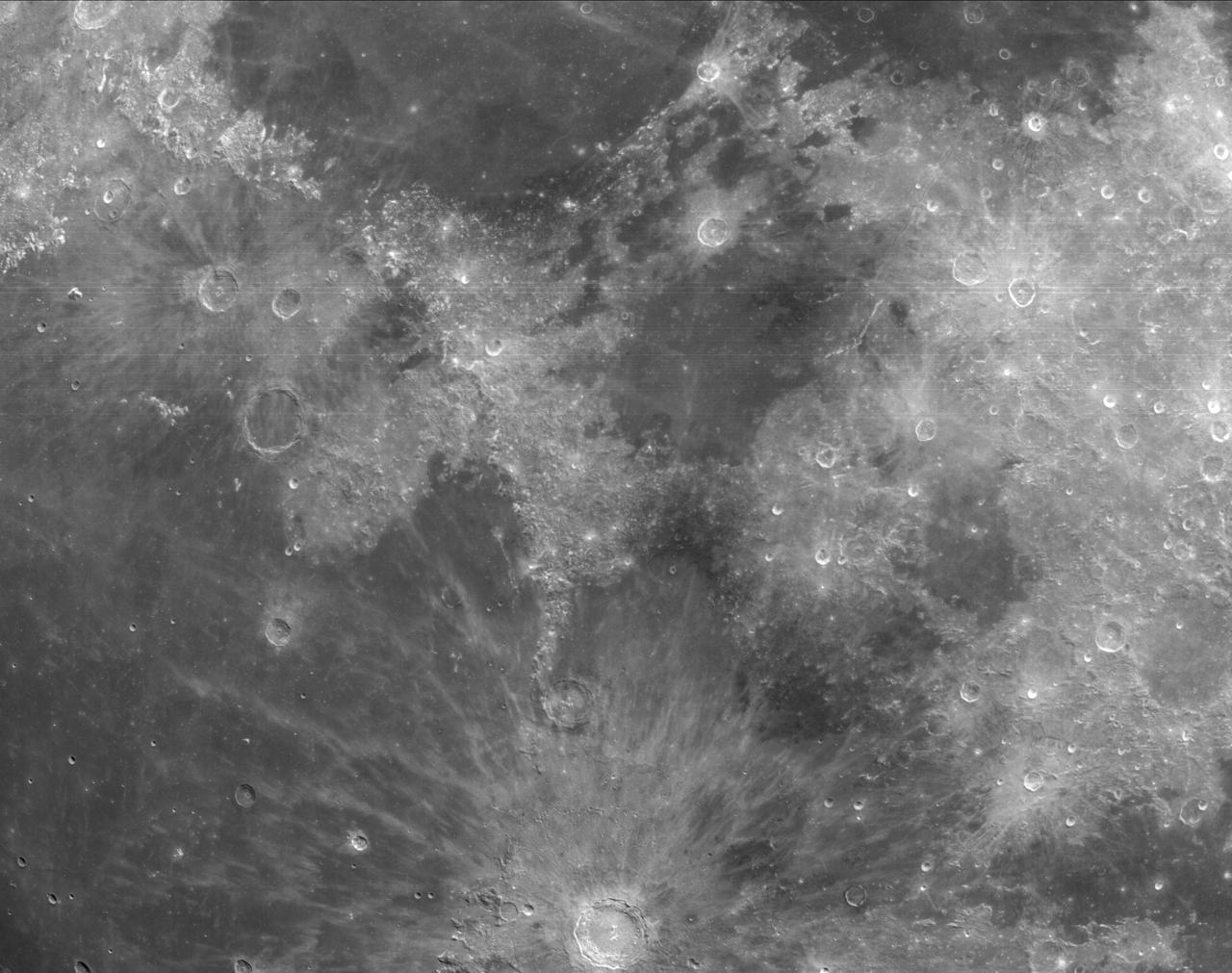
art001e002164 (Dec. 5, 2022): Cameras mounted on the crew module of the Orion spacecraft captured these views of the Moon’s surface. On flight day 20 of the Artemis I mission, the spacecraft made its second and final close approach to the Moon before its returned powered flyby burn.