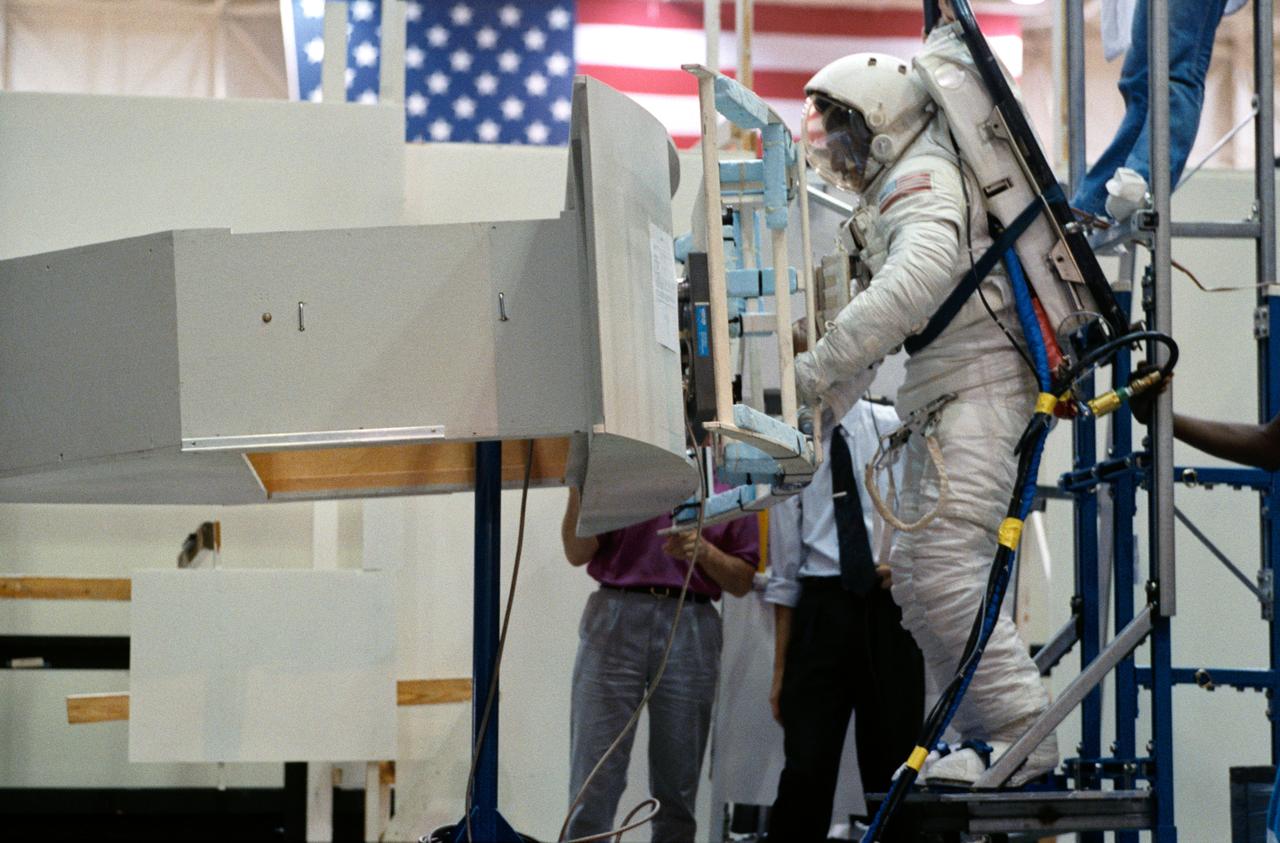
S93-35696 (7 June 1993) --- Making use of the air-bearing floor in Johnson Space Center's (JSC) Shuttle Mockup and Integration Laboratory, astronaut Jeffrey A. Hoffman practices working with the Hubble Space Telescope's (HST) Wide Field/Planetary Camera (WF/PC). Hoffman is one of four mission specialists who will participate in HST servicing on the scheduled December mission. Changing out the large camera is one of several chores to be performed by the four. Photo credit: NASA
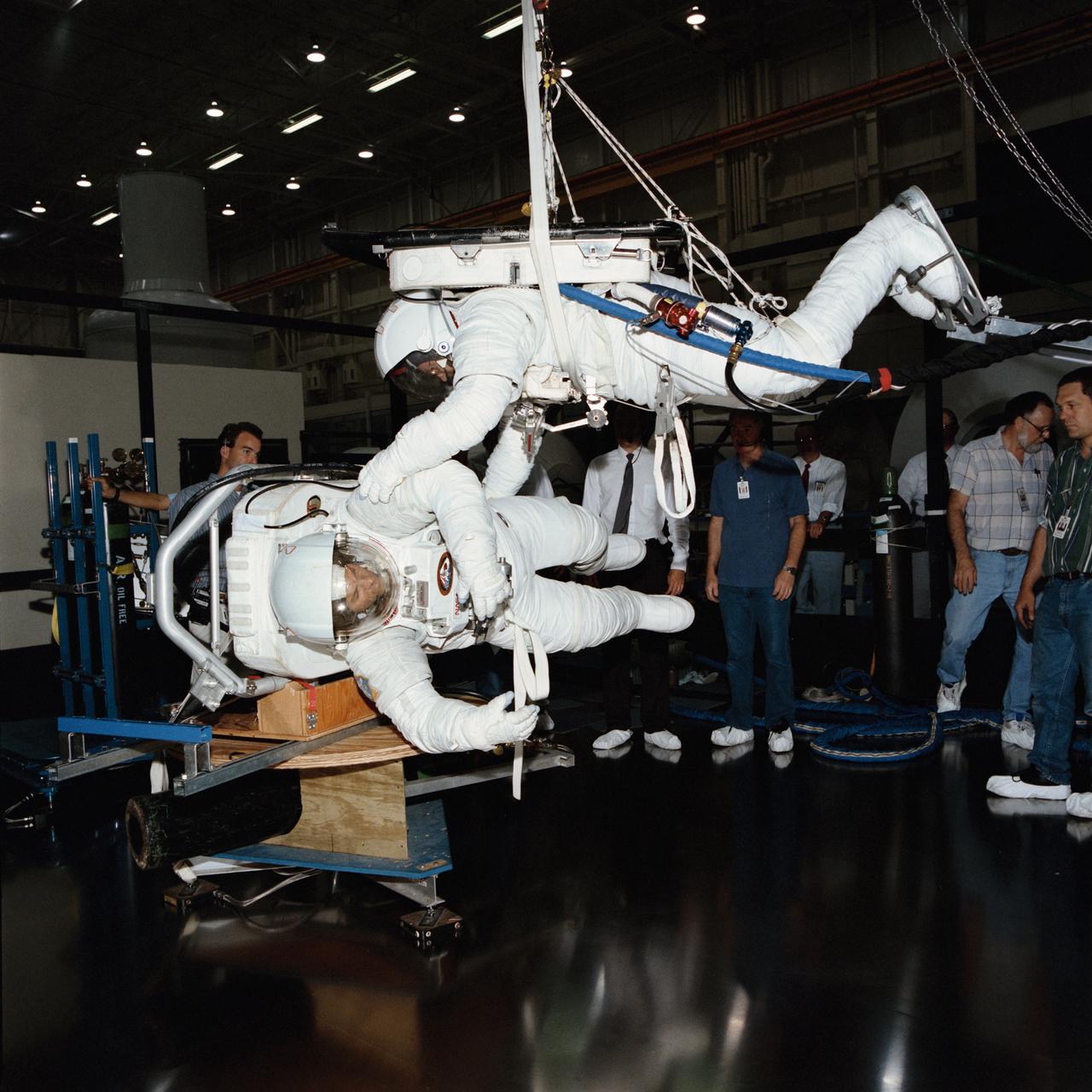
S94-33357 (1994) --- Scott Bleiseth, top, prepares to spin Mike Hess, a fellow EVA engineer, during a test on the air-bearing floor in the Shuttle Mock-up and Integration Laboratory at NASA's Johnson Space Center. The hardware being tested is part of the Simplified Aid for EVA Rescue (SAFER). The pair was developing techniques by which the non-SAFER equipped spacewalker will impart a rotation to the SAFER-using spacewalker during the STS-64 mission. Once the SAFER astronaut is spinning, the device will be activated and its automatic attitude hold capability will be tested. SAFER is to fly on STS-76 as well. Photo credit: NASA or National Aeronautics and Space Administration
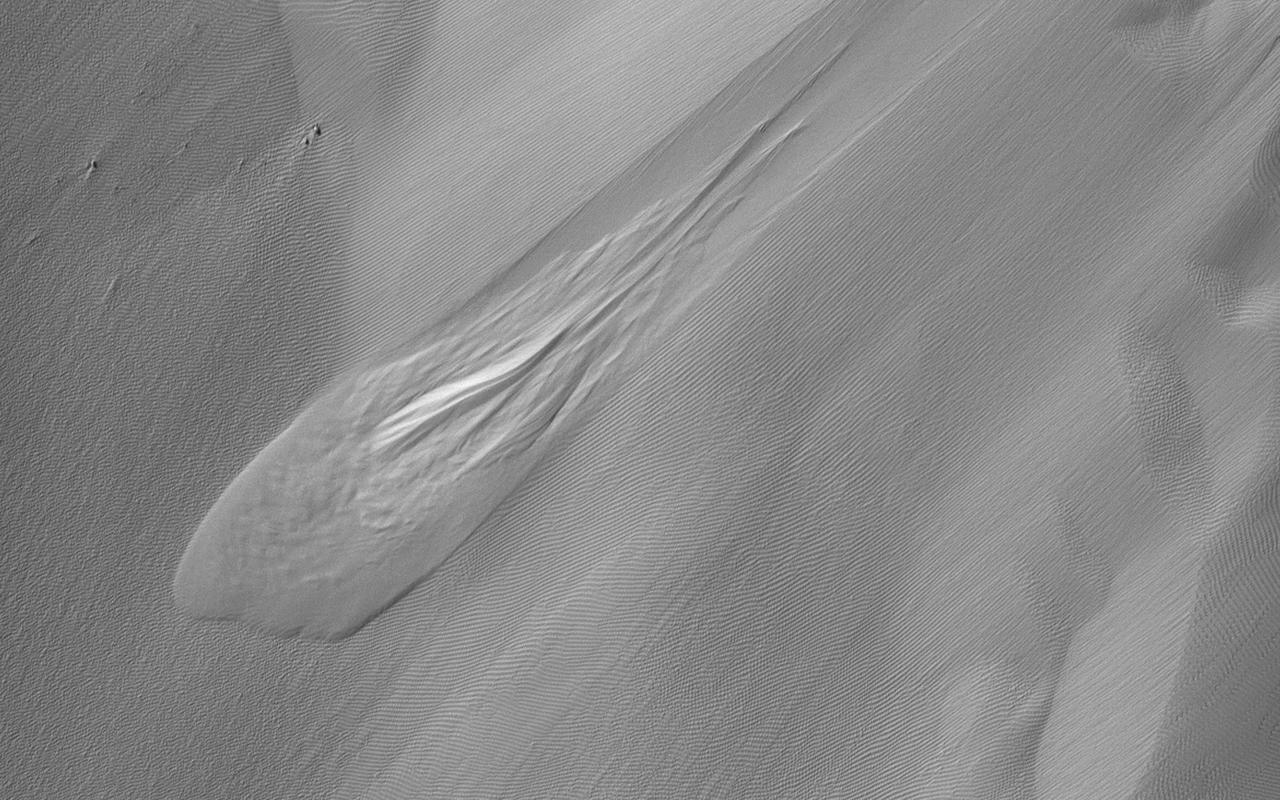
In geology, a slump forms a mass of loosely consolidated material or a rock layer moves a short distance down a slope. The movement is characterized by sliding along a concave-upward or planar surface. Based on other HiRISE images, this particular slump occurred between 9 March 2020 and 17 February 2021, corresponding to the relatively warm spring and summer of the Southern Hemisphere. This is among the largest active slumps documented on Mars, about 700 meters (0.4 mile) long. Causes of slumping on Earth include earthquake shocks, reduction of friction through wetting, freezing and thawing, undercutting (such as from a stream), and loading of a slope. Based on the geomorphology of this region and other active slumps seen on Mars, we suspect loading of the slope via smaller-scale activity like gullies, recurring slope lineae and windblown deposits may have contributed to the slumping. Perhaps a Marsquake triggered the movement. Note to future Mars explorers: setting up camp at the base of this slope is not recommended. https://photojournal.jpl.nasa.gov/catalog/PIA25189
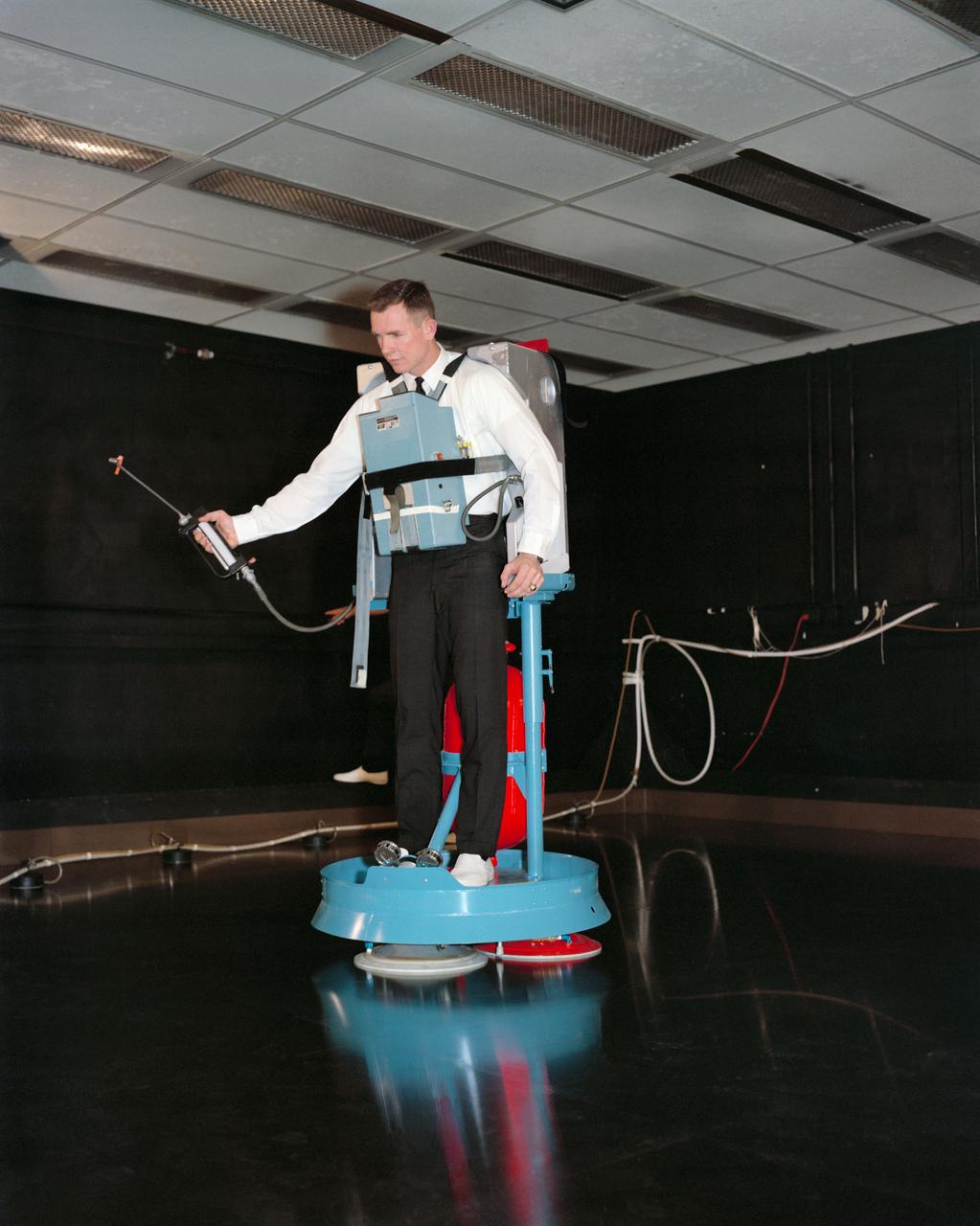
S66-19284 (1 Feb. 1966) --- Astronaut David R. Scott practicing for Gemini-8 extravehicular activity (EVA) in building 4 of the Manned Spacecraft Center on the air bearing floor. He is wearing the Hand-Held Maneuvering Unit which he will use during the EVA. Photo credit: NASA