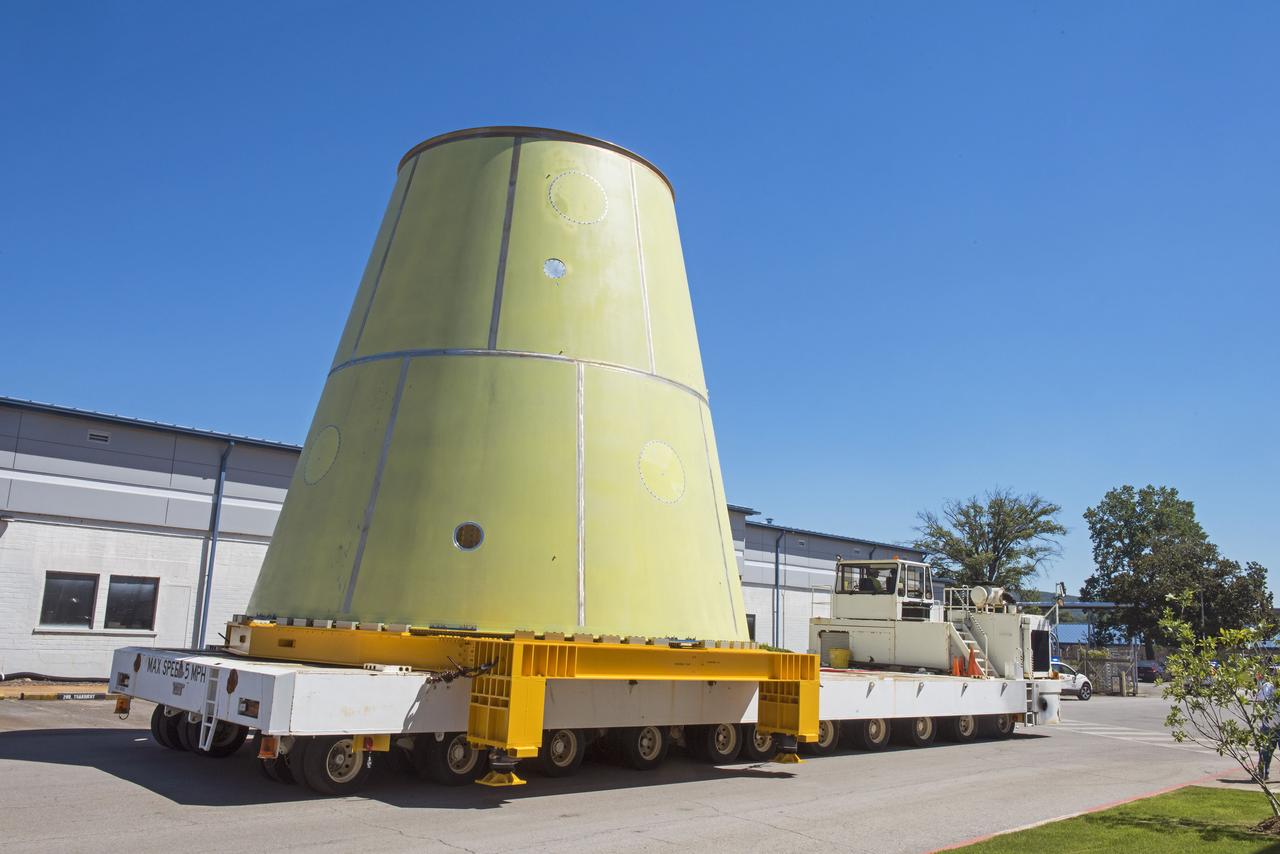
The SLS stage adapter being moved to it's new location from the MSFC Friction Stir Welding lab. This flight article will be sprayed with foam prior to shipment to its next location
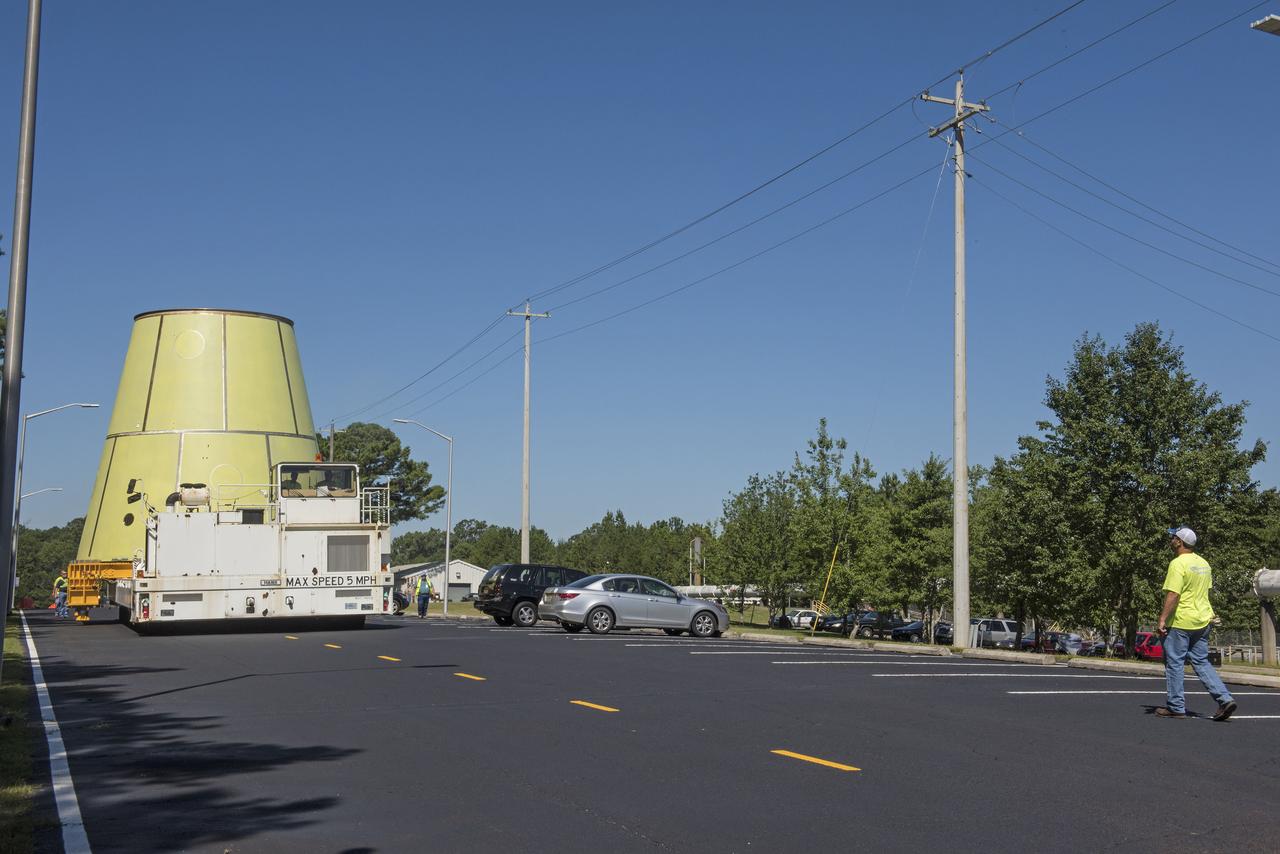
The SLS stage adapter being moved to it's new location from the MSFC Friction Stir Welding lab. This flight article will be sprayed with foam prior to shipment to its next location
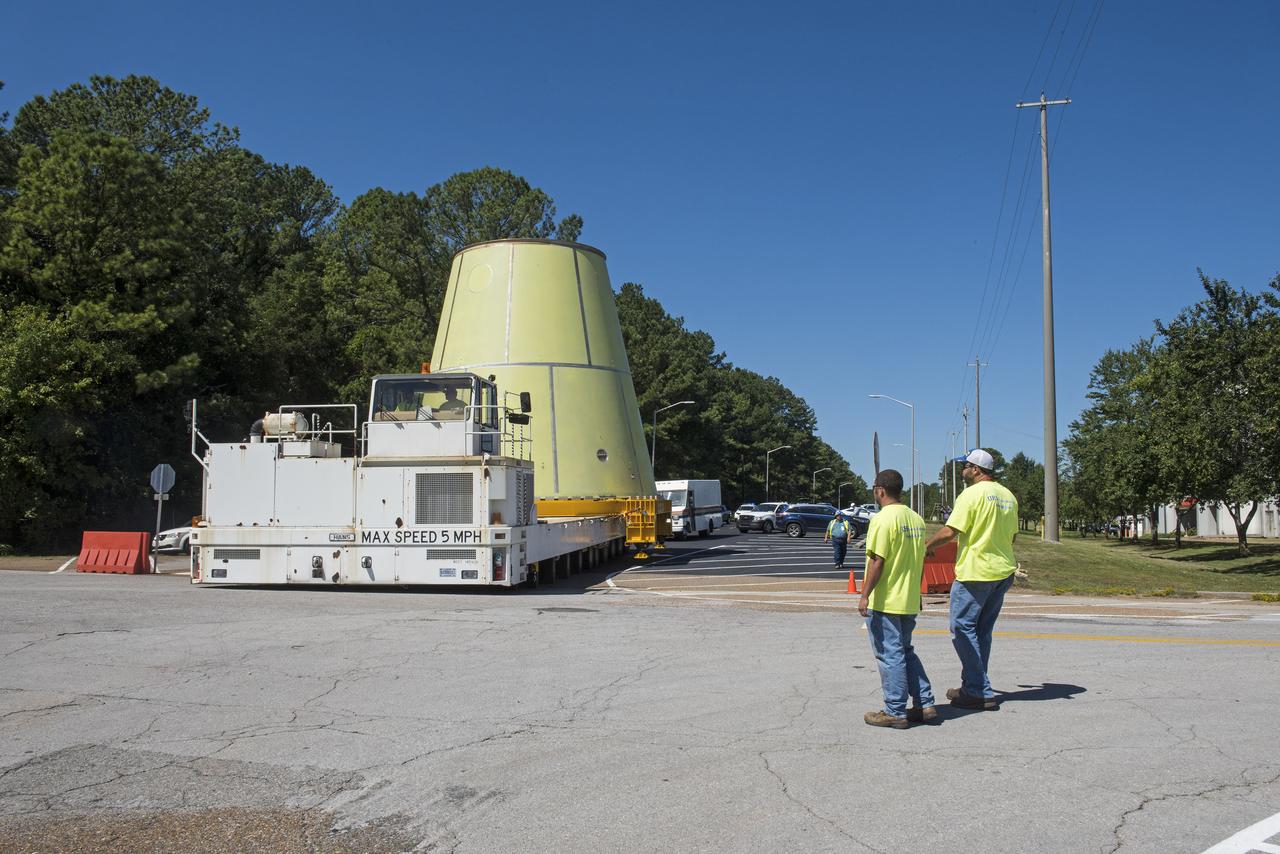
The SLS stage adapter being moved to it's new location from the MSFC Friction Stir Welding lab. This flight article will be sprayed with foam prior to shipment to its next location
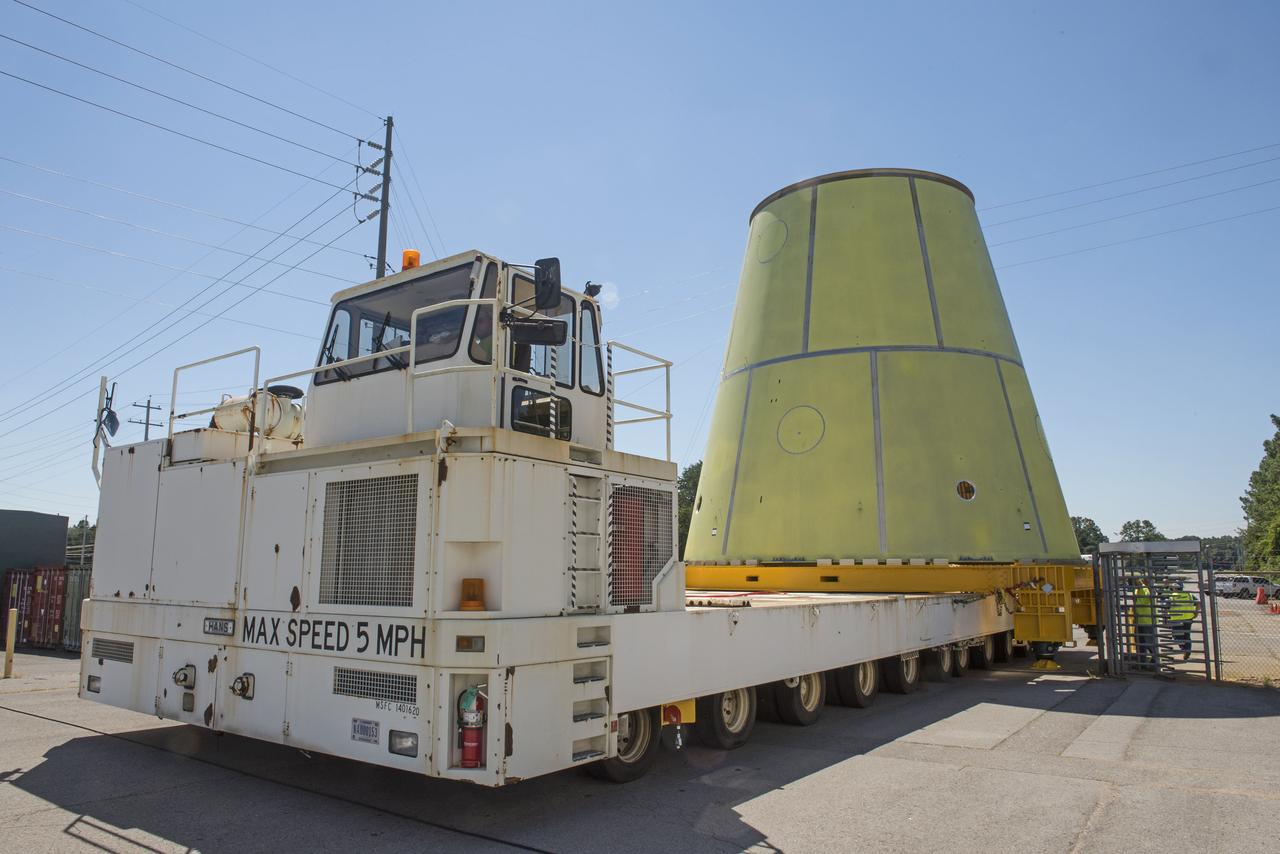
The SLS stage adapter being moved to it's new location from the MSFC Friction Stir Welding lab. This flight article will be sprayed with foam prior to shipment to its next location
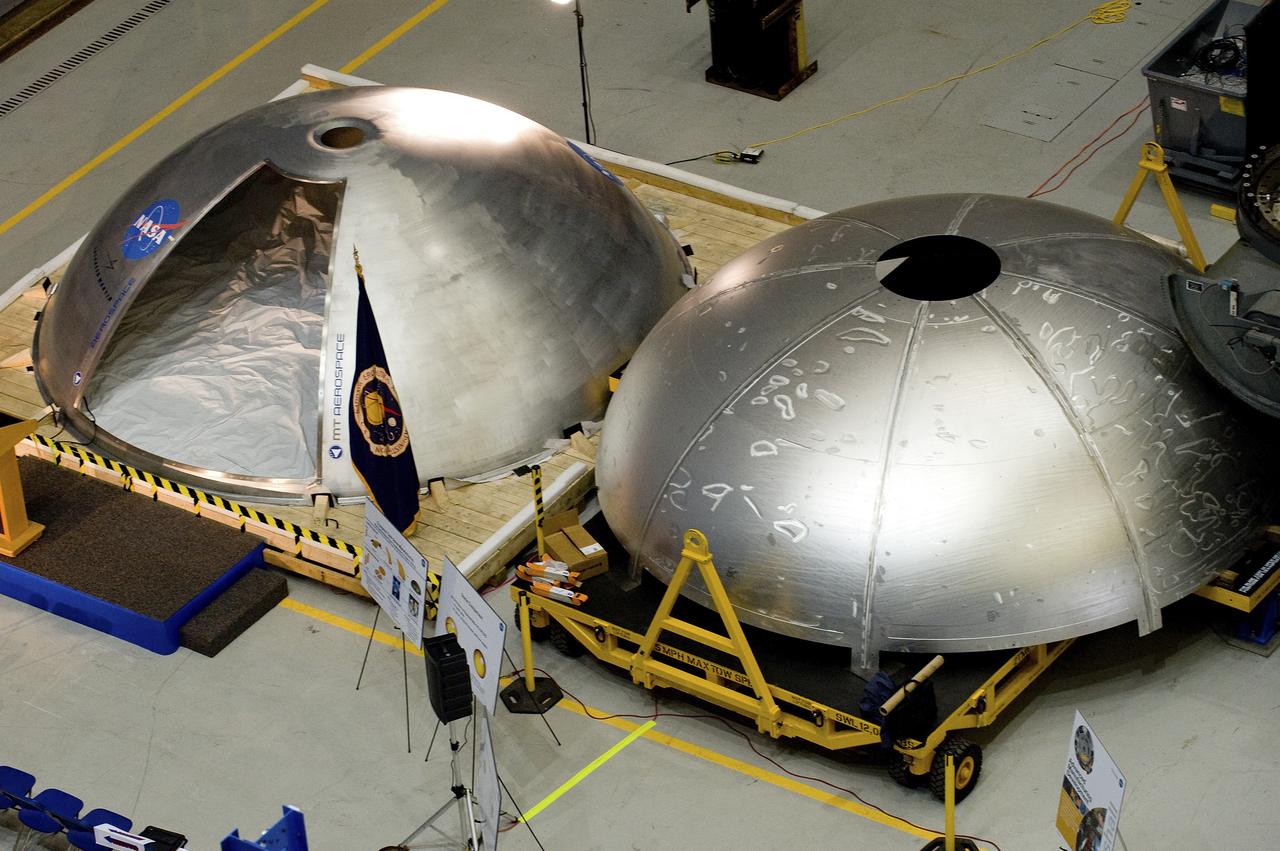
THE LEFT DOME WAS CREATED USING THE NEW MANUFACTURING PROCESSES AND ELIMINATES AT LEAST EIGHT MAJOR WELDS. THE WELD DEMARCATION LINES ARE VISIBLE ON THE TRADITIONAL FABRICATED TANK DONE ON THE RIGHT. THIS WAS PART OF THE FRICTION STIR COMMON BULKHEAD DOME UNVEILING CEREMONY IN BUILDING 4755
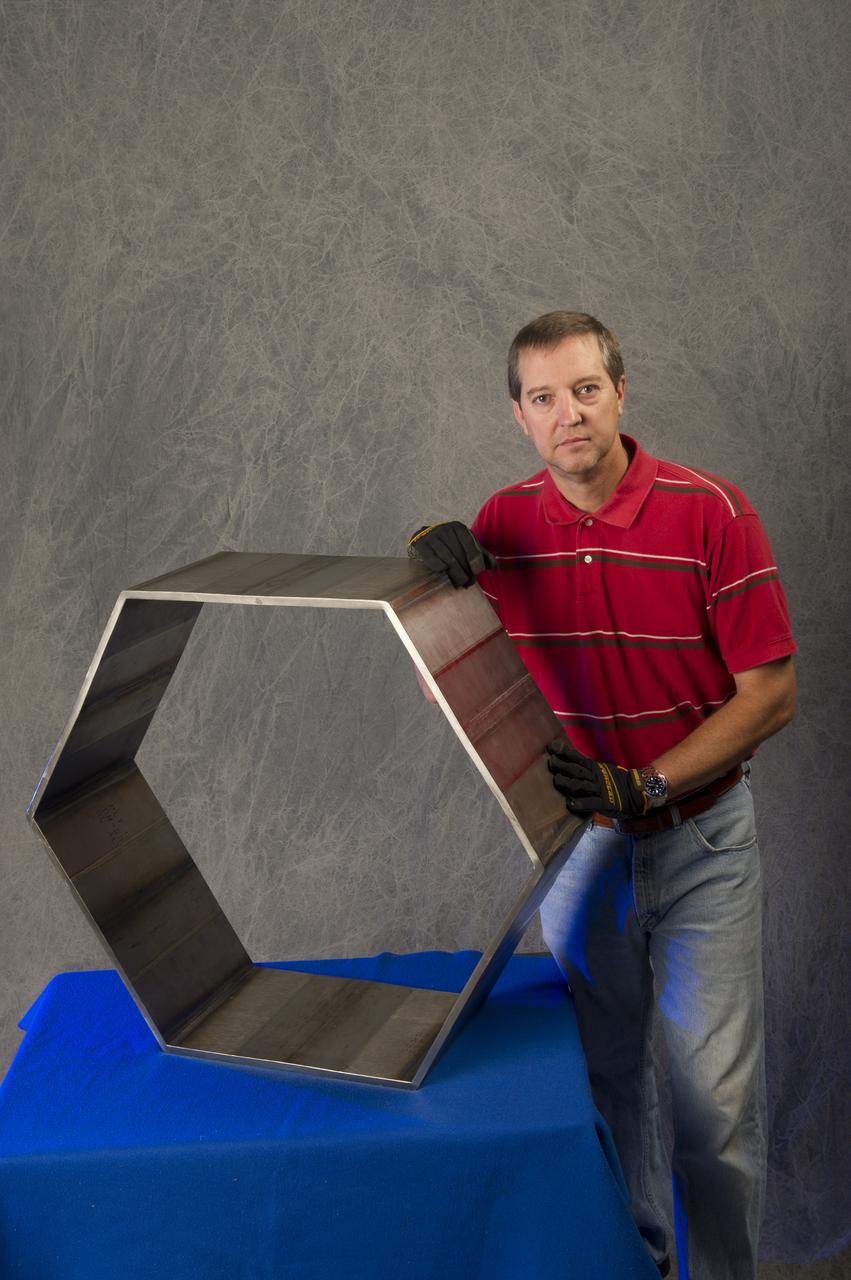
ANDRÉ PASEUR (WELD TECHNICIAN, JACOBS ESTS GROUP/ERC) DISPLAYS A HEXAGON THAT WAS FABRICATED FROM FRICTION STIR WELDED PLATES OF 6AL-4V TITANIUM (ELI) USING THERMAL STIR WELDING. THIS WORK WAS PERFORMED FOR A NASA TECHNOLOGY TRANSFER INDUSTRIAL PARTNER (KEYSTONE SYNERGETIC ENTERPRISES, INC.) IN SUPPORT OF A PROJECT FOR THE U.S. NAVY
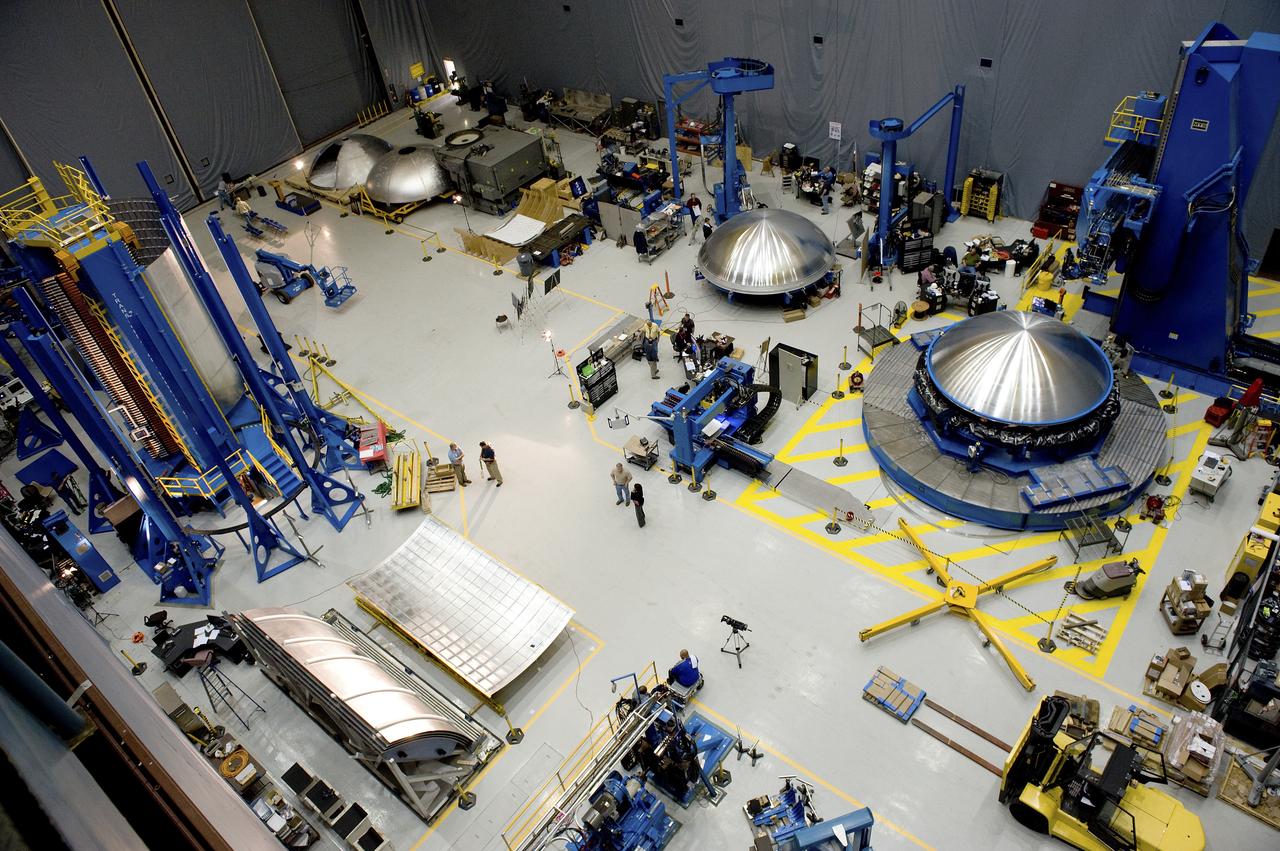
THE OVERHEAD VIEW OF THE FLOOR OF THE FRICTION STIR HIGH BAY AREA IN BUILDING 4755. THIS VIEW SHOWS FOUR DOME PIECES AS WELL AS THE SHELL BUCKLE BARREL PANEL IN THE VERTICAL WELD TOOL
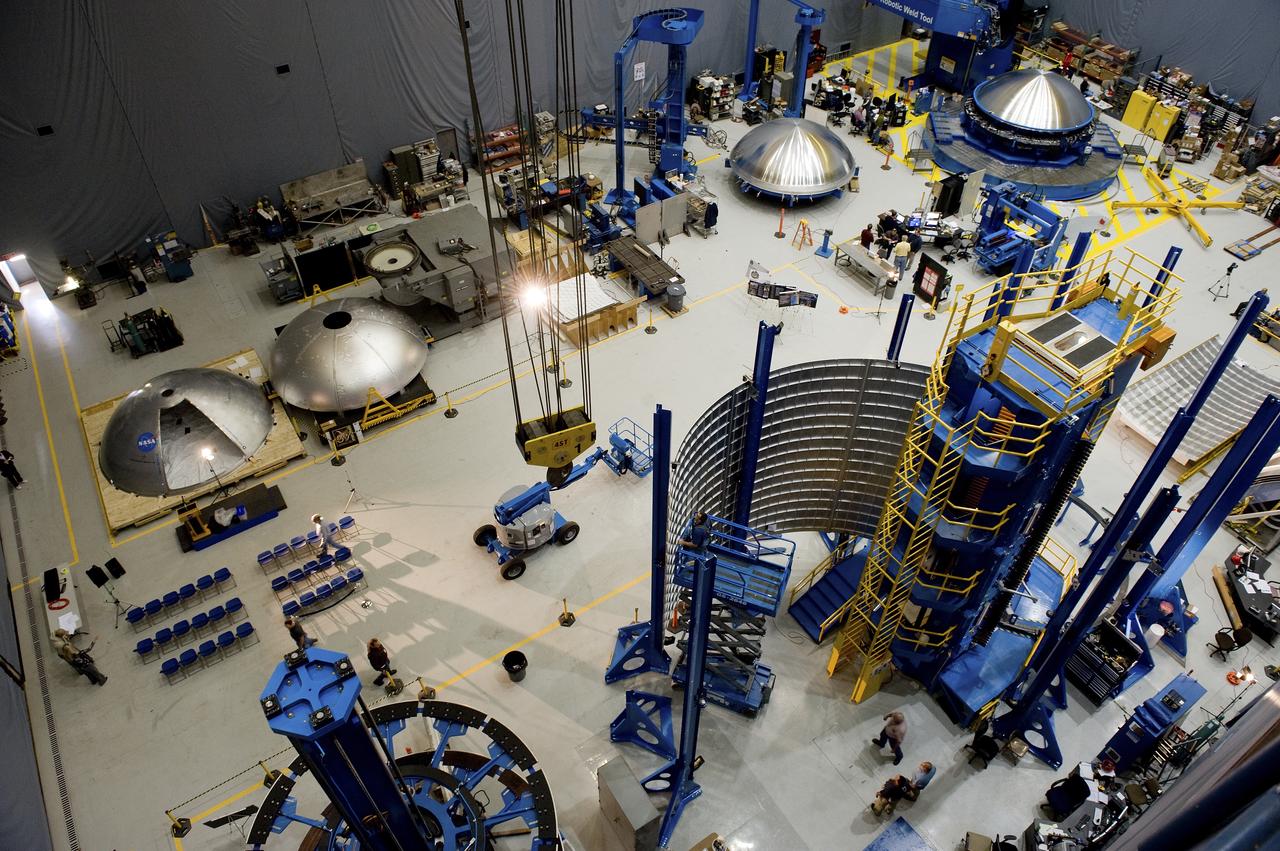
THE OVERHEAD VIEW OF THE FLOOR OF THE FRICTION STIR HIGH BAY AREA IN BUILDING 4755. THIS VIEW SHOWS FOUR DOME PIECES AS WELL AS THE SHELL BUCKLE BARREL PANEL IN THE VERTICAL WELD TOOL
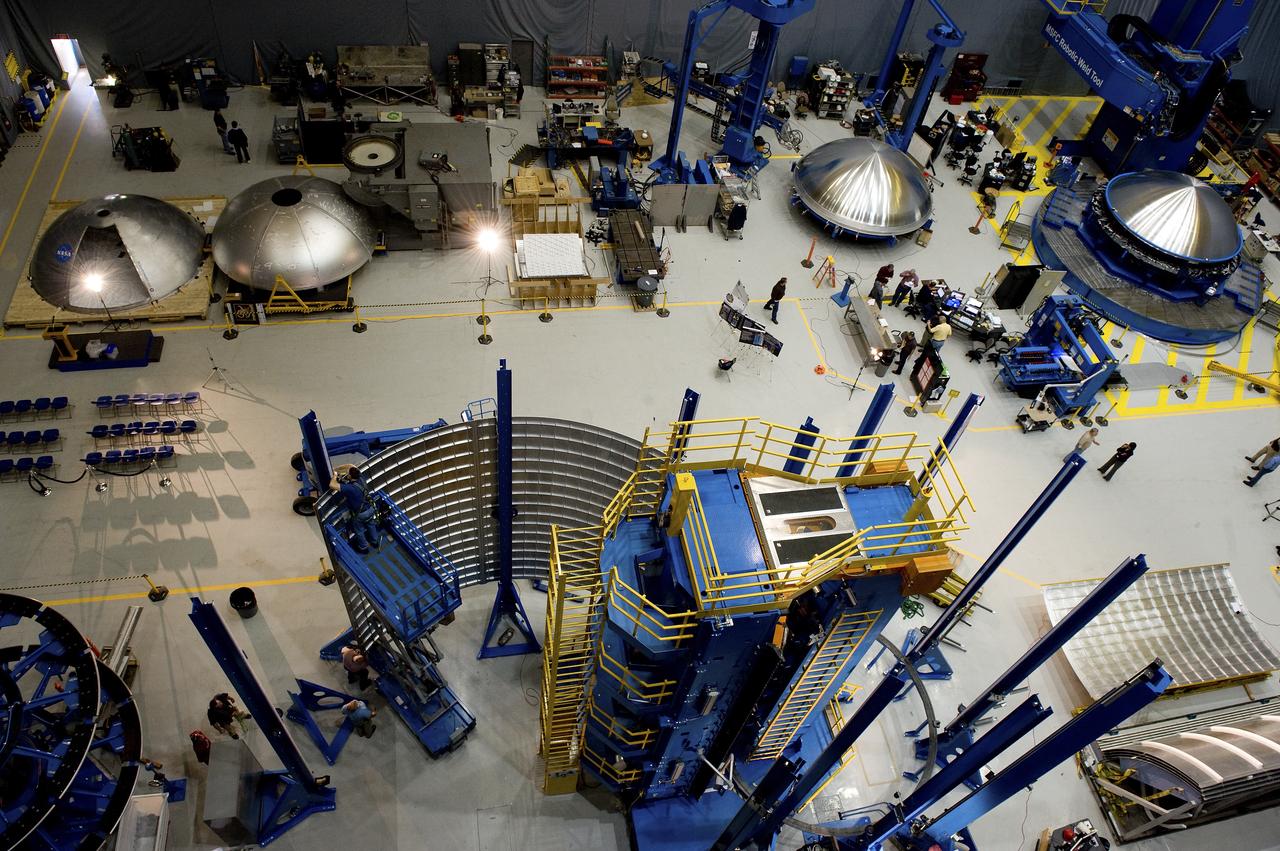
THE OVERHEAD VIEW OF THE FLOOR OF THE FRICTION STIR HIGH BAY AREA IN BUILDING 4755. THIS VIEW SHOWS FOUR DOME PIECES AS WELL AS THE SHELL BUCKLE BARREL PANEL IN THE VERTICAL WELD TOOL
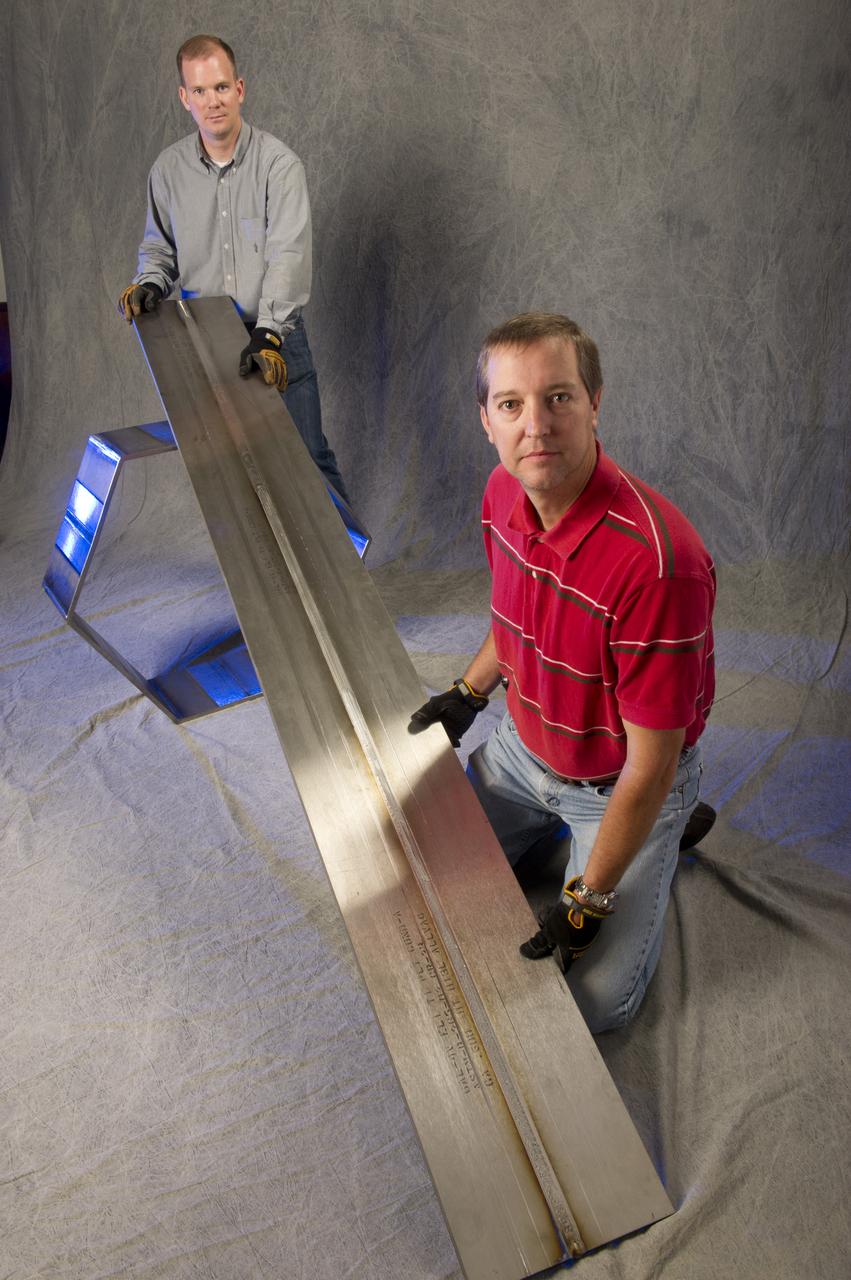
SAMUEL SMITH (WELD TECHNICIAN, JACOBS ESTS GROUP/ALL POINTS) AND ANDRÉ PASEUR (WELD TECHNICIAN, JACOBS ESTS GROUP/ERC) DISPLAY TWO PROCESS DEMONSTRATION ARTICLES – A 9-FOOT BUTT WELD (FOREGROUND) AND A HEXAGON FABRICATED FROM FRICTION STIR WELDED PLATES (BACKGROUND) – THAT WERE FABRICATED FROM 6AL-4V TITANIUM (ELI) USING THERMAL STIR WELDING. THIS WORK WAS PERFORMED FOR A NASA TECHNOLOGY TRANSFER INDUSTRIAL PARTNER (KEYSTONE SYNERGETIC ENTERPRISES, INC.) IN SUPPORT OF A PROJECT FOR THE U.S. NAVY
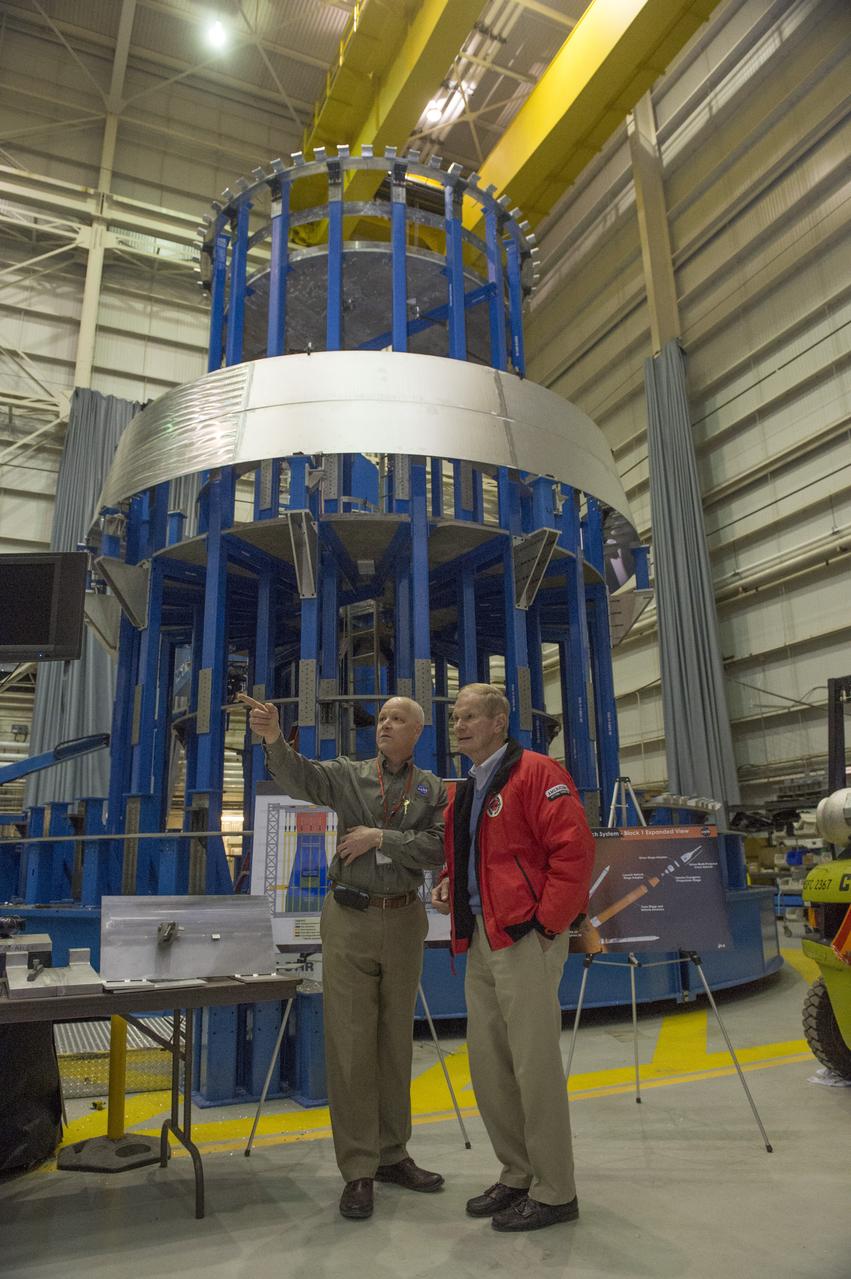
U.S. SENATOR BILL NELSON OF FLORIDA, RIGHT, LISTENS AS ANDY SCHORR, ASSISTANT MANAGER FOR SPACECRAFT/PAYLOAD INTEGRATION AND EVOLUTION, EXPLAINS THE PROGRESS OF NASA'S SPACE LAUNCH SYSTEM DURING A VISIT TO NASA'S MARSHALL SPACE FLIGHT CENTER ON FEB. 12, 2016
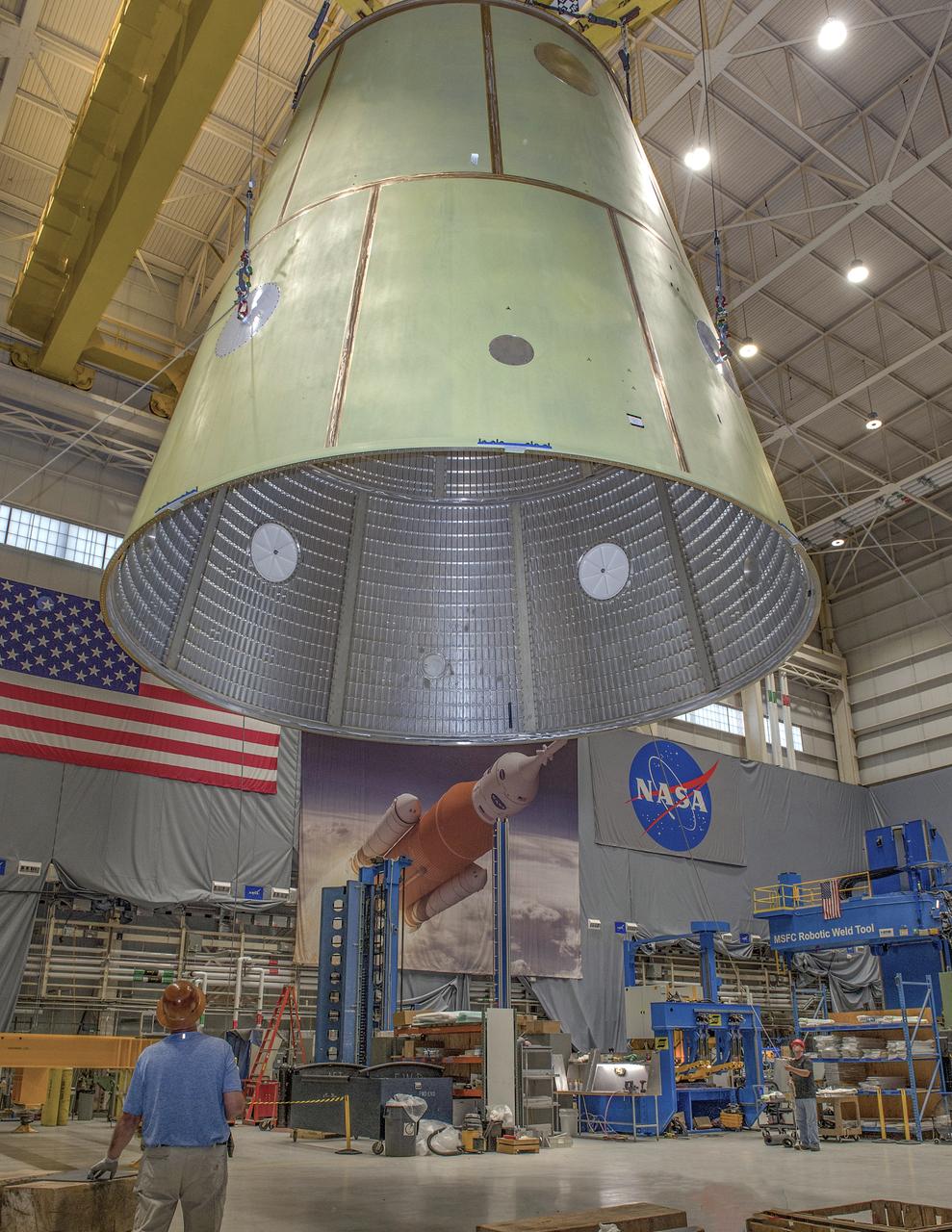
Lifting of the Launch Vehicle Stage Adapter (LVSA) in preparation for transport. The LVSA was fabricated in the EM32 Advanced Welding Development Facility at the NASA George C. Marshall Space Flight Center. The LVSA was welded using the conventional and self-reacting friction stir process and has approximately 375 feet of weld.
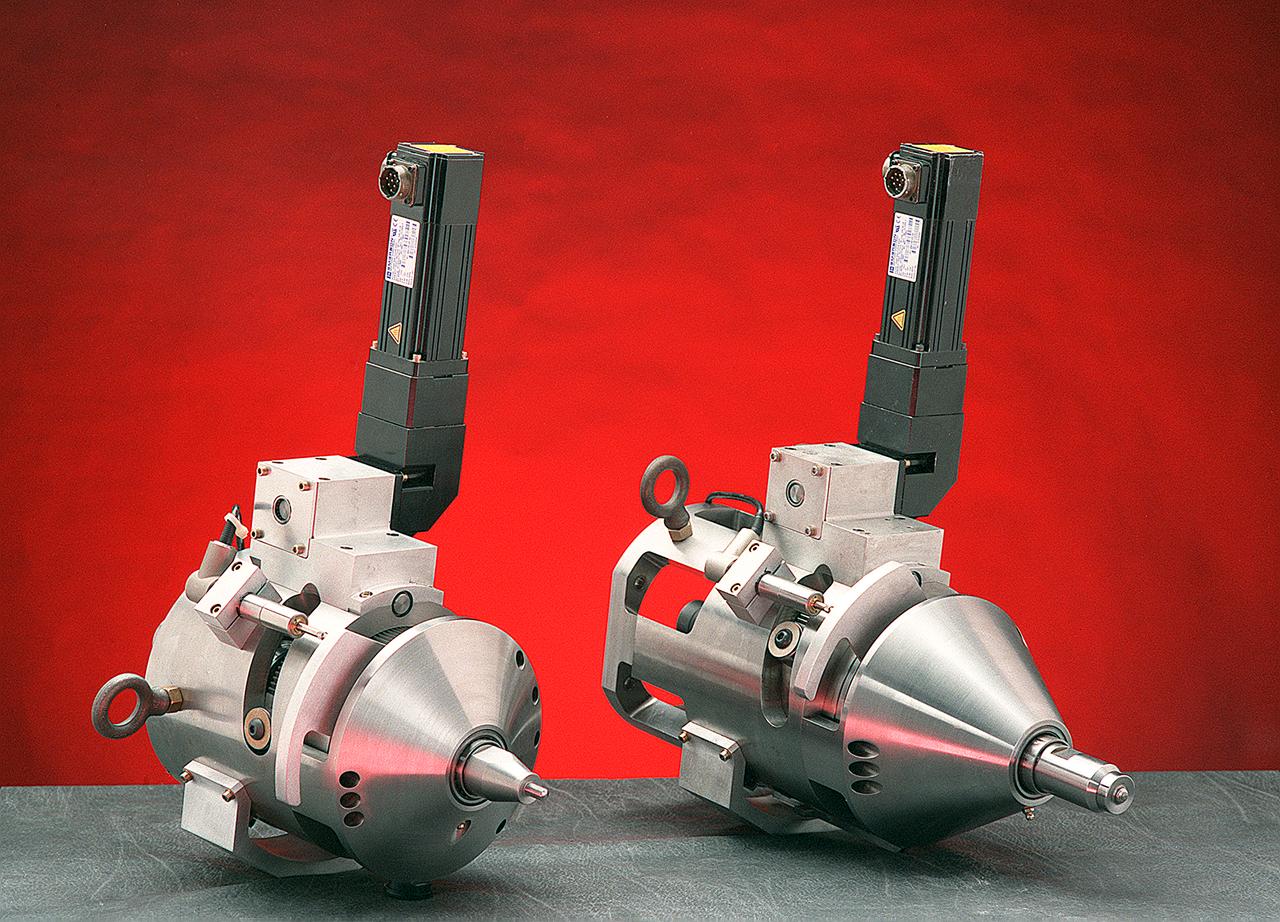
Two companies have successfully commercialized a specialized welding tool developed at the Marshall Space Flight Center (MSFC). Friction stir welding uses the high rotational speed of a tool and the resulting frictional heat created from contact to crush, "stir" together, and forge a bond between two metal alloys. It has had a major drawback, reliance on a single-piece pin tool. The pin is slowly plunged into the joint between two materials to be welded and rotated as high speed. At the end of the weld, the single-piece pin tool is retracted and leaves a "keyhole," something which is unacceptable when welding cylindrical objects such as drums, pipes and storage tanks. Another drawback is the requirement for different-length pin tools when welding materials of varying thickness. An engineer at the MSFC helped design an automatic retractable pin tool that uses a computer-controlled motor to automatically retract the pin into the shoulder of the tool at the end of the weld, preventing keyholes. This design allows the pin angle and length to be adjusted for changes in material thickness and results in a smooth hole closure at the end of the weld. Benefits of friction stir welding, using the MSFC retractable pin tool technology, include the following: The ability to weld a wide range of alloys, including previously unweldable and composite materials; provision of twice the fatigue resistance of fusion welds and no keyholes; minimization of material distortion; no creation of hazards such as welding fumes, radiation, high voltage, liquid metals, or arcing; automatic retraction of the pin at the end of the weld; and maintaining full penetration of the pin.
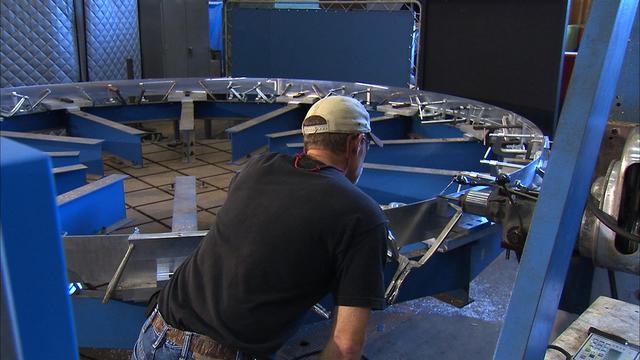
Under the goals of the Vision for Space Exploration, Ares I is a chief component of the cost-effective space transportation infrastructure being developed by NASA's Constellation Program. This transportation system will safely and reliably carry human explorers back to the moon, and then onward to Mars and other destinations in the solar system. The Ares I effort includes multiple project element teams at NASA centers and contract organizations around the nation, and is managed by the Exploration Launch Projects Office at NASA's Marshall Space Flight Center (MFSC). ATK Launch Systems near Brigham City, Utah, is the prime contractor for the first stage booster. ATK's subcontractor, United Space Alliance of Houston, is designing, developing and testing the parachutes at its facilities at NASA's Kennedy Space Center in Florida. NASA's Johnson Space Center in Houston hosts the Constellation Program and Orion Crew Capsule Project Office and provides test instrumentation and support personnel. Together, these teams are developing vehicle hardware, evolving proven technologies, and testing components and systems. Their work builds on powerful, reliable space shuttle propulsion elements and nearly a half-century of NASA space flight experience and technological advances. Ares I is an inline, two-stage rocket configuration topped by the Crew Exploration Vehicle, its service module, and a launch abort system. This HD video image depicts the preparation and placement of a confidence ring for friction stir welding used in manufacturing aluminum panels that will fabricate the Ares I upper stage barrel. The aluminum panels are manufactured and subjected to confidence tests during which the bent aluminum is stressed to breaking point and thoroughly examined. The panels are manufactured by AMRO Manufacturing located in El Monte, California. (Highest resolution available)
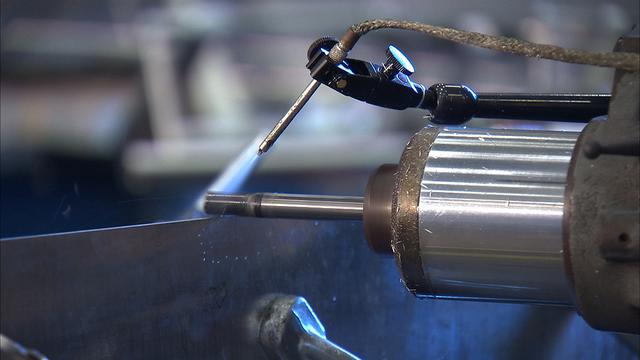
Under the goals of the Vision for Space Exploration, Ares I is a chief component of the cost-effective space transportation infrastructure being developed by NASA's Constellation Program. This transportation system will safely and reliably carry human explorers back to the moon, and then onward to Mars and other destinations in the solar system. The Ares I effort includes multiple project element teams at NASA centers and contract organizations around the nation, and is managed by the Exploration Launch Projects Office at NASA's Marshall Space Flight Center (MFSC). ATK Launch Systems near Brigham City, Utah, is the prime contractor for the first stage booster. ATK's subcontractor, United Space Alliance of Houston, is designing, developing and testing the parachutes at its facilities at NASA's Kennedy Space Center in Florida. NASA's Johnson Space Center in Houston hosts the Constellation Program and Orion Crew Capsule Project Office and provides test instrumentation and support personnel. Together, these teams are developing vehicle hardware, evolving proven technologies, and testing components and systems. Their work builds on powerful, reliable space shuttle propulsion elements and nearly a half-century of NASA space flight experience and technological advances. Ares I is an inline, two-stage rocket configuration topped by the Crew Exploration Vehicle, its service module, and a launch abort system. This HD video image depicts friction stir welding used in manufacturing aluminum panels that will fabricate the Ares I upper stage barrel. The panels are subjected to confidence tests in which the bent aluminum is stressed to breaking point and thoroughly examined. The panels are manufactured by AMRO Manufacturing located in El Monte, California. (Highest resolution available)
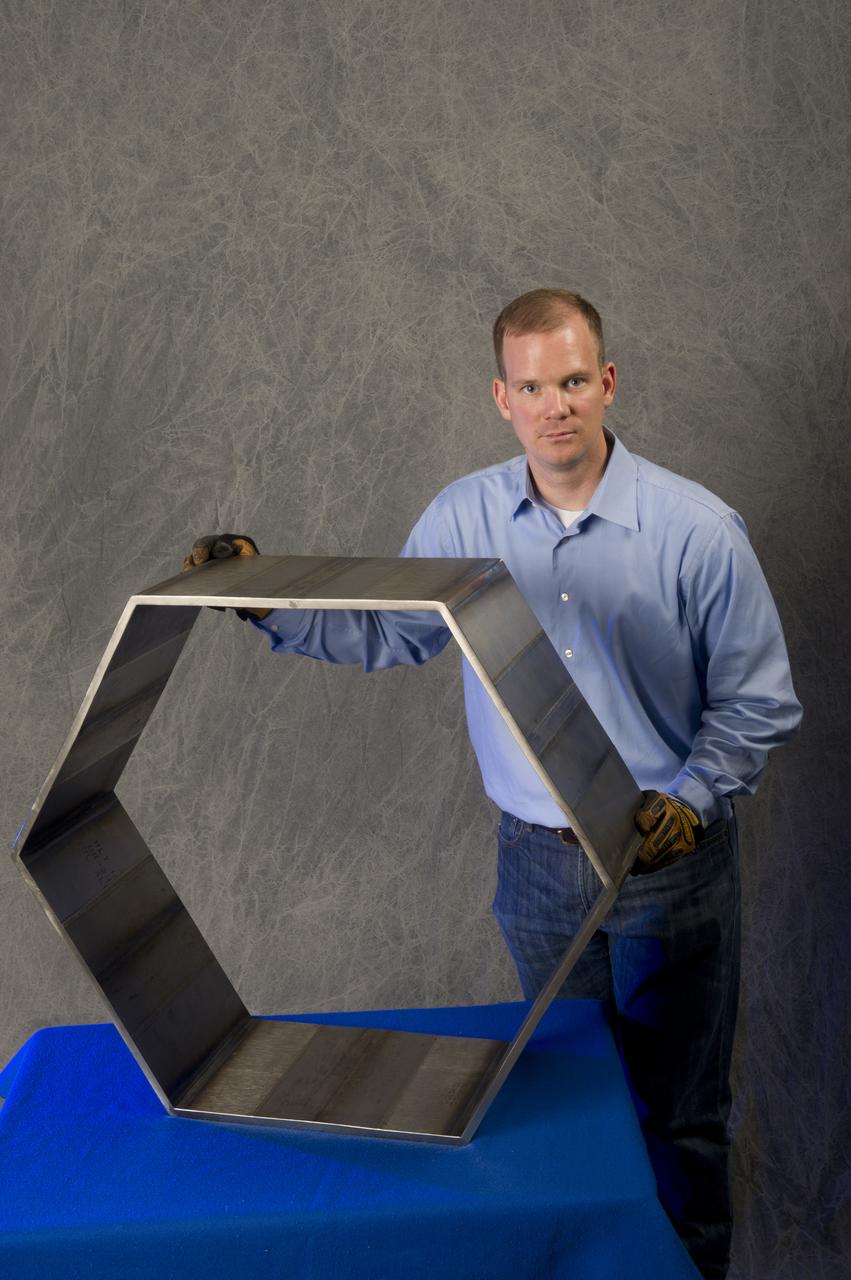
SAMUEL SMITH (WELD TECHNICIAN, JACOBS ESTS GROUP/ALL POINTS) DISPLAYS A HEXAGON THAT WAS FABRICATED FROM FRICTION STIR WELDED PLATES OF 6AL-4V TITANIUM (ELI) USING THERMAL STIR WELDING. THIS WORK WAS PERFORMED FOR A NASA TECHNOLOGY TRANSFER INDUSTRIAL PARTNER (KEYSTONE SYNERGETIC ENTERPRISES, INC.) IN SUPPORT OF A PROJECT FOR THE U.S. NAVY
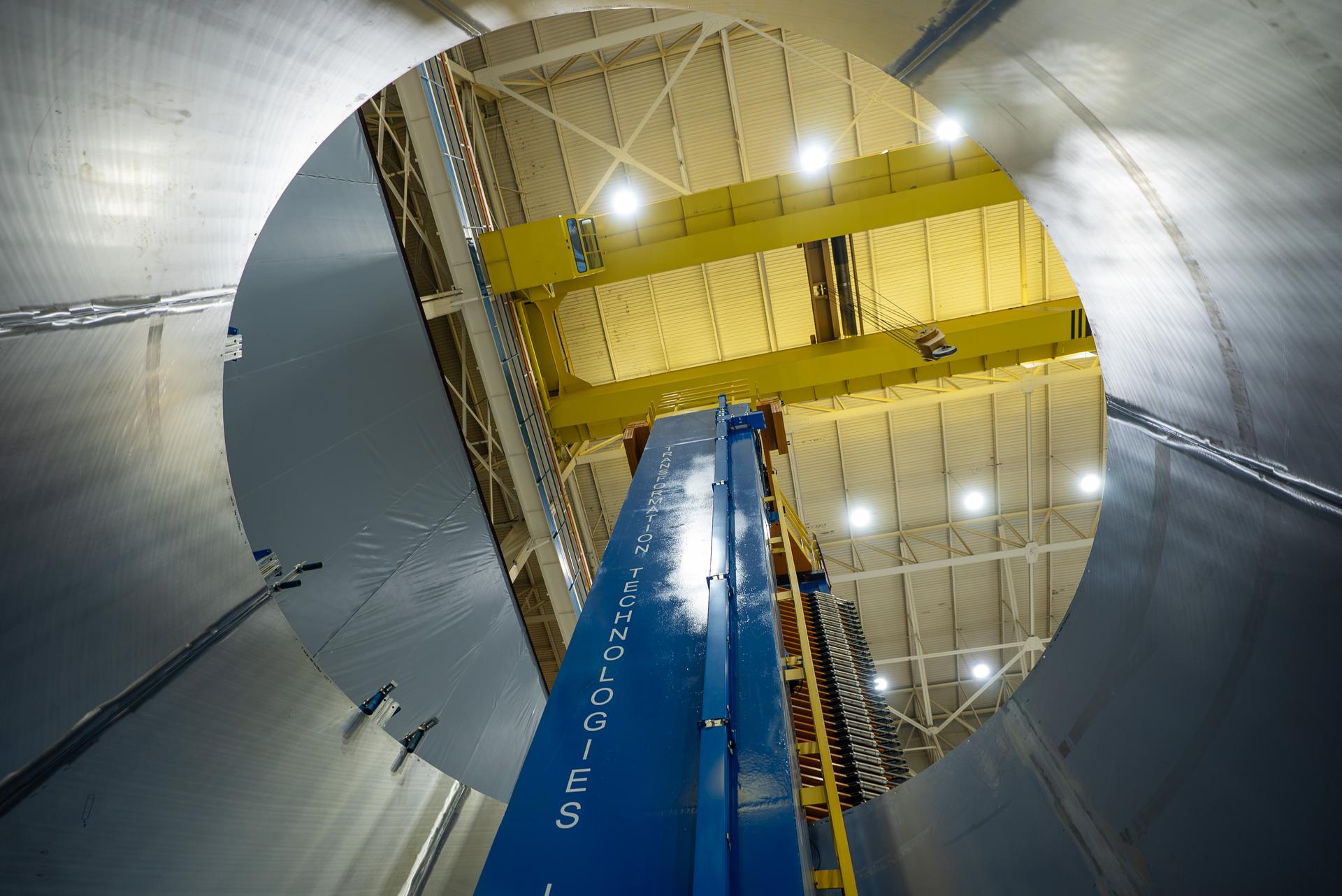
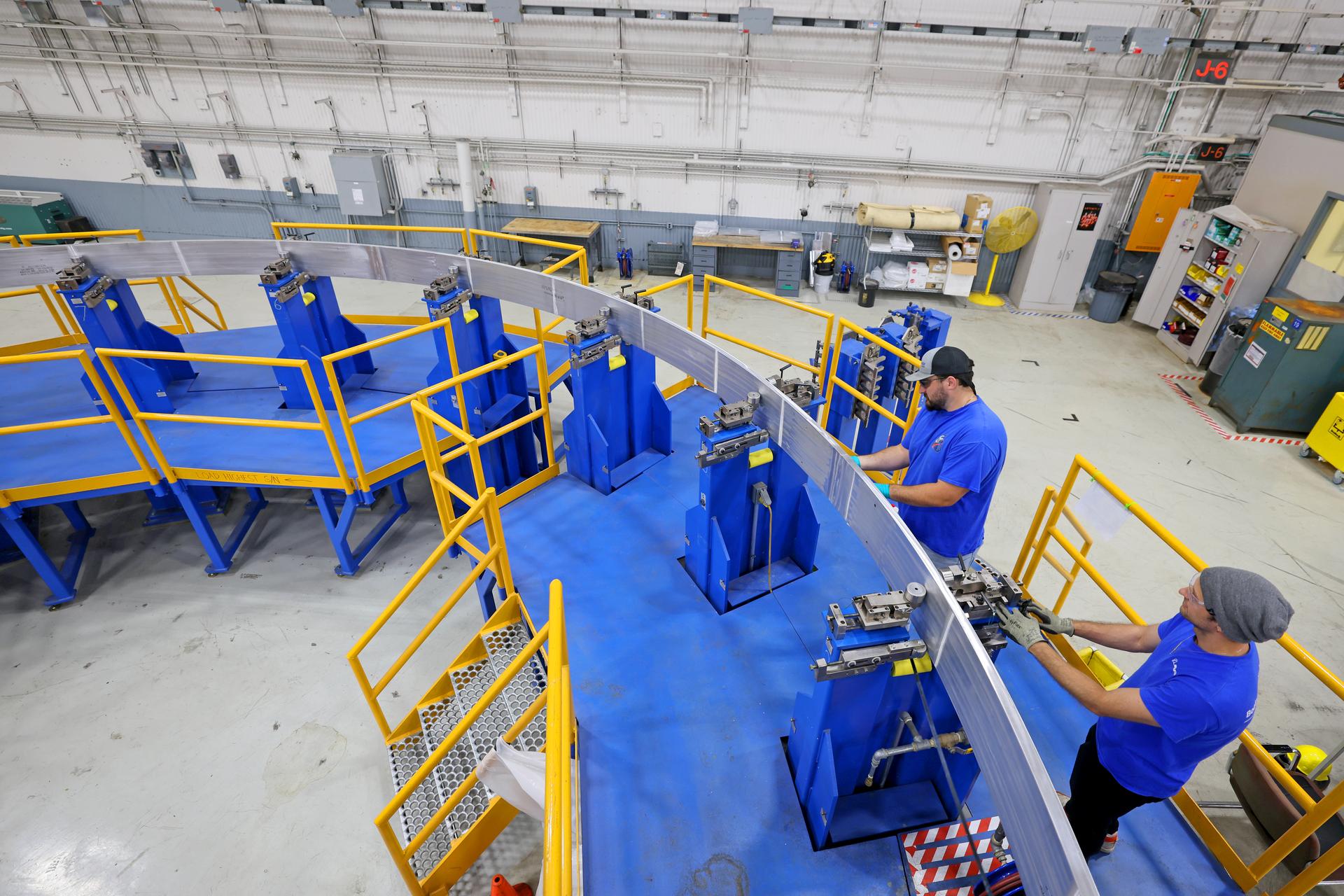
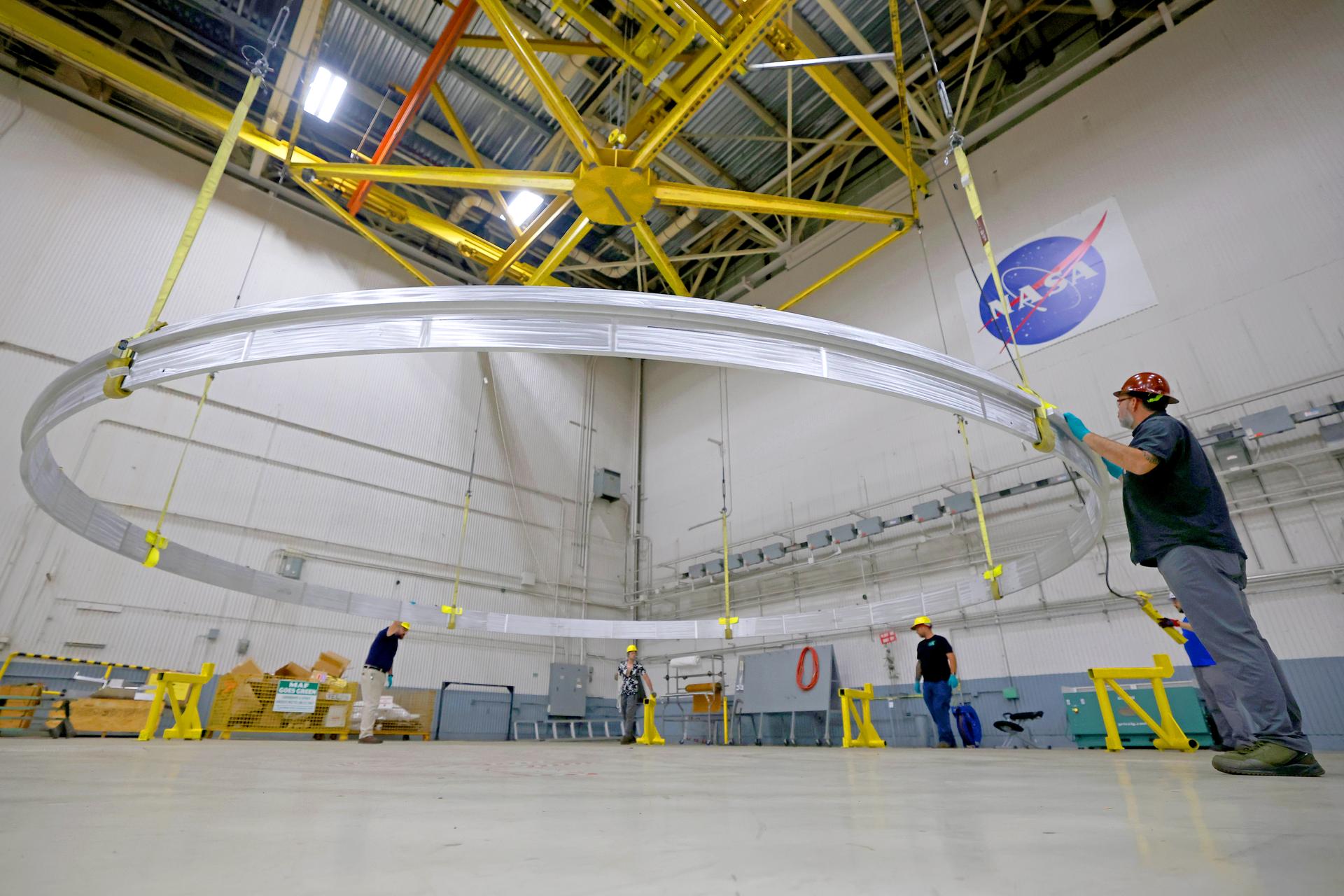
These images show the spacer that will be used on NASA’s (SLS) Space Launch System for the Artemis III mission. At NASA’s Marshall Space Flight Center in Huntsville, Alabama, technicians complete the eighth and final friction stir weld on the barrel section. With the barrel now removed from the Vertical Weld Tool, inspections are underway. The next major milestone will be the installation of the top and bottom rings. The spacer will take the place of the interim cryogenic propulsion stage (ICPS) on Artemis III, with the ICPS reassigned for use on the Artemis IV mission.
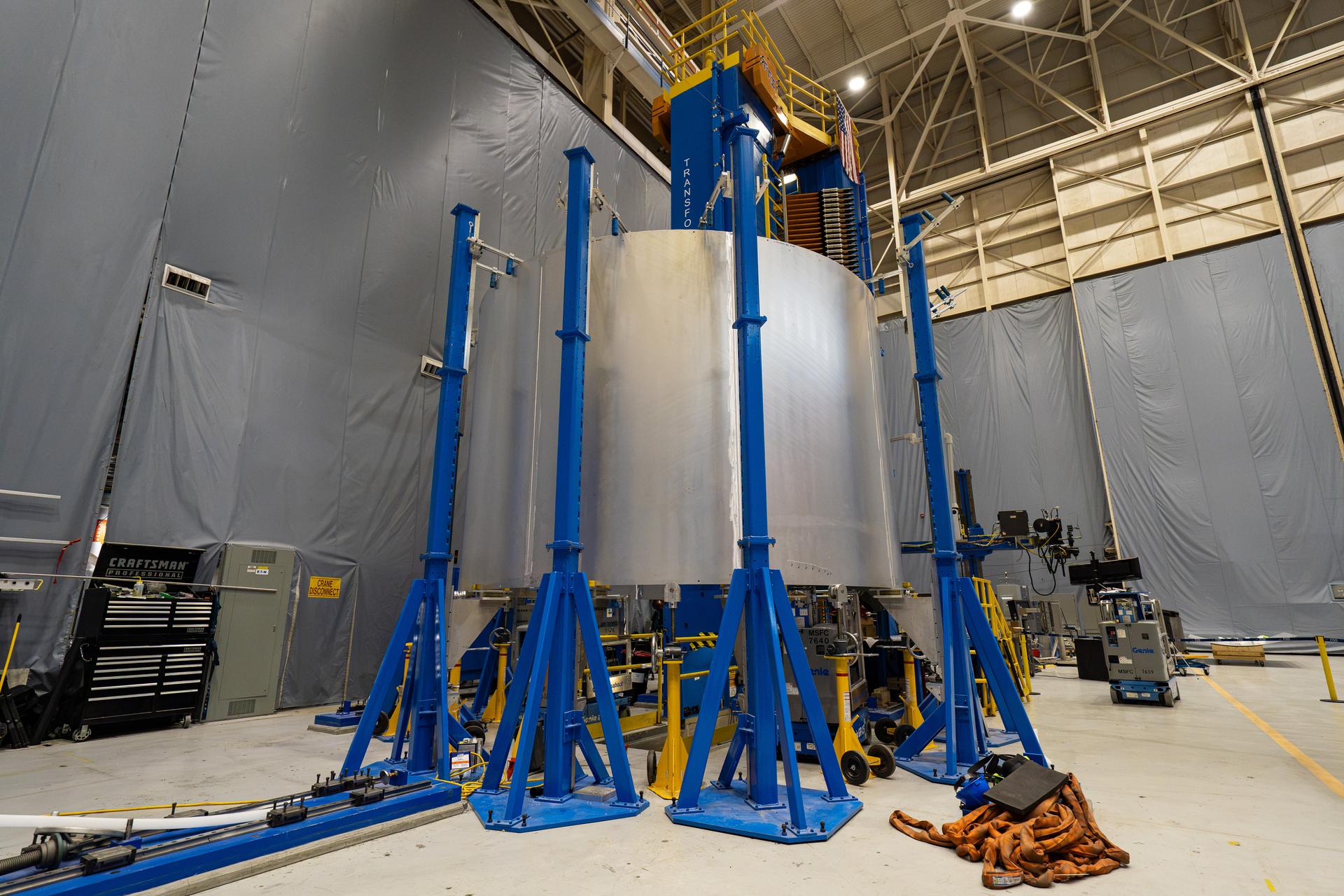
These images show the spacer that will be used on NASA’s (SLS) Space Launch System for the Artemis III mission. At NASA’s Marshall Space Flight Center in Huntsville, Alabama, technicians complete the eighth and final friction stir weld on the barrel section. With the barrel now removed from the Vertical Weld Tool, inspections are underway. The next major milestone will be the installation of the top and bottom rings. The spacer will take the place of the interim cryogenic propulsion stage (ICPS) on Artemis III, with the ICPS reassigned for use on the Artemis IV mission.
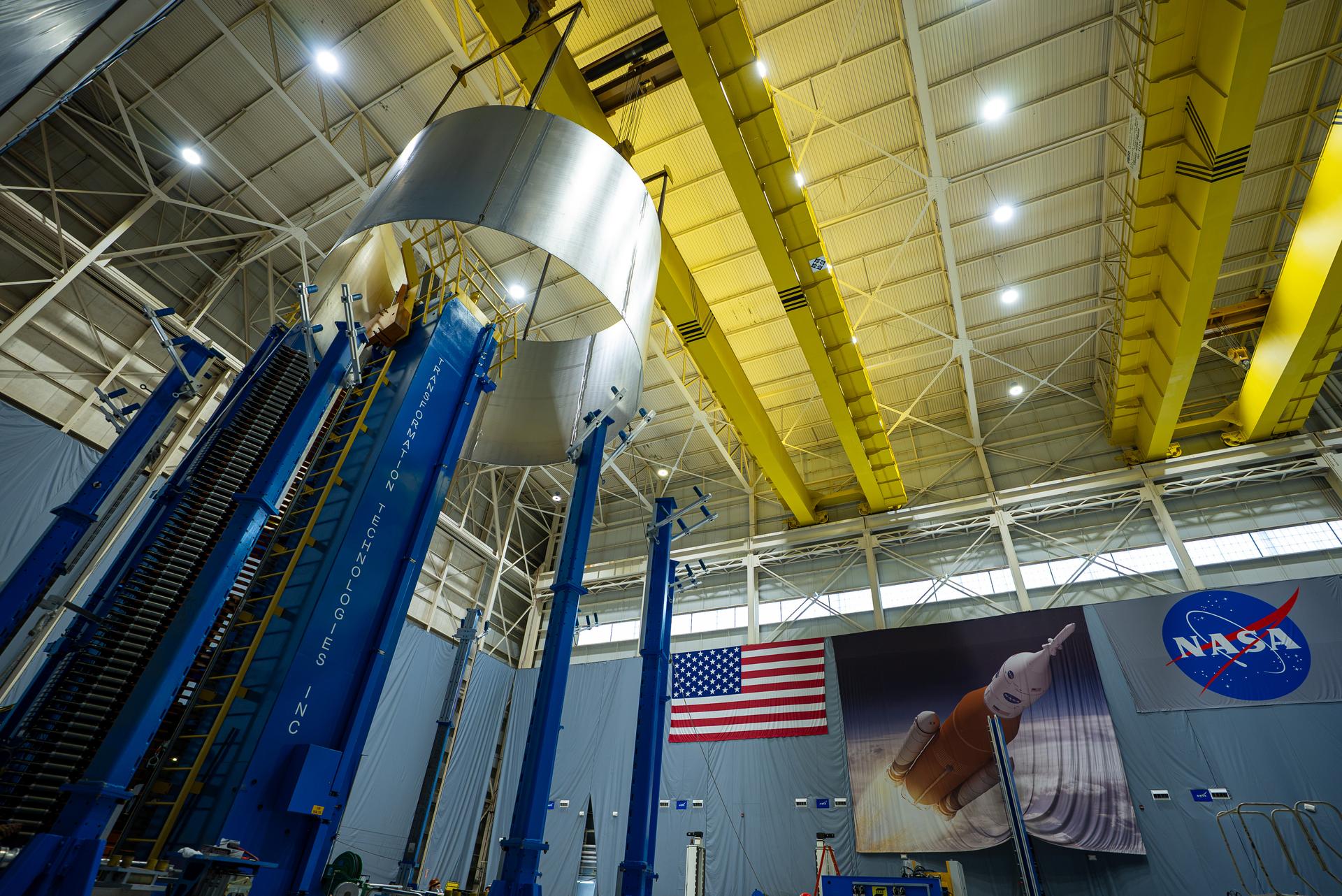
These images show the spacer that will be used on NASA’s (SLS) Space Launch System for the Artemis III mission. At NASA’s Marshall Space Flight Center in Huntsville, Alabama, technicians complete the eighth and final friction stir weld on the barrel section. With the barrel now removed from the Vertical Weld Tool, inspections are underway. The next major milestone will be the installation of the top and bottom rings. The spacer will take the place of the interim cryogenic propulsion stage (ICPS) on Artemis III, with the ICPS reassigned for use on the Artemis IV mission.
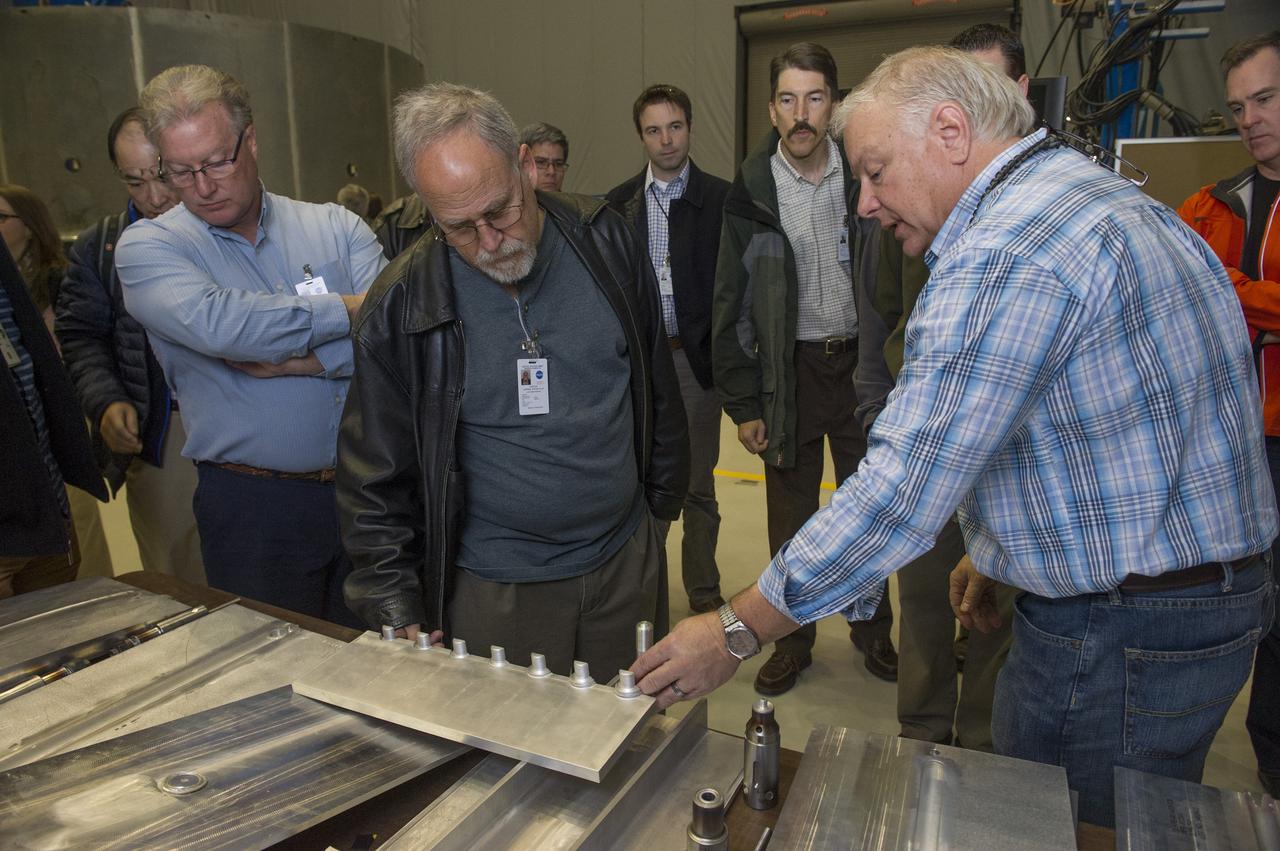
5TH SBKF (SHELL BUCKLE KNOCKDOWN FACTOR) WORKSHOP, MSFC, FEB. 3-4, 2015
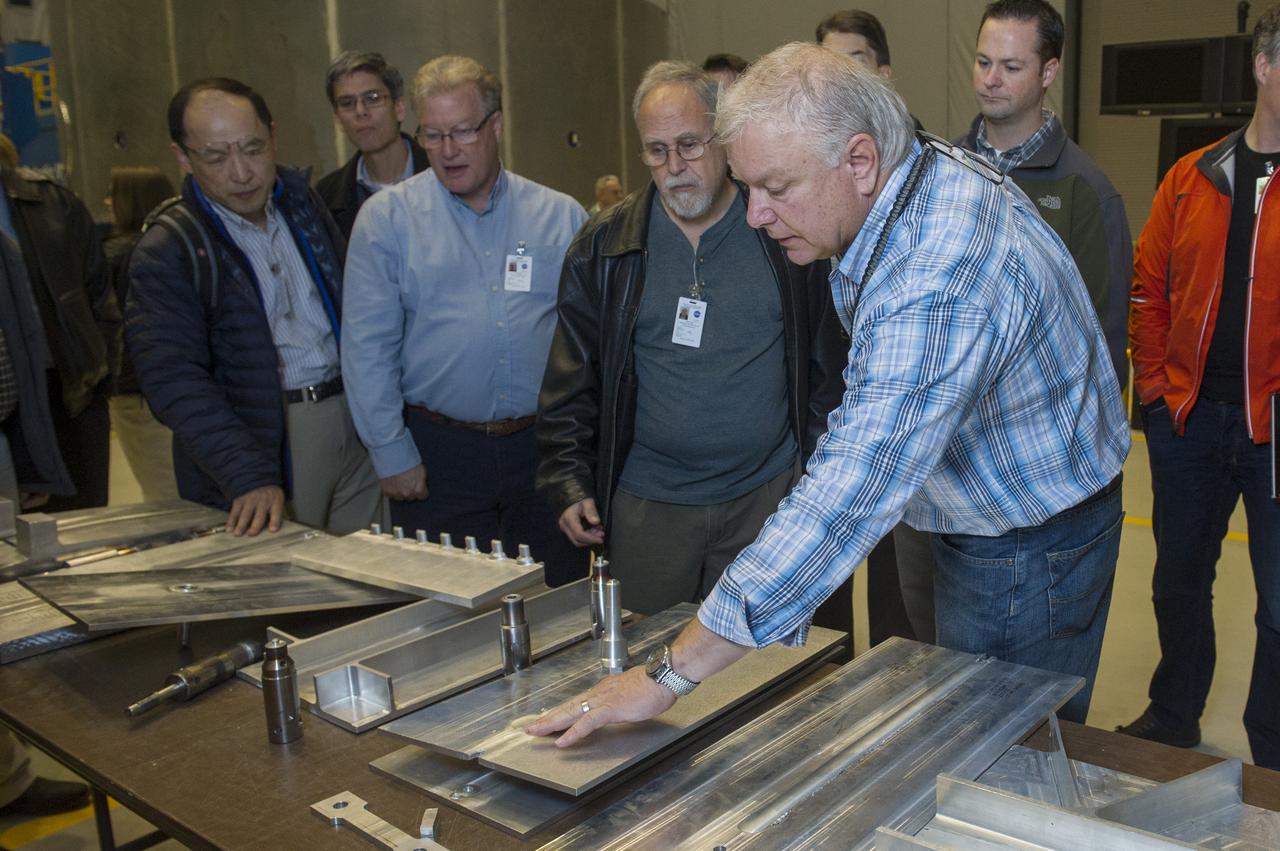
5TH SBKF (SHELL BUCKLE KNOCKDOWN FACTOR) WORKSHOP, MSFC, FEB 3-4, 2015
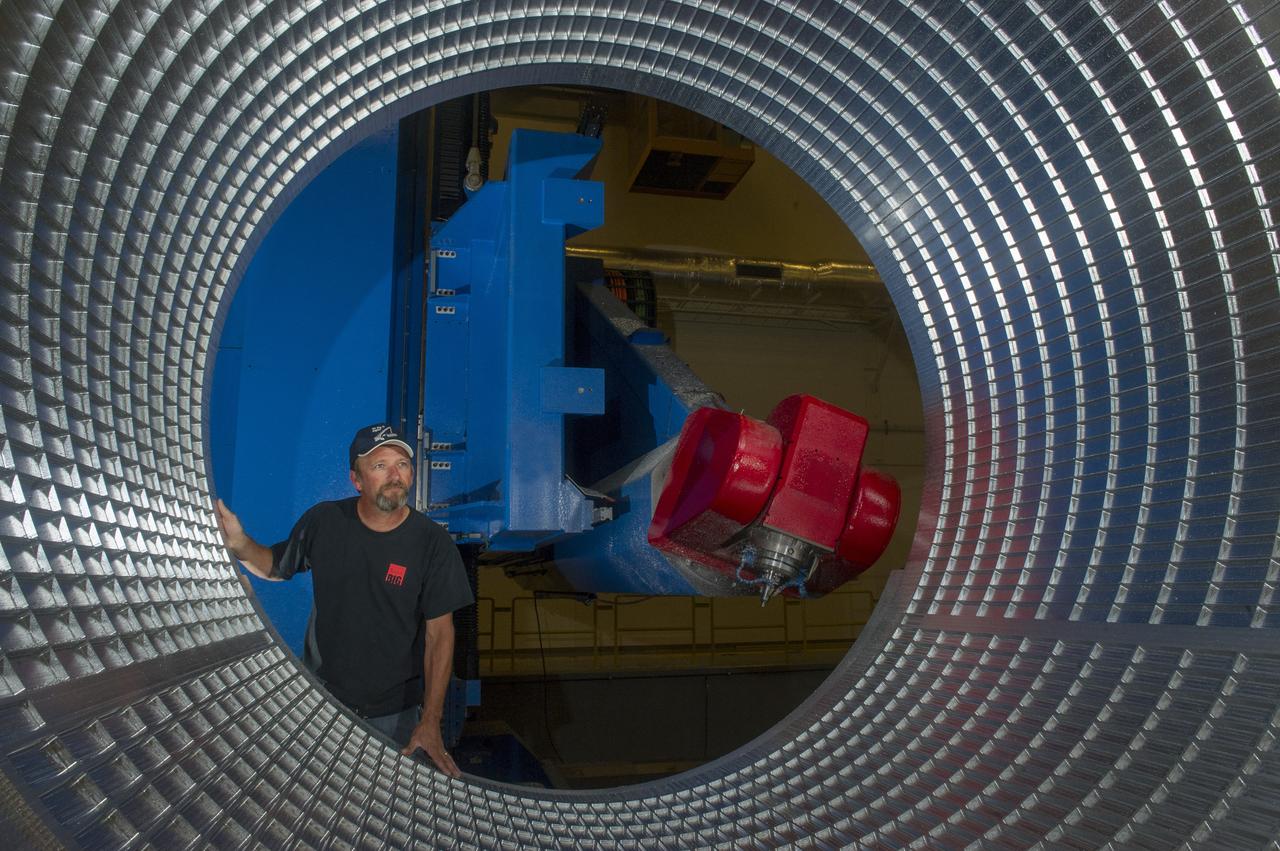
DAVID OSBORNE, A MACHINIST ON THE METTS CONTRACT, INSPECTS THE ORTHOGRID TOOL PATH ON AN 8 FOOT CF1 BARREL IN SUPPORT OF THE SHELL BUCKLING TEST FOR LANGLEY RESEARCH CENTER. THIS IS THE FIRST BARREL THAT MSFC HAS MANUFACTURED FROM EXTRUDED MATERIAL, VERSUS THE ORIGINAL DESIGN BEING 3 SECTIONS BARREL PANELS THAT WERE FRICTION STIR WELDED. THE TESTING WILL SHOW THE DIFFERENT STRENGTH PROPERTIES FROM A WELDED VERSION TO A FULLY EXTRUDED PIECE OF MATERIAL.
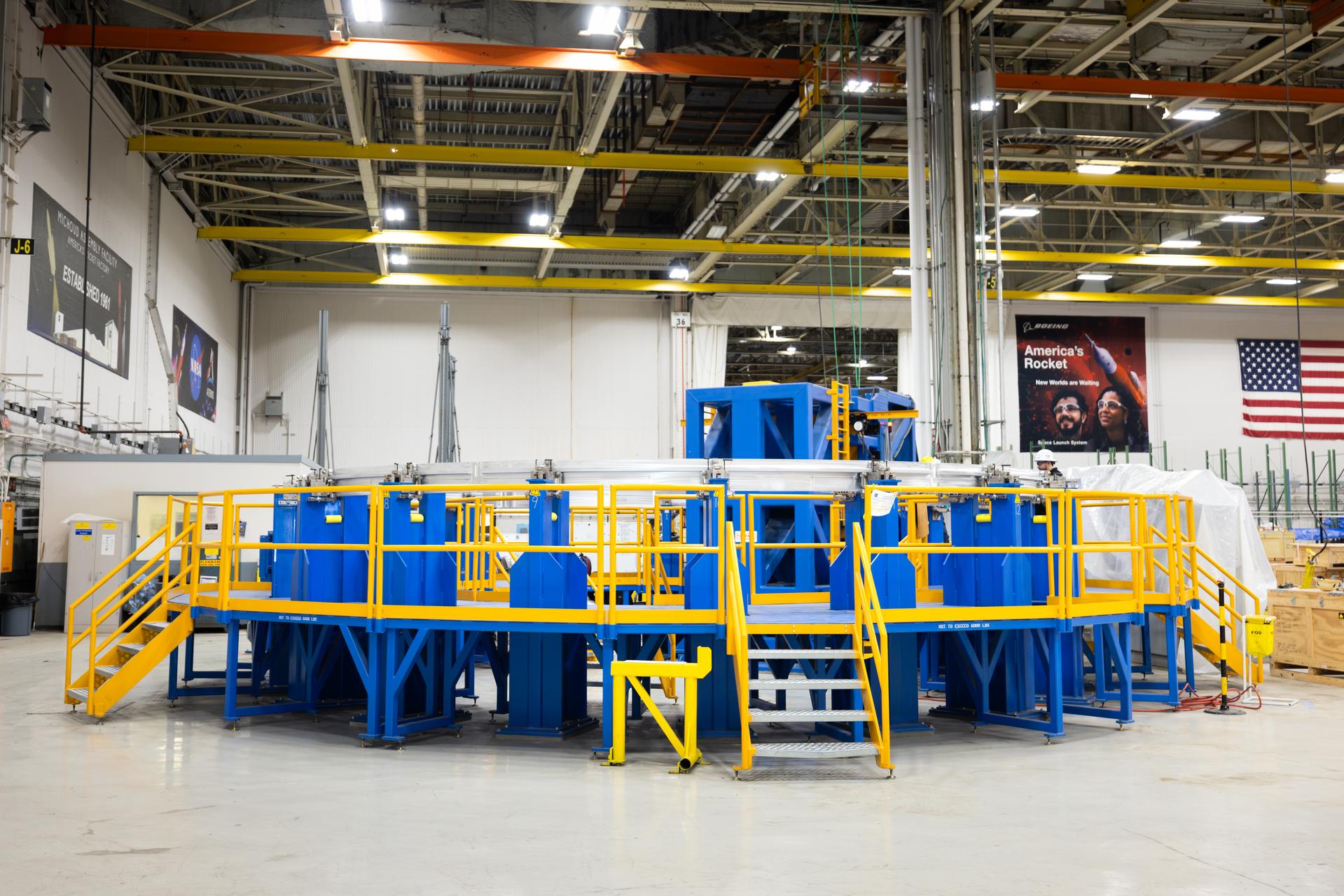
Teams at NASA’s Michoud Assembly Facility in New Orleans continue to make progress manufacturing core stages for the SLS (Space Launch System) rocket. In August, teams with NASA and Boeing, SLS core stage prime contractor, completed the first ring for the sixth SLS core stage. The core stage rings are welded together through a friction-stir welding process. A completed ring is 27.6 feet in diameter and serves as a connection point to join the large core stage structures together. The rings also provide structural stability to the bottoms of the domes. The 212-foot-tall SLS rocket core stage is made up of 10 major barrel sections, four dome sections, and seven rings. The components come together to form the five major sections of the core stage – the engine section, liquid hydrogen tank, intertank, liquid oxygen tank, and forward skirt.
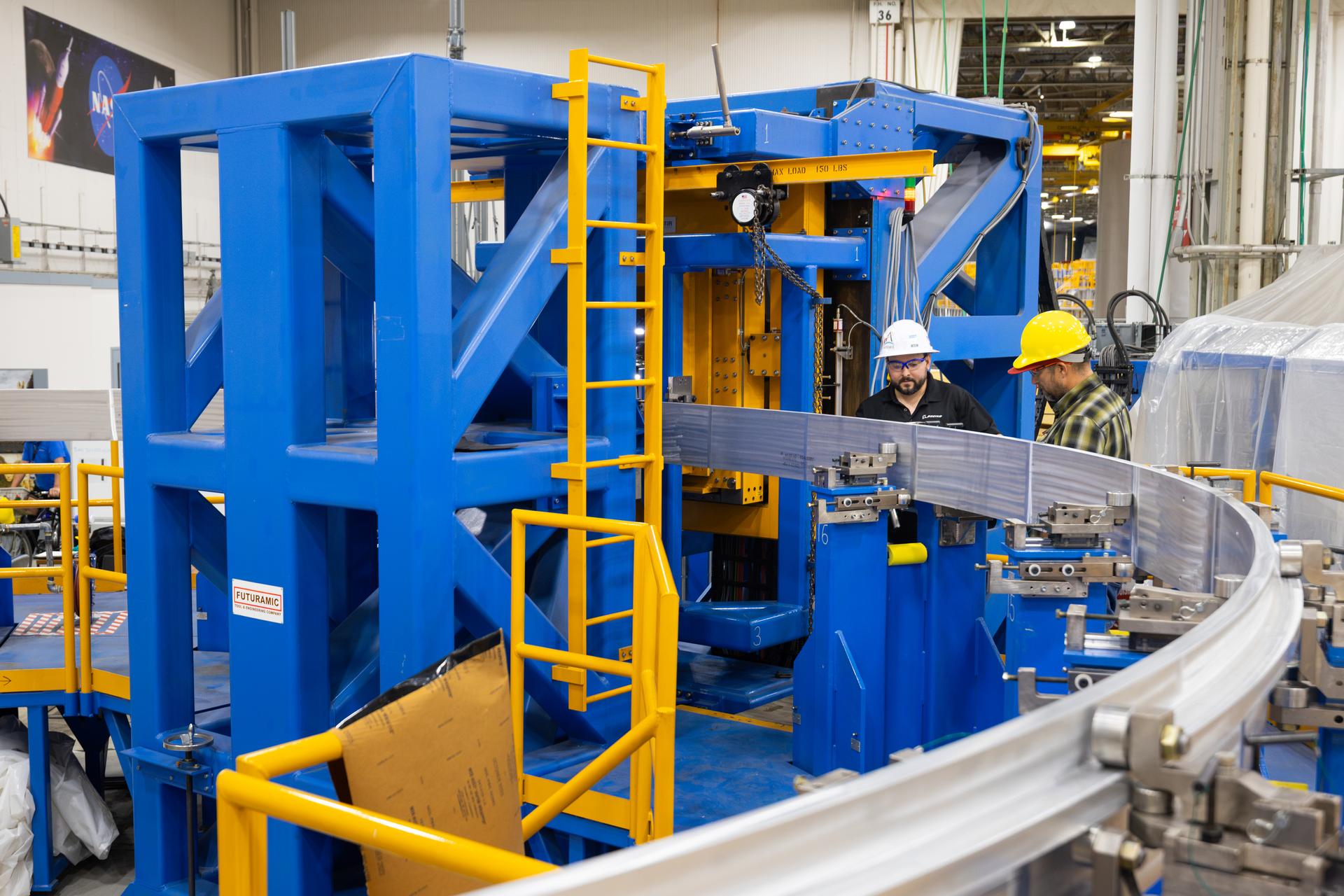
Teams at NASA’s Michoud Assembly Facility in New Orleans continue to make progress manufacturing core stages for the SLS (Space Launch System) rocket. In August, teams with NASA and Boeing, SLS core stage prime contractor, completed the first ring for the sixth SLS core stage. The core stage rings are welded together through a friction-stir welding process. A completed ring is 27.6 feet in diameter and serves as a connection point to join the large core stage structures together. The rings also provide structural stability to the bottoms of the domes. The 212-foot-tall SLS rocket core stage is made up of 10 major barrel sections, four dome sections, and seven rings. The components come together to form the five major sections of the core stage – the engine section, liquid hydrogen tank, intertank, liquid oxygen tank, and forward skirt.
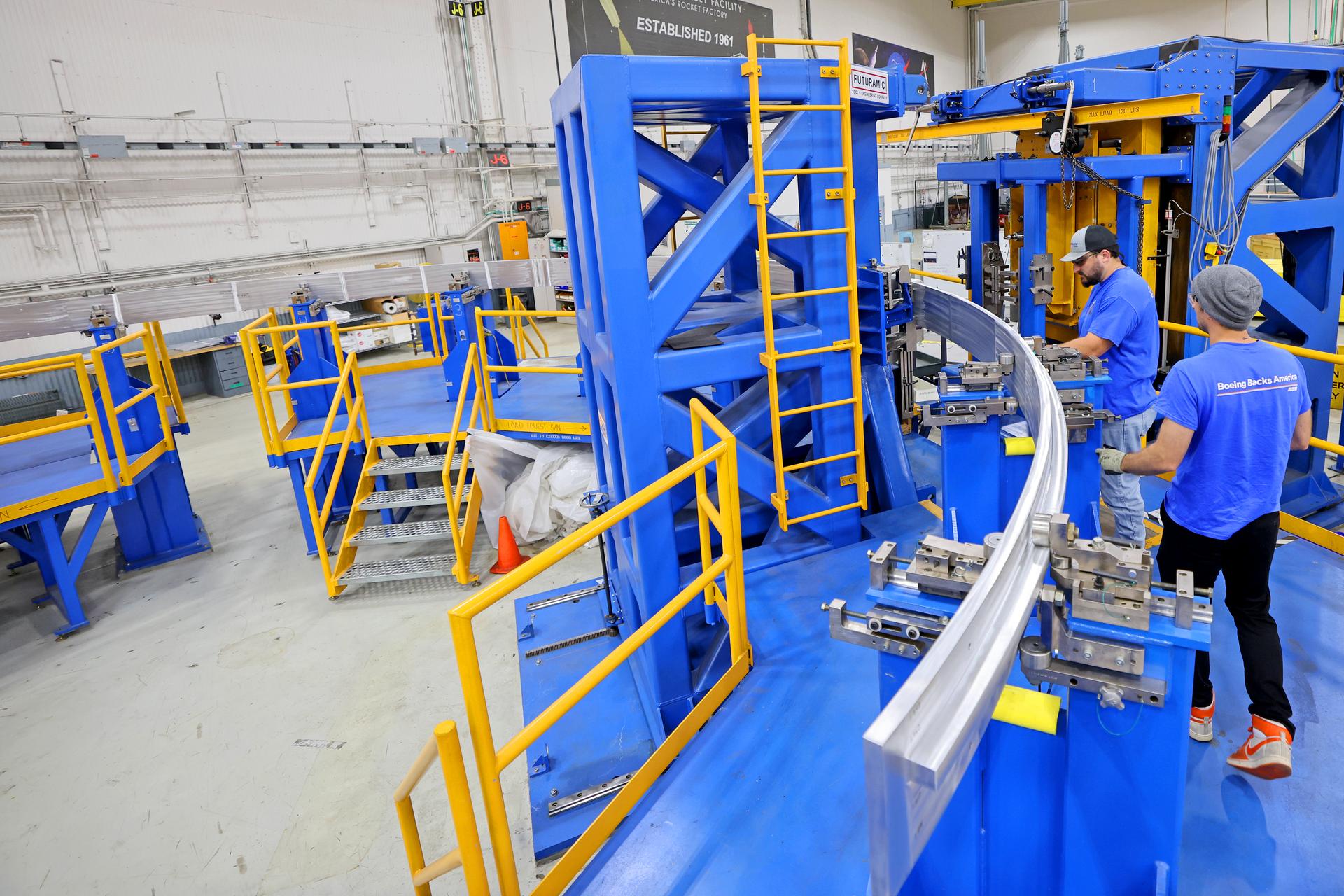
Teams at NASA’s Michoud Assembly Facility in New Orleans continue to make progress manufacturing core stages for the SLS (Space Launch System) rocket. In August, teams with NASA and Boeing, SLS core stage prime contractor, completed the first ring for the sixth SLS core stage. The core stage rings are welded together through a friction-stir welding process. A completed ring is 27.6 feet in diameter and serves as a connection point to join the large core stage structures together. The rings also provide structural stability to the bottoms of the domes. The 212-foot-tall SLS rocket core stage is made up of 10 major barrel sections, four dome sections, and seven rings. The components come together to form the five major sections of the core stage – the engine section, liquid hydrogen tank, intertank, liquid oxygen tank, and forward skirt.
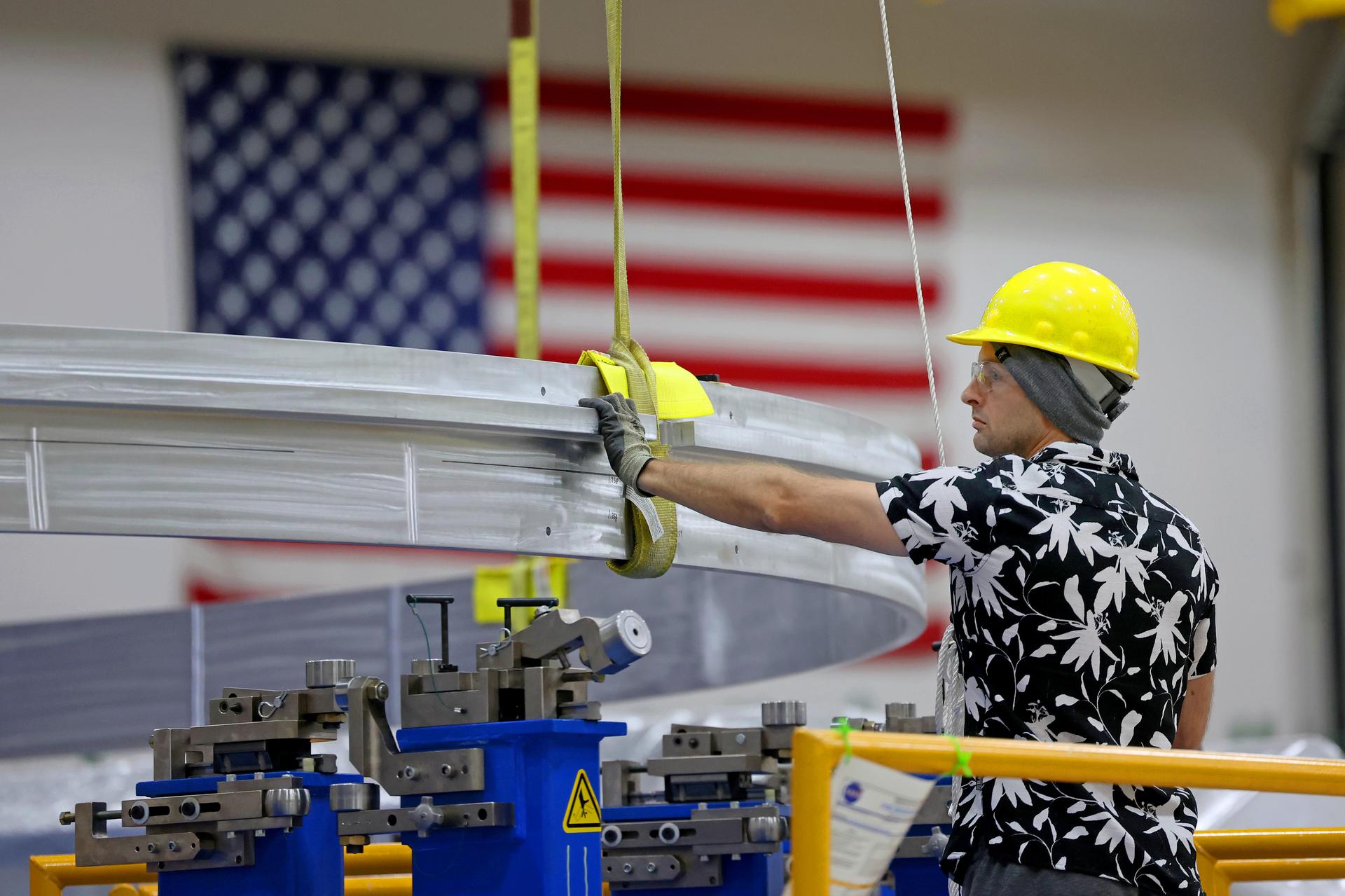
Teams at NASA’s Michoud Assembly Facility in New Orleans continue to make progress manufacturing core stages for the SLS (Space Launch System) rocket. In August, teams with NASA and Boeing, SLS core stage prime contractor, completed the first ring for the sixth SLS core stage. The core stage rings are welded together through a friction-stir welding process. A completed ring is 27.6 feet in diameter and serves as a connection point to join the large core stage structures together. The rings also provide structural stability to the bottoms of the domes. The 212-foot-tall SLS rocket core stage is made up of 10 major barrel sections, four dome sections, and seven rings. The components come together to form the five major sections of the core stage – the engine section, liquid hydrogen tank, intertank, liquid oxygen tank, and forward skirt.
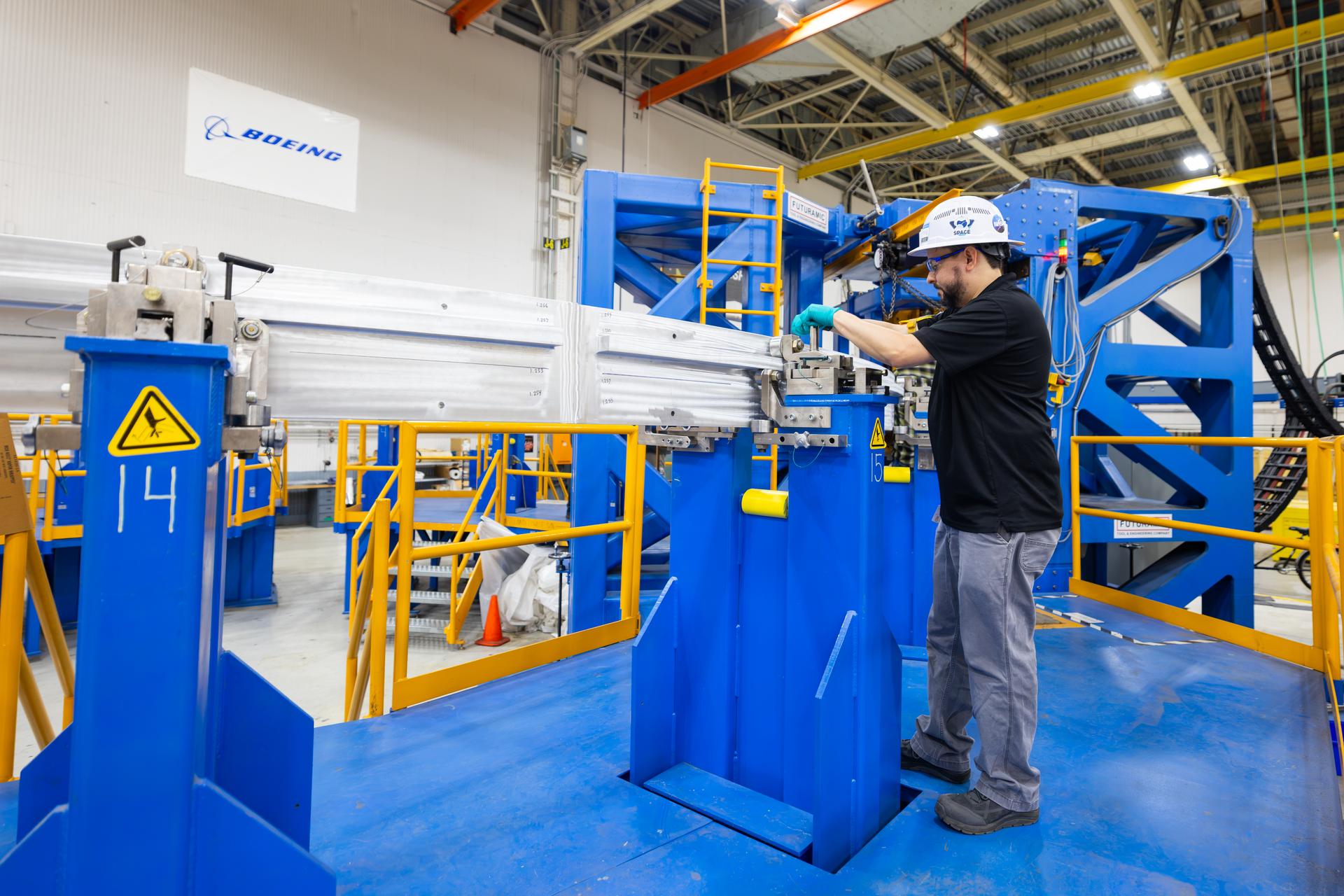
Teams at NASA’s Michoud Assembly Facility in New Orleans continue to make progress manufacturing core stages for the SLS (Space Launch System) rocket. In August, teams with NASA and Boeing, SLS core stage prime contractor, completed the first ring for the sixth SLS core stage. The core stage rings are welded together through a friction-stir welding process. A completed ring is 27.6 feet in diameter and serves as a connection point to join the large core stage structures together. The rings also provide structural stability to the bottoms of the domes. The 212-foot-tall SLS rocket core stage is made up of 10 major barrel sections, four dome sections, and seven rings. The components come together to form the five major sections of the core stage – the engine section, liquid hydrogen tank, intertank, liquid oxygen tank, and forward skirt.
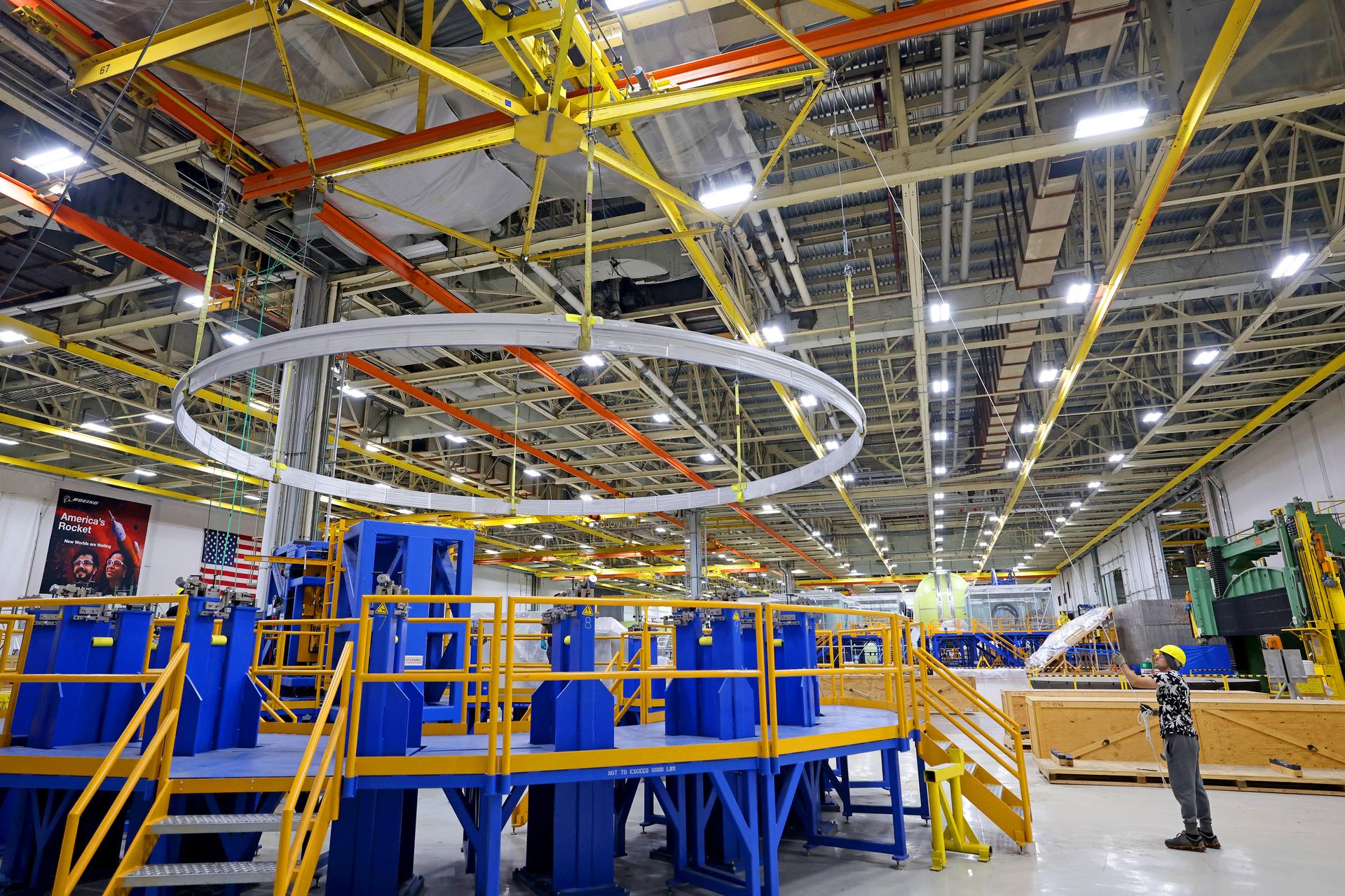
Teams at NASA’s Michoud Assembly Facility in New Orleans continue to make progress manufacturing core stages for the SLS (Space Launch System) rocket. In August, teams with NASA and Boeing, SLS core stage prime contractor, completed the first ring for the sixth SLS core stage. The core stage rings are welded together through a friction-stir welding process. A completed ring is 27.6 feet in diameter and serves as a connection point to join the large core stage structures together. The rings also provide structural stability to the bottoms of the domes. The 212-foot-tall SLS rocket core stage is made up of 10 major barrel sections, four dome sections, and seven rings. The components come together to form the five major sections of the core stage – the engine section, liquid hydrogen tank, intertank, liquid oxygen tank, and forward skirt.
Teams at NASA’s Michoud Assembly Facility in New Orleans continue to make progress manufacturing core stages for the SLS (Space Launch System) rocket. In August, teams with NASA and Boeing, SLS core stage prime contractor, completed the first ring for the sixth SLS core stage. The core stage rings are welded together through a friction-stir welding process. A completed ring is 27.6 feet in diameter and serves as a connection point to join the large core stage structures together. The rings also provide structural stability to the bottoms of the domes. The 212-foot-tall SLS rocket core stage is made up of 10 major barrel sections, four dome sections, and seven rings. The components come together to form the five major sections of the core stage – the engine section, liquid hydrogen tank, intertank, liquid oxygen tank, and forward skirt.
Teams at NASA’s Michoud Assembly Facility in New Orleans continue to make progress manufacturing core stages for the SLS (Space Launch System) rocket. In August, teams with NASA and Boeing, SLS core stage prime contractor, completed the first ring for the sixth SLS core stage. The core stage rings are welded together through a friction-stir welding process. A completed ring is 27.6 feet in diameter and serves as a connection point to join the large core stage structures together. The rings also provide structural stability to the bottoms of the domes. The 212-foot-tall SLS rocket core stage is made up of 10 major barrel sections, four dome sections, and seven rings. The components come together to form the five major sections of the core stage – the engine section, liquid hydrogen tank, intertank, liquid oxygen tank, and forward skirt.
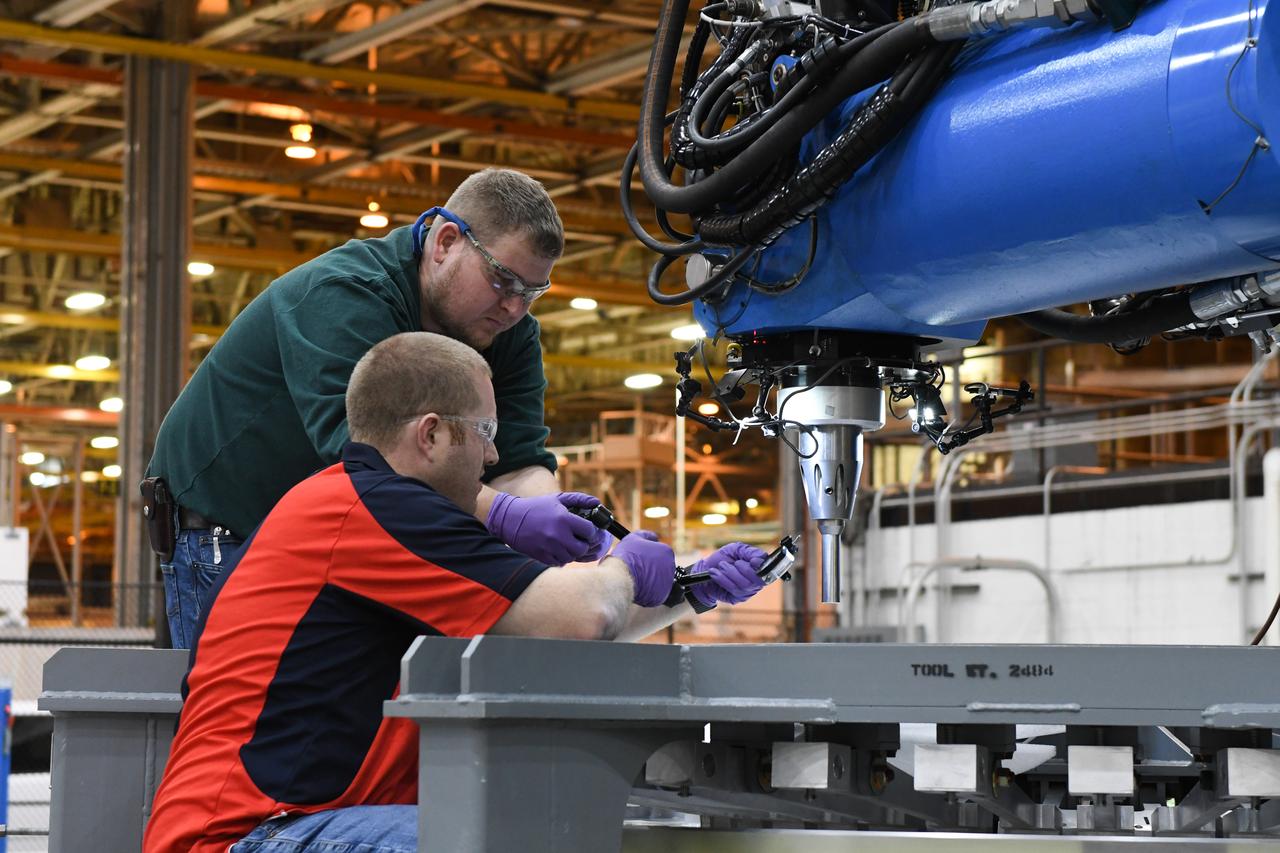
Orion EM2 PV1 Weld
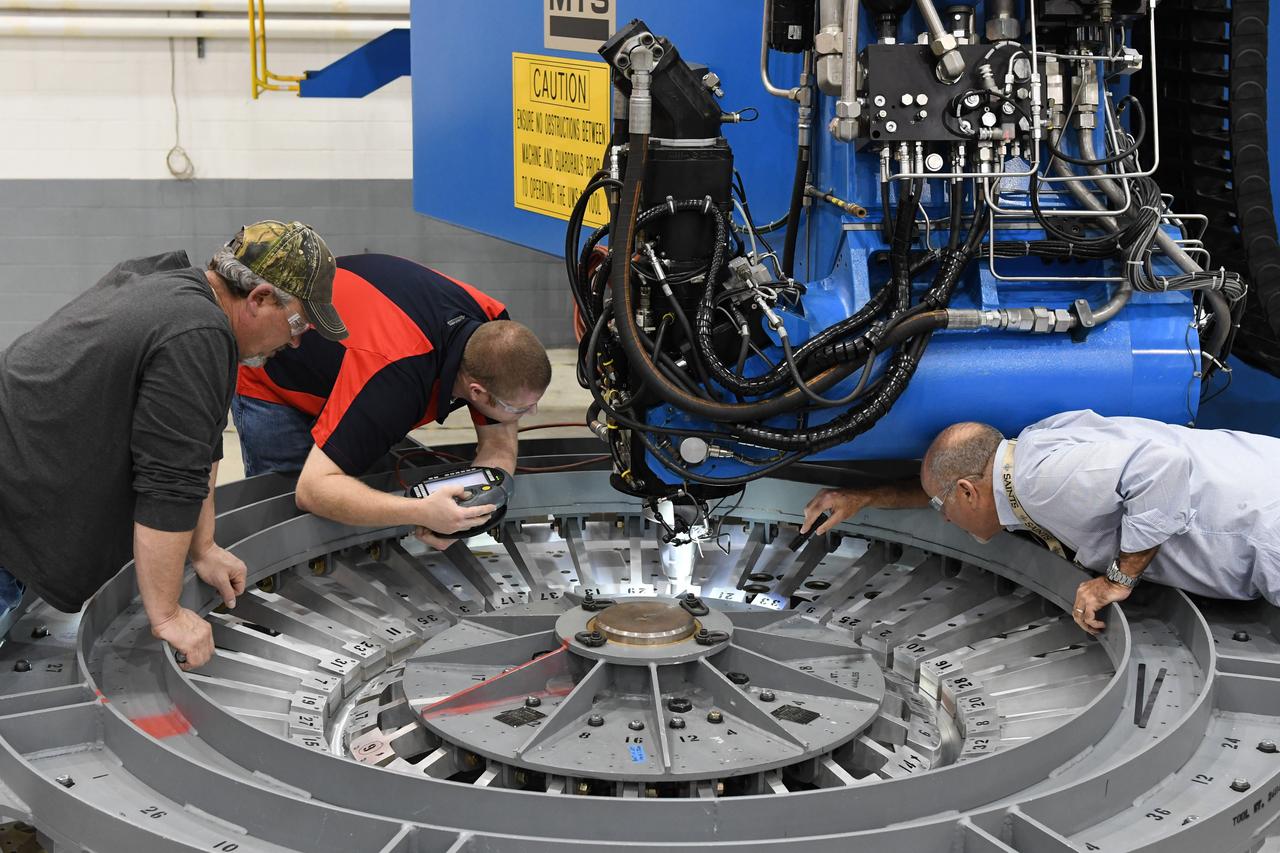
Orion EM2 PV1 Weld

Orion EM2 PV1 Weld
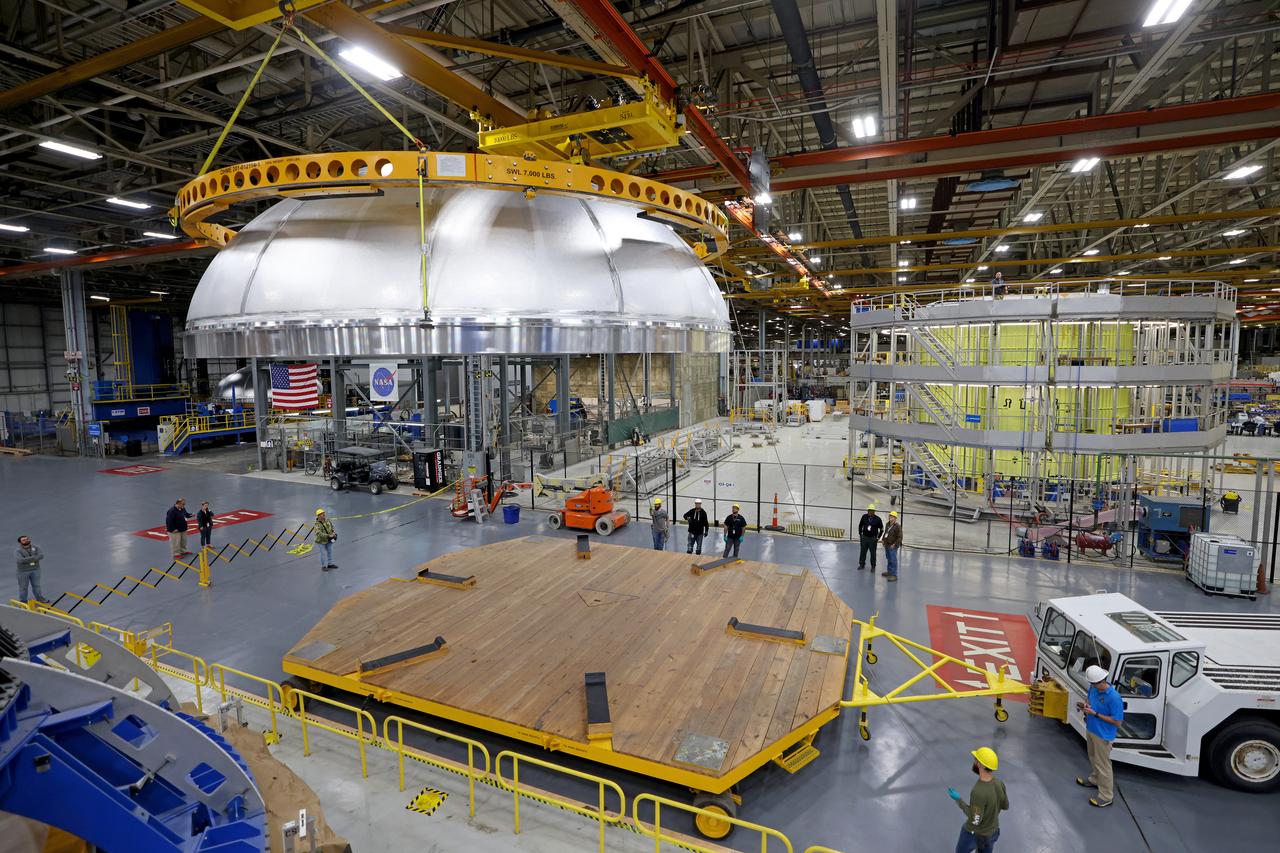
This imagery shows how technicians at NASA’s Michoud Assembly Facility moved the aft dome of the liquid oxygen tank for NASA’s SLS (Space Launch System) rocket for the next phase of production inside the Vertical Assembly center Dec. 5. The dome will form part of the core stage that will power NASA’s Artemis III mission. Engineers will soon rotate the dome to attach it to the previously joined forward dome and aft barrel segments using friction-stir welding. The liquid oxygen tank is one of five major components that make up the SLS rocket’s core stage. Together with the forward skirt, intertank, liquid hydrogen tank, engine section, along with the four RS-25 engines at its base, the 212-foot core stage will help power NASA’s Artemis missions to the Moon. Image credit: NASA/Michael DeMocker

This imagery shows how technicians at NASA’s Michoud Assembly Facility moved the aft dome of the liquid oxygen tank for NASA’s SLS (Space Launch System) rocket for the next phase of production inside the Vertical Assembly center Dec. 5. The dome will form part of the core stage that will power NASA’s Artemis III mission. Engineers will soon rotate the dome to attach it to the previously joined forward dome and aft barrel segments using friction-stir welding. The liquid oxygen tank is one of five major components that make up the SLS rocket’s core stage. Together with the forward skirt, intertank, liquid hydrogen tank, engine section, along with the four RS-25 engines at its base, the 212-foot core stage will help power NASA’s Artemis missions to the Moon.

This imagery shows how technicians at NASA’s Michoud Assembly Facility moved the aft dome of the liquid oxygen tank for NASA’s SLS (Space Launch System) rocket for the next phase of production inside the Vertical Assembly center Dec. 5. The dome will form part of the core stage that will power NASA’s Artemis III mission. Engineers will soon rotate the dome to attach it to the previously joined forward dome and aft barrel segments using friction-stir welding. The liquid oxygen tank is one of five major components that make up the SLS rocket’s core stage. Together with the forward skirt, intertank, liquid hydrogen tank, engine section, along with the four RS-25 engines at its base, the 212-foot core stage will help power NASA’s Artemis missions to the Moon.
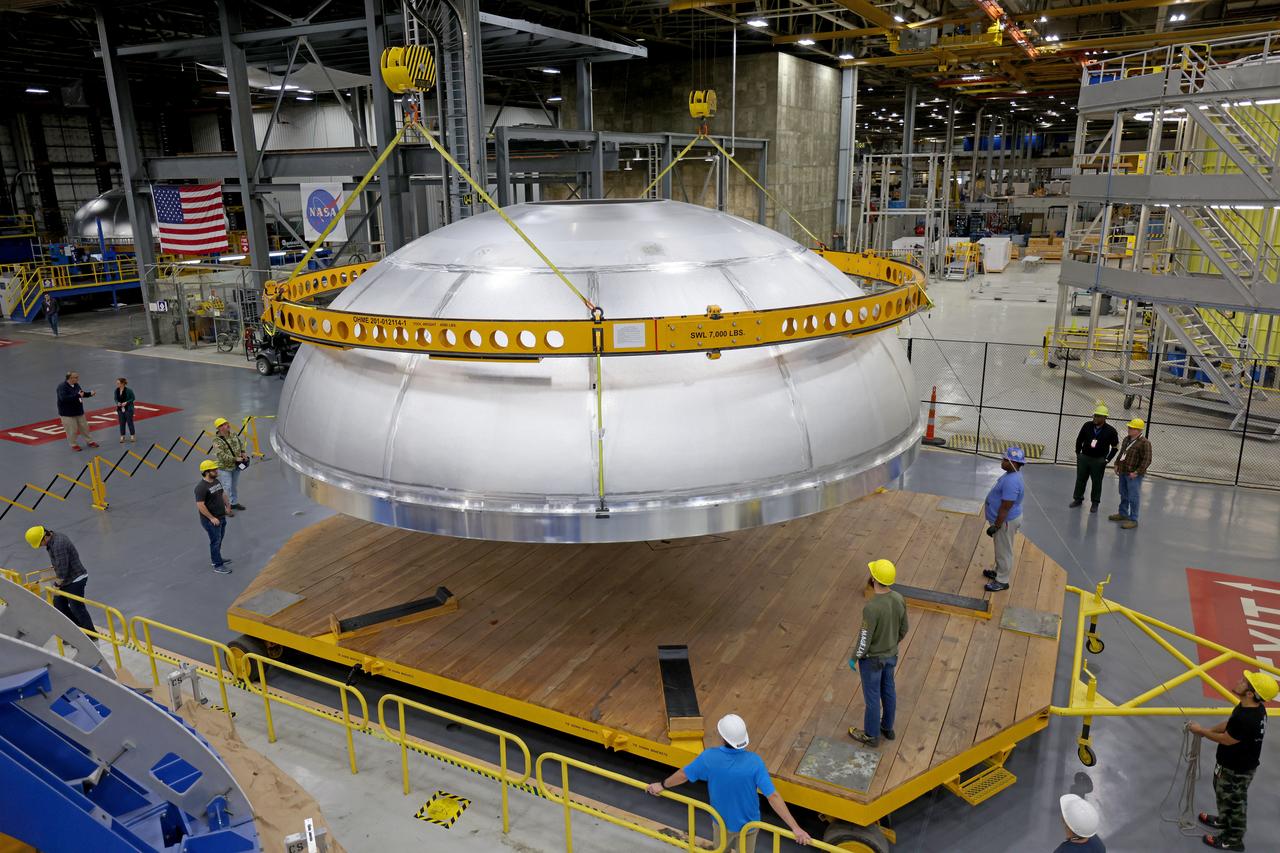
This imagery shows how technicians at NASA’s Michoud Assembly Facility moved the aft dome of the liquid oxygen tank for NASA’s SLS (Space Launch System) rocket for the next phase of production inside the Vertical Assembly center Dec. 5. The dome will form part of the core stage that will power NASA’s Artemis III mission. Engineers will soon rotate the dome to attach it to the previously joined forward dome and aft barrel segments using friction-stir welding. The liquid oxygen tank is one of five major components that make up the SLS rocket’s core stage. Together with the forward skirt, intertank, liquid hydrogen tank, engine section, along with the four RS-25 engines at its base, the 212-foot core stage will help power NASA’s Artemis missions to the Moon. Image credit: NASA/Michael DeMocker
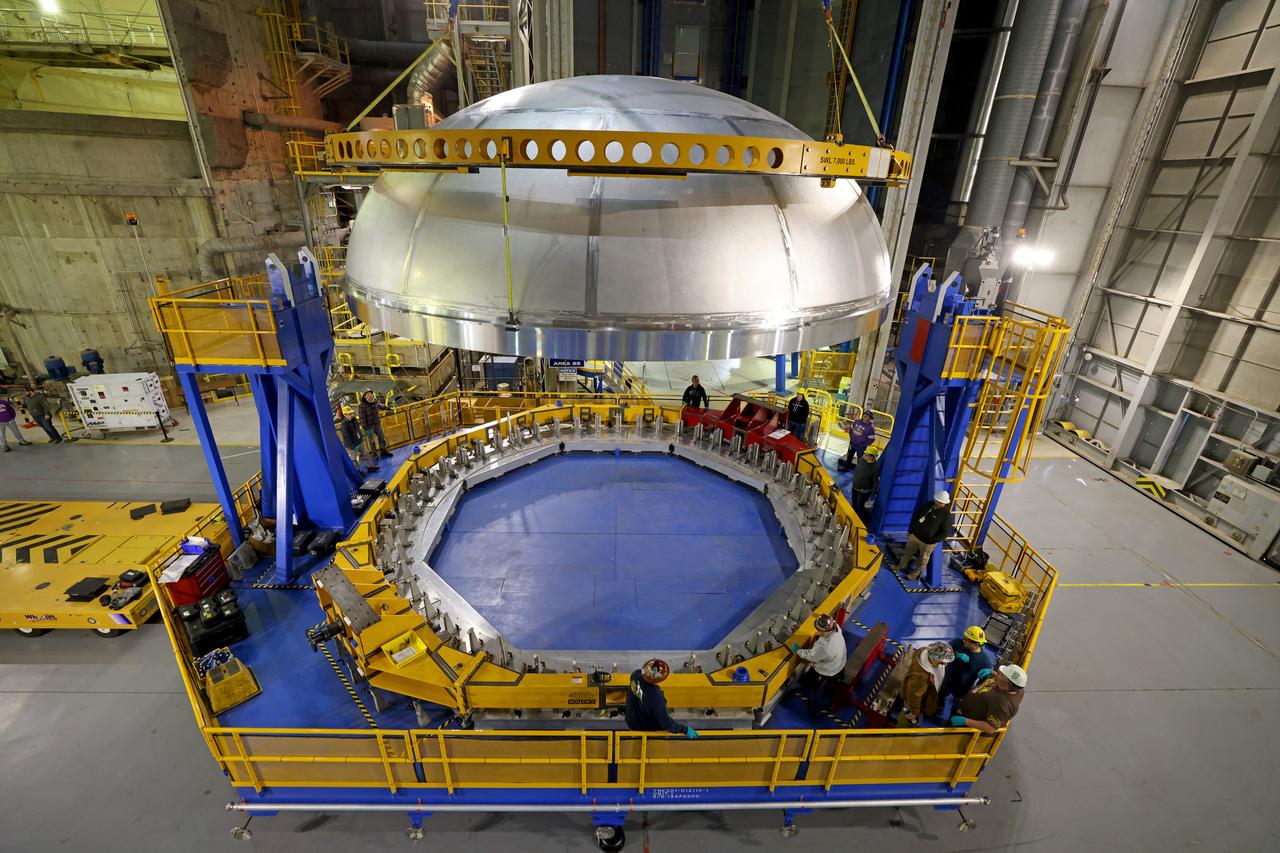
This imagery shows how technicians at NASA’s Michoud Assembly Facility moved the aft dome of the liquid oxygen tank for NASA’s SLS (Space Launch System) rocket for the next phase of production inside the Vertical Assembly center Dec. 6. The dome will form part of the core stage that will power NASA’s Artemis III mission. Engineers will soon rotate the dome to attach it to the previously joined forward dome and aft barrel segments using friction-stir welding. The liquid oxygen tank is one of five major components that make up the SLS rocket’s core stage. Together with the forward skirt, intertank, liquid hydrogen tank, engine section, along with the four RS-25 engines at its base, the 212-foot core stage will help power NASA’s Artemis missions to the Moon. Image credit: NASA/Michael DeMocker

This imagery shows how technicians at NASA’s Michoud Assembly Facility moved the aft dome of the liquid oxygen tank for NASA’s SLS (Space Launch System) rocket for the next phase of production inside the Vertical Assembly center Dec. 5. The dome will form part of the core stage that will power NASA’s Artemis III mission. Engineers will soon rotate the dome to attach it to the previously joined forward dome and aft barrel segments using friction-stir welding. The liquid oxygen tank is one of five major components that make up the SLS rocket’s core stage. Together with the forward skirt, intertank, liquid hydrogen tank, engine section, along with the four RS-25 engines at its base, the 212-foot core stage will help power NASA’s Artemis missions to the Moon.
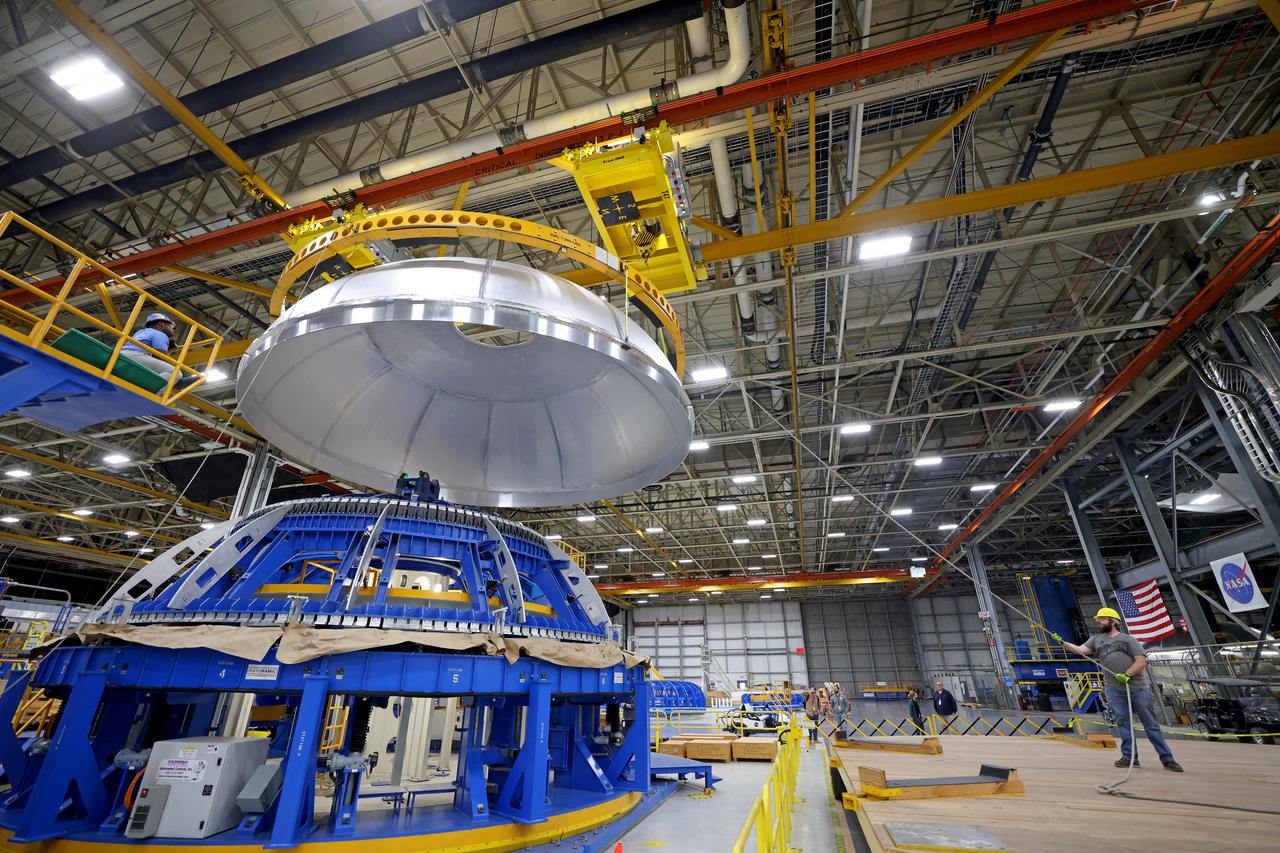
This imagery shows how technicians at NASA’s Michoud Assembly Facility moved the aft dome of the liquid oxygen tank for NASA’s SLS (Space Launch System) rocket for the next phase of production inside the Vertical Assembly center Dec. 5. The dome will form part of the core stage that will power NASA’s Artemis III mission. Engineers will soon rotate the dome to attach it to the previously joined forward dome and aft barrel segments using friction-stir welding. The liquid oxygen tank is one of five major components that make up the SLS rocket’s core stage. Together with the forward skirt, intertank, liquid hydrogen tank, engine section, along with the four RS-25 engines at its base, the 212-foot core stage will help power NASA’s Artemis missions to the Moon. Image credit: NASA/Michael DeMocker
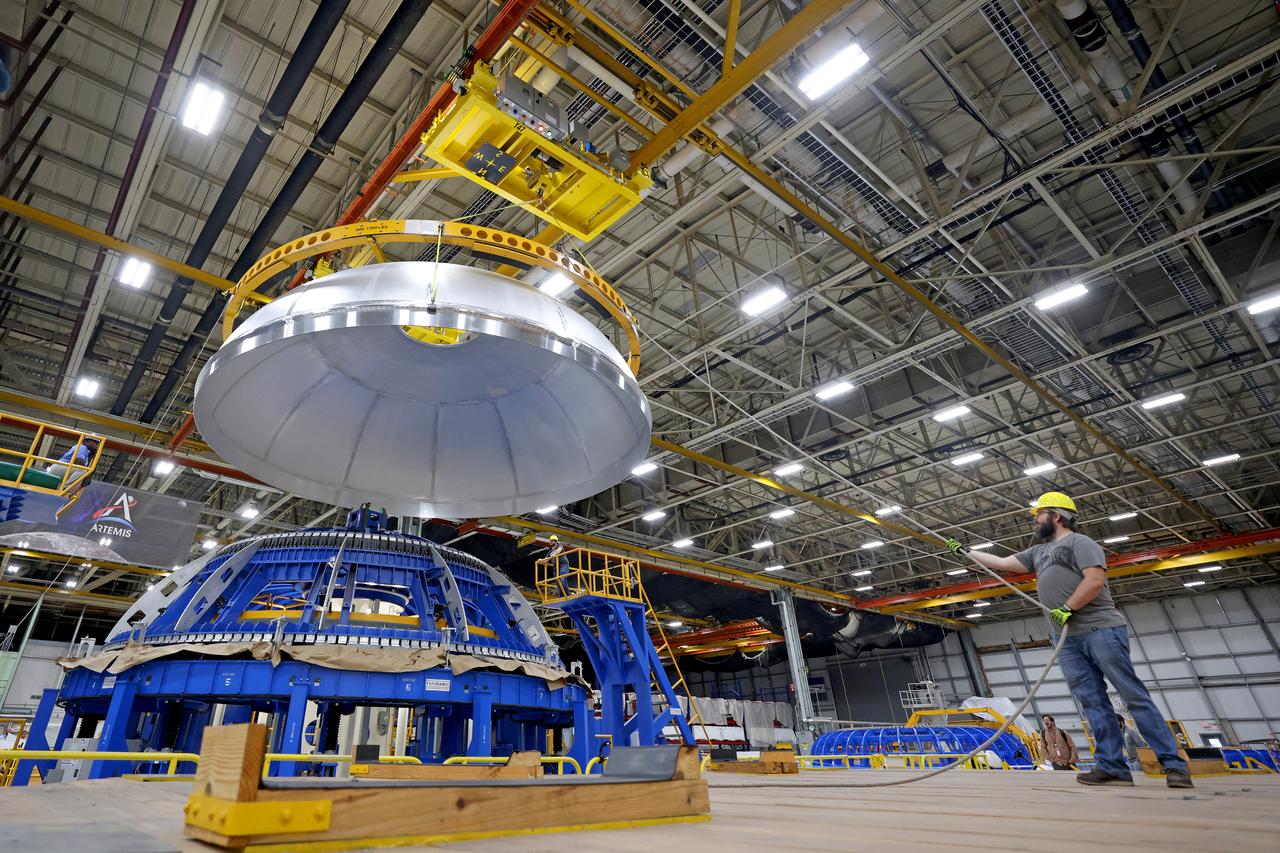
This imagery shows how technicians at NASA’s Michoud Assembly Facility moved the aft dome of the liquid oxygen tank for NASA’s SLS (Space Launch System) rocket for the next phase of production inside the Vertical Assembly center Dec. 5. The dome will form part of the core stage that will power NASA’s Artemis III mission. Engineers will soon rotate the dome to attach it to the previously joined forward dome and aft barrel segments using friction-stir welding. The liquid oxygen tank is one of five major components that make up the SLS rocket’s core stage. Together with the forward skirt, intertank, liquid hydrogen tank, engine section, along with the four RS-25 engines at its base, the 212-foot core stage will help power NASA’s Artemis missions to the Moon. Image credit: NASA/Michael DeMocker

This imagery shows how technicians at NASA’s Michoud Assembly Facility moved the aft dome of the liquid oxygen tank for NASA’s SLS (Space Launch System) rocket for the next phase of production inside the Vertical Assembly center Dec. 5. The dome will form part of the core stage that will power NASA’s Artemis III mission. Engineers will soon rotate the dome to attach it to the previously joined forward dome and aft barrel segments using friction-stir welding. The liquid oxygen tank is one of five major components that make up the SLS rocket’s core stage. Together with the forward skirt, intertank, liquid hydrogen tank, engine section, along with the four RS-25 engines at its base, the 212-foot core stage will help power NASA’s Artemis missions to the Moon.

This imagery shows how technicians at NASA’s Michoud Assembly Facility moved the aft dome of the liquid oxygen tank for NASA’s SLS (Space Launch System) rocket for the next phase of production inside the Vertical Assembly center Dec. 18. The dome will form part of the core stage that will power NASA’s Artemis III mission. Engineers rotate the dome to attach it to the previously joined forward dome and aft barrel segments using friction-stir welding. The liquid oxygen tank is one of five major components that make up the SLS rocket’s core stage. Together with the forward skirt, intertank, liquid hydrogen tank, engine section, along with the four RS-25 engines at its base, the 212-foot core stage will help power NASA’s Artemis missions to the Moon.

This imagery shows how technicians at NASA’s Michoud Assembly Facility moved the aft dome of the liquid oxygen tank for NASA’s SLS (Space Launch System) rocket for the next phase of production inside the Vertical Assembly center Dec. 18. The dome will form part of the core stage that will power NASA’s Artemis III mission. Engineers rotate the dome to attach it to the previously joined forward dome and aft barrel segments using friction-stir welding. The liquid oxygen tank is one of five major components that make up the SLS rocket’s core stage. Together with the forward skirt, intertank, liquid hydrogen tank, engine section, along with the four RS-25 engines at its base, the 212-foot core stage will help power NASA’s Artemis missions to the Moon.
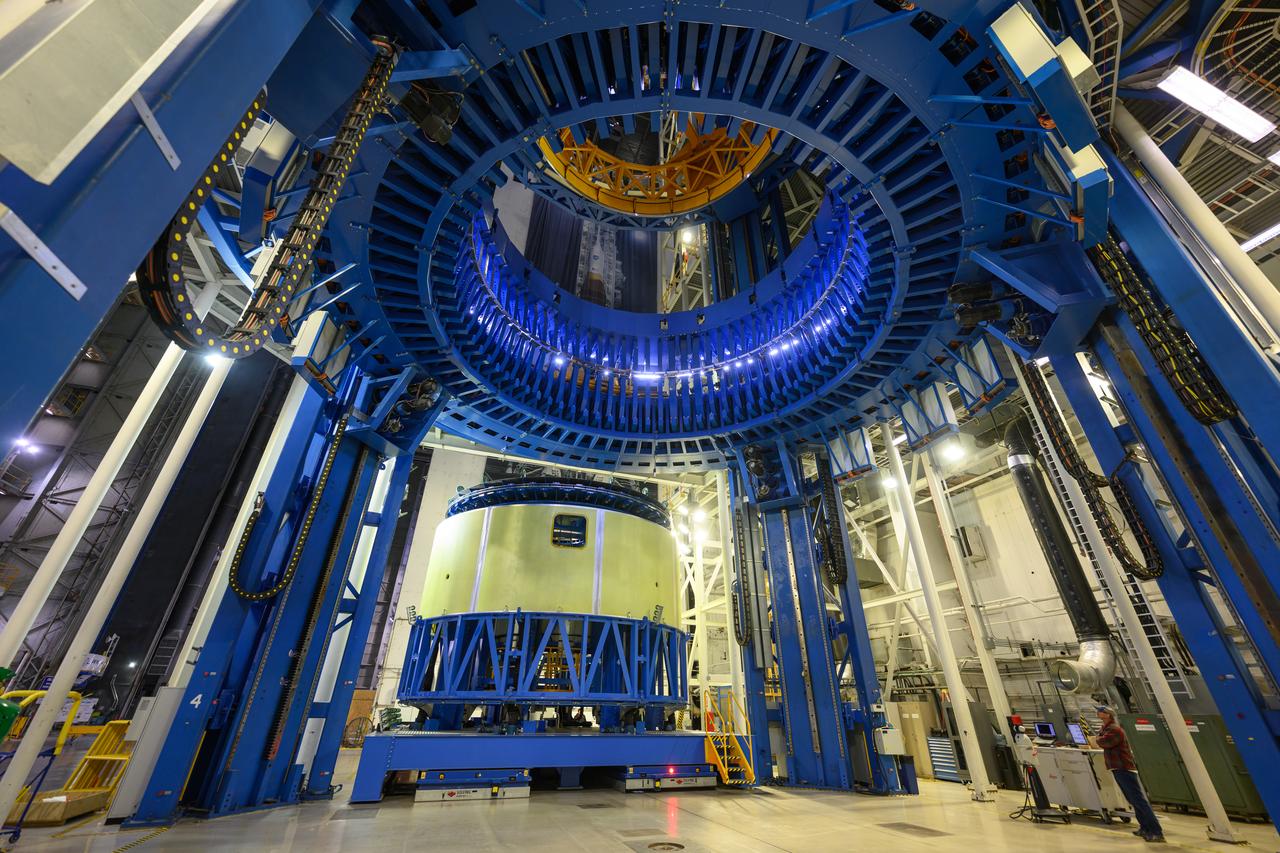
Teams at NASA’s Michoud Assembly Facility in New Orleans move the forward skirt, which will be used on the SLS (Space Launch System) rocket’s core stage for the agency’s Artemis IV mission, into the vertical assembly center on Dec. 2. Inside the tooling, the forward skirt receives its forward and aft rings through a circumferential friction-stir welding process. Seven rings are used in the production of the core stage. They provide stiffening for the dome structures on the propellant tanks and, as on the forward skirt, serve as attachment points for the major components to form the SLS core stage. The forward skirt is one of five major elements that make up the 212-foot-tall rocket stage. The core stage, along with its four RS-25 engines, produce more than two million pounds of thrust to help launch NASA’s Orion spacecraft, astronauts, and supplies beyond Earth’s orbit and to the lunar surface for Artemis.
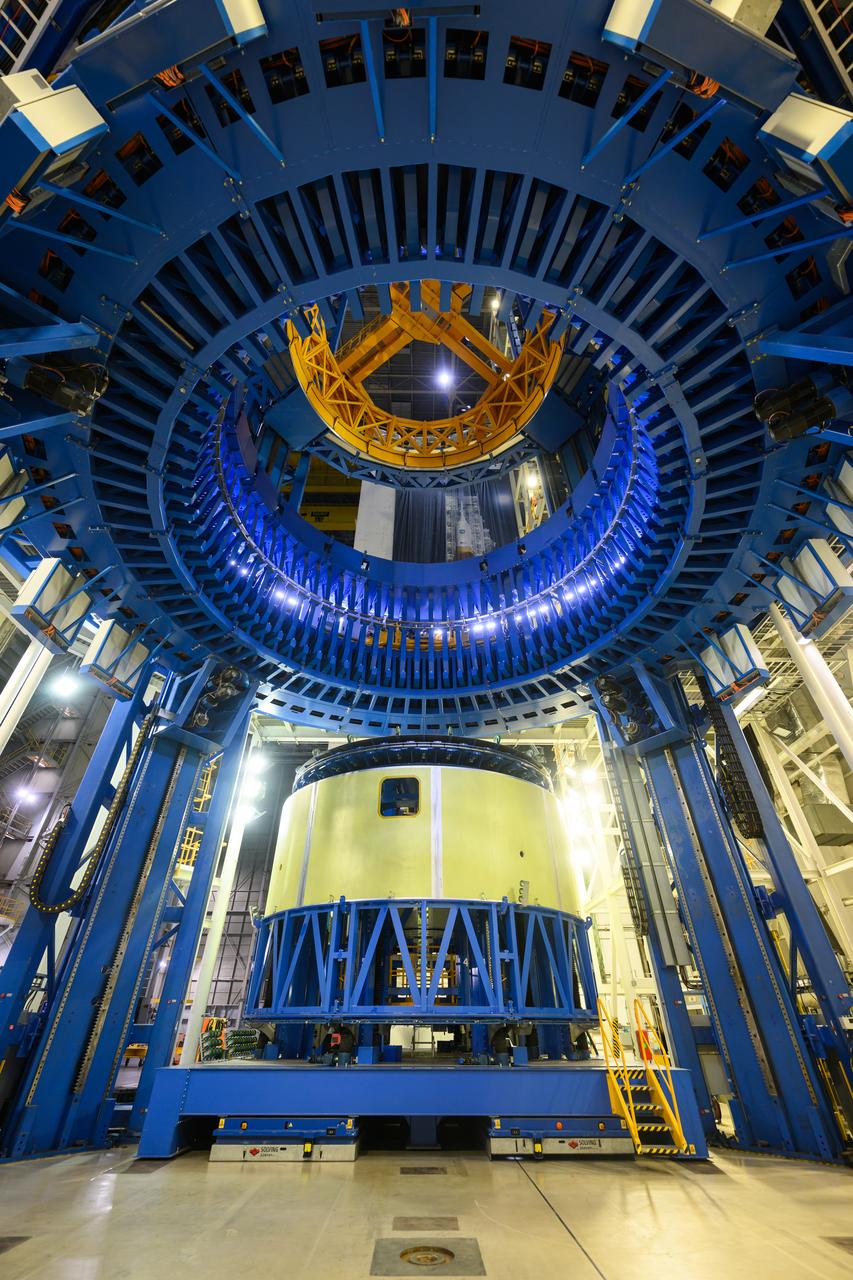
Teams at NASA’s Michoud Assembly Facility in New Orleans move the forward skirt, which will be used on the SLS (Space Launch System) rocket’s core stage for the agency’s Artemis IV mission, into the vertical assembly center on Dec. 2. Inside the tooling, the forward skirt receives its forward and aft rings through a circumferential friction-stir welding process. Seven rings are used in the production of the core stage. They provide stiffening for the dome structures on the propellant tanks and, as on the forward skirt, serve as attachment points for the major components to form the SLS core stage. The forward skirt is one of five major elements that make up the 212-foot-tall rocket stage. The core stage, along with its four RS-25 engines, produce more than two million pounds of thrust to help launch NASA’s Orion spacecraft, astronauts, and supplies beyond Earth’s orbit and to the lunar surface for Artemis.

This imagery shows how technicians at NASA’s Michoud Assembly Facility moved the aft dome of the liquid oxygen tank for NASA’s SLS (Space Launch System) rocket for the next phase of production inside the Vertical Assembly center Dec. 18. The dome will form part of the core stage that will power NASA’s Artemis III mission. Engineers rotate the dome to attach it to the previously joined forward dome and aft barrel segments using friction-stir welding. The liquid oxygen tank is one of five major components that make up the SLS rocket’s core stage. Together with the forward skirt, intertank, liquid hydrogen tank, engine section, along with the four RS-25 engines at its base, the 212-foot core stage will help power NASA’s Artemis missions to the Moon.
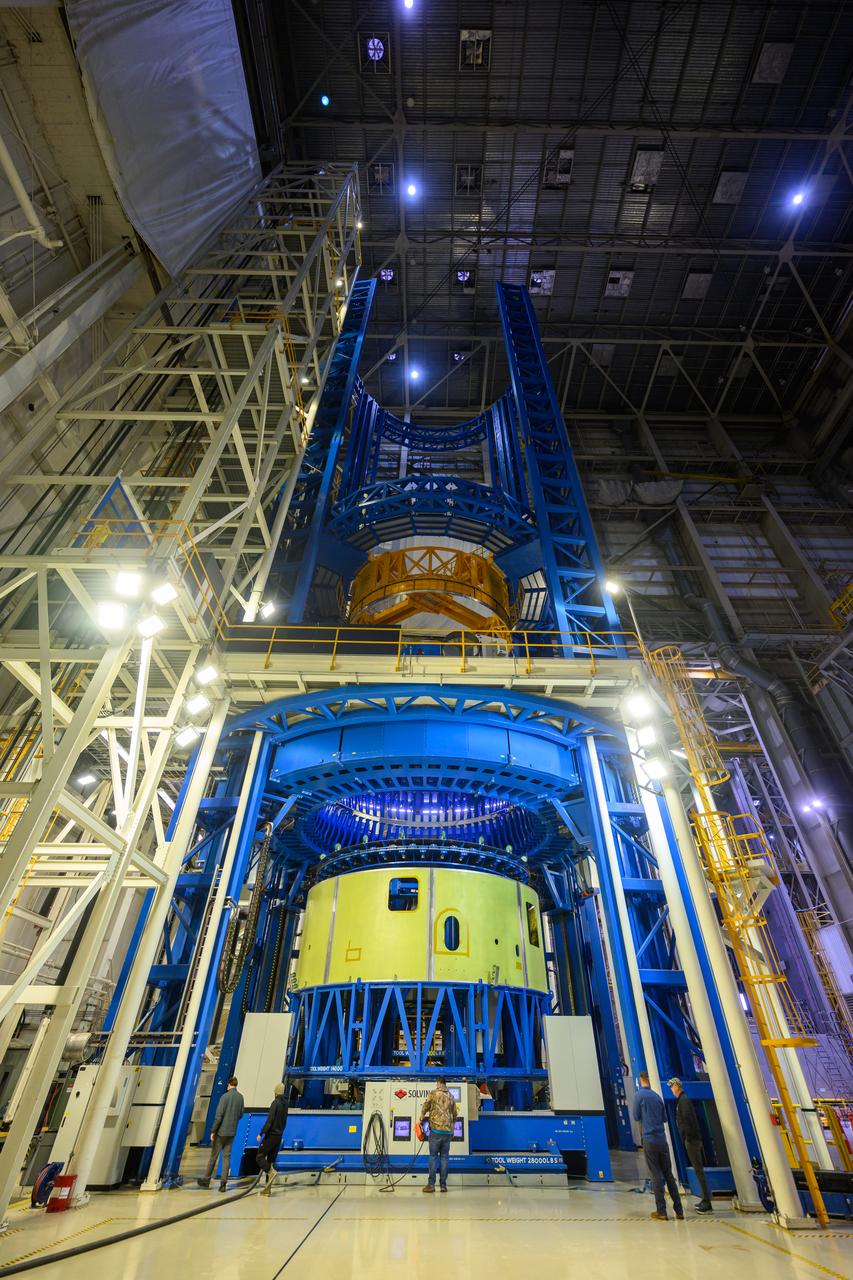
Teams at NASA’s Michoud Assembly Facility in New Orleans move the forward skirt, which will be used on the SLS (Space Launch System) rocket’s core stage for the agency’s Artemis IV mission, into the vertical assembly center on Dec. 2. Inside the tooling, the forward skirt receives its forward and aft rings through a circumferential friction-stir welding process. Seven rings are used in the production of the core stage. They provide stiffening for the dome structures on the propellant tanks and, as on the forward skirt, serve as attachment points for the major components to form the SLS core stage. The forward skirt is one of five major elements that make up the 212-foot-tall rocket stage. The core stage, along with its four RS-25 engines, produce more than two million pounds of thrust to help launch NASA’s Orion spacecraft, astronauts, and supplies beyond Earth’s orbit and to the lunar surface for Artemis.

This imagery shows how technicians at NASA’s Michoud Assembly Facility moved the aft dome of the liquid oxygen tank for NASA’s SLS (Space Launch System) rocket for the next phase of production inside the Vertical Assembly center Dec. 18. The dome will form part of the core stage that will power NASA’s Artemis III mission. Engineers rotate the dome to attach it to the previously joined forward dome and aft barrel segments using friction-stir welding. The liquid oxygen tank is one of five major components that make up the SLS rocket’s core stage. Together with the forward skirt, intertank, liquid hydrogen tank, engine section, along with the four RS-25 engines at its base, the 212-foot core stage will help power NASA’s Artemis missions to the Moon.

This imagery shows how technicians at NASA’s Michoud Assembly Facility moved the aft dome of the liquid oxygen tank for NASA’s SLS (Space Launch System) rocket for the next phase of production inside the Vertical Assembly center Dec. 18. The dome will form part of the core stage that will power NASA’s Artemis III mission. Engineers rotate the dome to attach it to the previously joined forward dome and aft barrel segments using friction-stir welding. The liquid oxygen tank is one of five major components that make up the SLS rocket’s core stage. Together with the forward skirt, intertank, liquid hydrogen tank, engine section, along with the four RS-25 engines at its base, the 212-foot core stage will help power NASA’s Artemis missions to the Moon.

This imagery shows how technicians at NASA’s Michoud Assembly Facility moved the aft dome of the liquid oxygen tank for NASA’s SLS (Space Launch System) rocket for the next phase of production inside the Vertical Assembly center Dec. 18. The dome will form part of the core stage that will power NASA’s Artemis III mission. Engineers rotate the dome to attach it to the previously joined forward dome and aft barrel segments using friction-stir welding. The liquid oxygen tank is one of five major components that make up the SLS rocket’s core stage. Together with the forward skirt, intertank, liquid hydrogen tank, engine section, along with the four RS-25 engines at its base, the 212-foot core stage will help power NASA’s Artemis missions to the Moon.
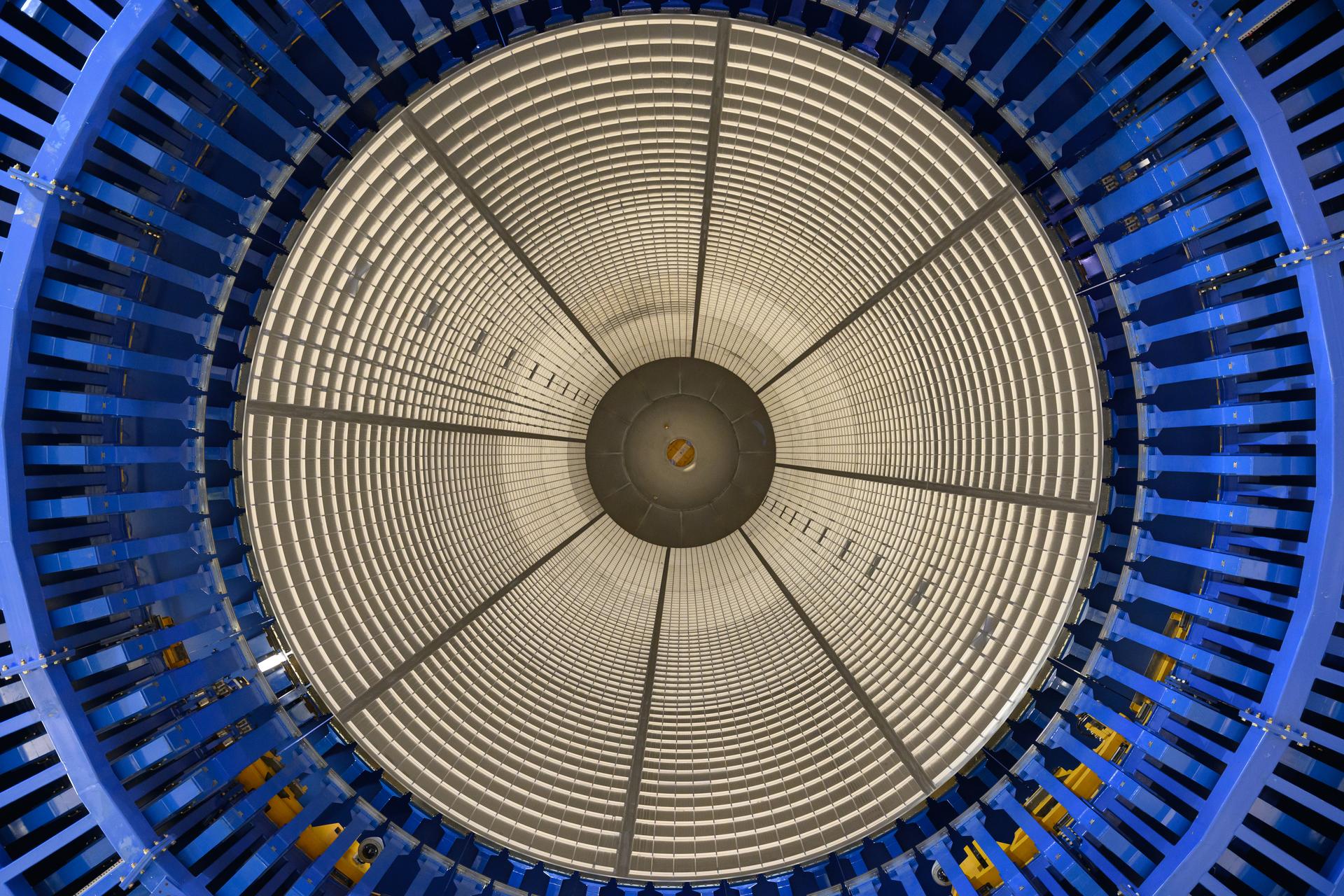
Move crews at NASA’s Michoud Assembly Facility in New Orleans lift the aft dome for the liquid hydrogen tank for the fourth core stage of NASA’s SLS (Space Launch System), into the in-feeder of the facility’s vertical assembly center. Once loaded into the production tool, teams with SLS prime contractor, Boeing, will circumferentially friction-stir weld the dome to the previously-welded forward dome and five barrels that make up the liquid hydrogen tank. The SLS core stage liquid hydrogen tank holds 537,000 gallons of super-cooled propellant and is one of five unique elements that make up the SLS core stage. Together with the forward skirt, liquid oxygen tank, intertank, and engine section, the liquid hydrogen tank will provide propellant to the four RS-25 engines to produce more than two million pounds of thrust to help launch NASA’s Orion spacecraft, astronauts, and supplies beyond Earth’s orbit to the Moon.

This imagery shows how technicians at NASA’s Michoud Assembly Facility moved the aft dome of the liquid oxygen tank for NASA’s SLS (Space Launch System) rocket for the next phase of production inside the Vertical Assembly center Dec. 18. The dome will form part of the core stage that will power NASA’s Artemis III mission. Engineers rotate the dome to attach it to the previously joined forward dome and aft barrel segments using friction-stir welding. The liquid oxygen tank is one of five major components that make up the SLS rocket’s core stage. Together with the forward skirt, intertank, liquid hydrogen tank, engine section, along with the four RS-25 engines at its base, the 212-foot core stage will help power NASA’s Artemis missions to the Moon.
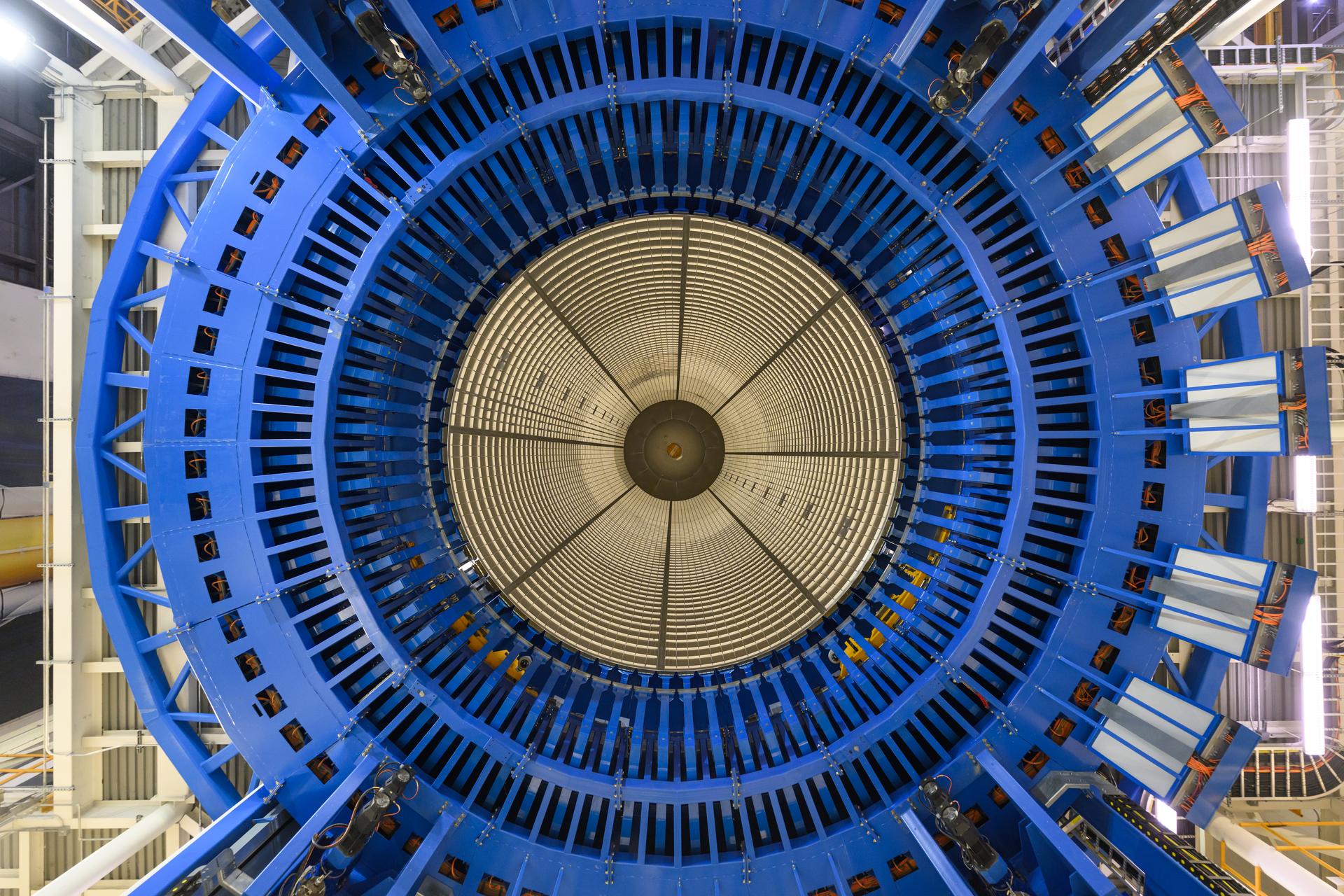
Move crews at NASA’s Michoud Assembly Facility in New Orleans lift the aft dome for the liquid hydrogen tank for the fourth core stage of NASA’s SLS (Space Launch System), into the in-feeder of the facility’s vertical assembly center. Once loaded into the production tool, teams with SLS prime contractor, Boeing, will circumferentially friction-stir weld the dome to the previously-welded forward dome and five barrels that make up the liquid hydrogen tank. The SLS core stage liquid hydrogen tank holds 537,000 gallons of super-cooled propellant and is one of five unique elements that make up the SLS core stage. Together with the forward skirt, liquid oxygen tank, intertank, and engine section, the liquid hydrogen tank will provide propellant to the four RS-25 engines to produce more than two million pounds of thrust to help launch NASA’s Orion spacecraft, astronauts, and supplies beyond Earth’s orbit to the Moon.

This imagery shows how technicians at NASA’s Michoud Assembly Facility moved the aft dome of the liquid oxygen tank for NASA’s SLS (Space Launch System) rocket for the next phase of production inside the Vertical Assembly center Dec. 18. The dome will form part of the core stage that will power NASA’s Artemis III mission. Engineers rotate the dome to attach it to the previously joined forward dome and aft barrel segments using friction-stir welding. The liquid oxygen tank is one of five major components that make up the SLS rocket’s core stage. Together with the forward skirt, intertank, liquid hydrogen tank, engine section, along with the four RS-25 engines at its base, the 212-foot core stage will help power NASA’s Artemis missions to the Moon.

This imagery shows how technicians at NASA’s Michoud Assembly Facility moved the aft dome of the liquid oxygen tank for NASA’s SLS (Space Launch System) rocket for the next phase of production inside the Vertical Assembly center Dec. 18. The dome will form part of the core stage that will power NASA’s Artemis III mission. Engineers rotate the dome to attach it to the previously joined forward dome and aft barrel segments using friction-stir welding. The liquid oxygen tank is one of five major components that make up the SLS rocket’s core stage. Together with the forward skirt, intertank, liquid hydrogen tank, engine section, along with the four RS-25 engines at its base, the 212-foot core stage will help power NASA’s Artemis missions to the Moon.

This imagery shows how technicians at NASA’s Michoud Assembly Facility moved the aft dome of the liquid oxygen tank for NASA’s SLS (Space Launch System) rocket for the next phase of production inside the Vertical Assembly center Dec. 18. The dome will form part of the core stage that will power NASA’s Artemis III mission. Engineers rotate the dome to attach it to the previously joined forward dome and aft barrel segments using friction-stir welding. The liquid oxygen tank is one of five major components that make up the SLS rocket’s core stage. Together with the forward skirt, intertank, liquid hydrogen tank, engine section, along with the four RS-25 engines at its base, the 212-foot core stage will help power NASA’s Artemis missions to the Moon.

This imagery shows how technicians at NASA’s Michoud Assembly Facility moved the aft dome of the liquid oxygen tank for NASA’s SLS (Space Launch System) rocket for the next phase of production inside the Vertical Assembly center Dec. 18. The dome will form part of the core stage that will power NASA’s Artemis III mission. Engineers rotate the dome to attach it to the previously joined forward dome and aft barrel segments using friction-stir welding. The liquid oxygen tank is one of five major components that make up the SLS rocket’s core stage. Together with the forward skirt, intertank, liquid hydrogen tank, engine section, along with the four RS-25 engines at its base, the 212-foot core stage will help power NASA’s Artemis missions to the Moon.

This imagery shows how technicians at NASA’s Michoud Assembly Facility moved the aft dome of the liquid oxygen tank for NASA’s SLS (Space Launch System) rocket for the next phase of production inside the Vertical Assembly center Dec. 18. The dome will form part of the core stage that will power NASA’s Artemis III mission. Engineers rotate the dome to attach it to the previously joined forward dome and aft barrel segments using friction-stir welding. The liquid oxygen tank is one of five major components that make up the SLS rocket’s core stage. Together with the forward skirt, intertank, liquid hydrogen tank, engine section, along with the four RS-25 engines at its base, the 212-foot core stage will help power NASA’s Artemis missions to the Moon.
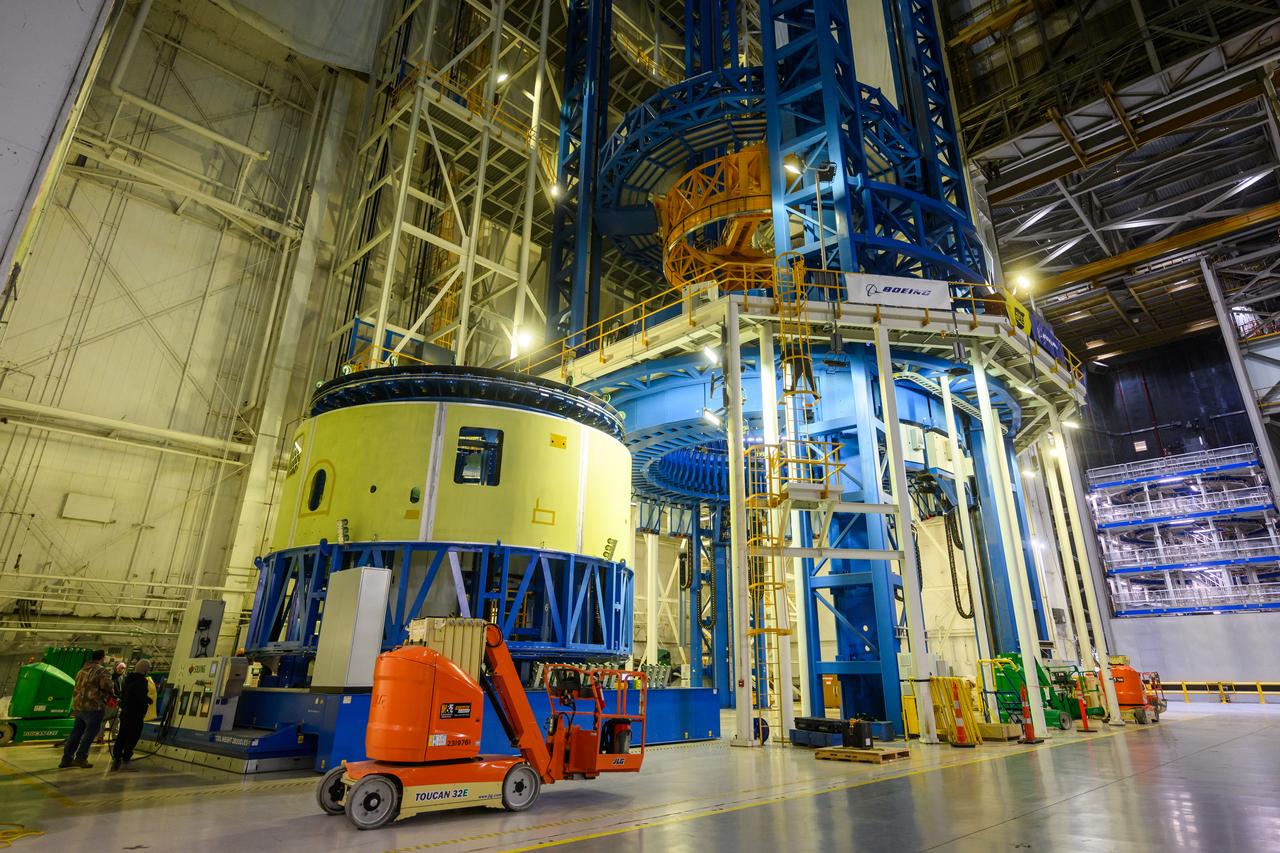
Teams at NASA’s Michoud Assembly Facility in New Orleans move the forward skirt, which will be used on the SLS (Space Launch System) rocket’s core stage for the agency’s Artemis IV mission, into the vertical assembly center on Dec. 2. Inside the tooling, the forward skirt receives its forward and aft rings through a circumferential friction-stir welding process. Seven rings are used in the production of the core stage. They provide stiffening for the dome structures on the propellant tanks and, as on the forward skirt, serve as attachment points for the major components to form the SLS core stage. The forward skirt is one of five major elements that make up the 212-foot-tall rocket stage. The core stage, along with its four RS-25 engines, produce more than two million pounds of thrust to help launch NASA’s Orion spacecraft, astronauts, and supplies beyond Earth’s orbit and to the lunar surface for Artemis.
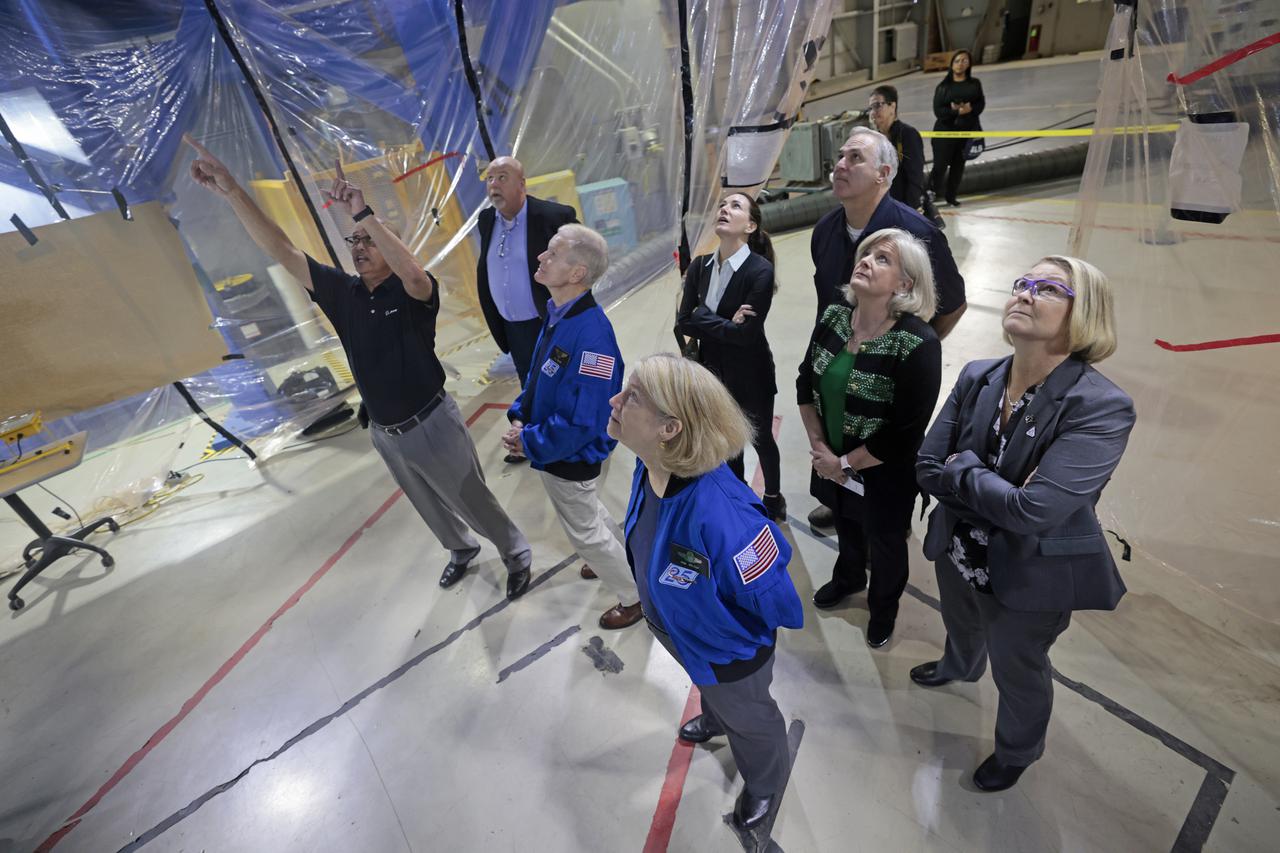
NASA Administrator Bill Nelson and Deputy Administrator Pam Melroy visited the agency’s Michoud Assembly Facility in New Orleans on Dec. 8, 2021 for tours and briefings on Michoud’s role in the Artemis program and other capabilities that enrich many facets of the nation’s space exploration endeavors. Image credit: NASA/Michael DeMocker
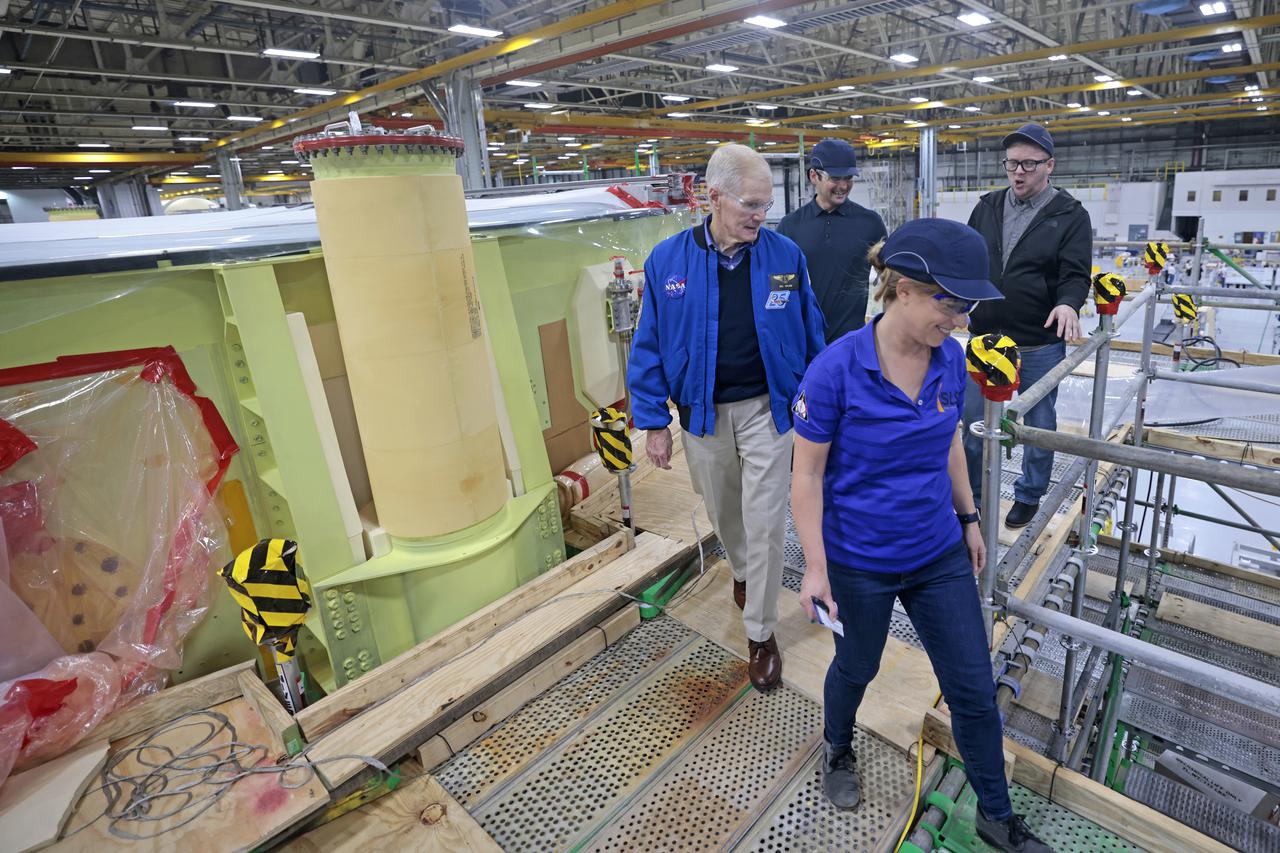
NASA Administrator Bill Nelson and Deputy Administrator Pam Melroy visited the agency’s Michoud Assembly Facility in New Orleans on Dec. 8, 2021 for tours and briefings on Michoud’s role in the Artemis program and other capabilities that enrich many facets of the nation’s space exploration endeavors. Image credit: NASA/Michael DeMocker
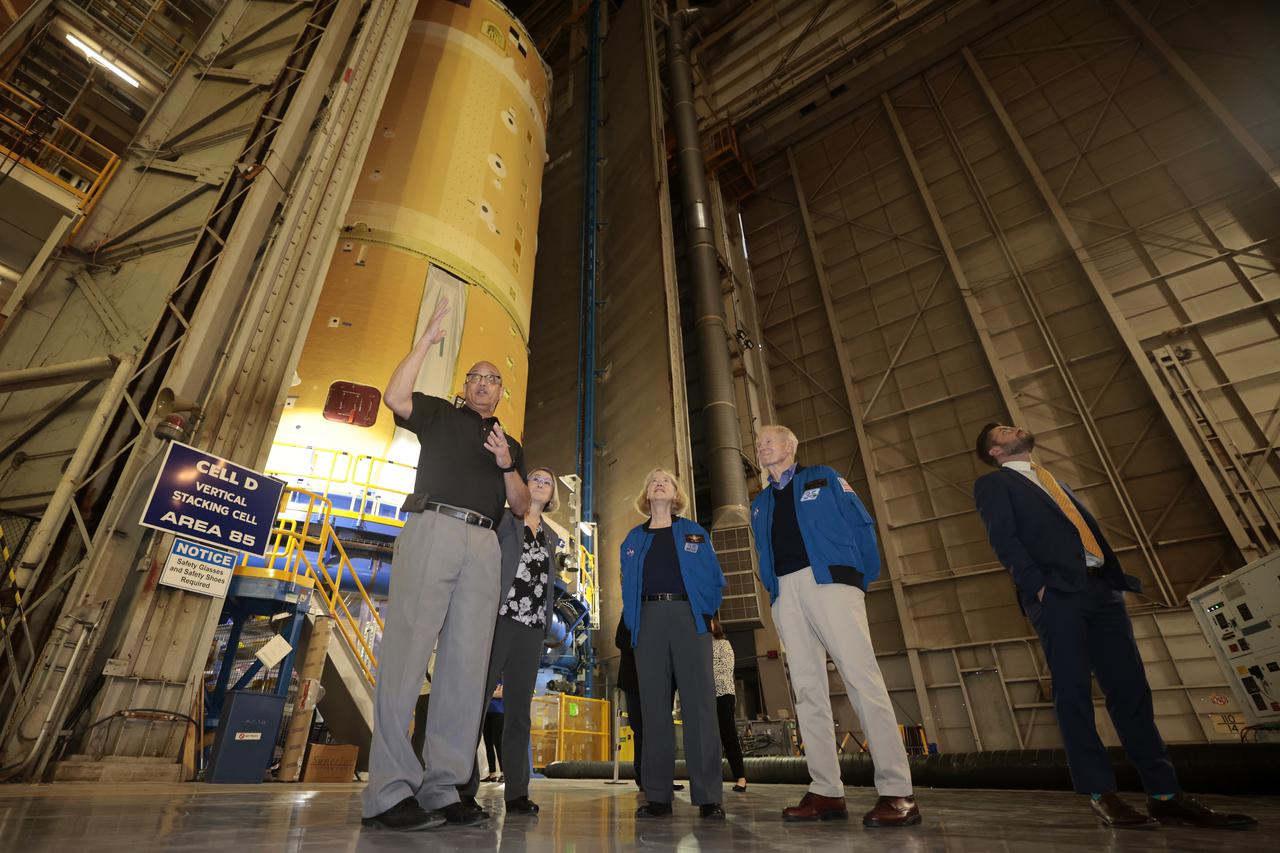
NASA Administrator Bill Nelson and Deputy Administrator Pam Melroy visited the agency’s Michoud Assembly Facility in New Orleans on Dec. 8, 2021 for tours and briefings on Michoud’s role in the Artemis program and other capabilities that enrich many facets of the nation’s space exploration endeavors. Image credit: NASA/Michael DeMocker
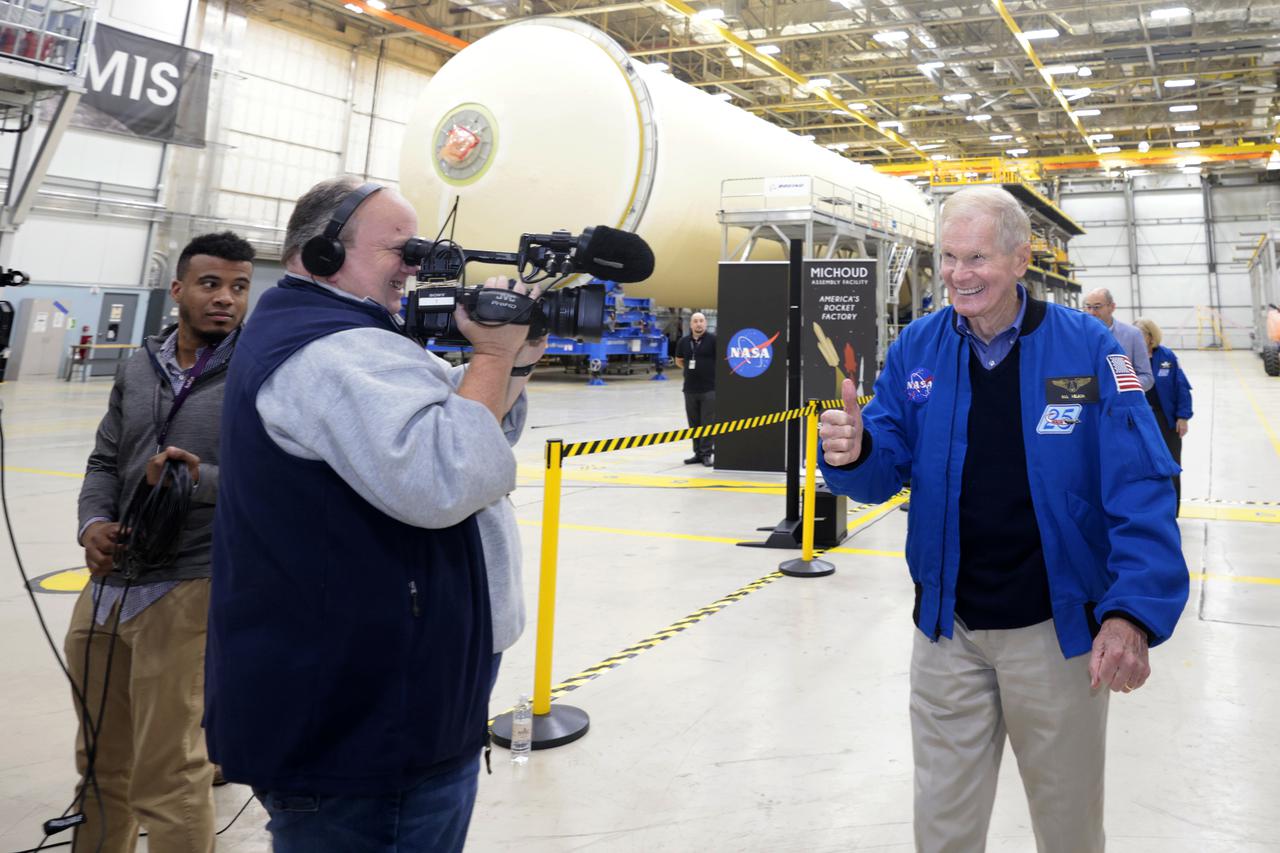
NASA Administrator Bill Nelson and Deputy Administrator Pam Melroy visited the agency’s Michoud Assembly Facility in New Orleans on Dec. 8, 2021 for tours and briefings on Michoud’s role in the Artemis program and other capabilities that enrich many facets of the nation’s space exploration endeavors. Image credit: NASA/Michael DeMocker
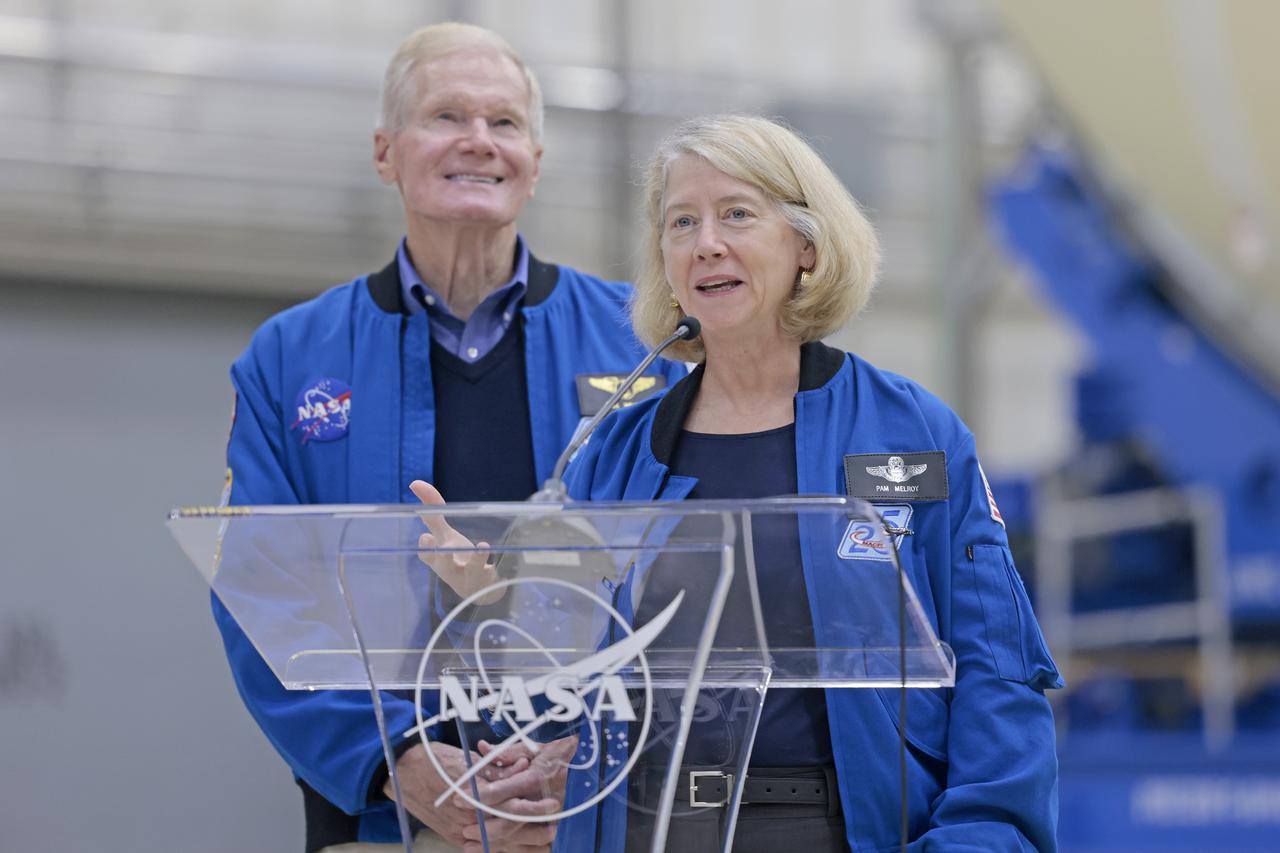
NASA Administrator Bill Nelson and Deputy Administrator Pam Melroy visited the agency’s Michoud Assembly Facility in New Orleans on Dec. 8, 2021 for tours and briefings on Michoud’s role in the Artemis program and other capabilities that enrich many facets of the nation’s space exploration endeavors. Image credit: NASA/Michael DeMocker
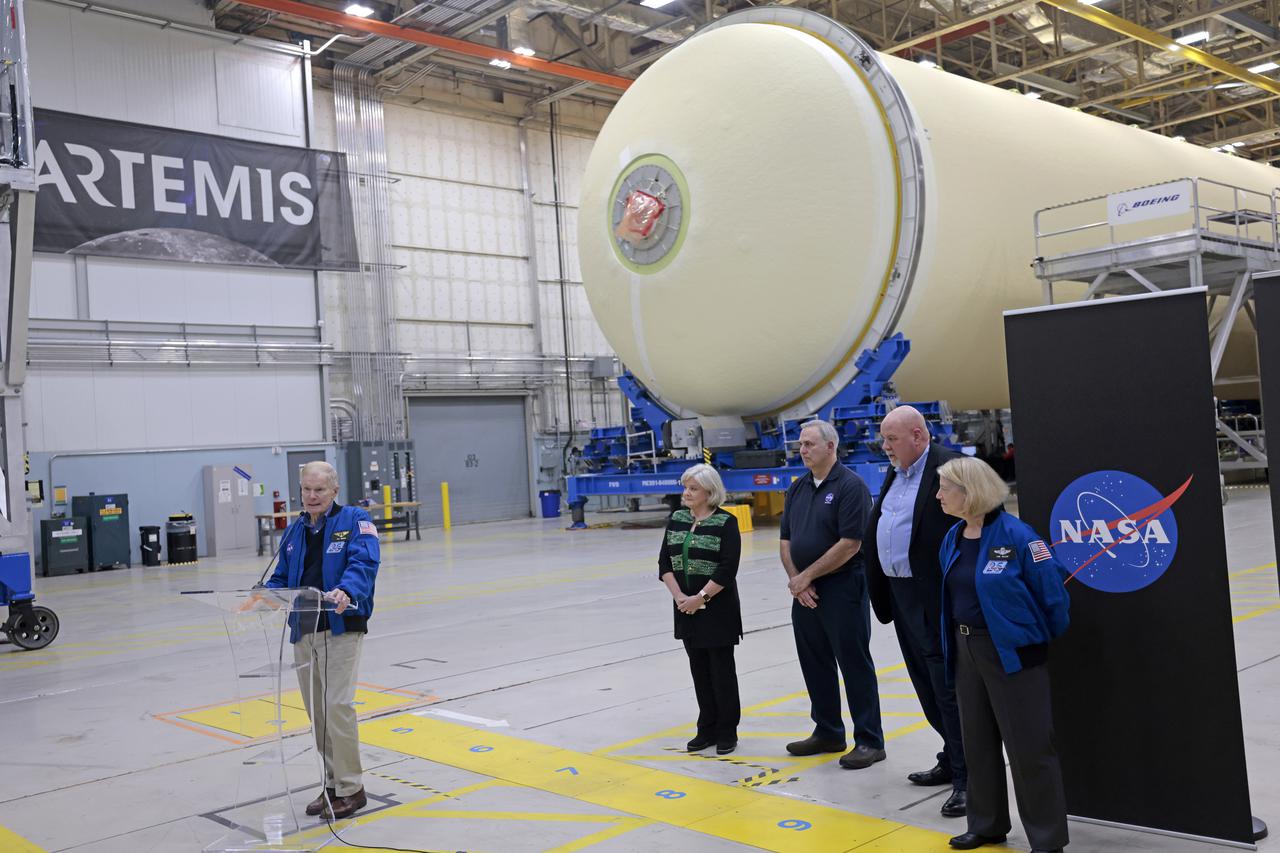
NASA Administrator Bill Nelson and Deputy Administrator Pam Melroy visited the agency’s Michoud Assembly Facility in New Orleans on Dec. 8, 2021 for tours and briefings on Michoud’s role in the Artemis program and other capabilities that enrich many facets of the nation’s space exploration endeavors. Image credit: NASA/Michael DeMocker
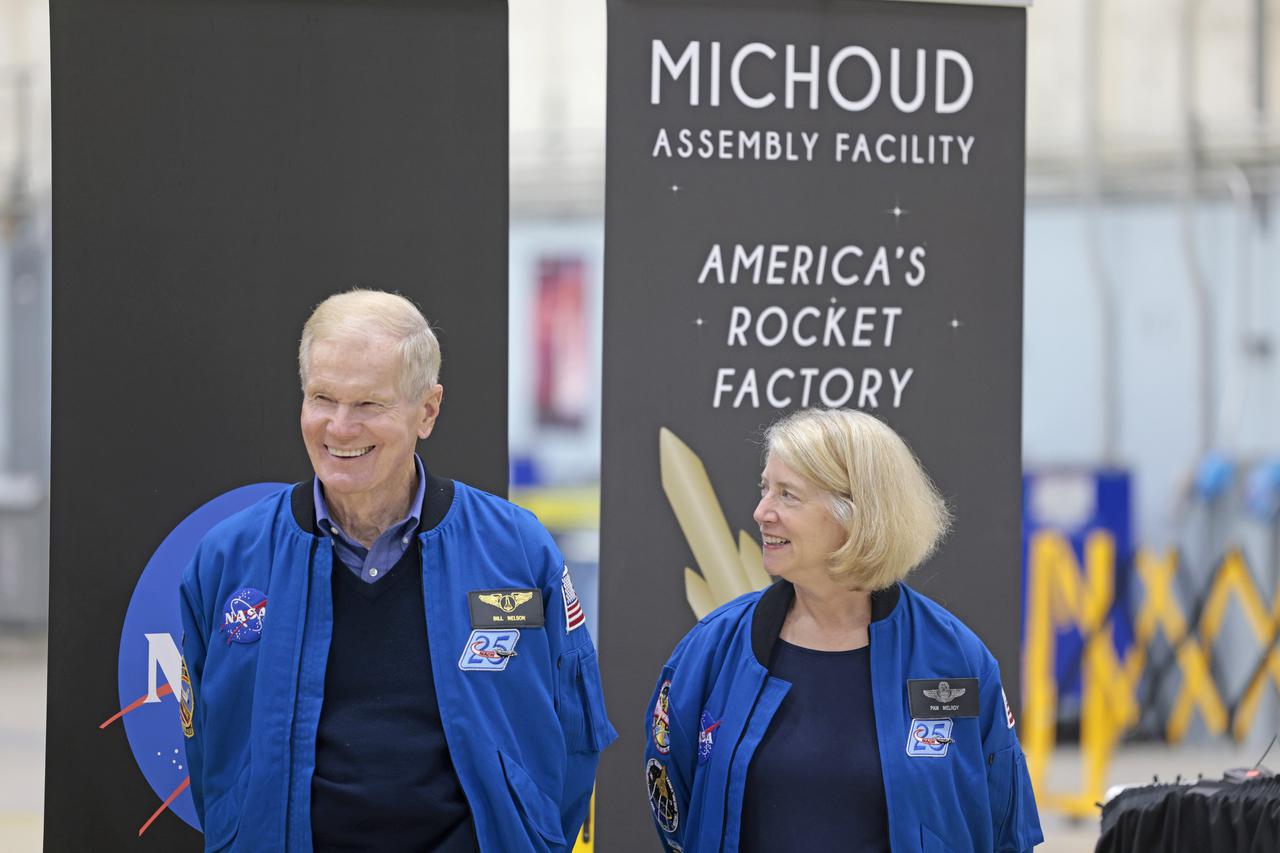
NASA Administrator Bill Nelson and Deputy Administrator Pam Melroy visited the agency’s Michoud Assembly Facility in New Orleans on Dec. 8, 2021 for tours and briefings on Michoud’s role in the Artemis program and other capabilities that enrich many facets of the nation’s space exploration endeavors. Image credit: NASA/Michael DeMocker
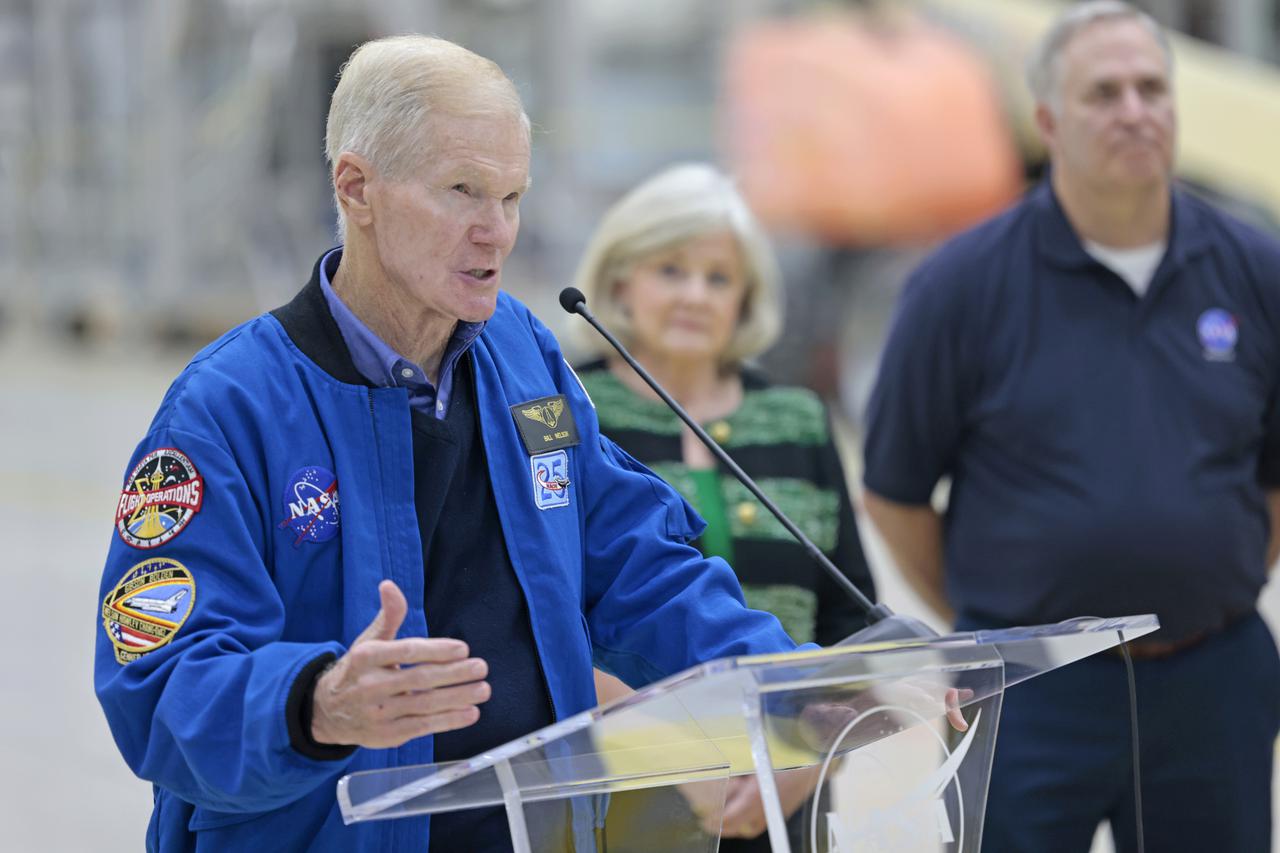
NASA Administrator Bill Nelson and Deputy Administrator Pam Melroy visited the agency’s Michoud Assembly Facility in New Orleans on Dec. 8, 2021 for tours and briefings on Michoud’s role in the Artemis program and other capabilities that enrich many facets of the nation’s space exploration endeavors. Image credit: NASA/Michael DeMocker
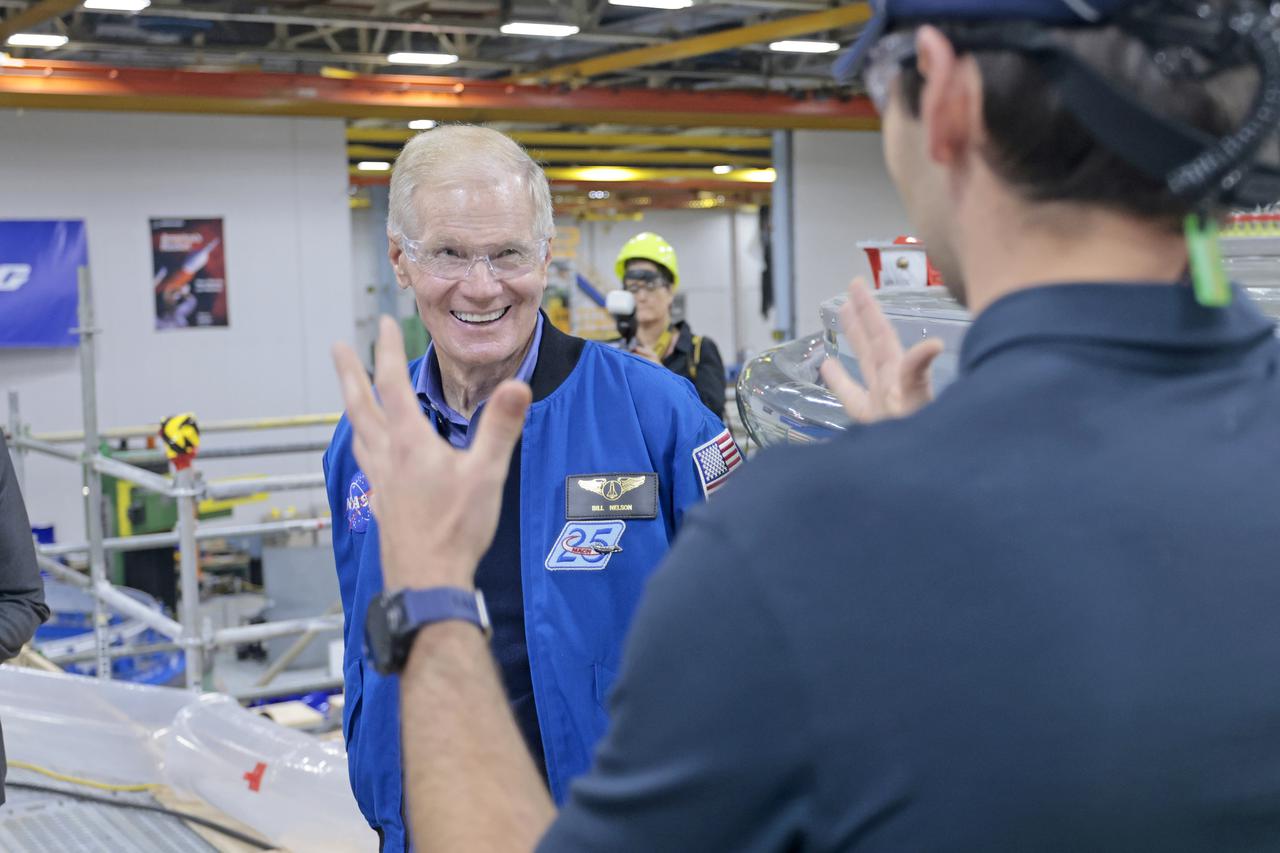
NASA Administrator Bill Nelson and Deputy Administrator Pam Melroy visited the agency’s Michoud Assembly Facility in New Orleans on Dec. 8, 2021 for tours and briefings on Michoud’s role in the Artemis program and other capabilities that enrich many facets of the nation’s space exploration endeavors. Image credit: NASA/Michael DeMocker

NASA Administrator Bill Nelson and Deputy Administrator Pam Melroy visited the agency’s Michoud Assembly Facility in New Orleans on Dec. 8, 2021 for tours and briefings on Michoud’s role in the Artemis program and other capabilities that enrich many facets of the nation’s space exploration endeavors. Image credit: NASA/Michael DeMocker

NASA Administrator Bill Nelson and Deputy Administrator Pam Melroy visited the agency’s Michoud Assembly Facility in New Orleans on Dec. 8, 2021 for tours and briefings on Michoud’s role in the Artemis program and other capabilities that enrich many facets of the nation’s space exploration endeavors. Image credit: NASA/Michael DeMocker
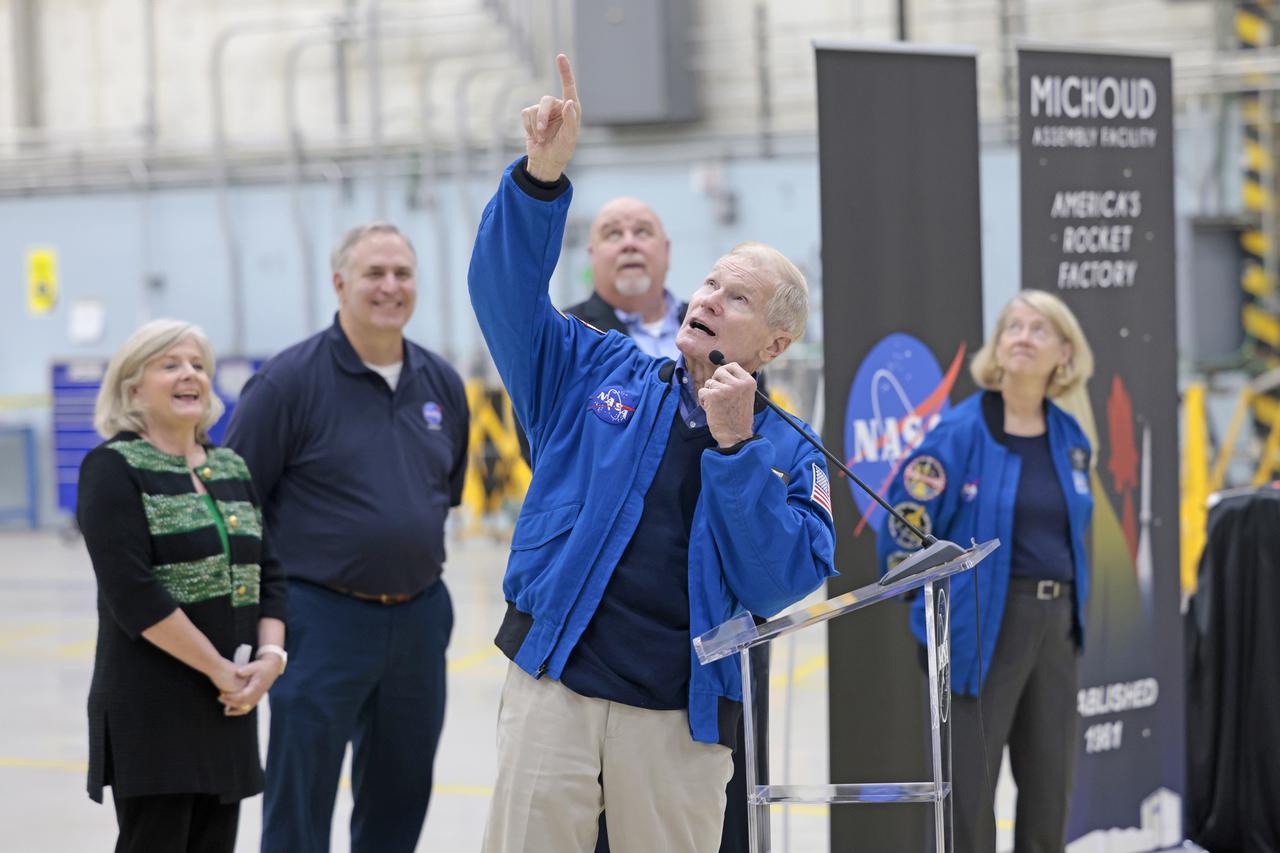
NASA Administrator Bill Nelson and Deputy Administrator Pam Melroy visited the agency’s Michoud Assembly Facility in New Orleans on Dec. 8, 2021 for tours and briefings on Michoud’s role in the Artemis program and other capabilities that enrich many facets of the nation’s space exploration endeavors. Image credit: NASA/Michael DeMocker
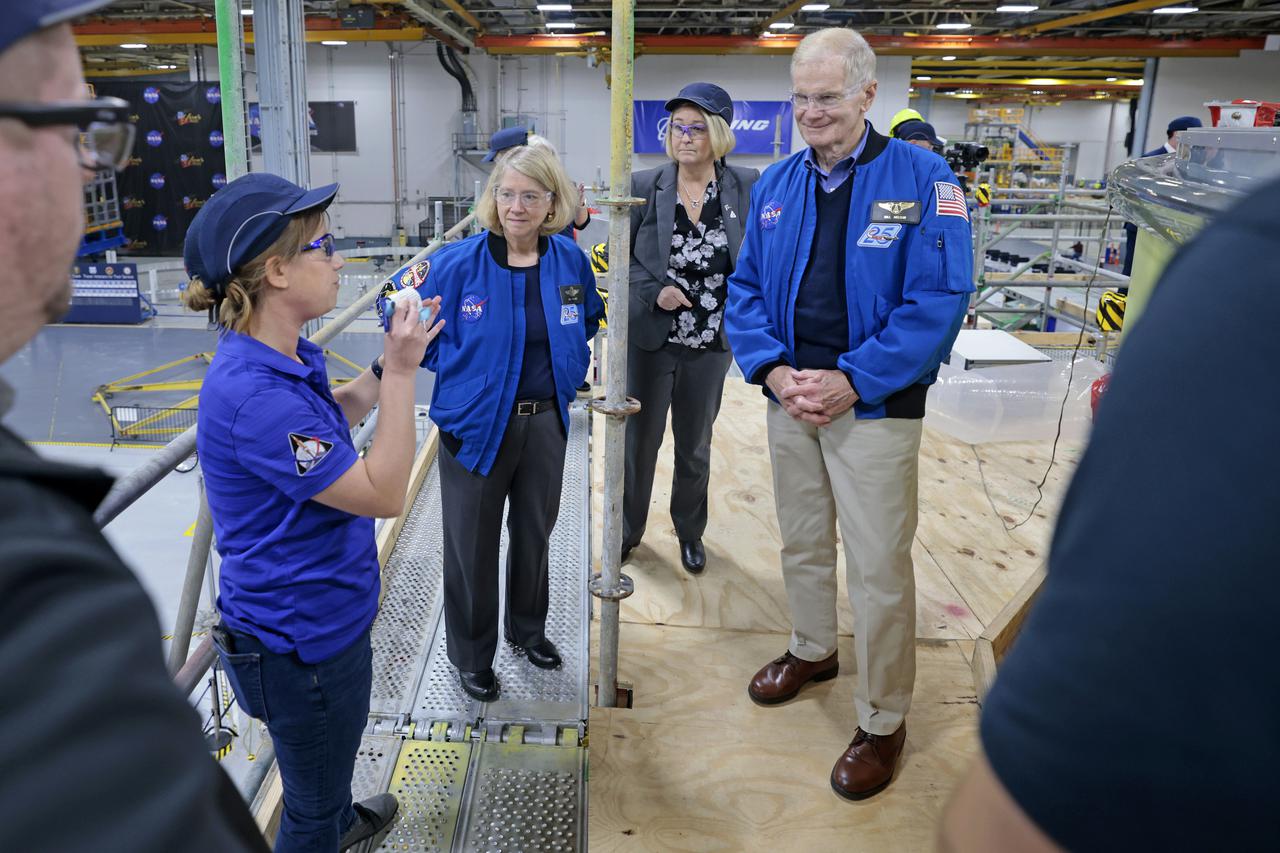
NASA Administrator Bill Nelson and Deputy Administrator Pam Melroy visited the agency’s Michoud Assembly Facility in New Orleans on Dec. 8, 2021 for tours and briefings on Michoud’s role in the Artemis program and other capabilities that enrich many facets of the nation’s space exploration endeavors. Image credit: NASA/Michael DeMocker
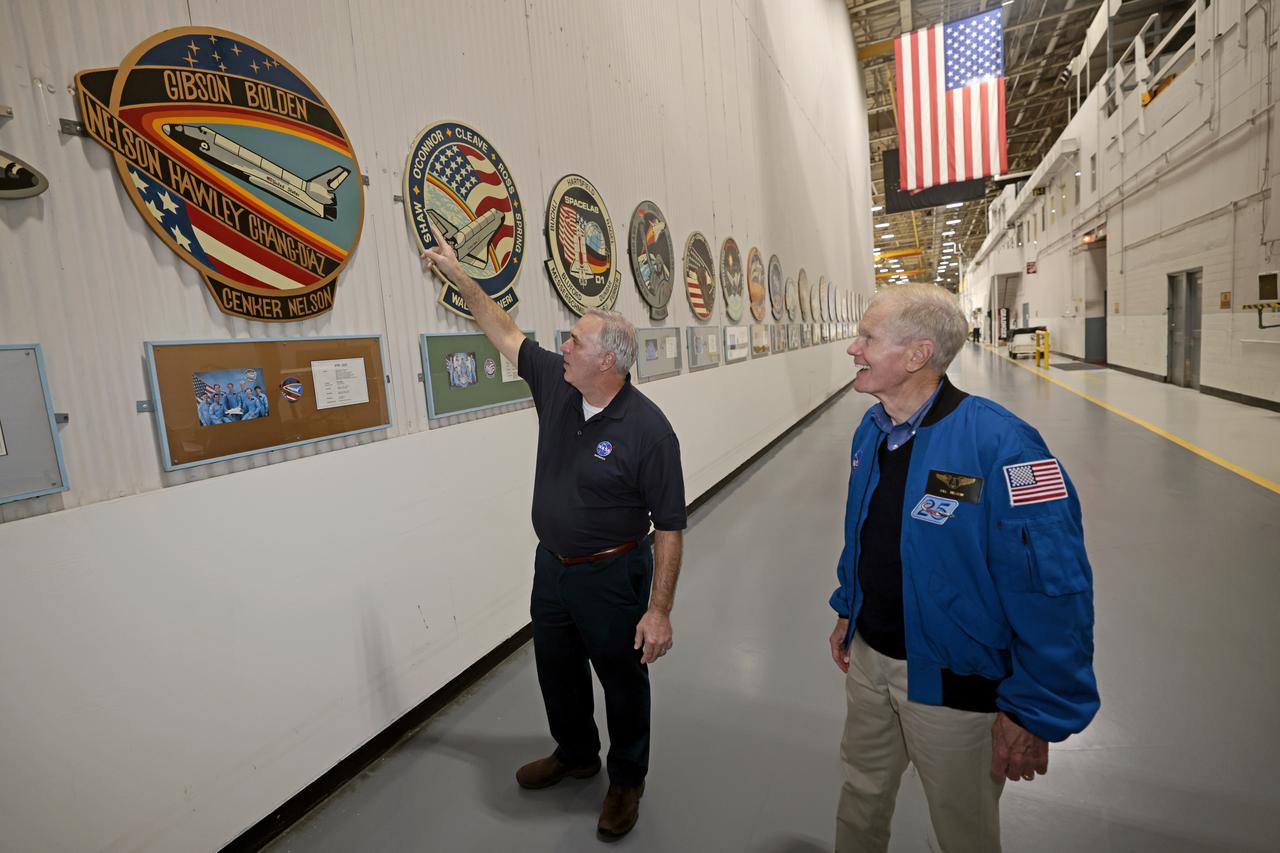
NASA Administrator Bill Nelson and Deputy Administrator Pam Melroy visited the agency’s Michoud Assembly Facility in New Orleans on Dec. 8, 2021 for tours and briefings on Michoud’s role in the Artemis program and other capabilities that enrich many facets of the nation’s space exploration endeavors. Image credit: NASA/Michael DeMocker

NASA Administrator Bill Nelson and Deputy Administrator Pam Melroy visited the agency’s Michoud Assembly Facility in New Orleans on Dec. 8, 2021 for tours and briefings on Michoud’s role in the Artemis program and other capabilities that enrich many facets of the nation’s space exploration endeavors. Image credit: NASA/Michael DeMocker
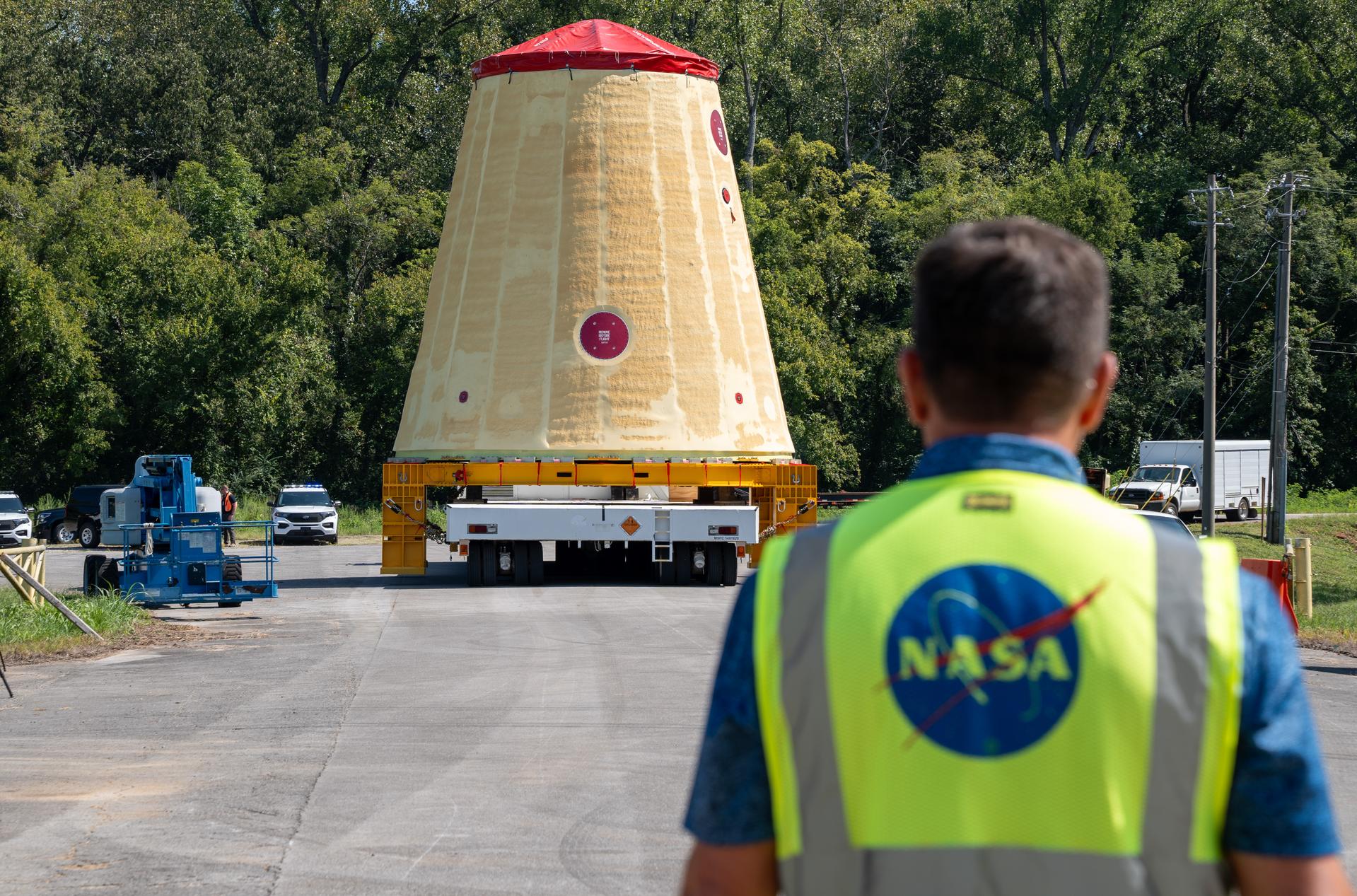
NASA rolled out a key piece of space flight hardware for the SLS (Space Launch System) rocket for the first crewed mission of NASA’s Artemis campaign from Marshall Space Flight Center in Huntsville, Alabama, on Wednesday, Aug. 21 for shipment to the agency’s spaceport in Florida. The cone-shaped launch vehicle stage adapter connects the rocket’s core stage to the upper stage and helps protect the upper stage’s engine that will help propel the Artemis II test flight around the Moon, slated for 2025. Manufactured by prime contractor Teledyne Brown Engineering and the Jacobs Space Exploration Group’s ESSCA (Engineering Services and Science Capability Augmentation) contract using NASA Marshall’s self-reacting friction-stir robotic and vertical weld tools. Crews moved the adapter out of NASA Marshall’s Building 4708 to the agency’s Pegasus barge Aug. 21. The barge will ferry the adapter first to NASA’s Michoud Assembly Facility in New Orleans, where crews will pick up additional SLS hardware for future Artemis missions, before traveling to NASA Kennedy. Once in Florida, the adapter will join the recently delivered core stage. There, teams with NASA’s Exploration Ground Systems will prepare the adapter for stacking and launch.
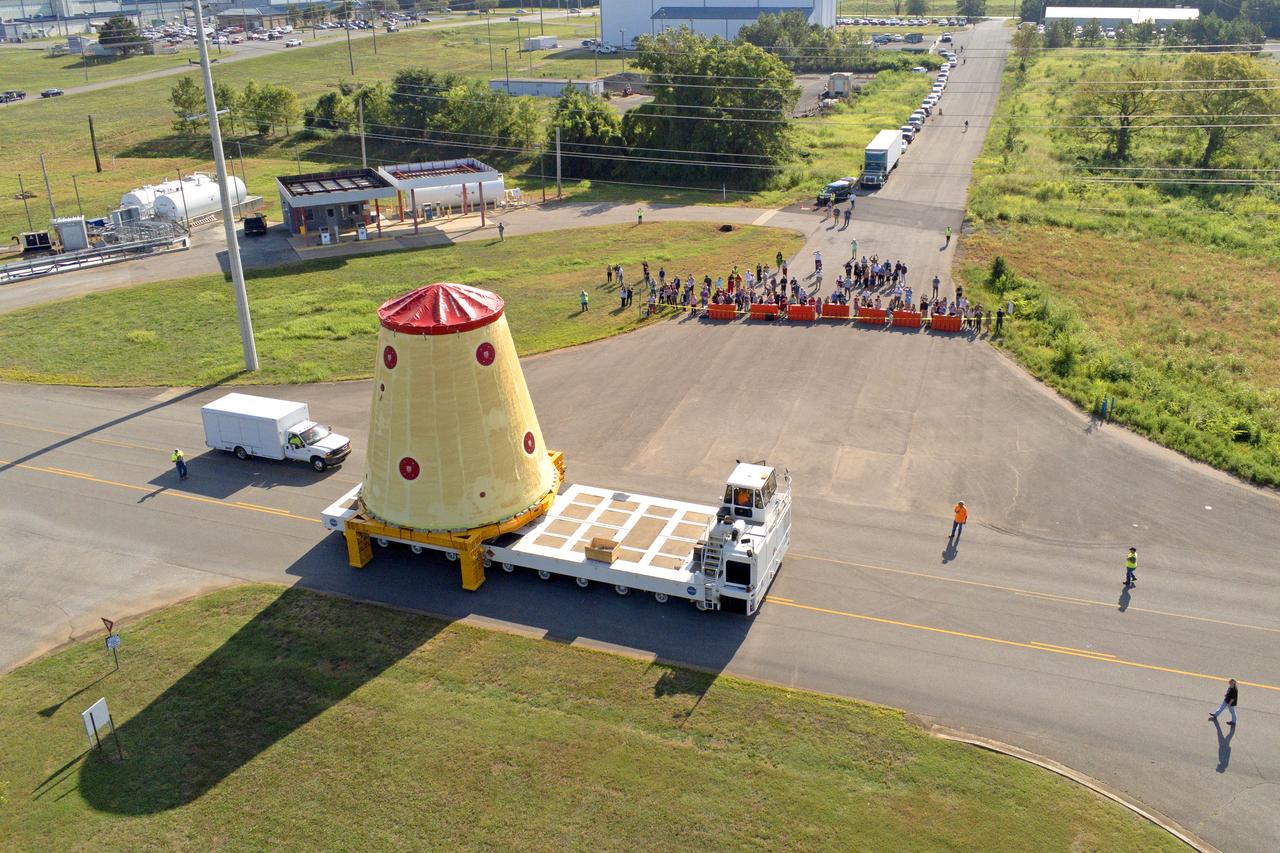
NASA rolled out a key piece of space flight hardware for the SLS (Space Launch System) rocket for the first crewed mission of NASA’s Artemis campaign from Marshall Space Flight Center in Huntsville, Alabama, on Wednesday, Aug. 21 for shipment to the agency’s spaceport in Florida. The cone-shaped launch vehicle stage adapter connects the rocket’s core stage to the upper stage and helps protect the upper stage’s engine that will help propel the Artemis II test flight around the Moon, slated for 2025. Manufactured by prime contractor Teledyne Brown Engineering and the Jacobs Space Exploration Group’s ESSCA (Engineering Services and Science Capability Augmentation) contract using NASA Marshall’s self-reacting friction-stir robotic and vertical weld tools. Crews moved the adapter out of NASA Marshall’s Building 4708 to the agency’s Pegasus barge Aug. 21. The barge will ferry the adapter first to NASA’s Michoud Assembly Facility in New Orleans, where crews will pick up additional SLS hardware for future Artemis missions, before traveling to NASA Kennedy. Once in Florida, the adapter will join the recently delivered core stage. There, teams with NASA’s Exploration Ground Systems will prepare the adapter for stacking and launch.
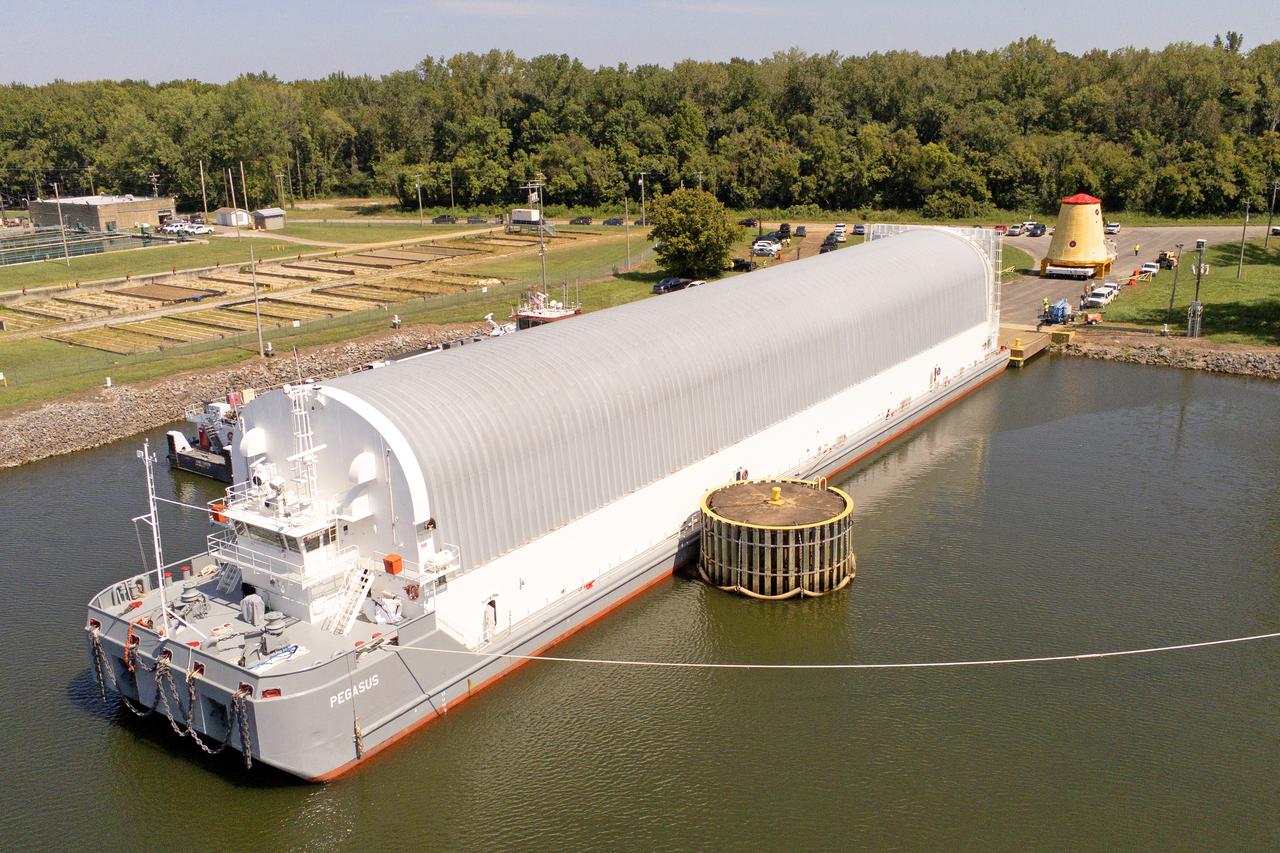
NASA rolled out a key piece of space flight hardware for the SLS (Space Launch System) rocket for the first crewed mission of NASA’s Artemis campaign from Marshall Space Flight Center in Huntsville, Alabama, on Wednesday, Aug. 21 for shipment to the agency’s spaceport in Florida. The cone-shaped launch vehicle stage adapter connects the rocket’s core stage to the upper stage and helps protect the upper stage’s engine that will help propel the Artemis II test flight around the Moon, slated for 2025. Manufactured by prime contractor Teledyne Brown Engineering and the Jacobs Space Exploration Group’s ESSCA (Engineering Services and Science Capability Augmentation) contract using NASA Marshall’s self-reacting friction-stir robotic and vertical weld tools. Crews moved the adapter out of NASA Marshall’s Building 4708 to the agency’s Pegasus barge Aug. 21. The barge will ferry the adapter first to NASA’s Michoud Assembly Facility in New Orleans, where crews will pick up additional SLS hardware for future Artemis missions, before traveling to NASA Kennedy. Once in Florida, the adapter will join the recently delivered core stage. There, teams with NASA’s Exploration Ground Systems will prepare the adapter for stacking and launch.
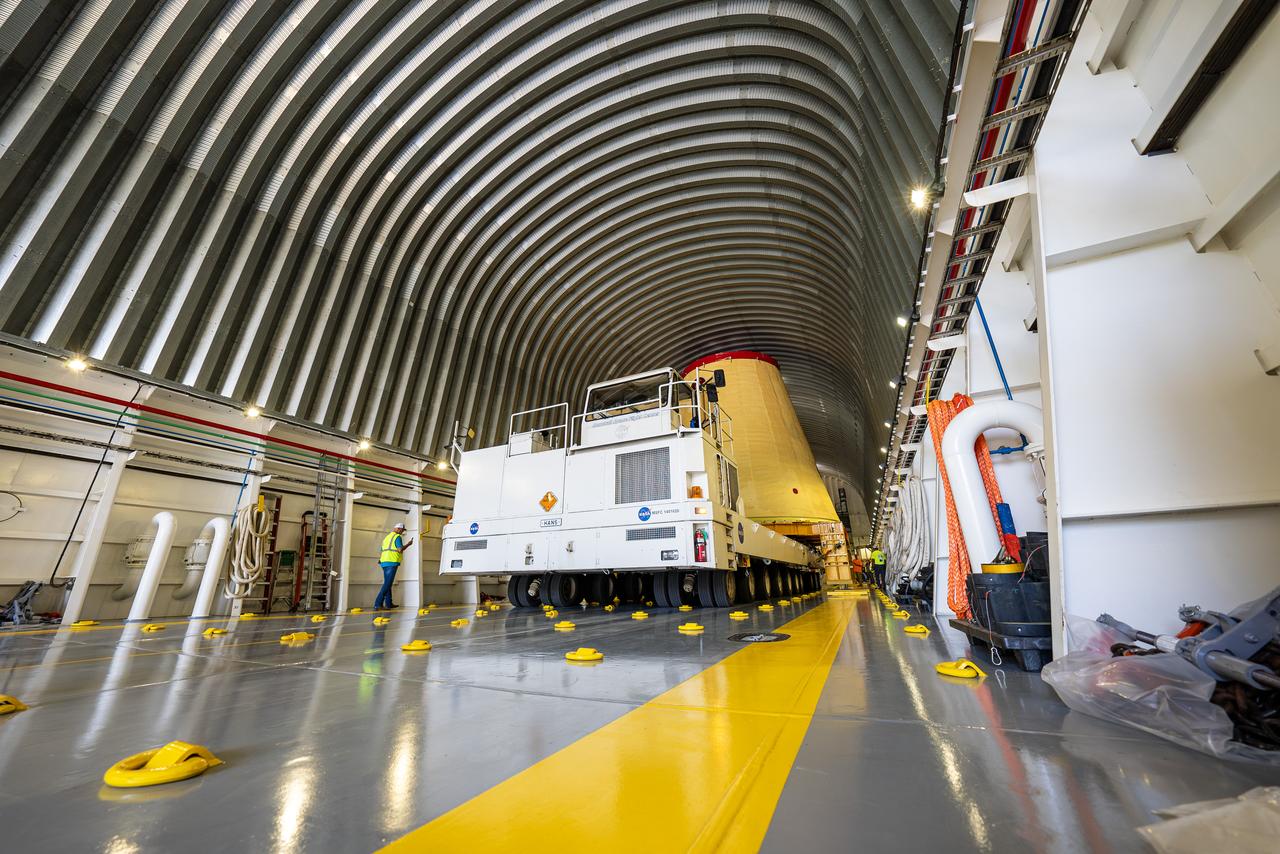
NASA rolled out a key piece of space flight hardware for the SLS (Space Launch System) rocket for the first crewed mission of NASA’s Artemis campaign from Marshall Space Flight Center in Huntsville, Alabama, on Wednesday, Aug. 21 for shipment to the agency’s spaceport in Florida. The cone-shaped launch vehicle stage adapter connects the rocket’s core stage to the upper stage and helps protect the upper stage’s engine that will help propel the Artemis II test flight around the Moon, slated for 2025. Manufactured by prime contractor Teledyne Brown Engineering and the Jacobs Space Exploration Group’s ESSCA (Engineering Services and Science Capability Augmentation) contract using NASA Marshall’s self-reacting friction-stir robotic and vertical weld tools. Crews moved the adapter out of NASA Marshall’s Building 4708 to the agency’s Pegasus barge Aug. 21. The barge will ferry the adapter first to NASA’s Michoud Assembly Facility in New Orleans, where crews will pick up additional SLS hardware for future Artemis missions, before traveling to NASA Kennedy. Once in Florida, the adapter will join the recently delivered core stage. There, teams with NASA’s Exploration Ground Systems will prepare the adapter for stacking and launch.
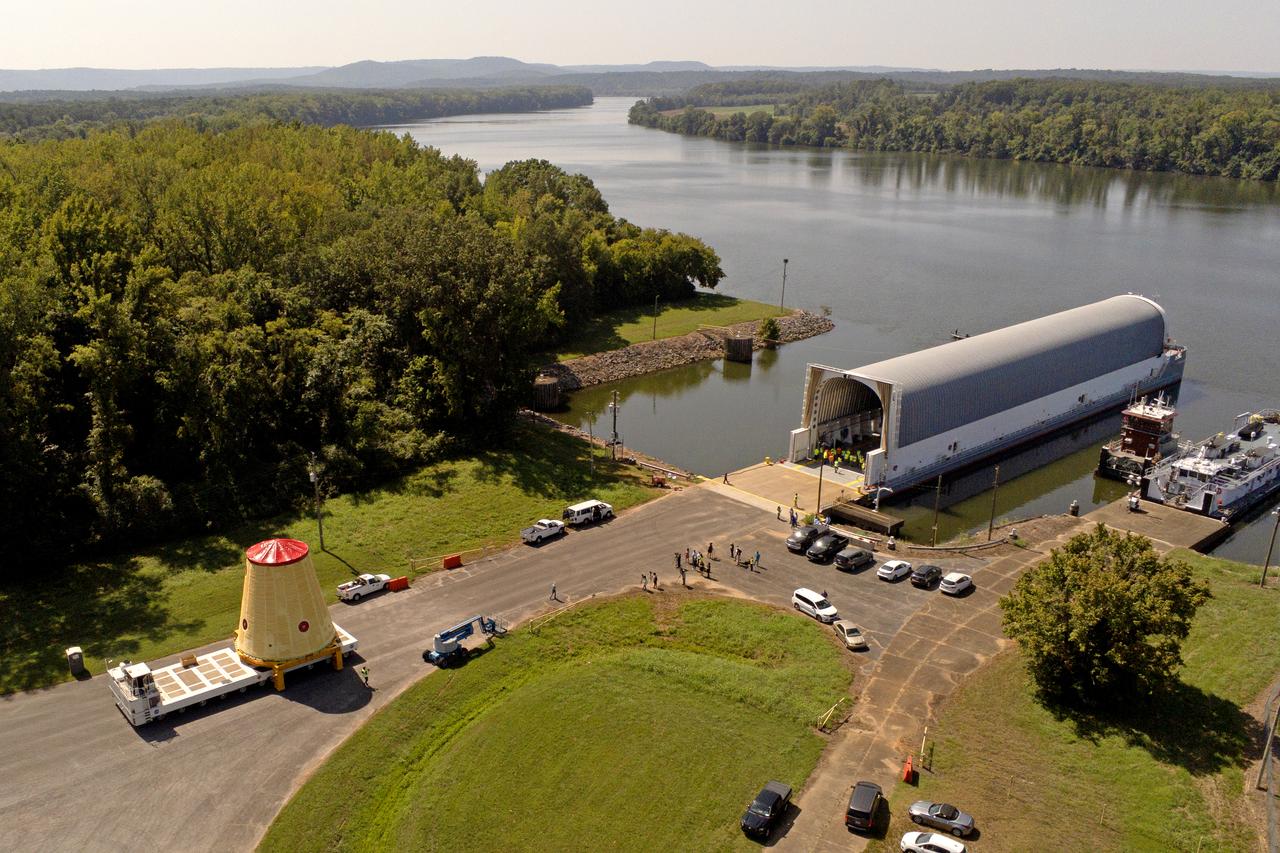
NASA rolled out a key piece of space flight hardware for the SLS (Space Launch System) rocket for the first crewed mission of NASA’s Artemis campaign from Marshall Space Flight Center in Huntsville, Alabama, on Wednesday, Aug. 21 for shipment to the agency’s spaceport in Florida. The cone-shaped launch vehicle stage adapter connects the rocket’s core stage to the upper stage and helps protect the upper stage’s engine that will help propel the Artemis II test flight around the Moon, slated for 2025. Manufactured by prime contractor Teledyne Brown Engineering and the Jacobs Space Exploration Group’s ESSCA (Engineering Services and Science Capability Augmentation) contract using NASA Marshall’s self-reacting friction-stir robotic and vertical weld tools. Crews moved the adapter out of NASA Marshall’s Building 4708 to the agency’s Pegasus barge Aug. 21. The barge will ferry the adapter first to NASA’s Michoud Assembly Facility in New Orleans, where crews will pick up additional SLS hardware for future Artemis missions, before traveling to NASA Kennedy. Once in Florida, the adapter will join the recently delivered core stage. There, teams with NASA’s Exploration Ground Systems will prepare the adapter for stacking and launch.
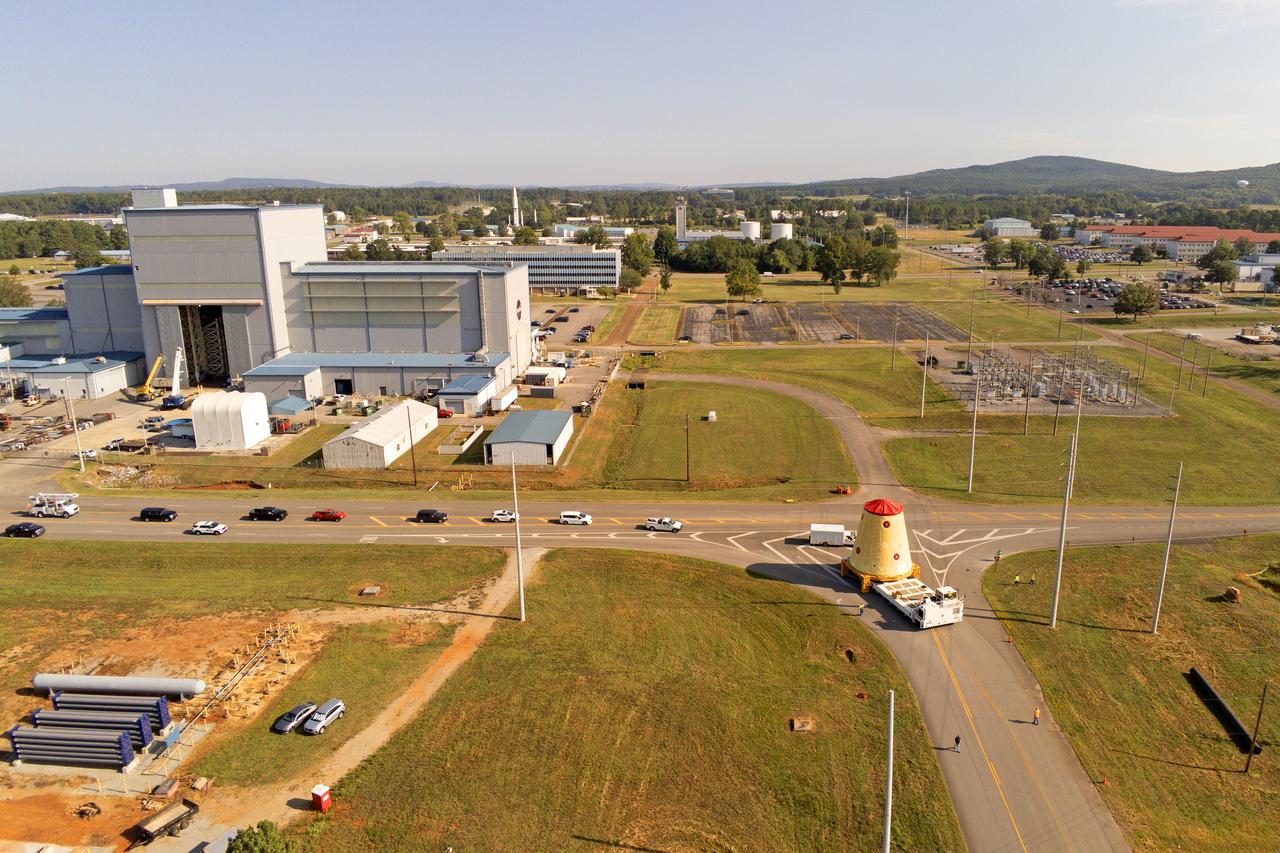
NASA rolled out a key piece of space flight hardware for the SLS (Space Launch System) rocket for the first crewed mission of NASA’s Artemis campaign from Marshall Space Flight Center in Huntsville, Alabama, on Wednesday, Aug. 21 for shipment to the agency’s spaceport in Florida. The cone-shaped launch vehicle stage adapter connects the rocket’s core stage to the upper stage and helps protect the upper stage’s engine that will help propel the Artemis II test flight around the Moon, slated for 2025. Manufactured by prime contractor Teledyne Brown Engineering and the Jacobs Space Exploration Group’s ESSCA (Engineering Services and Science Capability Augmentation) contract using NASA Marshall’s self-reacting friction-stir robotic and vertical weld tools. Crews moved the adapter out of NASA Marshall’s Building 4708 to the agency’s Pegasus barge Aug. 21. The barge will ferry the adapter first to NASA’s Michoud Assembly Facility in New Orleans, where crews will pick up additional SLS hardware for future Artemis missions, before traveling to NASA Kennedy. Once in Florida, the adapter will join the recently delivered core stage. There, teams with NASA’s Exploration Ground Systems will prepare the adapter for stacking and launch.
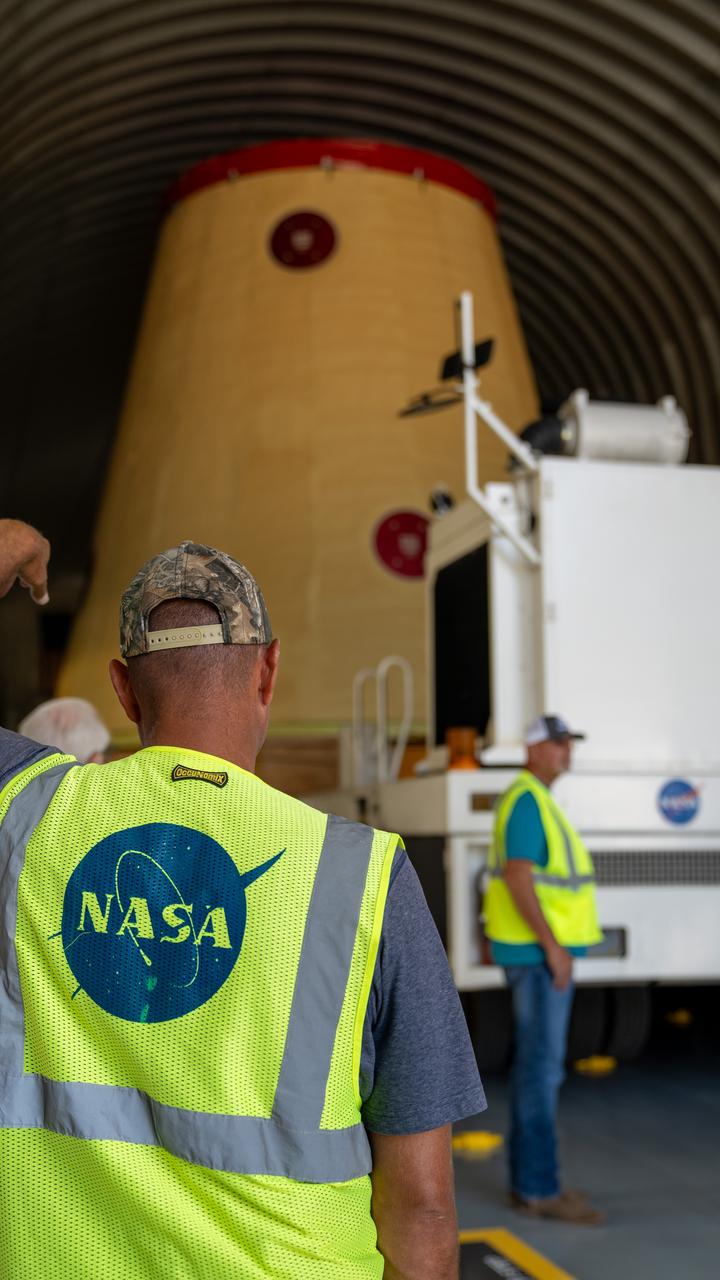
NASA rolled out a key piece of space flight hardware for the SLS (Space Launch System) rocket for the first crewed mission of NASA’s Artemis campaign from Marshall Space Flight Center in Huntsville, Alabama, on Wednesday, Aug. 21 for shipment to the agency’s spaceport in Florida. The cone-shaped launch vehicle stage adapter connects the rocket’s core stage to the upper stage and helps protect the upper stage’s engine that will help propel the Artemis II test flight around the Moon, slated for 2025. Manufactured by prime contractor Teledyne Brown Engineering and the Jacobs Space Exploration Group’s ESSCA (Engineering Services and Science Capability Augmentation) contract using NASA Marshall’s self-reacting friction-stir robotic and vertical weld tools. Crews moved the adapter out of NASA Marshall’s Building 4708 to the agency’s Pegasus barge Aug. 21. The barge will ferry the adapter first to NASA’s Michoud Assembly Facility in New Orleans, where crews will pick up additional SLS hardware for future Artemis missions, before traveling to NASA Kennedy. Once in Florida, the adapter will join the recently delivered core stage. There, teams with NASA’s Exploration Ground Systems will prepare the adapter for stacking and launch.
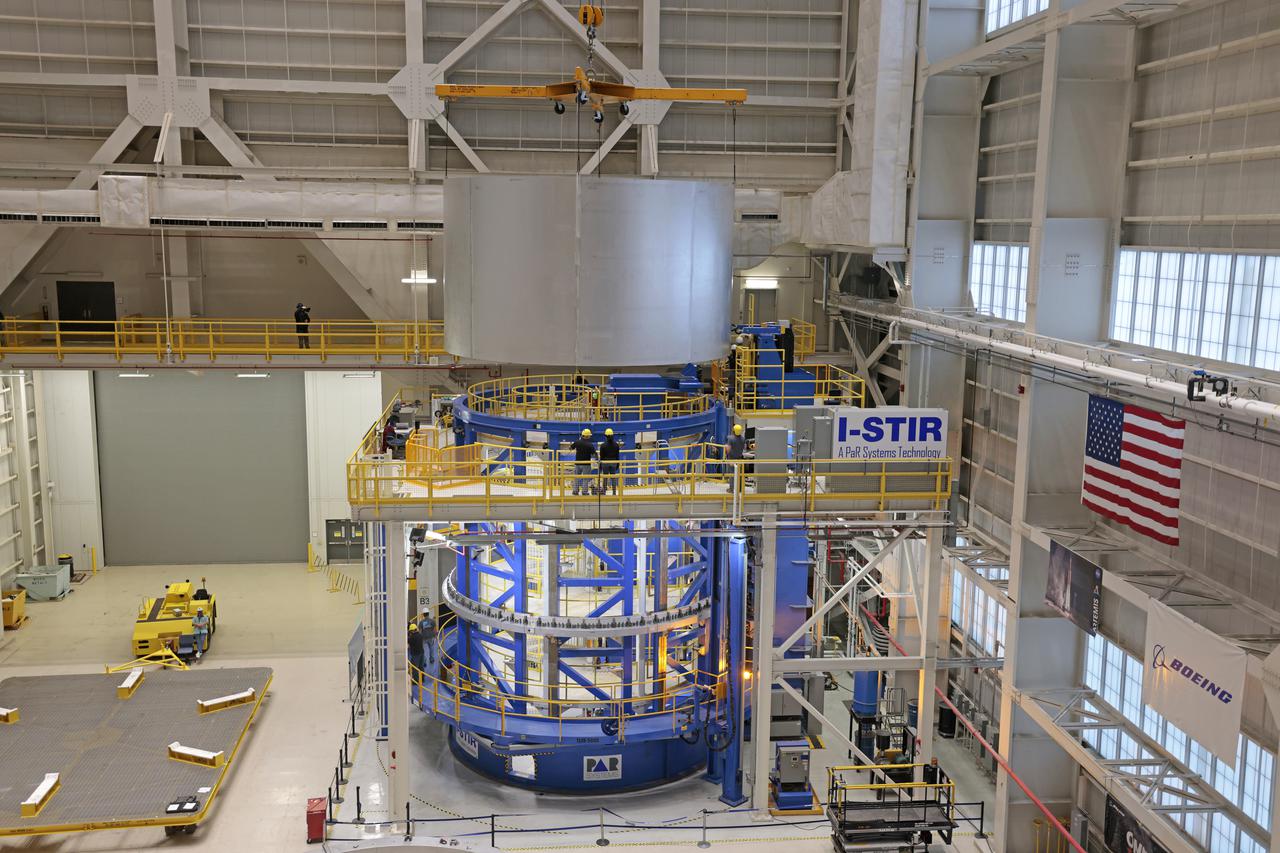
On Thursday, February 10, 2022, move crews at NASA’s Michoud Assembly Facility lift the core stage 3 liquid oxygen tank (LOX) aft barrel out of the vertical friction stir weld tool to be moved for its next phase of production. Eventually, the aft barrel will be mated with the forward barrel and forward and aft domes to create the LOX tank, which will be used for the Space Launch System’s Artemis III mission. The LOX tank holds 196,000 gallons of super-cooled liquid oxygen to help fuel four RS-25 engines. The SLS core stage is made up of five unique elements: the forward skirt, liquid oxygen tank, intertank, liquid hydrogen tank, and the engine section. The liquid oxygen hardware, along with the liquid hydrogen tank will provide propellant to the four RS-25 engines to produce more than two million pounds of thrust to help launch NASA’s Orion spacecraft, astronauts, and supplies beyond Earth’s orbit to the Moon. Image credit: NASA/Michael DeMocker
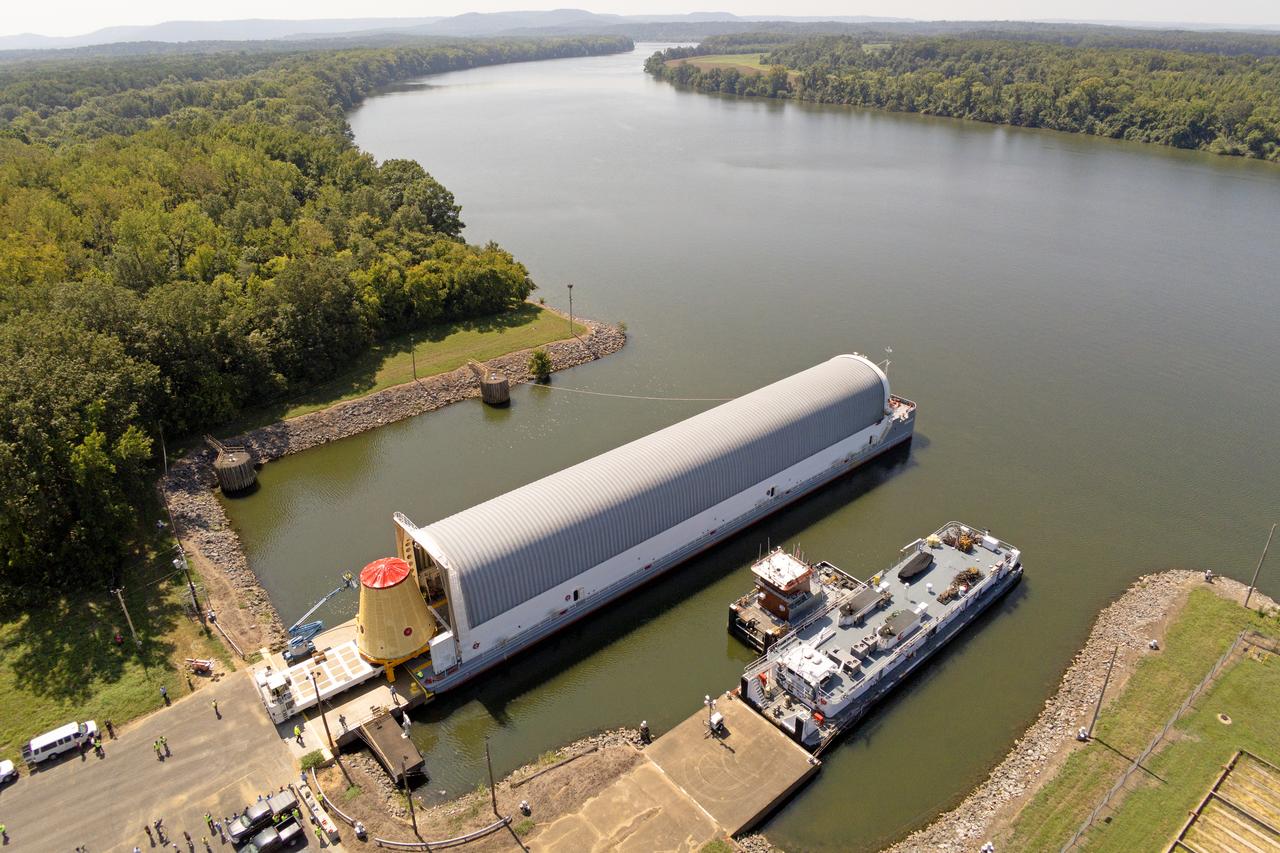
NASA rolled out a key piece of space flight hardware for the SLS (Space Launch System) rocket for the first crewed mission of NASA’s Artemis campaign from Marshall Space Flight Center in Huntsville, Alabama, on Wednesday, Aug. 21 for shipment to the agency’s spaceport in Florida. The cone-shaped launch vehicle stage adapter connects the rocket’s core stage to the upper stage and helps protect the upper stage’s engine that will help propel the Artemis II test flight around the Moon, slated for 2025. Manufactured by prime contractor Teledyne Brown Engineering and the Jacobs Space Exploration Group’s ESSCA (Engineering Services and Science Capability Augmentation) contract using NASA Marshall’s self-reacting friction-stir robotic and vertical weld tools. Crews moved the adapter out of NASA Marshall’s Building 4708 to the agency’s Pegasus barge Aug. 21. The barge will ferry the adapter first to NASA’s Michoud Assembly Facility in New Orleans, where crews will pick up additional SLS hardware for future Artemis missions, before traveling to NASA Kennedy. Once in Florida, the adapter will join the recently delivered core stage. There, teams with NASA’s Exploration Ground Systems will prepare the adapter for stacking and launch.
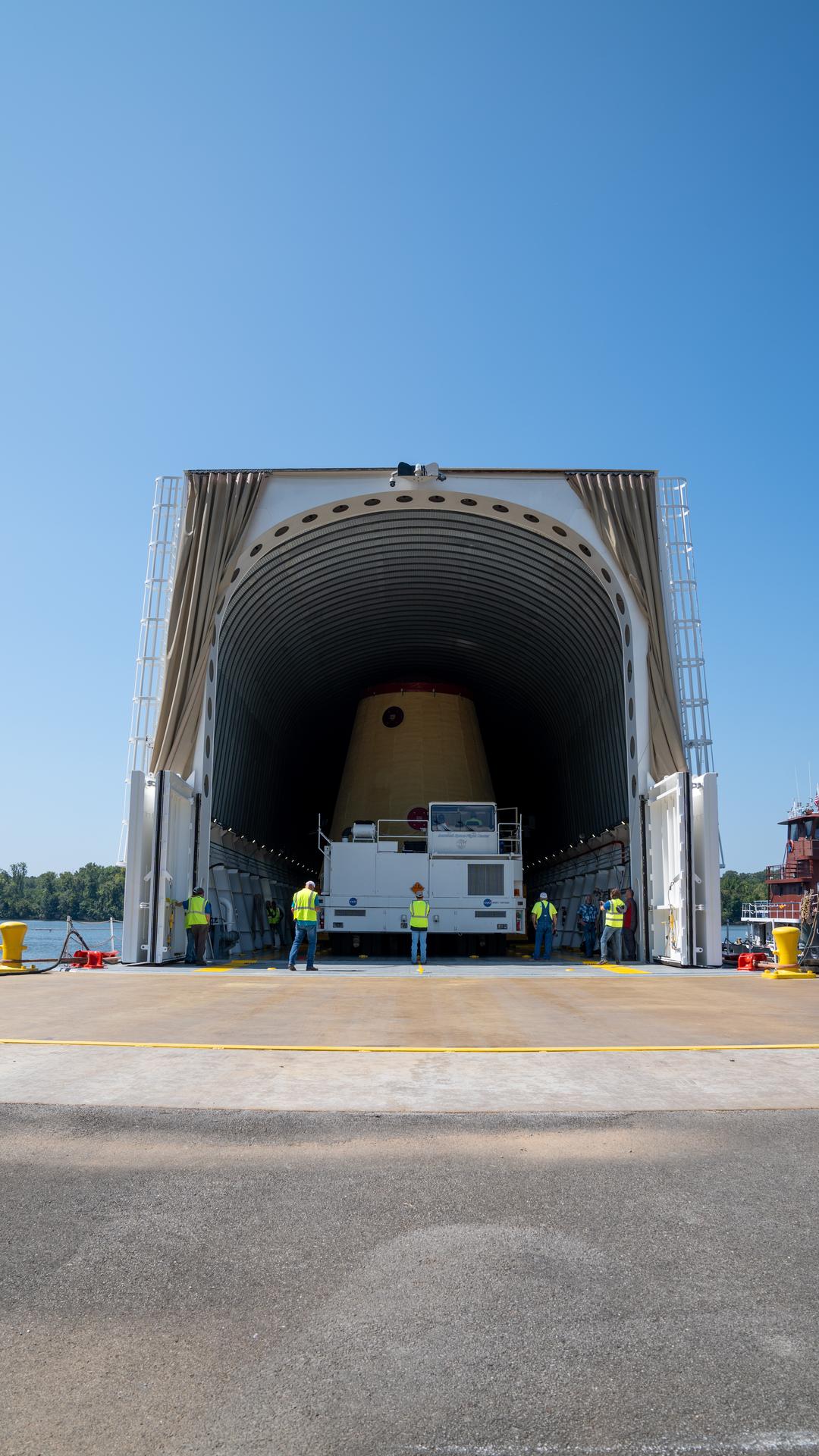
NASA rolled out a key piece of space flight hardware for the SLS (Space Launch System) rocket for the first crewed mission of NASA’s Artemis campaign from Marshall Space Flight Center in Huntsville, Alabama, on Wednesday, Aug. 21 for shipment to the agency’s spaceport in Florida. The cone-shaped launch vehicle stage adapter connects the rocket’s core stage to the upper stage and helps protect the upper stage’s engine that will help propel the Artemis II test flight around the Moon, slated for 2025. Manufactured by prime contractor Teledyne Brown Engineering and the Jacobs Space Exploration Group’s ESSCA (Engineering Services and Science Capability Augmentation) contract using NASA Marshall’s self-reacting friction-stir robotic and vertical weld tools. Crews moved the adapter out of NASA Marshall’s Building 4708 to the agency’s Pegasus barge Aug. 21. The barge will ferry the adapter first to NASA’s Michoud Assembly Facility in New Orleans, where crews will pick up additional SLS hardware for future Artemis missions, before traveling to NASA Kennedy. Once in Florida, the adapter will join the recently delivered core stage. There, teams with NASA’s Exploration Ground Systems will prepare the adapter for stacking and launch.
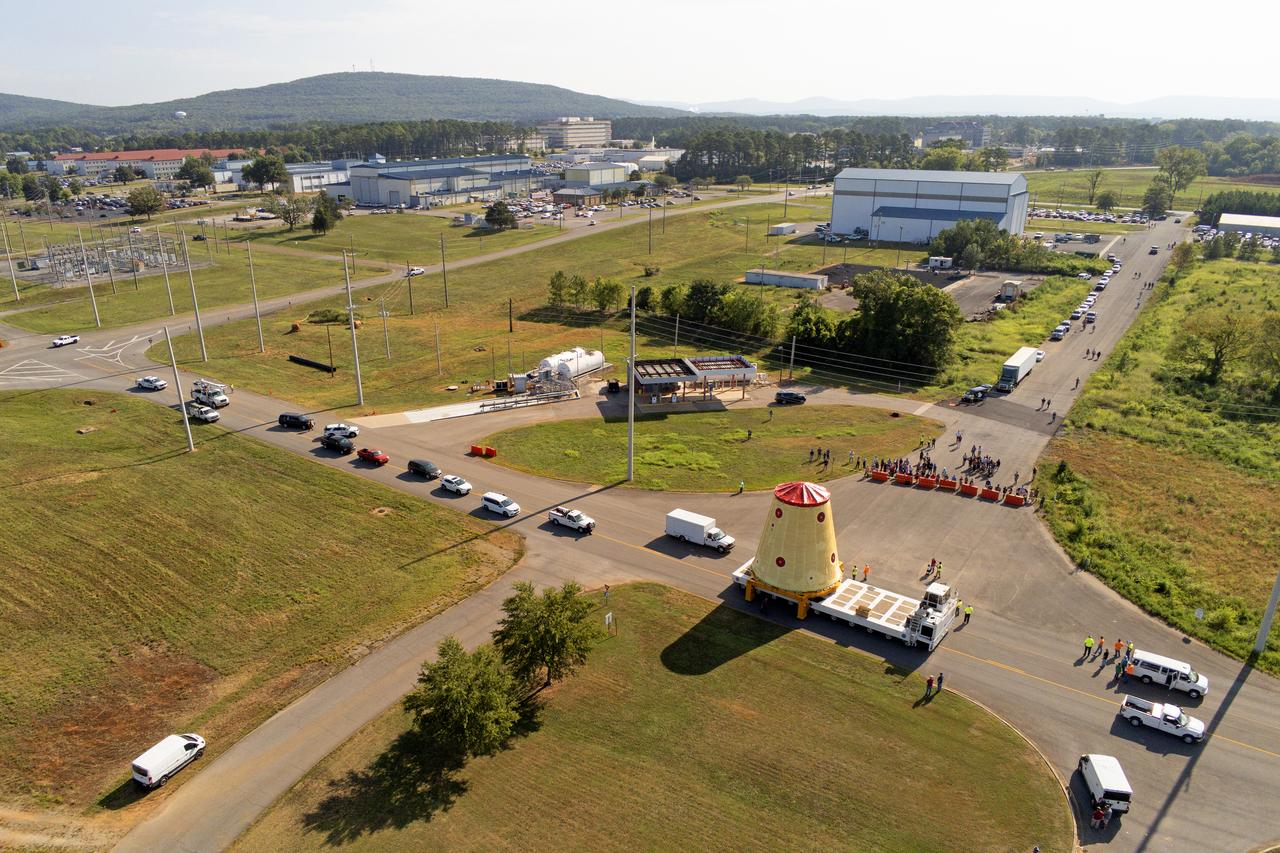
NASA rolled out a key piece of space flight hardware for the SLS (Space Launch System) rocket for the first crewed mission of NASA’s Artemis campaign from Marshall Space Flight Center in Huntsville, Alabama, on Wednesday, Aug. 21 for shipment to the agency’s spaceport in Florida. The cone-shaped launch vehicle stage adapter connects the rocket’s core stage to the upper stage and helps protect the upper stage’s engine that will help propel the Artemis II test flight around the Moon, slated for 2025. Manufactured by prime contractor Teledyne Brown Engineering and the Jacobs Space Exploration Group’s ESSCA (Engineering Services and Science Capability Augmentation) contract using NASA Marshall’s self-reacting friction-stir robotic and vertical weld tools. Crews moved the adapter out of NASA Marshall’s Building 4708 to the agency’s Pegasus barge Aug. 21. The barge will ferry the adapter first to NASA’s Michoud Assembly Facility in New Orleans, where crews will pick up additional SLS hardware for future Artemis missions, before traveling to NASA Kennedy. Once in Florida, the adapter will join the recently delivered core stage. There, teams with NASA’s Exploration Ground Systems will prepare the adapter for stacking and launch.
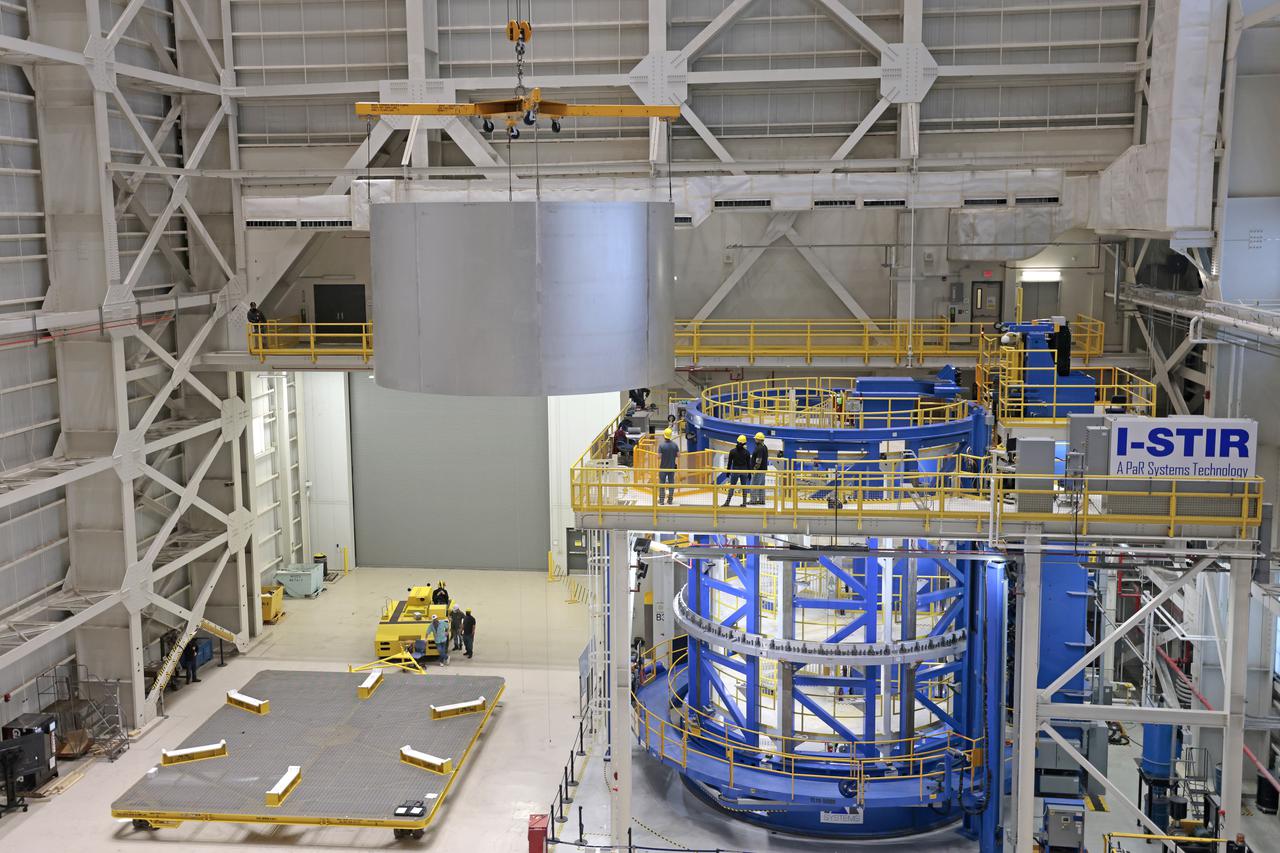
On Thursday, February 10, 2022, move crews at NASA’s Michoud Assembly Facility lift the core stage 3 liquid oxygen tank (LOX) aft barrel out of the vertical friction stir weld tool to be moved for its next phase of production. Eventually, the aft barrel will be mated with the forward barrel and forward and aft domes to create the LOX tank, which will be used for the Space Launch System’s Artemis III mission. The LOX tank holds 196,000 gallons of super-cooled liquid oxygen to help fuel four RS-25 engines. The SLS core stage is made up of five unique elements: the forward skirt, liquid oxygen tank, intertank, liquid hydrogen tank, and the engine section. The liquid oxygen hardware, along with the liquid hydrogen tank will provide propellant to the four RS-25 engines to produce more than two million pounds of thrust to help launch NASA’s Orion spacecraft, astronauts, and supplies beyond Earth’s orbit to the Moon. Image credit: NASA/Michael DeMocker
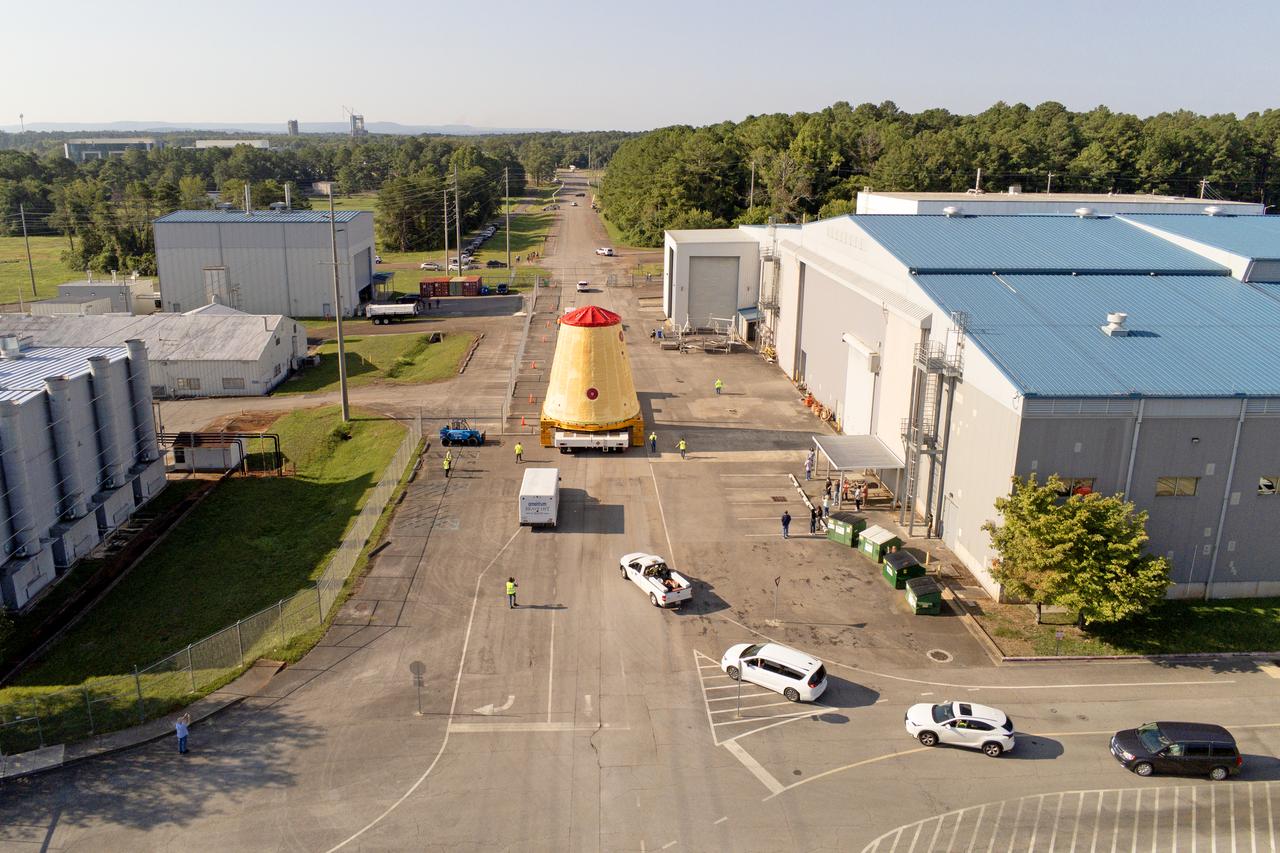
NASA rolled out a key piece of space flight hardware for the SLS (Space Launch System) rocket for the first crewed mission of NASA’s Artemis campaign from Marshall Space Flight Center in Huntsville, Alabama, on Wednesday, Aug. 21 for shipment to the agency’s spaceport in Florida. The cone-shaped launch vehicle stage adapter connects the rocket’s core stage to the upper stage and helps protect the upper stage’s engine that will help propel the Artemis II test flight around the Moon, slated for 2025. Manufactured by prime contractor Teledyne Brown Engineering and the Jacobs Space Exploration Group’s ESSCA (Engineering Services and Science Capability Augmentation) contract using NASA Marshall’s self-reacting friction-stir robotic and vertical weld tools. Crews moved the adapter out of NASA Marshall’s Building 4708 to the agency’s Pegasus barge Aug. 21. The barge will ferry the adapter first to NASA’s Michoud Assembly Facility in New Orleans, where crews will pick up additional SLS hardware for future Artemis missions, before traveling to NASA Kennedy. Once in Florida, the adapter will join the recently delivered core stage. There, teams with NASA’s Exploration Ground Systems will prepare the adapter for stacking and launch.
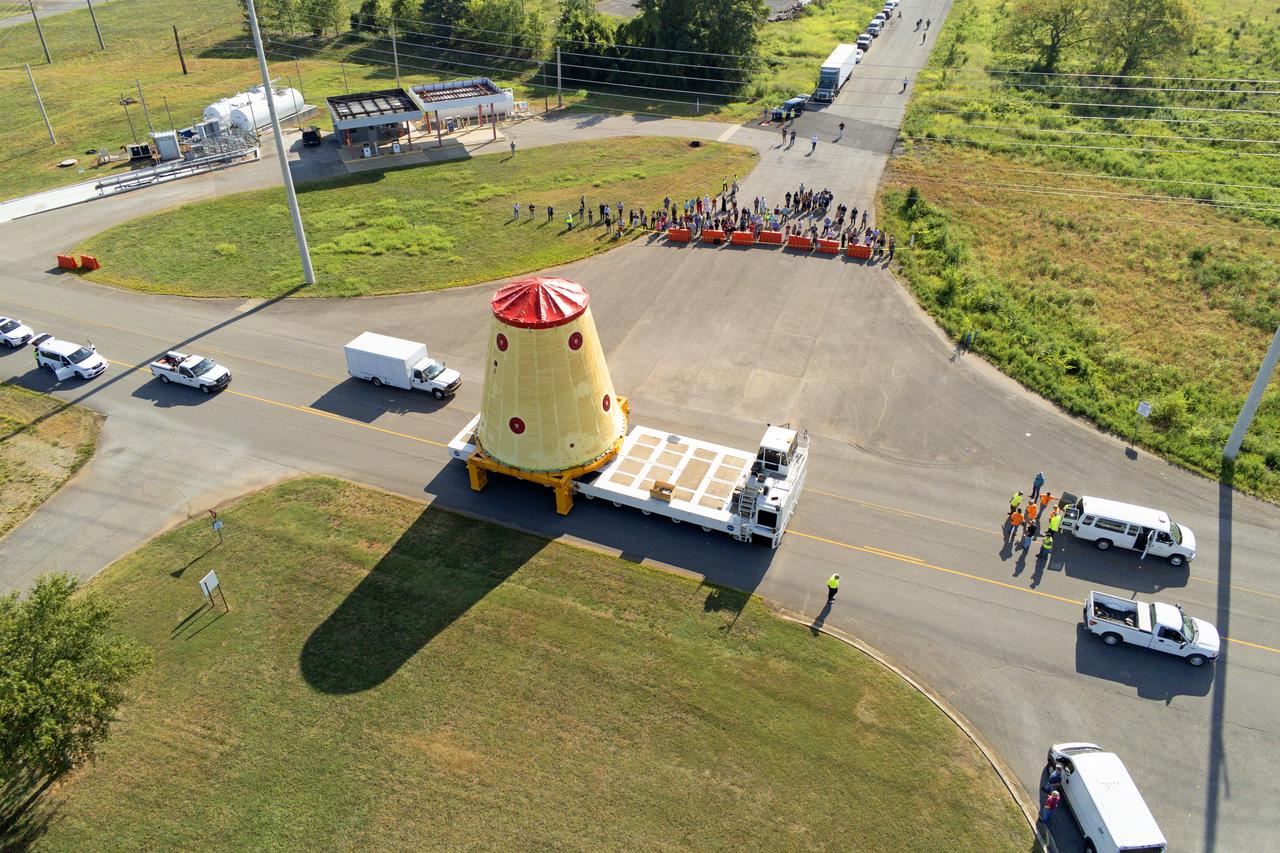
NASA rolled out a key piece of space flight hardware for the SLS (Space Launch System) rocket for the first crewed mission of NASA’s Artemis campaign from Marshall Space Flight Center in Huntsville, Alabama, on Wednesday, Aug. 21 for shipment to the agency’s spaceport in Florida. The cone-shaped launch vehicle stage adapter connects the rocket’s core stage to the upper stage and helps protect the upper stage’s engine that will help propel the Artemis II test flight around the Moon, slated for 2025. Manufactured by prime contractor Teledyne Brown Engineering and the Jacobs Space Exploration Group’s ESSCA (Engineering Services and Science Capability Augmentation) contract using NASA Marshall’s self-reacting friction-stir robotic and vertical weld tools. Crews moved the adapter out of NASA Marshall’s Building 4708 to the agency’s Pegasus barge Aug. 21. The barge will ferry the adapter first to NASA’s Michoud Assembly Facility in New Orleans, where crews will pick up additional SLS hardware for future Artemis missions, before traveling to NASA Kennedy. Once in Florida, the adapter will join the recently delivered core stage. There, teams with NASA’s Exploration Ground Systems will prepare the adapter for stacking and launch.
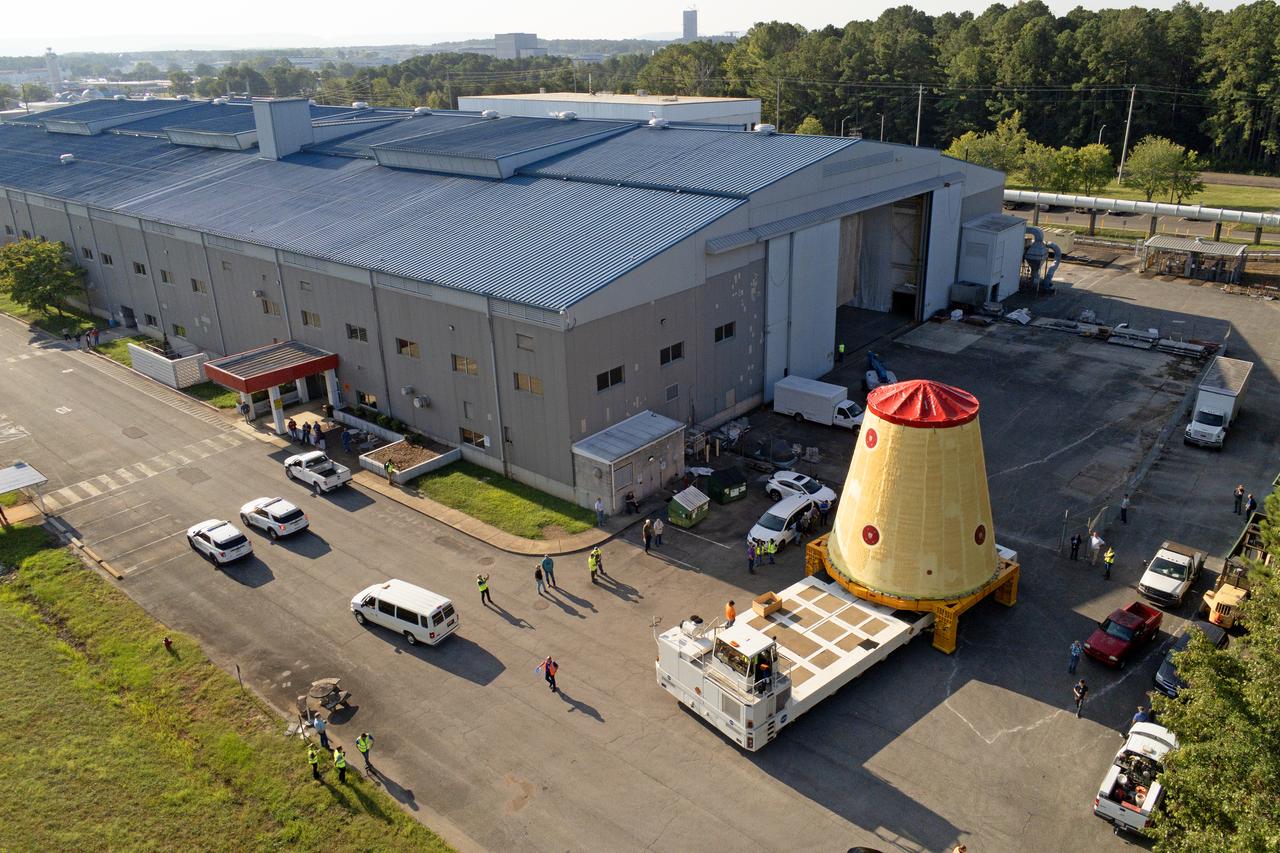
NASA rolled out a key piece of space flight hardware for the SLS (Space Launch System) rocket for the first crewed mission of NASA’s Artemis campaign from Marshall Space Flight Center in Huntsville, Alabama, on Wednesday, Aug. 21 for shipment to the agency’s spaceport in Florida. The cone-shaped launch vehicle stage adapter connects the rocket’s core stage to the upper stage and helps protect the upper stage’s engine that will help propel the Artemis II test flight around the Moon, slated for 2025. Manufactured by prime contractor Teledyne Brown Engineering and the Jacobs Space Exploration Group’s ESSCA (Engineering Services and Science Capability Augmentation) contract using NASA Marshall’s self-reacting friction-stir robotic and vertical weld tools. Crews moved the adapter out of NASA Marshall’s Building 4708 to the agency’s Pegasus barge Aug. 21. The barge will ferry the adapter first to NASA’s Michoud Assembly Facility in New Orleans, where crews will pick up additional SLS hardware for future Artemis missions, before traveling to NASA Kennedy. Once in Florida, the adapter will join the recently delivered core stage. There, teams with NASA’s Exploration Ground Systems will prepare the adapter for stacking and launch.
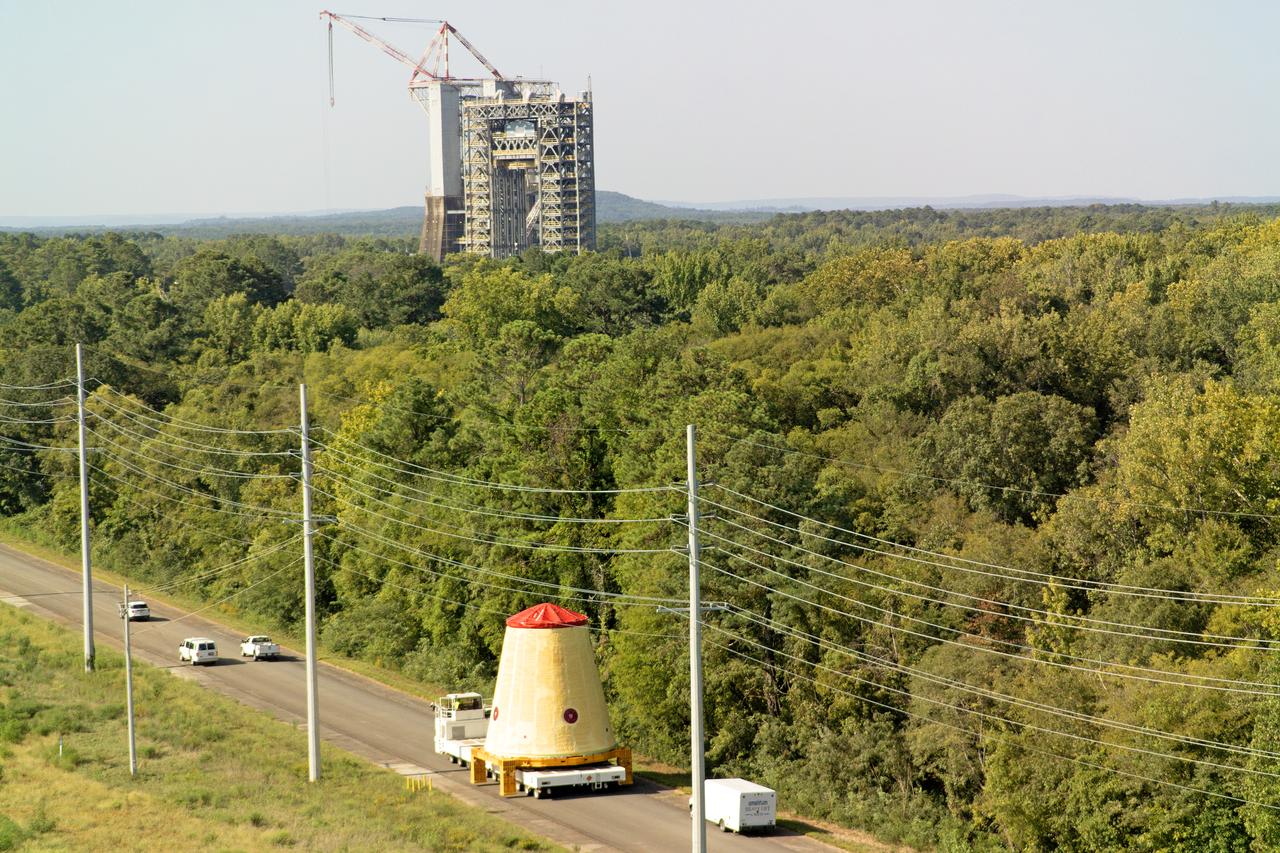
NASA rolled out a key piece of space flight hardware for the SLS (Space Launch System) rocket for the first crewed mission of NASA’s Artemis campaign from Marshall Space Flight Center in Huntsville, Alabama, on Wednesday, Aug. 21 for shipment to the agency’s spaceport in Florida. The cone-shaped launch vehicle stage adapter connects the rocket’s core stage to the upper stage and helps protect the upper stage’s engine that will help propel the Artemis II test flight around the Moon, slated for 2025. Manufactured by prime contractor Teledyne Brown Engineering and the Jacobs Space Exploration Group’s ESSCA (Engineering Services and Science Capability Augmentation) contract using NASA Marshall’s self-reacting friction-stir robotic and vertical weld tools. Crews moved the adapter out of NASA Marshall’s Building 4708 to the agency’s Pegasus barge Aug. 21. The barge will ferry the adapter first to NASA’s Michoud Assembly Facility in New Orleans, where crews will pick up additional SLS hardware for future Artemis missions, before traveling to NASA Kennedy. Once in Florida, the adapter will join the recently delivered core stage. There, teams with NASA’s Exploration Ground Systems will prepare the adapter for stacking and launch.
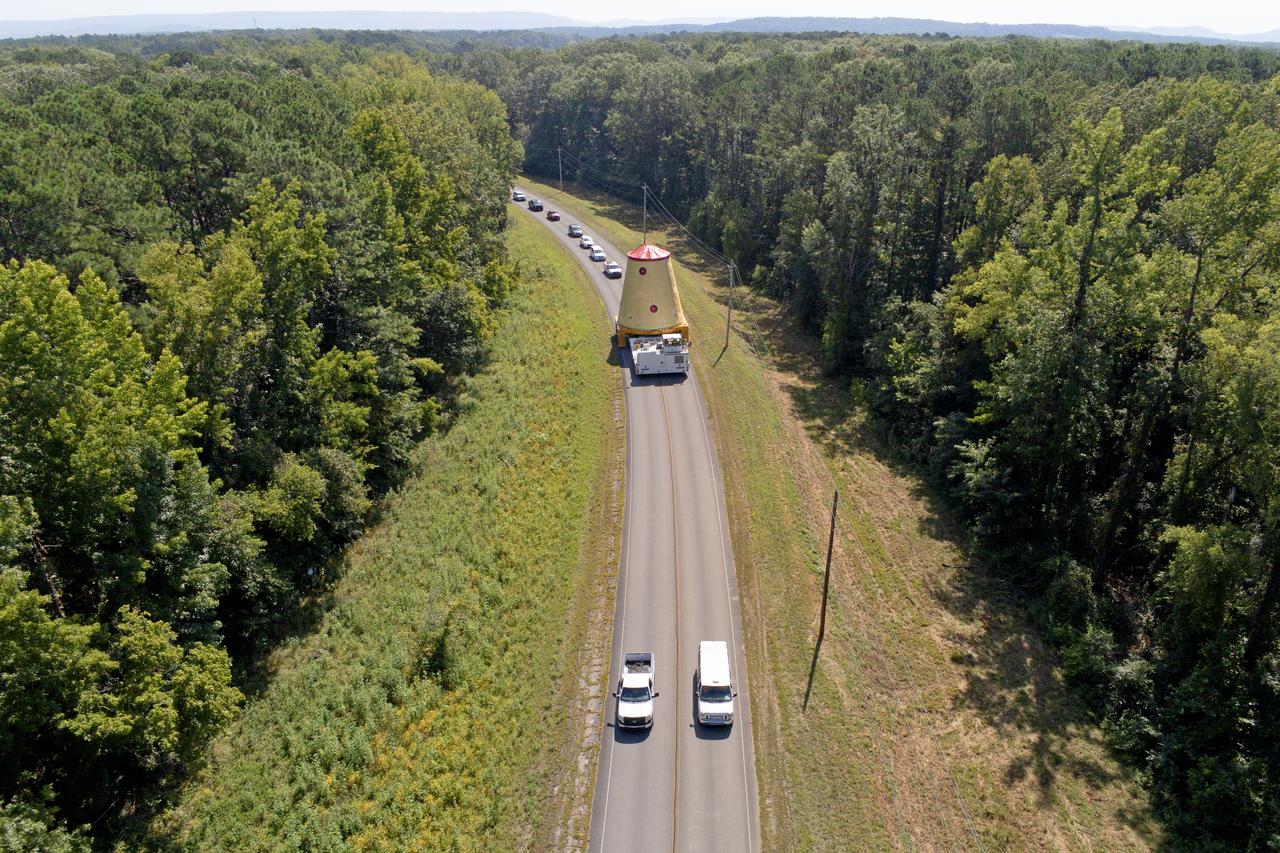
NASA rolled out a key piece of space flight hardware for the SLS (Space Launch System) rocket for the first crewed mission of NASA’s Artemis campaign from Marshall Space Flight Center in Huntsville, Alabama, on Wednesday, Aug. 21 for shipment to the agency’s spaceport in Florida. The cone-shaped launch vehicle stage adapter connects the rocket’s core stage to the upper stage and helps protect the upper stage’s engine that will help propel the Artemis II test flight around the Moon, slated for 2025. Manufactured by prime contractor Teledyne Brown Engineering and the Jacobs Space Exploration Group’s ESSCA (Engineering Services and Science Capability Augmentation) contract using NASA Marshall’s self-reacting friction-stir robotic and vertical weld tools. Crews moved the adapter out of NASA Marshall’s Building 4708 to the agency’s Pegasus barge Aug. 21. The barge will ferry the adapter first to NASA’s Michoud Assembly Facility in New Orleans, where crews will pick up additional SLS hardware for future Artemis missions, before traveling to NASA Kennedy. Once in Florida, the adapter will join the recently delivered core stage. There, teams with NASA’s Exploration Ground Systems will prepare the adapter for stacking and launch.
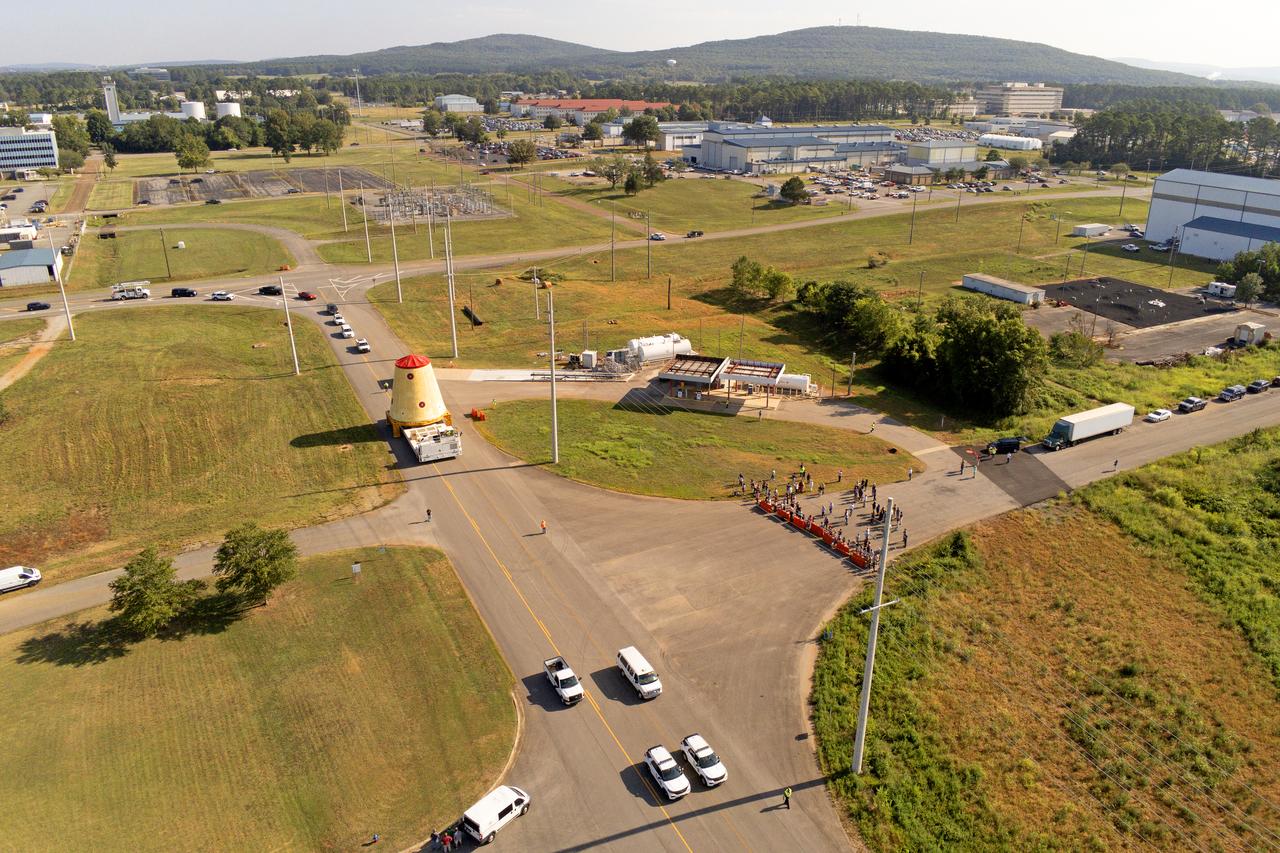
NASA rolled out a key piece of space flight hardware for the SLS (Space Launch System) rocket for the first crewed mission of NASA’s Artemis campaign from Marshall Space Flight Center in Huntsville, Alabama, on Wednesday, Aug. 21 for shipment to the agency’s spaceport in Florida. The cone-shaped launch vehicle stage adapter connects the rocket’s core stage to the upper stage and helps protect the upper stage’s engine that will help propel the Artemis II test flight around the Moon, slated for 2025. Manufactured by prime contractor Teledyne Brown Engineering and the Jacobs Space Exploration Group’s ESSCA (Engineering Services and Science Capability Augmentation) contract using NASA Marshall’s self-reacting friction-stir robotic and vertical weld tools. Crews moved the adapter out of NASA Marshall’s Building 4708 to the agency’s Pegasus barge Aug. 21. The barge will ferry the adapter first to NASA’s Michoud Assembly Facility in New Orleans, where crews will pick up additional SLS hardware for future Artemis missions, before traveling to NASA Kennedy. Once in Florida, the adapter will join the recently delivered core stage. There, teams with NASA’s Exploration Ground Systems will prepare the adapter for stacking and launch.
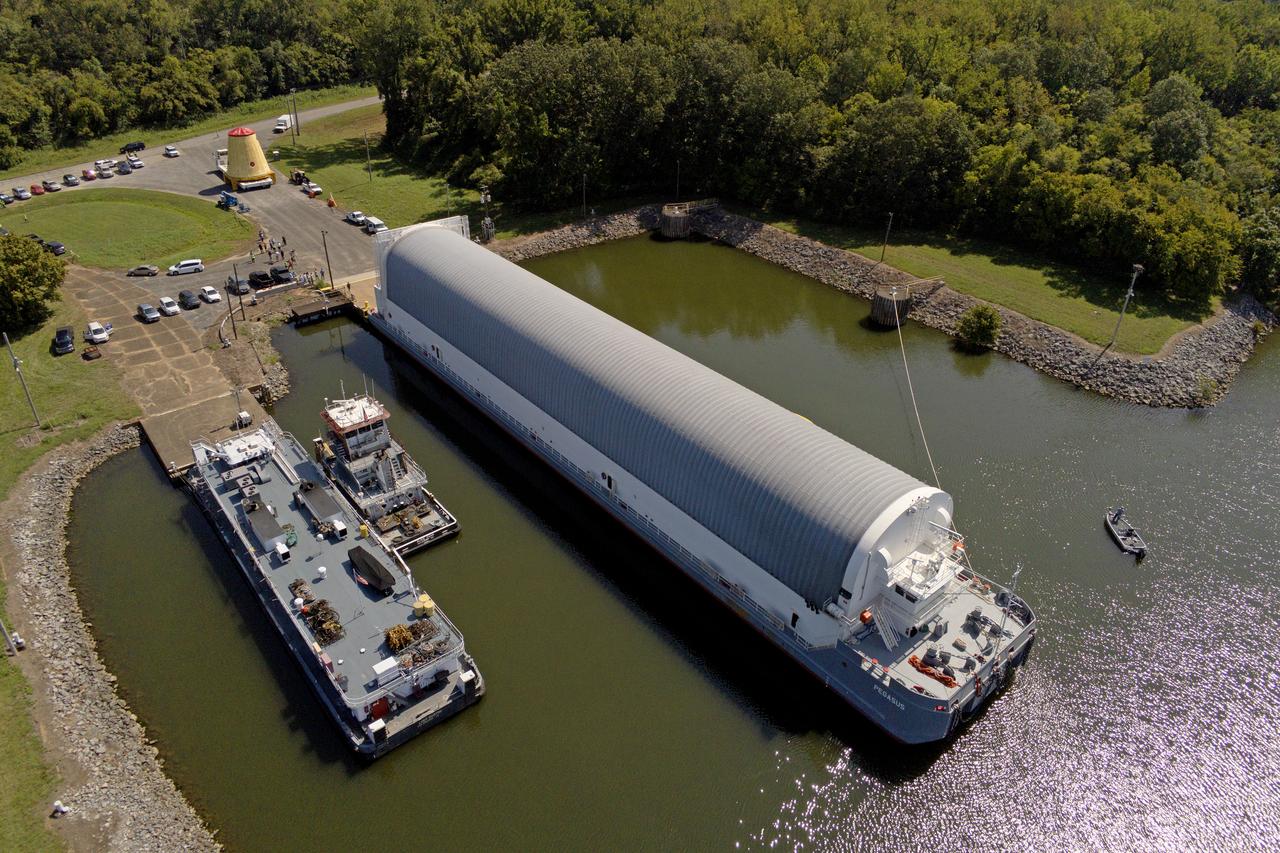
NASA rolled out a key piece of space flight hardware for the SLS (Space Launch System) rocket for the first crewed mission of NASA’s Artemis campaign from Marshall Space Flight Center in Huntsville, Alabama, on Wednesday, Aug. 21 for shipment to the agency’s spaceport in Florida. The cone-shaped launch vehicle stage adapter connects the rocket’s core stage to the upper stage and helps protect the upper stage’s engine that will help propel the Artemis II test flight around the Moon, slated for 2025. Manufactured by prime contractor Teledyne Brown Engineering and the Jacobs Space Exploration Group’s ESSCA (Engineering Services and Science Capability Augmentation) contract using NASA Marshall’s self-reacting friction-stir robotic and vertical weld tools. Crews moved the adapter out of NASA Marshall’s Building 4708 to the agency’s Pegasus barge Aug. 21. The barge will ferry the adapter first to NASA’s Michoud Assembly Facility in New Orleans, where crews will pick up additional SLS hardware for future Artemis missions, before traveling to NASA Kennedy. Once in Florida, the adapter will join the recently delivered core stage. There, teams with NASA’s Exploration Ground Systems will prepare the adapter for stacking and launch.

NASA rolled out a key piece of space flight hardware for the SLS (Space Launch System) rocket for the first crewed mission of NASA’s Artemis campaign from Marshall Space Flight Center in Huntsville, Alabama, on Wednesday, Aug. 21 for shipment to the agency’s spaceport in Florida. The cone-shaped launch vehicle stage adapter connects the rocket’s core stage to the upper stage and helps protect the upper stage’s engine that will help propel the Artemis II test flight around the Moon, slated for 2025. Manufactured by prime contractor Teledyne Brown Engineering and the Jacobs Space Exploration Group’s ESSCA (Engineering Services and Science Capability Augmentation) contract using NASA Marshall’s self-reacting friction-stir robotic and vertical weld tools. Crews moved the adapter out of NASA Marshall’s Building 4708 to the agency’s Pegasus barge Aug. 21. The barge will ferry the adapter first to NASA’s Michoud Assembly Facility in New Orleans, where crews will pick up additional SLS hardware for future Artemis missions, before traveling to NASA Kennedy. Once in Florida, the adapter will join the recently delivered core stage. There, teams with NASA’s Exploration Ground Systems will prepare the adapter for stacking and launch.
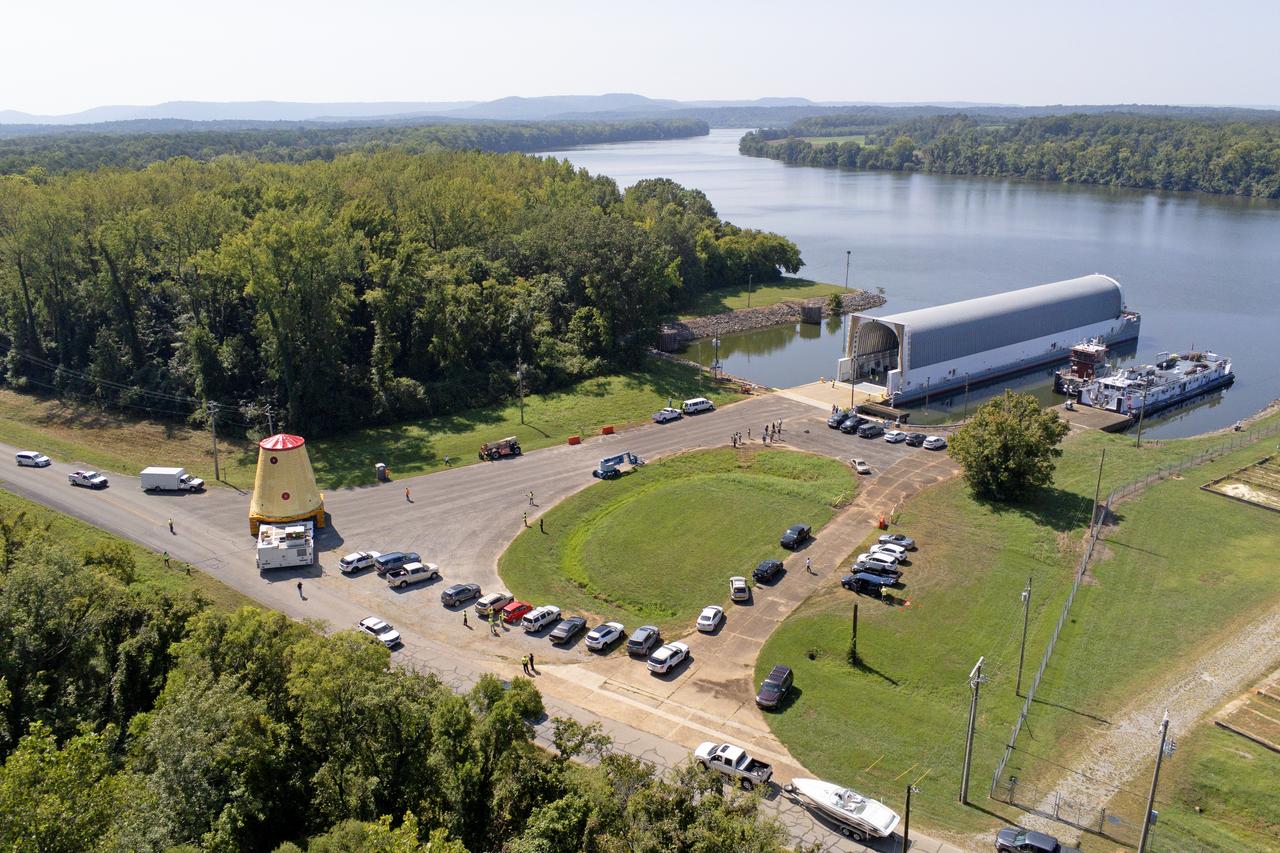
NASA rolled out a key piece of space flight hardware for the SLS (Space Launch System) rocket for the first crewed mission of NASA’s Artemis campaign from Marshall Space Flight Center in Huntsville, Alabama, on Wednesday, Aug. 21 for shipment to the agency’s spaceport in Florida. The cone-shaped launch vehicle stage adapter connects the rocket’s core stage to the upper stage and helps protect the upper stage’s engine that will help propel the Artemis II test flight around the Moon, slated for 2025. Manufactured by prime contractor Teledyne Brown Engineering and the Jacobs Space Exploration Group’s ESSCA (Engineering Services and Science Capability Augmentation) contract using NASA Marshall’s self-reacting friction-stir robotic and vertical weld tools. Crews moved the adapter out of NASA Marshall’s Building 4708 to the agency’s Pegasus barge Aug. 21. The barge will ferry the adapter first to NASA’s Michoud Assembly Facility in New Orleans, where crews will pick up additional SLS hardware for future Artemis missions, before traveling to NASA Kennedy. Once in Florida, the adapter will join the recently delivered core stage. There, teams with NASA’s Exploration Ground Systems will prepare the adapter for stacking and launch.
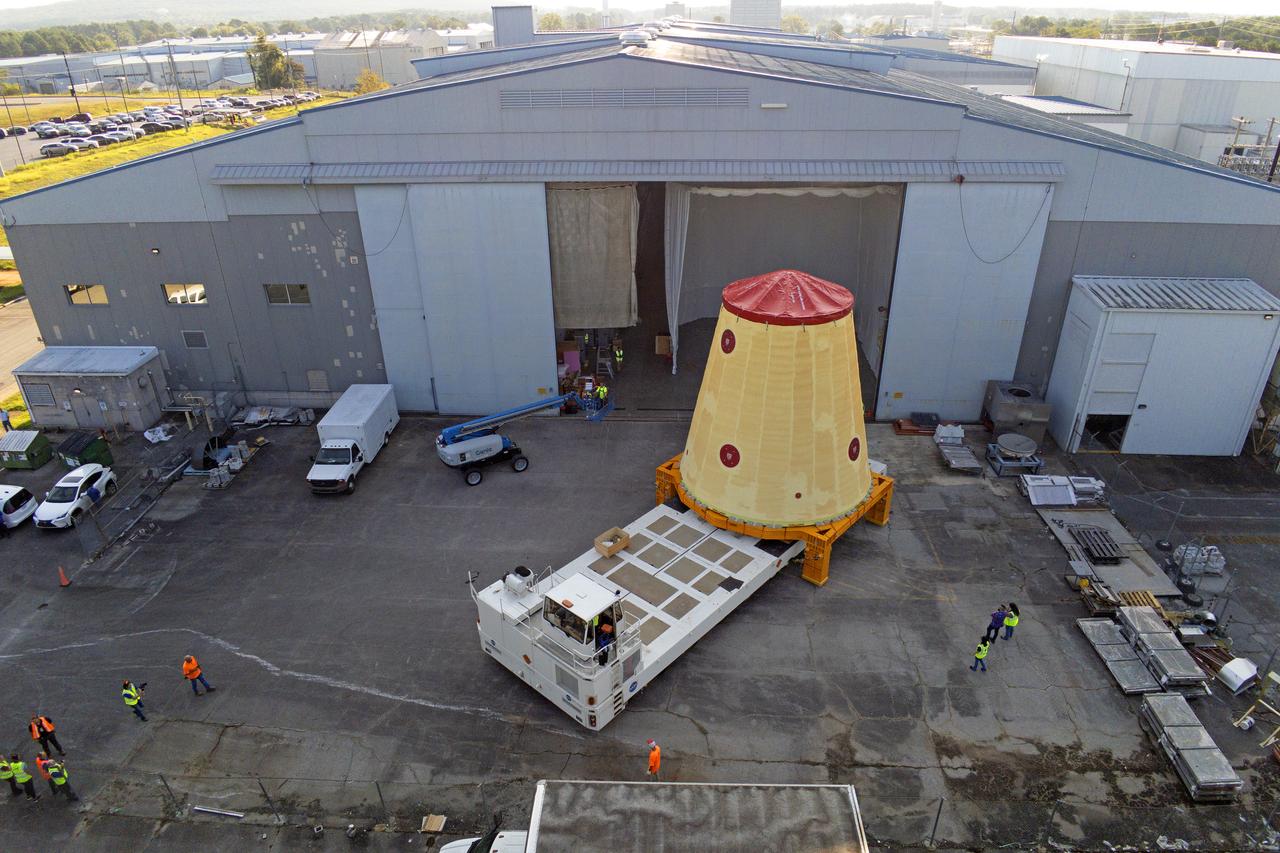
NASA rolled out a key piece of space flight hardware for the SLS (Space Launch System) rocket for the first crewed mission of NASA’s Artemis campaign from Marshall Space Flight Center in Huntsville, Alabama, on Wednesday, Aug. 21 for shipment to the agency’s spaceport in Florida. The cone-shaped launch vehicle stage adapter connects the rocket’s core stage to the upper stage and helps protect the upper stage’s engine that will help propel the Artemis II test flight around the Moon, slated for 2025. Manufactured by prime contractor Teledyne Brown Engineering and the Jacobs Space Exploration Group’s ESSCA (Engineering Services and Science Capability Augmentation) contract using NASA Marshall’s self-reacting friction-stir robotic and vertical weld tools. Crews moved the adapter out of NASA Marshall’s Building 4708 to the agency’s Pegasus barge Aug. 21. The barge will ferry the adapter first to NASA’s Michoud Assembly Facility in New Orleans, where crews will pick up additional SLS hardware for future Artemis missions, before traveling to NASA Kennedy. Once in Florida, the adapter will join the recently delivered core stage. There, teams with NASA’s Exploration Ground Systems will prepare the adapter for stacking and launch.

On Thursday, February 10, 2022, move crews at NASA’s Michoud Assembly Facility lift the core stage 3 liquid oxygen tank (LOX) aft barrel out of the vertical friction stir weld tool to be moved for its next phase of production. Eventually, the aft barrel will be mated with the forward barrel and forward and aft domes to create the LOX tank, which will be used for the Space Launch System’s Artemis III mission. The LOX tank holds 196,000 gallons of super-cooled liquid oxygen to help fuel four RS-25 engines. The SLS core stage is made up of five unique elements: the forward skirt, liquid oxygen tank, intertank, liquid hydrogen tank, and the engine section. The liquid oxygen hardware, along with the liquid hydrogen tank will provide propellant to the four RS-25 engines to produce more than two million pounds of thrust to help launch NASA’s Orion spacecraft, astronauts, and supplies beyond Earth’s orbit to the Moon. Image credit: NASA/Michael DeMocker
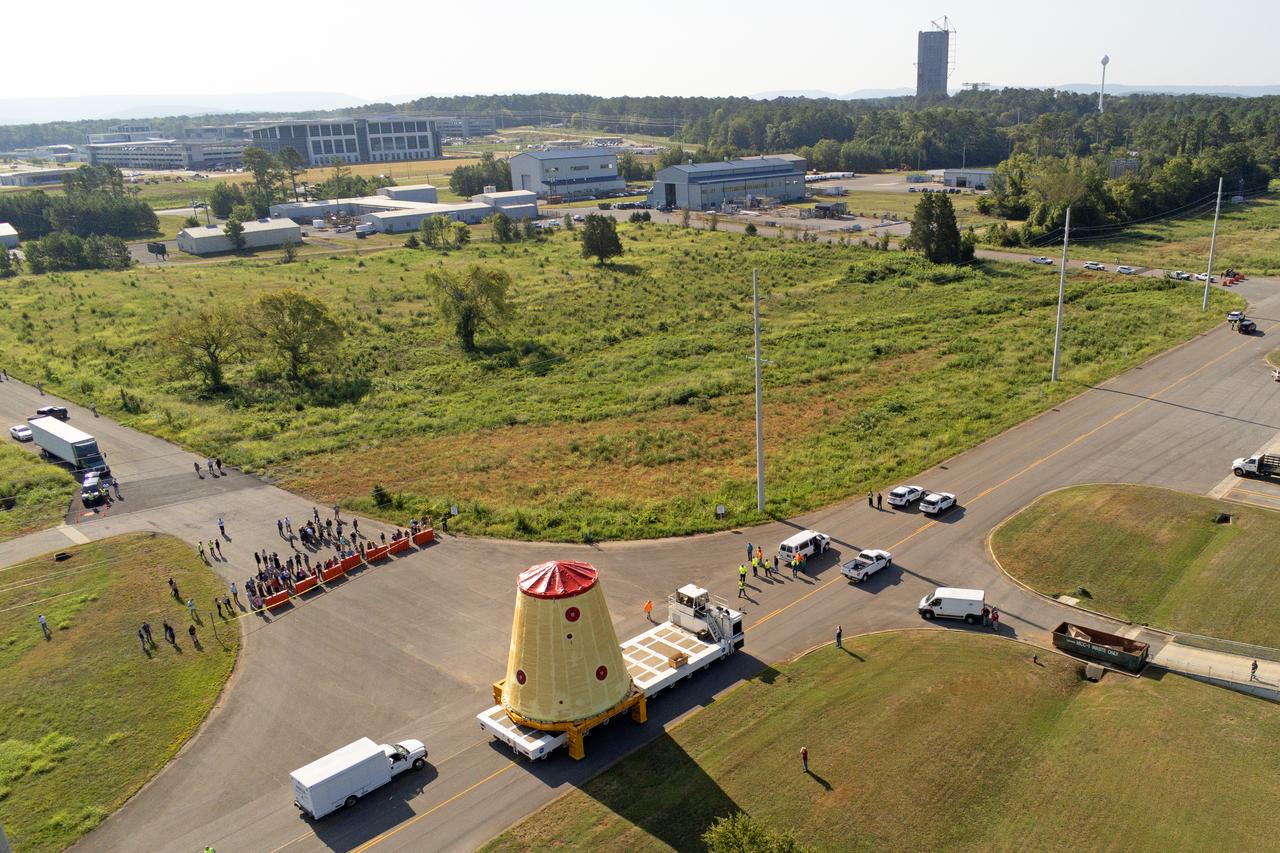
NASA rolled out a key piece of space flight hardware for the SLS (Space Launch System) rocket for the first crewed mission of NASA’s Artemis campaign from Marshall Space Flight Center in Huntsville, Alabama, on Wednesday, Aug. 21 for shipment to the agency’s spaceport in Florida. The cone-shaped launch vehicle stage adapter connects the rocket’s core stage to the upper stage and helps protect the upper stage’s engine that will help propel the Artemis II test flight around the Moon, slated for 2025. Manufactured by prime contractor Teledyne Brown Engineering and the Jacobs Space Exploration Group’s ESSCA (Engineering Services and Science Capability Augmentation) contract using NASA Marshall’s self-reacting friction-stir robotic and vertical weld tools. Crews moved the adapter out of NASA Marshall’s Building 4708 to the agency’s Pegasus barge Aug. 21. The barge will ferry the adapter first to NASA’s Michoud Assembly Facility in New Orleans, where crews will pick up additional SLS hardware for future Artemis missions, before traveling to NASA Kennedy. Once in Florida, the adapter will join the recently delivered core stage. There, teams with NASA’s Exploration Ground Systems will prepare the adapter for stacking and launch.
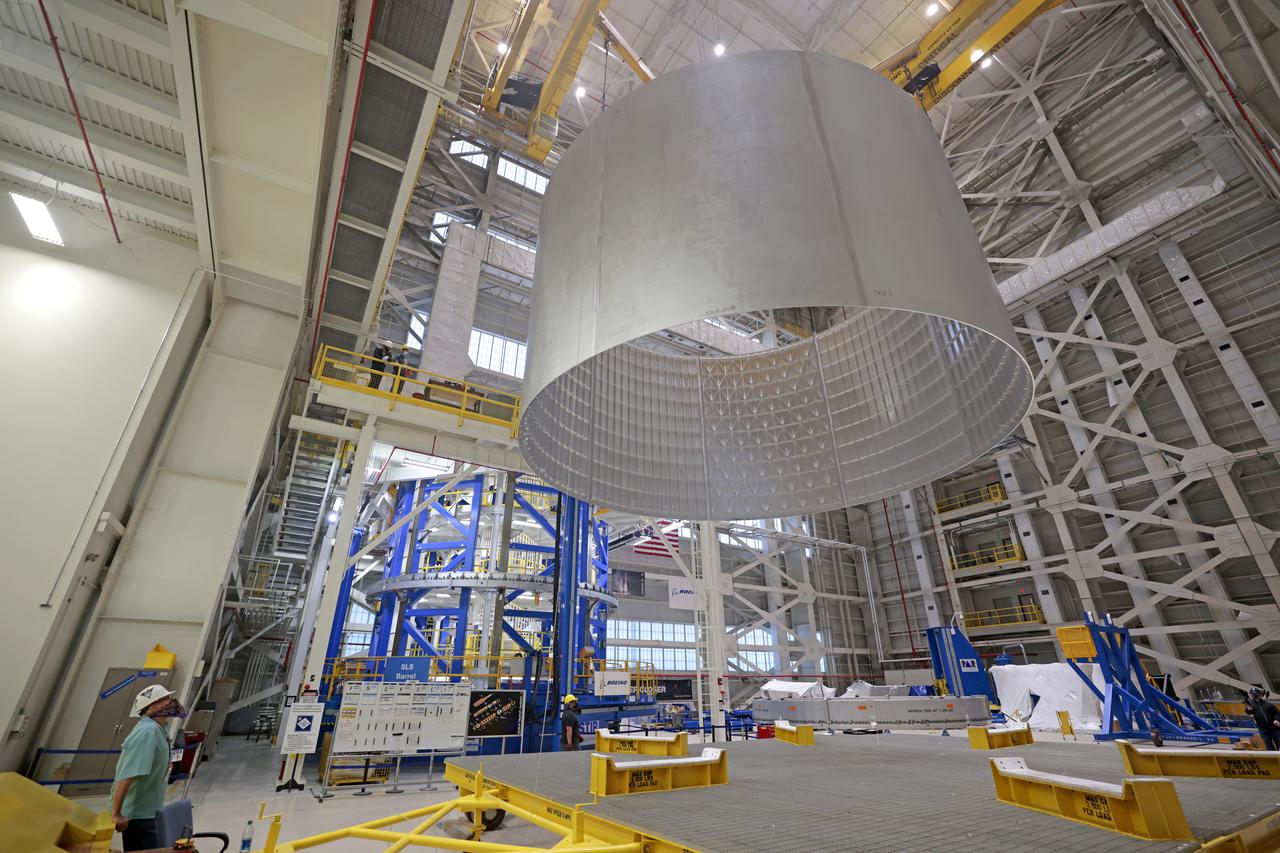
On Thursday, February 10, 2022, move crews at NASA’s Michoud Assembly Facility lift the core stage 3 liquid oxygen tank (LOX) aft barrel out of the vertical friction stir weld tool to be moved for its next phase of production. Eventually, the aft barrel will be mated with the forward barrel and forward and aft domes to create the LOX tank, which will be used for the Space Launch System’s Artemis III mission. The LOX tank holds 196,000 gallons of super-cooled liquid oxygen to help fuel four RS-25 engines. The SLS core stage is made up of five unique elements: the forward skirt, liquid oxygen tank, intertank, liquid hydrogen tank, and the engine section. The liquid oxygen hardware, along with the liquid hydrogen tank will provide propellant to the four RS-25 engines to produce more than two million pounds of thrust to help launch NASA’s Orion spacecraft, astronauts, and supplies beyond Earth’s orbit to the Moon. Image credit: NASA/Michael DeMocker