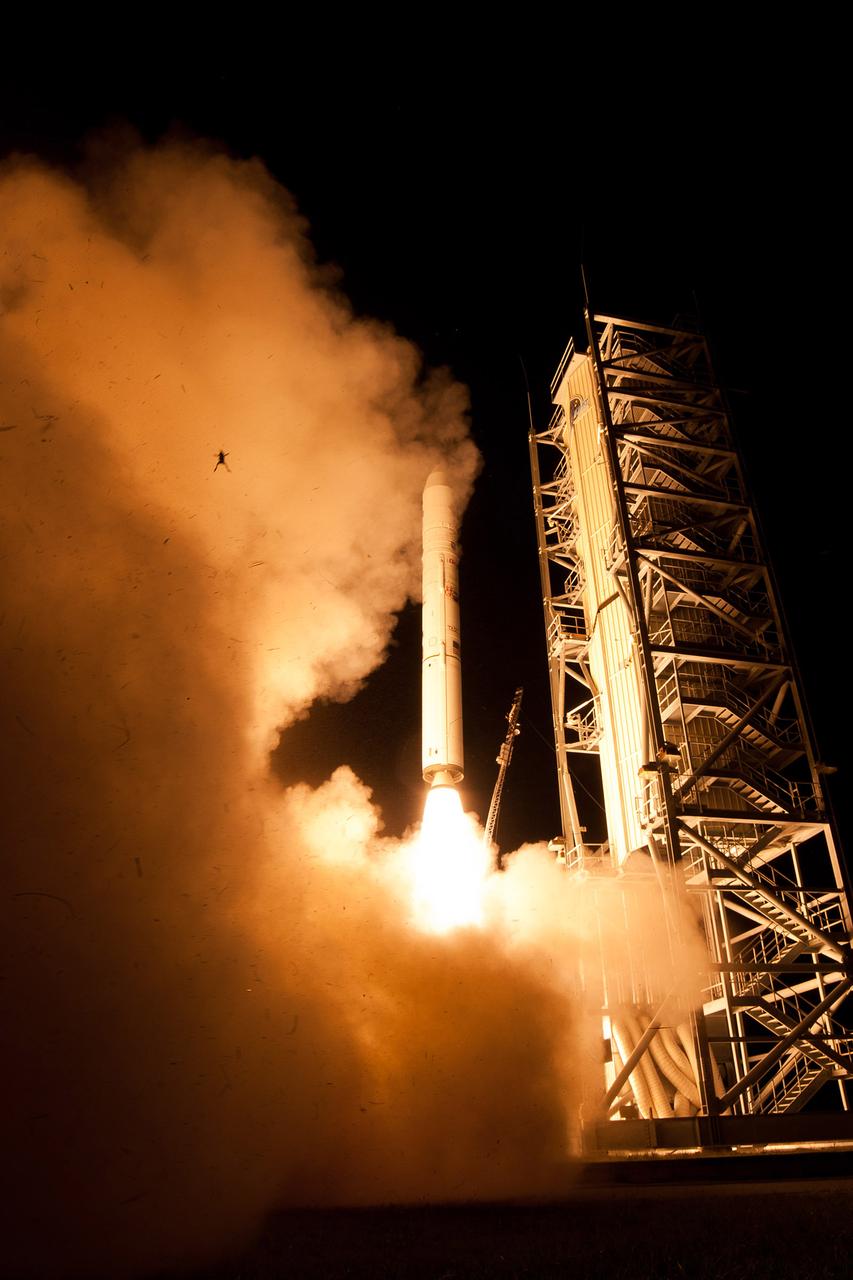
A still camera on a sound trigger captured this intriguing photo of an airborne frog as NASA's LADEE spacecraft lifts off from Pad 0B at Wallops Flight Facility in Virginia. The photo team confirms the frog is real and was captured in a single frame by one of the remote cameras used to photograph the launch. The condition of the frog, however, is uncertain. Credit: NASA/Wallops Flight Facility/Chris Perry A still camera on a sound trigger captured this intriguing photo of an airborne frog as NASA's LADEE spacecraft lifts off from Pad 0B at Wallops Flight Facility in Virginia. The photo team confirms the frog is real and was captured in a single frame by one of the remote cameras used to photograph the launch. The condition of the frog, however, is uncertain. Credit: NASA Wallops Flight Facility/Chris Perry <b><a href="http://www.nasa.gov/audience/formedia/features/MP_Photo_Guidelines.html" rel="nofollow">NASA image use policy.</a></b> <b><a href="http://www.nasa.gov/centers/goddard/home/index.html" rel="nofollow">NASA Goddard Space Flight Center</a></b> enables NASA’s mission through four scientific endeavors: Earth Science, Heliophysics, Solar System Exploration, and Astrophysics. Goddard plays a leading role in NASA’s accomplishments by contributing compelling scientific knowledge to advance the Agency’s mission. <b>Follow us on <a href="http://twitter.com/NASA_GoddardPix" rel="nofollow">Twitter</a></b> <b>Like us on <a href="http://www.facebook.com/pages/Greenbelt-MD/NASA-Goddard/395013845897?ref=tsd" rel="nofollow">Facebook</a></b> <b>Find us on <a href="http://instagram.com/nasagoddard?vm=grid" rel="nofollow">Instagram</a></b>
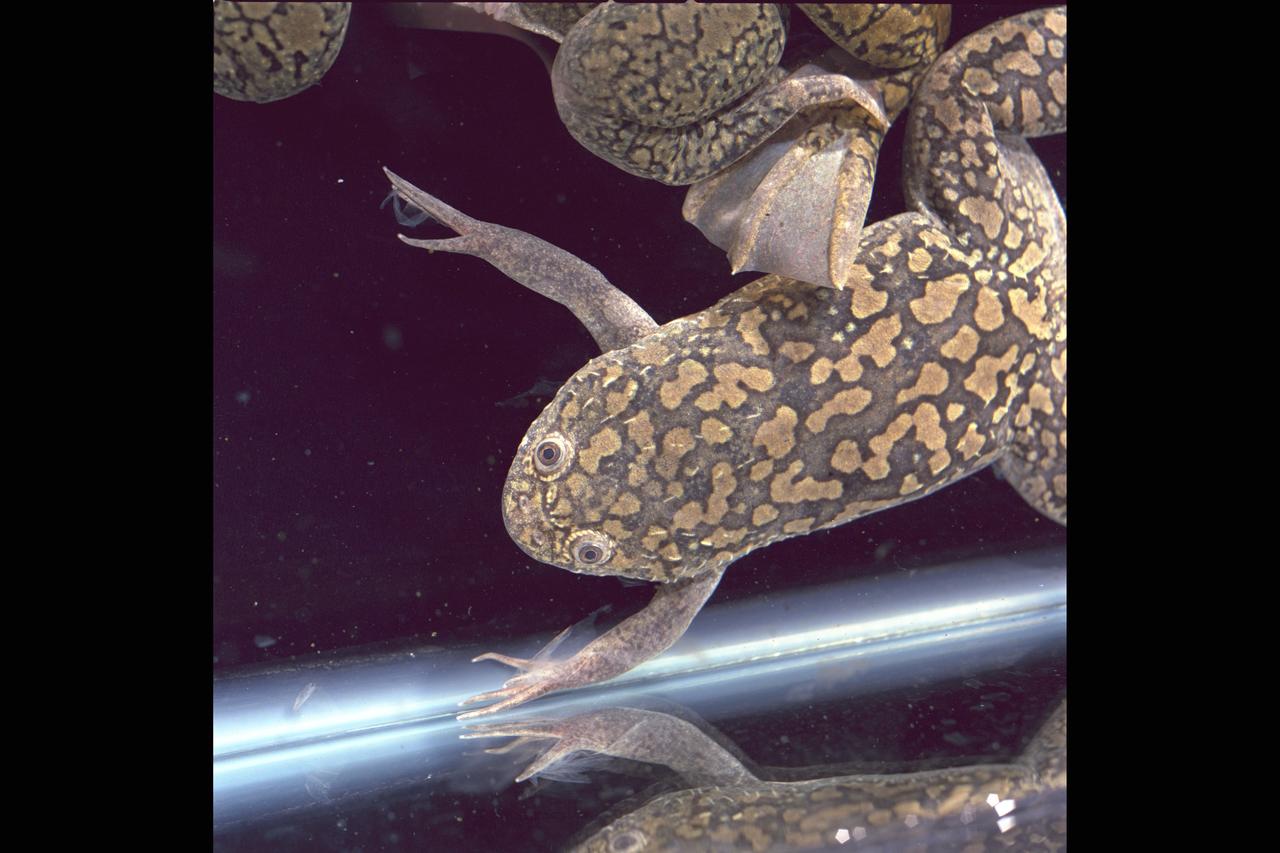
FEE (Frog Embryology Experiment) Spacelab-J flight frogs from ground control tadpoles
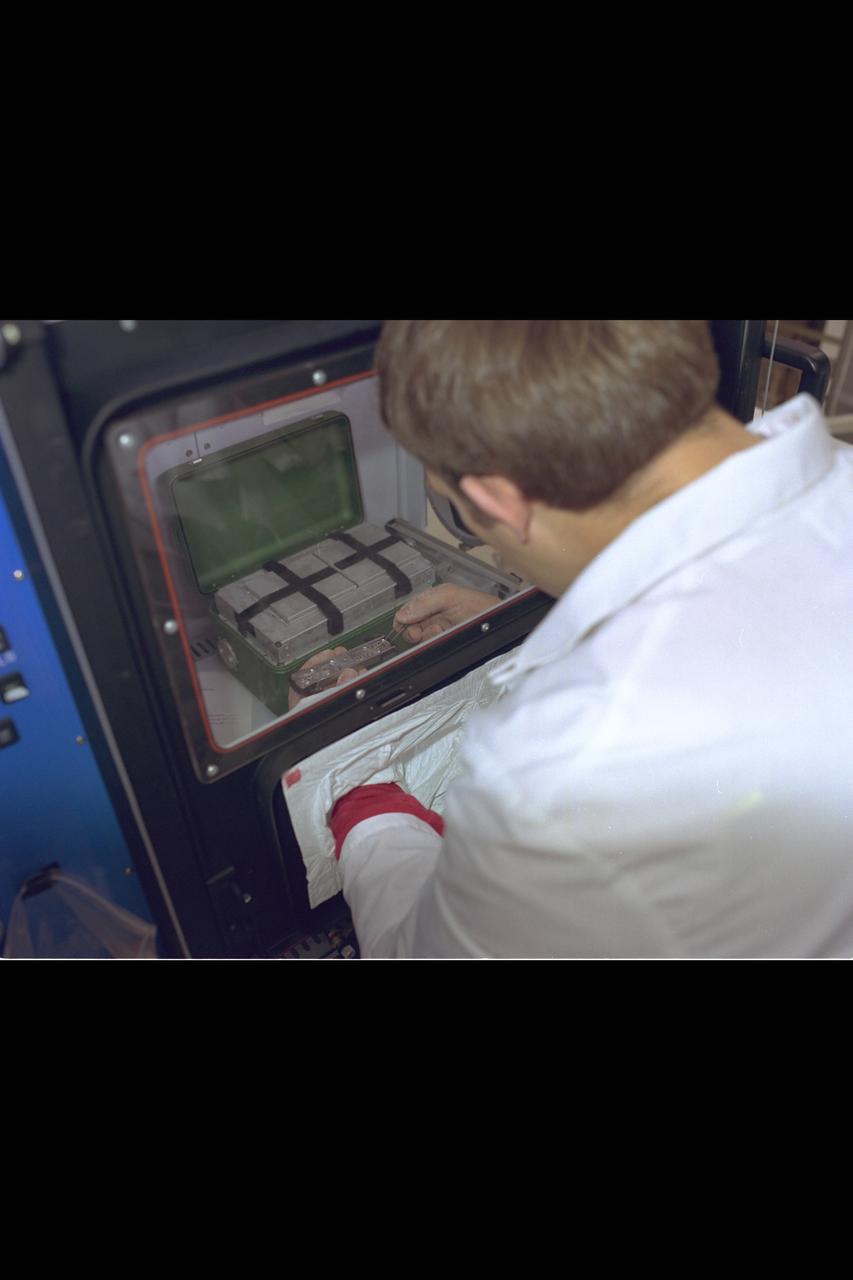
Frog Embryology Experiemnt (FEE) SL-J Crew Training & EVT at Ames
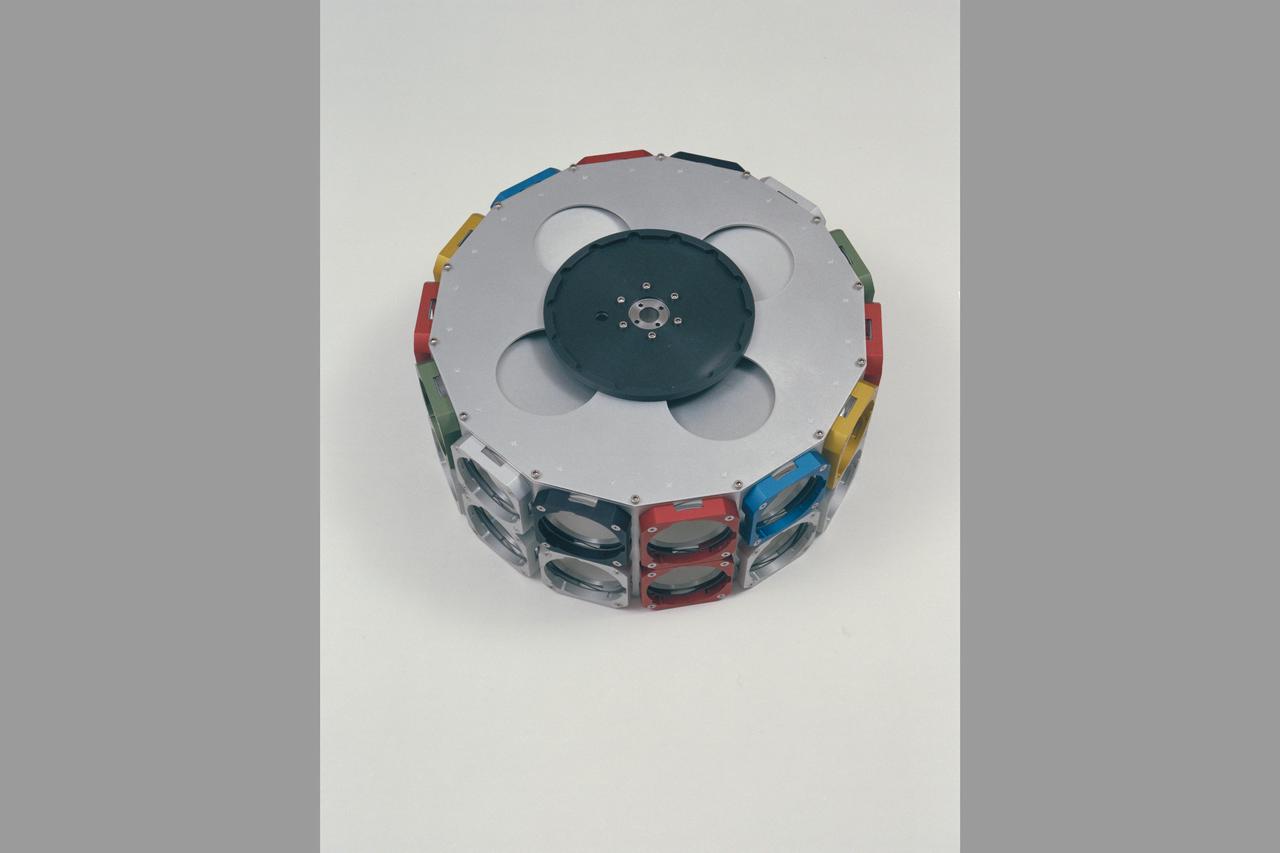
SL-J Space Shuttle Frog Embryology Experiment (FEU) flight hardware
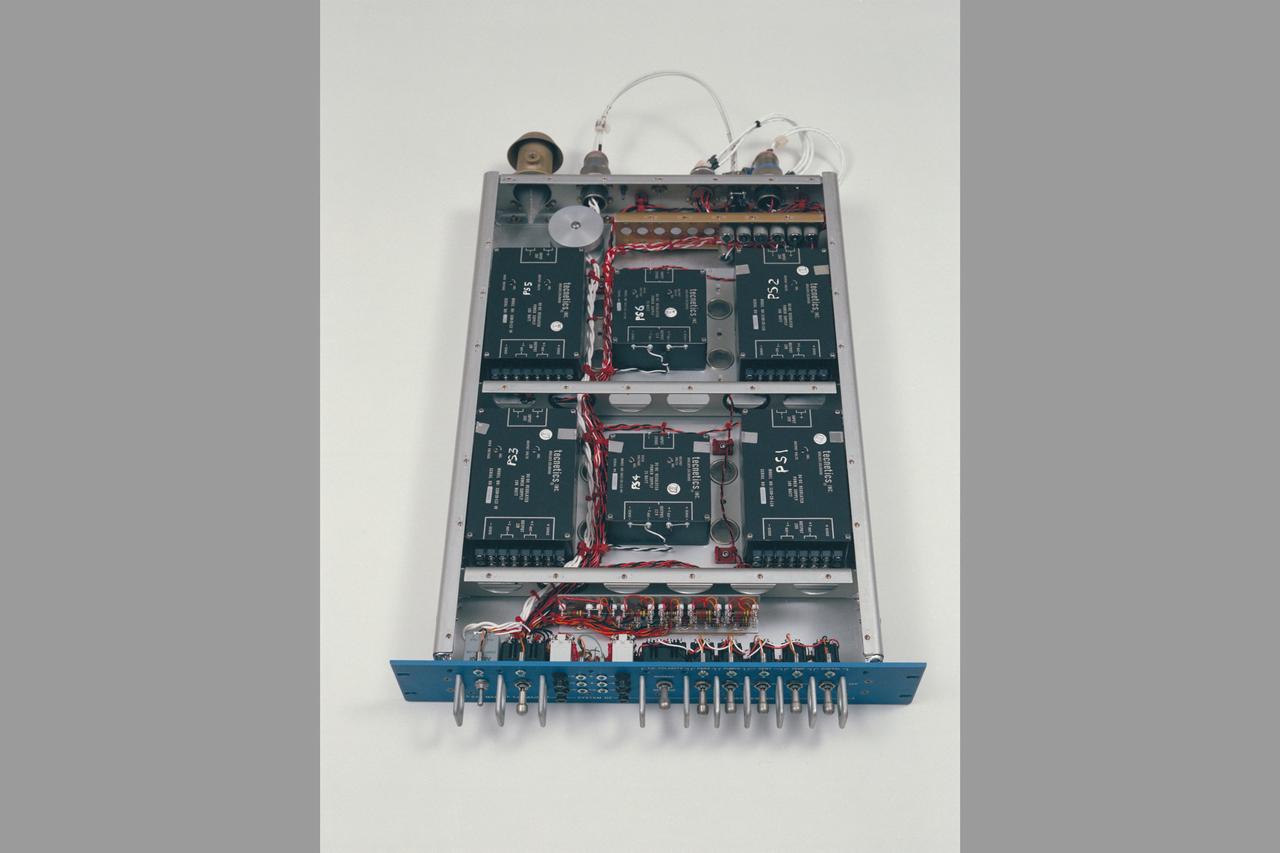
SL-J Space Shuttle Frog Embryology Experiment (FEU) flight hardware
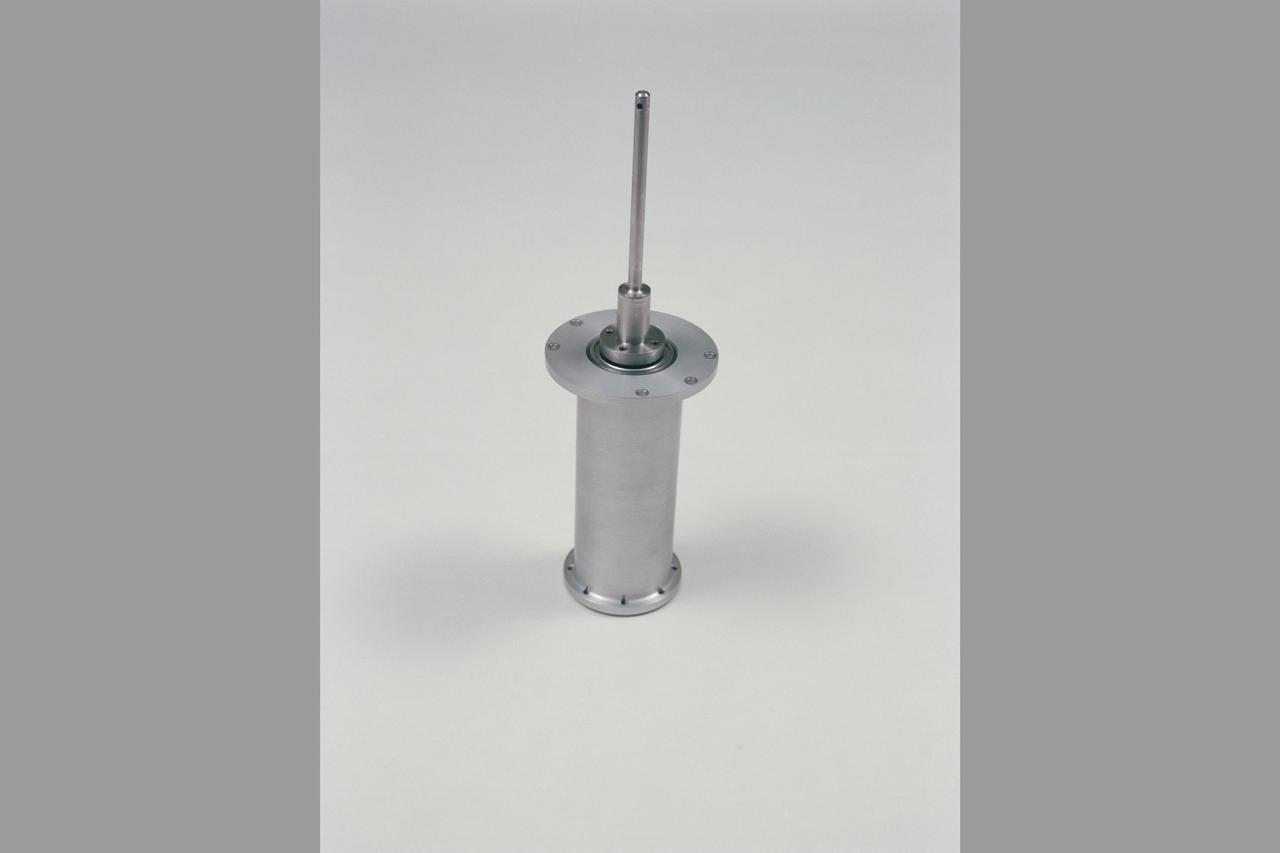
SL-J Space Shuttle Frog Embryology Experiment (FEU) flight hardware
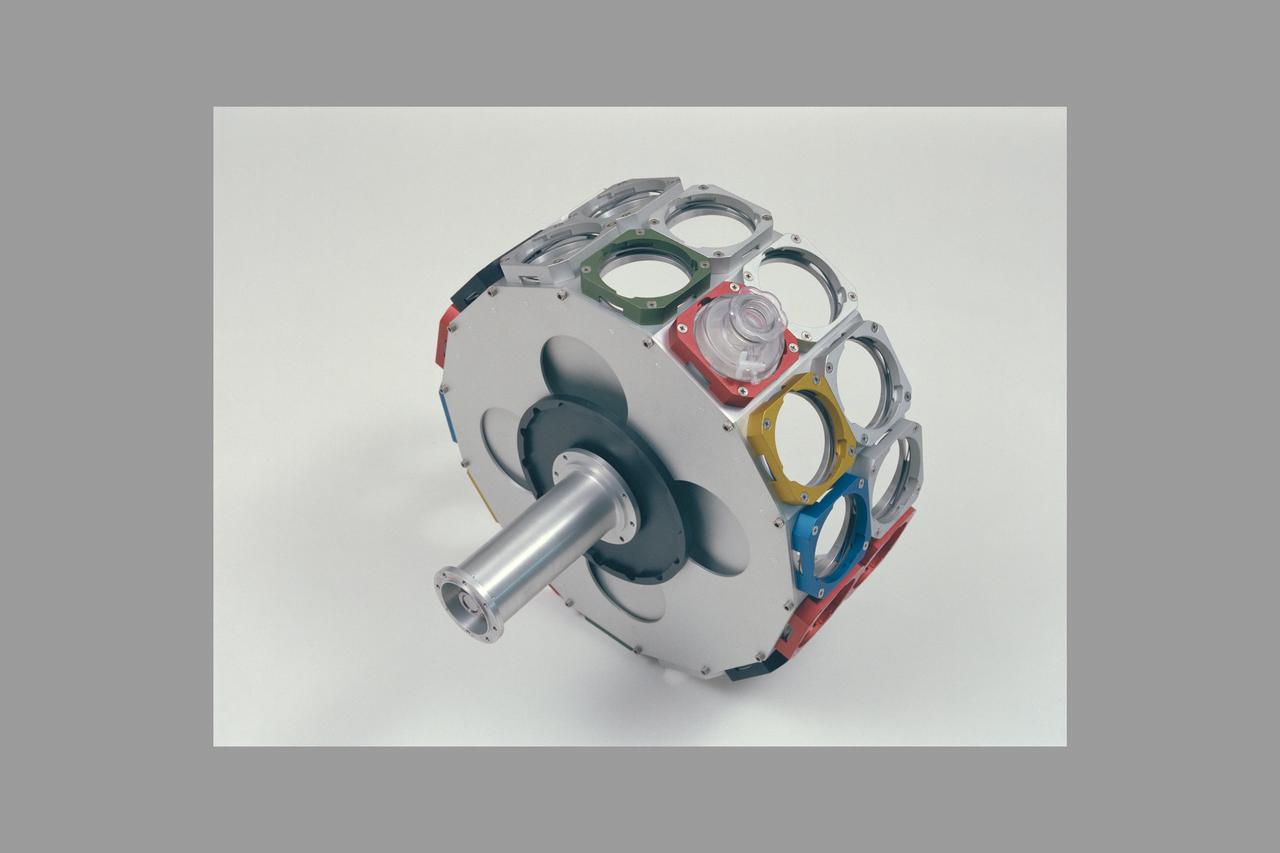
SL-J Space Shuttle Frog Embryology Experiment (FEU) flight hardware
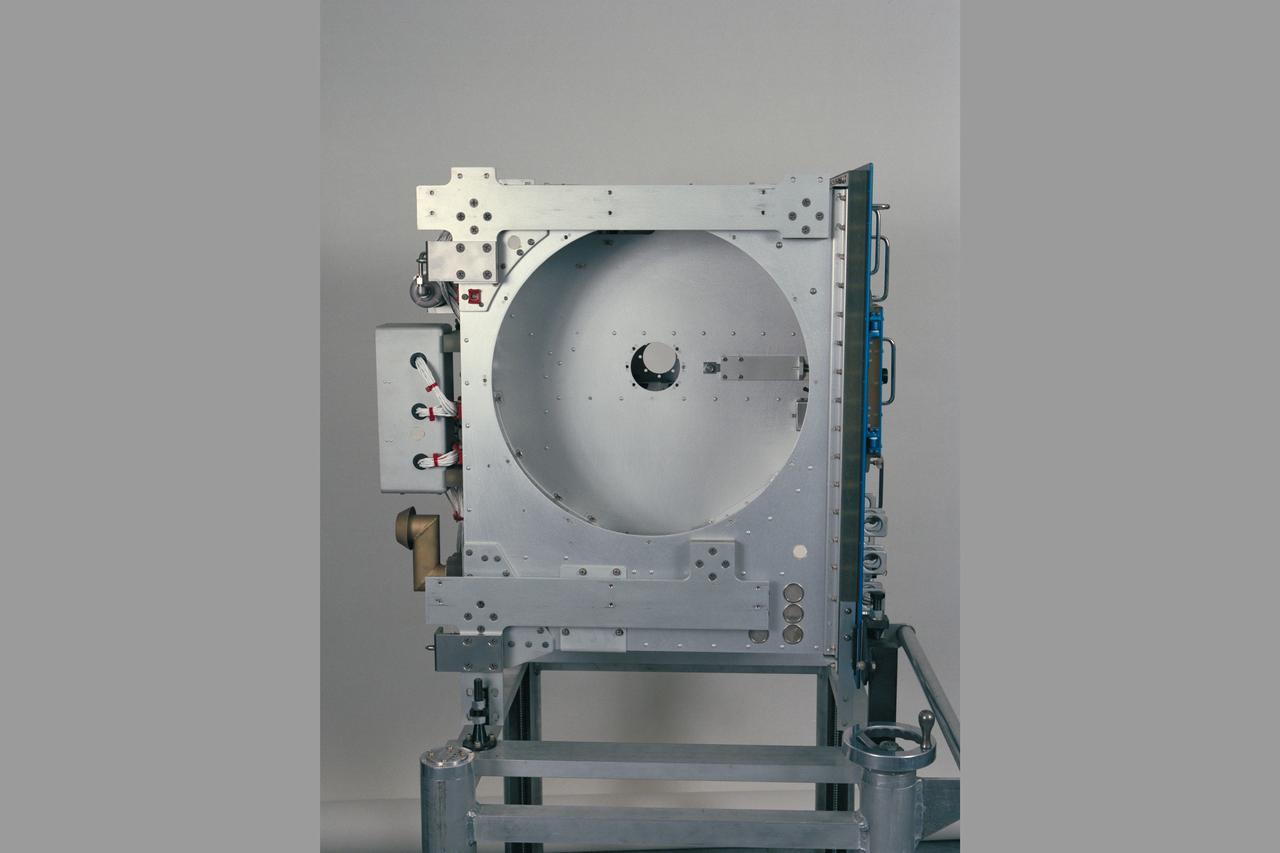
SL-J Space Shuttle Frog Embryology Experiment (FEU) flight hardware
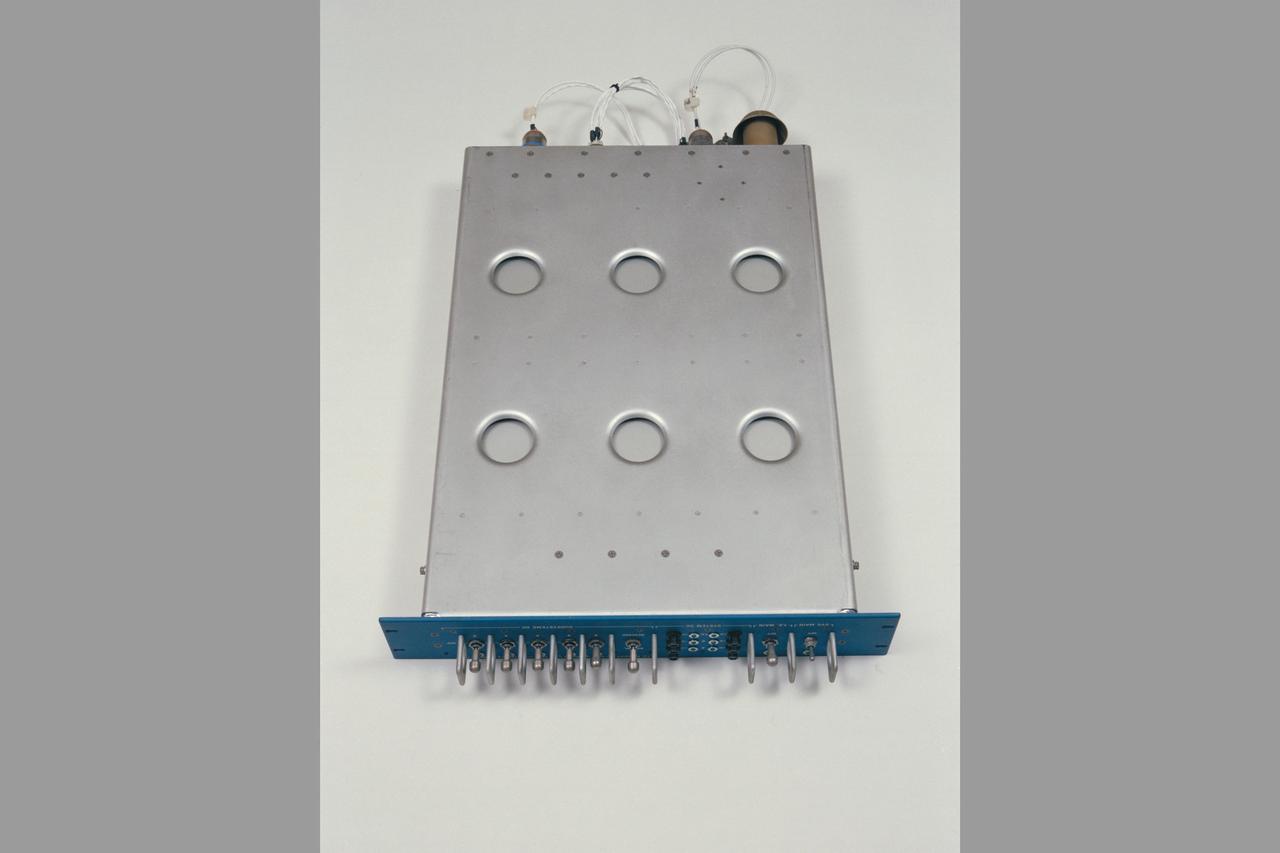
SL-J Space Shuttle Frog Embryology Experiment (FEU) flight hardware
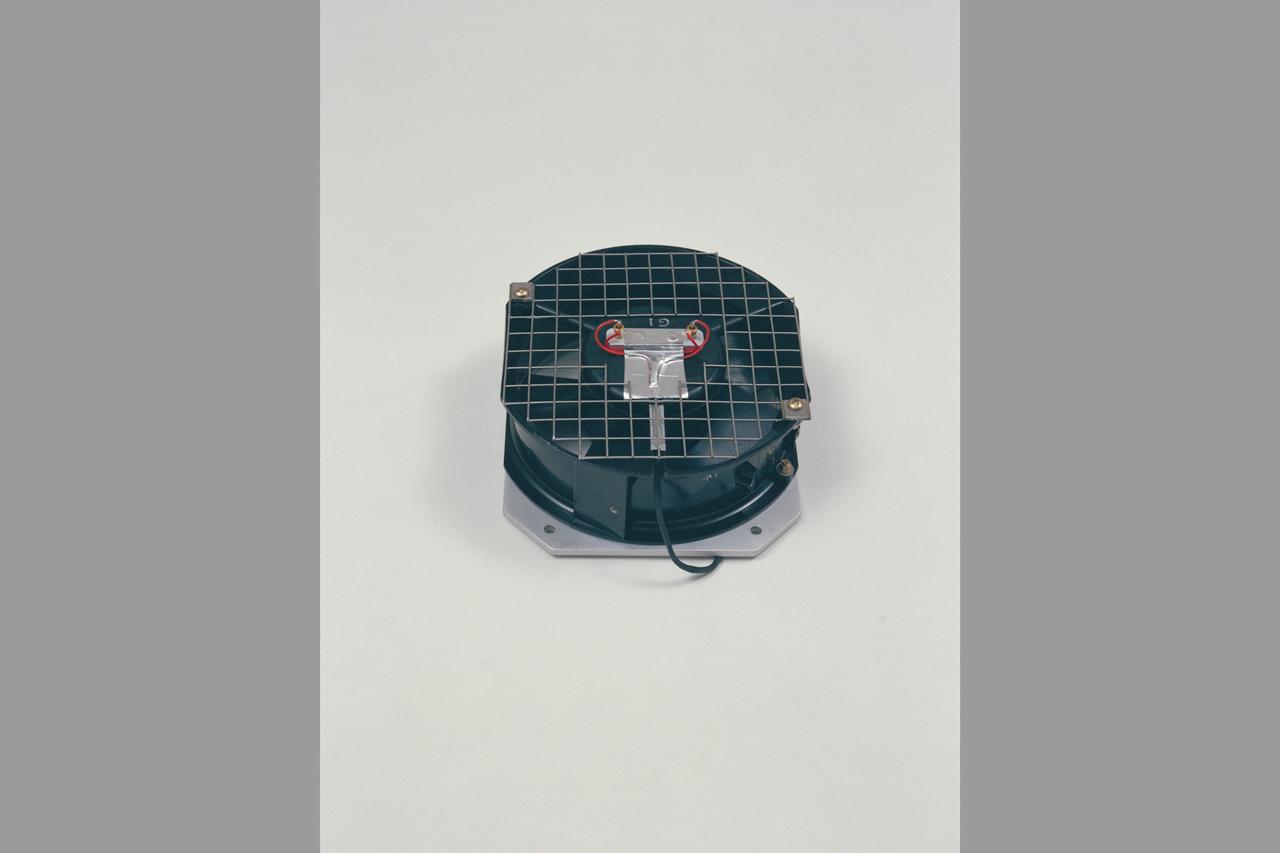
SL-J Space Shuttle Frog Embryology Experiment (FEU) flight hardware
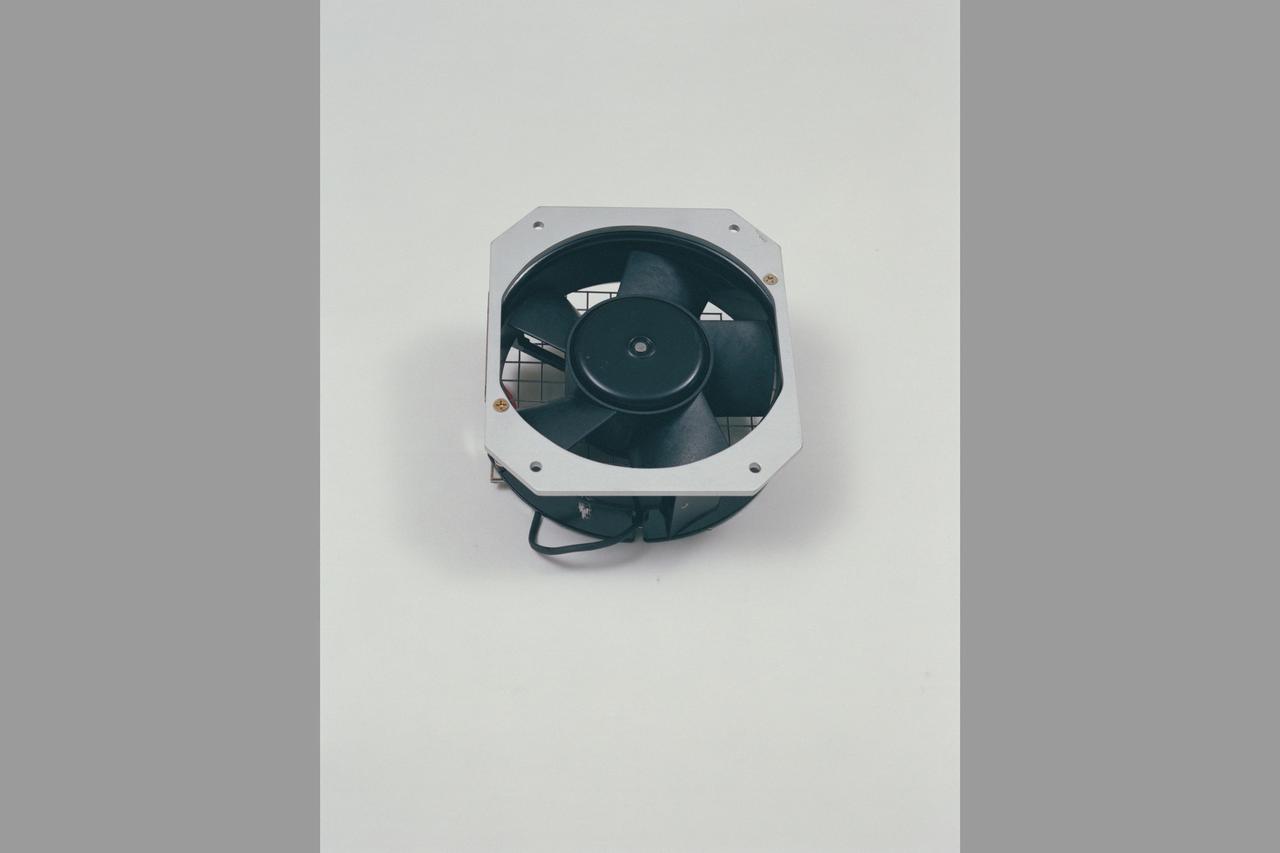
SL-J Space Shuttle Frog Embryology Experiment (FEU) flight hardware
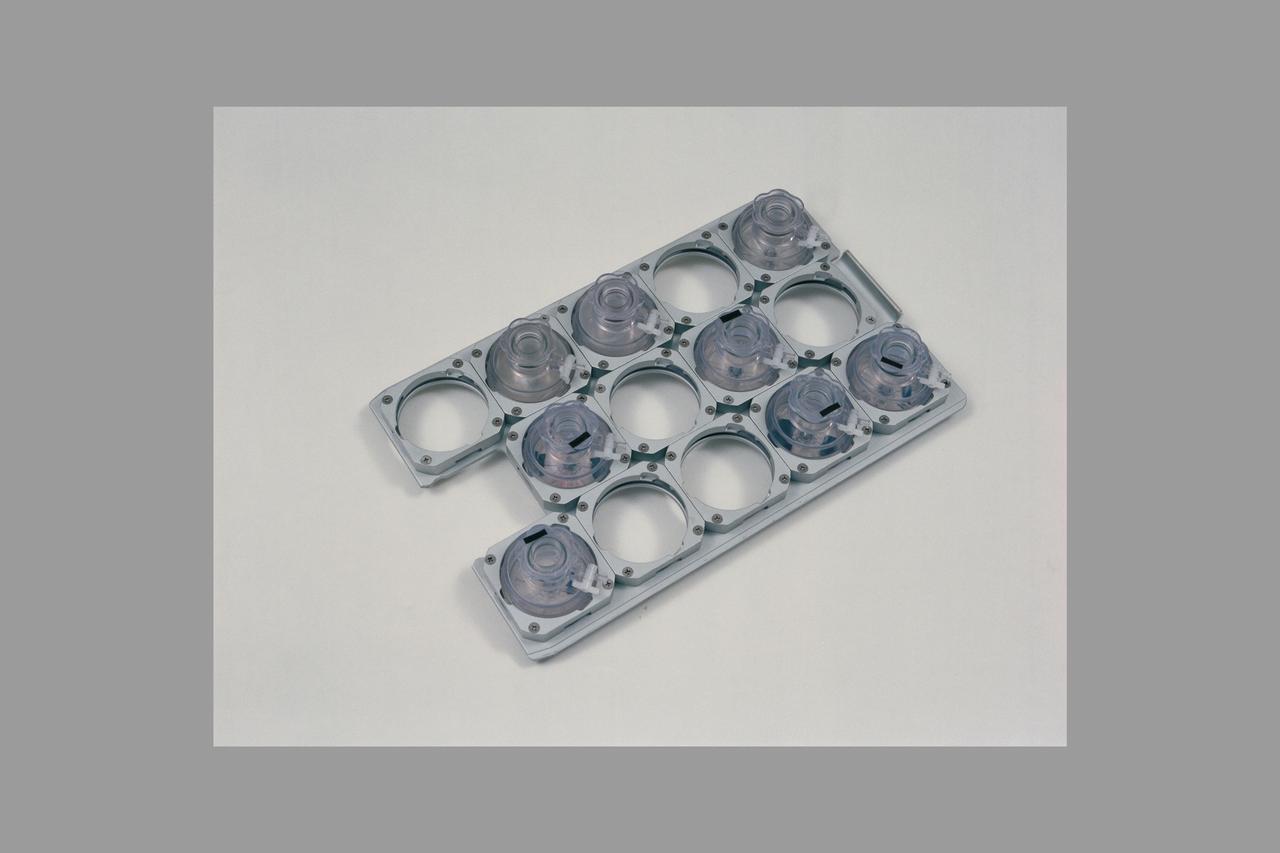
SL-J Space Shuttle Frog Embryology Experiment (FEU) flight hardware
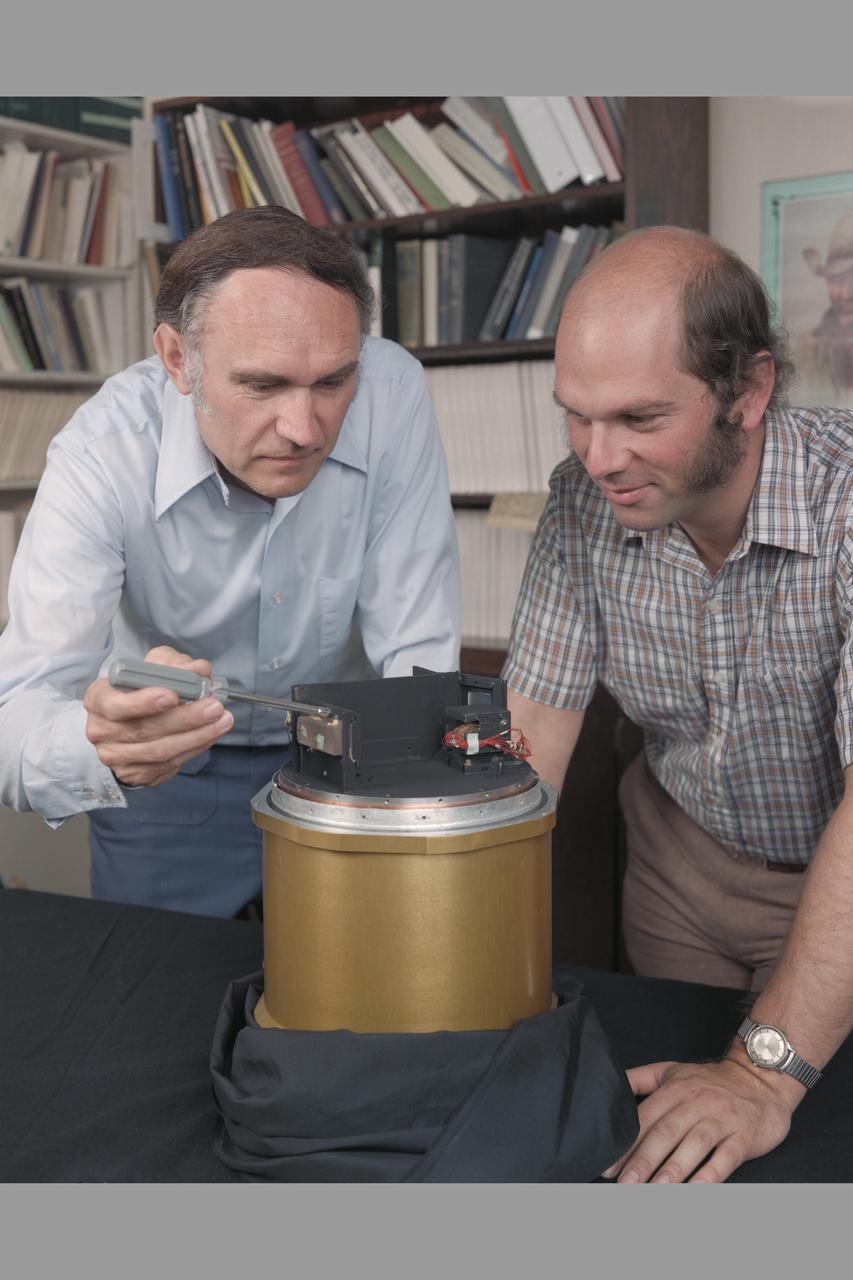
Laser Faint Object Grating Spectrometer (Frogs) with F. Witteborn and Jesse Bregman.
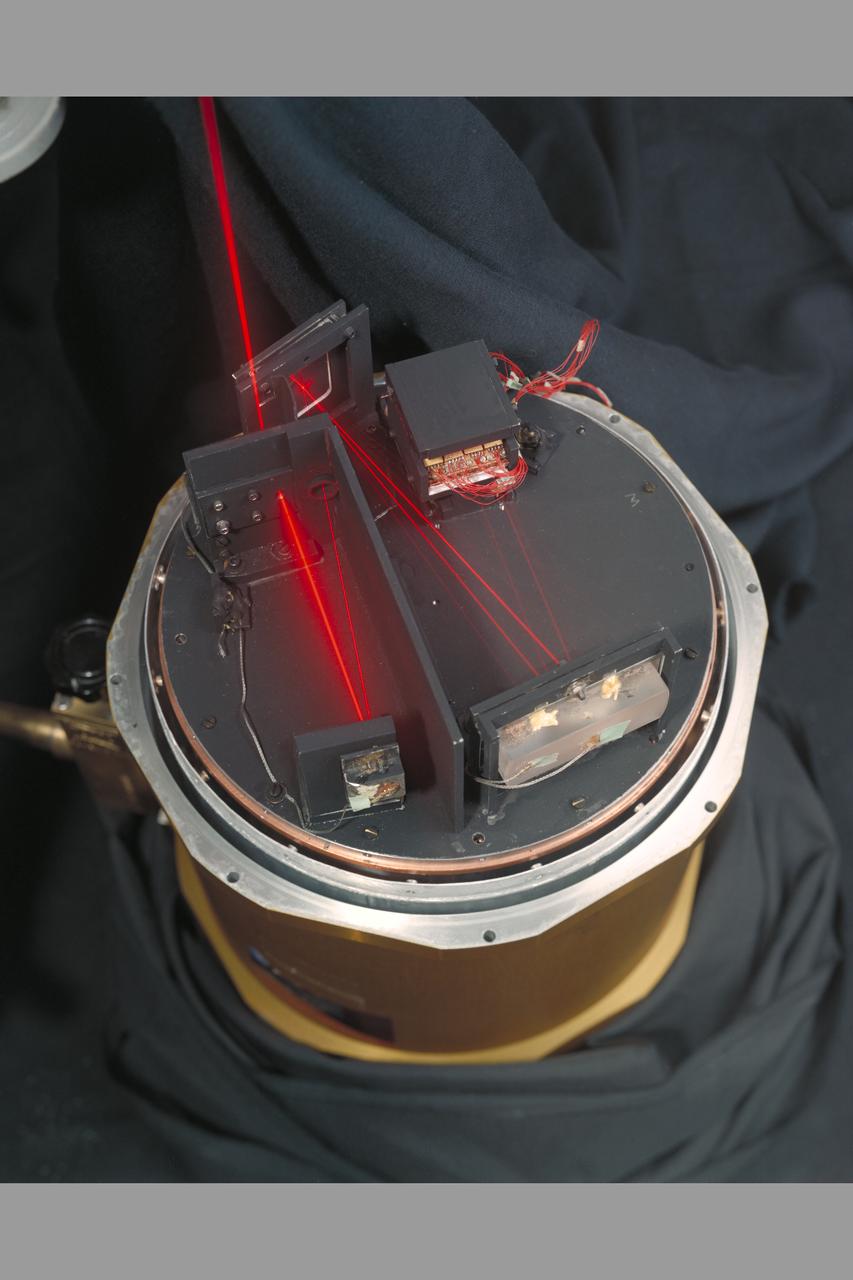
Laser Faint Object Grating Spectrometer (Frogs) with F. Witteborn and Jesse Bregman.
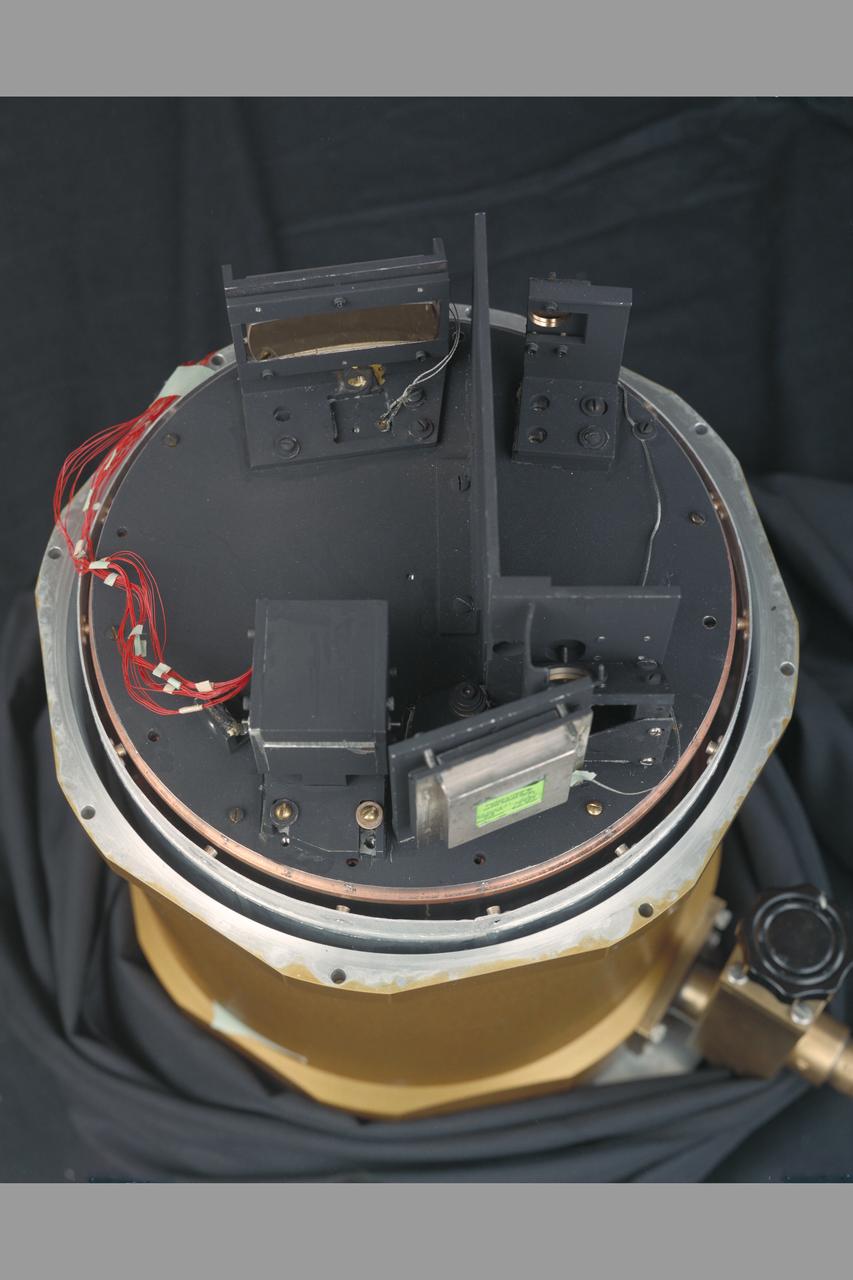
Laser Faint Object Grating Spectrometer (Frogs) with F. Witteborn and Jesse Bregman.
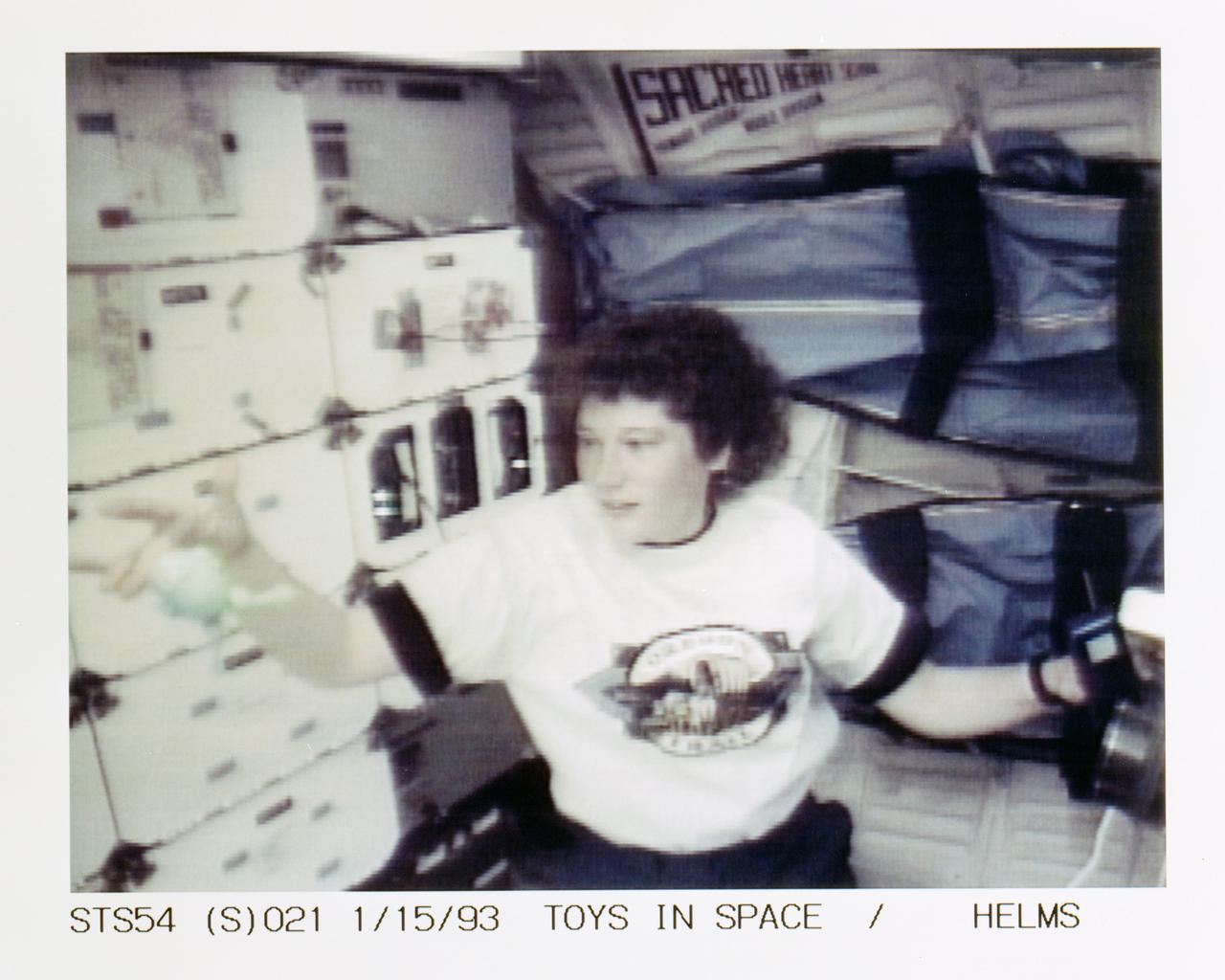
STS054-S-021 (15 Jan 1993) --- Helms with a frog swimmer toy on the middeck demonstrates some of the physics of toys to students watching on television. Four schools were chosen to ask questions of the astronauts during the lengthy program. Helms fielded questions from students at Shaver Elementary School in Portland, Oregon. The swimmer frog was used to demonstrate Newton's third law of motion and the conservation of angular momentum. The entire collection of toys will be videotaped for an educational program to be distributed to schools in the fall of this year. The scene was recorded at 17:51:38:12 GMT, Jan. 15, 1993.
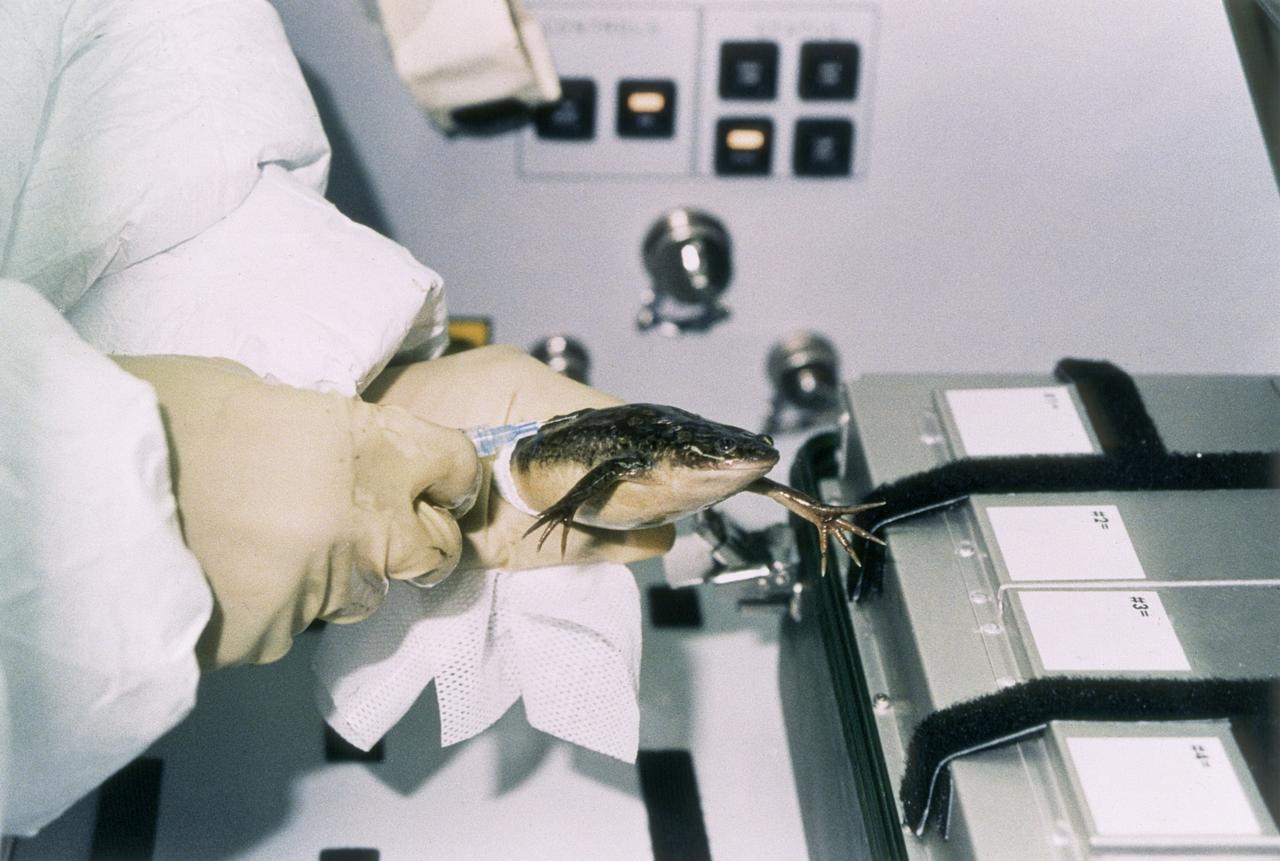
The Spacelab-J (SL-J) mission was a joint venture between NASA and the National Space Development Agency of Japan (NASDA) utilizing a marned Spacelab module. Materials science investigations covered such fields as biotechnology, electronic materials, fluid dynamics and transport phenomena, glasses and ceramics, metals and alloys, and acceleration measurements. Life sciences included experiments on human health, cell separation and biology, developmental biology, animal and human physiology and behavior, space radiation, and biological rhythms. Before long-term space ventures are attempted, numerous questions must be answered: how will gravity play in the early development of an organism, and how will new generations of a species be conceived and develop normally in microgravity. The Effects of Weightlessness on the Development of Amphibian Eggs Fertilized in Space experiment aboard SL-J examined aspects of these questions. To investigate the effect of microgravity on amphibian development, female frogs carried aboard SL-J were induced to ovulate and shed eggs. These eggs were then fertilized in the microgravity environment. Half were incubated in microgravity, while the other half were incubated in a centrifuge that spins to simulate normal gravity. This photograph shows an astronaut working with one of the adult female frogs inside the incubator. The mission also examined the swimming behavior of tadpoles grown in the absence of gravity. The Spacelab-J was launched aboard the Space Shuttle Orbiter Endeavour on September 12, 1992.
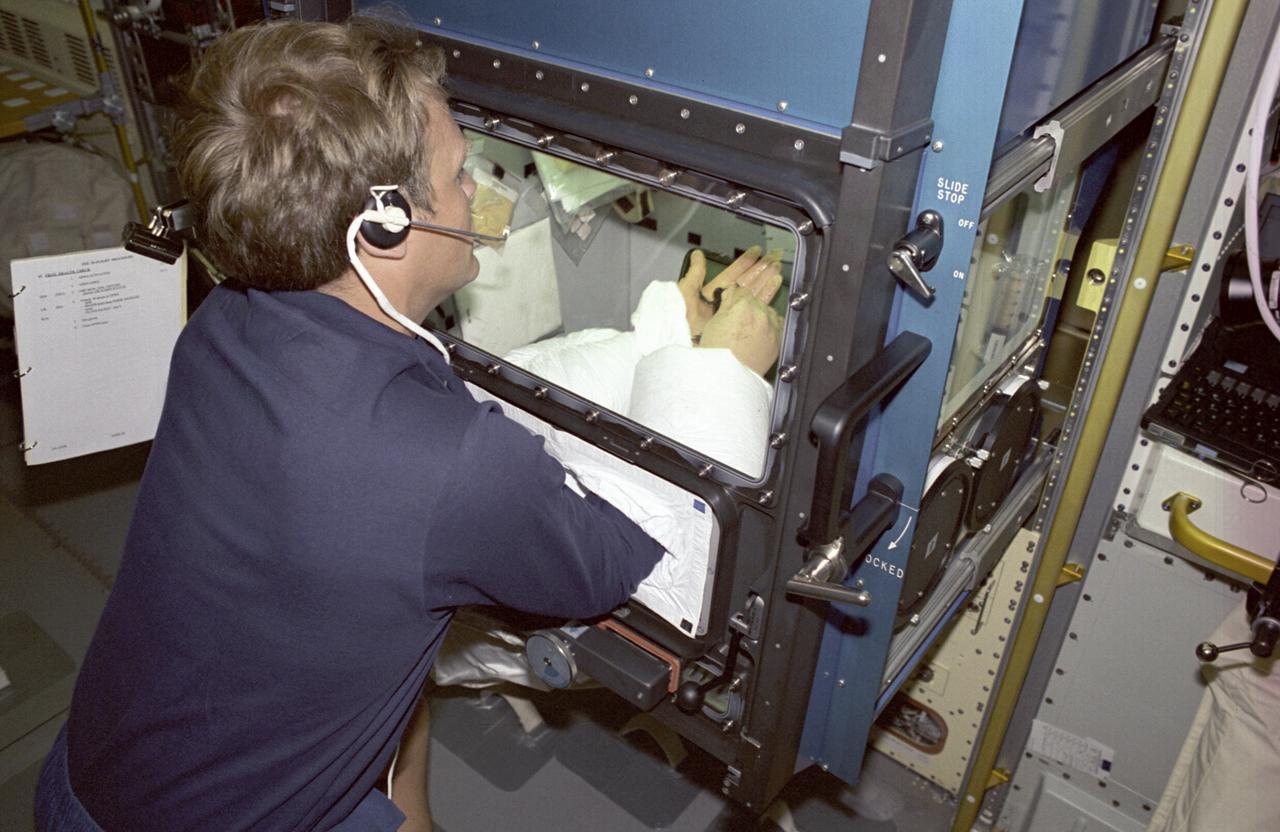
The Spacelab-J (SL-J) mission was a joint venture between NASA and the National Space Development Agency of Japan (NASDA) utilizing a marned Spacelab module. Materials science investigations covered such fields as biotechnology, electronic materials, fluid dynamics and transport phenomena, glasses and ceramics, metals and alloys, and acceleration measurements. Life sciences included experiments on human health, cell separation and biology, developmental biology, animal and human physiology and behavior, space radiation, and biological rhythms. Before long-term space ventures are attempted, numerous questions must be answered: how will gravity play in the early development of an organism, and how will new generations of a species be conceived and develop normally in microgravity. The Effects of Weightlessness on the Development of Amphibian Eggs Fertilized in Space experiment aboard SL-J examined aspects of these questions. To investigate the effect of microgravity on amphibian development, female frogs carried aboard SL-J were induced to ovulate and shed eggs. These eggs were then fertilized in the microgravity environment. Half were incubated in microgravity, while the other half were incubated in a centrifuge that spins to simulate normal gravity. This photograph shows astronaut Mark Lee working with one of the adult female frogs inside the incubator. The mission also examined the swimming behavior of tadpoles grown in the absence of gravity. The Spacelab-J was launched aboard the Space Shuttle Orbiter Endeavour on September 12, 1992.
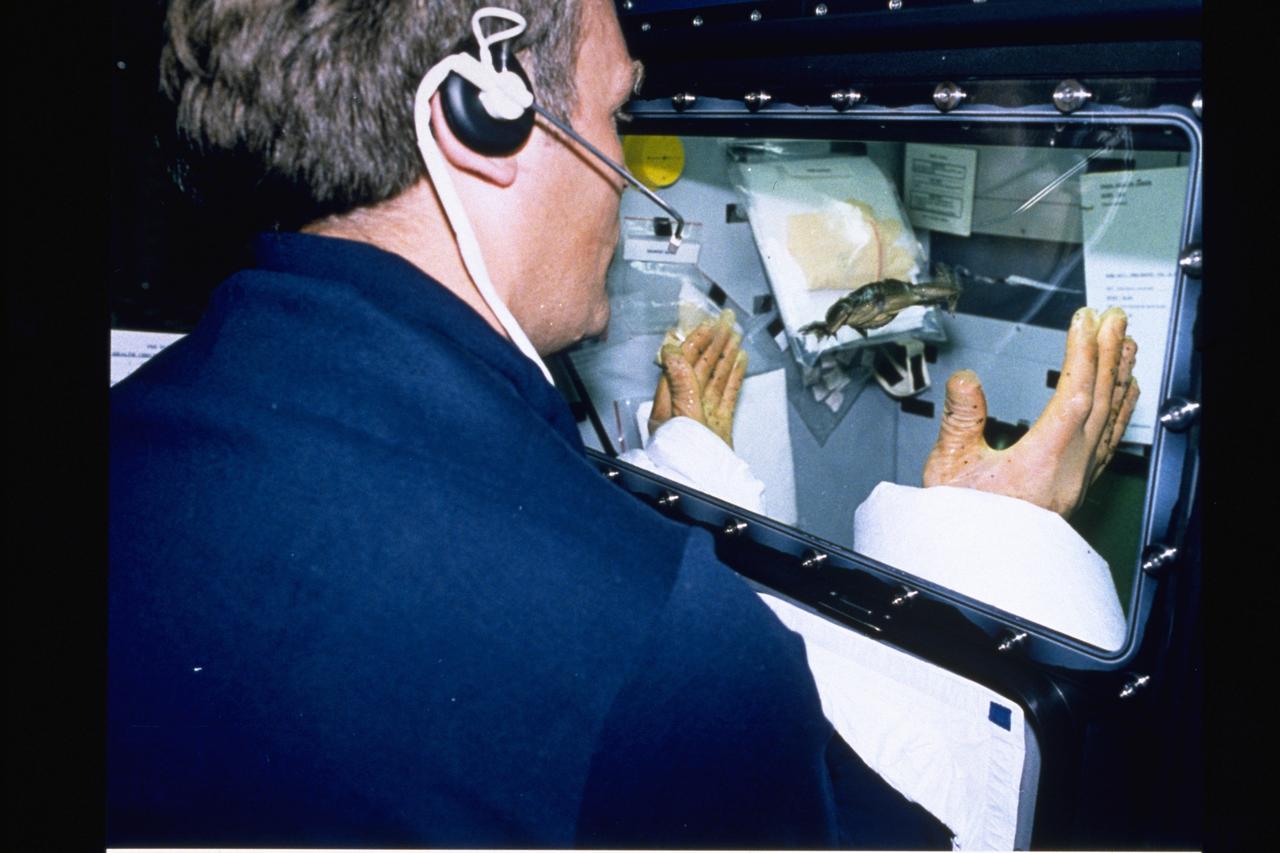
Space Shuttle Endeavour STS-47 Spacelab J mission: Frog Embryology Experiment, Astronaut works with adult frog in 0 gravity using the glovebox to contain and protect the frog during procedures
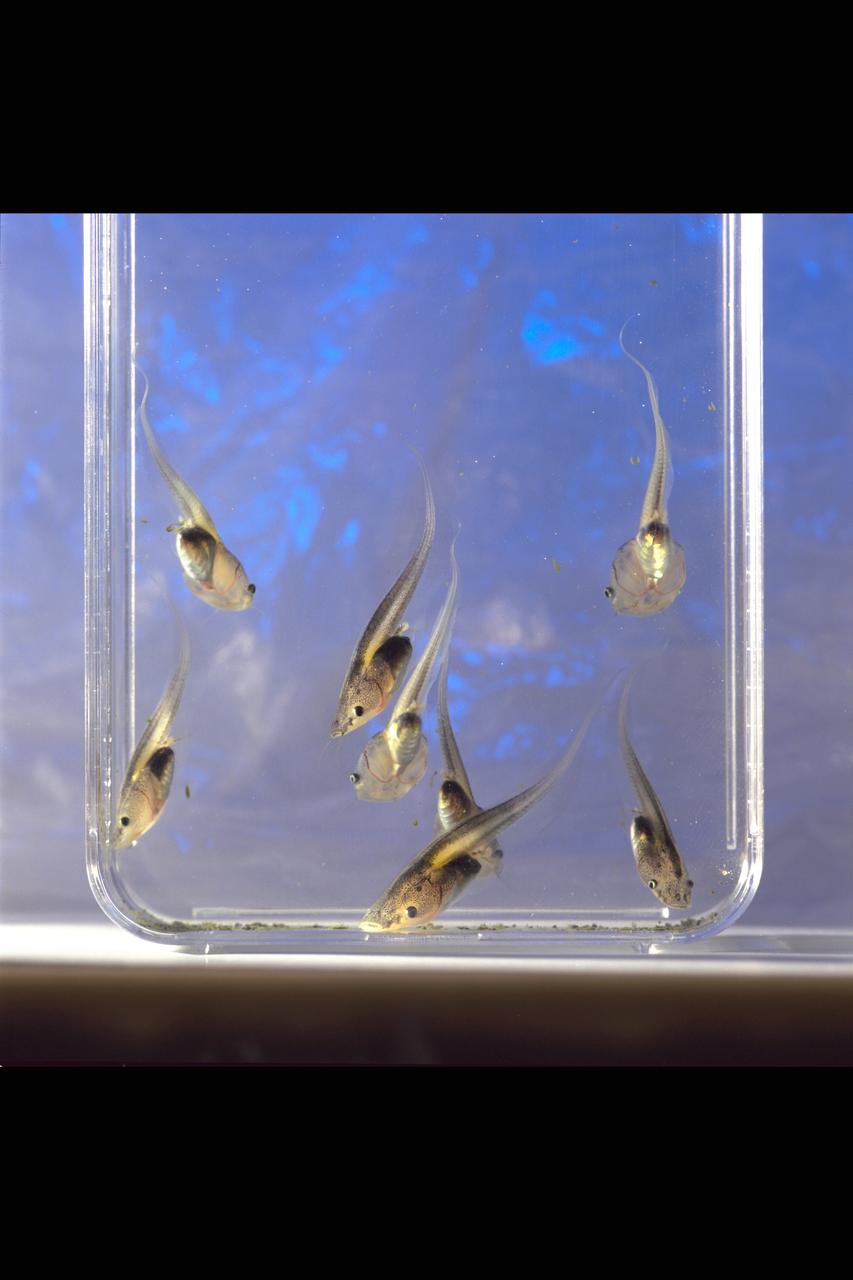
STS-47 Spacelab-J FFE (Frog Embryology Experiment) post flight data - flight frogs from SL-J, ground control tadpoles
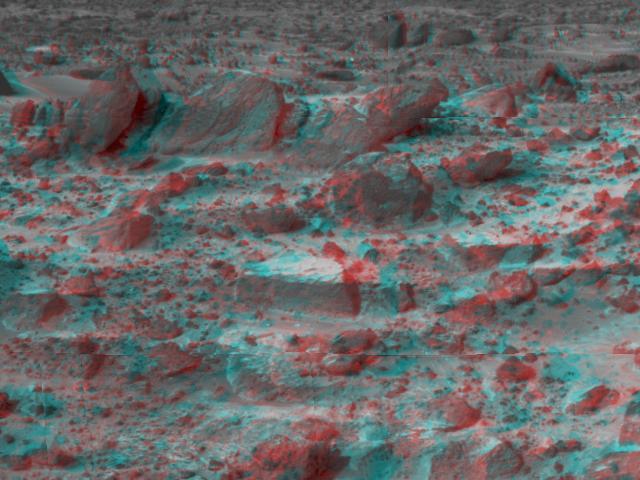
Many prominent rocks near the Sagan Memorial Station are featured in this image, from NASA Mars Pathfinder. Shark, Half-Dome, and Pumpkin, Flat Top and Frog are at center 3D glasses are necessary to identify surface detail.
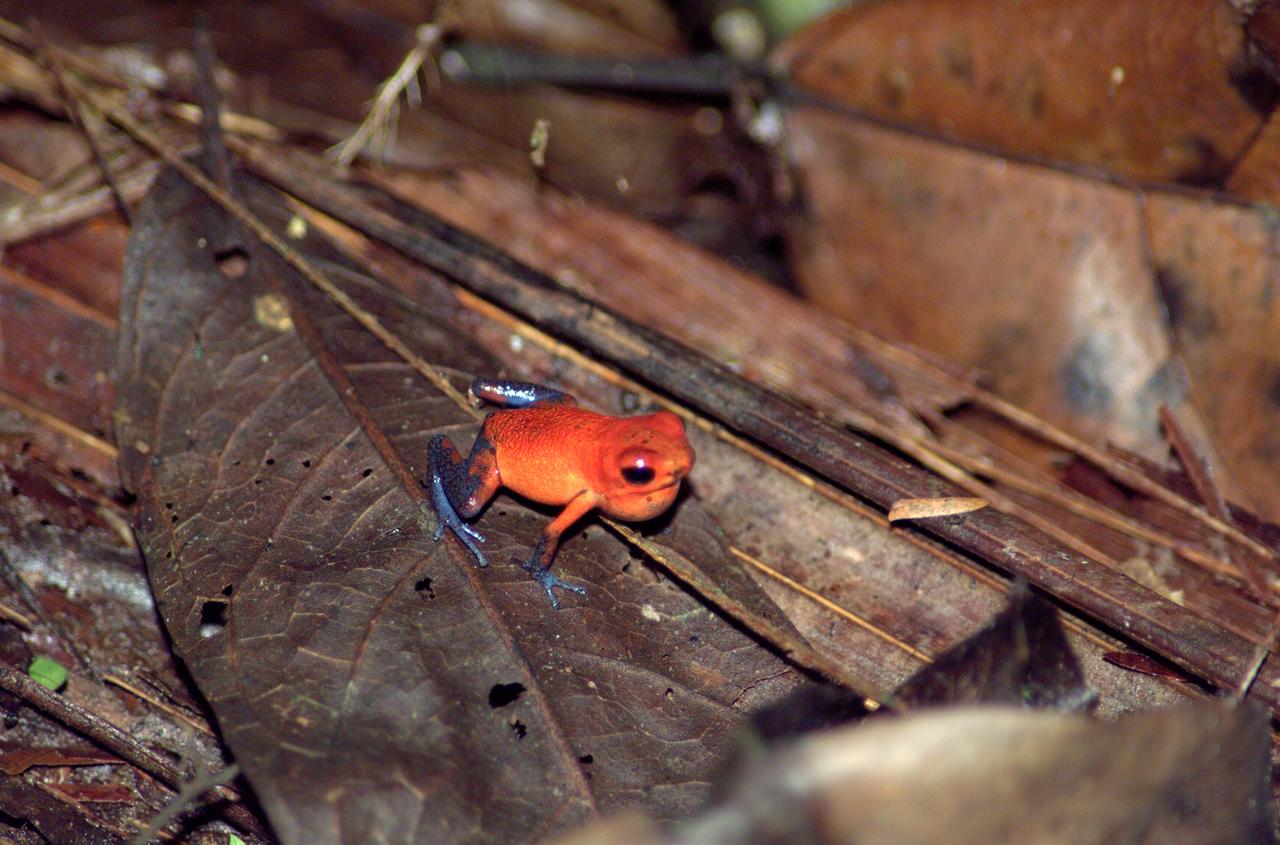
A tree frog photographed in the La Selva region of the Costa Rican rain forest as part of NASA's AirSAR 2004 Mesoamerica campaign. AirSAR 2004 Mesoamerica is a three-week expedition by an international team of scientists that will use an all-weather imaging tool, called the Airborne Synthetic Aperture Radar (AirSAR) which is located onboard NASA's DC-8 airborne laboratory. Scientists from many parts of the world including NASA's Jet Propulsion Laboratory are combining ground research done in several areas in Central America with NASA's AirSAR technology to improve and expand on the quality of research they are able to do. NASA's AIRSAR technolgy provides two essential elements to the ground-based scientists. First, it tests and provides accurate measurements of the forest structure. Secondly, AirSAR can study a larger area of the forest versus the smaller area that can be tested and plotted by the ground scientists. It also provides a unique one-of-a-kind system of measurement that obtains important information for the scientists, such as where forests are located and what exactly is in them.
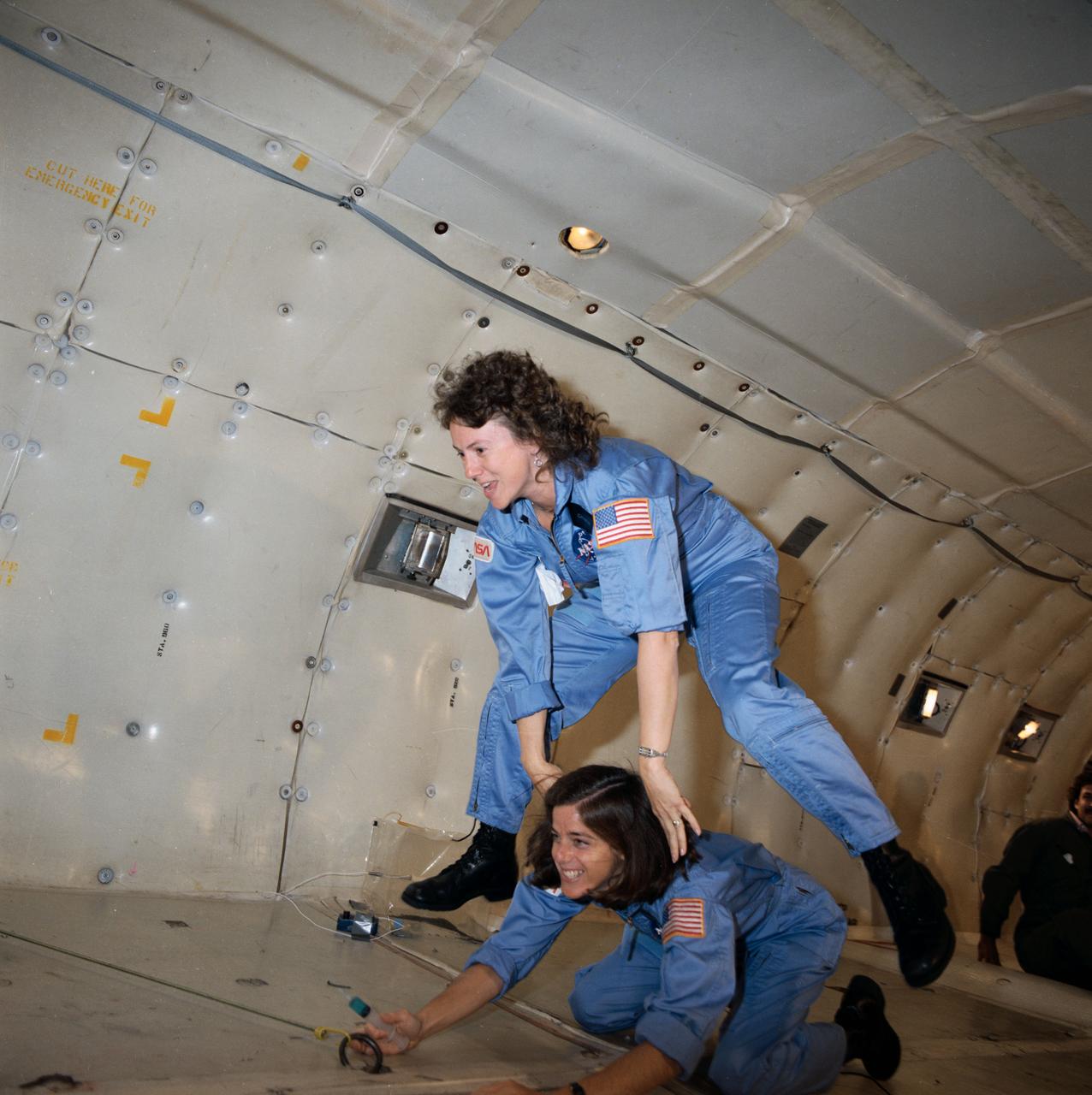
S85-42472 (16 Oct. 1985) --- Teacher-in-Space trainees on the KC-135 for zero-G training. Sharon Christa McAuliffe, right, and Barbara R. Morgan, play leap-frog in the temporary weightlessness of the KC-135. Photo credit: NASA
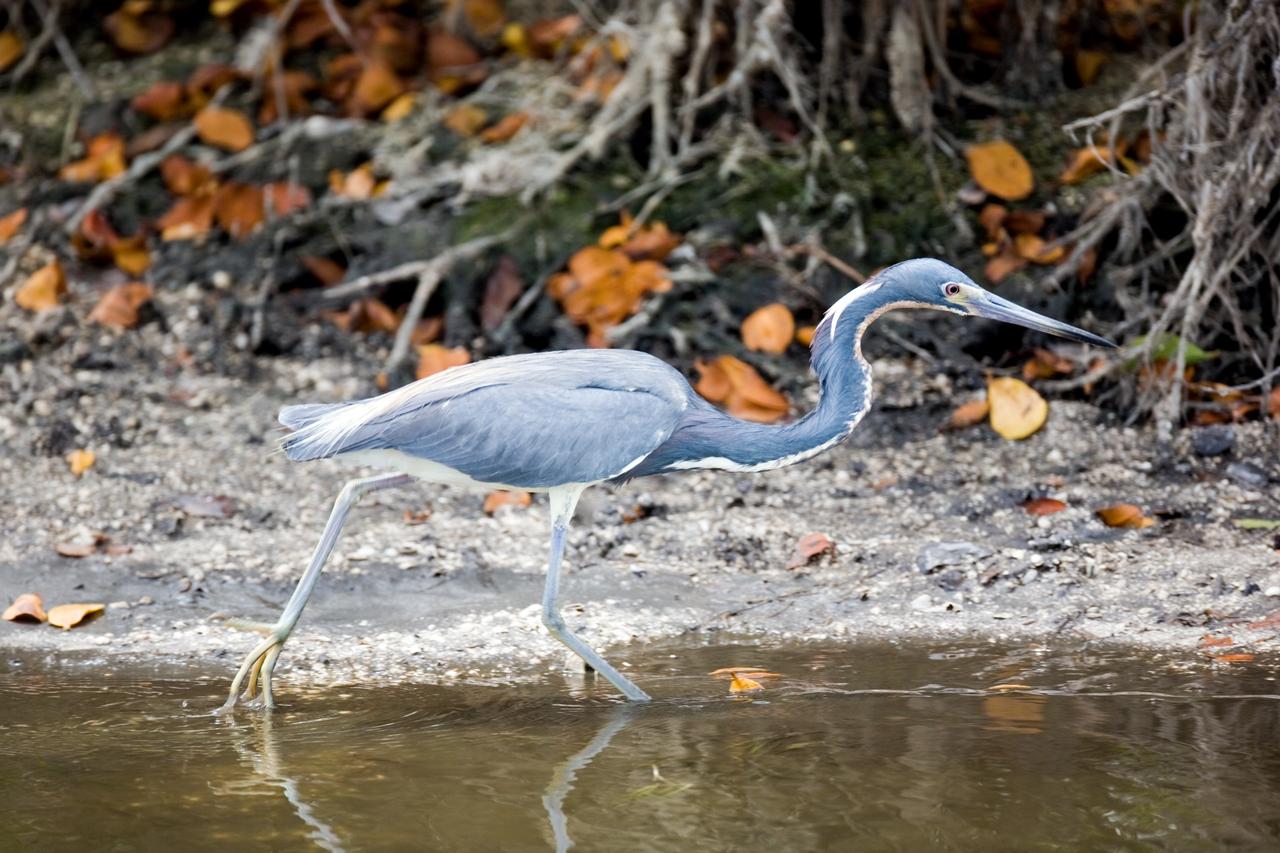
CAPE CANAVERAL, Fla. –– One of the most numerous herons in the Deep South, this Louisiana Heron stalks the water at NASA's Kennedy Space Center in Florida looking for food, usually frogs or fish. The range of this species is the Atlantic and Gulf coasts from Massachusetts south, wintering from Virginia to South America. The center shares a boundary with the Merritt Island Wildlife Nature Refuge, which is a habitat for more than 310 species of birds, 25 mammals, 117 fishes and 65 amphibians and reptiles. Photo credit: NASA/Dimitri Gerondidakis
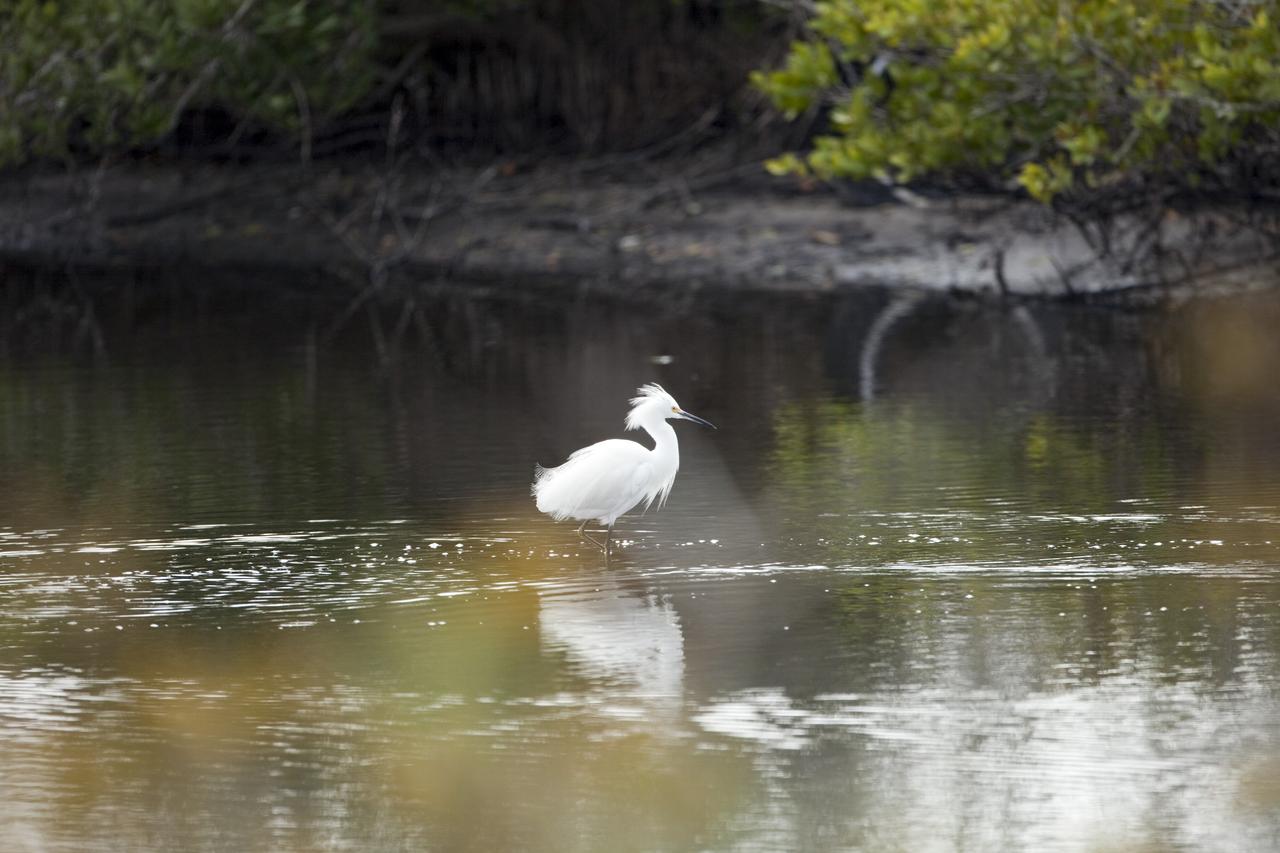
CAPE CANAVERAL, Fla. -- A snowy egret wades through brackish water just north of the Shuttle Landing Facility at NASA's Kennedy Space Center in Florida. This type of bird often stalks its prey in shallow water by running or shuffling its feet, flushing small fish, shrimp, frogs or crabs into view. Kennedy coexists with the Merritt Island National Wildlife Refuge, habitat to more than 310 species of birds, 25 mammals, 117 fish and 65 amphibians and reptiles. Photo credit: NASA/Frankie Martin
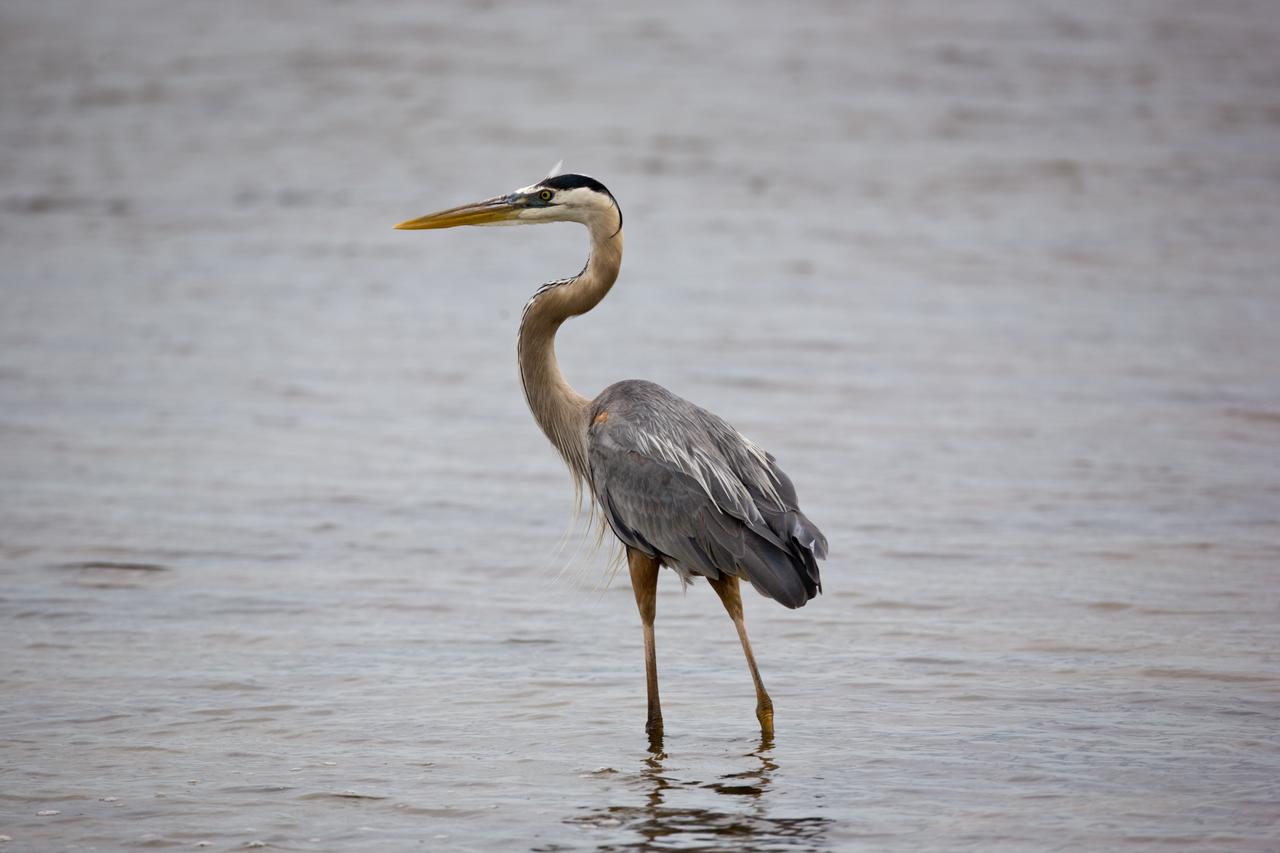
CAPE CANAVERAL, Fla. –– A great blue heron takes its familiar stance at the edge of the water, watching for fish or frogs, at NASA's Kennedy Space Center in Florida. A frequent sight around Kennedy, this large heron inhabits lakes, ponds, rivers and marshes in a range from Alaska south to Mexico and the West Indies. Kennedy shares a boundary with the Merritt Island National Wildlife Refuge that includes salt-water estuaries, brackish marshes, hardwood hammocks and pine flatwoods. Photo credit: NASA/Dimitri Gerondidakis
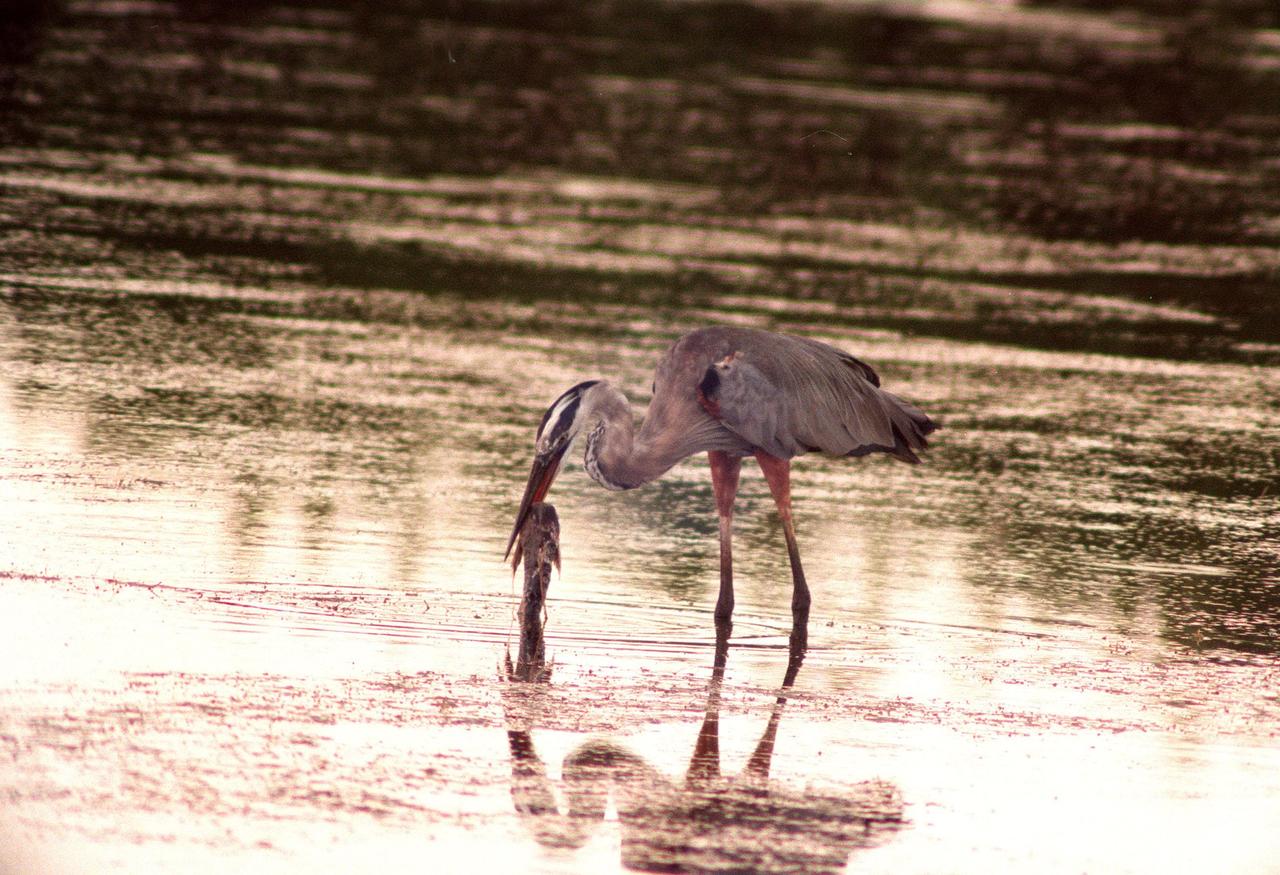
KENNEDY SPACE CENTER, FLA. -- A great blue heron pulls its catch from the waters of the Merritt Island National Wildlife Refuge, which shares a boundary with Kennedy Space Center. The great blue inhabits lakes, ponds, rivers and marshes from Alaska, Quebec and Nova Scotia to Mexico and the West Indies. Its principal food are fish or frogs but it may also feed on small animals, reptiles and even other birds. Great blue herons can be found year-round at the wildlife refuge
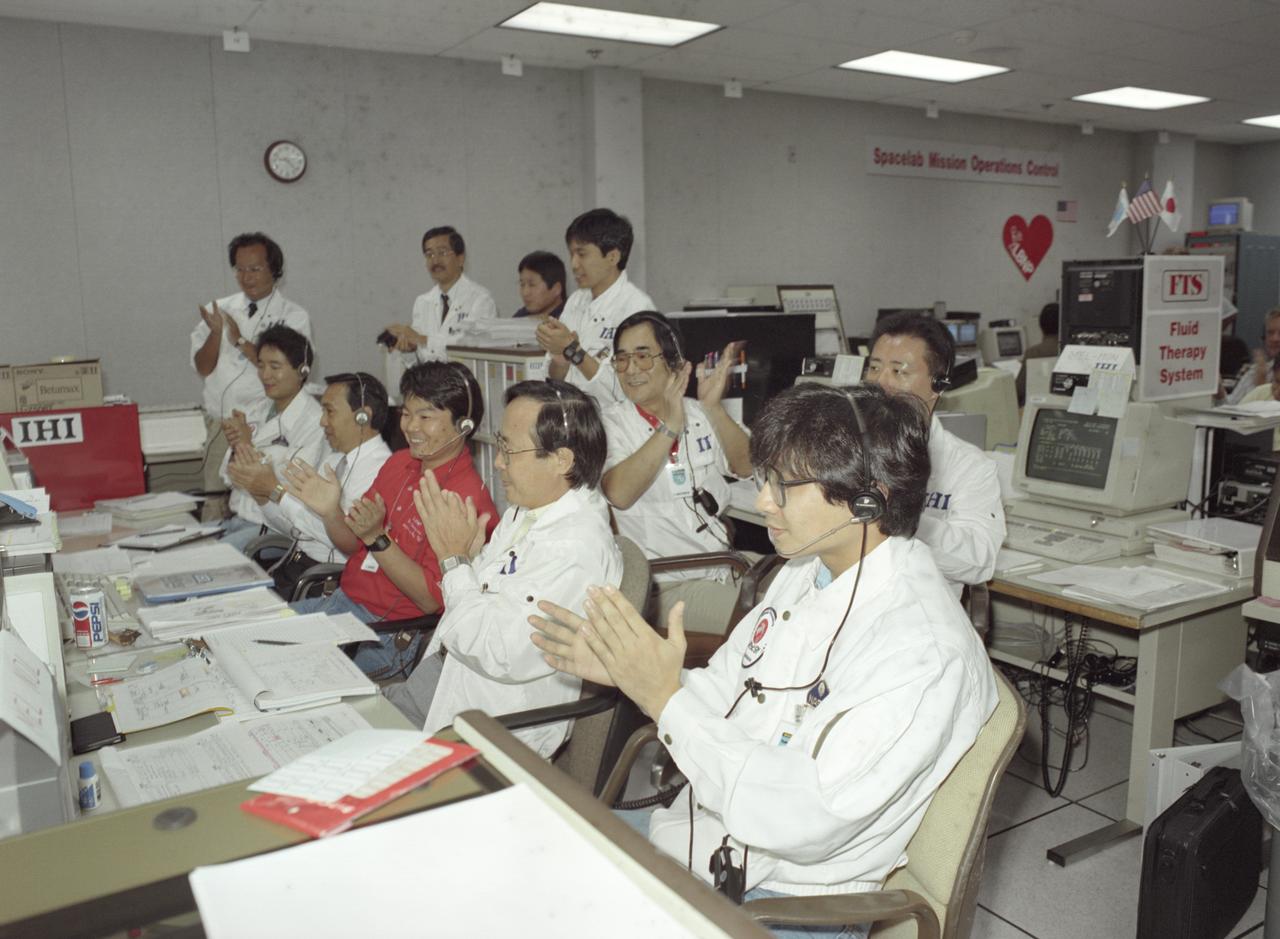
The science laboratory, Spacelab-J (SL-J), flown aboard the STS-47 flight was a joint venture between NASA and the National Space Development Agency of Japan (NASDA) utilizing a manned Spacelab module. The mission conducted 24 materials science and 20 life science experiments, of which 35 were sponsored by NASDA, 7 by NASA, and two collaborative efforts. Materials science investigations covered such fields as biotechnology, electronic materials, fluid dynamics and transport phenomena, glasses and ceramics, metals and alloys, and acceleration measurements. Life sciences included experiments on human health, cell separation and biology, developmental biology, animal and human physiology and behavior, space radiation, and biological rhythms. Test subjects included the crew, Japanese koi fish (carp), cultured animal and plant cells, chicken embryos, fruit flies, fungi and plant seeds, and frogs and frog eggs. Featured together in the Science Operation Area (SOA) are payload specialists’ first Materials Processing Test during NASA/NASDA joint ground activities at the Huntsville Operations Support Center (HOSC) Spacelab Payload Operations Control Center (SL POCC) at Marshall Space Flight Center (MSFC).
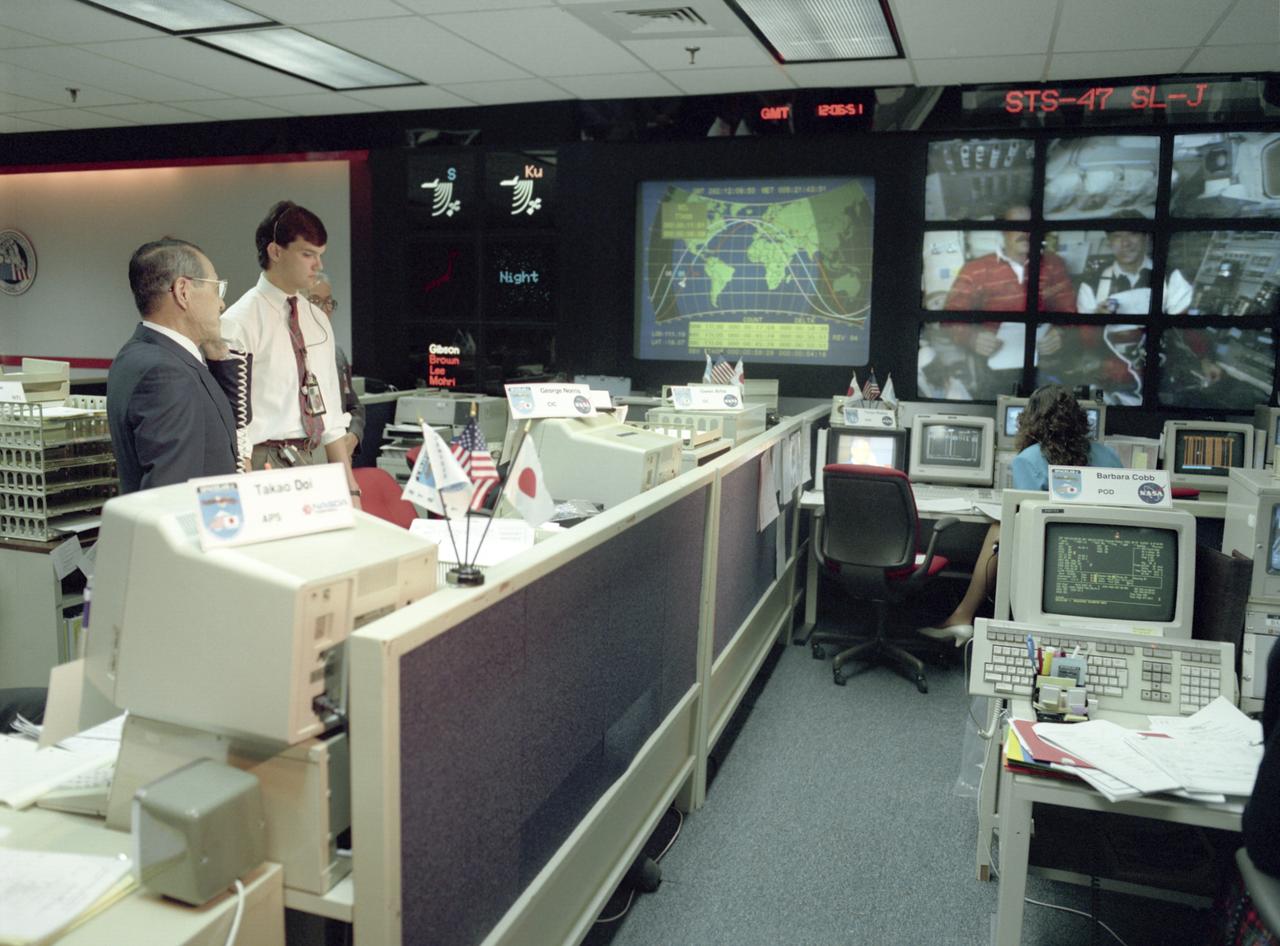
The science laboratory, Spacelab-J (SL-J), flown aboard the STS-47 flight was a joint venture between NASA and the National Space Development Agency of Japan (NASDA) utilizing a manned Spacelab module. The mission conducted 24 materials science and 20 life science experiments, of which 35 were sponsored by NASDA, 7 by NASA, and two collaborative efforts. Materials science investigations covered such fields as biotechnology, electronic materials, fluid dynamics and transport phenomena, glasses and ceramics, metals and alloys, and acceleration measurements. Life sciences included experiments on human health, cell separation and biology, developmental biology, animal and human physiology and behavior, space radiation, and biological rhythms. Test subjects included the crew, Japanese koi fish (carp), cultured animal and plant cells, chicken embryos, fruit flies, fungi and plant seeds, and frogs and frog eggs. From the Huntsville Operations Support Center (HOSC) Spacelab Payload Operations Control Center (SL POCC), NASDA President, Mr. Yamano, speaks to Payload Specialist Mamoru Mohri, a Japanese crew member aboard the STS-47 Spacelab J mission.
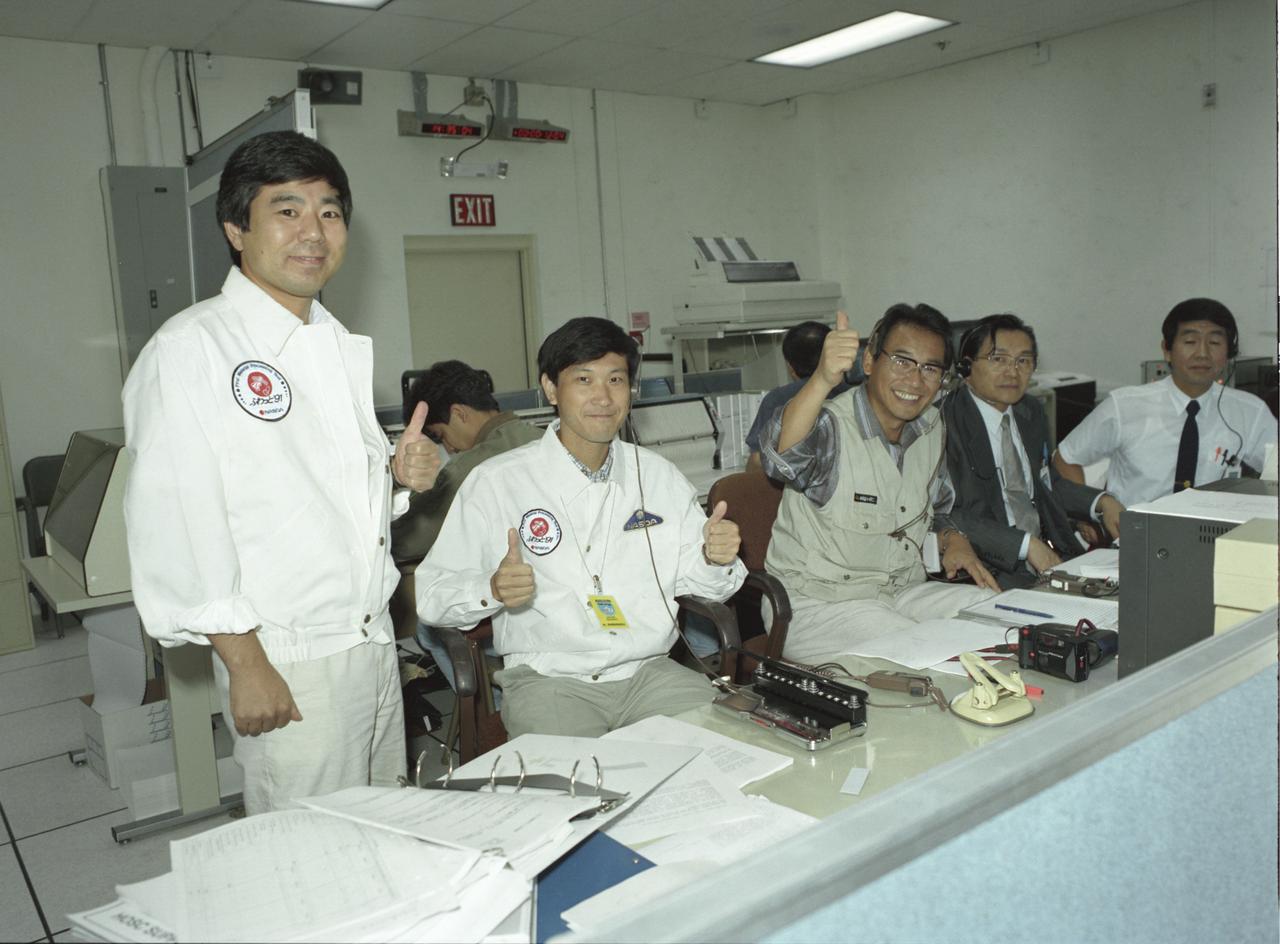
The group of Japanese researchers of the Spacelab-J (SL-J) were thumbs-up in the Payload Operations Control Center (POCC) at the Marshall Space Flight Center after the successful launch of Space Shuttle Orbiter Endeavour that carried their experiments. The SL-J was a joint mission of NASA and the National Space Development Agency of Japan (NASDA) utilizing a marned Spacelab module. The mission conducted microgravity investigations in materials and life sciences. Materials science investigations covered such fields as biotechnology, electronic materials, fluid dynamics and transport phenomena, glasses and ceramics, metals and alloys, and acceleration measurements. Life sciences included experiments on human health, cell separation and biology, developmental biology, animal and human physiology and behavior, space radiation, and biological rhythms. Test subjects included the crew, Japanese koi fish (carp), cultured animal and plant cells, chicken embryos, fruit flies, fungi and plant seeds, frogs, and frog eggs. The POCC was the air/ground communications channel between the astronauts and ground control teams during the Spacelab missions. The Spacelab science operations were a cooperative effort between the science astronaut crew in orbit and their colleagues in the POCC. Spacelab-J was launched aboard the Space Shuttle Orbiter Endeavour on September 12, 1992.
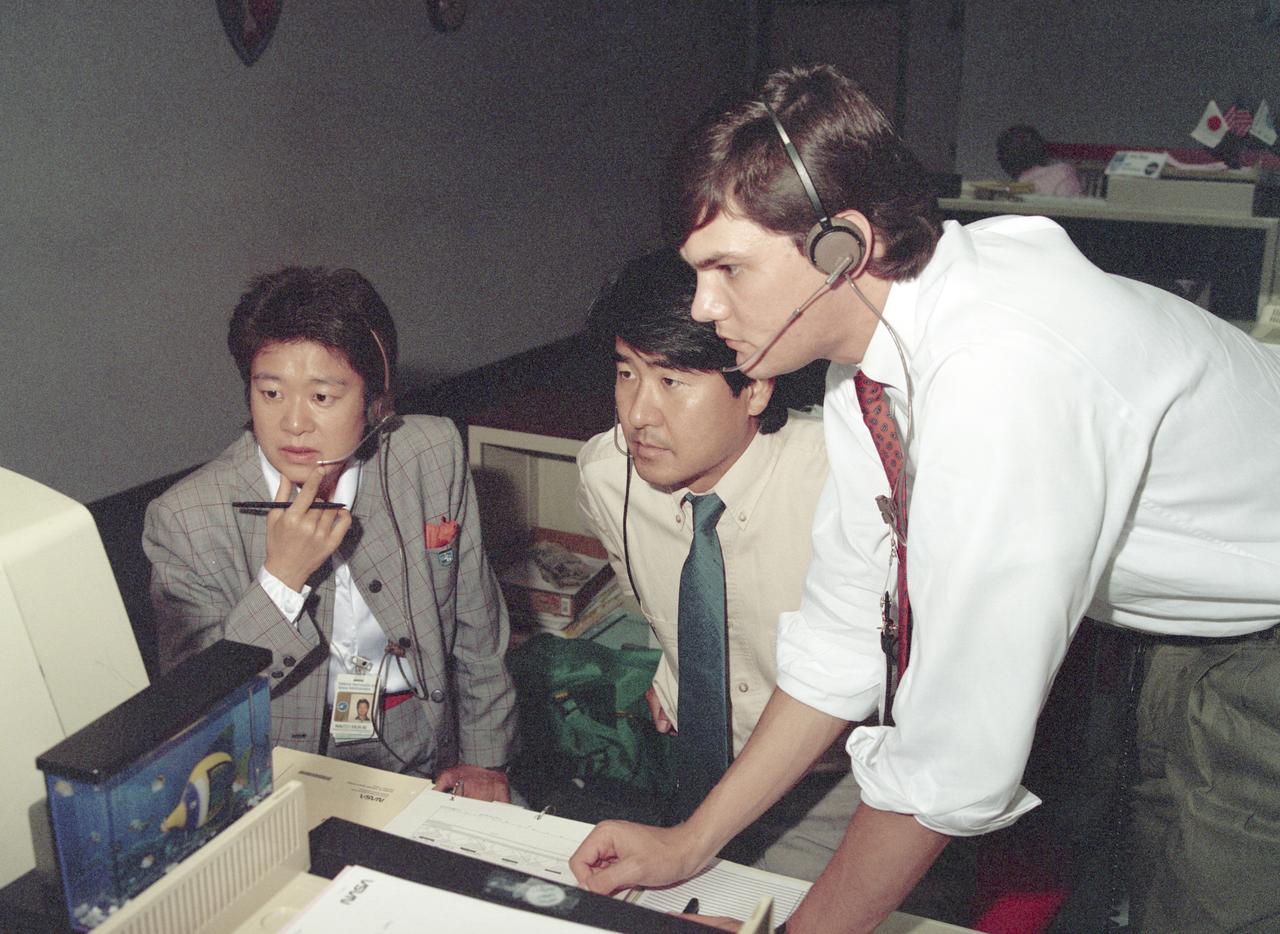
The science laboratory, Spacelab-J (SL-J), flown aboard the STS-47 flight was a joint venture between NASA and the National Space Development Agency of Japan (NASDA) utilizing a manned Spacelab module. The mission conducted 24 materials science and 20 life science experiments, of which 35 were sponsored by NASDA, 7 by NASA, and two collaborative efforts. Materials science investigations covered such fields as biotechnology, electronic materials, fluid dynamics and transport phenomena, glasses and ceramics, metals and alloys, and acceleration measurements. Life sciences included experiments on human health, cell separation and biology, developmental biology, animal and human physiology and behavior, space radiation, and biological rhythms. Test subjects included the crew, Japanese koi fish (carp), cultured animal and plant cells, chicken embryos, fruit flies, fungi and plant seeds, and frogs and frog eggs. Pictured along with George Norris in the Huntsville Operations Support Center (HOSC) Spacelab Payload Operations Control Center (SL POCC) at Marshall Space Flight Center (MSFC) are NASDA alternate payload specialists Dr. Doi and Dr. Mukai.
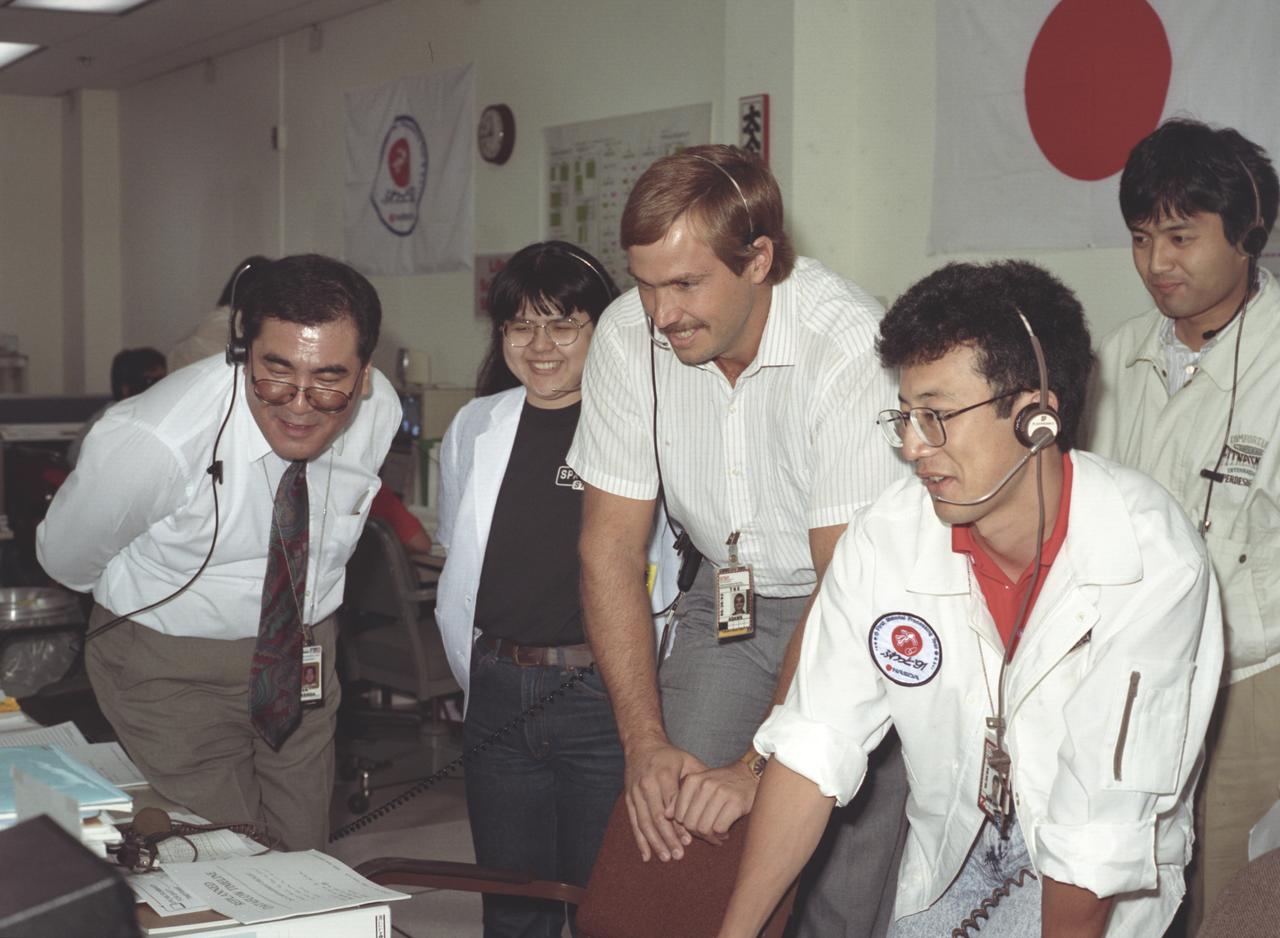
The science laboratory, Spacelab-J (SL-J), flown aboard the STS-47 flight was a joint venture between NASA and the National Space Development Agency of Japan (NASDA) utilizing a manned Spacelab module. The mission conducted 24 materials science and 20 life science experiments, of which 35 were sponsored by NASDA, 7 by NASA, and two collaborative efforts. Materials science investigations covered such fields as biotechnology, electronic materials, fluid dynamics and transport phenomena, glasses and ceramics, metals and alloys, and acceleration measurements. Life sciences included experiments on human health, cell separation and biology, developmental biology, animal and human physiology and behavior, space radiation, and biological rhythms. Test subjects included the crew, Japanese koi fish (carp), cultured animal and plant cells, chicken embryos, fruit flies, fungi and plant seeds, and frogs and frog eggs. Featured together in joint ground activities during the SL-J mission are NASA/NASDA personnel at the Huntsville Operations Support Center (HOSC) Spacelab Payload Operations Control Center (SL POCC) at Marshall Space Flight Center (MSFC).
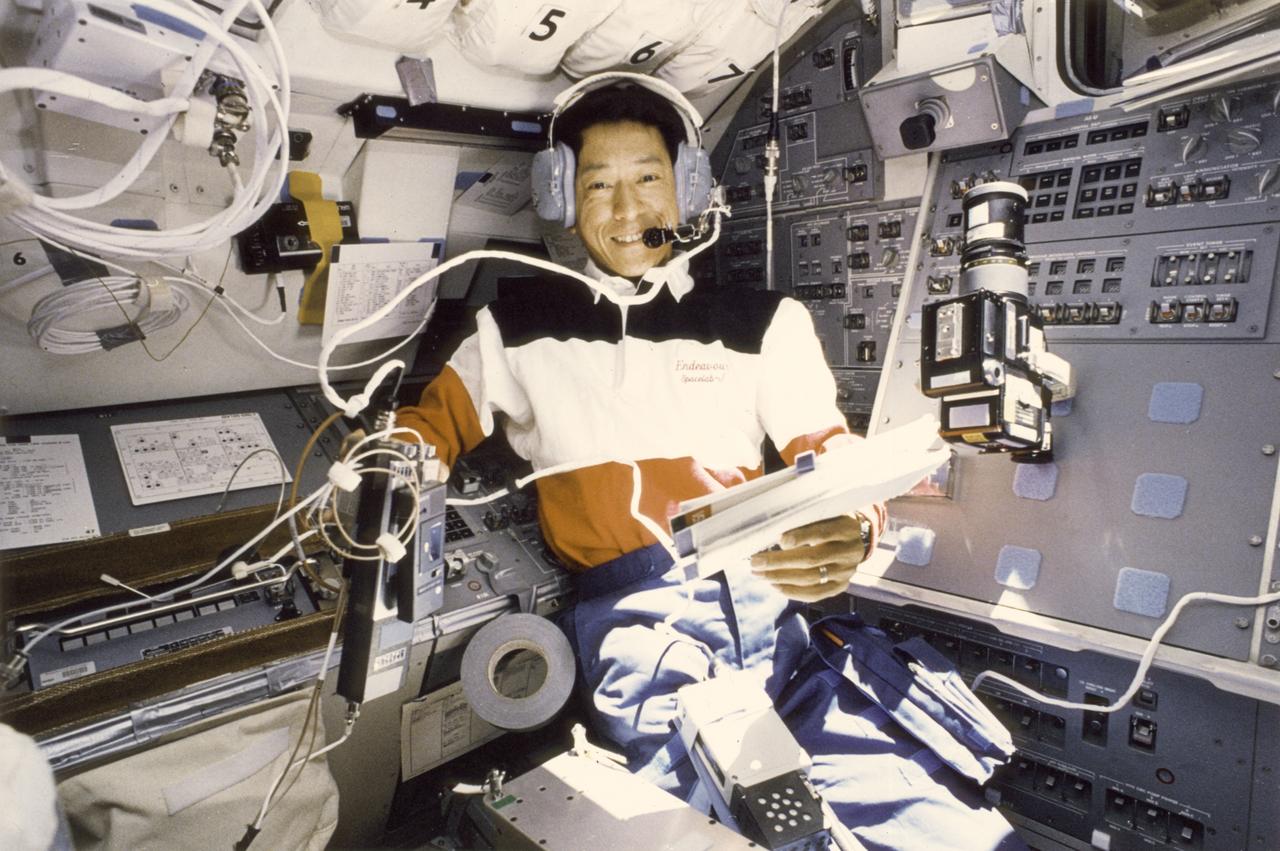
Japanese astronaut, Mamoru Mohri, talks to Japanese students from the aft flight deck of the Space Shuttle Orbiter Endeavour during the Spacelab-J (SL-J) mission. The SL-J mission was a joint venture between NASA and the National Space Development Agency of Japan (NASDA) utilizing a marned Spacelab module. The mission conducted 24 materials science and 20 life science experiments, of which 35 were sponsored by NASDA, 7 by NASA, and two collaborative efforts. Materials science investigations covered such fields as biotechnology, electronic materials, fluid dynamics and transport phenomena, glasses and ceramics, metals and alloys, and acceleration measurements. Life sciences included experiments on human health, cell separation and biology, developmental biology, animal and human physiology and behavior, space radiation, and biological rhythms. Test subjects included the crew, Japanese koi fish (carp), cultured animal and plant cells, chicken embryos, fruit flies, fungi and plant seeds, and frogs and frog eggs. Spacelab-J was launched aboard the Space Shuttle Orbiter Endeavour on September 12, 1992.
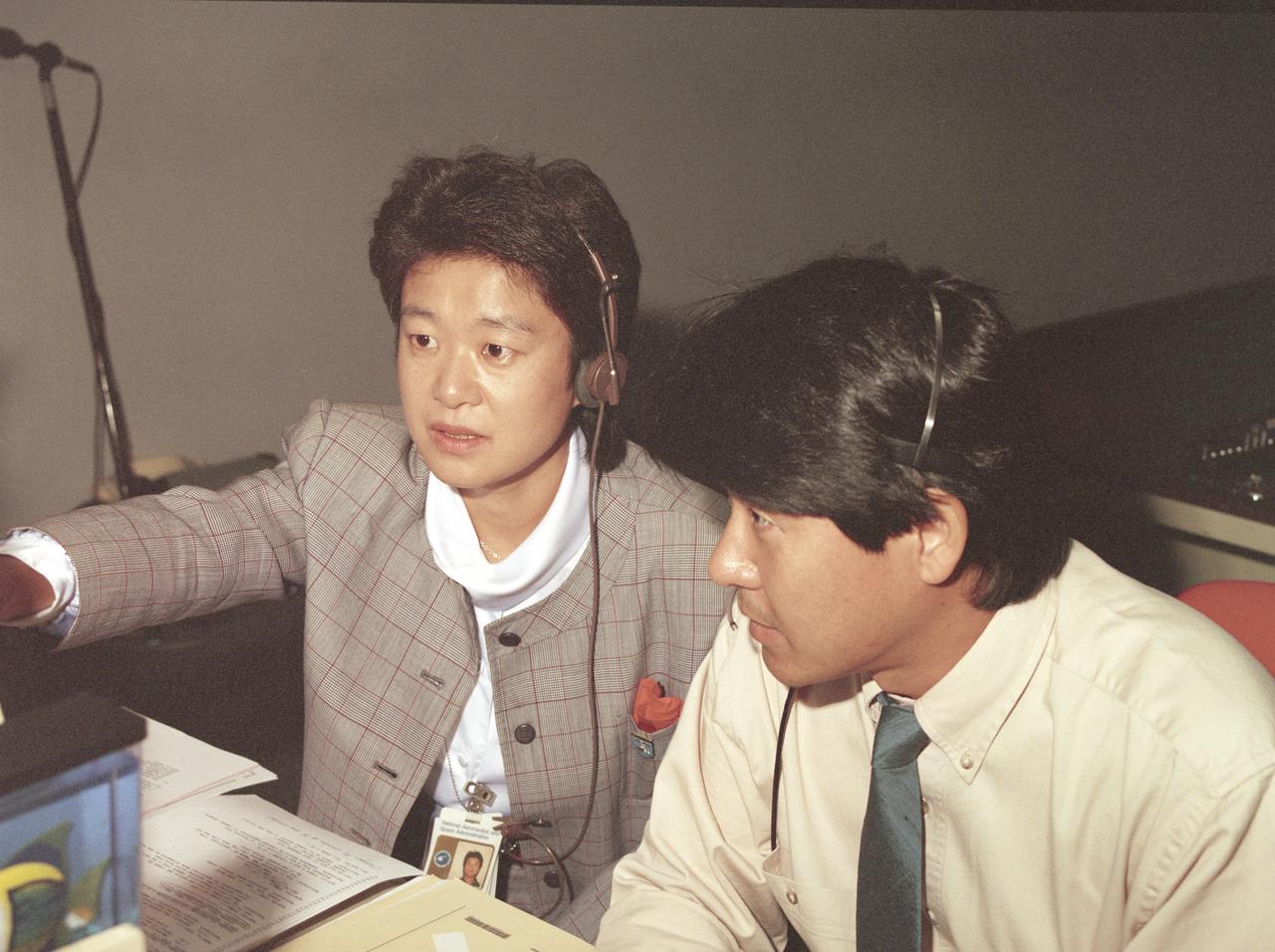
The science laboratory, Spacelab-J (SL-J), flown aboard the STS-47 flight was a joint venture between NASA and the National Space Development Agency of Japan (NASDA) utilizing a manned Spacelab module. The mission conducted 24 materials science and 20 life science experiments, of which 35 were sponsored by NASDA, 7 by NASA, and two collaborative efforts. Materials science investigations covered such fields as biotechnology, electronic materials, fluid dynamics and transport phenomena, glasses and ceramics, metals and alloys, and acceleration measurements. Life sciences included experiments on human health, cell separation and biology, developmental biology, animal and human physiology and behavior, space radiation, and biological rhythms. Test subjects included the crew, Japanese koi fish (carp), cultured animal and plant cells, chicken embryos, fruit flies, fungi and plant seeds, and frogs and frog eggs. Pictured in the Huntsville Operations Support Center (HOSC) Spacelab Payload Operations Control Center (SL POCC) of Marshall Space Flight Center (MSFC) are NASDA alternate payload specialists Dr. Doi and Dr. Mukai.
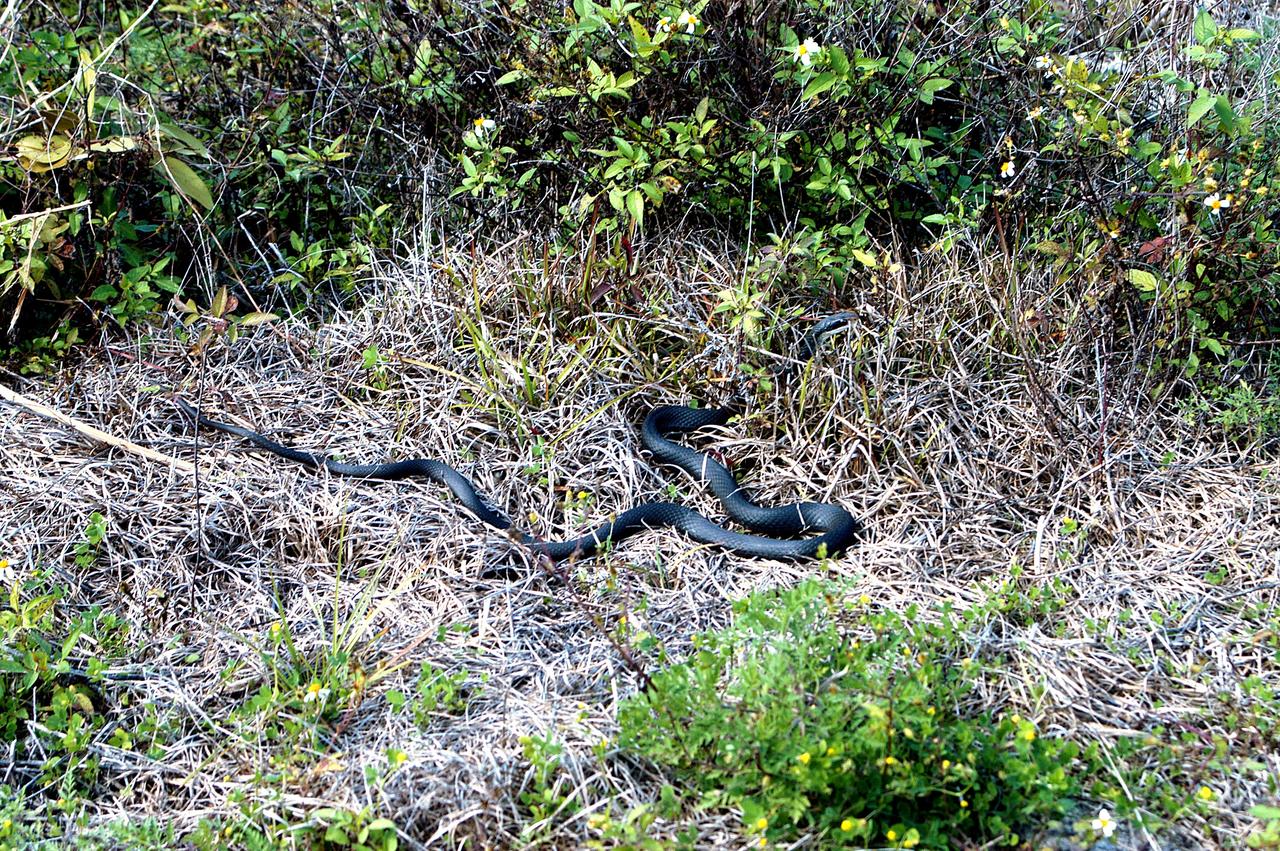
KENNEDY SPACE CENTER, FLA. - A black racer snake slithers away through a patch of dry grass on the grounds of Kennedy Space Center. The Black Racer Snake is one of the fastest, non-venomous snakes in North America. It has a slender body with a slender oval-shaped head and white patch on its chin. It lives in brushy areas, rocky hillsides and meadows, and underneath boards or tin around old buildings. Black Racers feed on insects, eggs, mice, frogs and lizards. Kennedy shares a boundary with the Merritt Island National Wildlife Refuge, home to some of the nation’s rarest and most unusual species of wildlife. In addition, the Refuge supports 19 endangered or threatened wildlife species on Federal or State lists, more than any other single refuge in the U.S.
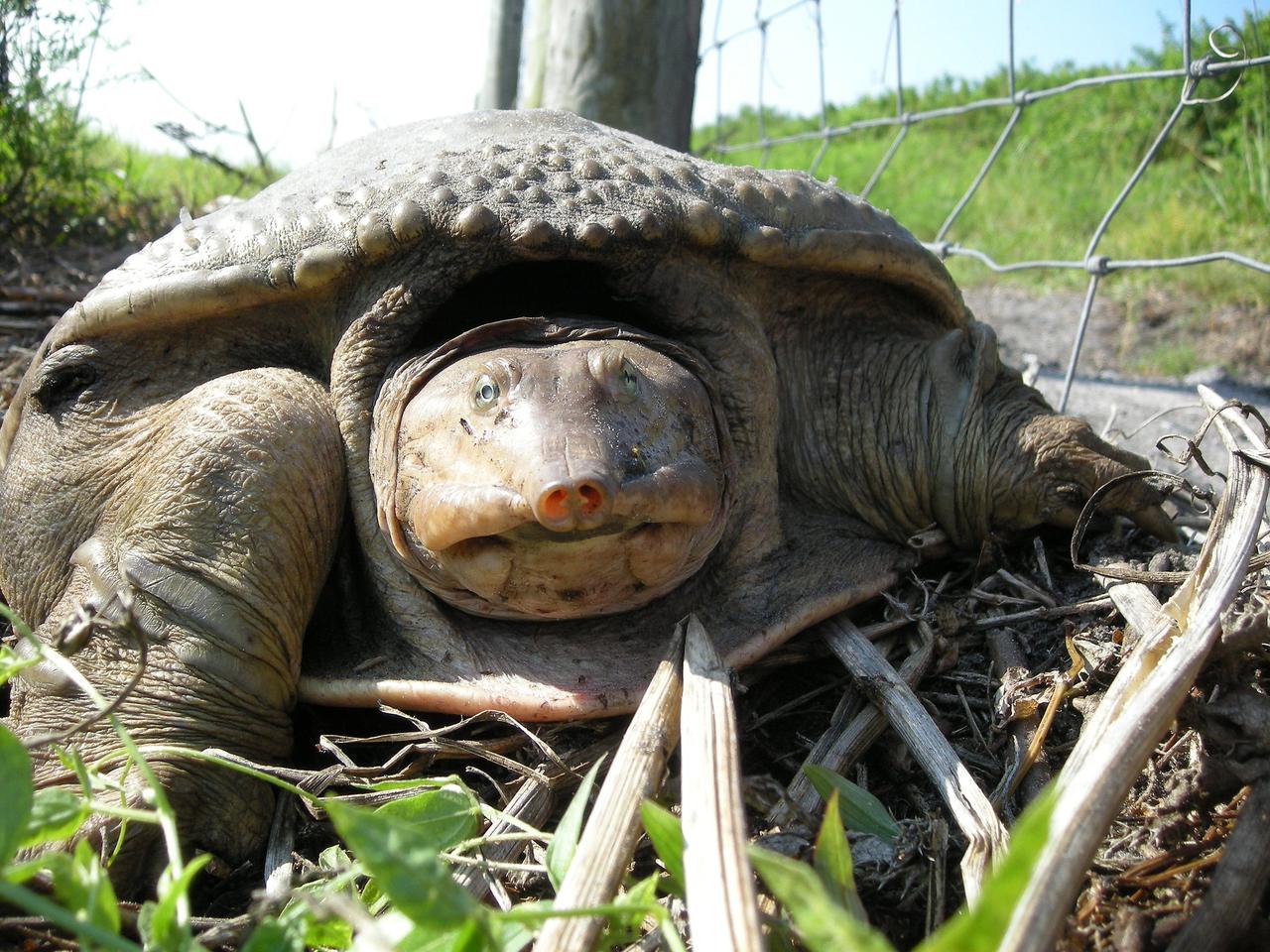
CAPE CANAVERAL, Fla. – This Florida softshell turtle is caught out of the water near the Shuttle Landing Facility at NASA's Kennedy Space Center. A totally aquatic freshwater turtle, it prefers lakes and slow-moving rivers. The species main food is crayfish, fish, frogs, tadpoles and some vegetation. It ranges throughout all of Florida. Kennedy shares a boundary with the Merritt Island Wildlife Nature Refuge, which is a habitat for more than 310 species of birds, 25 mammals, 117 fishes and 65 amphibians and reptiles. Photo credit: NASA/Kenny Allen
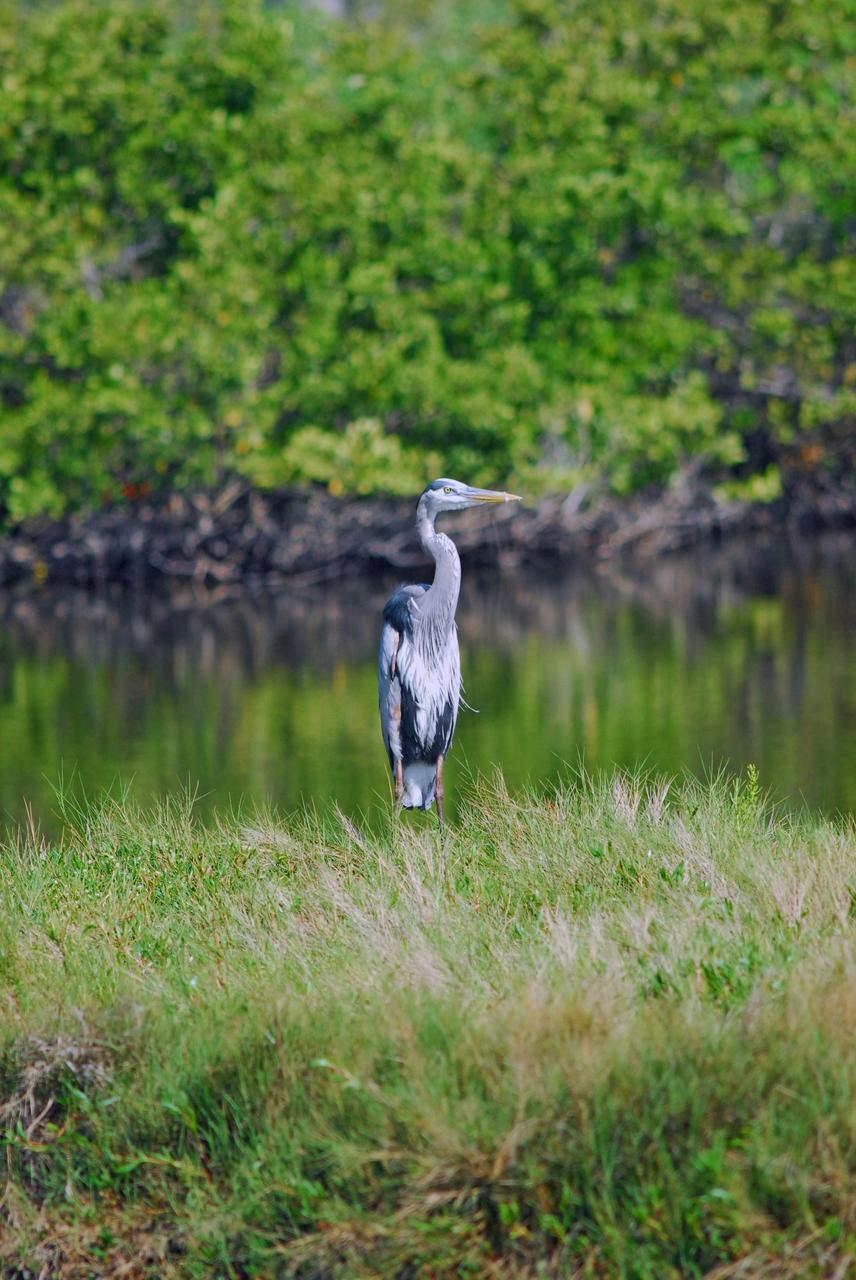
KENNEDY SPACE CENTER, FLA. -- A great blue heron watches warily near a canal on Kennedy Space Center. These herons inhabit lakes, ponds, rivers and marshes. They range throughout the United States. Fish and frogs are its principal food but will also feed on small mammals, reptiles and, occasionally, birds. KSC shares a boundary with the Merritt Island Wildlife Nature Refuge. The refuge is a habitat for more than 310 species of birds, 25 mammals, 117 fishes and 65 amphibians and reptiles. In addition, the Refuge supports 19 endangered or threatened wildlife species on Federal or State lists, more than any other single refuge in the U.S. Photo credit: NASA/Dimitri Gerondidakis

CAPE CANAVERAL, Fla. – The closeup of this Florida softshell turtle shows its snorkel-like snout. A totally aquatic freshwater turtle, it prefers lakes and slow-moving rivers. It was spotted near the Shuttle Landing Facility at NASA's Kennedy Space Center. The species main food is crayfish, fish, frogs, tadpoles and some vegetation. It ranges throughout all of Florida. Kennedy shares a boundary with the Merritt Island Wildlife Nature Refuge, which is a habitat for more than 310 species of birds, 25 mammals, 117 fishes and 65 amphibians and reptiles. Photo credit: NASA/Kenny Allen
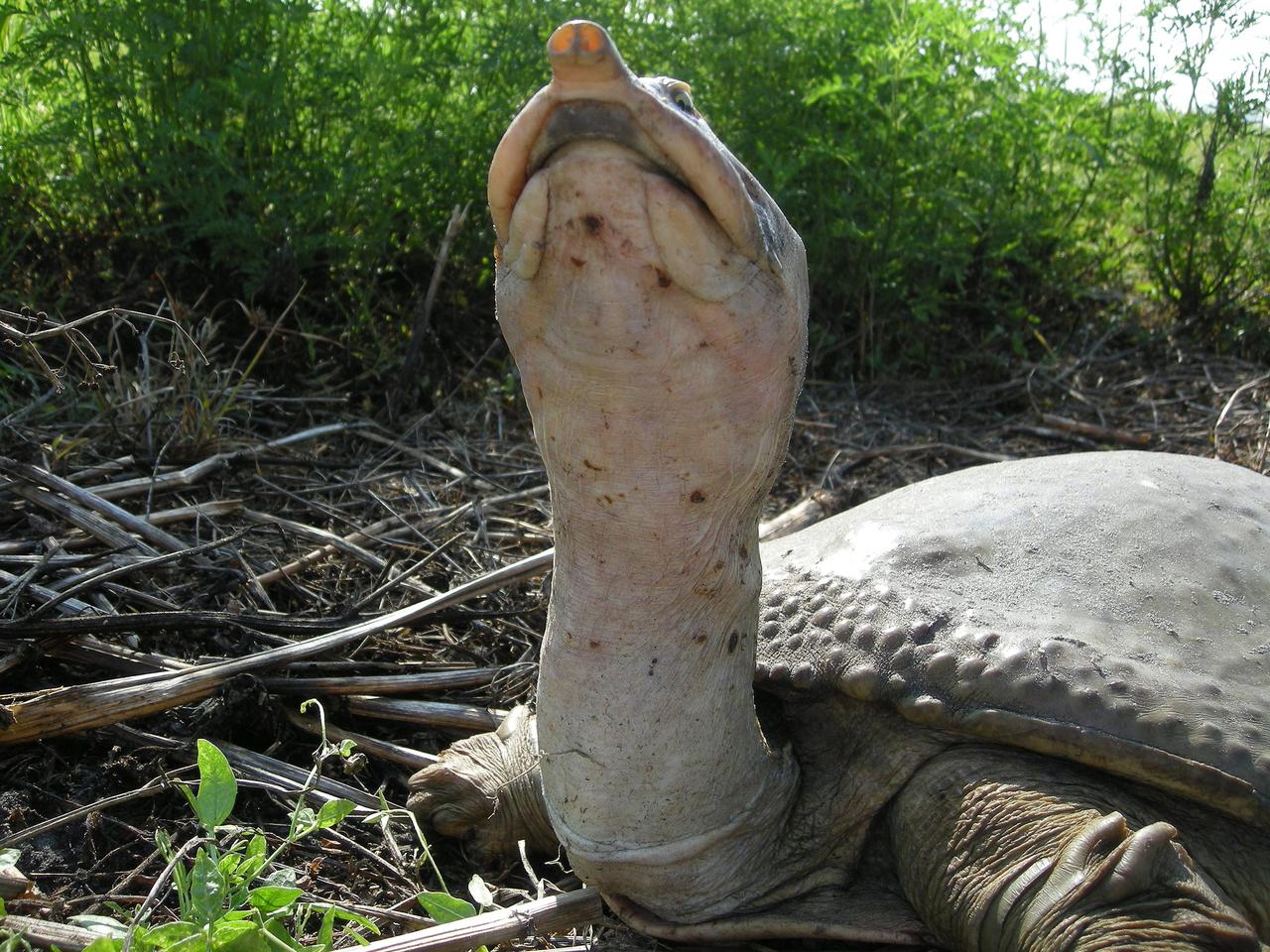
CAPE CANAVERAL, Fla. – This Florida softshell turtle stretches its long neck and points its snorkel-like snout. A totally aquatic freshwater turtle, it prefers lakes and slow-moving rivers. It was spotted near the Shuttle Landing Facility at NASA's Kennedy Space Center. The species main food is crayfish, fish, frogs, tadpoles and some vegetation. It ranges throughout all of Florida. Kennedy shares a boundary with the Merritt Island Wildlife Nature Refuge, which is a habitat for more than 310 species of birds, 25 mammals, 117 fishes and 65 amphibians and reptiles. Photo credit: NASA/Kenny Allen
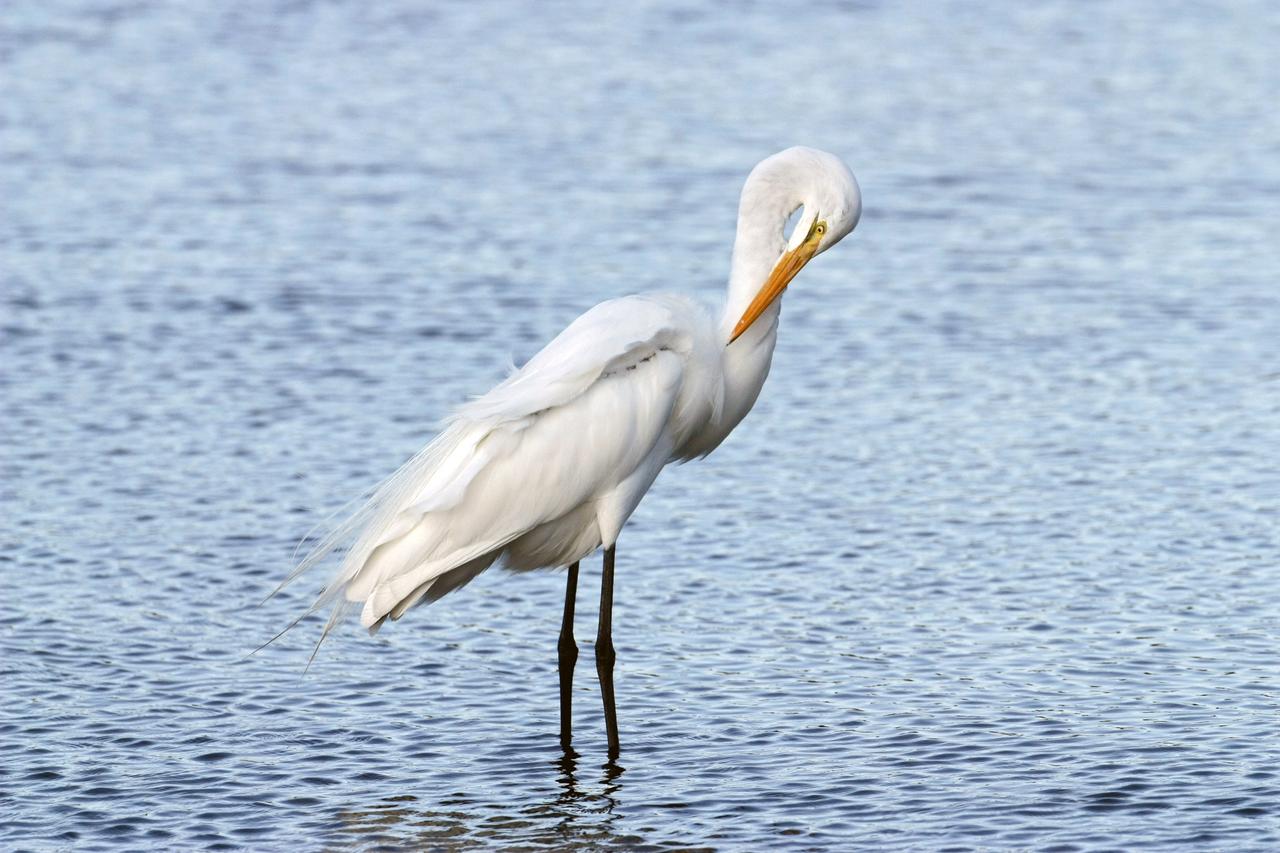
CAPE CANAVERAL, Fla. – A great egret preens its feathers while standing in the shallow water of a pond in the Merritt island National Wildlife Refuge, which borders NASA's Kennedy Space Center in Florida. The breed feeds alone, stalking fish, frogs, snakes and crayfish in shallow water. They inhabit freshwater and salt marshes, marshy ponds and tidal flats. The center shares a boundary with the refuge that includes salt-water estuaries, brackish marshes, hardwood hammocks and pine flatwoods. The diverse landscape provides habitat for more than 310 species of birds, 25 mammals, 117 fishes and 65 amphibians and reptiles. Photo credit: NASA/Jim Grossmann

CAPE CANAVERAL, Fla. – Near NASA's Kennedy Space Center in Florida, on a pond in the Merritt island National Wildlife Refuge, a male hooded Merganser duck swims with a female (right) who is stretching her wings. The Merganser's habitat includes wooded ponds, lakes and rivers. They are most often seen along rivers and estuaries during the fall and winter. They feed chiefly on small fish, which they pursue in long, rapid, underwater dives, and also frogs and aquatic insects. The center shares a boundary with the refuge that includes salt-water estuaries, brackish marshes, hardwood hammocks and pine flatwoods. The diverse landscape provides habitat for more than 310 species of birds, 25 mammals, 117 fishes and 65 amphibians and reptiles. Photo credit: NASA/Jim Grossmann
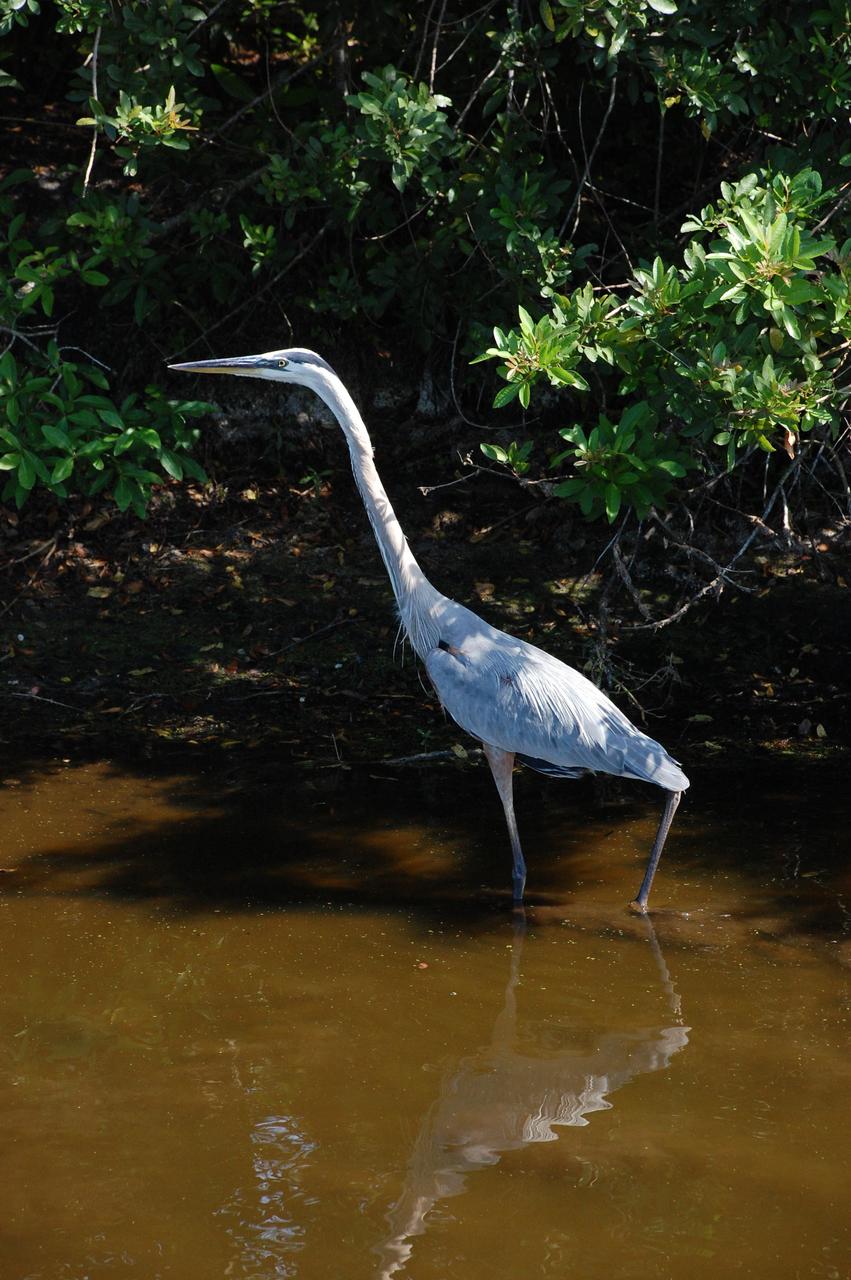
CAPE CANAVERAL, Fla. – A great blue heron stands tall in the water, perhaps looking for food, on grounds of NASA's Kennedy Space Center in Florida. More gray than blue, with a yellowish bill and black legs, it has a brownish-buff colored neck with a black border and white in front of its neck with a vertical black streak. The bird's head is white with a black stripe above its eye. They range throughout the U.S., inhabiting lakes, ponds, rivers and marshes. Their principal food is fish or frogs but may feed on small mammals, reptiles and occasionally birds. Kennedy shares a boundary with the Merritt Island National Wildlife Refuge, which is a habitat for more than 310 species of birds, 25 mammals, 117 fishes and 65 amphibians and reptiles. Photo credit: NASA/Ben Smegelsky
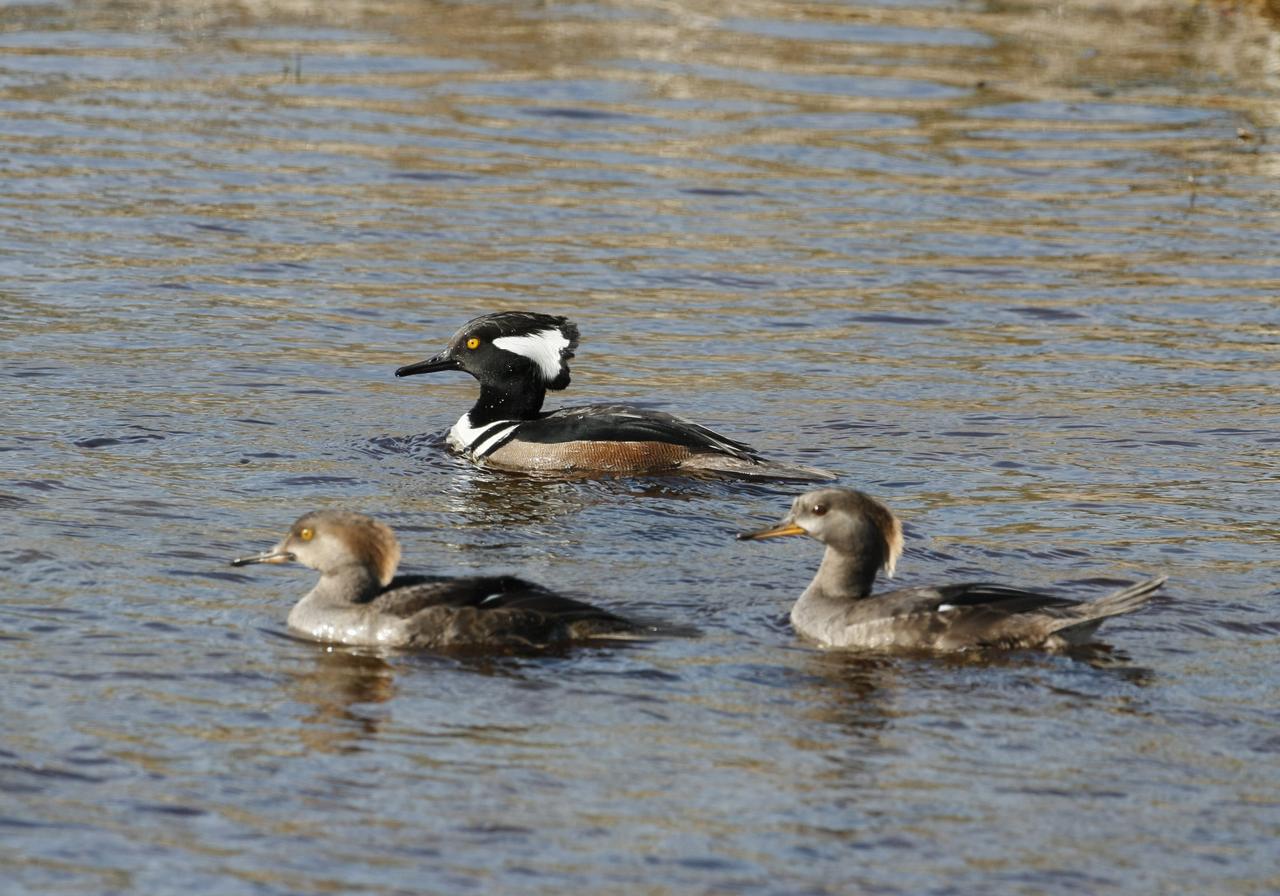
CAPE CANAVERAL, Fla. – Near NASA's Kennedy Space Center in Florida, on a pond in the Merritt island National Wildlife Refuge, a male hooded Merganser duck swims with two females. Their habitat includes wooded ponds, lakes and rivers. They are most often seen along rivers and estuaries during the fall and winter. They feed chiefly on small fish, which they pursue in long, rapid, underwater dives, and also frogs and aquatic insects. The center shares a boundary with the refuge that includes salt-water estuaries, brackish marshes, hardwood hammocks and pine flatwoods. The diverse landscape provides habitat for more than 310 species of birds, 25 mammals, 117 fishes and 65 amphibians and reptiles. Photo credit: NASA/Jim Grossmann
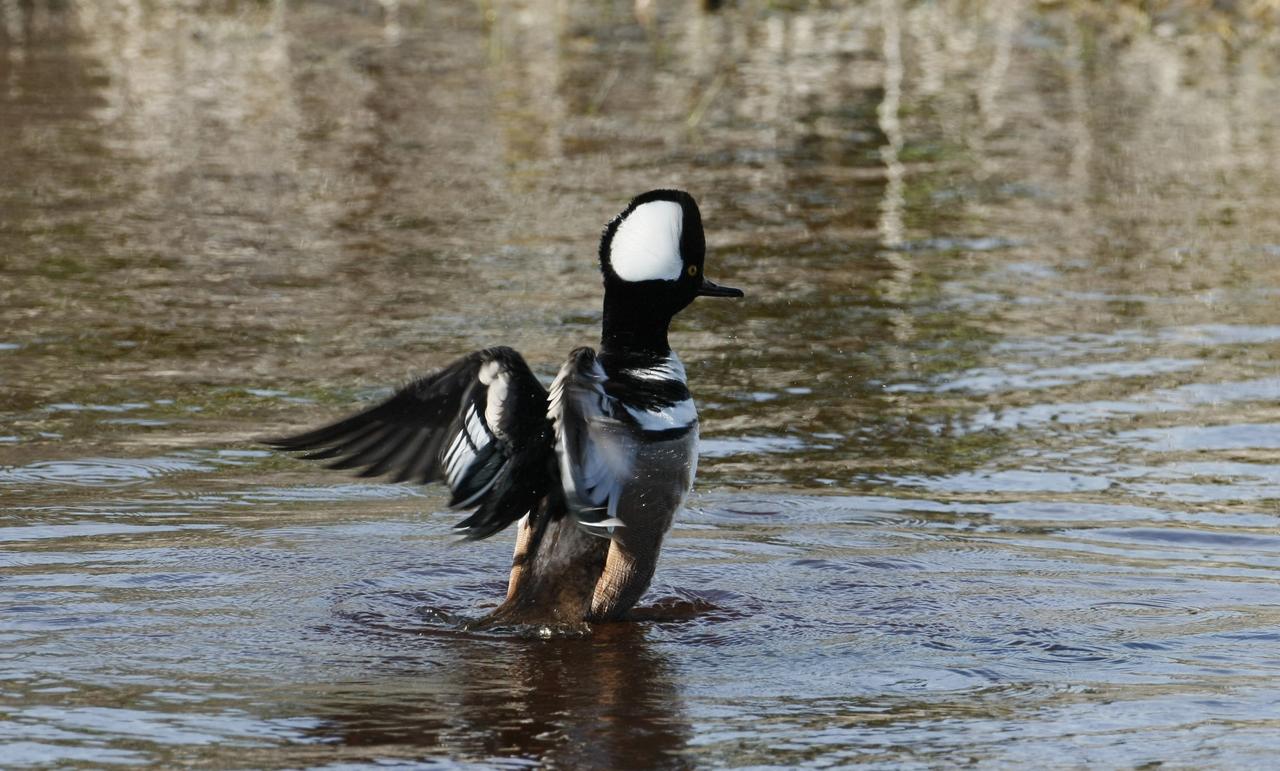
CAPE CANAVERAL, Fla. – Near NASA's Kennedy Space Center in Florida, on a pond in the Merritt island National Wildlife Refuge, a male hooded Merganser duck stretches its wings. The Merganser's habitat includes wooded ponds, lakes and rivers. They are most often seen along rivers and estuaries during the fall and winter. They feed chiefly on small fish, which they pursue in long, rapid, underwater dives, and also frogs and aquatic insects. The center shares a boundary with the refuge that includes salt-water estuaries, brackish marshes, hardwood hammocks and pine flatwoods. The diverse landscape provides habitat for more than 310 species of birds, 25 mammals, 117 fishes and 65 amphibians and reptiles. Photo credit: NASA/Jim Grossmann
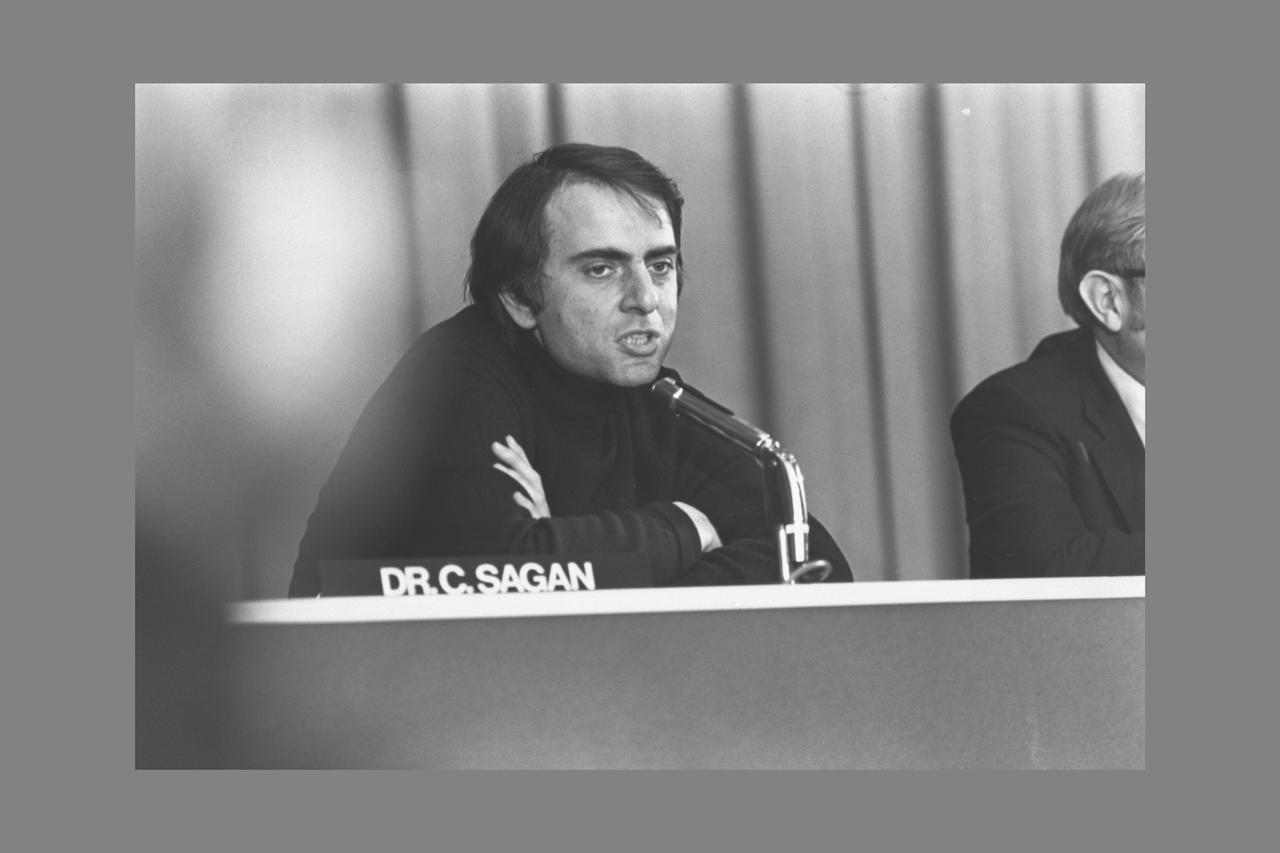
NASA Photographs and Captions courtesy of Joseph and Donna Roizen Telegen, Palo Alto, CA (from) Pioneer 10 and 11 Missions Jupiter encounters - Activities at Ames Research Center December 1973 and December 1974 - As a memento of the highly successful Pioneer 10 and 11 missions to Jupiter, this collection of photographs represents a sampling of those taken at Ames Research Center during the Jupiter encounter periods in December 1973 and December 1974. The captions for these photographs are meant to suggest the lighter side of the intense activities that took place during these periods. I would like to express my gratitude to all participants in the Pioneer 10/11 program for their teamwork in accomplishing the scientific and technical objectives of the Pioneer 10 and 11 missions to Jupiter. (signed) Charles F. Hall - Manager, Pioneer Project Dr. Carl Sagan 'Anybody who doesn't believe there are frogs in the Jovian atmosphere is going t hear from me.'
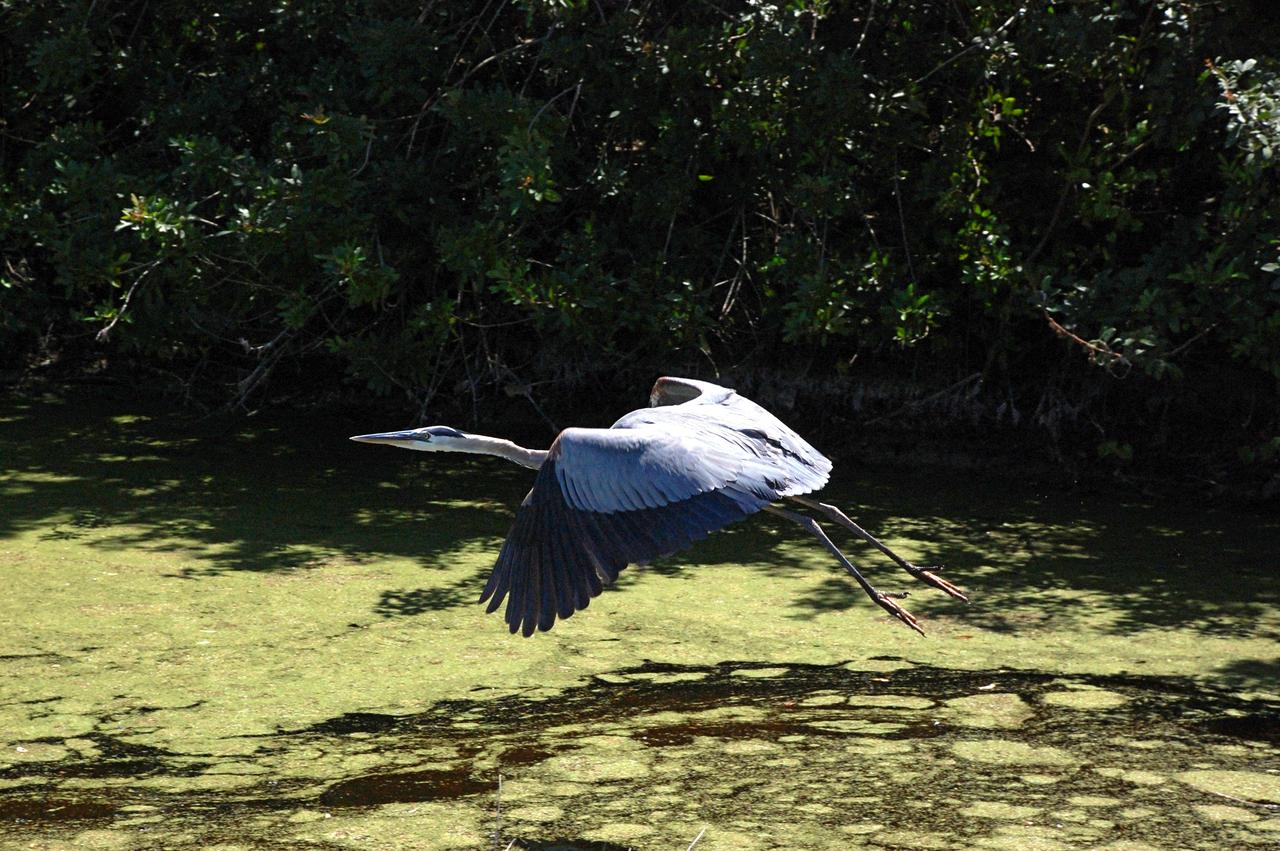
CAPE CANAVERAL, Fla. – A Great Blue Heron majestically takes to the air as it leaves the shallow water behind the NASA News Center at NASA's Kennedy Space Center in Florida. A frequent sight around Kennedy, this large heron inhabits lakes, ponds, rivers and marshes in a range from Alaska south to Mexico and the West Indies. It is frequently found standing at the edge of a pond or pool, watching for fish or frogs, its principal food. Kennedy shares a boundary with the Merritt Island National Wildlife Refuge that includes salt-water estuaries, brackish marshes, hardwood hammocks and pine flatwoods. The diverse landscape provides habitat for more than 310 species of birds, 25 mammals, 117 fishes and 65 amphibians and reptiles. Photo credit: NASA/Ben Smegelsky
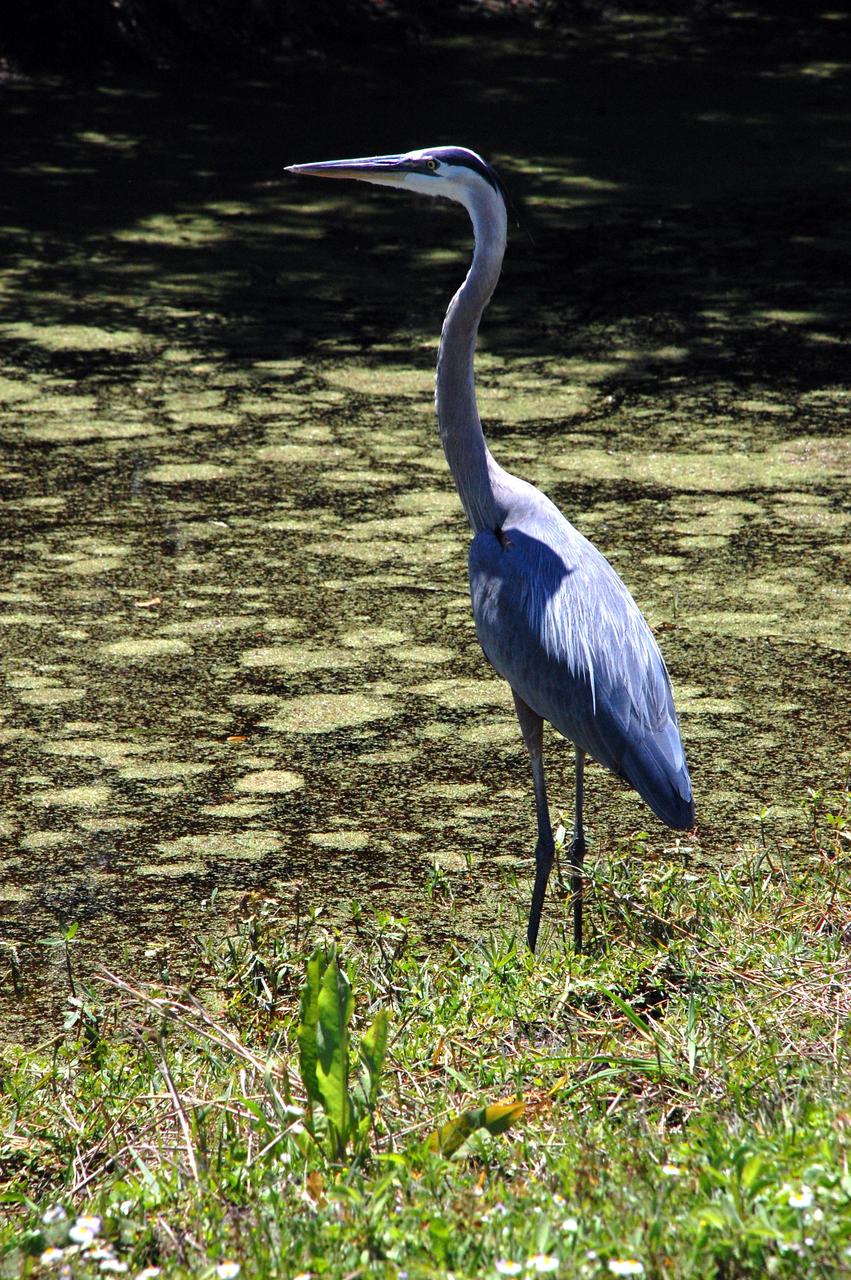
CAPE CANAVERAL, Fla. – A tall Great Blue Heron warily eyes its surroundings while standing in the shallow water behind the NASA News Center at NASA's Kennedy Space Center in Florida. A frequent sight around Kennedy, this large heron inhabits lakes, ponds, rivers and marshes in a range from Alaska south to Mexico and the West Indies. It is frequently found standing at the edge of a pond or pool, watching for fish or frogs, its principal food. Kennedy shares a boundary with the Merritt Island National Wildlife Refuge that includes salt-water estuaries, brackish marshes, hardwood hammocks and pine flatwoods. The diverse landscape provides habitat for more than 310 species of birds, 25 mammals, 117 fishes and 65 amphibians and reptiles. Photo credit: NASA/Ben Smegelsky
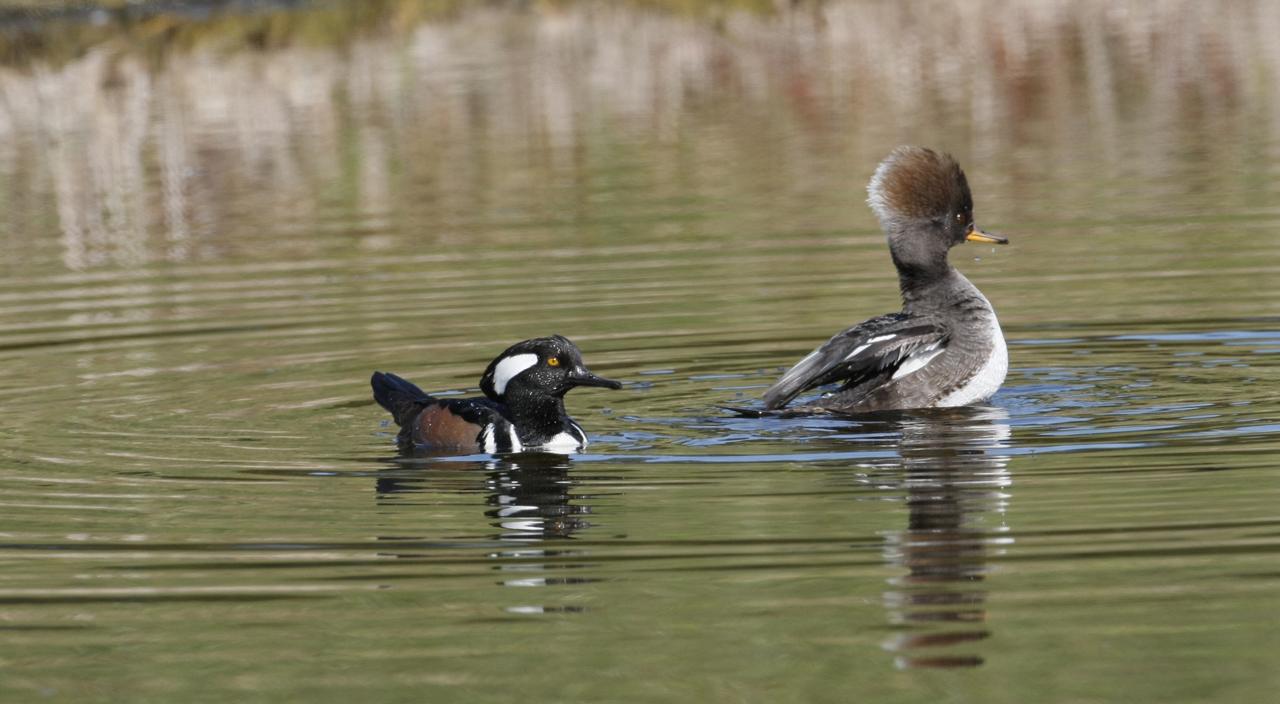
CAPE CANAVERAL, Fla. – Near NASA's Kennedy Space Center in Florida, on a pond in the Merritt island National Wildlife Refuge, a male hooded Merganser duck swims with a female. The Merganser's habitat includes wooded ponds, lakes and rivers. They are most often seen along rivers and estuaries during the fall and winter. They feed chiefly on small fish, which they pursue in long, rapid, underwater dives, and also frogs and aquatic insects. The center shares a boundary with the refuge that includes salt-water estuaries, brackish marshes, hardwood hammocks and pine flatwoods. The diverse landscape provides habitat for more than 310 species of birds, 25 mammals, 117 fishes and 65 amphibians and reptiles. Photo credit: NASA/Jim Grossmann
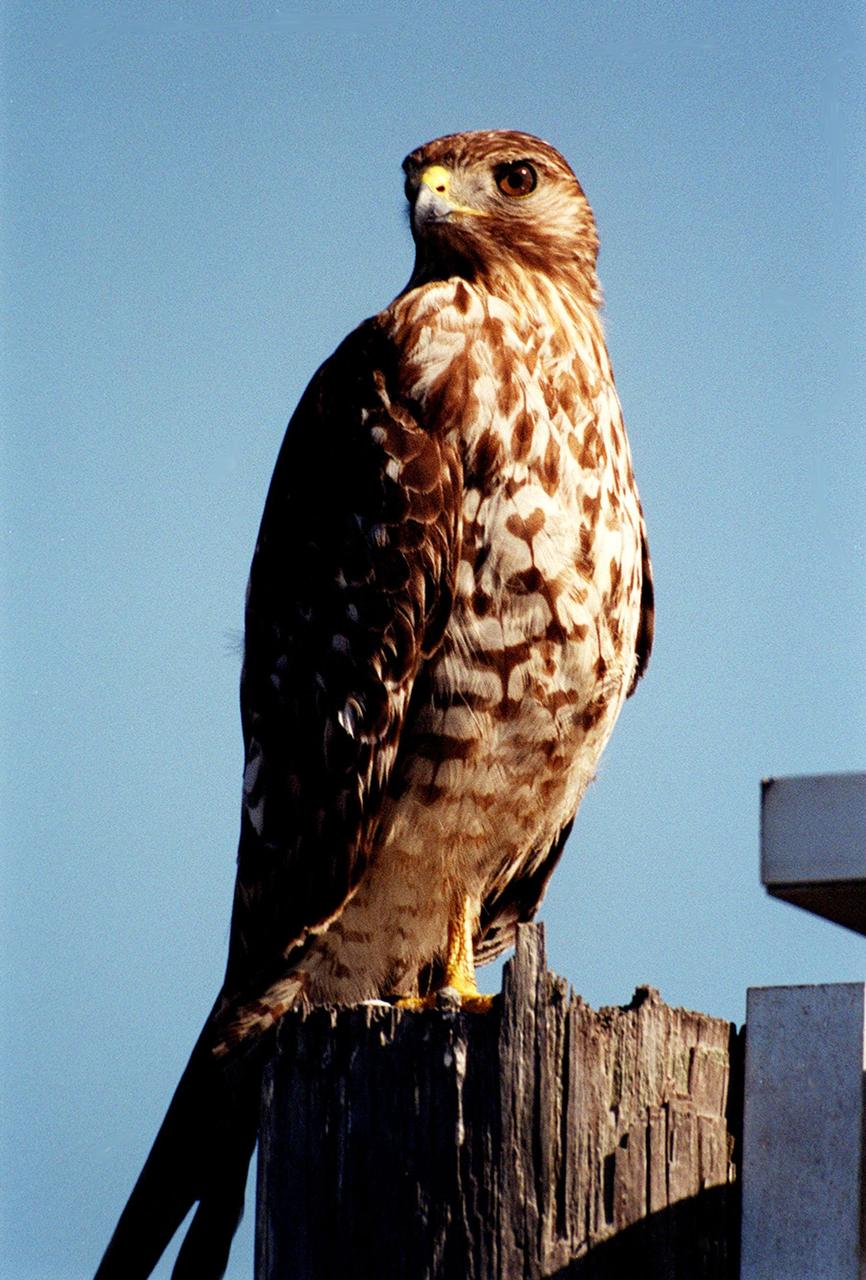
KENNEDY SPACE CENTER, FLA. -- This immature red-shouldered hawk on the roadside at Kennedy Space Center appears to be eyeing the photographer. The red-shouldered hawk's range extends from Minnesota and New Brunswick south to the Gulf Coast and on the Pacific Coast from northern California to Baja California. This hawk is often found in lowlands, especially swampy woods and bogs. It feeds on small snakes, frogs, insects and small mammals. Kennedy shares a boundary with the Merritt Island National Wildlife Refuge, which encompasses 92,000 acres that are a habitat for more than 331 species of birds, 31 mammals, 117 fishes, and 65 amphibians and reptiles. The marshes and open water of the refuge provide wintering areas for 23 species of migratory waterfowl, as well as a year-round home for great blue herons, great egrets, wood storks, cormorants, brown pelicans and other species of marsh and shore birds, as well as a variety of insects.
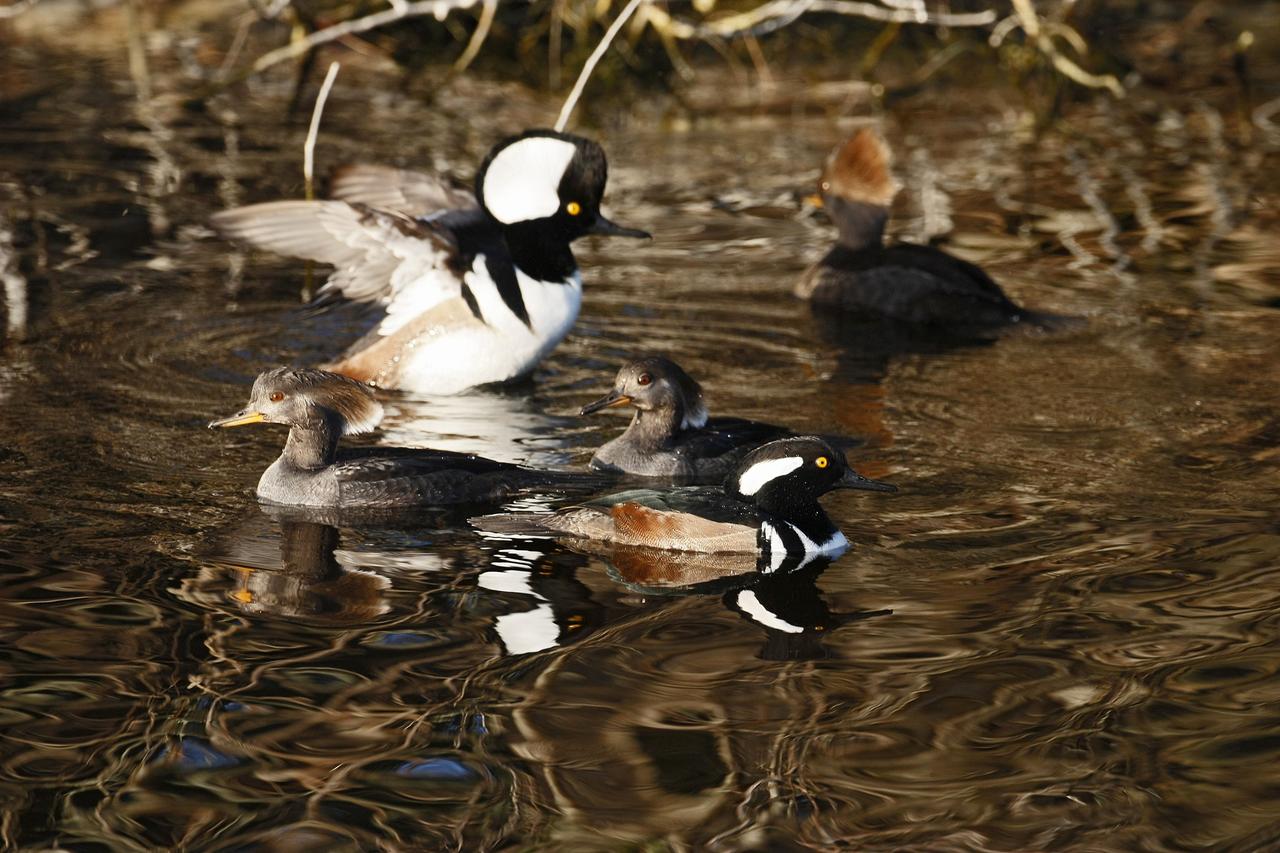
CAPE CANAVERAL, Fla. – Hooded Merganser ducks swim on a pond in the Merritt island National Wildlife Refuge, which borders NASA's Kennedy Space Center in Florida. Their habitat includes wooded ponds, lakes and rivers. They are most often seen along rivers and estuaries during the fall and winter. They feed chiefly on small fish, which they pursue in long, rapid, underwater dives, and also frogs and aquatic insects. The center shares a boundary with the refuge that includes salt-water estuaries, brackish marshes, hardwood hammocks and pine flatwoods. The diverse landscape provides habitat for more than 310 species of birds, 25 mammals, 117 fishes and 65 amphibians and reptiles. Photo credit: NASA/Jim Grossmann
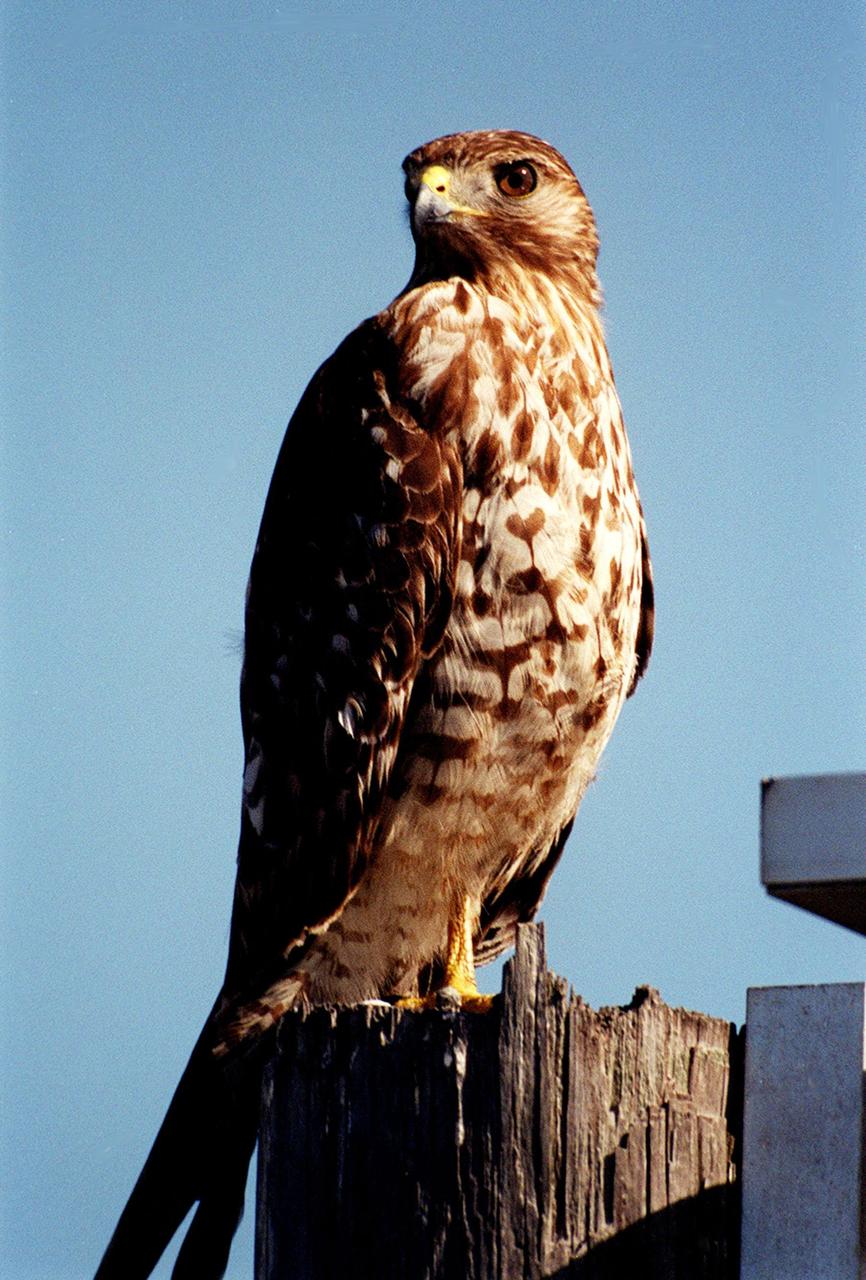
KENNEDY SPACE CENTER, FLA. -- This immature red-shouldered hawk on the roadside at Kennedy Space Center appears to be eyeing the photographer. The red-shouldered hawk's range extends from Minnesota and New Brunswick south to the Gulf Coast and on the Pacific Coast from northern California to Baja California. This hawk is often found in lowlands, especially swampy woods and bogs. It feeds on small snakes, frogs, insects and small mammals. Kennedy shares a boundary with the Merritt Island National Wildlife Refuge, which encompasses 92,000 acres that are a habitat for more than 331 species of birds, 31 mammals, 117 fishes, and 65 amphibians and reptiles. The marshes and open water of the refuge provide wintering areas for 23 species of migratory waterfowl, as well as a year-round home for great blue herons, great egrets, wood storks, cormorants, brown pelicans and other species of marsh and shore birds, as well as a variety of insects.
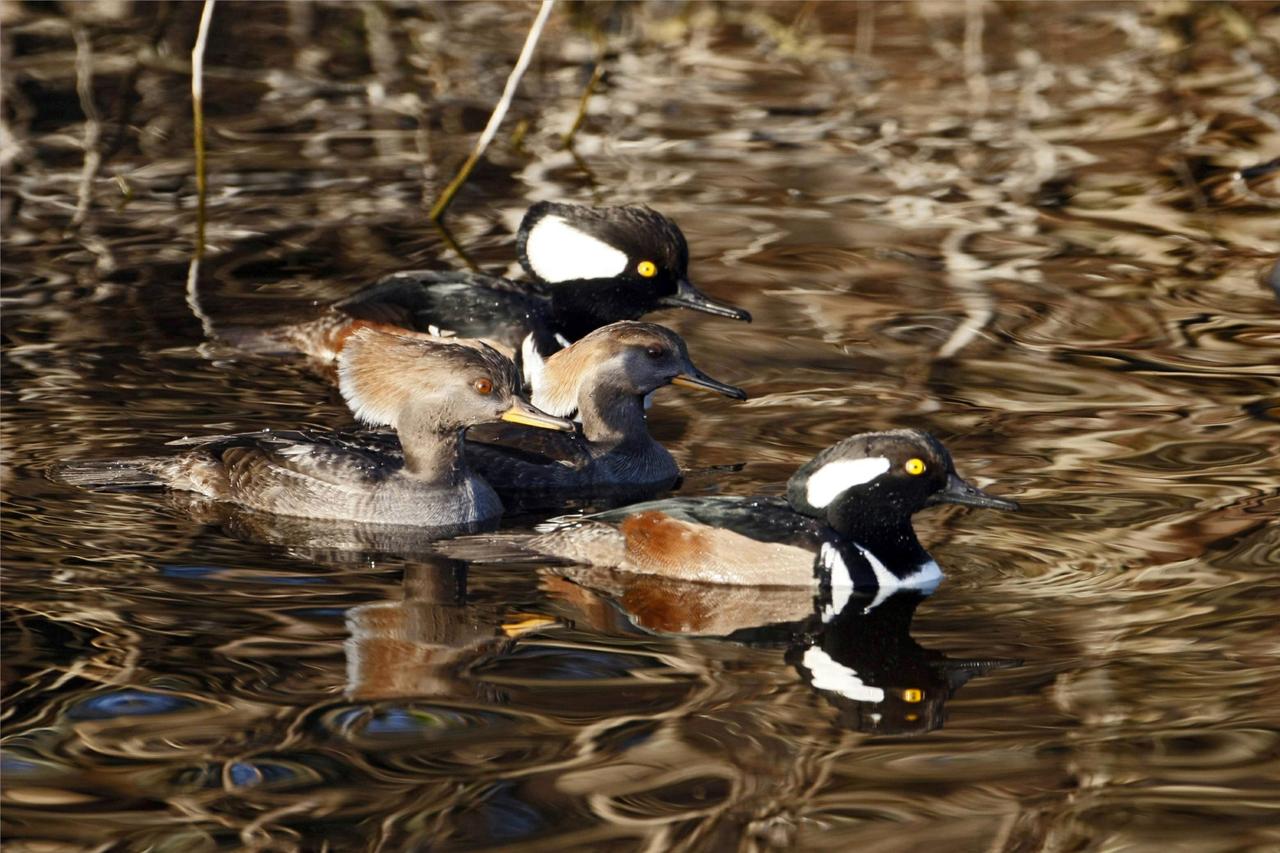
CAPE CANAVERAL, Fla. – Hooded Merganser ducks swim on a pond in the Merritt island National Wildlife Refuge, which borders NASA's Kennedy Space Center in Florida. Their habitat includes wooded ponds, lakes and rivers. They are most often seen along rivers and estuaries during the fall and winter. They feed chiefly on small fish, which they pursue in long, rapid, underwater dives, and also frogs and aquatic insects. The center shares a boundary with the refuge that includes salt-water estuaries, brackish marshes, hardwood hammocks and pine flatwoods. The diverse landscape provides habitat for more than 310 species of birds, 25 mammals, 117 fishes and 65 amphibians and reptiles. Photo credit: NASA/Jim Grossmann
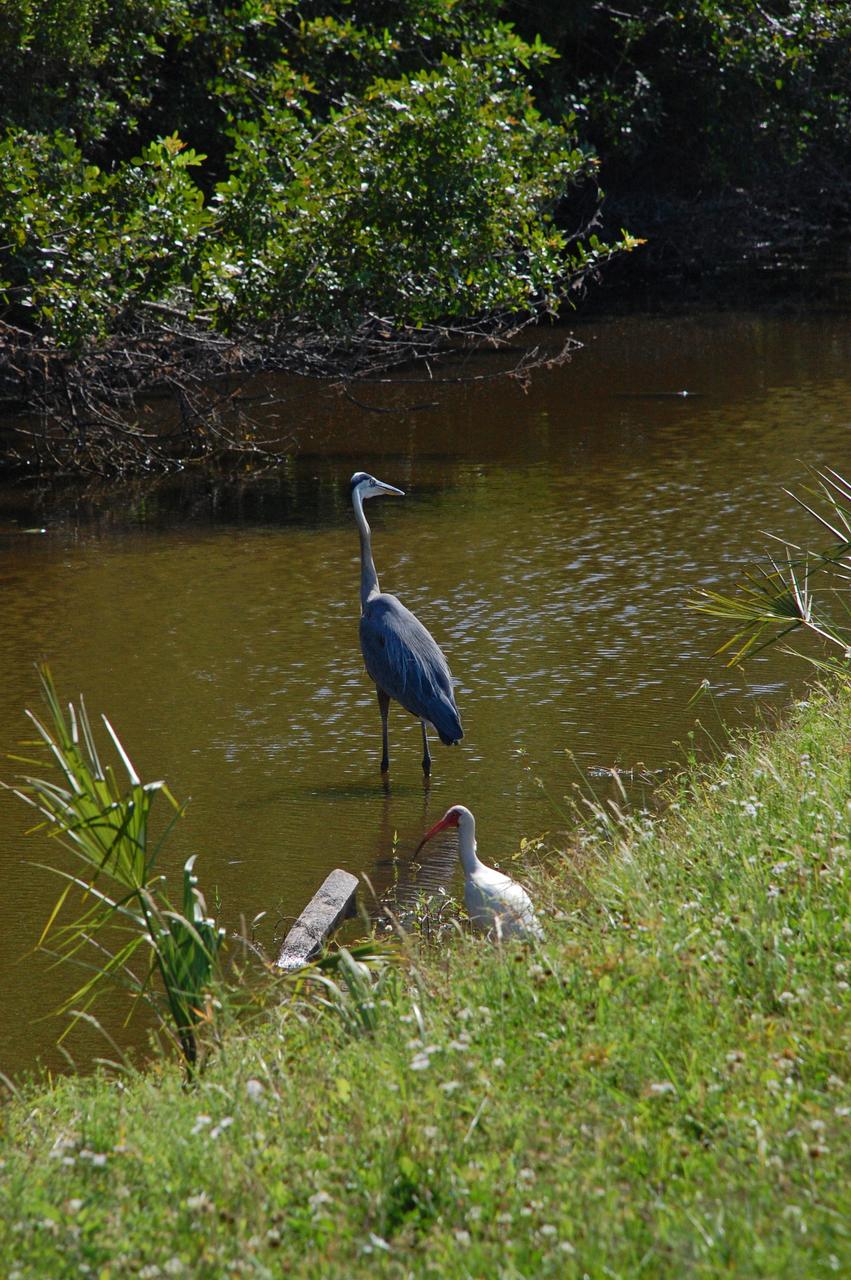
CAPE CANAVERAL, Fla. – A great blue heron stands tall in the water, perhaps looking for food, on grounds of NASA's Kennedy Space Center in Florida. More gray than blue, with a yellowish bill and black legs, it has a brownish-buff colored neck with a black border and white in front of its neck with a vertical black streak. The bird's head is white with a black stripe above its eye. They range throughout the U.S., inhabiting lakes, ponds, rivers and marshes. Their principal food is fish or frogs but may feed on small mammals, reptiles and occasionally birds. Kennedy shares a boundary with the Merritt Island National Wildlife Refuge, which is a habitat for more than 310 species of birds, 25 mammals, 117 fishes and 65 amphibians and reptiles. Photo credit: NASA/Ben Smegelsky
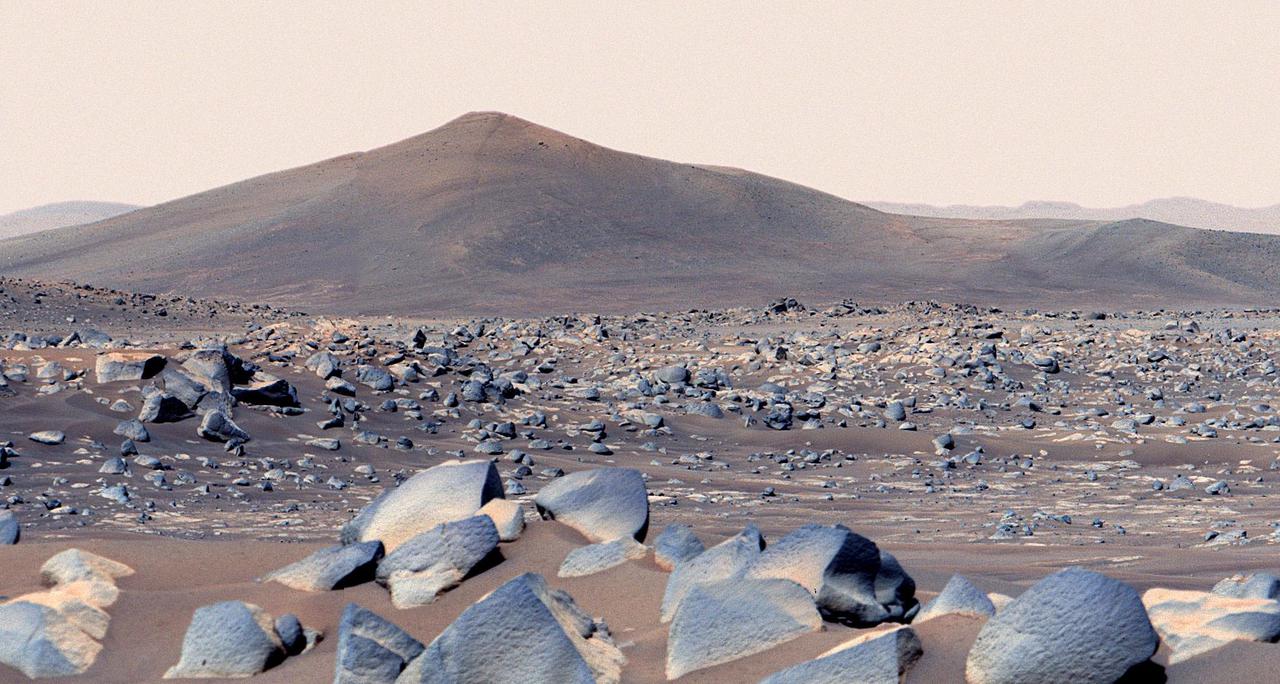
NASA's Perseverance Mars rover snapped this view of a hill in Mars' Jezero Crater called "Santa Cruz" on April 29, 2021, the 68th Martian day, or sol, of the mission. About 20 inches (50 centimeters) across on average, the boulders in the foreground are among the type of rocks the rover team has named "Ch'al" (the Navajo term for "frog" and pronounced "chesh"). Perseverance will return to the area in the next week or so. Composed of multiple images, this enhanced-color mosaic was created using the left- and right-eye views of Perseverance's Mastcam-Z camera system, merging the scene into a single, wider view. Santa Cruz hill is a possible eroded remnant of Jezero Crater's western delta. The hill is about 164 feet (50 meters) tall and was roughly 1.6 miles (2.5 kilometers) east of the rover when the photo was taken, viewed from "Van Zyl Overlook." A key objective for Perseverance's mission on Mars is astrobiology, including the search for signs of ancient microbial life. The rover will characterize the planet's geology and past climate, pave the way for human exploration of the Red Planet, and be the first mission to collect and cache Martian rock and regolith (broken rock and dust). Subsequent NASA missions, in cooperation with ESA (European Space Agency), would send spacecraft to Mars to collect these sealed samples from the surface and return them to Earth for in-depth analysis. The Mars 2020 Perseverance mission is part of NASA's Moon to Mars exploration approach, which includes Artemis missions to the Moon that will help prepare for human exploration of the Red Planet. https://photojournal.jpl.nasa.gov/catalog/PIA25075