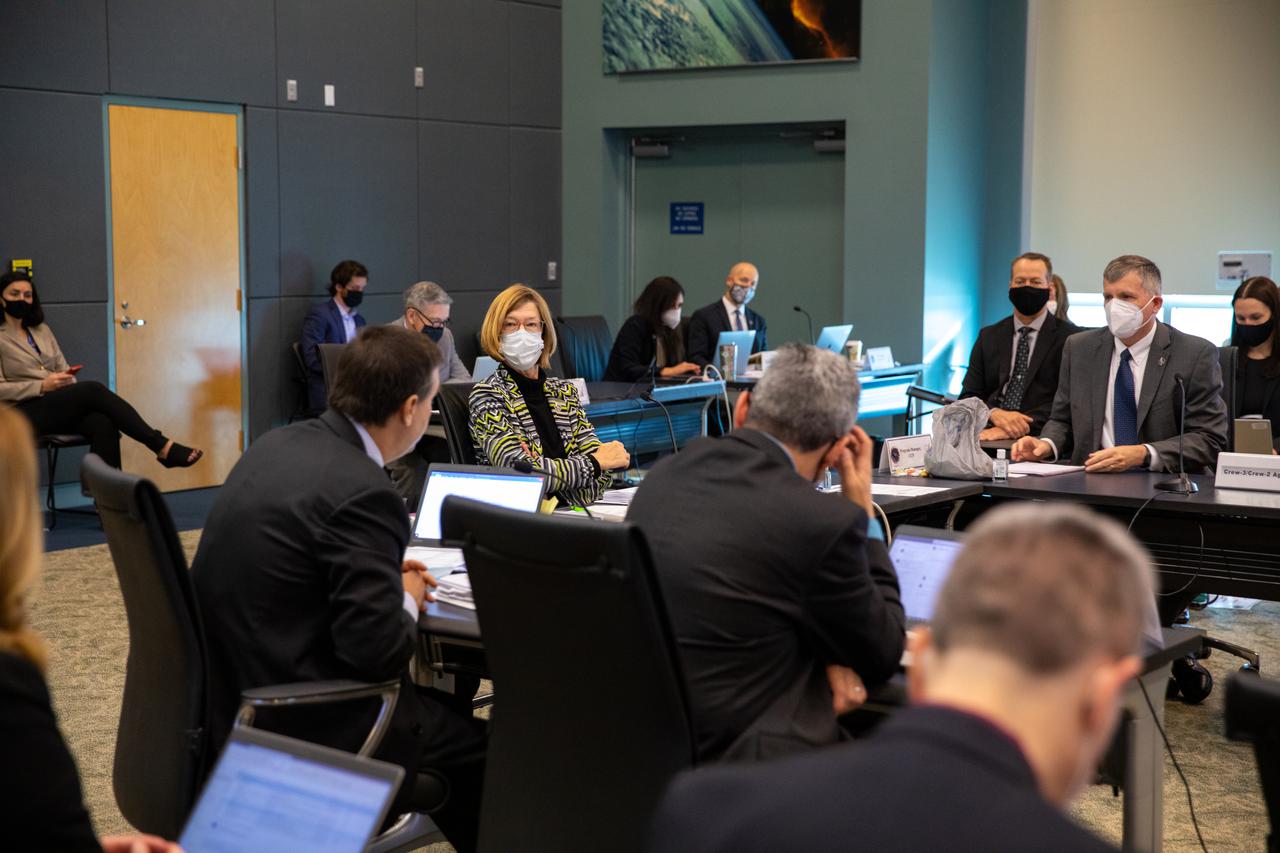
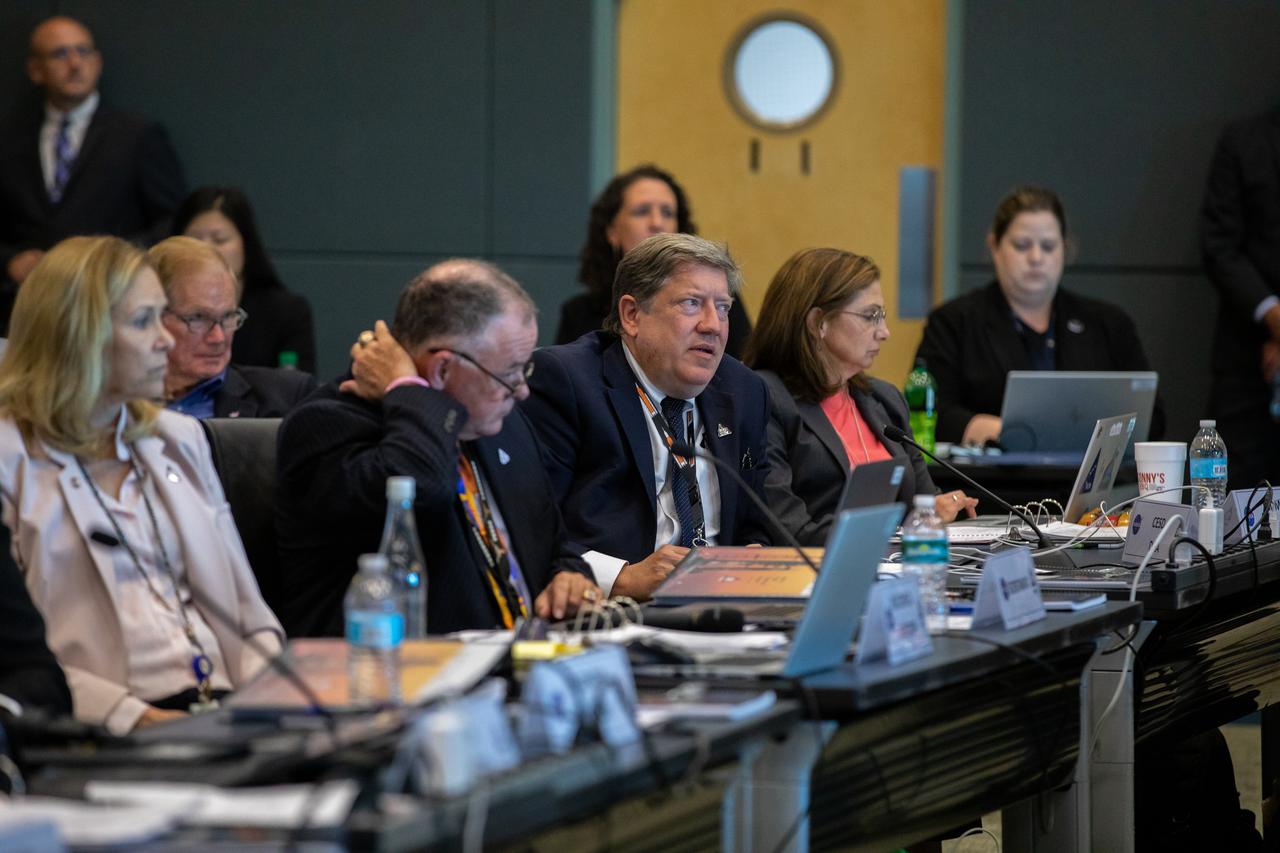
NASA and SpaceX managers participate in a Flight Readiness Review (FRR) for the agency’s SpaceX Crew-3 mission at Kennedy Space Center in Florida on Oct. 25, 2021. International partners also participated. Attending the FRR is Kathy Lueders, center, NASA associate administrator, Human Exploration and Operations Mission Directorate. Crew-3 is scheduled to launch to the International Space Station from Kennedy’s Launch Complex 39A on Oct. 31, 2021 as part of NASA’s Commercial Crew Program. Liftoff of the Falcon 9 rocket and Crew Dragon spacecraft is targeted for 2:21 a.m. EDT.
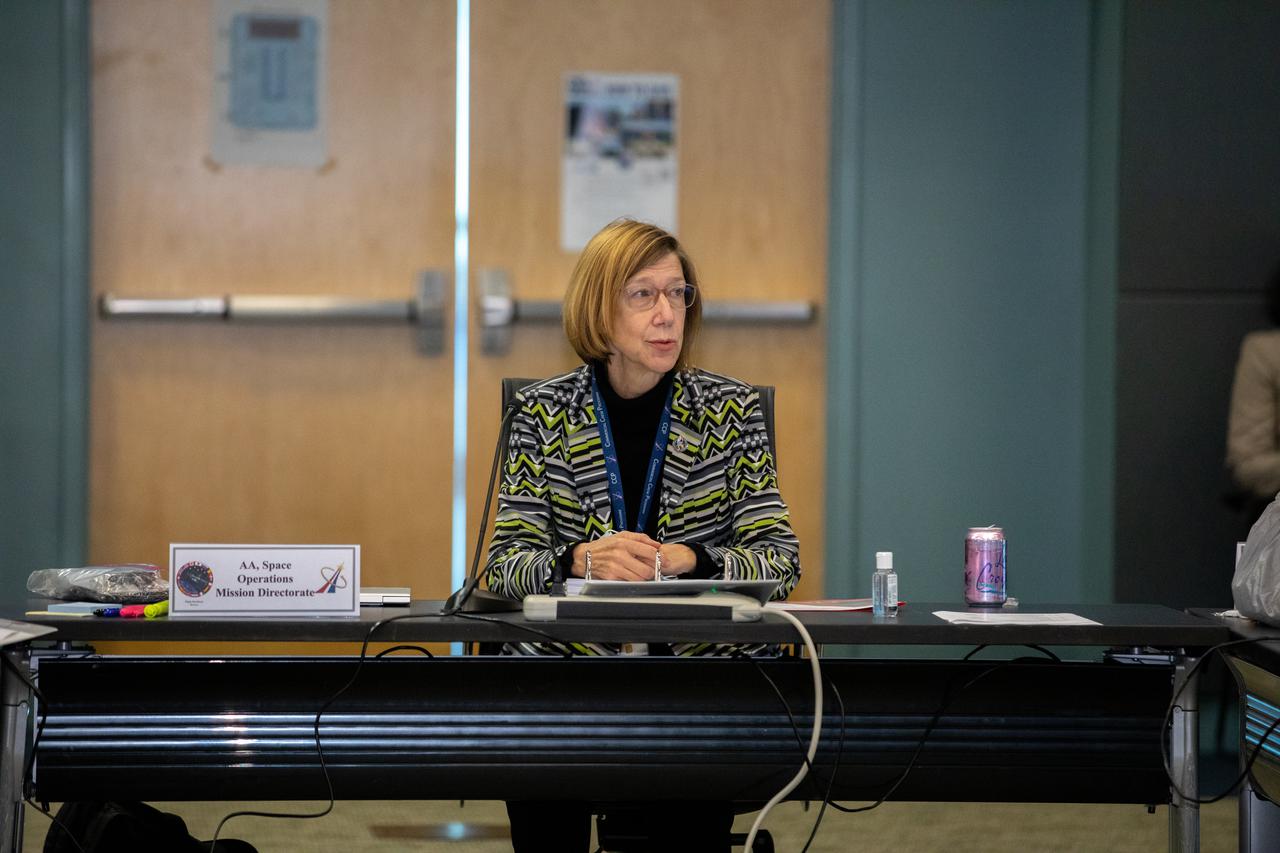
Kathy Lueders, NASA associate administrator, Human Exploration and Operations Mission Directorate, speaks during a Flight Readiness Review (FRR) for the agency’s SpaceX Crew-3 mission at Kennedy Space Center in Florida on Oct. 25, 2021. NASA and SpaceX mission managers held the FRR to confirm the SpaceX Falcon 9 and Crew Dragon spacecraft are ready for launch. International partners also participated. Crew-3 is scheduled to launch to the International Space Station from Kennedy’s Launch Complex 39A on Oct. 31, 2021 as part of NASA’s Commercial Crew Program. Liftoff is targeted for 2:21 a.m. EDT.
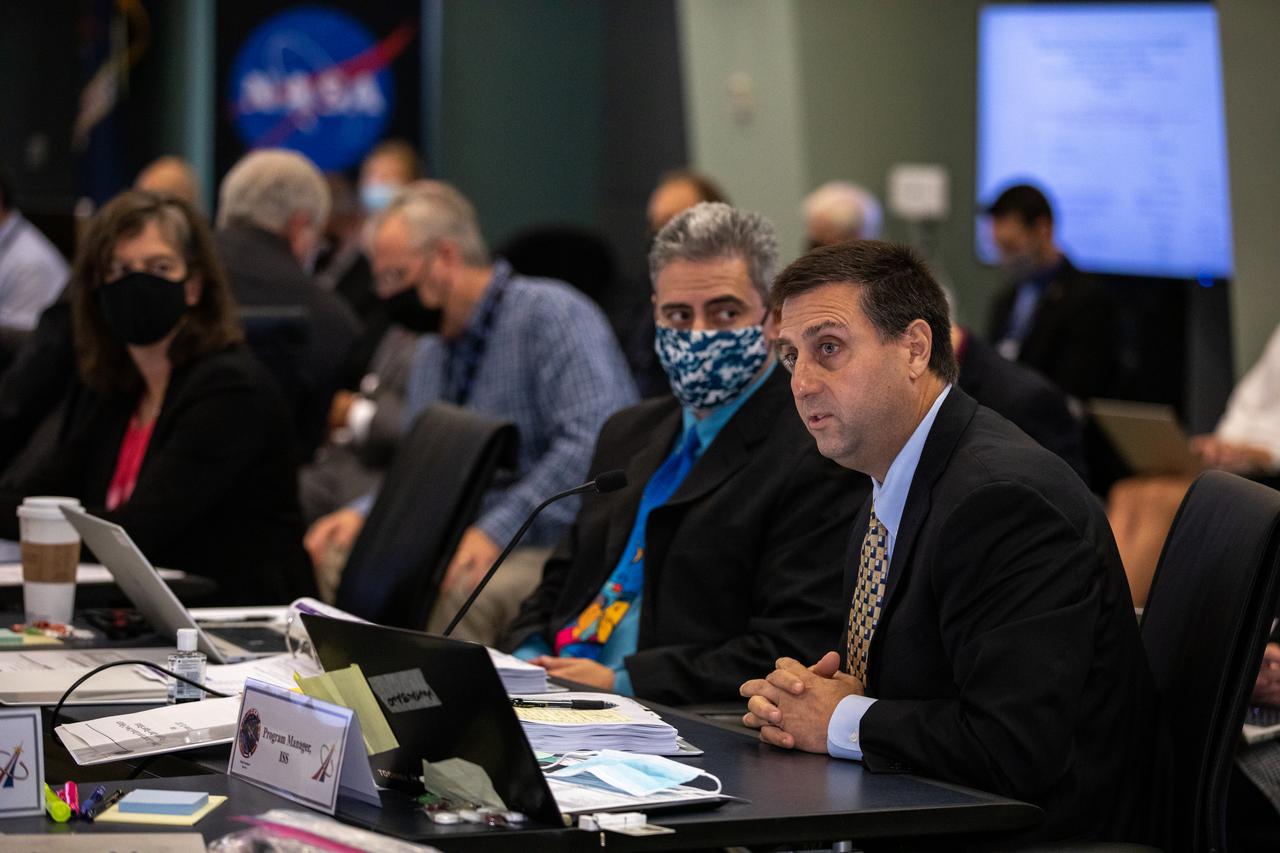
Joel Montalbano, at right, manager, International Space Station, NASA’s Johnson Space Center, participates in a Flight Readiness Review for the agency’s SpaceX Crew-3 mission at Kennedy Space Center in Florida on Oct. 25, 2021. International partners also participated. NASA and SpaceX mission managers held the FRR to confirm the SpaceX Falcon 9 and Crew Dragon spacecraft are ready for launch. Crew-3 is scheduled to launch to the International Space Station from Kennedy’s Launch Complex 39A on Oct. 31, 2021 as part of NASA’s Commercial Crew Program. Liftoff of the Falcon 9 rocket and Crew Dragon spacecraft is targeted for 2:21 a.m. EDT.
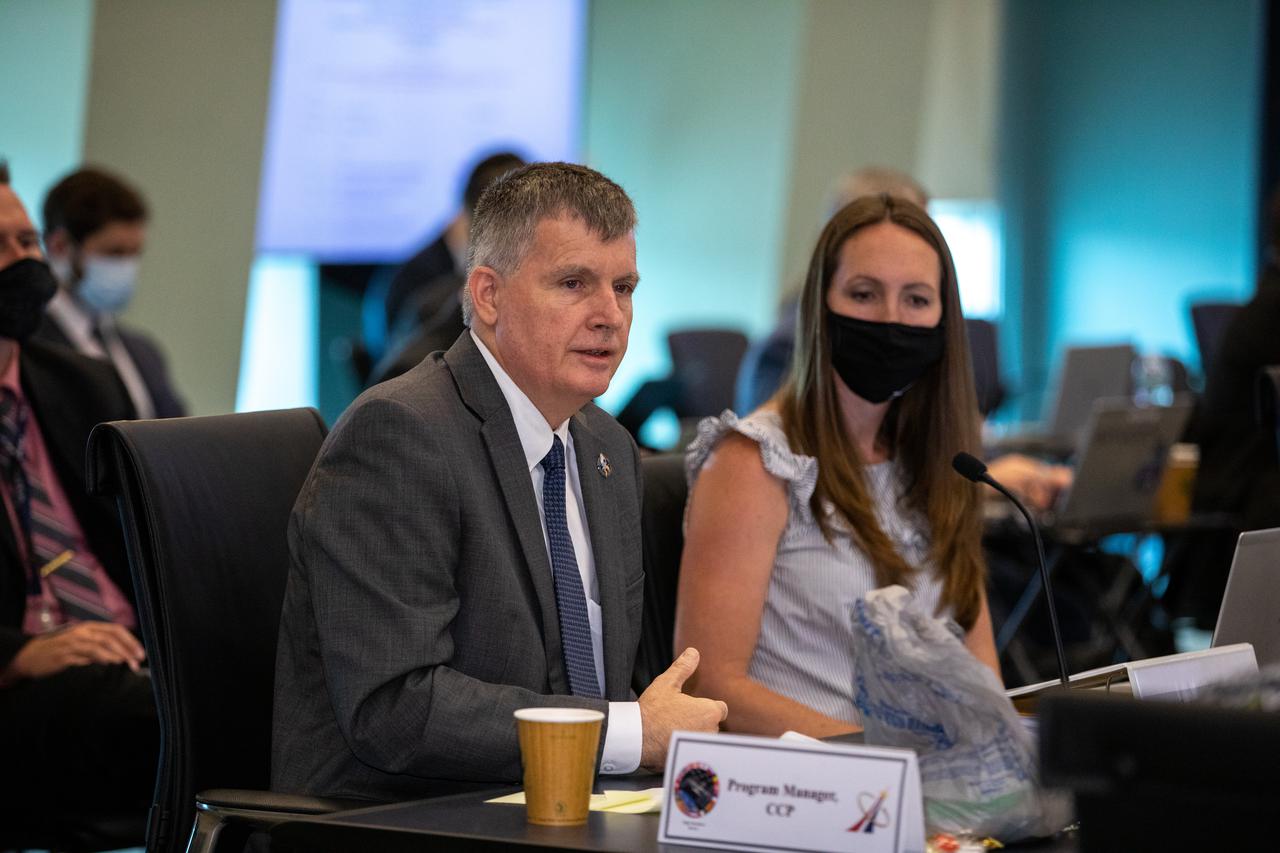
Steve Stich, at left, manager, Commercial Crew Program at Kennedy Space Center, participates in a Flight Readiness Review for the agency’s SpaceX Crew-3 mission at the center in Florida on Oct. 25, 2021. International partners also participated. NASA and SpaceX mission managers held the FRR to confirm the SpaceX Falcon 9 and Crew Dragon spacecraft are ready for launch. Crew-3 is scheduled to launch to the International Space Station from Kennedy’s Launch Complex 39A on Oct. 31, 2021 as part of NASA’s Commercial Crew Program. Liftoff of the Falcon 9 rocket and Crew Dragon spacecraft is targeted for 2:21 a.m. EDT.
Artemis I managers conduct a Flight Readiness Review (FRR) on Aug. 22, 2022, at NASA’s Kennedy Space Center in Florida. The FRR is an in-depth assessment of the readiness of the agency’s Space Launch System and Orion spacecraft to support the uncrewed flight of Artemis I on its mission beyond the Moon and return to Earth. The meeting will conclude later in the day with a poll of all managers. Artemis I is scheduled to launch at 8:33 a.m. EDT on Aug. 29, 2022, from Kennedy’s Launch Complex 39B. The first in a series of increasingly complex missions, Artemis I will provide a foundation for human deep space exploration and demonstrate our commitment and capability to extend human presence to the Moon and beyond. The primary goal of Artemis I is to thoroughly test the integrated systems before crewed missions by operating the spacecraft in a deep space environment, testing Orion’s heat shield, and recovering the crew module after reentry, descent, and splashdown.
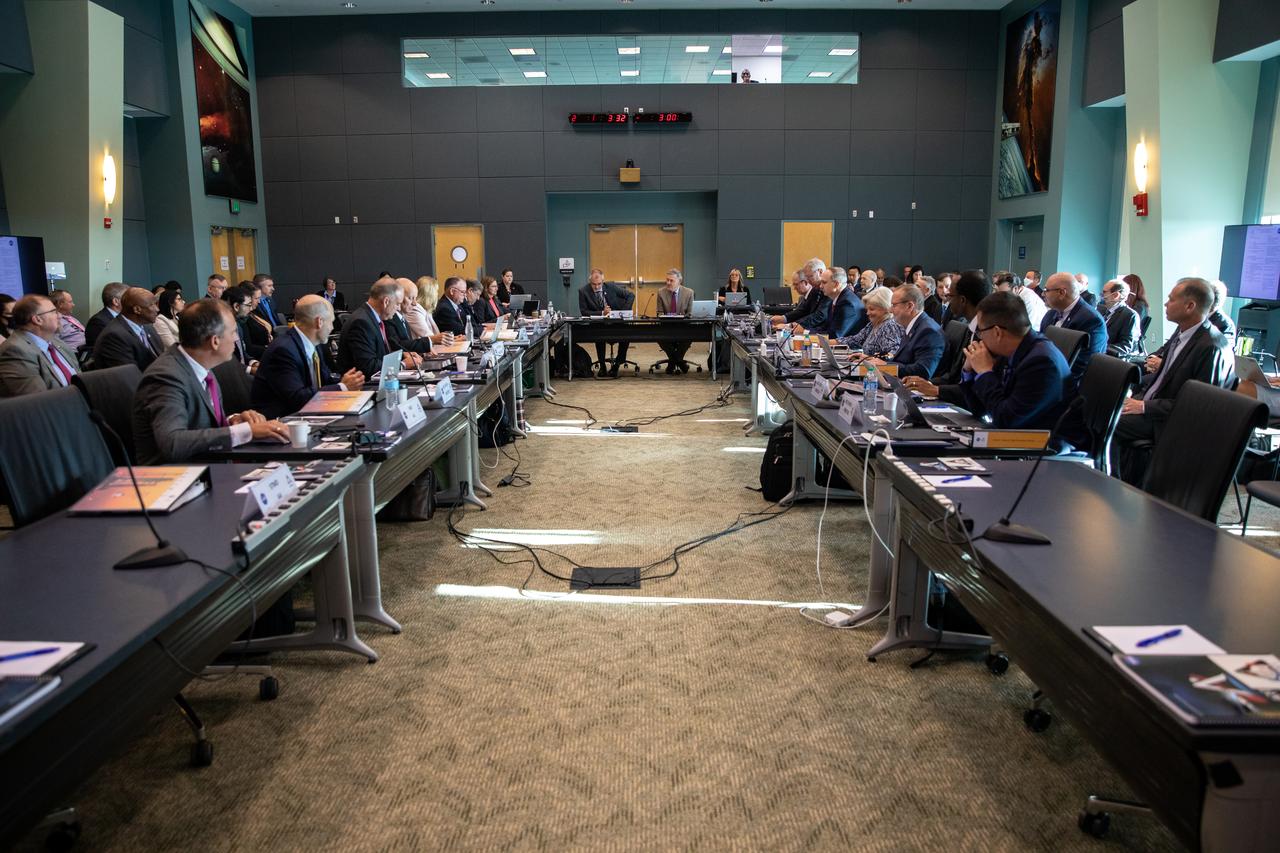
Artemis I managers conduct a Flight Readiness Review (FRR) on Aug. 22, 2022, at NASA’s Kennedy Space Center in Florida. The FRR is an in-depth assessment of the readiness of the agency’s Space Launch System and Orion spacecraft to support the uncrewed flight of Artemis I on its mission beyond the Moon and return to Earth. The meeting will conclude later in the day with a poll of all managers. Artemis I is scheduled to launch at 8:33 a.m. EDT on Aug. 29, 2022, from Kennedy’s Launch Complex 39B. The first in a series of increasingly complex missions, Artemis I will provide a foundation for human deep space exploration and demonstrate our commitment and capability to extend human presence to the Moon and beyond. The primary goal of Artemis I is to thoroughly test the integrated systems before crewed missions by operating the spacecraft in a deep space environment, testing Orion’s heat shield, and recovering the crew module after reentry, descent, and splashdown.
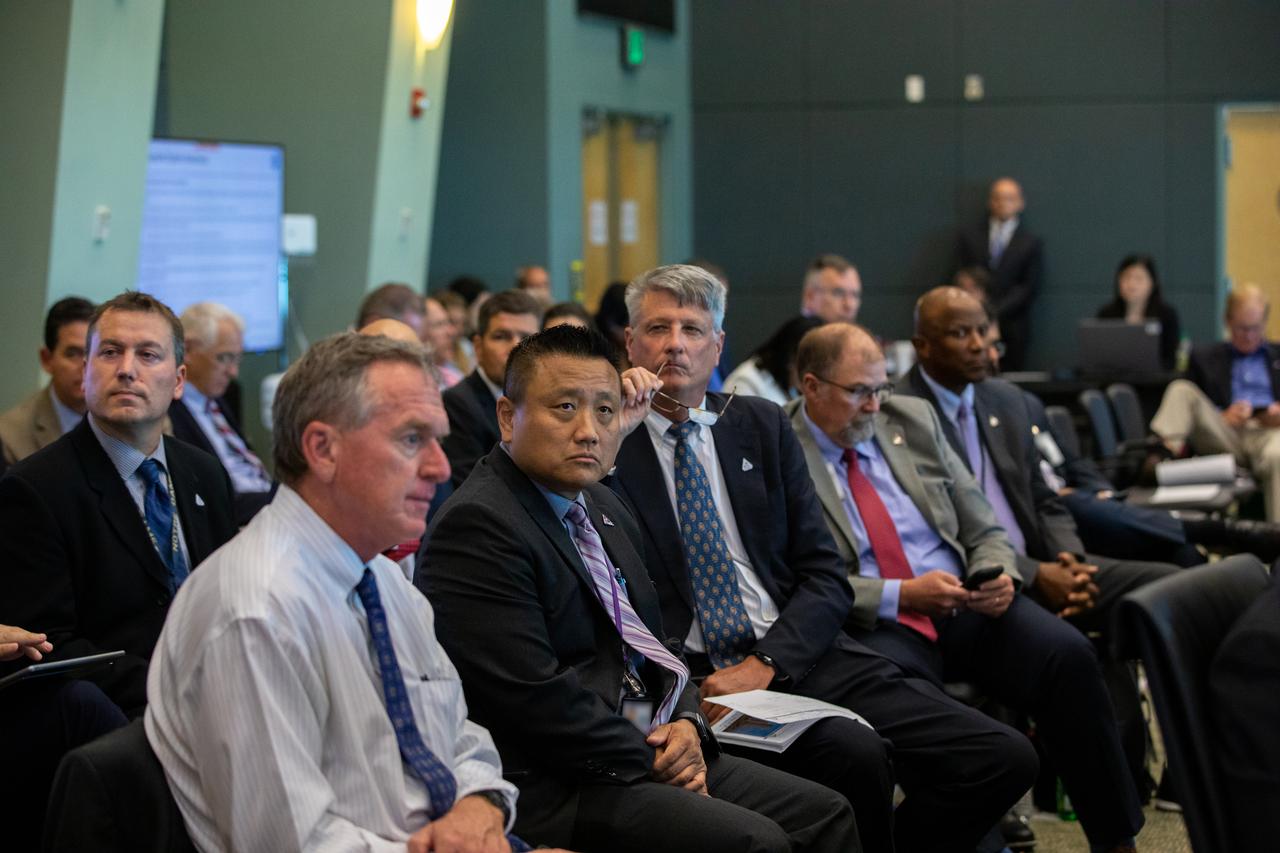
Artemis I managers conduct a Flight Readiness Review (FRR) on Aug. 22, 2022, at NASA’s Kennedy Space Center in Florida. The FRR is an in-depth assessment of the readiness of the agency’s Space Launch System and Orion spacecraft to support the uncrewed flight of Artemis I on its mission beyond the Moon and return to Earth. The meeting will conclude later in the day with a poll of all managers. Artemis I is scheduled to launch at 8:33 a.m. EDT on Aug. 29, 2022, from Kennedy’s Launch Complex 39B. The first in a series of increasingly complex missions, Artemis I will provide a foundation for human deep space exploration and demonstrate our commitment and capability to extend human presence to the Moon and beyond. The primary goal of Artemis I is to thoroughly test the integrated systems before crewed missions by operating the spacecraft in a deep space environment, testing Orion’s heat shield, and recovering the crew module after reentry, descent, and splashdown.

Artemis I managers conduct a Flight Readiness Review (FRR) on Aug. 22, 2022, at NASA’s Kennedy Space Center in Florida. The FRR is an in-depth assessment of the readiness of the agency’s Space Launch System and Orion spacecraft to support the uncrewed flight of Artemis I on its mission beyond the Moon and return to Earth. The meeting will conclude later in the day with a poll of all managers. Artemis I is scheduled to launch at 8:33 a.m. EDT on Aug. 29, 2022, from Kennedy’s Launch Complex 39B. The first in a series of increasingly complex missions, Artemis I will provide a foundation for human deep space exploration and demonstrate our commitment and capability to extend human presence to the Moon and beyond. The primary goal of Artemis I is to thoroughly test the integrated systems before crewed missions by operating the spacecraft in a deep space environment, testing Orion’s heat shield, and recovering the crew module after reentry, descent, and splashdown.
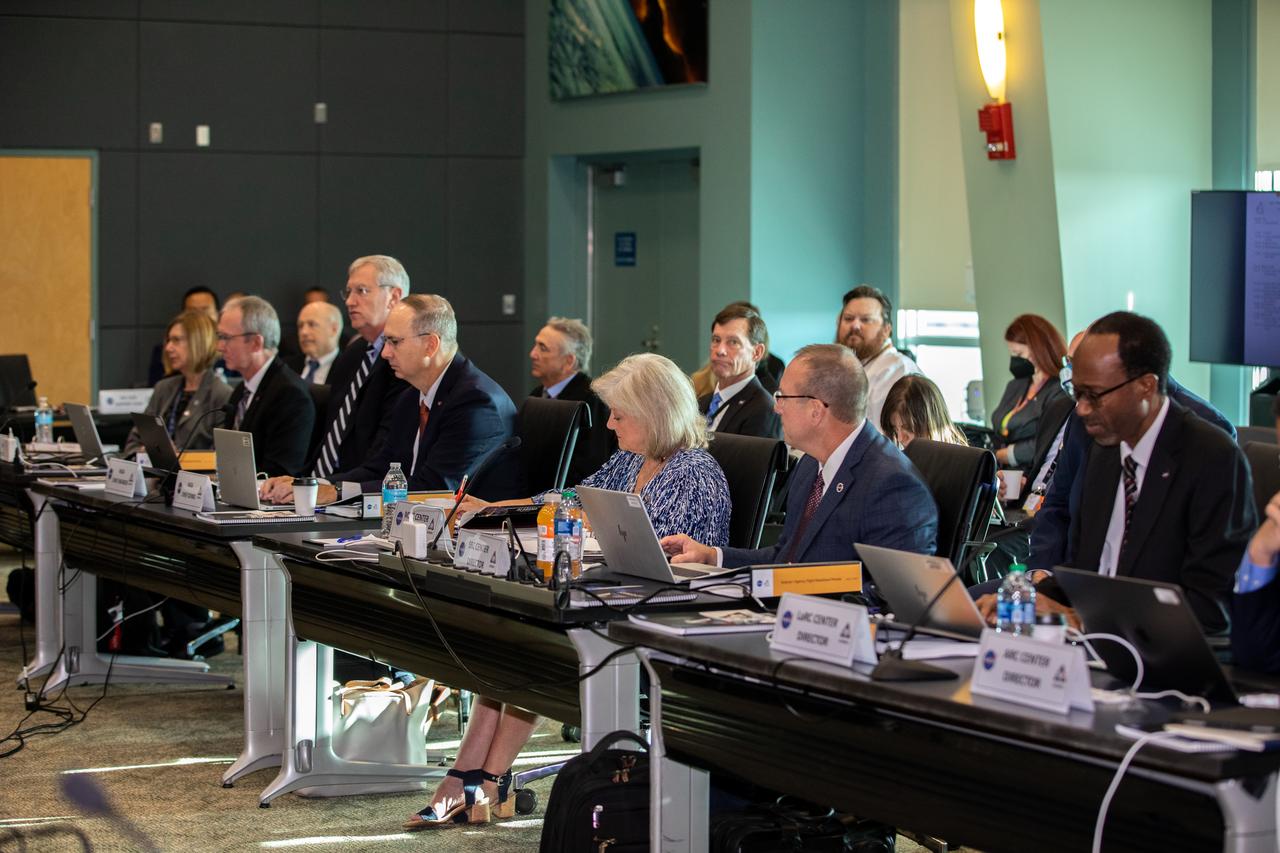
Artemis I managers conduct a Flight Readiness Review (FRR) on Aug. 22, 2022, at NASA’s Kennedy Space Center in Florida. The FRR is an in-depth assessment of the readiness of the agency’s Space Launch System and Orion spacecraft to support the uncrewed flight of Artemis I on its mission beyond the Moon and return to Earth. The meeting will conclude later in the day with a poll of all managers. Artemis I is scheduled to launch at 8:33 a.m. EDT on Aug. 29, 2022, from Kennedy’s Launch Complex 39B. The first in a series of increasingly complex missions, Artemis I will provide a foundation for human deep space exploration and demonstrate our commitment and capability to extend human presence to the Moon and beyond. The primary goal of Artemis I is to thoroughly test the integrated systems before crewed missions by operating the spacecraft in a deep space environment, testing Orion’s heat shield, and recovering the crew module after reentry, descent, and splashdown.
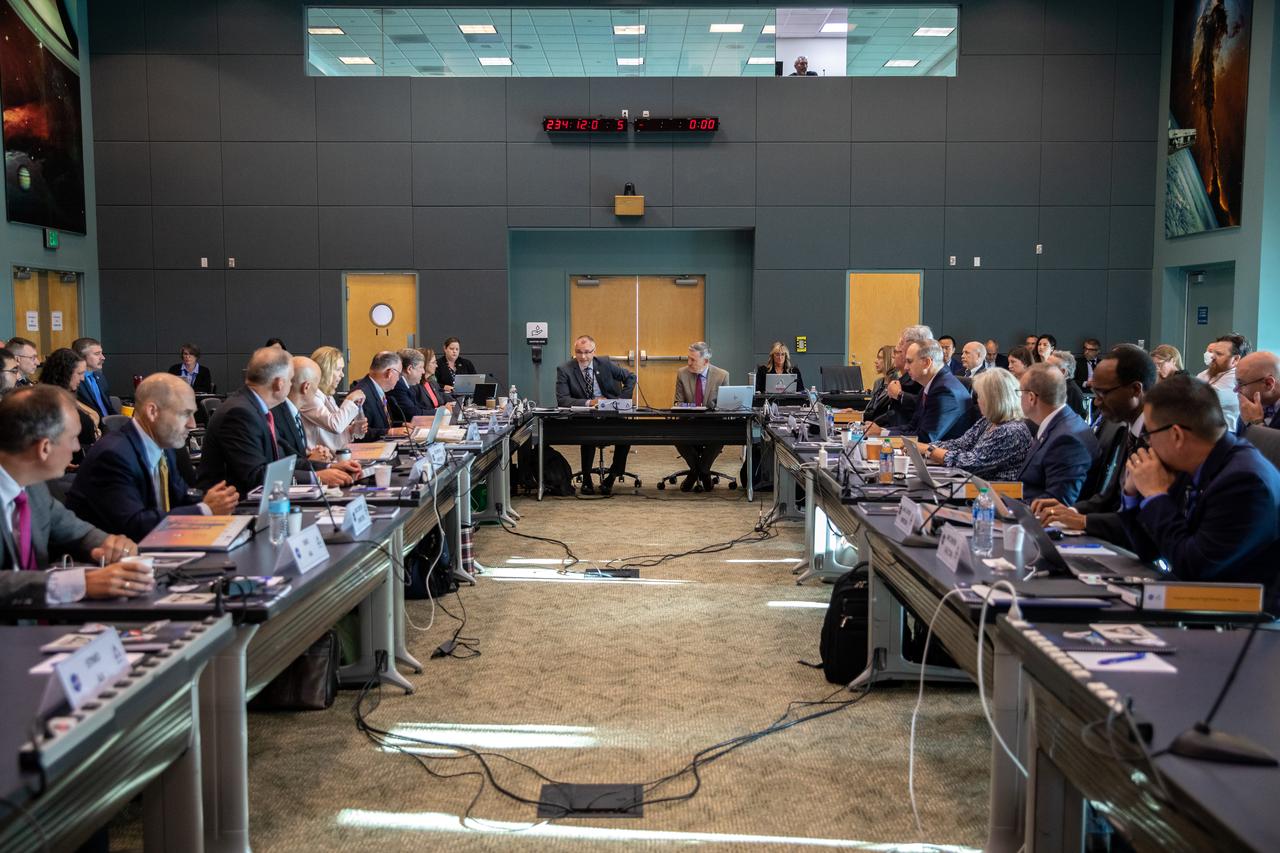
Artemis I managers conduct a Flight Readiness Review (FRR) on Aug. 22, 2022, at NASA’s Kennedy Space Center in Florida. The FRR is an in-depth assessment of the readiness of the agency’s Space Launch System and Orion spacecraft to support the uncrewed flight of Artemis I on its mission beyond the Moon and return to Earth. The meeting will conclude later in the day with a poll of all managers. Artemis I is scheduled to launch at 8:33 a.m. EDT on Aug. 29, 2022, from Kennedy’s Launch Complex 39B. The first in a series of increasingly complex missions, Artemis I will provide a foundation for human deep space exploration and demonstrate our commitment and capability to extend human presence to the Moon and beyond. The primary goal of Artemis I is to thoroughly test the integrated systems before crewed missions by operating the spacecraft in a deep space environment, testing Orion’s heat shield, and recovering the crew module after reentry, descent, and splashdown.
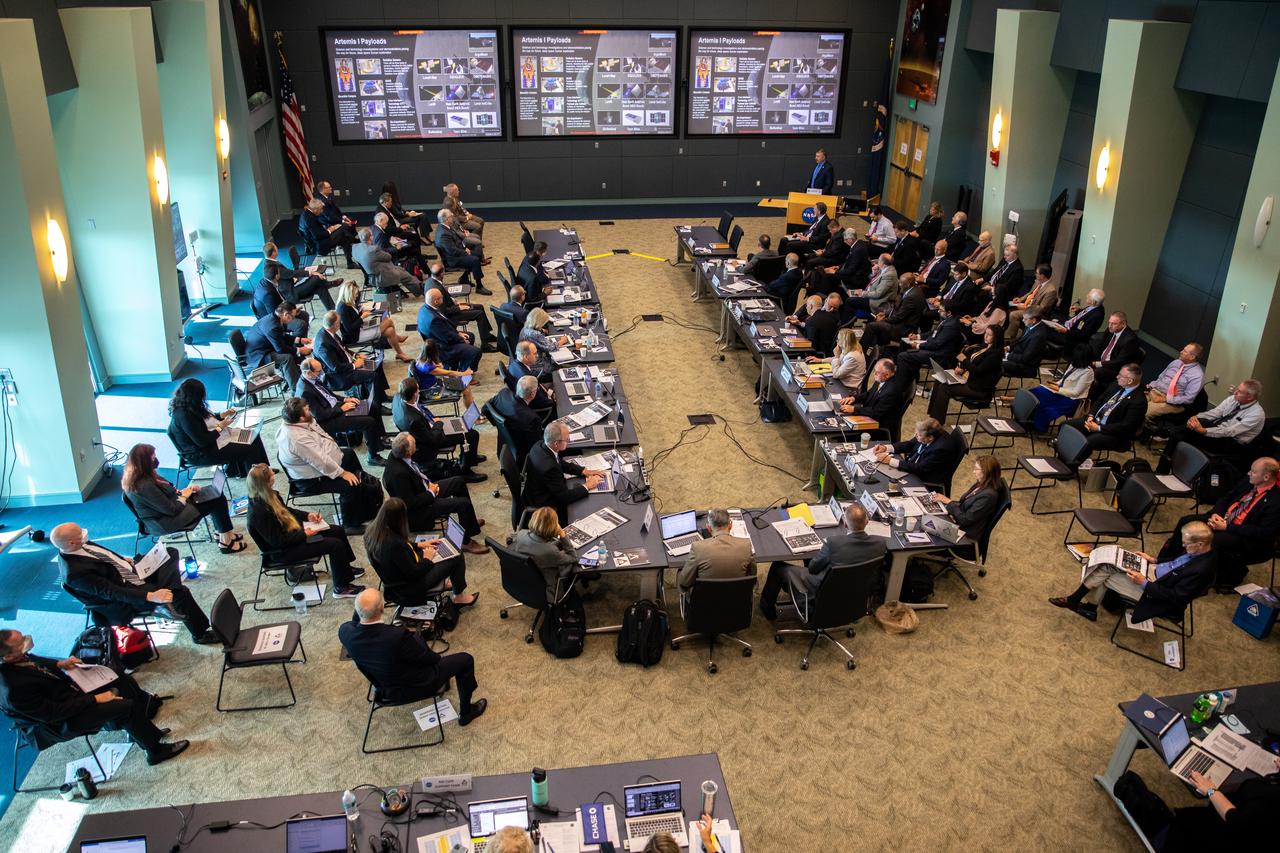
Artemis I managers conduct a Flight Readiness Review (FRR) on Aug. 22, 2022, at NASA’s Kennedy Space Center in Florida. The FRR is an in-depth assessment of the readiness of the agency’s Space Launch System and Orion spacecraft to support the uncrewed flight of Artemis I on its mission beyond the Moon and return to Earth. The meeting will conclude later in the day with a poll of all managers. Artemis I is scheduled to launch at 8:33 a.m. EDT on Aug. 29, 2022, from Kennedy’s Launch Complex 39B. The first in a series of increasingly complex missions, Artemis I will provide a foundation for human deep space exploration and demonstrate our commitment and capability to extend human presence to the Moon and beyond. The primary goal of Artemis I is to thoroughly test the integrated systems before crewed missions by operating the spacecraft in a deep space environment, testing Orion’s heat shield, and recovering the crew module after reentry, descent, and splashdown.
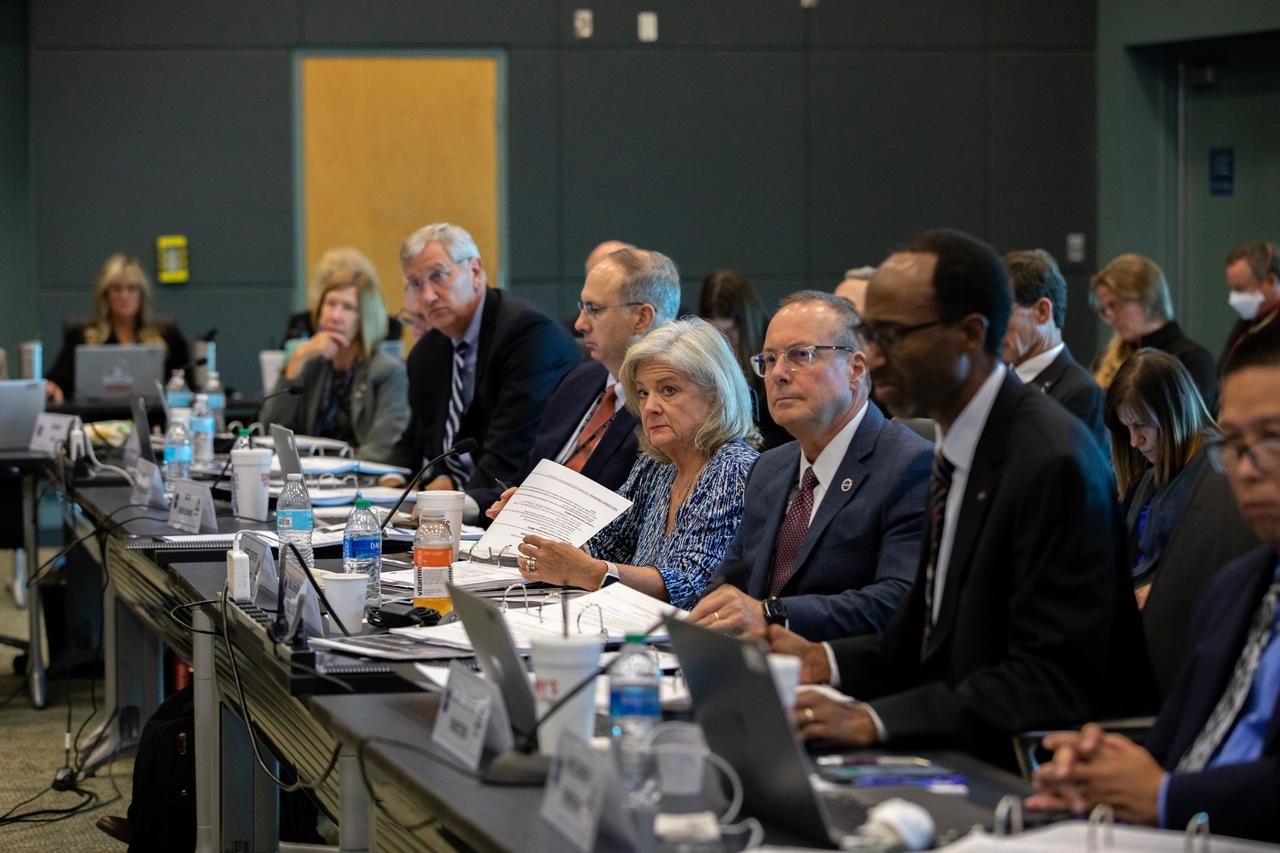
Artemis I managers conduct a Flight Readiness Review (FRR) on Aug. 22, 2022, at NASA’s Kennedy Space Center in Florida. The FRR is an in-depth assessment of the readiness of the agency’s Space Launch System and Orion spacecraft to support the uncrewed flight of Artemis I on its mission beyond the Moon and return to Earth. The meeting will conclude later in the day with a poll of all managers. Artemis I is scheduled to launch at 8:33 a.m. EDT on Aug. 29, 2022, from Kennedy’s Launch Complex 39B. The first in a series of increasingly complex missions, Artemis I will provide a foundation for human deep space exploration and demonstrate our commitment and capability to extend human presence to the Moon and beyond. The primary goal of Artemis I is to thoroughly test the integrated systems before crewed missions by operating the spacecraft in a deep space environment, testing Orion’s heat shield, and recovering the crew module after reentry, descent, and splashdown.
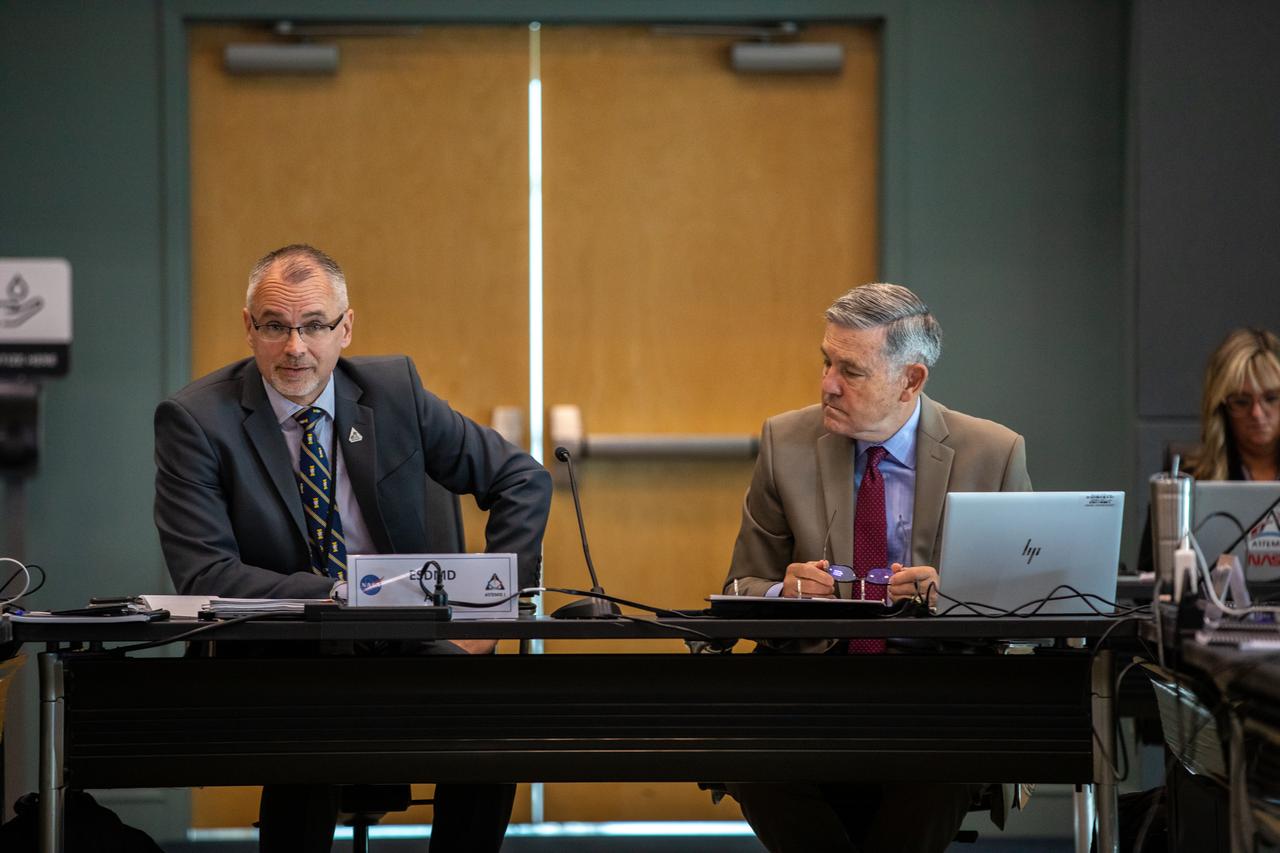
Artemis I managers conduct a Flight Readiness Review (FRR) on Aug. 22, 2022, at NASA’s Kennedy Space Center in Florida. From left are Jim Free, associate administrator for Exploration Systems Development Mission Directorate, NASA Headquarters; and Bob Cabana, NASA associate administrator. The FRR is an in-depth assessment of the readiness of the agency’s Space Launch System and Orion spacecraft to support the uncrewed flight of Artemis I on its mission beyond the Moon and return to Earth. The meeting will conclude later in the day with a poll of all managers. Artemis I is scheduled to launch at 8:33 a.m. EDT on Aug. 29, 2022, from Kennedy’s Launch Complex 39B. The first in a series of increasingly complex missions, Artemis I will provide a foundation for human deep space exploration and demonstrate our commitment and capability to extend human presence to the Moon and beyond. The primary goal of Artemis I is to thoroughly test the integrated systems before crewed missions by operating the spacecraft in a deep space environment, testing Orion’s heat shield, and recovering the crew module after reentry, descent, and splashdown.
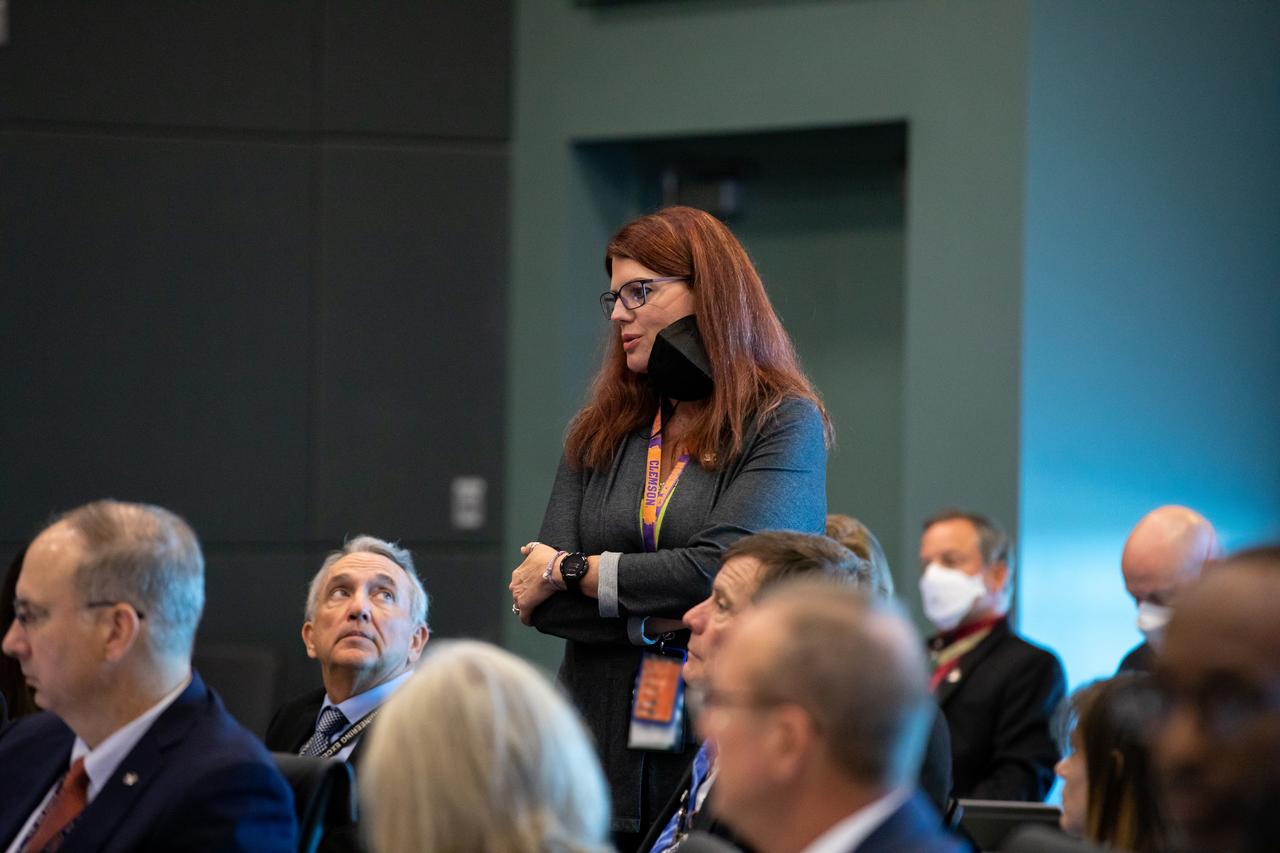
Artemis I managers conduct a Flight Readiness Review (FRR) on Aug. 22, 2022, at NASA’s Kennedy Space Center in Florida. In view, standing, is Artemis I Launch Director Charlie Blackwell-Thompson. The FRR is an in-depth assessment of the readiness of the agency’s Space Launch System and Orion spacecraft to support the uncrewed flight of Artemis I on its mission beyond the Moon and return to Earth. The meeting will conclude later in the day with a poll of all managers. Artemis I is scheduled to launch at 8:33 a.m. EDT on Aug. 29, 2022, from Kennedy’s Launch Complex 39B. The first in a series of increasingly complex missions, Artemis I will provide a foundation for human deep space exploration and demonstrate our commitment and capability to extend human presence to the Moon and beyond. The primary goal of Artemis I is to thoroughly test the integrated systems before crewed missions by operating the spacecraft in a deep space environment, testing Orion’s heat shield, and recovering the crew module after reentry, descent, and splashdown.
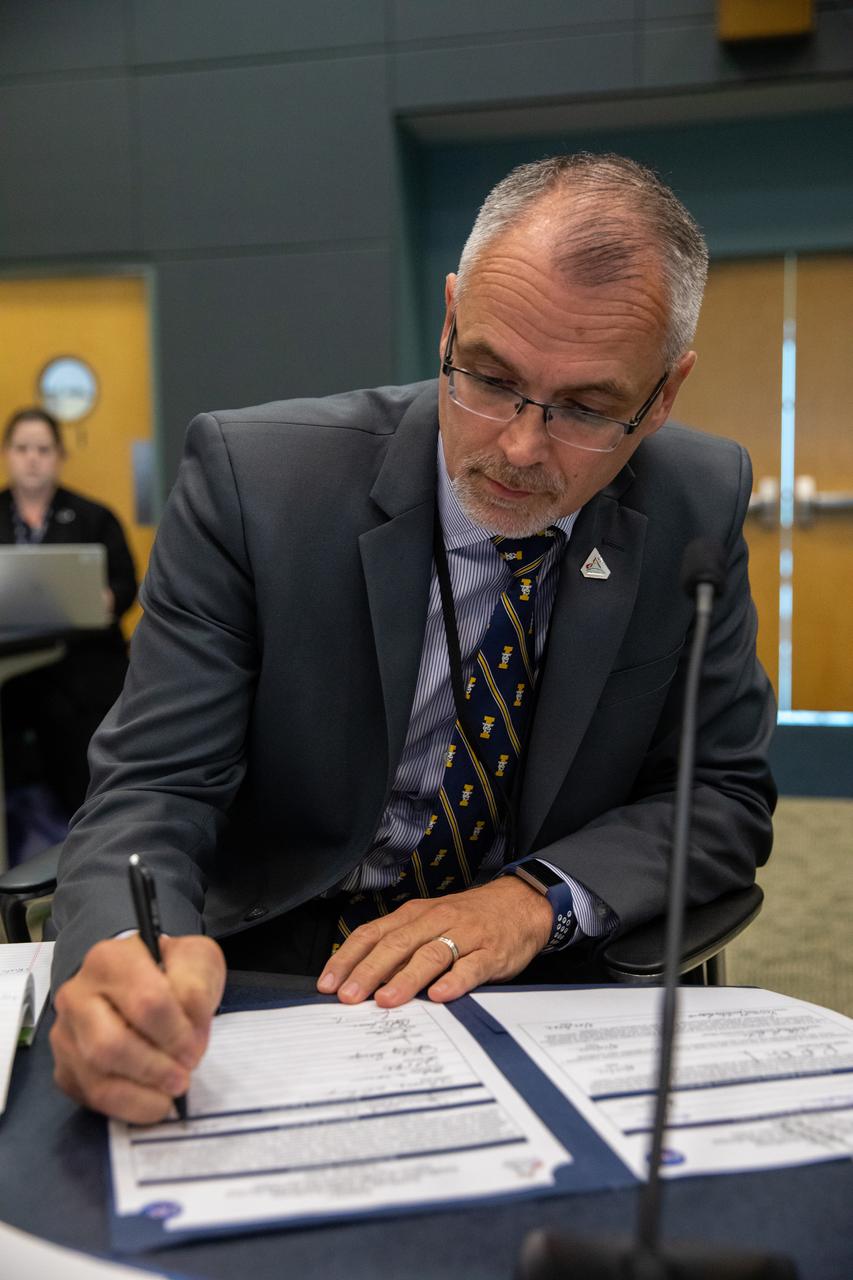
Jim Free, associate administrator for Exploration Systems Development Mission Directorate, NASA Headquarters has signed the certification for flight readiness following the completion of Flight Readiness Review (FRR) on Aug. 22, 2022, at NASA’s Kennedy Space Center in Florida. The FRR is an in-depth assessment of the readiness of the agency’s Space Launch System and Orion spacecraft to support the uncrewed flight of Artemis I on its mission beyond the Moon and return to Earth. The meeting concluded with a poll of all managers. Artemis I is scheduled to launch at 8:33 a.m. EDT on Aug. 29, 2022, from Kennedy’s Launch Complex 39B. The first in a series of increasingly complex missions, Artemis I will provide a foundation for human deep space exploration and demonstrate our commitment and capability to extend human presence to the Moon and beyond. The primary goal of Artemis I is to thoroughly test the integrated systems before crewed missions by operating the spacecraft in a deep space environment, testing Orion’s heat shield, and recovering the crew module after reentry, descent, and splashdown.
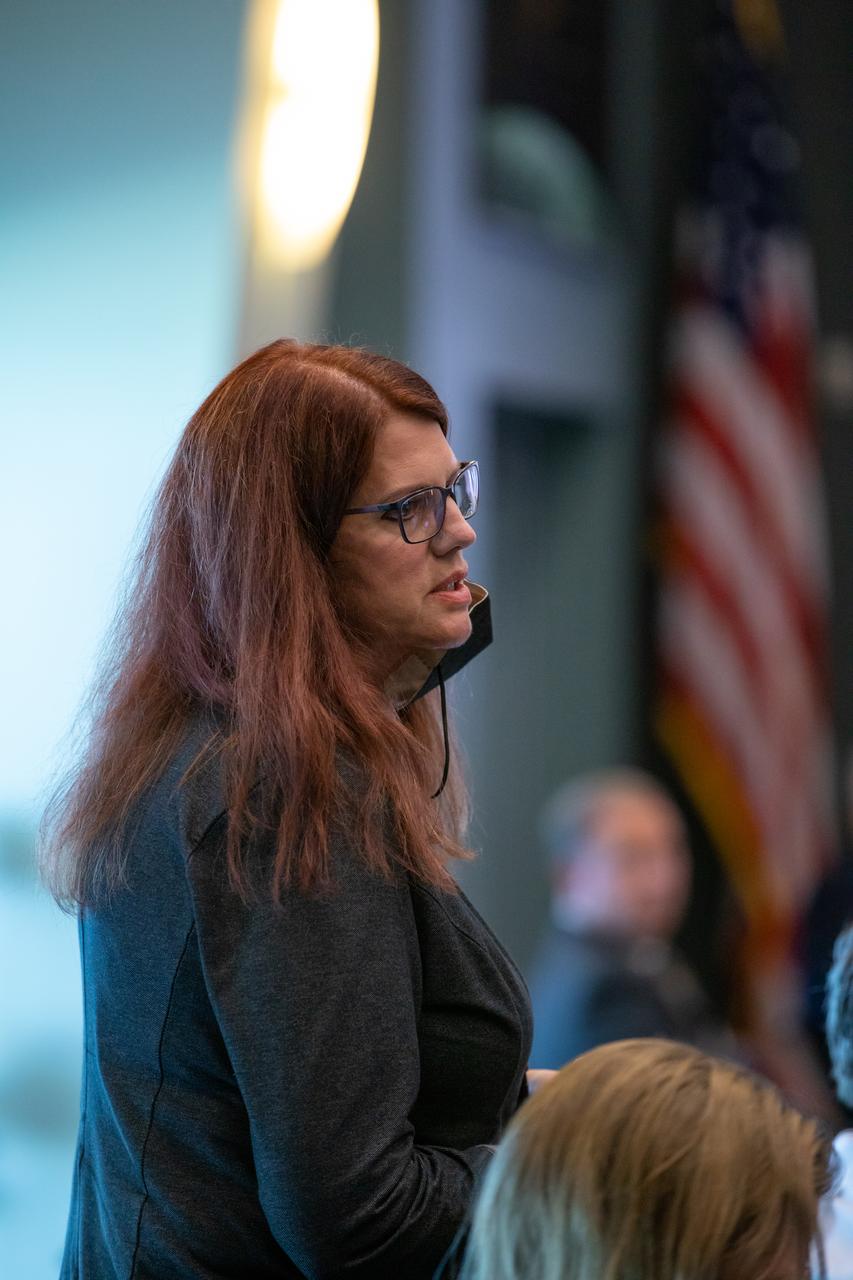
Artemis I managers conduct a Flight Readiness Review (FRR) on Aug. 22, 2022, at NASA’s Kennedy Space Center in Florida. In view is Artemis I Launch Director Charlie Blackwell-Thompson. The FRR is an in-depth assessment of the readiness of the agency’s Space Launch System and Orion spacecraft to support the uncrewed flight of Artemis I on its mission beyond the Moon and return to Earth. The meeting will conclude later in the day with a poll of all managers. Artemis I is scheduled to launch at 8:33 a.m. EDT on Aug. 29, 2022, from Kennedy’s Launch Complex 39B. The first in a series of increasingly complex missions, Artemis I will provide a foundation for human deep space exploration and demonstrate our commitment and capability to extend human presence to the Moon and beyond. The primary goal of Artemis I is to thoroughly test the integrated systems before crewed missions by operating the spacecraft in a deep space environment, testing Orion’s heat shield, and recovering the crew module after reentry, descent, and splashdown.
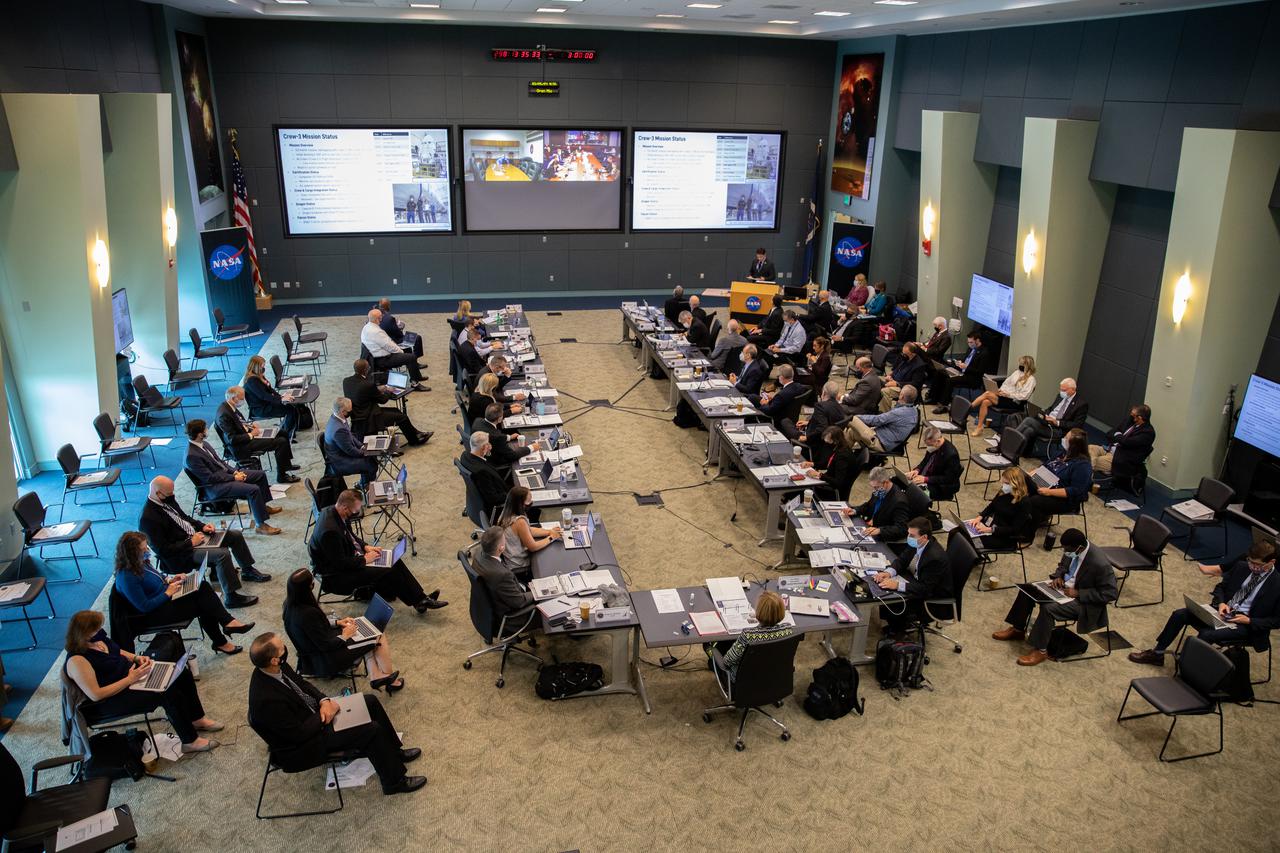
NASA and SpaceX managers participate in a Flight Readiness Review for the agency’s SpaceX Crew-3 mission at Kennedy Space Center in Florida on Oct. 25, 2021. International partners also participated. Crew-3 is scheduled to launch to the International Space Station from Kennedy’s Launch Complex 39A on Oct. 31, 2021 as part of NASA’s Commercial Crew Program. Liftoff of the Falcon 9 rocket and Crew Dragon spacecraft is targeted for 2:21 a.m. EDT.
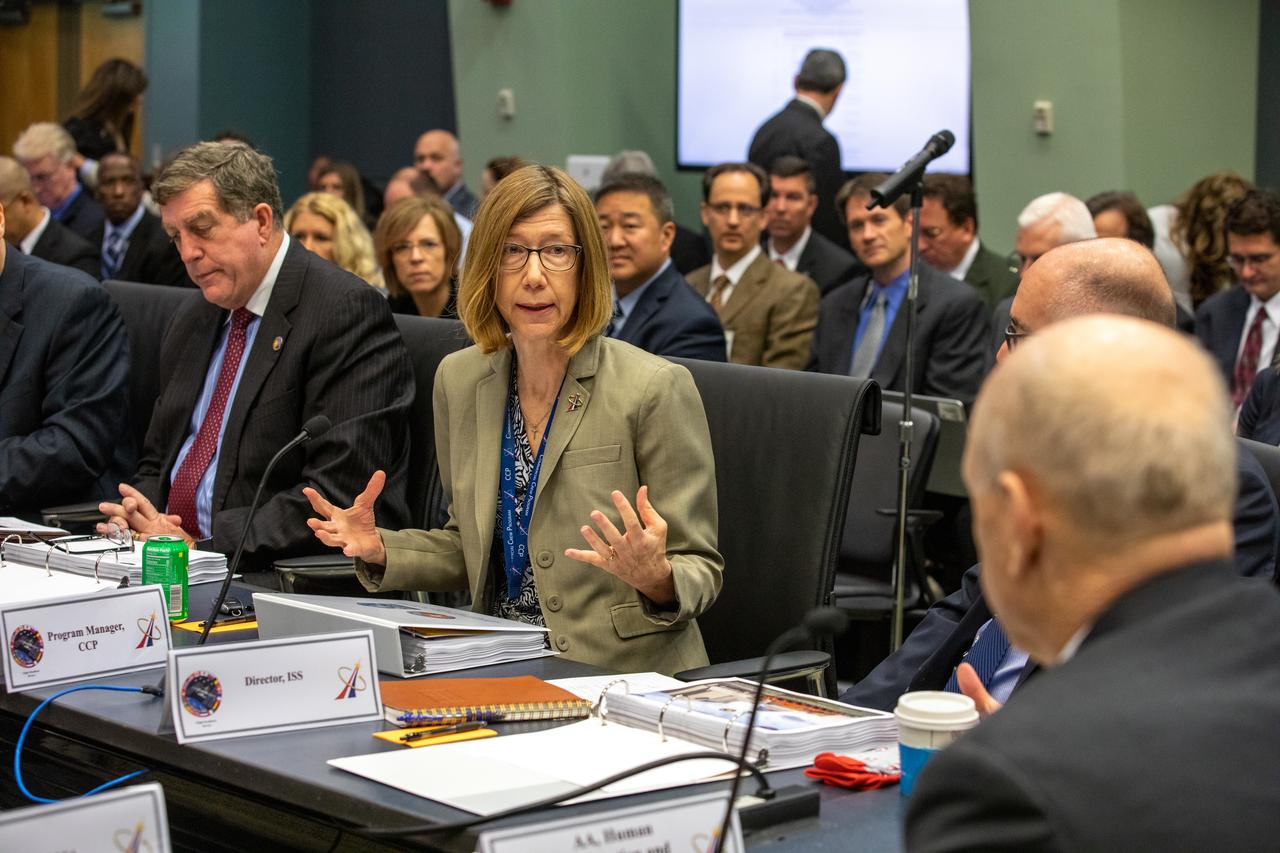
Kathy Lueders, manager of NASA’s Commercial Crew Program, speaks during the flight readiness review for Boeing’s upcoming Orbital Flight Test in Operations Support Building 2 at the agency’s Kennedy Space Center in Florida, Dec. 12, 2019. Boeing’s CST-100 Starliner spacecraft will launch atop a United Launch alliance Atlas V rocket from Space Launch Complex 41 at Cape Canaveral Air Force Station. The uncrewed Orbital Flight Test will be the Starliner’s first flight to the International Space Station for NASA’s Commercial Crew Program.
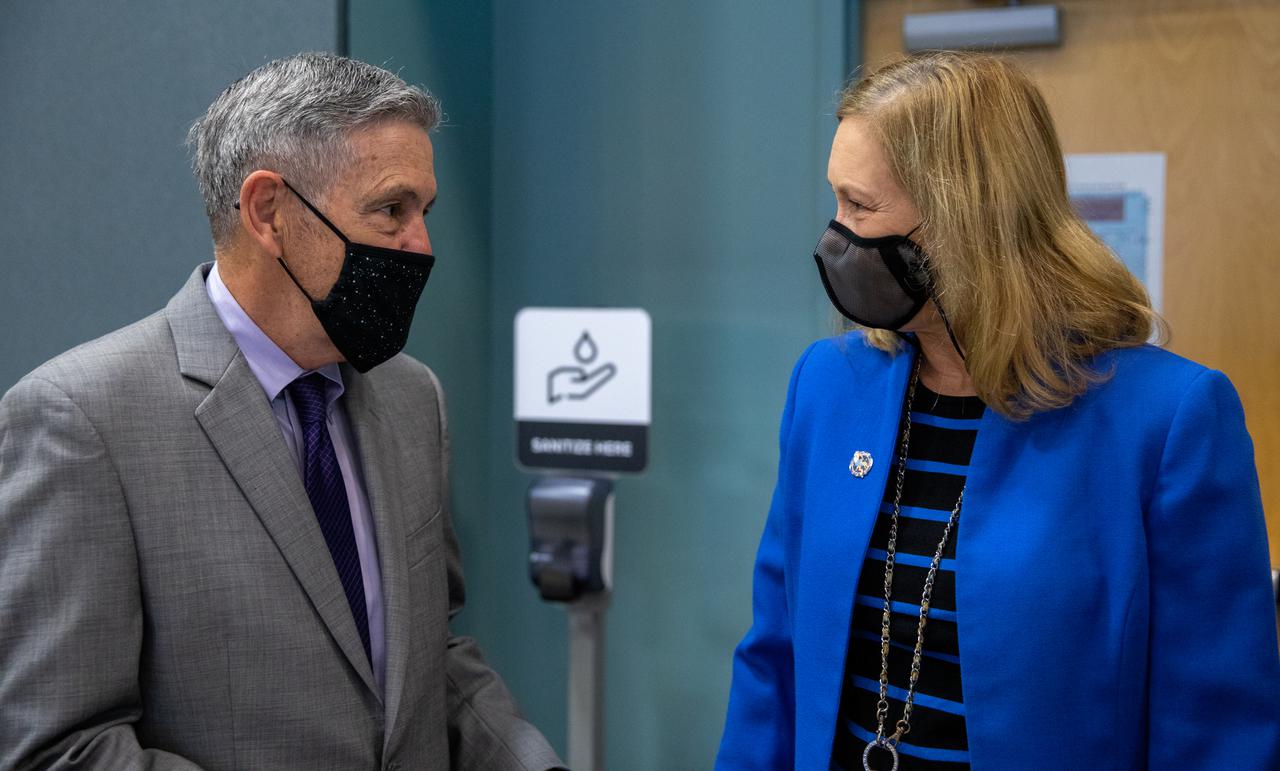
NASA and SpaceX managers participate in a Flight Readiness Review for the agency’s SpaceX Crew-3 mission at Kennedy Space Center in Florida on Oct. 25, 2021. International partners also participated. At right, Kennedy’s Center Director Janet Petro, speaks with Bob Cabana, NASA associate administrator. Crew-3 is scheduled to launch to the International Space Station from Kennedy’s Launch Complex 39A on Oct. 31, 2021 as part of NASA’s Commercial Crew Program. Liftoff of the Falcon 9 rocket and Crew Dragon spacecraft is targeted for 2:21 a.m. EDT.
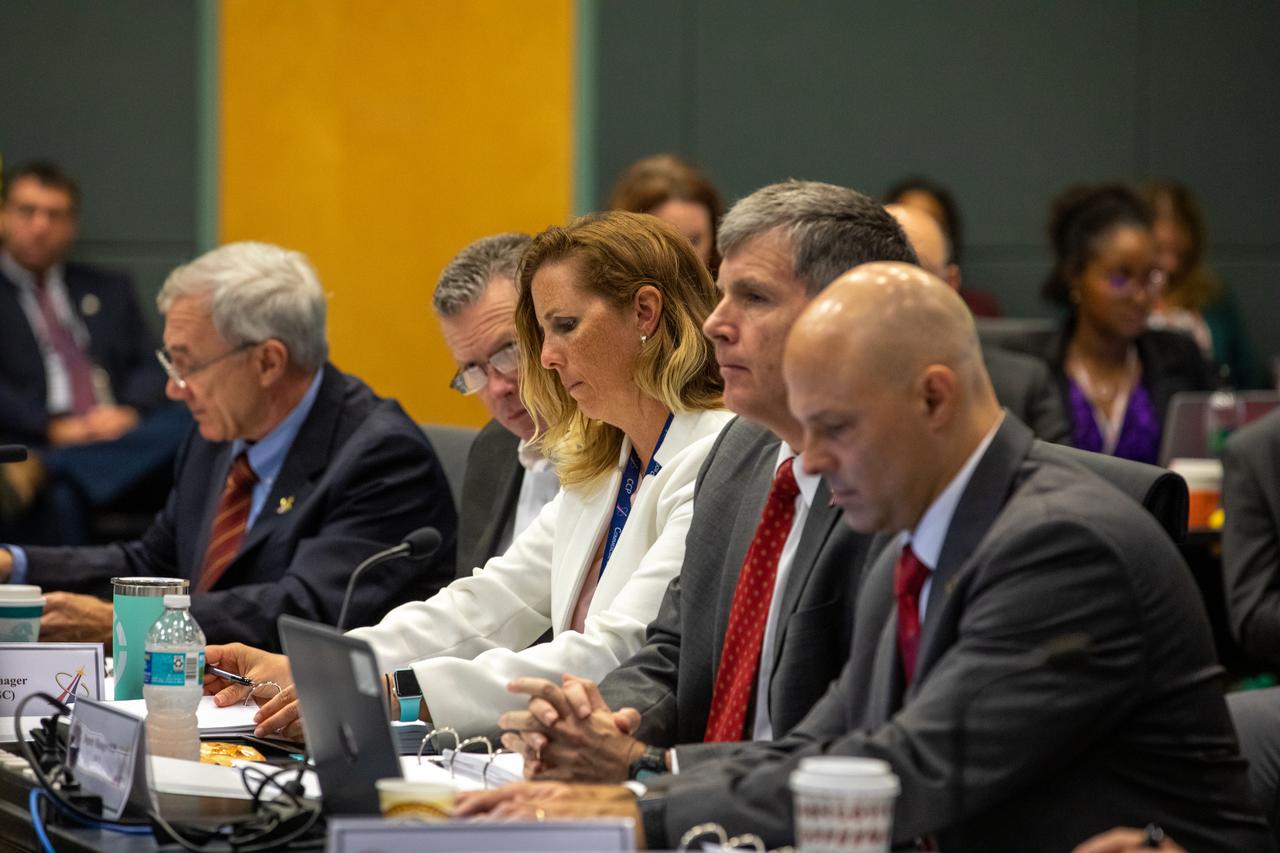
Dana Hutcherson, center, deputy manager of NASA’s Commercial Crew Program, participates in the flight readiness review for Boeing’s upcoming Orbital Flight Test in Operations Support Building 2 at the agency’s Kennedy Space Center in Florida, Dec. 12, 2019. Boeing’s CST-100 Starliner spacecraft will launch atop a United Launch alliance Atlas V rocket from Space Launch Complex 41 at Cape Canaveral Air Force Station. The uncrewed Orbital Flight Test will be the Starliner’s first flight to the International Space Station for NASA’s Commercial Crew Program.
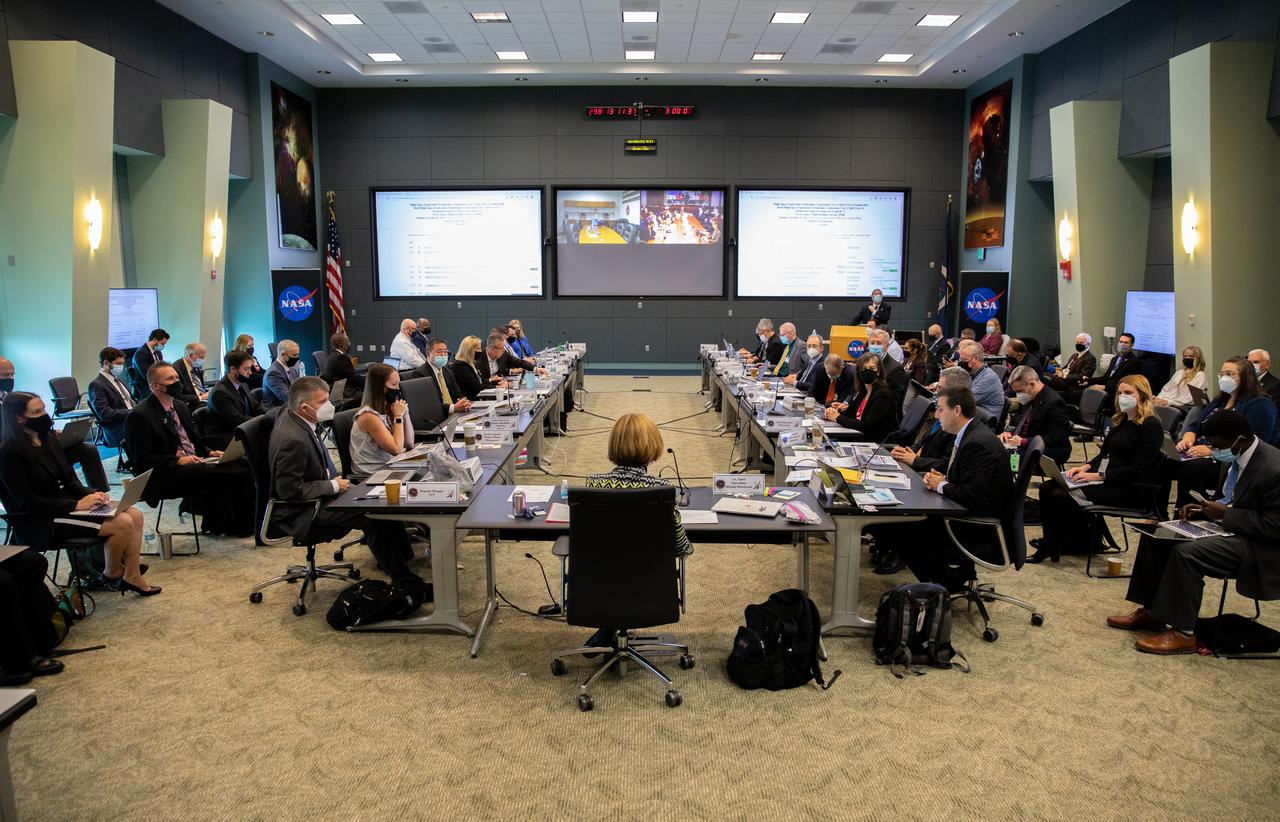
NASA and SpaceX managers participate in a Flight Readiness Review for the agency’s SpaceX Crew-3 mission at Kennedy Space Center in Florida on Oct. 25, 2021. International partners also participated. Crew-3 is scheduled to launch to the International Space Station from Kennedy’s Launch Complex 39A on Oct. 31, 2021 as part of NASA’s Commercial Crew Program. Liftoff of the Falcon 9 rocket and Crew Dragon spacecraft is targeted for 2:21 a.m. EDT.

NASA and Boeing managers take part in the flight readiness review for Boeing’s upcoming Orbital Flight Test in Operations Support Building 2 at NASA’s Kennedy Space Center in Florida, Dec. 12, 2019. Boeing’s CST-100 Starliner spacecraft will launch atop a United Launch Alliance Atlas V rocket from Space Launch Complex 41 at Cape Canaveral Air Force Station. The uncrewed Orbital Flight Test will be the Starliner’s first flight to the International Space Station for NASA’s Commercial Crew Program.
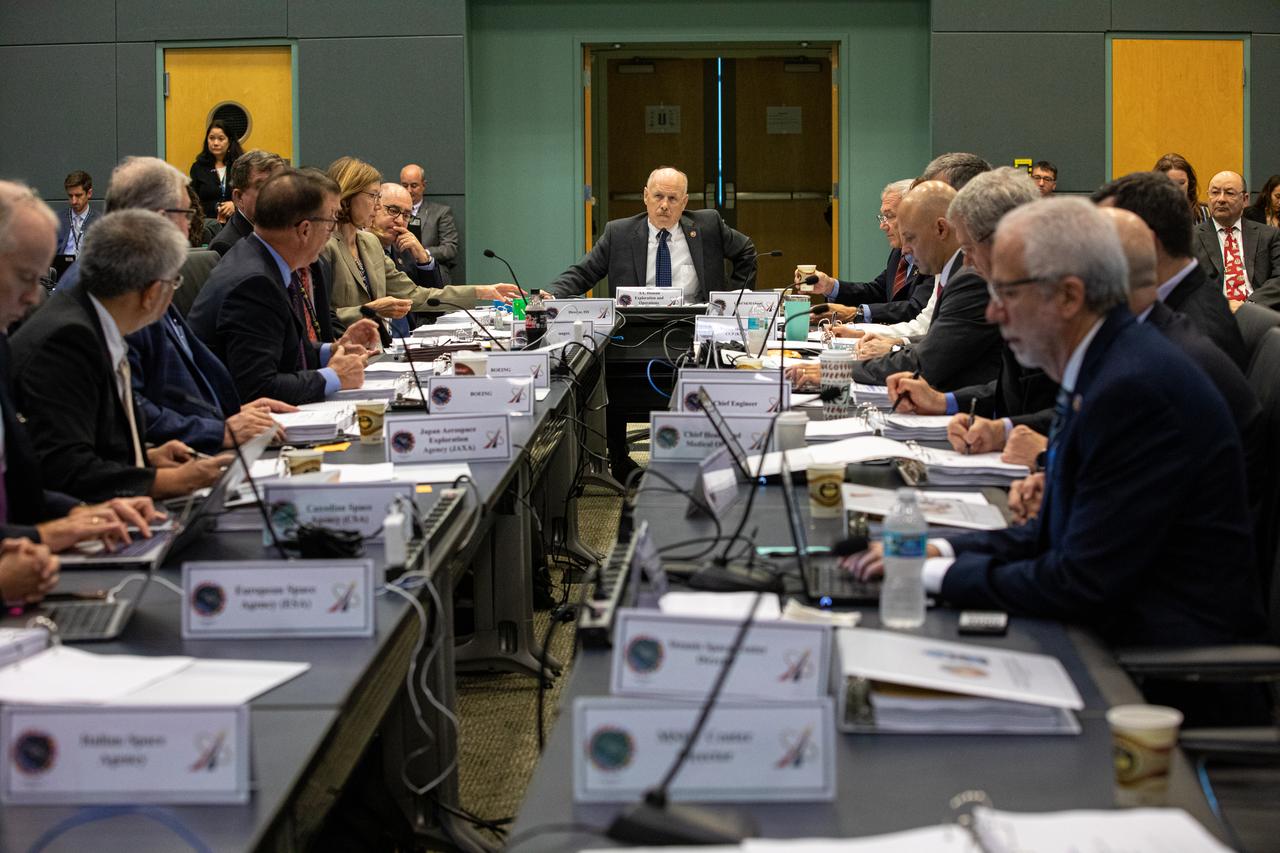
Ken Bowersox, deputy associate administrator for Human Exploration and Operations at NASA Headquarters, speaks during the flight readiness review for Boeing’s upcoming Orbital Flight Test in Operations Support Building 2 at NASA’s Kennedy Space Center in Florida, Dec. 12, 2019. Boeing’s CST-100 Starliner spacecraft will launch atop a United Launch Alliance Atlas V rocket from Space Launch Complex 41 at Cape Canaveral Air Force Station. The uncrewed Orbital Flight Test will be the Starliner’s first flight to the International Space Station for NASA’s Commercial Crew Program.
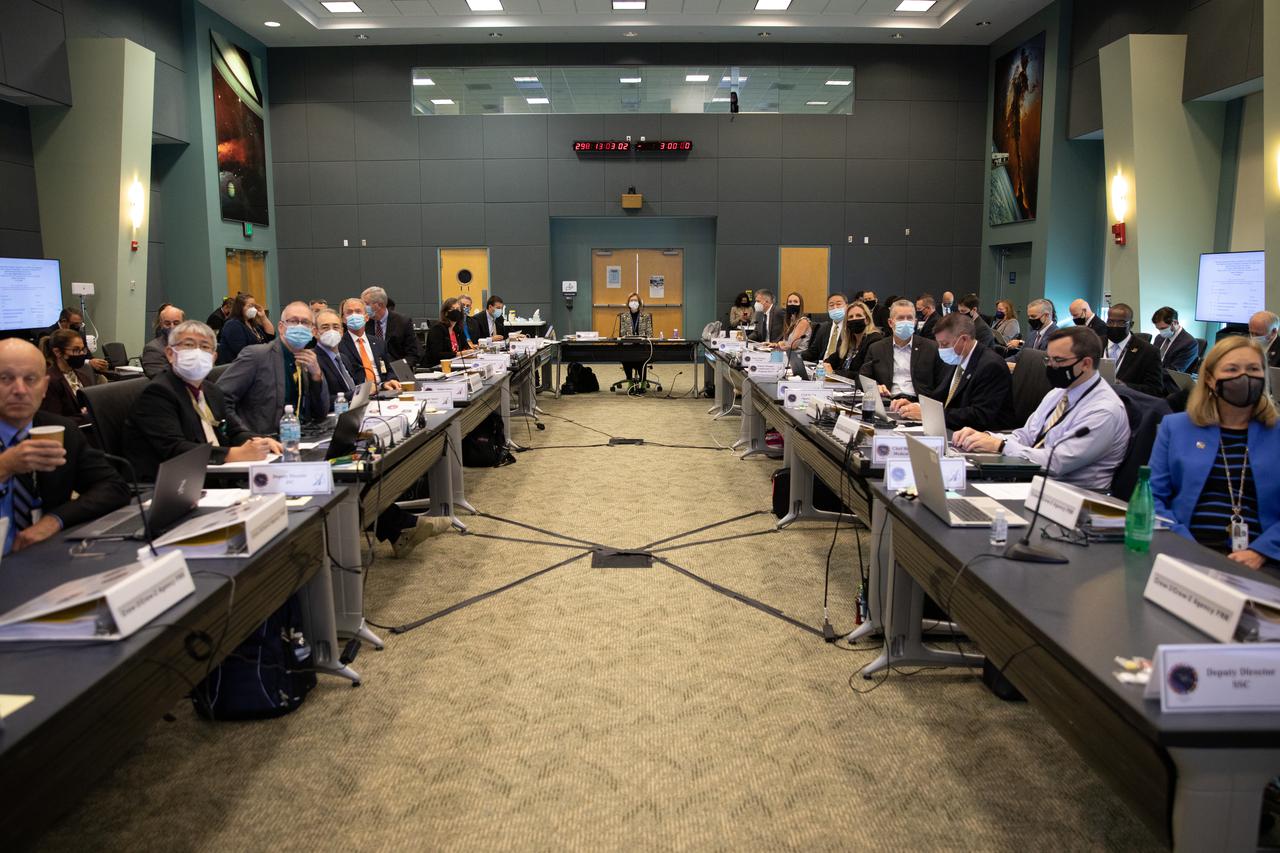
NASA and SpaceX managers participate in a Flight Readiness Review for the agency’s SpaceX Crew-3 mission at Kennedy Space Center in Florida on Oct. 25, 2021. International partners also participated. In view in front, at right, is Kennedy’s Center Director Janet Petro. Crew-3 is scheduled to launch to the International Space Station from Kennedy’s Launch Complex 39A on Oct. 31, 2021 as part of NASA’s Commercial Crew Program. Liftoff of the Falcon 9 rocket and Crew Dragon spacecraft is targeted for 2:21 a.m. EDT.
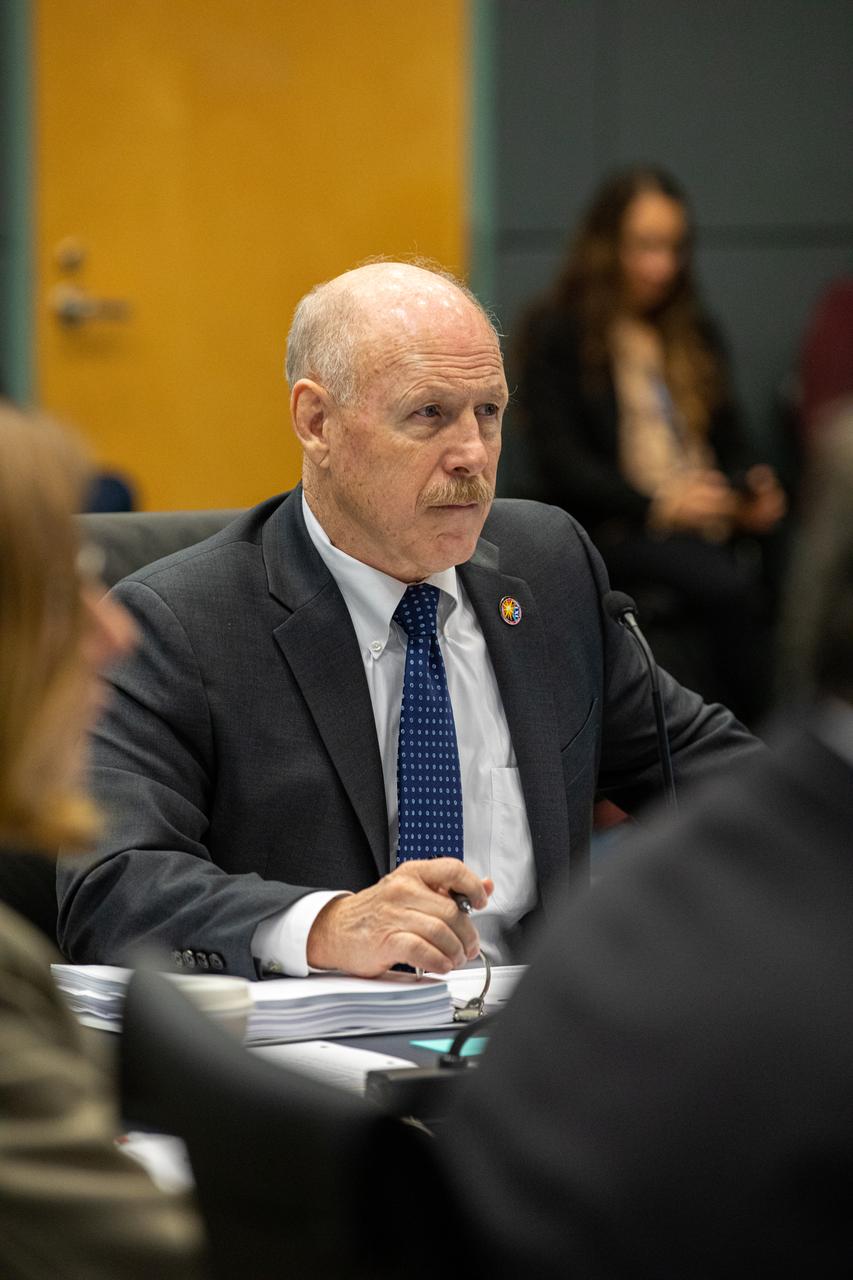
Ken Bowersox, deputy associate administrator for Human Exploration and Operations at NASA Headquarters, speaks during the flight readiness review for Boeing’s upcoming Orbital Flight Test in Operations Support Building 2 at NASA’s Kennedy Space Center in Florida, Dec. 12, 2019. Boeing’s CST-100 Starliner spacecraft will launch atop a United Launch Alliance Atlas V rocket from Space Launch Complex 41 at Cape Canaveral Air Force Station. The uncrewed Orbital Flight Test will be the Starliner’s first flight to the International Space Station for NASA’s Commercial Crew Program.
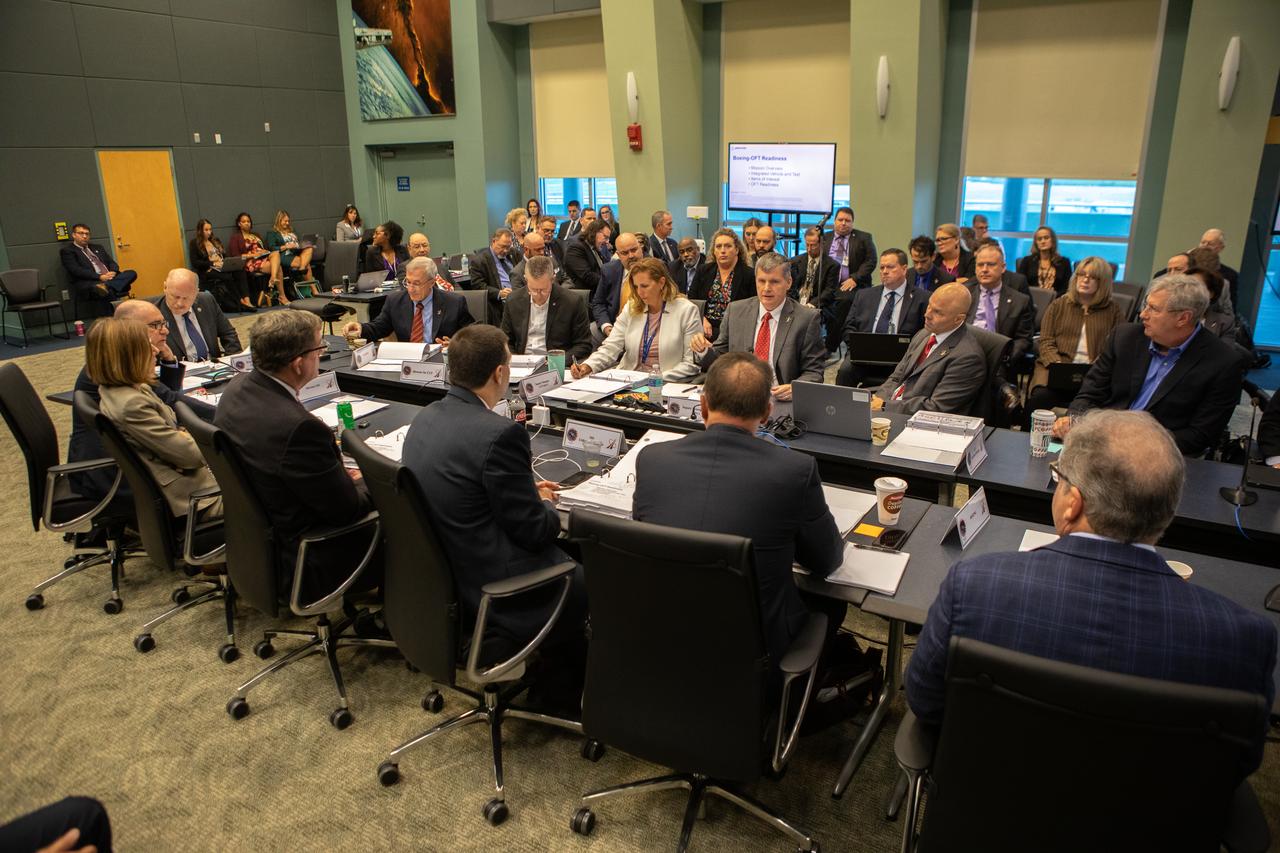
Steve Stich, center, deputy manager of NASA’s Commercial Crew Program and launch operations manager for Boeing’s Orbital Flight Test (OFT), speaks during the flight readiness review for the upcoming OFT launch in Operations Support Building 2 at NASA’s Kennedy Space Center in Florida, Dec. 12, 2019. Boeing’s CST-100 Starliner spacecraft will launch atop a United Launch alliance Atlas V rocket from Space Launch Complex 41 at Cape Canaveral Air Force Station. The uncrewed Orbital Flight Test will be the Starliner’s first flight to the International Space Station for NASA’s Commercial Crew Program.
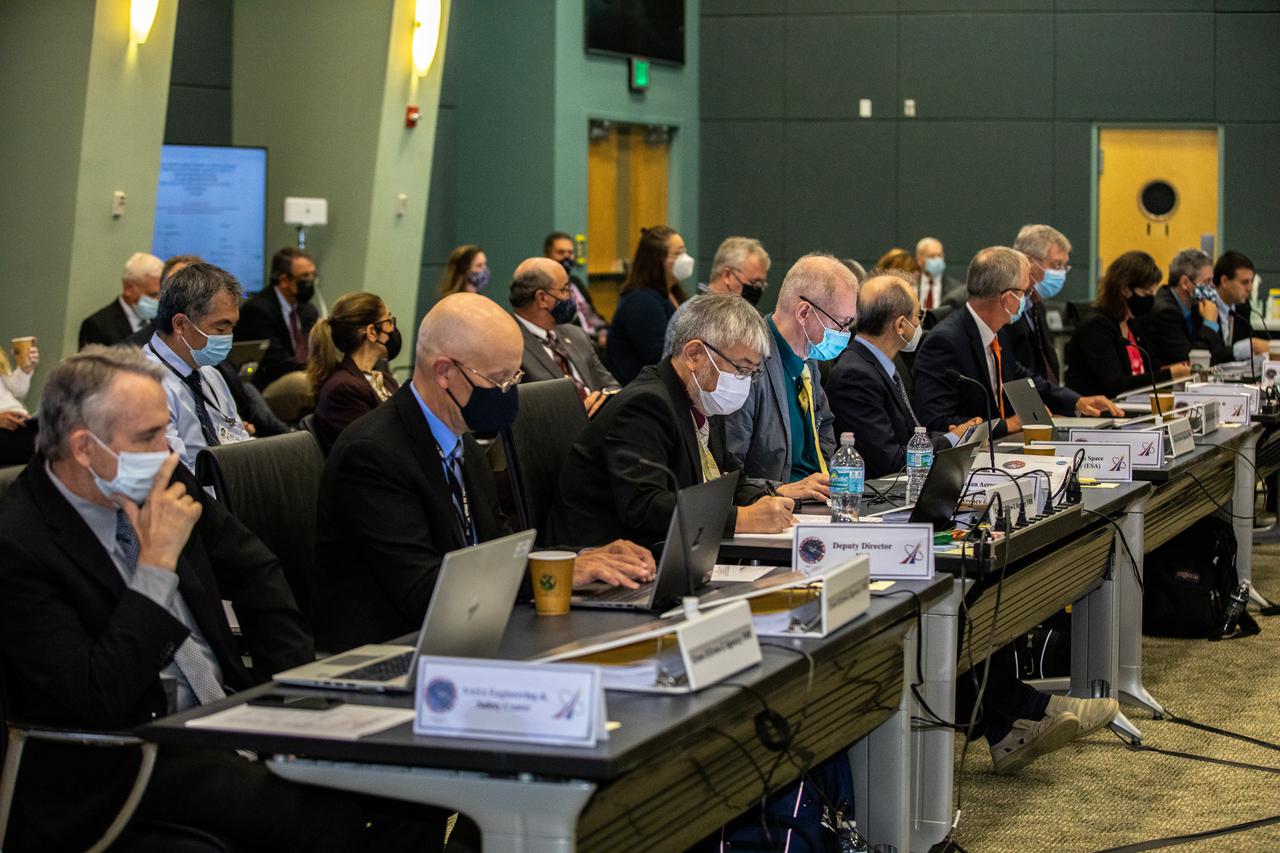
NASA and SpaceX managers participate in a Flight Readiness Review for the agency’s SpaceX Crew-3 mission at Kennedy Space Center in Florida on Oct. 25, 2021. International partners also participated. Crew-3 is scheduled to launch to the International Space Station from Kennedy’s Launch Complex 39A on Oct. 31, 2021 as part of NASA’s Commercial Crew Program. Liftoff of the Falcon 9 rocket and Crew Dragon spacecraft is targeted for 2:21 a.m. EDT.
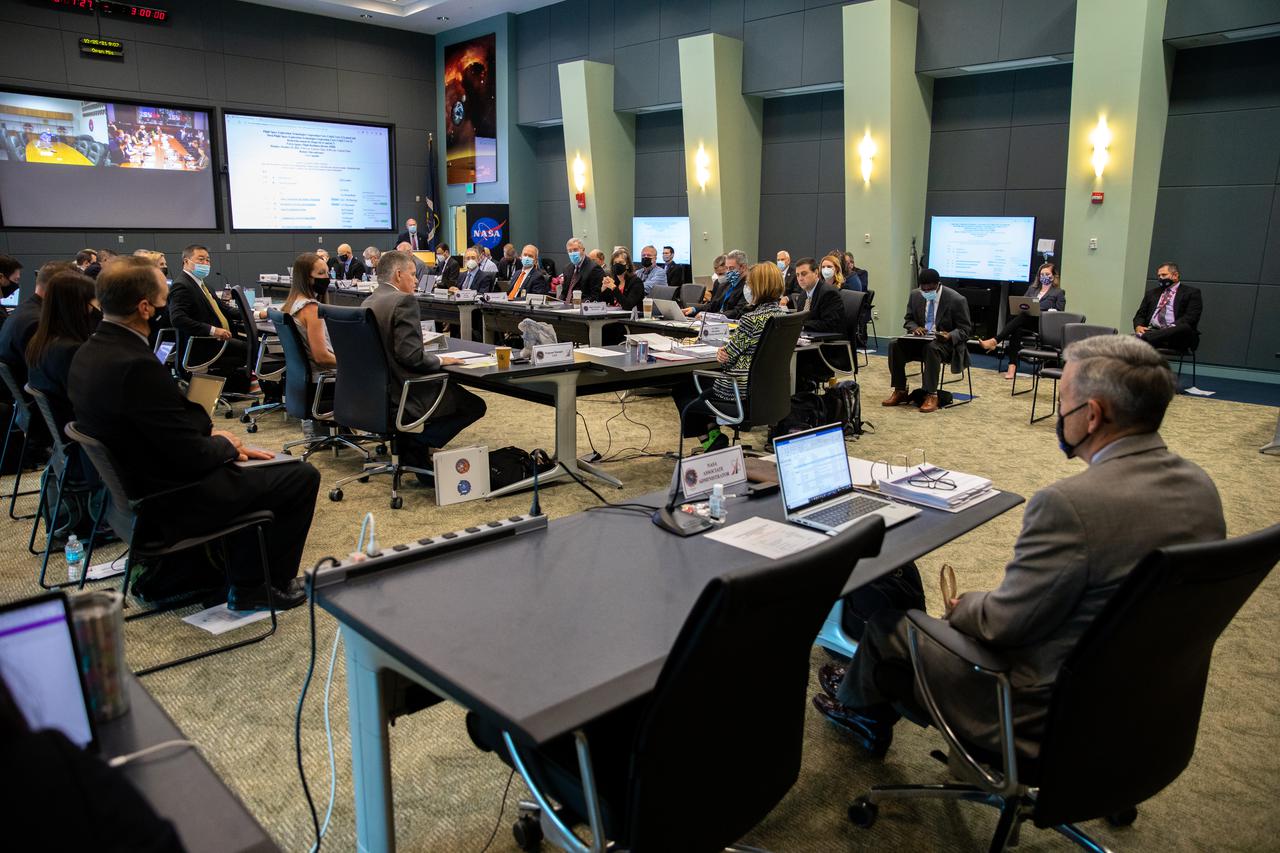
NASA and SpaceX managers participate in a Flight Readiness Review for the agency’s SpaceX Crew-3 mission at Kennedy Space Center in Florida on Oct. 25, 2021. International partners also participated. Crew-3 is scheduled to launch to the International Space Station from Kennedy’s Launch Complex 39A on Oct. 31, 2021 as part of NASA’s Commercial Crew Program. Liftoff of the Falcon 9 rocket and Crew Dragon spacecraft is targeted for 2:21 a.m. EDT.
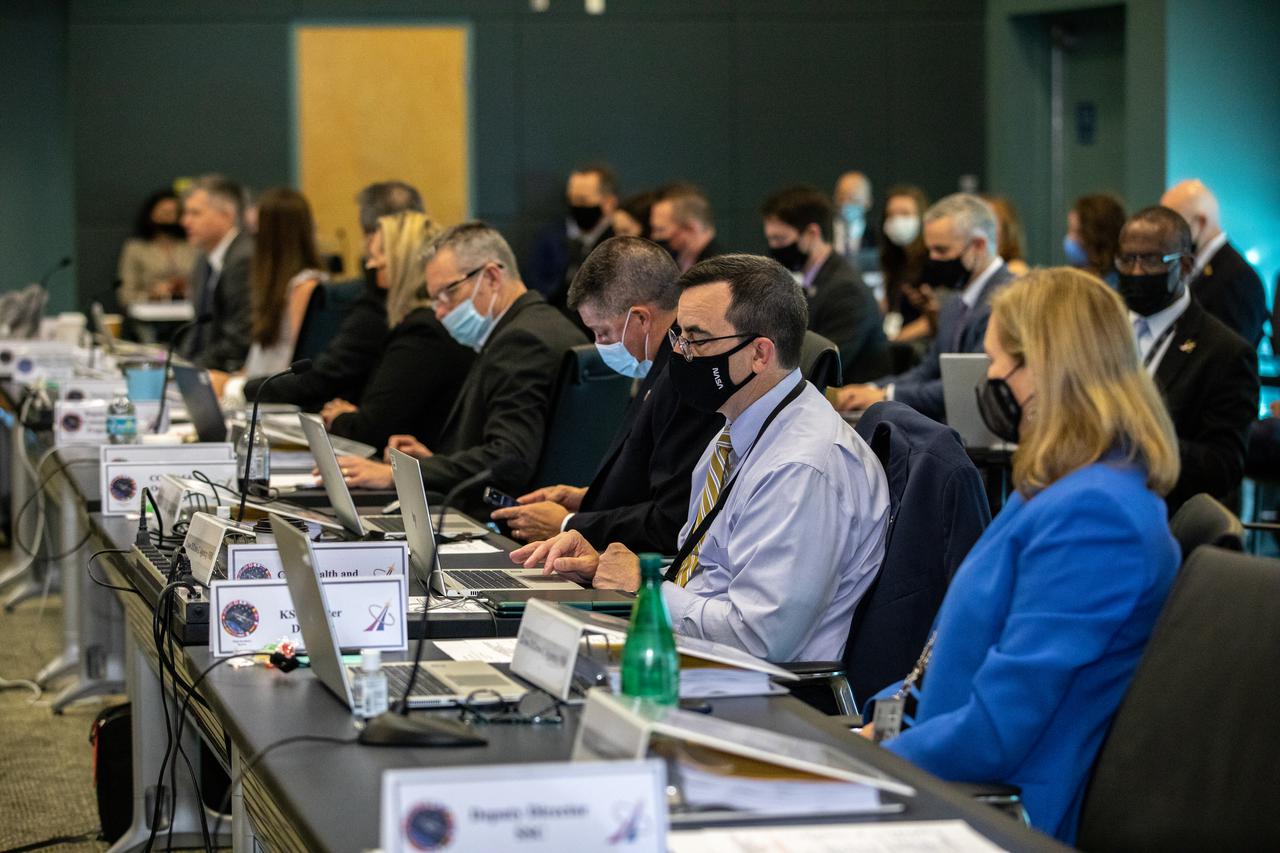
NASA and SpaceX managers participate in a Flight Readiness Review for the agency’s SpaceX Crew-3 mission at Kennedy Space Center in Florida on Oct. 25, 2021. International partners also participated. In view in front, at far right, is Kennedy’s Center Director Janet Petro. Crew-3 is scheduled to launch to the International Space Station from Kennedy’s Launch Complex 39A on Oct. 31, 2021 as part of NASA’s Commercial Crew Program. Liftoff of the Falcon 9 rocket and Crew Dragon spacecraft is targeted for 2:21 a.m. EDT.
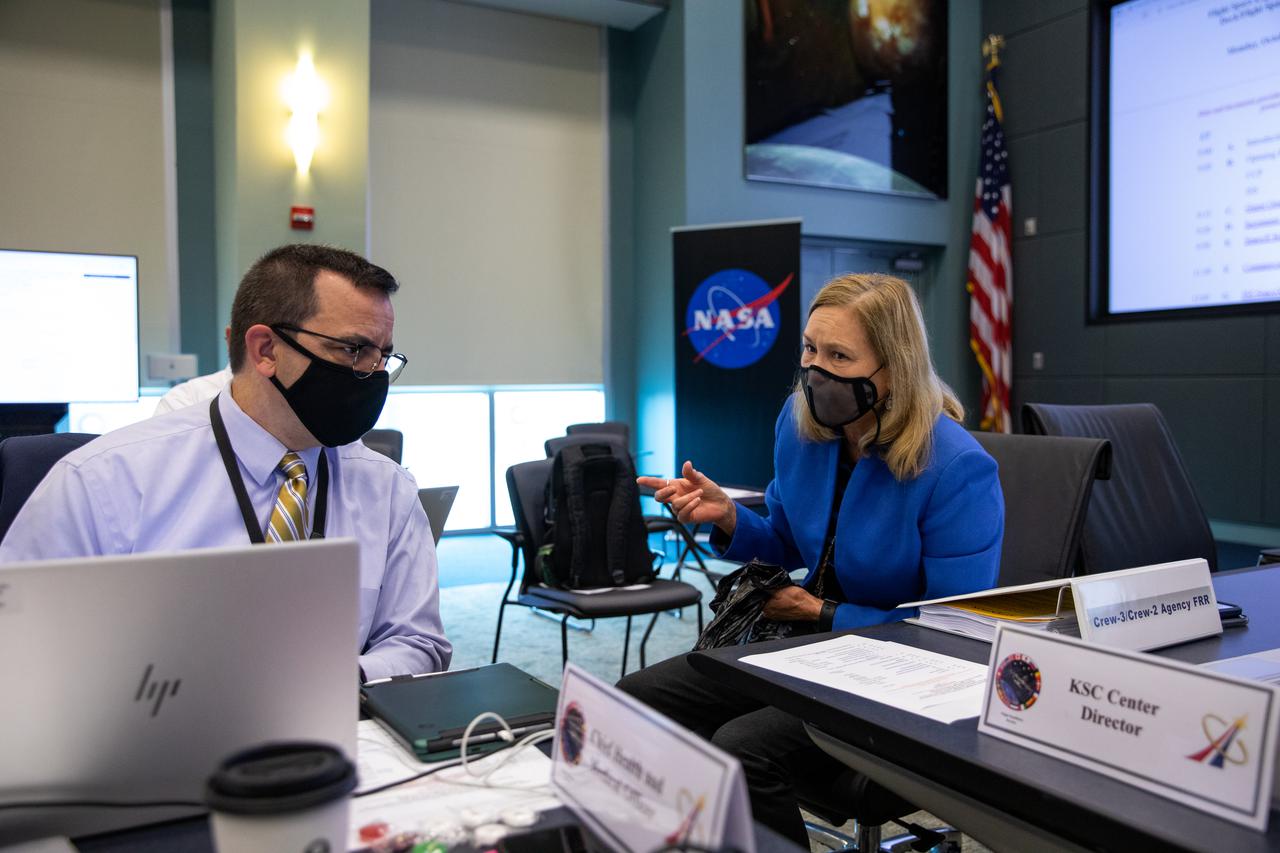
NASA and SpaceX managers participate in a Flight Readiness Review for the agency’s SpaceX Crew-3 mission at Kennedy Space Center in Florida on Oct. 25, 2021. International partners also participated. At right, Kennedy’s Center Director Janet Petro, speaks with J.D. Polk, chief Health and Medical officer. Crew-3 is scheduled to launch to the International Space Station from Kennedy’s Launch Complex 39A on Oct. 31, 2021 as part of NASA’s Commercial Crew Program. Liftoff of the Falcon 9 rocket and Crew Dragon spacecraft is targeted for 2:21 a.m. EDT.
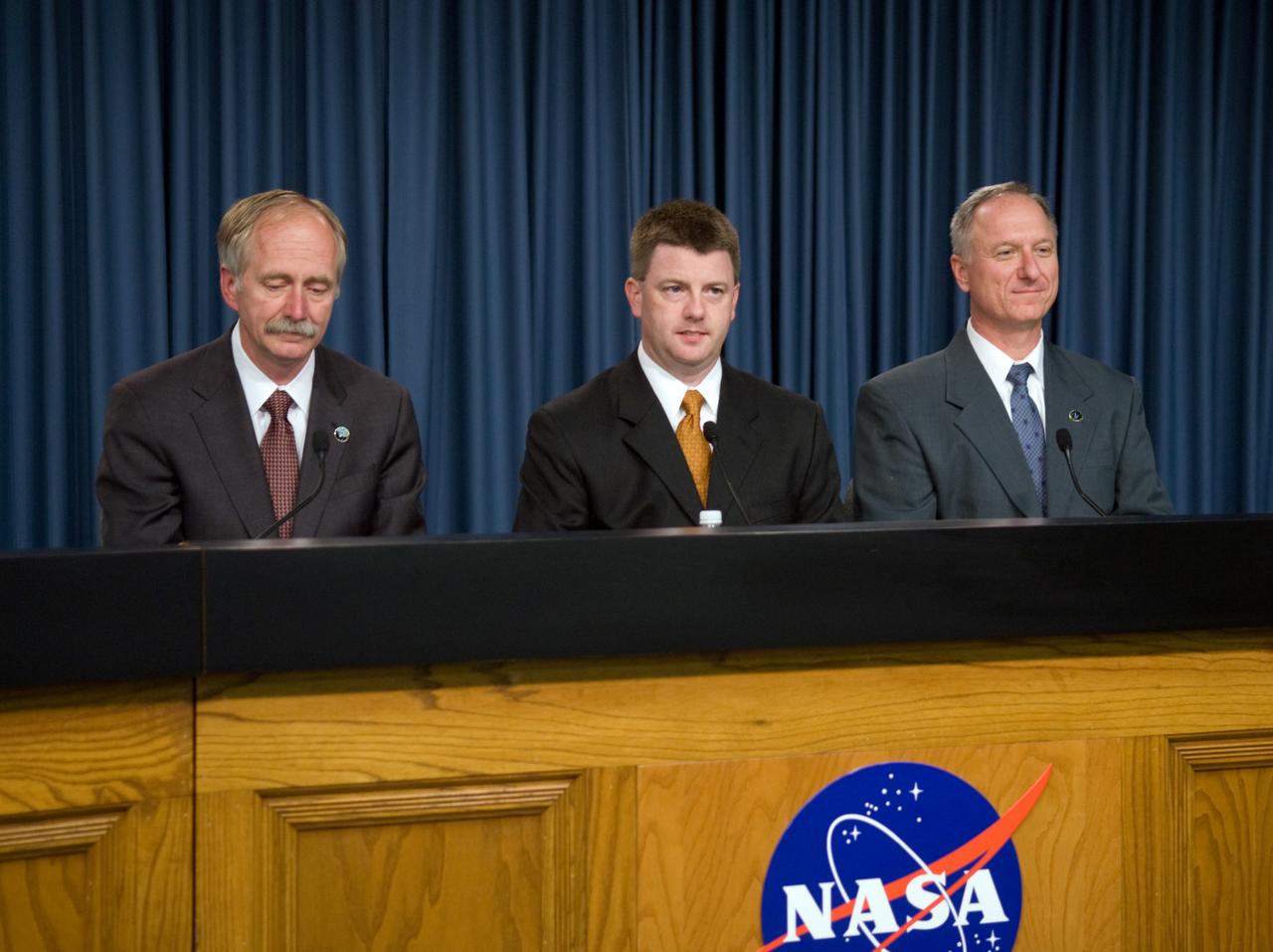
CAPE CANAVERAL, Fla. – In the post-Flight Readiness Review news conference for the STS-127 mission, Bill Gerstenmaier, associate administrator for Space Operations, Mike Moses, Space Shuttle Program launch integration manager, and Pete Nickolenko, STS-127 shuttle launch director, present the items discussed by managers. They confirmed a June 13 launch date for space shuttle Endeavour and its crew of seven on the STS-127 mission. The mission is the final of three flights dedicated to the assembly of the Japanese Kibo laboratory complex on the International Space Station. Photo credit: NASA/Kim Shiflett
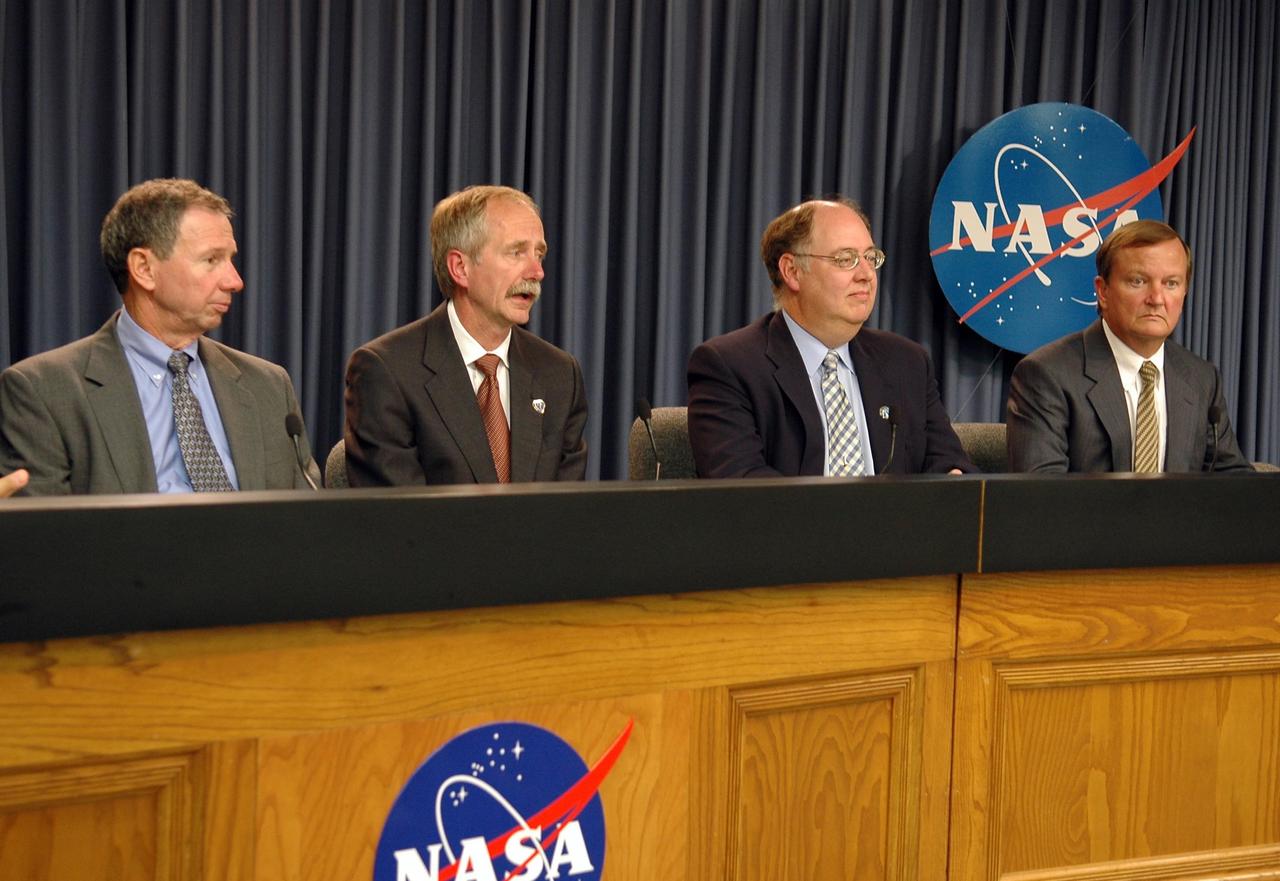
KENNEDY SPACE CENTER, FLA. - At a press conference following the Flight Readiness Review, a thorough assessment of preparations for the mission, NASA officials announce the final launch date of Aug. 27 for mission STS-115. Seated left to right are Michael Griffin, NASA administrator; Bill Gerstenmaier, associate administrator for Space Operations; Wayne Hale, Space Shuttle Program manager; and Mike Leinbach, NASA launch director. They also answered questions from the media. Mission STS-115 continues the assembly of the International Space Station with the installation of the truss segments P3 and P4. Liftoff of Space Shuttle Atlantis on mission STS-115 is targeted at approximately 4:30 p.m. EDT on Aug. 27. Photo credit: NASA/Kim Shiflett
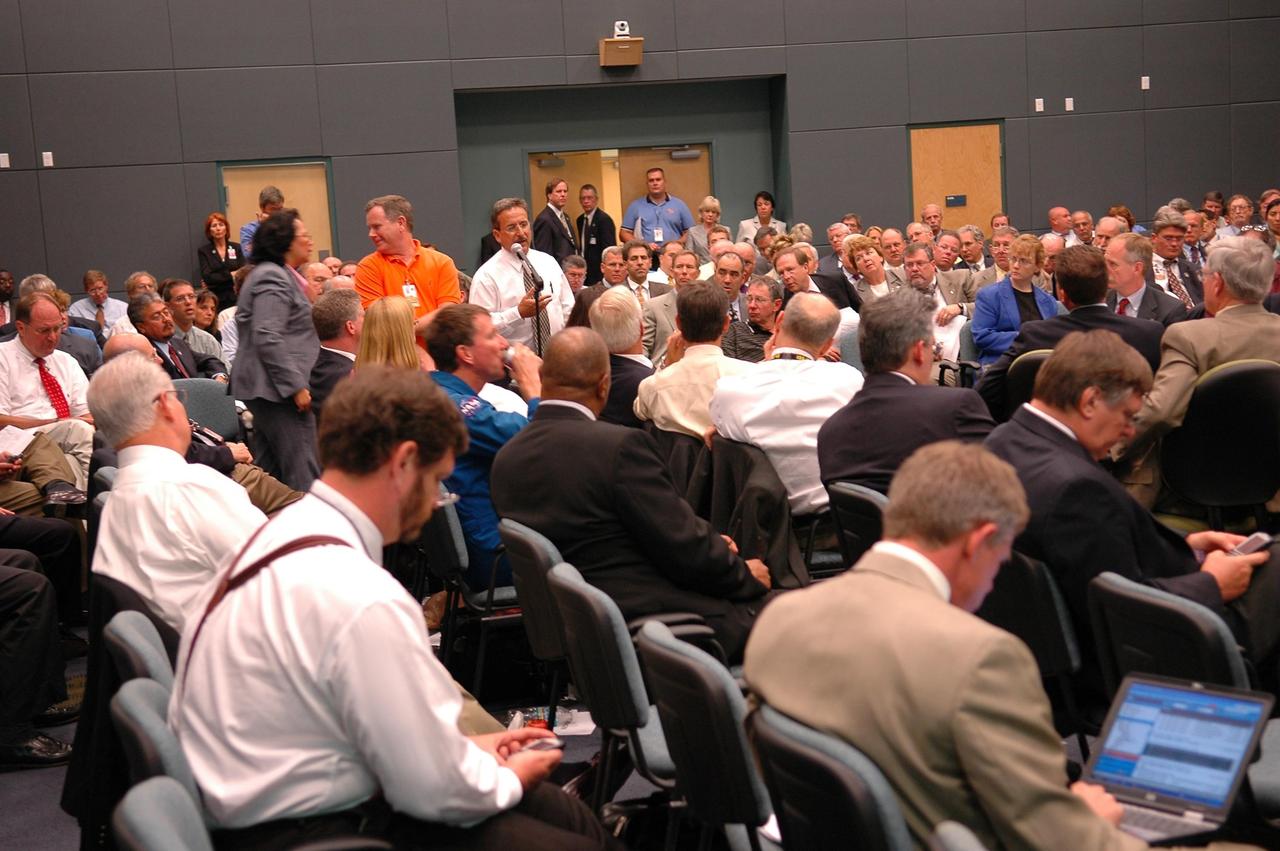
KENNEDY SPACE CENTER, FLA. - Space Shuttle Program and mission managers meet for the traditional Flight Readiness Review, a thorough assessment of preparations for the mission. Listening to a comment from attendees is NASA Administrator Mike Griffin (fourth to the right of the speaker) and Associate Administrator for Space Operations William Gerstenmaier and KSC Deputy Director Bill Parsons, at far right. The June 16-17 meeting is designed to produce a number of key decisions about Discovery's mission, STS-121, including selection of an official launch date. Photo credit: NASA/Kim Shiflett
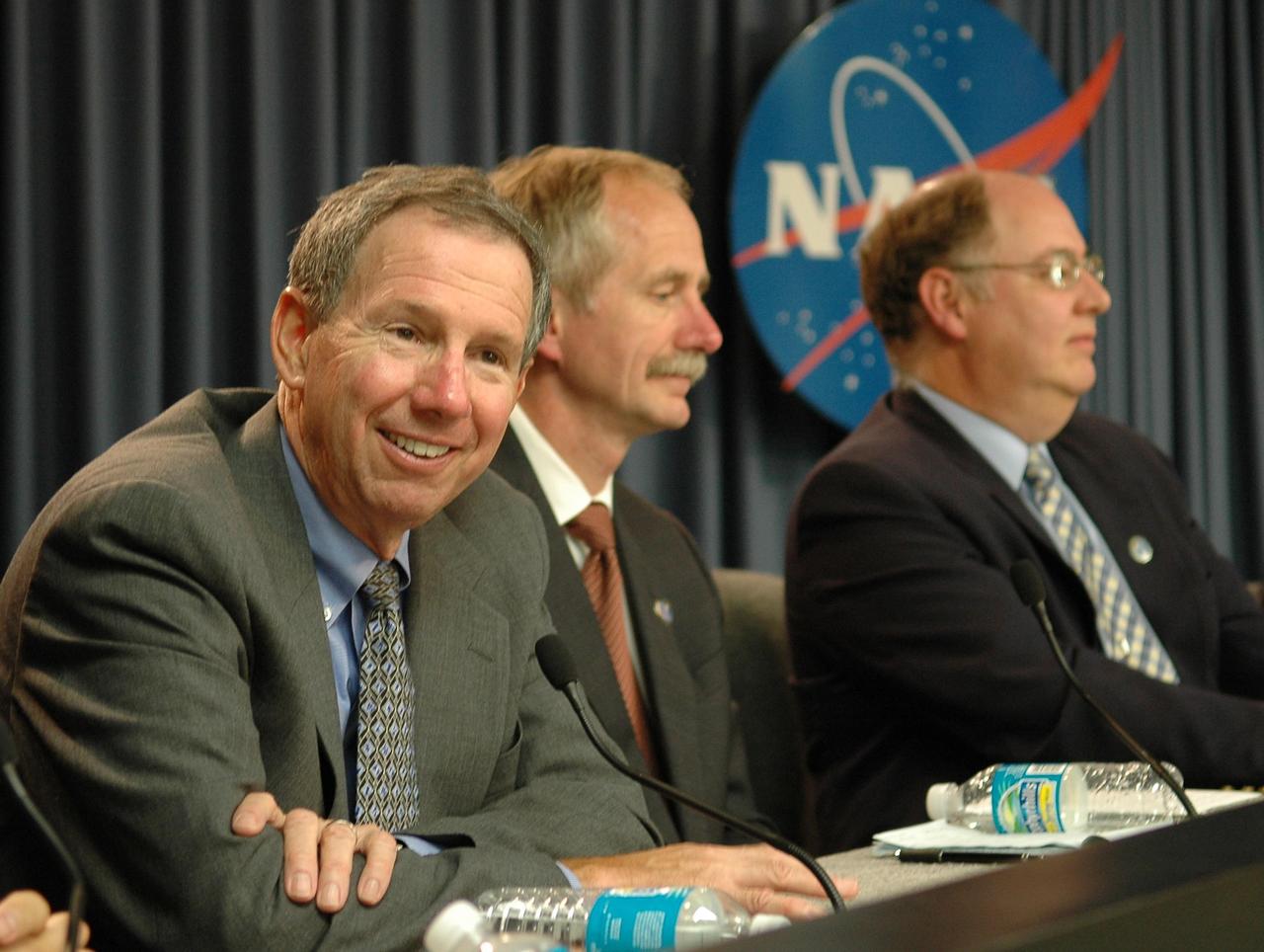
KENNEDY SPACE CENTER, FLA. - At a press conference following the Flight Readiness Review, a thorough assessment of preparations for the mission, NASA Administrator Mike Griffin is amused by a question from the media. Next to Griffin on the dais are Bill Gerstenmaier, associate administrator for Space Operations, and Wayne Hale, Space Shuttle Program manager. Also present at the conference, but not pictured, is Mike Leinbach, NASA launch director. Griffin confirmed the final launch date of Aug. 27 for mission STS-115. Mission STS-115 continues the assembly of the International Space Station with the installation of the truss segments P3 and P4. Liftoff of Space Shuttle Atlantis on mission STS-115 is targeted at approximately 4:30 p.m. EDT on Aug. 27. Photo credit: NASA/Kim Shiflett
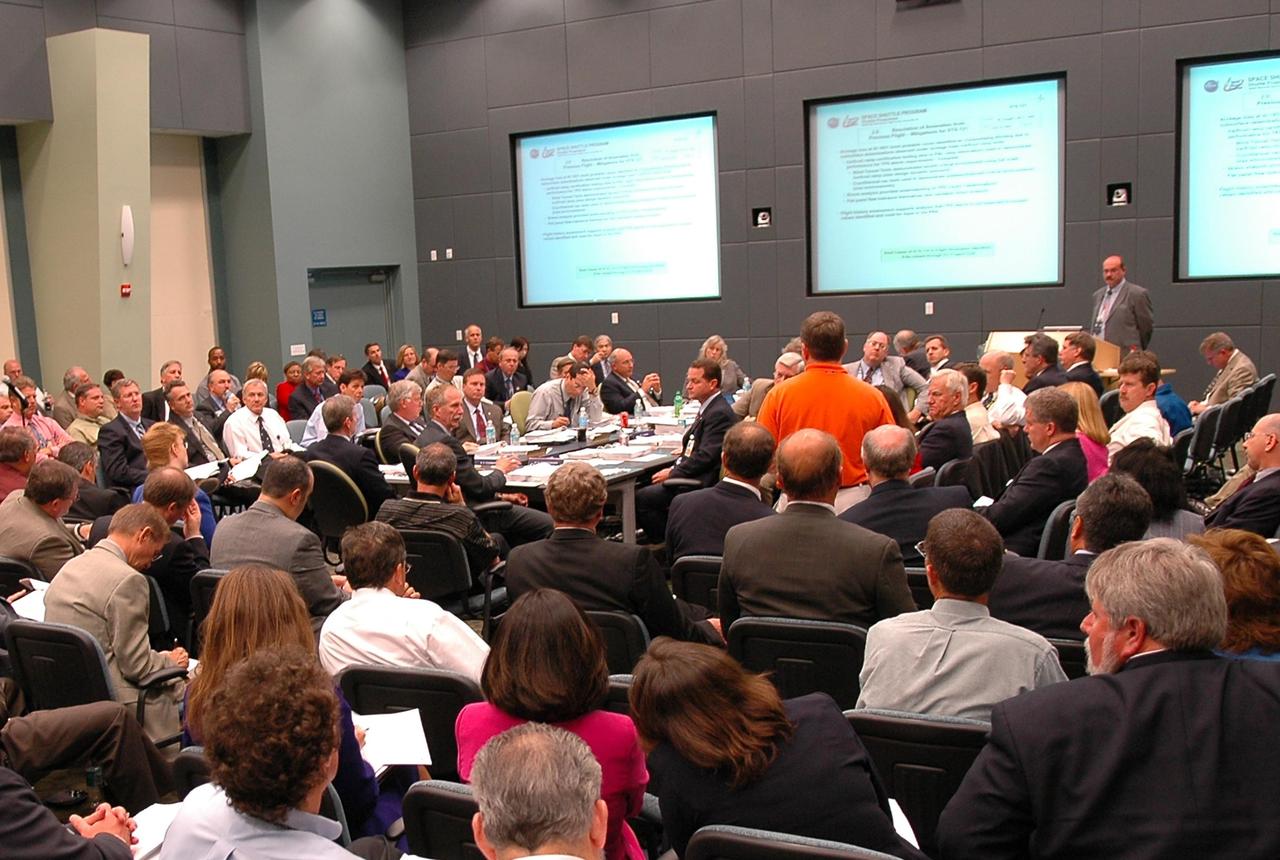
KENNEDY SPACE CENTER, FLA. - Space Shuttle Program and mission managers meet for the traditional Flight Readiness Review, a thorough assessment of preparations for the mission. Among those seated at the table on the left are Center Director Jim Kennedy, Associate Administrator for Space Operations William Gerstenmaier and Marshall Space Flight Center Director Dave King. Shuttle Program Manager Wayne Hale is seated under the center screen on the back wall. Also attending is NASA Administrator Mike Griffin. The June 16-17 meeting is designed to produce a number of key decisions about Discovery's mission, STS-121, including selection of an official launch date. Photo credit: NASA/Kim Shiflett
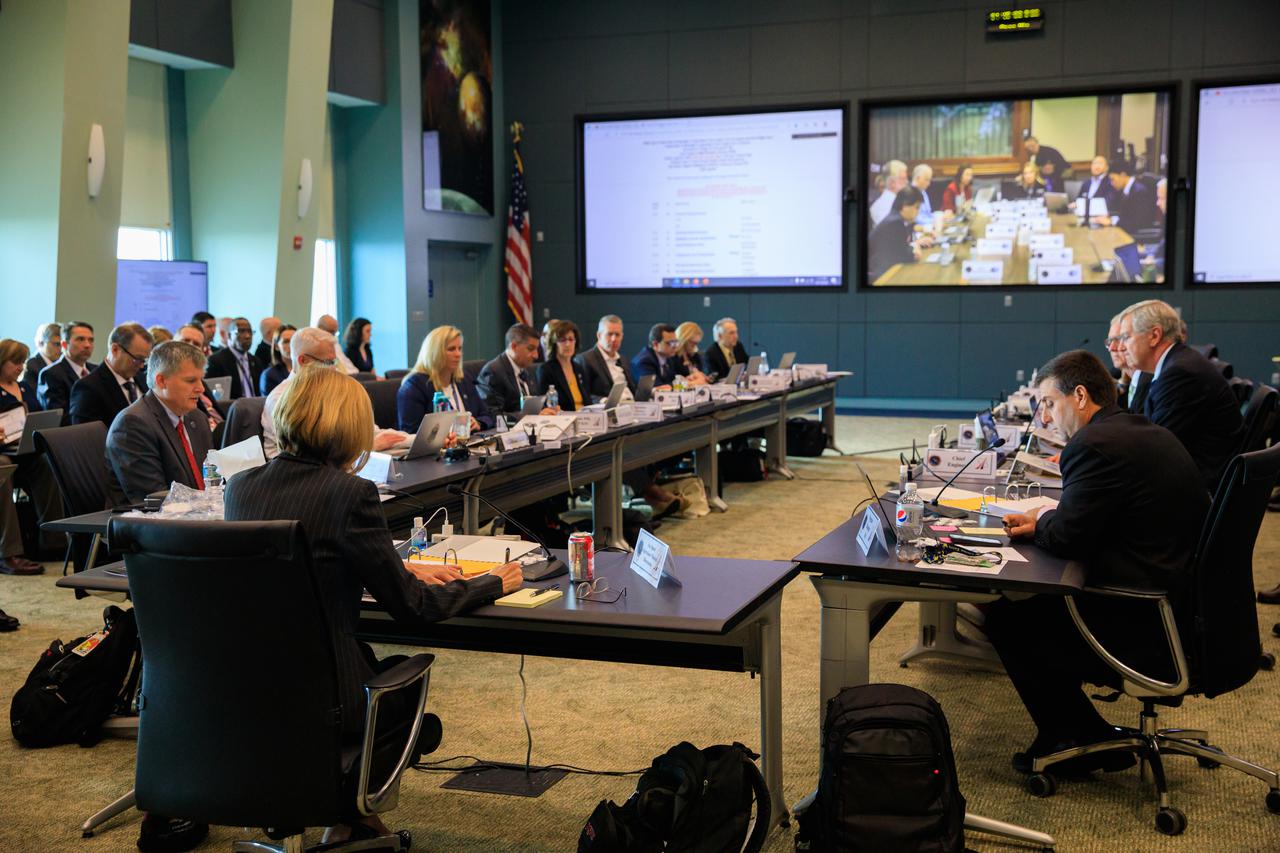
NASA’s SpaceX Crew-4 Flight Readiness Review takes place at Kennedy Space Center on April 15, 2022. The mission is targeted to launch from the Florida Spaceport’s Launch Complex 39A on April 23, 2022, at 5:26 a.m. EDT. NASA astronauts Kjell Lindgren, Bob Hines, and Jessica Watkins, and ESA (European Space Agency) astronaut Samantha Cristoforetti will fly to the station aboard SpaceX’s Crew Dragon, powered by the company’s Falcon 9 rocket.

Dana Hutcherson, deputy program manager of NASA’s Commercial Crew Program, smiles during NASA’s SpaceX Crew-4 Flight Readiness Review at Kennedy Space Center on April 15, 2022. The mission is targeted to launch from the Florida Spaceport’s Launch Complex 39A on April 23, 2022, at 5:26 a.m. EDT. NASA astronauts Kjell Lindgren, Bob Hines, and Jessica Watkins, and ESA (European Space Agency) astronaut Samantha Cristoforetti will fly to the station aboard SpaceX’s Crew Dragon, powered by the company’s Falcon 9 rocket.
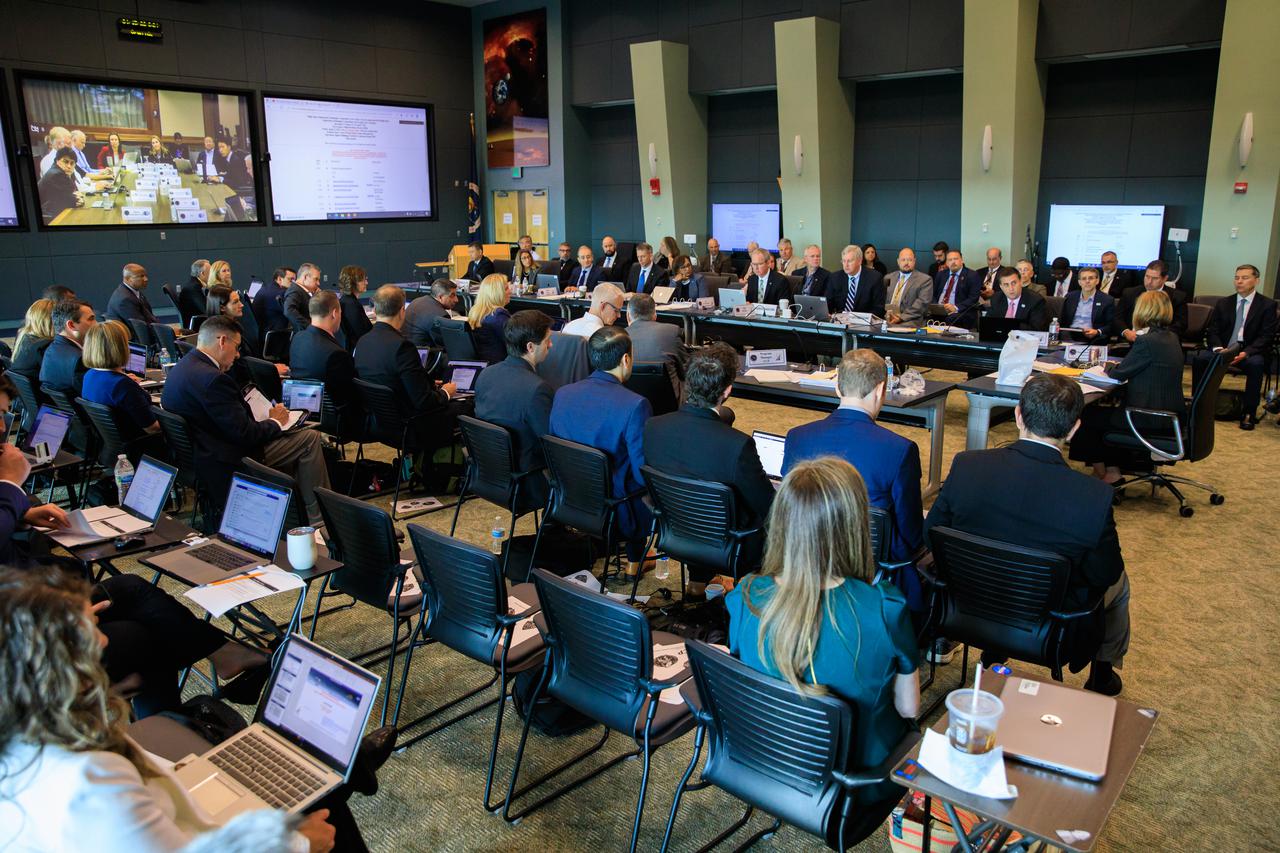
NASA’s SpaceX Crew-4 Flight Readiness Review takes place at Kennedy Space Center on April 15, 2022. The mission is targeted to launch from the Florida Spaceport’s Launch Complex 39A on April 23, 2022, at 5:26 a.m. EDT. NASA astronauts Kjell Lindgren, Bob Hines, and Jessica Watkins, and ESA (European Space Agency) astronaut Samantha Cristoforetti will fly to the station aboard SpaceX’s Crew Dragon, powered by the company’s Falcon 9 rocket.
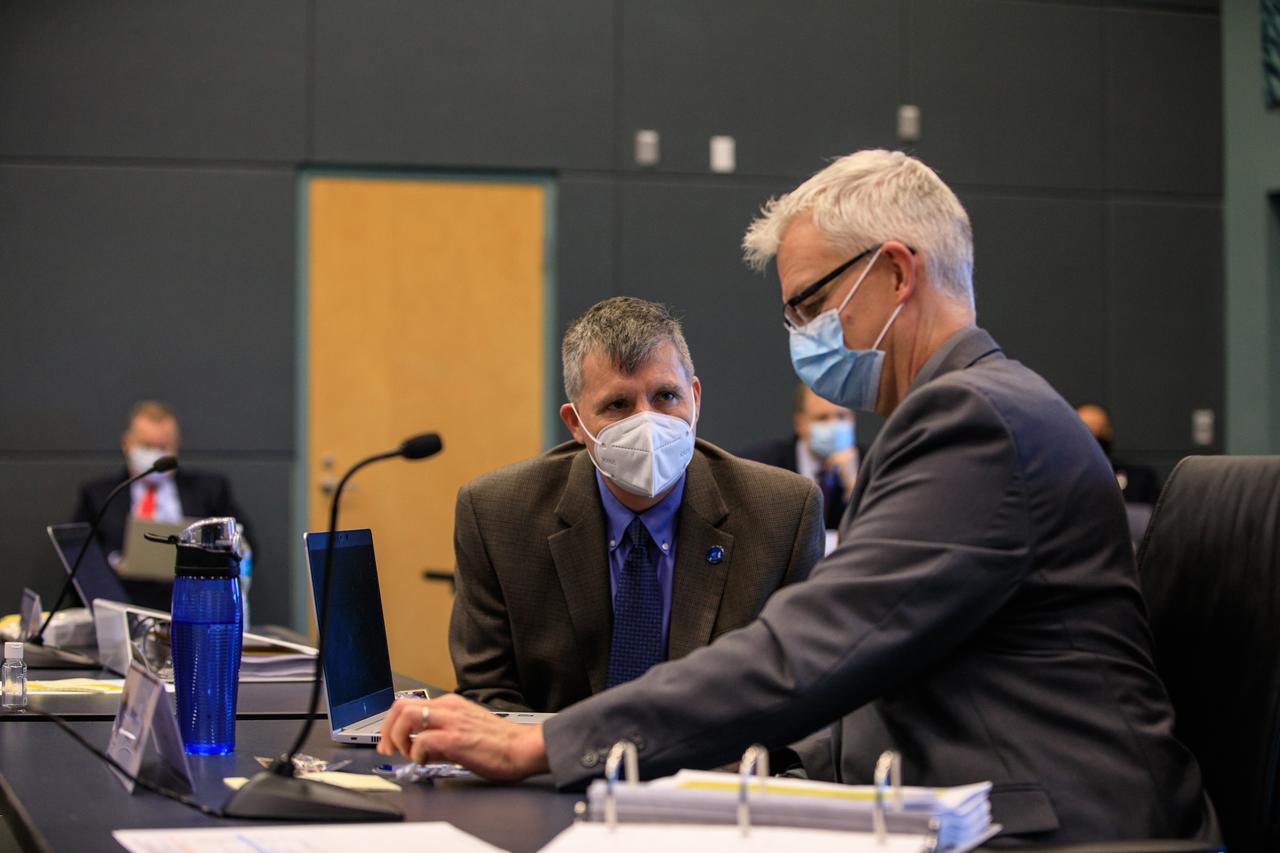
NASA and SpaceX leadership participate in a Flight Readiness Review (FRR) for the agency’s SpaceX Crew-1 mission at NASA’s Kennedy Space Center in Florida on Nov. 9, 2020. The FRR focuses on the preparedness of SpaceX’s crew transportation system, the International Space Station, and its international partners to support the flight, and the certification of flight readiness. Crew-1 is the first regular crew mission of a U.S. commercial spacecraft with astronauts to the International Space Station as part of NASA’s Commercial Crew Program. The Crew Dragon Resilience capsule will launch atop a Falcon 9 rocket from Launch Complex 39A carrying NASA astronauts Michael Hopkins, Victor Glover, Shannon Walker and Japan Aerospace Exploration Agency (JAXA) astronaut Soichi Noguchi to the space station for a six-month science mission.
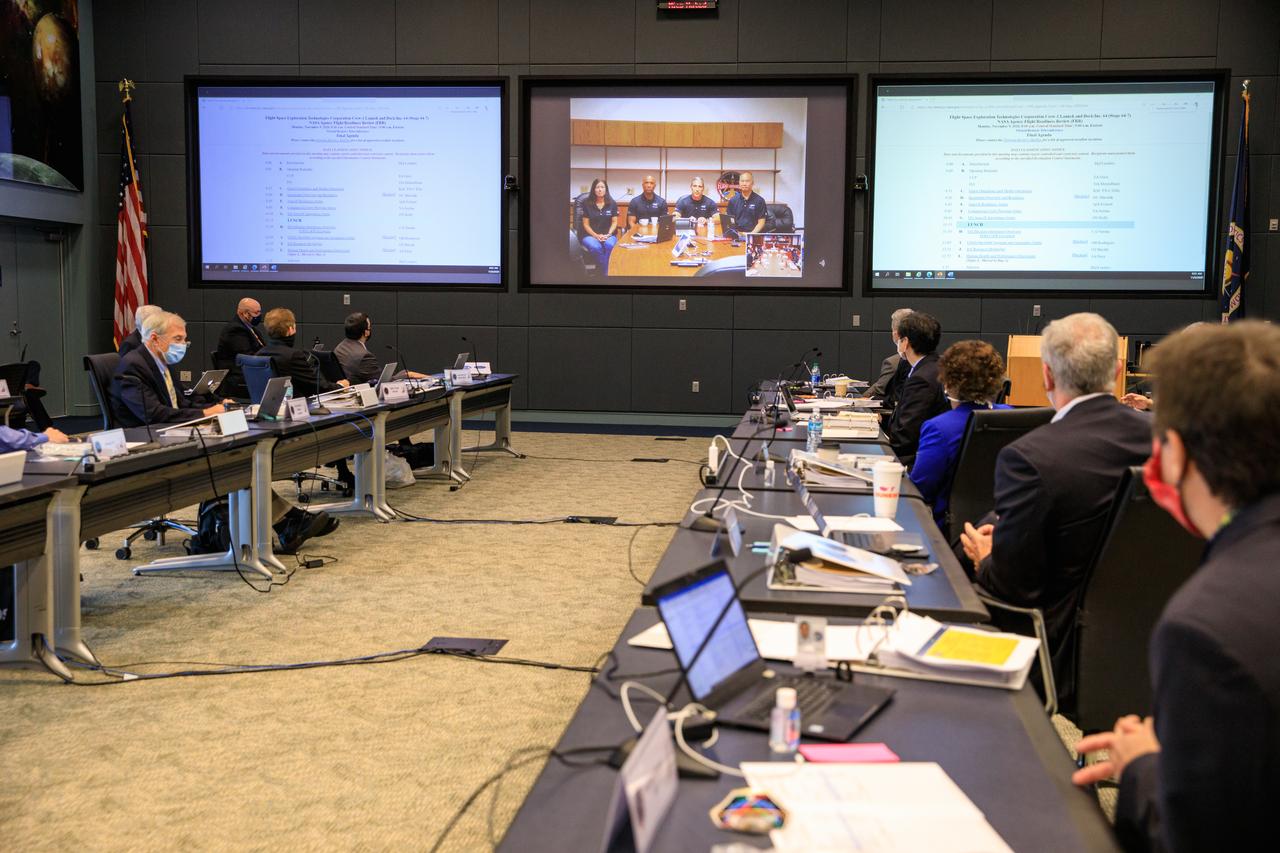
NASA and SpaceX leadership participate in a Flight Readiness Review (FRR) for the agency’s SpaceX Crew-1 mission at NASA’s Kennedy Space Center in Florida on Nov. 9, 2020. The FRR focuses on the preparedness of SpaceX’s crew transportation system, the International Space Station, and its international partners to support the flight, and the certification of flight readiness. Crew-1 is the first regular crew mission of a U.S. commercial spacecraft with astronauts to the International Space Station as part of NASA’s Commercial Crew Program. The Crew Dragon Resilience capsule will launch atop a Falcon 9 rocket from Launch Complex 39A carrying NASA astronauts Michael Hopkins, Victor Glover, Shannon Walker and Japan Aerospace Exploration Agency (JAXA) astronaut Soichi Noguchi to the space station for a six-month science mission.
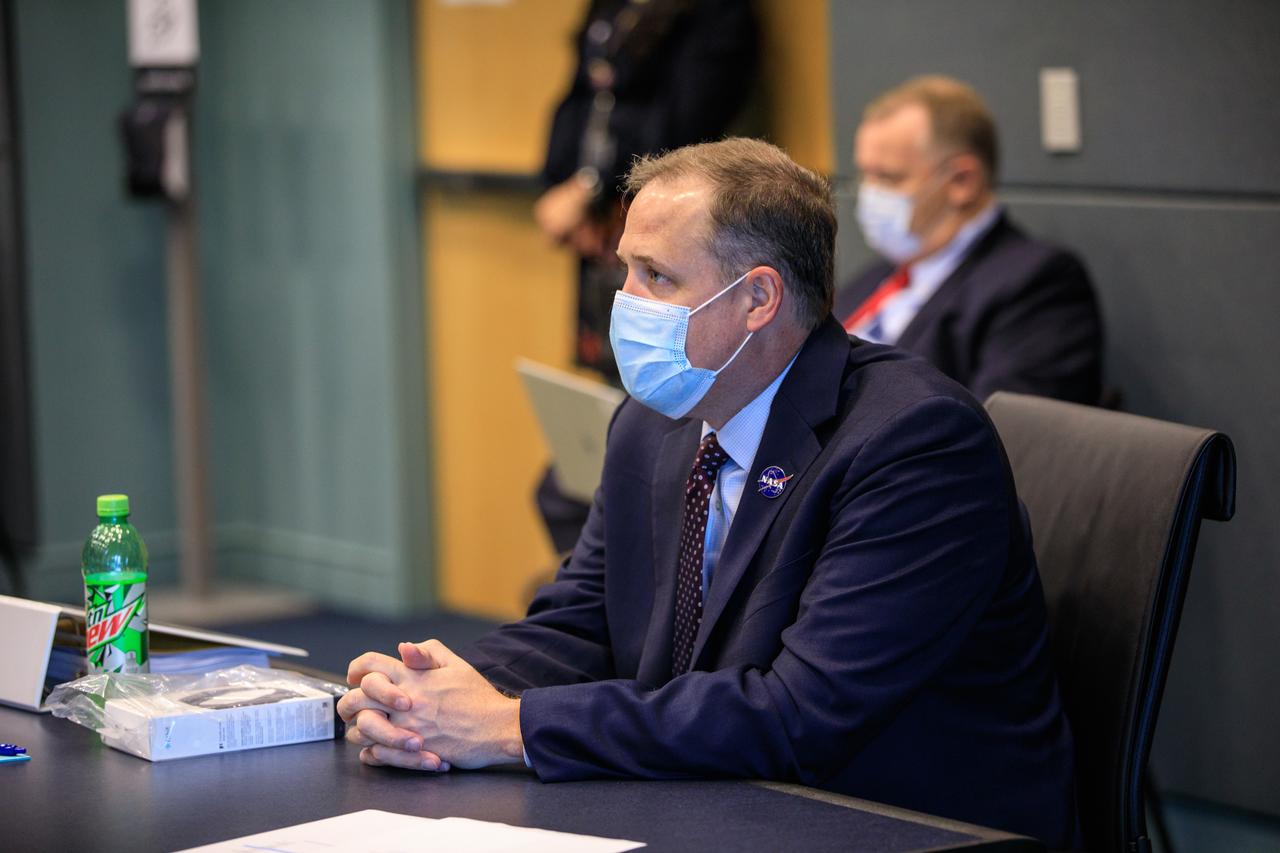
NASA Administrator Jim Bridenstine participates in a Flight Readiness Review (FRR) for the agency’s SpaceX Crew-1 mission at Kennedy Space Center in Florida on Nov. 9, 2020. The FRR focuses on the preparedness of SpaceX’s crew transportation system, the International Space Station, and its international partners to support the flight, and the certification of flight readiness. Crew-1 is the first regular crew mission of a U.S. commercial spacecraft with astronauts to the International Space Station as part of NASA’s Commercial Crew Program. The Crew Dragon Resilience capsule will launch atop a Falcon 9 rocket from Launch Complex 39A carrying NASA astronauts Michael Hopkins, Victor Glover, Shannon Walker and Japan Aerospace Exploration Agency (JAXA) astronaut Soichi Noguchi to the space station for a six-month science mission.
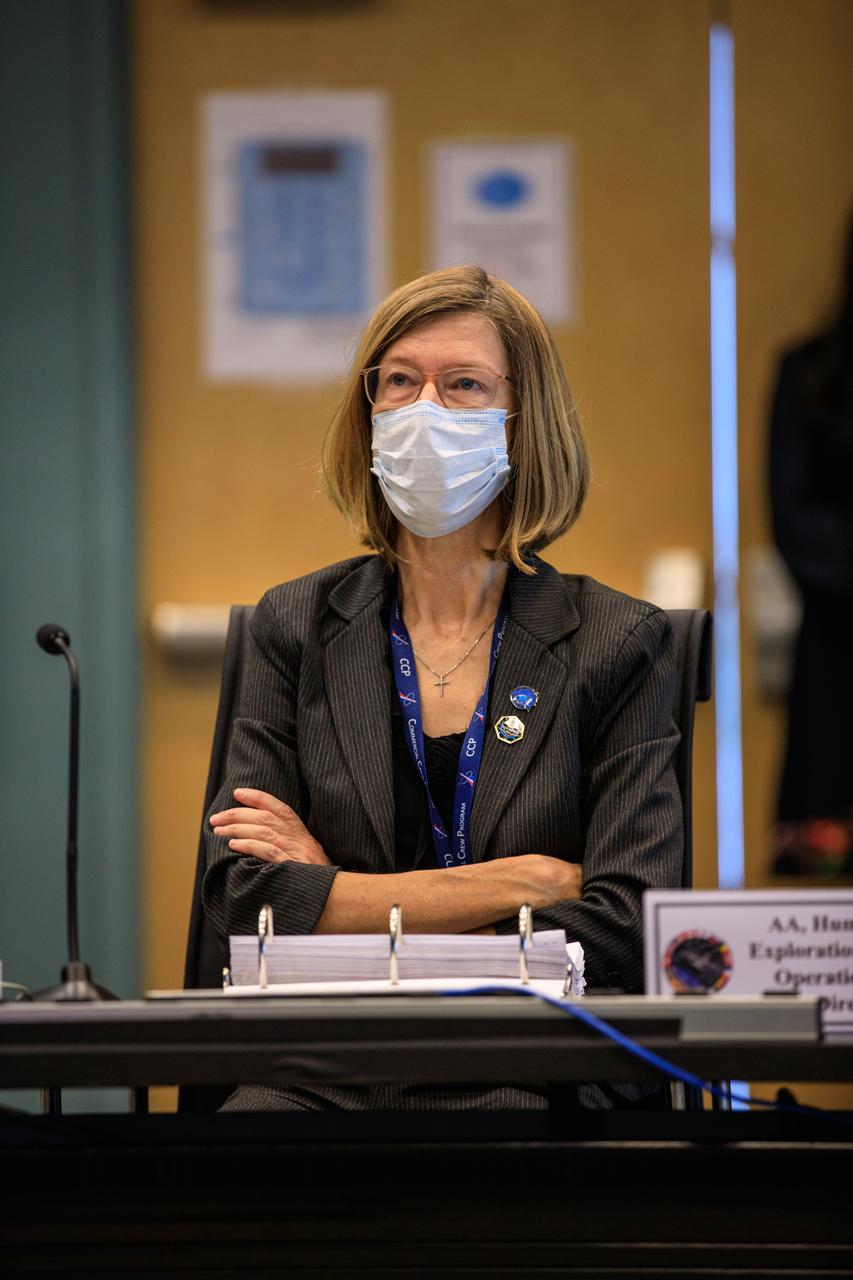
Kathy Lueders, NASA associate administrator of the Human Exploration and Operations Mission Directorate, leads a Flight Readiness Review (FRR) for the agency’s SpaceX Crew-1 mission at NASA’s Kennedy Space Center in Florida on Nov. 9, 2020. The FRR focuses on the preparedness of SpaceX’s crew transportation system, the International Space Station, and its international partners to support the flight, and the certification of flight readiness. Crew-1 is the first regular crew mission of a U.S. commercial spacecraft with astronauts to the International Space Station as part of NASA’s Commercial Crew Program. The Crew Dragon Resilience capsule will launch atop a Falcon 9 rocket from Launch Complex 39A carrying NASA astronauts Michael Hopkins, Victor Glover, Shannon Walker and Japan Aerospace Exploration Agency (JAXA) astronaut Soichi Noguchi to the space station for a six-month science mission.
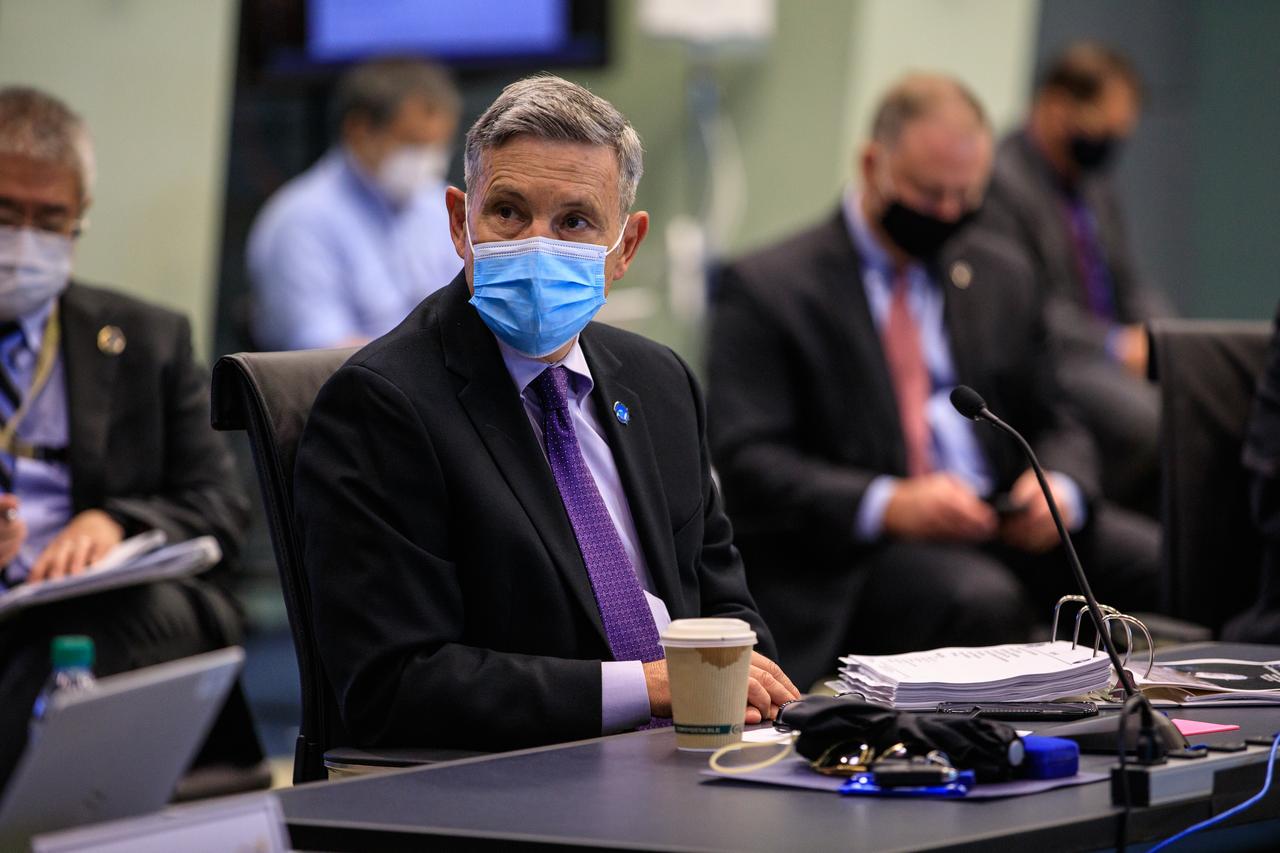
Kennedy Space Center Director Bob Cabana participates in a Flight Readiness Review (FRR) for the agency’s SpaceX Crew-1 mission at the center in Florida on Nov. 9, 2020. The FRR focuses on the preparedness of SpaceX’s crew transportation system, the International Space Station, and its international partners to support the flight, and the certification of flight readiness. Crew-1 is the first regular crew mission of a U.S. commercial spacecraft with astronauts to the International Space Station as part of NASA’s Commercial Crew Program. The Crew Dragon Resilience capsule will launch atop a Falcon 9 rocket from Launch Complex 39A carrying NASA astronauts Michael Hopkins, Victor Glover, Shannon Walker and Japan Aerospace Exploration Agency (JAXA) astronaut Soichi Noguchi to the space station for a six-month science mission.
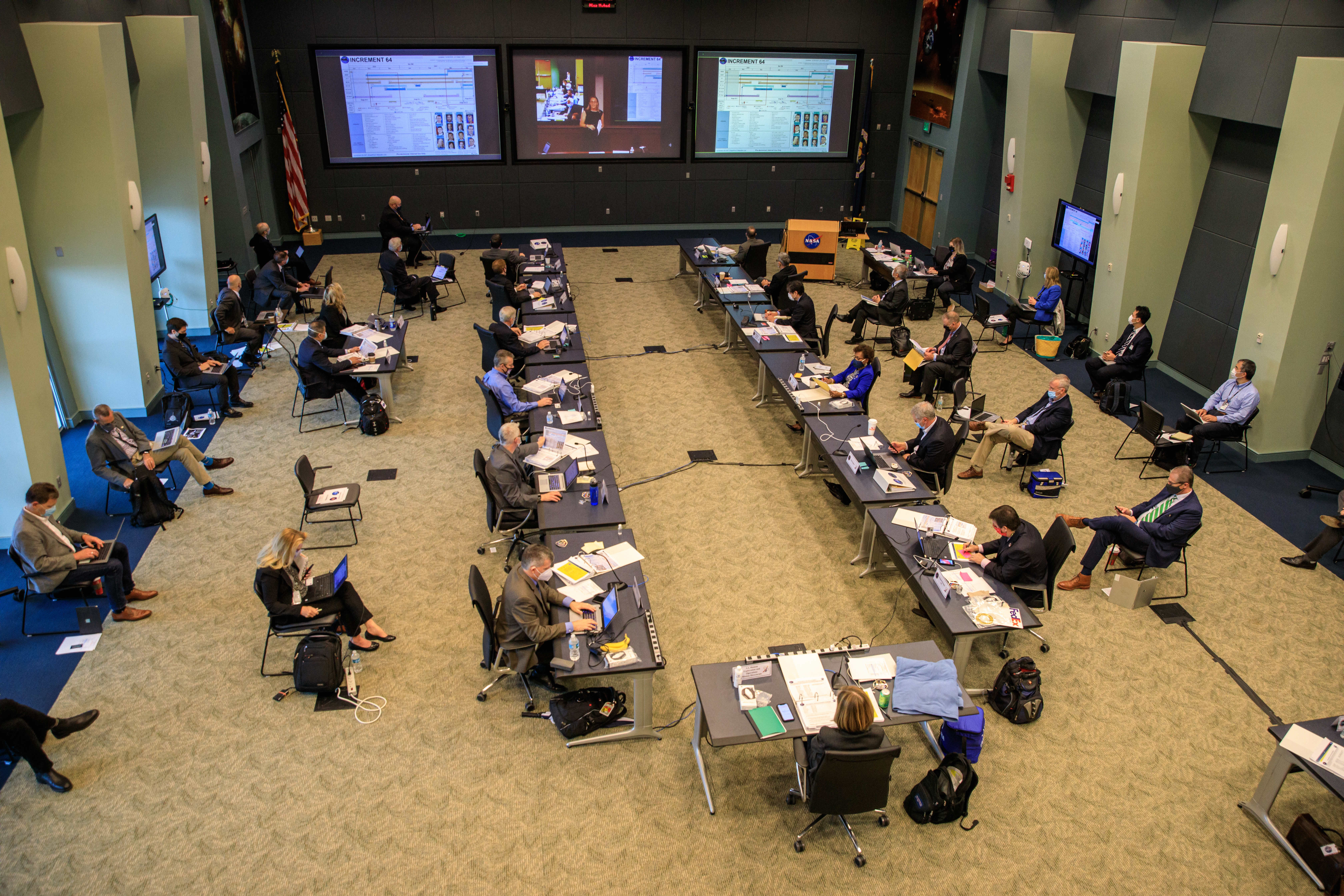
NASA and SpaceX leadership participate in a Flight Readiness Review (FRR) for the agency’s SpaceX Crew-1 mission at Kennedy Space Center in Florida on Nov. 9, 2020. The FRR focuses on the preparedness of SpaceX’s crew transportation system, the International Space Station, and its international partners to support the flight, and the certification of flight readiness. Crew-1 is the first regular crew mission of a U.S. commercial spacecraft with astronauts to the International Space Station as part of NASA’s Commercial Crew Program. The Crew Dragon Resilience capsule will launch atop a Falcon 9 rocket from Launch Complex 39A carrying NASA astronauts Michael Hopkins, Victor Glover, Shannon Walker and Japan Aerospace Exploration Agency (JAXA) astronaut Soichi Noguchi to the space station for a six-month science mission.
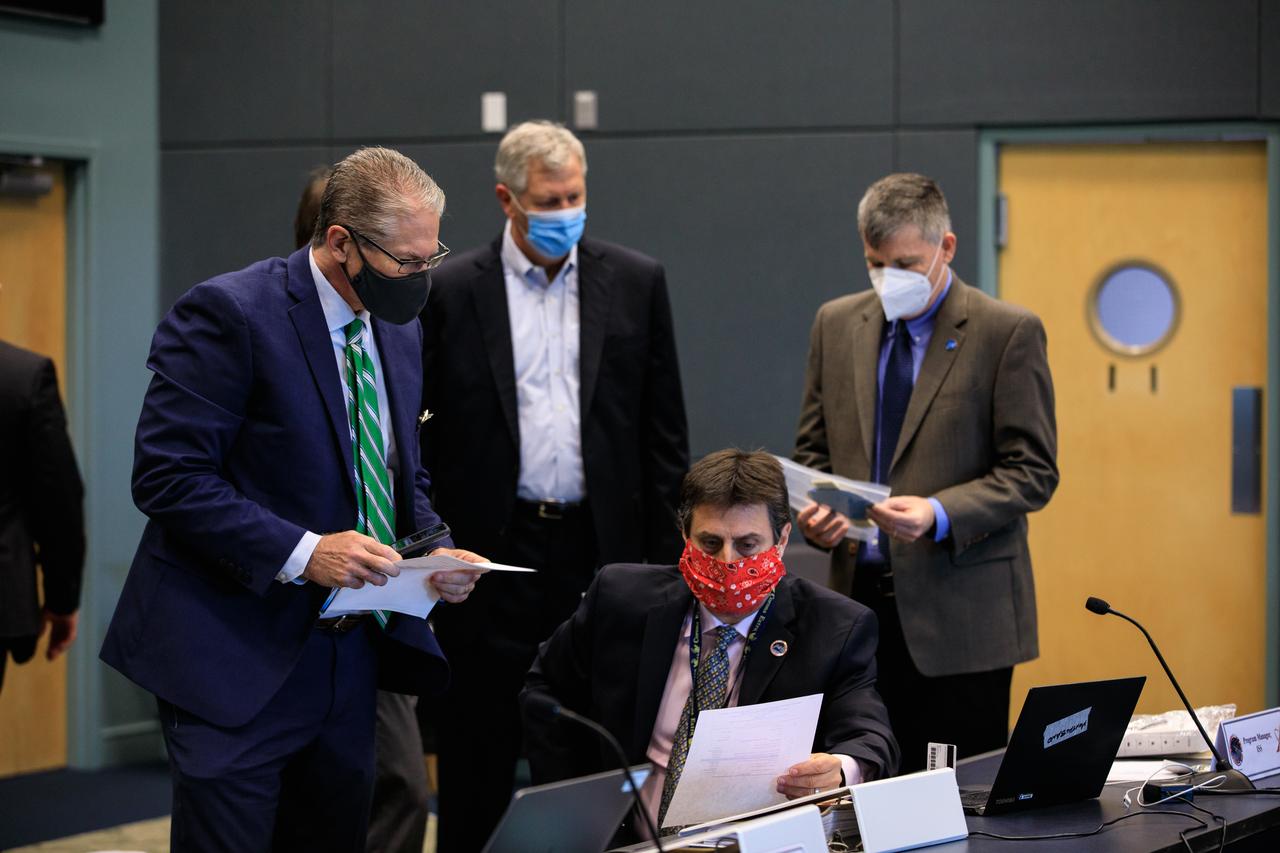
NASA and SpaceX leadership participate in a Flight Readiness Review (FRR) for the agency’s SpaceX Crew-1 mission at NASA’s Kennedy Space Center in Florida on Nov. 9, 2020. The FRR focuses on the preparedness of SpaceX’s crew transportation system, the International Space Station, and its international partners to support the flight, and the certification of flight readiness. Crew-1 is the first regular crew mission of a U.S. commercial spacecraft with astronauts to the International Space Station as part of NASA’s Commercial Crew Program. The Crew Dragon Resilience capsule will launch atop a Falcon 9 rocket from Launch Complex 39A carrying NASA astronauts Michael Hopkins, Victor Glover, Shannon Walker and Japan Aerospace Exploration Agency (JAXA) astronaut Soichi Noguchi to the space station for a six-month science mission.
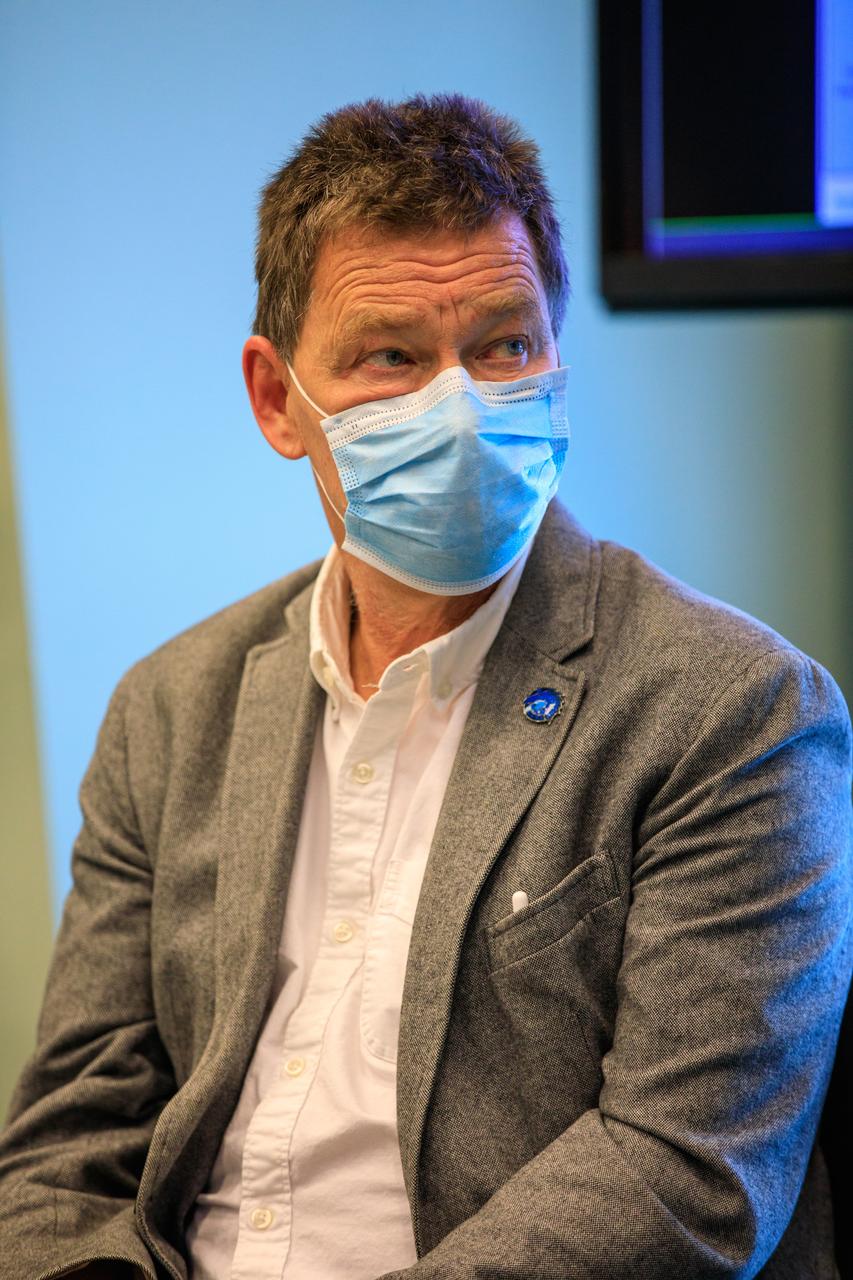
Hans Koenigsmann, vice president, Build and Flight Reliability with SpaceX, participates in a Flight Readiness Review (FRR) for NASA’s SpaceX Crew-1 mission at Kennedy Space Center in Florida on Nov. 9, 2020. The FRR focuses on the preparedness of SpaceX’s crew transportation system, the International Space Station, and its international partners to support the flight, and the certification of flight readiness. Crew-1 is the first regular crew mission of a U.S. commercial spacecraft with astronauts to the International Space Station as part of NASA’s Commercial Crew Program. The Crew Dragon Resilience capsule will launch atop a Falcon 9 rocket from Launch Complex 39A carrying NASA astronauts Michael Hopkins, Victor Glover, Shannon Walker and Japan Aerospace Exploration Agency (JAXA) astronaut Soichi Noguchi to the space station for a six-month science mission.
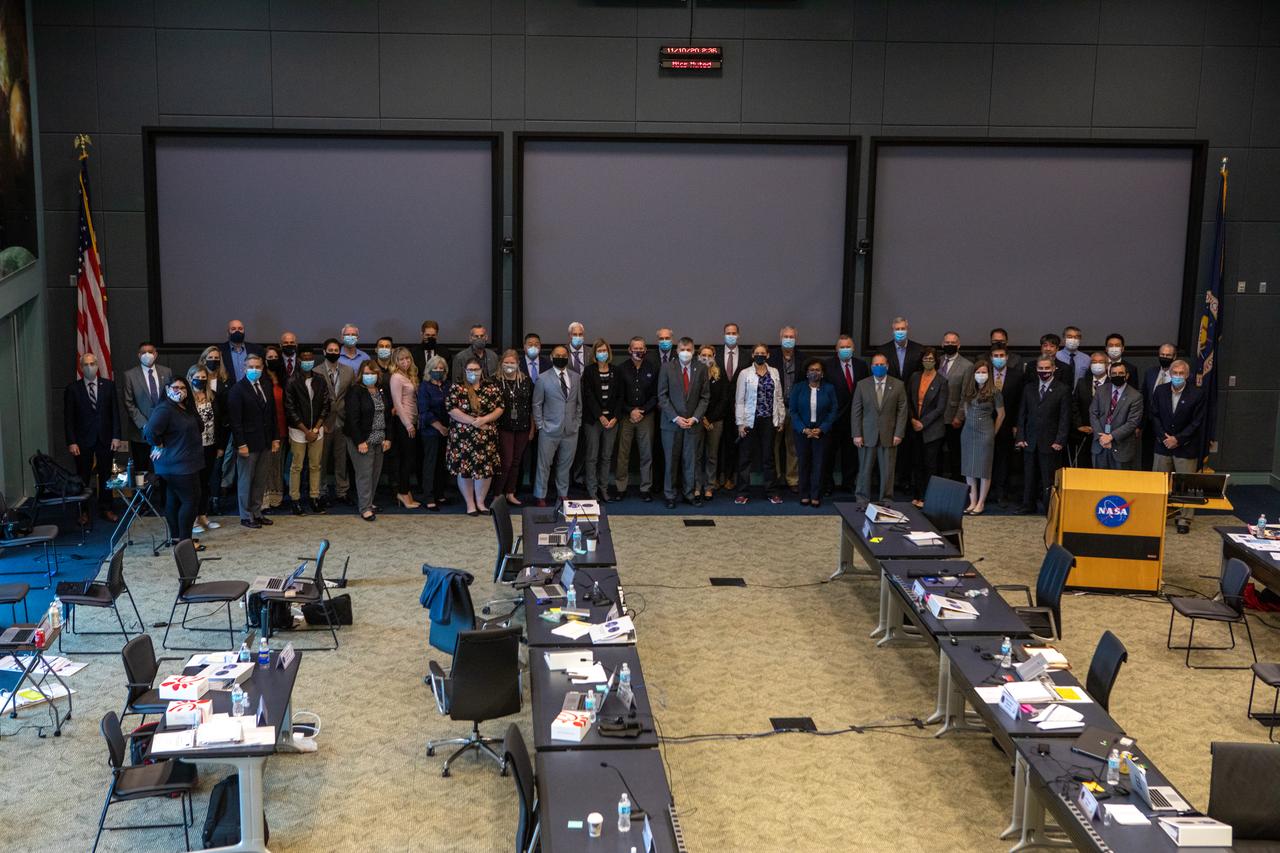
NASA and SpaceX leadership gather for a group photo on the second and final day of the Flight Readiness Review (FRR) for the agency’s SpaceX Crew-1 mission at NASA’s Kennedy Space Center in Florida on Nov. 10, 2020. The FRR focuses on the preparedness of SpaceX’s crew transportation system, the International Space Station, and its international partners to support the flight, and the certification of flight readiness. Crew-1 is the first regular crew mission of a U.S. commercial spacecraft with astronauts to the International Space Station as part of NASA’s Commercial Crew Program. The Crew Dragon Resilience capsule will launch atop a Falcon 9 rocket from Launch Complex 39A carrying NASA astronauts Michael Hopkins, Victor Glover, Shannon Walker and Japan Aerospace Exploration Agency (JAXA) astronaut Soichi Noguchi to the space station for a six-month science mission.
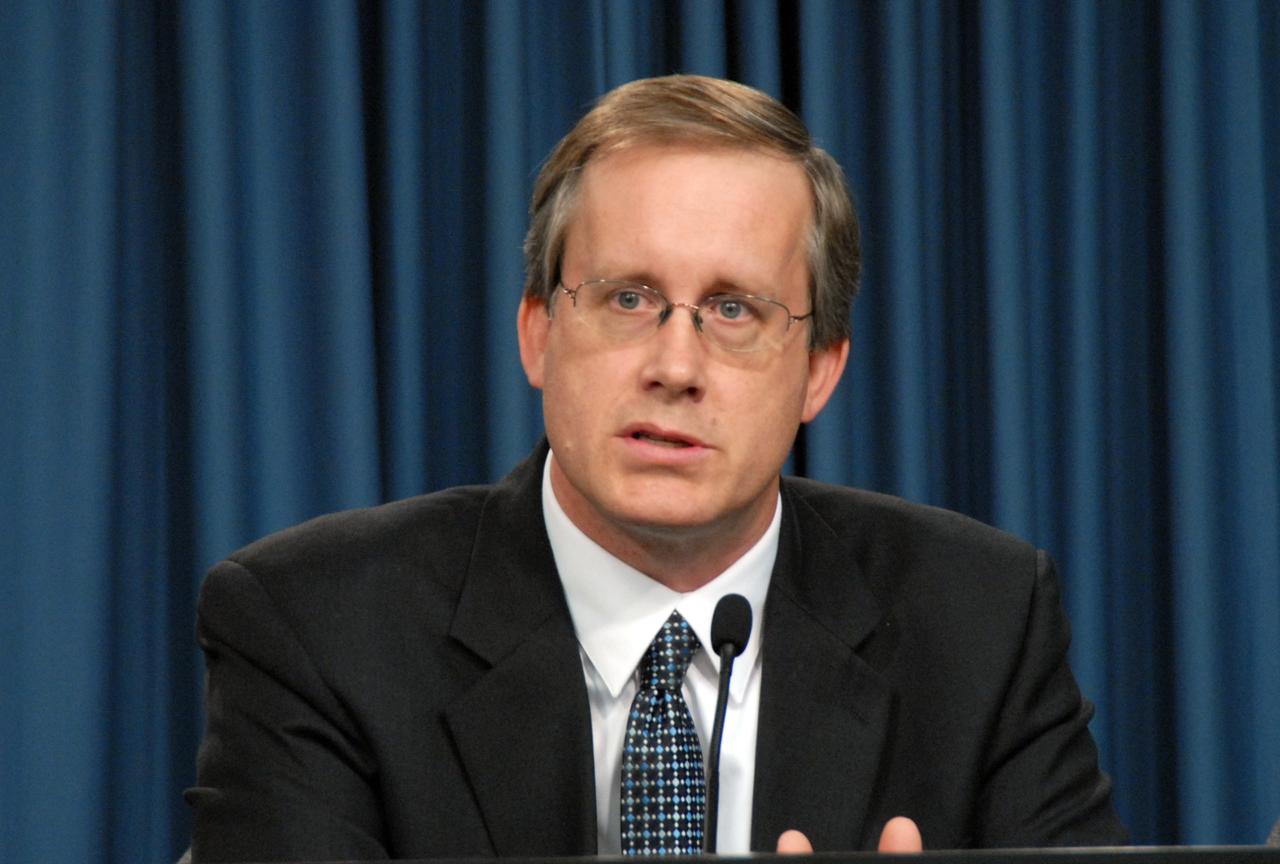
CAPE CANAVERAL, Fla. – At the flight readiness review news conference for space shuttle Discovery's STS-119 mission, Space Shuttle Program Manager John Shannon talks about the discussion surrounding Discovery's readiness for flight. NASA managers decided Feb. 20 more data and possible testing are required before proceeding to launch. Engineering teams have been working to identify what caused damage to a flow control valve on shuttle Endeavour during its November 2008 flight. A new launch date has not been determined. Photo credit: NASA/Glenn Benson
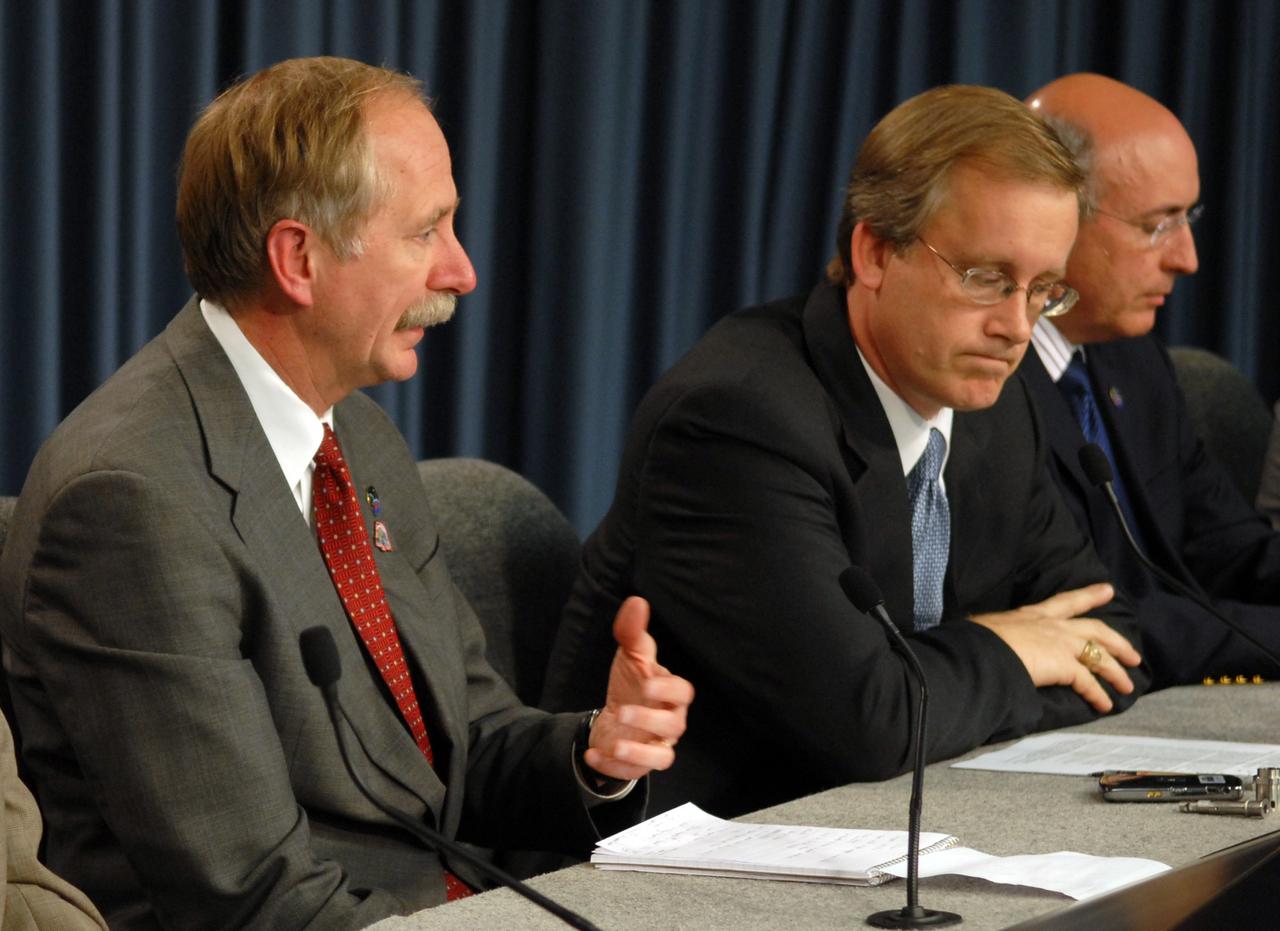
CAPE CANAVERAL, Fla. – At a media conference following the day-long Flight Readiness Review of space shuttle Discovery for the STS-119 mission, NASA's Associate Administrator for Space Operations William H. Gerstenmaier (left) responds to a question. At right are NASA's Space Shuttle Program Manager John Shannon and Program Manager for the International Space Station Mike Suffredini. NASA managers decided to plan a launch no earlier than Feb. 19, pending additional analysis and particle impact testing associated with a flow control valve in the shuttle's main engine system. Photo credit: NASA/Cory Huston
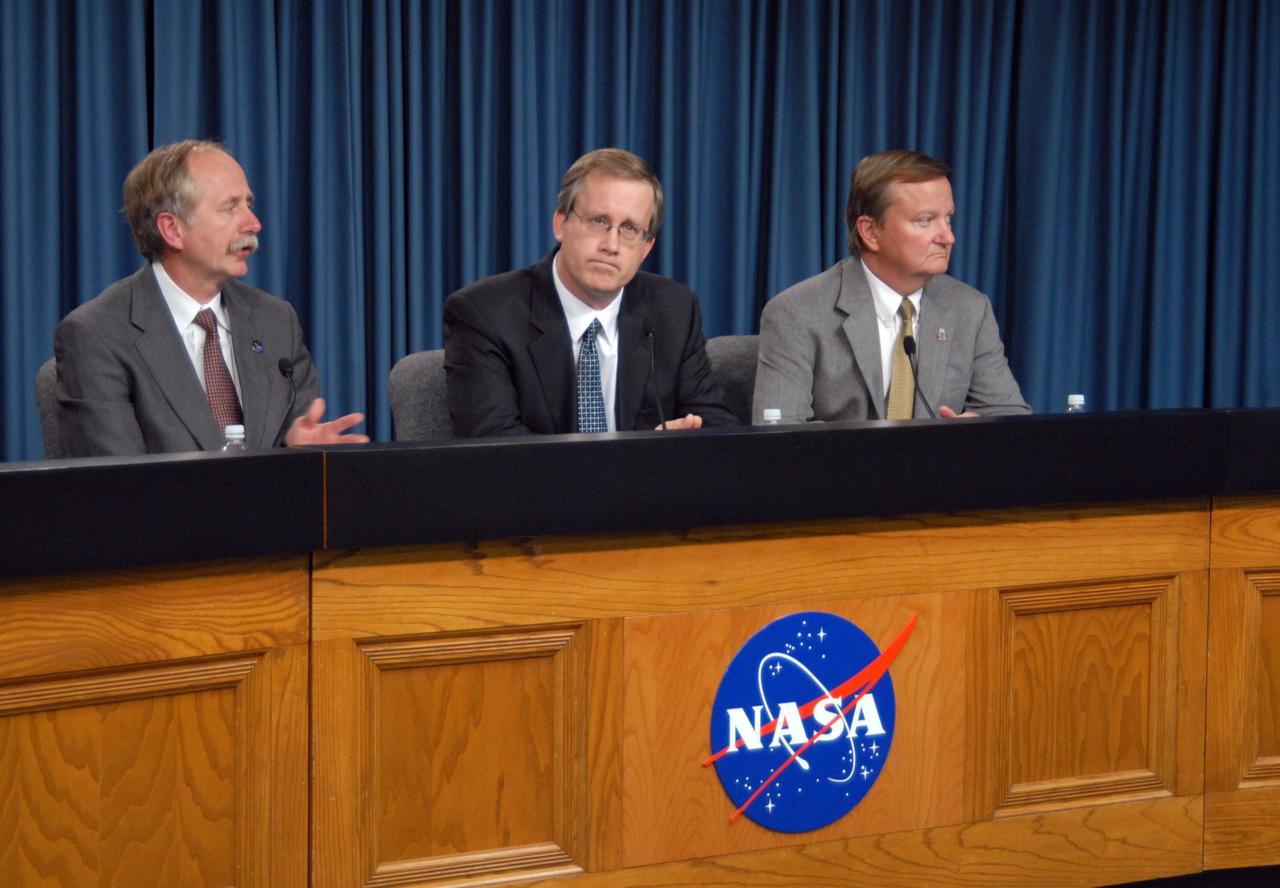
CAPE CANAVERAL, Fla. – Associate Administrator for Space Operations Bill Gerstenmaier, Space Shuttle Program Manager John Shannon and Space Shuttle Launch Director Mike Leinbach respond to media questions about the flight readiness review news conference for space shuttle Discovery's STS-119 mission. NASA managers decided Feb. 20 more data and possible testing are required before proceeding to launch. Engineering teams have been working to identify what caused damage to a flow control valve on shuttle Endeavour during its November 2008 flight. A new launch date has not been determined. Photo credit: NASA/Glenn Benson
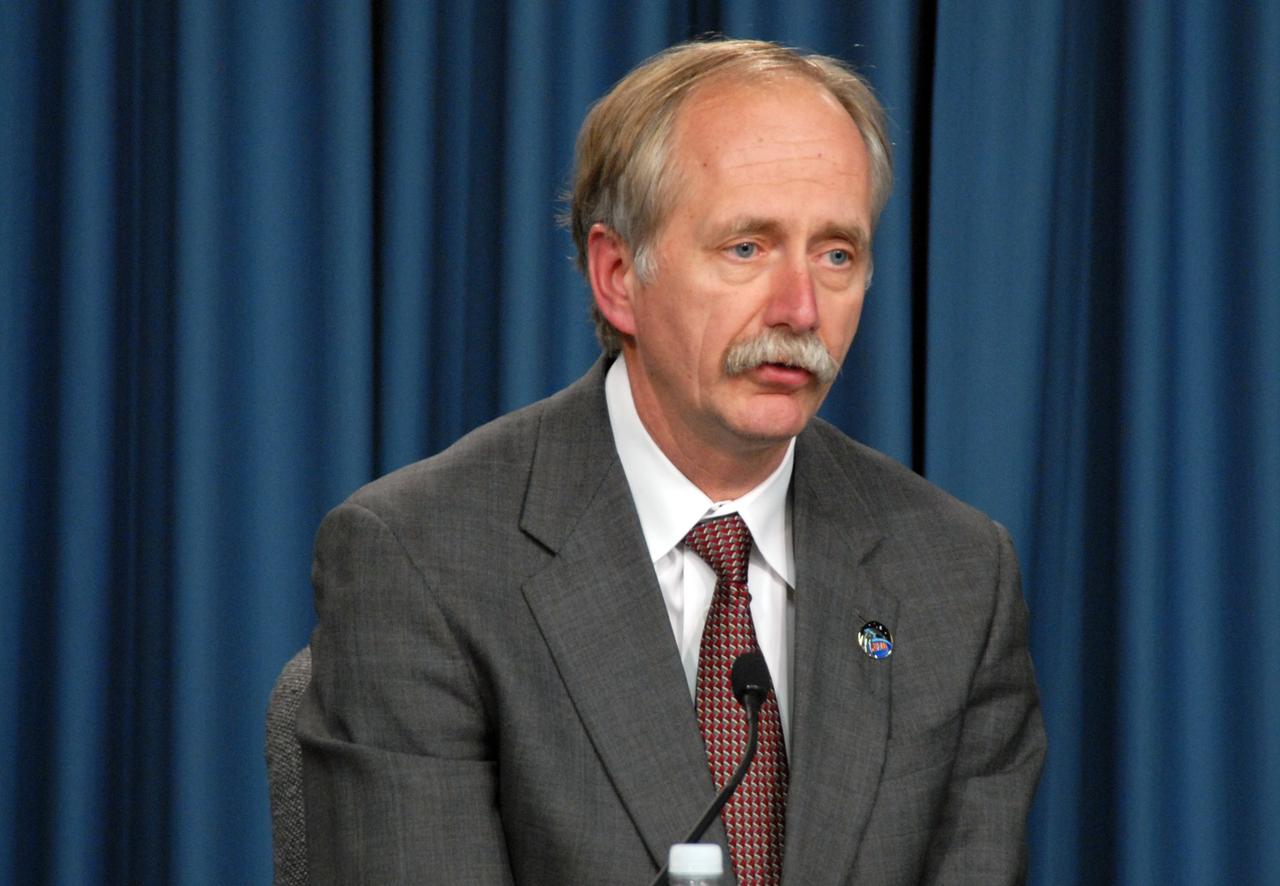
CAPE CANAVERAL, Fla. – At the flight readiness review news conference for space shuttle Discovery's STS-119 mission, Associate Administrator for Space Operations Bill Gerstenmaier talks about the review by mission managers of Discovery's readiness for flight. NASA managers decided Feb. 20 more data and possible testing are required before proceeding to launch. Engineering teams have been working to identify what caused damage to a flow control valve on shuttle Endeavour during its November 2008 flight. A new launch date has not been determined. Photo credit: NASA/Glenn Benson
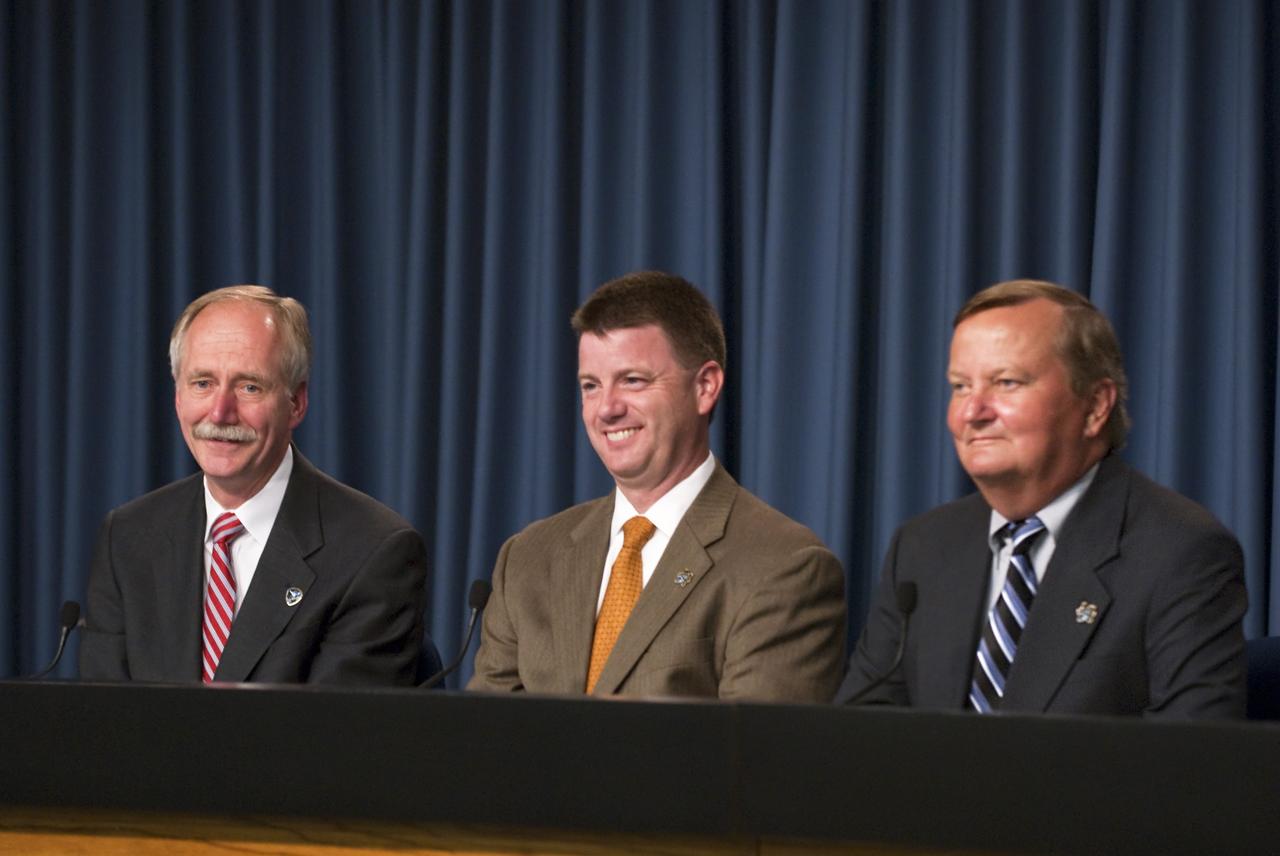
CAPE CANAVERAL, Fla. -- In the post-Flight Readiness Review news conference for the STS-134 mission, Bill Gerstenmaier, associate administrator for Space Operations (left), Mike Moses, Space Shuttle Program launch integration manager, and Mike Leinbach shuttle launch director, present the items discussed by managers. They confirmed an April 29 launch date for space shuttle Endeavour and its crew of six to the International Space Station. Endeavour will deliver the Express Logistics Carrier-3, Alpha Magnetic Spectrometer-2 (AMS), a high-pressure gas tank and additional spare parts for the Dextre robotic helper to the station. This will be the final spaceflight for Endeavour. For more information visit, www.nasa.gov/mission_pages/shuttle/shuttlemissions/sts134/index.html. Photo credit: NASA/Kim Shiflett
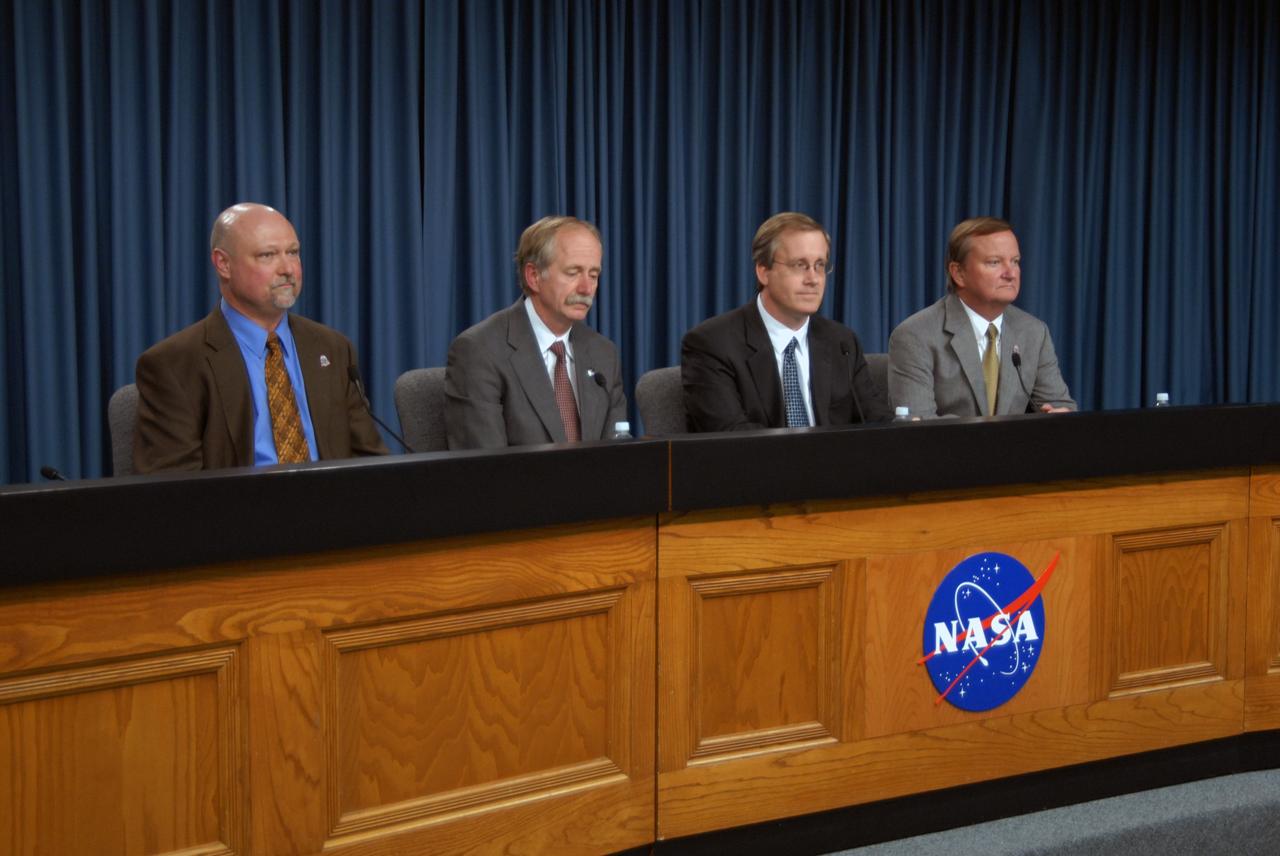
CAPE CANAVERAL, Fla. – Mike Curie (far left), with NASA Public Affairs, moderates the flight readiness review news conference for space shuttle Discovery's STS-119 mission. On the panel are (from left) Associate Administrator for Space Operations Bill Gerstenmaier, Space Shuttle Program Manager John Shannon and Space Shuttle Launch Director Mike Leinbach. During a thorough review of Discovery's readiness for flight, NASA managers decided Feb. 20 more data and possible testing are required before proceeding to launch. Engineering teams have been working to identify what caused damage to a flow control valve on shuttle Endeavour during its November 2008 flight. A new launch date has not been determined. NASA managers decided Feb. 20 more data and possible testing are required before proceeding to launch. Engineering teams have been working to identify what caused damage to a flow control valve on shuttle Endeavour during its November 2008 flight. A new launch date has not been determined. Photo credit: NASA/Glenn Benson
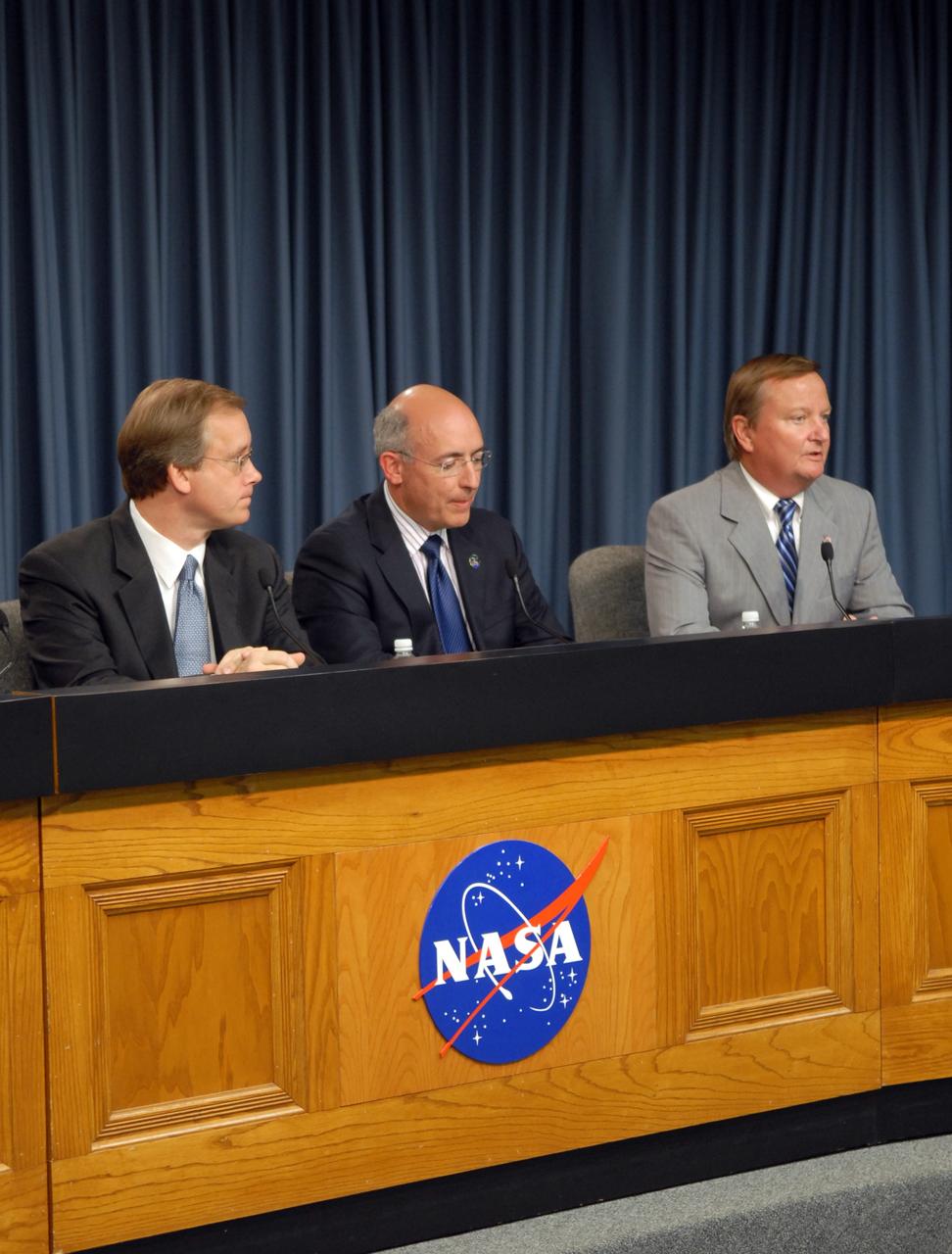
CAPE CANAVERAL, Fla. – At a media conference following the day-long Flight Readiness Review of space shuttle Discovery for the STS-119 mission, NASA managers respond to questions. From left are John Shannon, Shuttle Program manager, Mike Suffredini, program manager for the International Space Station, and Mike Leinbach, shuttle launch director. NASA managers decided to plan a launch no earlier than Feb. 19, pending additional analysis and particle impact testing associated with a flow control valve in the shuttle's main engine system. Photo credit: NASA/Cory Huston
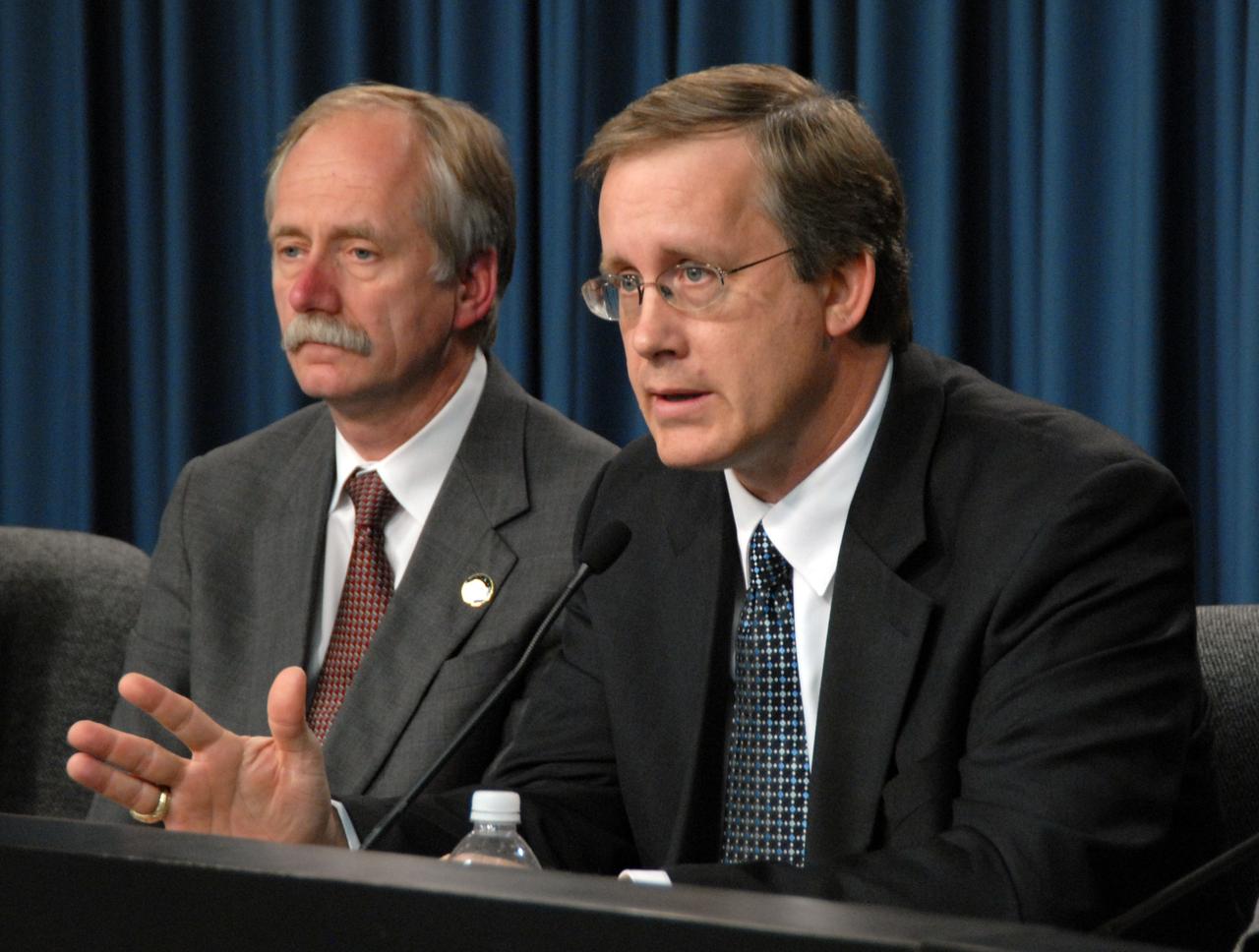
CAPE CANAVERAL, Fla. – At the flight readiness review news conference for space shuttle Discovery's STS-119 mission, Space Shuttle Program Manager John Shannon (right) talks about the discussion surrounding Discovery's readiness for flight. At left is Associate Administrator for Space Operations Bill Gerstenmaier. NASA managers decided Feb. 20 more data and possible testing are required before proceeding to launch. Engineering teams have been working to identify what caused damage to a flow control valve on shuttle Endeavour during its November 2008 flight. A new launch date has not been determined. Photo credit: NASA/Glenn Benson
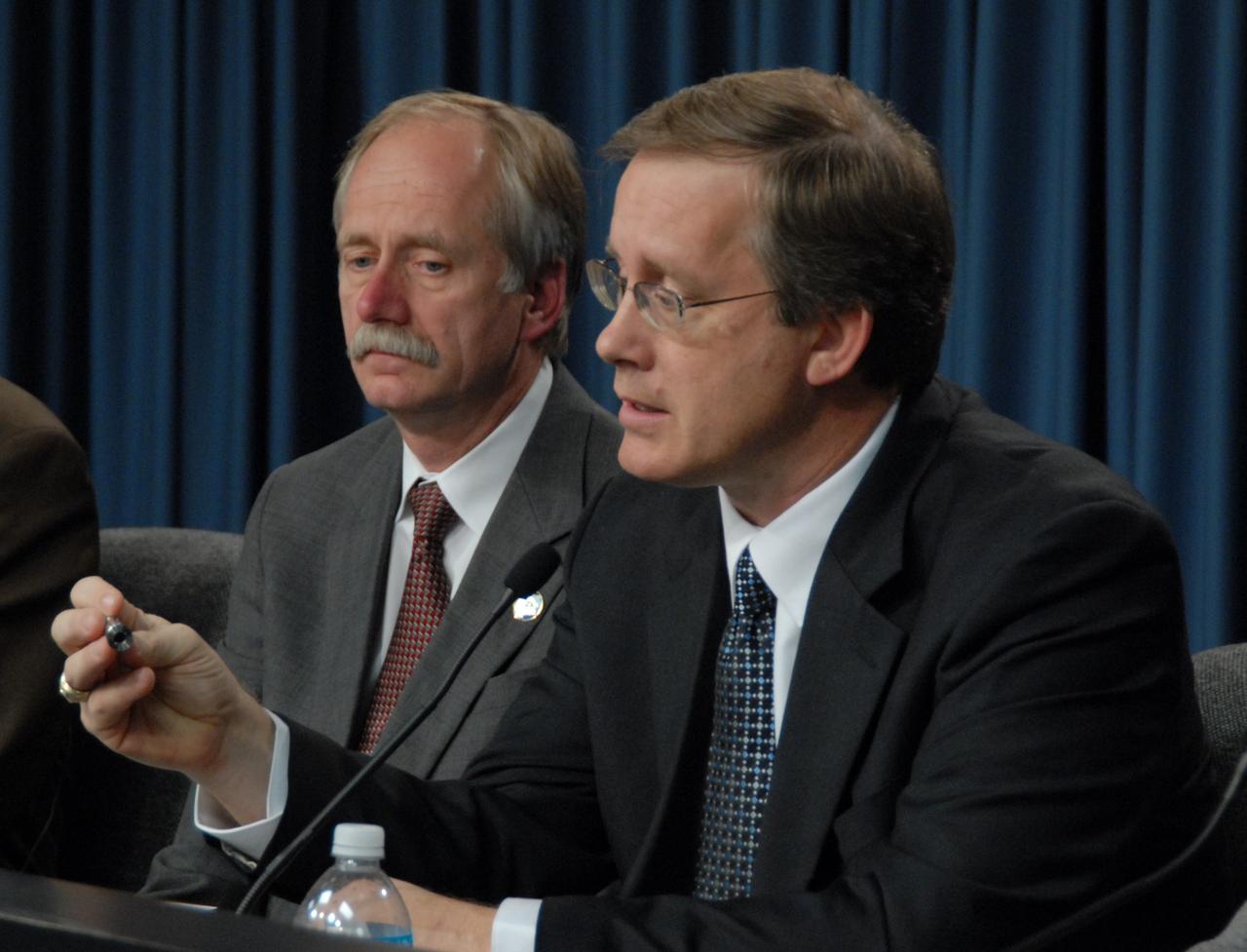
CAPE CANAVERAL, Fla. – At the flight readiness review news conference for space shuttle Discovery's STS-119 mission, Space Shuttle Program Manager John Shannon (right) talks about the discussion surrounding Discovery's readiness for flight. At left is Associate Administrator for Space Operations Bill Gerstenmaier. Shannon is holding a flow control valve that is under review and testing. Engineering teams have been working to identify what caused damage to a flow control valve on shuttle Endeavour during its November 2008 flight. A new launch date has not been determined. Photo credit: NASA/Glenn Benson
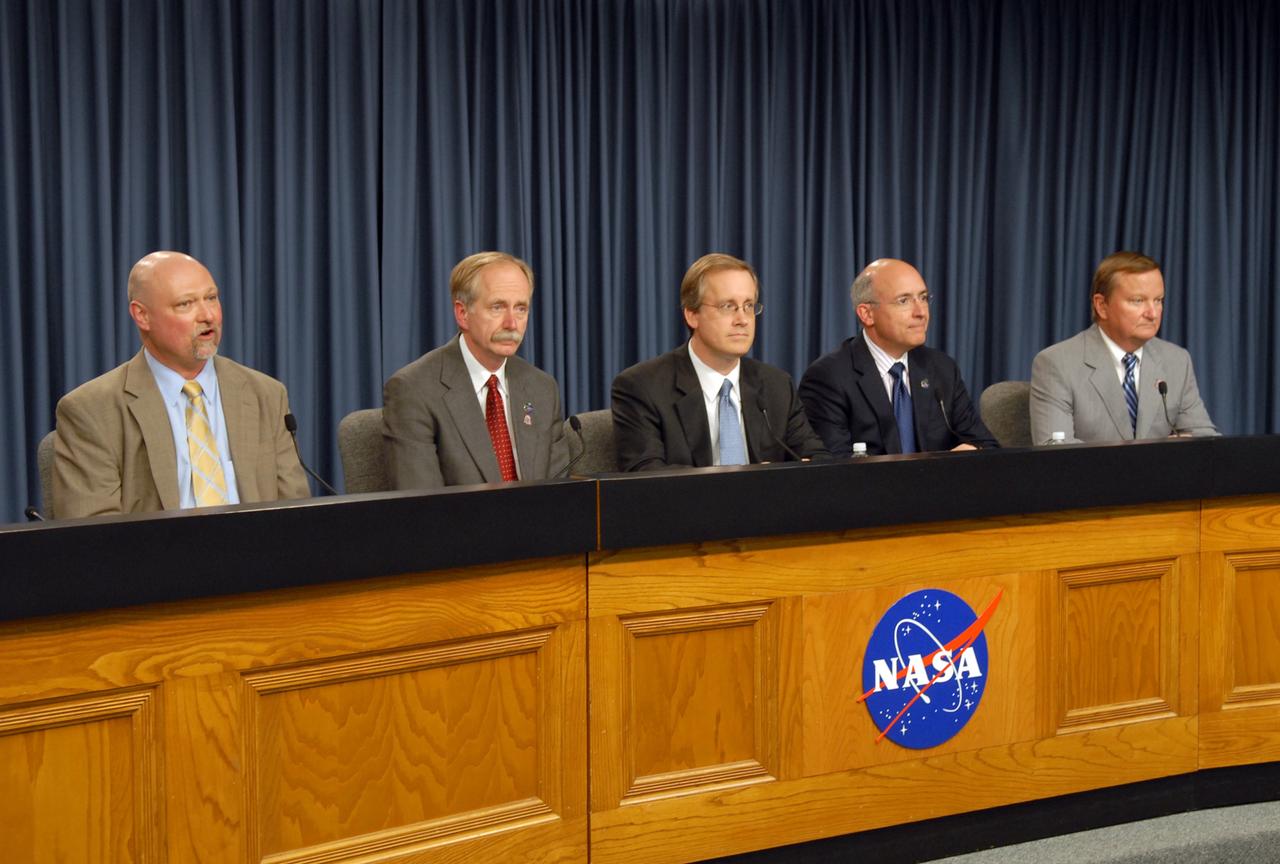
CAPE CANAVERAL, Fla. – Mike Curie (left), with NASA Public Affairs, introduces NASA managers following their day-long Flight Readiness Review of space shuttle Discovery for the STS-119 mission. Next to Curie are (from left) William H. Gerstenmaier, associate administrator for Space Operations, John Shannon, Shuttle Program manager, Mike Suffredini, program manager for the International Space Station, and Mike Leinbach, shuttle launch director. NASA managers decided to plan a launch no earlier than Feb. 19, pending additional analysis and particle impact testing associated with a flow control valve in the shuttle's main engine system. Photo credit: NASA/Cory Huston
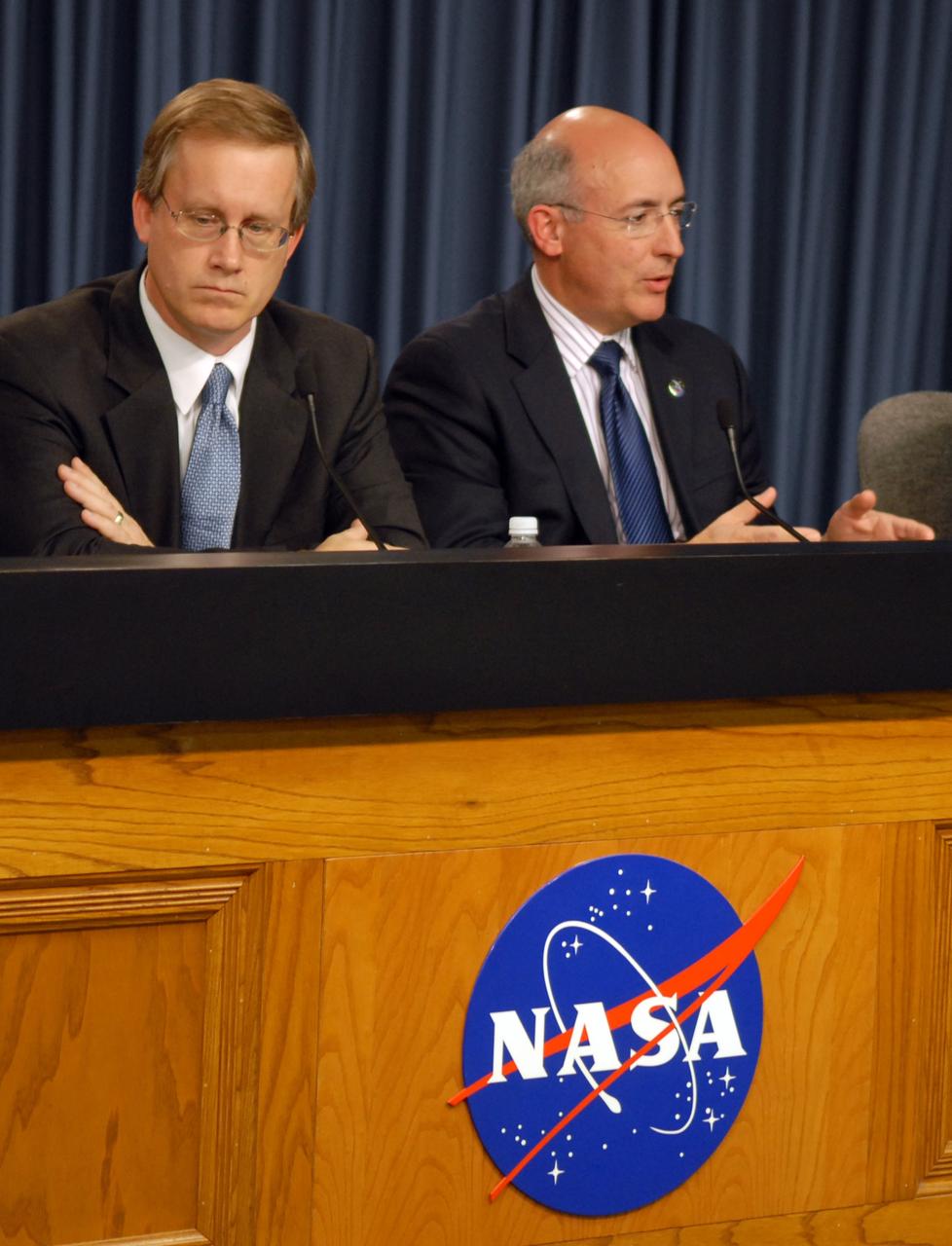
CAPE CANAVERAL, Fla. – At a media conference following the day-long Flight Readiness Review of space shuttle Discovery for the STS-119 mission, Program Manager for the International Space Station Mike Suffredini (right) responds to a question. At left is NASA's Space Shuttle Program Manager John Shannon. NASA managers decided to plan a launch no earlier than Feb. 19, pending additional analysis and particle impact testing associated with a flow control valve in the shuttle's main engine system. Photo credit: NASA/Cory Huston
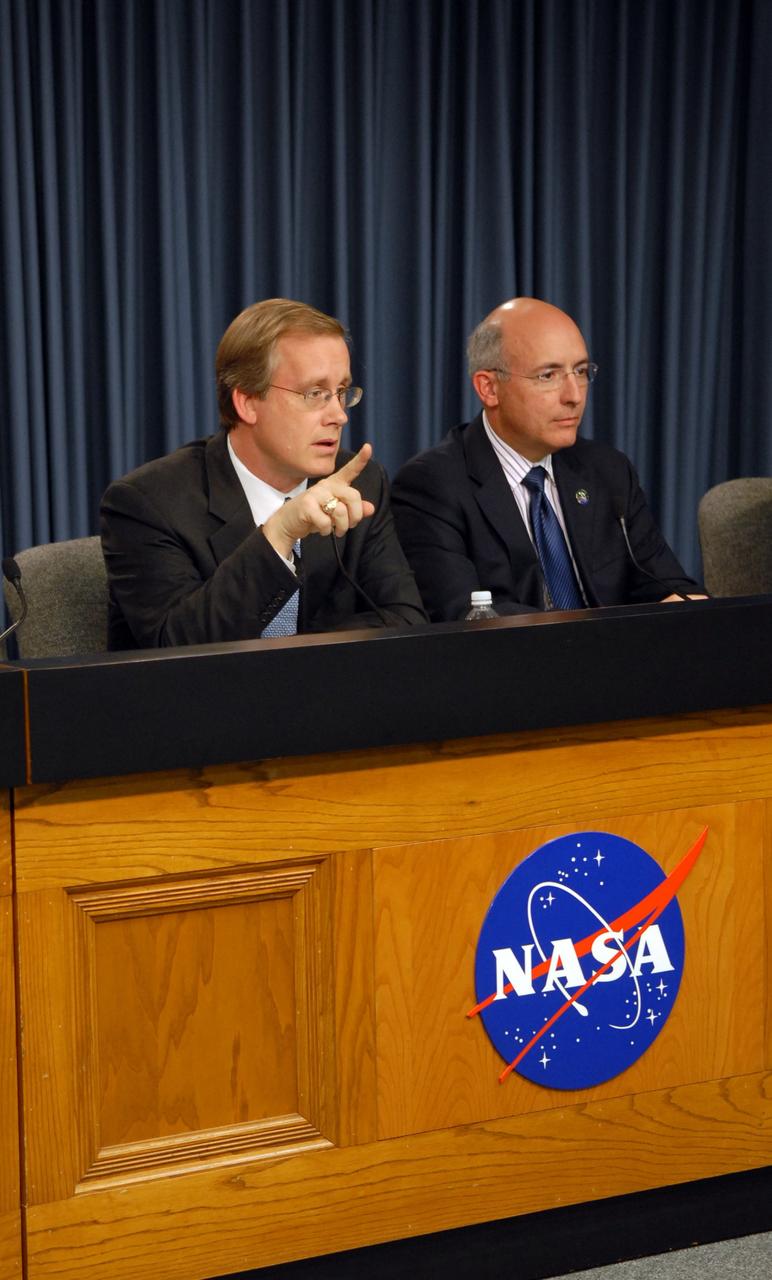
CAPE CANAVERAL, Fla. – At a media conference following the day-long Flight Readiness Review of space shuttle Discovery for the STS-119 mission, NASA's Space Shuttle Program Manager John Shannon responds to a question. On the right is Mike Suffredini, program manager for the International Space Station. NASA managers decided to plan a launch no earlier than Feb. 19, pending additional analysis and particle impact testing associated with a flow control valve in the shuttle's main engine system. Photo credit: NASA/Cory Huston
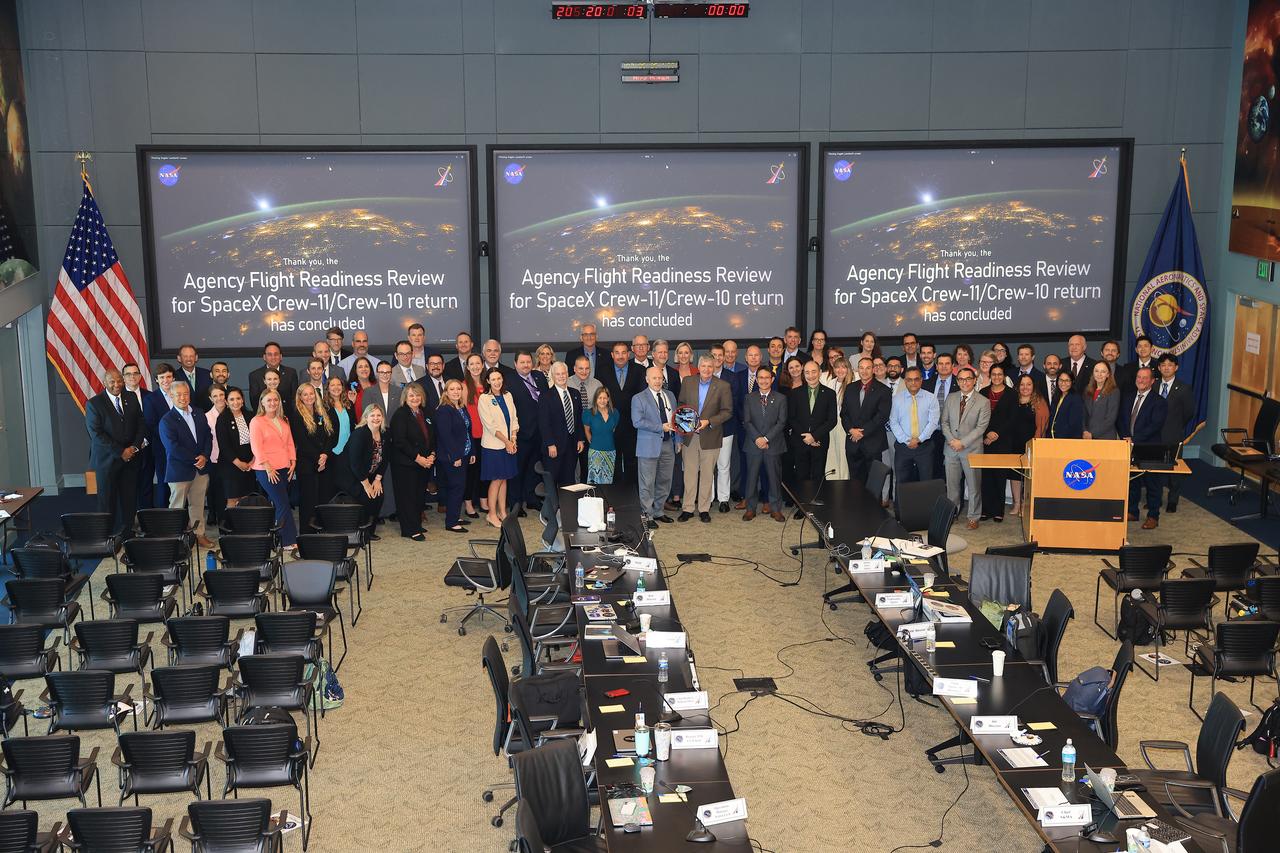
Managers with NASA and SpaceX, along with international partners, participate in NASA’s SpaceX Crew-11 Flight Readiness Review at the agency’s Kennedy Space Center in Florida on Friday, July 25, 2025. NASA astronauts Zena Cardman, commander, and Mike Fincke, pilot, along with mission specialists JAXA (Japan Aerospace Exploration Agency) astronaut Kimiya Yui and Roscosmos cosmonaut Oleg Platonov, will launch aboard a SpaceX Dragon spacecraft and Falcon 9 rocket to the International Space Station at 12:09 p.m. on Thursday, July 31, 2025, from NASA Kennedy’s Launch Complex 39A.
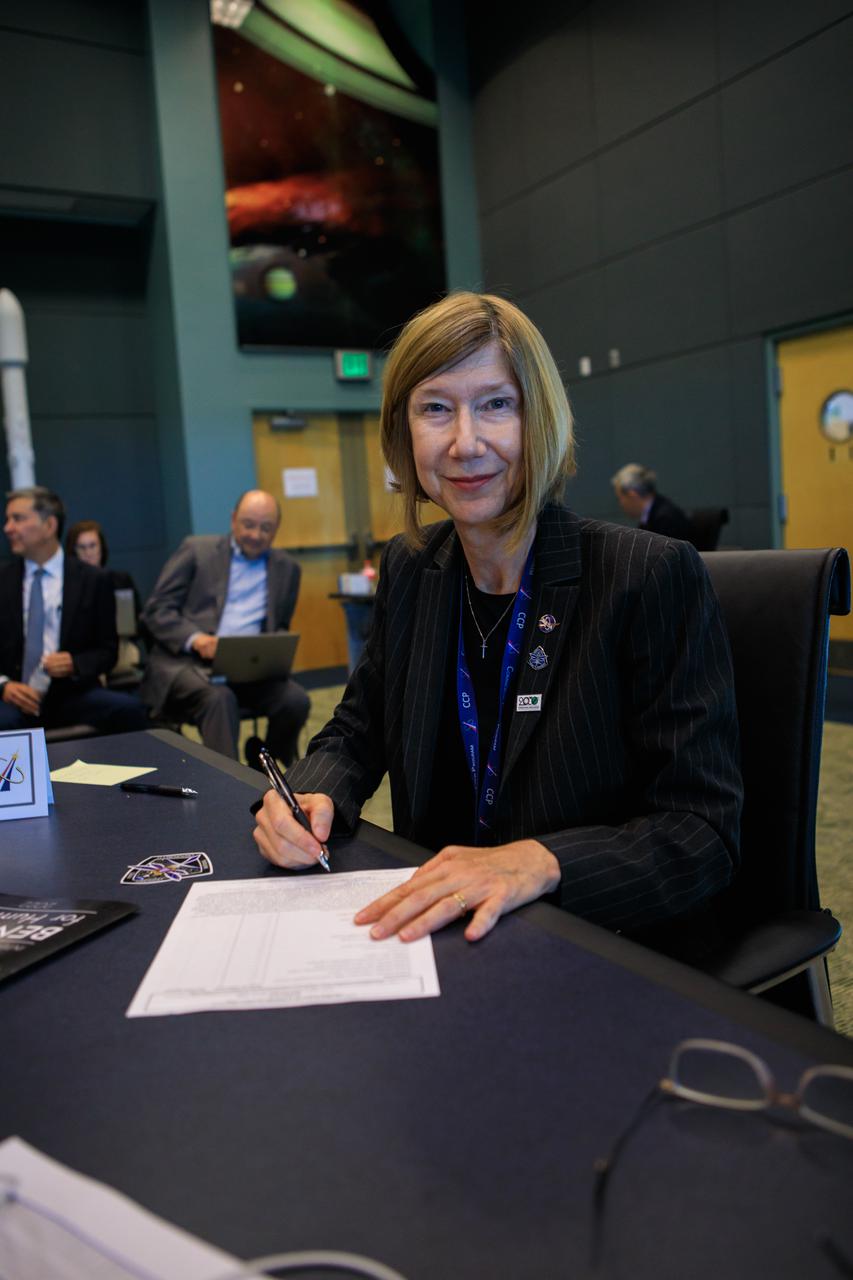
Kathy Lueders, associate administrator, Space Operations Mission Directorate, NASA Headquarters, signs a document during the Flight Readiness Review for the agency’s SpaceX Crew-4 mission at the agency’s Kennedy Space Center in Florida on April 15, 2022. International partners also participated. NASA and SpaceX mission managers held the review to confirm the SpaceX Falcon 9 rocket and Crew Dragon spacecraft are ready for launch. Crew-4 is scheduled to launch to the International Space Station from Kennedy’s Launch Complex 39A on April 23, 2022, as part of NASA’s Commercial Crew Program. Liftoff of the Falcon 9 rocket and Crew Dragon spacecraft is targeted for 5:26 a.m. EDT.
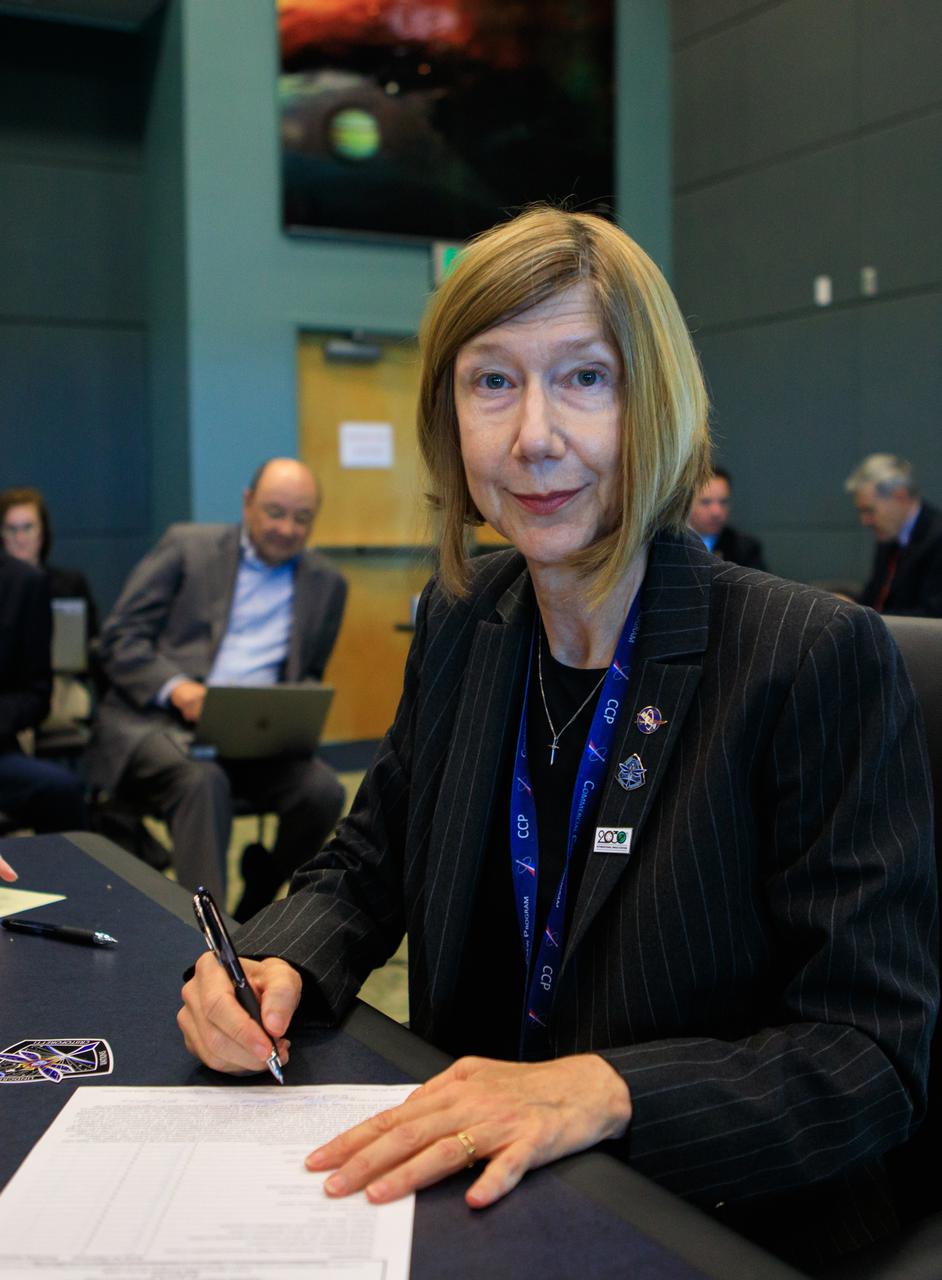
Kathy Lueders, associate administrator, Space Operations Mission Directorate, NASA Headquarters, participates in a Flight Readiness Review for the agency’s SpaceX Crew-4 mission at the agency’s Kennedy Space Center in Florida on April 15, 2022. International partners also participated. NASA and SpaceX mission managers held the review to confirm the SpaceX Falcon 9 rocket and Crew Dragon spacecraft are ready for launch. Crew-4 is scheduled to launch to the International Space Station from Kennedy’s Launch Complex 39A on April 23, 2022, as part of NASA’s Commercial Crew Program. Liftoff of the Falcon 9 rocket and Crew Dragon spacecraft is targeted for 5:26 a.m. EDT.
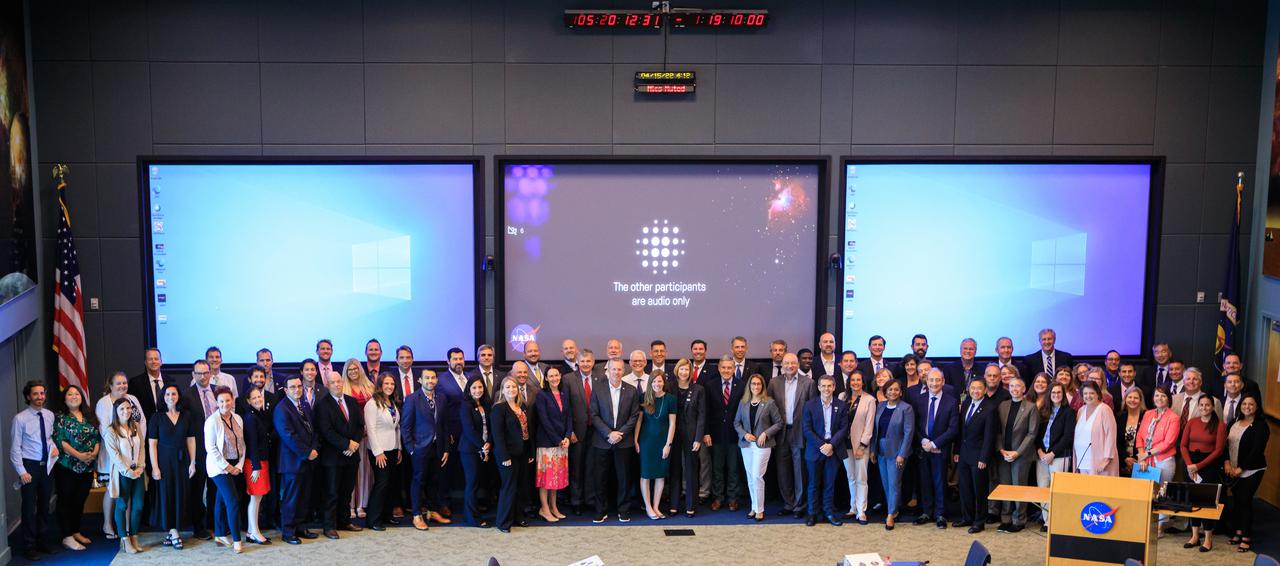
NASA and SpaceX managers and International partners gathered for a group photo at the conclusion of the SpaceX Crew-4 Flight Readiness Review at Kennedy Space Center in Florida on April 15, 2022. NASA and SpaceX mission managers held the review to confirm the SpaceX Falcon 9 rocket and Crew Dragon spacecraft are ready for launch. Crew-4 is scheduled to launch to the International Space Station from Kennedy’s Launch Complex 39A on April 23, 2022, as part of NASA’s Commercial Crew Program. Liftoff of the Falcon 9 rocket and Crew Dragon spacecraft is targeted for 5:26 a.m. EDT.
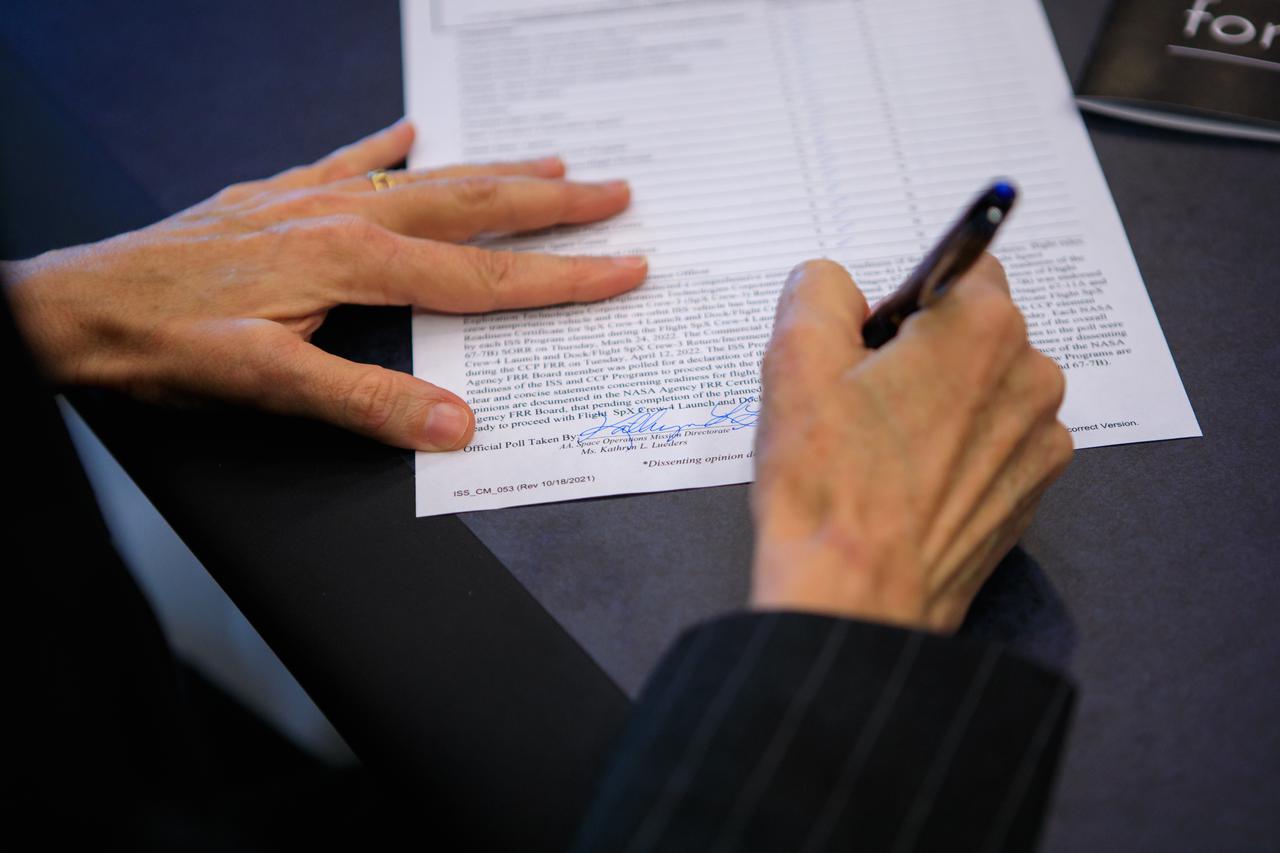
Kathy Lueders, associate administrator, Space Operations Mission Directorate, NASA Headquarters, signs a document during the Flight Readiness Review for the agency’s SpaceX Crew-4 mission at the agency’s Kennedy Space Center in Florida on April 15, 2022. International partners also participated. NASA and SpaceX mission managers held the review to confirm the SpaceX Falcon 9 rocket and Crew Dragon spacecraft are ready for launch. Crew-4 is scheduled to launch to the International Space Station from Kennedy’s Launch Complex 39A on April 23, 2022, as part of NASA’s Commercial Crew Program. Liftoff of the Falcon 9 rocket and Crew Dragon spacecraft is targeted for 5:26 a.m. EDT.
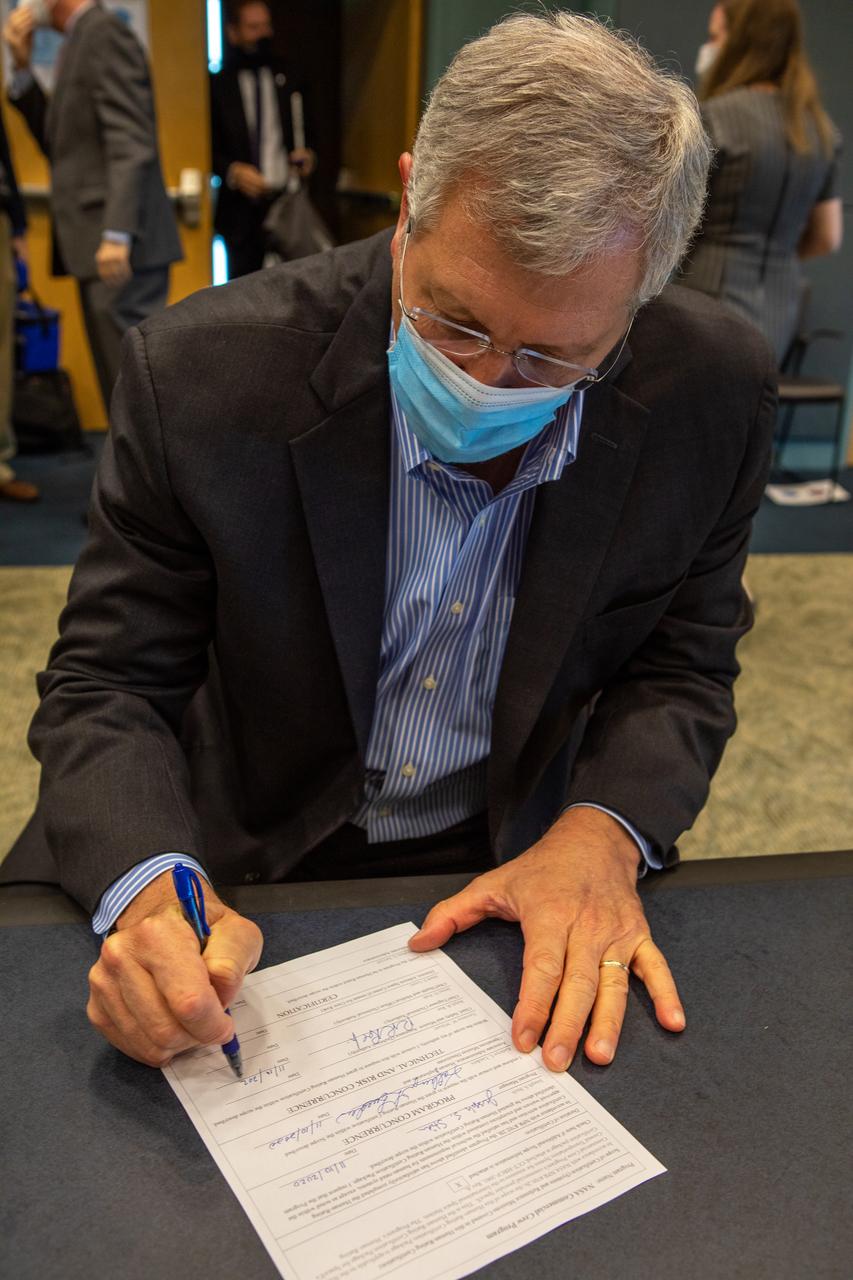
NASA Chief Engineer Ralph Roe signs the Human Rating Certification Plan for SpaceX’s crew transportation system, officially certifying the first commercial spacecraft system in history capable of transporting humans to and from the International Space Station as part of the agency’s Commercial Crew Program. The signing occurred during the Flight Readiness Review (FRR) for the NASA’s SpaceX Crew-1 mission at Kennedy Space Center in Florida on Nov. 10, 2020. The FRR focuses on the preparedness of SpaceX’s crew transportation system, the International Space Station, and its international partners to support the flight, and the certification of flight readiness. Crew-1 is the first regular crew mission of a U.S. commercial spacecraft with astronauts to the International Space Station as part of NASA’s Commercial Crew Program. The Crew Dragon Resilience capsule will launch atop a Falcon 9 rocket from Launch Complex 39A carrying NASA astronauts Michael Hopkins, Victor Glover, Shannon Walker and Japan Aerospace Exploration Agency (JAXA) astronaut Soichi Noguchi to the space station for a six-month science mission.
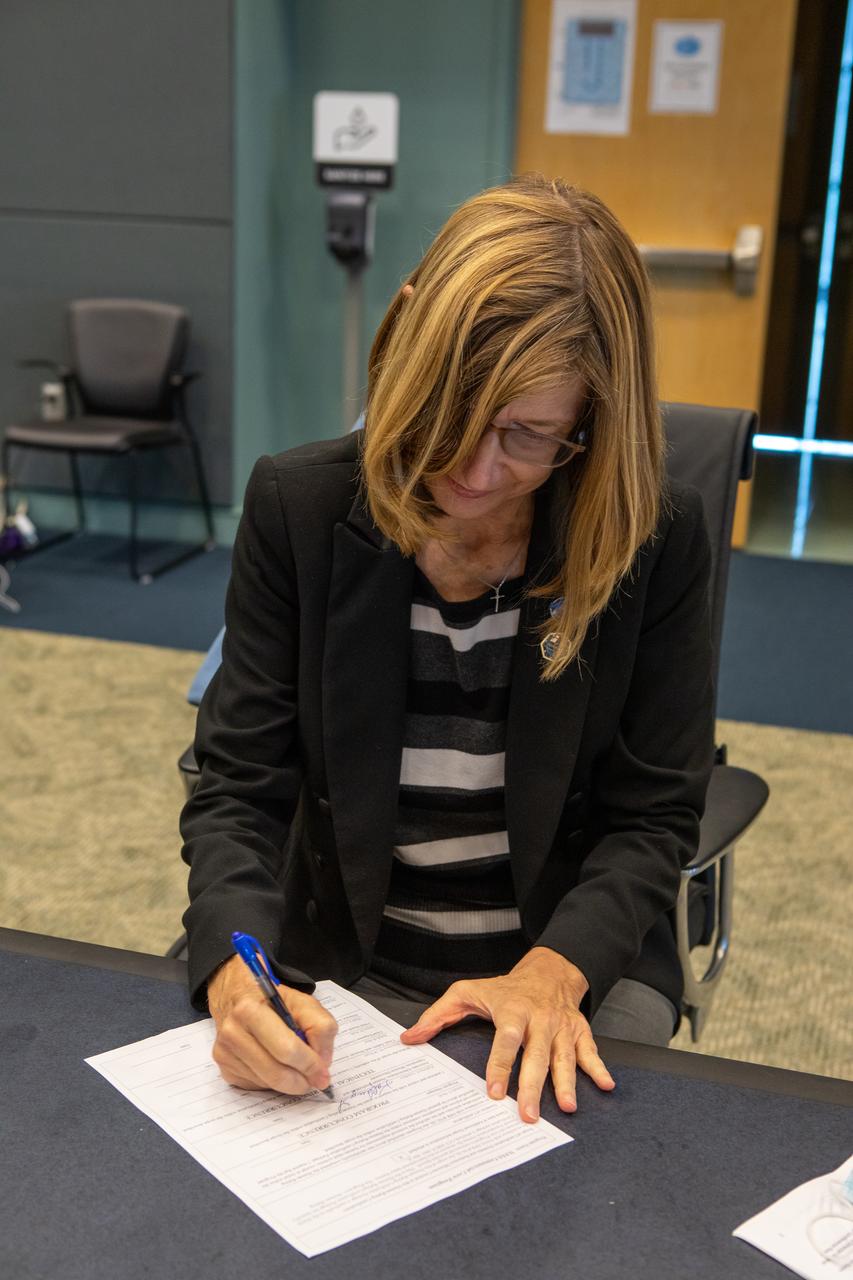
Kathy Lueders, NASA associate administrator of the Human Exploration and Operations Mission Directorate, signs the Human Rating Certification Plan for SpaceX’s crew transportation system, officially certifying the first commercial spacecraft system in history capable of transporting humans to and from the International Space Station as part of the agency’s Commercial Crew Program. The signing occurred during the Flight Readiness Review (FRR) for the agency’s SpaceX Crew-1 mission at NASA’s Kennedy Space Center in Florida on Nov. 10, 2020. The FRR focuses on the preparedness of SpaceX’s crew transportation system, the International Space Station, and its international partners to support the flight, and the certification of flight readiness. Crew-1 is the first regular crew mission of a U.S. commercial spacecraft with astronauts to the International Space Station as part of NASA’s Commercial Crew Program. The Crew Dragon Resilience capsule will launch atop a Falcon 9 rocket from Launch Complex 39A carrying NASA astronauts Michael Hopkins, Victor Glover, Shannon Walker and Japan Aerospace Exploration Agency (JAXA) astronaut Soichi Noguchi to the space station for a six-month science mission.
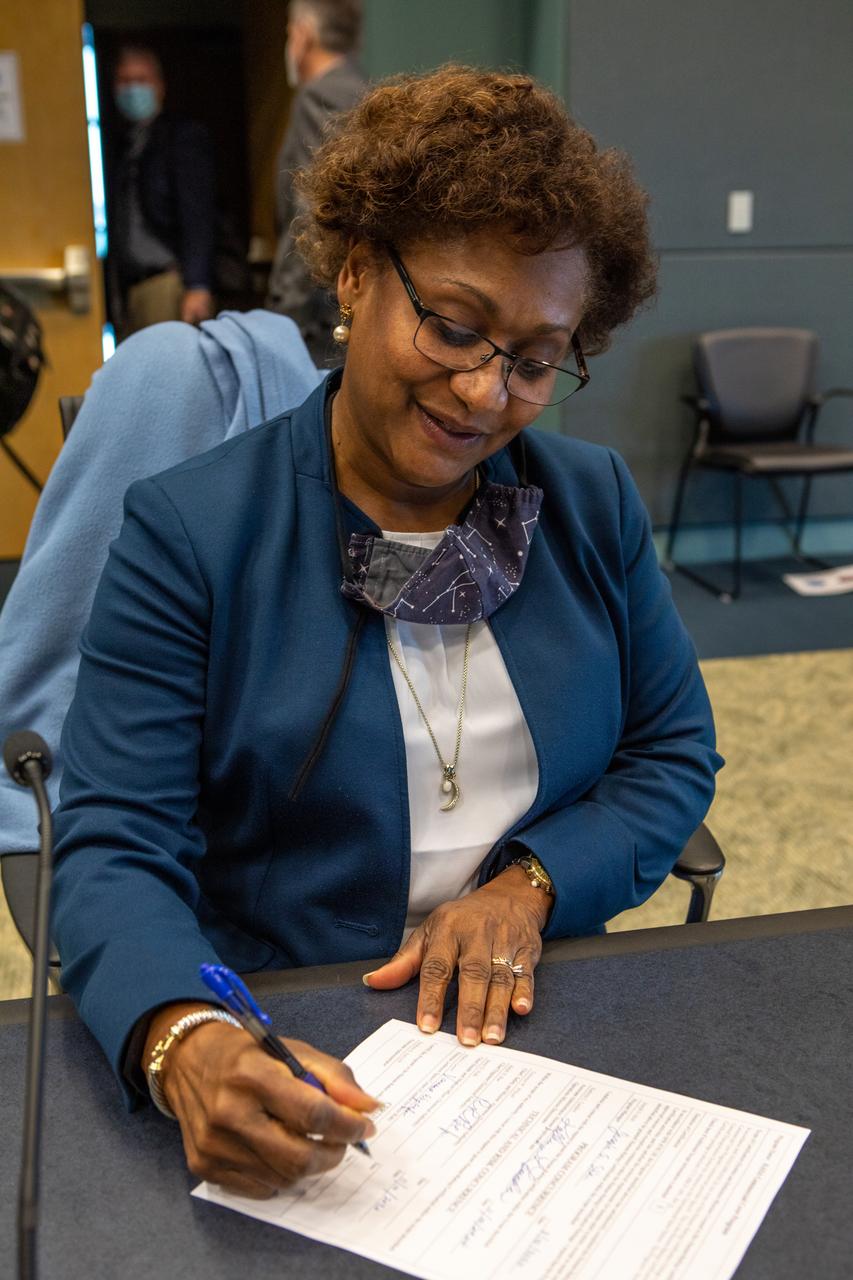
Johnson Space Center Deputy Director Vanessa Wyche signs the Human Rating Certification Plan for SpaceX’s crew transportation system, officially certifying the first commercial spacecraft system in history capable of transporting humans to and from the International Space Station as part of the agency’s Commercial Crew Program. The signing occurred during the Flight Readiness Review (FRR) for the NASA’s SpaceX Crew-1 mission at Kennedy Space Center in Florida on Nov. 10, 2020. The FRR focuses on the preparedness of SpaceX’s crew transportation system, the International Space Station, and its international partners to support the flight, and the certification of flight readiness. Crew-1 is the first regular crew mission of a U.S. commercial spacecraft with astronauts to the International Space Station as part of NASA’s Commercial Crew Program. The Crew Dragon Resilience capsule will launch atop a Falcon 9 rocket from Launch Complex 39A carrying NASA astronauts Michael Hopkins, Victor Glover, Shannon Walker and Japan Aerospace Exploration Agency (JAXA) astronaut Soichi Noguchi to the space station for a six-month science mission.
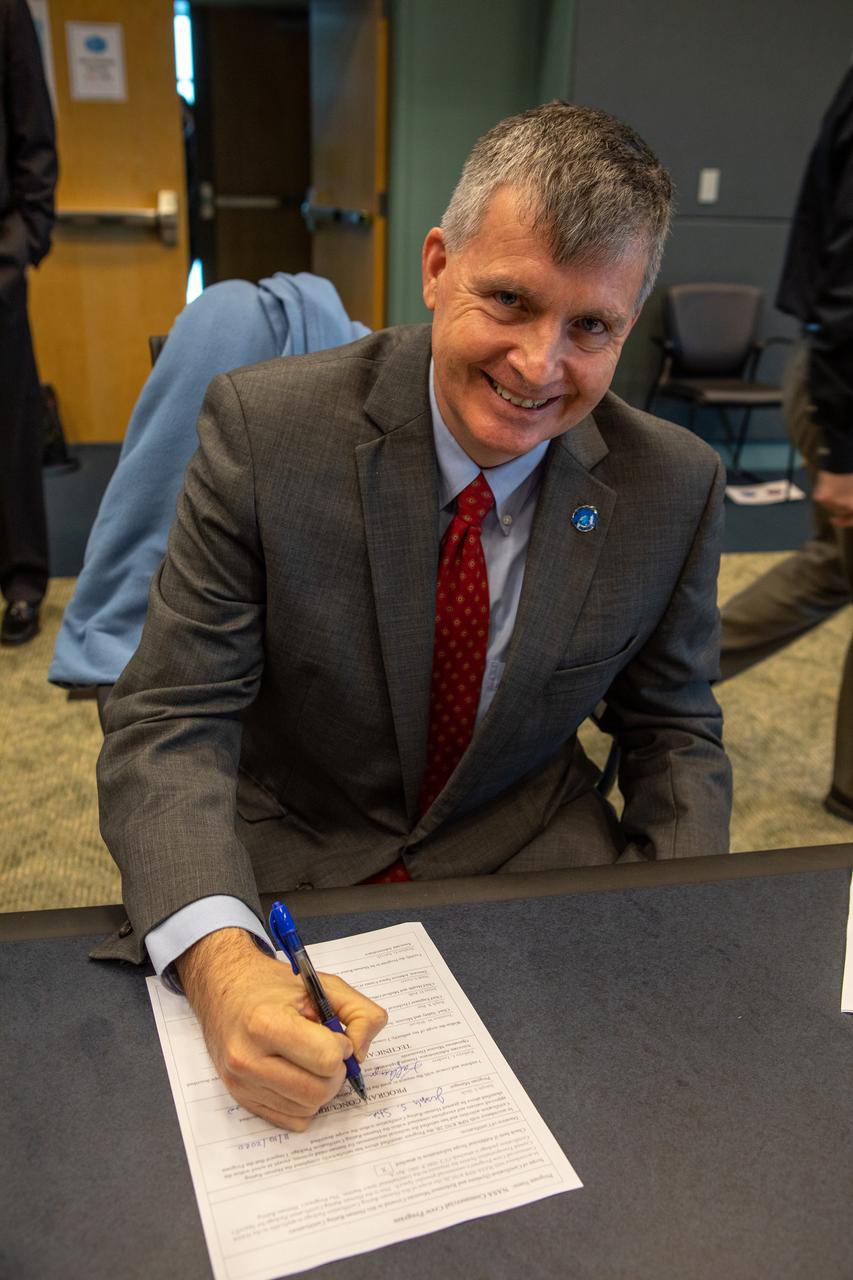
Steve Stich, manager of NASA’s Commercial Crew Program, signs the Human Rating Certification Plan for SpaceX’s crew transportation system, officially certifying the first commercial spacecraft system in history capable of transporting humans to and from the International Space Station as part of the agency’s Commercial Crew Program. The signing occurred during the Flight Readiness Review (FRR) for the NASA’s SpaceX Crew-1 mission at Kennedy Space Center in Florida on Nov. 10, 2020. The FRR focuses on the preparedness of SpaceX’s crew transportation system, the International Space Station, and its international partners to support the flight, and the certification of flight readiness. Crew-1 is the first regular crew mission of a U.S. commercial spacecraft with astronauts to the International Space Station as part of NASA’s Commercial Crew Program. The Crew Dragon Resilience capsule will launch atop a Falcon 9 rocket from Launch Complex 39A carrying NASA astronauts Michael Hopkins, Victor Glover, Shannon Walker and Japan Aerospace Exploration Agency (JAXA) astronaut Soichi Noguchi to the space station for a six-month science mission.
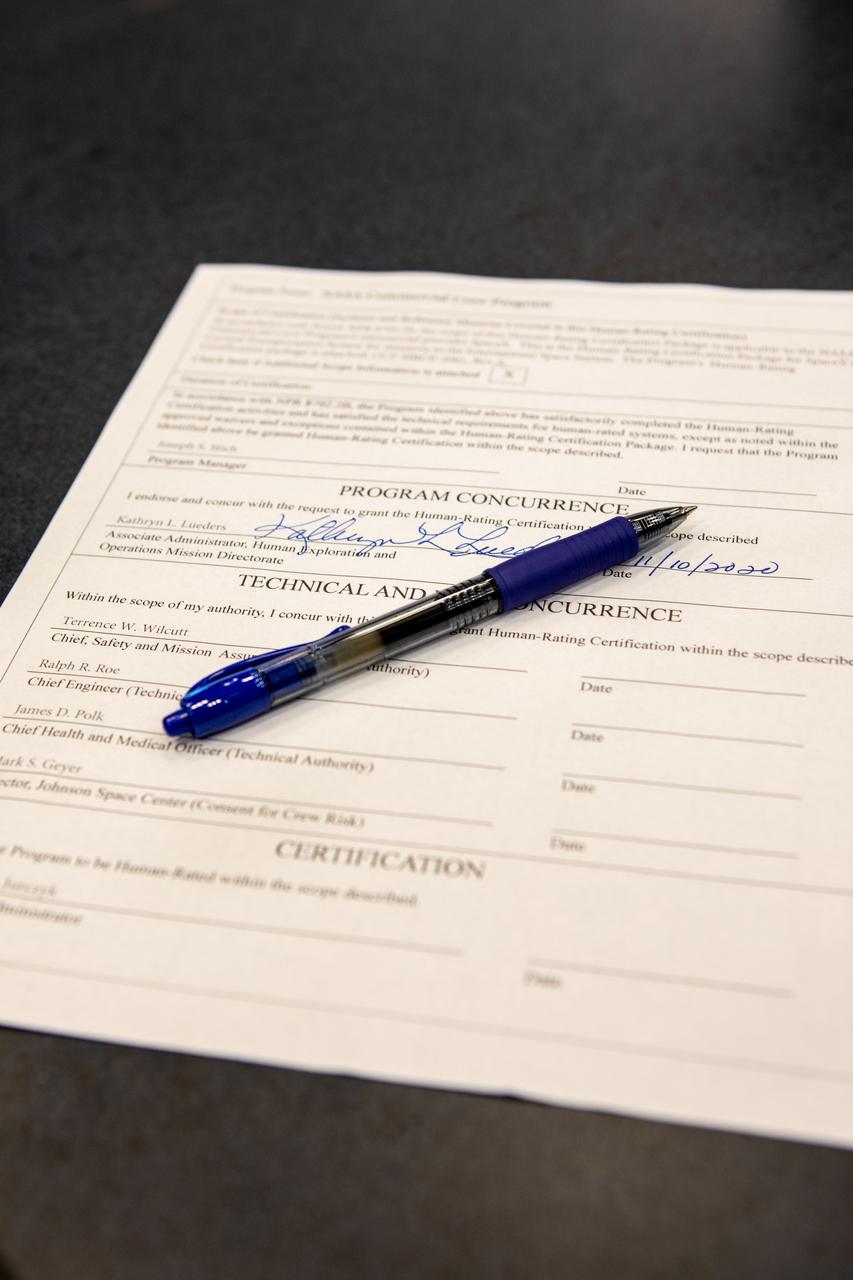
The Human Rating Certification Plan for SpaceX’s crew transportation system, officially certifying the first commercial spacecraft system in history capable of transporting humans to and from the International Space Station as part of the agency’s Commercial Crew Program was signed during the Flight Readiness Review (FRR) for the NASA’s SpaceX Crew-1 mission at Kennedy Space Center in Florida on Nov. 10, 2020. The FRR focuses on the preparedness of SpaceX’s crew transportation system, the International Space Station, and its international partners to support the flight, and the certification of flight readiness. Crew-1 is the first regular crew mission of a U.S. commercial spacecraft with astronauts to the International Space Station as part of NASA’s Commercial Crew Program. The Crew Dragon Resilience capsule will launch atop a Falcon 9 rocket from Launch Complex 39A carrying NASA astronauts Michael Hopkins, Victor Glover, Shannon Walker and Japan Aerospace Exploration Agency (JAXA) astronaut Soichi Noguchi to the space station for a six-month science mission.
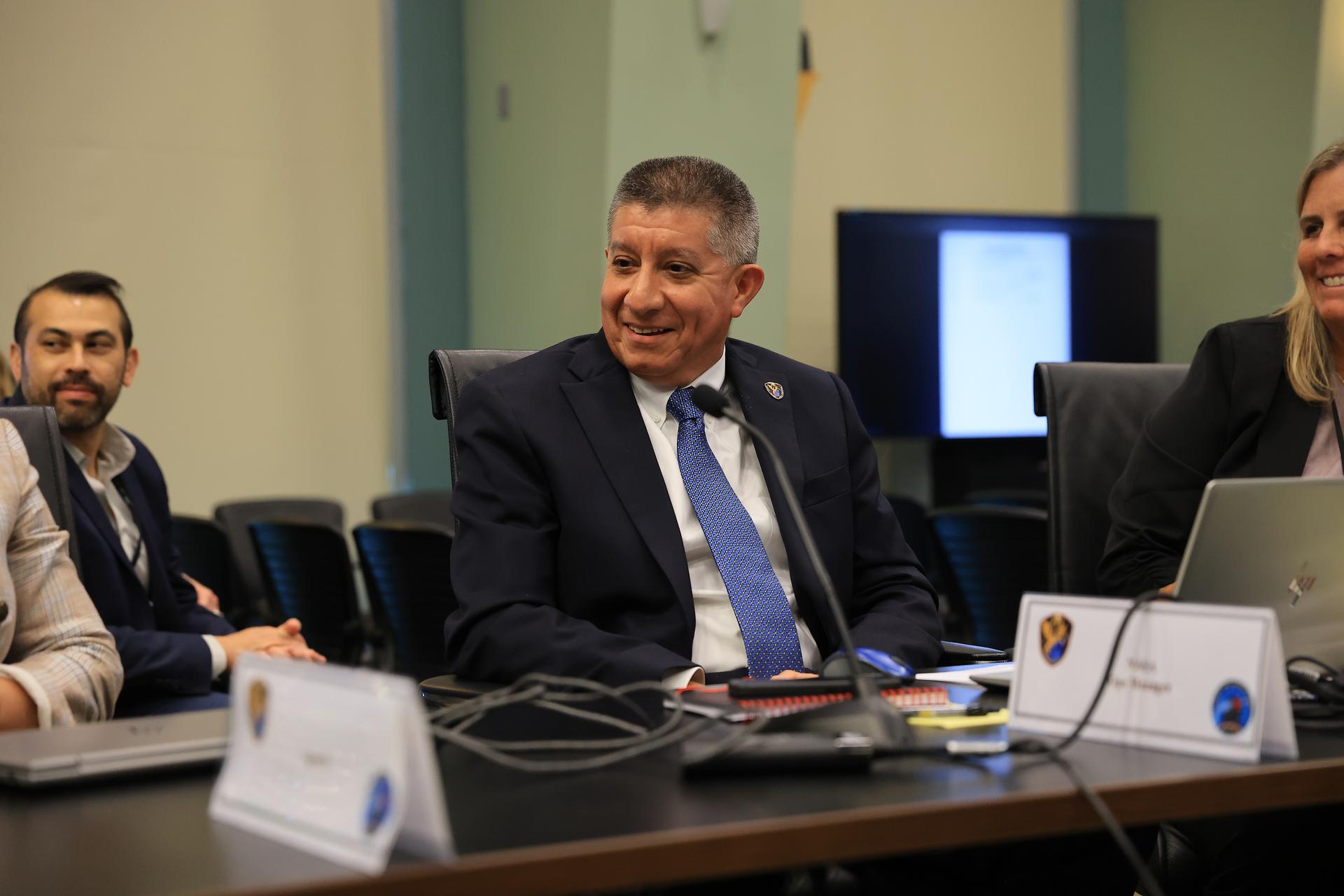
Richard Jones, deputy program manager of NASA’s Commercial Crew Program, participates in NASA’s SpaceX Crew-13 Flight Readiness Review at the agency’s Kennedy Space Center in Florida on Friday, Sept. 25, 2026. NASA astronauts Jessica Watkins and Luke Delaney, CSA (Canadian Space Agency) astronaut Joshua Kutryk, and Roscosmos cosmonaut Sergey Teteryatnikov will launch aboard a SpaceX Dragon spacecraft and Falcon 9 rocket to the International Space Station at 11:10 a.m. EDT on Thursday, Oct. 1, from Cape Canaveral Space Force Station’s Space Launch Complex 40.
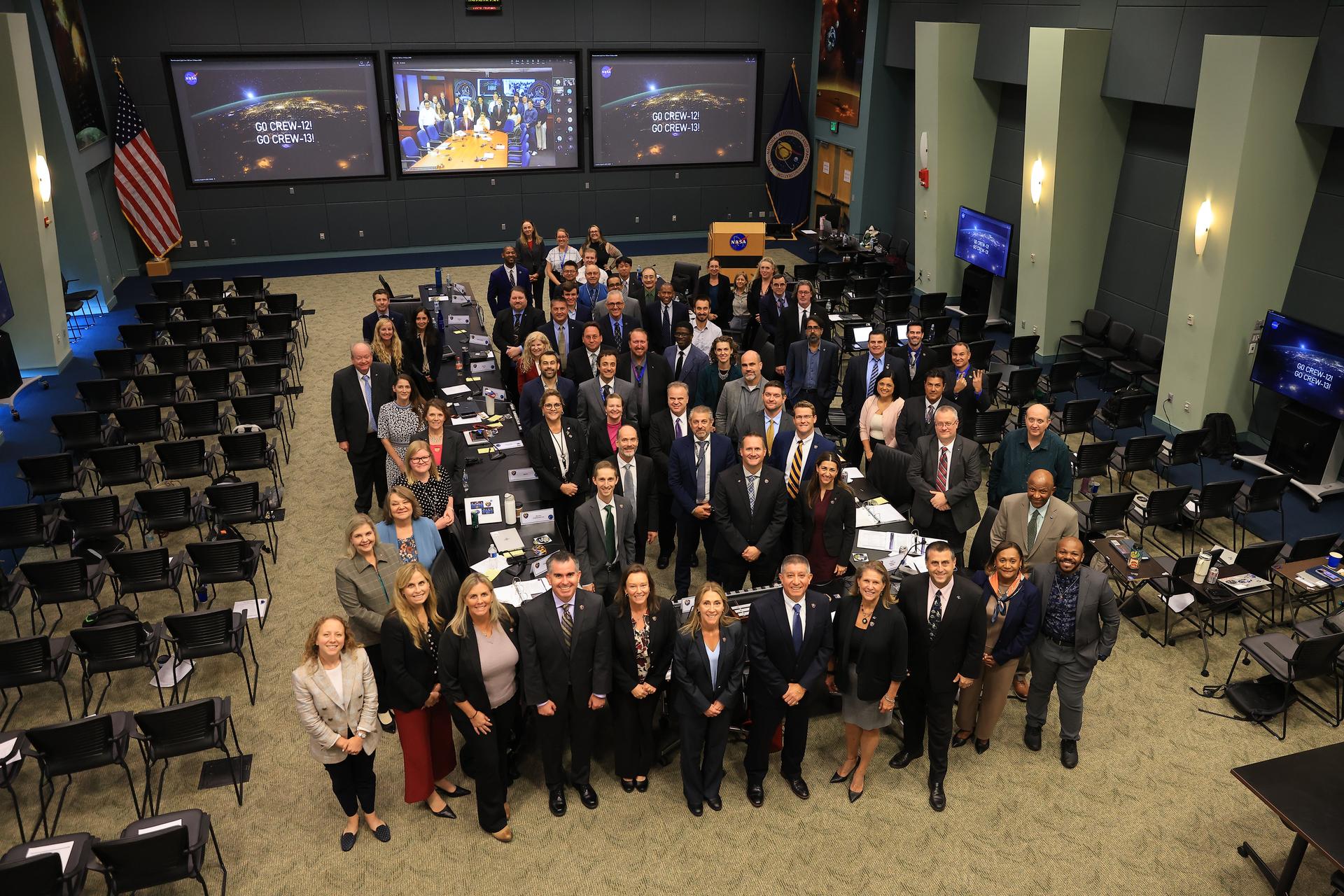
Managers with NASA and SpaceX, along with international partners, participate in NASA’s SpaceX Crew-13 Flight Readiness Review at the agency’s Kennedy Space Center in Florida on Friday, Sept. 25, 2026. NASA astronauts Jessica Watkins and Luke Delaney, CSA (Canadian Space Agency) astronaut Joshua Kutryk, and Roscosmos cosmonaut Sergey Teteryatnikov will launch aboard a SpaceX Dragon spacecraft and Falcon 9 rocket to the International Space Station at 11:10 a.m. EDT on Thursday, Oct. 1, from Cape Canaveral Space Force Station’s Space Launch Complex 40.
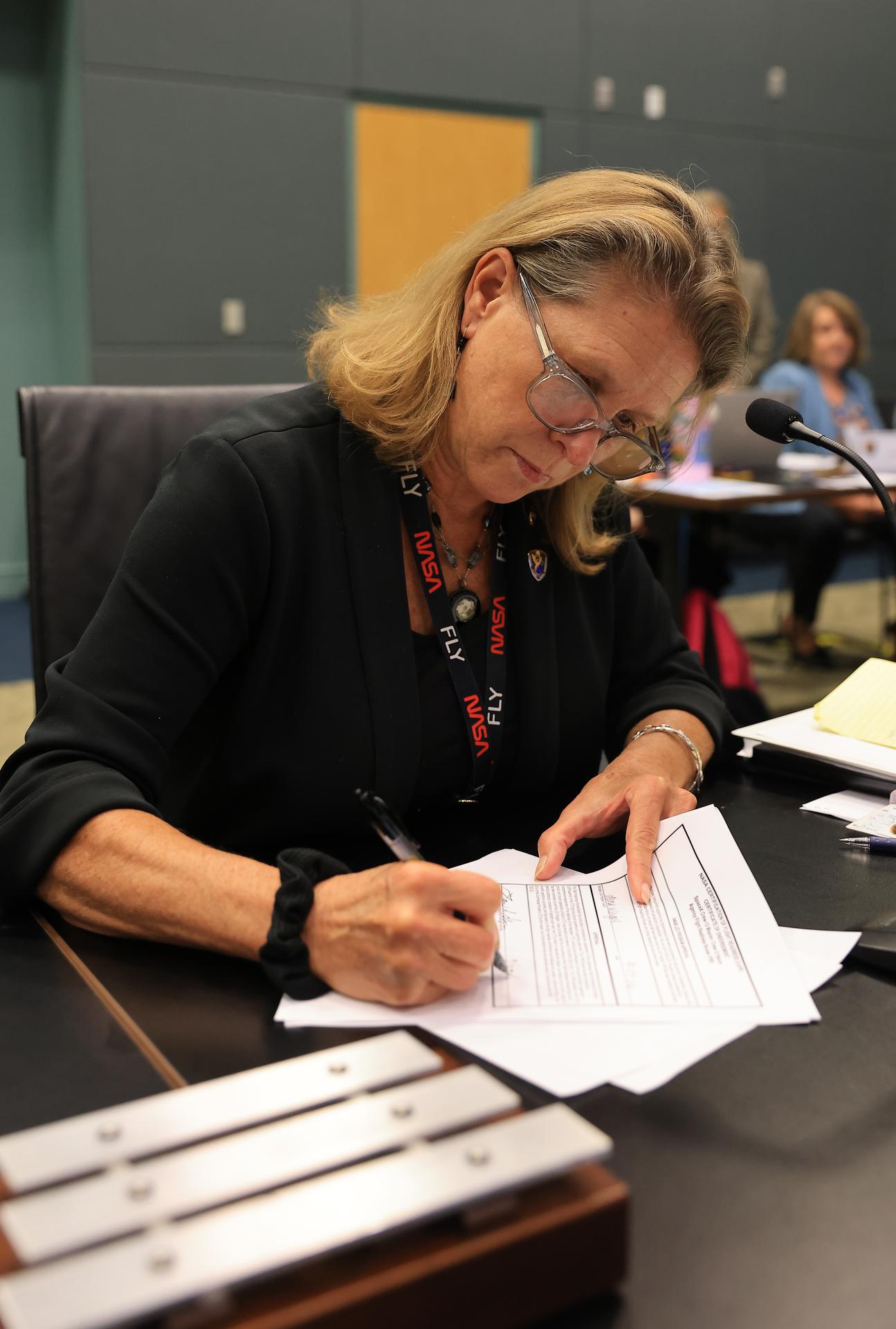
Dr. Lori Glaze, associate administrator for NASA’s Human Spaceflight Mission Directorate, participates in NASA’s SpaceX Crew-13 Flight Readiness Review at the agency’s Kennedy Space Center in Florida on Friday, Sept. 25, 2026. NASA astronauts Jessica Watkins and Luke Delaney, CSA (Canadian Space Agency) astronaut Joshua Kutryk, and Roscosmos cosmonaut Sergey Teteryatnikov will launch aboard a SpaceX Dragon spacecraft and Falcon 9 rocket to the International Space Station at 11:10 a.m. EDT on Thursday, Oct. 1, from Cape Canaveral Space Force Station’s Space Launch Complex 40.
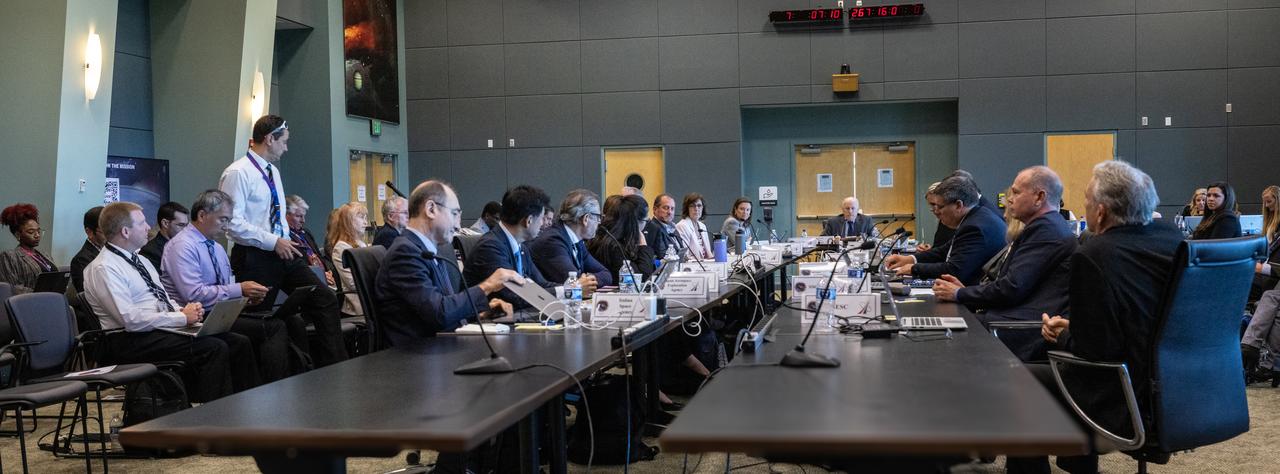
Managers with NASA and SpaceX, along with international partners, participate in NASA’s SpaceX Crew-9 Flight Readiness Review at the agency’s Kennedy Space Center in Florida on Monday, Sept. 23, 2024. Launch is targeted for 2:05 p.m. EDT Sept. 26, 2024, from Space Launch Complex-40 at Cape Canaveral Space Force Station in Florida. NASA astronaut Nick Hague and Roscosmos cosmonaut Aleksandr Gorbunov will launch to the International Space Station aboard SpaceX’s Dragon spacecraft and Falcon 9 rocket on the company’s ninth crew rotation mission for NASA as part of the agency’s Commercial Crew Program.
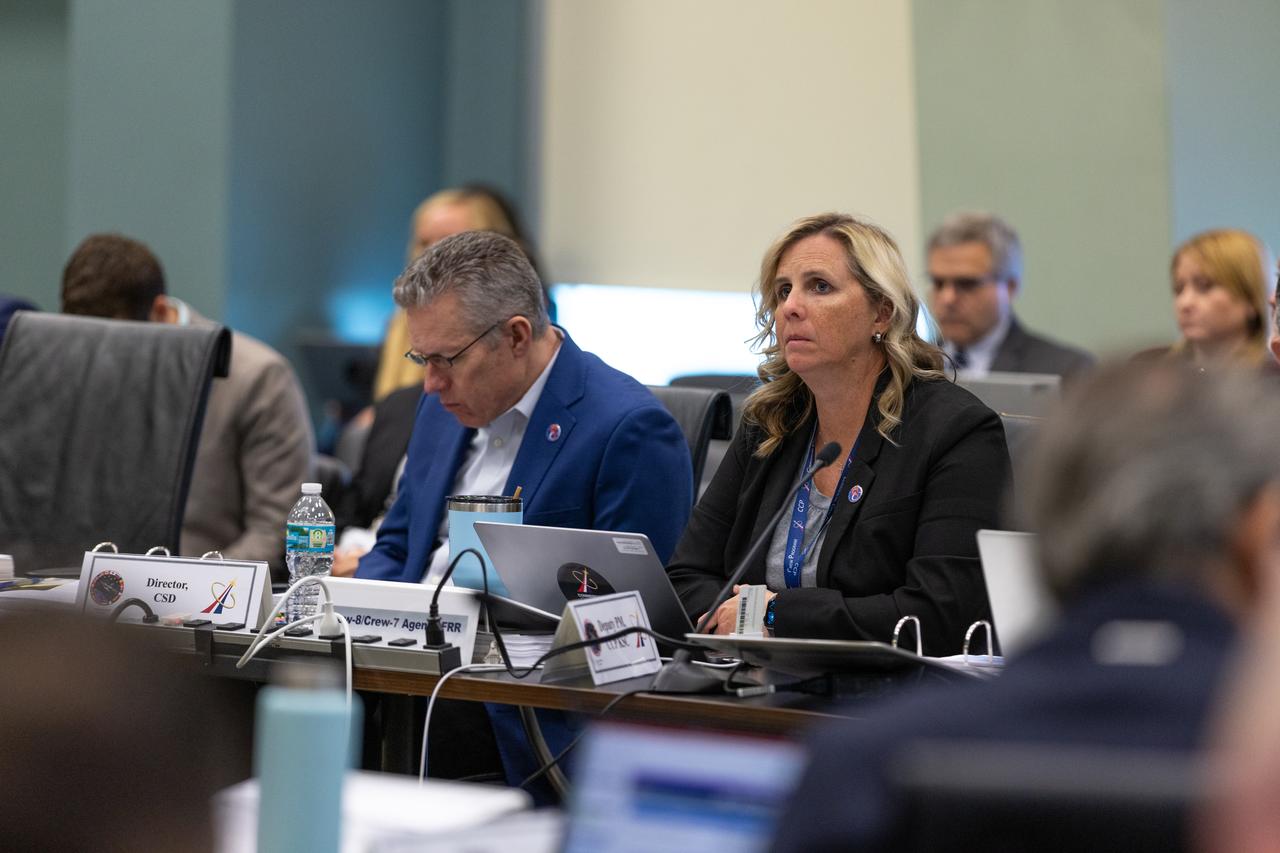
Dana Hutcherson, deputy program manager, Commercial Crew Program, NASA Kennedy, participates in NASA’s SpaceX Crew-8 Flight Readiness Review at Kennedy Space Center in Florida on Sunday, Feb. 25, 2024. NASA astronauts Matthew Dominick, Michael Barratt, and Jeanette Epps, with Roscosmos cosmonaut Alexander Grebenkin are slated to launch to the International Space Station aboard SpaceX’s Dragon spacecraft, powered by the company’s Falcon 9 rocket from Launch Complex 39A no earlier than 12:04 a.m. EST on March 1, 2024.
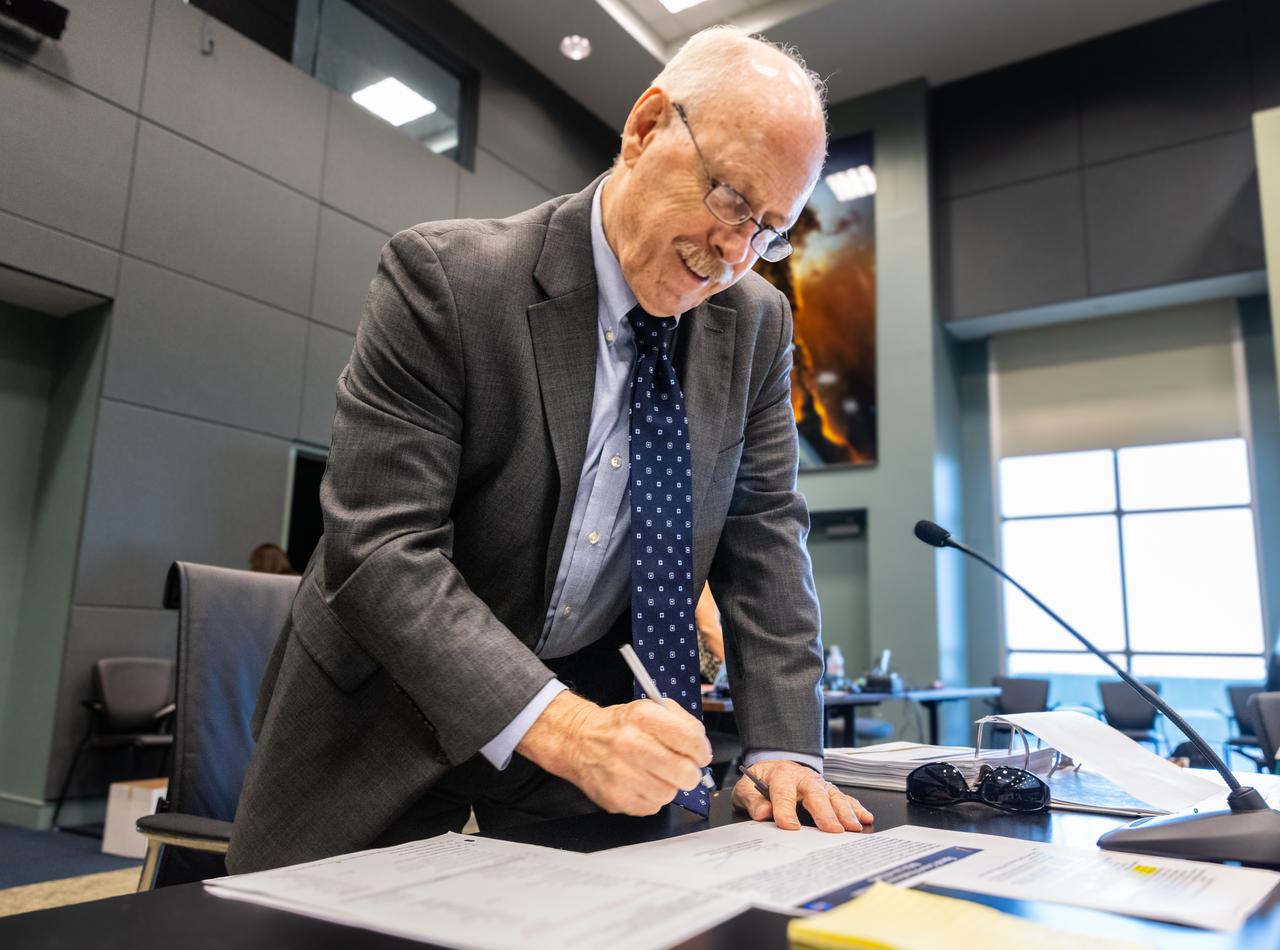
Ken Bowersox, Associate Administrator, NASA's Space Operations Mission Directorate, participates in NASA’s SpaceX Crew-9 Flight Readiness Review at the agency’s Kennedy Space Center in Florida on Monday, Sept. 23, 2024. Launch is targeted for 1:17 p.m. EDT Sept. 28, 2024, from Space Launch Complex-40 at Cape Canaveral Space Force Station in Florida. NASA astronaut Nick Hague and Roscosmos cosmonaut Aleksandr Gorbunov will launch to the International Space Station aboard SpaceX’s Dragon spacecraft and Falcon 9 rocket on the company’s ninth crew rotation mission for NASA as part of the agency’s Commercial Crew Program.
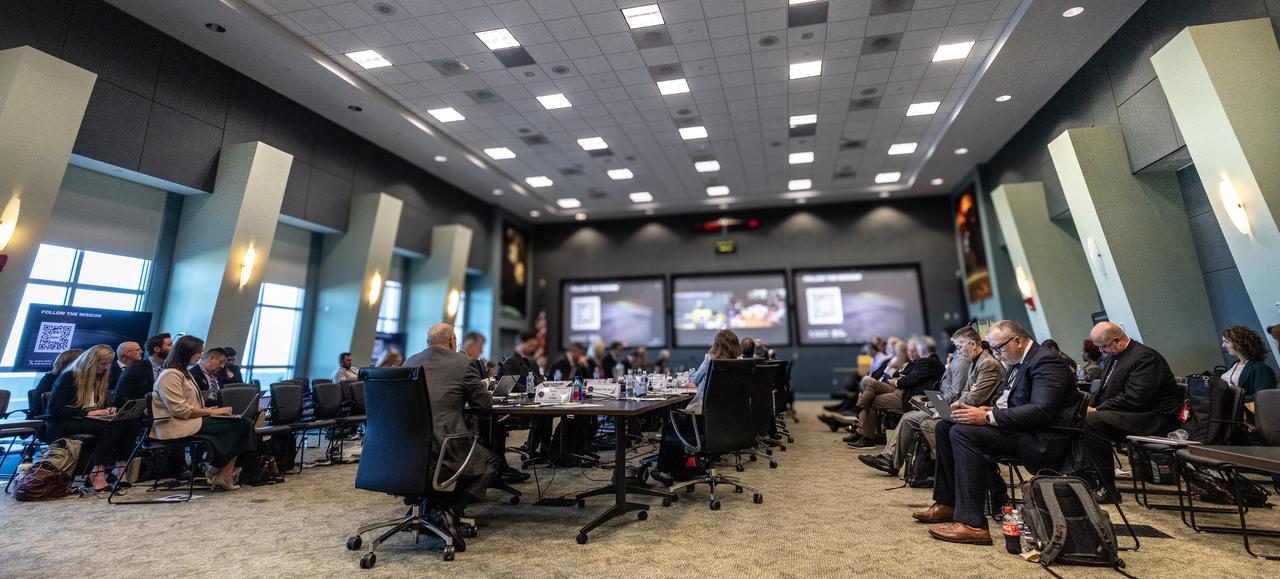
Managers with NASA and SpaceX, along with international partners, participate in NASA’s SpaceX Crew-9 Flight Readiness Review at the agency’s Kennedy Space Center in Florida on Monday, Sept. 23, 2024. Launch is targeted for 2:05 p.m. EDT Sept. 26, 2024, from Space Launch Complex-40 at Cape Canaveral Space Force Station in Florida. NASA astronaut Nick Hague and Roscosmos cosmonaut Aleksandr Gorbunov will launch to the International Space Station aboard SpaceX’s Dragon spacecraft and Falcon 9 rocket on the company’s ninth crew rotation mission for NASA as part of the agency’s Commercial Crew Program.
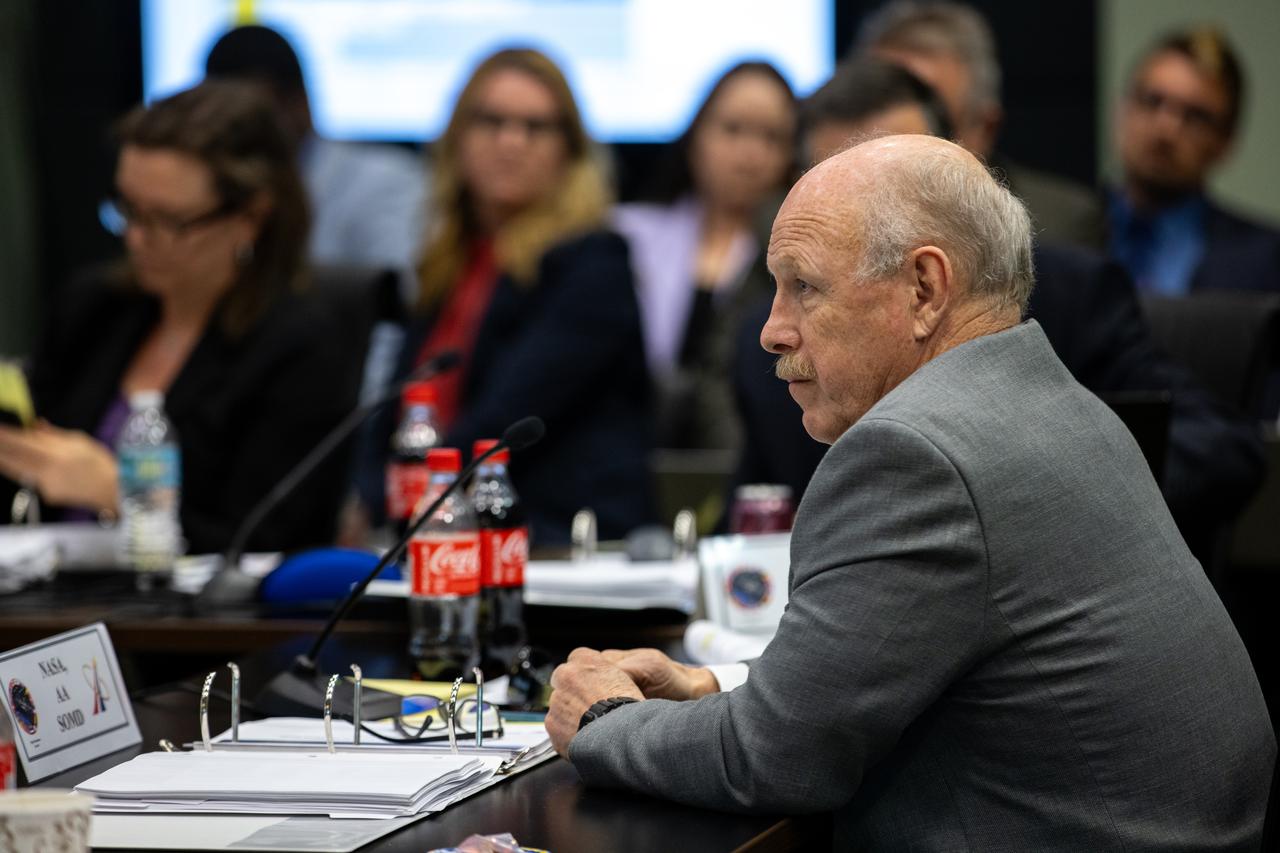
Ken Bowersox, associate administrator, NASA’s Space Operations Mission Directorate, NASA headquarters, participates in NASA’s SpaceX Crew-8 Flight Readiness Review at Kennedy Space Center in Florida on Sunday, Feb. 25, 2024. NASA astronauts Matthew Dominick, Michael Barratt, and Jeanette Epps, with Roscosmos cosmonaut Alexander Grebenkin are slated to launch to the International Space Station aboard SpaceX’s Dragon spacecraft, powered by the company’s Falcon 9 rocket from Launch Complex 39A no earlier than 12:04 a.m. EST on March 1, 2024.
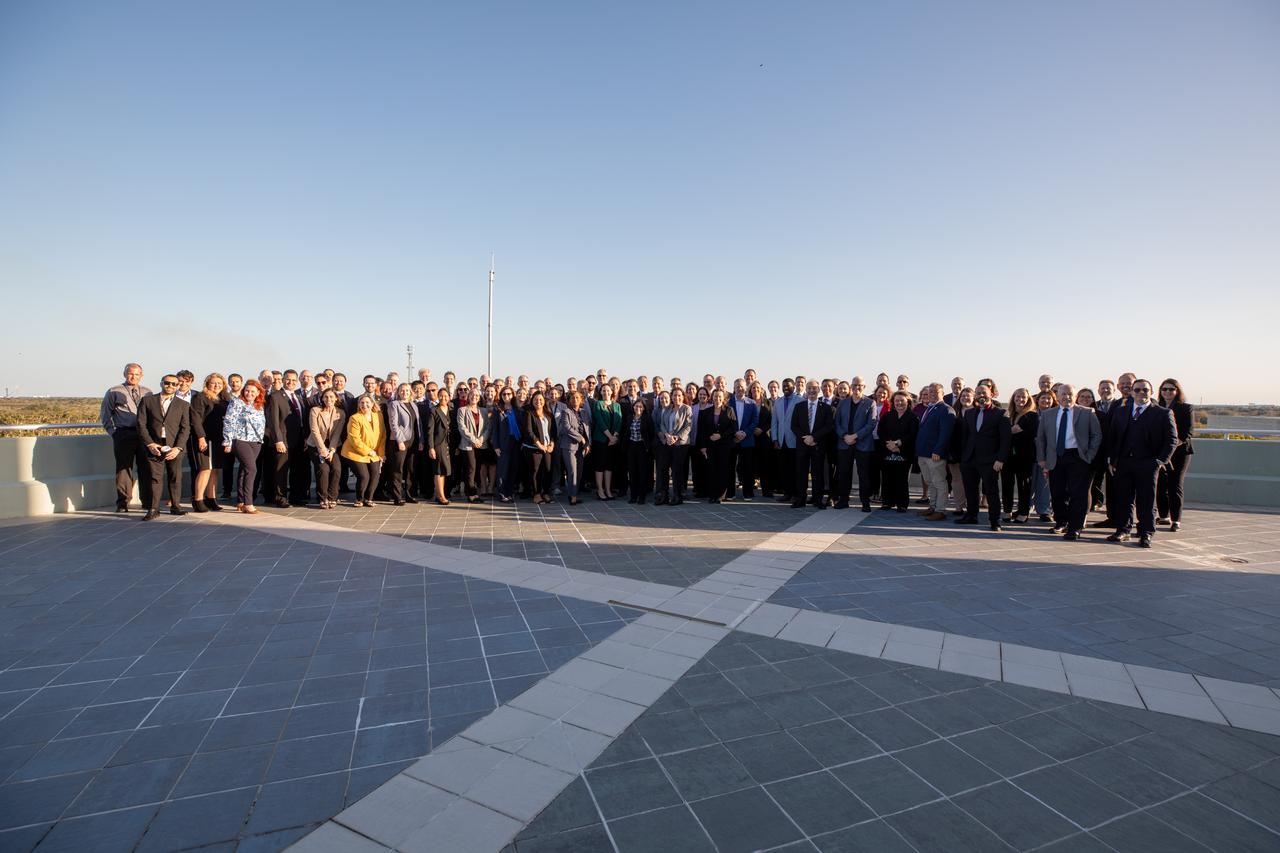
Mission managers with NASA, SpaceX, and international partners gather on Sunday, Feb. 25, 2024, at the agency’s Kennedy Space Center in Florida to complete a Flight Readiness Review for NASA’s SpaceX Crew-8 mission as part of the agency’s Commercial Crew Program. NASA astronauts Matthew Dominick, Michael Barratt, and Jeanette Epps, with Roscosmos cosmonaut Alexander Grebenkin are slated to launch to the International Space Station aboard SpaceX’s Dragon spacecraft, powered by the company’s Falcon 9 rocket from Launch Complex 39A no earlier than 12:04 a.m. EST on March 1, 2024.
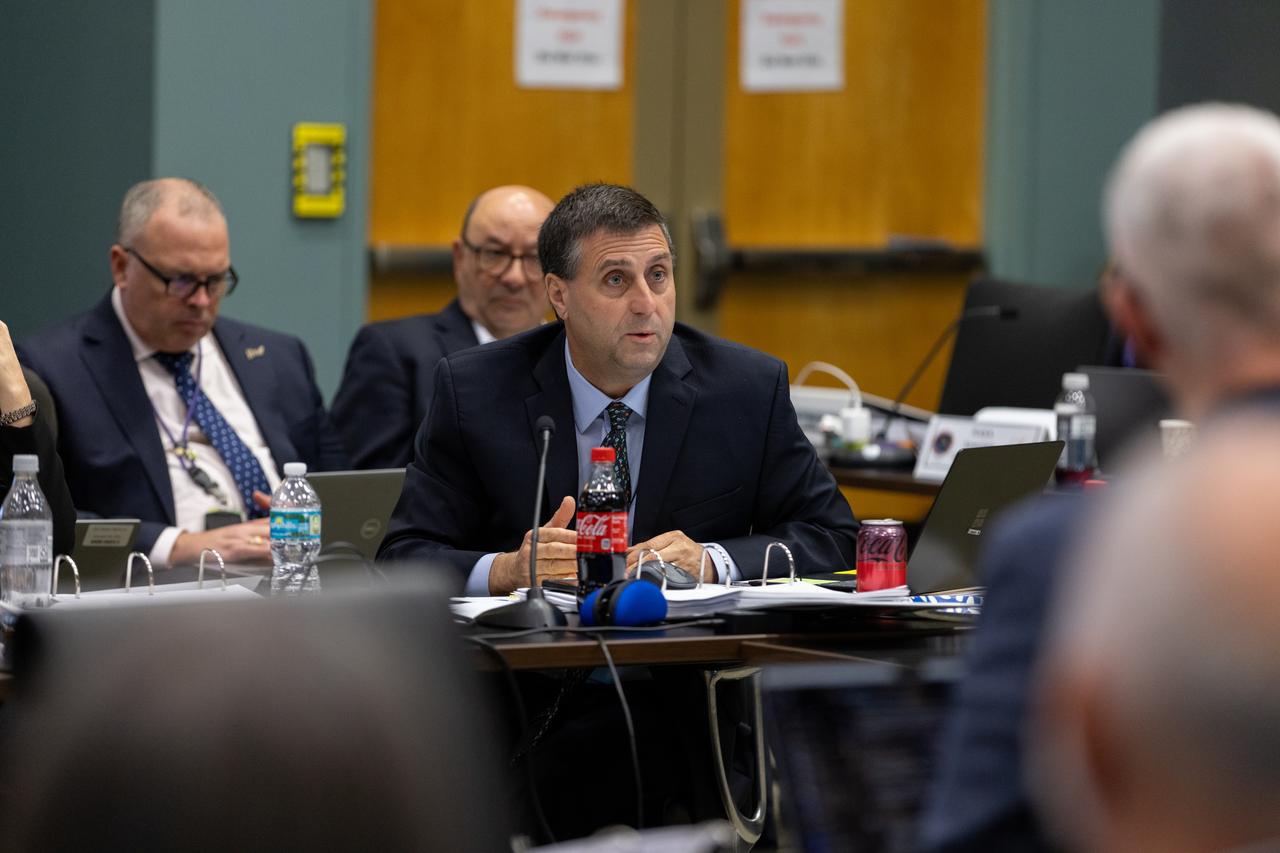
Joel Montalbano, manager, International Space Station, NASA’s Johnson Space Center, participates in NASA’s SpaceX Crew-8 Flight Readiness Review at Kennedy Space Center in Florida on Sunday, Feb. 25, 2024. NASA astronauts Matthew Dominick, Michael Barratt, and Jeanette Epps, with Roscosmos cosmonaut Alexander Grebenkin are slated to launch to the International Space Station aboard SpaceX’s Dragon spacecraft, powered by the company’s Falcon 9 rocket from Launch Complex 39A no earlier than 12:04 a.m. EST on March 1, 2024.

Mission managers with NASA, SpaceX, and international partners gather on Sunday, Feb. 25, 2024, at the agency’s Kennedy Space Center in Florida to complete a Flight Readiness Review for NASA’s SpaceX Crew-8 mission as part of the agency’s Commercial Crew Program. NASA astronauts Matthew Dominick, Michael Barratt, and Jeanette Epps, with Roscosmos cosmonaut Alexander Grebenkin are slated to launch to the International Space Station aboard SpaceX’s Dragon spacecraft, powered by the company’s Falcon 9 rocket from Launch Complex 39A no earlier than 12:04 a.m. EST on March 1, 2024.
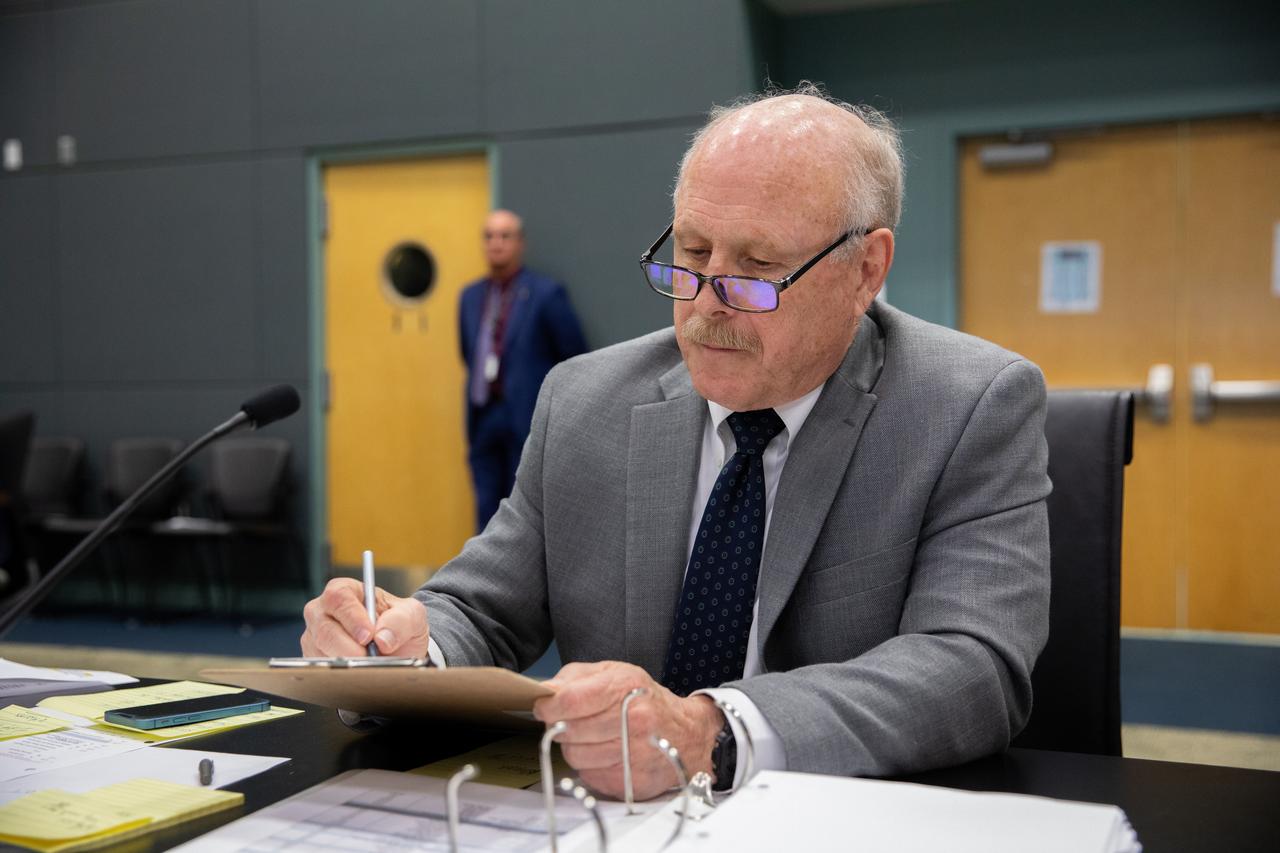
Ken Bowersox, associate administrator, NASA’s Space Operations Mission Directorate, NASA headquarters, participates in NASA’s SpaceX Crew-8 Flight Readiness Review at Kennedy Space Center in Florida on Sunday, Feb. 25, 2024. NASA astronauts Matthew Dominick, Michael Barratt, and Jeanette Epps, with Roscosmos cosmonaut Alexander Grebenkin are slated to launch to the International Space Station aboard SpaceX’s Dragon spacecraft, powered by the company’s Falcon 9 rocket from Launch Complex 39A no earlier than 12:04 a.m. EST on March 1, 2024.
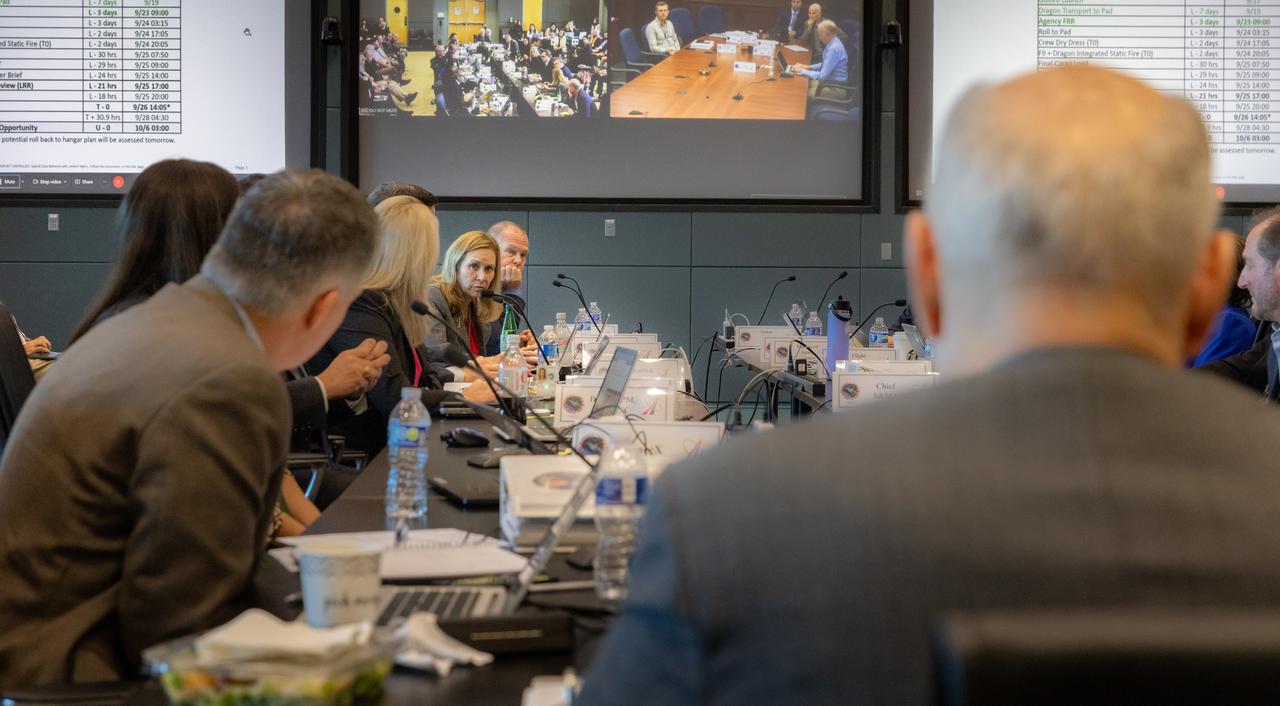
Managers with NASA and SpaceX, along with international partners, participate in NASA’s SpaceX Crew-9 Flight Readiness Review at the agency’s Kennedy Space Center in Florida on Monday, Sept. 23, 2024. Launch is targeted for 2:05 p.m. EDT Sept. 26, 2024, from Space Launch Complex-40 at Cape Canaveral Space Force Station in Florida. NASA astronaut Nick Hague and Roscosmos cosmonaut Aleksandr Gorbunov will launch to the International Space Station aboard SpaceX’s Dragon spacecraft and Falcon 9 rocket on the company’s ninth crew rotation mission for NASA as part of the agency’s Commercial Crew Program.
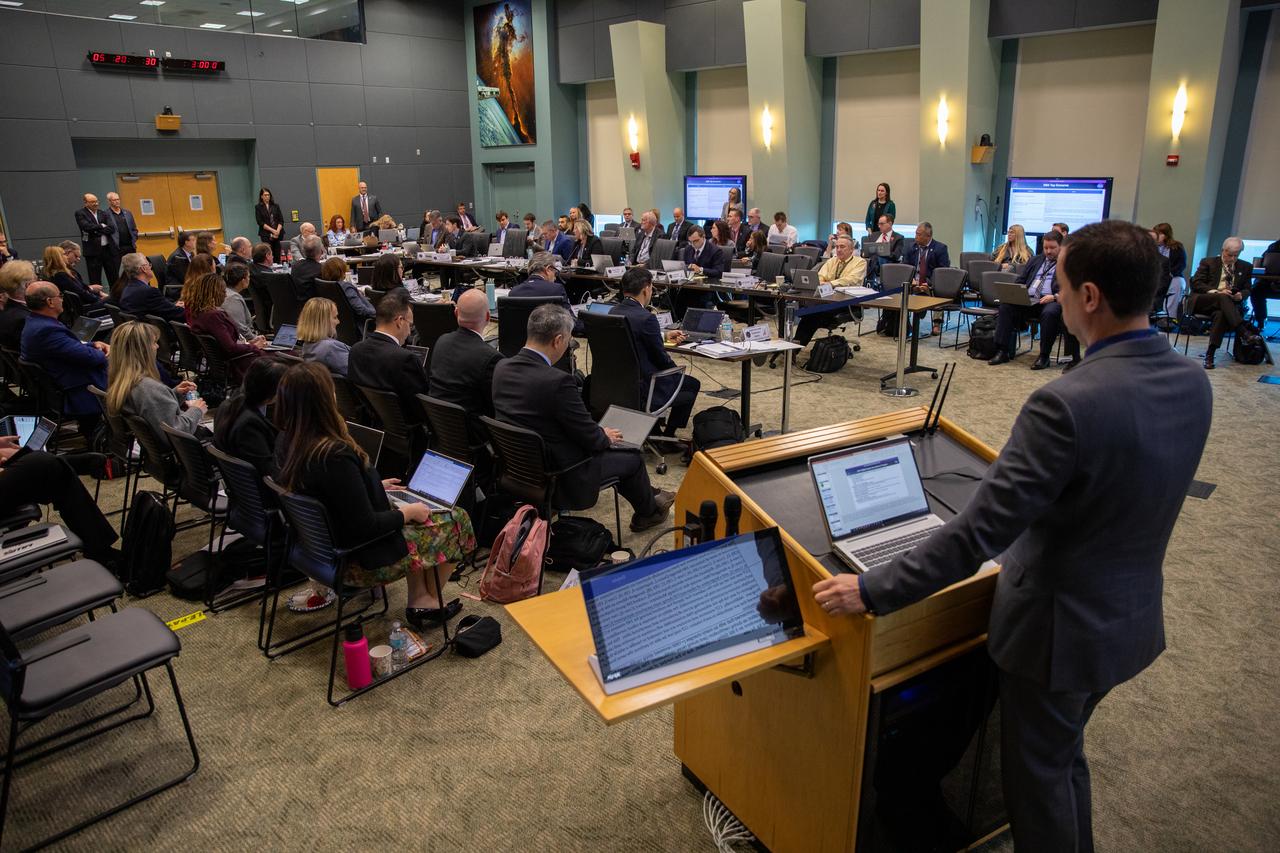
Mission managers with NASA, SpaceX, and international partners gather on Sunday, Feb. 25, 2024, at the agency’s Kennedy Space Center in Florida to complete a Flight Readiness Review for NASA’s SpaceX Crew-8 mission as part of the agency’s Commercial Crew Program. NASA astronauts Matthew Dominick, Michael Barratt, and Jeanette Epps, with Roscosmos cosmonaut Alexander Grebenkin are slated to launch to the International Space Station aboard SpaceX’s Dragon spacecraft, powered by the company’s Falcon 9 rocket from Launch Complex 39A no earlier than 12:04 a.m. EST on March 1, 2024.
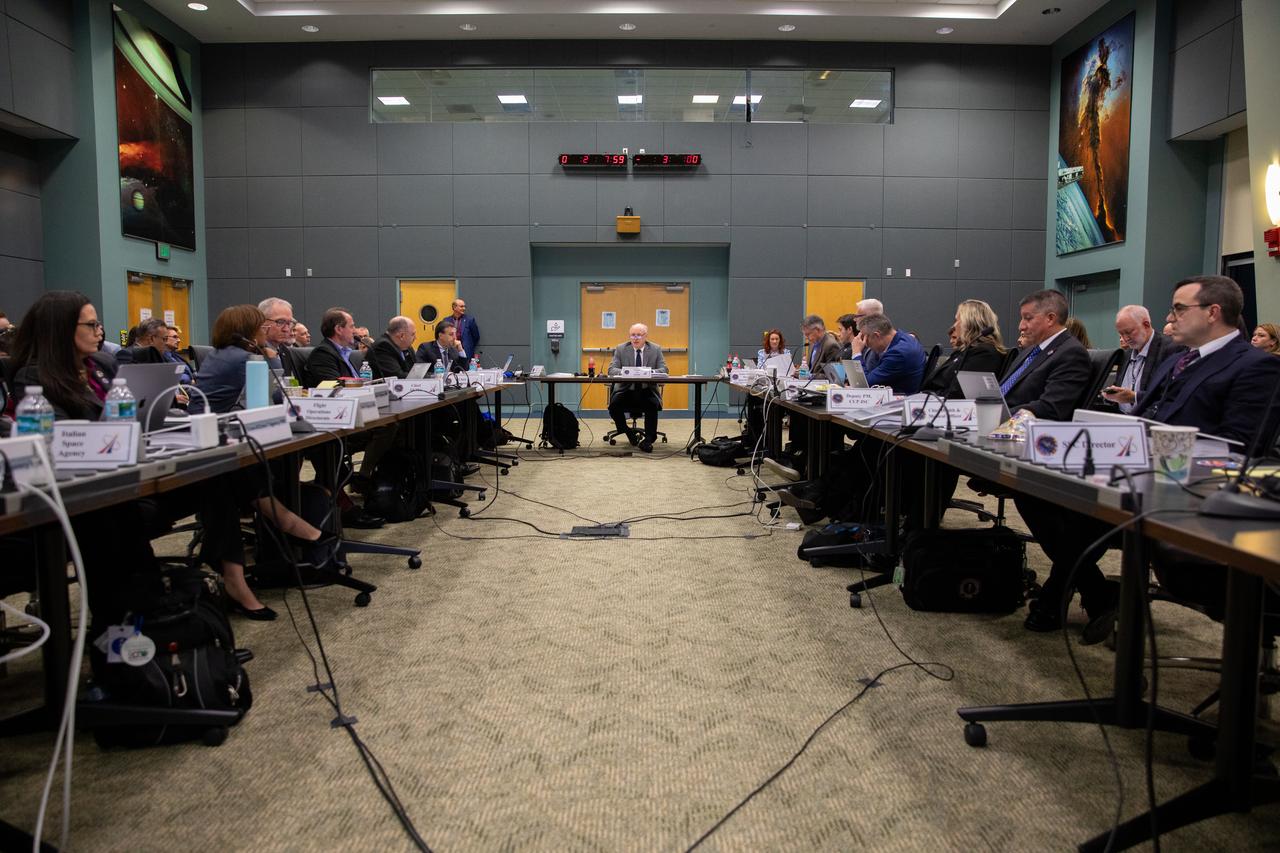
Mission managers with NASA, SpaceX, and international partners gather on Sunday, Feb. 25, 2024, at the agency’s Kennedy Space Center in Florida to complete a Flight Readiness Review for NASA’s SpaceX Crew-8 mission as part of the agency’s Commercial Crew Program. NASA astronauts Matthew Dominick, Michael Barratt, and Jeanette Epps, with Roscosmos cosmonaut Alexander Grebenkin are slated to launch to the International Space Station aboard SpaceX’s Dragon spacecraft, powered by the company’s Falcon 9 rocket from Launch Complex 39A no earlier than 12:04 a.m. EST on March 1, 2024.
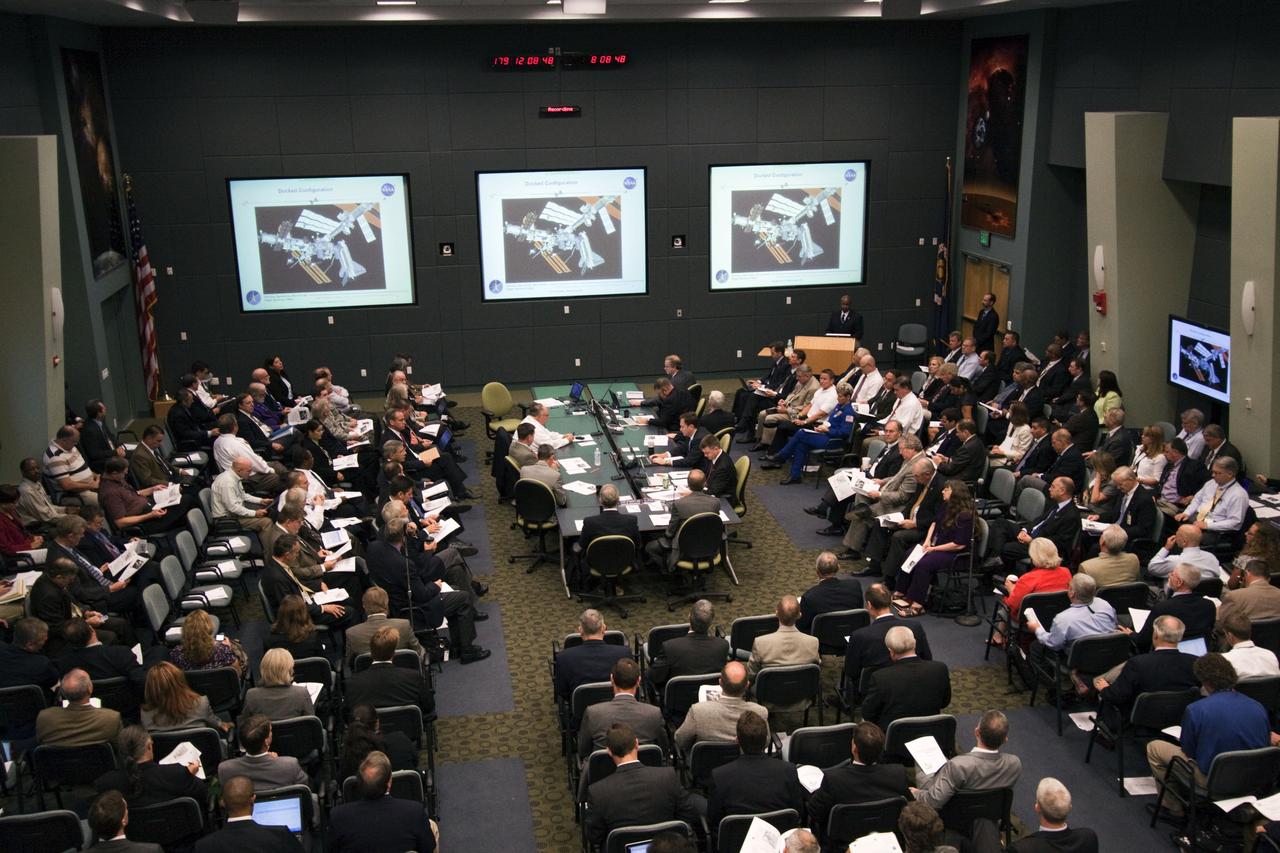
CAPE CANAVERAL, Fla. -- In the Operations Support Building II at NASA's Kennedy Space Center in Florida, Space Shuttle Program and mission managers meet for the traditional Flight Readiness Review, a thorough assessment of preparations for the mission. The June 28 meeting is designed to produce a number of key decisions about Atlantis' STS-135 mission, including the announcement of an official launch date. Atlantis and its crew are targeted to lift off July 8, taking with them the Raffaello multi-purpose logistics module packed with supplies and spare parts to the International Space Station. The STS-135 mission also will fly a system to investigate the potential for robotically refueling existing satellites and return a failed ammonia pump module to help NASA better understand the failure mechanism and improve pump designs for future systems. STS-135 will be the 33rd flight of Atlantis, the 37th shuttle mission to the space station, and the 135th and final mission of NASA's Space Shuttle Program. For more information visit, www.nasa.gov/mission_pages/shuttle/shuttlemissions/sts135/index.html. Photo credit: Jim Grossmann
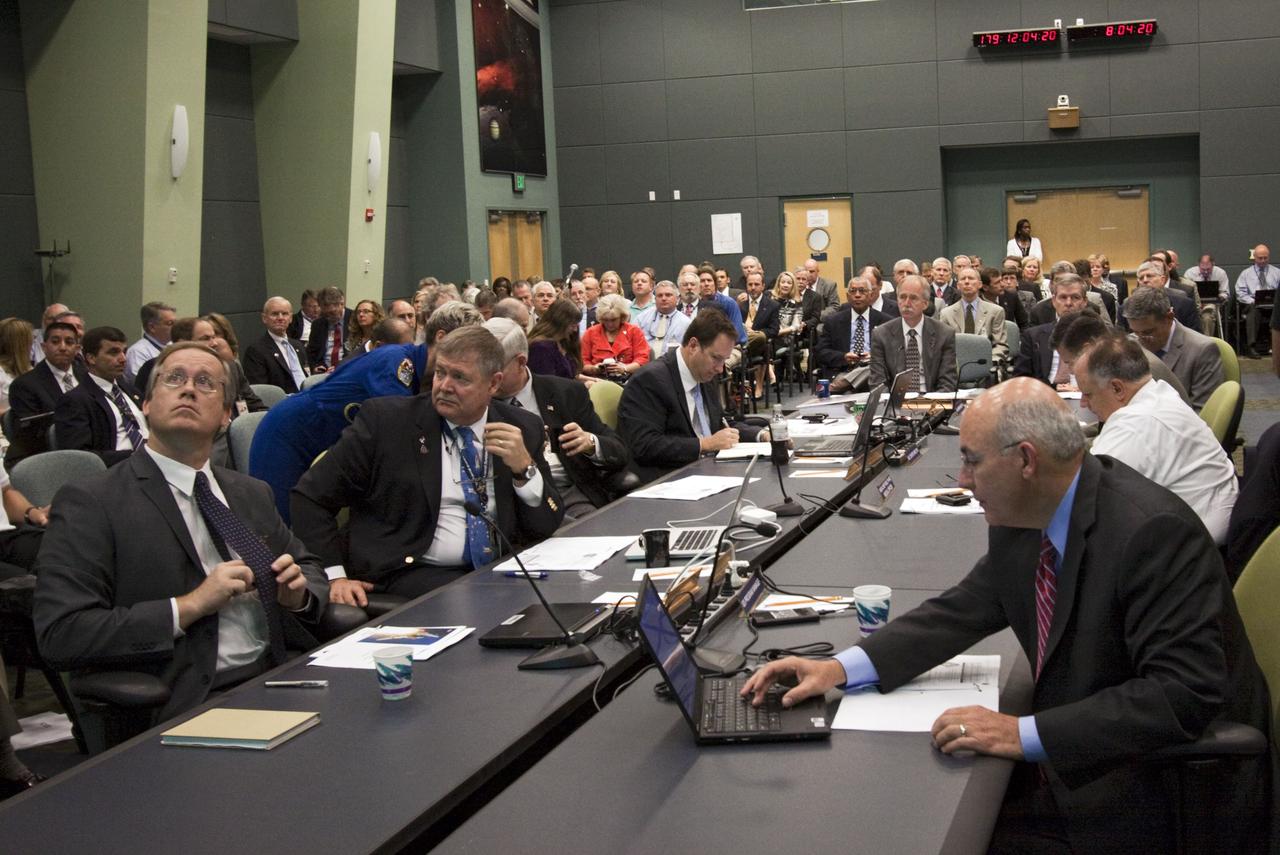
CAPE CANAVERAL, Fla. -- In the Operations Support Building II at NASA's Kennedy Space Center in Florida, Space Shuttle Program and mission managers meet for the traditional Flight Readiness Review, a thorough assessment of preparations for the mission. Seen here are Space Shuttle Program Manager John Shannon (left) and International Space Station Program Manager Michael Suffredini (right). The June 28 meeting is designed to produce a number of key decisions about Atlantis' STS-135 mission, including the announcement of an official launch date. Atlantis and its crew are targeted to lift off July 8, taking with them the Raffaello multi-purpose logistics module packed with supplies and spare parts to the International Space Station. The STS-135 mission also will fly a system to investigate the potential for robotically refueling existing satellites and return a failed ammonia pump module to help NASA better understand the failure mechanism and improve pump designs for future systems. STS-135 will be the 33rd flight of Atlantis, the 37th shuttle mission to the space station, and the 135th and final mission of NASA's Space Shuttle Program. For more information visit, www.nasa.gov/mission_pages/shuttle/shuttlemissions/sts135/index.html. Photo credit: Jim Grossmann
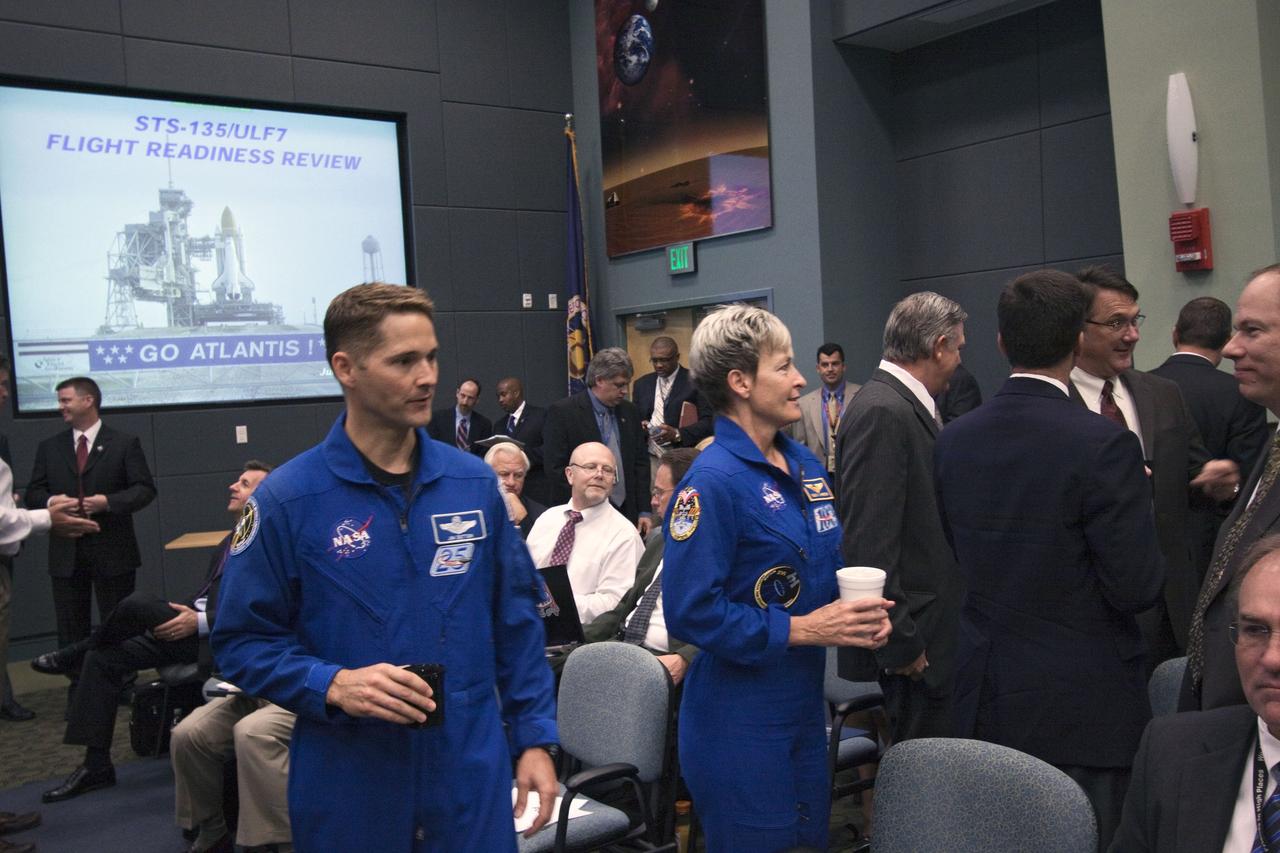
CAPE CANAVERAL, Fla. -- In the Operations Support Building II at NASA's Kennedy Space Center in Florida, Space Shuttle Program and mission managers meet for the traditional Flight Readiness Review, a thorough assessment of preparations for the mission. Seen here in blue flight suits are NASA astronauts James P. Dutton Jr. and Peggy Whitson, chief of the Astronaut Corps. The June 28 meeting is designed to produce a number of key decisions about Atlantis' STS-135 mission, including the announcement of an official launch date. Atlantis and its crew are targeted to lift off July 8, taking with them the Raffaello multi-purpose logistics module packed with supplies and spare parts to the International Space Station. The STS-135 mission also will fly a system to investigate the potential for robotically refueling existing satellites and return a failed ammonia pump module to help NASA better understand the failure mechanism and improve pump designs for future systems. STS-135 will be the 33rd flight of Atlantis, the 37th shuttle mission to the space station, and the 135th and final mission of NASA's Space Shuttle Program. For more information visit, www.nasa.gov/mission_pages/shuttle/shuttlemissions/sts135/index.html. Photo credit: Jim Grossmann
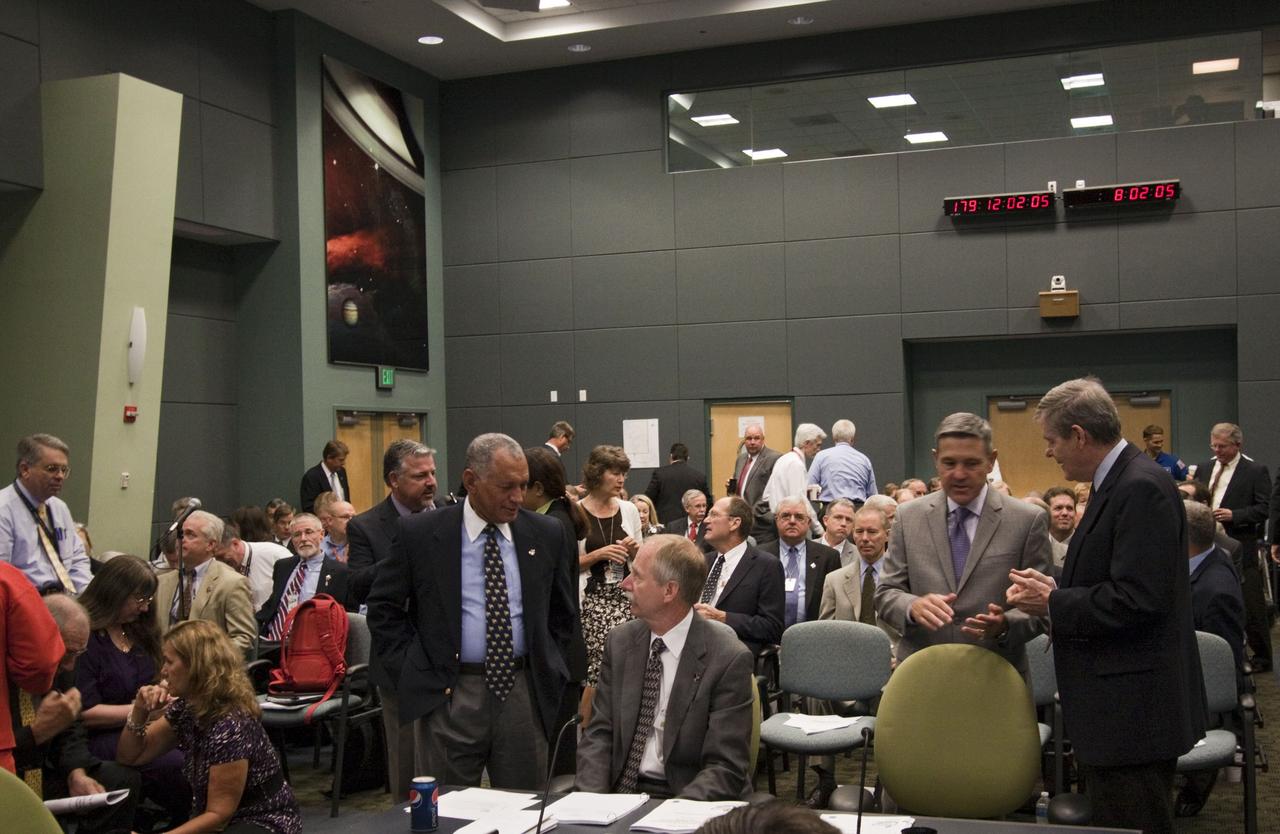
CAPE CANAVERAL, Fla. -- In the Operations Support Building II at NASA's Kennedy Space Center in Florida, Space Shuttle Program and mission managers meet for the traditional Flight Readiness Review, a thorough assessment of preparations for the mission. Seen here are NASA Administrator Charles Bolden (left), Associate Administrator for Space Operations Bill Gerstenmaier, Kennedy Center Director Bob Cabana and NASA Safety and Mission Assurance Chief Bryan D. O 'Connor. The June 28 meeting is designed to produce a number of key decisions about Atlantis' STS-135 mission, including the announcement of an official launch date. Atlantis and its crew are targeted to lift off July 8, taking with them the Raffaello multi-purpose logistics module packed with supplies and spare parts to the International Space Station. The STS-135 mission also will fly a system to investigate the potential for robotically refueling existing satellites and return a failed ammonia pump module to help NASA better understand the failure mechanism and improve pump designs for future systems. STS-135 will be the 33rd flight of Atlantis, the 37th shuttle mission to the space station, and the 135th and final mission of NASA's Space Shuttle Program. For more information visit, www.nasa.gov/mission_pages/shuttle/shuttlemissions/sts135/index.html. Photo credit: Jim Grossmann
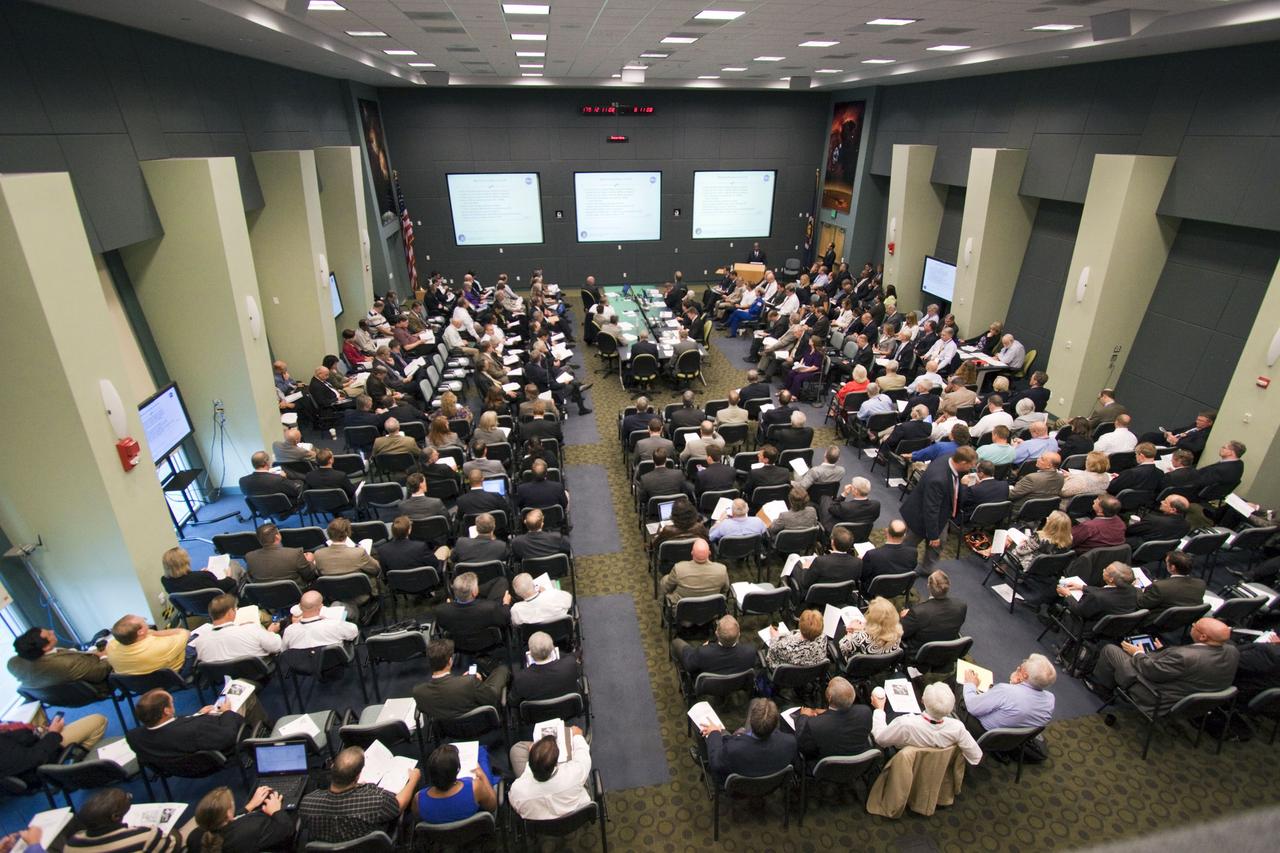
CAPE CANAVERAL, Fla. -- In the Operations Support Building II at NASA's Kennedy Space Center in Florida, Space Shuttle Program and mission managers meet for the traditional Flight Readiness Review, a thorough assessment of preparations for the mission. The June 28 meeting is designed to produce a number of key decisions about Atlantis' STS-135 mission, including the announcement of an official launch date. Atlantis and its crew are targeted to lift off July 8, taking with them the Raffaello multi-purpose logistics module packed with supplies and spare parts to the International Space Station. The STS-135 mission also will fly a system to investigate the potential for robotically refueling existing satellites and return a failed ammonia pump module to help NASA better understand the failure mechanism and improve pump designs for future systems. STS-135 will be the 33rd flight of Atlantis, the 37th shuttle mission to the space station, and the 135th and final mission of NASA's Space Shuttle Program. For more information visit, www.nasa.gov/mission_pages/shuttle/shuttlemissions/sts135/index.html. Photo credit: Jim Grossmann

NASA Associate Administrator Bob Cabana participates in NASA’s SpaceX Crew-7 Flight Readiness Review at Kennedy Space Center on Monday, Aug. 21, 2023. The mission is targeted to lift off from the Florida spaceport’s Launch Complex 39A at 3:49 a.m. EDT Friday, Aug. 25, 2023. NASA astronaut Jasmin Moghbeli, ESA (European Space Agency) astronaut Andreas Mogensen, JAXA (Japan Aerospace Exploration Agency) astronaut Satoshi Furukawa, and Roscosmos cosmonaut Konstantin Borisov will fly to the International Space Station aboard SpaceX’s Dragon spacecraft, powered by the company’s Falcon 9 rocket.
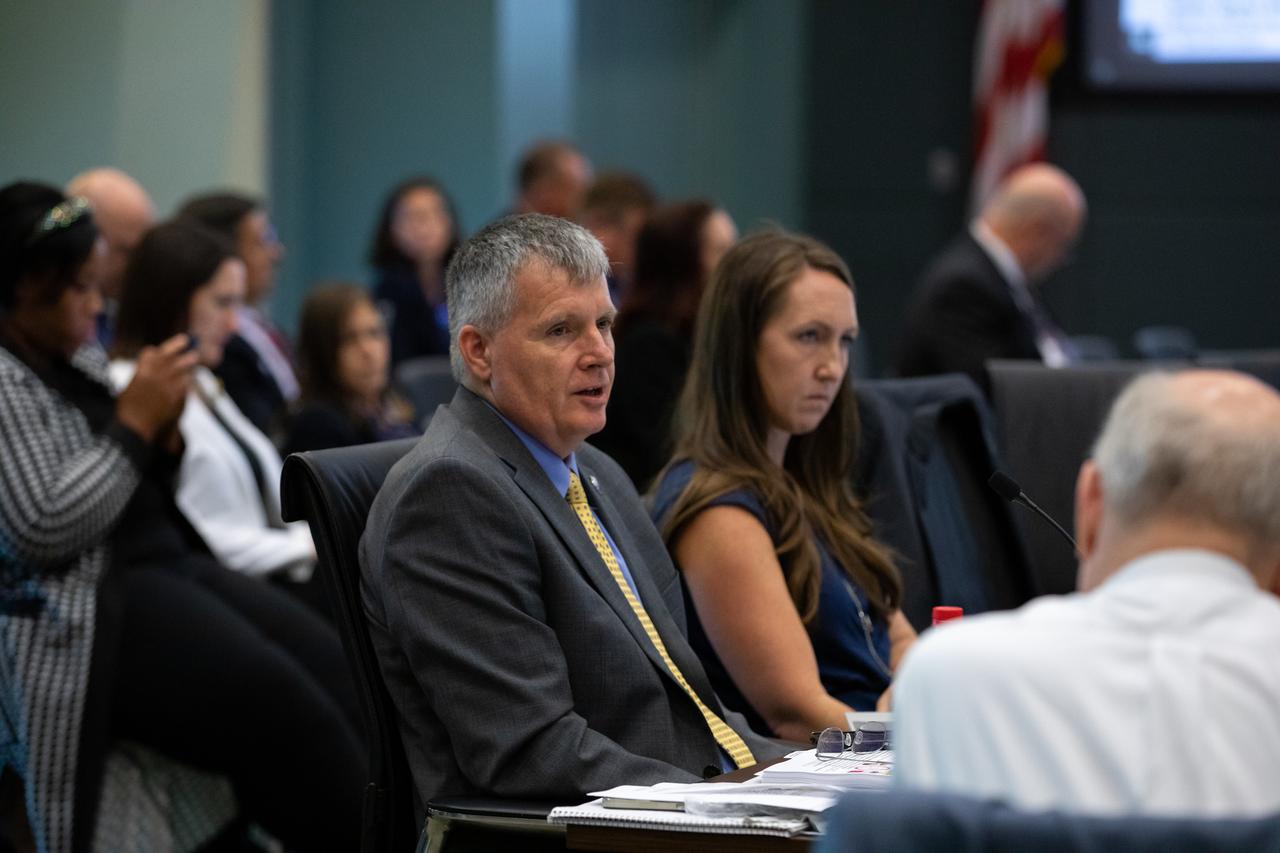
Steve Stich, manager of NASA’s Commercial Crew Program at Kennedy Space Center, participates in NASA’s SpaceX Crew-7 Flight Readiness Review at the Florida spaceport on Monday, Aug. 21, 2023. The mission is targeted to lift off from Kennedy’s Launch Complex 39A at 3:49 a.m. EDT Friday, Aug. 25, 2023. NASA astronaut Jasmin Moghbeli, ESA (European Space Agency) astronaut Andreas Mogensen, JAXA (Japan Aerospace Exploration Agency) astronaut Satoshi Furukawa, and Roscosmos cosmonaut Konstantin Borisov will fly to the International Space Station aboard SpaceX’s Dragon spacecraft, powered by the company’s Falcon 9 rocket.
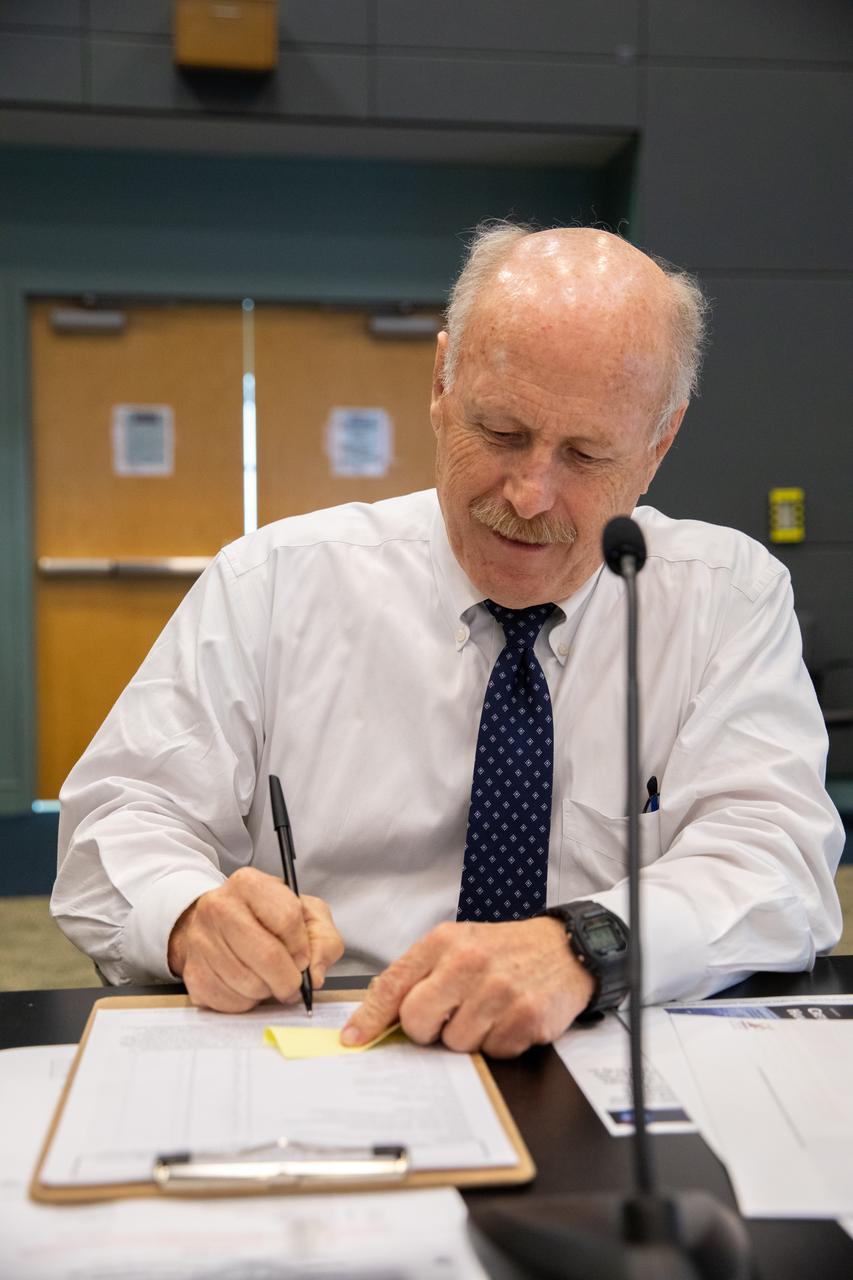
Ken Bowersox, associate administrator, Human Exploration and Operations Mission Directorate, NASA Headquarters, participates in NASA’s SpaceX Crew-7 Flight Readiness Review at Kennedy Space Center on Monday, Aug. 21, 2023. The mission is targeted to lift off from the Florida spaceport’s Launch Complex 39A at 3:49 a.m. EDT Friday, Aug. 25, 2023. NASA astronaut Jasmin Moghbeli, ESA (European Space Agency) astronaut Andreas Mogensen, JAXA (Japan Aerospace Exploration Agency) astronaut Satoshi Furukawa, and Roscosmos cosmonaut Konstantin Borisov will fly to the International Space Station aboard SpaceX’s Dragon spacecraft, powered by the company’s Falcon 9 rocket.
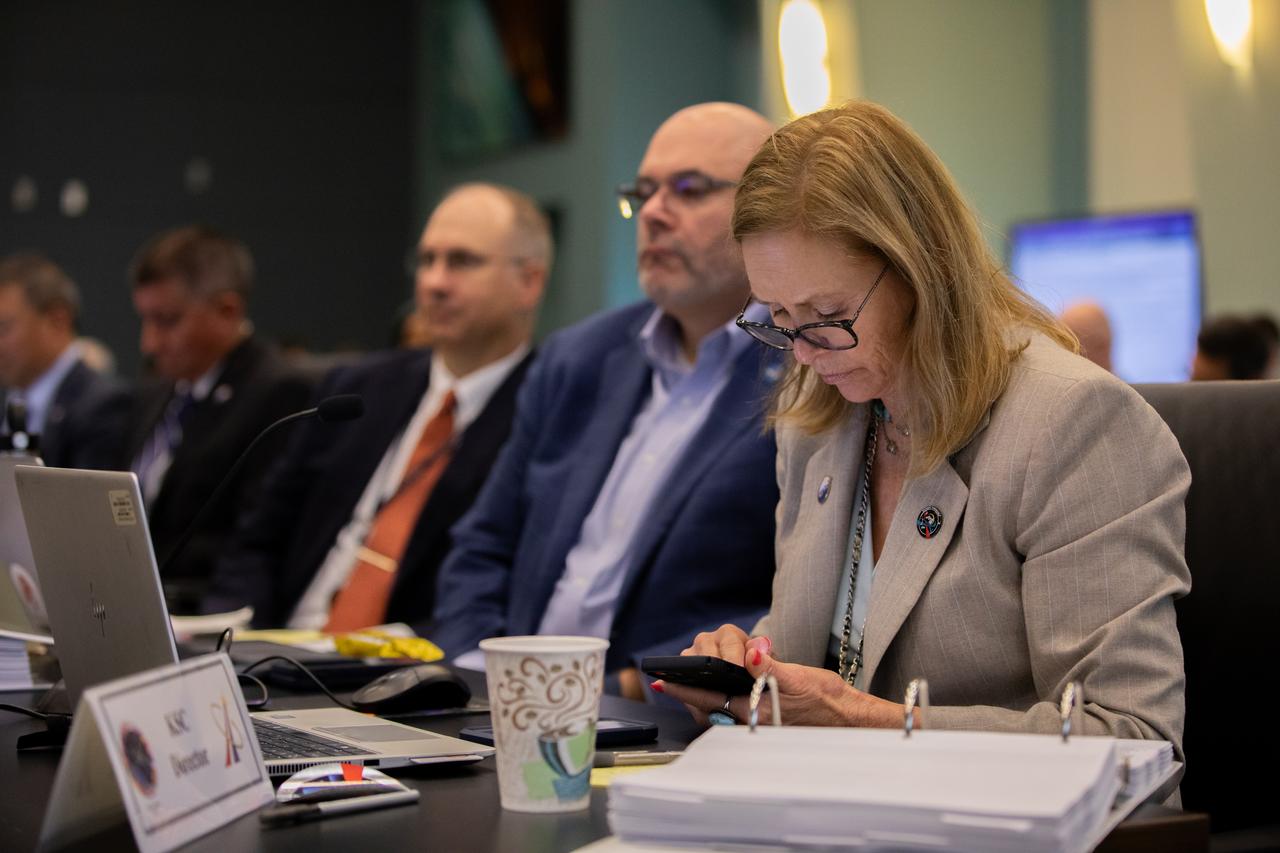
Kennedy Space Center Director Janet Petro participates in NASA’s SpaceX Crew-7 Flight Readiness Review at Kennedy Space Center on Monday, Aug. 21, 2023. The mission is targeted to lift off from the Florida spaceport’s Launch Complex 39A at 3:49 a.m. EDT Friday, Aug. 25, 2023. NASA astronaut Jasmin Moghbeli, ESA (European Space Agency) astronaut Andreas Mogensen, JAXA (Japan Aerospace Exploration Agency) astronaut Satoshi Furukawa, and Roscosmos cosmonaut Konstantin Borisov will fly to the International Space Station aboard SpaceX’s Dragon spacecraft, powered by the company’s Falcon 9 rocket.
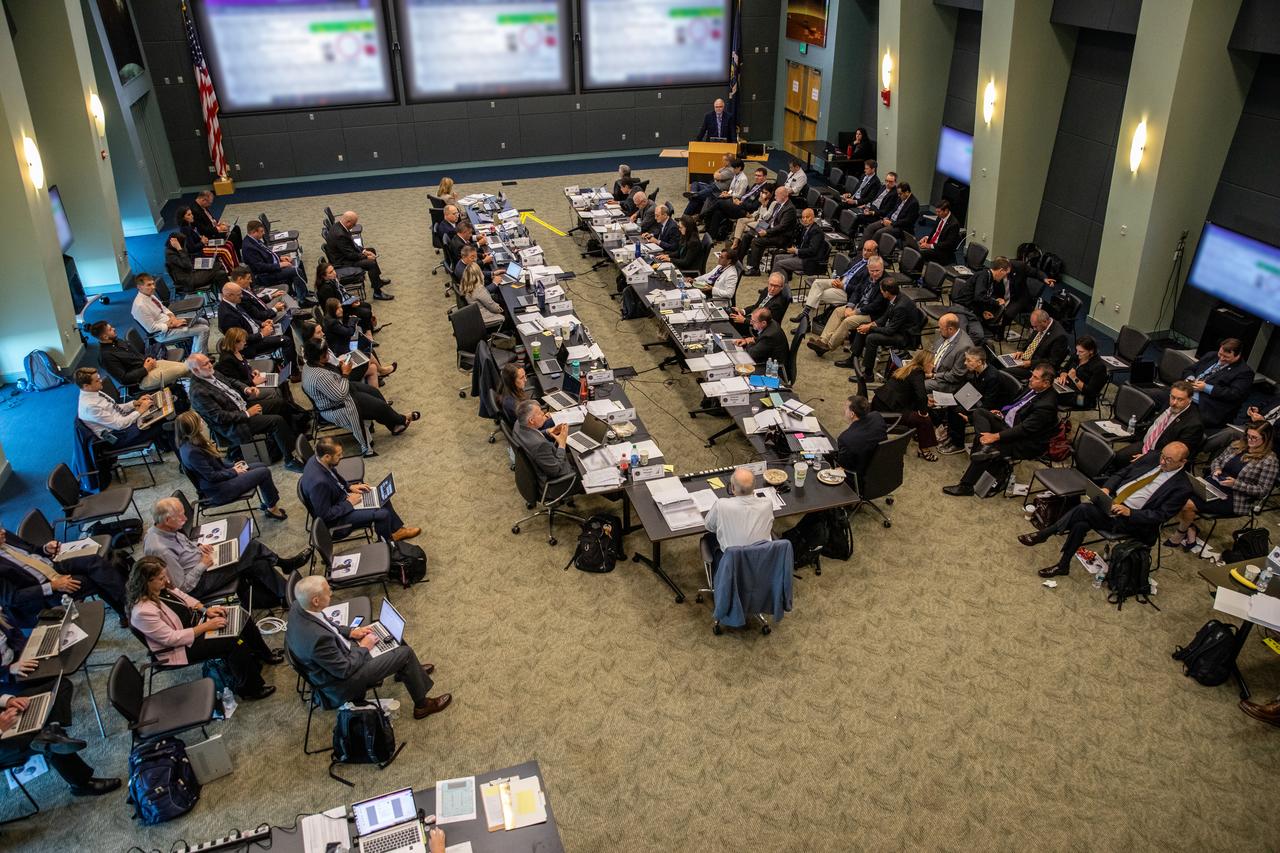
NASA’s SpaceX Crew-7 Flight Readiness Review takes place at Kennedy Space Center on Monday, Aug. 21, 2023. The mission is targeted to lift off from the Florida spaceport’s Launch Complex 39A at 3:49 a.m. EDT Friday, Aug. 25, 2023. NASA astronaut Jasmin Moghbeli, ESA (European Space Agency) astronaut Andreas Mogensen, JAXA (Japan Aerospace Exploration Agency) astronaut Satoshi Furukawa, and Roscosmos cosmonaut Konstantin Borisov will fly to the International Space Station aboard SpaceX’s Dragon spacecraft, powered by the company’s Falcon 9 rocket.
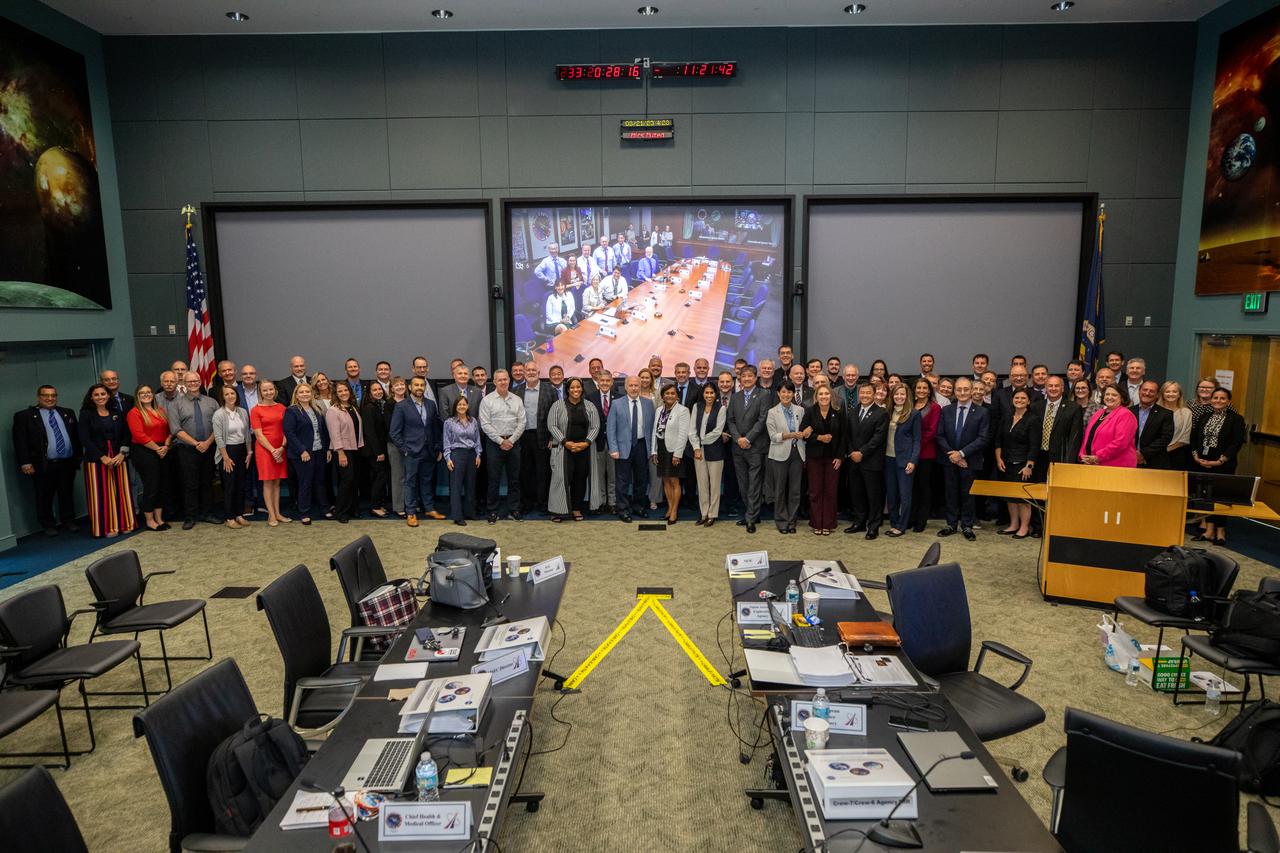
Managers with NASA and SpaceX, along with international partners, pose for a photo after completion of NASA’s SpaceX Crew-7 Flight Readiness Review at Kennedy Space Center on Monday, Aug. 21, 2023. The mission is targeted to lift off from the Florida spaceport’s Launch Complex 39A at 3:49 a.m. EDT Friday, Aug. 25, 2023. NASA astronaut Jasmin Moghbeli, ESA (European Space Agency) astronaut Andreas Mogensen, JAXA (Japan Aerospace Exploration Agency) astronaut Satoshi Furukawa, and Roscosmos cosmonaut Konstantin Borisov will fly to the International Space Station aboard SpaceX’s Dragon spacecraft, powered by the company’s Falcon 9 rocket.
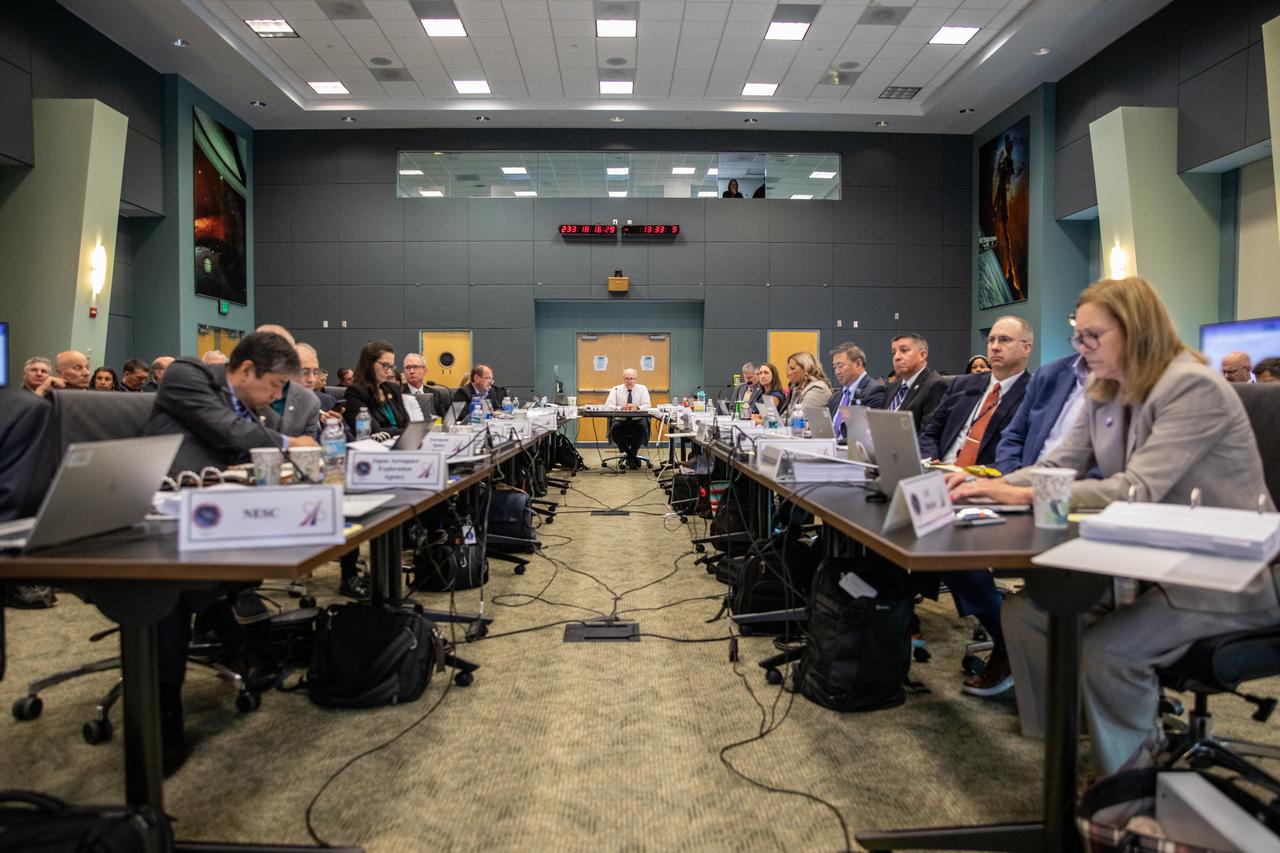
NASA’s SpaceX Crew-7 Flight Readiness Review takes place at Kennedy Space Center on Monday, Aug. 21, 2023. The mission is targeted to lift off from the Florida spaceport’s Launch Complex 39A at 3:49 a.m. EDT Friday, Aug. 25, 2023. NASA astronaut Jasmin Moghbeli, ESA (European Space Agency) astronaut Andreas Mogensen, JAXA (Japan Aerospace Exploration Agency) astronaut Satoshi Furukawa, and Roscosmos cosmonaut Konstantin Borisov will fly to the International Space Station aboard SpaceX’s Dragon spacecraft, powered by the company’s Falcon 9 rocket.

Ken Bowersox, associate administrator, Human Exploration and Operations Mission Directorate, NASA Headquarters participates in NASA’s SpaceX Crew-7 Flight Readiness Review at Kennedy Space Center on Monday, Aug. 21, 2023. The mission is targeted to lift off from the Florida spaceport’s Launch Complex 39A at 3:49 a.m. EDT Friday, Aug. 25, 2023. NASA astronaut Jasmin Moghbeli, ESA (European Space Agency) astronaut Andreas Mogensen, JAXA (Japan Aerospace Exploration Agency) astronaut Satoshi Furukawa, and Roscosmos cosmonaut Konstantin Borisov will fly to the International Space Station aboard SpaceX’s Dragon spacecraft, powered by the company’s Falcon 9 rocket.
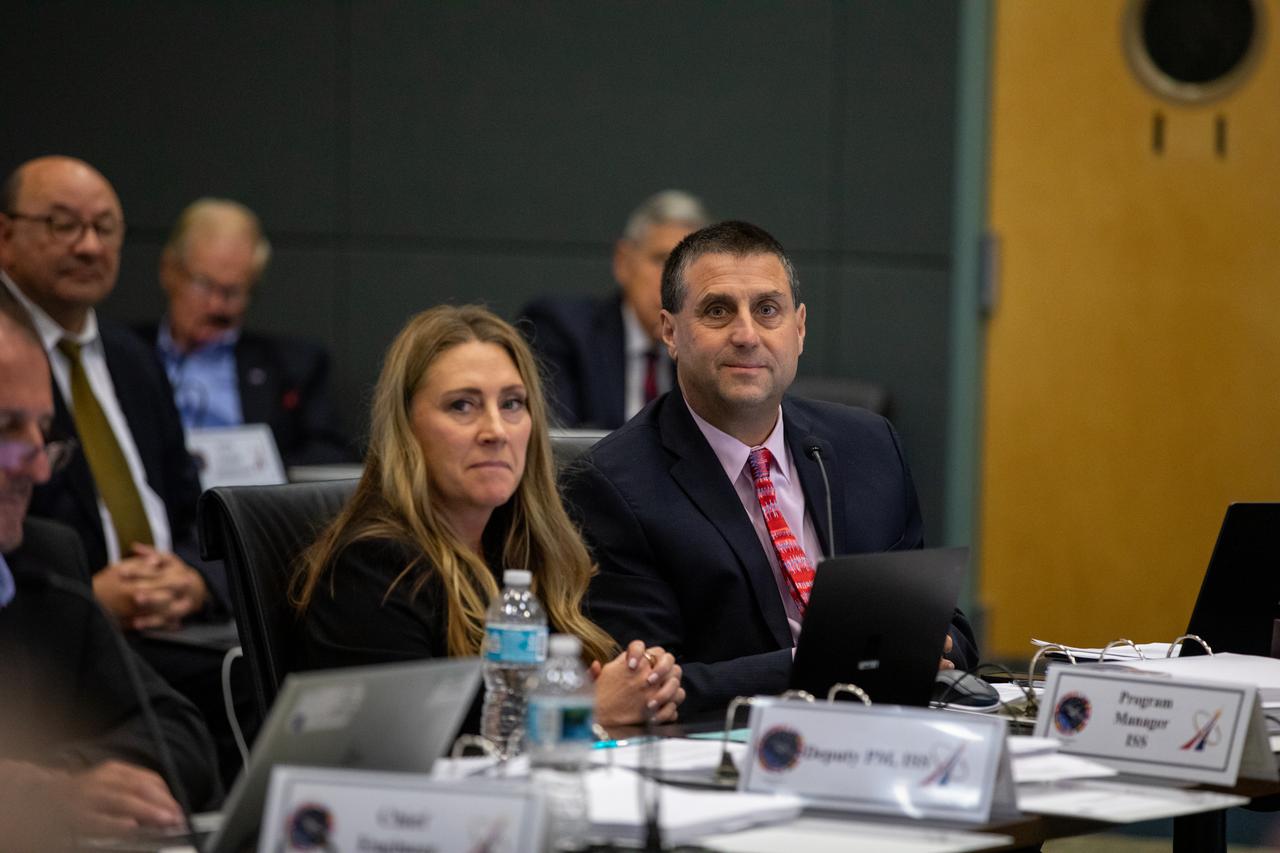
From left, Dana Weigel, International Space Station deputy program manager, and Joel Montalbano, manager, International Space Station Program, Johnson Space Center, participate in NASA’s SpaceX Crew-7 Flight Readiness Review at the Florida spaceport on Monday, Aug. 21, 2023. The mission is targeted to lift off from Kennedy’s Launch Complex 39A at 3:49 a.m. EDT Friday, Aug. 25, 2023. NASA astronaut Jasmin Moghbeli, ESA (European Space Agency) astronaut Andreas Mogensen, JAXA (Japan Aerospace Exploration Agency) astronaut Satoshi Furukawa, and Roscosmos cosmonaut Konstantin Borisov will fly to the International Space Station aboard SpaceX’s Dragon spacecraft, powered by the company’s Falcon 9 rocket.
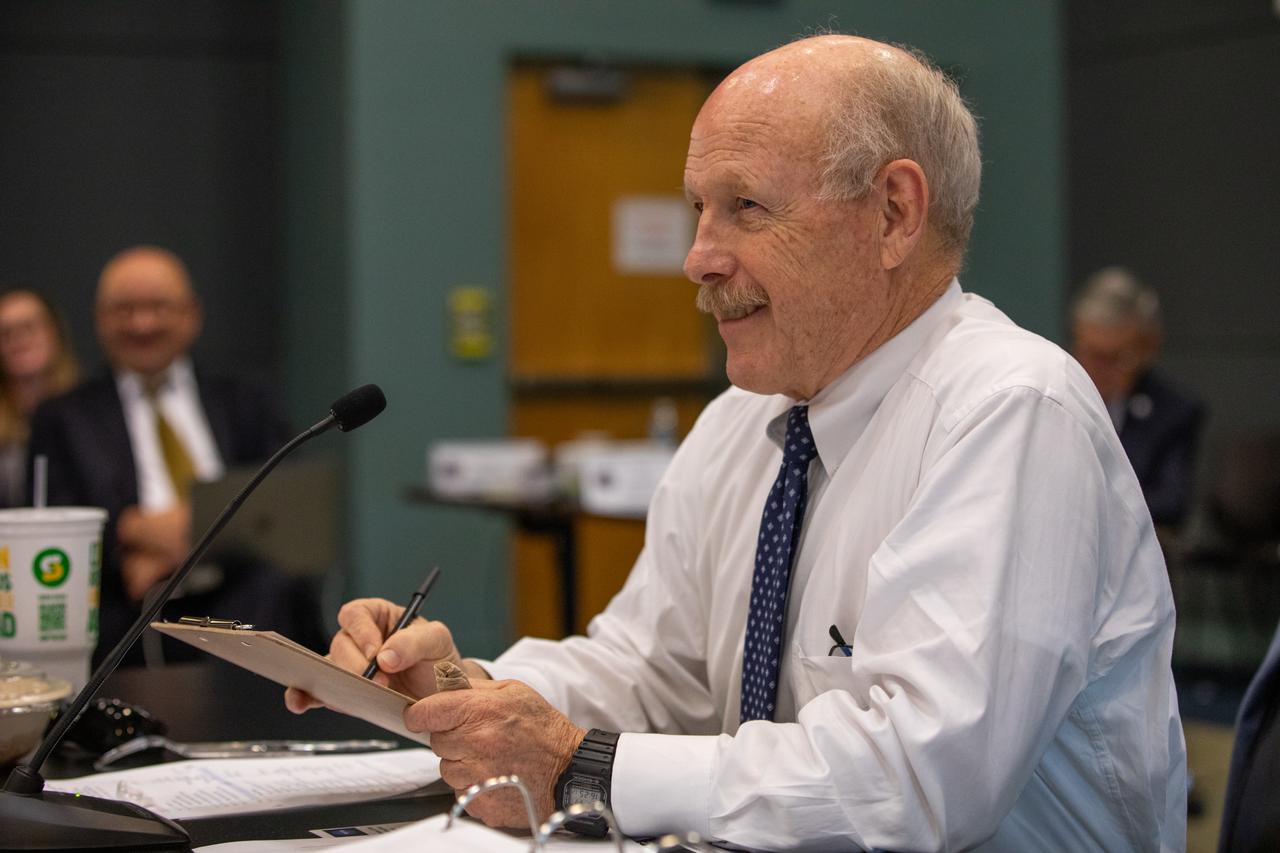
Ken Bowersox, associate administrator, Human Exploration and Operations Mission Directorate, NASA Headquarters, participates in NASA’s SpaceX Crew-7 Flight Readiness Review at Kennedy Space Center on Monday, Aug. 21, 2023. The mission is targeted to lift off from the Florida spaceport’s Launch Complex 39A at 3:49 a.m. EDT Friday, Aug. 25, 2023. NASA astronaut Jasmin Moghbeli, ESA (European Space Agency) astronaut Andreas Mogensen, JAXA (Japan Aerospace Exploration Agency) astronaut Satoshi Furukawa, and Roscosmos cosmonaut Konstantin Borisov will fly to the International Space Station aboard SpaceX’s Dragon spacecraft, powered by the company’s Falcon 9 rocket.
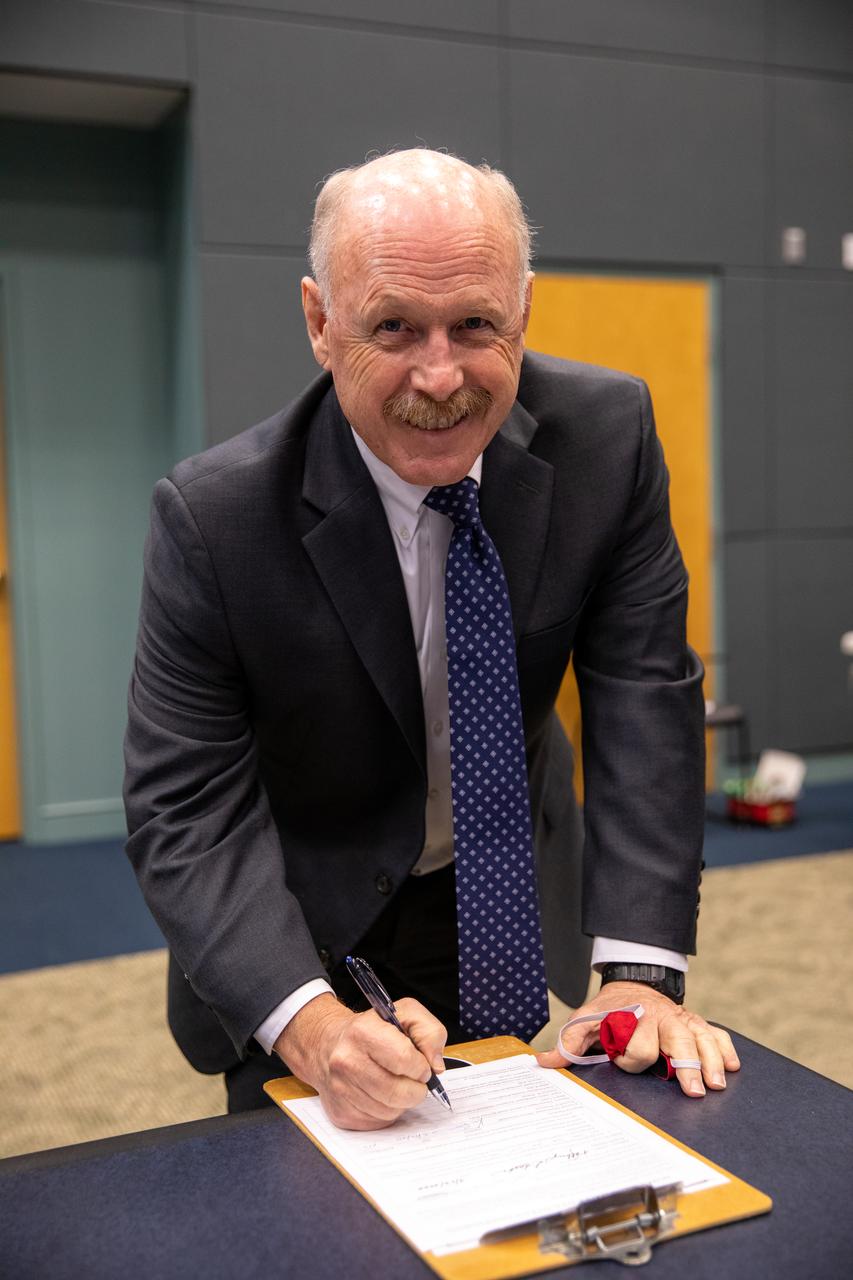
On May 22, 2020, inside the Operations Support Building II at NASA’s Kennedy Space Center in Florida, Kenneth Bowersox, deputy associate administrator for the agency’s Human Exploration and Operations Missions Directorate, signs the official document denoting the NASA and SpaceX are a ‘Go’ for the upcoming Demo-2 launch, following the conclusion of the flight readiness review. A SpaceX Falcon 9 rocket and Crew Dragon spacecraft will carry NASA astronauts Robert Behnken and Douglas Hurley to the International Space Station as part of the agency’s Commercial Crew Program, returning human spaceflight capability to the U.S. after nearly a decade. Launch is slated for 4:33 p.m. EDT on Wednesday, May 27, from Kennedy’s Launch Complex 39A.