
Cameron Symonds, of New Mexico Tech, prepares his team’s prototype lunar robot for its turn during the finals for NASA’s 2026 Lunabotics Challenge competition on Tuesday, May 19, 2026, inside the Astronauts Memorial Foundation’s Center for Space Education at the Kennedy Space Center Visitor Complex in Florida. Forty-seven teams from around the U.S. designed and built remote-controlled robots capable of traversing challenging lunar terrain while constructing regolith-based berm under conditions similar to those the agency will face as it returns to the lunar surface through Artemis.

Students from New Mexico Tech prepare their prototype lunar robot for its turn during the finals for NASA’s 2026 Lunabotics Challenge competition on Tuesday, May 19, 2026, inside the Astronauts Memorial Foundation’s Center for Space Education at the Kennedy Space Center Visitor Complex in Florida. Forty-seven teams from around the U.S. designed and built remote-controlled robots capable of traversing challenging lunar terrain while constructing regolith-based berm under conditions similar to those the agency will face as it returns to the lunar surface through Artemis.
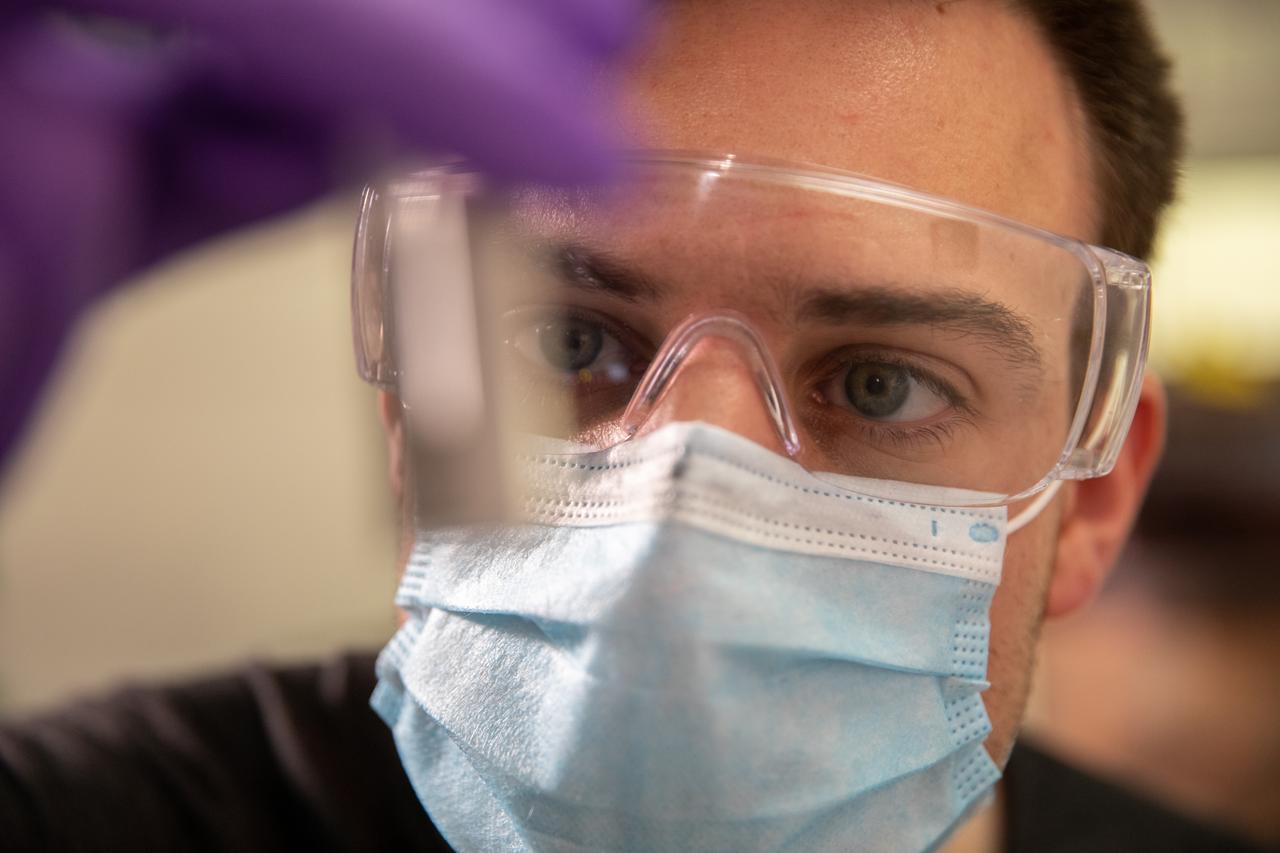
Kevin Grossman, project lead for the Gaseous Lunar Oxygen from Regolith Electrolysis (GaLORE) project at NASA Kennedy Space Center’s Swamp Works, inspects a piece of hardware for GaLORE on July 21, 2020, inside a laboratory at the center’s Neil Armstrong Operations and Checkout Building. Grossman is leading an Early Career Initiative project that is investing in turning lunar regolith into oxygen that could be used for life support for sustainable human lunar exploration on long-duration missions to Mars. GaLORE was selected as an Early Career Initiative project by NASA’s Space Technology Mission directorate.
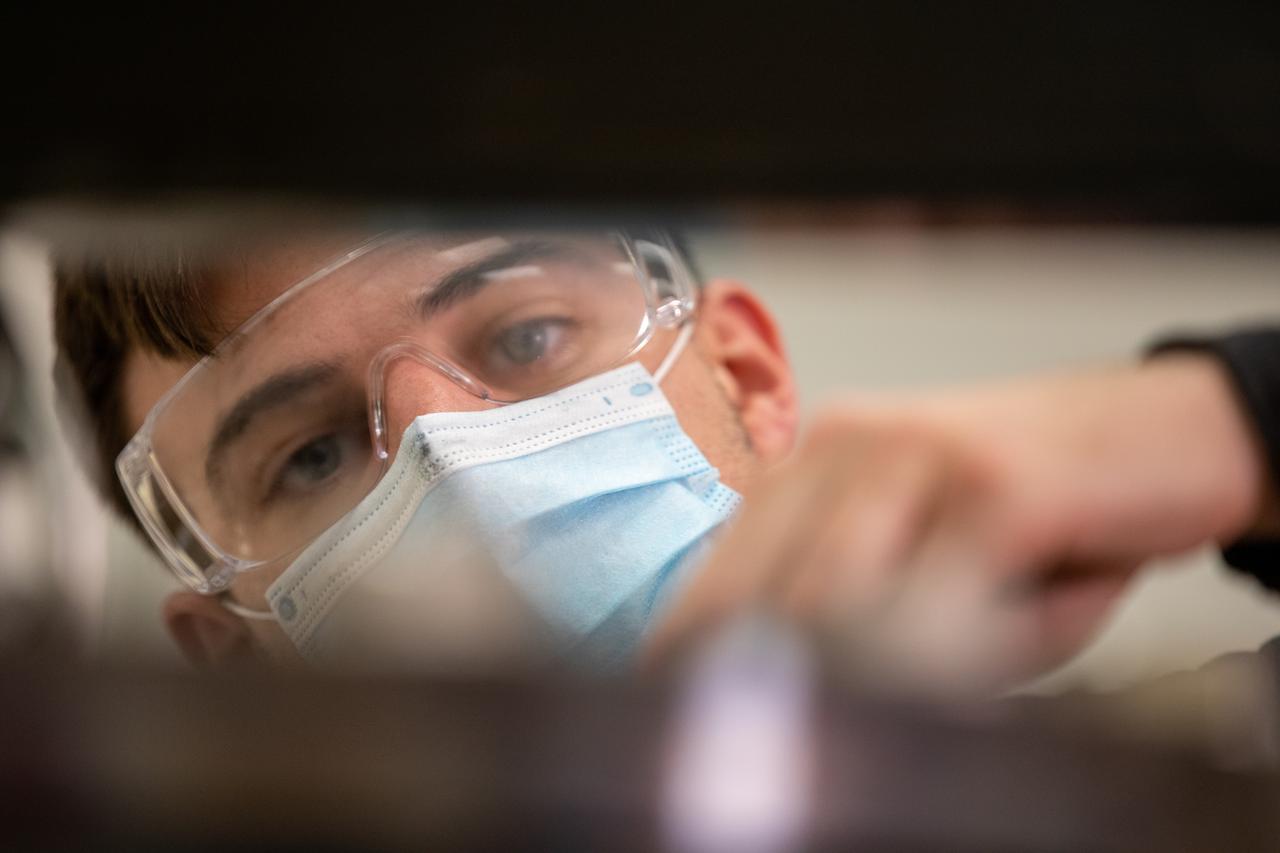
Kevin Grossman, project lead for the Gaseous Lunar Oxygen from Regolith Electrolysis (GaLORE) project at NASA Kennedy Space Center’s Swamp Works, works on the hardware for GaLORE on July 21, 2020, inside a laboratory at the center’s Neil Armstrong Operations and Checkout Building. Grossman is leading an Early Career Initiative project that is investing in turning lunar regolith into oxygen that could be used for life support for sustainable human lunar exploration on long-duration missions to Mars. GaLORE was selected as an Early Career Initiative project by NASA’s Space Technology Mission directorate.
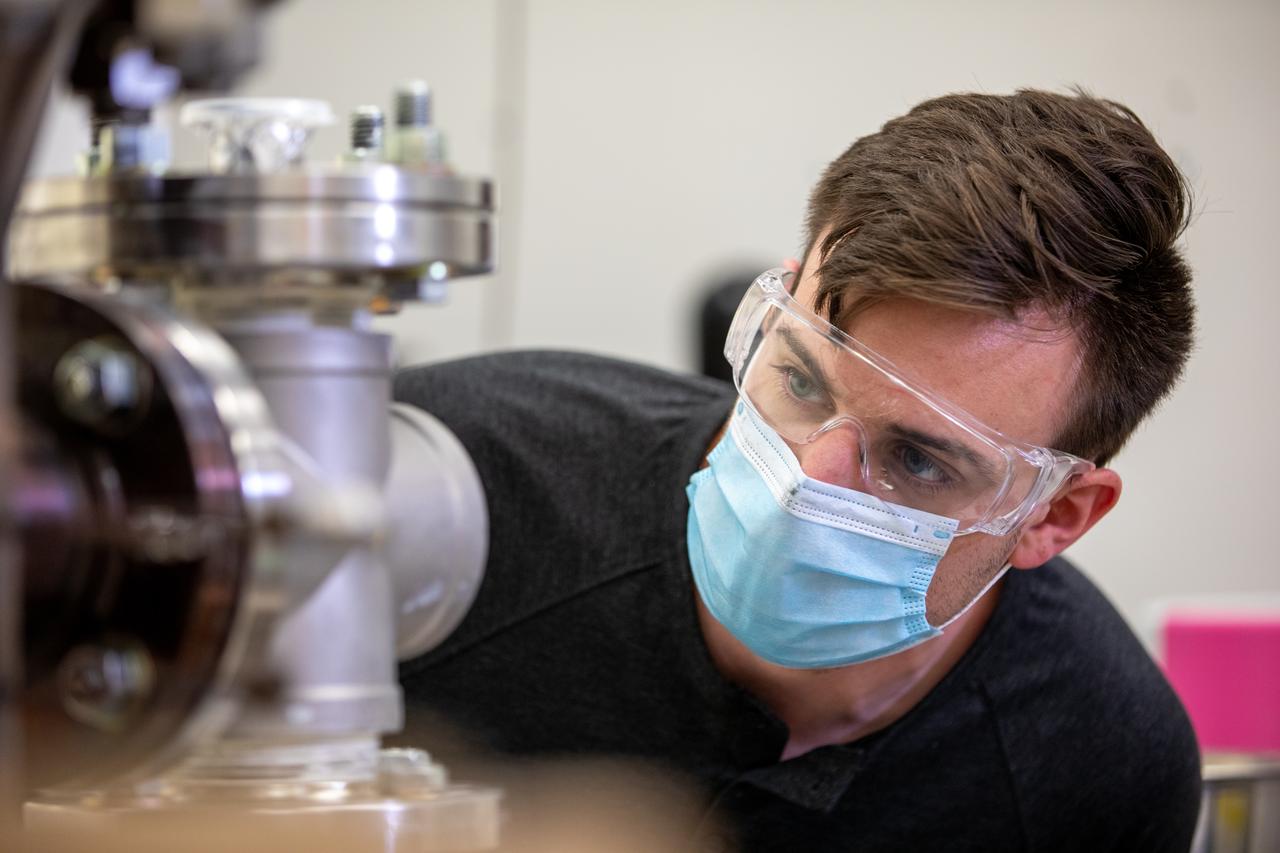
Kevin Grossman, project lead for the Gaseous Lunar Oxygen from Regolith Electrolysis (GaLORE) project at NASA Kennedy Space Center’s Swamp Works, works on the hardware for GaLORE on July 21, 2020, inside a laboratory at the center’s Neil Armstrong Operations and Checkout Building. Grossman is leading an Early Career Initiative project that is investing in turning lunar regolith into oxygen that could be used for life support for sustainable human lunar exploration on long-duration missions to Mars. GaLORE was selected as an Early Career Initiative project by NASA’s Space Technology Mission directorate.
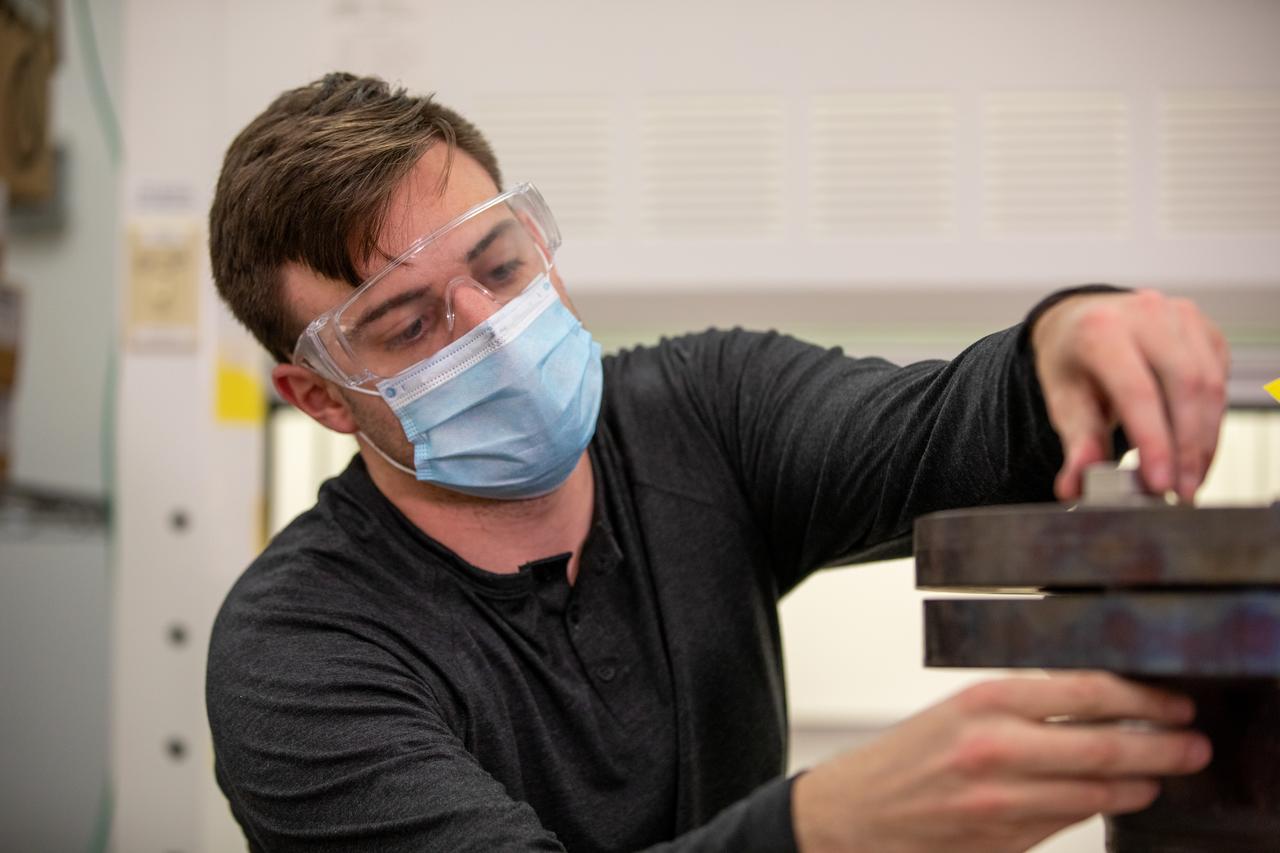
Kevin Grossman, project lead for the Gaseous Lunar Oxygen from Regolith Electrolysis (GaLORE) project at NASA Kennedy Space Center’s Swamp Works, checks the hardware for GaLORE on July 21, 2020, inside a laboratory at the center’s Neil Armstrong Operations and Checkout Building. Grossman is leading an Early Career Initiative project that is investing in turning lunar regolith into oxygen that could be used for life support for sustainable human lunar exploration on long-duration missions to Mars. GaLORE was selected as an Early Career Initiative project by NASA’s Space Technology Mission directorate.
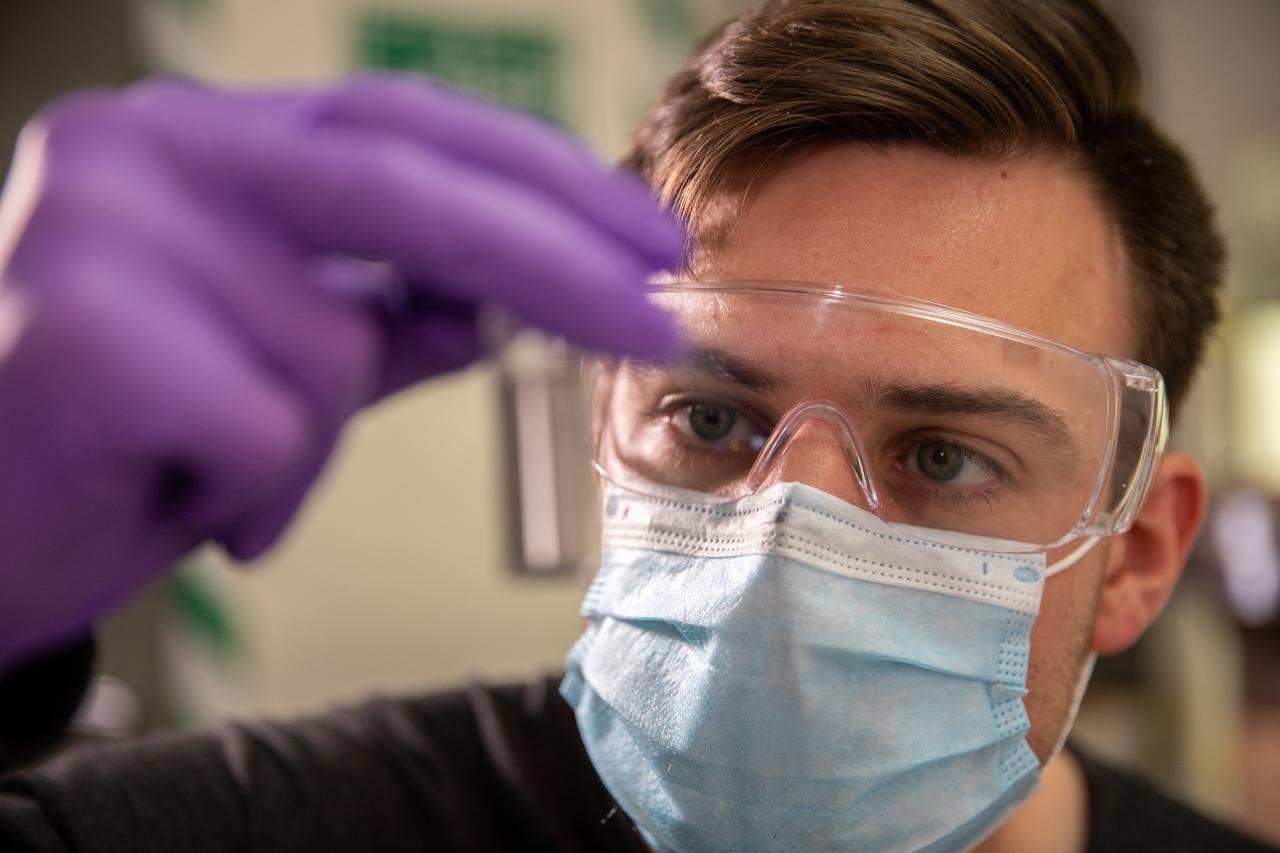
Kevin Grossman, project lead for the Gaseous Lunar Oxygen from Regolith Electrolysis (GaLORE) project at NASA Kennedy Space Center’s Swamp Works, inspects a piece of hardware for GaLORE on July 21, 2020, inside a laboratory at the center’s Neil Armstrong Operations and Checkout Building. Grossman is leading an Early Career Initiative project that is investing in turning lunar regolith into oxygen that could be used for life support for sustainable human lunar exploration on long-duration missions to Mars. GaLORE was selected as an Early Career Initiative project by NASA’s Space Technology Mission directorate.
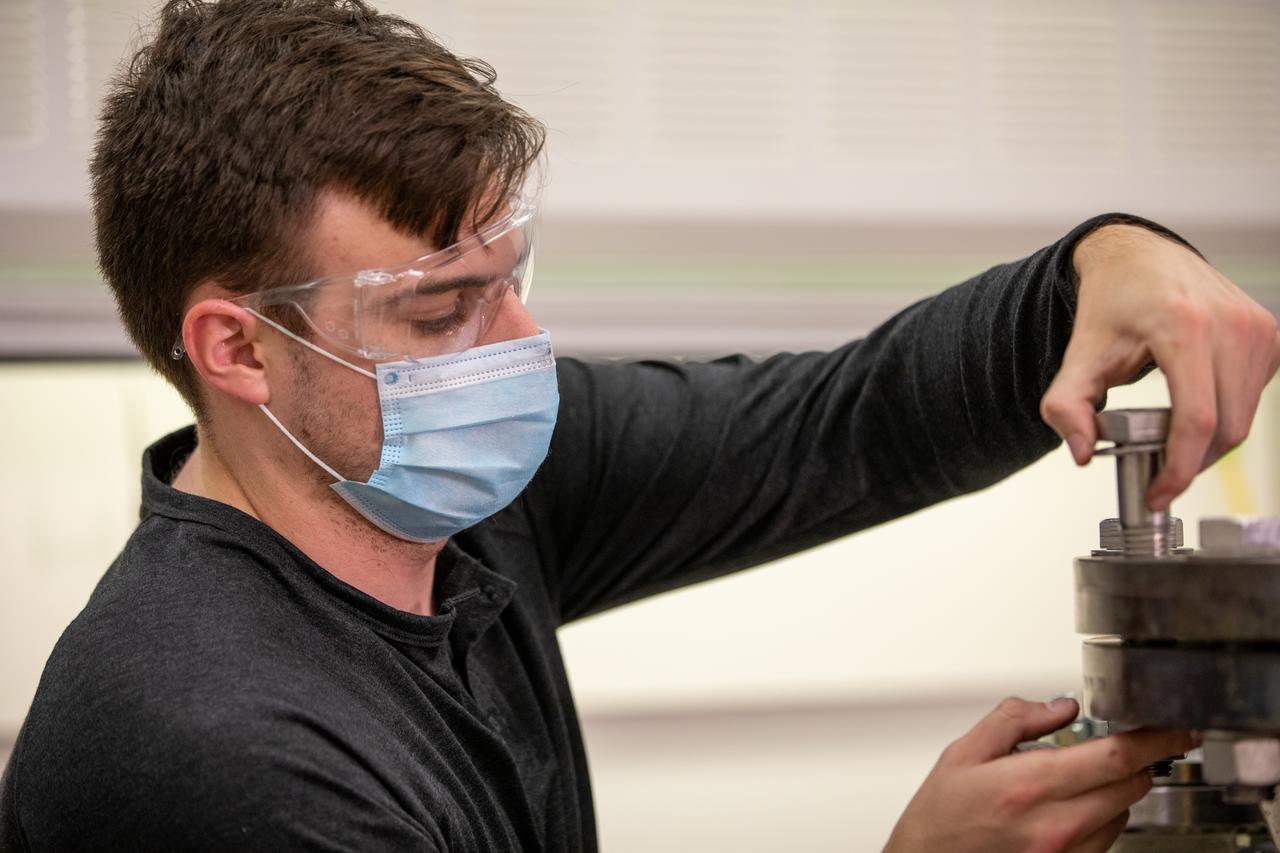
Kevin Grossman, project lead for the Gaseous Lunar Oxygen from Regolith Electrolysis (GaLORE) project at NASA Kennedy Space Center’s Swamp Works, checks the hardware for GaLORE on July 21, 2020, inside a laboratory at the center’s Neil Armstrong Operations and Checkout Building. Grossman is leading an Early Career Initiative project that is investing in turning lunar regolith into oxygen that could be used for life support for sustainable human lunar exploration on long-duration missions to Mars. GaLORE was selected as an Early Career Initiative project by NASA’s Space Technology Mission directorate.
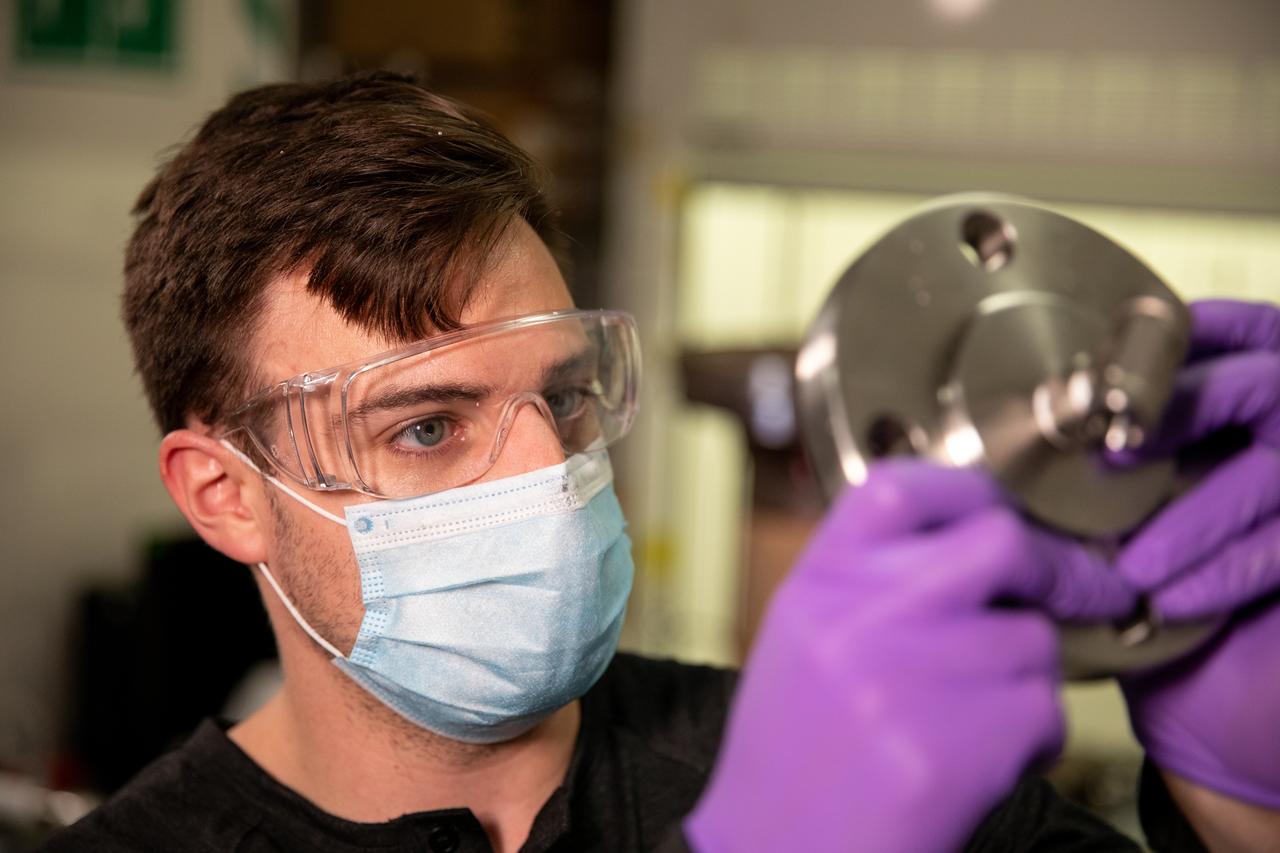
Kevin Grossman, project lead for the Gaseous Lunar Oxygen from Regolith Electrolysis (GaLORE) project at NASA Kennedy Space Center’s Swamp Works, inspects a piece of hardware for GaLORE on July 21, 2020, inside a laboratory at the center’s Neil Armstrong Operations and Checkout Building. Grossman is leading an Early Career Initiative project that is investing in turning lunar regolith into oxygen that could be used for life support for sustainable human lunar exploration on long-duration missions to Mars. GaLORE was selected as an Early Career Initiative project by NASA’s Space Technology Mission directorate.
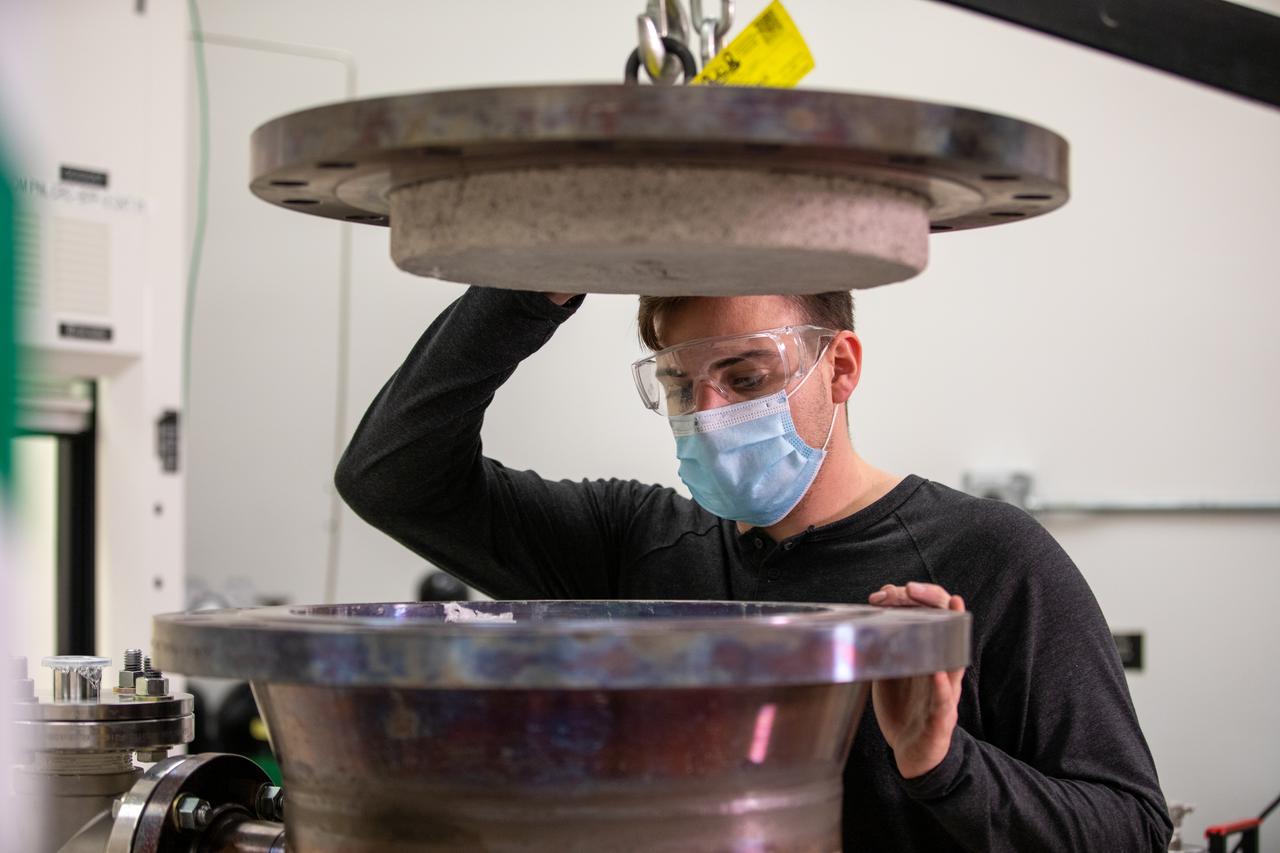
Kevin Grossman, project lead for the Gaseous Lunar Oxygen from Regolith Electrolysis (GaLORE) project at NASA Kennedy Space Center’s Swamp Works, checks the hardware for GaLORE on July 21, 2020, inside a laboratory at the center’s Neil Armstrong Operations and Checkout Building. Grossman is leading an Early Career Initiative project that is investing in turning lunar regolith into oxygen that could be used for life support for sustainable human lunar exploration on long-duration missions to Mars. GaLORE was selected as an Early Career Initiative project by NASA’s Space Technology Mission directorate.
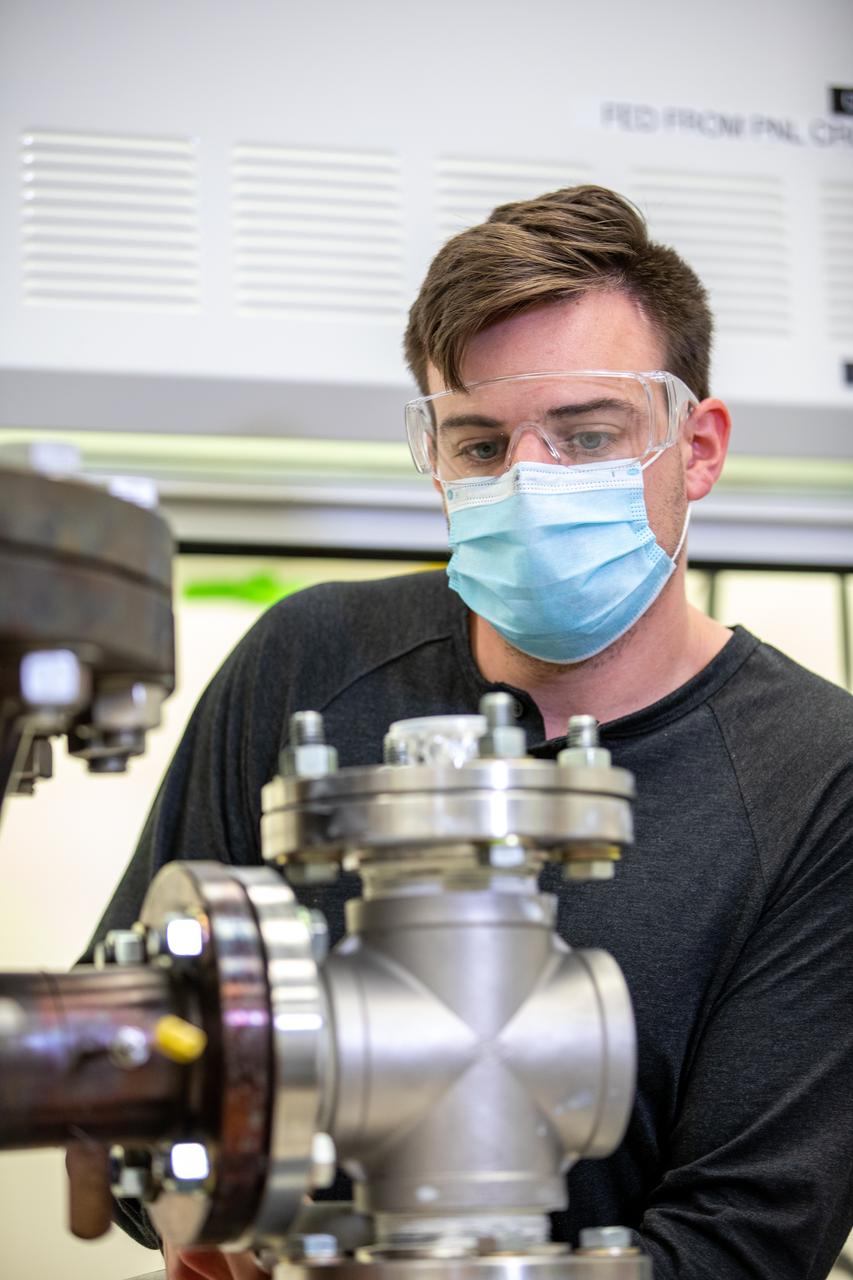
Kevin Grossman, project lead for the Gaseous Lunar Oxygen from Regolith Electrolysis (GaLORE) project at NASA Kennedy Space Center’s Swamp Works, works on the hardware for GaLORE on July 21, 2020, inside a laboratory at the center’s Neil Armstrong Operations and Checkout Building. Grossman is leading an Early Career Initiative project that is investing in turning lunar regolith into oxygen that could be used for life support for sustainable human lunar exploration on long-duration missions to Mars. GaLORE was selected as an Early Career Initiative project by NASA’s Space Technology Mission directorate.
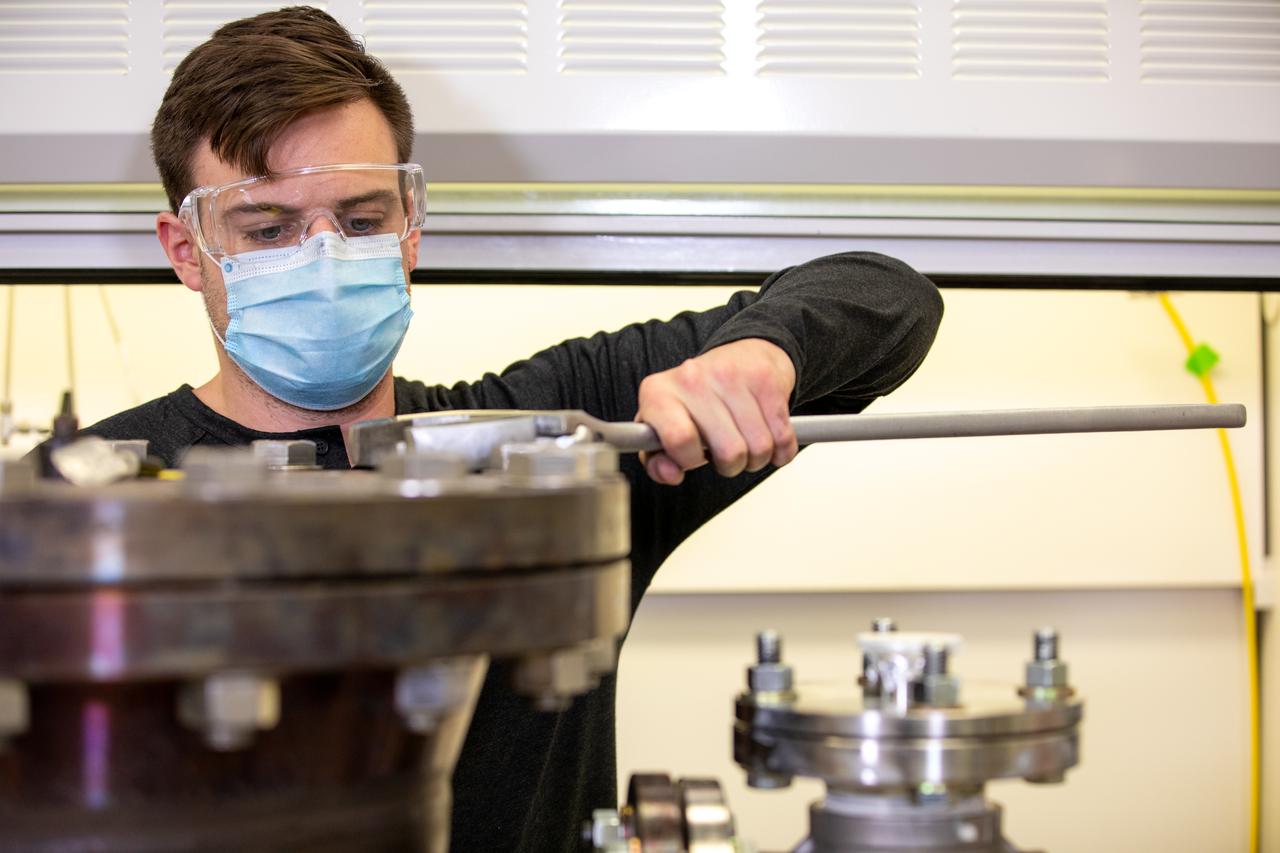
Kevin Grossman, project lead for the Gaseous Lunar Oxygen from Regolith Electrolysis (GaLORE) project at NASA Kennedy Space Center’s Swamp Works, works on the hardware for GaLORE on July 21, 2020, inside a laboratory at the center’s Neil Armstrong Operations and Checkout Building. Grossman is leading an Early Career Initiative project that is investing in turning lunar regolith into oxygen that could be used for life support for sustainable human lunar exploration on long-duration missions to Mars. GaLORE was selected as an Early Career Initiative project by NASA’s Space Technology Mission directorate.
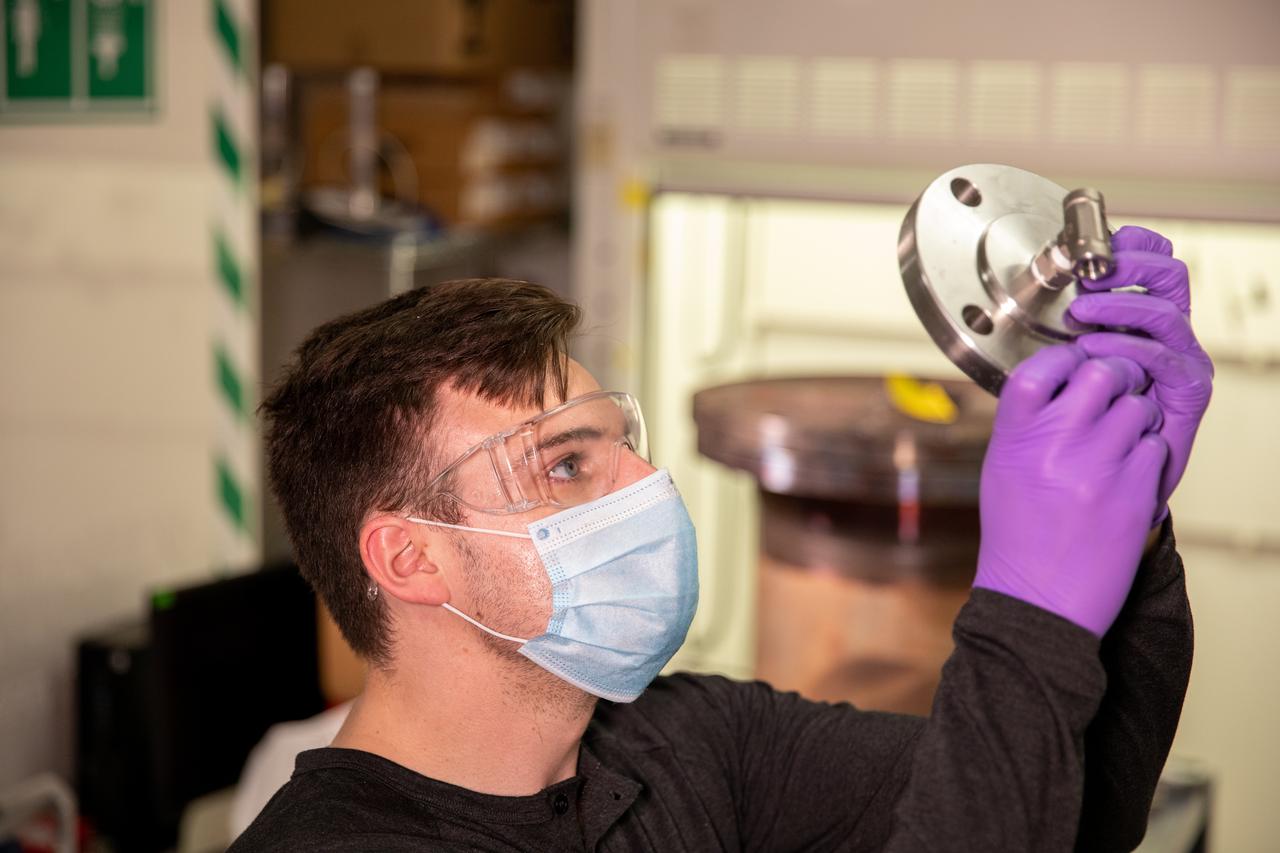
Kevin Grossman, project lead for the Gaseous Lunar Oxygen from Regolith Electrolysis (GaLORE) project at NASA Kennedy Space Center’s Swamp Works, inspects a piece of hardware for GaLORE on July 21, 2020, inside a laboratory at the center’s Neil Armstrong Operations and Checkout Building. Grossman is leading an Early Career Initiative project that is investing in turning lunar regolith into oxygen that could be used for life support for sustainable human lunar exploration on long-duration missions to Mars. GaLORE was selected as an Early Career Initiative project by NASA’s Space Technology Mission directorate.
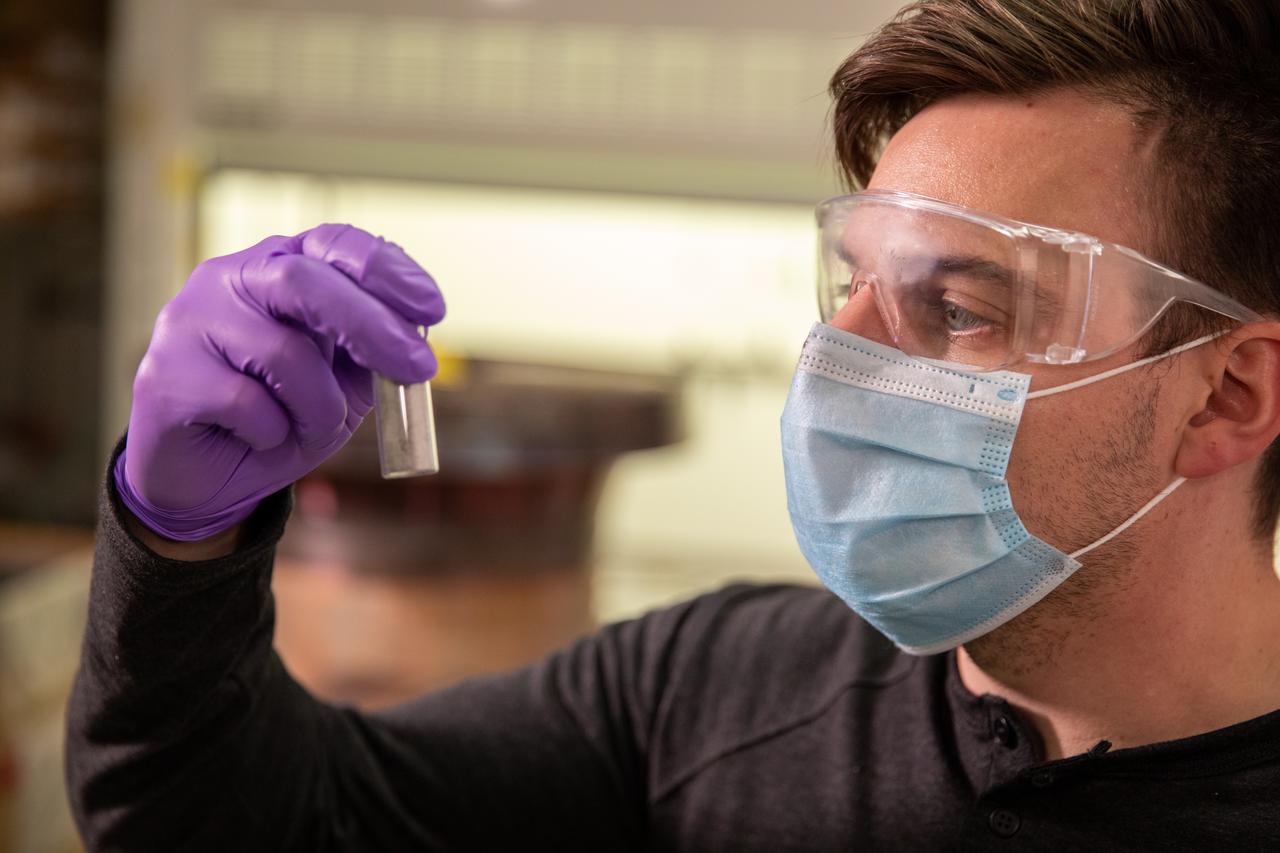
Kevin Grossman, project lead for the Gaseous Lunar Oxygen from Regolith Electrolysis (GaLORE) project at NASA Kennedy Space Center’s Swamp Works, inspects a piece of hardware for GaLORE on July 21, 2020, inside a laboratory at the center’s Neil Armstrong Operations and Checkout Building. Grossman is leading an Early Career Initiative project that is investing in turning lunar regolith into oxygen that could be used for life support for sustainable human lunar exploration on long-duration missions to Mars. GaLORE was selected as an Early Career Initiative project by NASA’s Space Technology Mission directorate.
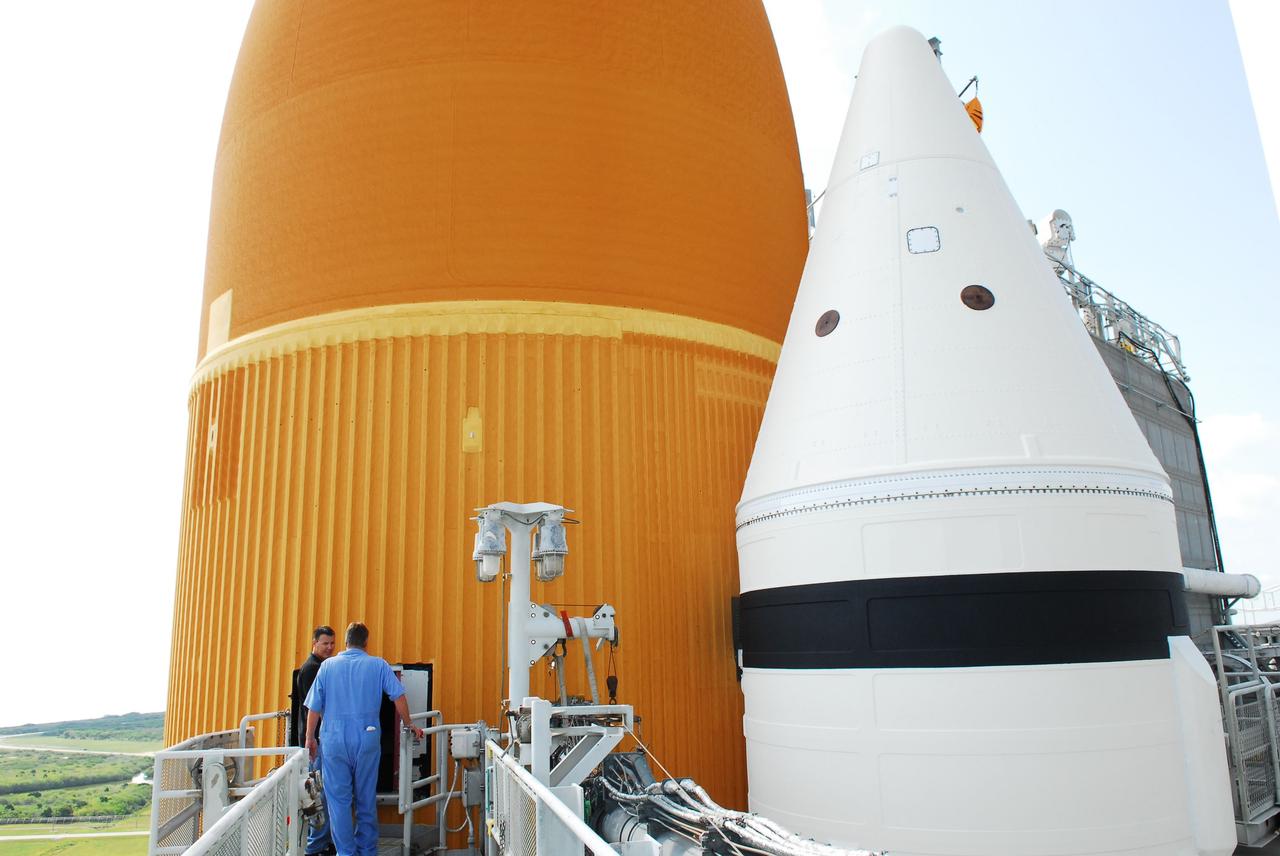
CAPE CANAVERAL, Fla. -- At NASA's Kennedy Space Center in Florida, technicians prepare to conduct Computed Radiography (CR) X-ray scans of 50 support beams, called stringers, on the shuttle-facing side of Atlantis' external tank at Launch Pad 39A. The hi-tech images will be taken of the tops and bottoms of the 21-foot long beams, which are located on the tank's intertank section. The scans follow a June 15th tanking test when the launch team filled then drained the tank of about 535,000 gallons of liquid hydrogen and liquid oxygen, just like for a launch. Earlier this year, managers directed teams to make the same stringer modifications to Atlantis' tank, ET-138, as they had after small cracks in the support beams of shuttle Discovery's STS-133 mission external tank were discovered. The scans will confirm there are no issues with Atlantis' tank. STS-135 Commander Chris Ferguson, Pilot Doug Hurley and Mission Specialists Sandy Magnus and Rex Walheim are targeted to lift off on space shuttle Atlantis July 8, taking with them the MPLM packed with supplies, logistics and spare parts to the International Space Station. The STS-135 mission also will fly a system to investigate the potential for robotically refueling existing satellites and return a failed ammonia pump module to help NASA better understand the failure mechanism and improve pump designs for future systems. STS-135 will be the 33rd flight of Atlantis, the 37th shuttle mission to the space station, and the 135th and final mission of NASA's Space Shuttle Program. For more information visit, www.nasa.gov/mission_pages/shuttle/shuttlemissions/sts135/index.html. Photo credit: NASA/Jim Grossmann
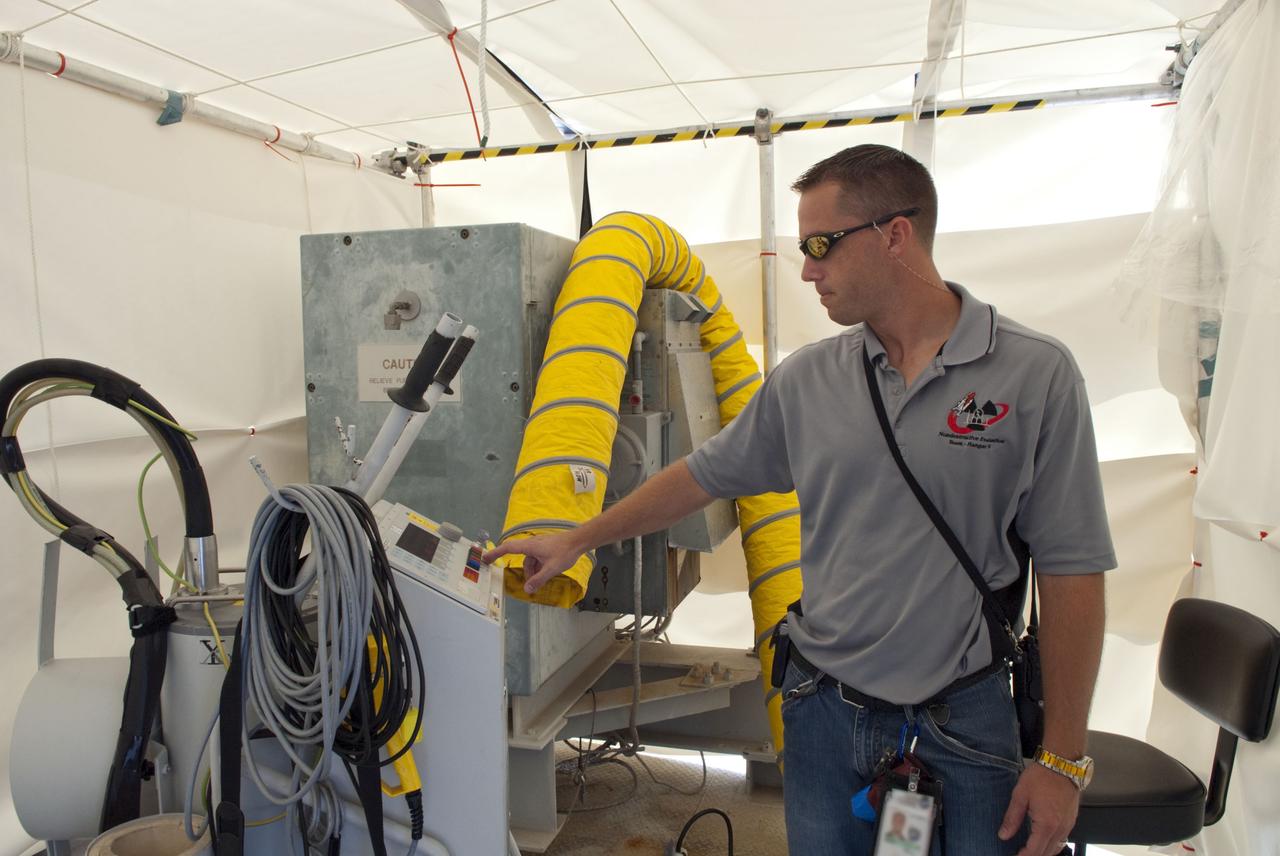
CAPE CANAVERAL, Fla. -- At NASA's Kennedy Space Center in Florida, technicians conduct Computed Radiography (CR) X-ray scans of 50 support beams, called stringers, on the shuttle-facing side of Atlantis' external tank at Launch Pad 39A. The hi-tech images will be taken of the tops and bottoms of the 21-foot long beams, which are located on the tank's intertank section. The scans follow a June 15th tanking test when the launch team filled then drained the tank of about 535,000 gallons of liquid hydrogen and liquid oxygen, just like for a launch. Earlier this year, managers directed teams to make the same stringer modifications to Atlantis' tank, ET-138, as they had after small cracks in the support beams of shuttle Discovery's STS-133 mission external tank were discovered. The scans will confirm there are no issues with Atlantis' tank. STS-135 Commander Chris Ferguson, Pilot Doug Hurley and Mission Specialists Sandy Magnus and Rex Walheim are targeted to lift off on space shuttle Atlantis July 8, taking with them the MPLM packed with supplies, logistics and spare parts to the International Space Station. The STS-135 mission also will fly a system to investigate the potential for robotically refueling existing satellites and return a failed ammonia pump module to help NASA better understand the failure mechanism and improve pump designs for future systems. STS-135 will be the 33rd flight of Atlantis, the 37th shuttle mission to the space station, and the 135th and final mission of NASA's Space Shuttle Program. For more information visit, www.nasa.gov/mission_pages/shuttle/shuttlemissions/sts135/index.html. Photo credit: NASA/Jim Grossmann
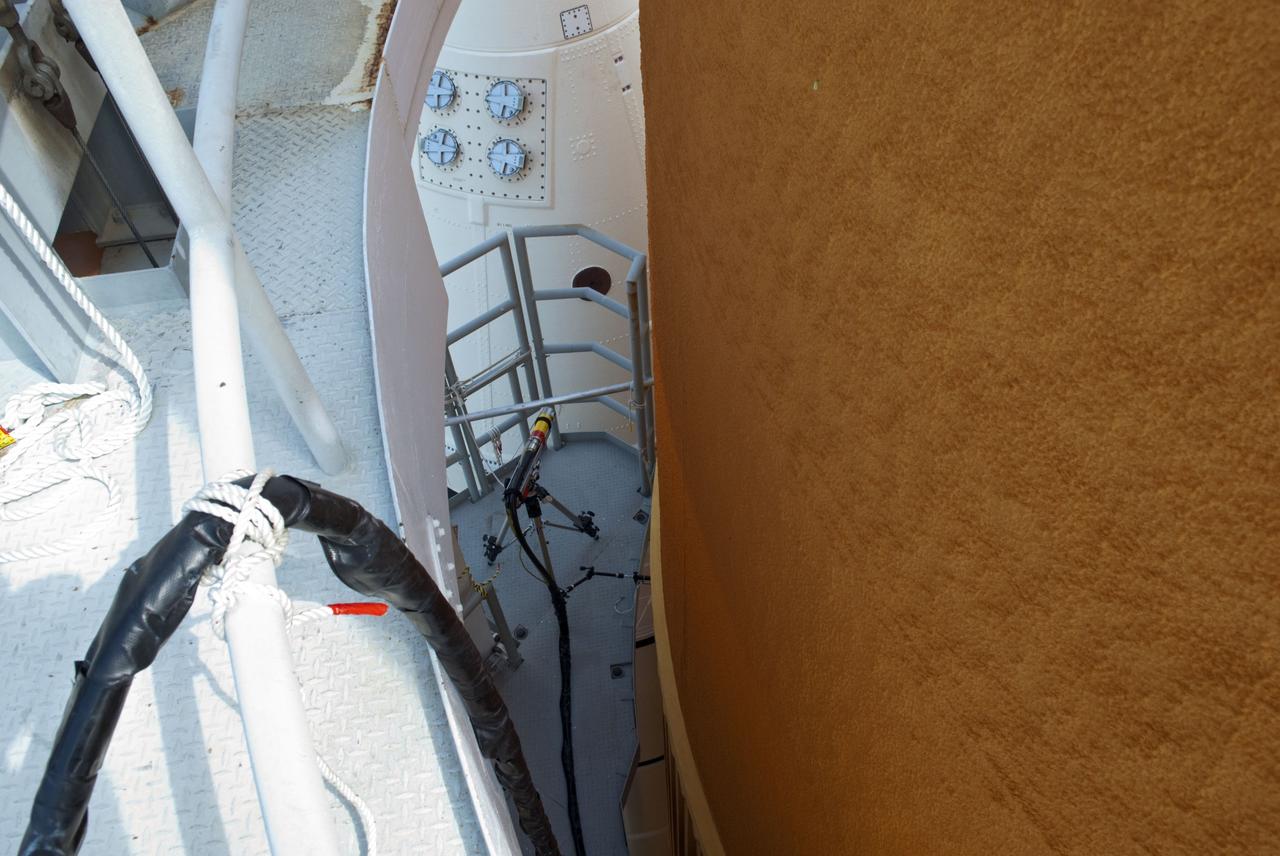
CAPE CANAVERAL, Fla. -- At NASA's Kennedy Space Center in Florida, technicians conduct Computed Radiography (CR) X-ray scans of 50 support beams, called stringers, on the shuttle-facing side of Atlantis' external tank at Launch Pad 39A. The hi-tech images will be taken of the tops and bottoms of the 21-foot long beams, which are located on the tank's intertank section. The scans follow a June 15th tanking test when the launch team filled then drained the tank of about 535,000 gallons of liquid hydrogen and liquid oxygen, just like for a launch. Earlier this year, managers directed teams to make the same stringer modifications to Atlantis' tank, ET-138, as they had after small cracks in the support beams of shuttle Discovery's STS-133 mission external tank were discovered. The scans will confirm there are no issues with Atlantis' tank. STS-135 Commander Chris Ferguson, Pilot Doug Hurley and Mission Specialists Sandy Magnus and Rex Walheim are targeted to lift off on space shuttle Atlantis July 8, taking with them the MPLM packed with supplies, logistics and spare parts to the International Space Station. The STS-135 mission also will fly a system to investigate the potential for robotically refueling existing satellites and return a failed ammonia pump module to help NASA better understand the failure mechanism and improve pump designs for future systems. STS-135 will be the 33rd flight of Atlantis, the 37th shuttle mission to the space station, and the 135th and final mission of NASA's Space Shuttle Program. For more information visit, www.nasa.gov/mission_pages/shuttle/shuttlemissions/sts135/index.html. Photo credit: NASA/Jim Grossmann
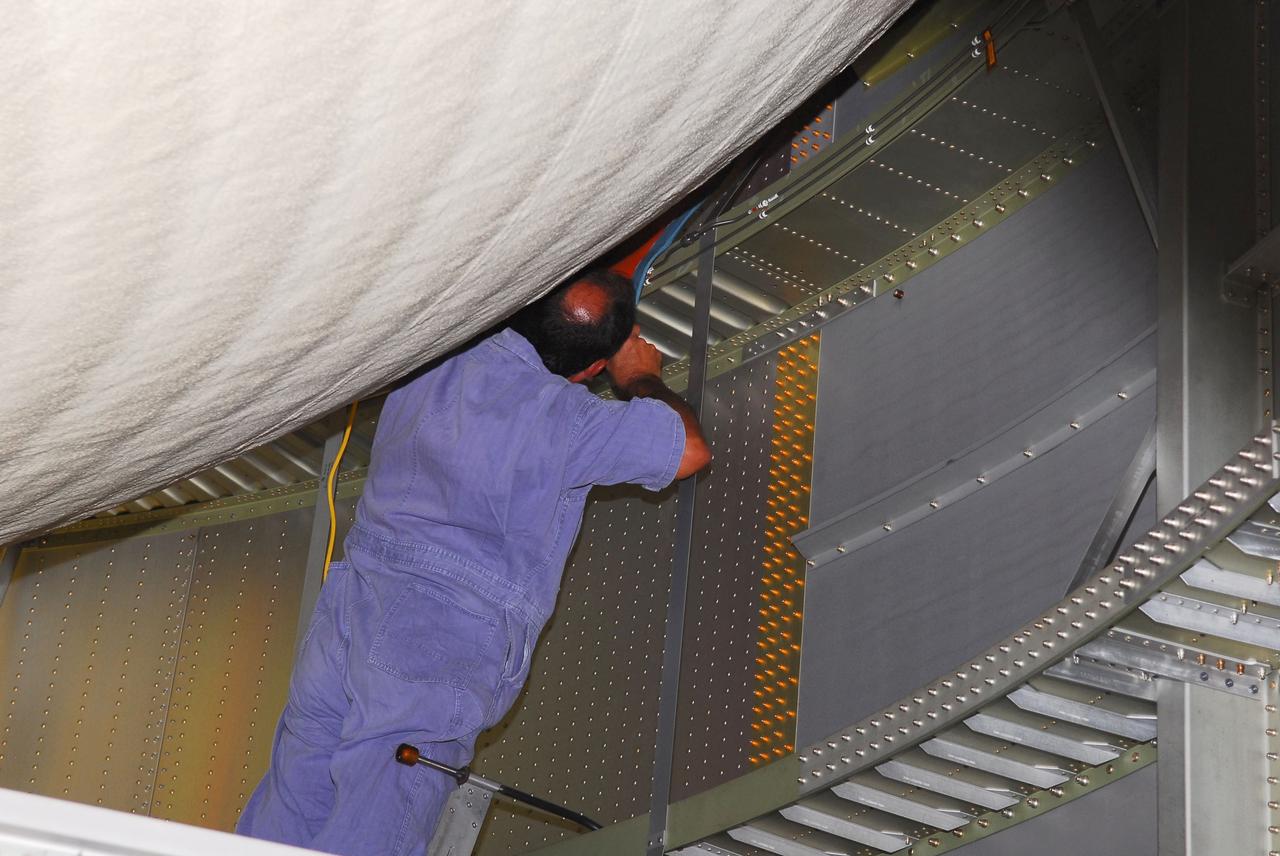
CAPE CANAVERAL, Fla. -- At NASA's Kennedy Space Center in Florida, technicians conduct Computed Radiography (CR) X-ray scans of 50 support beams, called stringers, on the shuttle-facing side of Atlantis' external tank at Launch Pad 39A. The hi-tech images will be taken of the tops and bottoms of the 21-foot long beams, which are located on the tank's intertank section. Here, a technician prepares an image plate inside the outertank. The scans follow a June 15th tanking test when the launch team filled then drained the tank of about 535,000 gallons of liquid hydrogen and liquid oxygen, just like for a launch. Earlier this year, managers directed teams to make the same stringer modifications to Atlantis' tank, ET-138, as they had after small cracks in the support beams of shuttle Discovery's STS-133 mission external tank were discovered. The scans will confirm there are no issues with Atlantis' tank. STS-135 Commander Chris Ferguson, Pilot Doug Hurley and Mission Specialists Sandy Magnus and Rex Walheim are targeted to lift off on space shuttle Atlantis July 8, taking with them the MPLM packed with supplies, logistics and spare parts to the International Space Station. The STS-135 mission also will fly a system to investigate the potential for robotically refueling existing satellites and return a failed ammonia pump module to help NASA better understand the failure mechanism and improve pump designs for future systems. STS-135 will be the 33rd flight of Atlantis, the 37th shuttle mission to the space station, and the 135th and final mission of NASA's Space Shuttle Program. For more information visit, www.nasa.gov/mission_pages/shuttle/shuttlemissions/sts135/index.html. Photo credit: NASA/Jim Grossmann

CAPE CANAVERAL, Fla. -- At NASA's Kennedy Space Center in Florida, technicians conduct Computed Radiography (CR) X-ray scans of 50 support beams, called stringers, on the shuttle-facing side of Atlantis' external tank at Launch Pad 39A. The hi-tech images will be taken of the tops and bottoms of the 21-foot long beams, which are located on the tank's intertank section. The scans follow a June 15th tanking test when the launch team filled then drained the tank of about 535,000 gallons of liquid hydrogen and liquid oxygen, just like for a launch. Earlier this year, managers directed teams to make the same stringer modifications to Atlantis' tank, ET-138, as they had after small cracks in the support beams of shuttle Discovery's STS-133 mission external tank were discovered. The scans will confirm there are no issues with Atlantis' tank. STS-135 Commander Chris Ferguson, Pilot Doug Hurley and Mission Specialists Sandy Magnus and Rex Walheim are targeted to lift off on space shuttle Atlantis July 8, taking with them the MPLM packed with supplies, logistics and spare parts to the International Space Station. The STS-135 mission also will fly a system to investigate the potential for robotically refueling existing satellites and return a failed ammonia pump module to help NASA better understand the failure mechanism and improve pump designs for future systems. STS-135 will be the 33rd flight of Atlantis, the 37th shuttle mission to the space station, and the 135th and final mission of NASA's Space Shuttle Program. For more information visit, www.nasa.gov/mission_pages/shuttle/shuttlemissions/sts135/index.html. Photo credit: NASA/Jim Grossmann
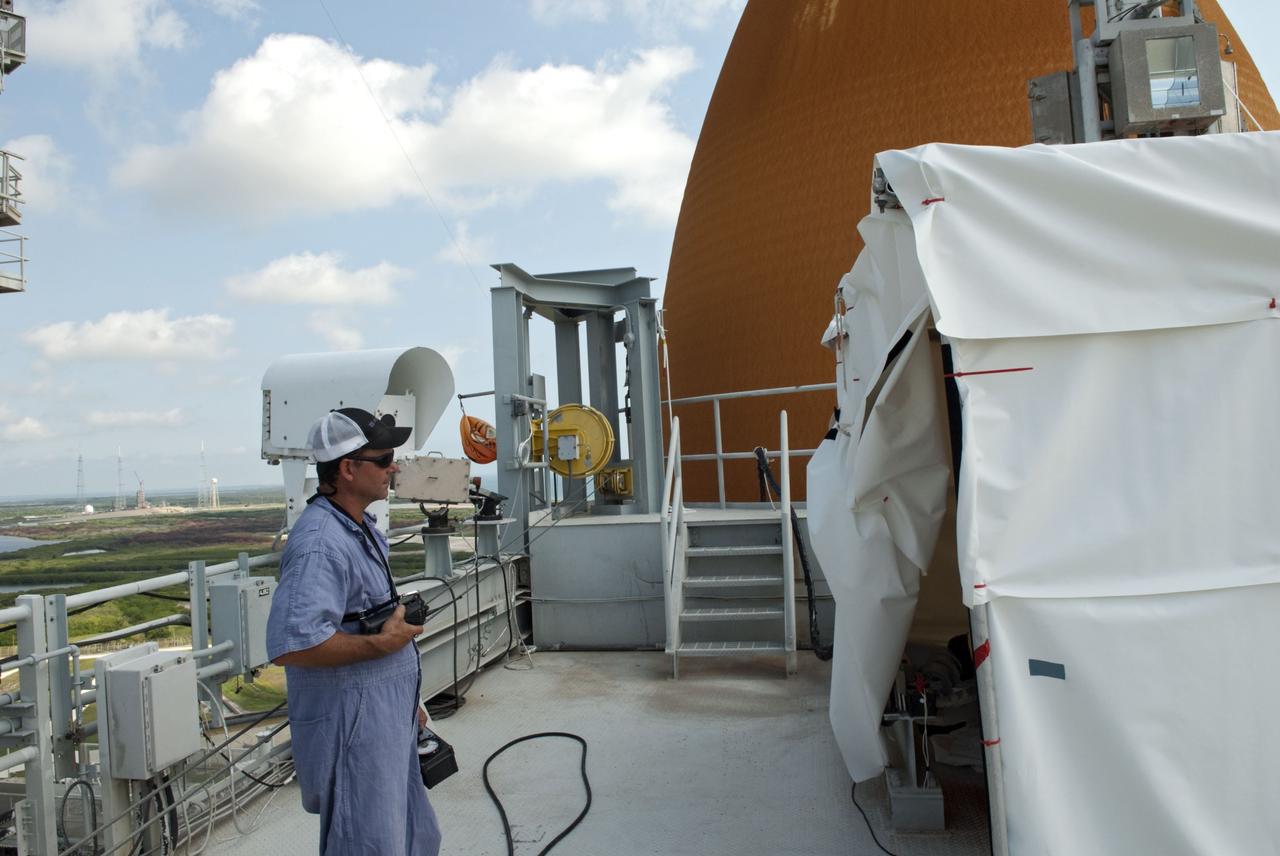
CAPE CANAVERAL, Fla. -- At NASA's Kennedy Space Center in Florida, technicians conduct Computed Radiography (CR) X-ray scans of 50 support beams, called stringers, on the shuttle-facing side of Atlantis' external tank at Launch Pad 39A. The hi-tech images will be taken of the tops and bottoms of the 21-foot long beams, which are located on the tank's intertank section. The scans follow a June 15th tanking test when the launch team filled then drained the tank of about 535,000 gallons of liquid hydrogen and liquid oxygen, just like for a launch. Earlier this year, managers directed teams to make the same stringer modifications to Atlantis' tank, ET-138, as they had after small cracks in the support beams of shuttle Discovery's STS-133 mission external tank were discovered. The scans will confirm there are no issues with Atlantis' tank. STS-135 Commander Chris Ferguson, Pilot Doug Hurley and Mission Specialists Sandy Magnus and Rex Walheim are targeted to lift off on space shuttle Atlantis July 8, taking with them the MPLM packed with supplies, logistics and spare parts to the International Space Station. The STS-135 mission also will fly a system to investigate the potential for robotically refueling existing satellites and return a failed ammonia pump module to help NASA better understand the failure mechanism and improve pump designs for future systems. STS-135 will be the 33rd flight of Atlantis, the 37th shuttle mission to the space station, and the 135th and final mission of NASA's Space Shuttle Program. For more information visit, www.nasa.gov/mission_pages/shuttle/shuttlemissions/sts135/index.html. Photo credit: NASA/Jim Grossmann
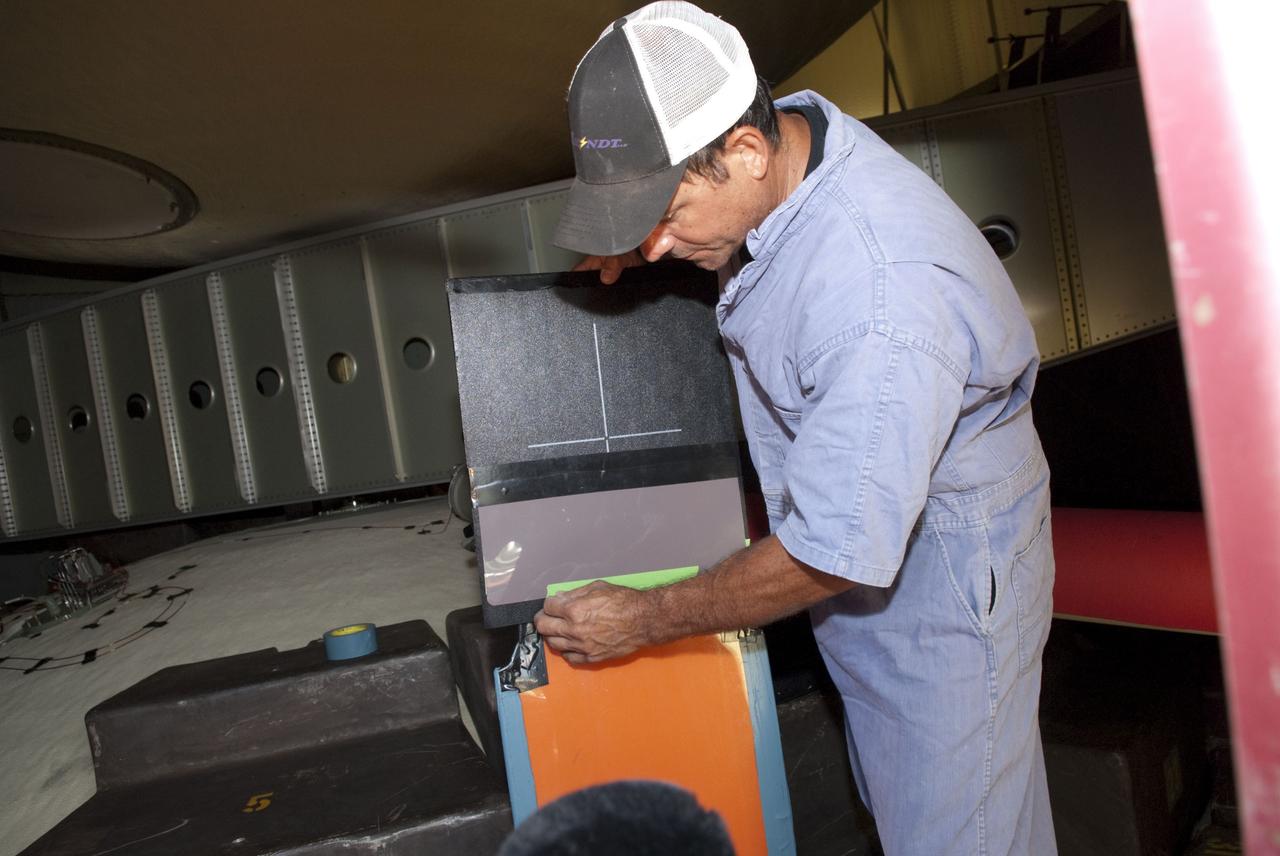
CAPE CANAVERAL, Fla. -- At NASA's Kennedy Space Center in Florida, technicians prepare to conduct Computed Radiography (CR) X-ray scans of 50 support beams, called stringers, on the shuttle-facing side of Atlantis' external tank at Launch Pad 39A. The hi-tech images will be taken of the tops and bottoms of the 21-foot long beams, which are located on the tank's intertank section. Here, a technician prepares an image plate inside the outertank. The scans follow a June 15th tanking test when the launch team filled then drained the tank of about 535,000 gallons of liquid hydrogen and liquid oxygen, just like for a launch. Earlier this year, managers directed teams to make the same stringer modifications to Atlantis' tank, ET-138, as they had after small cracks in the support beams of shuttle Discovery's STS-133 mission external tank were discovered. The scans will confirm there are no issues with Atlantis' tank. STS-135 Commander Chris Ferguson, Pilot Doug Hurley and Mission Specialists Sandy Magnus and Rex Walheim are targeted to lift off on space shuttle Atlantis July 8, taking with them the MPLM packed with supplies, logistics and spare parts to the International Space Station. The STS-135 mission also will fly a system to investigate the potential for robotically refueling existing satellites and return a failed ammonia pump module to help NASA better understand the failure mechanism and improve pump designs for future systems. STS-135 will be the 33rd flight of Atlantis, the 37th shuttle mission to the space station, and the 135th and final mission of NASA's Space Shuttle Program. For more information visit, www.nasa.gov/mission_pages/shuttle/shuttlemissions/sts135/index.html. Photo credit: NASA/Jim Grossmann
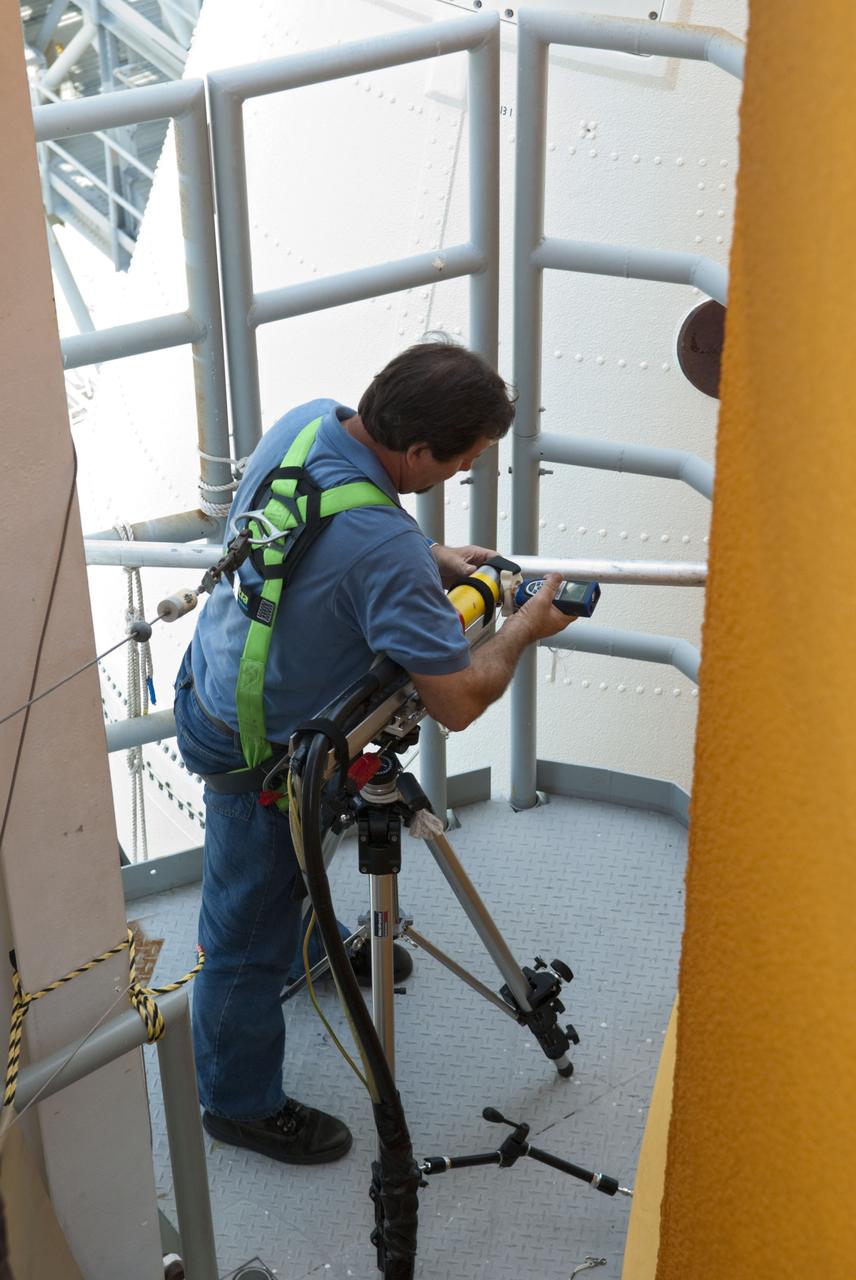
CAPE CANAVERAL, Fla. -- At NASA's Kennedy Space Center in Florida, technicians conduct Computed Radiography (CR) X-ray scans of 50 support beams, called stringers, on the shuttle-facing side of Atlantis' external tank at Launch Pad 39A. The hi-tech images will be taken of the tops and bottoms of the 21-foot long beams, which are located on the tank's intertank section. The scans follow a June 15th tanking test when the launch team filled then drained the tank of about 535,000 gallons of liquid hydrogen and liquid oxygen, just like for a launch. Earlier this year, managers directed teams to make the same stringer modifications to Atlantis' tank, ET-138, as they had after small cracks in the support beams of shuttle Discovery's STS-133 mission external tank were discovered. The scans will confirm there are no issues with Atlantis' tank. STS-135 Commander Chris Ferguson, Pilot Doug Hurley and Mission Specialists Sandy Magnus and Rex Walheim are targeted to lift off on space shuttle Atlantis July 8, taking with them the MPLM packed with supplies, logistics and spare parts to the International Space Station. The STS-135 mission also will fly a system to investigate the potential for robotically refueling existing satellites and return a failed ammonia pump module to help NASA better understand the failure mechanism and improve pump designs for future systems. STS-135 will be the 33rd flight of Atlantis, the 37th shuttle mission to the space station, and the 135th and final mission of NASA's Space Shuttle Program. For more information visit, www.nasa.gov/mission_pages/shuttle/shuttlemissions/sts135/index.html. Photo credit: NASA/Jim Grossmann
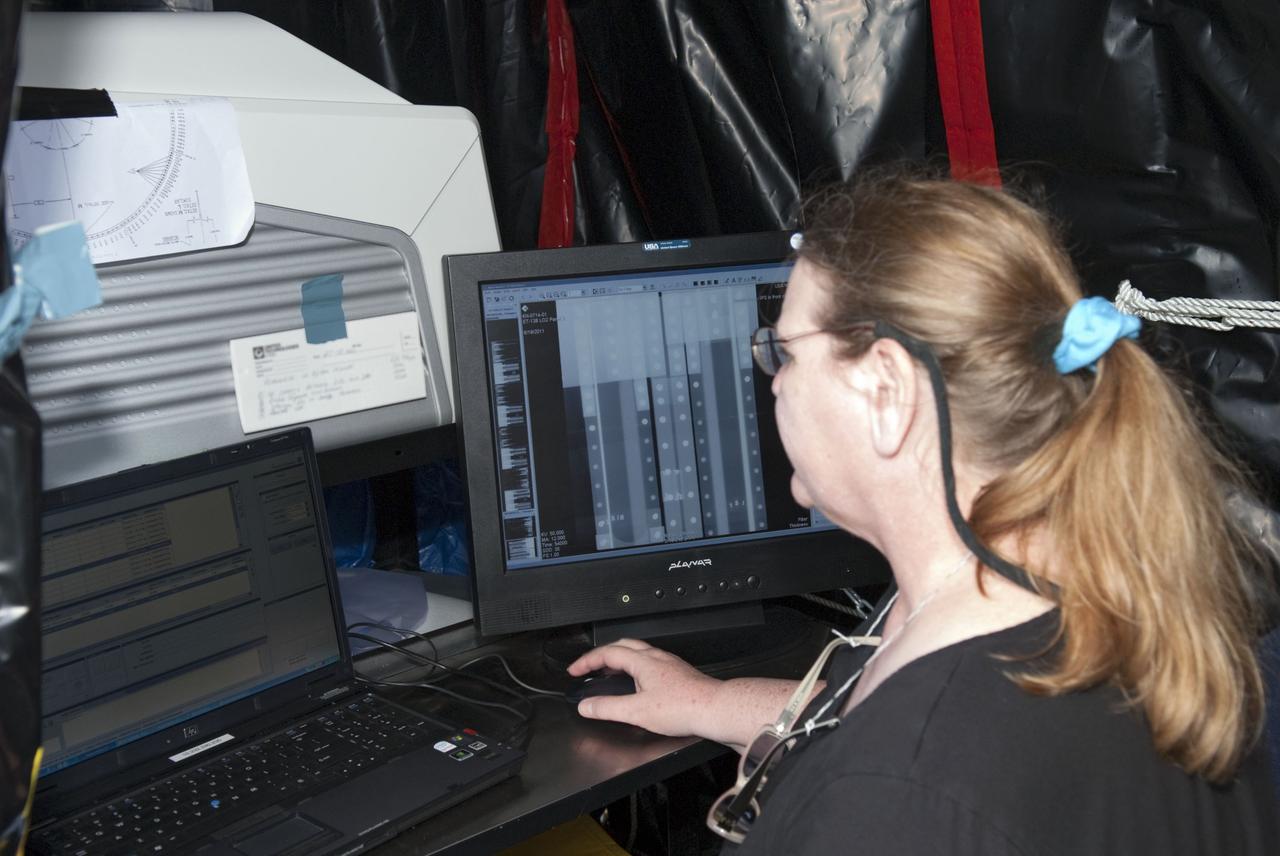
CAPE CANAVERAL, Fla. -- At NASA's Kennedy Space Center in Florida, technicians conduct Computed Radiography (CR) X-ray scans of 50 support beams, called stringers, on the shuttle-facing side of Atlantis' external tank at Launch Pad 39A. The hi-tech images will be taken of the tops and bottoms of the 21-foot long beams, which are located on the tank's intertank section. The scans follow a June 15th tanking test when the launch team filled then drained the tank of about 535,000 gallons of liquid hydrogen and liquid oxygen, just like for a launch. Earlier this year, managers directed teams to make the same stringer modifications to Atlantis' tank, ET-138, as they had after small cracks in the support beams of shuttle Discovery's STS-133 mission external tank were discovered. The scans will confirm there are no issues with Atlantis' tank. STS-135 Commander Chris Ferguson, Pilot Doug Hurley and Mission Specialists Sandy Magnus and Rex Walheim are targeted to lift off on space shuttle Atlantis July 8, taking with them the MPLM packed with supplies, logistics and spare parts to the International Space Station. The STS-135 mission also will fly a system to investigate the potential for robotically refueling existing satellites and return a failed ammonia pump module to help NASA better understand the failure mechanism and improve pump designs for future systems. STS-135 will be the 33rd flight of Atlantis, the 37th shuttle mission to the space station, and the 135th and final mission of NASA's Space Shuttle Program. For more information visit, www.nasa.gov/mission_pages/shuttle/shuttlemissions/sts135/index.html. Photo credit: NASA/Jim Grossmann
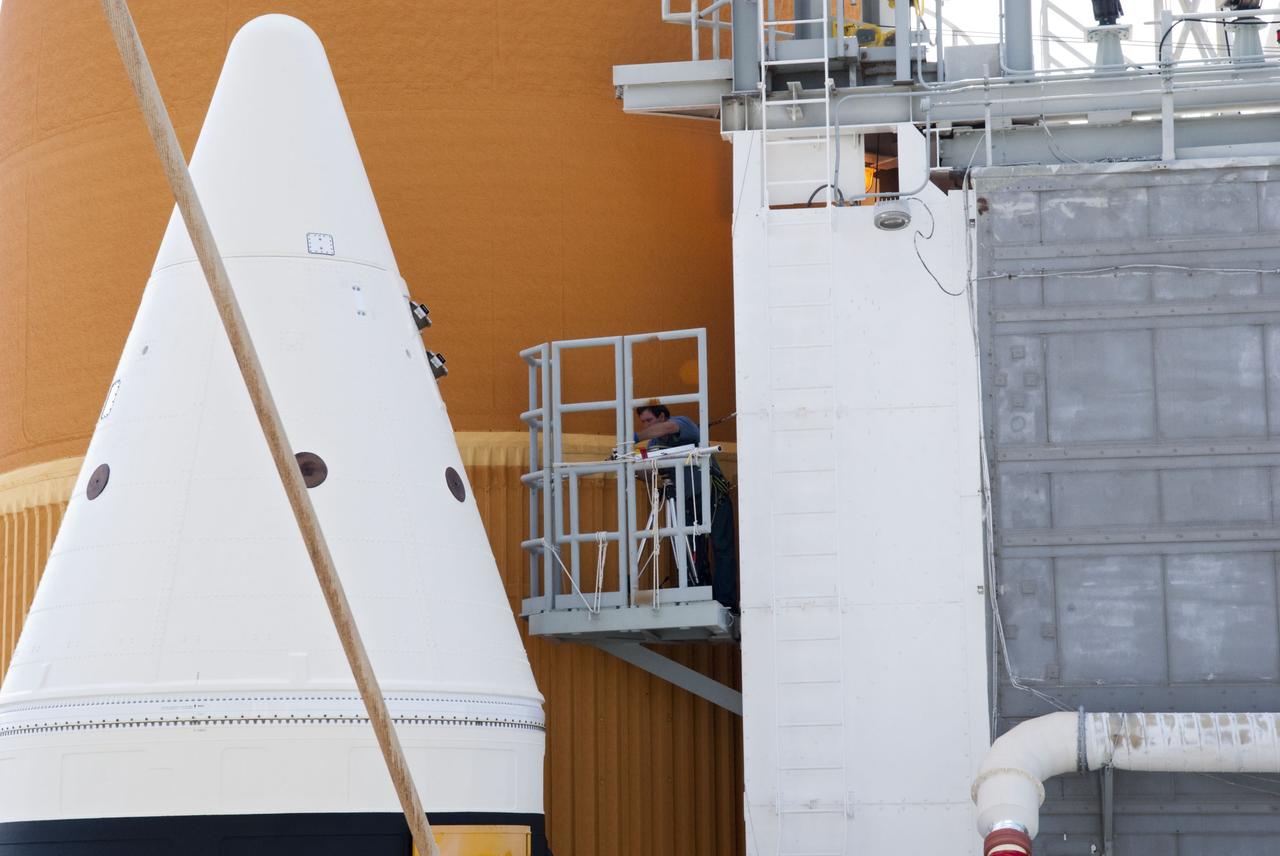
CAPE CANAVERAL, Fla. -- At NASA's Kennedy Space Center in Florida, technicians conduct Computed Radiography (CR) X-ray scans of 50 support beams, called stringers, on the shuttle-facing side of Atlantis' external tank at Launch Pad 39A. The hi-tech images will be taken of the tops and bottoms of the 21-foot long beams, which are located on the tank's intertank section. The scans follow a June 15th tanking test when the launch team filled then drained the tank of about 535,000 gallons of liquid hydrogen and liquid oxygen, just like for a launch. Earlier this year, managers directed teams to make the same stringer modifications to Atlantis' tank, ET-138, as they had after small cracks in the support beams of shuttle Discovery's STS-133 mission external tank were discovered. The scans will confirm there are no issues with Atlantis' tank. STS-135 Commander Chris Ferguson, Pilot Doug Hurley and Mission Specialists Sandy Magnus and Rex Walheim are targeted to lift off on space shuttle Atlantis July 8, taking with them the MPLM packed with supplies, logistics and spare parts to the International Space Station. The STS-135 mission also will fly a system to investigate the potential for robotically refueling existing satellites and return a failed ammonia pump module to help NASA better understand the failure mechanism and improve pump designs for future systems. STS-135 will be the 33rd flight of Atlantis, the 37th shuttle mission to the space station, and the 135th and final mission of NASA's Space Shuttle Program. For more information visit, www.nasa.gov/mission_pages/shuttle/shuttlemissions/sts135/index.html. Photo credit: NASA/Jim Grossmann