
Ana Leon, Solar Orbiter contamination control architect with Airbus Defence and Space, participates in a Spanish Facebook Live event for the Solar Orbiter mission in the Press Site auditorium at NASA’s Kennedy Space Center in Florida on Jan. 29, 2020. Solar Orbiter is an international cooperative mission between ESA (European Space Agency) and NASA. The mission aims to study the Sun, its outer atmosphere and solar wind. The spacecraft will provide the first images of the Sun’s poles. NASA’s Launch Services Program based at Kennedy is managing the launch. The spacecraft has been developed by Airbus Defence and Space. Solar Orbiter will launch in February 2020 aboard a United Launch Alliance Atlas V rocket from Space Launch Complex 41 at Cape Canaveral Air Force Station in Florida.

Teresa Nieves-chinchilla, deputy project scientist at NASA’s Goddard Space Flight Center in Greenbelt, Maryland, participates in a Spanish Facebook Live event for the Solar Orbiter mission in the Press Site auditorium at the agency’s Kennedy Space Center in Florida on Jan. 29, 2020. Solar Orbiter is an international cooperative mission between ESA (European Space Agency) and NASA. The mission aims to study the Sun, its outer atmosphere and solar wind. The spacecraft will provide the first images of the Sun’s poles. NASA’s Launch Services Program based at Kennedy is managing the launch. The spacecraft has been developed by Airbus Defence and Space. Solar Orbiter will launch in February 2020 aboard a United Launch Alliance Atlas V rocket from Space Launch Complex 41 at Cape Canaveral Air Force Station in Florida.
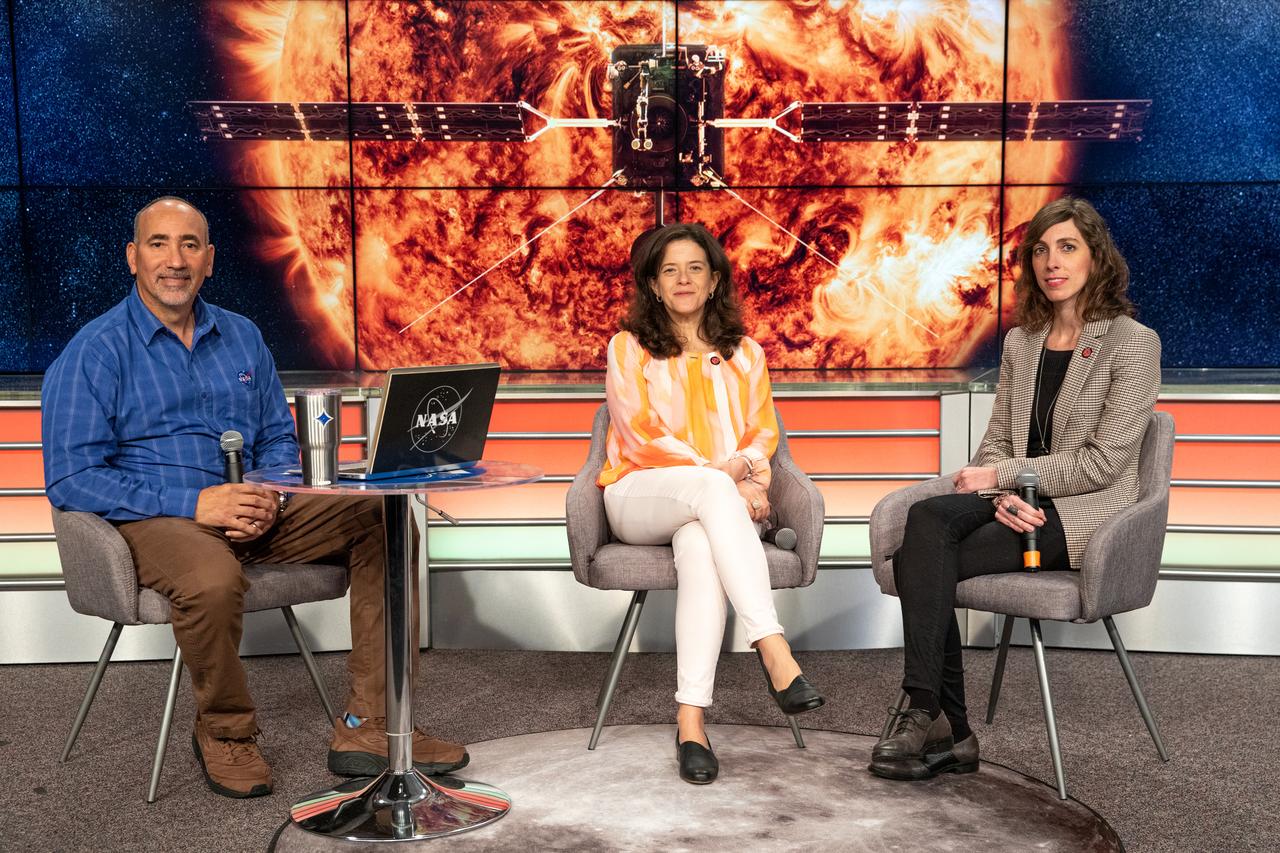
At left, Albert Sierra, Launch Services Program, moderates a Spanish Facebook Live event for the Solar Orbiter mission, with Teresa Nieves-chinchilla, deputy project scientist at NASA’s Goddard Space Flight Center in Greenbelt, Maryland, and Ana Leon, Solar Orbiter contamination control architect with Airbus Defence and Space. The event was held in the Press Site auditorium at the agency’s Kennedy Space Center in Florida on Jan. 29, 2020. Solar Orbiter is an international cooperative mission between ESA (European Space Agency) and NASA. The mission aims to study the Sun, its outer atmosphere and solar wind. The spacecraft will provide the first images of the Sun’s poles. NASA’s Launch Services Program based at Kennedy is managing the launch. The spacecraft has been developed by Airbus Defence and Space. Solar Orbiter will launch in February 2020 aboard a United Launch Alliance Atlas V rocket from Space Launch Complex 41 at Cape Canaveral Air Force Station in Florida.

At left, Albert Sierra, Launch Services Program, moderates a Spanish Facebook Live event for the Solar Orbiter mission, with Teresa Nieves-chinchilla, deputy project scientist at NASA’s Goddard Space Flight Center in Greenbelt, Maryland, and Ana Leon, Solar Orbiter contamination control architect with Airbus Defence and Space. The event was held in the Press Site auditorium at the agency’s Kennedy Space Center in Florida on Jan. 29, 2020. Solar Orbiter is an international cooperative mission between ESA (European Space Agency) and NASA. The mission aims to study the Sun, its outer atmosphere and solar wind. The spacecraft will provide the first images of the Sun’s poles. NASA’s Launch Services Program based at Kennedy is managing the launch. The spacecraft has been developed by Airbus Defence and Space. Solar Orbiter will launch in February 2020 aboard a United Launch Alliance Atlas V rocket from Space Launch Complex 41 at Cape Canaveral Air Force Station in Florida.

NASA astronaut Kjell Lindgren (left) and Kennedy Space Center Director Bob Cabana participate in a NASA Social Facebook Live briefing inside the Press Site auditorium on May 26, 2020, at Kennedy ahead of NASA’s SpaceX Demo-2 launch, slated for Wednesday, May 27. A SpaceX Falcon 9 rocket and Crew Dragon spacecraft are scheduled to lift off from Kennedy’s Launch Complex 39A, carrying NASA astronauts Robert Behnken and Douglas Hurley to the International Space Station. This will mark the first launch of astronauts from U.S. soil to the space station since the conclusion of the Space Shuttle Program in 2011. Part of the agency’s Commercial Crew Program, this will be SpaceX’s final flight test, paving the way for NASA to certify the crew transportation system for regular, crewed flights to the orbiting laboratory. Liftoff is scheduled for 4:33 p.m. EDT.

Kennedy Space Center Director Bob Cabana participates in a NASA Social Facebook Live briefing inside the Press Site auditorium on May 26, 2020, at Kennedy ahead of NASA’s SpaceX Demo-2 launch, slated for Wednesday, May 27. A SpaceX Falcon 9 rocket and Crew Dragon spacecraft are scheduled to lift off from Kennedy’s Launch Complex 39A, carrying NASA astronauts Robert Behnken and Douglas Hurley to the International Space Station. This will mark the first launch of astronauts from U.S. soil to the space station since the conclusion of the Space Shuttle Program in 2011. Part of the agency’s Commercial Crew Program, this will be SpaceX’s final flight test, paving the way for NASA to certify the crew transportation system for regular, crewed flights to the orbiting laboratory. Liftoff is scheduled for 4:33 p.m. EDT.
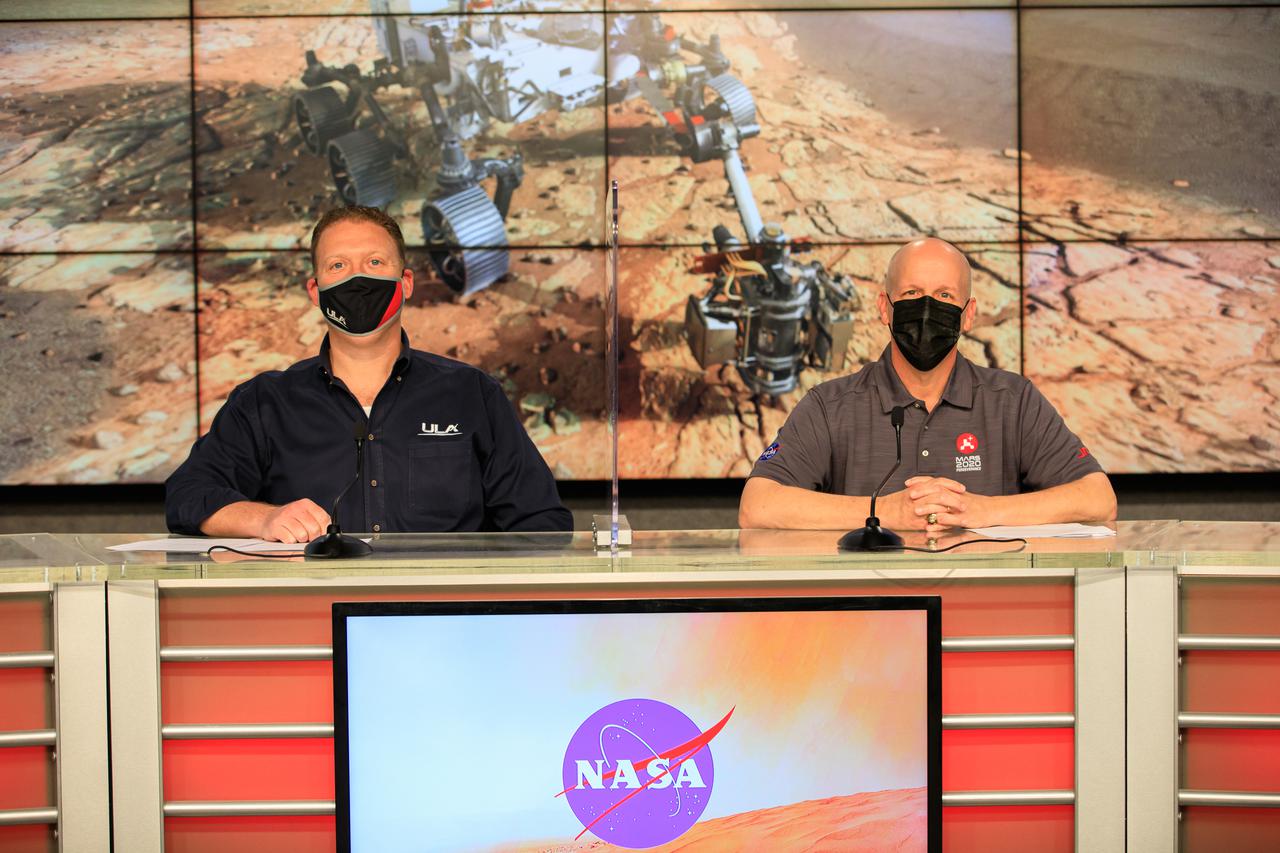
United Launch Alliance (ULA) Launch Conductor Dillon Rice, left, and NASA’s Launch Services Program (LSP) Launch Director Tim Dunn participate in a Mars 2020 Facebook live event inside the Press Site auditorium at NASA’s Kennedy Space Center in Florida on Feb. 12, 2021. During the event, Rice and Dunn discussed the partnership between ULA and LSP, as well as major milestones that led to the Mars 2020 launch, and how launches to Mars have changed over time. NASA’s Mars Perseverance rover lifted off from Cape Canaveral Space Force Station’s Space Launch Complex 41 on July 30, 2020, and is slated to touch down on the Red Planet Feb. 18, 2021.

NASA astronaut Nicole Mann participates in a NASA Social Facebook Live briefing inside the Press Site auditorium on May 26, 2020, at the agency’s Kennedy Space Center in Florida ahead of NASA’s SpaceX Demo-2 launch, slated for Wednesday, May 27. A SpaceX Falcon 9 rocket and Crew Dragon spacecraft are scheduled to lift off from Kennedy’s Launch Complex 39A, carrying NASA astronauts Robert Behnken and Douglas Hurley to the International Space Station. This will mark the first launch of astronauts from U.S. soil to the space station since the conclusion of the Space Shuttle Program in 2011. Part of the agency’s Commercial Crew Program, this will be SpaceX’s final flight test, paving the way for NASA to certify the crew transportation system for regular, crewed flights to the orbiting laboratory. Liftoff is scheduled for 4:33 p.m. EDT.
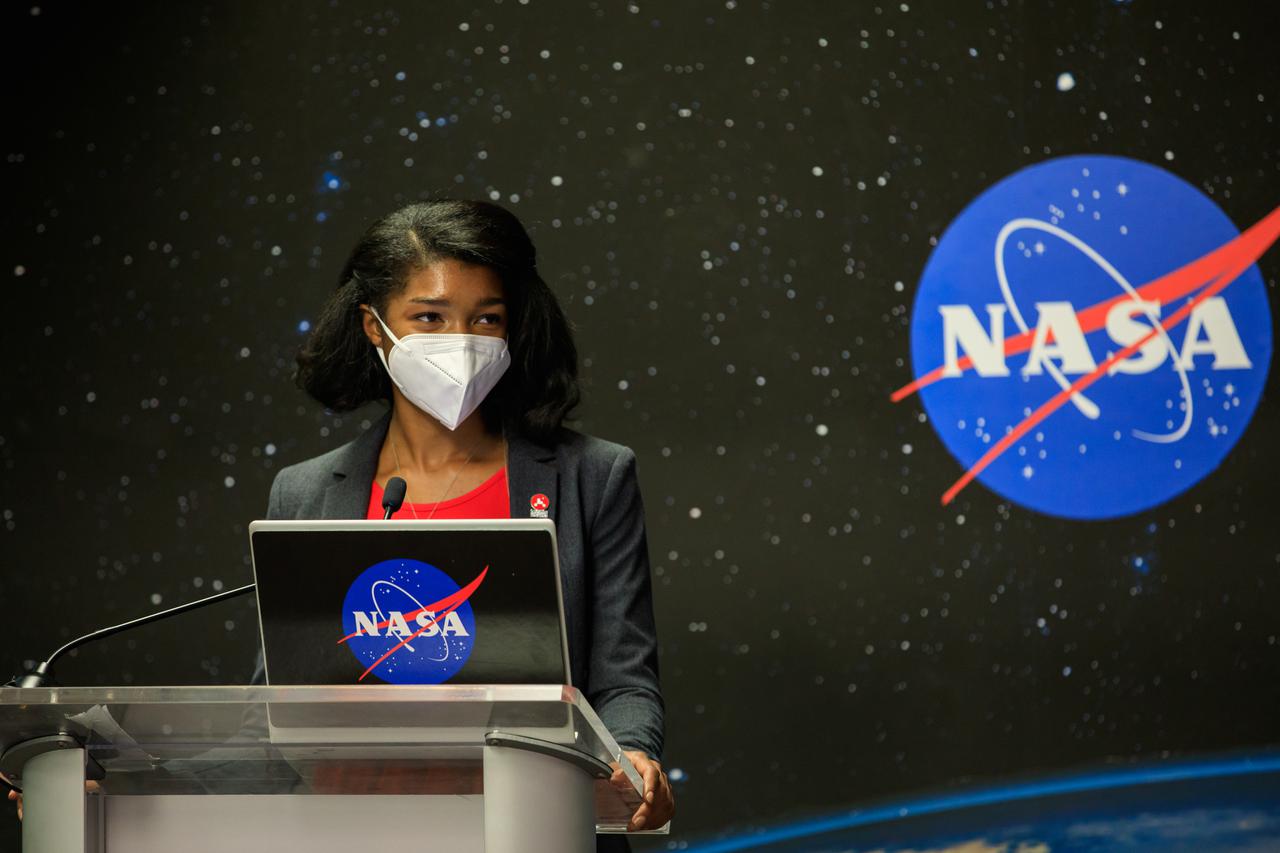
NASA Communications’ Jasmine Hopkins moderates a Mars 2020 Facebook live event inside the Press Site auditorium at NASA’s Kennedy Space Center in Florida on Feb. 12, 2021. Participants included United Launch Alliance (ULA) Launch Conductor Dillon Rice and NASA’s Launch Services Program (LSP) Launch Director Tim Dunn. During the event, Rice and Dunn discussed the partnership between ULA and LSP, as well as major milestones that led to the Mars 2020 launch, and how launches to Mars have changed over time. NASA’s Mars Perseverance rover lifted off from Cape Canaveral Space Force Station’s Space Launch Complex 41 on July 30, 2020, and is slated to touch down on the Red Planet Feb. 18, 2021.
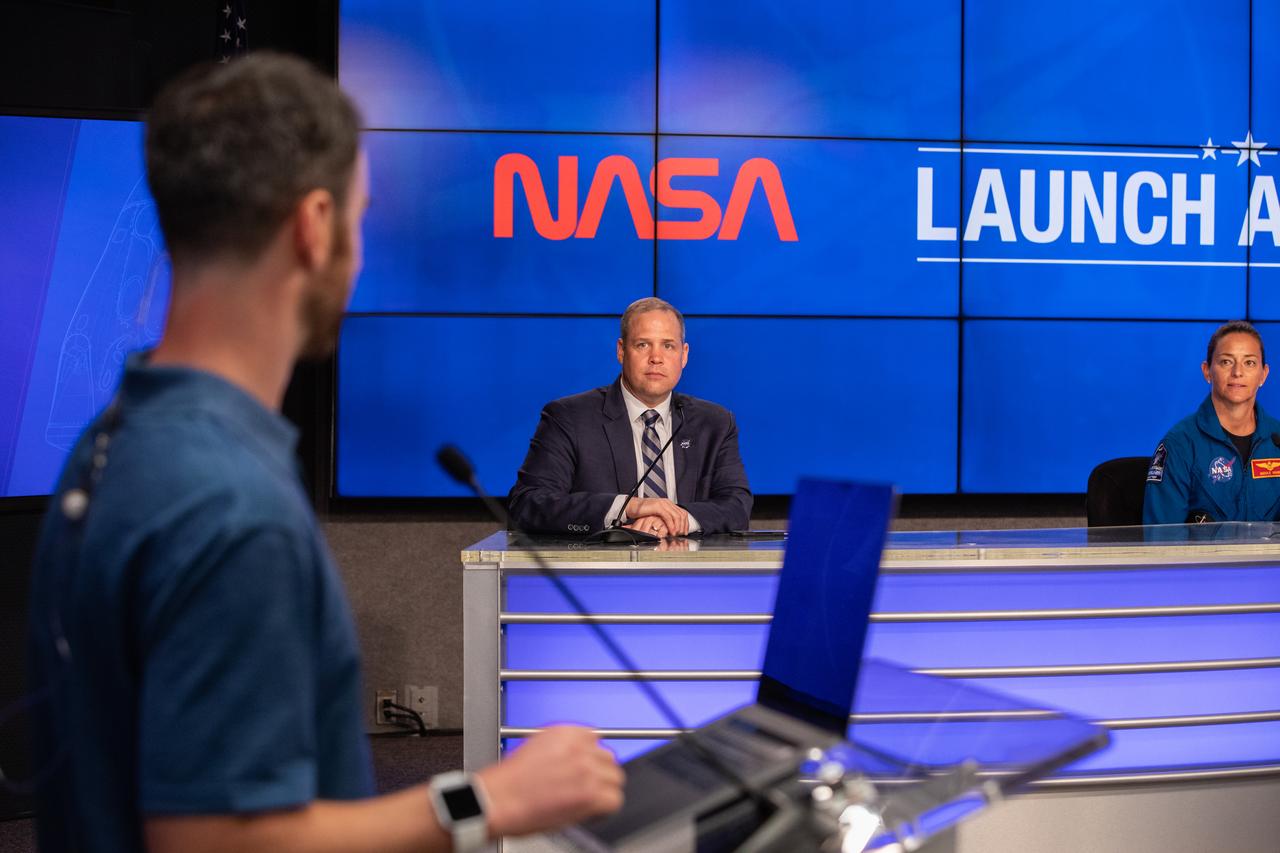
NASA Administrator Jim Bridenstine (left) and astronaut Nicole Mann (right) participate in a NASA Social Facebook Live briefing inside the Press Site auditorium on May 26, 2020, at the agency’s Kennedy Space Center in Florida ahead of NASA’s SpaceX Demo-2 launch, slated for Wednesday, May 27. Moderating the briefing is NASA Communications’ Joshua Santora. A SpaceX Falcon 9 rocket and Crew Dragon spacecraft are scheduled to lift off from Kennedy’s Launch Complex 39A, carrying NASA astronauts Robert Behnken and Douglas Hurley to the International Space Station. This will mark the first launch of astronauts from U.S. soil to the space station since the conclusion of the Space Shuttle Program in 2011. Part of the agency’s Commercial Crew Program, this will be SpaceX’s final flight test, paving the way for NASA to certify the crew transportation system for regular, crewed flights to the orbiting laboratory. Liftoff is scheduled for 4:33 p.m. EDT.
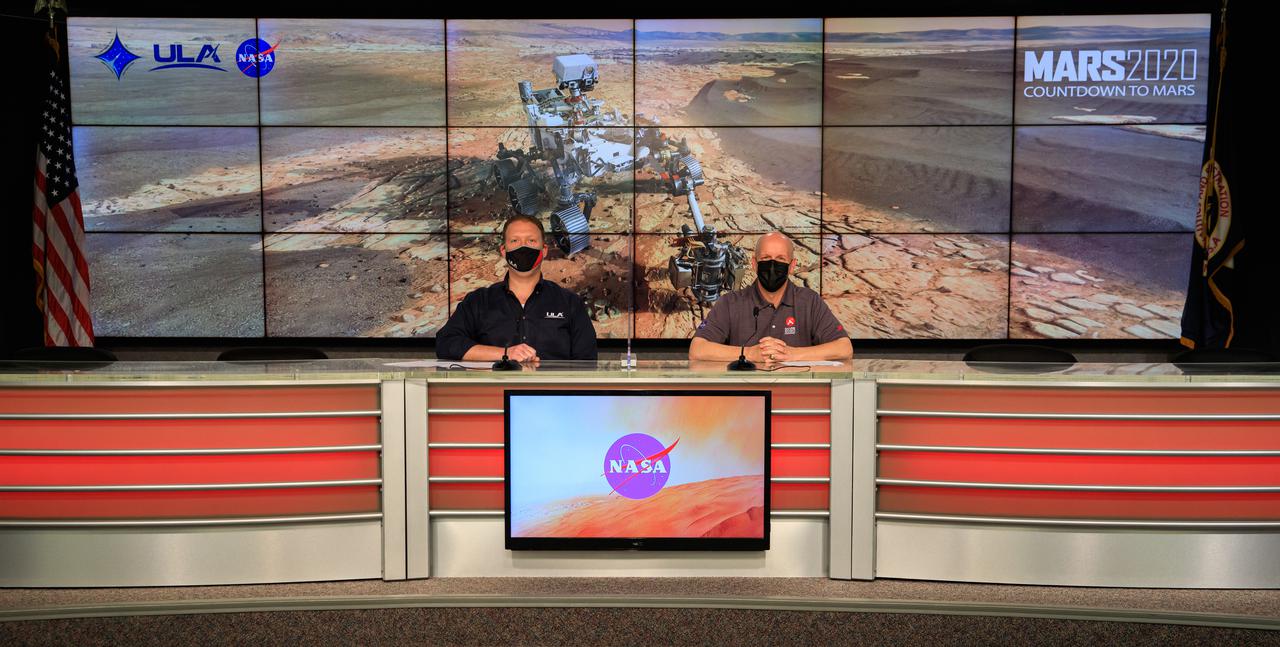
United Launch Alliance (ULA) Launch Conductor Dillon Rice, left, and NASA’s Launch Services Program (LSP) Launch Director Tim Dunn participate in a Mars 2020 Facebook live event inside the Press Site auditorium at NASA’s Kennedy Space Center in Florida on Feb. 12, 2021. During the event, Rice and Dunn discussed the partnership between ULA and LSP, as well as major milestones that led to the Mars 2020 launch, and how launches to Mars have changed over time. NASA’s Mars Perseverance rover lifted off from Cape Canaveral Space Force Station’s Space Launch Complex 41 on July 30, 2020, and is slated to touch down on the Red Planet Feb. 18, 2021.
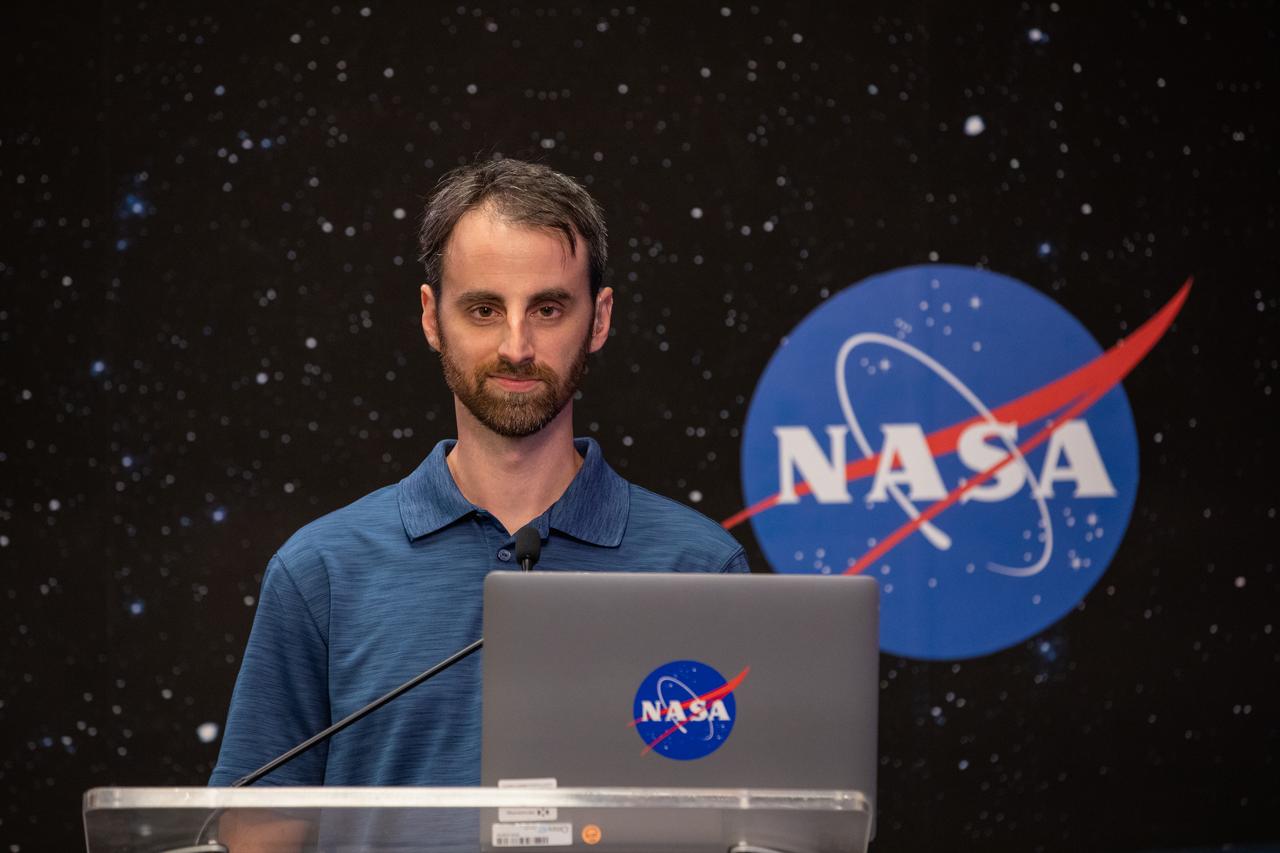
Joshua Santora, with NASA Communications, moderates a NASA Social Facebook Live briefing inside the Press Site auditorium on May 26, 2020, at the agency’s Kennedy Space Center in Florida ahead of NASA’s SpaceX Demo-2 launch, slated for Wednesday, May 27. A SpaceX Falcon 9 rocket and Crew Dragon spacecraft are scheduled to lift off from Kennedy’s Launch Complex 39A, carrying NASA astronauts Robert Behnken and Douglas Hurley to the International Space Station. This will mark the first launch of astronauts from U.S. soil to the space station since the conclusion of the Space Shuttle Program in 2011. Part of the agency’s Commercial Crew Program, this will be SpaceX’s final flight test, paving the way for NASA to certify the crew transportation system for regular, crewed flights to the orbiting laboratory. Liftoff is scheduled for 4:33 p.m. EDT.
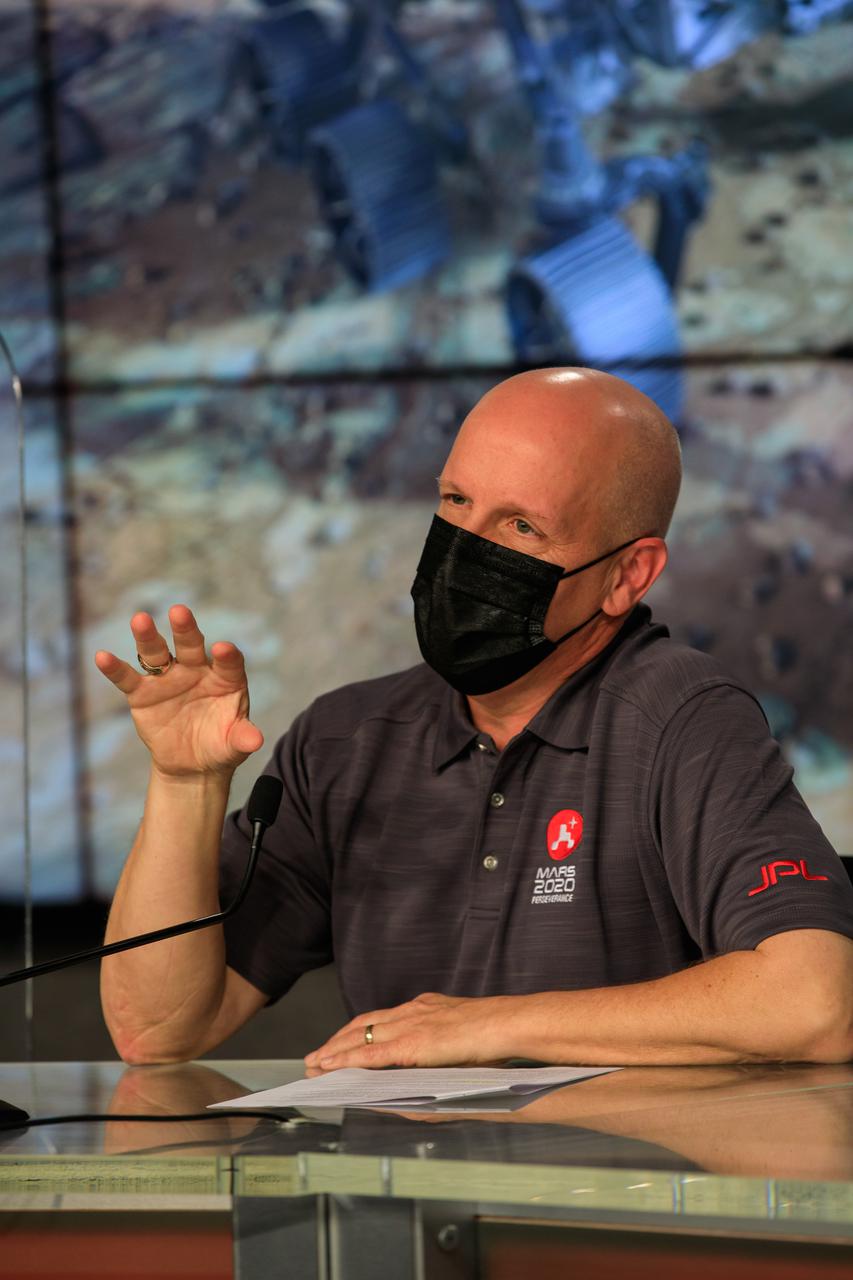
NASA’s Launch Services Program (LSP) Launch Director Tim Dunn participates in a Mars 2020 Facebook live event inside the Press Site auditorium at NASA’s Kennedy Space Center in Florida on Feb. 12, 2021. During the event, Dunn and Dillon Rice, launch conductor for United Launch Alliance (ULA), discussed the partnership between ULA and LSP, as well as major milestones that led to the Mars 2020 launch, and how launches to Mars have changed over time. NASA’s Mars Perseverance rover lifted off from Cape Canaveral Space Force Station’s Space Launch Complex 41 on July 30, 2020, and is slated to touch down on the Red Planet Feb. 18, 2021.

United Launch Alliance (ULA) Launch Conductor Dillon Rice participates in a Mars 2020 Facebook live event inside the Press Site auditorium at NASA’s Kennedy Space Center in Florida on Feb. 12, 2021. During the event, Rice and Tim Dunn, launch director for NASA’s Launch Services Program (LSP), discussed the partnership between ULA and LSP, as well as major milestones that led to the Mars 2020 launch, and how launches to Mars have changed over time. NASA’s Mars Perseverance rover lifted off from Cape Canaveral Space Force Station’s Space Launch Complex 41 on July 30, 2020, and is slated to touch down on the Red Planet Feb. 18, 2021.
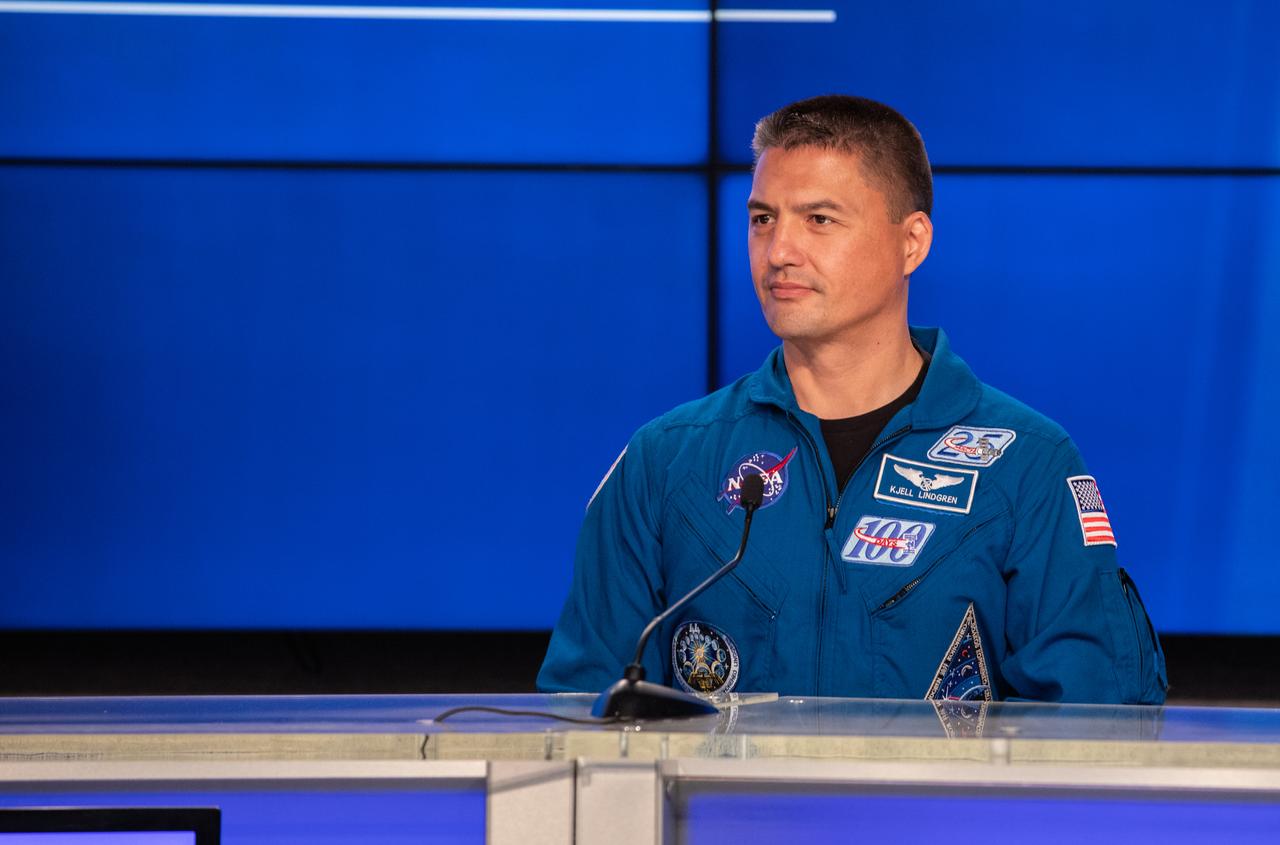
NASA astronaut Kjell Lindgren participates in a NASA Social Facebook Live briefing inside the Press Site auditorium on May 26, 2020, at the agency’s Kennedy Space Center in Florida ahead of NASA’s SpaceX Demo-2 launch, slated for Wednesday, May 27. A SpaceX Falcon 9 rocket and Crew Dragon spacecraft are scheduled to lift off from Kennedy’s Launch Complex 39A, carrying NASA astronauts Robert Behnken and Douglas Hurley to the International Space Station. This will mark the first launch of astronauts from U.S. soil to the space station since the conclusion of the Space Shuttle Program in 2011. Part of the agency’s Commercial Crew Program, this will be SpaceX’s final flight test, paving the way for NASA to certify the crew transportation system for regular, crewed flights to the orbiting laboratory. Liftoff is scheduled for 4:33 p.m. EDT.

NASA Administrator Jim Bridenstine participates in a NASA Social Facebook Live briefing inside the Press Site auditorium on May 26, 2020, at the agency’s Kennedy Space Center in Florida ahead of NASA’s SpaceX Demo-2 launch, slated for Wednesday, May 27. A SpaceX Falcon 9 rocket and Crew Dragon spacecraft are scheduled to lift off from Kennedy’s Launch Complex 39A, carrying NASA astronauts Robert Behnken and Douglas Hurley to the International Space Station. This will mark the first launch of astronauts from U.S. soil to the space station since the conclusion of the Space Shuttle Program in 2011. Part of the agency’s Commercial Crew Program, this will be SpaceX’s final flight test, paving the way for NASA to certify the crew transportation system for regular, crewed flights to the orbiting laboratory. Liftoff is scheduled for 4:33 p.m. EDT.

NASA Astronaut Kate Rubins participates in a Facebook Live, answering questions about her time onboard the International Space Station during Expeditions 48 and 49, Thursday, April 27, 2017 at Smithsonian's National Air and Space Museum in Washington. Rubins became the first person to sequence DNA in space and completed her first mission when she landed in a remote area near the town of Zhezkazgan, Kazakhstan in October 2016. Photo Credit: (NASA/Aubrey Gemignani)
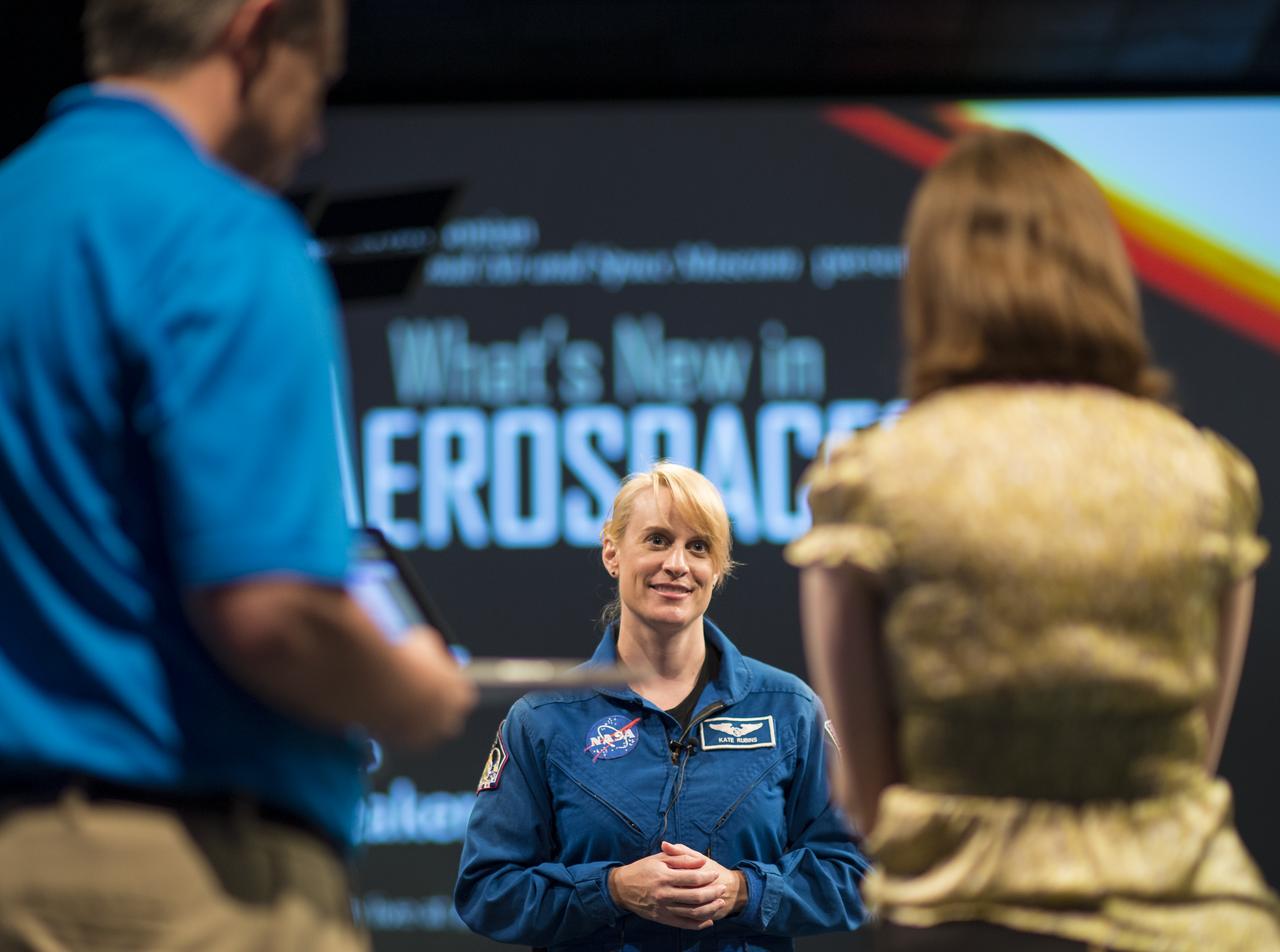
NASA Astronaut Kate Rubins participates in a Facebook Live, answering questions about her time onboard the International Space Station during Expeditions 48 and 49, Thursday, April 27, 2017 at Smithsonian's National Air and Space Museum in Washington. Rubins became the first person to sequence DNA in space and completed her first mission when she landed in a remote area near the town of Zhezkazgan, Kazakhstan in October 2016. Photo Credit: (NASA/Aubrey Gemignani)
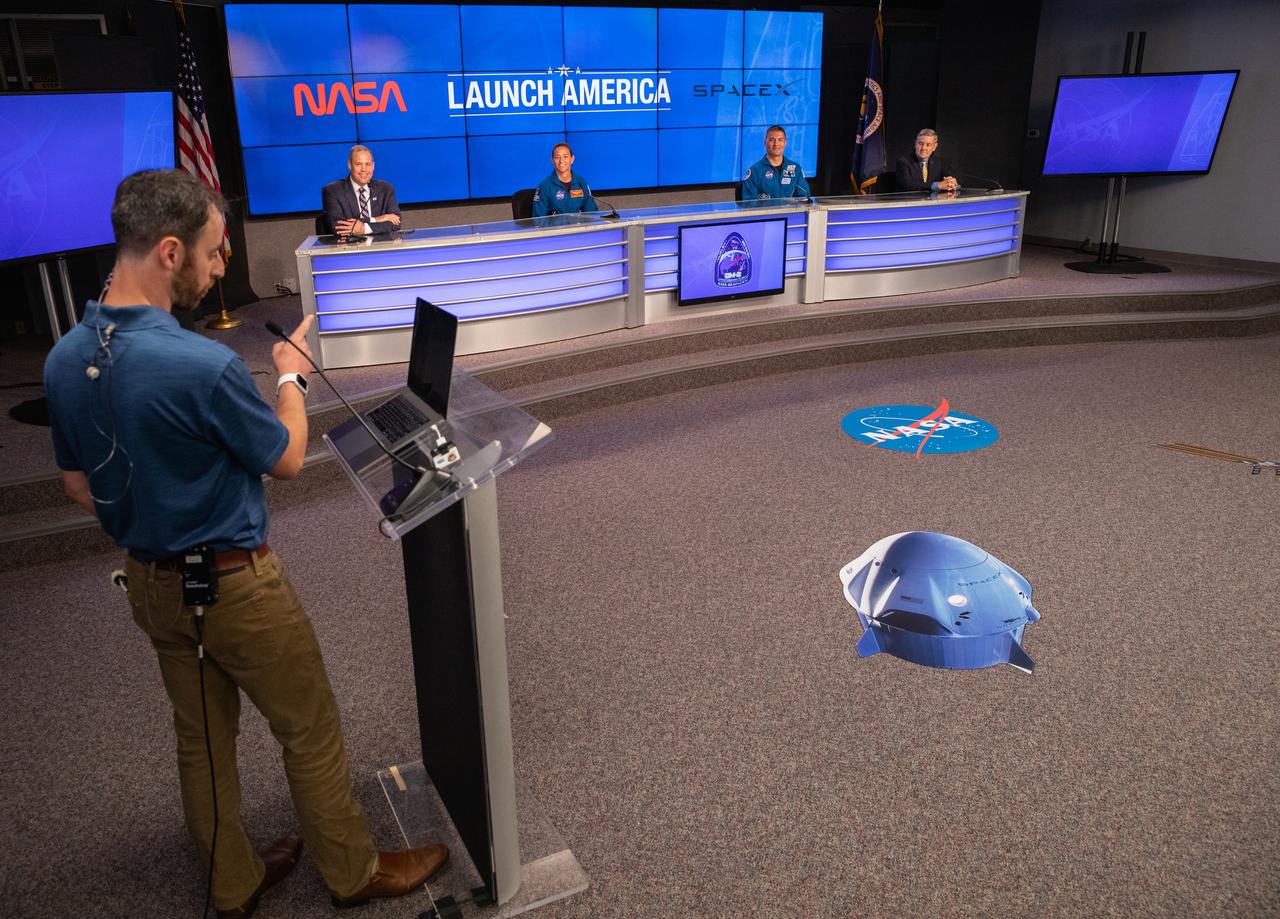
Joshua Santora, with NASA Communications, moderates a NASA Social Facebook Live briefing inside the Press Site auditorium on May 26, 2020, at the agency’s Kennedy Space Center in Florida ahead of NASA’s SpaceX Demo-2 launch. At the counter, from left are NASA Administrator Jim Bridenstine, NASA astronauts Nicole Mann and Kjell Lindgren, and Kennedy Space Center Director Bob Cabana. A SpaceX Falcon 9 rocket and Crew Dragon spacecraft are scheduled to lift off from historic Launch Complex 39A on Wednesday, May 27, carrying NASA astronauts Robert Behnken and Douglas Hurley to the International Space Station. This will mark the first launch of astronauts from U.S. soil to the space station since the conclusion of the Space Shuttle Program in 2011. Part of the agency’s Commercial Crew Program, this will be SpaceX’s final flight test, paving the way for NASA to certify the crew transportation system for regular, crewed flights to the orbiting laboratory. Liftoff is scheduled for 4:33 p.m. EDT.

Kennedy Space Center Deputy Director Kelvin Manning participates in a NASA Social Live event at the center in Florida on Oct. 29, in advance of NASA’s SpaceX Crew-3 mission to the International Space Station as part of NASA’s Commercial Crew Program. Launch is currently targeted for 2:21 a.m. EDT Sunday, Oct. 31. The SpaceX Dragon spacecraft, named Endurance by the Crew-3 astronauts, will launch on a Falcon 9 rocket from Launch Complex 39A at Kennedy Space Center. The Crew-3 flight will carry NASA astronauts Raja Chari, mission commander, Tom Marshburn, pilot, and Kayla Barron, mission specialist and ESA (European Space Agency) astronaut Matthias Maurer, also a mission specialist, to the space station for a six-month science mission.
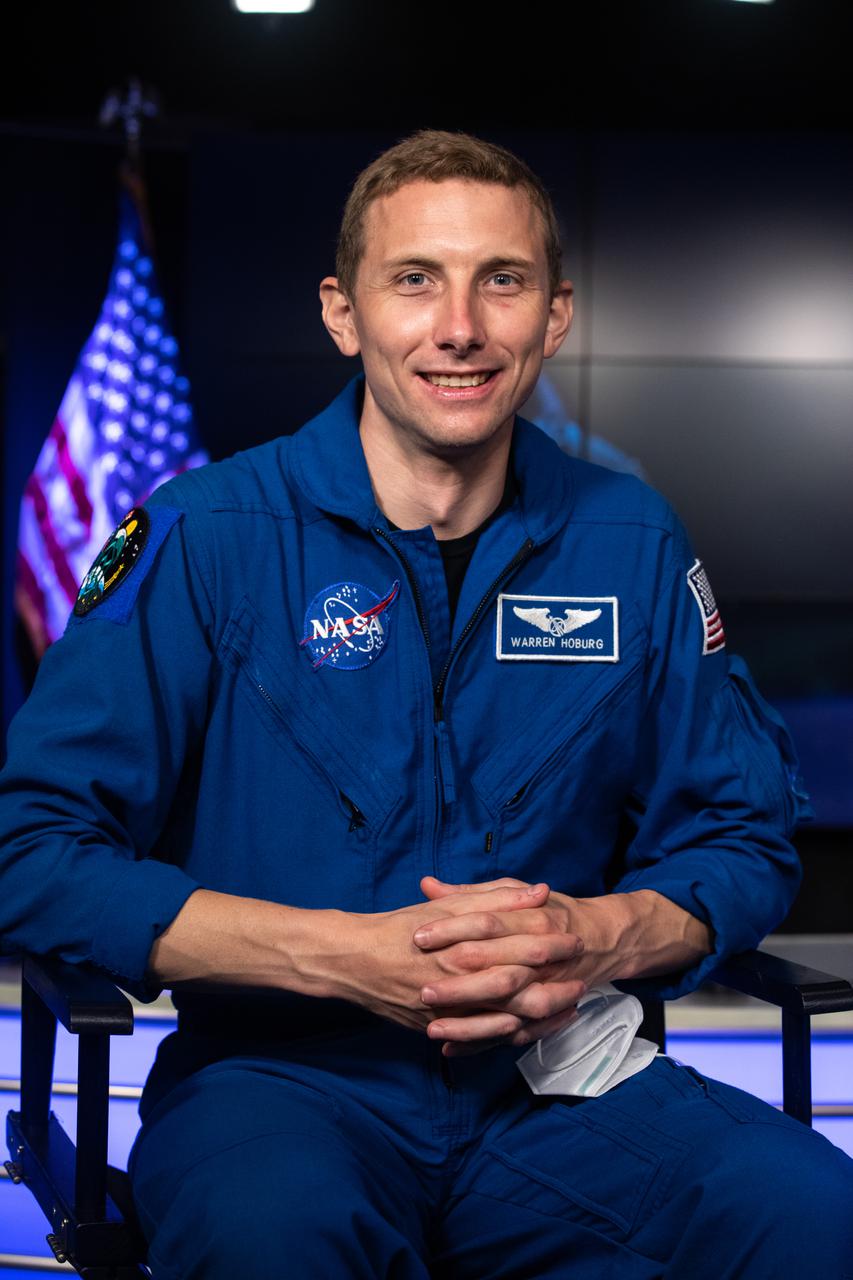
NASA astronaut Woody Hoburg participates in a NASA Social Live event at the agency’s Kennedy Space Center in Florida on Oct. 29, in advance of NASA’s SpaceX Crew-3 mission to the International Space Station as part of NASA’s Commercial Crew Program. Launch is currently targeted for 2:21 a.m. EDT Sunday, Oct. 31. The SpaceX Dragon spacecraft, named Endurance by the Crew-3 astronauts, will launch on a Falcon 9 rocket from Launch Complex 39A at Kennedy Space Center. The Crew-3 flight will carry NASA astronauts Raja Chari, mission commander, Tom Marshburn, pilot, and Kayla Barron, mission specialist and ESA (European Space Agency) astronaut Matthias Maurer, also a mission specialist, to the space station for a six-month science mission.
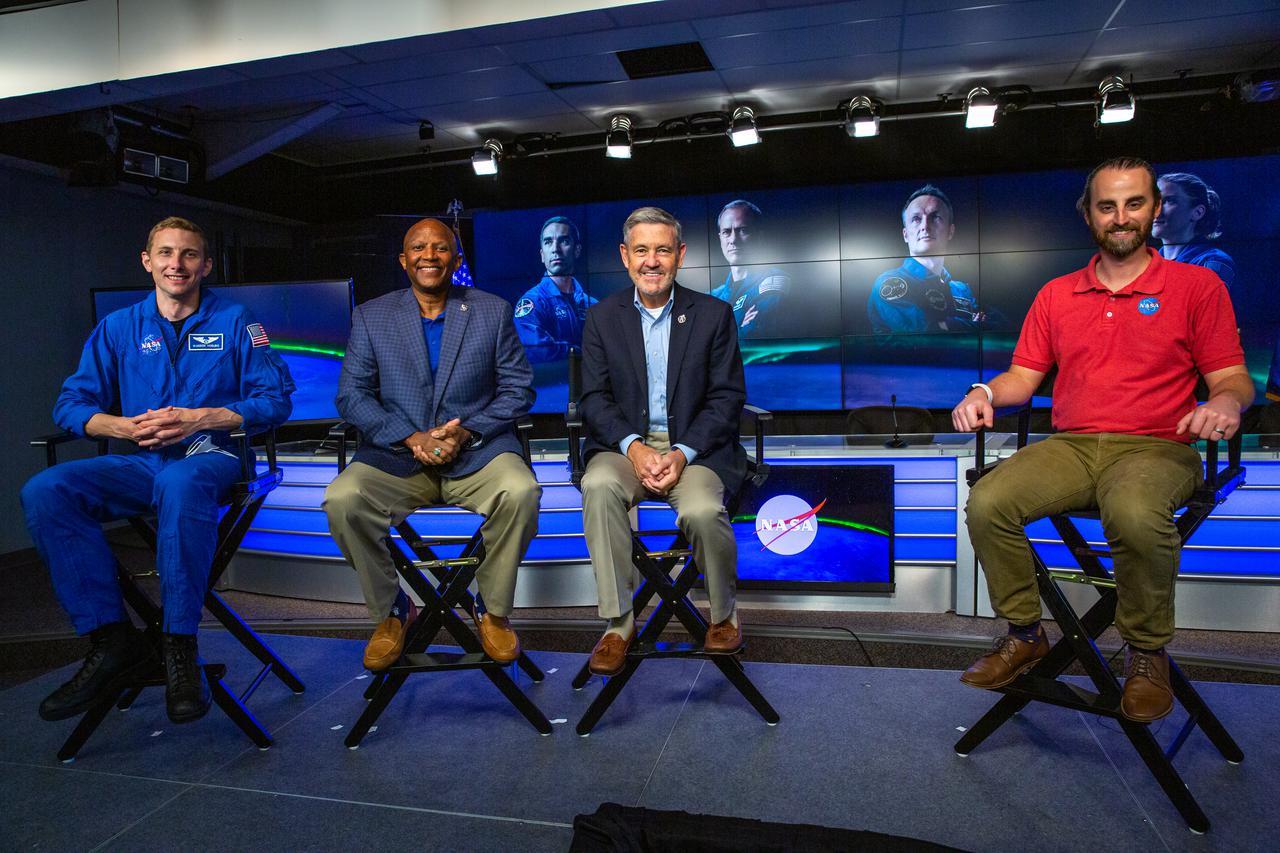
Representatives from NASA participate in a NASA Social Live event at the agency’s Kennedy Space Center in Florida on Oct. 29, in advance of NASA’s SpaceX Crew-3 mission to the International Space Station as part of NASA’s Commercial Crew Program. Participants are, from left, NASA astronaut Woody Hoburg, Kennedy Deputy Director Kelvin Manning, NASA Associate Administrator Bob Cabana, and moderator Joshua Santora, NASA Communications. Launch is currently targeted for 2:21 a.m. EDT Sunday, Oct. 31. The SpaceX Dragon spacecraft, named Endurance by the Crew-3 astronauts, will launch on a Falcon 9 rocket from Launch Complex 39A at Kennedy Space Center. The Crew-3 flight will carry NASA astronauts Raja Chari, mission commander, Tom Marshburn, pilot, and Kayla Barron, mission specialist and ESA (European Space Agency) astronaut Matthias Maurer, also a mission specialist, to the space station for a six-month science mission.

NASA Associate Administrator Bob Cabana participates in a NASA Social Live event at the agency’s Kennedy Space Center in Florida on Oct. 29, in advance of NASA’s SpaceX Crew-3 mission to the International Space Station as part of NASA’s Commercial Crew Program. Launch is currently targeted for 2:21 a.m. EDT Sunday, Oct. 31. The SpaceX Dragon spacecraft, named Endurance by the Crew-3 astronauts, will launch on a Falcon 9 rocket from Launch Complex 39A at Kennedy Space Center. The Crew-3 flight will carry NASA astronauts Raja Chari, mission commander, Tom Marshburn, pilot, and Kayla Barron, mission specialist and ESA (European Space Agency) astronaut Matthias Maurer, also a mission specialist, to the space station for a six-month science mission.
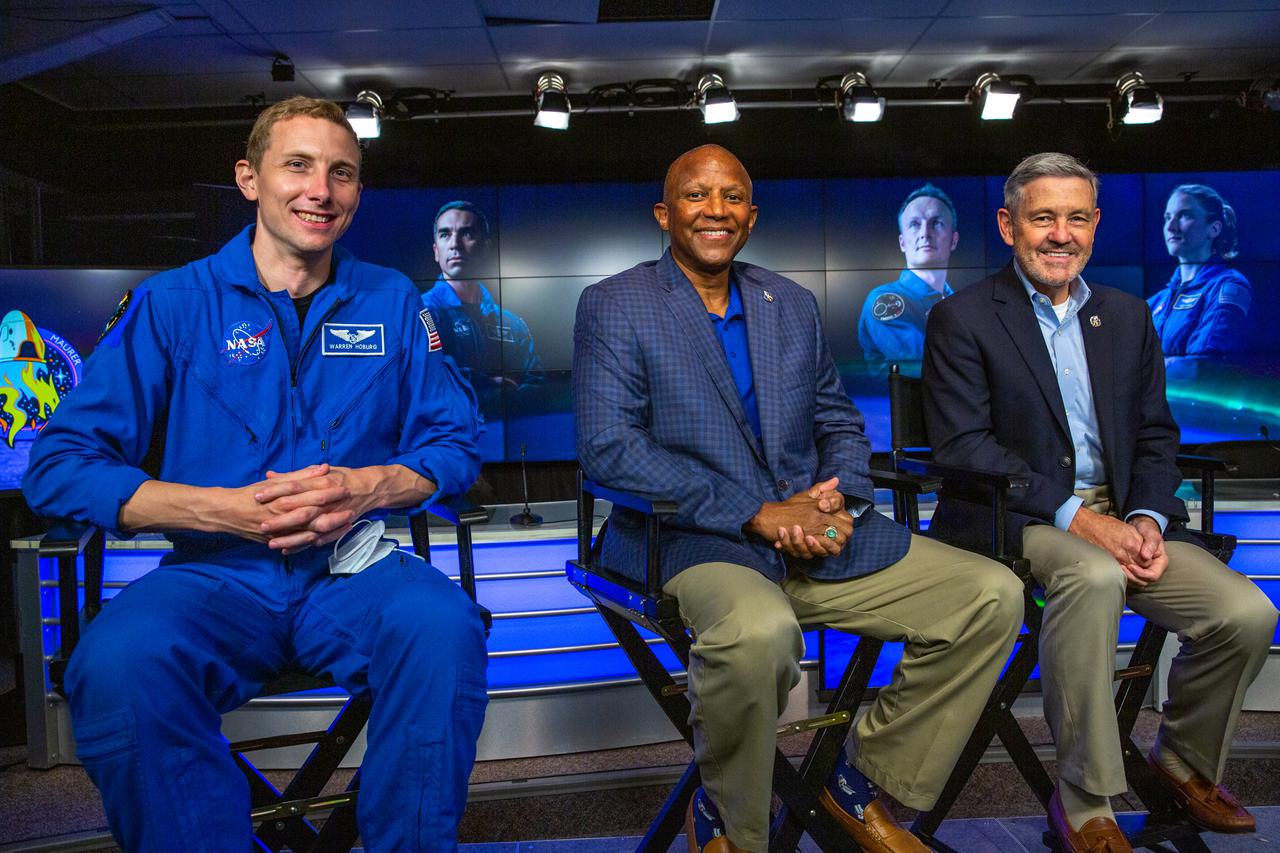
Representatives from NASA participate in a NASA Social Live event at the agency’s Kennedy Space Center in Florida on Oct. 29, in advance of NASA’s SpaceX Crew-3 mission to the International Space Station as part of NASA’s Commercial Crew Program. Participants are, from left, NASA astronaut Woody Hoburg, Kennedy Deputy Director Kelvin Manning, and NASA Associate Administrator Bob Cabana. Launch is currently targeted for 2:21 a.m. EDT Sunday, Oct. 31. The SpaceX Dragon spacecraft, named Endurance by the Crew-3 astronauts, will launch on a Falcon 9 rocket from Launch Complex 39A at Kennedy Space Center. The Crew-3 flight will carry NASA astronauts Raja Chari, mission commander, Tom Marshburn, pilot, and Kayla Barron, mission specialist and ESA (European Space Agency) astronaut Matthias Maurer, also a mission specialist, to the space station for a six-month science mission.
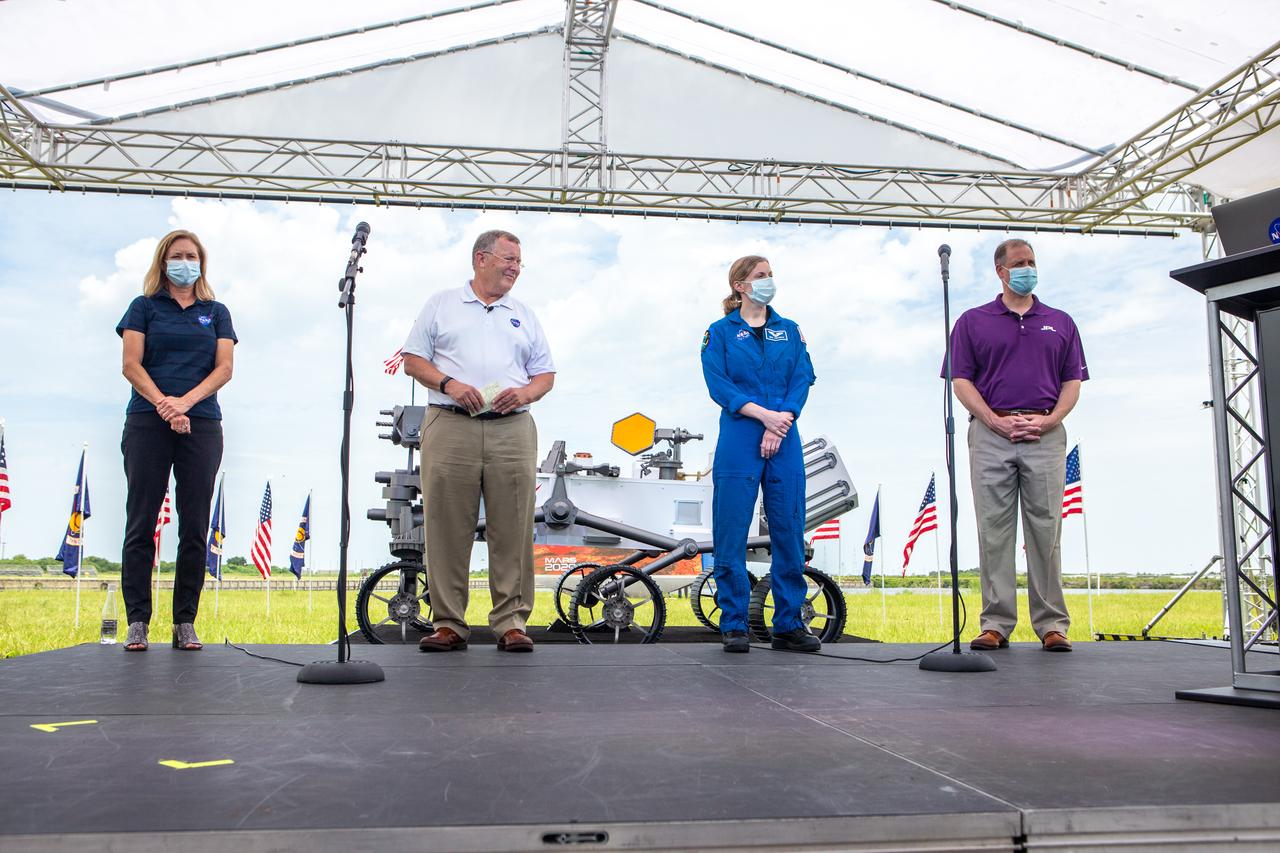
A Mars 2020 NASA Social is held at Kennedy Space Center’s News Center in Florida on July 29, 2020. Participants from left are Kennedy Deputy Director Janet Petro, NASA Deputy Administrator Jim Morhard, NASA astronaut Zena Cardman, and NASA Administrator Jim Bridenstine. The Mars Perseverance rover and Ingenuity helicopter are scheduled to launch July 30, on a United Launch Alliance Atlas V 541 rocket from Space Launch Complex 41 at nearby Cape Canaveral Air Force Station. The rover is part of NASA’s Mars Exploration Program, a long-term effort of robotic exploration of the Red Planet. The rover will search for habitable conditions in the ancient past and signs of past microbial life on Mars. The Launch Services Program at Kennedy is responsible for launch management.

A full-scale mockup of NASA’s Mars 2020 Perseverance rover is on display at the News Center at the agency’s Kennedy Space Center in Florida on July 29, 2020. A Mars 2020 NASA Social is in progress featuring, right to left, Kennedy Space Center Deputy Director Janet Petro, NASA Deputy Administrator Jim Morhard, NASA astronaut Zena Cardman, and NASA Administrator Jim Bridenstine. The Mars Perseverance rover and Ingenuity helicopter are scheduled to launch July 30, on a United Launch Alliance Atlas V 541 rocket from Space Launch Complex 41 at nearby Cape Canaveral Air Force Station. The rover is part of NASA’s Mars Exploration Program, a long-term effort of robotic exploration of the Red Planet. The rover will search for habitable conditions in the ancient past and signs of past microbial life on Mars. The Launch Services Program at Kennedy is responsible for launch management.
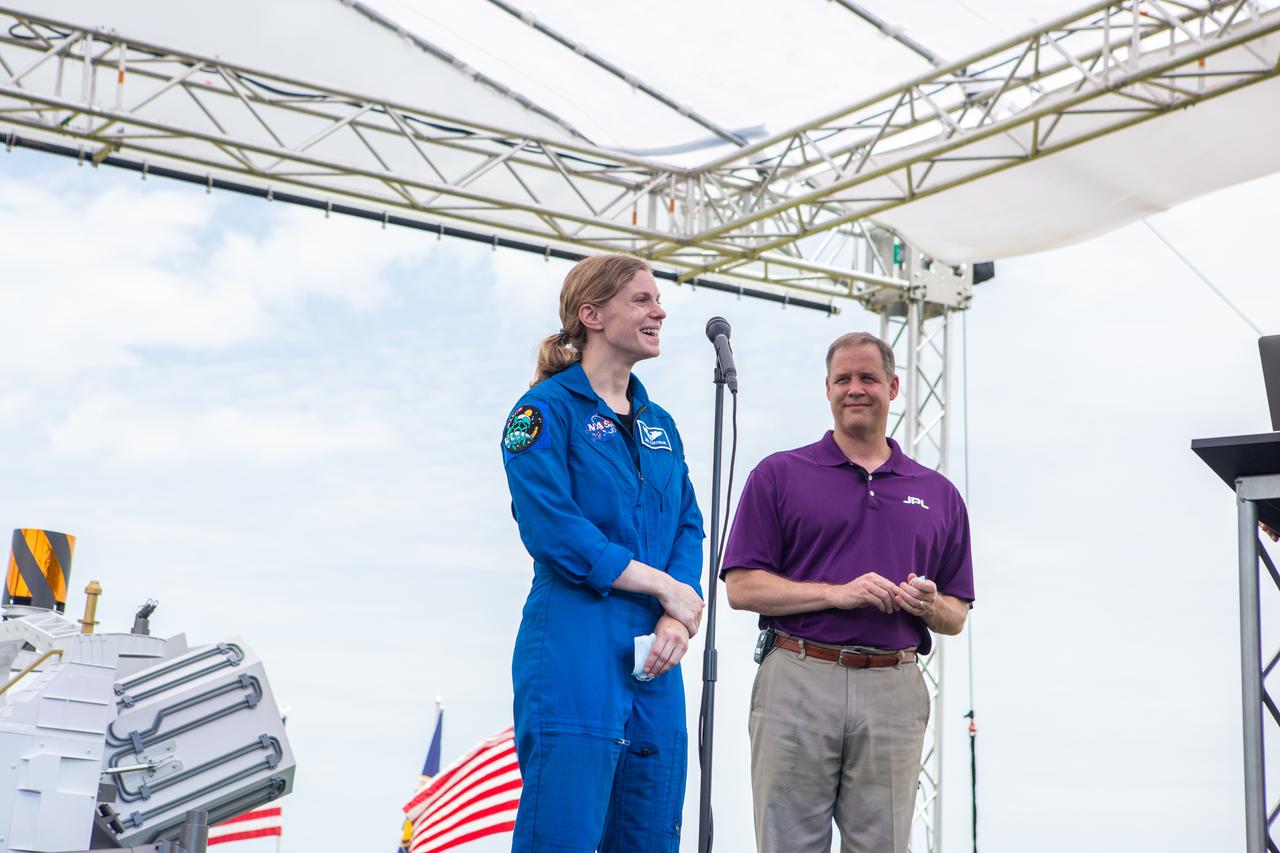
NASA astronaut Zena Cardman answers a question during a Mars 2020 NASA Social at Kennedy Space Center’s News Center in Florida on July 29, 2020. At right is NASA Administrator Jim Bridenstine. The Mars Perseverance rover and Ingenuity helicopter are scheduled to launch July 30, on a United Launch Alliance Atlas V 541 rocket from Space Launch Complex 41 at nearby Cape Canaveral Air Force Station. The rover is part of NASA’s Mars Exploration Program, a long-term effort of robotic exploration of the Red Planet. The rover will search for habitable conditions in the ancient past and signs of past microbial life on Mars. The Launch Services Program at Kennedy is responsible for launch management.
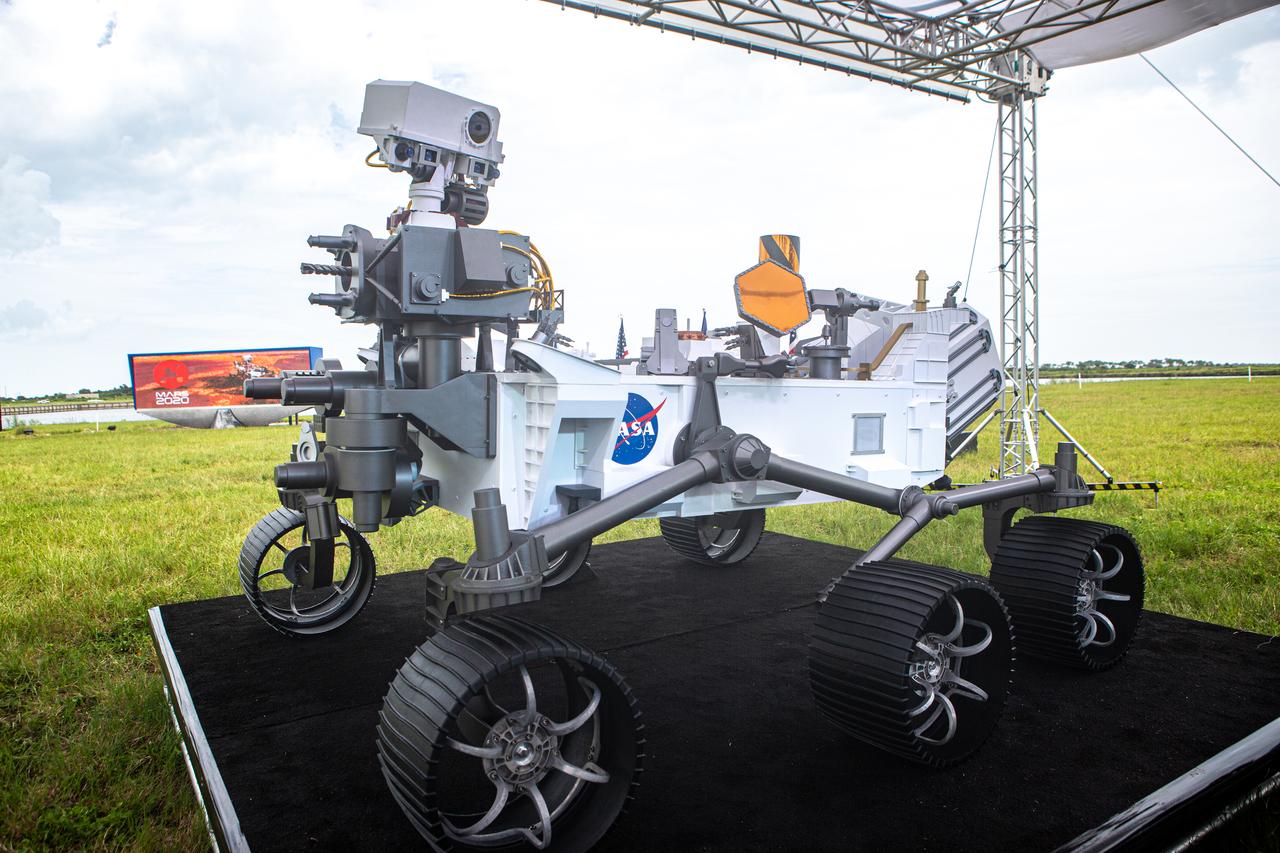
A full-scale mockup of NASA’s Mars 2020 Perseverance rover is on display at the News Center at the agency’s Kennedy Space Center in Florida on July 29, 2020. The rover and Ingenuity helicopter are scheduled to launch July 30, on a United Launch Alliance Atlas V 541 rocket from Space Launch Complex 41 at nearby Cape Canaveral Air Force Station. The rover is part of NASA’s Mars Exploration Program, a long-term effort of robotic exploration of the Red Planet. The rover will search for habitable conditions in the ancient past and signs of past microbial life on Mars. The Launch Services Program at Kennedy is responsible for launch management.
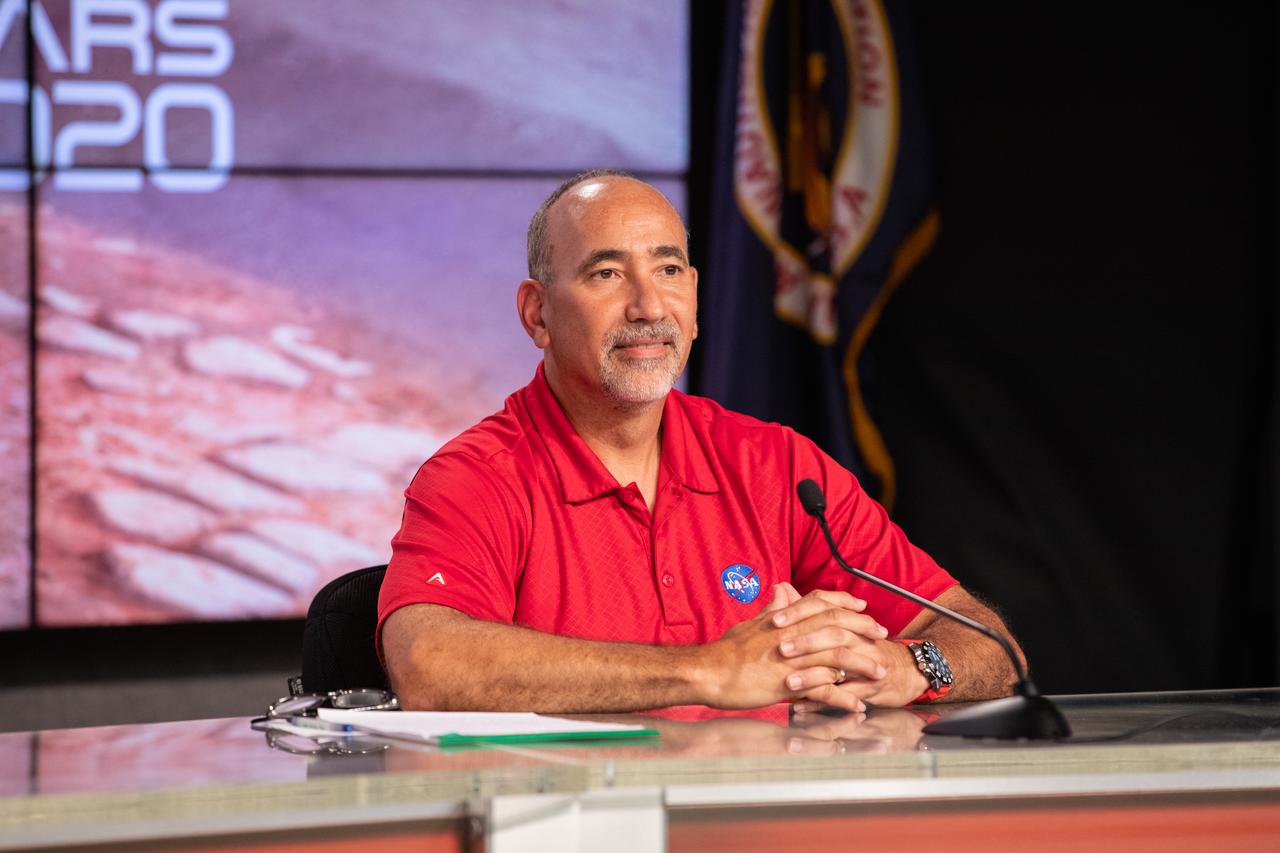
NASA’s Launch Services Program (LSP) Chief of Flight Projects Office Albert Sierra participates in a “Mars 2020 Social Media Q&A: En Español” program on Wednesday, July 22, at NASA’s Kennedy Space Center in Florida. The event featured representatives from LSP and NASA’s Jet Propulsion Laboratory. The Mars Perseverance rover is scheduled to lift off aboard a United Launch Alliance Atlas V 541 rocket from Cape Canaveral Air Force Station’s Space Launch Complex 41 on Thursday, July 30. The two-hour window opens at 7:50 a.m. EDT. LSP, based at Kennedy, is managing the launch.
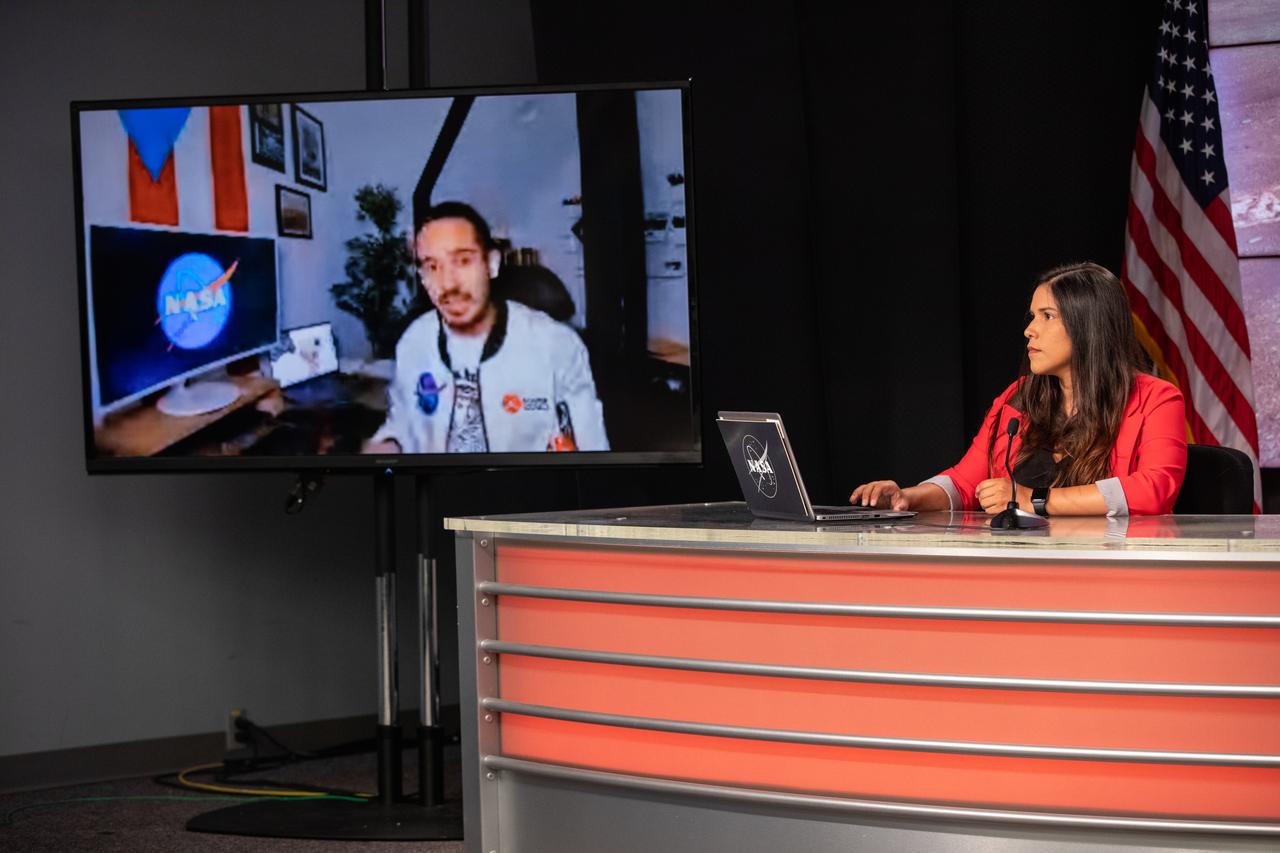
Mars 2020 Social Media Q&A: En Español with representatives from NASA’s Launch Services Program and NASA’s Jet Propulsion Laboratory.
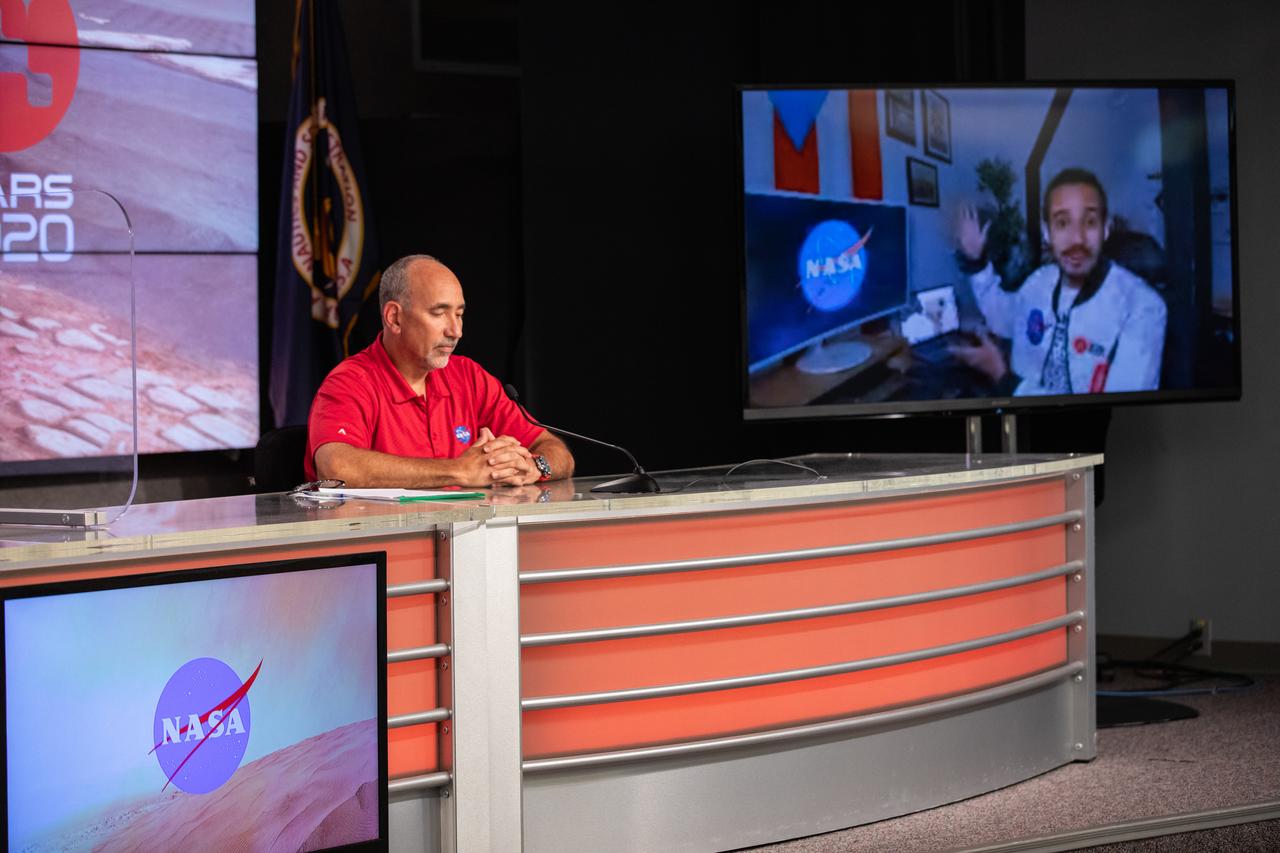
Elio Morillo, a Mars 2020 system testbed engineer from NASA’s Jet Propulsion Laboratory, speaks remotely while Albert Sierra, NASA’s Launch Services Program (LSP) chief of Flight Projects Office, listens during a “Mars 2020 Social Media Q&A: En Español” program on Wednesday, July 22, at NASA’s Kennedy Space Center in Florida. The event featured representatives from LSP and NASA’s Jet Propulsion Laboratory. The Mars Perseverance rover is scheduled to lift off aboard a United Launch Alliance Atlas V 541 rocket from Cape Canaveral Air Force Station’s Space Launch Complex 41 on Thursday, July 30. The two-hour window opens at 7:50 a.m. EDT. LSP, based at Kennedy, is managing the launch.
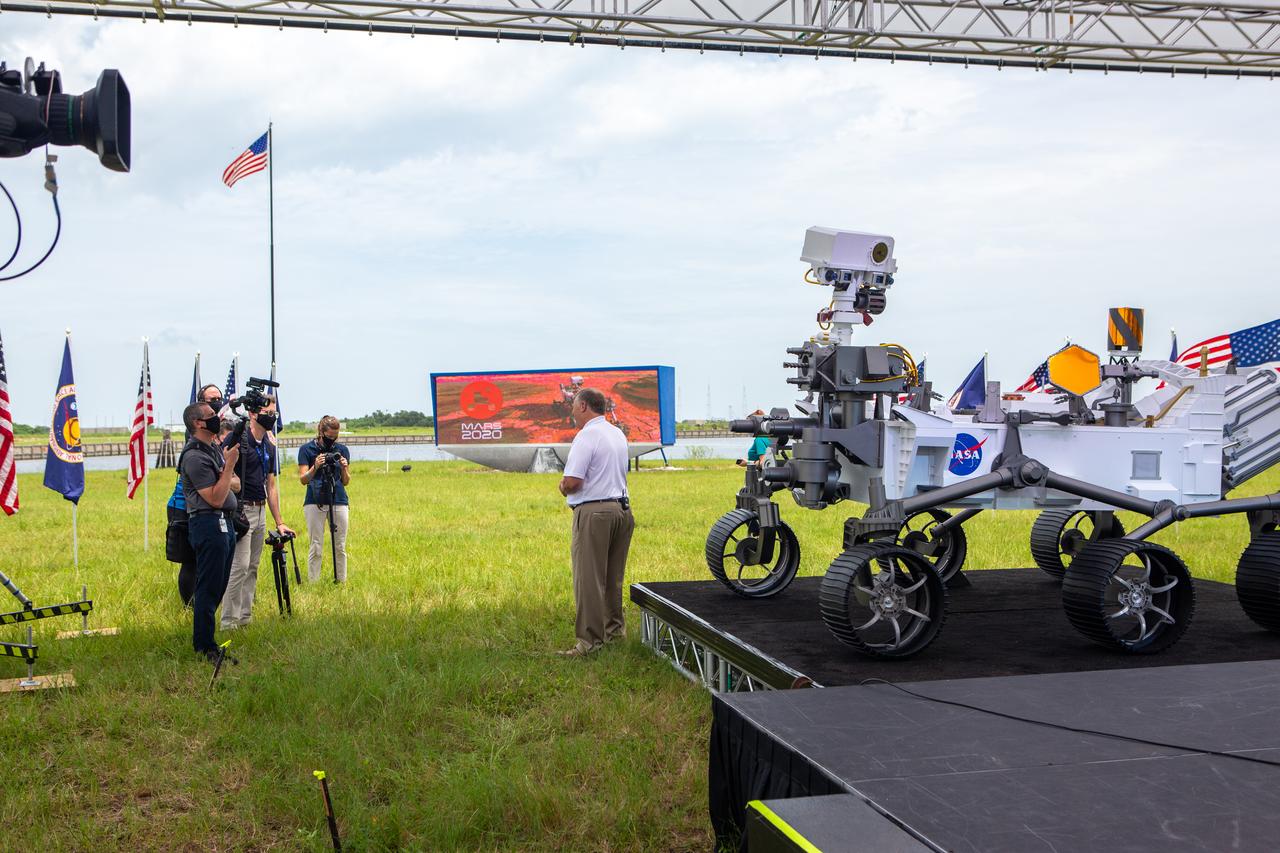
NASA Deputy Administrator Jim Morhard answers questions during a Mars 2020 NASA Social at Kennedy Space Center’s News Center in Florida on July 29, 2020. The Mars Perseverance rover and Ingenuity helicopter are scheduled to launch July 30, on a United Launch Alliance Atlas V 541 rocket from Space Launch Complex 41 at nearby Cape Canaveral Air Force Station. The rover is part of NASA’s Mars Exploration Program, a long-term effort of robotic exploration of the Red Planet. The rover will search for habitable conditions in the ancient past and signs of past microbial life on Mars. The Launch Services Program at Kennedy is responsible for launch management.

NASA Public Affairs Specialist Kristi Irastorza hosts a “Mars 2020 Social Media Q&A: En Español” program on Wednesday, July 22, at NASA’s Kennedy Space Center in Florida. The event featured representatives from NASA’s Launch Services Program (LSP) and NASA’s Jet Propulsion Laboratory. The Mars Perseverance rover is scheduled to lift off aboard a United Launch Alliance Atlas V 541 rocket from Cape Canaveral Air Force Station’s Space Launch Complex 41 on Thursday, July 30. The two-hour window opens at 7:50 a.m. EDT. LSP, based at Kennedy, is managing the launch.
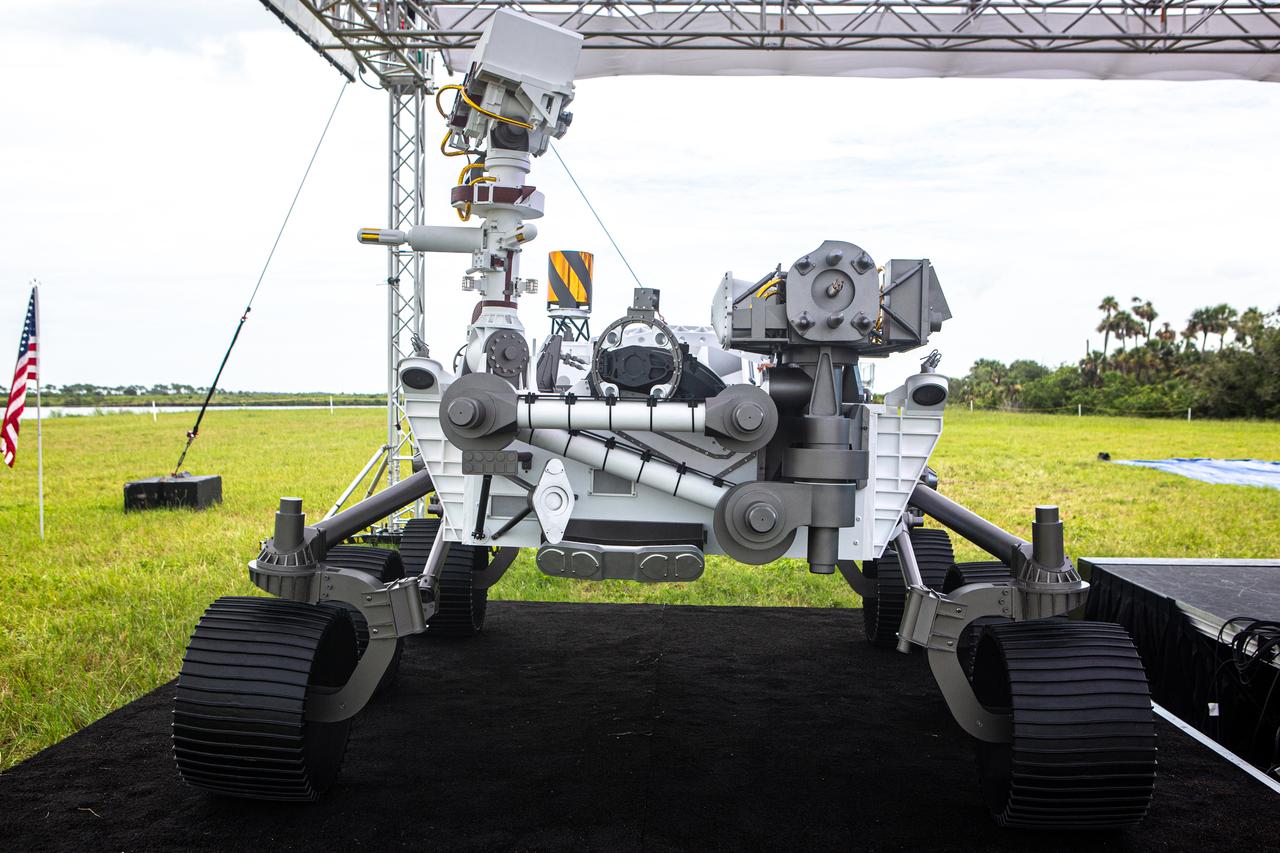
A full-scale mockup of NASA’s Mars 2020 Perseverance rover is on display at the News Center at the agency’s Kennedy Space Center in Florida on July 29, 2020. The rover and Ingenuity helicopter are scheduled to launch July 30, on a United Launch Alliance Atlas V 541 rocket from Space Launch Complex 41 at nearby Cape Canaveral Air Force Station. The rover is part of NASA’s Mars Exploration Program, a long-term effort of robotic exploration of the Red Planet. The rover will search for habitable conditions in the ancient past and signs of past microbial life on Mars. The Launch Services Program at Kennedy is responsible for launch management.
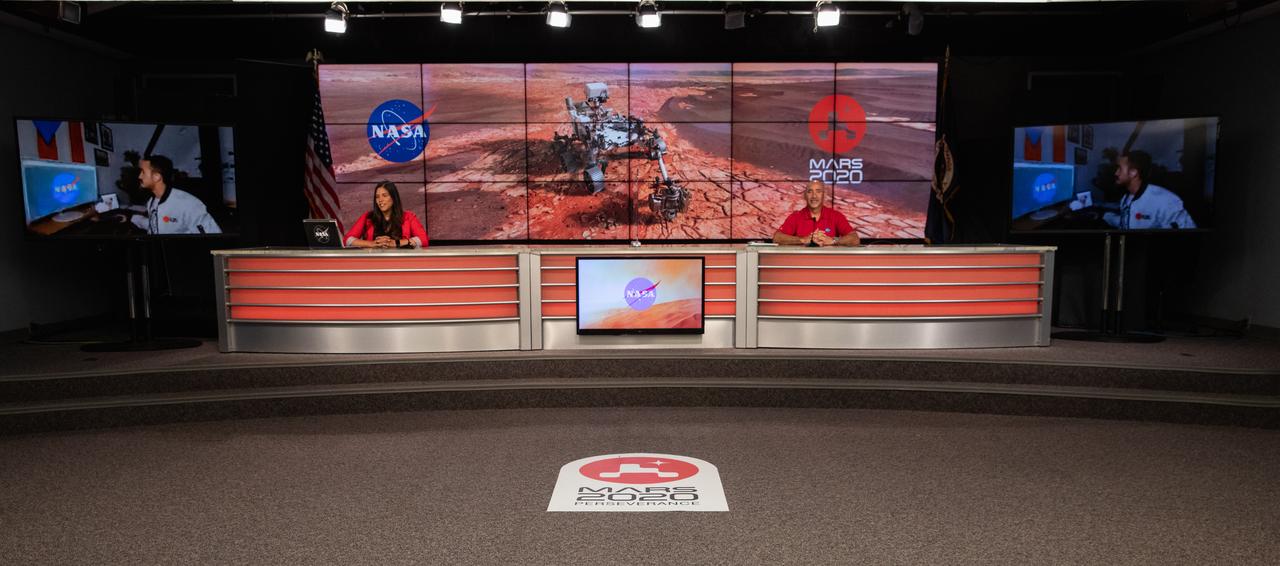
NASA Public Affairs Specialist Kristi Irastorza, left, and NASA’s Launch Services Program (LSP) Chief of Flight Projects Office Albert Sierra, participate in a “Mars 2020 Social Media Q&A: En Español” program on Wednesday, July 22, at NASA’s Kennedy Space Center in Florida. The event featured representatives from LSP and NASA’s Jet Propulsion Laboratory. The Mars Perseverance rover is scheduled to lift off aboard a United Launch Alliance Atlas V 541 rocket from Cape Canaveral Air Force Station’s Space Launch Complex 41 on Thursday, July 30. The two-hour window opens at 7:50 a.m. EDT. LSP, based at Kennedy, is managing the launch.
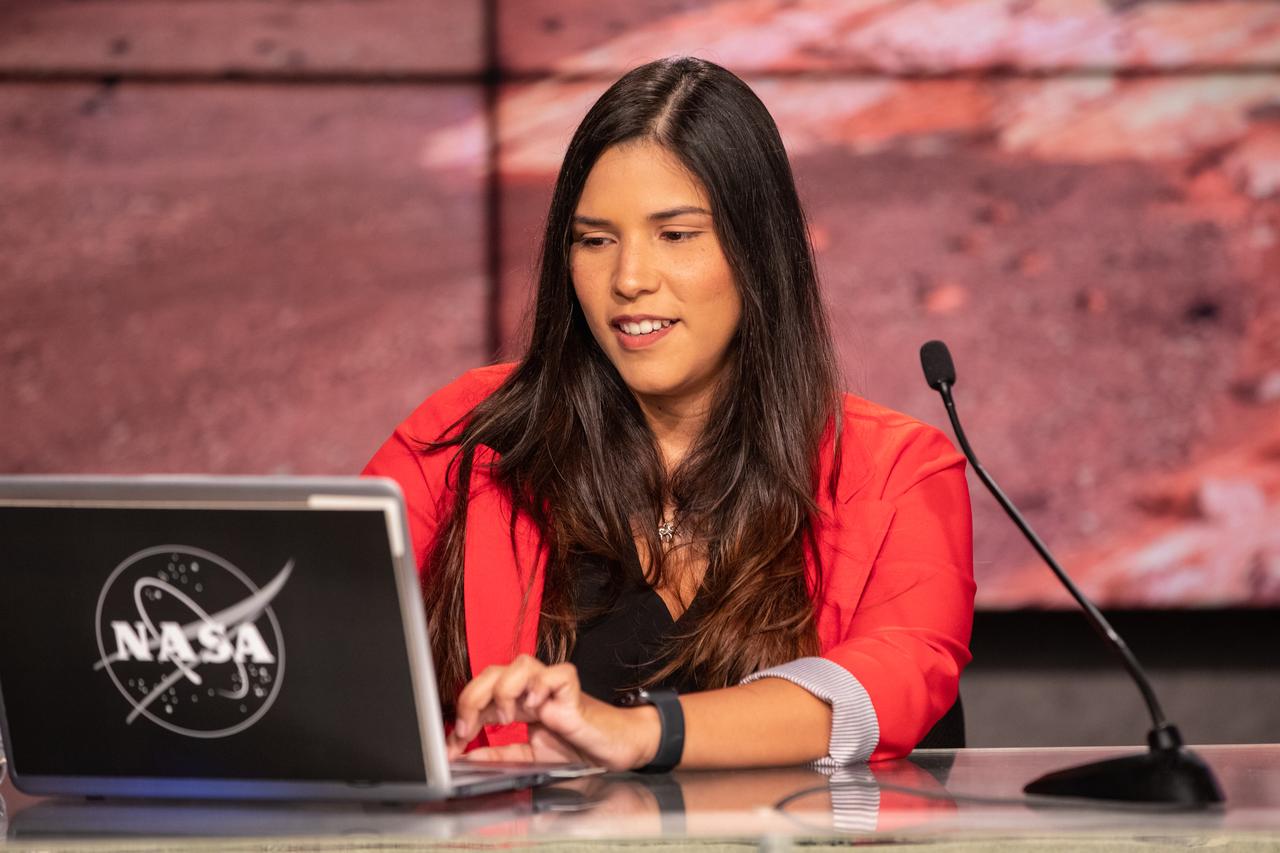
NASA Public Affairs Specialist Kristi Irastorza hosts a “Mars 2020 Social Media Q&A: En Español” program on Wednesday, July 22, at NASA’s Kennedy Space Center in Florida. The event featured representatives from NASA’s Launch Services Program (LSP) and NASA’s Jet Propulsion Laboratory. The Mars Perseverance rover is scheduled to lift off aboard a United Launch Alliance Atlas V 541 rocket from Cape Canaveral Air Force Station’s Space Launch Complex 41 on Thursday, July 30. The two-hour window opens at 7:50 a.m. EDT. LSP, based at Kennedy, is managing the launch.

Kennedy Space Center Deputy Director Janet Petro answers questions during a Mars 2020 NASA Social at the center’s News Center in Florida on July 29, 2020. At right is NASA Deputy Administrator Jim Morhard. The Mars Perseverance rover and Ingenuity helicopter are scheduled to launch July 30, on a United Launch Alliance Atlas V 541 rocket from Space Launch Complex 41 at nearby Cape Canaveral Air Force Station. The rover is part of NASA’s Mars Exploration Program, a long-term effort of robotic exploration of the Red Planet. The rover will search for habitable conditions in the ancient past and signs of past microbial life on Mars. The Launch Services Program at Kennedy is responsible for launch management.
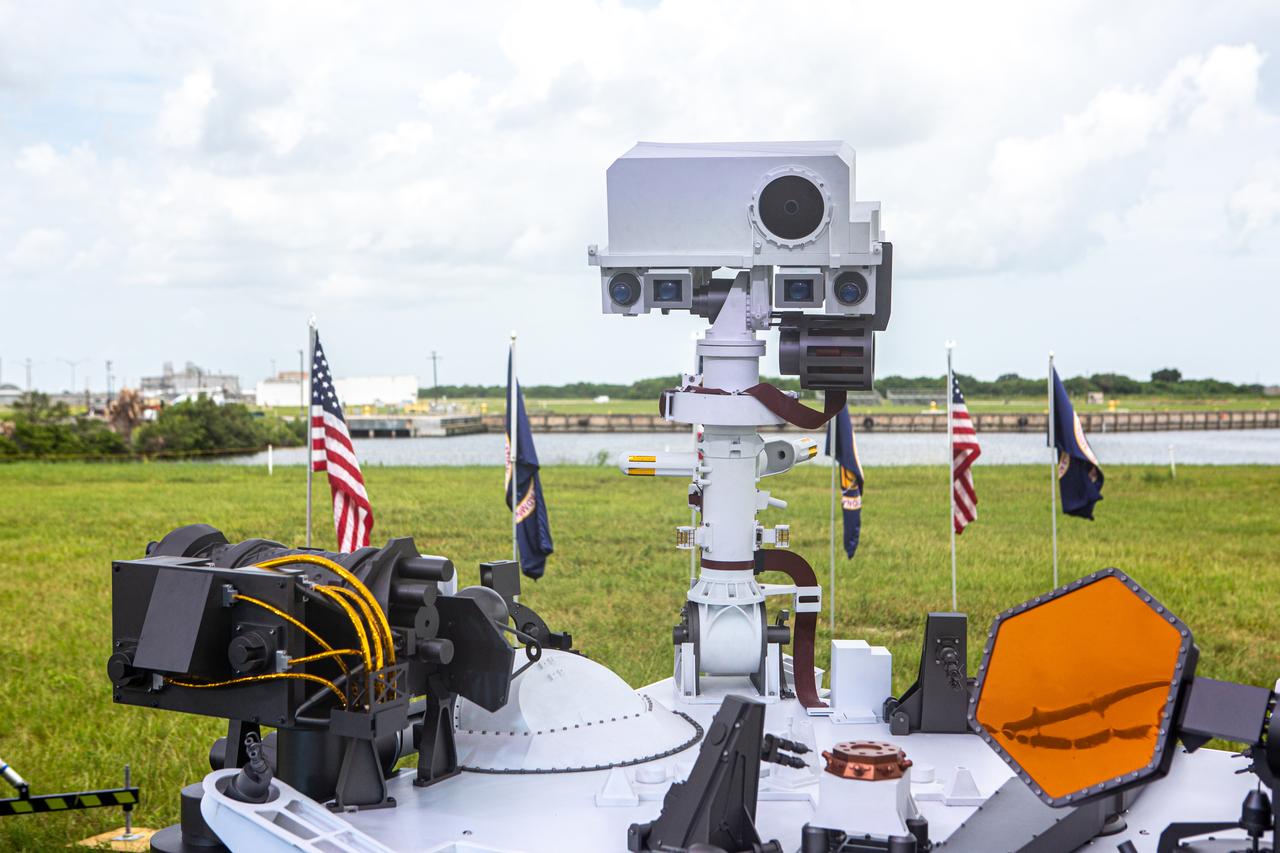
A full-scale mockup of NASA’s Mars 2020 Perseverance rover is on display at the News Center at the agency’s Kennedy Space Center in Florida on July 29, 2020. The rover and Ingenuity helicopter are scheduled to launch July 30, on a United Launch Alliance Atlas V 541 rocket from Space Launch Complex 41 at nearby Cape Canaveral Air Force Station. The rover is part of NASA’s Mars Exploration Program, a long-term effort of robotic exploration of the Red Planet. The rover will search for habitable conditions in the ancient past and signs of past microbial life on Mars. The Launch Services Program at Kennedy is responsible for launch management.
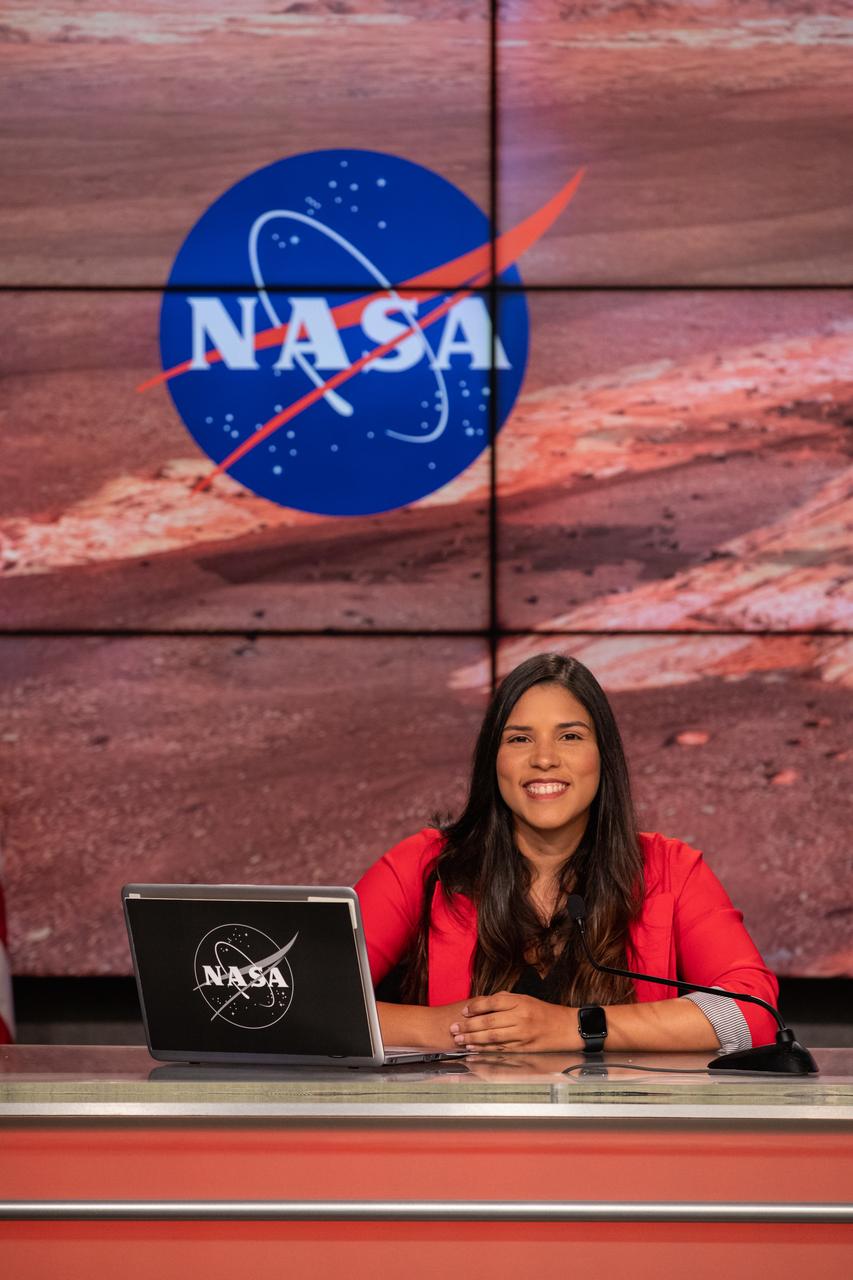
NASA Public Affairs Specialist Kristi Irastorza hosts a “Mars 2020 Social Media Q&A: En Español” program on Wednesday, July 22, at NASA’s Kennedy Space Center in Florida. The event featured representatives from NASA’s Launch Services Program (LSP) and NASA’s Jet Propulsion Laboratory. The Mars Perseverance rover is scheduled to lift off aboard a United Launch Alliance Atlas V 541 rocket from Cape Canaveral Air Force Station’s Space Launch Complex 41 on Thursday, July 30. The two-hour window opens at 7:50 a.m. EDT. LSP, based at Kennedy, is managing the launch.
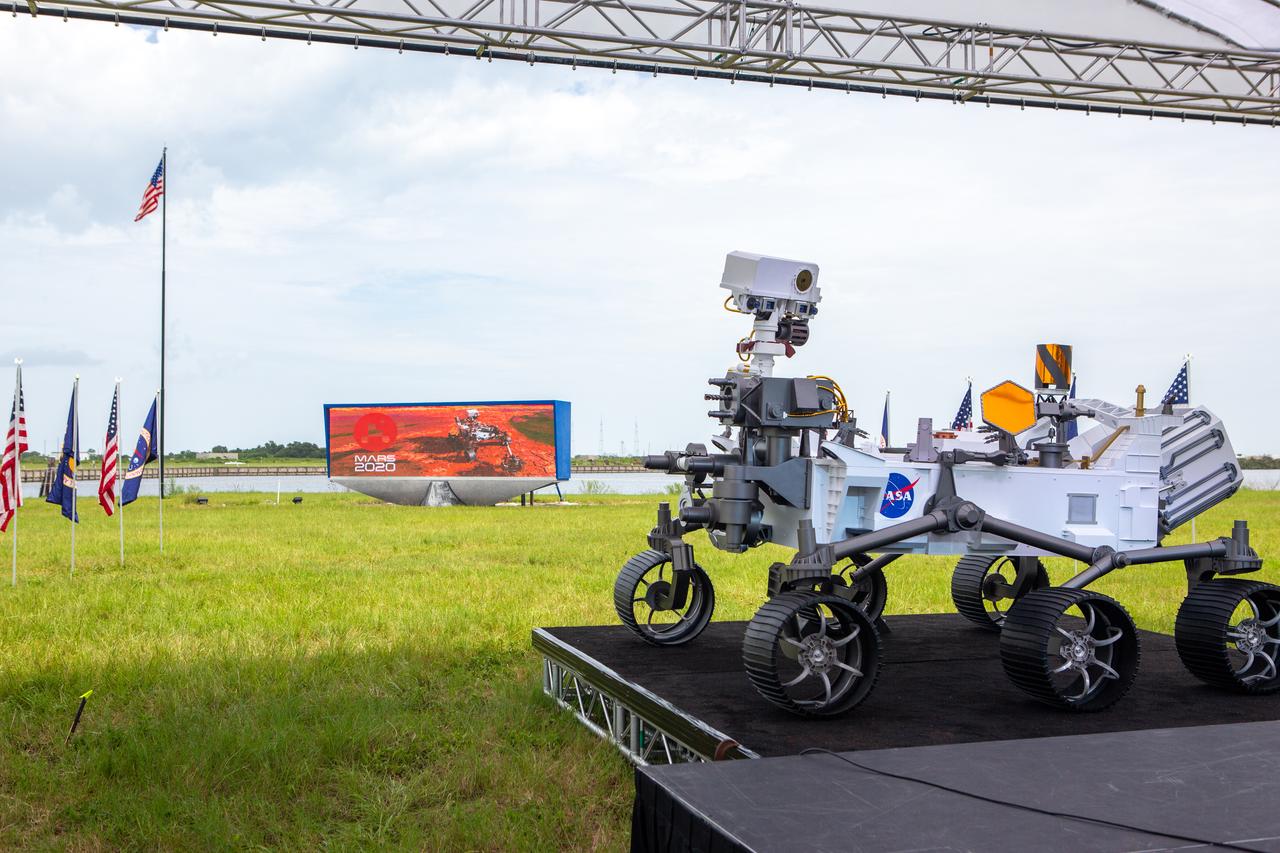
A full-scale mockup of NASA’s Mars 2020 Perseverance rover is on display near the countdown clock at the News Center at the agency’s Kennedy Space Center in Florida on July 29, 2020. The rover and Ingenuity helicopter are scheduled to launch July 30, on a United Launch Alliance Atlas V 541 rocket from Space Launch Complex 41 at nearby Cape Canaveral Air Force Station. The rover is part of NASA’s Mars Exploration Program, a long-term effort of robotic exploration of the Red Planet. The rover will search for habitable conditions in the ancient past and signs of past microbial life on Mars. The Launch Services Program at Kennedy is responsible for launch management.
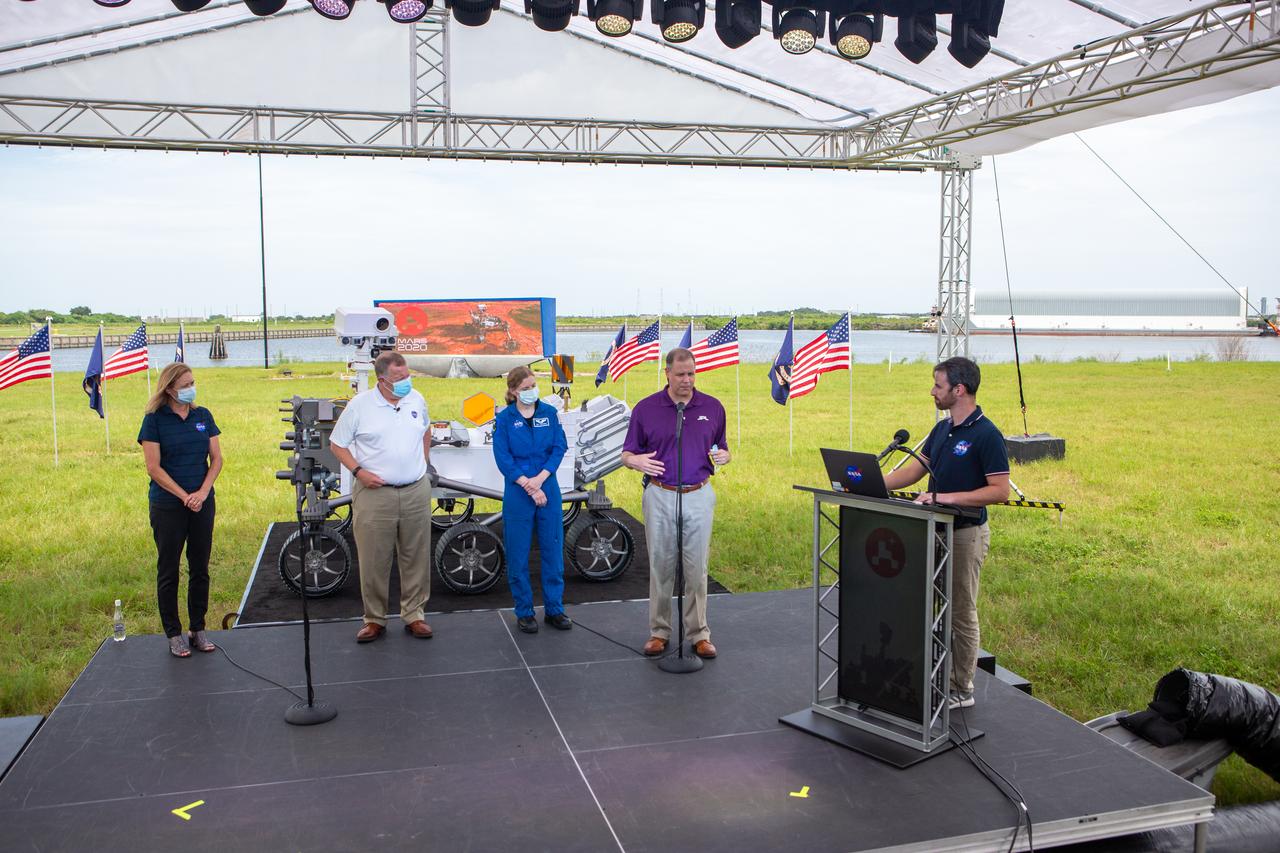
Joshua Santora, at the podium, NASA Communications, moderates a Mars 2020 NASA Social at Kennedy Space Center’s News Center in Florida on July 29, 2020. Participants from left are Kennedy Deputy Director Janet Petro, NASA Deputy Administrator Jim Morhard, NASA astronaut Zena Cardman, and NASA Administrator Jim Bridenstine. The Mars Perseverance rover and Ingenuity helicopter are scheduled to launch July 30, on a United Launch Alliance Atlas V 541 rocket from Space Launch Complex 41 at nearby Cape Canaveral Air Force Station. The rover is part of NASA’s Mars Exploration Program, a long-term effort of robotic exploration of the Red Planet. The rover will search for habitable conditions in the ancient past and signs of past microbial life on Mars. The Launch Services Program at Kennedy is responsible for launch management.
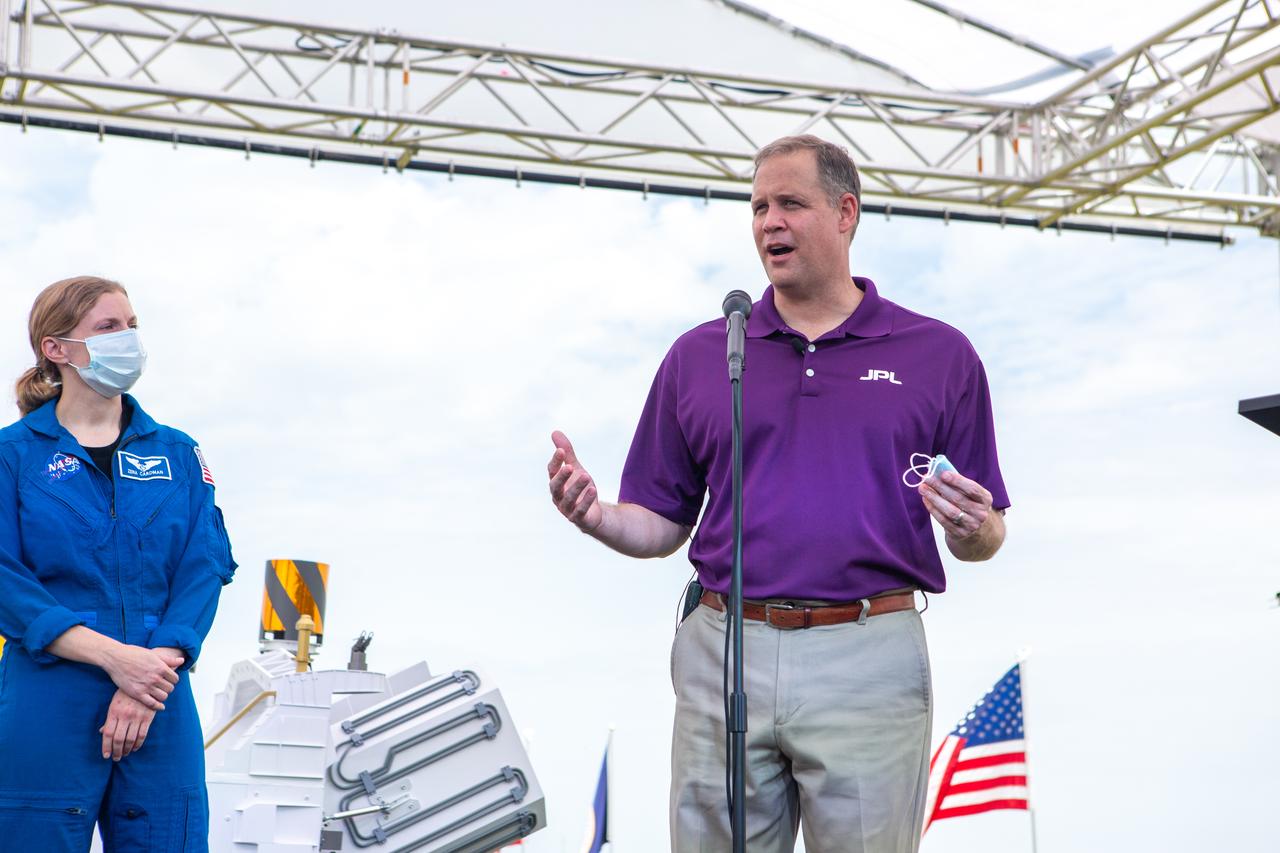
NASA Administrator Jim Bridenstine answers a question during a Mars 2020 NASA Social at Kennedy Space Center’s News Center in Florida on July 29, 2020. At left is NASA astronaut Zena Cardman. The Mars Perseverance rover and Ingenuity helicopter are scheduled to launch July 30, on a United Launch Alliance Atlas V 541 rocket from Space Launch Complex 41 at nearby Cape Canaveral Air Force Station. The rover is part of NASA’s Mars Exploration Program, a long-term effort of robotic exploration of the Red Planet. The rover will search for habitable conditions in the ancient past and signs of past microbial life on Mars. The Launch Services Program at Kennedy is responsible for launch management.
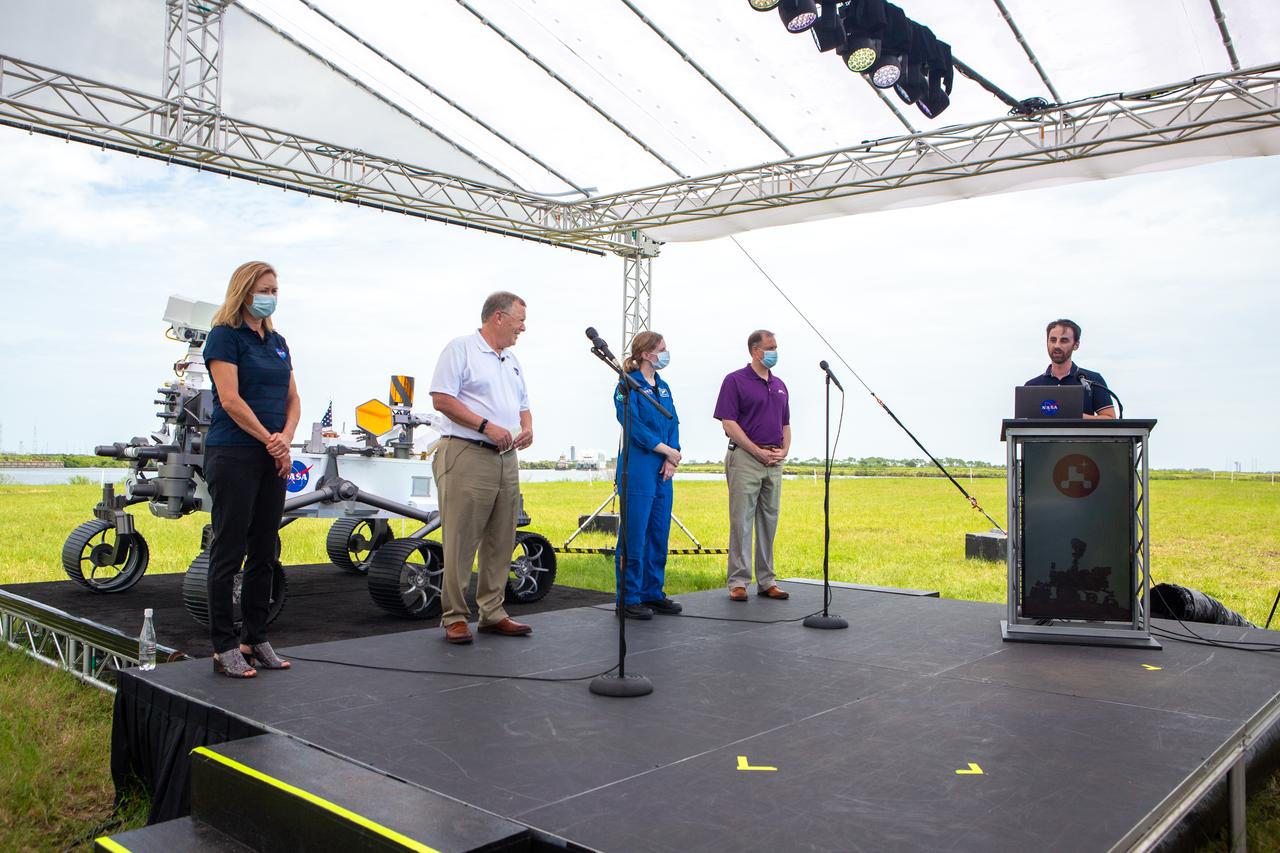
Joshua Santora, at the podium, NASA Communications, moderates a Mars 2020 NASA Social at Kennedy Space Center’s News Center in Florida on July 29, 2020. Participants from left are Kennedy Deputy Director Janet Petro, NASA Deputy Administrator Jim Morhard, NASA astronaut Zena Cardman, and NASA Administrator Jim Bridenstine. The Mars Perseverance rover and Ingenuity helicopter are scheduled to launch July 30, on a United Launch Alliance Atlas V 541 rocket from Space Launch Complex 41 at nearby Cape Canaveral Air Force Station. The rover is part of NASA’s Mars Exploration Program, a long-term effort of robotic exploration of the Red Planet. The rover will search for habitable conditions in the ancient past and signs of past microbial life on Mars. The Launch Services Program at Kennedy is responsible for launch management.
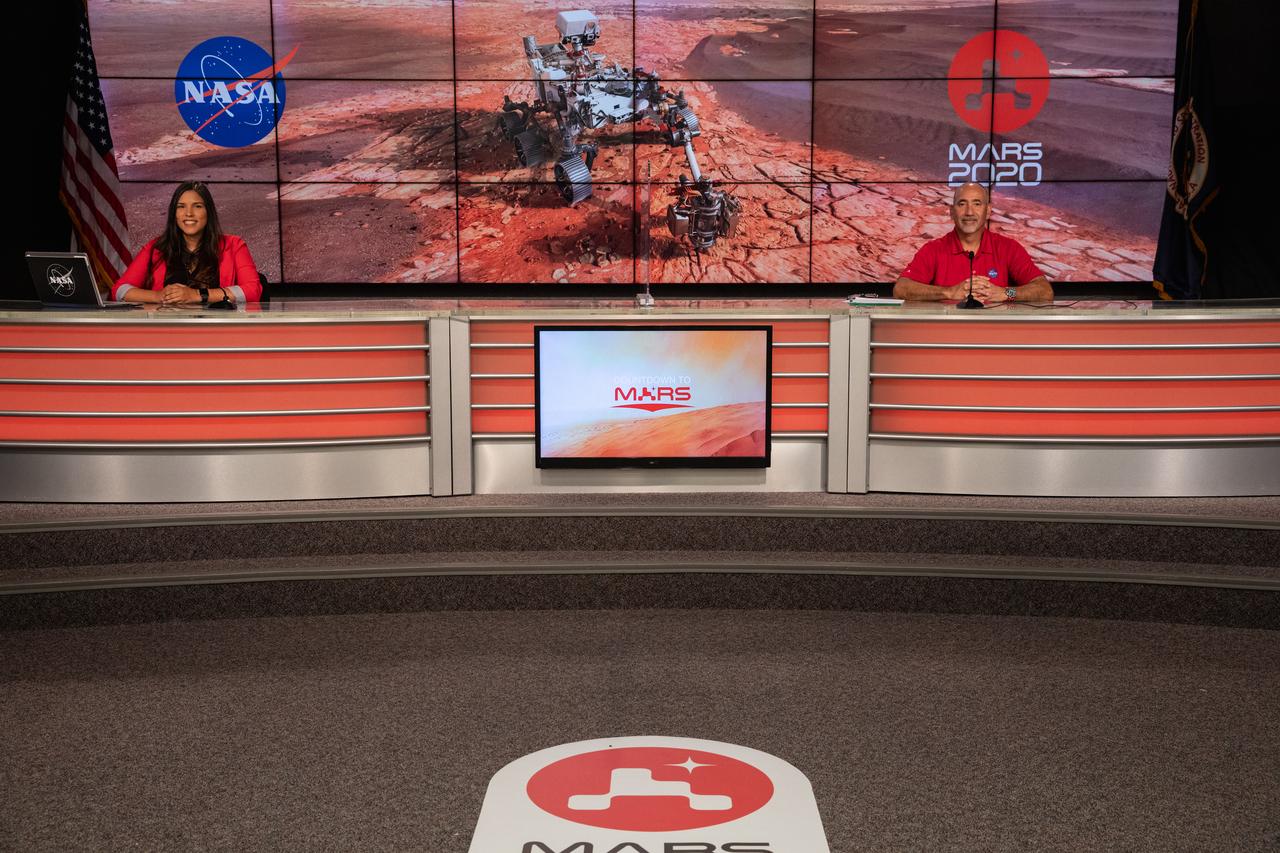
NASA Public Affairs Specialist Kristi Irastorza, left, and NASA’s Launch Services Program (LSP) Chief of Flight Projects Office Albert Sierra, participate in a “Mars 2020 Social Media Q&A: En Español” program on Wednesday, July 22, at NASA’s Kennedy Space Center in Florida. The event featured representatives from LSP and NASA’s Jet Propulsion Laboratory. The Mars Perseverance rover is scheduled to lift off aboard a United Launch Alliance Atlas V 541 rocket from Cape Canaveral Air Force Station’s Space Launch Complex 41 on Thursday, July 30. The two-hour window opens at 7:50 a.m. EDT. LSP, based at Kennedy, is managing the launch.
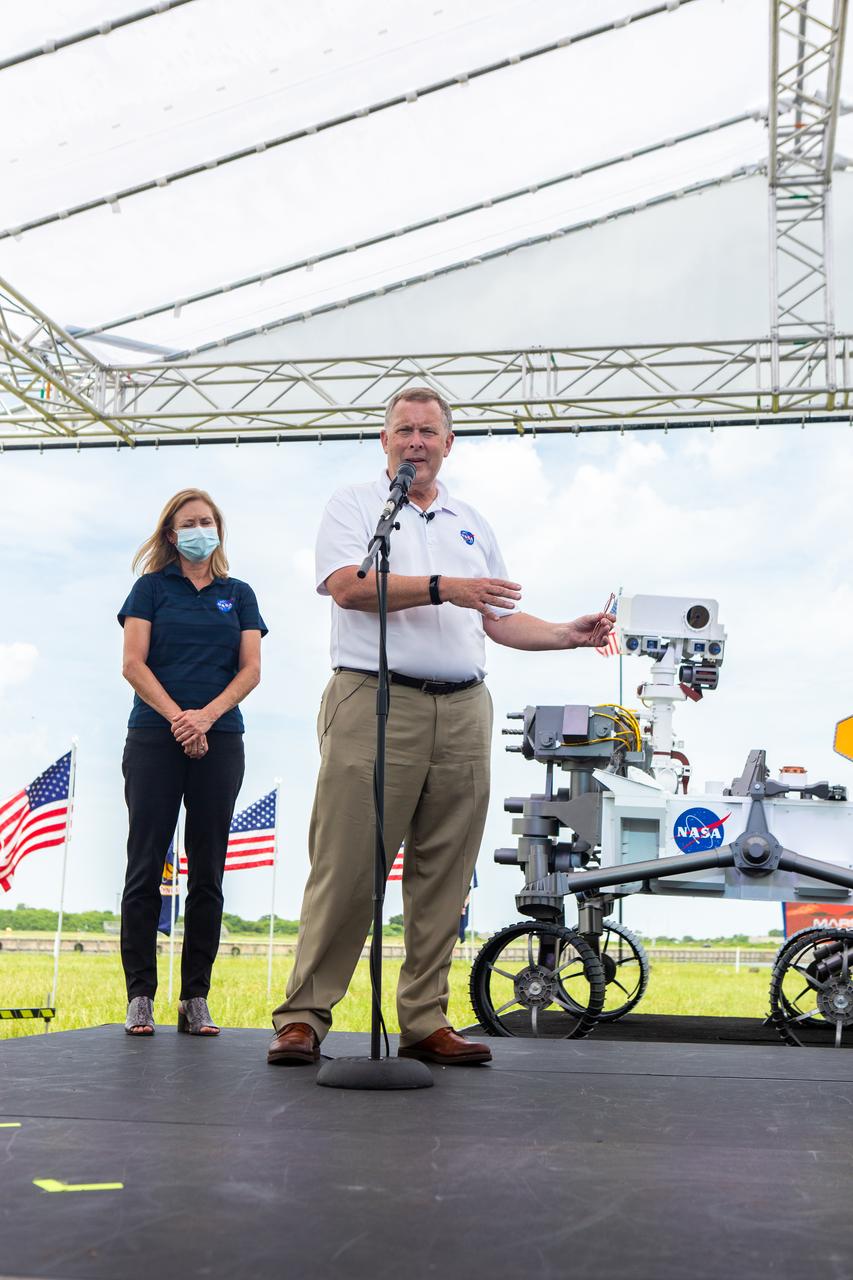
NASA Deputy Administrator Jim Morhard answers questions during a Mars 2020 NASA Social at Kennedy Space Center’s News Center in Florida on July 29, 2020. Standing behind him is Kennedy Deputy Director Janet Petro. The Mars Perseverance rover and Ingenuity helicopter are scheduled to launch July 30, on a United Launch Alliance Atlas V 541 rocket from Space Launch Complex 41 at nearby Cape Canaveral Air Force Station. The rover is part of NASA’s Mars Exploration Program, a long-term effort of robotic exploration of the Red Planet. The rover will search for habitable conditions in the ancient past and signs of past microbial life on Mars. The Launch Services Program at Kennedy is responsible for launch management.
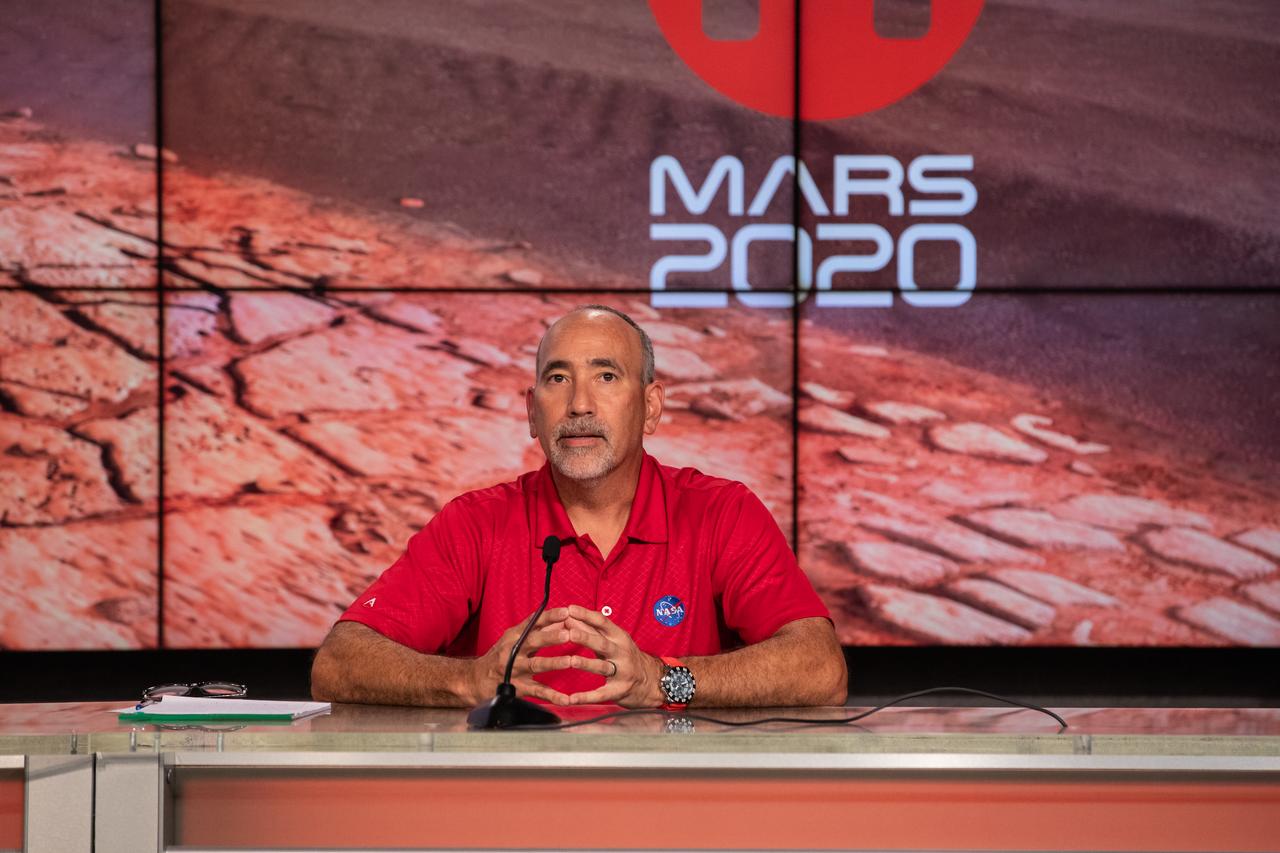
NASA’s Launch Services Program (LSP) Chief of Flight Projects Office Albert Sierra participates in a “Mars 2020 Social Media Q&A: En Español” program on Wednesday, July 22, at NASA’s Kennedy Space Center in Florida. The event featured representatives from LSP and NASA’s Jet Propulsion Laboratory. The Mars Perseverance rover is scheduled to lift off aboard a United Launch Alliance Atlas V 541 rocket from Cape Canaveral Air Force Station’s Space Launch Complex 41 on Thursday, July 30. The two-hour window opens at 7:50 a.m. EDT. LSP, based at Kennedy, is managing the launch.
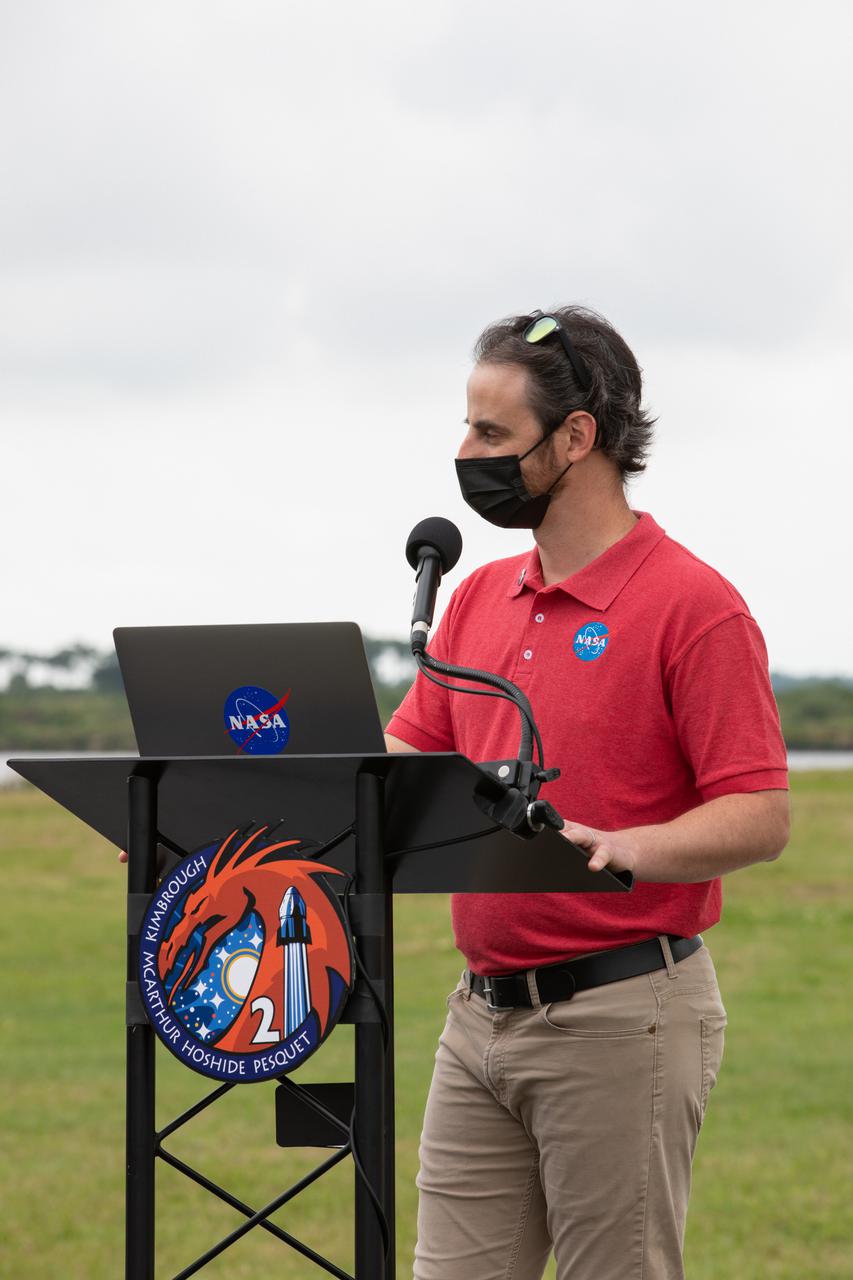
Moderator Joshua Santora speaks during a NASA Social Facebook Live event April 21, 2021, near the Press Site countdown clock at Kennedy Space Center in Florida, ahead of the agency’s SpaceX Crew-2 launch. NASA astronauts Shane Kimbrough and Megan McArthur, JAXA astronaut Akihiko Hoshide, and ESA astronaut Thomas Pesquet will fly on Crew-2, the second crew rotation mission to the International Space Station as part of NASA’s Commercial Crew Program. They will launch aboard SpaceX’s Crew Dragon spacecraft, named Endeavour, powered by the company’s Falcon 9 rocket. Liftoff is set for Friday, April 23, at 5:49 a.m. EDT.

Acting NASA Administrator Steve Jurczyk speaks during a NASA Social Facebook Live event April 21, 2021, near the Press Site countdown clock at Kennedy Space Center in Florida, ahead of the agency’s SpaceX Crew-2 launch. NASA astronauts Shane Kimbrough and Megan McArthur, JAXA astronaut Akihiko Hoshide, and ESA astronaut Thomas Pesquet will fly on Crew-2, the second crew rotation mission to the International Space Station as part of NASA’s Commercial Crew Program. They will launch aboard SpaceX’s Crew Dragon spacecraft, named Endeavour, powered by the company’s Falcon 9 rocket. Liftoff is set for Friday, April 23, at 5:49 a.m. EDT.
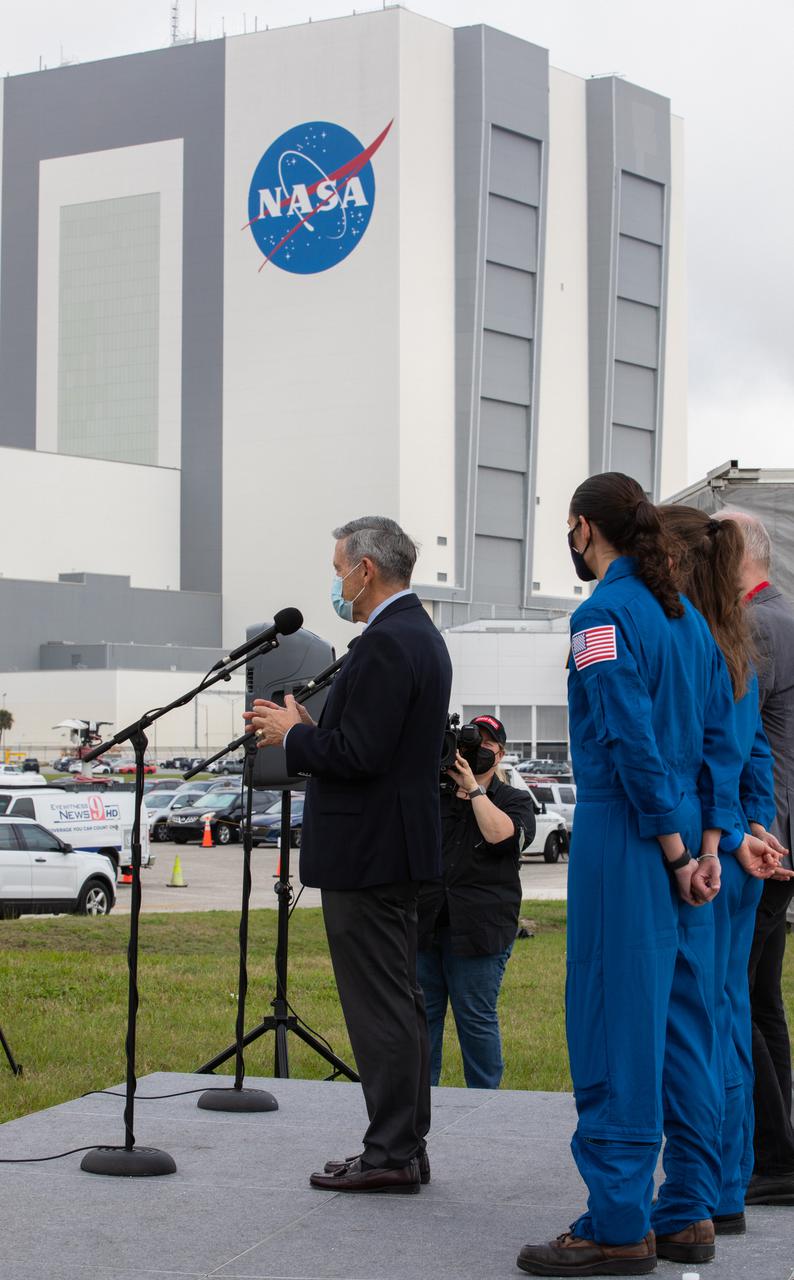
Kennedy Space Center Director Bob Cabana speaks during a NASA Social Facebook Live event April 21, 2021, near the Press Site countdown clock at the Florida Spaceport, ahead of the agency’s SpaceX Crew-2 launch. NASA astronauts Shane Kimbrough and Megan McArthur, JAXA astronaut Akihiko Hoshide, and ESA astronaut Thomas Pesquet will fly on Crew-2, the second crew rotation mission to the International Space Station as part of NASA’s Commercial Crew Program. They will launch aboard SpaceX’s Crew Dragon spacecraft, named Endeavour, powered by the company’s Falcon 9 rocket. Liftoff is set for Friday, April 23, at 5:49 a.m. EDT.
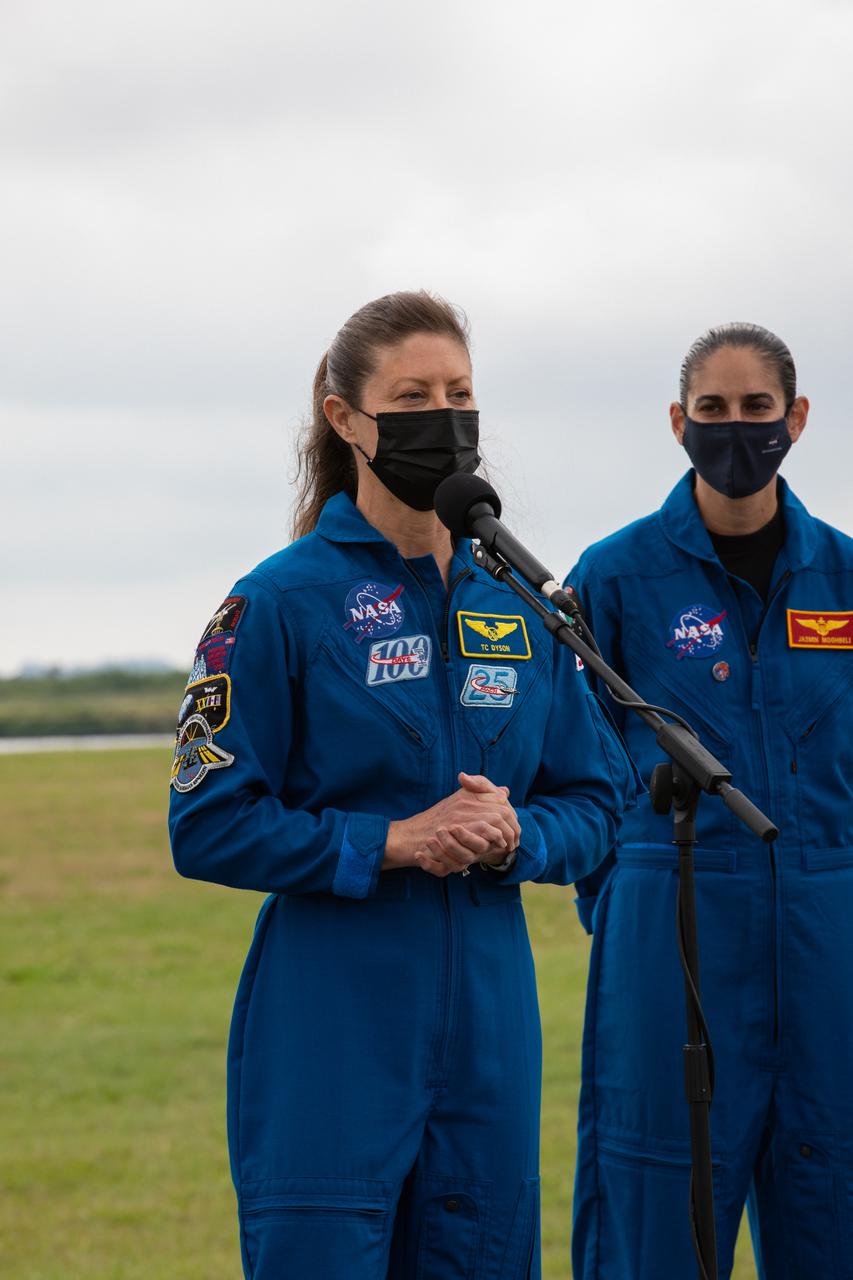
NASA astronaut Tracy Caldwell Dyson speaks during a NASA Social Facebook Live event April 21, 2021, near the Press Site countdown clock at Kennedy Space Center in Florida, ahead of the agency’s SpaceX Crew-2 launch. NASA astronauts Shane Kimbrough and Megan McArthur, JAXA astronaut Akihiko Hoshide, and ESA astronaut Thomas Pesquet will fly on Crew-2, the second crew rotation mission to the International Space Station as part of NASA’s Commercial Crew Program. They will launch aboard SpaceX’s Crew Dragon spacecraft, named Endeavour, powered by the company’s Falcon 9 rocket. Liftoff is set for Friday, April 23, at 5:49 a.m. EDT.
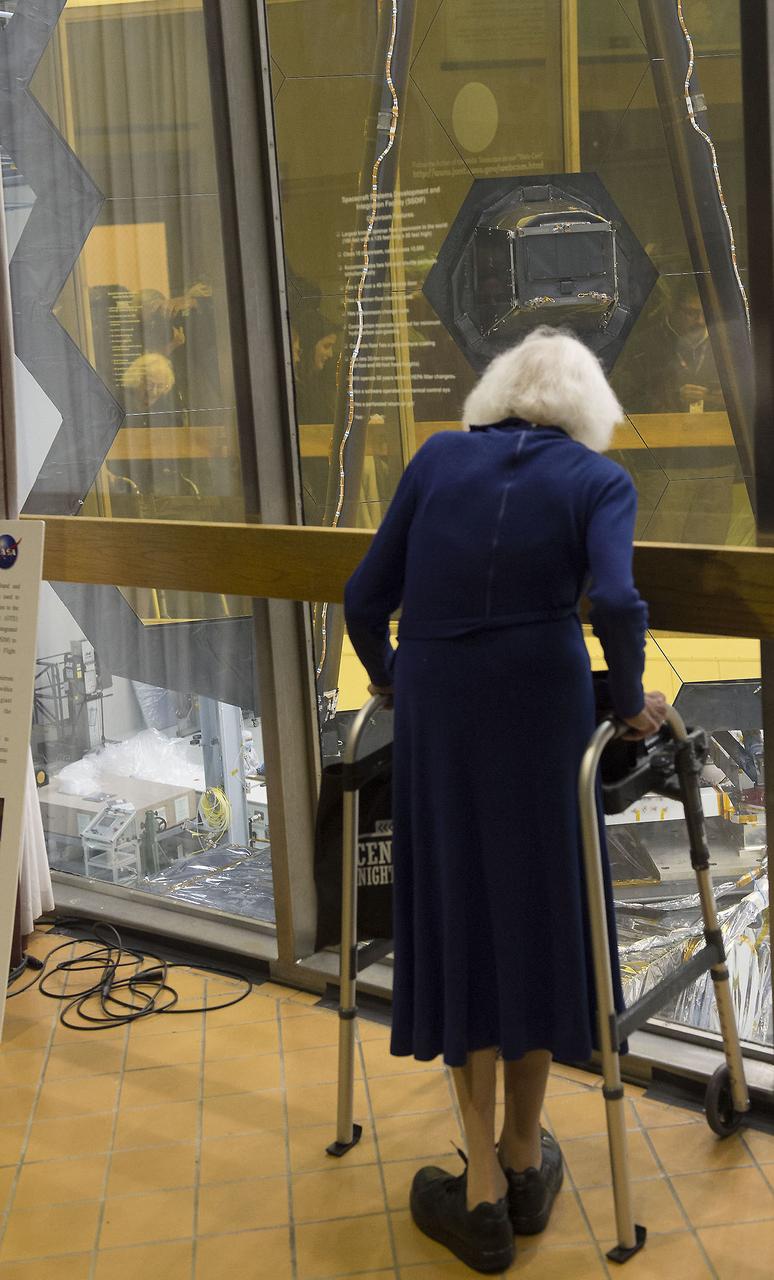
Employees viewed James Webb Space Telescope in B29 on March 31, 2017 prior to final phase of integration and testing before 2018 launch. Project personnel were on hand for Q&A and LIVE Facebook event. Pictured here is Nancy Grace Roman “Mother of Hubble” viewing JWST.

Kennedy Space Center Director Bob Cabana speaks during a NASA Social Facebook Live event April 21, 2021, near the Press Site countdown clock at the Florida Spaceport, ahead of the agency’s SpaceX Crew-2 launch. Also pictured, from left to right, are: Steve Jurczyk, acting NASA administrator; Hiroshi Sasaki, vice president and director general, JAXA’s Human Spaceflight Technology Directorate; and Frank de Winne, manager, International Space Station Program, ESA. NASA astronauts Shane Kimbrough and Megan McArthur, JAXA astronaut Akihiko Hoshide, and ESA astronaut Thomas Pesquet will fly on Crew-2, the second crew rotation mission to the International Space Station as part of NASA’s Commercial Crew Program. They will launch aboard SpaceX’s Crew Dragon spacecraft, named Endeavour, powered by the company’s Falcon 9 rocket. Liftoff is set for Friday, April 23, at 5:49 a.m. EDT.
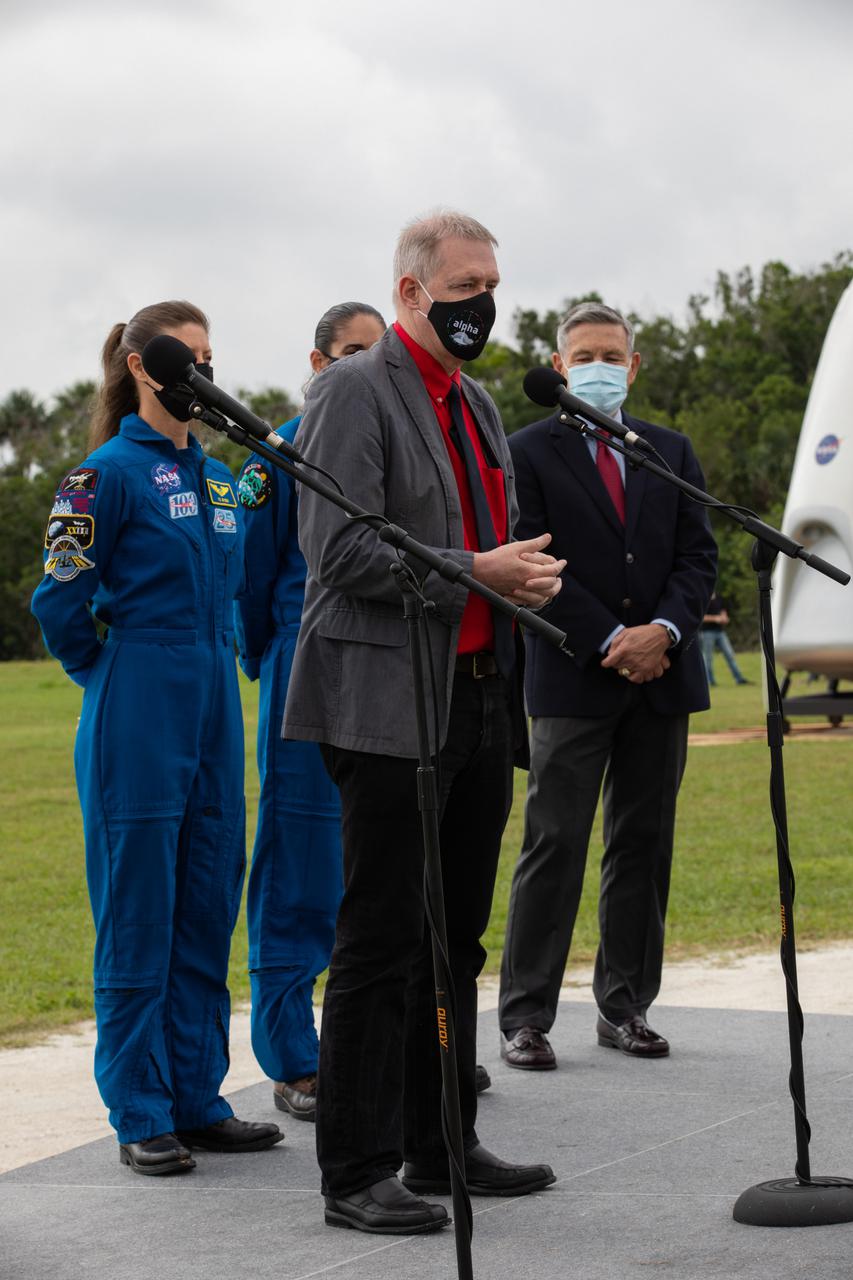
Frank de Winne, manager, International Space Station Program, ESA, speaks during a NASA Social Facebook Live event April 21, 2021, near the Press Site countdown clock at Kennedy Space Center in Florida, ahead of the agency’s SpaceX Crew-2 launch. NASA astronauts Shane Kimbrough and Megan McArthur, JAXA astronaut Akihiko Hoshide, and ESA astronaut Thomas Pesquet will fly on Crew-2, the second crew rotation mission to the International Space Station as part of NASA’s Commercial Crew Program. They will launch aboard SpaceX’s Crew Dragon spacecraft, named Endeavour, powered by the company’s Falcon 9 rocket. Liftoff is set for Friday, April 23, at 5:49 a.m. EDT.

Hiroshi Sasaki, vice president and director general, JAXA’s Human Spaceflight Technology Directorate, speaks during a NASA Social Facebook Live event April 21, 2021, near the Press Site countdown clock at Kennedy Space Center in Florida, ahead of the agency’s SpaceX Crew-2 launch. NASA astronauts Shane Kimbrough and Megan McArthur, JAXA astronaut Akihiko Hoshide, and ESA astronaut Thomas Pesquet will fly on Crew-2, the second crew rotation mission to the International Space Station as part of NASA’s Commercial Crew Program. They will launch aboard SpaceX’s Crew Dragon spacecraft, named Endeavour, powered by the company’s Falcon 9 rocket. Liftoff is set for Friday, April 23, at 5:49 a.m. EDT.
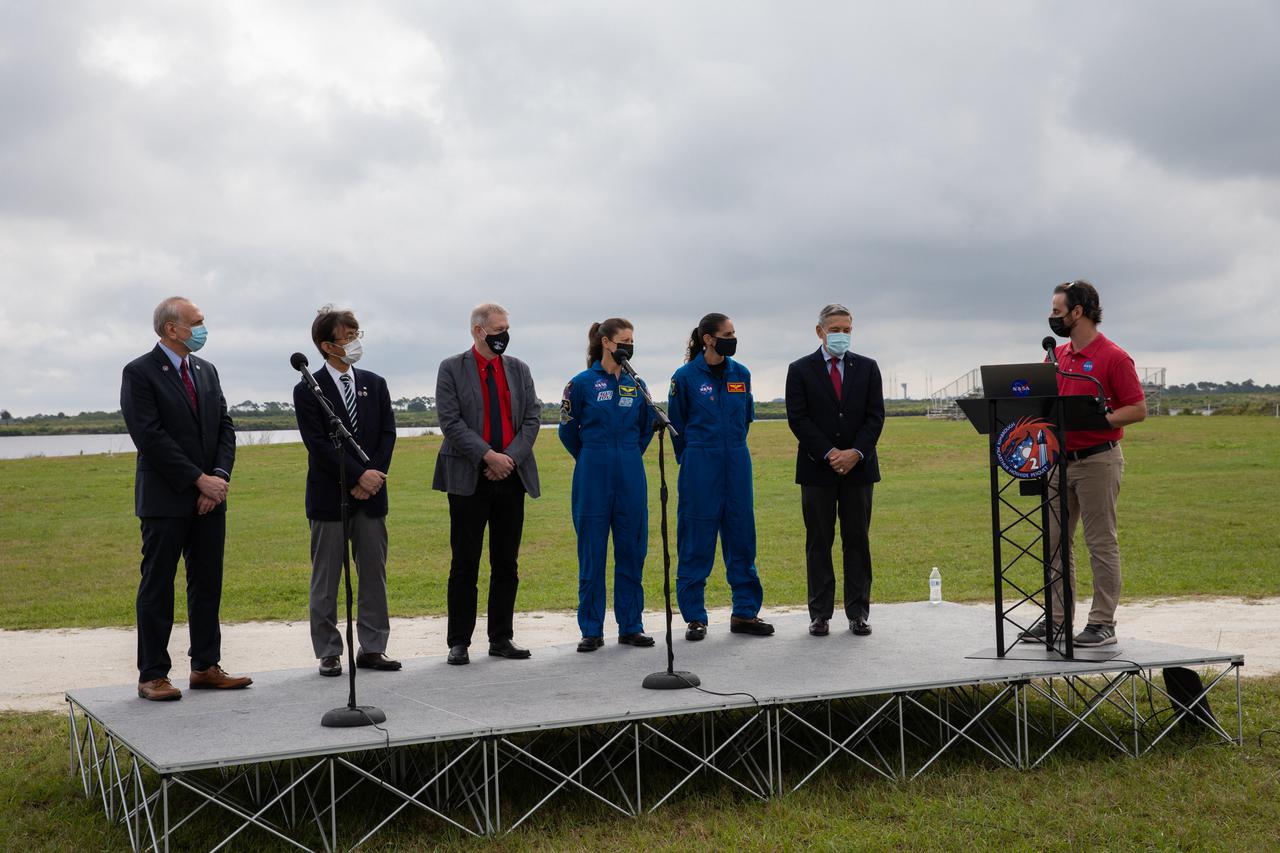
At right, moderator Joshua Santora, NASA Communications, addresses the participants in a NASA Social Facebook Live event held April 21, 2021, near the Press Site countdown clock at NASA’s Kennedy Space Center in Florida, ahead of the agency’s SpaceX Crew-2 launch. Participants, from left to right, are: Steve Jurczyk, acting NASA administrator; Hiroshi Sasaki, vice president and director general, JAXA’s Human Spaceflight Technology Directorate; Frank de Winne, manager, International Space Station Program, ESA; NASA astronauts Tracy Caldwell Dyson and Jasmin Moghbeli; and Kennedy Director Bob Cabana. Crew-2 is the second regular crew mission of a U.S. commercial spacecraft with astronauts to the International Space Station as part of NASA’s Commercial Crew Program. The SpaceX Crew Dragon Endeavour capsule will launch atop the company’s Falcon 9 rocket from Launch Complex 39A to the space station for a six-month science mission. Liftoff is targeted for Friday, April 23, at 5:49 a.m. EDT.
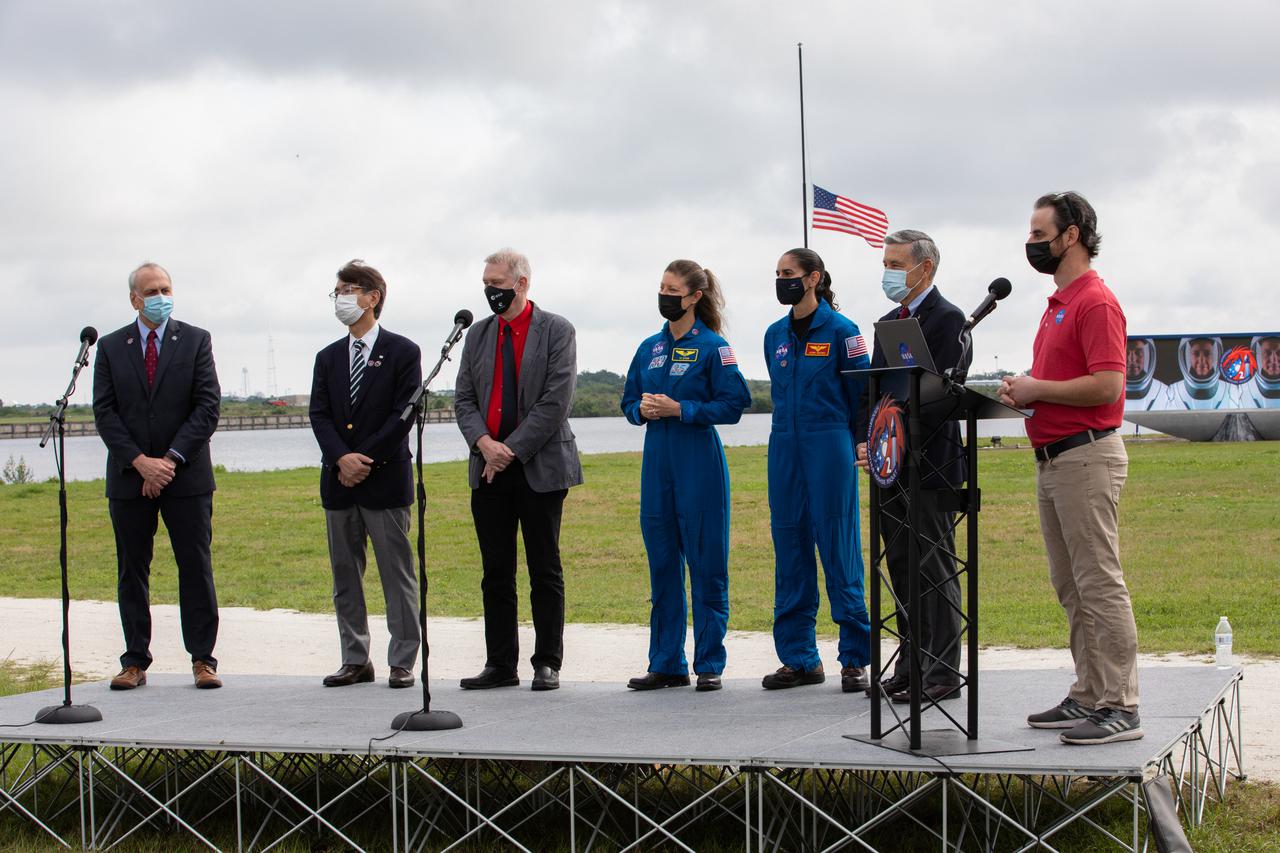
At right, moderator Joshua Santora, NASA Communications, addresses the audience during a NASA Social Facebook Live event held April 21, 2021, near the Press Site countdown clock at NASA’s Kennedy Space Center in Florida, ahead of the agency’s SpaceX Crew-2 launch. Participants, from left to right, are: Steve Jurczyk, acting NASA administrator; Hiroshi Sasaki, vice president and director general, JAXA’s Human Spaceflight Technology Directorate; Frank de Winne, manager, International Space Station Program, ESA; NASA astronauts Tracy Caldwell Dyson and Jasmin Moghbeli; and Kennedy Director Bob Cabana. Crew-2 is the second regular crew mission of a U.S. commercial spacecraft with astronauts to the International Space Station as part of NASA’s Commercial Crew Program. The SpaceX Crew Dragon Endeavour capsule will launch atop the company’s Falcon 9 rocket from Launch Complex 39A to the space station for a six-month science mission. Liftoff is targeted for Friday, April 23, at 5:49 a.m. EDT.

CLOUDY with a chance of NOT SEEING the Super Blood Moon Lunar Eclipse? WATCH Live here: <a href="http://bit.ly/1LfspfW" rel="nofollow">bit.ly/1LfspfW</a> No worries, we've got you've covered. Click on over to the live stream starting at 8:00 p.m. until at least 11:30 p.m. EDT broadcast from NASA's Marshall Space Flight Center in Huntsville, Ala., with a live feed from the Griffith Observatory, Los Angeles, Calif. Mitzi Adams, a NASA solar physicist at Marshall will discuss the eclipse and answer questions on Twitter. To ask a question, use #askNASA. <b><a href="http://www.nasa.gov/audience/formedia/features/MP_Photo_Guidelines.html" rel="nofollow">NASA image use policy.</a></b> <b><a href="http://www.nasa.gov/centers/goddard/home/index.html" rel="nofollow">NASA Goddard Space Flight Center</a></b> enables NASA’s mission through four scientific endeavors: Earth Science, Heliophysics, Solar System Exploration, and Astrophysics. Goddard plays a leading role in NASA’s accomplishments by contributing compelling scientific knowledge to advance the Agency’s mission. <b>Follow us on <a href="http://twitter.com/NASAGoddardPix" rel="nofollow">Twitter</a></b> <b>Like us on <a href="http://www.facebook.com/pages/Greenbelt-MD/NASA-Goddard/395013845897?ref=tsd" rel="nofollow">Facebook</a></b> <b>Find us on <a href="http://instagrid.me/nasagoddard/?vm=grid" rel="nofollow">Instagram</a></b>
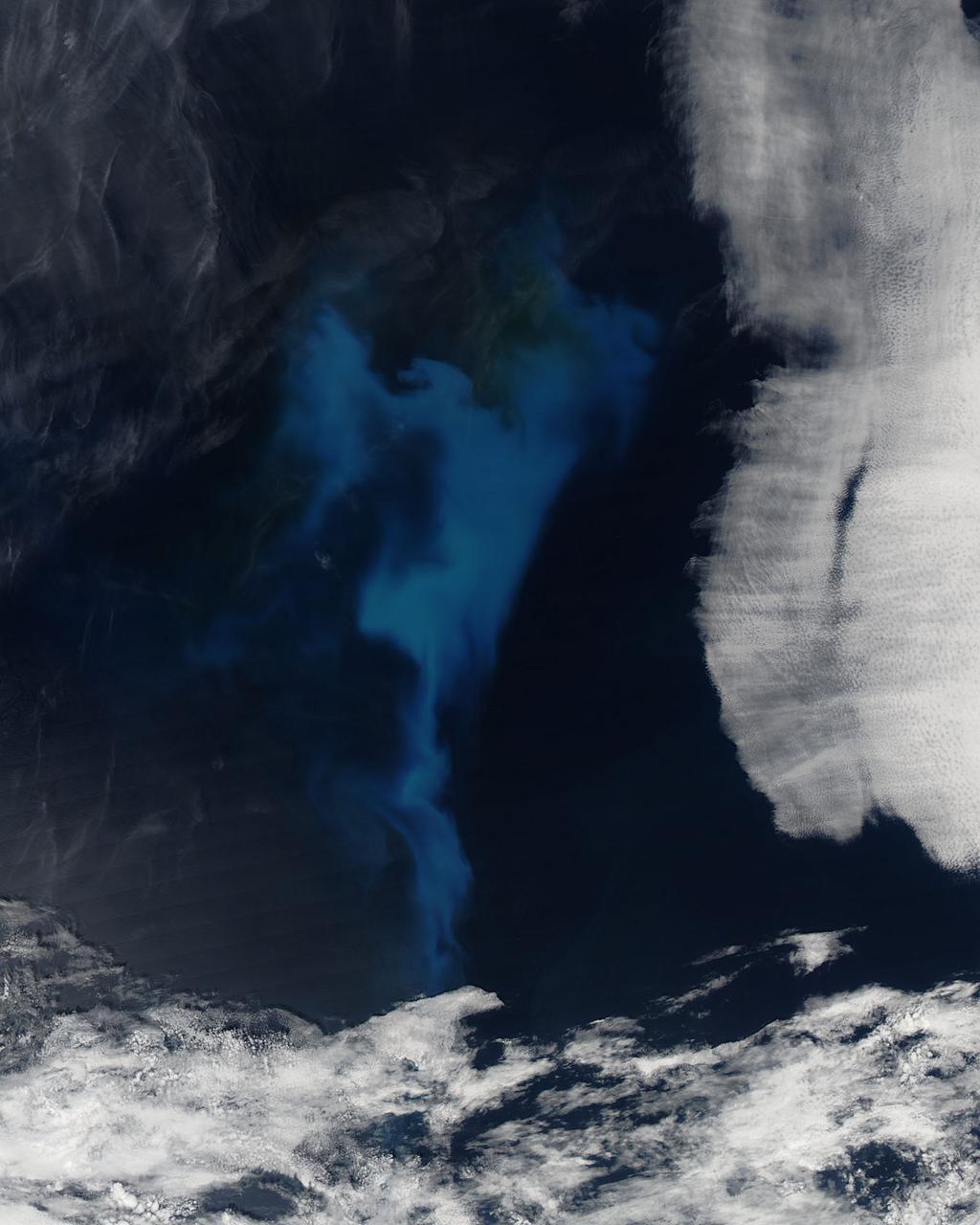
On July 23, 2013 the deep blue waters of the central North Atlantic Ocean provided a background for a spectacular bloom of phytoplankton. The Moderate Resolution Imaging Spectroradiometer (MODIS) captured this true-color image of the event at 16:25 UTC (12:25 p.m. EDT) that same day. Phytoplankton are tiny single-celled photosynthetic organisms that live suspended in a watery environment. They are primary producers in the ocean, forming the base of the marine food chain, and, like terrestrial plants, take up carbon dioxide, make carbohydrates from energy from light, and release oxygen. Phytoplankton live in the ocean year round, but are usually not visible. When light, nutrients and water temperature are just right, however, a colony can explode into growth, creating huge blooms that stain the ocean for miles. While each organism lives only a short time, the high reproductive means that a bloom can last for days or weeks. Credit: NASA/GSFC/Jeff Schmaltz/MODIS Land Rapid Response Team <b><a href="http://www.nasa.gov/audience/formedia/features/MP_Photo_Guidelines.html" rel="nofollow">NASA image use policy.</a></b> <b><a href="http://www.nasa.gov/centers/goddard/home/index.html" rel="nofollow">NASA Goddard Space Flight Center</a></b> enables NASA’s mission through four scientific endeavors: Earth Science, Heliophysics, Solar System Exploration, and Astrophysics. Goddard plays a leading role in NASA’s accomplishments by contributing compelling scientific knowledge to advance the Agency’s mission. <b>Follow us on <a href="http://twitter.com/NASA_GoddardPix" rel="nofollow">Twitter</a></b> <b>Like us on <a href="http://www.facebook.com/pages/Greenbelt-MD/NASA-Goddard/395013845897?ref=tsd" rel="nofollow">Facebook</a></b> <b>Find us on <a href="http://instagram.com/nasagoddard?vm=grid" rel="nofollow">Instagram</a></b>

This image taken from the Suomi NPP satellite's VIIRS instrument of New Zealand was collected on January 9, 2015 when the phytoplankton were blooming — particularly to the east of the islands and along the Chatham Rise. Derived from the Greek words phyto (plant) and plankton (made to wander or drift), phytoplankton are microscopic organisms that live in watery environments, both salty and fresh. Credit: NASA/Goddard/NPP <b><a href="http://www.nasa.gov/audience/formedia/features/MP_Photo_Guidelines.html" rel="nofollow">NASA image use policy.</a></b> <b><a href="http://www.nasa.gov/centers/goddard/home/index.html" rel="nofollow">NASA Goddard Space Flight Center</a></b> enables NASA’s mission through four scientific endeavors: Earth Science, Heliophysics, Solar System Exploration, and Astrophysics. Goddard plays a leading role in NASA’s accomplishments by contributing compelling scientific knowledge to advance the Agency’s mission. <b>Follow us on <a href="http://twitter.com/NASAGoddardPix" rel="nofollow">Twitter</a></b> <b>Like us on <a href="http://www.facebook.com/pages/Greenbelt-MD/NASA-Goddard/395013845897?ref=tsd" rel="nofollow">Facebook</a></b> <b>Find us on <a href="http://instagram.com/nasagoddard?vm=grid" rel="nofollow">Instagram</a></b>
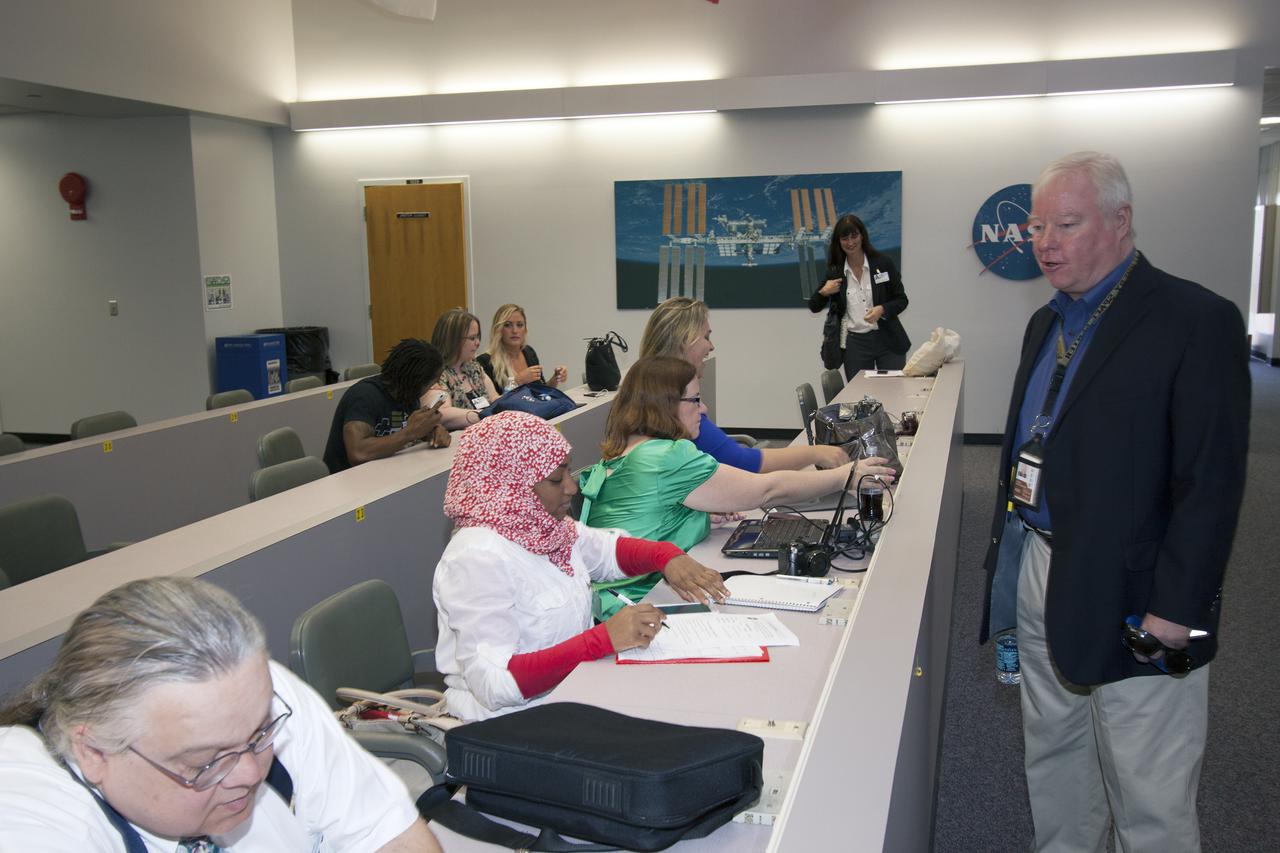
CAPE CANAVERAL, Fla. – Florida Today reporter Todd Halvorson, shares his expertise and experiences with nine Florida Institute of Technology aspiring journalists visiting Kennedy Space Center in Florida on May 22 at the Press Site. The group of students, in collaboration with Florida Today, is working on a multimedia project that examines health in zero gravity and how life in space can help people live better on Earth. These multimedia stories will be published for the print and online versions of Florida Today. During their visit, the students interviewed astronaut and Expedition 35 flight engineer Chris Cassidy during an International Space Station downlink in the Press Site auditorium. The journalists also worked on multimedia deadline news assignments at the Press Site. They also met with Kennedy Director Bob Cabana who talked about NASA's goals for the future and his own experience in space, answering questions about health effects of spaceflight. The journalists toured the Vehicle Assembly Building and the Apollo Saturn V Center. Learn about the Florida Institute of Technology journalists' findings on their Facebook page at http:__www.facebook.com_FT3atFIT or Twitter at #SpaceHealth. Photo credit: NASA_Jim Grossmann
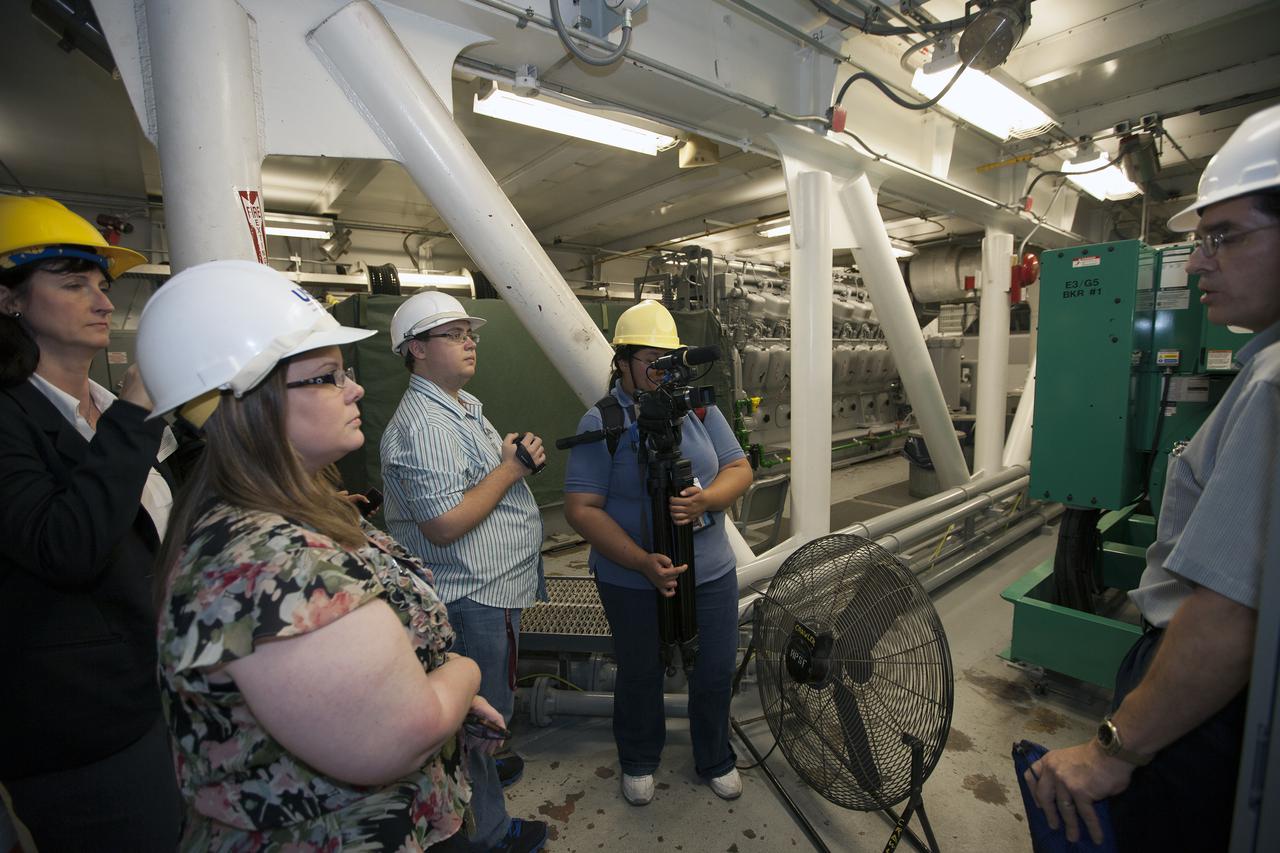
CAPE CANAVERAL, Fla. – A group of nine Florida Institute of Technology aspiring journalists observe the interior of the mobile launcher inside the Vehicle Assembly Building, or VAB, at NASA's Kennedy Space Center in Florida on May 22. The group of students, in collaboration with Florida Today, is working on a multimedia project that examines health in zero gravity and how life in space can help people live better on Earth. These multimedia stories will be published for the print and online versions of Florida Today. During their visit, the students interviewed astronaut and Expedition 35 flight engineer Chris Cassidy during an International Space Station downlink in the Press Site auditorium. The journalists also met with Kennedy Director Bob Cabana who talked about NASA's goals for the future and his own experience in space, answering questions about health effects of spaceflight. The journalists also toured the Apollo Saturn V Center. Learn about the Florida Institute of Technology journalists' findings on their Facebook page at http:__www.facebook.com_FT3atFIT or Twitter at #SpaceHealth. Photo credit: Photo credit: NASA_Kim Shiflett
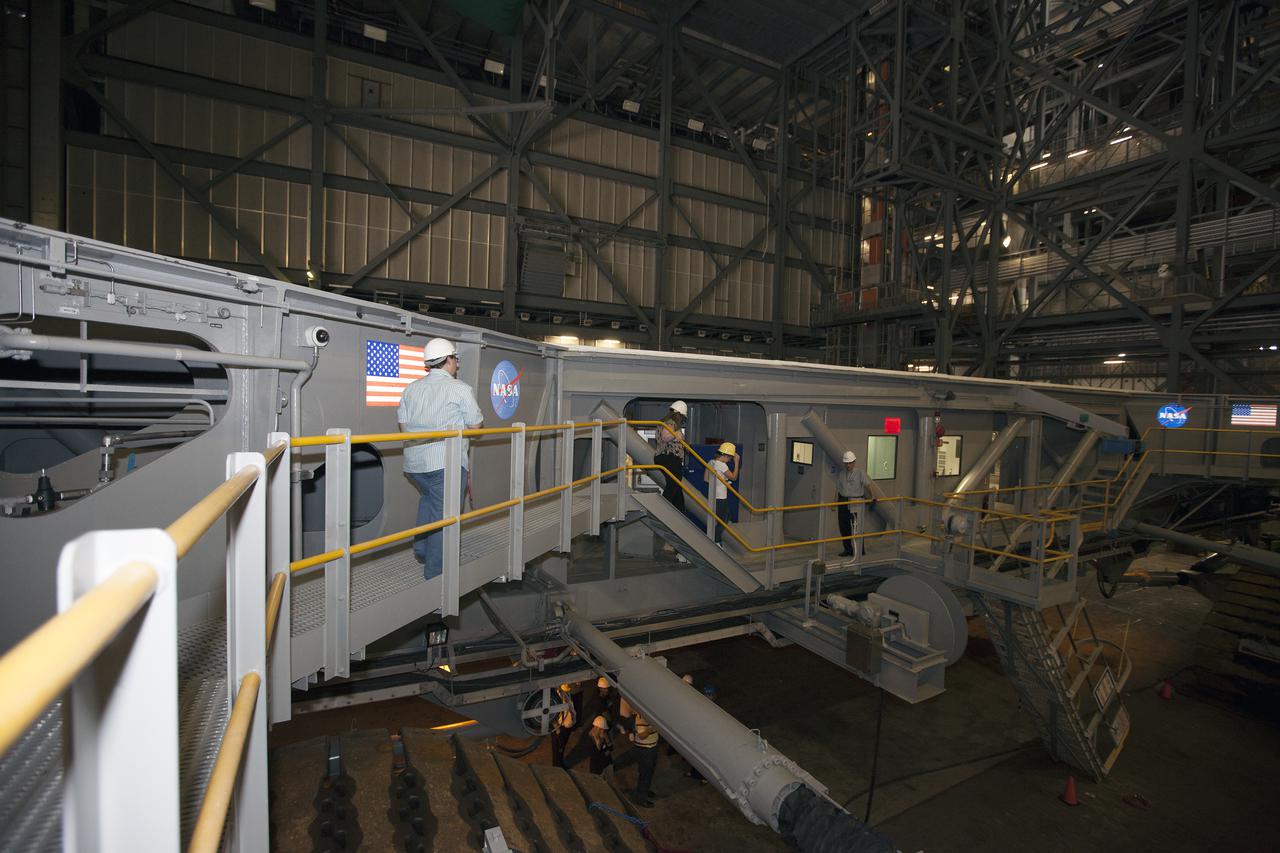
CAPE CANAVERAL, Fla. – A group of nine Florida Institute of Technology aspiring journalists walk on the outside of the mobile launcher inside the Vehicle Assembly Building, or VAB, at NASA's Kennedy Space Center in Florida on May 22. The group of students, in collaboration with Florida Today, is working on a multimedia project that examines health in zero gravity and how life in space can help people live better on Earth. These multimedia stories will be published for the print and online versions of Florida Today. During their visit, the students interviewed astronaut and Expedition 35 flight engineer Chris Cassidy during an International Space Station downlink in the Press Site auditorium. The journalists also met with Kennedy Director Bob Cabana who talked about NASA's goals for the future and his own experience in space, answering questions about health effects of spaceflight. The journalists also toured the Apollo Saturn V Center. Learn about the Florida Institute of Technology journalists' findings on their Facebook page at http:__www.facebook.com_FT3atFIT or Twitter at #SpaceHealth. Photo credit: Photo credit: NASA_Kim Shiflett
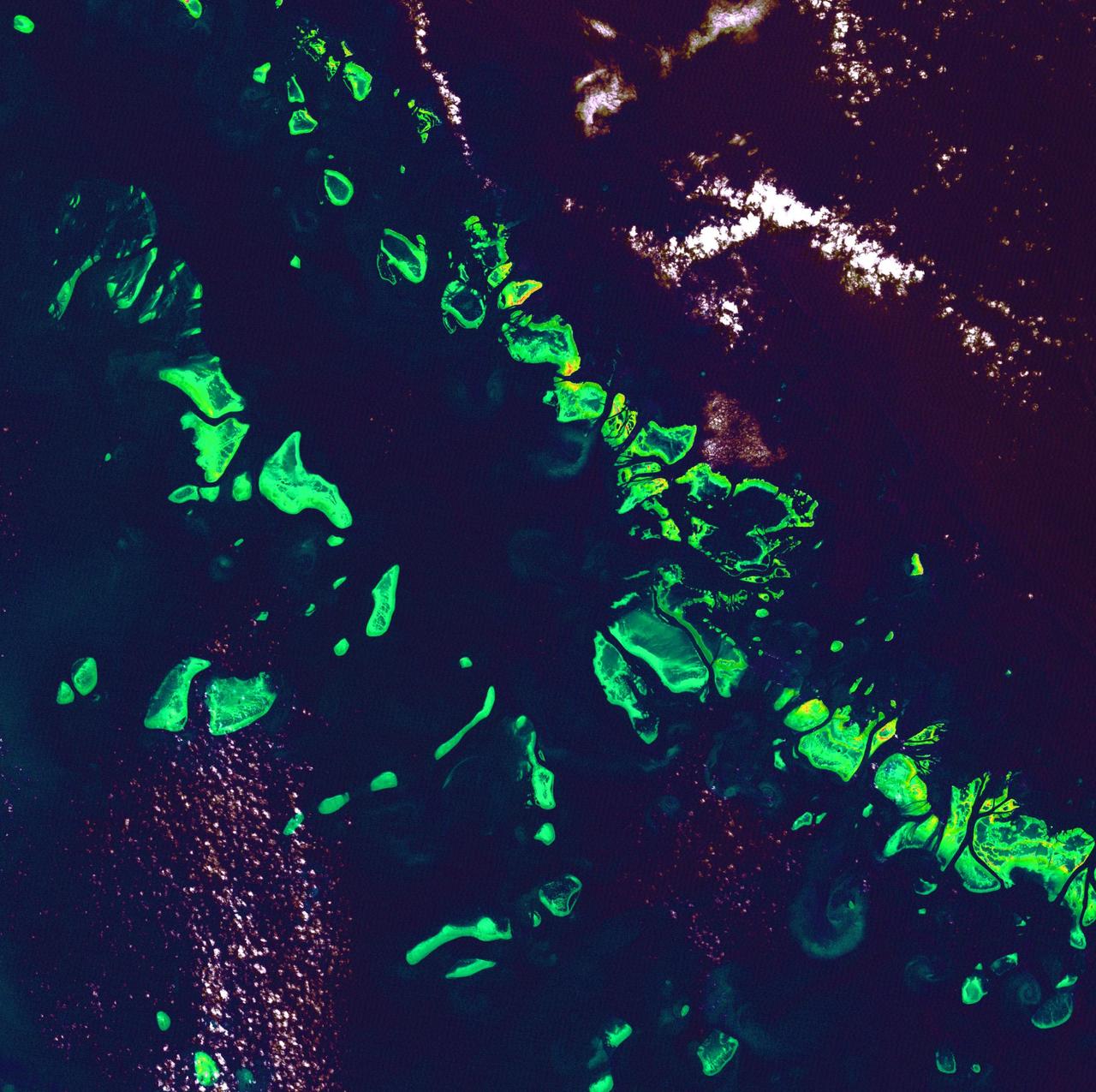
Great Barrier Reef - August 8th, 1999 Description: What might be mistaken for dinosaur bones being unearthed at a paleontological dig are some of the individual reefs that make up the Great Barrier Reef, the world's largest tropical coral reef system. The reef stretches more than 2,000 kilometers (1,240 miles) along the coast of Queensland, Australia. It supports astoundingly complex and diverse communities of marine life and is the largest structure on the planet built by living organisms. Credit: USGS/NASA/Landsat 7 To learn more about the Landsat satellite go to: <a href="http://landsat.gsfc.nasa.gov/" rel="nofollow">landsat.gsfc.nasa.gov/</a> <b><a href="http://www.nasa.gov/centers/goddard/home/index.html" rel="nofollow">NASA Goddard Space Flight Center</a></b> enables NASA’s mission through four scientific endeavors: Earth Science, Heliophysics, Solar System Exploration, and Astrophysics. Goddard plays a leading role in NASA’s accomplishments by contributing compelling scientific knowledge to advance the Agency’s mission. <b>Follow us on <a href="http://twitter.com/NASA_GoddardPix" rel="nofollow">Twitter</a></b> <b>Join us on <a href="http://www.facebook.com/pages/Greenbelt-MD/NASA-Goddard/395013845897?ref=tsd" rel="nofollow">Facebook</a></b>
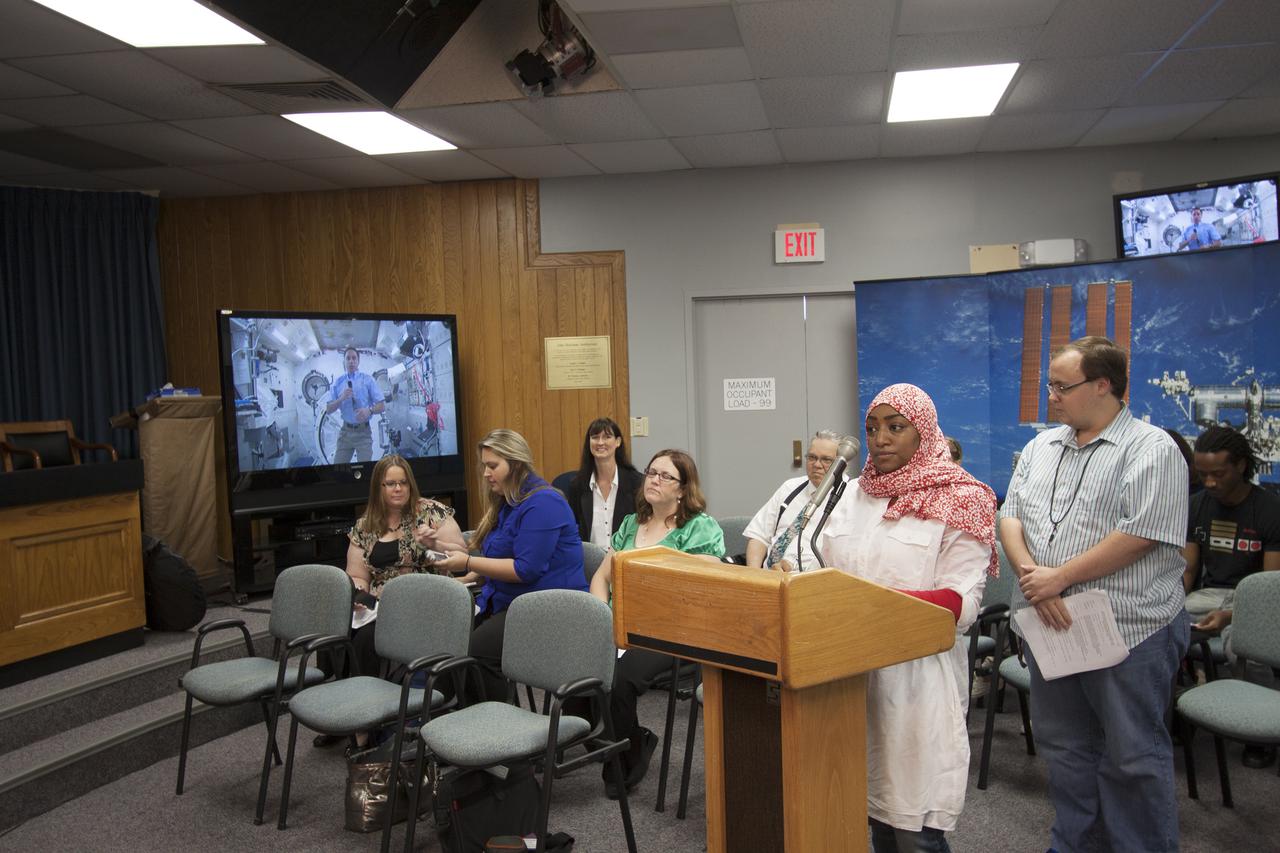
CAPE CANAVERAL, Fla. – Eman Mareh, one of nine Florida Institute of Technology aspiring journalists visiting Kennedy Space Center in Florida on May 22, interviews astronaut and Expedition 35 flight engineer Chris Cassidy during an International Space Station downlink in the Press Site auditorium. The journalists, in collaboration with Florida Today, are working on a multimedia project that examines health in zero gravity and how life in space can help people live better on Earth. These multimedia stories will be published for the print and online versions of Florida Today. During their visit, they worked on multimedia deadline news assignments at the Press Site. They also met with Kennedy Director Bob Cabana who talked about NASA's goals for the future and his own experience in space, answering questions about health effects of spaceflight. The journalists toured the Vehicle Assembly Building and the Apollo Saturn V Center. Learn about the Florida Institute of Technology journalists' findings on their Facebook page at http:__www.facebook.com_FT3atFIT or Twitter at #SpaceHealth. Photo credit: NASA_Jim Grossmann

Belcher Islands - September 21st, 2001 Description: Like sweeping brushstrokes of pink and green, the Belcher Islands meander across the deep blue of Canada's Hudson Bay. The islands' only inhabitants live in the small town of Sanikiluaq, near the upper end of the middle island. Despite the green hues in this image, these rocky islands are too cold to sustain more than a smattering of low-growing vegetation. Credit: USGS/NASA/Landsat 5 To learn more about the Landsat satellite go to: <a href="http://landsat.gsfc.nasa.gov/" rel="nofollow">landsat.gsfc.nasa.gov/</a> <b><a href="http://www.nasa.gov/centers/goddard/home/index.html" rel="nofollow">NASA Goddard Space Flight Center</a></b> enables NASA’s mission through four scientific endeavors: Earth Science, Heliophysics, Solar System Exploration, and Astrophysics. Goddard plays a leading role in NASA’s accomplishments by contributing compelling scientific knowledge to advance the Agency’s mission. <b>Follow us on <a href="http://twitter.com/NASA_GoddardPix" rel="nofollow">Twitter</a></b> <b>Join us on <a href="http://www.facebook.com/pages/Greenbelt-MD/NASA-Goddard/395013845897?ref=tsd" rel="nofollow">Facebook</a></b>
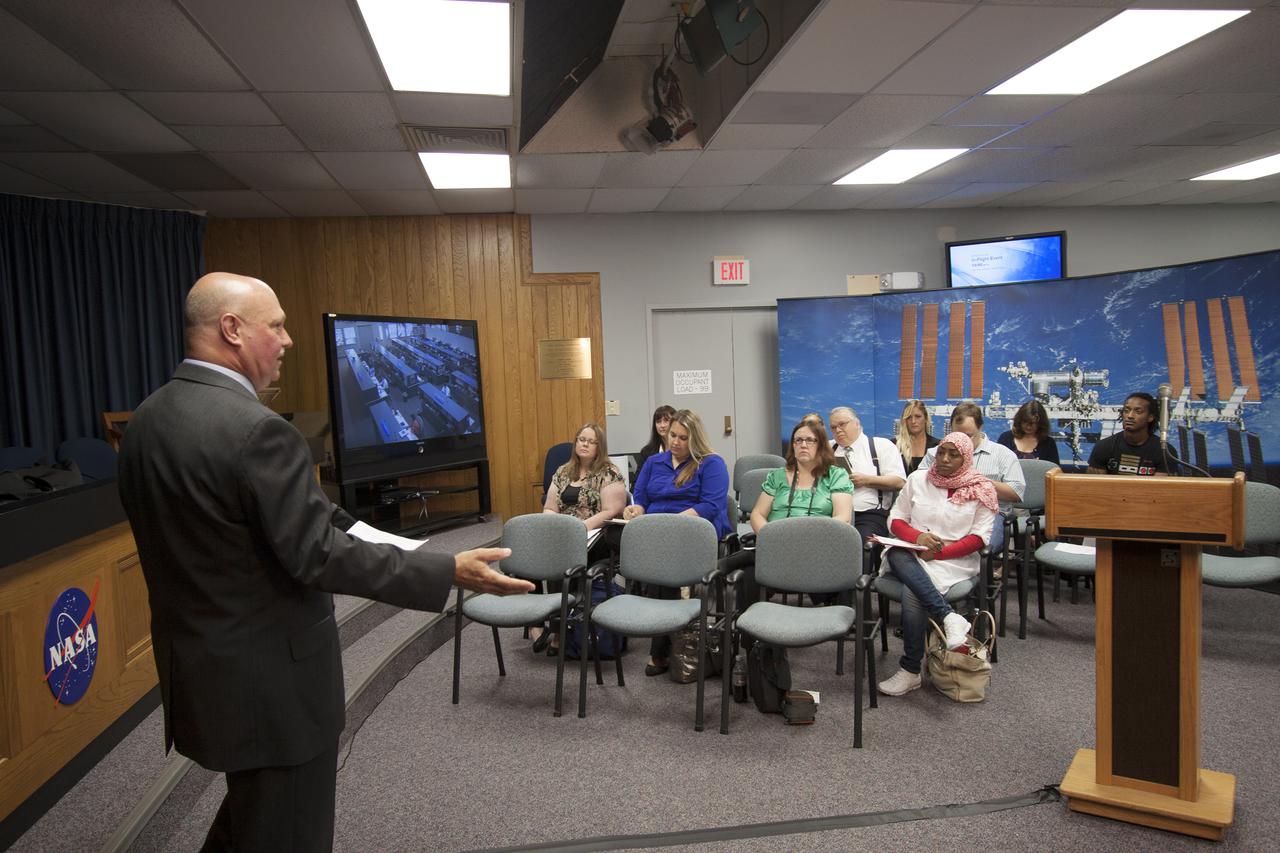
CAPE CANAVERAL, Fla. – Michael Curie, NASA Public Affairs, addresses nine Florida Institute of Technology aspiring journalists in the Press Site auditorium at NASA's Kennedy Space Center in Florida on May 22. The journalists, in collaboration with Florida Today, are working on a multimedia project that examines health in zero gravity and how life in space can help people live better on Earth. These multimedia stories will be published for the print and online versions of Florida Today. During their visit, the journalists interviewed astronaut and Expedition 35 flight engineer Chris Cassidy during an International Space Station downlink, after which they worked on multimedia deadline news assignments at the Press Site. They also met with Kennedy Director Bob Cabana who talked about NASA's goals for the future and his own experience in space, answering questions about health effects of spaceflight. The journalists toured the Vehicle Assembly Building and the Apollo Saturn V Center. Learn about the Florida Institute of Technology journalists' findings on their Facebook page at http:__www.facebook.com_FT3atFIT or Twitter at #SpaceHealth. Photo credit: NASA_Jim Grossmann
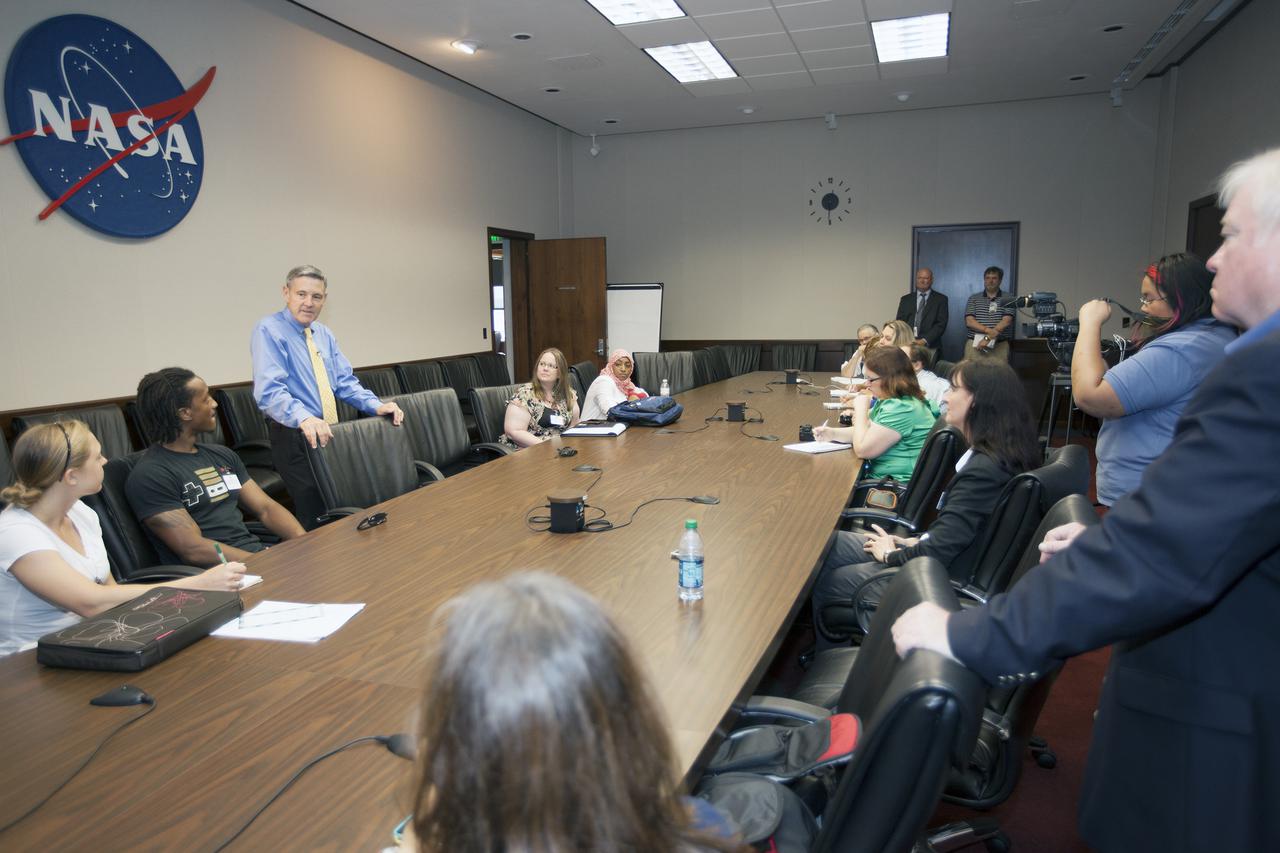
Kennedy Center Director Bob Cabana, standing left, addresses nine Florida Institute of Technology aspiring journalists at NASA's Kennedy Space Center Headquarters Building in Florida on May 22. Cabana talked about NASA's goals for the future and his own experience in space, answering questions about health effects of spaceflight. The journalists, in collaboration with Florida Today, are working on a multimedia project that examines health in zero gravity and how life in space can help people live better on Earth. At right are Florida Today videographer Caroline Perez and reporter Todd Halverson These multimedia stories will be published for the print and online versions of Florida Today. During their visit, the journalists interviewed astronaut and Expedition 35 flight engineer Chris Cassidy during an International Space Station downlink, after which they worked on multimedia deadline news assignments at the Press Site. The journalists toured the Vehicle Assembly Building and the Apollo Saturn V Center. Learn about the Florida Institute of Technology journalists' findings on their Facebook page at http:__www.facebook.com_FT3atFIT or Twitter at #SpaceHealth. Photo credit: NASA_Kim Shiflett
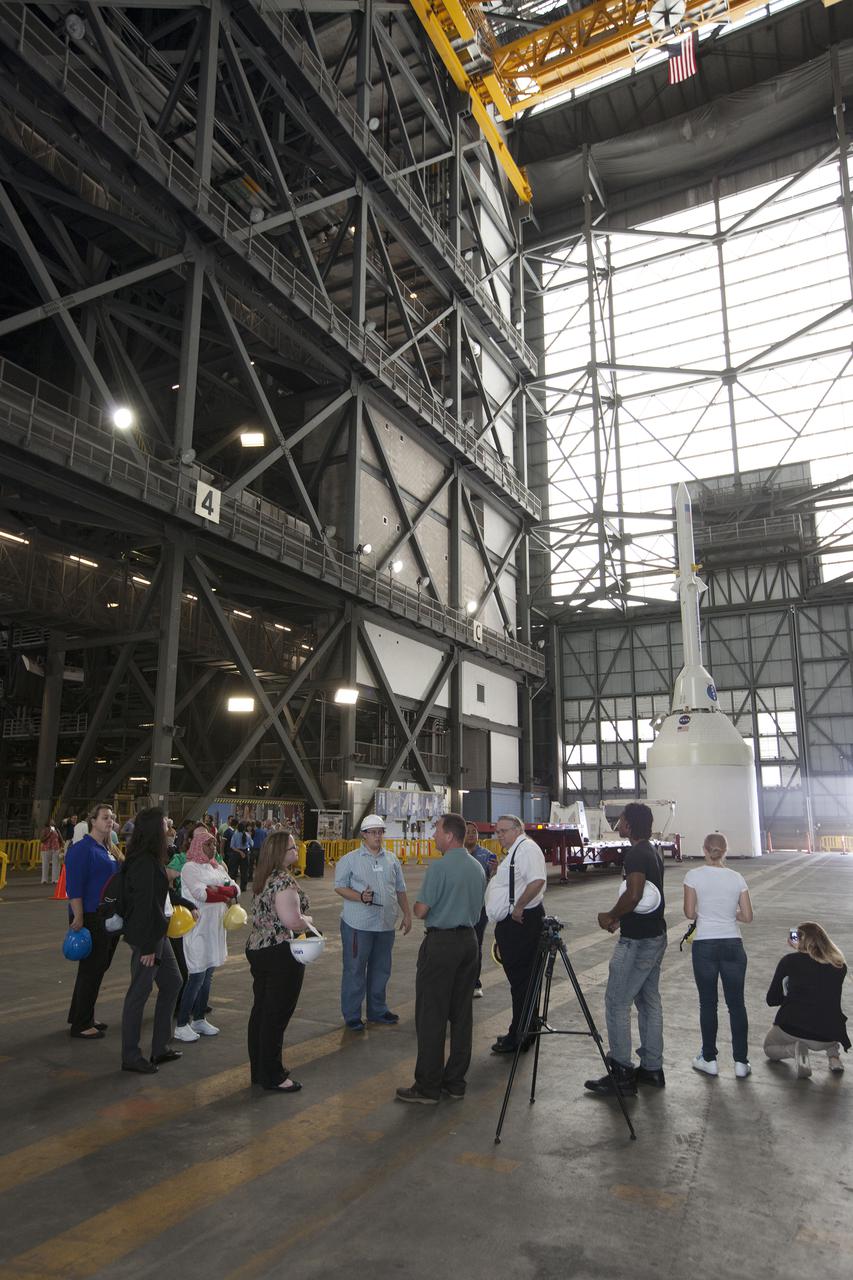
CAPE CANAVERAL, Fla. – A group of nine Florida Institute of Technology aspiring journalists congregate inside the Vehicle Assembly Building, or VAB, at NASA's Kennedy Space Center in Florida on May 22. The group of students, in collaboration with Florida Today, is working on a multimedia project that examines health in zero gravity and how life in space can help people live better on Earth. These multimedia stories will be published for the print and online versions of Florida Today. During their visit, the students interviewed astronaut and Expedition 35 flight engineer Chris Cassidy during an International Space Station downlink in the Press Site auditorium. The journalists also met with Kennedy Director Bob Cabana who talked about NASA's goals for the future and his own experience in space, answering questions about health effects of spaceflight. The journalists also toured the Apollo Saturn V Center. Learn about the Florida Institute of Technology journalists' findings on their Facebook page at http:__www.facebook.com_FT3atFIT or Twitter at #SpaceHealth. Photo credit: Photo credit: NASA_Kim Shiflett
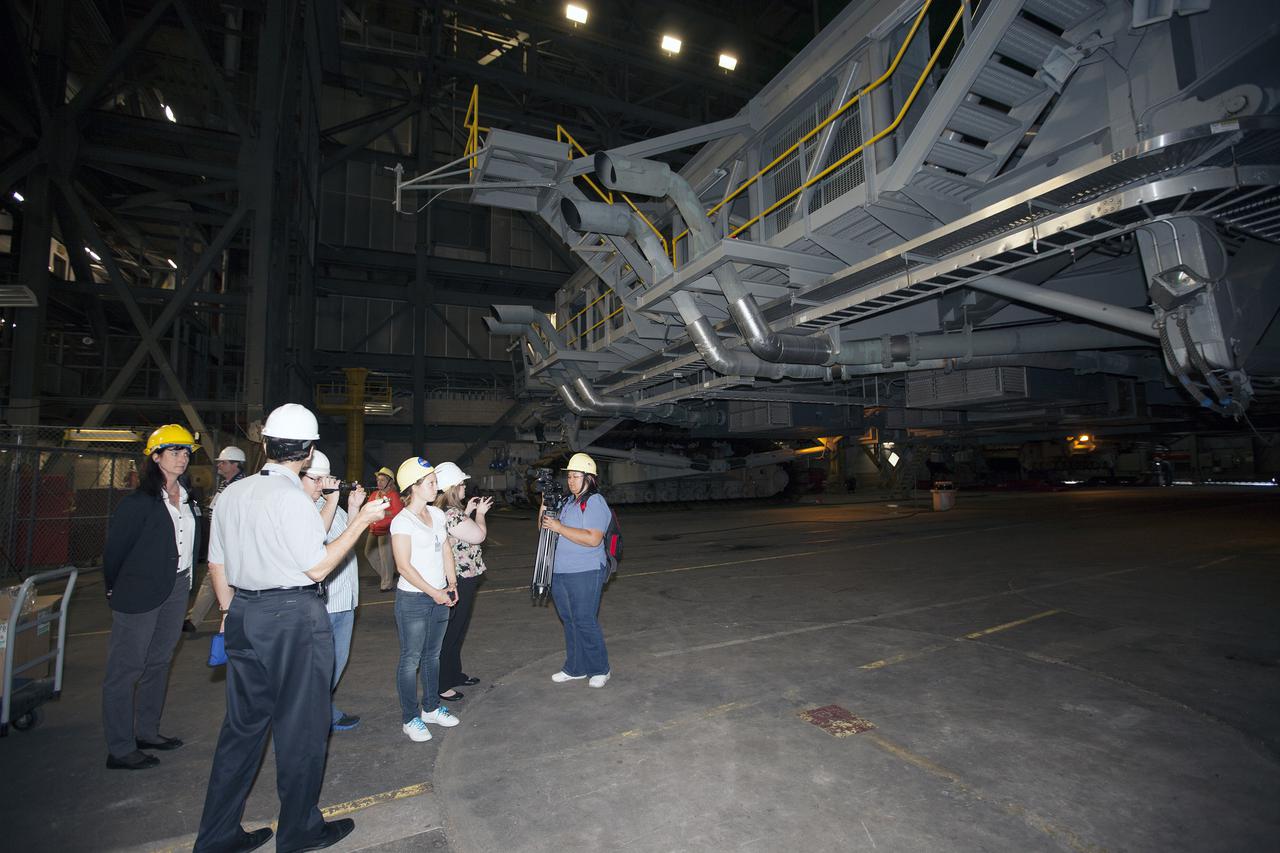
--- CAPE CANAVERAL, Fla. – A group of nine Florida Institute of Technology aspiring journalists check out the mobile launcher inside the Vehicle Assembly Building, or VAB, at NASA's Kennedy Space Center in Florida on May 22. The group of students, in collaboration with Florida Today, is working on a multimedia project that examines health in zero gravity and how life in space can help people live better on Earth. These multimedia stories will be published for the print and online versions of Florida Today. During their visit, the students interviewed astronaut and Expedition 35 flight engineer Chris Cassidy during an International Space Station downlink in the Press Site auditorium. The journalists also met with Kennedy Director Bob Cabana who talked about NASA's goals for the future and his own experience in space, answering questions about health effects of spaceflight. The journalists also toured the Apollo Saturn V Center. Learn about the Florida Institute of Technology journalists' findings on their Facebook page at http:__www.facebook.com_FT3atFIT or Twitter at #SpaceHealth. Photo credit: Photo credit: NASA_Kim Shiflett
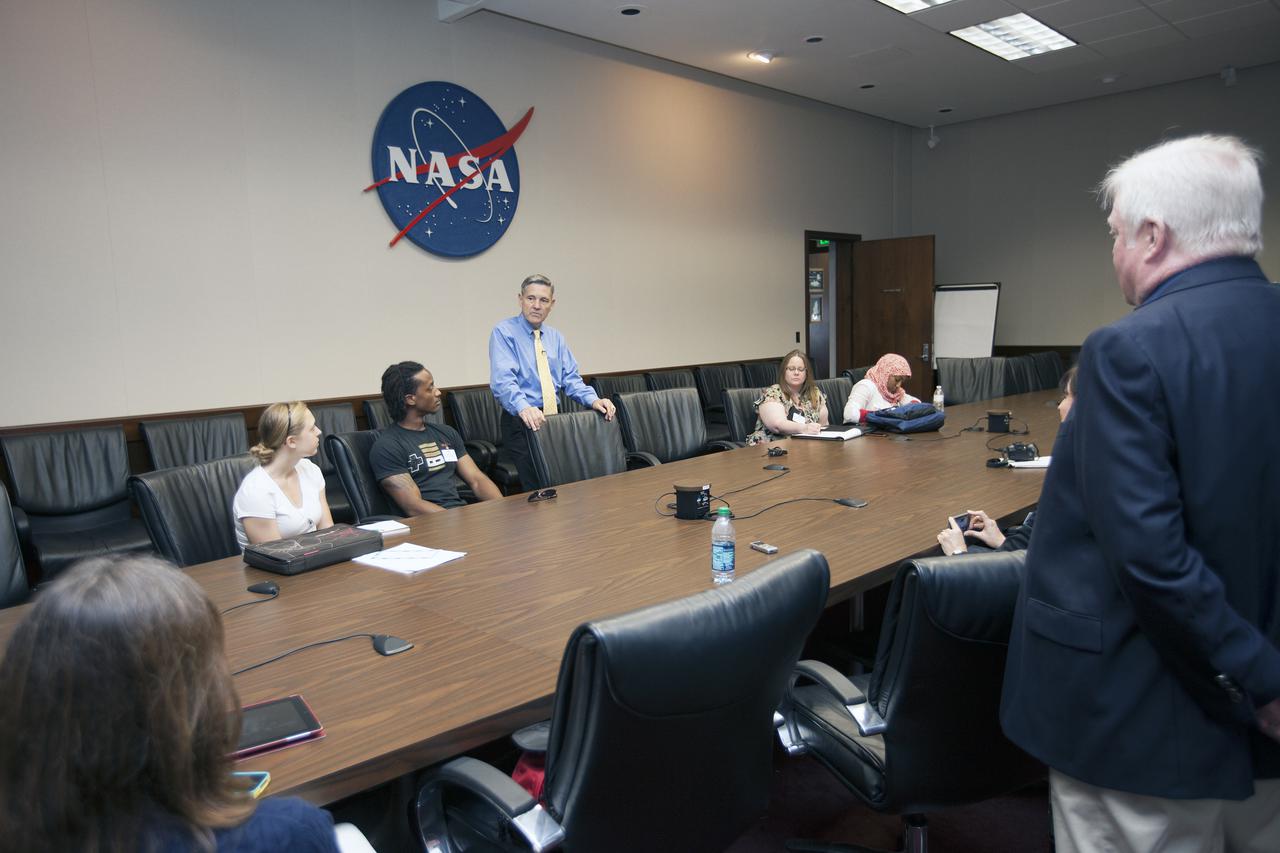
Kennedy Center Director Bob Cabana, standing left, addresses nine Florida Institute of Technology aspiring journalists at NASA's Kennedy Space Center Headquarters Building in Florida on May 22. Cabana talked about NASA's goals for the future and his own experience in space, answering questions about health effects of spaceflight. The journalists, in collaboration with Florida Today, are working on a multimedia project that examines health in zero gravity and how life in space can help people live better on Earth. At right are Florida Today videographer Caroline Perez and reporter Todd Halverson These multimedia stories will be published for the print and online versions of Florida Today. During their visit, the journalists interviewed astronaut and Expedition 35 flight engineer Chris Cassidy during an International Space Station downlink, after which they worked on multimedia deadline news assignments at the Press Site. The journalists toured the Vehicle Assembly Building and the Apollo Saturn V Center. Learn about the Florida Institute of Technology journalists' findings on their Facebook page at http:__www.facebook.com_FT3atFIT or Twitter at #SpaceHealth. Photo credit: NASA_Kim Shiflett
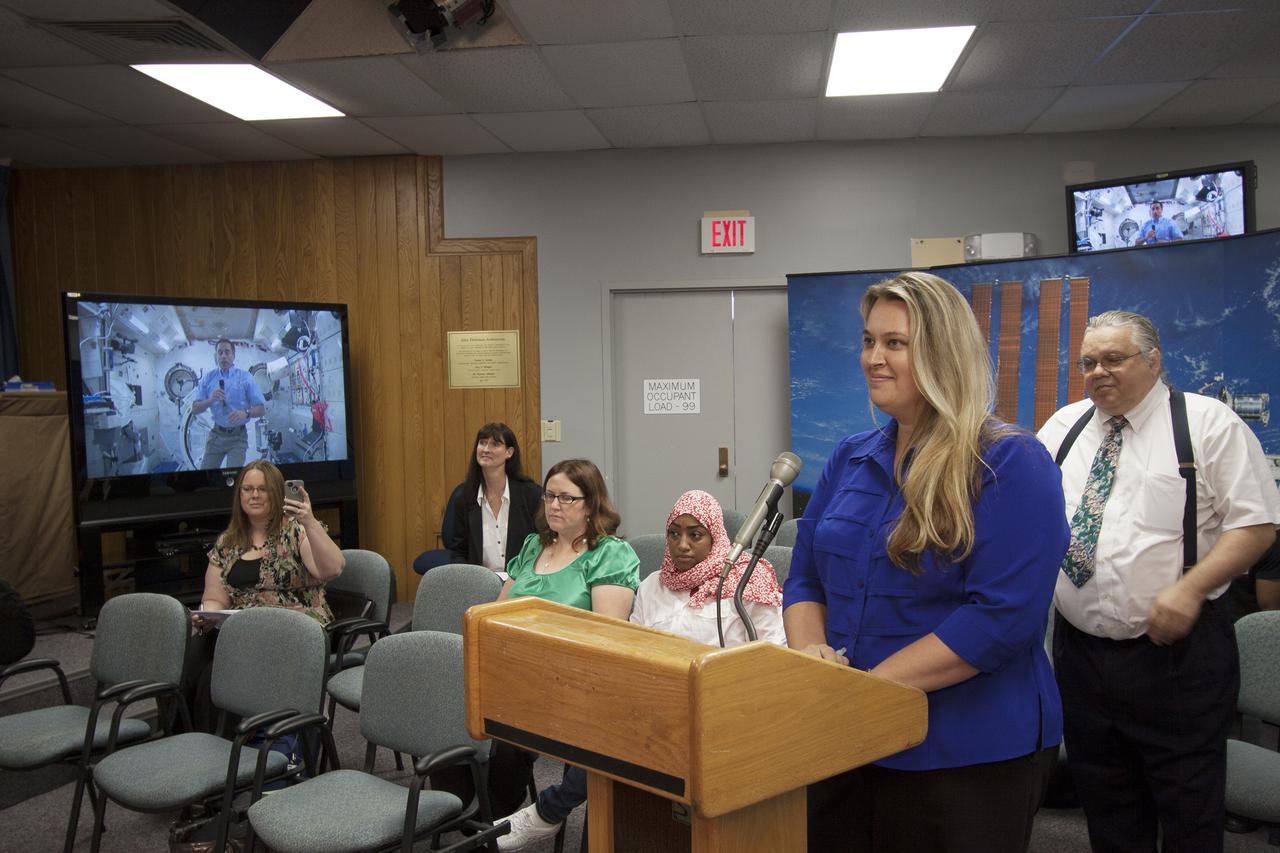
CAPE CANAVERAL, Fla. – Monica DeFelice, one of nine Florida Institute of Technology aspiring journalists visiting Kennedy Space Center in Florida on May 22, interviews astronaut and Expedition 35 flight engineer Chris Cassidy during an International Space Station downlink in the Press Site auditorium. The journalists, in collaboration with Florida Today, are working on a multimedia project that examines health in zero gravity and how life in space can help people live better on Earth. These multimedia stories will be published for the print and online versions of Florida Today. During their visit, they worked on multimedia deadline news assignments at the Press Site. They also met with Kennedy Director Bob Cabana who talked about NASA's goals for the future and his own experience in space, answering questions about health effects of spaceflight. The journalists toured the Vehicle Assembly Building and the Apollo Saturn V Center. Learn about the Florida Institute of Technology journalists' findings on their Facebook page at http:__www.facebook.com_FT3atFIT or Twitter at #SpaceHealth. Photo credit: NASA_Jim Grossmann
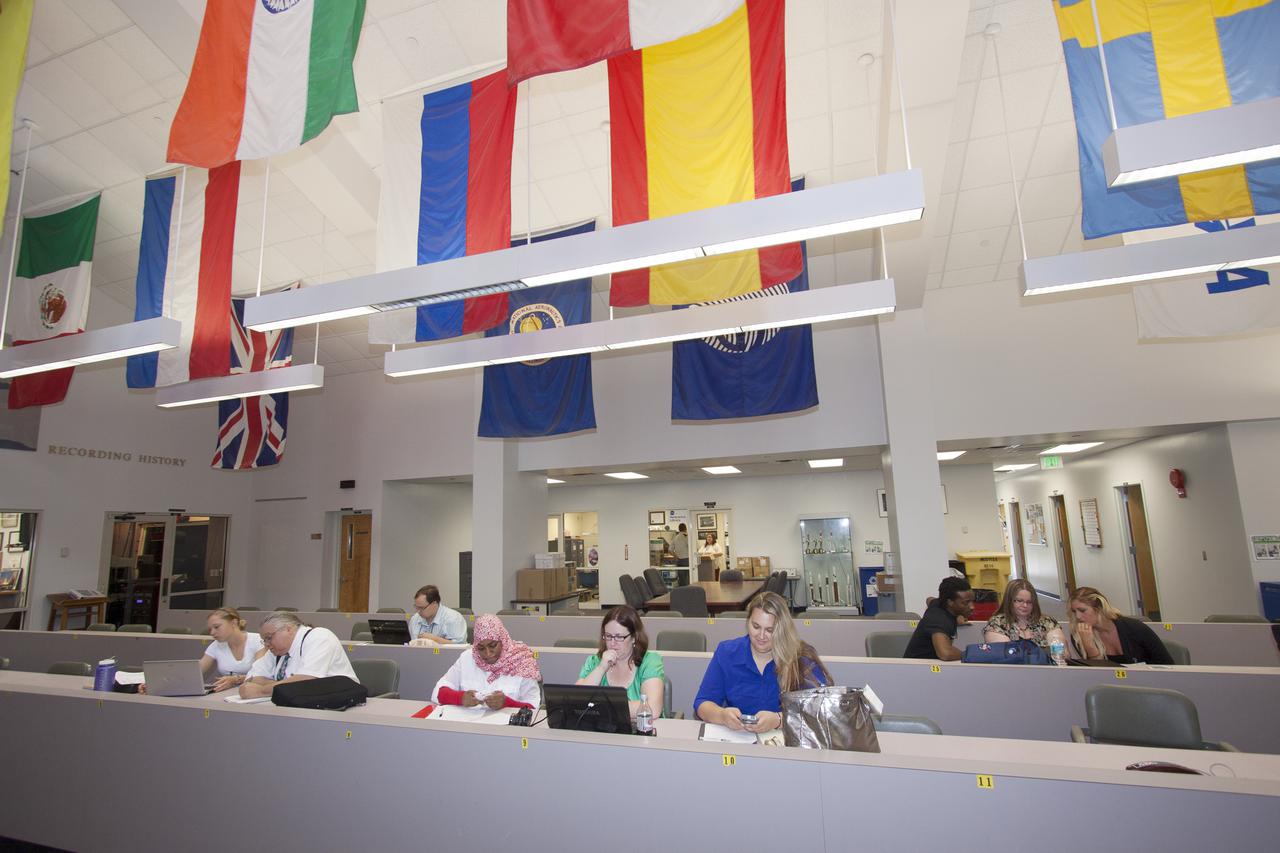
CAPE CANAVERAL, Fla. – A group of nine Florida Institute of Technology aspiring journalists work on multimedia deadline news assignments at the Press Site at NASA's Kennedy Space Center in Florida on May 22. The group of students, in collaboration with Florida Today, is working on a multimedia project that examines health in zero gravity and how life in space can help people live better on Earth. These multimedia stories will be published for the print and online versions of Florida Today. During their visit, the students interviewed astronaut and Expedition 35 flight engineer Chris Cassidy during an International Space Station downlink in the Press Site auditorium. The journalists also met with Kennedy Director Bob Cabana who talked about NASA's goals for the future and his own experience in space, answering questions about health effects of spaceflight. The journalists toured the Vehicle Assembly Building and the Apollo Saturn V Center. Learn about the Florida Institute of Technology journalists' findings on their Facebook page at http:__www.facebook.com_FT3atFIT or Twitter at #SpaceHealth. Photo credit: NASA_Jim Grossmann
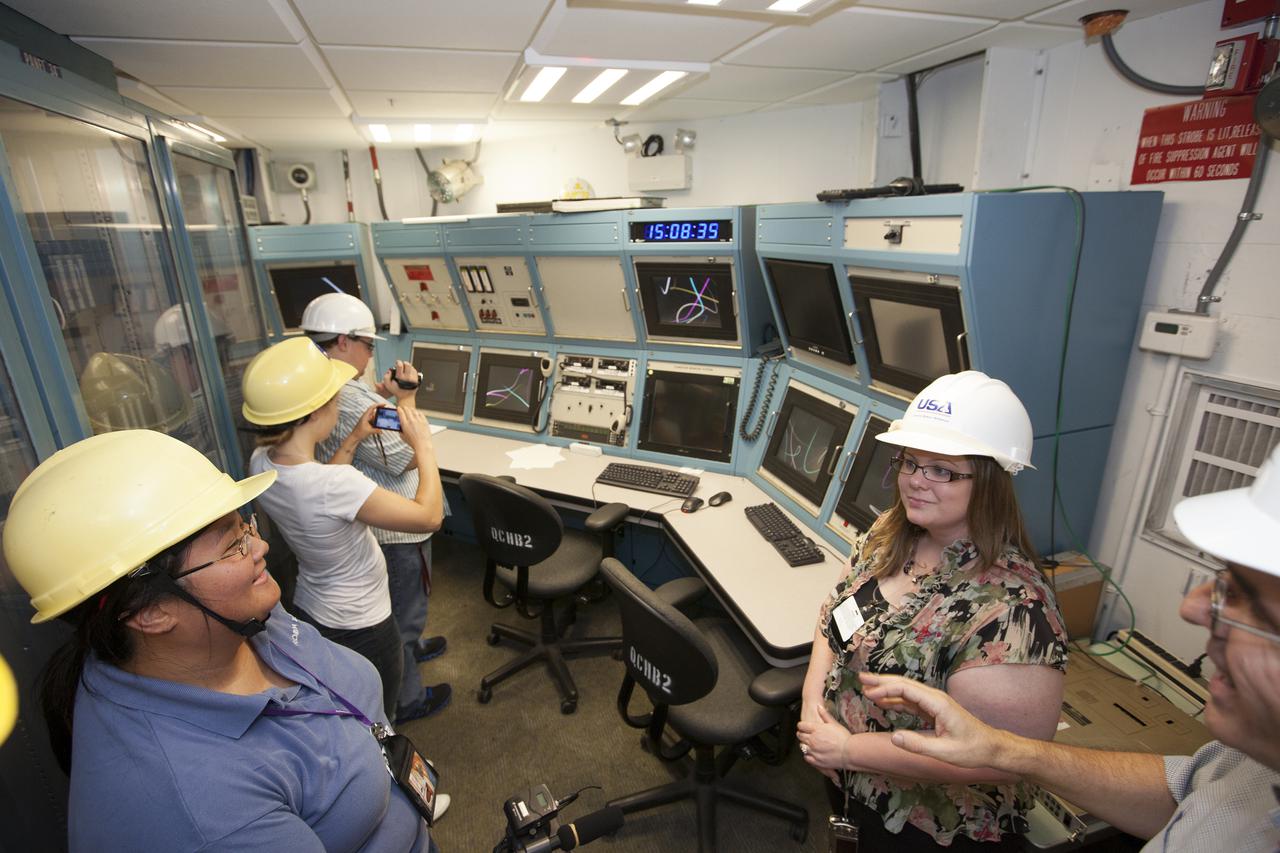
CAPE CANAVERAL, Fla. – A group of nine Florida Institute of Technology aspiring journalists observe the interior of the mobile launcher inside the Vehicle Assembly Building, or VAB, at NASA's Kennedy Space Center in Florida on May 22. The group of students, in collaboration with Florida Today, is working on a multimedia project that examines health in zero gravity and how life in space can help people live better on Earth. These multimedia stories will be published for the print and online versions of Florida Today. At left is Florida Today videographer Caroline Perez. During their visit, the students interviewed astronaut and Expedition 35 flight engineer Chris Cassidy during an International Space Station downlink in the Press Site auditorium. The journalists also met with Kennedy Director Bob Cabana who talked about NASA's goals for the future and his own experience in space, answering questions about health effects of spaceflight. The journalists also toured the Apollo Saturn V Center. Learn about the Florida Institute of Technology journalists' findings on their Facebook page at http:__www.facebook.com_FT3atFIT or Twitter at #SpaceHealth. Photo credit: Photo credit: NASA_Kim Shiflett
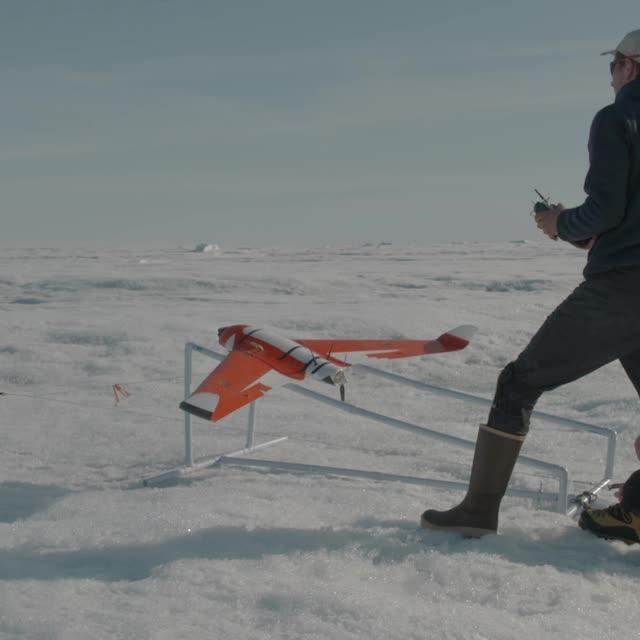
At 1 p.m. EDT (10 a.m. PDT) on Friday, Aug. 28, NASA's Goddard Space Flight Center in Greenbelt, Maryland, will host a live TV program about agency research into how and why the massive Greenland ice sheet is changing. The event features scientists actively conducting field work in Greenland, along with extensive video footage of their work performed over this summer. Panelists include: Tom Wagner (cryosphere program scientist with NASA's Earth Science Division), Laurence Smith (chair of the University of California, Los Angeles Department of Geography), Mike Bevis (professor of geodynamics at Ohio State University in Columbus), Sophie Nowicki (physical scientist at Goddard), and Josh Willis (JPL). The Friday program will air live on NASA TV and stream online at: <a href="http://www.nasa.gov/nasatv" rel="nofollow">www.nasa.gov/nasatv</a>. To ask questions via social media during the televised event, use the hashtag #askNASA. <b><a href="http://www.nasa.gov/audience/formedia/features/MP_Photo_Guidelines.html" rel="nofollow">NASA image use policy.</a></b> <b><a href="http://www.nasa.gov/centers/goddard/home/index.html" rel="nofollow">NASA Goddard Space Flight Center</a></b> enables NASA’s mission through four scientific endeavors: Earth Science, Heliophysics, Solar System Exploration, and Astrophysics. Goddard plays a leading role in NASA’s accomplishments by contributing compelling scientific knowledge to advance the Agency’s mission. <b>Follow us on <a href="http://twitter.com/NASAGoddardPix" rel="nofollow">Twitter</a></b> <b>Like us on <a href="http://www.facebook.com/pages/Greenbelt-MD/NASA-Goddard/395013845897?ref=tsd" rel="nofollow">Facebook</a></b> <b>Find us on <a href="http://instagrid.me/nasagoddard/?vm=grid" rel="nofollow">Instagram</a></b>
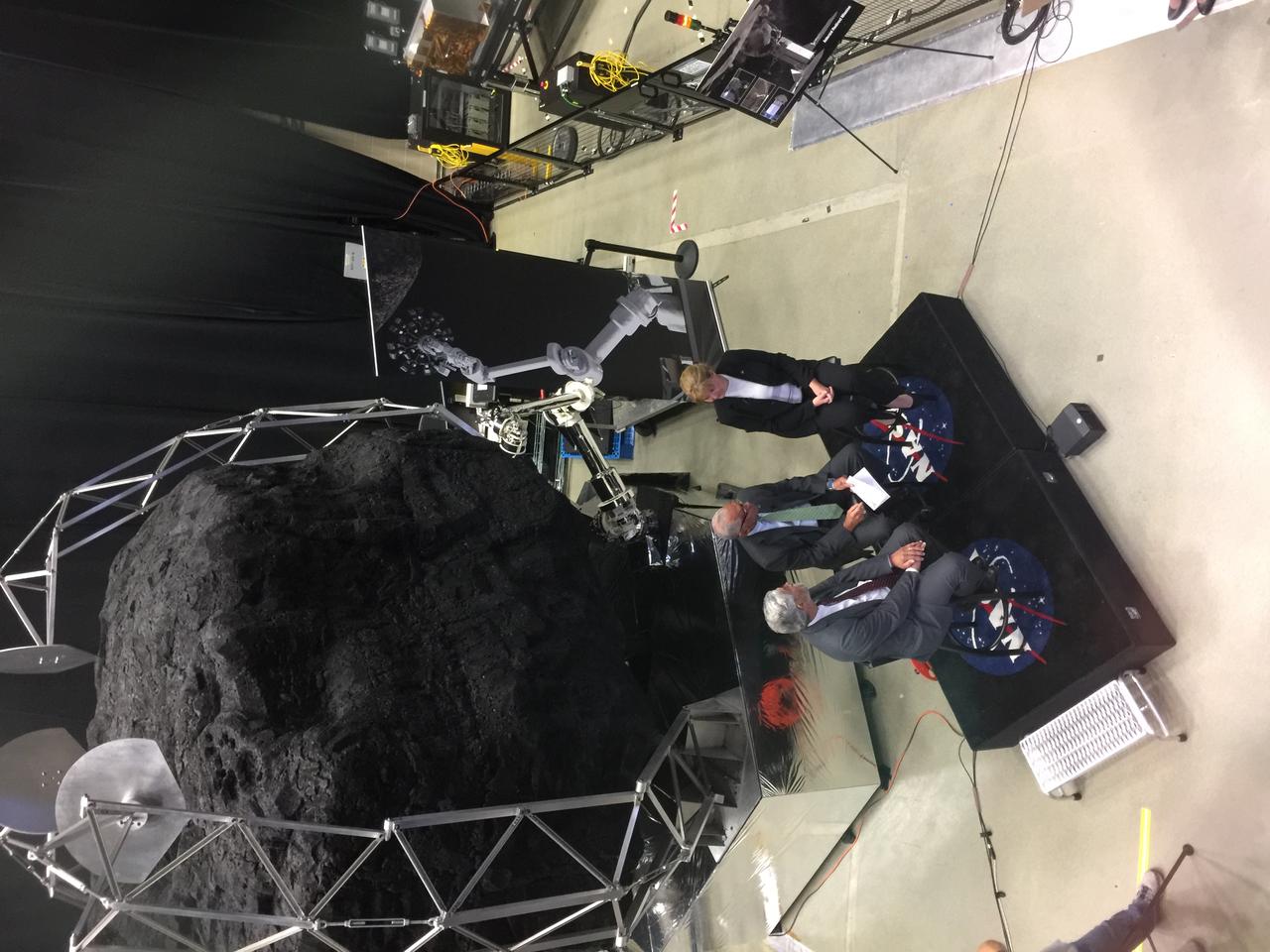
Dr. Holdren (left), Administrator Bolden (center) and Dr. Michele Gates (right) discuss the ARM mission during a live NASA TV briefing. Behind them is a mockup of robotic capture module for the Asteroid Redirect Mission. More info: Asteroid Redirect Mission Update – On Sept. 14, 2016, NASA provided an update on the Asteroid Redirect Mission (ARM) and how it contributes to the agency’s journey to Mars and protection of Earth. The presentation took place in the Robotic Operations Center at NASA’s Goddard Space Flight Center in Greenbelt, Maryland. Assistant to the President for Science and Technology Dr. John P. Holdren, NASA Administrator Charles Bolden and NASA’s ARM Program Director, Dr. Michele Gates discussed the latest update regarding the mission. They explained the mission’s scientific and technological benefits and how ARM will demonstrate technology for defending Earth from potentially hazardous asteroids. The briefing aired live on NASA TV and the agency’s website. For more information about ARM go to <a href="https://www.nasa.gov/arm" rel="nofollow">www.nasa.gov/arm</a>. Credit: NASA/Goddard/Peter Sooy <b><a href="http://www.nasa.gov/audience/formedia/features/MP_Photo_Guidelines.html" rel="nofollow">NASA image use policy.</a></b> <b><a href="http://www.nasa.gov/centers/goddard/home/index.html" rel="nofollow">NASA Goddard Space Flight Center</a></b> enables NASA’s mission through four scientific endeavors: Earth Science, Heliophysics, Solar System Exploration, and Astrophysics. Goddard plays a leading role in NASA’s accomplishments by contributing compelling scientific knowledge to advance the Agency’s mission. <b>Follow us on <a href="http://twitter.com/NASAGoddardPix" rel="nofollow">Twitter</a></b> <b>Like us on <a href="http://www.facebook.com/pages/Greenbelt-MD/NASA-Goddard/395013845897?ref=tsd" rel="nofollow">Facebook</a></b> <b>Find us on <a href="http://instagrid.me/nasagoddard/?vm=grid" rel="nofollow">Instagram</a></b>
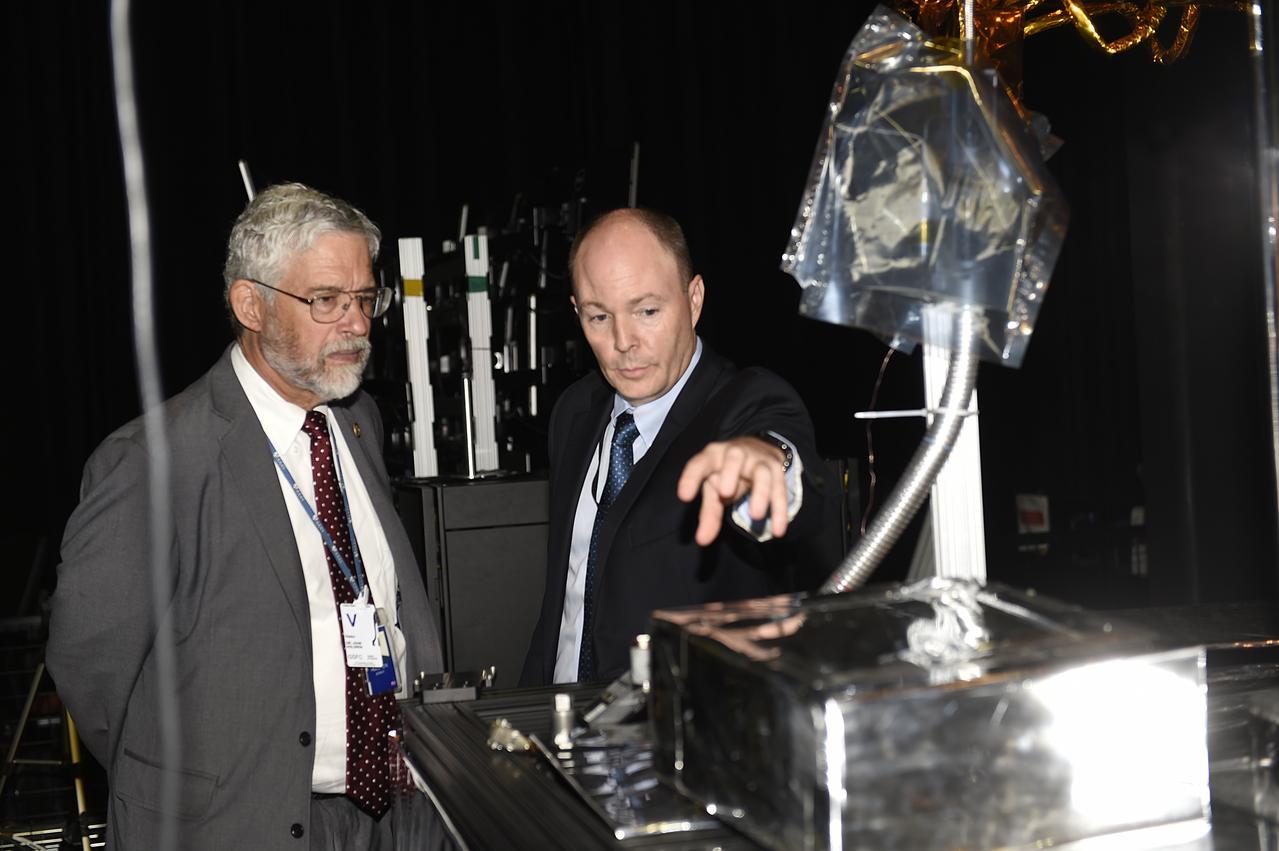
Benjamin Reed, deputy program manager of NASA’s Satellite Servicing Capabilities Office, shows Dr. Holdren the technologies that NASA is developing for the Restore-L satellite servicing mission. NASA will launch the Restore-L servicer in 2020 to refuel a live satellite and demonstrate that a suite of satellite-servicing technologies are operational. More info: Asteroid Redirect Mission Update – On Sept. 14, 2016, NASA provided an update on the Asteroid Redirect Mission (ARM) and how it contributes to the agency’s journey to Mars and protection of Earth. The presentation took place in the Robotic Operations Center at NASA’s Goddard Space Flight Center in Greenbelt, Maryland. Assistant to the President for Science and Technology Dr. John P. Holdren, NASA Administrator Charles Bolden and NASA’s ARM Program Director, Dr. Michele Gates discussed the latest update regarding the mission. They explained the mission’s scientific and technological benefits and how ARM will demonstrate technology for defending Earth from potentially hazardous asteroids. The briefing aired live on NASA TV and the agency’s website. For more information about ARM go to <a href="https://www.nasa.gov/arm" rel="nofollow">www.nasa.gov/arm</a>. Credit: NASA/Goddard/Debbie Mccallum <b><a href="http://www.nasa.gov/audience/formedia/features/MP_Photo_Guidelines.html" rel="nofollow">NASA image use policy.</a></b> <b><a href="http://www.nasa.gov/centers/goddard/home/index.html" rel="nofollow">NASA Goddard Space Flight Center</a></b> enables NASA’s mission through four scientific endeavors: Earth Science, Heliophysics, Solar System Exploration, and Astrophysics. Goddard plays a leading role in NASA’s accomplishments by contributing compelling scientific knowledge to advance the Agency’s mission. <b>Follow us on <a href="http://twitter.com/NASAGoddardPix" rel="nofollow">Twitter</a></b> <b>Like us on <a href="http://www.facebook.com/pages/Greenbelt-MD/NASA-Goddard/395013845897?ref=tsd" rel="nofollow">Facebook</a></b> <b>Find us on <a href="http://instagrid.me/nasagoddard/?vm=grid" rel="nofollow">Instagram</a></b>
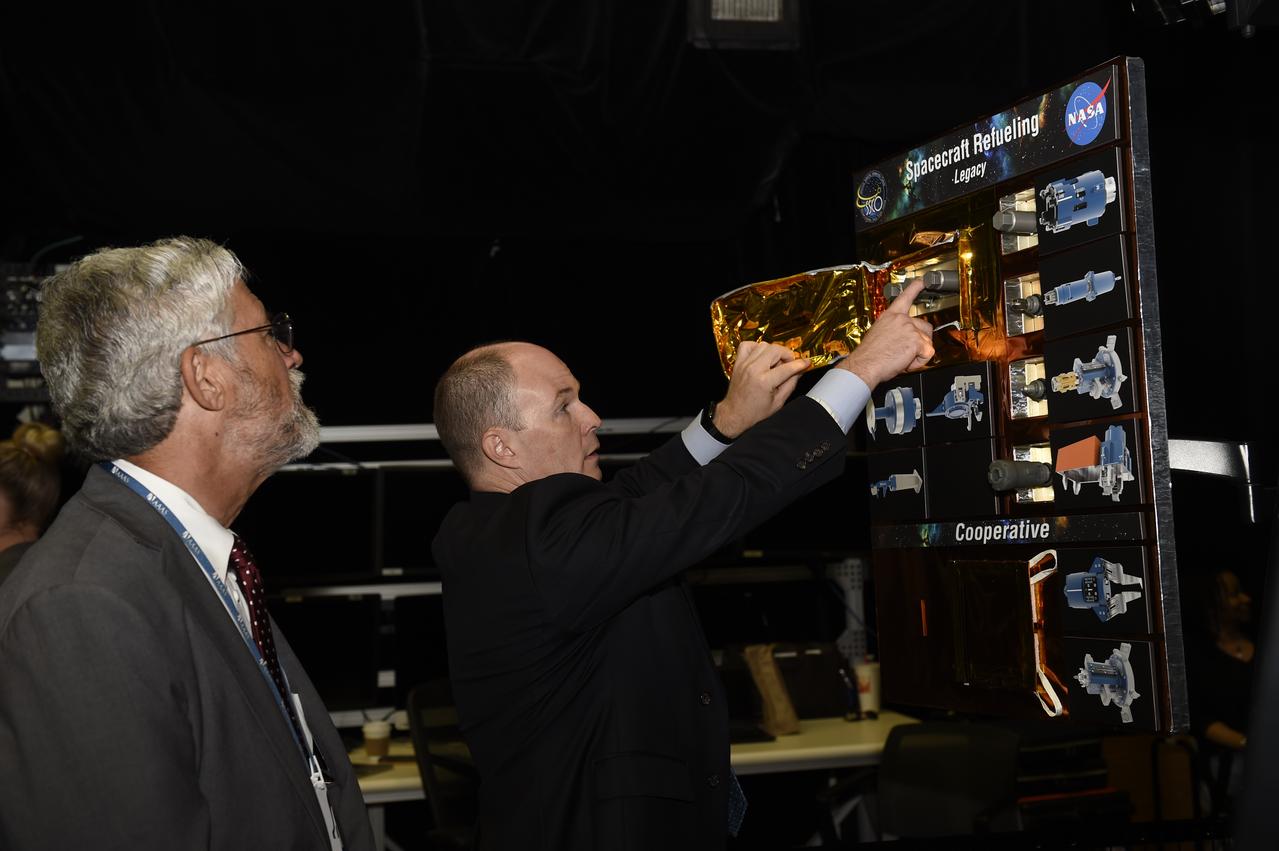
Benjamin Reed (right), deputy program manager of NASA’s Satellite Servicing Capabilities Office, shows Dr. Holdren the technologies that NASA is developing for the Restore-L satellite servicing mission. NASA will launch the Restore-L servicer in 2020 to refuel a live satellite and demonstrate that a suite of satellite-servicing technologies are operational. More info: Asteroid Redirect Mission Update – On Sept. 14, 2016, NASA provided an update on the Asteroid Redirect Mission (ARM) and how it contributes to the agency’s journey to Mars and protection of Earth. The presentation took place in the Robotic Operations Center at NASA’s Goddard Space Flight Center in Greenbelt, Maryland. Assistant to the President for Science and Technology Dr. John P. Holdren, NASA Administrator Charles Bolden and NASA’s ARM Program Director, Dr. Michele Gates discussed the latest update regarding the mission. They explained the mission’s scientific and technological benefits and how ARM will demonstrate technology for defending Earth from potentially hazardous asteroids. The briefing aired live on NASA TV and the agency’s website. For more information about ARM go to <a href="https://www.nasa.gov/arm" rel="nofollow">www.nasa.gov/arm</a>. Credit: NASA/Goddard/Debbie Mccallum <b><a href="http://www.nasa.gov/audience/formedia/features/MP_Photo_Guidelines.html" rel="nofollow">NASA image use policy.</a></b> <b><a href="http://www.nasa.gov/centers/goddard/home/index.html" rel="nofollow">NASA Goddard Space Flight Center</a></b> enables NASA’s mission through four scientific endeavors: Earth Science, Heliophysics, Solar System Exploration, and Astrophysics. Goddard plays a leading role in NASA’s accomplishments by contributing compelling scientific knowledge to advance the Agency’s mission. <b>Follow us on <a href="http://twitter.com/NASAGoddardPix" rel="nofollow">Twitter</a></b> <b>Like us on <a href="http://www.facebook.com/pages/Greenbelt-MD/NASA-Goddard/395013845897?ref=tsd" rel="nofollow">Facebook</a></b> <b>Find us on <a href="http://instagrid.me/nasagoddard/?vm=grid" rel="nofollow">Instagram</a></b>
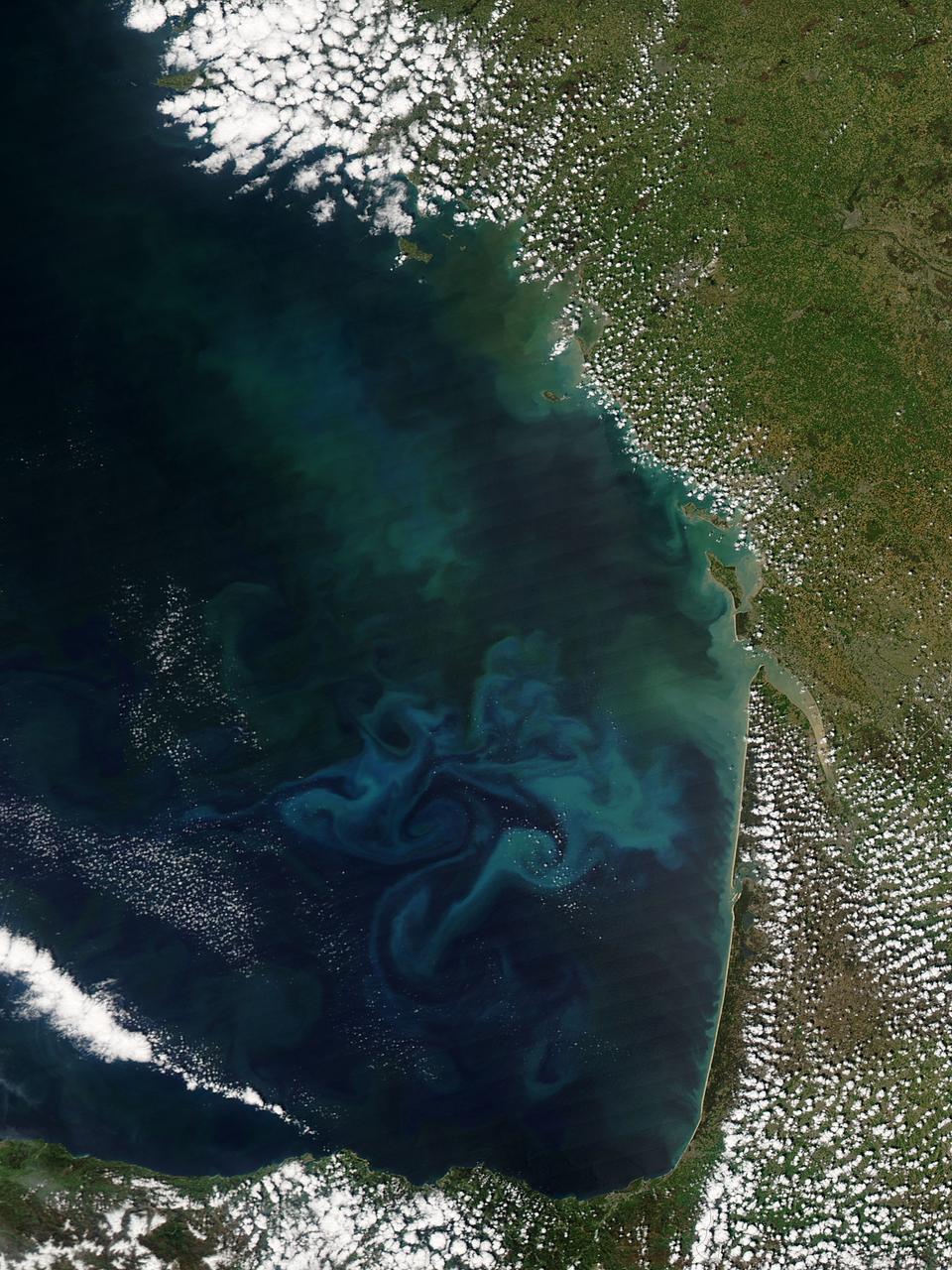
Springtime in the Bay of Biscay, off the coast of France, as in most places, is a season of abundant growth. On April 20, 2013, the Moderate Resolution Imaging Spectroradiometer (MODIS) aboard NASA’s Aqua satellite captured this true-color image of the dynamic growth of a springtime phytoplankton bloom. The swirling colors indicate the presence of vast numbers of phytoplankton – tiny plant-like microorganisms that live in both fresh and salt water. Although these organisms live year-round in the Bay of Biscay, it is only when conditions are right that explosive blooms occur. In spring, the lengthening sunlight, the increased nutrient load swept into the Bay from ocean currents and from snowmelt carried by freshwater rivers, combined with warming waters create the perfect conditions to spur phytoplankton in to tremendous growth. The result is a swirling, multi-hued discoloration that can be easily seen from space. Each year, typically from March through April, such blooms occur in the Bay of Biscay. By May, however, conditions are not as favorable and the blooms fade, then disappear. Credit: NASA/GSFC/Jeff Schmaltz/MODIS Land Rapid Response Team <b><a href="http://www.nasa.gov/audience/formedia/features/MP_Photo_Guidelines.html" rel="nofollow">NASA image use policy.</a></b> <b><a href="http://www.nasa.gov/centers/goddard/home/index.html" rel="nofollow">NASA Goddard Space Flight Center</a></b> enables NASA’s mission through four scientific endeavors: Earth Science, Heliophysics, Solar System Exploration, and Astrophysics. Goddard plays a leading role in NASA’s accomplishments by contributing compelling scientific knowledge to advance the Agency’s mission. <b>Follow us on <a href="http://twitter.com/NASA_GoddardPix" rel="nofollow">Twitter</a></b> <b>Like us on <a href="http://www.facebook.com/pages/Greenbelt-MD/NASA-Goddard/395013845897?ref=tsd" rel="nofollow">Facebook</a></b> <b>Find us on <a href="http://instagram.com/nasagoddard?vm=grid" rel="nofollow">Instagram</a></b>
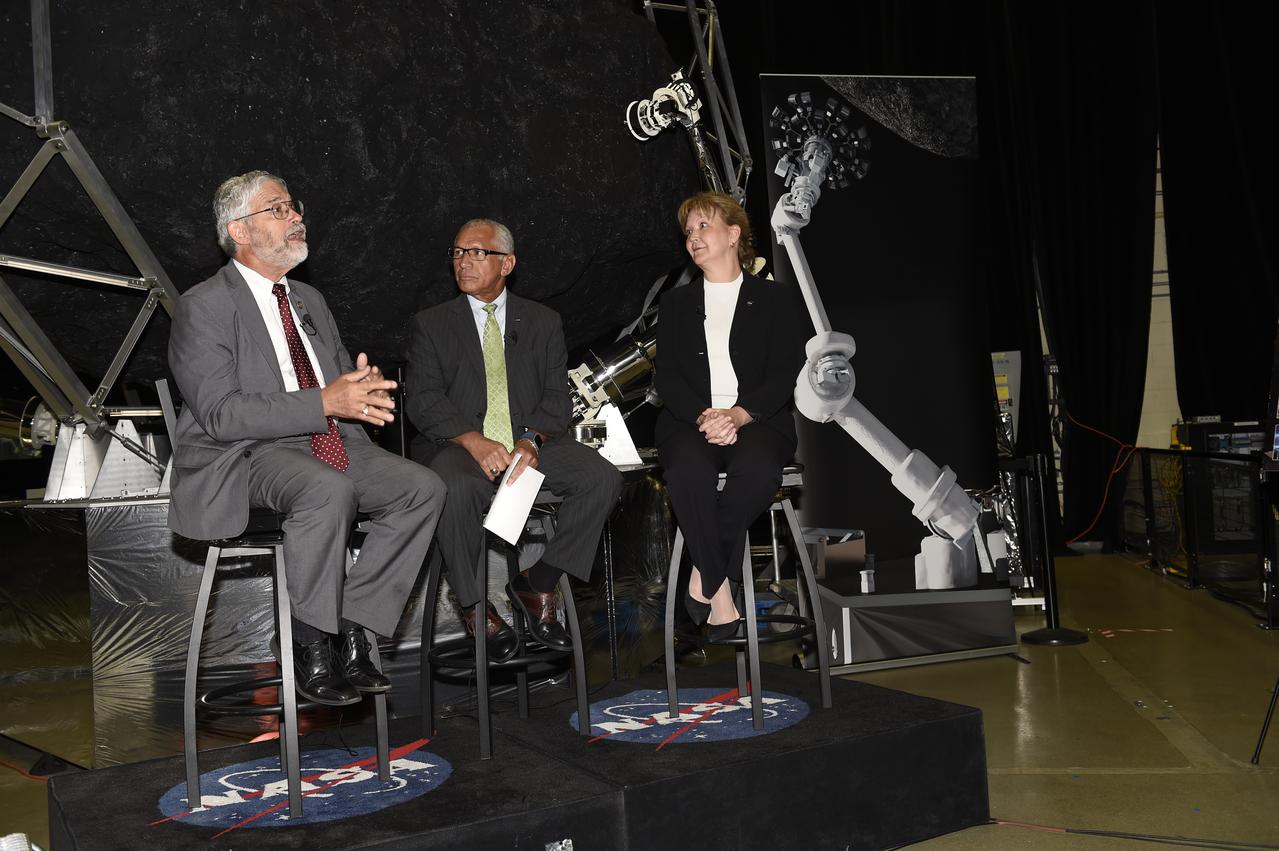
Dr. Holdren (left), Administrator Bolden (center) and Dr. Michele Gates (right) discuss the ARM mission during a live NASA TV briefing. Behind them is a mockup of robotic capture module for the Asteroid Redirect Mission. More info: Asteroid Redirect Mission Update – On Sept. 14, 2016, NASA provided an update on the Asteroid Redirect Mission (ARM) and how it contributes to the agency’s journey to Mars and protection of Earth. The presentation took place in the Robotic Operations Center at NASA’s Goddard Space Flight Center in Greenbelt, Maryland. Assistant to the President for Science and Technology Dr. John P. Holdren, NASA Administrator Charles Bolden and NASA’s ARM Program Director, Dr. Michele Gates discussed the latest update regarding the mission. They explained the mission’s scientific and technological benefits and how ARM will demonstrate technology for defending Earth from potentially hazardous asteroids. The briefing aired live on NASA TV and the agency’s website. For more information about ARM go to <a href="https://www.nasa.gov/arm" rel="nofollow">www.nasa.gov/arm</a>. Credit: NASA/Goddard/Debbie Mccallum <b><a href="http://www.nasa.gov/audience/formedia/features/MP_Photo_Guidelines.html" rel="nofollow">NASA image use policy.</a></b> <b><a href="http://www.nasa.gov/centers/goddard/home/index.html" rel="nofollow">NASA Goddard Space Flight Center</a></b> enables NASA’s mission through four scientific endeavors: Earth Science, Heliophysics, Solar System Exploration, and Astrophysics. Goddard plays a leading role in NASA’s accomplishments by contributing compelling scientific knowledge to advance the Agency’s mission. <b>Follow us on <a href="http://twitter.com/NASAGoddardPix" rel="nofollow">Twitter</a></b> <b>Like us on <a href="http://www.facebook.com/pages/Greenbelt-MD/NASA-Goddard/395013845897?ref=tsd" rel="nofollow">Facebook</a></b> <b>Find us on <a href="http://instagrid.me/nasagoddard/?vm=grid" rel="nofollow">Instagram</a></b>
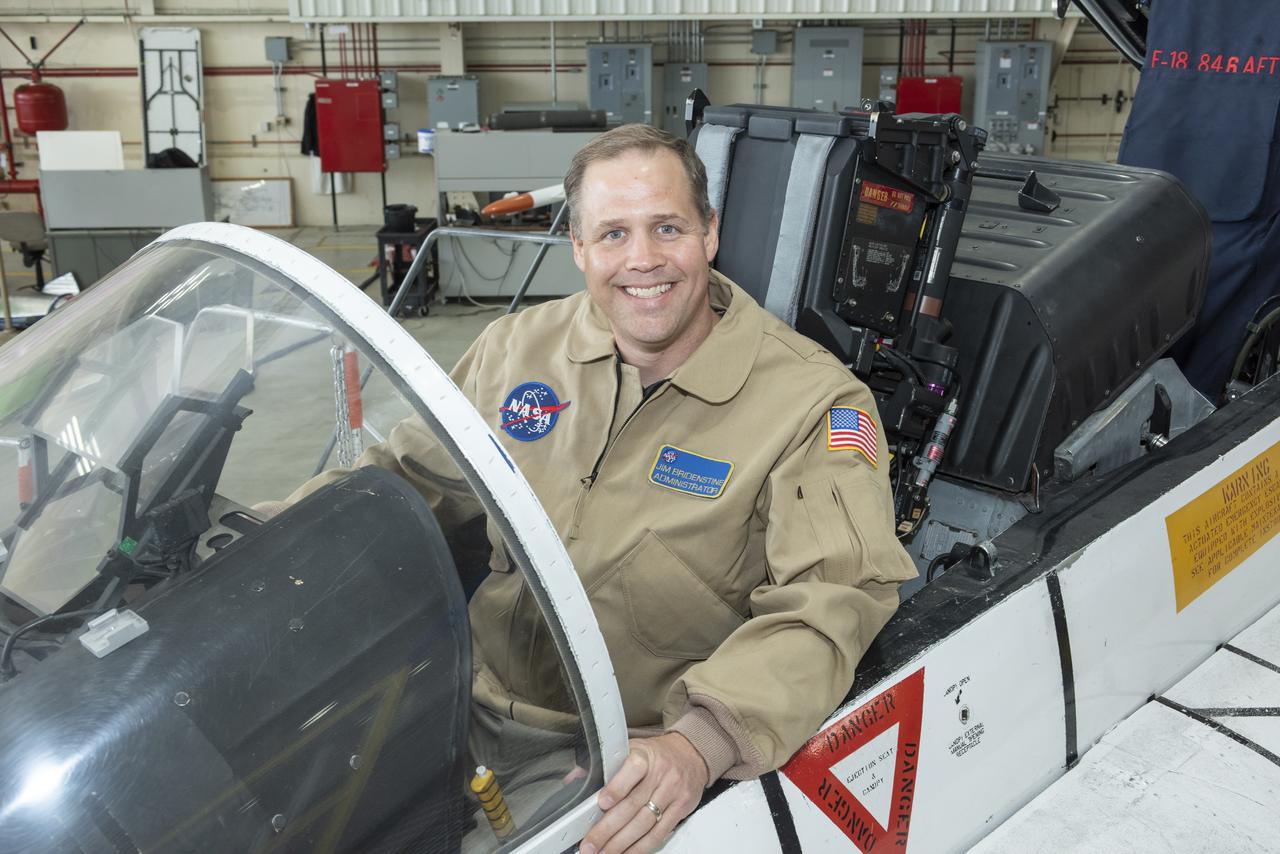
NASA Administrator Bridenstine, former navy pilot, sits comfortably back in F-18 jet cockpit at Armstrong Flight Research Center.
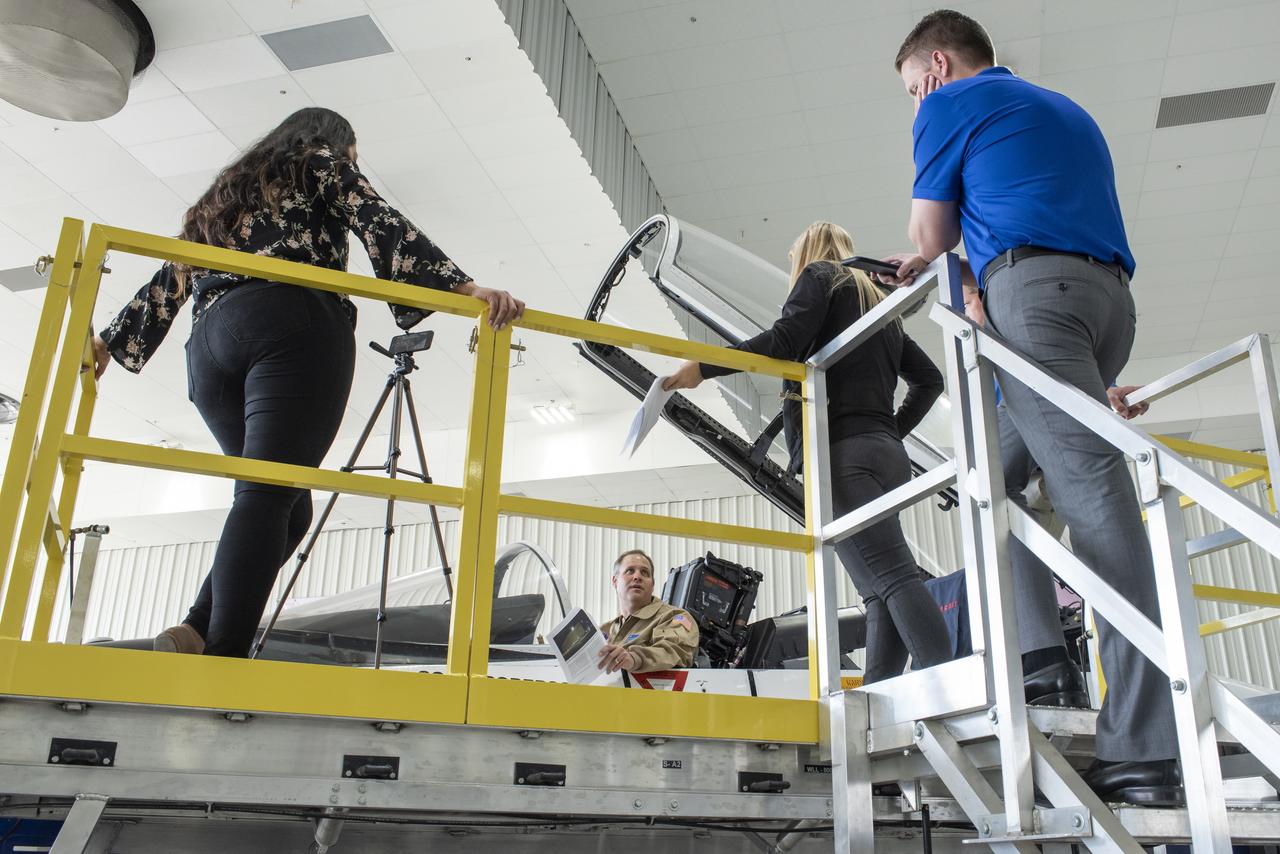
NASA Administrator Bridenstine, former navy pilot, sits comfortably back in F-18 jet cockpit at Armstrong Flight Research Center.
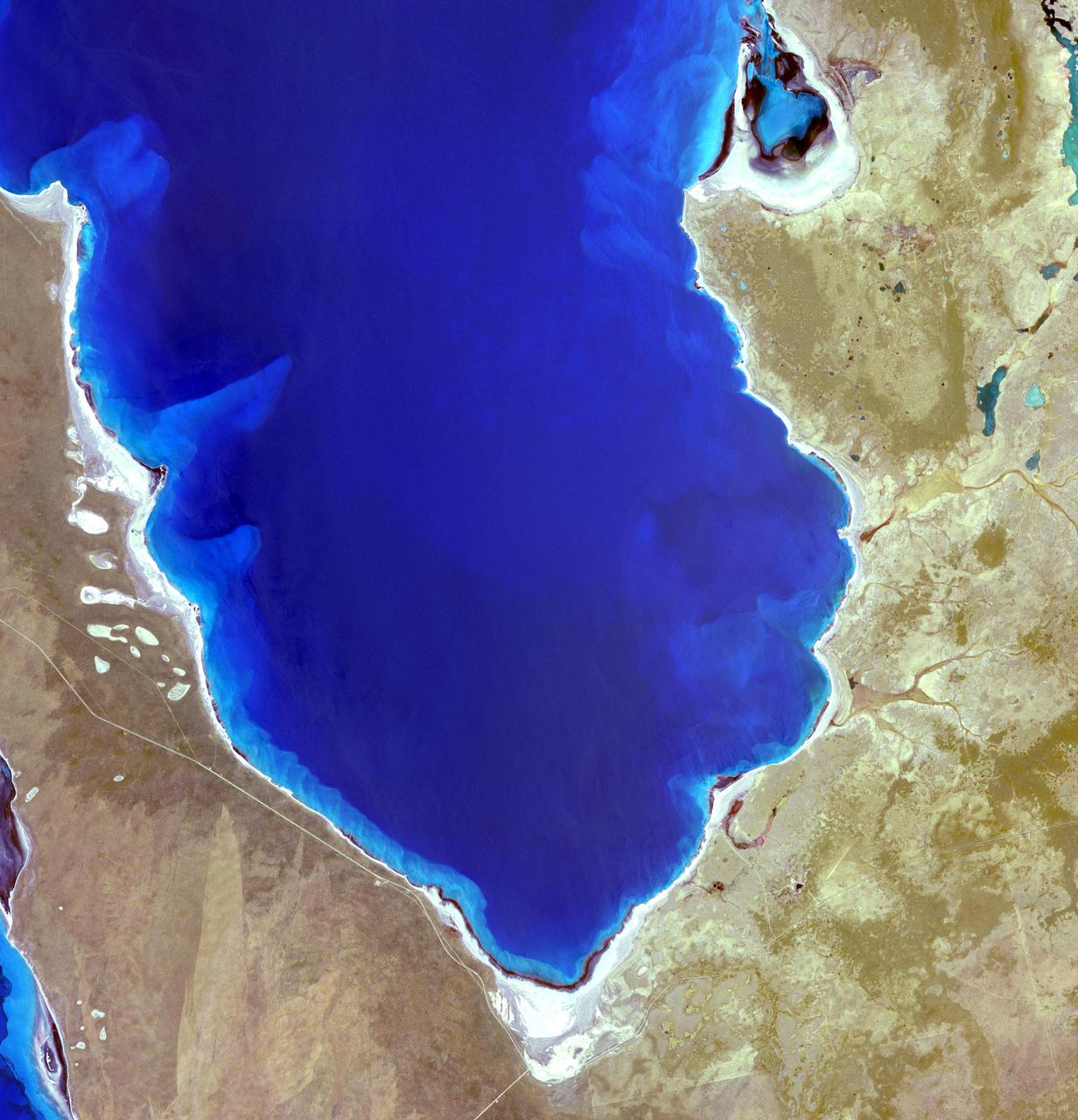
Hamelin Pool Marine Nature Reserve is located in the Shark Bay World Heritage Site in Western Australia. It is one of the very few places in the world where living stromatolites can be found. These are the first living examples of structures built by cyanobacteria. These bacteria are direct descendants of the oldest form of photosynthetic life on earth, dating back 3,500 million years (Wikipedia). The image was acquired December 30, 2010, covers an area of 34 x 46 km, and is located at 26.4 degrees south latitude, 114.1 degrees east longitude. With its 14 spectral bands from the visible to the thermal infrared wavelength region and its high spatial resolution of 15 to 90 meters (about 50 to 300 feet), ASTER images Earth to map and monitor the changing surface of our planet. ASTER is one of five Earth-observing instruments launched Dec. 18, 1999, on Terra. The instrument was built by Japan's Ministry of Economy, Trade and Industry. A joint U.S./Japan science team is responsible for validation and calibration of the instrument and data products. The broad spectral coverage and high spectral resolution of ASTER provides scientists in numerous disciplines with critical information for surface mapping and monitoring of dynamic conditions and temporal change. Example applications are: monitoring glacial advances and retreats; monitoring potentially active volcanoes; identifying crop stress; determining cloud morphology and physical properties; wetlands evaluation; thermal pollution monitoring; coral reef degradation; surface temperature mapping of soils and geology; and measuring surface heat balance. The U.S. science team is located at NASA's Jet Propulsion Laboratory, Pasadena, Calif. The Terra mission is part of NASA's Science Mission Directorate, Washington, D.C. More information about ASTER is available at <a href="http://asterweb.jpl.nasa.gov/" rel="nofollow">asterweb.jpl.nasa.gov/</a>. Credit: NASA/GSFC/METI/ERSDAC/JAROS, and U.S./Japan ASTER Science Team Image Addition Date: 2013-03-15 <b><a href="http://www.nasa.gov/audience/formedia/features/MP_Photo_Guidelines.html" rel="nofollow">NASA image use policy.</a></b> <b><a href="http://www.nasa.gov/centers/goddard/home/index.html" rel="nofollow">NASA Goddard Space Flight Center</a></b> enables NASA’s mission through four scientific endeavors: Earth Science, Heliophysics, Solar System Exploration, and Astrophysics. Goddard plays a leading role in NASA’s accomplishments by contributing compelling scientific knowledge to advance the Agency’s mission. <b>Follow us on <a href="http://twitter.com/NASA_GoddardPix" rel="nofollow">Twitter</a></b> <b>Like us on <a href="http://www.facebook.com/pages/Greenbelt-MD/NASA-Goddard/395013845897?ref=tsd" rel="nofollow">Facebook</a></b> <b>Find us on <a href="http://instagram.com/nasagoddard?vm=grid" rel="nofollow">Instagram</a></b>
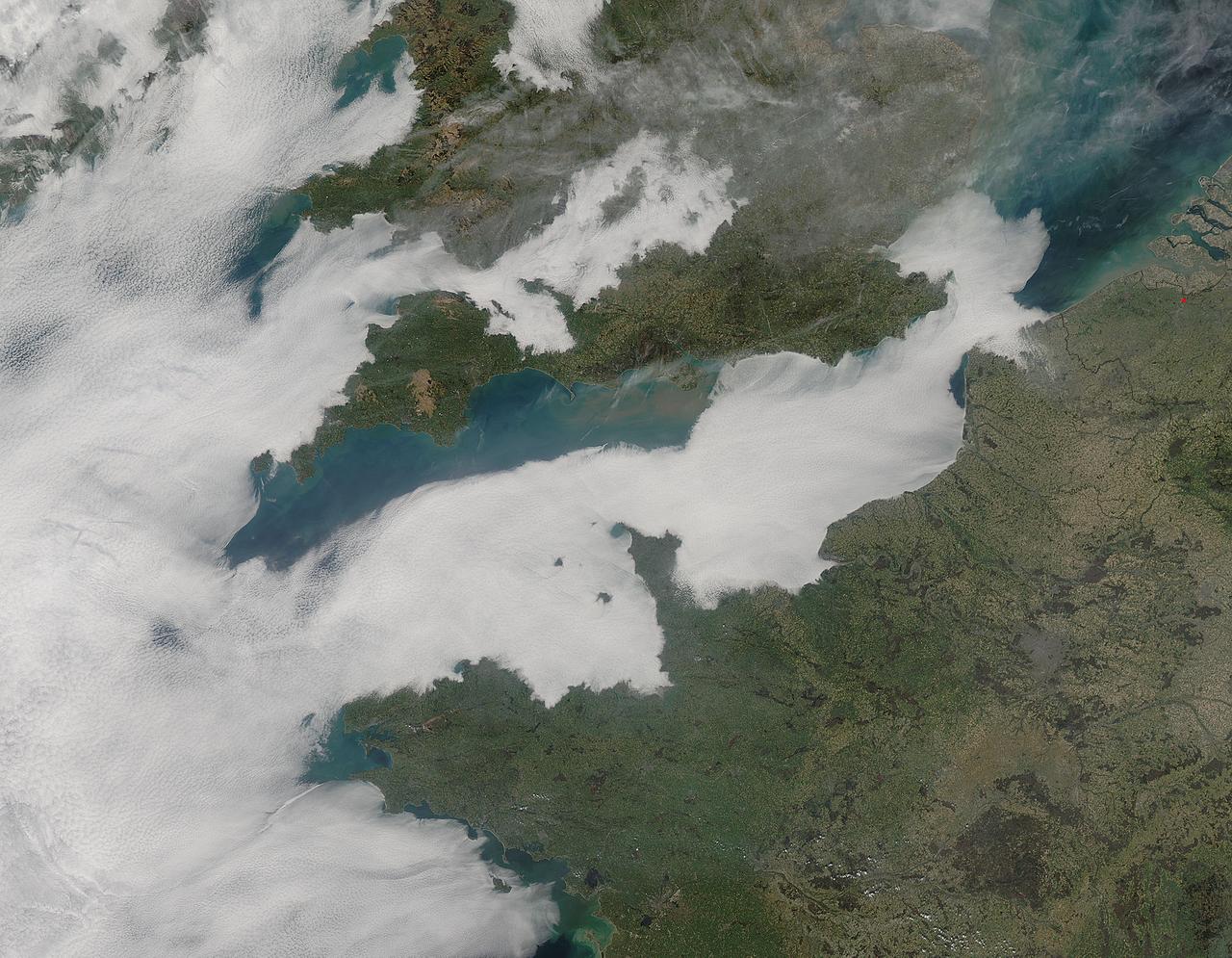
A thick blanket of low clouds covered the English Channel, Celtic Sea and Irish Sea on March 13, 2014. The fog also crept over major cities in the United Kingdom and Ireland. While citizens living in parts of Ireland, England, Wales, Scotland and Northern Ireland were posting ground-based photos of fog-shrouded landscape on social media, the internet and news outlets, the scene was also captured from space. The Moderate Resolution Imaging Spectroradiometer (MODIS) aboard NASA’s Aqua captured this true-color image of the cloudy day at 13:00 UTC (1:00 p.m. in London) on that same day. The dense fog (low clouds) affected air travel, causing the cancellation of hundreds of flights going through London City Airport, where visibility was reported at less than 100 meters (328 ft) – less than the length of an American football field. Flights were also cancelled at Heathrow, Gatwick and Manchester. A private helicopter flying to Northern Ireland went down in by the fog near the Norfolk-Suffolk border, with loss of four lives. Driving was little better in many areas, causing the Met Office to issue a yellow weather warning and to caution drivers of difficult conditions. The lowest visibility of the day was reported at Roches Point weather station. Located at the southeastern tip of Cork Harbor, Ireland, the station reported visibility of less than 50 meters (164 ft) – the length of an Olympic size swimming pool. In this image, the fog-covered Celtic Sea is located in the southwest. Ireland lies under tendrils of low cloud in the northwest corner of the image. Banks of clouds part around England, near the center of the image, and southern Wales (top and center) completely under the foggy blanket. Fog also creeps over the coasts of France, Belgium and the Netherlands on the east side of the English Channel. Credit: NASA/GSFC/Jeff Schmaltz/MODIS Land Rapid Response Team <b><a href="http://www.nasa.gov/audience/formedia/features/MP_Photo_Guidelines.html" rel="nofollow">NASA image use policy.</a></b> <b><a href="http://www.nasa.gov/centers/goddard/home/index.html" rel="nofollow">NASA Goddard Space Flight Center</a></b> enables NASA’s mission through four scientific endeavors: Earth Science, Heliophysics, Solar System Exploration, and Astrophysics. Goddard plays a leading role in NASA’s accomplishments by contributing compelling scientific knowledge to advance the Agency’s mission. <b>Follow us on <a href="http://twitter.com/NASAGoddardPix" rel="nofollow">Twitter</a></b> <b>Like us on <a href="http://www.facebook.com/pages/Greenbelt-MD/NASA-Goddard/395013845897?ref=tsd" rel="nofollow">Facebook</a></b> <b>Find us on <a href="http://instagram.com/nasagoddard?vm=grid" rel="nofollow">Instagram</a></b>
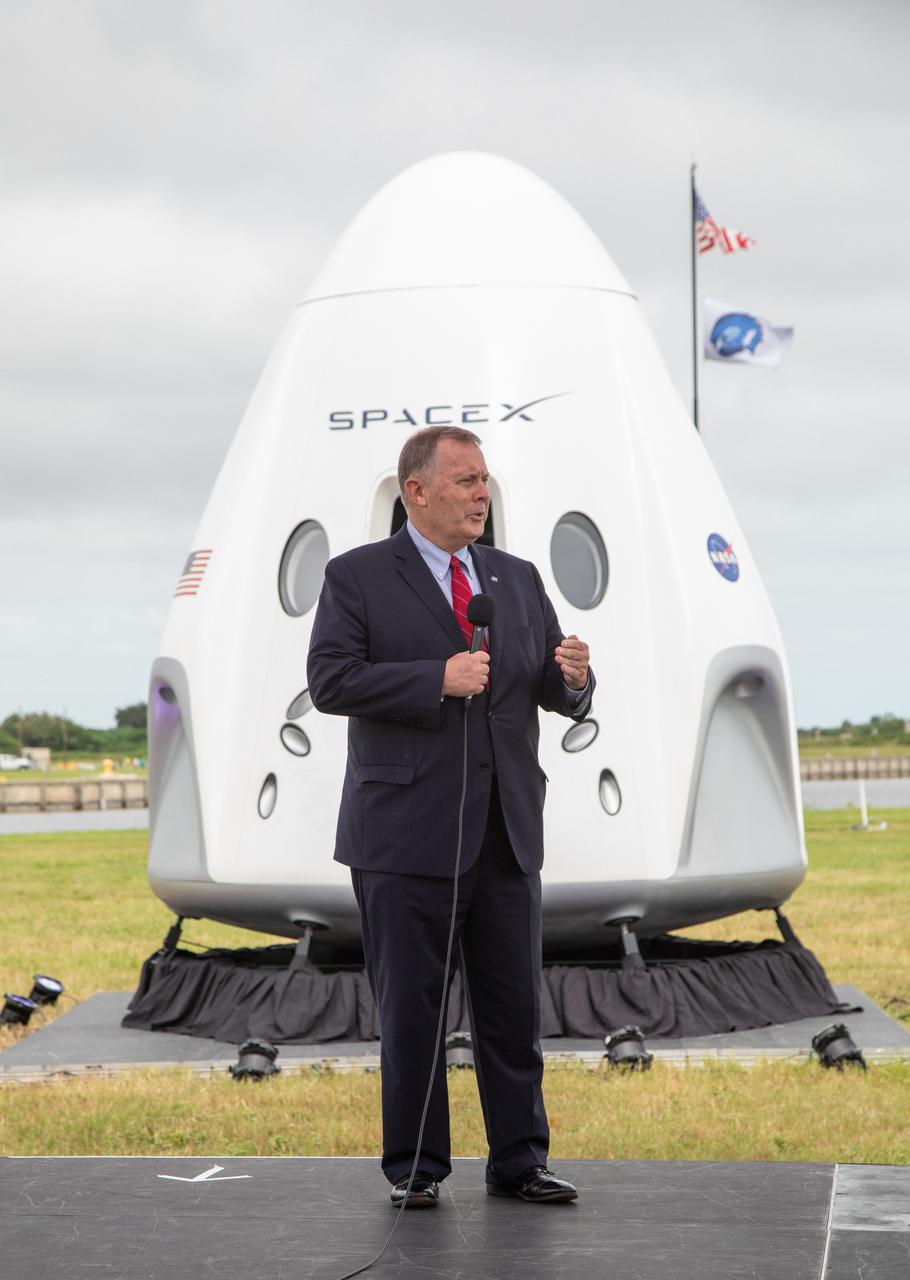
NASA Deputy Administrator Jim Morhard speaks to members of the media during a press briefing Nov. 13, 2020, near the Press Site countdown clock at the agency’s Kennedy Space Center in Florida ahead of NASA’s SpaceX Crew-1 launch. Crew-1 is the first regular crew mission of a U.S. commercial spacecraft with astronauts to the International Space Station as part of NASA’s Commercial Crew Program. The SpaceX Crew Dragon Resilience capsule will launch atop the company’s Falcon 9 rocket from Launch Complex 39A to the space station for a six-month science mission.
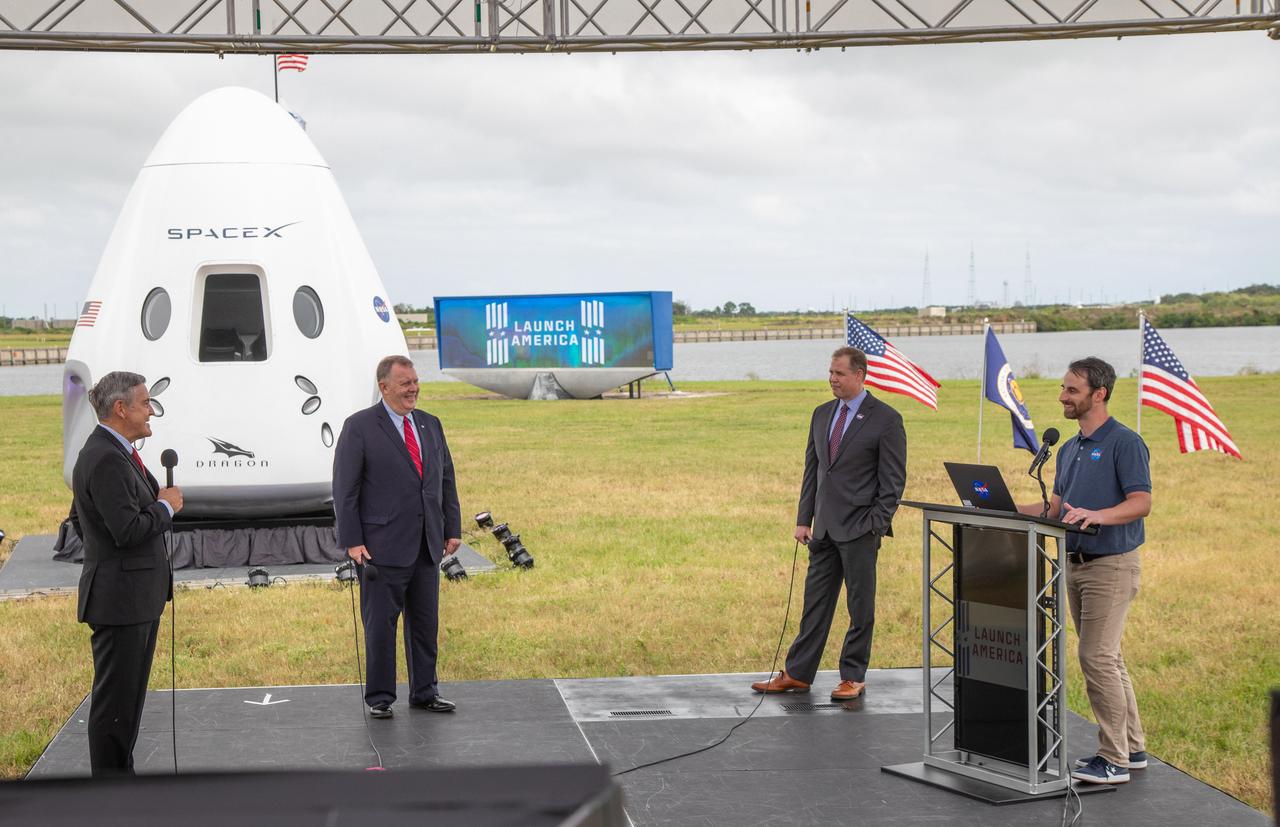
Joshua Santora, far right, NASA Communications, moderates a press briefing Nov. 13, 2020, near the Press Site countdown clock at the agency’s Kennedy Space Center in Florida ahead of NASA’s SpaceX Crew-1 launch. Speaking to the media, from right, are Kennedy Space Center Director Bob Cabana, NASA Deputy Administrator Jim Morhard, and NASA Administrator Jim Bridenstine. Crew-1 is the first regular crew mission of a U.S. commercial spacecraft with astronauts to the International Space Station as part of NASA’s Commercial Crew Program. The SpaceX Crew Dragon Resilience capsule will launch atop the company’s Falcon 9 rocket from Launch Complex 39A to the space station for a six-month science mission.

NASA Administrator Jim Bridenstine speaks to members of the media during a press briefing Nov. 13, 2020, near the Press Site countdown clock at the agency’s Kennedy Space Center in Florida ahead of NASA’s SpaceX Crew-1 launch. Crew-1 is the first regular crew mission of a U.S. commercial spacecraft with astronauts to the International Space Station as part of NASA’s Commercial Crew Program. The SpaceX Crew Dragon Resilience capsule will launch atop the company’s Falcon 9 rocket from Launch Complex 39A to the space station for a six-month science mission.
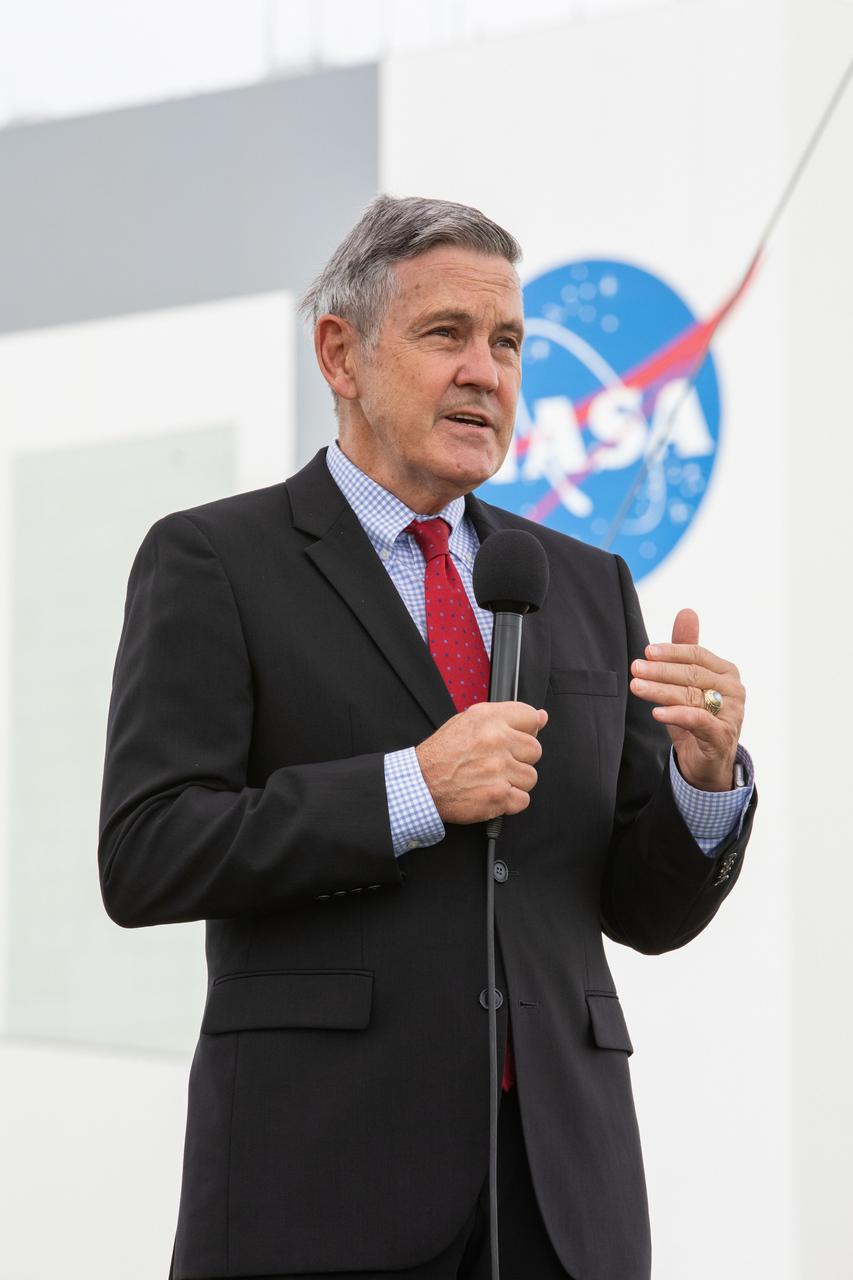
Kennedy Space Center Director Bob Cabana speaks to members of the media during a press briefing Nov. 13, 2020, near the Press Site countdown clock at the agency’s Kennedy Space Center in Florida ahead of NASA’s SpaceX Crew-1 launch. Crew-1 is the first regular crew mission of a U.S. commercial spacecraft with astronauts to the International Space Station as part of NASA’s Commercial Crew Program. The SpaceX Crew Dragon Resilience capsule will launch atop the company’s Falcon 9 rocket from Launch Complex 39A to the space station for a six-month science mission.
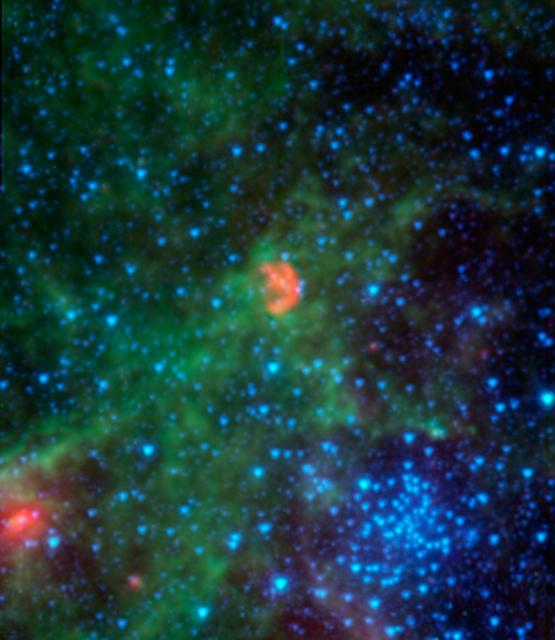
Supernovas are often thought of as the tremendous explosions that mark the ends of massive stars' lives. While this is true, not all supernovas occur in this fashion. A common supernova class, called Type Ia, involves the detonation of white dwarfs -- small, dense stars that are already dead. New results from NASA's Spitzer Space Telescope have revealed a rare example of Type Ia explosion, in which a dead star "fed" off an aging star like a cosmic zombie, triggering a blast. The results help researchers piece together how these powerful and diverse events occur. "It's kind of like being a detective," said Brian Williams of NASA's Goddard Space Flight Center in Greenbelt, Maryland, lead author of a study submitted to the Astrophysical Journal. "We look for clues in the remains to try to figure out what happened, even though we weren't there to see it." Read more: <a href="http://1.usa.gov/1i0PAaa" rel="nofollow">1.usa.gov/1i0PAaa</a> <b><a href="http://www.nasa.gov/audience/formedia/features/MP_Photo_Guidelines.html" rel="nofollow">NASA image use policy.</a></b> <b><a href="http://www.nasa.gov/centers/goddard/home/index.html" rel="nofollow">NASA Goddard Space Flight Center</a></b> enables NASA’s mission through four scientific endeavors: Earth Science, Heliophysics, Solar System Exploration, and Astrophysics. Goddard plays a leading role in NASA’s accomplishments by contributing compelling scientific knowledge to advance the Agency’s mission. <b>Follow us on <a href="http://twitter.com/NASAGoddardPix" rel="nofollow">Twitter</a></b> <b>Like us on <a href="http://www.facebook.com/pages/Greenbelt-MD/NASA-Goddard/395013845897?ref=tsd" rel="nofollow">Facebook</a></b> <b>Find us on <a href="http://instagram.com/nasagoddard?vm=grid" rel="nofollow">Instagram</a></b>
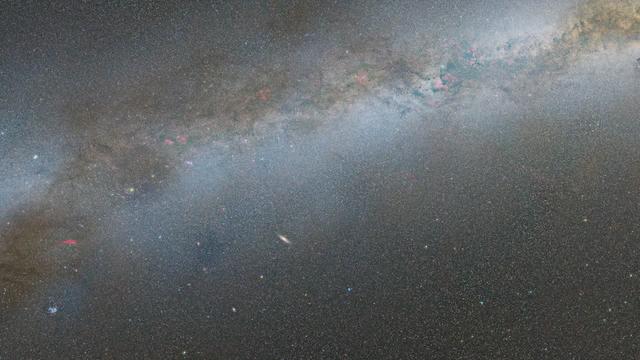
Zoom into the Andromeda galaxy. The largest NASA Hubble Space Telescope image ever assembled, this sweeping view of a portion of the Andromeda galaxy (M31) is the sharpest large composite image ever taken of our galactic neighbor. Though the galaxy is over 2 million light-years away, the Hubble telescope is powerful enough to resolve individual stars in a 61,000-light-year-long section of the galaxy's pancake-shaped disk. It's like photographing a beach and resolving individual grains of sand. And, there are lots of stars in this sweeping view — over 100 million, with some of them in thousands of star clusters seen embedded in the disk. This ambitious photographic cartography of the Andromeda galaxy represents a new benchmark for precision studies of large spiral galaxies which dominate the universe's population of over 100 billion galaxies. Never before have astronomers been able to see individual stars over a major portion of an external spiral galaxy. Most of the stars in the universe live inside such majestic star cities, and this is the first data that reveal populations of stars in context to their home galaxy. Credit: NASA, ESA, and G. Bacon (STScI) <b><a href="http://www.nasa.gov/audience/formedia/features/MP_Photo_Guidelines.html" rel="nofollow">NASA image use policy.</a></b> <b><a href="http://www.nasa.gov/centers/goddard/home/index.html" rel="nofollow">NASA Goddard Space Flight Center</a></b> enables NASA’s mission through four scientific endeavors: Earth Science, Heliophysics, Solar System Exploration, and Astrophysics. Goddard plays a leading role in NASA’s accomplishments by contributing compelling scientific knowledge to advance the Agency’s mission. <b>Follow us on <a href="http://twitter.com/NASAGoddardPix" rel="nofollow">Twitter</a></b> <b>Like us on <a href="http://www.facebook.com/pages/Greenbelt-MD/NASA-Goddard/395013845897?ref=tsd" rel="nofollow">Facebook</a></b> <b>Find us on <a href="http://instagram.com/nasagoddard?vm=grid" rel="nofollow">Instagram</a></b>

This Hubble image shows NGC 4789A, a dwarf irregular galaxy in the constellation of Coma Berenices. It certainly lives up to its name — the stars that call this galaxy home are smeared out across the sky in an apparently disorderly and irregular jumble, giving NGC 4789A a far more subtle and abstract appearance than its glitzy spiral and elliptical cousins. These stars may look as if they have been randomly sprinkled on the sky, but they are all held together by gravity. The colors in this image have been deliberately exaggerated to emphasize the mix of blue and red stars. The blue stars are bright, hot and massive stars that have formed relatively recently, whereas the red stars are much older. The presence of both tells us that stars have been forming in this galaxy throughout its history. At a distance of just over 14 million light-years away NGC 4789A is relatively close to us, allowing us to see many of the individual stars within its bounds. This image also reveals numerous other galaxies, far more distant, that appear as fuzzy shapes spread across the image. Image Credit: ESA/Hubble & NASA, Acknowledgements: Judy Schmidt (Geckzilla) <b><a href="http://www.nasa.gov/audience/formedia/features/MP_Photo_Guidelines.html" rel="nofollow">NASA image use policy.</a></b> <b><a href="http://www.nasa.gov/centers/goddard/home/index.html" rel="nofollow">NASA Goddard Space Flight Center</a></b> enables NASA’s mission through four scientific endeavors: Earth Science, Heliophysics, Solar System Exploration, and Astrophysics. Goddard plays a leading role in NASA’s accomplishments by contributing compelling scientific knowledge to advance the Agency’s mission. <b>Follow us on <a href="http://twitter.com/NASAGoddardPix" rel="nofollow">Twitter</a></b> <b>Like us on <a href="http://www.facebook.com/pages/Greenbelt-MD/NASA-Goddard/395013845897?ref=tsd" rel="nofollow">Facebook</a></b> <b>Find us on <a href="http://instagrid.me/nasagoddard/?vm=grid" rel="nofollow">Instagram</a></b>
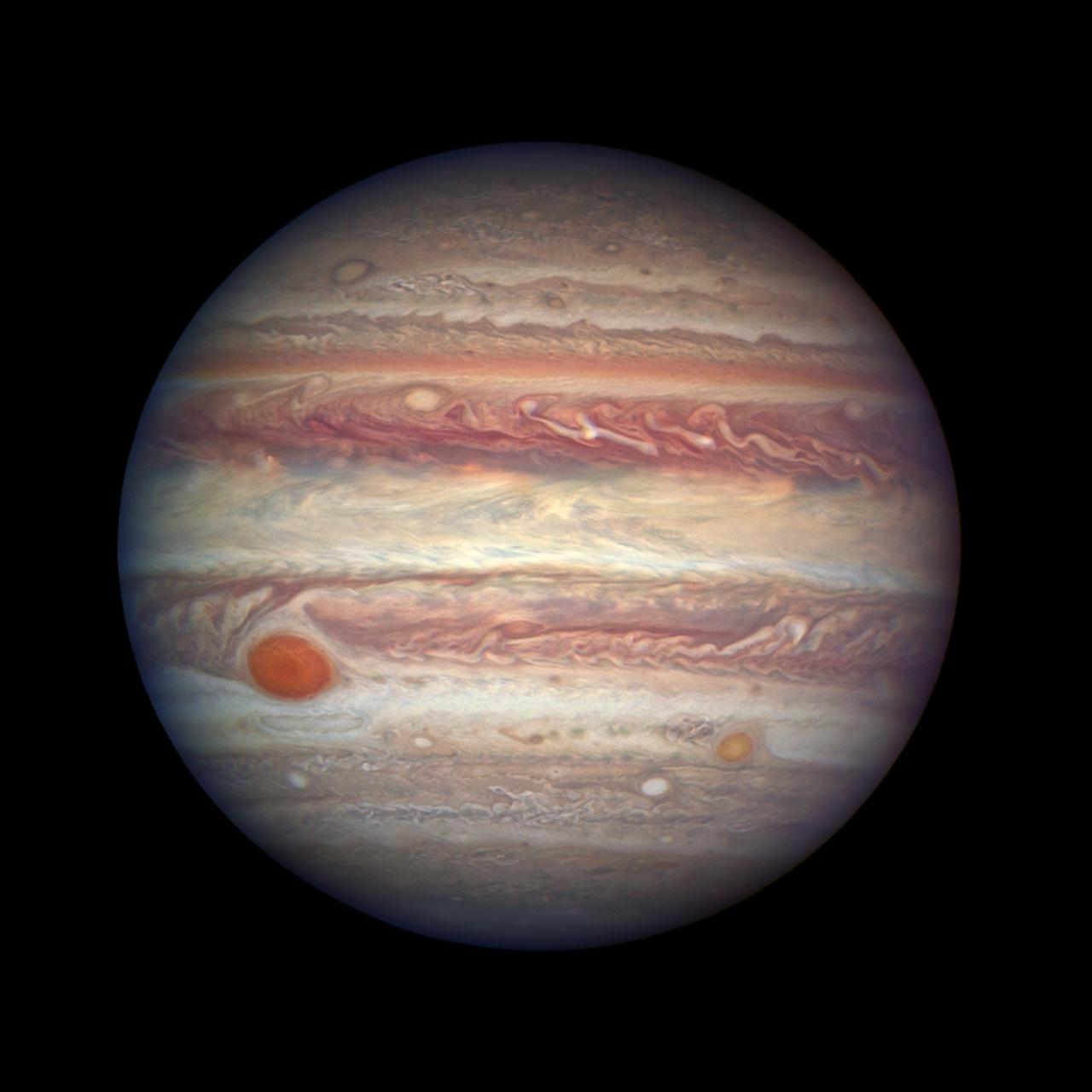
On April 3, 2017, as Jupiter made its nearest approach to Earth in a year, NASA’s Hubble Space Telescope viewed the solar system’s largest planet in all of its up-close glory. At a distance of 415 million miles (668 million kilometers) from Earth, Jupiter offered spectacular views of its colorful, roiling atmosphere, the legendary Great Red Spot, and it smaller companion at farther southern latitudes dubbed “Red Spot Jr.” Read more: <a href="https://go.nasa.gov/2o7tOhH" rel="nofollow">go.nasa.gov/2o7tOhH</a> Photo details: This dazzling Hubble Space Telescope photo of #Jupiter was taken when it was comparatively close to Earth, at a distance of 415 million miles. Hubble reveals the intricate, detailed beauty of Jupiter's clouds as arranged into bands of different latitudes, known as tropical regions. These bands are produced by air flowing in different directions at various latitudes. Lighter colored areas, called zones, are high-pressure where the atmosphere rises. Darker low-pressure regions where air falls are called belts. The planet's trademark, the Great Red Spot, is a long-lived storm roughly the diameter of Earth. Much smaller storms appear as white or brown-colored ovals. Such storms can last as little as a few hours or stretch on for centuries. Credit: NASA, ESA, and A. Simon (NASA Goddard) <b><a href="http://www.nasa.gov/audience/formedia/features/MP_Photo_Guidelines.html" rel="nofollow">NASA image use policy.</a></b> <b><a href="http://www.nasa.gov/centers/goddard/home/index.html" rel="nofollow">NASA Goddard Space Flight Center</a></b> enables NASA’s mission through four scientific endeavors: Earth Science, Heliophysics, Solar System Exploration, and Astrophysics. Goddard plays a leading role in NASA’s accomplishments by contributing compelling scientific knowledge to advance the Agency’s mission. <b>Follow us on <a href="http://twitter.com/NASAGoddardPix" rel="nofollow">Twitter</a></b> <b>Like us on <a href="http://www.facebook.com/pages/Greenbelt-MD/NASA-Goddard/395013845897?ref=tsd" rel="nofollow">Facebook</a></b> <b>Find us on <a href="http://instagrid.me/nasagoddard/?vm=grid" rel="nofollow">Instagram</a></b>
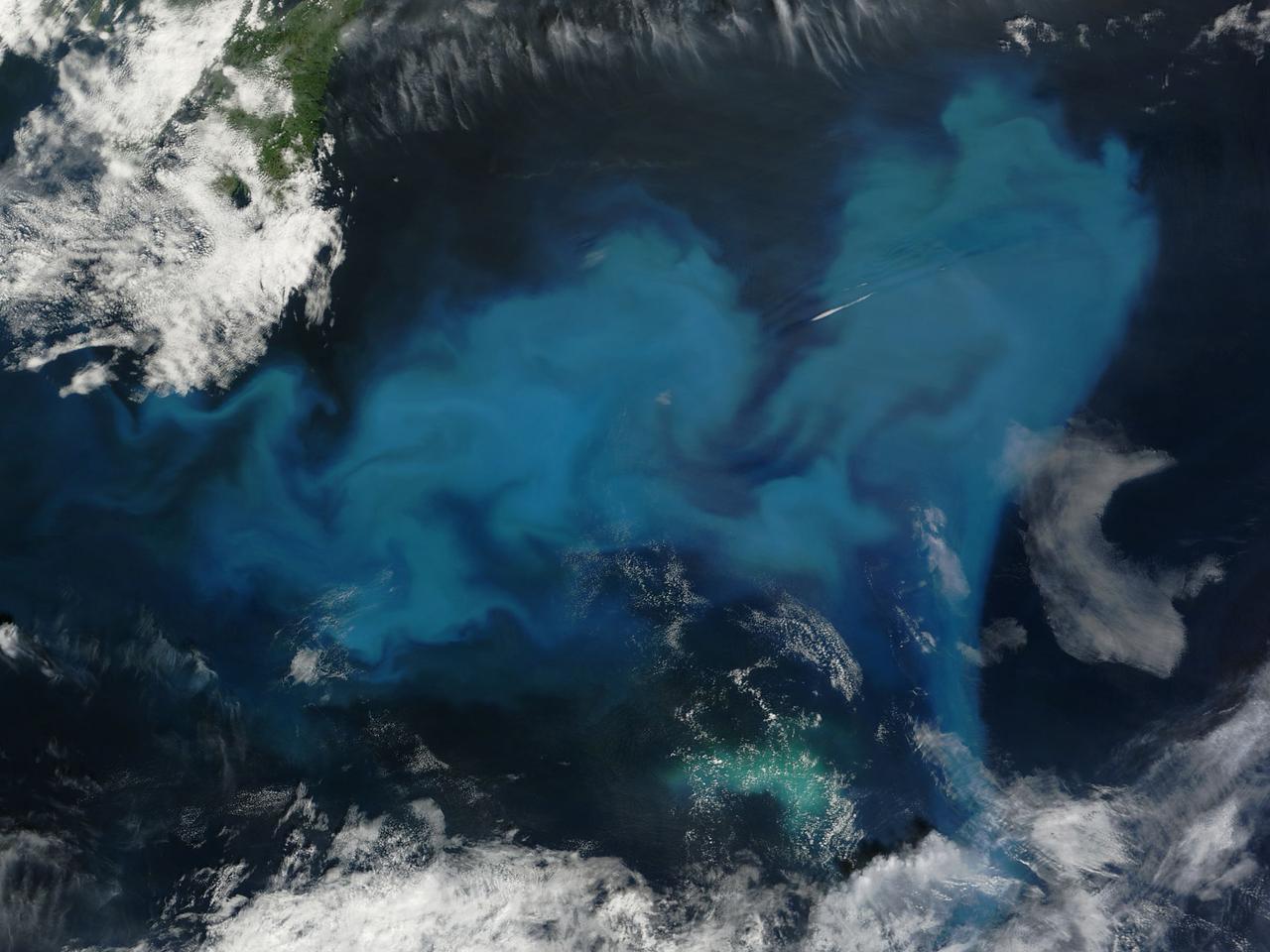
NASA image acquired August 9, 2010 Phytoplankton are microscopic organisms that live in watery environments. When conditions are right, phytoplankton undergo explosive population growth, creating blooms visible from space. Such a bloom occurred in the North Atlantic Ocean, off the coast of Newfoundland in early August 2010. The Moderate Resolution Imaging Spectroradiometer (MODIS) on NASA’s Terra satellite captured this natural-color image on August 9, 2010. The paisley pattern of peacock blue owes its color to phytoplankton. Phytoplankton thrive at high latitudes, especially in the spring and summer when abundant sunlight spurs photosynthesis, and relatively calm seas allow the tiny organisms to congregate in sunlit waters. Blooms can last for weeks even though an individual phytoplankton lifespan may be just a few days. NASA/GSFC/Jeff Schmaltz/MODIS Land Rapid Response Team Click here to see more images from <b><a href="http://rapidfire.sci.gsfc.nasa.gov/gallery/?latest" rel="nofollow">MODIS</a></b> <b><a href="http://www.nasa.gov/centers/goddard/home/index.html" rel="nofollow">NASA Goddard Space Flight Center</a></b> is home to the nation's largest organization of combined scientists, engineers and technologists that build spacecraft, instruments and new technology to study the Earth, the sun, our solar system, and the universe. <b>Follow us on <a href="http://twitter.com/NASA_GoddardPix" rel="nofollow">Twitter</a></b> <b>Join us on <a href="http://www.facebook.com/pages/Greenbelt-MD/NASA-Goddard/395013845897?ref=tsd" rel="nofollow">Facebook</a><b></b></b>

Santiago, Chile, ranks among the world's fastest growing cities. Chile is South America's fifth largest economy with strong export and tourism markets. More than a third of Chile's population lives in Santiago as of 2009. Taken on January 9, 1985, and January 30, 2010, this pair of images from the Landsat 5 satellite illustrates the city's steady growth. The images were made with infrared and visible light (Landsat bands 4, 3, and 2) so that plant-covered land is red. Bare or sparsely vegetated land is tan, and the city is dark silver. In the fifteen years that elapsed between 1985 and 2010, the city expanded away from the Andes Mountains along spoke-like lines, which are major roads. ---- NASA and the U.S. Department of the Interior through the U.S. Geological Survey (USGS) jointly manage Landsat, and the USGS preserves a 40-year archive of Landsat images that is freely available over the Internet. The next Landsat satellite, now known as the Landsat Data Continuity Mission (LDCM) and later to be called Landsat 8, is scheduled for launch in 2013. In honor of Landsat’s 40th anniversary in July 2012, the USGS released the LandsatLook viewer – a quick, simple way to go forward and backward in time, pulling images of anywhere in the world out of the Landsat archive. <b><a href="http://www.nasa.gov/audience/formedia/features/MP_Photo_Guidelines.html" rel="nofollow">NASA image use policy.</a></b> <b><a href="http://www.nasa.gov/centers/goddard/home/index.html" rel="nofollow">NASA Goddard Space Flight Center</a></b> enables NASA’s mission through four scientific endeavors: Earth Science, Heliophysics, Solar System Exploration, and Astrophysics. Goddard plays a leading role in NASA’s accomplishments by contributing compelling scientific knowledge to advance the Agency’s mission. <b>Follow us on <a href="http://twitter.com/NASA_GoddardPix" rel="nofollow">Twitter</a></b> <b>Like us on <a href="http://www.facebook.com/pages/Greenbelt-MD/NASA-Goddard/395013845897?ref=tsd" rel="nofollow">Facebook</a></b> <b>Find us on <a href="http://instagrid.me/nasagoddard/?vm=grid" rel="nofollow">Instagram</a></b>
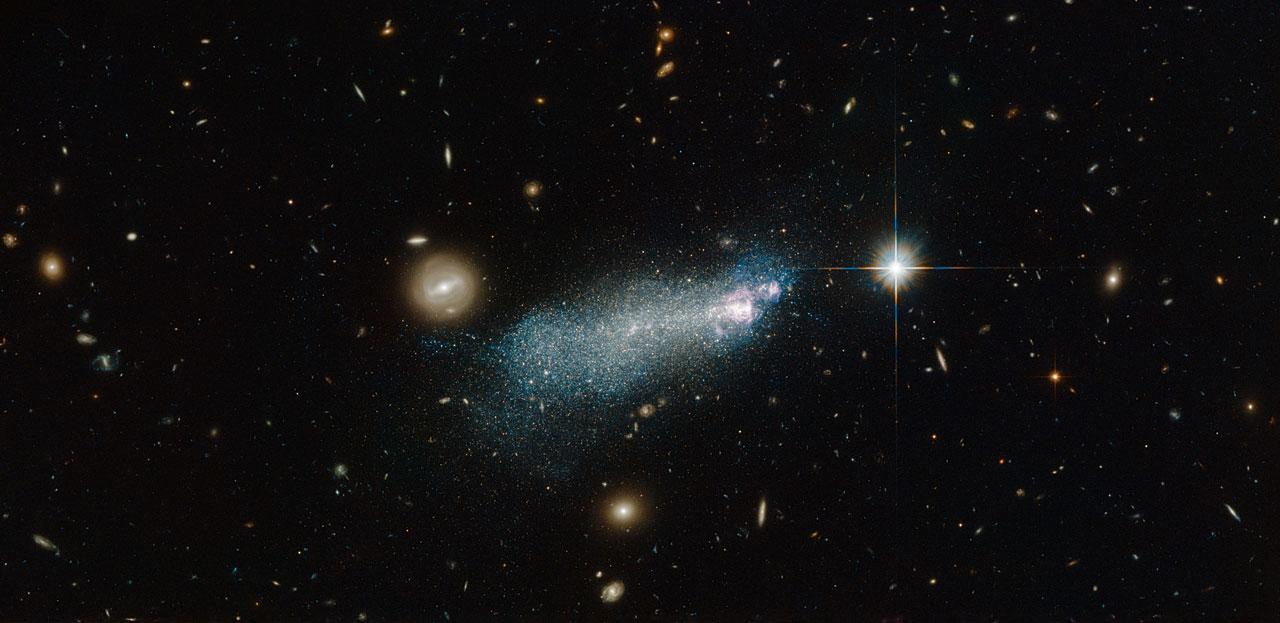
The bright streak of glowing gas and stars in this NASA/ESA Hubble Space Telescope image is known as PGC 51017, or SBSG 1415+437. It is a type of galaxy known as a blue compact dwarf. This particular dwarf is well studied and has an interesting star formation history. Astronomers initially thought that SBS 1415+437 was a very young galaxy currently undergoing its very first burst of star formation, but more recent studies have suggested that the galaxy is in fact a little older, containing stars over 1.3 billion years old. Starbursts are an area of ongoing research for astronomers — short-lived and intense periods of star formation, during which huge amounts of gas within a galaxy are hungrily used up to form newborn stars. Read more: <a href="http://1.usa.gov/1ExsNx0" rel="nofollow">1.usa.gov/1ExsNx0</a> Credit: ESA/Hubble and NASA Acknowledgement: Alessandra Aloisi (STScI) and Nick Rose <b><a href="http://www.nasa.gov/audience/formedia/features/MP_Photo_Guidelines.html" rel="nofollow">NASA image use policy.</a></b> <b><a href="http://www.nasa.gov/centers/goddard/home/index.html" rel="nofollow">NASA Goddard Space Flight Center</a></b> enables NASA’s mission through four scientific endeavors: Earth Science, Heliophysics, Solar System Exploration, and Astrophysics. Goddard plays a leading role in NASA’s accomplishments by contributing compelling scientific knowledge to advance the Agency’s mission. <b>Follow us on <a href="http://twitter.com/NASAGoddardPix" rel="nofollow">Twitter</a></b> <b>Like us on <a href="http://www.facebook.com/pages/Greenbelt-MD/NASA-Goddard/395013845897?ref=tsd" rel="nofollow">Facebook</a></b> <b>Find us on <a href="http://instagrid.me/nasagoddard/?vm=grid" rel="nofollow">Instagram</a></b>
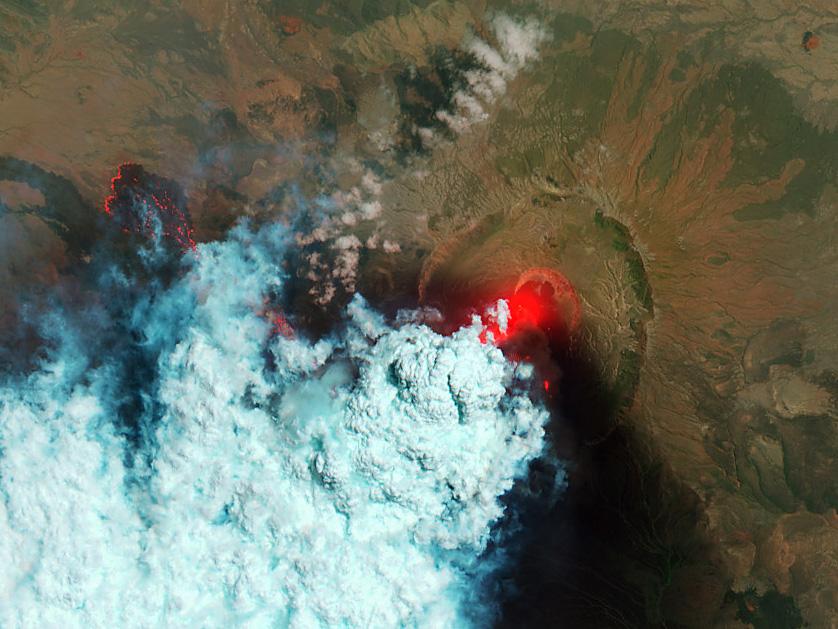
NASA image acquired June 24, 2011 Since it began erupting on June 12, 2011, emissions from Eritrea’s Nabro Volcano have drifted over much of East Africa and the Middle East. Ash has displaced residents living near the volcano and disrupted flights in the region. Despite the volcano’s widespread effects, little is known about the eruption. Nabro is located in an isolated region along the border between Eritrea and Ethiopia, and few English-language reports have been published. Satellite remote sensing is currently the only reliable way to monitor the ongoing eruption. This satellite image is among the first detailed pictures of the erupting vent and lava flows. They were acquired by the Advanced Land Imager (ALI) aboard the Earth Observing-1 (EO-1) satellite on June 24, 2011. The bright red portions of the false-color image (top) indicate hot surfaces. Hot volcanic ash glows above the vent, located in the center of Nabro’s caldera. To the west of the vent, portions of an active lava flow (particularly the front of the flow) are also hot. The speckled pattern on upstream portions of the flow are likely due to the cool, hardened crust splitting and exposing fluid lava as the flow advances. The bulbous blue-white cloud near the vent is likely composed largely of escaping water vapor that condensed as the plume rose and cooled. The whispy, cyan clouds above the lava flow are evidence of degassing from the lava. NASA Earth Observatory image by Robert Simmon, using EO-1 ALI data. Caption by Robert Simmon. Instrument: EO-1 - ALI To download the high res go here: <a href="http://earthobservatory.nasa.gov/IOTD/view.php?id=51216" rel="nofollow">earthobservatory.nasa.gov/IOTD/view.php?id=51216</a> <b><a href="http://www.nasa.gov/centers/goddard/home/index.html" rel="nofollow">NASA Goddard Space Flight Center</a></b> enables NASA’s mission through four scientific endeavors: Earth Science, Heliophysics, Solar System Exploration, and Astrophysics. Goddard plays a leading role in NASA’s accomplishments by contributing compelling scientific knowledge to advance the Agency’s mission. <b>Follow us on <a href="http://twitter.com/NASA_GoddardPix" rel="nofollow">Twitter</a></b> <b>Like us on <a href="http://www.facebook.com/pages/Greenbelt-MD/NASA-Goddard/395013845897?ref=tsd" rel="nofollow">Facebook</a></b> <b>Find us on <a href="http://web.stagram.com/n/nasagoddard/?vm=grid" rel="nofollow">Instagram</a></b>
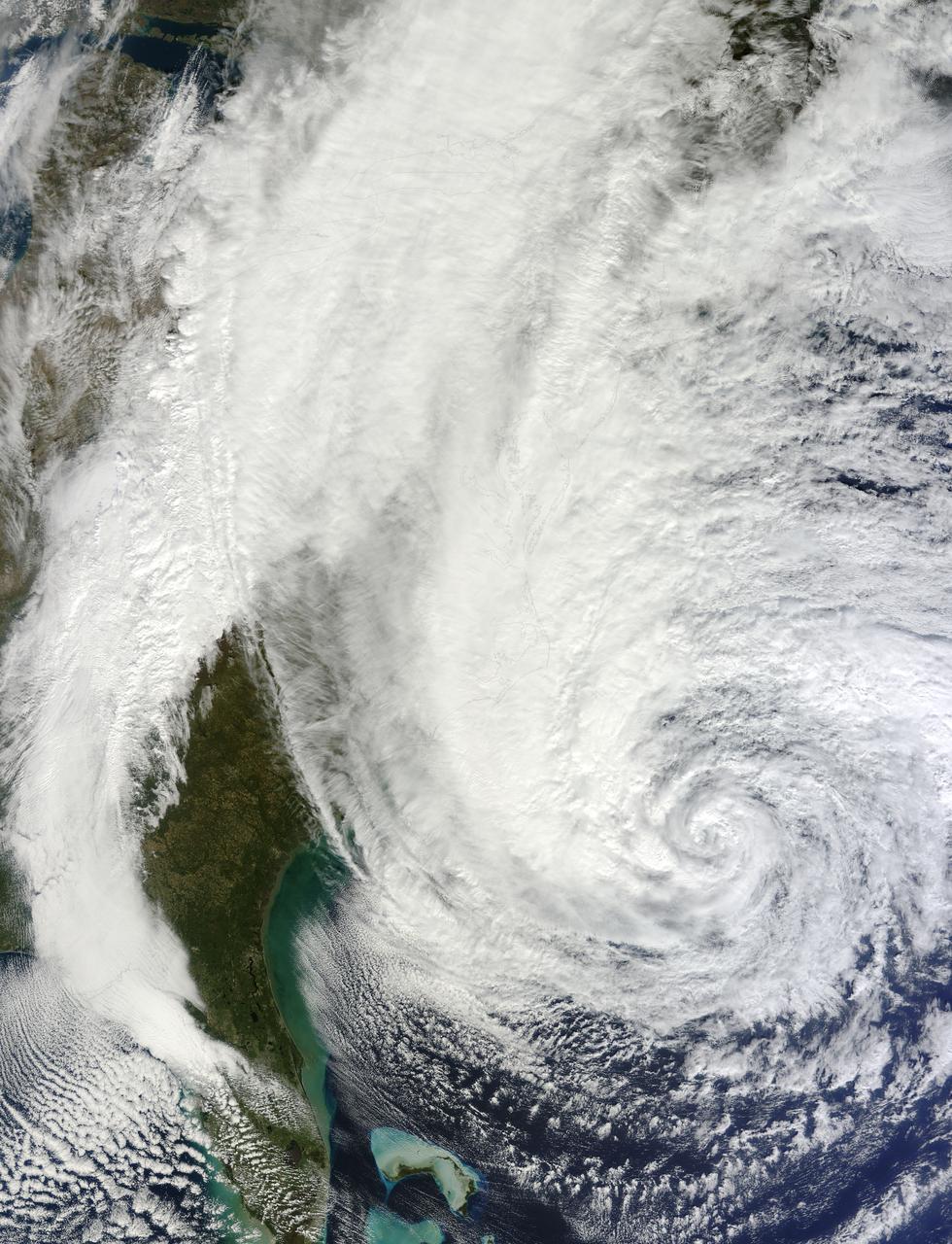
NASA image acquired acquired October 28, 2012 <b>For the latest info from NASA on Hurricane Sandy go to: <a href="http://1.usa.gov/Ti5SgS" rel="nofollow">1.usa.gov/Ti5SgS</a></b> At noon Eastern Daylight Time (16:00 Universal Time) on October 28, 2012, the Moderate Resolution Imaging Spectroradiometer (MODIS) on NASA’s Terra satellite acquired this image of Hurricane Sandy off the southeastern United States. At 11 a.m. local time (one hour before the image was captured), the U.S. National Hurricane Center reported that the storm was located at 32.5° North and 72.6° West, about 250 miles (400 kilometers) southeast of Cape Hatteras, North Carolina, and 575 miles (930 kilometers) south of New York City. Maximum sustained winds were 75 miles (120 kilometers) per hour, and the central pressure was 951 millibars (28.08 inches). Forecasters predicted that the storm would continue heading north-northeast until the morning of October and then take a hard turn to the northwest into the coastaline of Delaware, New Jersey, or New York. The wind field from the storm was said to stretch 500 to 700 miles and was likely to affect an area from South Carolina to Maine, and as far inland as the Great Lakes. The storm has already caused significant damage in the Bahamas, Cuba, Jamaica, Puerto Rico, the Dominican Republic, and Haiti; at least 65 lives have been lost to the storm. NASA image courtesy LANCE MODIS Rapid Response Team at NASA GSFC. Caption by Michael Carlowicz. Instrument: Terra - MODIS Credit: <b><a href="http://www.earthobservatory.nasa.gov/" rel="nofollow"> NASA Earth Observatory</a></b> <b><a href="http://www.nasa.gov/audience/formedia/features/MP_Photo_Guidelines.html" rel="nofollow">NASA image use policy.</a></b> <b><a href="http://www.nasa.gov/centers/goddard/home/index.html" rel="nofollow">NASA Goddard Space Flight Center</a></b> enables NASA’s mission through four scientific endeavors: Earth Science, Heliophysics, Solar System Exploration, and Astrophysics. Goddard plays a leading role in NASA’s accomplishments by contributing compelling scientific knowledge to advance the Agency’s mission. <b>Follow us on <a href="http://twitter.com/NASA_GoddardPix" rel="nofollow">Twitter</a></b> <b>Like us on <a href="http://www.facebook.com/pages/Greenbelt-MD/NASA-Goddard/395013845897?ref=tsd" rel="nofollow">Facebook</a></b> <b>Find us on <a href="http://instagrid.me/nasagoddard/?vm=grid" rel="nofollow">Instagram</a></b>

NASA image acquired January 22, 2011 To see a detail of this image go to: <a href="http://www.flickr.com/photos/gsfc/5398237910">www.flickr.com/photos/gsfc/5398237910</a> Every southern spring and summer, after the Sun has risen into its 24-hour circuit around the skies of Antarctica, the Ross Sea bursts with life. Floating, microscopic plants, known as phytoplankton, soak up the sunlight and the nutrients stirring in the Southern Ocean and grow into prodigious blooms. Those blooms become a great banquet for krill, fish, penguins, whales, and other marine species who carve out a living in the cool waters of the far south. This true-color image captures such a bloom in the Ross Sea on January 22, 2011, as viewed by the Moderate Resolution Imaging Spectroradiometer (MODIS) on NASA’s Aqua satellite. Bright greens of plant-life have replaced the deep blues of open ocean water. The Ross Sea is a relatively shallow bay in the Antarctic coastline and due south from New Zealand. As the spring weather thaws the sea ice around Antarctica, areas of open water surrounded by ice—polynyas—open up on the continental shelf. In this open water, sunlight provides the fuel and various current systems provide nutrients from deeper waters to form blooms that can stretch 100 to 200 kilometers (60 to 120 miles). These blooms are among the largest in extent and abundance in the world. Scientists have hypothesized that the Modified Circumpolar Deep Water is the engine behind the blooms, stirring up just the right mix of trace metals and minerals from the deep to sustain plankton growth. This month, researchers aboard the U.S. icebreaking ship Nathaniel B. Palmer are cruising in the Ross Sea in search of the signatures of this current system. NASA image courtesy Norman Kuring, Ocean Color Team at NASA Goddard Space Flight Center. Caption by Mike Carlowicz, with information from Hugh Powell, COSEE-NOW. Instrument: Aqua - MODIS Credit: <b><a href="http://www.earthobservatory.nasa.gov/" rel="nofollow"> NASA Earth Observatory</a></b> <a href="http://earthobservatory.nasa.gov/IOTD/view.php?id=48949" rel="nofollow">earthobservatory.nasa.gov/IOTD/view.php?id=48949</a> <b><a href="http://www.nasa.gov/centers/goddard/home/index.html" rel="nofollow">NASA Goddard Space Flight Center</a></b> enables NASA’s mission through four scientific endeavors: Earth Science, Heliophysics, Solar System Exploration, and Astrophysics. Goddard plays a leading role in NASA’s accomplishments by contributing compelling scientific knowledge to advance the Agency’s mission. <b>Follow us on <a href="http://twitter.com/NASA_GoddardPix" rel="nofollow">Twitter</a></b> <b>Join us on <a href="http://www.facebook.com/pages/Greenbelt-MD/NASA-Goddard/395013845897?ref=tsd" rel="nofollow">Facebook</a></b>

NASA image acquired January 22, 2011 To view the full image go to: <a href="http://www.flickr.com/photos/gsfc/5397636843">www.flickr.com/photos/gsfc/5397636843</a> Every southern spring and summer, after the Sun has risen into its 24-hour circuit around the skies of Antarctica, the Ross Sea bursts with life. Floating, microscopic plants, known as phytoplankton, soak up the sunlight and the nutrients stirring in the Southern Ocean and grow into prodigious blooms. Those blooms become a great banquet for krill, fish, penguins, whales, and other marine species who carve out a living in the cool waters of the far south. This true-color image captures such a bloom in the Ross Sea on January 22, 2011, as viewed by the Moderate Resolution Imaging Spectroradiometer (MODIS) on NASA’s Aqua satellite. Bright greens of plant-life have replaced the deep blues of open ocean water. The Ross Sea is a relatively shallow bay in the Antarctic coastline and due south from New Zealand. As the spring weather thaws the sea ice around Antarctica, areas of open water surrounded by ice—polynyas—open up on the continental shelf. In this open water, sunlight provides the fuel and various current systems provide nutrients from deeper waters to form blooms that can stretch 100 to 200 kilometers (60 to 120 miles). These blooms are among the largest in extent and abundance in the world. Scientists have hypothesized that the Modified Circumpolar Deep Water is the engine behind the blooms, stirring up just the right mix of trace metals and minerals from the deep to sustain plankton growth. This month, researchers aboard the U.S. icebreaking ship Nathaniel B. Palmer are cruising in the Ross Sea in search of the signatures of this current system. NASA image courtesy Norman Kuring, Ocean Color Team at NASA Goddard Space Flight Center. Caption by Mike Carlowicz, with information from Hugh Powell, COSEE-NOW. Instrument: Aqua - MODIS For more info go to: <a href="http://earthobservatory.nasa.gov/IOTD/view.php?id=48949" rel="nofollow">earthobservatory.nasa.gov/IOTD/view.php?id=48949</a> Credit: <b><a href="http://www.earthobservatory.nasa.gov/" rel="nofollow"> NASA Earth Observatory</a></b> <b><a href="http://www.nasa.gov/centers/goddard/home/index.html" rel="nofollow">NASA Goddard Space Flight Center</a></b> enables NASA’s mission through four scientific endeavors: Earth Science, Heliophysics, Solar System Exploration, and Astrophysics. Goddard plays a leading role in NASA’s accomplishments by contributing compelling scientific knowledge to advance the Agency’s mission. <b>Follow us on <a href="http://twitter.com/NASA_GoddardPix" rel="nofollow">Twitter</a></b> <b>Join us on <a href="http://www.facebook.com/pages/Greenbelt-MD/NASA-Goddard/395013845897?ref=tsd" rel="nofollow">Facebook</a></b>

NASA image acquired December 14, 2004 In the southernmost reaches of Burma (Myanmar), along the border with Thailand, lies the Mergui Archipelago. The archipelago in the Andaman Sea is made up of more than 800 islands surrounded by extensive coral reefs. This natural color image acquired by Landsat 5 on Dec. 14, 2004, shows the middle portion of the archipelago, including Auckland and Whale Bays. Swirling patterns are visible in the near-shore waters as sediments carried by rivers slowly settle out and are deposited on the seafloor. The heavy sediment loads make the river appear nearly white. As those sediments settle out, the seawater appears deeper shades of blue. The tropical rainforests of the region appear deep green. Captain Thomas Forrest of the East India Company first described the region to Europeans after a 1782 expedition in search of potential sugar-growing lands. At that time, the islands were mainly inhabited by a nomadic fishing culture. These people, known as the Moken, still call the archipelago home and mostly live a hunter-gatherer lifestyle. As of 2006, 2,000 Moken were known to inhabit the Burmese portion of Mergui. The small population of the archipelago has helped preserve its high diversity of plants and animals. In 1997, Burma opened the region to foreign tourism and in the years since it has become a major diving destination. A valued species of pearl oyster (Pinctada maxima) are found in nearby waters. Today, overfishing is emerging as a regional problem. Landsat image created by Michael Taylor, Landsat Project Science Office. Caption by Laura Rocchio. Instrument: Landsat 5 - TM To read more go to: <a href="http://1.usa.gov/TDmjsk" rel="nofollow">1.usa.gov/TDmjsk</a> Credit: <b><a href="http://www.earthobservatory.nasa.gov/" rel="nofollow"> NASA Earth Observatory</a></b> <b><a href="http://www.nasa.gov/audience/formedia/features/MP_Photo_Guidelines.html" rel="nofollow">NASA image use policy.</a></b> <b><a href="http://www.nasa.gov/centers/goddard/home/index.html" rel="nofollow">NASA Goddard Space Flight Center</a></b> enables NASA’s mission through four scientific endeavors: Earth Science, Heliophysics, Solar System Exploration, and Astrophysics. Goddard plays a leading role in NASA’s accomplishments by contributing compelling scientific knowledge to advance the Agency’s mission. <b>Follow us on <a href="http://twitter.com/NASA_GoddardPix" rel="nofollow">Twitter</a></b> <b>Like us on <a href="http://www.facebook.com/pages/Greenbelt-MD/NASA-Goddard/395013845897?ref=tsd" rel="nofollow">Facebook</a></b> <b>Find us on <a href="http://instagram.com/nasagoddard?vm=grid" rel="nofollow">Instagram</a></b>
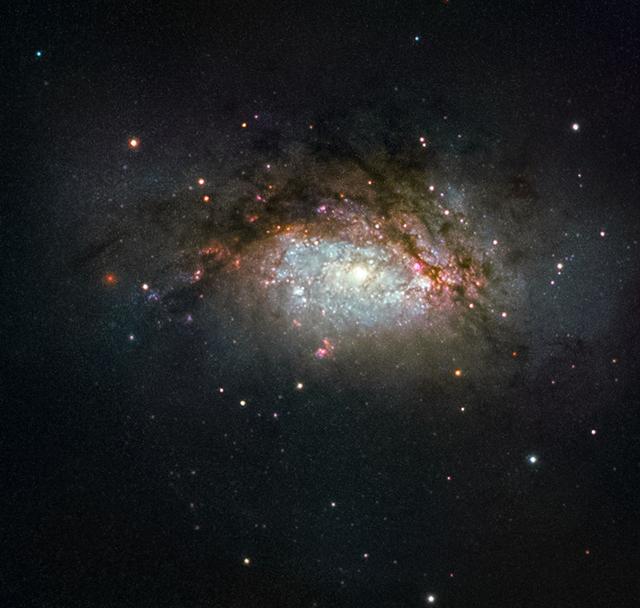
The subject of this NASA/ESA Hubble Space Telescope image is known as NGC 3597. It is the product of a collision between two good-sized galaxies, and is slowly evolving to become a giant elliptical galaxy. This type of galaxy has grown more and more common as the universe has evolved, with initially small galaxies merging and progressively building up into larger galactic structures over time. NGC 3597 is located approximately 150 million light-years away in the constellation of Crater (The Cup). Astronomers study NGC 3597 to learn more about how elliptical galaxies form — many ellipticals began their lives far earlier in the history of the universe. Older ellipticals are nicknamed “red and dead” by astronomers because these bloated galaxies are not anymore producing new, bluer stars, and are thus packed full of old and redder stellar populations. Before infirmity sets in, some freshly formed elliptical galaxies experience a final flush of youth, as is the case with NGC 3597. Galaxies smashing together pool their available gas and dust, triggering new rounds of star birth. Some of this material ends up in dense pockets initially called proto-globular clusters, dozens of which festoon NGC 3597. These pockets will go on to collapse and form fully-fledged globular clusters, large spheres that orbit the centers of galaxies like satellites, packed tightly full of millions of stars. Image credit: ESA/Hubble & NASA, Acknowledgement: Judy Schmidt <b><a href="http://www.nasa.gov/audience/formedia/features/MP_Photo_Guidelines.html" rel="nofollow">NASA image use policy.</a></b> <b><a href="http://www.nasa.gov/centers/goddard/home/index.html" rel="nofollow">NASA Goddard Space Flight Center</a></b> enables NASA’s mission through four scientific endeavors: Earth Science, Heliophysics, Solar System Exploration, and Astrophysics. Goddard plays a leading role in NASA’s accomplishments by contributing compelling scientific knowledge to advance the Agency’s mission. <b>Follow us on <a href="http://twitter.com/NASAGoddardPix" rel="nofollow">Twitter</a></b> <b>Like us on <a href="http://www.facebook.com/pages/Greenbelt-MD/NASA-Goddard/395013845897?ref=tsd" rel="nofollow">Facebook</a></b> <b>Find us on <a href="http://instagrid.me/nasagoddard/?vm=grid" rel="nofollow">Instagram</a></b>