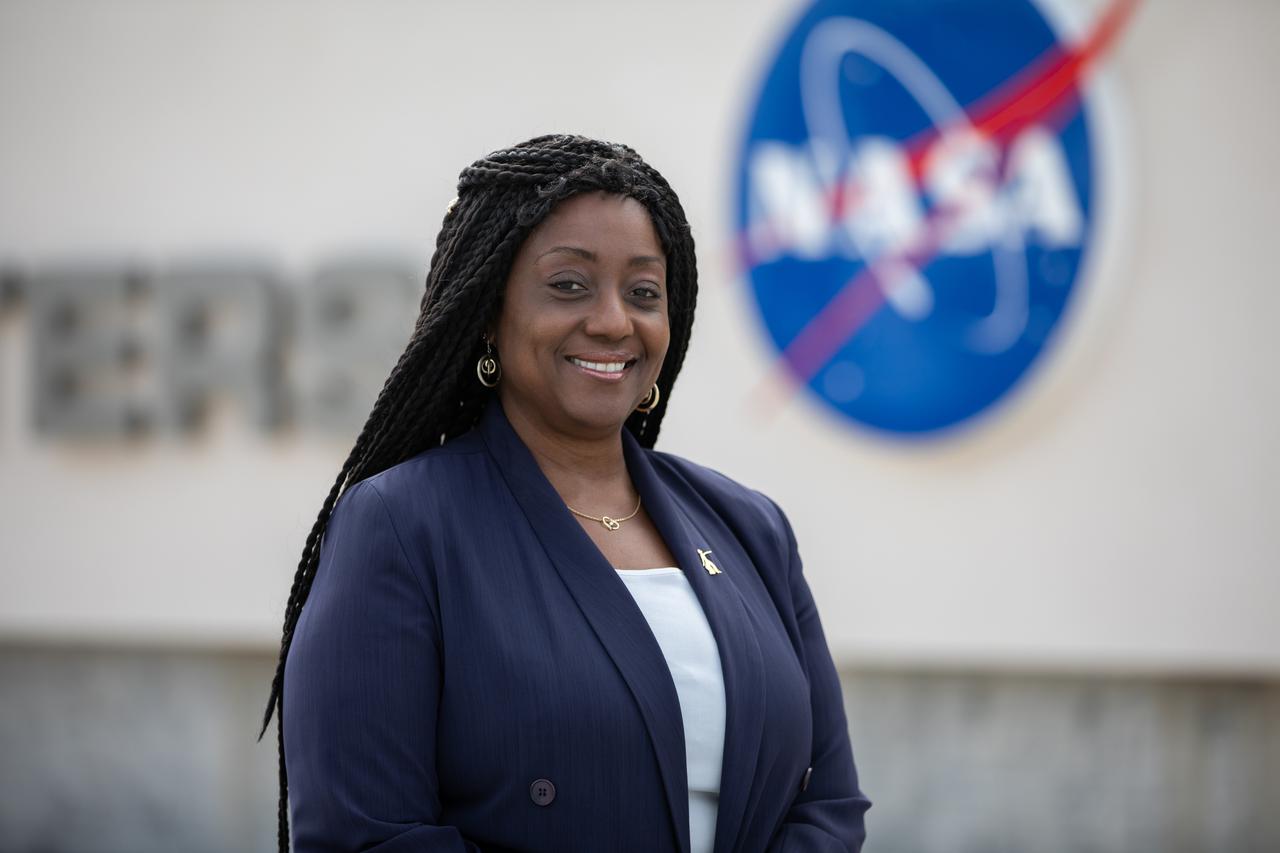
"I’ve worked in many different roles and what drives my passion is learning things that I don’t know. It is a part of my thirst for knowledge and knowing how things work. The harder the problem for me the better. When I first joined NASA as a full time employee, my supervisor would give me an assignment, and I would get it done quickly and come back to his desk and ask, ‘What do you have for me now?’ At one point, after about two months of working for him, he looked at me and kind of sighed. I said, ‘Okay, okay. If you don’t have anything for me right now, is it okay if I see if any of the other supervisors in the building need any help with anything?’ He agreed, and so I approached the other supervisors. "Now, here’s the interesting thing. I was a young Black female in an engineering role that was pretty much dominated by white males at the time, so it was not a norm for there to be females in the building – much less black females. I came to understand later that there was some skepticism on their part that I could do design engineering. I didn’t know that some of them, not all of them, were throwing things at me to show me I wasn’t qualified. But I would tackle their problems the same way I do anything else: if I don’t know it, I’ll go find it. I’ll research. I’ll dig. I’ll look for people that might have some experience that I don’t have and ask them. So, every hard problem that they threw at me, I solved. Eventually, my supervisor told me he didn't know what he was getting into when he agreed to let me go to the other supervisors because now, they were coming to him with their hardest problems, asking, 'Hey, can Barbara help with this?' So, I started to broaden my experience base right away." — Barbara Brown, Director of Exploration Research and Technology Programs, Kennedy Space Center Interviewer: NASA / Tahira Allen
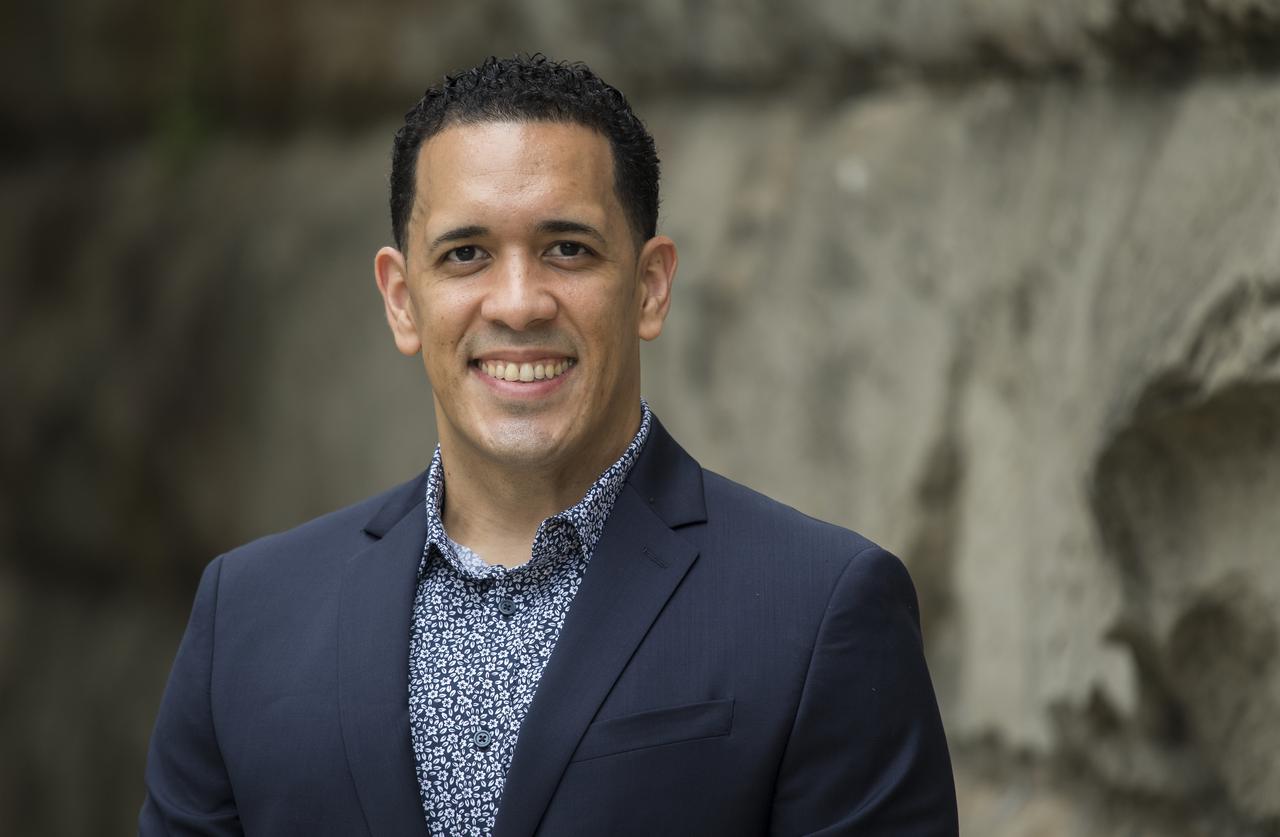
![“When I was a kid, I had a Lego set of one of the twin rovers, Spirit and Opportunity. It was like a Lego rover that could fold up the same way that the actual rover did. It’s crazy because I had that when I was like ten — and now, some of my current coworkers actually worked on that launch. So when I walked into my launch director’s office a couple of years ago, I saw that same Lego set sitting next to the people at Jet Propulsion Laboratory who actually built the rover. “Just being able to see it and touch it [as a kid] helps you impart your own imagination onto it. It’s really exciting. I wasn’t an action figure type of kid — but when I had stuff that seemed real, I really enjoyed putting it together. The project of putting it together was the thing that made my parents think that I was going to be a good engineer. Having it in front of you makes it real. So when you see it on TV, it’s like: ‘I know what that is. I know how that instrument works.’ There’s a connection there.” — Phillip Hargrove, Aerospace Engineer, Kennedy Space Center Interviewer: NASA / Thalia Patrinos](https://images-assets.nasa.gov/image/KSC-20210209-PH-KLS02_0030/KSC-20210209-PH-KLS02_0030~medium.jpg)
“When I was a kid, I had a Lego set of one of the twin rovers, Spirit and Opportunity. It was like a Lego rover that could fold up the same way that the actual rover did. It’s crazy because I had that when I was like ten — and now, some of my current coworkers actually worked on that launch. So when I walked into my launch director’s office a couple of years ago, I saw that same Lego set sitting next to the people at Jet Propulsion Laboratory who actually built the rover. “Just being able to see it and touch it [as a kid] helps you impart your own imagination onto it. It’s really exciting. I wasn’t an action figure type of kid — but when I had stuff that seemed real, I really enjoyed putting it together. The project of putting it together was the thing that made my parents think that I was going to be a good engineer. Having it in front of you makes it real. So when you see it on TV, it’s like: ‘I know what that is. I know how that instrument works.’ There’s a connection there.” — Phillip Hargrove, Aerospace Engineer, Kennedy Space Center Interviewer: NASA / Thalia Patrinos
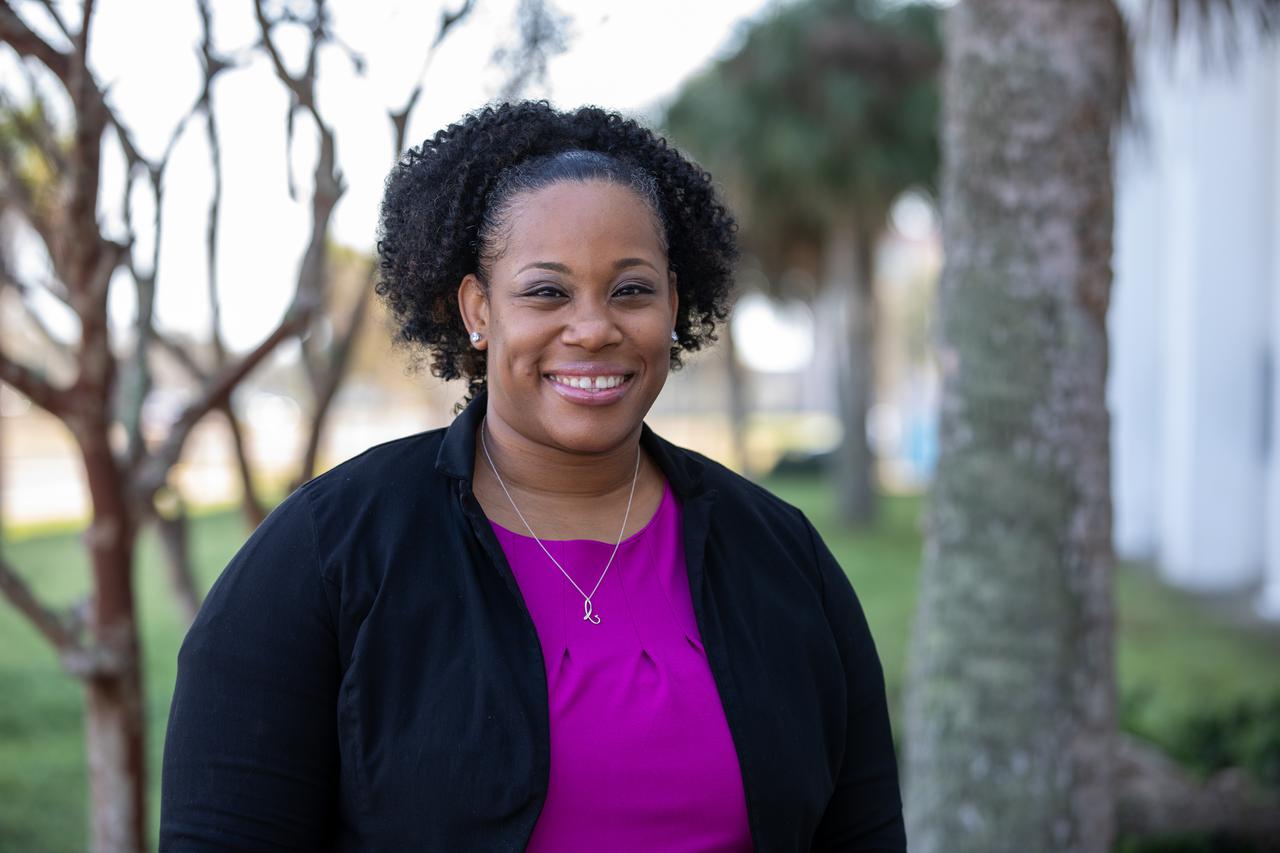
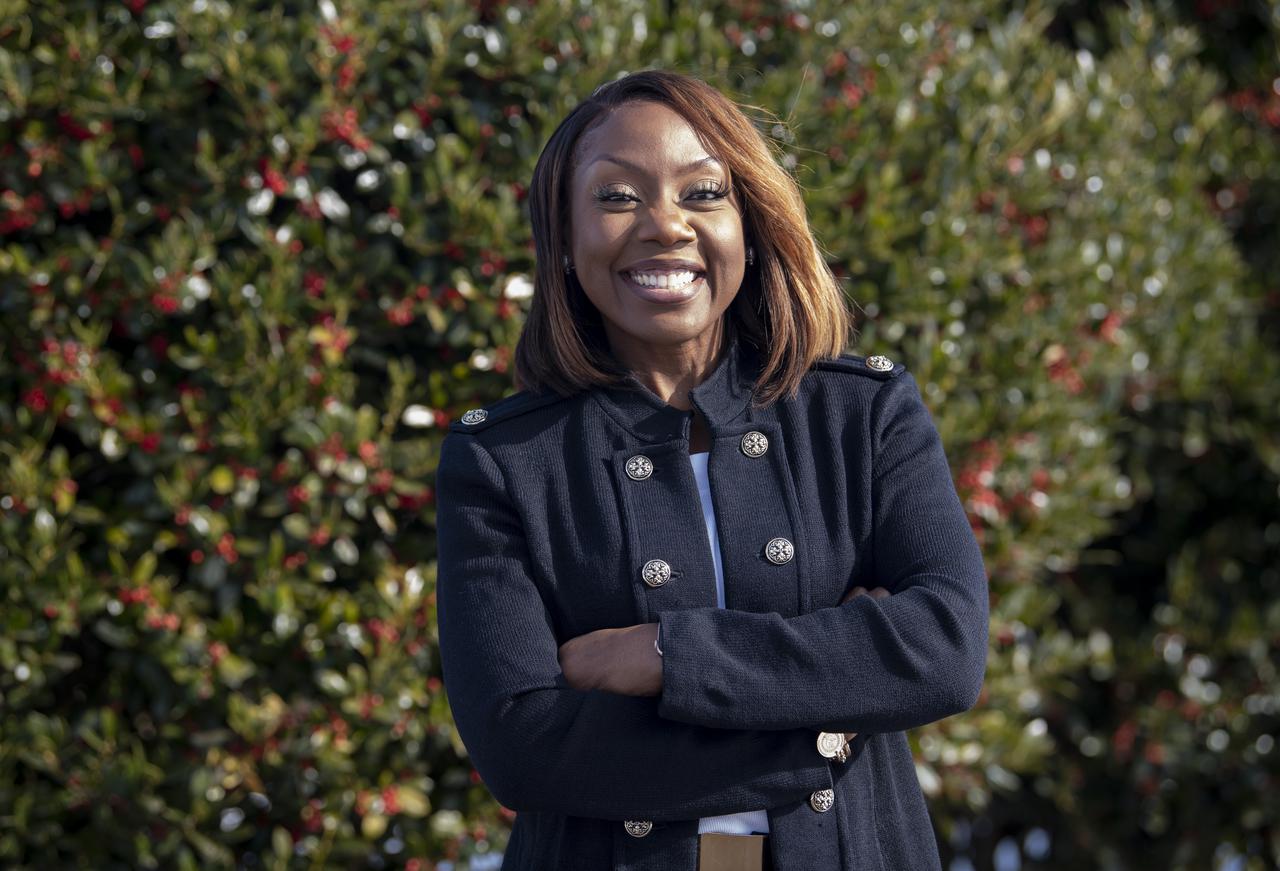
“The day after the Columbia tragedy I knew exactly what I wanted to do with my life. I go to my physics class and tell a friend, ‘I want to go work for NASA.’ My physics teacher walks by and overhears the conversation. She starts the class and says ‘I want to go around the classroom and hear about what everybody wants to do with their life.’ She gets to me. I was super excited. ‘I’m going to work for NASA, I’m going to be an engineer, I’m going to make sure everybody flies safe.’ And she bursts out laughing. And everyone else starts laughing. I’m like, ‘what is the joke?’ And she says to me, ‘If you ever get the opportunity to work for NASA, you make sure you come take me out to lunch.’ And that ended up being the joke of the day at my entire high school. “I think we have a very long way to go. I think that there are not enough educational resources. There are not enough pipeline opportunities. I come from a single-parent family. We weren’t rich. We lived in a New Jersey suburb in a very small town where the idea of a girl going to NASA — it just seemed impossible. I think that we have long way to go to reach out to some of those smaller, under-serving communities where individuals may not have the resources. Where teachers can’t even motivate kids to do something big because they don’t even believe it themselves. I do believe there are strides happening — but I don’t think we’re there yet.” — Brittani Sims, Flight Systems Engineer, Kennedy Space Center Interviewer: NASA / Thalia Patrinos
![“On my Twitter page it says: rocket scientist, football coach. “There have been schools where I have coached and kids would ask, ‘you’re an engineer, coach?’ and they seemed so shocked that I'm an engineer. It’s funny! I have two kids on my team this year who are seniors, and they’re going to major in engineering in college. I'm sure there are others that would say, ‘Wow, if Coach Johnson can do it, so can I.’ I’ve brought guys out [to Kennedy Space Center] during Bring Your Child to Work Day. The kids are always wondering, when is a launch? I'm sure they’re all paying more attention to it because I'm around. “[My job also] sparked a conversation with fellow coaches. The American Football Coaches Association did a profile on me last year about how NASA has helped me become a better football coach. For one, the foundations of flight control — those values of being competent at your job, having confidence, being vigilant — translate directly to the football field and then vice versa [when] dealing with adversity. In football, you can be down, you can play hurt, and you learn to fight through adversity. Sometimes, fighting through engineering problems can be tough to solve, but you learn how to persevere, and you find a solution to the problem you’re working on. “As far as similarities, in football, you have a lot of people from different backgrounds and different abilities, and you have to get together to achieve a goal. That’s no different from what we do around here.” — Yusef Johnson, Flight Design Engineer, Kennedy Space Center](https://images-assets.nasa.gov/image/KSC-20210209-PH-KLS01_0045/KSC-20210209-PH-KLS01_0045~medium.jpg)
“On my Twitter page it says: rocket scientist, football coach. “There have been schools where I have coached and kids would ask, ‘you’re an engineer, coach?’ and they seemed so shocked that I'm an engineer. It’s funny! I have two kids on my team this year who are seniors, and they’re going to major in engineering in college. I'm sure there are others that would say, ‘Wow, if Coach Johnson can do it, so can I.’ I’ve brought guys out [to Kennedy Space Center] during Bring Your Child to Work Day. The kids are always wondering, when is a launch? I'm sure they’re all paying more attention to it because I'm around. “[My job also] sparked a conversation with fellow coaches. The American Football Coaches Association did a profile on me last year about how NASA has helped me become a better football coach. For one, the foundations of flight control — those values of being competent at your job, having confidence, being vigilant — translate directly to the football field and then vice versa [when] dealing with adversity. In football, you can be down, you can play hurt, and you learn to fight through adversity. Sometimes, fighting through engineering problems can be tough to solve, but you learn how to persevere, and you find a solution to the problem you’re working on. “As far as similarities, in football, you have a lot of people from different backgrounds and different abilities, and you have to get together to achieve a goal. That’s no different from what we do around here.” — Yusef Johnson, Flight Design Engineer, Kennedy Space Center
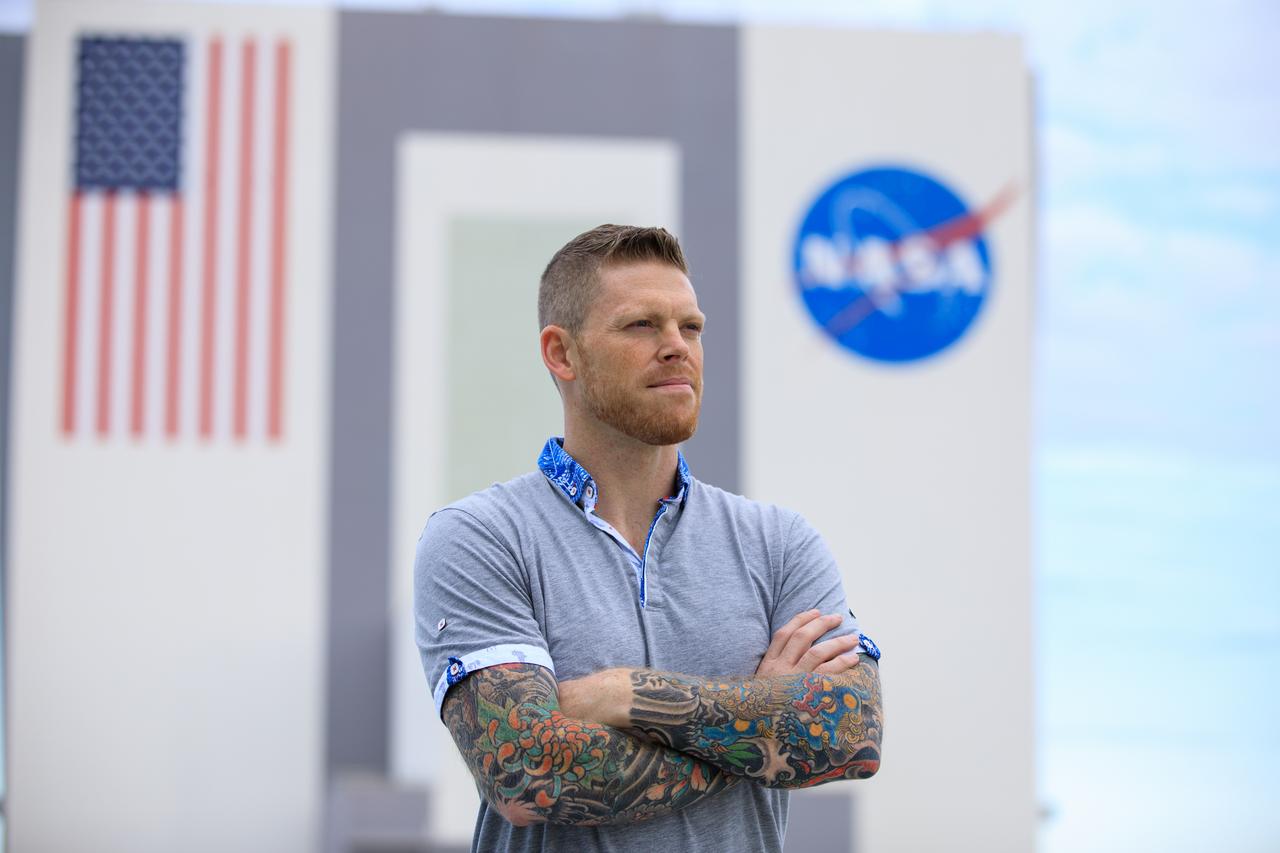
Portrait of Ronnie Adams in front of Kennedy’s Vehicle Assembly Building for Native American History month.
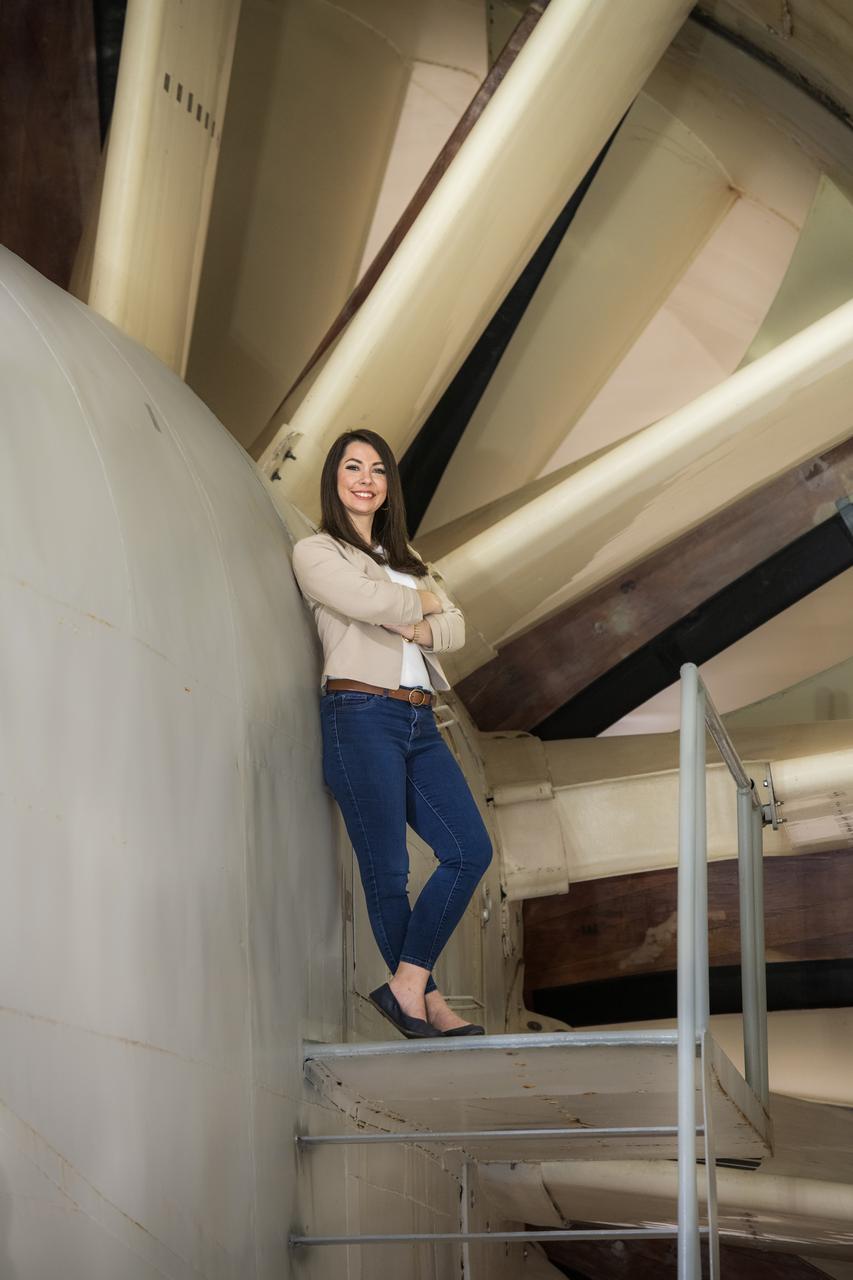
Emily Timko, featured in a Faces of NASA article, poses in the IRT (Icing Research Tunnel) where she works as a “cloud engineer”. She is a Mechanical Test Engineer and works to create unique water spray conditions that simulate icing clouds in the natural aircraft flight environment. Shown in the photo is a portion of the fan drive motor and fan blades that together drive the air through the wind tunnel.
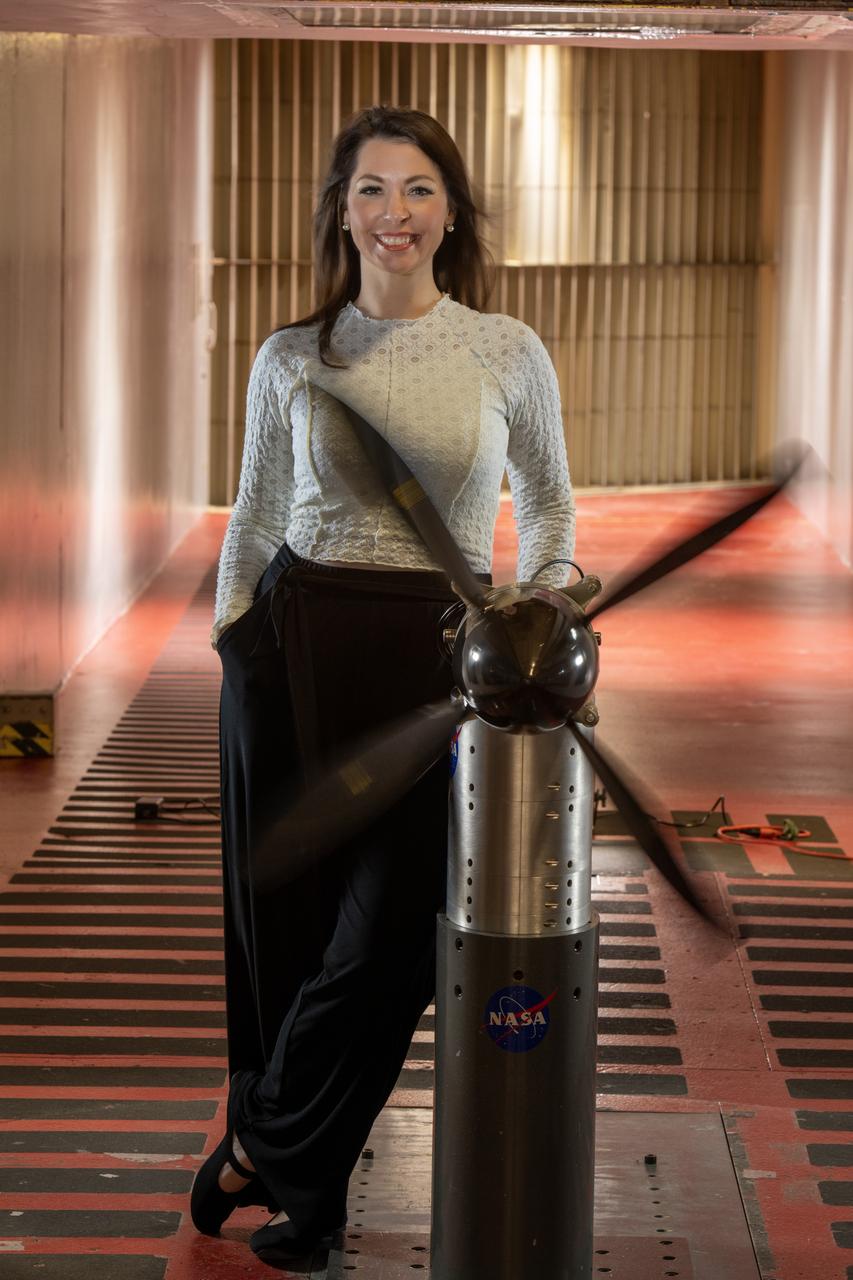
Emily Timko, featured in a Faces of NASA article, poses in the IRT (Icing Research Tunnel) where she works as a “cloud engineer”. She is a Mechanical Test Engineer and works to create unique water spray conditions that simulate icing clouds in the natural aircraft flight environment. Shown in the photo is a test article of a rotating propeller configuration that the IRT researchers are investigating ice accretion with.

Emily Timko, featured in a Faces of NASA article, poses in the IRT (Icing Research Tunnel) where she works as a “cloud engineer”. She is a Mechanical Test Engineer and works to create unique water spray conditions that simulate icing clouds in the natural aircraft flight environment. Shown in the photo is a portion of the fan drive motor and fan blades that together drive the air through the wind tunnel.
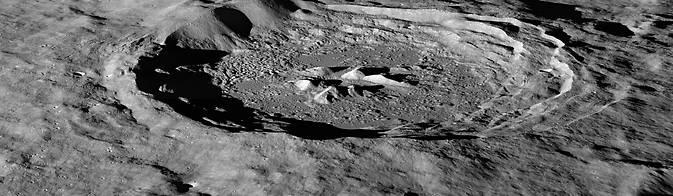
Space travel is difficult and expensive – it would cost thousands of dollars to launch a bottle of water to the moon. The recent discovery of hydrogen-bearing molecules, possibly including water, on the moon has explorers excited because these deposits could be mined if they are sufficiently abundant, sparing the considerable expense of bringing water from Earth. Lunar water could be used for drinking or its components – hydrogen and oxygen – could be used to manufacture important products on the surface that future visitors to the moon will need, like rocket fuel and breathable air. Recent observations by NASA's Lunar Reconnaissance Orbiter (LRO) spacecraft indicate these deposits may be slightly more abundant on crater slopes in the southern hemisphere that face the lunar South Pole. "There’s an average of about 23 parts-per-million-by-weight (ppmw) more hydrogen on Pole-Facing Slopes (PFS) than on Equator-Facing Slopes (EFS)," said Timothy McClanahan of NASA's Goddard Space Flight Center in Greenbelt, Maryland. This is the first time a widespread geochemical difference in hydrogen abundance between PFS and EFS on the moon has been detected. It is equal to a one-percent difference in the neutron signal detected by LRO's Lunar Exploration Neutron Detector (LEND) instrument. McClanahan is lead author of a paper about this research published online October 19 in the journal Icarus. Read more: <a href="http://1.usa.gov/1uaa8s2" rel="nofollow">1.usa.gov/1uaa8s2</a> Photo caption: LRO image of the moon's Hayn Crater, located just northeast of Mare Humboldtianum, dramatically illuminated by the low Sun casting long shadows across the crater floor. Image Credit: NASA/GSFC/Arizona State University <b><a href="http://www.nasa.gov/audience/formedia/features/MP_Photo_Guidelines.html" rel="nofollow">NASA image use policy.</a></b> <b><a href="http://www.nasa.gov/centers/goddard/home/index.html" rel="nofollow">NASA Goddard Space Flight Center</a></b> enables NASA’s mission through four scientific endeavors: Earth Science, Heliophysics, Solar System Exploration, and Astrophysics. Goddard plays a leading role in NASA’s accomplishments by contributing compelling scientific knowledge to advance the Agency’s mission. <b>Follow us on <a href="http://twitter.com/NASAGoddardPix" rel="nofollow">Twitter</a></b> <b>Like us on <a href="http://www.facebook.com/pages/Greenbelt-MD/NASA-Goddard/395013845897?ref=tsd" rel="nofollow">Facebook</a></b> <b>Find us on <a href="http://instagram.com/nasagoddard?vm=grid" rel="nofollow">Instagram</a></b>
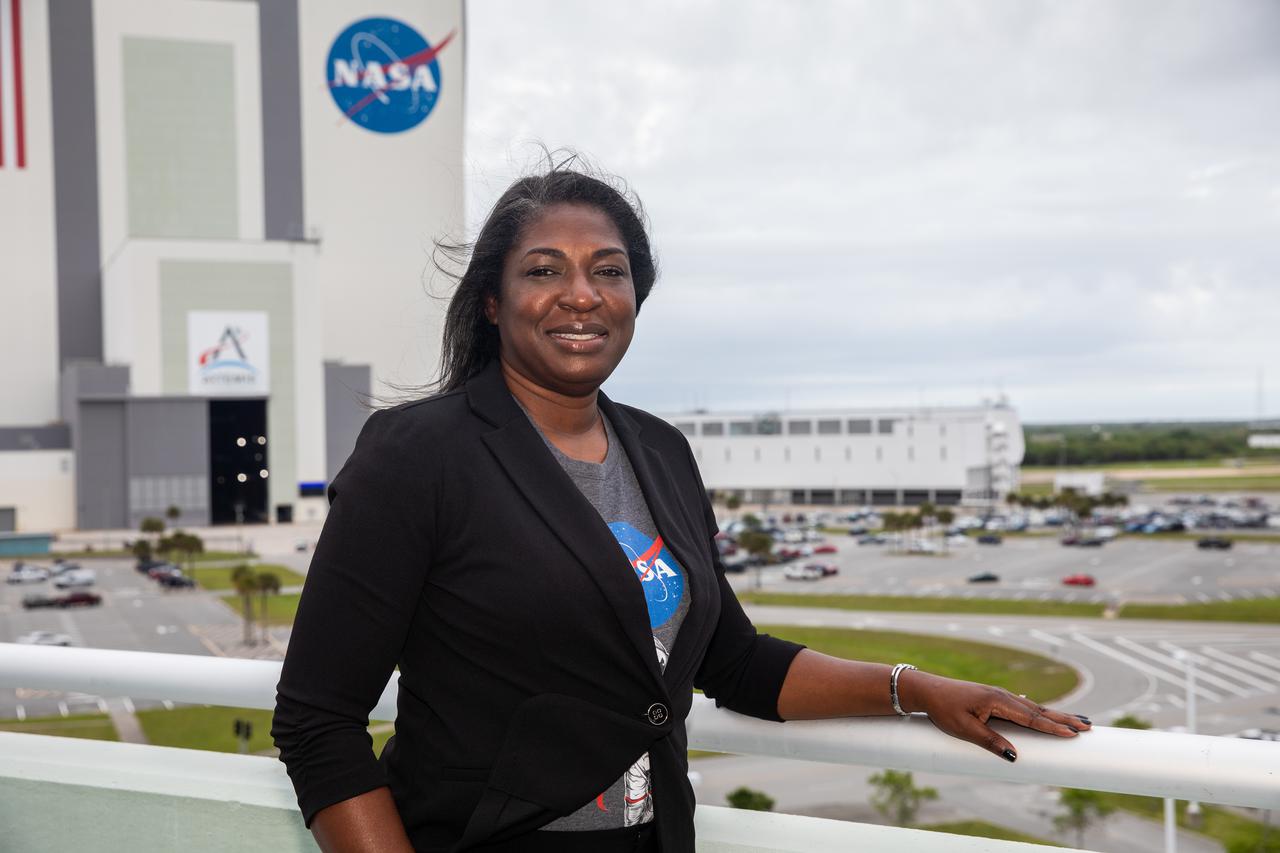
Lashanda Battle is a sustainability lead at NASA’s Kennedy Space Center. In this role, she supports NASA’s and Kennedy’s mission by promoting a better way of living at the Florida spaceport, as well as in the surrounding communities. Through different outreach opportunities, she raises awareness about sustainability initiatives and environmental stewardship.
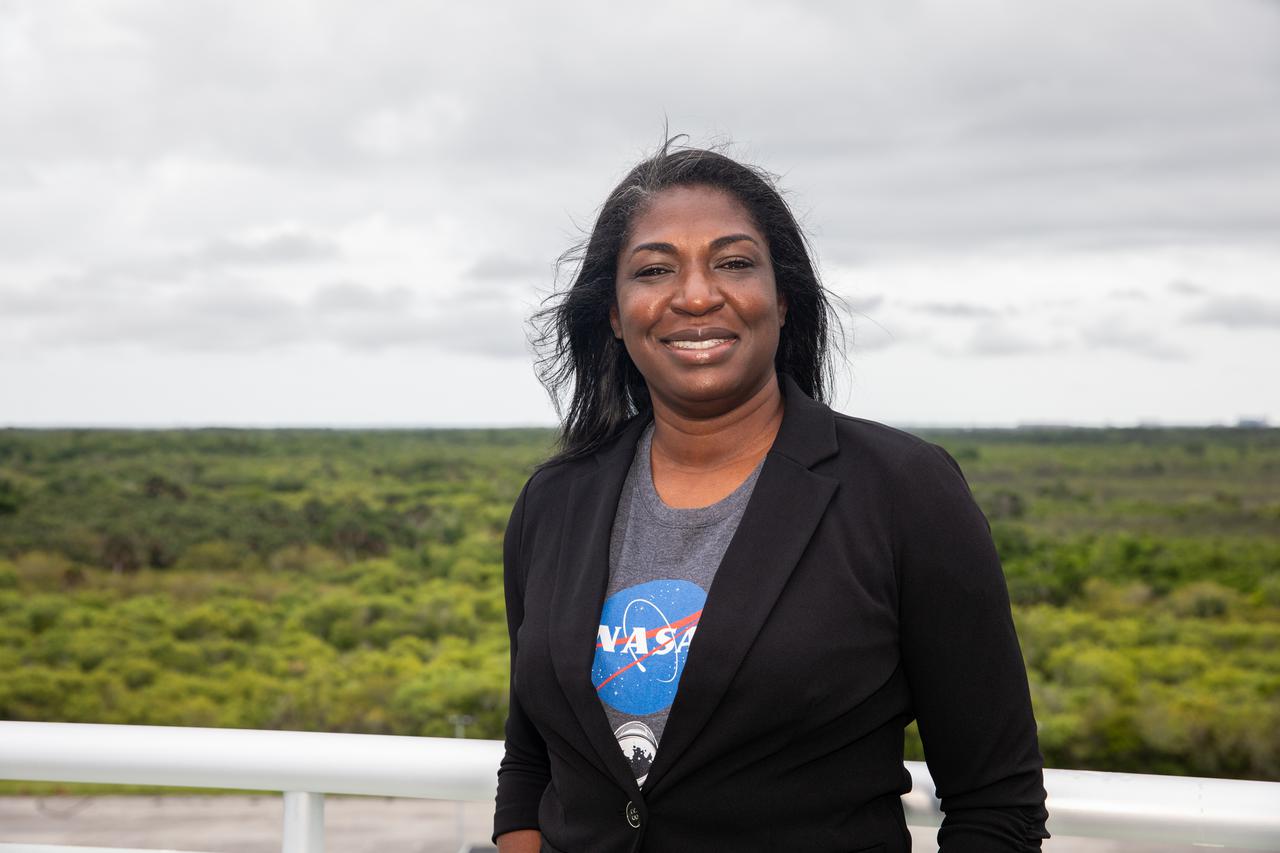
Lashanda Battle is a sustainability lead at NASA’s Kennedy Space Center. In this role, she supports NASA’s and Kennedy’s mission by promoting a better way of living at the Florida spaceport, as well as in the surrounding communities. Through different outreach opportunities, she raises awareness about sustainability initiatives and environmental stewardship.
!["The public perception of NASA has a lot to do with our technological successes and the discoveries that we've made, but none of that is possible without the people. "In the six or so years that I've worked at NASA, I've learned a lot of incredible stories — not just of the struggles that different spacecraft encounter on their journeys throughout the universe. There are so many problems that need to be solved and fixes that need to be made, but there are also so many stories of teams that had to work together to accomplish their goals. And a lot of times, these teams are working after hours, on weekends, working late nights and early mornings. These are people who have other problems in their lives that they have to solve, and they're still showing up and making magic happen. "This is why [Aubrey Gemignani] and I started Faces of NASA: We wanted to make that connection. It's not just rockets, astronauts, and telescopes. Hundreds of thousands of people come together to make these missions possible, and that's the part that's really interesting for me. "I like to hold a mirror to other people, and in every Faces of NASA interview, I try to hold a mirror up to what the person has accomplished to get them to be proud of it. For many of those people, it's the first time they have to self-reflect. "That's what's really nice about [the Faces of NASA project]. Everyone who works here is just living day-to-day, so when they have an opportunity to stop for a moment and look back on how far they've come... it's the best feeling for both of us. They're like, 'Wow, I've never really stopped to think about how much I've accomplished or how far I've come.' And I get to share that moment with them. That's my favorite part of Faces of NASA." NASA Communications Strategist, Thalia Patrinos, poses for a portrait, Thursday, July 11, 2024, in Washington. Photo Credit: (NASA/Aubrey Gemignani)](https://images-assets.nasa.gov/image/NHQ202407110011/NHQ202407110011~medium.jpg)
"The public perception of NASA has a lot to do with our technological successes and the discoveries that we've made, but none of that is possible without the people. "In the six or so years that I've worked at NASA, I've learned a lot of incredible stories — not just of the struggles that different spacecraft encounter on their journeys throughout the universe. There are so many problems that need to be solved and fixes that need to be made, but there are also so many stories of teams that had to work together to accomplish their goals. And a lot of times, these teams are working after hours, on weekends, working late nights and early mornings. These are people who have other problems in their lives that they have to solve, and they're still showing up and making magic happen. "This is why [Aubrey Gemignani] and I started Faces of NASA: We wanted to make that connection. It's not just rockets, astronauts, and telescopes. Hundreds of thousands of people come together to make these missions possible, and that's the part that's really interesting for me. "I like to hold a mirror to other people, and in every Faces of NASA interview, I try to hold a mirror up to what the person has accomplished to get them to be proud of it. For many of those people, it's the first time they have to self-reflect. "That's what's really nice about [the Faces of NASA project]. Everyone who works here is just living day-to-day, so when they have an opportunity to stop for a moment and look back on how far they've come... it's the best feeling for both of us. They're like, 'Wow, I've never really stopped to think about how much I've accomplished or how far I've come.' And I get to share that moment with them. That's my favorite part of Faces of NASA." NASA Communications Strategist, Thalia Patrinos, poses for a portrait, Thursday, July 11, 2024, in Washington. Photo Credit: (NASA/Aubrey Gemignani)
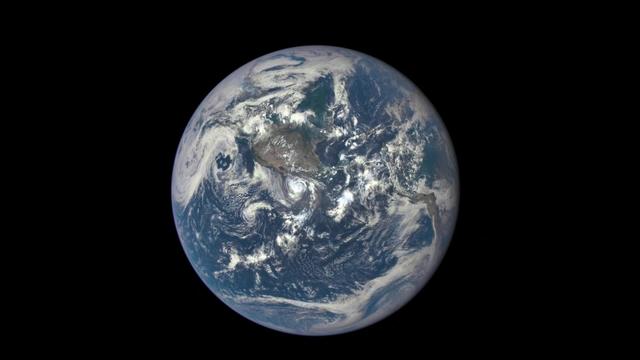
This animation shows images of the far side of the moon, illuminated by the sun, as it crosses between the DISCOVR spacecraft's Earth Polychromatic Imaging Camera (EPIC) camera and telescope, and the Earth - one million miles away. Credits: NASA/NOAA A NASA camera aboard the Deep Space Climate Observatory (DSCOVR) satellite captured a unique view of the moon as it moved in front of the sunlit side of Earth last month. The series of test images shows the fully illuminated “dark side” of the moon that is never visible from Earth. The images were captured by NASA’s Earth Polychromatic Imaging Camera (EPIC), a four megapixel CCD camera and telescope on the DSCOVR satellite orbiting 1 million miles from Earth. From its position between the sun and Earth, DSCOVR conducts its primary mission of real-time solar wind monitoring for the National Oceanic and Atmospheric Administration (NOAA). Read more: <a href="http://www.nasa.gov/feature/goddard/from-a-million-miles-away-nasa-camera-shows-moon-crossing-face-of-earth" rel="nofollow">www.nasa.gov/feature/goddard/from-a-million-miles-away-na...</a> <b><a href="http://www.nasa.gov/audience/formedia/features/MP_Photo_Guidelines.html" rel="nofollow">NASA image use policy.</a></b> <b><a href="http://www.nasa.gov/centers/goddard/home/index.html" rel="nofollow">NASA Goddard Space Flight Center</a></b> enables NASA’s mission through four scientific endeavors: Earth Science, Heliophysics, Solar System Exploration, and Astrophysics. Goddard plays a leading role in NASA’s accomplishments by contributing compelling scientific knowledge to advance the Agency’s mission. <b>Follow us on <a href="http://twitter.com/NASAGoddardPix" rel="nofollow">Twitter</a></b> <b>Like us on <a href="http://www.facebook.com/pages/Greenbelt-MD/NASA-Goddard/395013845897?ref=tsd" rel="nofollow">Facebook</a></b> <b>Find us on <a href="http://instagrid.me/nasagoddard/?vm=grid" rel="nofollow">Instagram</a></b>
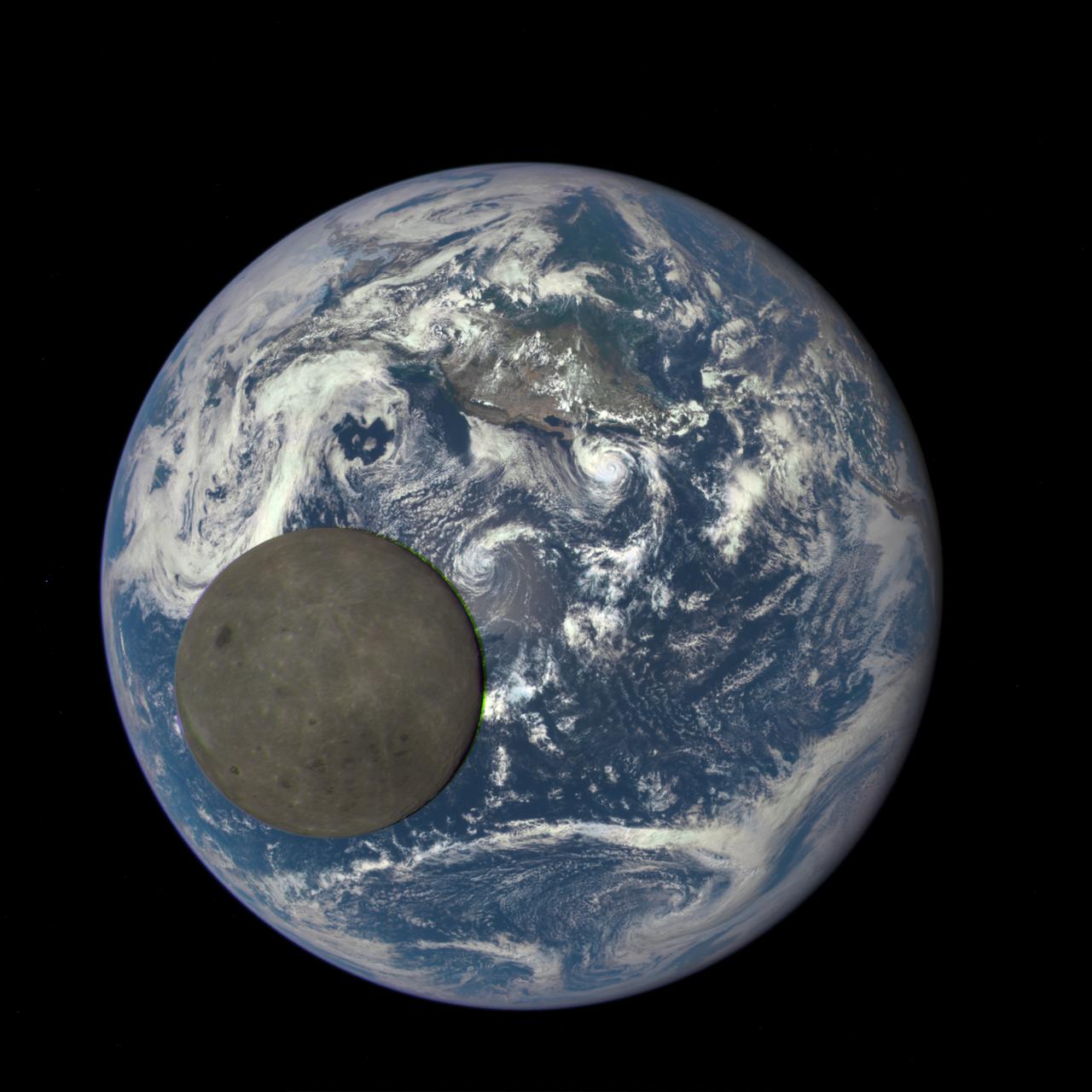
This animation still image shows the far side of the moon, illuminated by the sun, as it crosses between the DISCOVR spacecraft's Earth Polychromatic Imaging Camera (EPIC) camera and telescope, and the Earth - one million miles away. Credits: NASA/NOAA A NASA camera aboard the Deep Space Climate Observatory (DSCOVR) satellite captured a unique view of the moon as it moved in front of the sunlit side of Earth last month. The series of test images shows the fully illuminated “dark side” of the moon that is never visible from Earth. The images were captured by NASA’s Earth Polychromatic Imaging Camera (EPIC), a four megapixel CCD camera and telescope on the DSCOVR satellite orbiting 1 million miles from Earth. From its position between the sun and Earth, DSCOVR conducts its primary mission of real-time solar wind monitoring for the National Oceanic and Atmospheric Administration (NOAA). Read more: <a href="http://www.nasa.gov/feature/goddard/from-a-million-miles-away-nasa-camera-shows-moon-crossing-face-of-earth" rel="nofollow">www.nasa.gov/feature/goddard/from-a-million-miles-away-na...</a> <b><a href="http://www.nasa.gov/audience/formedia/features/MP_Photo_Guidelines.html" rel="nofollow">NASA image use policy.</a></b> <b><a href="http://www.nasa.gov/centers/goddard/home/index.html" rel="nofollow">NASA Goddard Space Flight Center</a></b> enables NASA’s mission through four scientific endeavors: Earth Science, Heliophysics, Solar System Exploration, and Astrophysics. Goddard plays a leading role in NASA’s accomplishments by contributing compelling scientific knowledge to advance the Agency’s mission. <b>Follow us on <a href="http://twitter.com/NASAGoddardPix" rel="nofollow">Twitter</a></b> <b>Like us on <a href="http://www.facebook.com/pages/Greenbelt-MD/NASA-Goddard/395013845897?ref=tsd" rel="nofollow">Facebook</a></b> <b>Find us on <a href="http://instagrid.me/nasagoddard/?vm=grid" rel="nofollow">Instagram</a></b>
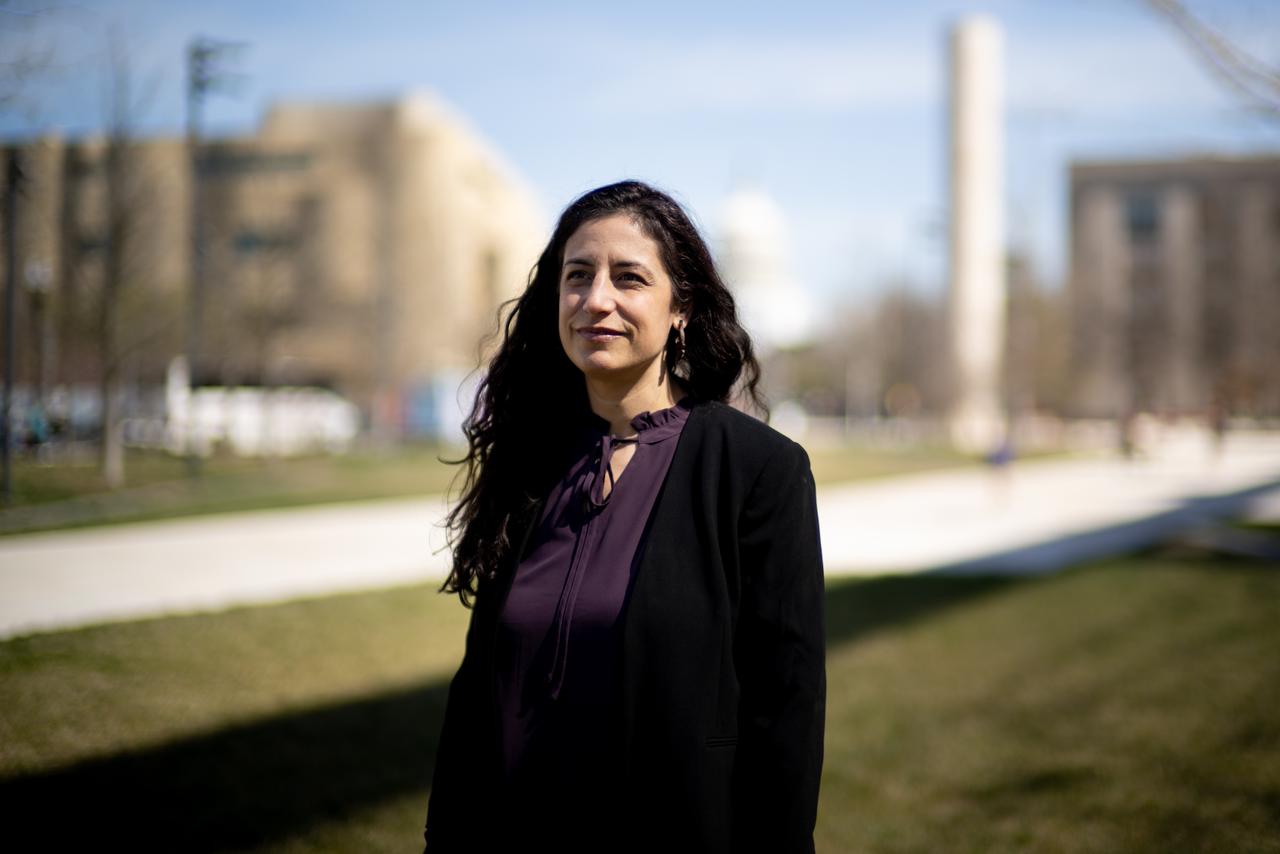
"People aren’t always recognized for who they are at work. “So giving a person time to actually talk about themselves, and be proud of what they do, and talk about how hard it might be to maintain their career with everything else going on — makes them feel valued and appreciated. And highlighting them in that way on the Faces of NASA page, makes that pride permanent. “I think I’m always seeking out projects that help people feel seen. And maybe that’s why I got so into photography initially. I struggle with that myself — feeling seen. And so to help other people feel seen is definitely an interest of mine that I keep coming back to." Aubrey Gemignani, Photo Archivist/Photographer, Mori Associates, in NASA’s Office of Communications, poses for a portrait, Thursday, March 16, 2023, in Washington, DC. Photo Credit: (NASA/Joel Kowsky)
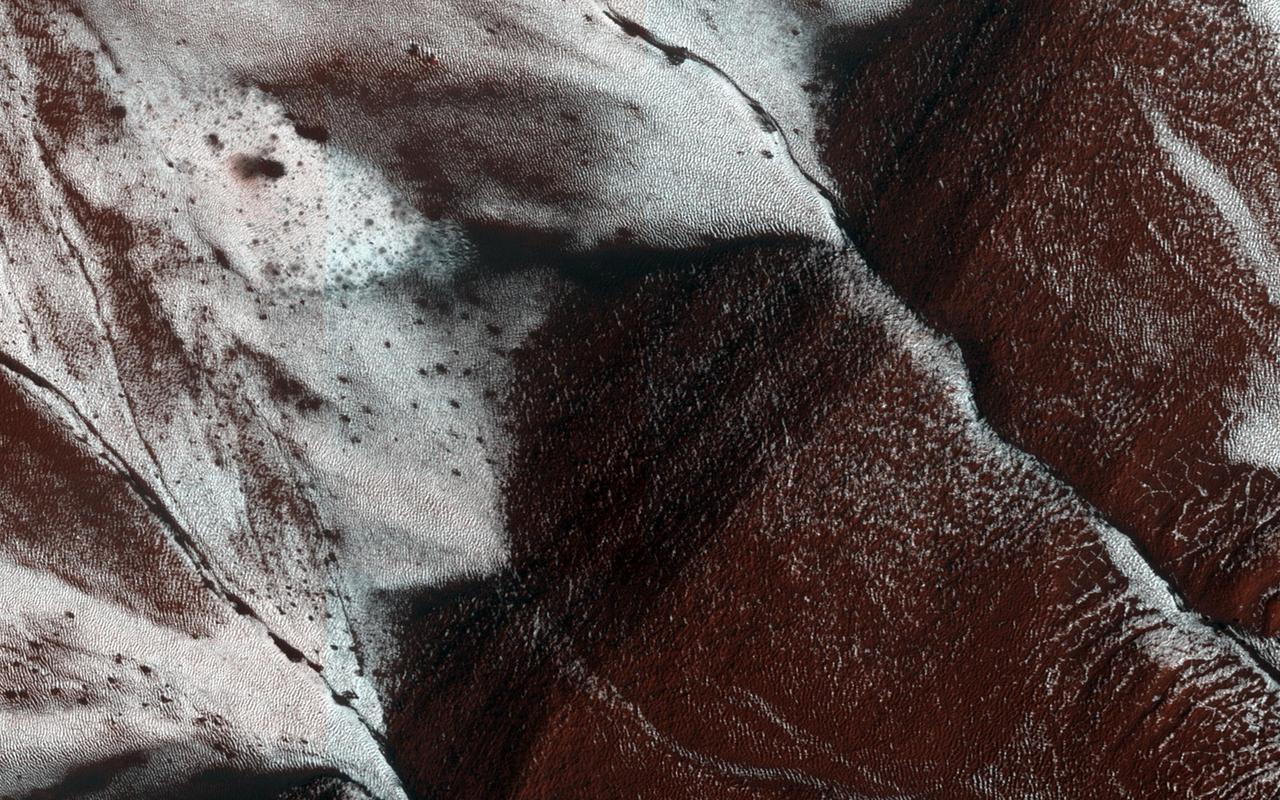
This image from NASA Mars Reconnaissance Orbiter shows frosted gullies on a south-facing slope within a crater. At this time of year only south-facing slopes retain the frost, while the north-facing slopes have melted.
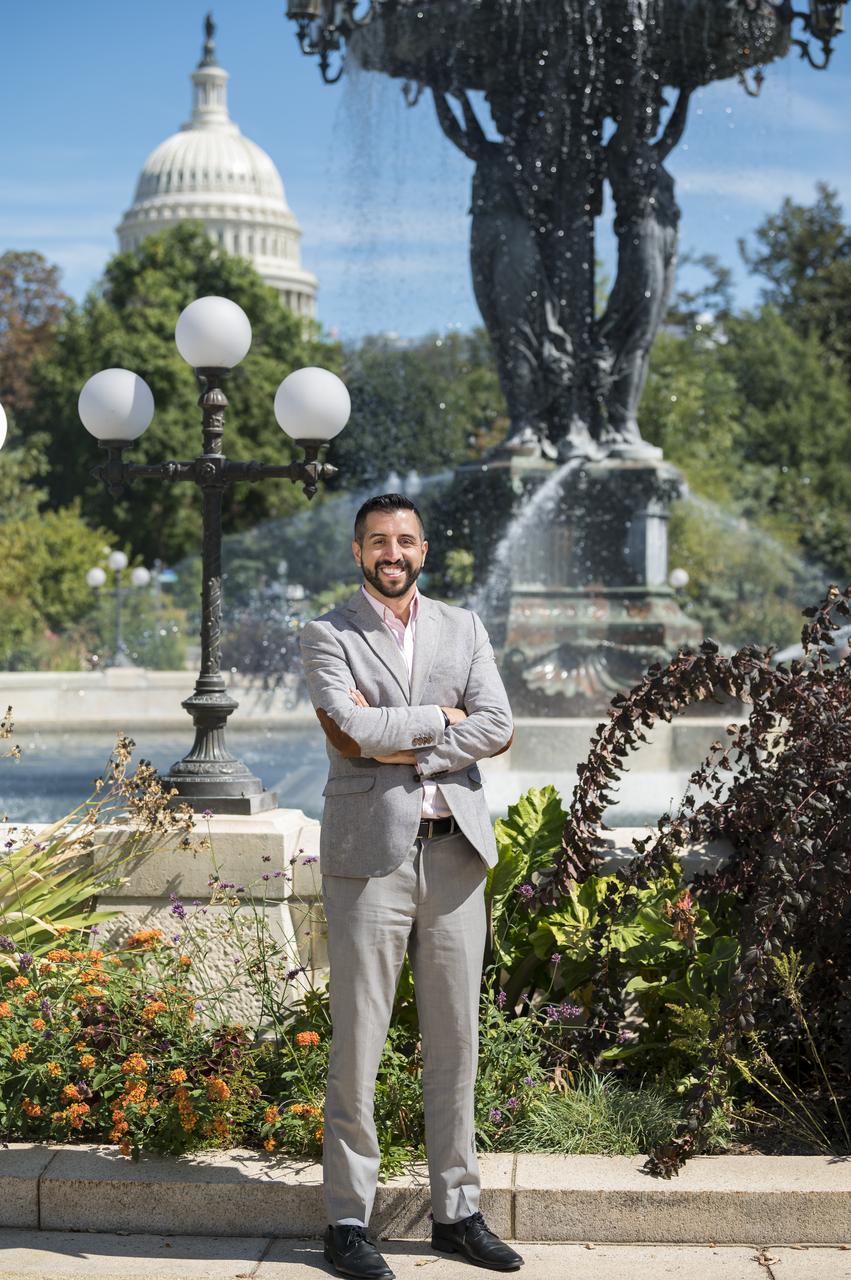
“When I first joined Twitter in 2009, one of the first accounts I followed was NASA. I knew they were doing NASA ‘Tweetups’ (now called Socials) where members of the public could apply, go behind the scenes of a NASA facility and potentially attend a launch. “I was selected for the STS-135 Tweetup — the final launch of the Space Shuttle, July 2011. The Tweetup gave me access that I never in my life thought I’d be able to experience. Being inside the Vehicle Assembly Building, where Saturn rockets were assembled, where the Space Shuttle was stacked and now where the SLS is going to be stacked… that for me, was incredible. “We got to Kennedy for the launch on July 7. There were severe thunderstorms and lightning all around. The weather was not looking good for the next day. “The next morning, we get to the press site, and the weather continues to look like it’s going to prevent the launch. There was a 30% chance. I didn’t think it was going to happen. “And then, there was a break in the clouds. And at 11:28 am, the Shuttle launches. It was such a physical, emotional experience. I remember feeling the sound waves. I was just so excited, so thrilled, so overcome by seeing all these people put in so many hours on something that was bigger than themselves, working toward making this mission a success. And that was the culmination of it: 5 million pounds of thrust lifting this vehicle 250 miles off the planet. “I thought, ‘wow, Atlantis took off with just a 30% chance.’ So, I try to take that with me whenever I face a challenging situation. And that’s kind of why I was teetering on not applying for my first NASA internship in 2013. But I thought to myself, ‘well, that vehicle took off in not-so-ideal conditions. Things aren’t impossible.’ That’s what led me to pursue this career at NASA.” Portrait, Andres Almeida, Thursday, September 19, 2019 at NASA Headquarters in Washington. Photo Credit: (NASA/Aubrey Gemignani)
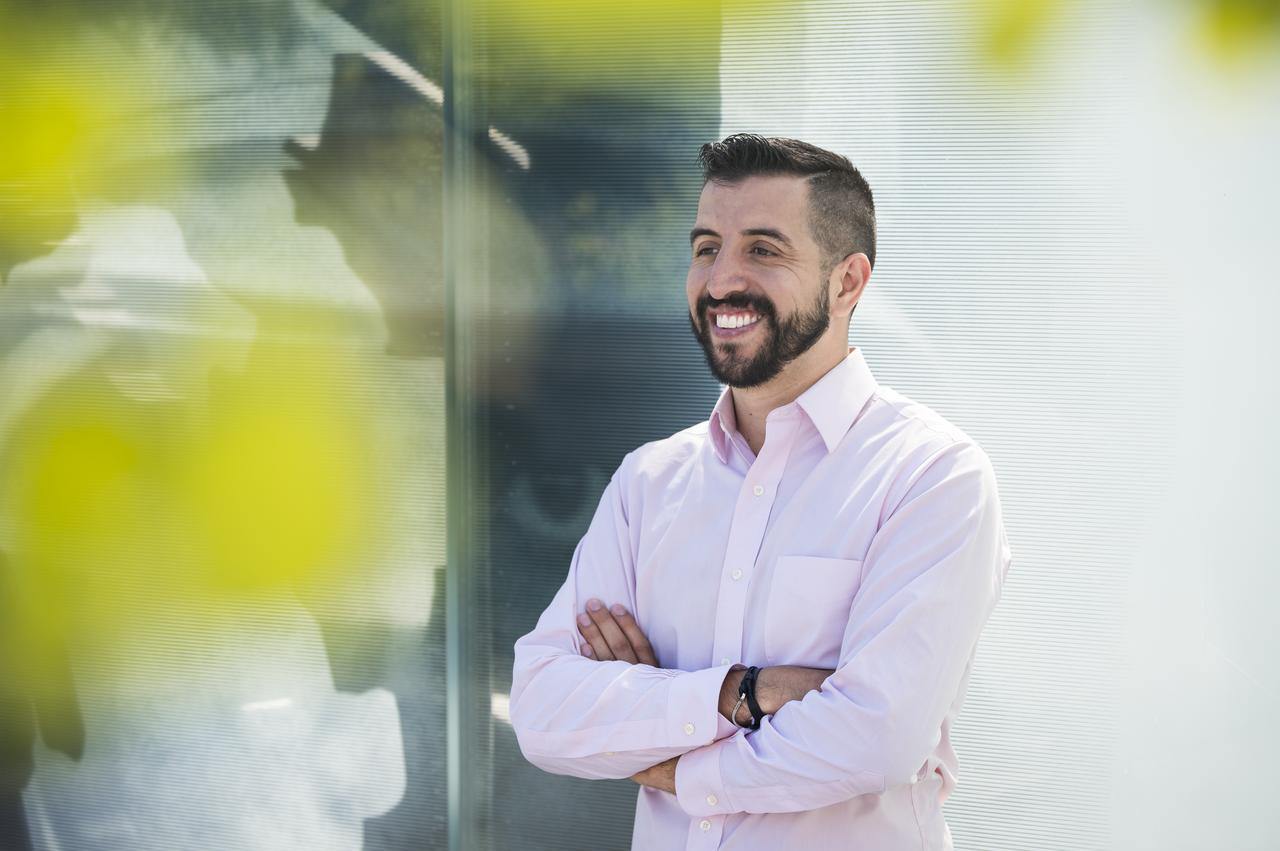
“When I first joined Twitter in 2009, one of the first accounts I followed was NASA. I knew they were doing NASA ‘Tweetups’ (now called Socials) where members of the public could apply, go behind the scenes of a NASA facility and potentially attend a launch. “I was selected for the STS-135 Tweetup — the final launch of the Space Shuttle, July 2011. The Tweetup gave me access that I never in my life thought I’d be able to experience. Being inside the Vehicle Assembly Building, where Saturn rockets were assembled, where the Space Shuttle was stacked and now where the SLS is going to be stacked… that for me, was incredible. “We got to Kennedy for the launch on July 7. There were severe thunderstorms and lightning all around. The weather was not looking good for the next day. “The next morning, we get to the press site, and the weather continues to look like it’s going to prevent the launch. There was a 30% chance. I didn’t think it was going to happen. “And then, there was a break in the clouds. And at 11:28 am, the Shuttle launches. It was such a physical, emotional experience. I remember feeling the sound waves. I was just so excited, so thrilled, so overcome by seeing all these people put in so many hours on something that was bigger than themselves, working toward making this mission a success. And that was the culmination of it: 5 million pounds of thrust lifting this vehicle 250 miles off the planet. “I thought, ‘wow, Atlantis took off with just a 30% chance.’ So, I try to take that with me whenever I face a challenging situation. And that’s kind of why I was teetering on not applying for my first NASA internship in 2013. But I thought to myself, ‘well, that vehicle took off in not-so-ideal conditions. Things aren’t impossible.’ That’s what led me to pursue this career at NASA.” Portrait, Andres Almeida, Thursday, September 19, 2019 at NASA Headquarters in Washington. Photo Credit: (NASA/Aubrey Gemignani)
!["I was on console as a part of the primary launch team [for Artemis I]. I was the Orion system specialist for Guidance, Navigation, and Control. … In a few missions, we're sending astronauts to the Moon again, so being a part of the very, very first mission [was memorable]. … I wasn't here in 2017 when they first began discussions, but [I can’t even explain how it felt] that within just the four-year journey, I could see how far we had come: from when we were talking about getting the hardware here, to the hardware arriving, and then [to realize] ‘Oh, it's going today, we’re going!’ “… From a personal standpoint, I'm a person of faith, so for me, it was like: We launched at night — it was in the darkest part of the [night]. … Once the rocket launched, [I saw] how it illuminated such a dark space. So even when you're in a dark space, you can let your light shine. And it won't just shine for you and those that are immediately around you, but even people that you don't know will notice it, even people that you will never see will notice your light shining and be inspired.” — Ales-cia Winsley, Guidance, Navigation, and Flight Control Engineer, Kennedy Space Center Interviewer: NASA / Michelle Zajac](https://images-assets.nasa.gov/image/KSC-20231128-PH-CSH01_0003/KSC-20231128-PH-CSH01_0003~medium.jpg)
"I was on console as a part of the primary launch team [for Artemis I]. I was the Orion system specialist for Guidance, Navigation, and Control. … In a few missions, we're sending astronauts to the Moon again, so being a part of the very, very first mission [was memorable]. … I wasn't here in 2017 when they first began discussions, but [I can’t even explain how it felt] that within just the four-year journey, I could see how far we had come: from when we were talking about getting the hardware here, to the hardware arriving, and then [to realize] ‘Oh, it's going today, we’re going!’ “… From a personal standpoint, I'm a person of faith, so for me, it was like: We launched at night — it was in the darkest part of the [night]. … Once the rocket launched, [I saw] how it illuminated such a dark space. So even when you're in a dark space, you can let your light shine. And it won't just shine for you and those that are immediately around you, but even people that you don't know will notice it, even people that you will never see will notice your light shining and be inspired.” — Ales-cia Winsley, Guidance, Navigation, and Flight Control Engineer, Kennedy Space Center Interviewer: NASA / Michelle Zajac
!["I was on console as a part of the primary launch team [for Artemis I]. I was the Orion system specialist for Guidance, Navigation, and Control. … In a few missions, we're sending astronauts to the Moon again, so being a part of the very, very first mission [was memorable]. … I wasn't here in 2017 when they first began discussions, but [I can’t even explain how it felt] that within just the four-year journey, I could see how far we had come: from when we were talking about getting the hardware here, to the hardware arriving, and then [to realize] ‘Oh, it's going today, we’re going!’ “… From a personal standpoint, I'm a person of faith, so for me, it was like: We launched at night — it was in the darkest part of the [night]. … Once the rocket launched, [I saw] how it illuminated such a dark space. So even when you're in a dark space, you can let your light shine. And it won't just shine for you and those that are immediately around you, but even people that you don't know will notice it, even people that you will never see will notice your light shining and be inspired.” — Ales-cia Winsley, Guidance, Navigation, and Flight Control Engineer, Kennedy Space Center Interviewer: NASA / Michelle Zajac](https://images-assets.nasa.gov/image/KSC-20231128-PH-CSH01_0004/KSC-20231128-PH-CSH01_0004~medium.jpg)
"I was on console as a part of the primary launch team [for Artemis I]. I was the Orion system specialist for Guidance, Navigation, and Control. … In a few missions, we're sending astronauts to the Moon again, so being a part of the very, very first mission [was memorable]. … I wasn't here in 2017 when they first began discussions, but [I can’t even explain how it felt] that within just the four-year journey, I could see how far we had come: from when we were talking about getting the hardware here, to the hardware arriving, and then [to realize] ‘Oh, it's going today, we’re going!’ “… From a personal standpoint, I'm a person of faith, so for me, it was like: We launched at night — it was in the darkest part of the [night]. … Once the rocket launched, [I saw] how it illuminated such a dark space. So even when you're in a dark space, you can let your light shine. And it won't just shine for you and those that are immediately around you, but even people that you don't know will notice it, even people that you will never see will notice your light shining and be inspired.” — Ales-cia Winsley, Guidance, Navigation, and Flight Control Engineer, Kennedy Space Center Interviewer: NASA / Michelle Zajac

“When I first joined Twitter in 2009, one of the first accounts I followed was NASA. I knew they were doing NASA ‘Tweetups’ (now called Socials) where members of the public could apply, go behind the scenes of a NASA facility and potentially attend a launch. “I was selected for the STS-135 Tweetup — the final launch of the Space Shuttle, July 2011. The Tweetup gave me access that I never in my life thought I’d be able to experience. Being inside the Vehicle Assembly Building, where Saturn rockets were assembled, where the Space Shuttle was stacked and now where the SLS is going to be stacked… that for me, was incredible. “We got to Kennedy for the launch on July 7. There were severe thunderstorms and lightning all around. The weather was not looking good for the next day. “The next morning, we get to the press site, and the weather continues to look like it’s going to prevent the launch. There was a 30% chance. I didn’t think it was going to happen. “And then, there was a break in the clouds. And at 11:28 am, the Shuttle launches. It was such a physical, emotional experience. I remember feeling the sound waves. I was just so excited, so thrilled, so overcome by seeing all these people put in so many hours on something that was bigger than themselves, working toward making this mission a success. And that was the culmination of it: 5 million pounds of thrust lifting this vehicle 250 miles off the planet. “I thought, ‘wow, Atlantis took off with just a 30% chance.’ So, I try to take that with me whenever I face a challenging situation. And that’s kind of why I was teetering on not applying for my first NASA internship in 2013. But I thought to myself, ‘well, that vehicle took off in not-so-ideal conditions. Things aren’t impossible.’ That’s what led me to pursue this career at NASA.” Portrait, Andres Almeida, Thursday, September 19, 2019 at NASA Headquarters in Washington. Photo Credit: (NASA/Aubrey Gemignani)
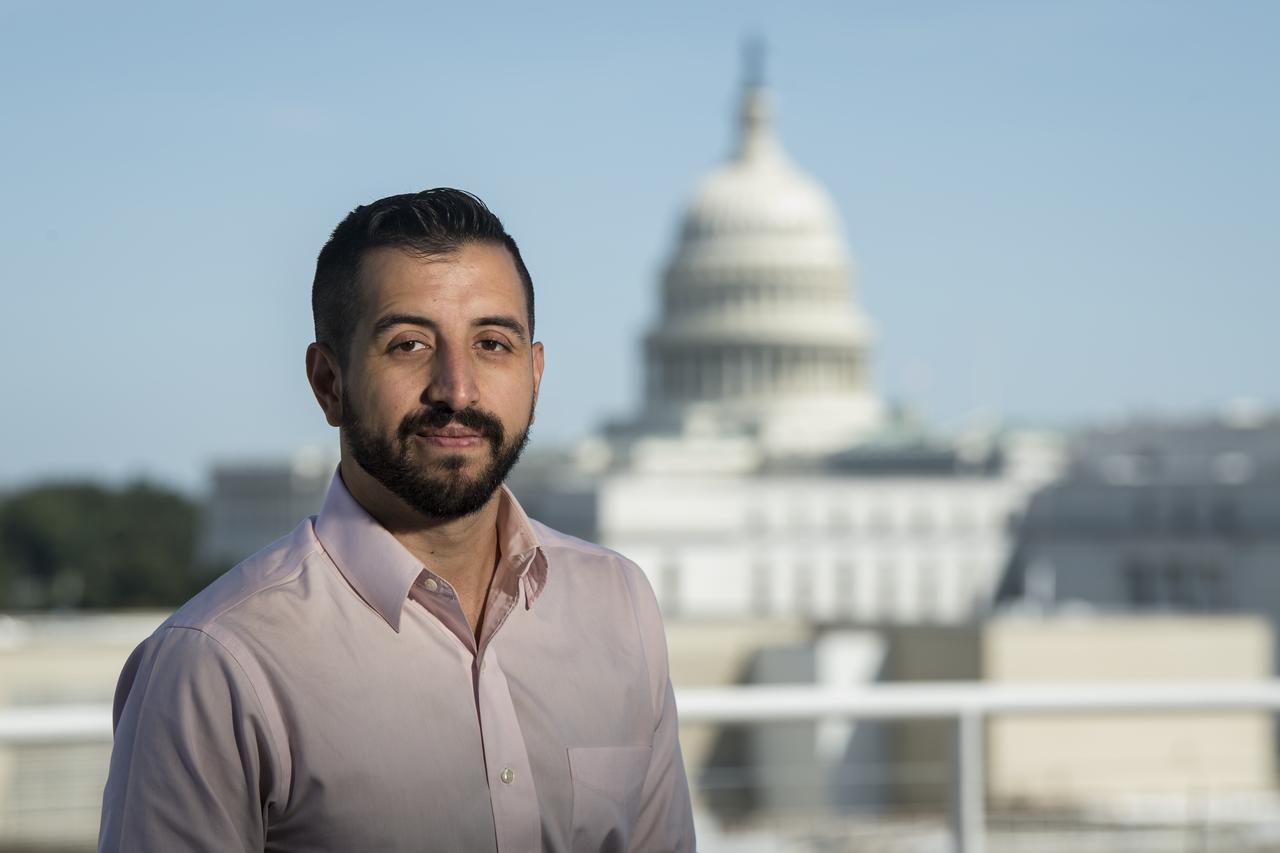
“When I first joined Twitter in 2009, one of the first accounts I followed was NASA. I knew they were doing NASA ‘Tweetups’ (now called Socials) where members of the public could apply, go behind the scenes of a NASA facility and potentially attend a launch. “I was selected for the STS-135 Tweetup — the final launch of the Space Shuttle, July 2011. The Tweetup gave me access that I never in my life thought I’d be able to experience. Being inside the Vehicle Assembly Building, where Saturn rockets were assembled, where the Space Shuttle was stacked and now where the SLS is going to be stacked… that for me, was incredible. “We got to Kennedy for the launch on July 7. There were severe thunderstorms and lightning all around. The weather was not looking good for the next day. “The next morning, we get to the press site, and the weather continues to look like it’s going to prevent the launch. There was a 30% chance. I didn’t think it was going to happen. “And then, there was a break in the clouds. And at 11:28 am, the Shuttle launches. It was such a physical, emotional experience. I remember feeling the sound waves. I was just so excited, so thrilled, so overcome by seeing all these people put in so many hours on something that was bigger than themselves, working toward making this mission a success. And that was the culmination of it: 5 million pounds of thrust lifting this vehicle 250 miles off the planet. “I thought, ‘wow, Atlantis took off with just a 30% chance.’ So, I try to take that with me whenever I face a challenging situation. And that’s kind of why I was teetering on not applying for my first NASA internship in 2013. But I thought to myself, ‘well, that vehicle took off in not-so-ideal conditions. Things aren’t impossible.’ That’s what led me to pursue this career at NASA.” Portrait, Andres Almeida, Thursday, September 19, 2019 at NASA Headquarters in Washington. Photo Credit: (NASA/Aubrey Gemignani)
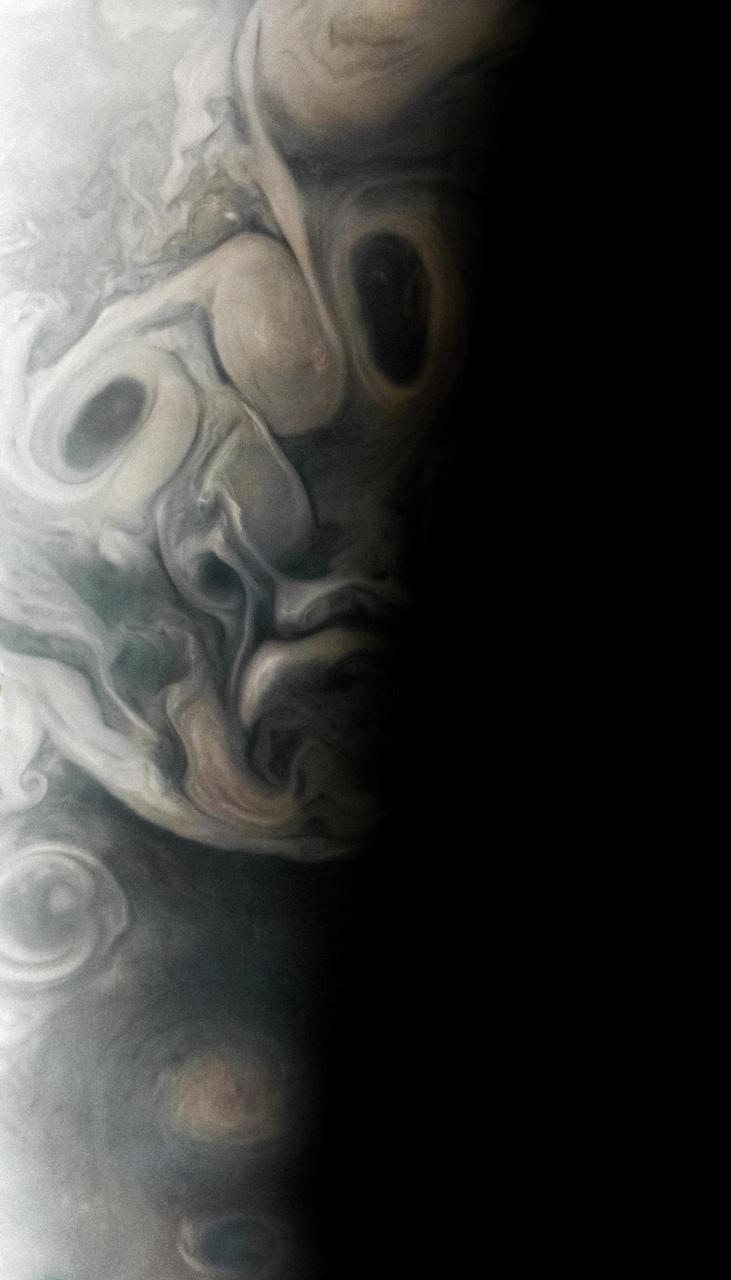
On Sept. 7, 2023, during its 54th close flyby of Jupiter, NASA's Juno mission captured this view of an area in the giant planet's far northern regions called Jet N7. The image shows turbulent clouds and storms along Jupiter's terminator, the dividing line between the day and night sides of the planet. The low angle of sunlight highlights the complex topography of features in this region, which scientists have studied to better understand the processes playing out in Jupiter's atmosphere. As often occurs in views from Juno, Jupiter's clouds in this picture lend themselves to pareidolia, the effect that causes observers to perceive faces or other patterns in largely random patterns. Citizen scientist Vladimir Tarasov made this image using raw data from the JunoCam instrument. At the time the raw image was taken, the Juno spacecraft was about 4,800 miles (about 7,700 kilometers) above Jupiter's cloud tops, at a latitude of about 69 degrees north. https://photojournal.jpl.nasa.gov/catalog/PIA25727
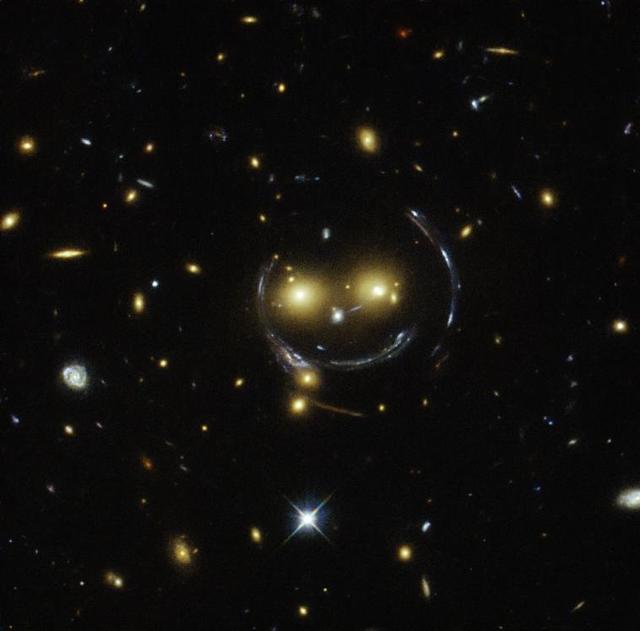
This image from the NASA/ESA Hubble Space Telescope shows a galaxy cluster, SDSS J1038+4849, that appears to have two eyes and a nose as part of a happy face. The face is the result of gravitational lensing.
![“Starting to host live broadcasts [brought up] so many emotions: terrified, excited, proud. And people have told me, ‘Oh my goodness, I feel like I would freeze up when the camera’s on,’ but that was the most natural position for me because I felt, just a little bit, like I was back on stage, cheerleading. You’re standing on the stage, the lights are off, you're in your head. And then the lights turn on, the music drops, and you’re on a world stage in front of thousands of people doing an incredibly difficult three-minute routine and who knows, you might even be injured right now, but you don't have an option. When those lights and that music comes on, it's almost like something bigger than yourself takes over and you just have to go. And that is the exact same feeling when they're counting you down for a live broadcast: “3, 2, 1. Hello, welcome to NASA. My name is Tahira Allen!” Before something like that happens, I am terrified. I am sitting here thinking, what is about to come out of my mouth? But just like with cheer, whatever you do, you keep moving. I don't know what's going to come out my mouth. But I need to keep talking and just embrace fear. Embrace being uncomfortable.” …You cannot grow without approaching the fear, embracing the fear, and then pushing past it.Science Mission Directorate Digital Lead Tahira Allen poses for a portrait Wednesday, Feb. 8, 2023, at the Mary W. Jackson NASA Headquarters building in Washington. Photo Credit: (NASA/Keegan Barber)](https://images-assets.nasa.gov/image/NHQ202302080001/NHQ202302080001~medium.jpg)
“Starting to host live broadcasts [brought up] so many emotions: terrified, excited, proud. And people have told me, ‘Oh my goodness, I feel like I would freeze up when the camera’s on,’ but that was the most natural position for me because I felt, just a little bit, like I was back on stage, cheerleading. You’re standing on the stage, the lights are off, you're in your head. And then the lights turn on, the music drops, and you’re on a world stage in front of thousands of people doing an incredibly difficult three-minute routine and who knows, you might even be injured right now, but you don't have an option. When those lights and that music comes on, it's almost like something bigger than yourself takes over and you just have to go. And that is the exact same feeling when they're counting you down for a live broadcast: “3, 2, 1. Hello, welcome to NASA. My name is Tahira Allen!” Before something like that happens, I am terrified. I am sitting here thinking, what is about to come out of my mouth? But just like with cheer, whatever you do, you keep moving. I don't know what's going to come out my mouth. But I need to keep talking and just embrace fear. Embrace being uncomfortable.” …You cannot grow without approaching the fear, embracing the fear, and then pushing past it.Science Mission Directorate Digital Lead Tahira Allen poses for a portrait Wednesday, Feb. 8, 2023, at the Mary W. Jackson NASA Headquarters building in Washington. Photo Credit: (NASA/Keegan Barber)
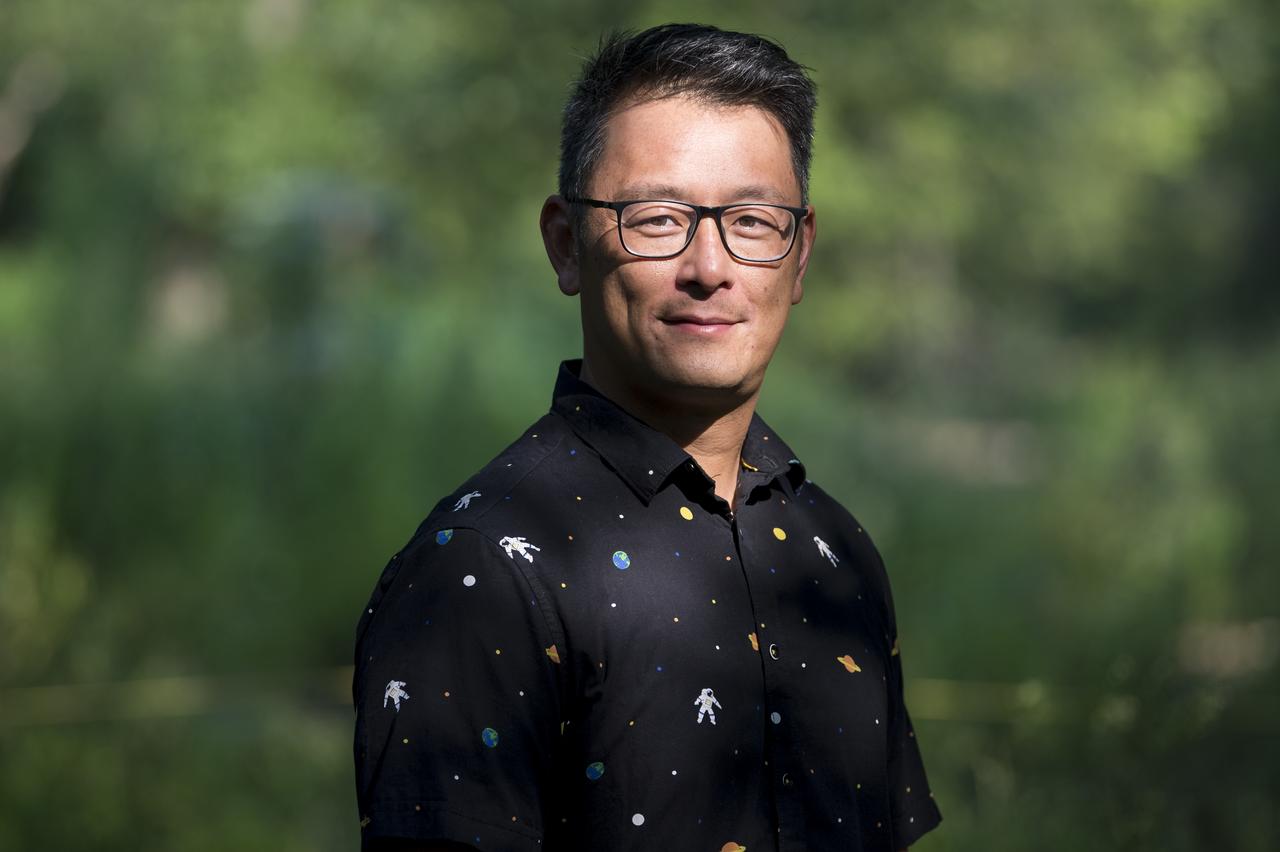
“The big thing is trying to figure out the best way to communicate. And to interact and engage. Being virtual is great, but there’s nothing like being able to sit down and talk to a parent or a senior who just wants to reflect on what it was like seeing Apollo. Or talking to someone who says, ‘I could never work for NASA,’ and telling them, ‘Yes, you can — I’m not from a science background. I graduated with a business marketing degree.’ We have to have communications — social media specialists, graphic designers, things like that. I think it’s very fulfilling, from my perspective, when we go out and engage with the public to show what NASA is really about. It takes twenty thousand people to run NASA — and we’re not all astronauts and scientists and engineers. I try to bring that perspective.” Derek Wang, Director of Communications for NASA’s Space Technology Mission Directorate, poses for a portrait, Thursday, Aug. 27, 2020 in Virginia. Photo Credit: (NASA/Joel Kowsky)
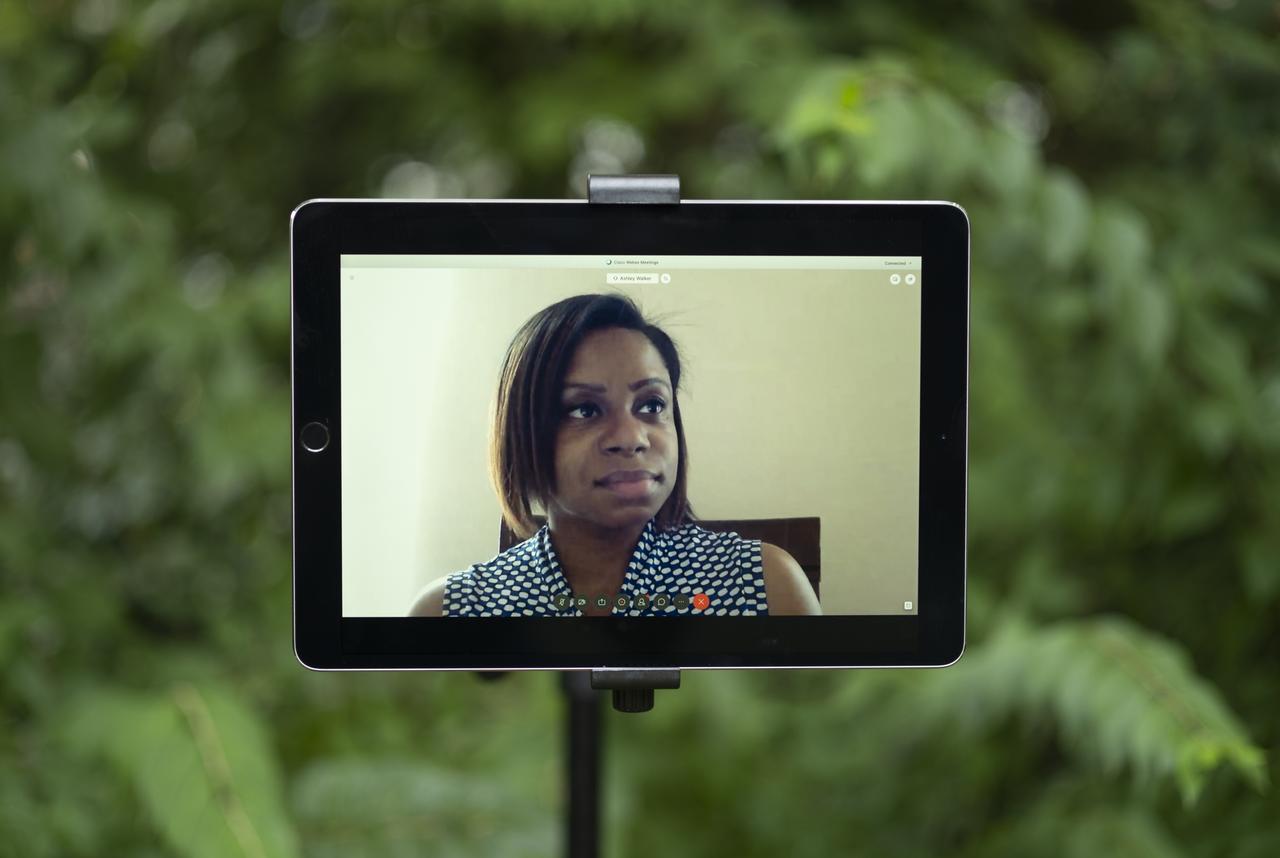
“I’m a big community person. I’m a person who will be like, ‘I think I know someone for you.’ And then I’ll put everyone together. So I’m a big person on lending a helping hand. My platform is for highlighting folks. I’ve highlighted over 50 black junior astronomers for Black History Month, which I will continuously do. I founded the #BlackInAstro Week, which was very successful. I had no clue it was even trending until other people told me. I didn’t even realize until it was the middle of the week, and people were saying, ‘congratulations!’ And I was like, ‘wait, what? Okay, thanks!’ I didn’t realize it was that big. “Community for me and using my platform to promote others — it’s something that really makes me happy. It’s very important to lift others up because for me, I don’t see people who look like me. You never know who’s watching, or who will get inspired. The next generation of scientists will be amazing. This generation of scientists is outstanding — but the next generation will be amazing, so on and so forth. We’re just going to keep lifting each other up and making sure that we all have each other’s backs, because right now is a critical time in our lives. We need each other more than anything.” Ashley Walker, Intern in the Undergraduate Research Associates in Astrobiology program at NASA’s Goddard Space Flight Center, is photographed in her home in Chicago, Ill. via video conference, Saturday, July 25, 2020 in Alexandria, Va. Photo Credit: (NASA/Joel Kowsky)
![“I feel that my larger purpose at NASA, which I've felt since I came on as an intern, is to leave NASA a better place than I found it. I know there are so many people who are just like myself, who have had this big, huge dream of being at NASA from some sort of spark in their childhood. I have a privilege as a well-spoken, affable, femme, white woman and I’m compelled to use this privilege for good — to advocate for others. I feel like this dream should be achievable for anyone who has the merit to be here without wondering 'Are my needs going [to] be met?' Or, 'If I'm a part of a particular community, will I be faced with any sort of backlash because of the culture?' As an Agency, we're trying to do incredibly hard things moving forward. And going forward, I choose to use the privilege of being at HQ and being very close to leadership as a vessel for progress to help ensure we get closer to everybody having the right to achieve their dream here." NASA Management and Program Analyst Mallory Carbon, poses for a portrait, Wednesday, May 29, 2024, outside the NASA Headquarters Mary W. Jackson Building in Washington. Photo Credit: (NASA/Bill Ingalls)](https://images-assets.nasa.gov/image/NHQ202405290001/NHQ202405290001~medium.jpg)
“I feel that my larger purpose at NASA, which I've felt since I came on as an intern, is to leave NASA a better place than I found it. I know there are so many people who are just like myself, who have had this big, huge dream of being at NASA from some sort of spark in their childhood. I have a privilege as a well-spoken, affable, femme, white woman and I’m compelled to use this privilege for good — to advocate for others. I feel like this dream should be achievable for anyone who has the merit to be here without wondering 'Are my needs going [to] be met?' Or, 'If I'm a part of a particular community, will I be faced with any sort of backlash because of the culture?' As an Agency, we're trying to do incredibly hard things moving forward. And going forward, I choose to use the privilege of being at HQ and being very close to leadership as a vessel for progress to help ensure we get closer to everybody having the right to achieve their dream here." NASA Management and Program Analyst Mallory Carbon, poses for a portrait, Wednesday, May 29, 2024, outside the NASA Headquarters Mary W. Jackson Building in Washington. Photo Credit: (NASA/Bill Ingalls)
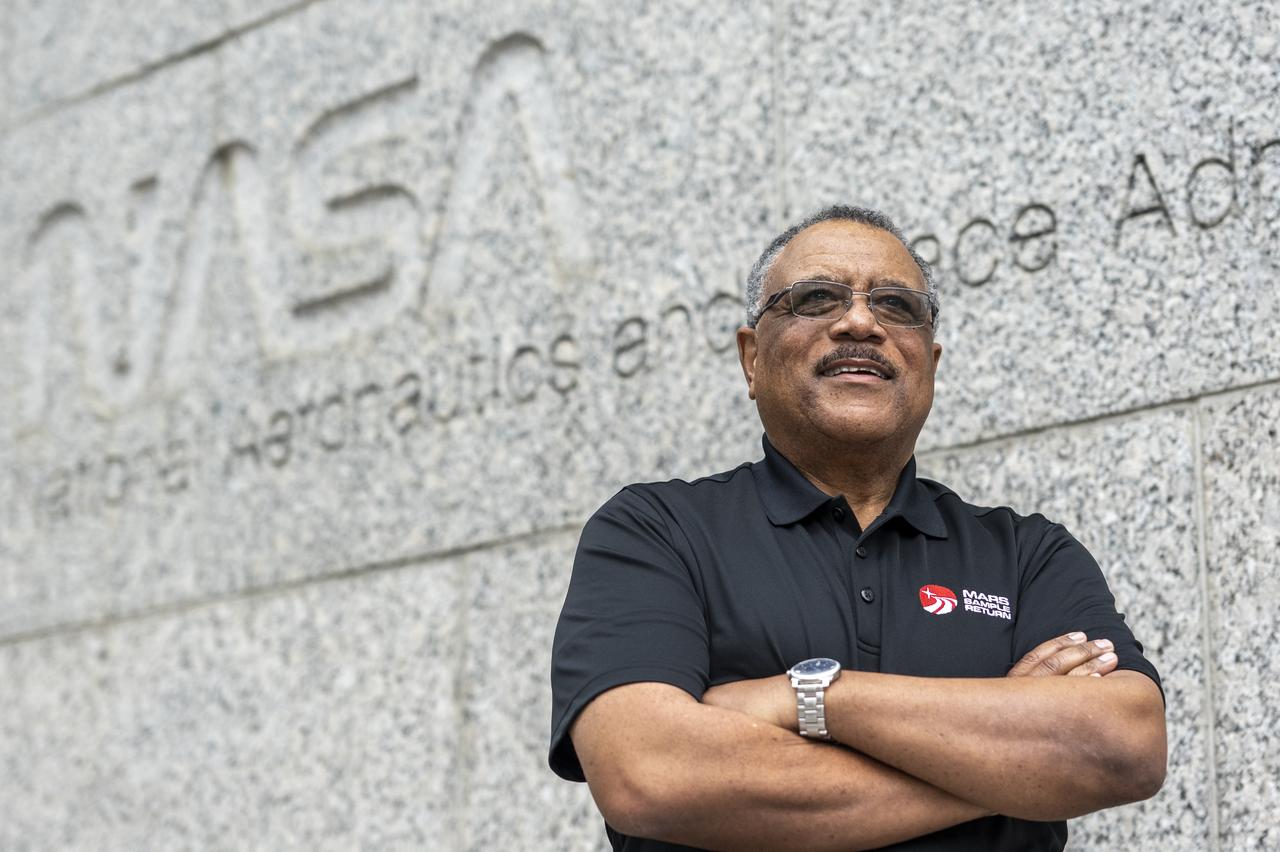
ÒIf you just invest a little time and a little effort in people, you will get so much more back. Not only will you feel good about it and get satisfaction above and beyond anything you can imagine, but the task or the mission you are trying to accomplish will also benefit tremendously. IÕve seen this happen many times when I have given someone an assignment. I am careful not to restrict their creativity. Often, theyÕre able to accomplish the task or mission better than I expected. ÒMy brotherÕs a professional artist, and I learned that from him. If you tell an artist what to paint, they will paint it. But, if you tell them what youÕre looking for, theyÕll paint that Ð and thereÕs a difference. People appreciate that, the openness to be able to create. Another big one is that thereÕs no such thing as a perfect person. So, the day you start thinking everythingÕs going to be perfect, you are in trouble. ÒI remember when I went on my first visit to NASAÕs Jet Propulsion Laboratory to talk about the Mars Sample Return campaign. I sat down with the communications team and said, ÔLook, if you are thinking we are going to do this perfectly and everythingÕs going to go as smoothly as it can, I want to change that mindset right now. We are going to have our challenges. But it is our job to work through those challenges, that is how we succeed. ÒI believe that whenever I am in a leadership position it is my call, my responsibility to create an environment in which all who work around me can be at their most efficient. I have been in situations before in which coworkers have said, ÔThat could not have turned out any better.Õ I believe you have to create the environment in which people can thrive and be their best. ThatÕs a big deal to me and I want people to treat me that way too. IÕve always felt from before I was a teenager that if I do something good, it will go to the next person and the next person, and before you know it, it goes around the world and comes back to me. I have truly believed that all my life, and I still think that today.Ó Dewayne Washington, Mars Sample Return Senior Communications Manager, poses for a portrait, Wednesday, Jan. 25, 2023, at the Mary W. Jackson NASA Headquarters building in Washington. Photo Credit: (NASA/Keegan Barber)
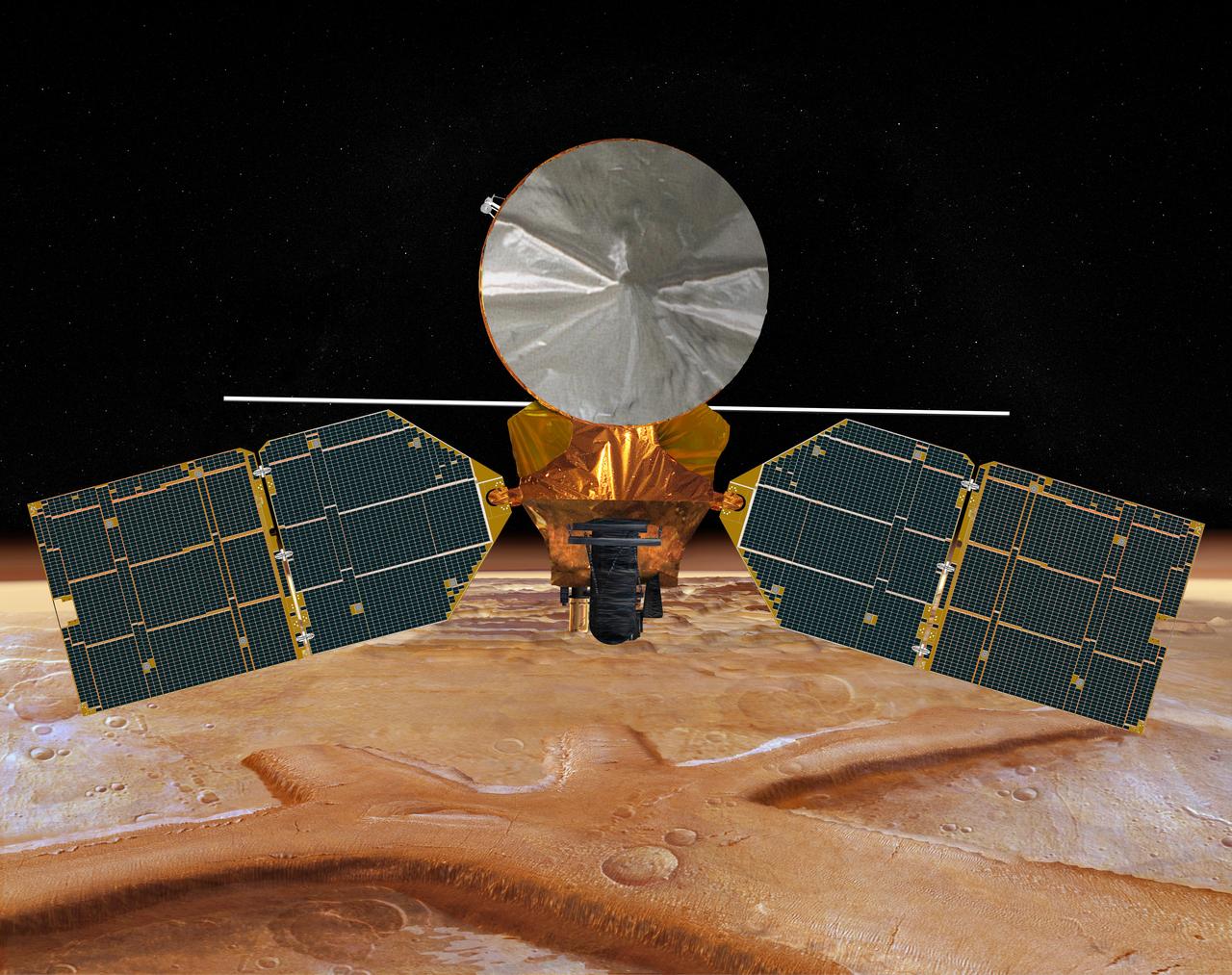
This artist concept of NASA Mars Reconnaissance Orbiter features the spacecraft main bus facing down, toward the red planet.
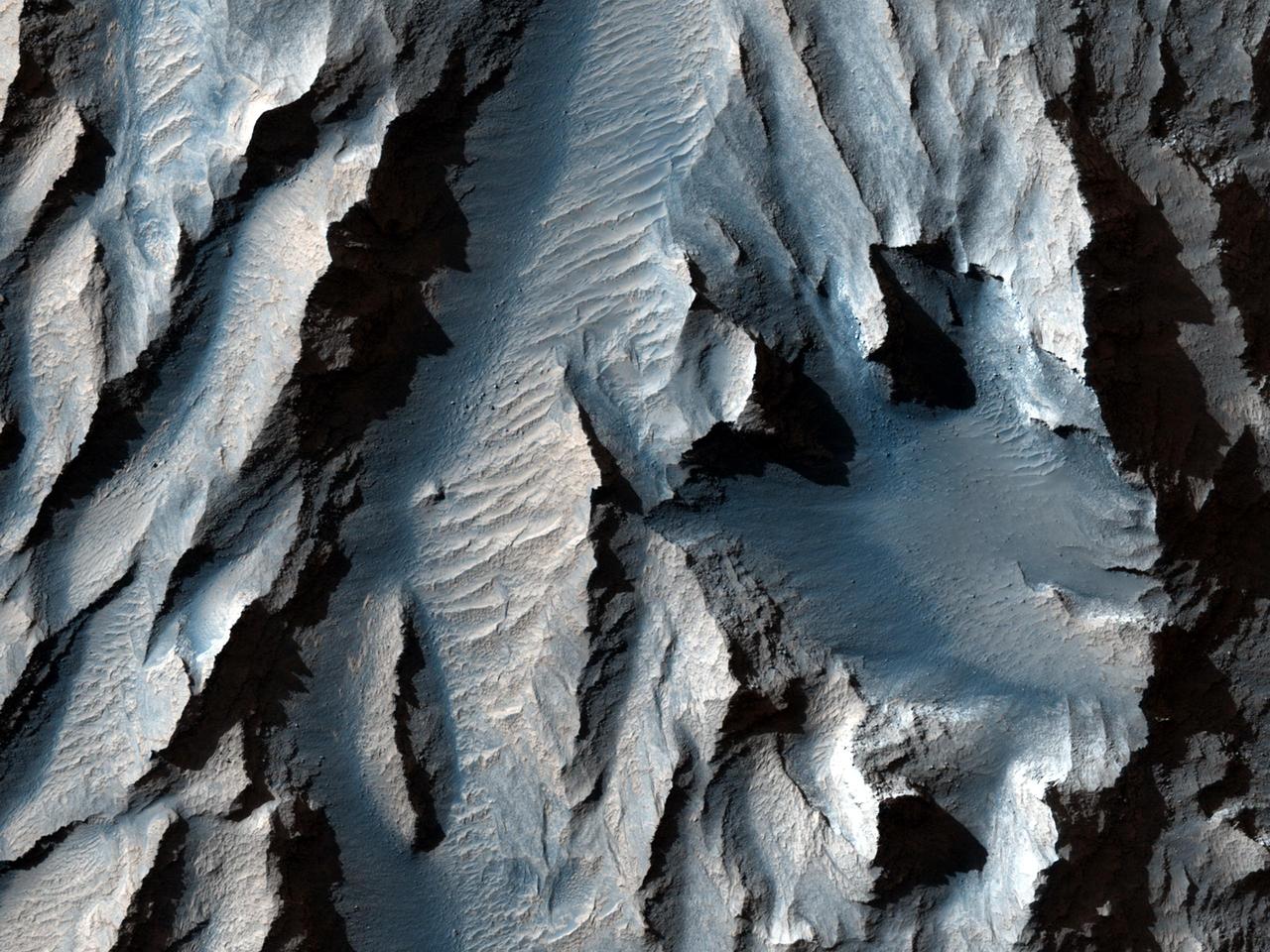
This observation from NASA Mars Reconnaissance Orbiter is of an east-facing slope in Tithonium Chasma.
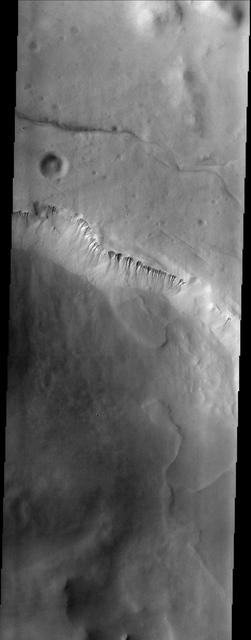
NASA 2001 Mars Odyssey spacecraft captured these gullies located on a cliff-face within Lyell Crater.

The mottled face of Jupiter volcanically active moon Io as viewed by NASA Galileo spacecraft. http://photojournal.jpl.nasa.gov/catalog/PIA00282
The face of asteroid Masursky as seen by NASA Cassini Imaging Science Subsystem ISS, January, 2000.

Several landslides occurred on this steep cliff face in this image captured by NASA 2001 Mars Odyssey spacecraft.
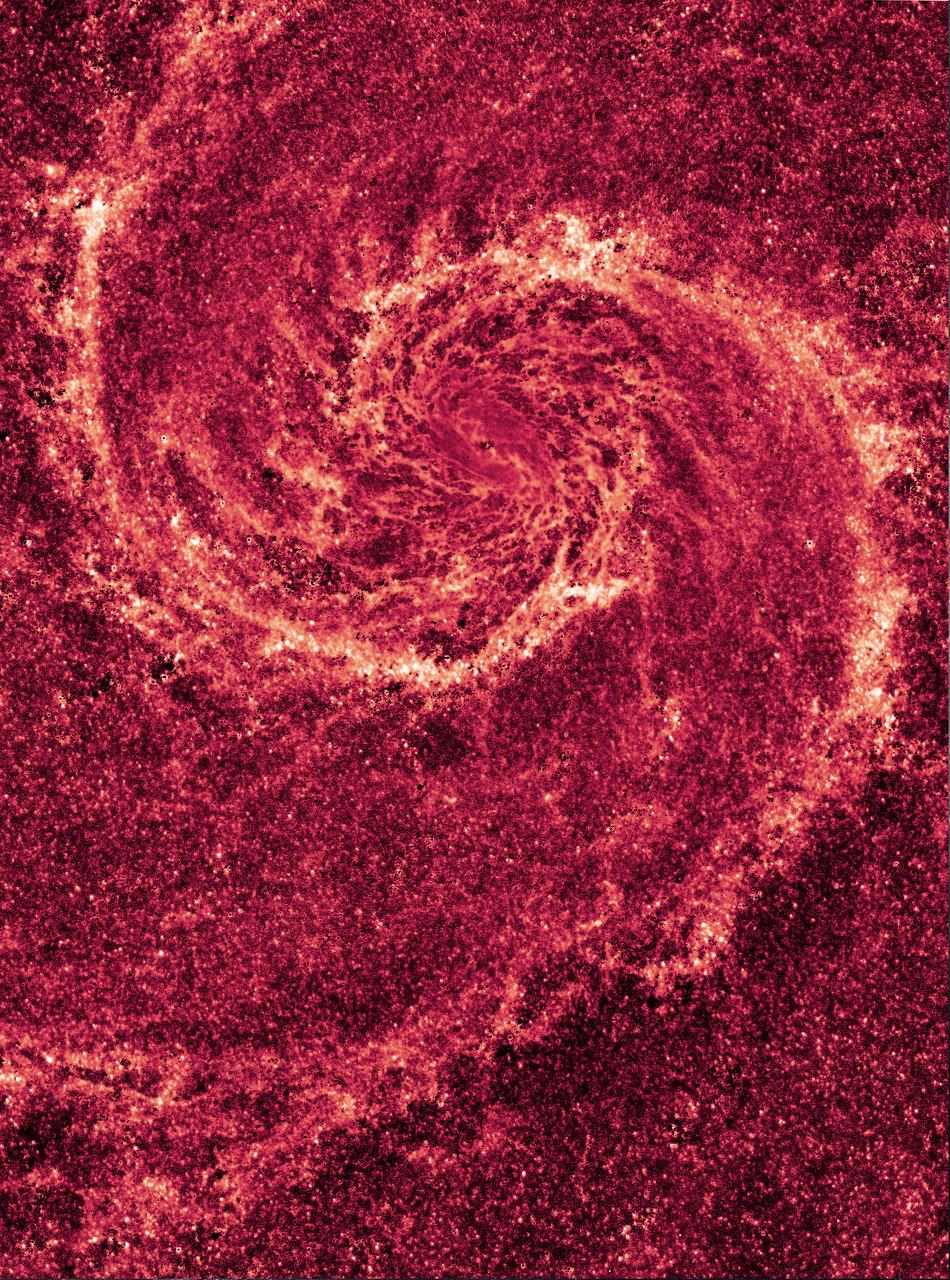
NASA image release January 13, 2011 <b><a href="http://www.flickr.com/photos/gsfc/5352962836">These images</a></b> by NASA's Hubble Space Telescope show off two dramatically different face-on views of the spiral galaxy M51, dubbed the Whirlpool Galaxy. <b><a href="http://www.flickr.com/photos/gsfc/5352955200/">The image here,</a></b> taken in visible light, highlights the attributes of a typical spiral galaxy, including graceful, curving arms, pink star-forming regions, and brilliant blue strands of star clusters. <b>In the image above,</b> most of the starlight has been removed, revealing the Whirlpool's skeletal dust structure, as seen in near-infrared light. This new image is the sharpest view of the dense dust in M51. The narrow lanes of dust revealed by Hubble reflect the galaxy's moniker, the Whirlpool Galaxy, as if they were swirling toward the galaxy's core. To map the galaxy's dust structure, researchers collected the galaxy's starlight by combining images taken in visible and near-infrared light. The visible-light image captured only some of the light; the rest was obscured by dust. The near-infrared view, however, revealed more starlight because near-infrared light penetrates dust. The researchers then subtracted the total amount of starlight from both images to see the galaxy's dust structure. The red color in the near-infrared image traces the dust, which is punctuated by hundreds of tiny clumps of stars, each about 65 light-years wide. These stars have never been seen before. The star clusters cannot be seen in visible light because dense dust enshrouds them. The image reveals details as small as 35 light-years across. Astronomers expected to see large dust clouds, ranging from about 100 light-years to more than 300 light-years wide. Instead, most of the dust is tied up in smooth and diffuse dust lanes. An encounter with another galaxy may have prevented giant clouds from forming. Probing a galaxy's dust structure serves as an important diagnostic tool for astronomers, providing invaluable information on how the gas and dust collapse to form stars. Although Hubble is providing incisive views of the internal structure of galaxies such as M51, the planned James Webb Space Telescope (JWST) is expected to produce even crisper images. Researchers constructed the image by combining visible-light exposures from Jan. 18 to 22, 2005, with the Advanced Camera for Surveys (ACS), and near-infrared light pictures taken in December 2005 with the Near Infrared Camera and Multi-Object Spectrometer (NICMOS). The Hubble Space Telescope is a project of international cooperation between NASA and the European Space Agency. NASA's Goddard Space Flight Center manages the telescope. The Space Telescope Science Institute (STScI) conducts Hubble science operations. STScI is operated for NASA by the Association of Universities for Research in Astronomy, Inc., in Washington, D.C. <b><a href="http://www.nasa.gov/centers/goddard/home/index.html" rel="nofollow">NASA Goddard Space Flight Center</a></b> enables NASA’s mission through four scientific endeavors: Earth Science, Heliophysics, Solar System Exploration, and Astrophysics. Goddard plays a leading role in NASA’s accomplishments by contributing compelling scientific knowledge to advance the Agency’s mission. <b>Follow us on <a href="http://twitter.com/NASA_GoddardPix" rel="nofollow">Twitter</a></b> <b>Join us on <a href="http://www.facebook.com/pages/Greenbelt-MD/NASA-Goddard/395013845897?ref=tsd" rel="nofollow">Facebook</a></b> Credit: NASA, ESA, M. Regan and B. Whitmore (STScI), and R. Chandar (University of Toledo)

NASA image release January 13, 2011 <b><a href="http://www.flickr.com/photos/gsfc/5352962836">These images</a></b> by NASA's Hubble Space Telescope show off two dramatically different face-on views of the spiral galaxy M51, dubbed the Whirlpool Galaxy. <b>The image above,</b> taken in visible light, highlights the attributes of a typical spiral galaxy, including graceful, curving arms, pink star-forming regions, and brilliant blue strands of star clusters. <b><a href="http://www.flickr.com/photos/gsfc/5352344517">In the image here,</a></b> most of the starlight has been removed, revealing the Whirlpool's skeletal dust structure, as seen in near-infrared light. This new image is the sharpest view of the dense dust in M51. The narrow lanes of dust revealed by Hubble reflect the galaxy's moniker, the Whirlpool Galaxy, as if they were swirling toward the galaxy's core. To map the galaxy's dust structure, researchers collected the galaxy's starlight by combining images taken in visible and near-infrared light. The visible-light image captured only some of the light; the rest was obscured by dust. The near-infrared view, however, revealed more starlight because near-infrared light penetrates dust. The researchers then subtracted the total amount of starlight from both images to see the galaxy's dust structure. The red color in the near-infrared image traces the dust, which is punctuated by hundreds of tiny clumps of stars, each about 65 light-years wide. These stars have never been seen before. The star clusters cannot be seen in visible light because dense dust enshrouds them. The image reveals details as small as 35 light-years across. Astronomers expected to see large dust clouds, ranging from about 100 light-years to more than 300 light-years wide. Instead, most of the dust is tied up in smooth and diffuse dust lanes. An encounter with another galaxy may have prevented giant clouds from forming. Probing a galaxy's dust structure serves as an important diagnostic tool for astronomers, providing invaluable information on how the gas and dust collapse to form stars. Although Hubble is providing incisive views of the internal structure of galaxies such as M51, the planned James Webb Space Telescope (JWST) is expected to produce even crisper images. Researchers constructed the image by combining visible-light exposures from Jan. 18 to 22, 2005, with the Advanced Camera for Surveys (ACS), and near-infrared light pictures taken in December 2005 with the Near Infrared Camera and Multi-Object Spectrometer (NICMOS). Credit: NASA, ESA, S. Beckwith (STScI), and the Hubble Heritage Team (STScI/AURA) The Hubble Space Telescope is a project of international cooperation between NASA and the European Space Agency. NASA's Goddard Space Flight Center manages the telescope. The Space Telescope Science Institute (STScI) conducts Hubble science operations. STScI is operated for NASA by the Association of Universities for Research in Astronomy, Inc., in Washington, D.C. <b><a href="http://www.nasa.gov/centers/goddard/home/index.html" rel="nofollow">NASA Goddard Space Flight Center</a></b> enables NASA’s mission through four scientific endeavors: Earth Science, Heliophysics, Solar System Exploration, and Astrophysics. Goddard plays a leading role in NASA’s accomplishments by contributing compelling scientific knowledge to advance the Agency’s mission. <b>Follow us on <a href="http://twitter.com/NASA_GoddardPix" rel="nofollow">Twitter</a></b> <b>Join us on <a href="http://www.facebook.com/pages/Greenbelt-MD/NASA-Goddard/395013845897?ref=tsd" rel="nofollow">Facebook</a></b>
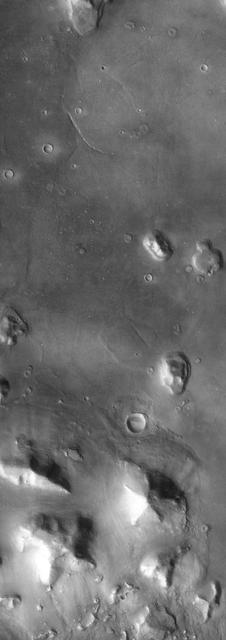
The so-called Face on Mars can be seen slightly above center and to the right in this NASA Mars Odyssey image. This 3-km long knob was first imaged by NASA Viking spacecraft in the 1970 and to some resembled a face carved into the rocks of Mars.
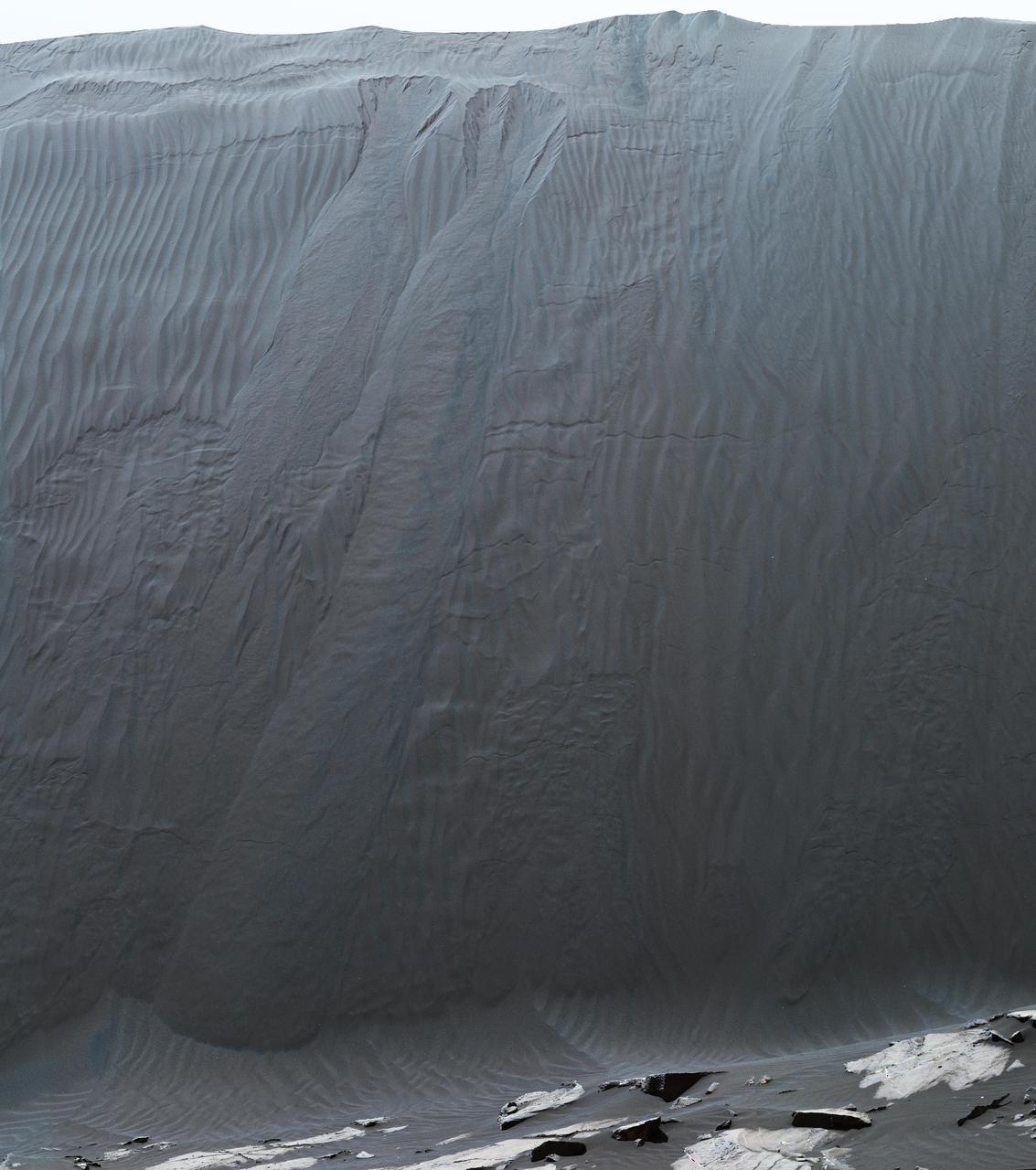
This view combines multiple images from the telephoto-lens camera of the Mast Camera (Mastcam) on NASA's Curiosity Mars rover to reveal fine details of the downwind face of "Namib Dune." The site is part of the dark-sand "Bagnold Dunes" field along the northwestern flank of Mount Sharp. Images taken from orbit have shown that dunes in the Bagnold field move as much as about 3 feet (1 meter) per Earth year. Sand on this face of Namib Dune has cascaded down a slope of about 26 to 28 degrees. The top of the face is about 13 to 17 feet (4 to 5 meters) above the rocky ground at its base. http://photojournal.jpl.nasa.gov/catalog/PIA20283
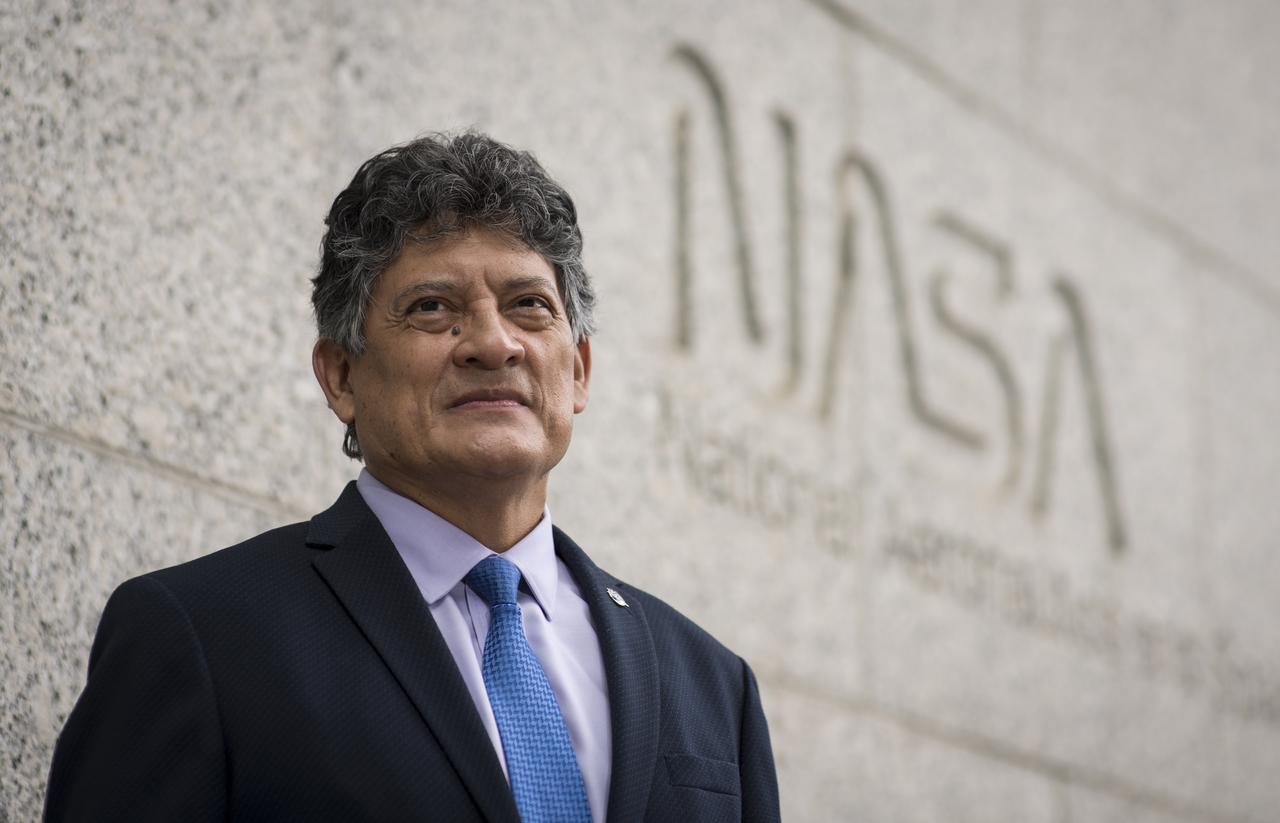
“My mother always instilled and made me appreciate the value of hard work and education. That was my pillar. We are a large family. I have family in Peru, still. I have family members in Europe, in Mexico, and across the U.S. They all face challenges every day, and that motivates me to keep moving forward. The military was no exception. It’s a challenging career. I’ve participated in war environments and peacekeeping operations. When I retired from the military, I took the uniform off one day and put on civilian clothes the next day and went on to work for the Department of Defense. I progressed in my public service career and went on to National Oceanic and Atmospheric Administration. Then, I finally came to NASA. I have always admired NASA. I remember since 1968, hearing about all the missions and projects and accomplishments. The reputation that NASA has! I researched how logistics work for NASA’s missions. That’s why I prepared myself. The military provided me a strong logistics background. I got a Master degree in Public Administration because my goal was to end up working for NASA. And I did so, on my second attempt. I started working for NASA’s Logistics Management Division, and served as Deputy Director. Working at NASA is something very special. I find myself surrounded by a group of professional individuals, working in a complete camaraderie environment. Yes, it has been a challenge, to get to work for NASA. But it’s worth it, every single day.” NASA Program Executive Manager for the Office of Insfrastructure, Miguel Angel Rodriguez Maco, poses for a portrait outside NASA Headquarters in Washington DC, Wednesday, Sept. 2, 2020. Photo Credit: (NASA/Aubrey Gemignani)
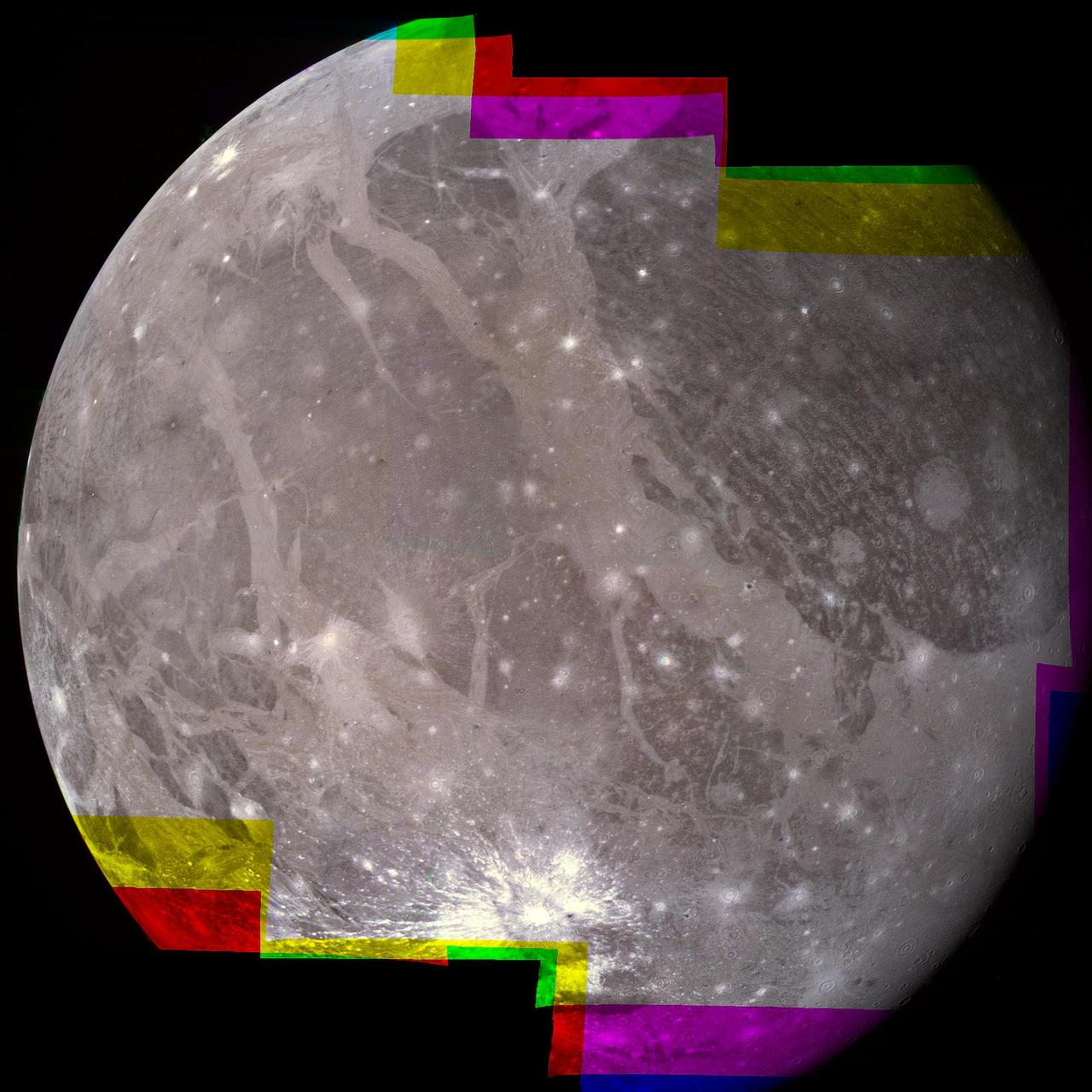
The hemisphere of Ganymede that faces away from the Sun displays a great variety of terrain in this mosaic from NASA Voyager 2. http://photojournal.jpl.nasa.gov/catalog/PIA00081
![“I love working in STEM. There's something about working at NASA, where you see new possibilities and amazing things happen all the time. During my first job at NASA [I'll never forget], I was working in the newsroom and was sent a draft press release about the discovery of new exoplanets. I got so excited and thought, I can't believe that I'm one of the first people reading about this discovery, and then tomorrow at noon, it will be released to the public, and everyone will feel this. I felt like an explorer, like I had made this amazing discovery on my own, but really, I was just reviewing a press release. “I get to see that excitement on the faces of the next generation, kids of all ages, when they're able to connect something on their own, or they have this new revelation of the world because that's what the agency has brought to them. That palatable excitement reminds me of how excited I was, and it's this kind of beautiful life cycle because it reenergizes me and gets me excited as well. “NASA is so big on this own, and for kids to feel like they're a part of it, it symbolizes this connection to great exploration and new discoveries. It makes them feel just as important and gets them excited thinking about what they can contribute or about learning something new. I've seen just one spark of curiosity create a great burning love and fire for learning. “Some of the kids I've talked to [during STEM outreach] will tell me they like something, and then I see it's created a more meaningful connection in the neighborhood. They'll dress up as astronauts for Halloween, or when they see me, they'll high-five me and tell me something they learned in science class. It spurs them on to not just make the connection at NASA but make the connection within themselves that they could do this if they wanted to. Not only can they be a part of STEM, but they realize they can also have a variety of interests in their life.” – Katherine Brown, Public Affairs Offi](https://images-assets.nasa.gov/image/NHQ202302280007/NHQ202302280007~medium.jpg)
“I love working in STEM. There's something about working at NASA, where you see new possibilities and amazing things happen all the time. During my first job at NASA [I'll never forget], I was working in the newsroom and was sent a draft press release about the discovery of new exoplanets. I got so excited and thought, I can't believe that I'm one of the first people reading about this discovery, and then tomorrow at noon, it will be released to the public, and everyone will feel this. I felt like an explorer, like I had made this amazing discovery on my own, but really, I was just reviewing a press release. “I get to see that excitement on the faces of the next generation, kids of all ages, when they're able to connect something on their own, or they have this new revelation of the world because that's what the agency has brought to them. That palatable excitement reminds me of how excited I was, and it's this kind of beautiful life cycle because it reenergizes me and gets me excited as well. “NASA is so big on this own, and for kids to feel like they're a part of it, it symbolizes this connection to great exploration and new discoveries. It makes them feel just as important and gets them excited thinking about what they can contribute or about learning something new. I've seen just one spark of curiosity create a great burning love and fire for learning. “Some of the kids I've talked to [during STEM outreach] will tell me they like something, and then I see it's created a more meaningful connection in the neighborhood. They'll dress up as astronauts for Halloween, or when they see me, they'll high-five me and tell me something they learned in science class. It spurs them on to not just make the connection at NASA but make the connection within themselves that they could do this if they wanted to. Not only can they be a part of STEM, but they realize they can also have a variety of interests in their life.” – Katherine Brown, Public Affairs Offi
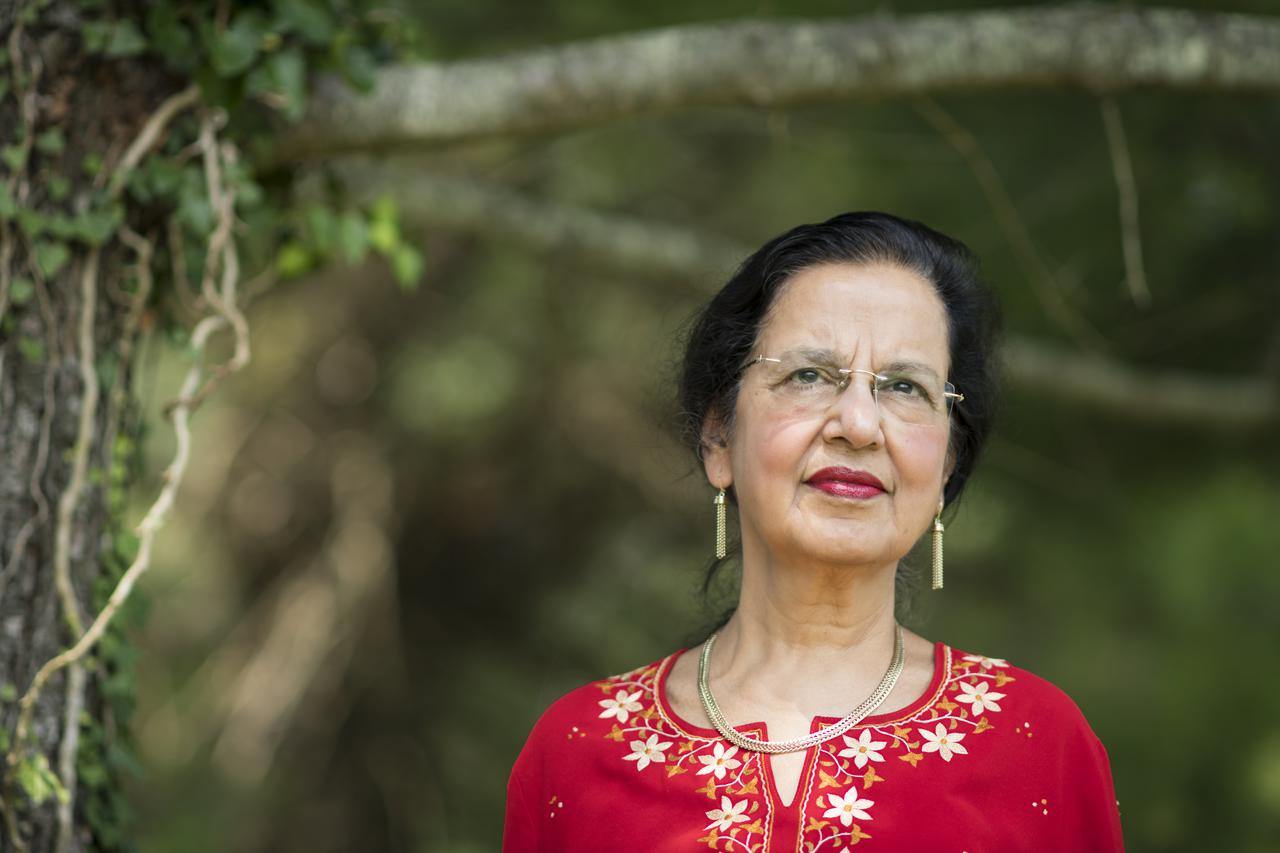
“I was born in India soon after we got independence from the British. So we were just beginning to get access to education. My mother was very keen that her daughters get an education. She was a big motivating force behind my interest in science. Since I was really little, she would say, ‘This daughter of mine is going to be a scientist.’ “And I loved nature. In those days, the monsoon would make India come to life with flowers and creepy-crawlies and all kinds of little creatures. I would just go out, eagerly looking for new forms of life. I was always curious. And I remember the night sky — just trying to count all the stars. We didn’t have electricity so it was very dark. You could see the Milky Way, it was so clear. “When Sputnik was launched, it came out in the newspaper that you would be able to see it pass overhead at 5 in the morning. And my grandmother woke up everyone — the entire household — to see it. There was a big crowd in the backyard to watch Sputnik go by. "Then, Yuri Gagarin made a tour of India. He came to our city — Lucknow — and there was a reception for him. My mother got invitations for all of us to see the cosmonaut. We were just little kids. We ran right to the stage — there was no security then — and said hello to him. He gave us little booklets and autographs. It was a big inspiration for me. I remember just staring at that booklet he gave me. I kept it for years.” NASA Program Scientist, Dr. Hashima Hasan, poses for a portrait in her backyard, while working from home during the COVID-19 pandemic, Monday, July 6, 2020 in Maryland. Hasan currently works at NASA Headquarters as a program scientist on the agency’s Nuclear Spectroscopic Telescope Array (NuSTAR) spacecraft, the Keck Observatory, and the NASA Astrophysics Archives, and is the deputy program scientist for NASA’s James Webb Space Telescope. Photo Credit: (NASA/Aubrey Gemignani)
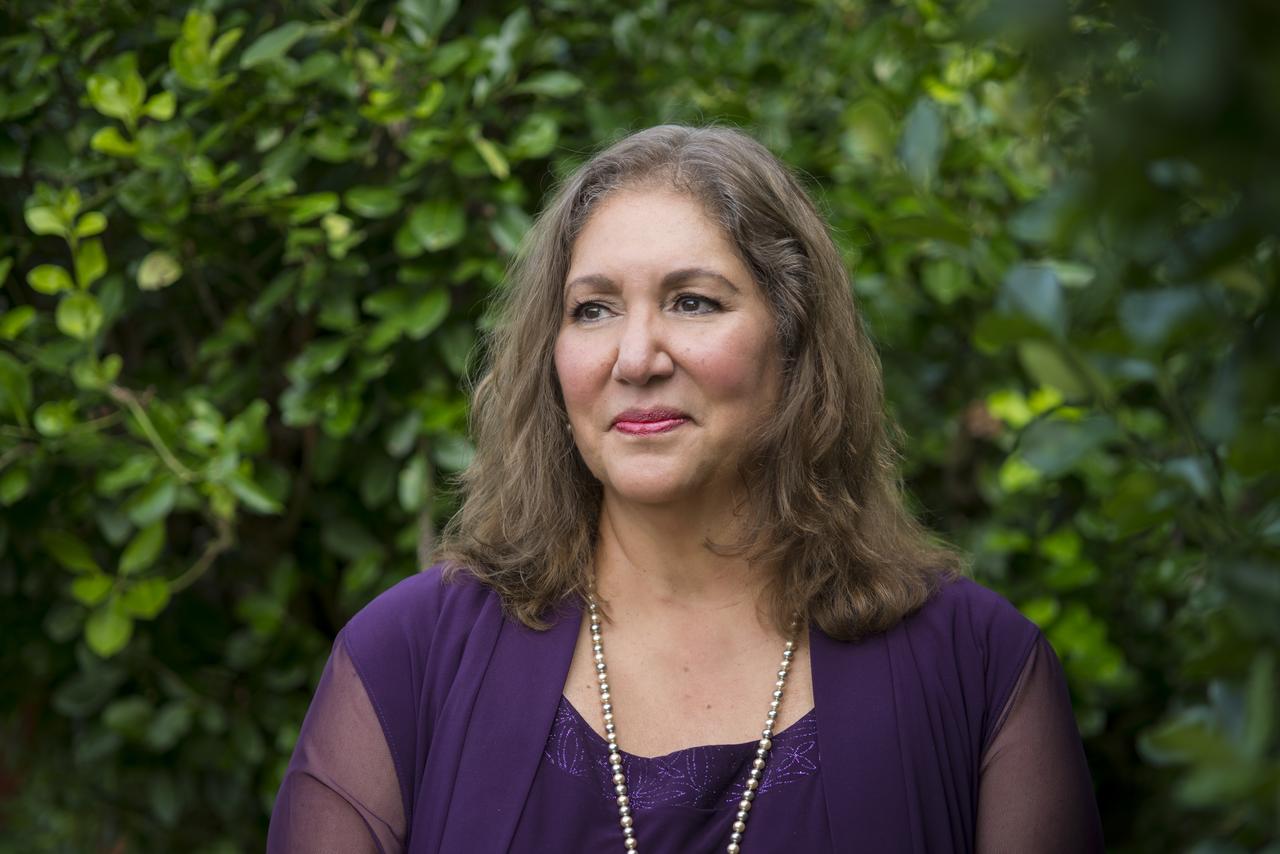
“I grew up in Venezuela and studied in the military high school Gran Mariscal de Ayacucho. They would frequently bring in speakers, usually professional that were doing important work. Here comes Dr. Humberto Fernandez-Moran, a Venezuelan scientist working at NASA He was speaking to us about teamwork and he told an anecdote about this janitor that was mopping the floors in one of the NASA installations, when someone asked the man what he was doing. The janitor turned around and said “I’m sending people to the Moon.” In that moment I thought, “Wow, NASA is a really inclusive place to work because they value all the contributions of the people that work for them.” When I immigrated to the United States, I didn’t start my career at NASA. I worked in various positions in the private and public sector. When I saw this position open and applied, I was reminded of that story. Later on, I worked for NASA as part of the new employee orientation team for a little over a year I would share that story with the new hires to let them know that NASA was extremely inclusive and that their work would matter. Regardless of the scope of their contribution you were part of a team working toward the same goal. When someone asks me about my job? I respond with immense pride I am part of the Office of the General Counsel – International Law Practice Group and I send astronauts into space." NASA Legal Administrative Specialist, Linda Perozo, poses for a portrait outside her home in Maryland, Wednesday, Sept. 16, 2020. Photo Credit: (NASA/Aubrey Gemignani)
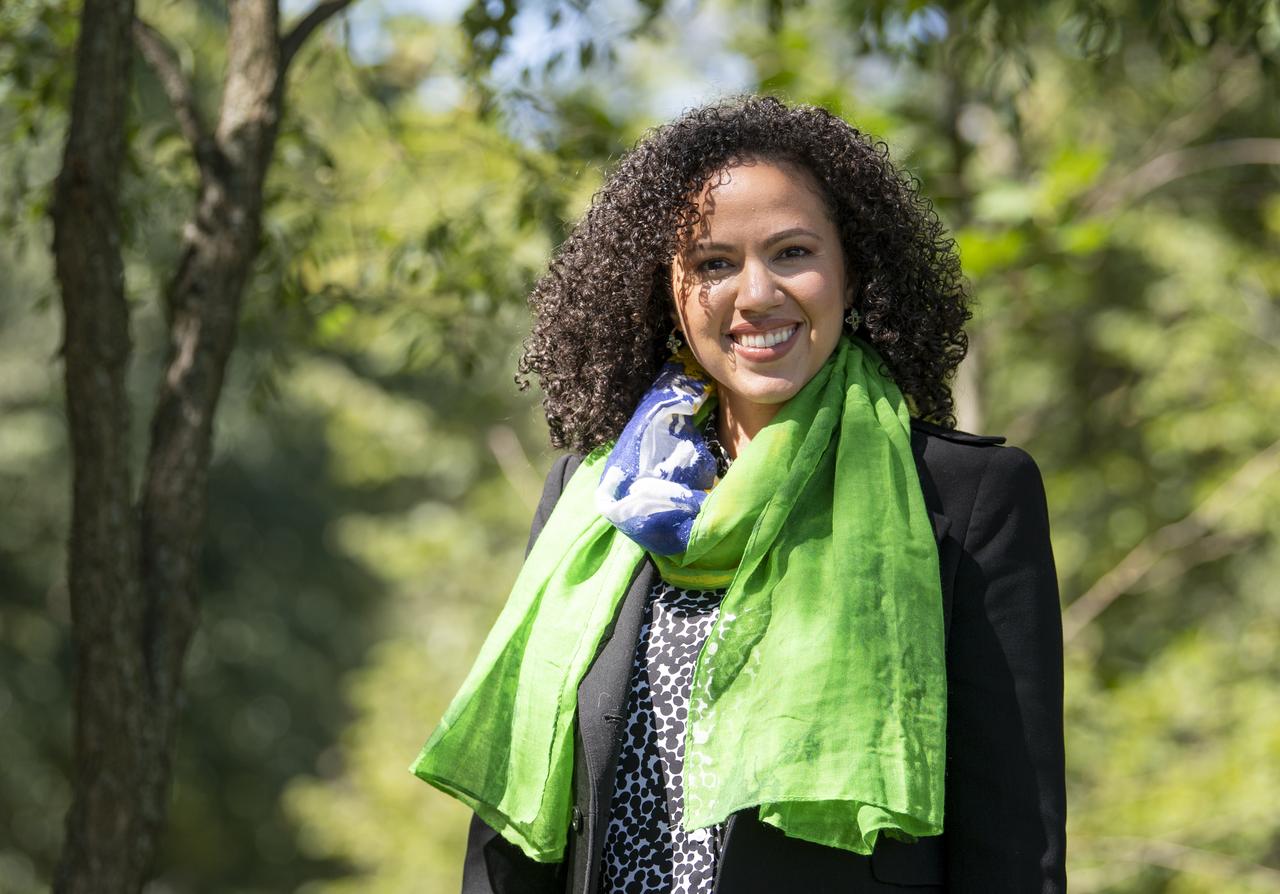
“My background and experience have been unique. I didn't grow up in space. I didn't grow up in a family of people who watched the Moon landing. I came to discover space at a much later age. That and the fact that I come from the cultural background I come from (being born and raised in Puerto Rico), has always made me question some of the assumptions about why we do what we do in space and how we go about it. “In my experience and in my career that has proven effective because people want the challenge, and they want to engage everyone and make sure that the best of the best are participating. I have found myself in settings where my point of view has been valued because I was asking some of the questions that some folks took for granted. “I think it’s also that I came at a good time when we are having these important discussions about diversity and inclusion, and people do want these different kinds of views. Space is so international now that this diversity is such an important aspect of it too. Even as an adult starting to learn about these topics, it was natural for me to be having these discussions with other colleagues from Latin America and South Africa and Australia. It’s a key feature of my own experience but also, I think, the time that we’re living right now, which is really exciting.” Laura M. Delgado López, Policy Analyst for NASA’s Science Mission Directorate, poses for a portrait on Monday, Sept. 21, 2020 in Virginia. Photo Credit: (NASA/Joel Kowsky)
“Since I was 13, I’ve had maybe two or three jobs. Right now, I feel like I have four jobs. I have the NASA job, the Navy job. I’m also the chair for the Hispanic Outreach and Leadership Alliance, and I’m a new dad. It’s a lot. They say that the more you do, the more you can do. That’s a motto we have in the military. It’s true. The more you do, the more you can do, and unless you try to do something, you won’t know if you can. I have this philosophy in life that you’re only ever going to do things related to four categories: fitness and health, social and family time, your career, or faith and spirituality. You’re never, ever going to get those things perfectly in balance because nobody’s perfect. But I think the goal is to try to maintain balance. You’re going to have periods in your life where you may have a lot of work assignments and you’re spending a lot of time on the career side of things, but you need to also remember that you owe some time to your family and your friends. Are you taking time off for your health? Recognize when you’re a little bit off-balanced on one end. Success is in the journey of trying to work your way back to balanced.” Magdiel Santana, Senior Program Analyst at NASA Headquarters, poses for a portrait, Tuesday, Sept. 1, 2020, near NASA Headquarters in Washington, DC. Photo Credit: (NASA/Joel Kowsky)
"I still can't get over the fact that I actually work at NASA. If you had told the little girl years ago who was watching the shuttle launches from our family room in Uganda, I could never believe it would be possible. "It’s been such a great journey because the rejection along the way instilled in me the humility and determination I needed to work harder and believe in myself. I learned that if I believed in myself and not take it personally, great things will come my way. I’ve worked with people who felt comfortable teaching me new things and letting me explore. Legacy is really important to me. Many who came before gave me the opportunity to have a seat at the table. Now that I am here, I want to ensure I do my best so others can get access to more opportunities and those at the table can see past their differences, and are not looked at as just a woman, or as a woman of color, but as a person who actually knows what they’re talking about." Tabisa Taliwaku Kalisa, Communications Manager in the Office of Procurement at NASA Headquarters, poses for a portrait, Thursday, Feb. 4, 2021, in Virginia. Photo Credit: (NASA/Joel Kowsky)
"When I left college, I went to go work in investment banking on Wall Street. It was one of these experiences where people said, ‘that’s the most awesome job ever. How did you manage to do that?’ But once I was inside that world, I felt very disconnected from people. I felt like the world was passing me by while I was inside cars going to business meetings and dinners. And I really wasn’t interacting with people, or understanding the challenges they were going through. So I applied to a number of medical schools. Once I got my letters of acceptance, I just chose one and I went. Then I felt like I was really doing what I wanted to do. I had a tremendous experience in my training and my classes. I just felt like, ‘wow. This is what I’m meant to do.’ Everybody has their thing. Everybody has a place where they shine. And for me, it’s being a physician, helping people heal, solving medical problems. Helping people feel better in their own bodies, no matter what that looks like." NASA Headquarters Medical Director, Dr. Andrea Fore, poses for a portrait while working from home during the COVID-19 pandemic, Monday, July 13, 2020 in Maryland. Photo Credit: (NASA/Aubrey Gemignani)

"About 10 years ago, I started taking improv comedy classes when I lived back in Atlanta. It really teaches you how to go with the flow, to be present in a situation, to be ready for things to go wrong, and to be able to jump in and save a conversation or help somebody who is struggling to find the right words. These are things we do in our everyday lives that we can also do on stage, and I love that aspect of it. "I started using the tools of comedy to rewrite popular songs – such as from the musical Hamilton – to be about space. I love making people laugh and smile and think there’s something really special about finding things funny or amusing in a respectful way. It is a different level of connection than, ‘Oh, that's interesting.’ It ignites a different emotional response in you, and I think there’s a place for that in science communication as well. "Often in popular culture, there’s a bit of a stigma around people who enjoy learning about space and science; that it’s only for nerds. But if you insert it into a genre that you wouldn't normally find it in, like music or comedy, then suddenly you’re connecting with people on a different level. They might not go out and read a textbook, but they might come away from a song or a comedy show thinking, ‘Huh, I thought I was just going to this event for entertainment, but I actually learned something.’ That’s cool! It’s like you’re seasoning it or putting a little sugar in it. "Something improv comedy taught me is: When you start to let go and not take yourself too seriously and embrace the spontaneity of a situation, that’s really freeing, and people respond well to that." Elizabeth Landau, Senior Communications Specialist for NASA’s Science Mission Directorate, poses for a portrait, Friday, July 30, 2021, in Washington. Photo Credit: (NASA/Bill Ingalls)
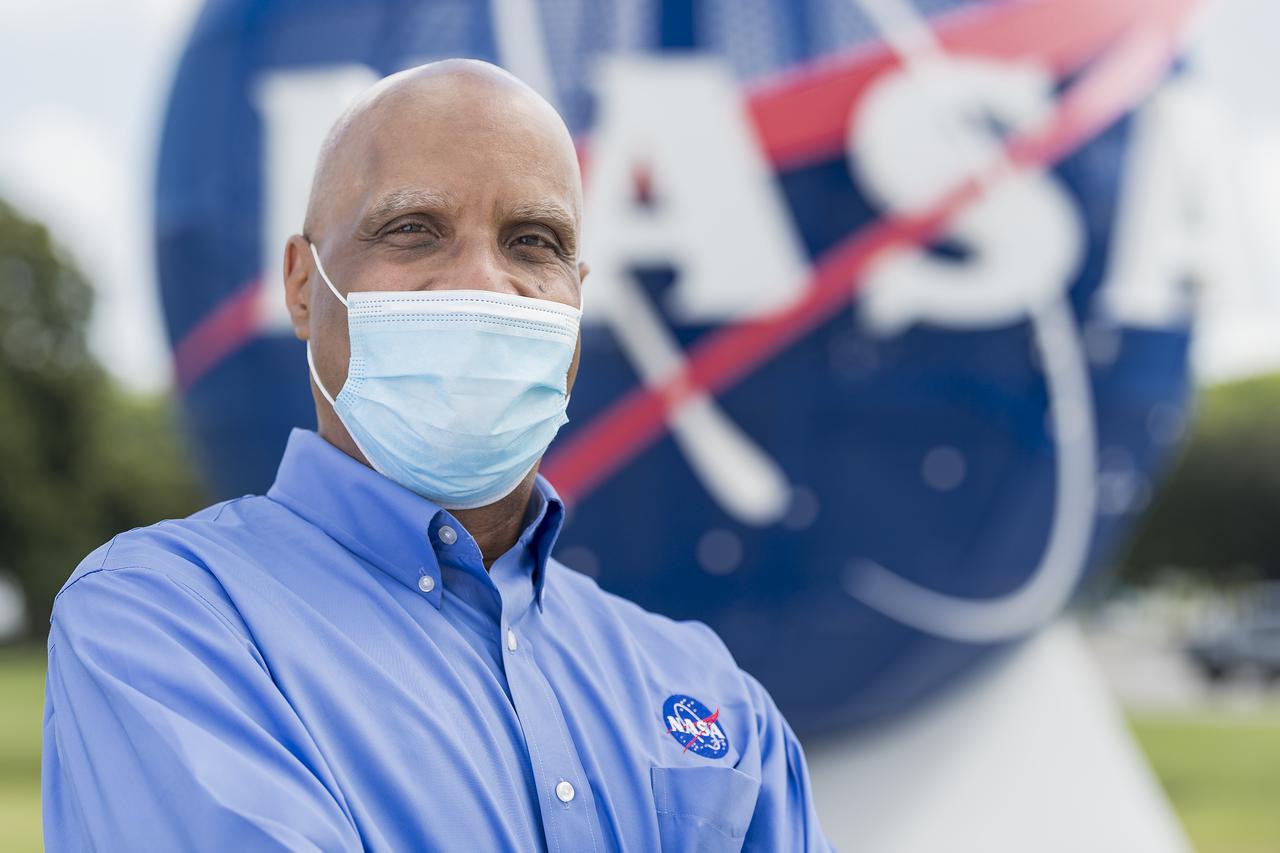
Portrait of Robin "Rob" Lee of the Office of Diversity & Equal Opp. Branch, in front of NASA Langley's "Meatball." The portrait was done for Thalia Patrinos at NASA Headquarters as part of "Faces of NASA" project. Due to the COVID-19 pandemic, masks were mandated by Governor Northam in Virginia in public settings. "Well, little did I know, even at a young age, he instilled in me the importance of seeing people for people. And being able to help people and being able to meet them in their time of need. And that carried me throughout my entire life. Even still today.” — Robin Lee, Director of Office of Diversity and Equal Opportunity, Langley Research Center
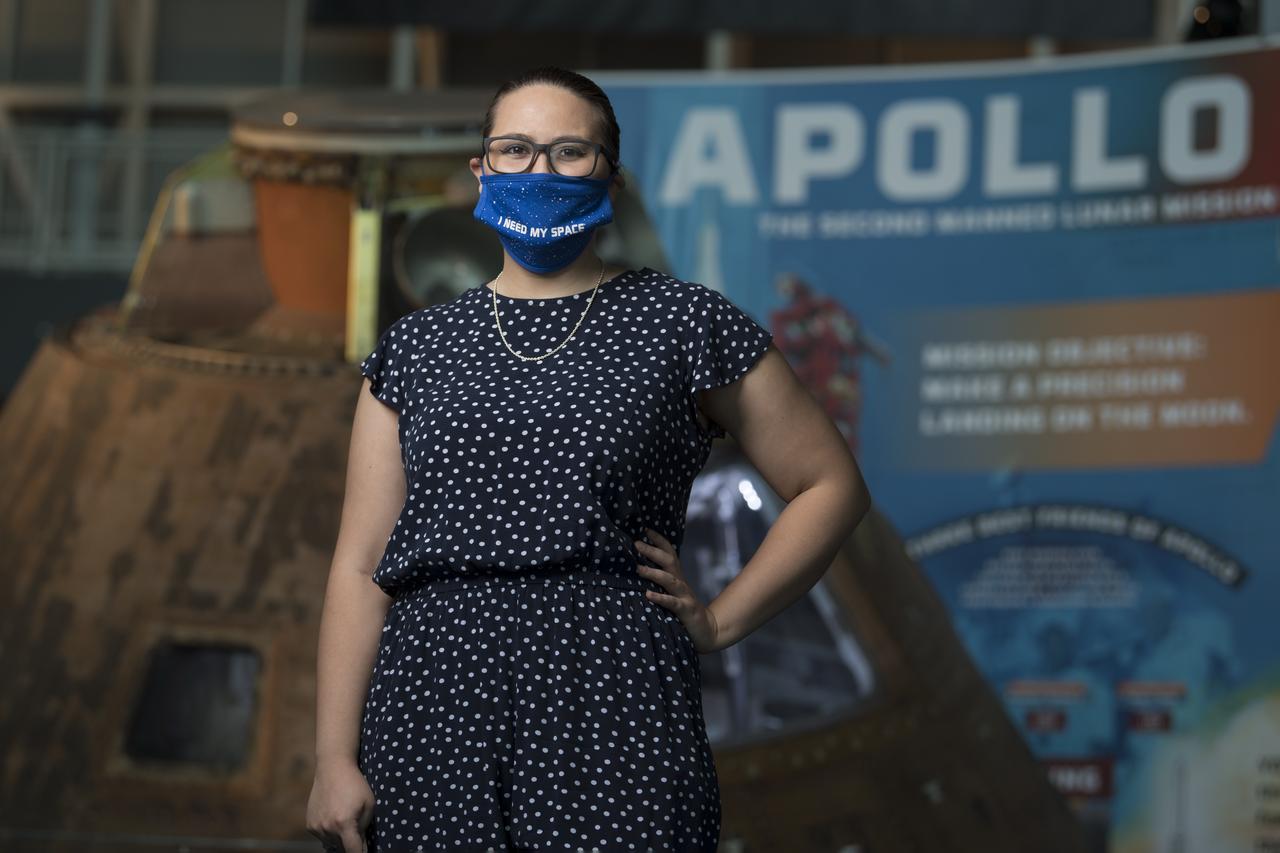
Portrait of Casey Denham in front of the Apollo 12 Command Module "Yankee Clipper" display at the Virginia Air and Space Center in Hampton, Virginia. Due to the COVID-19 pandemic, masks were mandated by Governor Northam in Virginia in public settings. This was for the faces of NASA project. "Now my whole family likes to brag that they have a rocket scientist daughter who works at NASA.” — Casey Denham, Pathways Intern, Langley Research Center
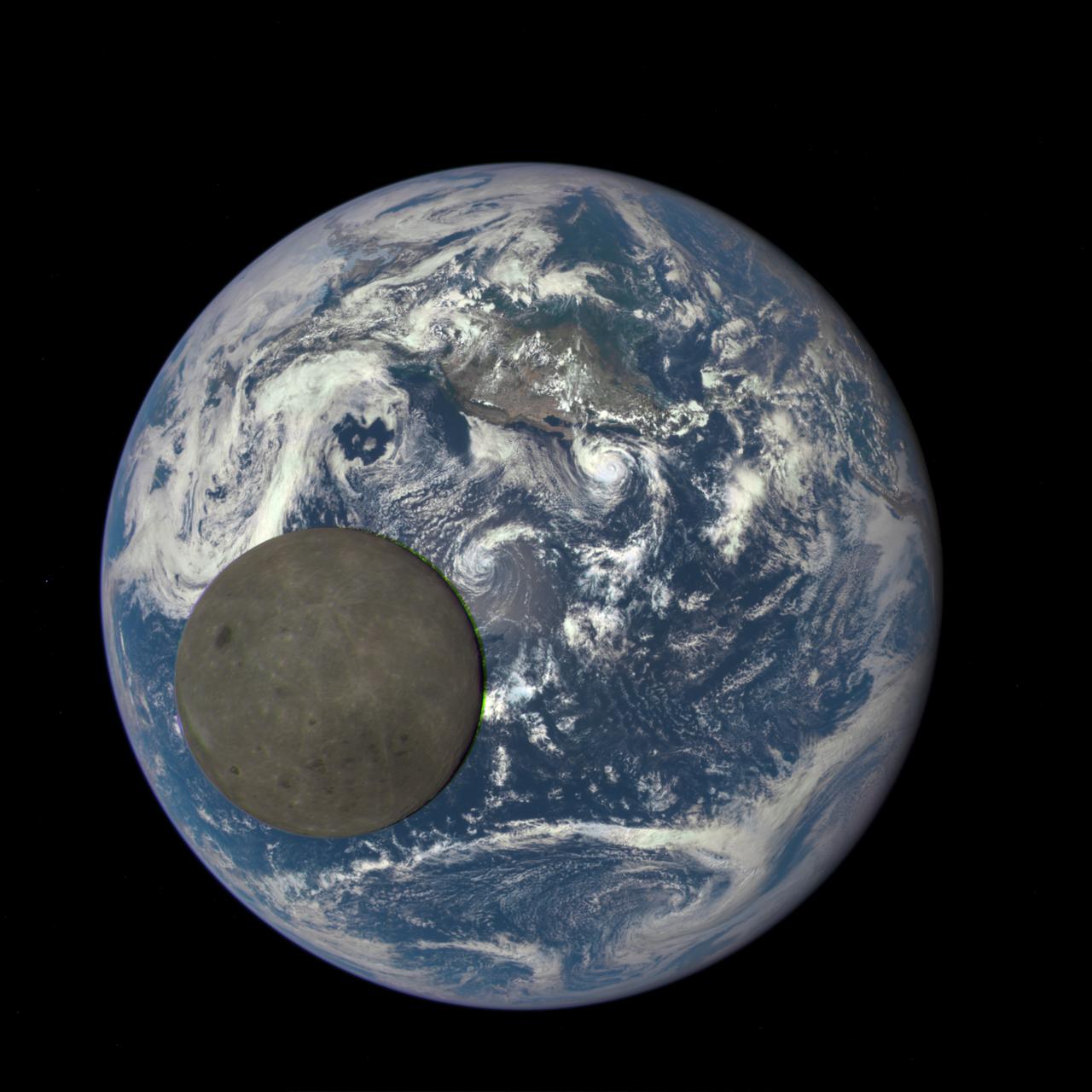
This animation still image shows the far side of the moon, illuminated by the sun, as it crosses between the DISCOVR spacecraft's Earth Polychromatic Imaging Camera (EPIC) camera and telescope, and the Earth - one million miles away. Credits: NASA/NOAA A NASA camera aboard the Deep Space Climate Observatory (DSCOVR) satellite captured a unique view of the moon as it moved in front of the sunlit side of Earth last month. The series of test images shows the fully illuminated “dark side” of the moon that is never visible from Earth. The images were captured by NASA’s Earth Polychromatic Imaging Camera (EPIC), a four megapixel CCD camera and telescope on the DSCOVR satellite orbiting 1 million miles from Earth. From its position between the sun and Earth, DSCOVR conducts its primary mission of real-time solar wind monitoring for the National Oceanic and Atmospheric Administration (NOAA).
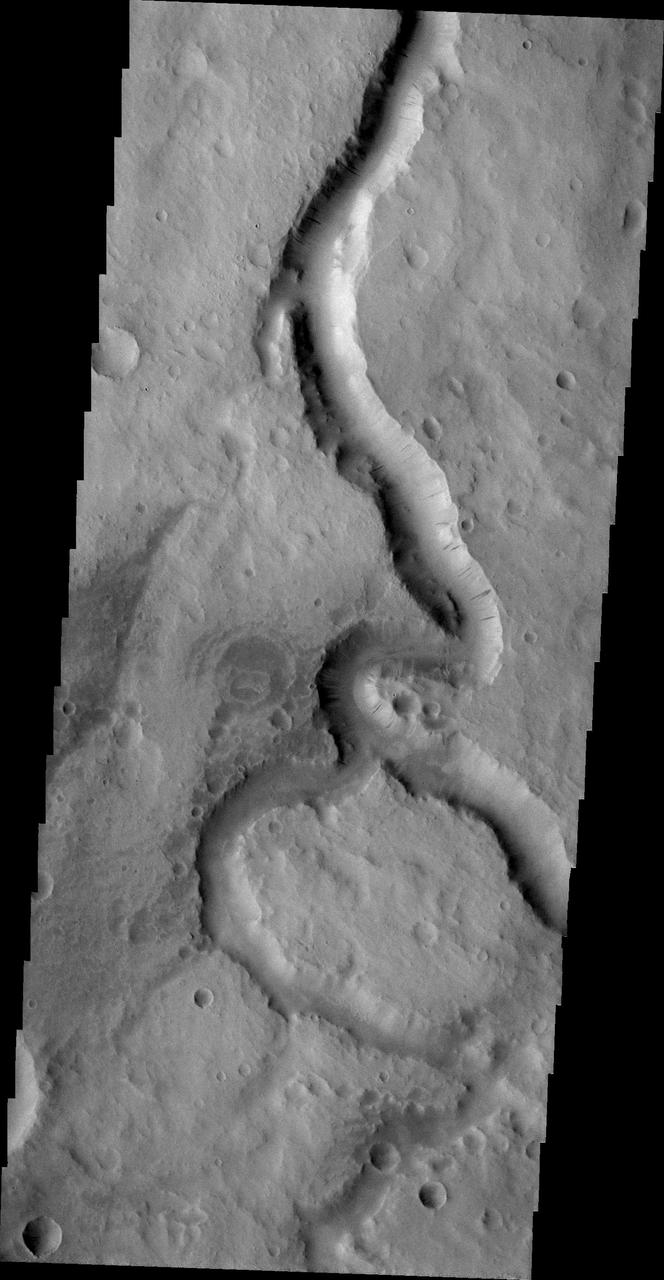
This image taken by NASA 2001 Mars Odyssey spacecraft shows a portion of Scamander Vallis. Dark slope streaks are also visible on the west-facing wall of the channel.

This image taken by NASA Mars Reconnaissance Orbiter shows gullies in a semi-circular trough in Noachis Terra. The gullies are observed to face all directions.
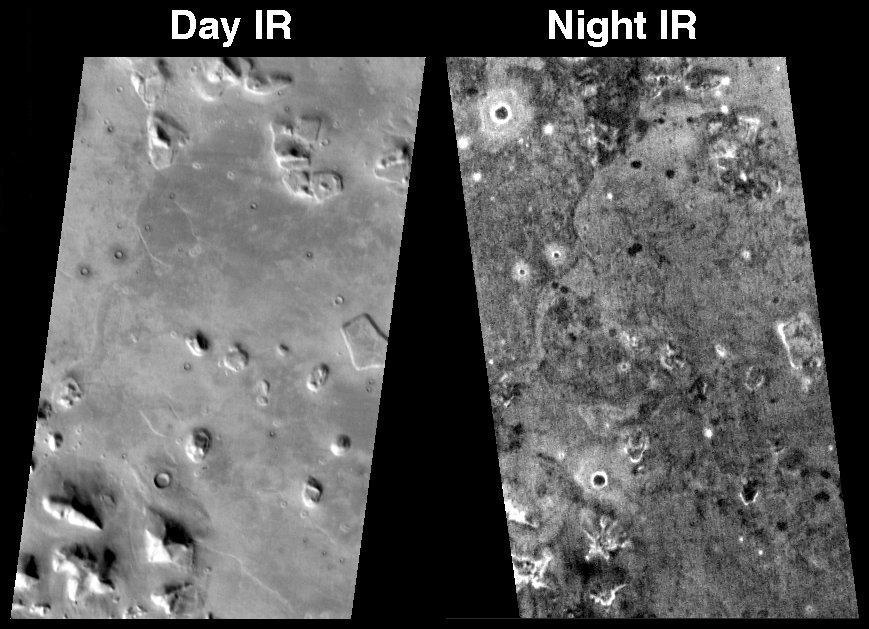
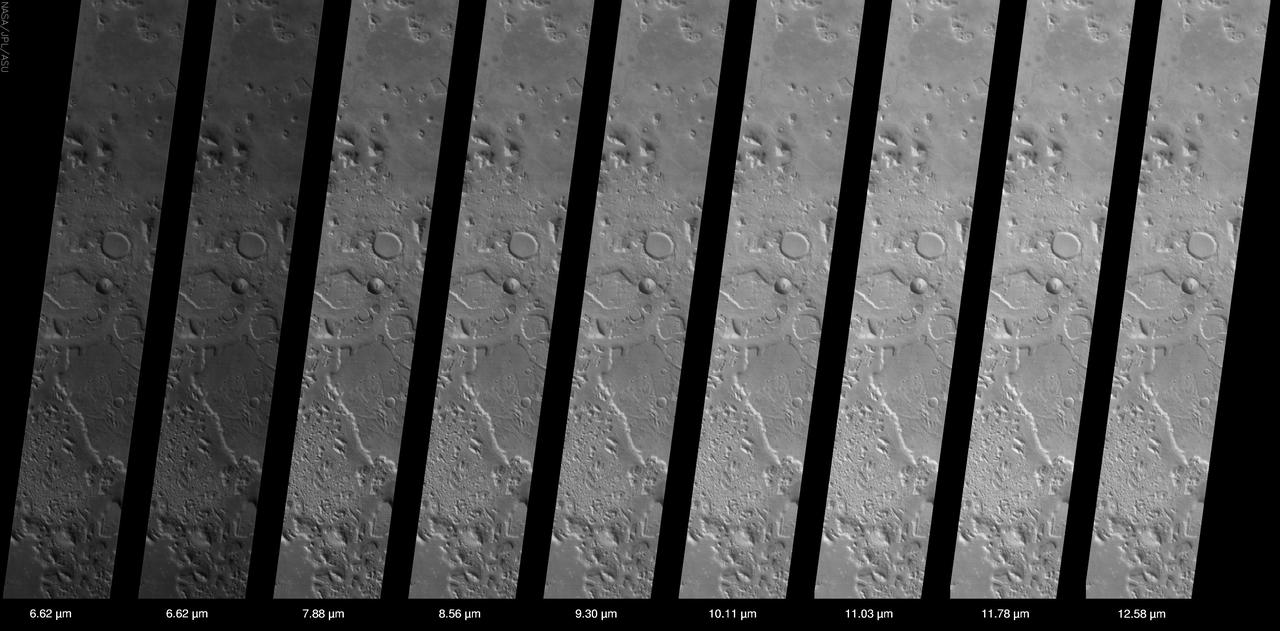
This pair of infrared images from NASA Mars Odyssey spacecraft shows the so-called face on Mars landform viewed during both the day and night.
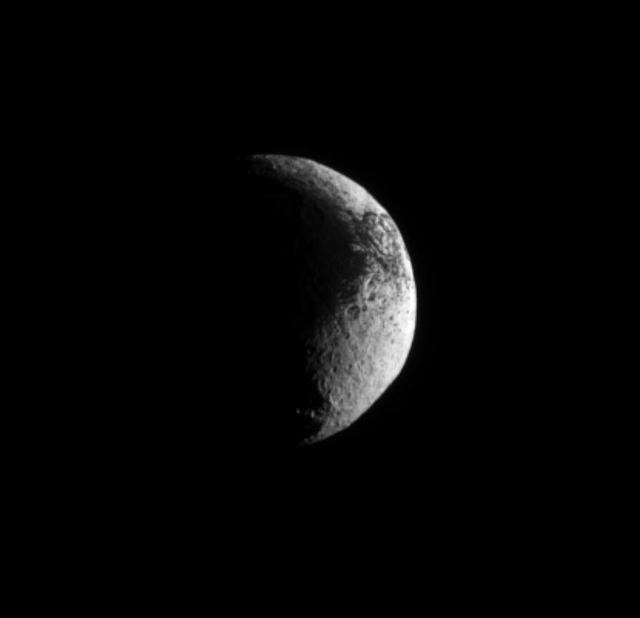
NASA Cassini spacecraft examines the rough dark-light dichotomy of the terrain on Saturn moon Iapetus. Lit terrain seen here is on the Saturn-facing side of Iapetus.
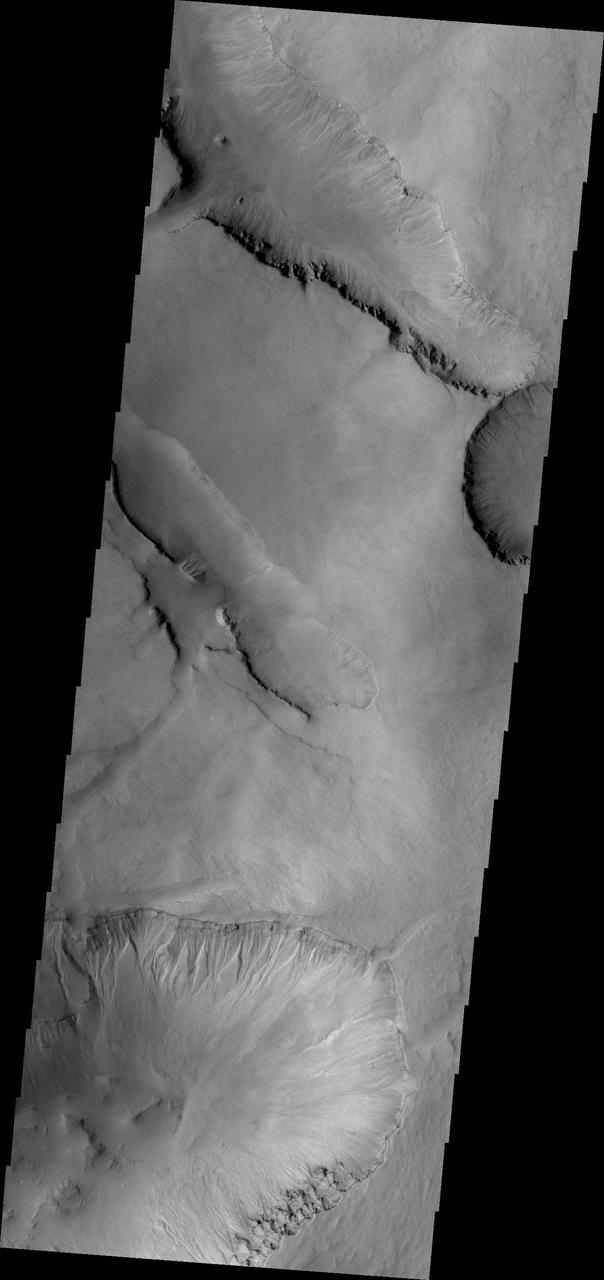
This image captured by NASA 2001 Mars Odyssey spacecraft shows gullies on the northern face of one of the large depressions that mark the inner rim of Asimov Crater.
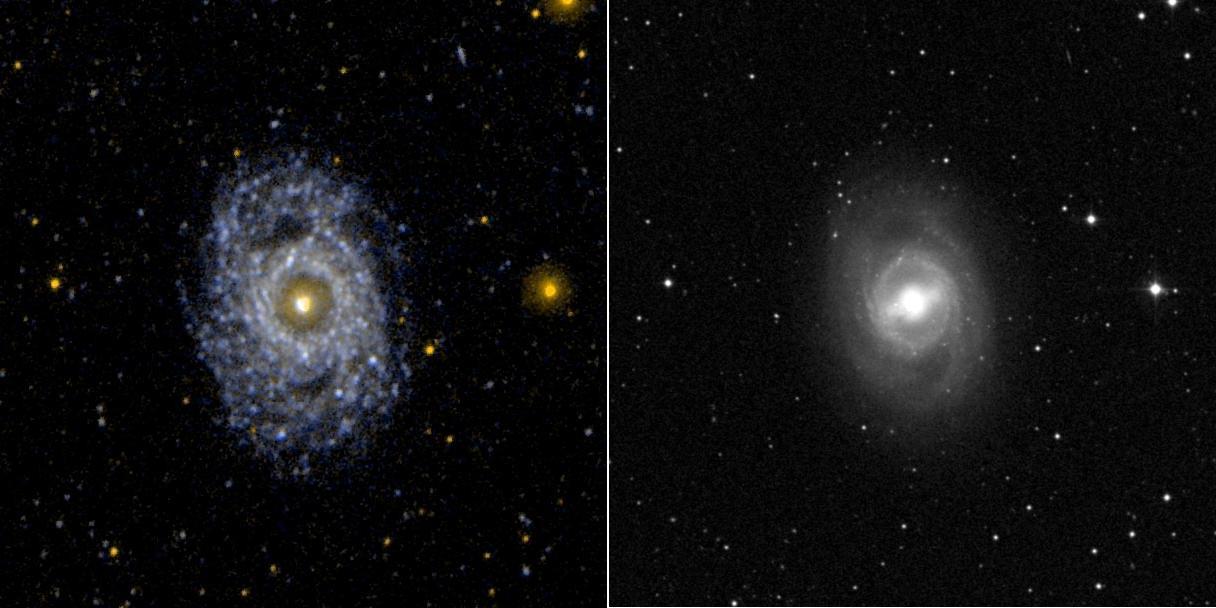
This ultraviolet image from NASA Galaxy Evolution Explorer left and visual image right of the face on barred and ringed spiral galaxy NGC 3351 M95.
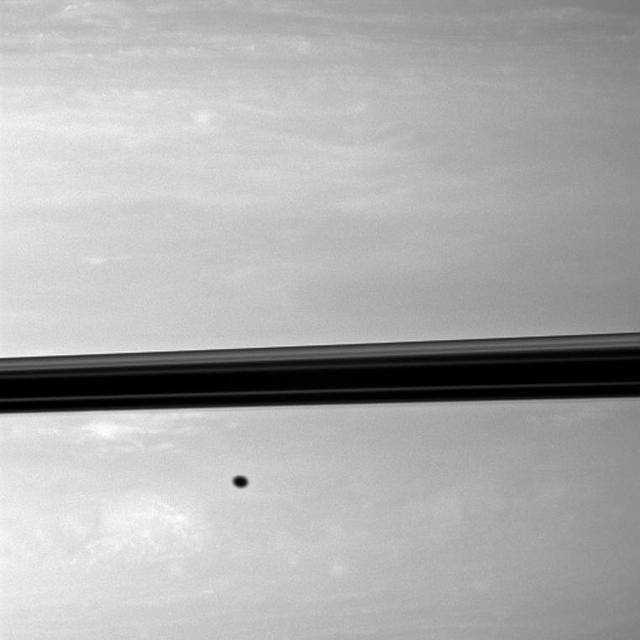
Appearing like a freckle on the face of Saturn, a shadow from the moon Enceladus blemishes the planet just below the ringplane in this NASA Cassini spacecraft image.

This dramatic view from NASA Cassini spacecraft looks across the region of Enceladus geyser basin and down on the ends of the Baghdad and Damascus fractures that face Saturn.
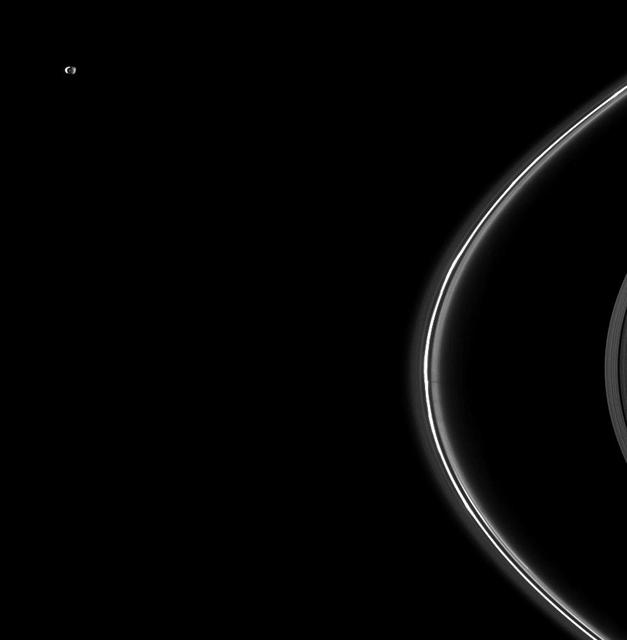
Janus, Saturn small moon named after the two-faced god, here displays two illuminated hemispheres taken by NASA Cassini spacecraft.
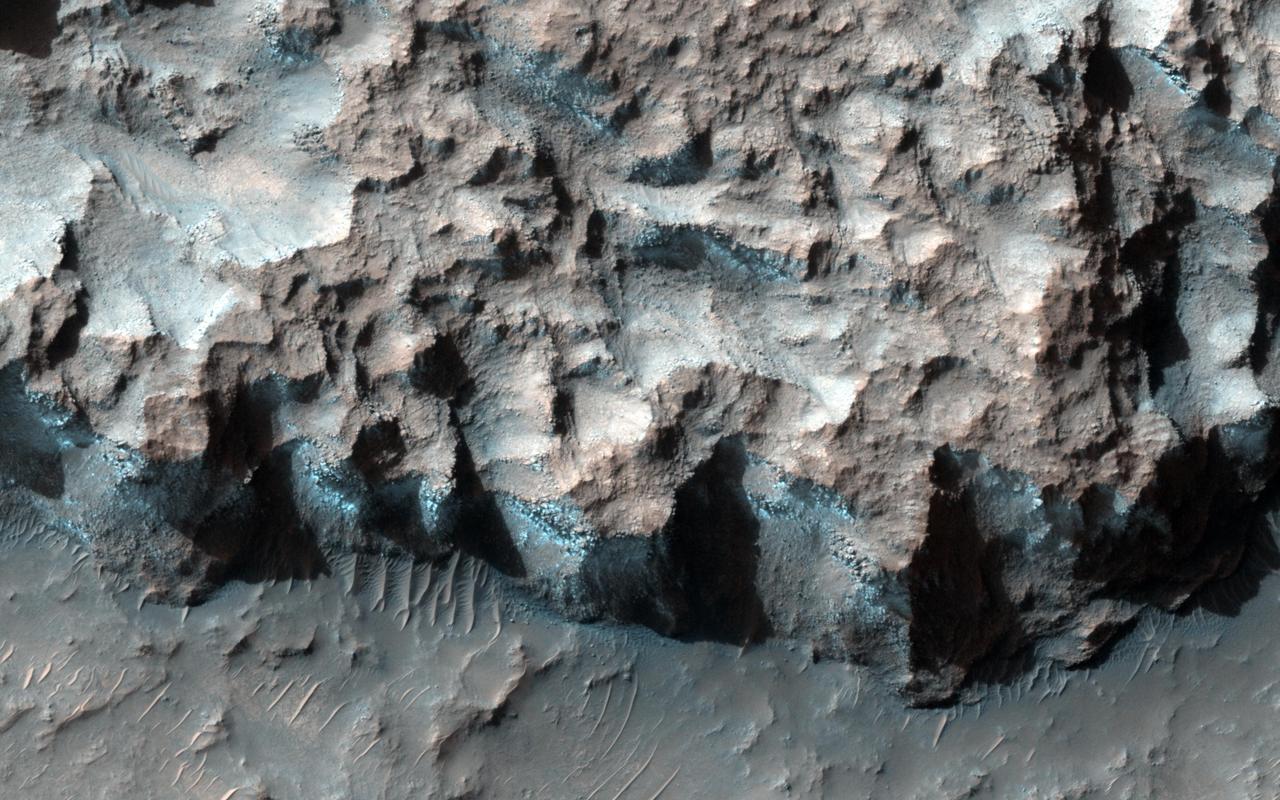
A south-facing escarpment in the Northwest Hellas region that was targeted for the phyllosilicates shows instances of bluish rock in this enhanced color image taken by NASA Mars Reconnaissance Orbiter.
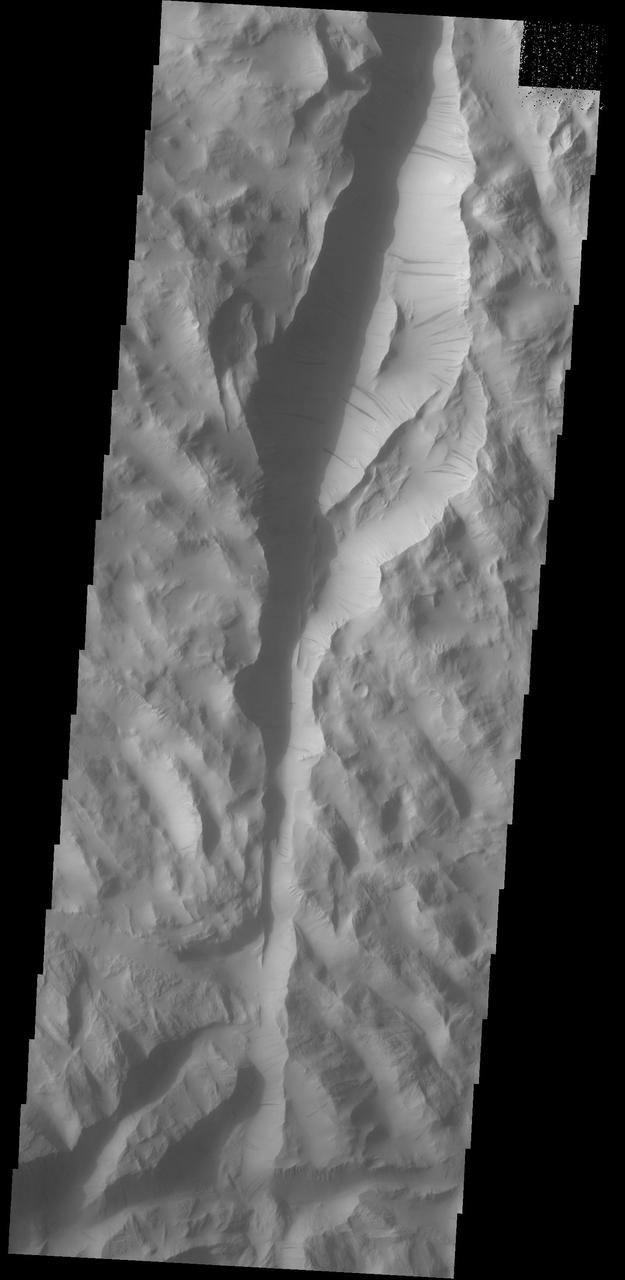
Dark slope streaks are a common feature on the cliff faces of Lycus Sulci as this image from NASA 2001 Mars Odyssey spacecraft shows.

This image captured by NASA 2001 Mars Odyssey spacecraft shows a portion of the northern cliff face and complex floor deposits of Ophir Chasma.

This image taken by NASA 2001 Mars Odyssey shows a portion of the floor of Coprates Chasma. Note the sand dune forms near the southern cliff face.
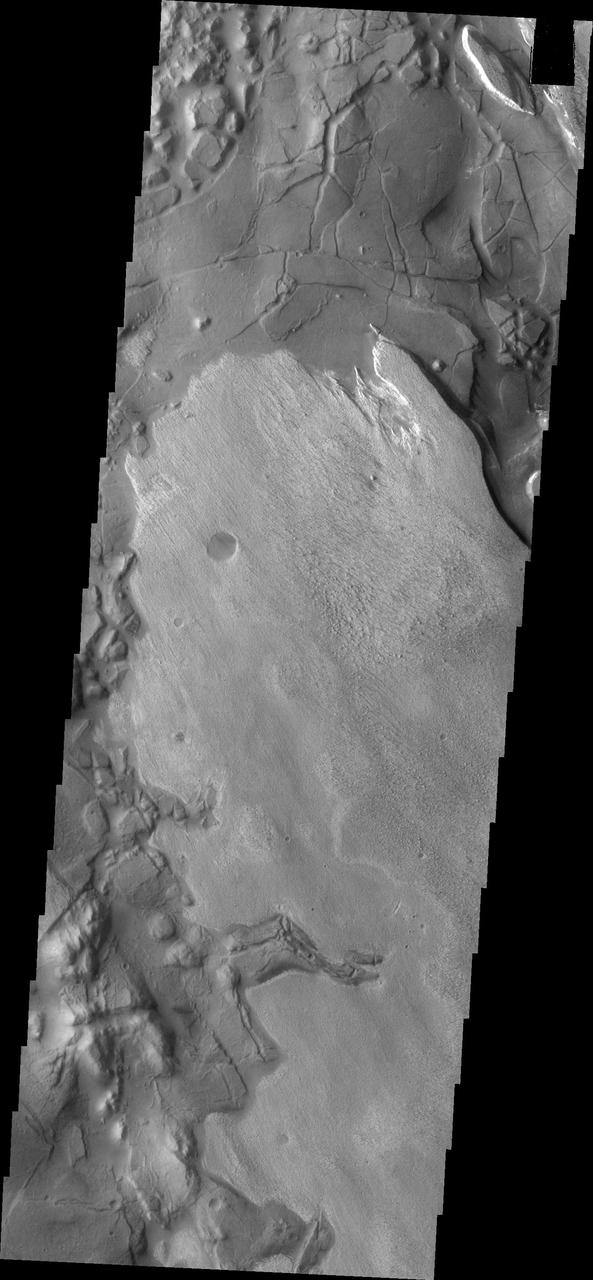
Do you see what I see in this image from NASA Mars Odyssey spacecraft? These layered deposits look like a giant bear facing to the left.
This set of images from NASA Mars Odyssey spacecraft shows the so-called face on Mars landform located in the northern plains of Mars.
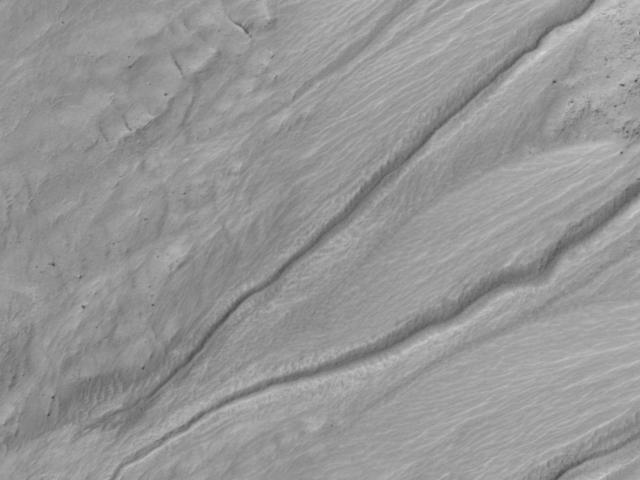
This image, taken by the HiRISE camera onboard NASA Mars Reconnaissance Orbiter is of a gully on a south-facing slope in middle southern latitudes of Mars.
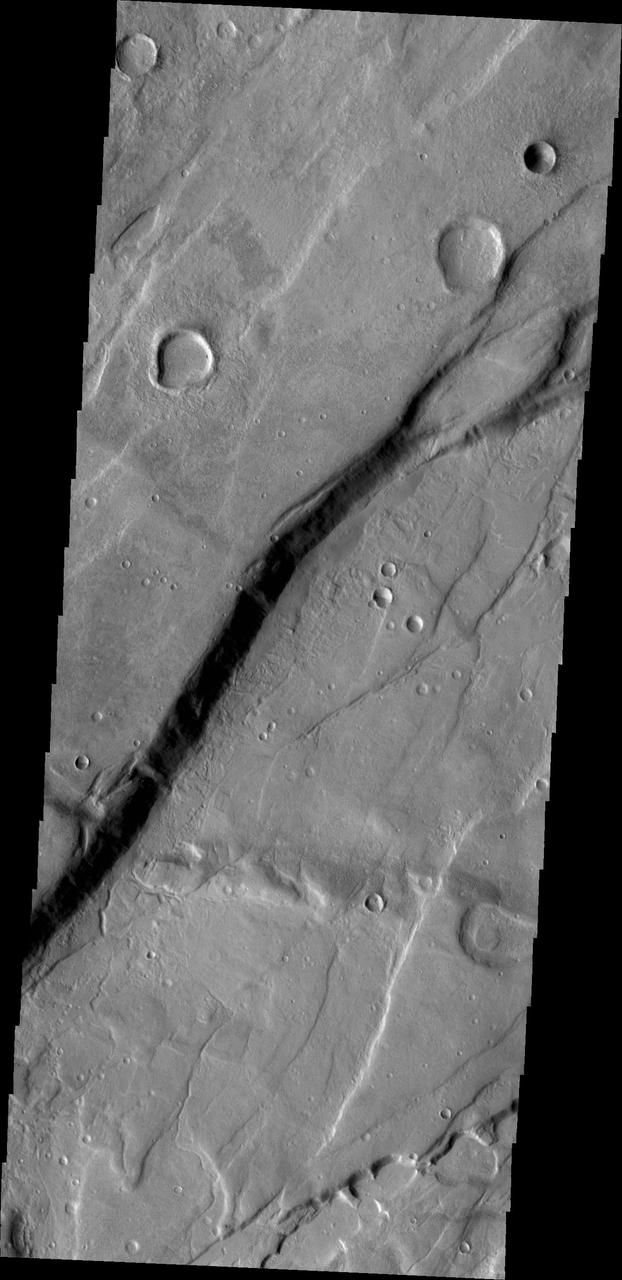
The cliff face in this image from NASA 2001 Mars Odyssey spacecraft was created by tectonic activity and is located in a region of Tempe Terra that is complexly fractured.
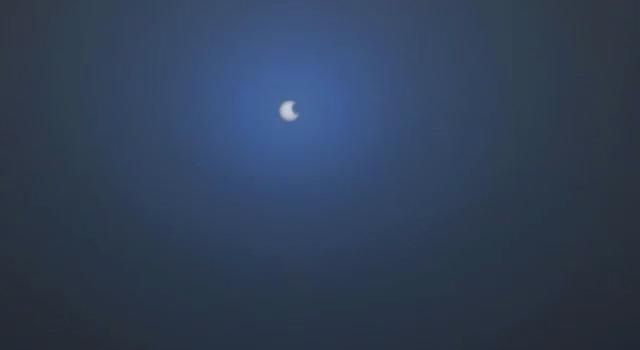
The larger of the two moons of Mars, Phobos, passes in front of the Sun face in this image from NASA Mars Exploration Rover Opportunity. A movie is available at the Photojournal.
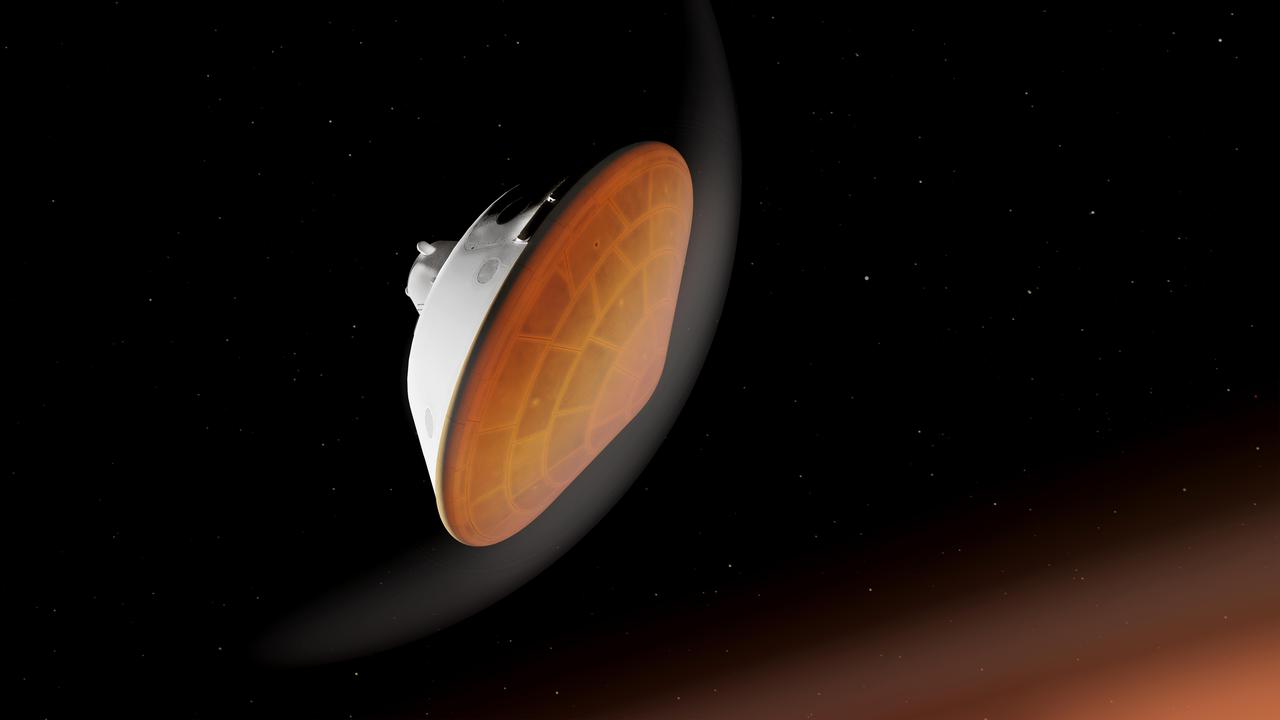
With its heat shield facing the planet, NASA's Perseverance rover begins its descent through the Martian atmosphere in this illustration. Hundreds of critical events must execute perfectly and exactly on time for the rover to land on Mars safely on Feb. 18, 2021. Entry, Descent, and Landing, or "EDL," begins when the spacecraft reaches the top of the Martian atmosphere, traveling nearly 12,500 mph (20,000 kph). The aeroshell, which encloses the rover and descent stage, makes the trip to the surface on its own. The vehicle fires small thrusters on the backshell to reorient itself and make sure the heat shield is facing forward as it plunges into the atmosphere. https://photojournal.jpl.nasa.gov/catalog/PIA24313
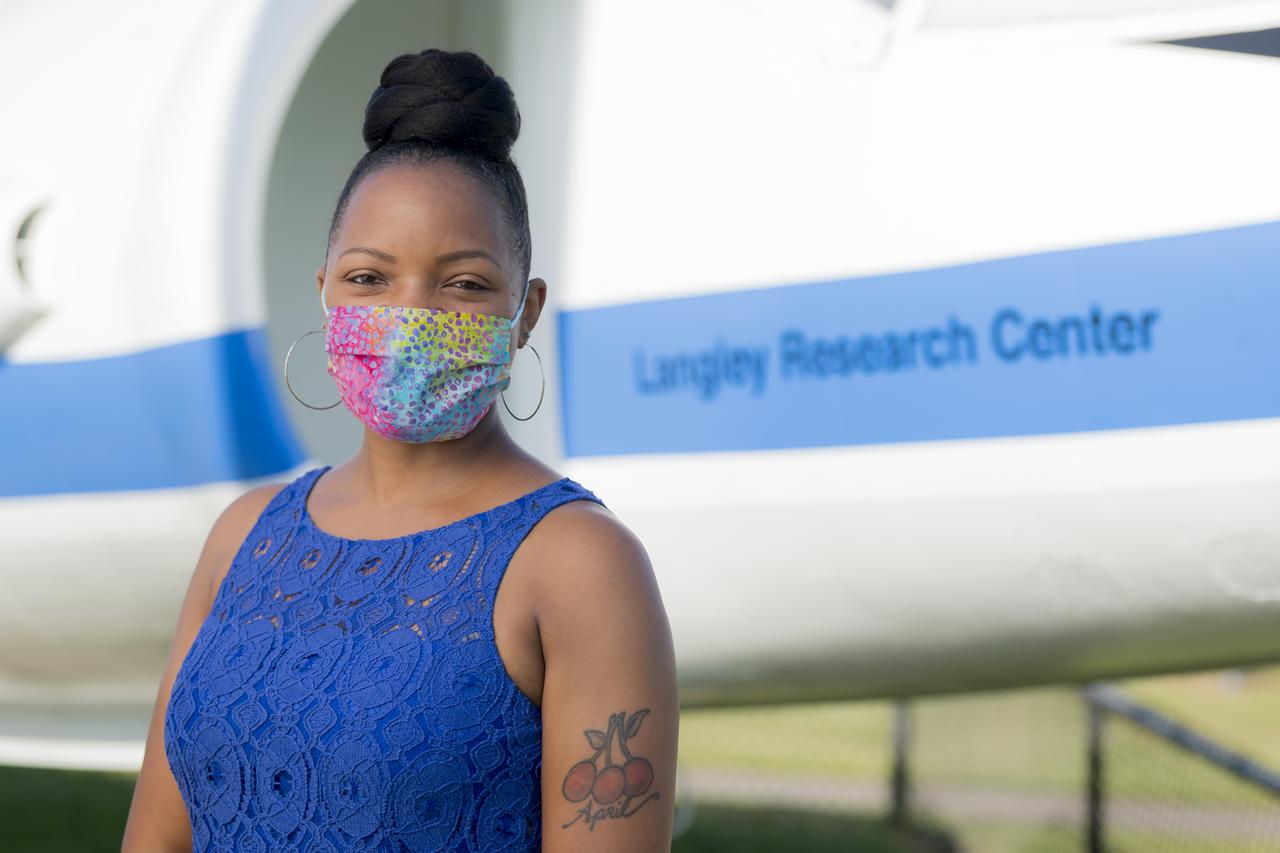
Portrait of April Albert in front of NASA Langley's Hawker Siddeley P-1127 on display at Air Power Park in Hampton, Virginia. Due to the COVID-19 pandemic, masks were mandated by Governor Northam in Virginia in public settings. This is for the faces of NASA project. "I am really made to feel like I am part of a family. I don’t feel like anybody is treated differently. We are all one team. To be a part of NASA, to me, is to be part of something special. There is nothing like the camaraderie of NASA. I feel like I’m where I belong.” — April Albert, Schedule Analyst, Langley Research Center
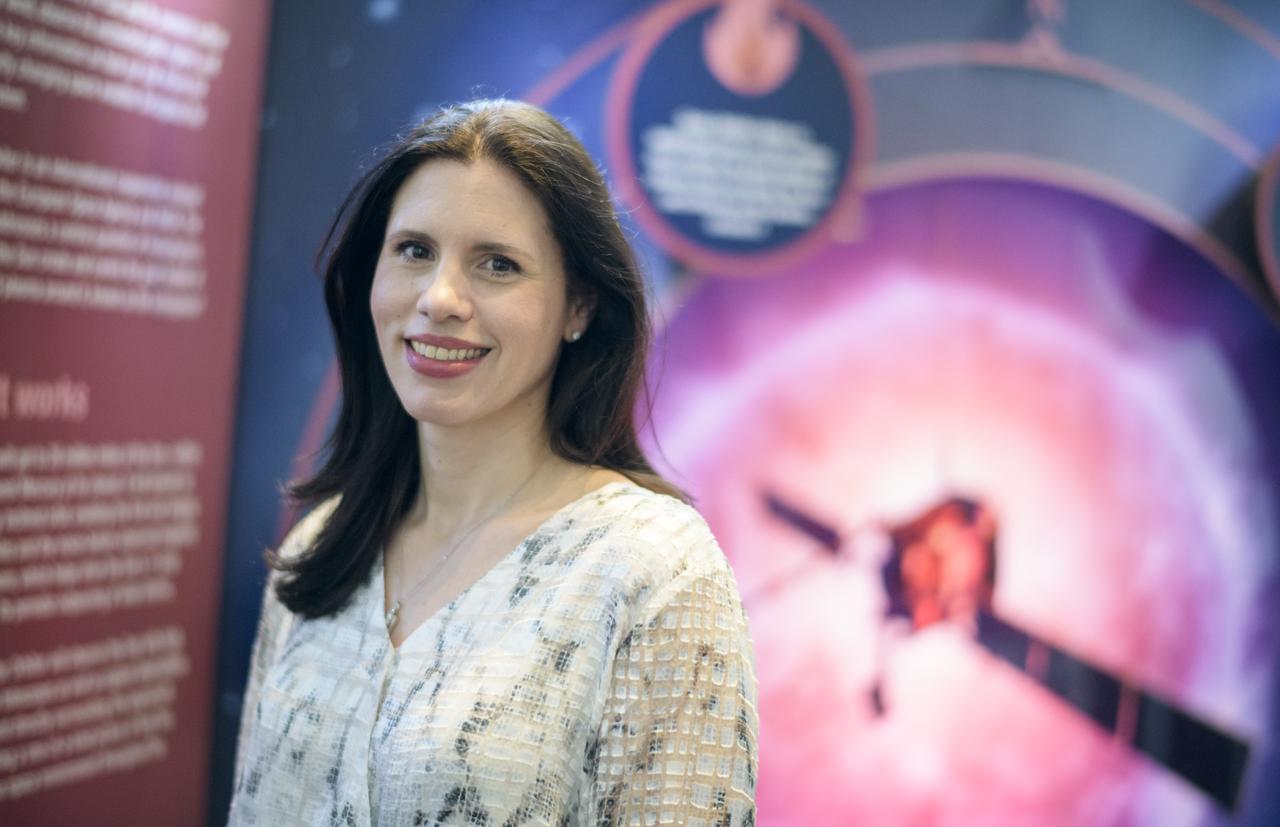
“When I started at Headquarters, I worked on slide design. Presentation work. All I was doing was formatting Powerpoint. That was it. “But the lady I was grouped with — Mary Pat Hrybyk-Keith — she really coached me on what NASA is all about. She told me, ‘Put your foot in the door. Show them what you can do.’ And she was so right. “I think that’s the mistake that a lot of younger people make. They want this perfect job right away. It’s definitely not that way. Most of the time, you get a job just to get a job. You have to get your foot in the door. So I did that here. I started showing them different things that I could do. They would ask me for something for a chart and I would give them an illustration in Photoshop. I wanted to show them that I could make photo-realistic, scientific illustrations. And slowly over time, I did that. I worked a lot of extra hours. And now, I’m not just formatting words and pictures on a slide anymore. “The job just got better and better and better. I’ve just had door after door open up for me. I have a lot of clients who let me try exciting, new things. I constantly feel like I’m refreshed and invigorated and excited. I don’t know how many people can say, ‘I want to go home and keep working on this!’” Jenny Mottar, Art Director for NASA Science, Wednesday, March 4, 2020, at NASA Headquarters in Washington, DC. Photo Credit: (NASA/Joel Kowsky)
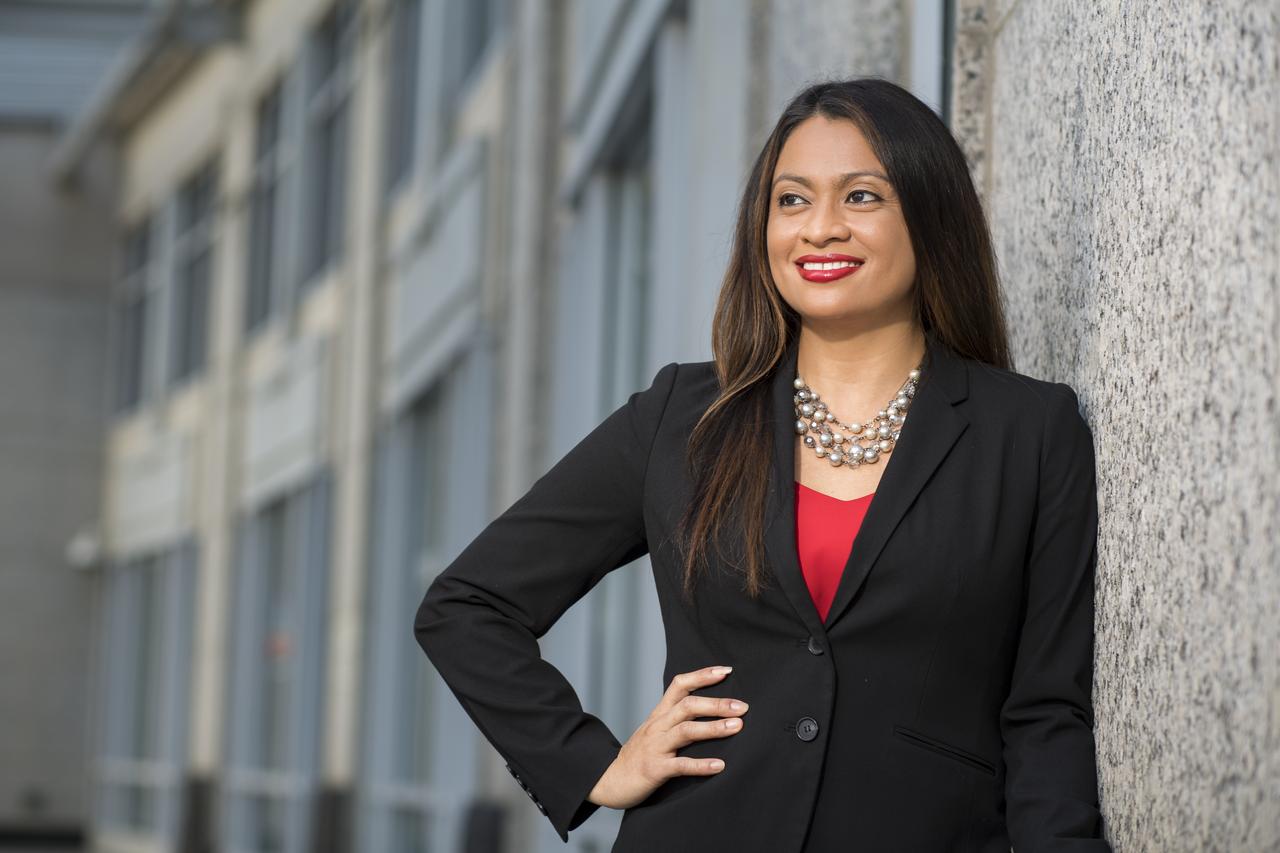
"For me, representation is key. I want people from different backgrounds, different experiences, and different races and ethnicities to see themselves at this agency and across federal government, which is supposed to be representative of the American population. Especially for little girls like me — I grew up poor, the daughter of a former migrant worker. I grew up working in the fields, picking fruits and vegetables during weekends and school breaks. "I’m the first one in my family to get a four-year degree. I didn’t do it because it was what I was expected to do or because it was the obvious next step. I was able to go because I had teachers and advisors who saw potential even when I couldn’t. I was a first generation college student, and now I have nieces and nephews who have obtained or are in the process of obtaining their education." "It’s not only about opening doors, it’s about opening minds — giving people a vision of the possibilities that are out there. Because now you’re broadening that thinking. You’re helping them question their status quo and helping them to see a different version of themselves. When you meet someone who is doing something different but yet, you can relate to them because of what they look like or their background, it makes a huge difference." Portrait, Maria Santos, Tuesday, Oct.1, 2019 at NASA Headquarters in Washington. Photo Credit: (NASA/Aubrey Gemignani)
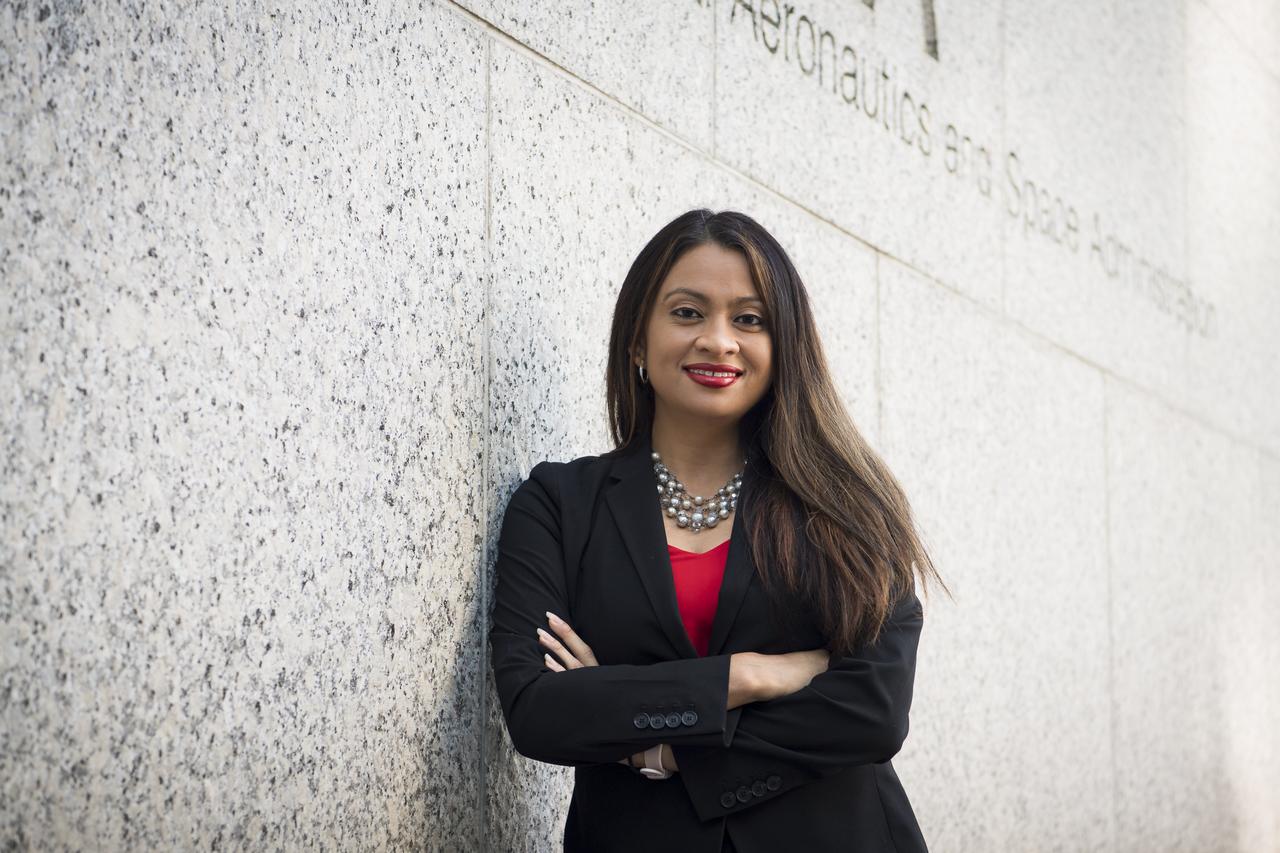
"For me, representation is key. I want people from different backgrounds, different experiences, and different races and ethnicities to see themselves at this agency and across federal government, which is supposed to be representative of the American population. Especially for little girls like me — I grew up poor, the daughter of a former migrant worker. I grew up working in the fields, picking fruits and vegetables during weekends and school breaks. "I’m the first one in my family to get a four-year degree. I didn’t do it because it was what I was expected to do or because it was the obvious next step. I was able to go because I had teachers and advisors who saw potential even when I couldn’t. I was a first generation college student, and now I have nieces and nephews who have obtained or are in the process of obtaining their education." "It’s not only about opening doors, it’s about opening minds — giving people a vision of the possibilities that are out there. Because now you’re broadening that thinking. You’re helping them question their status quo and helping them to see a different version of themselves. When you meet someone who is doing something different but yet, you can relate to them because of what they look like or their background, it makes a huge difference." Portrait, Maria Santos, Tuesday, Oct.1, 2019 at NASA Headquarters in Washington. Photo Credit: (NASA/Aubrey Gemignani)
![“At the end of the day people won't remember what you said or did. They will remember how you made them feel.’ [This quote] resonates with me because I feel my job in public engagement is creating unique experiences for people, so when they walk away you’ve touched them in a way that leaves a meaningful impression. “[The ceremony] was more than just a street renaming. In my mind, I was thinking, who am I doing this for? I am doing this for any person who feels that he or she was not valued, or perhaps they were not seen or not heard. What will people think when they walk up and see Hidden Figures Way? Will they think of those times in their life where they weren't seen, or they felt they didn't have a voice? “It was a time to make that [street] meaningful and to leave a lasting impression with people to see that name and feel proud to be part of it. That was a really proud moment for me to be charged with bringing [the ceremony] together and creating this memorable experience.” Chief of the Public Engagement Division at NASA Headquarters, Cindy Steele, poses for a portrait, Monday, February 8, 2021 at NASA Headquarters in Washington. Photo Credit: (NASA/Aubrey Gemignani)](https://images-assets.nasa.gov/image/NHQ202102090001/NHQ202102090001~medium.jpg)
“At the end of the day people won't remember what you said or did. They will remember how you made them feel.’ [This quote] resonates with me because I feel my job in public engagement is creating unique experiences for people, so when they walk away you’ve touched them in a way that leaves a meaningful impression. “[The ceremony] was more than just a street renaming. In my mind, I was thinking, who am I doing this for? I am doing this for any person who feels that he or she was not valued, or perhaps they were not seen or not heard. What will people think when they walk up and see Hidden Figures Way? Will they think of those times in their life where they weren't seen, or they felt they didn't have a voice? “It was a time to make that [street] meaningful and to leave a lasting impression with people to see that name and feel proud to be part of it. That was a really proud moment for me to be charged with bringing [the ceremony] together and creating this memorable experience.” Chief of the Public Engagement Division at NASA Headquarters, Cindy Steele, poses for a portrait, Monday, February 8, 2021 at NASA Headquarters in Washington. Photo Credit: (NASA/Aubrey Gemignani)
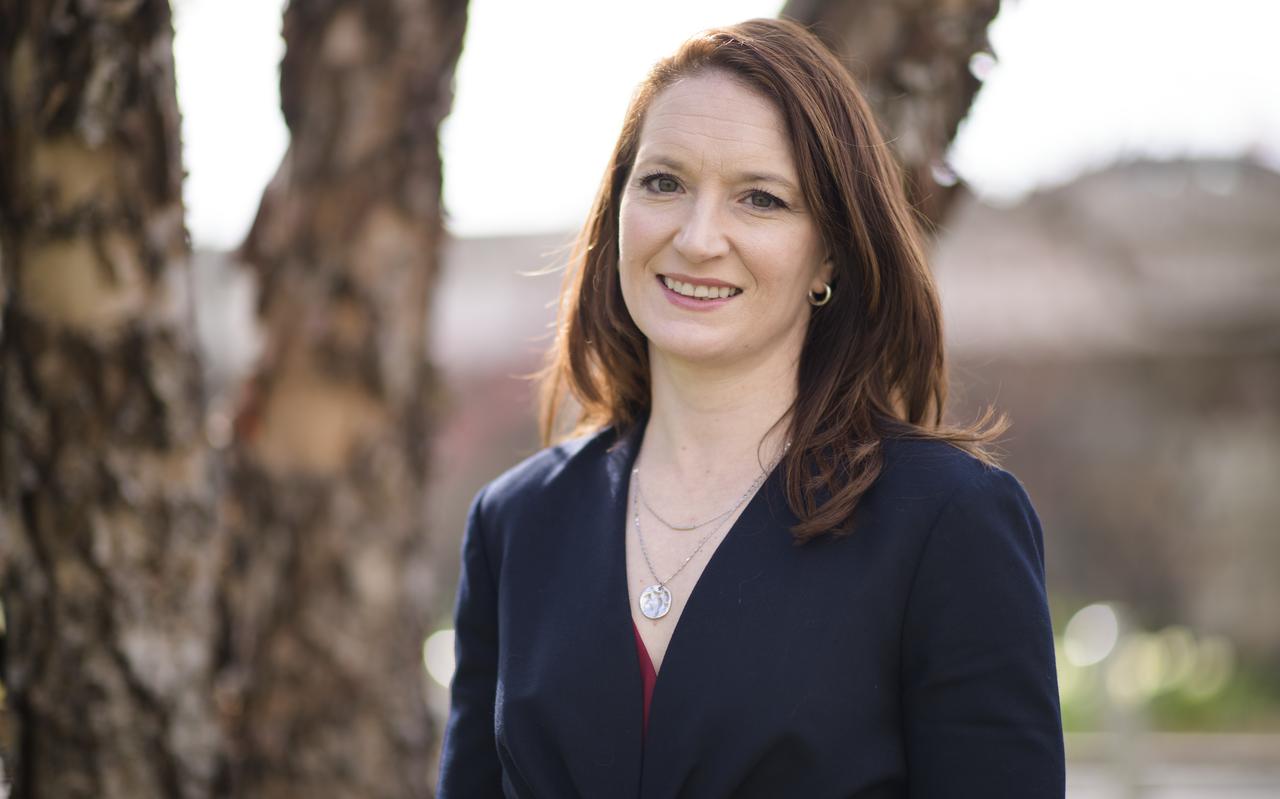
“We did science fair projects in eighth grade. So my dad and I designed an experiment to look at what cooking oil is best for cooking popcorn. Now you go to science fairs and you see this experiment everywhere. But in 1989, it was like, ‘wow, a kid who knows the scientific method!’ “I made a lot of popcorn. My poor brothers had to eat it all. I measured volume popped and how many kernels were left unpopped. But I also measured the taste factor. For example, cooking popcorn in peanut oil actually has good yield but it doesn’t taste good. “In high school, I had this chemistry teacher named Carol Palmer. I’ll never forget her. The science fairs were really important to her. She had partnerships with laboratories in town, and through this program, I got to go to a stainless steel foundry. “Do you know what paper machines are like? Picture giant rolls, like the size of an 18-wheeler truckbed. This place made those things. This was the early 90s, so we were just starting to recycle paper. But the machines had begun falling apart because of all the corrosive chemicals added to the mix to remove ink. I was simulating that process in the laboratory through different experiments. And I won two years in a row at the state-level science fair: I won first prize in electrochemistry and I won first prize in chemistry. “It was all because of this teacher. And to be honest, I wouldn’t have known that materials science was a thing or that I should study it if I hadn’t had that opportunity. It really put me on course.” Kathleen Boggs, Systems and Technology Demonstration Manager in the International Space Station Division of the Human Exploration and Operations Mission Directorate, Thursday, March 5, 2020, at NASA Headquarters in Washington, DC. Photo Credit: (NASA/Joel Kowsky)
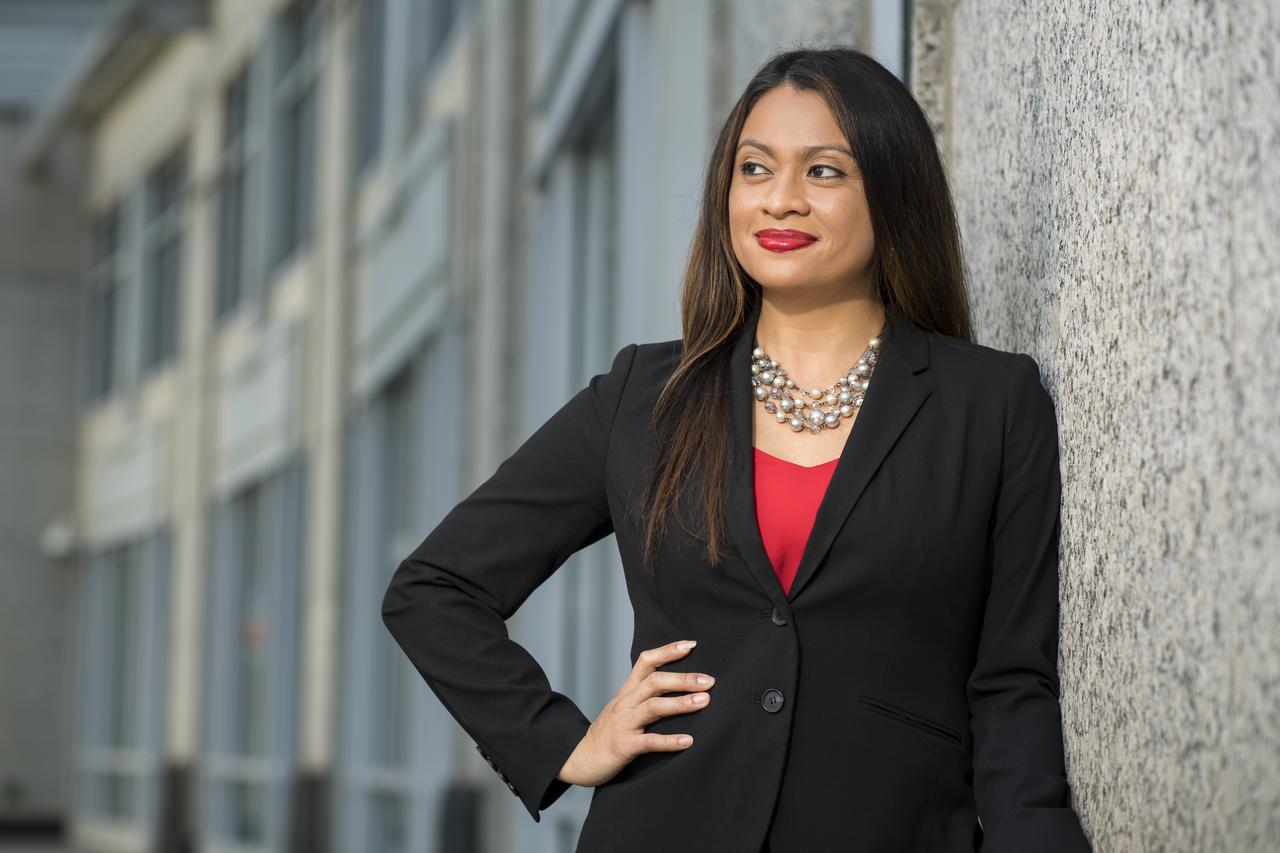
"For me, representation is key. I want people from different backgrounds, different experiences, and different races and ethnicities to see themselves at this agency and across federal government, which is supposed to be representative of the American population. Especially for little girls like me — I grew up poor, the daughter of a former migrant worker. I grew up working in the fields, picking fruits and vegetables during weekends and school breaks. "I’m the first one in my family to get a four-year degree. I didn’t do it because it was what I was expected to do or because it was the obvious next step. I was able to go because I had teachers and advisors who saw potential even when I couldn’t. I was a first generation college student, and now I have nieces and nephews who have obtained or are in the process of obtaining their education." "It’s not only about opening doors, it’s about opening minds — giving people a vision of the possibilities that are out there. Because now you’re broadening that thinking. You’re helping them question their status quo and helping them to see a different version of themselves. When you meet someone who is doing something different but yet, you can relate to them because of what they look like or their background, it makes a huge difference." Portrait, Maria Santos, Tuesday, Oct.1, 2019 at NASA Headquarters in Washington. Photo Credit: (NASA/Aubrey Gemignani)
![“I came [to the United States] in ’83 and in ’98, I was invited to go back to Costa Rica. The first Hispanic astronaut that NASA ever had is a Costa Rican — Franklin Chang Diaz. So everyone was talking about Franklin. At that point I had been working for NASA for seven years. All of a sudden, I had little girls and women coming to me, wanting to ask me about engineering. I resisted it at first, because I thought, they only care about the astronauts. That’s what ran through my head at first. I didn’t think I had done anything at that point. I didn’t think that I could be a role model. But as time went on, people started to hear about me more in Costa Rica, and eventually throughout Latin America. I got requests to travel all over to give talks — all the way from Mexico down to Chile. I cannot tell you when it was, but I realized, there are so many men in this field. When a little kid draws an engineer or a scientist, they tend to draw men. But here I am. And maybe I haven’t accomplished everything I want to do. But I can show little girls and little boys out there that it doesn’t matter where you come from. You can be anything that you want to, even when you have had a very difficult upbringing.” Earth Science Deputy Division Director in the Science Mission Directorate, Sandra Cauffman, poses for a portrait, Friday, Sept. 17, 2021 at NASA Headquarters in Washington. Photo Credit: (NASA/Aubrey Gemignani)](https://images-assets.nasa.gov/image/NHQ202109170001/NHQ202109170001~medium.jpg)
“I came [to the United States] in ’83 and in ’98, I was invited to go back to Costa Rica. The first Hispanic astronaut that NASA ever had is a Costa Rican — Franklin Chang Diaz. So everyone was talking about Franklin. At that point I had been working for NASA for seven years. All of a sudden, I had little girls and women coming to me, wanting to ask me about engineering. I resisted it at first, because I thought, they only care about the astronauts. That’s what ran through my head at first. I didn’t think I had done anything at that point. I didn’t think that I could be a role model. But as time went on, people started to hear about me more in Costa Rica, and eventually throughout Latin America. I got requests to travel all over to give talks — all the way from Mexico down to Chile. I cannot tell you when it was, but I realized, there are so many men in this field. When a little kid draws an engineer or a scientist, they tend to draw men. But here I am. And maybe I haven’t accomplished everything I want to do. But I can show little girls and little boys out there that it doesn’t matter where you come from. You can be anything that you want to, even when you have had a very difficult upbringing.” Earth Science Deputy Division Director in the Science Mission Directorate, Sandra Cauffman, poses for a portrait, Friday, Sept. 17, 2021 at NASA Headquarters in Washington. Photo Credit: (NASA/Aubrey Gemignani)
![“Some people [may say], 'You have too many cooks in the kitchen,’ but I think there's a line. It's good to have a lot of input because people bring many different perspectives that you would never even consider if you just pushed an idea forward with one person. This is especially true in the area we work in with digital [communications], which is changing so frequently; you constantly have to innovate, so including diverse voices and thoughts is important. “I'm an older sister, and I don't know if some of that [leadership style] comes from when we were kids, always making sure that I involved her. My sister had trouble pronouncing words when she was younger, so I was her translator, ensuring people could understand what she wanted or needed. And maybe that translated into who I am, making sure people have voices and are heard [at NASA]...I've achieved a lot that I didn't even know I wanted to accomplish because I couldn't have imagined this career progression for myself. “But now that I'm here, I would like to achieve more in terms of what NASA looks like internally, especially after getting involved with the NASA Science IDEA working group and diversity efforts. I would love to one, help people outside of NASA realize that they could work here and two, push people internally to the forefront so that they can be considered for higher-level things and progress.” NASA Science Mission Directorate Digital Manager Emily Furfaro poses for a portrait on Thursday, Aug. 22, 2024, at the Mary W. Jackson NASA Headquarters building in Washington. Photo Credit: (NASA/Keegan Barber)](https://images-assets.nasa.gov/image/NHQ202408220001/NHQ202408220001~medium.jpg)
“Some people [may say], 'You have too many cooks in the kitchen,’ but I think there's a line. It's good to have a lot of input because people bring many different perspectives that you would never even consider if you just pushed an idea forward with one person. This is especially true in the area we work in with digital [communications], which is changing so frequently; you constantly have to innovate, so including diverse voices and thoughts is important. “I'm an older sister, and I don't know if some of that [leadership style] comes from when we were kids, always making sure that I involved her. My sister had trouble pronouncing words when she was younger, so I was her translator, ensuring people could understand what she wanted or needed. And maybe that translated into who I am, making sure people have voices and are heard [at NASA]...I've achieved a lot that I didn't even know I wanted to accomplish because I couldn't have imagined this career progression for myself. “But now that I'm here, I would like to achieve more in terms of what NASA looks like internally, especially after getting involved with the NASA Science IDEA working group and diversity efforts. I would love to one, help people outside of NASA realize that they could work here and two, push people internally to the forefront so that they can be considered for higher-level things and progress.” NASA Science Mission Directorate Digital Manager Emily Furfaro poses for a portrait on Thursday, Aug. 22, 2024, at the Mary W. Jackson NASA Headquarters building in Washington. Photo Credit: (NASA/Keegan Barber)
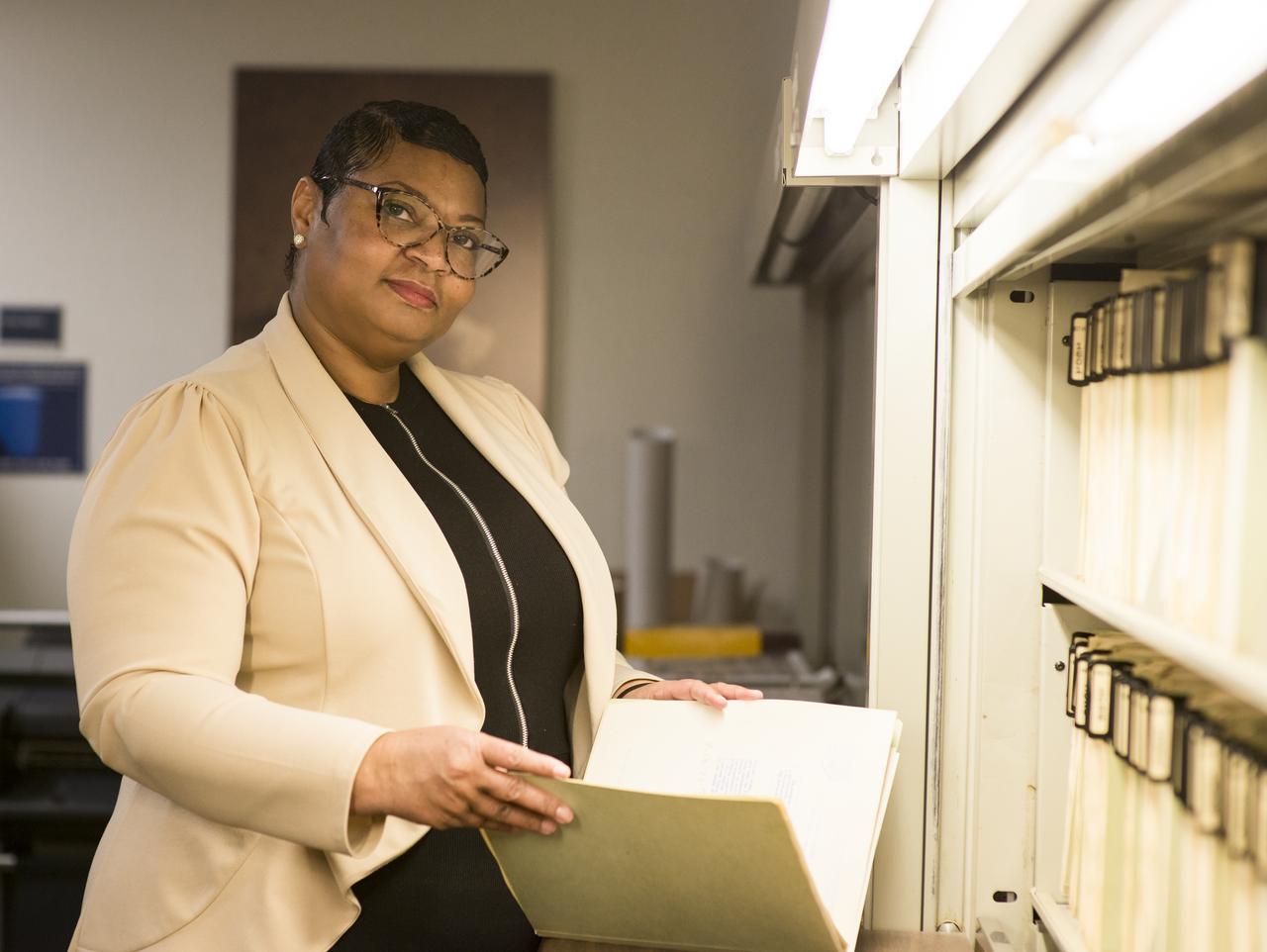
"While in college, I discovered a program called Stay in School where high school and college students go to work part-time in the government. I was in the program for about two years before I came to NASA in October 1985. It was shortly before the Shuttle accident. I was a math major and I liked to challenge myself, so I thought that I would come to NASA to help build satellites or rockets or something… but when I came here, I was assigned to the Public Affairs Office. "And when the Challenger accident happened, I saw how everyone came together in the public affairs office. I mean, they were helping people — news media — everybody. And I was like, 'I like this!' So I stayed. And I forgot all about being a rocket scientist. And that’s the path I took. The rest is history. I’ve been here ever since." NASA Senior Photo Researcher, Connie Moore, Friday, Jan. 24, 2020 at NASA Headquarters in Washington. Photo Credit: (NASA/Aubrey Gemignani)
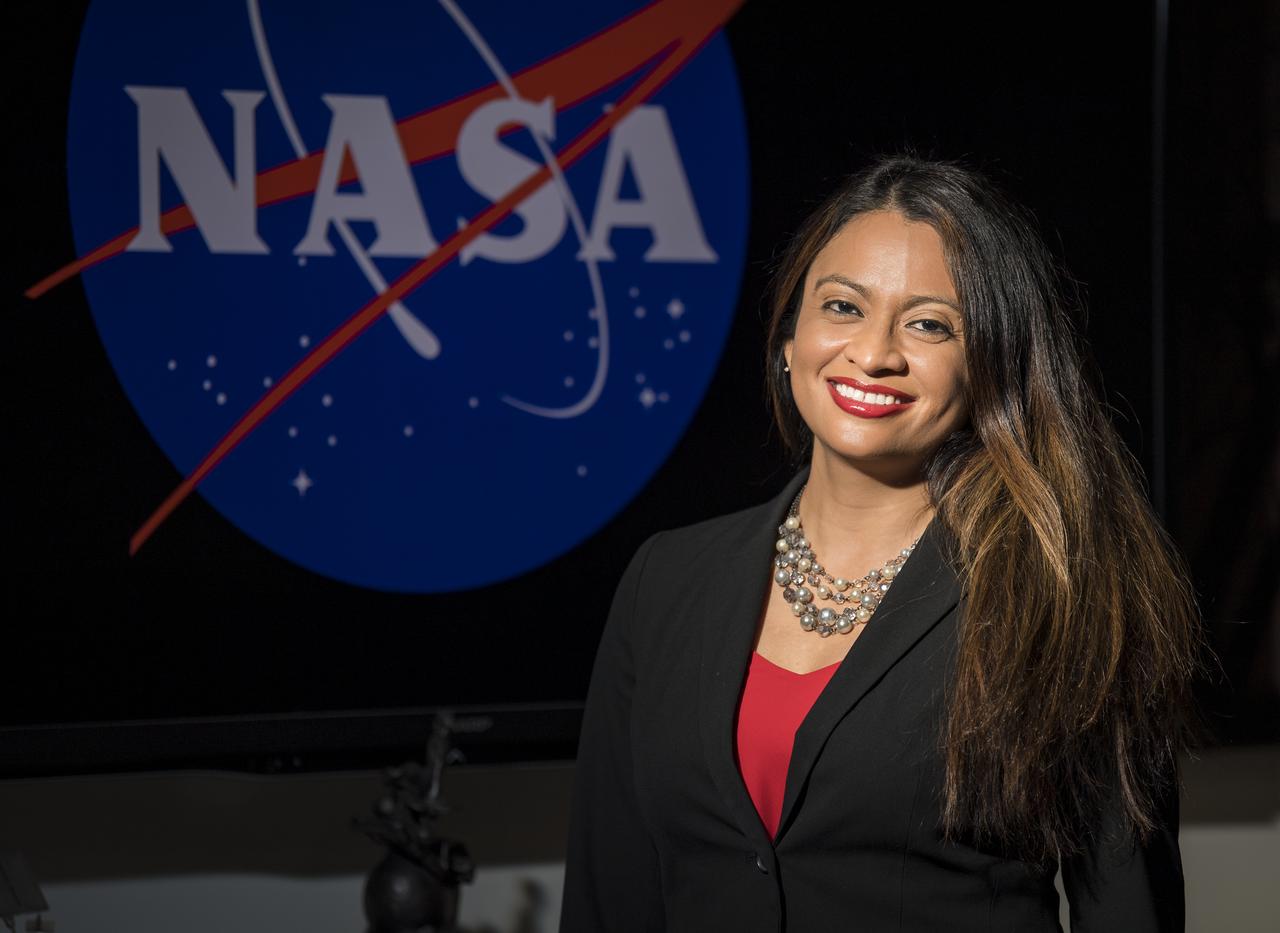
"For me, representation is key. I want people from different backgrounds, different experiences, and different races and ethnicities to see themselves at this agency and across federal government, which is supposed to be representative of the American population. Especially for little girls like me — I grew up poor, the daughter of a former migrant worker. I grew up working in the fields, picking fruits and vegetables during weekends and school breaks. "I’m the first one in my family to get a four-year degree. I didn’t do it because it was what I was expected to do or because it was the obvious next step. I was able to go because I had teachers and advisors who saw potential even when I couldn’t. I was a first generation college student, and now I have nieces and nephews who have obtained or are in the process of obtaining their education." "It’s not only about opening doors, it’s about opening minds — giving people a vision of the possibilities that are out there. Because now you’re broadening that thinking. You’re helping them question their status quo and helping them to see a different version of themselves. When you meet someone who is doing something different but yet, you can relate to them because of what they look like or their background, it makes a huge difference." Portrait, Maria Santos, Tuesday, Oct.1, 2019 at NASA Headquarters in Washington. Photo Credit: (NASA/Aubrey Gemignani)
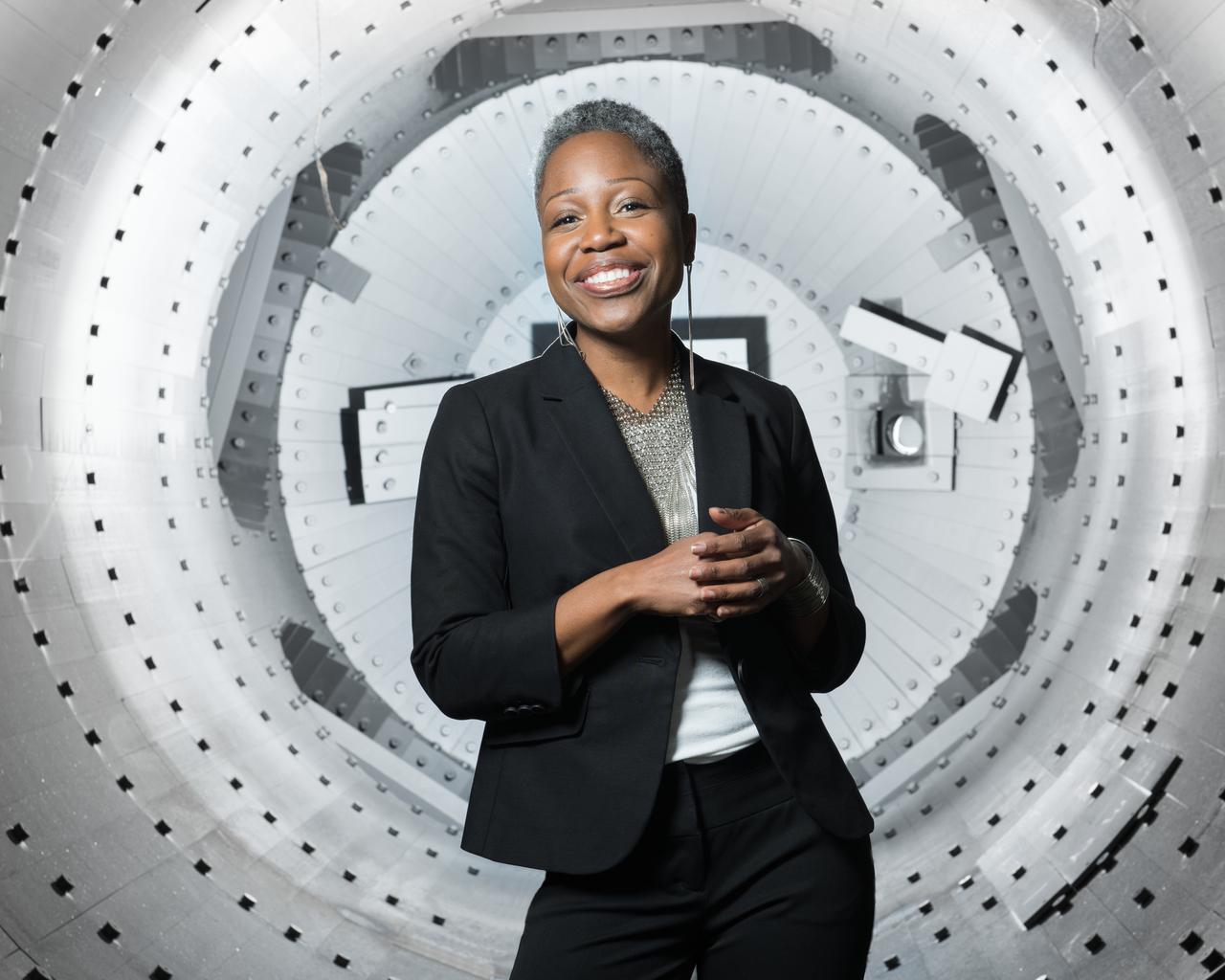
“I am a Black woman in STEM. And when I was growing up, I cannot say that I saw a lot of faces that looked like mine in STEM careers. I had some limited exposure to some notables, like Dr. Mae Jemison. But the names were few and far between of the great scientists or engineers that were Black — let alone Black females. So for me, if anybody sees my picture and says ‘yes, I see someone who looks like me working in STEM’ — that right there is very fulfilling. Just to be seen and to be visible makes a difference. "I also must provide words of encouragement because being in STEM can be difficult as is, let alone having to face the challenges of being a female in a male-dominated field. Or even being a double minority in the workplace. "It’s a matter of being really self-assured that you can do it, despite the fact that you’re going to have failures, that you’re going to have setbacks, and that you’re going have people who may not believe in you, for whatever reason. You have to be self-assured that this is what you want to do and that it can be done. This 4’11” Black woman achieved this, not knowing that STEM was going to be my path or that I was going to end up at NASA — I did it, and I believe that you can do it too — but you have to believe it for yourself.” — Mary Lobo, Director of Office of Technology Incubation and Innovation, Glenn Research Center The Facility Manager for the Space Simulation Facilities at Glenn Research Center, poses inside Vacuum Facility 16 (VF-16) for an Environmental Portrait. The lighting used in this portrait depicts the chamber as having an almost white interior when the chamber is actually almost black in color.
This image captured by NASA's 2001 Mars Odyssey spacecraft resembles a face staring back at the spacecraft. Orbit Number: 65345 Latitude: 34.4675 Longitude: 105.179 Instrument: IR Captured: 2016-09-06 09:27 https://photojournal.jpl.nasa.gov/catalog/PIA21697
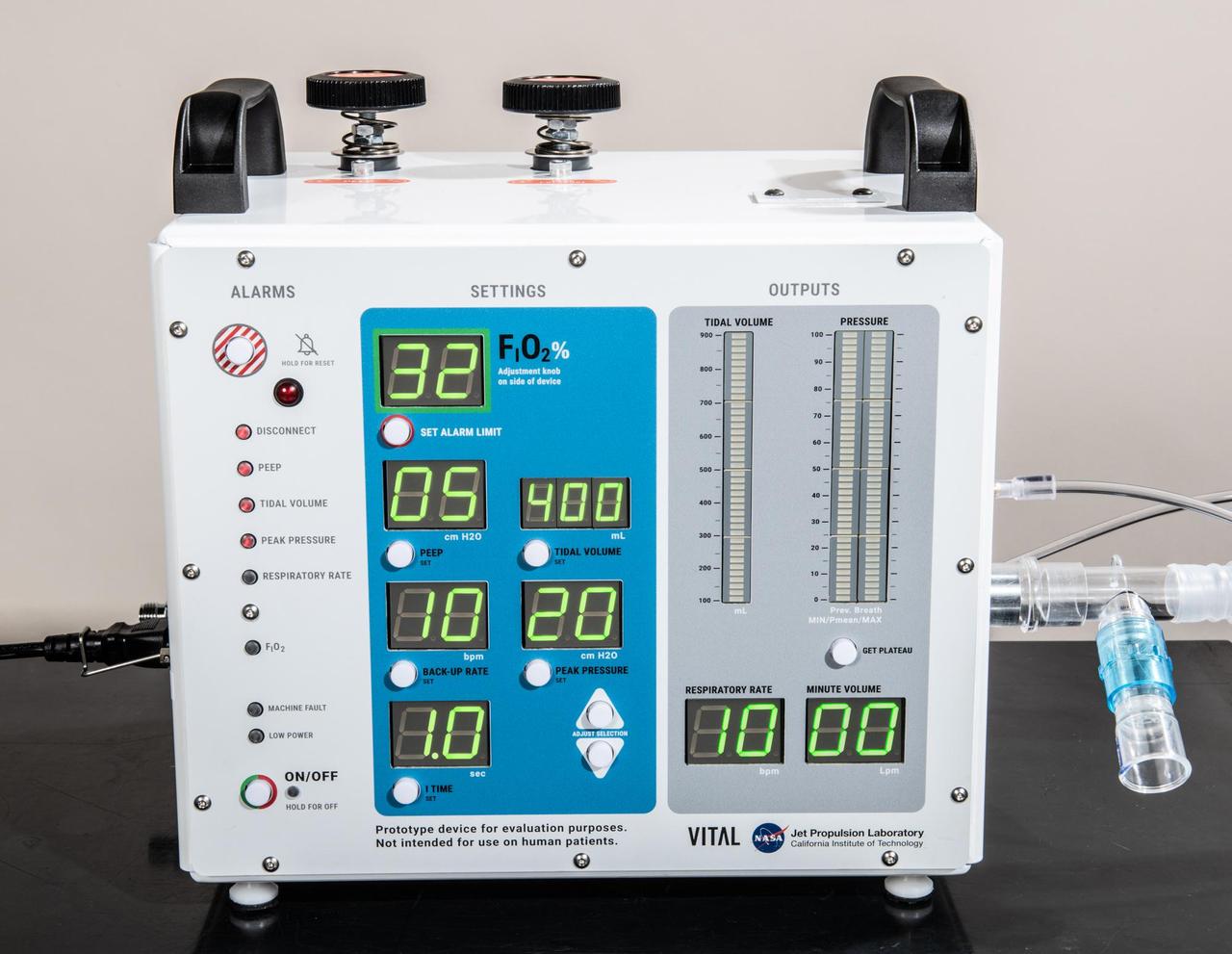
A front-facing portrait of VITAL (Ventilator Intervention Technology Accessible Locally), a ventilator designed and built by NASA's Jet Propulsion Laboratory in Southern California. https://photojournal.jpl.nasa.gov/catalog/PIA23775

The science team of NASA's New Horizons mission has produced this global map of Pluto's largest moon, Charon. The map includes all available resolved images of the surface acquired between July 7-14, 2015, at pixel resolutions ranging from 40 kilometers (24 miles) on the anti-Pluto facing hemisphere (left and right sides of the map), to 400 meters (1,250 feet) per pixel on portions of the Pluto-facing hemisphere -- the side facing the New Horizons spacecraft when it flew past the dwarf planet -- at map center. Many additional images now stored on the spacecraft's digital data recorders are expected to be transmitted "home" in fall 2015 and these will be used to complete the global map. The map is in simple cylindrical projection, with zero longitude (the Pluto-facing direction) in the center. http://photojournal.jpl.nasa.gov/catalog/PIA19866
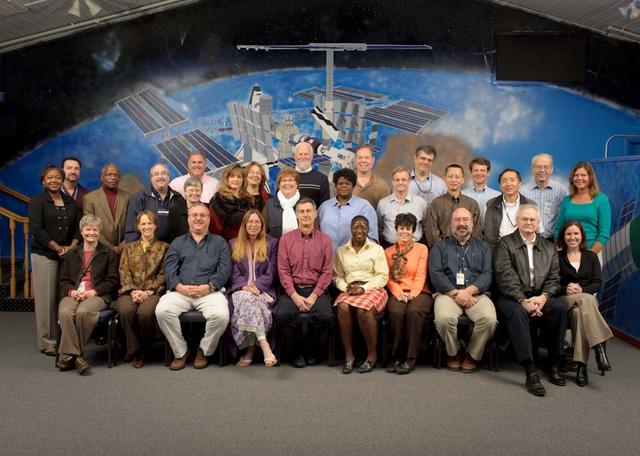
NASA software working group Face-to-Face meeting at Ames Reaserach Center Bldg 943 Eagle Room
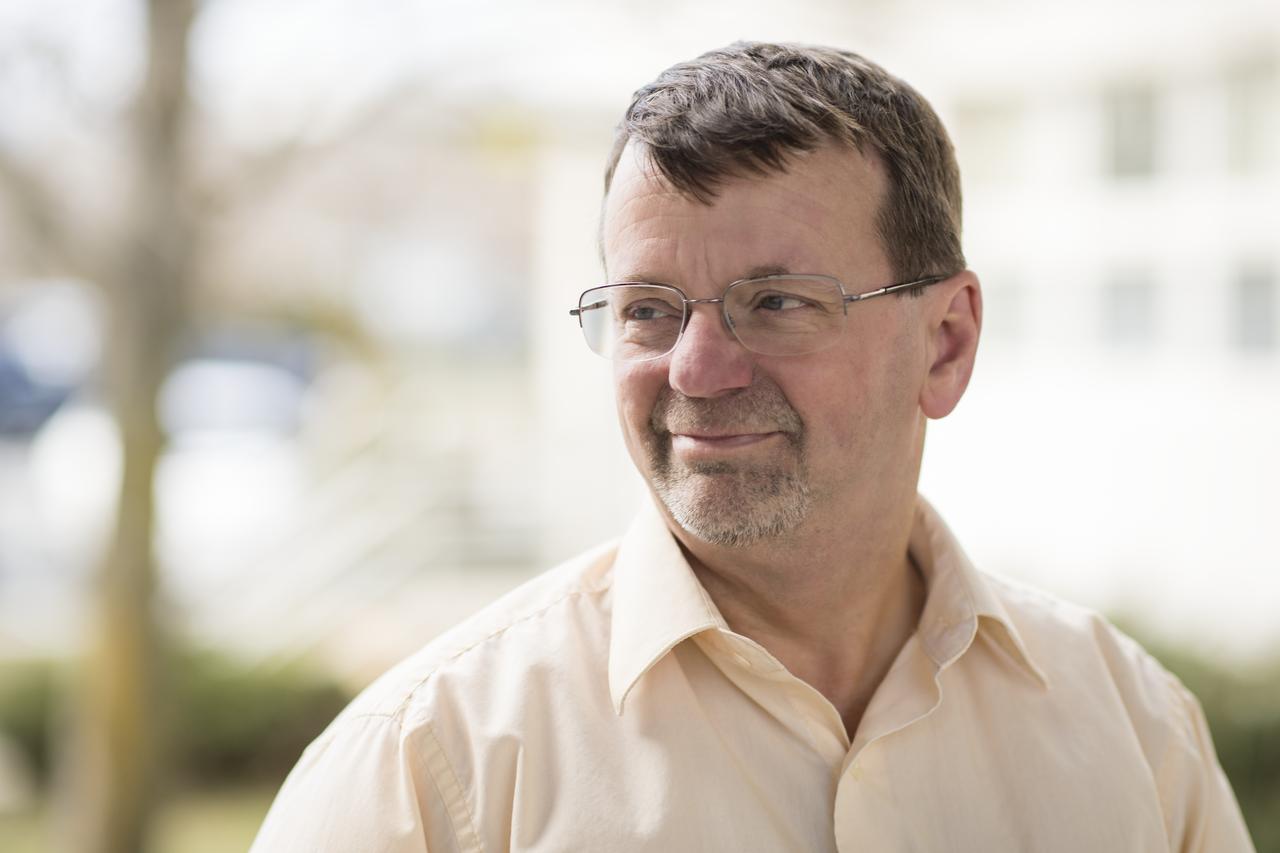
“I’ve always had an interest, even as a little kid, in mechanical things. How things work. I was good at math when I was younger. I liked science. I was actually going to major in chemistry when I went to college. But during my senior year of high school, I found out I was colorblind. Back then, you didn’t have machines you put could something in and it would tell you what it was. You had to do litmus tests and fire tests, and based on the colors, determine what different things were. Well, I came to find out: I couldn’t do that. So, I happened to be working on the school paper in my senior year of high school and I figured I would go into journalism. I ended up covering things like science and construction because those were the things I liked and was interested in. Once I got to NASA, it was a marriage of two things I liked. Everyday I come in to work, I get to learn about a new project. I learn different things about launch vehicles, physics… all sorts of things. So I’m constantly learning something. Which is kind of cool! In my life I’ve learned that things don’t always go your way. You can either dwell on those things and mope and cry… or you can say: “Okay. Now what?” And so that’s what I did. I moved on. And I don’t know if I would have ended up at NASA if I hadn’t.” NASA Wallops Flight Facility News Chief, Keith Koehler, Friday, Feb. 7, 2020 at NASA NASA Wallops Flight Facility in Virginia. Photo Credit: (NASA/Aubrey Gemignani)

“Especially right now during the pandemic crisis, I love to occupy my mind. People say that they’re tired of being at home, but I don’t feel that. I practice yoga. I love decorating our house and working in the backyard during the summer time. If I don’t like where something is, I have to change it. That’s what I love. It’s the same thing with my work —I go outside the box to get ideas. I think about, how do I solve this? I apply the same skills to my creative passions and my current job. I create strategies for a better way of doing business for NASA. And I set the tone to keep me motivated and more productive.” NASA Senior Program Analyst, Jenny Acebron-Carlos, poses for a portrait at the Lincoln Memorial, Friday, Feb. 12, 2021 in Washington. Photo Credit: (NASA/Aubrey Gemignani)
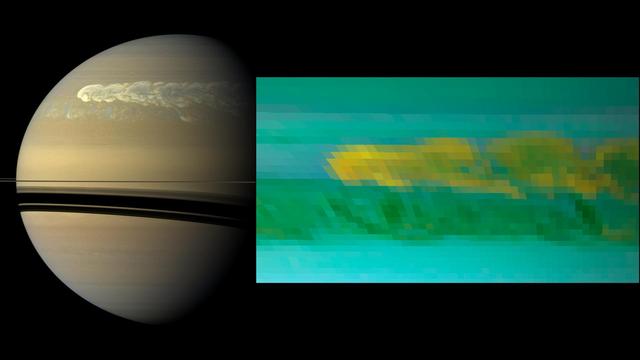
This set of images from NASA Cassini mission shows the turbulent power of a monster Saturn storm. The visible-light image in the back, obtained on Feb. 25, 2011 shows the turbulent clouds churning across the face of Saturn.
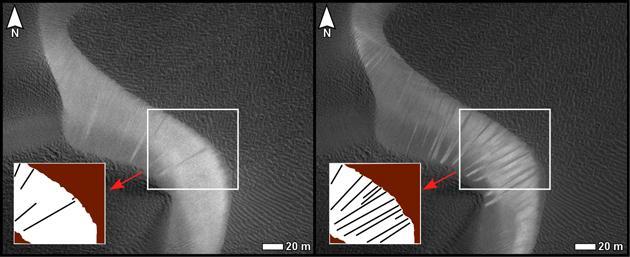
Before and after images from NASA Mars Reconnaissance Orbiter illustrate occurrence of new streaks on the slip face of a dark sand dune in the Nili Patera region of Mars.
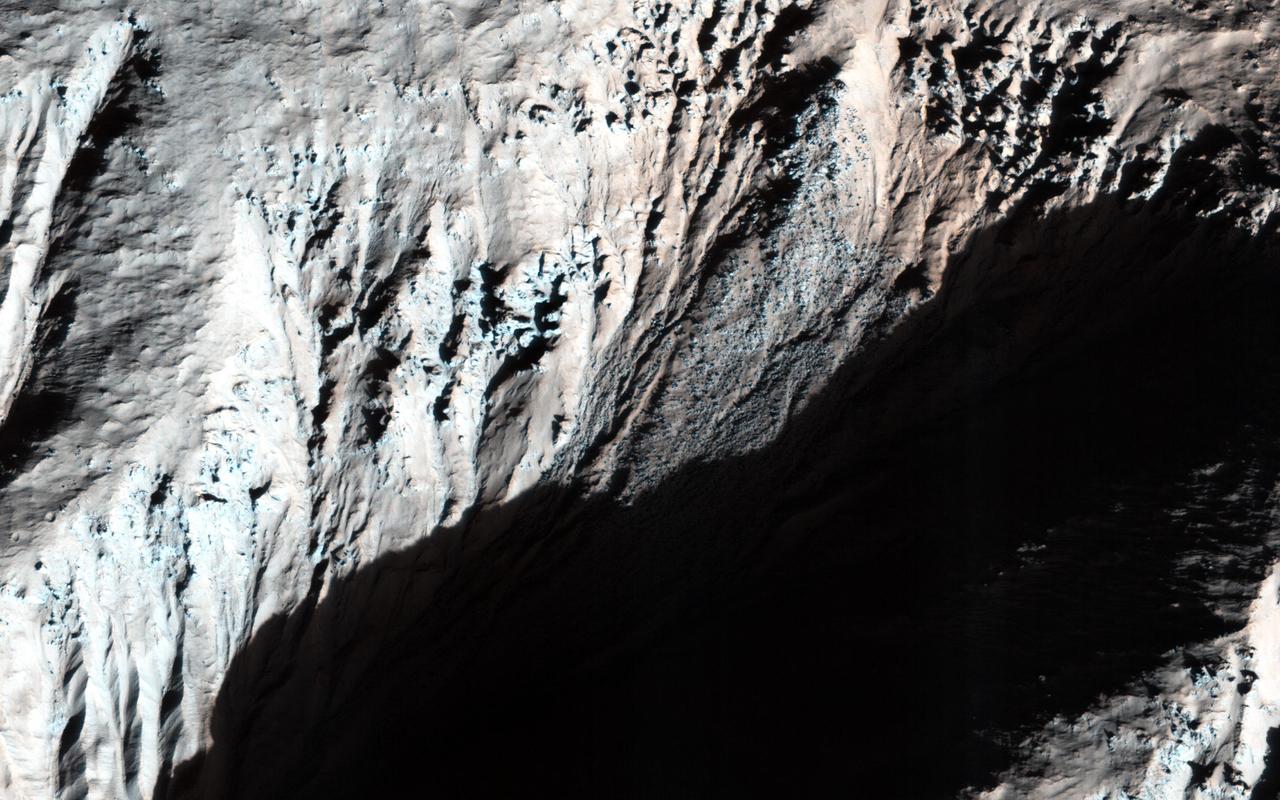
This image from NASA Mars Reconnaissance Orbiter spacecraft was acquired to look for frost on these generally equator-facing slopes on Mars, which are visible in the shadows after enhancing the brightness levels.

This artist impression shows a gas-giant exoplanet transiting across the face of its star. Infrared analysis by NASA Spitzer Space Telescope of this type of system provided the breakthrough.
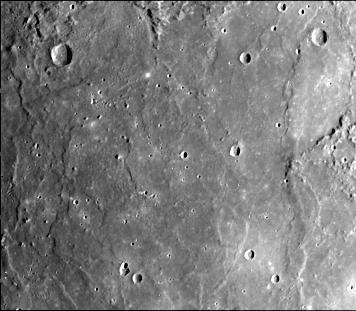
This image, from NASA Mariner 10 spacecraft which launched in 1974, shows that several west-facing lobate scarps occur in the hummocky plains interpreted as Caloris ejecta.
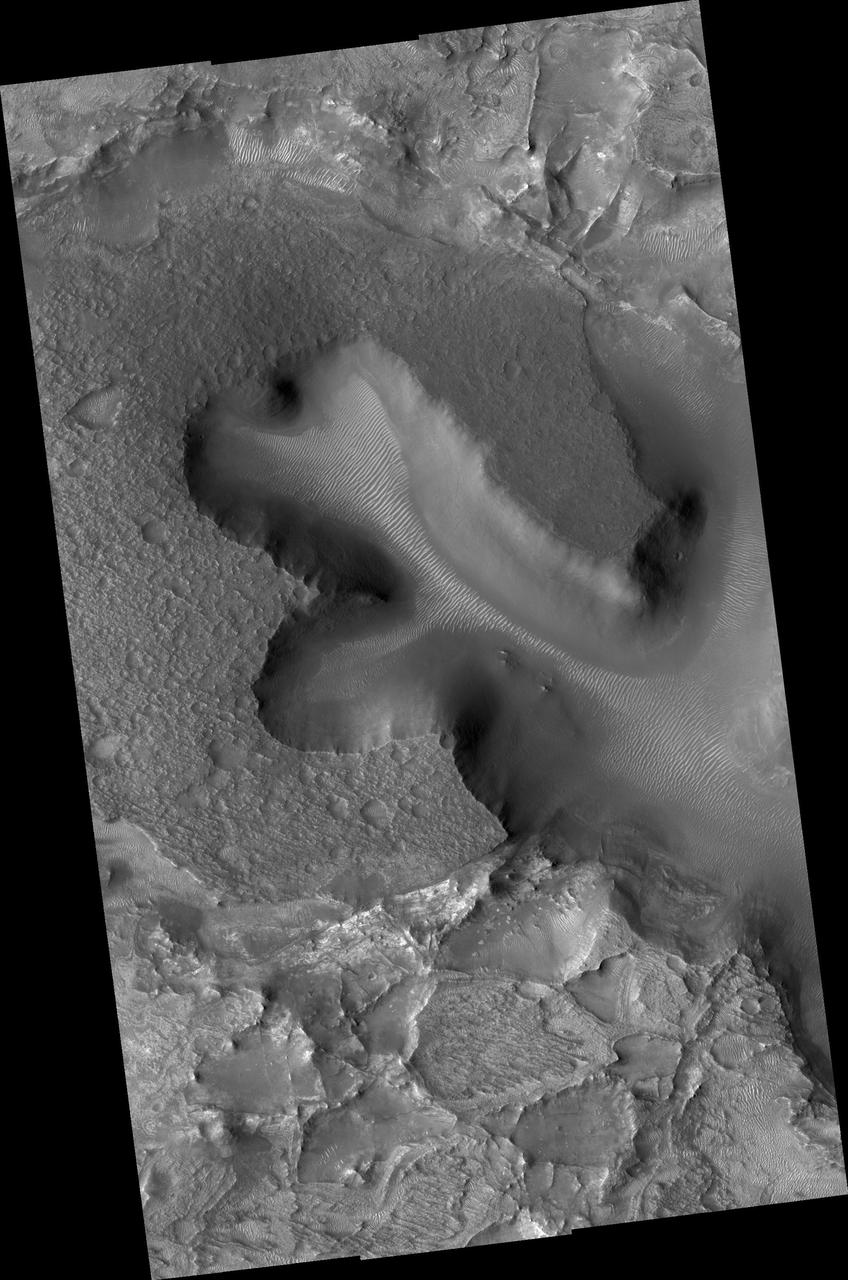
NASA Mars Reconnaissance Orbiter shows densely fractured light-toned rock in the vicinity of the Nili Fossae. The light-toned material is finely layered; these layers can be seen in cross-section along a scarp face at the bottom of the image.
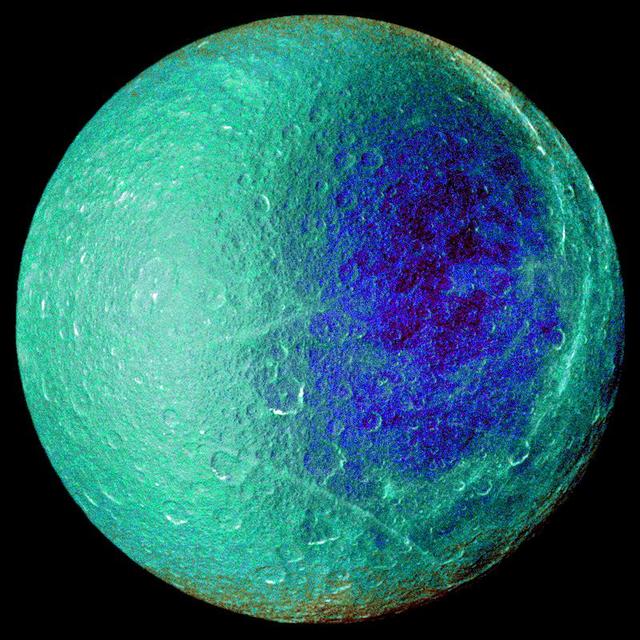
Hemispheric color differences on Saturn moon Rhea are apparent in this false-color view from NASA Cassini spacecraft. This image shows the side of the moon that always faces the planet.

NASA Opportunity used the navigation camera Navcam on its mast to capture this southward facing scene along the eastern flank of Solander Point during the 3,387 Martian day, or sol, of the rover work on Mars Aug. 3, 2013.

The dark region seen on the face of the sun at the end of March 2013 is a coronal hole just above and to the right of the middle of the picture, which is a source of fast solar wind leaving the sun in this image from NASA Solar Dynamic Observatory.
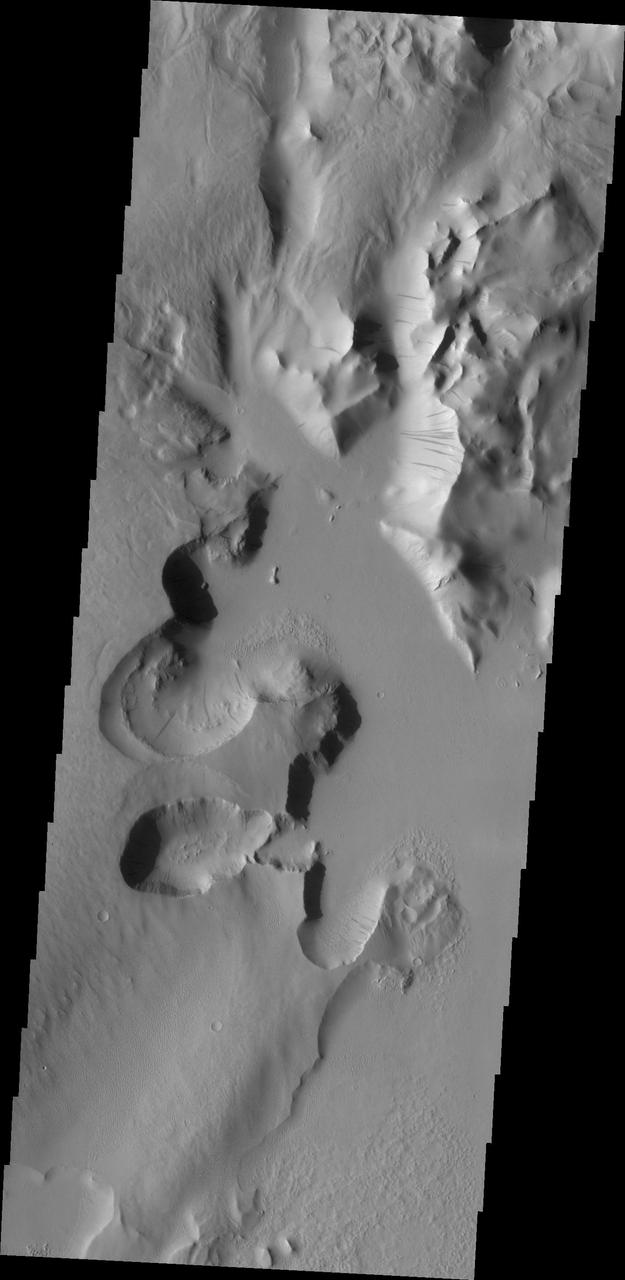
Lycus Sulci is an extremely complex region surrounding the western and northern flanks of Olympus Mons. With a multitude of fault formed cliff faces, dark slope streaks are a common occurrence. This image was captured by NASA Mars Odyssey.
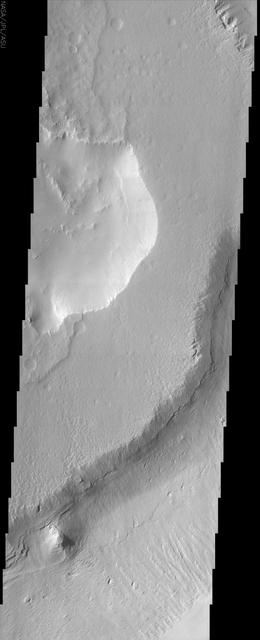
This image from NASA Mars Odyssey shows a sample of the middle member of the Medusae Fossae formation. The layers exposed in the southeast-facing scarp suggest that there is a fairly competent unit underlying the mesa in the center of the image.