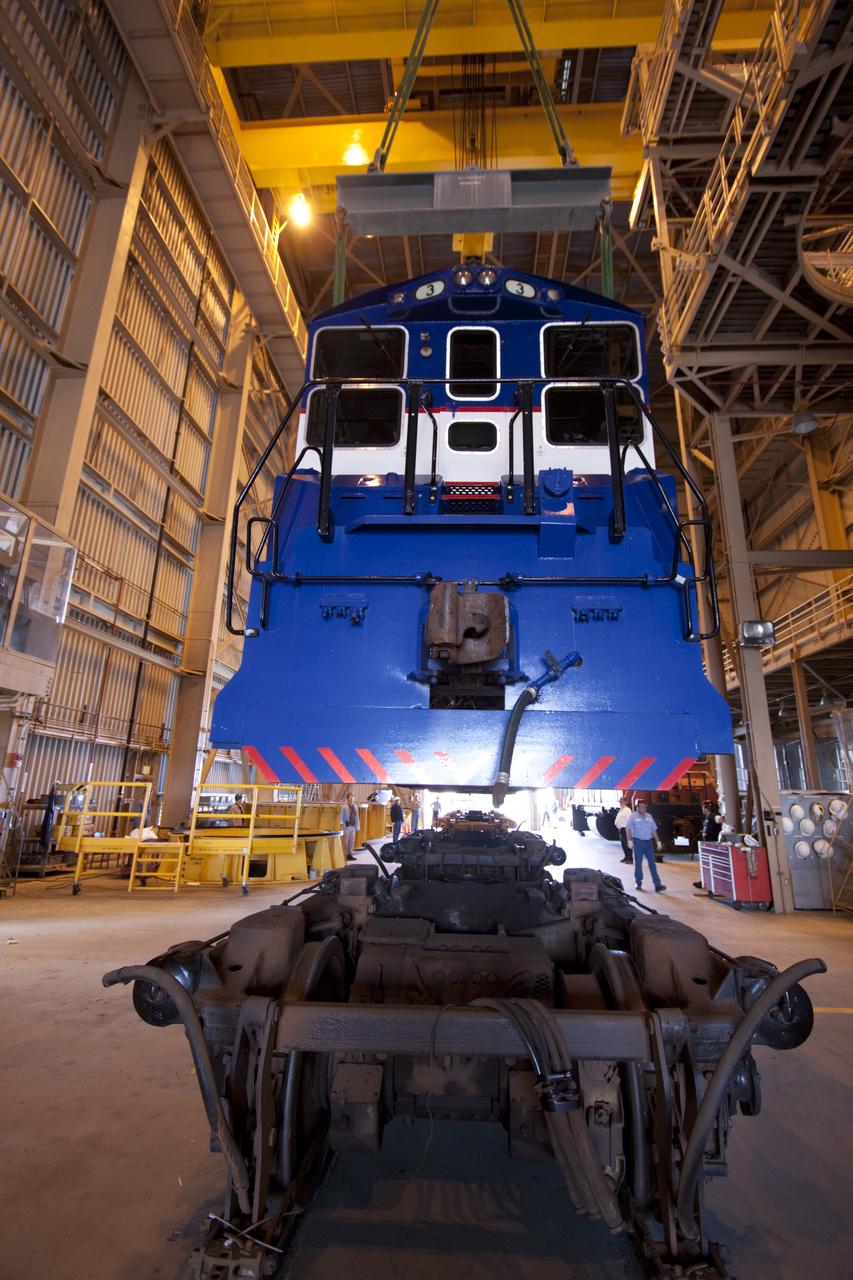
CAPE CANAVERAL, Fla. – Inside the Rotation, Processing and Surge Facility, or RPSF, at the Kennedy Space Center in Florida, an overhead crane lifts NASA locomotive No. 3 off of its trucks to be moved into position atop the trucks previously used by locomotive No. 2. The RPSF was built to support work on the solid rocket used motors during the space shuttle era. The facility had never previously been used for another purpose, but is now free to serve other customers. With rails running into the building's high bay and a pair of heavy-lift cranes positioned overhead, the facility's capabilities were a perfect fit for the NASA Railroad's needs. Railroad managers wanted to trade the wheel and axle assemblies, or trucks, of locomotives No. 2 and No. 3. Locomotive No. 3 was painstakingly restored in recent years by the NASA Railroad team, and handles much of the rail work required at the center in the post-shuttle era. But the trucks on locomotive No. 2 are in better shape and are more environmentally friendly. For more information, visit: http://www.nasa.gov/exploration/systems/ground/rpsf_locomotives.html Photo credit: NASA/Jim Grossmann

CAPE CANAVERAL, Fla. – Two NASA railroad locomotives at Kennedy Space Center in Florida move into Launch Complex 39 area's Rotation, Processing and Surge Facility, or RPSF. The operation was to allow wheel and axle assemblies to be swapped between locomotives. The RPSF was built to support work on the solid rocket used motors during the space shuttle era. The facility had never previously been used for another purpose, but is now free to serve other customers. With rails running into the building's high bay and a pair of heavy-lift cranes positioned overhead, the facility's capabilities were a perfect fit for the NASA Railroad's needs. Railroad managers wanted to trade the wheel and axle assemblies, or trucks, of locomotives No. 2 and No. 3. Locomotive No. 3 was painstakingly restored in recent years by the NASA Railroad team, and handles much of the rail work required at the center in the post-shuttle era. But the trucks on locomotive No. 2 are in better shape and are more environmentally friendly. For more information, visit: http://www.nasa.gov/exploration/systems/ground/rpsf_locomotives.html Photo credit: NASA/Jim Grossmann
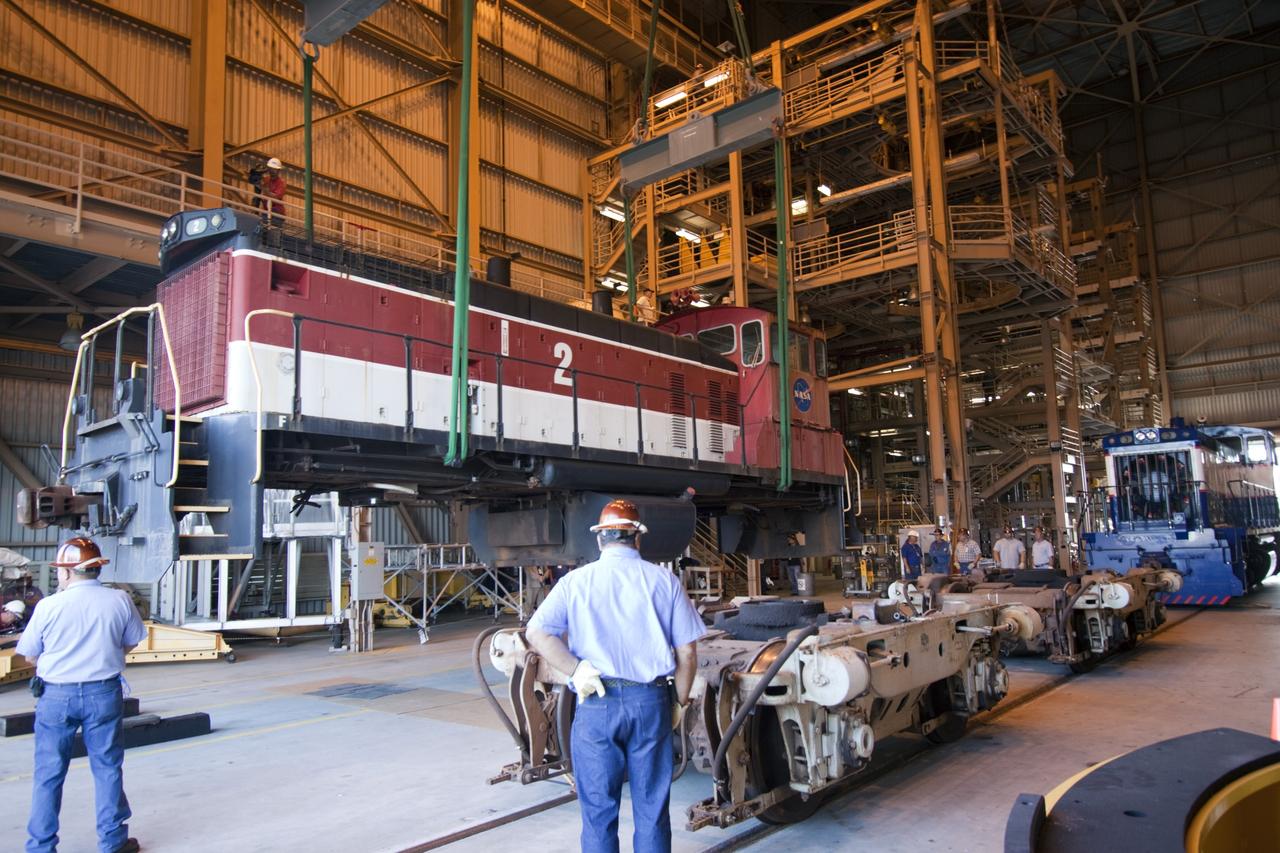
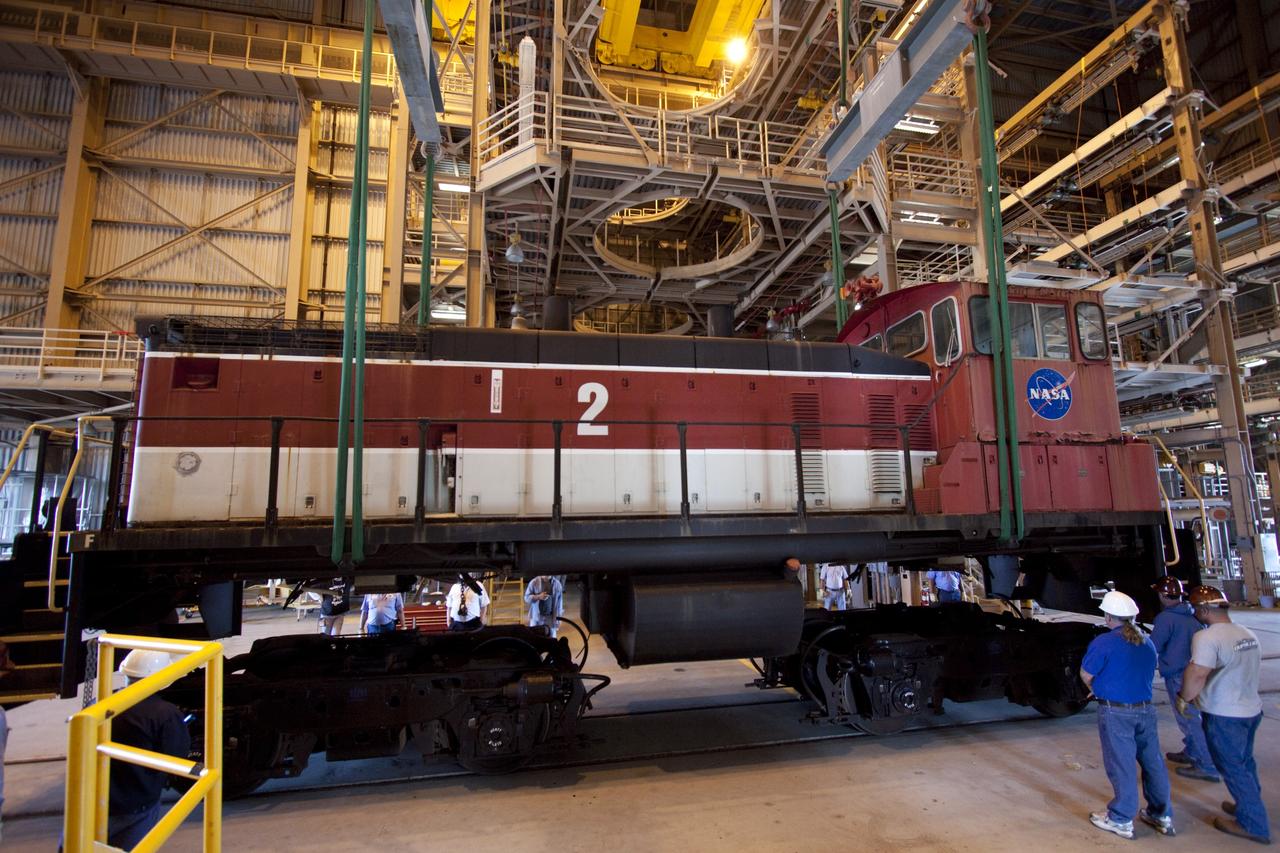
CAPE CANAVERAL, Fla. – Inside the Rotation, Processing and Surge Facility, or RPSF, at the Kennedy Space Center in Florida, an overhead crane lifts NASA locomotive No. 2 off of its trucks to be moved aside, clearing the way for locomotive No. 3 to be raised off its trucks and moved into position atop the trucks previously used by locomotive No. 2. The RPSF was built to support work on the solid rocket used motors during the space shuttle era. The facility had never previously been used for another purpose, but is now free to serve other customers. With rails running into the building's high bay and a pair of heavy-lift cranes positioned overhead, the facility's capabilities were a perfect fit for the NASA Railroad's needs. Railroad managers wanted to trade the wheel and axle assemblies, or trucks, of locomotives No. 2 and No. 3. Locomotive No. 3 was painstakingly restored in recent years by the NASA Railroad team, and handles much of the rail work required at the center in the post-shuttle era. But the trucks on locomotive No. 2 are in better shape and are more environmentally friendly. For more information, visit: http://www.nasa.gov/exploration/systems/ground/rpsf_locomotives.html Photo credit: NASA/Jim Grossmann
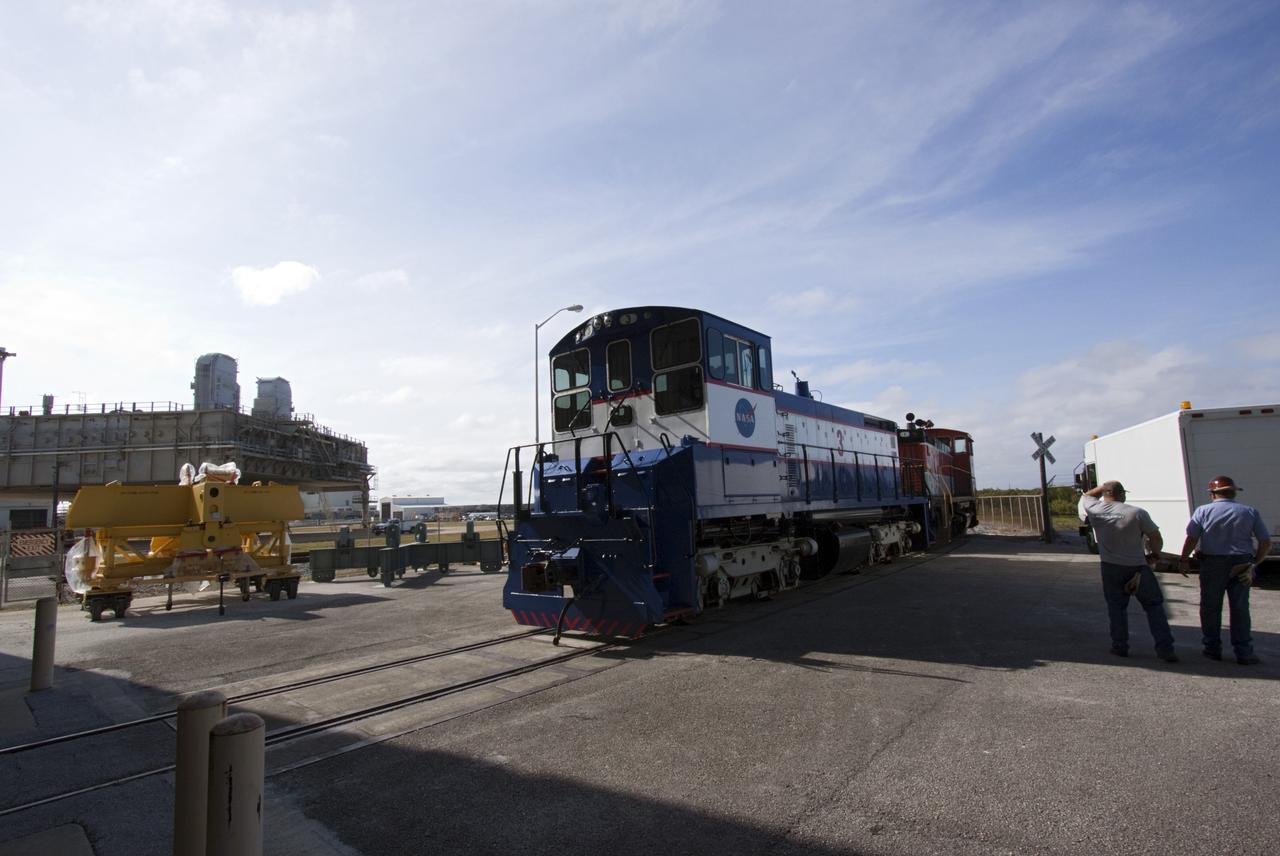
CAPE CANAVERAL, Fla. – NASA locomotive No. 1 pulls locomotive No. 3 out of the Rotation, Processing and Surge Facility, or RPSF, at the Kennedy Space Center in Florida. Inside, an overhead crane was used to lift NASA locomotive No. 2 off of its trucks and moved aside, so locomotive No. 3 could be raised off its trucks and moved into position atop the trucks previously used by locomotive No. 2. The RPSF was built to support work on the solid rocket used motors during the space shuttle era. The facility had never previously been used for another purpose, but is now free to serve other customers. With rails running into the building's high bay and a pair of heavy-lift cranes positioned overhead, the facility's capabilities were a perfect fit for the NASA Railroad's needs. Railroad managers wanted to trade the wheel and axle assemblies, or trucks, of locomotives No. 2 and No. 3. Locomotive No. 3 was painstakingly restored in recent years by the NASA Railroad team, and handles much of the rail work required at the center in the post-shuttle era. But the trucks on locomotive No. 2 are in better shape and are more environmentally friendly. For more information, visit: http://www.nasa.gov/exploration/systems/ground/rpsf_locomotives.html Photo credit: NASA/Jim Grossmann
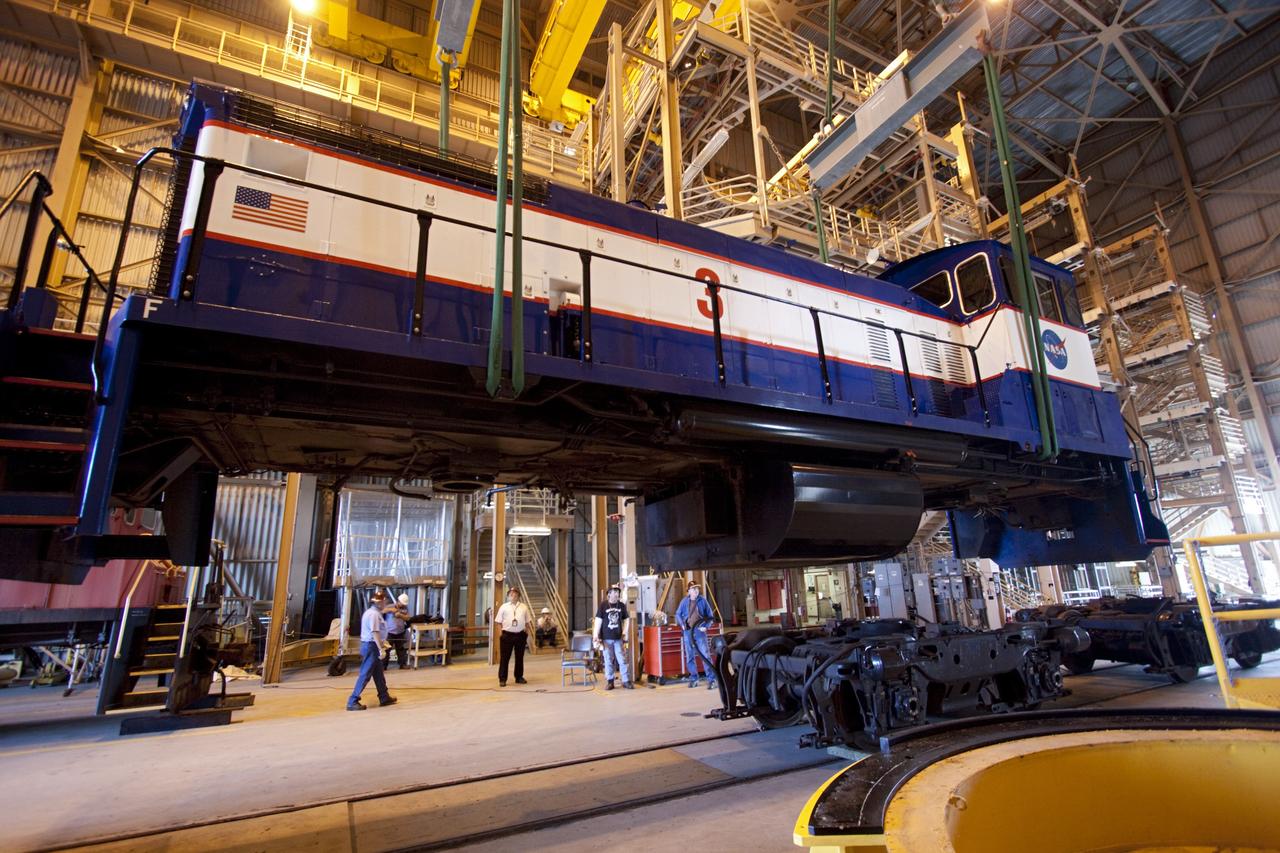
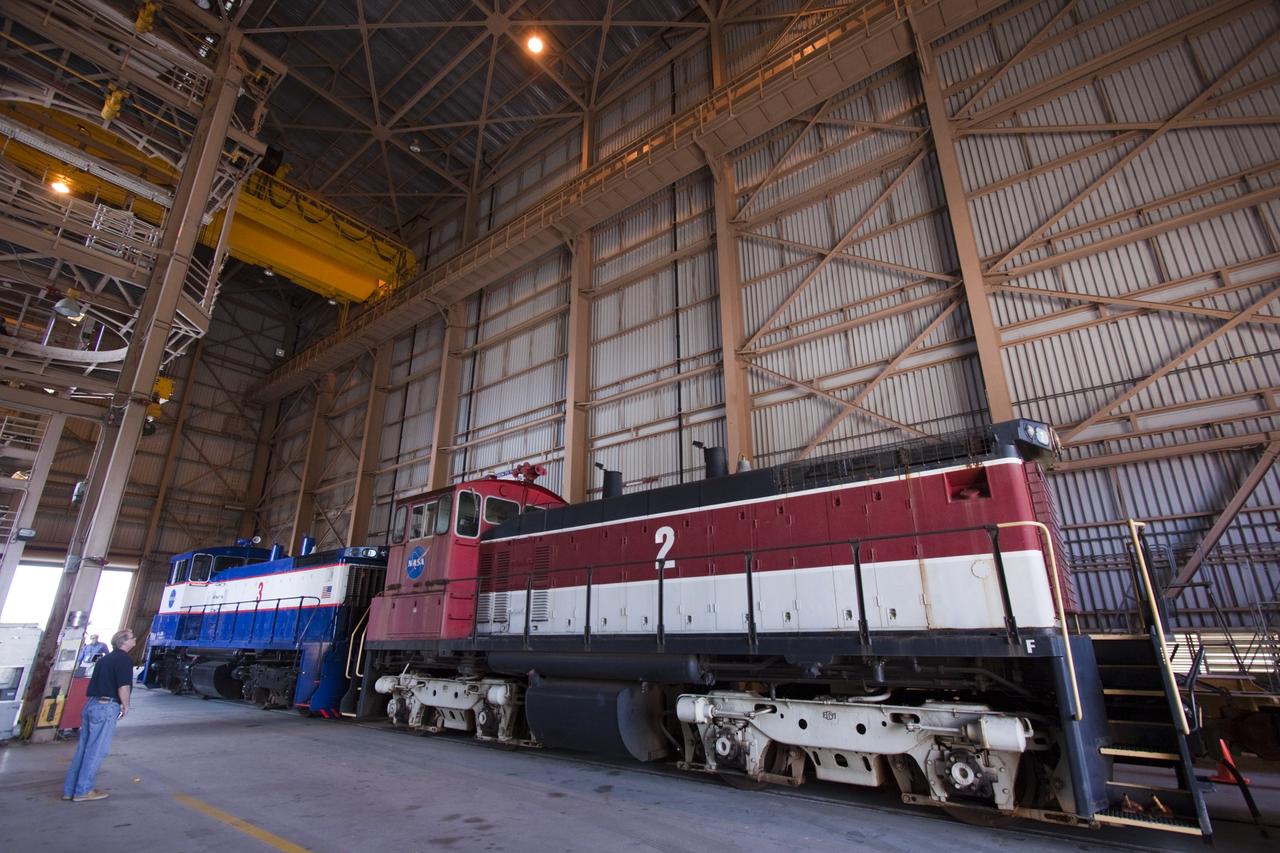
CAPE CANAVERAL, Fla. – Inside the Rotation, Processing and Surge Facility, or RPSF, at the Kennedy Space Center in Florida, an overhead crane lifts NASA locomotive No. 3 off of its trucks to be moved into position atop the trucks previously used by locomotive No. 2. The RPSF was built to support work on the solid rocket used motors during the space shuttle era. The facility had never previously been used for another purpose, but is now free to serve other customers. With rails running into the building's high bay and a pair of heavy-lift cranes positioned overhead, the facility's capabilities were a perfect fit for the NASA Railroad's needs. Railroad managers wanted to trade the wheel and axle assemblies, or trucks, of locomotives No. 2 and No. 3. Locomotive No. 3 was painstakingly restored in recent years by the NASA Railroad team, and handles much of the rail work required at the center in the post-shuttle era. But the trucks on locomotive No. 2 are in better shape and are more environmentally friendly. For more information, visit: http://www.nasa.gov/exploration/systems/ground/rpsf_locomotives.html Photo credit: NASA/Jim Grossmann
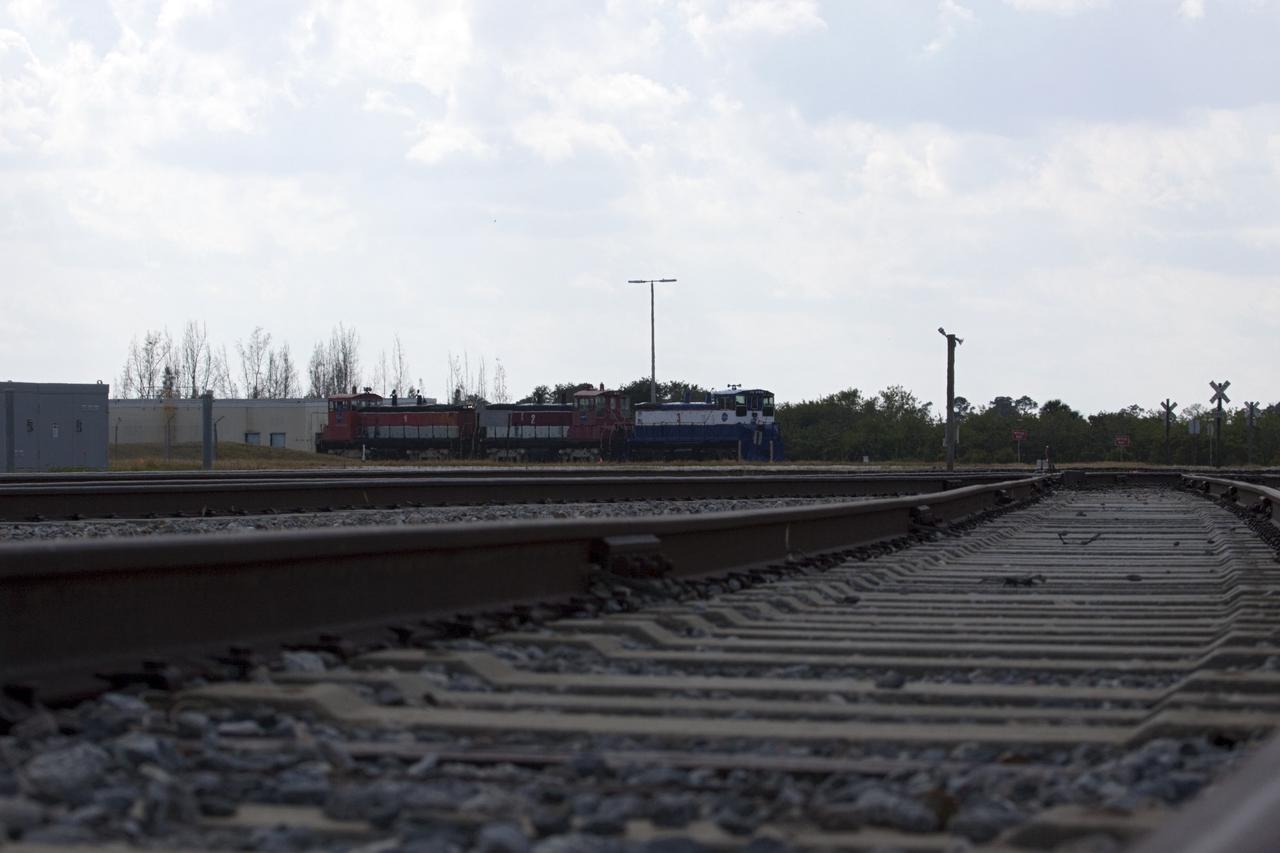
CAPE CANAVERAL, Fla. – Three NASA railroad locomotives at Kennedy Space Center in Florida move toward Launch Complex 39 area's Rotation, Processing and Surge Facility, or RPSF. The operation was to allow wheel and axle assemblies to be swapped between two of the locomotives. The RPSF was built to support work on the solid rocket used motors during the space shuttle era. The facility had never previously been used for another purpose, but is now free to serve other customers. With rails running into the building's high bay and a pair of heavy-lift cranes positioned overhead, the facility's capabilities were a perfect fit for the NASA Railroad's needs. Railroad managers wanted to trade the wheel and axle assemblies, or trucks, of locomotives No. 2 and No. 3. Locomotive No. 3 was painstakingly restored in recent years by the NASA Railroad team, and handles much of the rail work required at the center in the post-shuttle era. But the trucks on locomotive No. 2 are in better shape and are more environmentally friendly. For more information, visit: http://www.nasa.gov/exploration/systems/ground/rpsf_locomotives.html Photo credit: NASA/Jim Grossmann
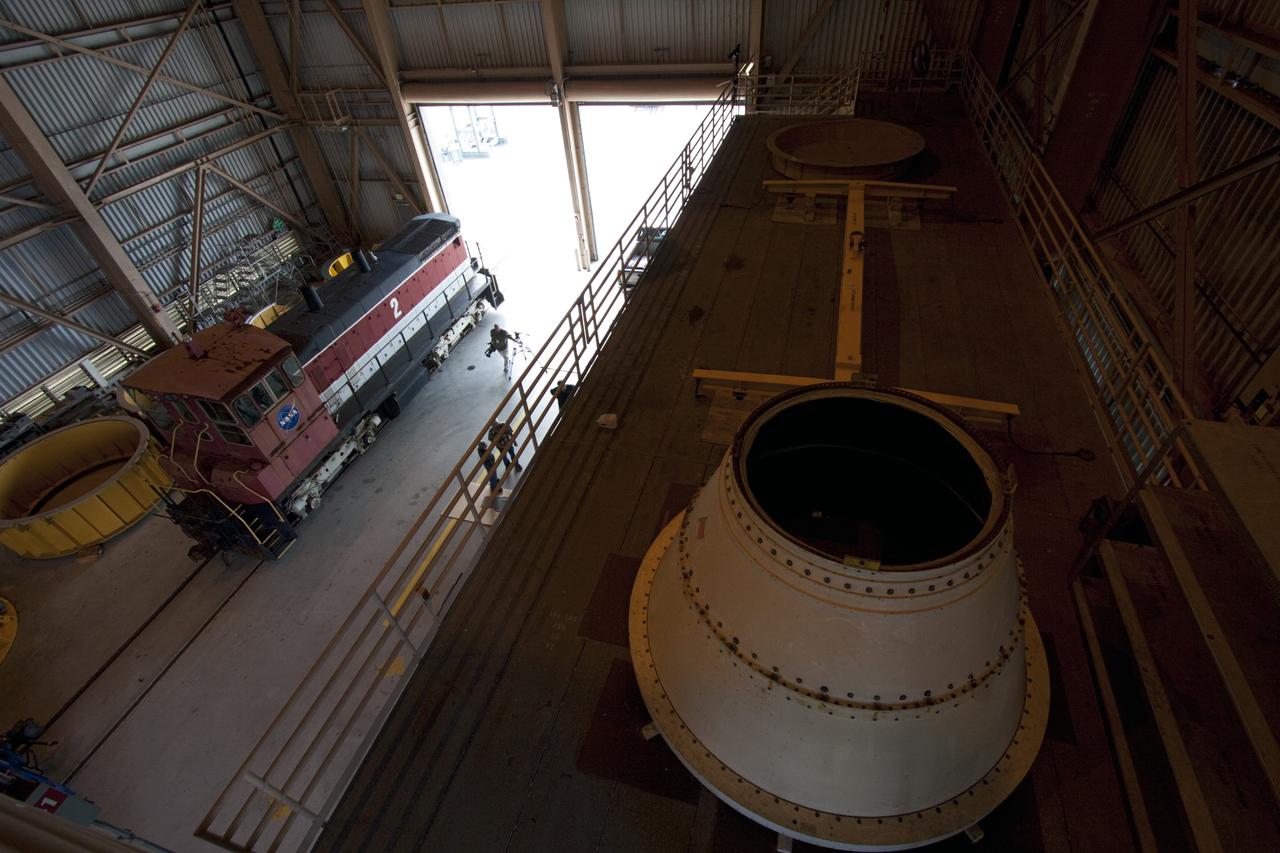
CAPE CANAVERAL, Fla. – A NASA railroad locomotive at Kennedy Space Center in Florida moves into Launch Complex 39 area's Rotation, Processing and Surge Facility, or RPSF. The operation was to allow wheel and axle assemblies to be swapped between two locomotives. The RPSF was built to support work on the solid rocket used motors during the space shuttle era. The facility had never previously been used for another purpose, but is now free to serve other customers. With rails running into the building's high bay and a pair of heavy-lift cranes positioned overhead, the facility's capabilities were a perfect fit for the NASA Railroad's needs. Railroad managers wanted to trade the wheel and axle assemblies, or trucks, of locomotives No. 2 and No. 3. Locomotive No. 3 was painstakingly restored in recent years by the NASA Railroad team, and handles much of the rail work required at the center in the post-shuttle era. But the trucks on locomotive No. 2 are in better shape and are more environmentally friendly. For more information, visit: http://www.nasa.gov/exploration/systems/ground/rpsf_locomotives.html Photo credit: NASA/Jim Grossmann
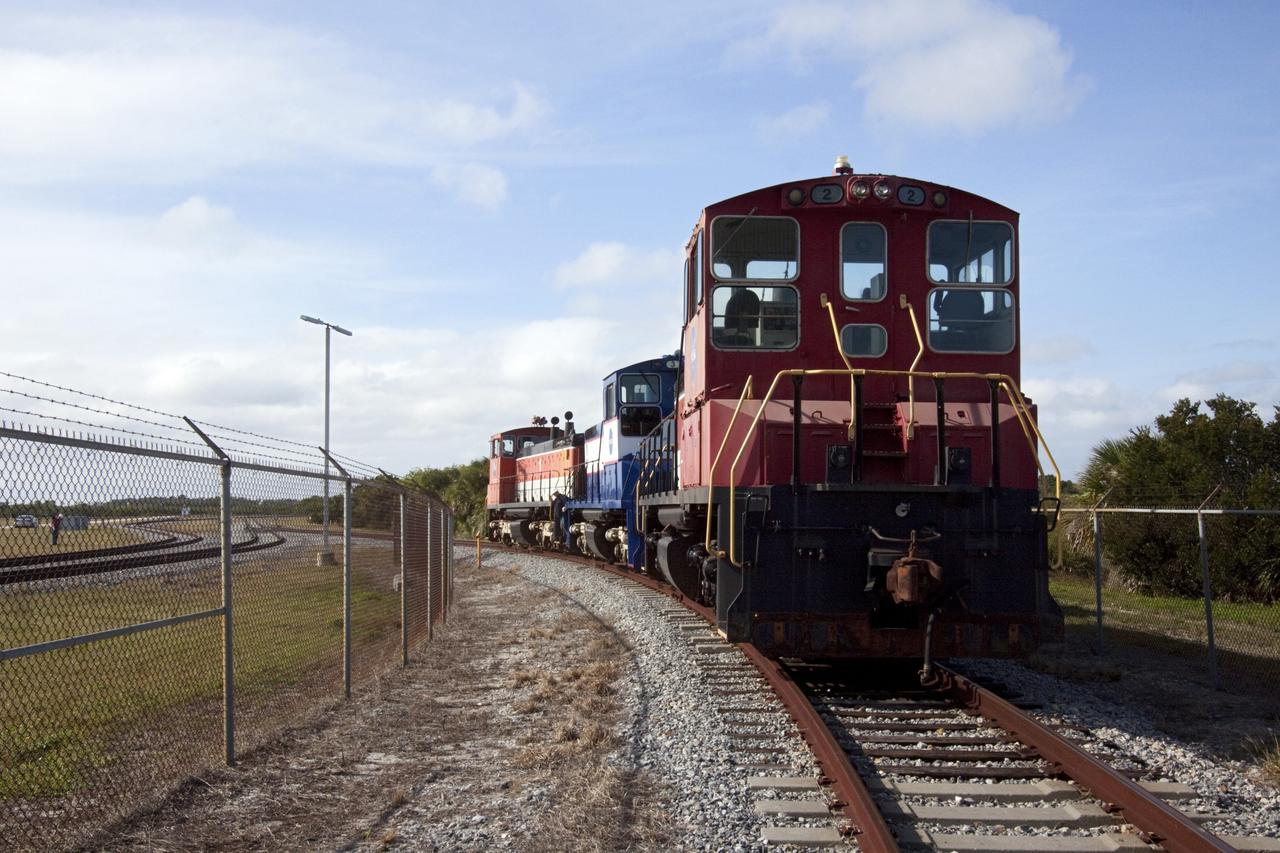
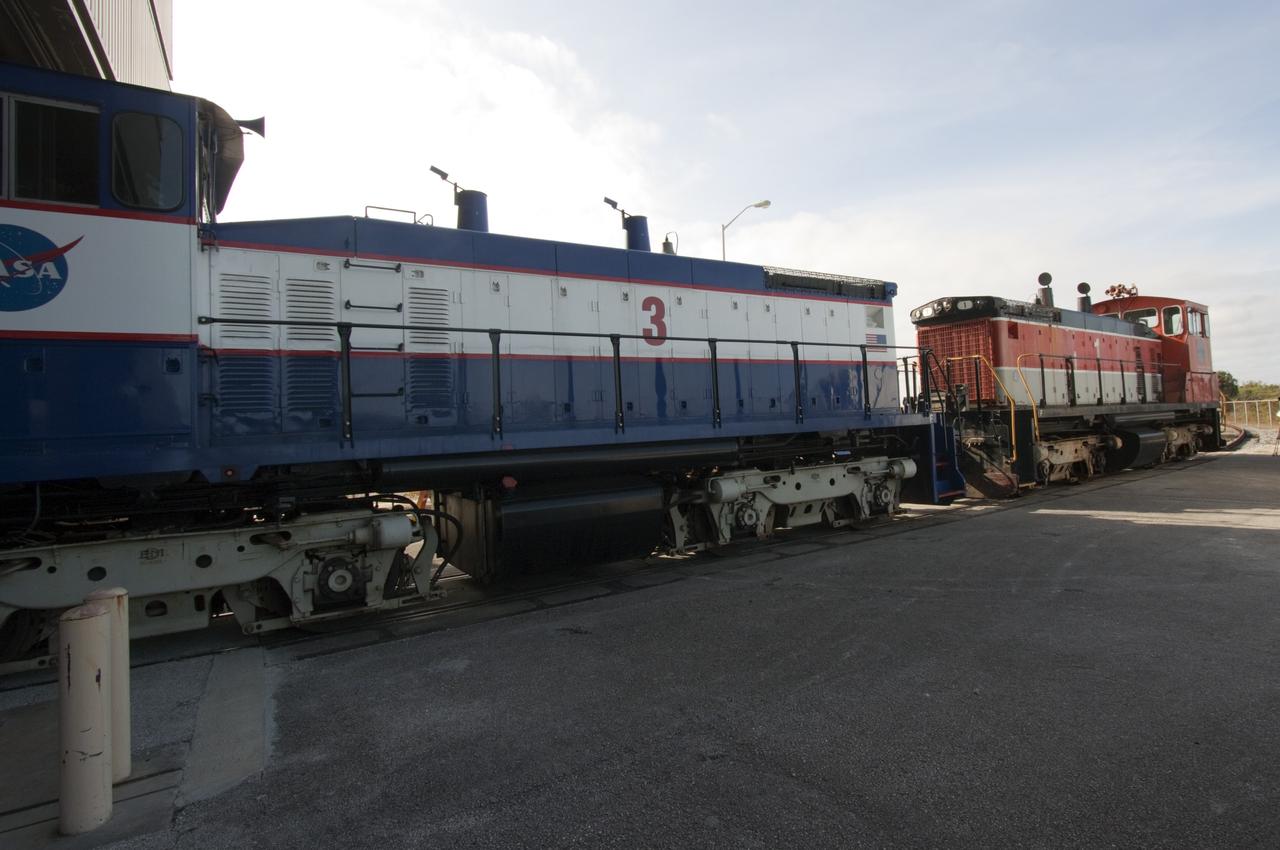
CAPE CANAVERAL, Fla. – At Kennedy Space Center in Florida, NASA railroad locomotive No. 1 pulls locomotives 2 and 3 away from Launch Complex 39 area's Rotation, Processing and Surge Facility, or RPSF, where wheel and axle assemblies were swapped between locomotives 2 and 3. The RPSF was built to support work on the solid rocket used motors during the space shuttle era. The facility had never previously been used for another purpose, but is now free to serve other customers. With rails running into the building's high bay and a pair of heavy-lift cranes positioned overhead, the facility's capabilities were a perfect fit for the NASA Railroad's needs. Railroad managers wanted to trade the wheel and axle assemblies, or trucks, of locomotives No. 2 and No. 3. Locomotive No. 3 was painstakingly restored in recent years by the NASA Railroad team, and handles much of the rail work required at the center in the post-shuttle era. But the trucks on locomotive No. 2 are in better shape and are more environmentally friendly. For more information, visit: http://www.nasa.gov/exploration/systems/ground/rpsf_locomotives.html Photo credit: NASA/Jim Grossmann
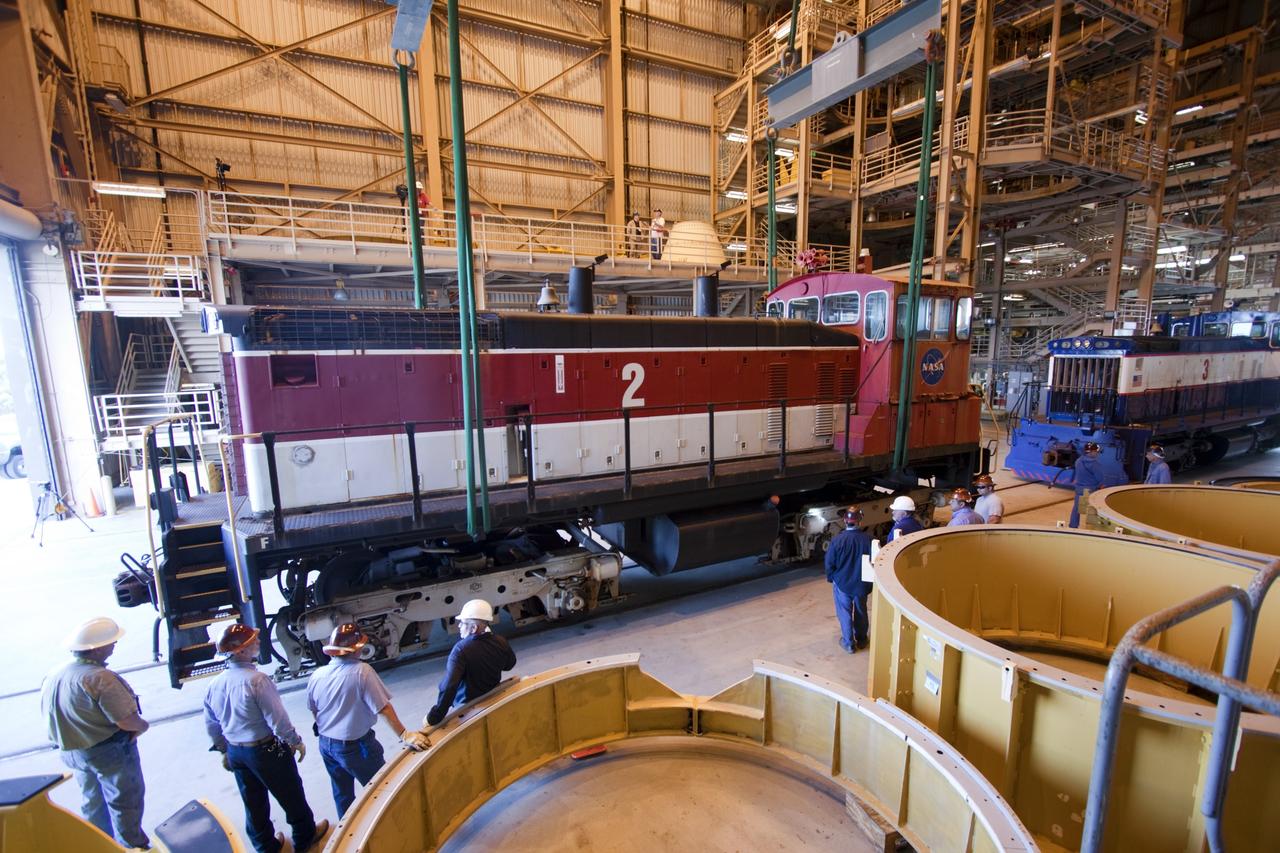
CAPE CANAVERAL, Fla. – Inside the Rotation, Processing and Surge Facility, or RPSF, at the Kennedy Space Center in Florida, an overhead crane lifts NASA locomotive No. 2 off of its trucks to be moved aside, clearing the way for locomotive No. 3 to be raised off its trucks and moved into position atop the trucks previously used by locomotive No. 2. The RPSF was built to support work on the solid rocket used motors during the space shuttle era. The facility had never previously been used for another purpose, but is now free to serve other customers. With rails running into the building's high bay and a pair of heavy-lift cranes positioned overhead, the facility's capabilities were a perfect fit for the NASA Railroad's needs. Railroad managers wanted to trade the wheel and axle assemblies, or trucks, of locomotives No. 2 and No. 3. Locomotive No. 3 was painstakingly restored in recent years by the NASA Railroad team, and handles much of the rail work required at the center in the post-shuttle era. But the trucks on locomotive No. 2 are in better shape and are more environmentally friendly. For more information, visit: http://www.nasa.gov/exploration/systems/ground/rpsf_locomotives.html Photo credit: NASA/Jim Grossmann
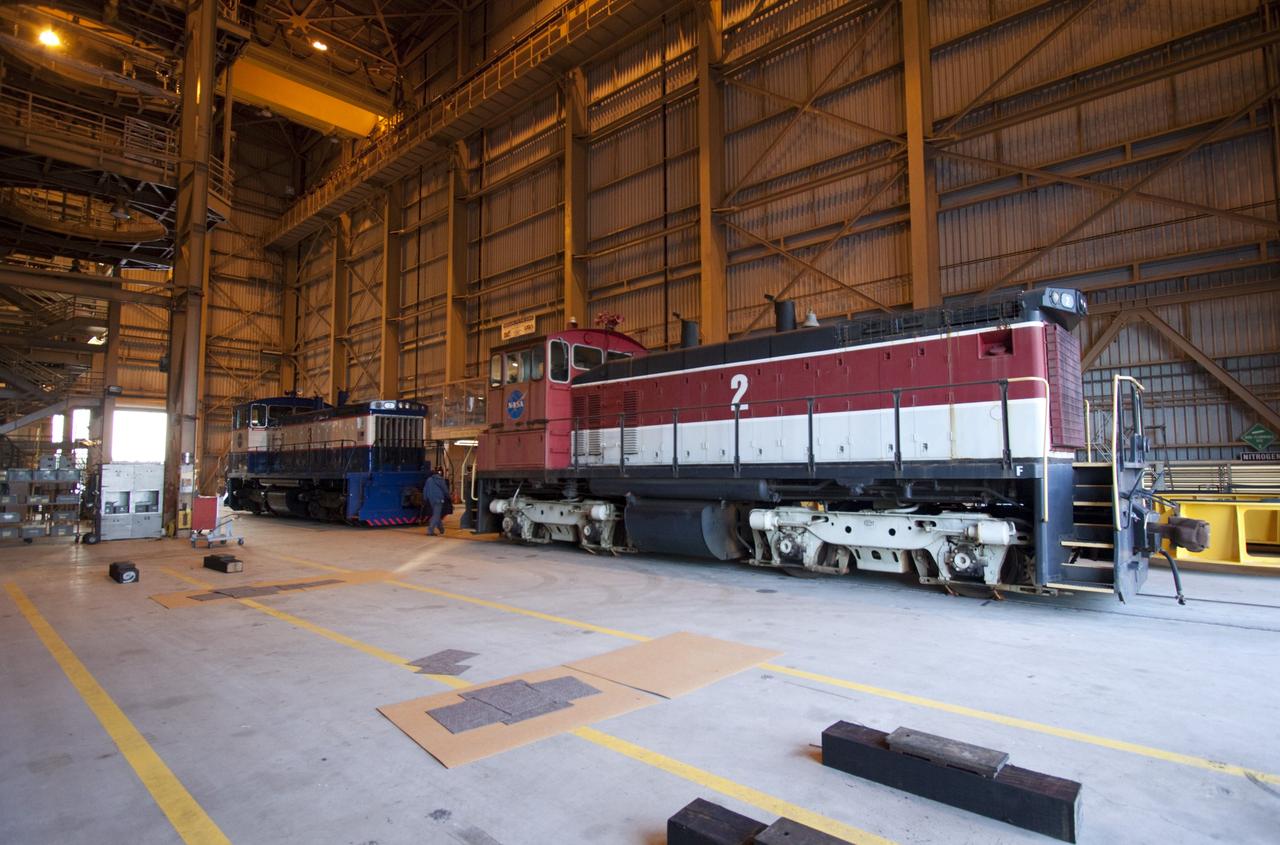
CAPE CANAVERAL, Fla. – Two NASA railroad locomotives at Kennedy Space Center in Florida move into Launch Complex 39 area's Rotation, Processing and Surge Facility, or RPSF. The operation was to allow wheel and axle assemblies to be swapped between locomotives. The RPSF was built to support work on the solid rocket used motors during the space shuttle era. The facility had never previously been used for another purpose, but is now free to serve other customers. With rails running into the building's high bay and a pair of heavy-lift cranes positioned overhead, the facility's capabilities were a perfect fit for the NASA Railroad's needs. Railroad managers wanted to trade the wheel and axle assemblies, or trucks, of locomotives No. 2 and No. 3. Locomotive No. 3 was painstakingly restored in recent years by the NASA Railroad team, and handles much of the rail work required at the center in the post-shuttle era. But the trucks on locomotive No. 2 are in better shape and are more environmentally friendly. For more information, visit: http://www.nasa.gov/exploration/systems/ground/rpsf_locomotives.html Photo credit: NASA/Jim Grossmann
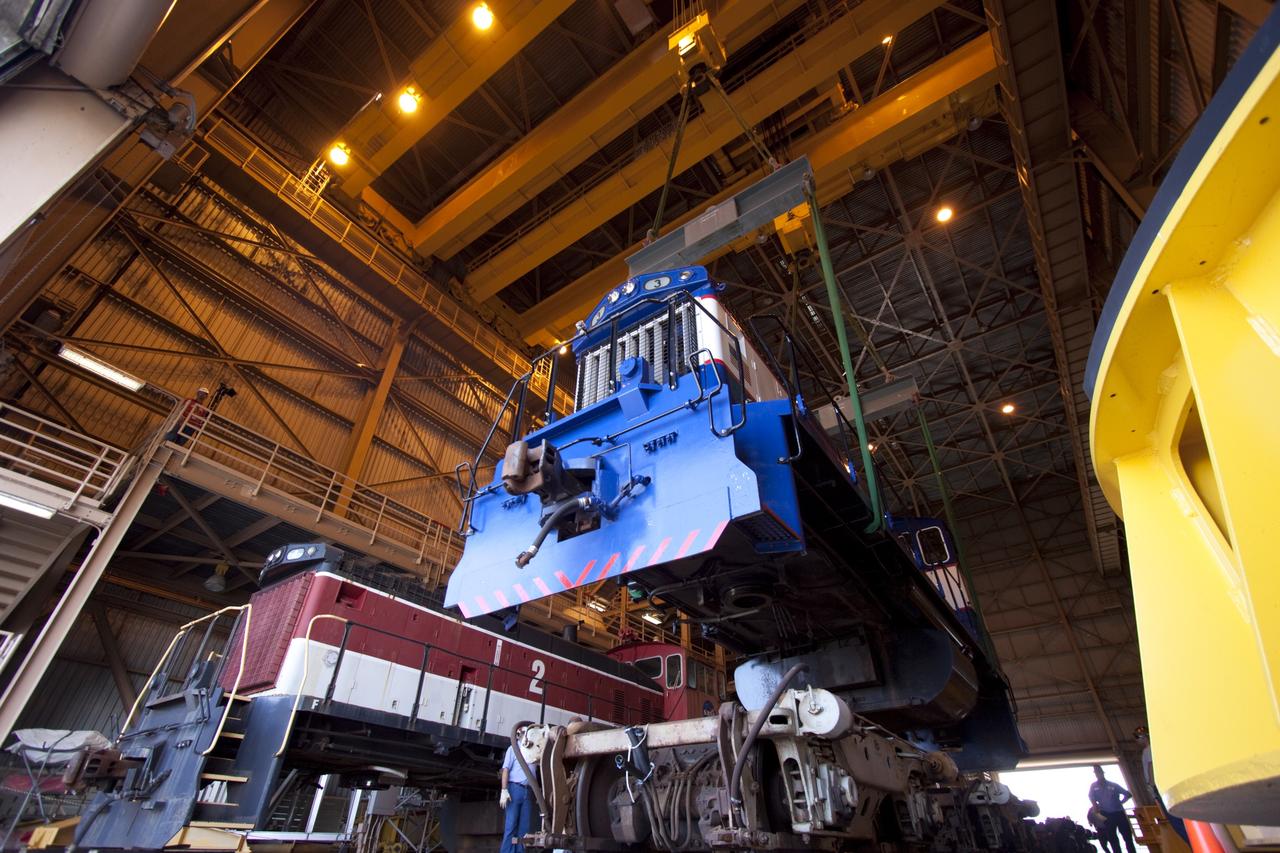
CAPE CANAVERAL, Fla. – Inside the Rotation, Processing and Surge Facility, or RPSF, at the Kennedy Space Center in Florida, an overhead crane lifts NASA locomotive No. 3 moving it into position atop the trucks previously used by locomotive No. 2. The RPSF was built to support work on the solid rocket used motors during the space shuttle era. The facility had never previously been used for another purpose, but is now free to serve other customers. With rails running into the building's high bay and a pair of heavy-lift cranes positioned overhead, the facility's capabilities were a perfect fit for the NASA Railroad's needs. Railroad managers wanted to trade the wheel and axle assemblies, or trucks, of locomotives No. 2 and No. 3. Locomotive No. 3 was painstakingly restored in recent years by the NASA Railroad team, and handles much of the rail work required at the center in the post-shuttle era. But the trucks on locomotive No. 2 are in better shape and are more environmentally friendly. For more information, visit: http://www.nasa.gov/exploration/systems/ground/rpsf_locomotives.html Photo credit: NASA/Jim Grossmann
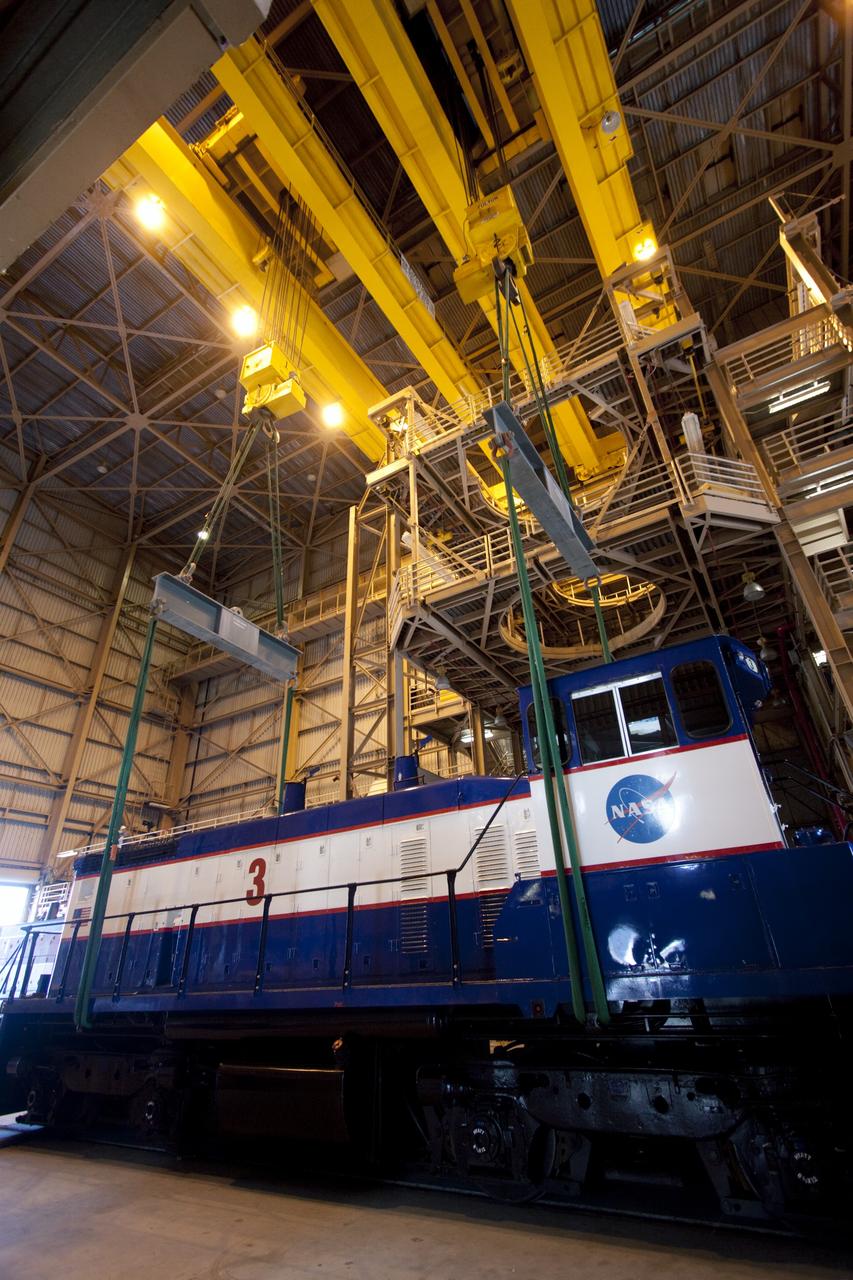
CAPE CANAVERAL, Fla. – Inside the Rotation, Processing and Surge Facility, or RPSF, at the Kennedy Space Center in Florida, an overhead crane lifts NASA locomotive No. 3 off of its trucks to be moved into position atop the trucks previously used by locomotive No. 2. The RPSF was built to support work on the solid rocket used motors during the space shuttle era. The facility had never previously been used for another purpose, but is now free to serve other customers. With rails running into the building's high bay and a pair of heavy-lift cranes positioned overhead, the facility's capabilities were a perfect fit for the NASA Railroad's needs. Railroad managers wanted to trade the wheel and axle assemblies, or trucks, of locomotives No. 2 and No. 3. Locomotive No. 3 was painstakingly restored in recent years by the NASA Railroad team, and handles much of the rail work required at the center in the post-shuttle era. But the trucks on locomotive No. 2 are in better shape and are more environmentally friendly. For more information, visit: http://www.nasa.gov/exploration/systems/ground/rpsf_locomotives.html Photo credit: NASA/Jim Grossmann
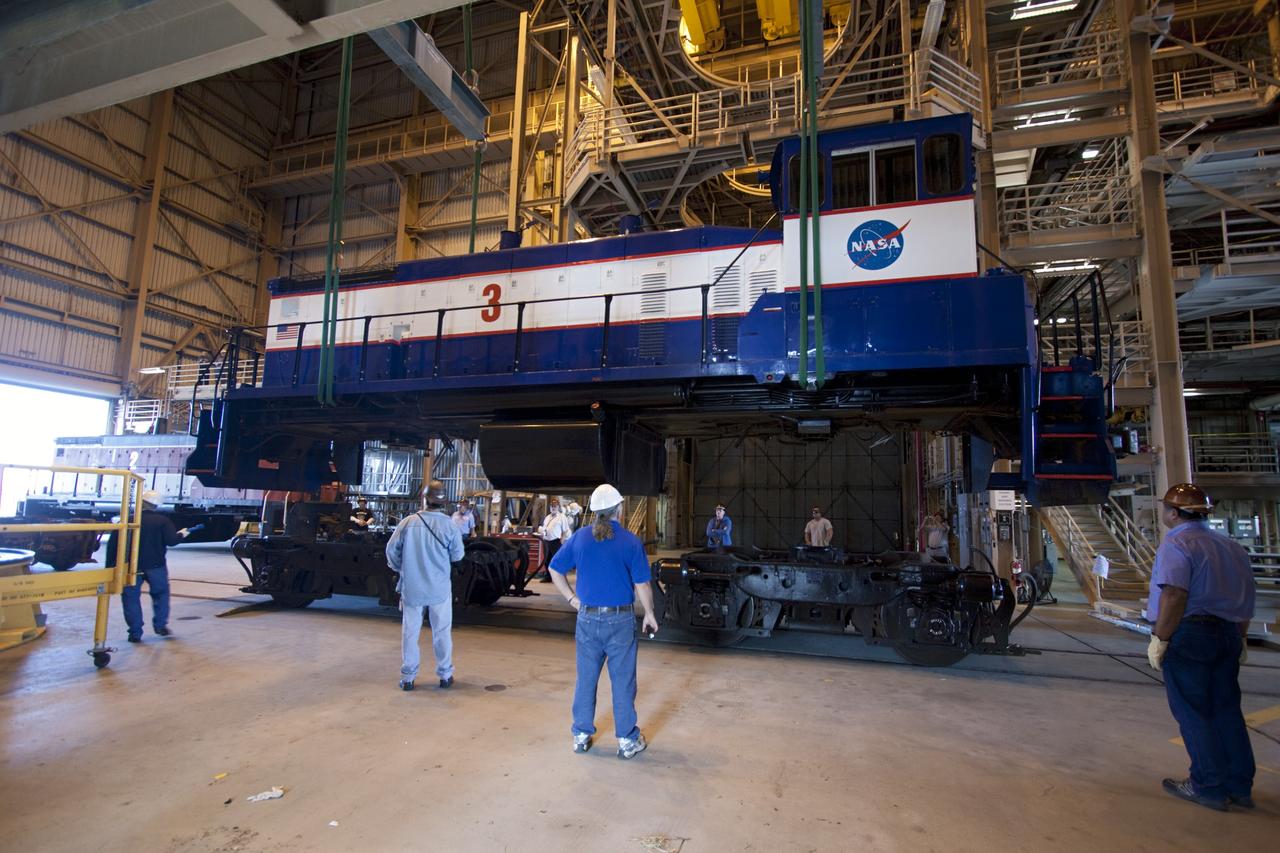
CAPE CANAVERAL, Fla. – Inside the Rotation, Processing and Surge Facility, or RPSF, at the Kennedy Space Center in Florida, an overhead crane lifts NASA locomotive No. 3 off of its trucks to be moved into position atop the trucks previously used by locomotive No. 2. The RPSF was built to support work on the solid rocket used motors during the space shuttle era. The facility had never previously been used for another purpose, but is now free to serve other customers. With rails running into the building's high bay and a pair of heavy-lift cranes positioned overhead, the facility's capabilities were a perfect fit for the NASA Railroad's needs. Railroad managers wanted to trade the wheel and axle assemblies, or trucks, of locomotives No. 2 and No. 3. Locomotive No. 3 was painstakingly restored in recent years by the NASA Railroad team, and handles much of the rail work required at the center in the post-shuttle era. But the trucks on locomotive No. 2 are in better shape and are more environmentally friendly. For more information, visit: http://www.nasa.gov/exploration/systems/ground/rpsf_locomotives.html Photo credit: NASA/Jim Grossmann
CAPE CANAVERAL, Fla. – Two NASA railroad locomotives at Kennedy Space Center in Florida move into Launch Complex 39 area's Rotation, Processing and Surge Facility, or RPSF. The operation was to allow wheel and axle assemblies to be swapped between locomotives. The RPSF was built to support work on the solid rocket used motors during the space shuttle era. The facility had never previously been used for another purpose, but is now free to serve other customers. With rails running into the building's high bay and a pair of heavy-lift cranes positioned overhead, the facility's capabilities were a perfect fit for the NASA Railroad's needs. Railroad managers wanted to trade the wheel and axle assemblies, or trucks, of locomotives No. 2 and No. 3. Locomotive No. 3 was painstakingly restored in recent years by the NASA Railroad team, and handles much of the rail work required at the center in the post-shuttle era. But the trucks on locomotive No. 2 are in better shape and are more environmentally friendly. For more information, visit: http://www.nasa.gov/exploration/systems/ground/rpsf_locomotives.html Photo credit: NASA/Jim Grossmann
CAPE CANAVERAL, Fla. – NASA locomotive No. 1 pulls locomotive No. 3 out of the Rotation, Processing and Surge Facility, or RPSF, at the Kennedy Space Center in Florida. Inside, an overhead crane was used to lift NASA locomotive No. 2 off of its trucks and moved aside, so locomotive No. 3 could be raised off its trucks and moved into position atop the trucks previously used by locomotive No. 2. The RPSF was built to support work on the solid rocket used motors during the space shuttle era. The facility had never previously been used for another purpose, but is now free to serve other customers. With rails running into the building's high bay and a pair of heavy-lift cranes positioned overhead, the facility's capabilities were a perfect fit for the NASA Railroad's needs. Railroad managers wanted to trade the wheel and axle assemblies, or trucks, of locomotives No. 2 and No. 3. Locomotive No. 3 was painstakingly restored in recent years by the NASA Railroad team, and handles much of the rail work required at the center in the post-shuttle era. But the trucks on locomotive No. 2 are in better shape and are more environmentally friendly. For more information, visit: http://www.nasa.gov/exploration/systems/ground/rpsf_locomotives.html Photo credit: NASA/Jim Grossmann
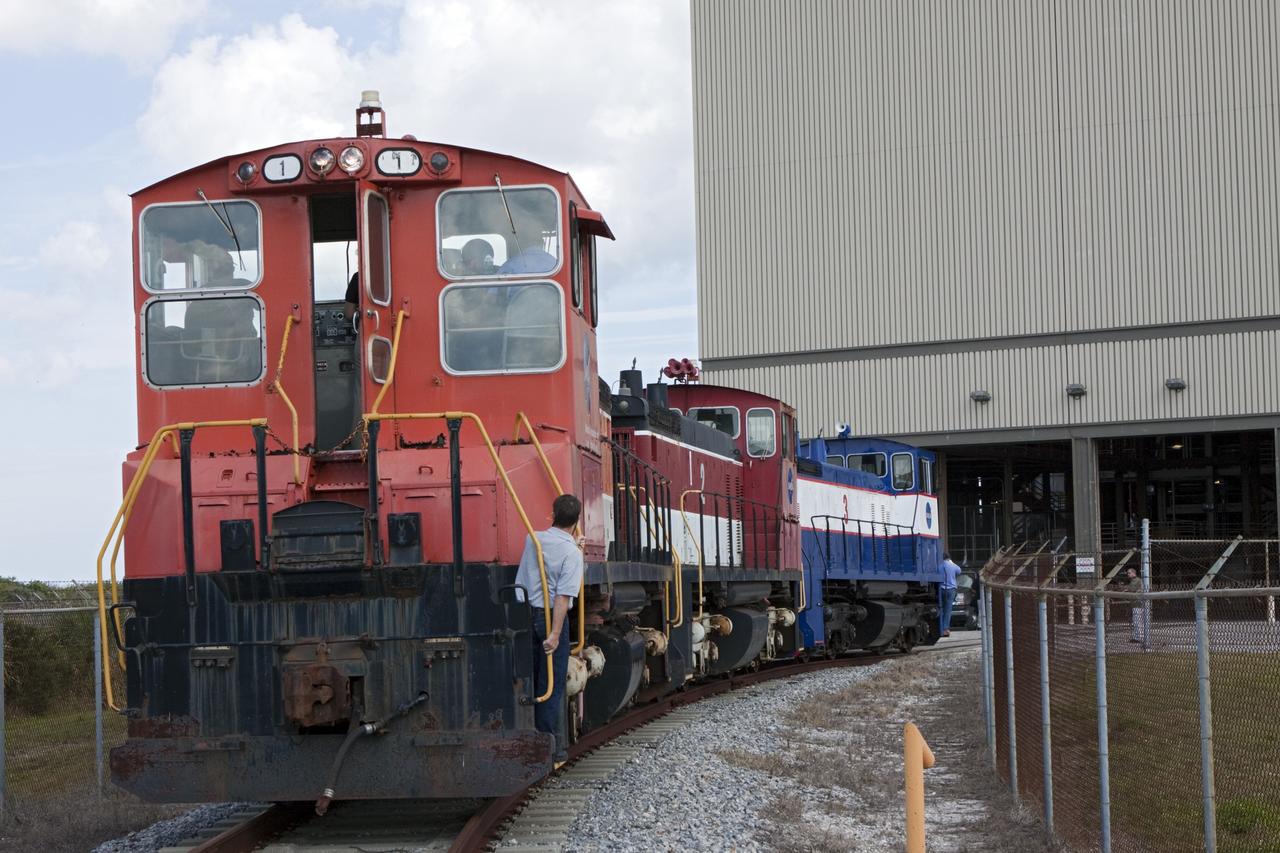
CAPE CANAVERAL, Fla. – Three NASA railroad locomotives at Kennedy Space Center in Florida move toward Launch Complex 39 area's Rotation, Processing and Surge Facility, or RPSF. The operation was to allow wheel and axle assemblies to be swapped between two of the locomotives. The RPSF was built to support work on the solid rocket used motors during the space shuttle era. The facility had never previously been used for another purpose, but is now free to serve other customers. With rails running into the building's high bay and a pair of heavy-lift cranes positioned overhead, the facility's capabilities were a perfect fit for the NASA Railroad's needs. Railroad managers wanted to trade the wheel and axle assemblies, or trucks, of locomotives No. 2 and No. 3. Locomotive No. 3 was painstakingly restored in recent years by the NASA Railroad team, and handles much of the rail work required at the center in the post-shuttle era. But the trucks on locomotive No. 2 are in better shape and are more environmentally friendly. For more information, visit: http://www.nasa.gov/exploration/systems/ground/rpsf_locomotives.html Photo credit: NASA/Jim Grossmann
CAPE CANAVERAL, Fla. – NASA locomotive No. 1 pulls locomotive No. 3 out of the Rotation, Processing and Surge Facility, or RPSF, at the Kennedy Space Center in Florida. Inside, an overhead crane was used to lift NASA locomotive No. 2 off of its trucks and moved aside, so locomotive No. 3 could be raised off its trucks and moved into position atop the trucks previously used by locomotive No. 2. The RPSF was built to support work on the solid rocket used motors during the space shuttle era. The facility had never previously been used for another purpose, but is now free to serve other customers. With rails running into the building's high bay and a pair of heavy-lift cranes positioned overhead, the facility's capabilities were a perfect fit for the NASA Railroad's needs. Railroad managers wanted to trade the wheel and axle assemblies, or trucks, of locomotives No. 2 and No. 3. Locomotive No. 3 was painstakingly restored in recent years by the NASA Railroad team, and handles much of the rail work required at the center in the post-shuttle era. But the trucks on locomotive No. 2 are in better shape and are more environmentally friendly. For more information, visit: http://www.nasa.gov/exploration/systems/ground/rpsf_locomotives.html Photo credit: NASA/Jim Grossmann
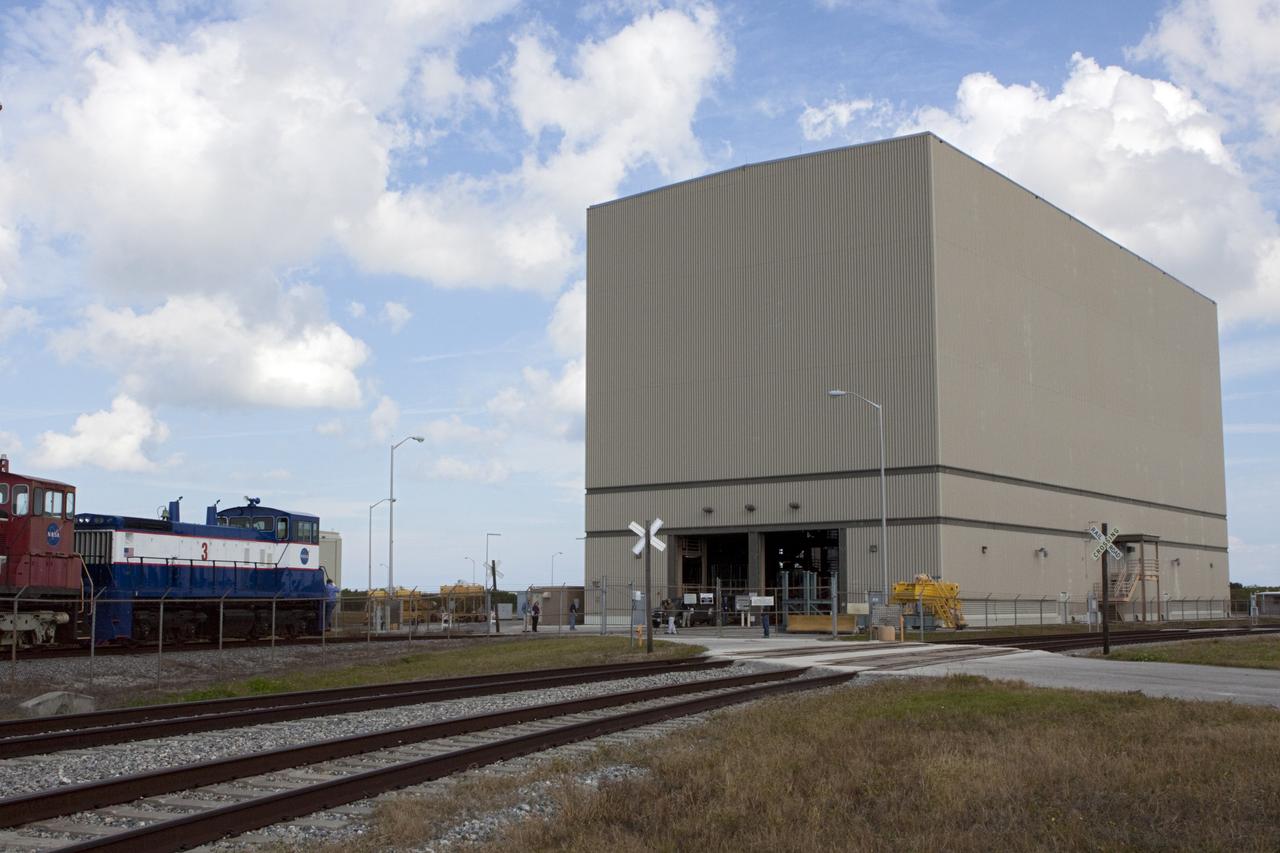
CAPE CANAVERAL, Fla. – Three NASA railroad locomotives at Kennedy Space Center in Florida move toward Launch Complex 39 area's Rotation, Processing and Surge Facility, or RPSF. The operation was to allow wheel and axle assemblies to be swapped between two of the locomotives. The RPSF was built to support work on the solid rocket used motors during the space shuttle era. The facility had never previously been used for another purpose, but is now free to serve other customers. With rails running into the building's high bay and a pair of heavy-lift cranes positioned overhead, the facility's capabilities were a perfect fit for the NASA Railroad's needs. Railroad managers wanted to trade the wheel and axle assemblies, or trucks, of locomotives No. 2 and No. 3. Locomotive No. 3 was painstakingly restored in recent years by the NASA Railroad team, and handles much of the rail work required at the center in the post-shuttle era. But the trucks on locomotive No. 2 are in better shape and are more environmentally friendly. For more information, visit: http://www.nasa.gov/exploration/systems/ground/rpsf_locomotives.html Photo credit: NASA/Jim Grossmann
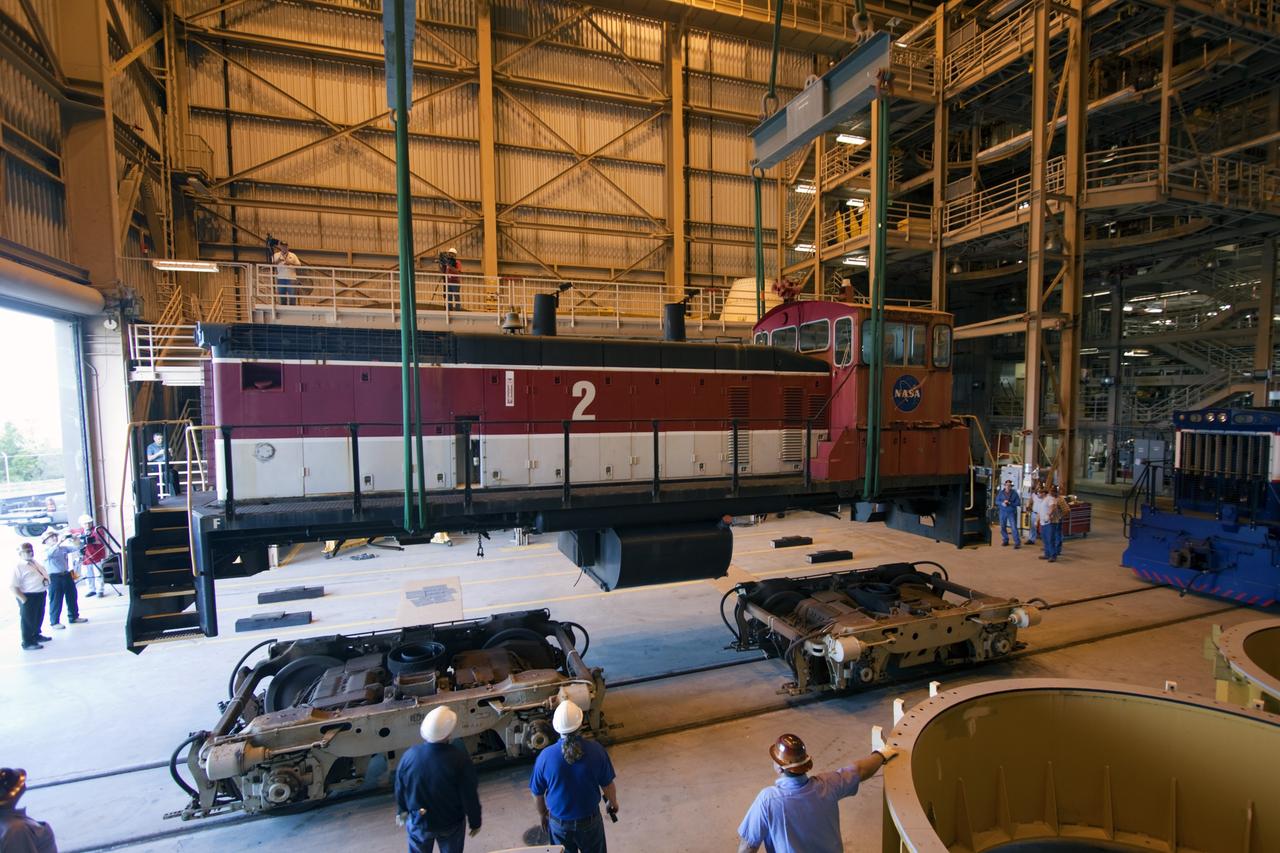
CAPE CANAVERAL, Fla. – Inside the Rotation, Processing and Surge Facility, or RPSF, at the Kennedy Space Center in Florida, an overhead crane lifts NASA locomotive No. 2 off of its trucks to be moved aside, clearing the way for locomotive No. 3 to be raised off its trucks and moved into position atop the trucks previously used by locomotive No. 2. The RPSF was built to support work on the solid rocket used motors during the space shuttle era. The facility had never previously been used for another purpose, but is now free to serve other customers. With rails running into the building's high bay and a pair of heavy-lift cranes positioned overhead, the facility's capabilities were a perfect fit for the NASA Railroad's needs. Railroad managers wanted to trade the wheel and axle assemblies, or trucks, of locomotives No. 2 and No. 3. Locomotive No. 3 was painstakingly restored in recent years by the NASA Railroad team, and handles much of the rail work required at the center in the post-shuttle era. But the trucks on locomotive No. 2 are in better shape and are more environmentally friendly. For more information, visit: http://www.nasa.gov/exploration/systems/ground/rpsf_locomotives.html Photo credit: NASA/Jim Grossmann

CAPE CANAVERAL, Fla. – Three NASA railroad locomotives at Kennedy Space Center in Florida move toward Launch Complex 39 area's Rotation, Processing and Surge Facility, or RPSF. The operation was to allow wheel and axle assemblies to be swapped between two of the locomotives. The RPSF was built to support work on the solid rocket used motors during the space shuttle era. The facility had never previously been used for another purpose, but is now free to serve other customers. With rails running into the building's high bay and a pair of heavy-lift cranes positioned overhead, the facility's capabilities were a perfect fit for the NASA Railroad's needs. Railroad managers wanted to trade the wheel and axle assemblies, or trucks, of locomotives No. 2 and No. 3. Locomotive No. 3 was painstakingly restored in recent years by the NASA Railroad team, and handles much of the rail work required at the center in the post-shuttle era. But the trucks on locomotive No. 2 are in better shape and are more environmentally friendly. For more information, visit: http://www.nasa.gov/exploration/systems/ground/rpsf_locomotives.html Photo credit: NASA/Jim Grossmann
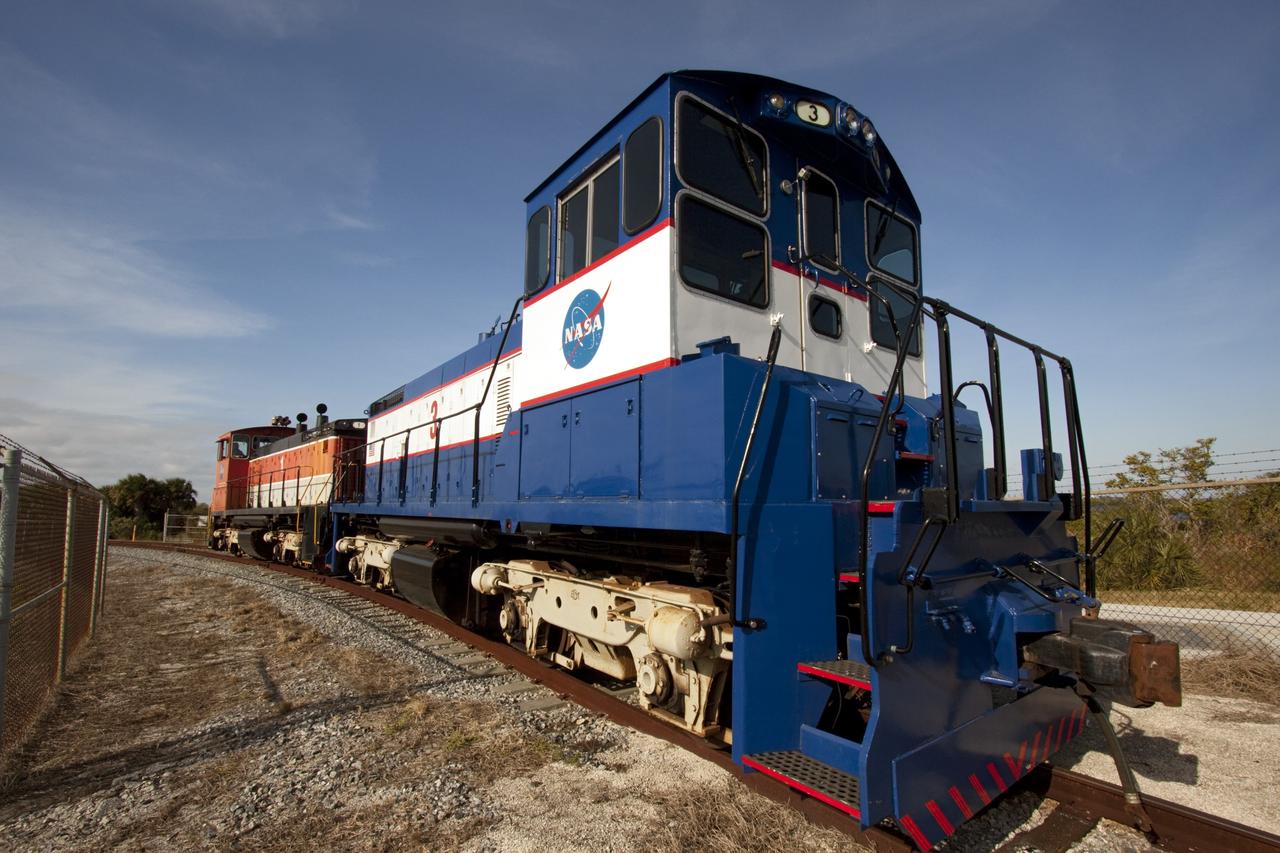
CAPE CANAVERAL, Fla. – NASA locomotive No. 1 pulls locomotive No. 3 out of the Rotation, Processing and Surge Facility, or RPSF, at the Kennedy Space Center in Florida. Inside, an overhead crane was used to lift NASA locomotive No. 2 off of its trucks and moved aside, so locomotive No. 3 could be raised off its trucks and moved into position atop the trucks previously used by locomotive No. 2. The RPSF was built to support work on the solid rocket used motors during the space shuttle era. The facility had never previously been used for another purpose, but is now free to serve other customers. With rails running into the building's high bay and a pair of heavy-lift cranes positioned overhead, the facility's capabilities were a perfect fit for the NASA Railroad's needs. Railroad managers wanted to trade the wheel and axle assemblies, or trucks, of locomotives No. 2 and No. 3. Locomotive No. 3 was painstakingly restored in recent years by the NASA Railroad team, and handles much of the rail work required at the center in the post-shuttle era. But the trucks on locomotive No. 2 are in better shape and are more environmentally friendly. For more information, visit: http://www.nasa.gov/exploration/systems/ground/rpsf_locomotives.html Photo credit: NASA/Jim Grossmann
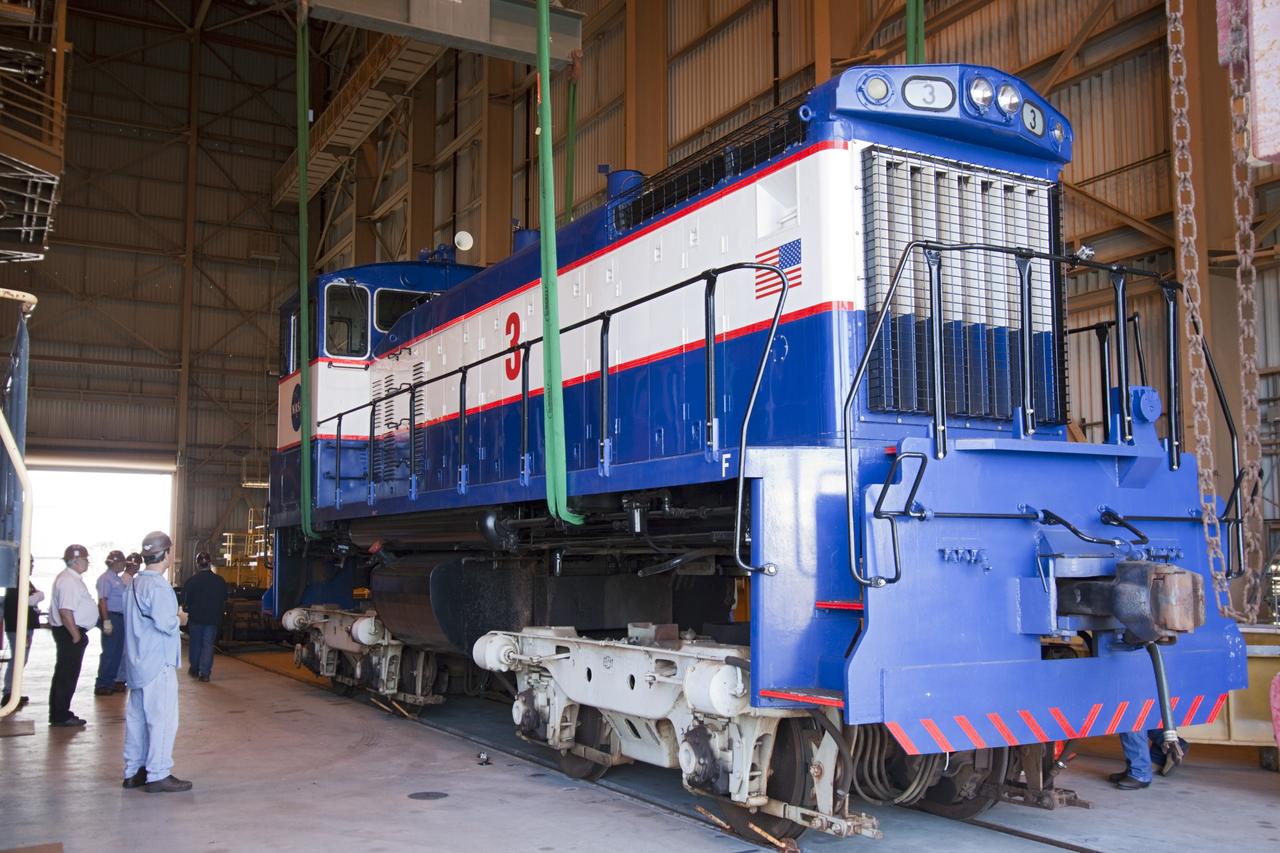
CAPE CANAVERAL, Fla. – Inside the Rotation, Processing and Surge Facility, or RPSF, at the Kennedy Space Center in Florida, an overhead crane lifts NASA locomotive No. 3 moving it into position atop the trucks previously used by locomotive No. 2. The RPSF was built to support work on the solid rocket used motors during the space shuttle era. The facility had never previously been used for another purpose, but is now free to serve other customers. With rails running into the building's high bay and a pair of heavy-lift cranes positioned overhead, the facility's capabilities were a perfect fit for the NASA Railroad's needs. Railroad managers wanted to trade the wheel and axle assemblies, or trucks, of locomotives No. 2 and No. 3. Locomotive No. 3 was painstakingly restored in recent years by the NASA Railroad team, and handles much of the rail work required at the center in the post-shuttle era. But the trucks on locomotive No. 2 are in better shape and are more environmentally friendly. For more information, visit: http://www.nasa.gov/exploration/systems/ground/rpsf_locomotives.html Photo credit: NASA/Jim Grossmann
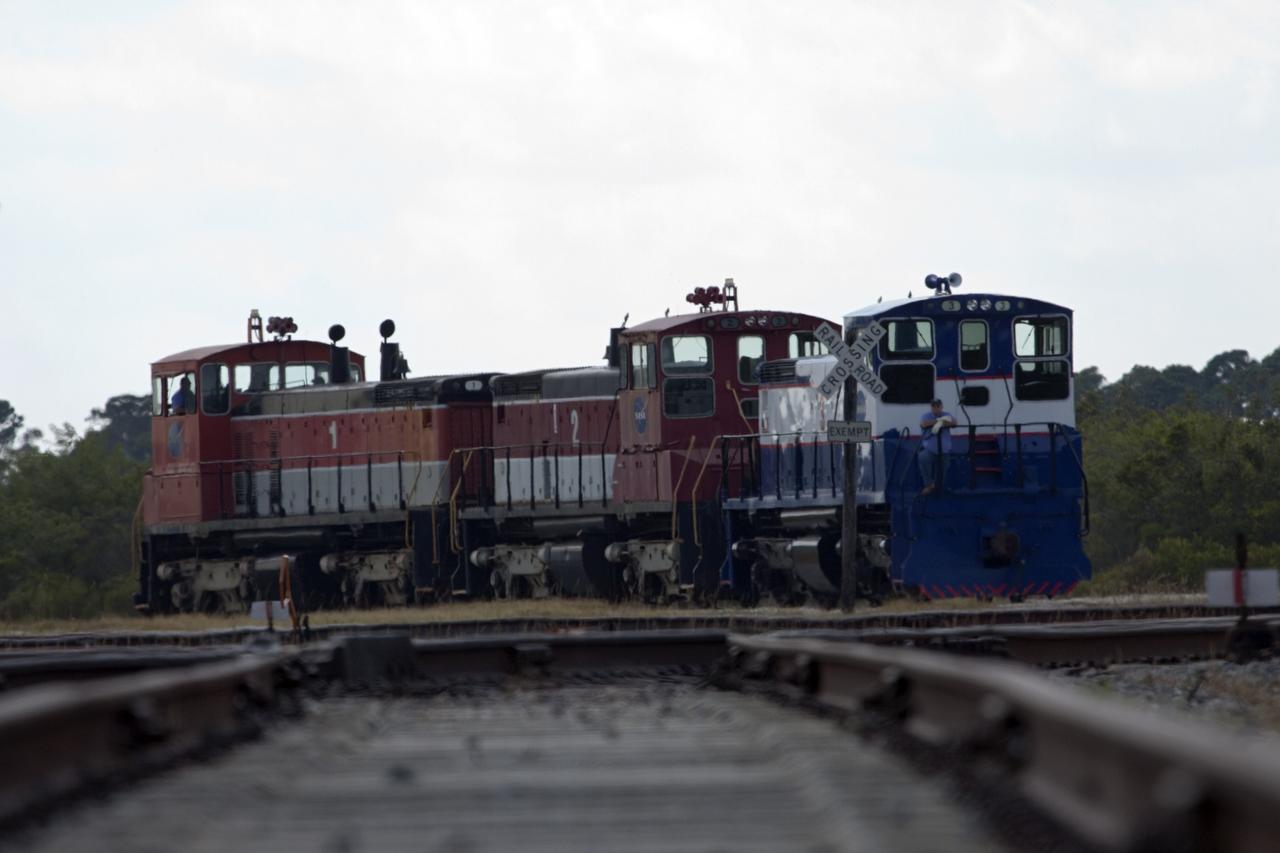
CAPE CANAVERAL, Fla. – Three NASA railroad locomotives at Kennedy Space Center in Florida move toward Launch Complex 39 area's Rotation, Processing and Surge Facility, or RPSF. The operation was to allow wheel and axle assemblies to be swapped between two of the locomotives. The RPSF was built to support work on the solid rocket used motors during the space shuttle era. The facility had never previously been used for another purpose, but is now free to serve other customers. With rails running into the building's high bay and a pair of heavy-lift cranes positioned overhead, the facility's capabilities were a perfect fit for the NASA Railroad's needs. Railroad managers wanted to trade the wheel and axle assemblies, or trucks, of locomotives No. 2 and No. 3. Locomotive No. 3 was painstakingly restored in recent years by the NASA Railroad team, and handles much of the rail work required at the center in the post-shuttle era. But the trucks on locomotive No. 2 are in better shape and are more environmentally friendly. For more information, visit: http://www.nasa.gov/exploration/systems/ground/rpsf_locomotives.html Photo credit: NASA/Jim Grossmann
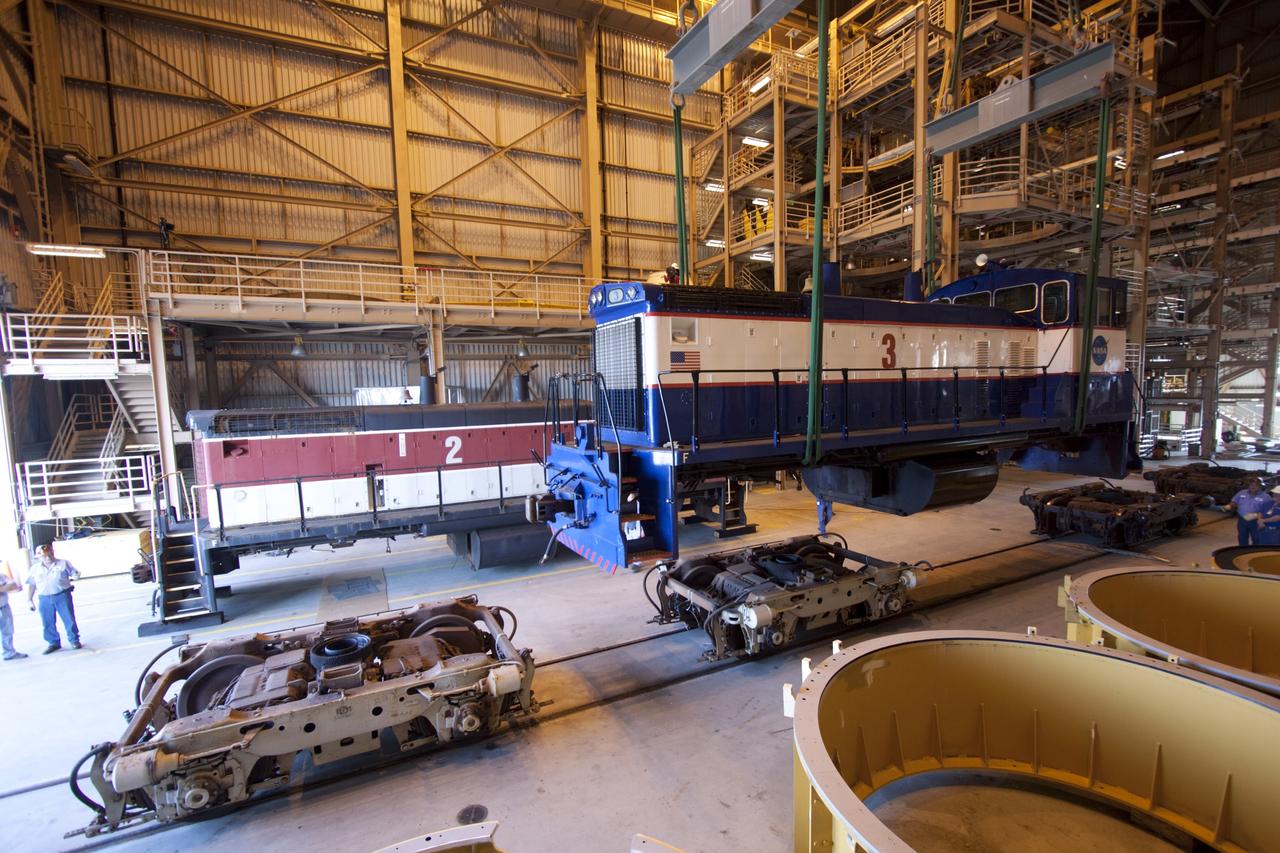
CAPE CANAVERAL, Fla. – Inside the Rotation, Processing and Surge Facility, or RPSF, at the Kennedy Space Center in Florida, an overhead crane lifts NASA locomotive No. 3 off of its trucks to be moved into position atop the trucks previously used by locomotive No. 2. The RPSF was built to support work on the solid rocket used motors during the space shuttle era. The facility had never previously been used for another purpose, but is now free to serve other customers. With rails running into the building's high bay and a pair of heavy-lift cranes positioned overhead, the facility's capabilities were a perfect fit for the NASA Railroad's needs. Railroad managers wanted to trade the wheel and axle assemblies, or trucks, of locomotives No. 2 and No. 3. Locomotive No. 3 was painstakingly restored in recent years by the NASA Railroad team, and handles much of the rail work required at the center in the post-shuttle era. But the trucks on locomotive No. 2 are in better shape and are more environmentally friendly. For more information, visit: http://www.nasa.gov/exploration/systems/ground/rpsf_locomotives.html Photo credit: NASA/Jim Grossmann
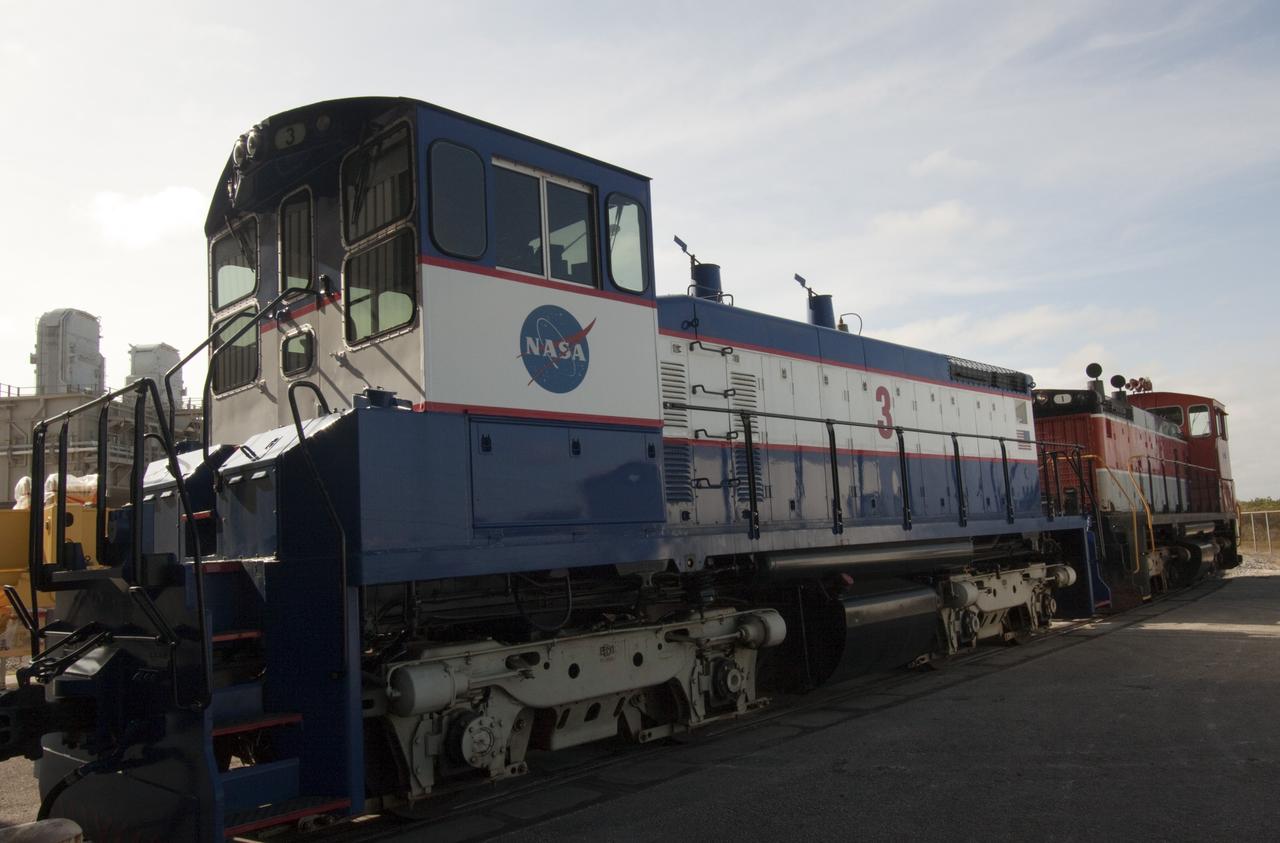
CAPE CANAVERAL, Fla. – NASA locomotive No. 1 pulls locomotive No. 3 out of the Rotation, Processing and Surge Facility, or RPSF, at the Kennedy Space Center in Florida. Inside, an overhead crane was used to lift NASA locomotive No. 2 off of its trucks and moved aside, so locomotive No. 3 could be raised off its trucks and moved into position atop the trucks previously used by locomotive No. 2. The RPSF was built to support work on the solid rocket used motors during the space shuttle era. The facility had never previously been used for another purpose, but is now free to serve other customers. With rails running into the building's high bay and a pair of heavy-lift cranes positioned overhead, the facility's capabilities were a perfect fit for the NASA Railroad's needs. Railroad managers wanted to trade the wheel and axle assemblies, or trucks, of locomotives No. 2 and No. 3. Locomotive No. 3 was painstakingly restored in recent years by the NASA Railroad team, and handles much of the rail work required at the center in the post-shuttle era. But the trucks on locomotive No. 2 are in better shape and are more environmentally friendly. For more information, visit: http://www.nasa.gov/exploration/systems/ground/rpsf_locomotives.html Photo credit: NASA/Jim Grossmann
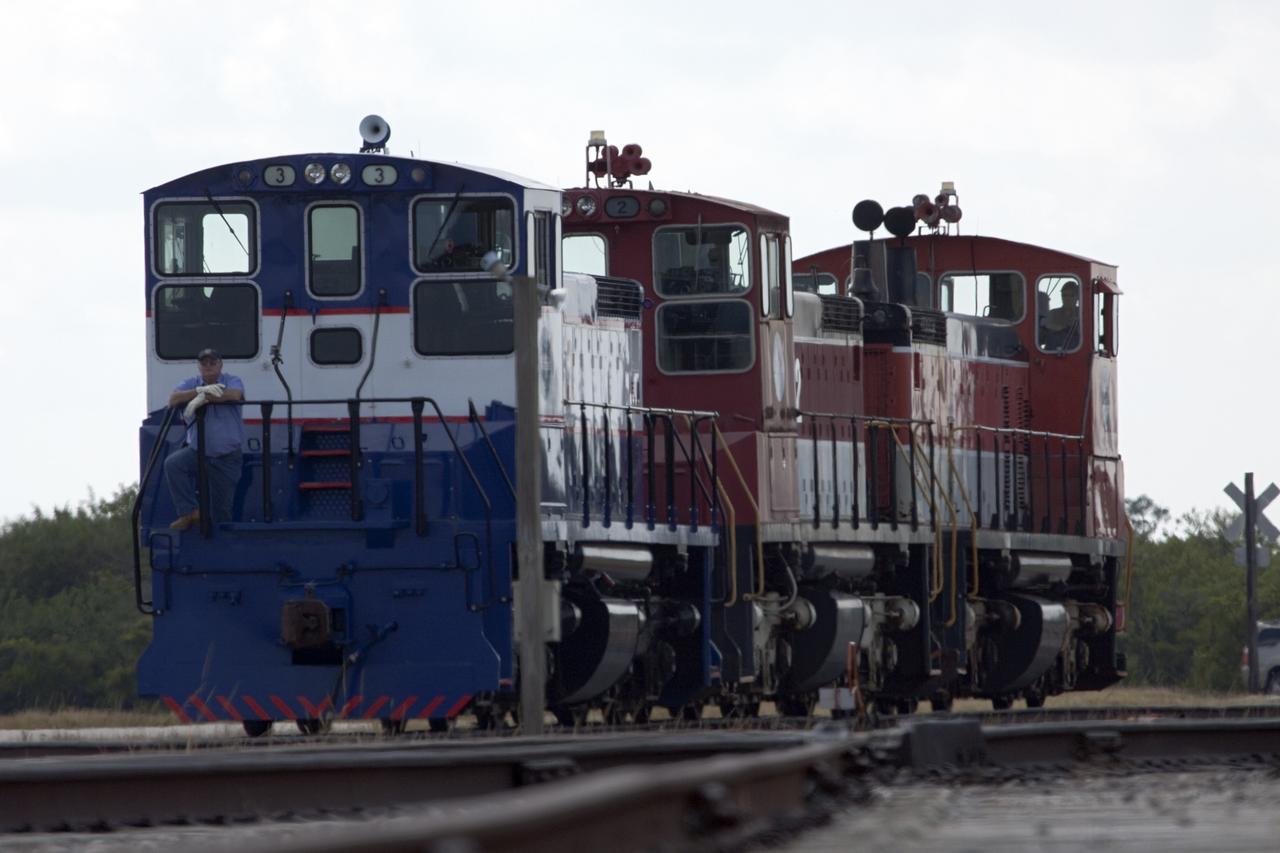
CAPE CANAVERAL, Fla. – Three NASA railroad locomotives at Kennedy Space Center in Florida move toward Launch Complex 39 area's Rotation, Processing and Surge Facility, or RPSF. The operation was to allow wheel and axle assemblies to be swapped between two of the locomotives. The RPSF was built to support work on the solid rocket used motors during the space shuttle era. The facility had never previously been used for another purpose, but is now free to serve other customers. With rails running into the building's high bay and a pair of heavy-lift cranes positioned overhead, the facility's capabilities were a perfect fit for the NASA Railroad's needs. Railroad managers wanted to trade the wheel and axle assemblies, or trucks, of locomotives No. 2 and No. 3. Locomotive No. 3 was painstakingly restored in recent years by the NASA Railroad team, and handles much of the rail work required at the center in the post-shuttle era. But the trucks on locomotive No. 2 are in better shape and are more environmentally friendly. For more information, visit: http://www.nasa.gov/exploration/systems/ground/rpsf_locomotives.html Photo credit: NASA/Jim Grossmann
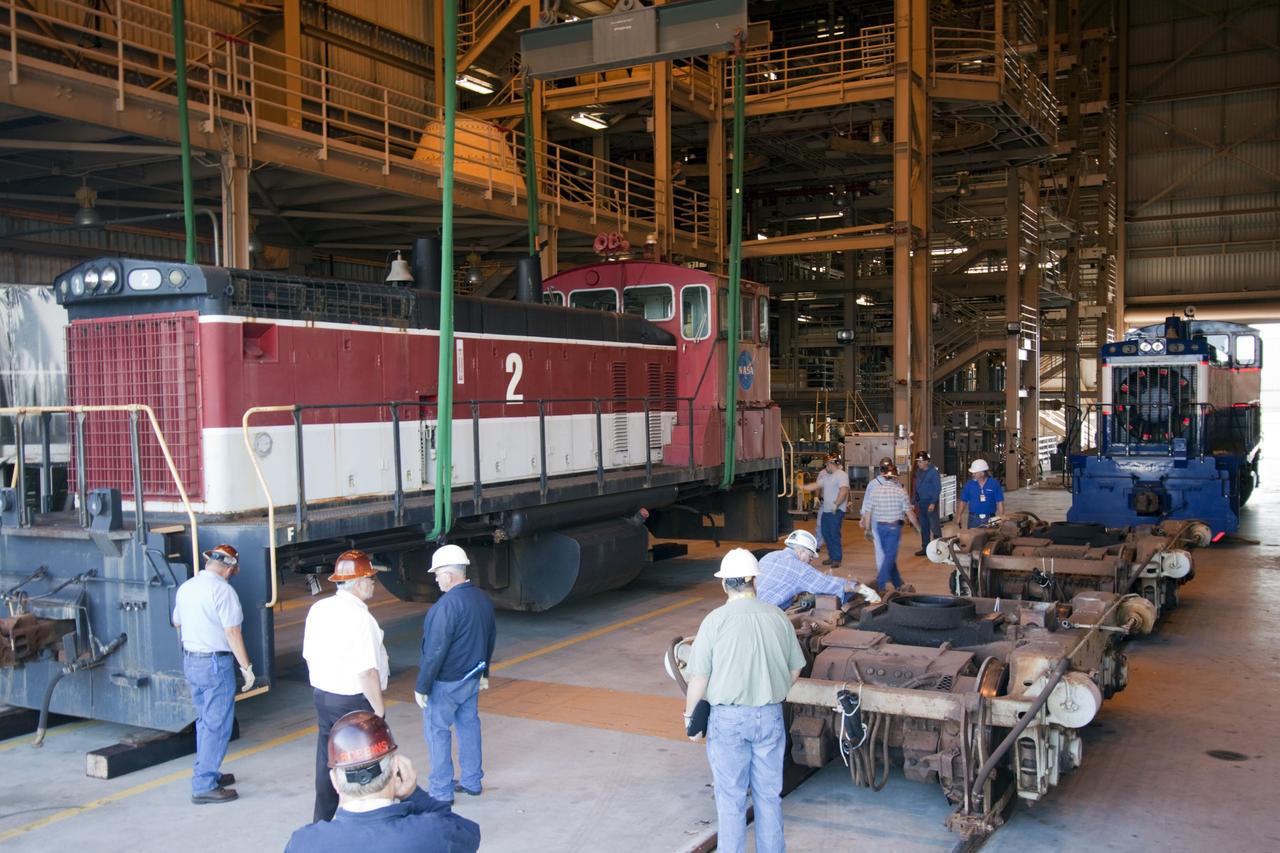
CAPE CANAVERAL, Fla. – Inside the Rotation, Processing and Surge Facility, or RPSF, at the Kennedy Space Center in Florida, an overhead crane moves NASA locomotive No. 2 aside after being lifted off of its trucks, clearing the way for locomotive No. 3 to be raised off its trucks and moved into position atop the trucks previously used by locomotive No. 2. The RPSF was built to support work on the solid rocket used motors during the space shuttle era. The facility had never previously been used for another purpose, but is now free to serve other customers. With rails running into the building's high bay and a pair of heavy-lift cranes positioned overhead, the facility's capabilities were a perfect fit for the NASA Railroad's needs. Railroad managers wanted to trade the wheel and axle assemblies, or trucks, of locomotives No. 2 and No. 3. Locomotive No. 3 was painstakingly restored in recent years by the NASA Railroad team, and handles much of the rail work required at the center in the post-shuttle era. But the trucks on locomotive No. 2 are in better shape and are more environmentally friendly. For more information, visit: http://www.nasa.gov/exploration/systems/ground/rpsf_locomotives.html Photo credit: NASA/Jim Grossmann
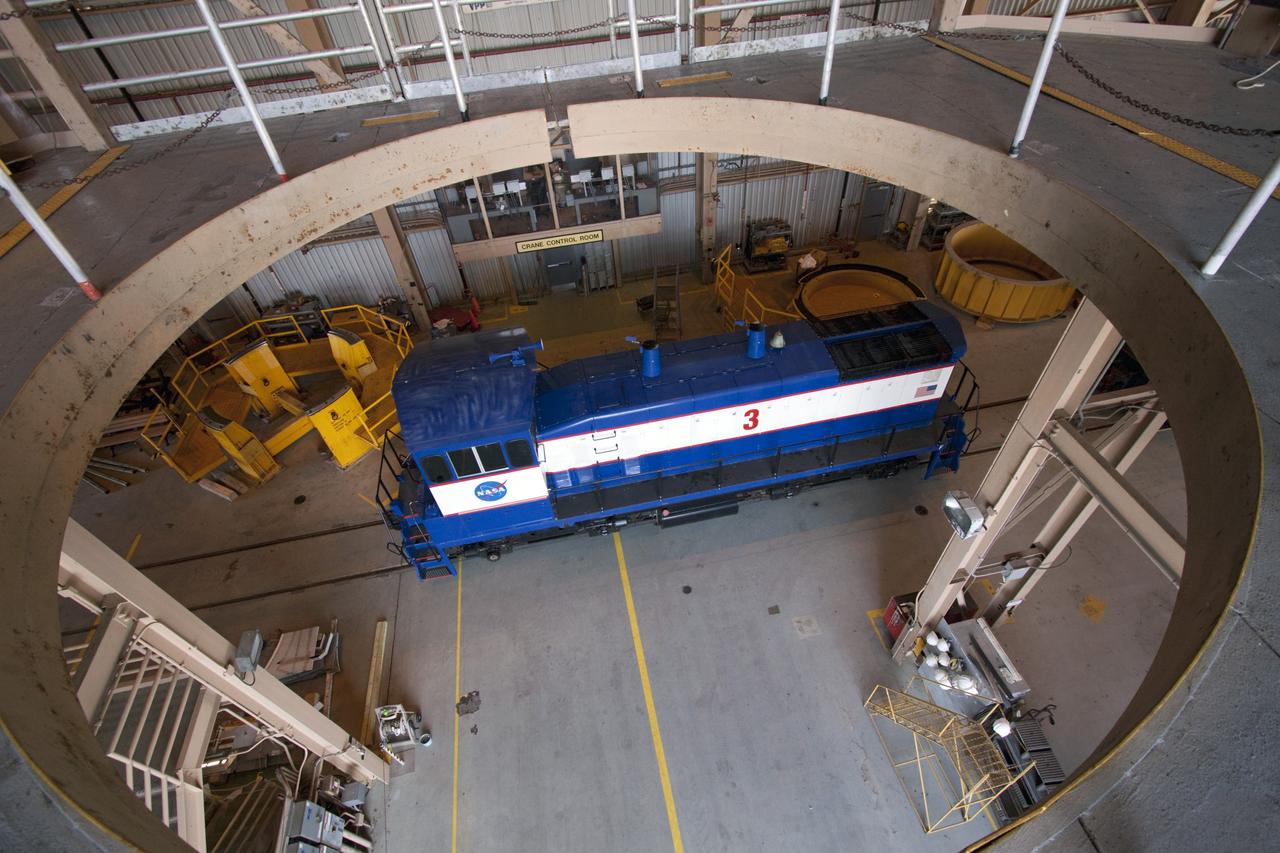
CAPE CANAVERAL, Fla. – A NASA railroad locomotive at Kennedy Space Center in Florida moves into Launch Complex 39 area's Rotation, Processing and Surge Facility, or RPSF. The operation was to allow wheel and axle assemblies to be swapped between two locomotives. The RPSF was built to support work on the solid rocket used motors during the space shuttle era. The facility had never previously been used for another purpose, but is now free to serve other customers. With rails running into the building's high bay and a pair of heavy-lift cranes positioned overhead, the facility's capabilities were a perfect fit for the NASA Railroad's needs. Railroad managers wanted to trade the wheel and axle assemblies, or trucks, of locomotives No. 2 and No. 3. Locomotive No. 3 was painstakingly restored in recent years by the NASA Railroad team, and handles much of the rail work required at the center in the post-shuttle era. But the trucks on locomotive No. 2 are in better shape and are more environmentally friendly. For more information, visit: http://www.nasa.gov/exploration/systems/ground/rpsf_locomotives.html Photo credit: NASA/Jim Grossmann
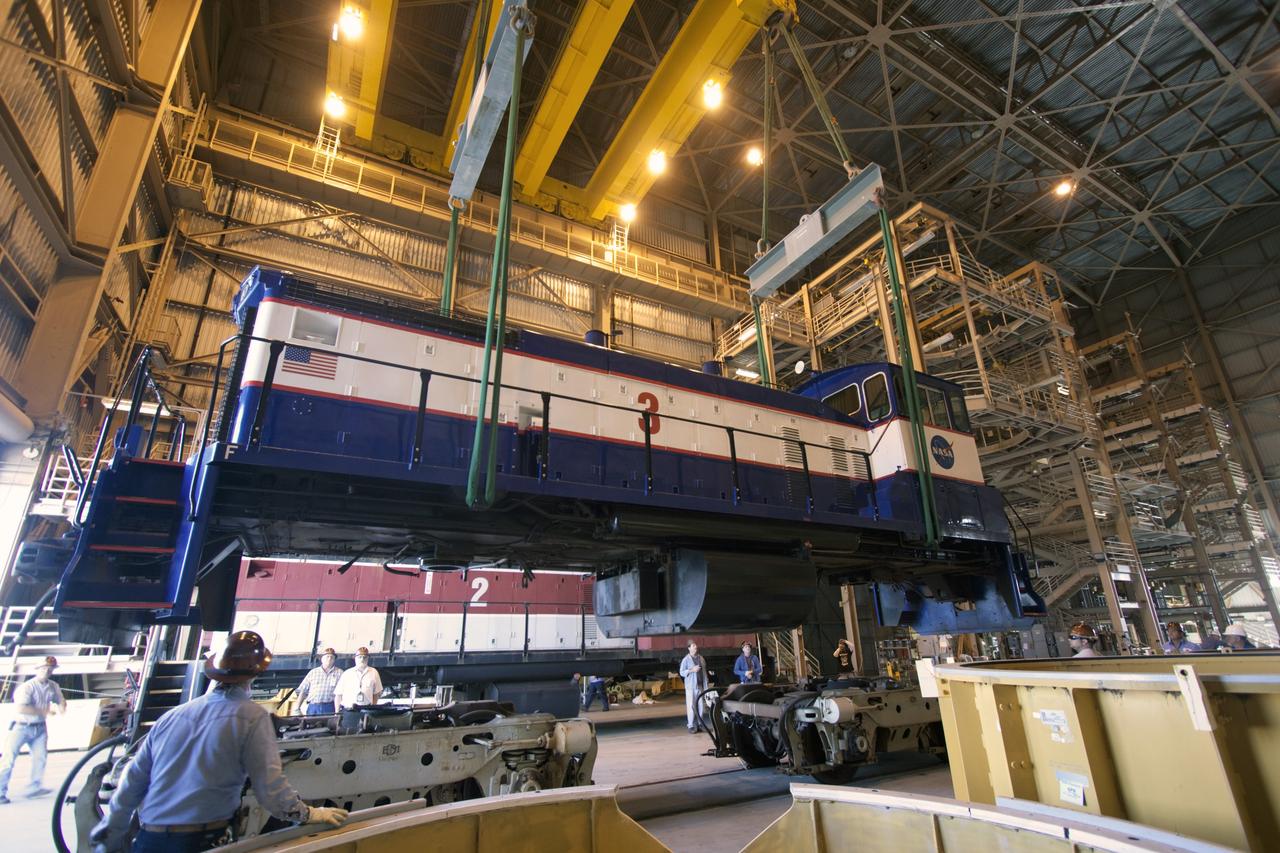
CAPE CANAVERAL, Fla. – Inside the Rotation, Processing and Surge Facility, or RPSF, at the Kennedy Space Center in Florida, an overhead crane lifts NASA locomotive No. 3 moving it into position atop the trucks previously used by locomotive No. 2. The RPSF was built to support work on the solid rocket used motors during the space shuttle era. The facility had never previously been used for another purpose, but is now free to serve other customers. With rails running into the building's high bay and a pair of heavy-lift cranes positioned overhead, the facility's capabilities were a perfect fit for the NASA Railroad's needs. Railroad managers wanted to trade the wheel and axle assemblies, or trucks, of locomotives No. 2 and No. 3. Locomotive No. 3 was painstakingly restored in recent years by the NASA Railroad team, and handles much of the rail work required at the center in the post-shuttle era. But the trucks on locomotive No. 2 are in better shape and are more environmentally friendly. For more information, visit: http://www.nasa.gov/exploration/systems/ground/rpsf_locomotives.html Photo credit: NASA/Jim Grossmann
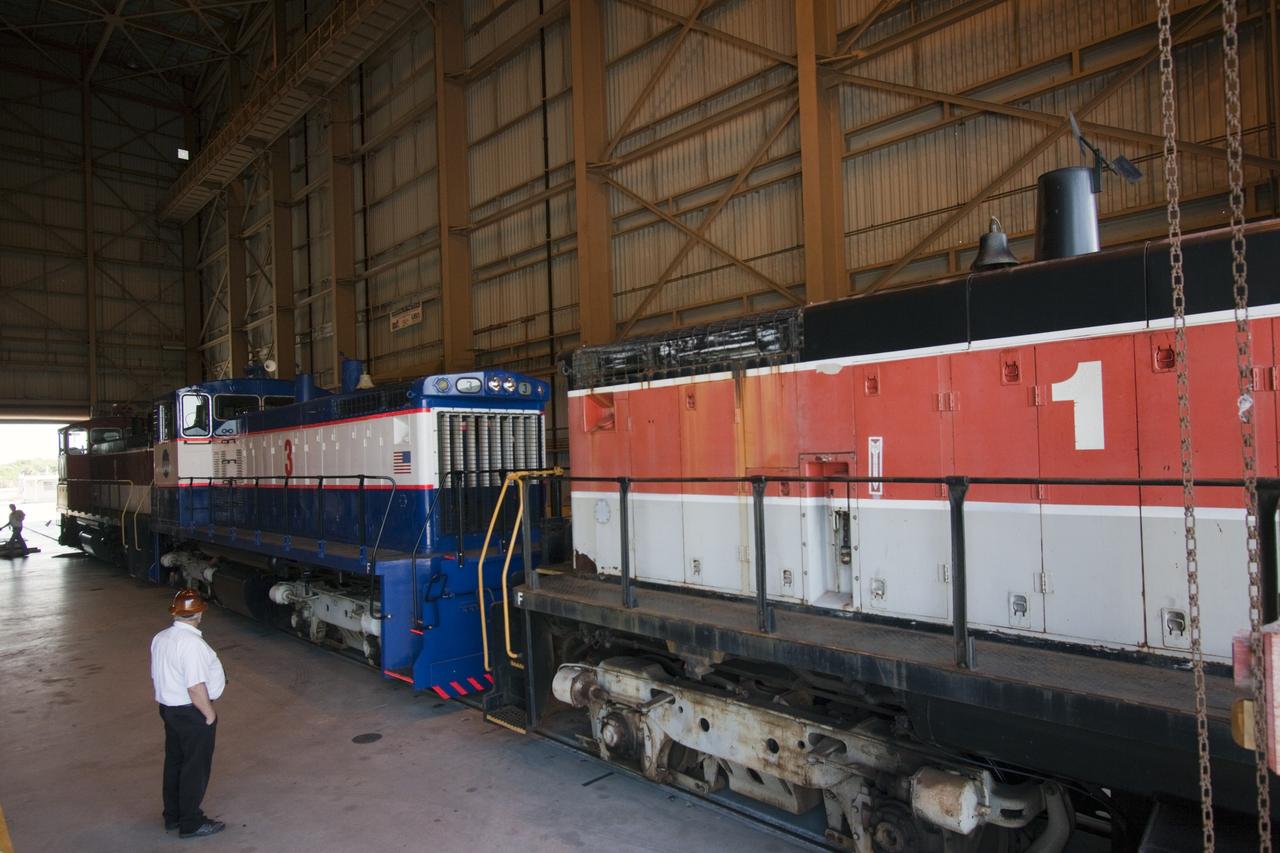
CAPE CANAVERAL, Fla. – Inside the Rotation, Processing and Surge Facility, or RPSF, at the Kennedy Space Center in Florida, NASA locomotive No. 1 pulls locomotives No. 2 and 3 out after wheel and axle assemblies to be swapped between locomotives 2 and 3. The RPSF was built to support work on the solid rocket used motors during the space shuttle era. The facility had never previously been used for another purpose, but is now free to serve other customers. With rails running into the building's high bay and a pair of heavy-lift cranes positioned overhead, the facility's capabilities were a perfect fit for the NASA Railroad's needs. Railroad managers wanted to trade the wheel and axle assemblies, or trucks, of locomotives No. 2 and No. 3. Locomotive No. 3 was painstakingly restored in recent years by the NASA Railroad team, and handles much of the rail work required at the center in the post-shuttle era. But the trucks on locomotive No. 2 are in better shape and are more environmentally friendly. For more information, visit: http://www.nasa.gov/exploration/systems/ground/rpsf_locomotives.html Photo credit: NASA/Jim Grossmann
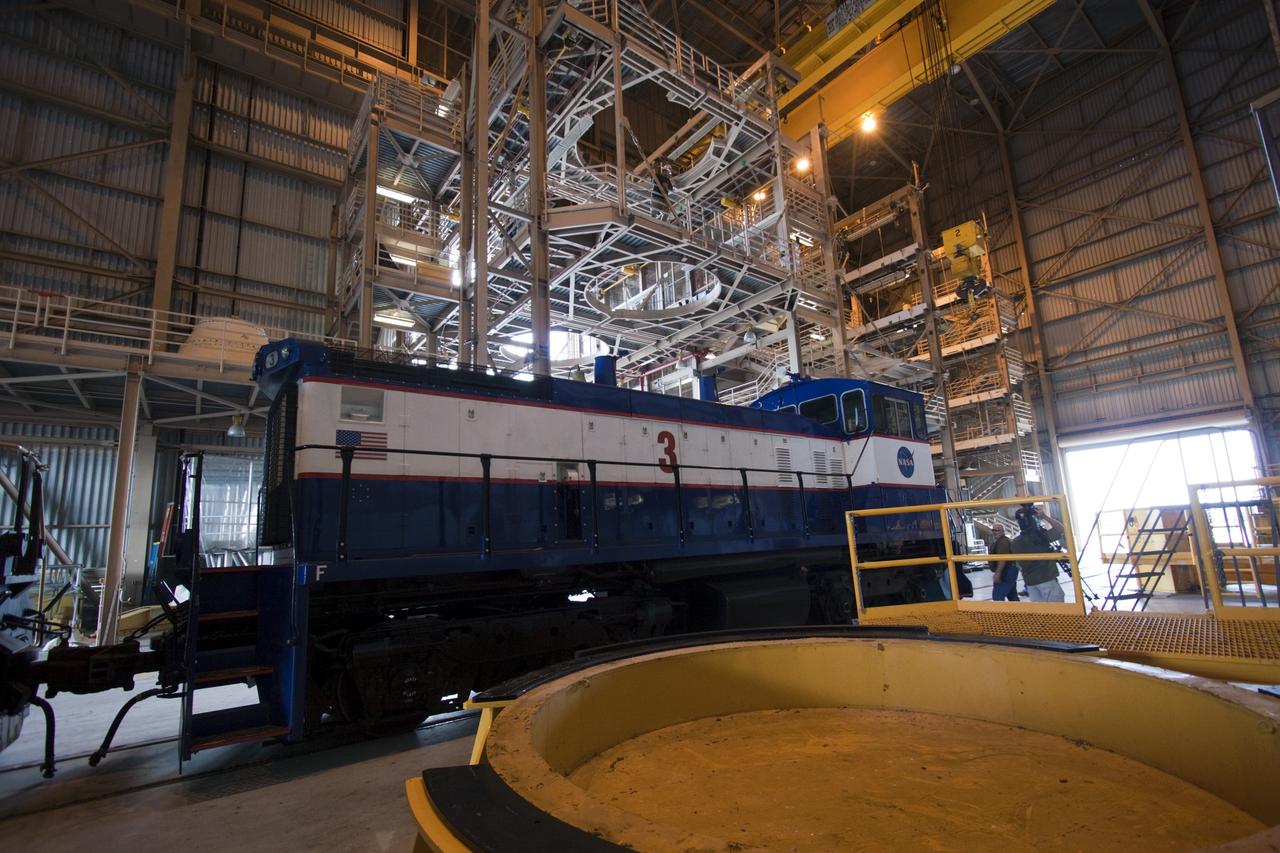
CAPE CANAVERAL, Fla. – A NASA railroad locomotive at Kennedy Space Center in Florida moves into Launch Complex 39 area's Rotation, Processing and Surge Facility, or RPSF. The operation was to allow wheel and axle assemblies to be swapped between two locomotives. The RPSF was built to support work on the solid rocket used motors during the space shuttle era. The facility had never previously been used for another purpose, but is now free to serve other customers. With rails running into the building's high bay and a pair of heavy-lift cranes positioned overhead, the facility's capabilities were a perfect fit for the NASA Railroad's needs. Railroad managers wanted to trade the wheel and axle assemblies, or trucks, of locomotives No. 2 and No. 3. Locomotive No. 3 was painstakingly restored in recent years by the NASA Railroad team, and handles much of the rail work required at the center in the post-shuttle era. But the trucks on locomotive No. 2 are in better shape and are more environmentally friendly. For more information, visit: http://www.nasa.gov/exploration/systems/ground/rpsf_locomotives.html Photo credit: NASA/Jim Grossmann
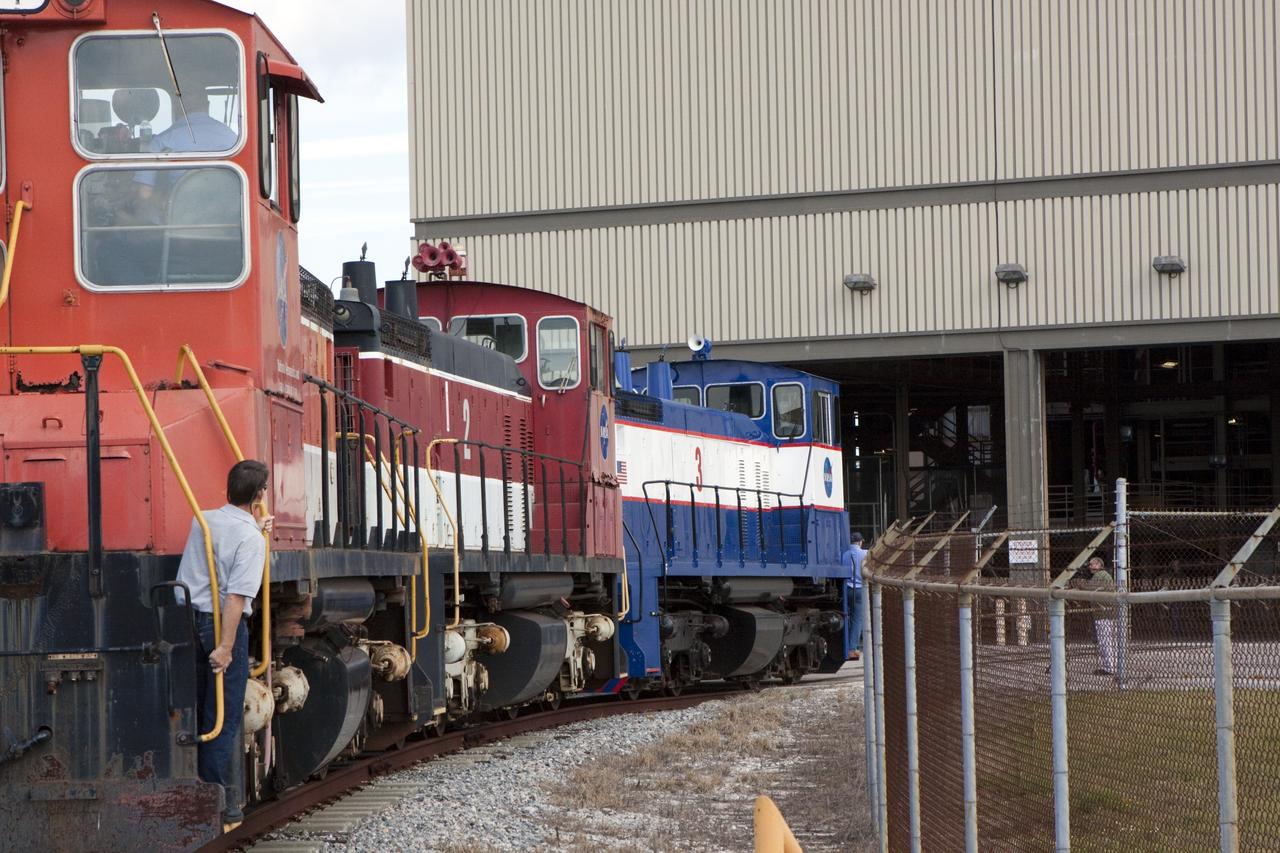
CAPE CANAVERAL, Fla. – Three NASA railroad locomotives at Kennedy Space Center in Florida move toward Launch Complex 39 area's Rotation, Processing and Surge Facility, or RPSF. The operation was to allow wheel and axle assemblies to be swapped between two of the locomotives. The RPSF was built to support work on the solid rocket used motors during the space shuttle era. The facility had never previously been used for another purpose, but is now free to serve other customers. With rails running into the building's high bay and a pair of heavy-lift cranes positioned overhead, the facility's capabilities were a perfect fit for the NASA Railroad's needs. Railroad managers wanted to trade the wheel and axle assemblies, or trucks, of locomotives No. 2 and No. 3. Locomotive No. 3 was painstakingly restored in recent years by the NASA Railroad team, and handles much of the rail work required at the center in the post-shuttle era. But the trucks on locomotive No. 2 are in better shape and are more environmentally friendly. For more information, visit: http://www.nasa.gov/exploration/systems/ground/rpsf_locomotives.html Photo credit: NASA/Jim Grossmann
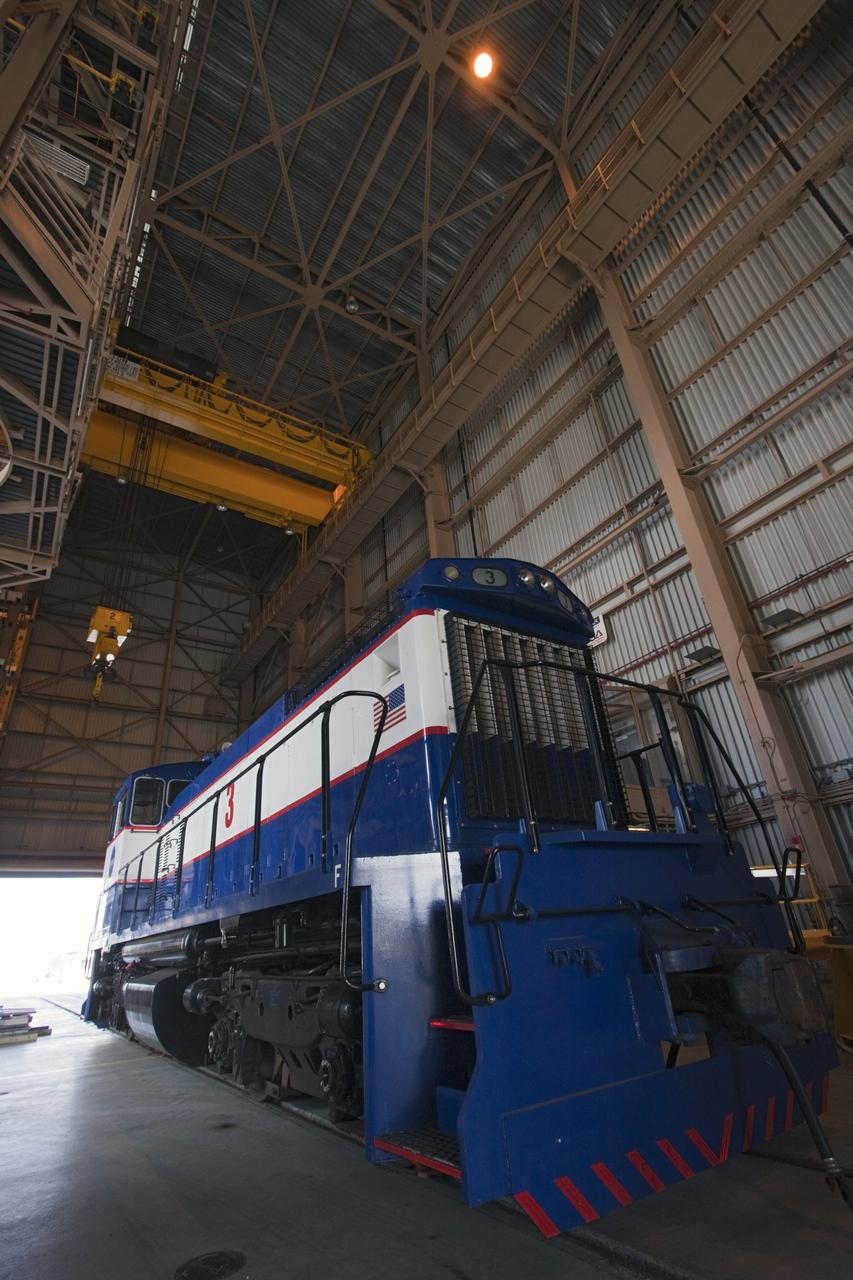
CAPE CANAVERAL, Fla. – A NASA railroad locomotive at Kennedy Space Center in Florida moves into Launch Complex 39 area's Rotation, Processing and Surge Facility, or RPSF. The operation was to allow wheel and axle assemblies to be swapped between two locomotives. The RPSF was built to support work on the solid rocket used motors during the space shuttle era. The facility had never previously been used for another purpose, but is now free to serve other customers. With rails running into the building's high bay and a pair of heavy-lift cranes positioned overhead, the facility's capabilities were a perfect fit for the NASA Railroad's needs. Railroad managers wanted to trade the wheel and axle assemblies, or trucks, of locomotives No. 2 and No. 3. Locomotive No. 3 was painstakingly restored in recent years by the NASA Railroad team, and handles much of the rail work required at the center in the post-shuttle era. But the trucks on locomotive No. 2 are in better shape and are more environmentally friendly. For more information, visit: http://www.nasa.gov/exploration/systems/ground/rpsf_locomotives.html Photo credit: NASA/Jim Grossmann
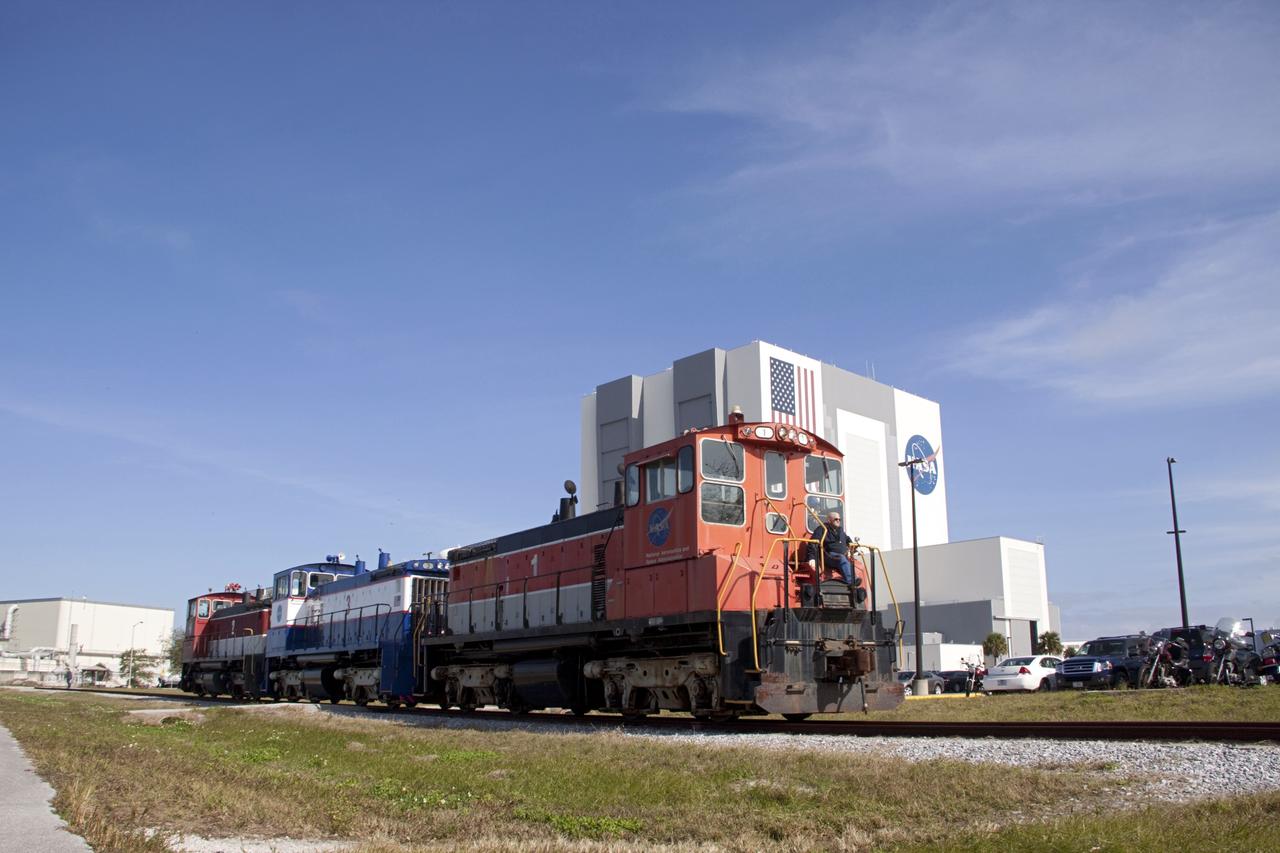
KSC-2012-6359 – CAPE CANAVERAL, Fla. – At Kennedy Space Center in Florida, NASA railroad locomotive No. 1 returns locomotives 2 and 3 to Launch Complex 39 area's rail yard after wheel and axle assemblies were swapped between locomotives 2 and 3. The RPSF was built to support work on the solid rocket used motors during the space shuttle era. The facility had never previously been used for another purpose, but is now free to serve other customers. With rails running into the building's high bay and a pair of heavy-lift cranes positioned overhead, the facility's capabilities were a perfect fit for the NASA Railroad's needs. Railroad managers wanted to trade the wheel and axle assemblies, or trucks, of locomotives No. 2 and No. 3. Locomotive No. 3 was painstakingly restored in recent years by the NASA Railroad team, and handles much of the rail work required at the center in the post-shuttle era. But the trucks on locomotive No. 2 are in better shape and are more environmentally friendly. For more information, visit: http://www.nasa.gov/exploration/systems/ground/rpsf_locomotives.html Photo credit: NASA/Jim Grossmann
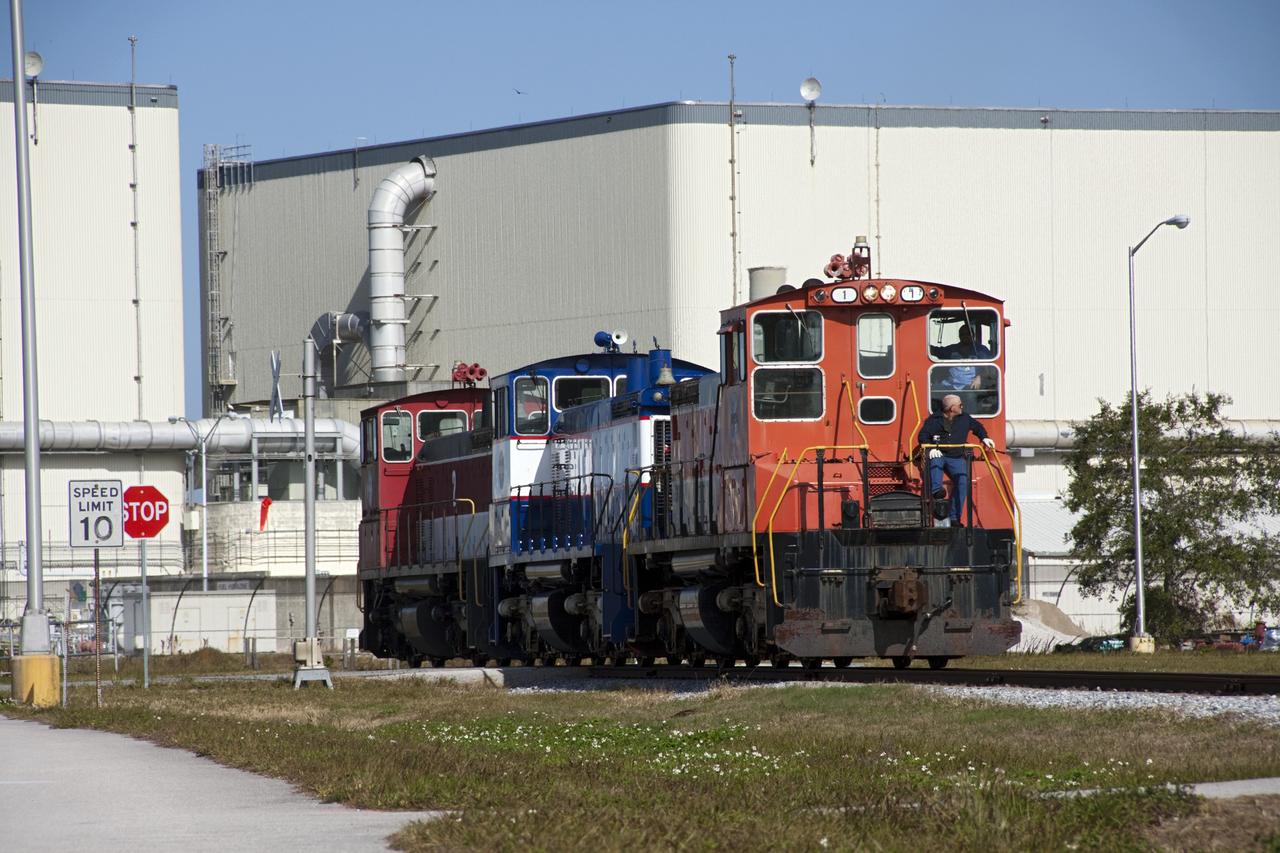
CAPE CANAVERAL, Fla. – At Kennedy Space Center in Florida, NASA railroad locomotive No. 1 returns locomotives 2 and 3 to Launch Complex 39 area's rail yard after wheel and axle assemblies were swapped between locomotives 2 and 3. The RPSF was built to support work on the solid rocket used motors during the space shuttle era. The facility had never previously been used for another purpose, but is now free to serve other customers. With rails running into the building's high bay and a pair of heavy-lift cranes positioned overhead, the facility's capabilities were a perfect fit for the NASA Railroad's needs. Railroad managers wanted to trade the wheel and axle assemblies, or trucks, of locomotives No. 2 and No. 3. Locomotive No. 3 was painstakingly restored in recent years by the NASA Railroad team, and handles much of the rail work required at the center in the post-shuttle era. But the trucks on locomotive No. 2 are in better shape and are more environmentally friendly. For more information, visit: http://www.nasa.gov/exploration/systems/ground/rpsf_locomotives.html Photo credit: NASA/Jim Grossmann
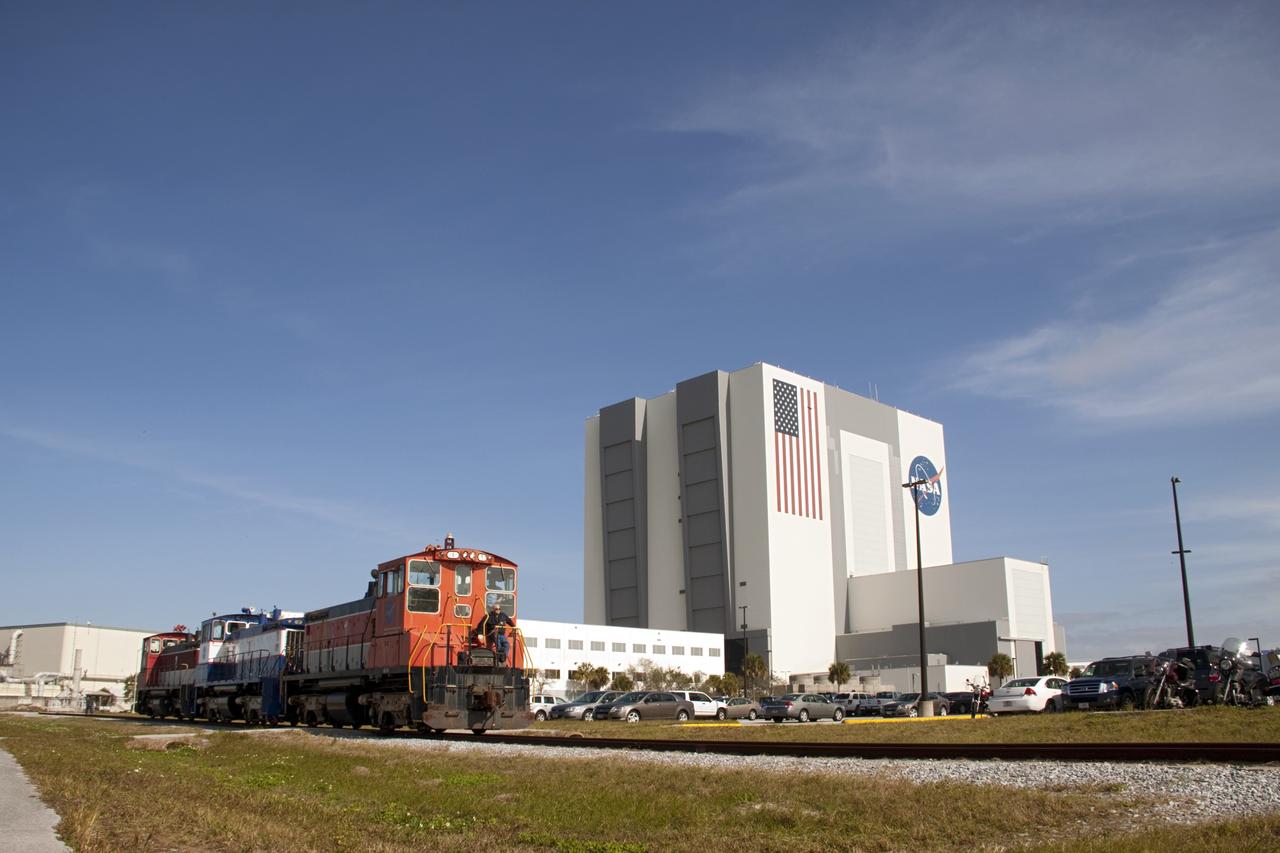
CAPE CANAVERAL, Fla. – At Kennedy Space Center in Florida, NASA railroad locomotive No. 1 returns locomotives 2 and 3 to Launch Complex 39 area's rail yard after wheel and axle assemblies were swapped between locomotives 2 and 3. The RPSF was built to support work on the solid rocket used motors during the space shuttle era. The facility had never previously been used for another purpose, but is now free to serve other customers. With rails running into the building's high bay and a pair of heavy-lift cranes positioned overhead, the facility's capabilities were a perfect fit for the NASA Railroad's needs. Railroad managers wanted to trade the wheel and axle assemblies, or trucks, of locomotives No. 2 and No. 3. Locomotive No. 3 was painstakingly restored in recent years by the NASA Railroad team, and handles much of the rail work required at the center in the post-shuttle era. But the trucks on locomotive No. 2 are in better shape and are more environmentally friendly. For more information, visit: http://www.nasa.gov/exploration/systems/ground/rpsf_locomotives.html Photo credit: NASA/Jim Grossmann
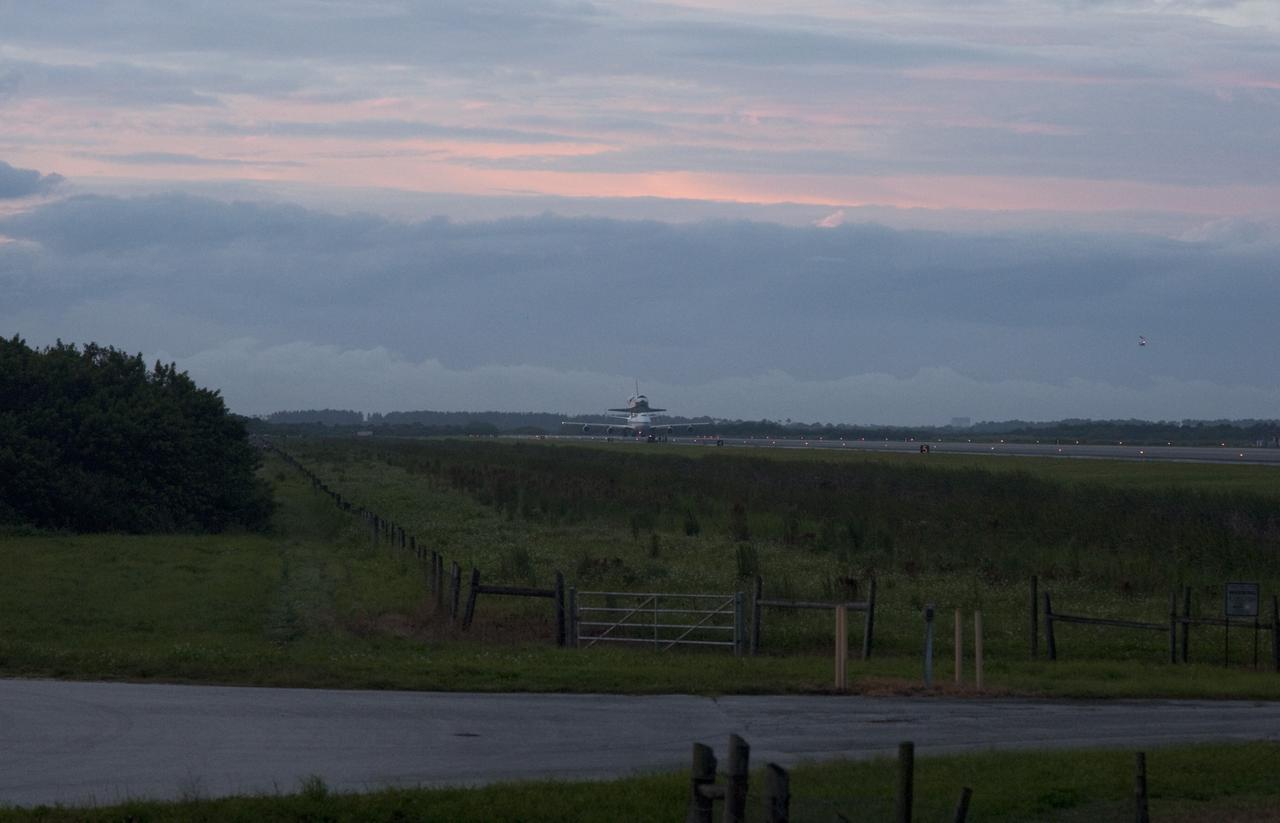
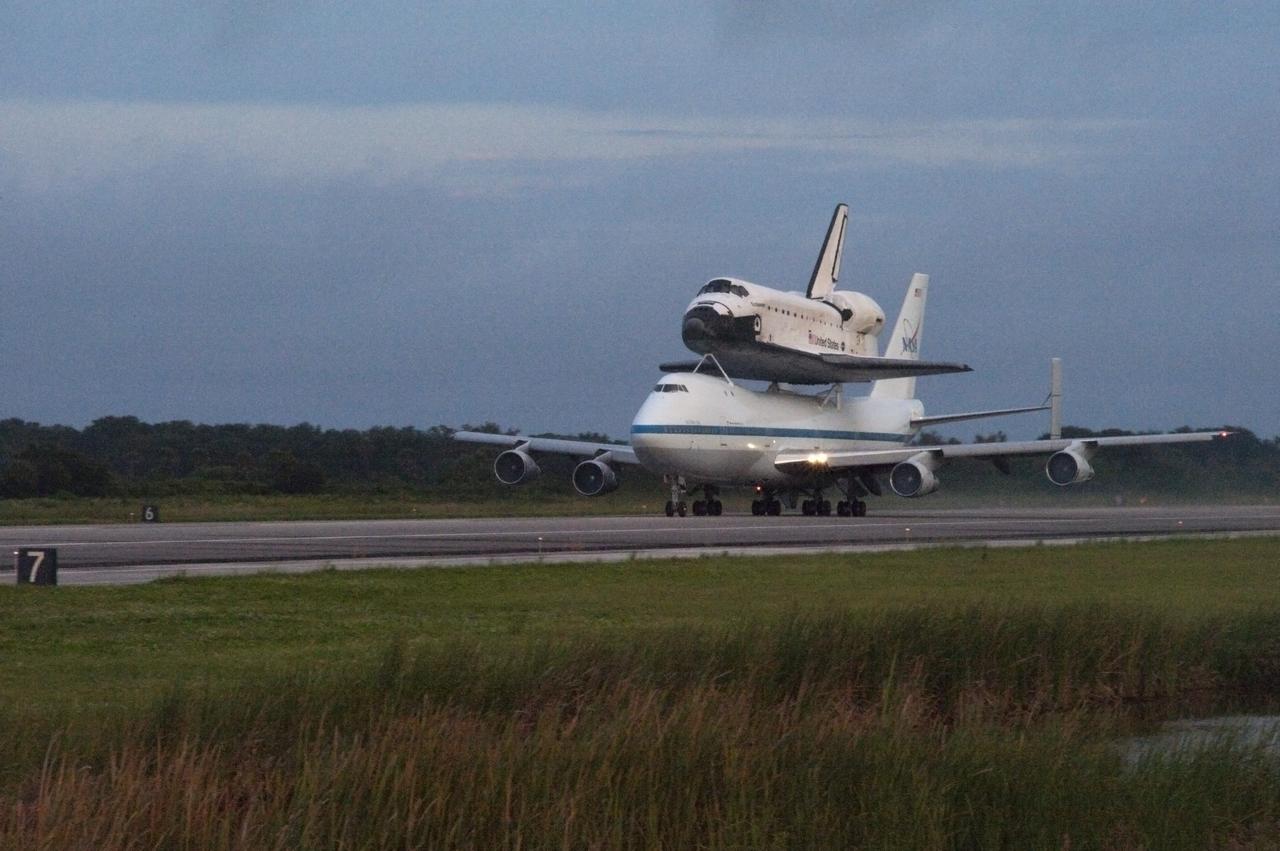
CAPE CANAVERAL, Fla. – Space shuttle Endeavour, mounted atop NASA's Shuttle Carrier Aircraft or SCA, taxis down the runway at the Shuttle Landing Facility at NASA's Kennedy Space Center in Florida. The SCA, a modified 747 jetliner, will fly Endeavour to Los Angeles where it will be placed on public display at the California Science Center. This is the final ferry flight scheduled in the Space Shuttle Program era. For more information on the shuttles' transition and retirement, visit http://www.nasa.gov/transition. Photo credit: NASA/Rusty Backer The SCA, a modified 747 jetliner, will fly Endeavour to Los Angeles where it will be placed on public display at the California Science Center. This is the final ferry flight scheduled in the Space Shuttle Program era. For more information on the shuttles' transition and retirement, visit http://www.nasa.gov/transition. Photo credit: NASA/Jim Grossmann
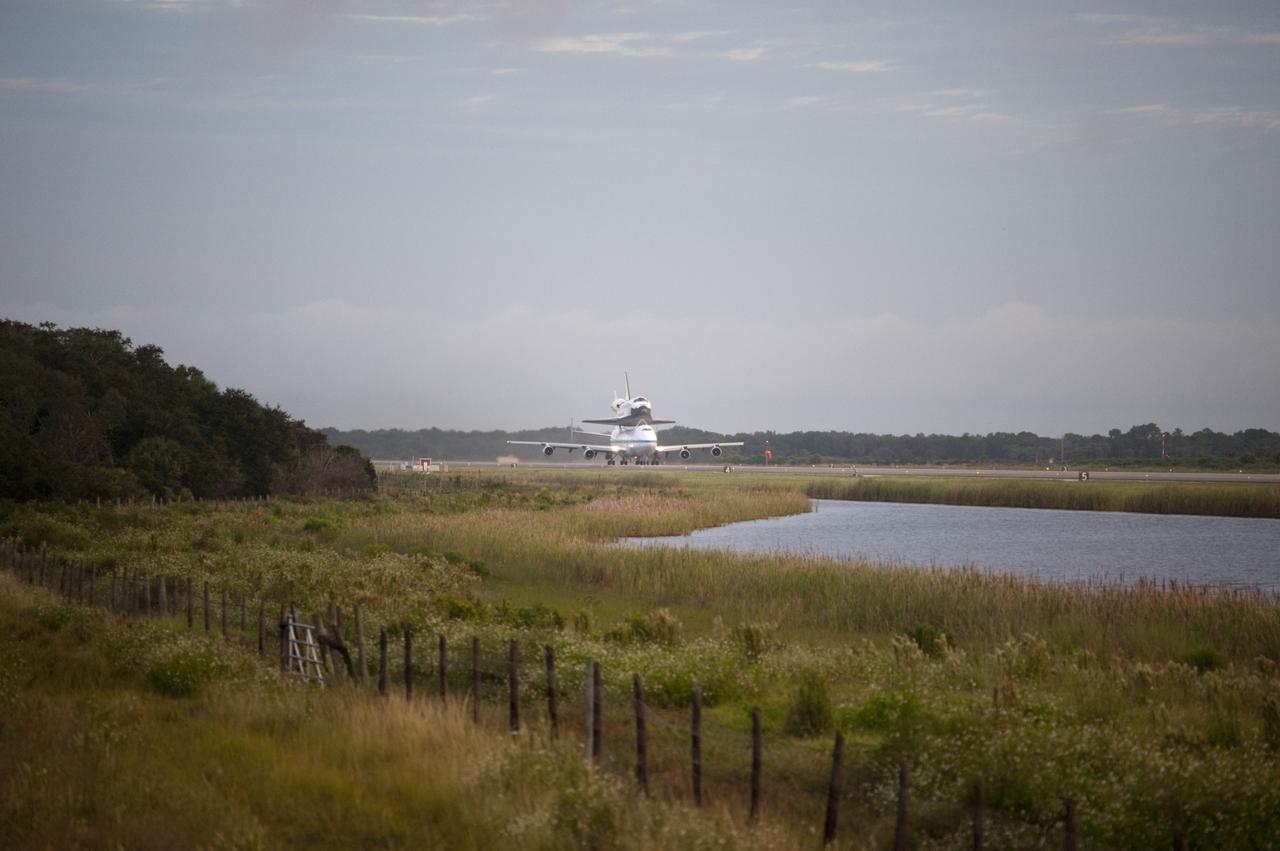
CAPE CANAVERAL, Fla. – Space shuttle Endeavour, mounted atop NASA's Shuttle Carrier Aircraft or SCA, taxis at the Shuttle Landing Facility at NASA's Kennedy Space Center in Florida. The SCA, a modified 747 jetliner, will fly Endeavour to Los Angeles where it will be placed on public display at the California Science Center. This is the final ferry flight scheduled in the Space Shuttle Program era. For more information on the shuttles' transition and retirement, visit http://www.nasa.gov/transition. Photo credit: NASA/Rick Wetherington
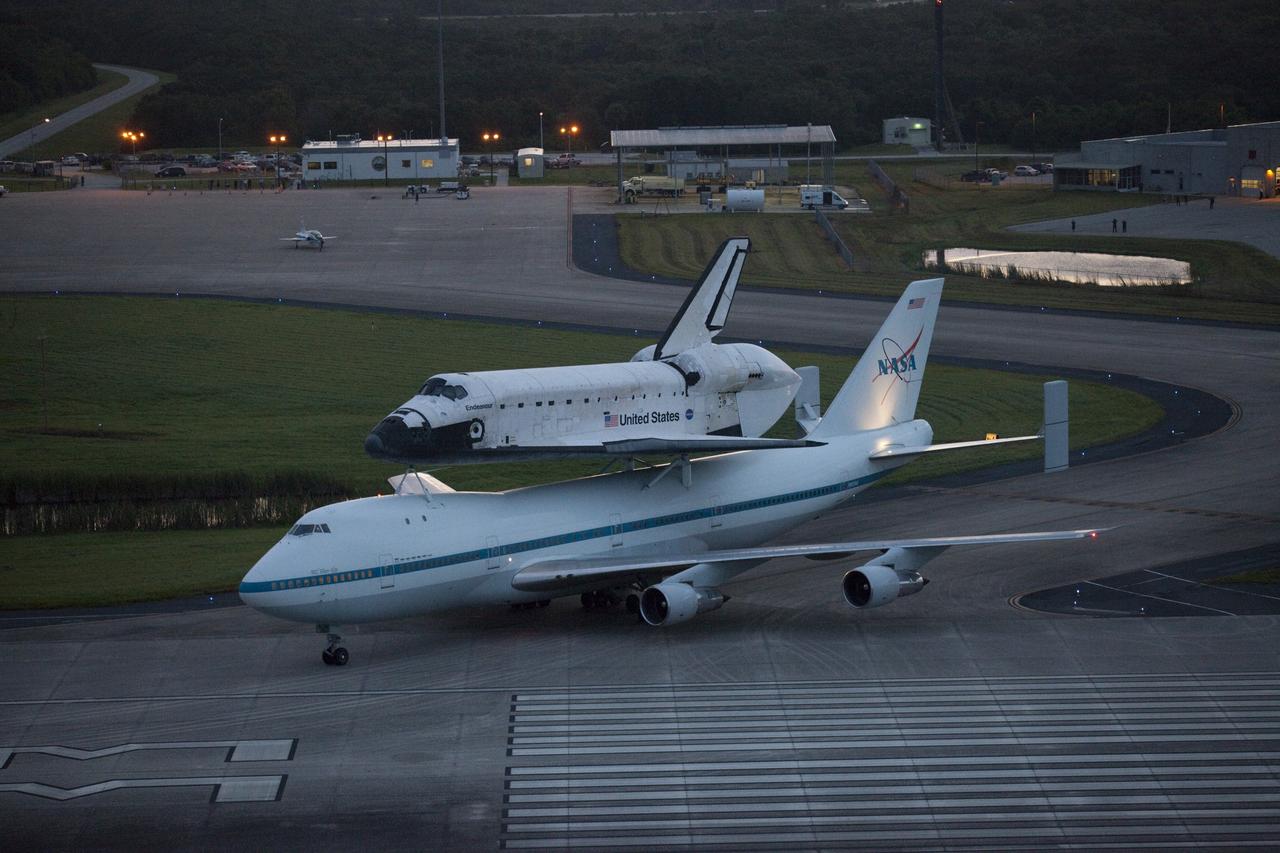
CAPE CANAVERAL, Fla. – At the Shuttle Landing Facility at NASA's Kennedy Space Center in Florida, NASA's Shuttle Carrier Aircraft, or SCA, with the space shuttle Endeavour mounted atop, taxis on to the runway for its ferry flight to California. The SCA, a modified 747 jetliner, will fly Endeavour to Los Angeles where it will be placed on public display at the California Science Center. This is the final ferry flight scheduled in the Space Shuttle Program era. For more information on the shuttles' transition and retirement, visit http://www.nasa.gov/transition. Photo credit: NASA/Kim Shiflett
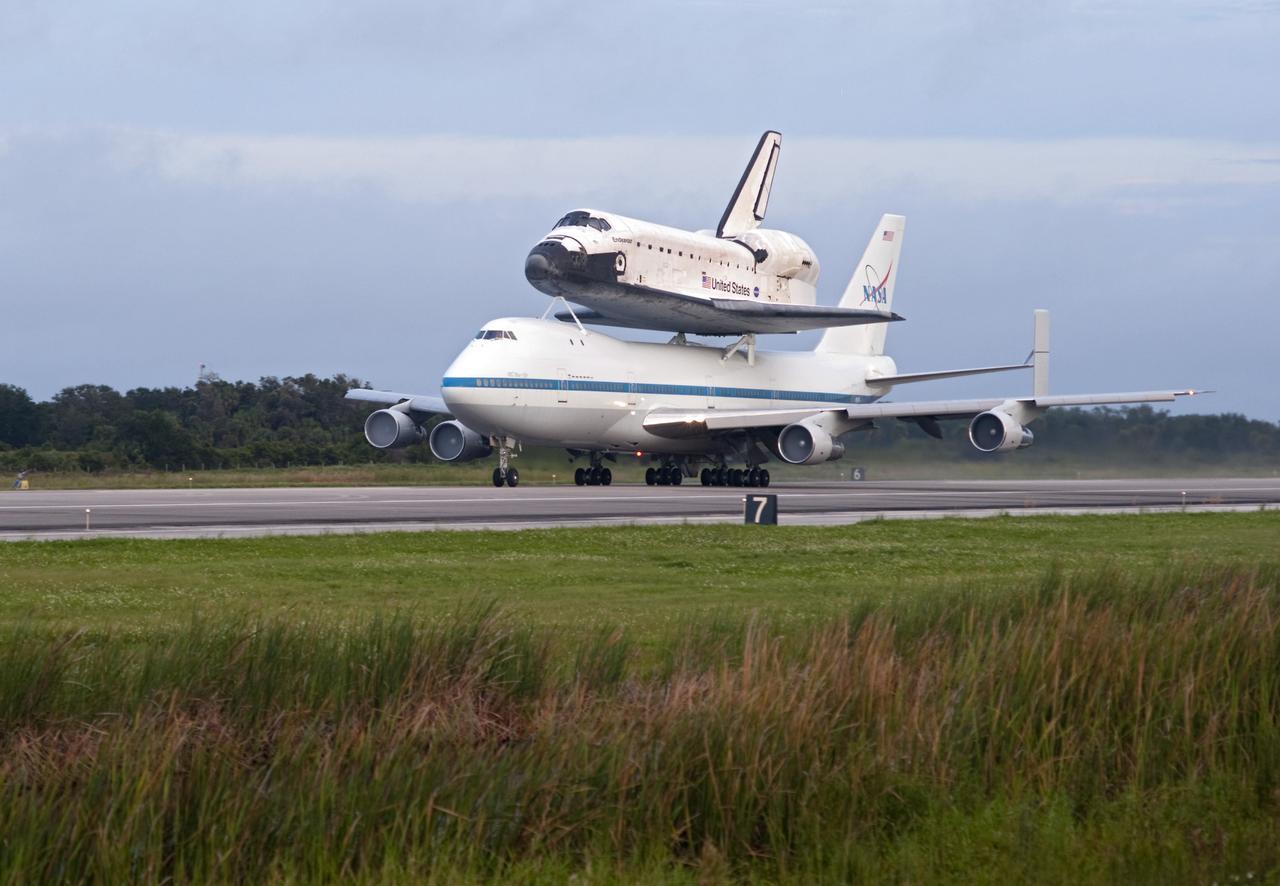
CAPE CANAVERAL, Fla. – Space shuttle Endeavour, mounted atop NASA's Shuttle Carrier Aircraft or SCA, takes off from the Shuttle Landing Facility at NASA's Kennedy Space Center in Florida. The SCA, a modified 747 jetliner, will fly Endeavour to Los Angeles where it will be placed on public display at the California Science Center. This is the final ferry flight scheduled in the Space Shuttle Program era. For more information on the shuttles' transition and retirement, visit http://www.nasa.gov/transition. Photo credit: NASA/Rusty Backer
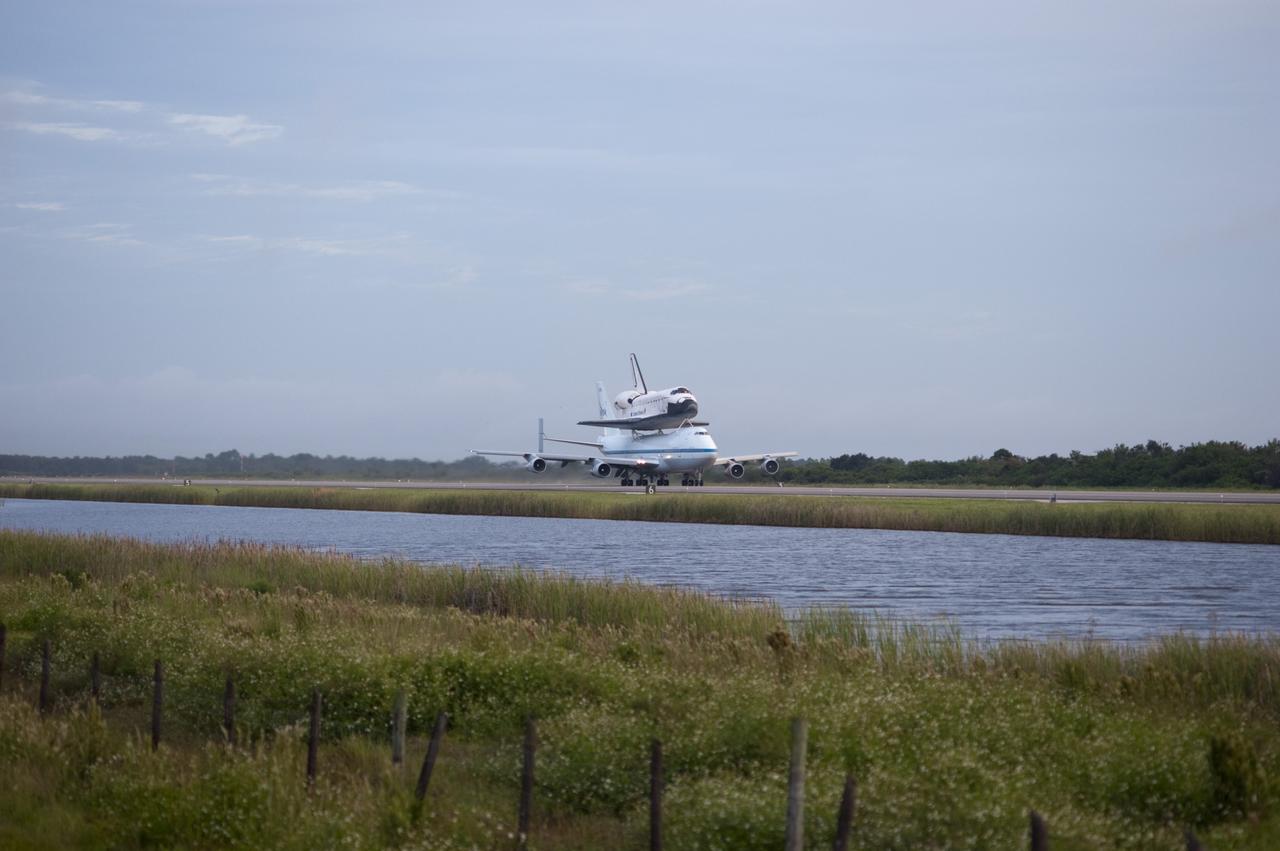
CAPE CANAVERAL, Fla. – Space shuttle Endeavour, mounted atop NASA's Shuttle Carrier Aircraft or SCA, takes off from the Shuttle Landing Facility at NASA's Kennedy Space Center in Florida. The SCA, a modified 747 jetliner, will fly Endeavour to Los Angeles where it will be placed on public display at the California Science Center. This is the final ferry flight scheduled in the Space Shuttle Program era. For more information on the shuttles' transition and retirement, visit http://www.nasa.gov/transition. Photo credit: NASA/Rick Wetherington
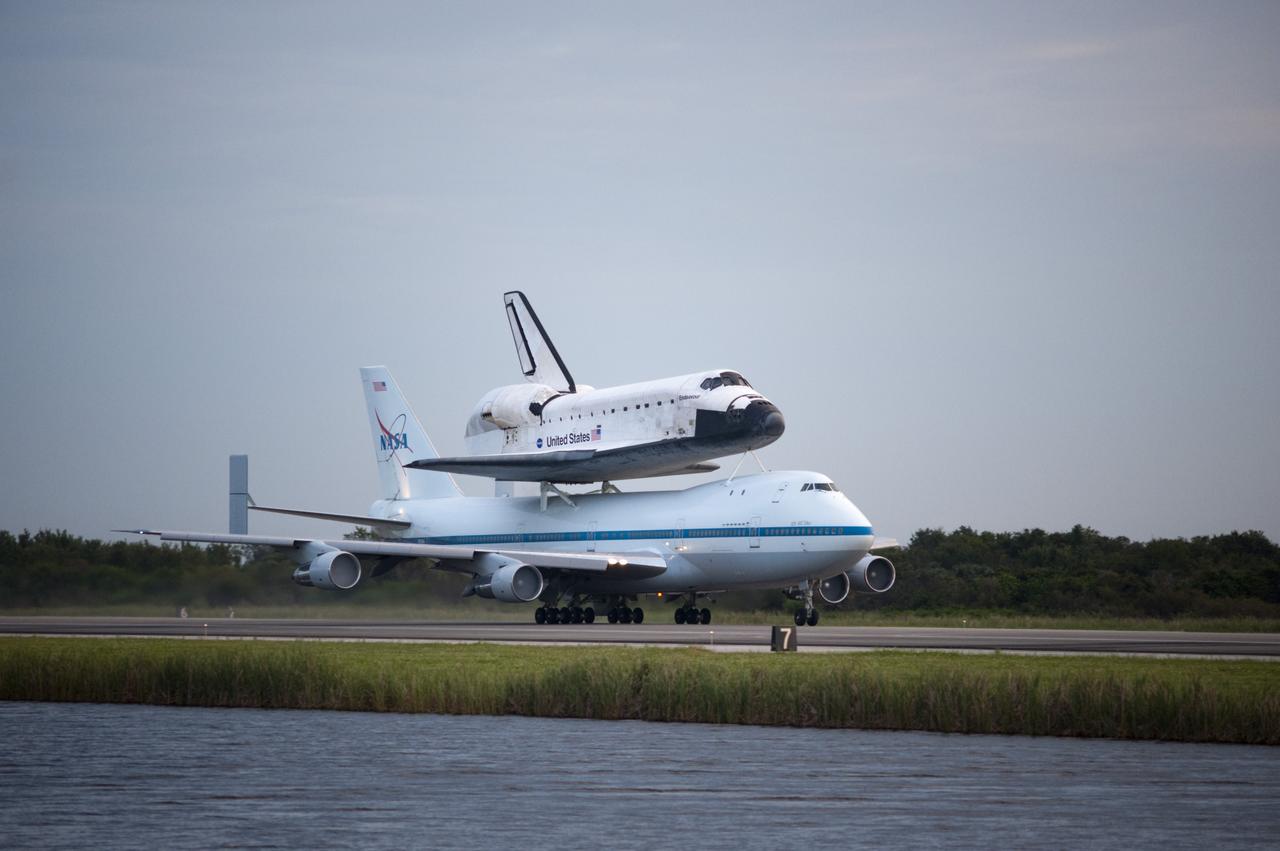
CAPE CANAVERAL, Fla. – Space shuttle Endeavour, mounted atop NASA's Shuttle Carrier Aircraft or SCA, takes off from the Shuttle Landing Facility at NASA's Kennedy Space Center in Florida. The SCA, a modified 747 jetliner, will fly Endeavour to Los Angeles where it will be placed on public display at the California Science Center. This is the final ferry flight scheduled in the Space Shuttle Program era. For more information on the shuttles' transition and retirement, visit http://www.nasa.gov/transition. Photo credit: NASA/Rick Wetherington

CAPE CANAVERAL, Fla. – At the Shuttle Landing Facility at NASA's Kennedy Space Center in Florida, NASA's Shuttle Carrier Aircraft, or SCA, with the space shuttle Endeavour mounted atop, taxis on the runway for its ferry flight to California. The SCA, a modified 747 jetliner, will fly Endeavour to Los Angeles where it will be placed on public display at the California Science Center. This is the final ferry flight scheduled in the Space Shuttle Program era. For more information on the shuttles' transition and retirement, visit http://www.nasa.gov/transition. Photo credit: NASA/Frankie Martin
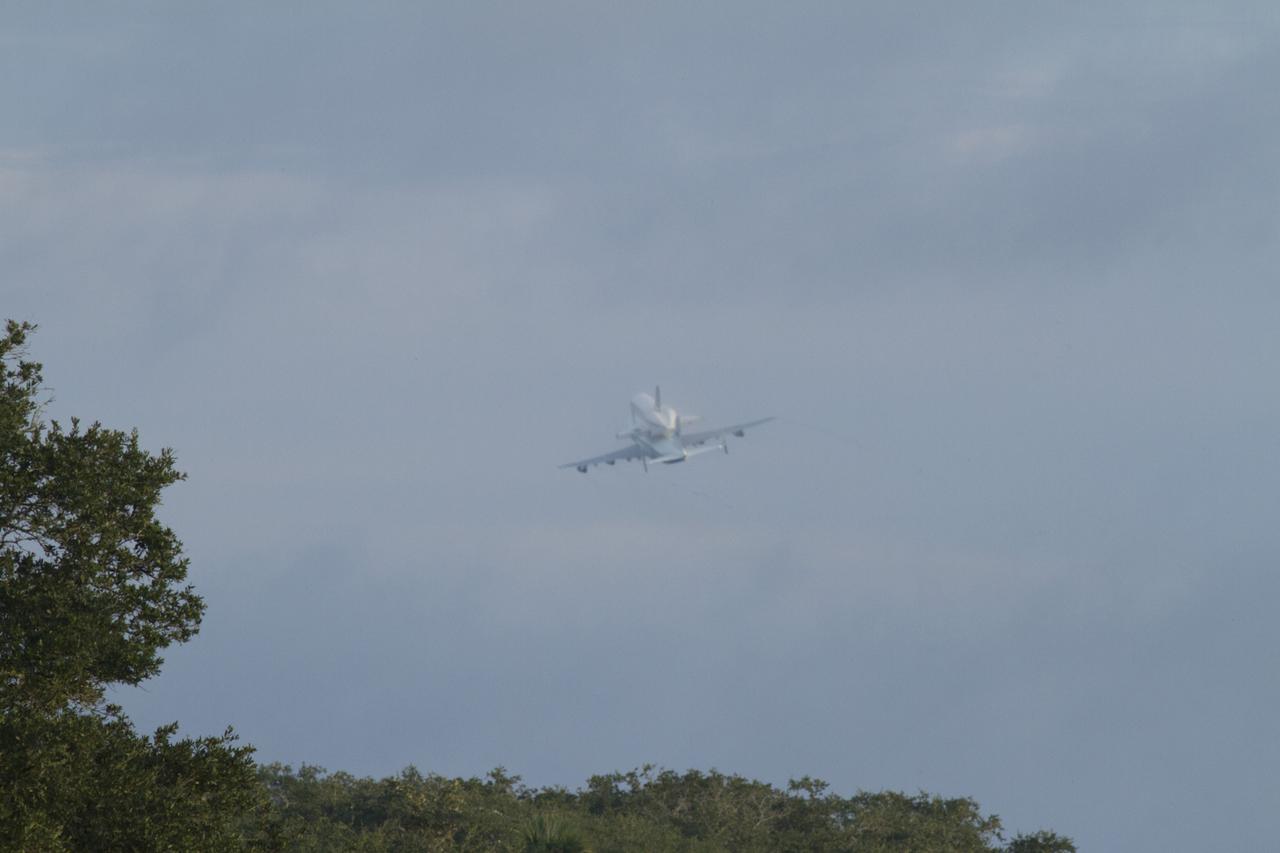
CAPE CANAVERAL, Fla. – Space shuttle Endeavour, mounted atop NASA's Shuttle Carrier Aircraft or SCA, flies over the Shuttle Landing Facility at NASA's Kennedy Space Center in Florida. The SCA, a modified 747 jetliner, will fly Endeavour to Los Angeles where it will be placed on public display at the California Science Center. This is the final ferry flight scheduled in the Space Shuttle Program era. For more information on the shuttles' transition and retirement, visit http://www.nasa.gov/transition. Photo credit: NASA/Rick Wetherington

CAPE CANAVERAL, Fla. – At the Shuttle Landing Facility at NASA's Kennedy Space Center in Florida, NASA's Shuttle Carrier Aircraft, or SCA, with the space shuttle Endeavour mounted atop, taxis on the runway for its ferry flight to California. The SCA, a modified 747 jetliner, will fly Endeavour to Los Angeles where it will be placed on public display at the California Science Center. This is the final ferry flight scheduled in the Space Shuttle Program era. For more information on the shuttles' transition and retirement, visit http://www.nasa.gov/transition. Photo credit: NASA/Frankie Martin
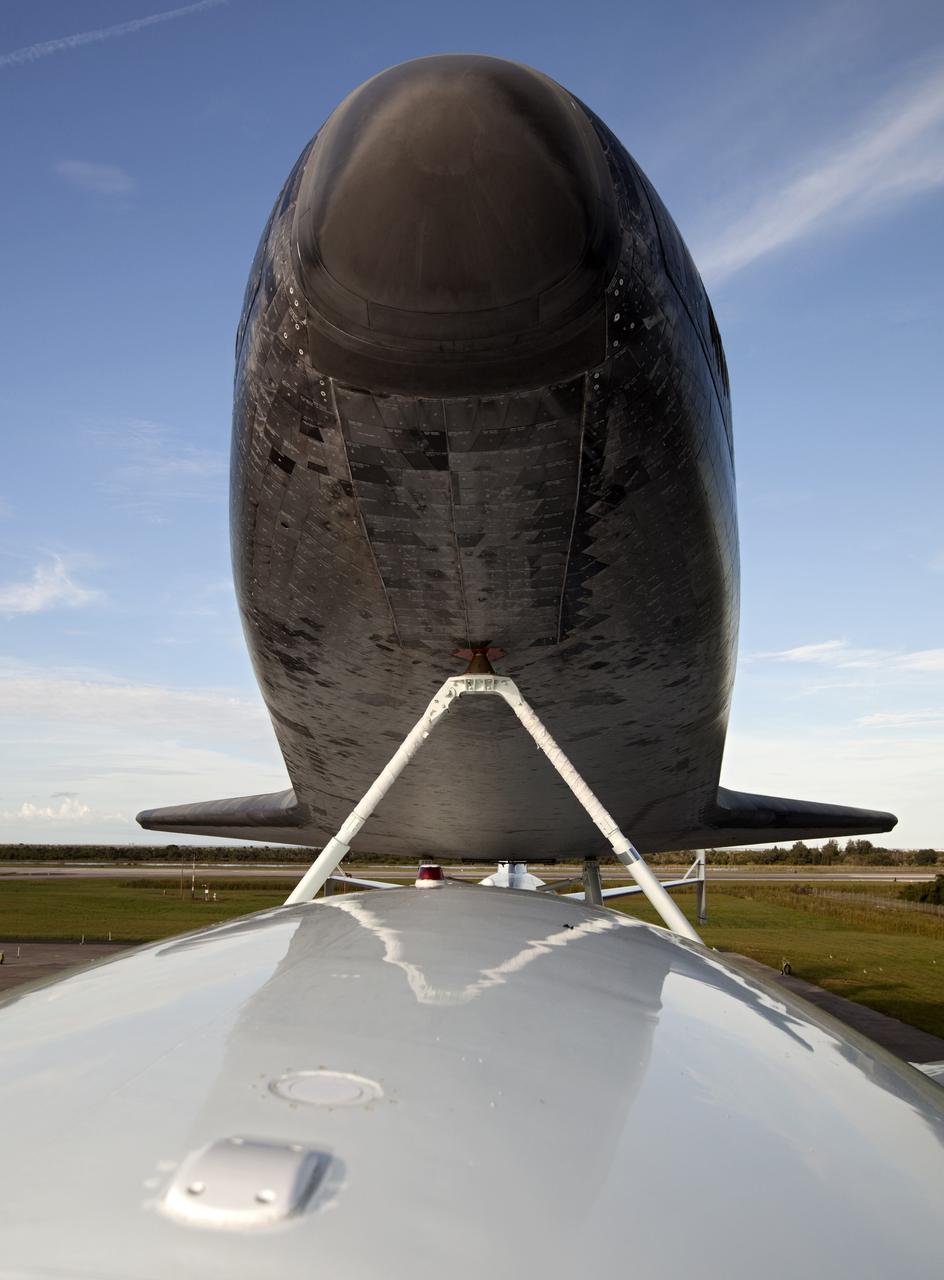
CAPE CANAVERAL, Fla. – Space shuttle Endeavour is balanced and secured atop NASA's Shuttle Carrier Aircraft, or SCA, at the Shuttle Landing Facility at NASA's Kennedy Space Center in Florida. The SCA, a modified 747 jetliner, will fly Endeavour to Los Angeles where it will be placed on public display at the California Science Center. This is the final ferry flight scheduled in the Space Shuttle Program era. For more information on the shuttles' transition and retirement, visit http://www.nasa.gov/transition. Photo credit: NASA/Dimitri Gerondidakis
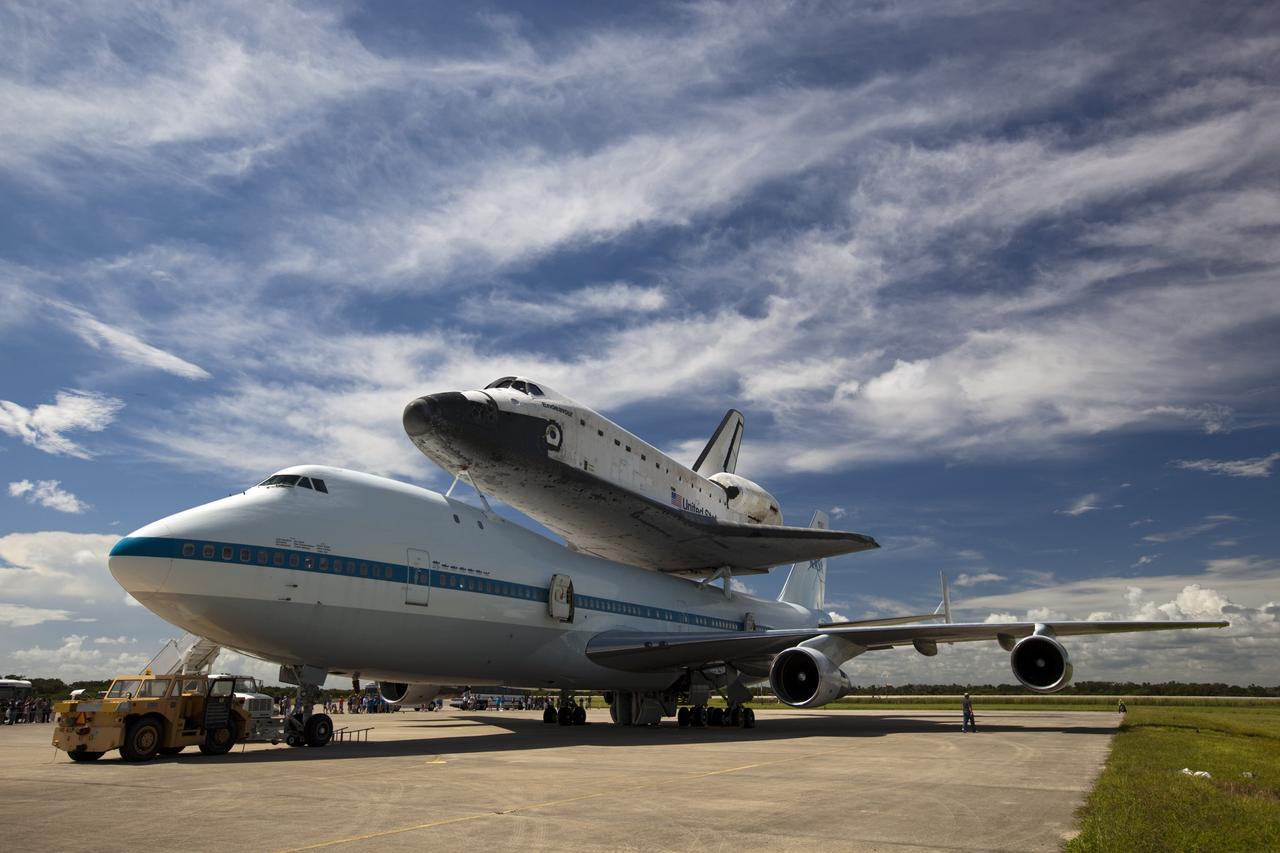
CAPE CANAVERAL, Fla. – At the Shuttle Landing Facility at NASA's Kennedy Space Center in Florida, the space shuttle Endeavour, mounted atop NASA's Shuttle Carrier Aircraft, or SCA, prepares for its ferry flight to California. The SCA, a modified 747 jetliner, will fly Endeavour to Los Angeles where it will be placed on public display at the California Science Center. This is the final ferry flight scheduled in the Space Shuttle Program era. For more information on the shuttles' transition and retirement, visit http://www.nasa.gov/transition. Photo credit: NASA/ Dimitri Gerondidakis
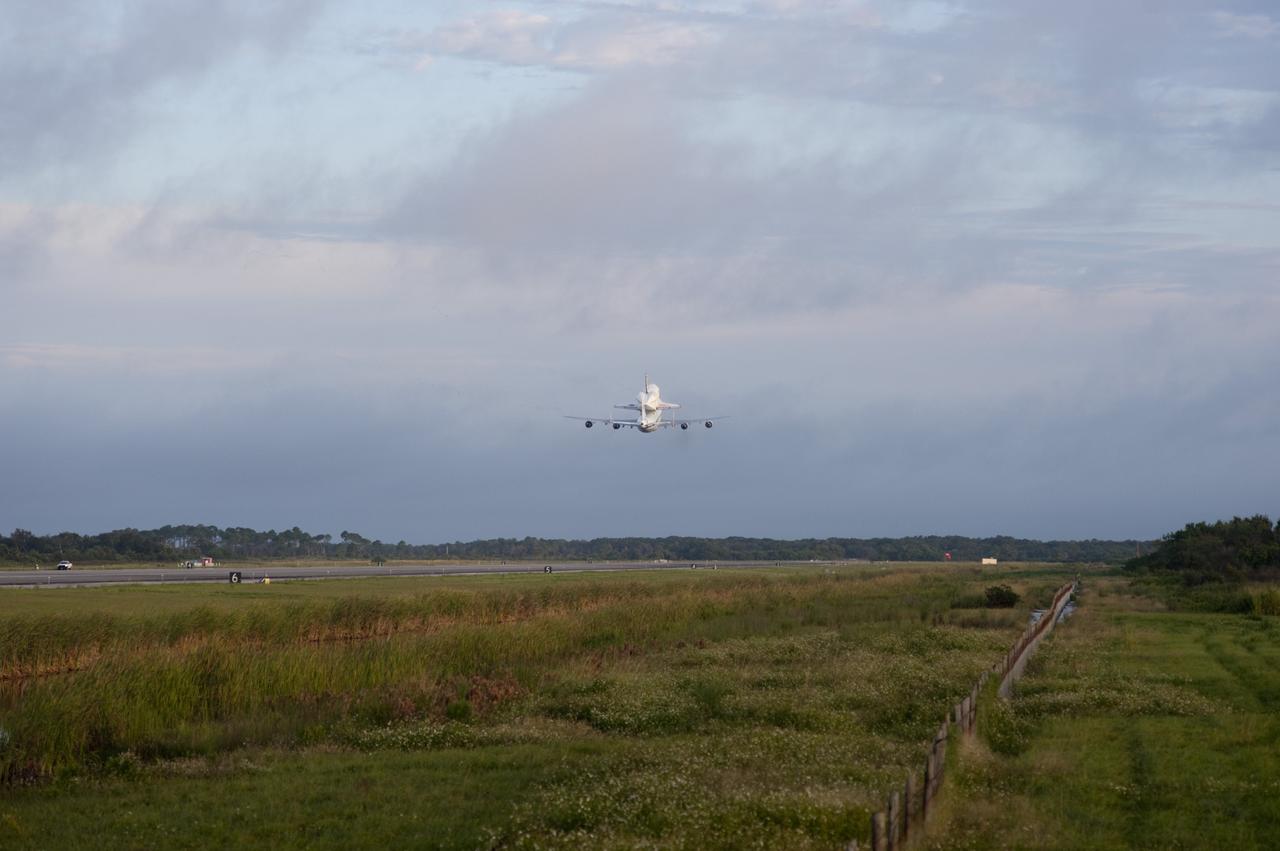
CAPE CANAVERAL, Fla. – Space shuttle Endeavour, mounted atop NASA's Shuttle Carrier Aircraft or SCA, takes off from the Shuttle Landing Facility at NASA's Kennedy Space Center in Florida. The SCA, a modified 747 jetliner, will fly Endeavour to Los Angeles where it will be placed on public display at the California Science Center. This is the final ferry flight scheduled in the Space Shuttle Program era. For more information on the shuttles' transition and retirement, visit http://www.nasa.gov/transition. Photo credit: NASA/Rusty Backer
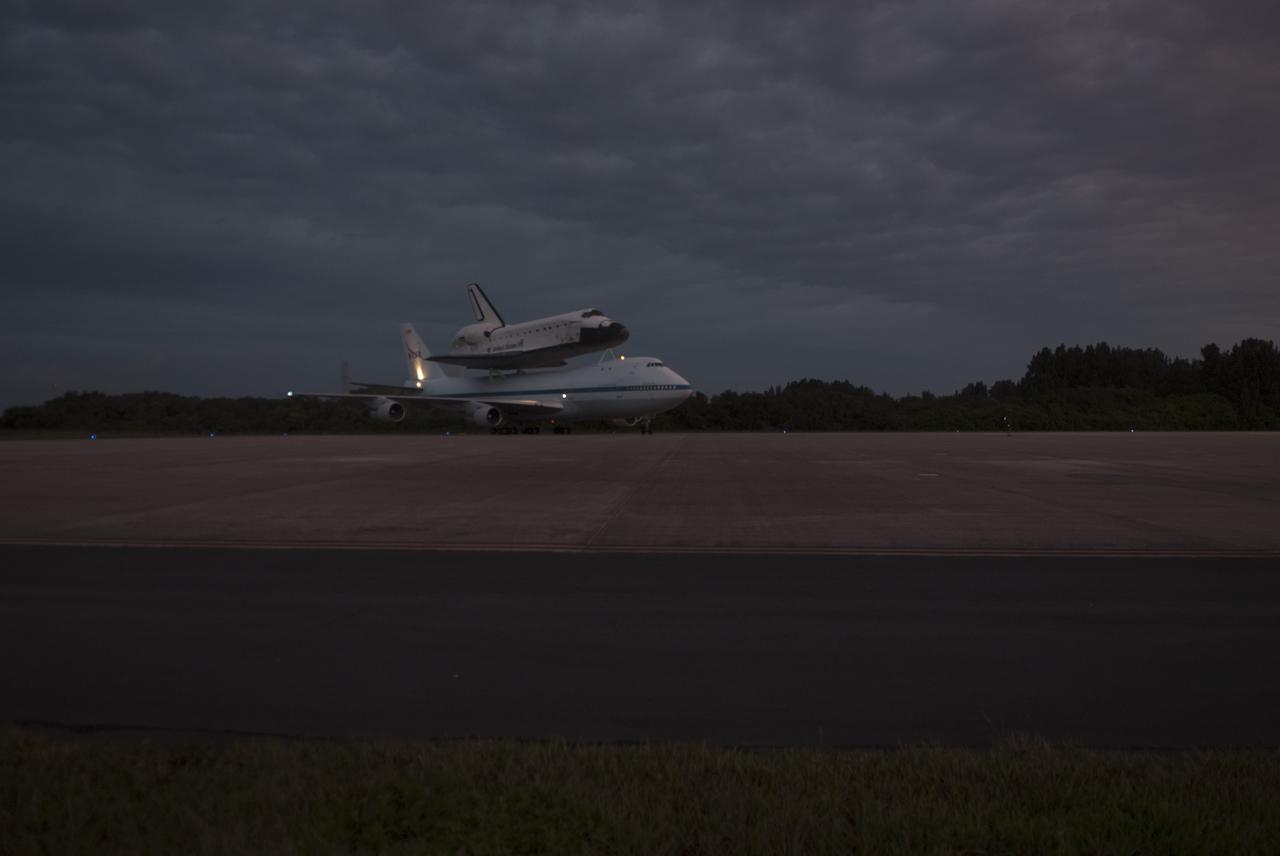
CAPE CANAVERAL, Fla. – At the Shuttle Landing Facility at NASA's Kennedy Space Center in Florida, NASA's Shuttle Carrier Aircraft, or SCA, with the space shuttle Endeavour mounted atop, taxis to the runway for its ferry flight to California. The SCA, a modified 747 jetliner, will fly Endeavour to Los Angeles where it will be placed on public display at the California Science Center. This is the final ferry flight scheduled in the Space Shuttle Program era. For more information on the shuttles' transition and retirement, visit http://www.nasa.gov/transition. Photo credit: NASA/George Sampson
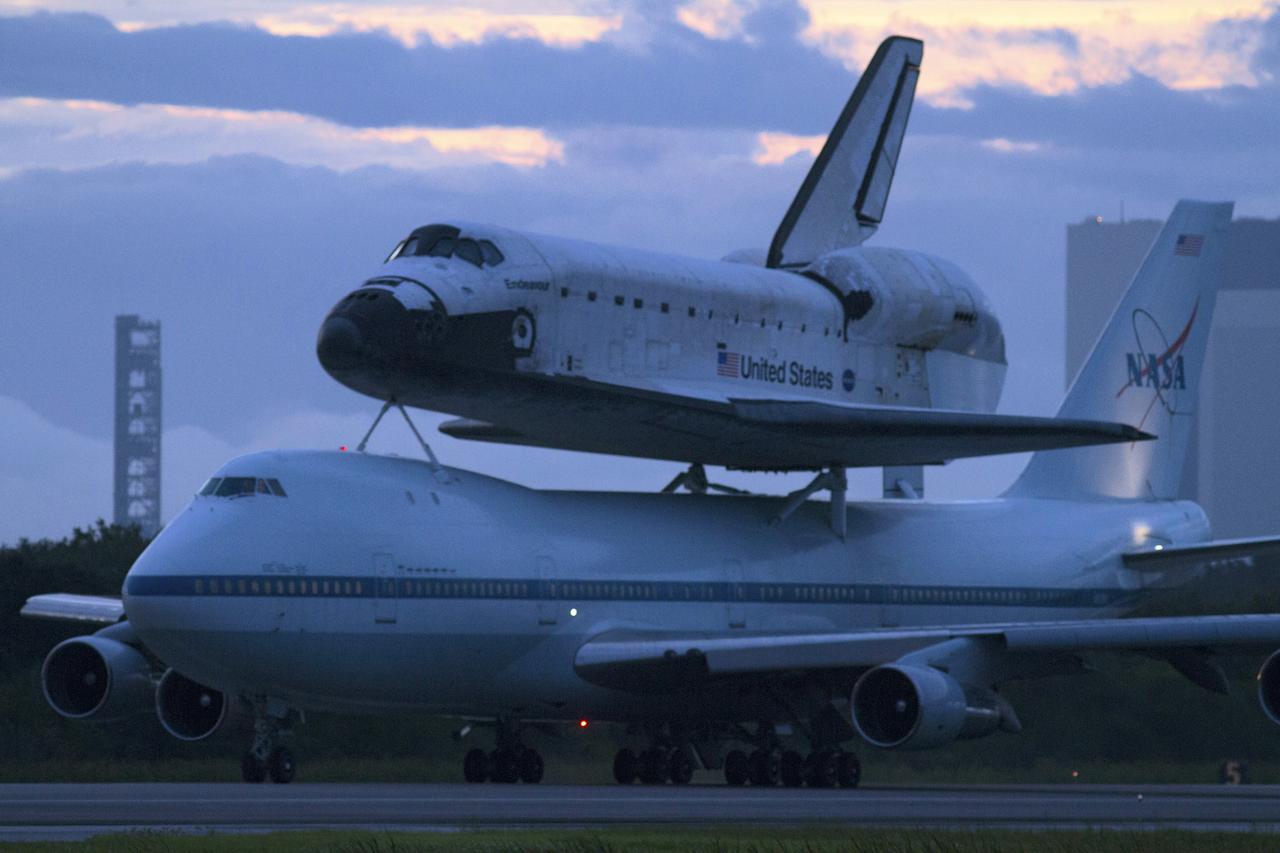
CAPE CANAVERAL, Fla. – Space shuttle Endeavour, mounted atop NASA's Shuttle Carrier Aircraft or SCA, taxis at the Shuttle Landing Facility at NASA's Kennedy Space Center in Florida. The SCA, a modified 747 jetliner, will fly Endeavour to Los Angeles where it will be placed on public display at the California Science Center. This is the final ferry flight scheduled in the Space Shuttle Program era. For more information on the shuttles' transition and retirement, visit http://www.nasa.gov/transition. Photo credit: NASA/Rick Wetherington

CAPE CANAVERAL, Fla. – Space shuttle Endeavour, mounted atop NASA's Shuttle Carrier Aircraft or SCA, flies over the Shuttle Landing Facility at NASA's Kennedy Space Center in Florida. The SCA, a modified 747 jetliner, will fly Endeavour to Los Angeles where it will be placed on public display at the California Science Center. This is the final ferry flight scheduled in the Space Shuttle Program era. For more information on the shuttles' transition and retirement, visit http://www.nasa.gov/transition. Photo credit: NASA/Rick Wetherington
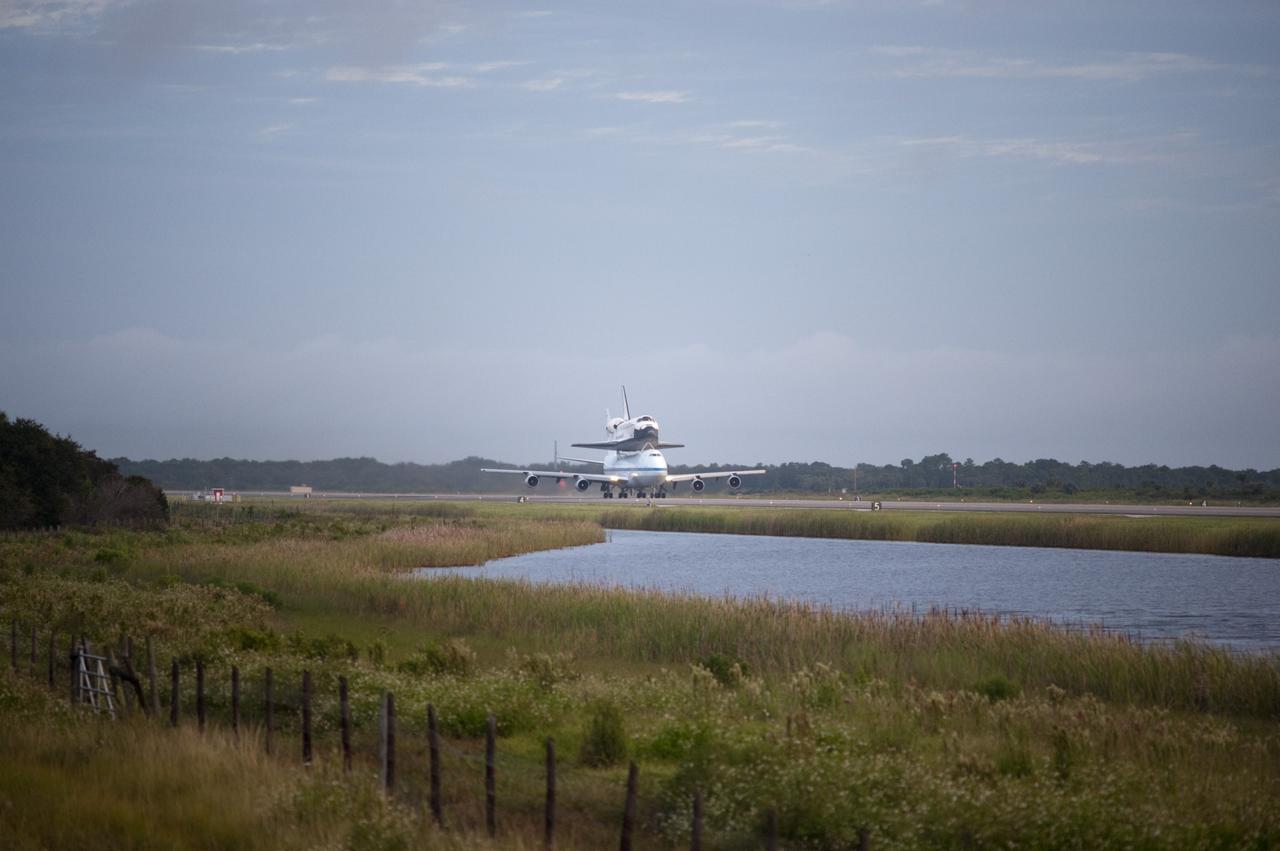
CAPE CANAVERAL, Fla. – Space shuttle Endeavour, mounted atop NASA's Shuttle Carrier Aircraft or SCA, takes off from the Shuttle Landing Facility at NASA's Kennedy Space Center in Florida. The SCA, a modified 747 jetliner, will fly Endeavour to Los Angeles where it will be placed on public display at the California Science Center. This is the final ferry flight scheduled in the Space Shuttle Program era. For more information on the shuttles' transition and retirement, visit http://www.nasa.gov/transition. Photo credit: NASA/Rick Wetherington
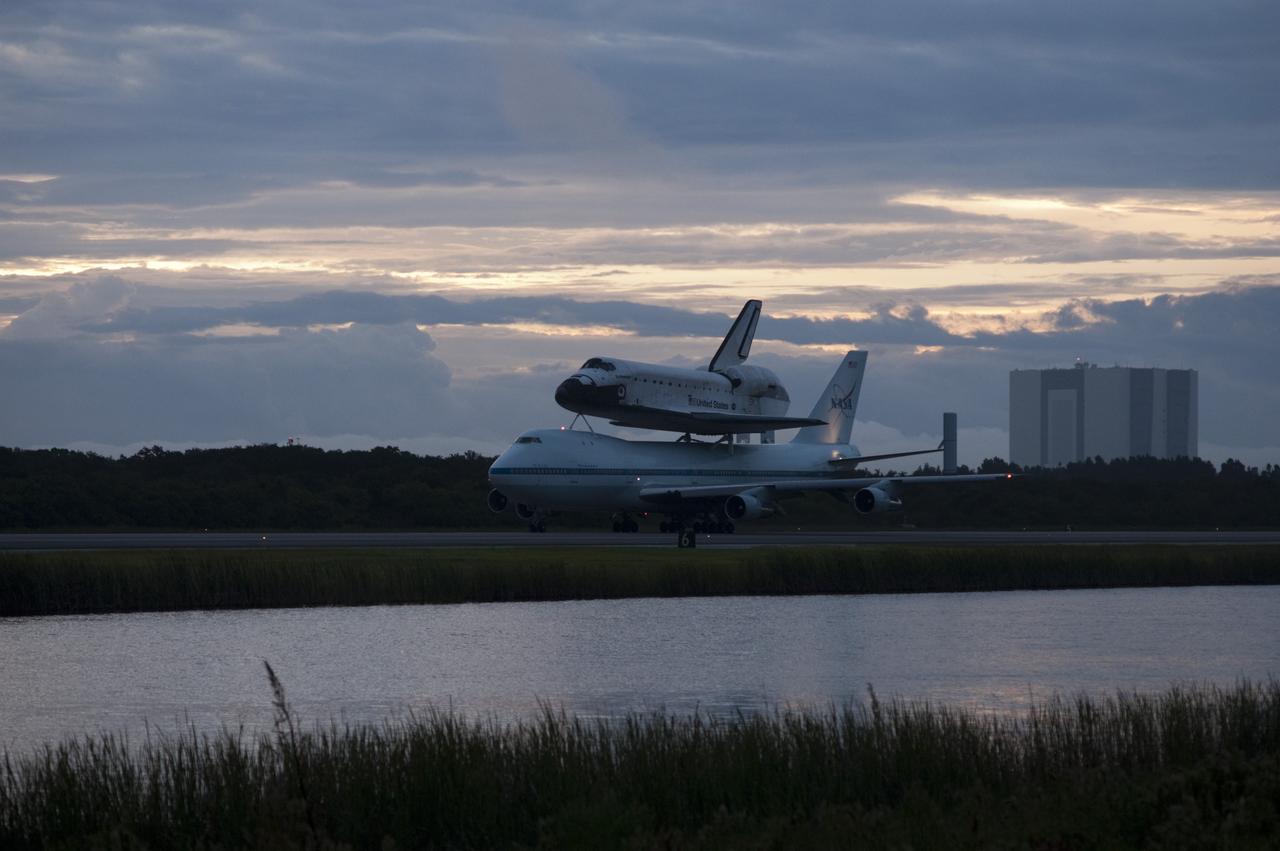
CAPE CANAVERAL, Fla. – Space shuttle Endeavour, mounted atop NASA's Shuttle Carrier Aircraft or SCA, taxis at the Shuttle Landing Facility at NASA's Kennedy Space Center in Florida. The SCA, a modified 747 jetliner, will fly Endeavour to Los Angeles where it will be placed on public display at the California Science Center. This is the final ferry flight scheduled in the Space Shuttle Program era. For more information on the shuttles' transition and retirement, visit http://www.nasa.gov/transition. Photo credit: NASA/Rick Wetherington
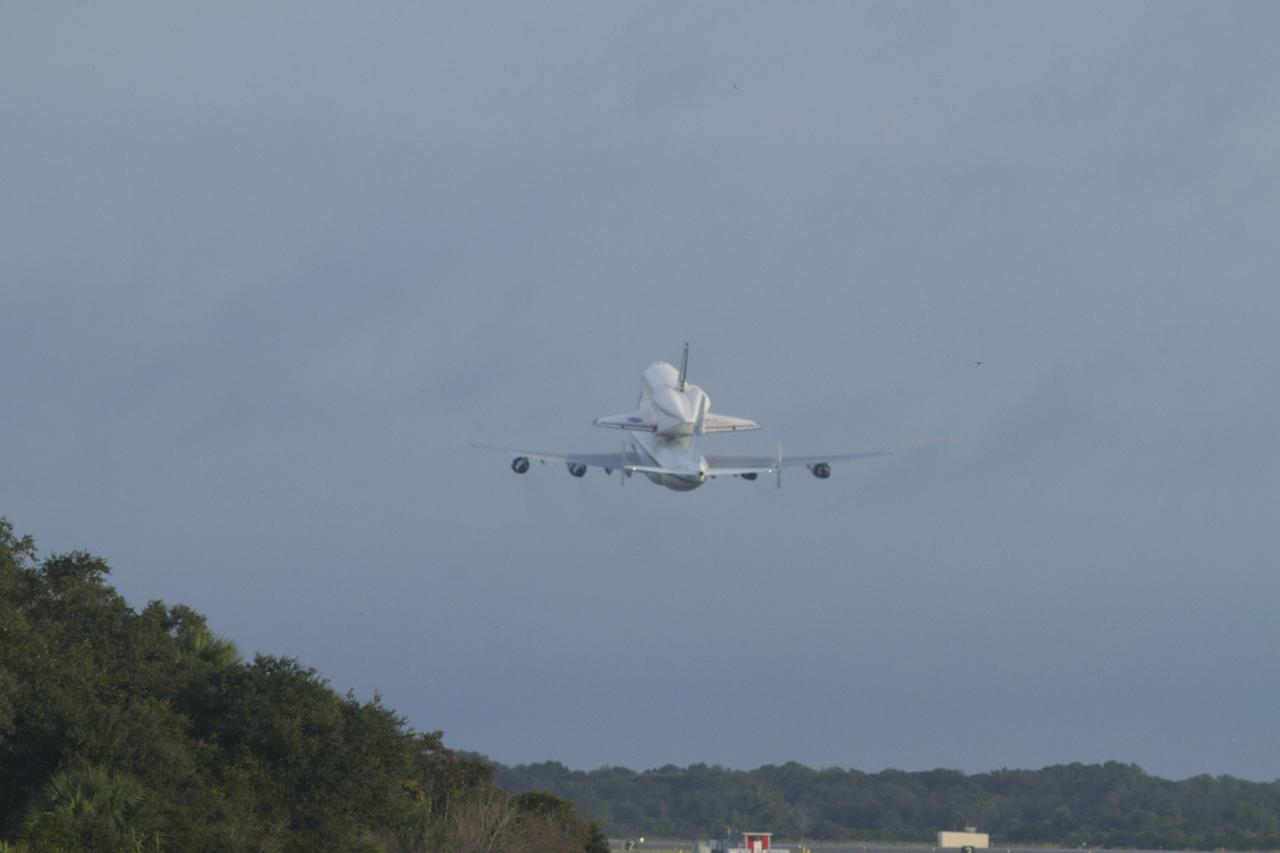
CAPE CANAVERAL, Fla. – Space shuttle Endeavour, mounted atop NASA's Shuttle Carrier Aircraft or SCA, flies over the Shuttle Landing Facility at NASA's Kennedy Space Center in Florida. The SCA, a modified 747 jetliner, will fly Endeavour to Los Angeles where it will be placed on public display at the California Science Center. This is the final ferry flight scheduled in the Space Shuttle Program era. For more information on the shuttles' transition and retirement, visit http://www.nasa.gov/transition. Photo credit: NASA/Rick Wetherington
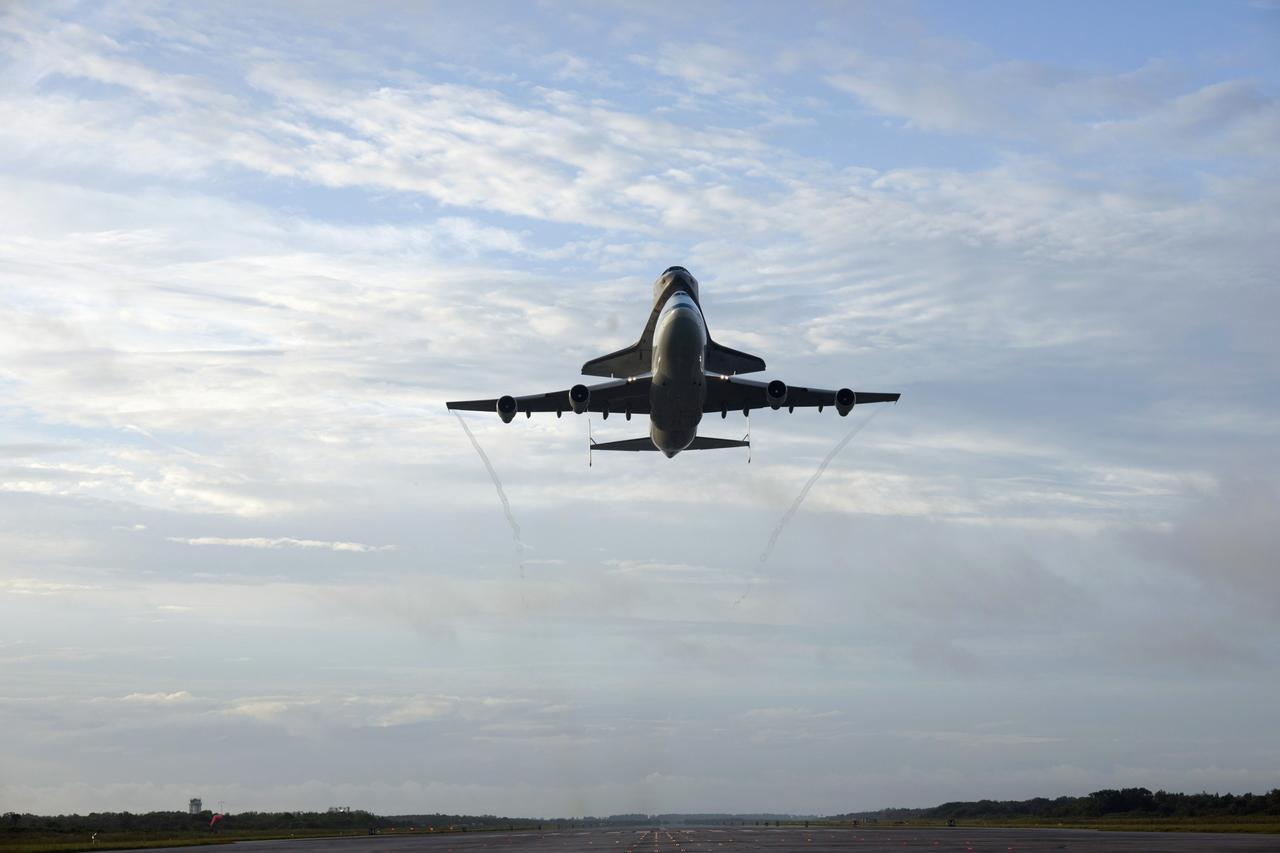
CAPE CANAVERAL, Fla. – Space shuttle Endeavour, mounted atop NASA's Shuttle Carrier Aircraft or SCA, takes off from the Shuttle Landing Facility at NASA's Kennedy Space Center in Florida. The SCA, a modified 747 jetliner, will fly Endeavour to Los Angeles where it will be placed on public display at the California Science Center. This is the final ferry flight scheduled in the Space Shuttle Program era. For more information on the shuttles' transition and retirement, visit http://www.nasa.gov/transition. Photo credit: NASA/Tony Gray and Robert Murray
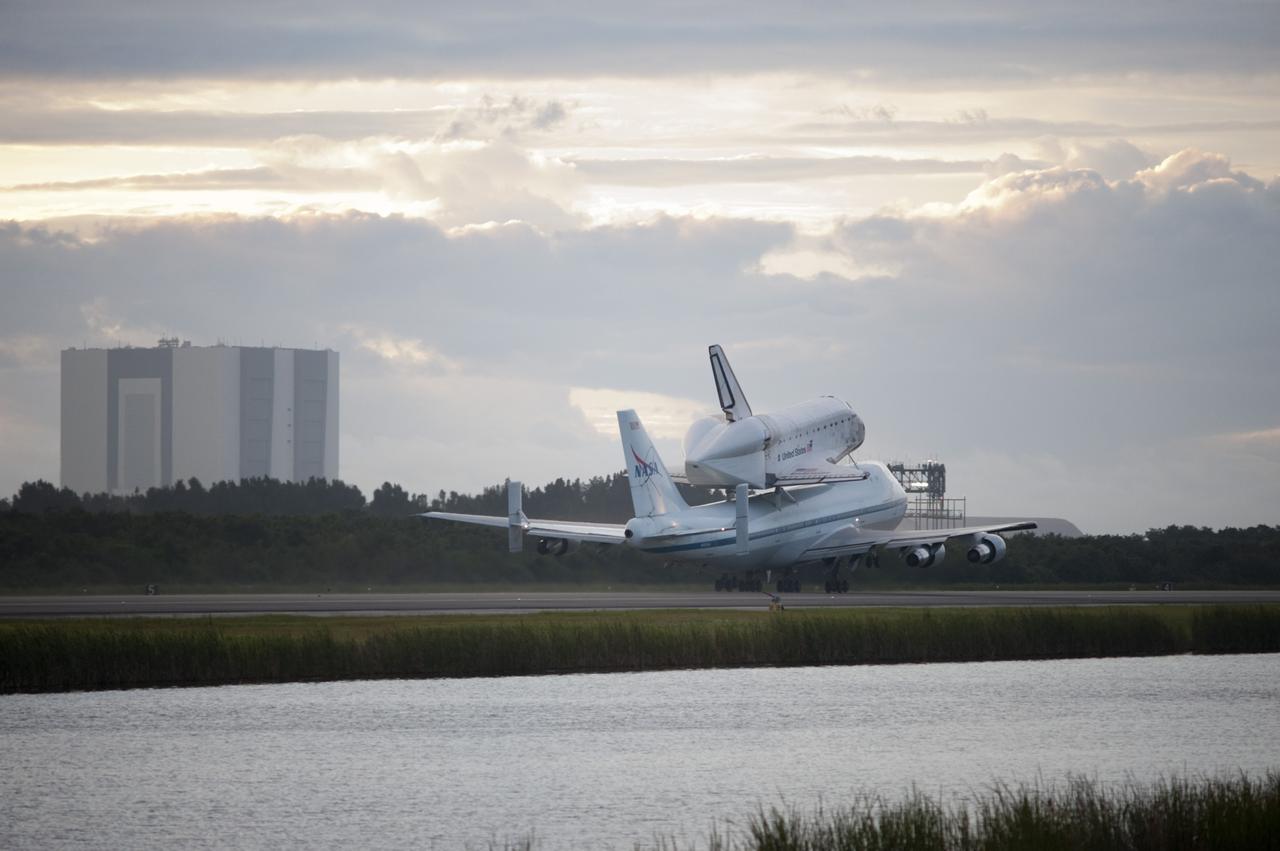
CAPE CANAVERAL, Fla. – Space shuttle Endeavour, mounted atop NASA's Shuttle Carrier Aircraft or SCA, takes off from the Shuttle Landing Facility at NASA's Kennedy Space Center in Florida. The SCA, a modified 747 jetliner, will fly Endeavour to Los Angeles where it will be placed on public display at the California Science Center. This is the final ferry flight scheduled in the Space Shuttle Program era. For more information on the shuttles' transition and retirement, visit http://www.nasa.gov/transition. Photo credit: NASA/Rick Wetherington
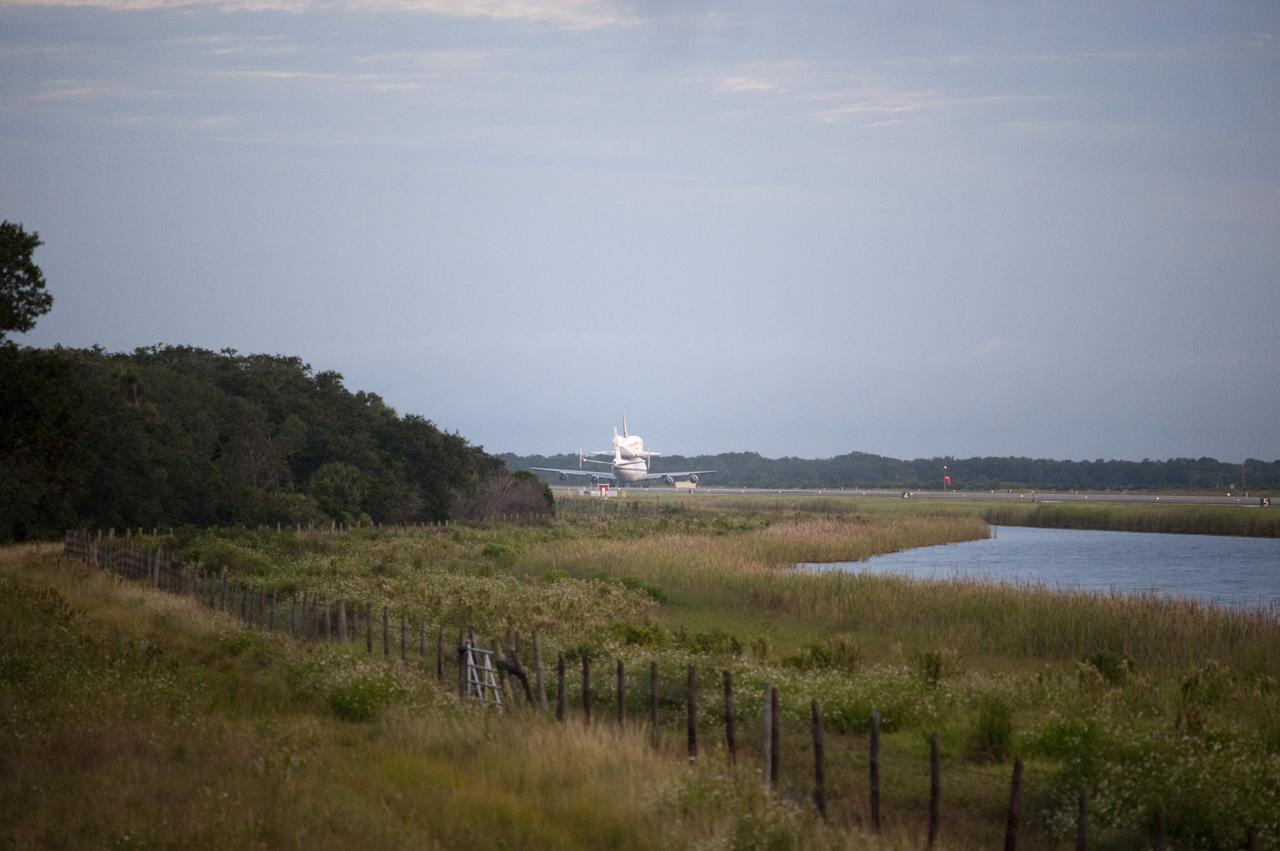
CAPE CANAVERAL, Fla. – Space shuttle Endeavour, mounted atop NASA's Shuttle Carrier Aircraft or SCA, taxis at the Shuttle Landing Facility at NASA's Kennedy Space Center in Florida. The SCA, a modified 747 jetliner, will fly Endeavour to Los Angeles where it will be placed on public display at the California Science Center. This is the final ferry flight scheduled in the Space Shuttle Program era. For more information on the shuttles' transition and retirement, visit http://www.nasa.gov/transition. Photo credit: NASA/Rick Wetherington

CAPE CANAVERAL, Fla. – At the Shuttle Landing Facility at NASA's Kennedy Space Center in Florida, NASA's Shuttle Carrier Aircraft, or SCA, with the space shuttle Endeavour mounted atop, takes off for its ferry flight to California. The SCA, a modified 747 jetliner, will fly Endeavour to Los Angeles where it will be placed on public display at the California Science Center. This is the final ferry flight scheduled in the Space Shuttle Program era. For more information on the shuttles' transition and retirement, visit http://www.nasa.gov/transition. Photo credit: NASA/Frankie Martin

CAPE CANAVERAL, Fla. – Space shuttle Endeavour, mounted atop NASA's Shuttle Carrier Aircraft or SCA, flies over the Shuttle Landing Facility at NASA's Kennedy Space Center in Florida. The SCA, a modified 747 jetliner, will fly Endeavour to Los Angeles where it will be placed on public display at the California Science Center. This is the final ferry flight scheduled in the Space Shuttle Program era. For more information on the shuttles' transition and retirement, visit http://www.nasa.gov/transition. Photo credit: NASA/Rick Wetherington
CAPE CANAVERAL, Fla. – Space shuttle Endeavour, mounted atop NASA's Shuttle Carrier Aircraft or SCA, takes off from the Shuttle Landing Facility at NASA's Kennedy Space Center in Florida. The SCA, a modified 747 jetliner, will fly Endeavour to Los Angeles where it will be placed on public display at the California Science Center. This is the final ferry flight scheduled in the Space Shuttle Program era. For more information on the shuttles' transition and retirement, visit http://www.nasa.gov/transition. Photo credit: NASA/Rusty Backer
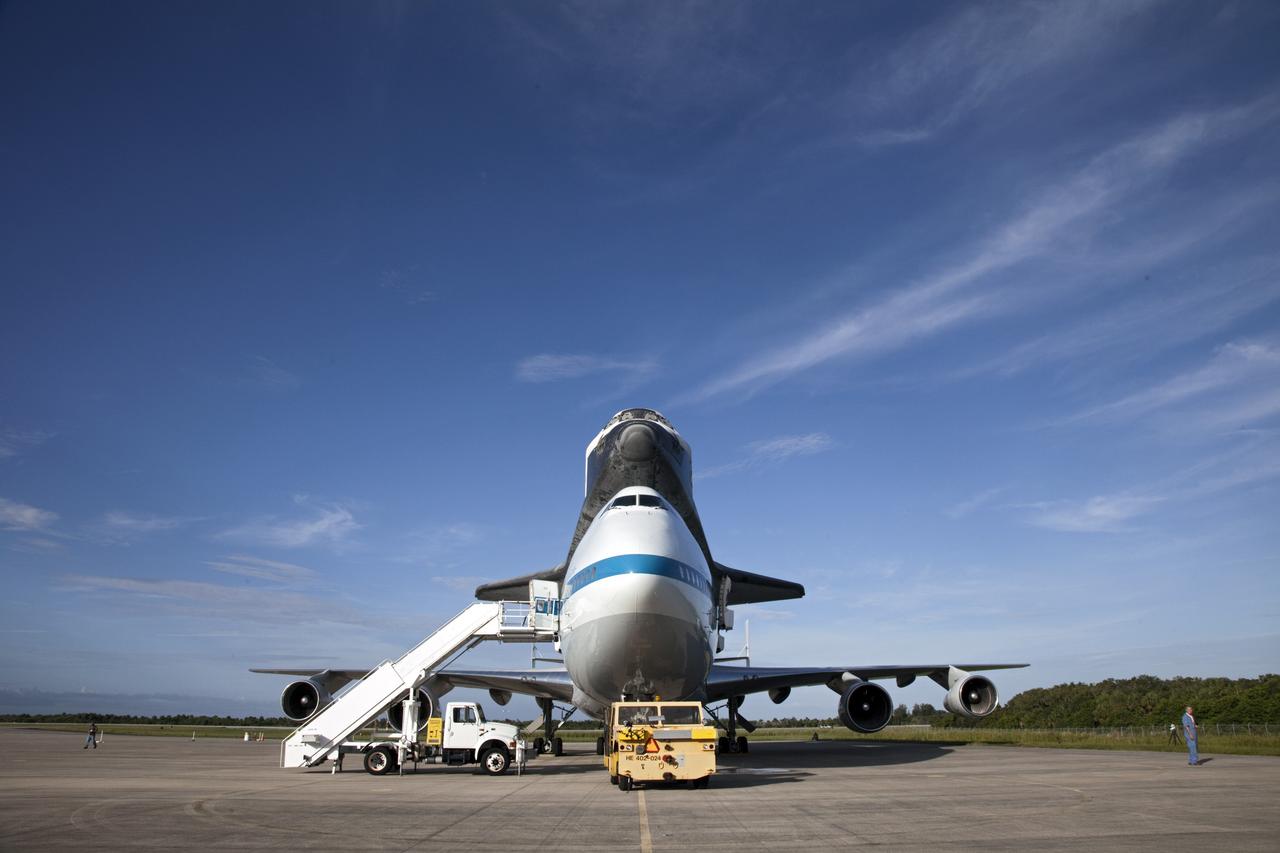
CAPE CANAVERAL, Fla. – NASA's Shuttle Carrier Aircraft, or SCA, is parked on the apron of the Shuttle Landing Facility at NASA's Kennedy Space Center in Florida with space shuttle Endeavour secured on its back. The SCA, a modified 747 jetliner, will fly Endeavour to Los Angeles where it will be placed on public display at the California Science Center. This is the final ferry flight scheduled in the Space Shuttle Program era. For more information on the shuttles' transition and retirement, visit http://www.nasa.gov/transition. Photo credit: NASA/Frankie Martin
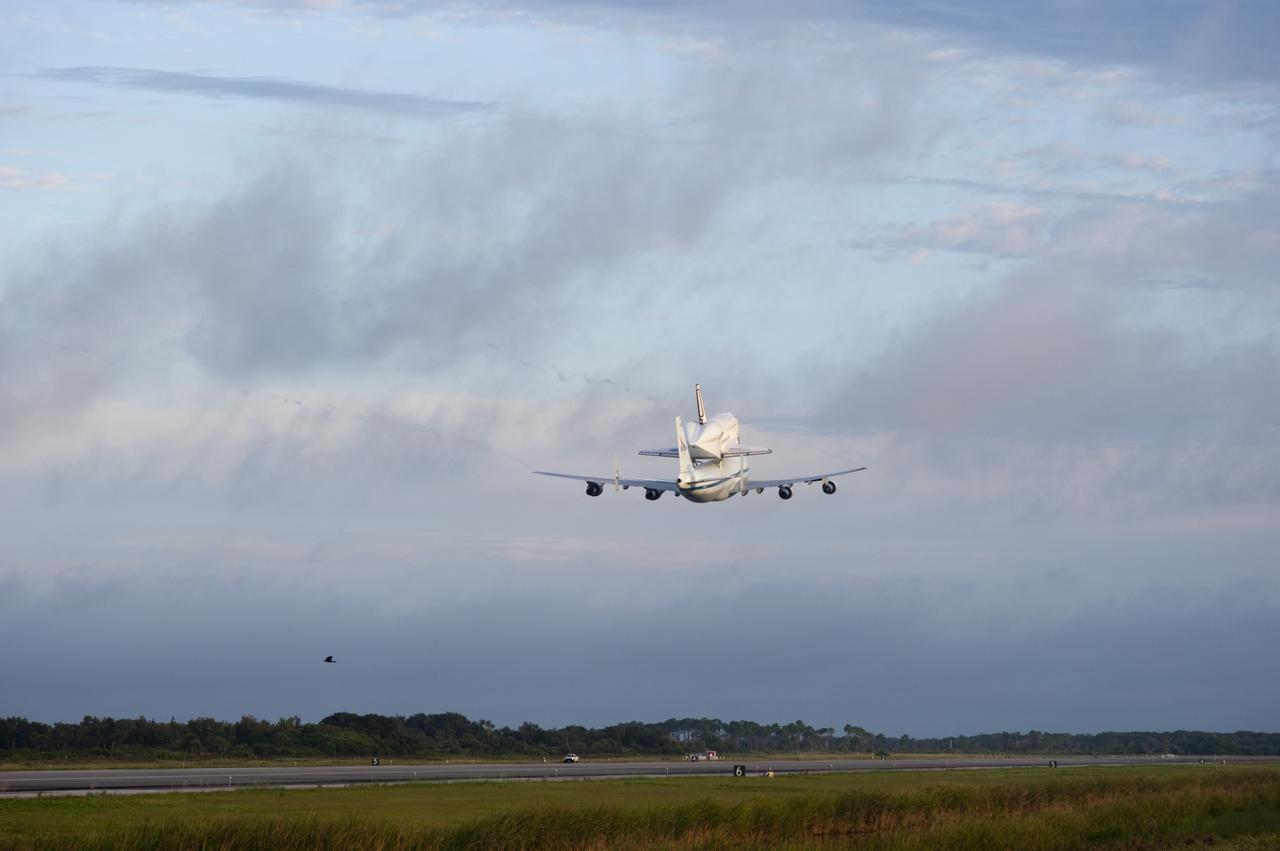
CAPE CANAVERAL, Fla. – Space shuttle Endeavour, mounted atop NASA's Shuttle Carrier Aircraft or SCA, takes off from the Shuttle Landing Facility at NASA's Kennedy Space Center in Florida. The SCA, a modified 747 jetliner, will fly Endeavour to Los Angeles where it will be placed on public display at the California Science Center. This is the final ferry flight scheduled in the Space Shuttle Program era. For more information on the shuttles' transition and retirement, visit http://www.nasa.gov/transition. Photo credit: NASA/Rusty Backer
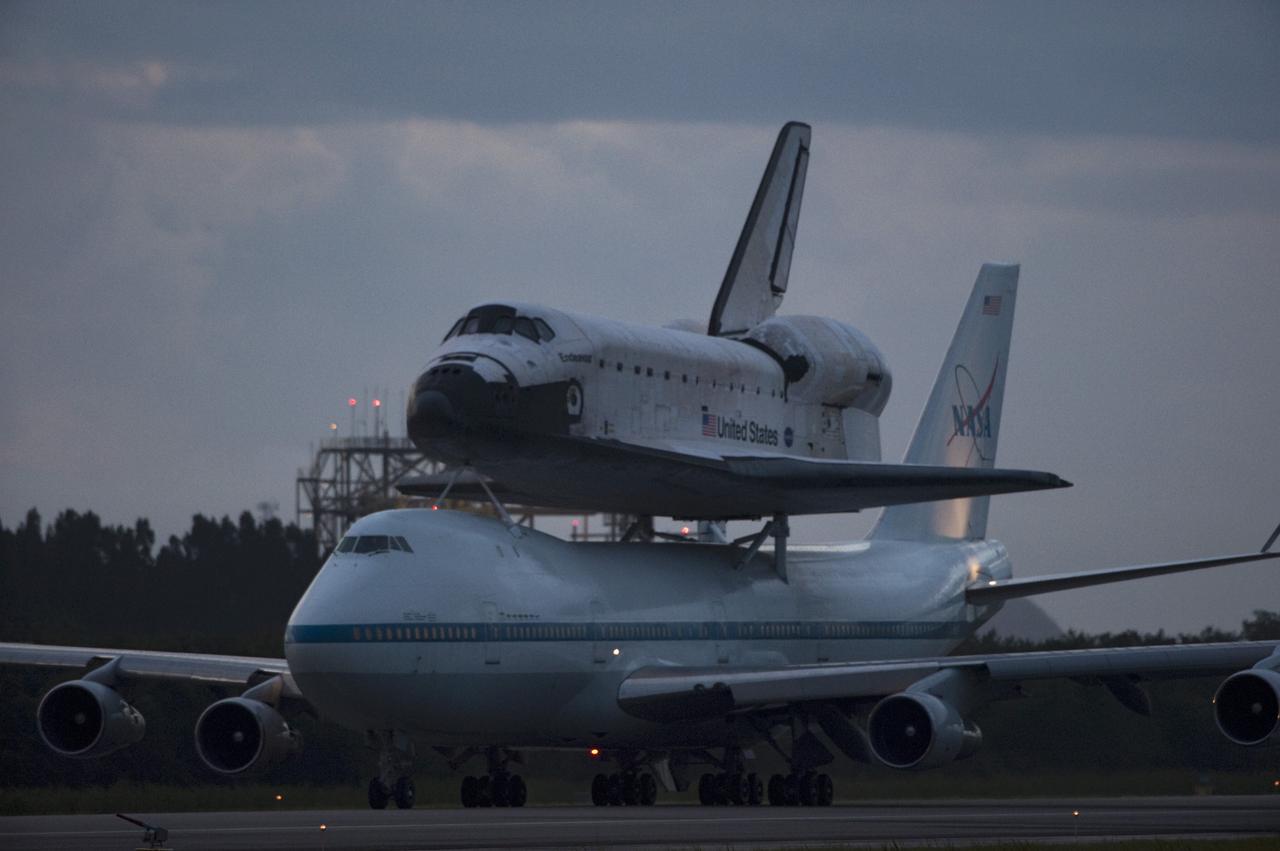
CAPE CANAVERAL, Fla. – Space shuttle Endeavour, mounted atop NASA's Shuttle Carrier Aircraft or SCA, taxis at the Shuttle Landing Facility at NASA's Kennedy Space Center in Florida. The SCA, a modified 747 jetliner, will fly Endeavour to Los Angeles where it will be placed on public display at the California Science Center. This is the final ferry flight scheduled in the Space Shuttle Program era. For more information on the shuttles' transition and retirement, visit http://www.nasa.gov/transition. Photo credit: NASA/Rick Wetherington
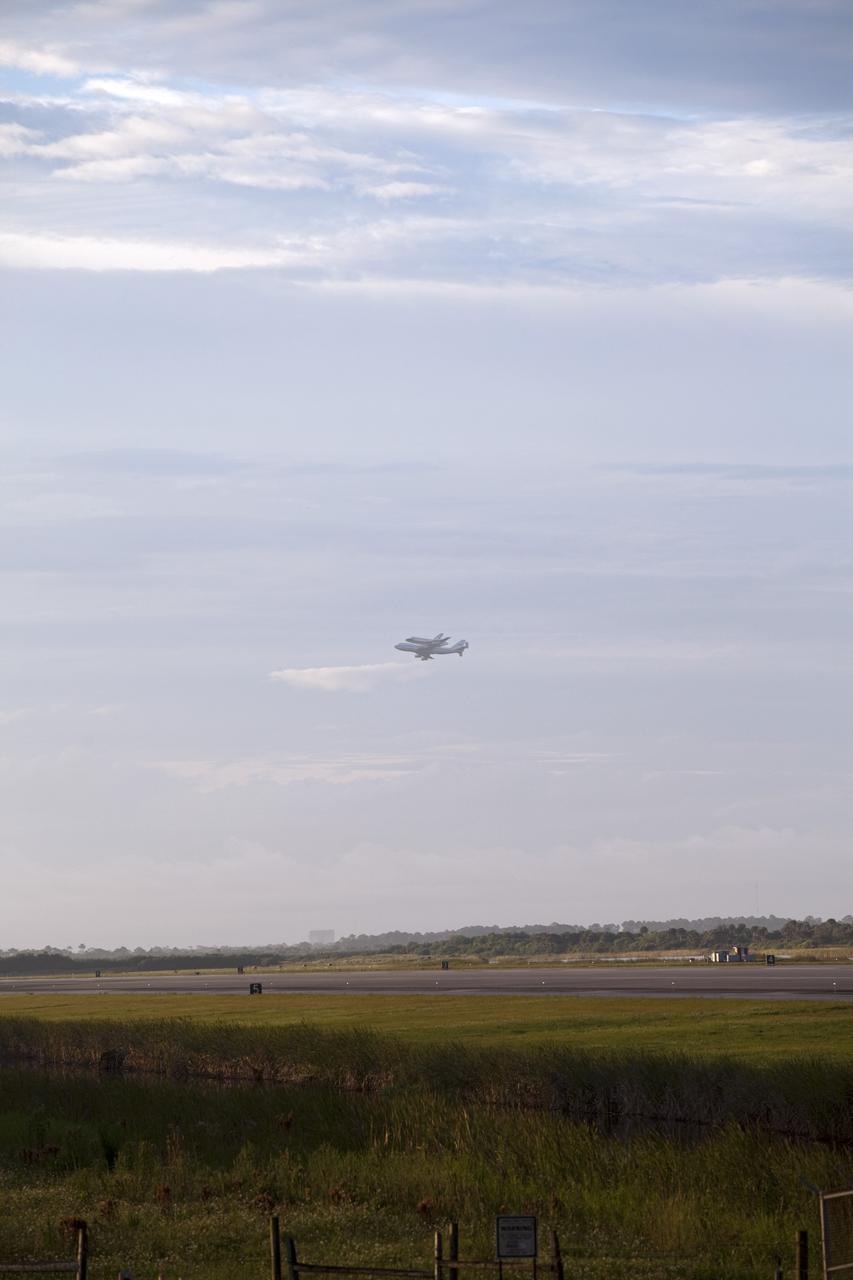
CAPE CANAVERAL, Fla. – At the Shuttle Landing Facility at NASA's Kennedy Space Center in Florida, NASA's Shuttle Carrier Aircraft, or SCA, with the space shuttle Endeavour mounted atop, takes off for its ferry flight to California. The SCA, a modified 747 jetliner, will fly Endeavour to Los Angeles where it will be placed on public display at the California Science Center. This is the final ferry flight scheduled in the Space Shuttle Program era. For more information on the shuttles' transition and retirement, visit http://www.nasa.gov/transition. Photo credit: NASA/Frankie Martin

CAPE CANAVERAL, Fla. – Space shuttle Endeavour, mounted atop NASA's Shuttle Carrier Aircraft or SCA, taxis at the Shuttle Landing Facility at NASA's Kennedy Space Center in Florida. The SCA, a modified 747 jetliner, will fly Endeavour to Los Angeles where it will be placed on public display at the California Science Center. This is the final ferry flight scheduled in the Space Shuttle Program era. For more information on the shuttles' transition and retirement, visit http://www.nasa.gov/transition. Photo credit: NASA/Rick Wetherington
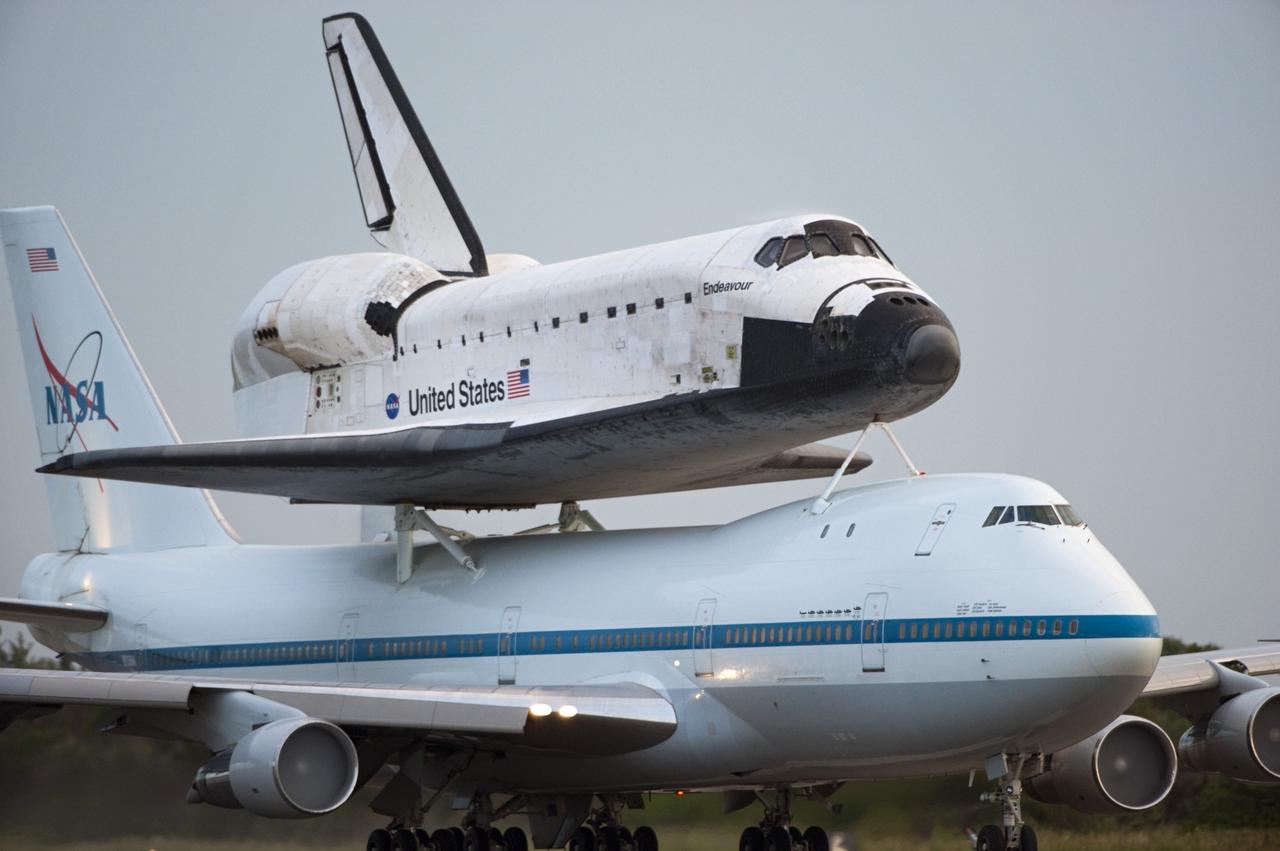
CAPE CANAVERAL, Fla. – Space shuttle Endeavour, mounted atop NASA's Shuttle Carrier Aircraft or SCA, takes off from the Shuttle Landing Facility at NASA's Kennedy Space Center in Florida. The SCA, a modified 747 jetliner, will fly Endeavour to Los Angeles where it will be placed on public display at the California Science Center. This is the final ferry flight scheduled in the Space Shuttle Program era. For more information on the shuttles' transition and retirement, visit http://www.nasa.gov/transition. Photo credit: NASA/Rick Wetherington
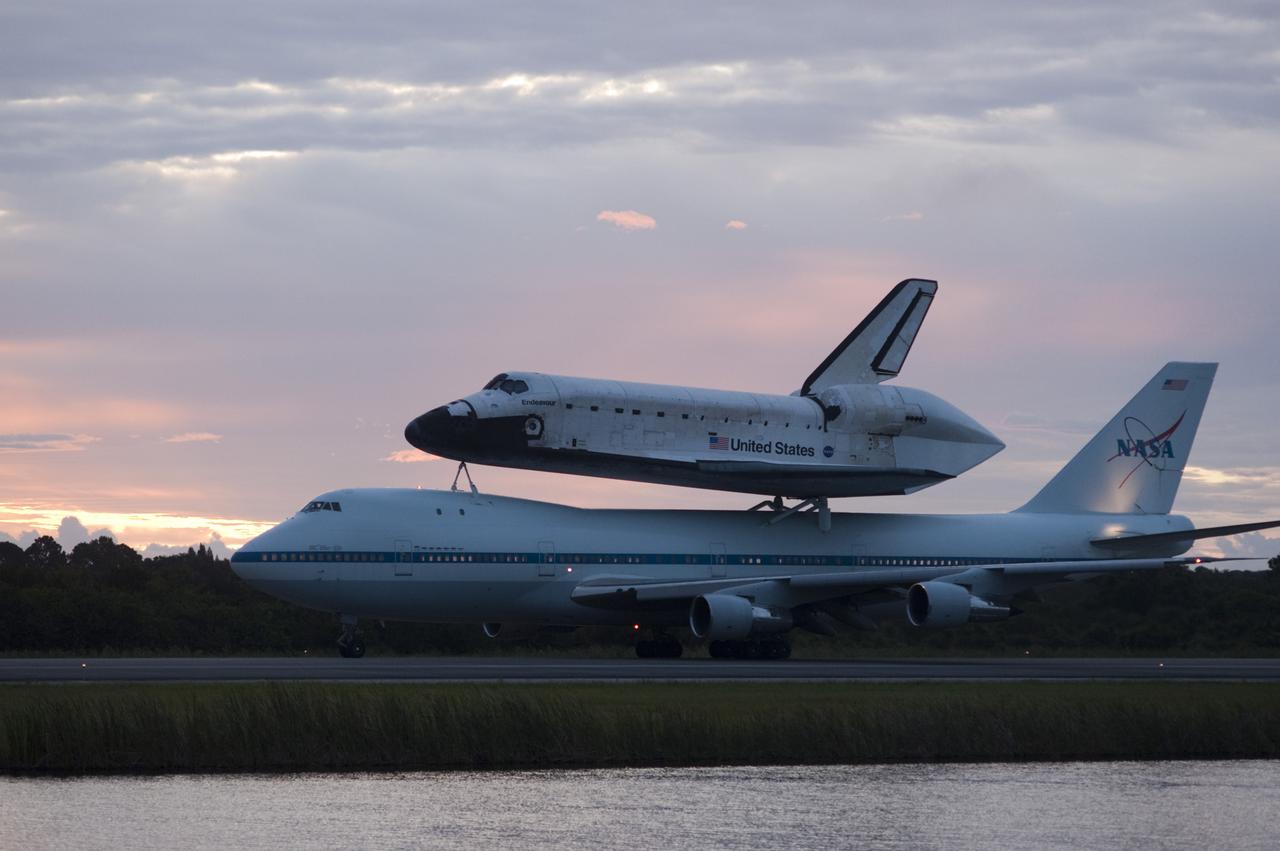
CAPE CANAVERAL, Fla. – Space shuttle Endeavour, mounted atop NASA's Shuttle Carrier Aircraft or SCA, taxis at the Shuttle Landing Facility at NASA's Kennedy Space Center in Florida. The SCA, a modified 747 jetliner, will fly Endeavour to Los Angeles where it will be placed on public display at the California Science Center. This is the final ferry flight scheduled in the Space Shuttle Program era. For more information on the shuttles' transition and retirement, visit http://www.nasa.gov/transition. Photo credit: NASA/Rick Wetherington

CAPE CANAVERAL, Fla. – Space shuttle Endeavour, mounted atop NASA's Shuttle Carrier Aircraft or SCA, taxis at the Shuttle Landing Facility at NASA's Kennedy Space Center in Florida. The SCA, a modified 747 jetliner, will fly Endeavour to Los Angeles where it will be placed on public display at the California Science Center. This is the final ferry flight scheduled in the Space Shuttle Program era. For more information on the shuttles' transition and retirement, visit http://www.nasa.gov/transition. Photo credit: NASA/Rick Wetherington
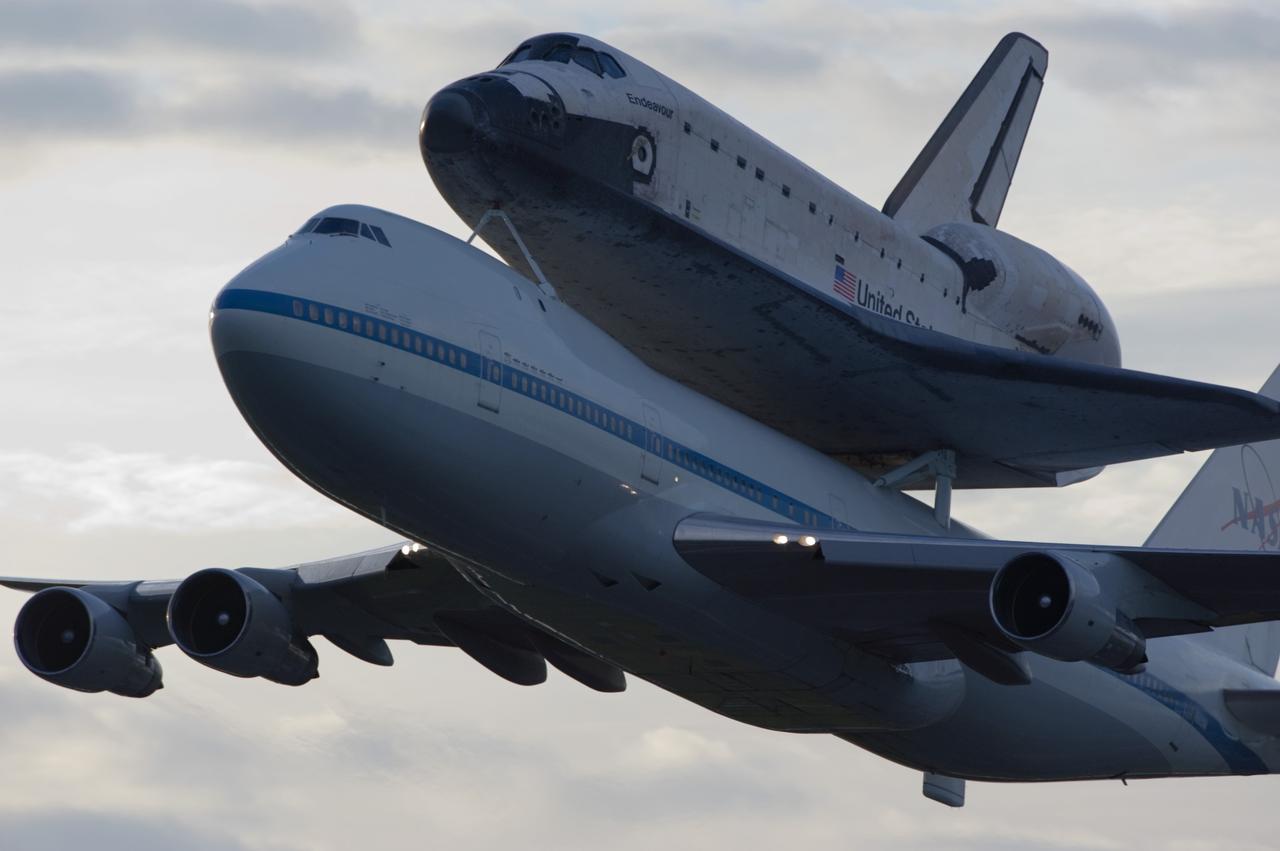
CAPE CANAVERAL, Fla. – Space shuttle Endeavour, mounted atop NASA's Shuttle Carrier Aircraft or SCA, takes off from the Shuttle Landing Facility at NASA's Kennedy Space Center in Florida. The SCA, a modified 747 jetliner, will fly Endeavour to Los Angeles where it will be placed on public display at the California Science Center. This is the final ferry flight scheduled in the Space Shuttle Program era. For more information on the shuttles' transition and retirement, visit http://www.nasa.gov/transition. Photo credit: NASA/Rick Wetherington

CAPE CANAVERAL, Fla. – Space shuttle Endeavour, mounted atop NASA's Shuttle Carrier Aircraft or SCA, taxis at the Shuttle Landing Facility at NASA's Kennedy Space Center in Florida. The SCA, a modified 747 jetliner, will fly Endeavour to Los Angeles where it will be placed on public display at the California Science Center. This is the final ferry flight scheduled in the Space Shuttle Program era. For more information on the shuttles' transition and retirement, visit http://www.nasa.gov/transition. Photo credit: NASA/Rick Wetherington
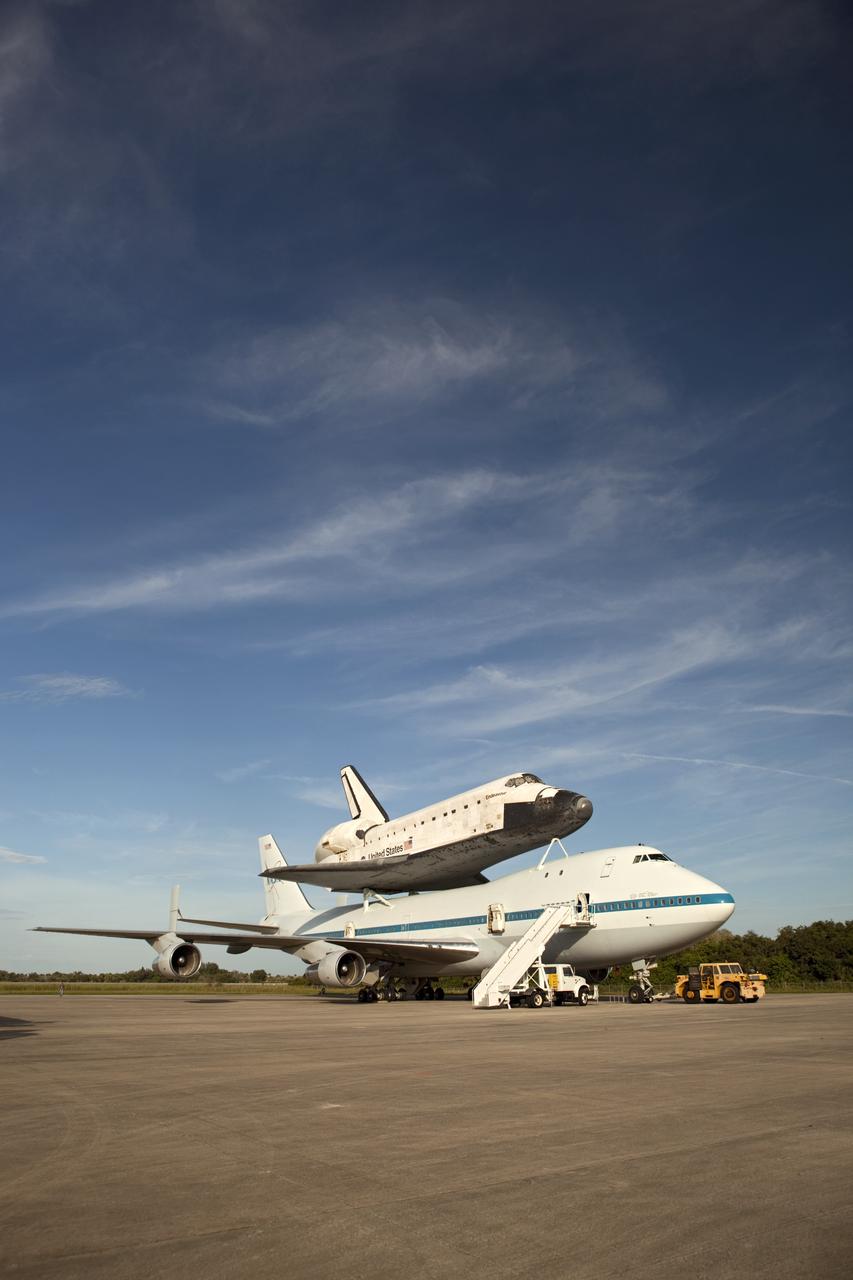
CAPE CANAVERAL, Fla. – NASA's Shuttle Carrier Aircraft, or SCA, is parked on the apron of the Shuttle Landing Facility at NASA's Kennedy Space Center in Florida with space shuttle Endeavour secured on its back. The SCA, a modified 747 jetliner, will fly Endeavour to Los Angeles where it will be placed on public display at the California Science Center. This is the final ferry flight scheduled in the Space Shuttle Program era. For more information on the shuttles' transition and retirement, visit http://www.nasa.gov/transition. Photo credit: NASA/Dimitri Gerondidakis
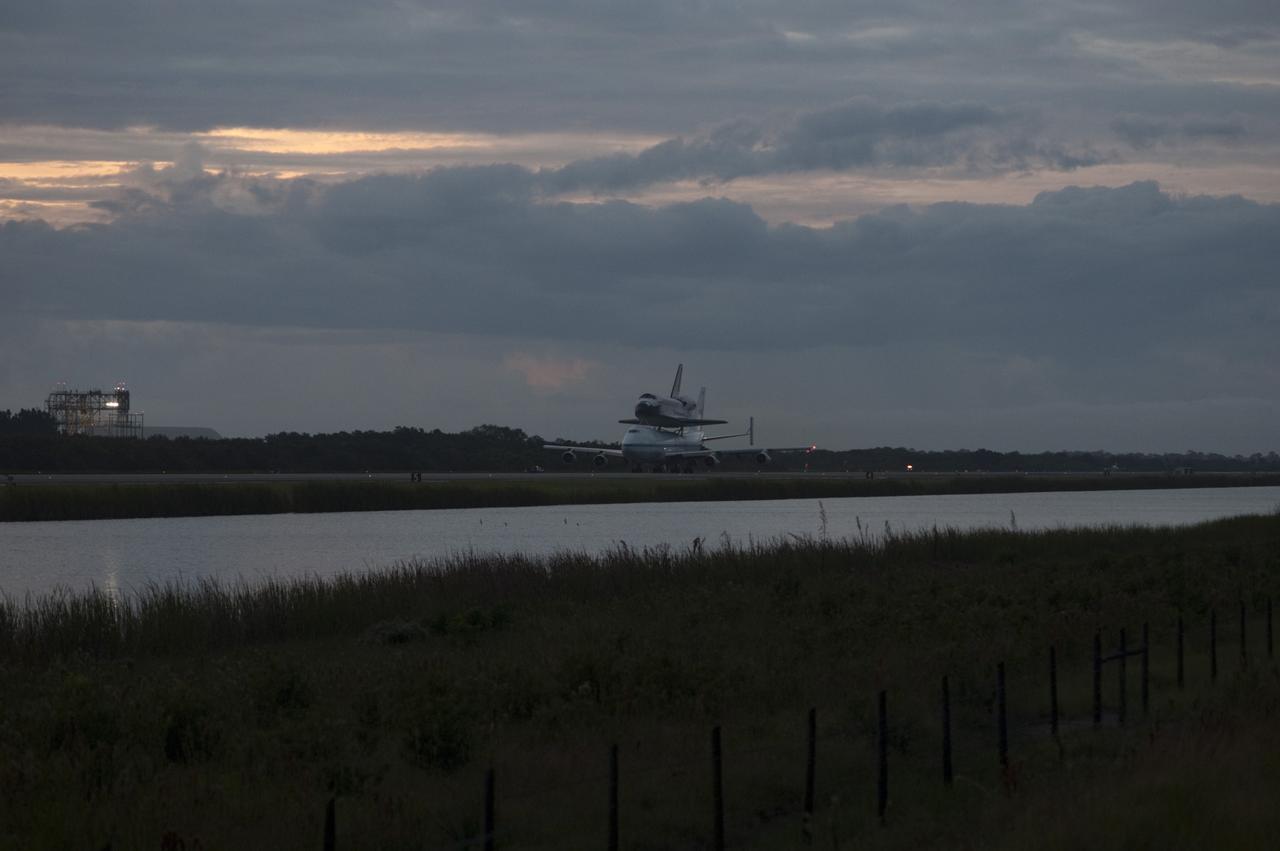
CAPE CANAVERAL, Fla. – Space shuttle Endeavour, mounted atop NASA's Shuttle Carrier Aircraft or SCA, taxis at the Shuttle Landing Facility at NASA's Kennedy Space Center in Florida. The SCA, a modified 747 jetliner, will fly Endeavour to Los Angeles where it will be placed on public display at the California Science Center. This is the final ferry flight scheduled in the Space Shuttle Program era. For more information on the shuttles' transition and retirement, visit http://www.nasa.gov/transition. Photo credit: NASA/Rick Wetherington
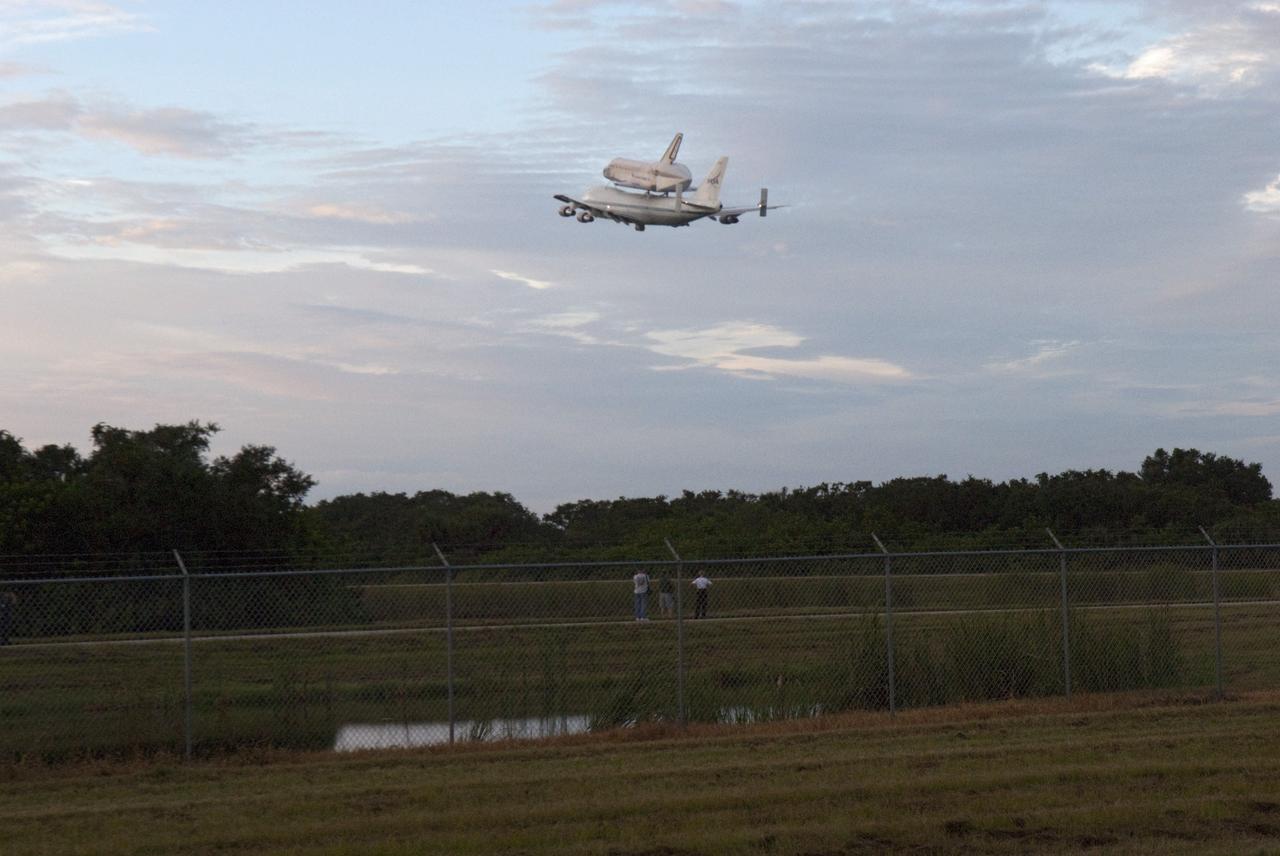
CAPE CANAVERAL, Fla. – At the Shuttle Landing Facility at NASA's Kennedy Space Center in Florida, NASA's Shuttle Carrier Aircraft, or SCA, with the space shuttle Endeavour mounted atop, takes off for its ferry flight to California. The SCA, a modified 747 jetliner, will fly Endeavour to Los Angeles where it will be placed on public display at the California Science Center. This is the final ferry flight scheduled in the Space Shuttle Program era. For more information on the shuttles' transition and retirement, visit http://www.nasa.gov/transition. Photo credit: NASA/George Sampson
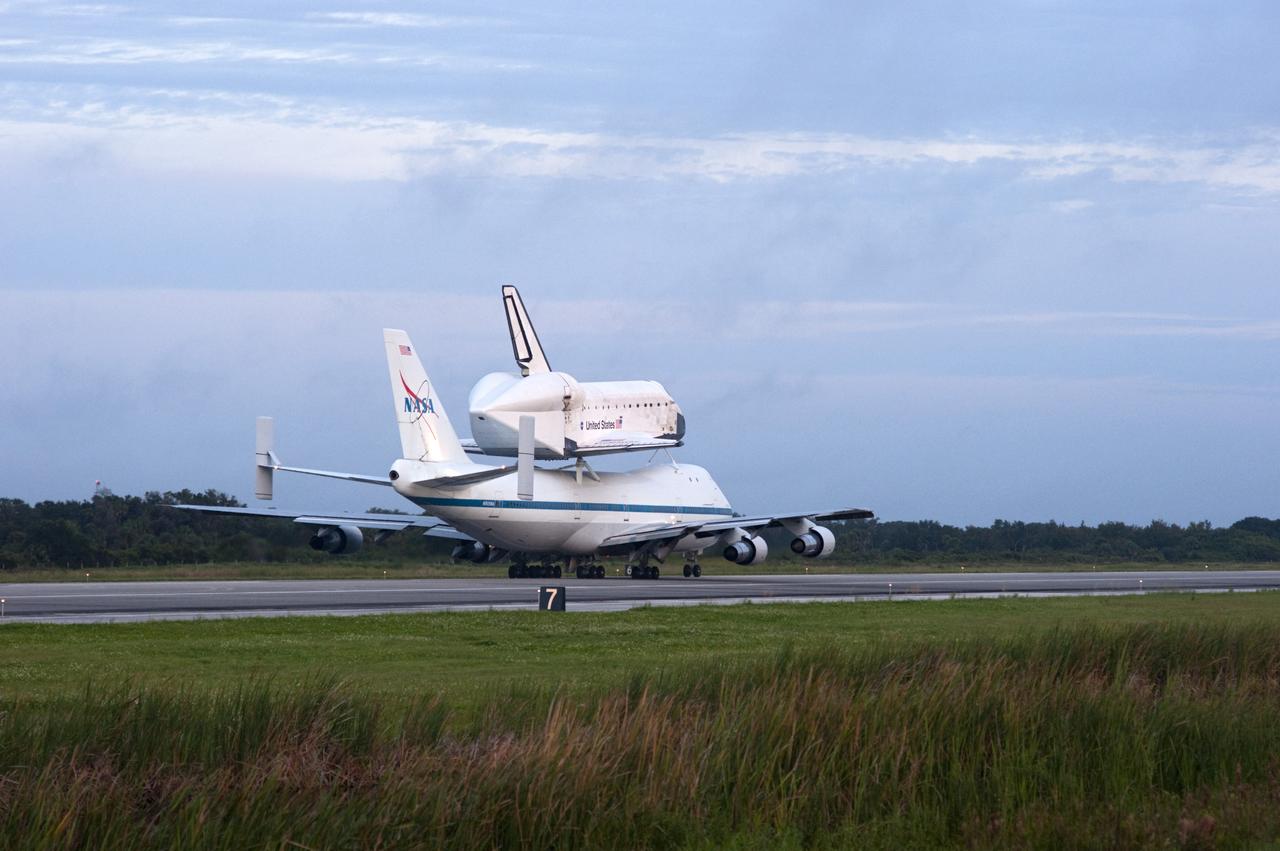
CAPE CANAVERAL, Fla. – Space shuttle Endeavour, mounted atop NASA's Shuttle Carrier Aircraft or SCA, taxis down the runway at the Shuttle Landing Facility at NASA's Kennedy Space Center in Florida. The SCA, a modified 747 jetliner, will fly Endeavour to Los Angeles where it will be placed on public display at the California Science Center. This is the final ferry flight scheduled in the Space Shuttle Program era. For more information on the shuttles' transition and retirement, visit http://www.nasa.gov/transition. Photo credit: NASA/Rusty Backer
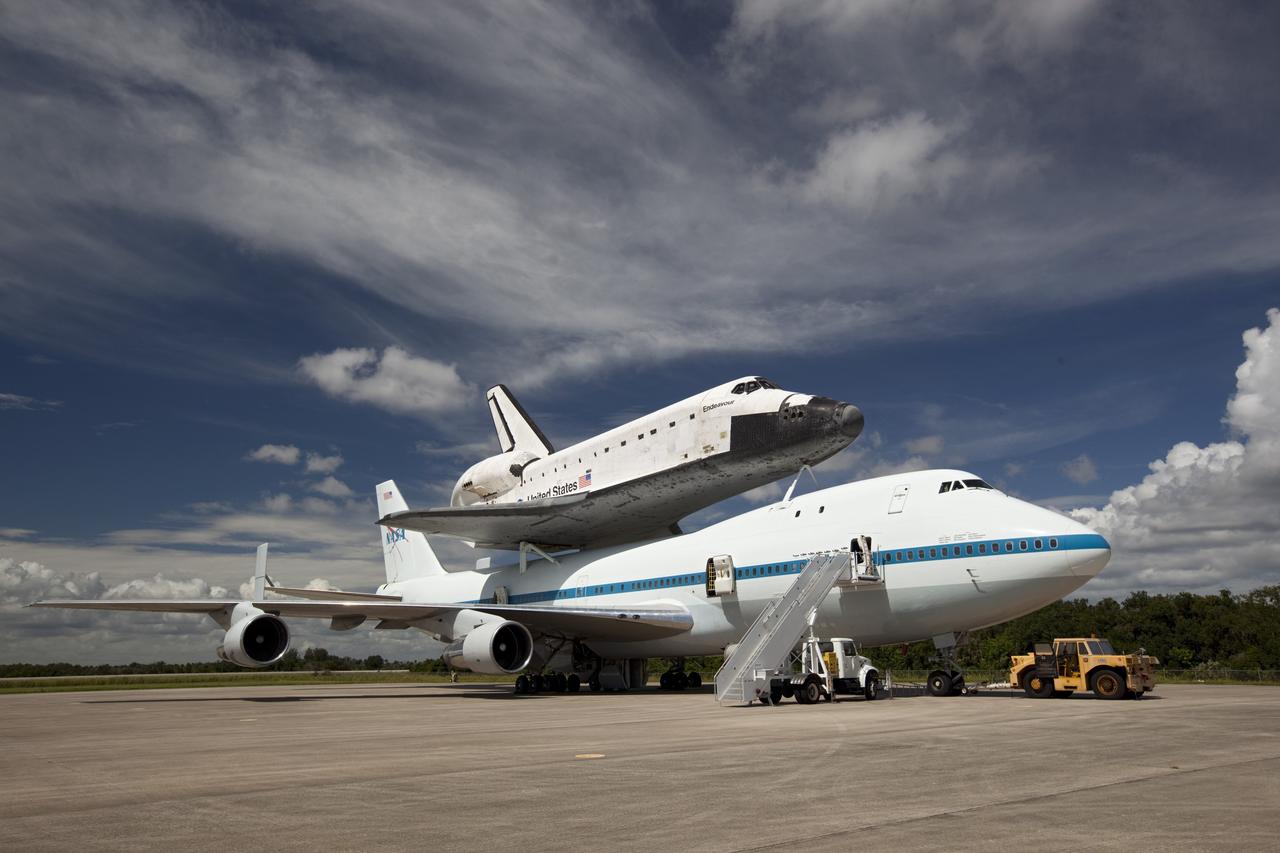
CAPE CANAVERAL, Fla. – At the Shuttle Landing Facility at NASA's Kennedy Space Center in Florida, the space shuttle Endeavour, mounted atop NASA's Shuttle Carrier Aircraft, or SCA, prepares for its ferry flight to California. The SCA, a modified 747 jetliner, will fly Endeavour to Los Angeles where it will be placed on public display at the California Science Center. This is the final ferry flight scheduled in the Space Shuttle Program era. For more information on the shuttles' transition and retirement, visit http://www.nasa.gov/transition. Photo credit: NASA/ Dimitri Gerondidakis
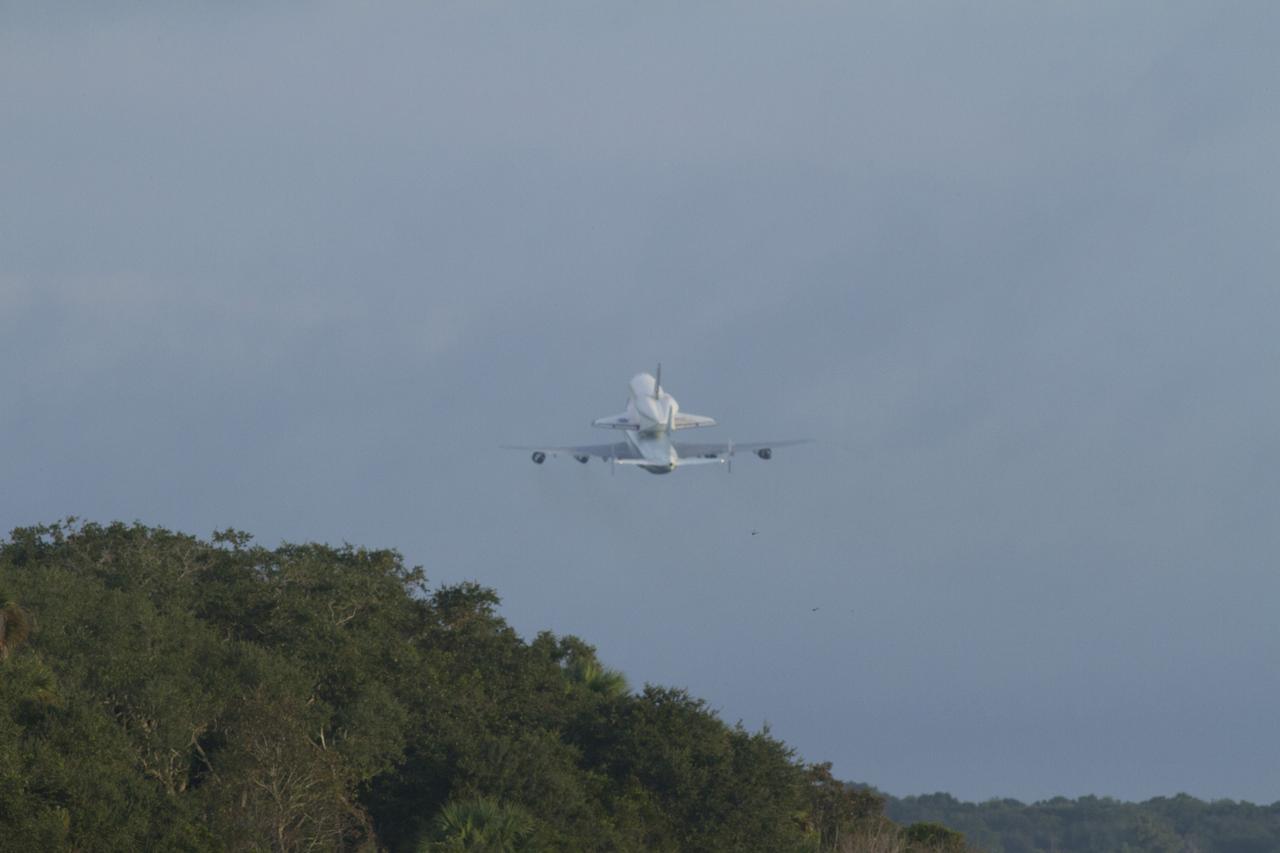
CAPE CANAVERAL, Fla. – Space shuttle Endeavour, mounted atop NASA's Shuttle Carrier Aircraft or SCA, flies over the Shuttle Landing Facility at NASA's Kennedy Space Center in Florida. The SCA, a modified 747 jetliner, will fly Endeavour to Los Angeles where it will be placed on public display at the California Science Center. This is the final ferry flight scheduled in the Space Shuttle Program era. For more information on the shuttles' transition and retirement, visit http://www.nasa.gov/transition. Photo credit: NASA/Rick Wetherington
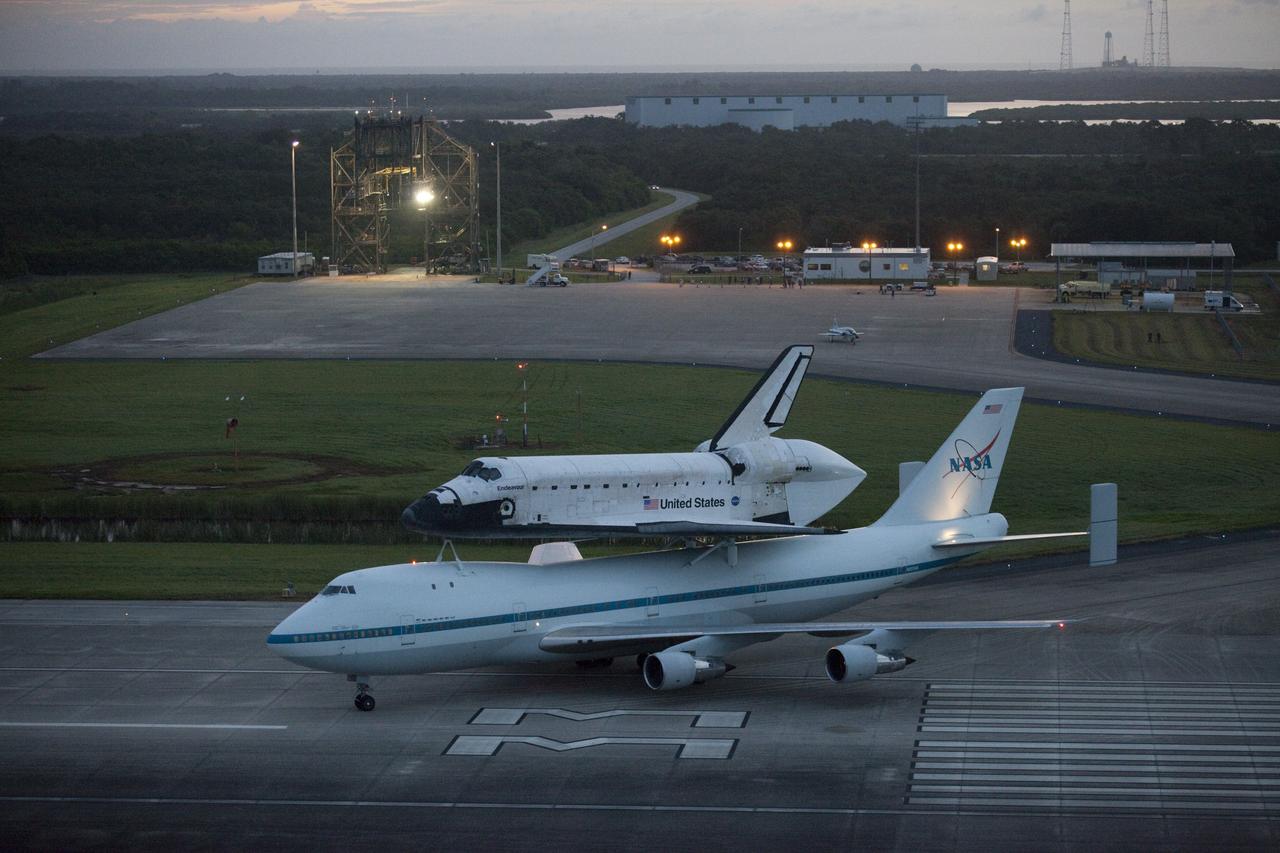
CAPE CANAVERAL, Fla. – At the Shuttle Landing Facility at NASA's Kennedy Space Center in Florida, NASA's Shuttle Carrier Aircraft, or SCA, with the space shuttle Endeavour mounted atop, taxis on to the runway for its ferry flight to California. The SCA, a modified 747 jetliner, will fly Endeavour to Los Angeles where it will be placed on public display at the California Science Center. This is the final ferry flight scheduled in the Space Shuttle Program era. For more information on the shuttles' transition and retirement, visit http://www.nasa.gov/transition. Photo credit: NASA/Kim Shiflett
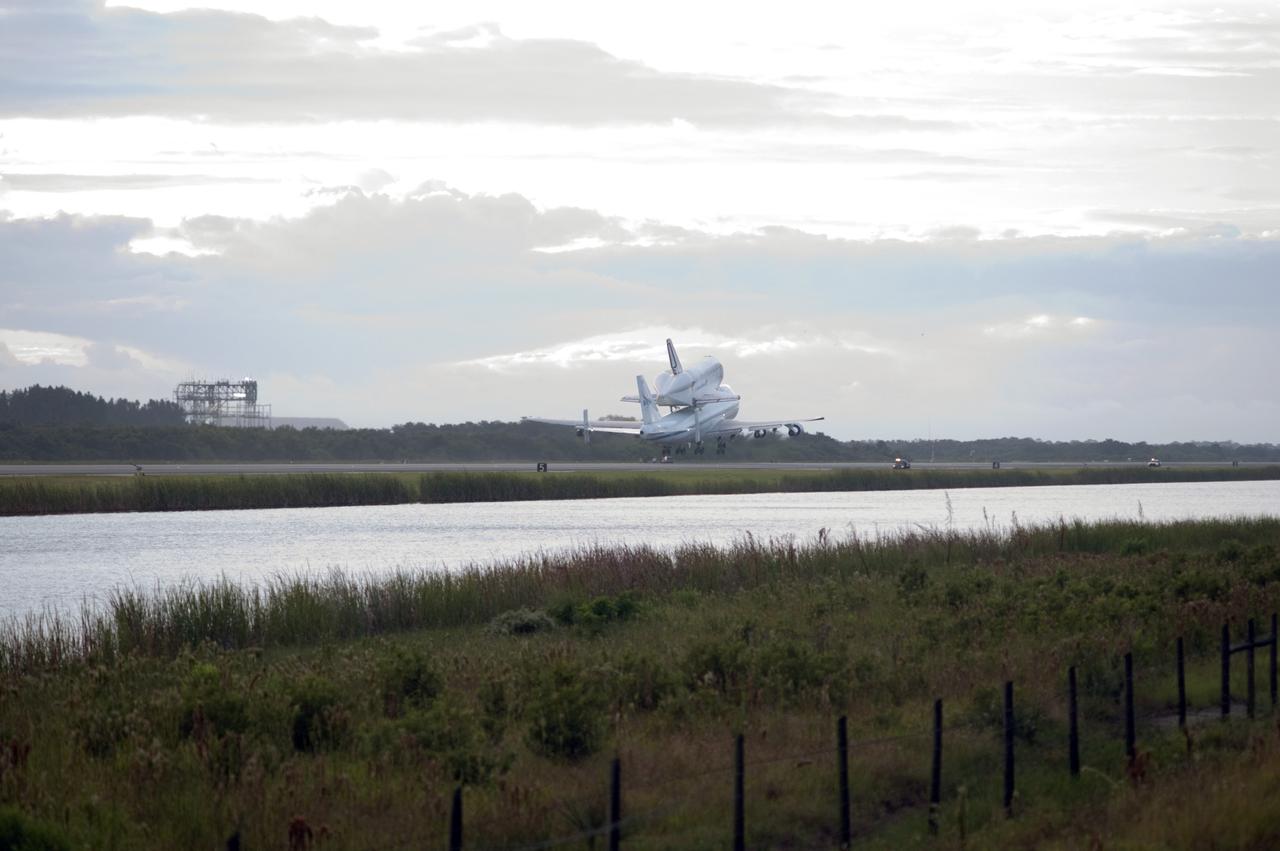
CAPE CANAVERAL, Fla. – Space shuttle Endeavour, mounted atop NASA's Shuttle Carrier Aircraft or SCA, takes off from the Shuttle Landing Facility at NASA's Kennedy Space Center in Florida. The SCA, a modified 747 jetliner, will fly Endeavour to Los Angeles where it will be placed on public display at the California Science Center. This is the final ferry flight scheduled in the Space Shuttle Program era. For more information on the shuttles' transition and retirement, visit http://www.nasa.gov/transition. Photo credit: NASA/Rick Wetherington
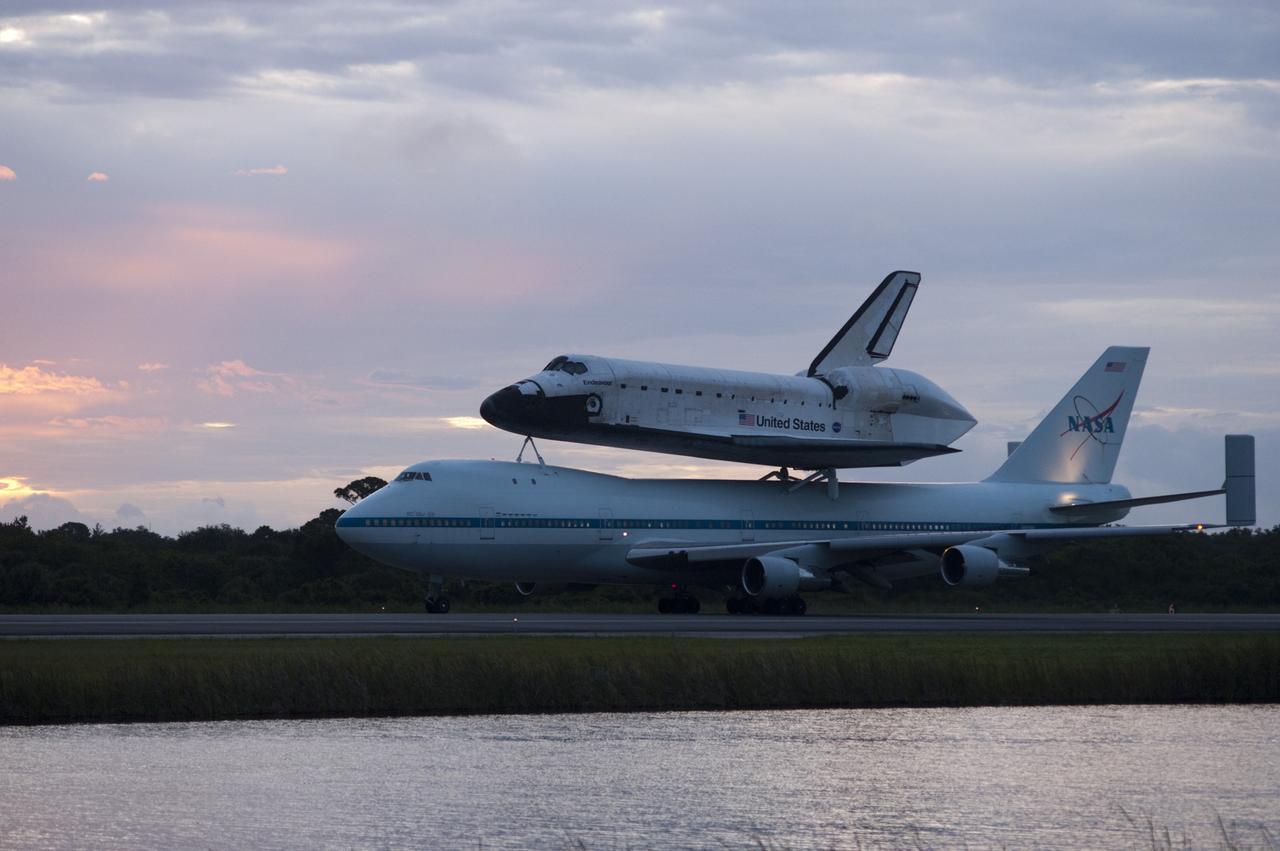
CAPE CANAVERAL, Fla. – Space shuttle Endeavour, mounted atop NASA's Shuttle Carrier Aircraft or SCA, taxis at the Shuttle Landing Facility at NASA's Kennedy Space Center in Florida. The SCA, a modified 747 jetliner, will fly Endeavour to Los Angeles where it will be placed on public display at the California Science Center. This is the final ferry flight scheduled in the Space Shuttle Program era. For more information on the shuttles' transition and retirement, visit http://www.nasa.gov/transition. Photo credit: NASA/Rick Wetherington
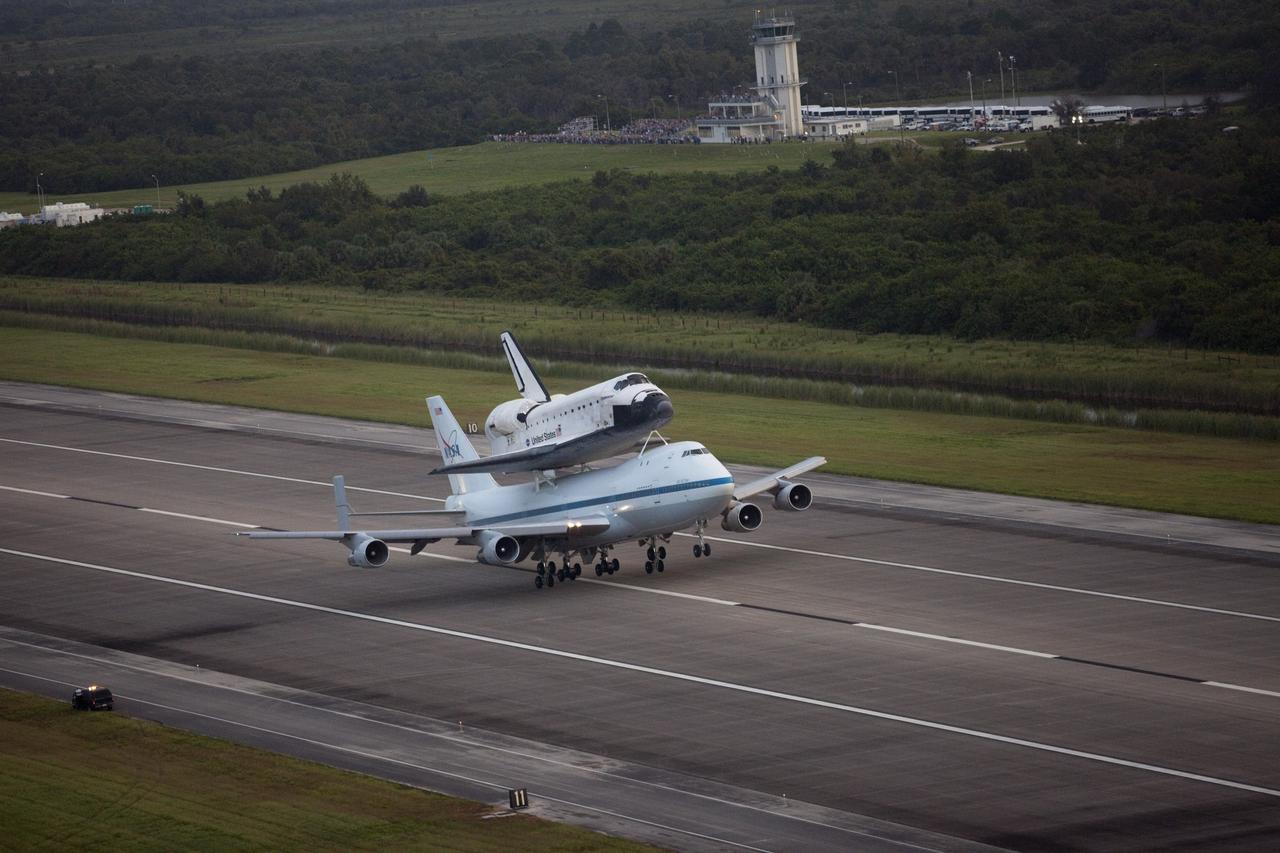
CAPE CANAVERAL, Fla. – At the Shuttle Landing Facility at NASA's Kennedy Space Center in Florida, NASA's Shuttle Carrier Aircraft, or SCA, with the space shuttle Endeavour mounted atop, takes off for its ferry flight to California. The SCA, a modified 747 jetliner, will fly Endeavour to Los Angeles where it will be placed on public display at the California Science Center. This is the final ferry flight scheduled in the Space Shuttle Program era. For more information on the shuttles' transition and retirement, visit http://www.nasa.gov/transition. Photo credit: NASA/Kim Shiflett
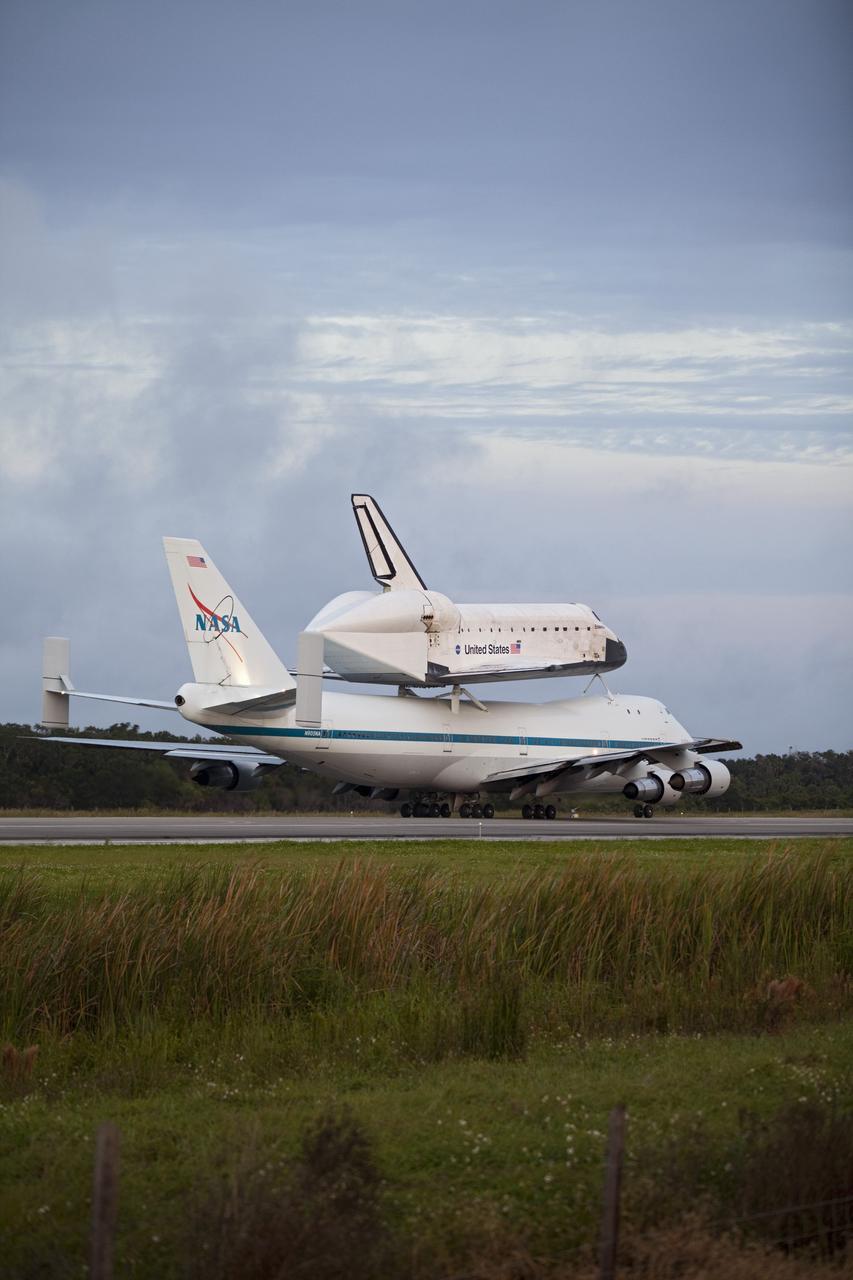
CAPE CANAVERAL, Fla. – At the Shuttle Landing Facility at NASA's Kennedy Space Center in Florida, NASA's Shuttle Carrier Aircraft, or SCA, with the space shuttle Endeavour mounted atop, taxis on the runway for its ferry flight to California. The SCA, a modified 747 jetliner, will fly Endeavour to Los Angeles where it will be placed on public display at the California Science Center. This is the final ferry flight scheduled in the Space Shuttle Program era. For more information on the shuttles' transition and retirement, visit http://www.nasa.gov/transition. Photo credit: NASA/Frankie Martin
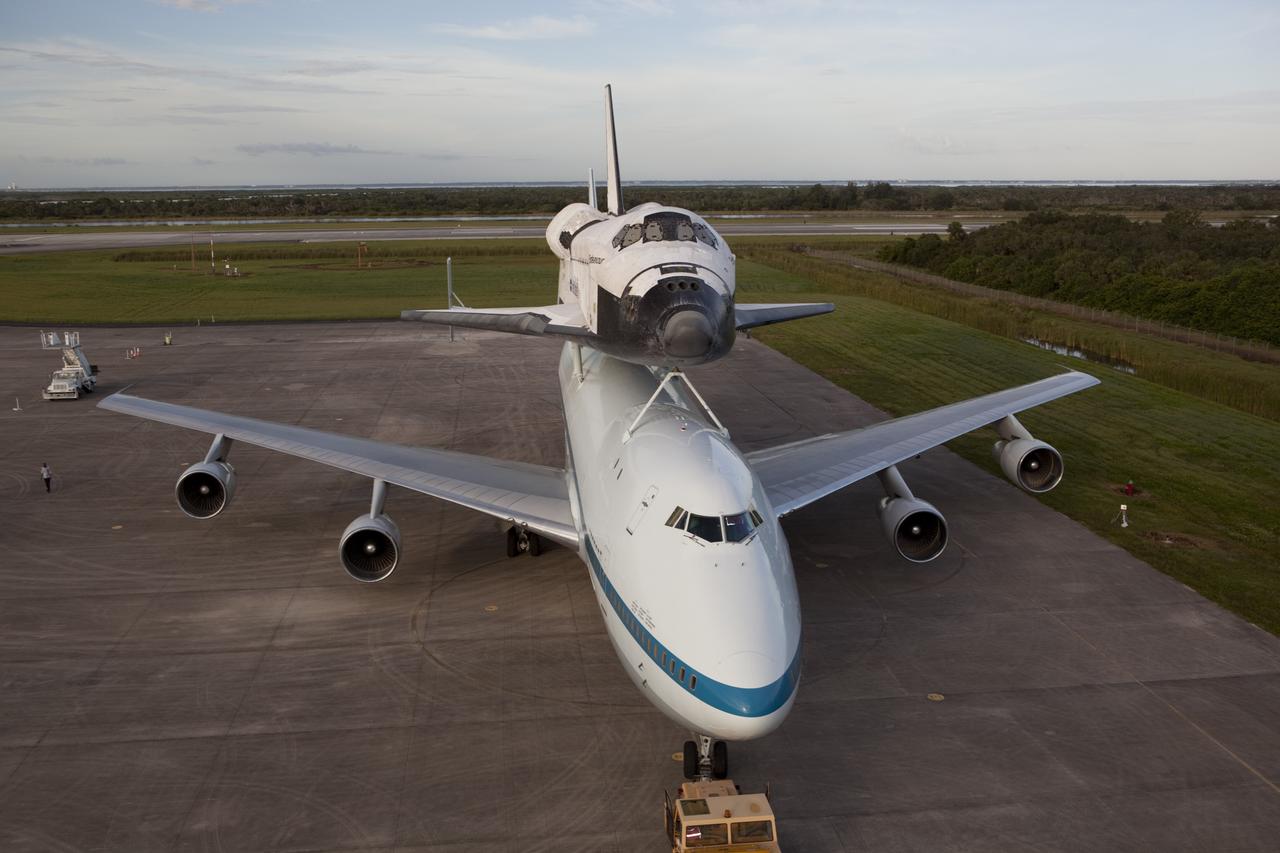
CAPE CANAVERAL, Fla. – Space shuttle Endeavour, secured atop NASA's Shuttle Carrier Aircraft, or SCA, backs away from the mate-demate device at the Shuttle Landing Facility at NASA's Kennedy Space Center in Florida. The SCA, a modified 747 jetliner, will fly Endeavour to Los Angeles where it will be placed on public display at the California Science Center. This is the final ferry flight scheduled in the Space Shuttle Program era. For more information on the shuttles' transition and retirement, visit http://www.nasa.gov/transition. Photo credit: NASA/Dimitri Gerondidakis
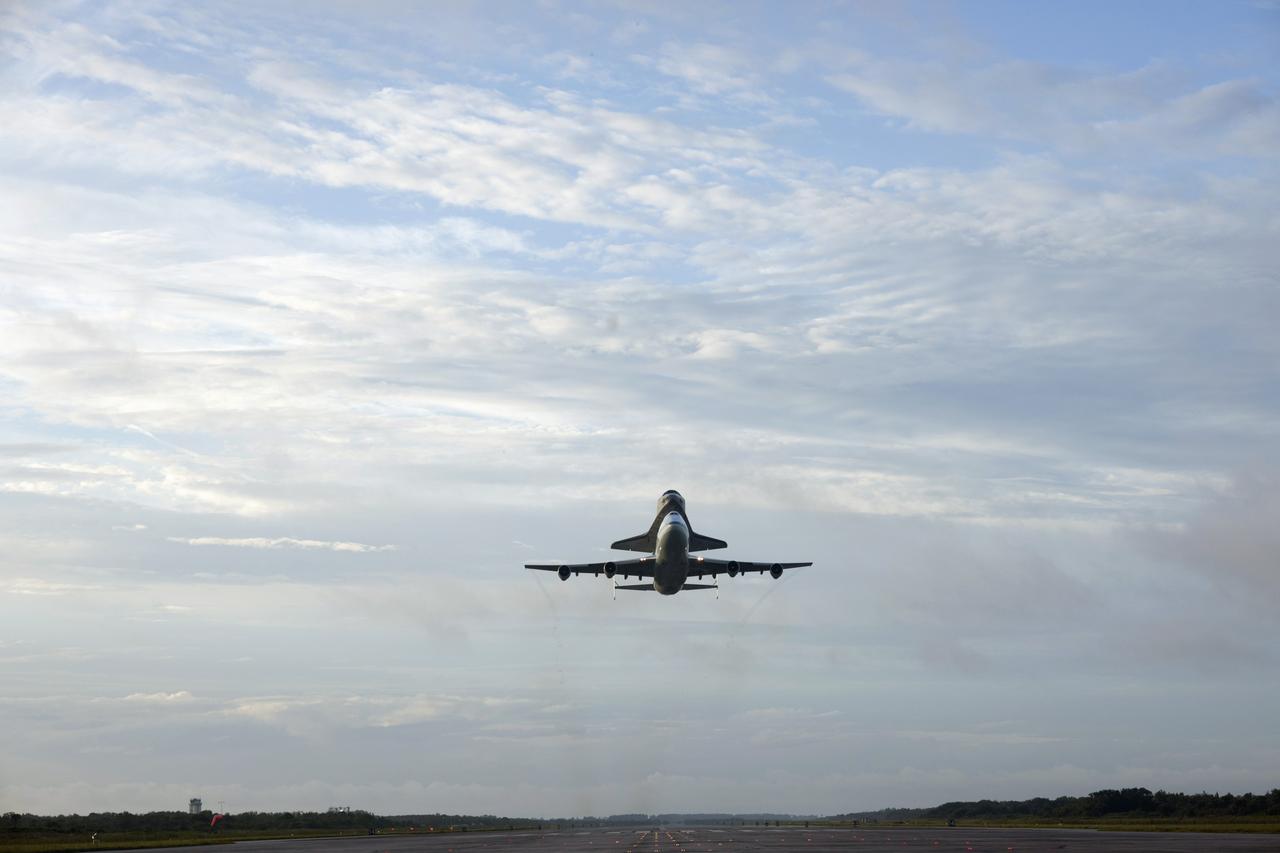
CAPE CANAVERAL, Fla. – Space shuttle Endeavour, mounted atop NASA's Shuttle Carrier Aircraft or SCA, takes off from the Shuttle Landing Facility at NASA's Kennedy Space Center in Florida. The SCA, a modified 747 jetliner, will fly Endeavour to Los Angeles where it will be placed on public display at the California Science Center. This is the final ferry flight scheduled in the Space Shuttle Program era. For more information on the shuttles' transition and retirement, visit http://www.nasa.gov/transition. Photo credit: NASA/Tony Gray and Robert Murray
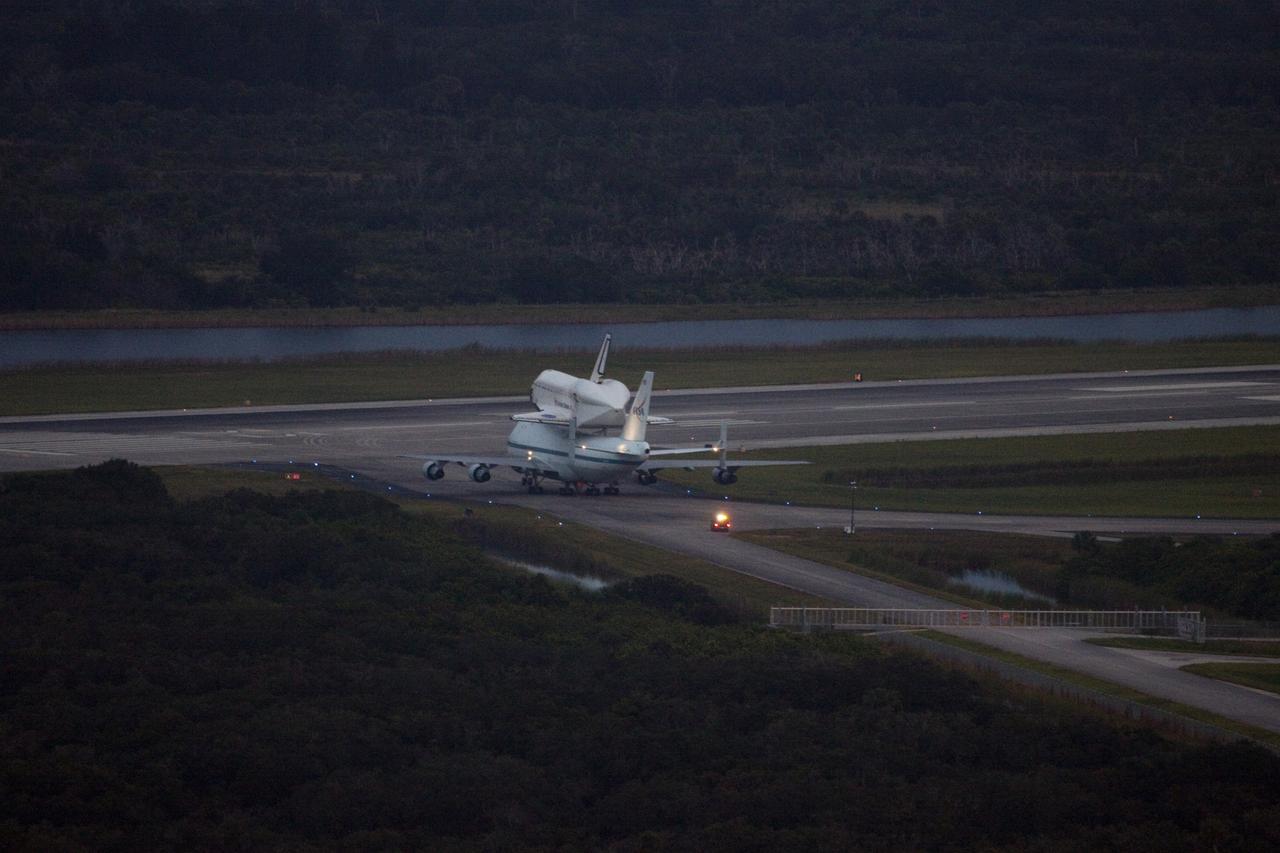
CAPE CANAVERAL, Fla. – At the Shuttle Landing Facility at NASA's Kennedy Space Center in Florida, NASA's Shuttle Carrier Aircraft, or SCA, with the space shuttle Endeavour mounted atop, taxis to the runway for its ferry flight to California. The SCA, a modified 747 jetliner, will fly Endeavour to Los Angeles where it will be placed on public display at the California Science Center. This is the final ferry flight scheduled in the Space Shuttle Program era. For more information on the shuttles' transition and retirement, visit http://www.nasa.gov/transition. Photo credit: NASA/Jim Grossmann
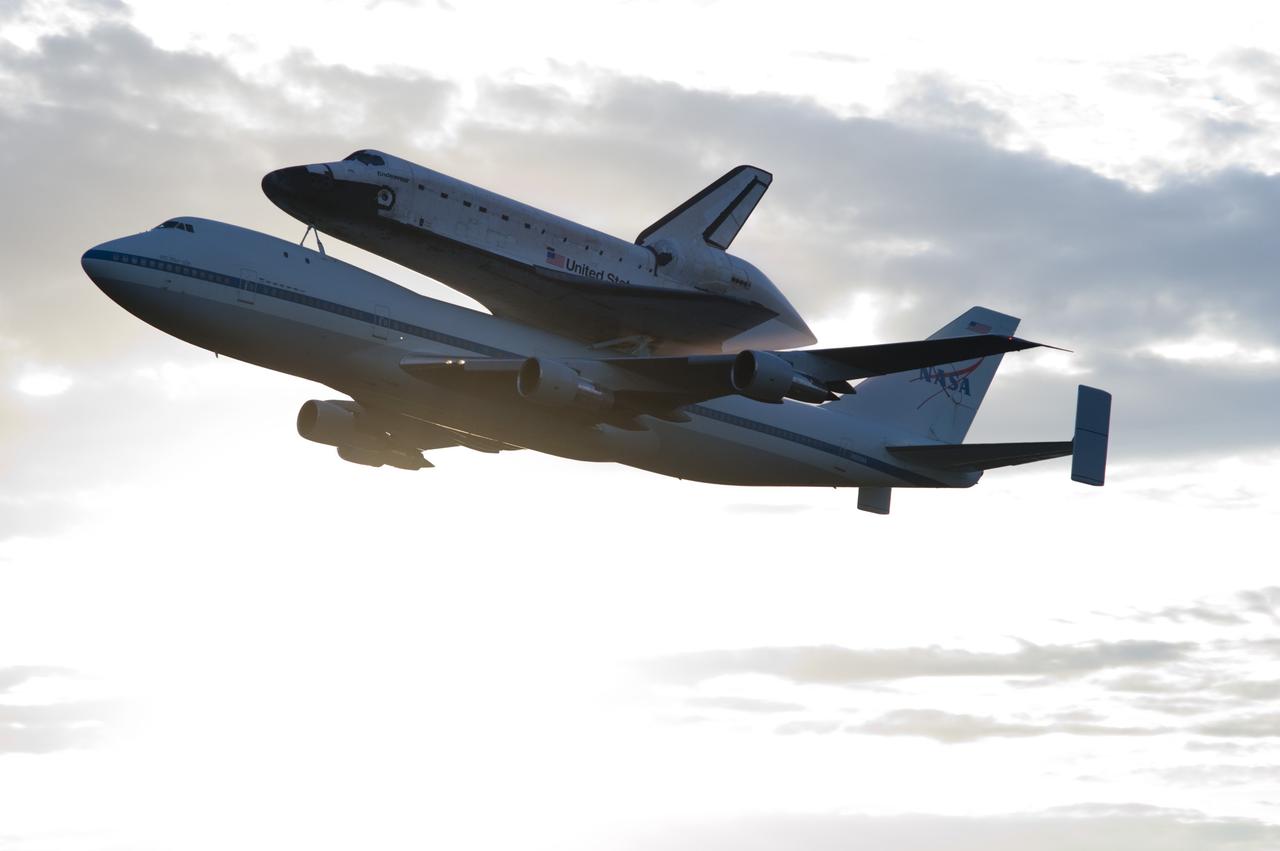
CAPE CANAVERAL, Fla. – Space shuttle Endeavour, mounted atop NASA's Shuttle Carrier Aircraft or SCA, takes off from the Shuttle Landing Facility at NASA's Kennedy Space Center in Florida. The SCA, a modified 747 jetliner, will fly Endeavour to Los Angeles where it will be placed on public display at the California Science Center. This is the final ferry flight scheduled in the Space Shuttle Program era. For more information on the shuttles' transition and retirement, visit http://www.nasa.gov/transition. Photo credit: NASA/Rick Wetherington
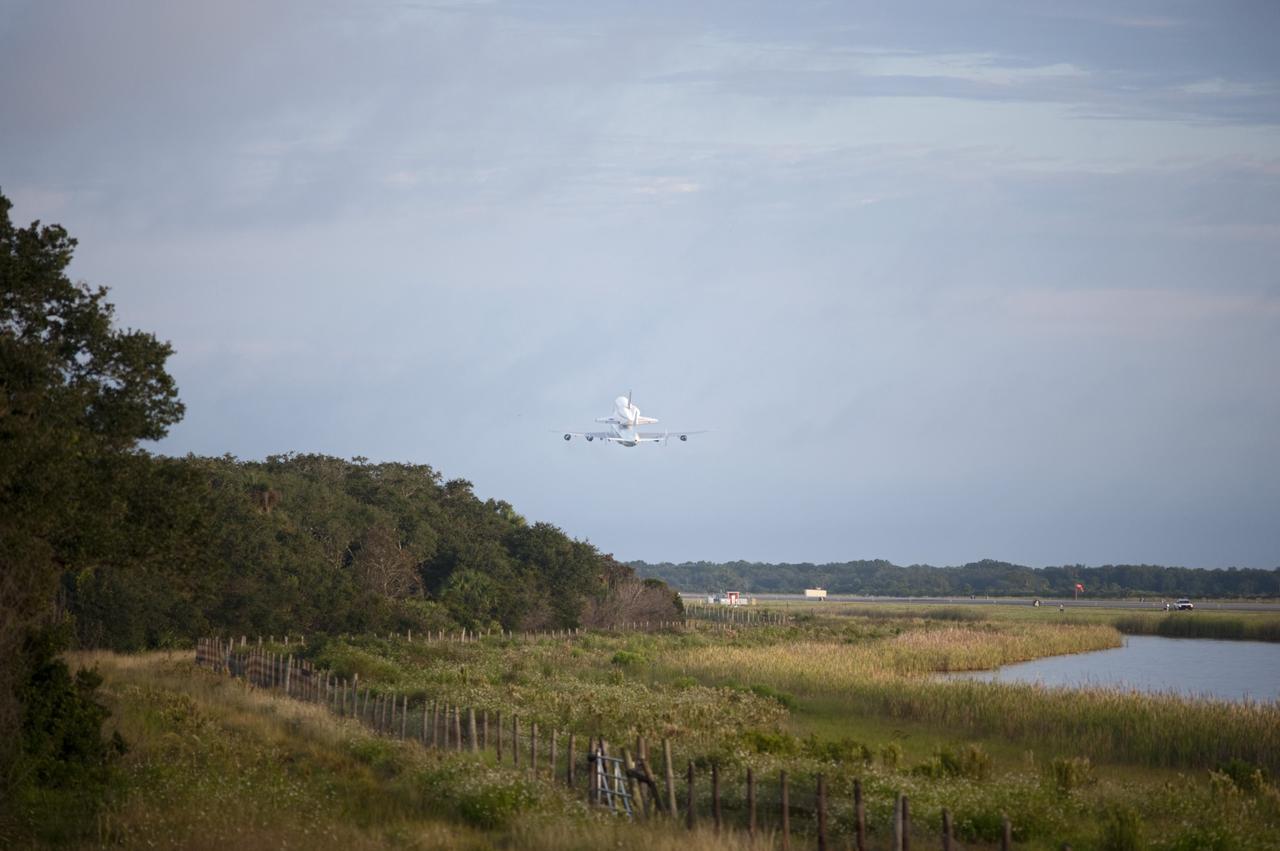
CAPE CANAVERAL, Fla. – Space shuttle Endeavour, mounted atop NASA's Shuttle Carrier Aircraft or SCA, takes off from the Shuttle Landing Facility at NASA's Kennedy Space Center in Florida. The SCA, a modified 747 jetliner, will fly Endeavour to Los Angeles where it will be placed on public display at the California Science Center. This is the final ferry flight scheduled in the Space Shuttle Program era. For more information on the shuttles' transition and retirement, visit http://www.nasa.gov/transition. Photo credit: NASA/Rick Wetherington
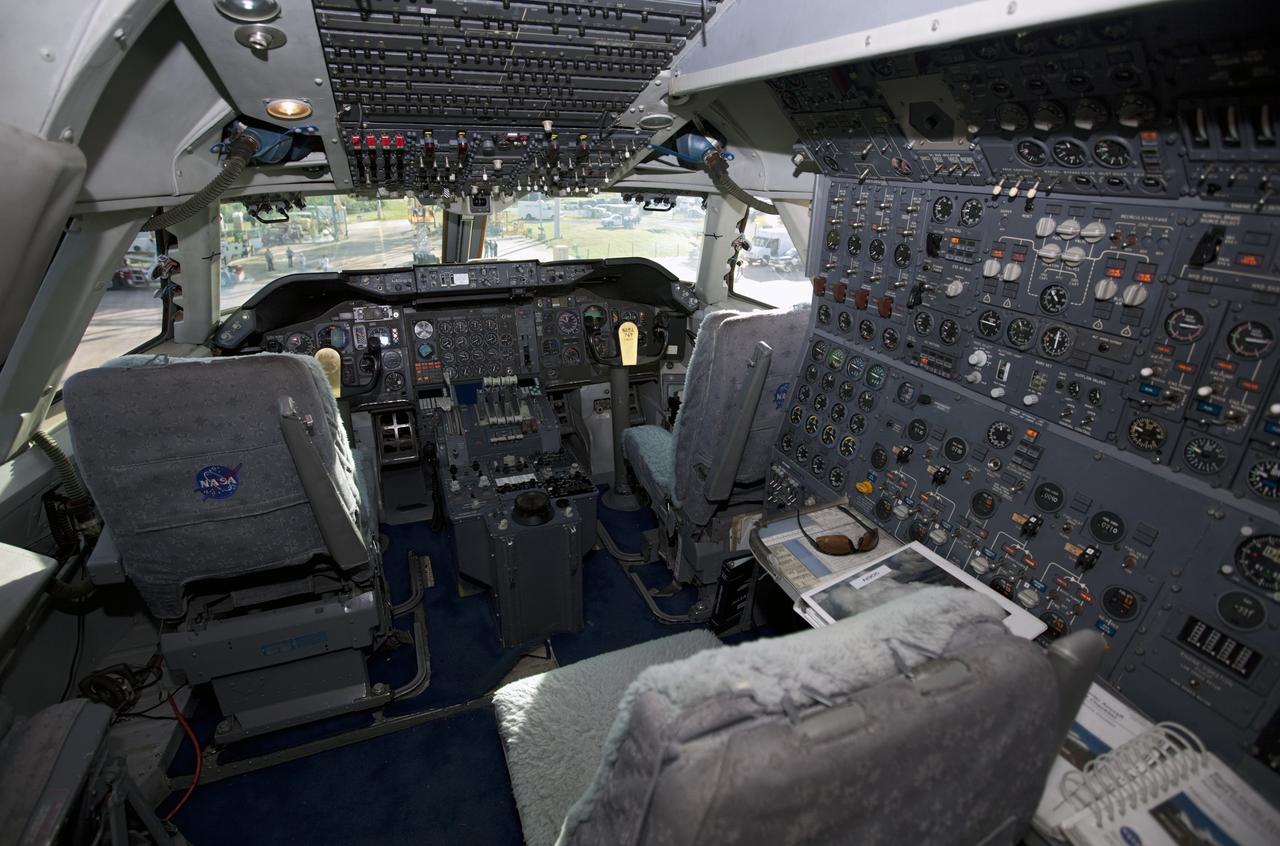
CAPE CANAVERAL, Fla. – An overview of the cockpit of NASA's Shuttle Carrier Aircraft, or SCA, is captured for posterity at the Shuttle Landing Facility at NASA's Kennedy Space Center in Florida before the aircraft is decommissioned. The SCA, a modified 747 jetliner, will fly space shuttle Endeavour to Los Angeles where it will be placed on public display at the California Science Center. This is the final ferry flight scheduled in the Space Shuttle Program era. For more information on the shuttles' transition and retirement, visit http://www.nasa.gov/transition. Photo credit: NASA/Dimitri Gerondidakis
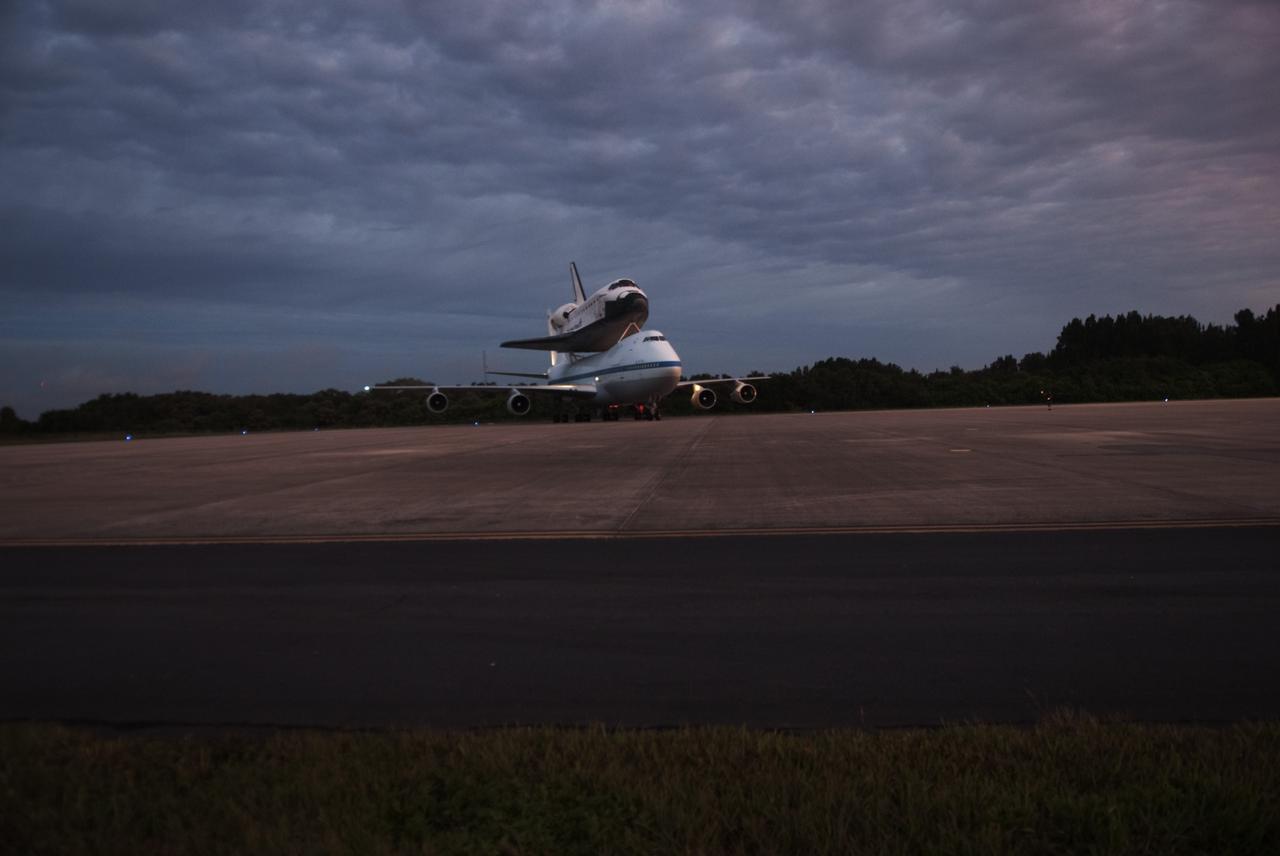
CAPE CANAVERAL, Fla. – At the Shuttle Landing Facility at NASA's Kennedy Space Center in Florida, NASA's Shuttle Carrier Aircraft, or SCA, with the space shuttle Endeavour mounted atop, taxis to the runway for its ferry flight to California. The SCA, a modified 747 jetliner, will fly Endeavour to Los Angeles where it will be placed on public display at the California Science Center. This is the final ferry flight scheduled in the Space Shuttle Program era. For more information on the shuttles' transition and retirement, visit http://www.nasa.gov/transition. Photo credit: NASA/George Sampson
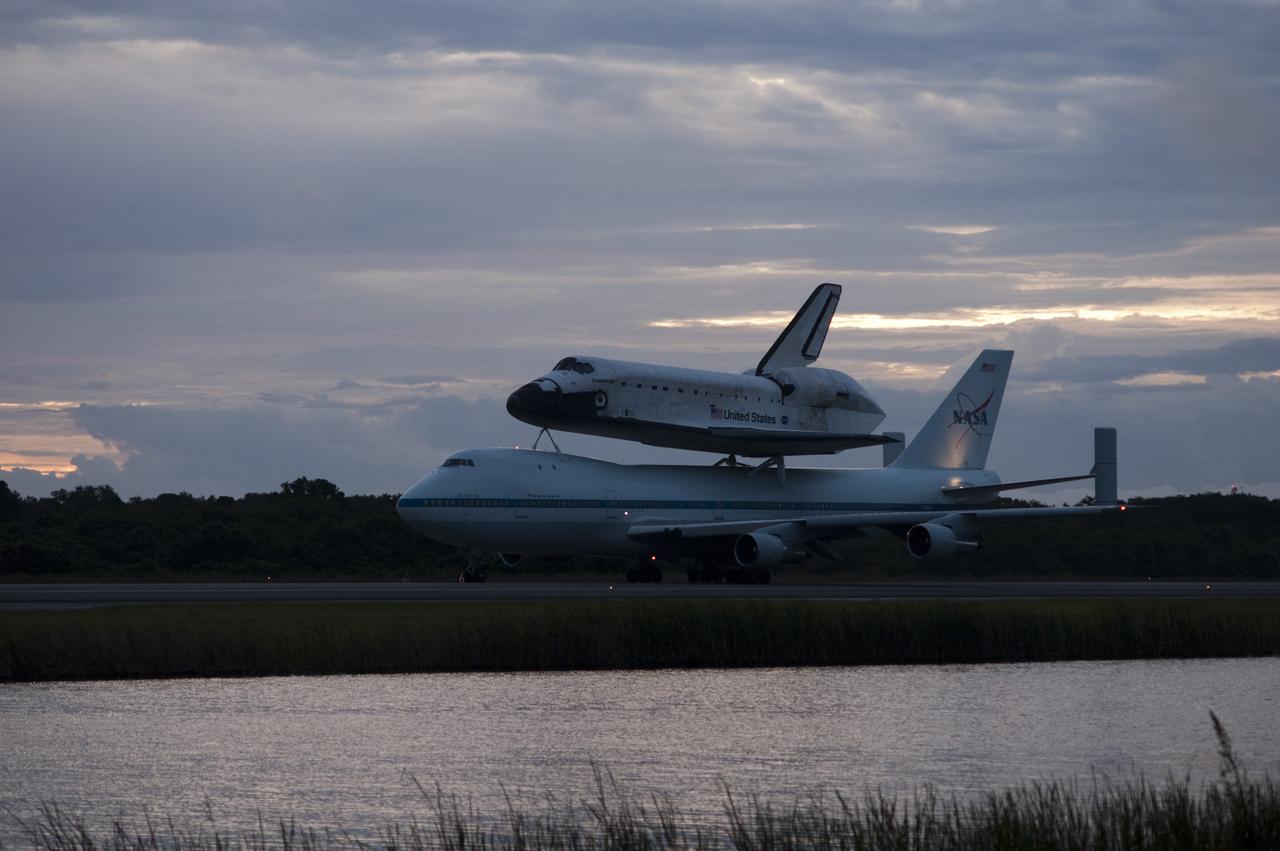
CAPE CANAVERAL, Fla. – Space shuttle Endeavour, mounted atop NASA's Shuttle Carrier Aircraft or SCA, taxis at the Shuttle Landing Facility at NASA's Kennedy Space Center in Florida. The SCA, a modified 747 jetliner, will fly Endeavour to Los Angeles where it will be placed on public display at the California Science Center. This is the final ferry flight scheduled in the Space Shuttle Program era. For more information on the shuttles' transition and retirement, visit http://www.nasa.gov/transition. Photo credit: NASA/Rick Wetherington
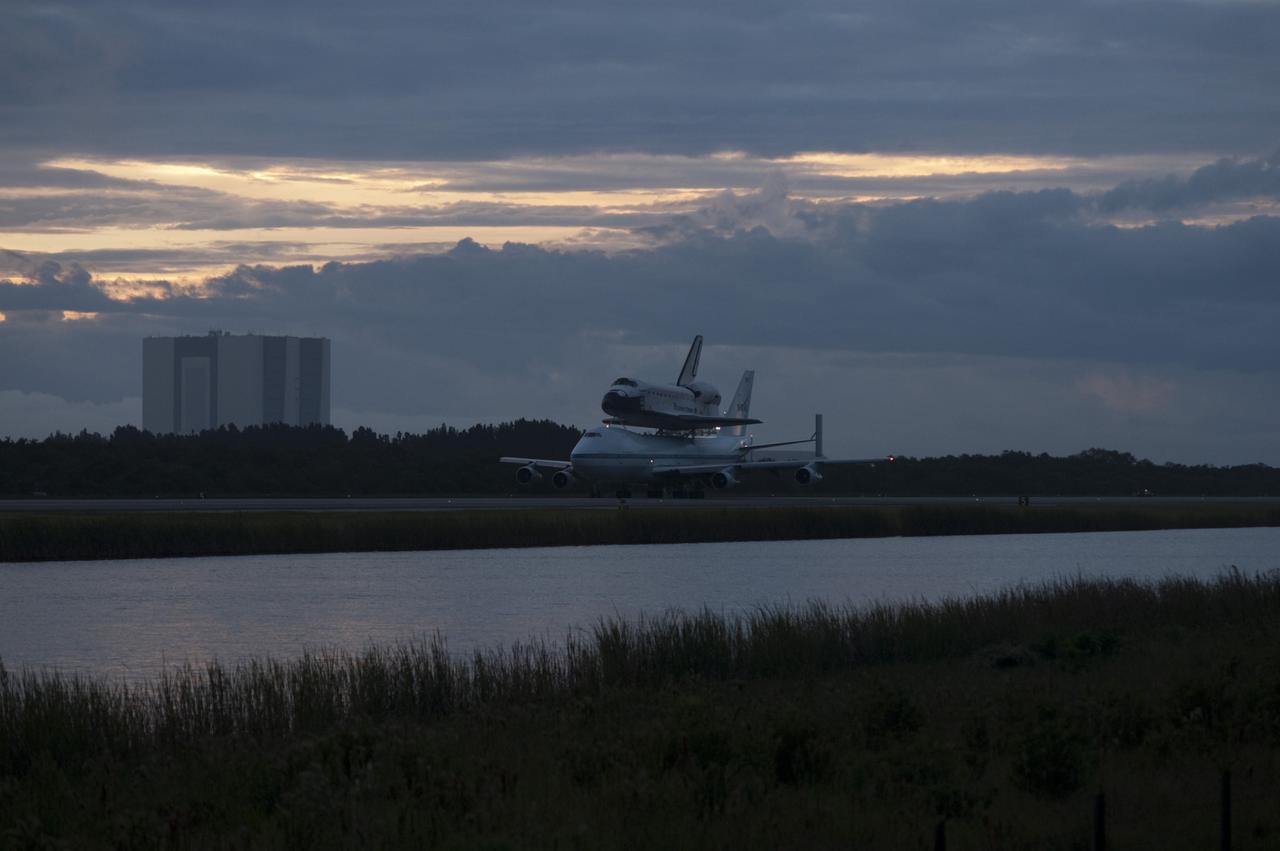
CAPE CANAVERAL, Fla. – Space shuttle Endeavour, mounted atop NASA's Shuttle Carrier Aircraft or SCA, taxis at the Shuttle Landing Facility at NASA's Kennedy Space Center in Florida. The SCA, a modified 747 jetliner, will fly Endeavour to Los Angeles where it will be placed on public display at the California Science Center. This is the final ferry flight scheduled in the Space Shuttle Program era. For more information on the shuttles' transition and retirement, visit http://www.nasa.gov/transition. Photo credit: NASA/Rick Wetherington
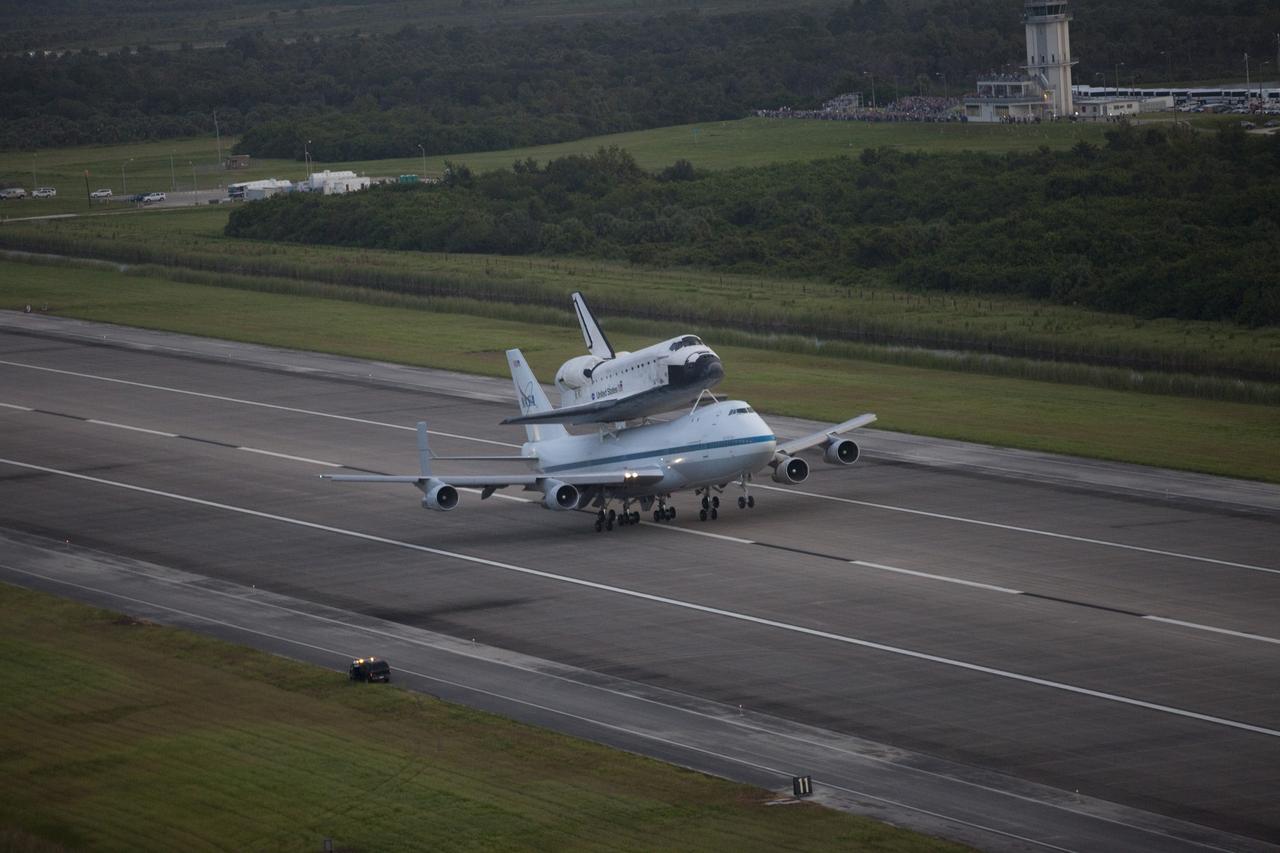
CAPE CANAVERAL, Fla. – At the Shuttle Landing Facility at NASA's Kennedy Space Center in Florida, NASA's Shuttle Carrier Aircraft, or SCA, with the space shuttle Endeavour mounted atop, takes off for its ferry flight to California. The SCA, a modified 747 jetliner, will fly Endeavour to Los Angeles where it will be placed on public display at the California Science Center. This is the final ferry flight scheduled in the Space Shuttle Program era. For more information on the shuttles' transition and retirement, visit http://www.nasa.gov/transition. Photo credit: NASA/Kim Shiflett
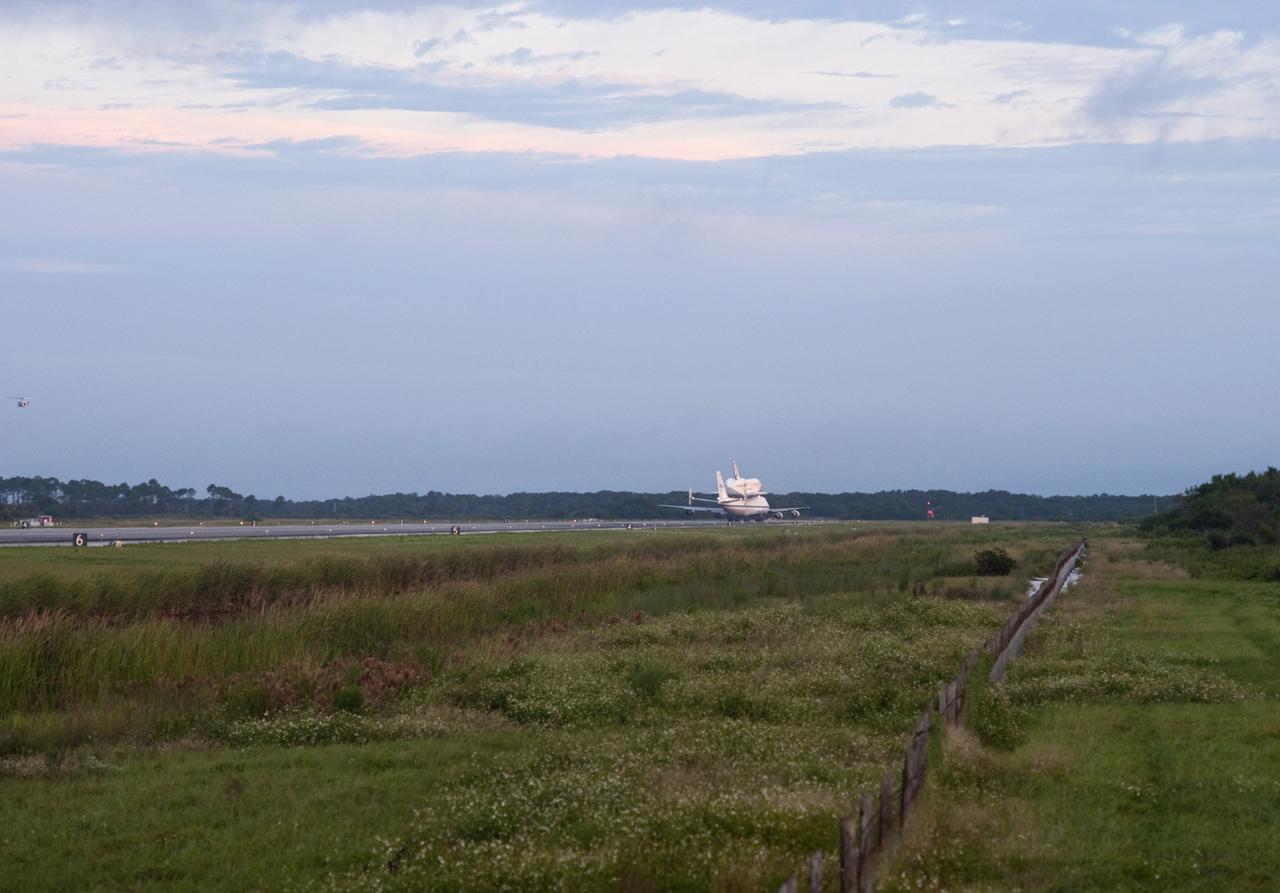
CAPE CANAVERAL, Fla. – Space shuttle Endeavour, mounted atop NASA's Shuttle Carrier Aircraft or SCA, taxis down the runway at the Shuttle Landing Facility at NASA's Kennedy Space Center in Florida. The SCA, a modified 747 jetliner, will fly Endeavour to Los Angeles where it will be placed on public display at the California Science Center. This is the final ferry flight scheduled in the Space Shuttle Program era. For more information on the shuttles' transition and retirement, visit http://www.nasa.gov/transition. Photo credit: NASA/Rusty Backer
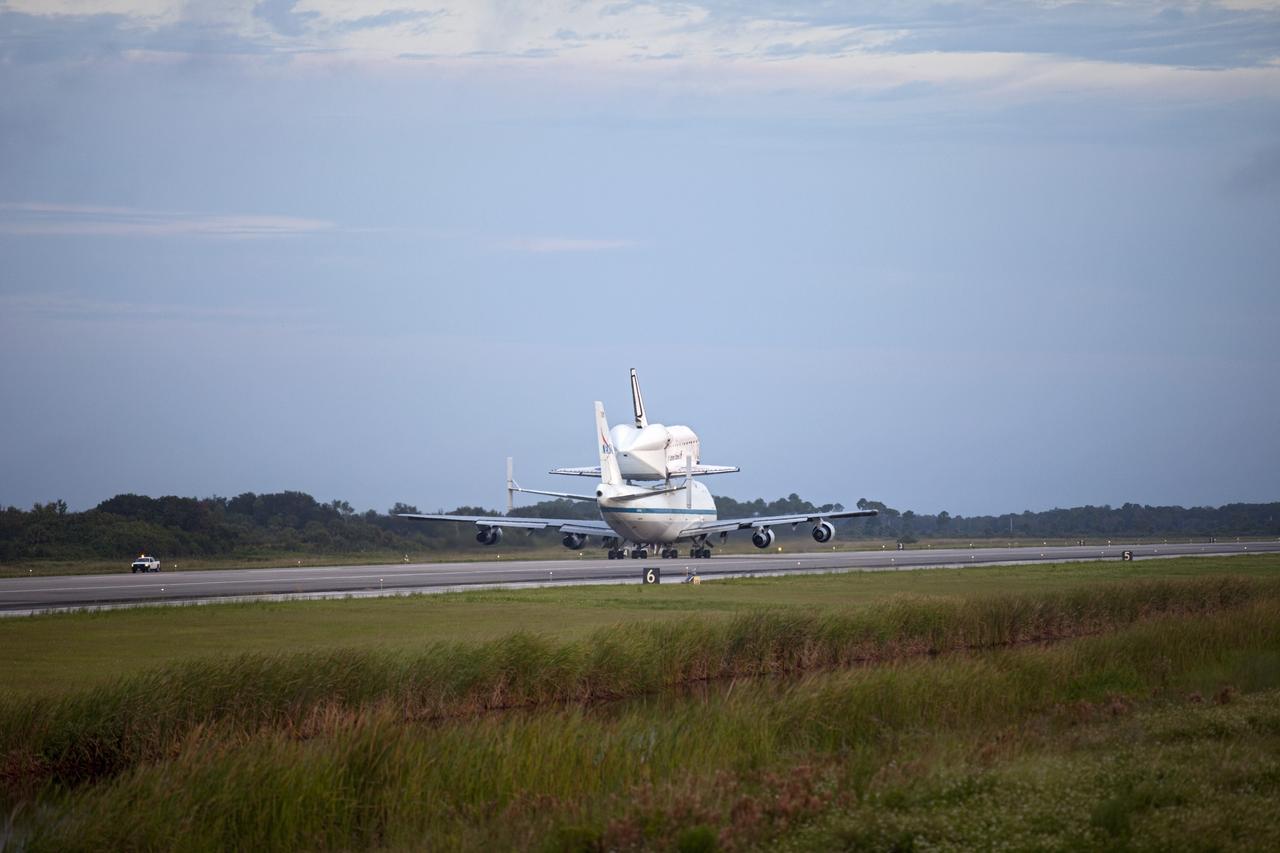
CAPE CANAVERAL, Fla. – At the Shuttle Landing Facility at NASA's Kennedy Space Center in Florida, NASA's Shuttle Carrier Aircraft, or SCA, with the space shuttle Endeavour mounted atop, taxis on the runway for its ferry flight to California. The SCA, a modified 747 jetliner, will fly Endeavour to Los Angeles where it will be placed on public display at the California Science Center. This is the final ferry flight scheduled in the Space Shuttle Program era. For more information on the shuttles' transition and retirement, visit http://www.nasa.gov/transition. Photo credit: NASA/Frankie Martin
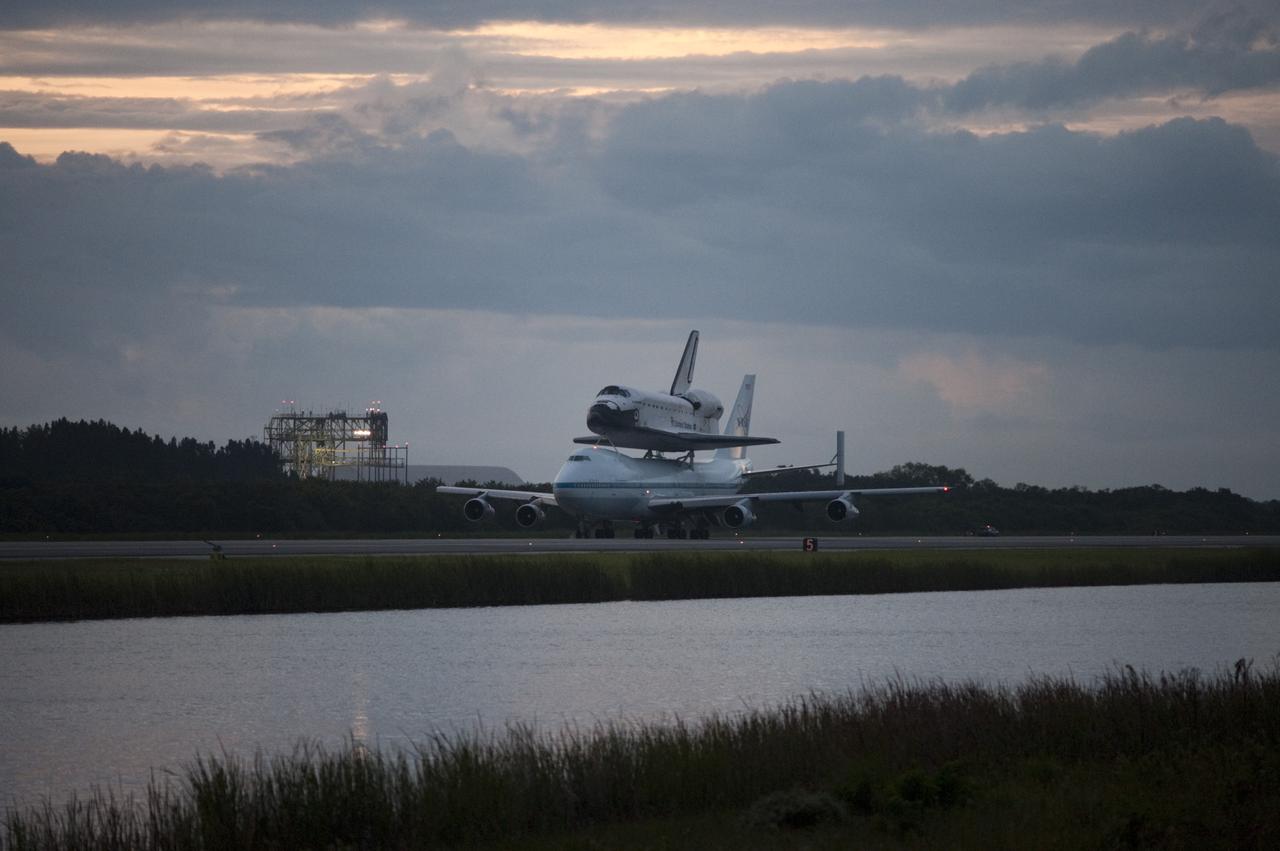
CAPE CANAVERAL, Fla. – Space shuttle Endeavour, mounted atop NASA's Shuttle Carrier Aircraft or SCA, taxis at the Shuttle Landing Facility at NASA's Kennedy Space Center in Florida. The SCA, a modified 747 jetliner, will fly Endeavour to Los Angeles where it will be placed on public display at the California Science Center. This is the final ferry flight scheduled in the Space Shuttle Program era. For more information on the shuttles' transition and retirement, visit http://www.nasa.gov/transition. Photo credit: NASA/Rick Wetherington
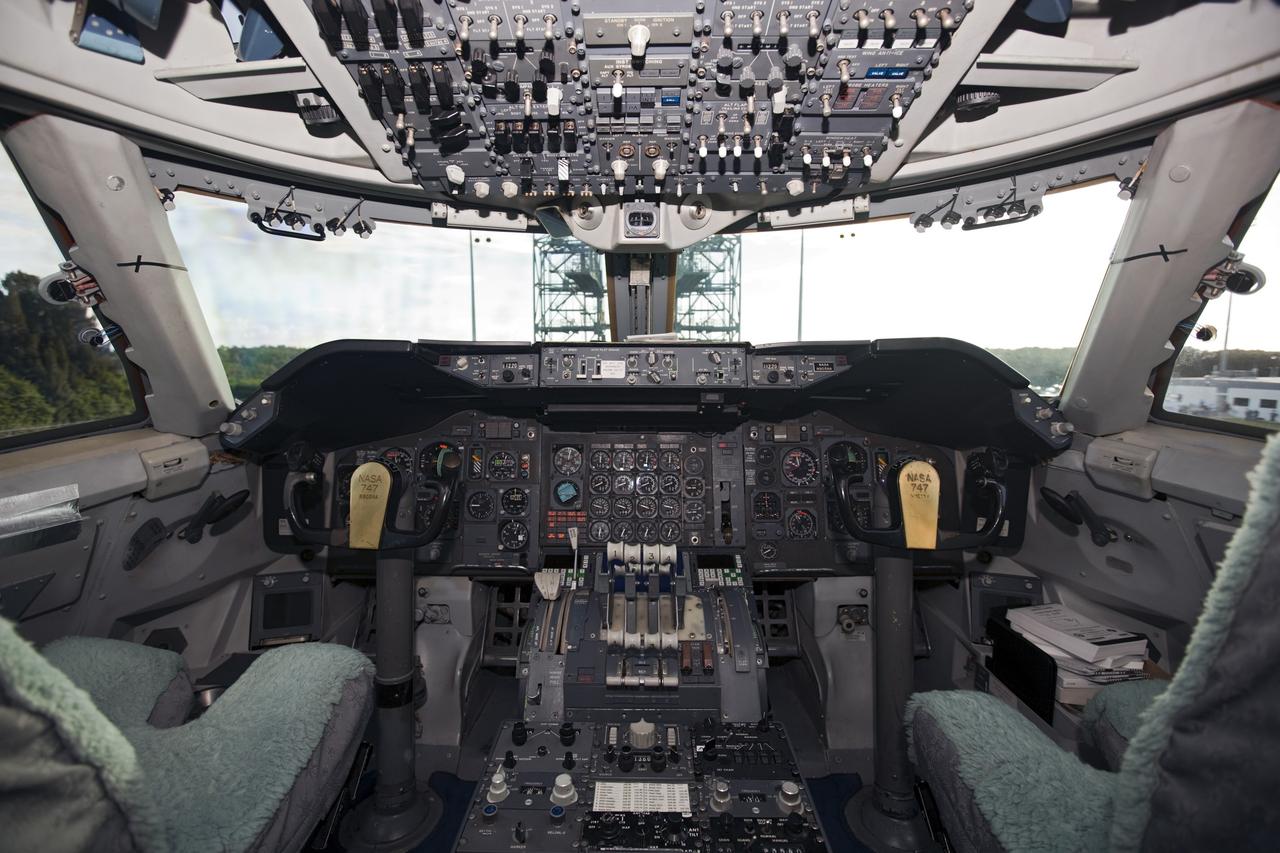
CAPE CANAVERAL, Fla. – An overview of the cockpit of NASA's Shuttle Carrier Aircraft, or SCA, is captured for posterity at the Shuttle Landing Facility at NASA's Kennedy Space Center in Florida before the aircraft is decommissioned. The SCA, a modified 747 jetliner, will fly space shuttle Endeavour to Los Angeles where it will be placed on public display at the California Science Center. This is the final ferry flight scheduled in the Space Shuttle Program era. For more information on the shuttles' transition and retirement, visit http://www.nasa.gov/transition. Photo credit: NASA/Dimitri Gerondidakis
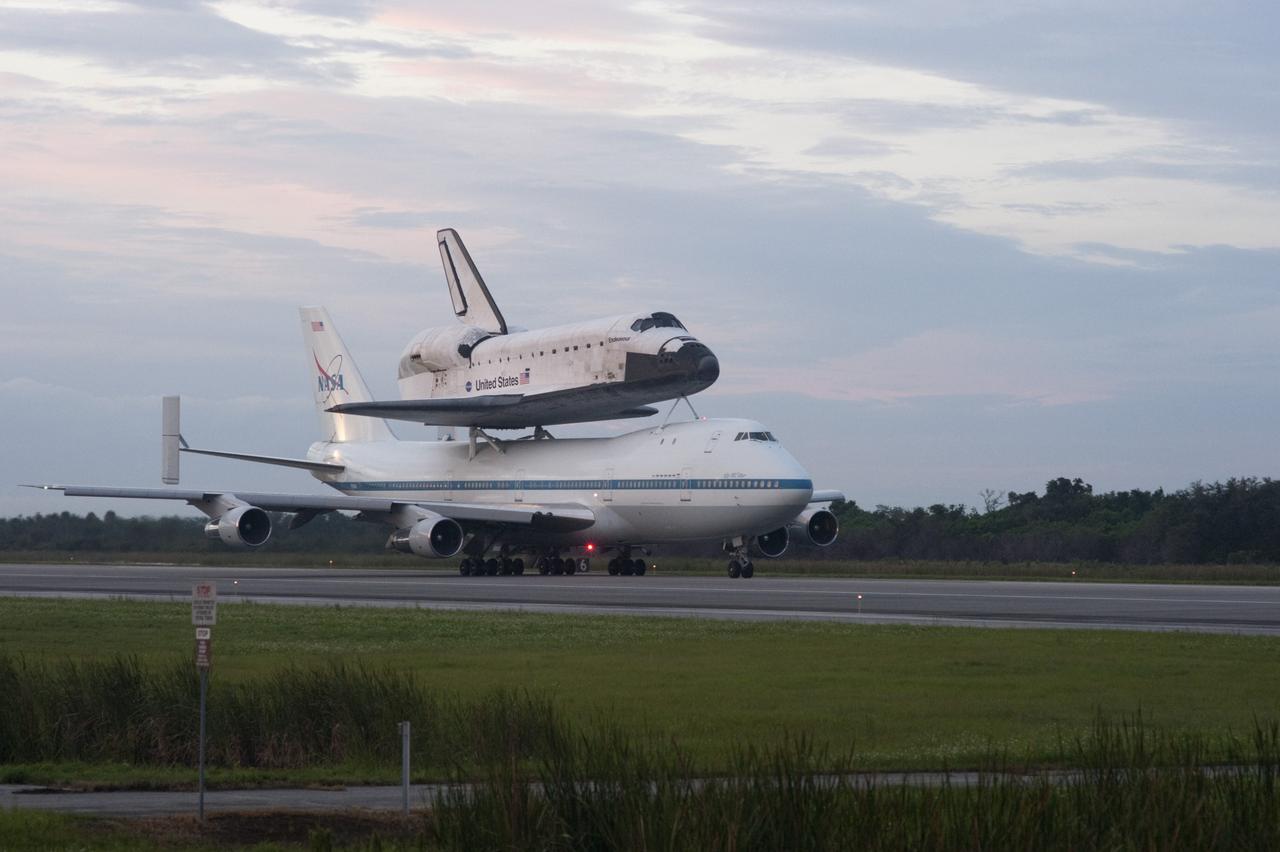
CAPE CANAVERAL, Fla. – Space shuttle Endeavour, mounted atop NASA's Shuttle Carrier Aircraft or SCA, taxis down the runway at the Shuttle Landing Facility at NASA's Kennedy Space Center in Florida. The SCA, a modified 747 jetliner, will fly Endeavour to Los Angeles where it will be placed on public display at the California Science Center. This is the final ferry flight scheduled in the Space Shuttle Program era. For more information on the shuttles' transition and retirement, visit http://www.nasa.gov/transition. Photo credit: NASA/Rusty Backer
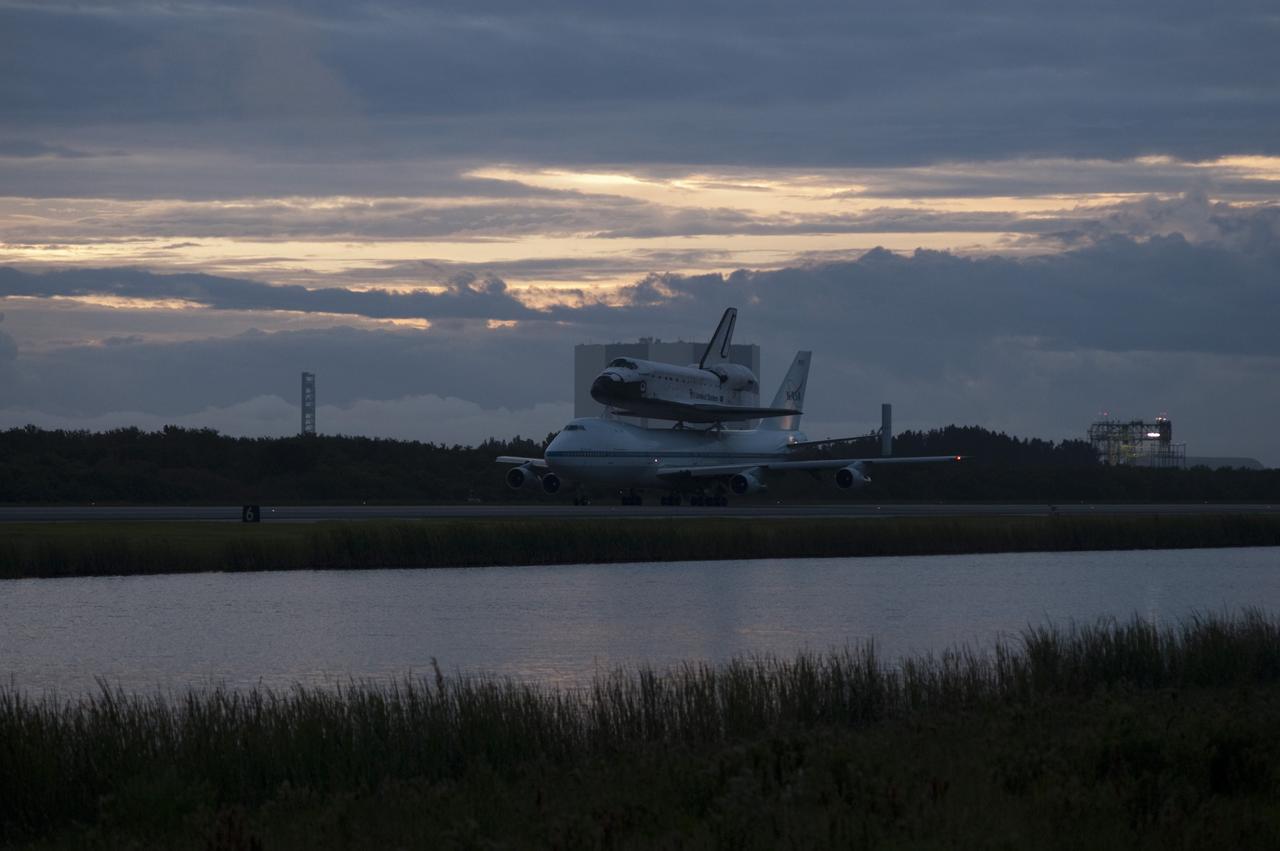
CAPE CANAVERAL, Fla. – Space shuttle Endeavour, mounted atop NASA's Shuttle Carrier Aircraft or SCA, taxis at the Shuttle Landing Facility at NASA's Kennedy Space Center in Florida. The SCA, a modified 747 jetliner, will fly Endeavour to Los Angeles where it will be placed on public display at the California Science Center. This is the final ferry flight scheduled in the Space Shuttle Program era. For more information on the shuttles' transition and retirement, visit http://www.nasa.gov/transition. Photo credit: NASA/Rick Wetherington
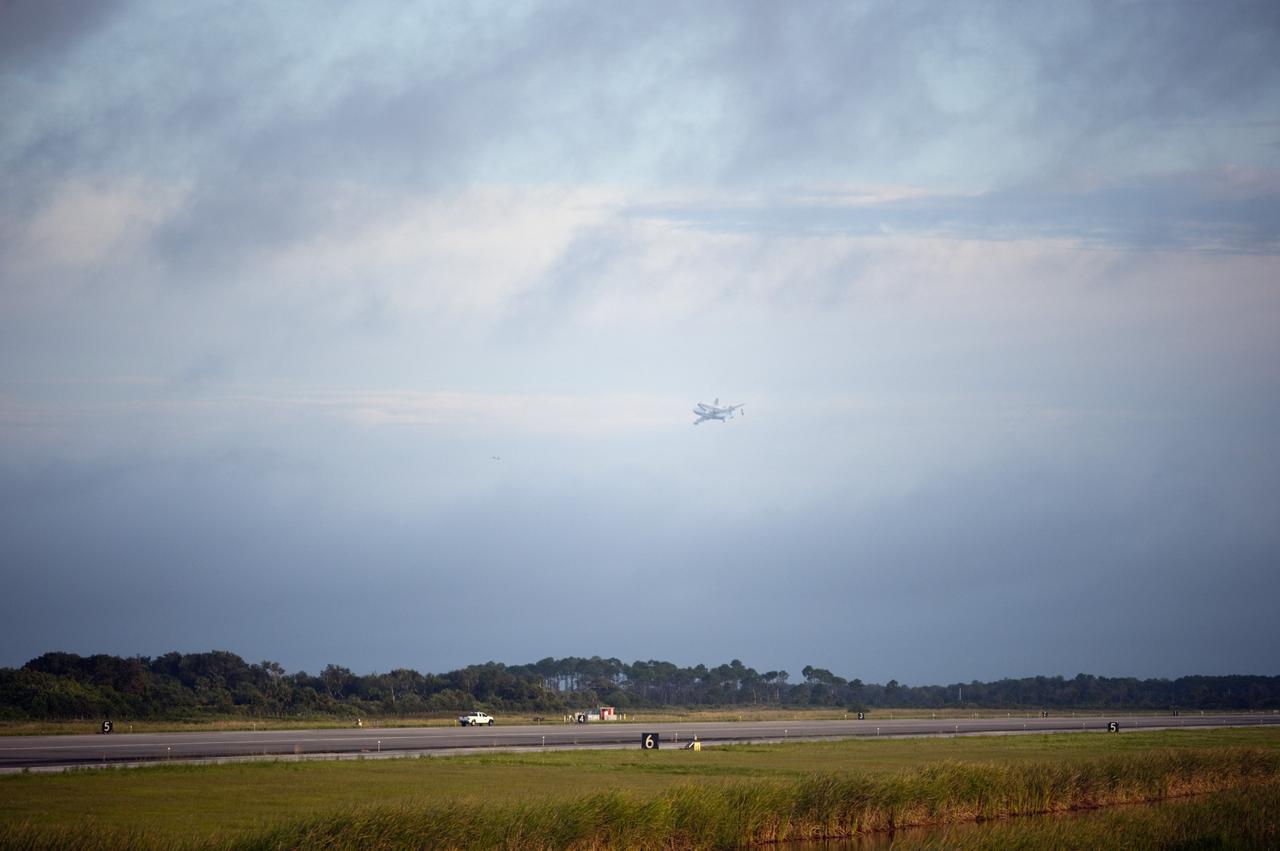
CAPE CANAVERAL, Fla. – Space shuttle Endeavour, mounted atop NASA's Shuttle Carrier Aircraft or SCA, takes off from the Shuttle Landing Facility at NASA's Kennedy Space Center in Florida. The SCA, a modified 747 jetliner, will fly Endeavour to Los Angeles where it will be placed on public display at the California Science Center. This is the final ferry flight scheduled in the Space Shuttle Program era. For more information on the shuttles' transition and retirement, visit http://www.nasa.gov/transition. Photo credit: NASA/Rusty Backer
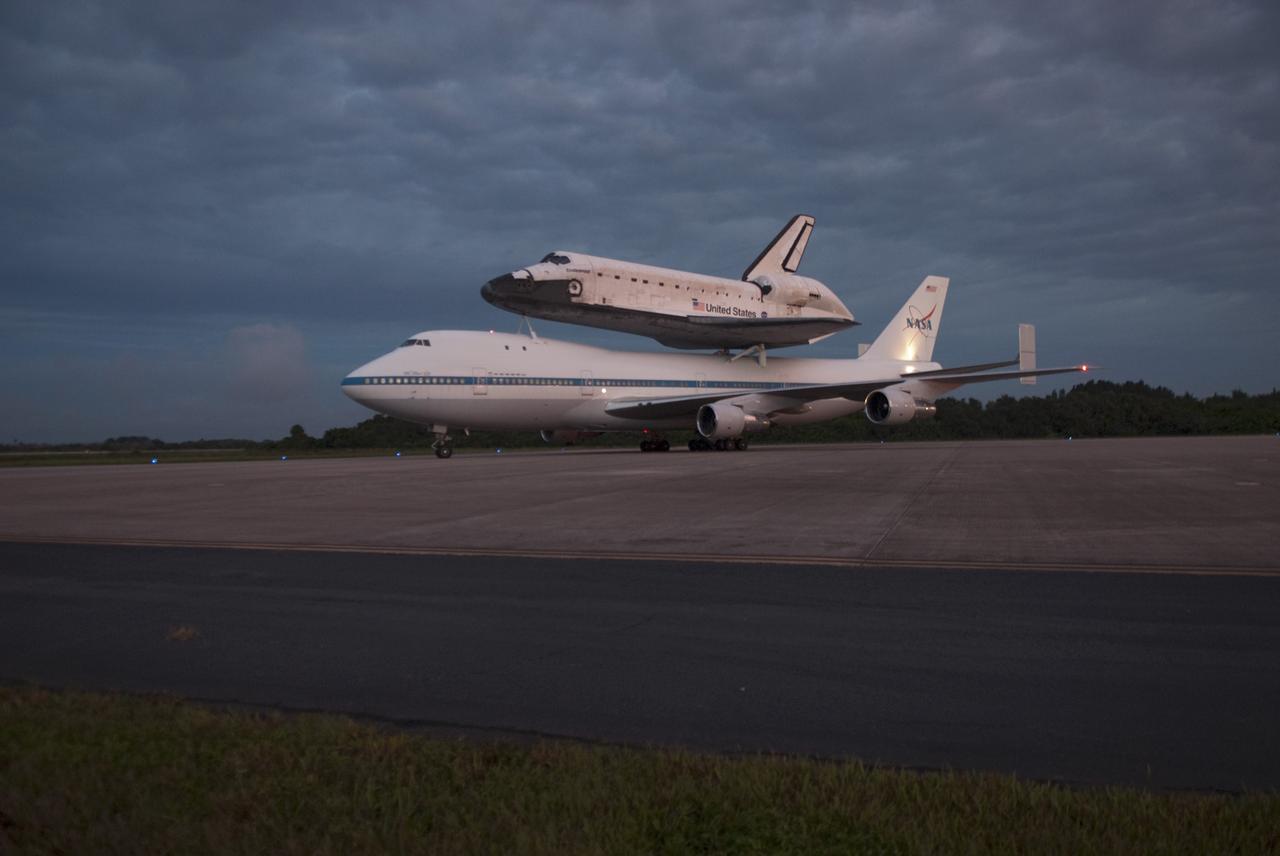
CAPE CANAVERAL, Fla. – At the Shuttle Landing Facility at NASA's Kennedy Space Center in Florida, NASA's Shuttle Carrier Aircraft, or SCA, with the space shuttle Endeavour mounted atop, taxis on the runway for its ferry flight to California. The SCA, a modified 747 jetliner, will fly Endeavour to Los Angeles where it will be placed on public display at the California Science Center. This is the final ferry flight scheduled in the Space Shuttle Program era. For more information on the shuttles' transition and retirement, visit http://www.nasa.gov/transition. Photo credit: NASA/George Sampson
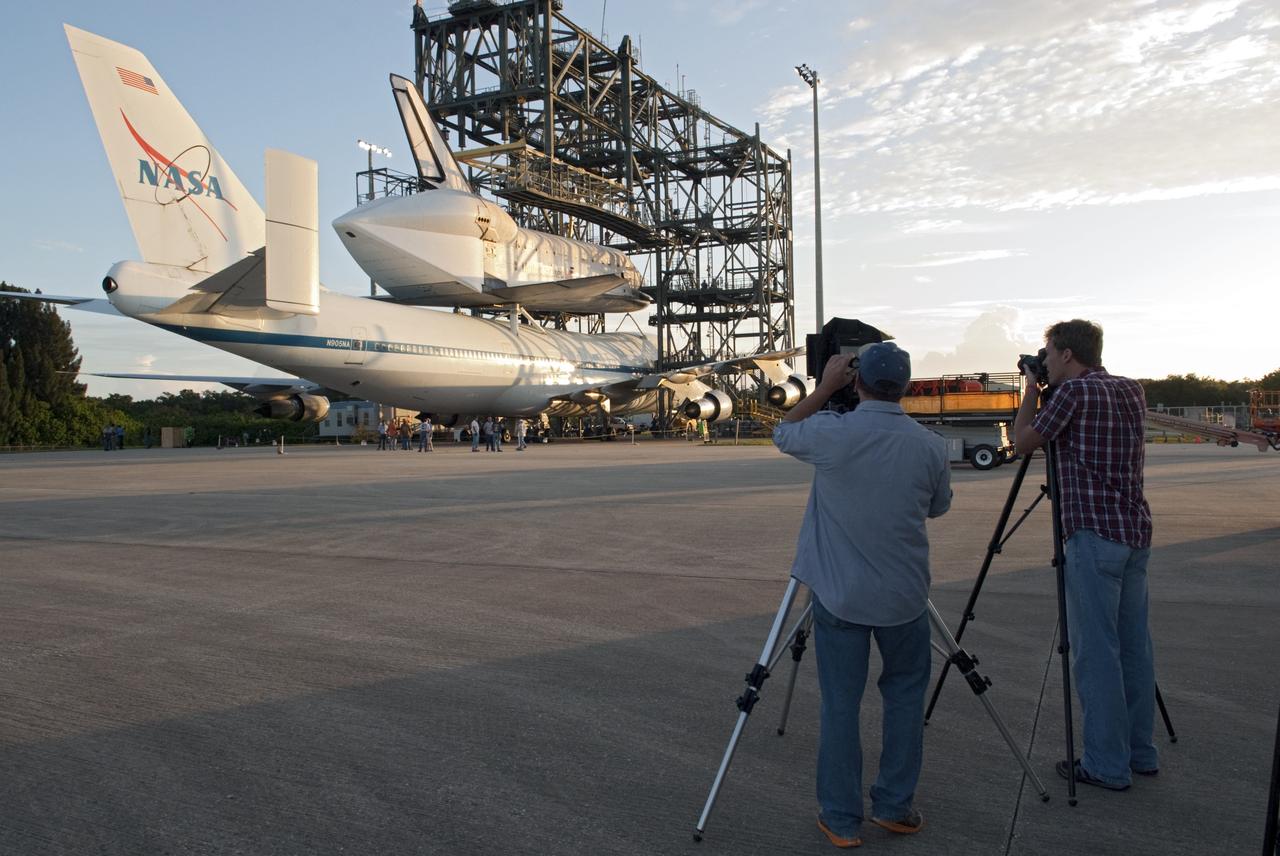
CAPE CANAVERAL, Fla. – At NASA's Kennedy Space Center in Florida, media representatives photograph space shuttle Endeavour, secured atop NASA's Shuttle Carrier Aircraft or SCA, at the mate-demate device at the Shuttle Landing Facility. The SCA, a modified 747 jetliner, will fly Endeavour to Los Angeles where it will be placed on public display at the California Science Center. This is the final ferry flight scheduled in the Space Shuttle Program era. For more information on the shuttles' transition and retirement, visit http://www.nasa.gov/transition. Photo credit: NASA/Charisse Nahser