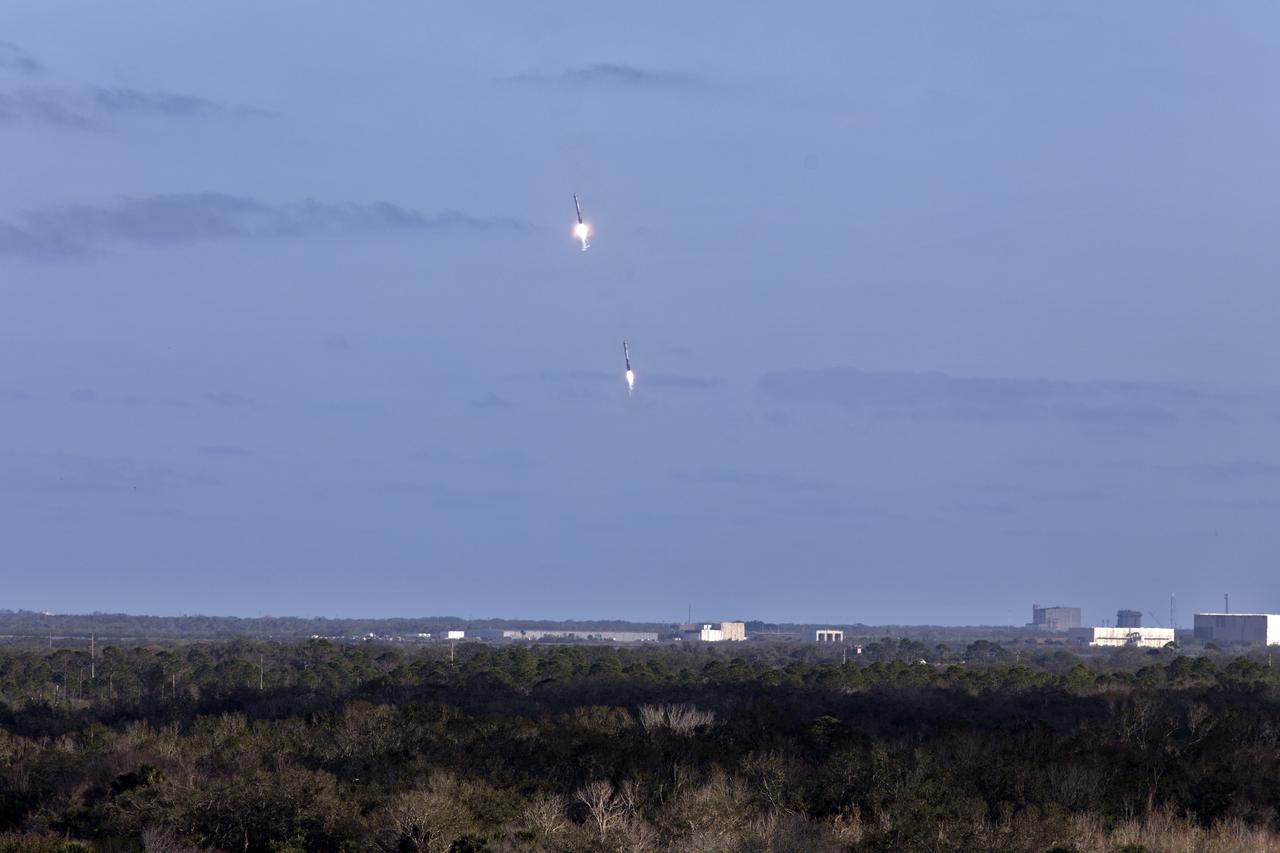
The SpaceX Falcon Heavy rocket’s two side cores descend toward landing at Cape Canaveral Air Force Station in Florida following a successful liftoff at 3:45 p.m. EST from Launch Complex 39A at NASA's Kennedy Space Center. This demonstration flight is a significant milestone for the world's premier multi-user spaceport. In 2014, NASA signed a property agreement with SpaceX for the use and operation of the center's pad 39A, where the company has launched Falcon 9 rockets and prepared for the first Falcon Heavy. NASA also has Space Act Agreements in place with partners, such as SpaceX, to provide services needed to process and launch rockets and spacecraft.
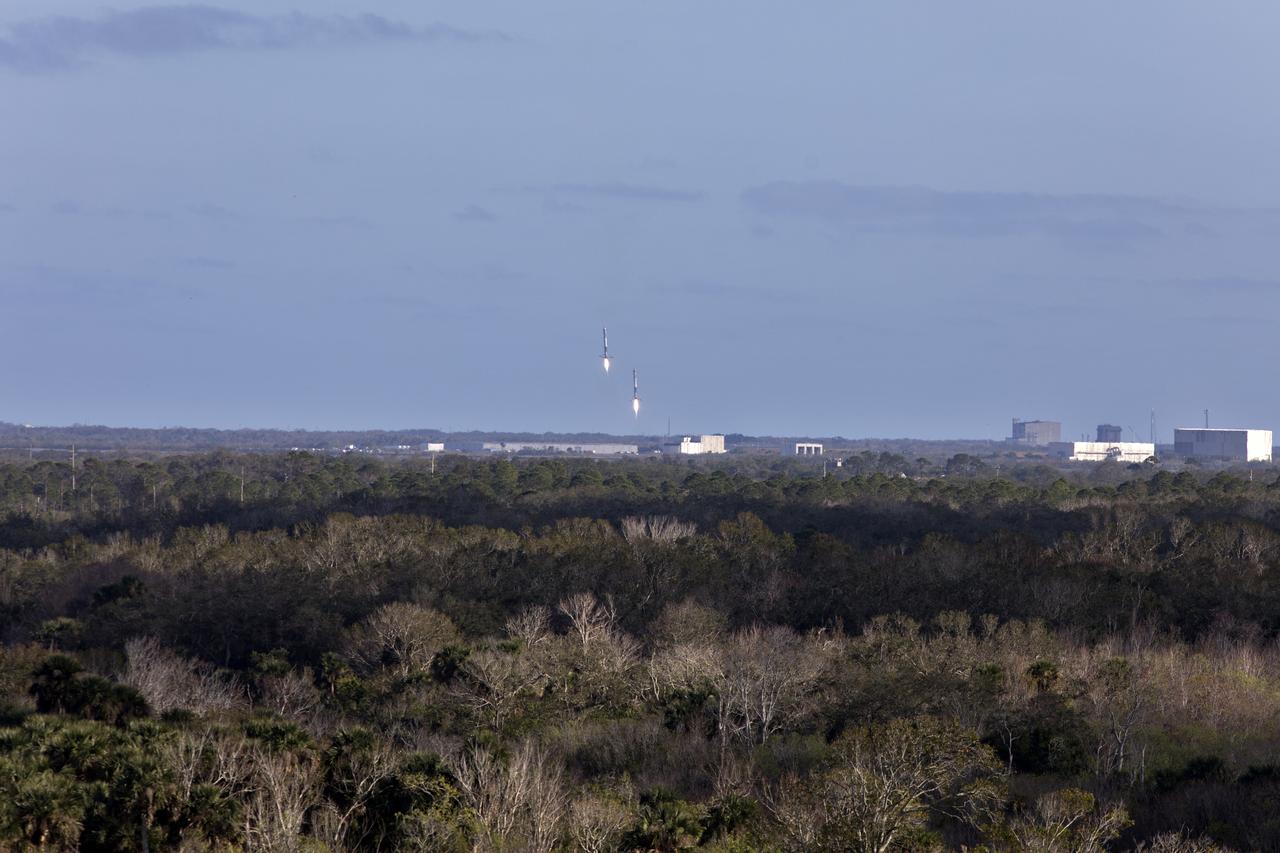
The SpaceX Falcon Heavy rocket’s two side cores descend toward landing at Cape Canaveral Air Force Station in Florida following a successful liftoff at 3:45 p.m. EST from Launch Complex 39A at NASA's Kennedy Space Center. This demonstration flight is a significant milestone for the world's premier multi-user spaceport. In 2014, NASA signed a property agreement with SpaceX for the use and operation of the center's pad 39A, where the company has launched Falcon 9 rockets and prepared for the first Falcon Heavy. NASA also has Space Act Agreements in place with partners, such as SpaceX, to provide services needed to process and launch rockets and spacecraft.
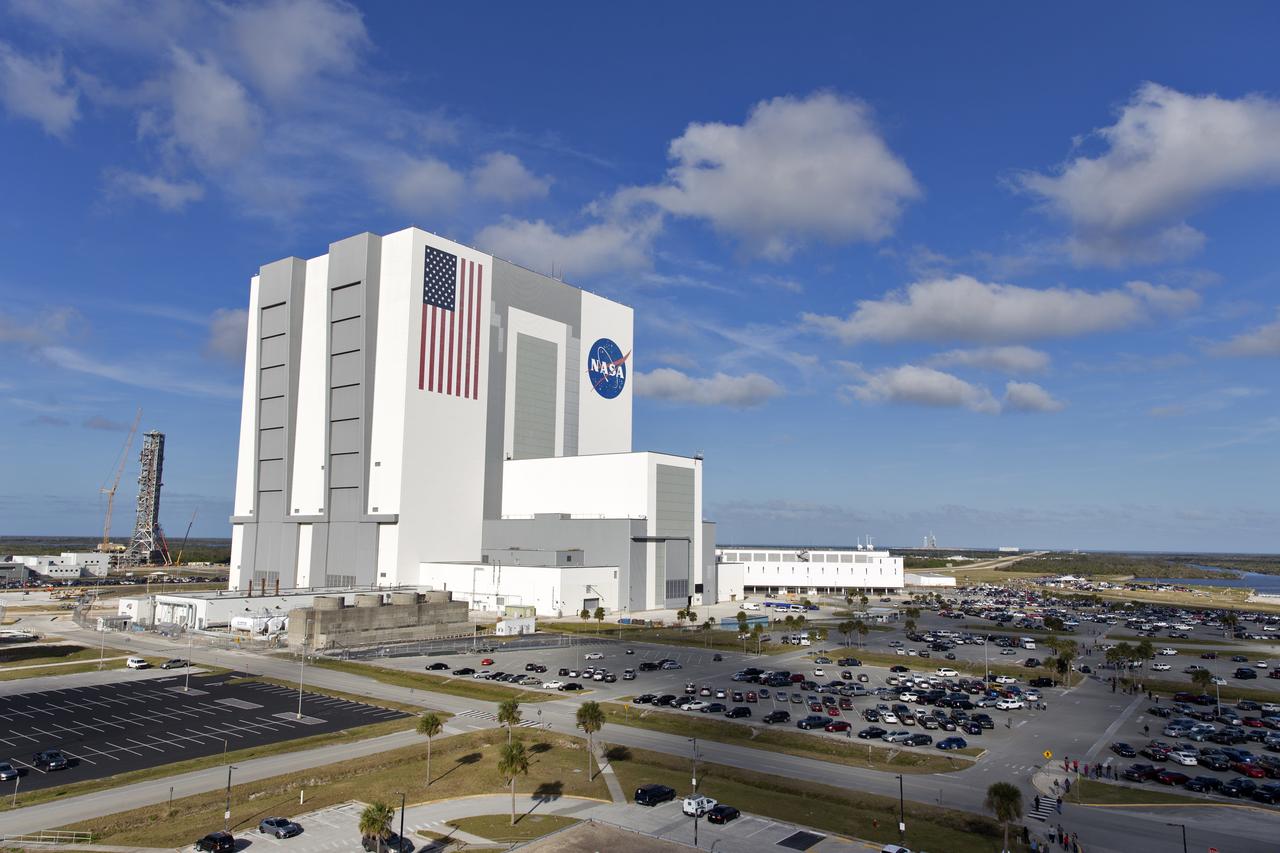
A SpaceX Falcon Heavy stands at Launch Complex 39A, far right, at NASA's Kennedy Space Center in Florida awaiting liftoff on its demonstration flight. In the foreground is the center’s iconic Vehicle Assembly Building. The demonstration flight is a significant milestone for the world's premier multi-user spaceport. In 2014, NASA signed a property agreement with SpaceX for the use and operation of the center's pad 39A, where the company has launched Falcon 9 rockets and is preparing for the first Falcon Heavy. NASA also has Space Act Agreements in place with partners, such as SpaceX, to provide services needed to process and launch rockets and spacecraft.
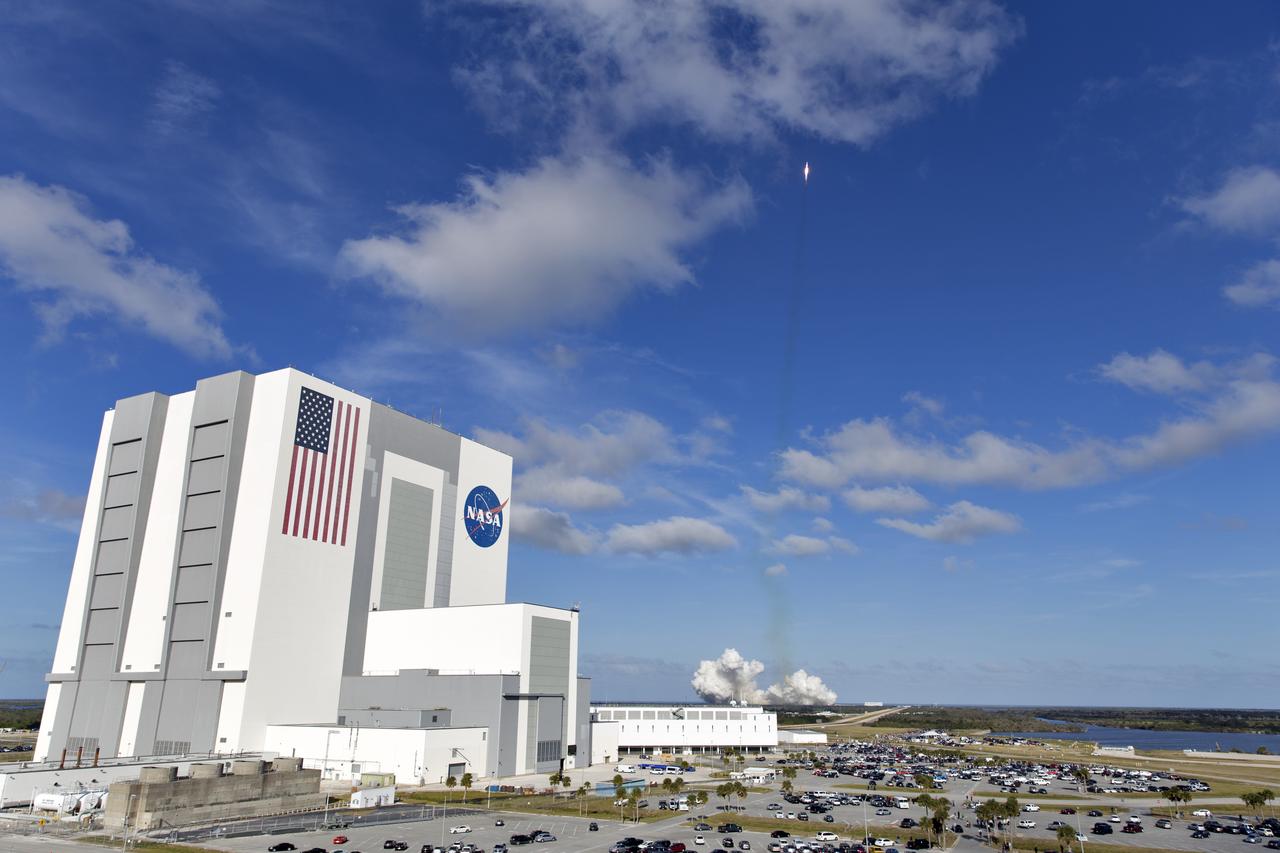
A SpaceX Falcon Heavy rocket begins its demonstration flight with liftoff at 3:45 p.m. EST from from Launch Complex 39A at NASA's Kennedy Space Center in Florida. This is a significant milestone for the world's premier multi-user spaceport. In 2014, NASA signed a property agreement with SpaceX for the use and operation of the center's pad 39A, where the company has launched Falcon 9 rockets and prepared for the first Falcon Heavy. NASA also has Space Act Agreements in place with partners, such as SpaceX, to provide services needed to process and launch rockets and spacecraft.
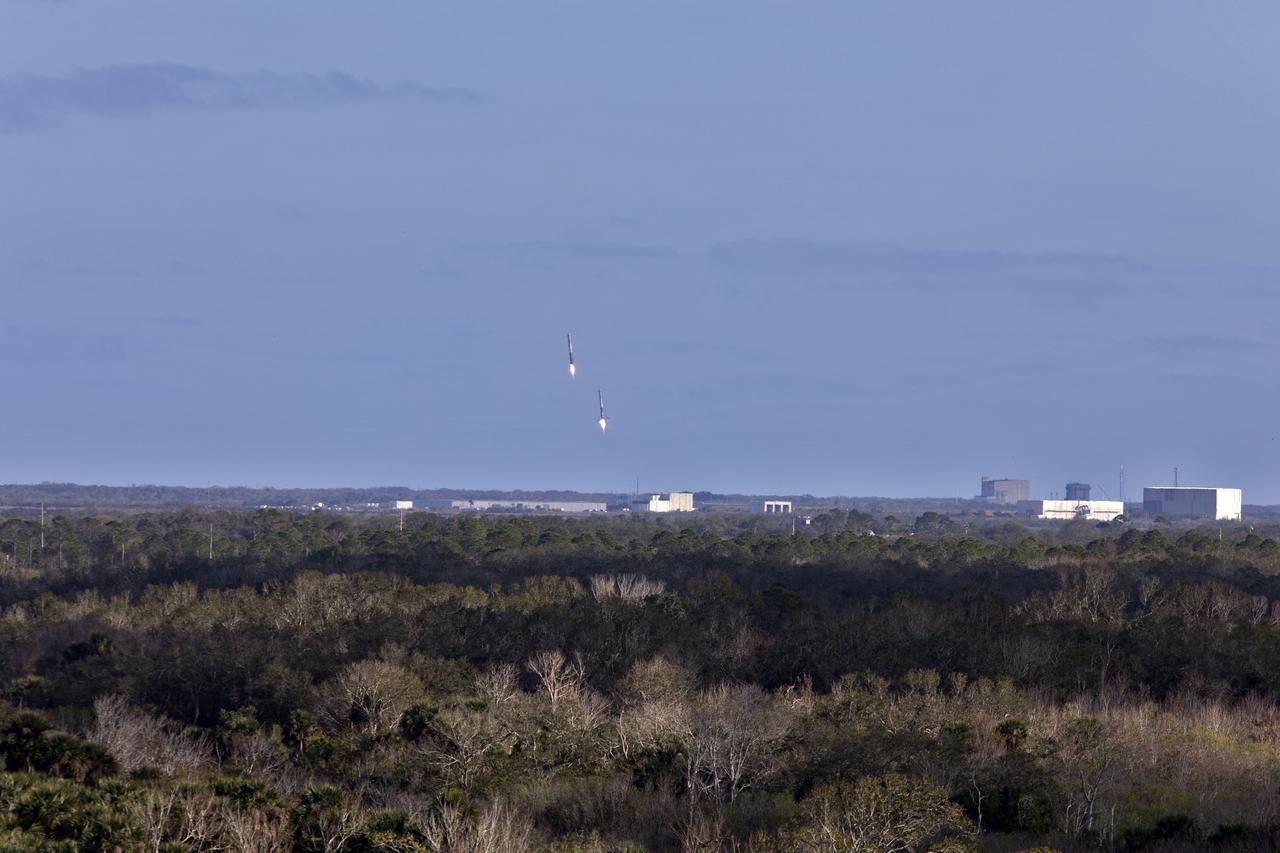
The SpaceX Falcon Heavy rocket’s two side cores descend toward landing at Cape Canaveral Air Force Station in Florida following a successful liftoff at 3:45 p.m. EST from Launch Complex 39A at NASA's Kennedy Space Center. This demonstration flight is a significant milestone for the world's premier multi-user spaceport. In 2014, NASA signed a property agreement with SpaceX for the use and operation of the center's pad 39A, where the company has launched Falcon 9 rockets and prepared for the first Falcon Heavy. NASA also has Space Act Agreements in place with partners, such as SpaceX, to provide services needed to process and launch rockets and spacecraft.
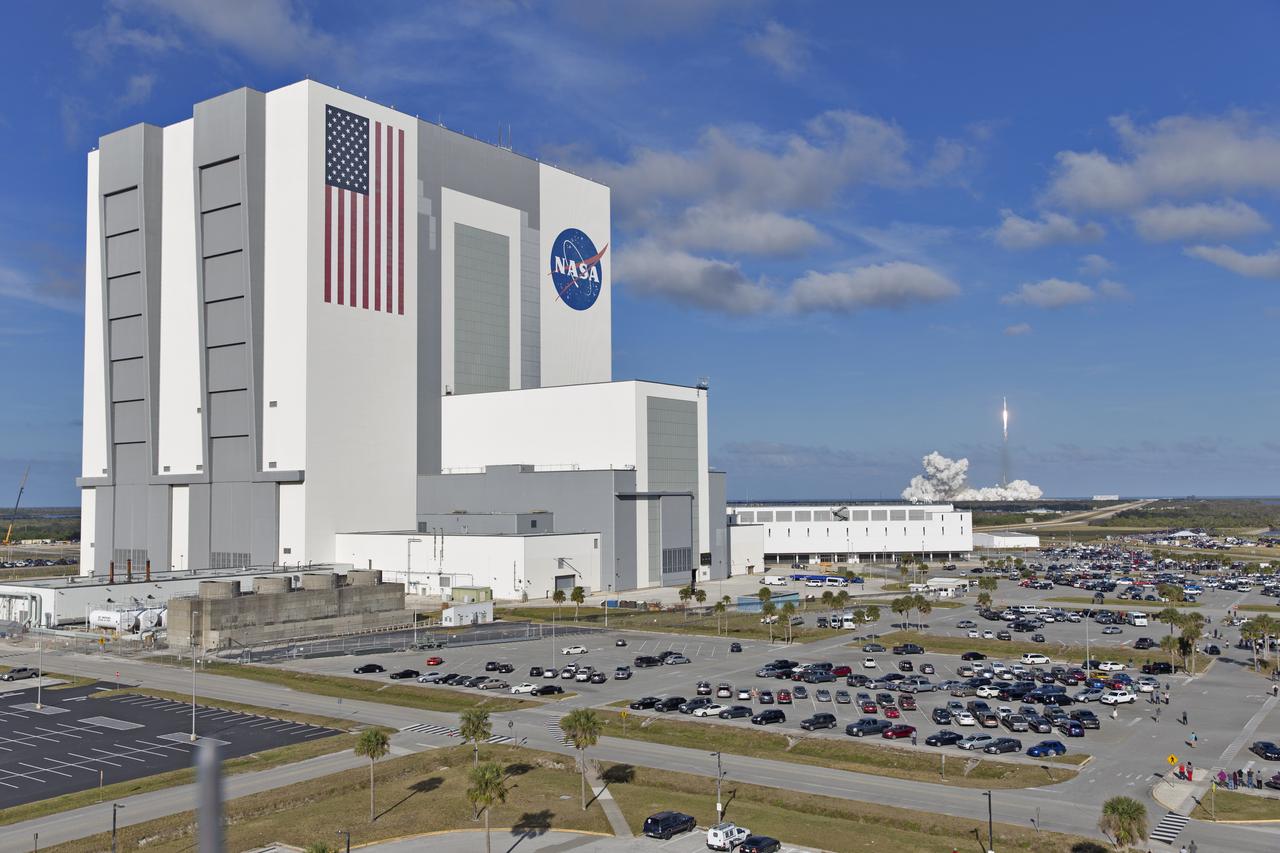
A SpaceX Falcon Heavy rocket begins its demonstration flight with liftoff at 3:45 p.m. EST from from Launch Complex 39A at NASA's Kennedy Space Center in Florida. This is a significant milestone for the world's premier multi-user spaceport. In 2014, NASA signed a property agreement with SpaceX for the use and operation of the center's pad 39A, where the company has launched Falcon 9 rockets and prepared for the first Falcon Heavy. NASA also has Space Act Agreements in place with partners, such as SpaceX, to provide services needed to process and launch rockets and spacecraft.
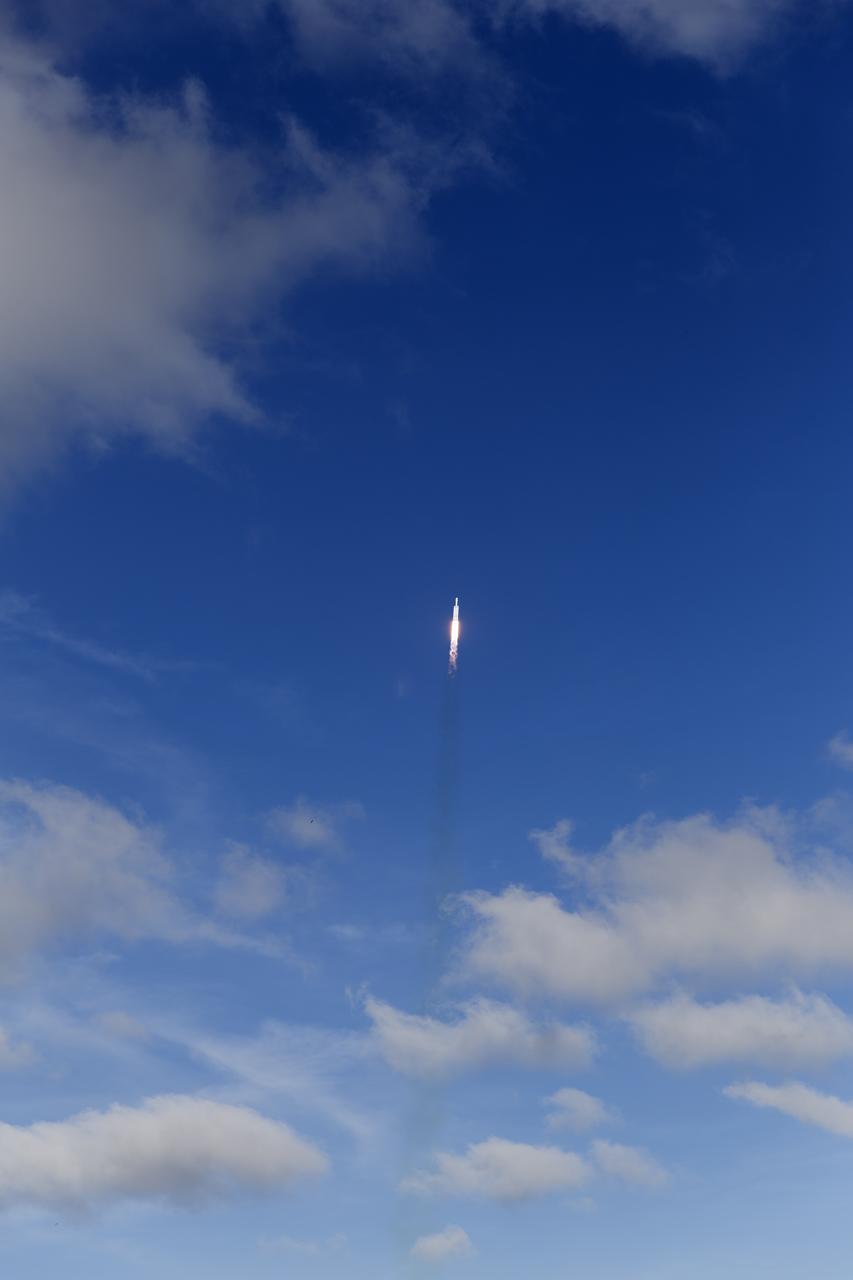
A SpaceX Falcon Heavy rocket begins its demonstration flight with liftoff at 3:45 p.m. EST from from Launch Complex 39A at NASA's Kennedy Space Center in Florida. This is a significant milestone for the world's premier multi-user spaceport. In 2014, NASA signed a property agreement with SpaceX for the use and operation of the center's pad 39A, where the company has launched Falcon 9 rockets and prepared for the first Falcon Heavy. NASA also has Space Act Agreements in place with partners, such as SpaceX, to provide services needed to process and launch rockets and spacecraft.
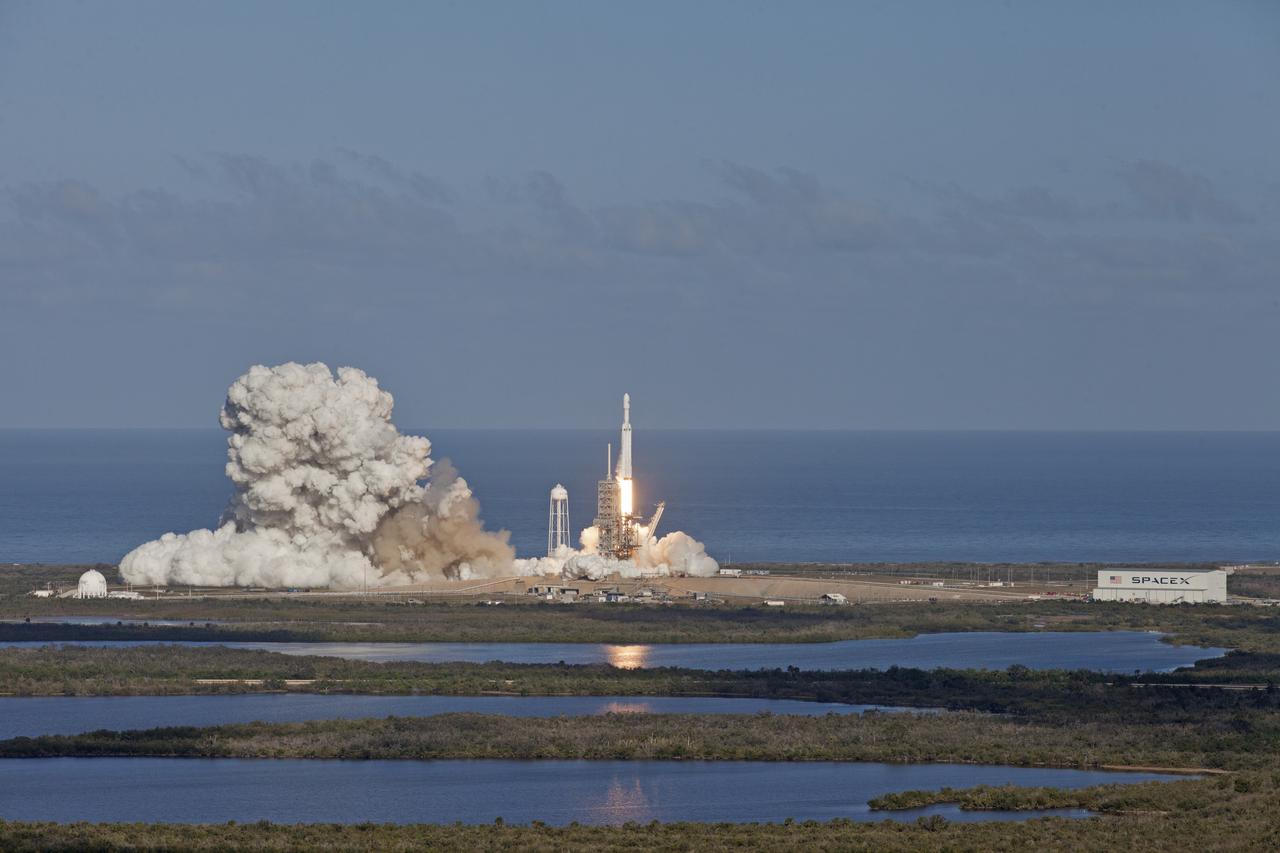
A SpaceX Falcon Heavy rocket begins its demonstration flight with liftoff at 3:45 p.m. EST from from Launch Complex 39A at NASA's Kennedy Space Center in Florida. This is a significant milestone for the world's premier multi-user spaceport. In 2014, NASA signed a property agreement with SpaceX for the use and operation of the center's pad 39A, where the company has launched Falcon 9 rockets and prepared for the first Falcon Heavy. NASA also has Space Act Agreements in place with partners, such as SpaceX, to provide services needed to process and launch rockets and spacecraft.
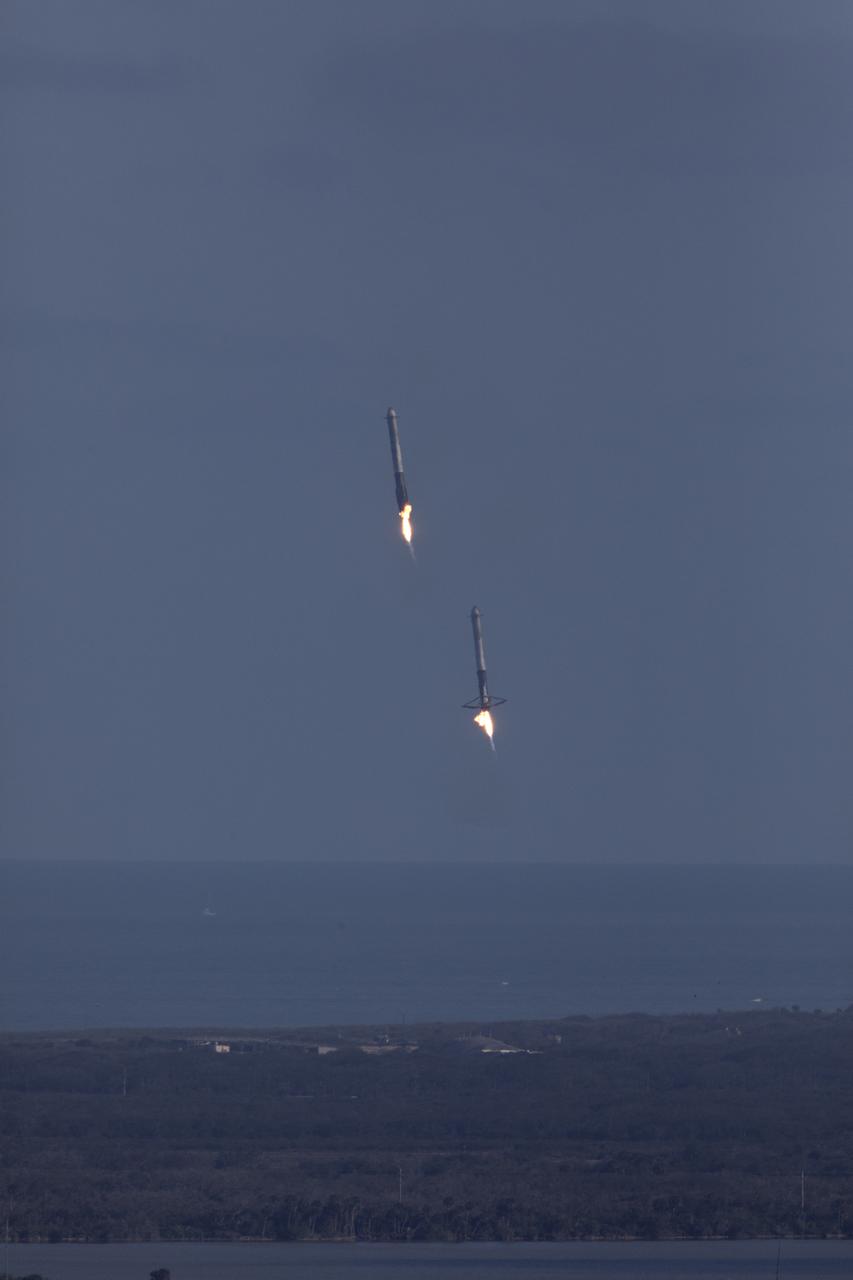
The SpaceX Falcon Heavy rocket’s two side cores descend toward landing at Cape Canaveral Air Force Station in Florida following a successful liftoff at 3:45 p.m. EST from Launch Complex 39A at NASA's Kennedy Space Center. This demonstration flight is a significant milestone for the world's premier multi-user spaceport. In 2014, NASA signed a property agreement with SpaceX for the use and operation of the center's pad 39A, where the company has launched Falcon 9 rockets and prepared for the first Falcon Heavy. NASA also has Space Act Agreements in place with partners, such as SpaceX, to provide services needed to process and launch rockets and spacecraft.
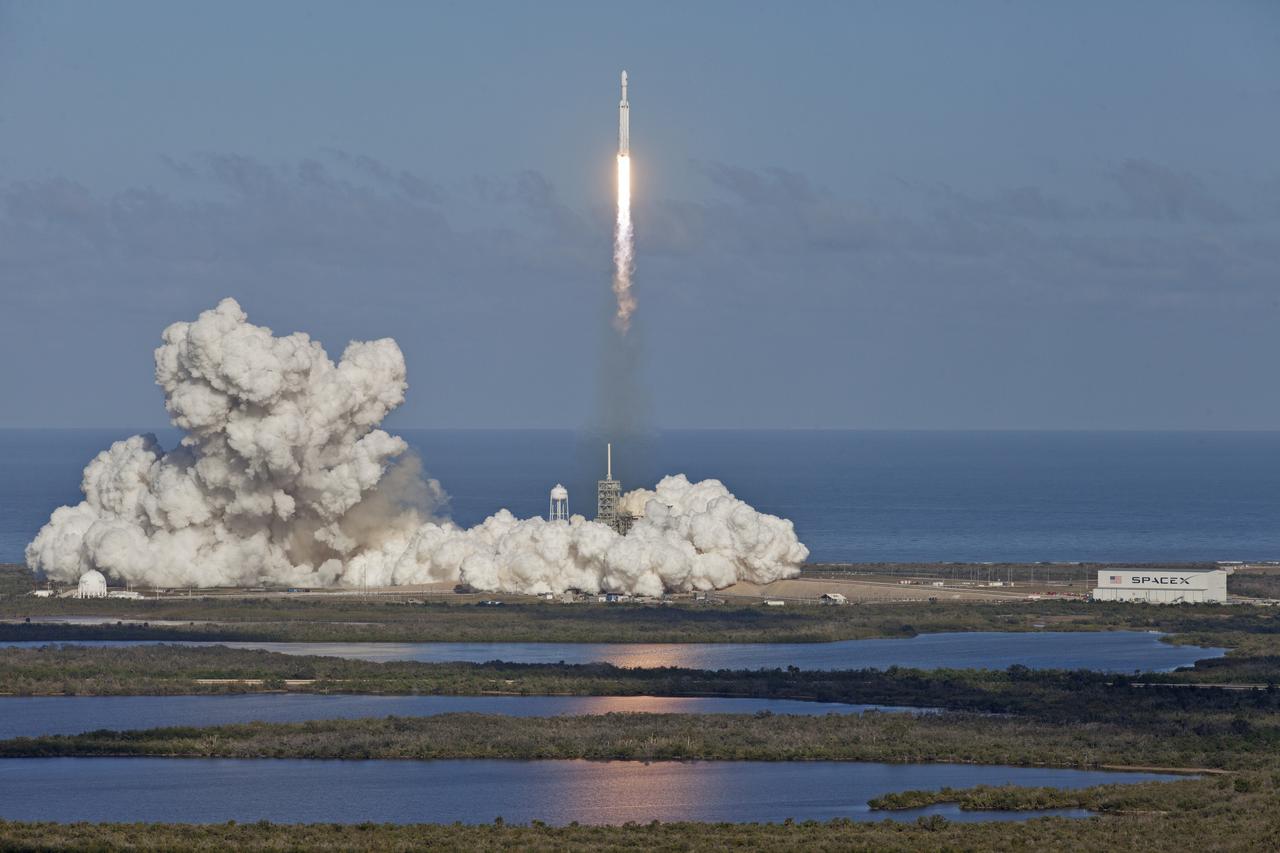
A SpaceX Falcon Heavy rocket begins its demonstration flight with liftoff at 3:45 p.m. EST from from Launch Complex 39A at NASA's Kennedy Space Center in Florida. This is a significant milestone for the world's premier multi-user spaceport. In 2014, NASA signed a property agreement with SpaceX for the use and operation of the center's pad 39A, where the company has launched Falcon 9 rockets and prepared for the first Falcon Heavy. NASA also has Space Act Agreements in place with partners, such as SpaceX, to provide services needed to process and launch rockets and spacecraft.
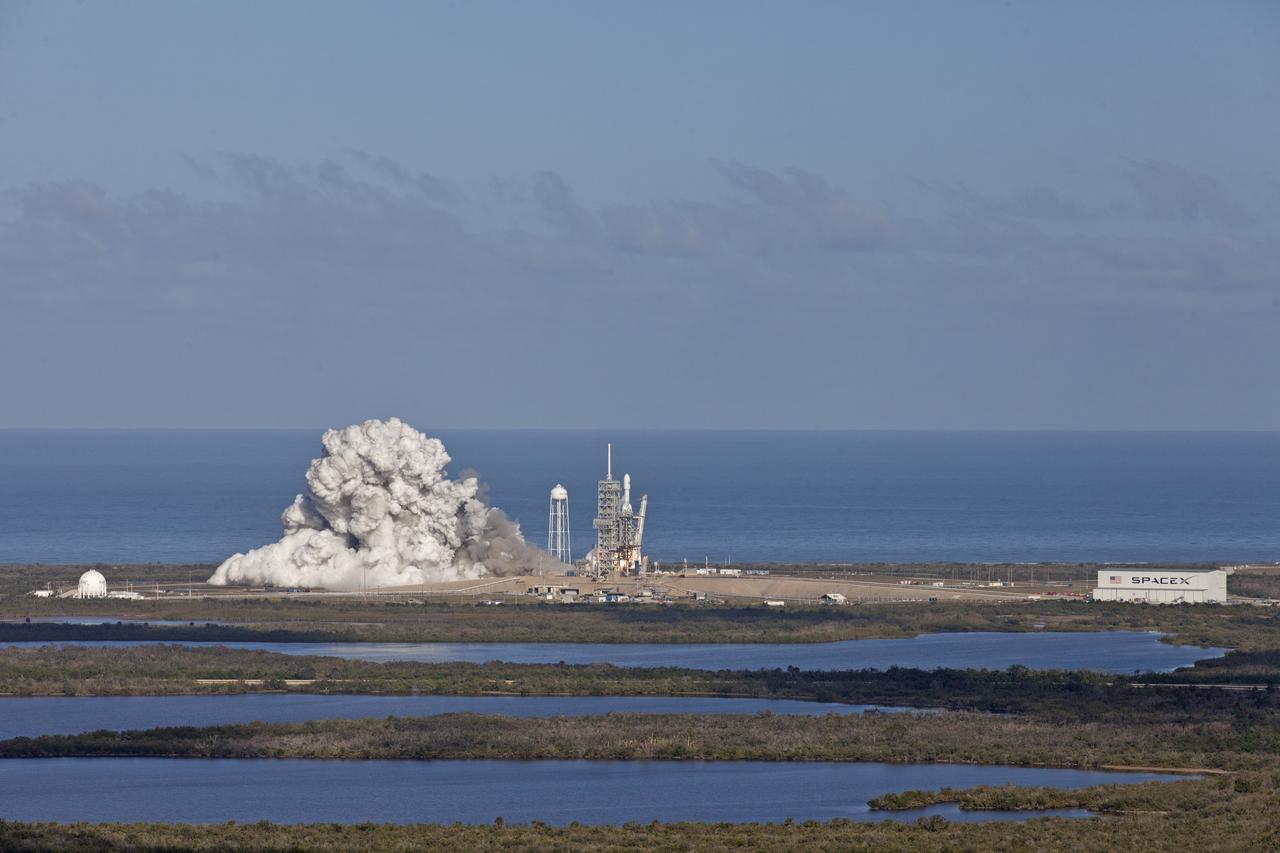
A SpaceX Falcon Heavy rocket begins its demonstration flight with liftoff at 3:45 p.m. EST from from Launch Complex 39A at NASA's Kennedy Space Center in Florida. This is a significant milestone for the world's premier multi-user spaceport. In 2014, NASA signed a property agreement with SpaceX for the use and operation of the center's pad 39A, where the company has launched Falcon 9 rockets and prepared for the first Falcon Heavy. NASA also has Space Act Agreements in place with partners, such as SpaceX, to provide services needed to process and launch rockets and spacecraft.
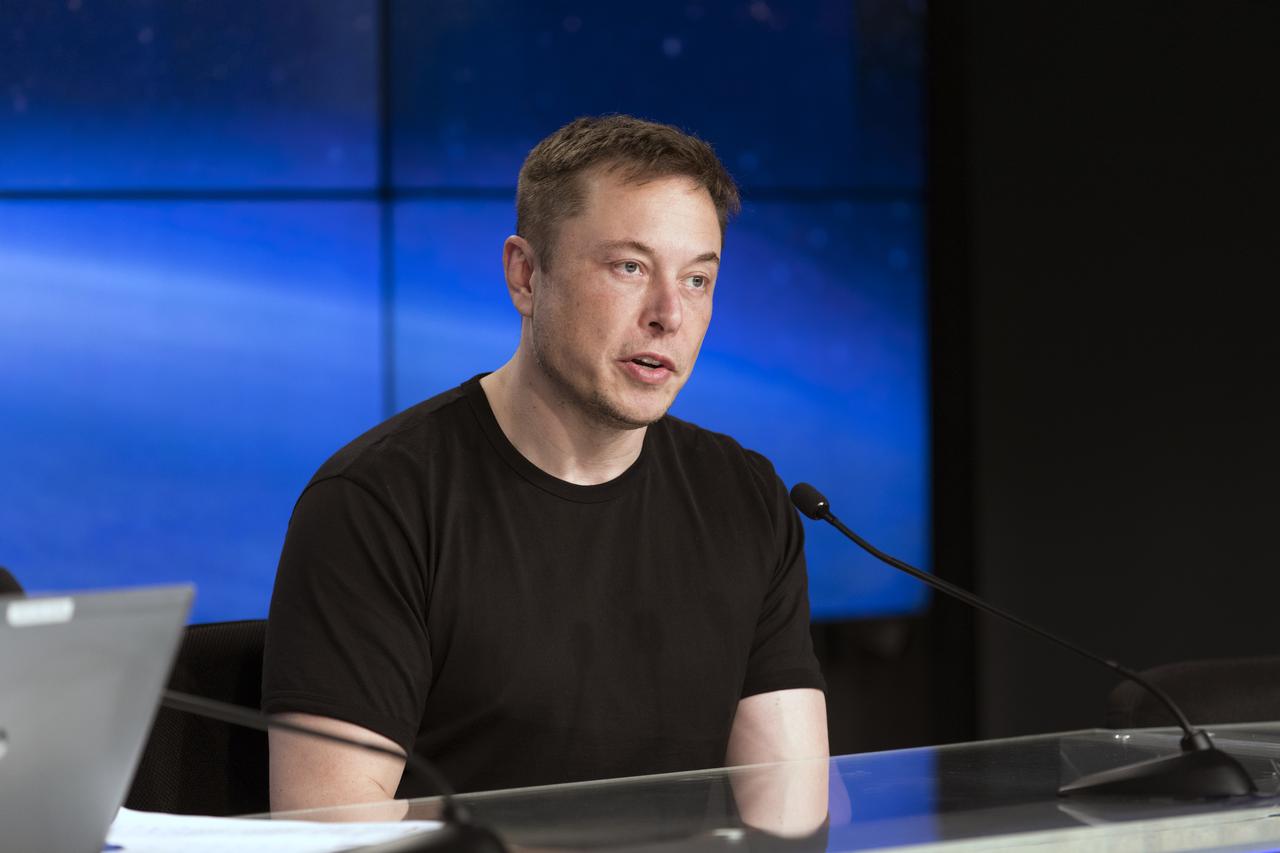
Elon Musk, SpaceX chief executive officer and lead designer, speaks to the news media during a news conference at NASA's Kennedy Space Center in Florida after the successful liftoff of the company’s Falcon Heavy rocket from Launch Complex 39A. The demonstration flight is a significant milestone for the world's premier multi-user spaceport. In 2014, NASA signed a property agreement with SpaceX for the use and operation of the center's pad 39A, where the company has launched Falcon 9 rockets and is preparing for the first Falcon Heavy. NASA also has Space Act Agreements in place with partners, such as SpaceX, to provide services needed to process and launch rockets and spacecraft.
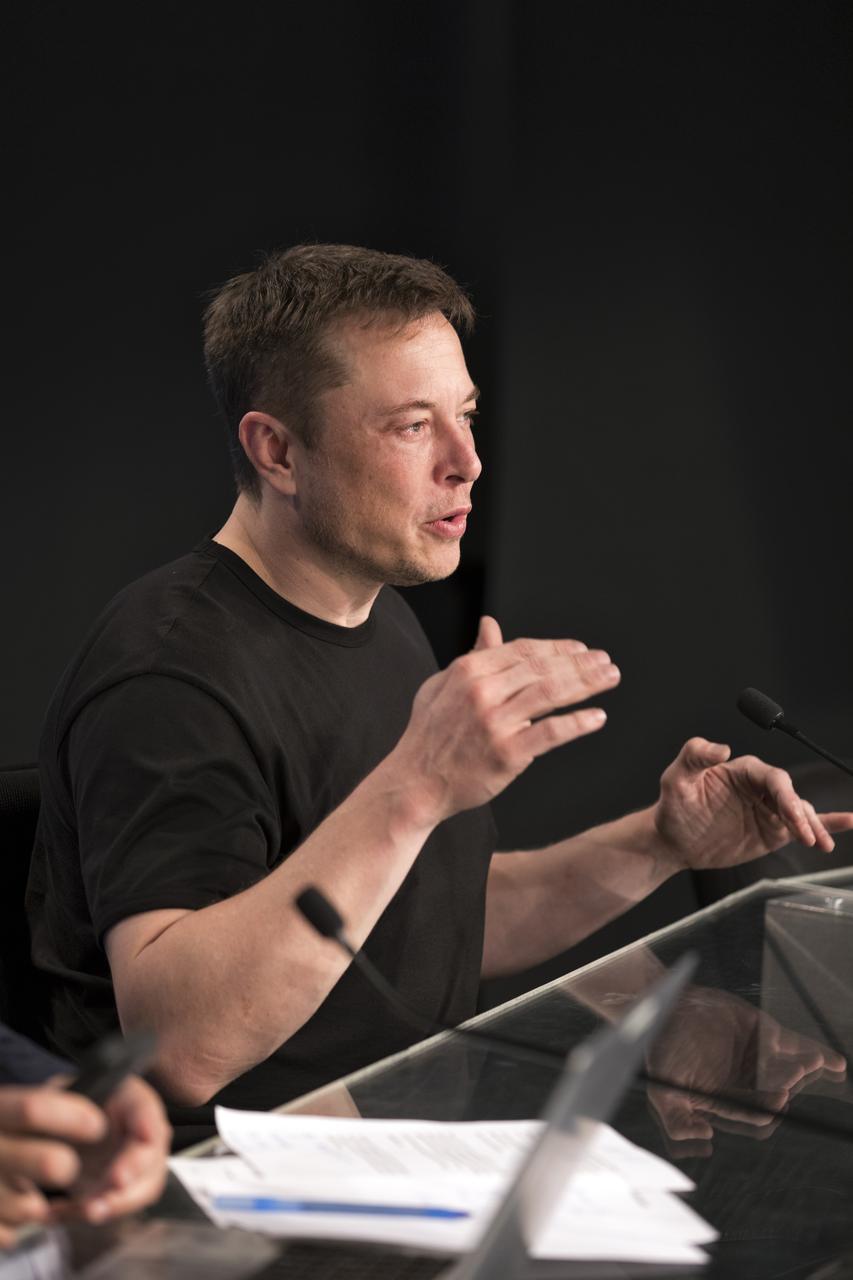
Elon Musk, SpaceX chief executive officer and lead designer, speaks to the news media during a news conference at NASA's Kennedy Space Center in Florida after the successful liftoff of the company’s Falcon Heavy rocket from Launch Complex 39A. The demonstration flight is a significant milestone for the world's premier multi-user spaceport. In 2014, NASA signed a property agreement with SpaceX for the use and operation of the center's pad 39A, where the company has launched Falcon 9 rockets and is preparing for the first Falcon Heavy. NASA also has Space Act Agreements in place with partners, such as SpaceX, to provide services needed to process and launch rockets and spacecraft.
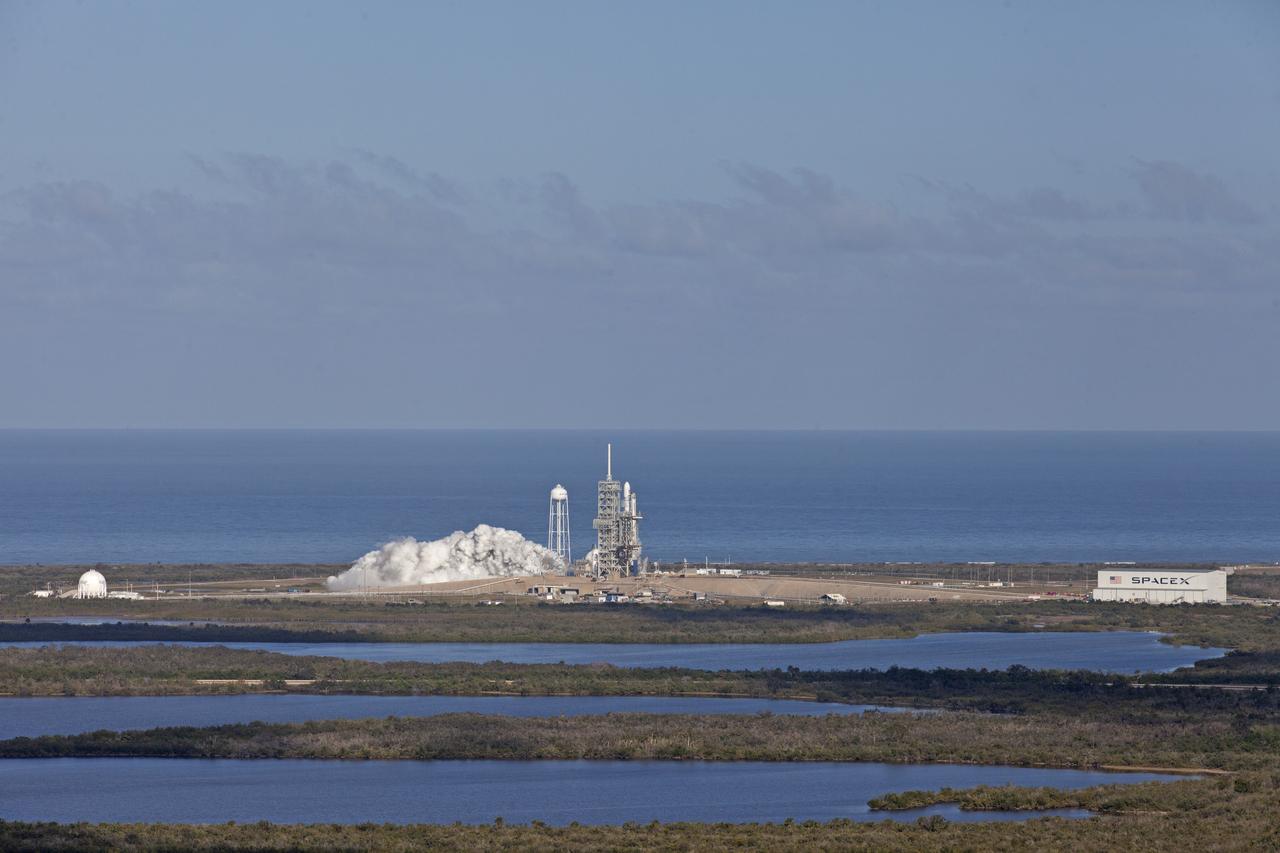
A SpaceX Falcon Heavy rocket begins its demonstration flight with liftoff at 3:45 p.m. EST from from Launch Complex 39A at NASA's Kennedy Space Center in Florida. This is a significant milestone for the world's premier multi-user spaceport. In 2014, NASA signed a property agreement with SpaceX for the use and operation of the center's pad 39A, where the company has launched Falcon 9 rockets and prepared for the first Falcon Heavy. NASA also has Space Act Agreements in place with partners, such as SpaceX, to provide services needed to process and launch rockets and spacecraft.
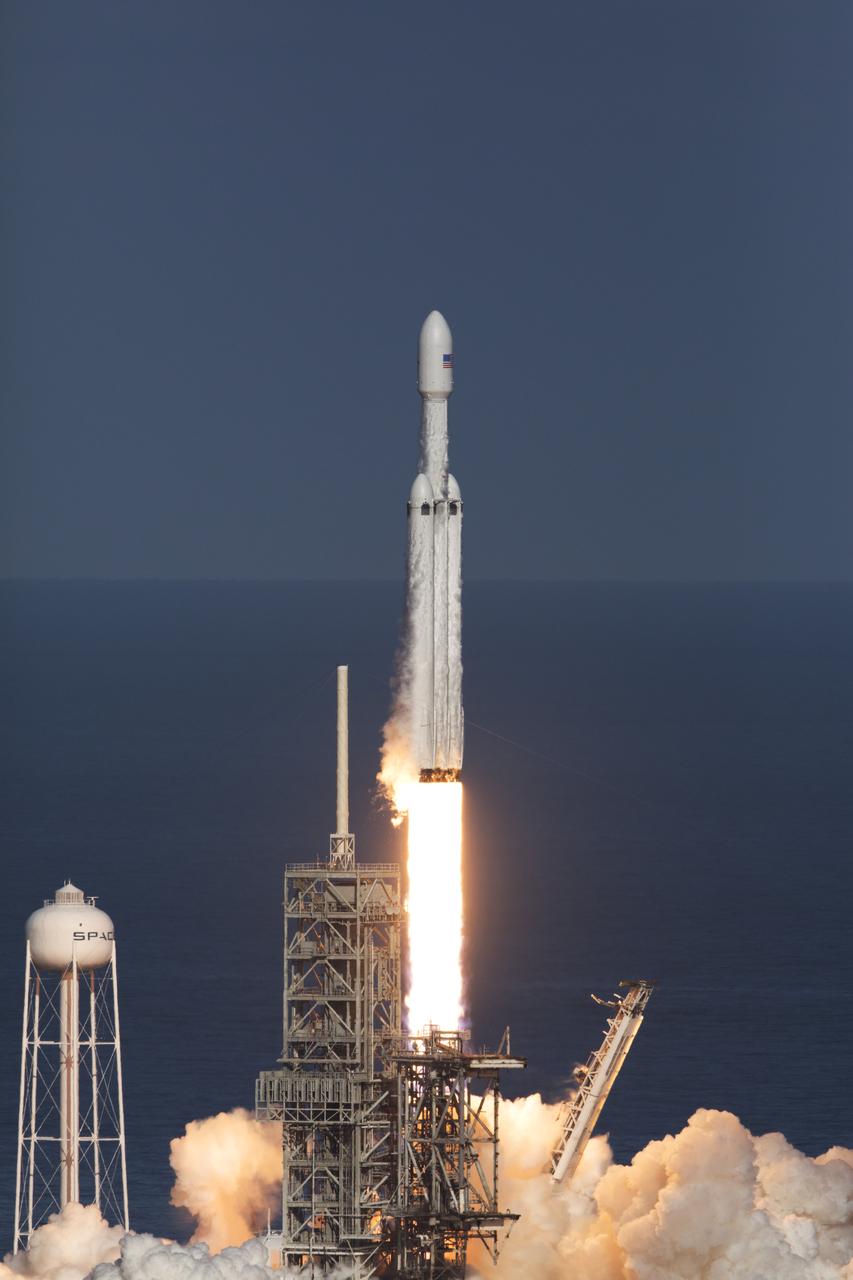
A SpaceX Falcon Heavy rocket begins its demonstration flight with liftoff at 3:45 p.m. EST from from Launch Complex 39A at NASA's Kennedy Space Center in Florida. This is a significant milestone for the world's premier multi-user spaceport. In 2014, NASA signed a property agreement with SpaceX for the use and operation of the center's pad 39A, where the company has launched Falcon 9 rockets and prepared for the first Falcon Heavy. NASA also has Space Act Agreements in place with partners, such as SpaceX, to provide services needed to process and launch rockets and spacecraft.
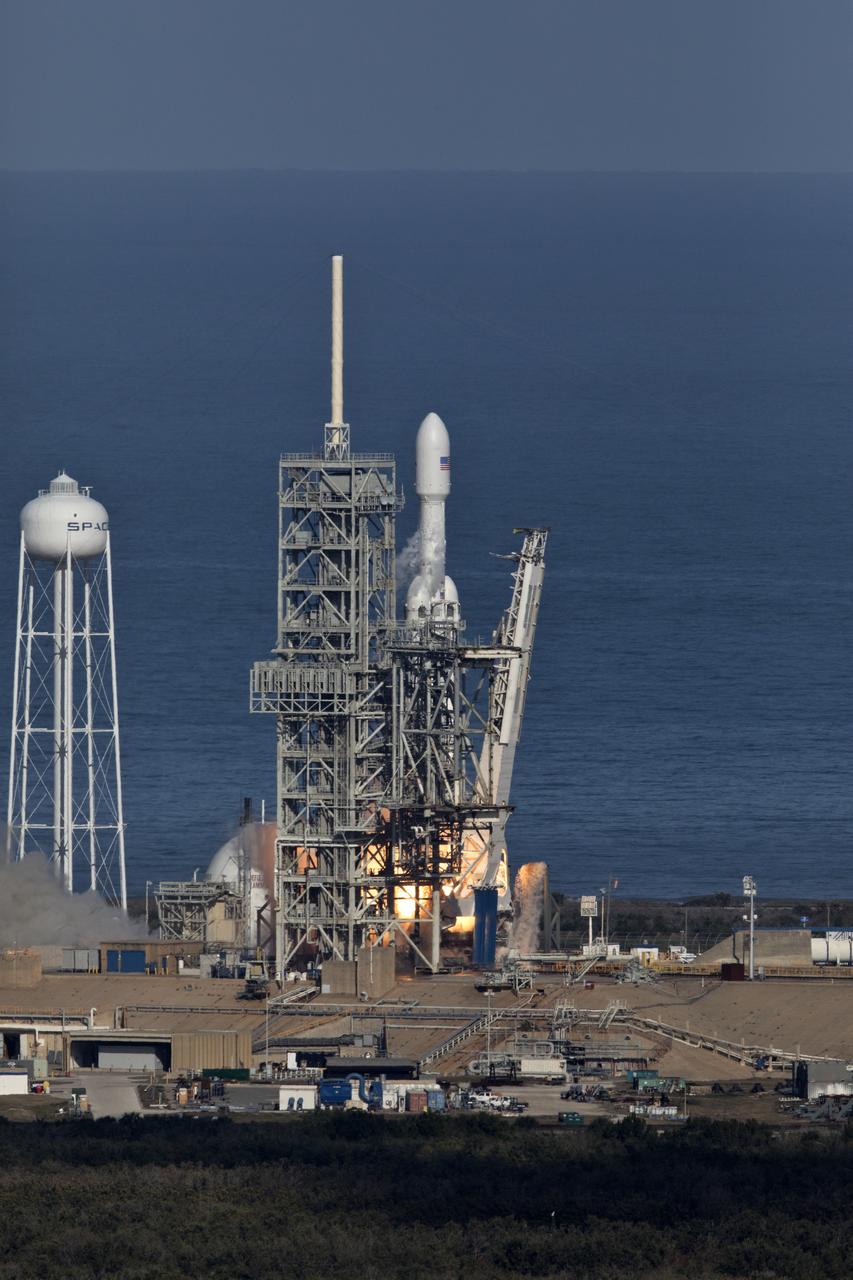
A SpaceX Falcon Heavy rocket begins its demonstration flight with liftoff at 3:45 p.m. EST from from Launch Complex 39A at NASA's Kennedy Space Center in Florida. This is a significant milestone for the world's premier multi-user spaceport. In 2014, NASA signed a property agreement with SpaceX for the use and operation of the center's pad 39A, where the company has launched Falcon 9 rockets and prepared for the first Falcon Heavy. NASA also has Space Act Agreements in place with partners, such as SpaceX, to provide services needed to process and launch rockets and spacecraft.
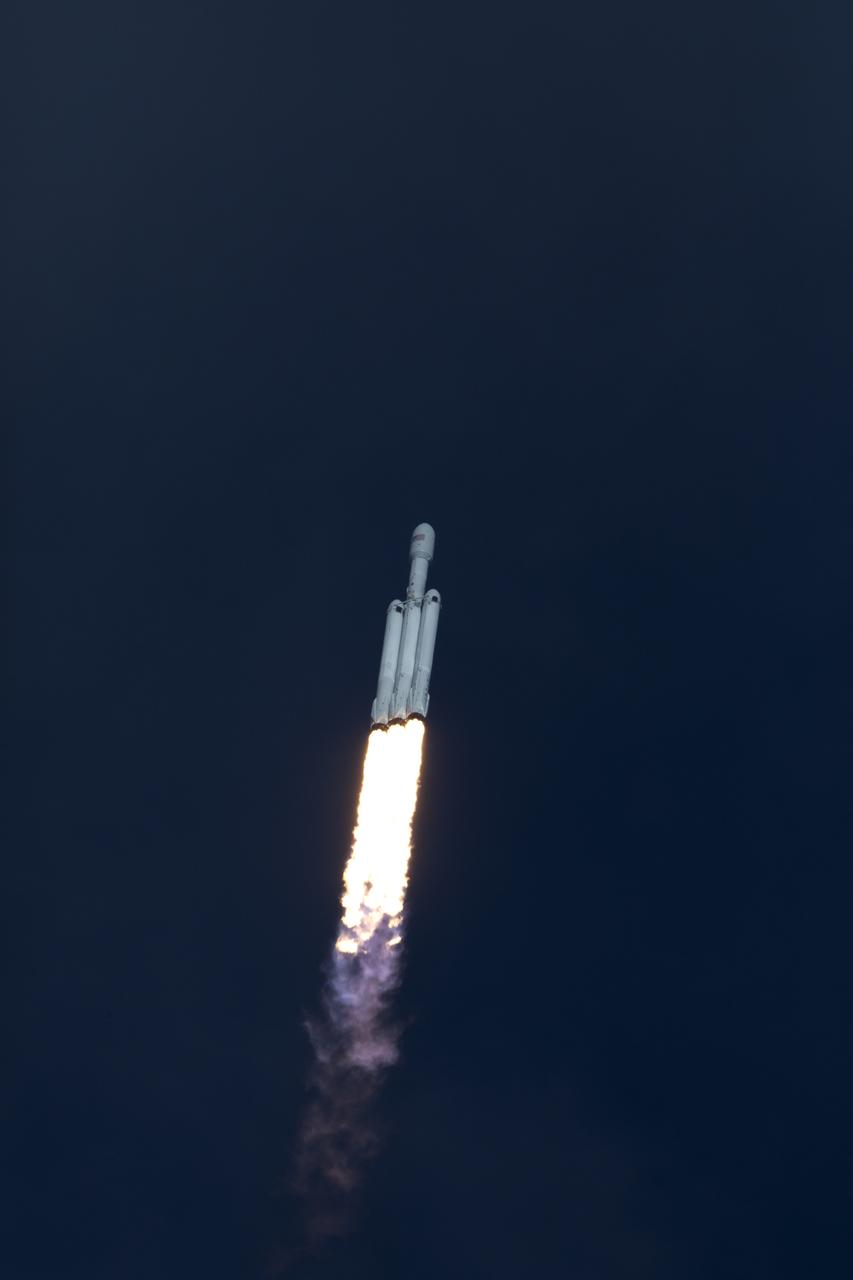
A SpaceX Falcon Heavy rocket begins its demonstration flight with liftoff at 3:45 p.m. EST from from Launch Complex 39A at NASA's Kennedy Space Center in Florida. This is a significant milestone for the world's premier multi-user spaceport. In 2014, NASA signed a property agreement with SpaceX for the use and operation of the center's pad 39A, where the company has launched Falcon 9 rockets and prepared for the first Falcon Heavy. NASA also has Space Act Agreements in place with partners, such as SpaceX, to provide services needed to process and launch rockets and spacecraft.
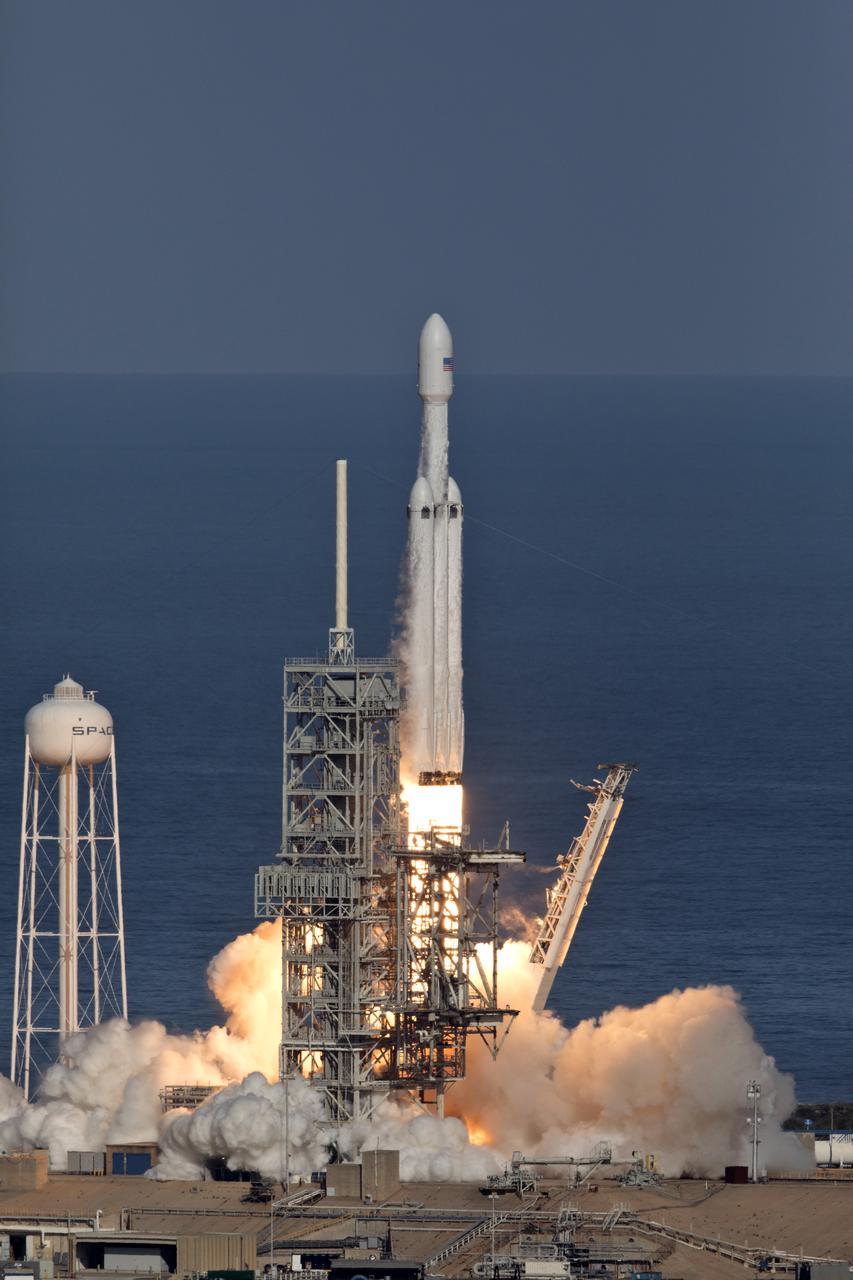
A SpaceX Falcon Heavy rocket begins its demonstration flight with liftoff at 3:45 p.m. EST from from Launch Complex 39A at NASA's Kennedy Space Center in Florida. This is a significant milestone for the world's premier multi-user spaceport. In 2014, NASA signed a property agreement with SpaceX for the use and operation of the center's pad 39A, where the company has launched Falcon 9 rockets and prepared for the first Falcon Heavy. NASA also has Space Act Agreements in place with partners, such as SpaceX, to provide services needed to process and launch rockets and spacecraft.
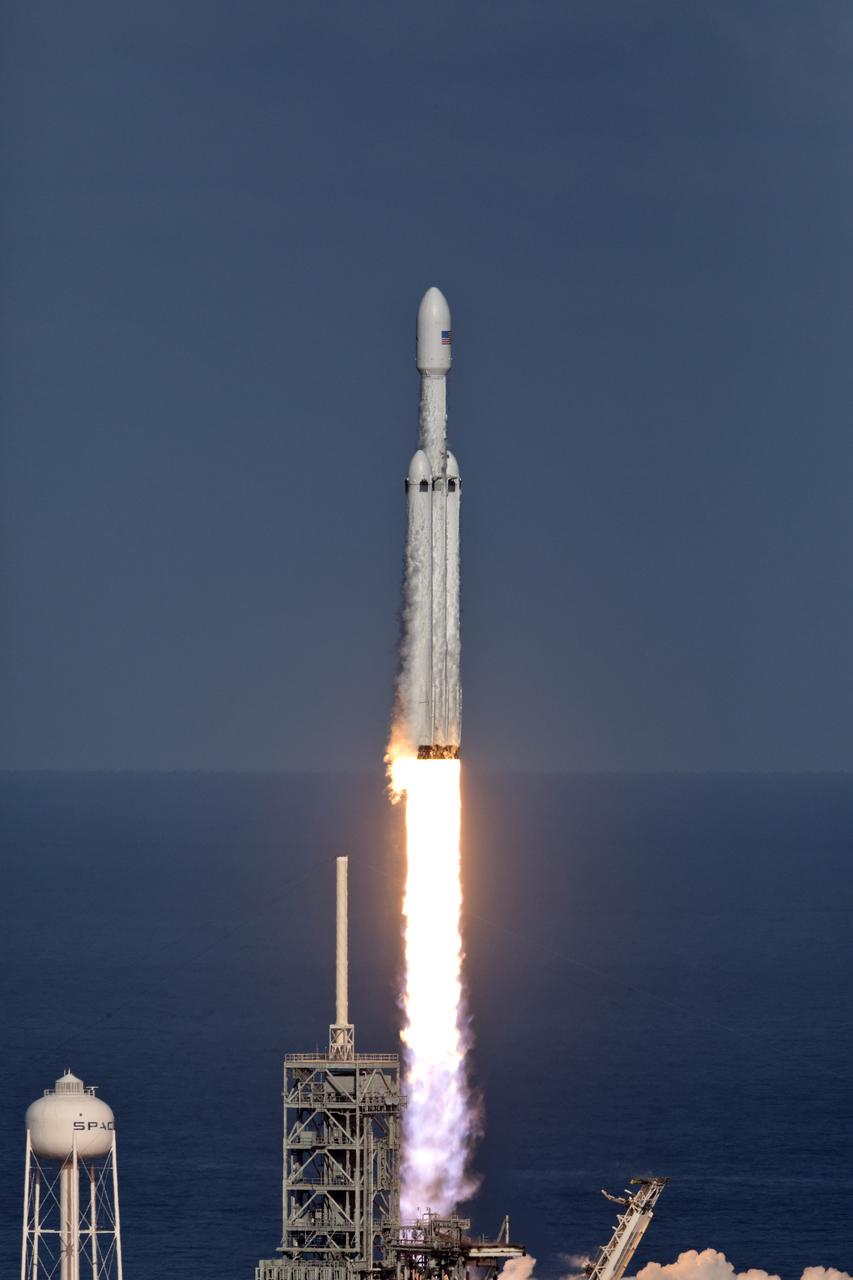
A SpaceX Falcon Heavy rocket begins its demonstration flight with liftoff at 3:45 p.m. EST from from Launch Complex 39A at NASA's Kennedy Space Center in Florida. This is a significant milestone for the world's premier multi-user spaceport. In 2014, NASA signed a property agreement with SpaceX for the use and operation of the center's pad 39A, where the company has launched Falcon 9 rockets and prepared for the first Falcon Heavy. NASA also has Space Act Agreements in place with partners, such as SpaceX, to provide services needed to process and launch rockets and spacecraft.

The SpaceX Falcon Heavy rocket’s two side cores descend toward landing at Cape Canaveral Air Force Station in Florida following a successful liftoff at 3:45 p.m. EST from Launch Complex 39A at NASA's Kennedy Space Center. This demonstration flight is a significant milestone for the world's premier multi-user spaceport. In 2014, NASA signed a property agreement with SpaceX for the use and operation of the center's pad 39A, where the company has launched Falcon 9 rockets and prepared for the first Falcon Heavy. NASA also has Space Act Agreements in place with partners, such as SpaceX, to provide services needed to process and launch rockets and spacecraft.
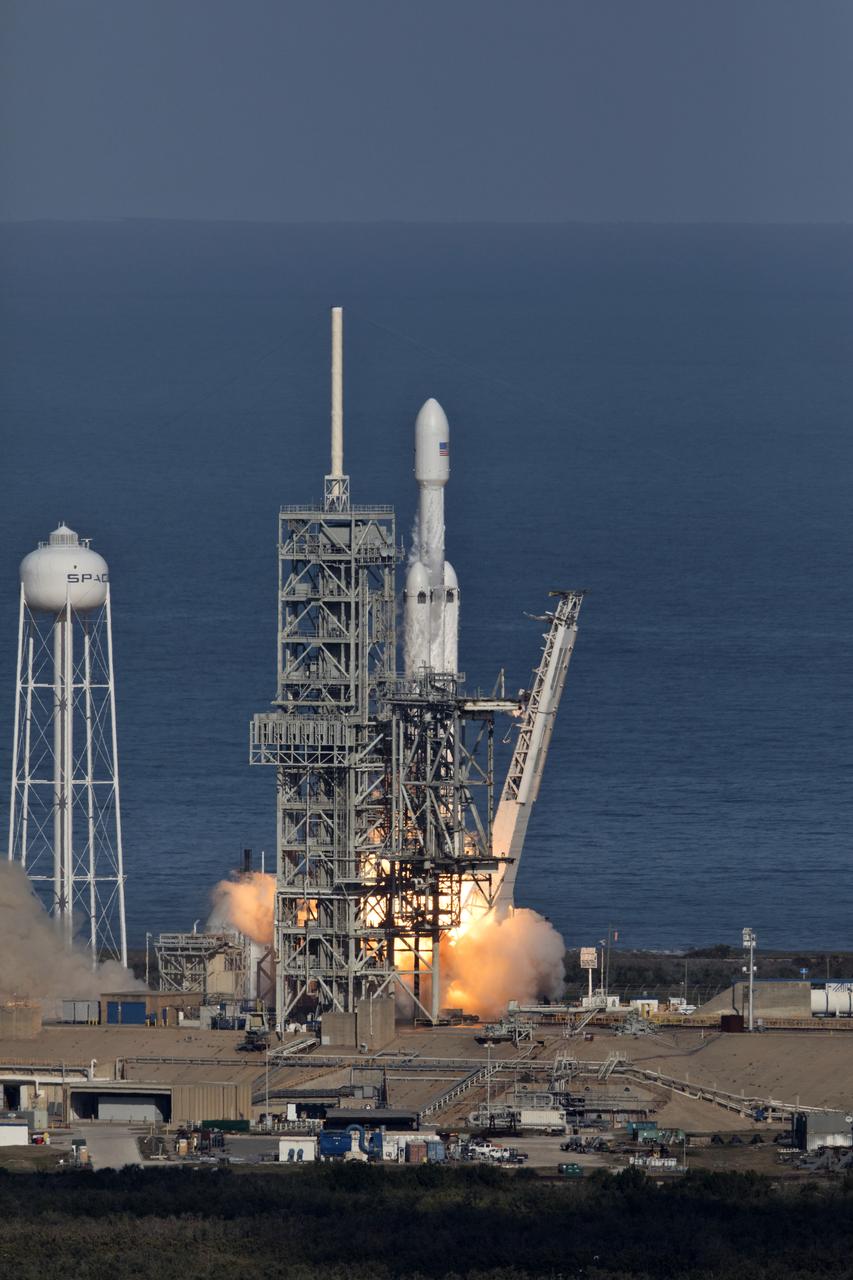
A SpaceX Falcon Heavy rocket begins its demonstration flight with liftoff at 3:45 p.m. EST from from Launch Complex 39A at NASA's Kennedy Space Center in Florida. This is a significant milestone for the world's premier multi-user spaceport. In 2014, NASA signed a property agreement with SpaceX for the use and operation of the center's pad 39A, where the company has launched Falcon 9 rockets and prepared for the first Falcon Heavy. NASA also has Space Act Agreements in place with partners, such as SpaceX, to provide services needed to process and launch rockets and spacecraft.
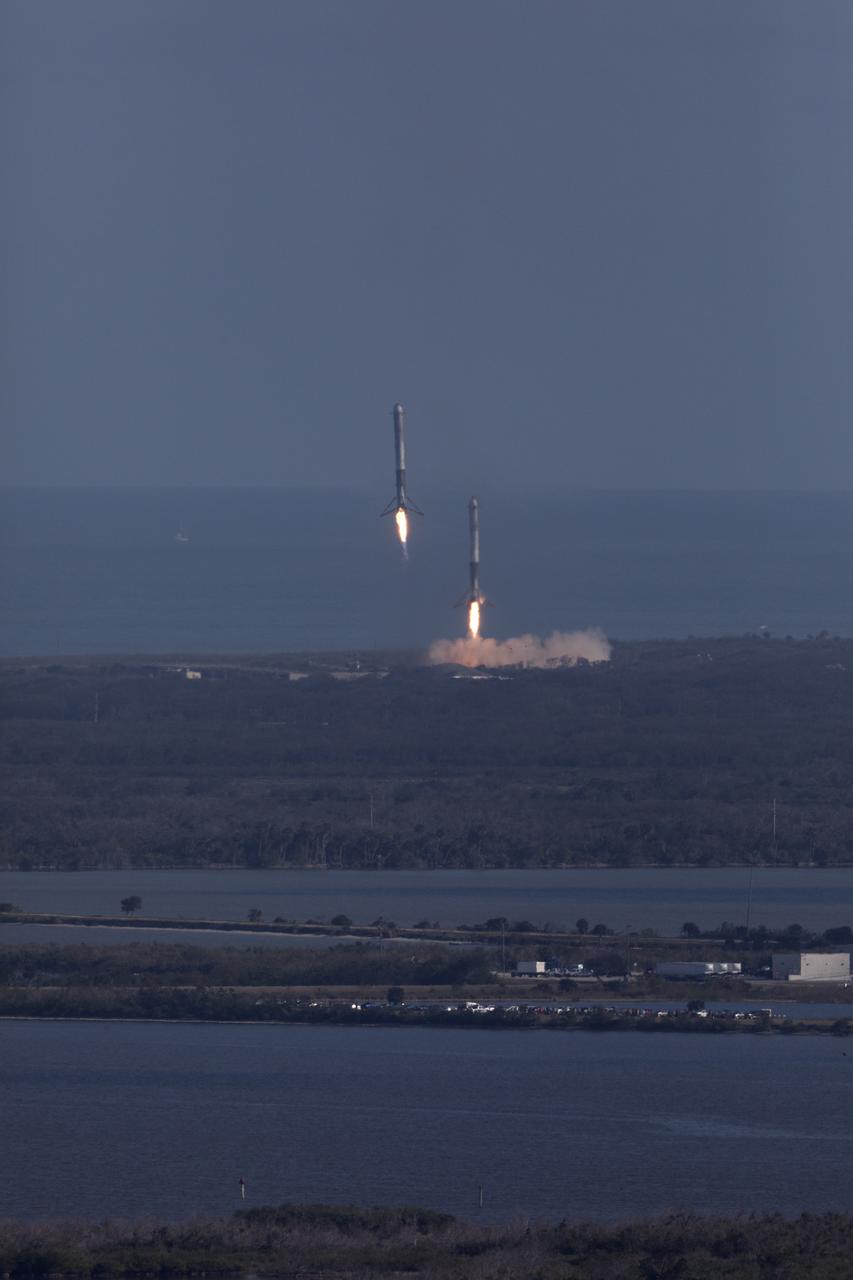
The SpaceX Falcon Heavy rocket’s two side cores descend toward landing at Cape Canaveral Air Force Station in Florida following a successful liftoff at 3:45 p.m. EST from Launch Complex 39A at NASA's Kennedy Space Center. This demonstration flight is a significant milestone for the world's premier multi-user spaceport. In 2014, NASA signed a property agreement with SpaceX for the use and operation of the center's pad 39A, where the company has launched Falcon 9 rockets and prepared for the first Falcon Heavy. NASA also has Space Act Agreements in place with partners, such as SpaceX, to provide services needed to process and launch rockets and spacecraft.
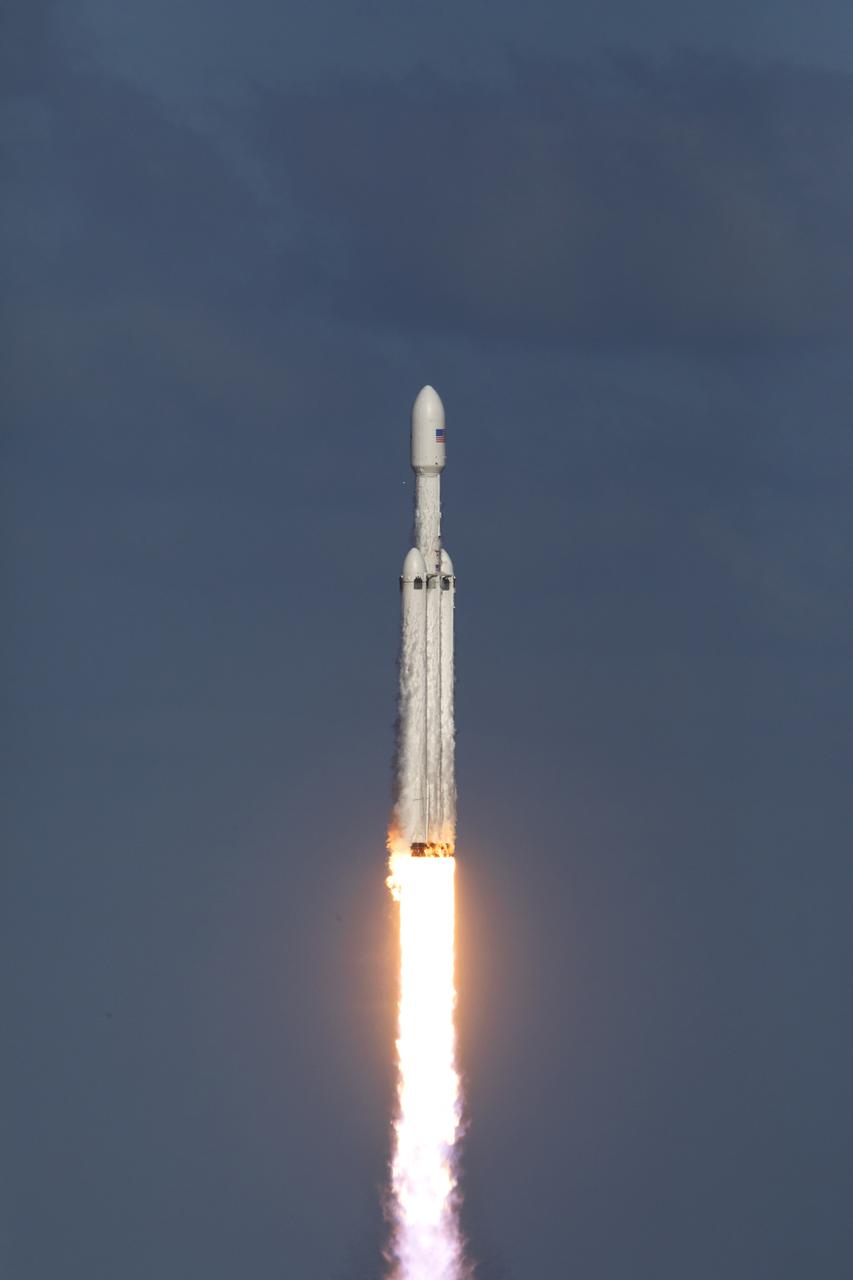
A SpaceX Falcon Heavy rocket begins its demonstration flight with liftoff at 3:45 p.m. EST from from Launch Complex 39A at NASA's Kennedy Space Center in Florida. This is a significant milestone for the world's premier multi-user spaceport. In 2014, NASA signed a property agreement with SpaceX for the use and operation of the center's pad 39A, where the company has launched Falcon 9 rockets and prepared for the first Falcon Heavy. NASA also has Space Act Agreements in place with partners, such as SpaceX, to provide services needed to process and launch rockets and spacecraft.
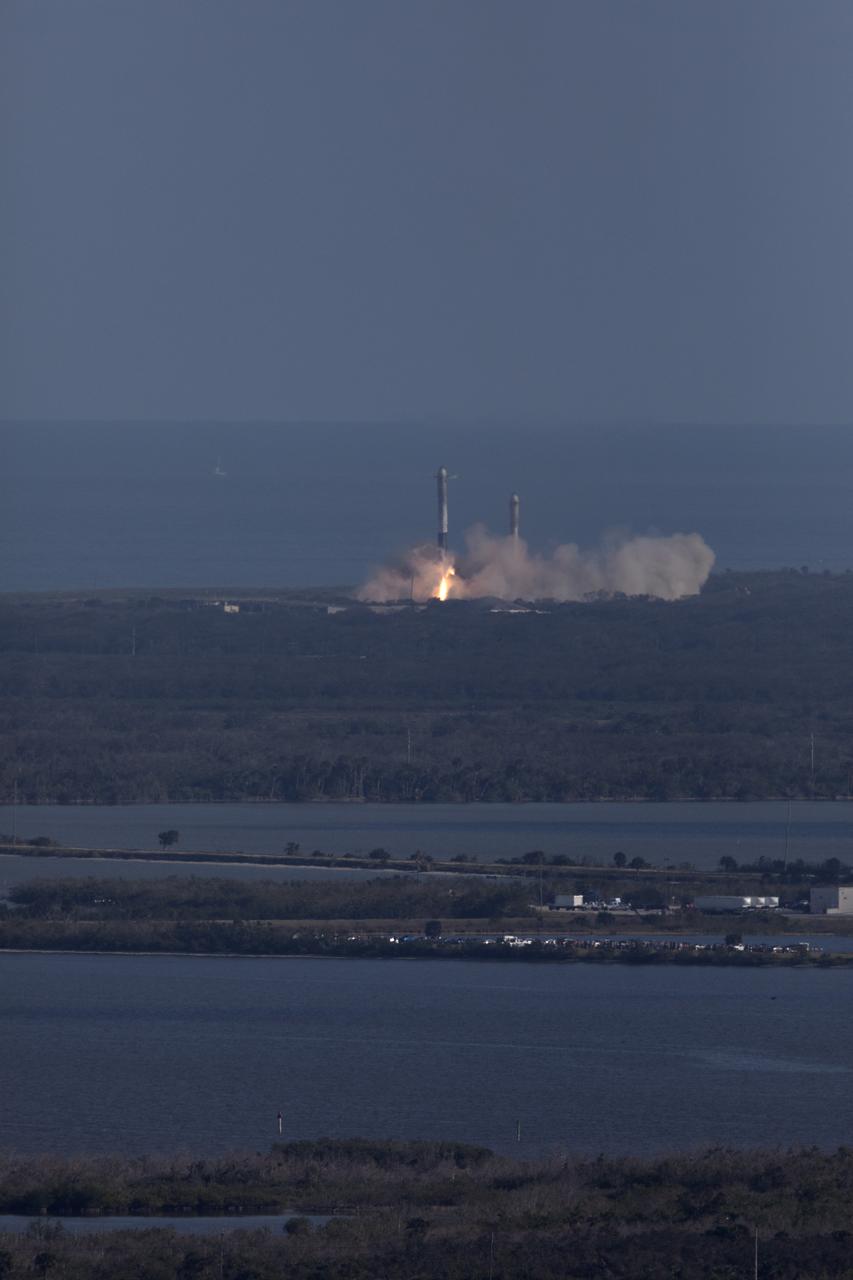
The SpaceX Falcon Heavy rocket’s two side cores descend toward landing at Cape Canaveral Air Force Station in Florida following a successful liftoff at 3:45 p.m. EST from Launch Complex 39A at NASA's Kennedy Space Center. This demonstration flight is a significant milestone for the world's premier multi-user spaceport. In 2014, NASA signed a property agreement with SpaceX for the use and operation of the center's pad 39A, where the company has launched Falcon 9 rockets and prepared for the first Falcon Heavy. NASA also has Space Act Agreements in place with partners, such as SpaceX, to provide services needed to process and launch rockets and spacecraft.
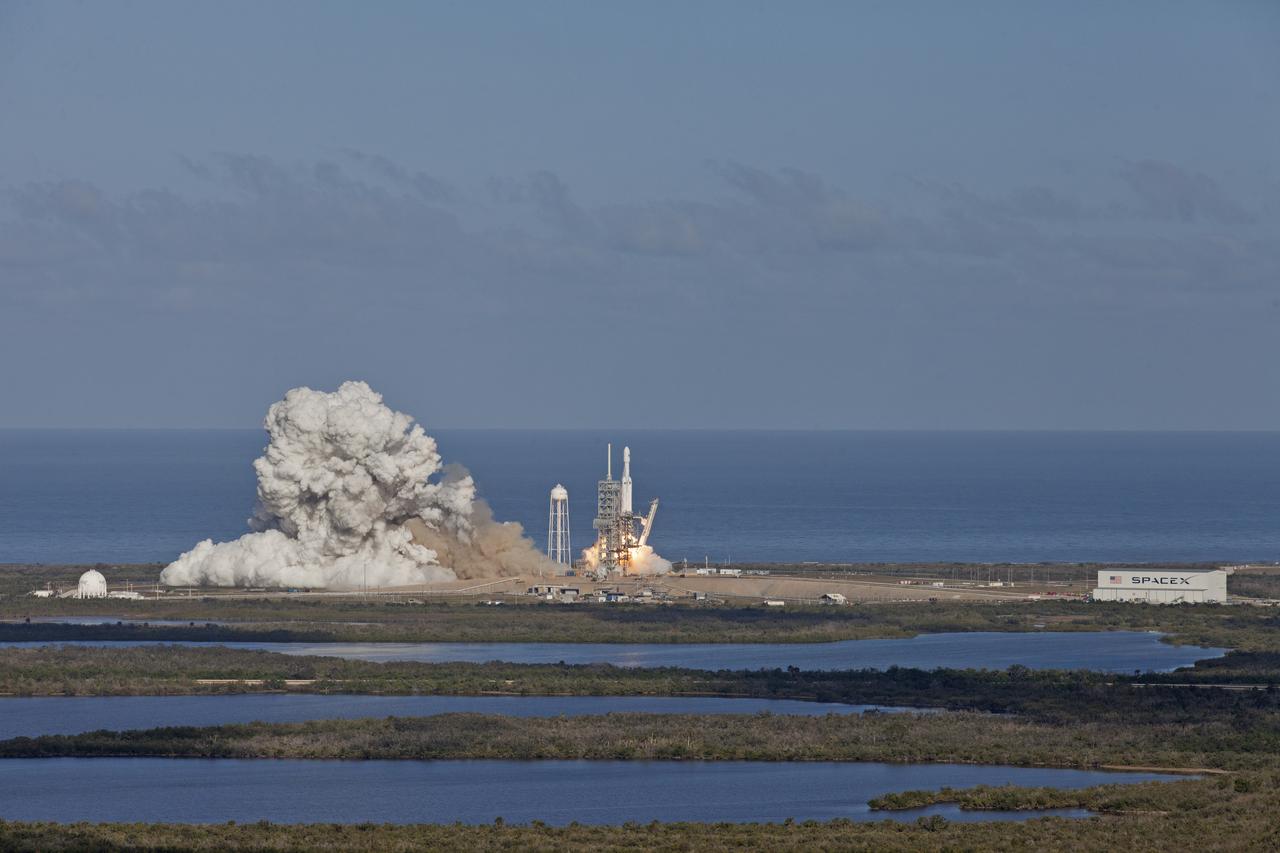
A SpaceX Falcon Heavy rocket begins its demonstration flight with liftoff at 3:45 p.m. EST from from Launch Complex 39A at NASA's Kennedy Space Center in Florida. This is a significant milestone for the world's premier multi-user spaceport. In 2014, NASA signed a property agreement with SpaceX for the use and operation of the center's pad 39A, where the company has launched Falcon 9 rockets and prepared for the first Falcon Heavy. NASA also has Space Act Agreements in place with partners, such as SpaceX, to provide services needed to process and launch rockets and spacecraft.
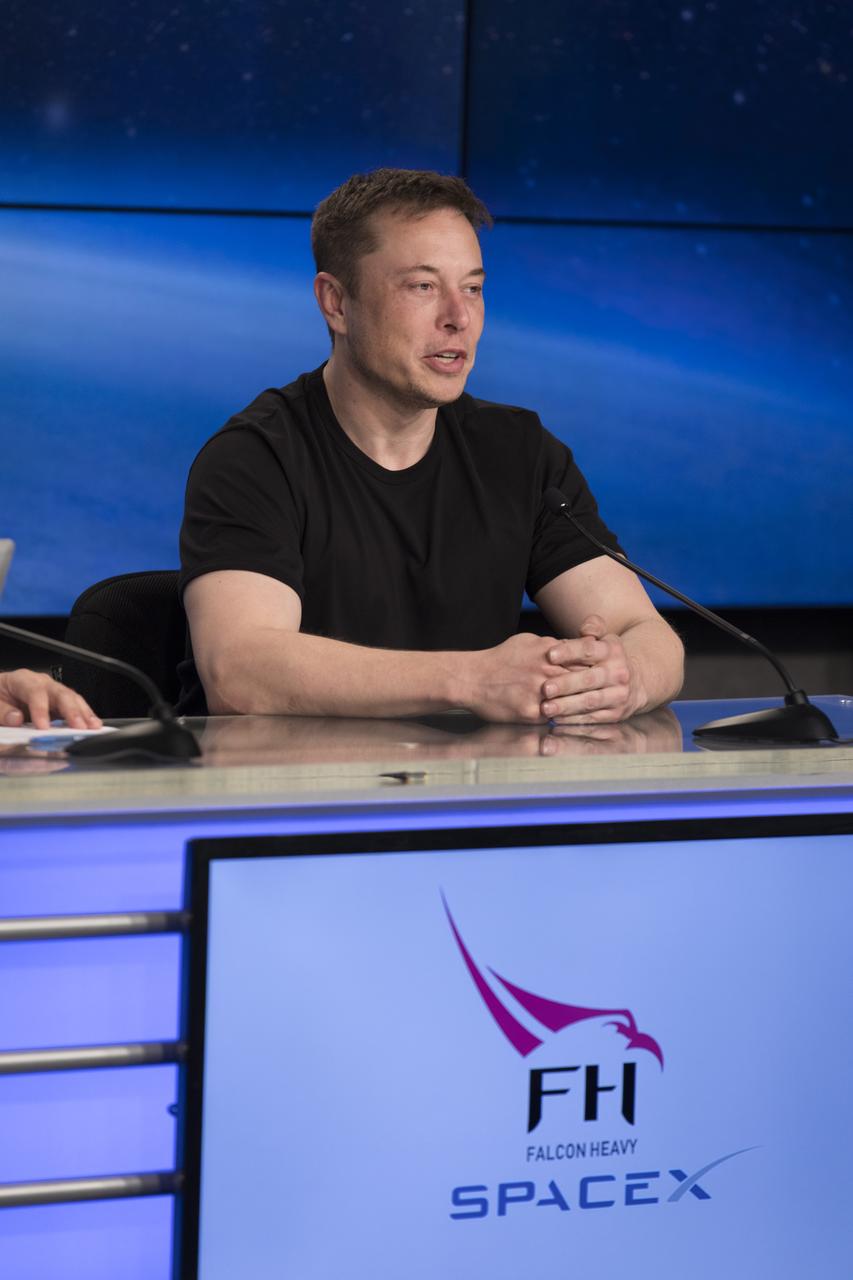
Elon Musk, SpaceX chief executive officer and lead designer, speaks to the news media during a news conference at NASA's Kennedy Space Center in Florida after the successful liftoff of the company’s Falcon Heavy rocket from Launch Complex 39A. The demonstration flight is a significant milestone for the world's premier multi-user spaceport. In 2014, NASA signed a property agreement with SpaceX for the use and operation of the center's pad 39A, where the company has launched Falcon 9 rockets and is preparing for the first Falcon Heavy. NASA also has Space Act Agreements in place with partners, such as SpaceX, to provide services needed to process and launch rockets and spacecraft.
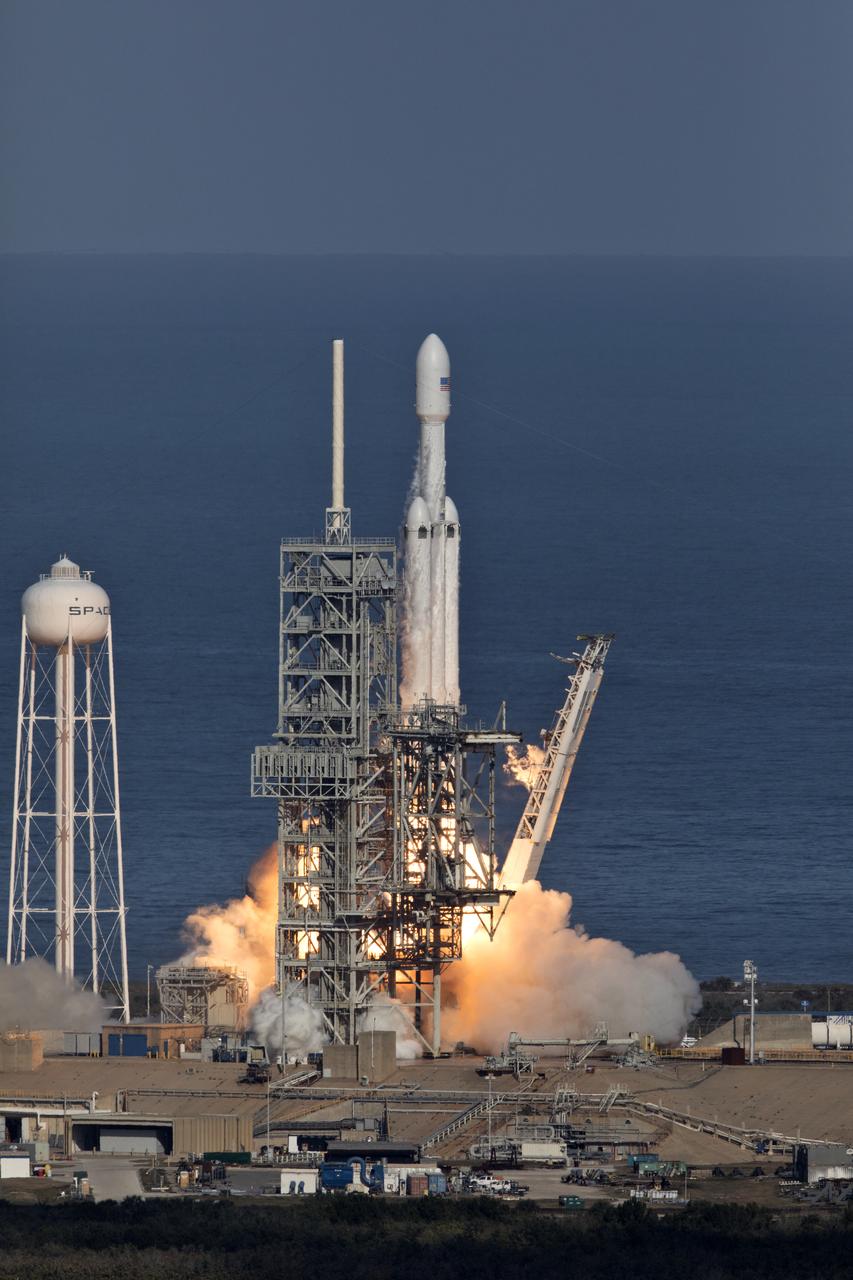
A SpaceX Falcon Heavy rocket begins its demonstration flight with liftoff at 3:45 p.m. EST from from Launch Complex 39A at NASA's Kennedy Space Center in Florida. This is a significant milestone for the world's premier multi-user spaceport. In 2014, NASA signed a property agreement with SpaceX for the use and operation of the center's pad 39A, where the company has launched Falcon 9 rockets and prepared for the first Falcon Heavy. NASA also has Space Act Agreements in place with partners, such as SpaceX, to provide services needed to process and launch rockets and spacecraft.
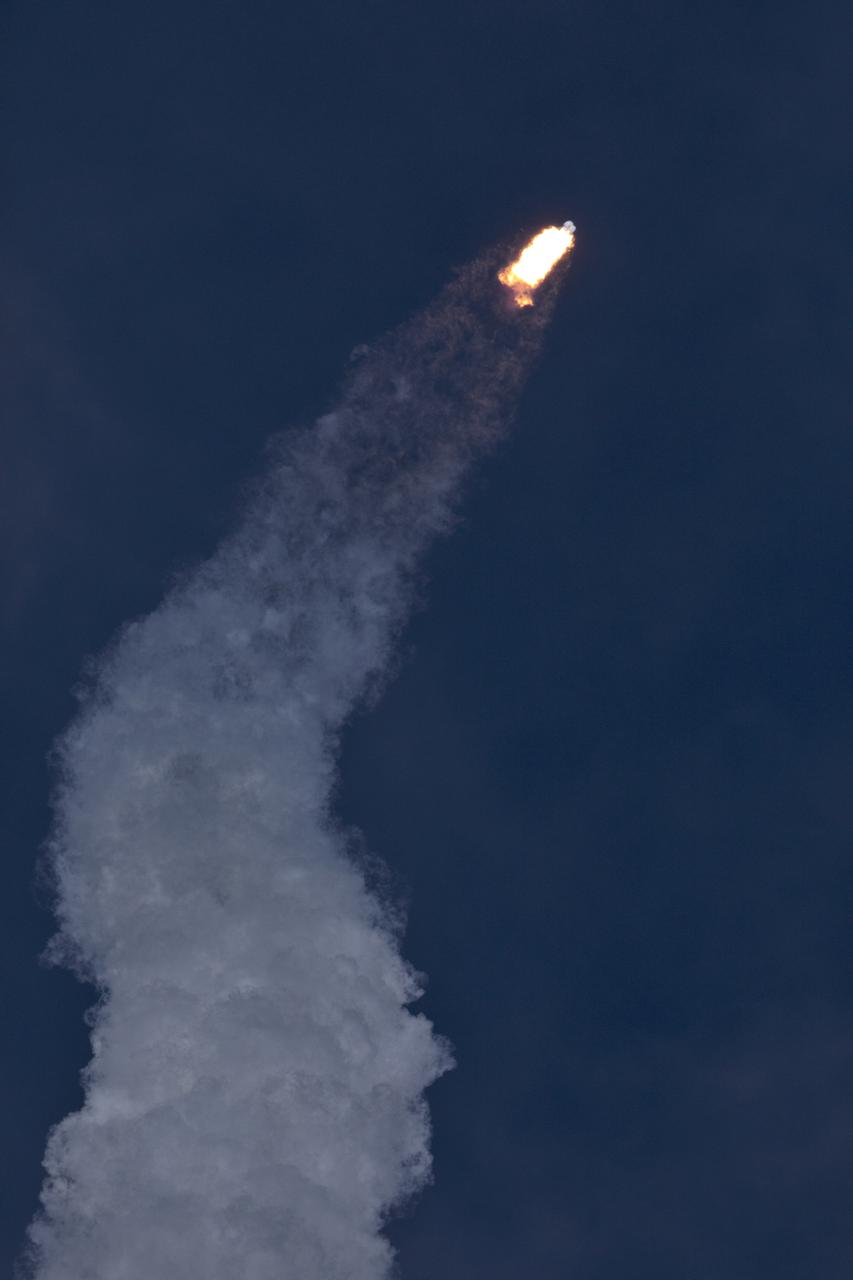
A SpaceX Falcon Heavy rocket begins its demonstration flight with liftoff at 3:45 p.m. EST from from Launch Complex 39A at NASA's Kennedy Space Center in Florida. This is a significant milestone for the world's premier multi-user spaceport. In 2014, NASA signed a property agreement with SpaceX for the use and operation of the center's pad 39A, where the company has launched Falcon 9 rockets and prepared for the first Falcon Heavy. NASA also has Space Act Agreements in place with partners, such as SpaceX, to provide services needed to process and launch rockets and spacecraft.
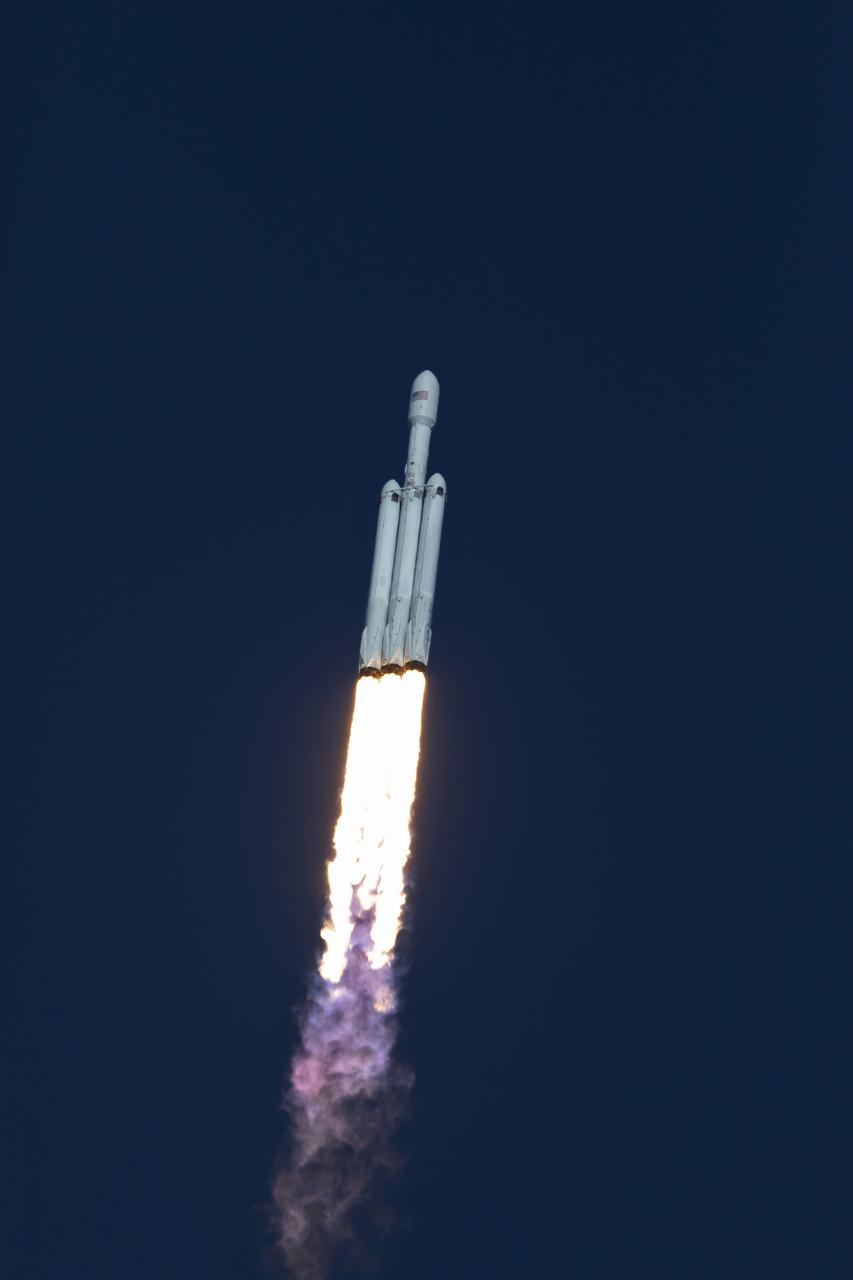
A SpaceX Falcon Heavy rocket begins its demonstration flight with liftoff at 3:45 p.m. EST from from Launch Complex 39A at NASA's Kennedy Space Center in Florida. This is a significant milestone for the world's premier multi-user spaceport. In 2014, NASA signed a property agreement with SpaceX for the use and operation of the center's pad 39A, where the company has launched Falcon 9 rockets and prepared for the first Falcon Heavy. NASA also has Space Act Agreements in place with partners, such as SpaceX, to provide services needed to process and launch rockets and spacecraft.
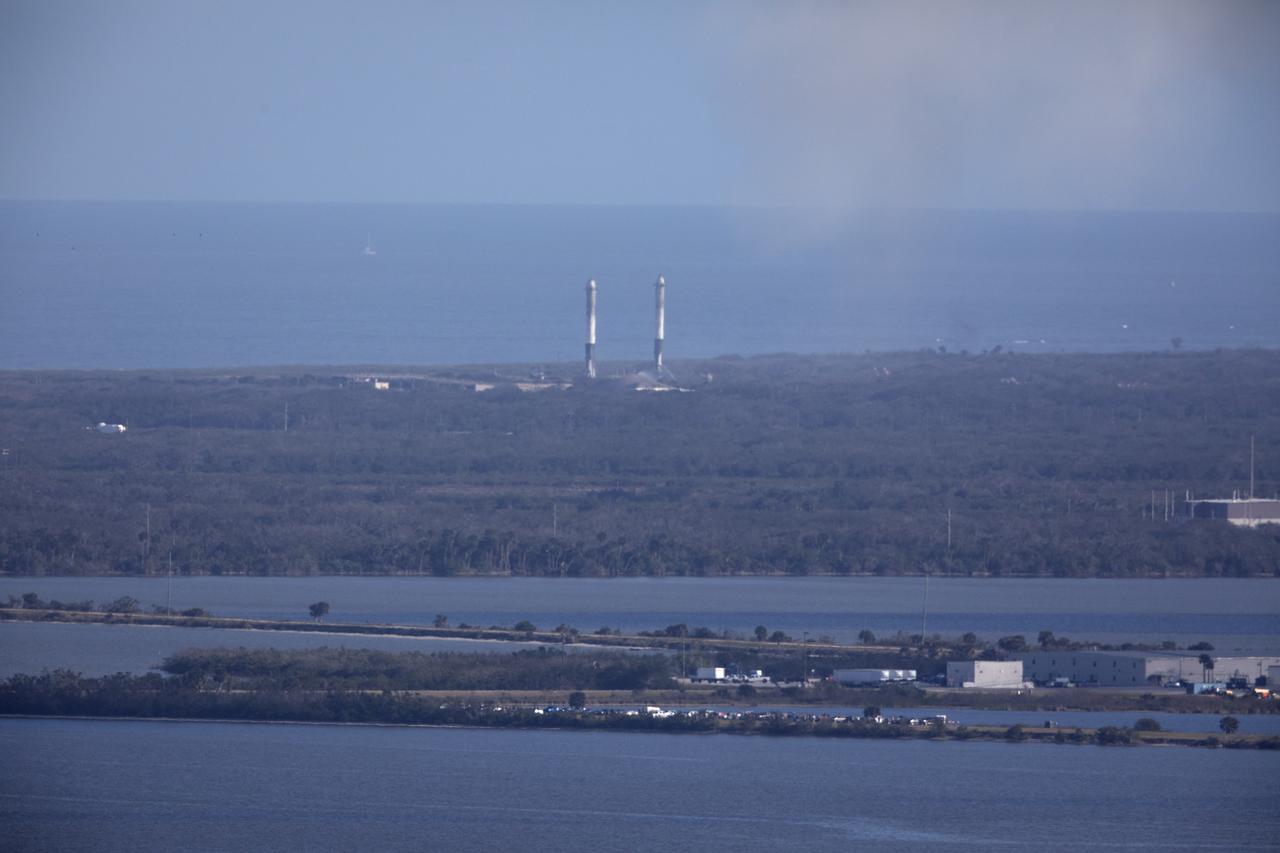
The SpaceX Falcon Heavy rocket’s two side cores descend toward landing at Cape Canaveral Air Force Station in Florida following a successful liftoff at 3:45 p.m. EST from Launch Complex 39A at NASA's Kennedy Space Center. This demonstration flight is a significant milestone for the world's premier multi-user spaceport. In 2014, NASA signed a property agreement with SpaceX for the use and operation of the center's pad 39A, where the company has launched Falcon 9 rockets and prepared for the first Falcon Heavy. NASA also has Space Act Agreements in place with partners, such as SpaceX, to provide services needed to process and launch rockets and spacecraft.
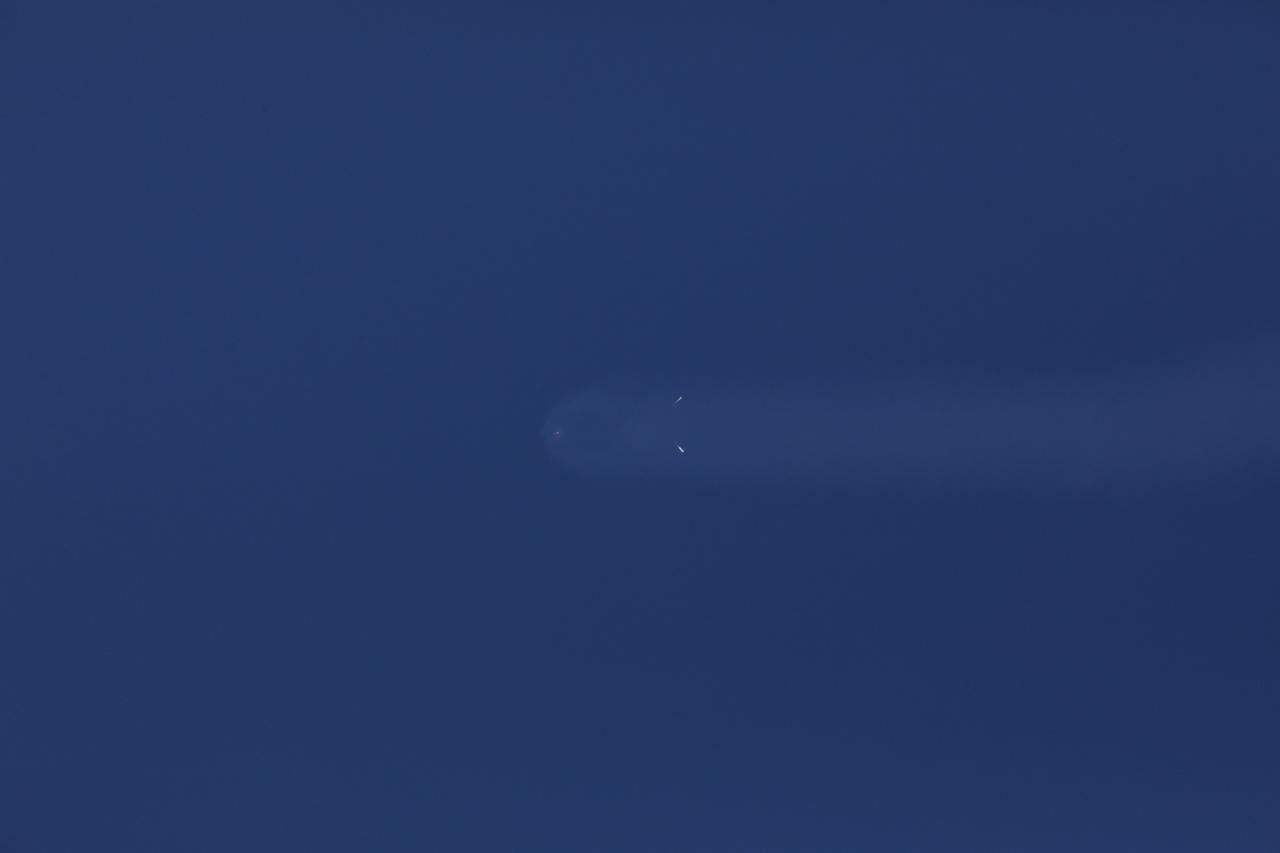
The SpaceX Falcon Heavy rocket’s two side cores separate from the center core as the vehicle performs its demonstration flight. The rocket lifted off at 3:45 p.m. EST from Launch Complex 39A at NASA's Kennedy Space Center in Florida. This is a significant milestone for the world's premier multi-user spaceport. In 2014, NASA signed a property agreement with SpaceX for the use and operation of the center's pad 39A, where the company has launched Falcon 9 rockets and prepared for the first Falcon Heavy. NASA also has Space Act Agreements in place with partners, such as SpaceX, to provide services needed to process and launch rockets and spacecraft.
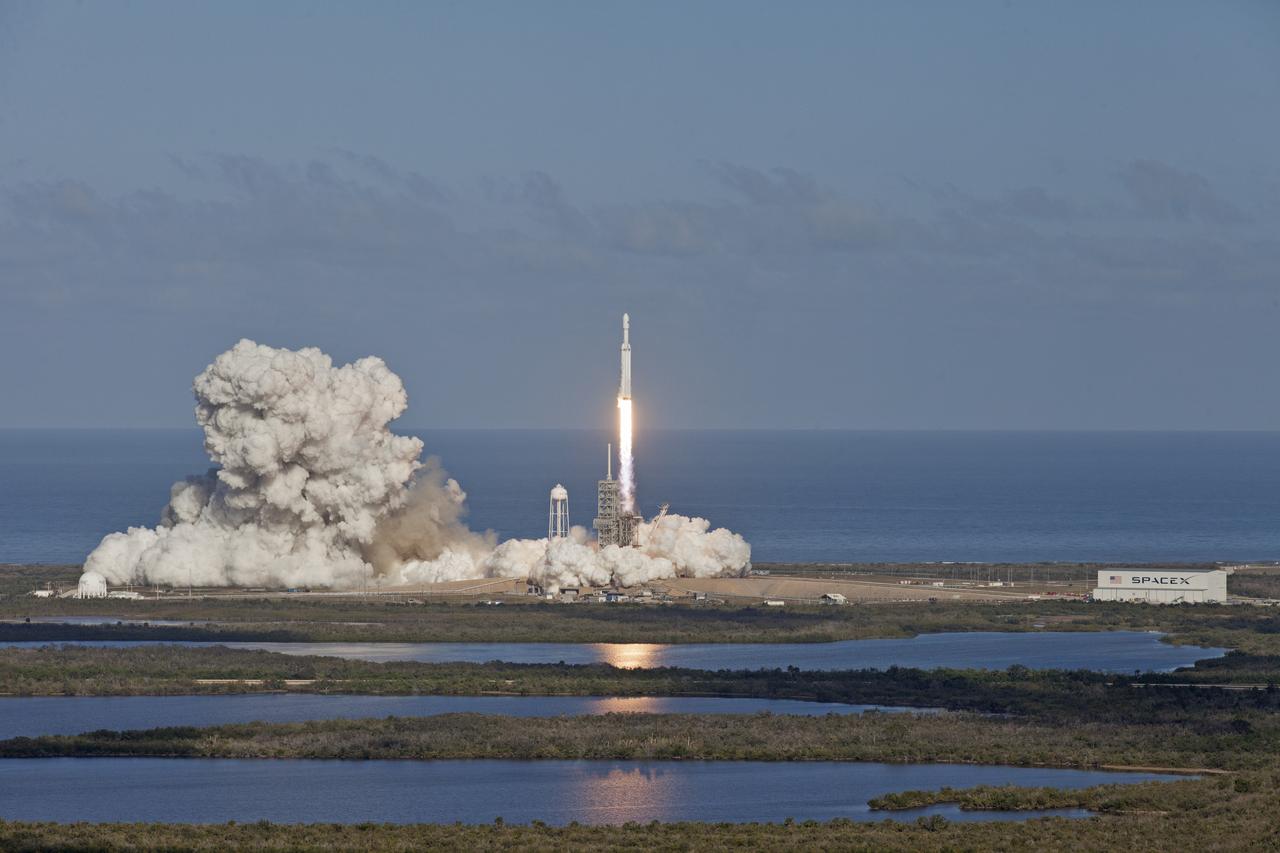
A SpaceX Falcon Heavy rocket begins its demonstration flight with liftoff at 3:45 p.m. EST from from Launch Complex 39A at NASA's Kennedy Space Center in Florida. This is a significant milestone for the world's premier multi-user spaceport. In 2014, NASA signed a property agreement with SpaceX for the use and operation of the center's pad 39A, where the company has launched Falcon 9 rockets and prepared for the first Falcon Heavy. NASA also has Space Act Agreements in place with partners, such as SpaceX, to provide services needed to process and launch rockets and spacecraft.
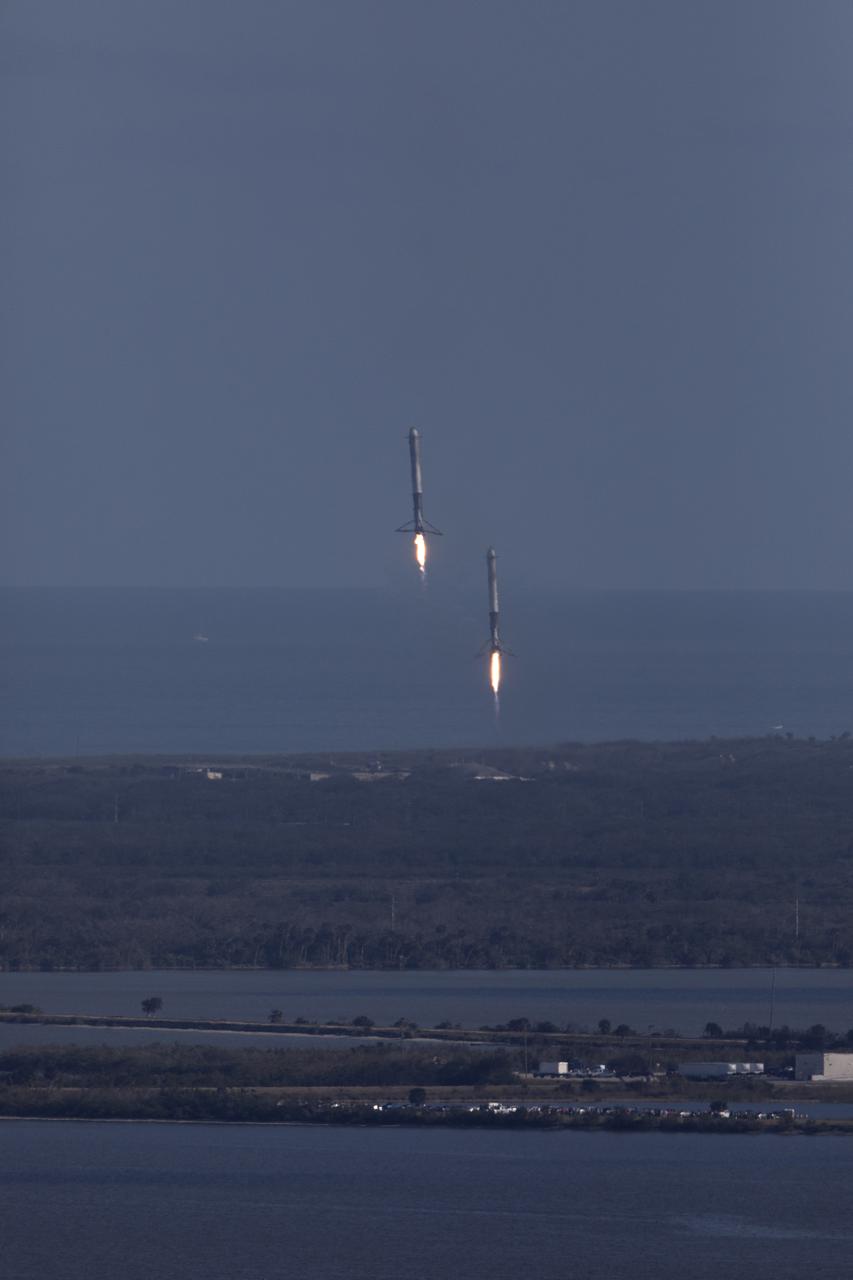
The SpaceX Falcon Heavy rocket’s two side cores descend toward landing at Cape Canaveral Air Force Station in Florida following a successful liftoff at 3:45 p.m. EST from Launch Complex 39A at NASA's Kennedy Space Center. This demonstration flight is a significant milestone for the world's premier multi-user spaceport. In 2014, NASA signed a property agreement with SpaceX for the use and operation of the center's pad 39A, where the company has launched Falcon 9 rockets and prepared for the first Falcon Heavy. NASA also has Space Act Agreements in place with partners, such as SpaceX, to provide services needed to process and launch rockets and spacecraft.
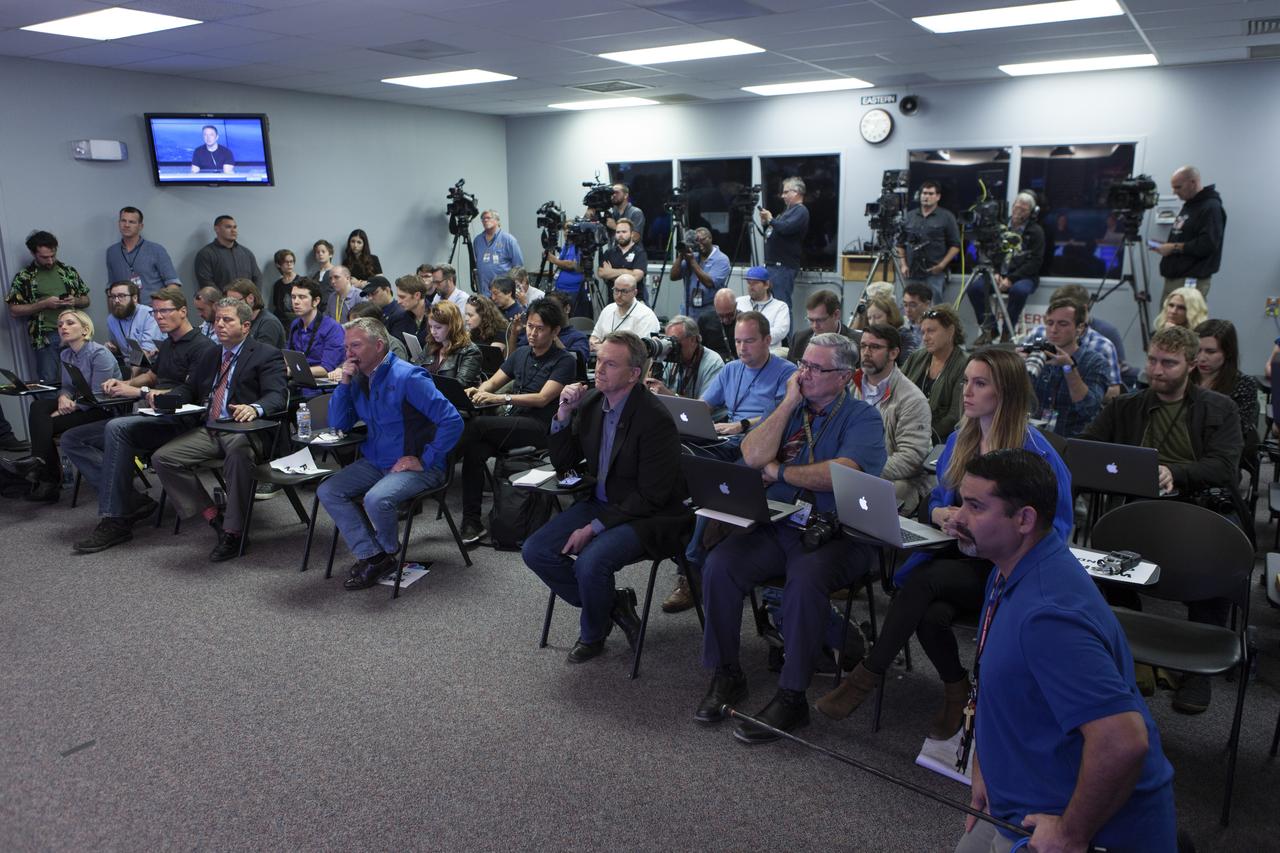
Media gather for a news conference at NASA's Kennedy Space Center in Florida after the successful liftoff of the company’s Falcon Heavy rocket from Launch Complex 39A. The demonstration flight is a significant milestone for the world's premier multi-user spaceport. In 2014, NASA signed a property agreement with SpaceX for the use and operation of the center's pad 39A, where the company has launched Falcon 9 rockets and is preparing for the first Falcon Heavy. NASA also has Space Act Agreements in place with partners, such as SpaceX, to provide services needed to process and launch rockets and spacecraft.
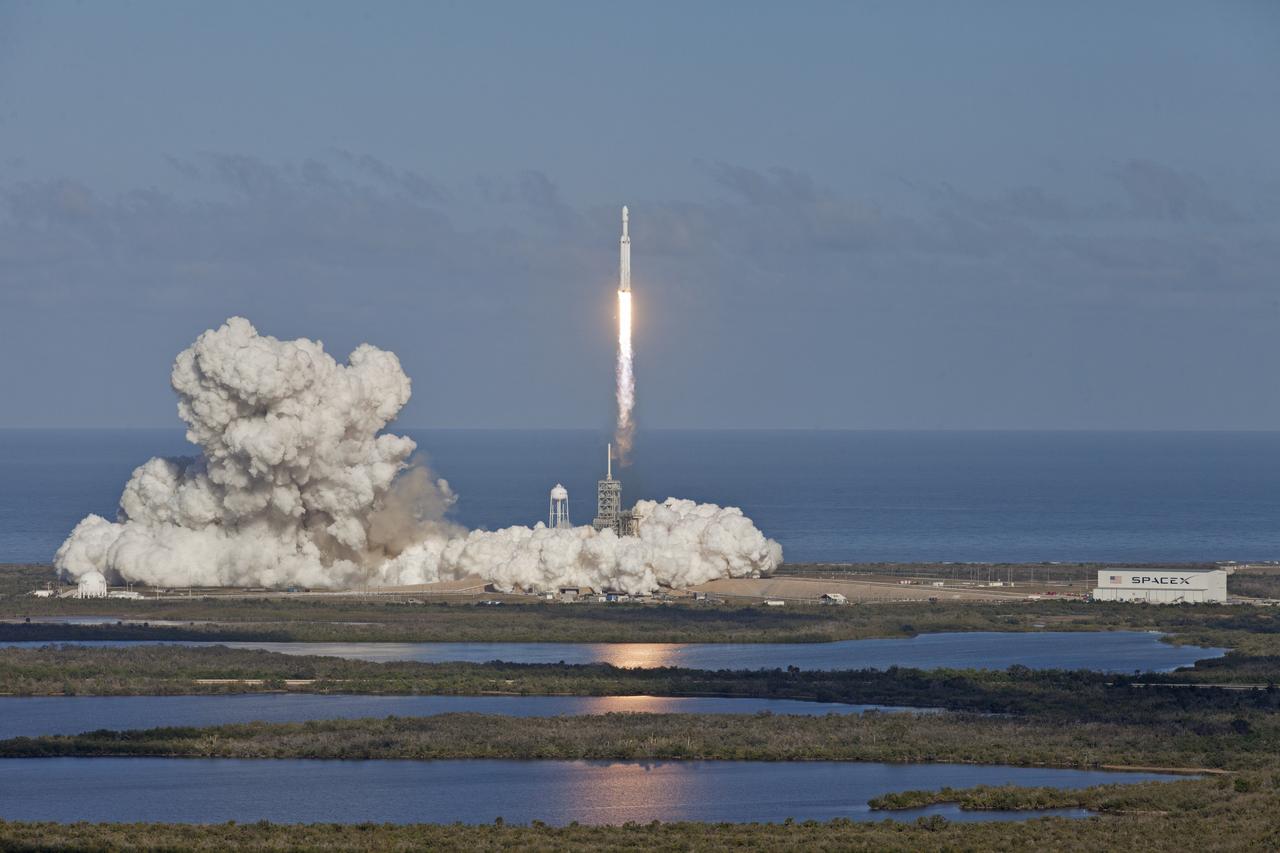
A SpaceX Falcon Heavy rocket begins its demonstration flight with liftoff at 3:45 p.m. EST from from Launch Complex 39A at NASA's Kennedy Space Center in Florida. This is a significant milestone for the world's premier multi-user spaceport. In 2014, NASA signed a property agreement with SpaceX for the use and operation of the center's pad 39A, where the company has launched Falcon 9 rockets and prepared for the first Falcon Heavy. NASA also has Space Act Agreements in place with partners, such as SpaceX, to provide services needed to process and launch rockets and spacecraft.
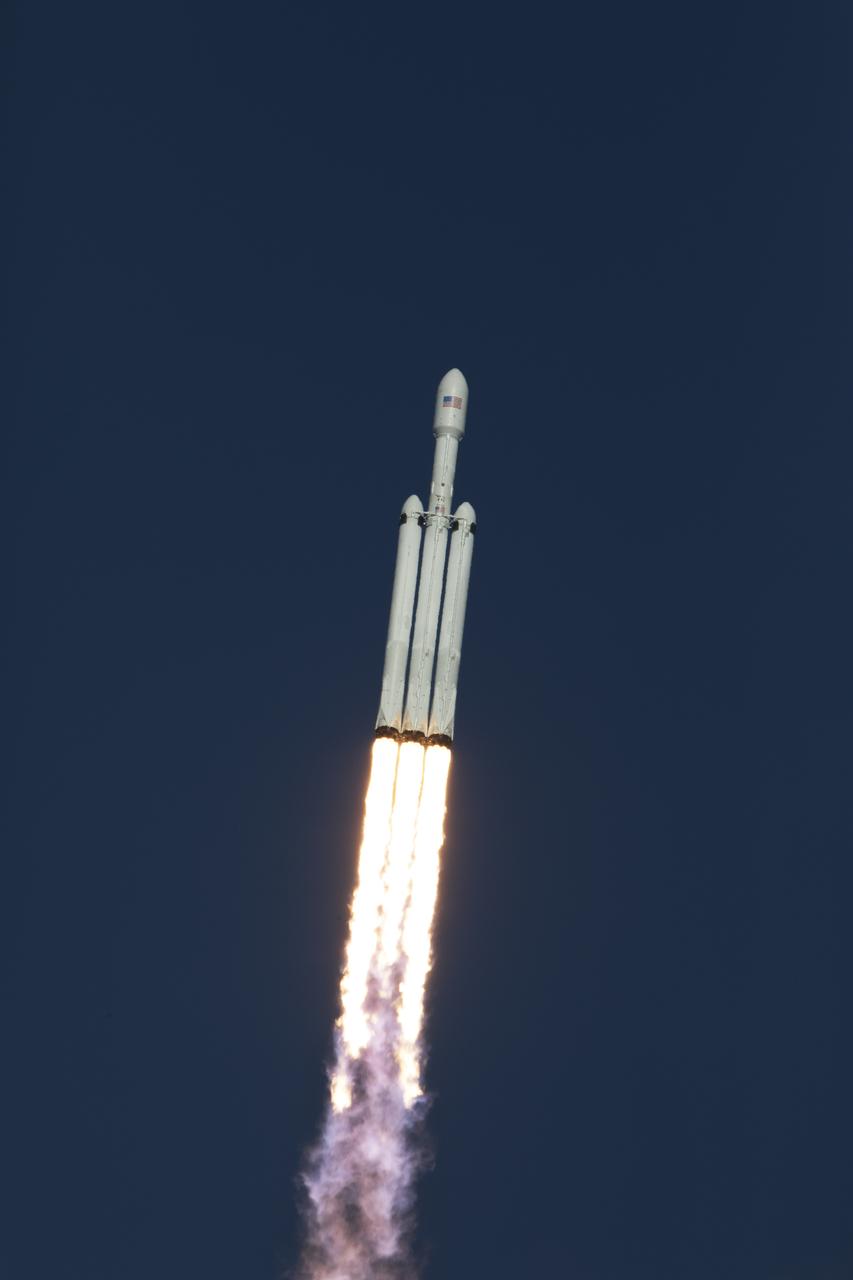
A SpaceX Falcon Heavy rocket begins its demonstration flight with liftoff at 3:45 p.m. EST from from Launch Complex 39A at NASA's Kennedy Space Center in Florida. This is a significant milestone for the world's premier multi-user spaceport. In 2014, NASA signed a property agreement with SpaceX for the use and operation of the center's pad 39A, where the company has launched Falcon 9 rockets and prepared for the first Falcon Heavy. NASA also has Space Act Agreements in place with partners, such as SpaceX, to provide services needed to process and launch rockets and spacecraft.

From left to right - John Taylor, SpaceX communications director, and Elon Musk, SpaceX chief executive officer and lead designer, speak to the news media during a news conference at NASA's Kennedy Space Center in Florida after the successful liftoff of the company’s Falcon Heavy rocket from Launch Complex 39A. The demonstration flight is a significant milestone for the world's premier multi-user spaceport. In 2014, NASA signed a property agreement with SpaceX for the use and operation of the center's pad 39A, where the company has launched Falcon 9 rockets and is preparing for the first Falcon Heavy. NASA also has Space Act Agreements in place with partners, such as SpaceX, to provide services needed to process and launch rockets and spacecraft.
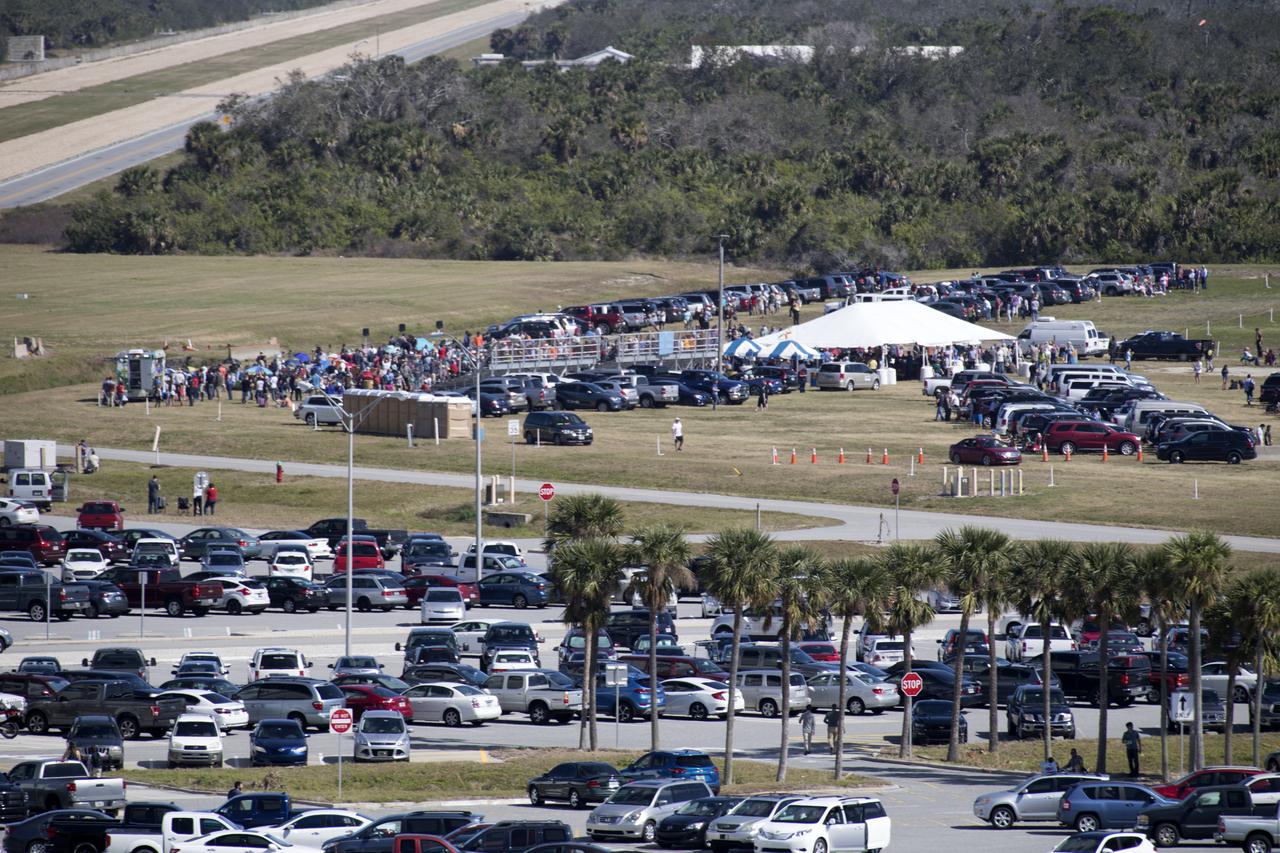
Employees, invited guests and members of the news media await liftoff of the SpaceX Falcon Heavy rocket from Launch Complex 39A at NASA’s Kennedy Space Center in Florida. The demonstration flight is a significant milestone for the world's premier multi-user spaceport. In 2014, NASA signed a property agreement with SpaceX for the use and operation of the center's pad 39A, where the company has launched Falcon 9 rockets and is preparing for the first Falcon Heavy. NASA also has Space Act Agreements in place with partners, such as SpaceX, to provide services needed to process and launch rockets and spacecraft.
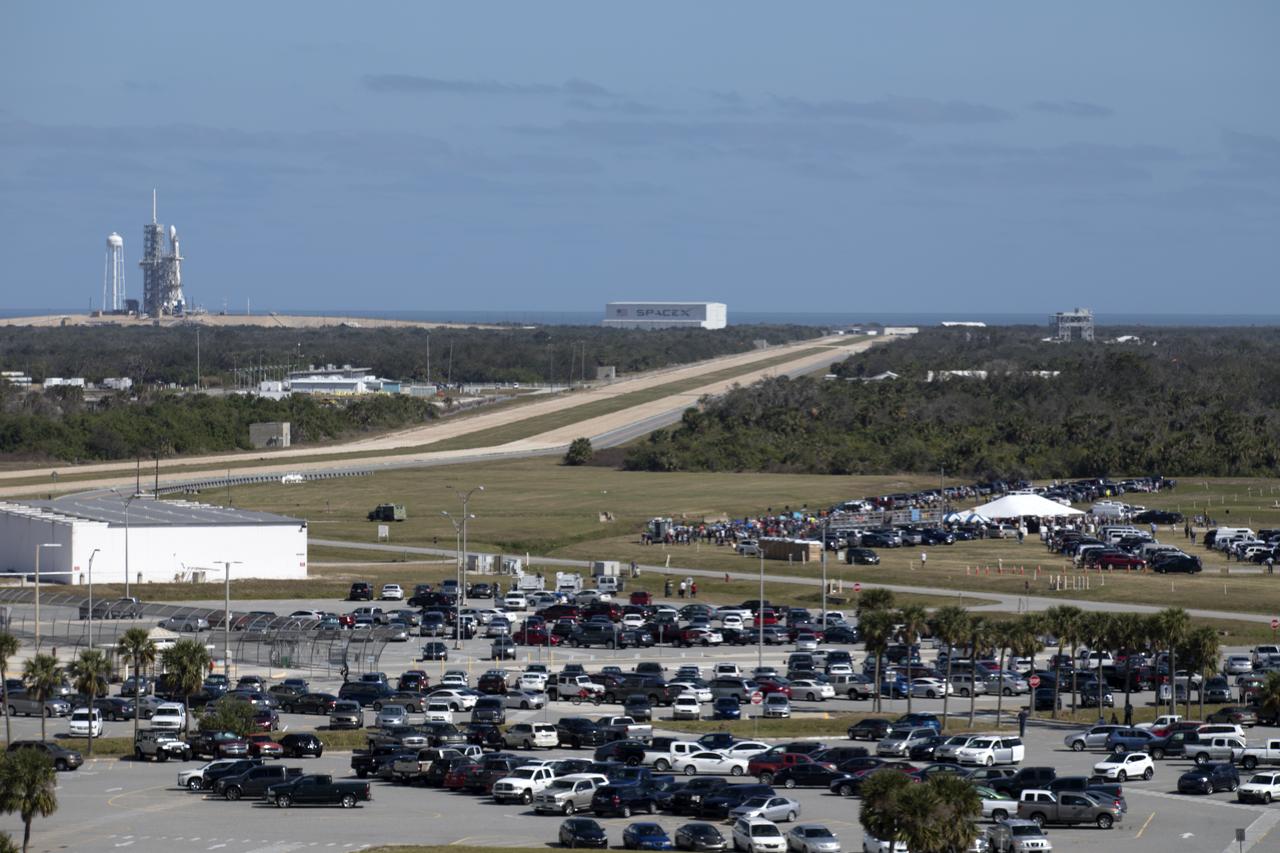
Employees, invited guests and members of the news media await liftoff of the SpaceX Falcon Heavy rocket from Launch Complex 39A at NASA’s Kennedy Space Center in Florida. The demonstration flight is a significant milestone for the world's premier multi-user spaceport. In 2014, NASA signed a property agreement with SpaceX for the use and operation of the center's pad 39A, where the company has launched Falcon 9 rockets and is preparing for the first Falcon Heavy. NASA also has Space Act Agreements in place with partners, such as SpaceX, to provide services needed to process and launch rockets and spacecraft.
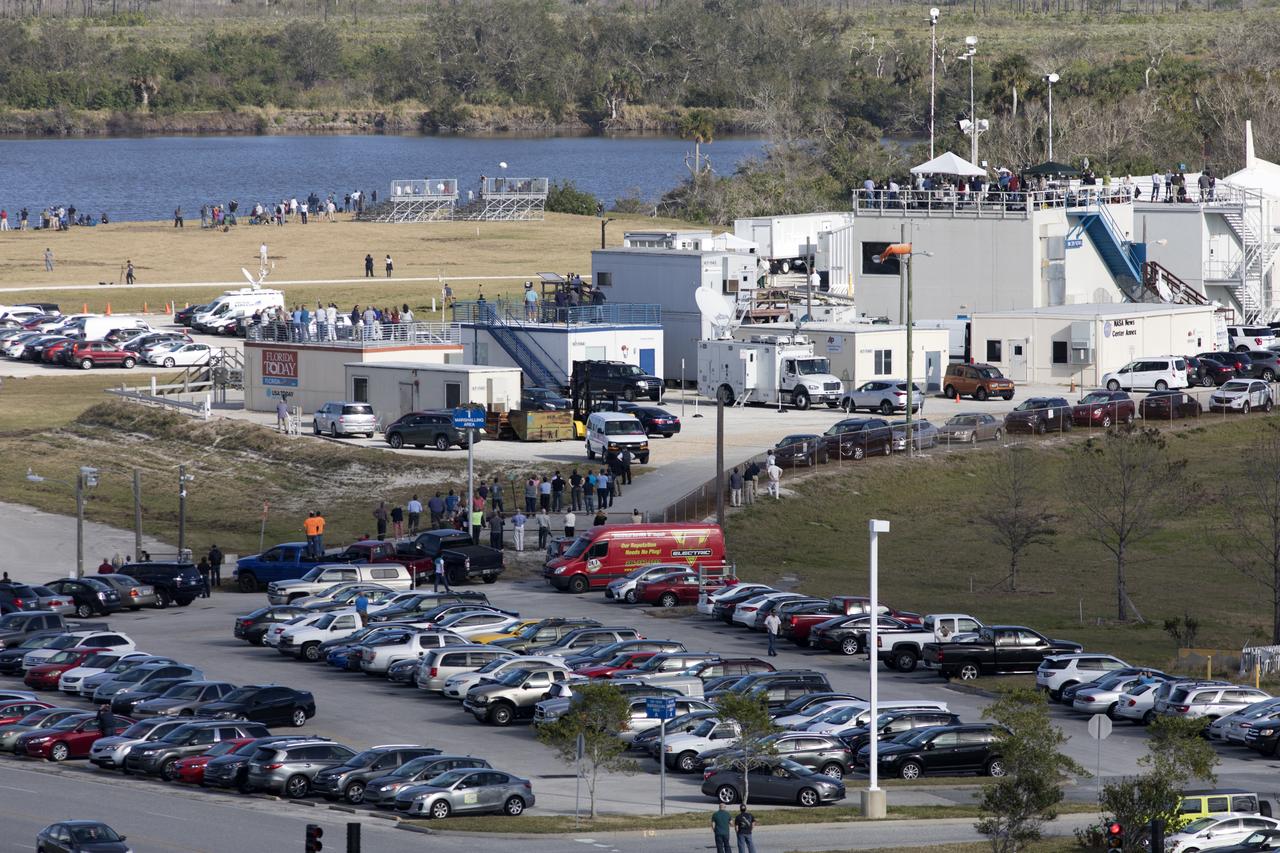
Employees, invited guests and members of the news media await liftoff of the SpaceX Falcon Heavy rocket from Launch Complex 39A at NASA’s Kennedy Space Center in Florida. The demonstration flight is a significant milestone for the world's premier multi-user spaceport. In 2014, NASA signed a property agreement with SpaceX for the use and operation of the center's pad 39A, where the company has launched Falcon 9 rockets and is preparing for the first Falcon Heavy. NASA also has Space Act Agreements in place with partners, such as SpaceX, to provide services needed to process and launch rockets and spacecraft.
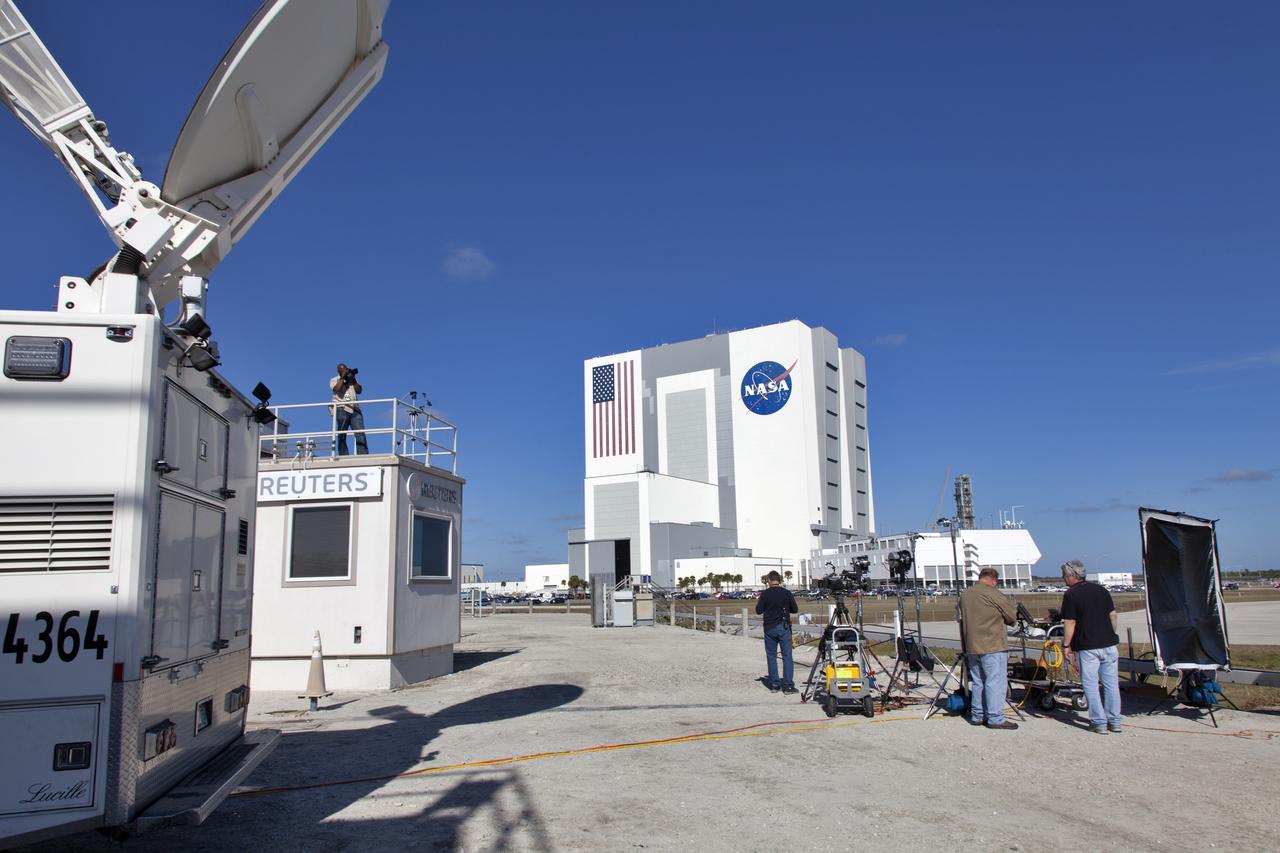
Members of the news media begin setting up at the NASA News Center to await liftoff of the SpaceX Falcon Heavy rocket from Launch Complex 39A at Kennedy Space Center in Florida. The iconic Vehicle Assembly Building and Launch Control Center are visible in the background. The Falcon Heavy demonstration flight will be a significant milestone for the world's premier multi-user spaceport. In 2014, NASA signed a property agreement with SpaceX for the use and operation of the center's pad 39A, where the company has launched Falcon 9 rockets and is preparing for the first Falcon Heavy. NASA also has Space Act Agreements in place with partners, such as SpaceX, to provide services needed to process and launch rockets and spacecraft.
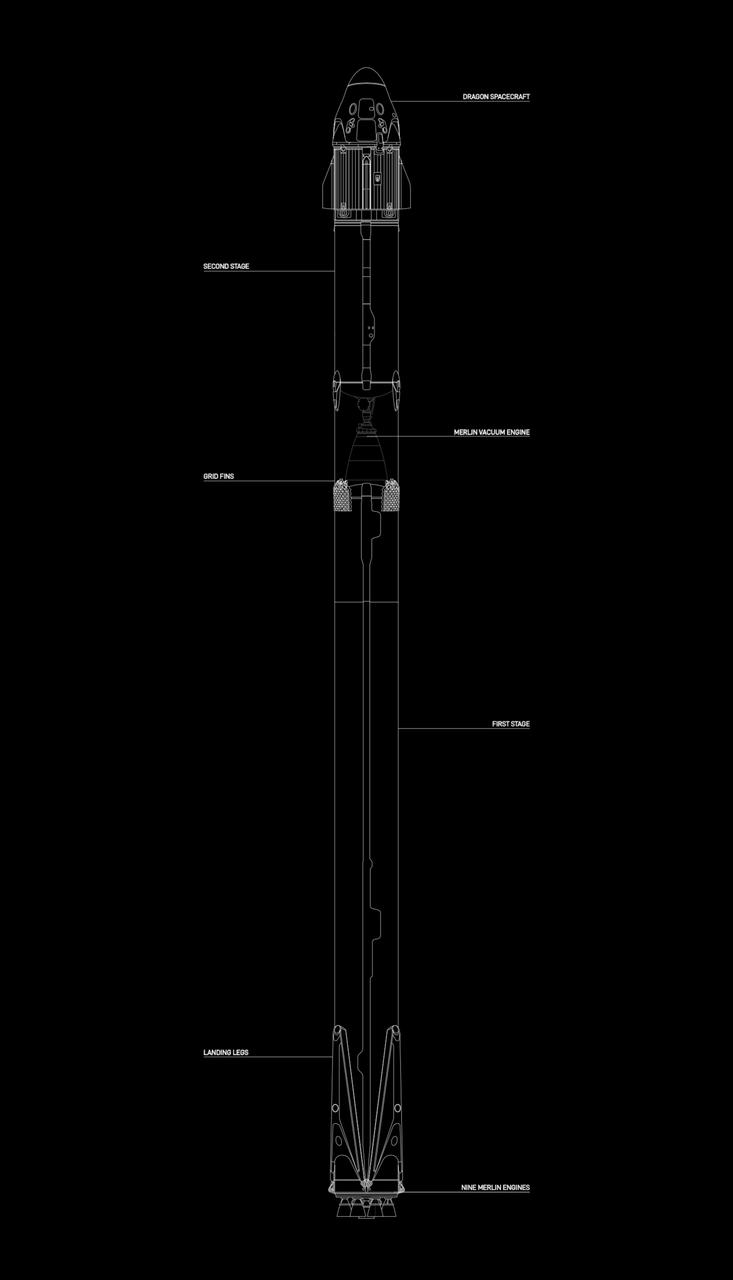
This graphic details the makeup of SpaceX’s Falcon 9 rocket. Falcon 9 is the launch vehicle SpaceX uses for all crewed missions to the International Space Station as part of NASA’s Commercial Crew Program.
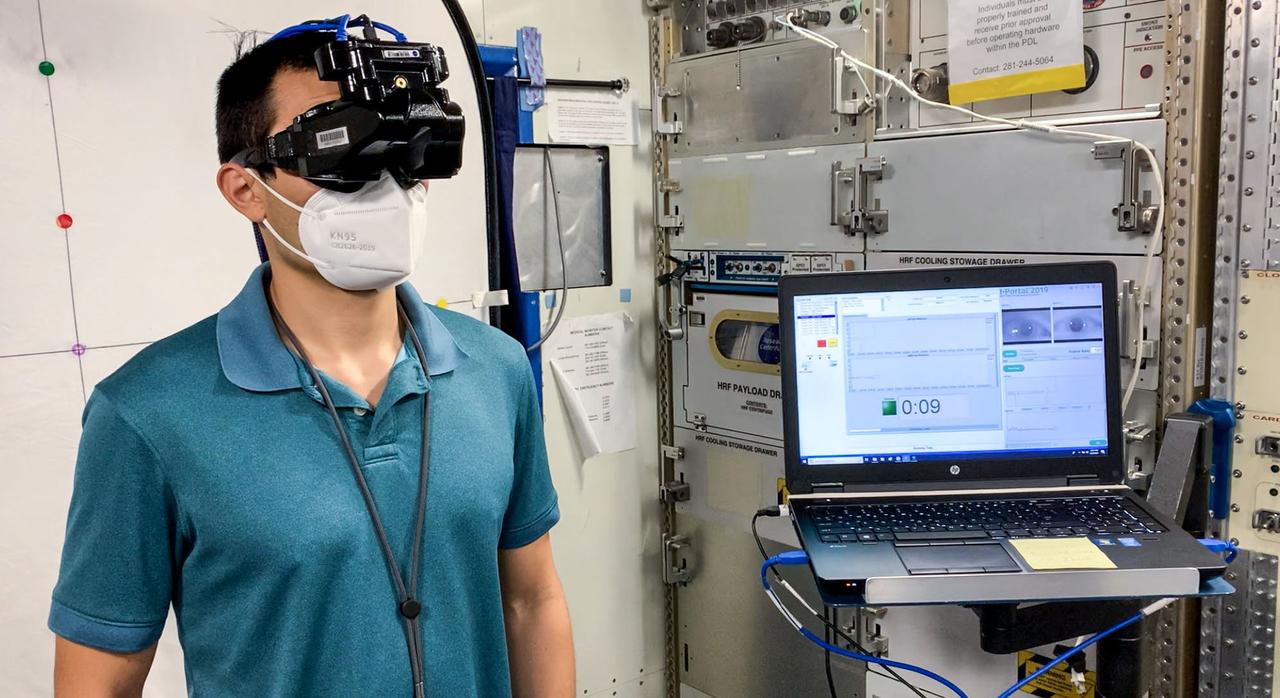
jsc2022e083571 (11/2/2022) --- The Falcon Goggles being worn as part of training development classes at NASA's Johnson Space Center. This image shows the configuration donned with the goggles cover. The Falcon Goggles, based on the Neurolign DX Falcon™, provide a system for capturing detailed high-speed video of the eyes to collect precise data on ocular alignment and crew balance. Image courtesy of NASA.
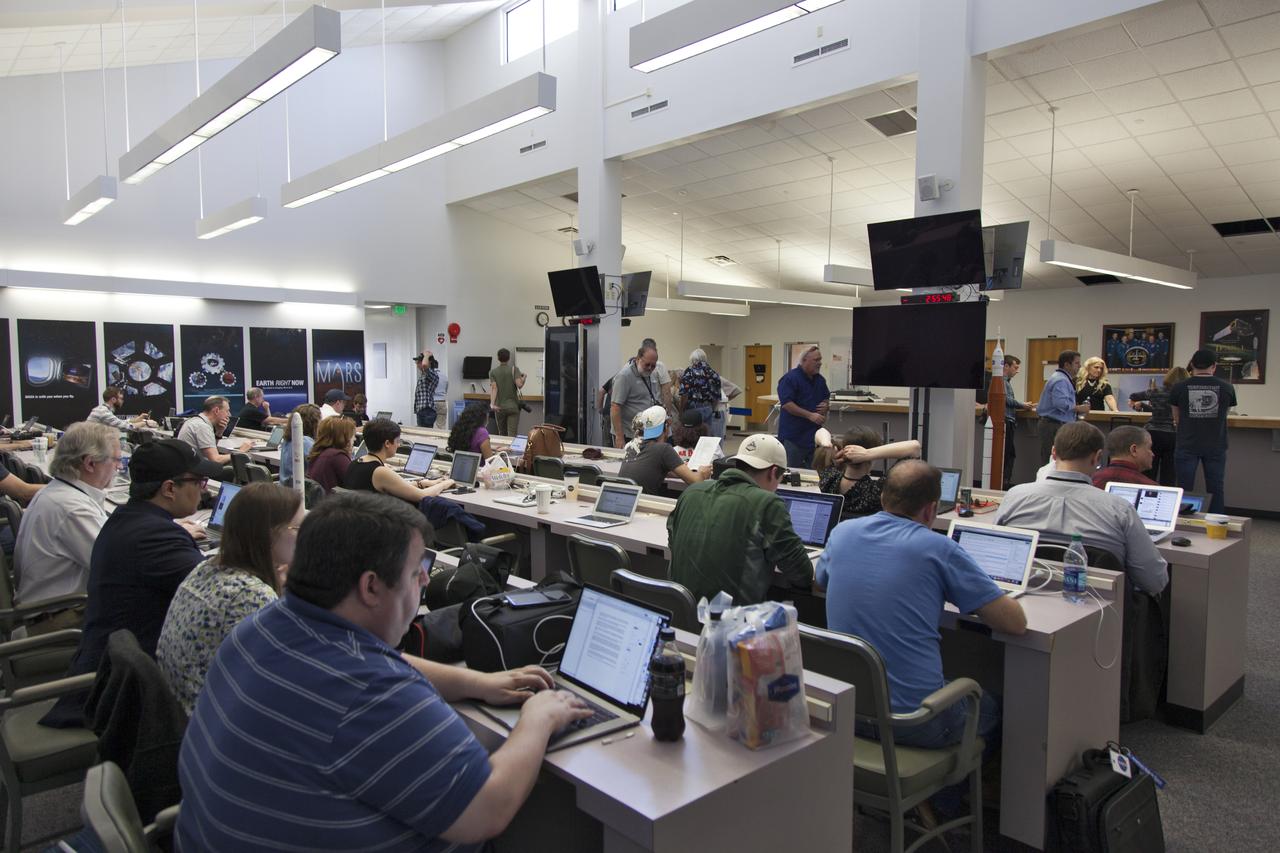
The NASA News Center at Kennedy Space Center in Florida is filled with members of the news media awaiting liftoff of the SpaceX Falcon Heavy rocket from Launch Complex 39A. The demonstration flight will be a significant milestone for the world's premier multi-user spaceport. In 2014, NASA signed a property agreement with SpaceX for the use and operation of the center's pad 39A, where the company has launched Falcon 9 rockets and is preparing for the first Falcon Heavy. NASA also has Space Act Agreements in place with partners, such as SpaceX, to provide services needed to process and launch rockets and spacecraft.
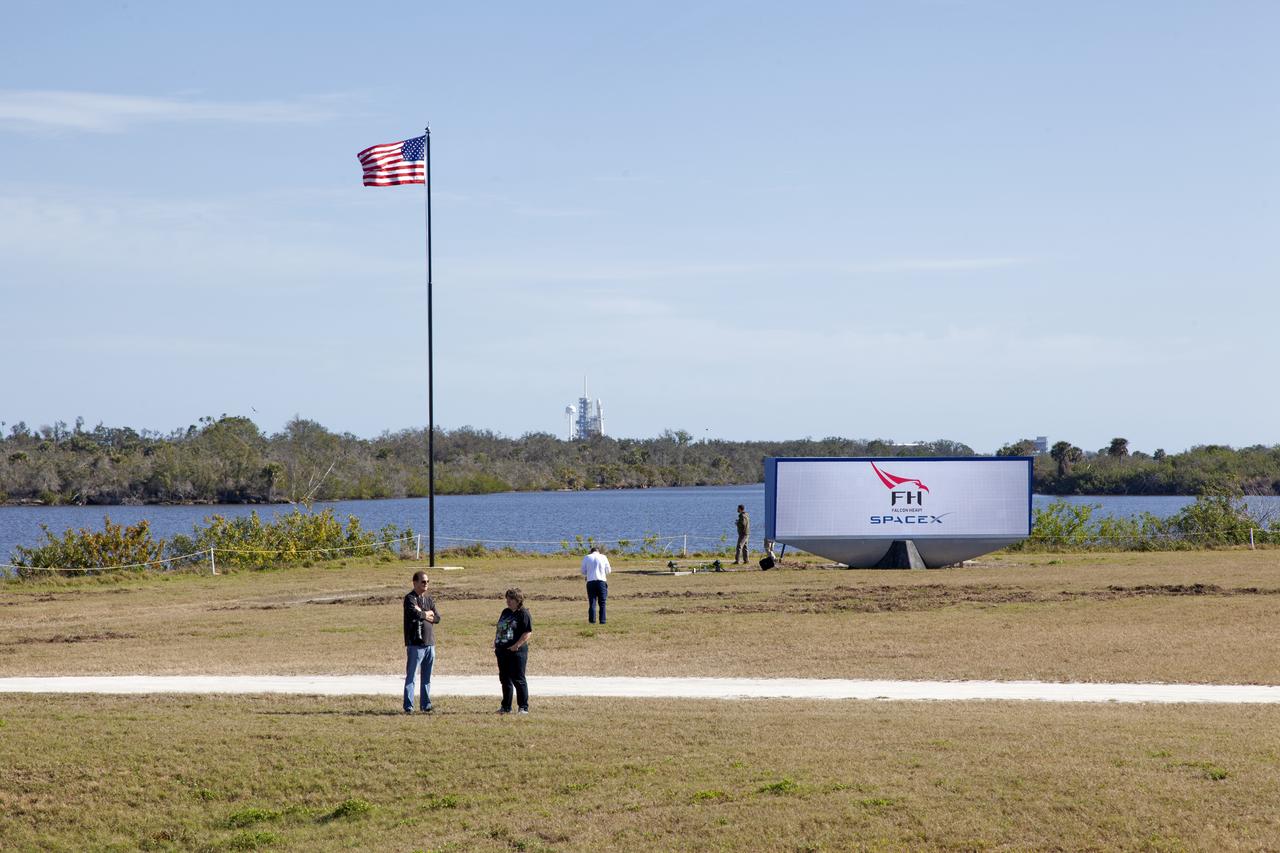
Members of the news media begin to gather near the countdown clock at NASA’s Kennedy Space Center in Florida to await liftoff of the SpaceX Falcon Heavy rocket, seen in the background at Launch Complex 39A. The demonstration flight will be a significant milestone for the world's premier multi-user spaceport. In 2014, NASA signed a property agreement with SpaceX for the use and operation of the center's pad 39A, where the company has launched Falcon 9 rockets and is preparing for the first Falcon Heavy. NASA also has Space Act Agreements in place with partners, such as SpaceX, to provide services needed to process and launch rockets and spacecraft.
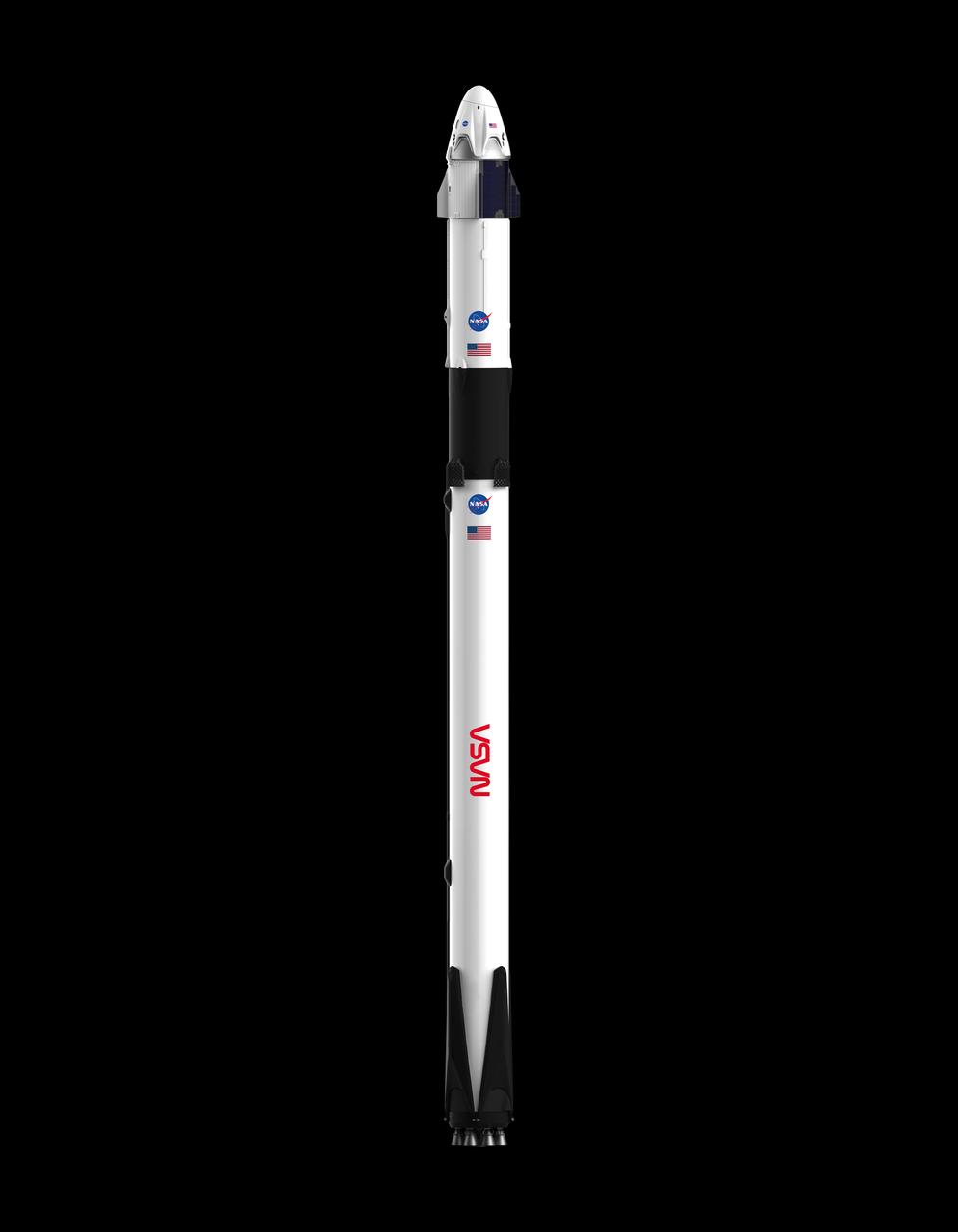
An illustration of the SpaceX Falcon 9.

The Falcon International Reservoir is on the Rio Grande, 65 km southeast of Laredo, Texas, USA and Nuevo Laredo, Tamaulipas, Mexico. The Falcon Dam was constructed in 1953 to provide water conservation, irrigation, and hydroelectricity. Its maximum surface area, seen in the 2010 image, was 34,000 hectares. As a result of the 2010s-20s drought, the reservoir holds only a small fraction of its capacity. In 2010, vegetation in the area was healthy (dark red); in 2022, the area is parched. The images were acquired 14 July 2010 and 31 July 2022, cover an area of 29.8 by 46.9 km, and are located at 26.6 degrees north, 99.2 degrees west. https://photojournal.jpl.nasa.gov/catalog/PIA25446
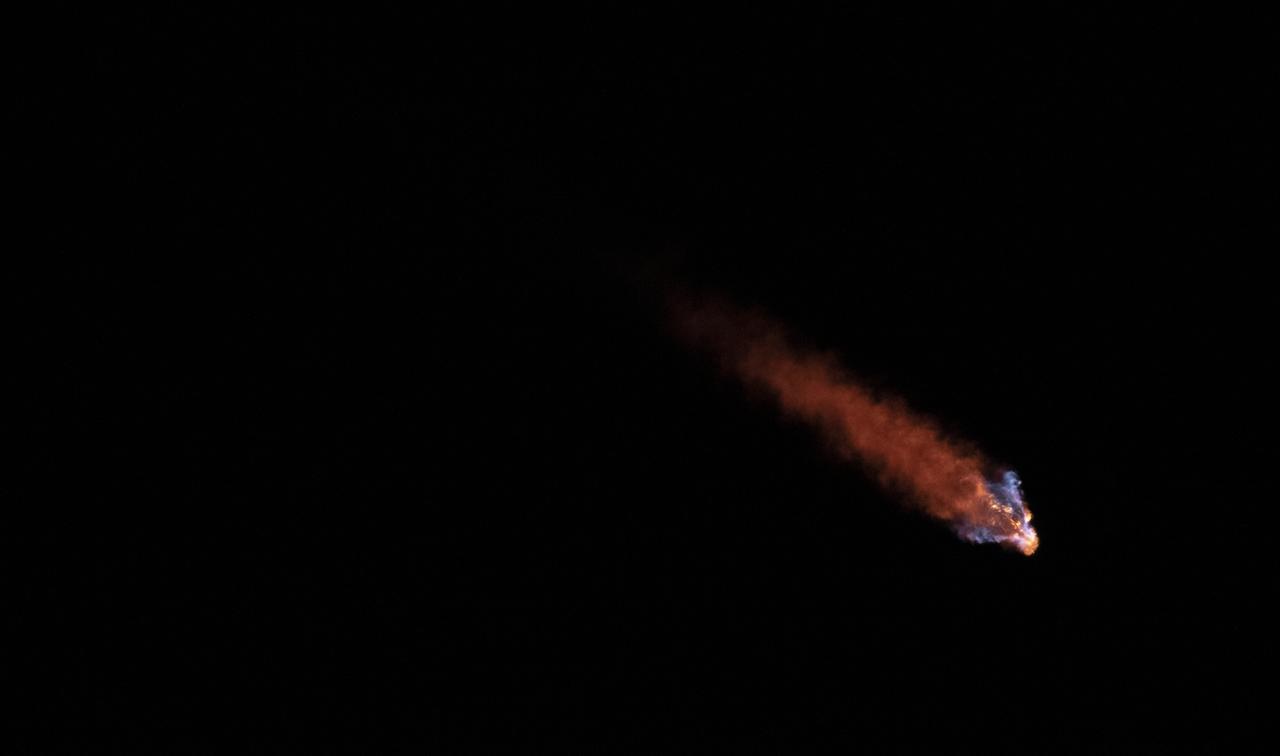
A SpaceX Falcon Heavy rocket carrying 24 satellites as part of the Department of Defense's Space Test Program-2 (STP-2) mission launches from Launch Complex 39A, Tuesday, June 25, 2019 at NASA's Kennedy Space Center in Florida. Four NASA technology and science payloads which will study non-toxic spacecraft fuel, deep space navigation, "bubbles" in the electrically-charged layers of Earth's upper atmosphere, and radiation protection for satellites are among the two dozen satellites that will be put into orbit. Photo Credit: (NASA/Joel Kowsky)
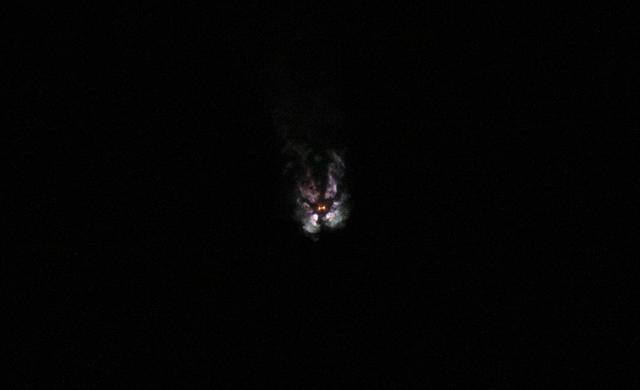
A SpaceX Falcon Heavy rocket carrying 24 satellites as part of the Department of Defense's Space Test Program-2 (STP-2) mission launches from Launch Complex 39A, Tuesday, June 25, 2019 at NASA's Kennedy Space Center in Florida. Four NASA technology and science payloads which will study non-toxic spacecraft fuel, deep space navigation, "bubbles" in the electrically-charged layers of Earth's upper atmosphere, and radiation protection for satellites are among the two dozen satellites that will be put into orbit. Photo Credit: (NASA/Joel Kowsky)
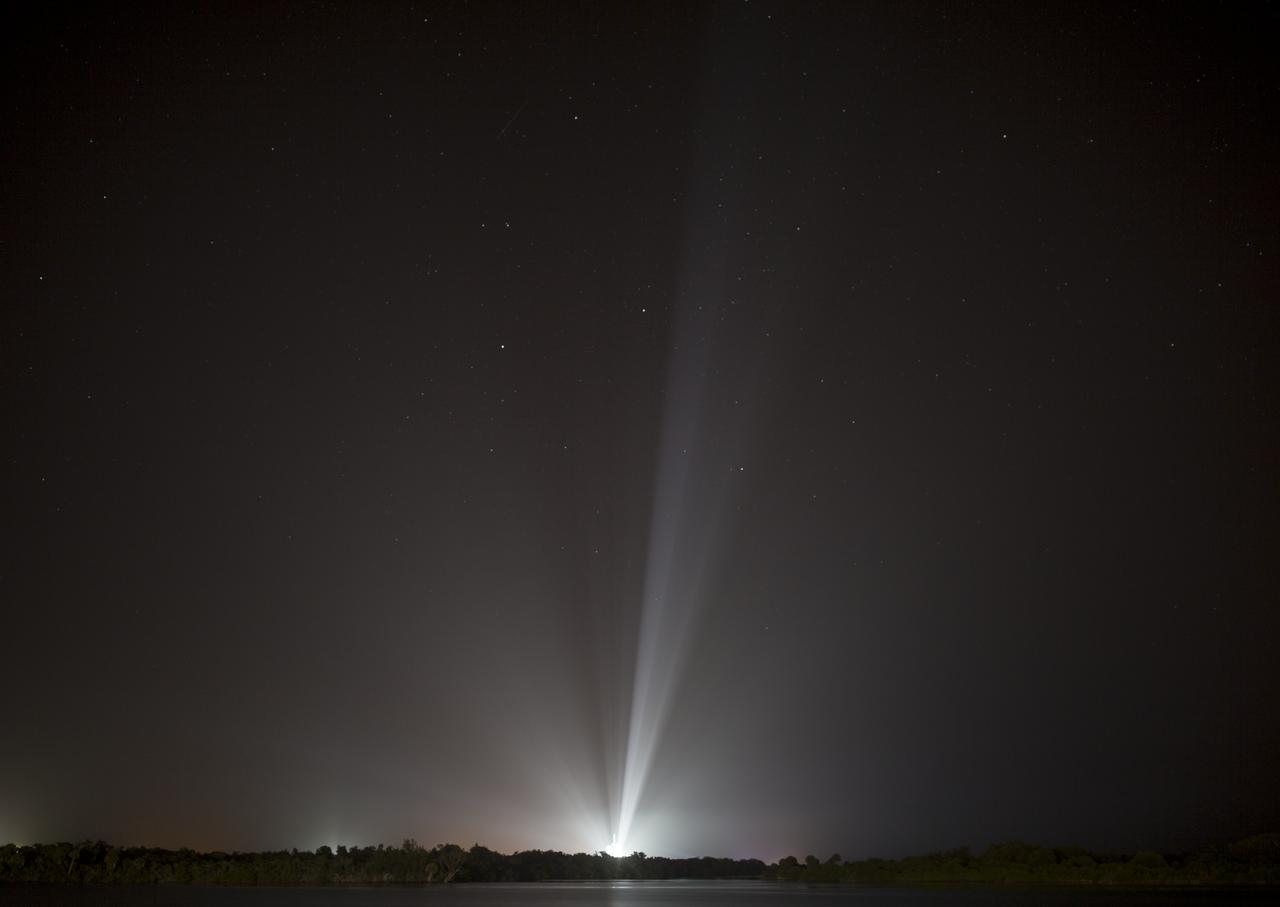
A SpaceX Falcon Heavy rocket carrying 24 satellites as part of the Department of Defense's Space Test Program-2 (STP-2) mission is seen illuminated by lights at Launch Complex 39A, Monday, June 24, 2019 at NASA's Kennedy Space Center in Florida. Four NASA technology and science payloads which will study non-toxic spacecraft fuel, deep space navigation, "bubbles" in the electrically-charged layers of Earth's upper atmosphere, and radiation protection for satellites are among the two dozen satellites that will be launched. The three hour launch window opens at 11:30pm EDT on June 24. Photo Credit: (NASA/Joel Kowsky)
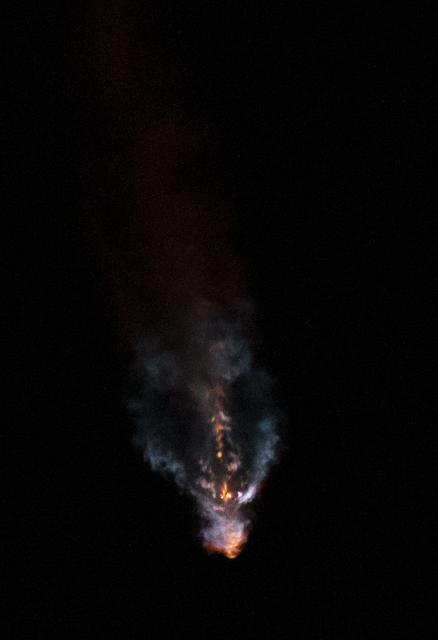
A SpaceX Falcon Heavy rocket carrying 24 satellites as part of the Department of Defense's Space Test Program-2 (STP-2) mission launches from Launch Complex 39A, Tuesday, June 25, 2019 at NASA's Kennedy Space Center in Florida. Four NASA technology and science payloads which will study non-toxic spacecraft fuel, deep space navigation, "bubbles" in the electrically-charged layers of Earth's upper atmosphere, and radiation protection for satellites are among the two dozen satellites that will be put into orbit. Photo Credit: (NASA/Joel Kowsky)
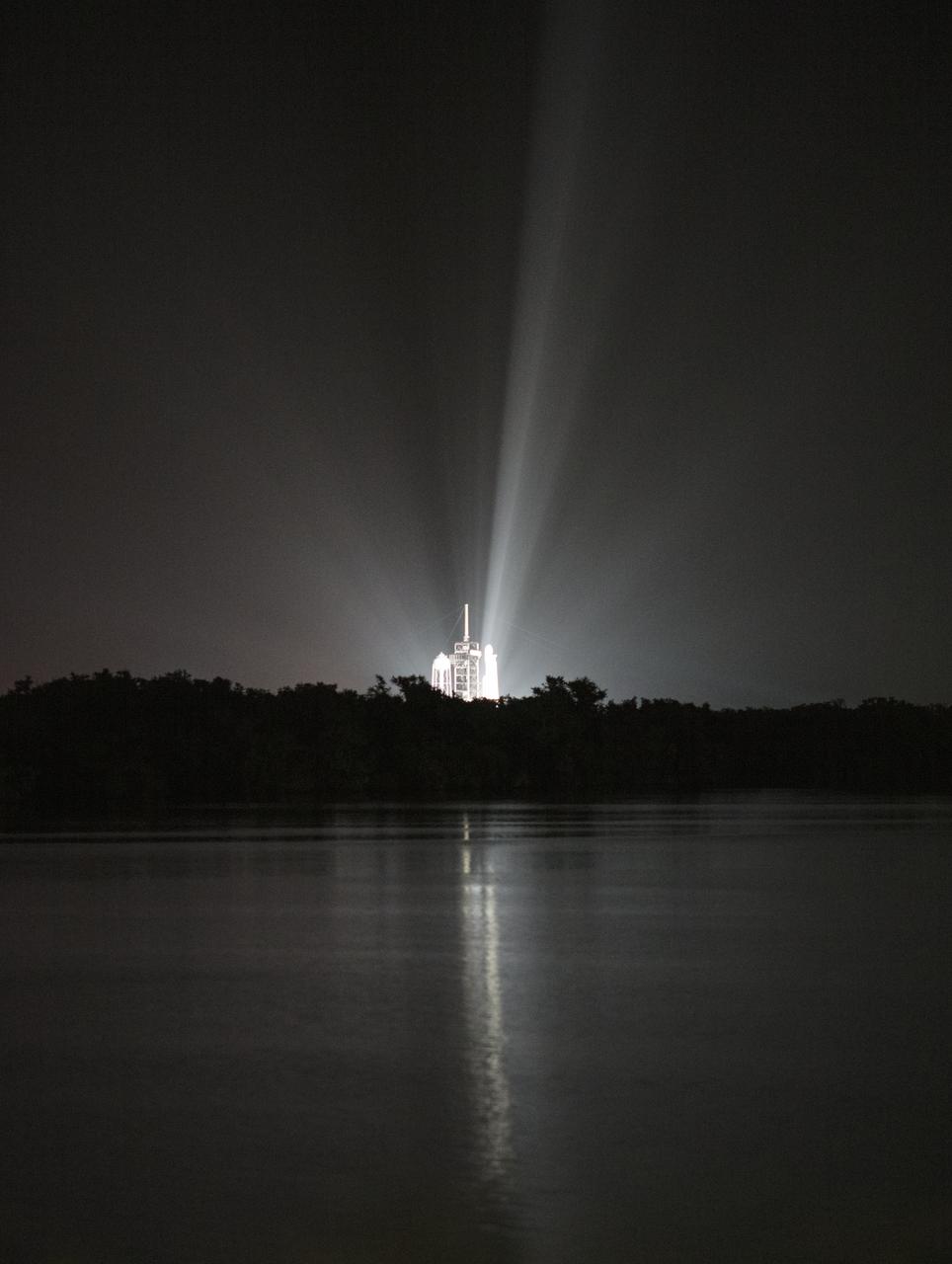
A SpaceX Falcon Heavy rocket carrying 24 satellites as part of the Department of Defense's Space Test Program-2 (STP-2) mission is seen illuminated by lights at Launch Complex 39A, Tuesday, June 25, 2019 at NASA's Kennedy Space Center in Florida. Four NASA technology and science payloads which will study non-toxic spacecraft fuel, deep space navigation, "bubbles" in the electrically-charged layers of Earth's upper atmosphere, and radiation protection for satellites are among the two dozen satellites that will be put into orbit. Photo Credit: (NASA/Joel Kowsky)
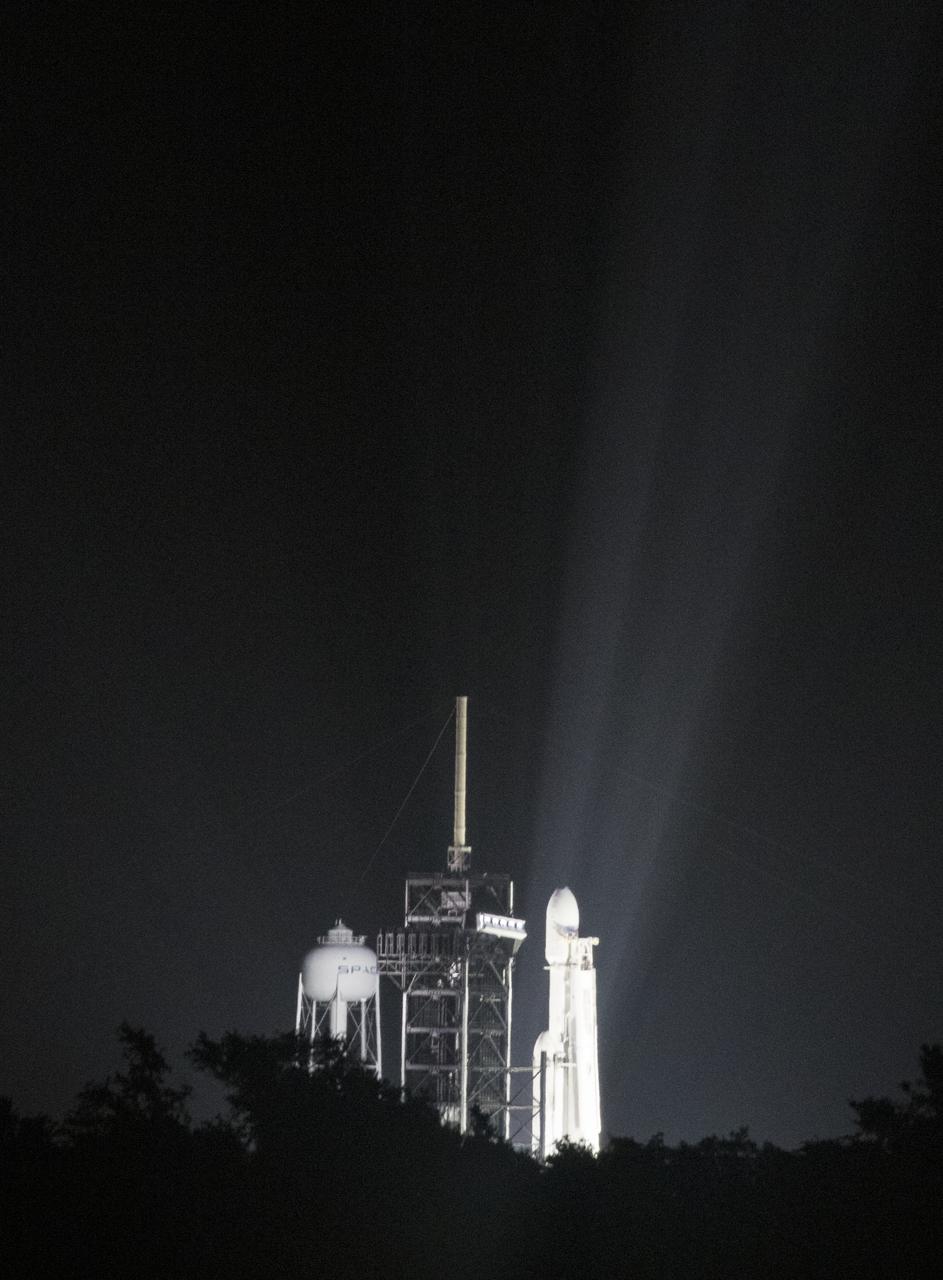
A SpaceX Falcon Heavy rocket carrying 24 satellites as part of the Department of Defense's Space Test Program-2 (STP-2) mission is seen illuminated by lights at Launch Complex 39A, Monday, June 24, 2019 at NASA's Kennedy Space Center in Florida. Four NASA technology and science payloads which will study non-toxic spacecraft fuel, deep space navigation, "bubbles" in the electrically-charged layers of Earth's upper atmosphere, and radiation protection for satellites are among the two dozen satellites that will be launched. The three hour launch window opens at 11:30pm EDT on June 24. Photo Credit: (NASA/Joel Kowsky)
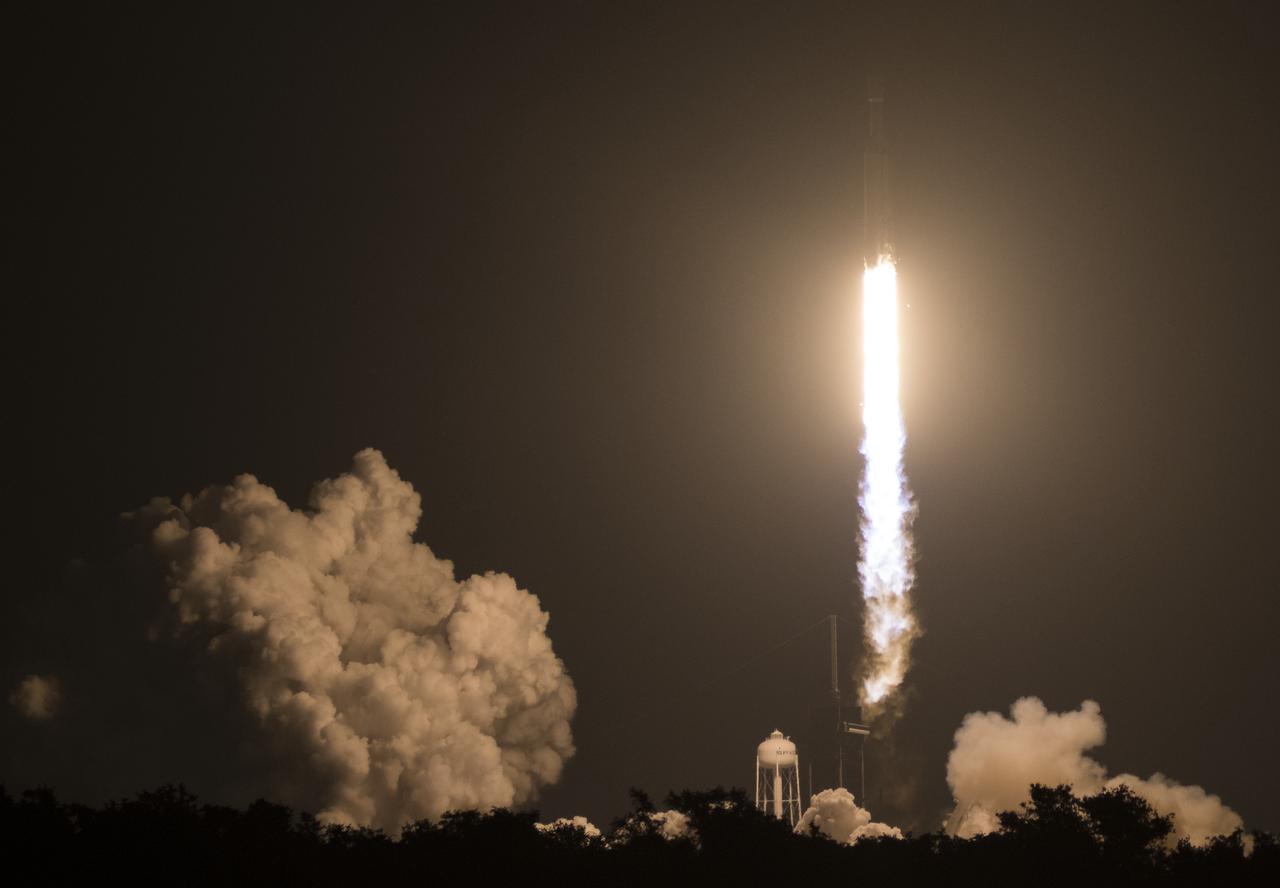
A SpaceX Falcon Heavy rocket carrying 24 satellites as part of the Department of Defense's Space Test Program-2 (STP-2) mission launches from Launch Complex 39A, Tuesday, June 25, 2019 at NASA's Kennedy Space Center in Florida. Four NASA technology and science payloads which will study non-toxic spacecraft fuel, deep space navigation, "bubbles" in the electrically-charged layers of Earth's upper atmosphere, and radiation protection for satellites are among the two dozen satellites that will be put into orbit. Photo Credit: (NASA/Joel Kowsky)
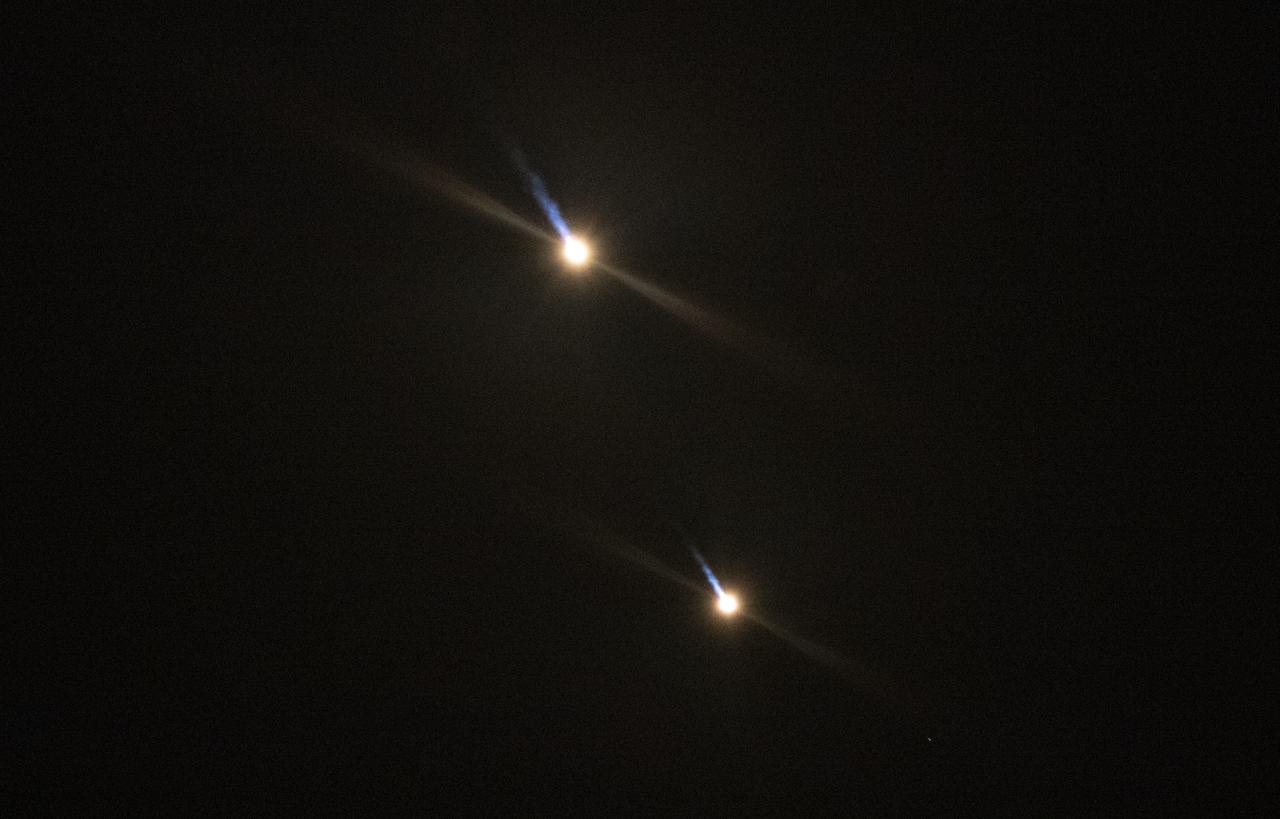
The two side boosters of the SpaceX Falcon Heavy rocket carrying 24 satellites as part of the Department of Defense's Space Test Program-2 (STP-2) mission are seen as they begin their landing burns to return to Landing Zone 1, Tuesday, June 25, 2019 at NASA's Kennedy Space Center in Florida. Four NASA technology and science payloads which will study non-toxic spacecraft fuel, deep space navigation, "bubbles" in the electrically-charged layers of Earth's upper atmosphere, and radiation protection for satellites are among the two dozen satellites that will be put into orbit. Photo Credit: (NASA/Joel Kowsky)
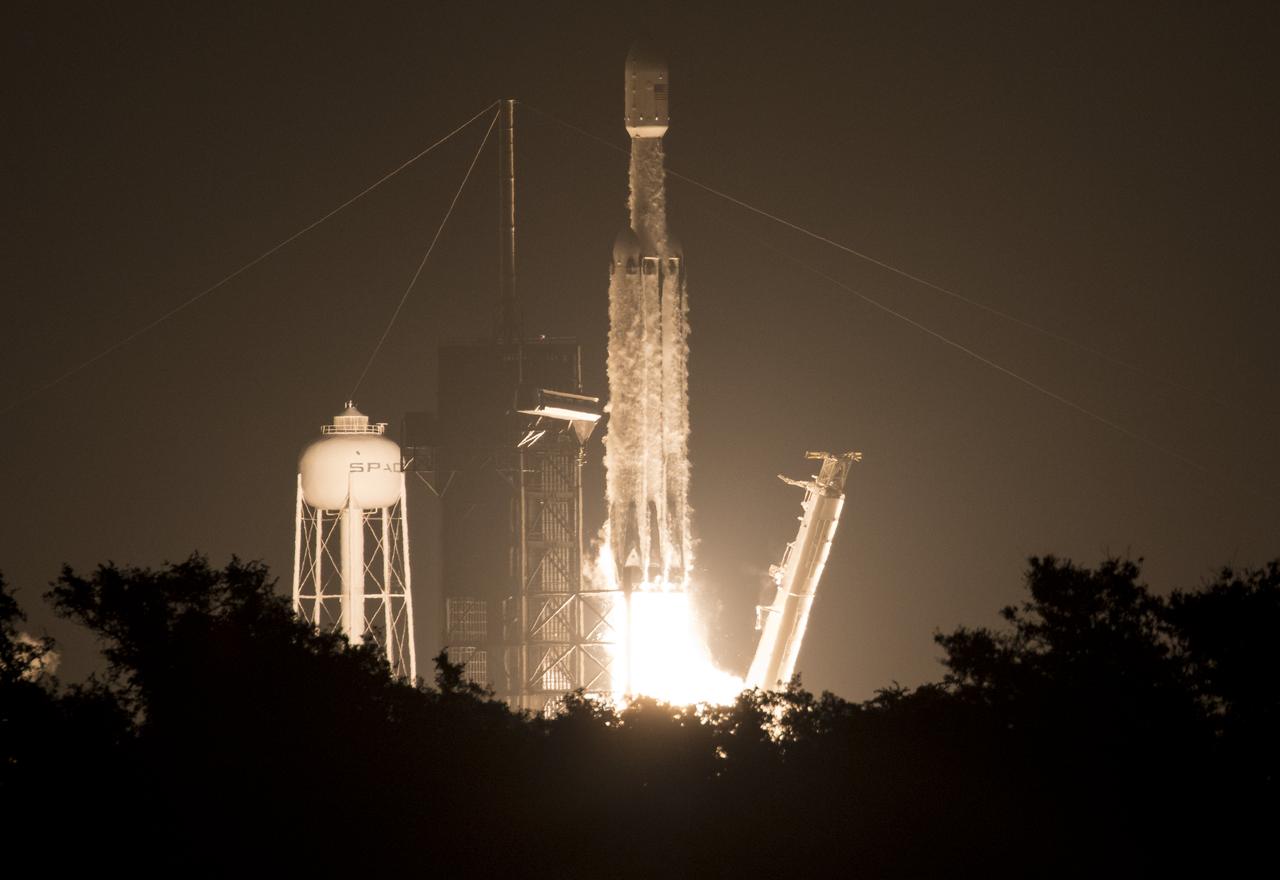
A SpaceX Falcon Heavy rocket carrying 24 satellites as part of the Department of Defense's Space Test Program-2 (STP-2) mission launches from Launch Complex 39A, Tuesday, June 25, 2019 at NASA's Kennedy Space Center in Florida. Four NASA technology and science payloads which will study non-toxic spacecraft fuel, deep space navigation, "bubbles" in the electrically-charged layers of Earth's upper atmosphere, and radiation protection for satellites are among the two dozen satellites that will be put into orbit. Photo Credit: (NASA/Joel Kowsky)
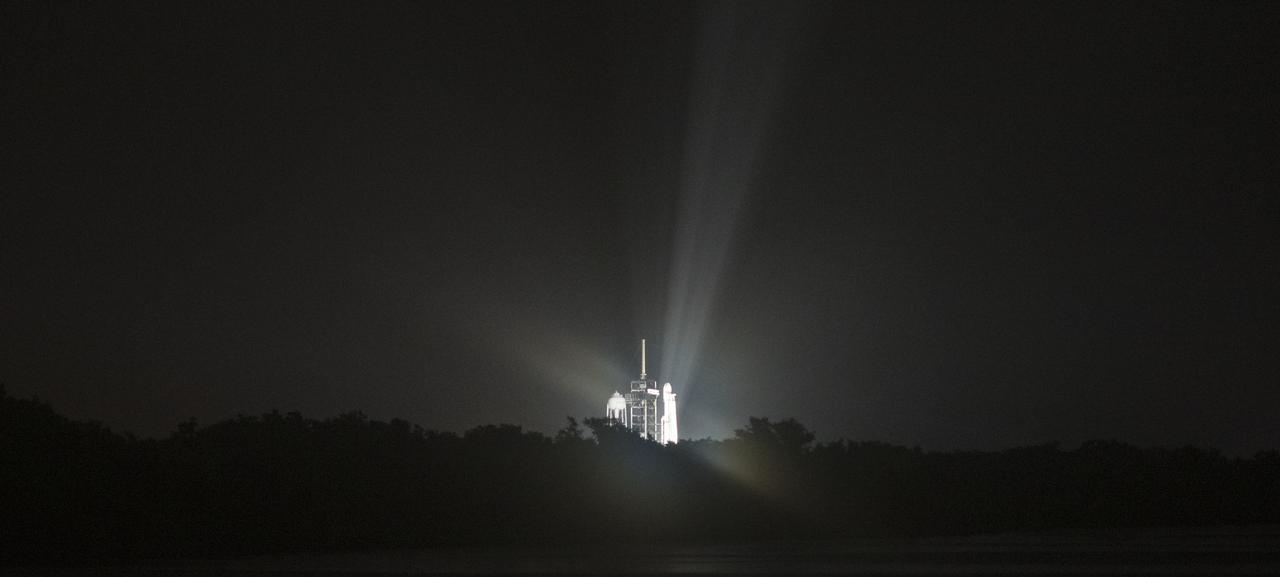
A SpaceX Falcon Heavy rocket carrying 24 satellites as part of the Department of Defense's Space Test Program-2 (STP-2) mission is seen illuminated by lights at Launch Complex 39A, Monday, June 24, 2019 at NASA's Kennedy Space Center in Florida. Four NASA technology and science payloads which will study non-toxic spacecraft fuel, deep space navigation, "bubbles" in the electrically-charged layers of Earth's upper atmosphere, and radiation protection for satellites are among the two dozen satellites that will be launched. The three hour launch window opens at 11:30pm EDT on June 24. Photo Credit: (NASA/Joel Kowsky)
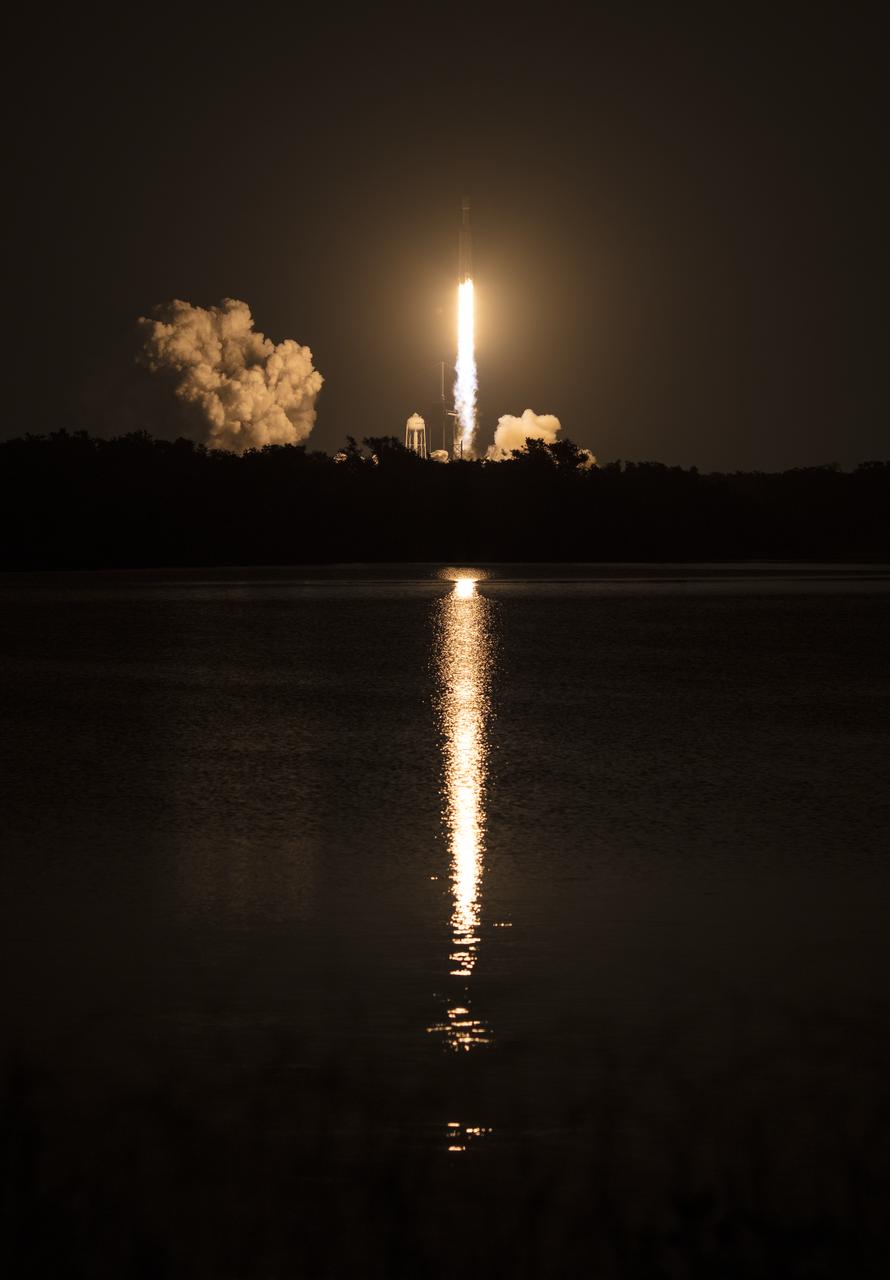
A SpaceX Falcon Heavy rocket carrying 24 satellites as part of the Department of Defense's Space Test Program-2 (STP-2) mission launches from Launch Complex 39A, Tuesday, June 25, 2019 at NASA's Kennedy Space Center in Florida. Four NASA technology and science payloads which will study non-toxic spacecraft fuel, deep space navigation, "bubbles" in the electrically-charged layers of Earth's upper atmosphere, and radiation protection for satellites are among the two dozen satellites that will be put into orbit. Photo Credit: (NASA/Joel Kowsky)
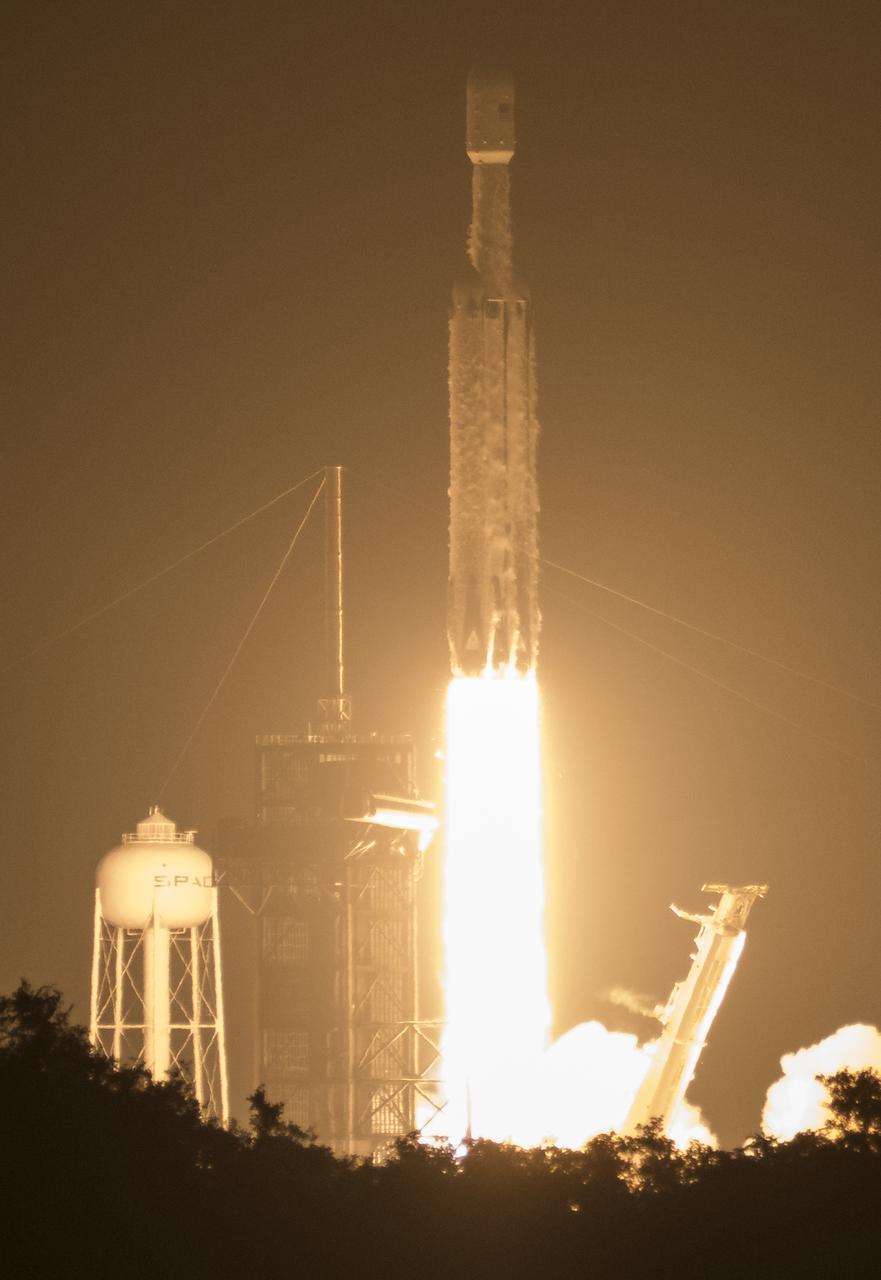
A SpaceX Falcon Heavy rocket carrying 24 satellites as part of the Department of Defense's Space Test Program-2 (STP-2) mission launches from Launch Complex 39A, Tuesday, June 25, 2019 at NASA's Kennedy Space Center in Florida. Four NASA technology and science payloads which will study non-toxic spacecraft fuel, deep space navigation, "bubbles" in the electrically-charged layers of Earth's upper atmosphere, and radiation protection for satellites are among the two dozen satellites that will be put into orbit. Photo Credit: (NASA/Joel Kowsky)
The two side boosters of the SpaceX Falcon Heavy rocket carrying 24 satellites as part of the Department of Defense's Space Test Program-2 (STP-2) mission are seen as they conduct a boost back burn to return to Landing Zone 1, Tuesday, June 25, 2019 at NASA's Kennedy Space Center in Florida. Four NASA technology and science payloads which will study non-toxic spacecraft fuel, deep space navigation, "bubbles" in the electrically-charged layers of Earth's upper atmosphere, and radiation protection for satellites are among the two dozen satellites that will be put into orbit. Photo Credit: (NASA/Joel Kowsky)
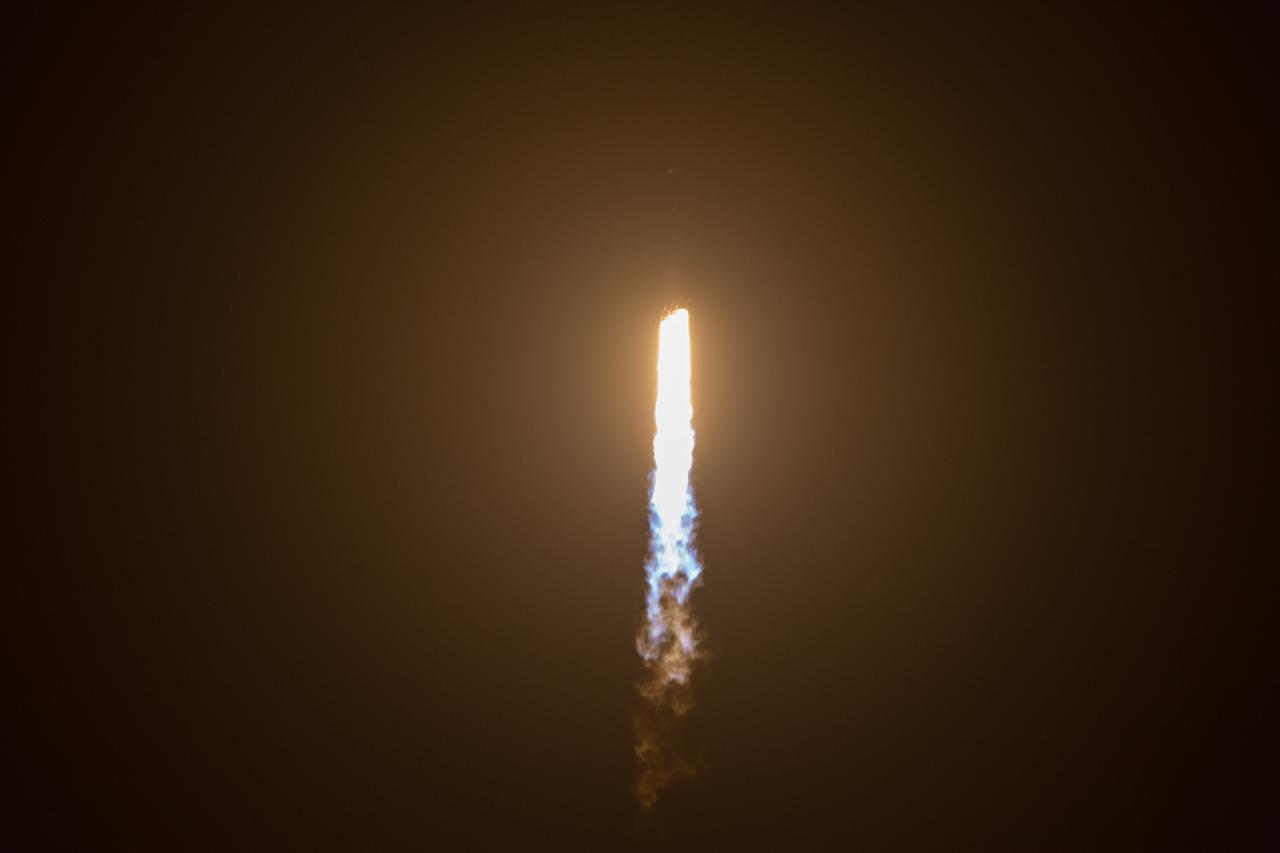
A SpaceX Falcon Heavy rocket roars upward after lifting off from Launch Complex 39A at 2:30 a.m. EDT on June 25, 2019, at NASA’s Kennedy Space Center in Florida. The Falcon Heavy rocket carries two dozen satellites to space for the U.S. Department of Defense, including four NASA payloads that are part of the Space Test Program (STP-2) mission, managed by the U.S. Air Force Space and Missile Systems Center. The four NASA payloads include two technology demonstrations to improve how spacecraft propel and navigate, as well as two NASA science missions to help us better understand the nature of space and how it impacts technology on spacecraft and the ground.
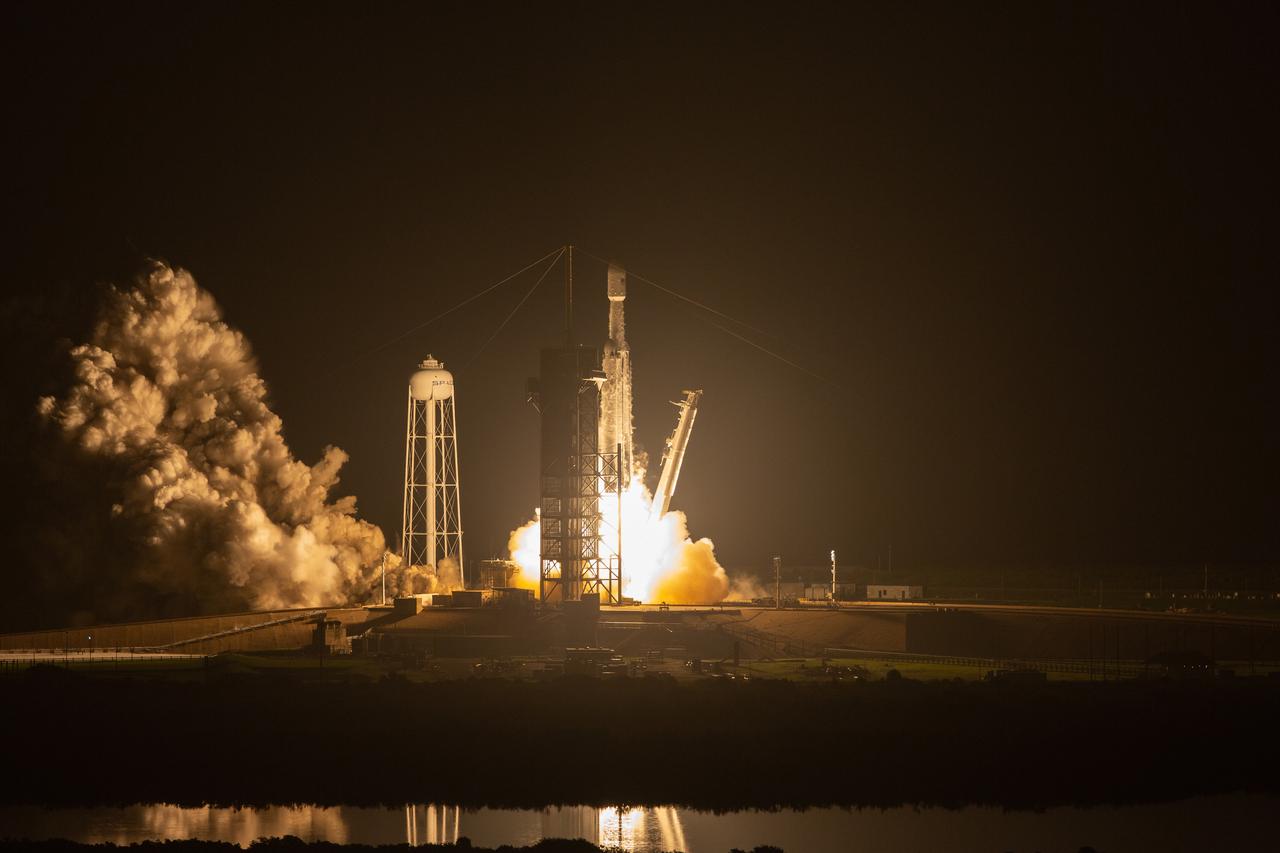
A SpaceX Falcon Heavy rocket lifts off from Launch Complex 39A at 2:30 a.m. EDT on June 25, 2019, at NASA’s Kennedy Space Center in Florida. The Falcon Heavy rocket carries two dozen satellites to space for the U.S. Department of Defense, including four NASA payloads that are part of the Space Test Program (STP-2) mission, managed by the U.S. Air Force Space and Missile Systems Center. The four NASA payloads include two technology demonstrations to improve how spacecraft propel and navigate, as well as two NASA science missions to help us better understand the nature of space and how it impacts technology on spacecraft and the ground.
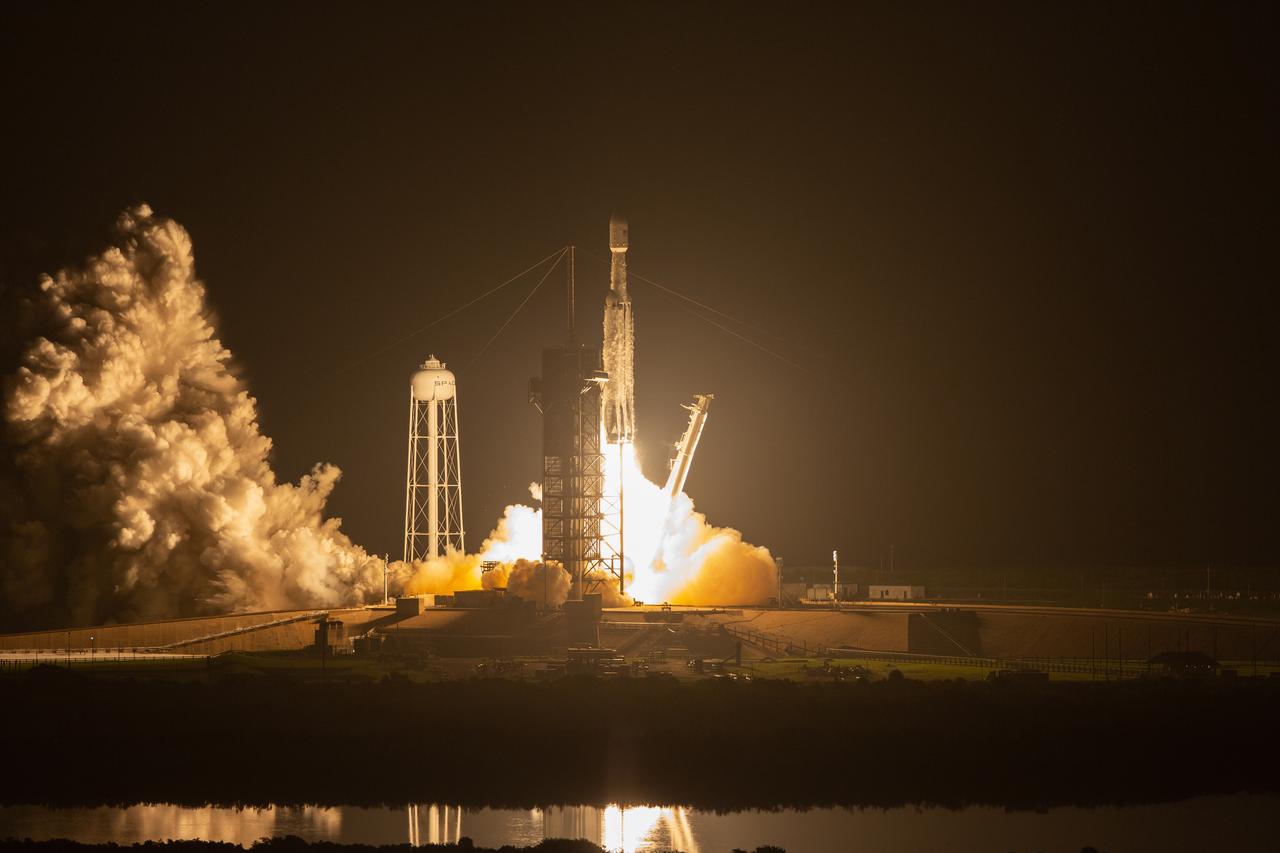
A SpaceX Falcon Heavy rocket lifts off from Launch Complex 39A at 2:30 a.m. EDT on June 25, 2019, at NASA’s Kennedy Space Center in Florida. The Falcon Heavy rocket carries two dozen satellites to space for the U.S. Department of Defense, including four NASA payloads that are part of the Space Test Program (STP-2) mission, managed by the U.S. Air Force Space and Missile Systems Center. The four NASA payloads include two technology demonstrations to improve how spacecraft propel and navigate, as well as two NASA science missions to help us better understand the nature of space and how it impacts technology on spacecraft and the ground.
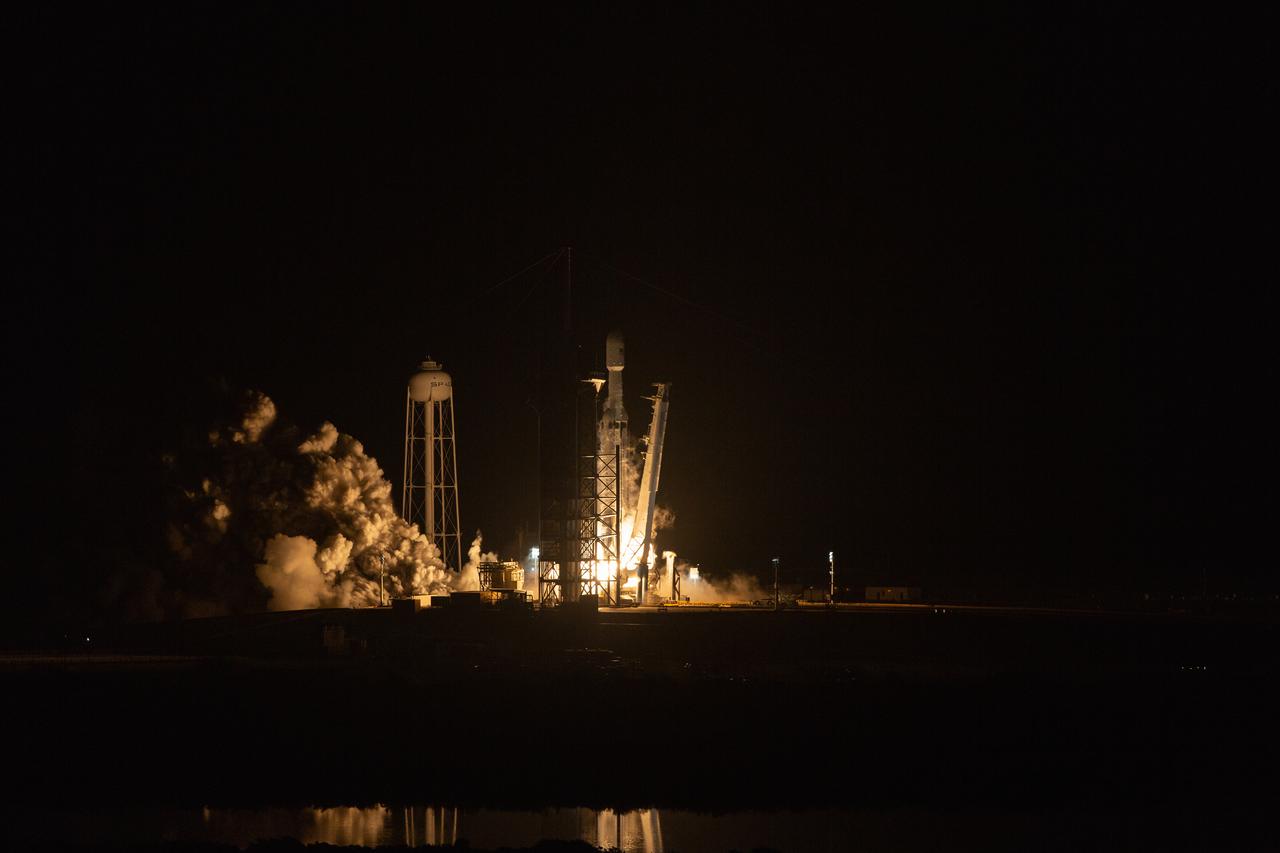
A SpaceX Falcon Heavy rocket lifts off from Launch Complex 39A at 2:30 a.m. EDT on June 25, 2019, at NASA’s Kennedy Space Center in Florida. The Falcon Heavy rocket carries two dozen satellites to space for the U.S. Department of Defense, including four NASA payloads that are part of the Space Test Program (STP-2) mission, managed by the U.S. Air Force Space and Missile Systems Center. The four NASA payloads include two technology demonstrations to improve how spacecraft propel and navigate, as well as two NASA science missions to help us better understand the nature of space and how it impacts technology on spacecraft and the ground.
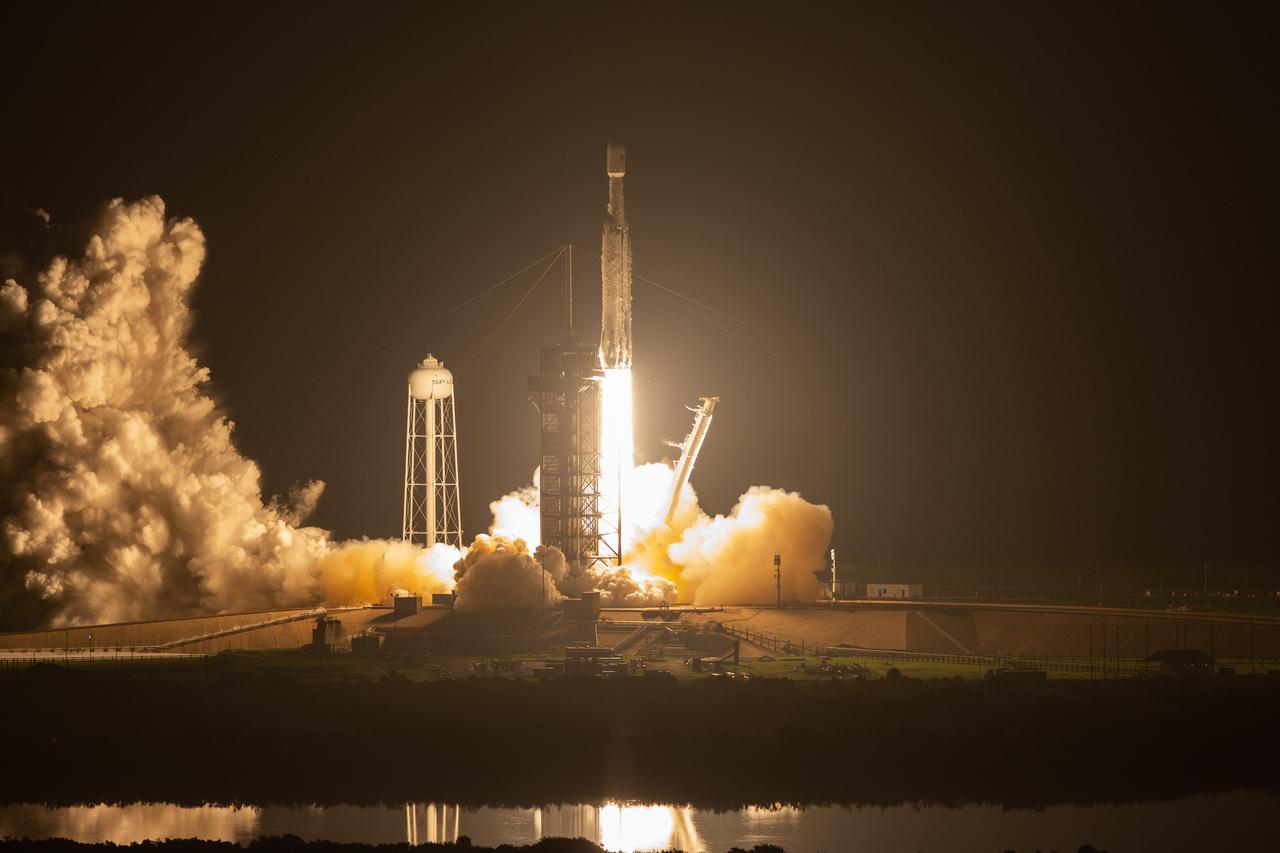
A SpaceX Falcon Heavy rocket lifts off from Launch Complex 39A at 2:30 a.m. EDT on June 25, 2019, at NASA’s Kennedy Space Center in Florida. The Falcon Heavy rocket carries two dozen satellites to space for the U.S. Department of Defense, including four NASA payloads that are part of the Space Test Program (STP-2) mission, managed by the U.S. Air Force Space and Missile Systems Center. The four NASA payloads include two technology demonstrations to improve how spacecraft propel and navigate, as well as two NASA science missions to help us better understand the nature of space and how it impacts technology on spacecraft and the ground.
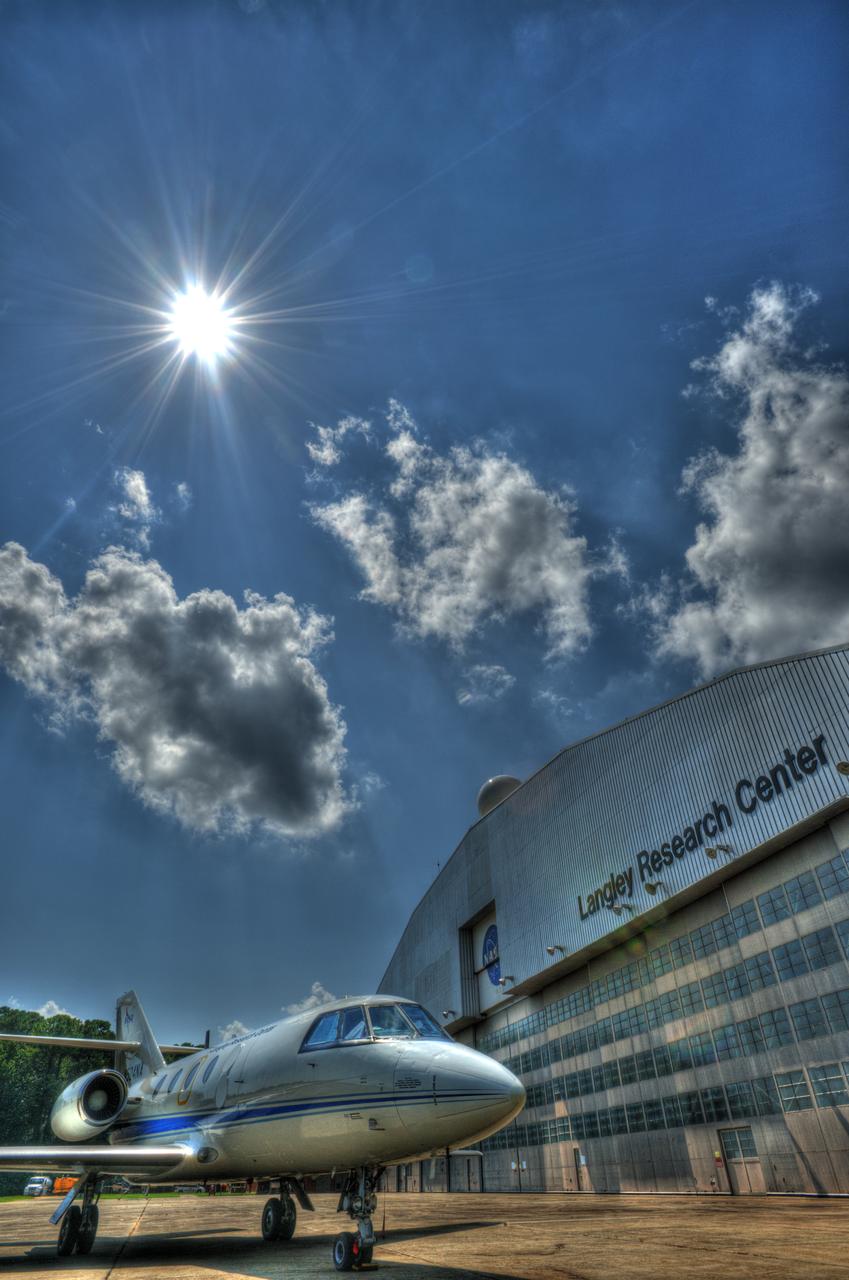
HDR image of the Falcon UH-25 in front of the NASA Langley hangar during the Solar Eclipse.
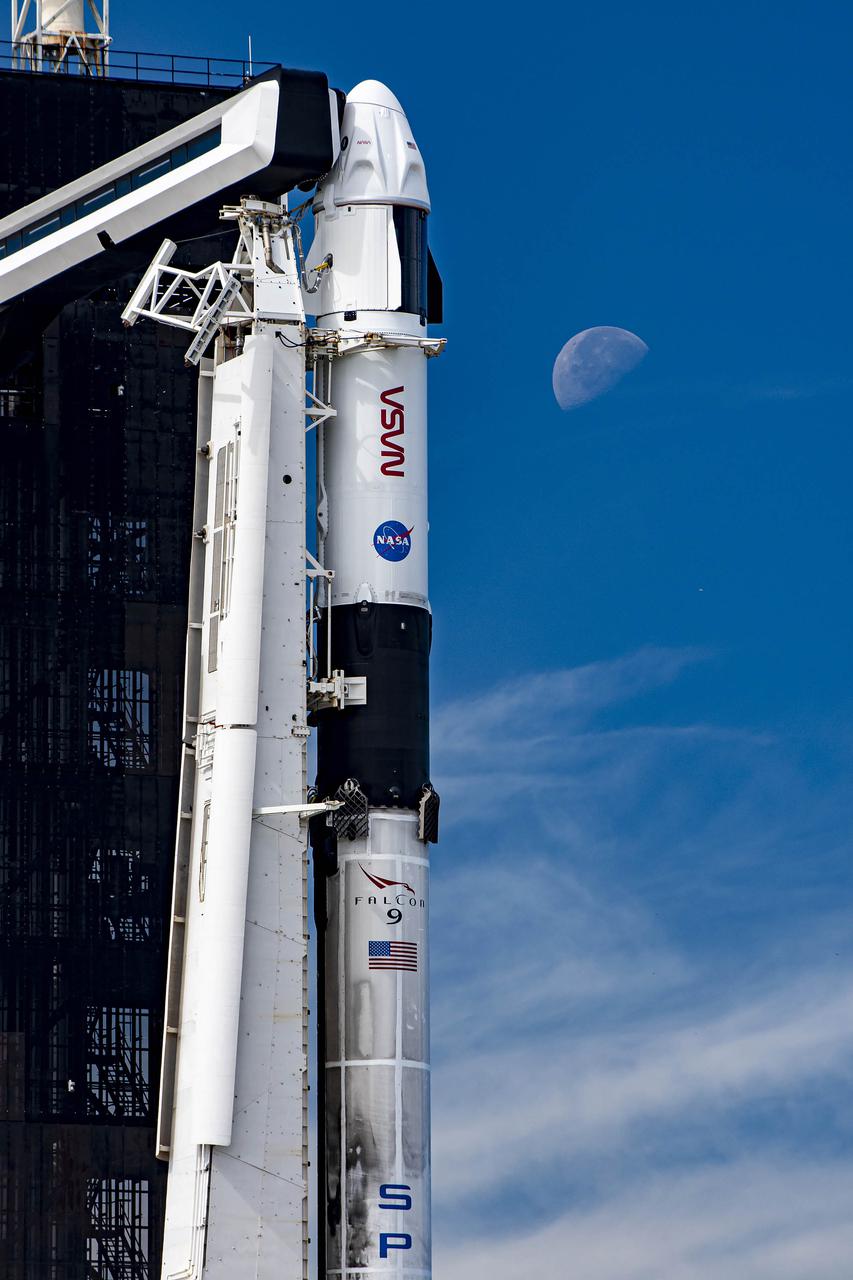
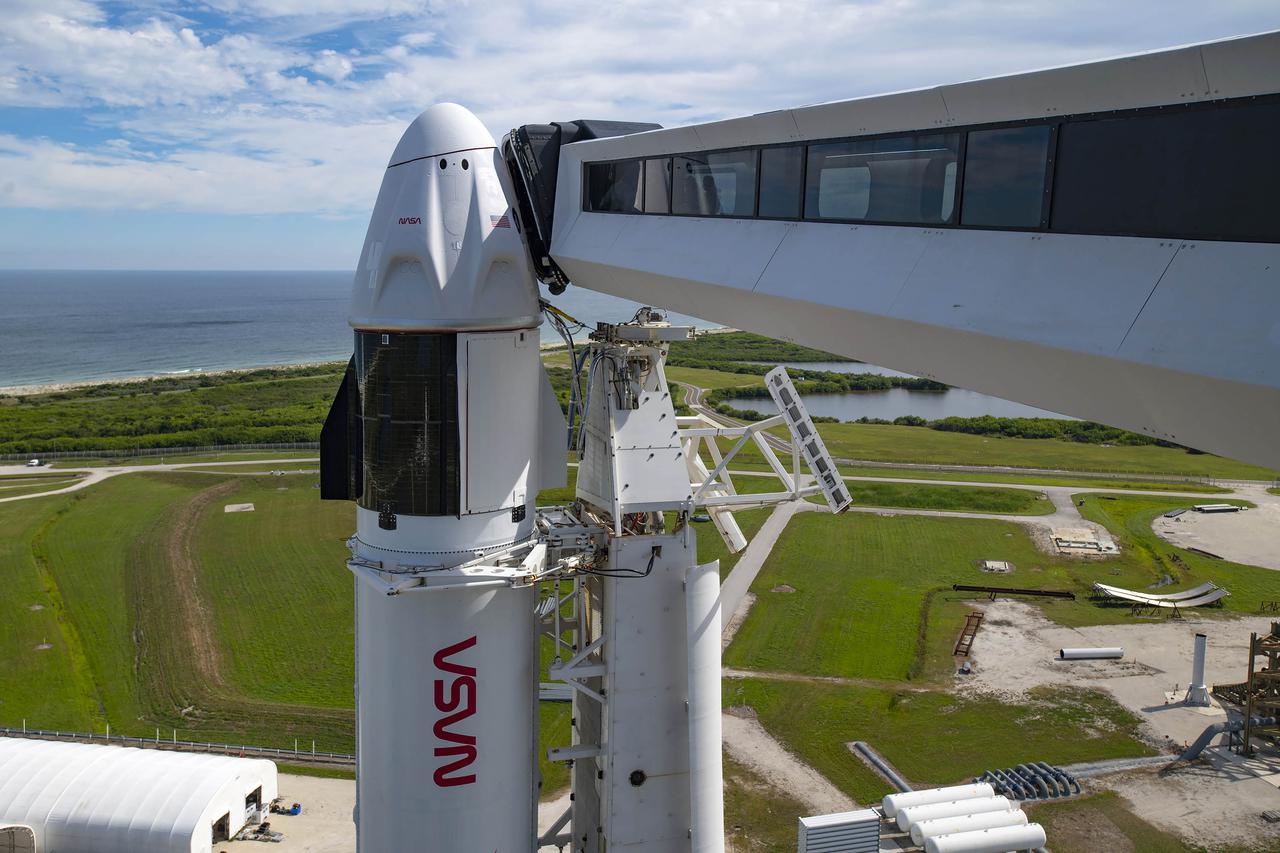
The SpaceX Falcon 9 rocket is vertical with the Crew Dragon atop for the Crew-3 mission at Launch Pad 39A at NASA’s Kennedy Space Center in Florida on Oct. 27, 2021. In view is the crew access arm. A four-person crew will launch aboard the Crew Dragon atop the Falcon 9 on Oct. 31 to the International Space Station. Launch is targeted for 2:21 a.m. EDT from Pad 39A. Crew 3 is the third crew rotation flight to the space station for NASA’s Commercial Crew Program, and the first flight of a new Crew Dragon spacecraft.
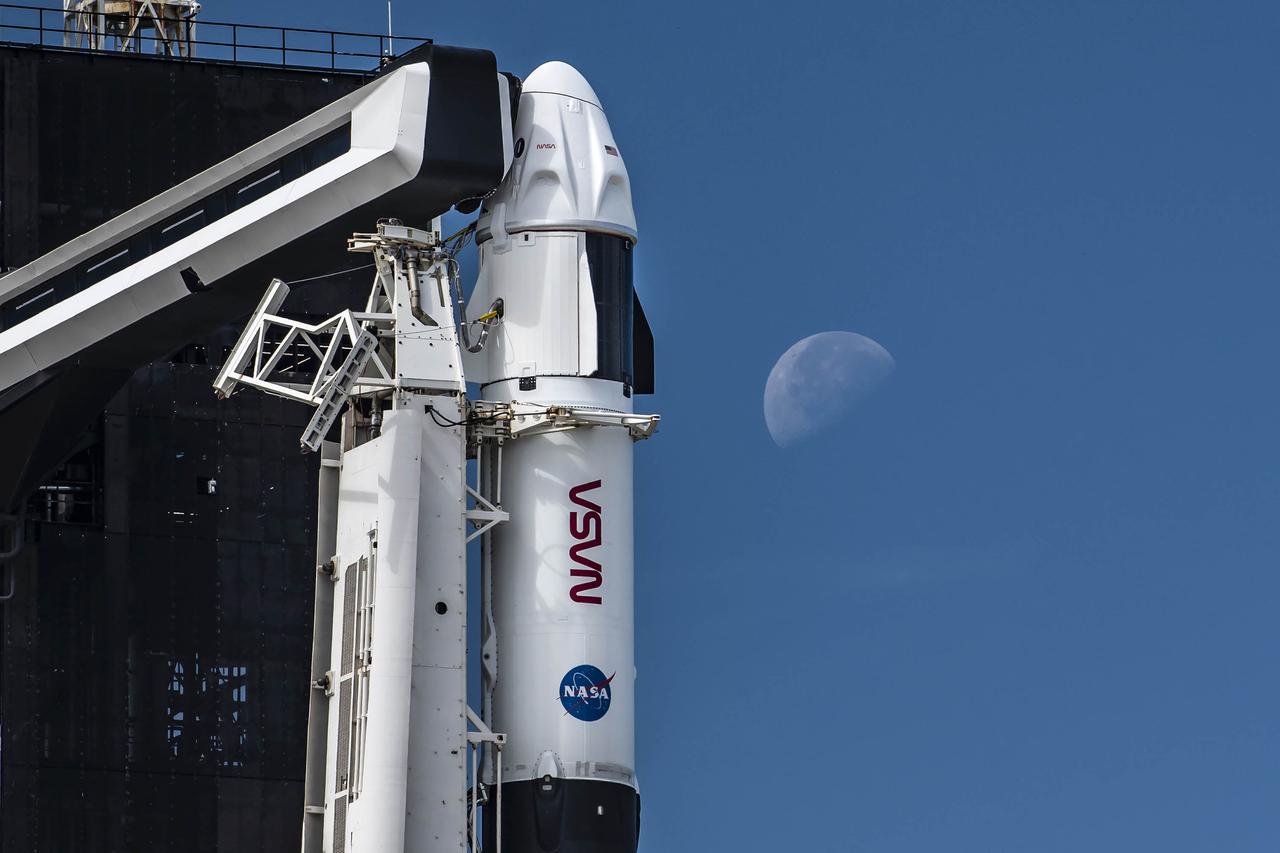
A close-up view of the SpaceX Falcon 9 rocket vertical with the Crew Dragon for the Crew-3 mission at Launch Pad 39A at NASA’s Kennedy Space Center in Florida on Oct. 27, 2021. Also in view is the crew access arm. A four-person crew will launch aboard the Crew Dragon atop the Falcon 9 on Oct. 31 to the International Space Station. Launch is targeted for 2:21 a.m. EDT from Pad 39A. Crew 3 is the third crew rotation flight to the space station for NASA’s Commercial Crew Program, and the first flight of a new Crew Dragon spacecraft.
The SpaceX Falcon 9 rocket is vertical with the Crew Dragon atop for the Crew-3 mission at Launch Pad 39A at NASA’s Kennedy Space Center in Florida on Oct. 27, 2021. In view is the crew access arm. A four-person crew will launch aboard the Crew Dragon atop the Falcon 9 on Oct. 31 to the International Space Station. Launch is targeted for 2:21 a.m. EDT from Pad 39A. Crew 3 is the third crew rotation flight to the space station for NASA’s Commercial Crew Program, and the first flight of a new Crew Dragon spacecraft.
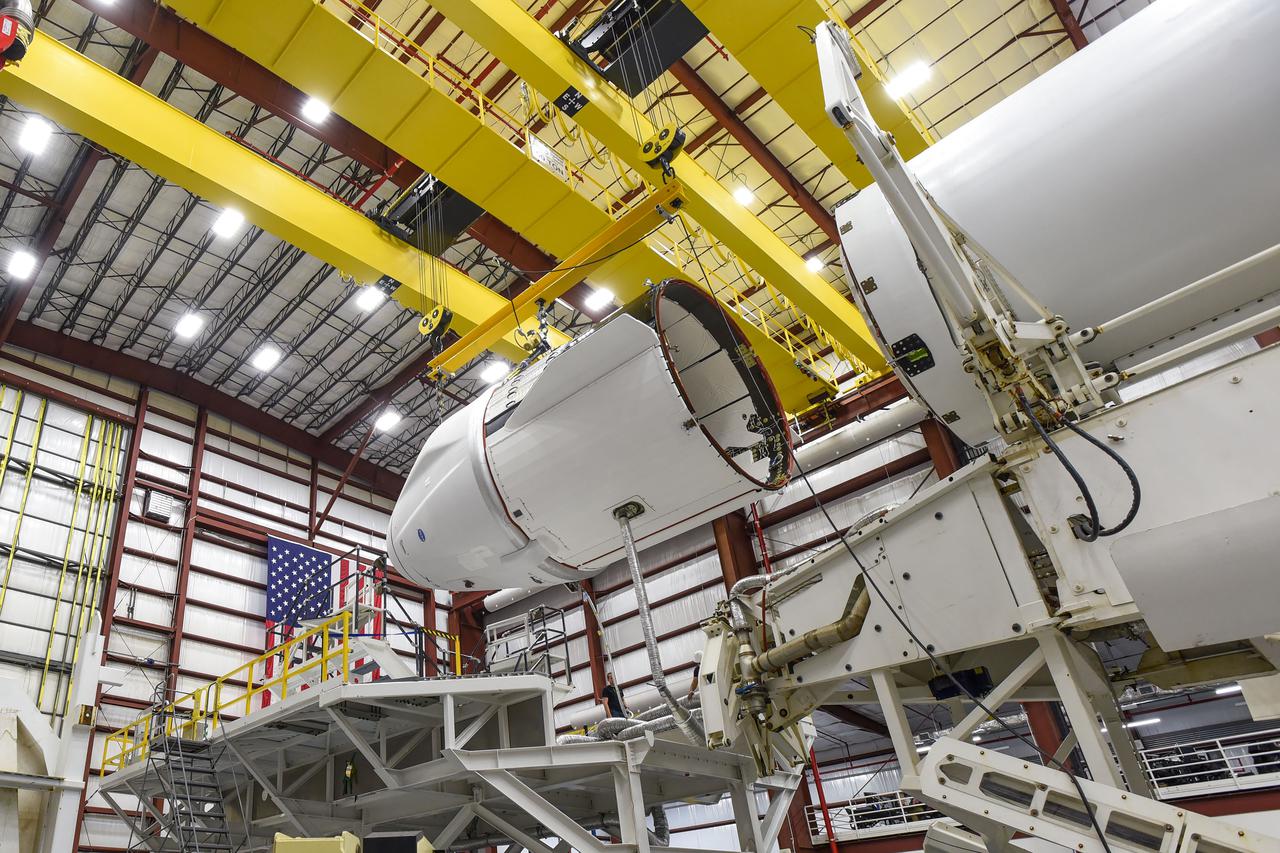
The SpaceX Dragon spacecraft that will fly on the company’s 22nd commercial resupply services mission to the International Space Station is now ready for its journey to space. On Thursday, May 27, teams transported the spacecraft from SpaceX’s processing facility at Cape Canaveral Space Force Station into the hangar at nearby Kennedy Space Center’s Launch Complex 39A, where it was attached to the Falcon 9 rocket. Liftoff of the Falcon 9 is scheduled for 1:29 p.m. EDT on Thursday, June 3.
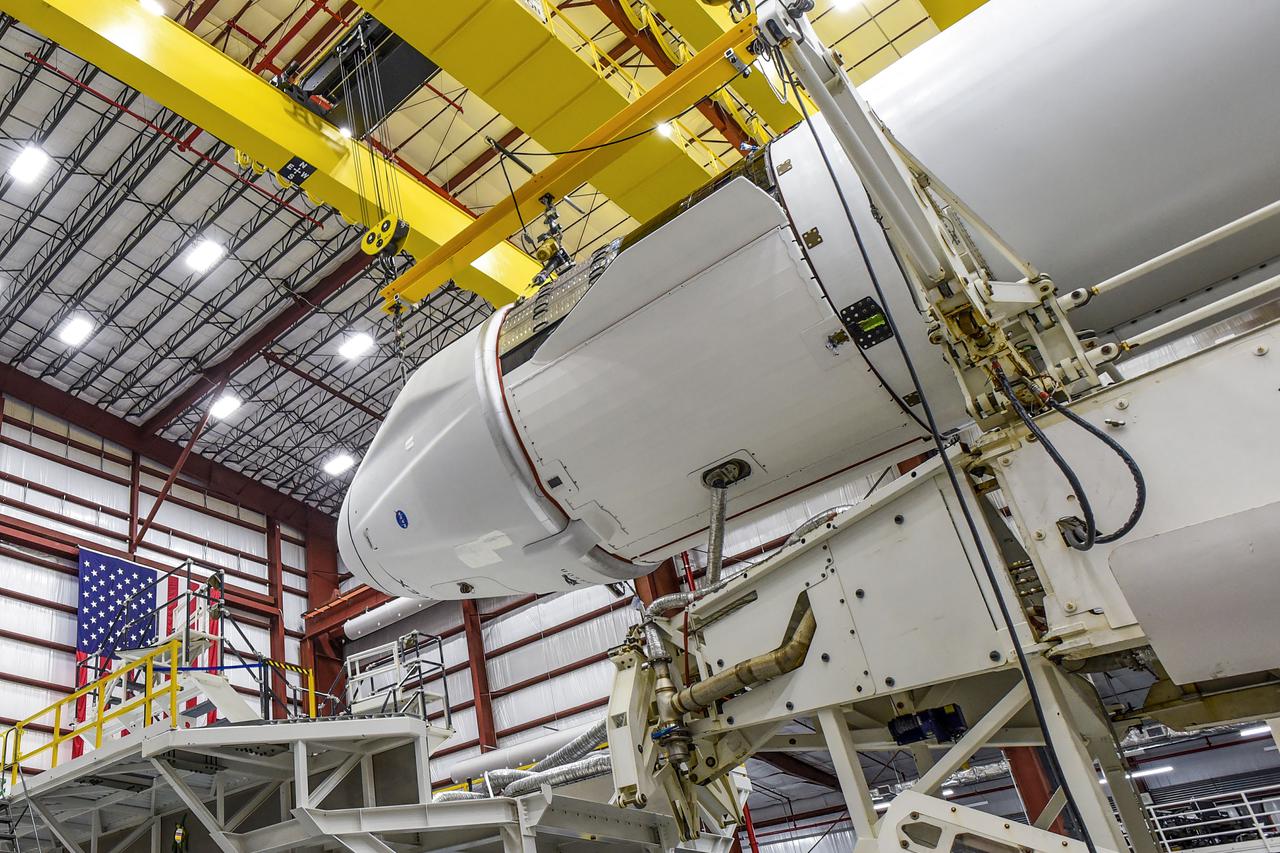
The SpaceX Dragon spacecraft that will fly on the company’s 22nd commercial resupply services mission to the International Space Station is now ready for its journey to space. On Thursday, May 27, teams transported the spacecraft from SpaceX’s processing facility at Cape Canaveral Space Force Station into the hangar at nearby Kennedy Space Center’s Launch Complex 39A, where it was attached to the Falcon 9 rocket. Liftoff of the Falcon 9 is scheduled for 1:29 p.m. EDT on Thursday, June 3.

A SpaceX Falcon Heavy rocket carrying 24 satellites as part of the Department of Defense's Space Test Program-2 (STP-2) mission is seen at Launch Complex 39A, Monday, June 24, 2019 at NASA's Kennedy Space Center in Florida. Four NASA technology and science payloads which will study non-toxic spacecraft fuel, deep space navigation, "bubbles" in the electrically-charged layers of Earth's upper atmosphere, and radiation protection for satellites are among the two dozen satellites that will be launched. The three hour launch window opens at 11:30pm EDT on June 24. Photo Credit: (NASA/Joel Kowsky)
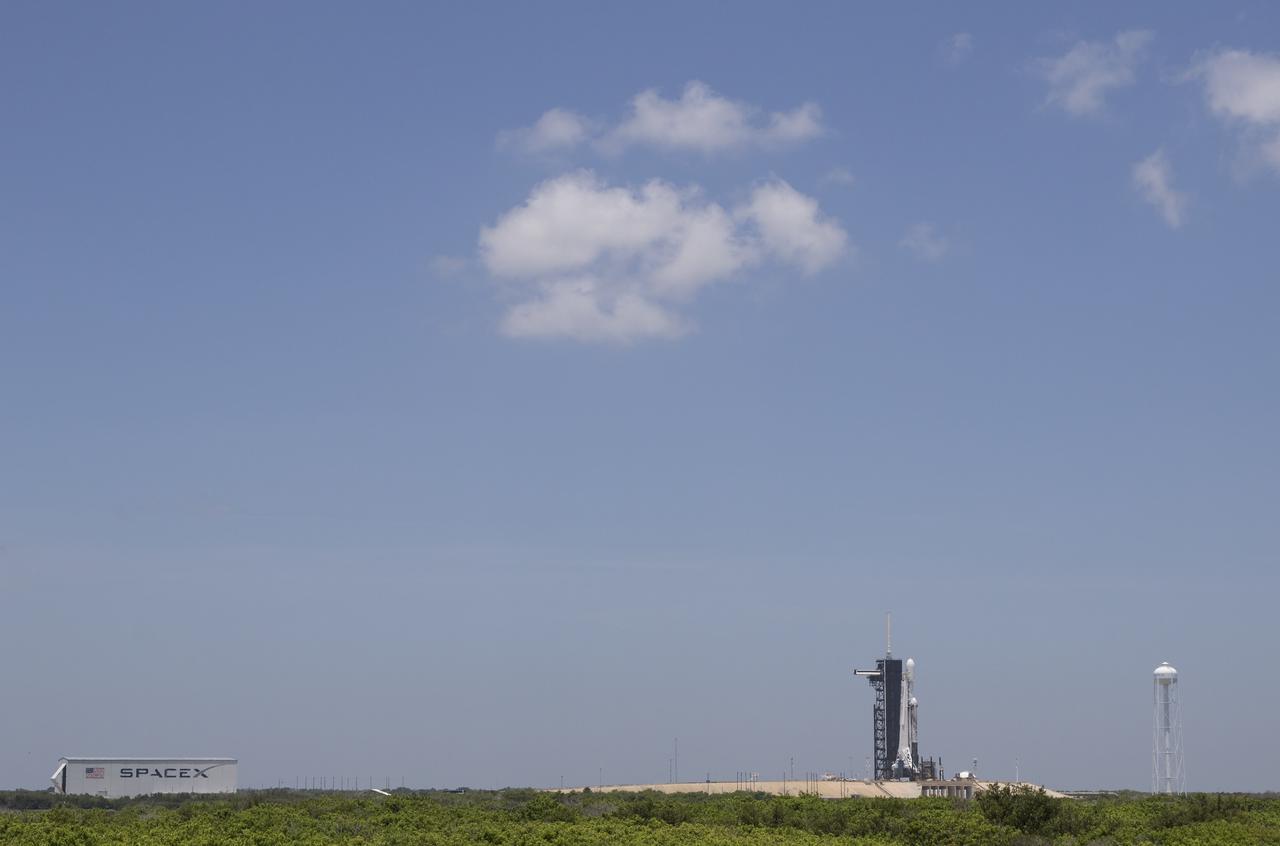
A SpaceX Falcon Heavy rocket carrying 24 satellites as part of the Department of Defense's Space Test Program-2 (STP-2) mission is seen at Launch Complex 39A, Monday, June 24, 2019 at NASA's Kennedy Space Center in Florida. Four NASA technology and science payloads which will study non-toxic spacecraft fuel, deep space navigation, "bubbles" in the electrically-charged layers of Earth's upper atmosphere, and radiation protection for satellites are among the two dozen satellites that will be launched. The three hour launch window opens at 11:30pm EDT on June 24. Photo Credit: (NASA/Joel Kowsky)
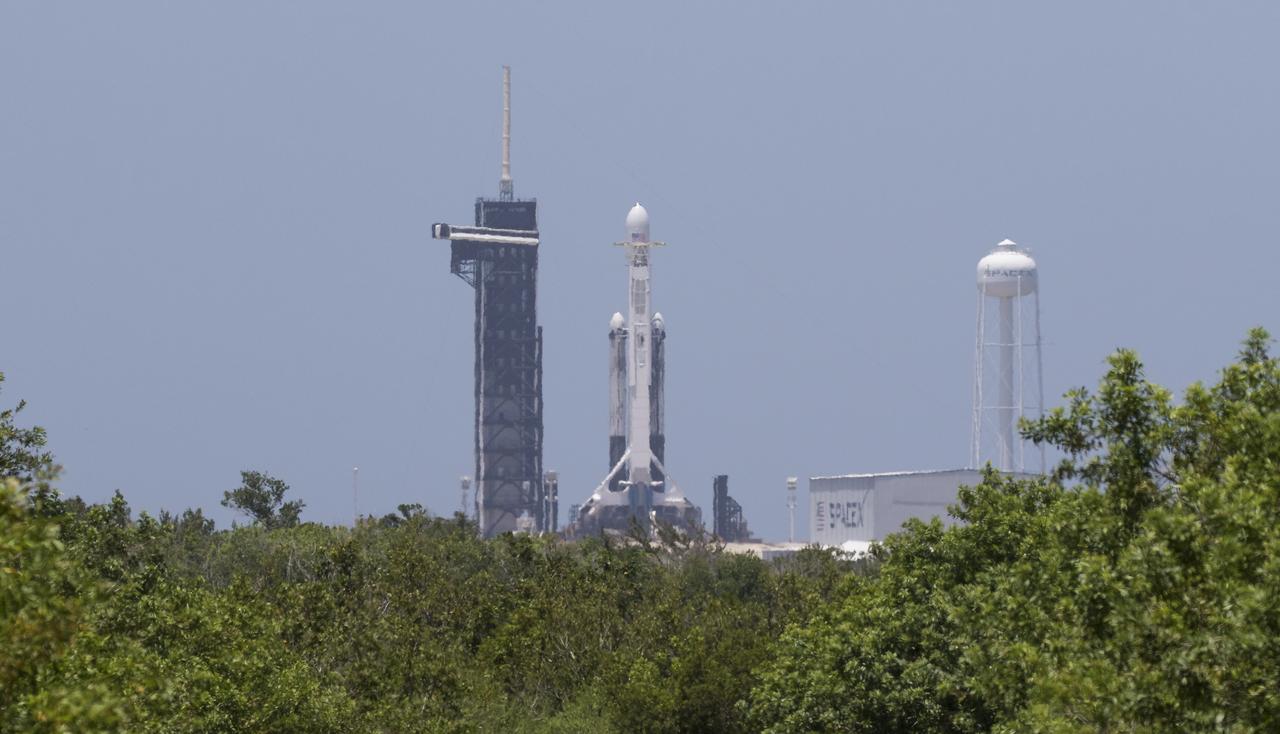
A SpaceX Falcon Heavy rocket carrying 24 satellites as part of the Department of Defense's Space Test Program-2 (STP-2) mission is seen at Launch Complex 39A, Monday, June 24, 2019 at NASA's Kennedy Space Center in Florida. Four NASA technology and science payloads which will study non-toxic spacecraft fuel, deep space navigation, "bubbles" in the electrically-charged layers of Earth's upper atmosphere, and radiation protection for satellites are among the two dozen satellites that will be launched. The three hour launch window opens at 11:30pm EDT on June 24. Photo Credit: (NASA/Joel Kowsky)
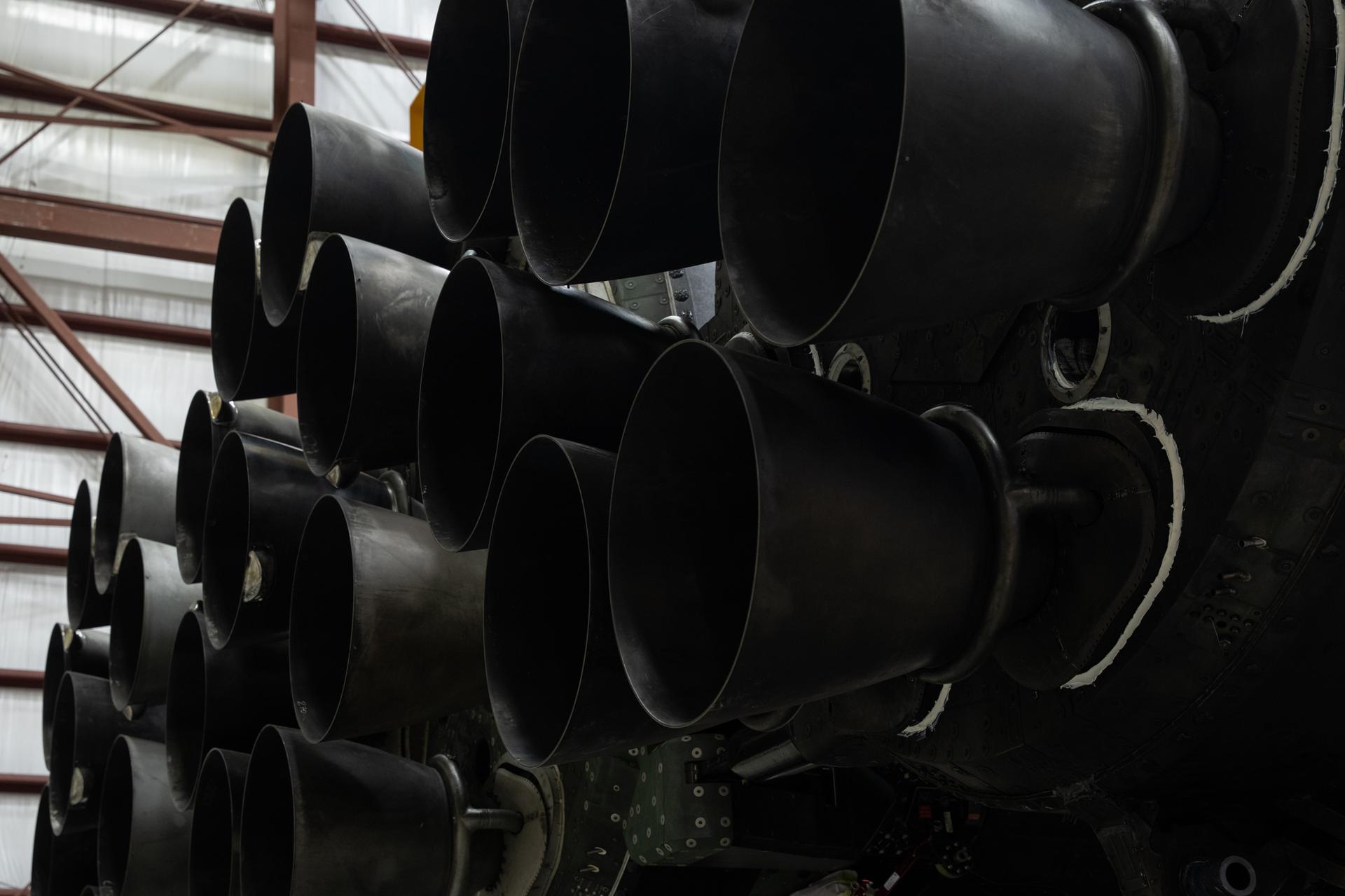
Teams continue launch preparations on the SpaceX Falcon Heavy that will launch NASA's Nancy Grace Roman Space Telescope, inside the SpaceX hangar at Launch Complex 39A at Kennedy Space Center in Florida on Wednesday, Aug. 26, 2026. The rocket has 27 Merlin engines on its first stage and can generate more than five million pounds of thrust at liftoff. NASA and SpaceX are targeting launch no earlier than 7:26 a.m. EDT Sunday, Aug. 30, from Kennedy.
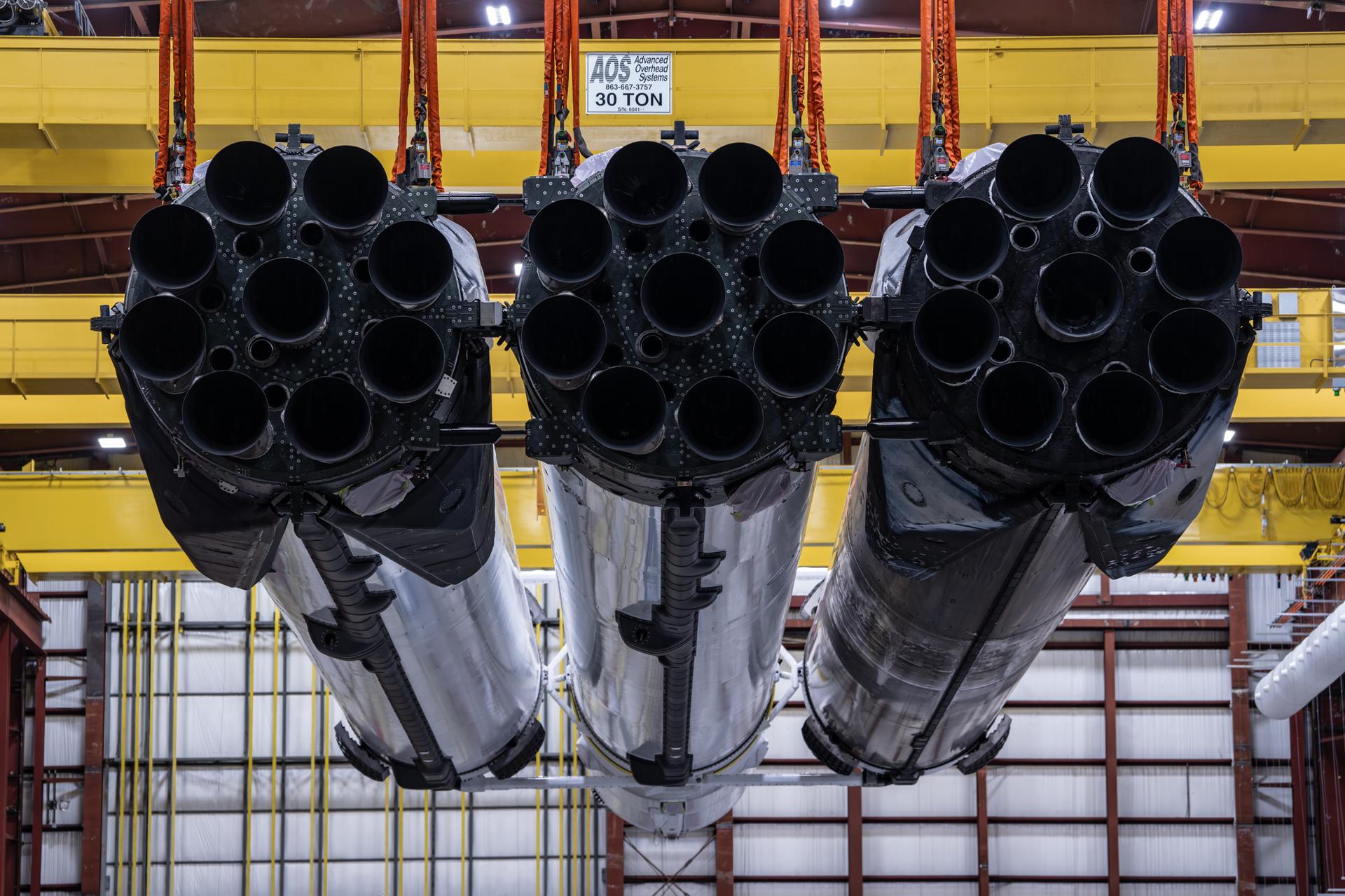
Teams continue launch preparations on the SpaceX Falcon Heavy that will launch NASA's Nancy Grace Roman Space Telescope, inside the SpaceX hangar at Launch Complex 39A at Kennedy Space Center in Florida on Wednesday, Aug. 26, 2026. The rocket has 27 Merlin engines on its first stage and can generate more than five million pounds of thrust at liftoff. NASA and SpaceX are targeting launch no earlier than 7:26 a.m. EDT Sunday, Aug. 30, from Kennedy.
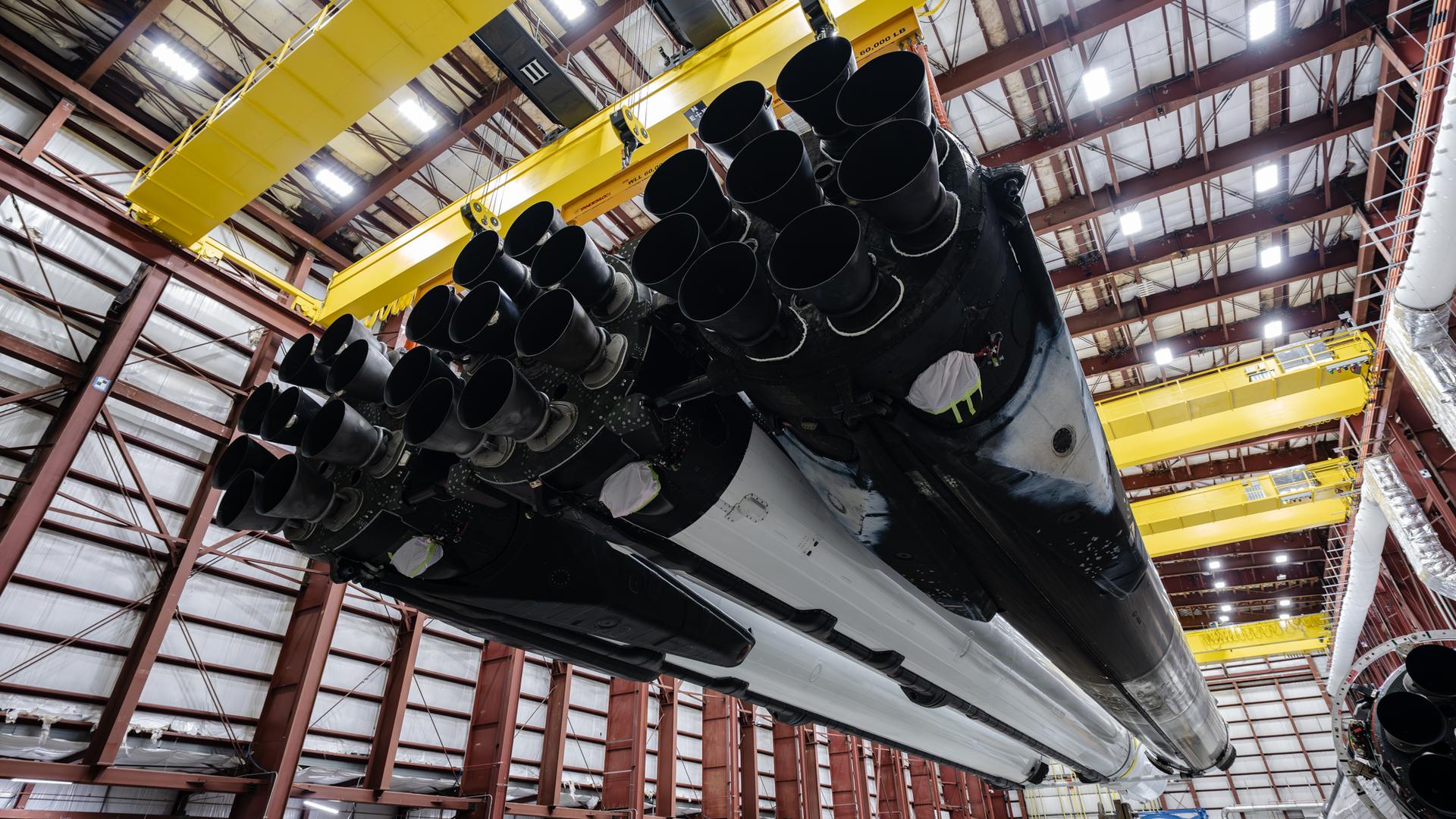
Teams continue launch preparations on the SpaceX Falcon Heavy that will launch NASA's Nancy Grace Roman Space Telescope, inside the SpaceX hangar at Launch Complex 39A at Kennedy Space Center in Florida on Wednesday, Aug. 26, 2026. The rocket has 27 Merlin engines on its first stage and can generate more than five million pounds of thrust at liftoff. NASA and SpaceX are targeting launch no earlier than 7:26 a.m. EDT Sunday, Aug. 30, from Kennedy.
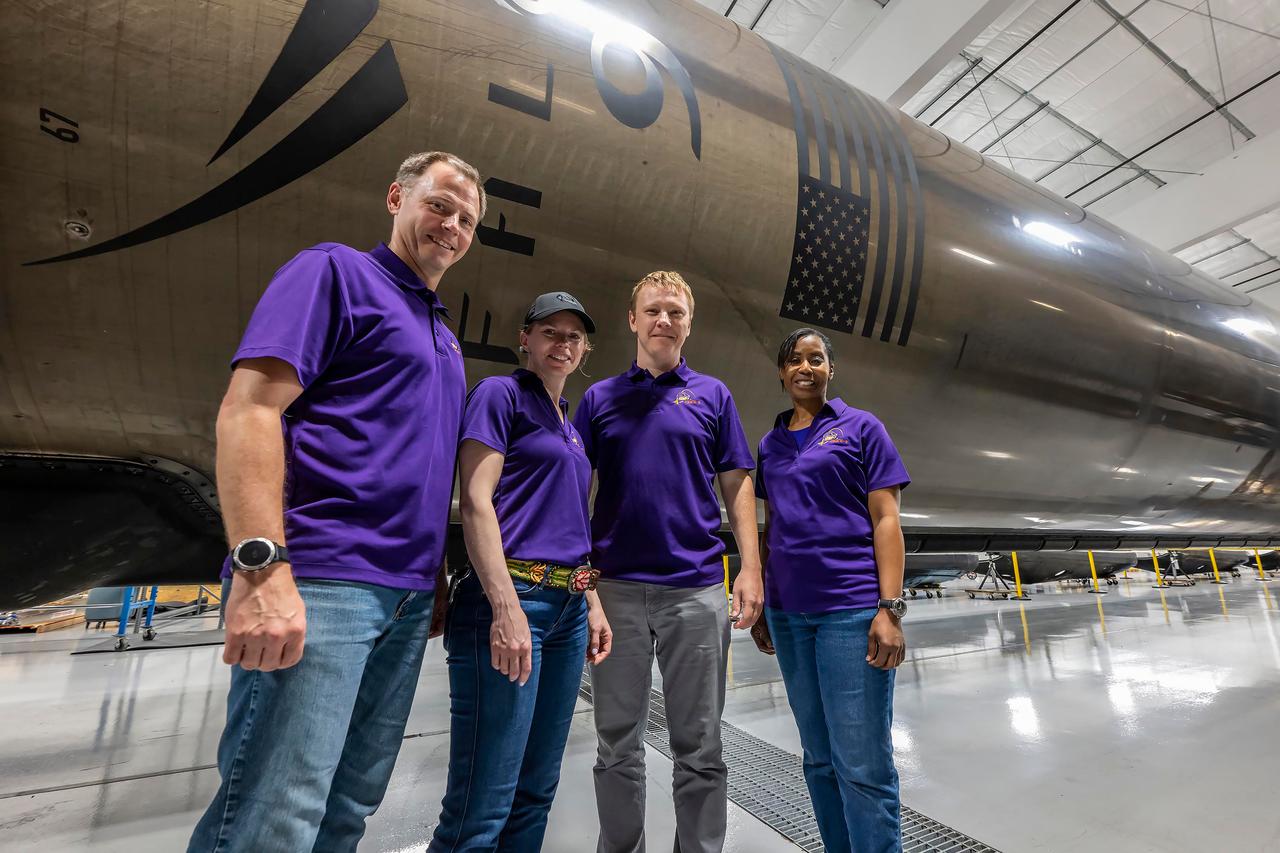
jsc2024e050140 (May 13, 2024) --- NASA’s SpaceX Crew-9 members stand in front of a Falcon 9 first-stage booster at SpaceX’s HangarX facility at NASA's Kennedy Space Center in Florida. From left are, Pilot Nick Hague from NASA; Commander Zena Cardman from NASA; Mission Spedialist Alexsandr Gorbunov from Roscosmos; and Mission Specialist Stephanie Wilson from NASA. Credit: SpaceX

The SpaceX Falcon 9 rocket that will be used for the company’s In-Flight Abort Test arrives at SpaceX’s hangar at Launch Complex 39 at NASA’s Kennedy Space Center in Florida. The test will demonstrate the spacecraft and launch system’s ability to abort in the unlikely case of an emergency after liftoff. It is an important step before NASA astronauts Bob Behnken and Doug Hurley are transported to the International Space Station aboard Crew Dragon as part of NASA’s Commercial Crew Program.
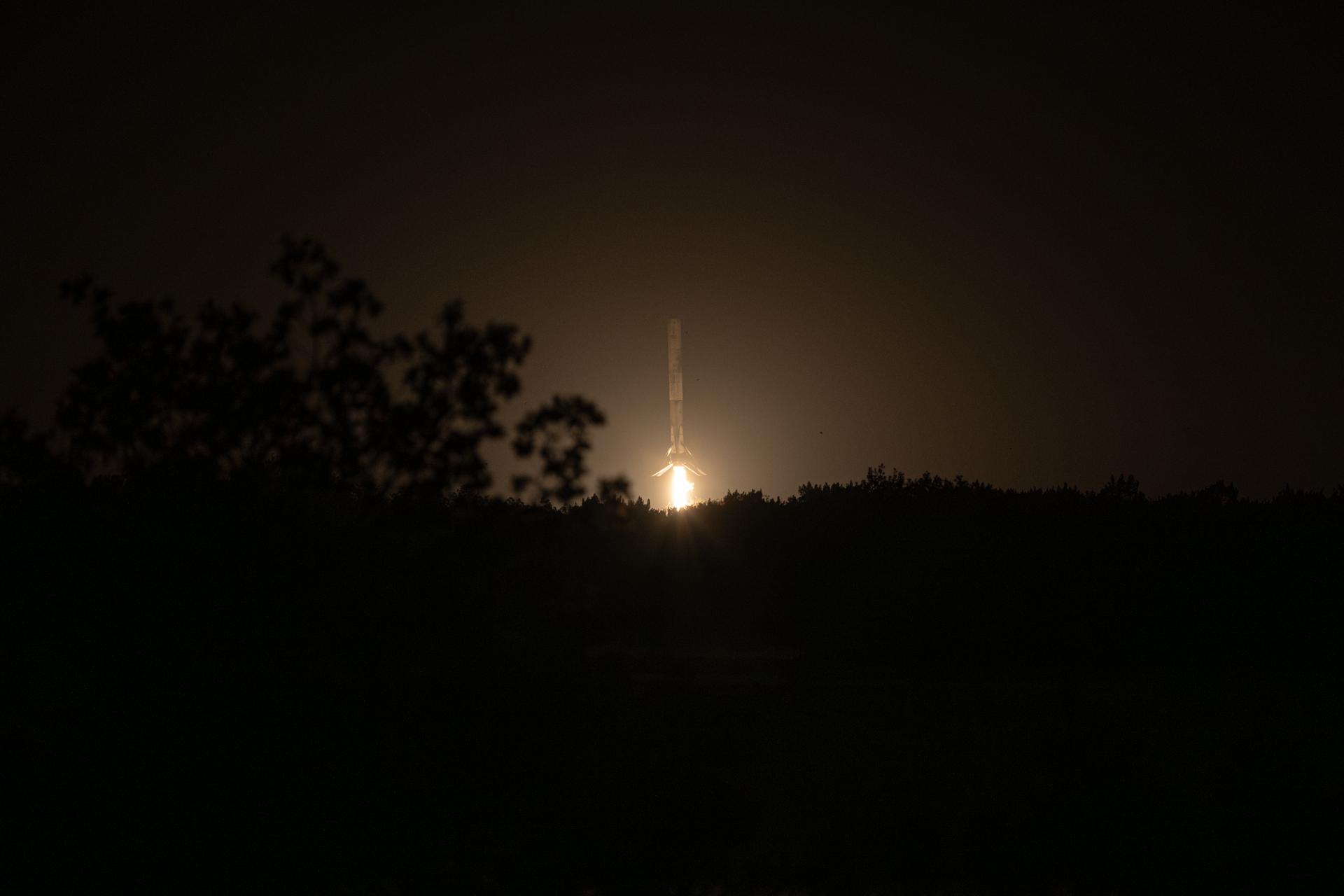
The first stage of a SpaceX Falcon 9 rocket lands at Landing Zone 40, Friday, Feb. 13, 2026, at Cape Canaveral Space Force Station in Florida. The Falcon 9 first stage supported the launch of NASA’s SpaceX Crew-12 mission to the International Space Station with NASA astronauts Jessica Meir, Jack Hathaway, ESA (European Space Agency) astronaut Sophie Adenot, and Roscosmos cosmonaut Andrey Fedyaev. NASA’s SpaceX Crew-12 mission is the twelfth crew rotation mission of the SpaceX Falcon 9 rocket and Dragon spacecraft to the International Space Station as part of the agency’s Commercial Crew Program. Meir, Hathaway, Adenot, and launched at 5:15 a.m. EST from Space Launch Complex 40 at the Cape Canaveral Space Force Station to begin their mission aboard the orbital outpost. Photo Credit: (NASA/John Kraus)
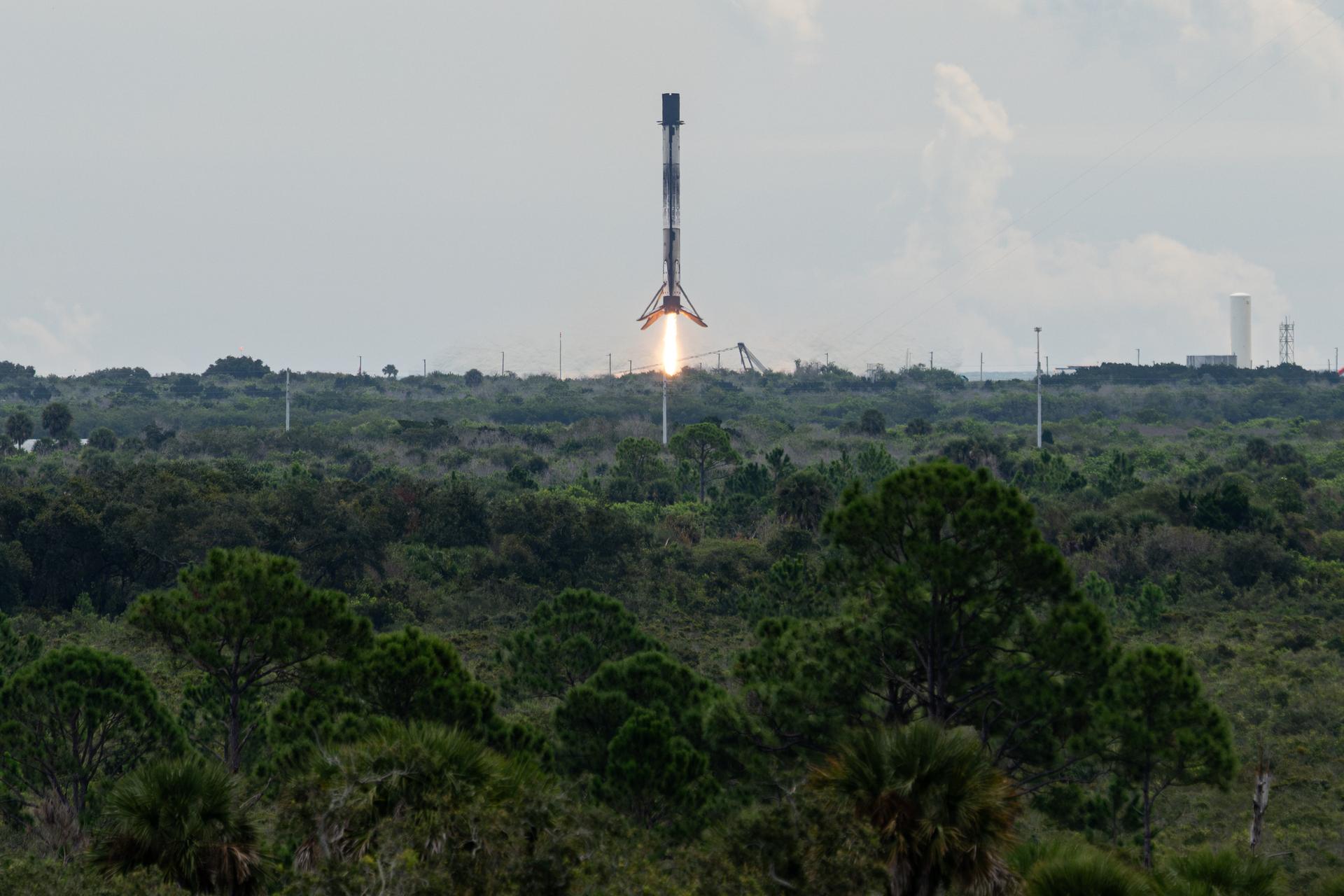
The first stage of a SpaceX Falcon 9 rocket lands at Landing Zone 40, Thursday, Oct. 1, 2026, at Cape Canaveral Space Force Station in Florida. The Falcon 9 first stage supported the launch of NASA’s SpaceX Crew-13 mission to the International Space Station with NASA astronauts Jessica Watkins and Luke Delaney, CSA (Canadian Space Agency) astronaut Joshua Kutryk, and Roscosmos cosmonaut Sergey Teteryatnikov. NASA’s SpaceX Crew-13 mission is the thirteenth crew rotation mission of the SpaceX Falcon 9 rocket and Dragon spacecraft to the International Space Station as part of the agency’s Commercial Crew Program. Watkins, Delaney, Kutryk, and Teteryatnikov launched at 11:10 a.m. EDT from Space Launch Complex 40 at Cape Canaveral Space Force Station to begin their mission aboard the orbital outpost. Photo Credit: (NASA/John Kraus)
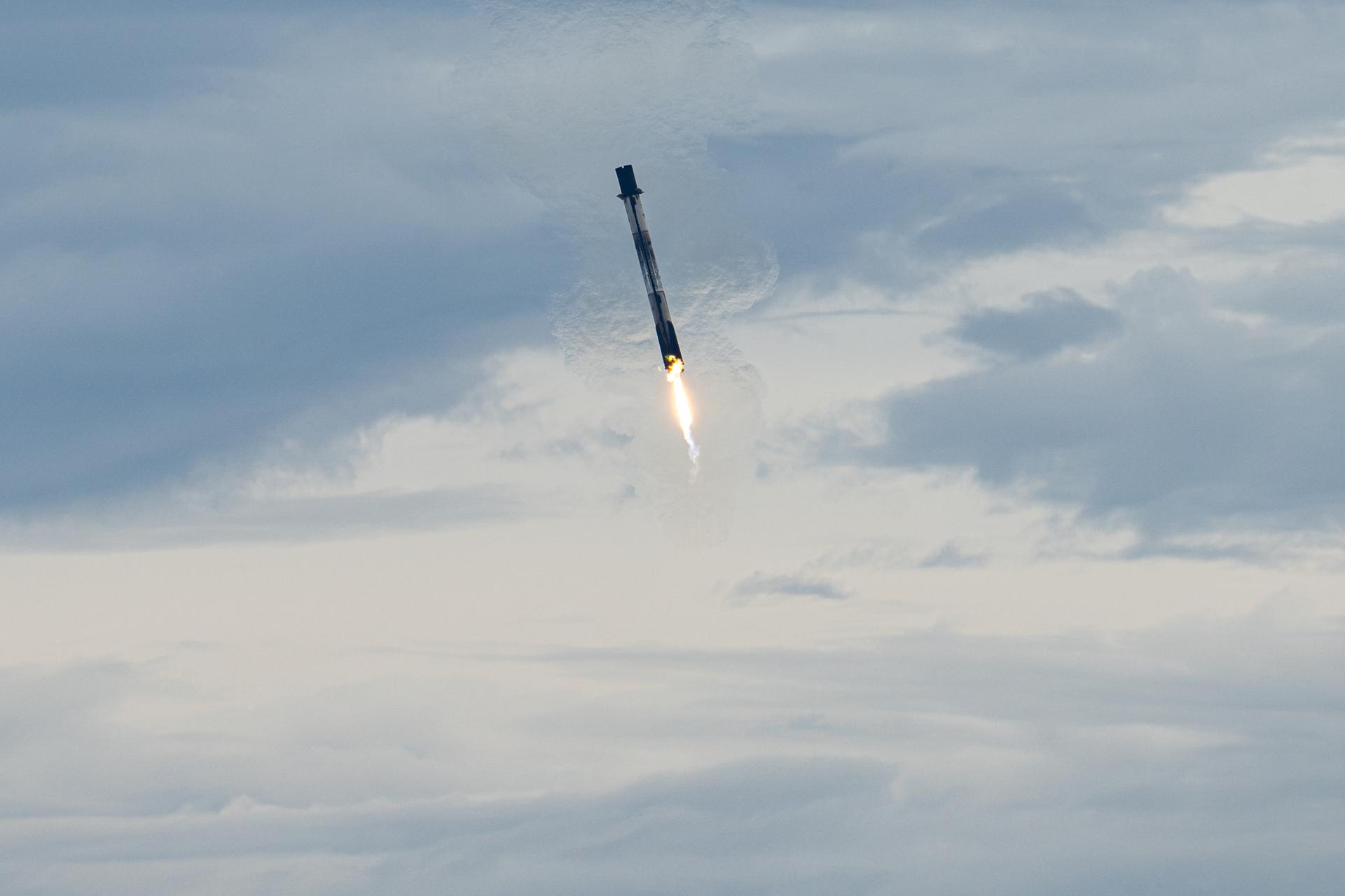
The first stage of a SpaceX Falcon 9 rocket lands at Landing Zone 40, Thursday, Oct. 1, 2026, at Cape Canaveral Space Force Station in Florida. The Falcon 9 first stage supported the launch of NASA’s SpaceX Crew-13 mission to the International Space Station with NASA astronauts Jessica Watkins and Luke Delaney, CSA (Canadian Space Agency) astronaut Joshua Kutryk, and Roscosmos cosmonaut Sergey Teteryatnikov. NASA’s SpaceX Crew-13 mission is the thirteenth crew rotation mission of the SpaceX Falcon 9 rocket and Dragon spacecraft to the International Space Station as part of the agency’s Commercial Crew Program. Watkins, Delaney, Kutryk, and Teteryatnikov launched at 11:10 a.m. EDT from Space Launch Complex 40 at Cape Canaveral Space Force Station to begin their mission aboard the orbital outpost. Photo Credit: (NASA/John Kraus)
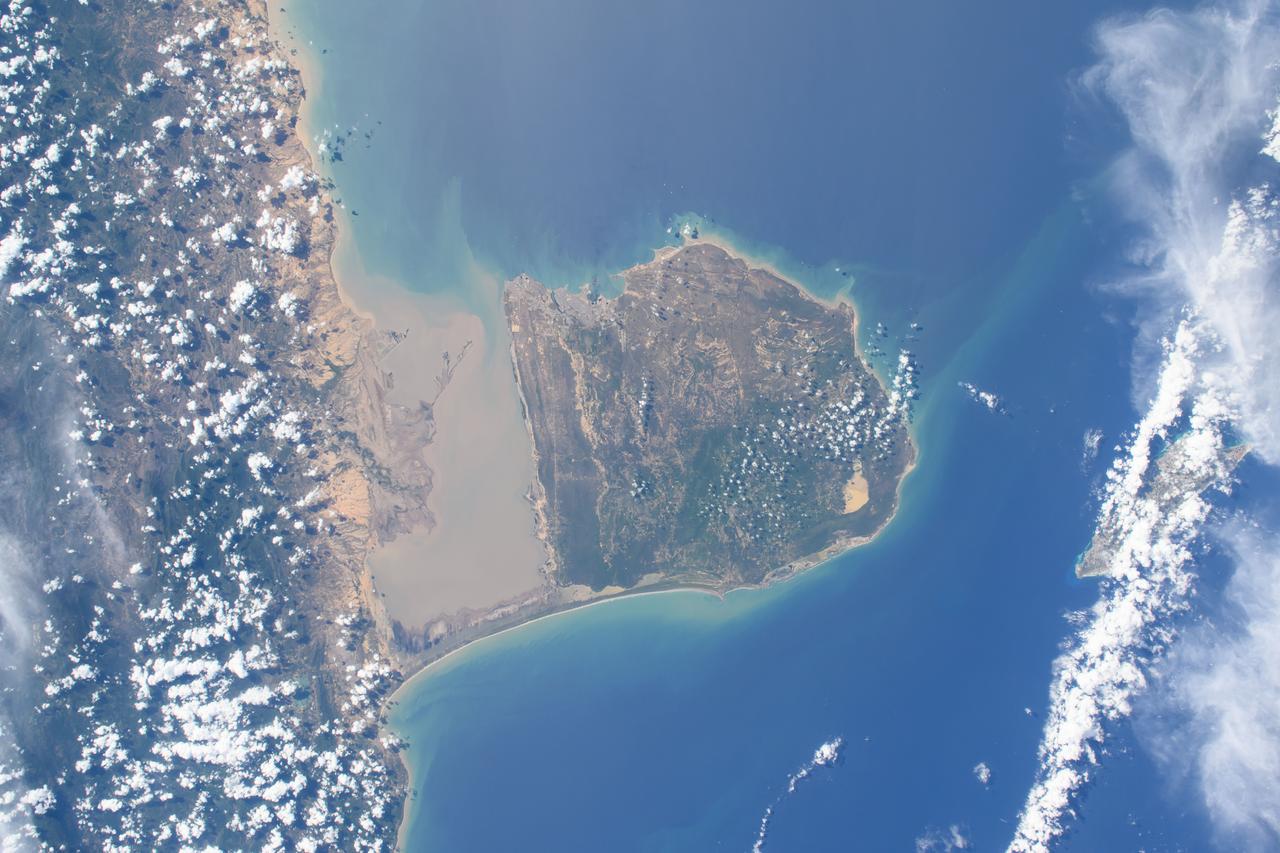
iss072e394498 (Dec. 18, 2024) --- Venezuala's Falcón Municipality on the coast of the Caribbean Sea is pictured from the International Space Station as it orbited 261 miles above.
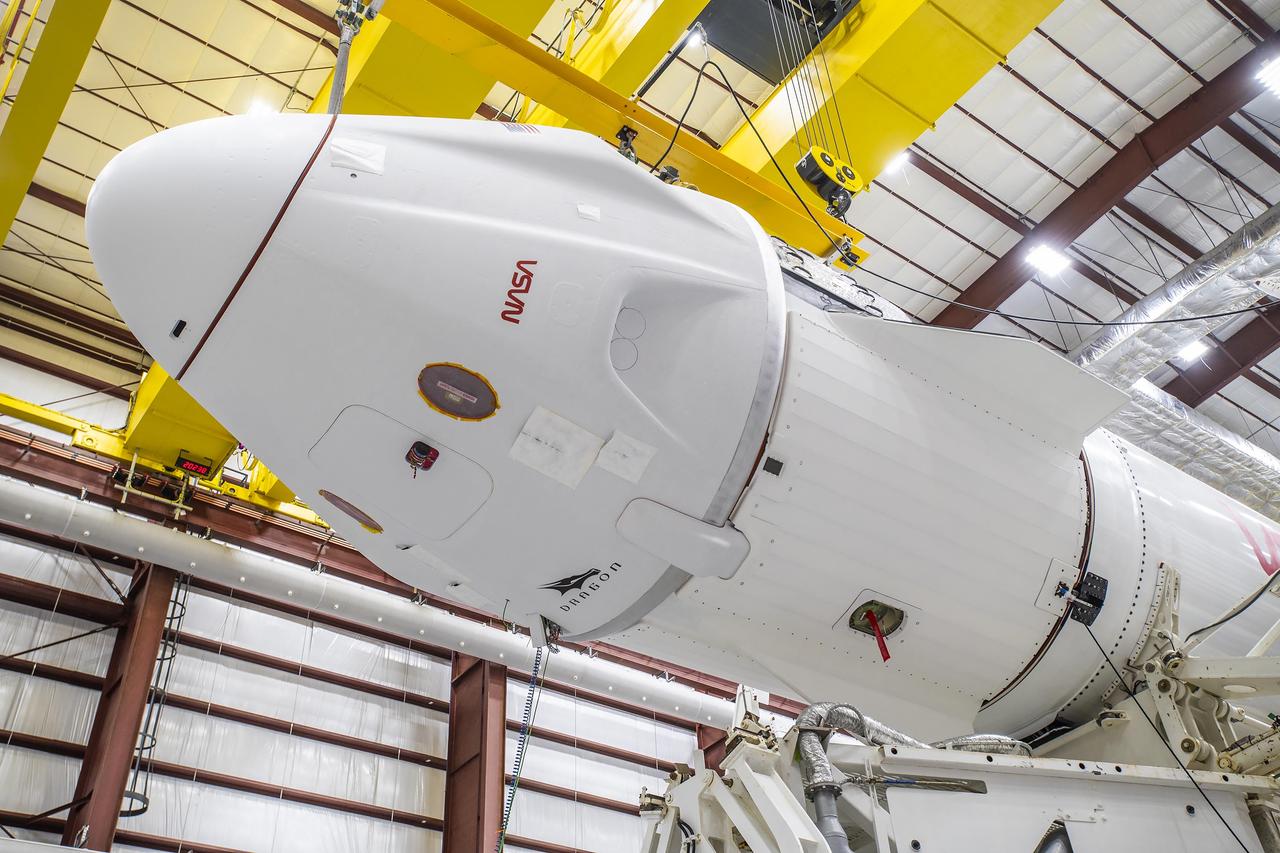
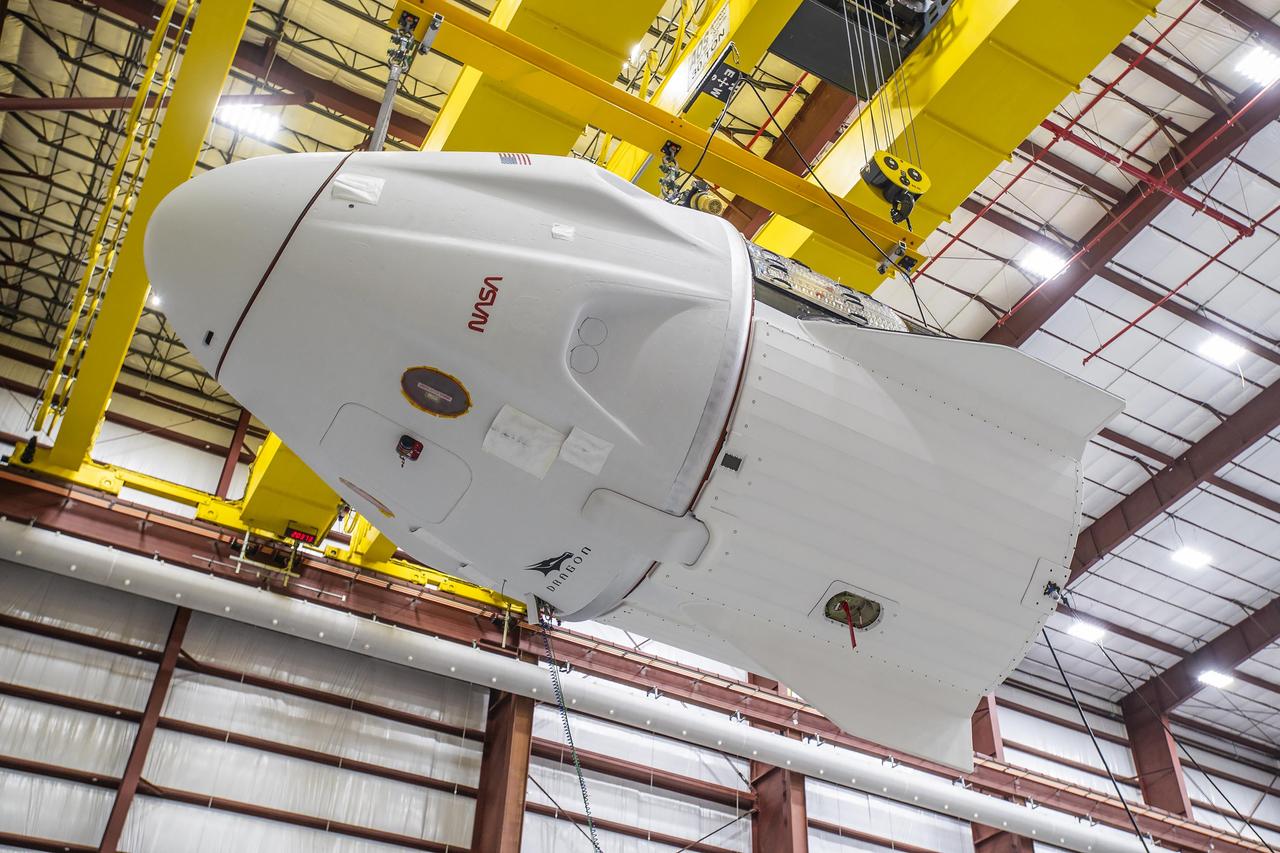
SpaceX’s Dragon spacecraft for NASA’s SpaceX Crew-8 mission is mated to the company's Falcon 9 rocket at SpaceX’s hangar at Kennedy Space Center’s Launch Complex 39A in Florida on Friday, Feb. 23, 2024, at Cape Canaveral Space Force Station. NASA astronauts Matthew Dominick, Michael Barratt, and Jeanette Epps, and Roscosmos cosmonaut Alexander Grebenkin are slated to launch to the International Space Station no earlier than 12:04 a.m. EST on March 1, 2024.
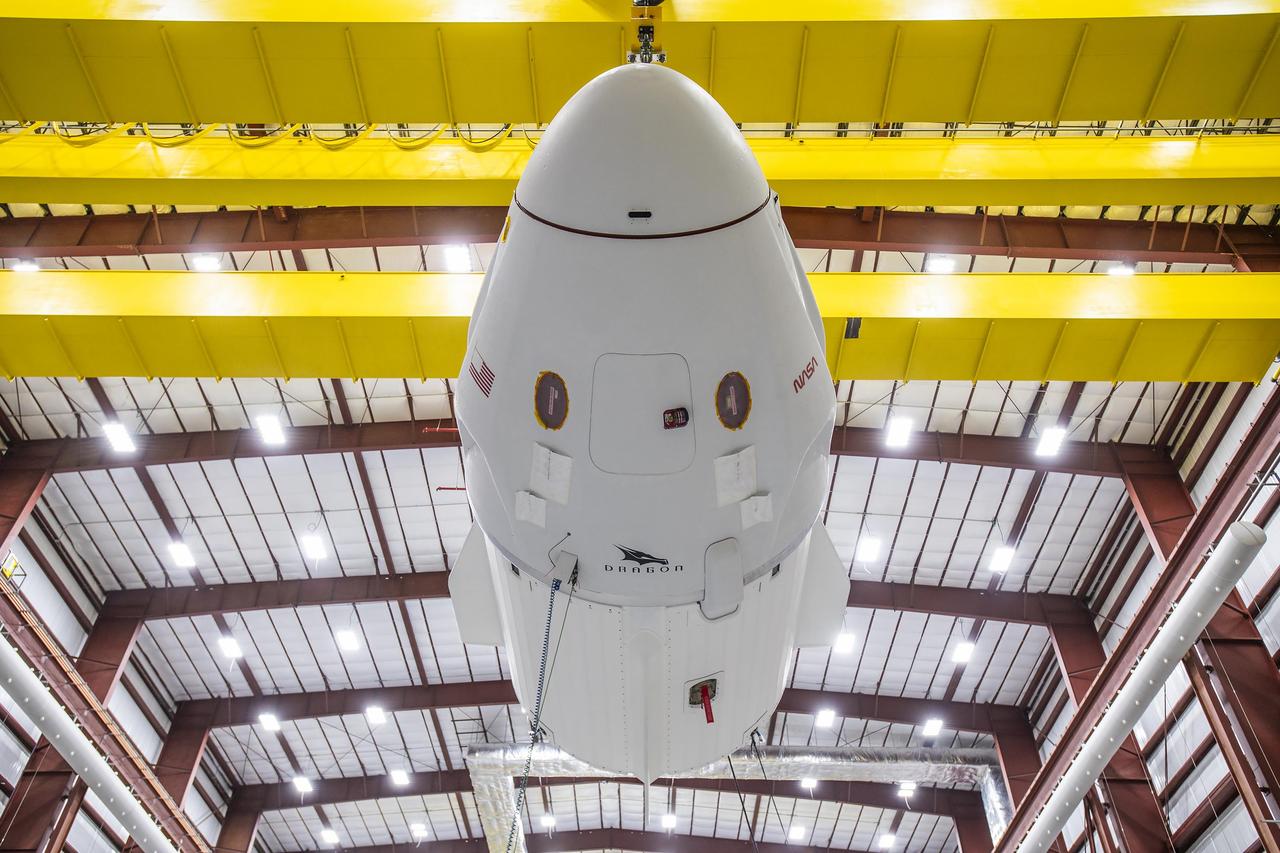
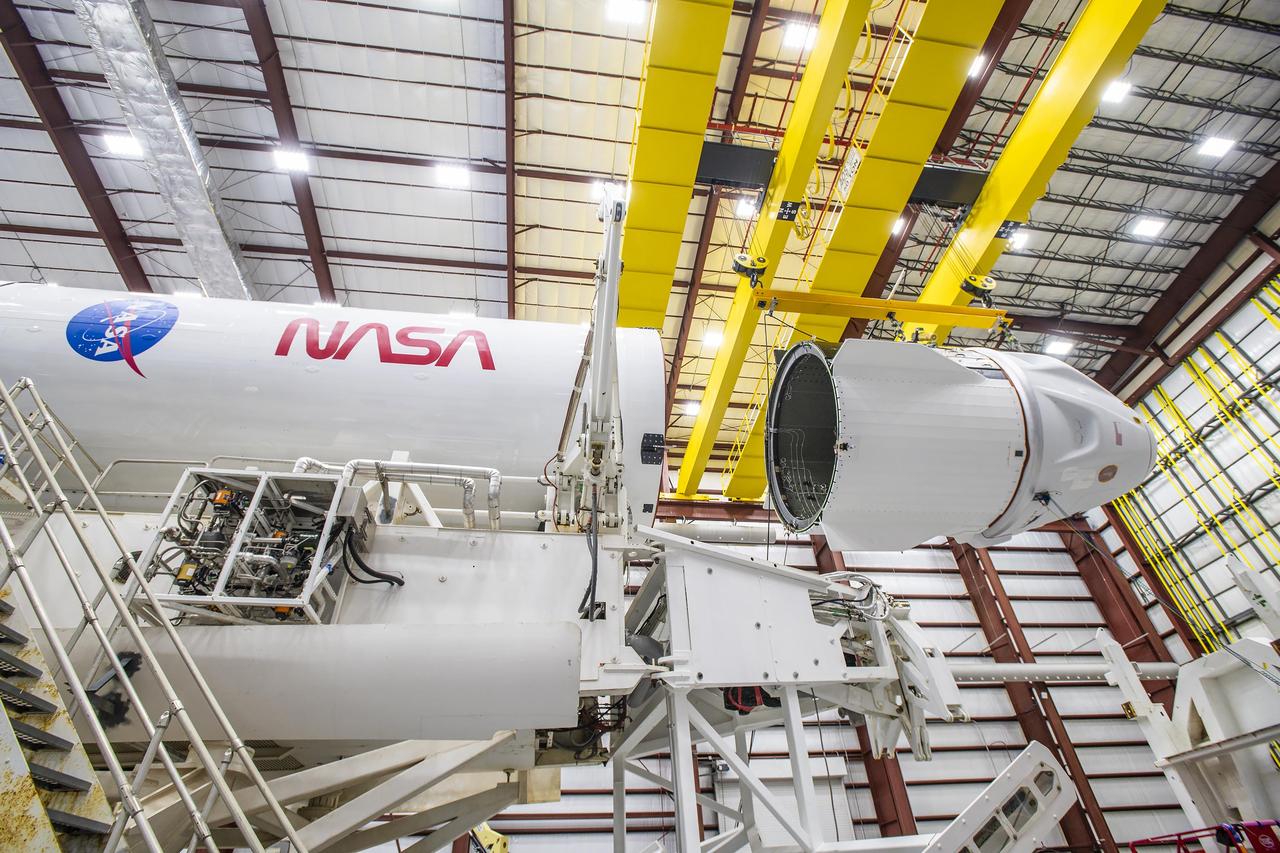
SpaceX’s Dragon spacecraft for NASA’s SpaceX Crew-8 mission is mated to the company's Falcon 9 rocket at SpaceX’s hangar at Kennedy Space Center’s Launch Complex 39A in Florida on Friday, Feb. 23, 2024, at Cape Canaveral Space Force Station. NASA astronauts Matthew Dominick, Michael Barratt, and Jeanette Epps, and Roscosmos cosmonaut Alexander Grebenkin are slated to launch to the International Space Station no earlier than 12:04 a.m. EST on March 1, 2024.
SpaceX’s Dragon spacecraft for NASA’s SpaceX Crew-8 mission is mated to the company's Falcon 9 rocket at SpaceX’s hangar at Kennedy Space Center’s Launch Complex 39A in Florida on Friday, Feb. 23, 2024, at Cape Canaveral Space Force Station. NASA astronauts Matthew Dominick, Michael Barratt, and Jeanette Epps, and Roscosmos cosmonaut Alexander Grebenkin are slated to launch to the International Space Station no earlier than 12:04 a.m. EST on March 1, 2024.
SpaceX’s Dragon spacecraft for NASA’s SpaceX Crew-8 mission is mated to the company's Falcon 9 rocket at SpaceX’s hangar at Kennedy Space Center’s Launch Complex 39A in Florida on Friday, Feb. 23, 2024, at Cape Canaveral Space Force Station. NASA astronauts Matthew Dominick, Michael Barratt, and Jeanette Epps, and Roscosmos cosmonaut Alexander Grebenkin are slated to launch to the International Space Station no earlier than 12:04 a.m. EST on March 1, 2024.
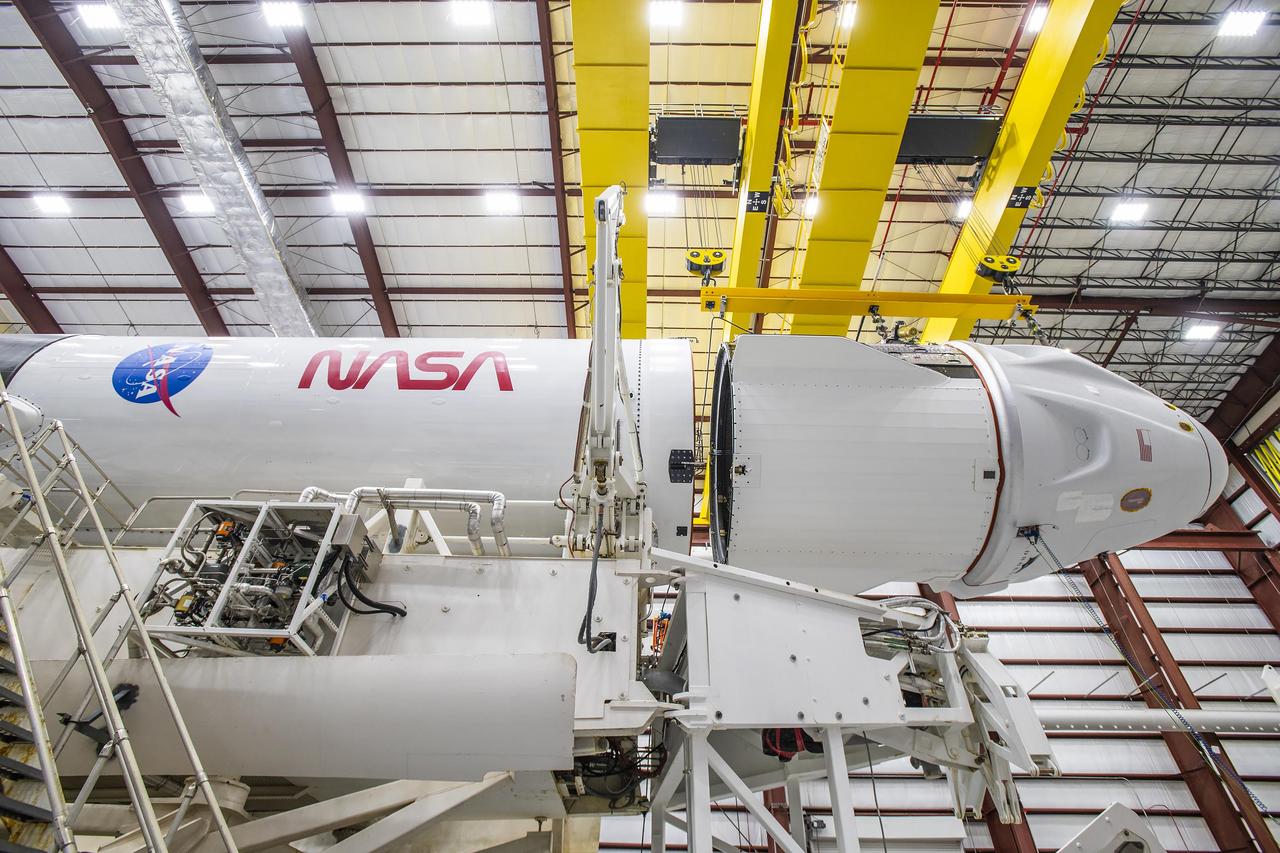
SpaceX’s Dragon spacecraft for NASA’s SpaceX Crew-8 mission is mated to the company's Falcon 9 rocket at SpaceX’s hangar at Kennedy Space Center’s Launch Complex 39A in Florida on Friday, Feb. 23, 2024, at Cape Canaveral Space Force Station. NASA astronauts Matthew Dominick, Michael Barratt, and Jeanette Epps, and Roscosmos cosmonaut Alexander Grebenkin are slated to launch to the International Space Station no earlier than 12:04 a.m. EST on March 1, 2024.
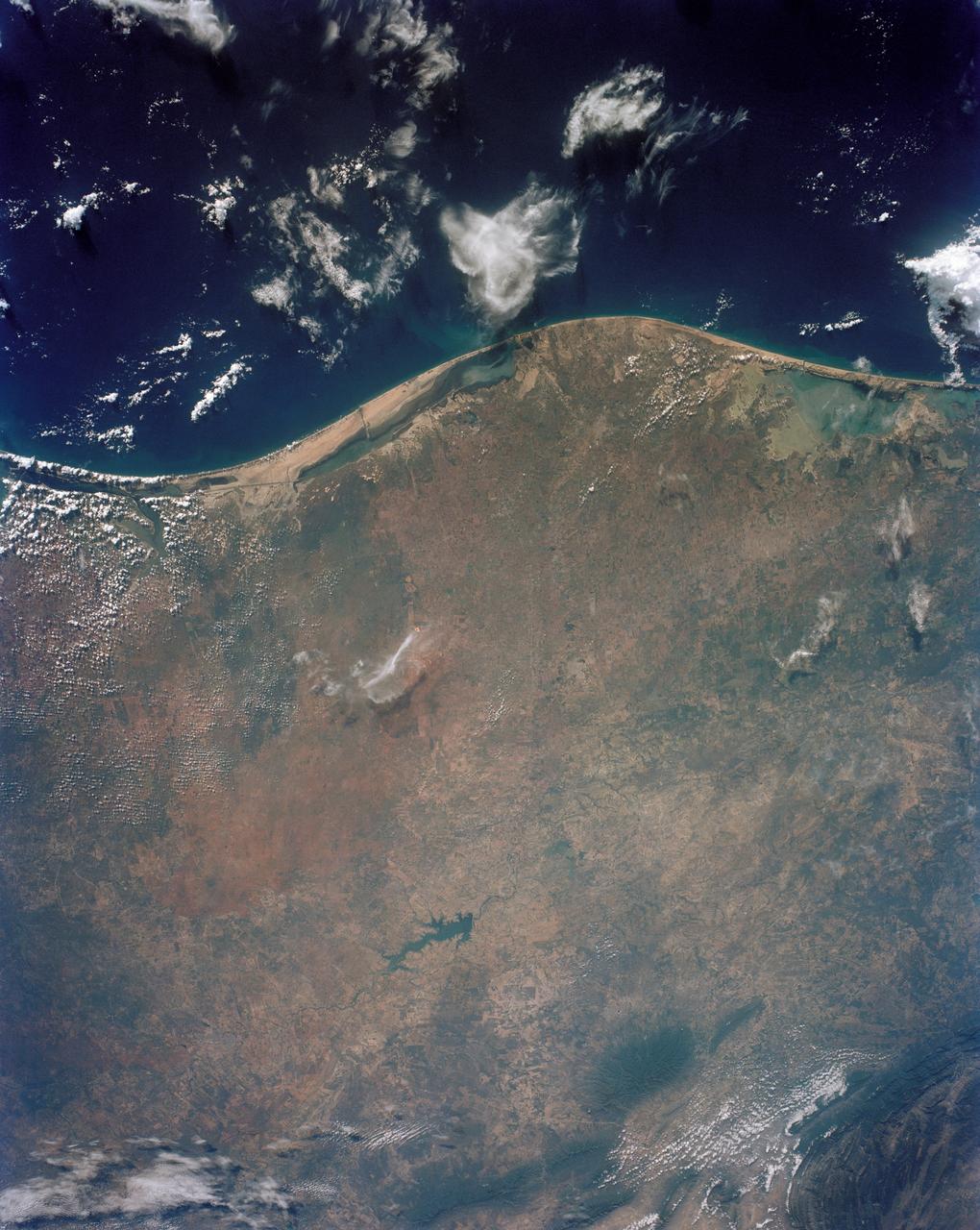
STS043-151-043 (8 August 1991) --- The Rio Grande extends across the center of this photograph from Falcon Reservoir to its bulging delta, joining the Gulf of Mexico. Sediment brought down by the river is spread northward and southward by alongshore currents to form the barrier chain of Padre Island and its protected Laguna Madre Speckled agricultural land use patterns in the river valley contrast with range land northward from the white cloud, and with closed canopy forest on hills in Mexico. A Linhof camera with a 90mm lens, was used to expose the frame at 14:43 GMT, Aug. 8, 1991.
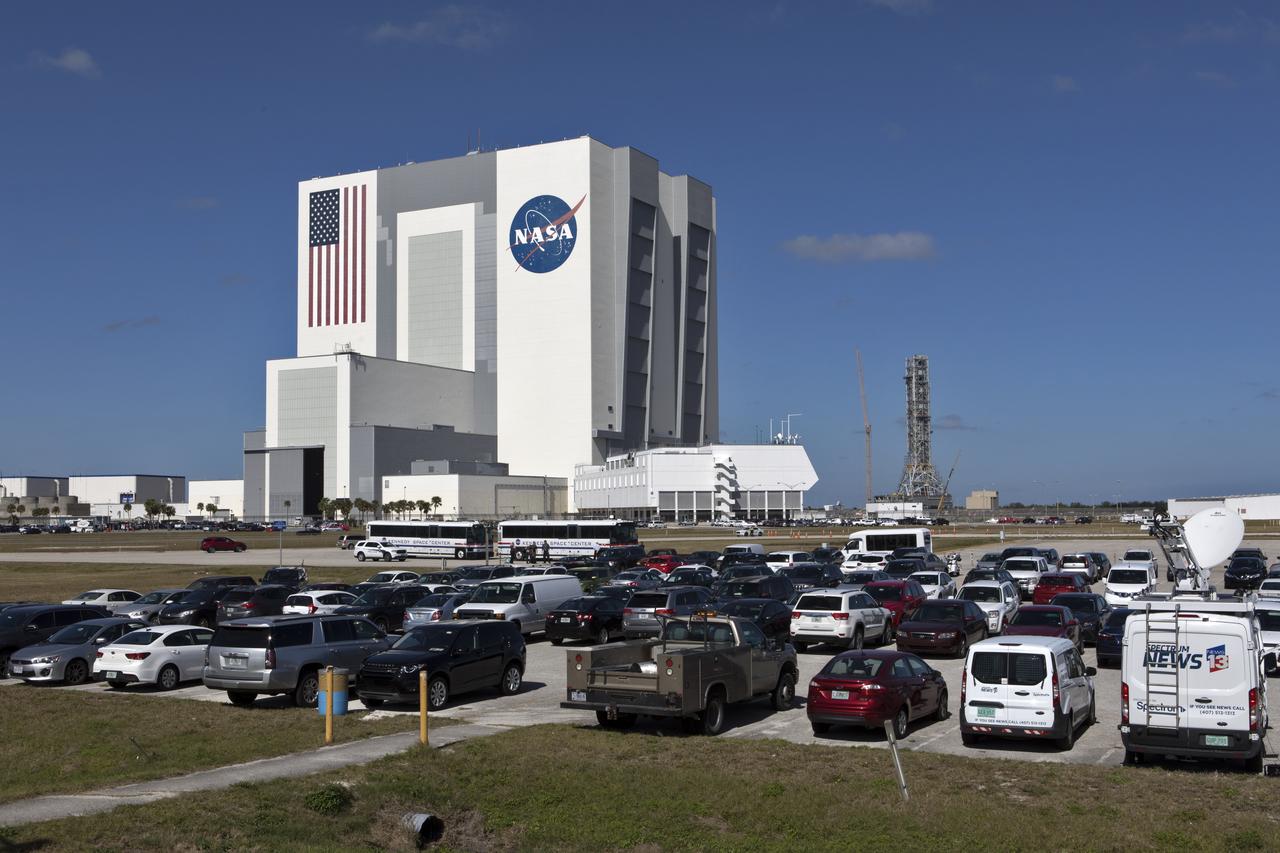
The parking area at the NASA News Center is filled with media vehicles and guest buses in anticipation of the liftoff of the SpaceX Falcon Heavy rocket from Launch Complex 39A at Kennedy Space Center in Florida. The demonstration flight will be a significant milestone for the world's premier multi-user spaceport. In 2014, NASA signed a property agreement with SpaceX for the use and operation of the center's pad 39A, where the company has launched Falcon 9 rockets and is preparing for the first Falcon Heavy. NASA also has Space Act Agreements in place with partners, such as SpaceX, to provide services needed to process and launch rockets and spacecraft.
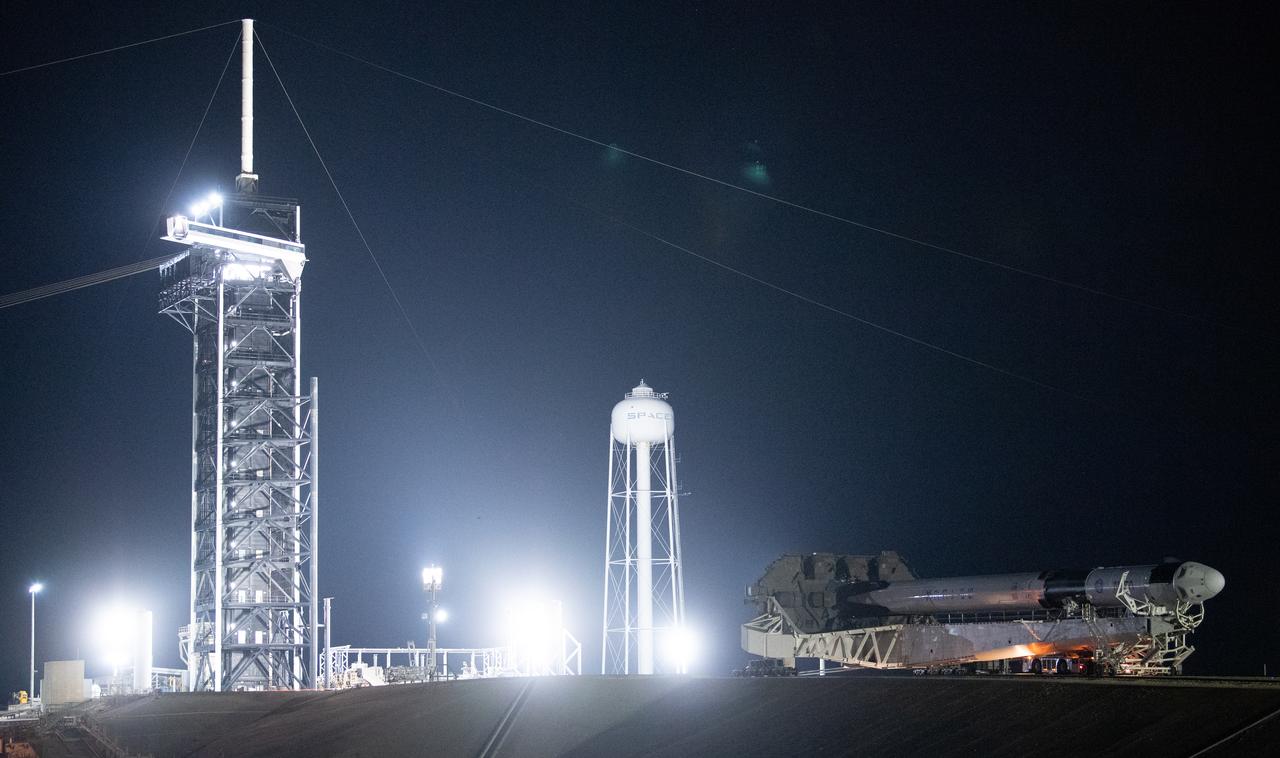
A SpaceX Falcon 9 rocket with the company's Crew Dragon spacecraft onboard is seen as it is rolled out to the launch pad at Launch Complex 39A as preparations continue for the Crew-5 mission, Saturday, Oct. 1, 2022, at NASA’s Kennedy Space Center in Florida. NASA’s SpaceX Crew-5 mission is the fifth crew rotation mission of the SpaceX Crew Dragon spacecraft and Falcon 9 rocket to the International Space Station as part of the agency’s Commercial Crew Program. NASA astronauts Nicole Mann and Josh Cassada, Japan Aerospace Exploration Agency (JAXA) astronaut Koichi Wakata, and Roscosmos cosmonaut Anna Kikina are scheduled to launch at 12:00 p.m. EDT on Oct. 5, from Launch Complex 39A at the Kennedy Space Center. Photo Credit: (NASA/Joel Kowsky)
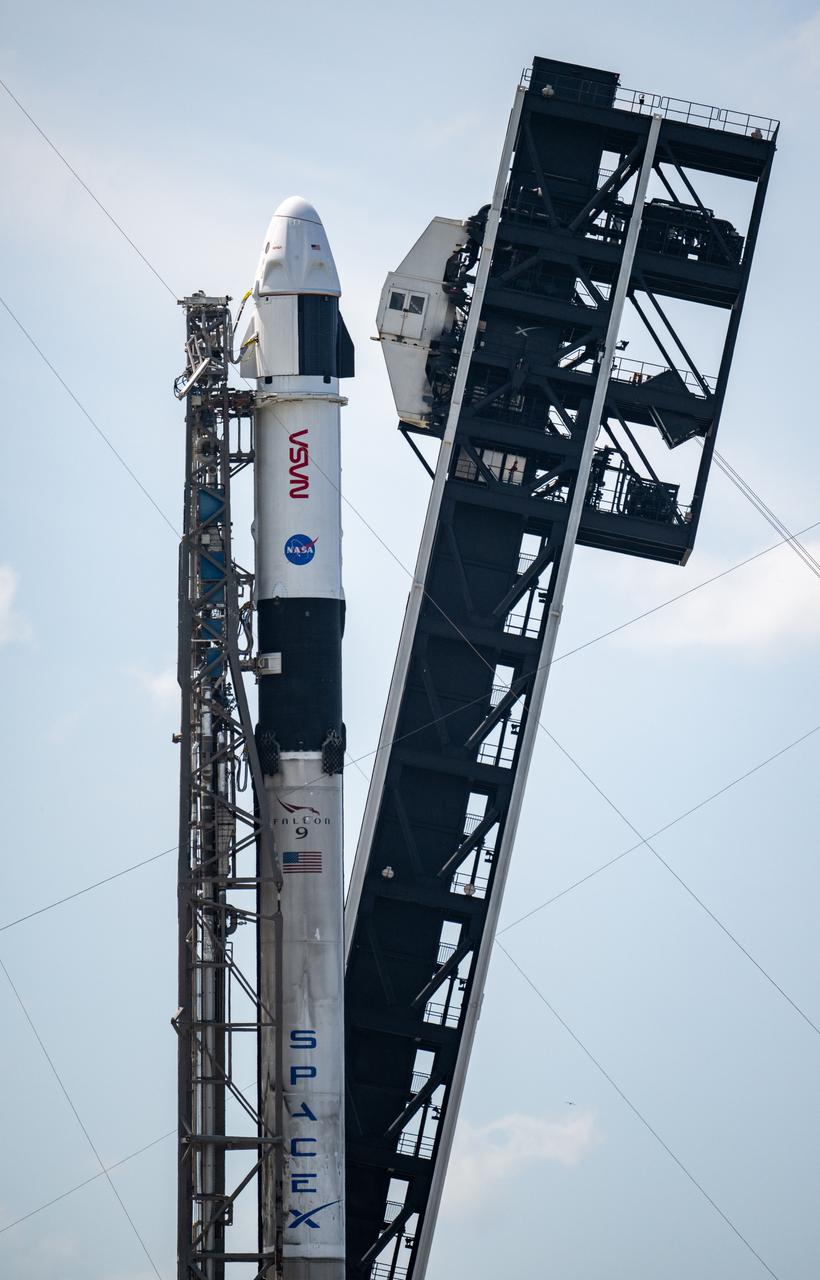
A SpaceX Falcon 9 rocket with the company's Dragon spacecraft on top is seen, photographed at an angle, as it is raised into a vertical position on the launch pad at Space Launch Complex 40 as preparations continue for the Crew-9 mission, Friday, Sept. 27, 2024, at Cape Canaveral Space Force Station in Florida. NASA’s SpaceX Crew-9 mission is the ninth crew rotation mission of the SpaceX Dragon spacecraft and Falcon 9 rocket to the International Space Station as part of the agency’s Commercial Crew Program. NASA astronaut Nick Hague and Roscosmos cosmonaut Aleksandr Gorbunov are scheduled to launch on 1:17 p.m. EDT on Saturday, Sept. 28, from Space Launch Complex 40 at the Cape Canaveral Space Force Station. Photo Credit: (NASA/Keegan Barber)
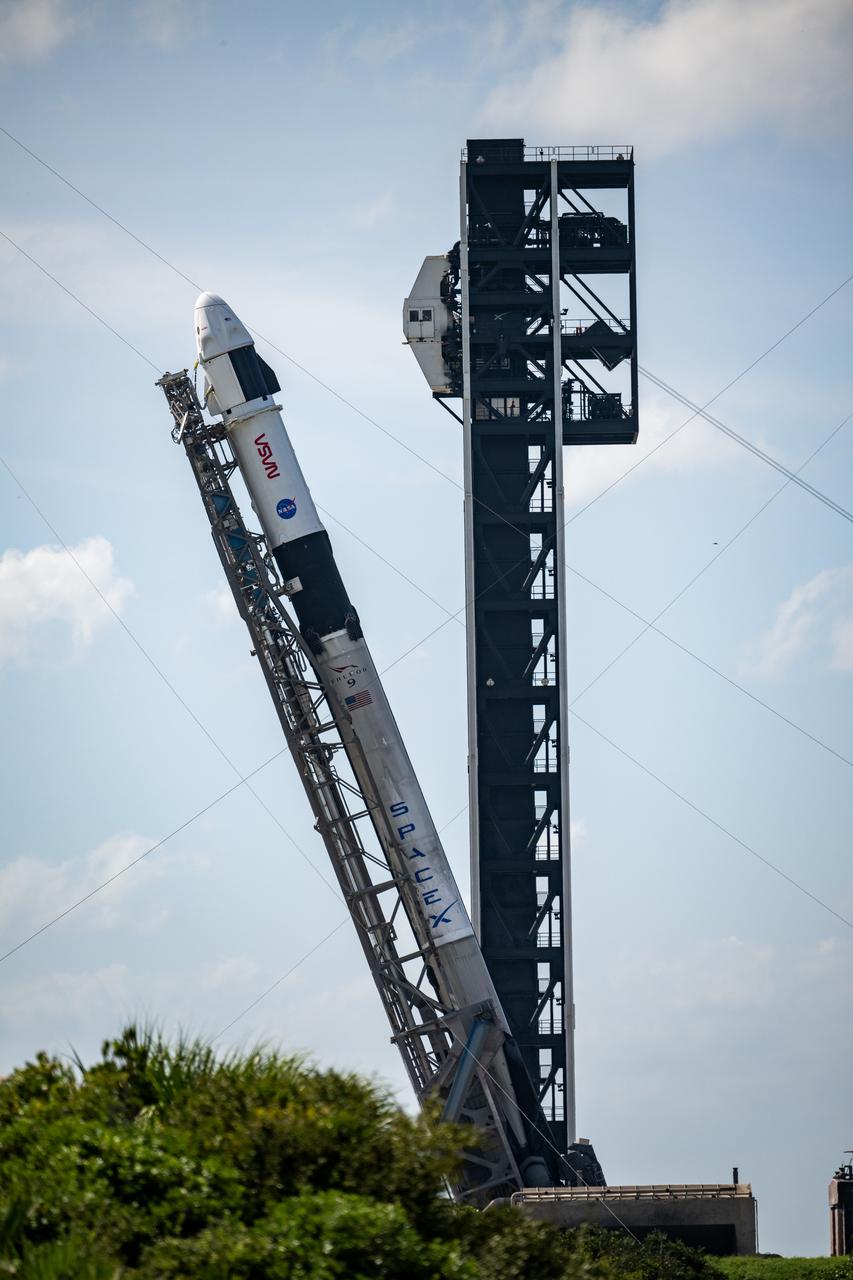
A SpaceX Falcon 9 rocket with the company's Dragon spacecraft on top is seen as it is raised into a vertical position on the launch pad at Space Launch Complex 40 as preparations continue for the Crew-9 mission, Friday, Sept. 27, 2024, at Cape Canaveral Space Force Station in Florida. NASA’s SpaceX Crew-9 mission is the ninth crew rotation mission of the SpaceX Dragon spacecraft and Falcon 9 rocket to the International Space Station as part of the agency’s Commercial Crew Program. NASA astronaut Nick Hague and Roscosmos cosmonaut Aleksandr Gorbunov are scheduled to launch on 1:17 p.m. EDT on Saturday, Sept. 28, from Space Launch Complex 40 at the Cape Canaveral Space Force Station. Photo Credit: (NASA/Keegan Barber)
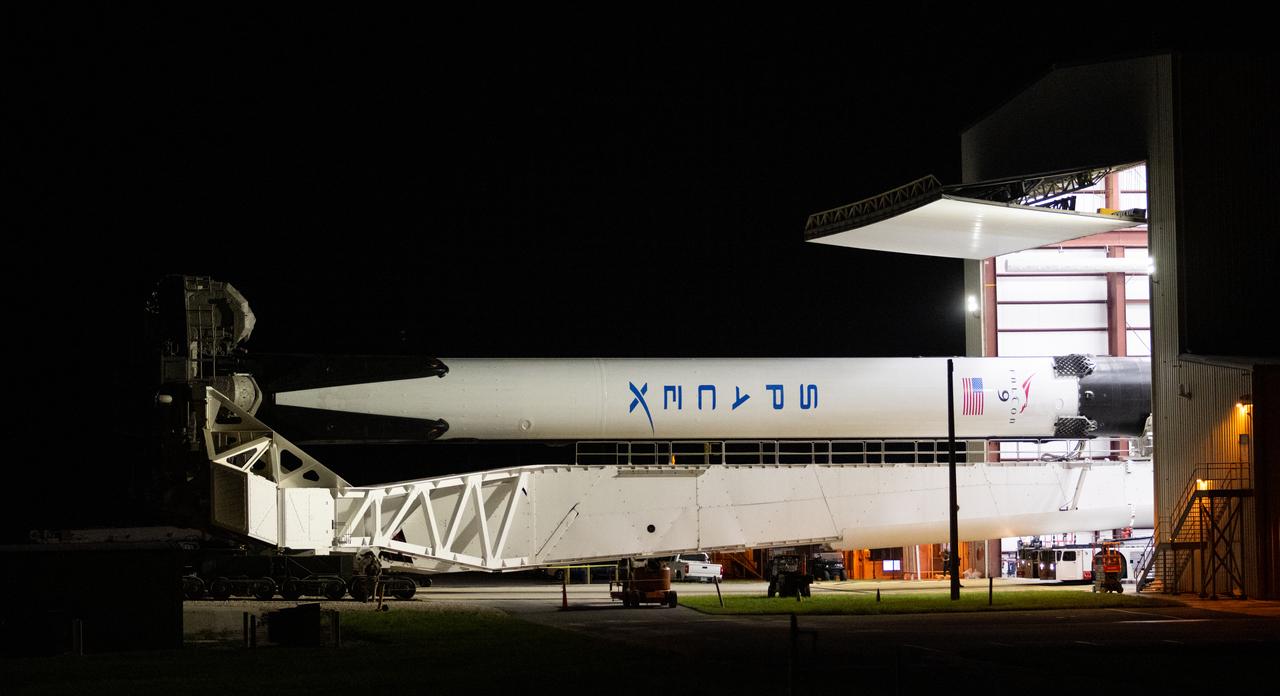
A SpaceX Falcon 9 rocket with the company's Crew Dragon spacecraft onboard is seen as it is rolled out to the launch pad at Launch Complex 39A as preparations continue for the Crew-5 mission, Saturday, Oct. 1, 2022, at NASA’s Kennedy Space Center in Florida. NASA’s SpaceX Crew-5 mission is the fifth crew rotation mission of the SpaceX Crew Dragon spacecraft and Falcon 9 rocket to the International Space Station as part of the agency’s Commercial Crew Program. NASA astronauts Nicole Mann and Josh Cassada, Japan Aerospace Exploration Agency (JAXA) astronaut Koichi Wakata, and Roscosmos cosmonaut Anna Kikina are scheduled to launch at 12:00 p.m. EDT on Oct. 5, from Launch Complex 39A at the Kennedy Space Center. Photo Credit: (NASA/Joel Kowsky)
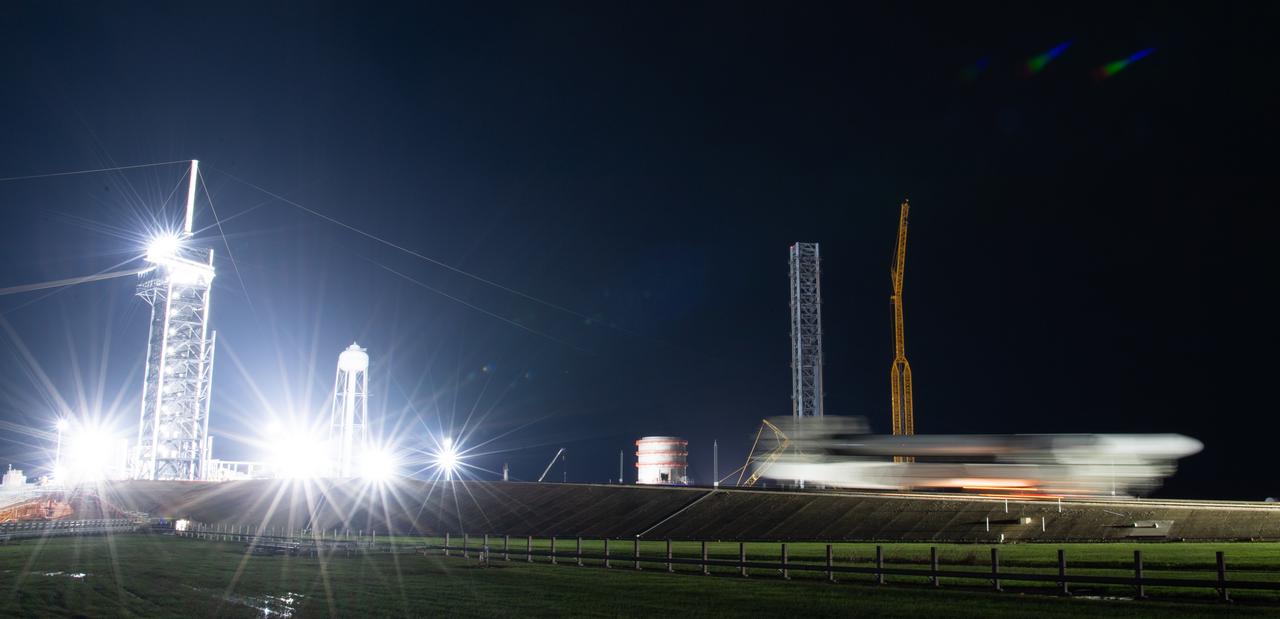
In this three-minute exposure, a SpaceX Falcon 9 rocket with the company's Crew Dragon spacecraft onboard is seen as it is rolled out to the launch pad at Launch Complex 39A as preparations continue for the Crew-5 mission, Saturday, Oct. 1, 2022, at NASA’s Kennedy Space Center in Florida. NASA’s SpaceX Crew-5 mission is the fifth crew rotation mission of the SpaceX Crew Dragon spacecraft and Falcon 9 rocket to the International Space Station as part of the agency’s Commercial Crew Program. NASA astronauts Nicole Mann and Josh Cassada, Japan Aerospace Exploration Agency (JAXA) astronaut Koichi Wakata, and Roscosmos cosmonaut Anna Kikina are scheduled to launch at 12:00 p.m. EDT on Oct. 5, from Launch Complex 39A at the Kennedy Space Center. Photo Credit: (NASA/Joel Kowsky)
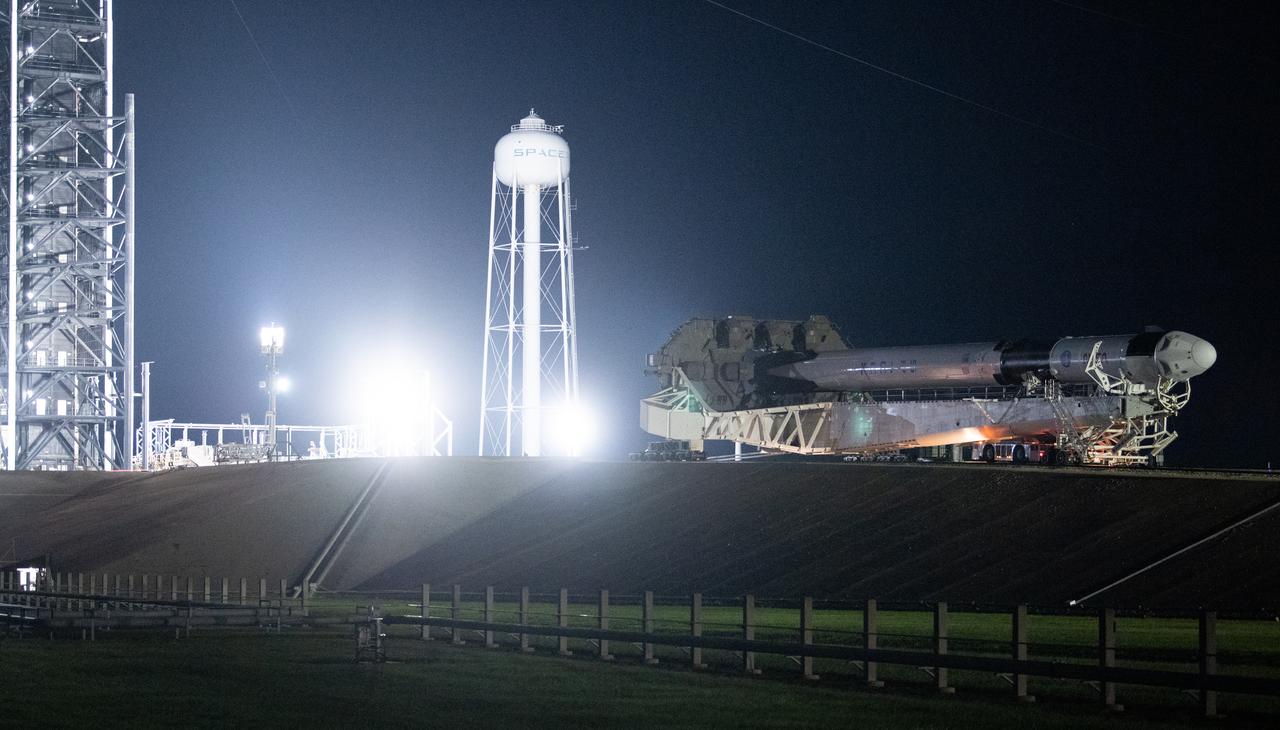
A SpaceX Falcon 9 rocket with the company's Crew Dragon spacecraft onboard is seen as it is rolled out to the launch pad at Launch Complex 39A as preparations continue for the Crew-5 mission, Saturday, Oct. 1, 2022, at NASA’s Kennedy Space Center in Florida. NASA’s SpaceX Crew-5 mission is the fifth crew rotation mission of the SpaceX Crew Dragon spacecraft and Falcon 9 rocket to the International Space Station as part of the agency’s Commercial Crew Program. NASA astronauts Nicole Mann and Josh Cassada, Japan Aerospace Exploration Agency (JAXA) astronaut Koichi Wakata, and Roscosmos cosmonaut Anna Kikina are scheduled to launch at 12:00 p.m. EDT on Oct. 5, from Launch Complex 39A at the Kennedy Space Center. Photo Credit: (NASA/Joel Kowsky)
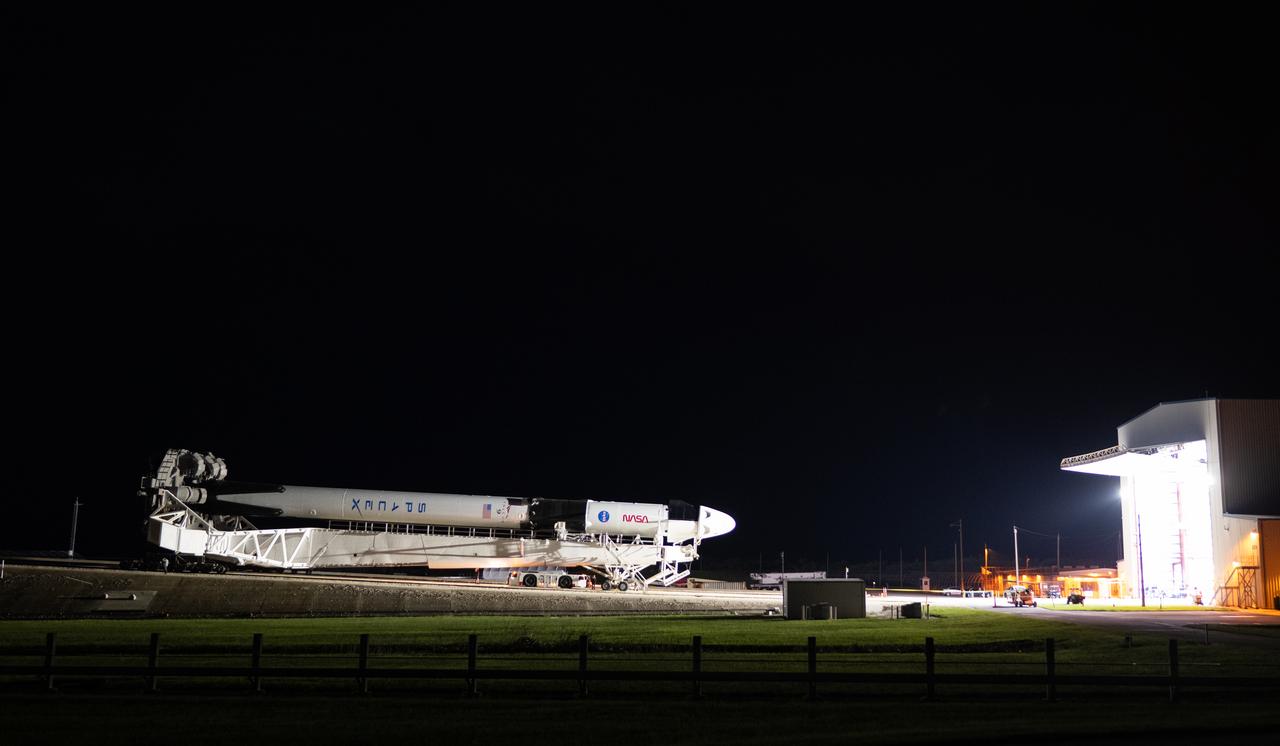
A SpaceX Falcon 9 rocket with the company's Crew Dragon spacecraft onboard is seen as it is rolled out to the launch pad at Launch Complex 39A as preparations continue for the Crew-5 mission, Saturday, Oct. 1, 2022, at NASA’s Kennedy Space Center in Florida. NASA’s SpaceX Crew-5 mission is the fifth crew rotation mission of the SpaceX Crew Dragon spacecraft and Falcon 9 rocket to the International Space Station as part of the agency’s Commercial Crew Program. NASA astronauts Nicole Mann and Josh Cassada, Japan Aerospace Exploration Agency (JAXA) astronaut Koichi Wakata, and Roscosmos cosmonaut Anna Kikina are scheduled to launch at 12:00 p.m. EDT on Oct. 5, from Launch Complex 39A at the Kennedy Space Center. Photo Credit: (NASA/Joel Kowsky)
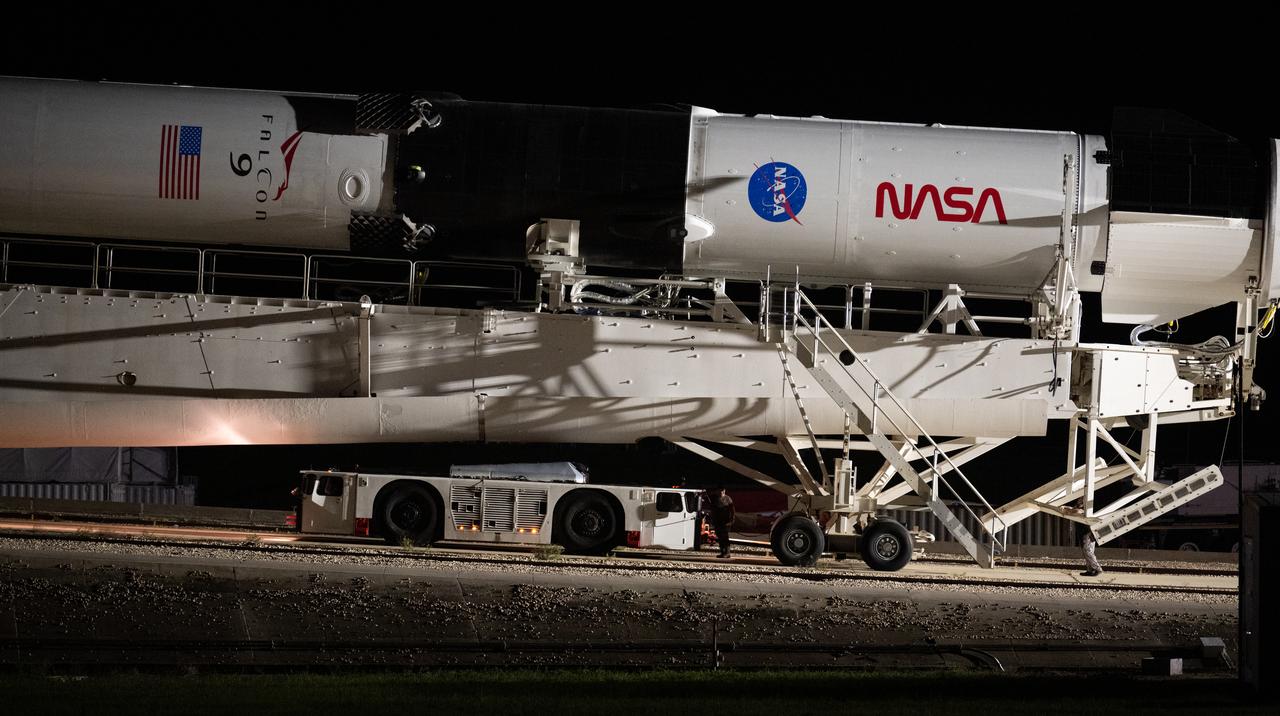
A SpaceX Falcon 9 rocket with the company's Crew Dragon spacecraft onboard is seen as it is rolled out to the launch pad at Launch Complex 39A as preparations continue for the Crew-5 mission, Saturday, Oct. 1, 2022, at NASA’s Kennedy Space Center in Florida. NASA’s SpaceX Crew-5 mission is the fifth crew rotation mission of the SpaceX Crew Dragon spacecraft and Falcon 9 rocket to the International Space Station as part of the agency’s Commercial Crew Program. NASA astronauts Nicole Mann and Josh Cassada, Japan Aerospace Exploration Agency (JAXA) astronaut Koichi Wakata, and Roscosmos cosmonaut Anna Kikina are scheduled to launch at 12:00 p.m. EDT on Oct. 5, from Launch Complex 39A at the Kennedy Space Center. Photo Credit: (NASA/Joel Kowsky)
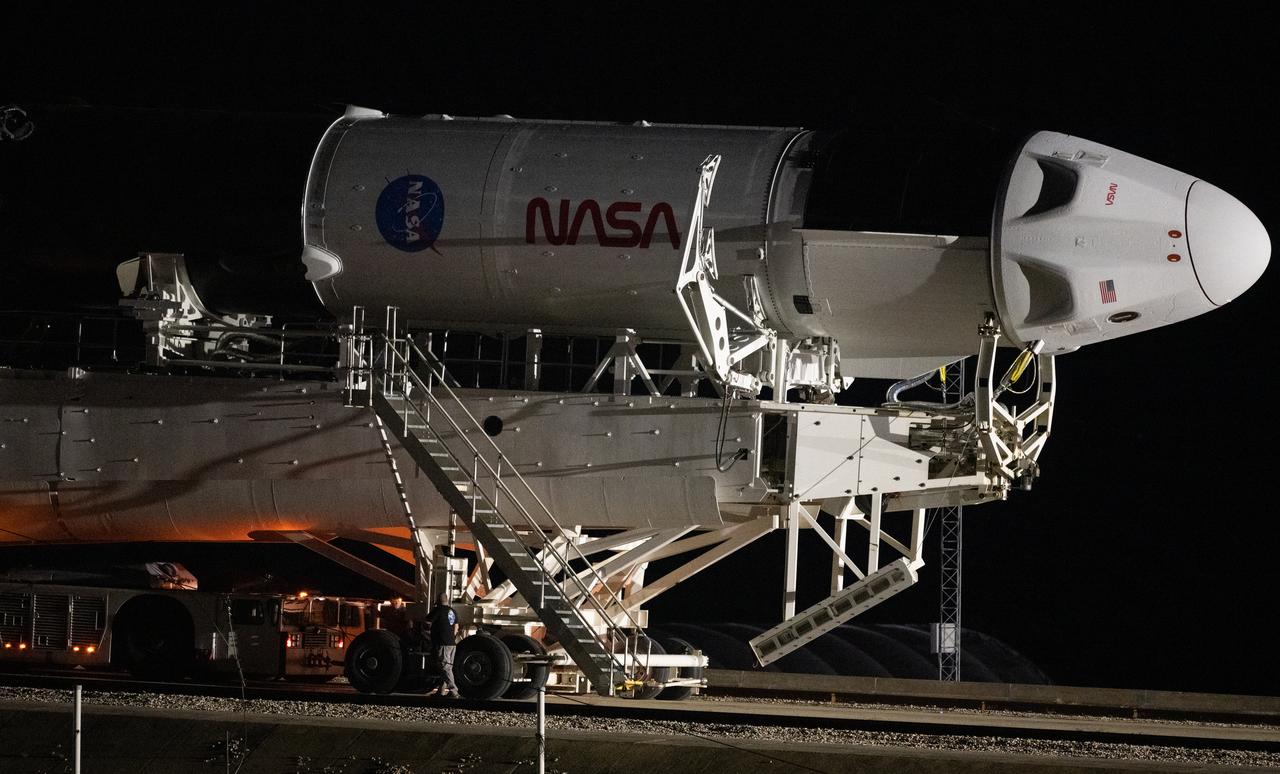
A SpaceX Falcon 9 rocket with the company's Crew Dragon spacecraft onboard is seen as it is rolled out to the launch pad at Launch Complex 39A as preparations continue for the Crew-5 mission, Saturday, Oct. 1, 2022, at NASA’s Kennedy Space Center in Florida. NASA’s SpaceX Crew-5 mission is the fifth crew rotation mission of the SpaceX Crew Dragon spacecraft and Falcon 9 rocket to the International Space Station as part of the agency’s Commercial Crew Program. NASA astronauts Nicole Mann and Josh Cassada, Japan Aerospace Exploration Agency (JAXA) astronaut Koichi Wakata, and Roscosmos cosmonaut Anna Kikina are scheduled to launch at 12:00 p.m. EDT on Oct. 5, from Launch Complex 39A at the Kennedy Space Center. Photo Credit: (NASA/Joel Kowsky)
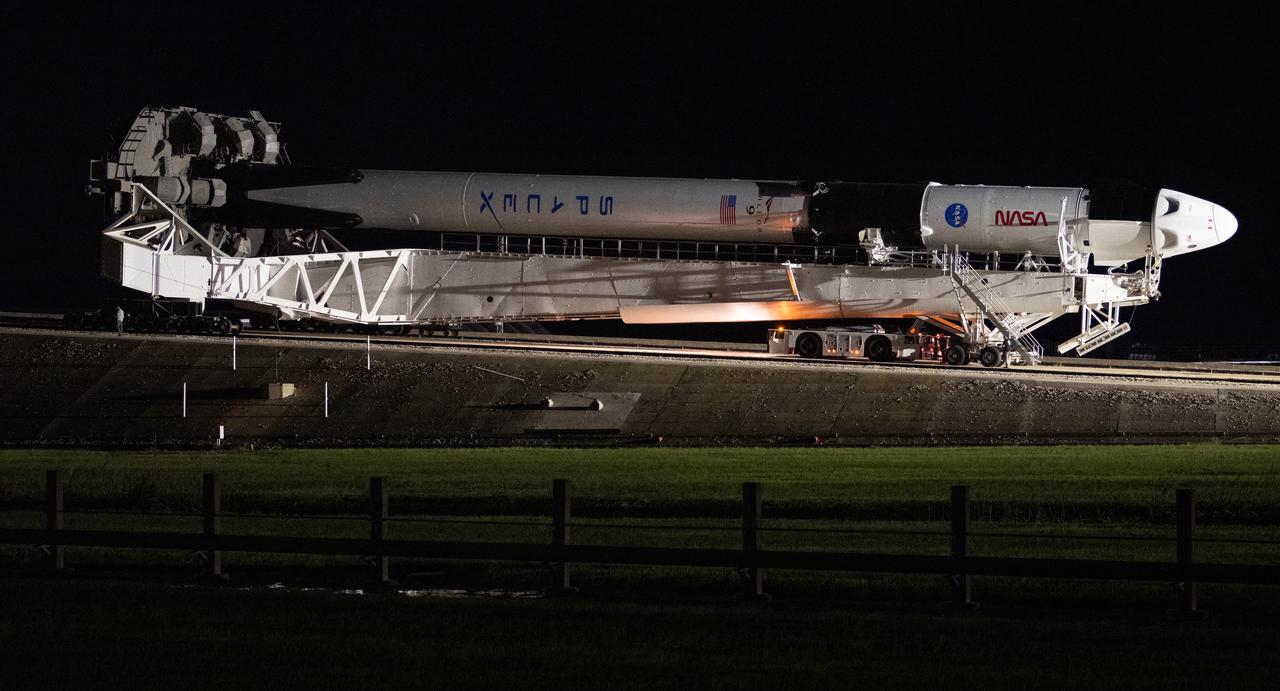
A SpaceX Falcon 9 rocket with the company's Crew Dragon spacecraft onboard is seen as it is rolled out to the launch pad at Launch Complex 39A as preparations continue for the Crew-5 mission, Saturday, Oct. 1, 2022, at NASA’s Kennedy Space Center in Florida. NASA’s SpaceX Crew-5 mission is the fifth crew rotation mission of the SpaceX Crew Dragon spacecraft and Falcon 9 rocket to the International Space Station as part of the agency’s Commercial Crew Program. NASA astronauts Nicole Mann and Josh Cassada, Japan Aerospace Exploration Agency (JAXA) astronaut Koichi Wakata, and Roscosmos cosmonaut Anna Kikina are scheduled to launch at 12:00 p.m. EDT on Oct. 5, from Launch Complex 39A at the Kennedy Space Center. Photo Credit: (NASA/Joel Kowsky)