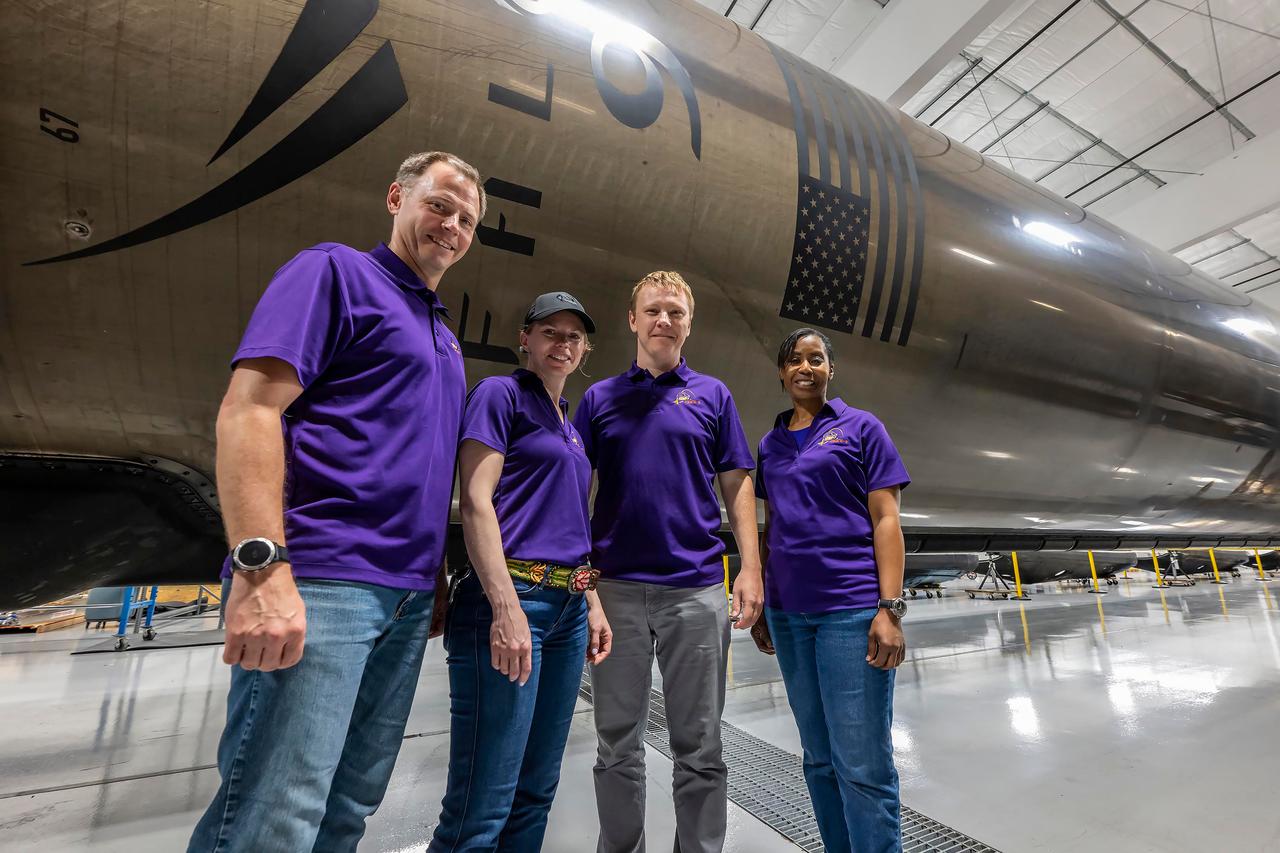
jsc2024e050140 (May 13, 2024) --- NASA’s SpaceX Crew-9 members stand in front of a Falcon 9 first-stage booster at SpaceX’s HangarX facility at NASA's Kennedy Space Center in Florida. From left are, Pilot Nick Hague from NASA; Commander Zena Cardman from NASA; Mission Spedialist Alexsandr Gorbunov from Roscosmos; and Mission Specialist Stephanie Wilson from NASA. Credit: SpaceX
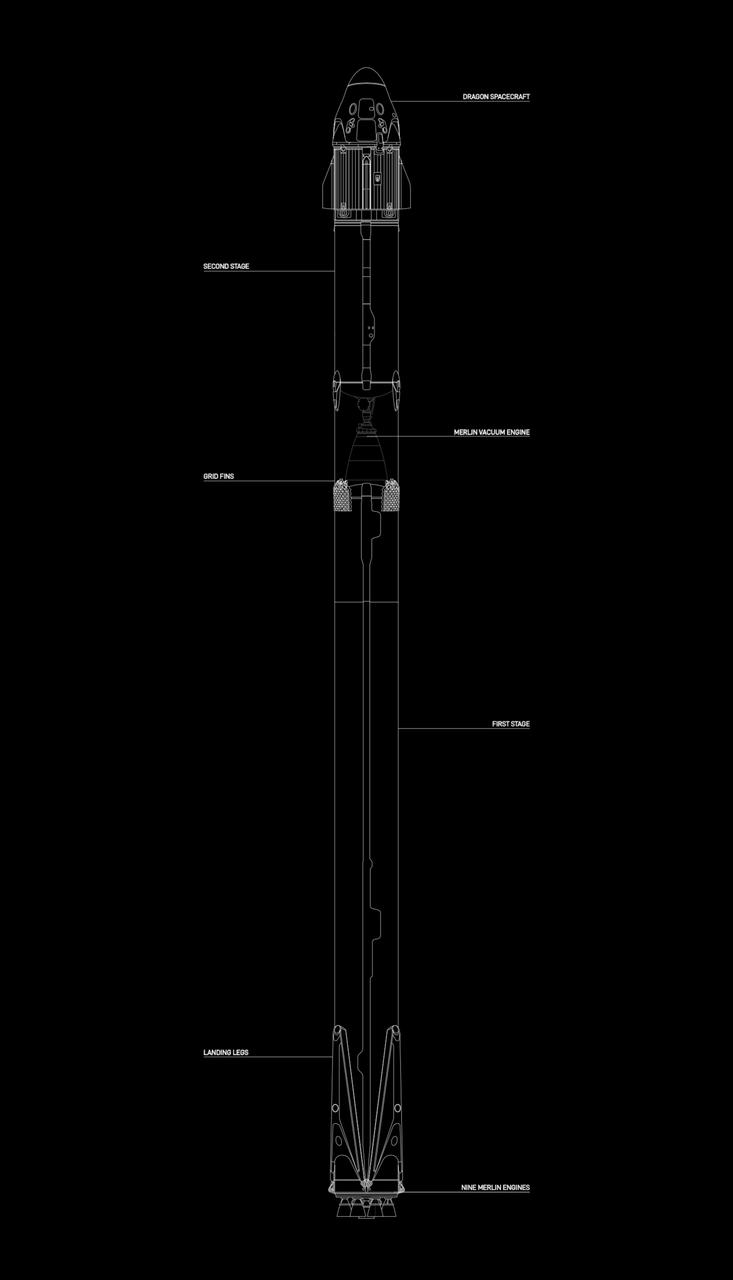
This graphic details the makeup of SpaceX’s Falcon 9 rocket. Falcon 9 is the launch vehicle SpaceX uses for all crewed missions to the International Space Station as part of NASA’s Commercial Crew Program.
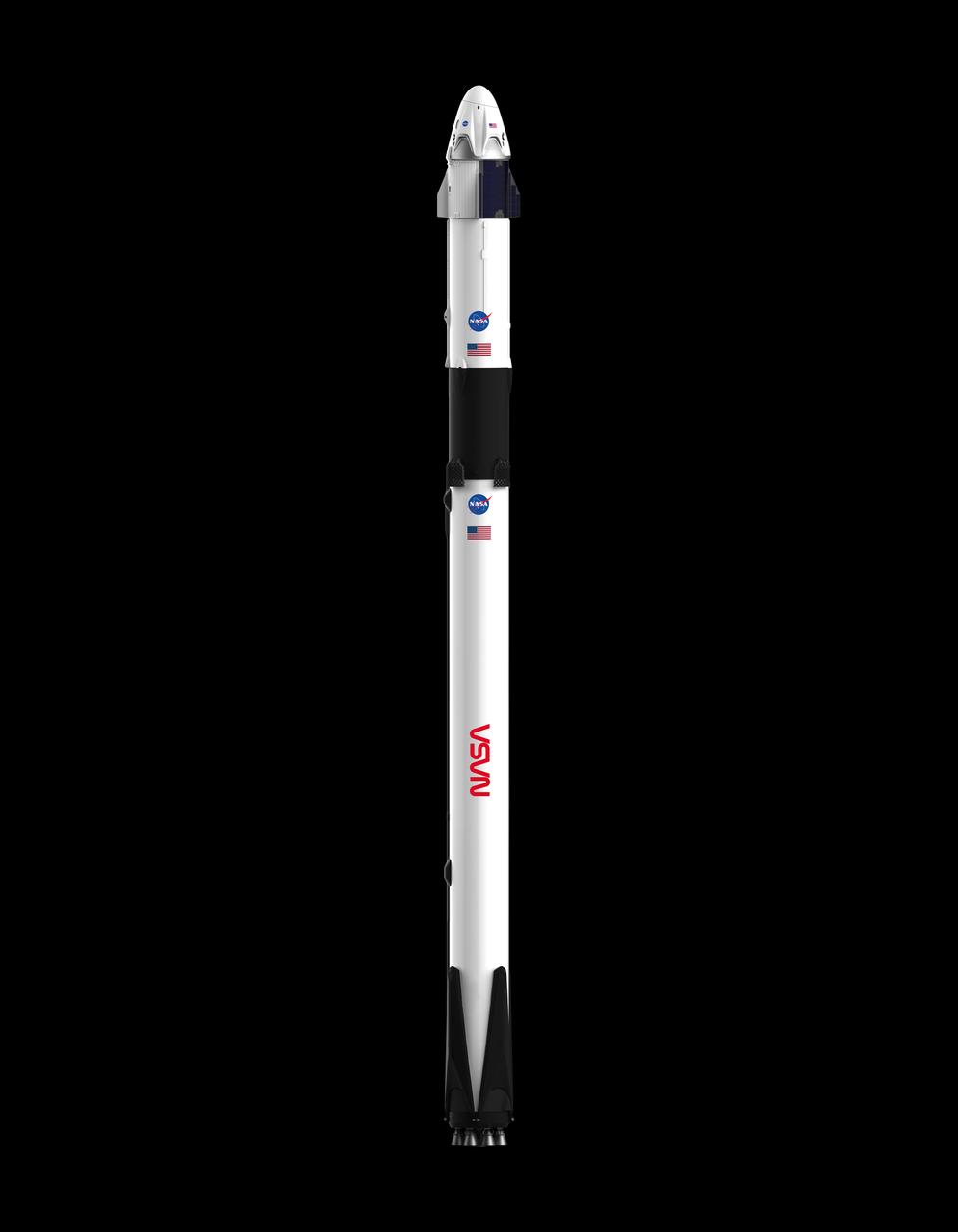
An illustration of the SpaceX Falcon 9.
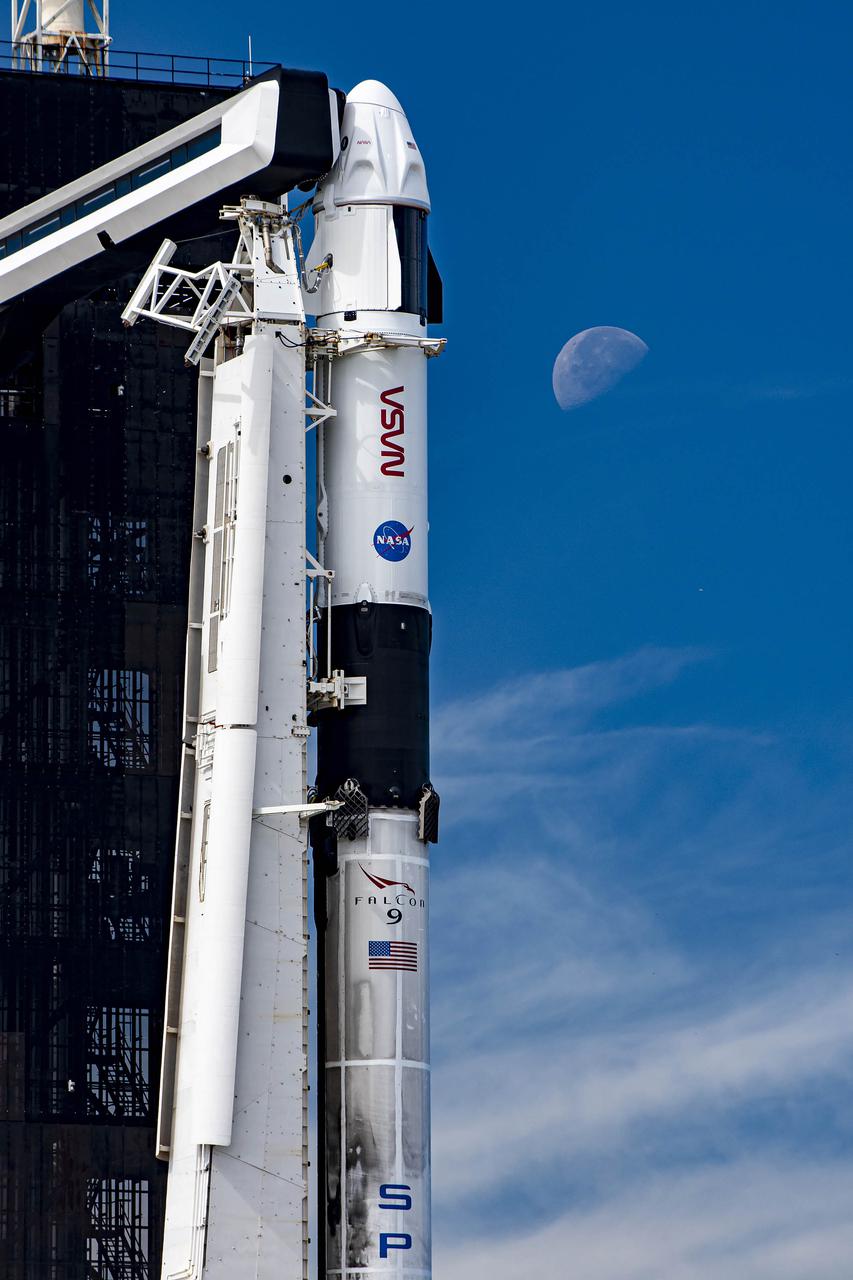
The SpaceX Falcon 9 rocket is vertical with the Crew Dragon atop for the Crew-3 mission at Launch Pad 39A at NASA’s Kennedy Space Center in Florida on Oct. 27, 2021. In view is the crew access arm. A four-person crew will launch aboard the Crew Dragon atop the Falcon 9 on Oct. 31 to the International Space Station. Launch is targeted for 2:21 a.m. EDT from Pad 39A. Crew 3 is the third crew rotation flight to the space station for NASA’s Commercial Crew Program, and the first flight of a new Crew Dragon spacecraft.
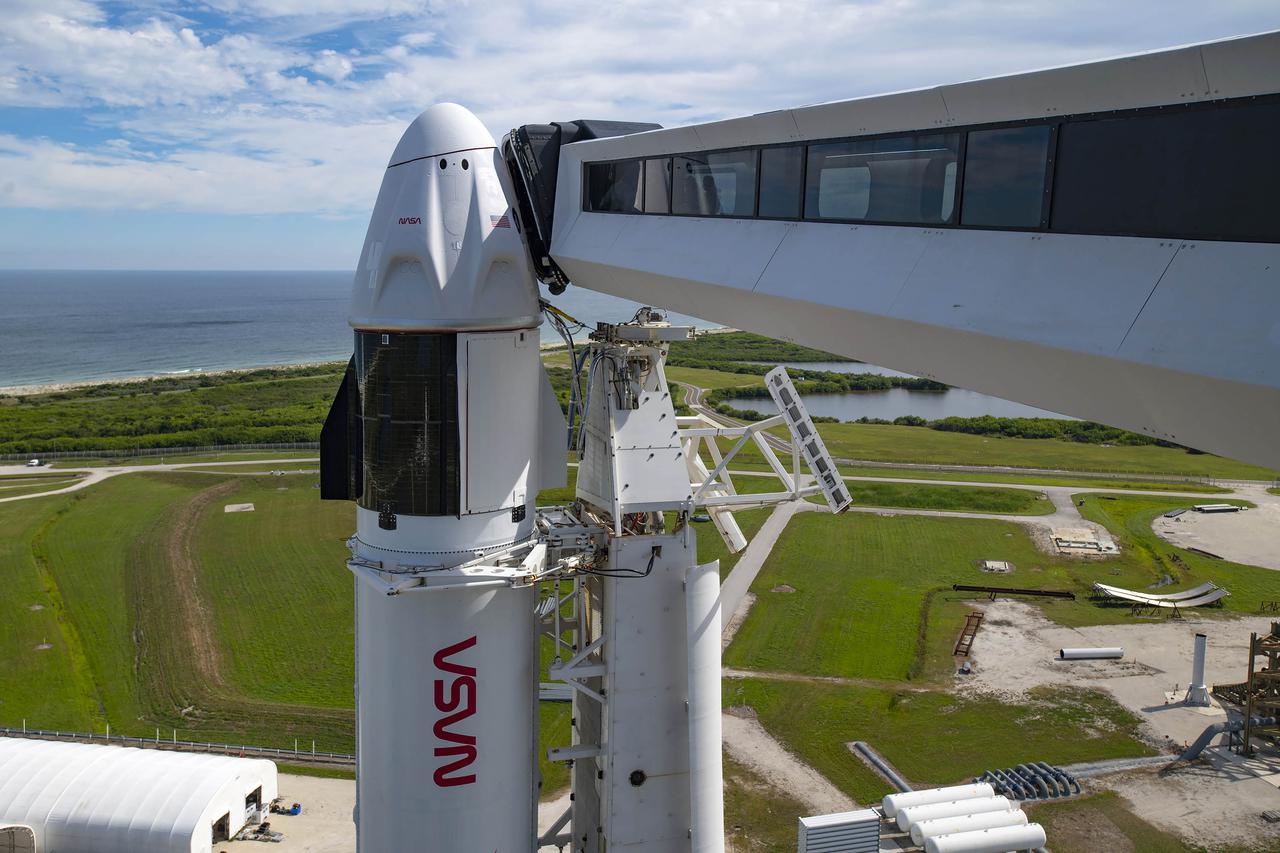
A close-up view of the SpaceX Falcon 9 rocket vertical with the Crew Dragon for the Crew-3 mission at Launch Pad 39A at NASA’s Kennedy Space Center in Florida on Oct. 27, 2021. Also in view is the crew access arm. A four-person crew will launch aboard the Crew Dragon atop the Falcon 9 on Oct. 31 to the International Space Station. Launch is targeted for 2:21 a.m. EDT from Pad 39A. Crew 3 is the third crew rotation flight to the space station for NASA’s Commercial Crew Program, and the first flight of a new Crew Dragon spacecraft.
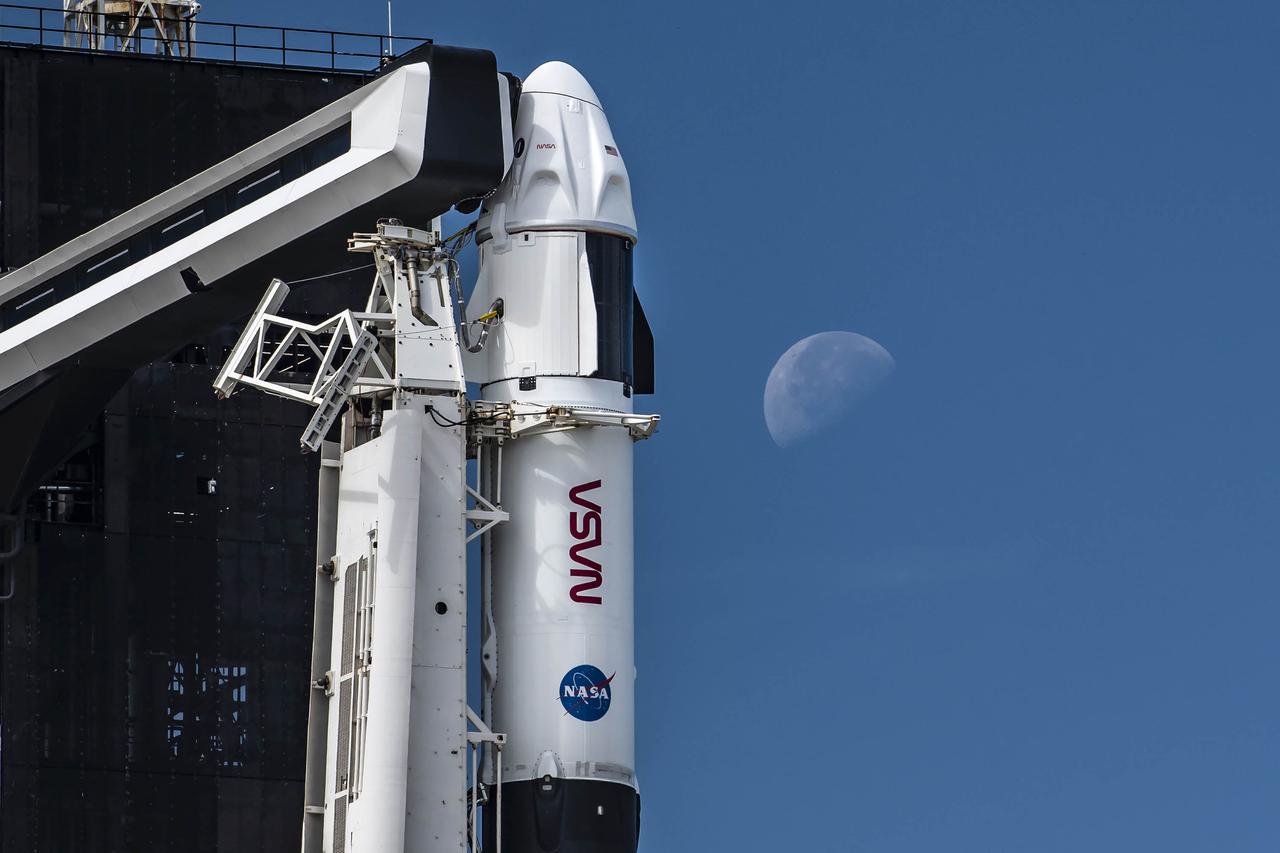
The SpaceX Falcon 9 rocket is vertical with the Crew Dragon atop for the Crew-3 mission at Launch Pad 39A at NASA’s Kennedy Space Center in Florida on Oct. 27, 2021. In view is the crew access arm. A four-person crew will launch aboard the Crew Dragon atop the Falcon 9 on Oct. 31 to the International Space Station. Launch is targeted for 2:21 a.m. EDT from Pad 39A. Crew 3 is the third crew rotation flight to the space station for NASA’s Commercial Crew Program, and the first flight of a new Crew Dragon spacecraft.
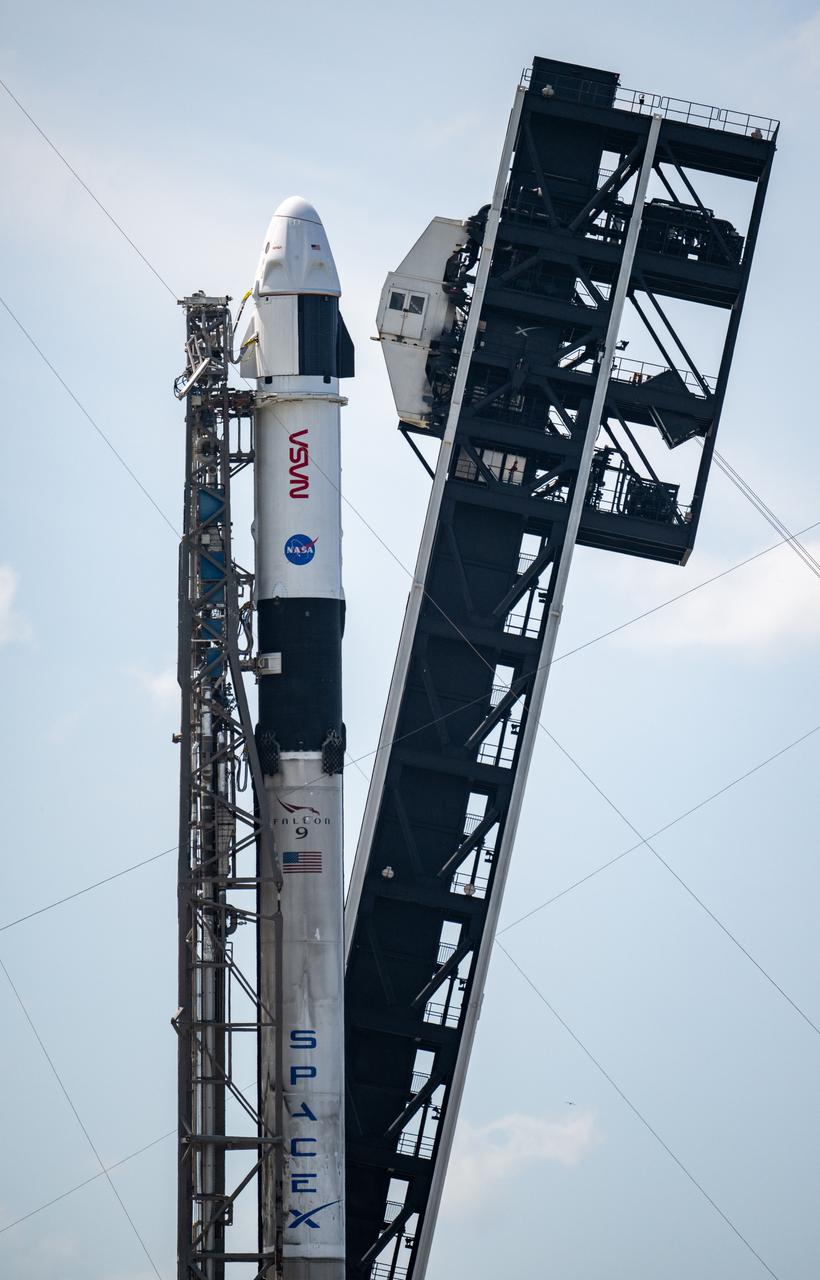
A SpaceX Falcon 9 rocket with the company's Dragon spacecraft on top is seen, photographed at an angle, as it is raised into a vertical position on the launch pad at Space Launch Complex 40 as preparations continue for the Crew-9 mission, Friday, Sept. 27, 2024, at Cape Canaveral Space Force Station in Florida. NASA’s SpaceX Crew-9 mission is the ninth crew rotation mission of the SpaceX Dragon spacecraft and Falcon 9 rocket to the International Space Station as part of the agency’s Commercial Crew Program. NASA astronaut Nick Hague and Roscosmos cosmonaut Aleksandr Gorbunov are scheduled to launch on 1:17 p.m. EDT on Saturday, Sept. 28, from Space Launch Complex 40 at the Cape Canaveral Space Force Station. Photo Credit: (NASA/Keegan Barber)
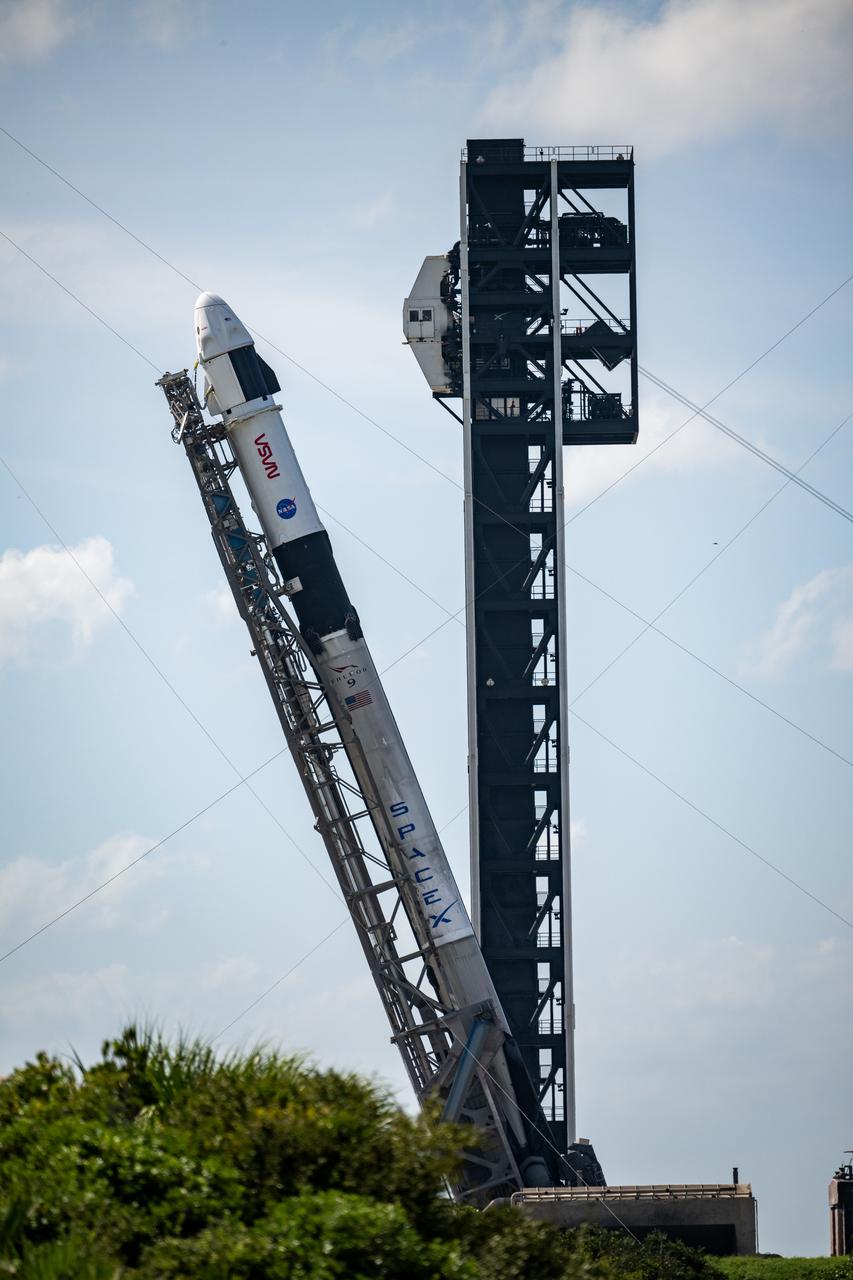
A SpaceX Falcon 9 rocket with the company's Dragon spacecraft on top is seen as it is raised into a vertical position on the launch pad at Space Launch Complex 40 as preparations continue for the Crew-9 mission, Friday, Sept. 27, 2024, at Cape Canaveral Space Force Station in Florida. NASA’s SpaceX Crew-9 mission is the ninth crew rotation mission of the SpaceX Dragon spacecraft and Falcon 9 rocket to the International Space Station as part of the agency’s Commercial Crew Program. NASA astronaut Nick Hague and Roscosmos cosmonaut Aleksandr Gorbunov are scheduled to launch on 1:17 p.m. EDT on Saturday, Sept. 28, from Space Launch Complex 40 at the Cape Canaveral Space Force Station. Photo Credit: (NASA/Keegan Barber)
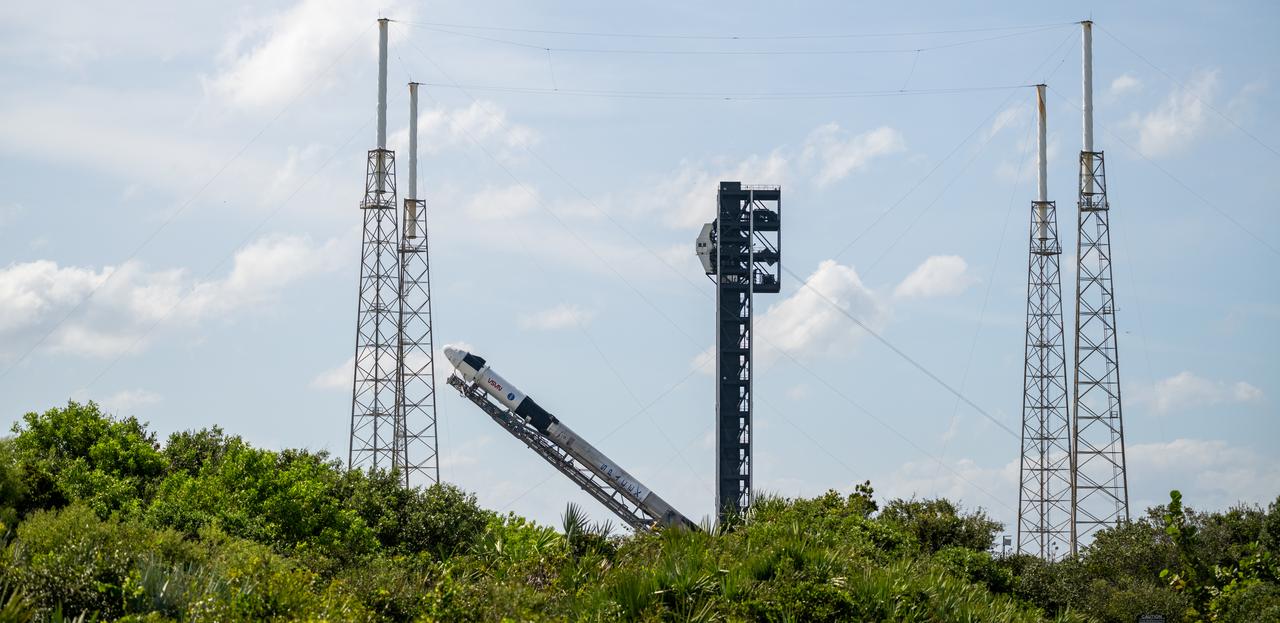
A SpaceX Falcon 9 rocket with the company's Dragon spacecraft on top is seen as it is raised into a vertical position on the launch pad at Space Launch Complex 40 as preparations continue for the Crew-9 mission, Friday, Sept. 27, 2024, at Cape Canaveral Space Force Station in Florida. NASA’s SpaceX Crew-9 mission is the ninth crew rotation mission of the SpaceX Dragon spacecraft and Falcon 9 rocket to the International Space Station as part of the agency’s Commercial Crew Program. NASA astronaut Nick Hague and Roscosmos cosmonaut Aleksandr Gorbunov are scheduled to launch on 1:17 p.m. EDT on Saturday, Sept. 28, from Space Launch Complex 40 at the Cape Canaveral Space Force Station. Photo Credit: (NASA/Keegan Barber)
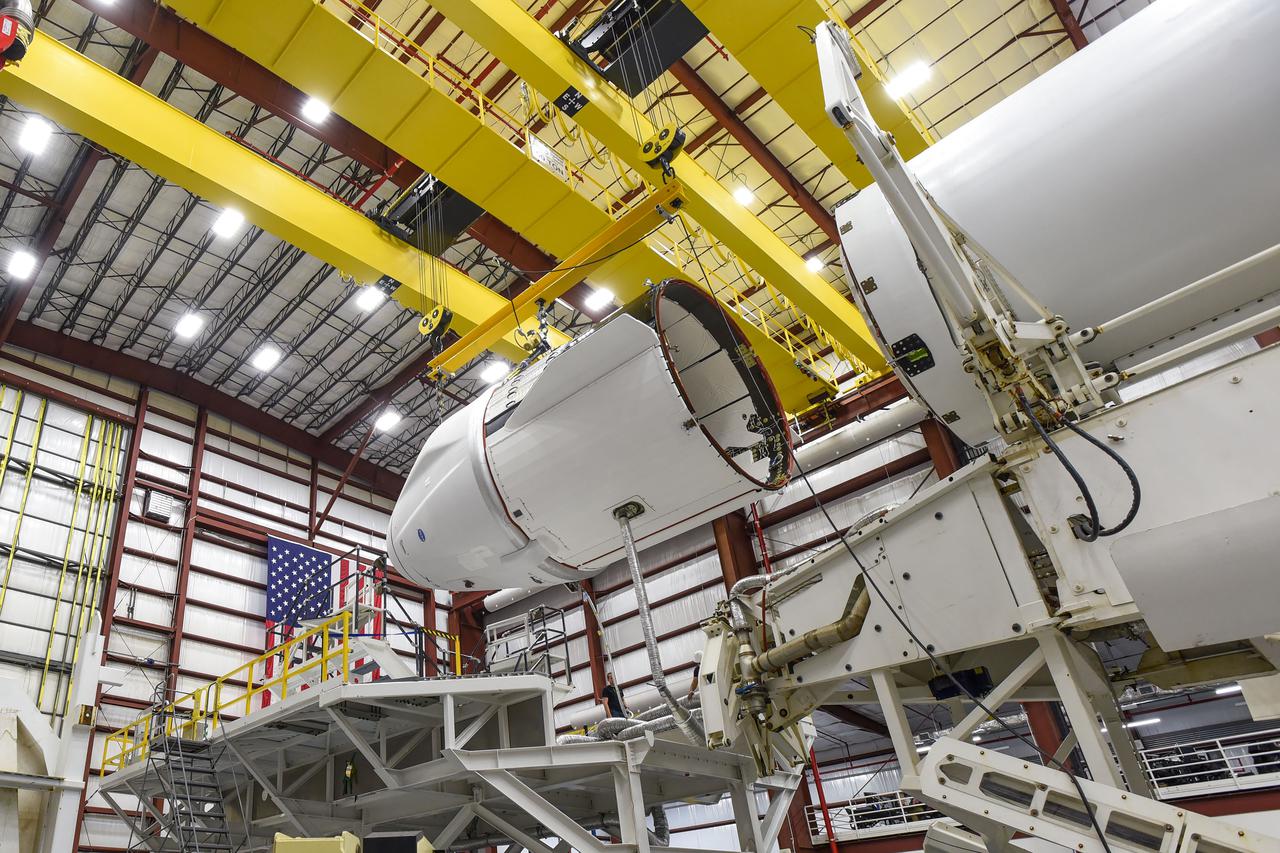
The SpaceX Dragon spacecraft that will fly on the company’s 22nd commercial resupply services mission to the International Space Station is now ready for its journey to space. On Thursday, May 27, teams transported the spacecraft from SpaceX’s processing facility at Cape Canaveral Space Force Station into the hangar at nearby Kennedy Space Center’s Launch Complex 39A, where it was attached to the Falcon 9 rocket. Liftoff of the Falcon 9 is scheduled for 1:29 p.m. EDT on Thursday, June 3.
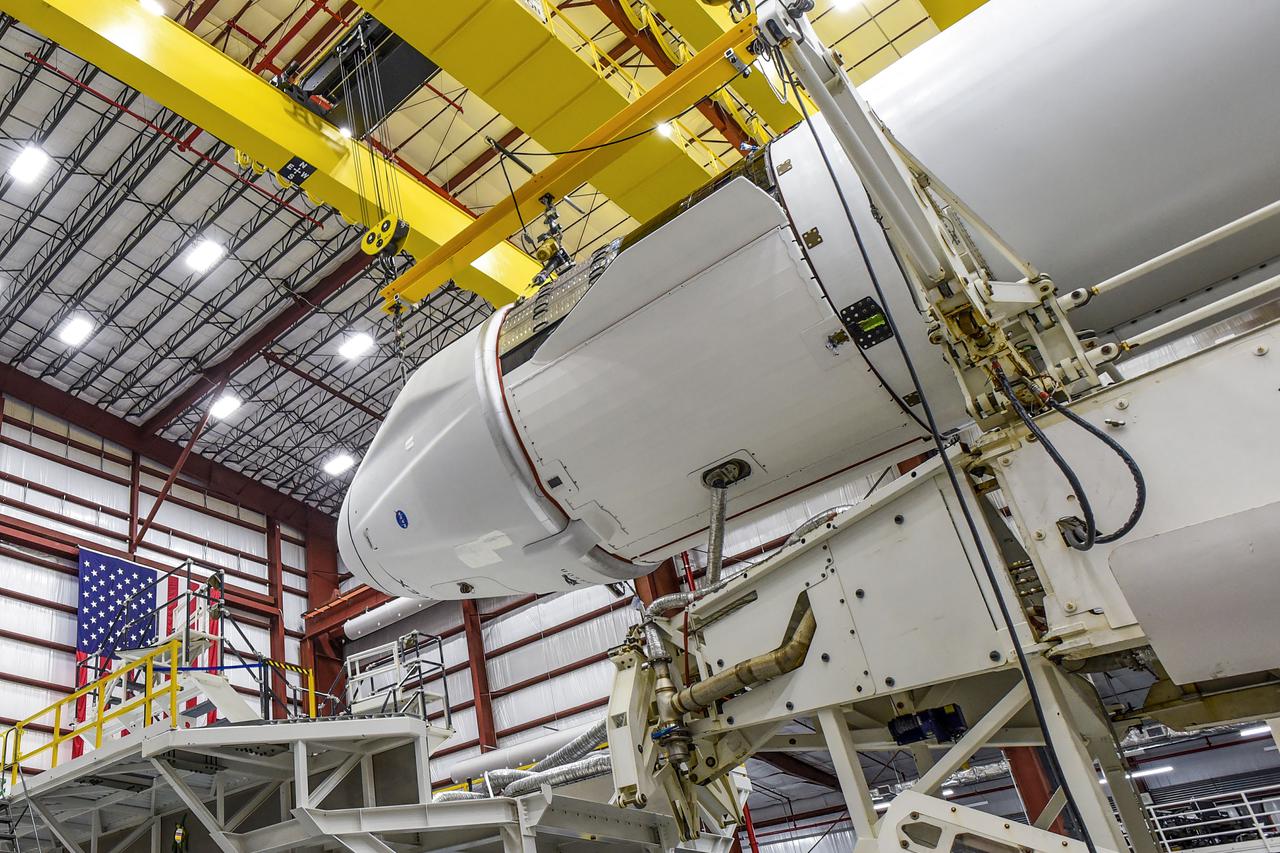
The SpaceX Dragon spacecraft that will fly on the company’s 22nd commercial resupply services mission to the International Space Station is now ready for its journey to space. On Thursday, May 27, teams transported the spacecraft from SpaceX’s processing facility at Cape Canaveral Space Force Station into the hangar at nearby Kennedy Space Center’s Launch Complex 39A, where it was attached to the Falcon 9 rocket. Liftoff of the Falcon 9 is scheduled for 1:29 p.m. EDT on Thursday, June 3.

The SpaceX Falcon 9 rocket that will be used for the company’s In-Flight Abort Test arrives at SpaceX’s hangar at Launch Complex 39 at NASA’s Kennedy Space Center in Florida. The test will demonstrate the spacecraft and launch system’s ability to abort in the unlikely case of an emergency after liftoff. It is an important step before NASA astronauts Bob Behnken and Doug Hurley are transported to the International Space Station aboard Crew Dragon as part of NASA’s Commercial Crew Program.
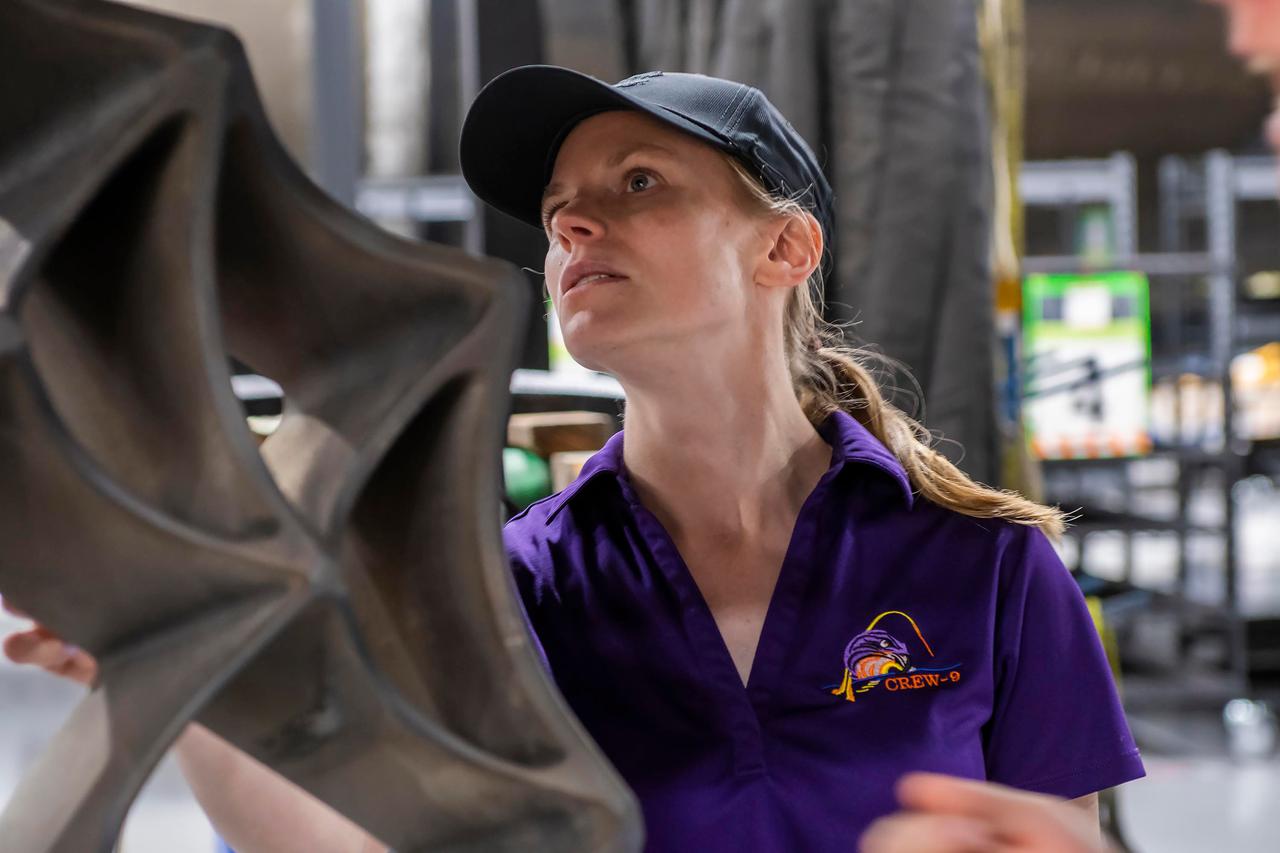
jsc2024e050142 (May 13, 2024) --- NASA’s SpaceX Crew-9 Commander Zena Cardman checks out a grid fin on a Falcon 9 first-stage booster at SpaceX’s HangarX facility at NASA's Kennedy Space Center in Florida. Credit: SpaceX
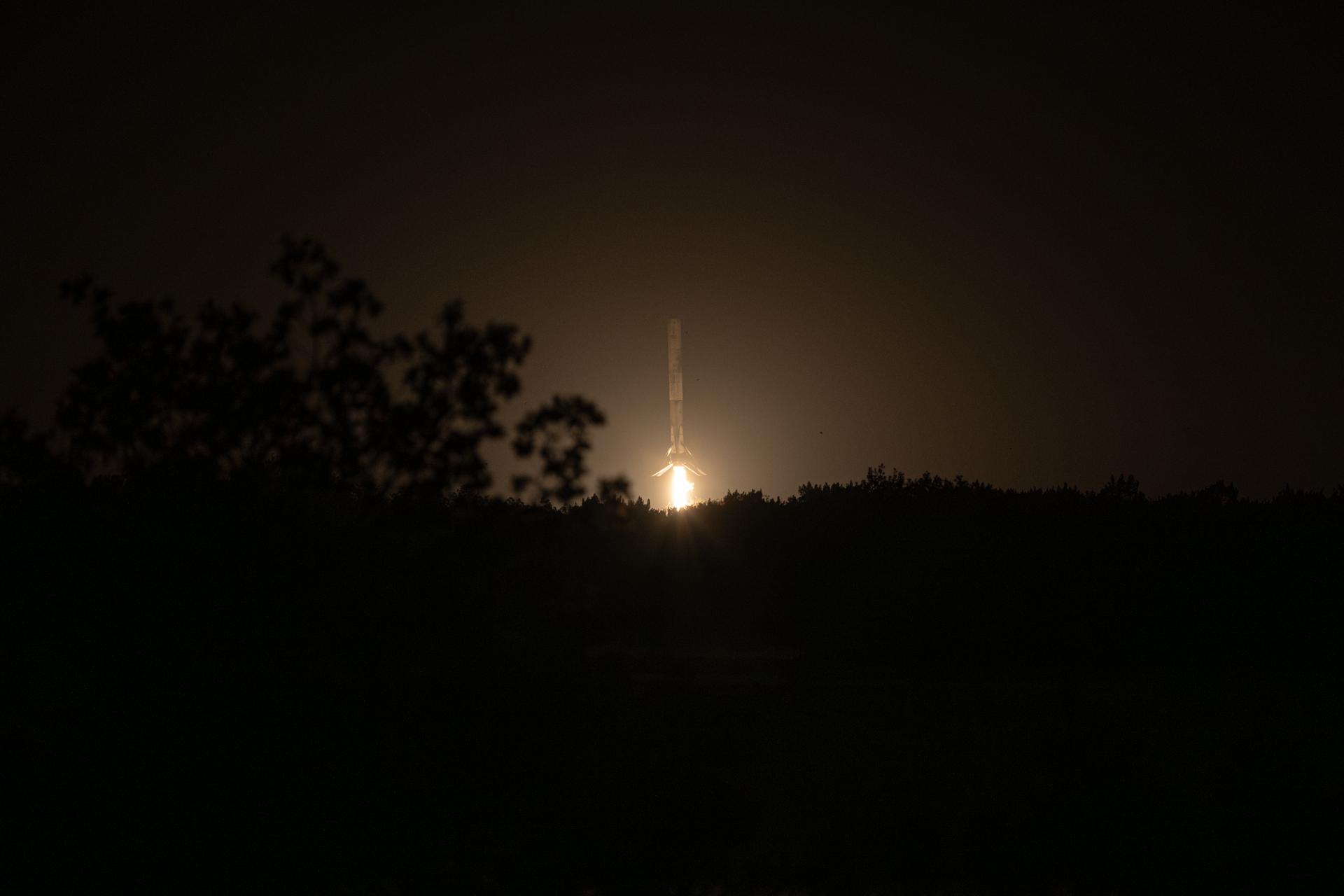
The first stage of a SpaceX Falcon 9 rocket lands at Landing Zone 40, Friday, Feb. 13, 2026, at Cape Canaveral Space Force Station in Florida. The Falcon 9 first stage supported the launch of NASA’s SpaceX Crew-12 mission to the International Space Station with NASA astronauts Jessica Meir, Jack Hathaway, ESA (European Space Agency) astronaut Sophie Adenot, and Roscosmos cosmonaut Andrey Fedyaev. NASA’s SpaceX Crew-12 mission is the twelfth crew rotation mission of the SpaceX Falcon 9 rocket and Dragon spacecraft to the International Space Station as part of the agency’s Commercial Crew Program. Meir, Hathaway, Adenot, and launched at 5:15 a.m. EST from Space Launch Complex 40 at the Cape Canaveral Space Force Station to begin their mission aboard the orbital outpost. Photo Credit: (NASA/John Kraus)
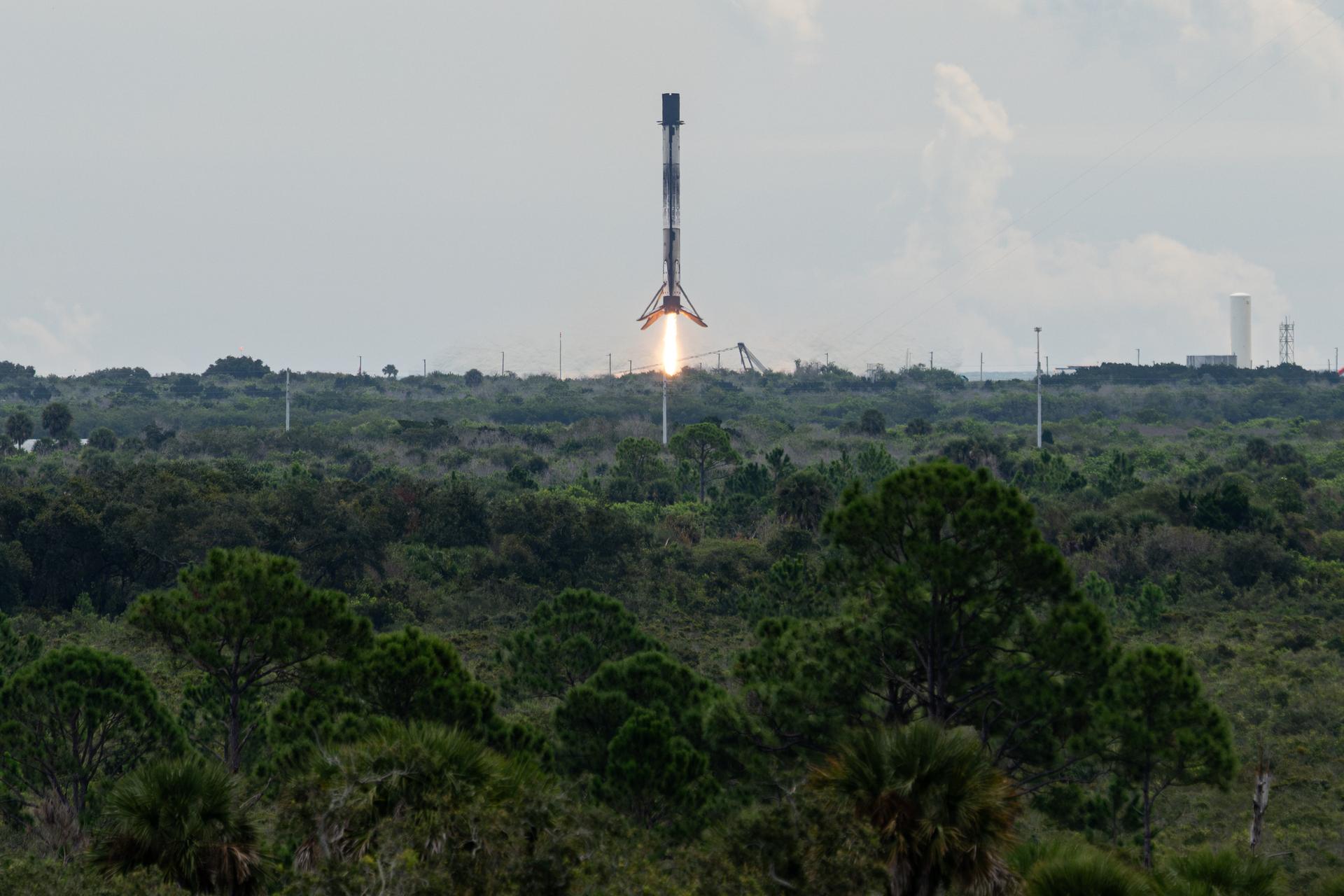
The first stage of a SpaceX Falcon 9 rocket lands at Landing Zone 40, Thursday, Oct. 1, 2026, at Cape Canaveral Space Force Station in Florida. The Falcon 9 first stage supported the launch of NASA’s SpaceX Crew-13 mission to the International Space Station with NASA astronauts Jessica Watkins and Luke Delaney, CSA (Canadian Space Agency) astronaut Joshua Kutryk, and Roscosmos cosmonaut Sergey Teteryatnikov. NASA’s SpaceX Crew-13 mission is the thirteenth crew rotation mission of the SpaceX Falcon 9 rocket and Dragon spacecraft to the International Space Station as part of the agency’s Commercial Crew Program. Watkins, Delaney, Kutryk, and Teteryatnikov launched at 11:10 a.m. EDT from Space Launch Complex 40 at Cape Canaveral Space Force Station to begin their mission aboard the orbital outpost. Photo Credit: (NASA/John Kraus)
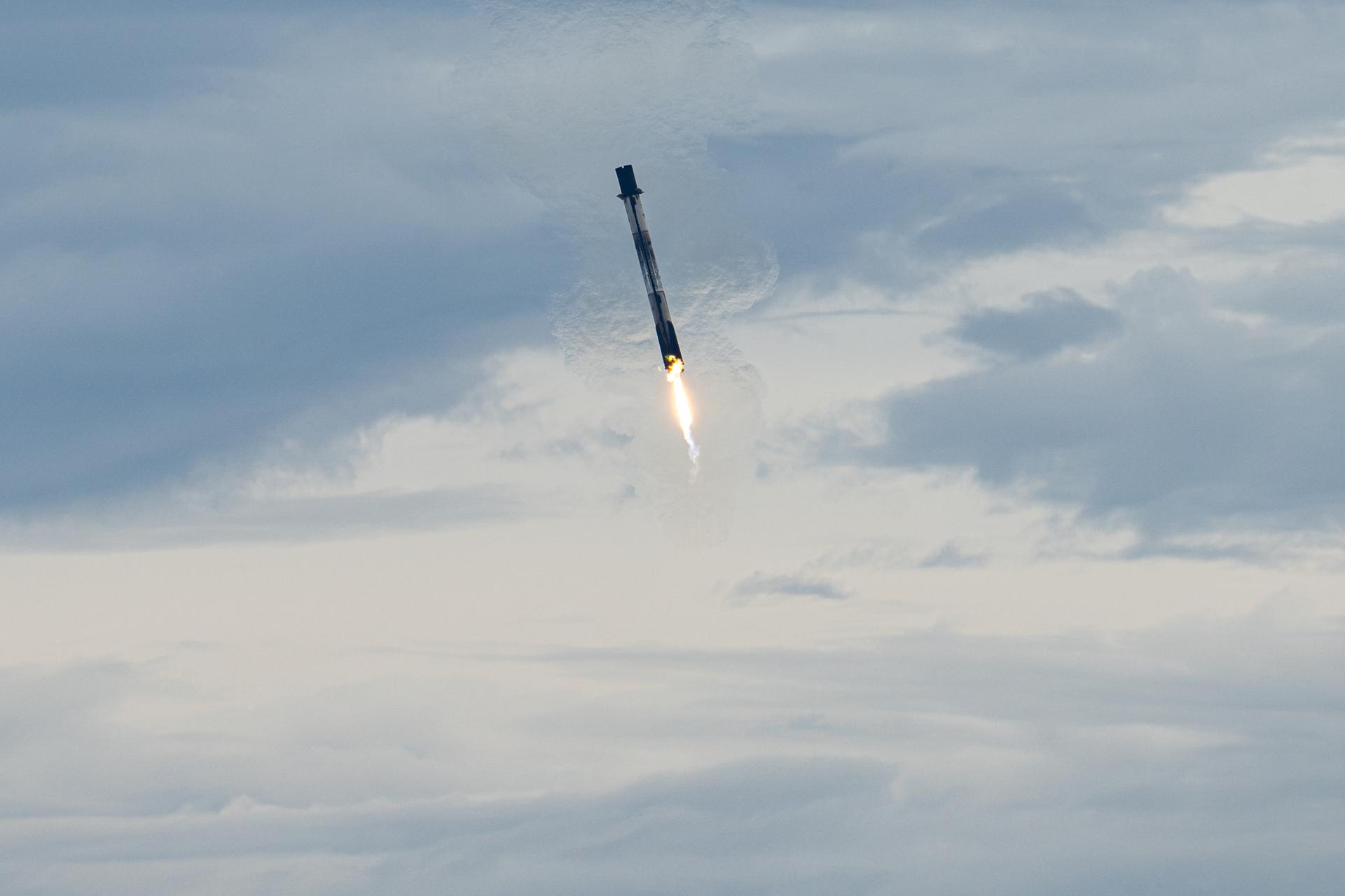
The first stage of a SpaceX Falcon 9 rocket lands at Landing Zone 40, Thursday, Oct. 1, 2026, at Cape Canaveral Space Force Station in Florida. The Falcon 9 first stage supported the launch of NASA’s SpaceX Crew-13 mission to the International Space Station with NASA astronauts Jessica Watkins and Luke Delaney, CSA (Canadian Space Agency) astronaut Joshua Kutryk, and Roscosmos cosmonaut Sergey Teteryatnikov. NASA’s SpaceX Crew-13 mission is the thirteenth crew rotation mission of the SpaceX Falcon 9 rocket and Dragon spacecraft to the International Space Station as part of the agency’s Commercial Crew Program. Watkins, Delaney, Kutryk, and Teteryatnikov launched at 11:10 a.m. EDT from Space Launch Complex 40 at Cape Canaveral Space Force Station to begin their mission aboard the orbital outpost. Photo Credit: (NASA/John Kraus)
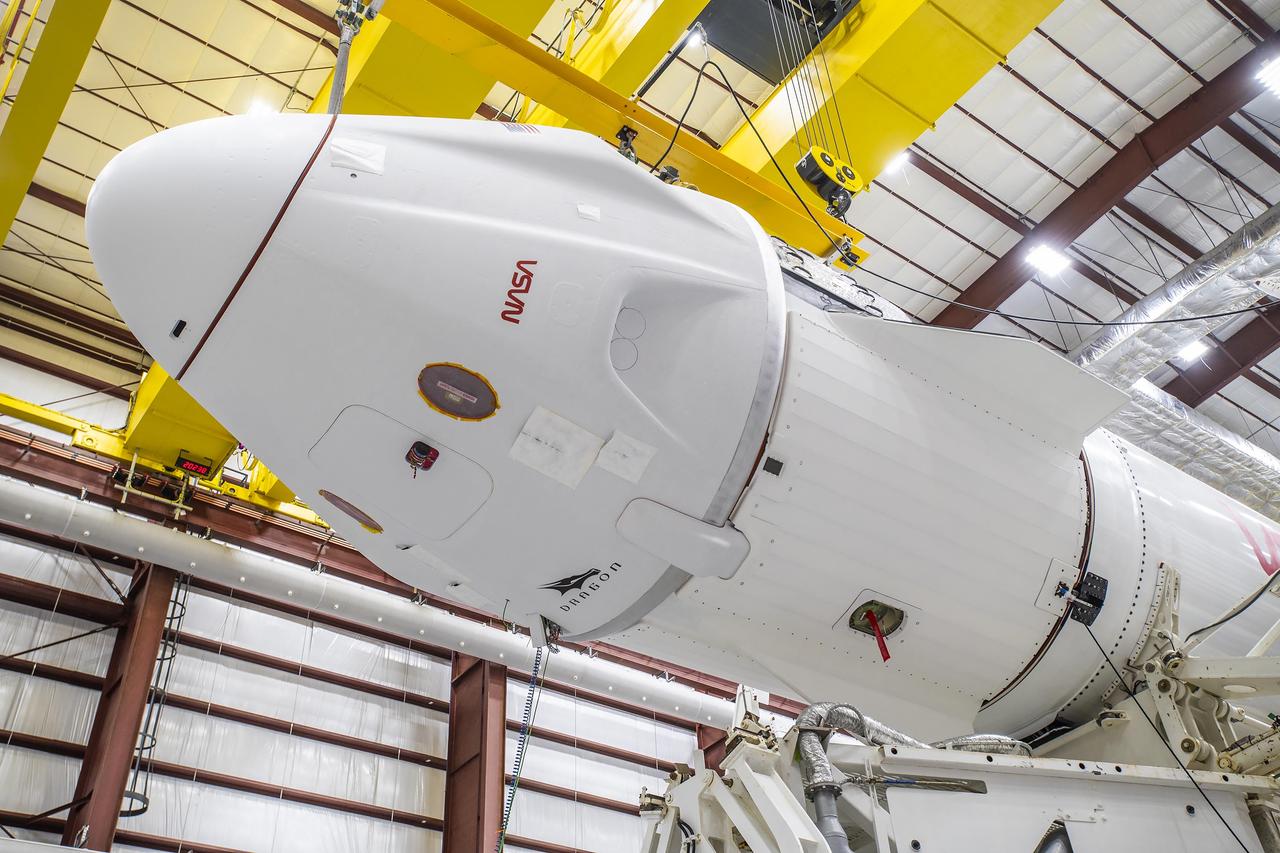
SpaceX’s Dragon spacecraft for NASA’s SpaceX Crew-8 mission is mated to the company's Falcon 9 rocket at SpaceX’s hangar at Kennedy Space Center’s Launch Complex 39A in Florida on Friday, Feb. 23, 2024, at Cape Canaveral Space Force Station. NASA astronauts Matthew Dominick, Michael Barratt, and Jeanette Epps, and Roscosmos cosmonaut Alexander Grebenkin are slated to launch to the International Space Station no earlier than 12:04 a.m. EST on March 1, 2024.
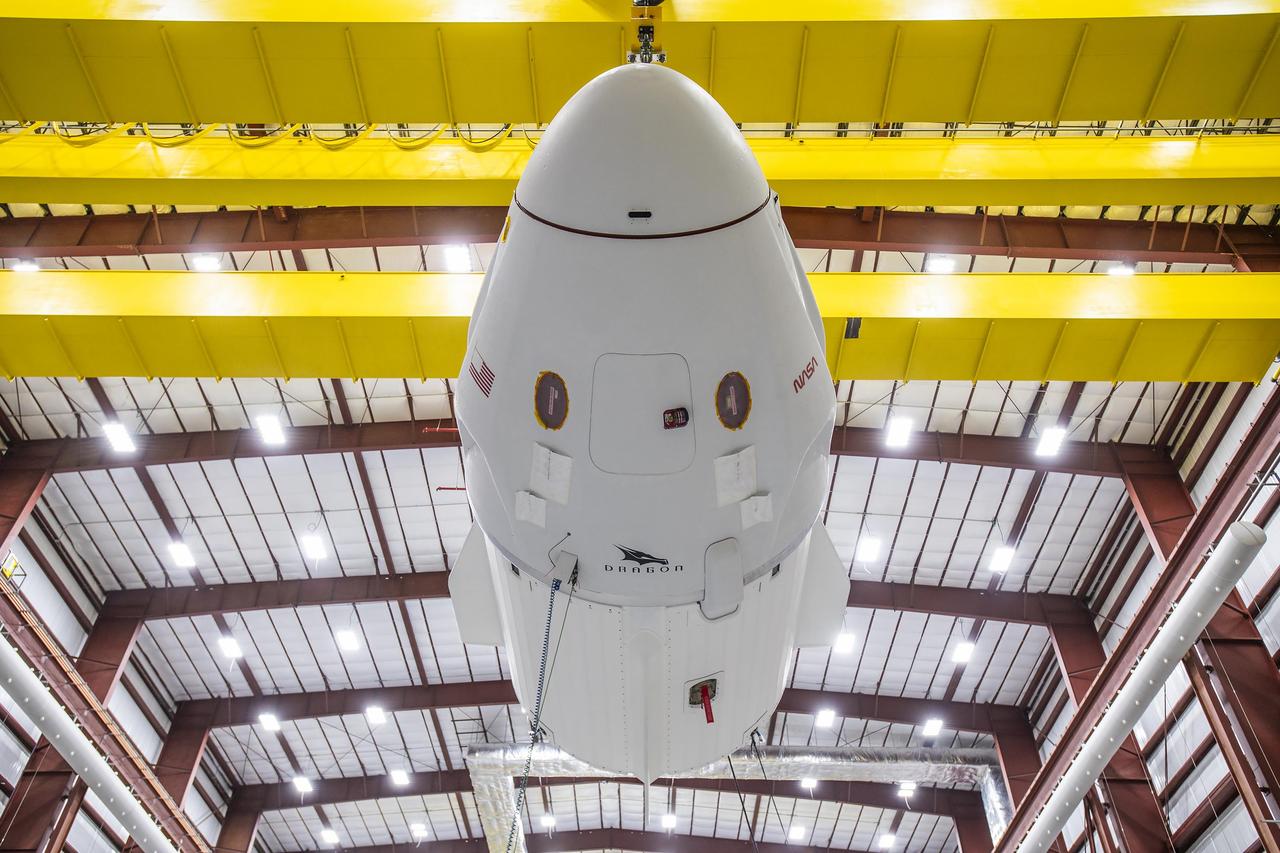
SpaceX’s Dragon spacecraft for NASA’s SpaceX Crew-8 mission is mated to the company's Falcon 9 rocket at SpaceX’s hangar at Kennedy Space Center’s Launch Complex 39A in Florida on Friday, Feb. 23, 2024, at Cape Canaveral Space Force Station. NASA astronauts Matthew Dominick, Michael Barratt, and Jeanette Epps, and Roscosmos cosmonaut Alexander Grebenkin are slated to launch to the International Space Station no earlier than 12:04 a.m. EST on March 1, 2024.
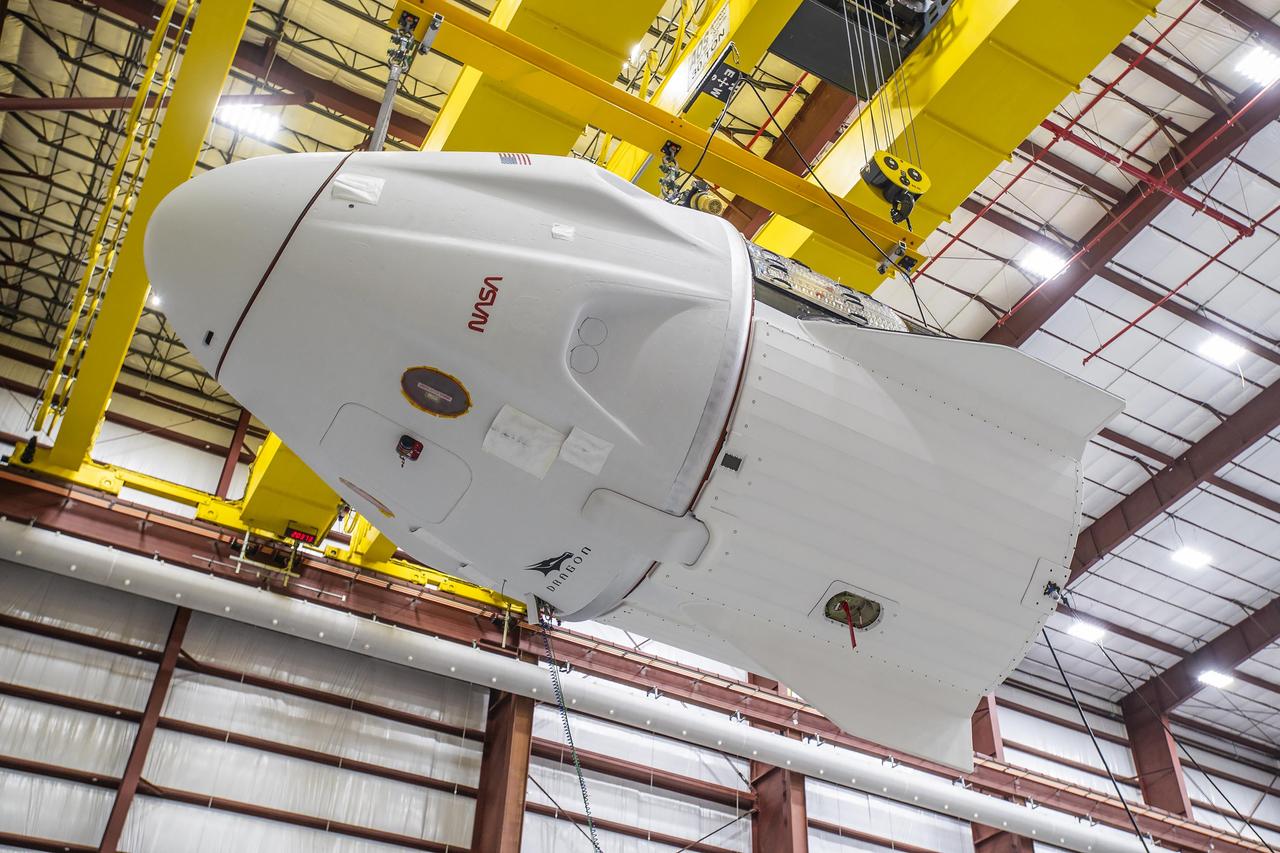
SpaceX’s Dragon spacecraft for NASA’s SpaceX Crew-8 mission is mated to the company's Falcon 9 rocket at SpaceX’s hangar at Kennedy Space Center’s Launch Complex 39A in Florida on Friday, Feb. 23, 2024, at Cape Canaveral Space Force Station. NASA astronauts Matthew Dominick, Michael Barratt, and Jeanette Epps, and Roscosmos cosmonaut Alexander Grebenkin are slated to launch to the International Space Station no earlier than 12:04 a.m. EST on March 1, 2024.
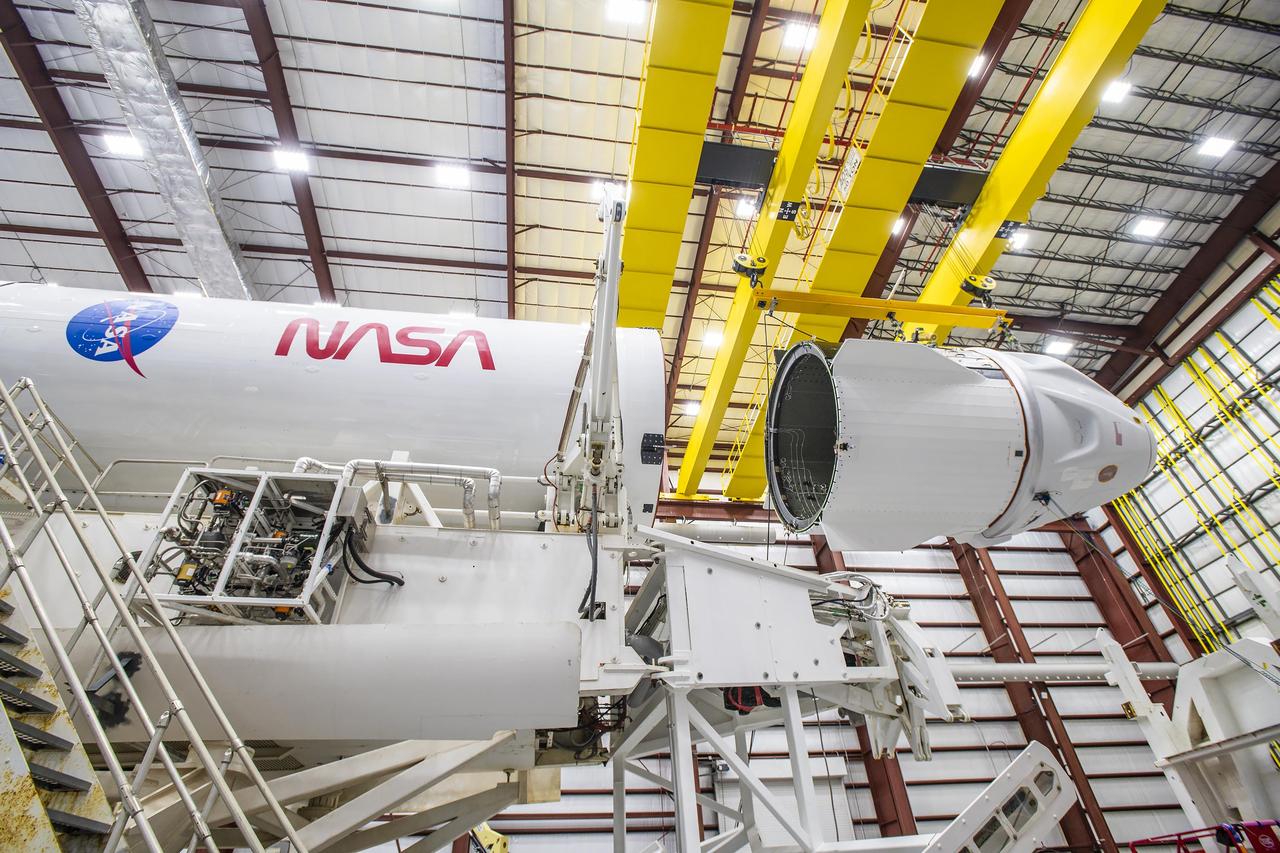
SpaceX’s Dragon spacecraft for NASA’s SpaceX Crew-8 mission is mated to the company's Falcon 9 rocket at SpaceX’s hangar at Kennedy Space Center’s Launch Complex 39A in Florida on Friday, Feb. 23, 2024, at Cape Canaveral Space Force Station. NASA astronauts Matthew Dominick, Michael Barratt, and Jeanette Epps, and Roscosmos cosmonaut Alexander Grebenkin are slated to launch to the International Space Station no earlier than 12:04 a.m. EST on March 1, 2024.
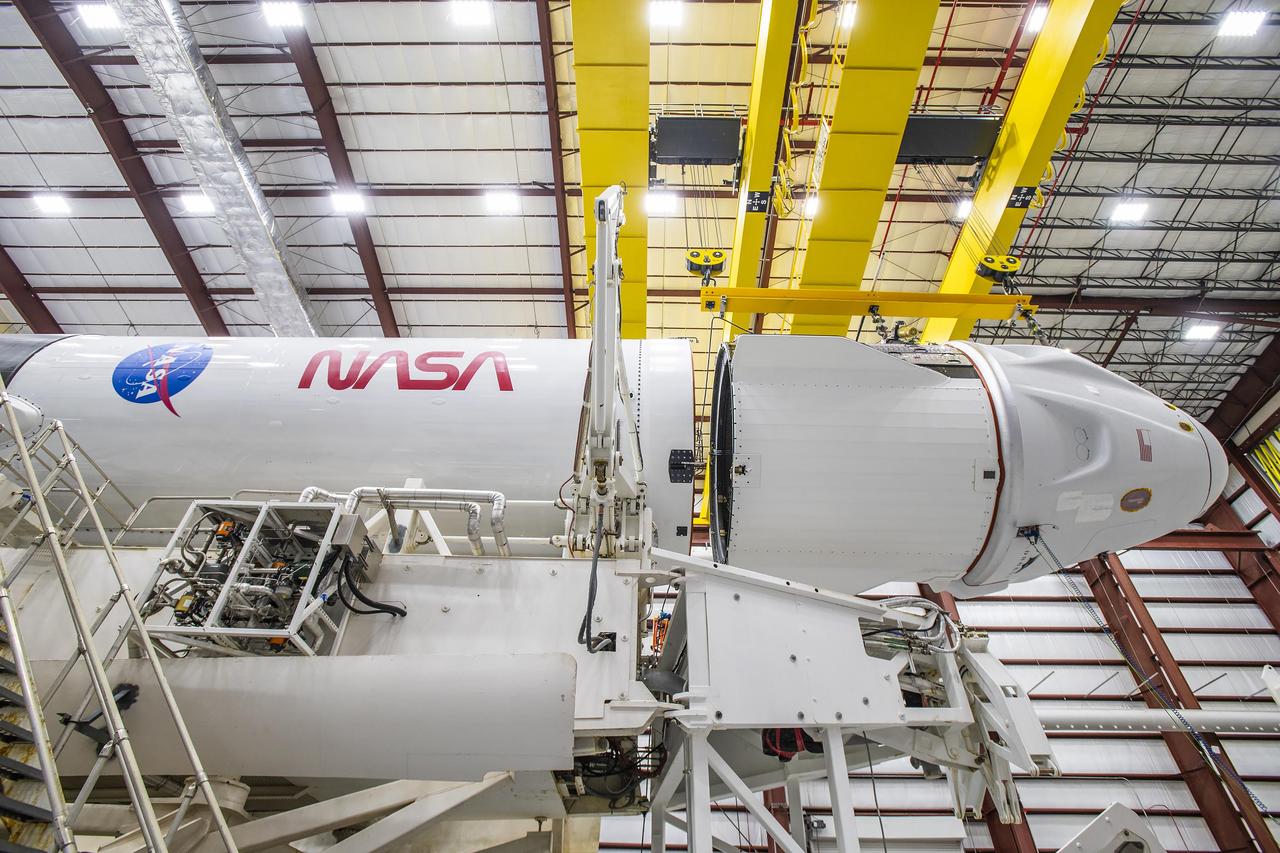
SpaceX’s Dragon spacecraft for NASA’s SpaceX Crew-8 mission is mated to the company's Falcon 9 rocket at SpaceX’s hangar at Kennedy Space Center’s Launch Complex 39A in Florida on Friday, Feb. 23, 2024, at Cape Canaveral Space Force Station. NASA astronauts Matthew Dominick, Michael Barratt, and Jeanette Epps, and Roscosmos cosmonaut Alexander Grebenkin are slated to launch to the International Space Station no earlier than 12:04 a.m. EST on March 1, 2024.
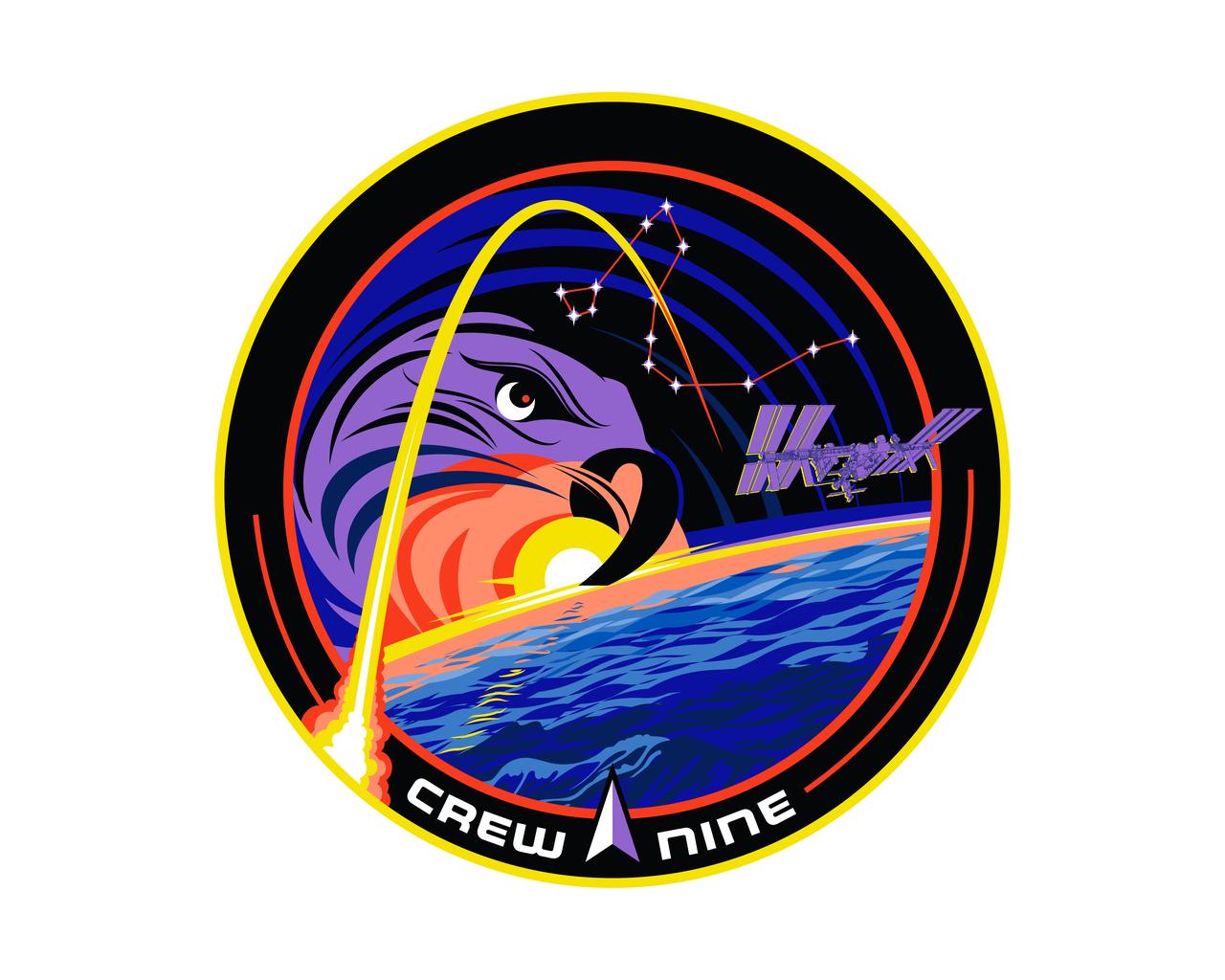
jsc2024e011322 (Jan. 28, 2024) --- The Crew-9 mission patch depicts the trail of a rocket launching en route to the International Space Station, which will be home for a long-duration expedition dedicated to service, science, and collaboration. Coastal waves are inspired by the historic Florida launch site, and on a larger scale represent our blue planet, the global ocean connecting all continents. A falcon, with the number nine as its beak and a crescent moon as its eye, is a nod to the Falcon 9 rocket, while the constellation Draco honors the Dragon spacecraft that will take Crew-9 to their destination. The Delta symbol, first used in 1961, evokes historic ties to the earliest days of space endeavors. Human exploration of space is built on international collaboration and depends on the support of multitudes across the globe whose efforts honor that heritage.
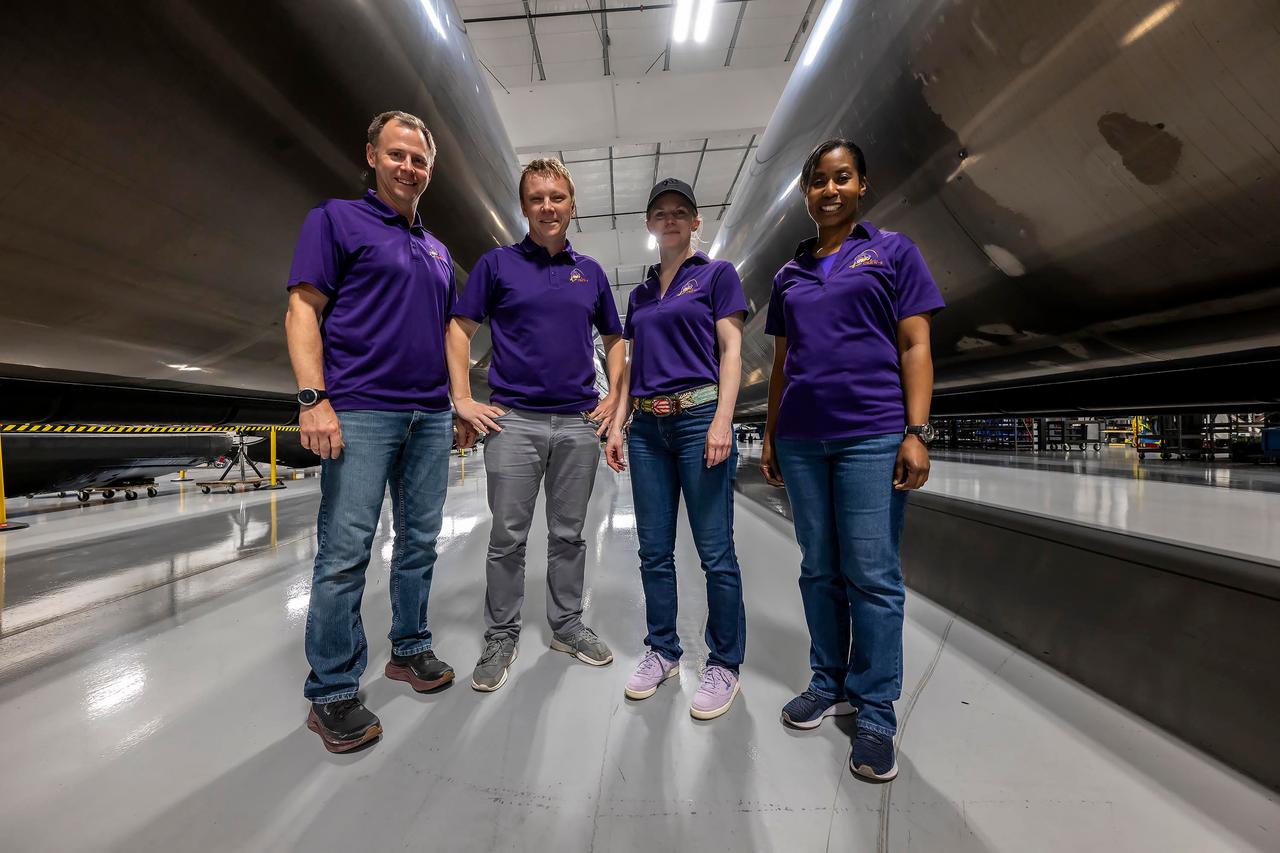
jsc2024e050139 (May 13, 2024) --- NASA’s SpaceX Crew-9 members pose for a photo in between Falcon 9 first-stage boosters that are being refurbished at SpaceX’s HangarX facility at NASA's Kennedy Space Center in Florida for future launches. From left are, Pilot Nick Hague from NASA; Mission Spedialist Alexsandr Gorbunov from Roscosmos; Commander Zena Cardman from NASA; and Mission Specialist Stephanie Wilson from NASA. Credit: SpaceX
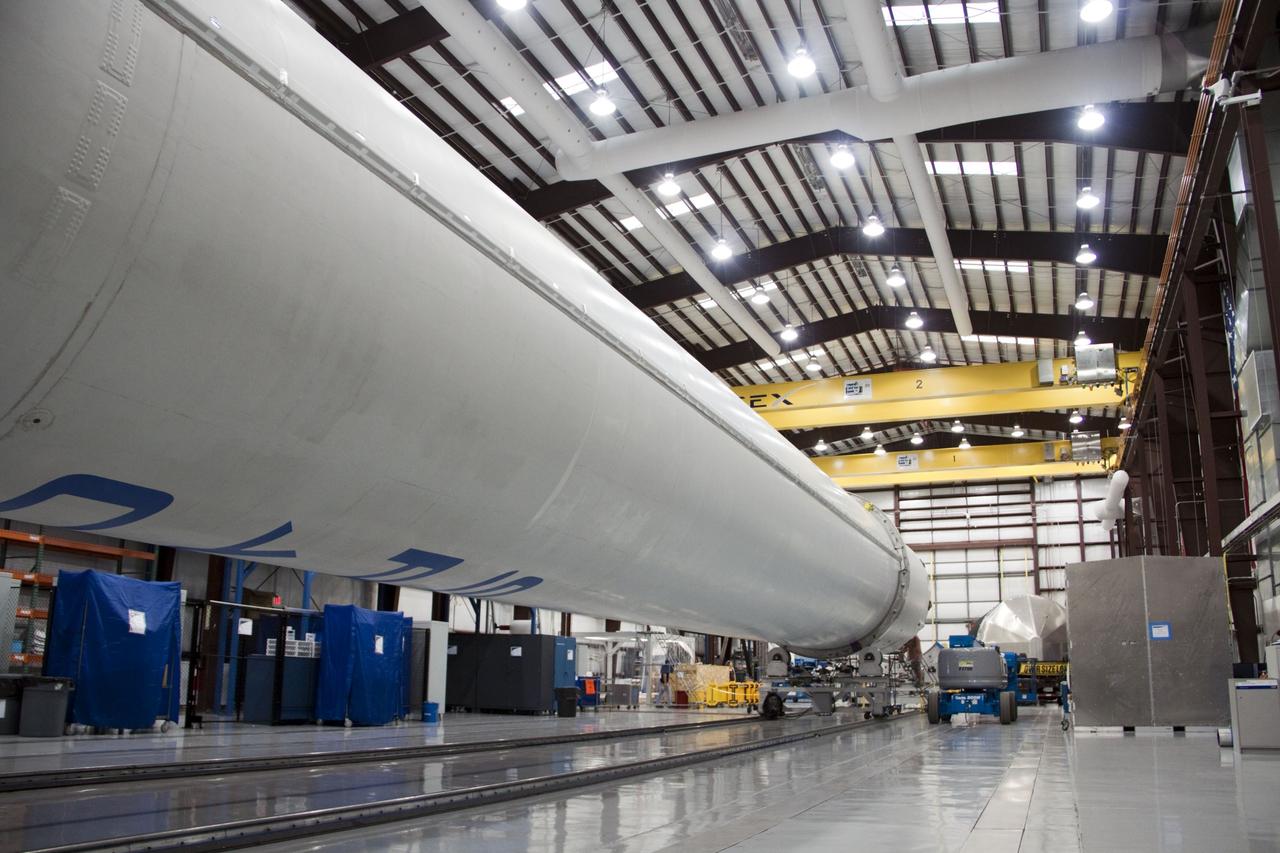
CAPE CANAVERAL, Fla. -- The second stage for the Space Exploration Technologies Corp., or SpaceX, Falcon 9 rocket is delivered to the SpaceX hangar at Pad 40 at Cape Canaveral Air Force Station in Florida. Also seen here in the foreground is the first stage of the Falcon 9. The Falcon 9 rocket will launch a second Dragon spacecraft, called Dragon C2, in late 2011. The mission will demonstrate proximity operations during an approach within six miles of the International Space Station. The company is building the Dragon to fly on resupply missions to the station. SpaceX was awarded procurement for three demonstration flights under the Commercial Orbital Transportation Services, or COTS, program managed by NASA's Johnson Space Center in Houston. The SpaceX contract provides for 12 missions to resupply the station from 2011 through 2015. Photo credit: NASA/Jim Grossmann
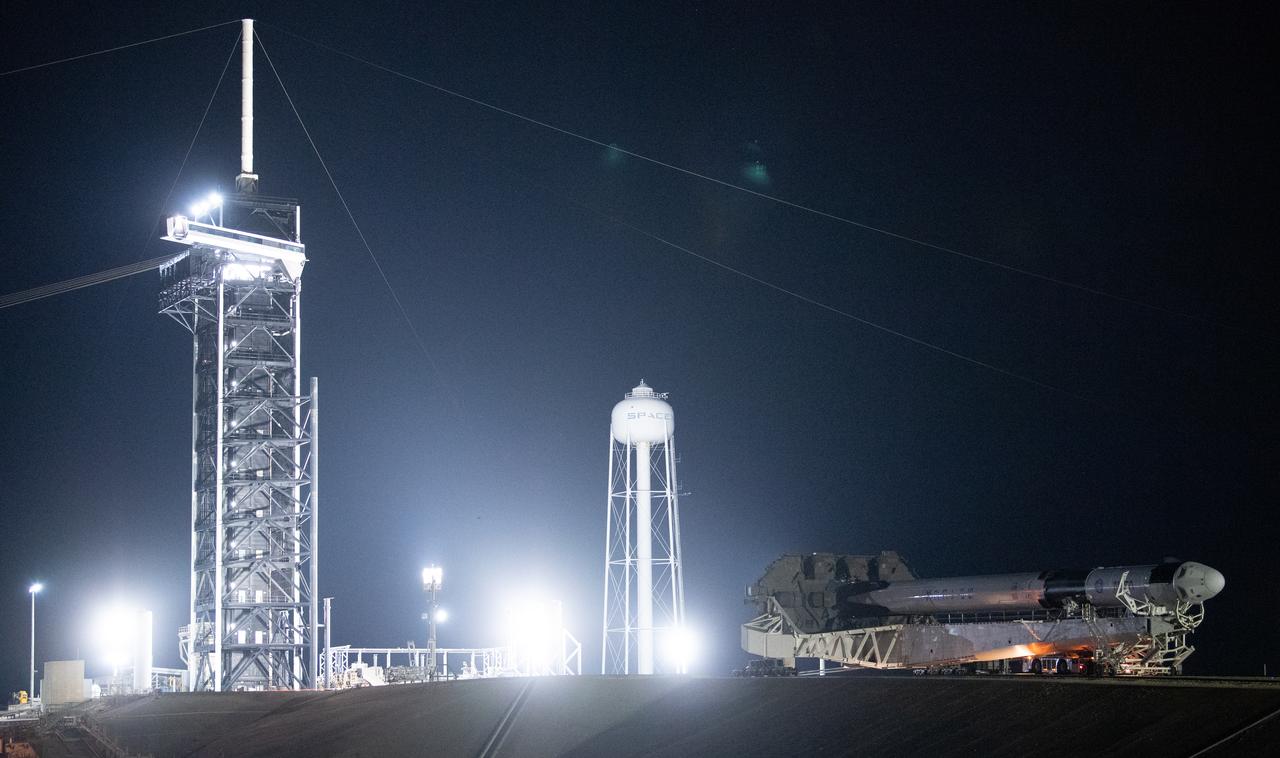
A SpaceX Falcon 9 rocket with the company's Crew Dragon spacecraft onboard is seen as it is rolled out to the launch pad at Launch Complex 39A as preparations continue for the Crew-5 mission, Saturday, Oct. 1, 2022, at NASA’s Kennedy Space Center in Florida. NASA’s SpaceX Crew-5 mission is the fifth crew rotation mission of the SpaceX Crew Dragon spacecraft and Falcon 9 rocket to the International Space Station as part of the agency’s Commercial Crew Program. NASA astronauts Nicole Mann and Josh Cassada, Japan Aerospace Exploration Agency (JAXA) astronaut Koichi Wakata, and Roscosmos cosmonaut Anna Kikina are scheduled to launch at 12:00 p.m. EDT on Oct. 5, from Launch Complex 39A at the Kennedy Space Center. Photo Credit: (NASA/Joel Kowsky)
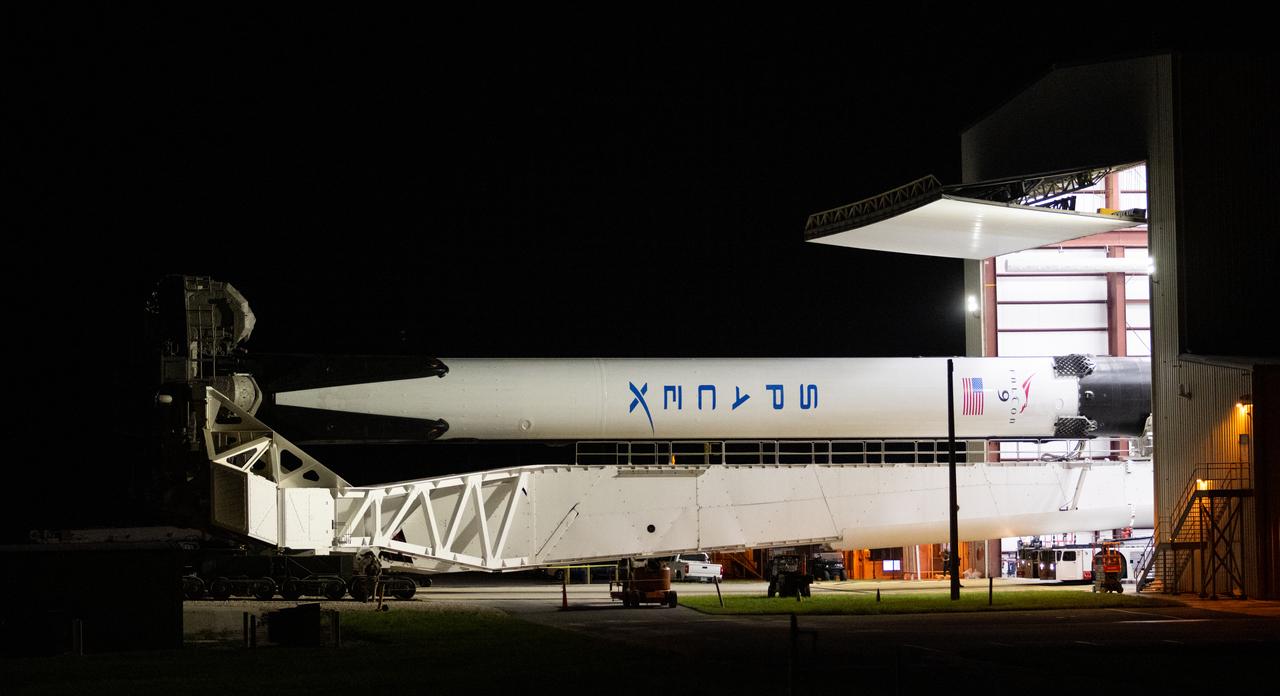
A SpaceX Falcon 9 rocket with the company's Crew Dragon spacecraft onboard is seen as it is rolled out to the launch pad at Launch Complex 39A as preparations continue for the Crew-5 mission, Saturday, Oct. 1, 2022, at NASA’s Kennedy Space Center in Florida. NASA’s SpaceX Crew-5 mission is the fifth crew rotation mission of the SpaceX Crew Dragon spacecraft and Falcon 9 rocket to the International Space Station as part of the agency’s Commercial Crew Program. NASA astronauts Nicole Mann and Josh Cassada, Japan Aerospace Exploration Agency (JAXA) astronaut Koichi Wakata, and Roscosmos cosmonaut Anna Kikina are scheduled to launch at 12:00 p.m. EDT on Oct. 5, from Launch Complex 39A at the Kennedy Space Center. Photo Credit: (NASA/Joel Kowsky)
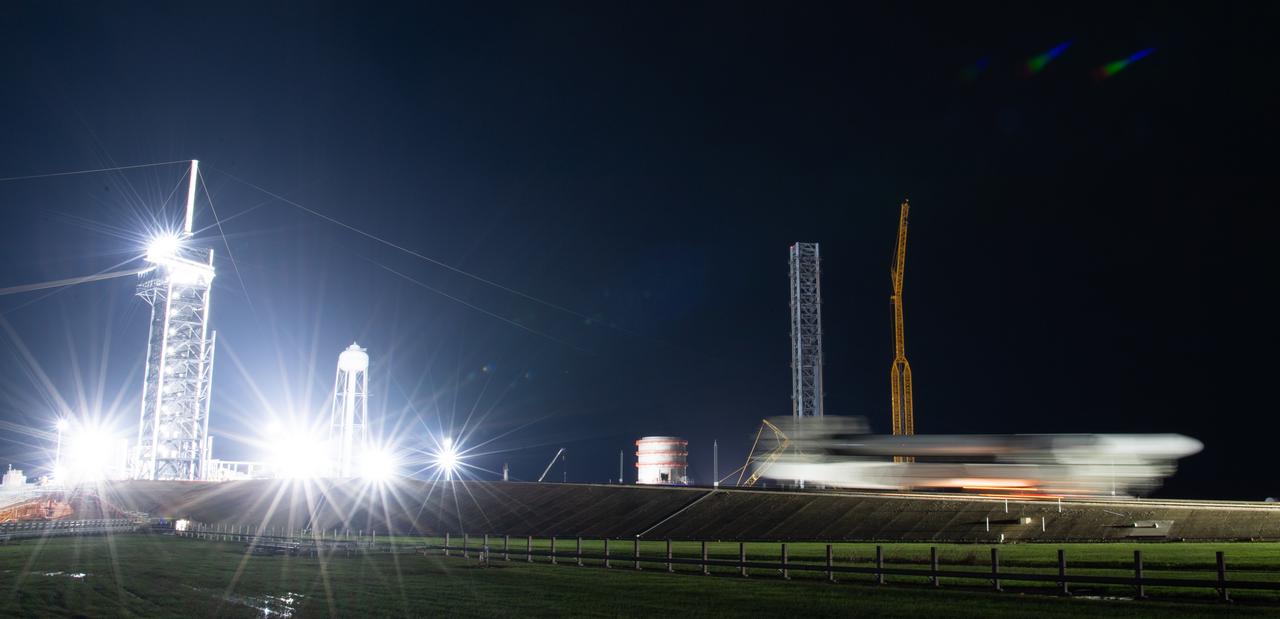
In this three-minute exposure, a SpaceX Falcon 9 rocket with the company's Crew Dragon spacecraft onboard is seen as it is rolled out to the launch pad at Launch Complex 39A as preparations continue for the Crew-5 mission, Saturday, Oct. 1, 2022, at NASA’s Kennedy Space Center in Florida. NASA’s SpaceX Crew-5 mission is the fifth crew rotation mission of the SpaceX Crew Dragon spacecraft and Falcon 9 rocket to the International Space Station as part of the agency’s Commercial Crew Program. NASA astronauts Nicole Mann and Josh Cassada, Japan Aerospace Exploration Agency (JAXA) astronaut Koichi Wakata, and Roscosmos cosmonaut Anna Kikina are scheduled to launch at 12:00 p.m. EDT on Oct. 5, from Launch Complex 39A at the Kennedy Space Center. Photo Credit: (NASA/Joel Kowsky)
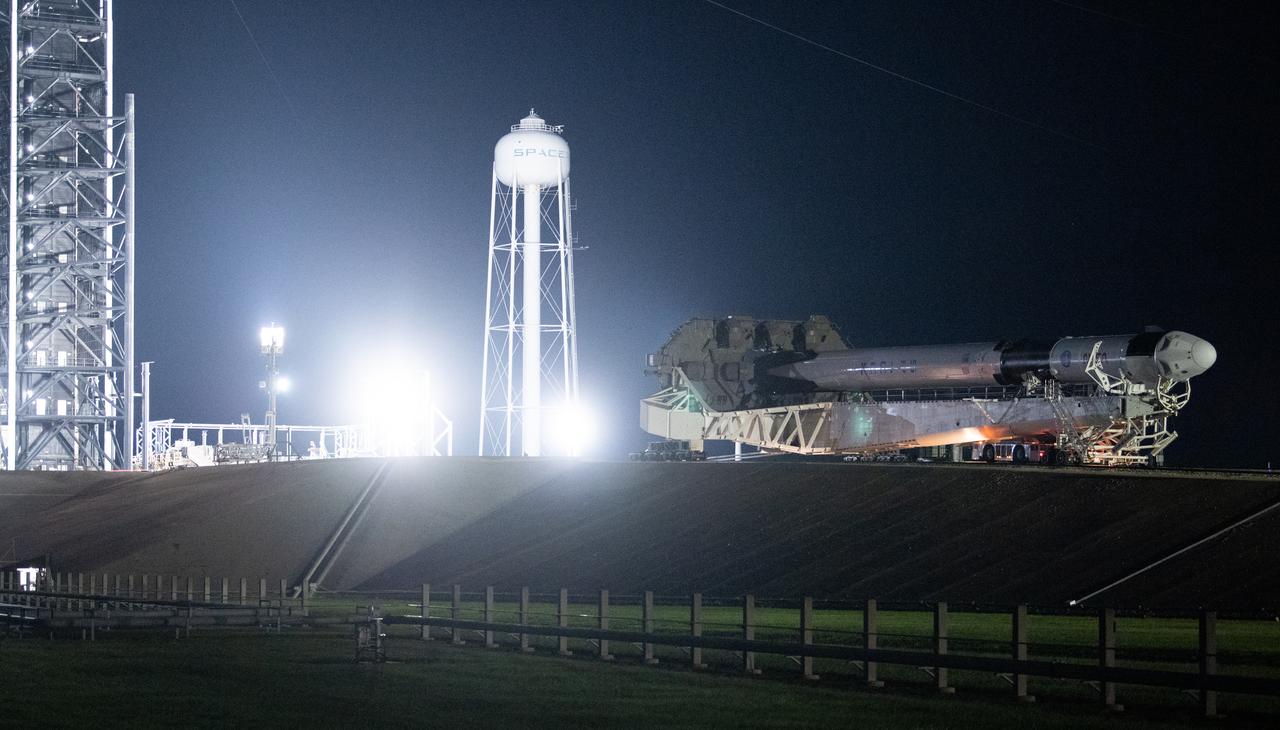
A SpaceX Falcon 9 rocket with the company's Crew Dragon spacecraft onboard is seen as it is rolled out to the launch pad at Launch Complex 39A as preparations continue for the Crew-5 mission, Saturday, Oct. 1, 2022, at NASA’s Kennedy Space Center in Florida. NASA’s SpaceX Crew-5 mission is the fifth crew rotation mission of the SpaceX Crew Dragon spacecraft and Falcon 9 rocket to the International Space Station as part of the agency’s Commercial Crew Program. NASA astronauts Nicole Mann and Josh Cassada, Japan Aerospace Exploration Agency (JAXA) astronaut Koichi Wakata, and Roscosmos cosmonaut Anna Kikina are scheduled to launch at 12:00 p.m. EDT on Oct. 5, from Launch Complex 39A at the Kennedy Space Center. Photo Credit: (NASA/Joel Kowsky)
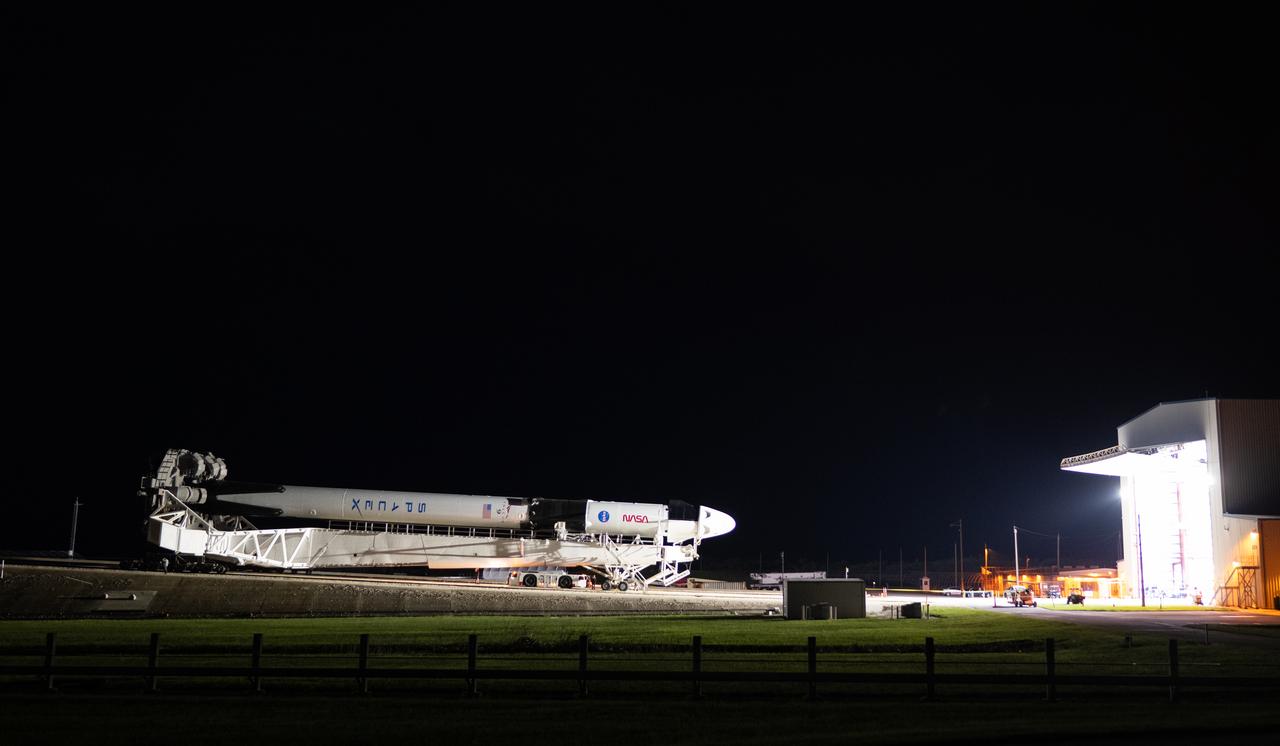
A SpaceX Falcon 9 rocket with the company's Crew Dragon spacecraft onboard is seen as it is rolled out to the launch pad at Launch Complex 39A as preparations continue for the Crew-5 mission, Saturday, Oct. 1, 2022, at NASA’s Kennedy Space Center in Florida. NASA’s SpaceX Crew-5 mission is the fifth crew rotation mission of the SpaceX Crew Dragon spacecraft and Falcon 9 rocket to the International Space Station as part of the agency’s Commercial Crew Program. NASA astronauts Nicole Mann and Josh Cassada, Japan Aerospace Exploration Agency (JAXA) astronaut Koichi Wakata, and Roscosmos cosmonaut Anna Kikina are scheduled to launch at 12:00 p.m. EDT on Oct. 5, from Launch Complex 39A at the Kennedy Space Center. Photo Credit: (NASA/Joel Kowsky)
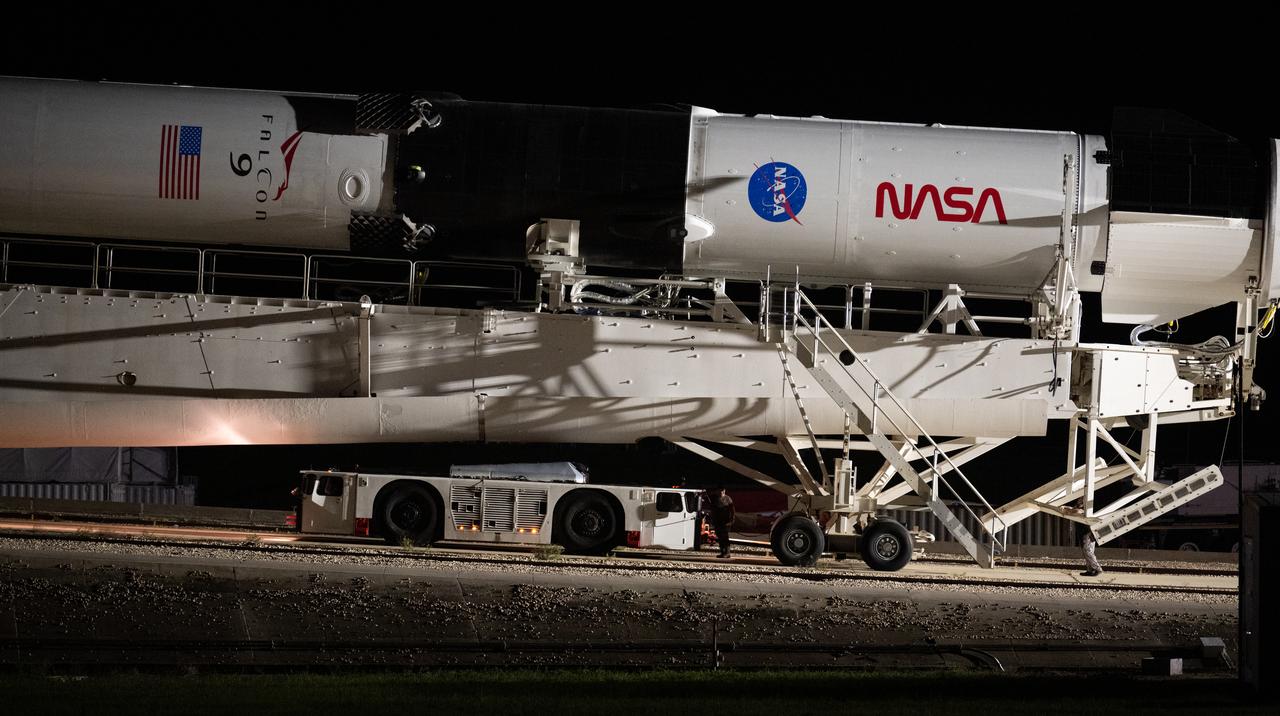
A SpaceX Falcon 9 rocket with the company's Crew Dragon spacecraft onboard is seen as it is rolled out to the launch pad at Launch Complex 39A as preparations continue for the Crew-5 mission, Saturday, Oct. 1, 2022, at NASA’s Kennedy Space Center in Florida. NASA’s SpaceX Crew-5 mission is the fifth crew rotation mission of the SpaceX Crew Dragon spacecraft and Falcon 9 rocket to the International Space Station as part of the agency’s Commercial Crew Program. NASA astronauts Nicole Mann and Josh Cassada, Japan Aerospace Exploration Agency (JAXA) astronaut Koichi Wakata, and Roscosmos cosmonaut Anna Kikina are scheduled to launch at 12:00 p.m. EDT on Oct. 5, from Launch Complex 39A at the Kennedy Space Center. Photo Credit: (NASA/Joel Kowsky)
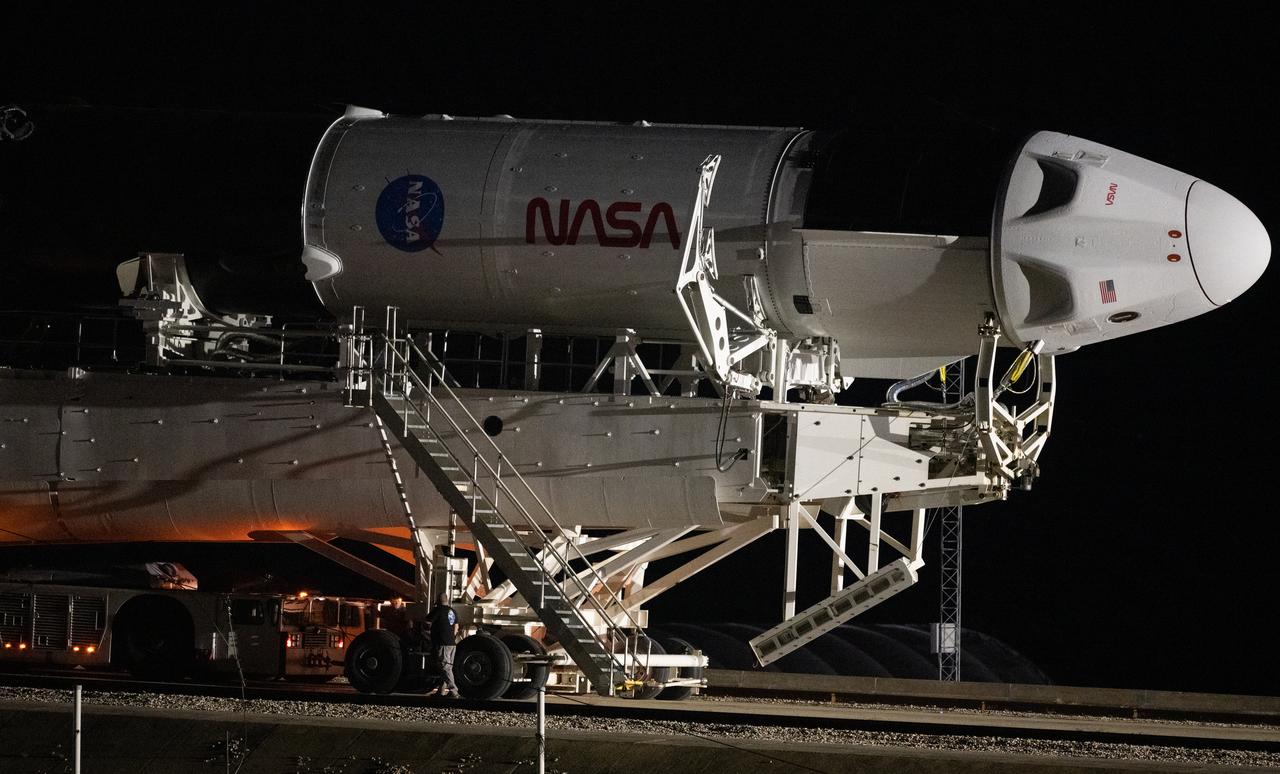
A SpaceX Falcon 9 rocket with the company's Crew Dragon spacecraft onboard is seen as it is rolled out to the launch pad at Launch Complex 39A as preparations continue for the Crew-5 mission, Saturday, Oct. 1, 2022, at NASA’s Kennedy Space Center in Florida. NASA’s SpaceX Crew-5 mission is the fifth crew rotation mission of the SpaceX Crew Dragon spacecraft and Falcon 9 rocket to the International Space Station as part of the agency’s Commercial Crew Program. NASA astronauts Nicole Mann and Josh Cassada, Japan Aerospace Exploration Agency (JAXA) astronaut Koichi Wakata, and Roscosmos cosmonaut Anna Kikina are scheduled to launch at 12:00 p.m. EDT on Oct. 5, from Launch Complex 39A at the Kennedy Space Center. Photo Credit: (NASA/Joel Kowsky)
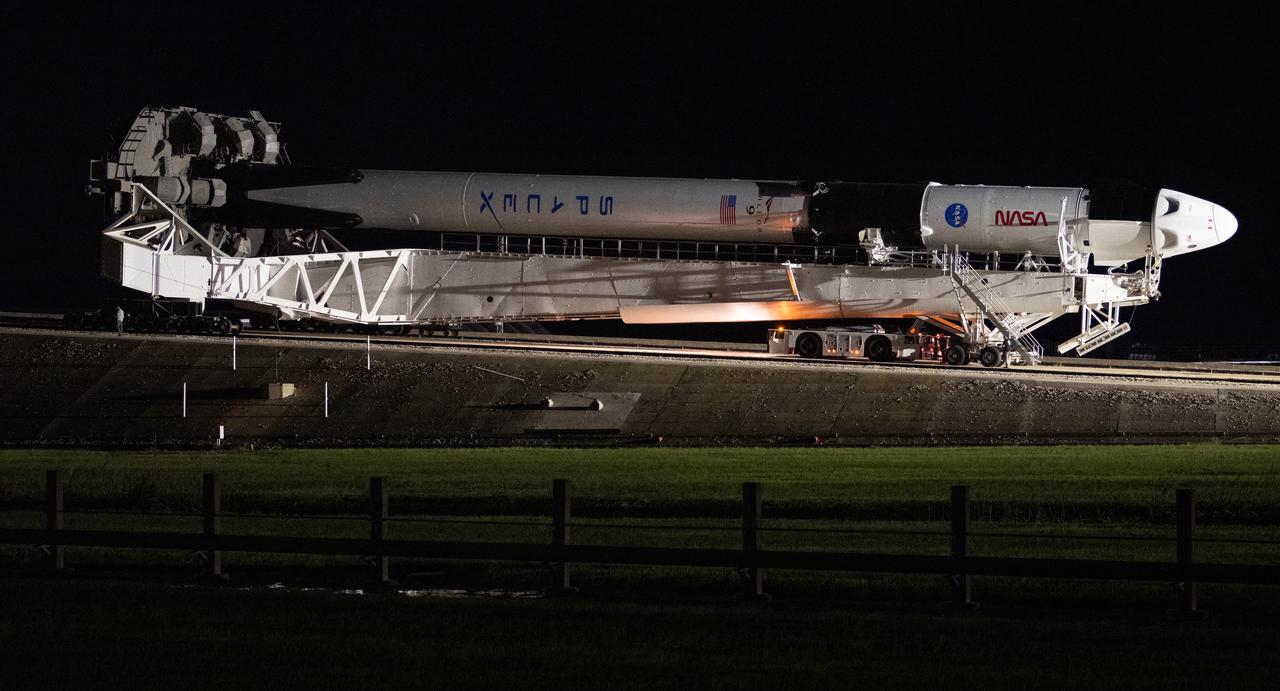
A SpaceX Falcon 9 rocket with the company's Crew Dragon spacecraft onboard is seen as it is rolled out to the launch pad at Launch Complex 39A as preparations continue for the Crew-5 mission, Saturday, Oct. 1, 2022, at NASA’s Kennedy Space Center in Florida. NASA’s SpaceX Crew-5 mission is the fifth crew rotation mission of the SpaceX Crew Dragon spacecraft and Falcon 9 rocket to the International Space Station as part of the agency’s Commercial Crew Program. NASA astronauts Nicole Mann and Josh Cassada, Japan Aerospace Exploration Agency (JAXA) astronaut Koichi Wakata, and Roscosmos cosmonaut Anna Kikina are scheduled to launch at 12:00 p.m. EDT on Oct. 5, from Launch Complex 39A at the Kennedy Space Center. Photo Credit: (NASA/Joel Kowsky)
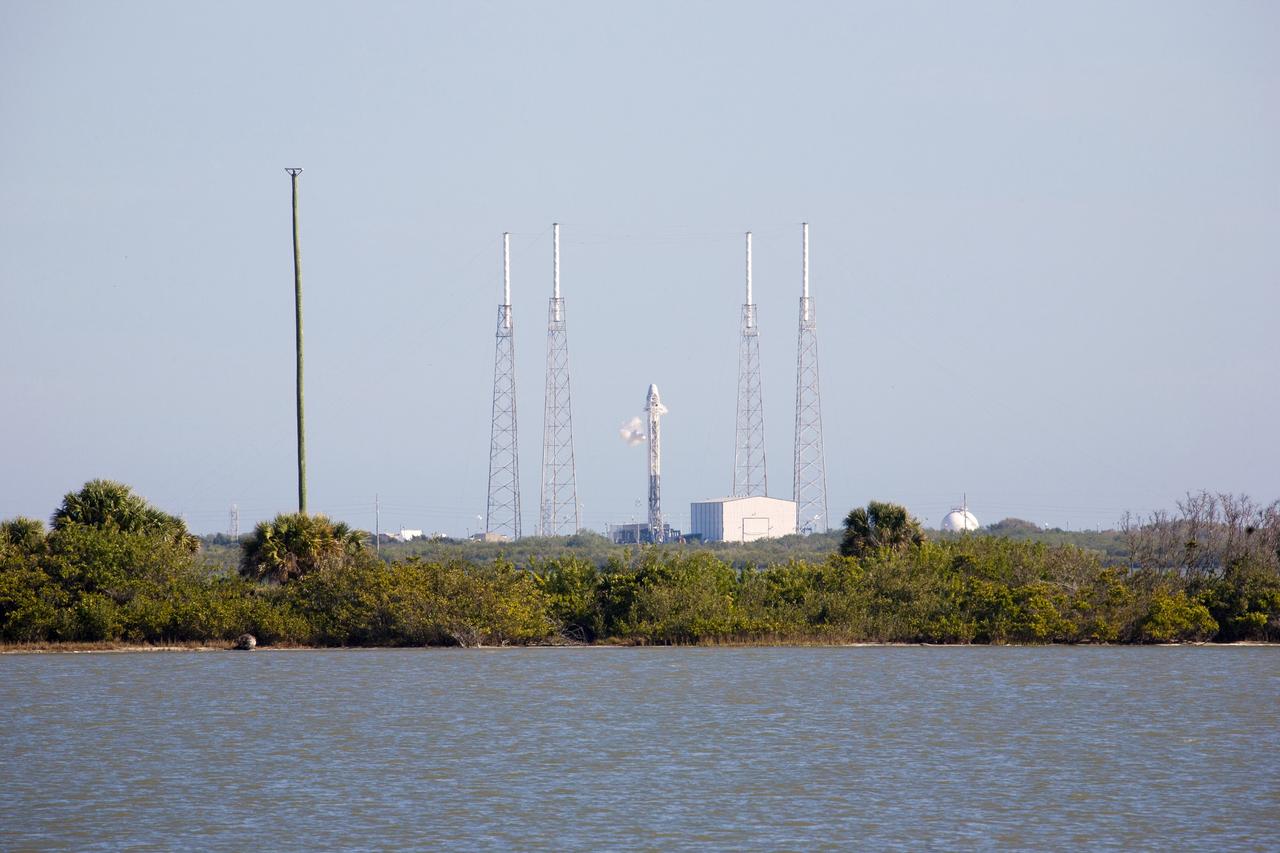
CAPE CANAVERAL, Fla. – The Space Exploration Technologies Corp. SpaceX Falcon 9 rocket with Dragon capsule attached on top sits fully fueled on Space Launch Complex-40 at Cape Canaveral Air Force Station in Florida during a launch dress rehearsal for the company’s next demonstration test flight for NASA’s Commercial Orbital Transportation Services-2 COTS-2) program. SpaceX is one of two companies under contract with NASA to take cargo to the International Space Station. NASA is working with SpaceX to combine its last two demonstration flights, and if approved, the Falcon 9 would launch the Dragon capsule to the orbiting laboratory for a docking within the next several months. Photo credit: NASA/Gianni Woods
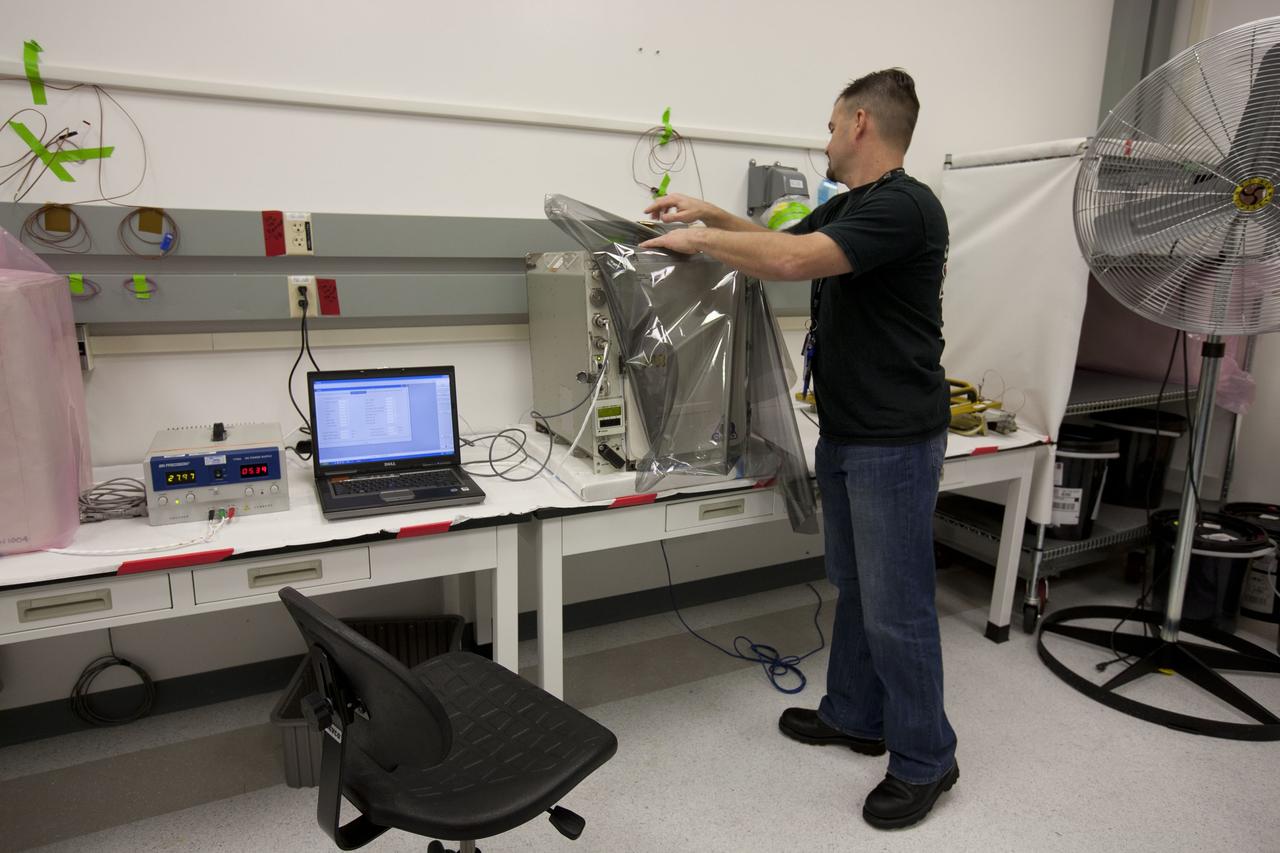
CAPE CANAVERAL, Fla. – Inside the Space Station Processing Facility at NASA’s Kennedy Space Center in Florida, a cold storage team member prepares an International Space Station experiment cryogenic freezer called a Glacier unit, for transport to Space Launch Complex-40 at Cape Canaveral Air Force Station. The unit is for an experiment late-load demonstration test with the Space Exploration Technologies Corp. SpaceX Falcon 9 rocket and Dragon capsule. SpaceX is one of two companies under contract with NASA to take cargo to the International Space Station. NASA is working with SpaceX to combine its last two demonstration flights, and if approved, the Falcon 9 would launch the Dragon capsule to the orbiting laboratory for a docking within the next several months. Photo credit: NASA/Amanda Diller
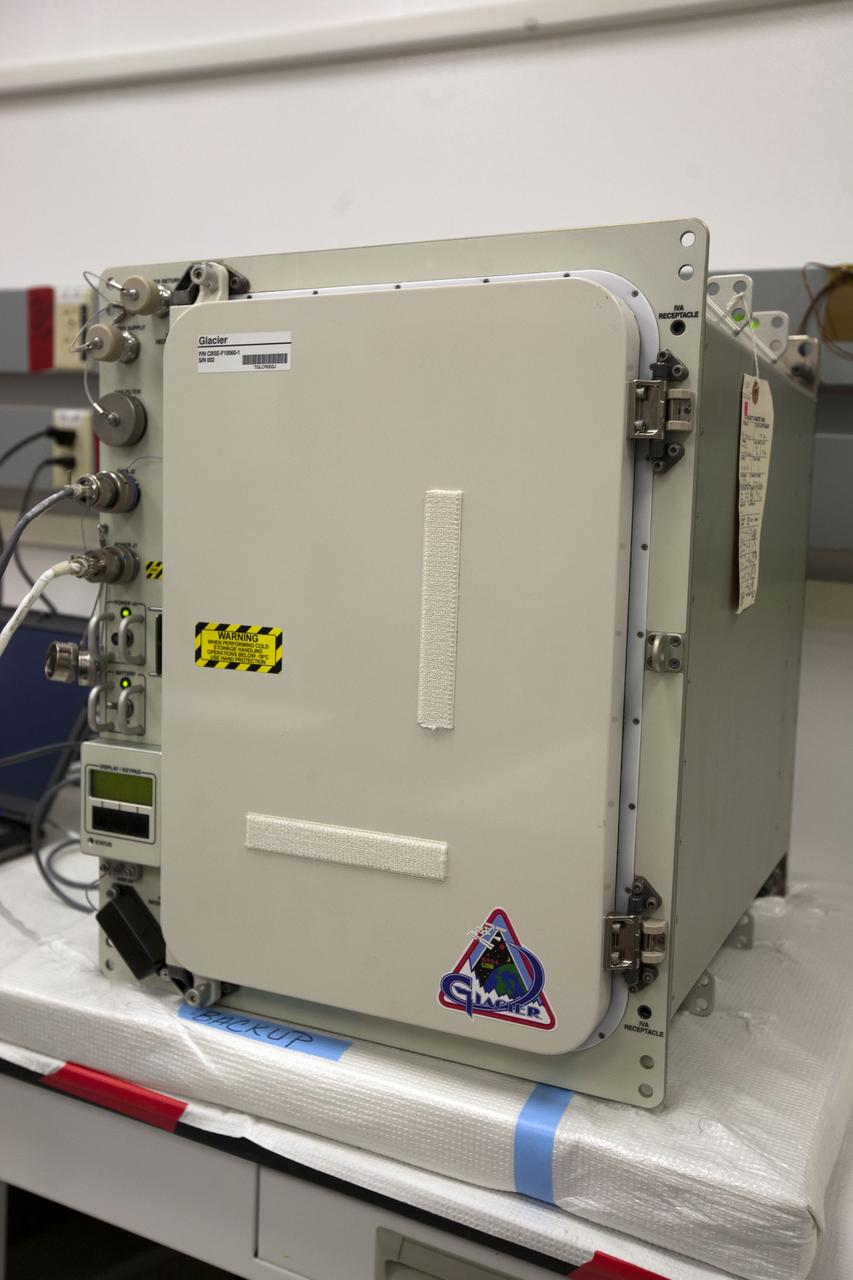
CAPE CANAVERAL, Fla. – Inside the Space Station Processing Facility at NASA’s Kennedy Space Center in Florida, an International Space Station experiment cryogenic freezer called a Glacier unit, is being prepared for transport to Space Launch Complex-40 at Cape Canaveral Air Force Station. The unit is for an experiment late-load demonstration test with the Space Exploration Technologies Corp. SpaceX Falcon 9 rocket and Dragon capsule. SpaceX is one of two companies under contract with NASA to take cargo to the International Space Station. NASA is working with SpaceX to combine its last two demonstration flights, and if approved, the Falcon 9 would launch the Dragon capsule to the orbiting laboratory for a docking within the next several months. Photo credit: NASA/Amanda Diller
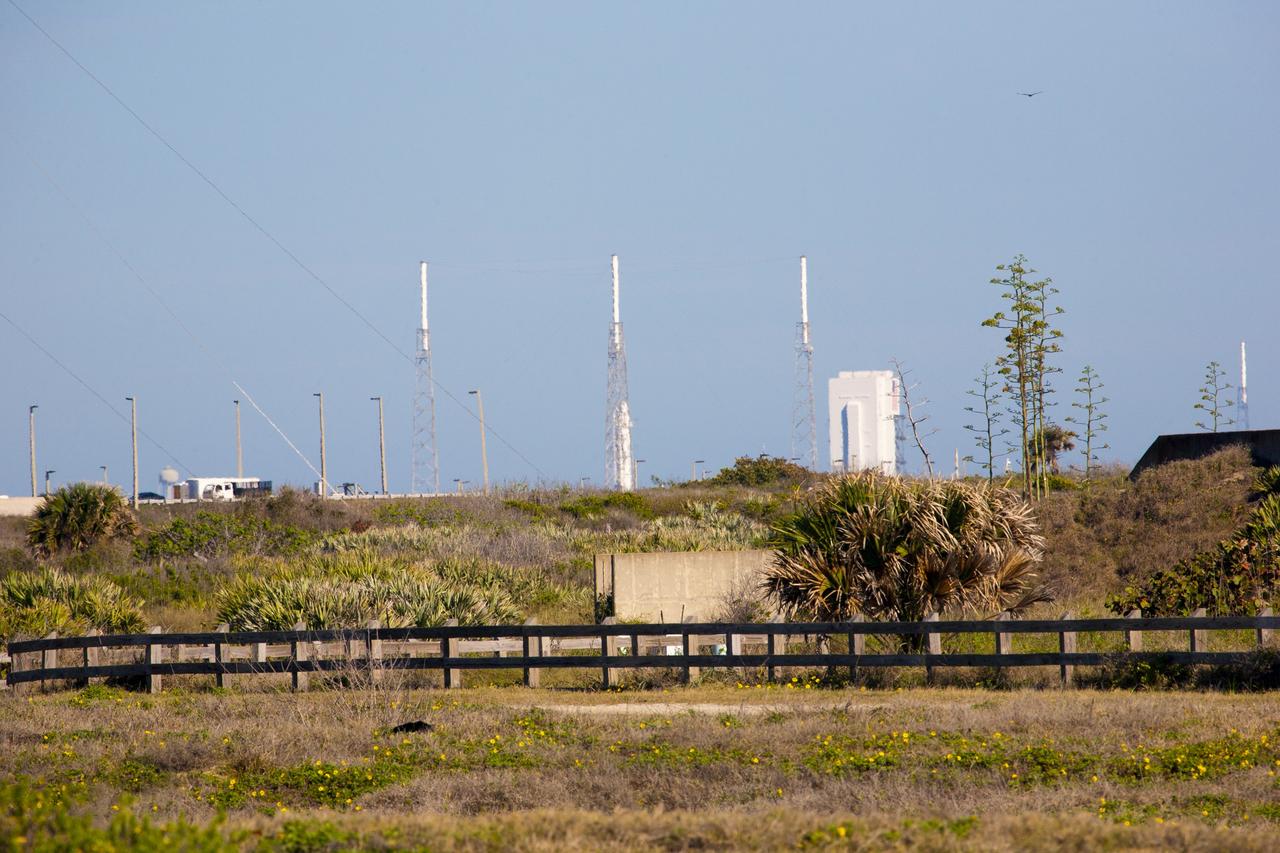
CAPE CANAVERAL, Fla. – The Space Exploration Technologies Corp. SpaceX Falcon 9 rocket with Dragon capsule attached on top sits fully fueled on Space Launch Complex-40 at Cape Canaveral Air Force Station in Florida during a launch dress rehearsal for the company’s next demonstration test flight for NASA’s Commercial Orbital Transportation Services-2 COTS-2) program. SpaceX is one of two companies under contract with NASA to take cargo to the International Space Station. NASA is working with SpaceX to combine its last two demonstration flights, and if approved, the Falcon 9 would launch the Dragon capsule to the orbiting laboratory for a docking within the next several months. Photo credit: NASA/Gianni Woods
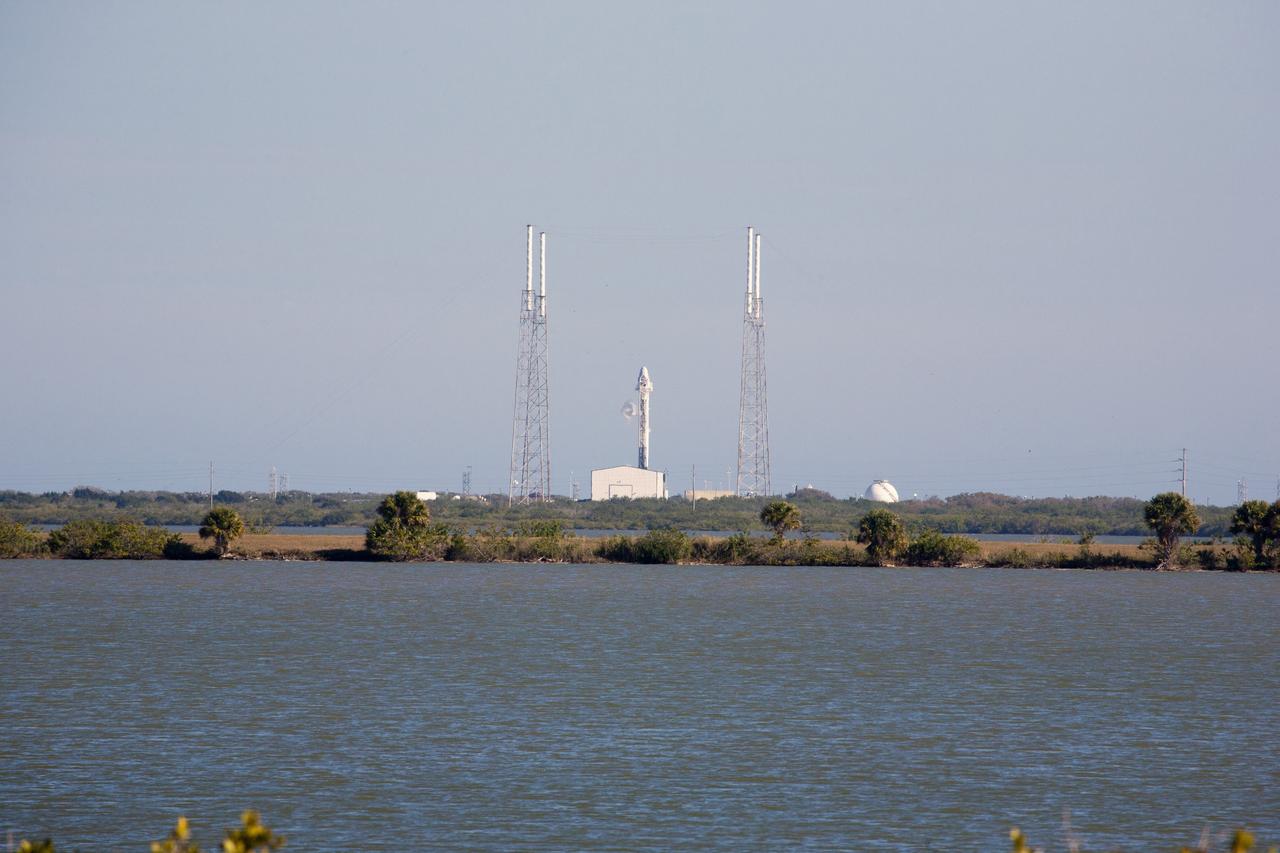
CAPE CANAVERAL, Fla. – The Space Exploration Technologies Corp. SpaceX Falcon 9 rocket with Dragon capsule attached on top sits fully fueled on Space Launch Complex-40 at Cape Canaveral Air Force Station in Florida during a launch dress rehearsal for the company’s next demonstration test flight for NASA’s Commercial Orbital Transportation Services-2 COTS-2) program. SpaceX is one of two companies under contract with NASA to take cargo to the International Space Station. NASA is working with SpaceX to combine its last two demonstration flights, and if approved, the Falcon 9 would launch the Dragon capsule to the orbiting laboratory for a docking within the next several months. Photo credit: NASA/Gianni Woods
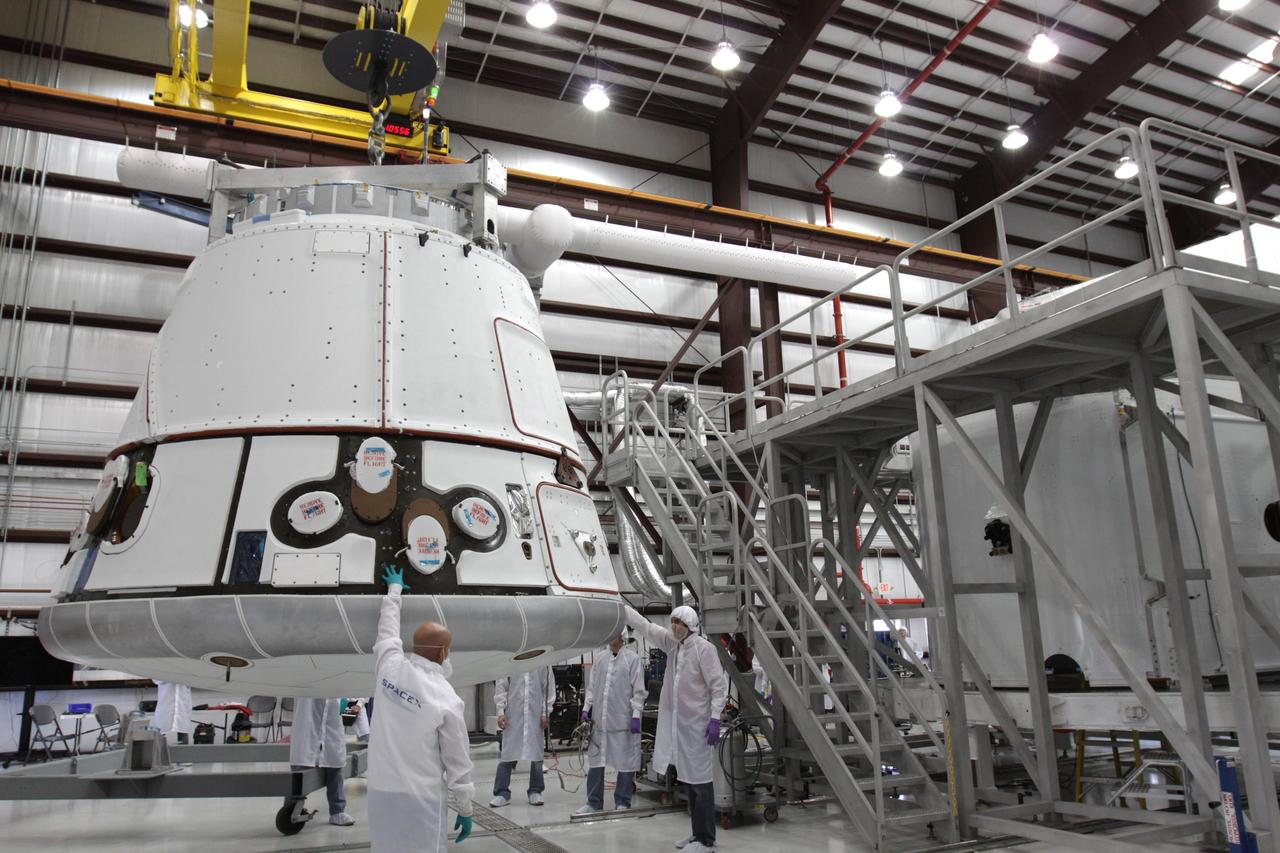
CAPE CANAVERAL, Fla. -- The Space Exploration Technologies Corp. (SpaceX) Dragon capsule is lifted to be placed atop its cargo ring inside a processing hangar at Cape Canaveral Air Force Station in Florida on Nov. 16. Later, the combination will be attached to the top of a Falcon 9 rocket on Space Launch Complex-40 for the company's next demonstration test flight for NASA's Commercial Orbital Transportation Services (COTS) program. SpaceX is one of two companies under contract with NASA to take cargo to the International Space Station. NASA is working with SpaceX to combine its last two demonstration flights, and if approved, the Falcon 9 rocket would launch the Dragon capsule to the orbiting laboratory for a docking within the next several months. Photo credit: NASA/Kim Shiflett
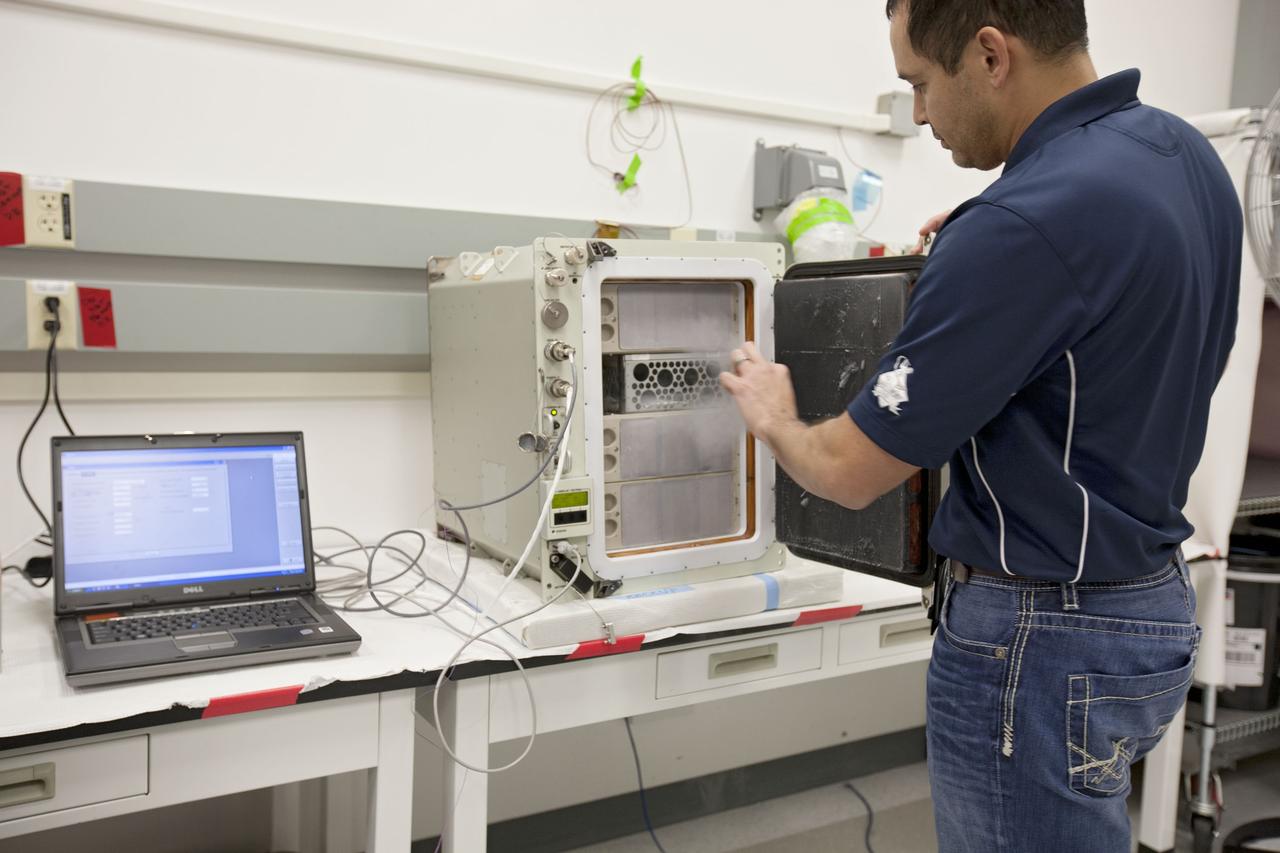
CAPE CANAVERAL, Fla. –Inside the Space Station Processing Facility at NASA’s Kennedy Space Center in Florida, a cold storage team member prepares an International Space Station experiment cryogenic freezer called a Glacier unit, for transport to Space Launch Complex-40 at Cape Canaveral Air Force Station. The unit is for an experiment late-load demonstration test with the Space Exploration Technologies Corp. SpaceX Falcon 9 rocket and Dragon capsule. SpaceX is one of two companies under contract with NASA to take cargo to the International Space Station. NASA is working with SpaceX to combine its last two demonstration flights, and if approved, the Falcon 9 would launch the Dragon capsule to the orbiting laboratory for a docking within the next several months. Photo credit: NASA/Amanda Diller
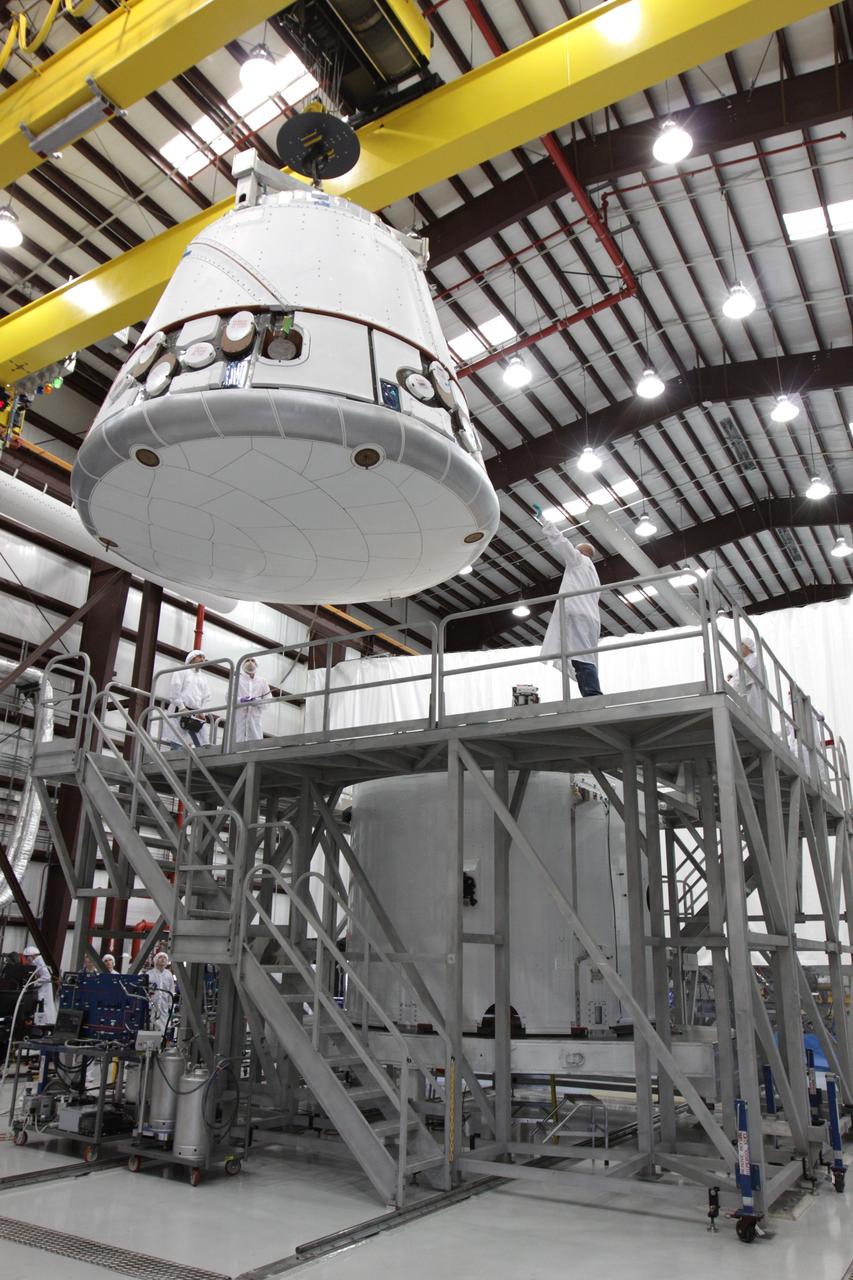
CAPE CANAVERAL, Fla. -- The Space Exploration Technologies Corp. (SpaceX) Dragon capsule is placed atop its cargo ring inside a processing hangar at Cape Canaveral Air Force Station in Florida on Nov. 16. Later, the combination will be attached to the top of a Falcon 9 rocket on Space Launch Complex-40 for the company's next demonstration test flight for NASA's Commercial Orbital Transportation Services (COTS) program. SpaceX is one of two companies under contract with NASA to take cargo to the International Space Station. NASA is working with SpaceX to combine its last two demonstration flights, and if approved, the Falcon 9 rocket would launch the Dragon capsule to the orbiting laboratory for a docking within the next several months. Photo credit: NASA/Kim Shiflett
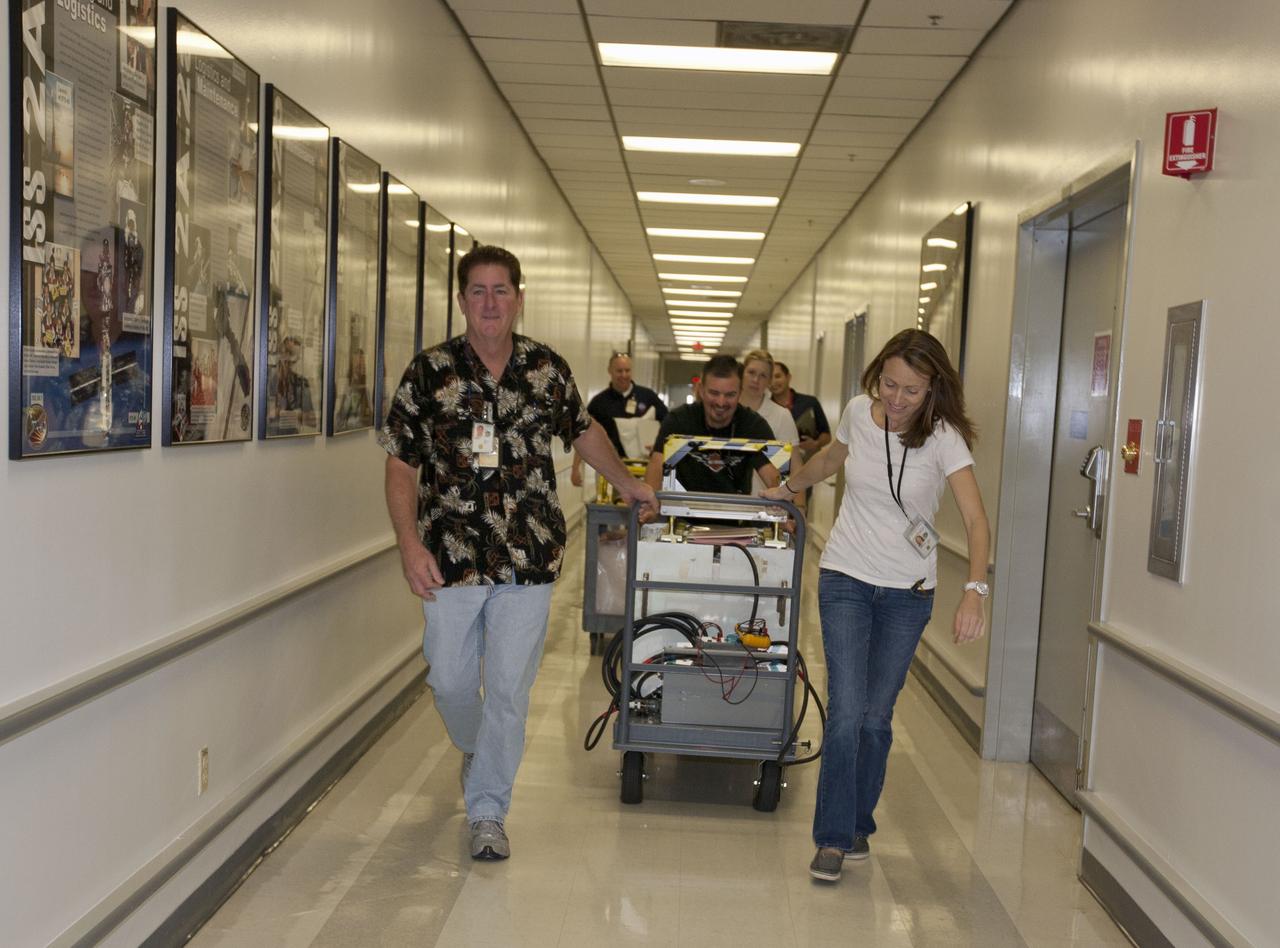
CAPE CANAVERAL, Fla. – Inside the Space Station Processing Facility at NASA’s Kennedy Space Center in Florida, cold storage team members cart an International Space Station experiment cryogenic freezer called a Glacier unit, for transport to Space Launch Complex-40 at Cape Canaveral Air Force Station. The unit is for an experiment late-load demonstration test with Space Exploration Technologies Corp. SpaceX Falcon 9 rocket and Dragon capsule. SpaceX is one of two companies under contract with NASA to take cargo to the International Space Station. NASA is working with SpaceX to combine its last two demonstration flights, and if approved, the Falcon 9 would launch the Dragon capsule to the orbiting laboratory for a docking within the next several months. Photo credit: NASA/Amanda Diller
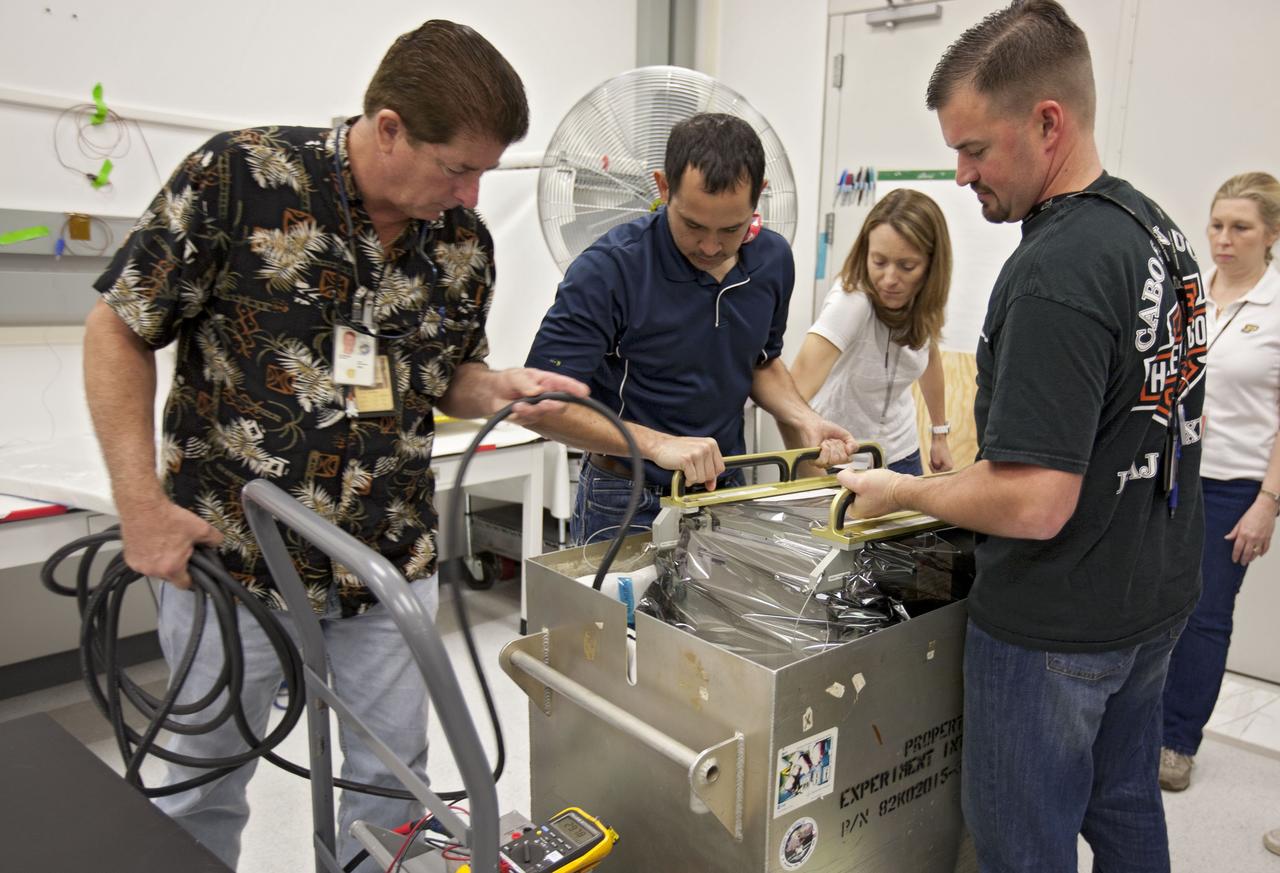
CAPE CANAVERAL, Fla. – Inside the Space Station Processing Facility at NASA’s Kennedy Space Center in Florida, cold storage team members pack an International Space Station experiment cryogenic freezer called a Glacier unit, for transport to Space Launch Complex-40 at Cape Canaveral Air Force Station. The unit is for an experiment late-load demonstration test with the Space Exploration Technologies Corp. SpaceX Falcon 9 rocket and Dragon capsule. SpaceX is one of two companies under contract with NASA to take cargo to the International Space Station. NASA is working with SpaceX to combine its last two demonstration flights, and if approved, the Falcon 9 would launch the Dragon capsule to the orbiting laboratory for a docking within the next several months. Photo credit: NASA/Amanda Diller
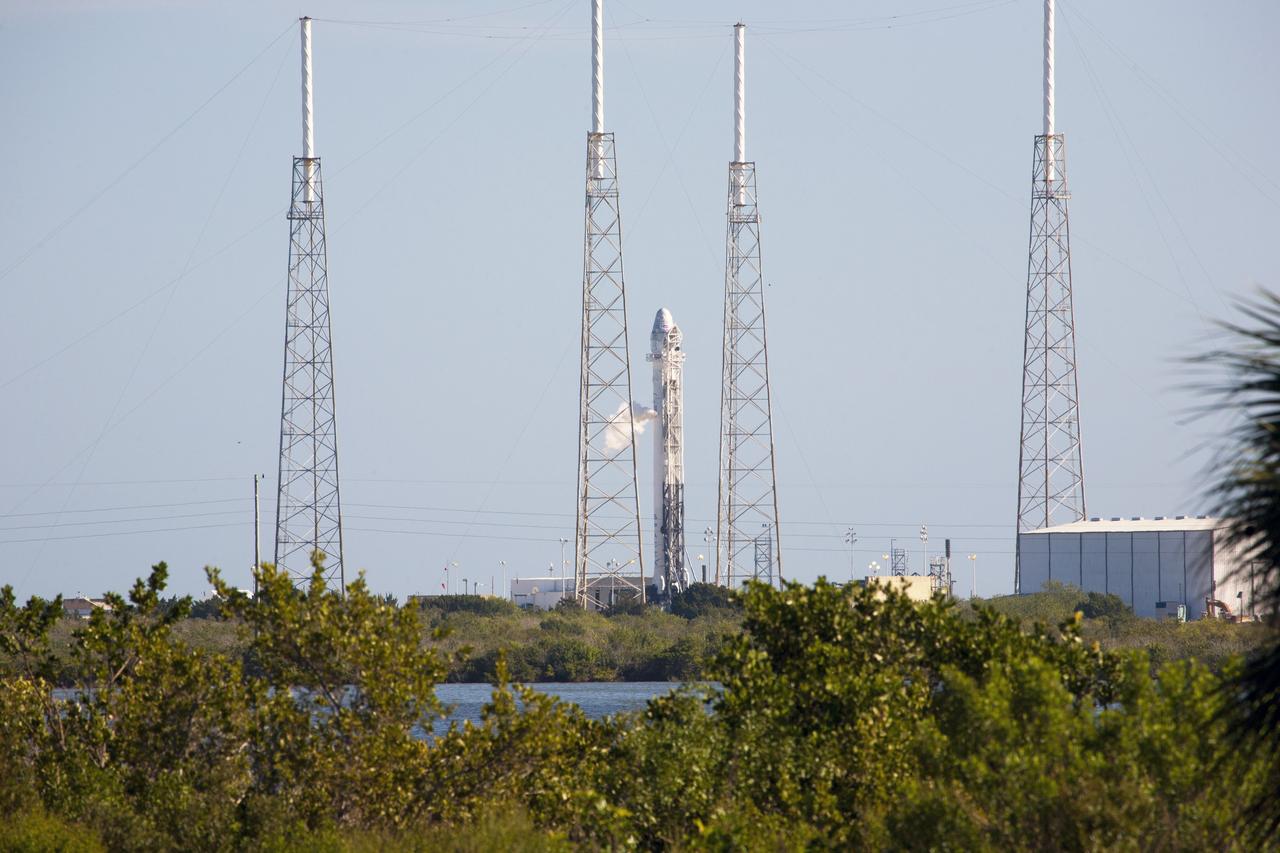
CAPE CANAVERAL, Fla. – The Space Exploration Technologies Corp. SpaceX Falcon 9 rocket with Dragon capsule attached on top sits fully fueled on Space Launch Complex-40 at Cape Canaveral Air Force Station in Florida during a launch dress rehearsal for the company’s next demonstration test flight for NASA’s Commercial Orbital Transportation Services-2 COTS-2) program. SpaceX is one of two companies under contract with NASA to take cargo to the International Space Station. NASA is working with SpaceX to combine its last two demonstration flights, and if approved, the Falcon 9 would launch the Dragon capsule to the orbiting laboratory for a docking within the next several months. Photo credit: NASA/Gianni Woods
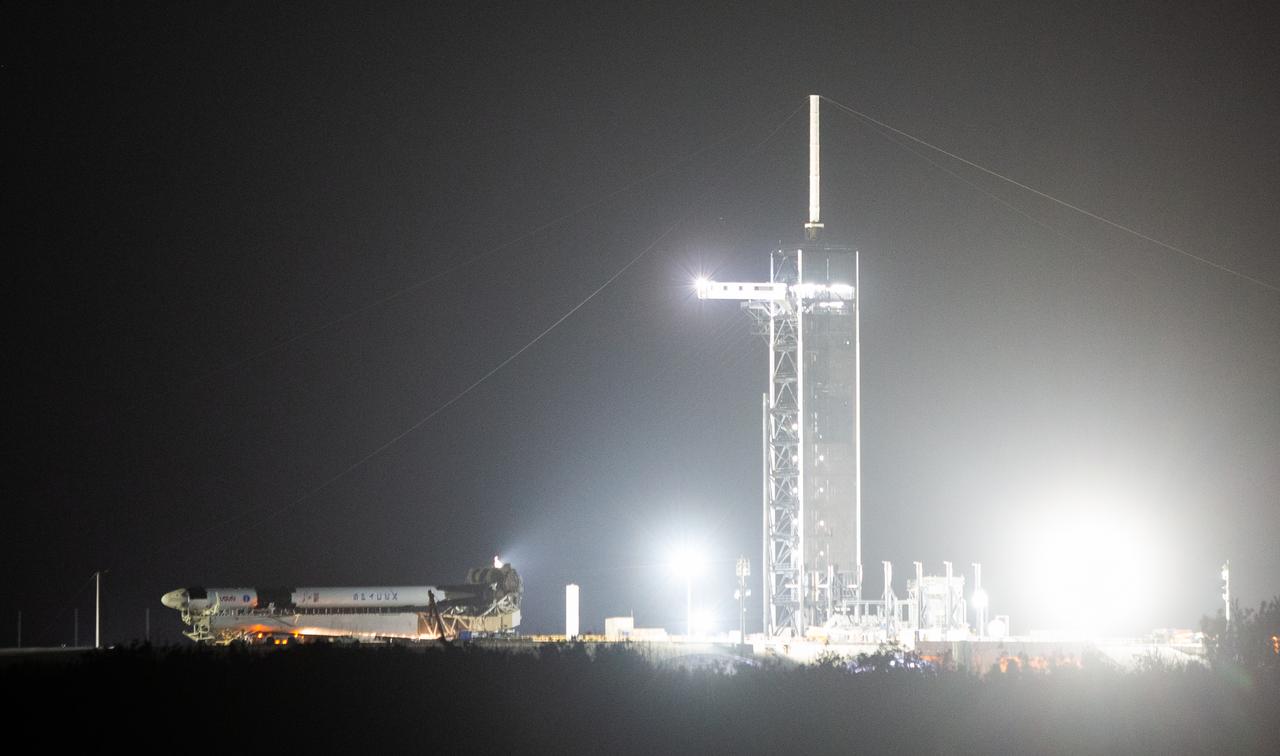
A SpaceX Falcon 9 rocket with the company's Dragon spacecraft onboard is seen as it is rolled out to the launch pad at Launch Complex 39A as preparations continue for the Crew-6 mission, Wednesday, Feb. 22, 2023, at NASA’s Kennedy Space Center in Florida. NASA’s SpaceX Crew-6 mission is the sixth crew rotation mission of the SpaceX Dragon spacecraft and Falcon 9 rocket to the International Space Station as part of the agency’s Commercial Crew Program. NASA astronauts Stephen Bowen and Warren "Woody" Hoburg, UAE (United Arab Emirates) astronaut Sultan Alneyadi, and Roscosmos cosmonaut Andrey Fedyaev are scheduled to launch at 1:45 a.m. EST on Feb. 27, from Launch Complex 39A at the Kennedy Space Center. Photo Credit: (NASA/Joel Kowsky)
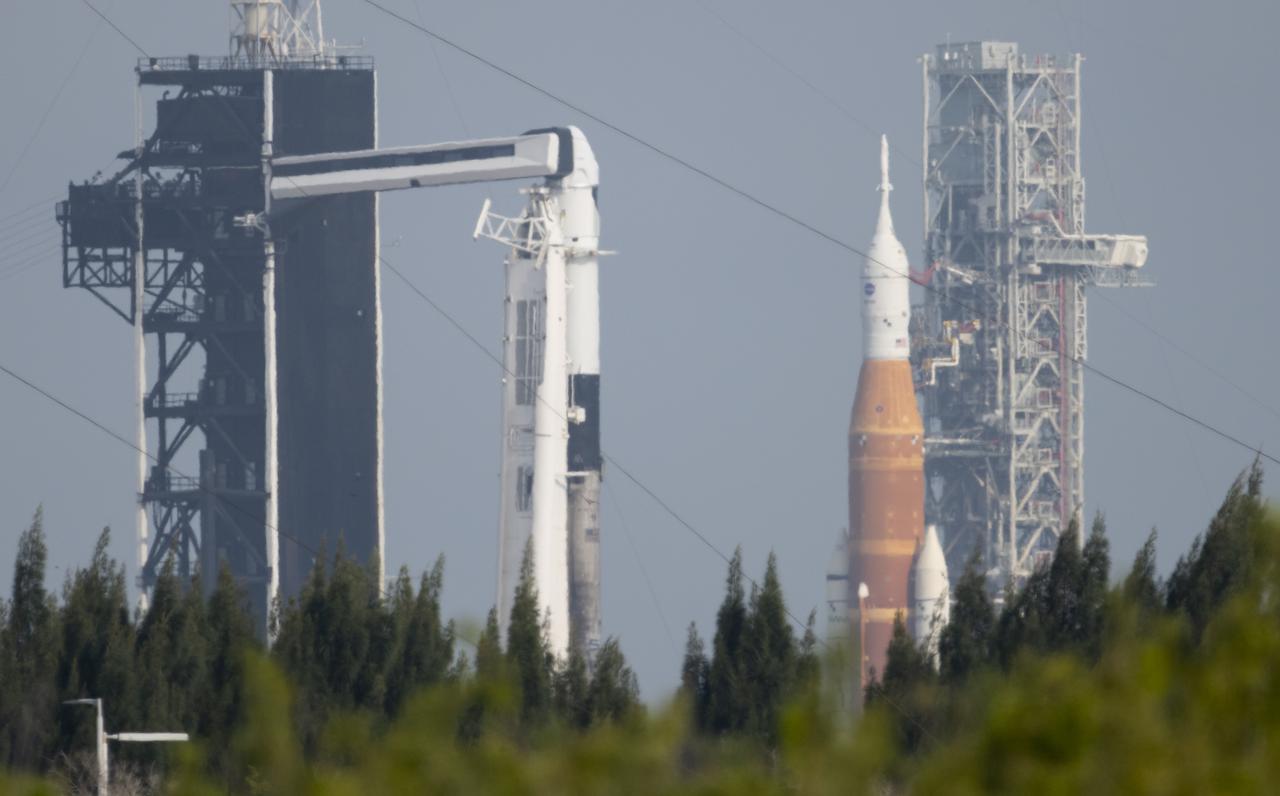
NASA’s Space Launch System (SLS) rocket with the Orion spacecraft aboard is seen atop a mobile launcher at Launch Complex 39B as the Artemis I launch team prepares for the next attempt of the wet dress rehearsal test, right, as a SpaceX Falcon 9 rocket with the company's Crew Dragon spacecraft aboard is seen on the launch pad at Launch Complex 39A as preparations continue for Axiom Mission 1 (Ax-1), Wednesday, April 6, 2022, at NASA’s Kennedy Space Center in Florida. The Ax-1 mission is the first private astronaut mission to the International Space Station. Ax-1 crew members Commander Michael López-Alegría of Spain and the United States, Pilot Larry Connor of the United States, and Mission Specialists Eytan Stibbe of Israel, and Mark Pathy of Canada are scheduled to launch on April 8 from Launch Complex 39A at the Kennedy Space Center. Photo Credit: (NASA/Joel Kowsky)
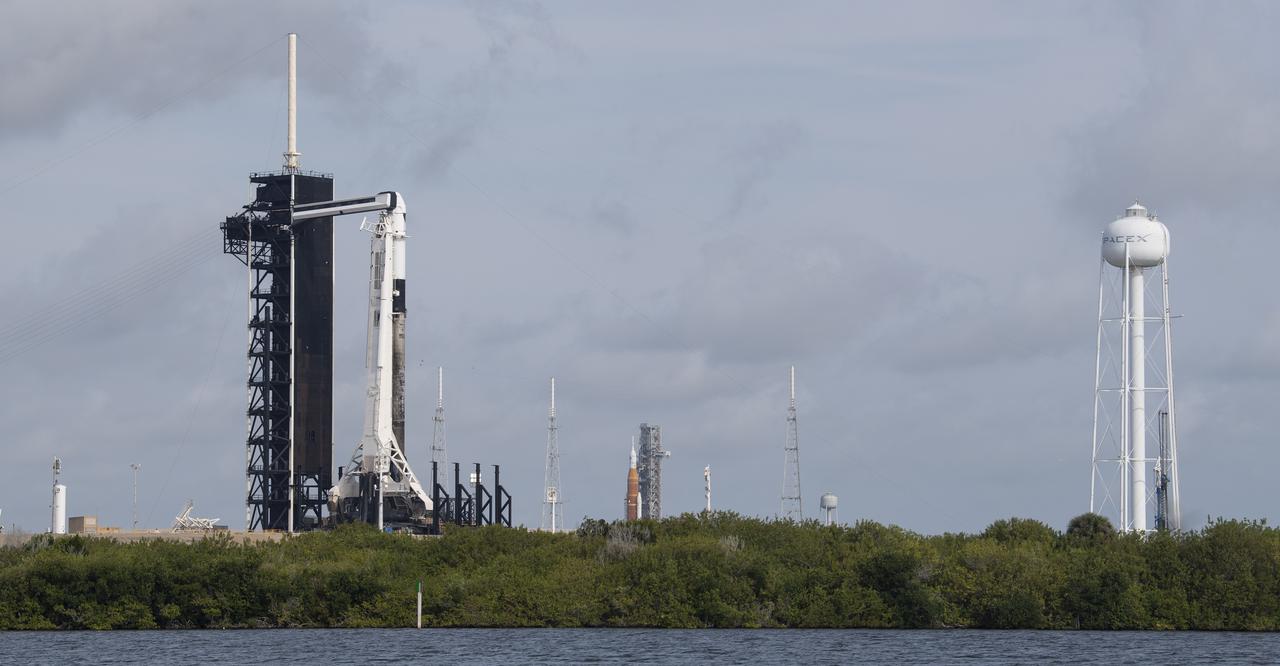
NASA’s Space Launch System (SLS) rocket with the Orion spacecraft aboard is seen atop a mobile launcher at Launch Complex 39B as the Artemis I launch team prepares for the next attempt of the wet dress rehearsal test, right, as a SpaceX Falcon 9 rocket with the company's Crew Dragon spacecraft aboard is seen on the launch pad at Launch Complex 39A as preparations continue for Axiom Mission 1 (Ax-1), Wednesday, April 6, 2022, at NASA’s Kennedy Space Center in Florida. The Ax-1 mission is the first private astronaut mission to the International Space Station. Ax-1 crew members Commander Michael López-Alegría of Spain and the United States, Pilot Larry Connor of the United States, and Mission Specialists Eytan Stibbe of Israel, and Mark Pathy of Canada are scheduled to launch on April 8 from Launch Complex 39A at the Kennedy Space Center. Photo Credit: (NASA/Joel Kowsky)
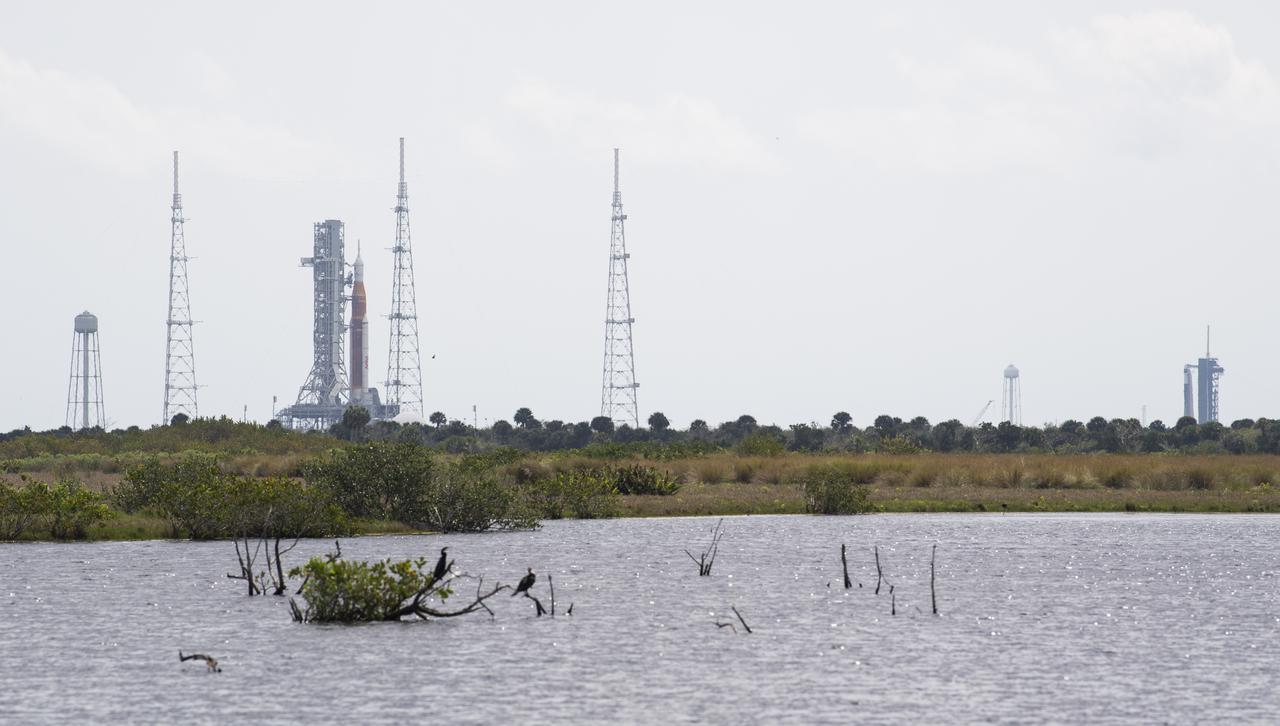
NASA’s Space Launch System (SLS) rocket with the Orion spacecraft aboard is seen atop a mobile launcher at Launch Complex 39B as the Artemis I launch team prepares for the next attempt of the wet dress rehearsal test, left, as a SpaceX Falcon 9 rocket with the company's Crew Dragon spacecraft aboard is seen on the launch pad at Launch Complex 39A as preparations continue for Axiom Mission 1 (Ax-1), Wednesday, April 6, 2022, at NASA’s Kennedy Space Center in Florida. The Ax-1 mission is the first private astronaut mission to the International Space Station. Ax-1 crew members Commander Michael López-Alegría of Spain and the United States, Pilot Larry Connor of the United States, and Mission Specialists Eytan Stibbe of Israel, and Mark Pathy of Canada are scheduled to launch on April 8 from Launch Complex 39A at the Kennedy Space Center. Photo Credit: (NASA/Joel Kowsky)
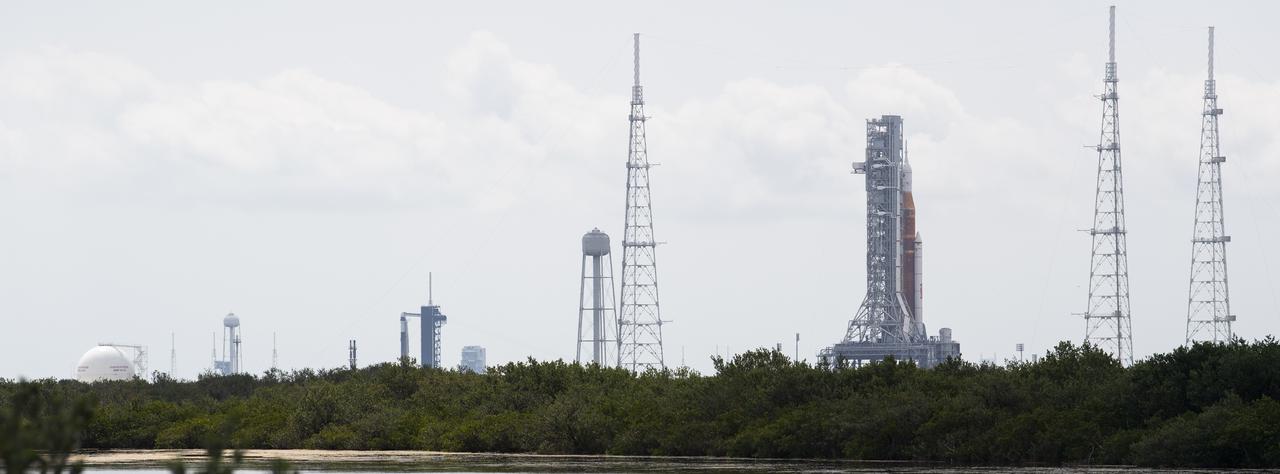
NASA’s Space Launch System (SLS) rocket with the Orion spacecraft aboard is seen atop a mobile launcher at Launch Complex 39B as the Artemis I launch team prepares for the next attempt of the wet dress rehearsal test, right, as a SpaceX Falcon 9 rocket with the company's Crew Dragon spacecraft aboard is seen on the launch pad at Launch Complex 39A as preparations continue for Axiom Mission 1 (Ax-1), Wednesday, April 6, 2022, at NASA’s Kennedy Space Center in Florida. The Ax-1 mission is the first private astronaut mission to the International Space Station. Ax-1 crew members Commander Michael López-Alegría of Spain and the United States, Pilot Larry Connor of the United States, and Mission Specialists Eytan Stibbe of Israel, and Mark Pathy of Canada are scheduled to launch on April 8 from Launch Complex 39A at the Kennedy Space Center. Photo Credit: (NASA/Joel Kowsky)
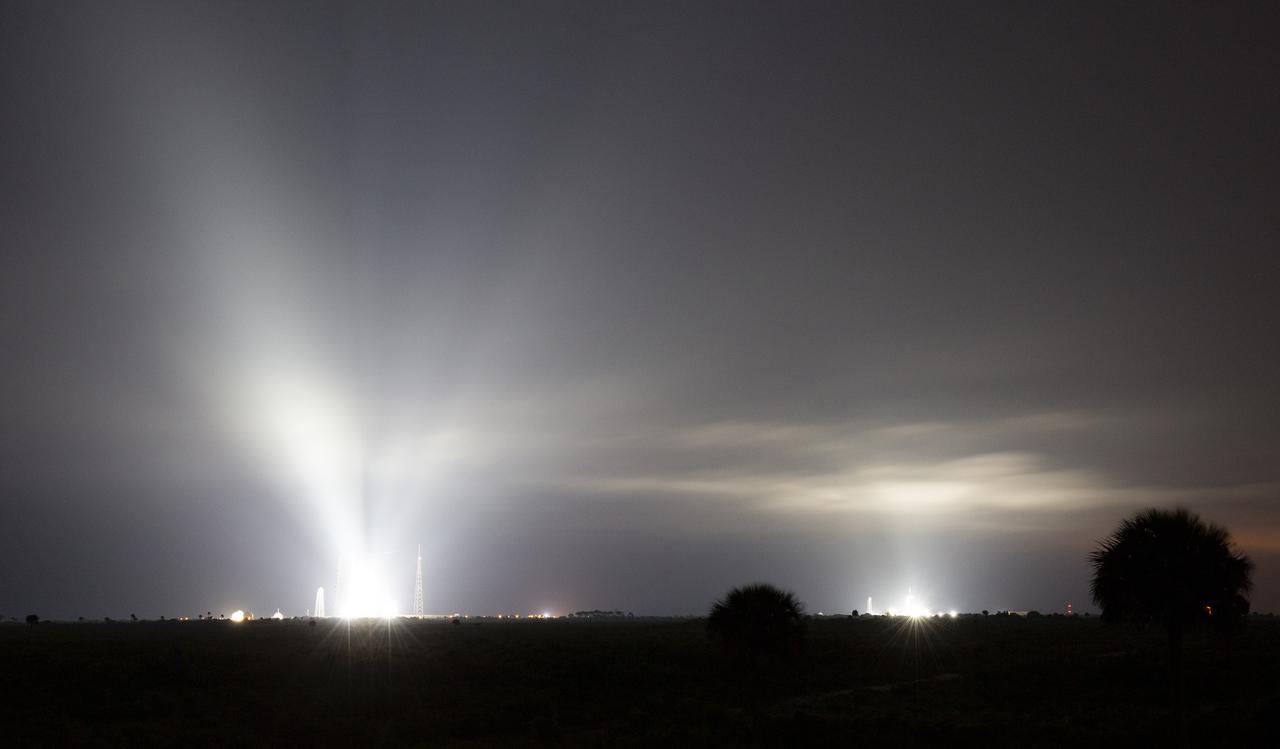
NASA’s Space Launch System (SLS) rocket with the Orion spacecraft aboard atop a mobile launcher at Launch Complex 39B as the Artemis I launch team prepares for the next attempt of the wet dress rehearsal test, left, and a SpaceX Falcon 9 rocket with the company's Crew Dragon spacecraft aboard on the launch pad at Launch Complex 39A as preparations continue for Axiom Mission 1 (Ax-1), are seen illuminated by spotlights, Thursday, April 7, 2022, at NASA’s Kennedy Space Center in Florida. The Ax-1 mission is the first private astronaut mission to the International Space Station. Ax-1 crew members Commander Michael López-Alegría of Spain and the United States, Pilot Larry Connor of the United States, and Mission Specialists Eytan Stibbe of Israel, and Mark Pathy of Canada launched on April 8 at 11:17 a.m. EDT, from Launch Complex 39A at the Kennedy Space Center. Photo Credit: (NASA/Joel Kowsky)

NASA’s Space Launch System (SLS) rocket with the Orion spacecraft aboard is seen atop a mobile launcher at Launch Complex 39B as the Artemis I launch team prepares for the next attempt of the wet dress rehearsal test, right, as a SpaceX Falcon 9 rocket with the company's Crew Dragon spacecraft aboard is seen on the launch pad at Launch Complex 39A as preparations continue for Axiom Mission 1 (Ax-1), Wednesday, April 6, 2022, at NASA’s Kennedy Space Center in Florida. The Ax-1 mission is the first private astronaut mission to the International Space Station. Ax-1 crew members Commander Michael López-Alegría of Spain and the United States, Pilot Larry Connor of the United States, and Mission Specialists Eytan Stibbe of Israel, and Mark Pathy of Canada are scheduled to launch on April 8 from Launch Complex 39A at the Kennedy Space Center. Photo Credit: (NASA/Joel Kowsky)

NASA’s Space Launch System (SLS) rocket with the Orion spacecraft aboard is seen atop a mobile launcher at Launch Complex 39B as the Artemis I launch team prepares for the next attempt of the wet dress rehearsal test, right, as a SpaceX Falcon 9 rocket with the company's Crew Dragon spacecraft aboard is seen on the launch pad at Launch Complex 39A as preparations continue for Axiom Mission 1 (Ax-1), Wednesday, April 6, 2022, at NASA’s Kennedy Space Center in Florida. The Ax-1 mission is the first private astronaut mission to the International Space Station. Ax-1 crew members Commander Michael López-Alegría of Spain and the United States, Pilot Larry Connor of the United States, and Mission Specialists Eytan Stibbe of Israel, and Mark Pathy of Canada are scheduled to launch on April 8 from Launch Complex 39A at the Kennedy Space Center. Photo Credit: (NASA/Joel Kowsky)
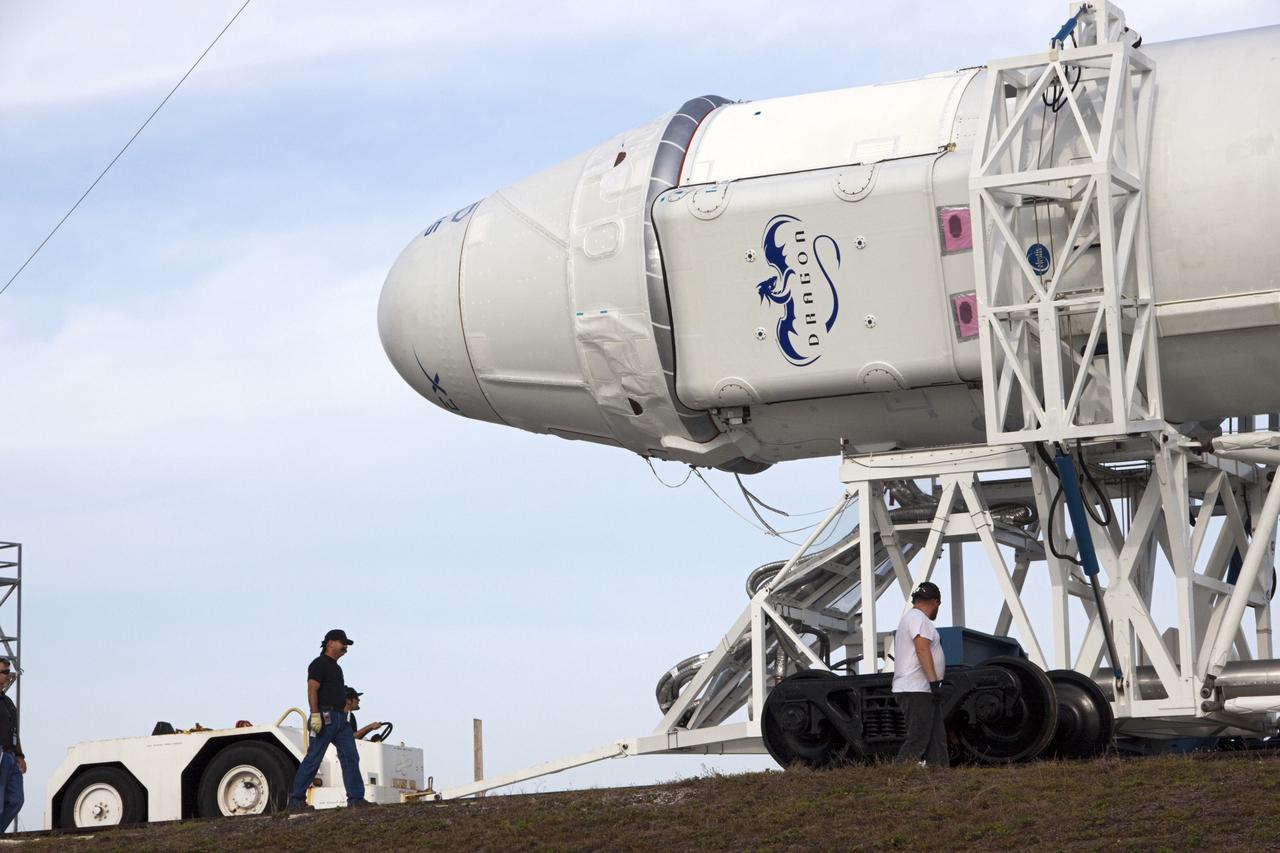
CAPE CANAVERAL, Fla. – As technicians monitor the progress of the transporter, the SpaceX Falcon 9 rocket with its Dragon spacecraft arrive at Space Launch Complex-40 on Cape Canaveral Air Force Station in Florida. Liftoff with the SpaceX Falcon 9 is set for 4:55 a.m. EDT on May 19. The launch will be the company's second demonstration test flight for NASA's Commercial Orbital Transportation Services Program, or COTS. During the flight, the capsule will conduct a series of check-out procedures to test and prove its systems, including rendezvous and berthing with the International Space Station. If the capsule performs as planned, the cargo and experiments it is carrying will be transferred to the station. The cargo includes food, water and provisions for the station’s Expedition crews, such as clothing, batteries and computer equipment. Under COTS, NASA has partnered with two aerospace companies to deliver cargo to the station. For more information, visit http://www.nasa.gov/spacex Photo credit: NASA/Jim Grossmann
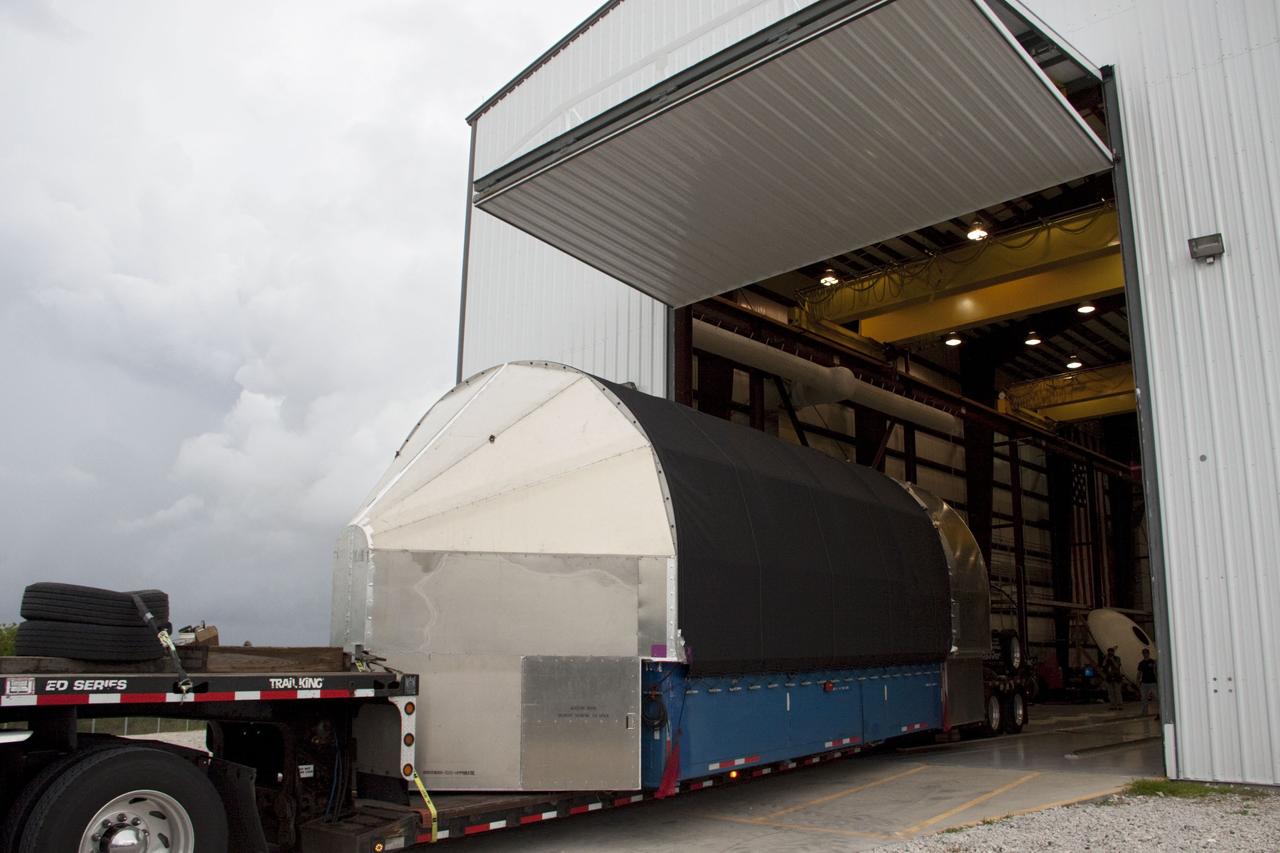
CAPE CANAVERAL, Fla. -- The second stage for the Space Exploration Technologies Corp., or SpaceX, Falcon 9 rocket is delivered to the SpaceX hangar at Pad 40 at Cape Canaveral Air Force Station in Florida. The Falcon 9 rocket will launch a second Dragon spacecraft, called Dragon C2, in late 2011. The mission will demonstrate proximity operations during an approach within six miles of the International Space Station. The company is building the Dragon to fly on resupply missions to the station. SpaceX was awarded procurement for three demonstration flights under the Commercial Orbital Transportation Services, or COTS, program managed by NASA's Johnson Space Center in Houston. The SpaceX contract provides for 12 missions to resupply the station from 2011 through 2015. Photo credit: NASA/Jim Grossmann

CAPE CANAVERAL, Fla. -- The second stage for the Space Exploration Technologies Corp., or SpaceX, Falcon 9 rocket is delivered to the SpaceX hangar at Pad 40 at Cape Canaveral Air Force Station in Florida. The Falcon 9 rocket will launch a second Dragon spacecraft, called Dragon C2, in late 2011. The mission will demonstrate proximity operations during an approach within six miles of the International Space Station. The company is building the Dragon to fly on resupply missions to the station. SpaceX was awarded procurement for three demonstration flights under the Commercial Orbital Transportation Services, or COTS, program managed by NASA's Johnson Space Center in Houston. The SpaceX contract provides for 12 missions to resupply the station from 2011 through 2015. Photo credit: NASA/Jim Grossmann
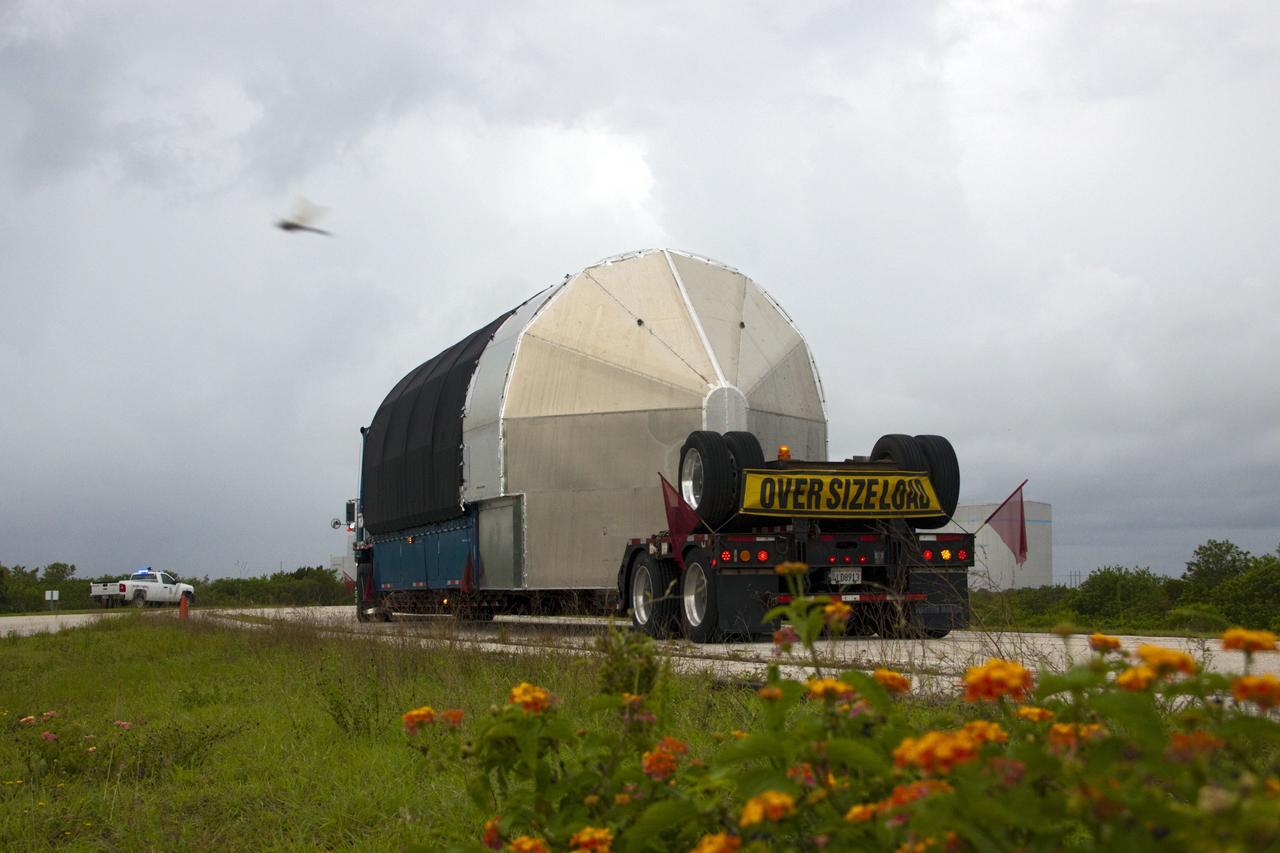
CAPE CANAVERAL, Fla. -- The second stage for the Space Exploration Technologies Corp., or SpaceX, Falcon 9 rocket is transported to the SpaceX hangar at Pad 40 at Cape Canaveral Air Force Station in Florida. The Falcon 9 rocket will launch a second Dragon spacecraft, called Dragon C2, in late 2011. The mission will demonstrate proximity operations during an approach within six miles of the International Space Station. The company is building the Dragon to fly on resupply missions to the station. SpaceX was awarded procurement for three demonstration flights under the Commercial Orbital Transportation Services, or COTS, program managed by NASA's Johnson Space Center in Houston. The SpaceX contract provides for 12 missions to resupply the station from 2011 through 2015. Photo credit: NASA/Jim Grossmann
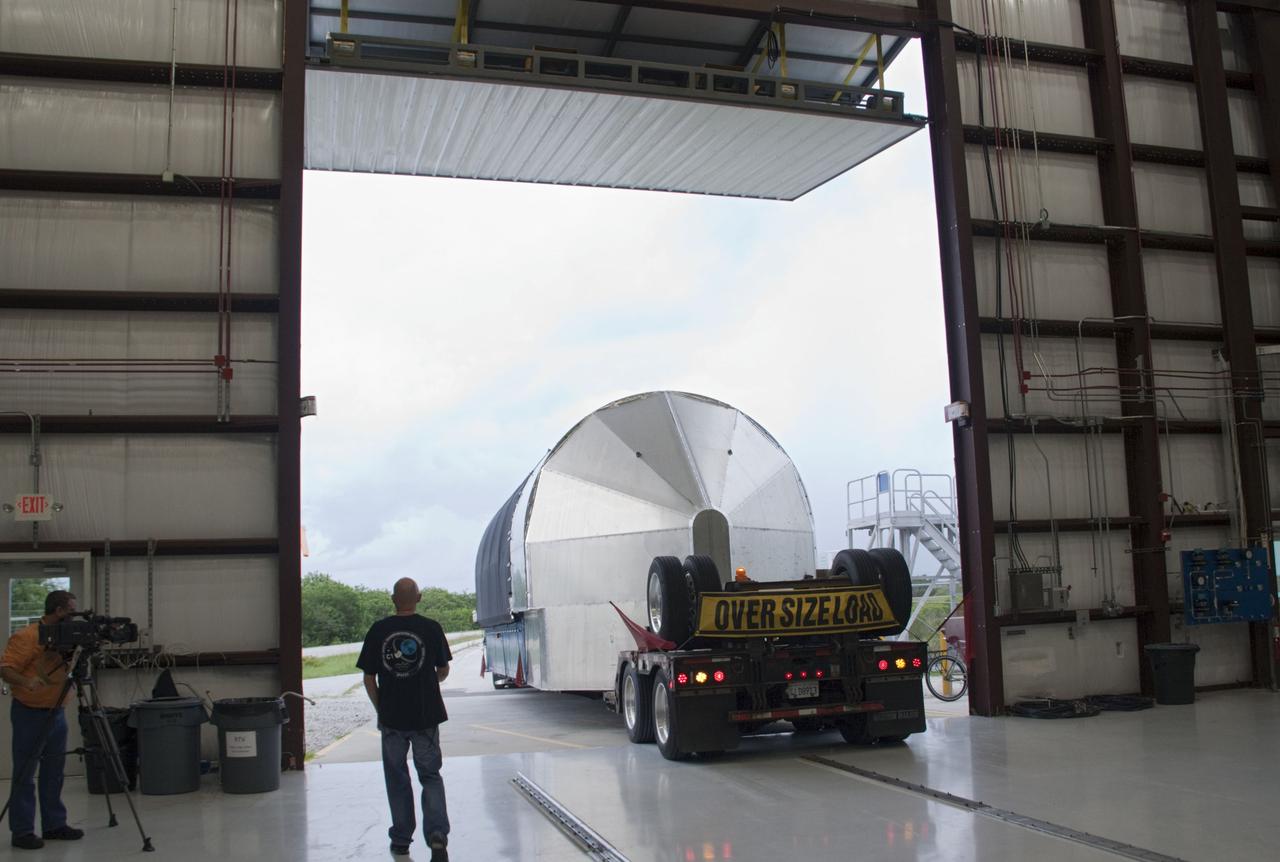
CAPE CANAVERAL, Fla. -- The second stage for the Space Exploration Technologies Corp., or SpaceX, Falcon 9 rocket is delivered to the SpaceX hangar at Pad 40 at Cape Canaveral Air Force Station in Florida. The Falcon 9 rocket will launch a second Dragon spacecraft, called Dragon C2, in late 2011. The mission will demonstrate proximity operations during an approach within six miles of the International Space Station. The company is building the Dragon to fly on resupply missions to the station. SpaceX was awarded procurement for three demonstration flights under the Commercial Orbital Transportation Services, or COTS, program managed by NASA's Johnson Space Center in Houston. The SpaceX contract provides for 12 missions to resupply the station from 2011 through 2015. Photo credit: NASA/Jim Grossmann
CAPE CANAVERAL, Fla. -- The second stage for the Space Exploration Technologies Corp., or SpaceX, Falcon 9 rocket is transported to the SpaceX hangar at Pad 40 at Cape Canaveral Air Force Station in Florida. The Falcon 9 rocket will launch a second Dragon spacecraft, called Dragon C2, in late 2011. The mission will demonstrate proximity operations during an approach within six miles of the International Space Station. The company is building the Dragon to fly on resupply missions to the station. SpaceX was awarded procurement for three demonstration flights under the Commercial Orbital Transportation Services, or COTS, program managed by NASA's Johnson Space Center in Houston. The SpaceX contract provides for 12 missions to resupply the station from 2011 through 2015. Photo credit: NASA/Jim Grossmann
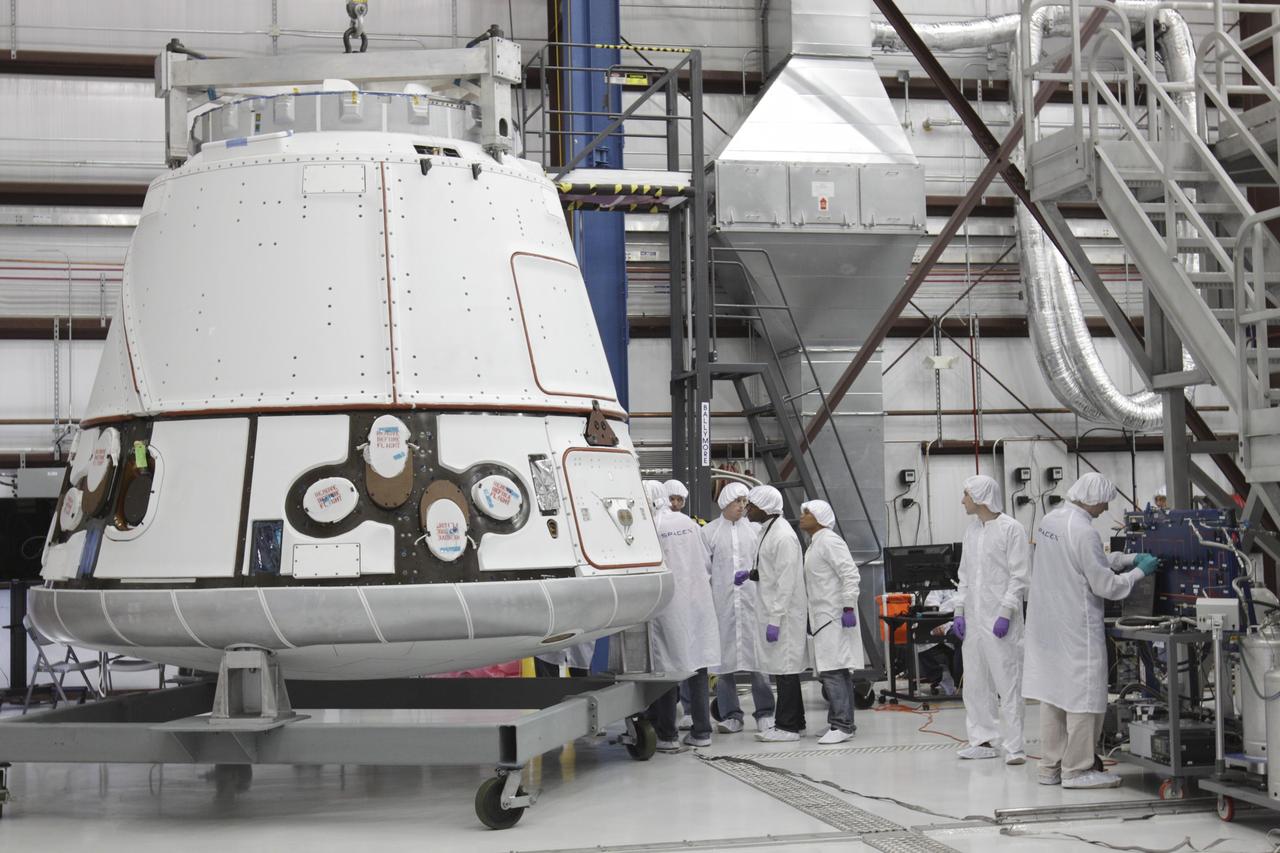
CAPE CANAVERAL, Fla. -- The Space Exploration Technologies Corp. (SpaceX) Dragon capsule is readied for lifting and placement to its cargo ring inside a processing hangar at Cape Canaveral Air Force Station in Florida on Nov. 16. Later, the combination will be attached to the top of a Falcon 9 rocket on Space Launch Complex-40 for the company's next demonstration test flight for NASA's Commercial Orbital Transportation Services (COTS) program. SpaceX is one of two companies under contract with NASA to take cargo to the International Space Station. NASA is working with SpaceX to combine its last two demonstration flights, and if approved, the Falcon 9 rocket would launch the Dragon capsule to the orbiting laboratory for a docking within the next several months. Photo credit: NASA/Kim Shiflett
CAPE CANAVERAL, Fla. -- The second stage for the Space Exploration Technologies Corp., or SpaceX, Falcon 9 rocket is delivered to the SpaceX hangar at Pad 40 at Cape Canaveral Air Force Station in Florida. The Falcon 9 rocket will launch a second Dragon spacecraft, called Dragon C2, in late 2011. The mission will demonstrate proximity operations during an approach within six miles of the International Space Station. The company is building the Dragon to fly on resupply missions to the station. SpaceX was awarded procurement for three demonstration flights under the Commercial Orbital Transportation Services, or COTS, program managed by NASA's Johnson Space Center in Houston. The SpaceX contract provides for 12 missions to resupply the station from 2011 through 2015. Photo credit: NASA/Jim Grossmann
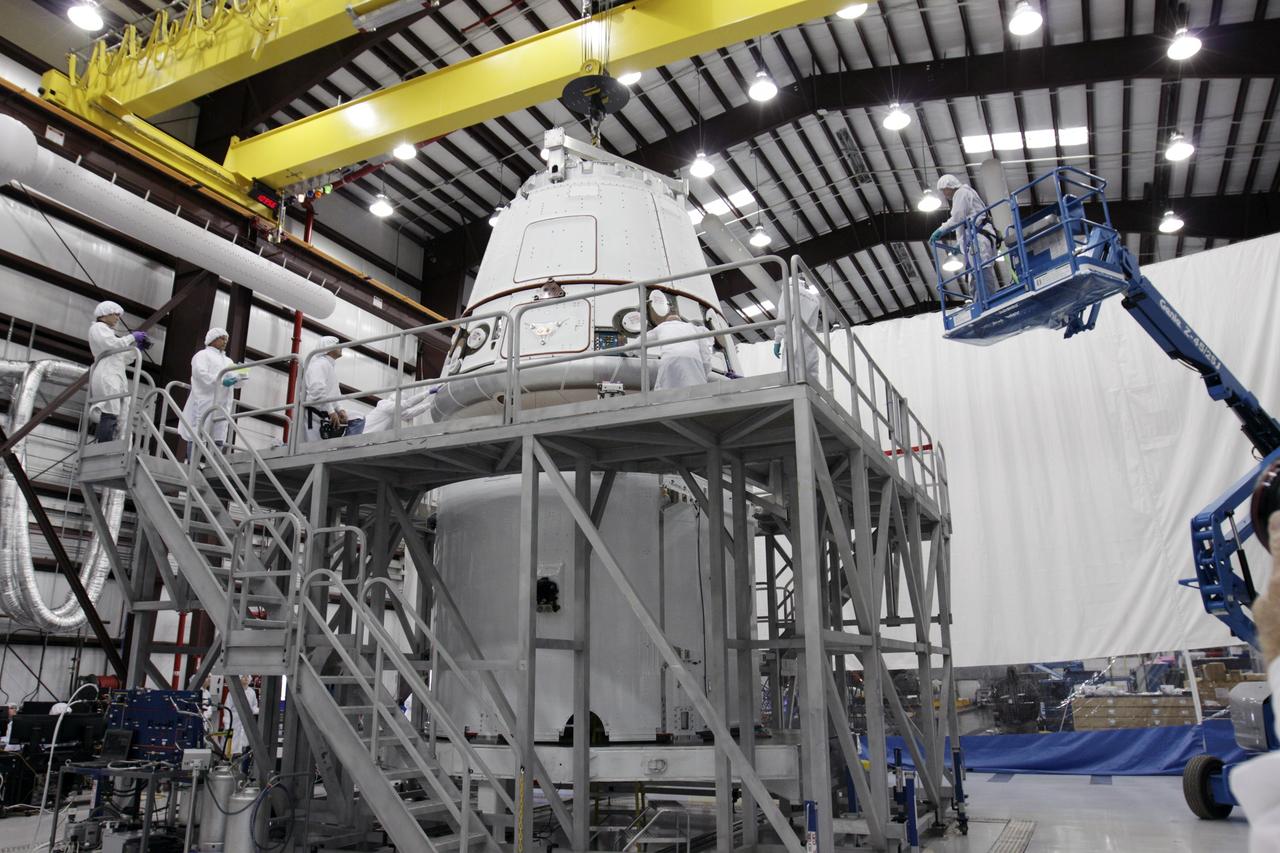
CAPE CANAVERAL, Fla. -- The Space Exploration Technologies Corp. (SpaceX) Dragon capsule is placed atop its cargo ring inside a processing hangar at Cape Canaveral Air Force Station in Florida on Nov. 16. Later, the combination will be attached to the top of a Falcon 9 rocket on Space Launch Complex-40 for the company's next demonstration test flight for NASA's Commercial Orbital Transportation Services (COTS) program. SpaceX is one of two companies under contract with NASA to take cargo to the International Space Station. NASA is working with SpaceX to combine its last two demonstration flights, and if approved, the Falcon 9 rocket would launch the Dragon capsule to the orbiting laboratory for a docking within the next several months. Photo credit: NASA/Kim Shiflett
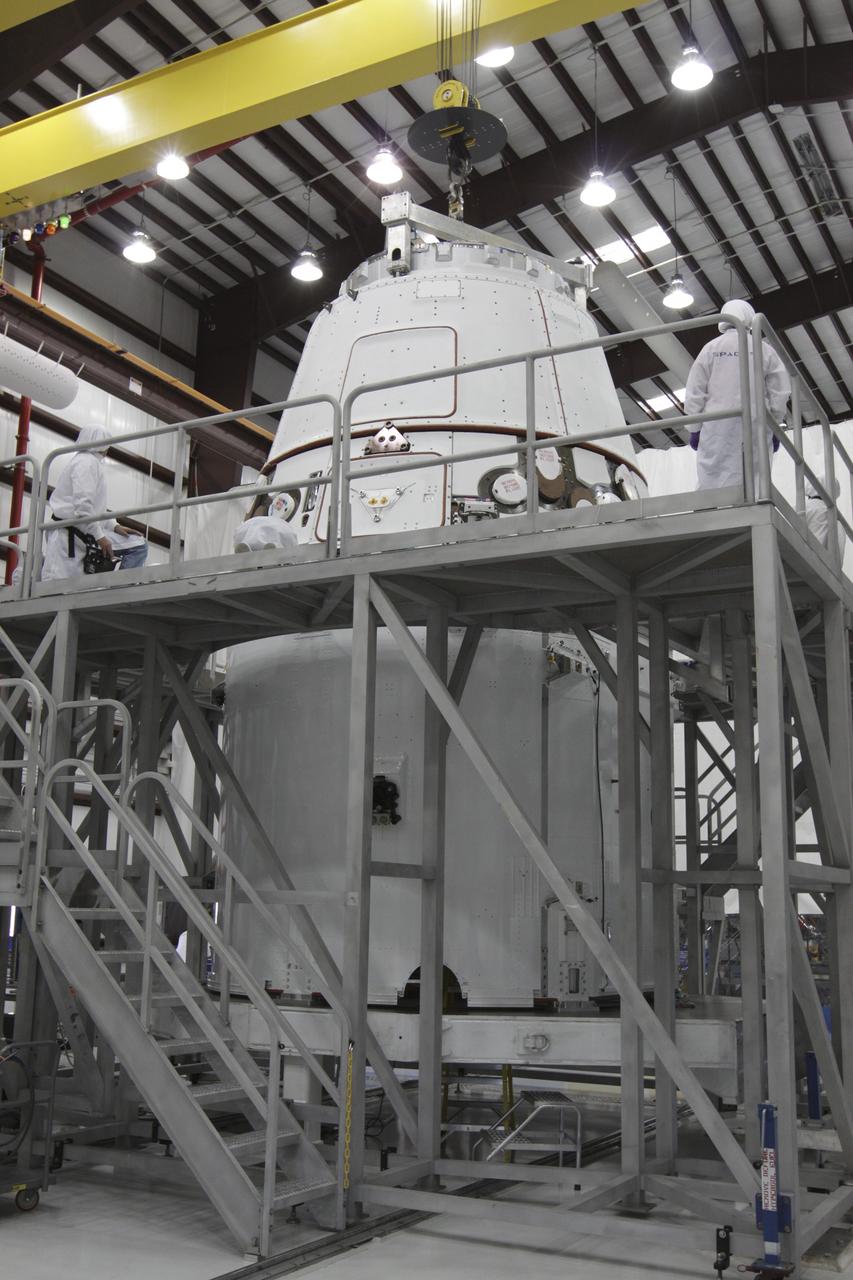
CAPE CANAVERAL, Fla. -- The Space Exploration Technologies Corp. (SpaceX) Dragon capsule is placed atop its cargo ring inside a processing hangar at Cape Canaveral Air Force Station in Florida on Nov. 16. Later, the combination will be attached to the top of a Falcon 9 rocket on Space Launch Complex-40 for the company's next demonstration test flight for NASA's Commercial Orbital Transportation Services (COTS) program. SpaceX is one of two companies under contract with NASA to take cargo to the International Space Station. NASA is working with SpaceX to combine its last two demonstration flights, and if approved, the Falcon 9 rocket would launch the Dragon capsule to the orbiting laboratory for a docking within the next several months. Photo credit: NASA/Kim Shiflett
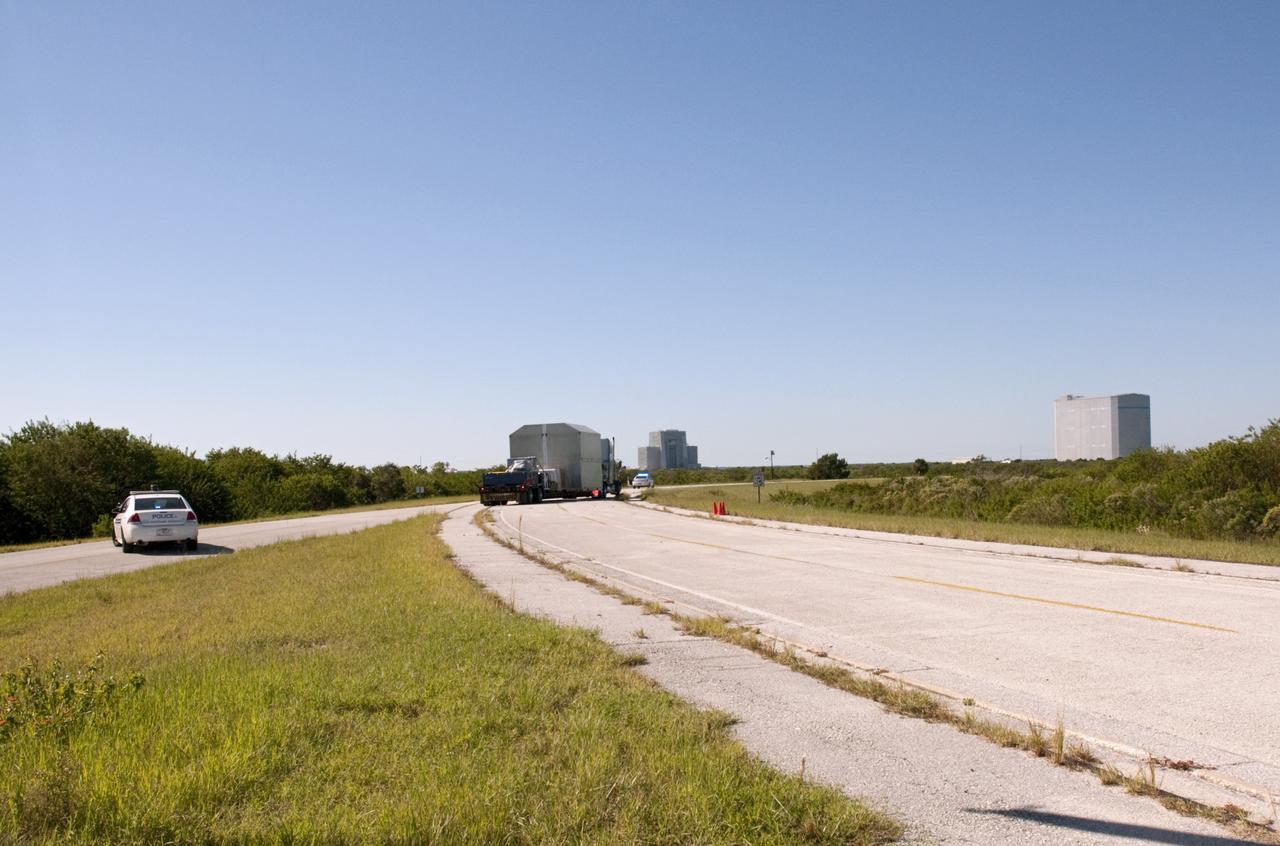
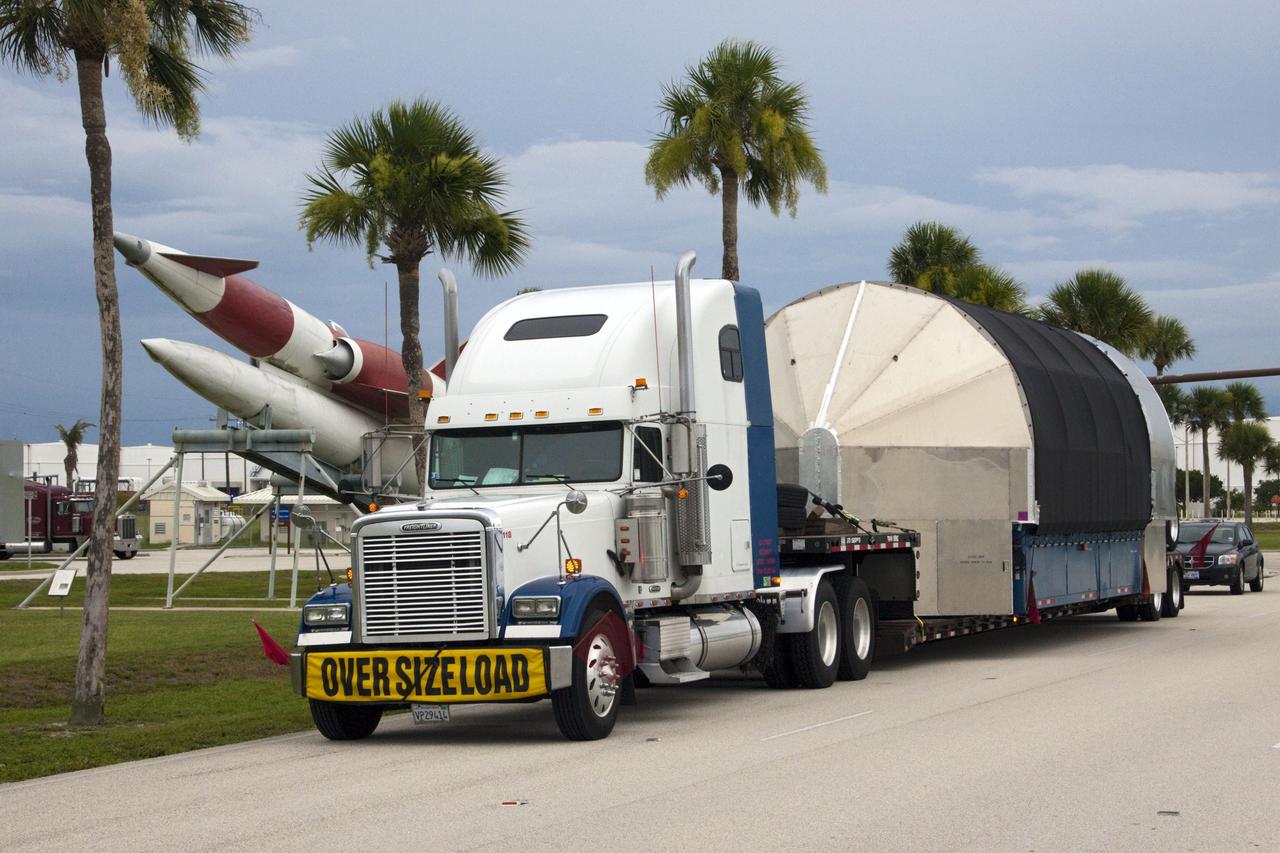
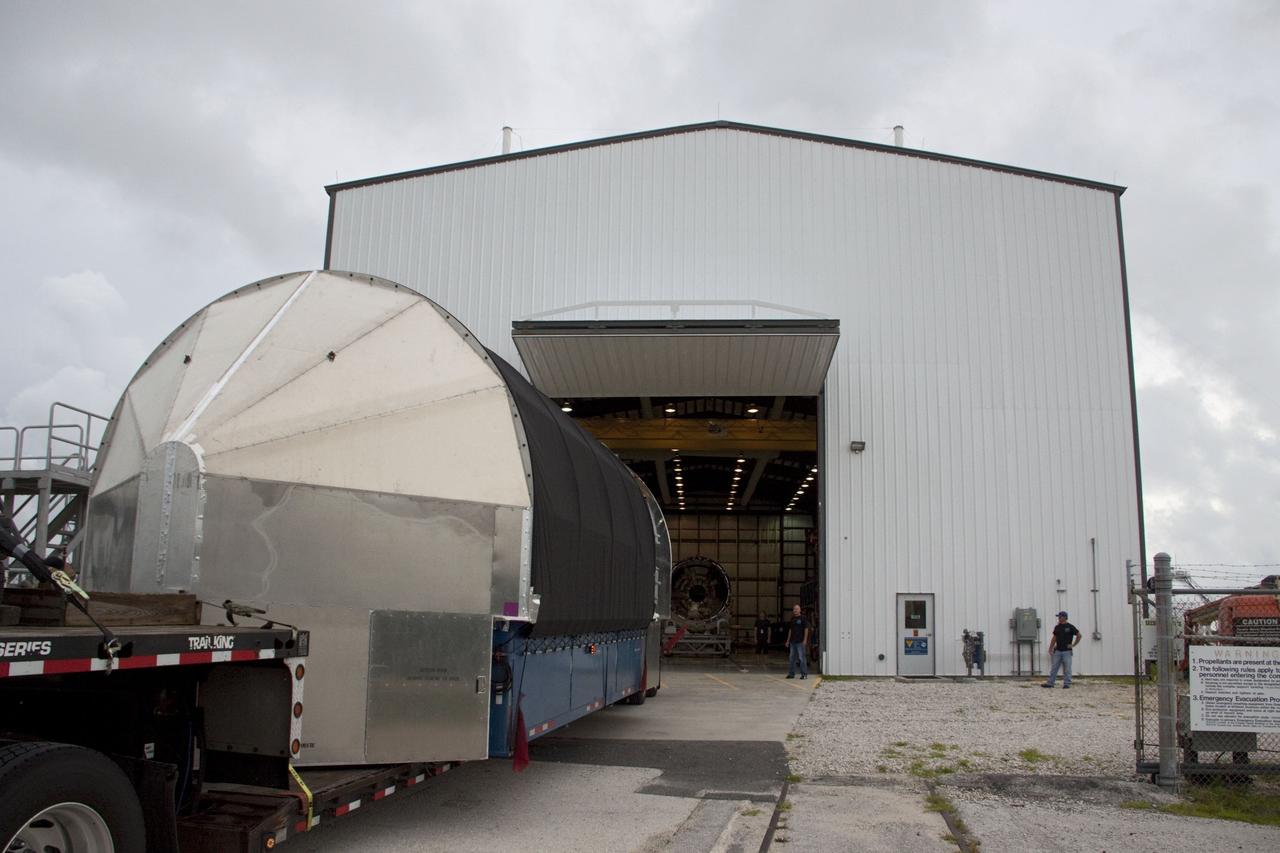
A truck brings the latest Space Exploration Technologies Corp. (SpaceX) Dragon capsule to Cape Canaveral Air Force Station in Florida on Oct. 23 so it can be processed and attached to the top of a Falcon 9 rocket on Space Launch Complex-40 for the company's next demonstration test flight for NASA's Commercial Orbital Transportation Services (COTS) program. SpaceX is one of two companies under contract with NASA to take cargo to the International Space Station. NASA is working with SpaceX to combine its last two demonstration flights, and if approved, the Falcon 9 rocket would launch the Dragon capsule to the orbiting laboratory for a docking within the next several months. Photo credit: NASA/ Charisse Nahser
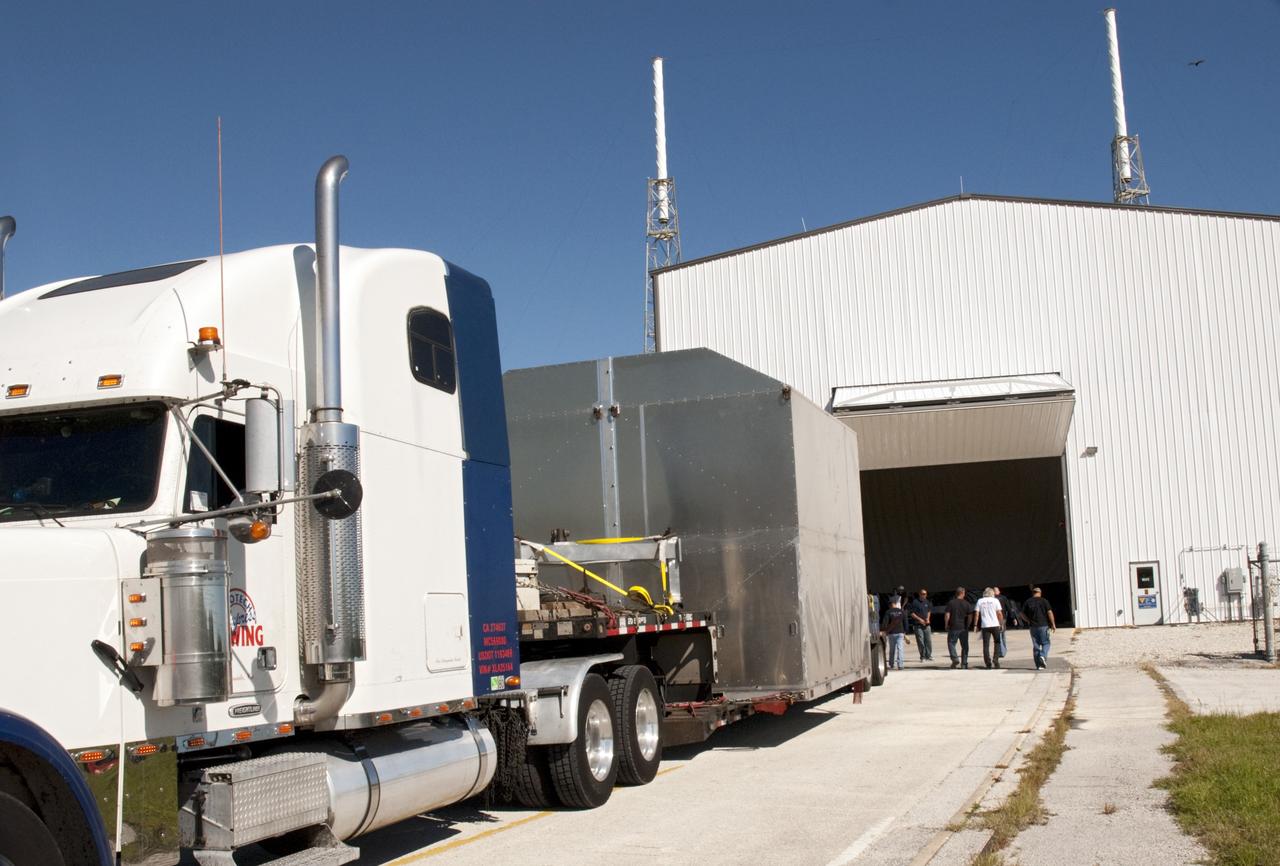
A truck carries the latest Space Exploration Technologies Corp. (SpaceX) Dragon capsule to Cape Canaveral Air Force Station in Florida on Oct. 23 so it can be processed and attached to the top of a Falcon 9 rocket on Space Launch Complex-40 for the company's next demonstration test flight for NASA's Commercial Orbital Transportation Services (COTS) program. SpaceX is one of two companies under contract with NASA to take cargo to the International Space Station. NASA is working with SpaceX to combine its last two demonstration flights, and if approved, the Falcon 9 rocket would launch the Dragon capsule to the orbiting laboratory for a docking within the next several months. Photo credit: NASA/ Charisse Nahser
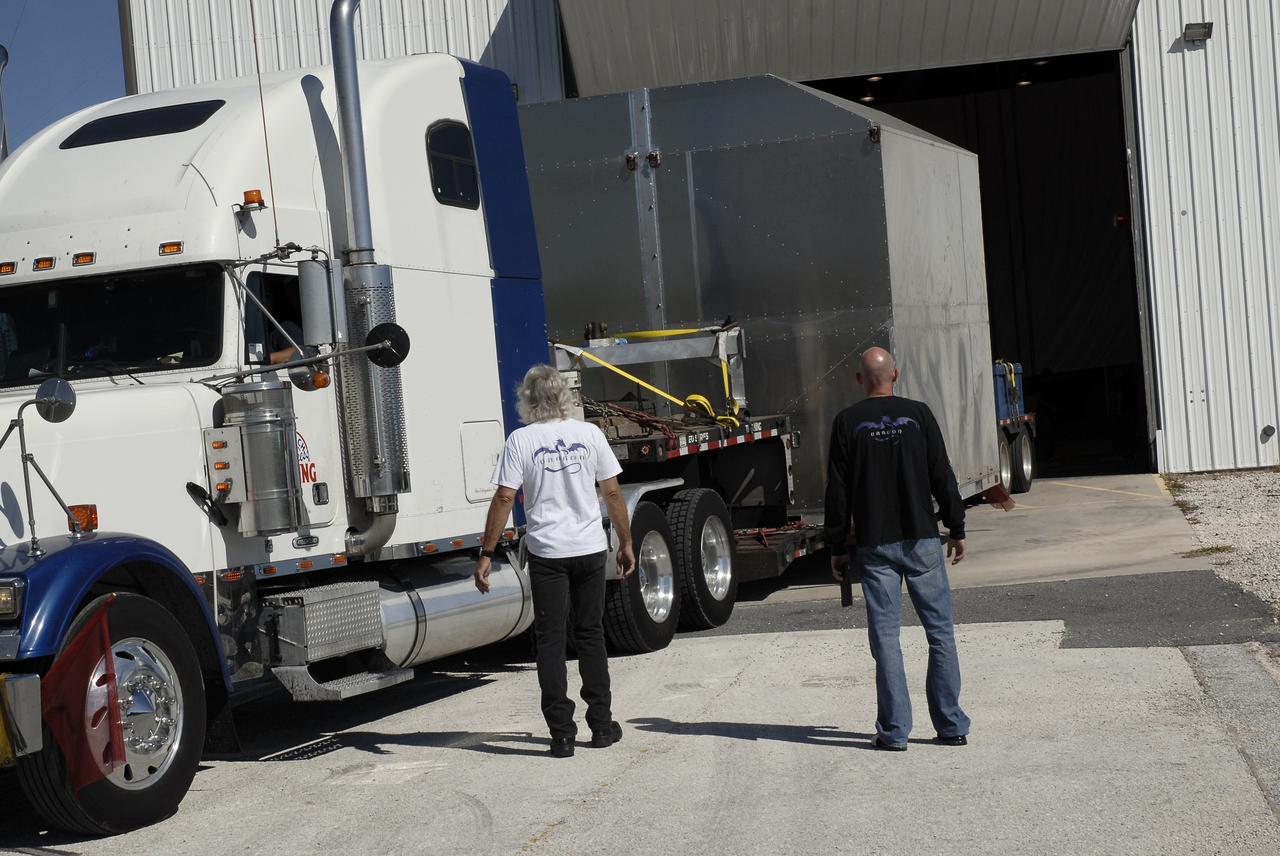
A truck carries the latest Space Exploration Technologies Corp. (SpaceX) Dragon capsule to Cape Canaveral Air Force Station in Florida on Oct. 23 so it can be processed and attached to the top of a Falcon 9 rocket on Space Launch Complex-40 for the company's next demonstration test flight for NASA's Commercial Orbital Transportation Services (COTS) program. SpaceX is one of two companies under contract with NASA to take cargo to the International Space Station. NASA is working with SpaceX to combine its last two demonstration flights, and if approved, the Falcon 9 rocket would launch the Dragon capsule to the orbiting laboratory for a docking within the next several months. Photo credit: NASA/ Charisse Nahser
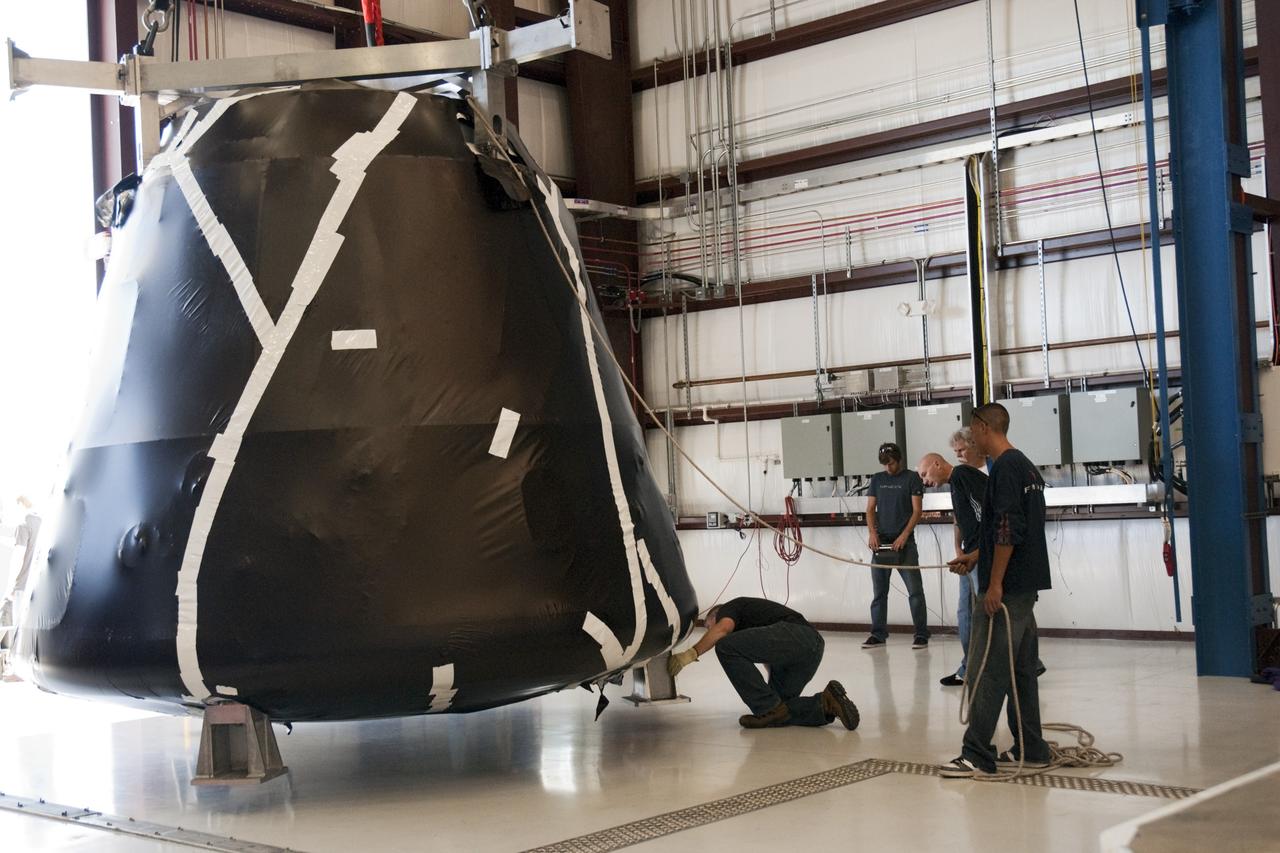
Workers lower the latest Space Exploration Technologies Corp. (SpaceX) Dragon capsule at Cape Canaveral Air Force Station in Florida on Oct. 23 so it can be processed and attached to the top of a Falcon 9 rocket on Space Launch Complex-40 for the company's next demonstration test flight for NASA's Commercial Orbital Transportation Services (COTS) program. SpaceX is one of two companies under contract with NASA to take cargo to the International Space Station. NASA is working with SpaceX to combine its last two demonstration flights, and if approved, the Falcon 9 rocket would launch the Dragon capsule to the orbiting laboratory for a docking within the next several months. Photo credit: NASA/ Charisse Nahser
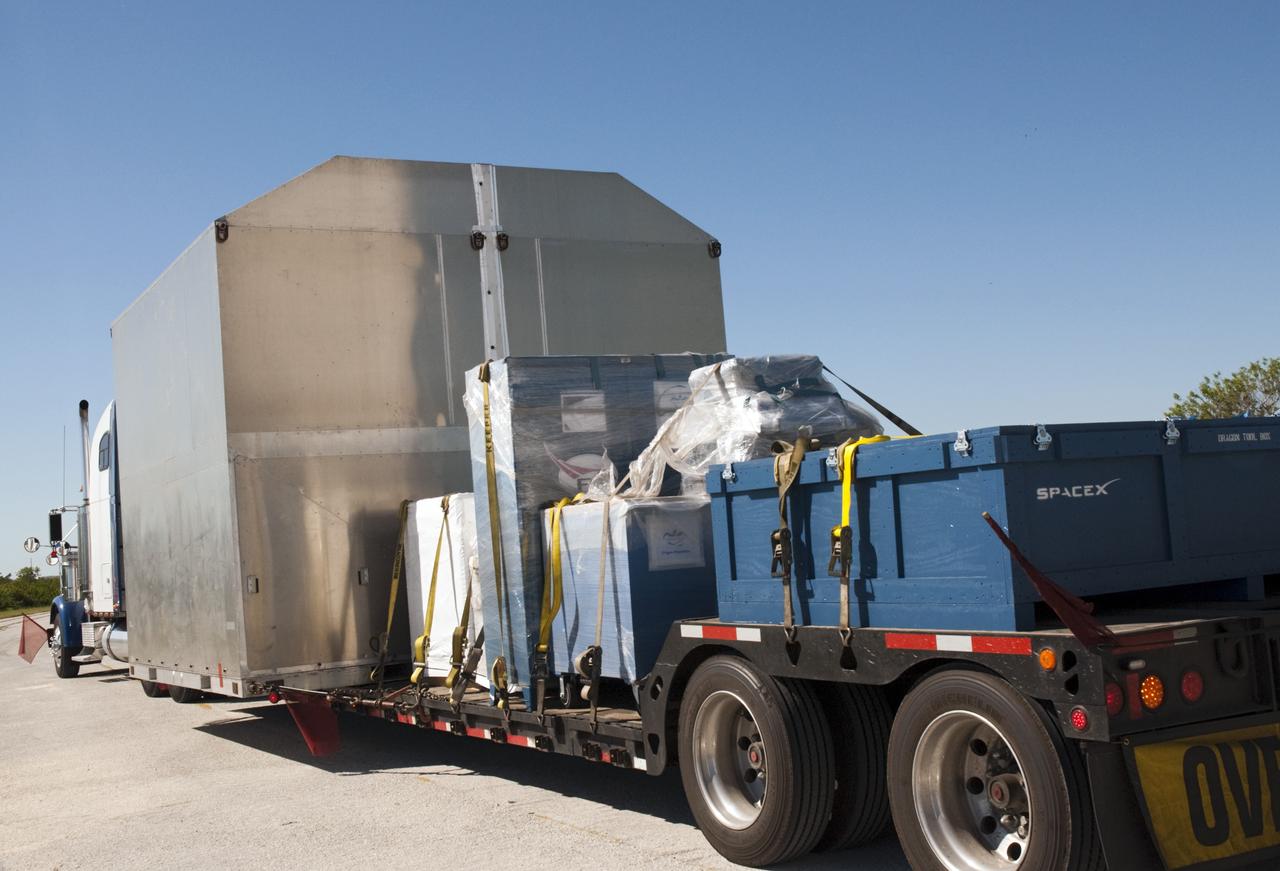
A truck carries the latest Space Exploration Technologies Corp. (SpaceX) Dragon capsule to Cape Canaveral Air Force Station in Florida on Oct. 23 so it can be processed and attached to the top of a Falcon 9 rocket on Space Launch Complex-40 for the company's next demonstration test flight for NASA's Commercial Orbital Transportation Services (COTS) program. SpaceX is one of two companies under contract with NASA to take cargo to the International Space Station. NASA is working with SpaceX to combine its last two demonstration flights, and if approved, the Falcon 9 rocket would launch the Dragon capsule to the orbiting laboratory for a docking within the next several months. Photo credit: NASA/ Charisse Nahser

The SpaceX Falcon 9 first stage booster that will launch NASA’s SpaceX Crew-1 mission arrived in Florida Tuesday, July 14, 2020. The rocket was shipped from the SpaceX facility in McGregor, Texas, and will now undergo prelaunch processing in the company’s facility on nearby Cape Canaveral Air Force Station.
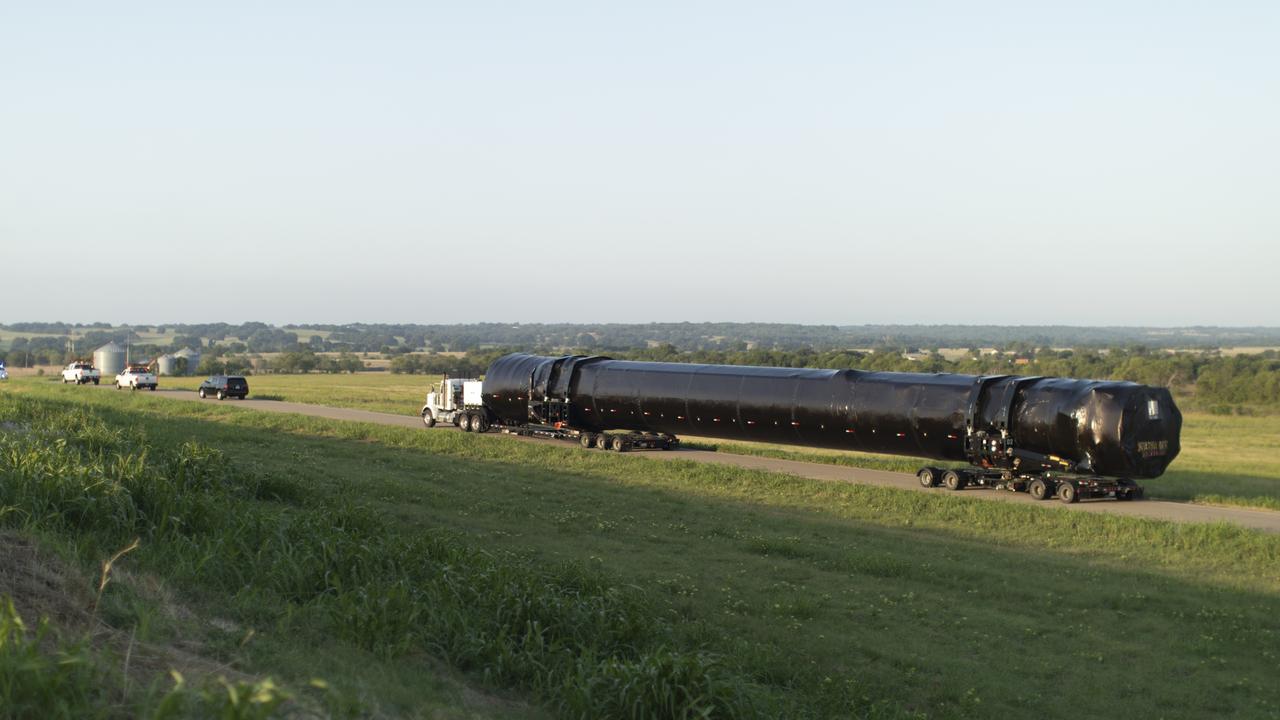
The SpaceX Falcon 9 first stage booster that will launch NASA’s SpaceX Crew-1 mission arrived in Florida Tuesday, July 14, 2020. The rocket was shipped from the SpaceX facility in McGregor, Texas, and will now undergo prelaunch processing in the company’s facility on nearby Cape Canaveral Air Force Station.
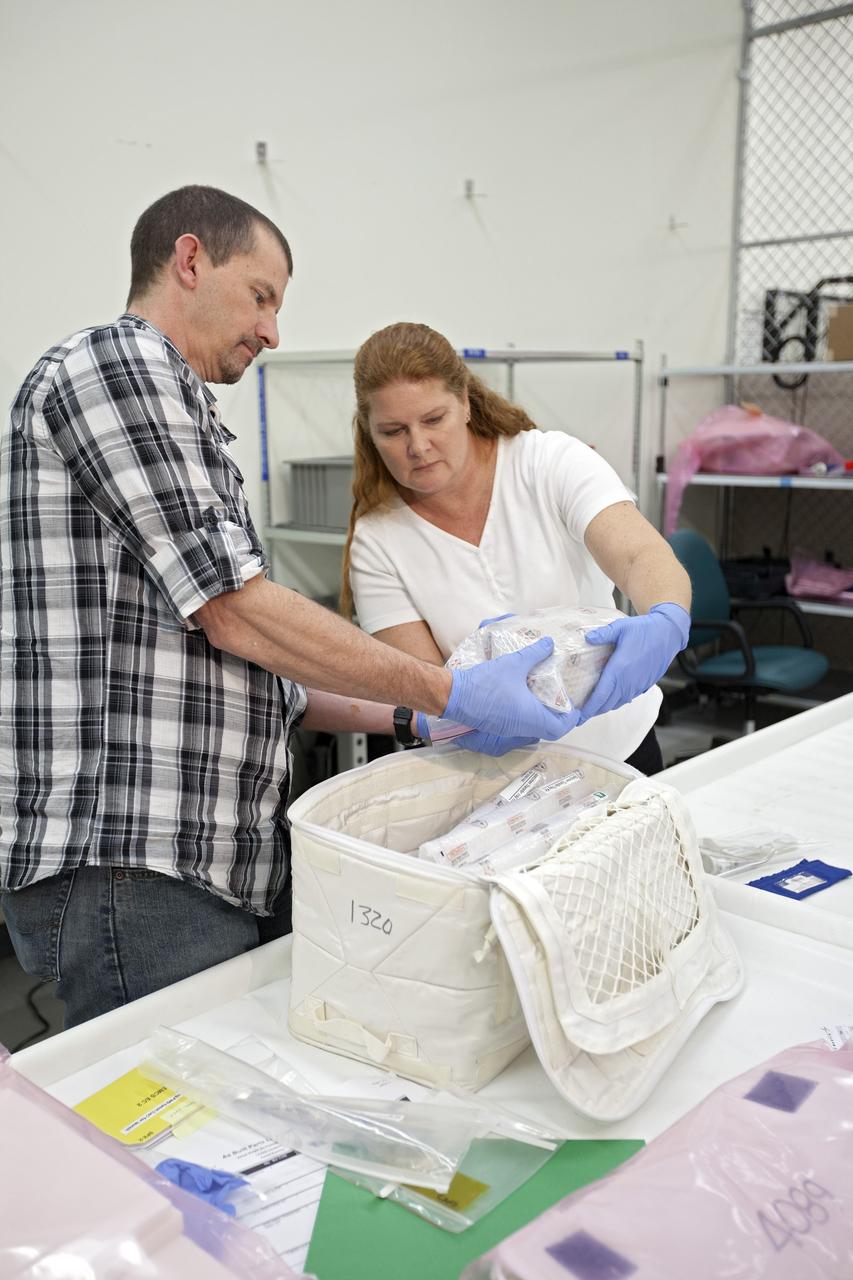
CAPE CANAVERAL, Fla. - In the Space Station Processing Facility at NASA's Kennedy Space Center in Florida, engineers prepare experiments for loading aboard the SpaceX Dragon capsule for launch to the International Space Station. Once the packaging is complete, the samples will be transported to Space Launch Complex-40 on Cape Canaveral Air Force Station where they will be loaded aboard the Dragon. Scheduled for launch March 1 atop a Falcon 9 rocket, Dragon will be making its third trip to the space station. The mission is the second of 12 SpaceX flights contracted by NASA to resupply the orbiting laboratory. For more information, visit http://www.nasa.gov/mission_pages/station/structure/launch/spacex2-feature.html Photo credit: NASA/Kim Shiflett
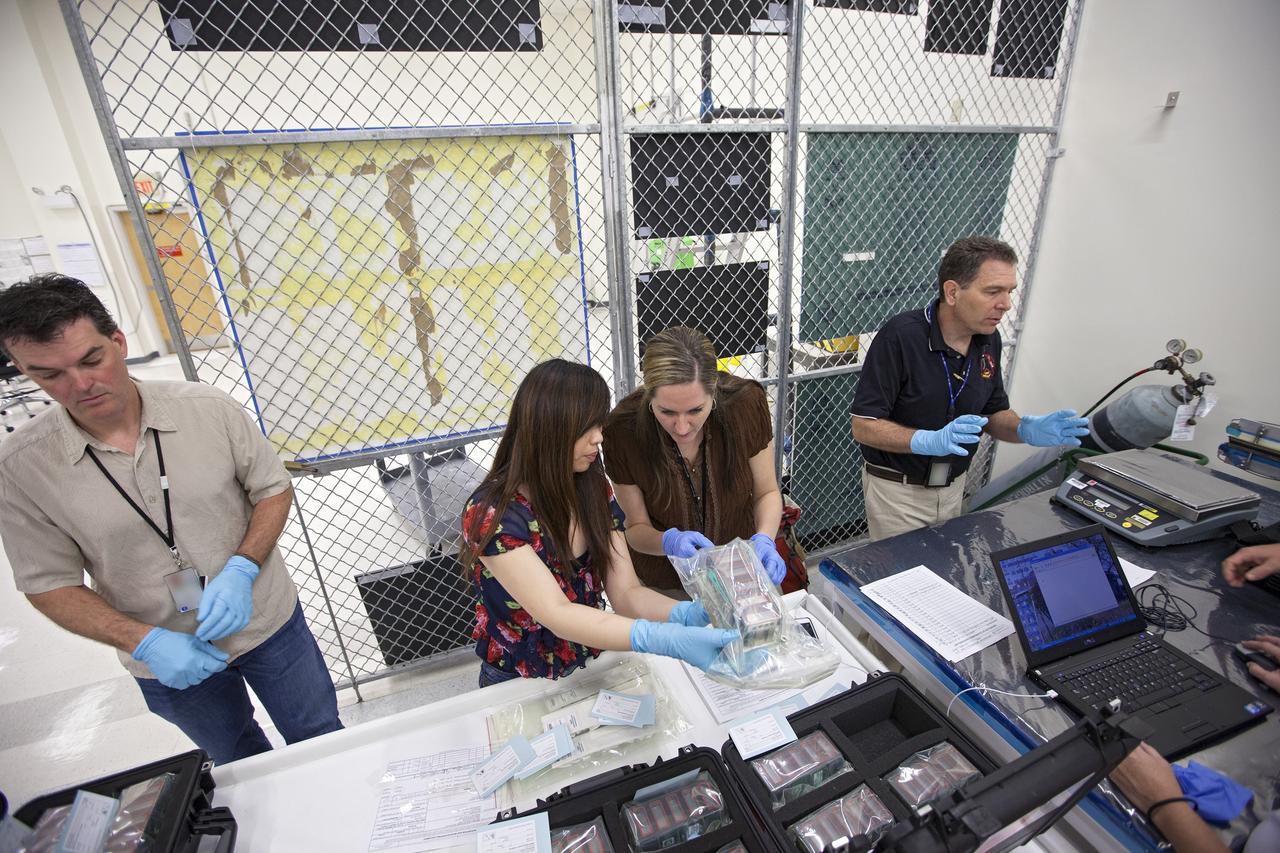
CAPE CANAVERAL, Fla. - In the Space Station Processing Facility at NASA's Kennedy Space Center in Florida, engineers prepare experiments for loading aboard the SpaceX Dragon capsule for launch to the International Space Station. Once the packaging is complete, the samples will be transported to Space Launch Complex-40 on Cape Canaveral Air Force Station where they will be loaded aboard the Dragon. Scheduled for launch March 1 atop a Falcon 9 rocket, Dragon will be making its third trip to the space station. The mission is the second of 12 SpaceX flights contracted by NASA to resupply the orbiting laboratory. For more information, visit http://www.nasa.gov/mission_pages/station/structure/launch/spacex2-feature.html Photo credit: NASA/Kim Shiflett
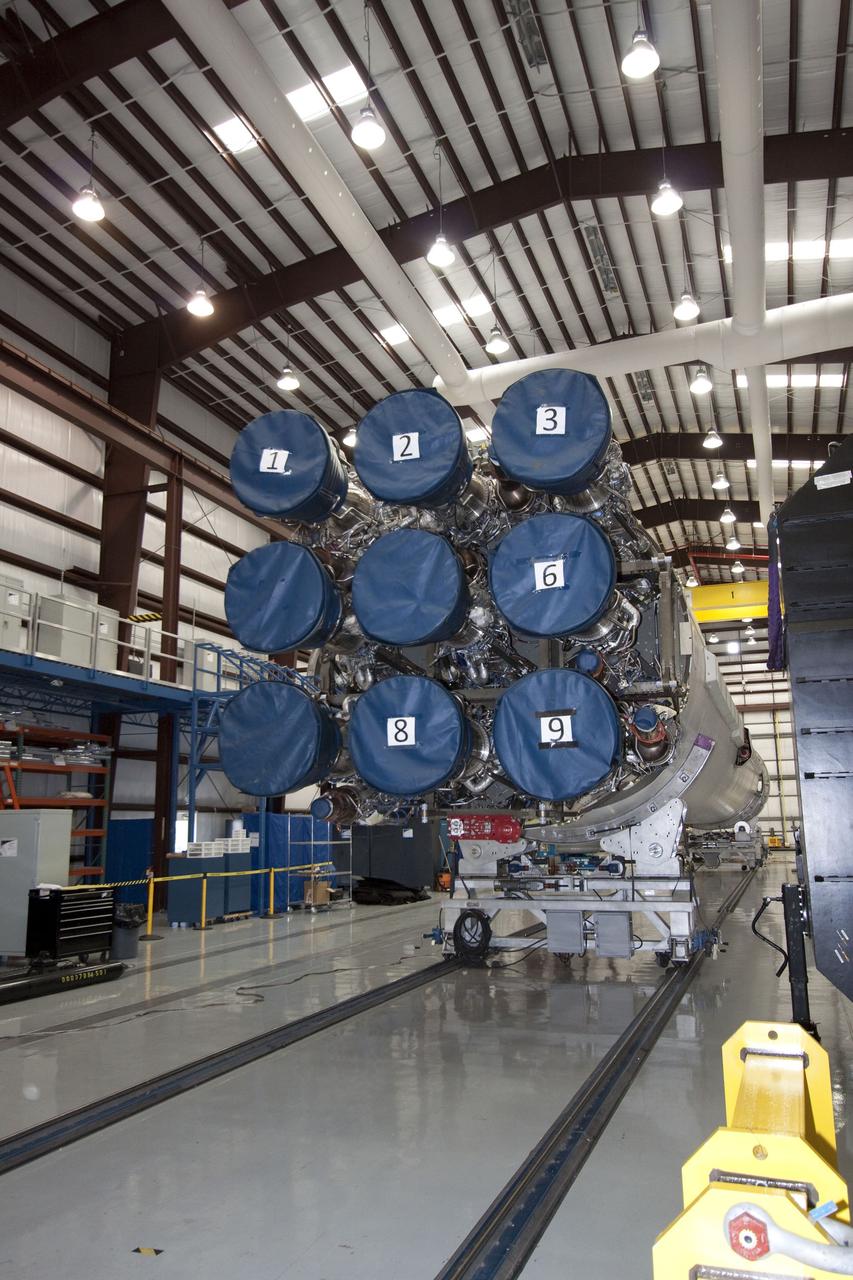
CAPE CANAVERAL, Fla. -- The first stage of a Falcon 9 built by Space Exploration Technologies (SpaceX) sits on processing stands inside the company's hangar at Launch Complex 40 at Cape Canaveral Air Force Station in Florida. This image shows the nine Merlin engines that power the first stage. Technicians are preparing the rocket for the second launch in the Commercial Orbital Transportation Services, or COTS, program to demonstrate private companies' ability to launch uncrewed spacecraft into orbit. A follow-on contract, Commercial Resupply Services, calls for SpaceX to launch 12 resupply missions to the International Space Station between 2011 and 2015. Photo credit: NASA/Jack Pfaller
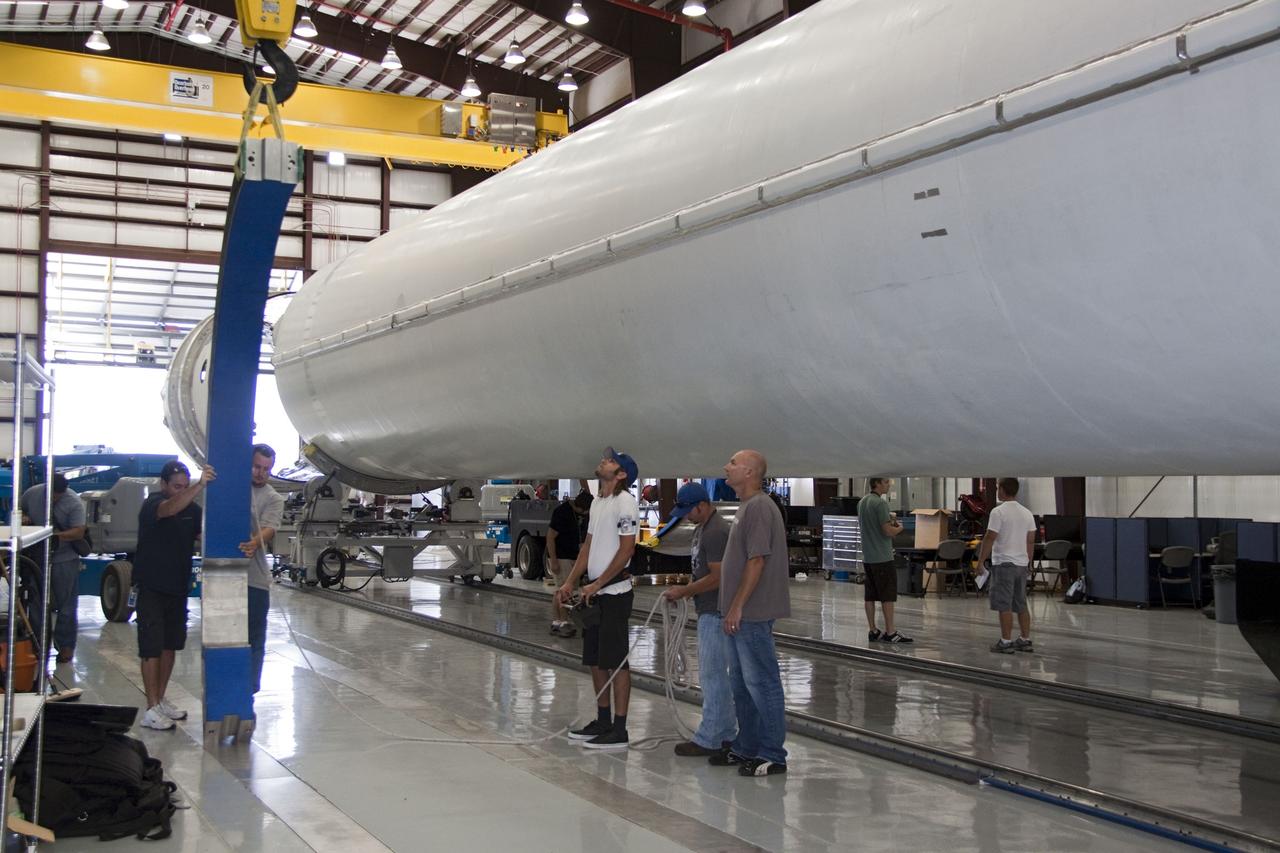
CAPE CANAVERAL, Fla. -- Technicians work with processing hardware for the Falcon 9 rocket in the Space Exploration Technologies (SpaceX) hangar at Launch Complex 40 at Cape Canaveral Air Force Station in Florida. Technicians are preparing the rocket for the second launch in the Commercial Orbital Transportation Services, or COTS, program to demonstrate private companies' ability to launch uncrewed spacecraft into orbit. A follow-on contract, Commercial Resupply Services, calls for SpaceX to launch 12 resupply missions to the International Space Station between 2011 and 2015. Photo credit: NASA/Jack Pfaller
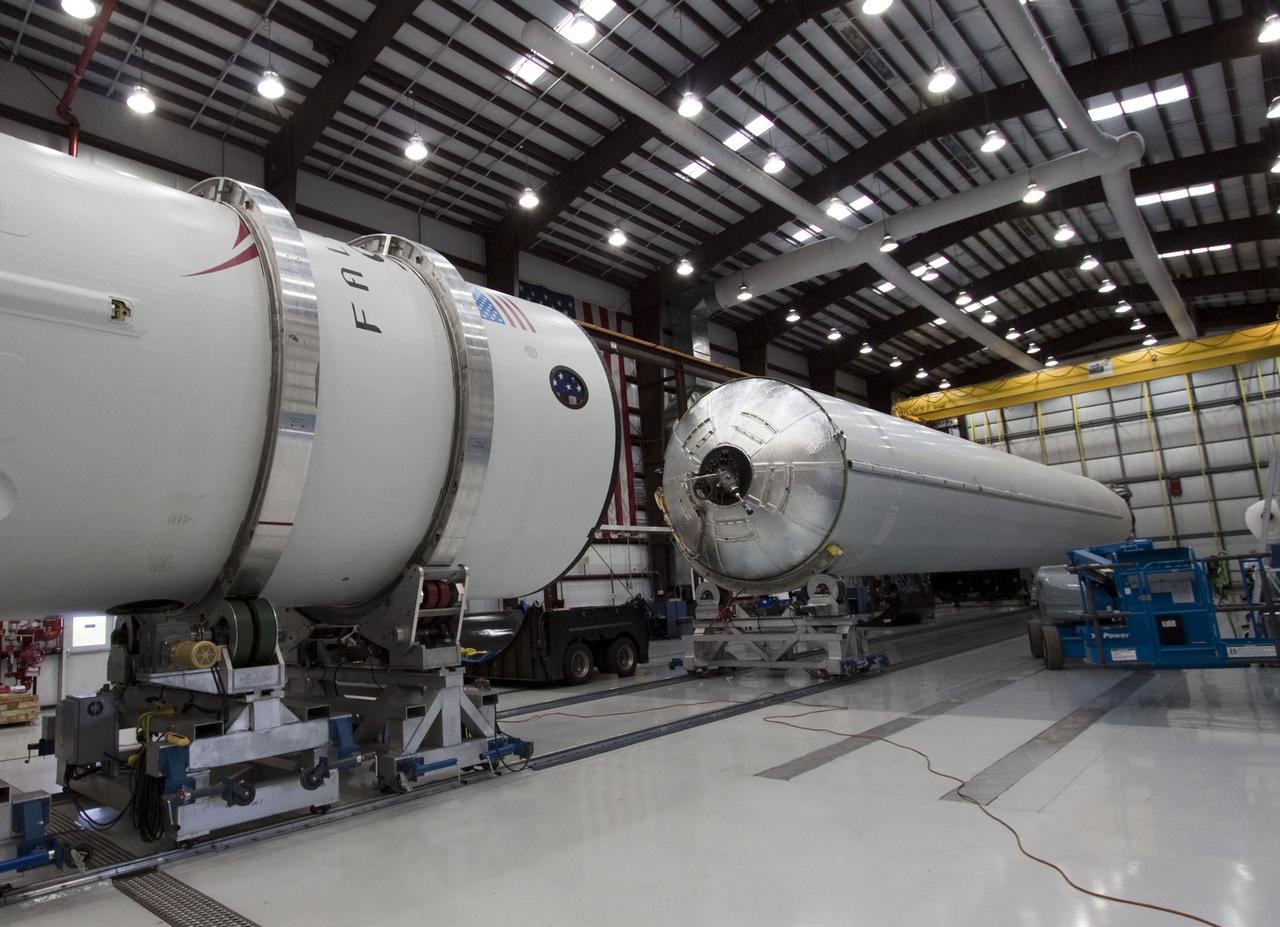
CAPE CANAVERAL, Fla. -- The first stage and interstage components of a Falcon 9 rocket sit on adjacent processing stands in the Space Exploration Technologies (SpaceX) hangar at Launch Complex 40 at Cape Canaveral Air Force Station in Florida. Technicians are preparing the rocket for the second launch in the Commercial Orbital Transportation Services, or COTS, program to demonstrate private companies' ability to launch uncrewed spacecraft into orbit. A follow-on contract, Commercial Resupply Services, calls for SpaceX to launch 12 resupply missions to the International Space Station between 2011 and 2015. Photo credit: NASA/Jack Pfaller
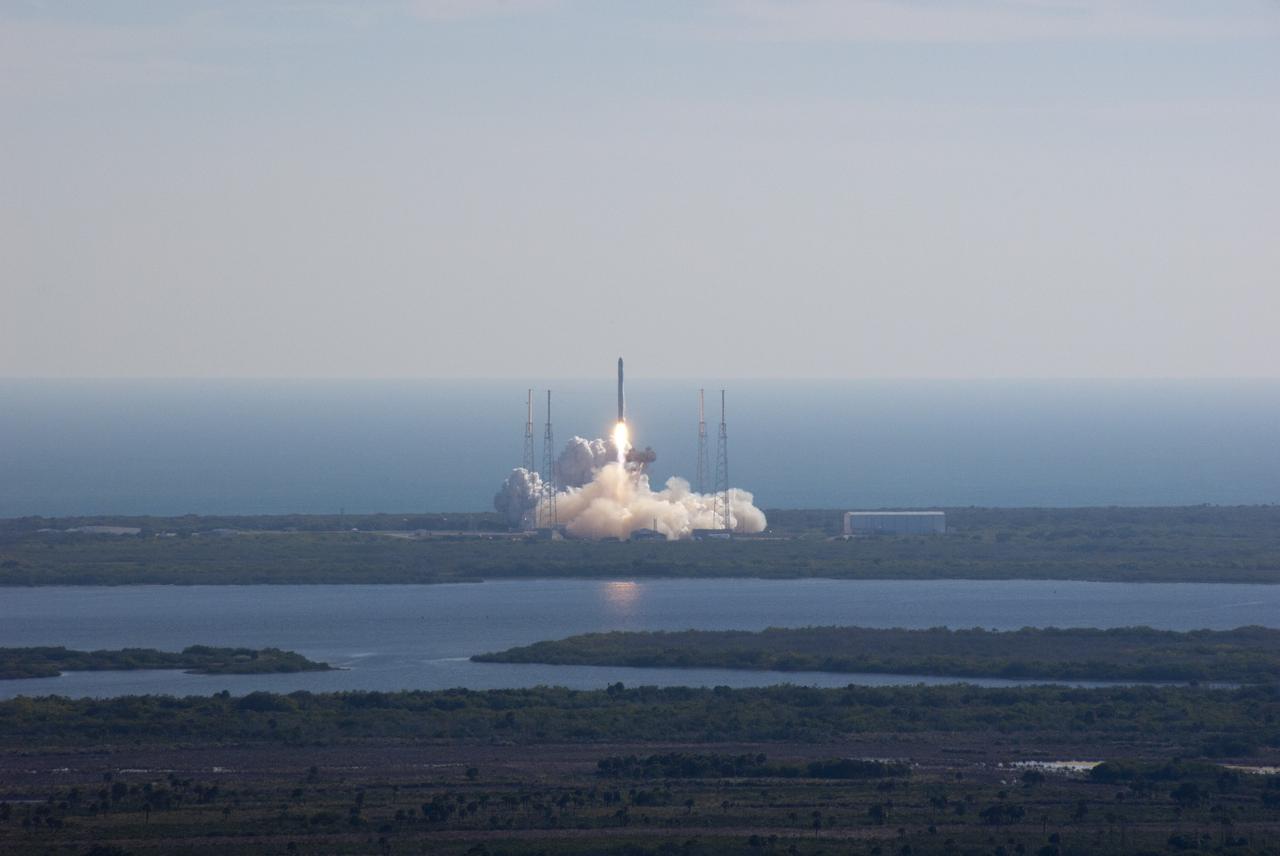
CAPE CANAVERAL, Fla. -- SpaceX’s Falcon 9 rocket and Dragon spacecraft lift off from Launch Complex 40 at Cape Canaveral Air Force Station at 10:43 a.m. EST. SpaceX was awarded procurement for three demonstration flights under the Commercial Orbital Transportation Services, or COTS, program managed by NASA's Johnson Space Center in Houston. A subsequent contract for Commercial Resupply Services, or CRS, was awarded in late 2008 to resupply the International Space Station. The SpaceX CRS contract provides for 12 missions to resupply the station from 2011 through 2015. Photo credit: NASA/Alan Ault
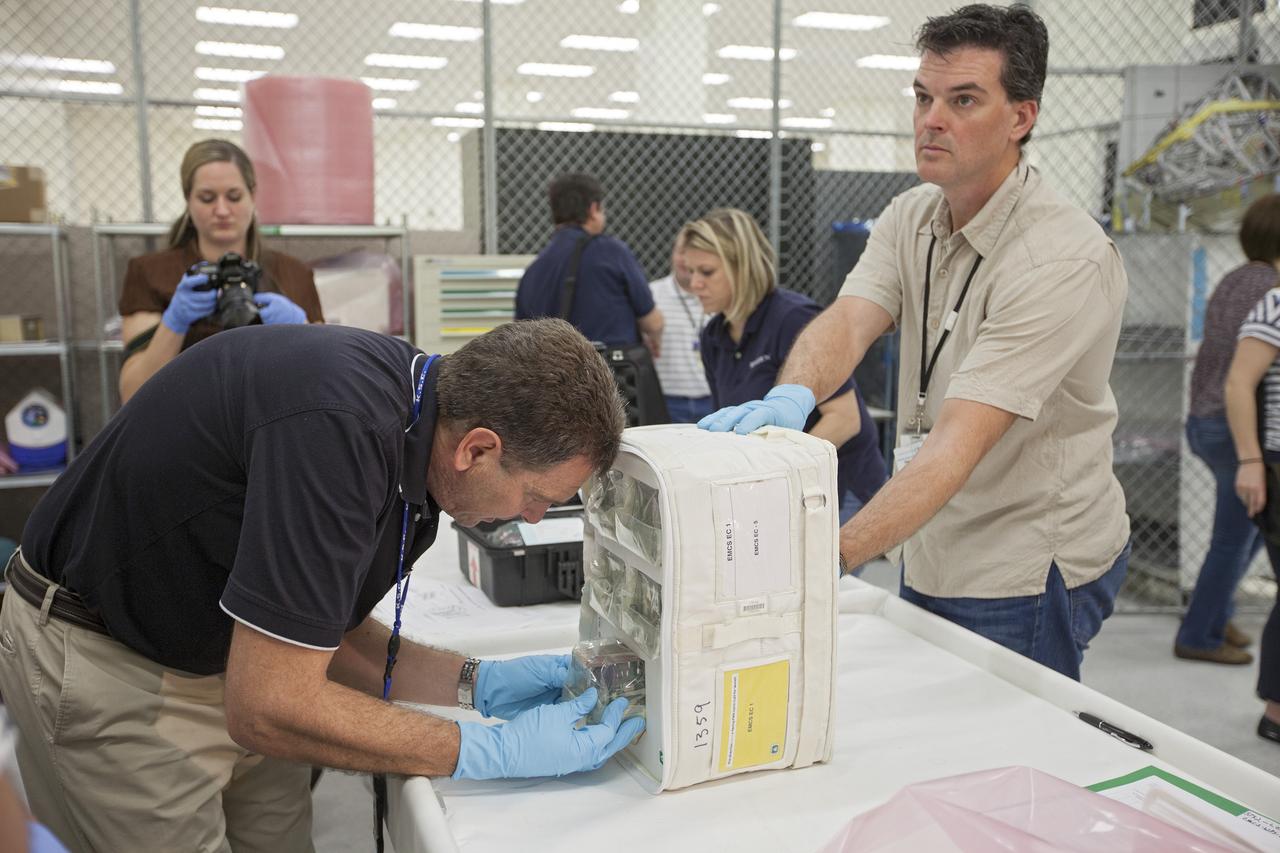
CAPE CANAVERAL, Fla. - In the Space Station Processing Facility at NASA's Kennedy Space Center in Florida, engineers prepare experiments for loading aboard the SpaceX Dragon capsule for launch to the International Space Station. Once the packaging is complete, the samples will be transported to Space Launch Complex-40 on Cape Canaveral Air Force Station where they will be loaded aboard the Dragon. Scheduled for launch March 1 atop a Falcon 9 rocket, Dragon will be making its third trip to the space station. The mission is the second of 12 SpaceX flights contracted by NASA to resupply the orbiting laboratory. For more information, visit http://www.nasa.gov/mission_pages/station/structure/launch/spacex2-feature.html Photo credit: NASA/Kim Shiflett
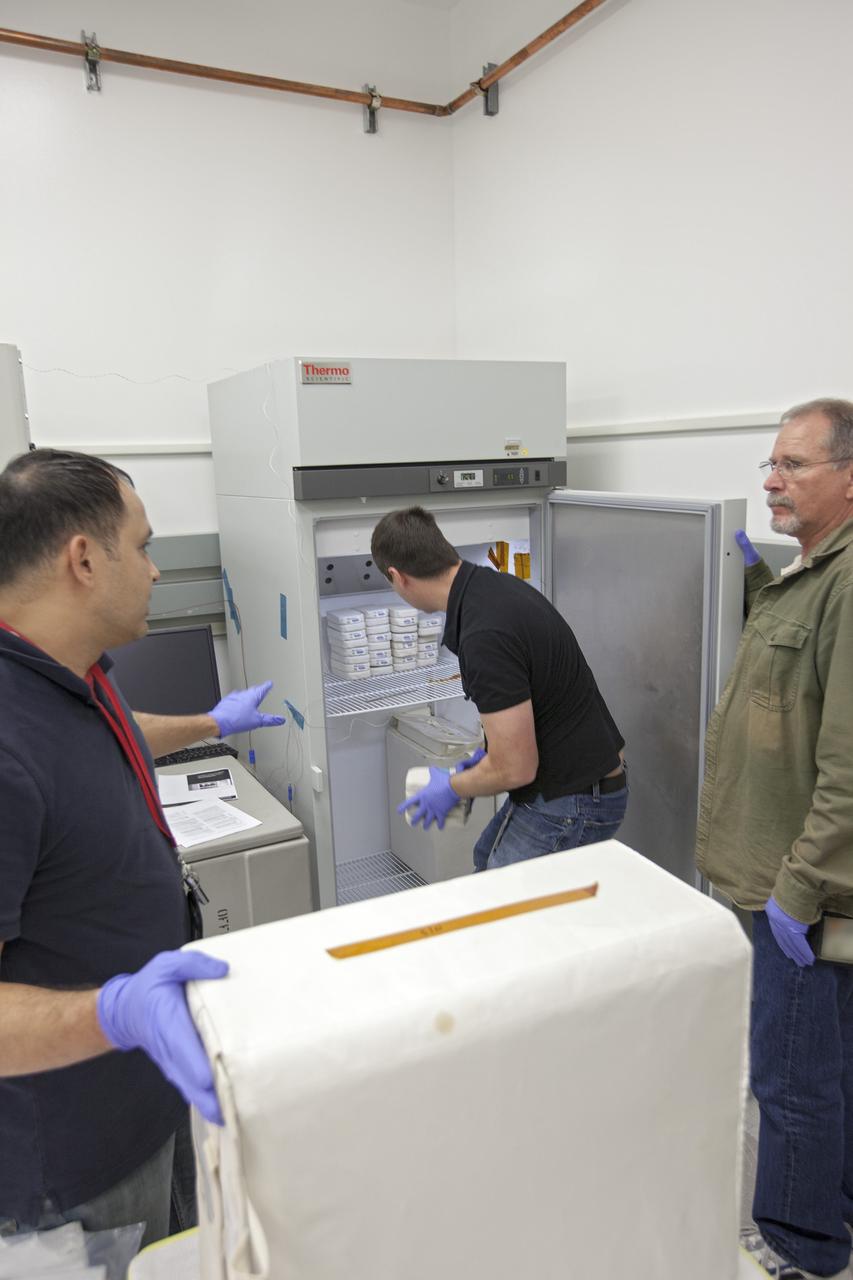
CAPE CANAVERAL, Fla. - In the Space Station Processing Facility at NASA's Kennedy Space Center in Florida, engineers prepare experiments for loading aboard the SpaceX Dragon capsule for launch to the International Space Station. Once the packaging is complete, the samples will be transported to Space Launch Complex-40 on Cape Canaveral Air Force Station where they will be loaded aboard the Dragon. Scheduled for launch March 1 atop a Falcon 9 rocket, Dragon will be making its third trip to the space station. The mission is the second of 12 SpaceX flights contracted by NASA to resupply the orbiting laboratory. For more information, visit http://www.nasa.gov/mission_pages/station/structure/launch/spacex2-feature.html Photo credit: NASA/Kim Shiflett
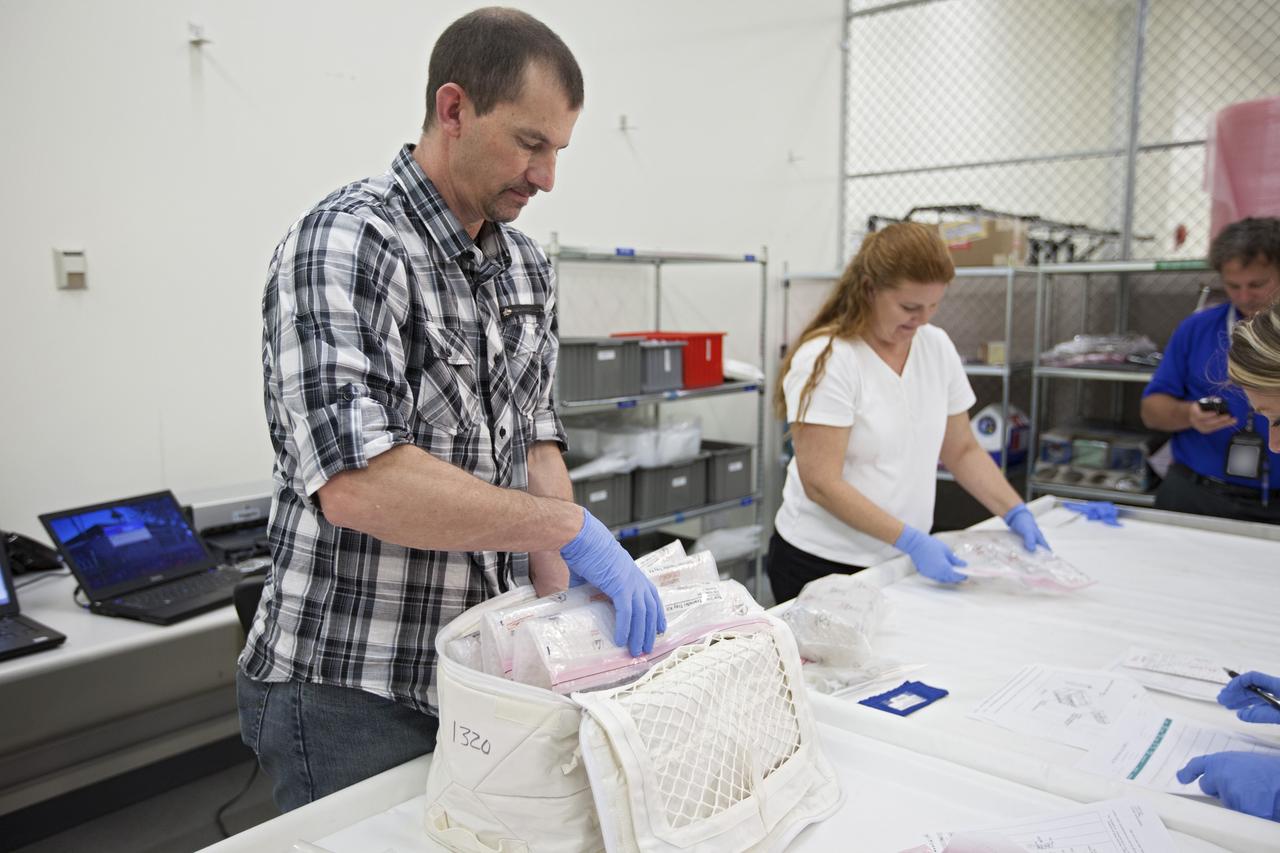
CAPE CANAVERAL, Fla. - In the Space Station Processing Facility at NASA's Kennedy Space Center in Florida, engineers prepare experiments for loading aboard the SpaceX Dragon capsule for launch to the International Space Station. Once the packaging is complete, the samples will be transported to Space Launch Complex-40 on Cape Canaveral Air Force Station where they will be loaded aboard the Dragon. Scheduled for launch March 1 atop a Falcon 9 rocket, Dragon will be making its third trip to the space station. The mission is the second of 12 SpaceX flights contracted by NASA to resupply the orbiting laboratory. For more information, visit http://www.nasa.gov/mission_pages/station/structure/launch/spacex2-feature.html Photo credit: NASA/Kim Shiflett
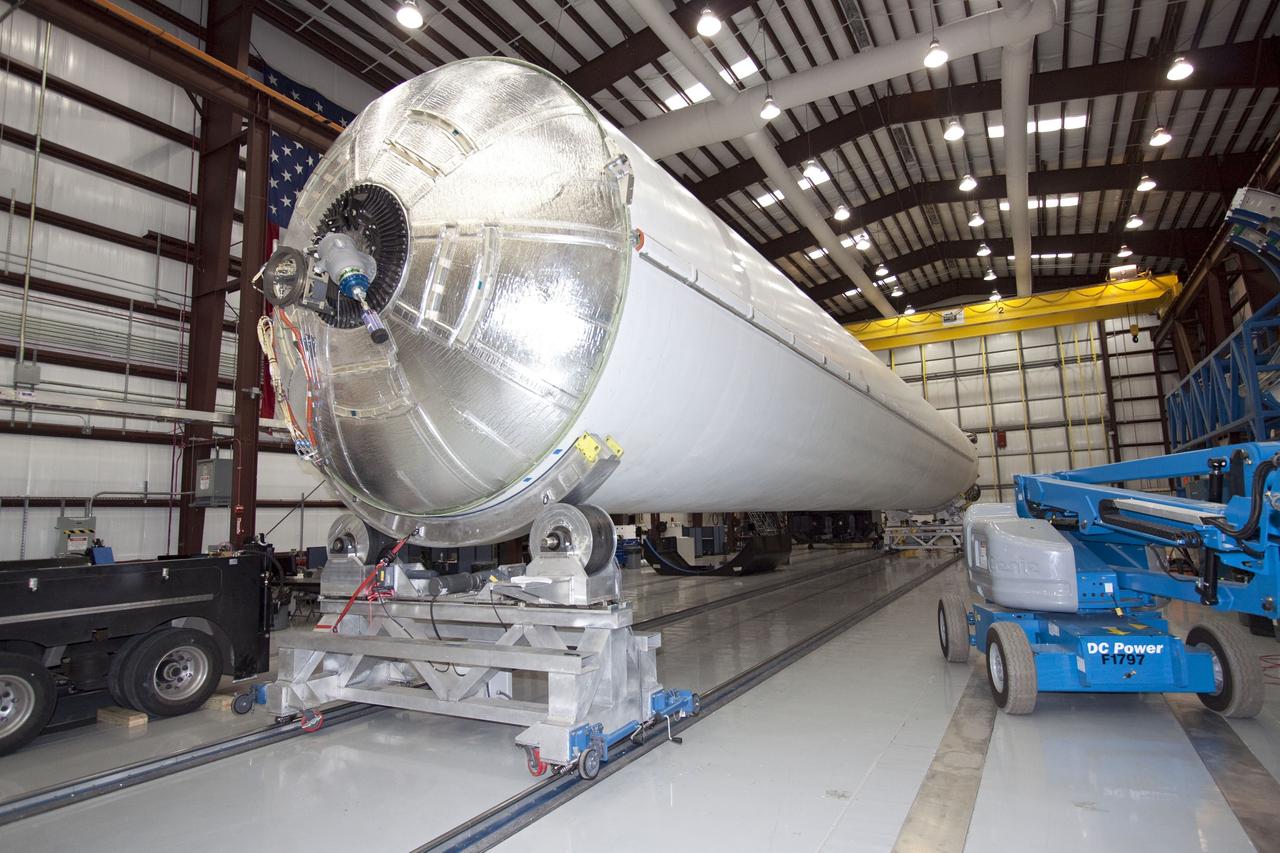
CAPE CANAVERAL, Fla. -- The forward end of the first stage of a Falcon 9 rocket as the stage sits on processing stands inside the Space Exploration Technologies (SpaecX) hangar at Launch Complex 40 at Cape Canaveral Air Force Station in Florida. Technicians are preparing the rocket for the second launch in the Commercial Orbital Transportation Services, or COTS, program to demonstrate private companies' ability to launch uncrewed spacecraft into orbit. A follow-on contract, Commercial Resupply Services, calls for SpaceX to launch 12 resupply missions to the International Space Station between 2011 and 2015. Photo credit: NASA/Jack Pfaller
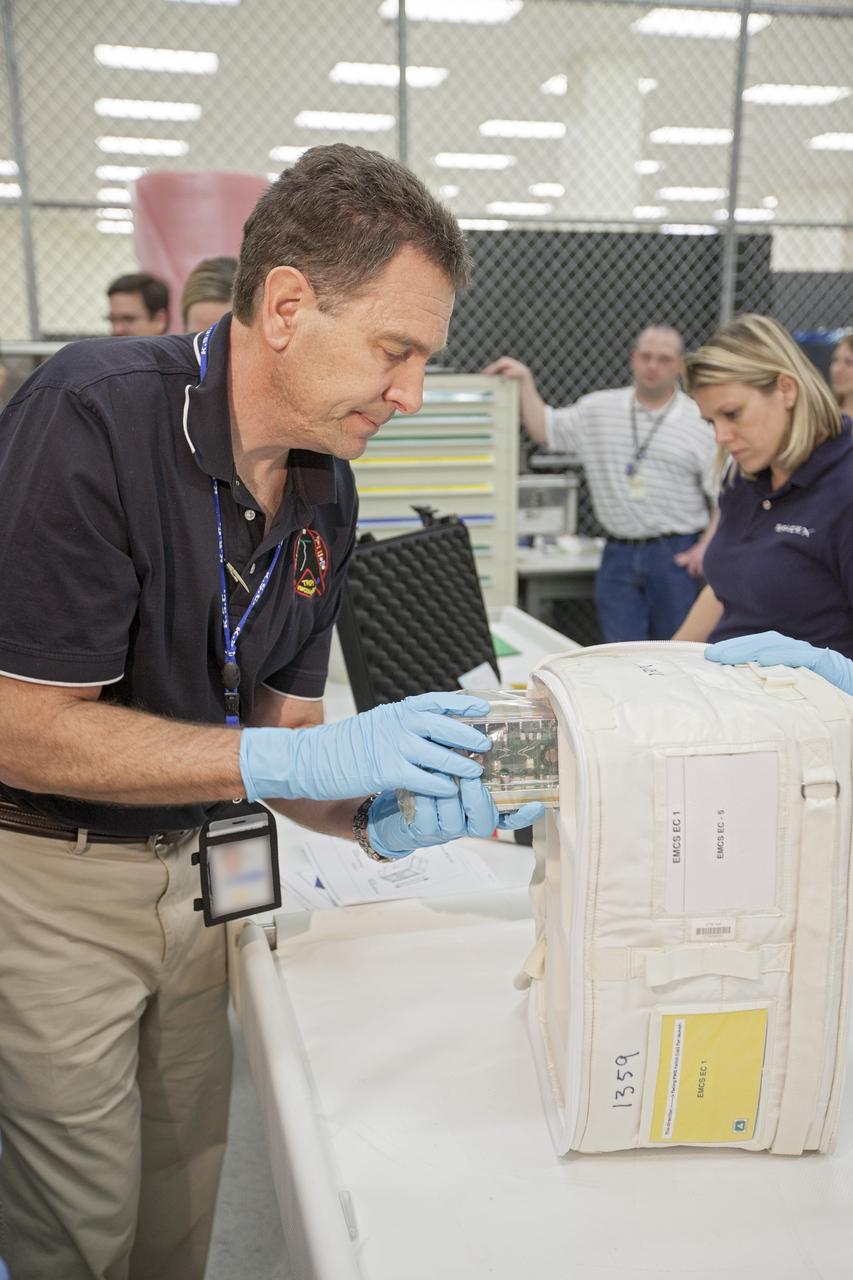
CAPE CANAVERAL, Fla. - In the Space Station Processing Facility at NASA's Kennedy Space Center in Florida, engineers prepare experiments for loading aboard the SpaceX Dragon capsule for launch to the International Space Station. Once the packaging is complete, the samples will be transported to Space Launch Complex-40 on Cape Canaveral Air Force Station where they will be loaded aboard the Dragon. Scheduled for launch March 1 atop a Falcon 9 rocket, Dragon will be making its third trip to the space station. The mission is the second of 12 SpaceX flights contracted by NASA to resupply the orbiting laboratory. For more information, visit http://www.nasa.gov/mission_pages/station/structure/launch/spacex2-feature.html Photo credit: NASA/Kim Shiflett
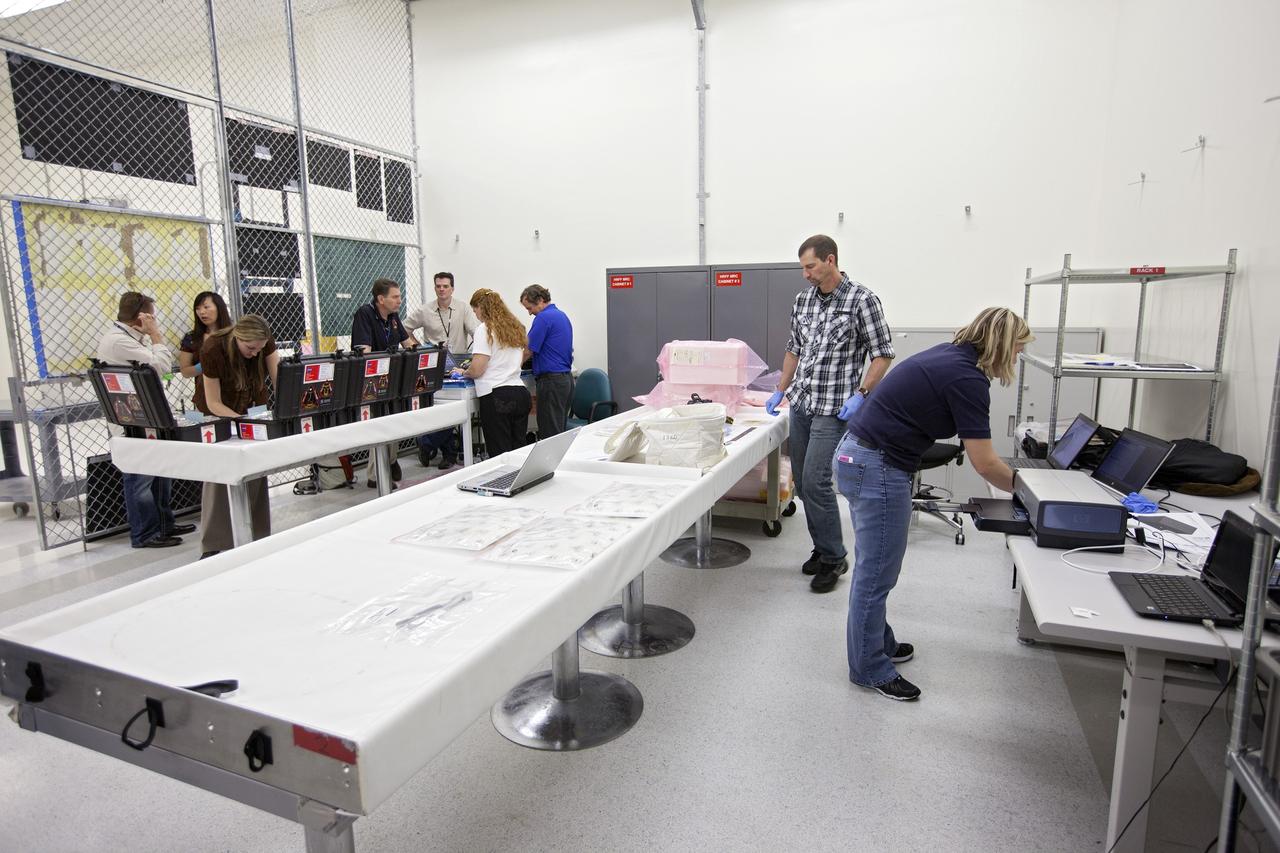
CAPE CANAVERAL, Fla. - In the Space Station Processing Facility at NASA's Kennedy Space Center in Florida, engineers prepare experiments for loading aboard the SpaceX Dragon capsule for launch to the International Space Station. Once the packaging is complete, the samples will be transported to Space Launch Complex-40 on Cape Canaveral Air Force Station where they will be loaded aboard the Dragon. Scheduled for launch March 1 atop a Falcon 9 rocket, Dragon will be making its third trip to the space station. The mission is the second of 12 SpaceX flights contracted by NASA to resupply the orbiting laboratory. For more information, visit http://www.nasa.gov/mission_pages/station/structure/launch/spacex2-feature.html Photo credit: NASA/Kim Shiflett
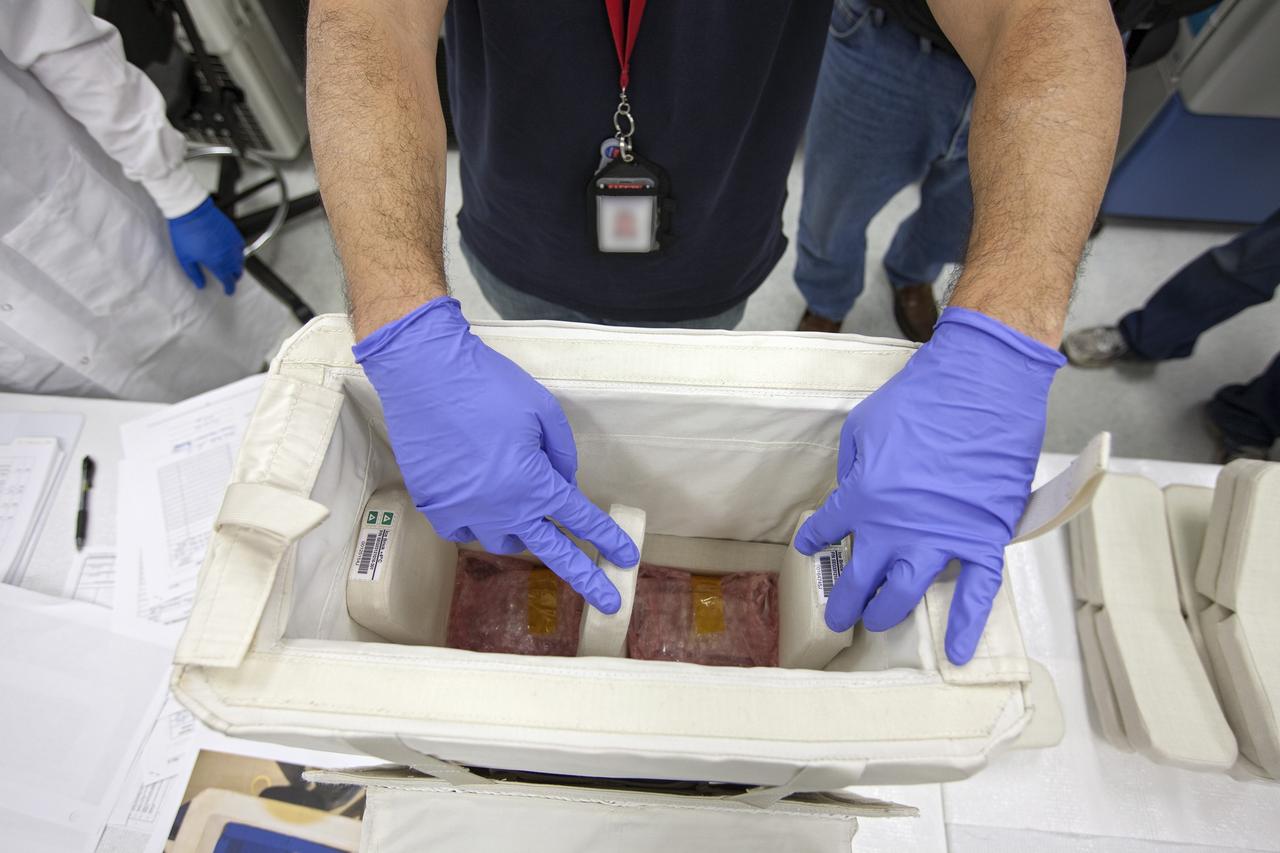
CAPE CANAVERAL, Fla. - In the Space Station Processing Facility at NASA's Kennedy Space Center in Florida, engineers prepare experiments for loading aboard the SpaceX Dragon capsule for launch to the International Space Station. Once the packaging is complete, the samples will be transported to Space Launch Complex-40 on Cape Canaveral Air Force Station where they will be loaded aboard the Dragon. Scheduled for launch March 1 atop a Falcon 9 rocket, Dragon will be making its third trip to the space station. The mission is the second of 12 SpaceX flights contracted by NASA to resupply the orbiting laboratory. For more information, visit http://www.nasa.gov/mission_pages/station/structure/launch/spacex2-feature.html Photo credit: NASA/Kim Shiflett
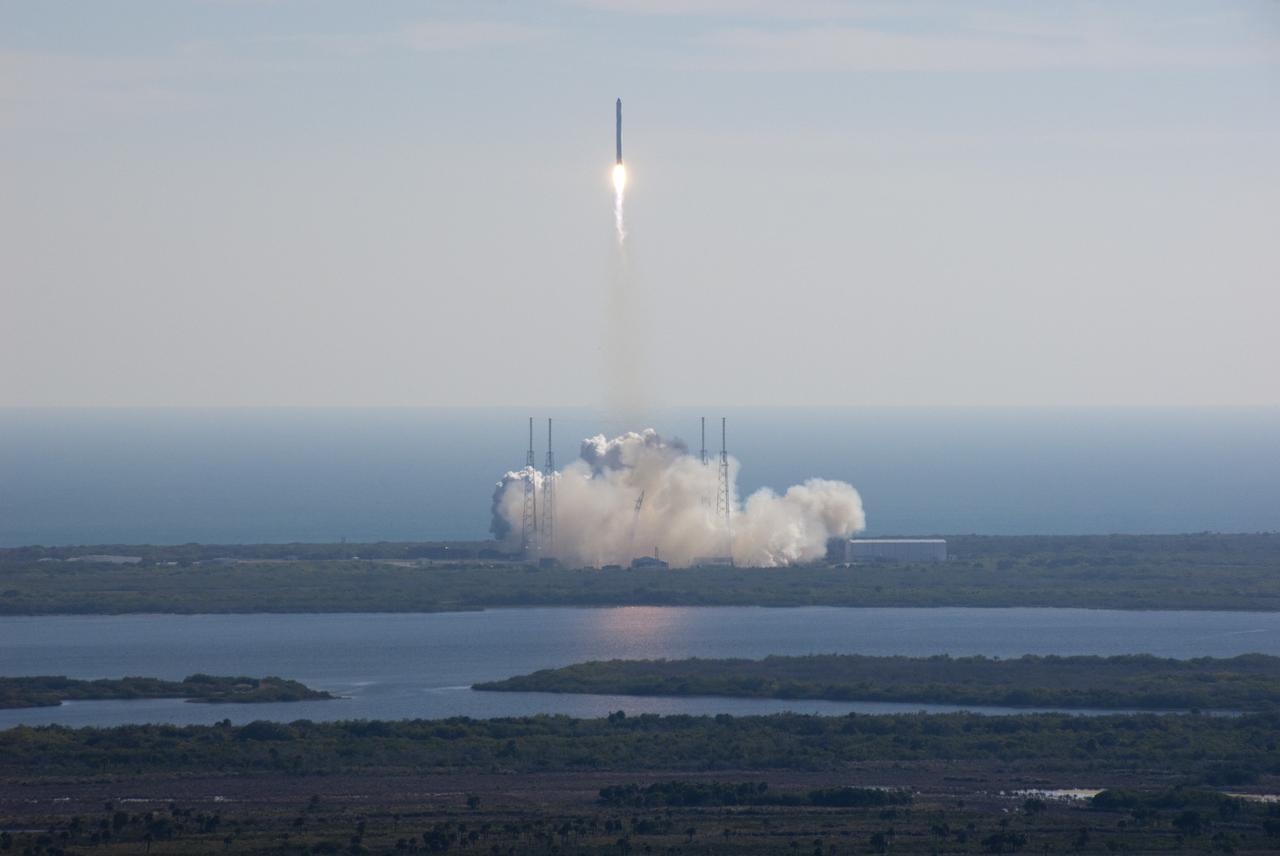
CAPE CANAVERAL, Fla. -- SpaceX’s Falcon 9 rocket and Dragon spacecraft lift off from Launch Complex 40 at Cape Canaveral Air Force Station at 10:43 a.m. EST. SpaceX was awarded procurement for three demonstration flights under the Commercial Orbital Transportation Services, or COTS, program managed by NASA's Johnson Space Center in Houston. A subsequent contract for Commercial Resupply Services, or CRS, was awarded in late 2008 to resupply the International Space Station. The SpaceX CRS contract provides for 12 missions to resupply the station from 2011 through 2015. Photo credit: NASA/Alan Ault
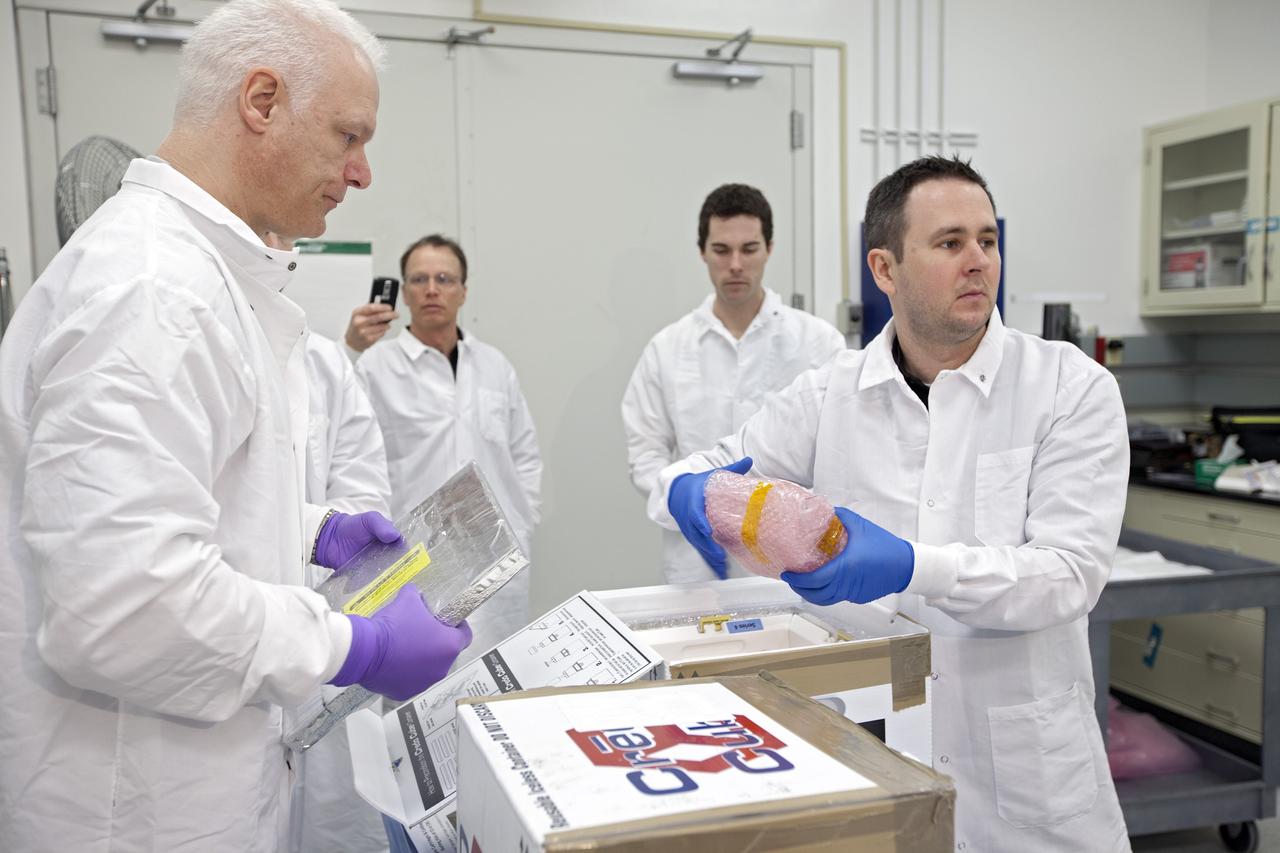
CAPE CANAVERAL, Fla. - In the Space Station Processing Facility at NASA's Kennedy Space Center in Florida, engineers prepare experiments for loading aboard the SpaceX Dragon capsule for launch to the International Space Station. Once the packaging is complete, the samples will be transported to Space Launch Complex-40 on Cape Canaveral Air Force Station where they will be loaded aboard the Dragon. Scheduled for launch March 1 atop a Falcon 9 rocket, Dragon will be making its third trip to the space station. The mission is the second of 12 SpaceX flights contracted by NASA to resupply the orbiting laboratory. For more information, visit http://www.nasa.gov/mission_pages/station/structure/launch/spacex2-feature.html Photo credit: NASA/Kim Shiflett
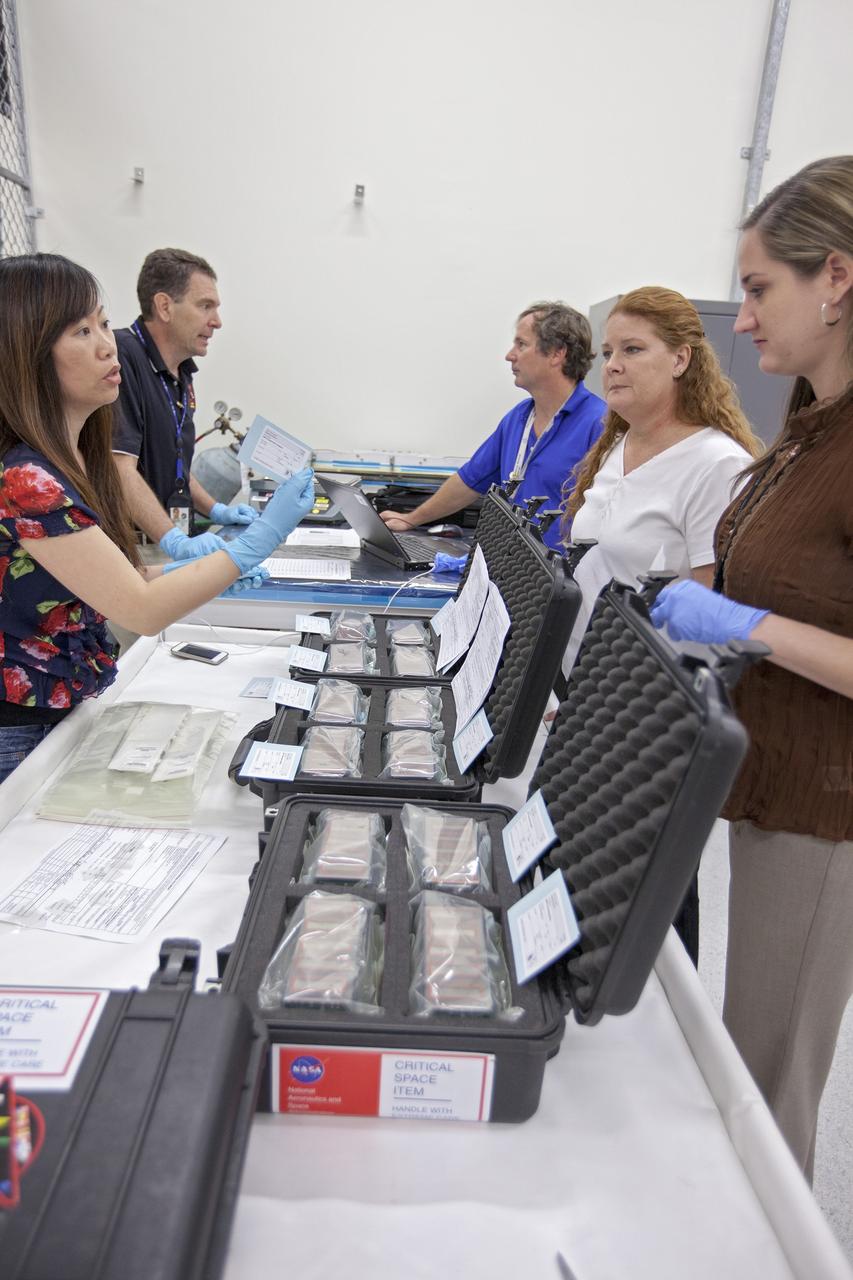
CAPE CANAVERAL, Fla. - In the Space Station Processing Facility at NASA's Kennedy Space Center in Florida, engineers prepare experiments for loading aboard the SpaceX Dragon capsule for launch to the International Space Station. Once the packaging is complete, the samples will be transported to Space Launch Complex-40 on Cape Canaveral Air Force Station where they will be loaded aboard the Dragon. Scheduled for launch March 1 atop a Falcon 9 rocket, Dragon will be making its third trip to the space station. The mission is the second of 12 SpaceX flights contracted by NASA to resupply the orbiting laboratory. For more information, visit http://www.nasa.gov/mission_pages/station/structure/launch/spacex2-feature.html Photo credit: NASA/Kim Shiflett
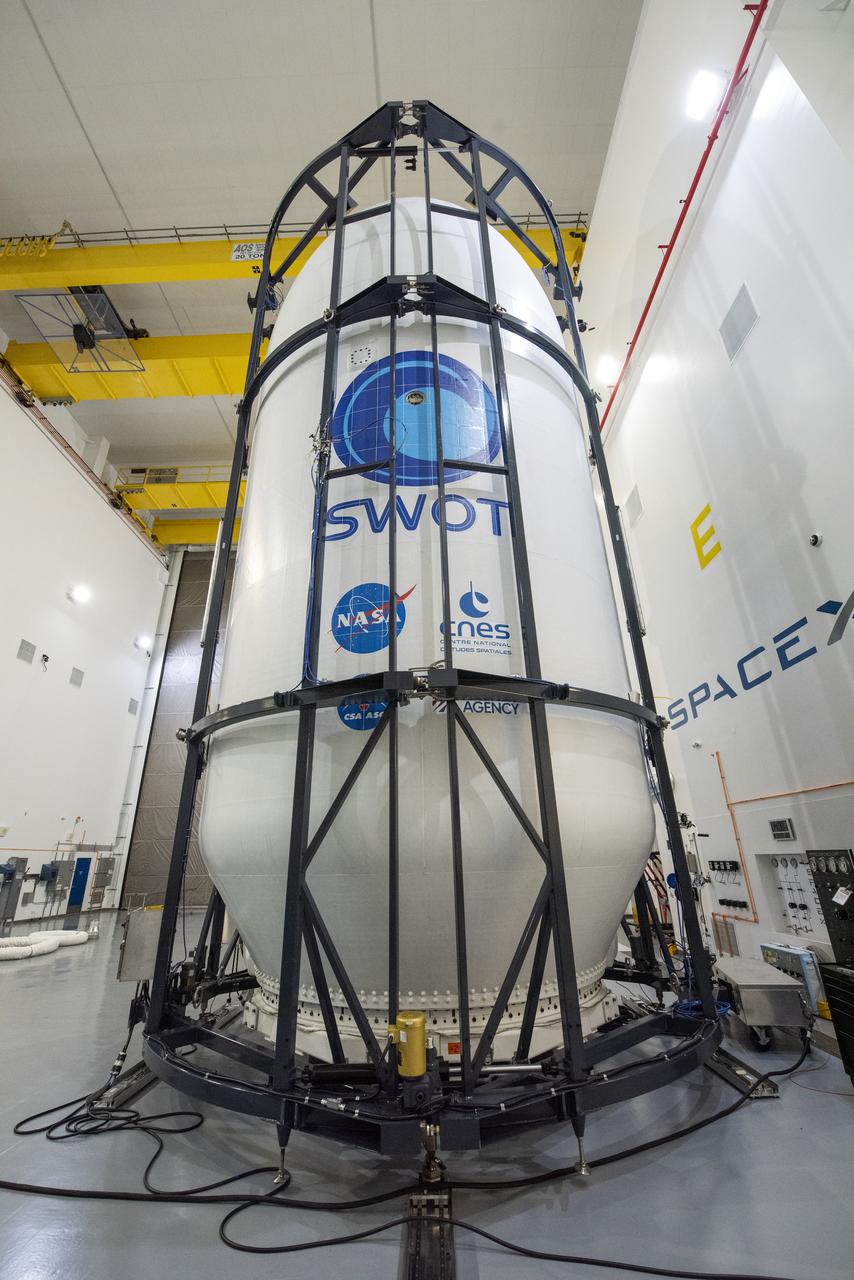
Inside the SpaceX facility at Vandenberg Space Force Base in California, decal fixtures are placed on the SpaceX Falcon 9 payload fairing of the Surface Water and Ocean Topography (SWOT) satellite on Dec. 9, 2022. A collaboration between NASA and the French space agency Centre National d’Études Spatiales (CNES), with contributions from the Canadian Space Agency and the UK Space Agency, SWOT will be the first satellite to survey nearly all water on Earth’s surface. SWOT is scheduled to lift off aboard the SpaceX Falcon 9 rocket from Vandenberg on Dec. 15, 2022, at 3:46 a.m. PST.
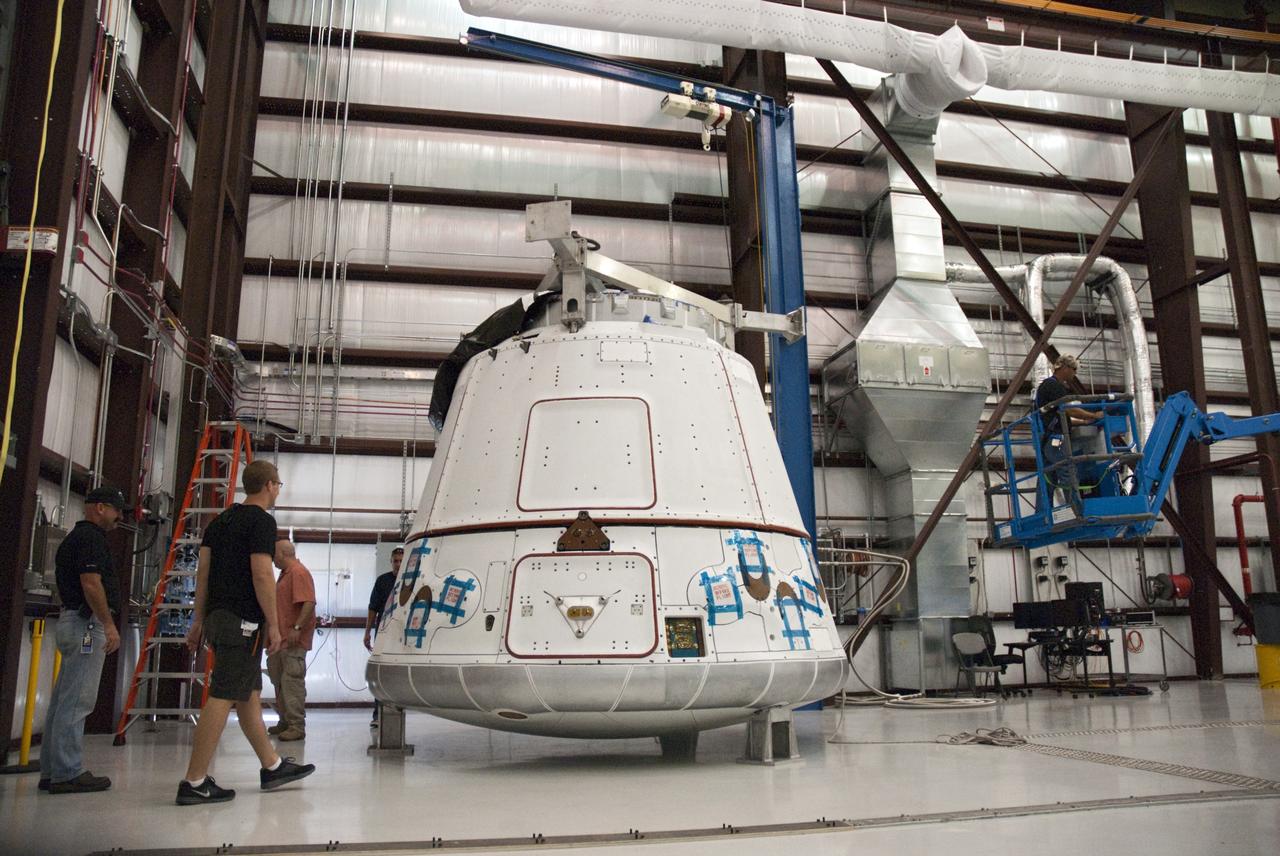
Workers unwrap the latest Space Exploration Technologies Corp. (SpaceX) Dragon capsule inside a building at Cape Canaveral Air Force Station in Florida on Oct. 23 so it can be processed and attached to the top of a Falcon 9 rocket on Space Launch Complex-40 for the company's next demonstration test flight for NASA's Commercial Orbital Transportation Services (COTS) program. SpaceX is one of two companies under contract with NASA to take cargo to the International Space Station. NASA is working with SpaceX to combine its last two demonstration flights, and if approved, the Falcon 9 rocket would launch the Dragon capsule to the orbiting laboratory for a docking within the next several months. Photo credit: NASA/ Charisse Nahser
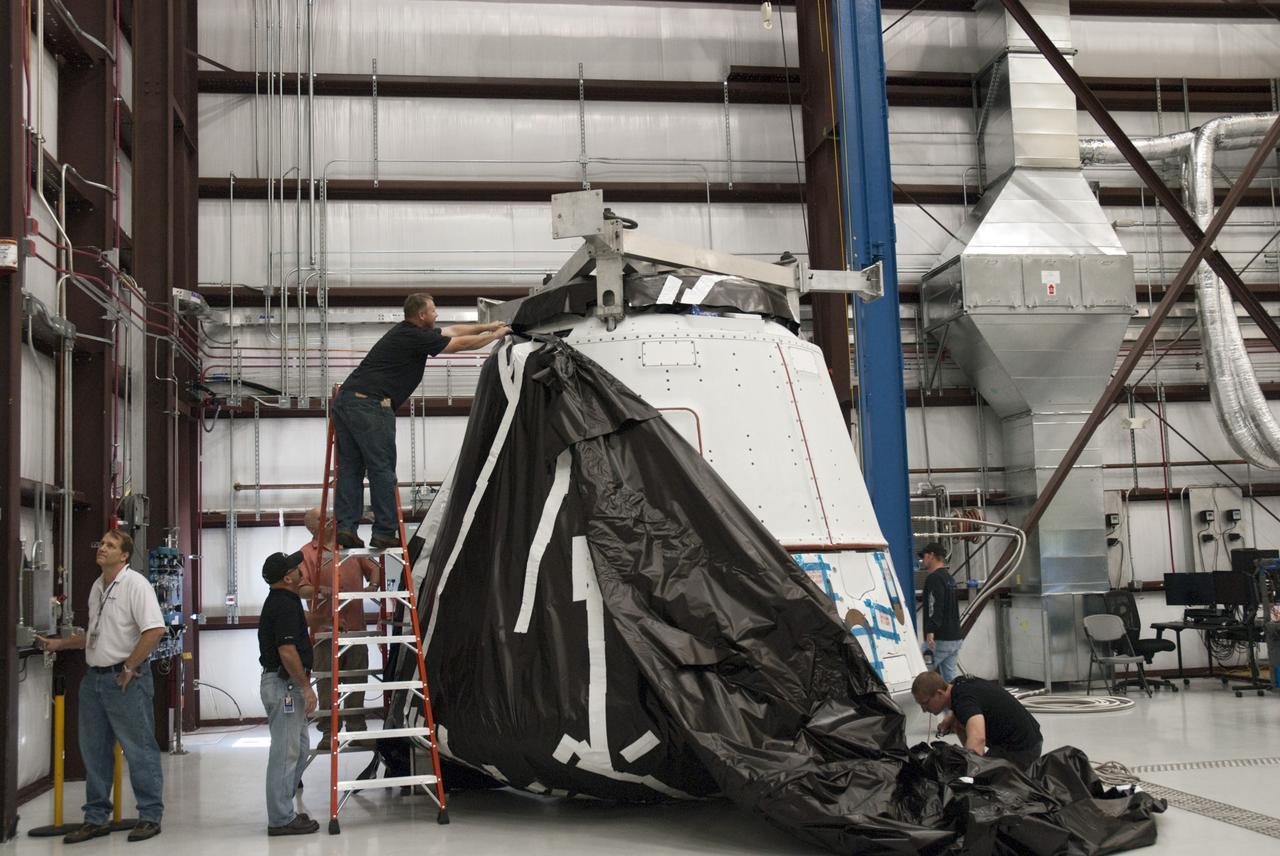
Workers unwrap the latest Space Exploration Technologies Corp. (SpaceX) Dragon capsule inside a building at Cape Canaveral Air Force Station in Florida on Oct. 23 so it can be processed and attached to the top of a Falcon 9 rocket on Space Launch Complex-40 for the company's next demonstration test flight for NASA's Commercial Orbital Transportation Services (COTS) program. SpaceX is one of two companies under contract with NASA to take cargo to the International Space Station. NASA is working with SpaceX to combine its last two demonstration flights, and if approved, the Falcon 9 rocket would launch the Dragon capsule to the orbiting laboratory for a docking within the next several months. Photo credit: NASA/ Charisse Nahser
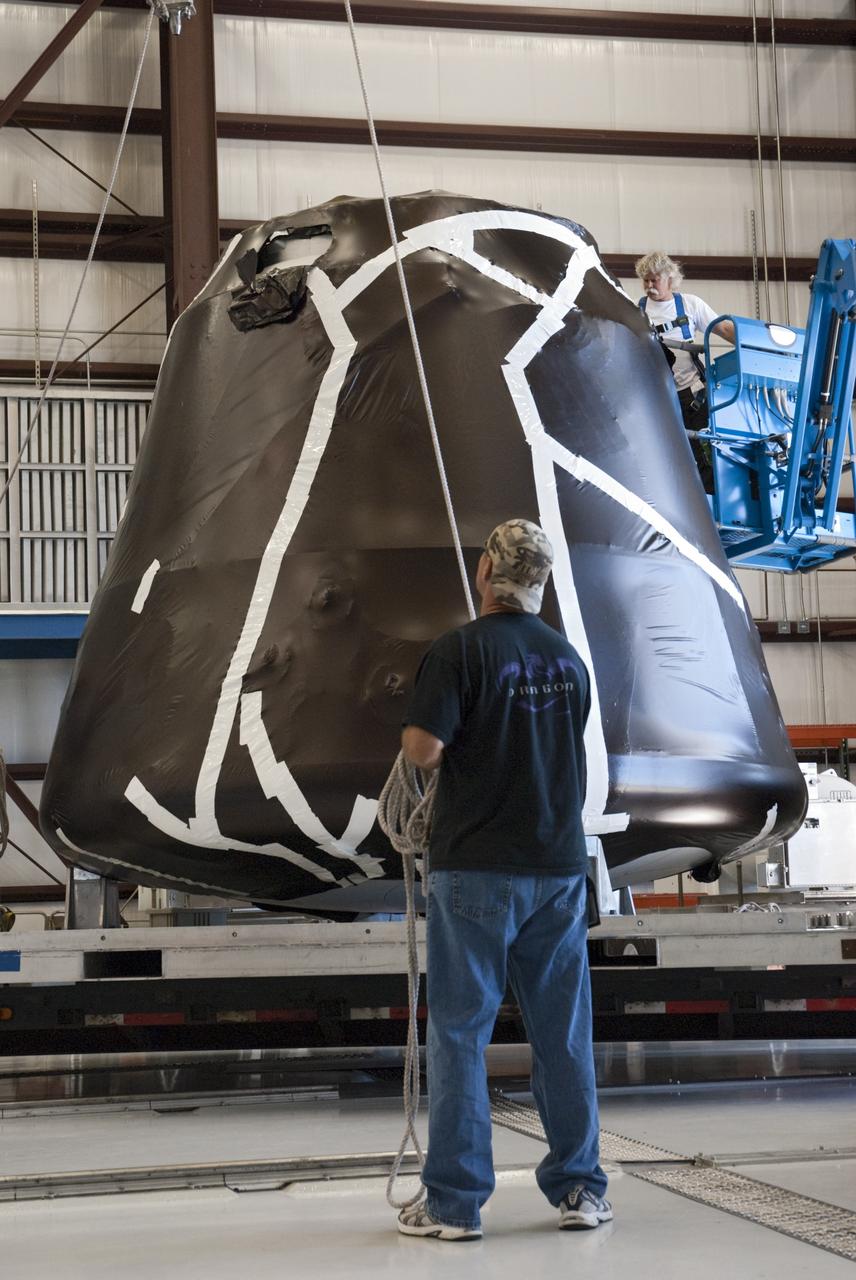
Workers lift the transportation canister from the latest Space Exploration Technologies Corp. (SpaceX) Dragon capsule to Cape Canaveral Air Force Station in Florida on Oct. 23 so it can be processed and attached to the top of a Falcon 9 rocket on Space Launch Complex-40 for the company's next demonstration test flight for NASA's Commercial Orbital Transportation Services (COTS) program. SpaceX is one of two companies under contract with NASA to take cargo to the International Space Station. NASA is working with SpaceX to combine its last two demonstration flights, and if approved, the Falcon 9 rocket would launch the Dragon capsule to the orbiting laboratory for a docking within the next several months. Photo credit: NASA/ Charisse Nahser
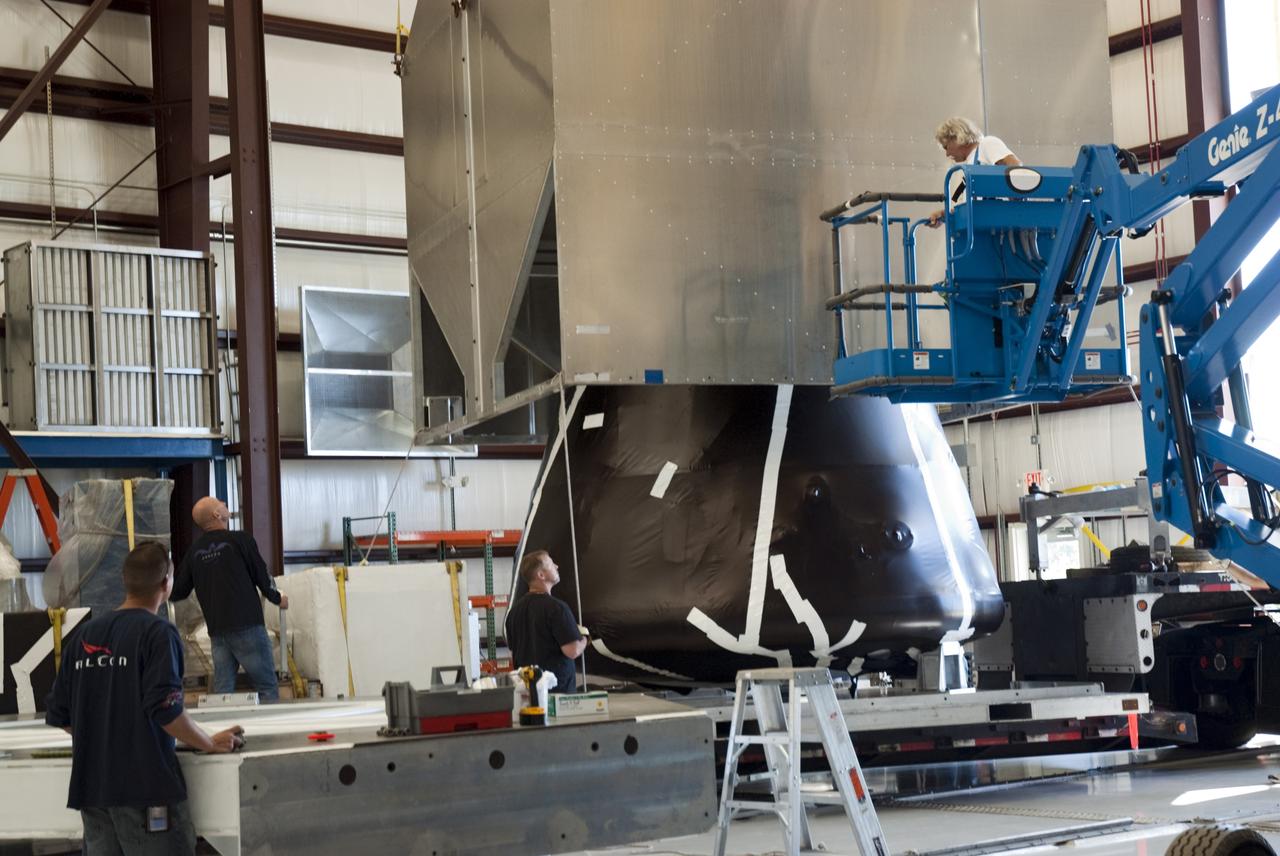
Workers lift the transportation canister away from the latest Space Exploration Technologies Corp. (SpaceX) Dragon capsule to Cape Canaveral Air Force Station in Florida on Oct. 23 so it can be processed and attached to the top of a Falcon 9 rocket on Space Launch Complex-40 for the company's next demonstration test flight for NASA's Commercial Orbital Transportation Services (COTS) program. SpaceX is one of two companies under contract with NASA to take cargo to the International Space Station. NASA is working with SpaceX to combine its last two demonstration flights, and if approved, the Falcon 9 rocket would launch the Dragon capsule to the orbiting laboratory for a docking within the next several months. Photo credit: NASA/ Charisse Nahser
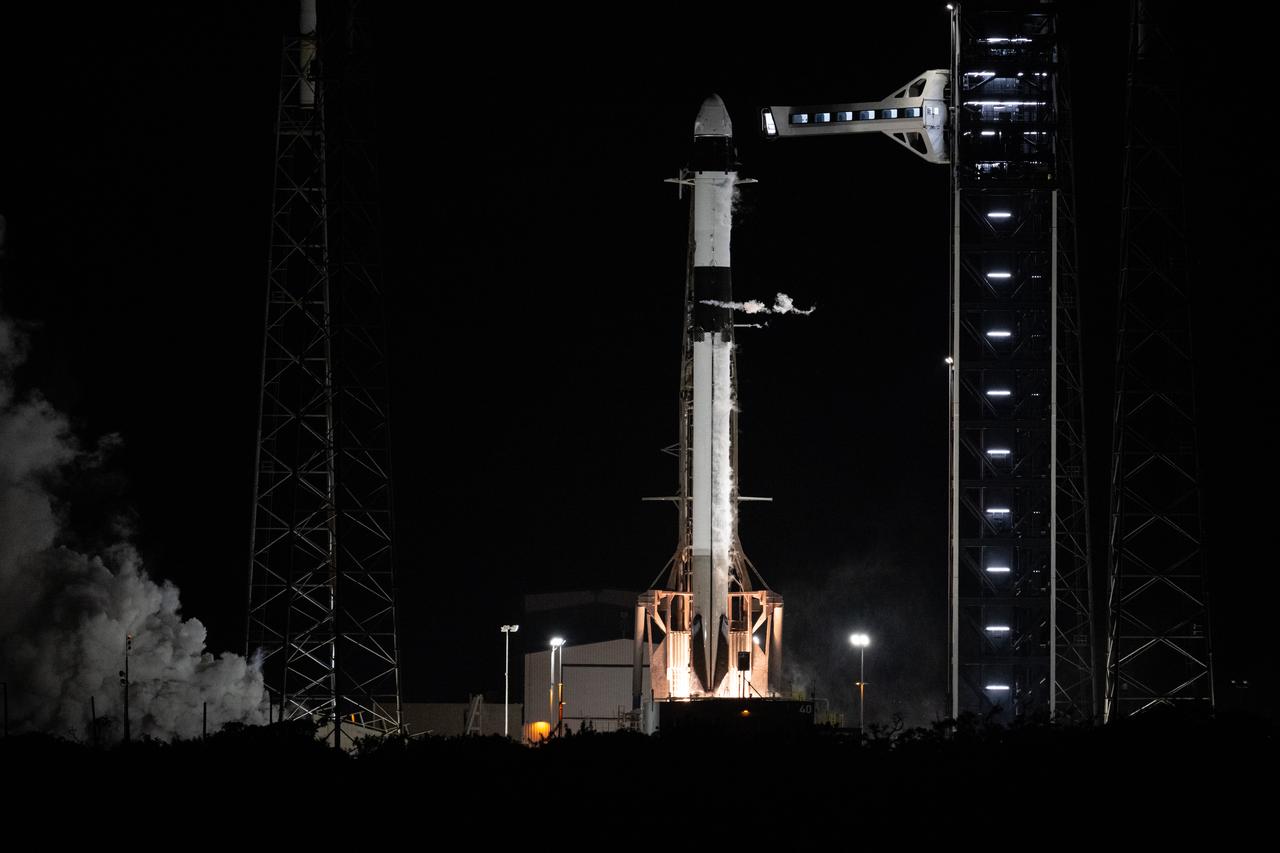
A SpaceX Falcon 9 rocket with the company's Dragon spacecraft onboard is seen on the launch pad at Space Launch Complex 40 during a brief static fire test ahead of NASA’s SpaceX Crew-9 mission, Tuesday, Sept. 24, 2024, at the Cape Canaveral Space Force Station in Florida. NASA’s SpaceX Crew-9 mission is the ninth crew rotation mission of the SpaceX Dragon spacecraft and Falcon 9 rocket to the International Space Station as part of the agency’s Commercial Crew Program. Photo Credit: (NASA/Keegan Barber)
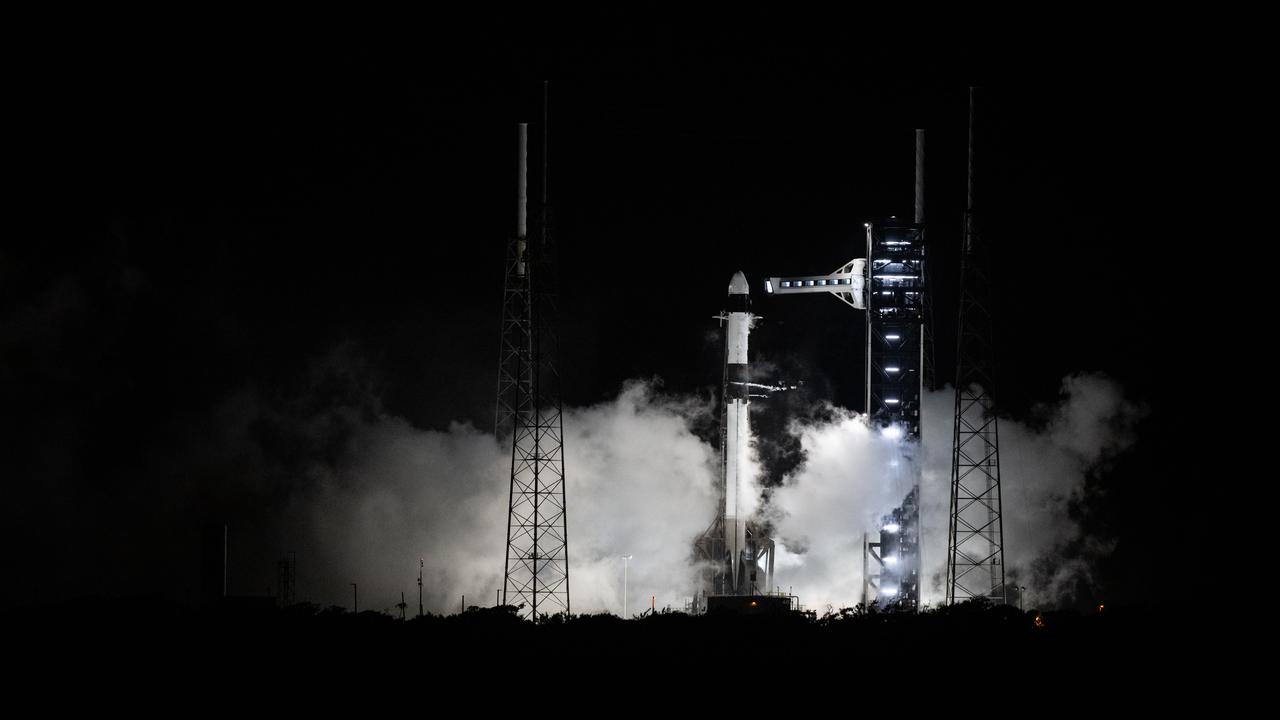
A SpaceX Falcon 9 rocket with the company's Dragon spacecraft onboard is seen on the launch pad at Space Launch Complex 40 following a brief static fire test ahead of NASA’s SpaceX Crew-9 mission, Tuesday, Sept. 24, 2024, at the Cape Canaveral Space Force Station in Florida. NASA’s SpaceX Crew-9 mission is the ninth crew rotation mission of the SpaceX Dragon spacecraft and Falcon 9 rocket to the International Space Station as part of the agency’s Commercial Crew Program. Photo Credit: (NASA/Keegan Barber)
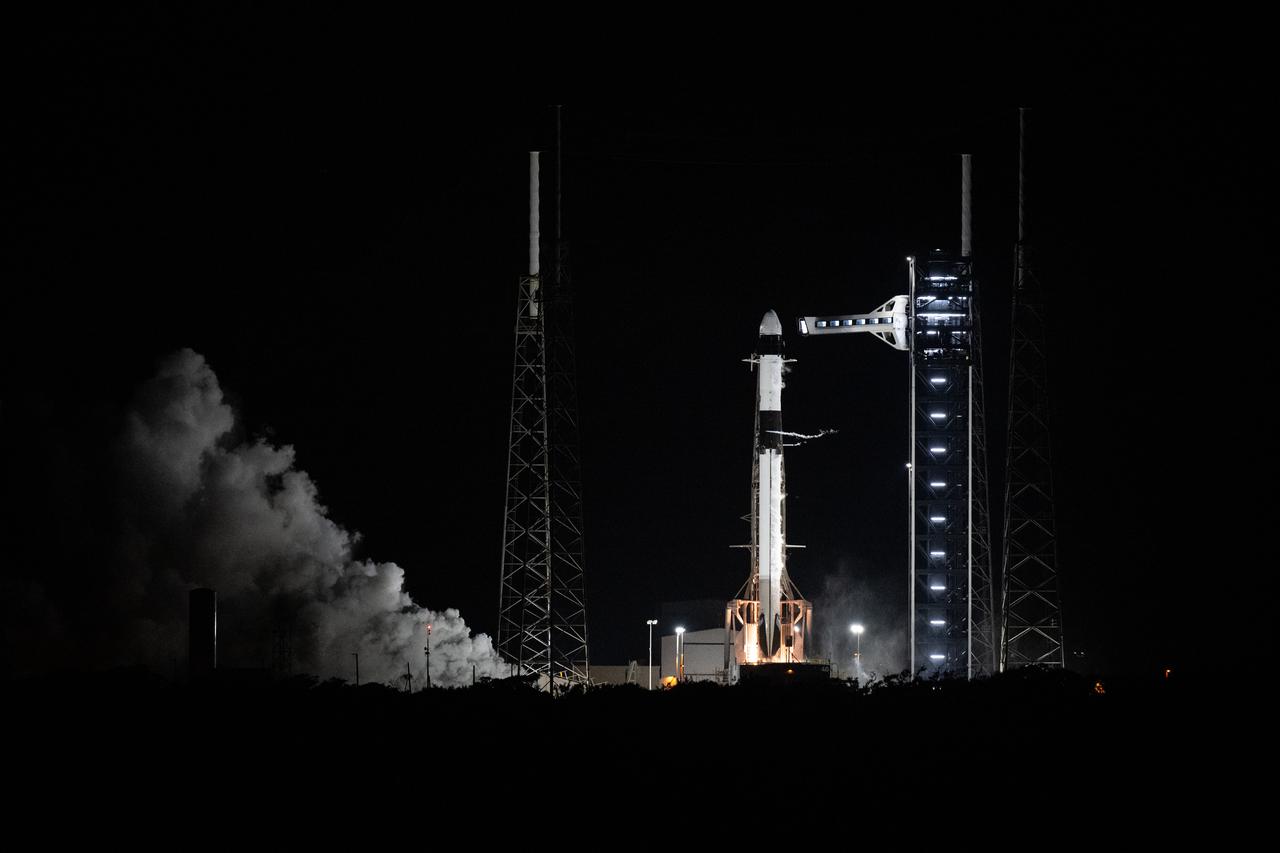
A SpaceX Falcon 9 rocket with the company's Dragon spacecraft onboard is seen on the launch pad at Space Launch Complex 40 during a brief static fire test ahead of NASA’s SpaceX Crew-9 mission, Tuesday, Sept. 24, 2024, at the Cape Canaveral Space Force Station in Florida. NASA’s SpaceX Crew-9 mission is the ninth crew rotation mission of the SpaceX Dragon spacecraft and Falcon 9 rocket to the International Space Station as part of the agency’s Commercial Crew Program. Photo Credit: (NASA/Keegan Barber)
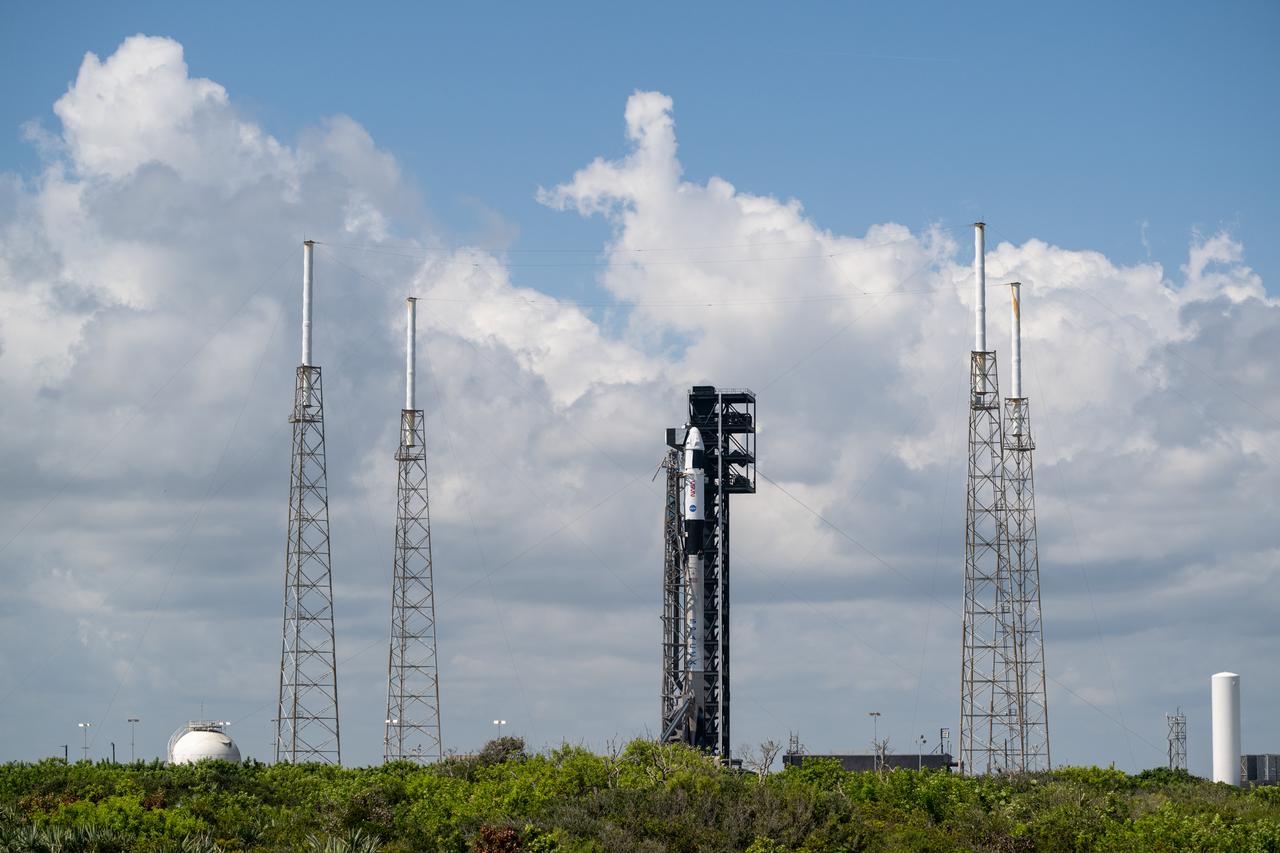
A SpaceX Falcon 9 rocket with the company's Dragon spacecraft on top is seen on the launch pad at Space Launch Complex 40 as preparations continue for the Crew-9 mission, Tuesday, Sept. 24, 2024, at Cape Canaveral Space Force Station in Florida. NASA’s SpaceX Crew-9 mission is the ninth crew rotation mission of the SpaceX Dragon spacecraft and Falcon 9 rocket to the International Space Station as part of the agency’s Commercial Crew Program. Photo Credit: (NASA/Keegan Barber)

A SpaceX Falcon 9 rocket with the company's Dragon spacecraft on top is seen on the launch pad at Space Launch Complex 40 as preparations continue for the Crew-9 mission, Tuesday, Sept. 24, 2024, at Cape Canaveral Space Force Station in Florida. NASA’s SpaceX Crew-9 mission is the ninth crew rotation mission of the SpaceX Dragon spacecraft and Falcon 9 rocket to the International Space Station as part of the agency’s Commercial Crew Program. Photo Credit: (NASA/Keegan Barber)
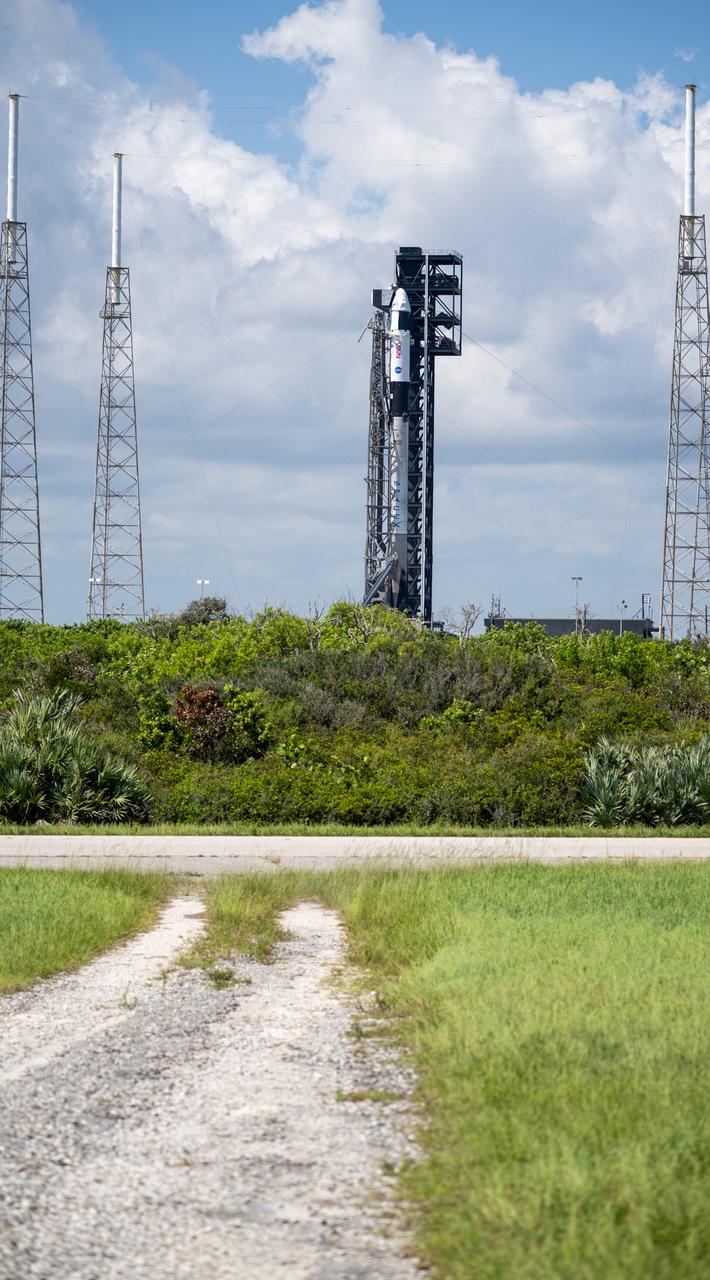
A SpaceX Falcon 9 rocket with the company's Dragon spacecraft on top is seen on the launch pad at Space Launch Complex 40 as preparations continue for the Crew-9 mission, Tuesday, Sept. 24, 2024, at Cape Canaveral Space Force Station in Florida. NASA’s SpaceX Crew-9 mission is the ninth crew rotation mission of the SpaceX Dragon spacecraft and Falcon 9 rocket to the International Space Station as part of the agency’s Commercial Crew Program. Photo Credit: (NASA/Keegan Barber)
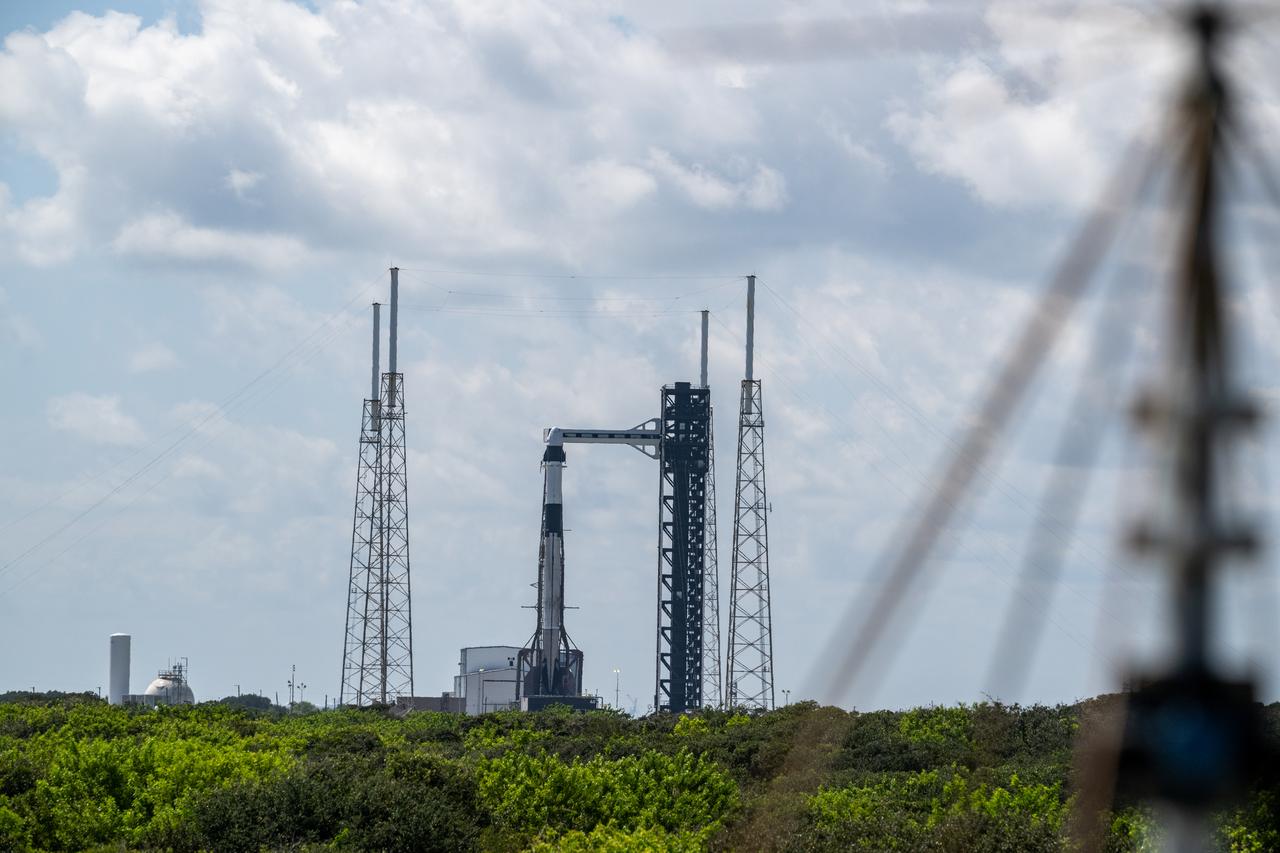
A SpaceX Falcon 9 rocket with the company's Dragon spacecraft on top is seen on the launch pad at Space Launch Complex 40 as preparations continue for the Crew-9 mission, Tuesday, Sept. 24, 2024, at Cape Canaveral Space Force Station in Florida. NASA’s SpaceX Crew-9 mission is the ninth crew rotation mission of the SpaceX Dragon spacecraft and Falcon 9 rocket to the International Space Station as part of the agency’s Commercial Crew Program. Photo Credit: (NASA/Keegan Barber)
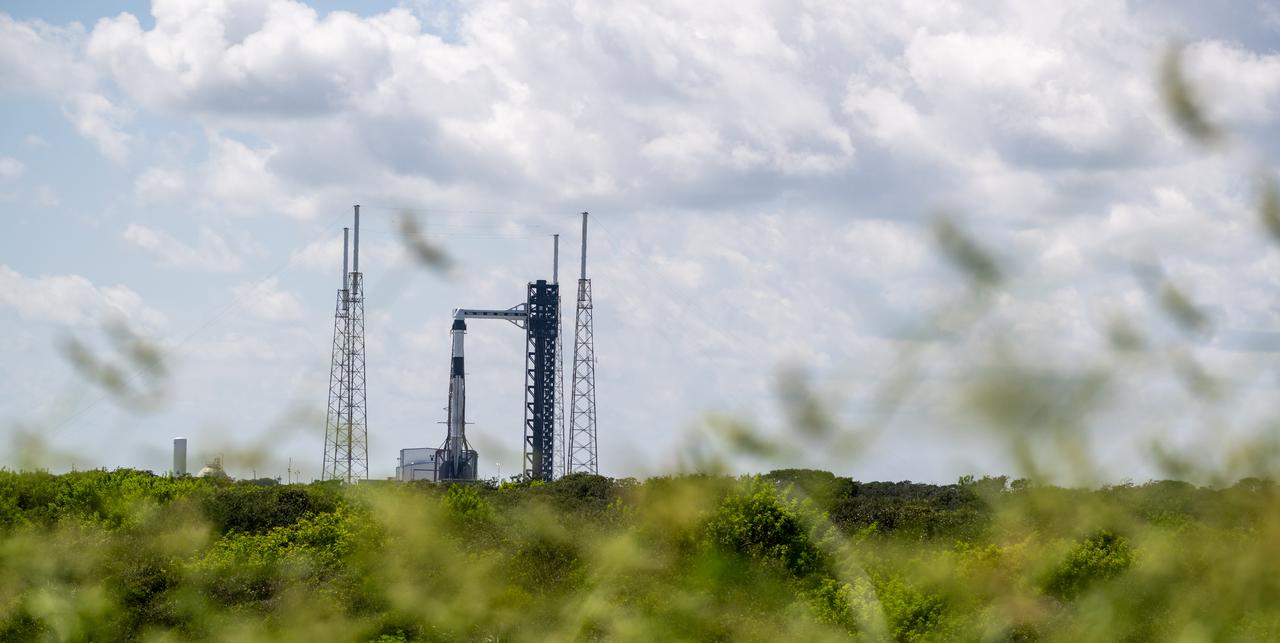
A SpaceX Falcon 9 rocket with the company's Dragon spacecraft on top is seen on the launch pad at Space Launch Complex 40 as preparations continue for the Crew-9 mission, Tuesday, Sept. 24, 2024, at Cape Canaveral Space Force Station in Florida. NASA’s SpaceX Crew-9 mission is the ninth crew rotation mission of the SpaceX Dragon spacecraft and Falcon 9 rocket to the International Space Station as part of the agency’s Commercial Crew Program. Photo Credit: (NASA/Keegan Barber)
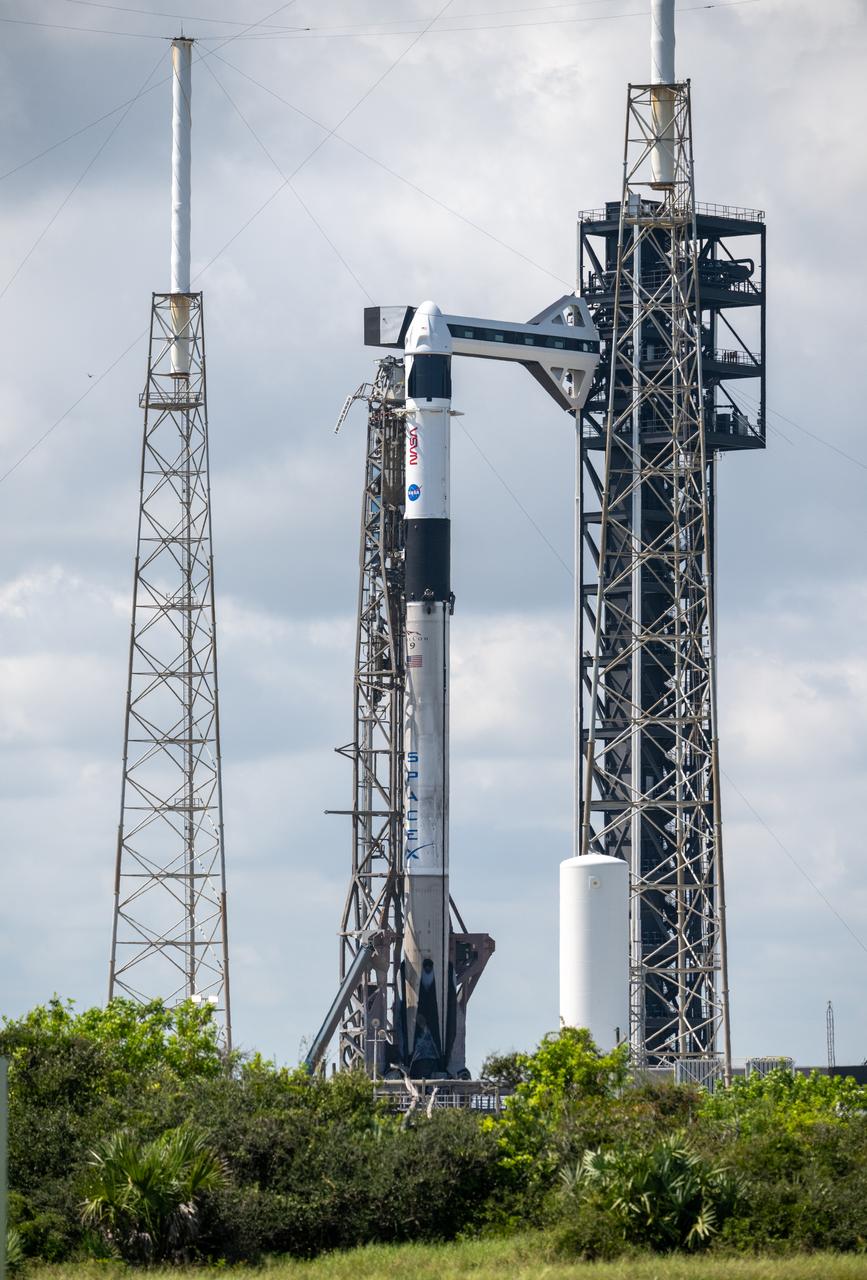
A SpaceX Falcon 9 rocket with the company's Dragon spacecraft on top is seen on the launch pad at Space Launch Complex 40 as preparations continue for the Crew-9 mission, Tuesday, Sept. 24, 2024, at Cape Canaveral Space Force Station in Florida. NASA’s SpaceX Crew-9 mission is the ninth crew rotation mission of the SpaceX Dragon spacecraft and Falcon 9 rocket to the International Space Station as part of the agency’s Commercial Crew Program. Photo Credit: (NASA/Keegan Barber)

The team at SpaceX's rocket development facility in McGregor, Texas completed a static fire test of the Falcon 9 booster that will launch SpaceX's first demonstration mission for NASA's Commerical Crew Program.
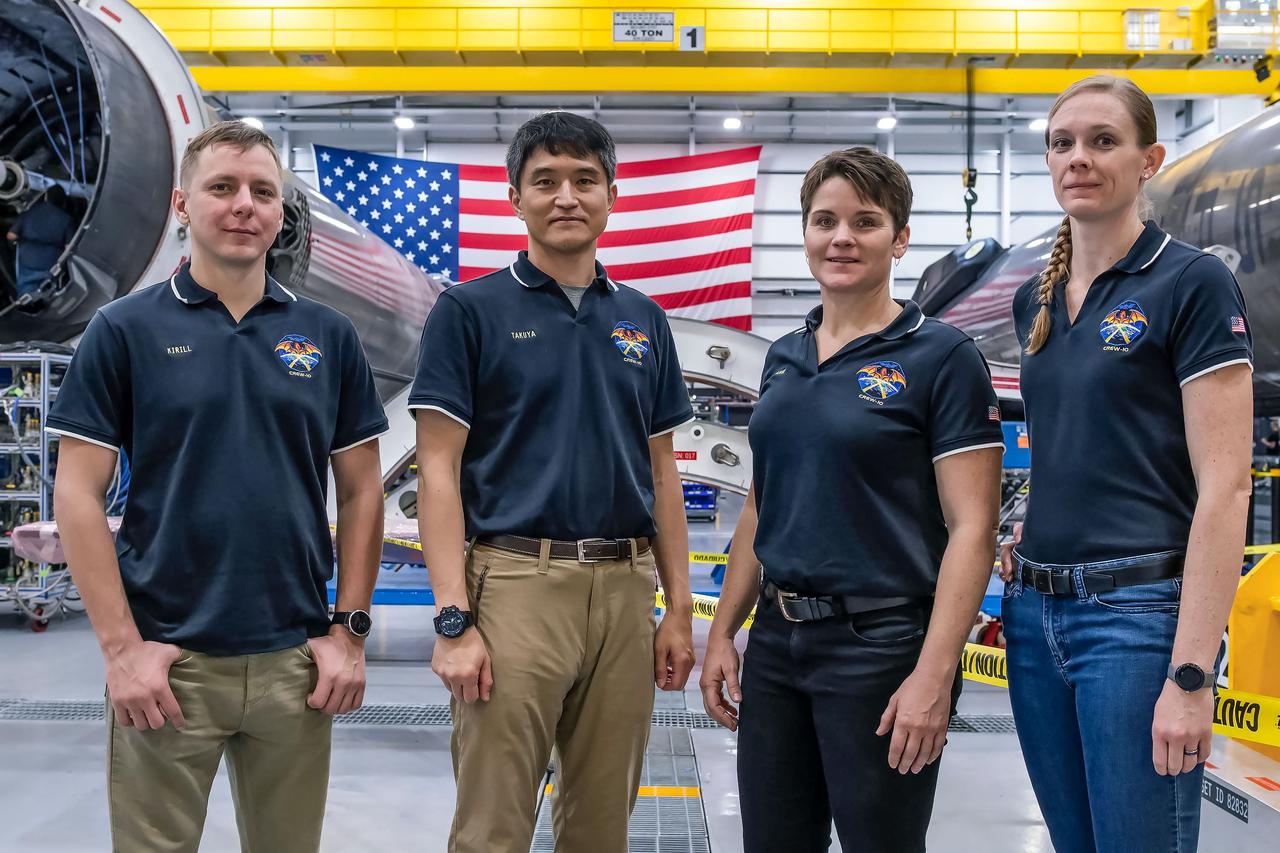
jsc2024e080751 (Nov. 18, 2024) --- NASA’s SpaceX Crew-10 members stand between Falcon 9 first-stage boosters at SpaceX’s HangarX facility at NASA's Kennedy Space Center in Florida. From left are Mission Specialist Kirill Peskov of Roscosmos, Mission Specialist Takuya Onishi of JAXA (Japan Aerospace Exploration Agency), along with NASA Astronauts Commander Anne McClain and Pilot Nichole Ayers. Credit: SpaceX