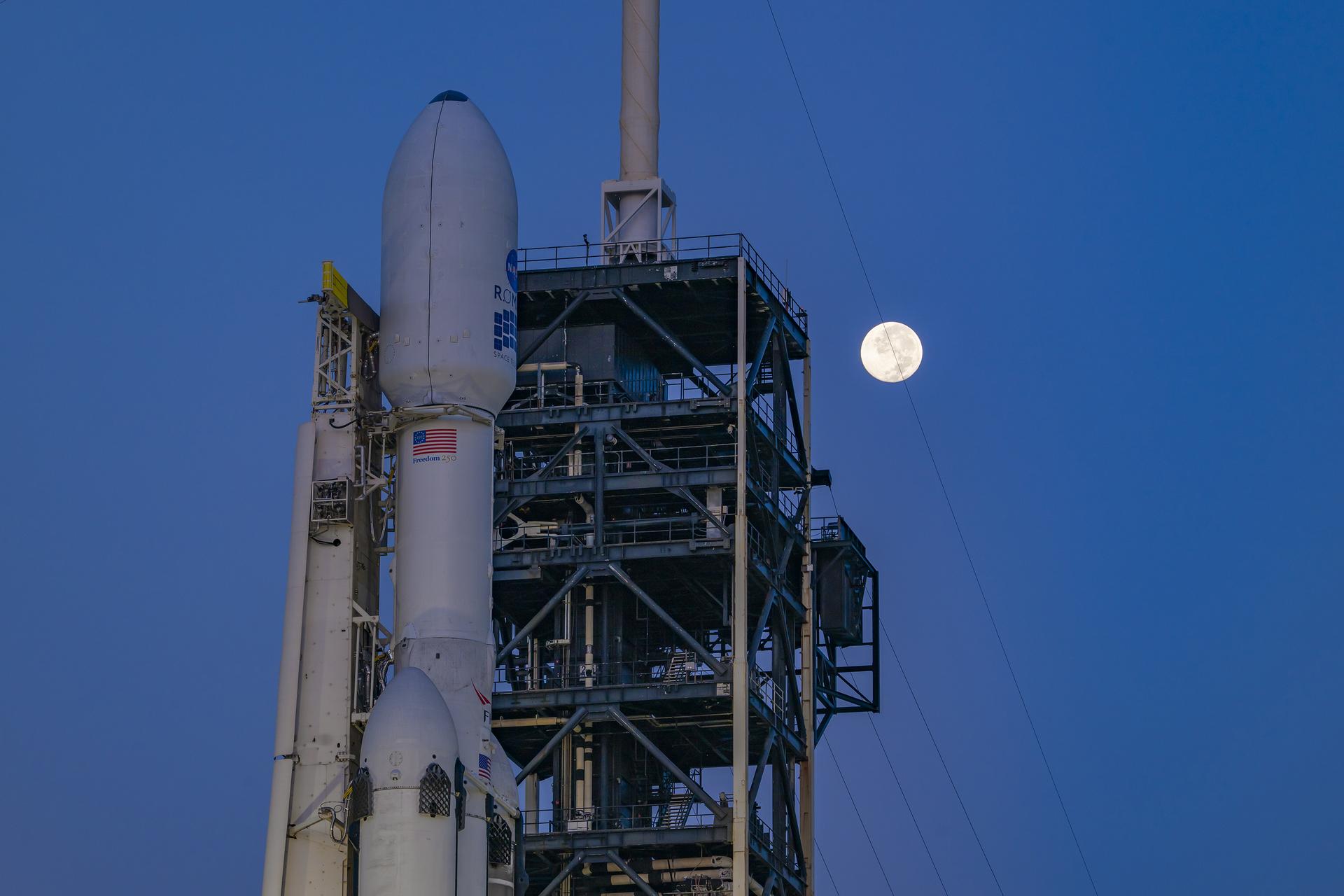
NASA’s Nancy Grace Roman Space Telescope, encapsulated in the SpaceX Falcon Heavy rocket’s fairing, stands vertical on the pad at Launch Complex 39A at NASA’s Kennedy Space Center on Saturday, Aug. 29, 2026. Roman will investigate dark energy and dark matter, conduct a statistical census of planetary systems, and enable a broad range of additional astrophysics research. Liftoff from NASA Kennedy is targeted for 7:26 a.m. EDT Sunday, Aug. 30, 2026.
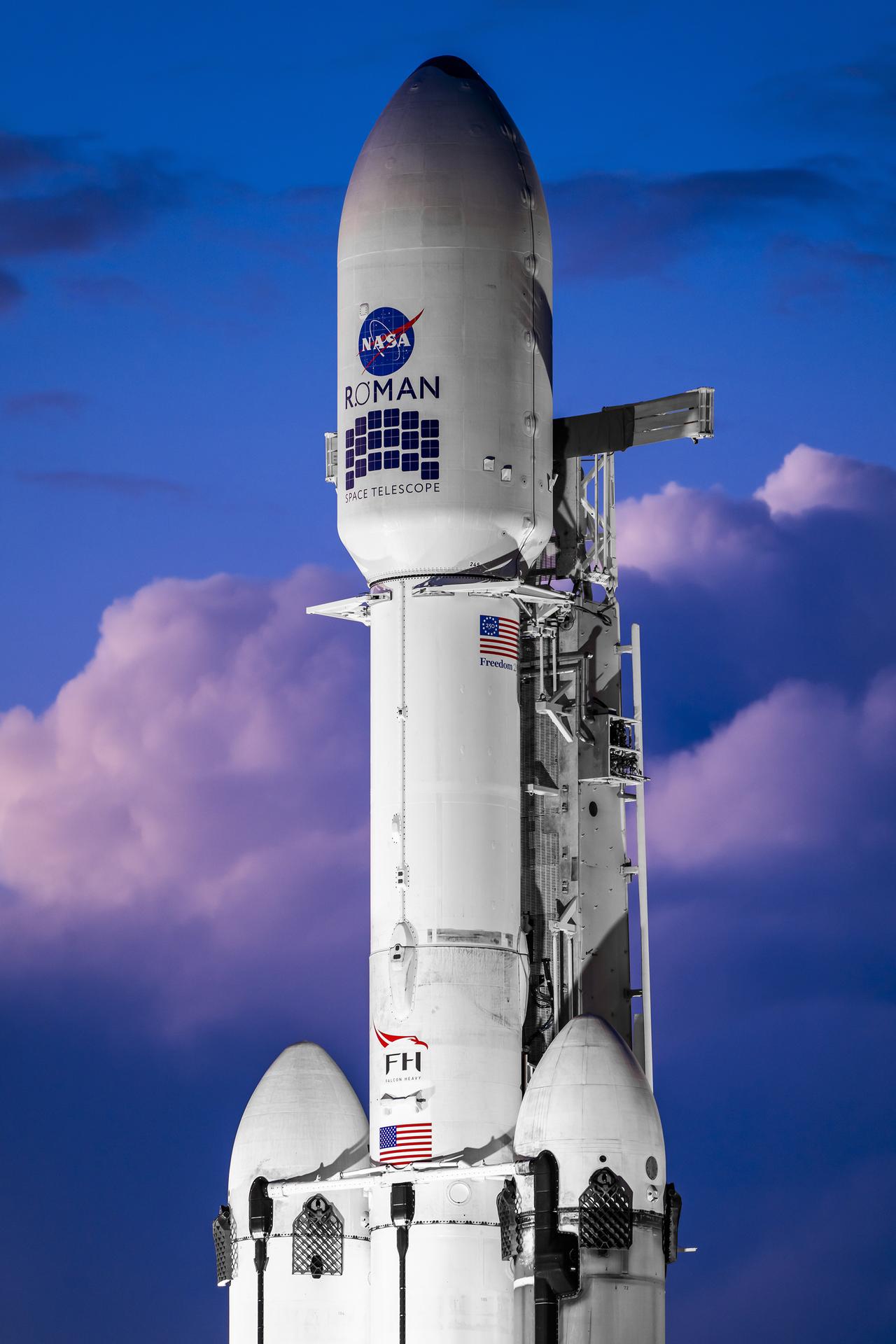
NASA’s Nancy Grace Roman Space Telescope, encapsulated in the SpaceX Falcon Heavy rocket’s fairing, stands vertical on the pad at Launch Complex 39A at NASA’s Kennedy Space Center on Saturday, Aug. 29, 2026. Roman will investigate dark energy and dark matter, conduct a statistical census of planetary systems, and enable a broad range of additional astrophysics research. Liftoff from NASA Kennedy is targeted for 7:26 a.m. EDT Sunday, Aug. 30, 2026.
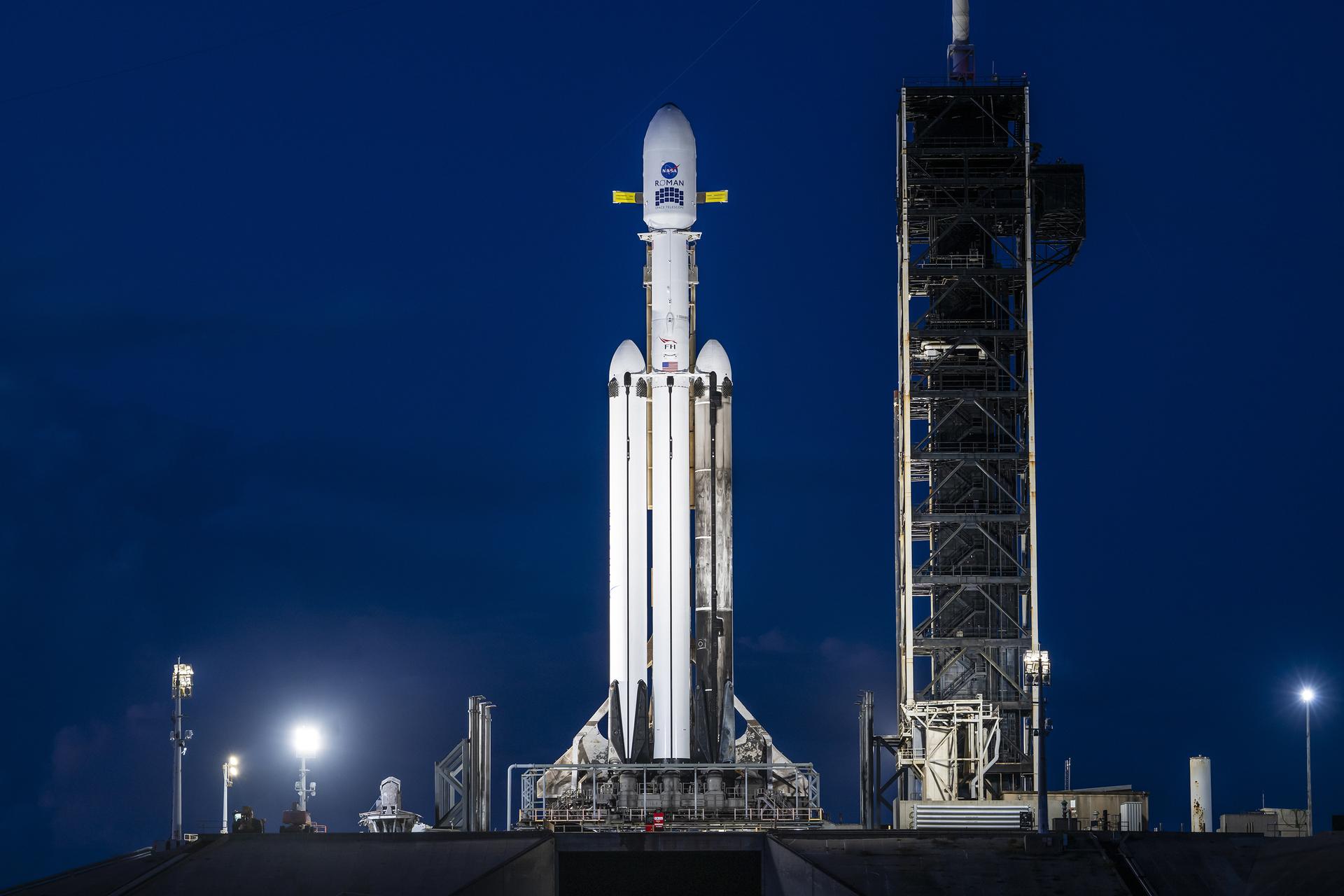
NASA’s Nancy Grace Roman Space Telescope, encapsulated in the SpaceX Falcon Heavy rocket’s fairing, stands vertical on the pad at Launch Complex 39A at NASA’s Kennedy Space Center on Saturday, Aug. 29, 2026. Roman will investigate dark energy and dark matter, conduct a statistical census of planetary systems, and enable a broad range of additional astrophysics research. Liftoff from NASA Kennedy is targeted for 7:26 a.m. EDT Sunday, Aug. 30, 2026.
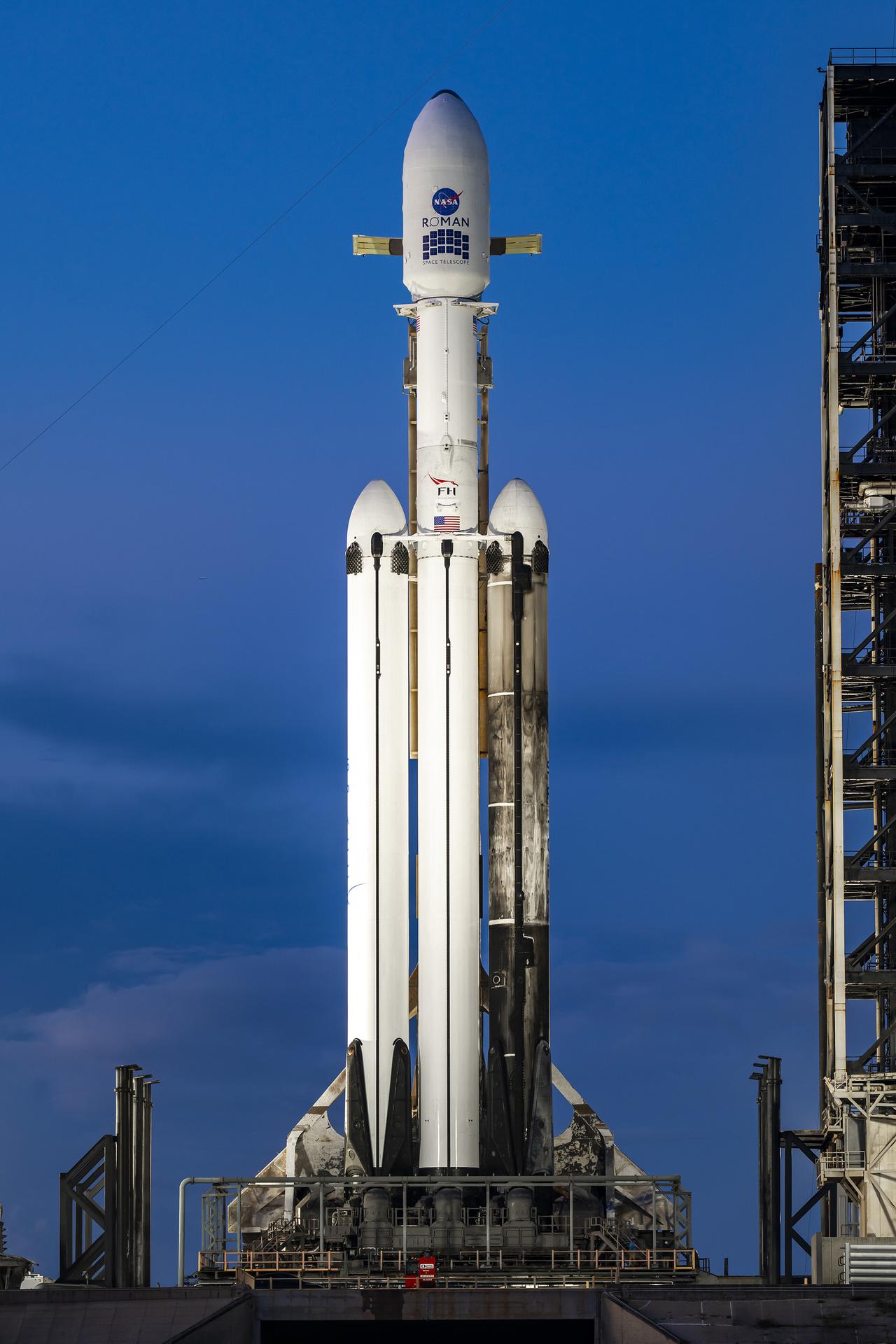
NASA’s Nancy Grace Roman Space Telescope, encapsulated in the SpaceX Falcon Heavy rocket’s fairing, stands vertical on the pad at Launch Complex 39A at NASA’s Kennedy Space Center on Saturday, Aug. 29, 2026. Roman will investigate dark energy and dark matter, conduct a statistical census of planetary systems, and enable a broad range of additional astrophysics research. Liftoff from NASA Kennedy is targeted for 7:26 a.m. EDT Sunday, Aug. 30, 2026.
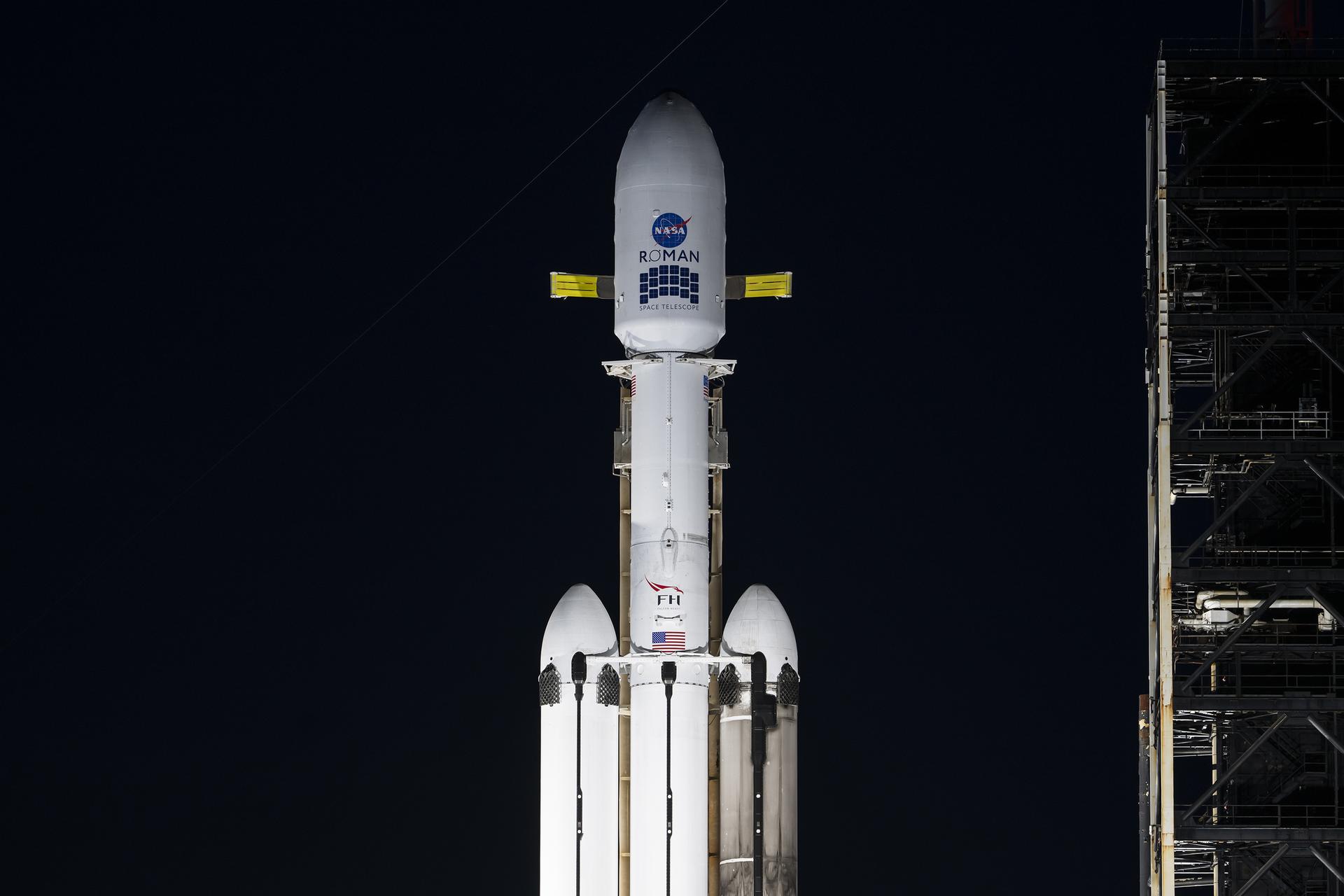
NASA’s Nancy Grace Roman Space Telescope, encapsulated in the SpaceX Falcon Heavy rocket’s fairing, stands vertical on the pad at Launch Complex 39A at NASA’s Kennedy Space Center on Saturday, Aug. 29, 2026. Roman will investigate dark energy and dark matter, conduct a statistical census of planetary systems, and enable a broad range of additional astrophysics research. Liftoff from NASA Kennedy is targeted for 7:26 a.m. EDT Sunday, Aug. 30, 2026.
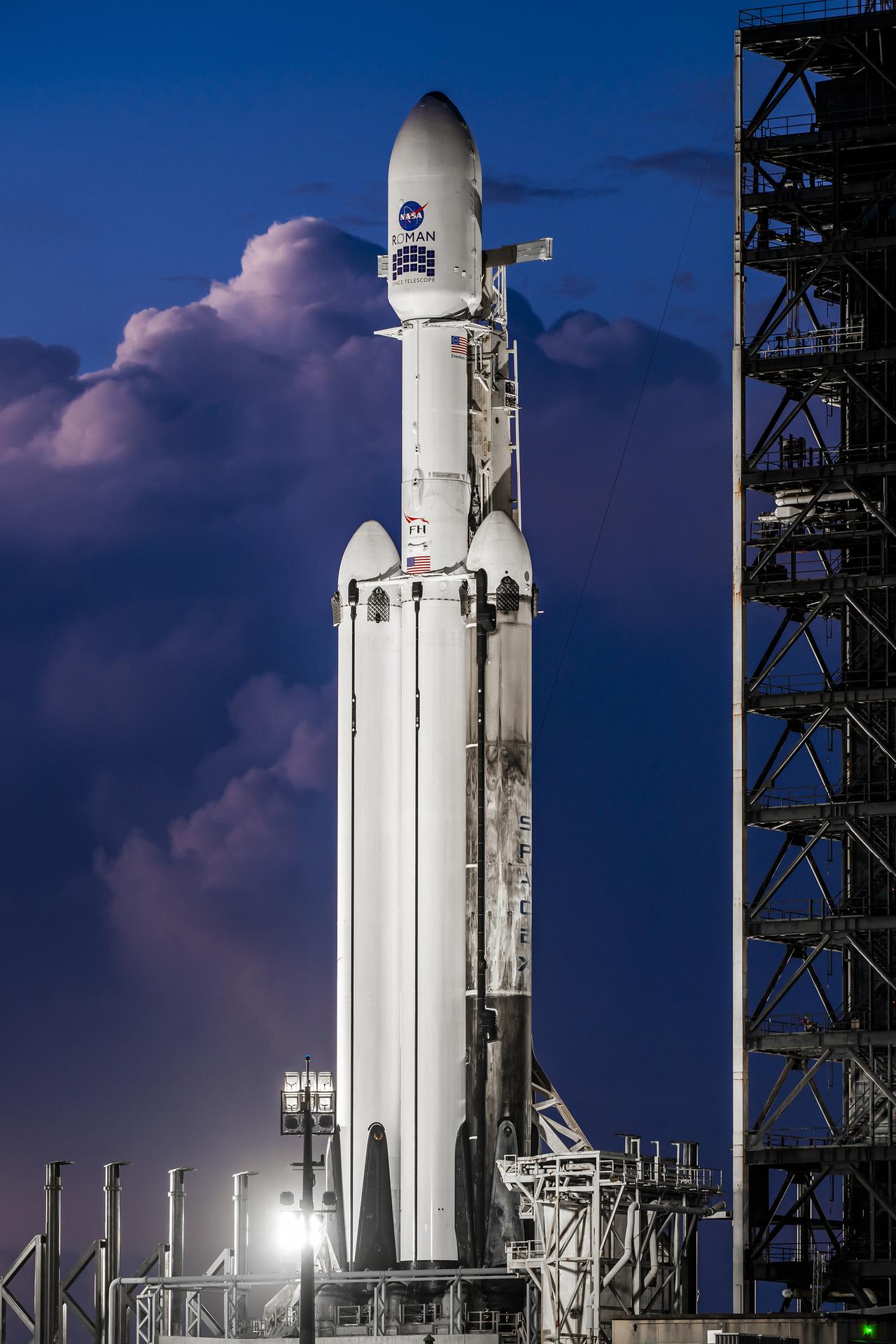
NASA’s Nancy Grace Roman Space Telescope, encapsulated in the SpaceX Falcon Heavy rocket’s fairing, stands vertical on the pad at Launch Complex 39A at NASA’s Kennedy Space Center on Saturday, Aug. 29, 2026. Roman will investigate dark energy and dark matter, conduct a statistical census of planetary systems, and enable a broad range of additional astrophysics research. Liftoff from NASA Kennedy is targeted for 7:26 a.m. EDT Sunday, Aug. 30, 2026.
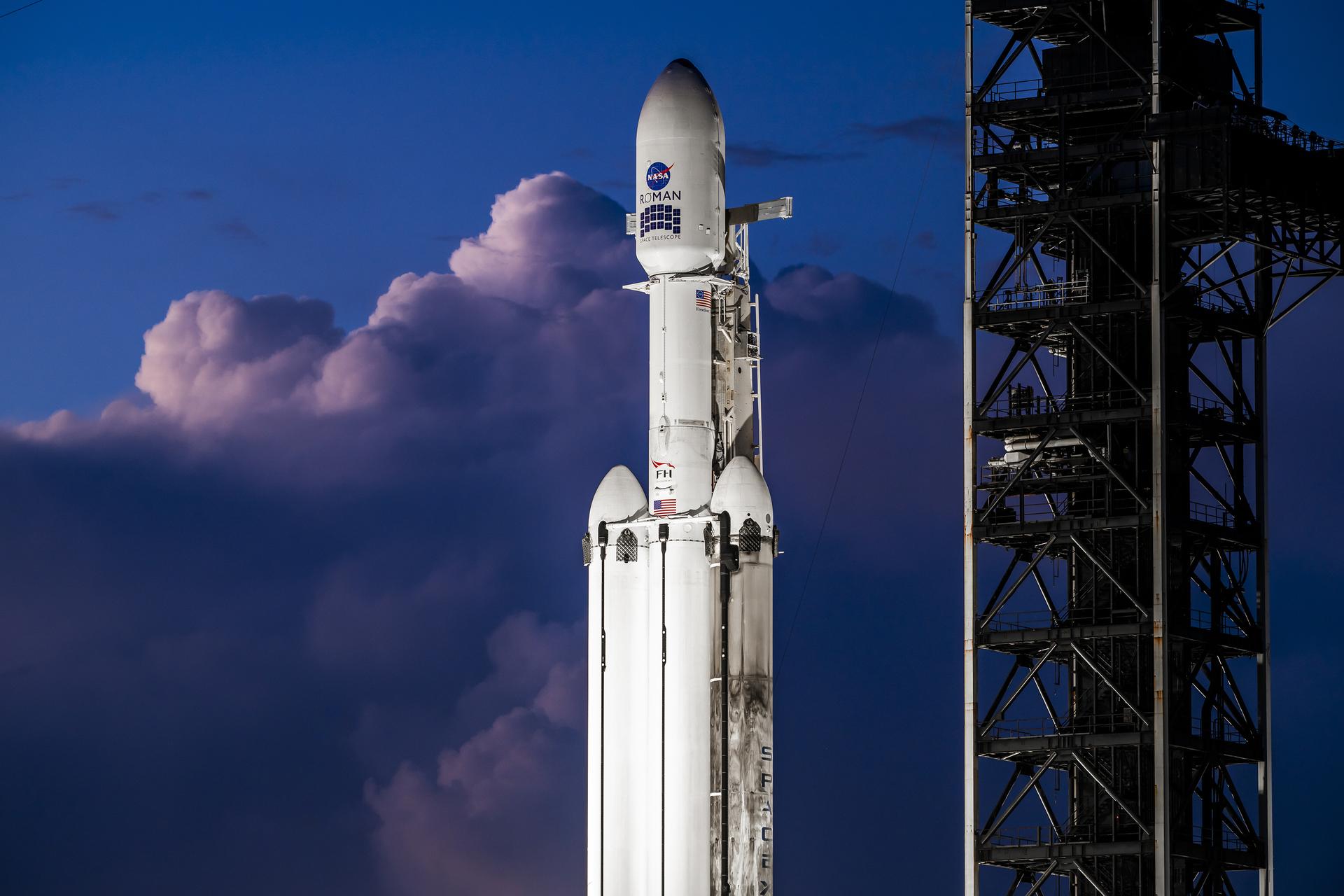
NASA’s Nancy Grace Roman Space Telescope, encapsulated in the SpaceX Falcon Heavy rocket’s fairing, stands vertical on the pad at Launch Complex 39A at NASA’s Kennedy Space Center on Saturday, Aug. 29, 2026. Roman will investigate dark energy and dark matter, conduct a statistical census of planetary systems, and enable a broad range of additional astrophysics research. Liftoff from NASA Kennedy is targeted for 7:26 a.m. EDT Sunday, Aug. 30, 2026.
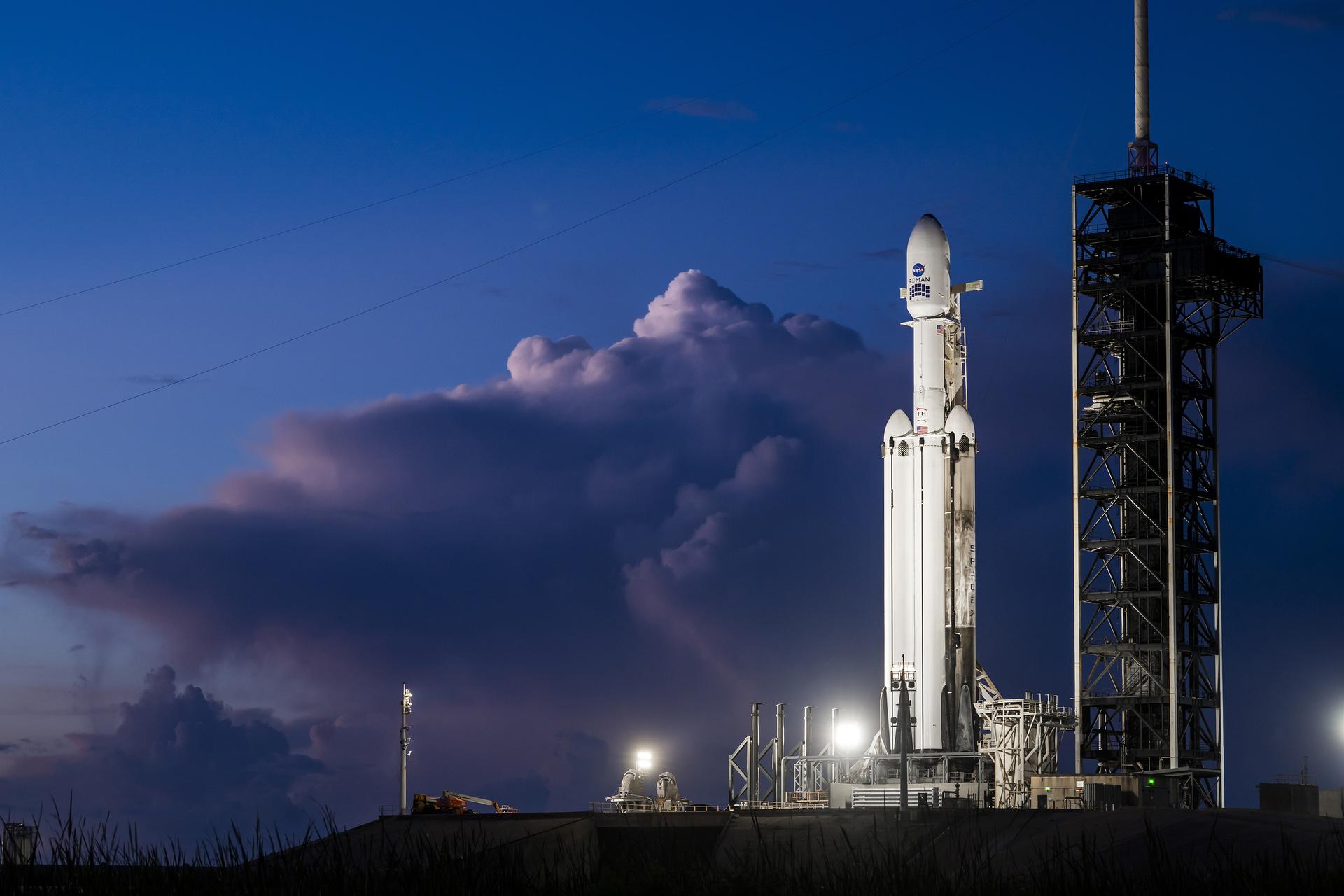
NASA’s Nancy Grace Roman Space Telescope, encapsulated in the SpaceX Falcon Heavy rocket’s fairing, stands vertical on the pad at Launch Complex 39A at NASA’s Kennedy Space Center on Saturday, Aug. 29, 2026. Roman will investigate dark energy and dark matter, conduct a statistical census of planetary systems, and enable a broad range of additional astrophysics research. Liftoff from NASA Kennedy is targeted for 7:26 a.m. EDT Sunday, Aug. 30, 2026.
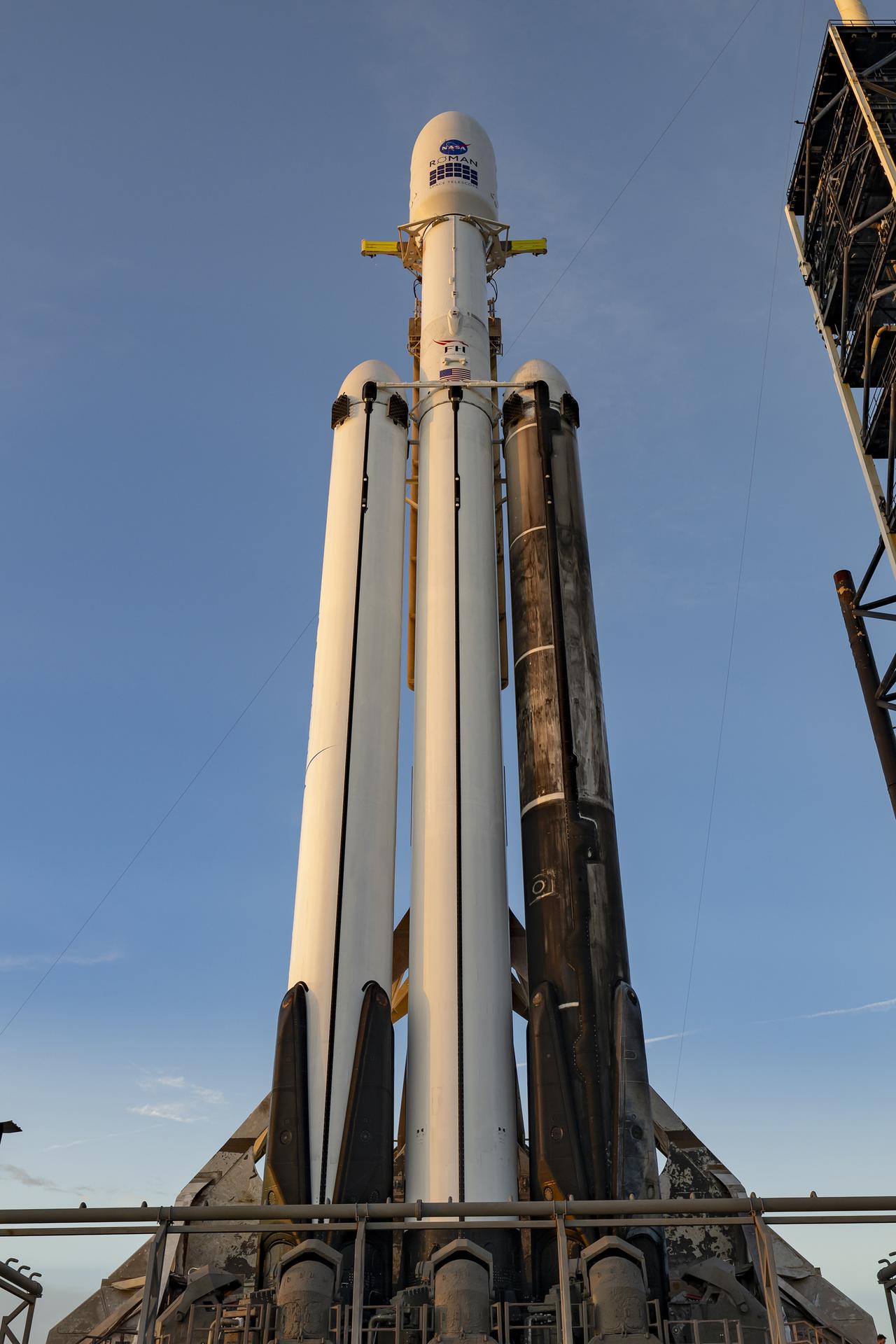
NASA’s Nancy Grace Roman Space Telescope, encapsulated in the SpaceX Falcon Heavy rocket’s fairing, stands vertical on the pad at Launch Complex 39A at NASA’s Kennedy Space Center on Saturday, Aug. 29, 2026. Roman will investigate dark energy and dark matter, conduct a statistical census of planetary systems, and enable a broad range of additional astrophysics research. Liftoff from NASA Kennedy is targeted for 7:26 a.m. EDT Sunday, Aug. 30, 2026.
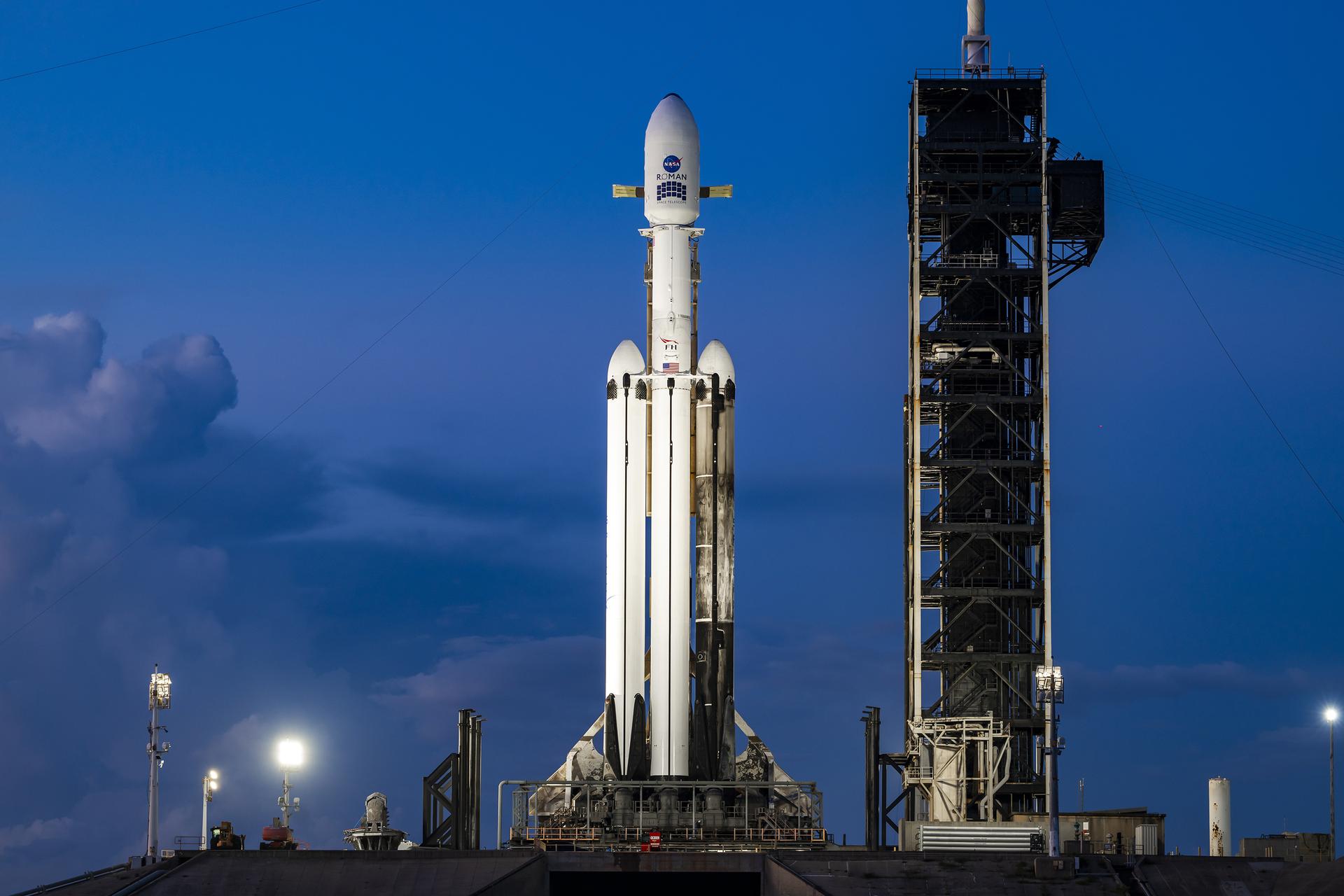
NASA’s Nancy Grace Roman Space Telescope, encapsulated in the SpaceX Falcon Heavy rocket’s fairing, stands vertical on the pad at Launch Complex 39A at NASA’s Kennedy Space Center on Saturday, Aug. 29, 2026. Roman will investigate dark energy and dark matter, conduct a statistical census of planetary systems, and enable a broad range of additional astrophysics research. Liftoff from NASA Kennedy is targeted for 7:26 a.m. EDT Sunday, Aug. 30, 2026.
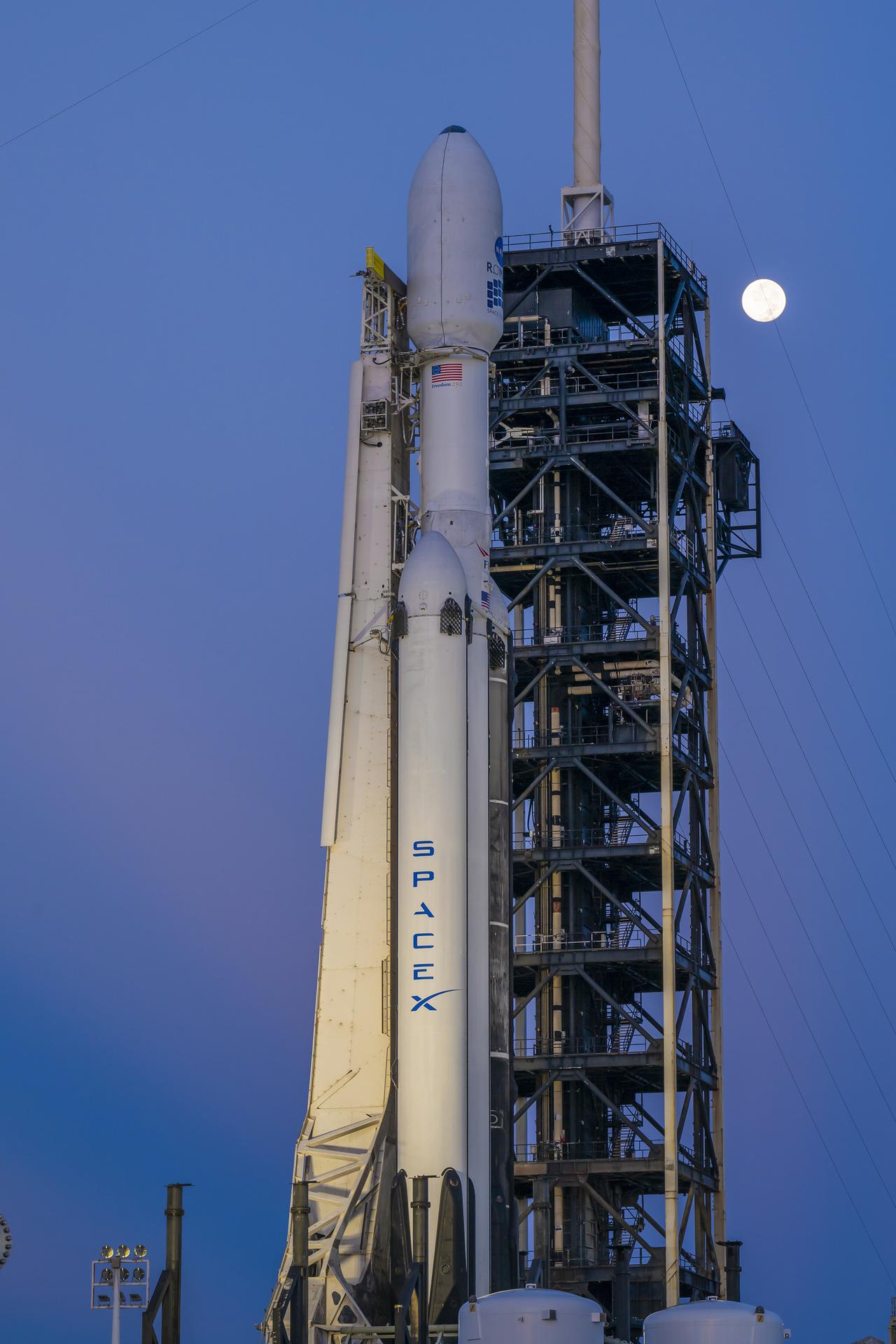
NASA’s Nancy Grace Roman Space Telescope, encapsulated in the SpaceX Falcon Heavy rocket’s fairing, stands vertical on the pad at Launch Complex 39A at NASA’s Kennedy Space Center on Saturday, Aug. 29, 2026. Roman will investigate dark energy and dark matter, conduct a statistical census of planetary systems, and enable a broad range of additional astrophysics research. Liftoff from NASA Kennedy is targeted for 7:26 a.m. EDT Sunday, Aug. 30, 2026.
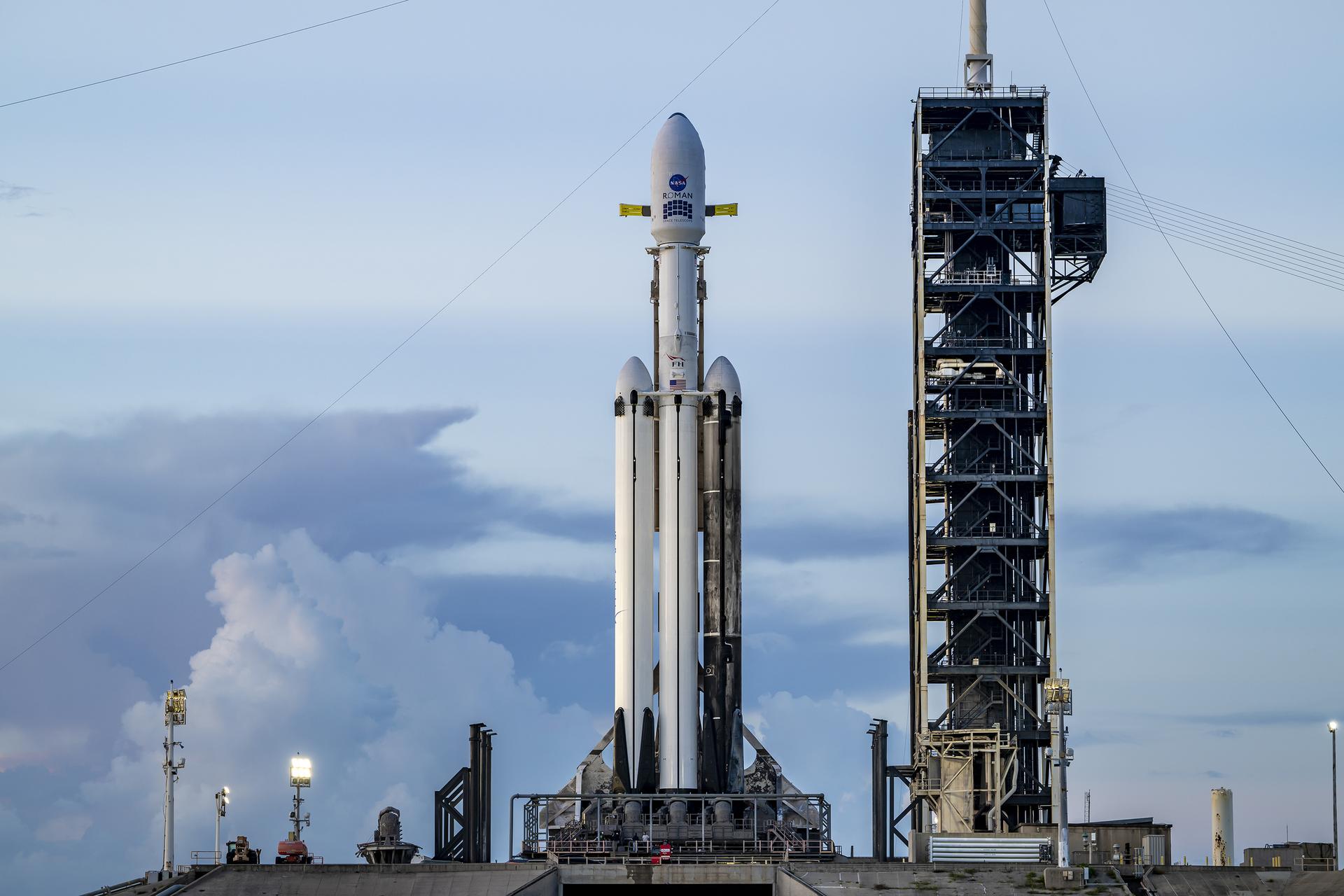
NASA’s Nancy Grace Roman Space Telescope, encapsulated in the SpaceX Falcon Heavy rocket’s fairing, stands vertical on the pad at Launch Complex 39A at NASA’s Kennedy Space Center on Saturday, Aug. 29, 2026. Roman will investigate dark energy and dark matter, conduct a statistical census of planetary systems, and enable a broad range of additional astrophysics research. Liftoff from NASA Kennedy is targeted for 7:26 a.m. EDT Sunday, Aug. 30, 2026.
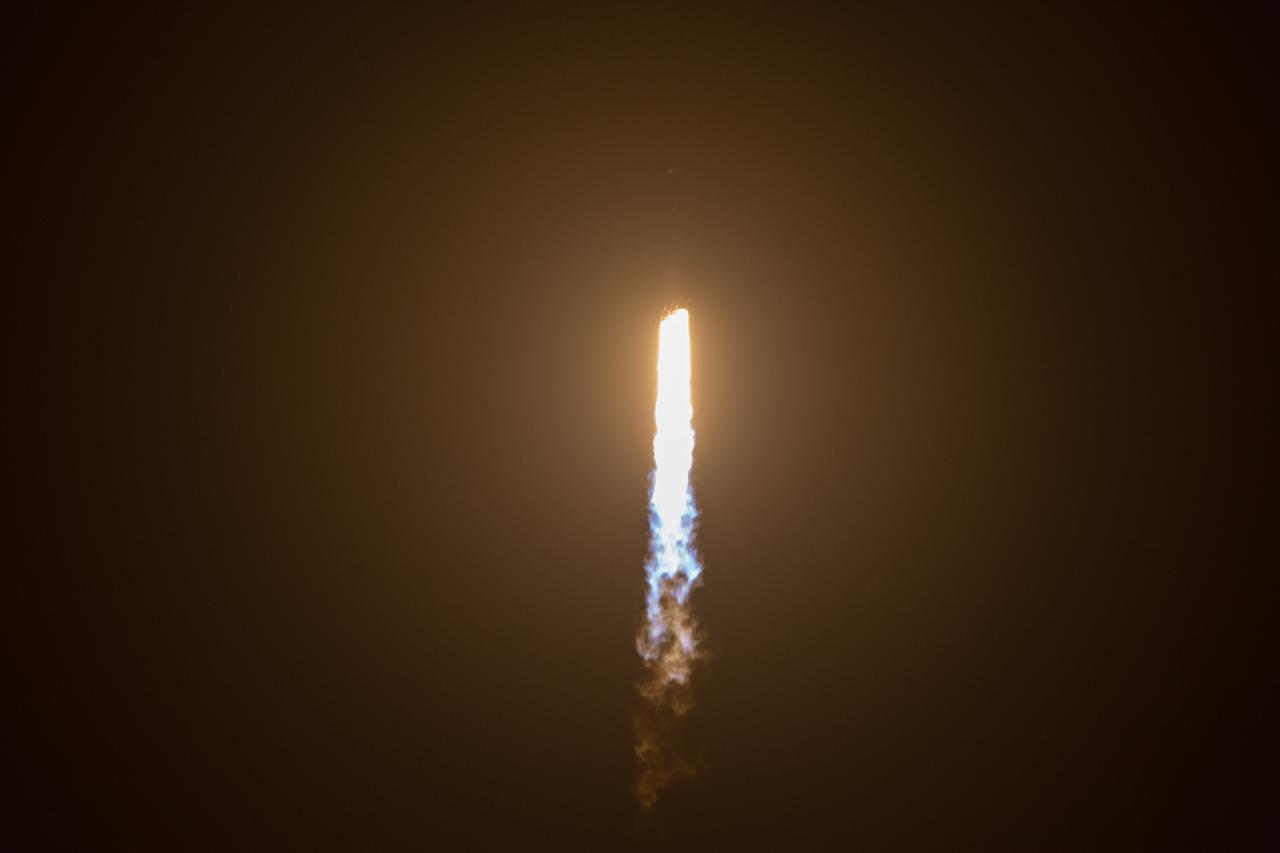
A SpaceX Falcon Heavy rocket roars upward after lifting off from Launch Complex 39A at 2:30 a.m. EDT on June 25, 2019, at NASA’s Kennedy Space Center in Florida. The Falcon Heavy rocket carries two dozen satellites to space for the U.S. Department of Defense, including four NASA payloads that are part of the Space Test Program (STP-2) mission, managed by the U.S. Air Force Space and Missile Systems Center. The four NASA payloads include two technology demonstrations to improve how spacecraft propel and navigate, as well as two NASA science missions to help us better understand the nature of space and how it impacts technology on spacecraft and the ground.
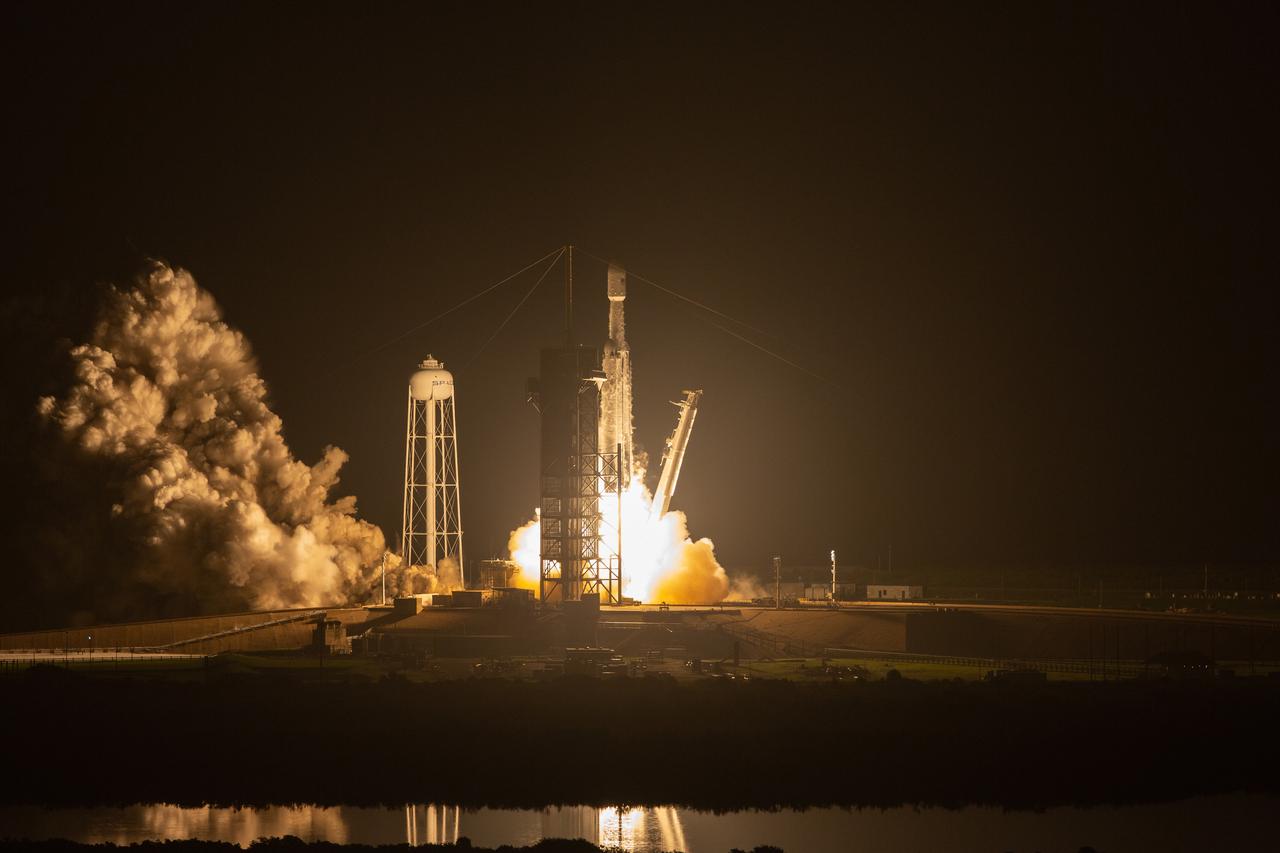
A SpaceX Falcon Heavy rocket lifts off from Launch Complex 39A at 2:30 a.m. EDT on June 25, 2019, at NASA’s Kennedy Space Center in Florida. The Falcon Heavy rocket carries two dozen satellites to space for the U.S. Department of Defense, including four NASA payloads that are part of the Space Test Program (STP-2) mission, managed by the U.S. Air Force Space and Missile Systems Center. The four NASA payloads include two technology demonstrations to improve how spacecraft propel and navigate, as well as two NASA science missions to help us better understand the nature of space and how it impacts technology on spacecraft and the ground.
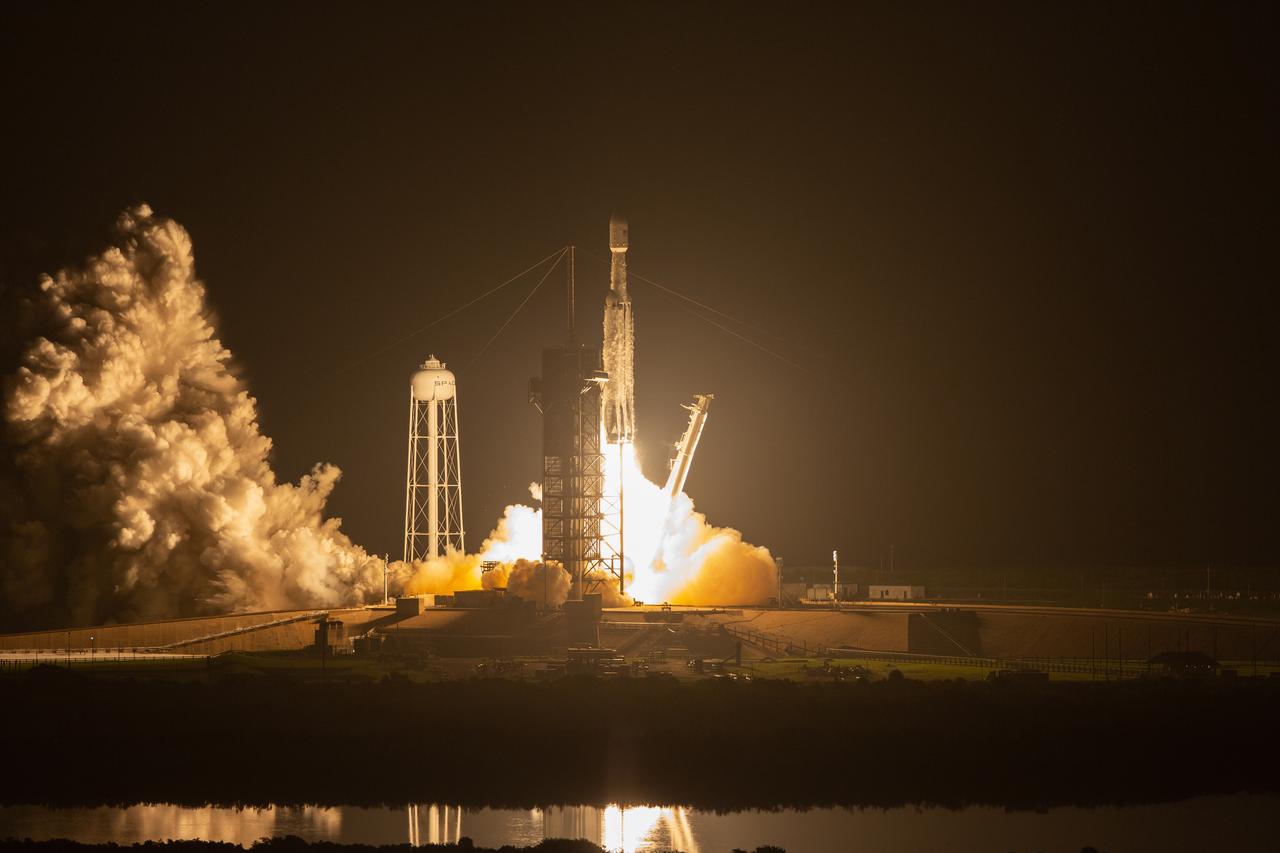
A SpaceX Falcon Heavy rocket lifts off from Launch Complex 39A at 2:30 a.m. EDT on June 25, 2019, at NASA’s Kennedy Space Center in Florida. The Falcon Heavy rocket carries two dozen satellites to space for the U.S. Department of Defense, including four NASA payloads that are part of the Space Test Program (STP-2) mission, managed by the U.S. Air Force Space and Missile Systems Center. The four NASA payloads include two technology demonstrations to improve how spacecraft propel and navigate, as well as two NASA science missions to help us better understand the nature of space and how it impacts technology on spacecraft and the ground.
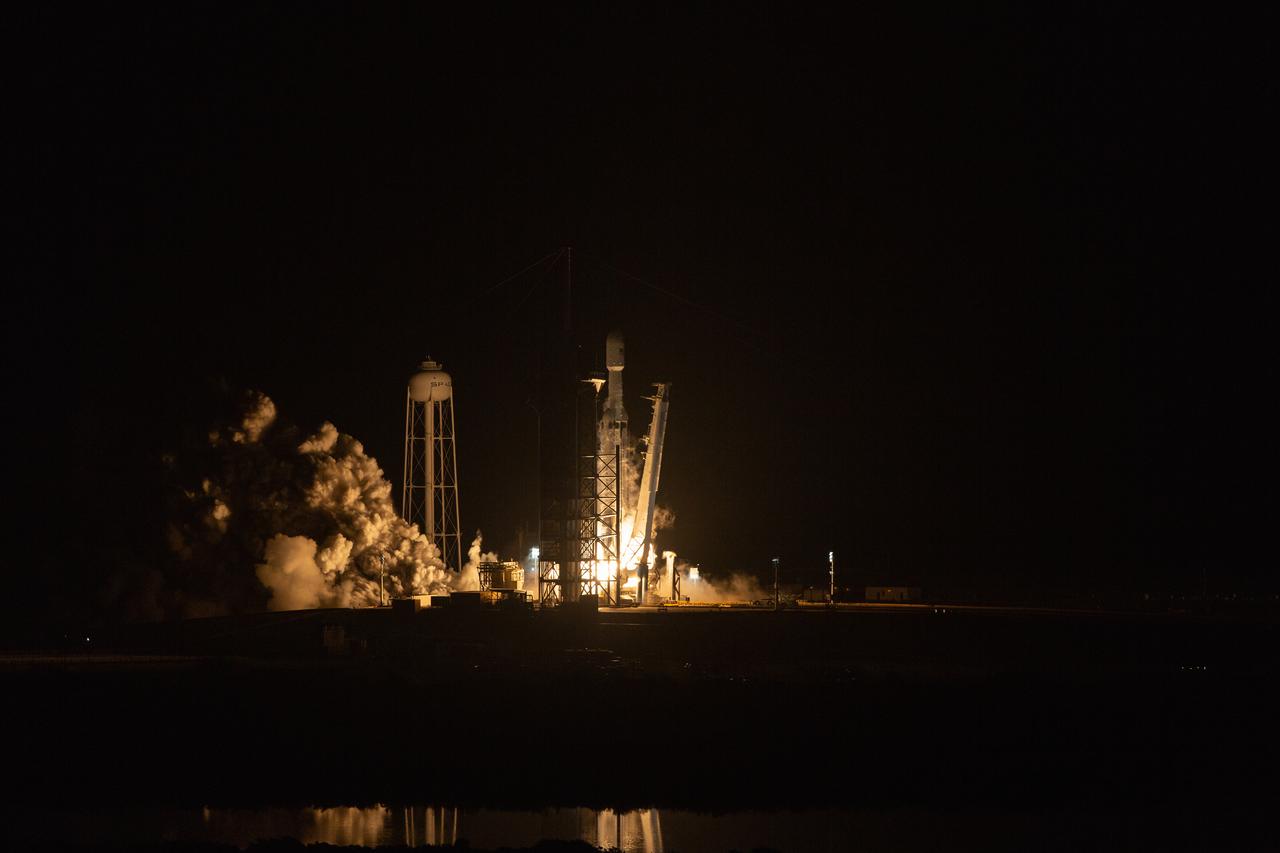
A SpaceX Falcon Heavy rocket lifts off from Launch Complex 39A at 2:30 a.m. EDT on June 25, 2019, at NASA’s Kennedy Space Center in Florida. The Falcon Heavy rocket carries two dozen satellites to space for the U.S. Department of Defense, including four NASA payloads that are part of the Space Test Program (STP-2) mission, managed by the U.S. Air Force Space and Missile Systems Center. The four NASA payloads include two technology demonstrations to improve how spacecraft propel and navigate, as well as two NASA science missions to help us better understand the nature of space and how it impacts technology on spacecraft and the ground.
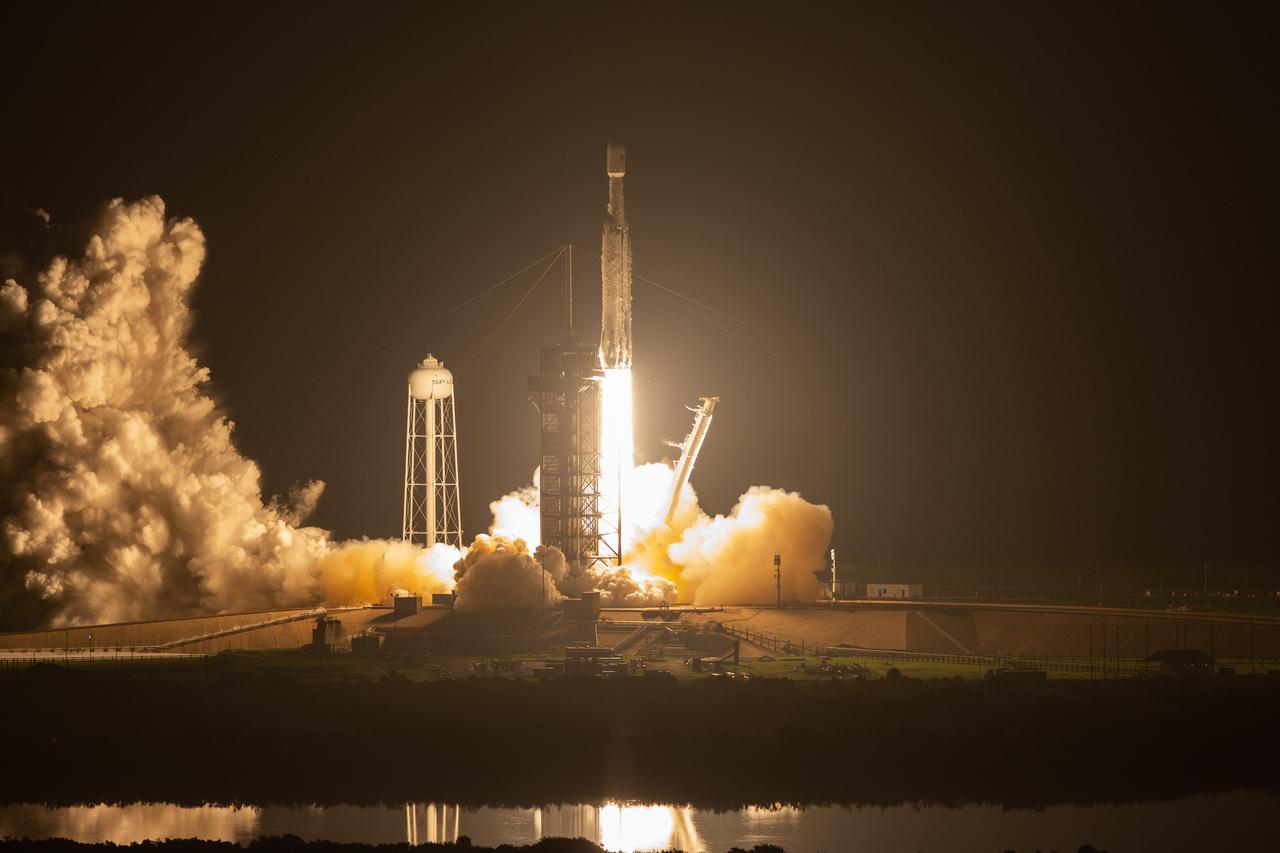
A SpaceX Falcon Heavy rocket lifts off from Launch Complex 39A at 2:30 a.m. EDT on June 25, 2019, at NASA’s Kennedy Space Center in Florida. The Falcon Heavy rocket carries two dozen satellites to space for the U.S. Department of Defense, including four NASA payloads that are part of the Space Test Program (STP-2) mission, managed by the U.S. Air Force Space and Missile Systems Center. The four NASA payloads include two technology demonstrations to improve how spacecraft propel and navigate, as well as two NASA science missions to help us better understand the nature of space and how it impacts technology on spacecraft and the ground.
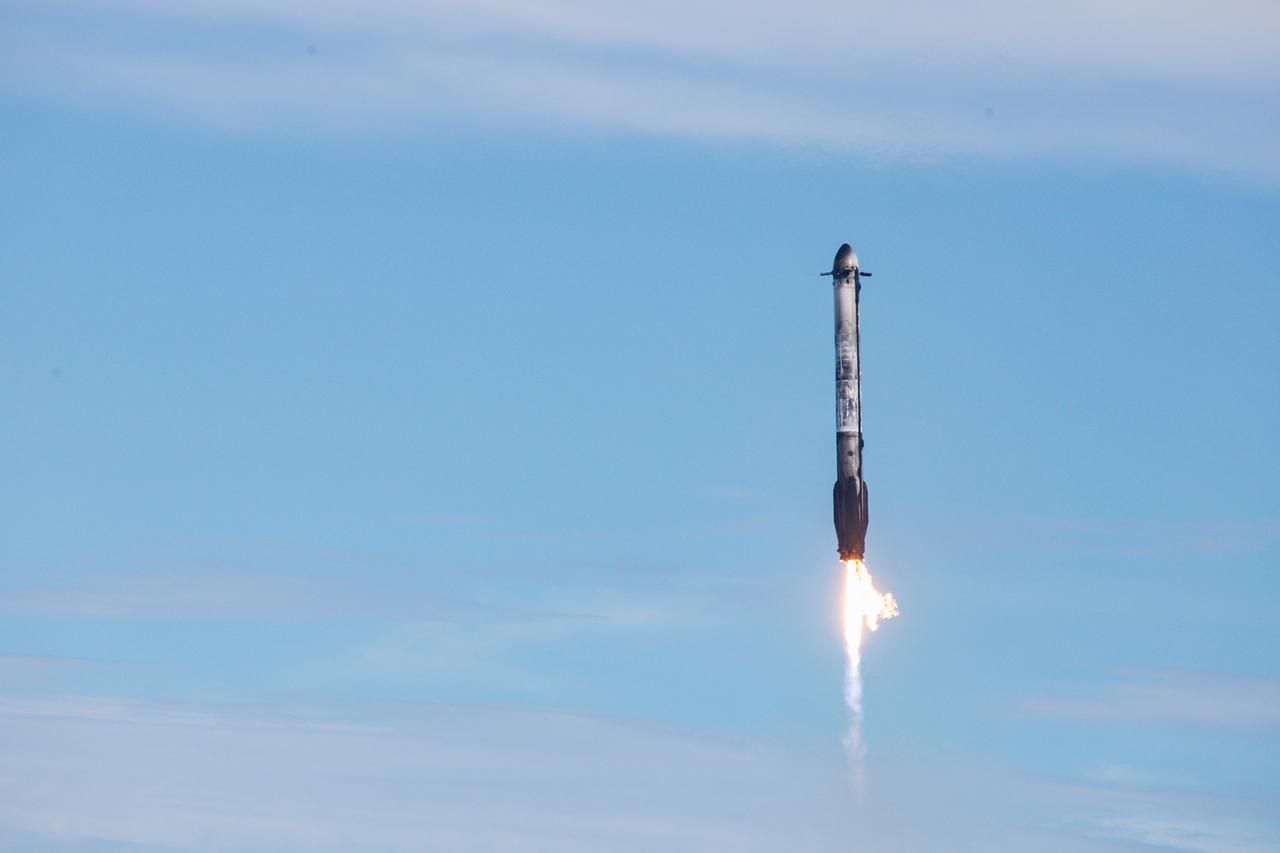
A SpaceX Falcon Heavy side booster lands at Cape Canaveral Space Force Station in Florida after the rocket launched NOAA’s (National Oceanic and Atmospheric Administration) Geostationary Operational Environmental Satellite (GOES-U) from NASA’s Kennedy Space Center in Florida on Tuesday, June 25, 2024.
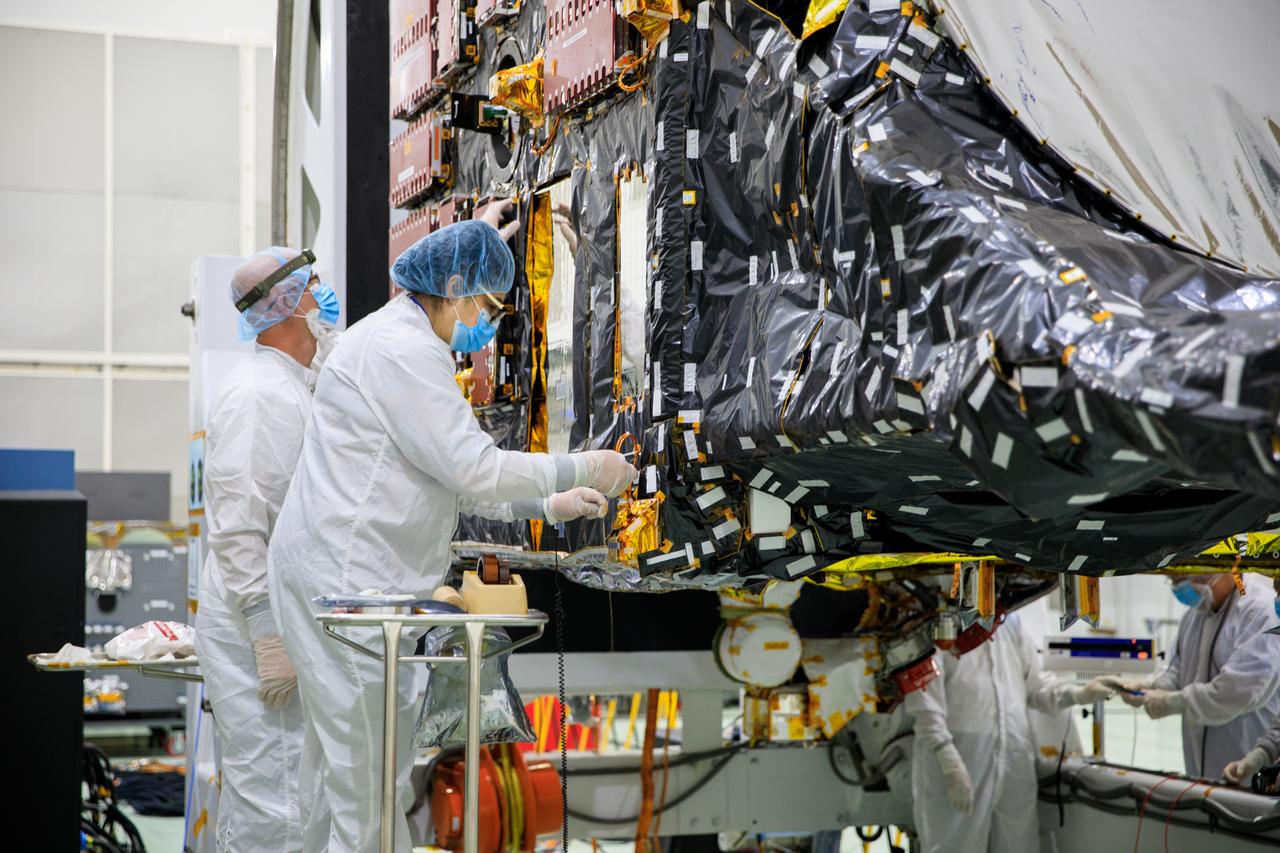
A NASA team prepares the agency’s Psyche spacecraft for launch inside the Astrotech Space Operations Facility near Kennedy Space Center in Florida on July 15, 2023. Psyche will launch atop a SpaceX Falcon Heavy rocket from Launch Complex 39A at Kennedy to explore a metal-rich asteroid. Launch is targeted for Oct. 5, 2023. Riding with Psyche is a pioneering technology demonstration, NASA’s Deep Space Optical Communications (DSOC) experiment.
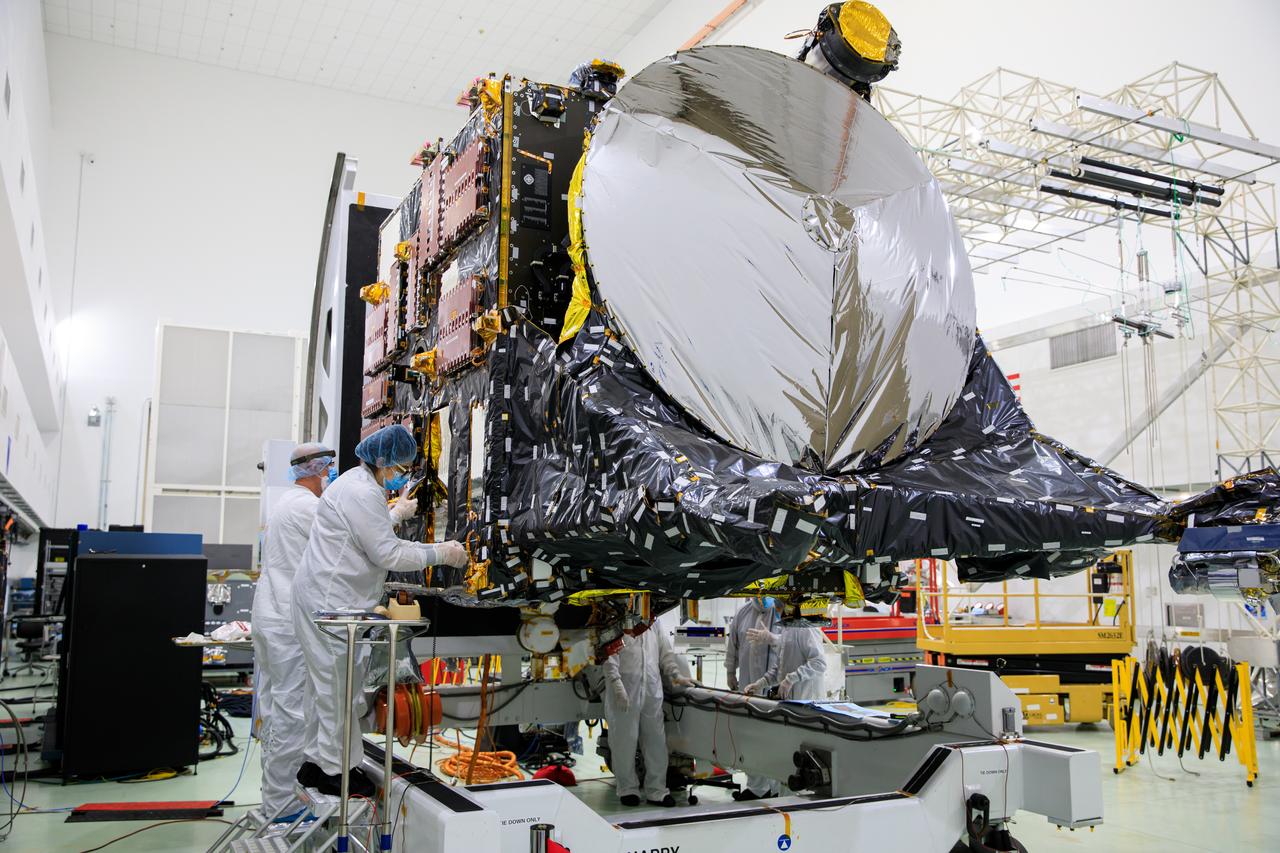
A NASA team prepares the agency’s Psyche spacecraft for launch inside the Astrotech Space Operations Facility near Kennedy Space Center in Florida on July 15, 2023. Psyche will launch atop a SpaceX Falcon Heavy rocket from Launch Complex 39A at Kennedy to explore a metal-rich asteroid. Launch is targeted for Oct. 5, 2023. Riding with Psyche is a pioneering technology demonstration, NASA’s Deep Space Optical Communications (DSOC) experiment.
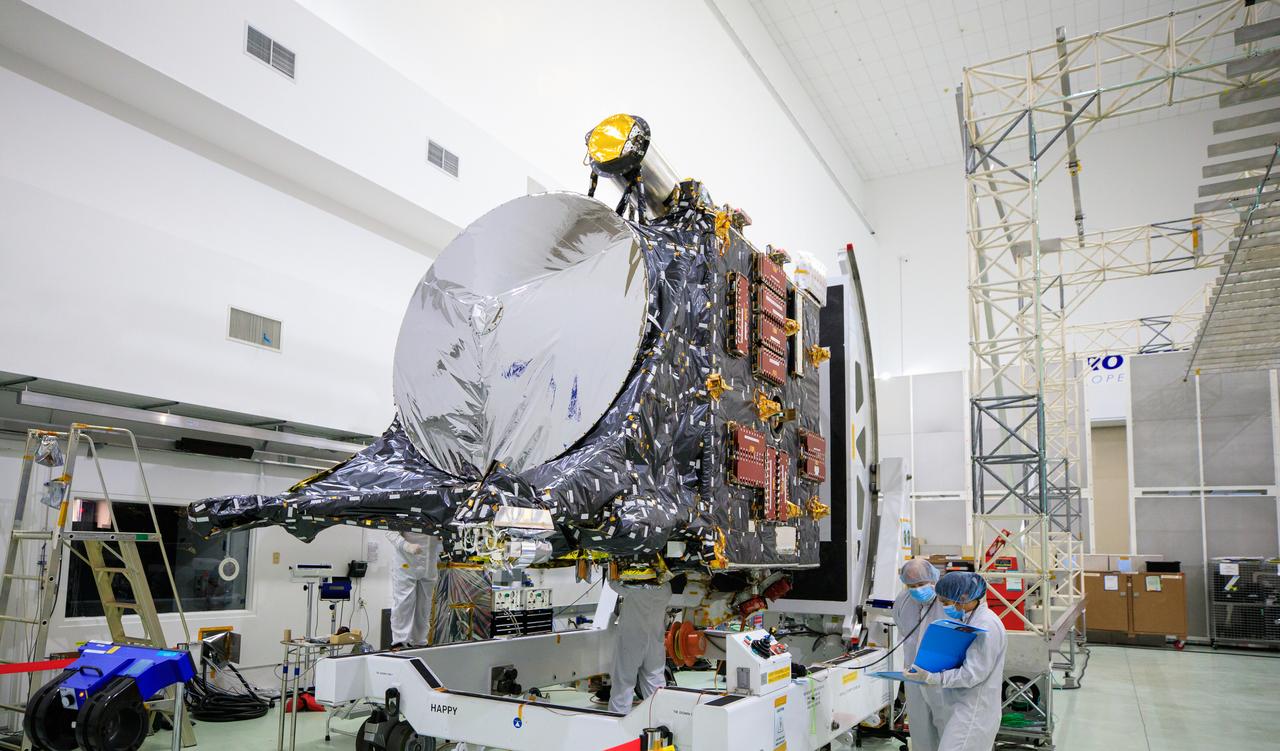
A NASA team prepares the agency’s Psyche spacecraft for launch inside the Astrotech Space Operations Facility near Kennedy Space Center in Florida on July 15, 2023. Psyche will launch atop a SpaceX Falcon Heavy rocket from Launch Complex 39A at Kennedy to explore a metal-rich asteroid. Launch is targeted for Oct. 5, 2023. Riding with Psyche is a pioneering technology demonstration, NASA’s Deep Space Optical Communications (DSOC) experiment.
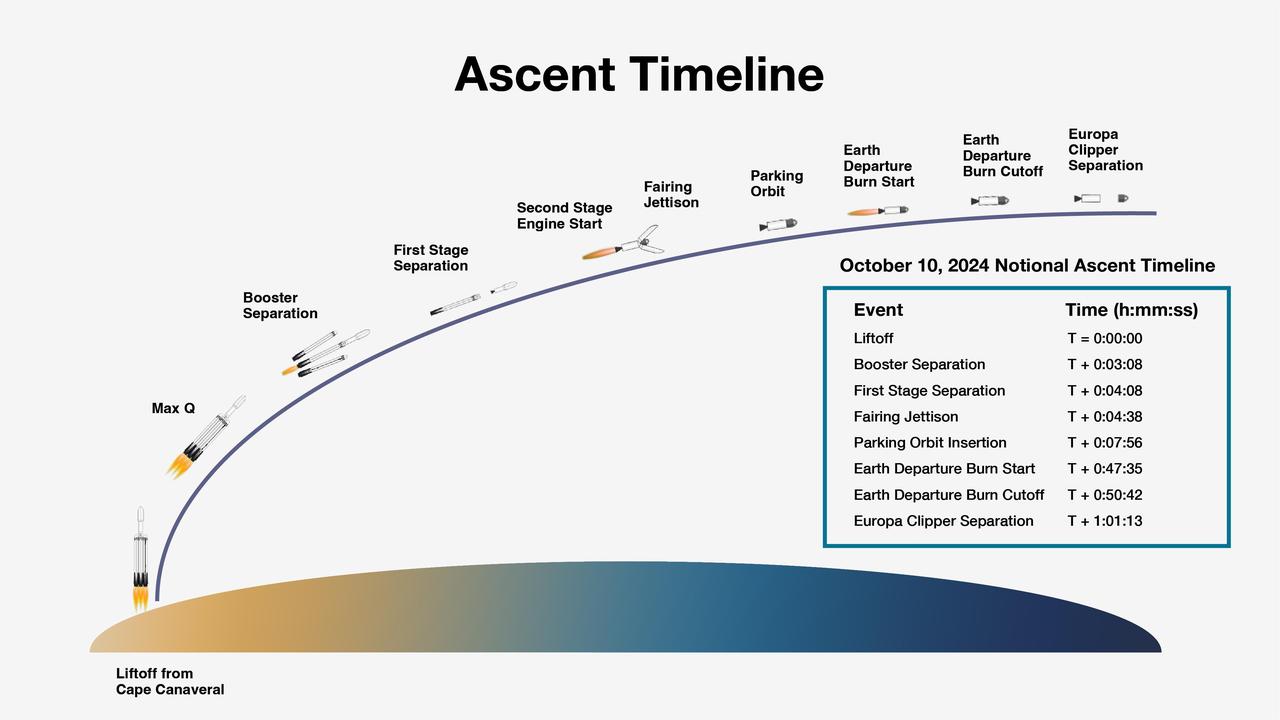
NASA's Europa Clipper spacecraft will be launched on a SpaceX Falcon Heavy rocket from the agency's Kennedy Space Center in Florida. This graphic shows the expected timeline of milestones immediately following liftoff if the mission launches at the beginning of its launch period on Oct. 10, 2024. The actual times of milestones will differ slightly depending on the launch day. Regardless of launch date within the launch period, the spacecraft's separation from the rocket is expected to occur a little over an hour after liftoff. Europa Clipper is bound for the Jupiter system, where it will study the gas giant's icy moon Europa. The mission's three main science objectives are to determine the thickness of the moon's icy shell and its interactions with the ocean below, to investigate its composition, and to characterize its geology. The mission's detailed exploration of Europa will help scientists better understand the astrobiological potential for habitable worlds beyond our planet. https://photojournal.jpl.nasa.gov/catalog/PIA26437
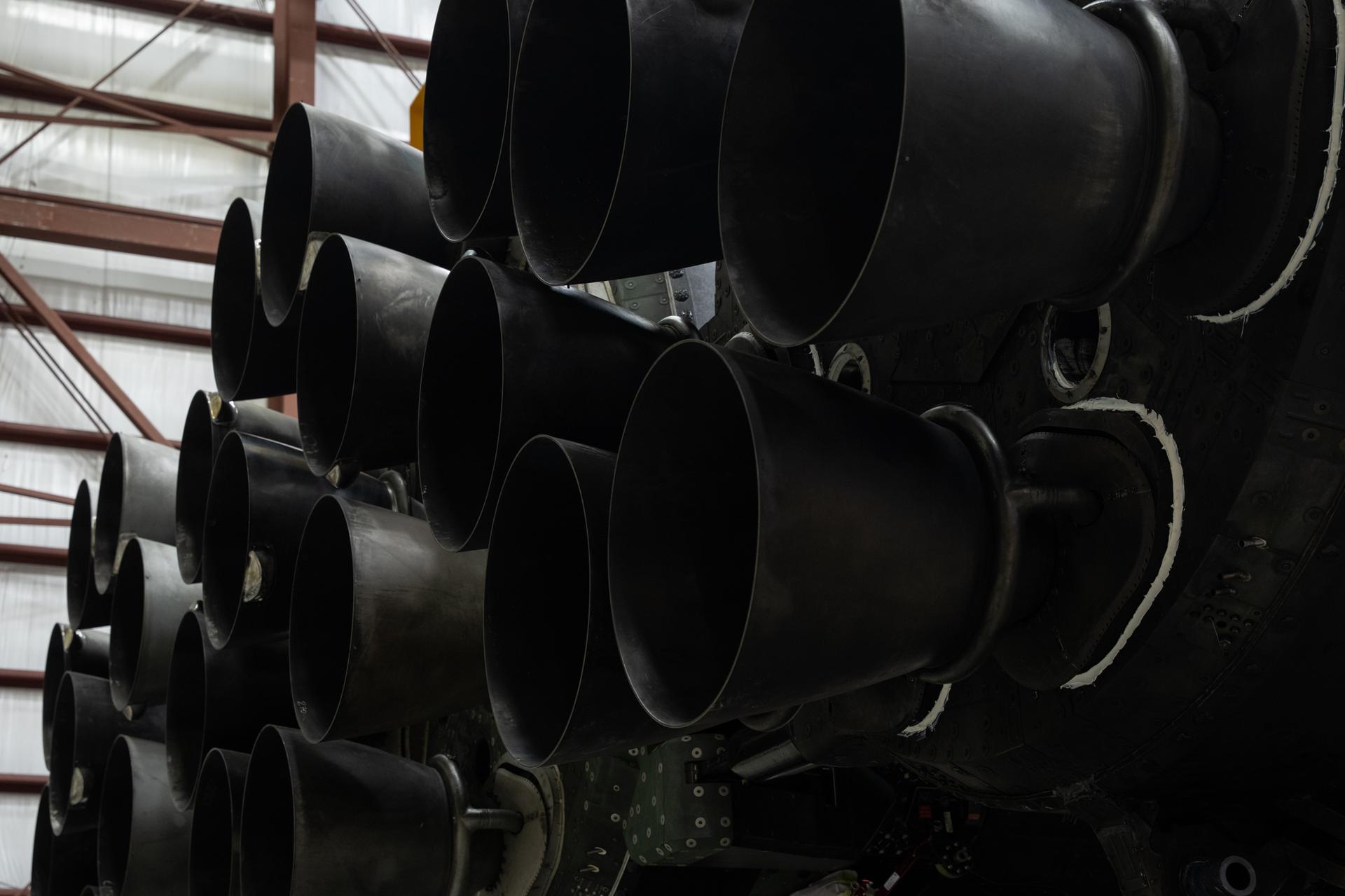
Teams continue launch preparations on the SpaceX Falcon Heavy that will launch NASA's Nancy Grace Roman Space Telescope, inside the SpaceX hangar at Launch Complex 39A at Kennedy Space Center in Florida on Wednesday, Aug. 26, 2026. The rocket has 27 Merlin engines on its first stage and can generate more than five million pounds of thrust at liftoff. NASA and SpaceX are targeting launch no earlier than 7:26 a.m. EDT Sunday, Aug. 30, from Kennedy.
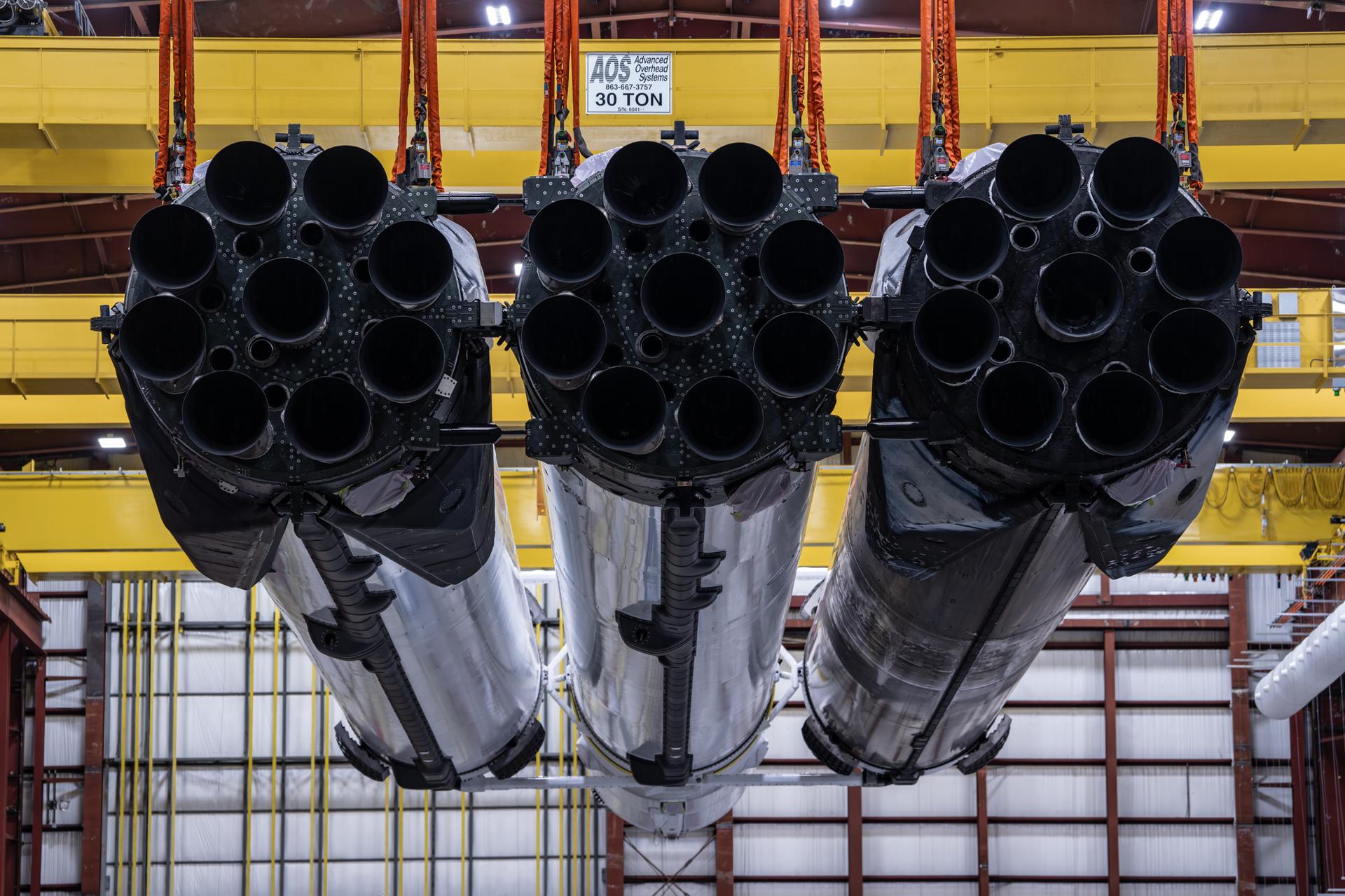
Teams continue launch preparations on the SpaceX Falcon Heavy that will launch NASA's Nancy Grace Roman Space Telescope, inside the SpaceX hangar at Launch Complex 39A at Kennedy Space Center in Florida on Wednesday, Aug. 26, 2026. The rocket has 27 Merlin engines on its first stage and can generate more than five million pounds of thrust at liftoff. NASA and SpaceX are targeting launch no earlier than 7:26 a.m. EDT Sunday, Aug. 30, from Kennedy.
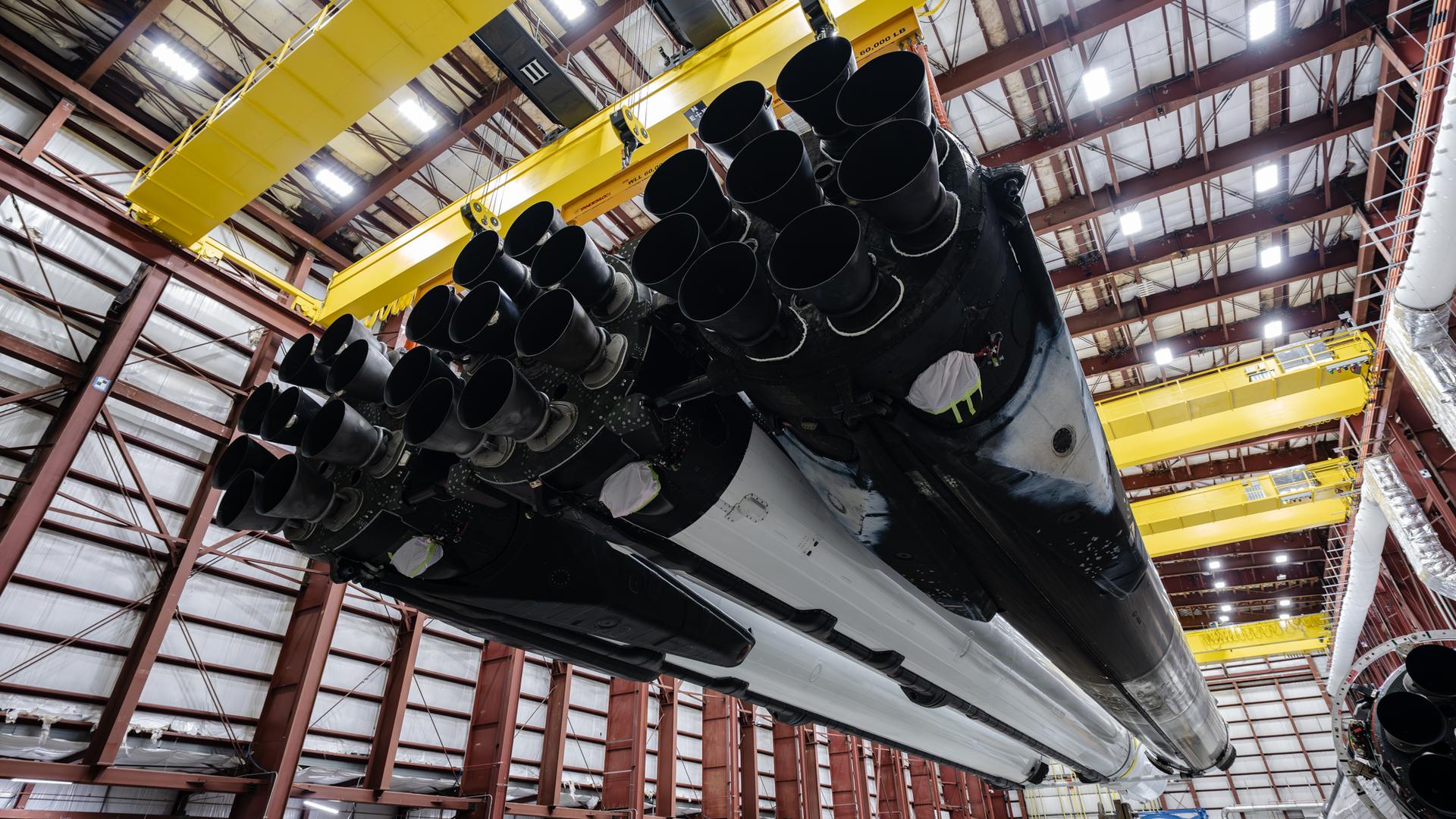
Teams continue launch preparations on the SpaceX Falcon Heavy that will launch NASA's Nancy Grace Roman Space Telescope, inside the SpaceX hangar at Launch Complex 39A at Kennedy Space Center in Florida on Wednesday, Aug. 26, 2026. The rocket has 27 Merlin engines on its first stage and can generate more than five million pounds of thrust at liftoff. NASA and SpaceX are targeting launch no earlier than 7:26 a.m. EDT Sunday, Aug. 30, from Kennedy.
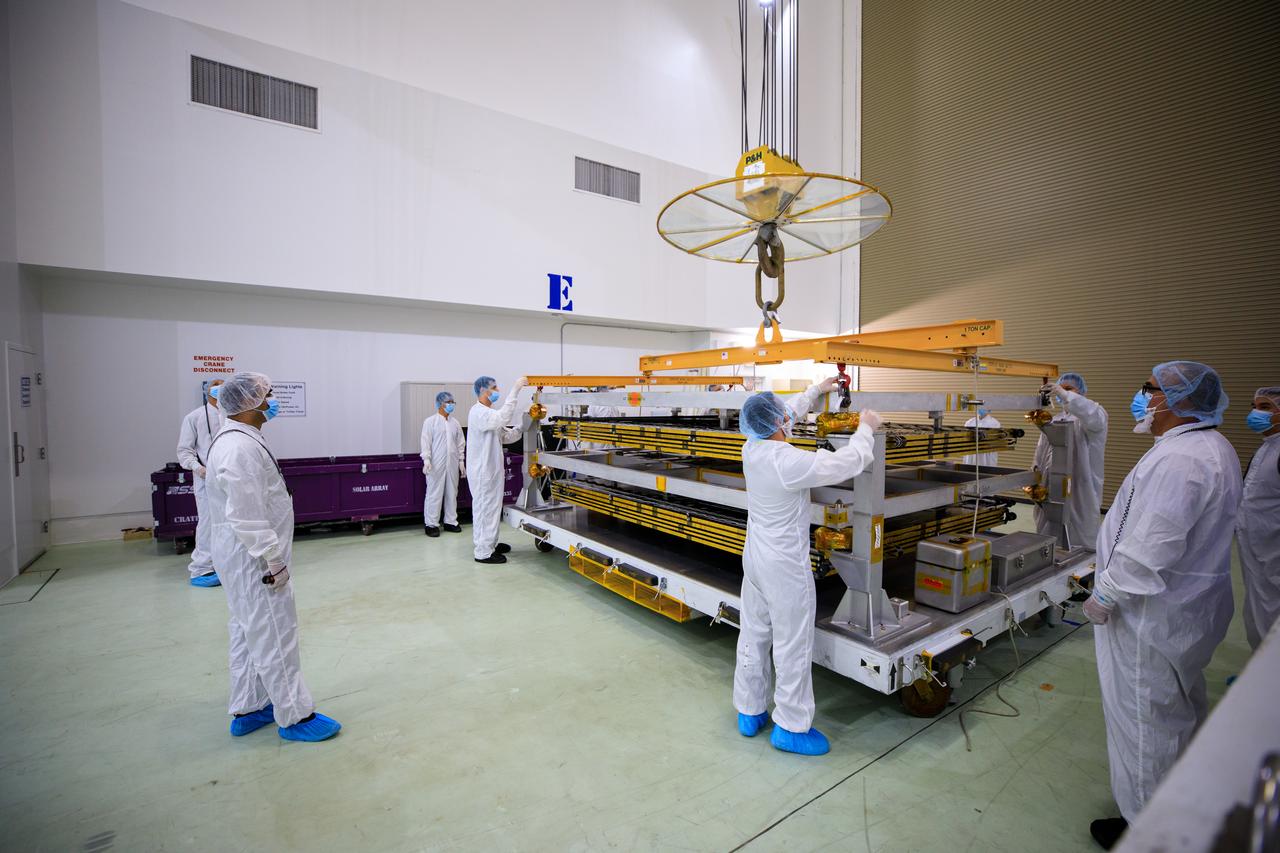
A NASA team uses a crane to lift the twin solar arrays for NASA’s Psyche spacecraft up from their shipping base at the Astrotech Space Operations Facility near the agency’s Kennedy Space Center in Florida on July 18, 2023. The solar arrays were shipped from Maxar Technologies, in San Jose, California. They are part of the solar electric propulsion system, provided by Maxar, that will power the spacecraft on its journey to explore a metal-rich asteroid. Psyche will launch atop a SpaceX Falcon Heavy rocket from Launch Complex 39A at Kennedy. Launch is targeted for Oct. 5, 2023. Riding with Psyche is a pioneering technology demonstration, NASA’s Deep Space Optical Communications (DSOC) experiment.

Jill Seubert, deputy principal investigator, from NASA’s Jet Propulsion Laboratory in Pasadena, California, explains the payload during a NASA prelaunch technology TV broadcast for the Space Test Program-2 (STP-2) mission at the agency’s Kennedy Space Center in Florida on June 23, 2019. The new space clock could improve how we navigate on the Moon, to Mars and beyond. The space clock is one of four NASA payloads scheduled to launch on a SpaceX Falcon Heavy rocket from Launch Complex 39A beginning at 11:30 p.m. EDT on June 24, 2019. STP-2 is managed by the U.S. Air Force Space and Missile Systems Center.
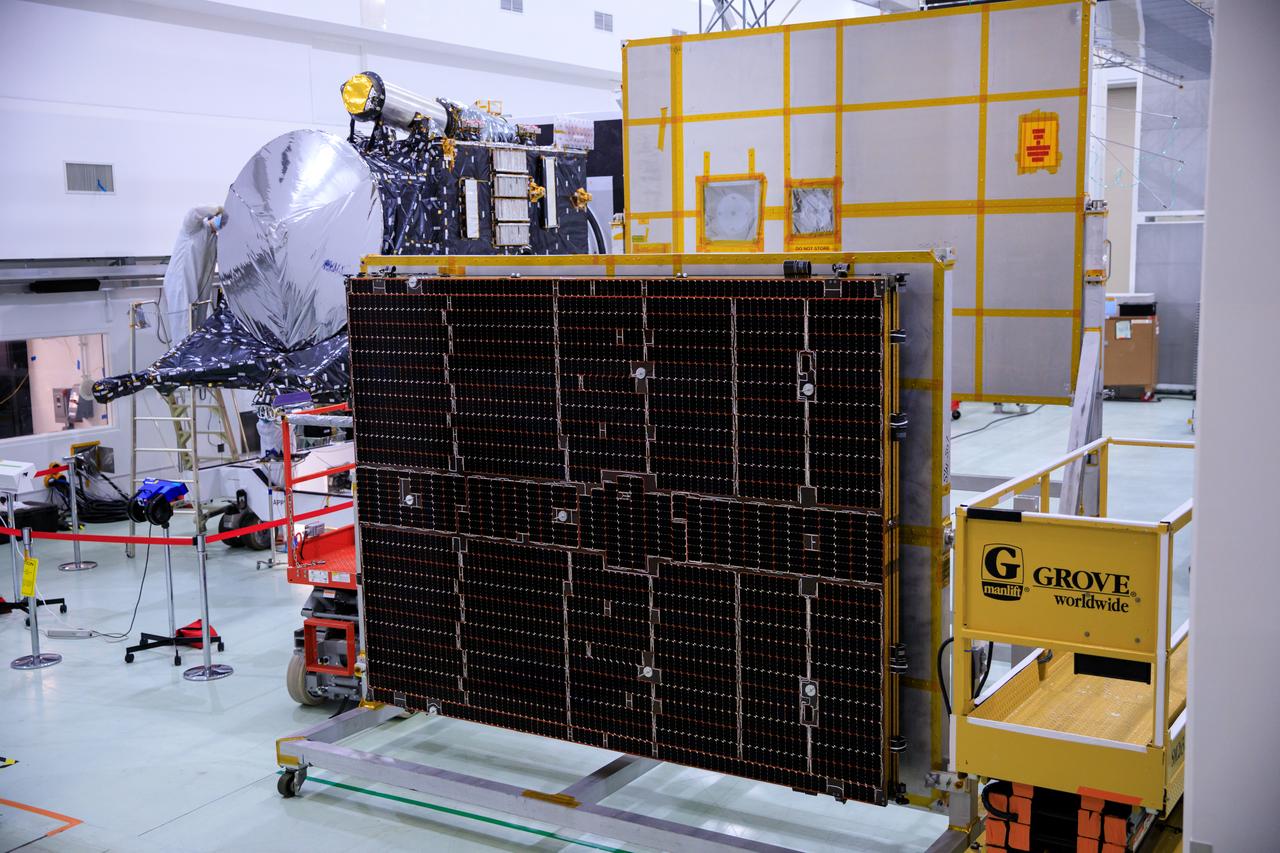
Solar arrays for the agency’s Psyche spacecraft is attached to a stand inside the Astrotech Space Operations Facility near the agency’s Kennedy Space Center in Florida on July 18, 2023. The solar arrays were shipped from Maxar Technologies, in San, Jose, California. They are part of the solar electric propulsion system, provided by Maxar, that will power the spacecraft on its journey to explore a metal-rich asteroid. Psyche will launch atop a SpaceX Falcon Heavy rocket from Launch Complex 39A at Kennedy. Launch is targeted for Oct. 5, 2023. Riding with Psyche is a pioneering technology demonstration, NASA’s Deep Space Optical Communications (DSOC) experiment.
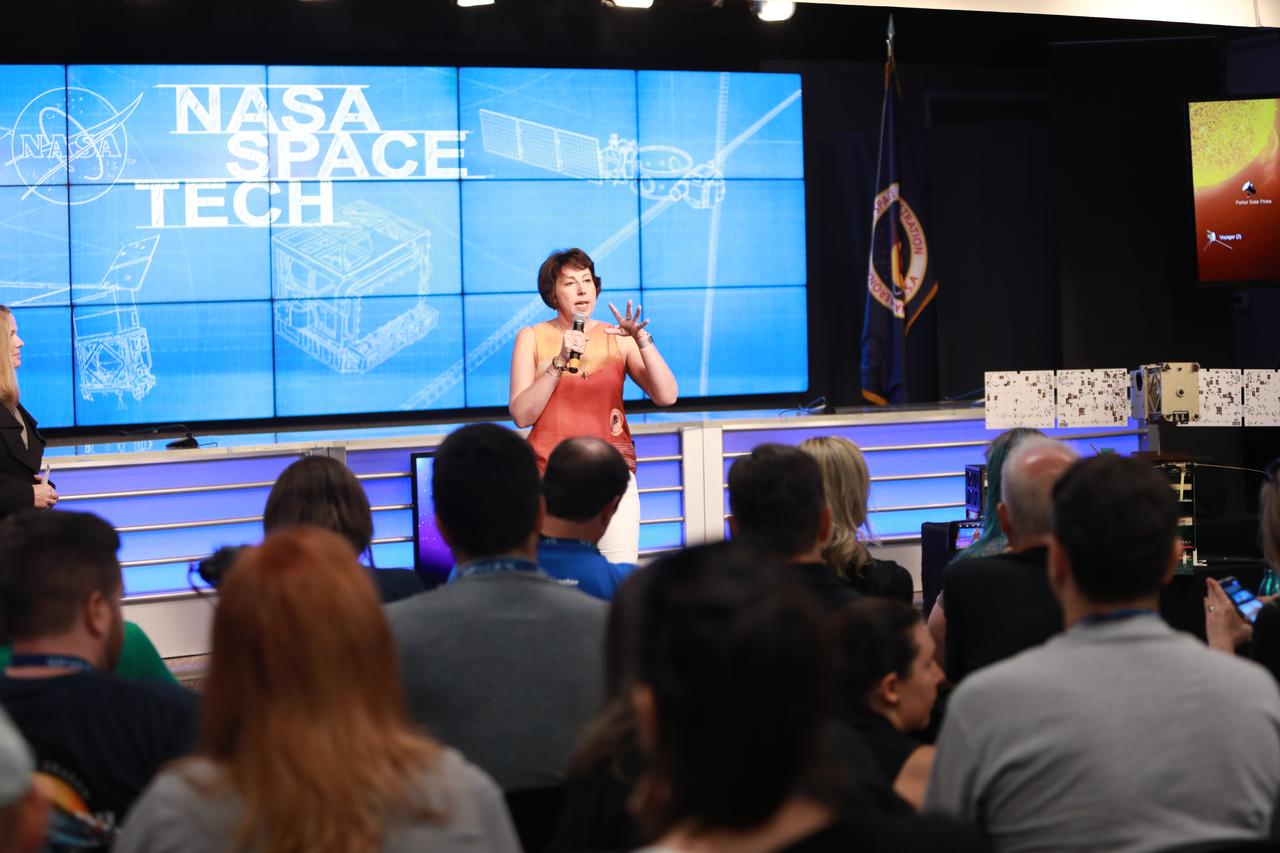
Nicky Fox, director of NASA’s Heliophysics Division, discusses the Space Environment Testbeds payload during a NASA prelaunch technology TV broadcast for the Space Test Program-2 (STP-2) at NASA’s Kennedy Space Center in Florida on June 23, 2019. The payload’s four experiments will reveal the ways local space weather affects spacecraft hardware. It is one of four NASA payloads scheduled to launch on a SpaceX Falcon Heavy rocket from Launch Complex 39A beginning at 11:30 p.m. EDT on June 24, 2019. STP-2 is managed by the U.S. Air Force Space and Missile Systems Center.
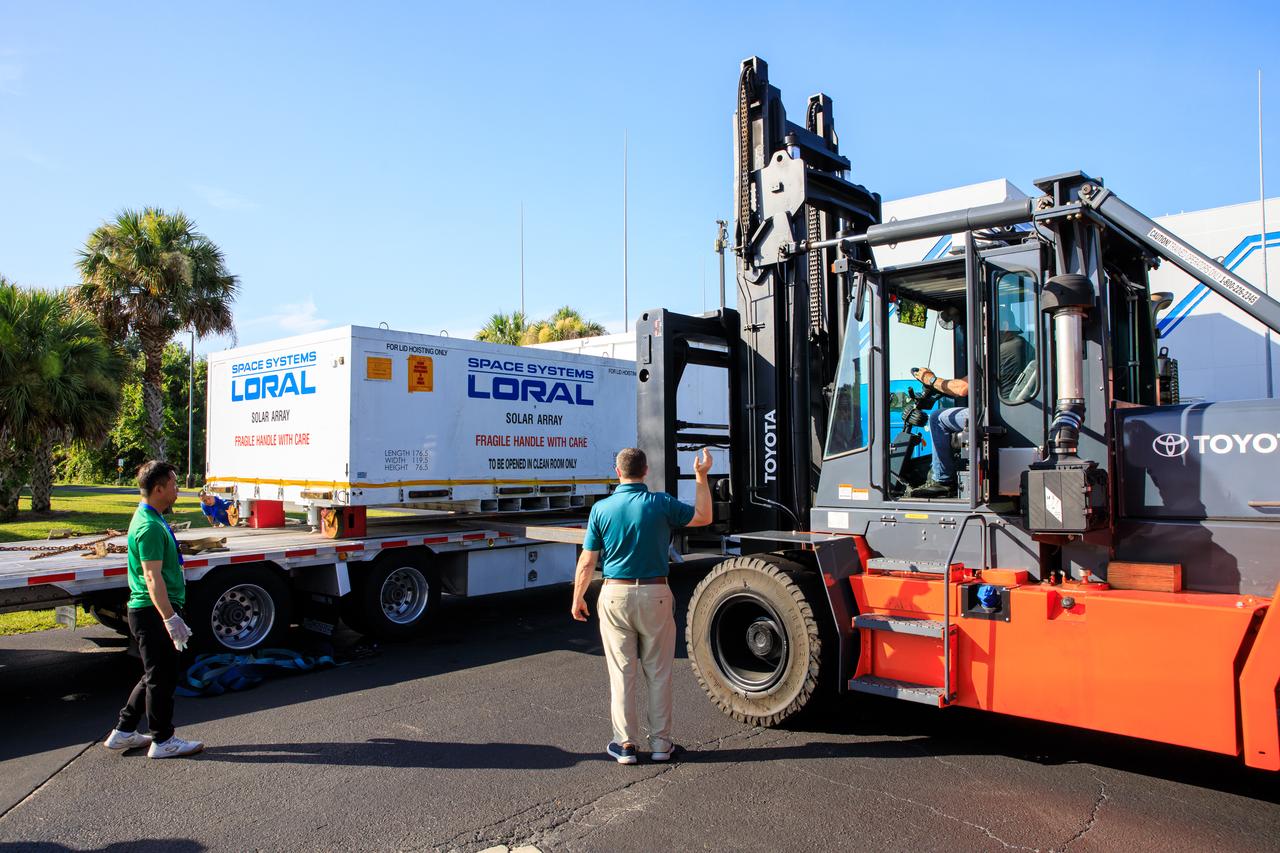
The transport carrier containing the twin solar arrays for NASA’s Psyche spacecraft is offloaded at the Astrotech Space Operations Facility near the agency’s Kennedy Space Center in Florida on July 15, 2023. The solar arrays were shipped from Maxar Technologies, in California. They are part of the solar electric propulsion system, provided by Maxar, that will power the spacecraft on its journey to explore a metal-rich asteroid. Psyche will launch atop a SpaceX Falcon Heavy rocket from Launch Complex 39A at Kennedy. Launch is targeted for Oct. 5, 2023. Riding with Psyche is a pioneering technology demonstration, NASA’s Deep Space Optical Communications (DSOC) experiment.
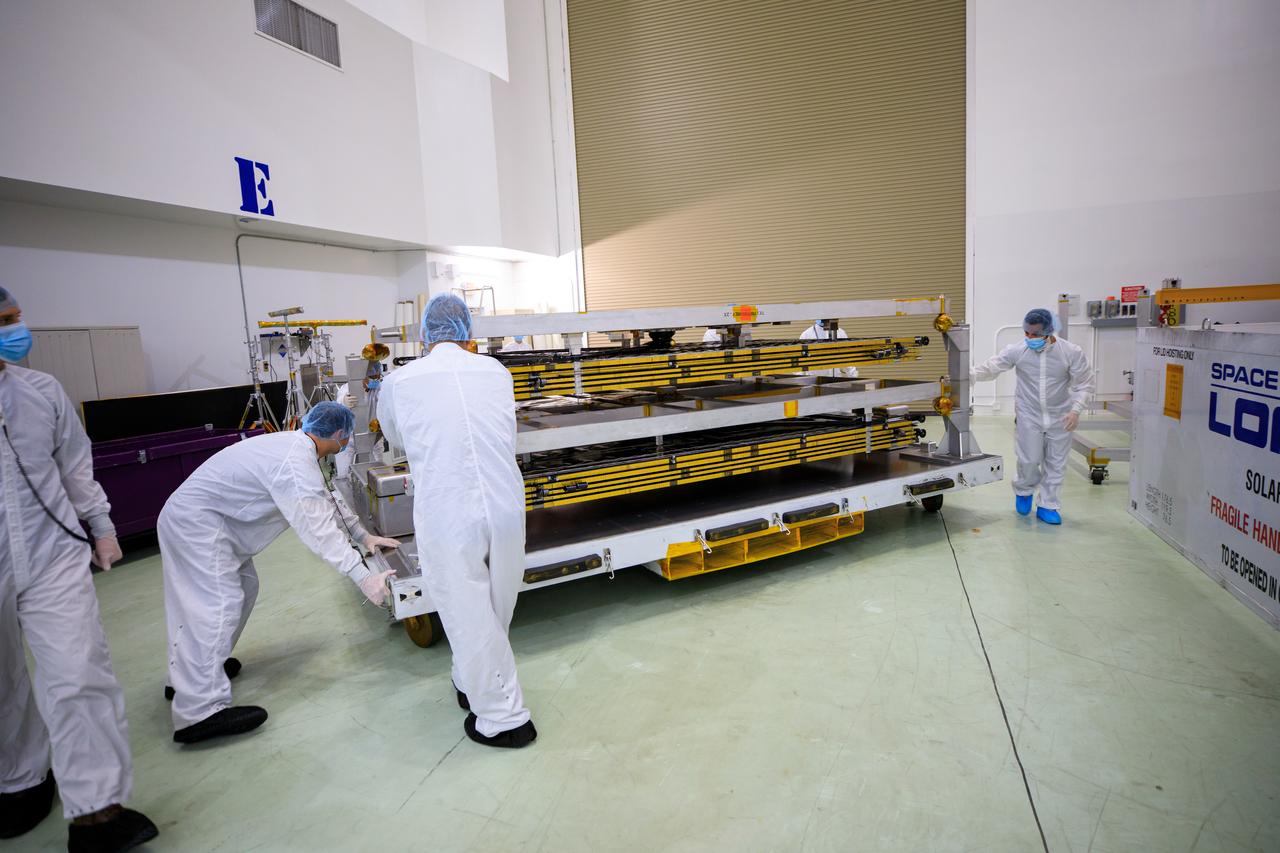
A NASA team uncrates the twin solar arrays for NASA’s Psyche spacecraft at the Astrotech Space Operations Facility near the agency’s Kennedy Space Center in Florida on July 18, 2023. The solar arrays were shipped from Maxar Technologies, in California. They are part of the solar electric propulsion system, provided by Maxar, that will power the spacecraft on its journey to explore a metal-rich asteroid. Psyche will launch atop a SpaceX Falcon Heavy rocket from Launch Complex 39A at Kennedy. Launch is targeted for Oct. 5, 2023. Riding with Psyche is a pioneering technology demonstration, NASA’s Deep Space Optical Communications (DSOC) experiment.
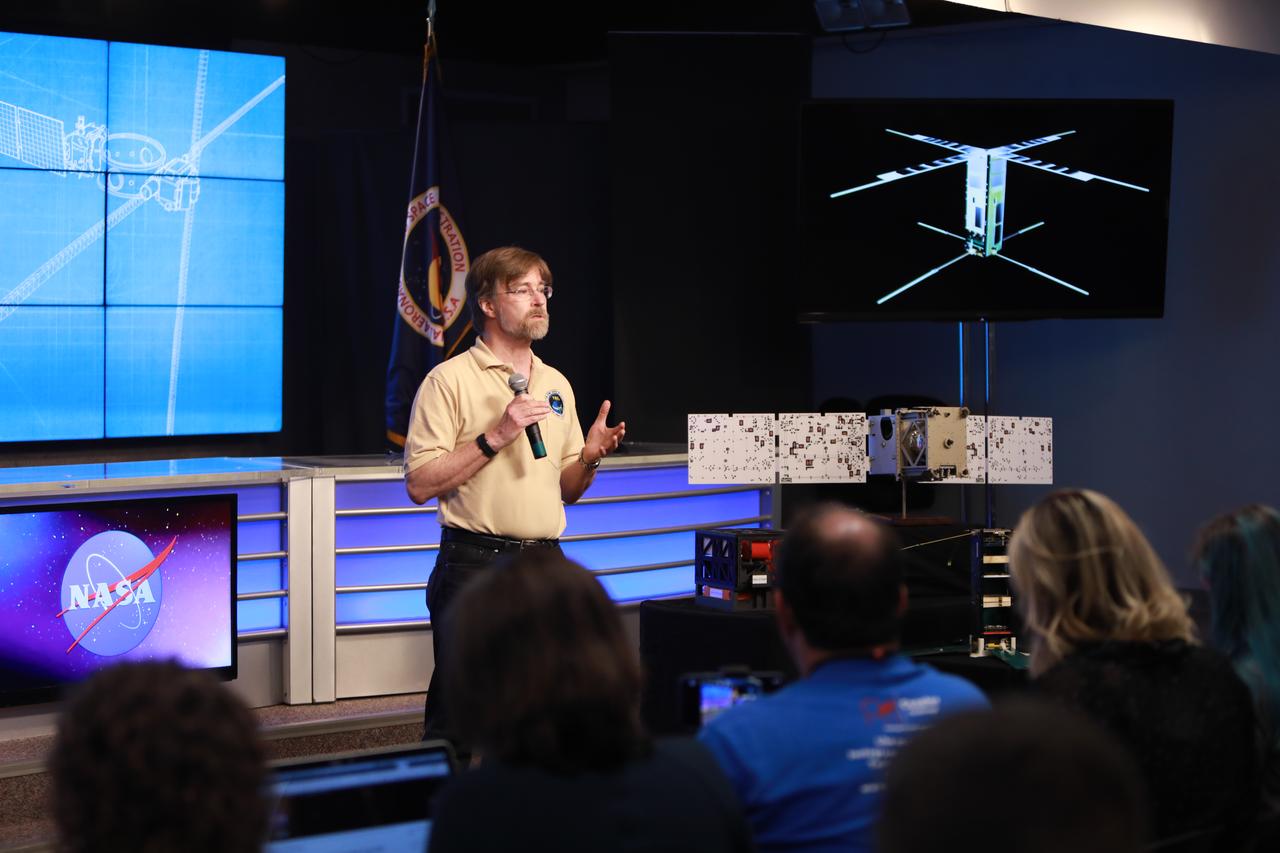
Rick Doe, payload program manager at SRI International, discusses the Enhanced Tandem Beacon Experiment during a NASA prelaunch technology TV show for the Space Test Program-2 (STP-2) mission at NASA’s Kennedy Space Center in Florida on June 23, 2019. The experiment’s two CubeSats will work with six other satellites to study irregularities in Earth’s upper atmosphere that interfere with GPS and communications signals. It is one of NASA payloads scheduled to launch on a SpaceX Falcon Heavy rocket from Launch Complex 39A beginning at 11:30 p.m. EDT on June 24, 2019. STP-2 is managed by the U.S. Air Force Space and Missile Systems Center.
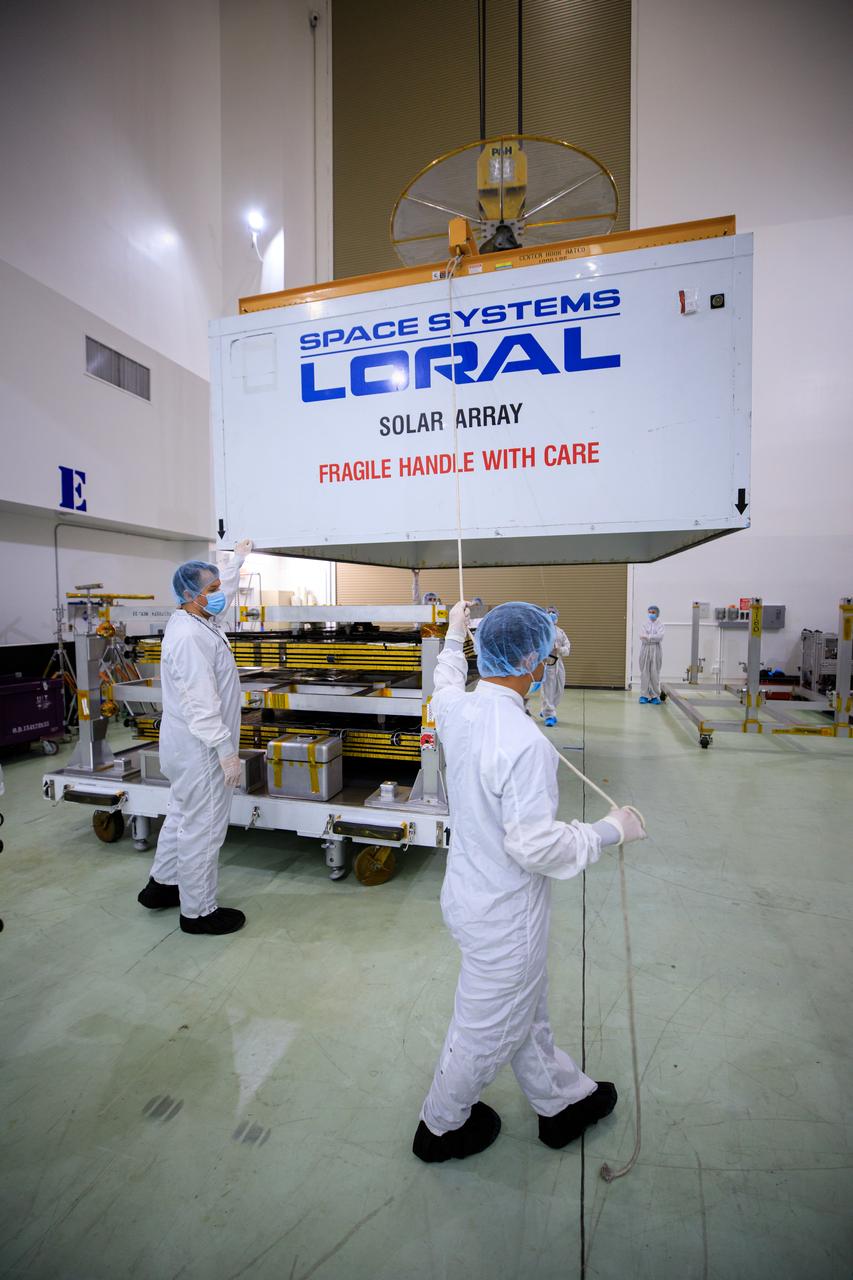
A NASA team lifts the cover off the twin solar arrays for NASA’s Psyche spacecraft at the Astrotech Space Operations Facility near the agency’s Kennedy Space Center in Florida on July 18, 2023. The solar arrays were shipped from Maxar Technologies, in San Jose, in California. They are part of the solar electric propulsion system, provided by Maxar, that will power the spacecraft on its journey to explore a metal-rich asteroid. Psyche will launch atop a SpaceX Falcon Heavy rocket from Launch Complex 39A at Kennedy. Launch is targeted for Oct. 5, 2023. Riding with Psyche is a pioneering technology demonstration, NASA’s Deep Space Optical Communications (DSOC) experiment.

Jill Seubert, deputy principal investigator, from NASA’s Jet Propulsion Laboratory in Pasadena, California, explains the payload during a NASA prelaunch technology TV broadcast for the Space Test Program-2 (STP-2) mission at the agency’s Kennedy Space Center in Florida on June 23, 2019. The new space clock could improve how we navigate on the Moon, to Mars and beyond. The space clock is one of four NASA payloads scheduled to launch on a SpaceX Falcon Heavy rocket from Launch Complex 39A beginning at 11:30 p.m. EDT on June 24, 2019. STP-2 is managed by the U.S. Air Force Space and Missile Systems Center.

Nicky Fox, director of NASA’s Heliophysics Division, discusses the Space Environment Testbeds payload during a NASA prelaunch technology TV broadcast for the Space Test Program-2 (STP-2) at NASA’s Kennedy Space Center in Florida on June 23, 2019. The payload’s four experiments will reveal the ways local space weather affects spacecraft hardware. It is one of four NASA payloads scheduled to launch on a SpaceX Falcon Heavy rocket from Launch Complex 39A beginning at 11:30 p.m. EDT on June 24, 2019. STP-2 is managed by the U.S. Air Force Space and Missile Systems Center.
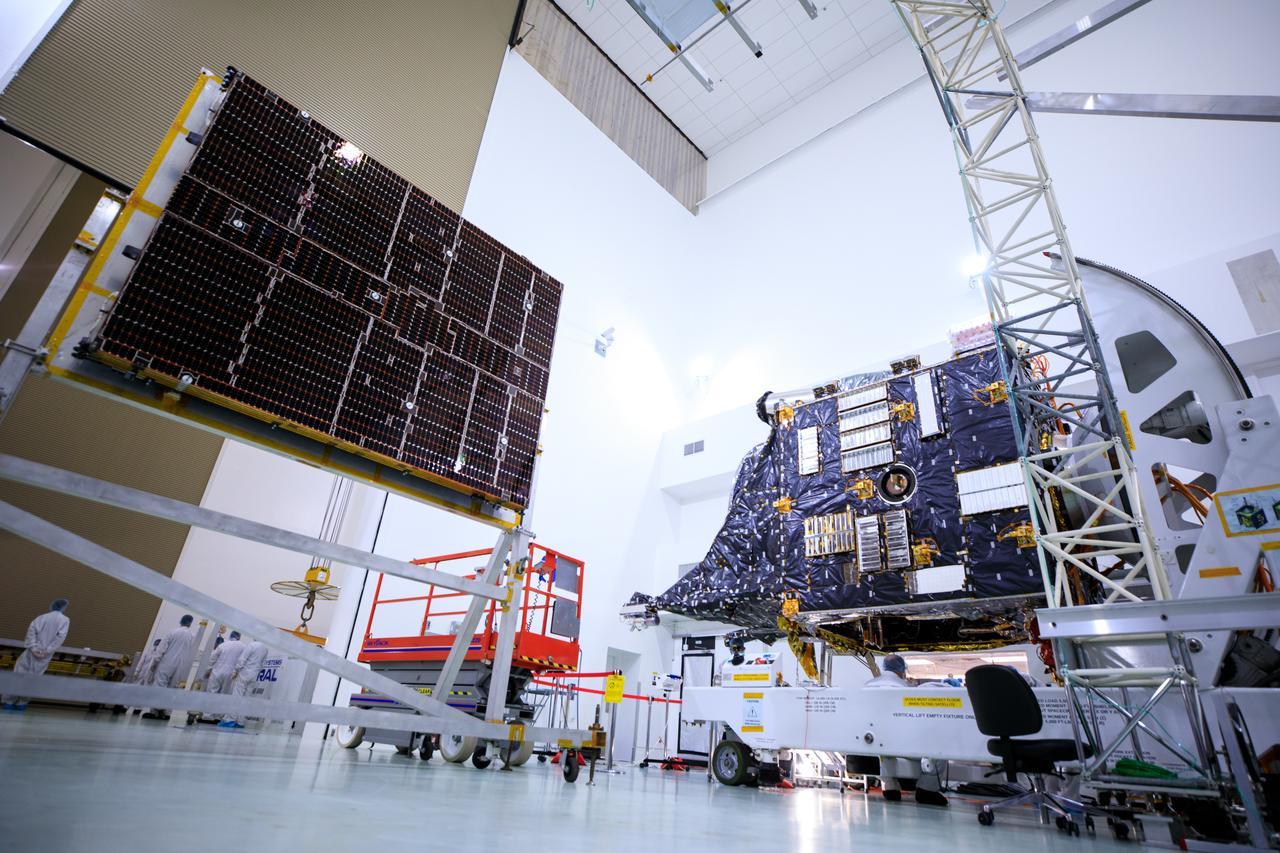
Solar arrays for the agency’s Psyche spacecraft is attached to a stand inside the Astrotech Space Operations Facility near the agency’s Kennedy Space Center in Florida on July 18, 2023. The solar arrays were shipped from Maxar Technologies, in San, Jose, California. They are part of the solar electric propulsion system, provided by Maxar, that will power the spacecraft on its journey to explore a metal-rich asteroid. Psyche will launch atop a SpaceX Falcon Heavy rocket from Launch Complex 39A at Kennedy. Launch is targeted for Oct. 5, 2023. Riding with Psyche is a pioneering technology demonstration, NASA’s Deep Space Optical Communications (DSOC) experiment.
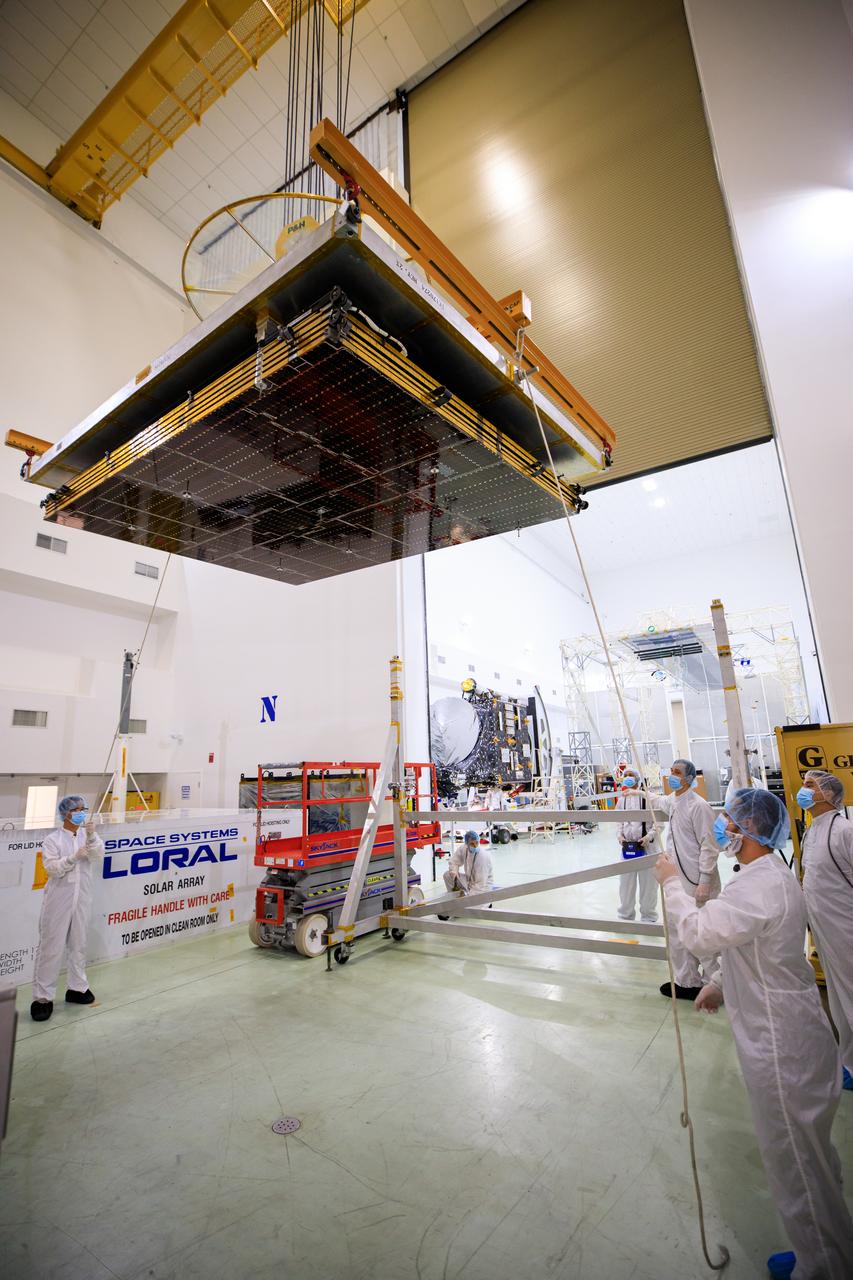
A NASA team assists as a crane is used to move the twin solar arrays for the agency’s Psyche spacecraft along the high bay inside the Astrotech Space Operations Facility near the agency’s Kennedy Space Center in Florida on July 18, 2023. The solar arrays were shipped from Maxar Technologies, in San, Jose, California. They are part of the solar electric propulsion system, provided by Maxar, that will power the spacecraft on its journey to explore a metal-rich asteroid. Psyche will launch atop a SpaceX Falcon Heavy rocket from Launch Complex 39A at Kennedy. Launch is targeted for Oct. 5, 2023. Riding with Psyche is a pioneering technology demonstration, NASA’s Deep Space Optical Communications (DSOC) experiment.
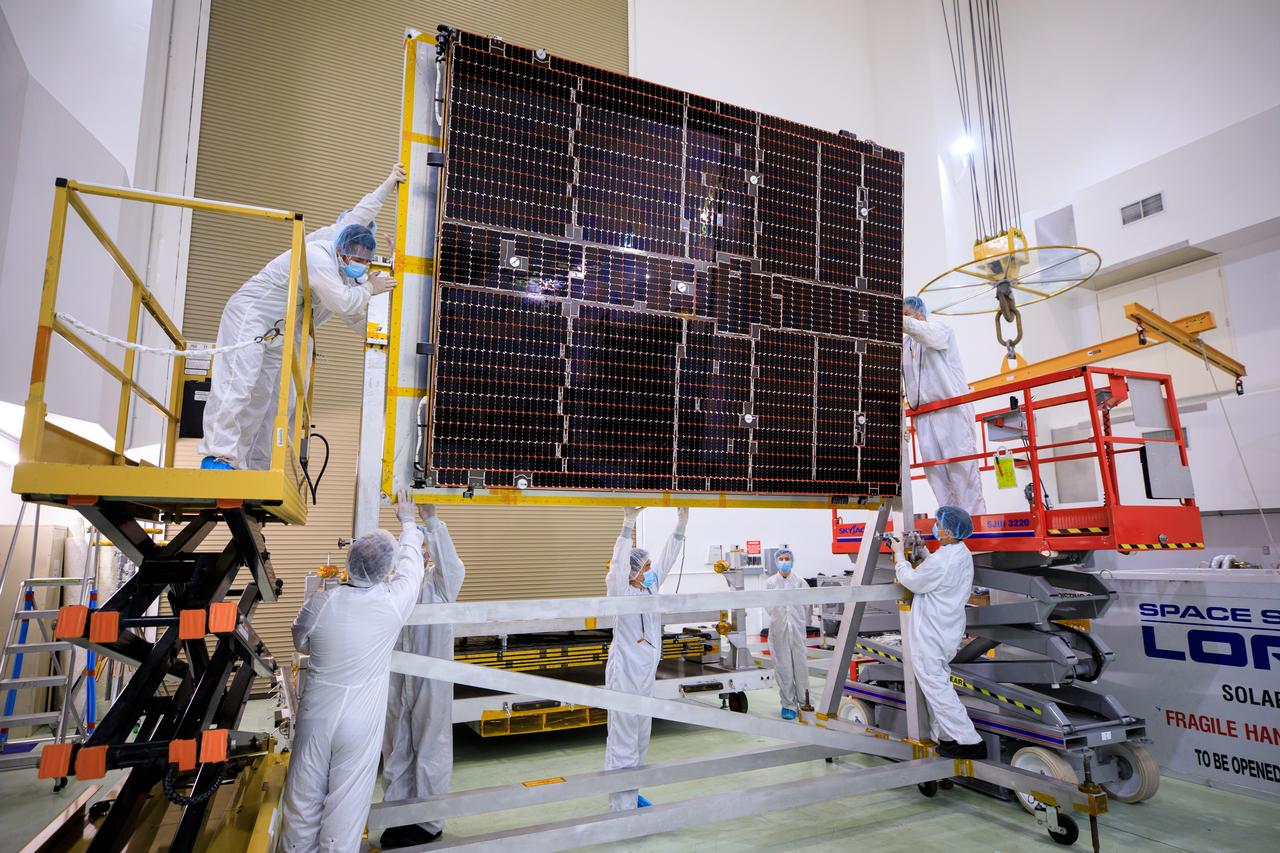
A NASA team helps attach solar arrays for the agency’s Psyche spacecraft onto a stand inside the Astrotech Space Operations Facility near the agency’s Kennedy Space Center in Florida on July 18, 2023. The solar arrays were shipped from Maxar Technologies, in San, Jose, California. They are part of the solar electric propulsion system, provided by Maxar, that will power the spacecraft on its journey to explore a metal-rich asteroid. Psyche will launch atop a SpaceX Falcon Heavy rocket from Launch Complex 39A at Kennedy. Launch is targeted for Oct. 5, 2023. Riding with Psyche is a pioneering technology demonstration, NASA’s Deep Space Optical Communications (DSOC) experiment.
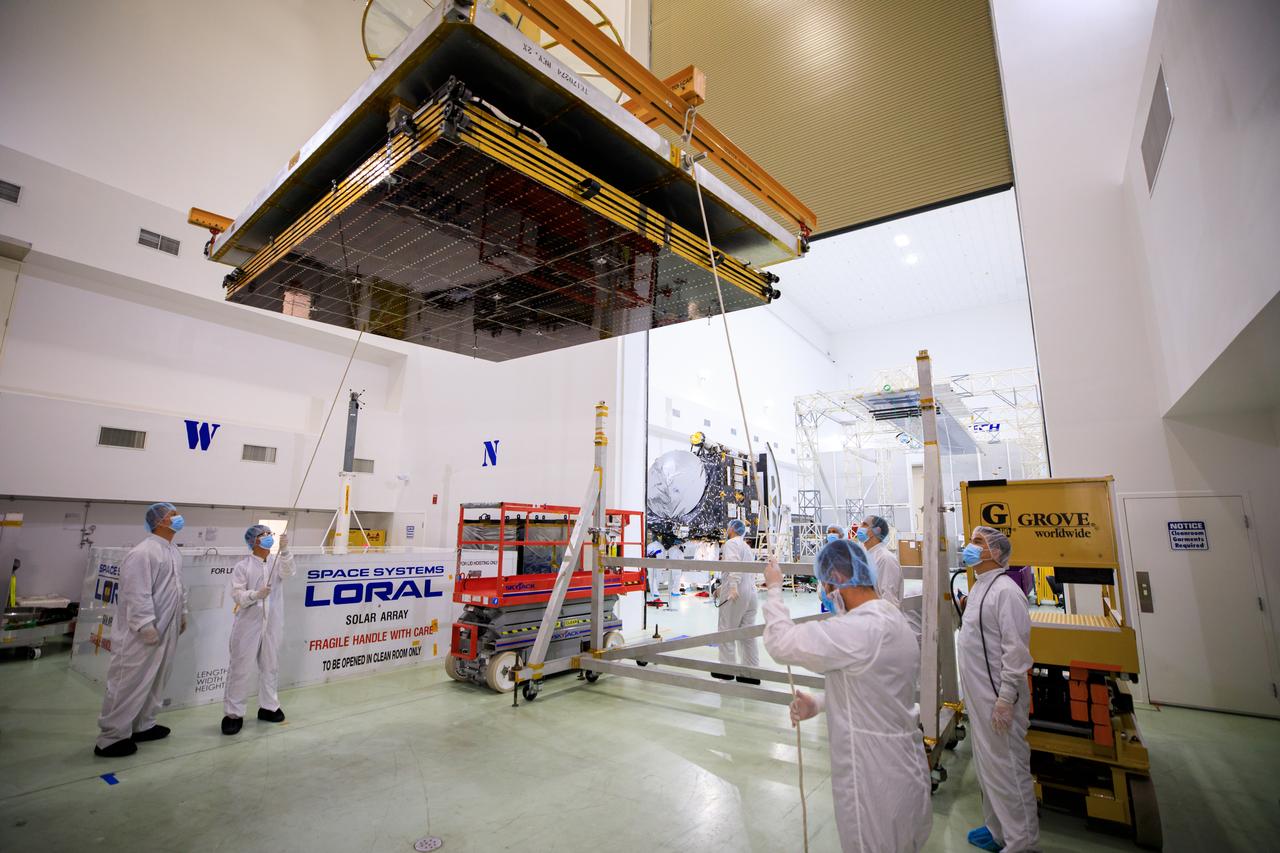
A NASA team assists as a crane is used to move the twin solar arrays for the agency’s Psyche spacecraft along the high bay inside the Astrotech Space Operations Facility near the agency’s Kennedy Space Center in Florida on July 18, 2023. The solar arrays were shipped from Maxar Technologies, in San, Jose, California. They are part of the solar electric propulsion system, provided by Maxar, that will power the spacecraft on its journey to explore a metal-rich asteroid. Psyche will launch atop a SpaceX Falcon Heavy rocket from Launch Complex 39A at Kennedy. Launch is targeted for Oct. 5, 2023. Riding with Psyche is a pioneering technology demonstration, NASA’s Deep Space Optical Communications (DSOC) experiment.
A NASA team prepares to unload twin solar arrays for the agency’s Psyche spacecraft at the Astrotech Space Operations Facility near the agency’s Kennedy Space Center in Florida on July 15, 2023. The solar arrays were shipped from Maxar Technologies, in San Jose, California. They are part of the solar electric propulsion system, provided by Maxar, that will power the spacecraft on its journey to explore a metal-rich asteroid. Psyche will launch atop a SpaceX Falcon Heavy rocket from Launch Complex 39A at Kennedy. Launch is targeted for Oct. 5, 2023. Riding with Psyche is a pioneering technology demonstration, NASA’s Deep Space Optical Communications (DSOC) experiment.
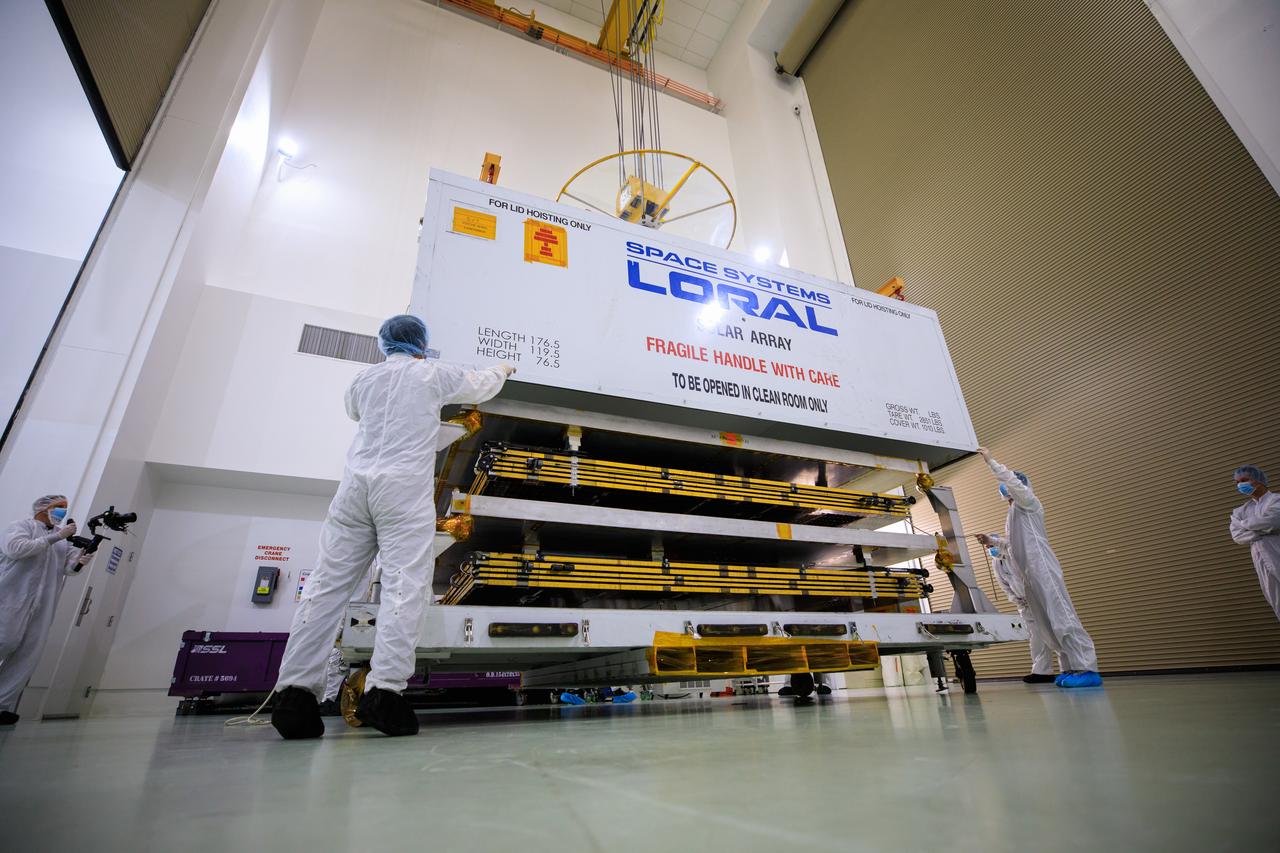
A NASA team uncrates the twin solar arrays for the agency’s Psyche spacecraft at the Astrotech Space Operations Facility near the agency’s Kennedy Space Center in Florida on July 18, 2023. The solar arrays were shipped from Maxar Technologies, in San Jose, California. They are part of the solar electric propulsion system, provided by Maxar, that will power the spacecraft on its journey to explore a metal-rich asteroid. Psyche will launch atop a SpaceX Falcon Heavy rocket from Launch Complex 39A at Kennedy. Launch is targeted for Oct. 5, 2023. Riding with Psyche is a pioneering technology demonstration, NASA’s Deep Space Optical Communications (DSOC) experiment.
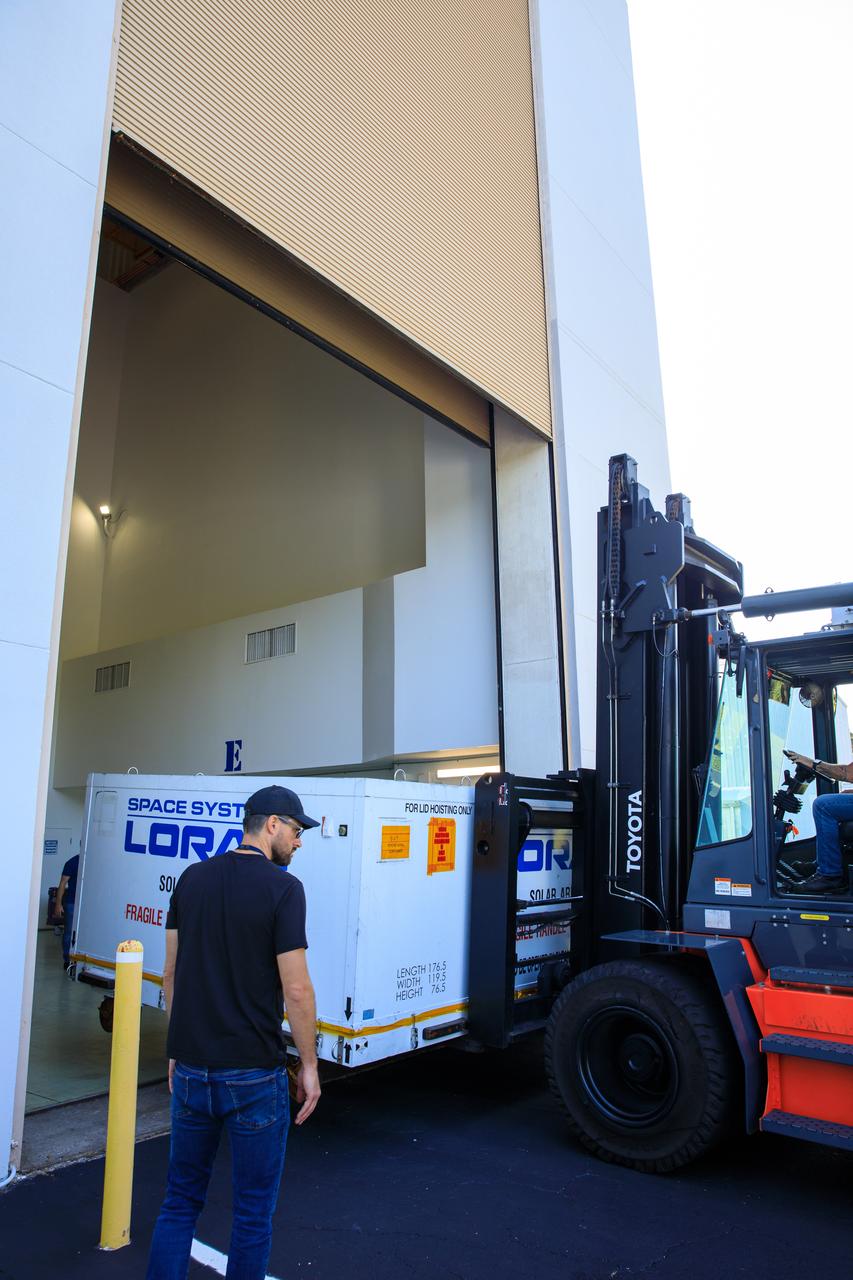
The transport carrier containing the twin solar arrays for NASA’s Psyche spacecraft is transferred into the Astrotech Space Operations Facility near the agency’s Kennedy Space Center in Florida on July 15, 2023. The solar arrays were shipped from Maxar Technologies, in San Jose, California. They are part of the solar electric propulsion system, provided by Maxar, that will power the spacecraft on its journey to explore a metal-rich asteroid. Psyche will launch atop a SpaceX Falcon Heavy rocket from Launch Complex 39A at Kennedy. Launch is targeted for Oct. 5, 2023. Riding with Psyche is a pioneering technology demonstration, NASA’s Deep Space Optical Communications (DSOC) experiment.
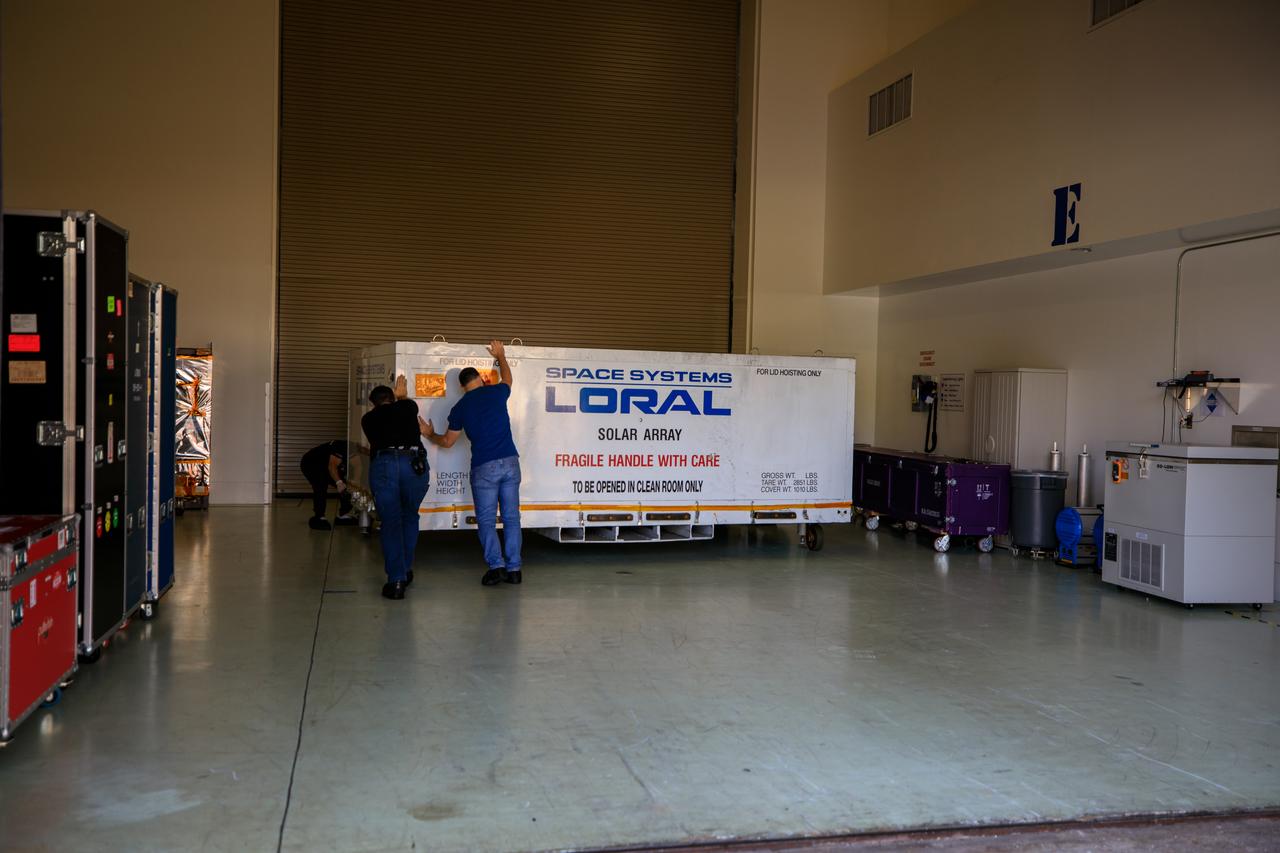
A NASA team moves the transport carrier containing the twin solar arrays for the agency’s Psyche spacecraft into the Astrotech Space Operations Facility near the agency’s Kennedy Space Center in Florida on July 15, 2023. The solar arrays were shipped from Maxar Technologies, in San, Jose, California. They are part of the solar electric propulsion system, provided by Maxar, that will power the spacecraft on its journey to explore a metal-rich asteroid. Psyche will launch atop a SpaceX Falcon Heavy rocket from Launch Complex 39A at Kennedy. Launch is targeted for Oct. 5, 2023. Riding with Psyche is a pioneering technology demonstration, NASA’s Deep Space Optical Communications (DSOC) experiment.
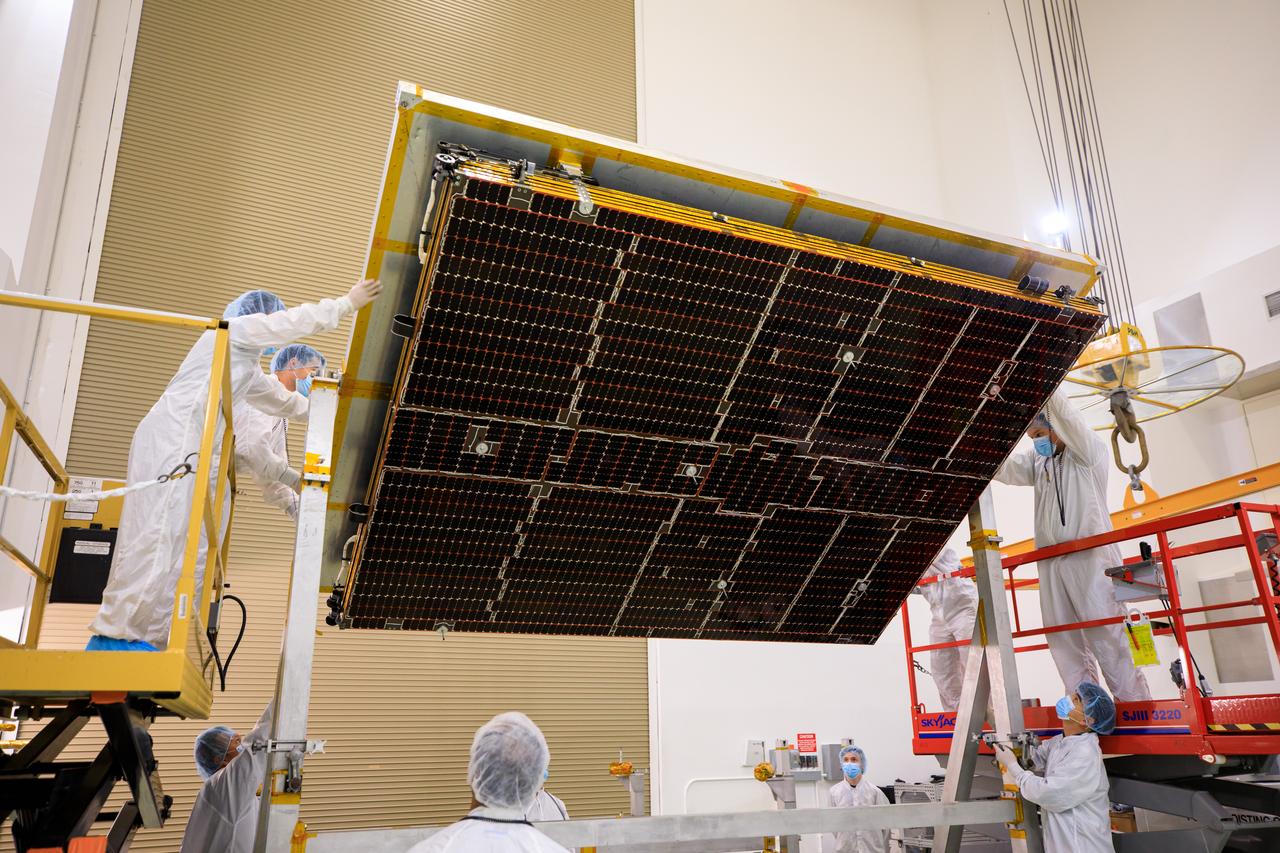
A NASA team helps lower one of two solar arrays for the agency’s Psyche spacecraft onto a stand inside the Astrotech Space Operations Facility near the agency’s Kennedy Space Center in Florida on July 18, 2023. The solar arrays were shipped from Maxar Technologies, in San, Jose, California. They are part of the solar electric propulsion system, provided by Maxar, that will power the spacecraft on its journey to explore a metal-rich asteroid. Psyche will launch atop a SpaceX Falcon Heavy rocket from Launch Complex 39A at Kennedy. Launch is targeted for Oct. 5, 2023. Riding with Psyche is a pioneering technology demonstration, NASA’s Deep Space Optical Communications (DSOC) experiment.
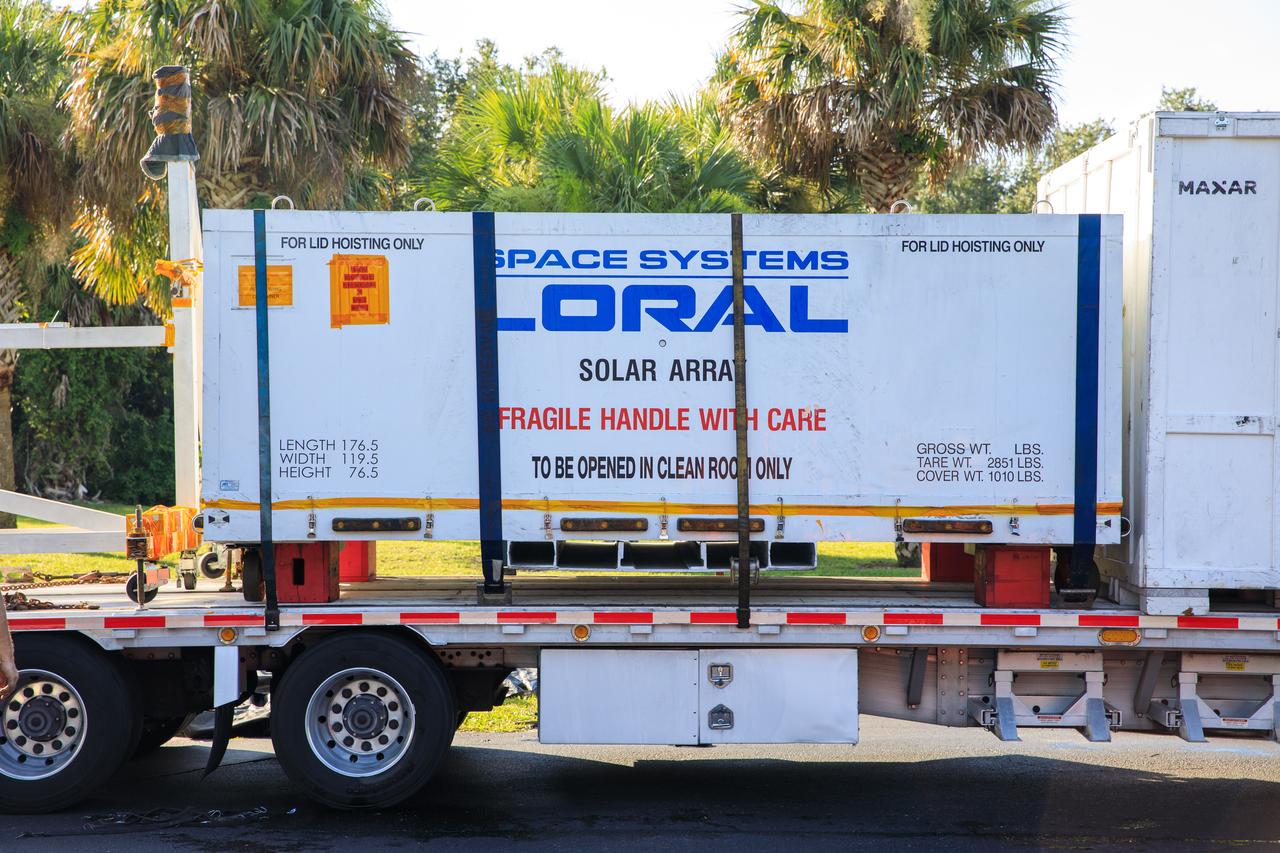
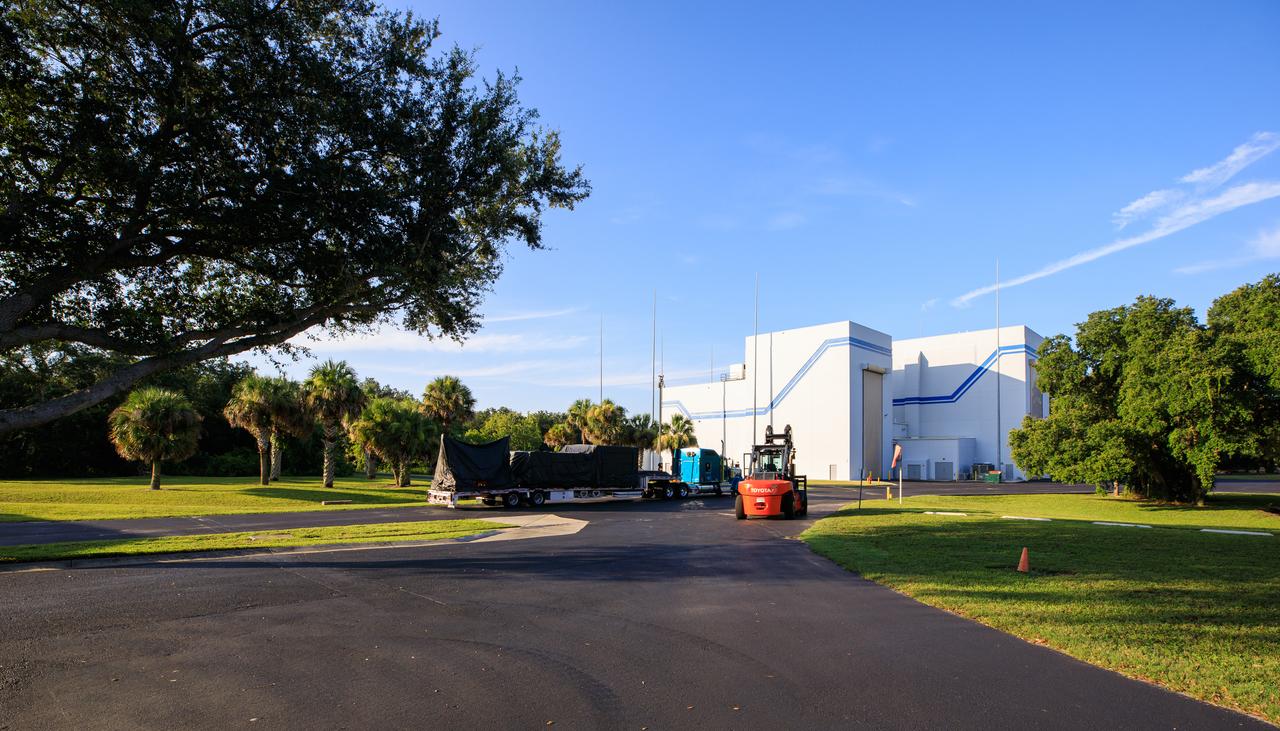
Twin solar arrays for NASA’s Psyche spacecraft arrive by flatbed truck at the Astrotech Space Operations Facility near the agency’s Kennedy Space Center in Florida on July 15, 2023. The solar arrays were shipped from Maxar Technologies, in San Jose, in California. They are part of the solar electric propulsion system, provided by Maxar, that will power the spacecraft on its journey to explore a metal-rich asteroid. Psyche will launch atop a SpaceX Falcon Heavy rocket from Launch Complex 39A at Kennedy. Launch is targeted for Oct. 5, 2023. Riding with Psyche is a pioneering technology demonstration, NASA’s Deep Space Optical Communications (DSOC) experiment.
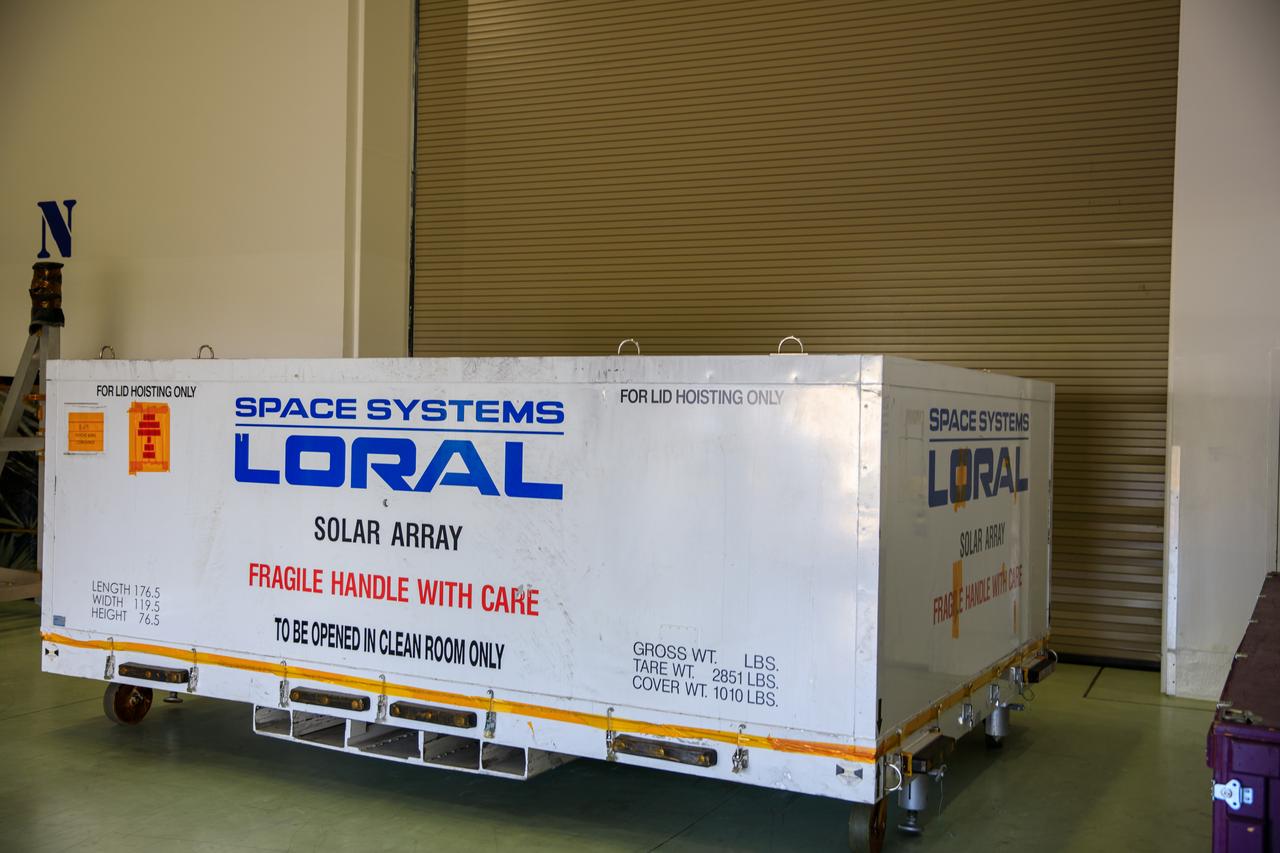
The transport carrier containing the twin solar arrays for NASA’s Psyche spacecraft is secured inside the Astrotech Space Operations Facility near the agency’s Kennedy Space Center in Florida on July 15, 2023. The solar arrays were shipped from Maxar Technologies, in San Jose, California. They are part of the solar electric propulsion system, provided by Maxar, that will power the spacecraft on its journey to explore a metal-rich asteroid. Psyche will launch atop a SpaceX Falcon Heavy rocket from Launch Complex 39A at Kennedy. Launch is targeted for Oct. 5, 2023. Riding with Psyche is a pioneering technology demonstration, NASA’s Deep Space Optical Communications (DSOC) experiment.
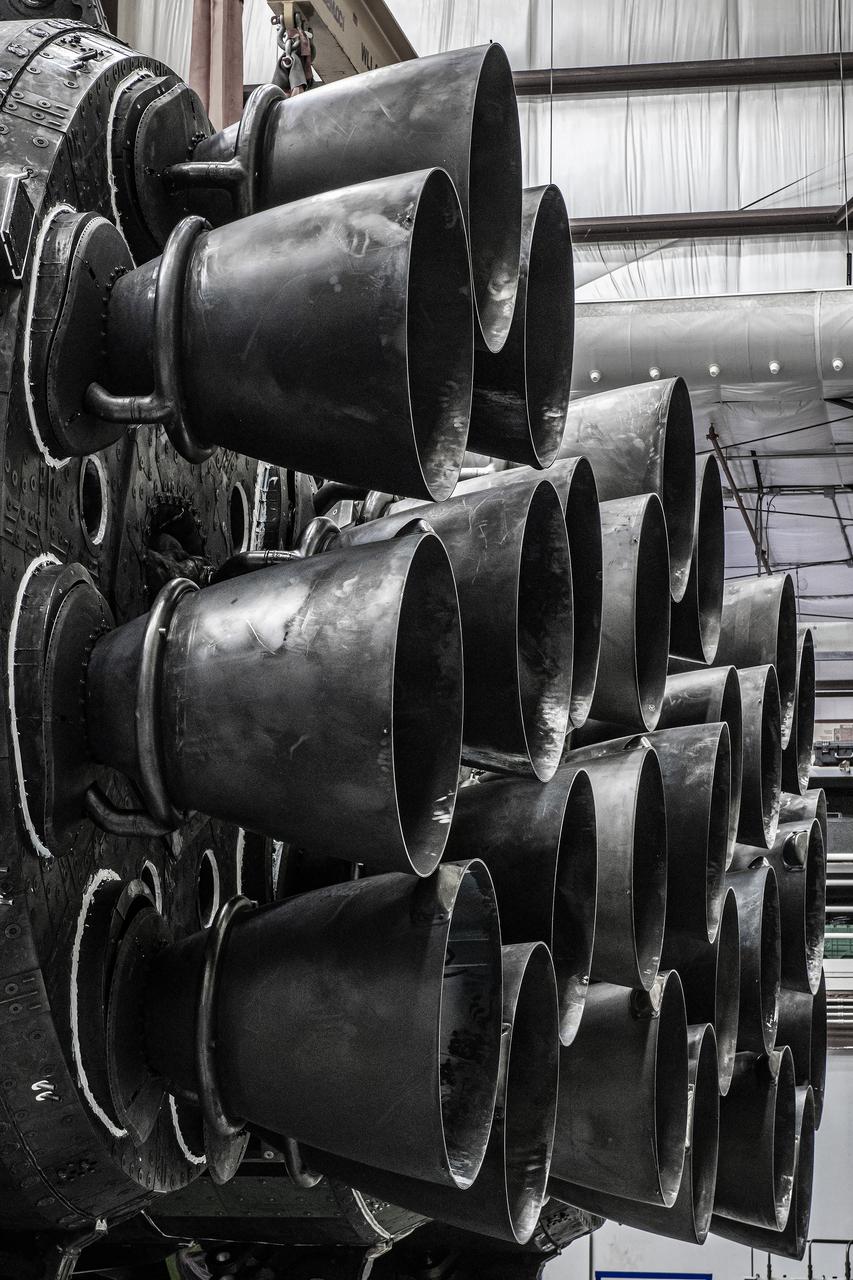
Photos of the Falcon Heavy rocket that will launch NASA's Psyche mission in the hangar at Launch Complex 39A at Kennedy Space Center in Florida before it rolled out to the pad for a static fire test as part of preparations for the journey to a metal-rich asteroid.
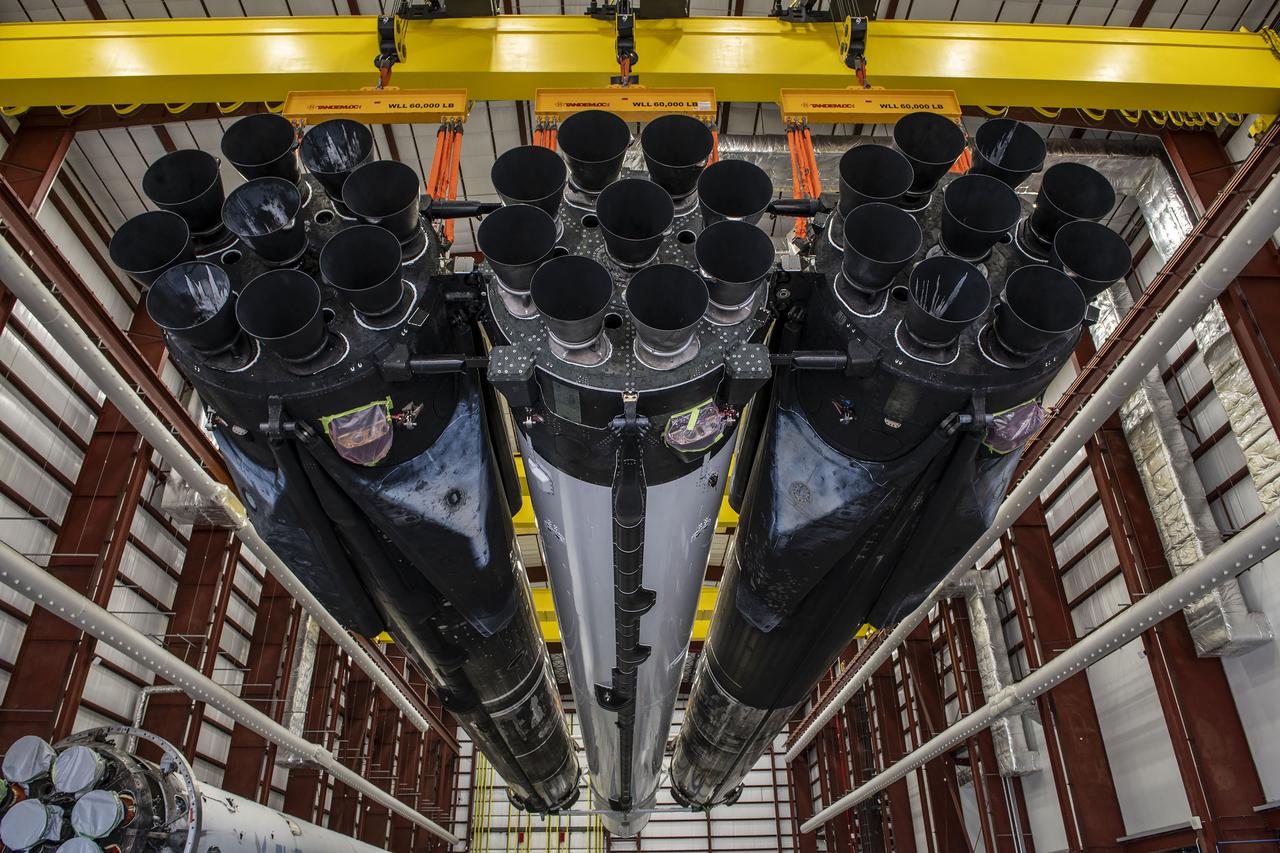
Photos of the Falcon Heavy rocket that will launch NASA's Psyche mission in the hangar at Launch Complex 39A at Kennedy Space Center in Florida before it rolled out to the pad for a static fire test as part of preparations for the journey to a metal-rich asteroid.
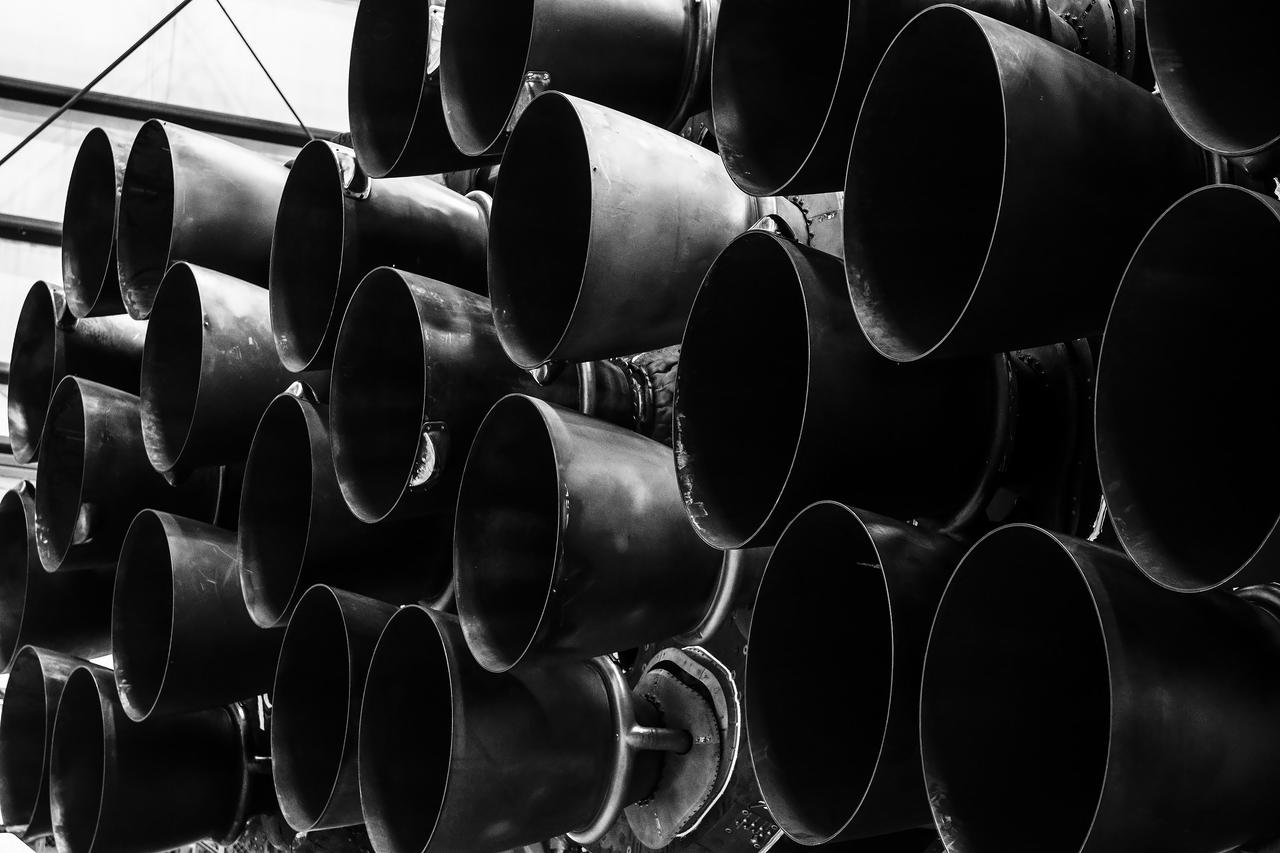
Photos of the Falcon Heavy rocket that will launch NASA's Psyche mission in the hangar at Launch Complex 39A at Kennedy Space Center in Florida before it rolled out to the pad for a static fire test as part of preparations for the journey to a metal-rich asteroid.
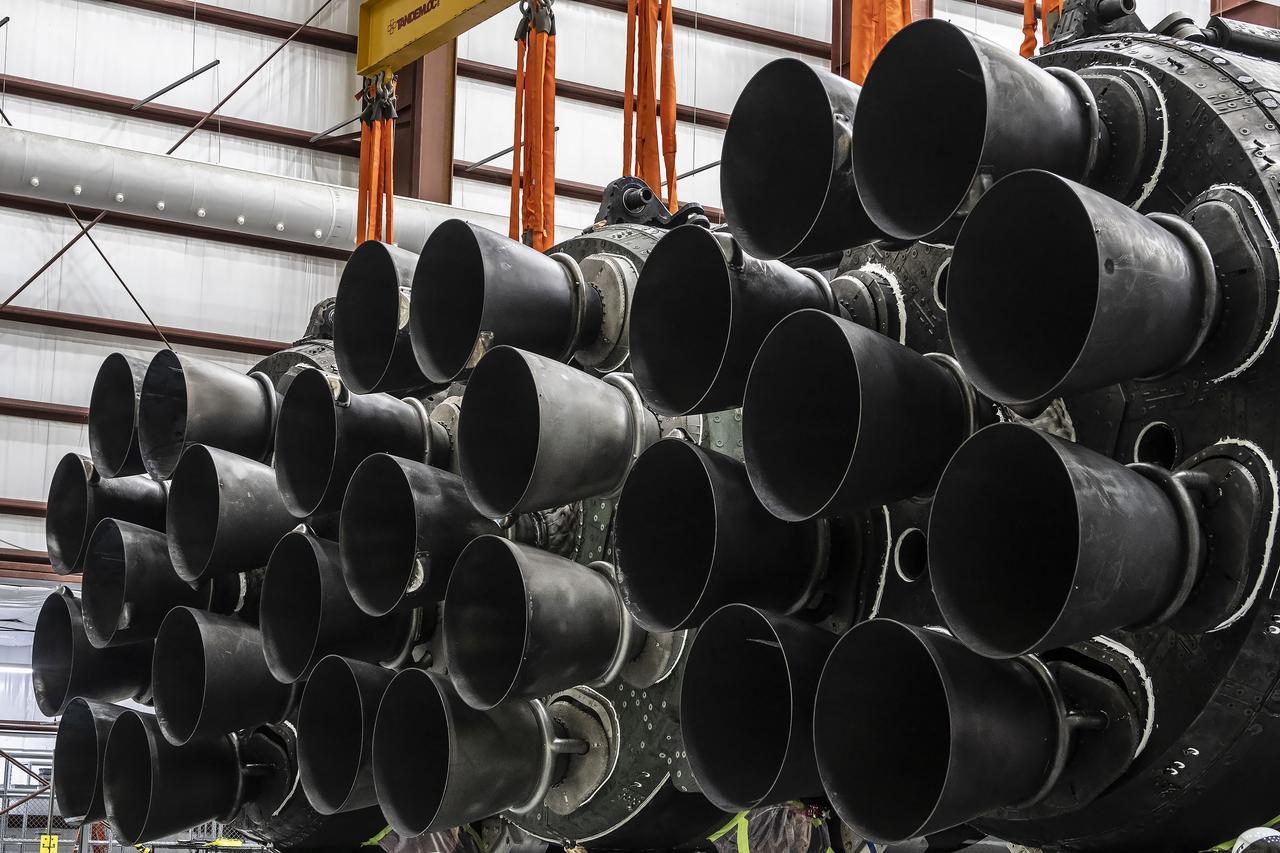
Photos of the Falcon Heavy rocket that will launch NASA's Psyche mission in the hangar at Launch Complex 39A at Kennedy Space Center in Florida before it rolled out to the pad for a static fire test as part of preparations for the journey to a metal-rich asteroid.
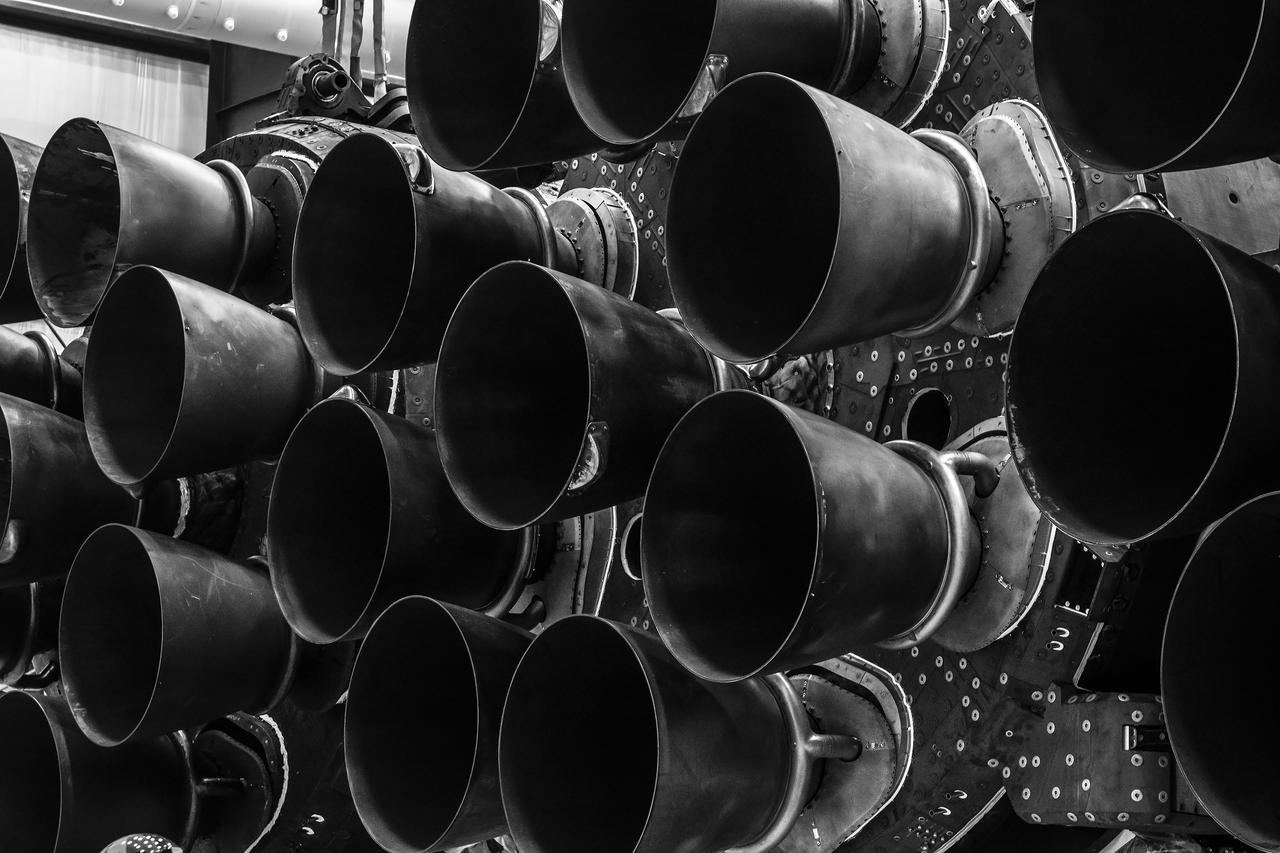
Photos of the Falcon Heavy rocket that will launch NASA's Psyche mission in the hangar at Launch Complex 39A at Kennedy Space Center in Florida before it rolled out to the pad for a static fire test as part of preparations for the journey to a metal-rich asteroid.
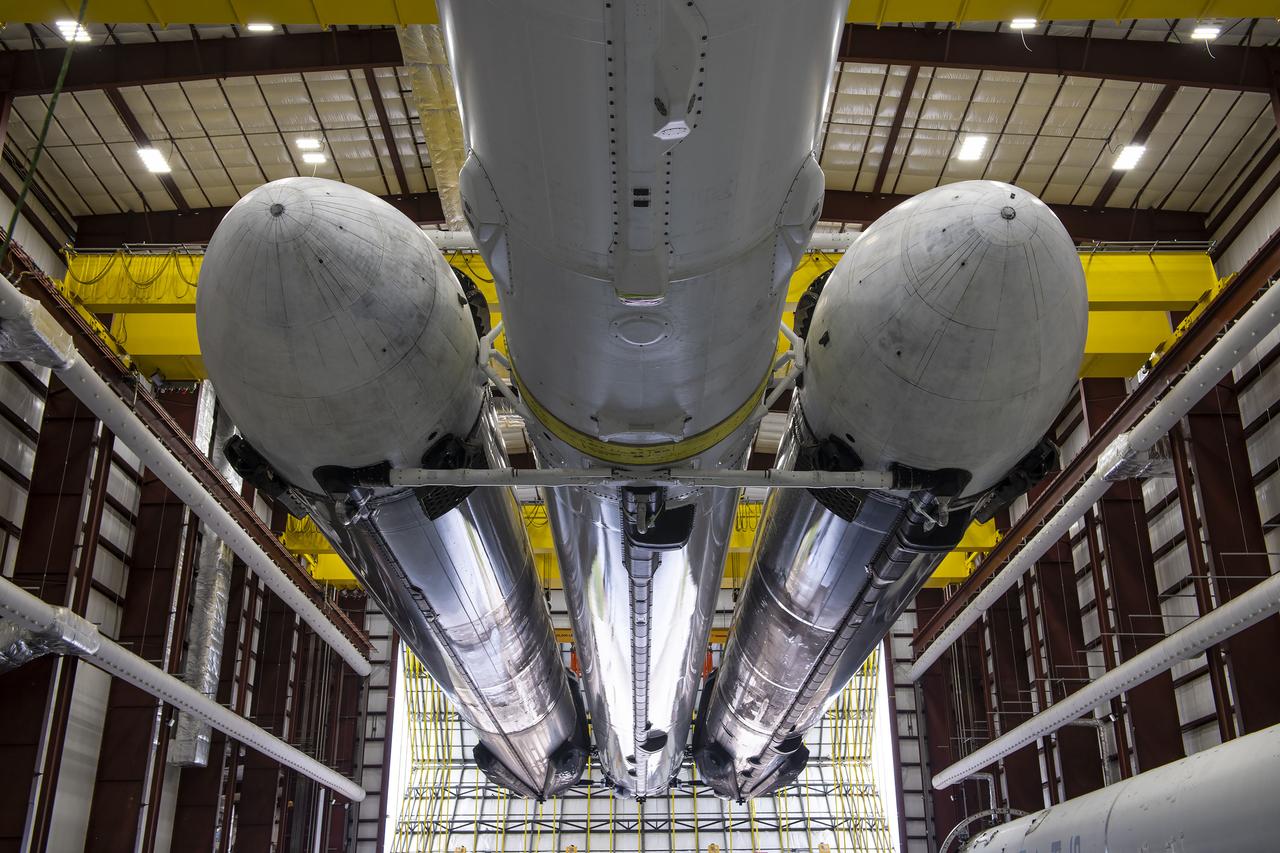
Photos of the Falcon Heavy rocket that will launch NASA's Psyche mission in the hangar at Launch Complex 39A at Kennedy Space Center in Florida before it rolled out to the pad for a static fire test as part of preparations for the journey to a metal-rich asteroid.
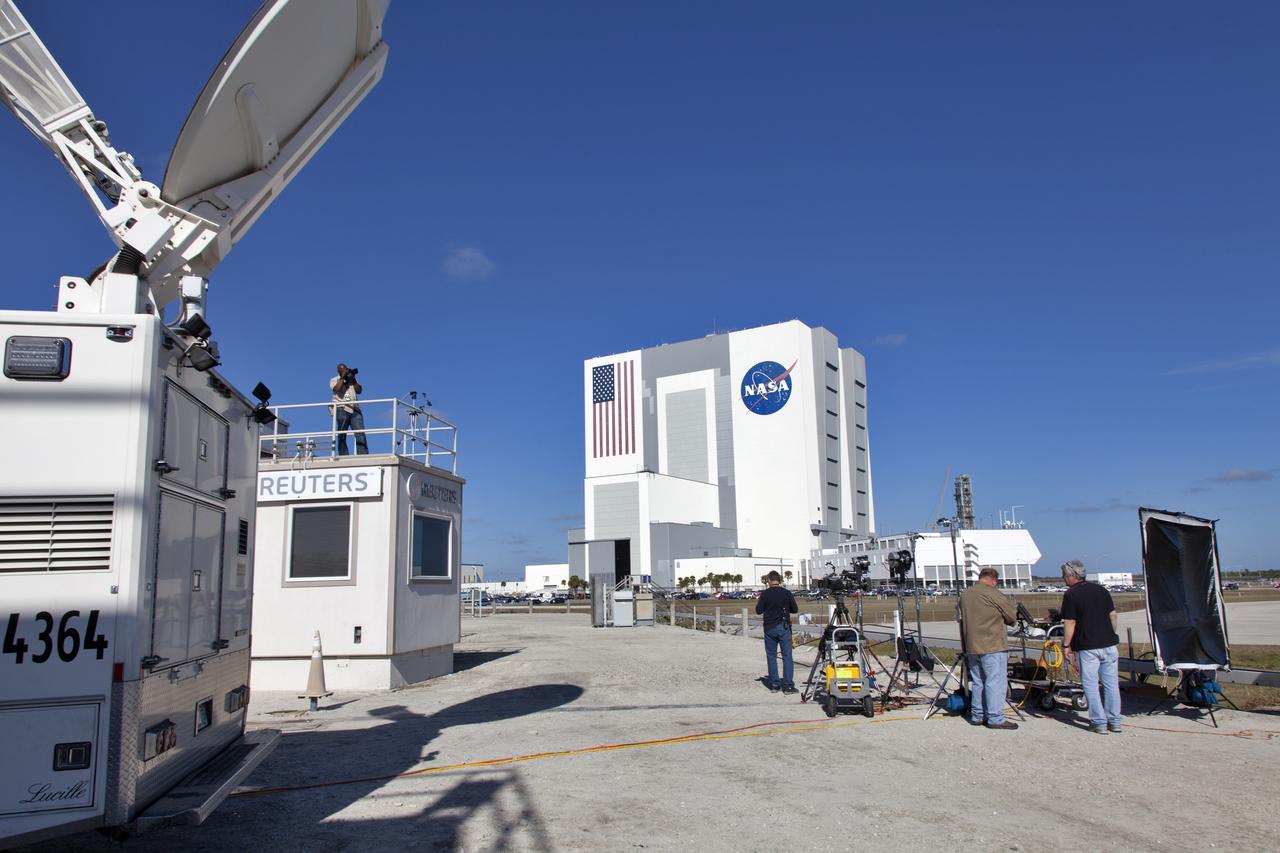
Members of the news media begin setting up at the NASA News Center to await liftoff of the SpaceX Falcon Heavy rocket from Launch Complex 39A at Kennedy Space Center in Florida. The iconic Vehicle Assembly Building and Launch Control Center are visible in the background. The Falcon Heavy demonstration flight will be a significant milestone for the world's premier multi-user spaceport. In 2014, NASA signed a property agreement with SpaceX for the use and operation of the center's pad 39A, where the company has launched Falcon 9 rockets and is preparing for the first Falcon Heavy. NASA also has Space Act Agreements in place with partners, such as SpaceX, to provide services needed to process and launch rockets and spacecraft.
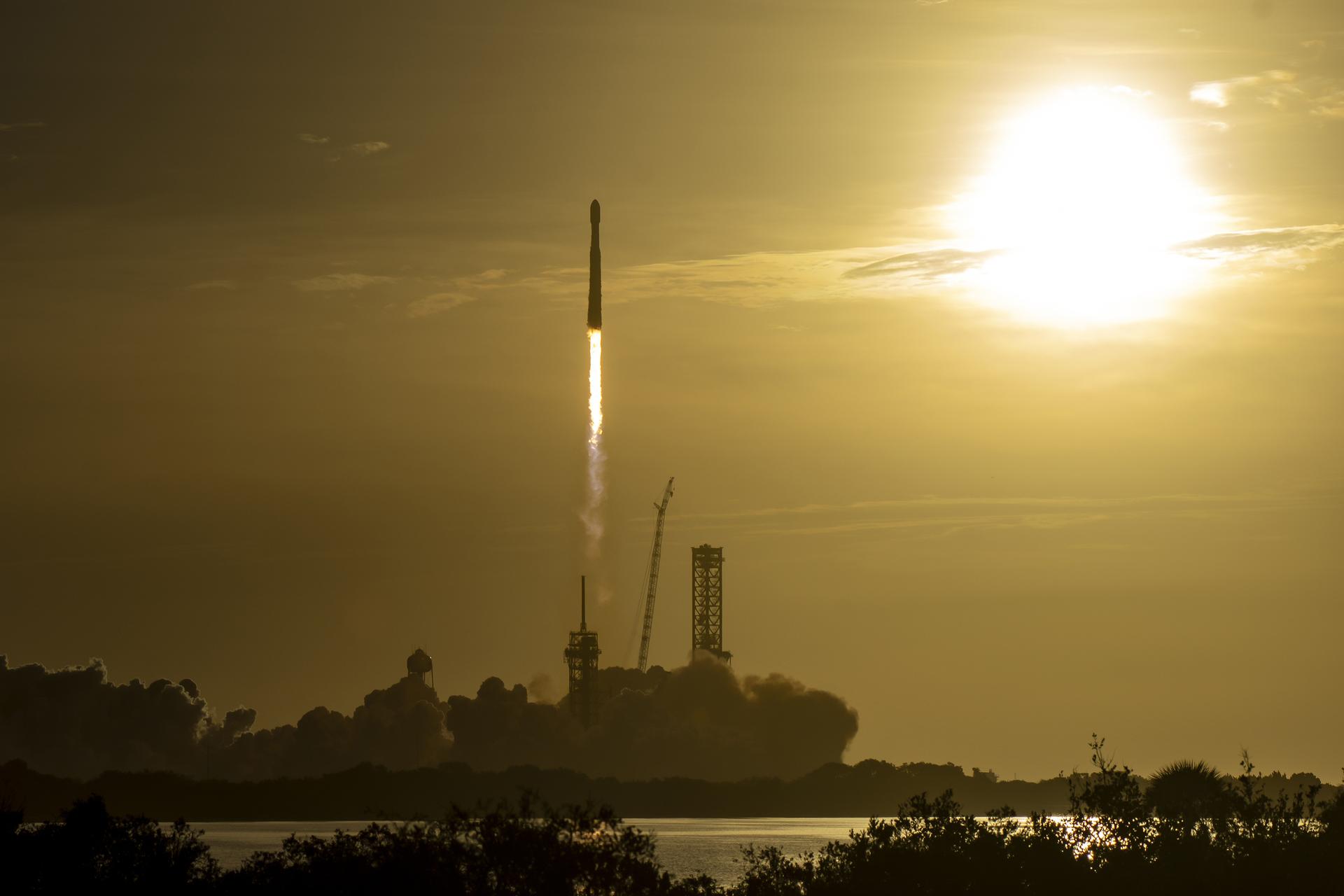
NASA’s Nancy Grace Roman Space Telescope rises to space atop a SpaceX Falcon Heavy rocket from Launch Complex 39A at the agency’s Kennedy Space Center in Florida on Sunday, Aug. 30, 2026. The milestone begins the observatory’s journey to explore the large‑scale structure of the universe. Roman will investigate dark energy and dark matter, conduct a statistical census of planetary systems, and enable a broad range of additional astrophysics research. Liftoff occurred at 7:26 a.m. EDT, from Kennedy’s Launch Complex 39A.
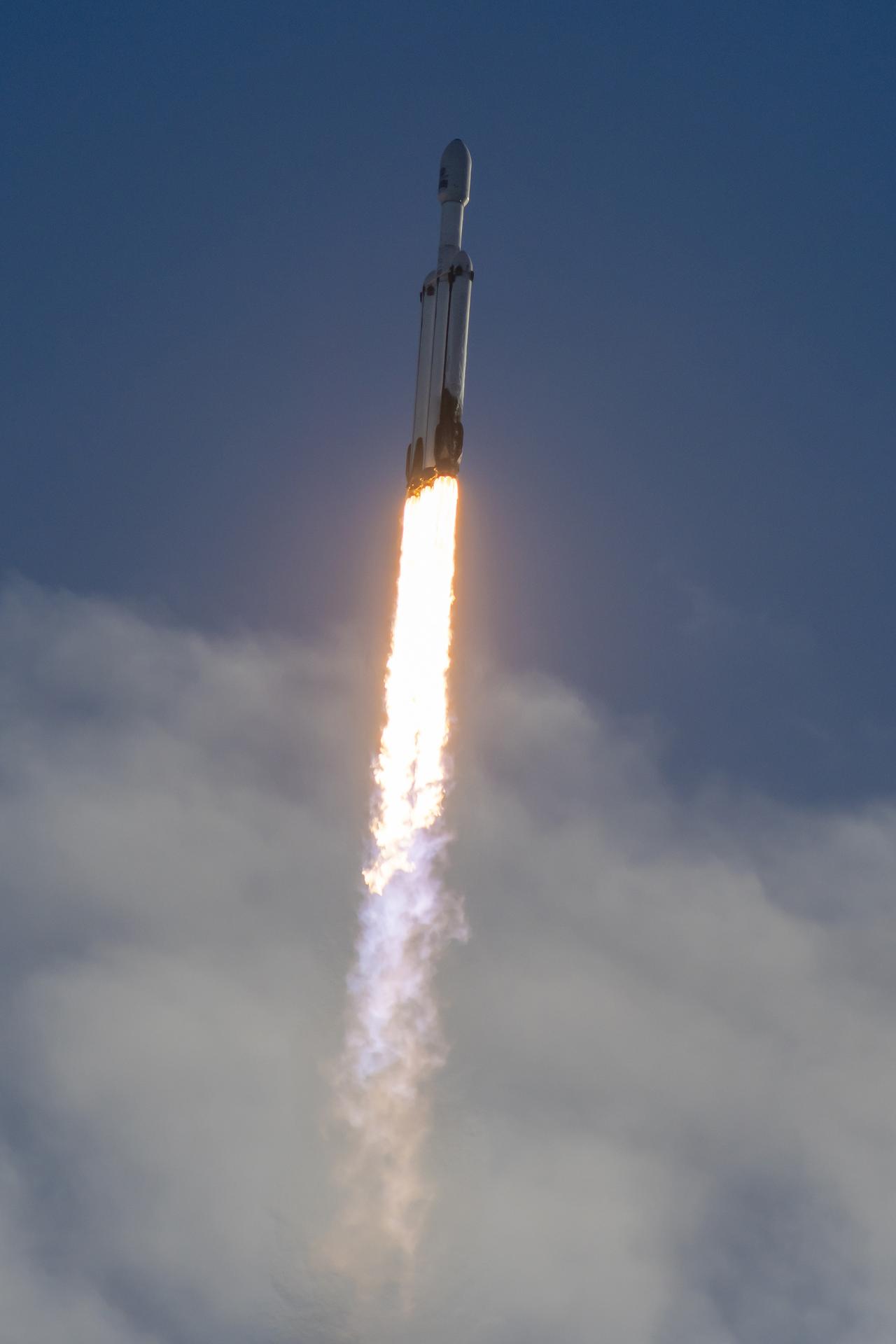
NASA’s Nancy Grace Roman Space Telescope rises to space atop a SpaceX Falcon Heavy rocket from Launch Complex 39A at the agency’s Kennedy Space Center in Florida on Sunday, Aug. 30, 2026. The milestone begins the observatory’s journey to explore the large‑scale structure of the universe. Roman will investigate dark energy and dark matter, conduct a statistical census of planetary systems, and enable a broad range of additional astrophysics research. Liftoff occurred at 7:26 a.m. EDT, from Kennedy’s Launch Complex 39A.
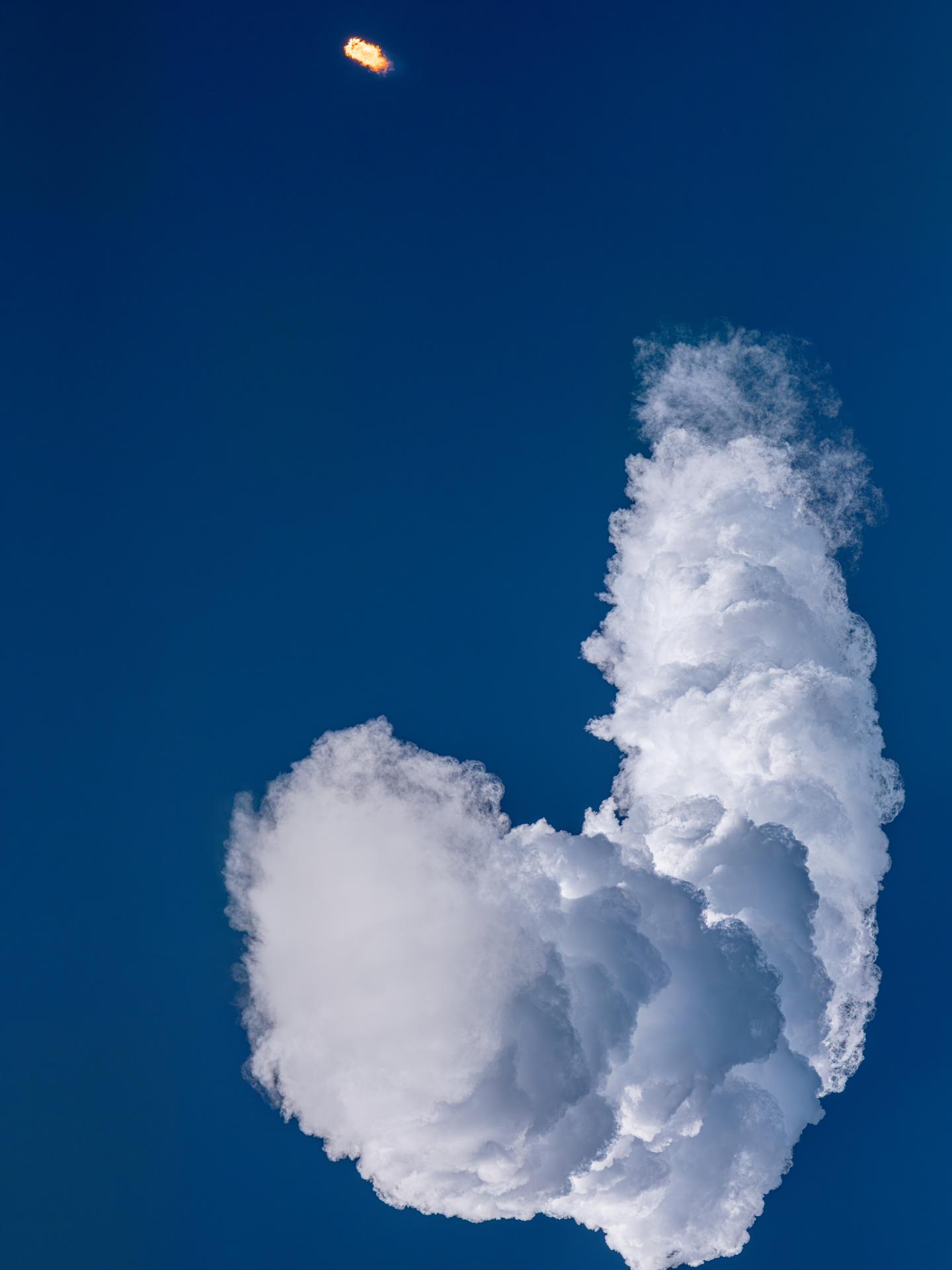
NASA’s Nancy Grace Roman Space Telescope rises to space atop a SpaceX Falcon Heavy rocket from Launch Complex 39A at the agency’s Kennedy Space Center in Florida on Sunday, Aug. 30, 2026. The milestone begins the observatory’s journey to explore the large‑scale structure of the universe. Roman will investigate dark energy and dark matter, conduct a statistical census of planetary systems, and enable a broad range of additional astrophysics research. Liftoff occurred at 7:26 a.m. EDT, from Kennedy’s Launch Complex 39A.
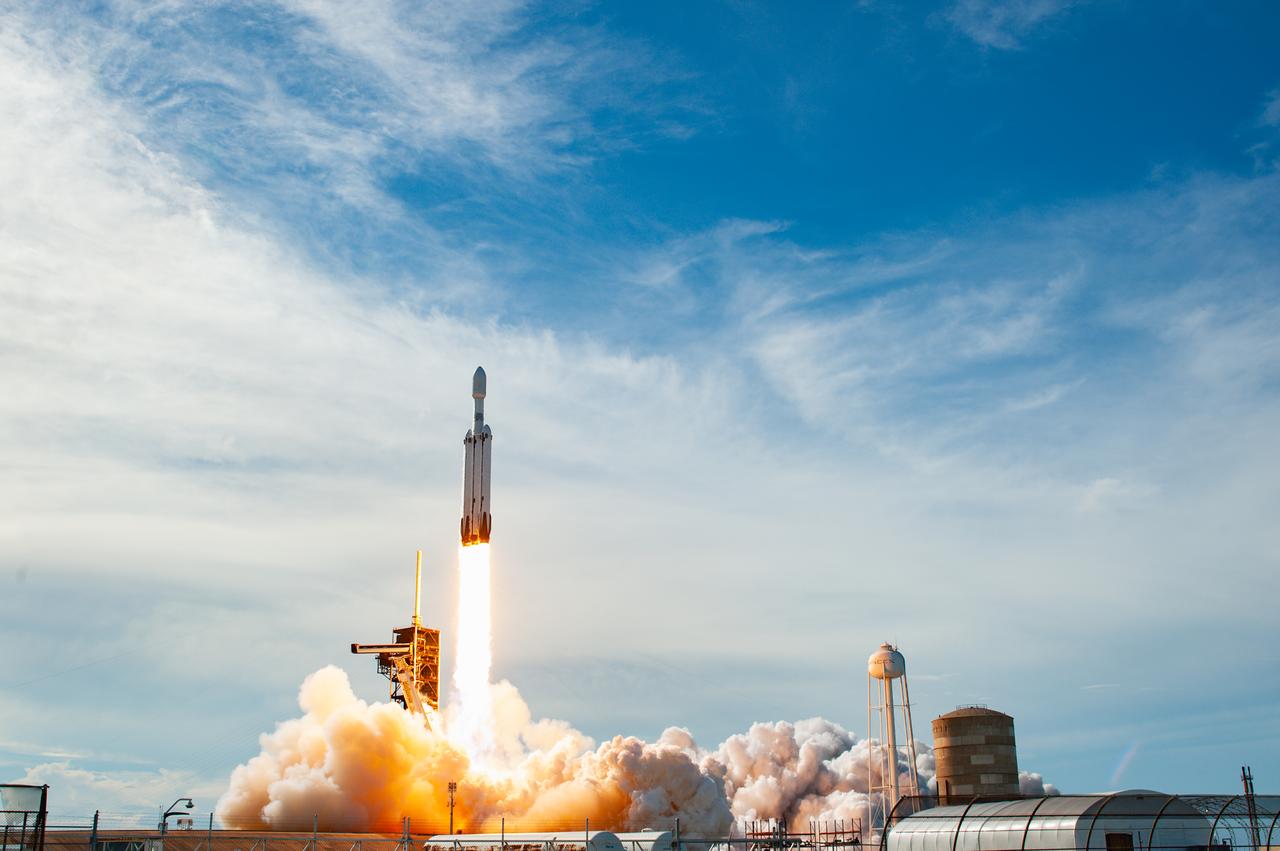
A SpaceX Falcon Heavy rocket carrying the National Oceanic and Atmospheric Administration (NOAA) GOES-U (Geostationary Operational Environmental Satellite U) lifts off from Launch Complex 39A at NASA’s Kennedy Space Center in Florida on Tuesday, June 25, 2024. The GOES-U satellite is the final satellite in the GOES-R series, which serves a critical role in providing continuous coverage of the Western Hemisphere, including monitoring tropical systems in the eastern Pacific and Atlantic oceans.
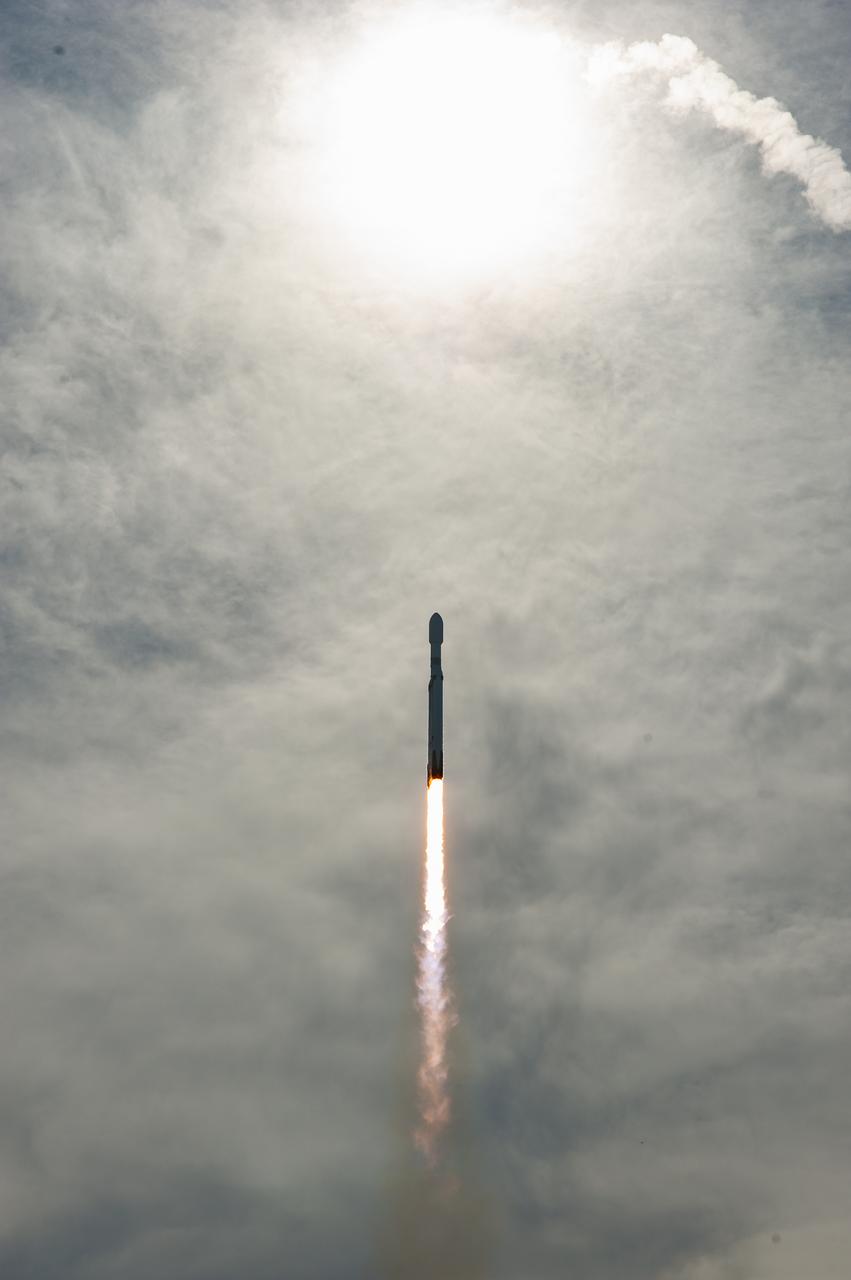
A SpaceX Falcon Heavy rocket carrying the National Oceanic and Atmospheric Administration (NOAA) GOES-U (Geostationary Operational Environmental Satellite U) lifts off from Launch Complex 39A at NASA’s Kennedy Space Center in Florida on Tuesday, June 25, 2024. The GOES-U satellite is the final satellite in the GOES-R series, which serves a critical role in providing continuous coverage of the Western Hemisphere, including monitoring tropical systems in the eastern Pacific and Atlantic oceans.
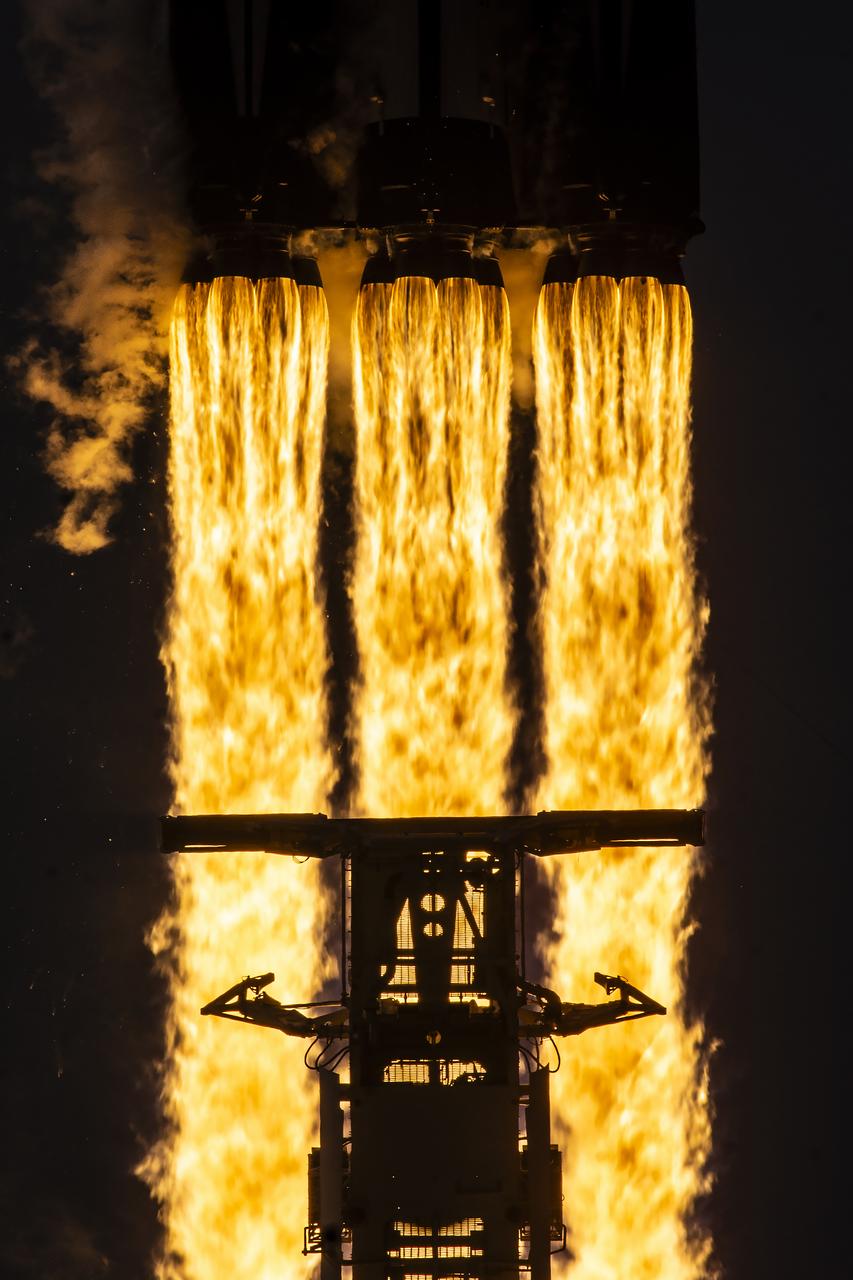
A SpaceX Falcon Heavy rocket carrying the National Oceanic and Atmospheric Administration (NOAA) GOES-U (Geostationary Operational Environmental Satellite U) lifts off from Launch Complex 39A at NASA’s Kennedy Space Center in Florida on Tuesday, June 25, 2024. The GOES-U satellite is the final satellite in the GOES-R series, which serves a critical role in providing continuous coverage of the Western Hemisphere, including monitoring tropical systems in the eastern Pacific and Atlantic oceans.
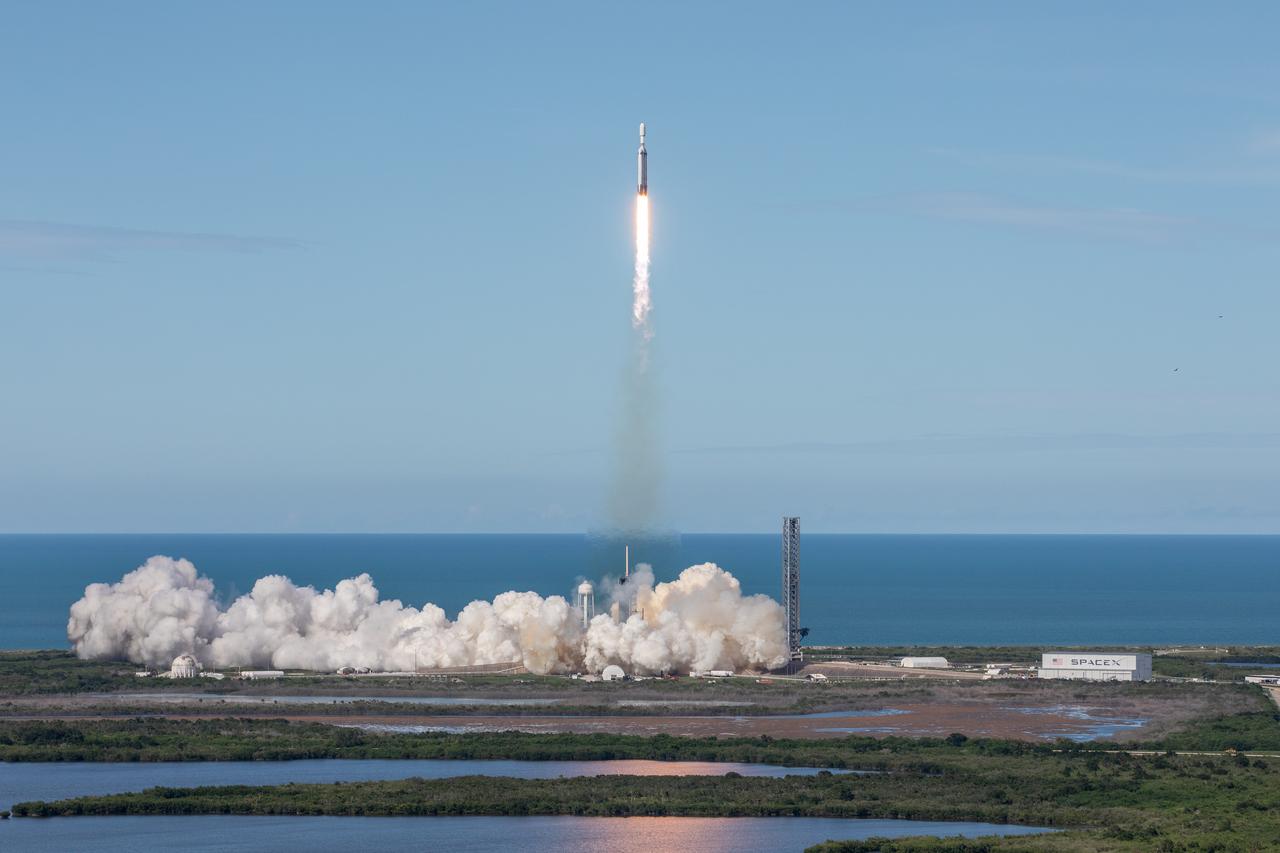
A SpaceX Falcon Heavy rocket carrying the National Oceanic and Atmospheric Administration (NOAA) GOES-U (Geostationary Operational Environmental Satellite U) lifts off from Launch Complex 39A at NASA’s Kennedy Space Center in Florida on Tuesday, June 25, 2024. The GOES-U satellite is the final satellite in the GOES-R series, which serves a critical role in providing continuous coverage of the Western Hemisphere, including monitoring tropical systems in the eastern Pacific and Atlantic oceans.
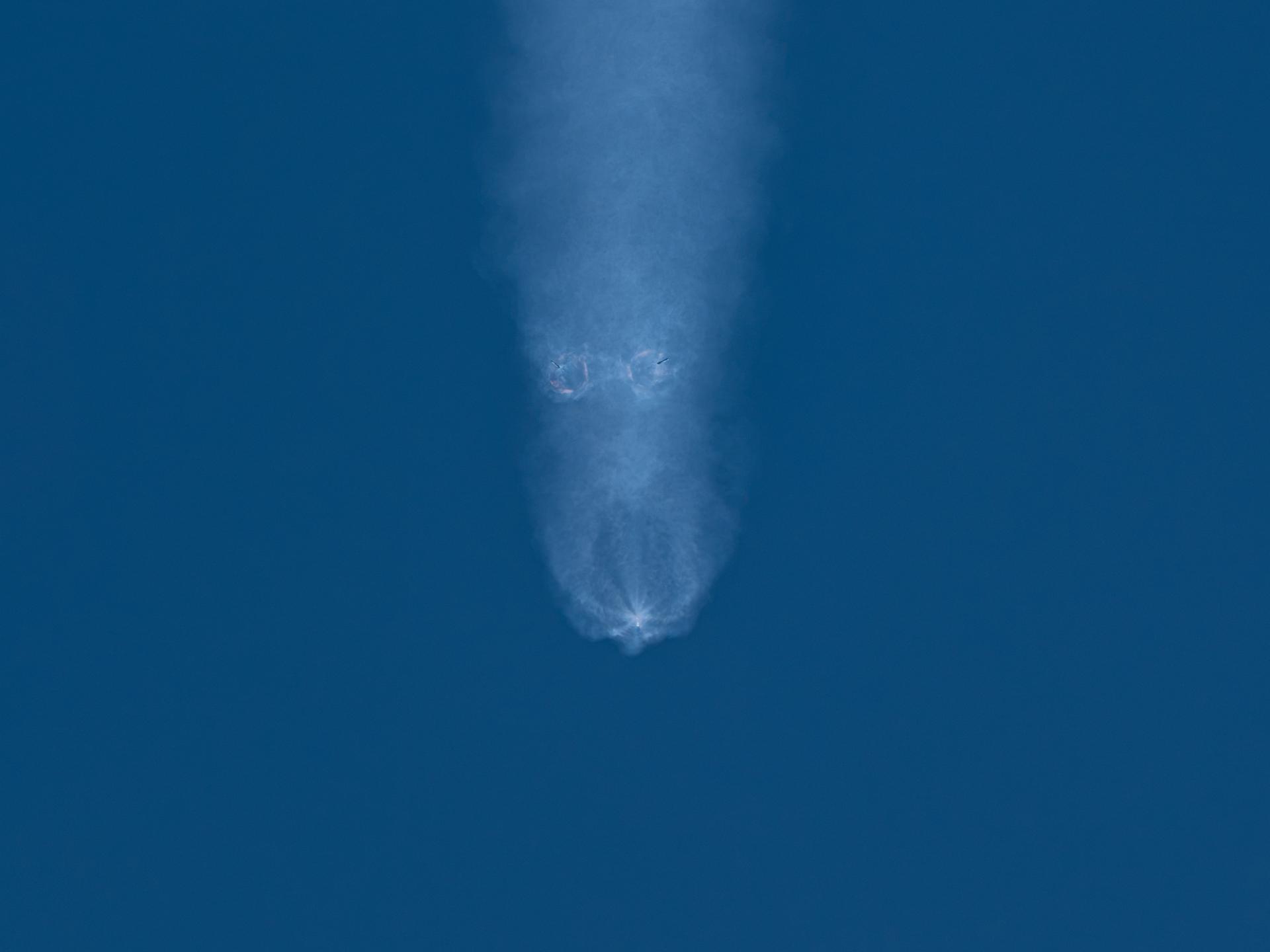
NASA’s Nancy Grace Roman Space Telescope rises to space atop a SpaceX Falcon Heavy rocket from Launch Complex 39A at the agency’s Kennedy Space Center in Florida on Sunday, Aug. 30, 2026. The milestone begins the observatory’s journey to explore the large‑scale structure of the universe. Roman will investigate dark energy and dark matter, conduct a statistical census of planetary systems, and enable a broad range of additional astrophysics research. Liftoff occurred at 7:26 a.m. EDT, from Kennedy’s Launch Complex 39A.
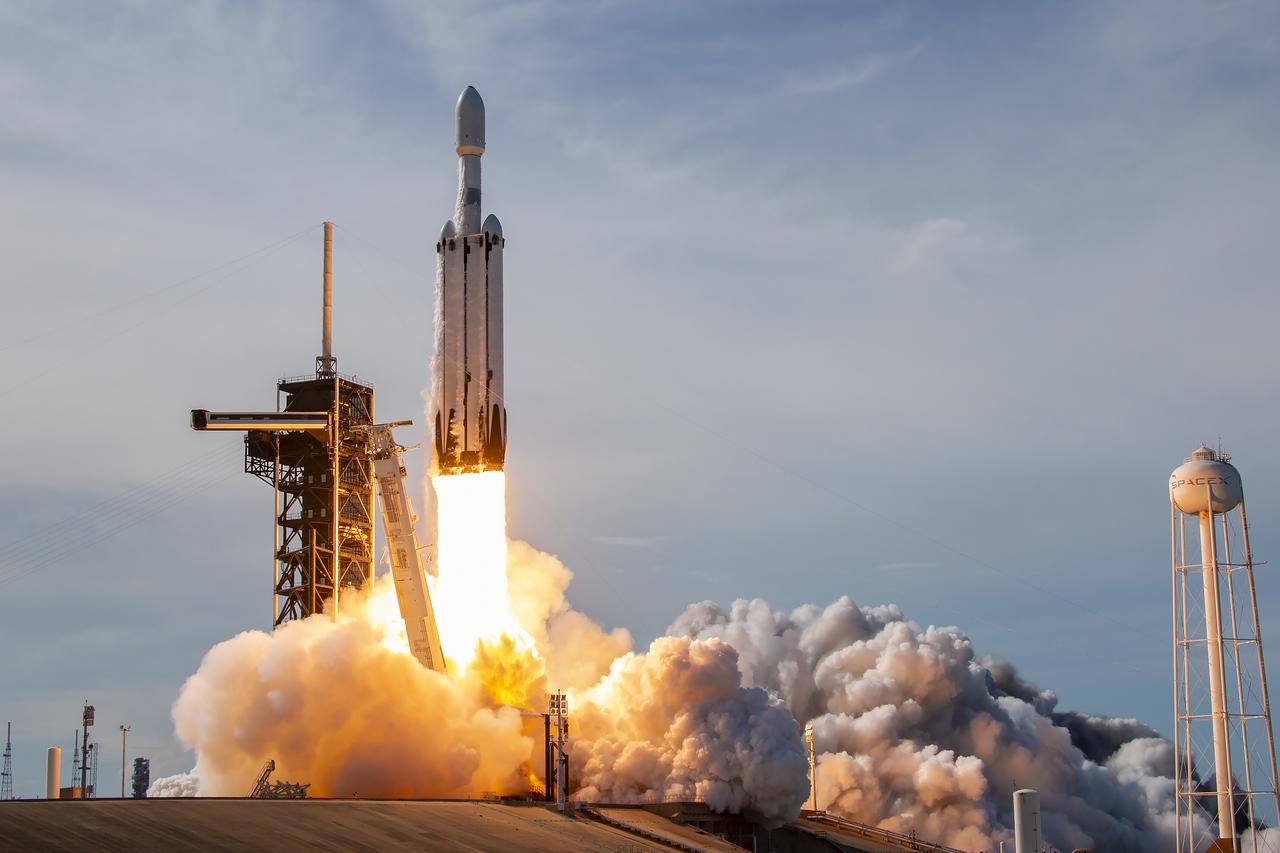
A SpaceX Falcon Heavy rocket carrying the National Oceanic and Atmospheric Administration (NOAA) GOES-U (Geostationary Operational Environmental Satellite U) lifts off from Launch Complex 39A at NASA’s Kennedy Space Center in Florida on Tuesday, June 25, 2024. The GOES-U satellite is the final satellite in the GOES-R series, which serves a critical role in providing continuous coverage of the Western Hemisphere, including monitoring tropical systems in the eastern Pacific and Atlantic oceans.
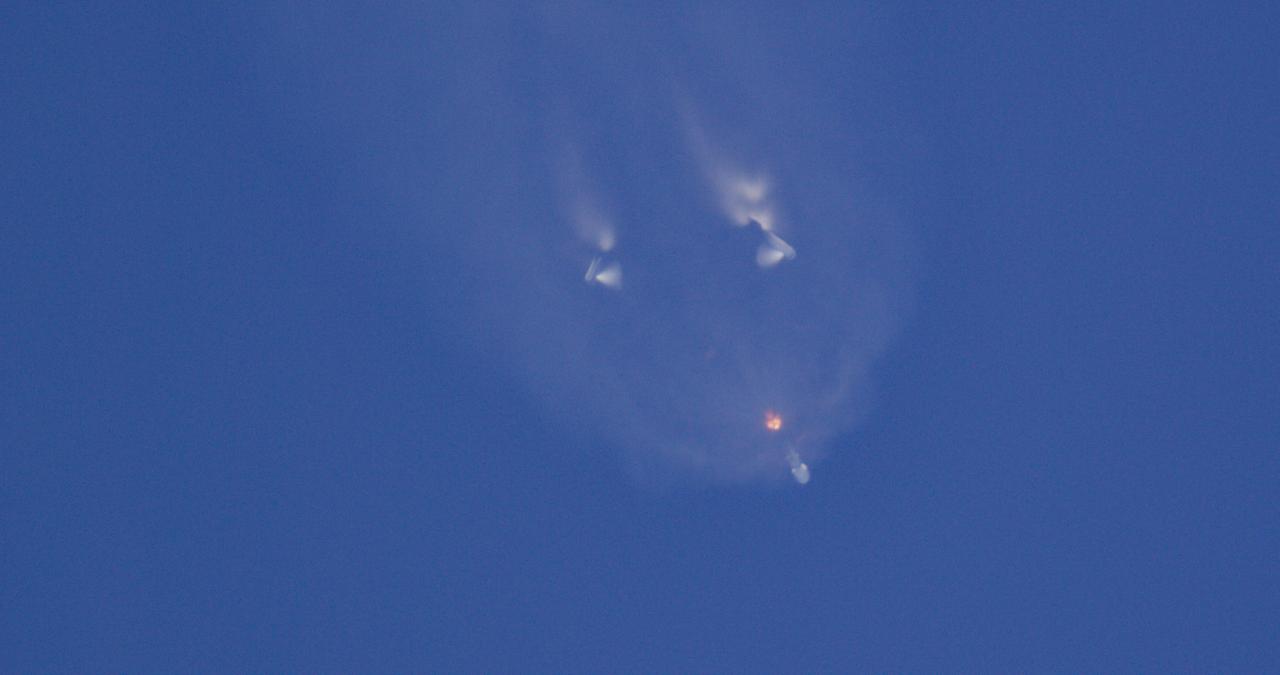
Side boosters separate from the center core on the SpaceX Falcon Heavy rocket carrying the National Oceanic and Atmospheric Administration (NOAA) GOES-U (Geostationary Operational Environmental Satellite U) after it lifts off from Launch Complex 39A at NASA’s Kennedy Space Center in Florida on Tuesday, June 25, 2024. The GOES-U satellite is the final satellite in the GOES-R series, which serves a critical role in providing continuous coverage of the Western Hemisphere, including monitoring tropical systems in the eastern Pacific and Atlantic oceans.
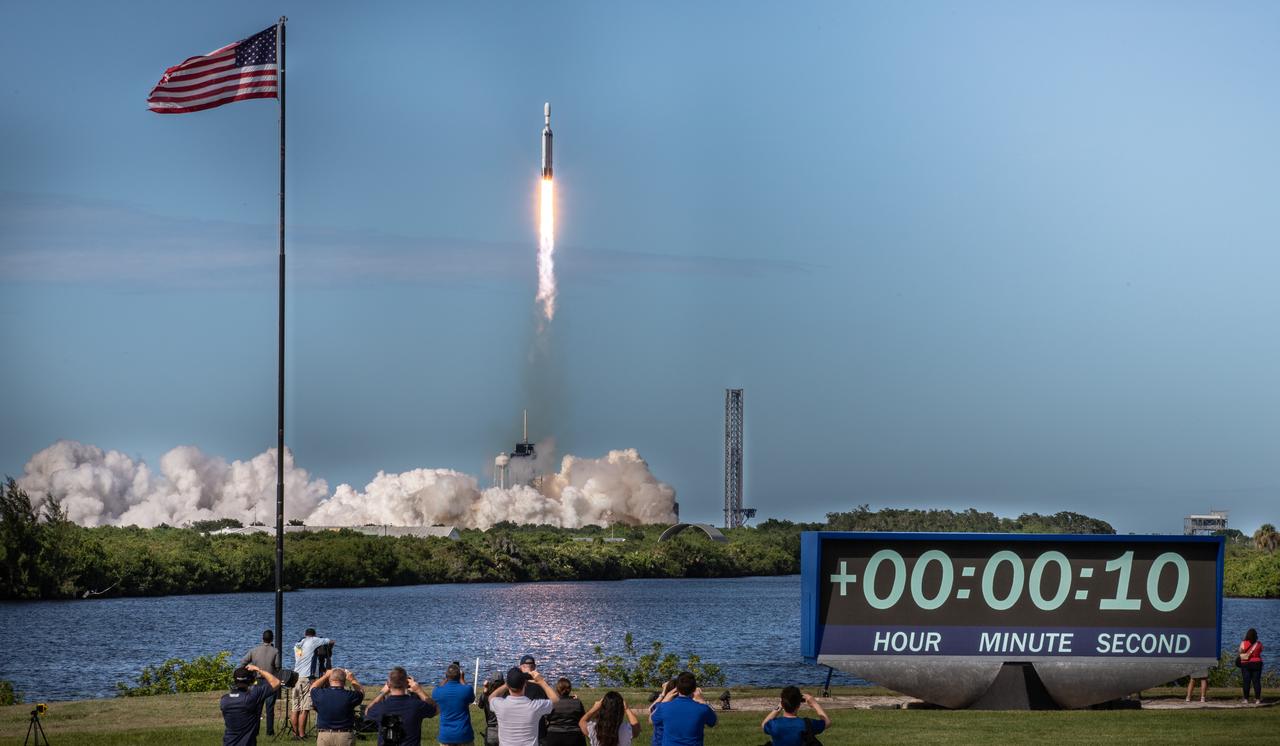
A SpaceX Falcon Heavy rocket carrying the National Oceanic and Atmospheric Administration (NOAA) GOES-U (Geostationary Operational Environmental Satellite U) lifts off from Launch Complex 39A at NASA’s Kennedy Space Center in Florida on Tuesday, June 25, 2024. The GOES-U satellite is the final satellite in the GOES-R series, which serves a critical role in providing continuous coverage of the Western Hemisphere, including monitoring tropical systems in the eastern Pacific and Atlantic oceans.
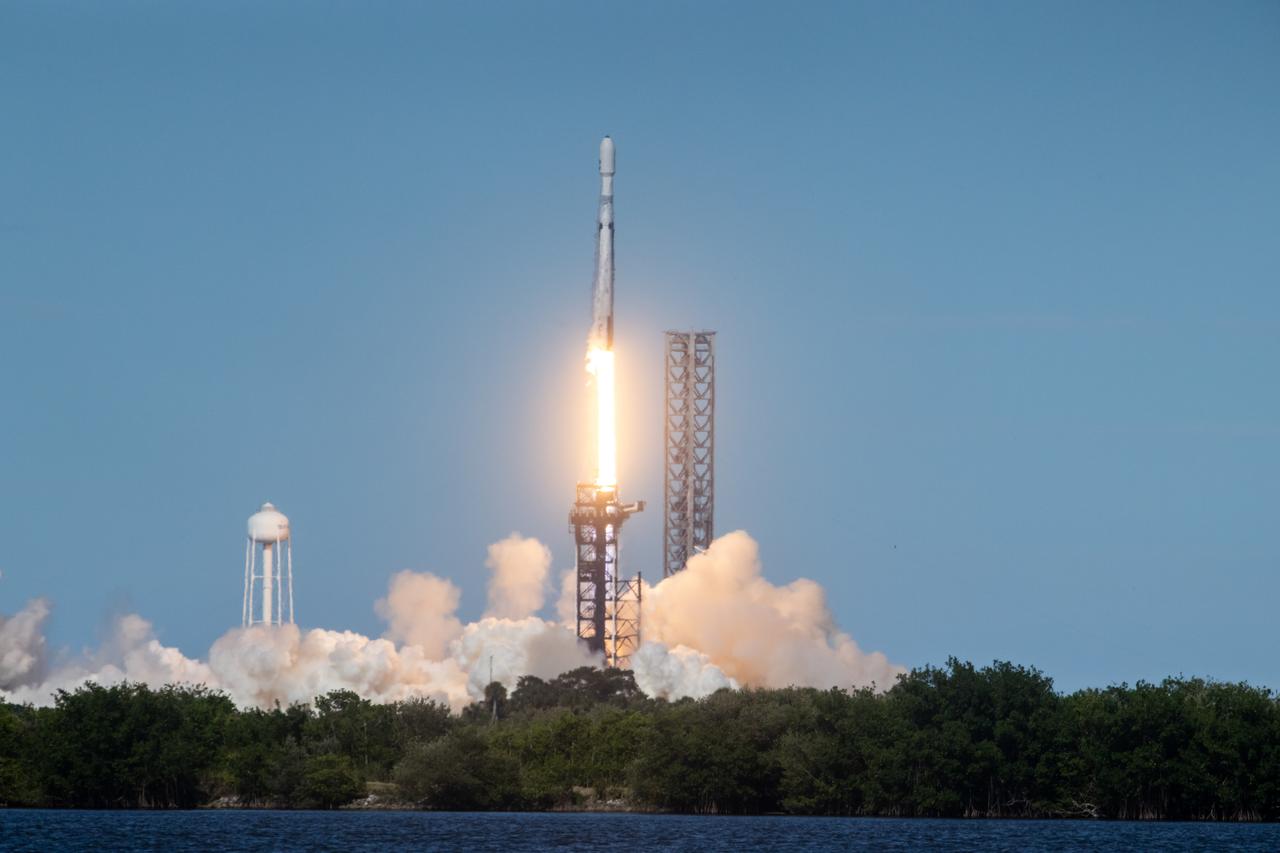
A SpaceX Falcon Heavy rocket carrying the National Oceanic and Atmospheric Administration (NOAA) GOES-U (Geostationary Operational Environmental Satellite U) lifts off from Launch Complex 39A at NASA’s Kennedy Space Center in Florida on Tuesday, June 25, 2024. The GOES-U satellite is the final satellite in the GOES-R series, which serves a critical role in providing continuous coverage of the Western Hemisphere, including monitoring tropical systems in the eastern Pacific and Atlantic oceans.
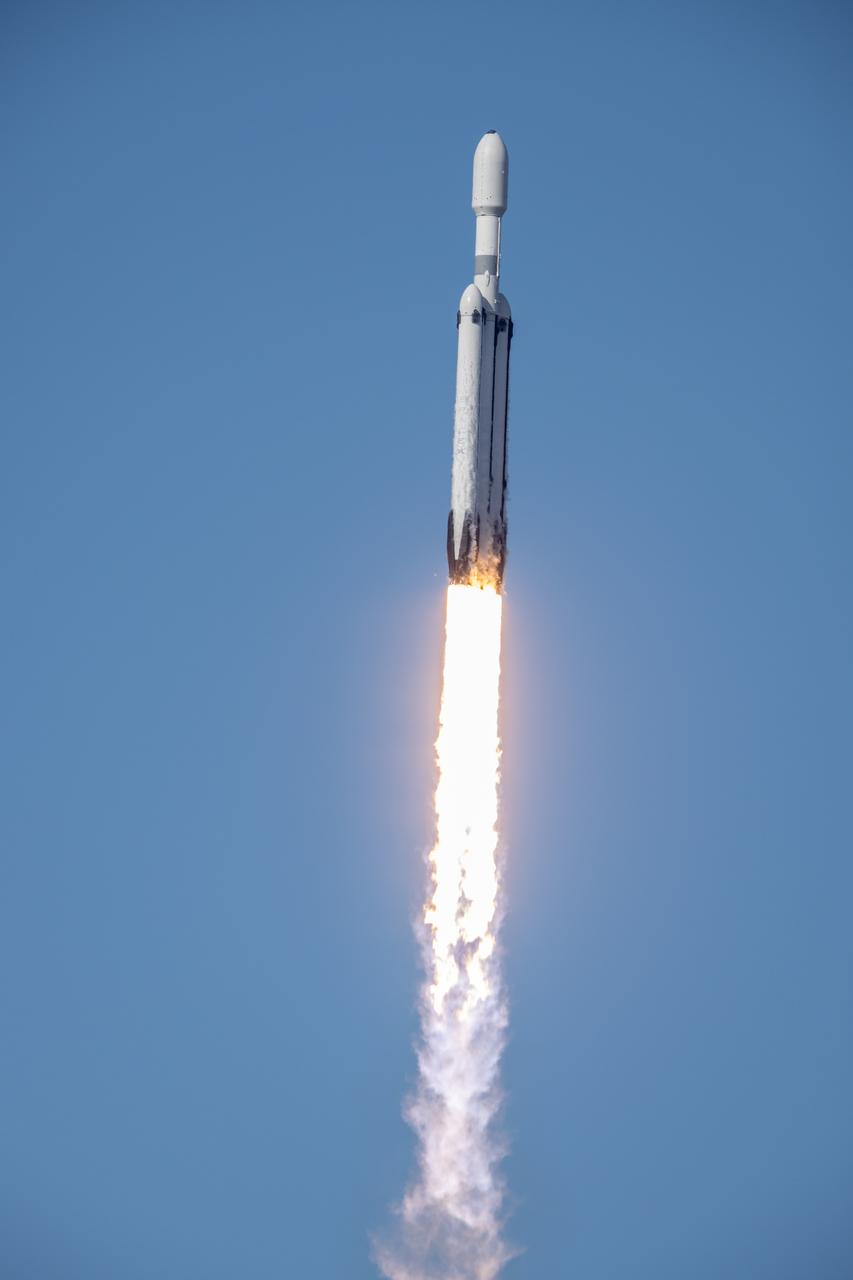
A SpaceX Falcon Heavy rocket carrying the National Oceanic and Atmospheric Administration (NOAA) GOES-U (Geostationary Operational Environmental Satellite U) lifts off from Launch Complex 39A at NASA’s Kennedy Space Center in Florida on Tuesday, June 25, 2024. The GOES-U satellite is the final satellite in the GOES-R series, which serves a critical role in providing continuous coverage of the Western Hemisphere, including monitoring tropical systems in the eastern Pacific and Atlantic oceans.
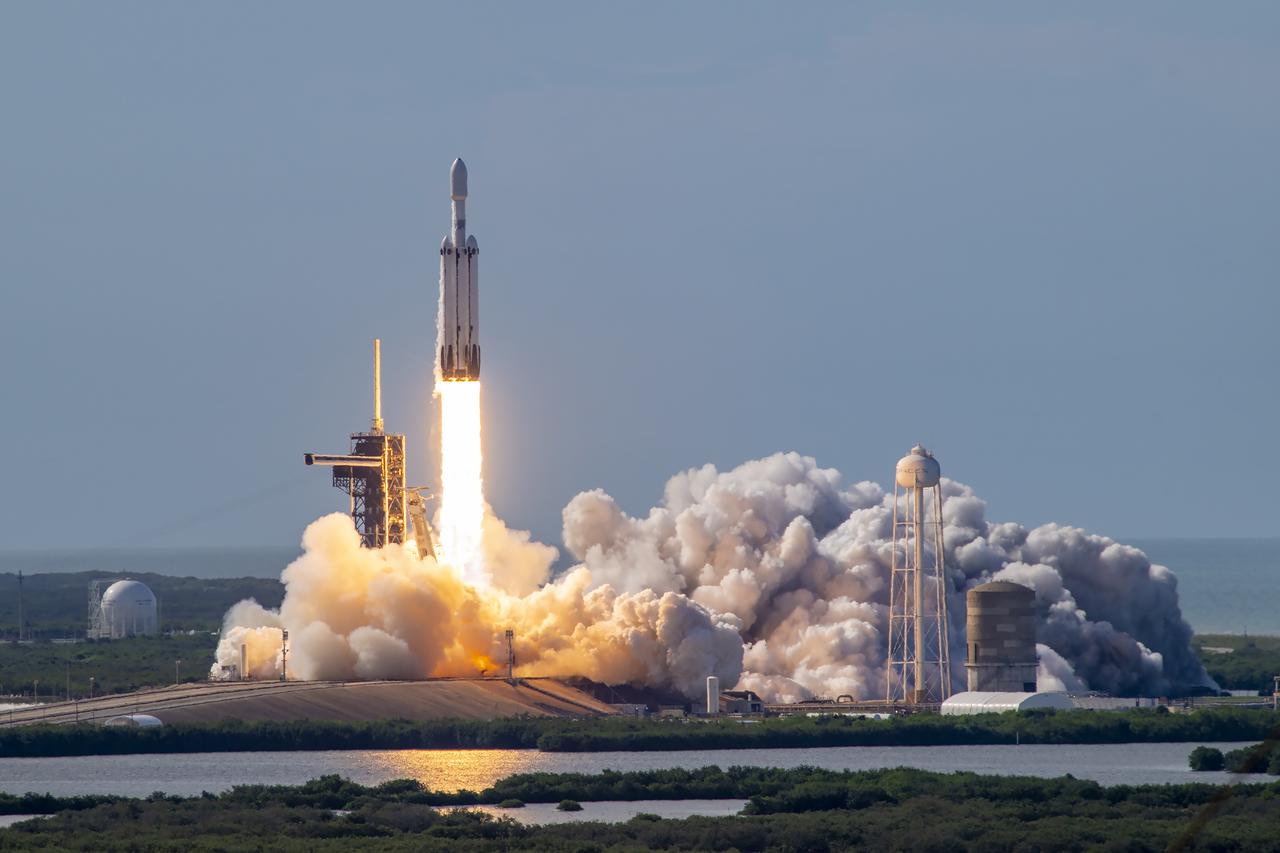
A SpaceX Falcon Heavy rocket carrying the National Oceanic and Atmospheric Administration (NOAA) GOES-U (Geostationary Operational Environmental Satellite U) lifts off from Launch Complex 39A at NASA’s Kennedy Space Center in Florida on Tuesday, June 25, 2024. The GOES-U satellite is the final satellite in the GOES-R series, which serves a critical role in providing continuous coverage of the Western Hemisphere, including monitoring tropical systems in the eastern Pacific and Atlantic oceans.
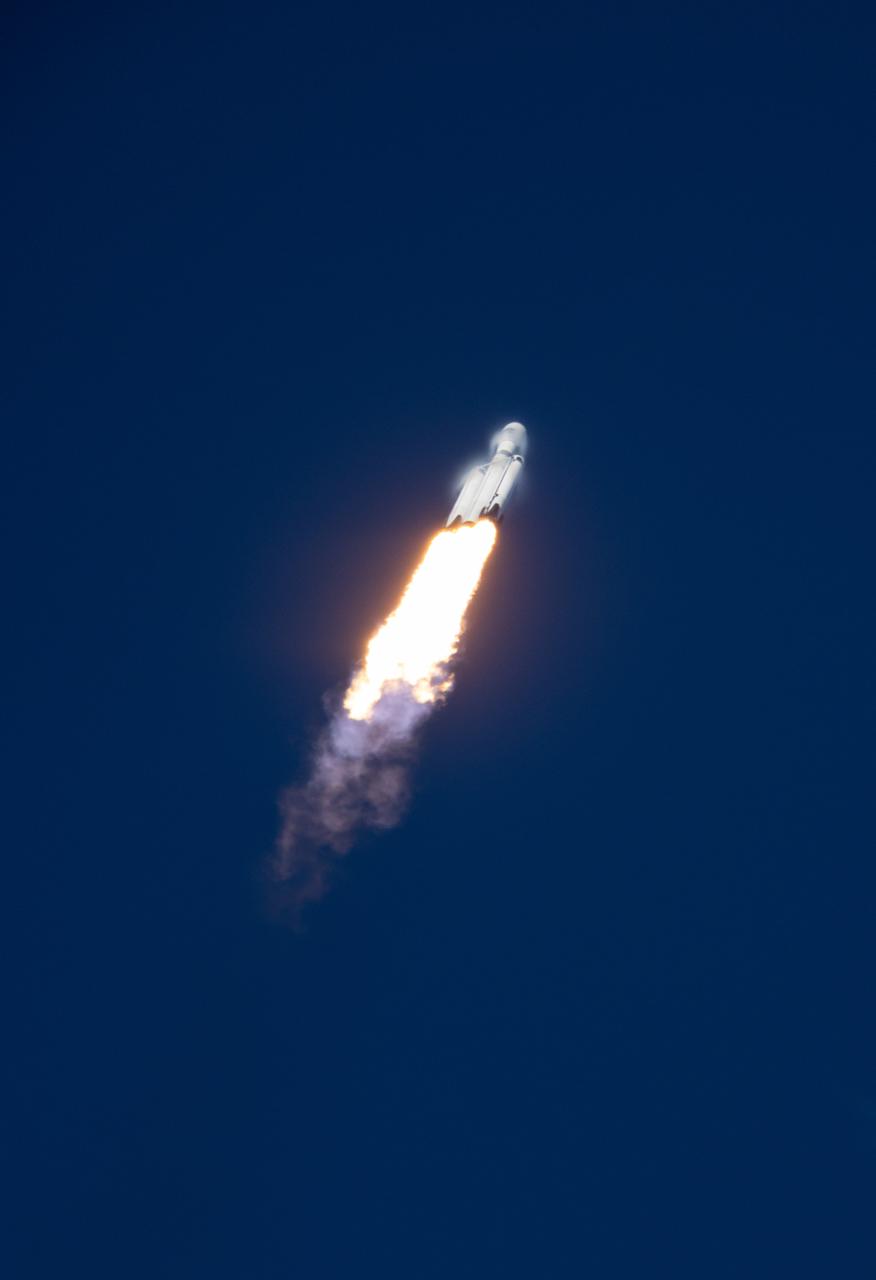
A SpaceX Falcon Heavy rocket carrying the National Oceanic and Atmospheric Administration (NOAA) GOES-U (Geostationary Operational Environmental Satellite U) launches from Launch Complex 39A at NASA’s Kennedy Space Center in Florida on Tuesday, June 25, 2024. The GOES-U satellite is the final satellite in the GOES-R series, which serves a critical role in providing continuous coverage of the Western Hemisphere, including monitoring tropical systems in the eastern Pacific and Atlantic oceans.
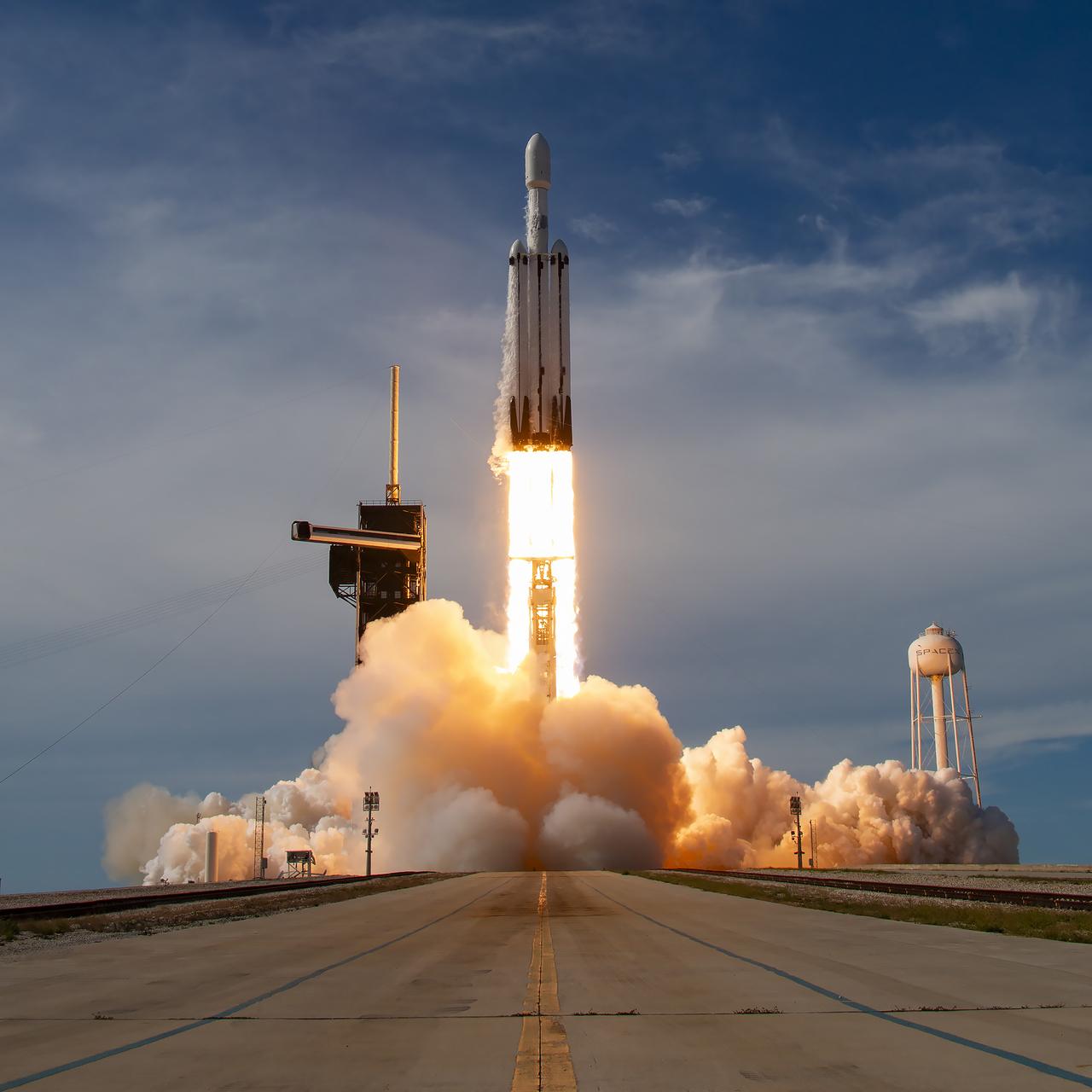
A SpaceX Falcon Heavy rocket carrying the National Oceanic and Atmospheric Administration (NOAA) GOES-U (Geostationary Operational Environmental Satellite U) lifts off from Launch Complex 39A at NASA’s Kennedy Space Center in Florida on Tuesday, June 25, 2024. The GOES-U satellite is the final satellite in the GOES-R series, which serves a critical role in providing continuous coverage of the Western Hemisphere, including monitoring tropical systems in the eastern Pacific and Atlantic oceans.

A SpaceX Falcon Heavy rocket carrying the National Oceanic and Atmospheric Administration (NOAA) GOES-U (Geostationary Operational Environmental Satellite U) lifts off from Launch Complex 39A at NASA’s Kennedy Space Center in Florida on Tuesday, June 25, 2024. The GOES-U satellite is the final satellite in the GOES-R series, which serves a critical role in providing continuous coverage of the Western Hemisphere, including monitoring tropical systems in the eastern Pacific and Atlantic oceans.
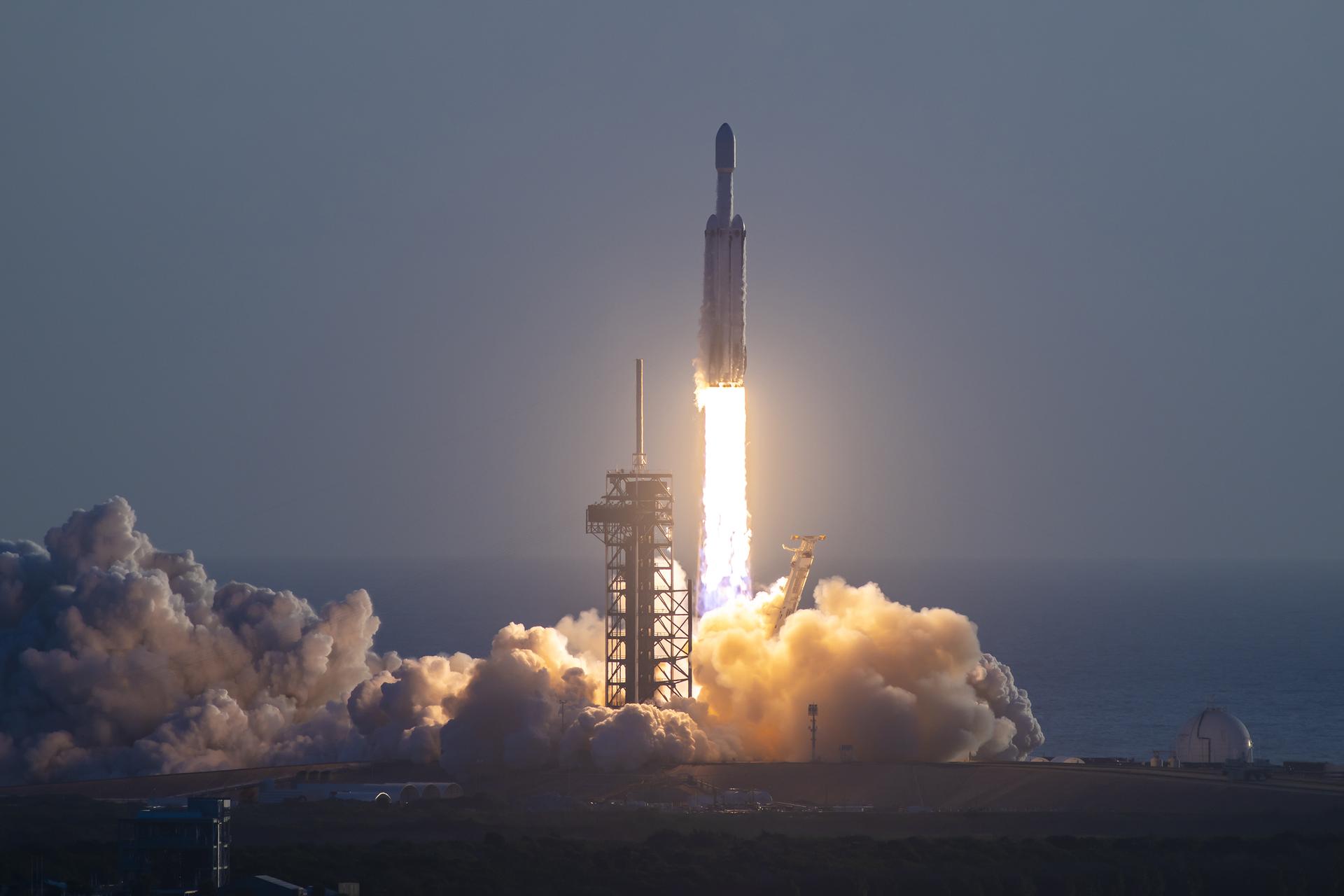
NASA’s Nancy Grace Roman Space Telescope rises to space atop a SpaceX Falcon Heavy rocket from Launch Complex 39A at the agency’s Kennedy Space Center in Florida on Sunday, Aug. 30, 2026. The milestone begins the observatory’s journey to explore the large‑scale structure of the universe. Roman will investigate dark energy and dark matter, conduct a statistical census of planetary systems, and enable a broad range of additional astrophysics research. Liftoff occurred at 7:26 a.m. EDT, from Kennedy’s Launch Complex 39A.
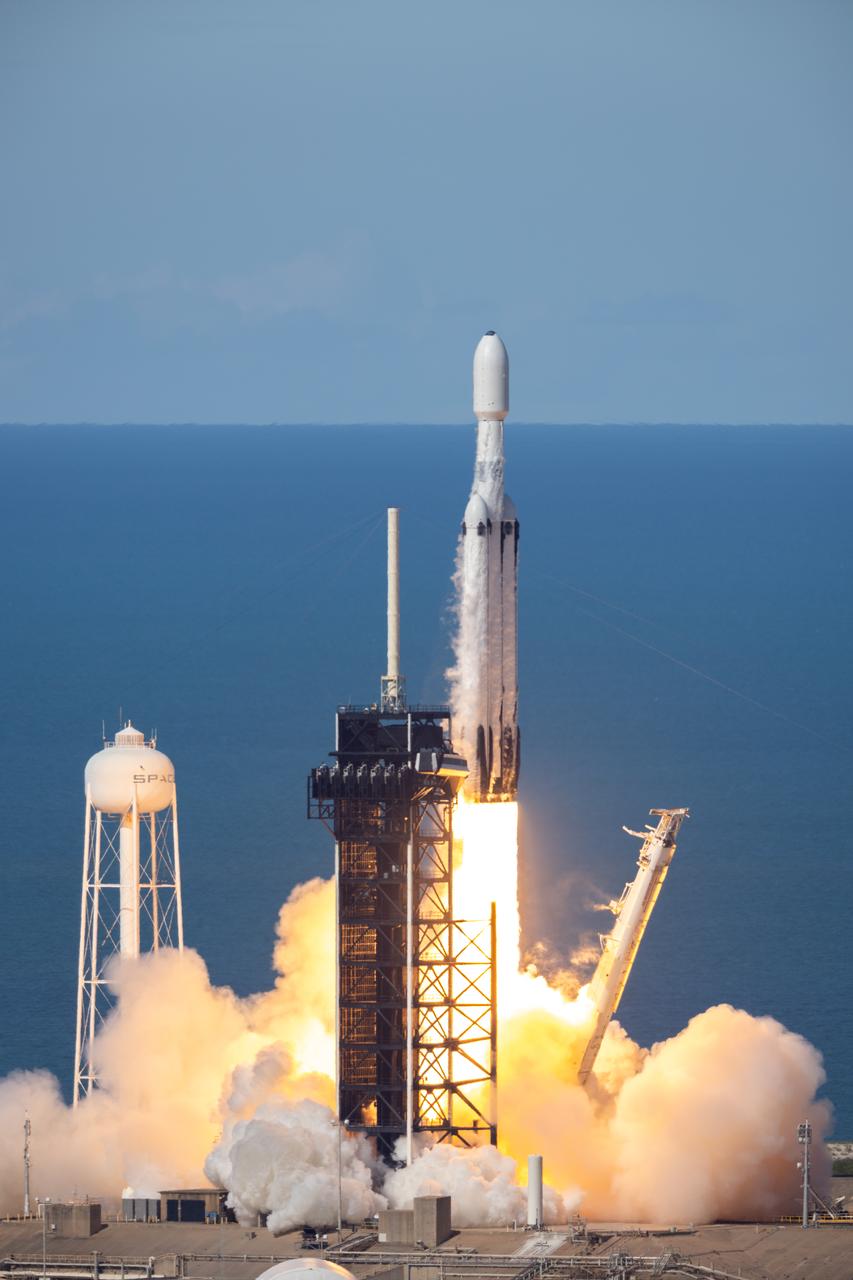
A SpaceX Falcon Heavy rocket carrying the National Oceanic and Atmospheric Administration (NOAA) GOES-U (Geostationary Operational Environmental Satellite U) lifts off from Launch Complex 39A at NASA’s Kennedy Space Center in Florida on Tuesday, June 25, 2024. The GOES-U satellite is the final satellite in the GOES-R series, which serves a critical role in providing continuous coverage of the Western Hemisphere, including monitoring tropical systems in the eastern Pacific and Atlantic oceans.
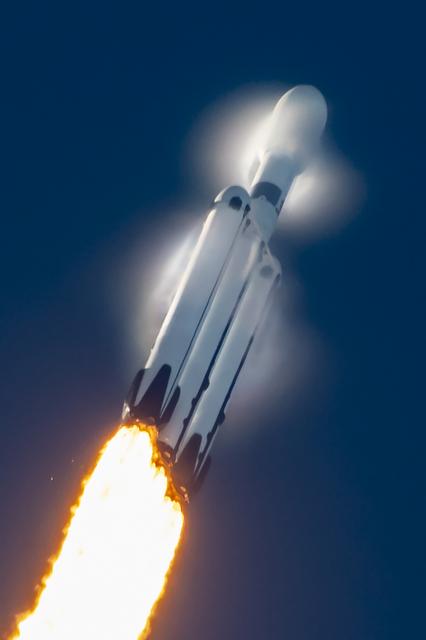
A SpaceX Falcon Heavy rocket carrying the National Oceanic and Atmospheric Administration (NOAA) GOES-U (Geostationary Operational Environmental Satellite U) lifts off from Launch Complex 39A at NASA’s Kennedy Space Center in Florida on Tuesday, June 25, 2024. The GOES-U satellite is the final satellite in the GOES-R series, which serves a critical role in providing continuous coverage of the Western Hemisphere, including monitoring tropical systems in the eastern Pacific and Atlantic oceans.
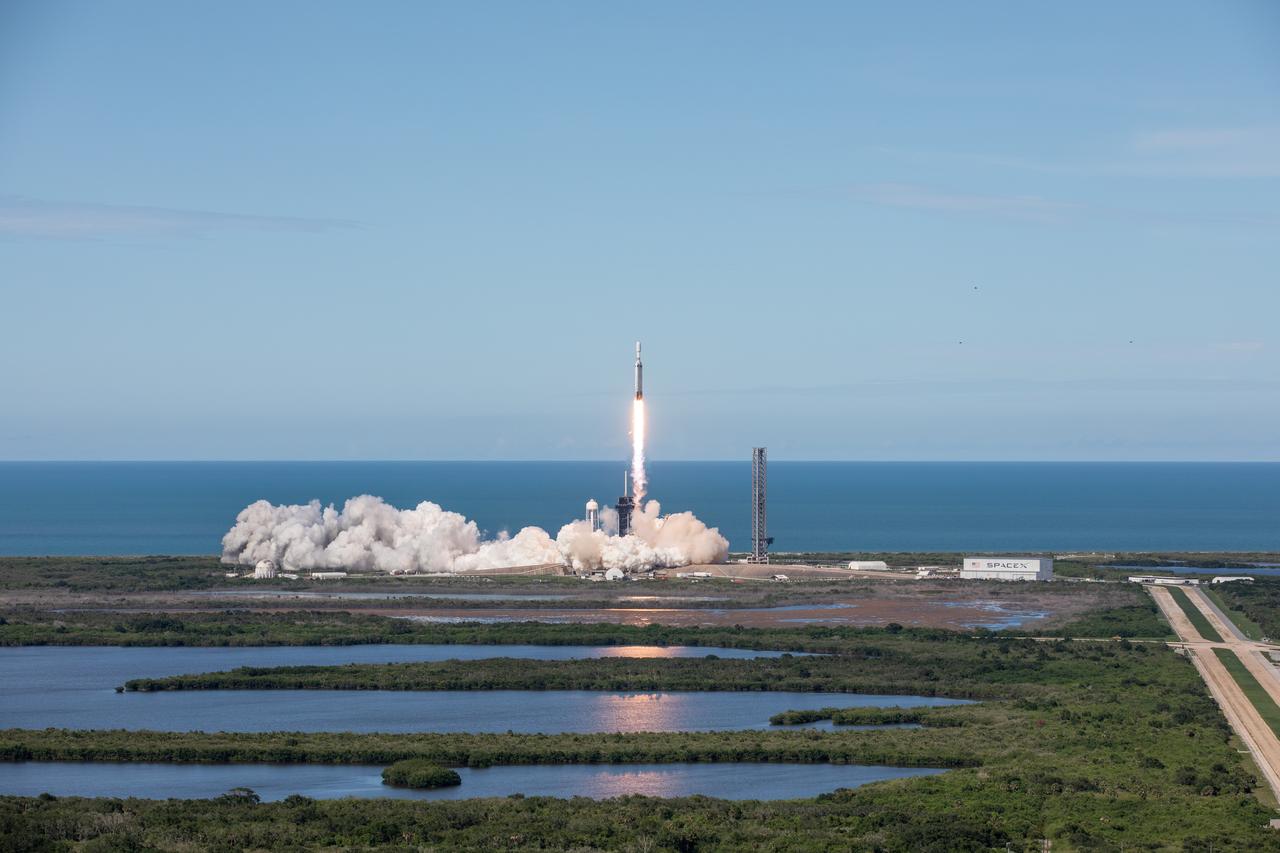
A SpaceX Falcon Heavy rocket carrying the National Oceanic and Atmospheric Administration (NOAA) GOES-U (Geostationary Operational Environmental Satellite U) lifts off from Launch Complex 39A at NASA’s Kennedy Space Center in Florida on Tuesday, June 25, 2024. The GOES-U satellite is the final satellite in the GOES-R series, which serves a critical role in providing continuous coverage of the Western Hemisphere, including monitoring tropical systems in the eastern Pacific and Atlantic oceans.
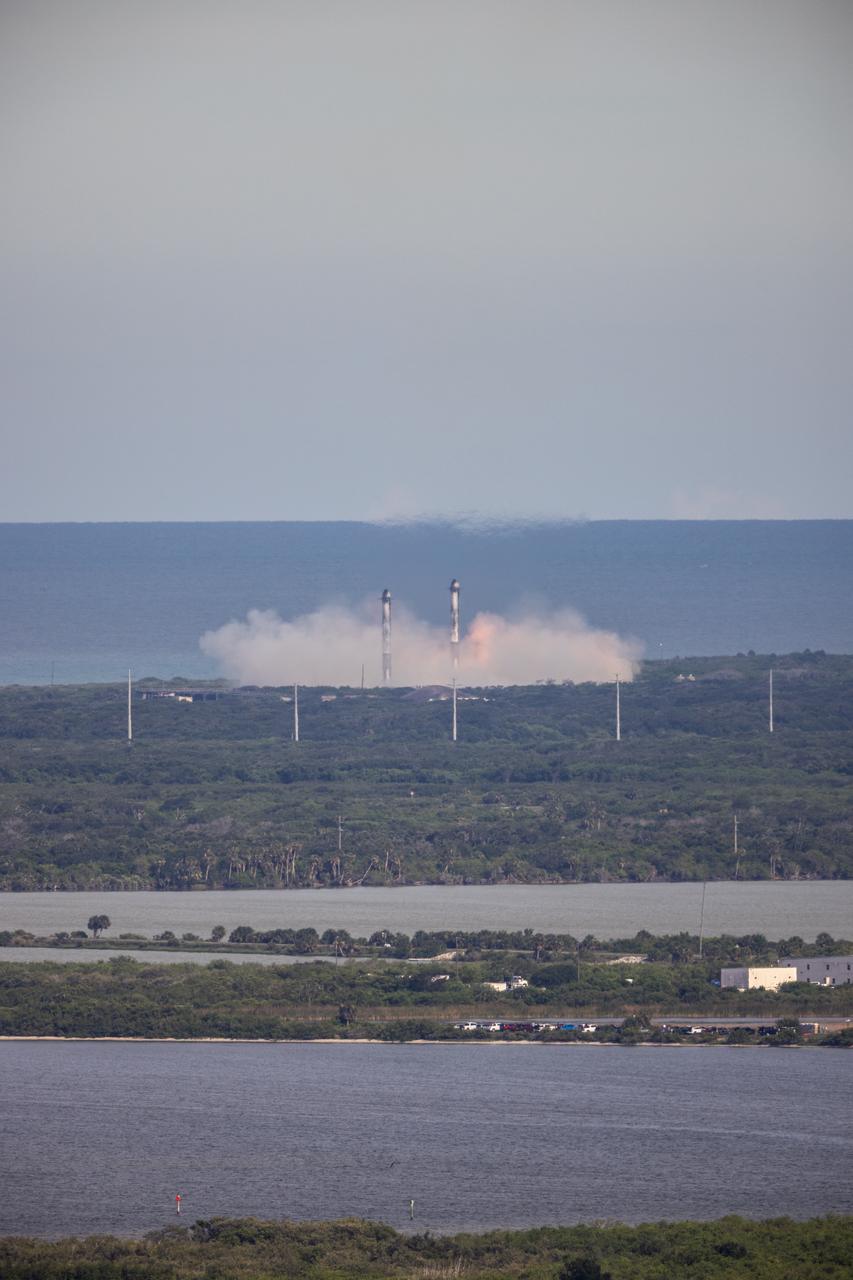
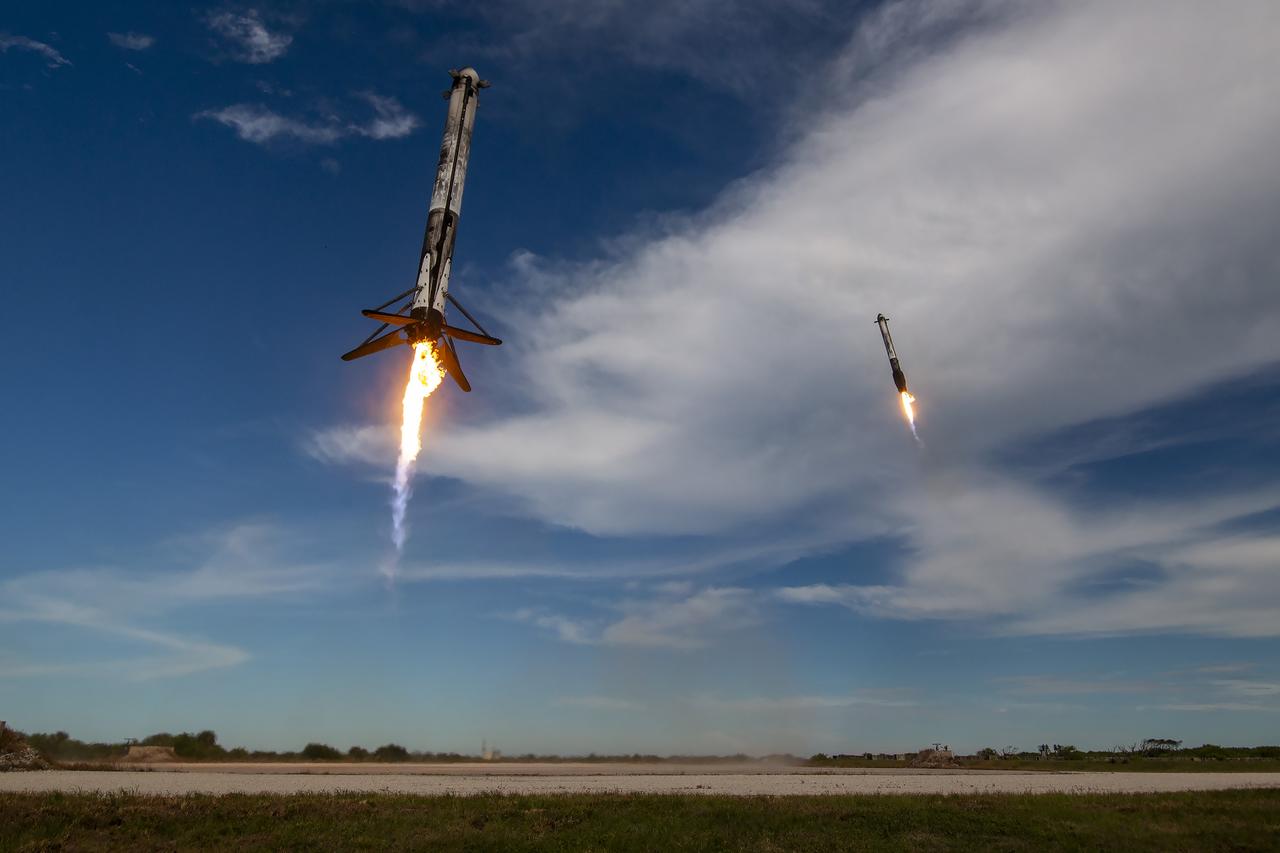
The SpaceX Falcon Heavy dual side boosters land on SpaceX Landing Zones 1 and 2 at Cape Canaveral Space Force Station in Florida. The rocket carrying NOAA’s (National Oceanic and Atmospheric Administration) Geostationary Operational Environmental Satellite (GOES-U) launched from NASA’s Kennedy Space Center in Florida on Tuesday, June 25, 2024.
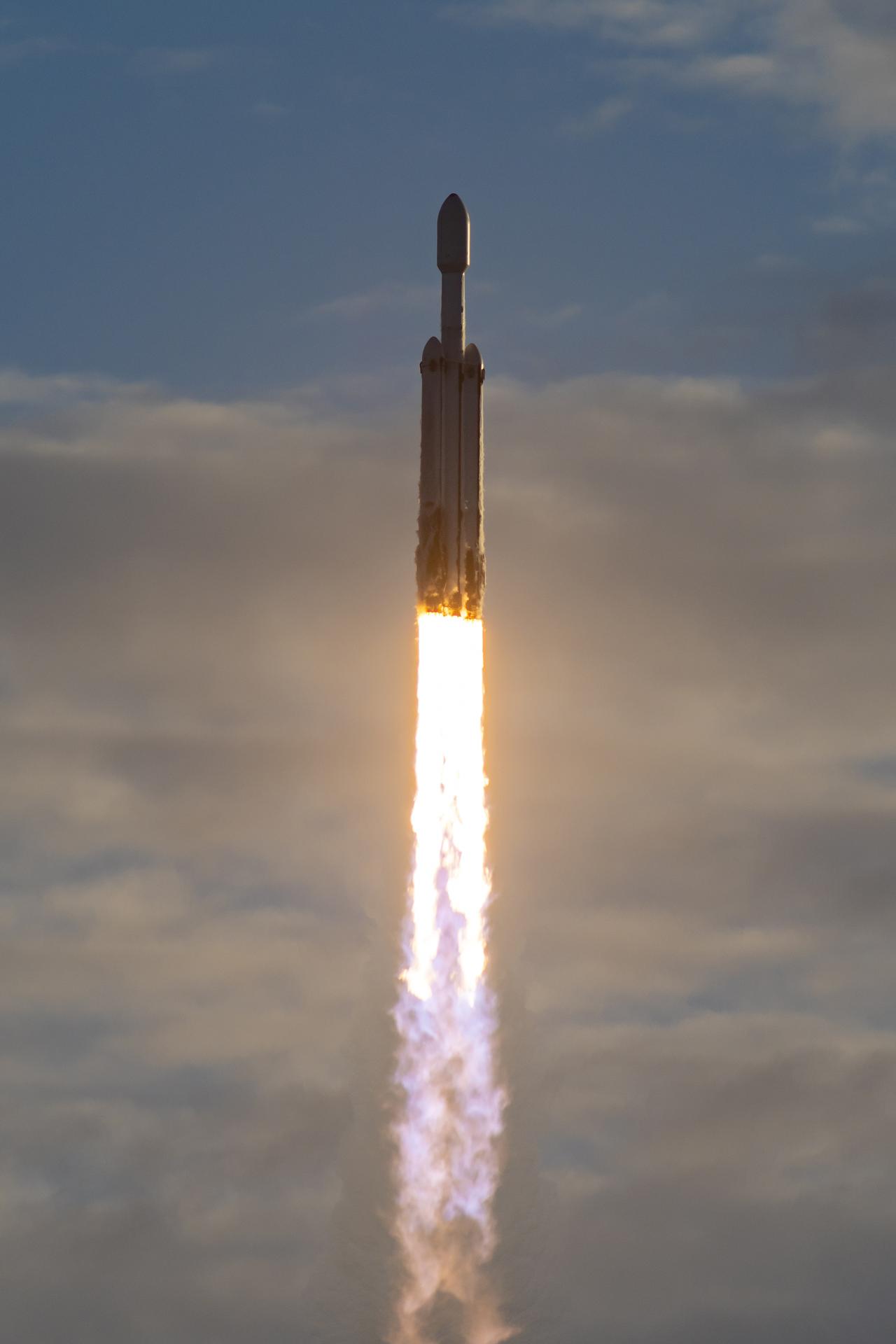
NASA’s Nancy Grace Roman Space Telescope rises to space atop a SpaceX Falcon Heavy rocket from Launch Complex 39A at the agency’s Kennedy Space Center in Florida on Sunday, Aug. 30, 2026. The milestone begins the observatory’s journey to explore the large‑scale structure of the universe. Roman will investigate dark energy and dark matter, conduct a statistical census of planetary systems, and enable a broad range of additional astrophysics research. Liftoff occurred at 7:26 a.m. EDT, from Kennedy’s Launch Complex 39A.
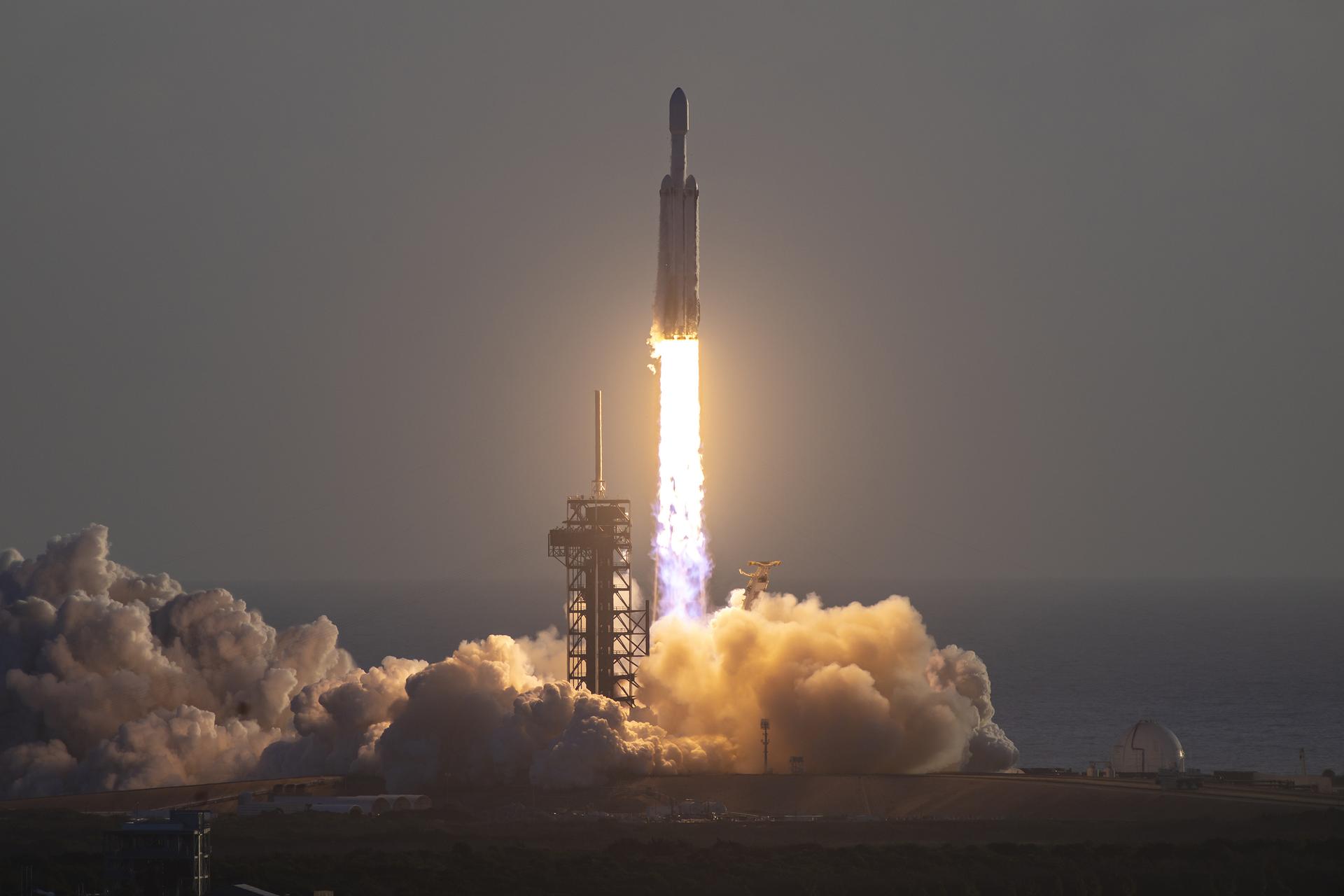
NASA’s Nancy Grace Roman Space Telescope rises to space atop a SpaceX Falcon Heavy rocket from Launch Complex 39A at the agency’s Kennedy Space Center in Florida on Sunday, Aug. 30, 2026. The milestone begins the observatory’s journey to explore the large‑scale structure of the universe. Roman will investigate dark energy and dark matter, conduct a statistical census of planetary systems, and enable a broad range of additional astrophysics research. Liftoff occurred at 7:26 a.m. EDT, from Kennedy’s Launch Complex 39A.
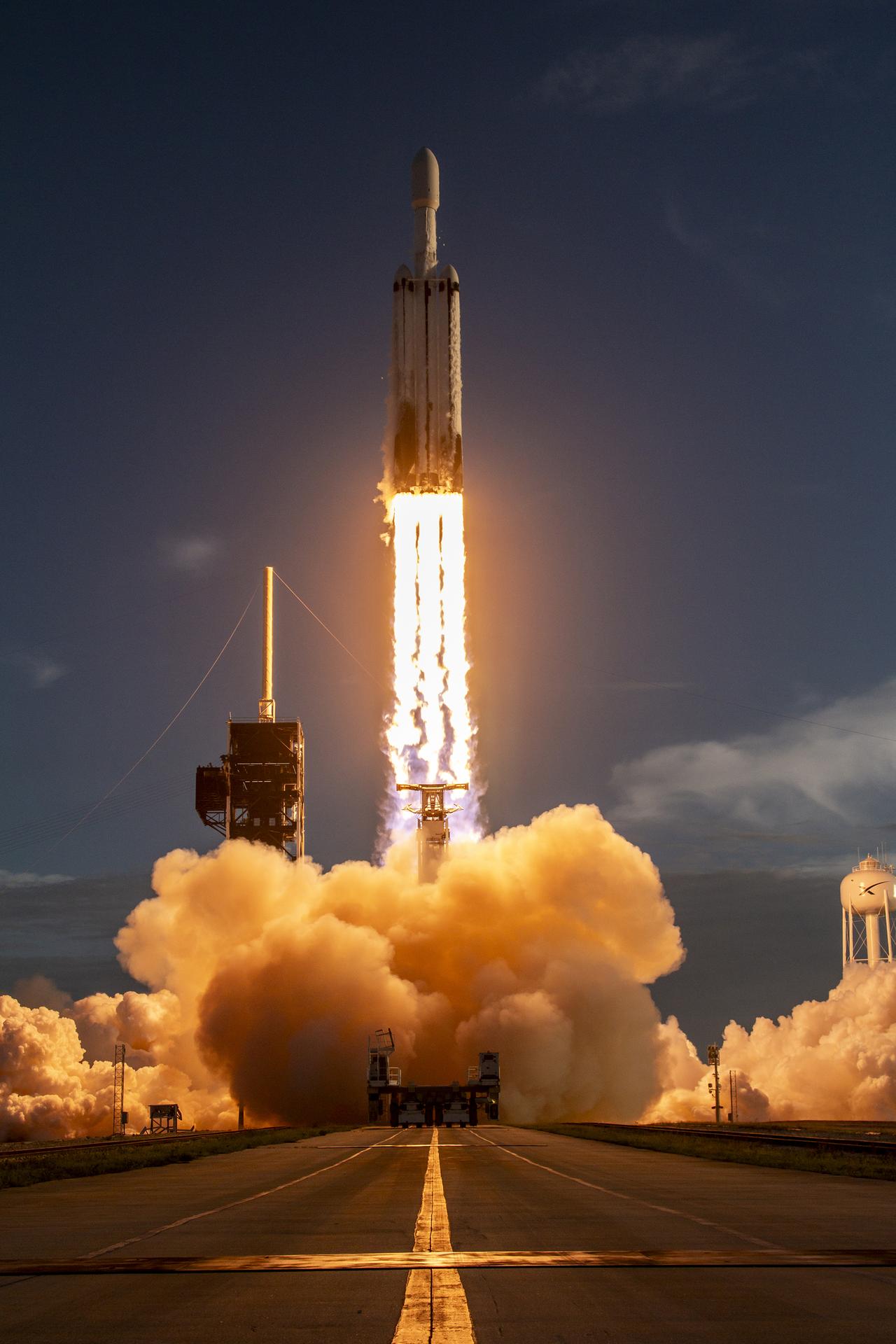
NASA’s Nancy Grace Roman Space Telescope rises to space atop a SpaceX Falcon Heavy rocket from Launch Complex 39A at the agency’s Kennedy Space Center in Florida on Sunday, Aug. 30, 2026. The milestone begins the observatory’s journey to explore the large‑scale structure of the universe. Roman will investigate dark energy and dark matter, conduct a statistical census of planetary systems, and enable a broad range of additional astrophysics research. Liftoff occurred at 7:26 a.m. EDT, from Kennedy’s Launch Complex 39A.
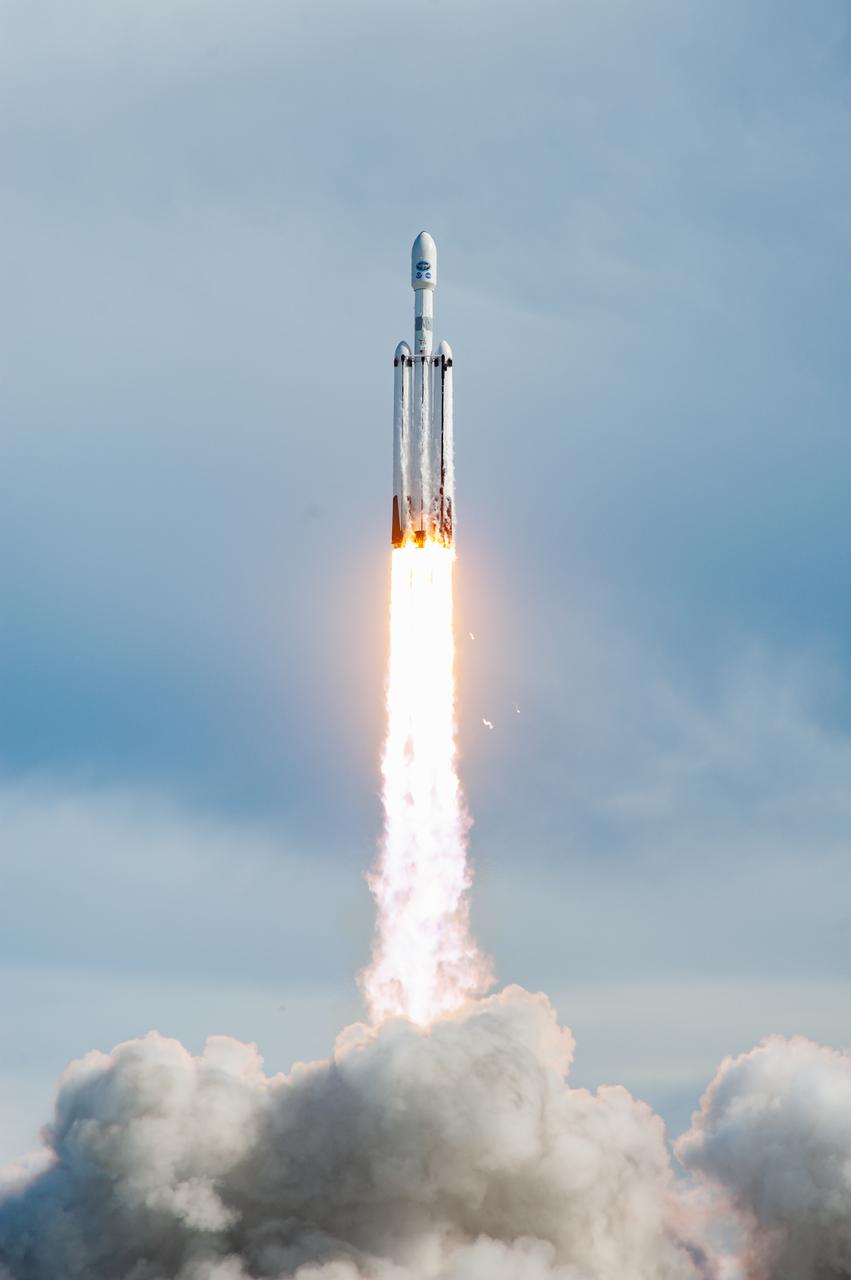
A SpaceX Falcon Heavy rocket carrying the National Oceanic and Atmospheric Administration (NOAA) GOES-U (Geostationary Operational Environmental Satellite U) lifts off from Launch Complex 39A at NASA’s Kennedy Space Center in Florida on Tuesday, June 25, 2024. The GOES-U satellite is the final satellite in the GOES-R series, which serves a critical role in providing continuous coverage of the Western Hemisphere, including monitoring tropical systems in the eastern Pacific and Atlantic oceans.
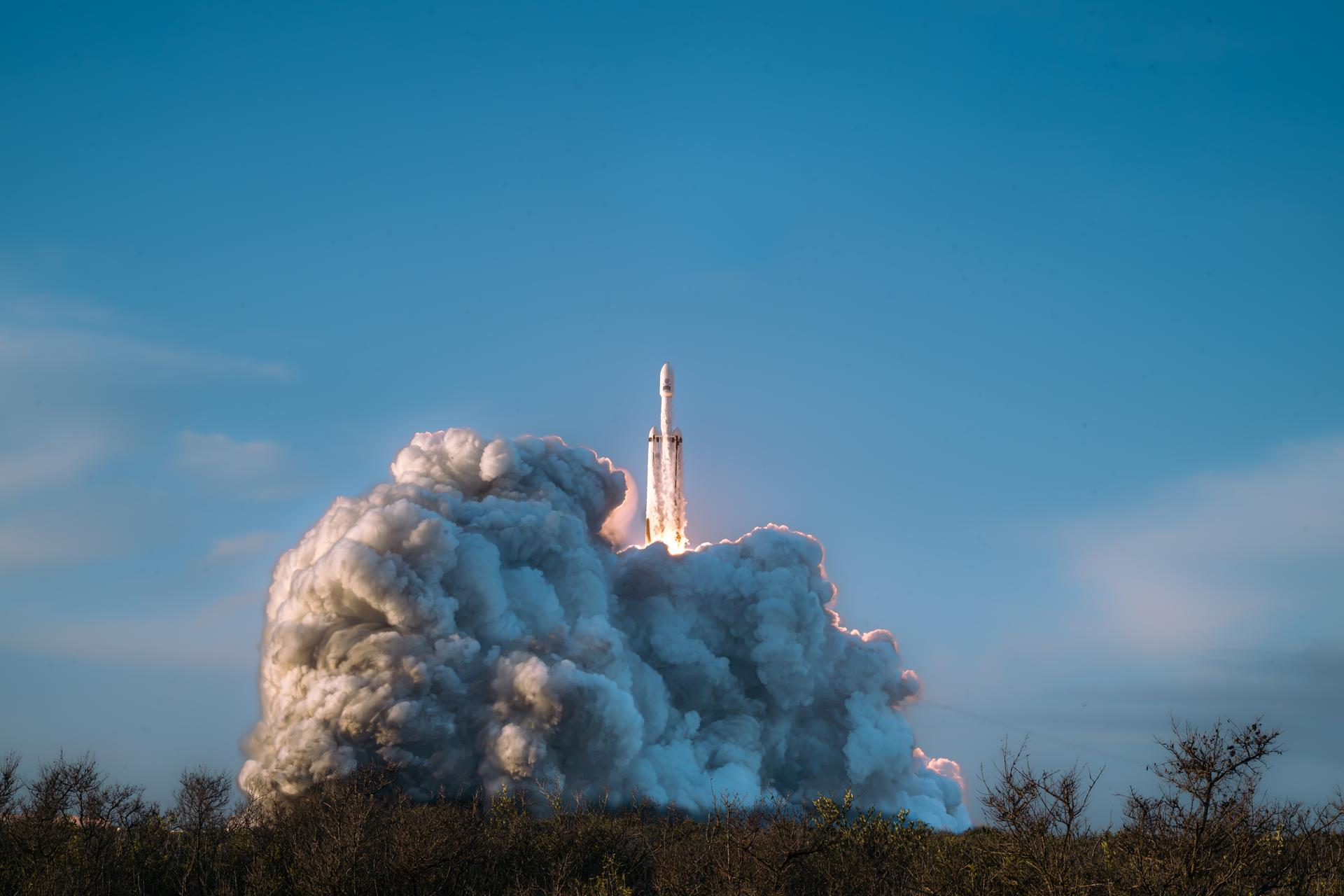
NASA’s Nancy Grace Roman Space Telescope rises to space atop a SpaceX Falcon Heavy rocket from Launch Complex 39A at the agency’s Kennedy Space Center in Florida on Sunday, Aug. 30, 2026. The milestone begins the observatory’s journey to explore the large‑scale structure of the universe. Roman will investigate dark energy and dark matter, conduct a statistical census of planetary systems, and enable a broad range of additional astrophysics research. Liftoff occurred at 7:26 a.m. EDT, from Kennedy’s Launch Complex 39A.
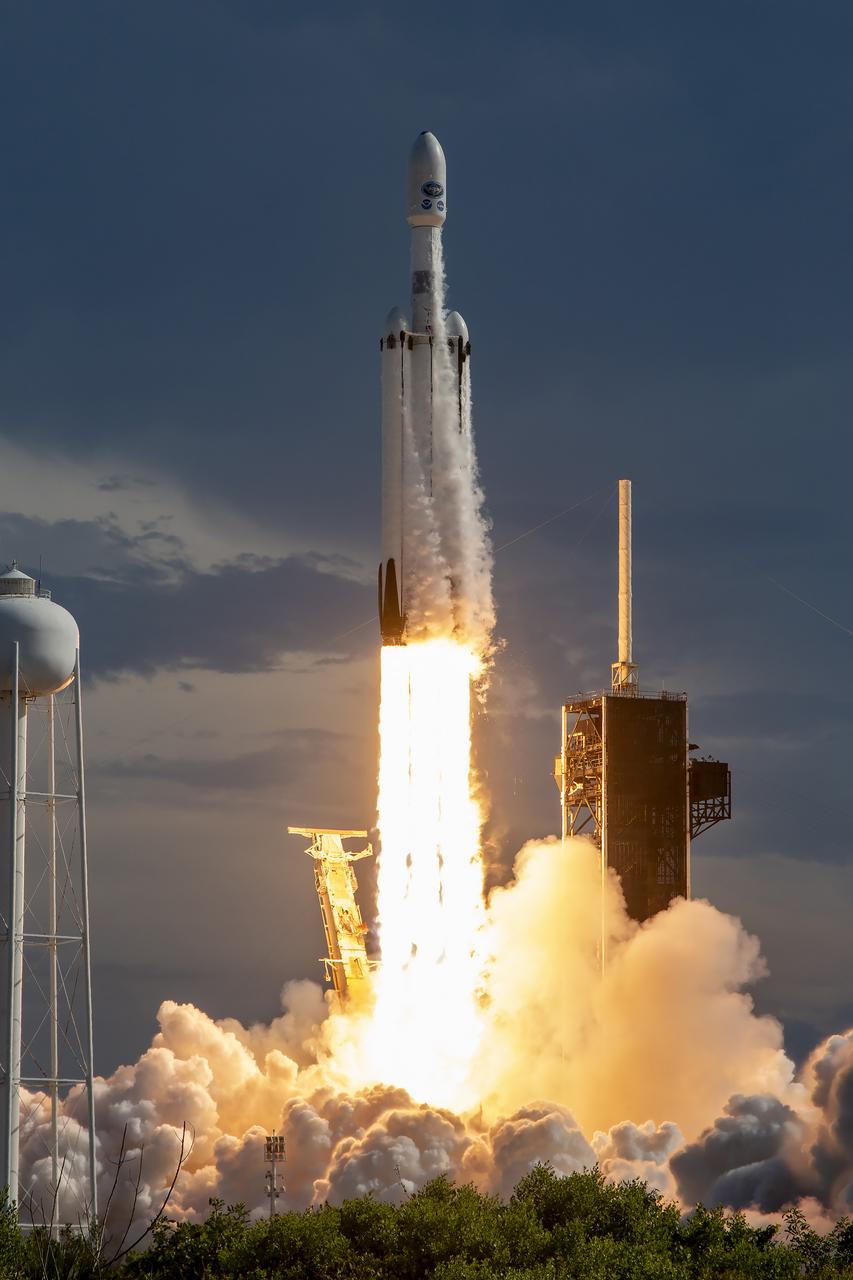
A SpaceX Falcon Heavy rocket carrying the National Oceanic and Atmospheric Administration (NOAA) GOES-U (Geostationary Operational Environmental Satellite U) lifts off from Launch Complex 39A at NASA’s Kennedy Space Center in Florida on Tuesday, June 25, 2024. The GOES-U satellite is the final satellite in the GOES-R series, which serves a critical role in providing continuous coverage of the Western Hemisphere, including monitoring tropical systems in the eastern Pacific and Atlantic oceans.
A SpaceX Falcon Heavy rocket carrying the National Oceanic and Atmospheric Administration (NOAA) GOES-U (Geostationary Operational Environmental Satellite U) lifts off from Launch Complex 39A at NASA’s Kennedy Space Center in Florida on Tuesday, June 25, 2024. The GOES-U satellite is the final satellite in the GOES-R series, which serves a critical role in providing continuous coverage of the Western Hemisphere, including monitoring tropical systems in the eastern Pacific and Atlantic oceans.
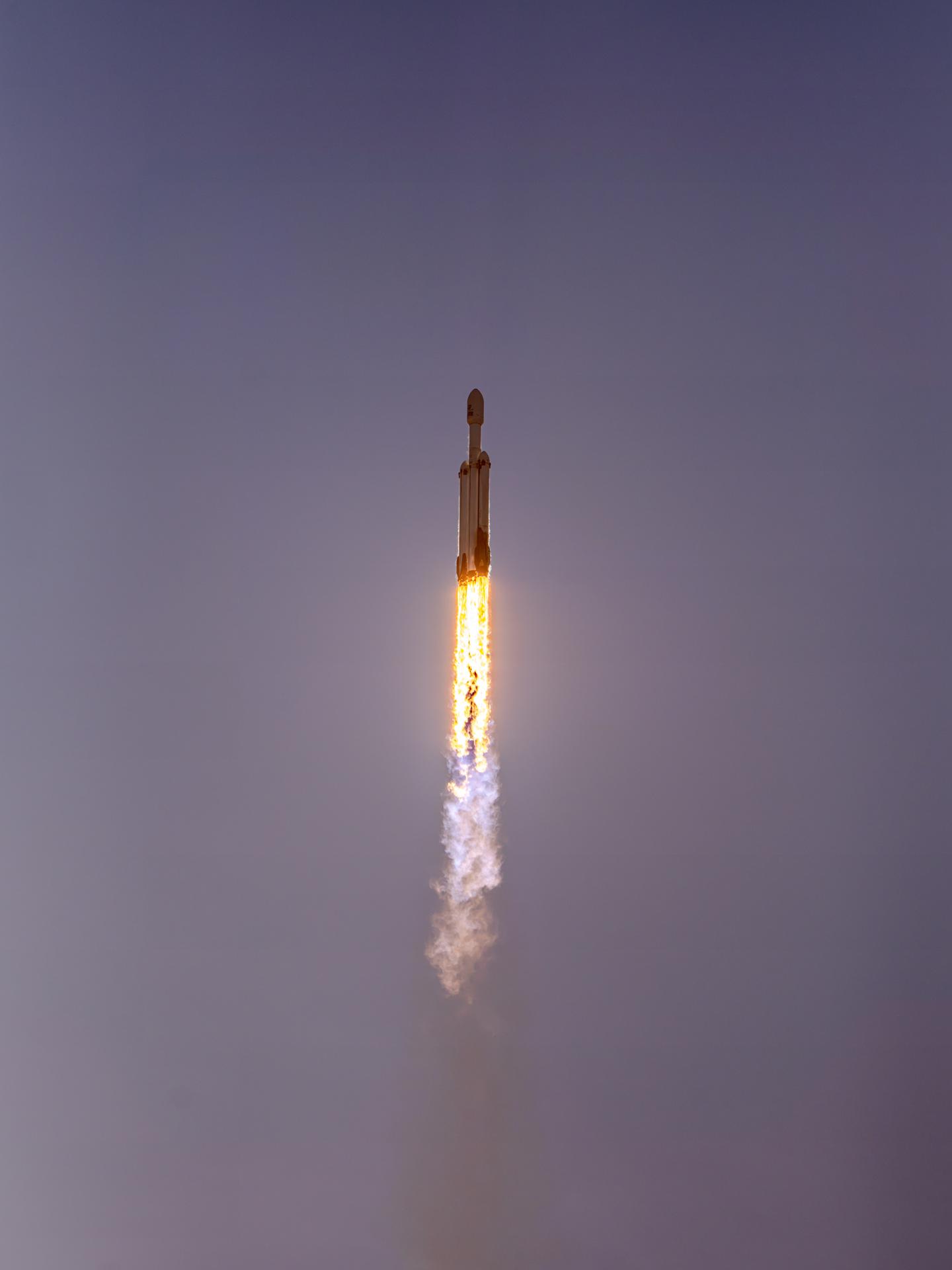
NASA’s Nancy Grace Roman Space Telescope rises to space atop a SpaceX Falcon Heavy rocket from Launch Complex 39A at the agency’s Kennedy Space Center in Florida on Sunday, Aug. 30, 2026. The milestone begins the observatory’s journey to explore the large‑scale structure of the universe. Roman will investigate dark energy and dark matter, conduct a statistical census of planetary systems, and enable a broad range of additional astrophysics research. Liftoff occurred at 7:26 a.m. EDT, from Kennedy’s Launch Complex 39A.
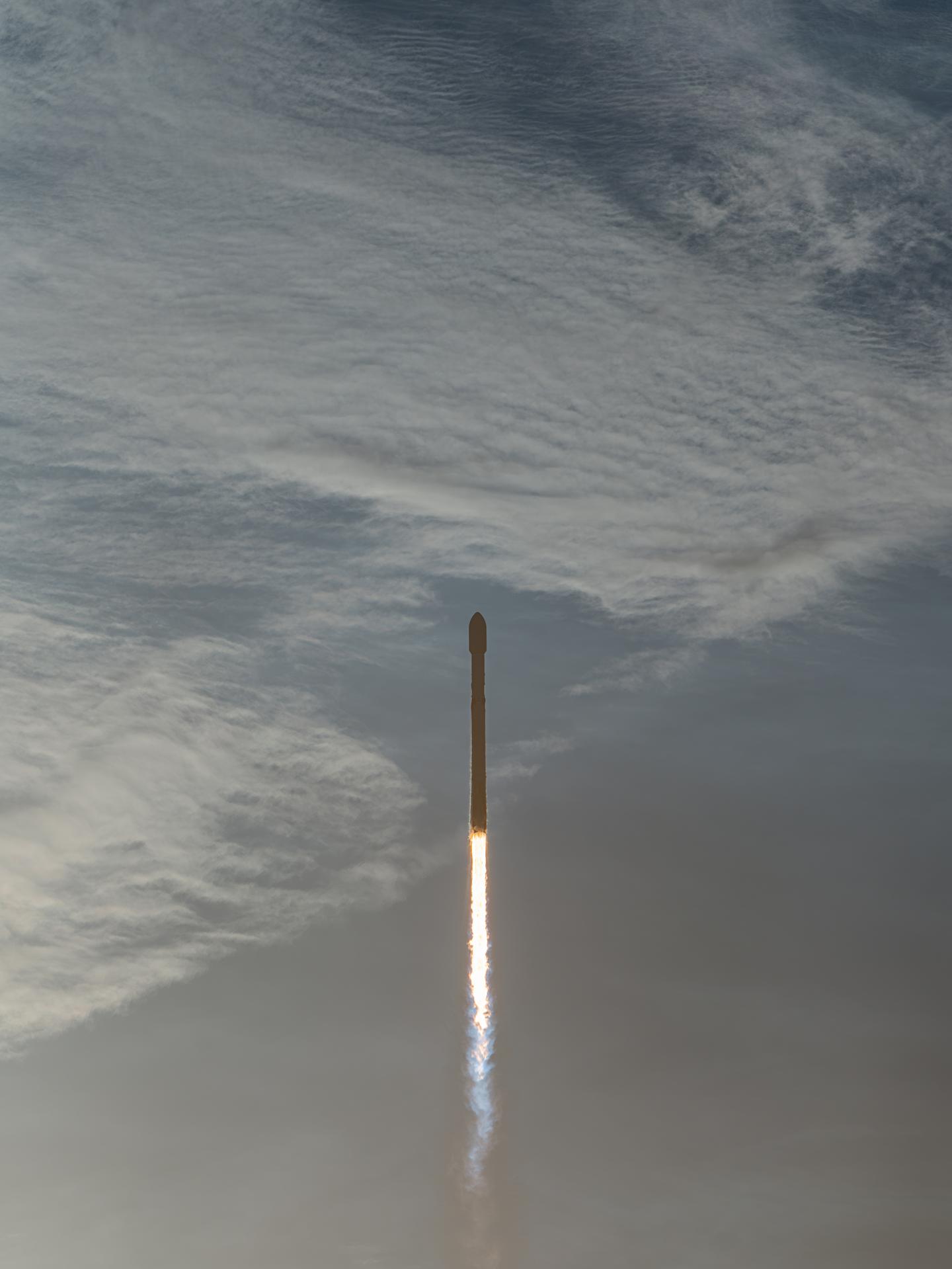
NASA’s Nancy Grace Roman Space Telescope rises to space atop a SpaceX Falcon Heavy rocket from Launch Complex 39A at the agency’s Kennedy Space Center in Florida on Sunday, Aug. 30, 2026. The milestone begins the observatory’s journey to explore the large‑scale structure of the universe. Roman will investigate dark energy and dark matter, conduct a statistical census of planetary systems, and enable a broad range of additional astrophysics research. Liftoff occurred at 7:26 a.m. EDT, from Kennedy’s Launch Complex 39A.
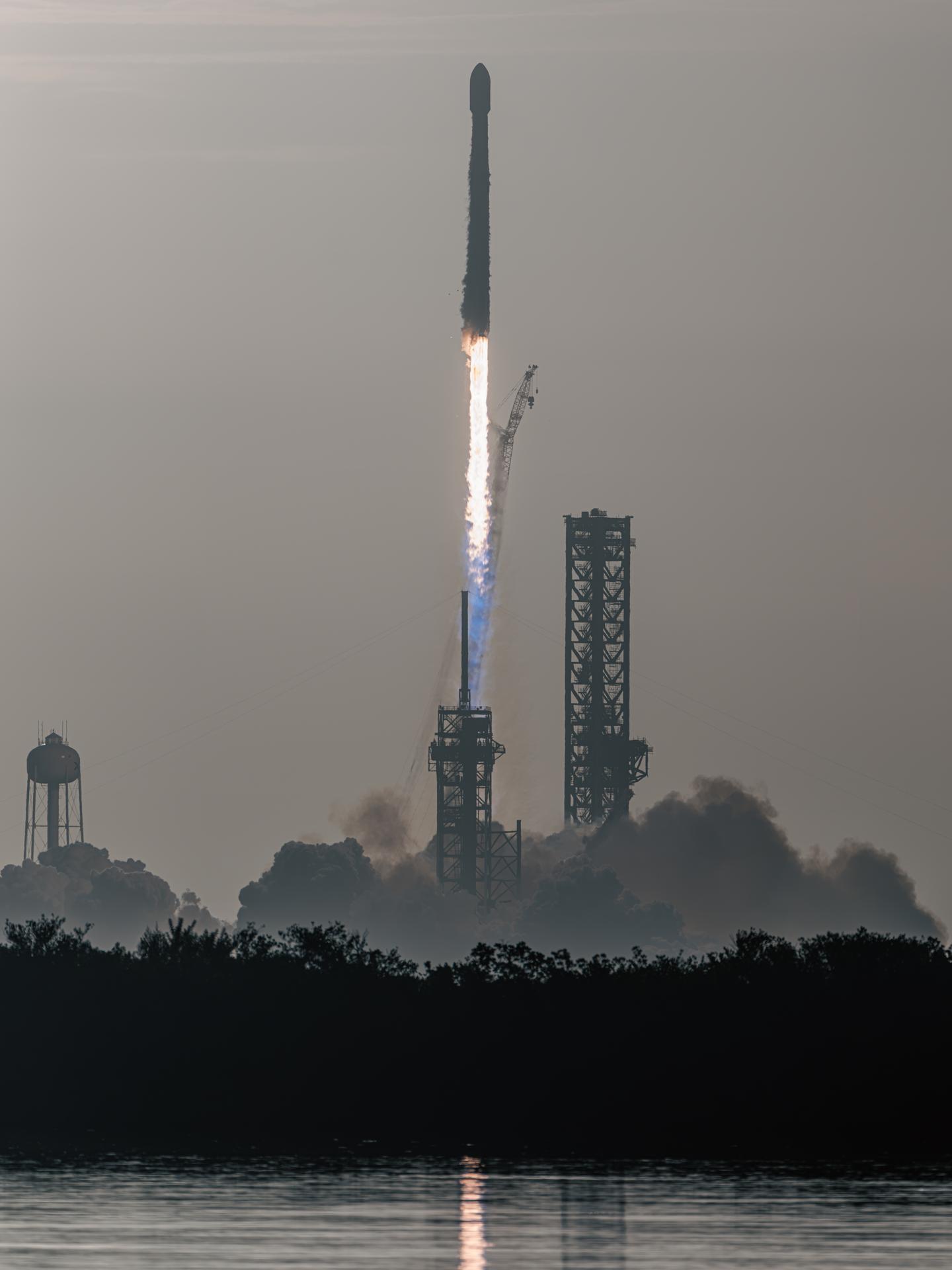
NASA’s Nancy Grace Roman Space Telescope rises to space atop a SpaceX Falcon Heavy rocket from Launch Complex 39A at the agency’s Kennedy Space Center in Florida on Sunday, Aug. 30, 2026. The milestone begins the observatory’s journey to explore the large‑scale structure of the universe. Roman will investigate dark energy and dark matter, conduct a statistical census of planetary systems, and enable a broad range of additional astrophysics research. Liftoff occurred at 7:26 a.m. EDT, from Kennedy’s Launch Complex 39A.
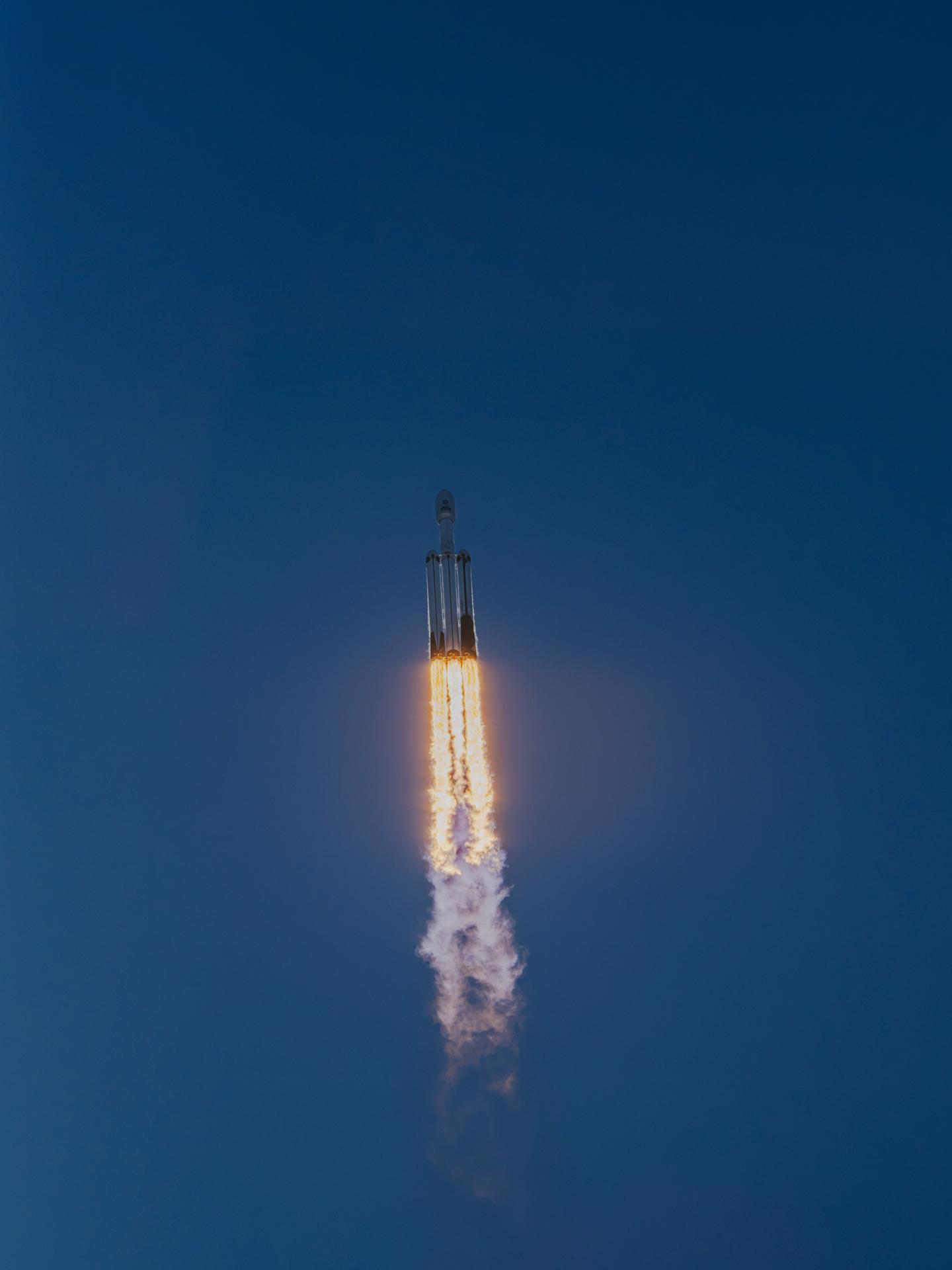
NASA’s Nancy Grace Roman Space Telescope rises to space atop a SpaceX Falcon Heavy rocket from Launch Complex 39A at the agency’s Kennedy Space Center in Florida on Sunday, Aug. 30, 2026. The milestone begins the observatory’s journey to explore the large‑scale structure of the universe. Roman will investigate dark energy and dark matter, conduct a statistical census of planetary systems, and enable a broad range of additional astrophysics research. Liftoff occurred at 7:26 a.m. EDT, from Kennedy’s Launch Complex 39A.
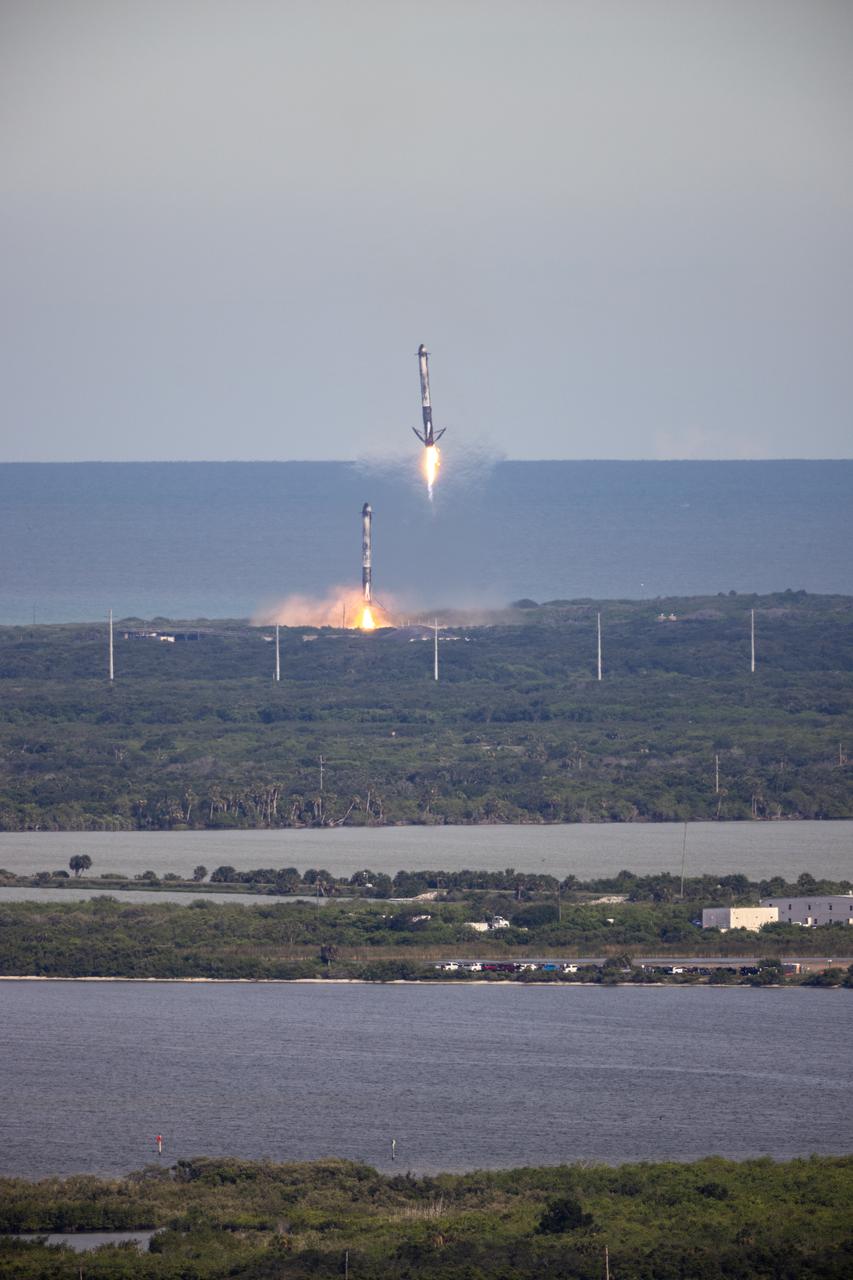
The SpaceX Falcon Heavy dual side boosters return to SpaceX Landing Zones 1 and 2 at Cape Canaveral Space Force Station in Florida. The rocket carrying NOAA’s (National Oceanic and Atmospheric Administration) Geostationary Operational Environmental Satellite (GOES-U) launched from NASA’s Kennedy Space Center in Florida on Tuesday, June 25, 2024.
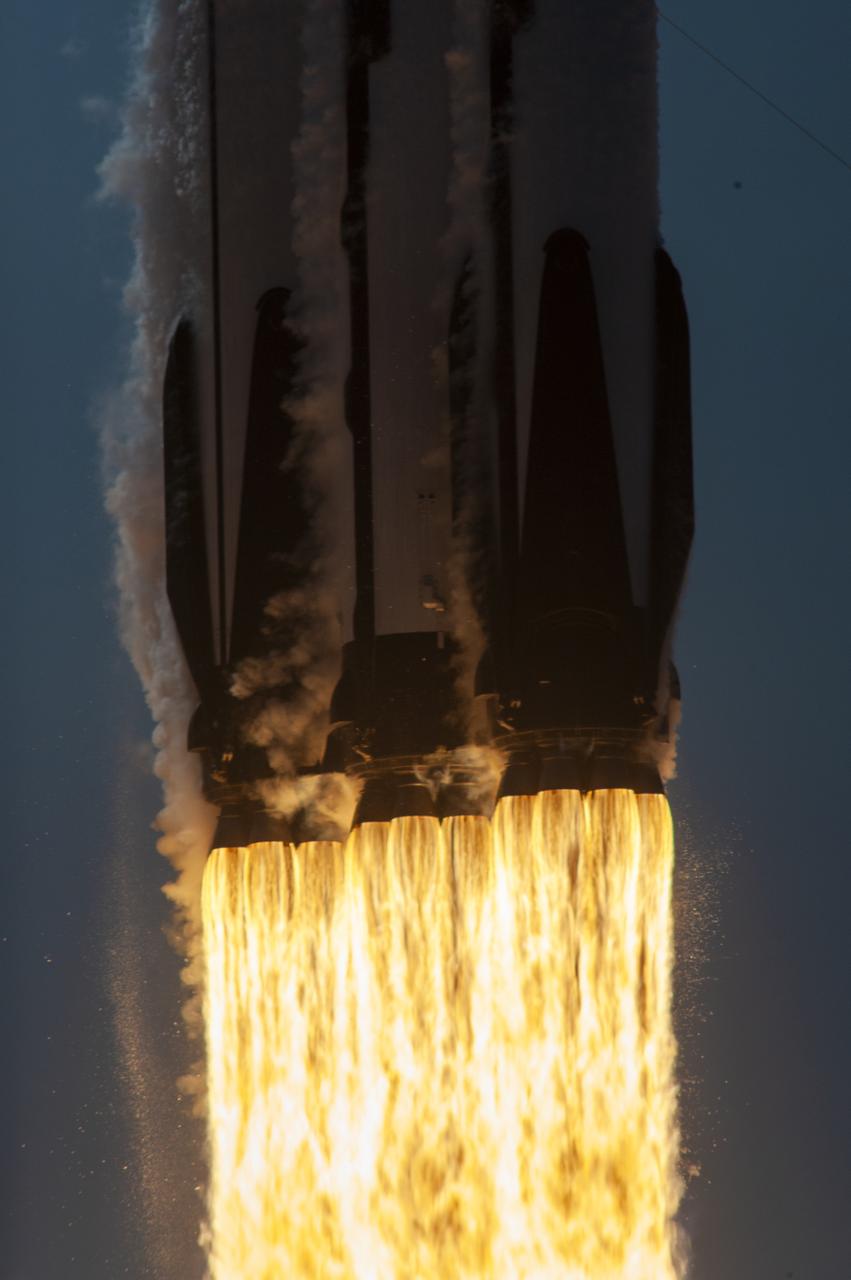
A SpaceX Falcon Heavy rocket carrying the National Oceanic and Atmospheric Administration (NOAA) GOES-U (Geostationary Operational Environmental Satellite U) lifts off from Launch Complex 39A at NASA’s Kennedy Space Center in Florida on Tuesday, June 25, 2024. The GOES-U satellite is the final satellite in the GOES-R series, which serves a critical role in providing continuous coverage of the Western Hemisphere, including monitoring tropical systems in the eastern Pacific and Atlantic oceans.
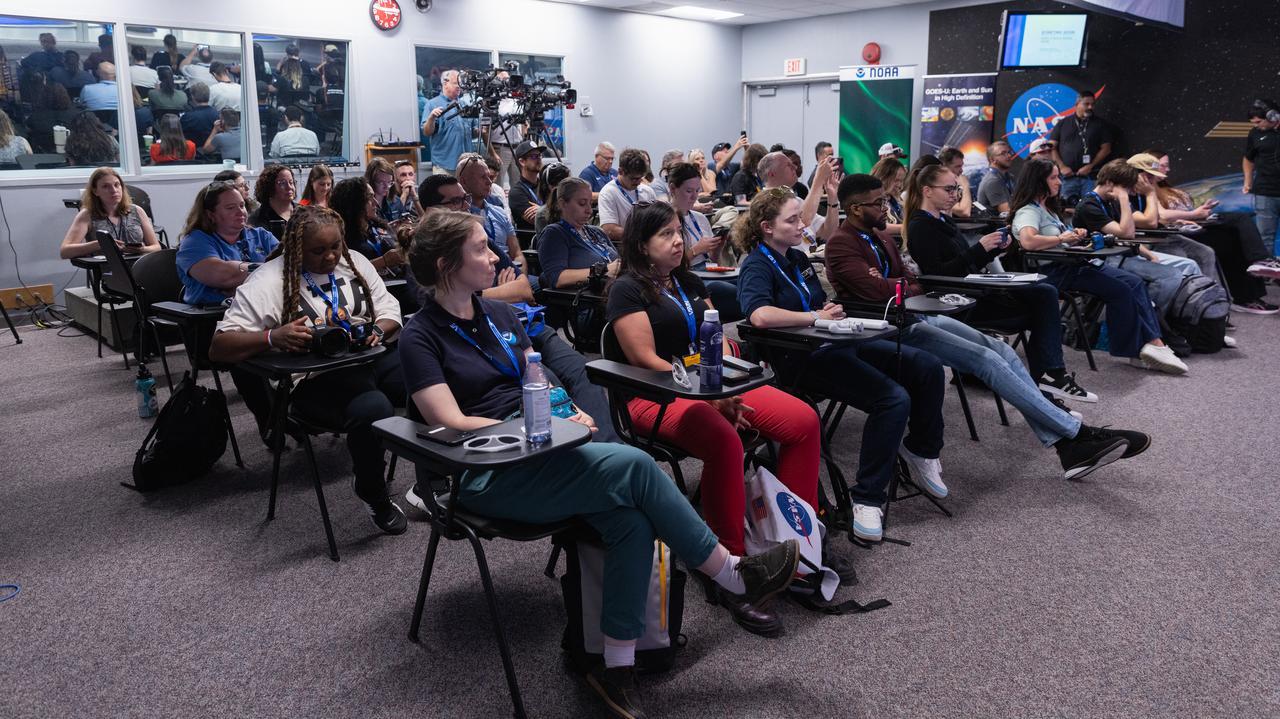
Officials from NASA, National Oceanic and Atmospheric Administration (NOAA), and other mission managers participate in a social panel on Monday, June 24, 2024, at NASA’s Kennedy Space Center in Florida for the launch of GOES-U (Geostationary Operational Environmental Satellite U) mission. The two-hour launch window opens at 5:16 p.m. EDT Tuesday, June 25, for the satellite’s launch on a SpaceX Falcon Heavy rocket from Launch Complex 39A at NASA’s Kennedy Space Center in Florida.
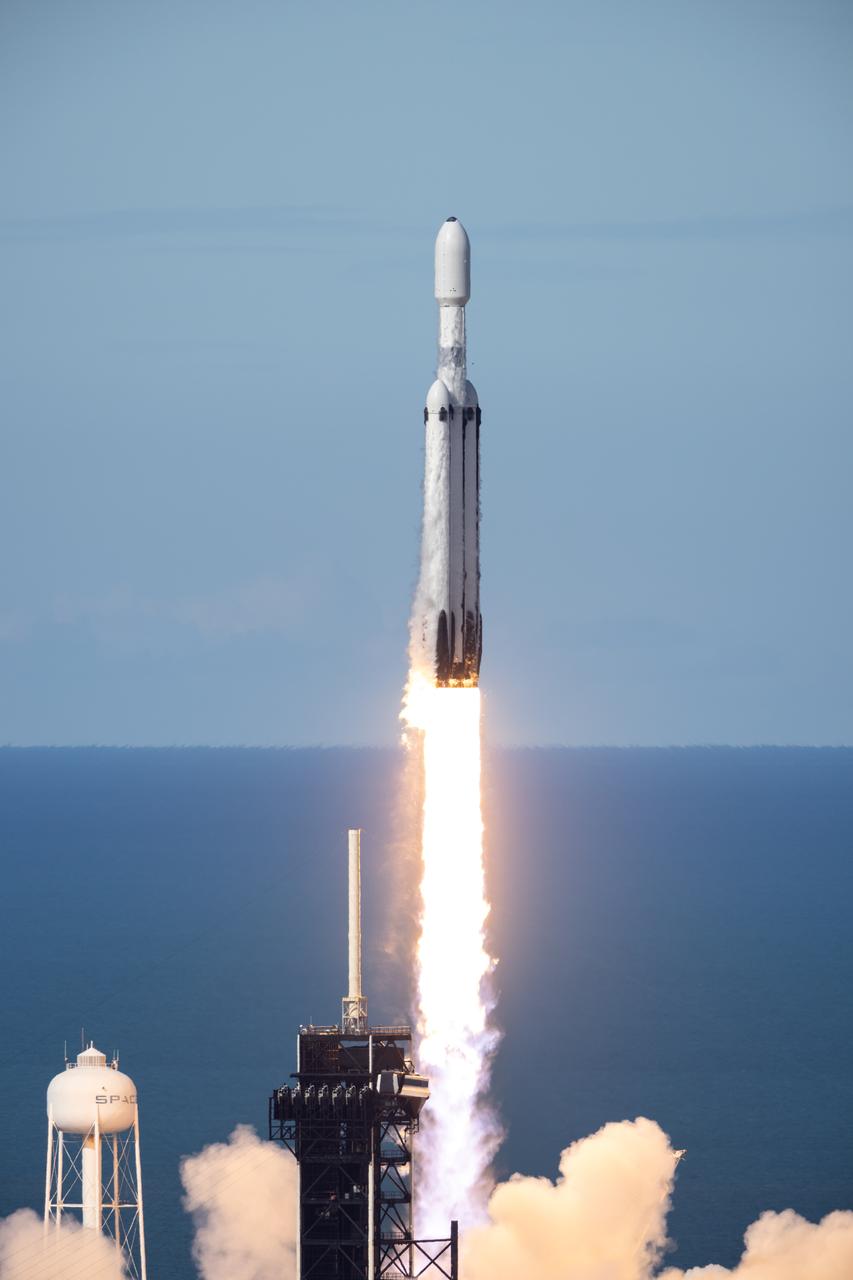
A SpaceX Falcon Heavy rocket carrying the National Oceanic and Atmospheric Administration (NOAA) GOES-U (Geostationary Operational Environmental Satellite U) lifts off from Launch Complex 39A at NASA’s Kennedy Space Center in Florida on Tuesday, June 25, 2024. The GOES-U satellite is the final satellite in the GOES-R series, which serves a critical role in providing continuous coverage of the Western Hemisphere, including monitoring tropical systems in the eastern Pacific and Atlantic oceans.
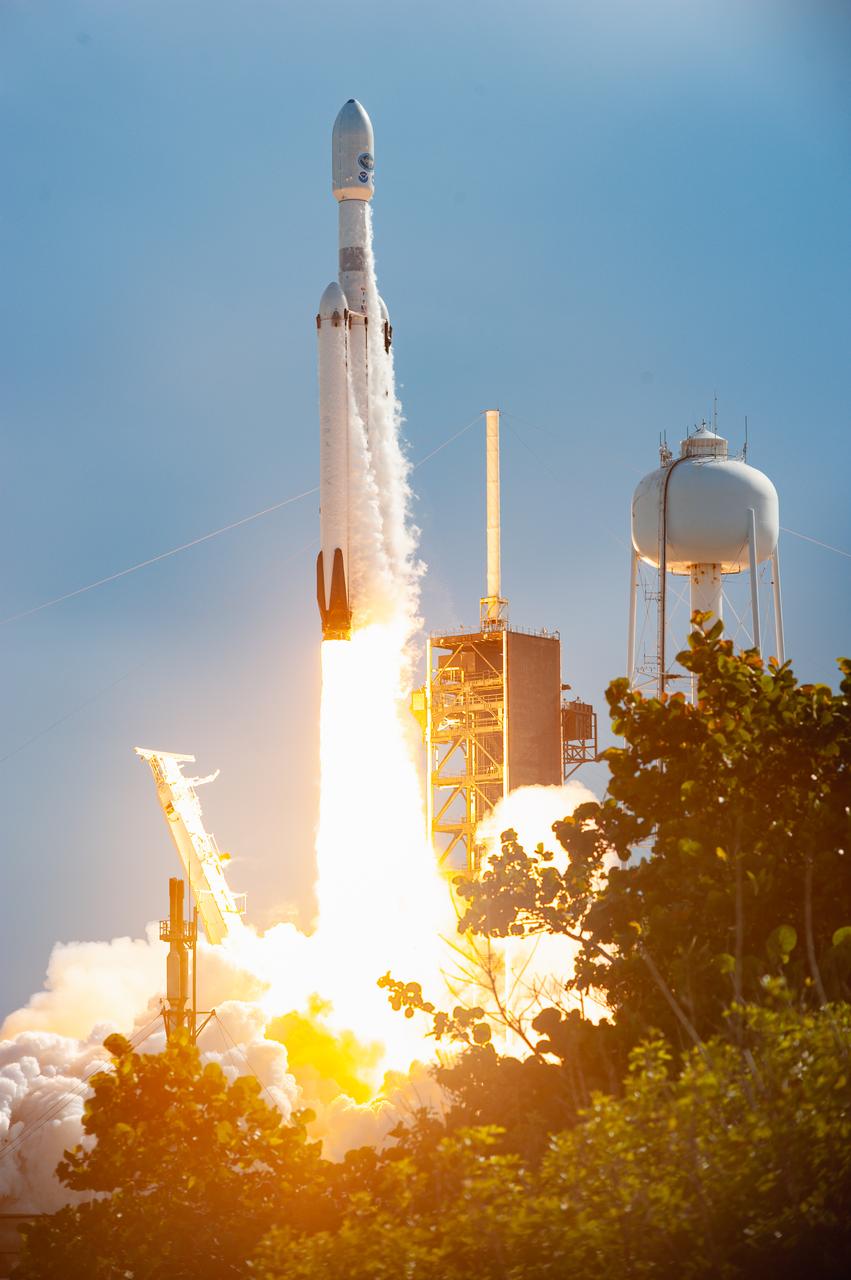
A SpaceX Falcon Heavy rocket carrying the National Oceanic and Atmospheric Administration (NOAA) GOES-U (Geostationary Operational Environmental Satellite U) lifts off from Launch Complex 39A at NASA’s Kennedy Space Center in Florida on Tuesday, June 25, 2024. The GOES-U satellite is the final satellite in the GOES-R series, which serves a critical role in providing continuous coverage of the Western Hemisphere, including monitoring tropical systems in the eastern Pacific and Atlantic oceans.
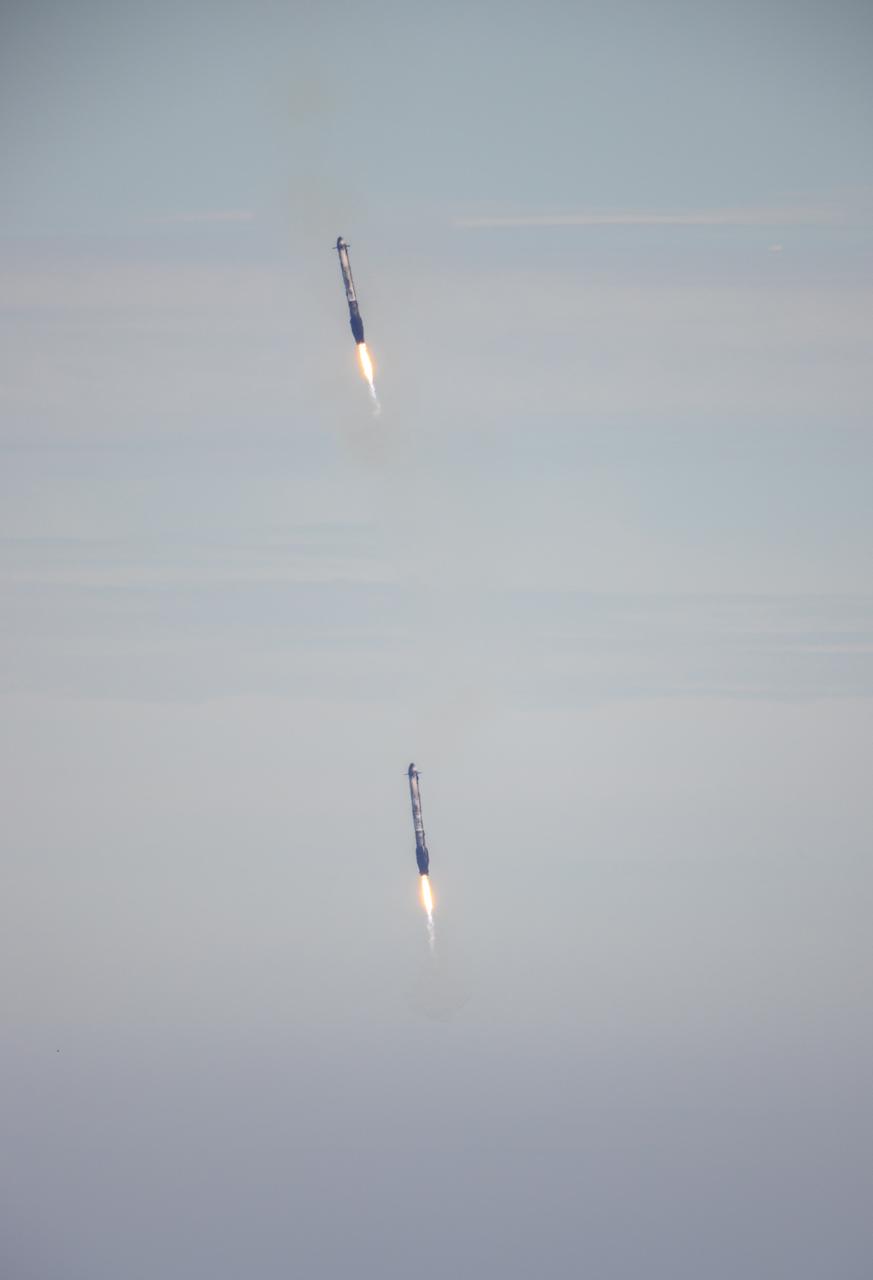
The SpaceX Falcon Heavy dual side boosters return to SpaceX Landing Zones 1 and 2 at Cape Canaveral Space Force Station in Florida. The rocket carrying NOAA’s (National Oceanic and Atmospheric Administration) Geostationary Operational Environmental Satellite (GOES-U) launched from NASA’s Kennedy Space Center in Florida on Tuesday, June 25, 2024.
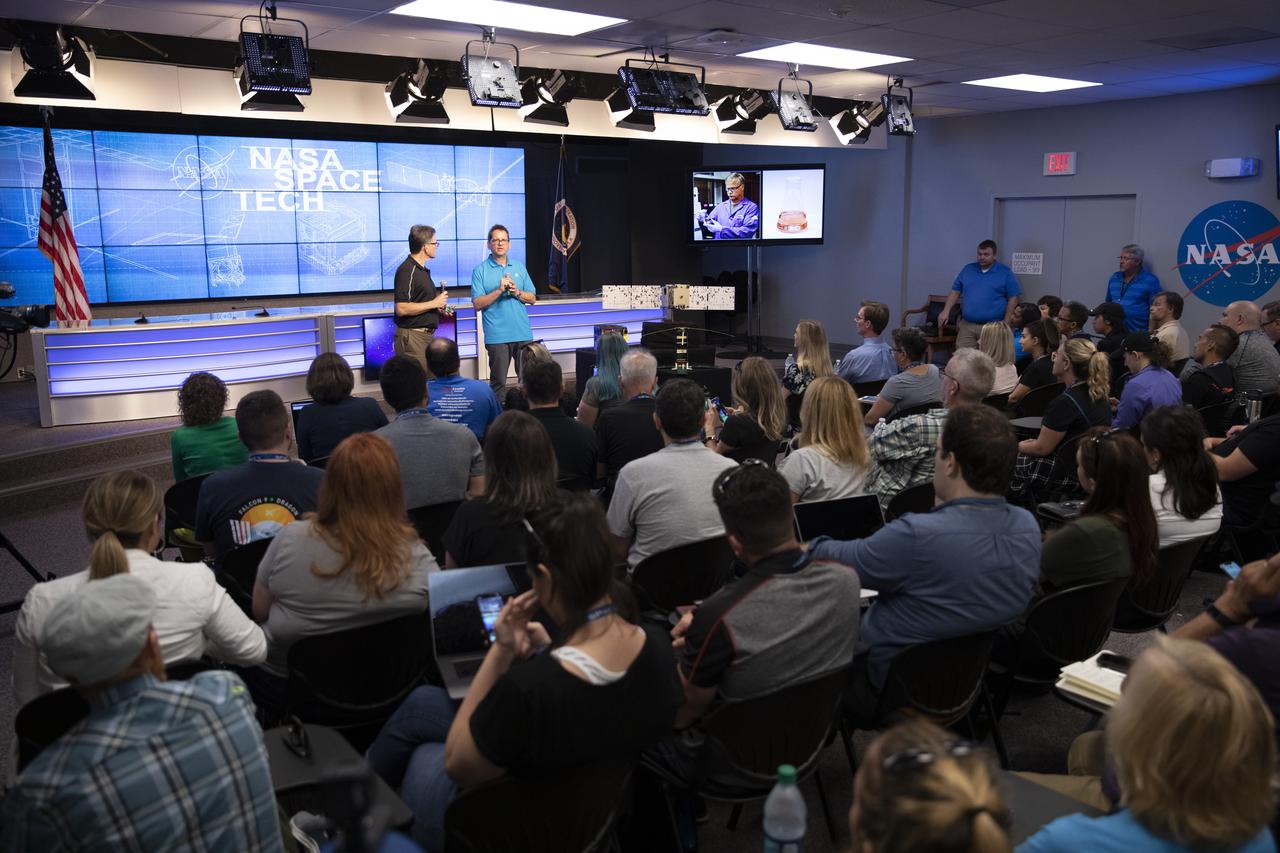
Chris McLean, (right) principal investigator for NASA’s Green Propellant Infusion Mission at Ball Aerospace, and Joe Cassady, (left), executive director of space at Aeroject Rocketdyne, explain the payload during a NASA prelaunch technology TV broadcast for the Space Test Program-2 (STP-2) mission at NASA’s Kennedy Space Center in Florida on June 23, 2019. The payload will help demonstrate this low toxicity, increased performance propellant and related systems so it can become a viable solution for future satellites. It is one of four NASA payloads scheduled to launch on a SpaceX Falcon Heavy rocket from Launch Complex 39A beginning at 11:30 p.m. EDT on June 24, 2019. STP-2 is managed by the U.S. Air Force Space and Missile Systems Center.
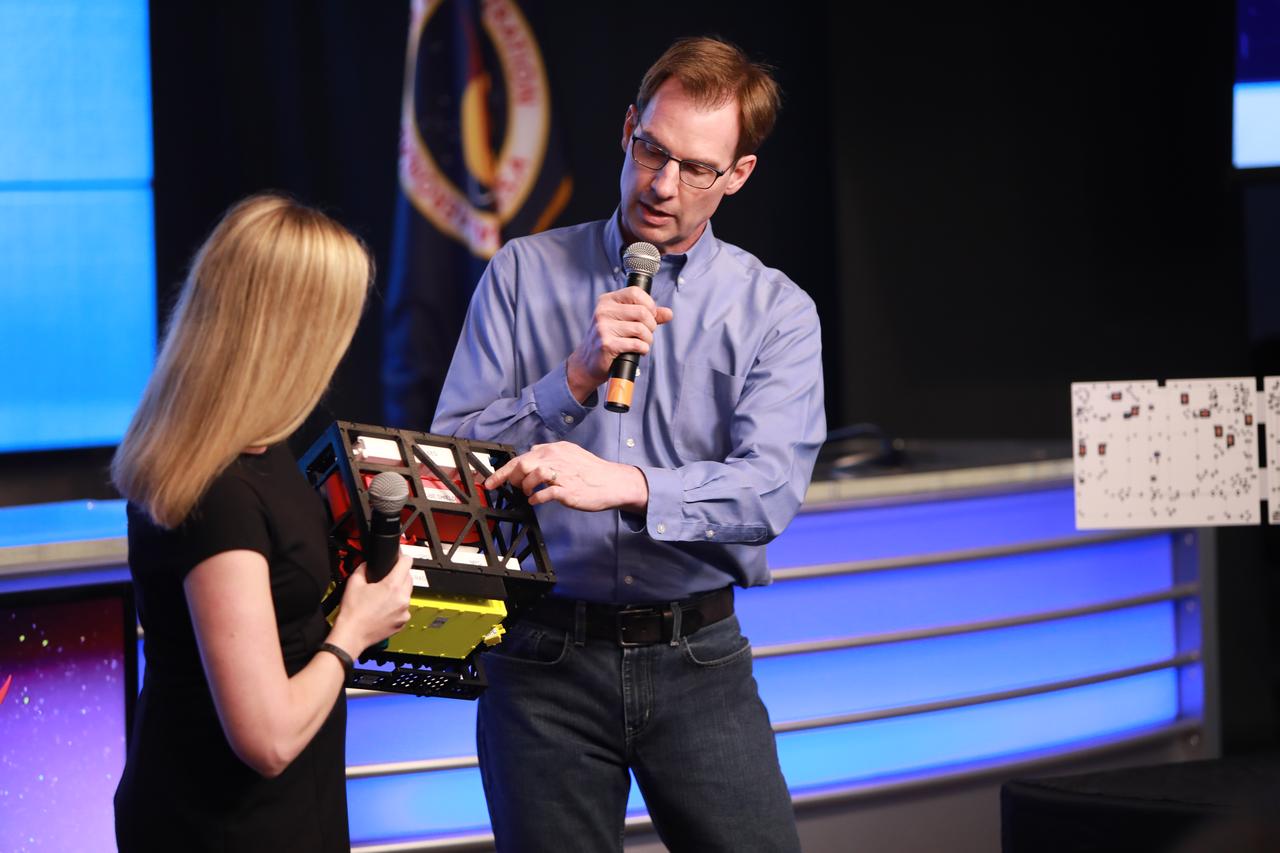
Todd Ely (right), principal investigator for NASA’s Deep Space Atomic Clock, and Deputy Principal Investigator Jill Seubert (left), both from NASA’s Jet Propulsion Laboratory in Pasadena, California, explain the payload during a NASA prelaunch technology TV broadcast for the Space Test Program-2 (STP-2) mission at the agency’s Kennedy Space Center in Florida on June 23, 2019. The new space clock could improve how we navigate on the Moon, to Mars and beyond. The space clock is one of four NASA payloads scheduled to launch on a SpaceX Falcon Heavy rocket from Launch Complex 39A beginning at 11:30 p.m. EDT on June 24, 2019. STP-2 is managed by the U.S. Air Force Space and Missile Systems Center.
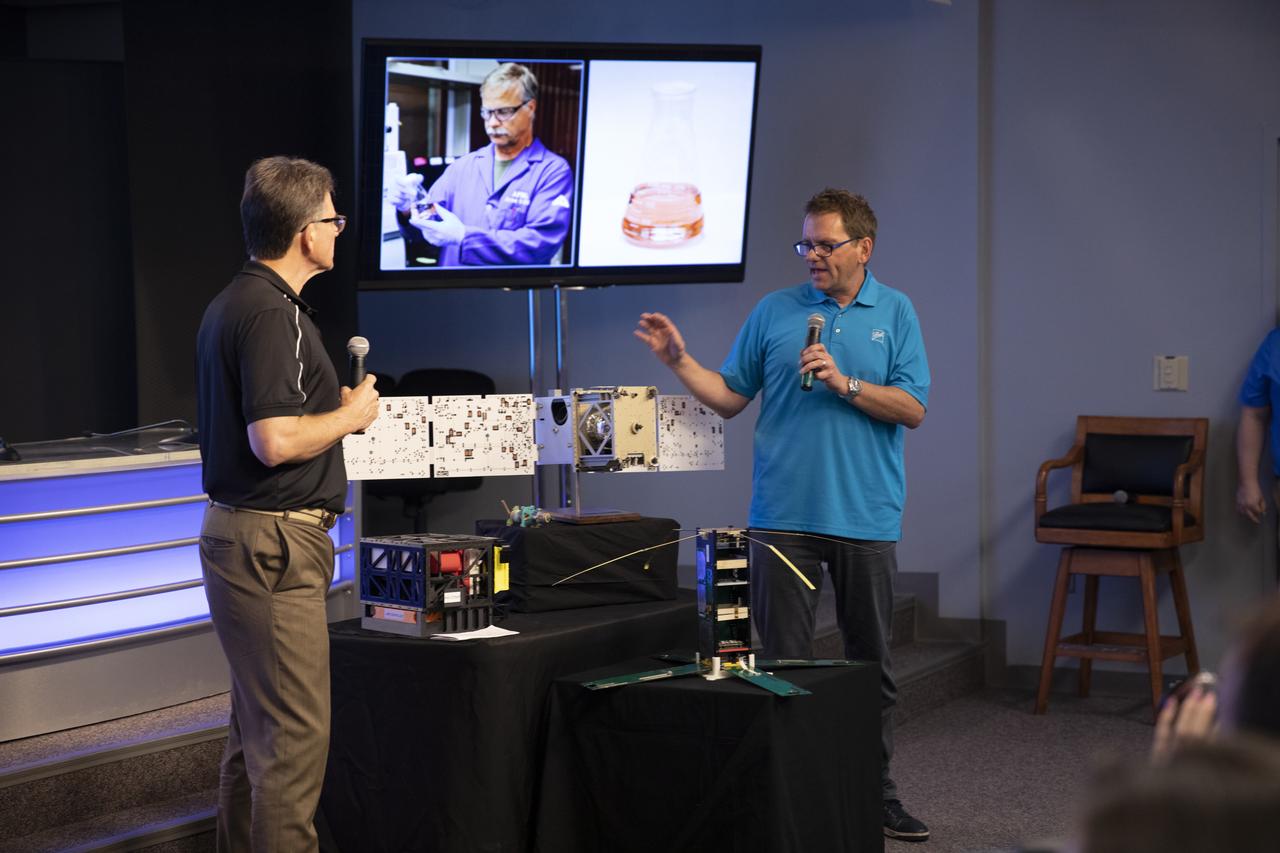
Chris McLean, (right) principal investigator for NASA’s Green Propellant Infusion Mission at Ball Aerospace, and Joe Cassady, (left), executive director of space at Aeroject Rocketdyne, explain the payload during a NASA prelaunch technology TV broadcast for the Space Test Program-2 (STP-2) mission at NASA’s Kennedy Space Center in Florida on June 23, 2019. The payload will help demonstrate this low toxicity, increased performance propellant and related systems so it can become a viable solution for future satellites. It is one of four NASA payloads scheduled to launch on a SpaceX Falcon Heavy rocket from Launch Complex 39A beginning at 11:30 p.m. EDT on June 24, 2019. STP-2 is managed by the U.S. Air Force Space and Missile Systems Center.
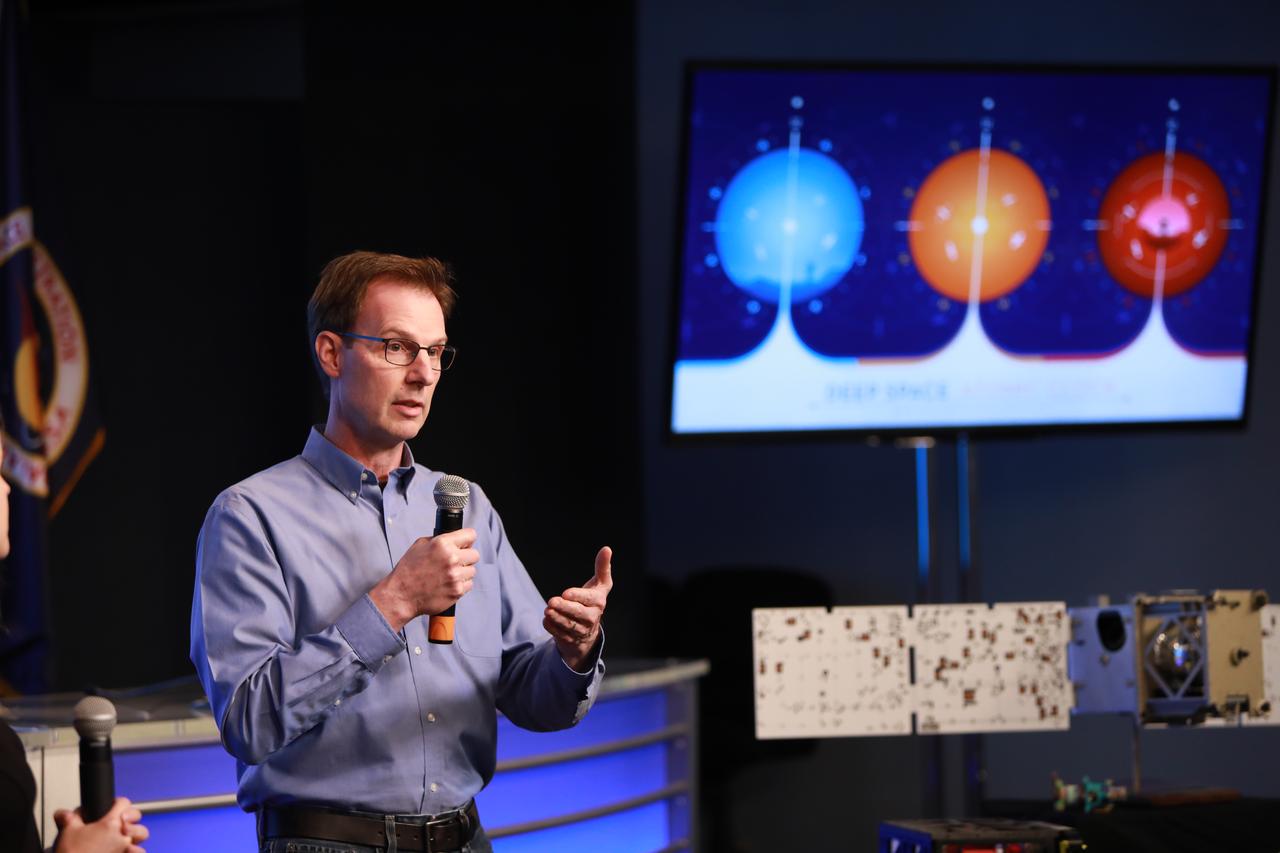
Todd Ely, principal investigator for NASA’s Deep Space Atomic Clock, from NASA’s Jet Propulsion Laboratory in Pasadena, California, explains the payload during a NASA prelaunch technology TV broadcast for the Space Test Program-2 (STP-2) mission at the agency’s Kennedy Space Center in Florida on June 23, 2019. The new space clock could improve how we navigate on the Moon, to Mars and beyond. The space clock is one of four NASA payloads scheduled to launch on a SpaceX Falcon Heavy rocket from Launch Complex 39A beginning at 11:30 p.m. EDT on June 24, 2019. STP-2 is managed by the U.S. Air Force Space and Missile Systems Center.

Joe Cassady, executive director of space at Aeroject Rocketdyne, explains NASA’s Green Propellant Infusion Mission during a NASA prelaunch technology TV broadcast for the Space Test Program-2 (STP-2) mission at NASA’s Kennedy Space Center in Florida on June 23, 2019. The payload will help demonstrate this low toxicity, increased performance propellant and related systems so it can become a viable solution for future satellites. It is one of four NASA payloads scheduled to launch on a SpaceX Falcon Heavy rocket from Launch Complex 39A beginning at 11:30 p.m. EDT on June 24, 2019. STP-2 is managed by the U.S. Air Force Space and Missile Systems Center.
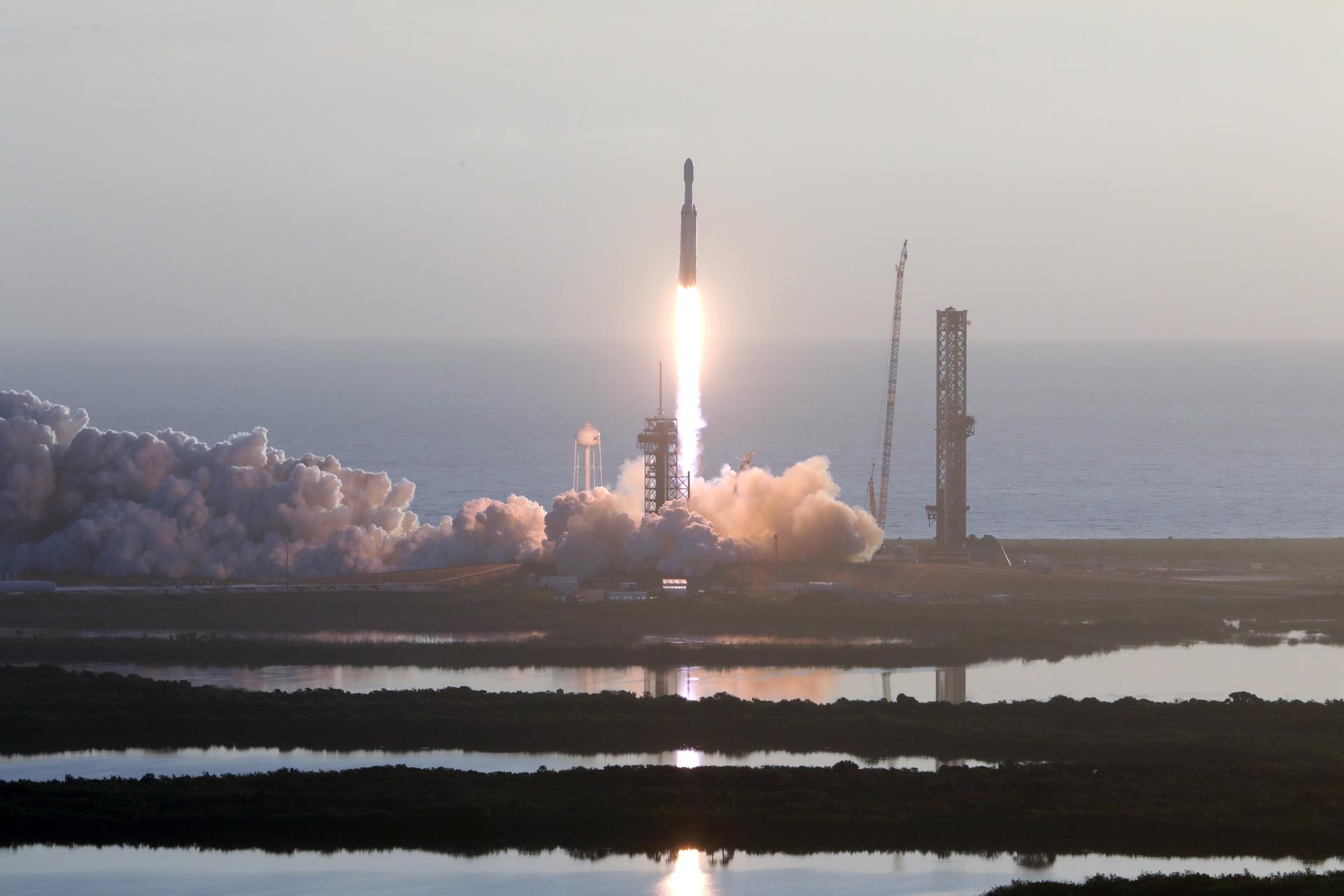
NASA’s Nancy Grace Roman Space Telescope rises to space atop a SpaceX Falcon Heavy rocket from Launch Complex 39A at the agency’s Kennedy Space Center in Florida on Sunday, Aug. 30, 2026. The milestone begins the observatory’s journey to explore the large‑scale structure of the universe. Roman will investigate dark energy and dark matter, conduct a statistical census of planetary systems, and enable a broad range of additional astrophysics research. Liftoff occurred at 7:26 a.m. EDT, from Kennedy’s Launch Complex 39A.
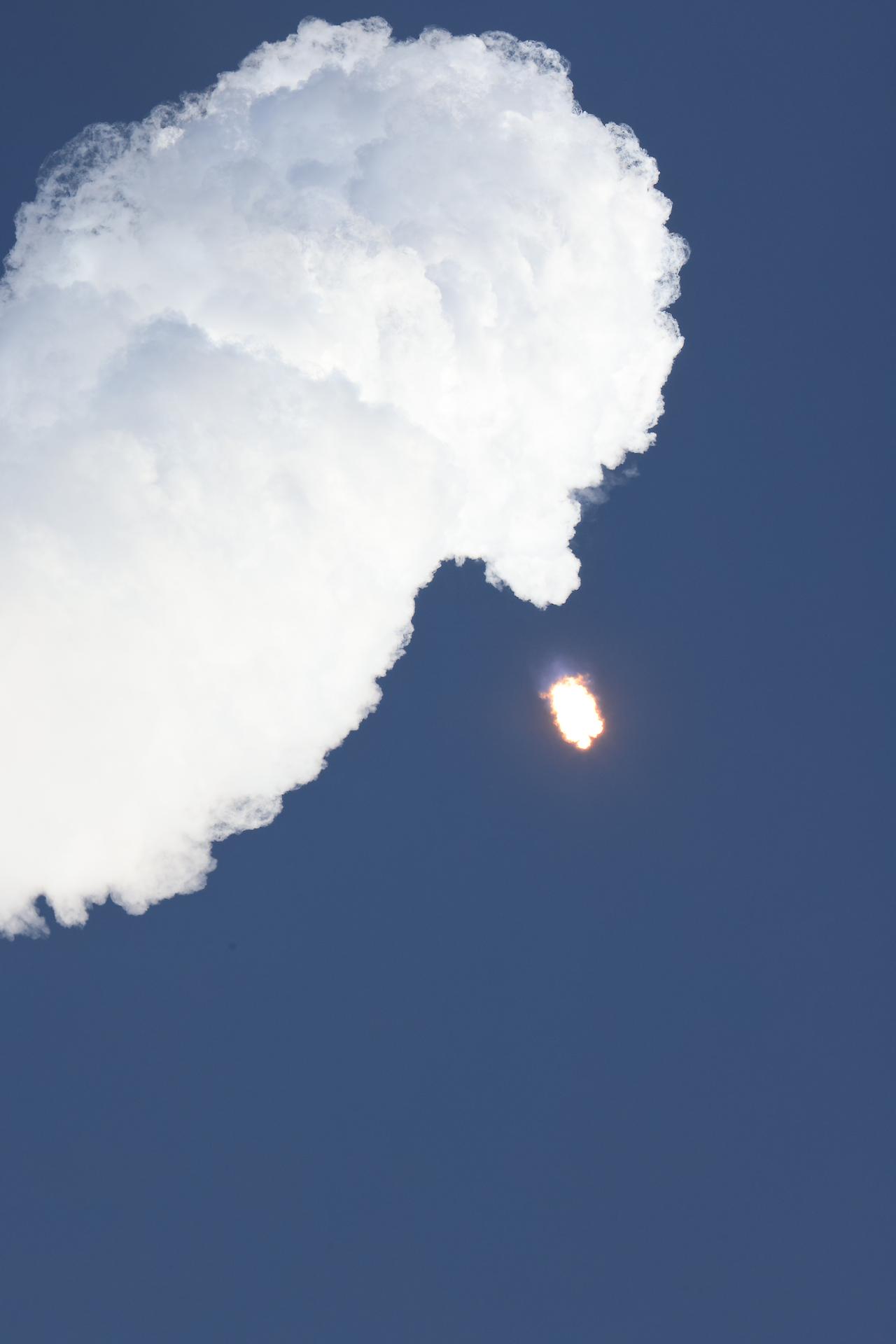
NASA’s Nancy Grace Roman Space Telescope rises to space atop a SpaceX Falcon Heavy rocket from Launch Complex 39A at the agency’s Kennedy Space Center in Florida on Sunday, Aug. 30, 2026. The milestone begins the observatory’s journey to explore the large‑scale structure of the universe. Roman will investigate dark energy and dark matter, conduct a statistical census of planetary systems, and enable a broad range of additional astrophysics research. Liftoff occurred at 7:26 a.m. EDT, from Kennedy’s Launch Complex 39A.
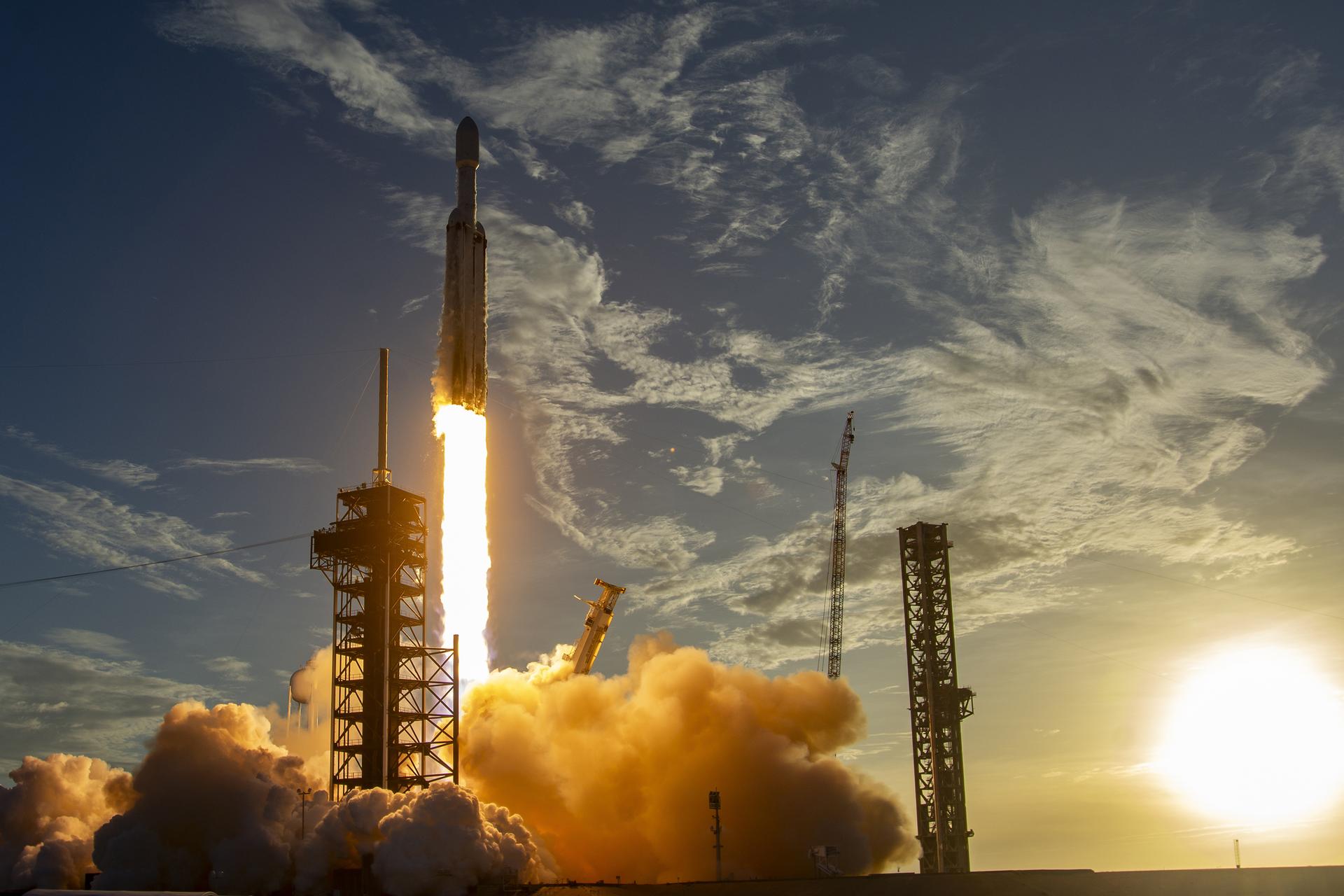
NASA’s Nancy Grace Roman Space Telescope rises to space atop a SpaceX Falcon Heavy rocket from Launch Complex 39A at the agency’s Kennedy Space Center in Florida on Sunday, Aug. 30, 2026. The milestone begins the observatory’s journey to explore the large‑scale structure of the universe. Roman will investigate dark energy and dark matter, conduct a statistical census of planetary systems, and enable a broad range of additional astrophysics research.