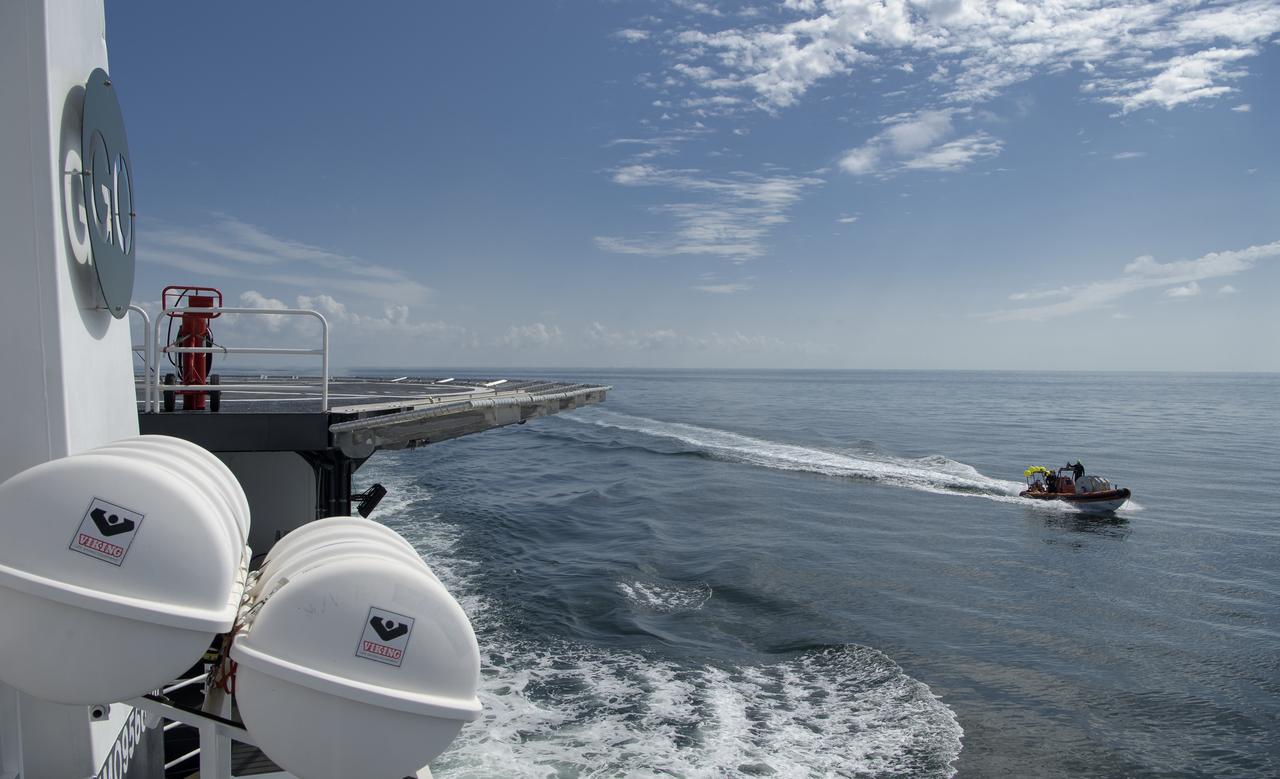
SpaceX support teams are deployed on fast boats from the SpaceX GO Navigator recovery ship ahead of the landing of the SpaceX Crew Dragon Endeavour spacecraft with NASA astronauts Robert Behnken and Douglas Hurley onboard, Sunday, Aug. 2, 2020 in the Gulf of Mexico off the cost of Pensacola, Florida. The Demo-2 test flight for NASA's Commercial Crew Program is the first to deliver astronauts to the International Space Station and return them to Earth onboard a commercially built and operated spacecraft. Behnken and Hurley are returning after spending 64 days in space. Photo Credit: (NASA/Bill Ingalls)
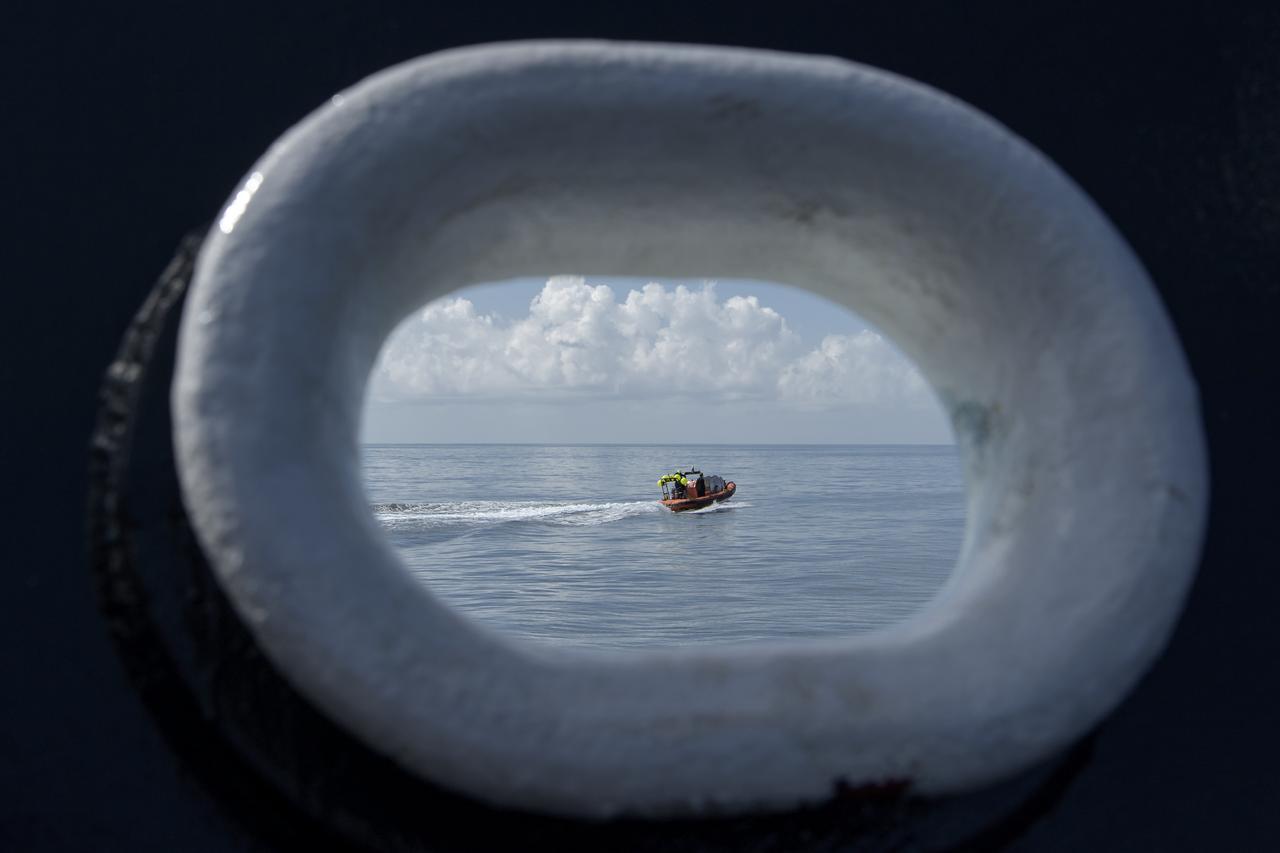
SpaceX support teams are deployed on fast boats from the SpaceX GO Navigator recovery ship ahead of the landing of the SpaceX Crew Dragon Endeavour spacecraft with NASA astronauts Robert Behnken and Douglas Hurley onboard, Sunday, Aug. 2, 2020 in the Gulf of Mexico off the cost of Pensacola, Florida. The Demo-2 test flight for NASA's Commercial Crew Program is the first to deliver astronauts to the International Space Station and return them to Earth onboard a commercially built and operated spacecraft. Behnken and Hurley are returning after spending 64 days in space. Photo Credit: (NASA/Bill Ingalls)
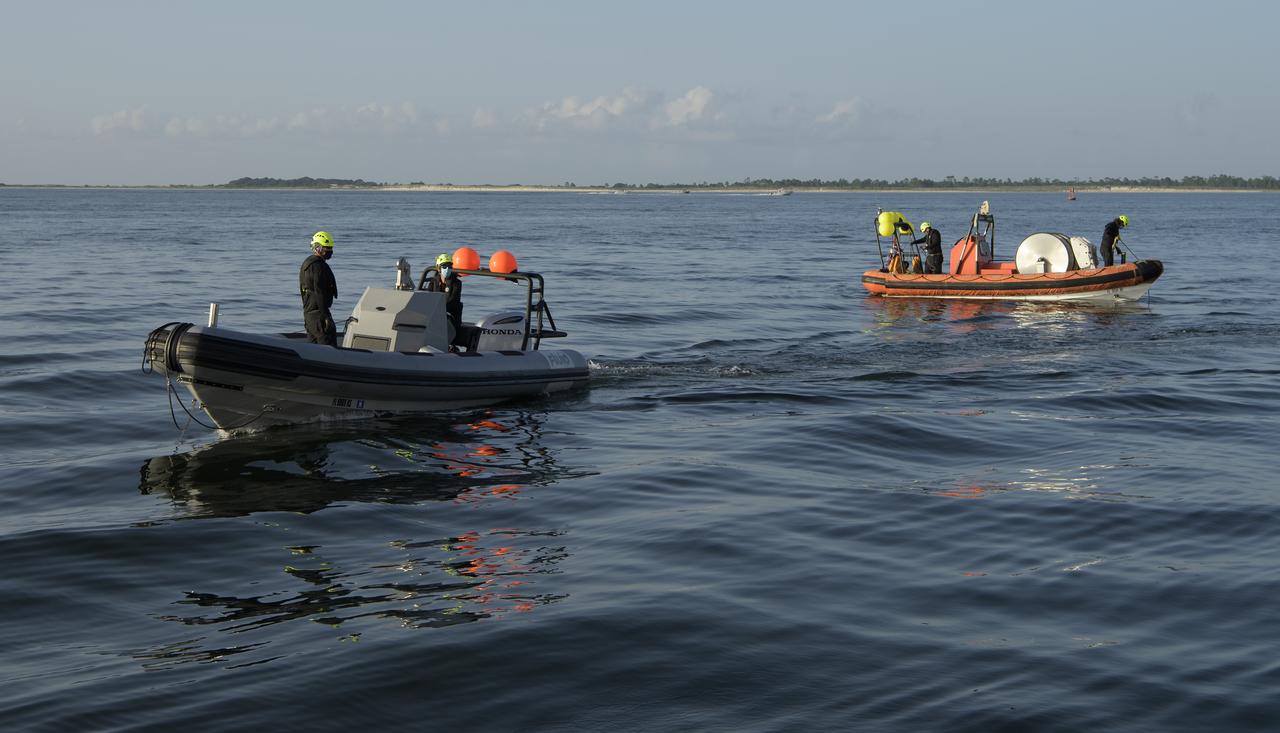
SpaceX support teams are deployed on fast boats from the SpaceX GO Navigator recovery ship ahead of the landing of the SpaceX Crew Dragon Endeavour spacecraft with NASA astronauts Robert Behnken and Douglas Hurley onboard, Sunday, Aug. 2, 2020 in the Gulf of Mexico off the cost of Pensacola, Florida. The Demo-2 test flight for NASA's Commercial Crew Program is the first to deliver astronauts to the International Space Station and return them to Earth onboard a commercially built and operated spacecraft. Behnken and Hurley are returning after spending 64 days in space. Photo Credit: (NASA/Bill Ingalls)
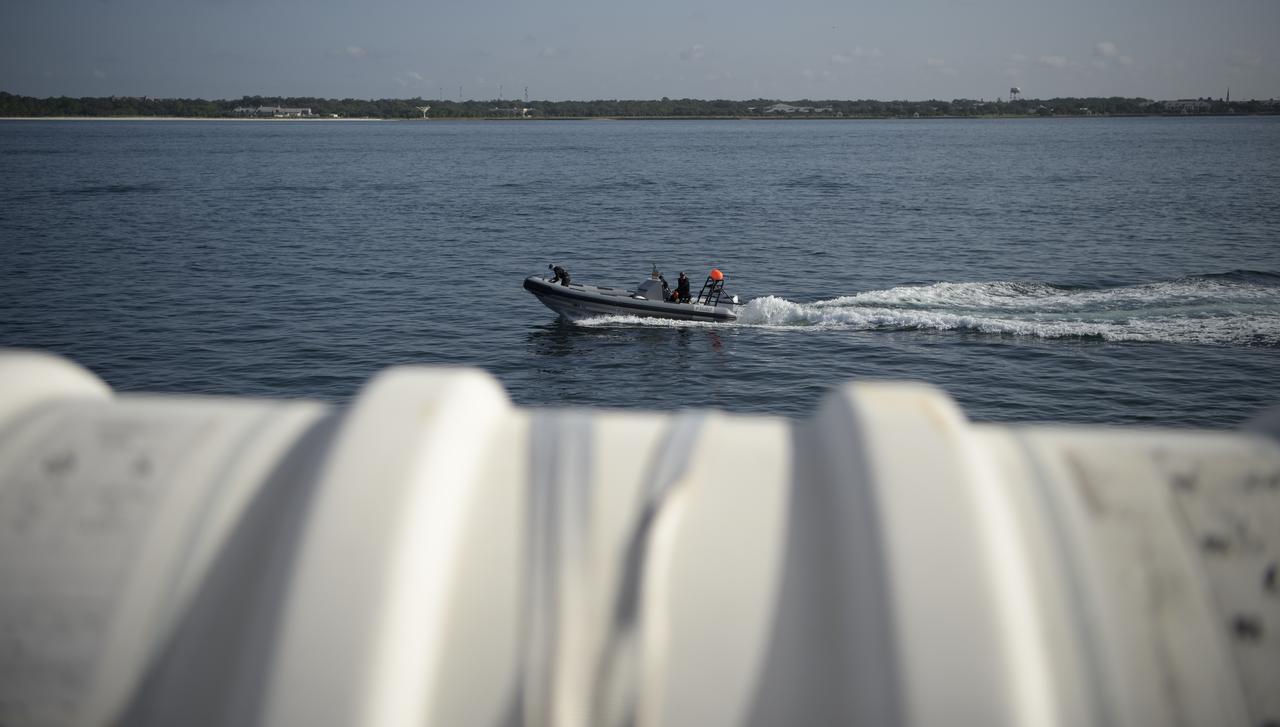
SpaceX support teams are deployed on fast boats from the SpaceX GO Navigator recovery ship ahead of the landing of the SpaceX Crew Dragon Endeavour spacecraft with NASA astronauts Robert Behnken and Douglas Hurley onboard, Sunday, Aug. 2, 2020 in the Gulf of Mexico off the cost of Pensacola, Florida. The Demo-2 test flight for NASA's Commercial Crew Program is the first to deliver astronauts to the International Space Station and return them to Earth onboard a commercially built and operated spacecraft. Behnken and Hurley are returning after spending 64 days in space. Photo Credit: (NASA/Bill Ingalls)
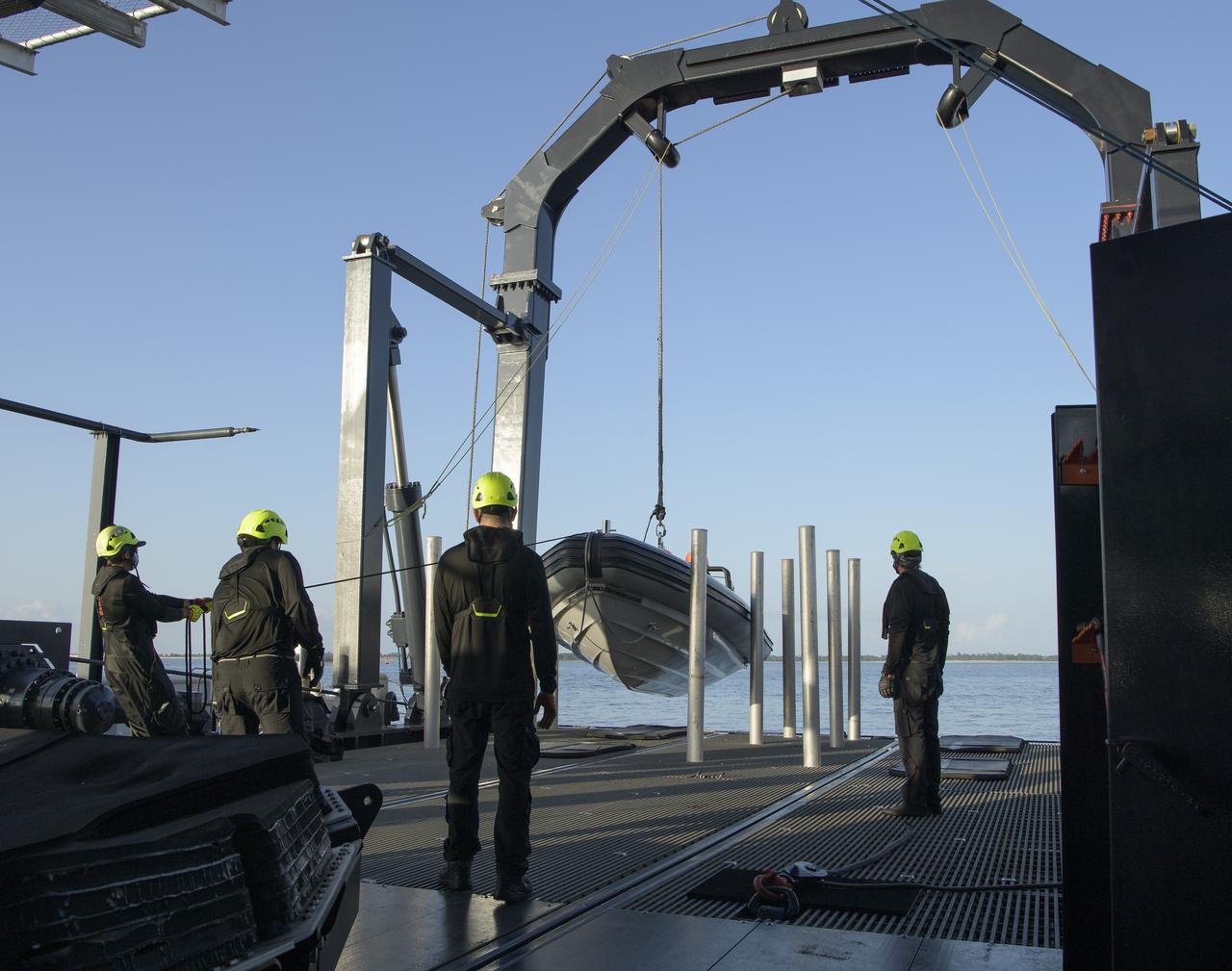
SpaceX support teams onboard the SpaceX GO Navigator recovery ship deploy one of the fast boats ahead of the landing of the SpaceX Crew Dragon Endeavour spacecraft with NASA astronauts Robert Behnken and Douglas Hurley onboard, Sunday, Aug. 2, 2020 in the Gulf of Mexico off the cost of Pensacola, Florida. The Demo-2 test flight for NASA's Commercial Crew Program is the first to deliver astronauts to the International Space Station and return them to Earth onboard a commercially built and operated spacecraft. Behnken and Hurley are returning after spending 64 days in space. Photo Credit: (NASA/Bill Ingalls)
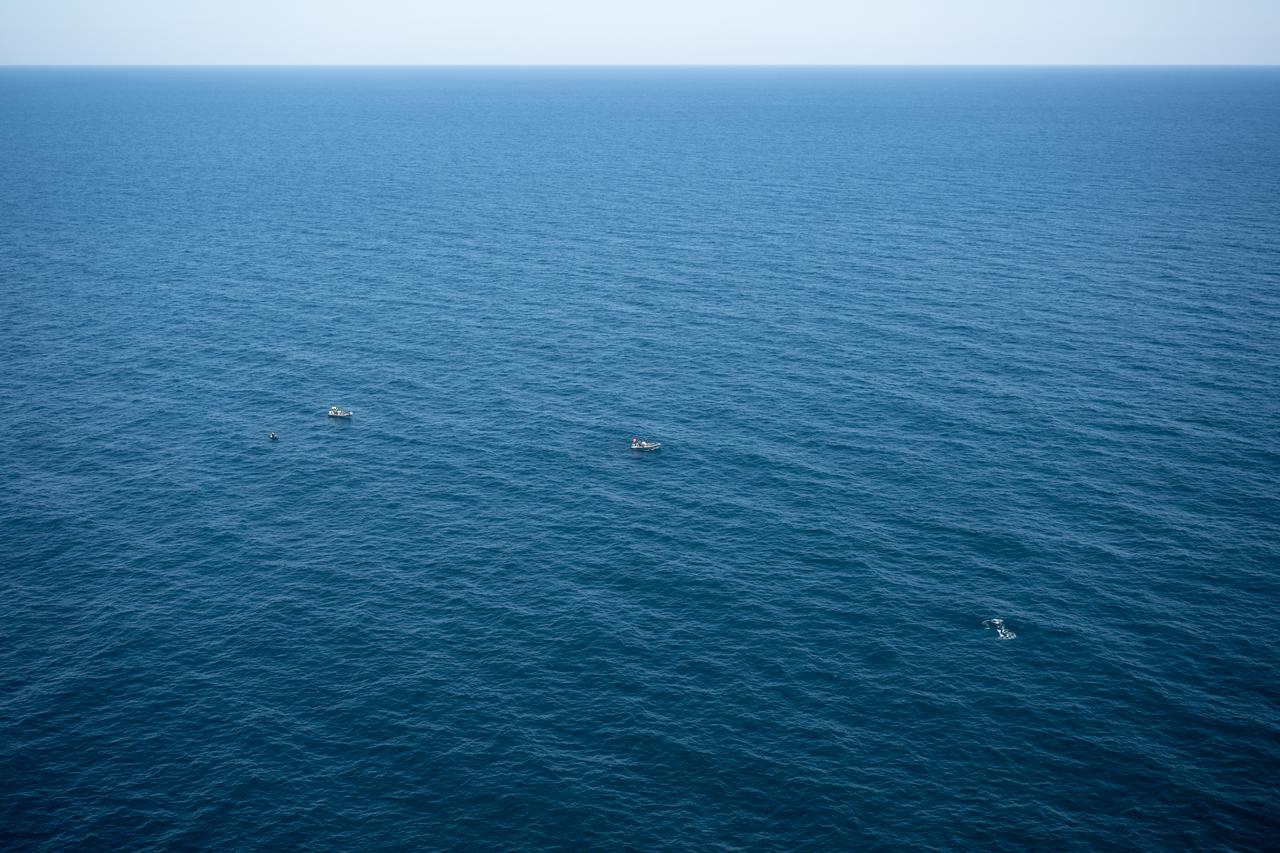
SpaceX fast boat teams are seen in the Atlantic Ocean as NASA, ESA (European Space Agency), and SpaceX teams prepare for the landing of the SpaceX Crew Dragon Freedom spacecraft with NASA astronauts Kjell Lindgren, Robert Hines, Jessica Watkins, and ESA (European Space Agency) astronaut Samantha Cristoforetti aboard, Friday, Oct. 14, 2022, off the coast of Jacksonville, Florida. Lindgren, Hines, Watkins, and Cristoforetti are returning after 170 days in space as part of Expeditions 67 and 68 aboard the International Space Station. Photo Credit: (NASA/Bill Ingalls)
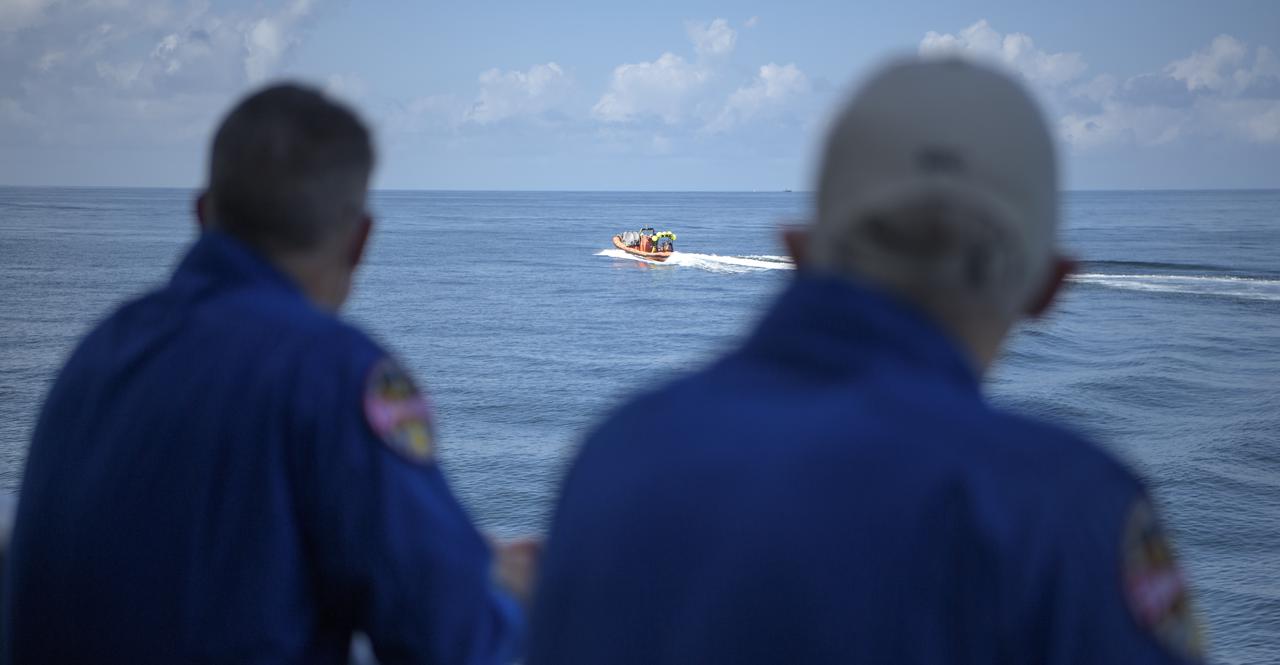
NASA astronaut and Crew Recovery Chief Shane Kimbrough, left, and NASA Chief Astronaut Pat Forrester watch as SpaceX support teams are deployed on fast boats from the SpaceX GO Navigator recovery ship ahead of the landing of the SpaceX Crew Dragon Endeavour spacecraft with NASA astronauts Robert Behnken and Douglas Hurley onboard, Sunday, Aug. 2, 2020 in the Gulf of Mexico off the cost of Pensacola, Florida. The Demo-2 test flight for NASA's Commercial Crew Program is the first to deliver astronauts to the International Space Station and return them to Earth onboard a commercially built and operated spacecraft. Behnken and Hurley are returning after spending 64 days in space. Photo Credit: (NASA/Bill Ingalls)
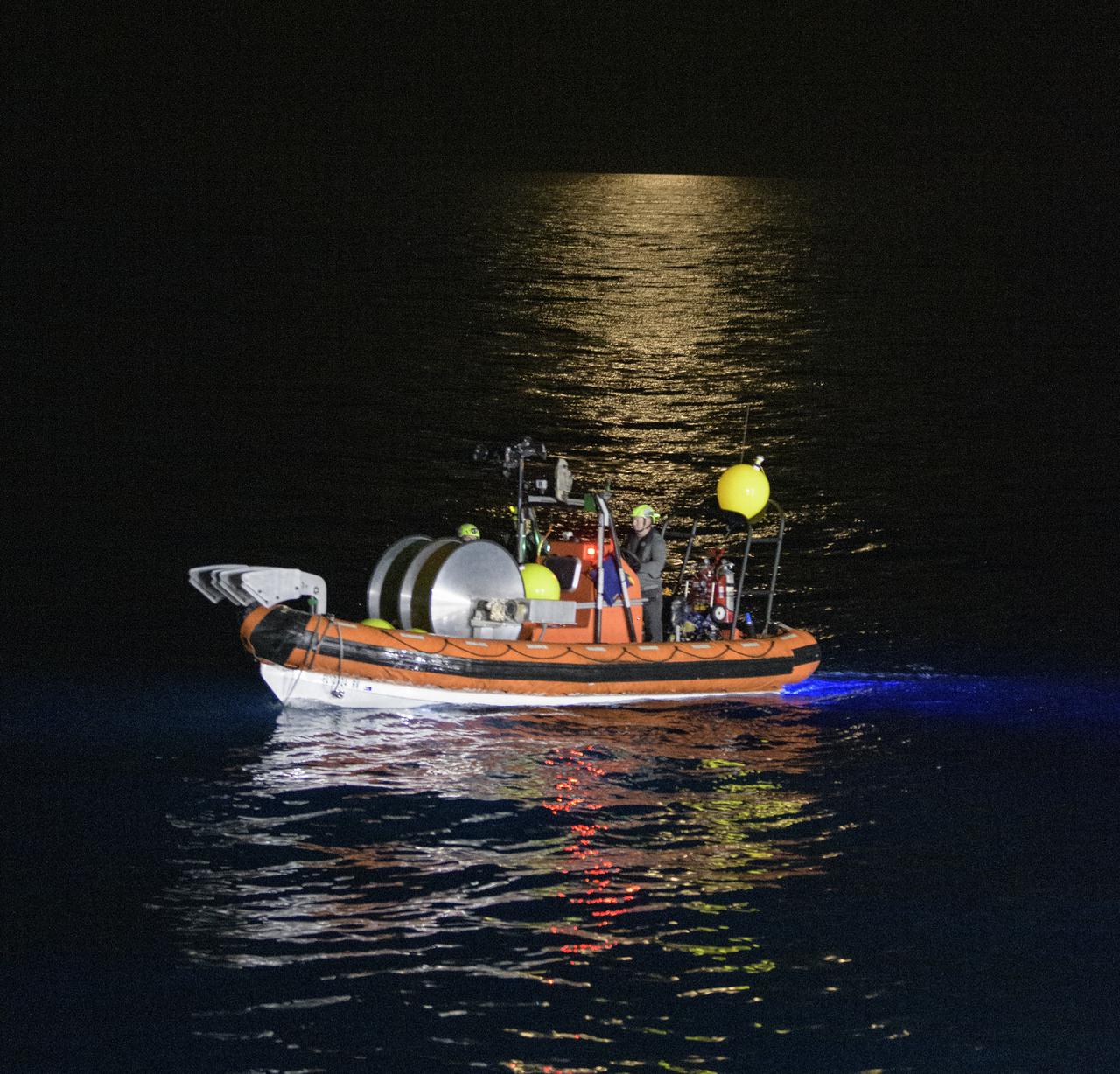
SpaceX support teams deploy in fast boats off the SpaceX GO Navigator recovery ship as they prepare for the landing of the SpaceX Crew Dragon Resilience spacecraft with NASA astronauts Mike Hopkins, Shannon Walker, and Victor Glover, and Japan Aerospace Exploration Agency (JAXA) astronaut Soichi Noguchi aboard in the Gulf of Mexico off the coast of Panama City, Florida, Sunday, May 2, 2021. NASA’s SpaceX Crew-1 mission is the first crew rotation flight of the SpaceX Crew Dragon spacecraft and Falcon 9 rocket with astronauts to the International Space Station as part of the agency’s Commercial Crew Program. Photo Credit: (NASA/Bill Ingalls)
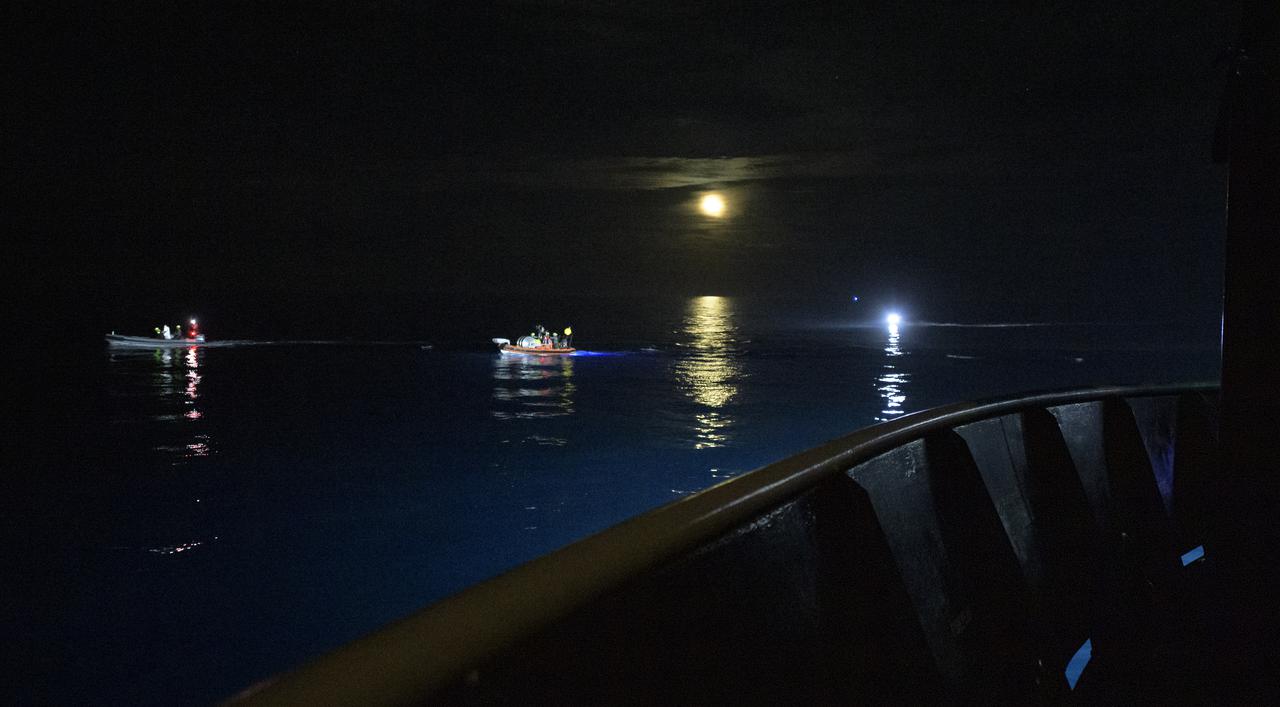
SpaceX support teams deploy in fast boats off the SpaceX GO Navigator recovery ship as they prepare for the landing of the SpaceX Crew Dragon Resilience spacecraft with NASA astronauts Mike Hopkins, Shannon Walker, and Victor Glover, and Japan Aerospace Exploration Agency (JAXA) astronaut Soichi Noguchi aboard in the Gulf of Mexico off the coast of Panama City, Florida, Sunday, May 2, 2021. NASA’s SpaceX Crew-1 mission is the first crew rotation flight of the SpaceX Crew Dragon spacecraft and Falcon 9 rocket with astronauts to the International Space Station as part of the agency’s Commercial Crew Program. Photo Credit: (NASA/Bill Ingalls)
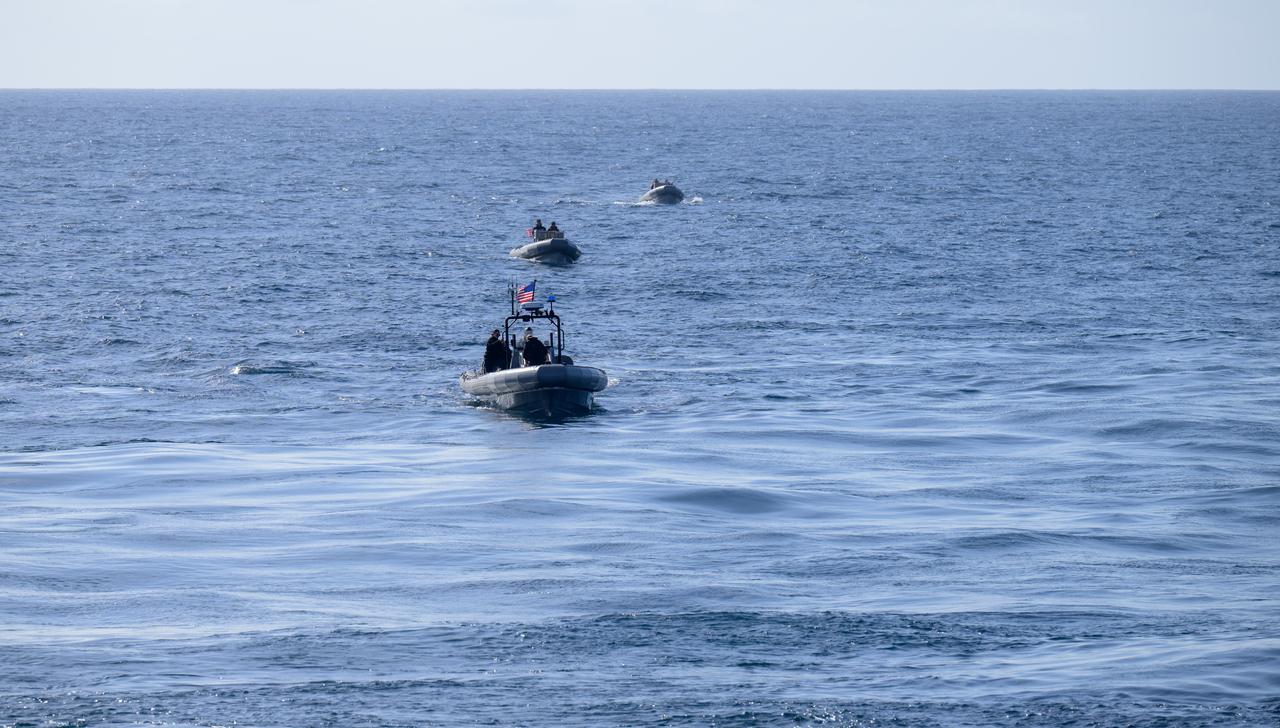
Fast boats are deployed during the Underway Recovery Test-12 onboard USS Somerset off the coast of California, Friday, March 28, 2025. During the test, NASA and Department of Defense teams are practicing to ensure recovery procedures are validated as NASA plans to send Artemis II astronauts around the Moon and splashdown in the Pacific Ocean. Photo Credit: (NASA/Bill Ingalls)
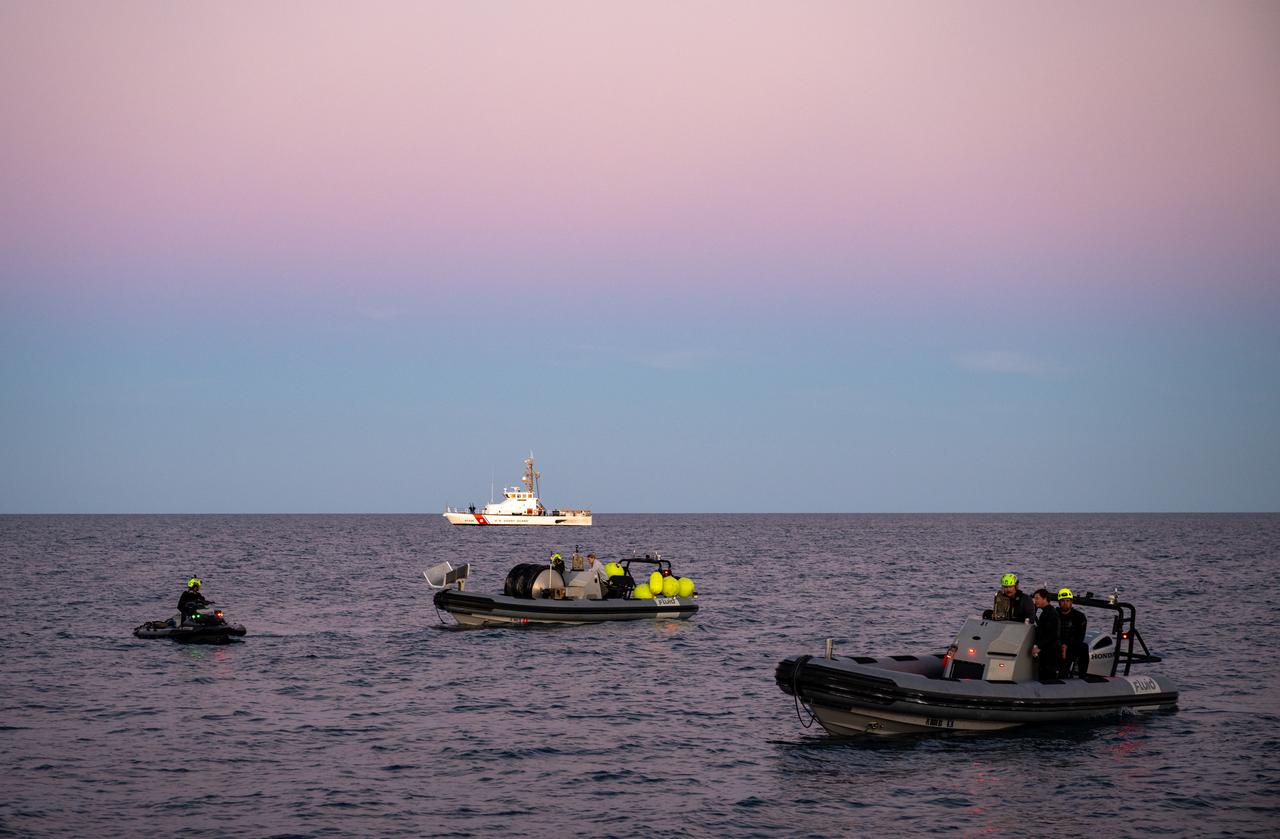
A United States Coast Guard vessel and SpaceX fast boat teams are seen shortly after the landing of a SpaceX Dragon spacecraft with NASA astronauts Nick Hague, Suni Williams, Butch Wilmore, and Roscosmos cosmonaut Aleksandr Gorbunov aboard, Tuesday, March 18, 2025, off the coast of Tallahassee, Florida. Hague, Gorbunov, Williams, and Wilmore are returning from a long-duration science expedition aboard the International Space Station. Photo Credit: (NASA/Keegan Barber)
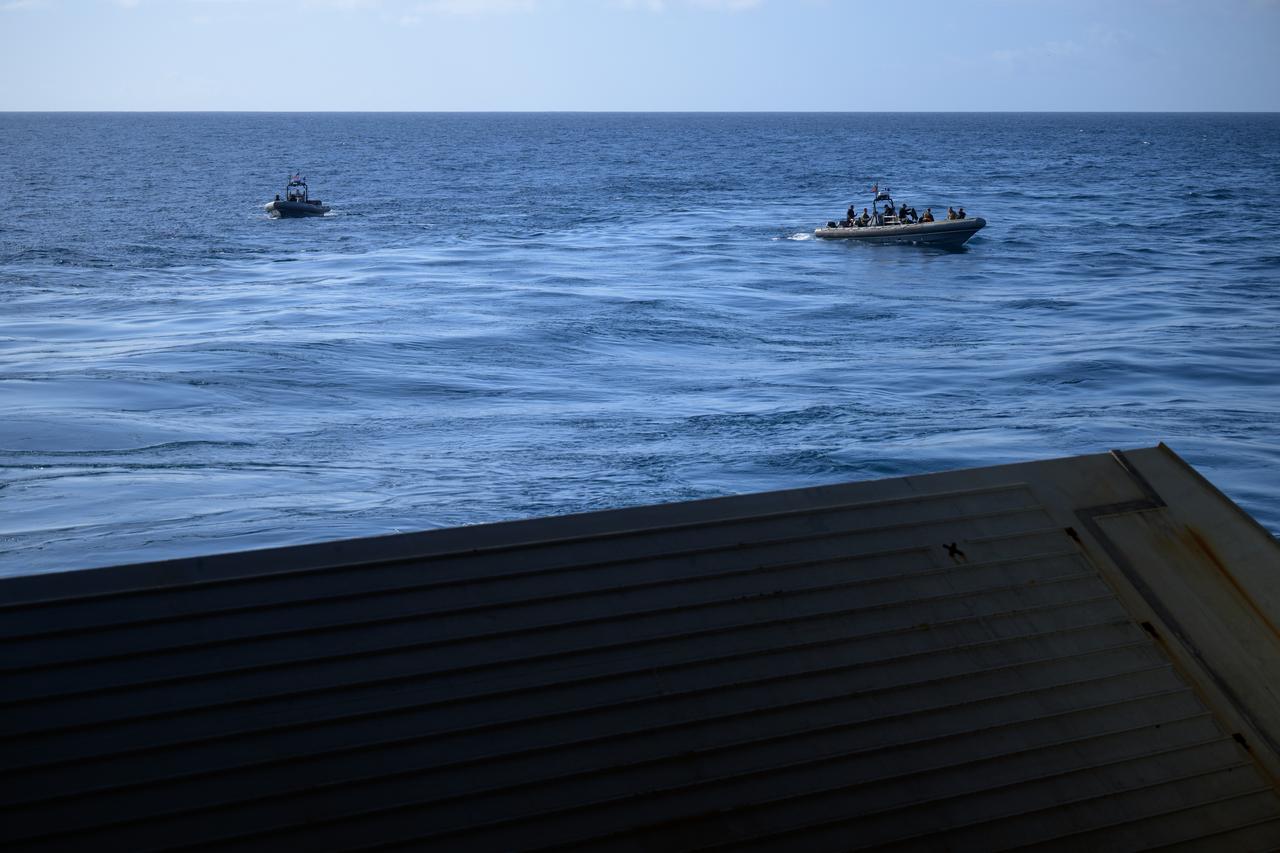
Fast boats are deployed during the Underway Recovery Test-12 onboard USS Somerset off the coast of California, Friday, March 28, 2025. During the test, NASA and Department of Defense teams are practicing to ensure recovery procedures are validated as NASA plans to send Artemis II astronauts around the Moon and splashdown in the Pacific Ocean. Photo Credit: (NASA/Bill Ingalls)
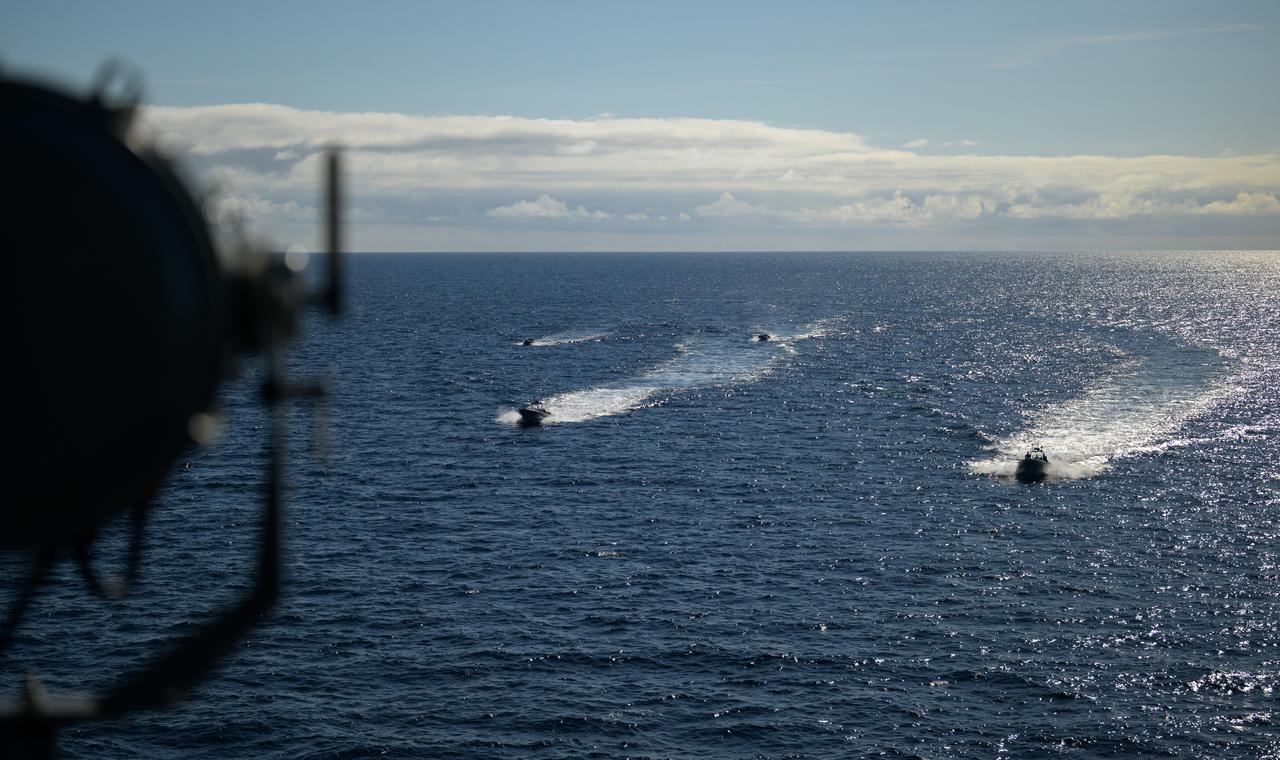
Fast boats are deployed during Underway Recovery Test-12 onboard USS Somerset off the coast of California, Thursday, March 27, 2025. During the test, NASA and Department of Defense teams are practicing to ensure recovery procedures are validated as NASA plans to send Artemis II astronauts around the Moon and splashdown in the Pacific Ocean. Photo Credit: (NASA/Bill Ingalls)
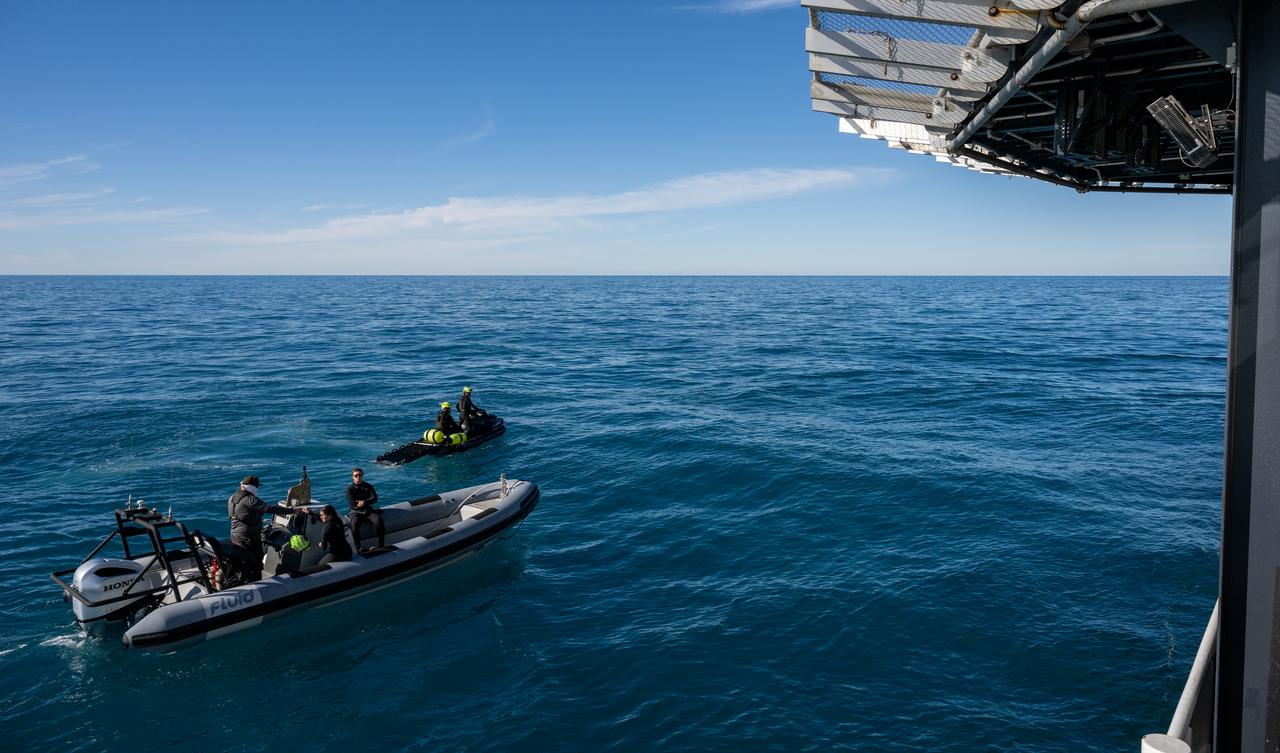
SpaceX fast boat teams are seen alongside recovery ship MEGAN as the recovery team prepares for the landing of a SpaceX Dragon spacecraft with NASA astronauts Nick Hague, Suni Williams, Butch Wilmore, and Roscosmos cosmonaut Aleksandr Gorbunov aboard, Tuesday, March 18, 2025, off the coast of Tallahassee, Florida. Hague, Gorbunov, Williams, and Wilmore are returning from a long-duration science expedition aboard the International Space Station. Photo Credit: (NASA/Keegan Barber)
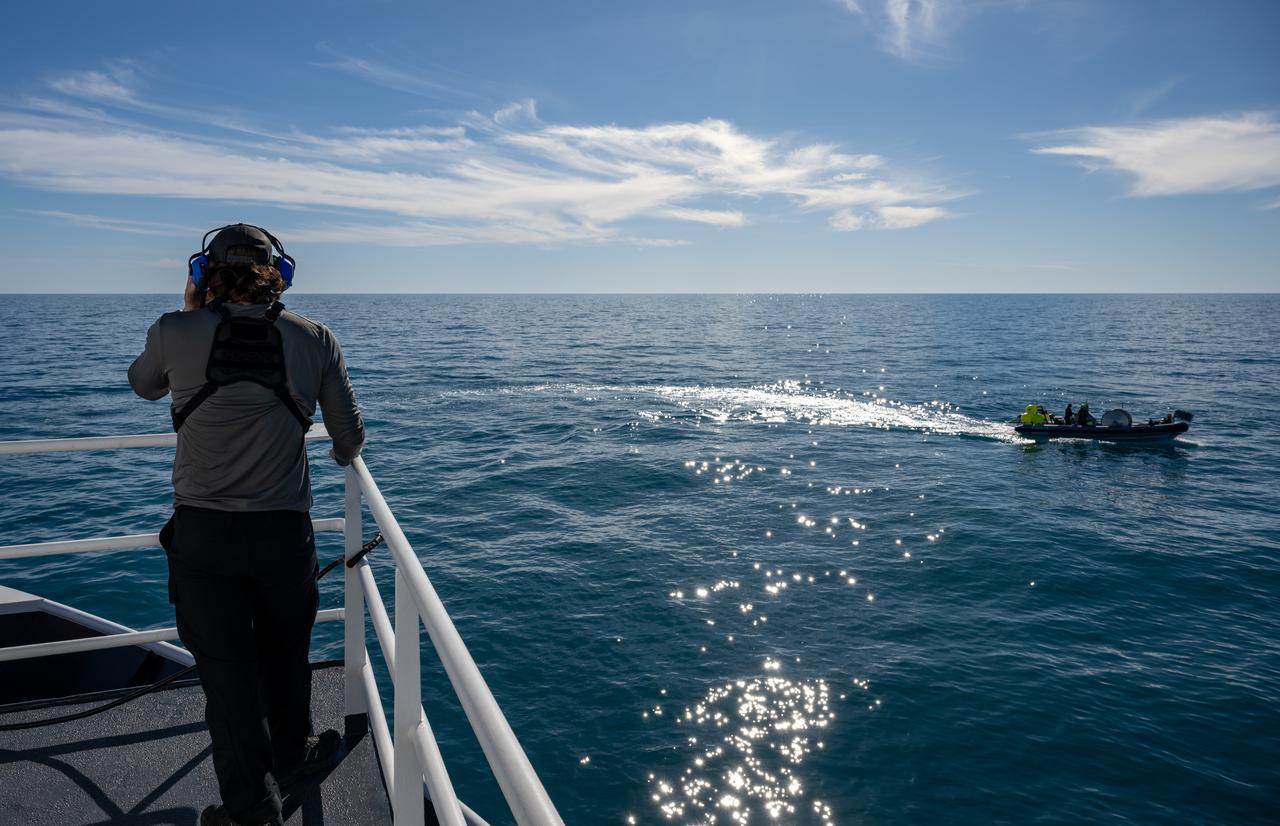
SpaceX fast boat teams are seen alongside recovery ship MEGAN as the recovery team prepares for the landing of a SpaceX Dragon spacecraft with NASA astronauts Nick Hague, Suni Williams, Butch Wilmore, and Roscosmos cosmonaut Aleksandr Gorbunov aboard, Tuesday, March 18, 2025, off the coast of Tallahassee, Florida. Hague, Gorbunov, Williams, and Wilmore are returning from a long-duration science expedition aboard the International Space Station. Photo Credit: (NASA/Keegan Barber)
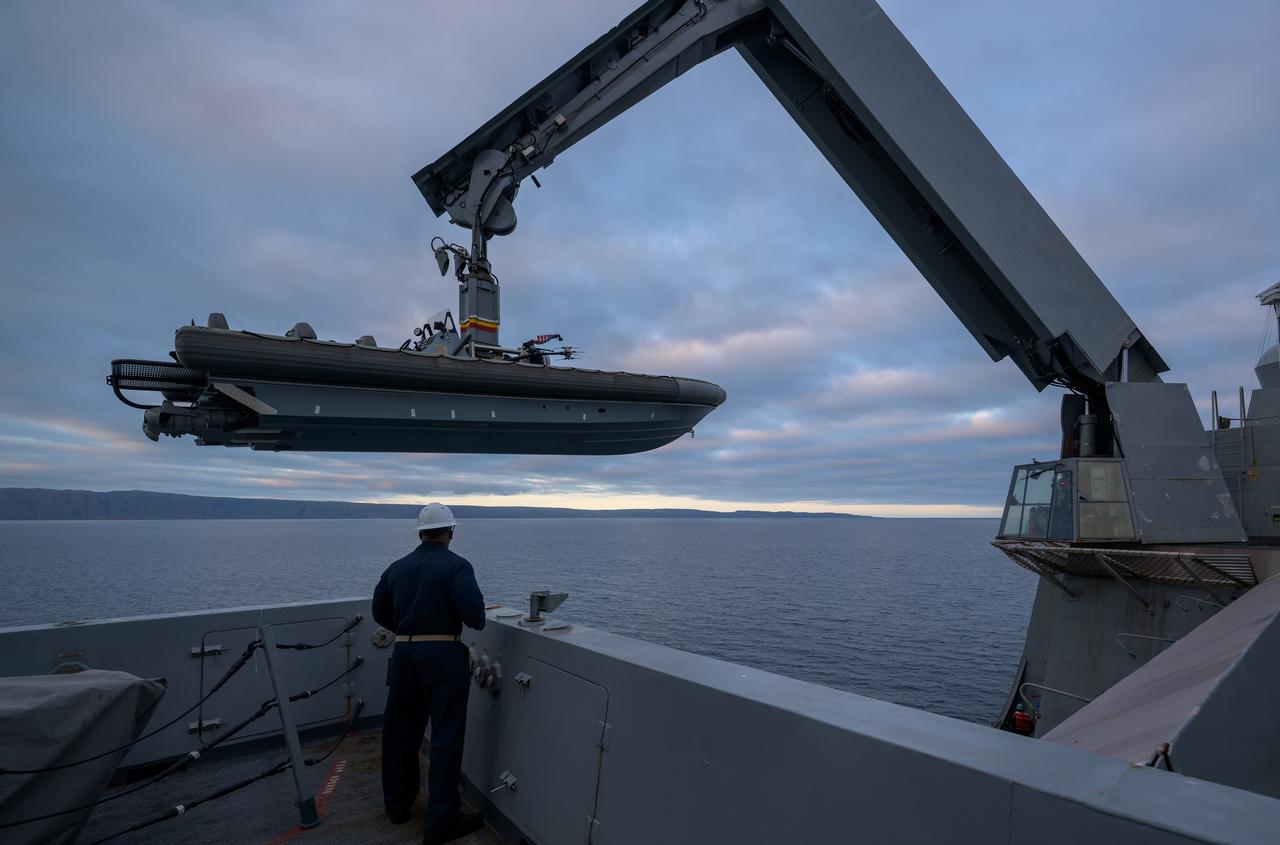
USS Somerset personnel deploy fast boats during Underway Recovery Test-12 onboard USS Somerset off the coast of California, Thursday, March 27, 2025. During the test, NASA and Department of Defense teams are practicing to ensure recovery procedures are validated as NASA plans to send Artemis II astronauts around the Moon and splashdown in the Pacific Ocean. Photo Credit: (NASA/Bill Ingalls)
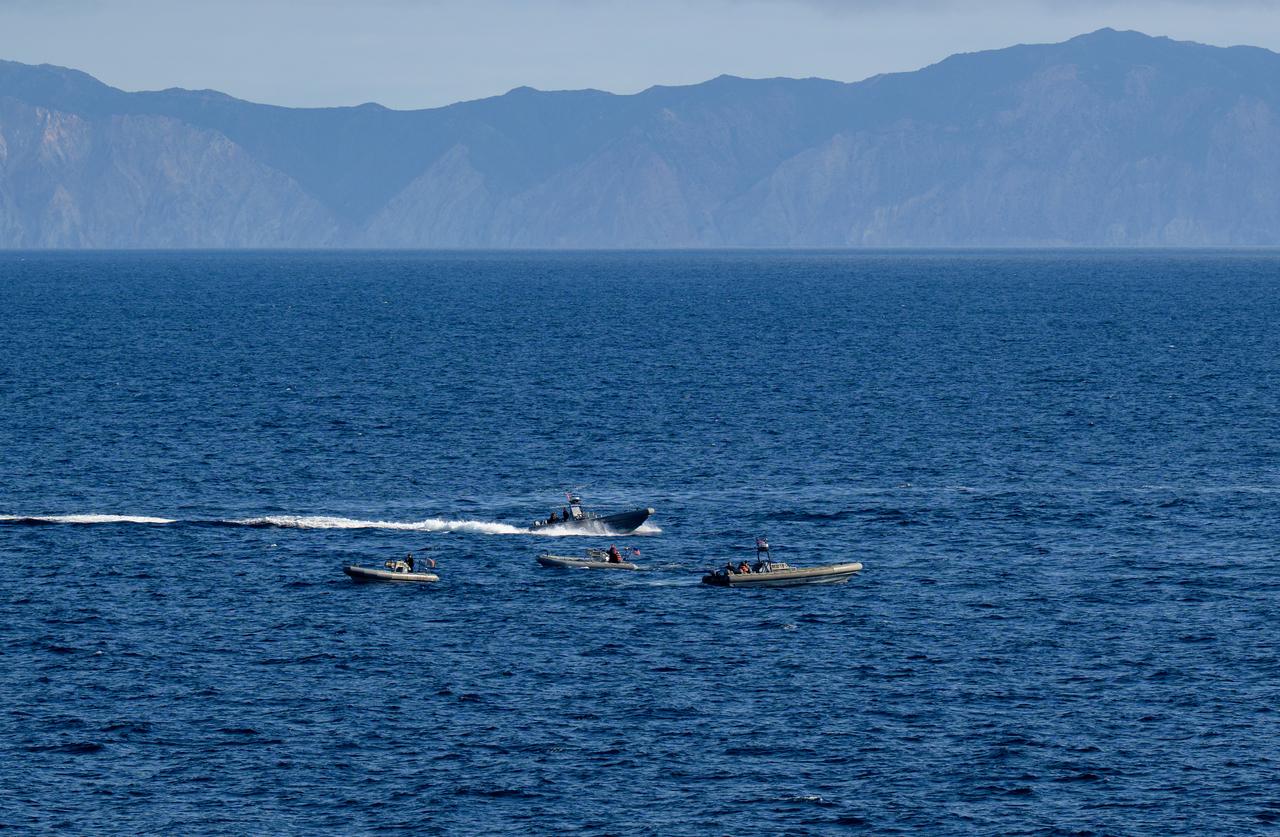
Fast boats are deployed during Underway Recovery Test-12 onboard USS Somerset off the coast of California, Thursday, March 27, 2025. During the test, NASA and Department of Defense teams are practicing to ensure recovery procedures are validated as NASA plans to send Artemis II astronauts around the Moon and splashdown in the Pacific Ocean. Photo Credit: (NASA/Bill Ingalls)
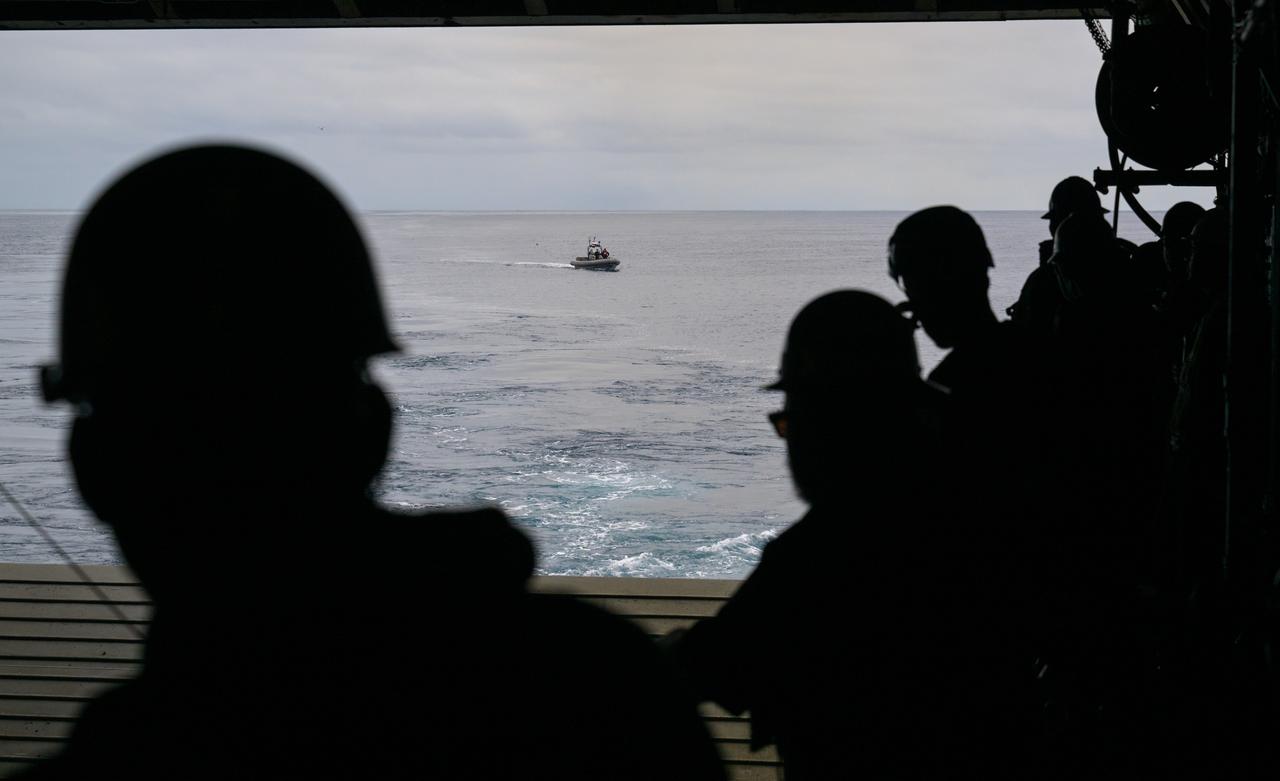
Mission support teams are seen off the stern of USS Somerset as they practice with the Crew Module Test Article (CMTA), a full scale mockup of the Orion spacecraft, during Underway Recovery Test-12 off the coast of California, Wednesday, March 26, 2025. During the test, NASA and Department of Defense teams are practicing to ensure recovery procedures are validated as NASA plans to send Artemis II astronauts around the Moon and splashdown in the Pacific Ocean. Photo Credit: (NASA/Bill Ingalls)
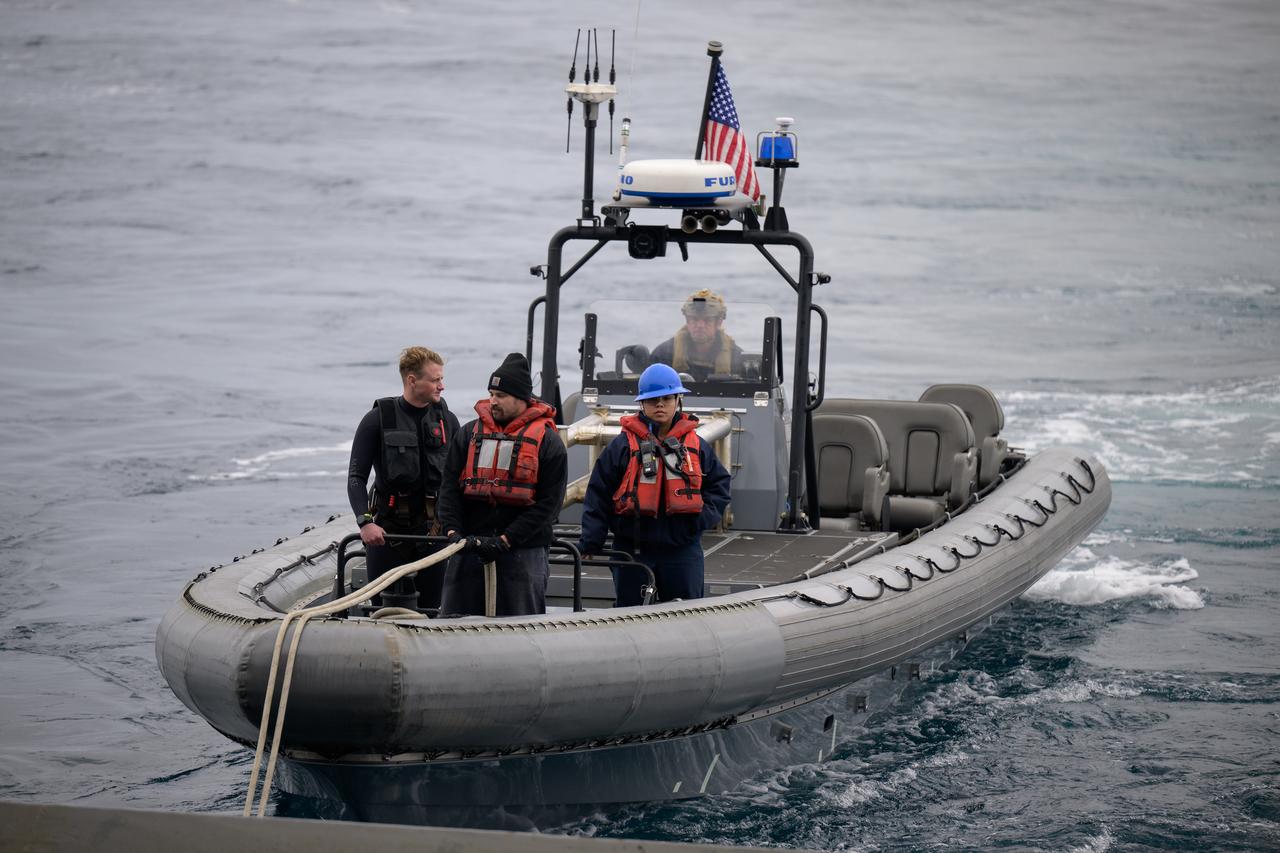
Mission support teams are seen off the stern of USS Somerset as they practice with the Crew Module Test Article (CMTA), a full scale mockup of the Orion spacecraft, during Underway Recovery Test-12 off the coast of California, Wednesday, March 26, 2025. During the test, NASA and Department of Defense teams are practicing to ensure recovery procedures are validated as NASA plans to send Artemis II astronauts around the Moon and splashdown in the Pacific Ocean. Photo Credit: (NASA/Bill Ingalls)
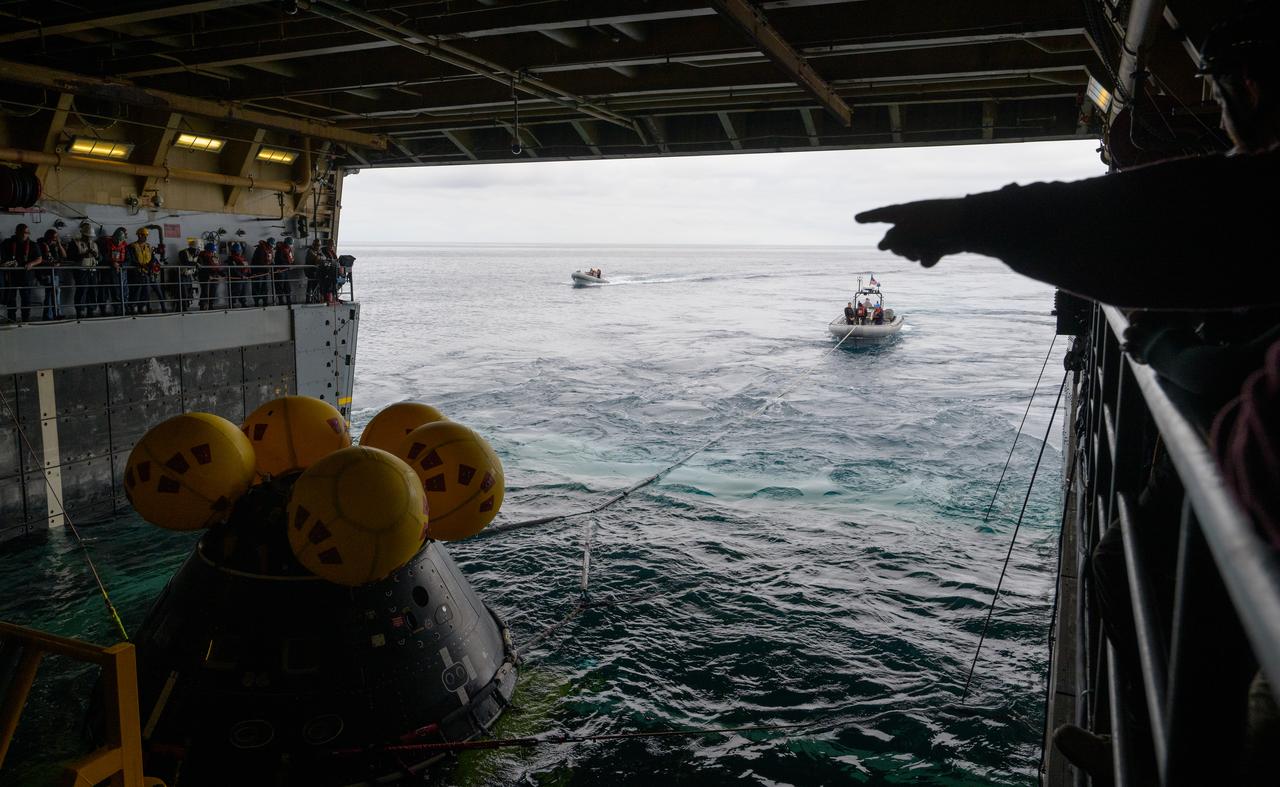
Mission support teams are seen off the stern of USS Somerset as they practice with the Crew Module Test Article (CMTA), a full scale mockup of the Orion spacecraft, during Underway Recovery Test-12 off the coast of California, Wednesday, March 26, 2025. During the test, NASA and Department of Defense teams are practicing to ensure recovery procedures are validated as NASA plans to send Artemis II astronauts around the Moon and splashdown in the Pacific Ocean. Photo Credit: (NASA/Bill Ingalls)
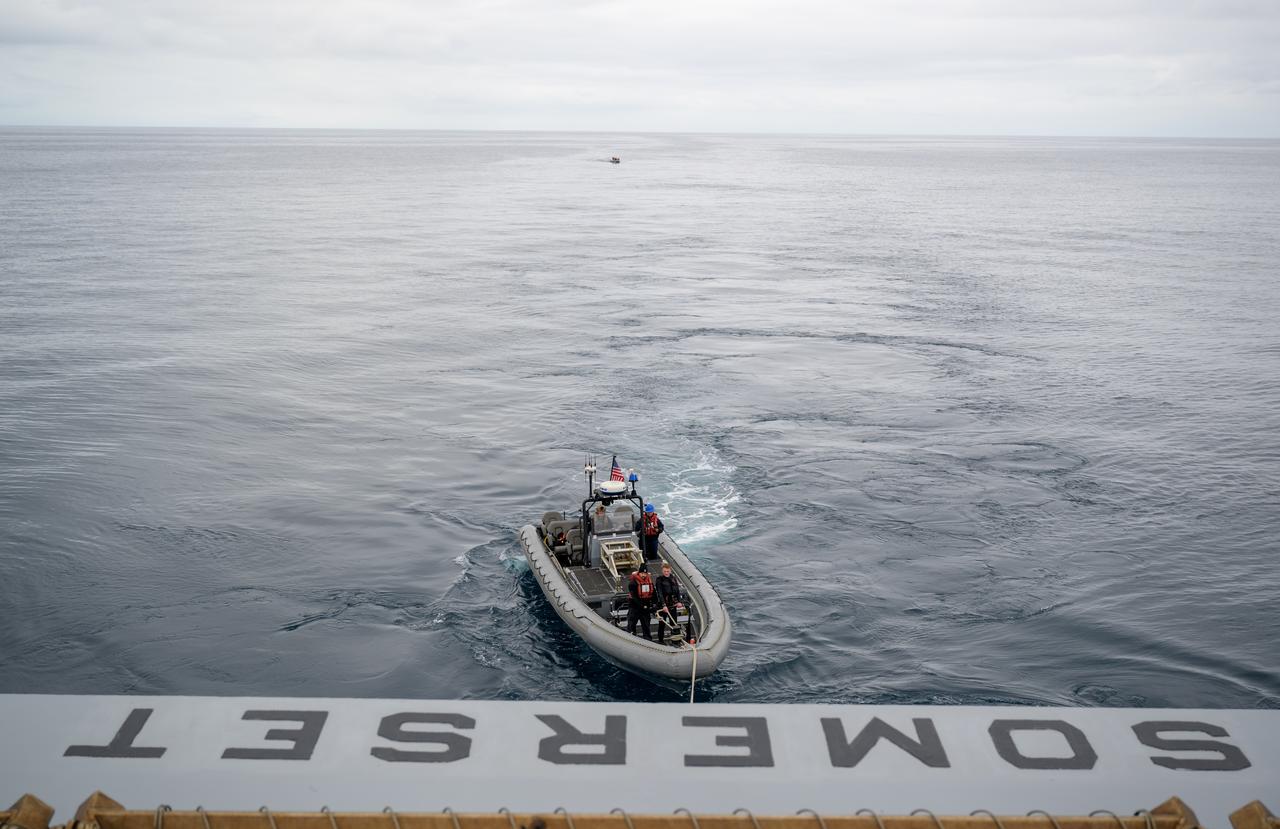
Mission support teams are seen off the stern of USS Somerset as they practice with the Crew Module Test Article (CMTA), a full scale mockup of the Orion spacecraft, during Underway Recovery Test-12 off the coast of California, Wednesday, March 26, 2025. During the test, NASA and Department of Defense teams are practicing to ensure recovery procedures are validated as NASA plans to send Artemis II astronauts around the Moon and splashdown in the Pacific Ocean. Photo Credit: (NASA/Joel Kowsky)
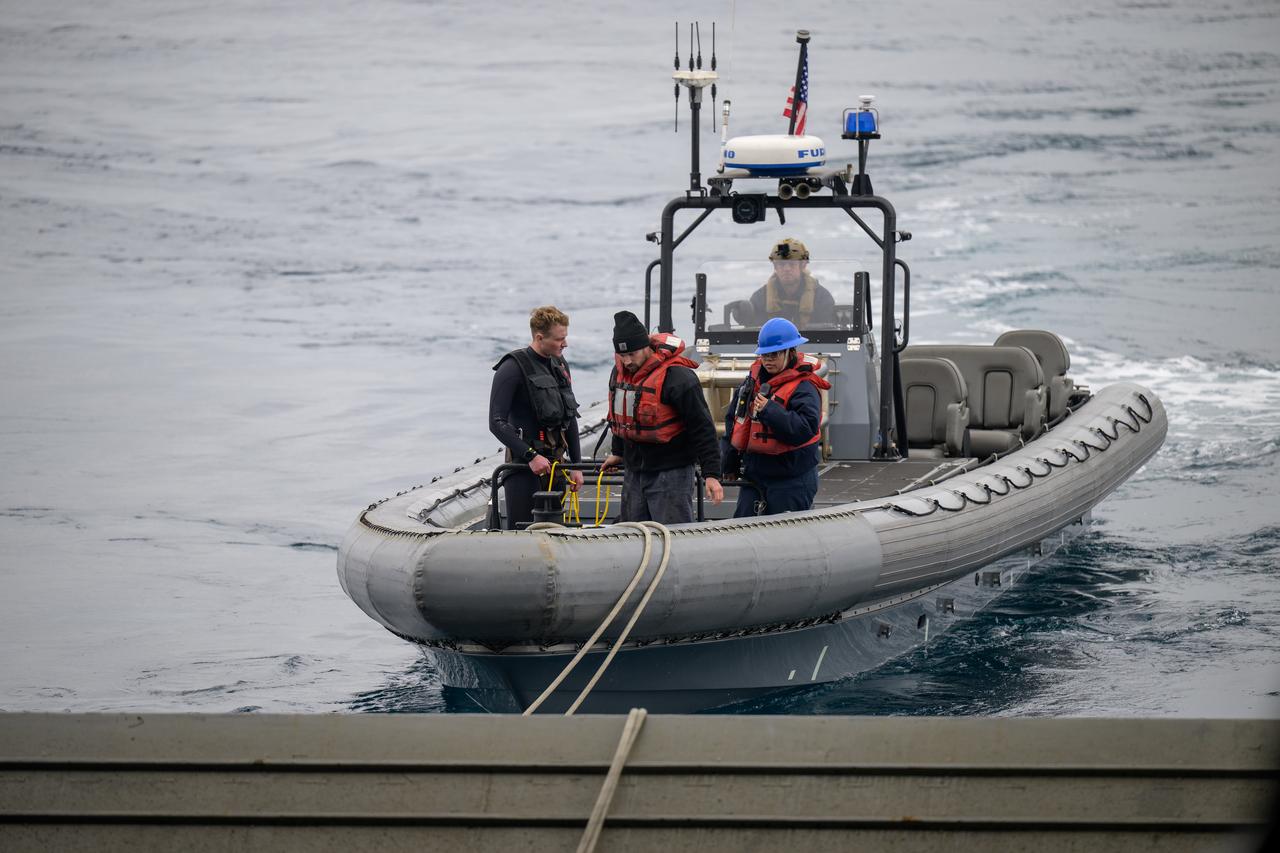
Mission support teams are seen off the stern of USS Somerset as they practice with the Crew Module Test Article (CMTA), a full scale mockup of the Orion spacecraft, during Underway Recovery Test-12 off the coast of California, Wednesday, March 26, 2025. During the test, NASA and Department of Defense teams are practicing to ensure recovery procedures are validated as NASA plans to send Artemis II astronauts around the Moon and splashdown in the Pacific Ocean. Photo Credit: (NASA/Bill Ingalls)
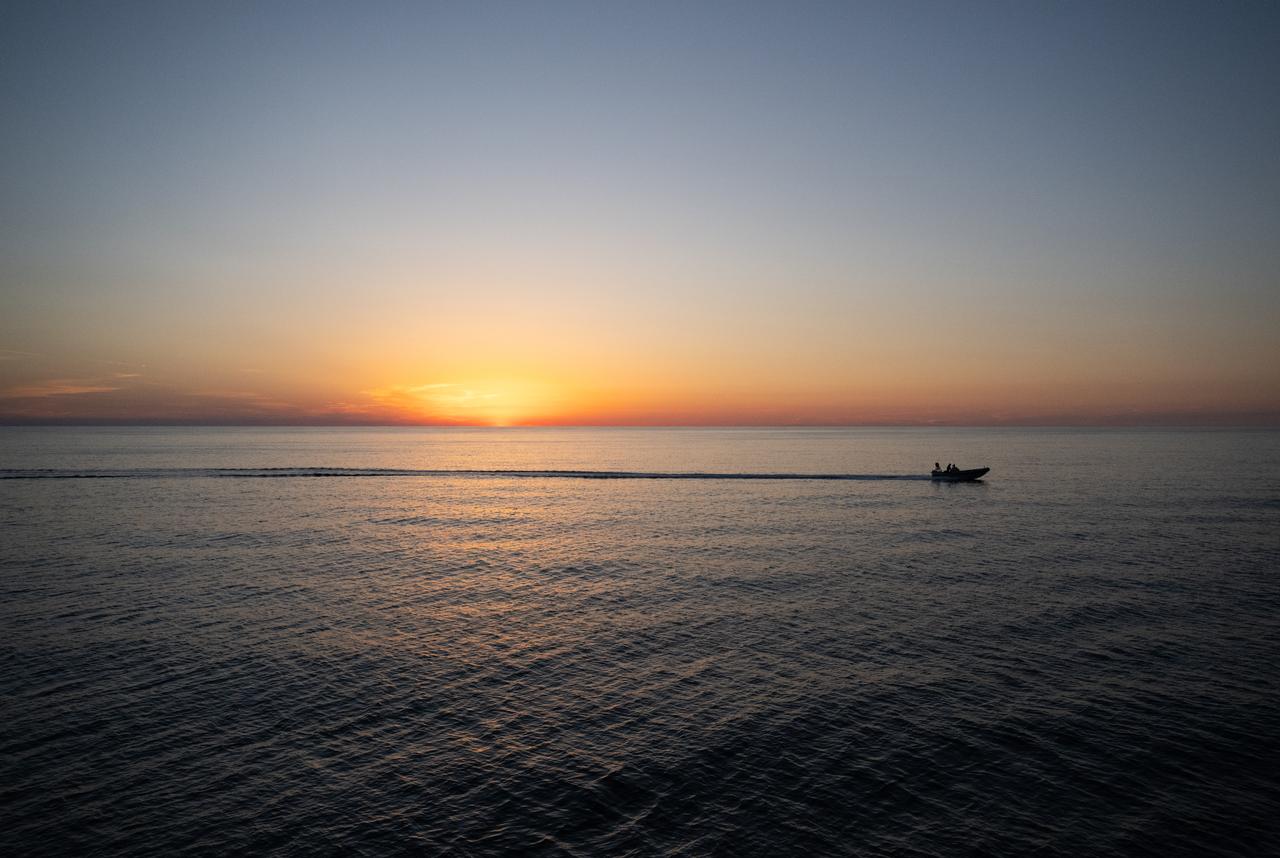
A fast boat is seen at sunrise after the landing of SpaceX Dragon Endurance spacecraft a few hours earlier with NASA astronaut Jasmin Moghbeli, ESA (European Space Agency) astronaut Andreas Mogensen, Japan Aerospace Exploration Agency (JAXA) astronaut Satoshi Furukawa, and Roscosmos cosmonaut Konstantin Borisov aboard in the Gulf of Mexico off the coast of Pensacola, Florida, Tuesday, March 12, 2024. Moghbeli, Mogensen, Furukawa, and Borisov are returning after nearly six-months in space as part of Expedition 70 aboard the International Space Station. Photo Credit: (NASA/Joel Kowsky)
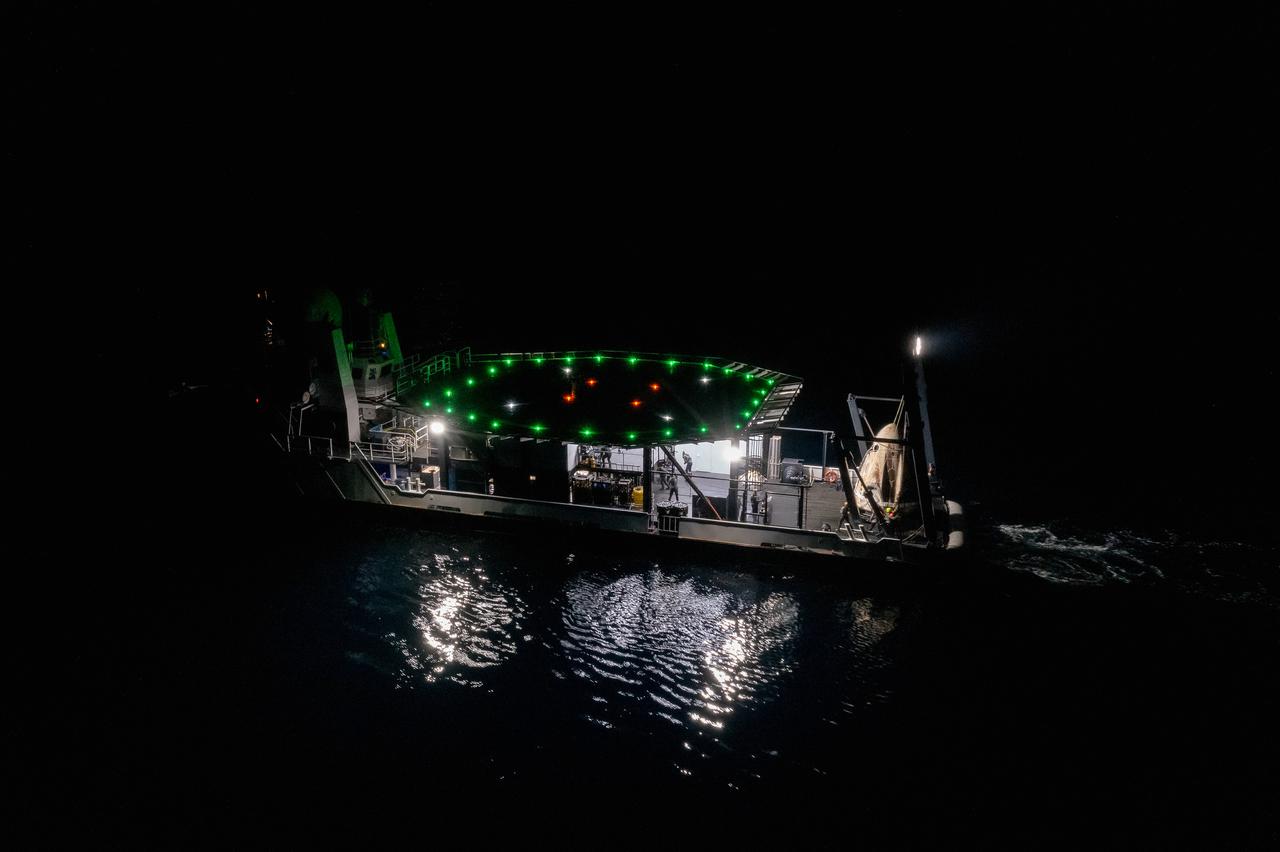
The SpaceX Crew Dragon Resilience splashed down in the Gulf of Mexico off the coast of Panama City, in Florida, at 2:56 a.m. EDT on May 2, 2021. Astronauts Michael Hopkins, Victor Glover, and Shannon Walker of NASA, and Soichi Noguchi of JAXA (Japan Aerospace Exploration Agency) completed Crew-1, the first crew rotation mission to the International Space Station in partnership with NASA as part of the agency’s Commercial Crew Program. Teams on the Go Navigator recovery ship, including two fast boats, work to secure and hoist Crew Dragon onto the main deck of the recovery ship with the astronauts inside.
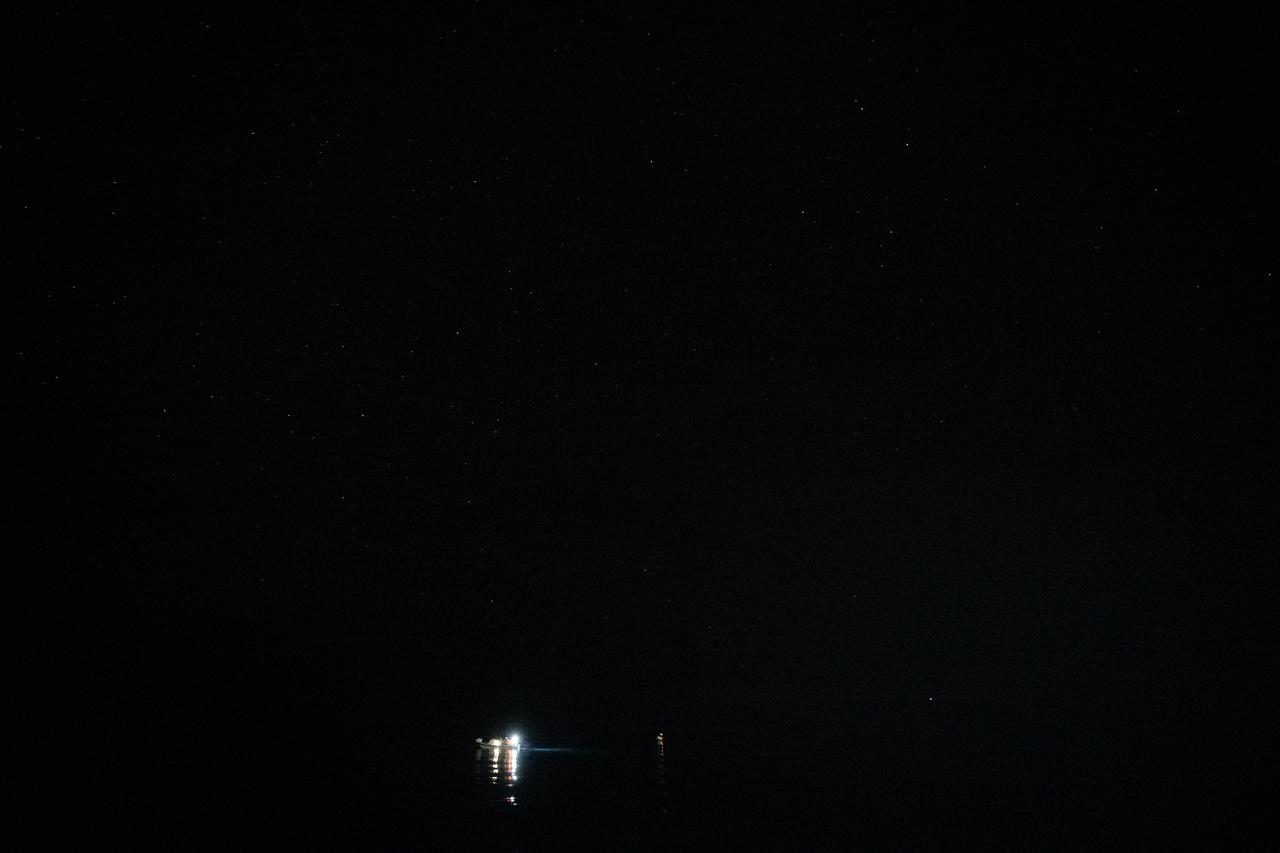
A fast boat is seen with members of the SpaceX support team is seen after being deployed from the SpaceX recovery ship MEGAN in the Gulf of Mexico as the recovery team prepares for the landing of the SpaceX Dragon spacecraft with NASA astronaut Jasmin Moghbeli, ESA (European Space Agency) astronaut Andreas Mogensen, Japan Aerospace Exploration Agency (JAXA) astronaut Satoshi Furukawa, and Roscosmos cosmonaut Konstantin Borisov aboard, Tuesday, March 12, 2024, off the coast of Pensacola, Florida. Moghbeli, Mogensen, Furukawa, and Borisov are returning after nearly six-months days in space as part of Expedition 70 aboard the International Space Station. Photo Credit: (NASA/Joel Kowsky)
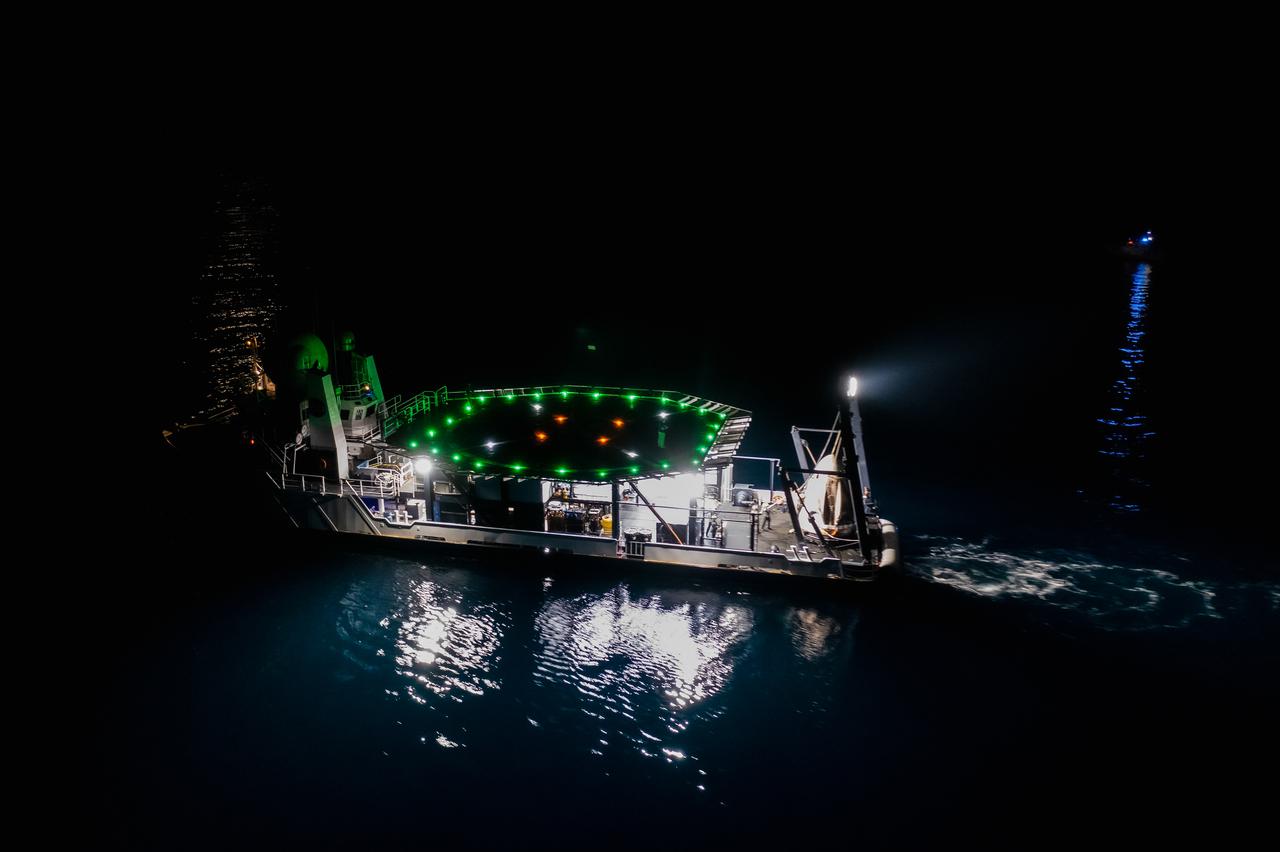
The SpaceX Crew Dragon Resilience splashed down in the Gulf of Mexico off the coast of Panama City, in Florida, at 2:56 a.m. EDT on May 2, 2021. Astronauts Michael Hopkins, Victor Glover, and Shannon Walker of NASA, and Soichi Noguchi of JAXA (Japan Aerospace Exploration Agency) completed Crew-1, the first crew rotation mission to the International Space Station in partnership with NASA as part of the agency’s Commercial Crew Program. Teams on the Go Navigator recovery ship, including two fast boats, work to secure and hoist Crew Dragon onto the main deck of the recovery ship with the astronauts inside.
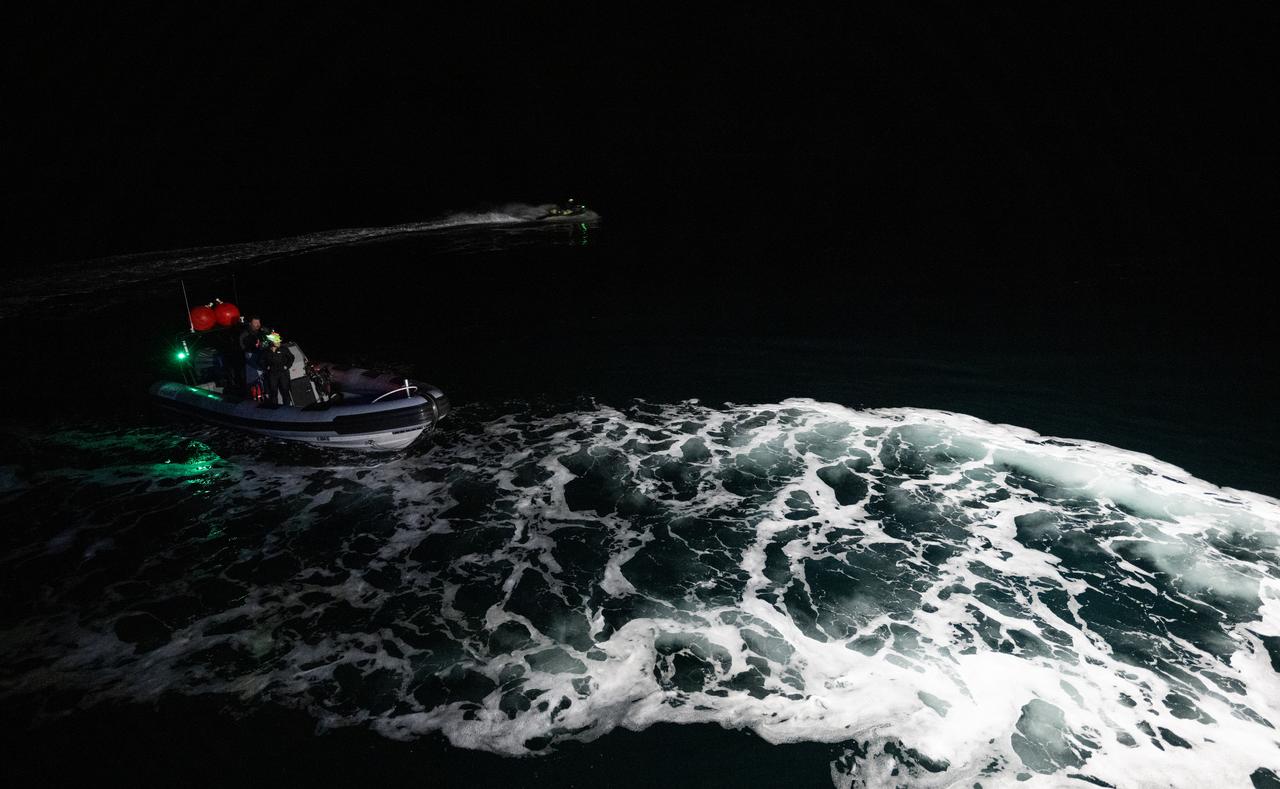
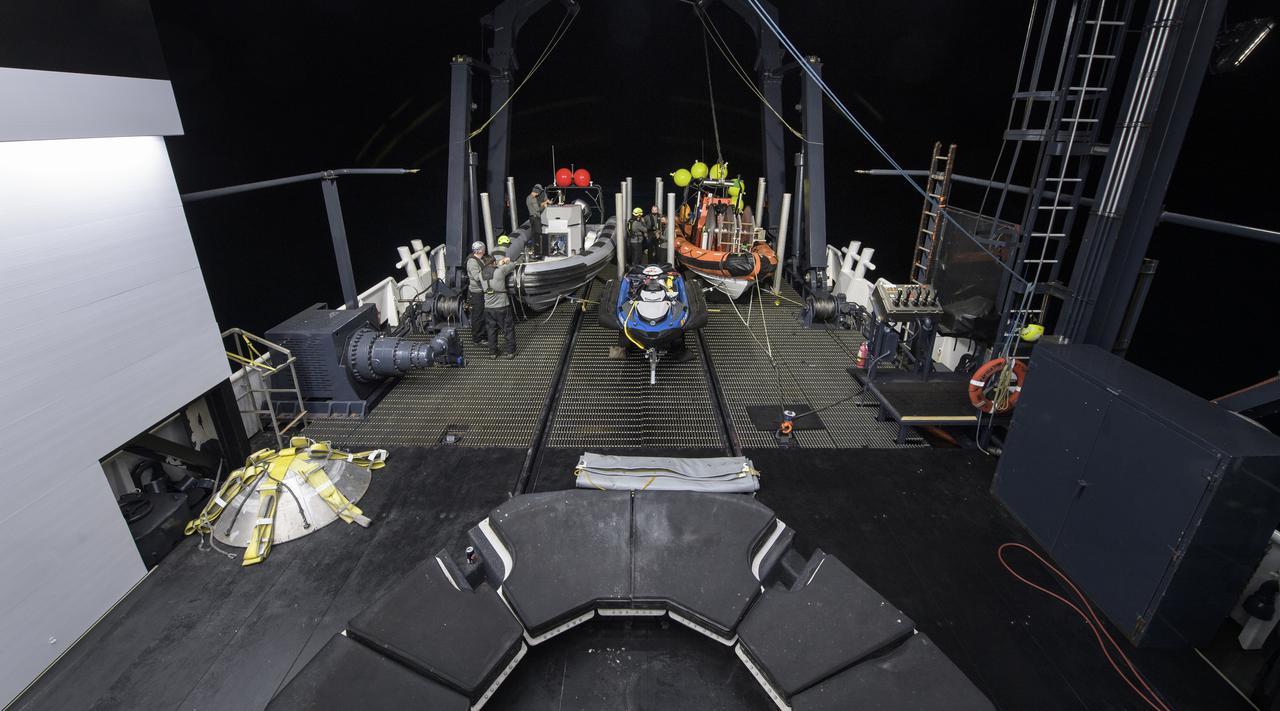
A fast boat and a jet ski is seen with members of the SpaceX support team is seen after being deployed from the SpaceX recovery ship MEGAN in the Gulf of Mexico as the recovery team prepares for the landing of the SpaceX Dragon spacecraft with NASA astronaut Jasmin Moghbeli, ESA (European Space Agency) astronaut Andreas Mogensen, Japan Aerospace Exploration Agency (JAXA) astronaut Satoshi Furukawa, and Roscosmos cosmonaut Konstantin Borisov aboard, Tuesday, March 12, 2024, off the coast of Pensacola, Florida. Moghbeli, Mogensen, Furukawa, and Borisov are returning after nearly six-months days in space as part of Expedition 70 aboard the International Space Station. Photo Credit: (NASA/Joel Kowsky)
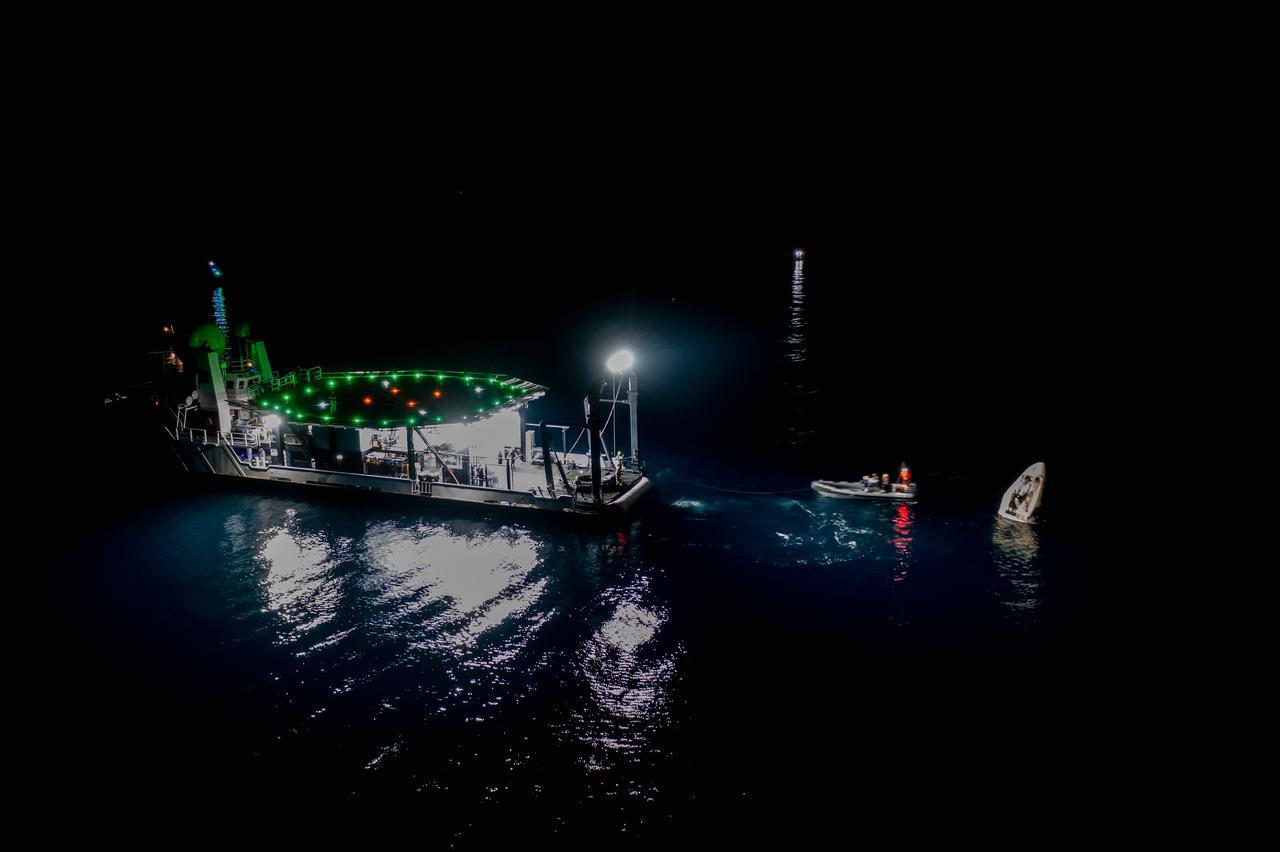
The SpaceX Crew Dragon Resilience splashes down in the Gulf of Mexico off the coast of Panama City, in Florida, at 2:56 a.m. EDT on May 2, 2021. Astronauts Michael Hopkins, Victor Glover, and Shannon Walker of NASA, and Soichi Noguchi of JAXA (Japan Aerospace Exploration Agency) completed Crew-1, the first crew rotation mission to the International Space Station in partnership with NASA as part of the agency’s Commercial Crew Program. At left is SpaceX’s Go Navigator recovery ship. Teams on two fast boats and Go Navigator will secure Crew Dragon to be hoisted onto the main deck of the recovery ship with the astronauts inside.
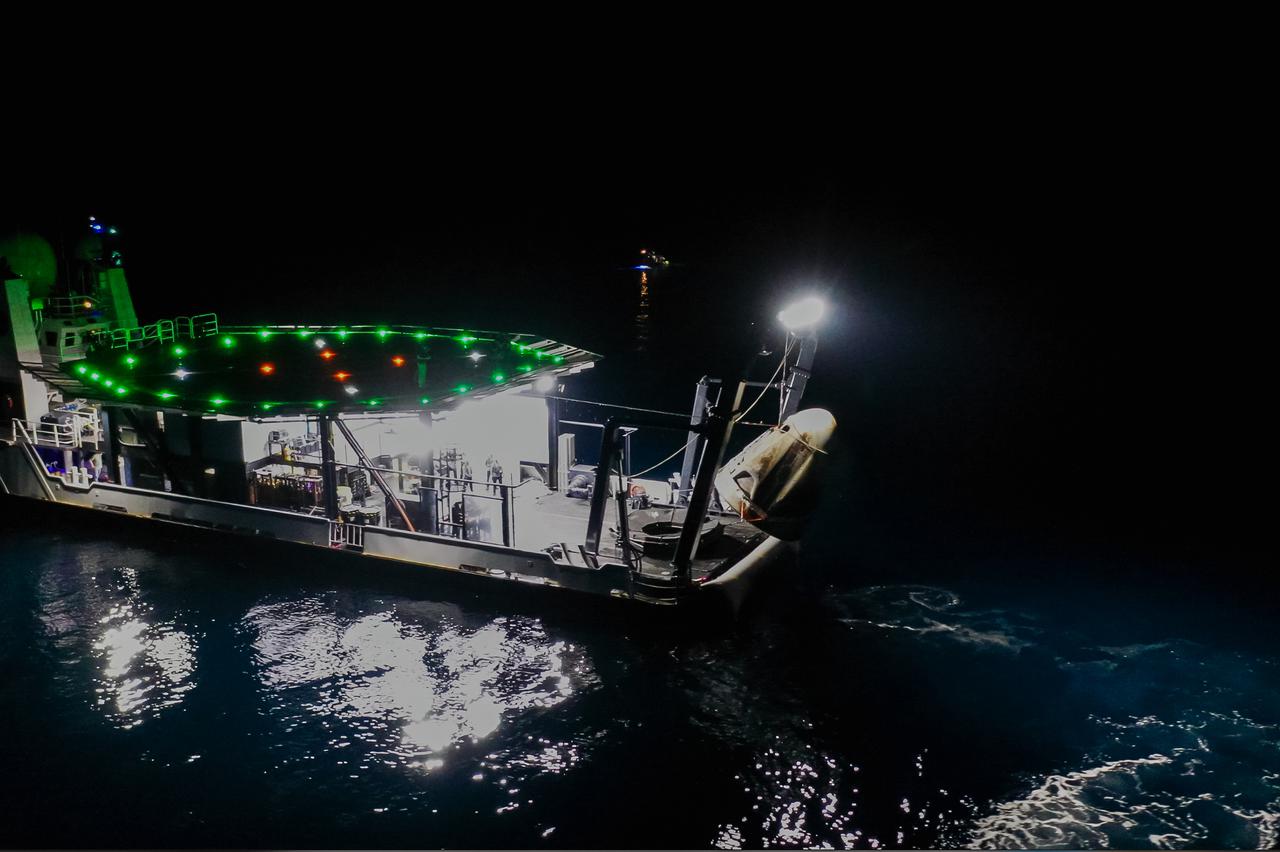
The SpaceX Crew Dragon Resilience splashed down in the Gulf of Mexico off the coast of Panama City, in Florida, at 2:56 a.m. EDT on May 2, 2021. Astronauts Michael Hopkins, Victor Glover, and Shannon Walker of NASA, and Soichi Noguchi of JAXA (Japan Aerospace Exploration Agency) completed Crew-1, the first crew rotation mission to the International Space Station in partnership with NASA as part of the agency’s Commercial Crew Program. Teams on the Go Navigator recovery ship, including two fast boats, work to secure and hoist Crew Dragon onto the main deck of the recovery ship with the astronauts inside.
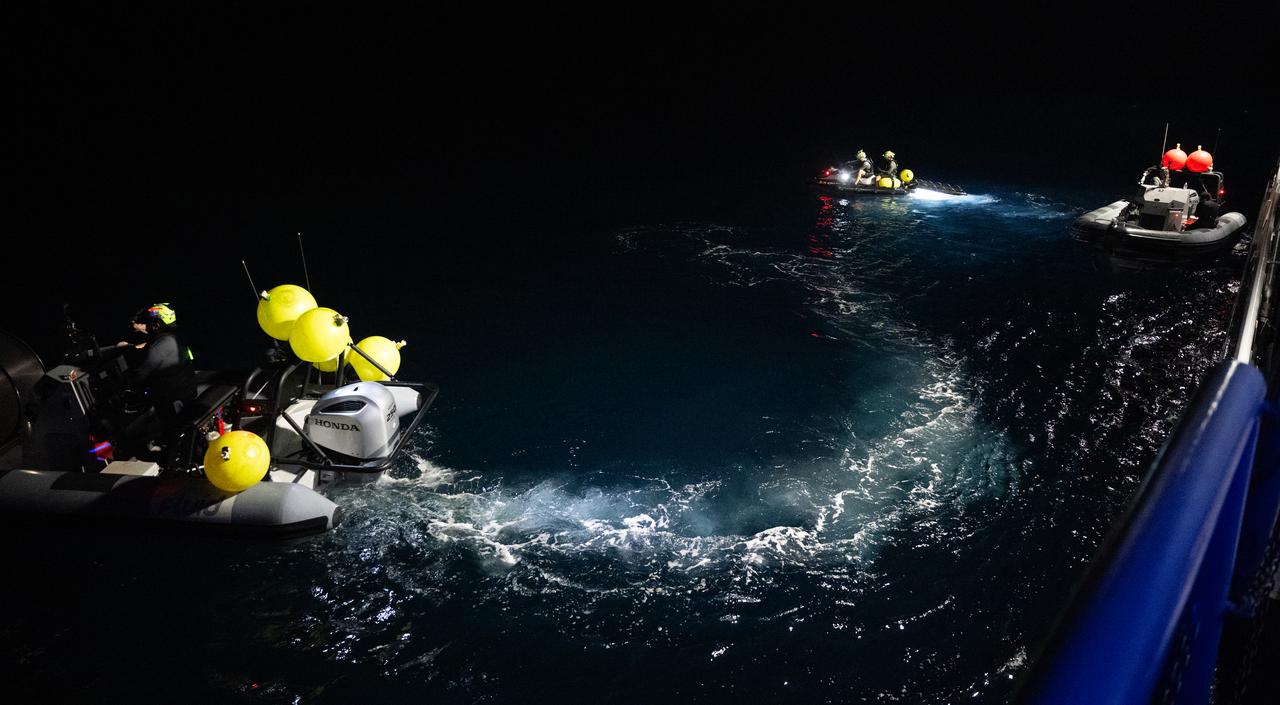
Fast boats and a jet ski with members of the SpaceX support team is seen after being deployed from the SpaceX recovery ship MEGAN in the Atlantic Ocean as the recovery team prepares for the landing of the SpaceX Dragon Endeavour spacecraft with NASA astronauts Stephen Bowen and Warren "Woody" Hoburg, UAE (United Arab Emirates) astronaut Sultan Alneyadi, and Roscosmos cosmonaut Andrey Fedyaev aboard, Sunday, Sept. 3, 2023, off the coast of Jacksonville, Florida. Bowen, Hoburg, Alneyadi, and Fedyaev are returning after nearly six-months days in space as part of Expedition 69 aboard the International Space Station. Photo Credit: (NASA/Joel Kowsky)
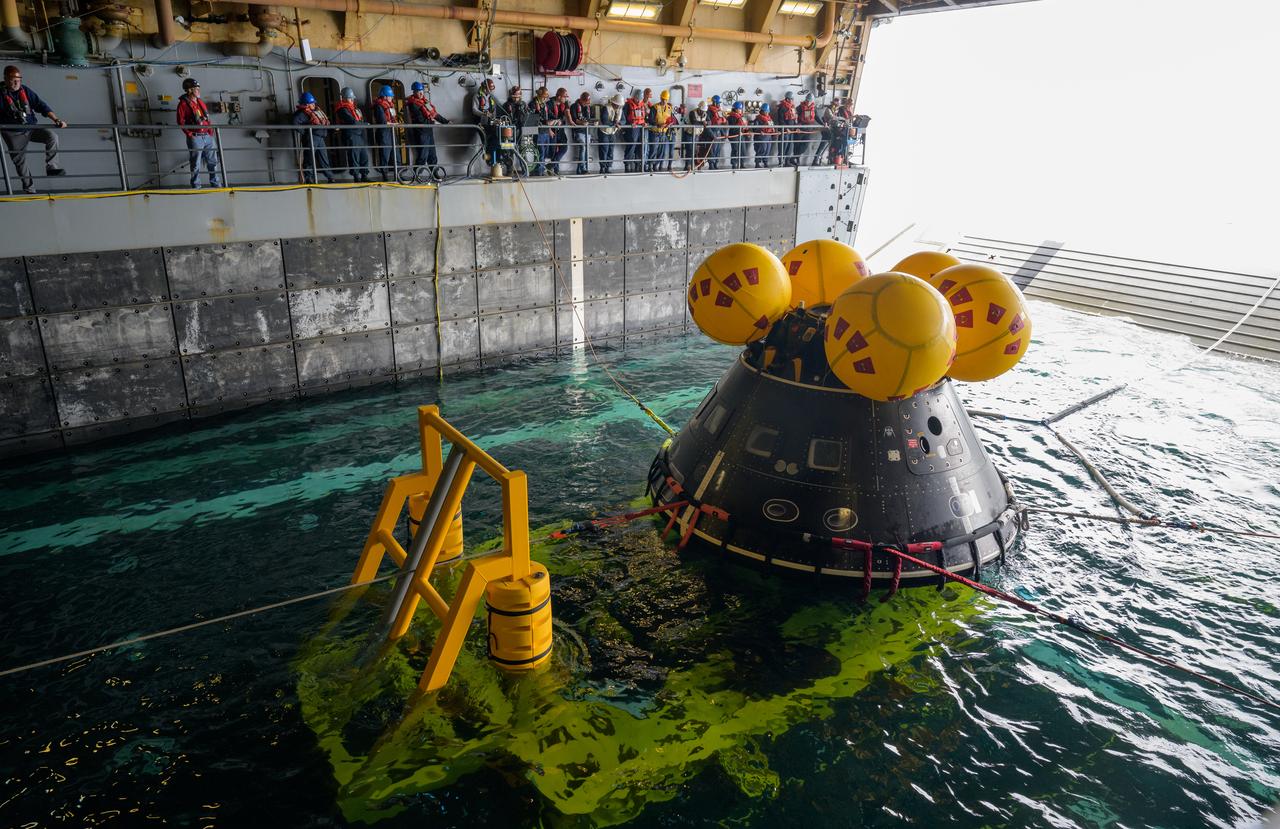
Mission support teams are seen off the stern of USS Somerset as they practice with the Crew Module Test Article (CMTA), a full scale mockup of the Orion spacecraft, during Underway Recovery Test-12 off the coast of California, Wednesday, March 26, 2025. During the test, NASA and Department of Defense teams are practicing to ensure recovery procedures are validated as NASA plans to send Artemis II astronauts around the Moon and splashdown in the Pacific Ocean. Photo Credit: (NASA/Bill Ingalls)
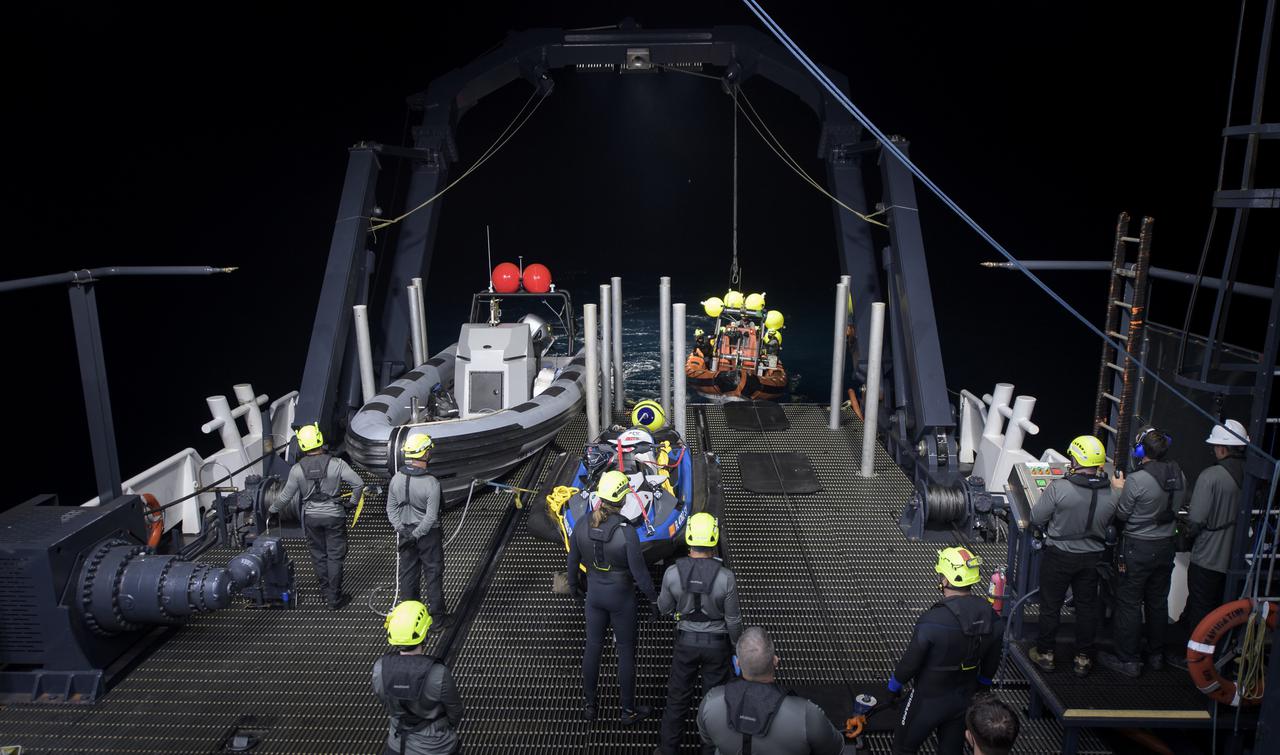
NASA and SpaceX support teams onboard the SpaceX GO Navigator recovery ship prepare for the landing of the SpaceX Crew Dragon Resilience spacecraft with NASA astronauts Mike Hopkins, Shannon Walker, and Victor Glover, and Japan Aerospace Exploration Agency (JAXA) astronaut Soichi Noguchi aboard in the Gulf of Mexico off the coast of Panama City, Florida, Saturday, May 1, 2021. NASA’s SpaceX Crew-1 mission is the first crew rotation flight of the SpaceX Crew Dragon spacecraft and Falcon 9 rocket with astronauts to the International Space Station as part of the agency’s Commercial Crew Program. Photo Credit: (NASA/Bill Ingalls)
NASA and SpaceX support teams onboard the SpaceX GO Navigator recovery ship prepare for the landing of the SpaceX Crew Dragon Resilience spacecraft with NASA astronauts Mike Hopkins, Shannon Walker, and Victor Glover, and Japan Aerospace Exploration Agency (JAXA) astronaut Soichi Noguchi aboard in the Gulf of Mexico off the coast of Panama City, Florida, Saturday, May 1, 2021. NASA’s SpaceX Crew-1 mission is the first crew rotation flight of the SpaceX Crew Dragon spacecraft and Falcon 9 rocket with astronauts to the International Space Station as part of the agency’s Commercial Crew Program. Photo Credit: (NASA/Bill Ingalls)

NASA image release July 3, 2012 Caption: Resembling a Fourth of July skyrocket, Herbig-Haro 110 is a geyser of hot gas from a newborn star that splashes up against and ricochets off the dense core of a cloud of molecular hydrogen. Although the plumes of gas look like whiffs of smoke, they are actually billions of times less dense than the smoke from a July 4 firework. This Hubble Space Telescope photo shows the integrated light from plumes, which are light-years across. -- Herbig-Haro (HH) objects come in a wide array of shapes, but the basic configuration stays the same. Twin jets of heated gas, ejected in opposite directions away from a forming star, stream through interstellar space. Astronomers suspect that these outflows are fueled by gas accreting onto a young star surrounded by a disk of dust and gas. The disk is the "fuel tank," the star is the gravitational engine, and the jets are the exhaust. When these energetic jets slam into colder gas, the collision plays out like a traffic jam on the interstate. Gas within the shock front slows to a crawl, but more gas continues to pile up as the jet keeps slamming into the shock from behind. Temperatures climb sharply, and this curving, flared region starts to glow. These "bow shocks" are so named because they resemble the waves that form at the front of a boat. In the case of the single HH 110 jet, astronomers observe a spectacular and unusual permutation on this basic model. Careful study has repeatedly failed to find the source star driving HH 110, and there may be good reason for this: perhaps the HH 110 outflow is itself generated by another jet. Astronomers now believe that the nearby HH 270 jet grazes an immovable obstacle - a much denser, colder cloud core - and gets diverted off at about a 60-degree angle. The jet goes dark and then reemerges, having reinvented itself as HH 110. The jet shows that these energetic flows are like the erratic outbursts from a Roman candle. As fast-moving blobs of gas catch up and collide with slower blobs, new shocks arise along the jet's interior. The light emitted from excited gas in these hot blue ridges marks the boundaries of these interior collisions. By measuring the current velocity and positions of different blobs and hot ridges along the chain within the jet, astronomers can effectively "rewind" the outflow, extrapolating the blobs back to the moment when they were emitted. This technique can be used to gain insight into the source star's history of mass accretion. This image is a composite of data taken with Hubble's Advanced Camera for Surveys in 2004 and 2005 and the Wide Field Camera 3 in April 2011. Credit: NASA, ESA, and the Hubble Heritage Team (STScI/AURA) <b><a href="http://www.nasa.gov/audience/formedia/features/MP_Photo_Guidelines.html" rel="nofollow">NASA image use policy.</a></b> <b><a href="http://www.nasa.gov/centers/goddard/home/index.html" rel="nofollow">NASA Goddard Space Flight Center</a></b> enables NASA’s mission through four scientific endeavors: Earth Science, Heliophysics, Solar System Exploration, and Astrophysics. Goddard plays a leading role in NASA’s accomplishments by contributing compelling scientific knowledge to advance the Agency’s mission. <b>Follow us on <a href="http://twitter.com/NASA_GoddardPix" rel="nofollow">Twitter</a></b> <b>Like us on <a href="http://www.facebook.com/pages/Greenbelt-MD/NASA-Goddard/395013845897?ref=tsd" rel="nofollow">Facebook</a></b> <b>Find us on <a href="http://instagrid.me/nasagoddard/?vm=grid" rel="nofollow">Instagram</a></b>