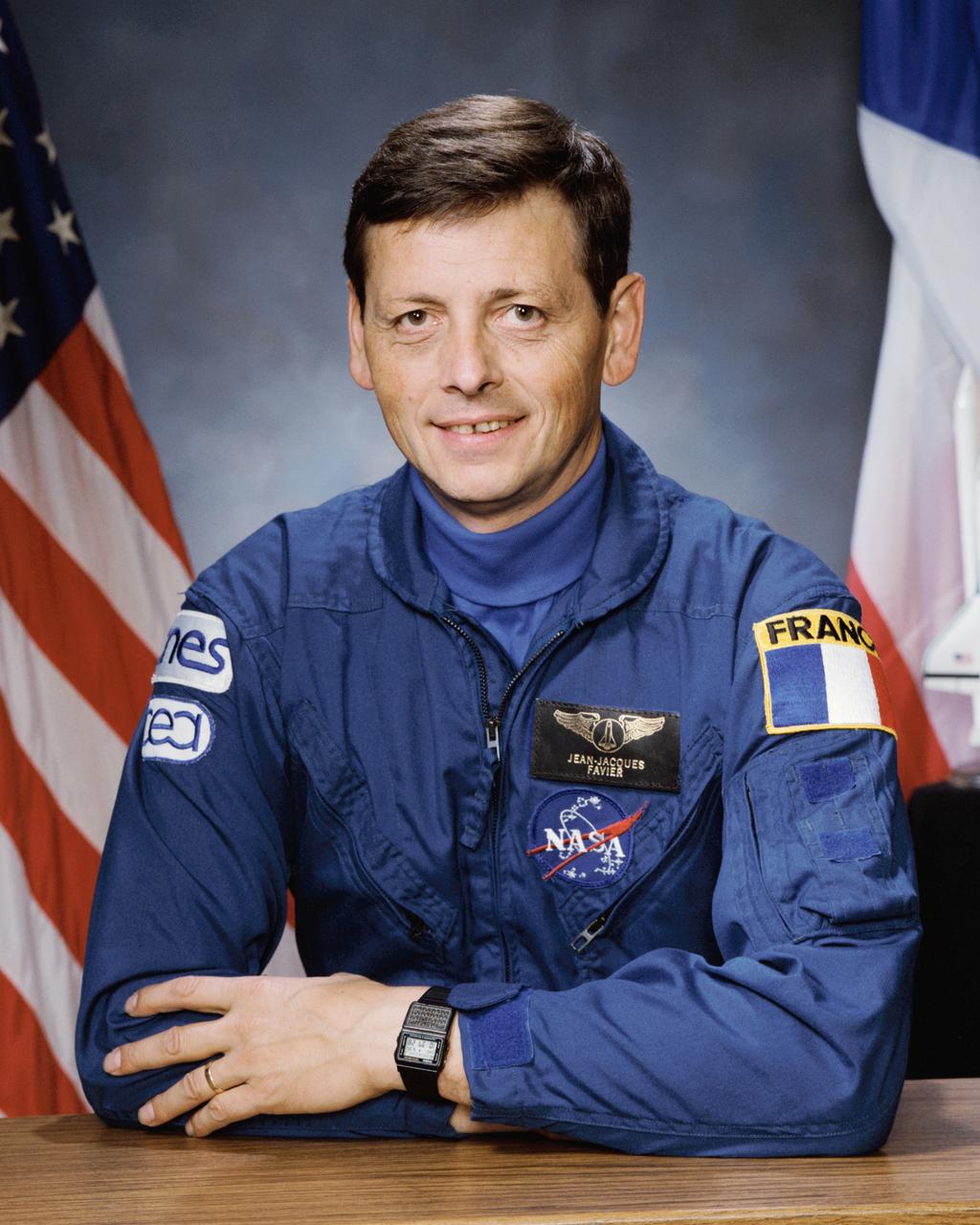
Official portrait of STS-65 International Microgravity Laboratory 2 (IML-2) backup Payload Specialist Jean-Jacques Favier. Favier is a member of the Centre National D'Etudes Spatiales (CNES), the French space agency.
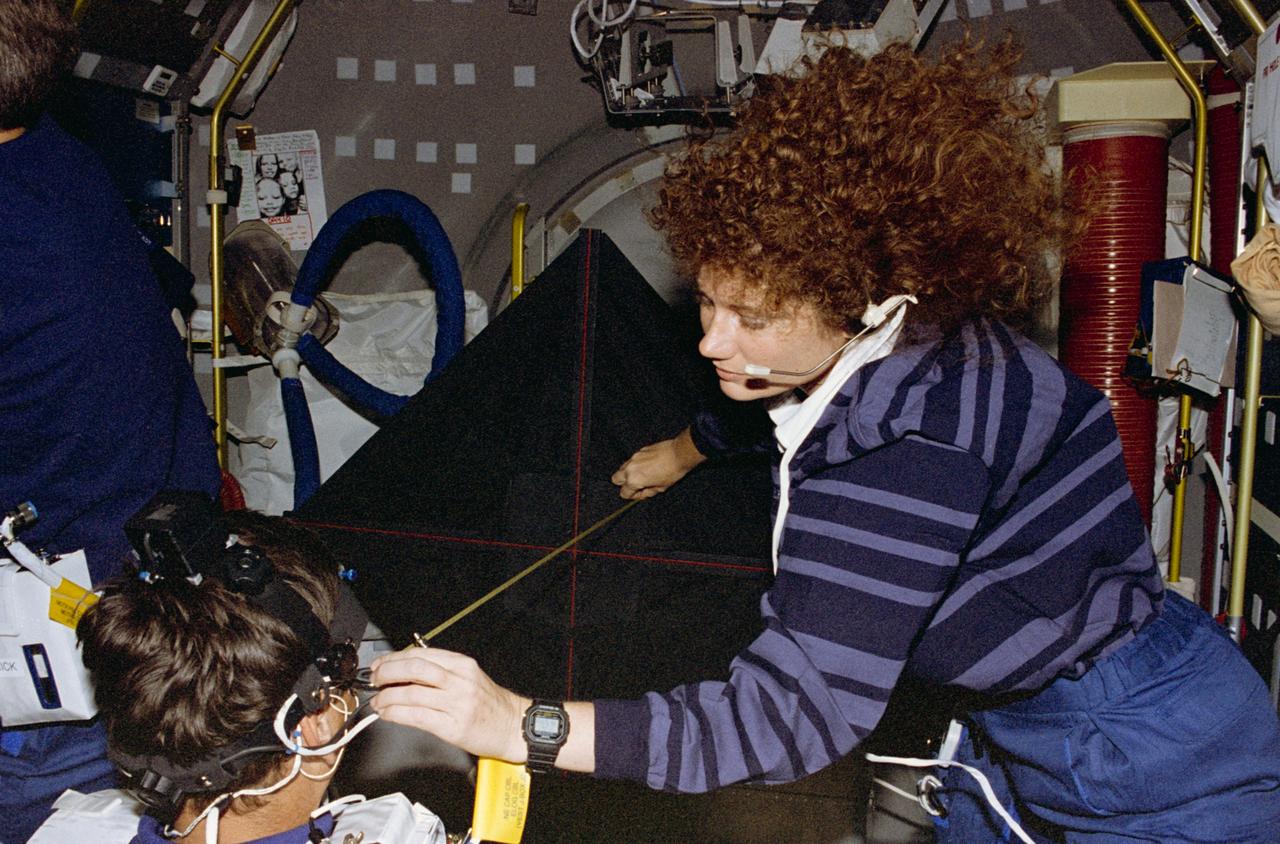
STS078-398-032 (20 June - 7 July 1996) --- Astronaut Susan J. Helms, payload commander, measures the distance between Jean-Jacques Favier’s head and the luminous torque, used for the Canal and Otolith Interaction Study (COIS) on the Life and Microgravity Spacelab (LMS-1) mission. Favier, representing the French Space Agency (CNES), is one of two international payload specialists on the almost-17-day flight. This view shows the Voluntary Head Movement (VHM) segment of the experiment. The VHM is meant to characterize how the coordination of head and eye movement changes as a result of spaceflight. Since most vestibular functions are influenced by gravity, the COIS experiment is meant to measure response differences in microgravity.

STS078-397-010 (20 June - 7 July 1996) --- Payload specialist Jean-Jacques Favier, representing the French Space Agency (CNES), and astronaut Kevin R. Kregel, pilot, perform a successful Inflight Maintenance (IFM) on the Bubble Drop Particle Unit (BDPU). The IFM technique was performed initially on the ground at the Marshall Space Flight Center (MSFC) by alternate payload specialist Pedro Duque of the European Space Agency (ESA), with the procedure being recorded on video and uplinked to the crew of the Space Shuttle Columbia to aid in the repair.
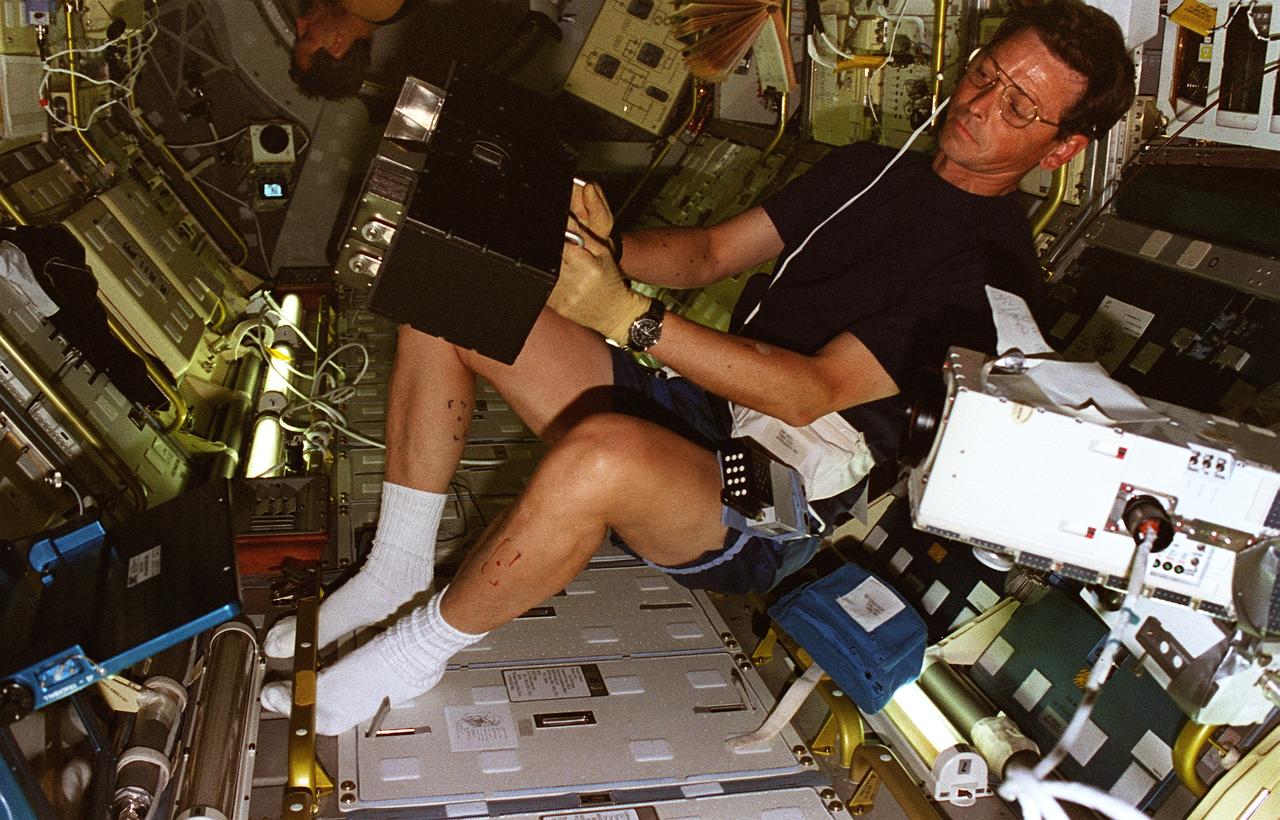
STS078-301-021 (20 June - 7 July 1996) --- Payload specialist Jean-Jacques Favier, representing the French Space Agency (CNES), holds up a test container to a Spacelab camera. The test involves the Bubble Drop Particle Unit (BDPU), which Favier is showing to ground controllers at the Marshall Space Flight Center (MSFC) in order to check the condition of the unit prior to heating in the BDPU facility. The test container holds experimental fluid and allows experiment observation through optical windows. BDPU contains three internal cameras that are used to continuously downlink BDPU activity so that behavior of the bubbles can be monitored. Astronaut Richard M. Linnehan, mission specialist, conducts biomedical testing in the background.
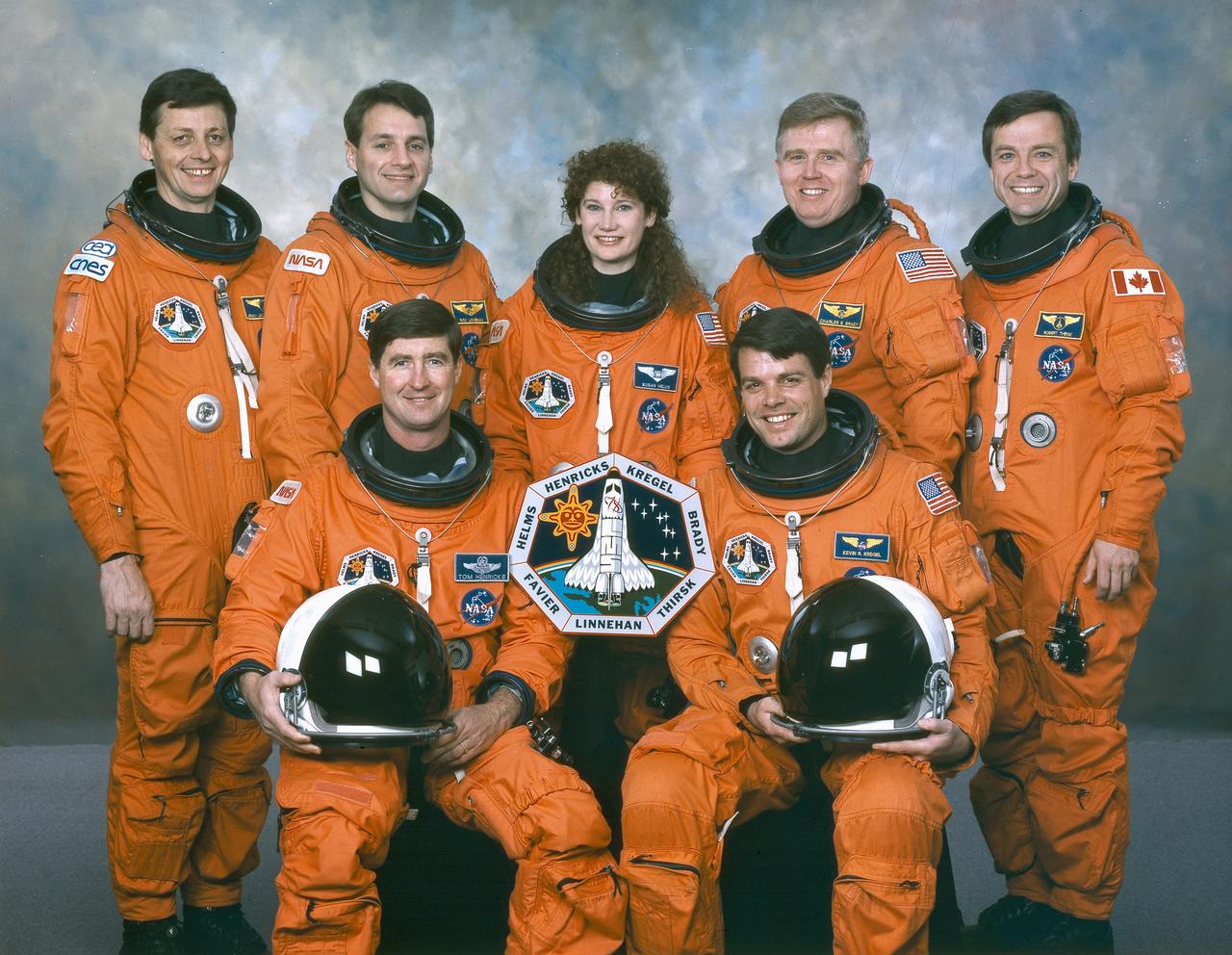
The crew assigned to the STS-78 mission included (seated left to right) Terrence T. (Tom) Henricks, commander; and Kevin R. Kregel, pilot. Standing, left to right, are Jean-Jacques Favier (CNES), payload specialist; Richard M. Linneham, mission specialist; Susan J. Helms, payload commander; Charles E. Brady, mission specialist; and Robert Brent Thirsk (CSA). Launched aboard the Space Shuttle Columbia on June 20, 1996 at 10:49:00 am (EDT), the STS-78 mission’s primary payloads was the Life and Microgravity Spacelab (LMS). Five space agencies (NASA/USA, European Space Agency/Europe (ESA), French Space Agency/France, Canadian Space Agency /Canada, and Italian Space Agency/Italy) along with research scientists from 10 countries worked together on the design, development and construction of the LMS.
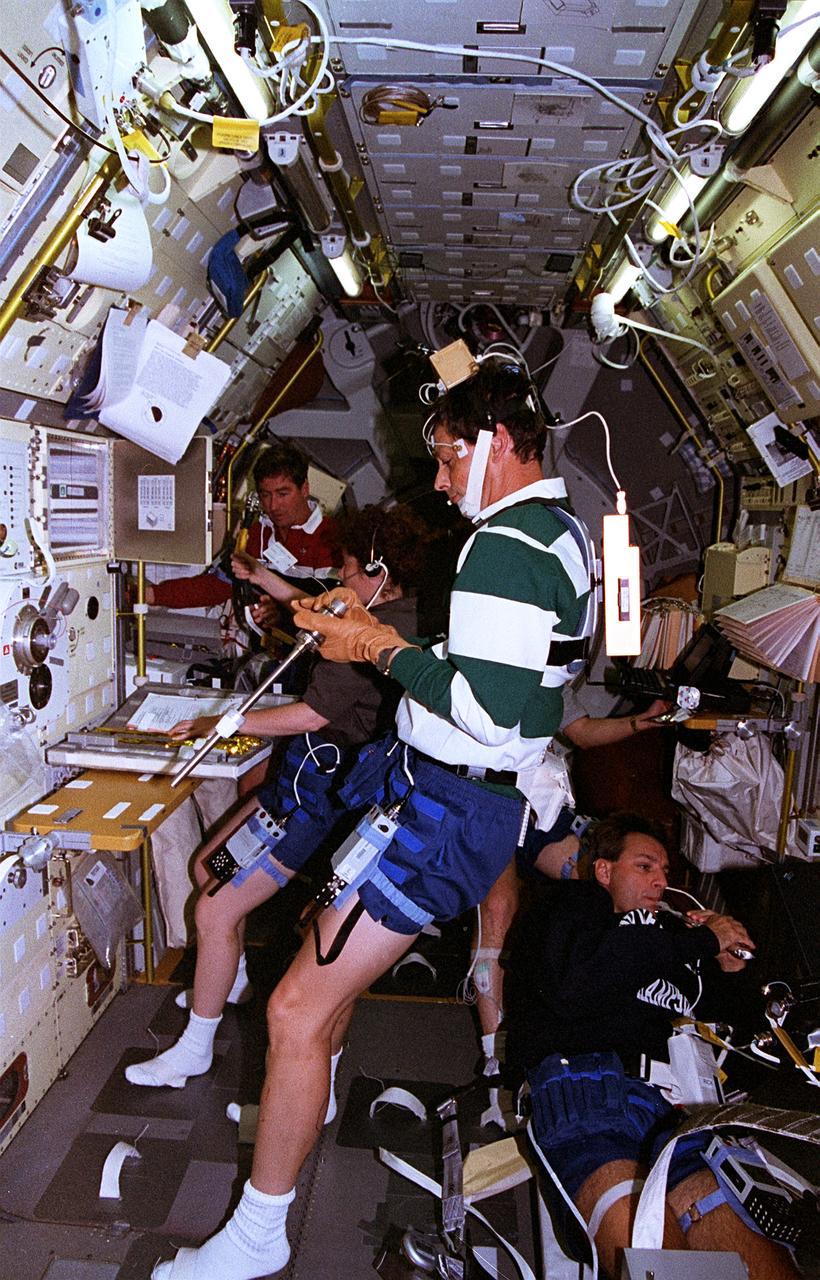
STS078-396-015 (20 June - 7 July 1996) --- Payload specialist Jean-Jacques Favier, representing the French Space Agency (CNES), prepares a sample for the Advanced Gradient Heating Facility (AGHF) while wearing instruments that measure upper body movement. The Torso Rotation Experiment (TRE) complements other vestibular studies that measure differences in the way human beings react physically to their surroundings in microgravity. This is a typical Life and Microgravity Spacelab (LMS-1) mission scene, with several experiments being performed. Astronaut Susan J. Helms, payload commander, assists Favier in the AGHF preparations. Astronaut Richard M. Linnehan (bottom right), mission specialist, tests his muscle response with the Handgrip Dynamometer. Astronaut Thomas T. (Tom) Henricks (far background), mission commander, offers assistance.
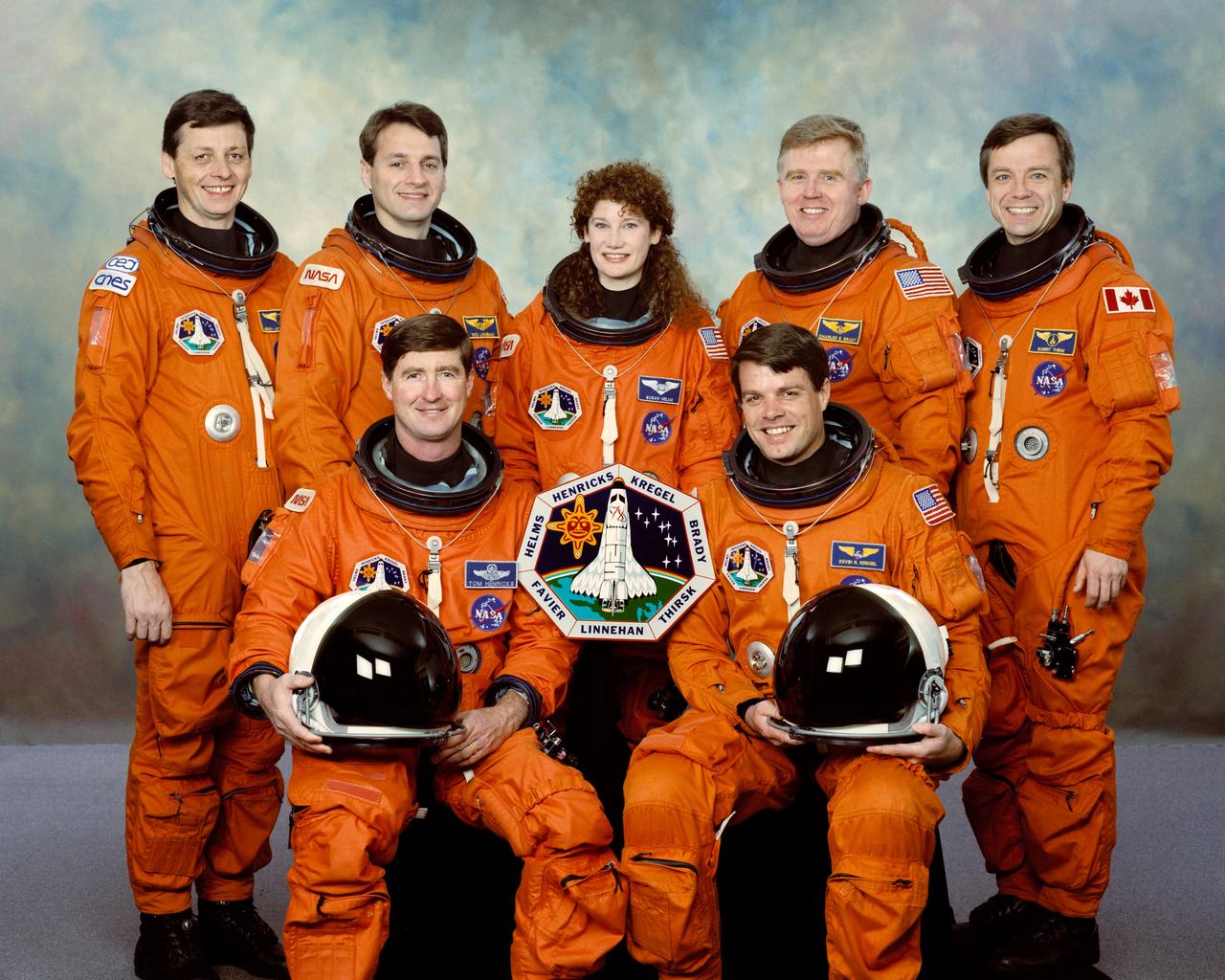
STS078-S-002 (April 1996) --- These seven crew members will spend 16 days aboard the Space Shuttle Columbia, scheduled for launch in early summer 1996. Seated are astronauts Terrence T. (Tom) Henricks (left), mission commander, and Kevin R. Kregel, pilot. Standing, from the left, are payload specialist Jean-Jacques Favier, along with astronauts Richard M. Linnehan, Susan J. Helms and Charles E. Brady, Jr., all mission specialists; and payload specialist Robert B. Thirsk. Thirsk is with the Canadian Space Agency (CSA) and Favier is with the French Atomic Energy Commission (FAEC) and represents the French Space Agency (CNES). The twentieth flight of the Space Shuttle Columbia will be devoted to the Life and Microgravity Spacelab (LMS).
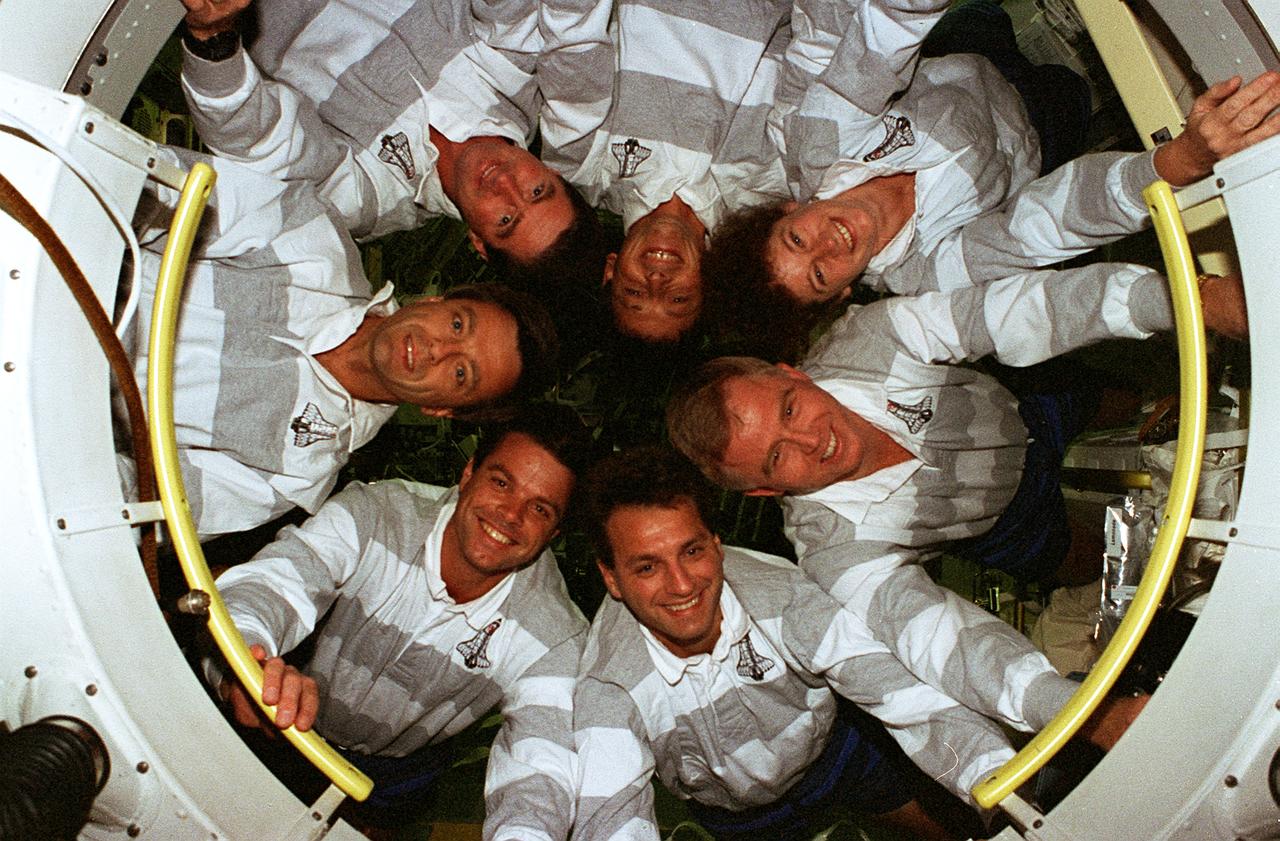
STS078-428-015 (20 June-7 July 1996) --- The crewmembers chose the Life and Microgravity Spacelab (LMS-1) Science Module as a backdrop for their traditional inflight portrait. Hold picture vertically with payload commander Susan J. Helms in lower right. Clockwise from astronaut Helms are Charles J. Brady, Richard M. Linnehan, Kevin R. Kregel, Canadian payload specialist Robert B. Thirsk, Terence T. (Tom) Henricks and French payload specialist Jean-Jacques Favier. Henricks and Kregel are commander and pilot, respectively, with Linnehan and Brady serving as mission specialists.
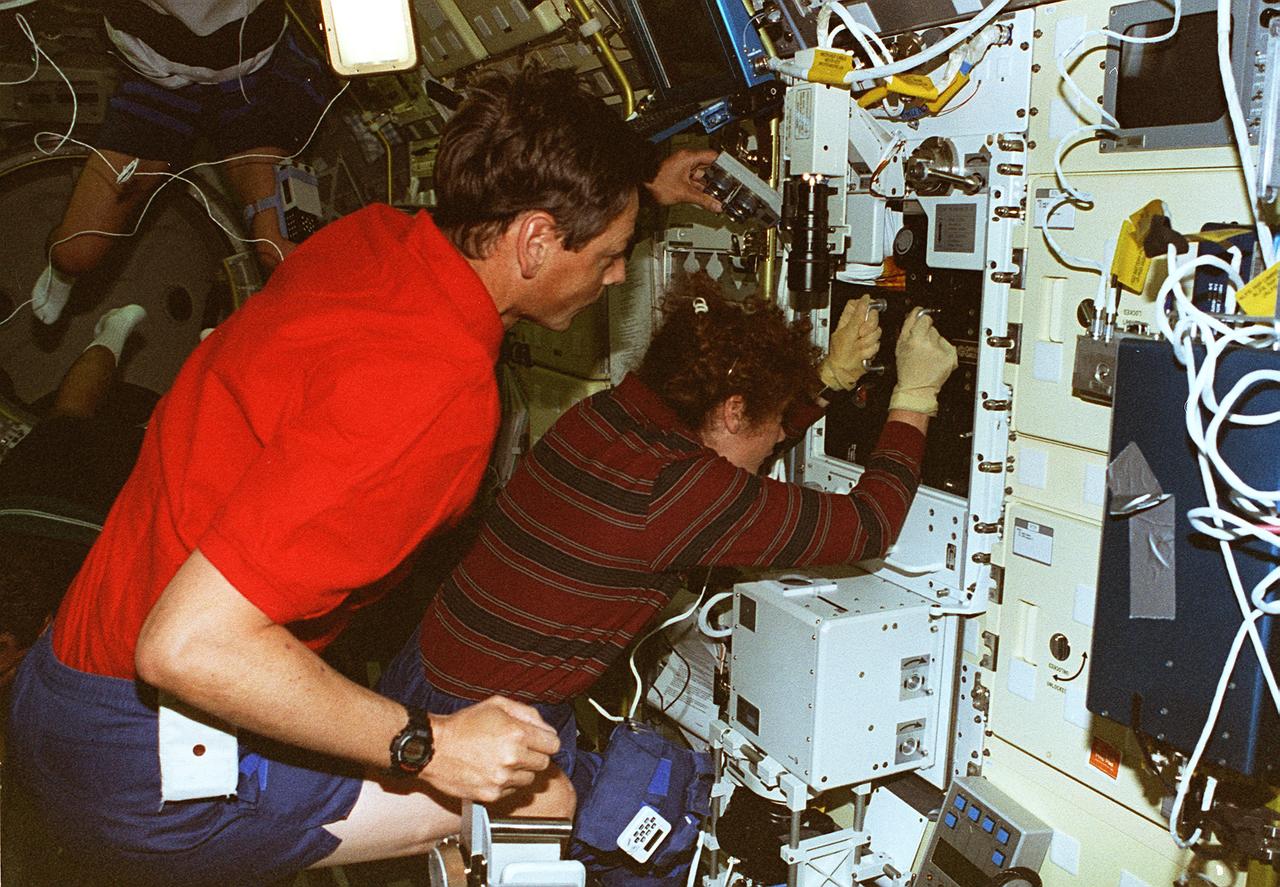
STS078-306-035 (20 June - 7 July 1996) --- Astronaut Susan J. Helms, payload commander, and payload specialist Jean-Jacques Favier, representing the French Space Agency (CNES), insert a test container into the Bubble Drop Particle Unit (BDPU) in the Life and Microgravity Spacelab (LMS-1) Science Module aboard the Space Shuttle Columbia. The fluid in the chamber is heated and the fluid processes are observed by use of three internal cameras mounted inside the BDPU. Investigations in this facility will help characterize interfacial processes involving either bubbles, drops, liquid columns or liquid layers.
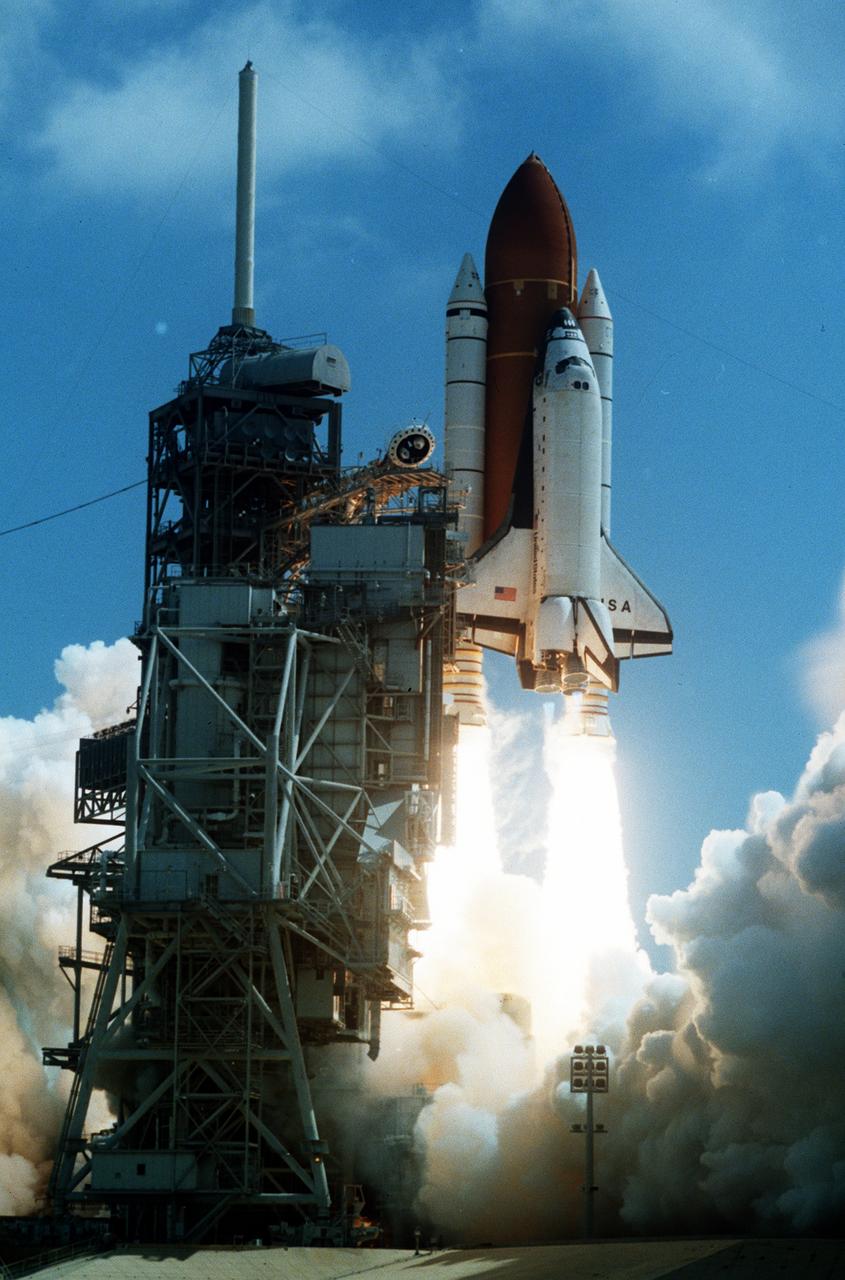
STS078-S-008 (20 June 1996) --- With an international payload and crew aboard, the Space Shuttle Columbia lifts off from Launch Pad 39B, at the Kennedy Space Center (KSC). Possibly expected to be NASA's longest duration Shuttle flight to date, the mission officially began at 10:49:00 a.m. (EDT), June 20, 1996. Onboard for Columbia’s 20th flight were astronauts Terence T. (Tom) Henricks, mission commander; Kevin R. Kregel, pilot; Susan J. Helms, payload commander; and Richard M. Linnehan and Charles E. Brady, Jr., both mission specialists, along with payload specialists Jean-Jacques Favier of the French Space Agency (CNES) and Robert B. Thirsk of the Canadian Space Agency (CSA). Flying in Columbia’s payload bay is the Life and Microgravity Spacelab (LMS), carrying a complement of United States and international experiments.
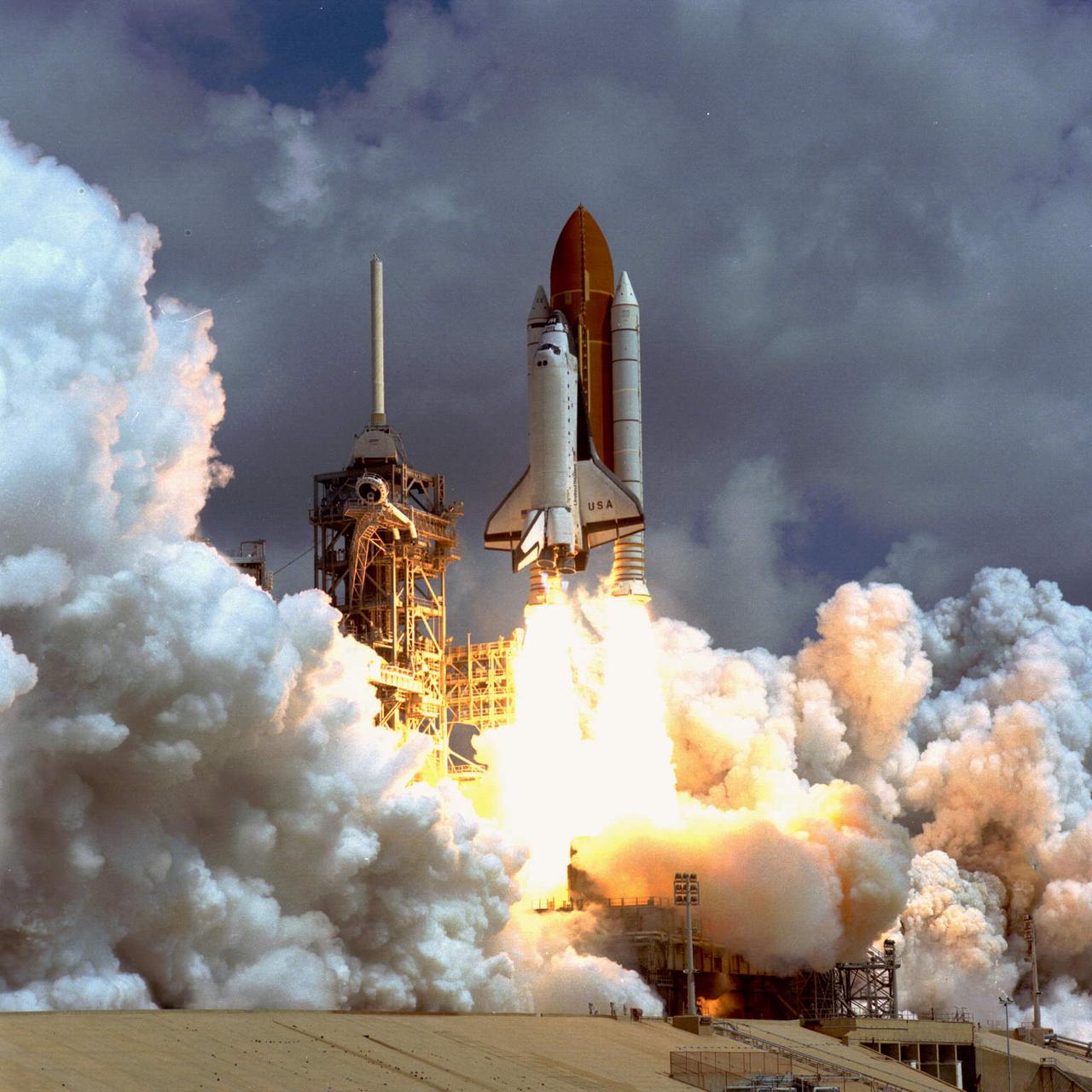
STS078-S-009 (20 June 1996) --- With an international payload and crew aboard, the Space Shuttle Columbia lifts off from Launch Pad 39B, at the Kennedy Space Center (KSC). Possibly expected to be NASA's longest duration Shuttle flight to date, the mission officially began at 10:49:00 a.m. (EDT), June 20, 1996. Onboard for Columbia’s 20th flight were astronauts Terence T. (Tom) Henricks, mission commander; Kevin R. Kregel, pilot; Susan J. Helms, payload commander; and Richard M. Linnehan and Charles E. Brady, Jr., both mission specialists, along with payload specialists Jean-Jacques Favier of the French Space Agency (CNES) and Robert B. Thirsk of the Canadian Space Agency (CSA). Flying in Columbia’s payload bay is the Life and Microgravity Spacelab (LMS), carrying a complement of United States and international experiments.
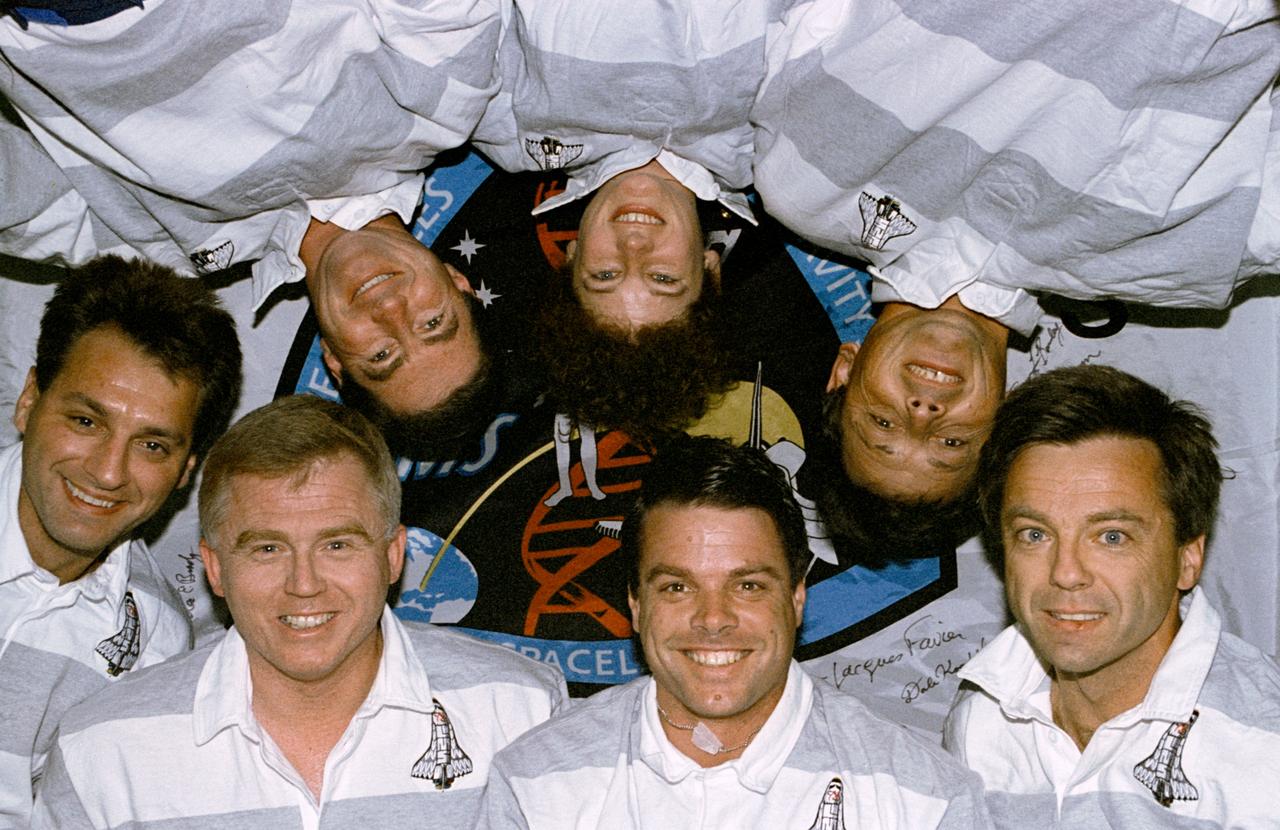
STS078-397-030 (20 June - 7 July 1996) --- Five NASA astronauts and two international payload specialists take a break from a Shuttle duration record-breaker flight to pose for the traditional inflight crew portrait. The photograph should be oriented with payload commander Susan J. Helms at bottom center. Others, clockwise, are French payload specialist Jean-Jacques Favier, Canadian payload specialist Robert B. Thirsk; and astronauts Kevin R. Kregel, pilot; and Charles J. (Chuck) Brady and Richard M. Linnehan, both mission specialists, and Terence T. (Tom) Henricks, mission commander. The crew chose the Life and Microgravity Spacelab (LMS-1) Science Module, situated in the Space Shuttle Columbia's cargo bay, for the portrait setting.
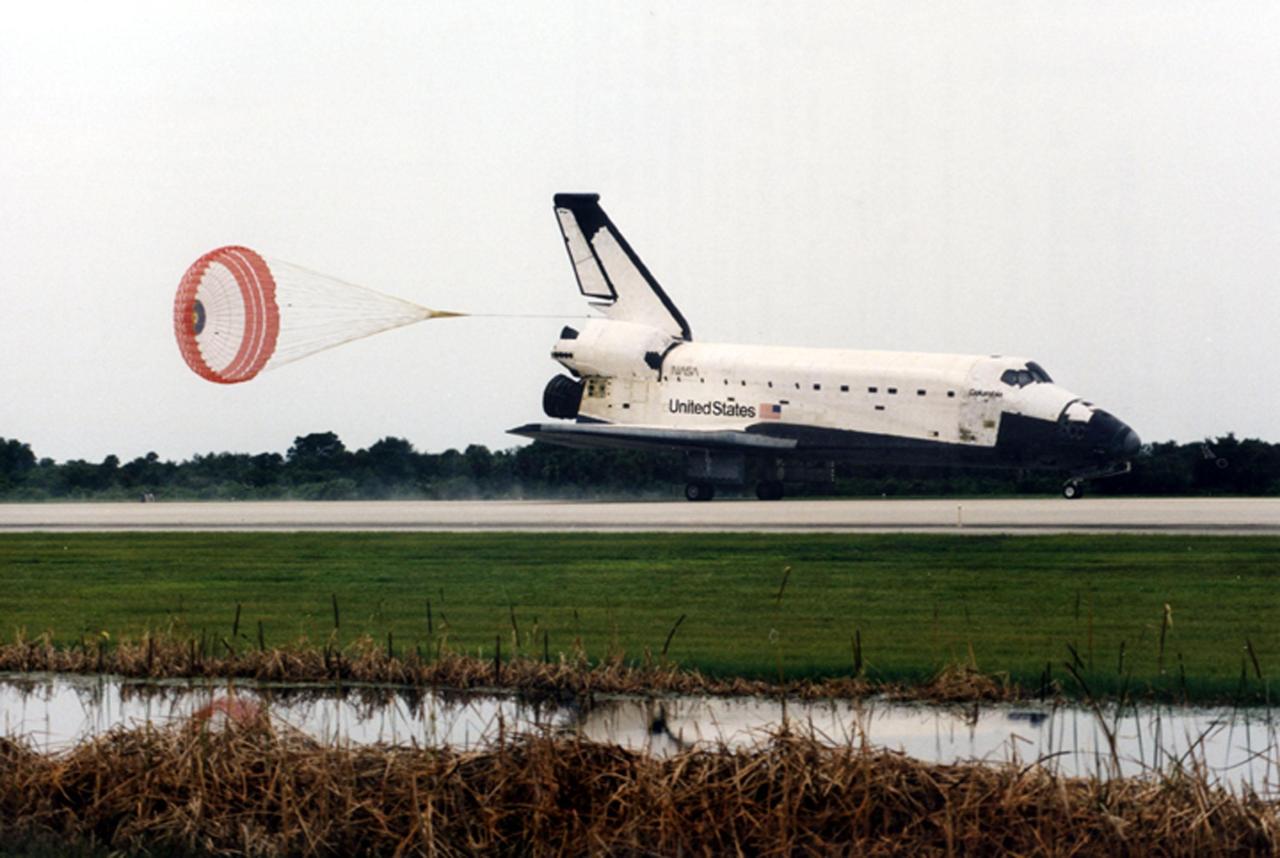
KENNEDY SPACE CENTER, FLA. -- The drag chute pops open as the orbiter Columbia glides down Runway 33 of the Kennedy Space Center's Shuttle Landing Facility. Main gear touchdown occurred at 8:36 a.m. EDT, July 7, 1996. A mission duration of 16 days, 21 hours, and 47 minutes made STS-78 the longest Shuttle flight to date. On board are a crew of seven: mission Commander Terence "Tom" Henricks; Pilot Kevin R. Kregel; Payload Commander Susan J. Helms; Mission Specialists Richard M. Linnehan and Charles E. Brady Jr.; and Payload Specialist Jean-Jacques Favier, representing the French Space Agency (CNES) and Robert Brent Thirsk, of the Canadian Space Agency (CSA) . The primary payload of the 78th Shuttle flight was the Life and Microgravity Spacelab (LMS)