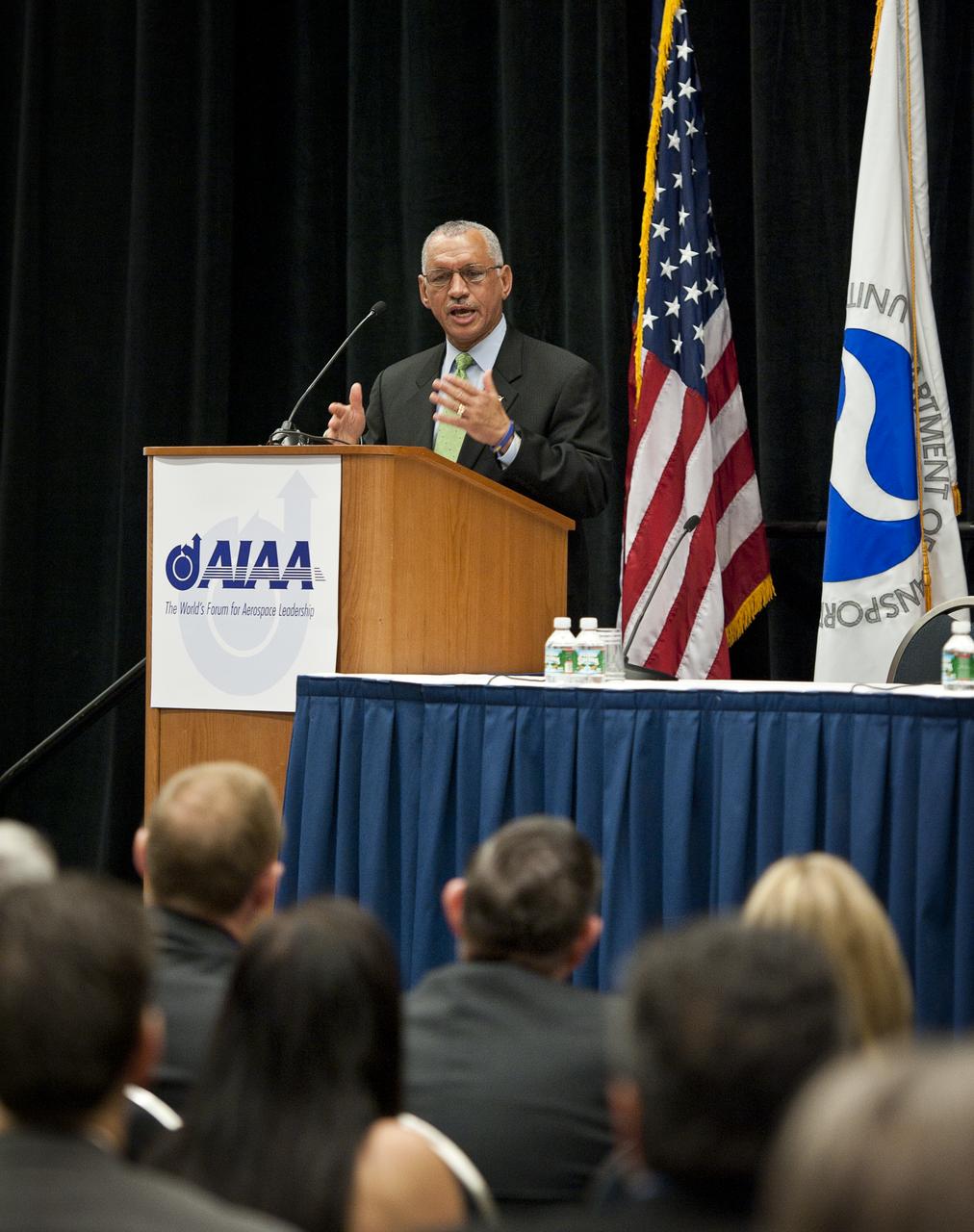
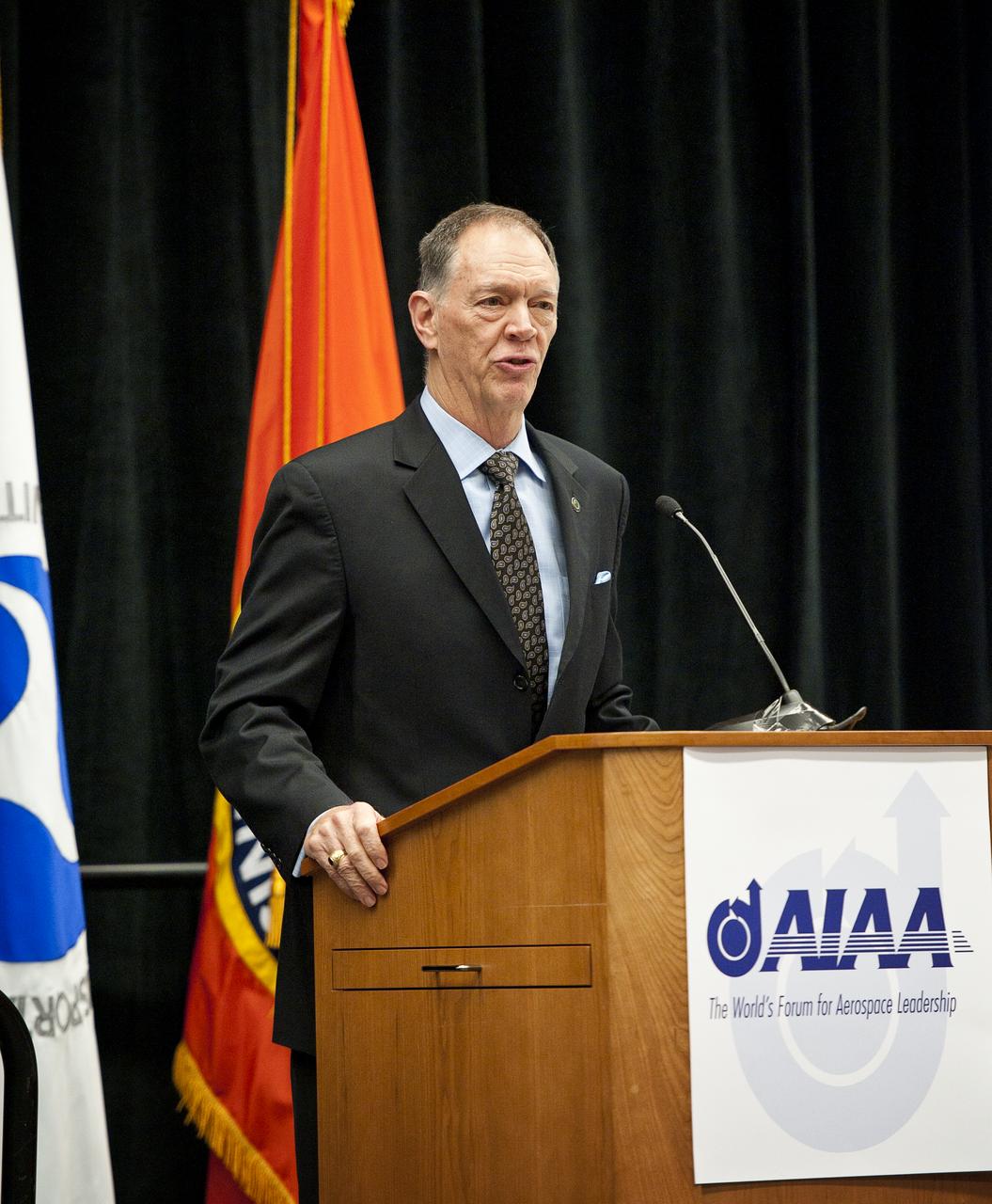
Randy Babbitt, Administrator of the Federal Aviation Administration gives opening remarks at the 14th Annual FAA Commercial Space Transportation Conference at the Washington Convention Center on Wednesday, Feb. 9, 2001.  Photo Credit: (NASA/Carla Cioffi)
FAA Administrator Babbitt Speaks at Conference
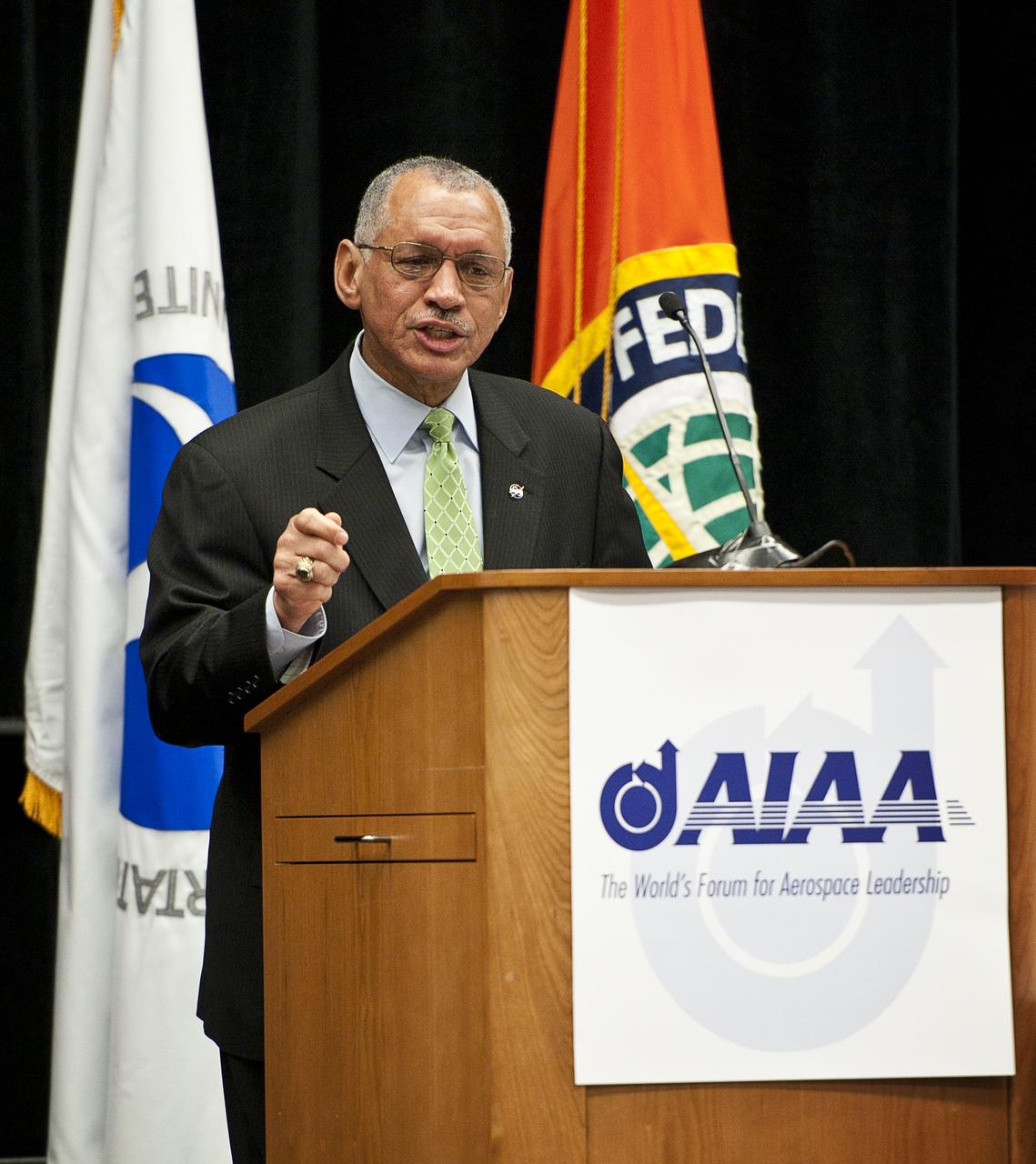
NASA Administrator Charles Bolden speaks at the 14th Annual Federal Aviation Administration (FAA) Commercial Space Transport Conference at the Washington Convention Center on Wednesday, Feb. 9, 2001.  Photo Credit: (NASA/Carla Cioffi)
Bolden at FAA Commercial Space Transportation Conference
NASA Administrator Charles Bolden speaks at the 14th Annual Federal Aviation Administration (FAA) Commercial Space Transport Conference at the Washington Convention Center on Wednesday, Feb. 9, 2001.  Photo Credit: (NASA/Carla Cioffi)
Bolden at FAA Commercial Space Transportation Conference
Kelvin Coleman, associate administrator, Office of Commercial Space Transportation, Federal Aviation Administration, speaks at an event to commemorate Black Space Week (BSW) 2024 titled, "Beyond the Color Lines From Science Fiction to Science Fact," in the Oprah Winfrey Theater at the Smithsonian National Museum of African American History and Culture, Monday, June 17, 2024 in Washington. Photo Credit: (NASA/Aubrey Gemignani)
Black Space Week 2024 at the NMAAHC
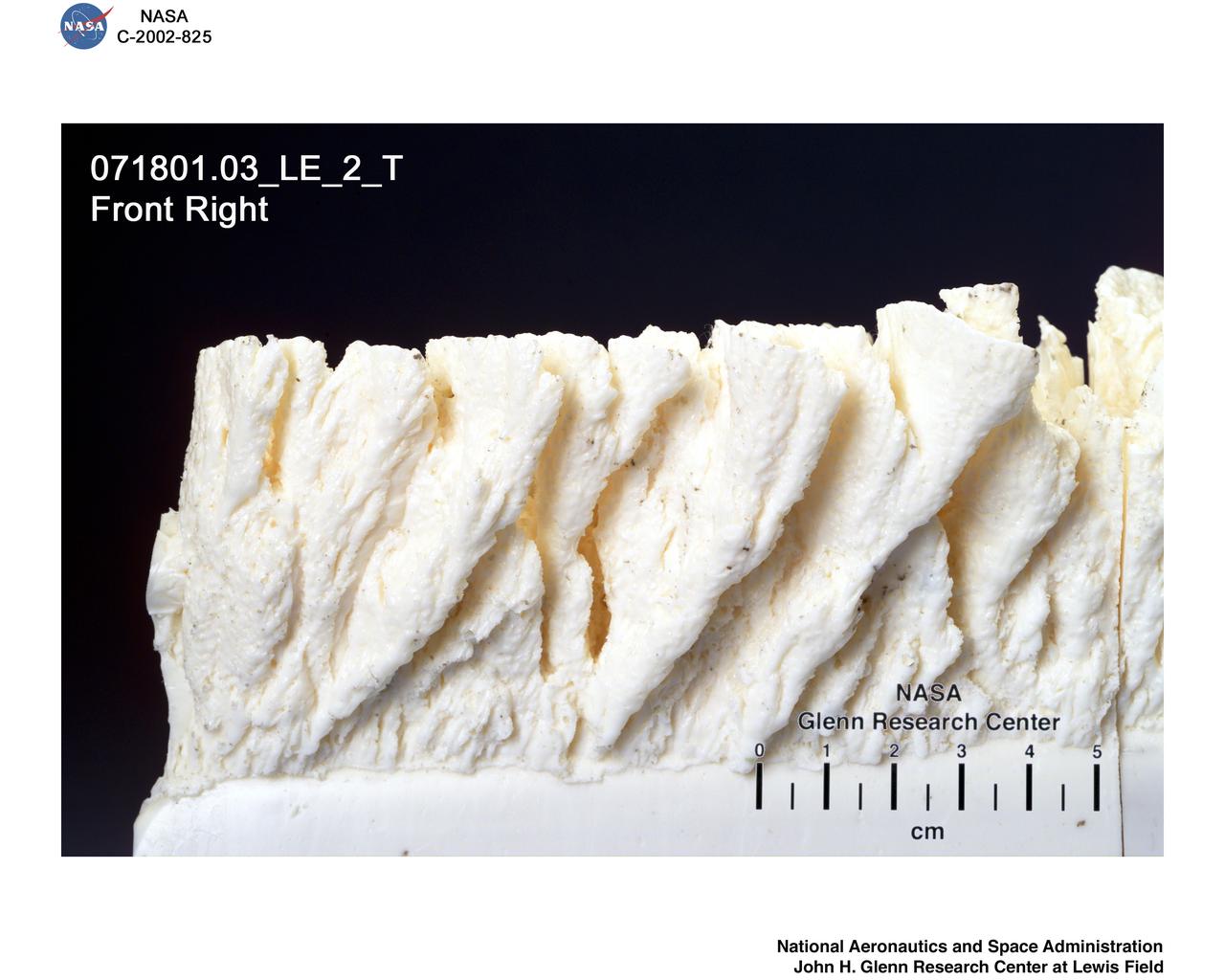
WICHITA STATE UNIVERSITY AND FEDERAL AVIATION ADMINISTRATION WITH NASA FOR ICE CASTINGS TEST
GRC-2002-C-00825
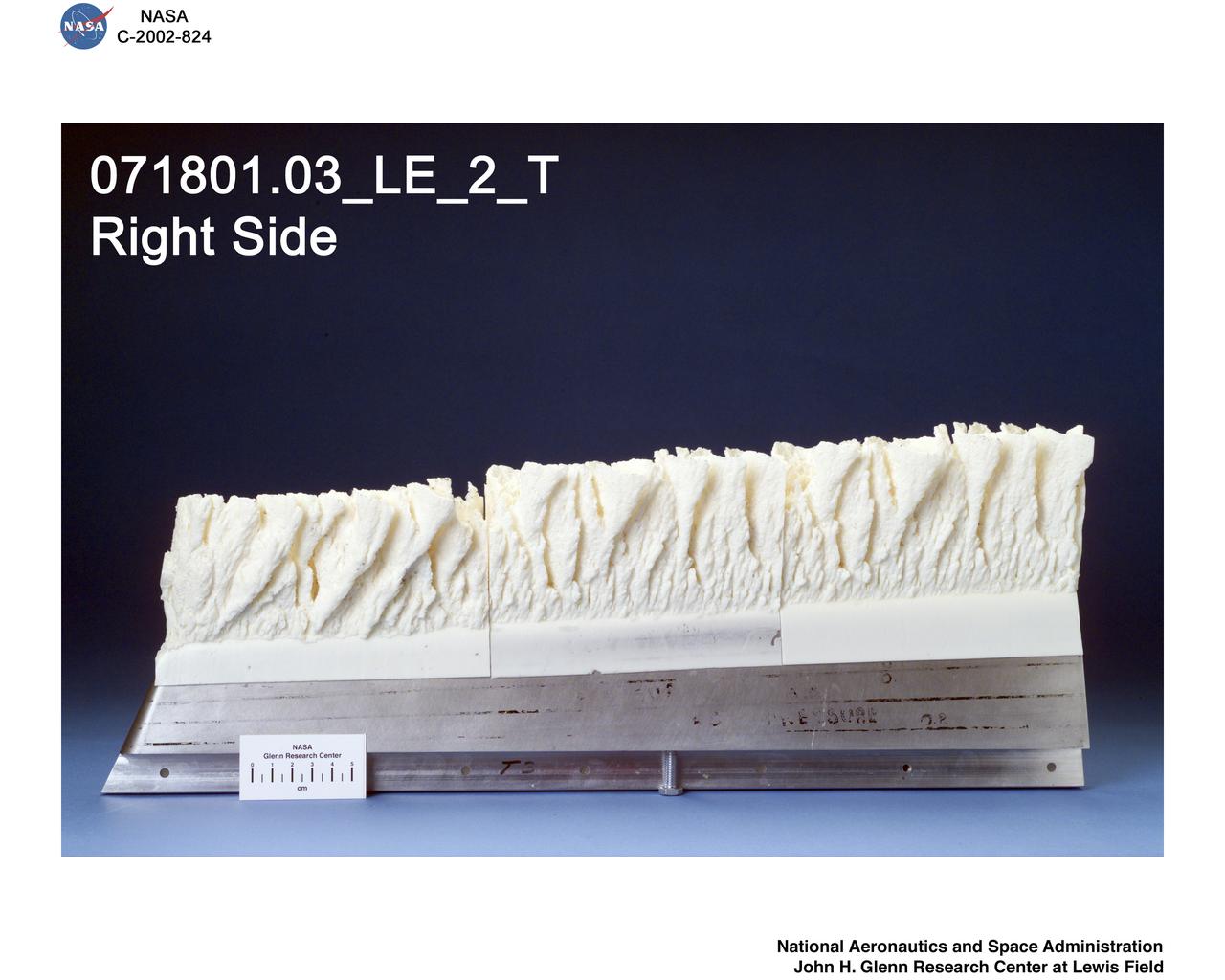
WICHITA STATE UNIVERSITY AND FEDERAL AVIATION ADMINISTRATION WITH NASA FOR ICE CASTINGS TEST
GRC-2002-C-00824
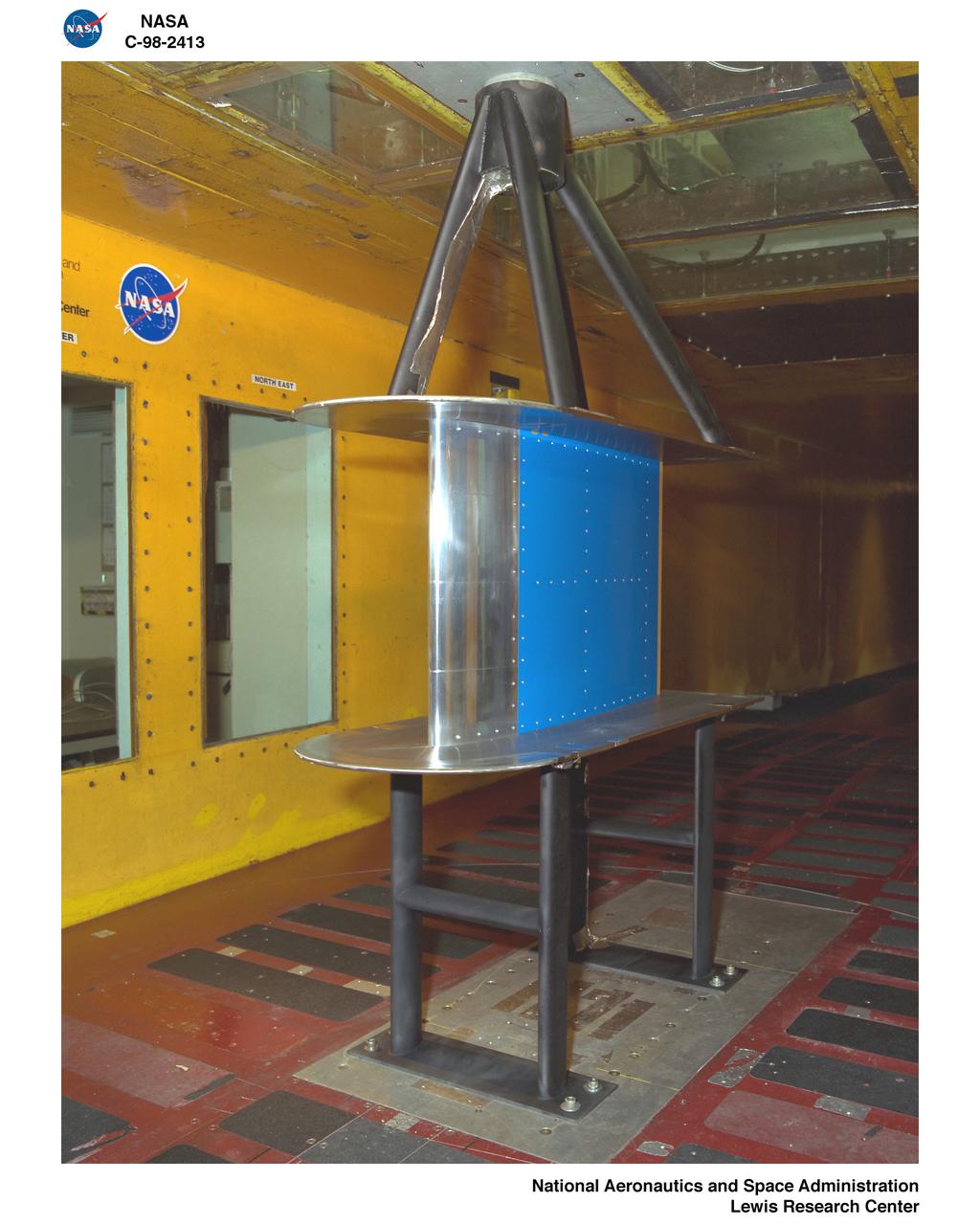
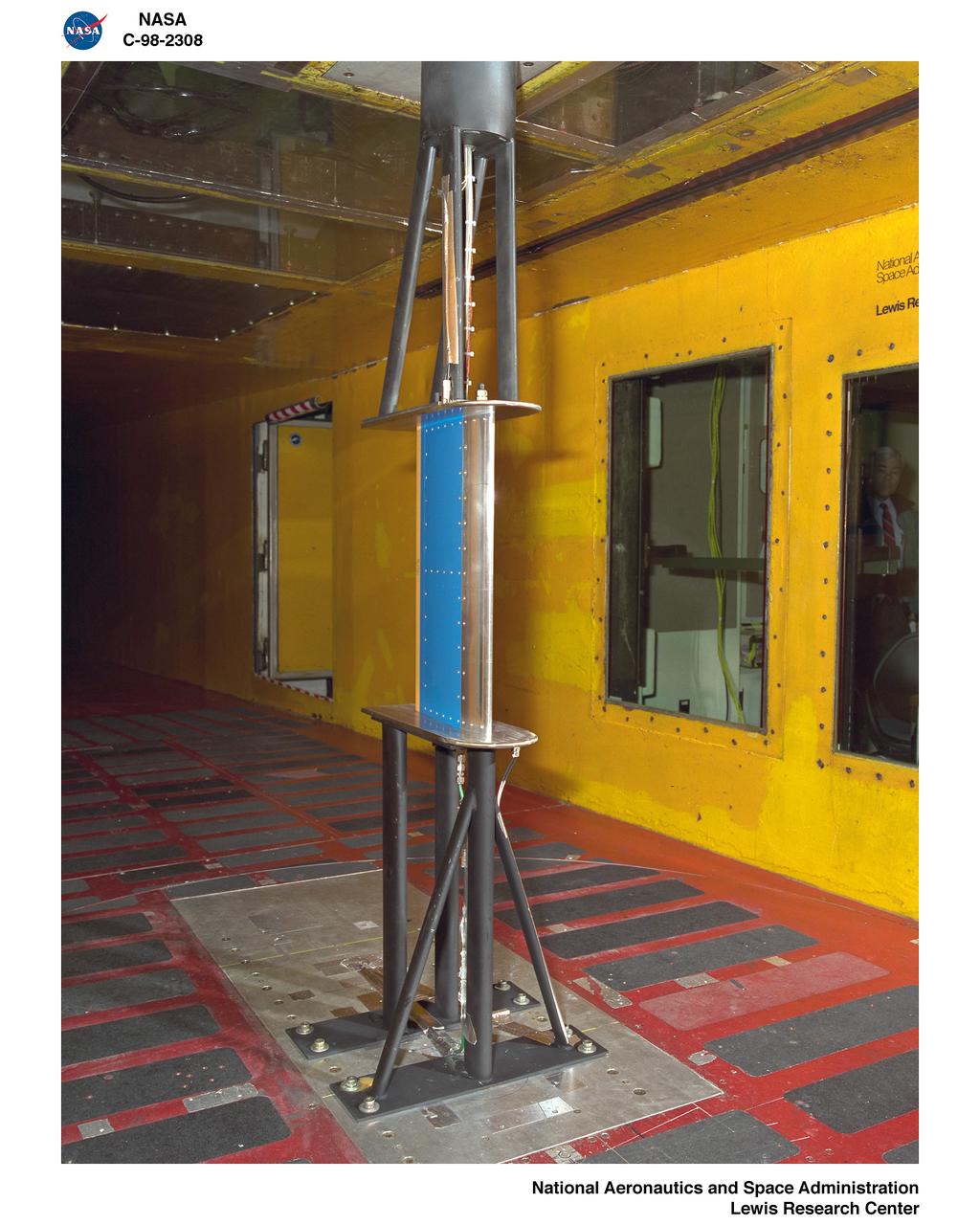
FAA FEDERAL AVIATION ADMINISTRATION FACILITY STANDARD NACA 0012 36 INCH CHORD
GRC-1998-C-02413
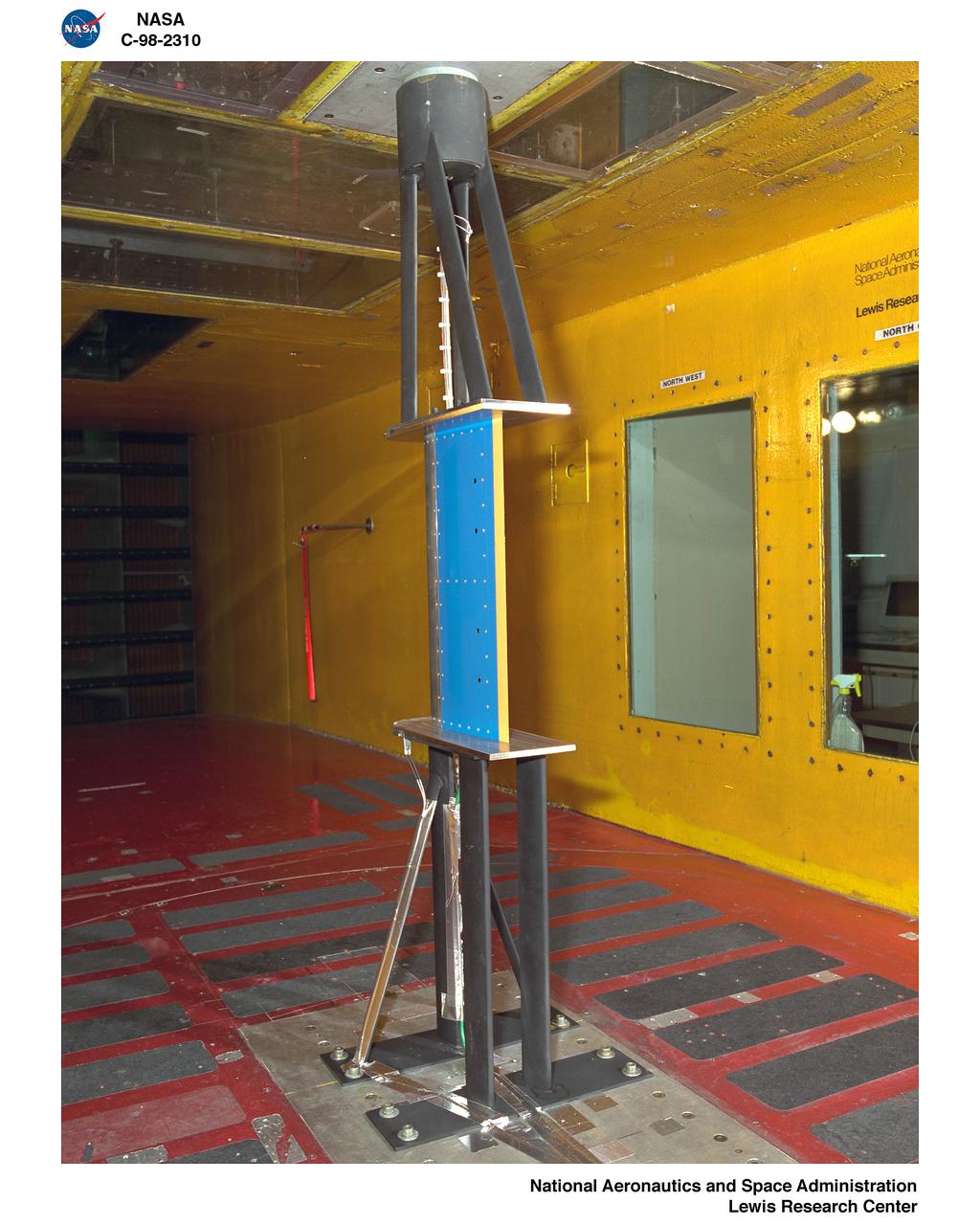
FAA FEDERAL AVIATION ADMINISTRATION FACILITY STANDARD NACA 0012 12 INCH CHORD
GRC-1998-C-02310
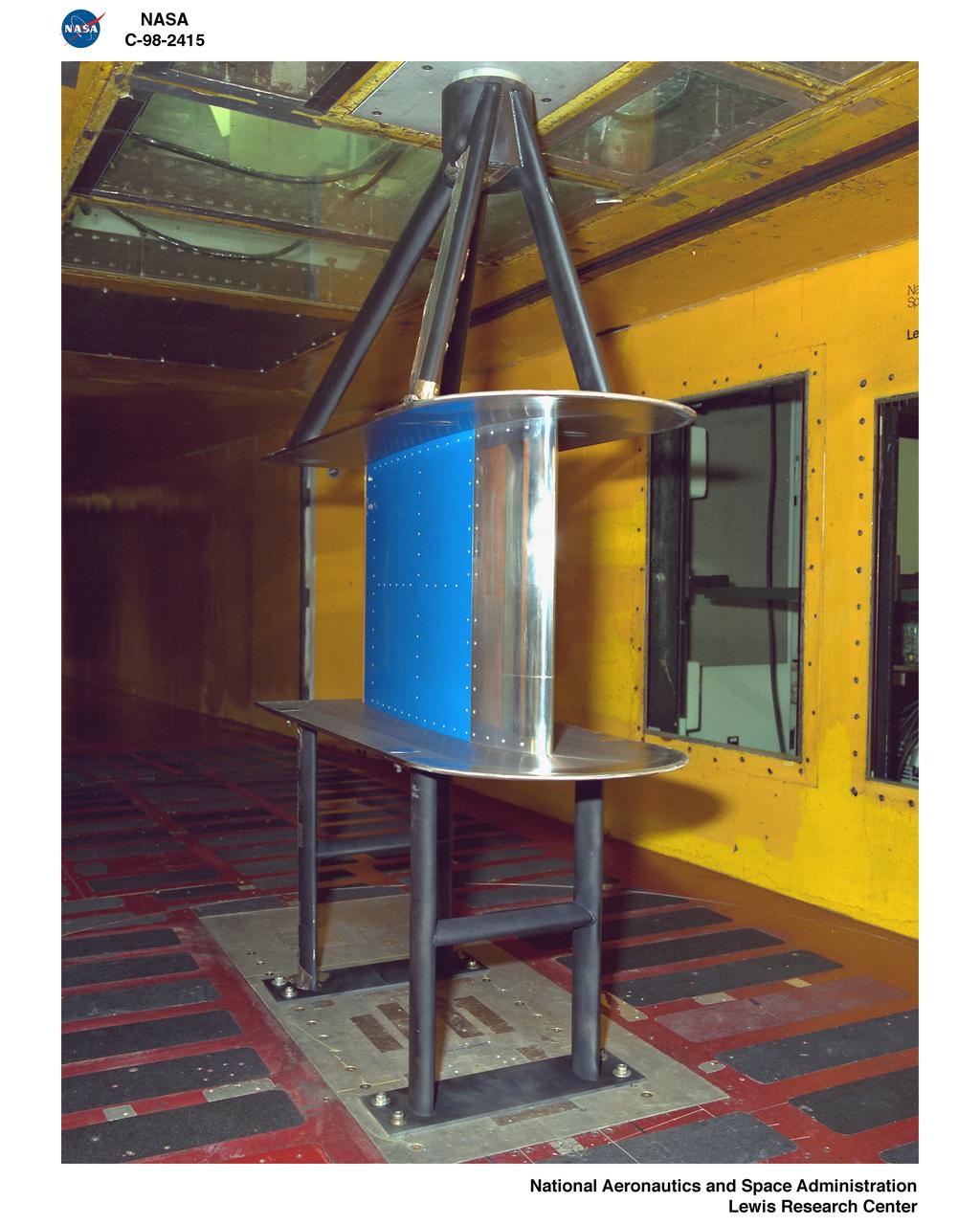
FAA FEDERAL AVIATION ADMINISTRATION FACILITY STANDARD NACA 0012 36 INCH CHORD
GRC-1998-C-02415
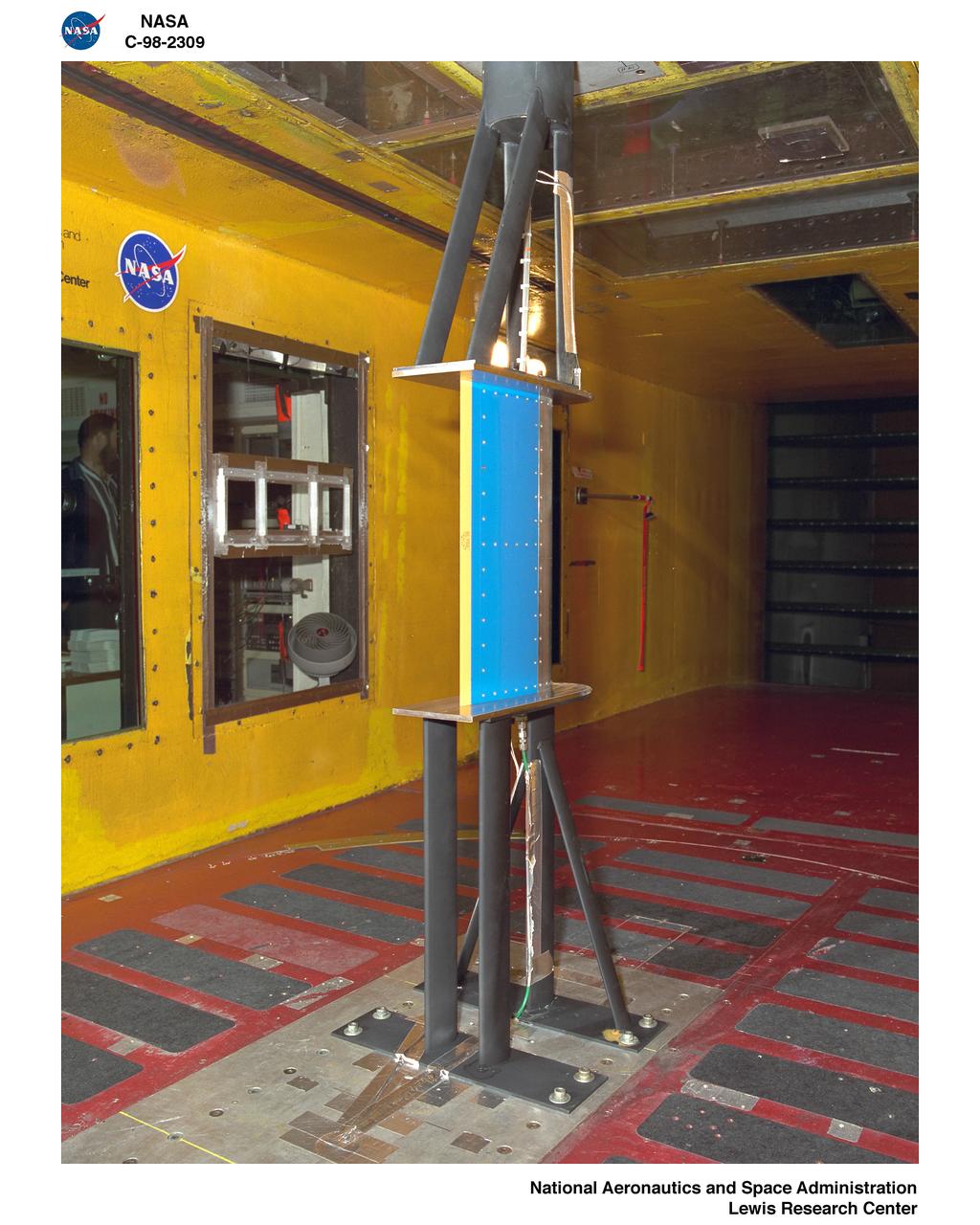
FAA FEDERAL AVIATION ADMINISTRATION FACILITY STANDARD NACA 0012 12 INCH CHORD
GRC-1998-C-02309
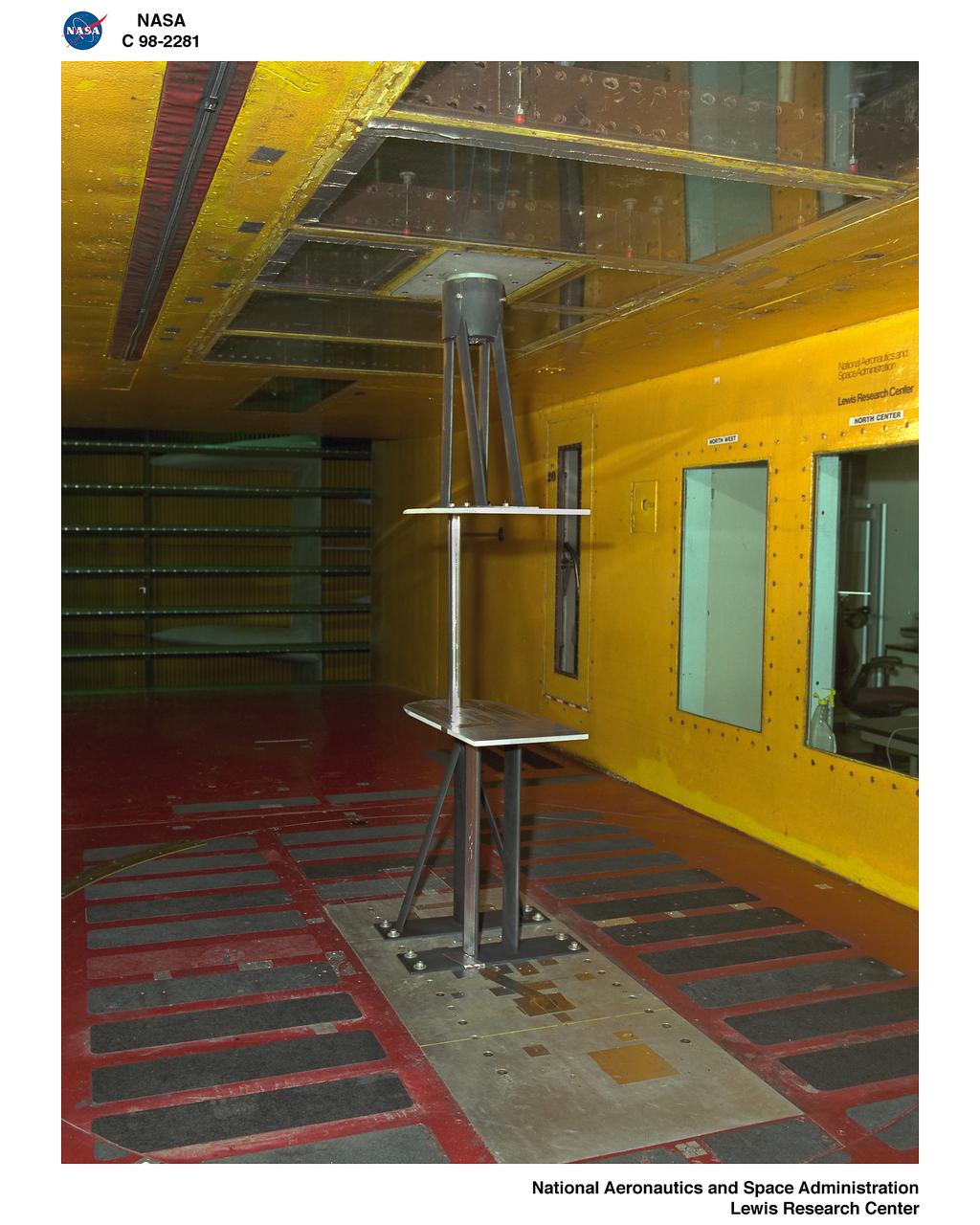
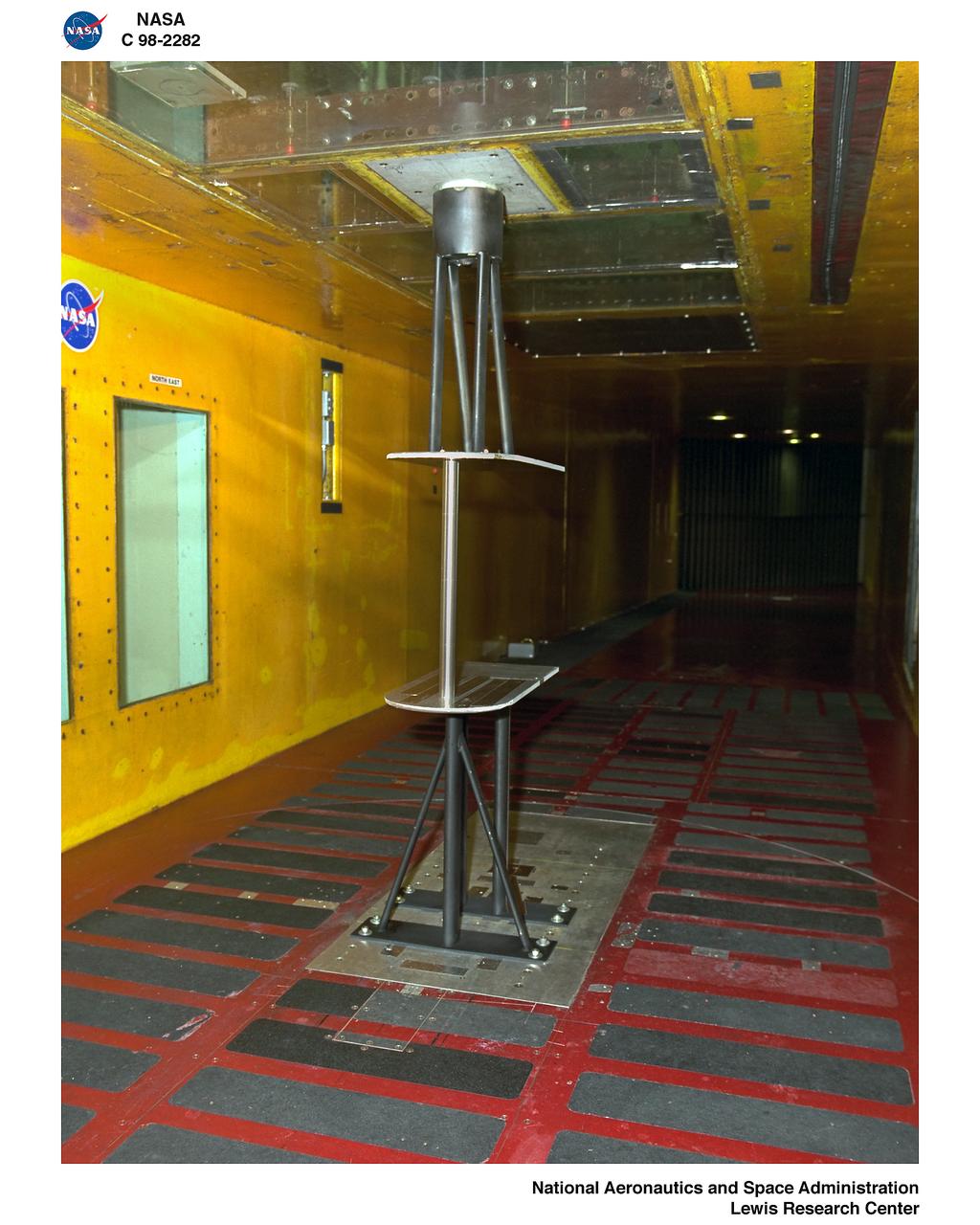
FEDERAL AVIATION ADMINISTRATION FAA FACILITY STANDARD 1-1/2 INCH CYLINDER TEST
GRC-1998-C-02281
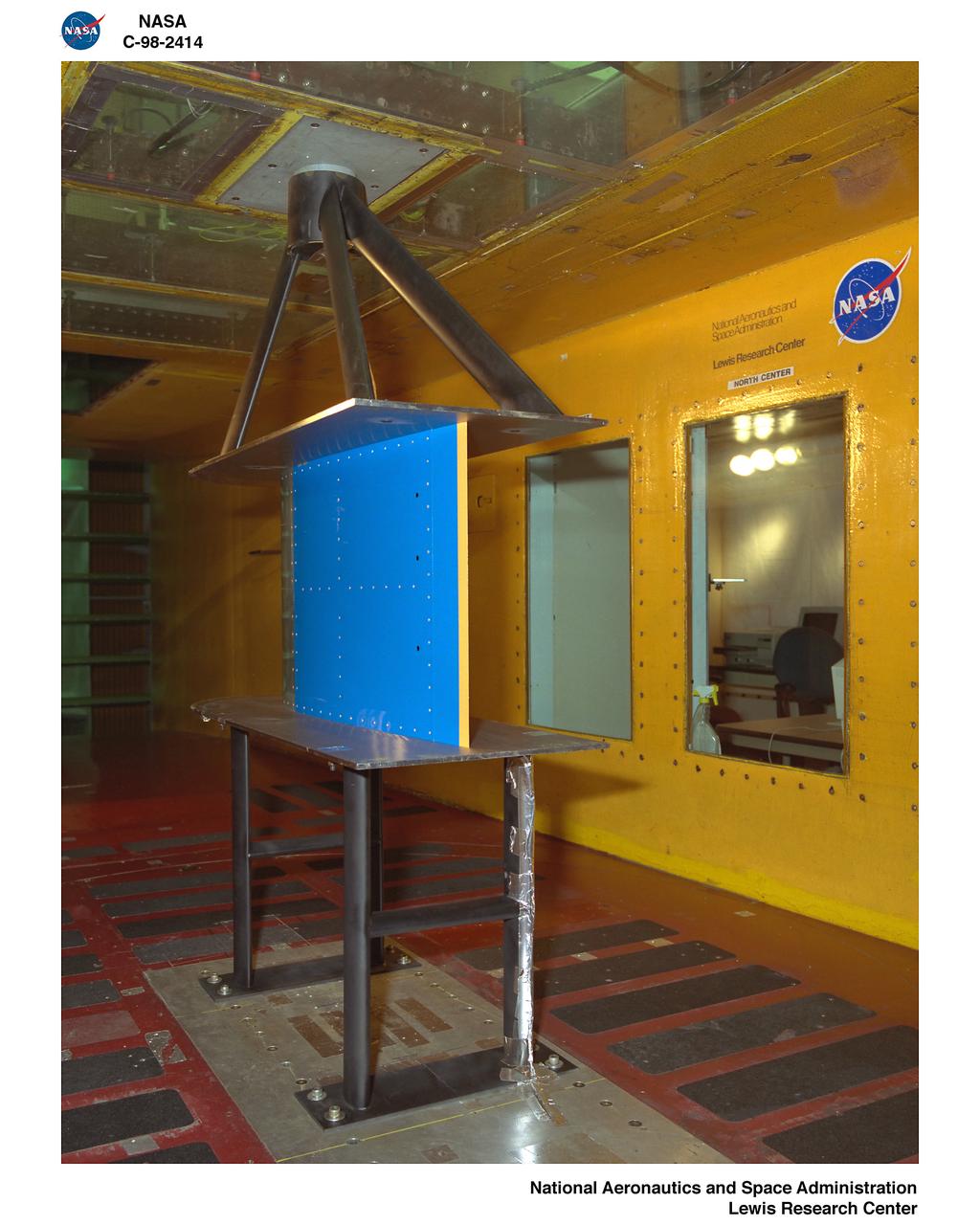
FAA FEDERAL AVIATION ADMINISTRATION FACILITY STANDARD NACA 0012 36 INCH CHORD
GRC-1998-C-02414
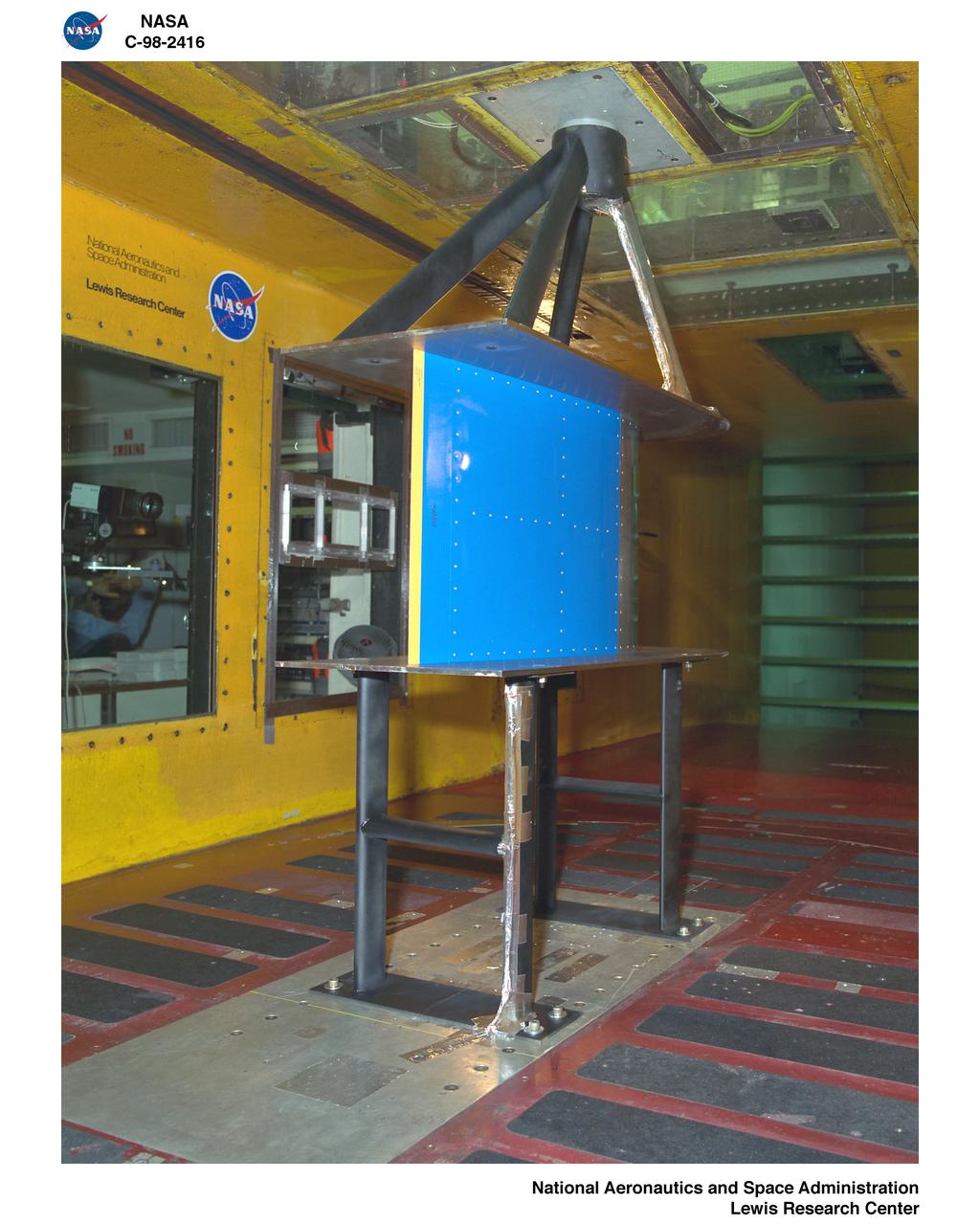
FAA FEDERAL AVIATION ADMINISTRATION FACILITY STANDARD NACA 0012 36 INCH CHORD
GRC-1998-C-02416
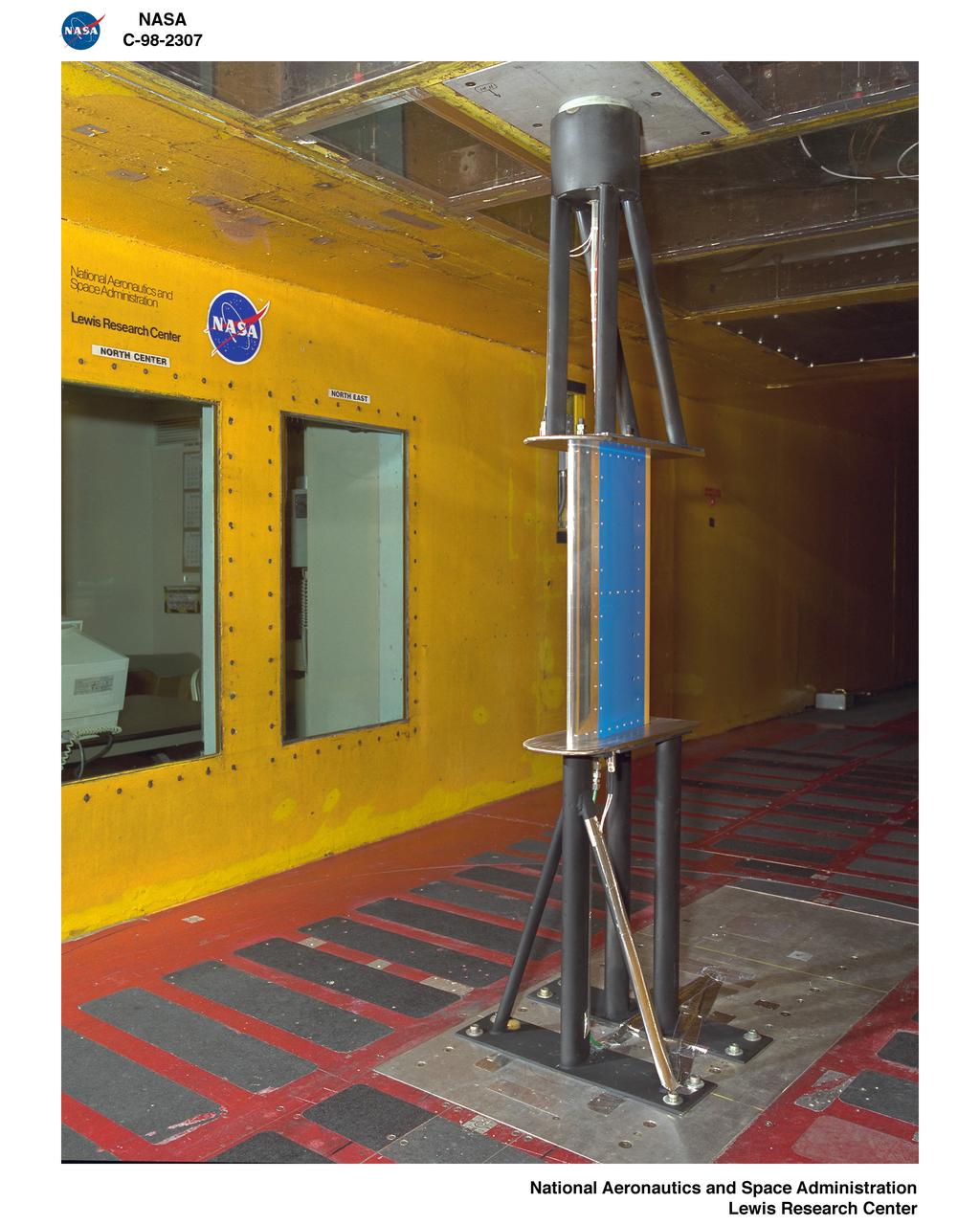
FAA FEDERAL AVIATION ADMINISTRATION FACILITY STANDARD NACA 0012 12 INCH CHORD
GRC-1998-C-02307
FAA FEDERAL AVIATION ADMINISTRATION FACILITY STANDARD NACA 0012 12 INCH CHORD
GRC-1998-C-02308
FEDERAL AVIATION ADMINISTRATION FAA FACILITY STANDARD 1-1/2 INCH CYLINDER TEST
GRC-1998-C-02282
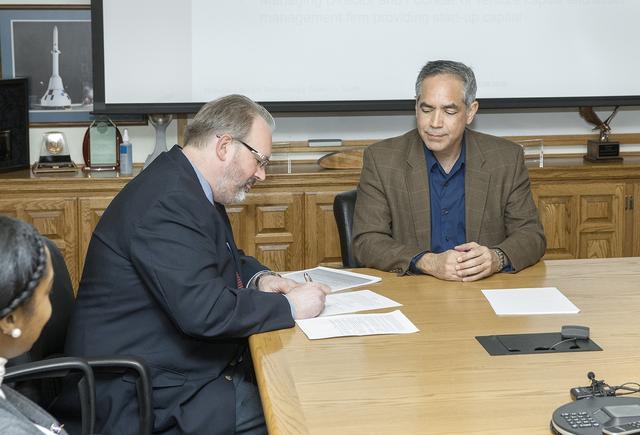
Vigilant Aerospace Systems CEO Kraettli Epperson, left, and NASA Armstrong Flight Research Center Director David McBride, sign the agreement for the company to commercialize a large drone communication system for the Federal Aviation Administration's aircraft tracking system called the Automatic Dependent Surveillance Broadcast. This communication system, which is to be mandated by the FAA for most aircraft in 2020, brings large, unmanned aircraft a step closer to flying in the National Airspace System.
ED16-0042-06
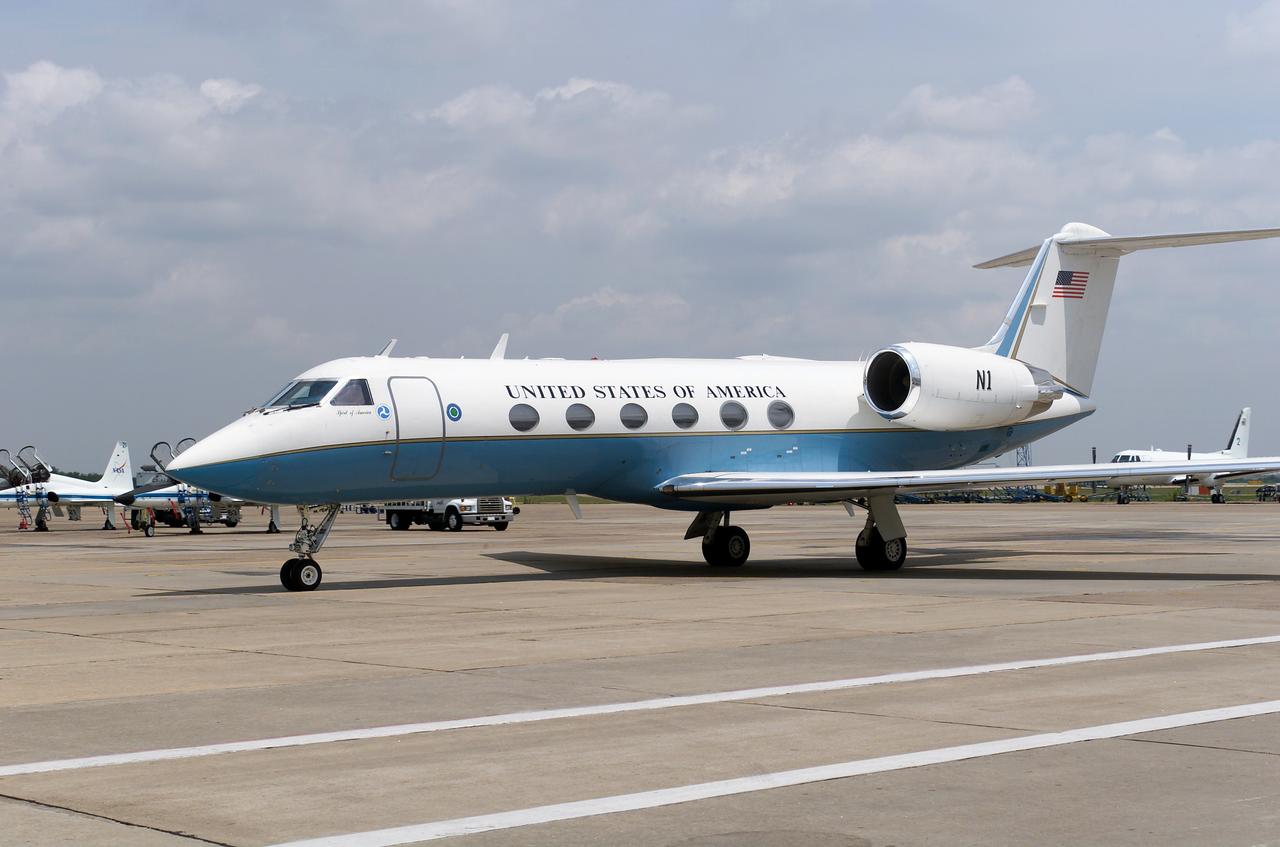
JSC2003-E-37449 (21 May 2003) --- A Federal Aviation Administration Gulfstream IV aircraft, which carried the Expedition 6 crewmembers, is pictured at Ellington Field, near Johnson Space Center (JSC).
International Space Station Expedition 6 crew arrival at Ellington Field for crew return to JSC.
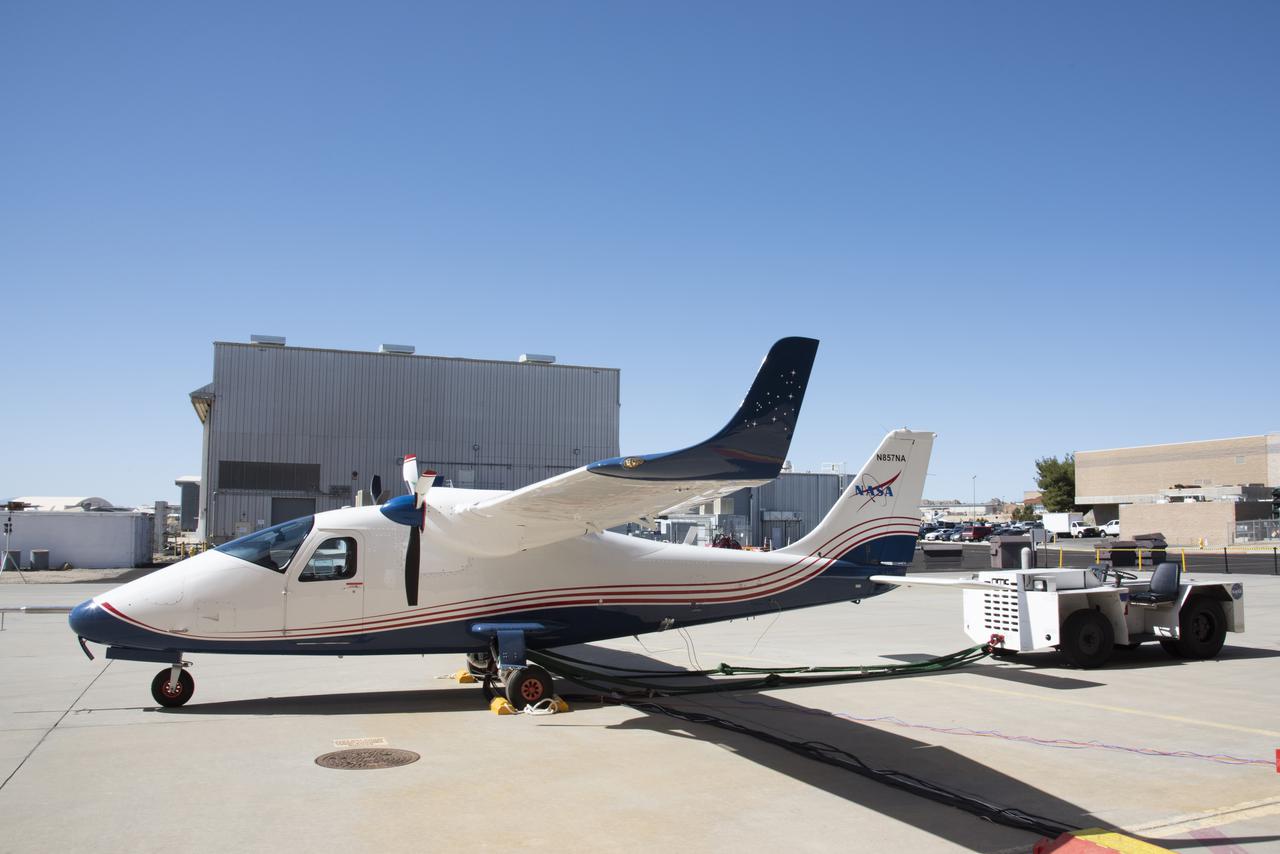
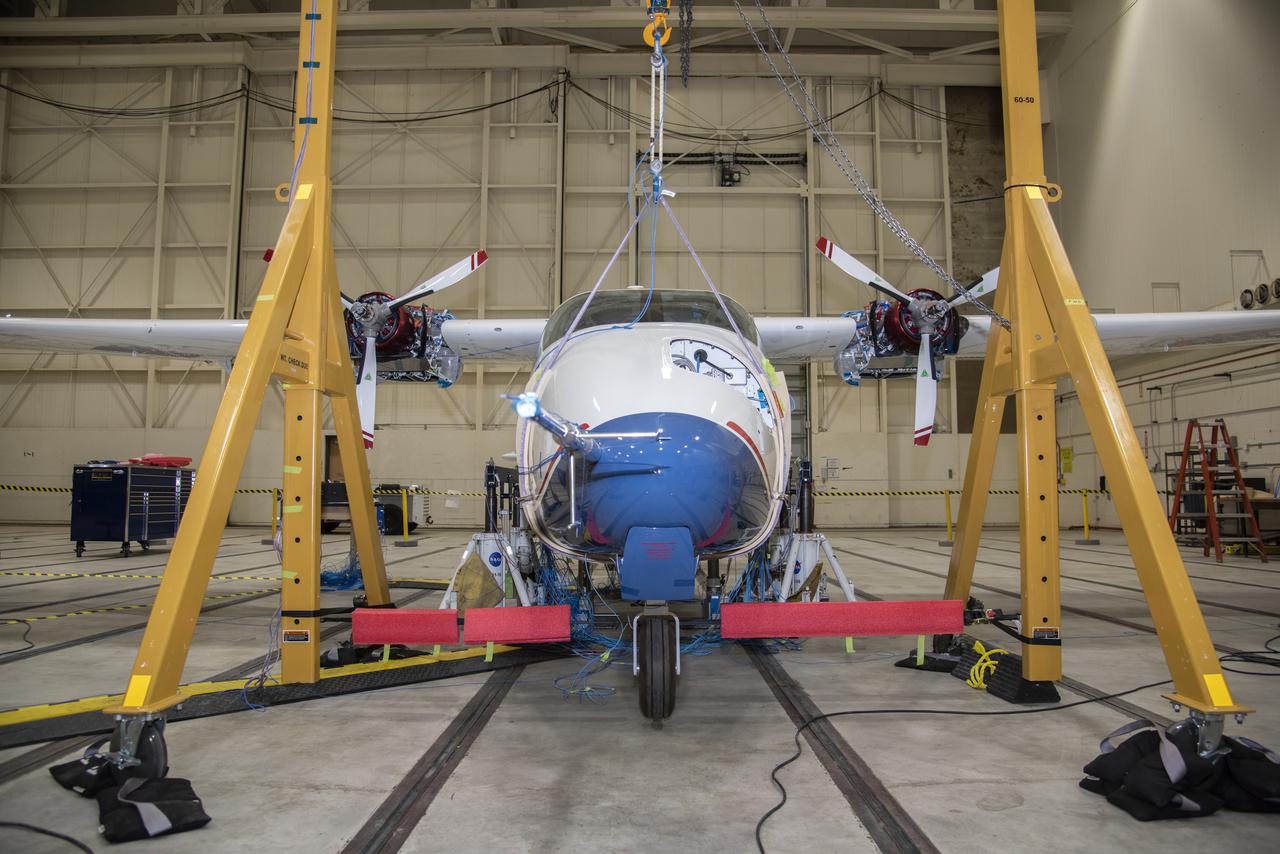
NASA's all-electric X-57 Maxwell aircraft undergoes high voltage ground testing at NASA's Armstrong Flight Research Center in California. A goal of the X-57 project is to help the Federal Aviation Administration set certification standards for emerging electric aircraft markets.
X-57 High Voltage Testing Begins
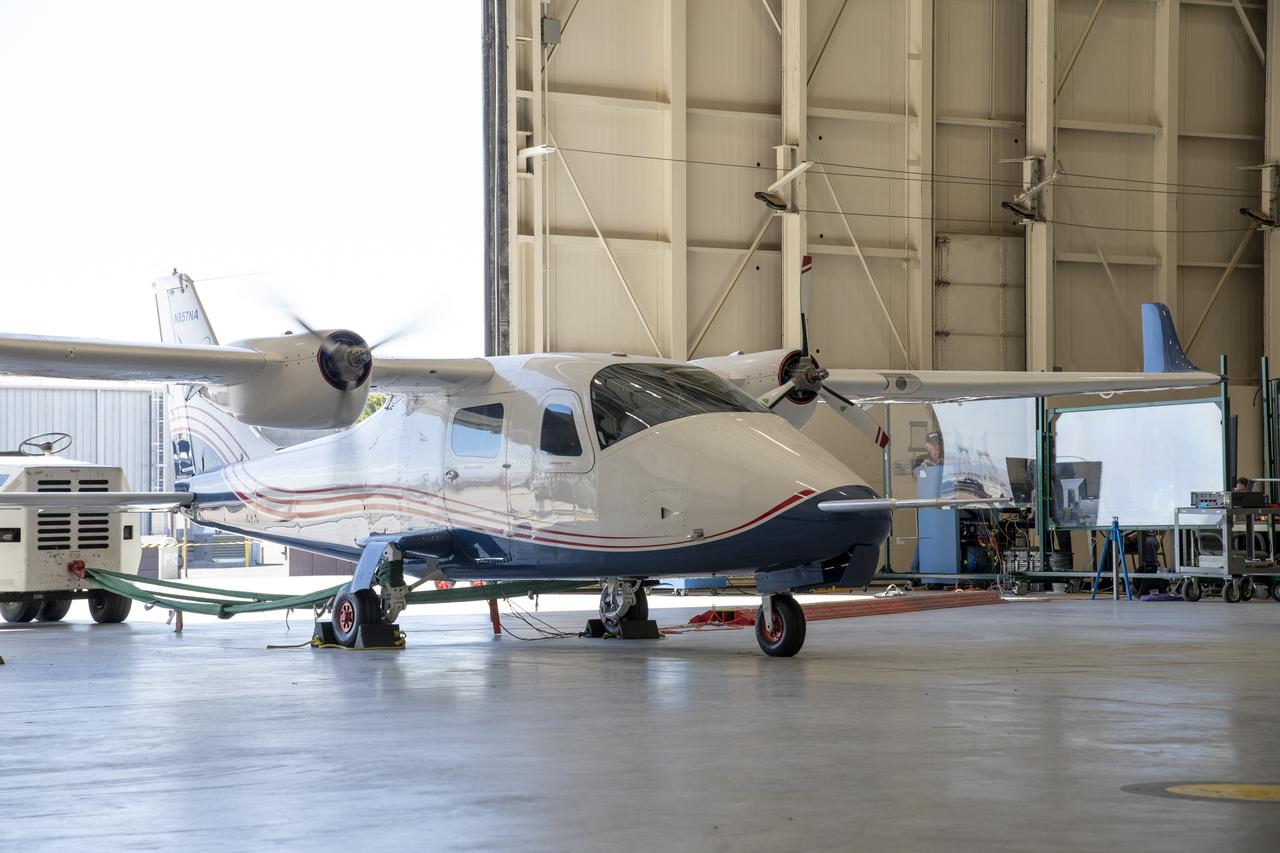
NASA's all-electric X-57 Maxwell aircraft tests the motors with the battery packs installed on the aircraft at NASA's Armstrong Flight Research Center in California. A goal of the X-57 project is to help the Federal Aviation Administration set certification standards for emerging electric aircraft markets.
X-57 Motor Spin Test on Aircraft Battery
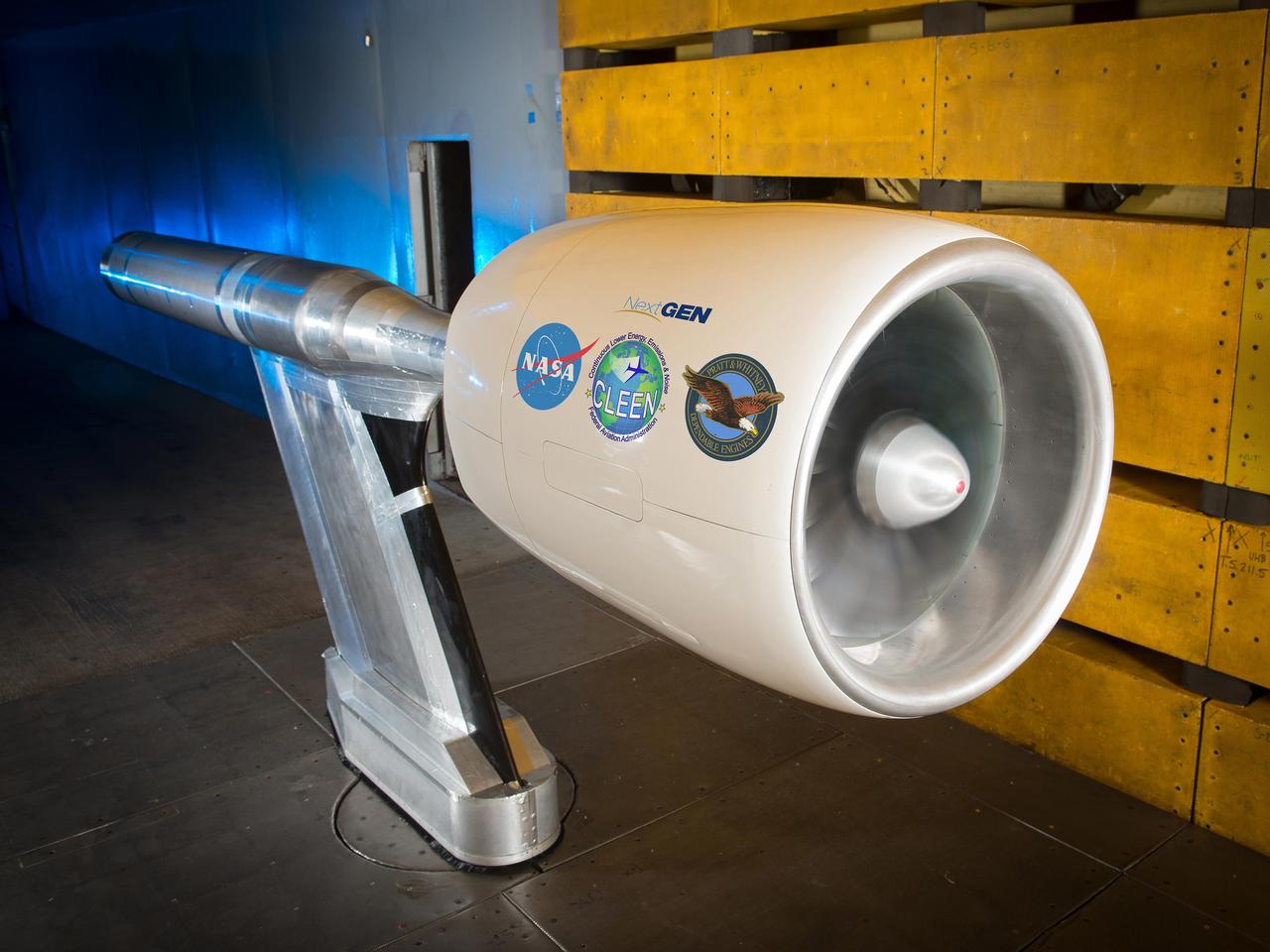
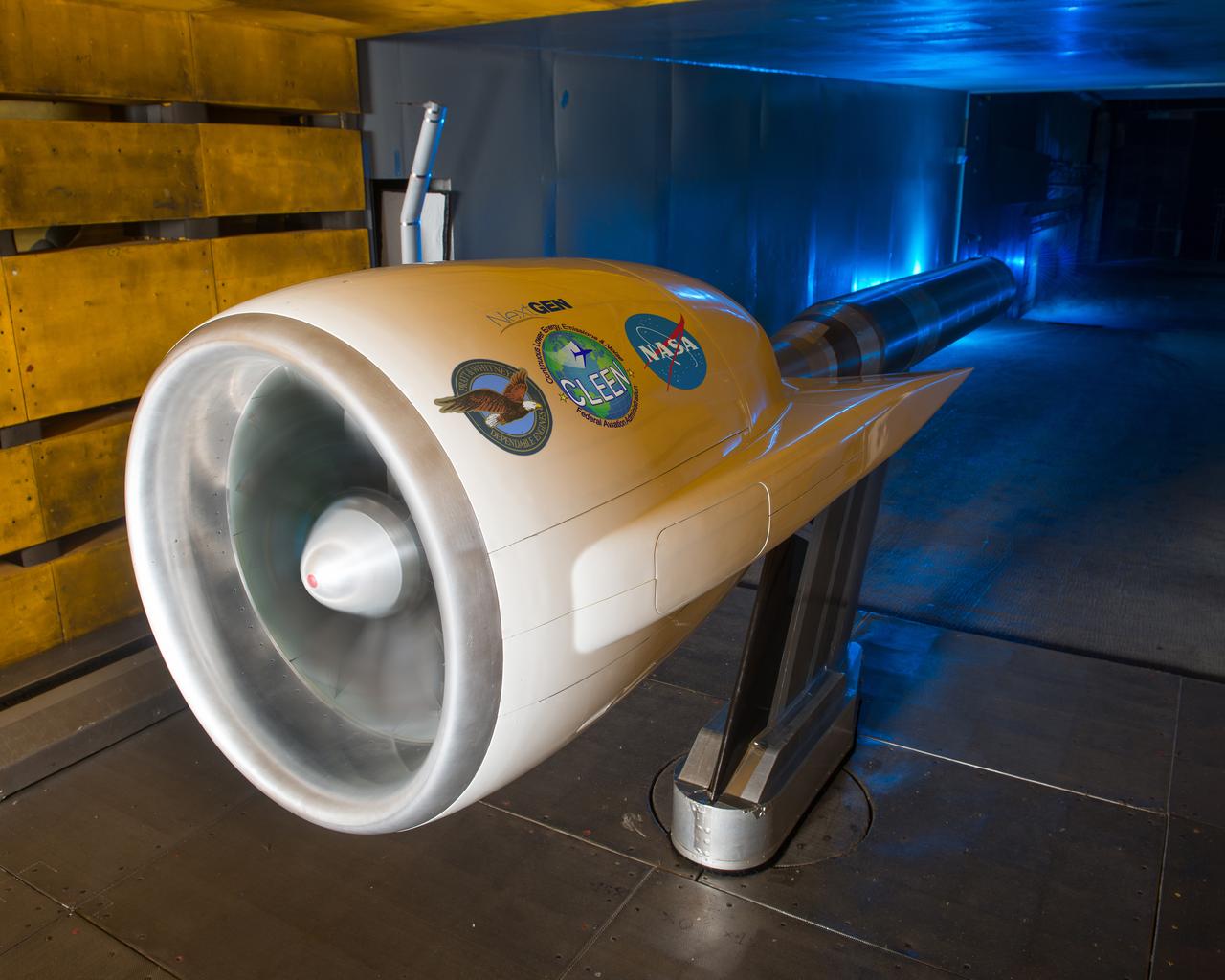
NASA’s Environmentally Responsible Aviation Project, in collaboration with the Federal Aviation Administration (FAA) and Pratt & Whitney, completed testing of an Ultra High Bypass Ratio Turbofan Model in the 9’ x 15’ Low Speed Wind Tunnel at NASA Glenn Research Center. The fan model is representative of the next generation of efficient and quiet Ultra High Bypass Ratio Turbofan Engine designs.
Ultra High Bypass Integrated System Test
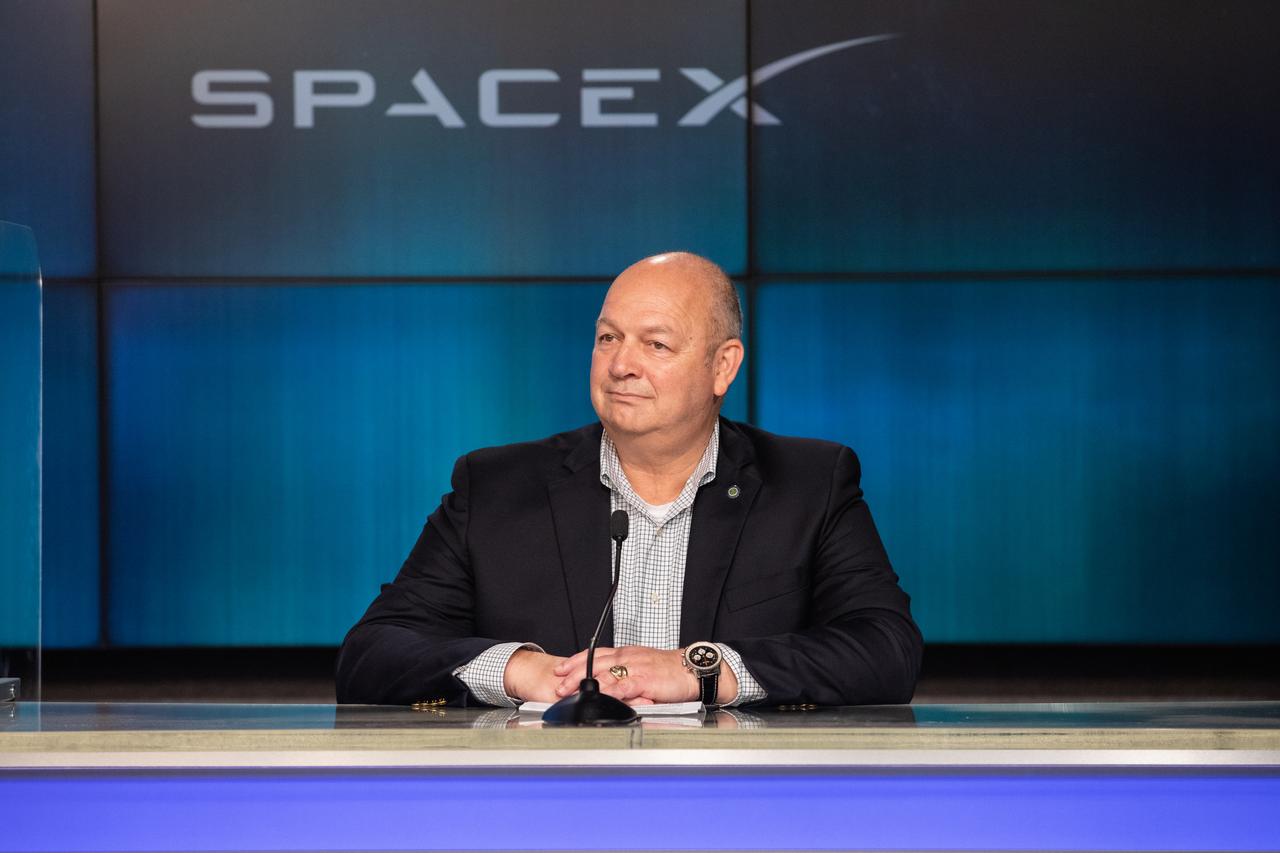
Steve Dickson, administrator, Federal Aviation Administration, answers questions from members of the news media during a postlaunch news conference for NASA’s SpaceX Crew-1 mission on Nov. 15, 2020, at Kennedy Space Center in Florida. Liftoff time on a Falcon 9 rocket was at 7:27 p.m. EST. The Crew Dragon is carrying NASA astronauts Michael Hopkins, spacecraft commander; Victor Glover, pilot; Shannon Walker, mission specialist; and Japan Aerospace Exploration Agency astronaut Soichi Noguchi, mission specialist, to the International Space Station. Crew-1 is the first regular crew mission of a U.S. commercial spacecraft with astronauts to the space station as part of NASA’s Commercial Crew Program. The Crew Dragon will dock with the station and the crew will remain on the orbiting laboratory for a six-month science mission.
SpaceX Crew-1 Post Launch News Conference
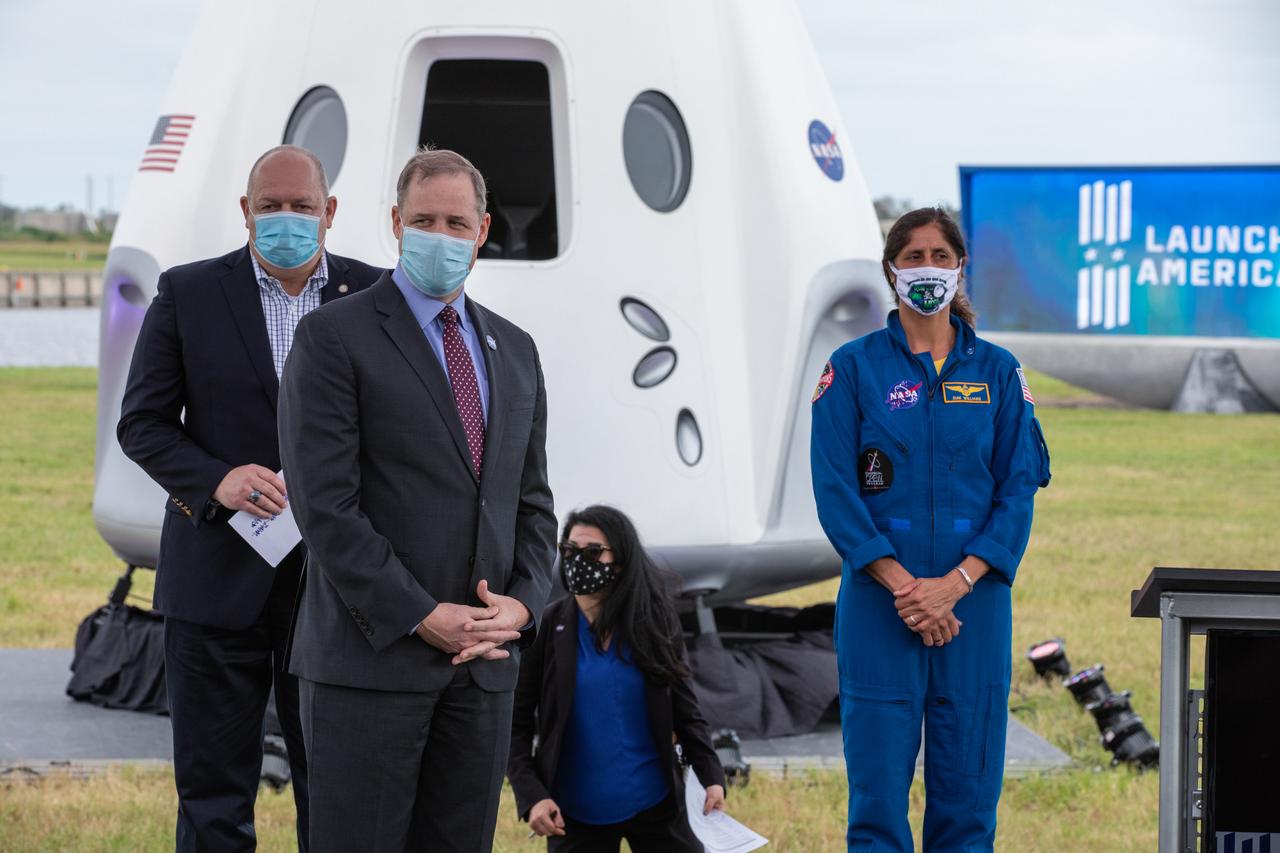
NASA Administrator Jim Bridenstine, center, prepares to speak during a press briefing Nov. 13, 2020, near the Press Site countdown clock at the agency’s Kennedy Space Center in Florida. Behind him, from left are Steve Dickson, administrator, Federal Aviation Administration, and NASA astronaut Sunita Williams. Crew-1 is the first regular crew mission of a U.S. commercial spacecraft with astronauts to the International Space Station as part of NASA’s Commercial Crew Program. The SpaceX Crew Dragon Resilience capsule will launch atop the company’s Falcon 9 rocket from Launch Complex 39A to the space station for a six-month science mission.
SpaceX Crew-1 Administrator Briefing
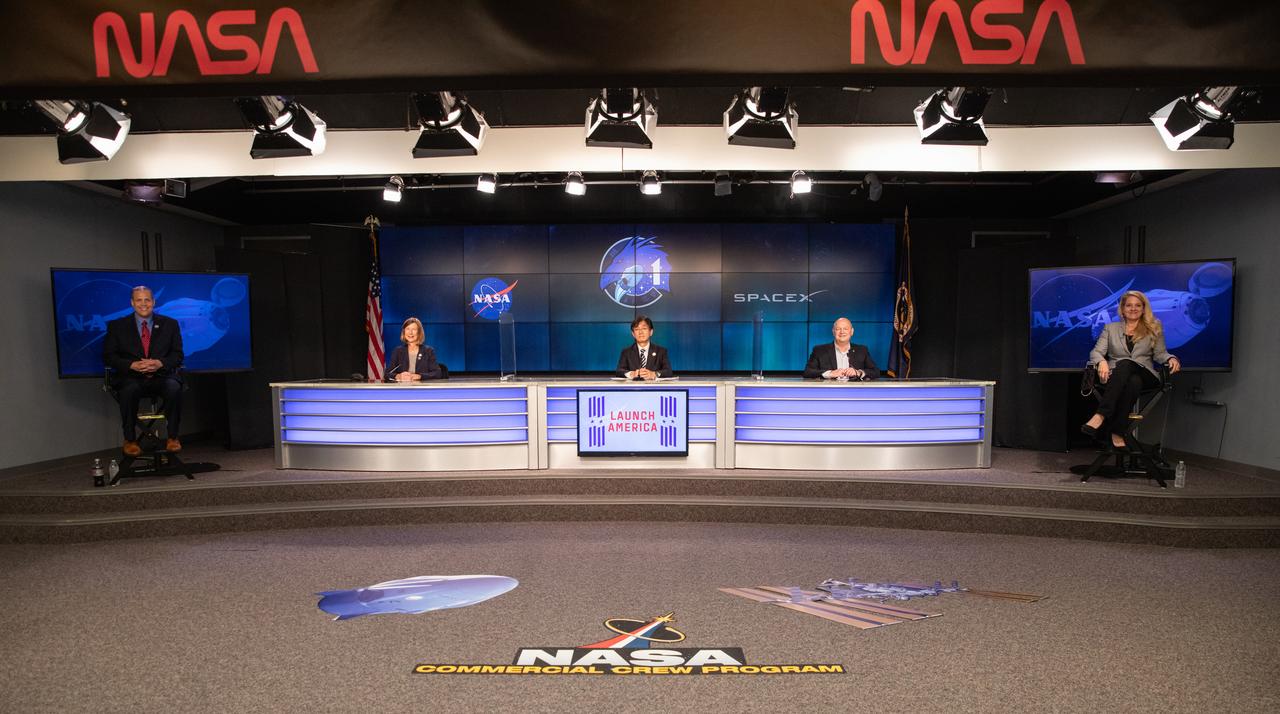
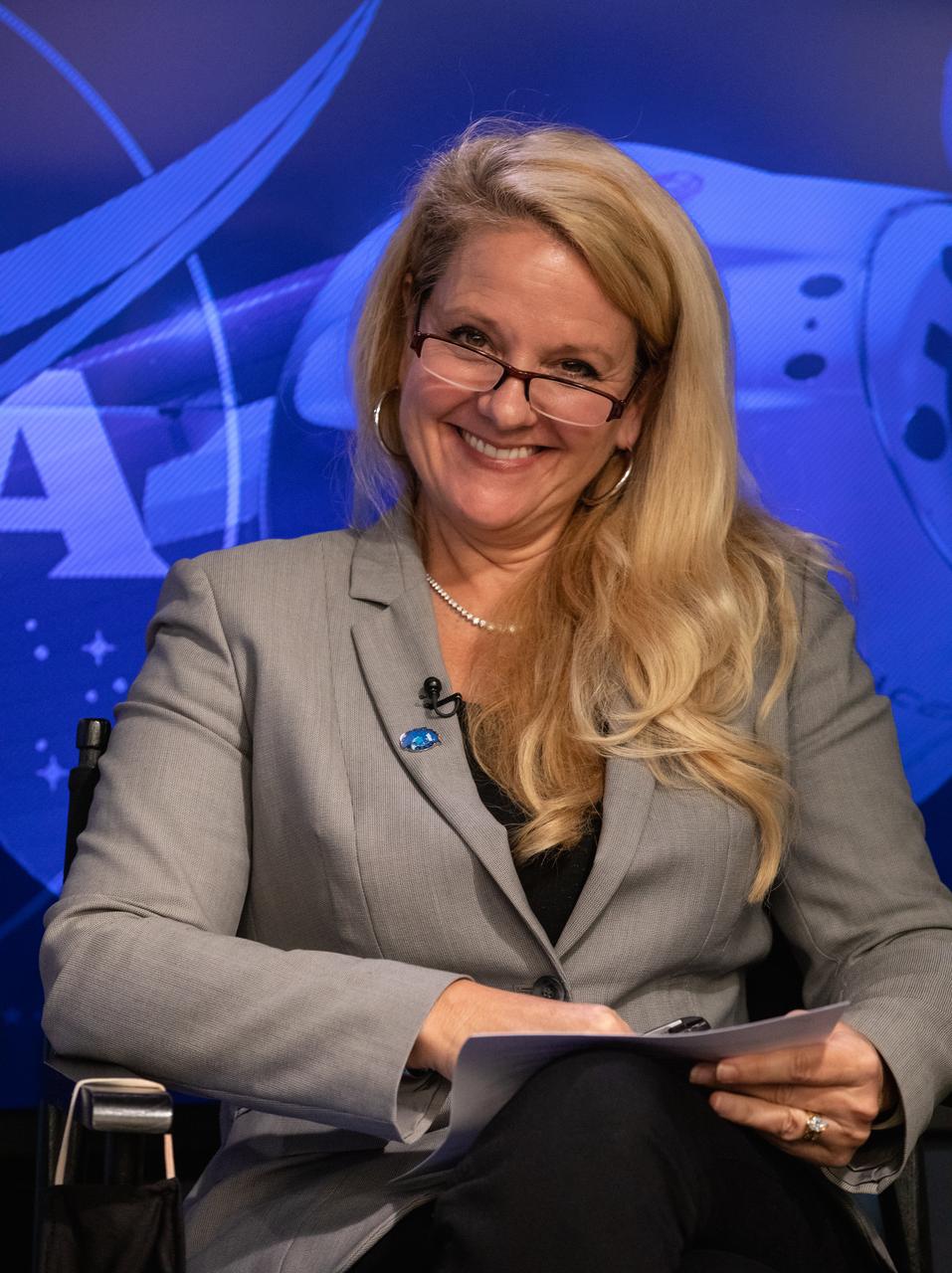
A postlaunch news conference for NASA’s SpaceX Crew-1 mission is held at Kennedy Space Center in Florida on Nov. 15, 2020. Liftoff time on a SpaceX Falcon 9 rocket was at 7:27 p.m. EST. From left are NASA Administrator Jim Bridenstine; Kathy Lueders, associate administrator for human exploration and operations, NASA Headquarters; Hiroshi Sasaki, vice president and director general, JAXA’s Human Spaceflight Technology Directorate; Steve Dickson, administrator, Federal Aviation Administration; and Gwynne Shotwell, president and chief operating officer, SpaceX. The Crew Dragon is carrying NASA astronauts Michael Hopkins, spacecraft commander; Victor Glover, pilot; Shannon Walker, mission specialist; and Japan Aerospace Exploration Agency astronaut Soichi Noguchi, mission specialist, to the international Space Station. Crew-1 is the first regular crew mission of a U.S. commercial spacecraft with astronauts to the space station as part of NASA’s Commercial Crew Program. The Crew Dragon will dock with the station and the crew will remain on the orbiting laboratory for a six-month science mission.
SpaceX Crew-1 Post Launch News Conference
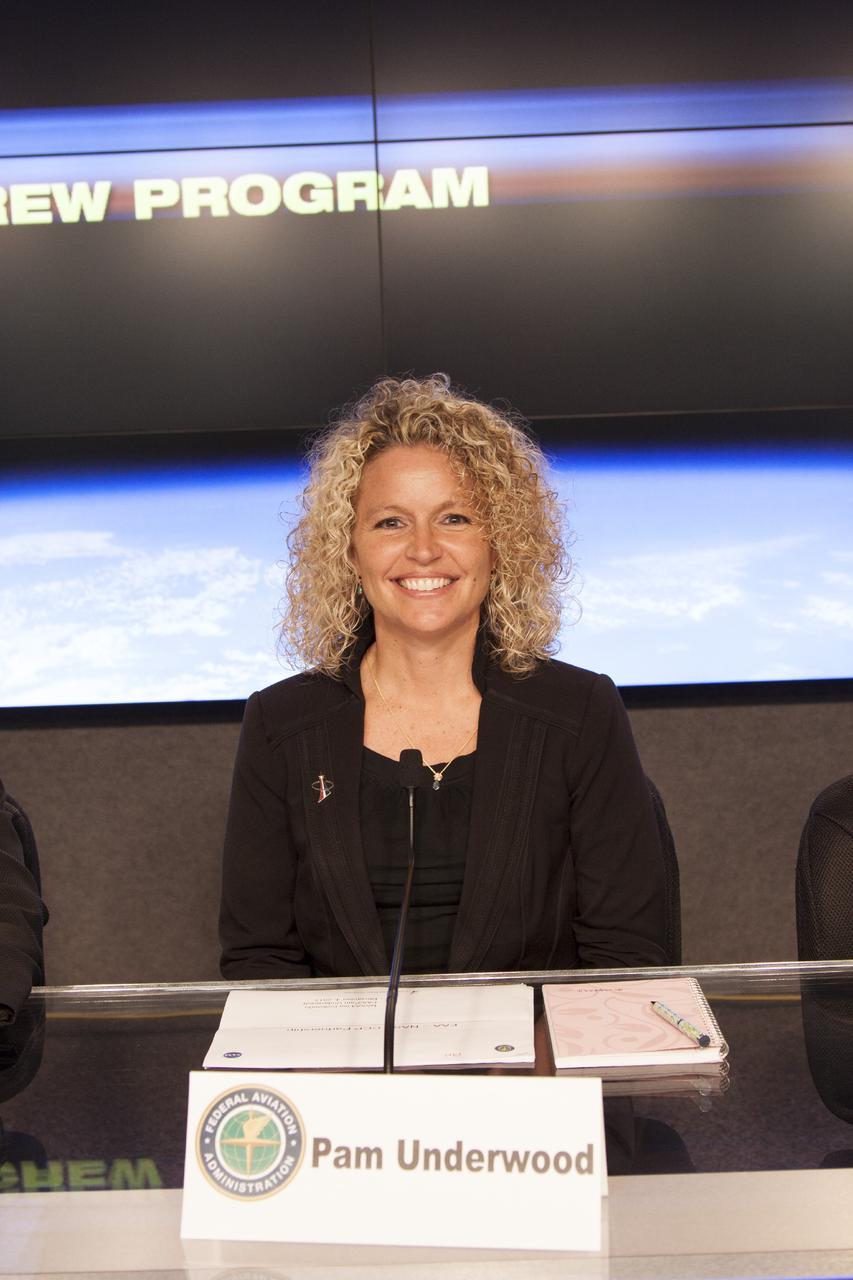
In the Press Site auditorium of NASA's Kennedy Space Center in Florida, Pam Underwood, manager of the Operations Integration Division of the Federal Aviation Administration Office of Commercial Space Transportation, speaks to the news media at a post-launch news conference following the liftoff of SpaceX CRS-10, a commercial resupply services mission to the International Space Station. SpaceX CRS-10 lifted off atop a Falcon 9 rocket from Kennedy's Launch Complex 39A at 9:39 a.m. EST.
SpaceX CRS-10 Post Launch News Conference
Pam Underwood, at left, director of the Office of Spaceports for the Federal Aviation Administration, and Chirag Parikh, executive secretary of the National Space Council, attend a meeting during the Spaceport Industry Summit on June 14, 2023, at NASA’s Kennedy Space Center in Florida. The National Spaceport Interagency Working Group was visiting Kennedy and other spaceports in the United States to collect feedback on a draft national spaceport strategy.
Spaceport Industry Summit
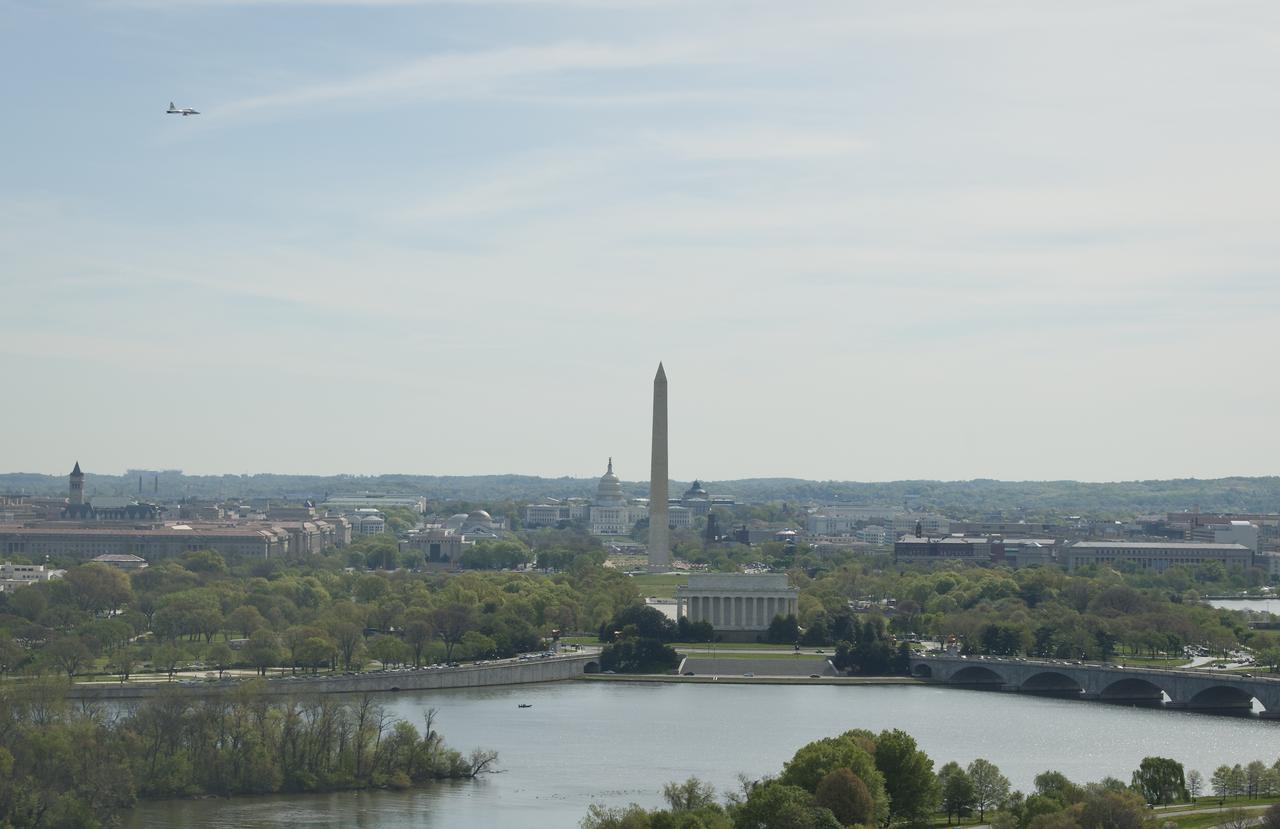
A NASA T-38 training jet is seen as it flies at 1500 feet over Washington, DC, Thursday, April 5, 2012.  NASA, in cooperation with the Federal Aviation Administration, conducted training and photographic flights over the DC metropolitan area.  T-38 aircraft have been used for astronaut training for more than 30 years as they allow pilots and mission specialists to think quickly in changing situations, mental experiences the astronauts say are critical to practicing for the rigors of spaceflight.  Photo Credit:  (NASA/Carla Cioffi)
T-38 Aircraft Fly Over Washington
Dr. Karlin Toner, Director, Joint Planning and Development Office, Federal Aviation Administration (FAA), talks during a House Subcommittee on Oversight hearing titled "Operating Unmanned Aircraft Systems in the National Airspace System: Assessing Research and Development Efforts to Ensure Safety" on Friday, Feb. 15, 2013 at the Rayburn House Office Building in Washington.  Photo Credit: (NASA/Bill Ingalls)
Unmanned Aircraft House Hearing
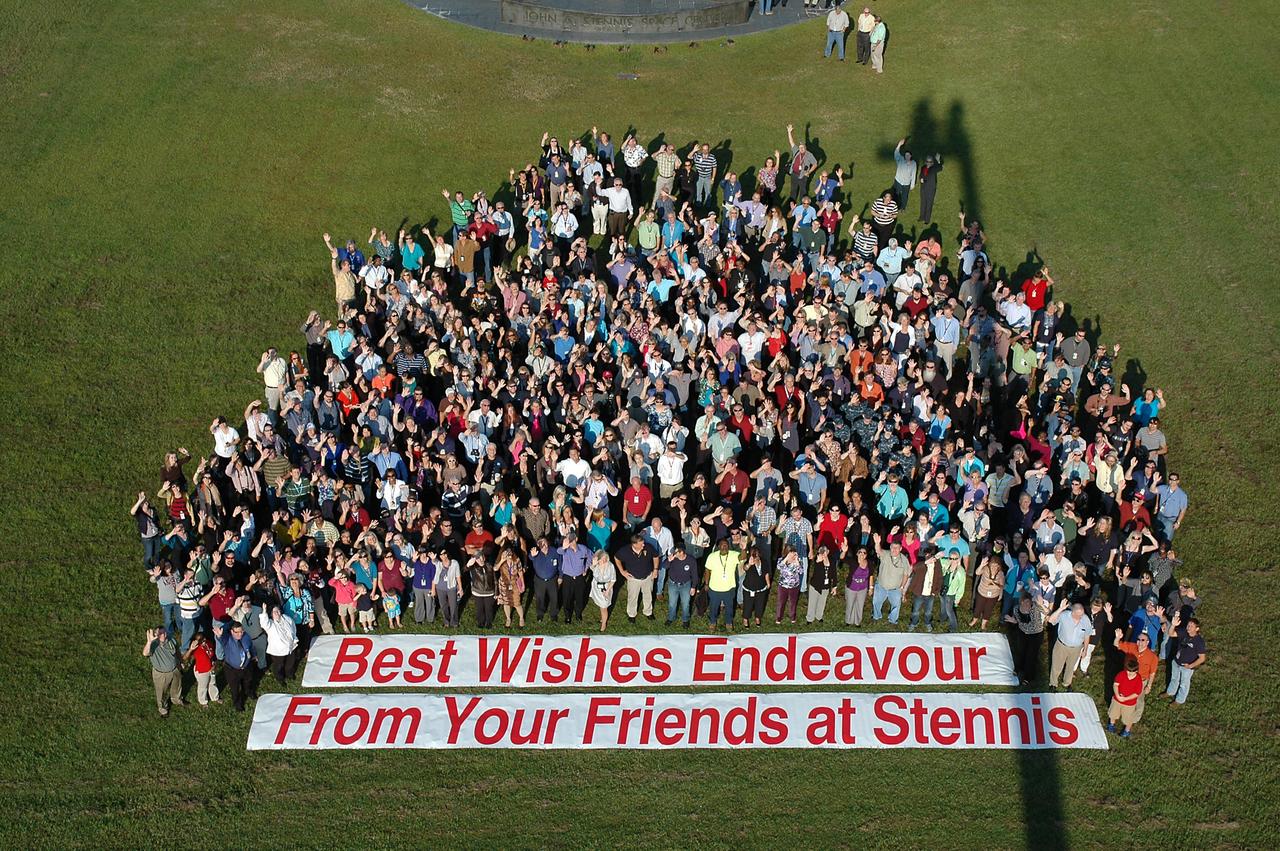
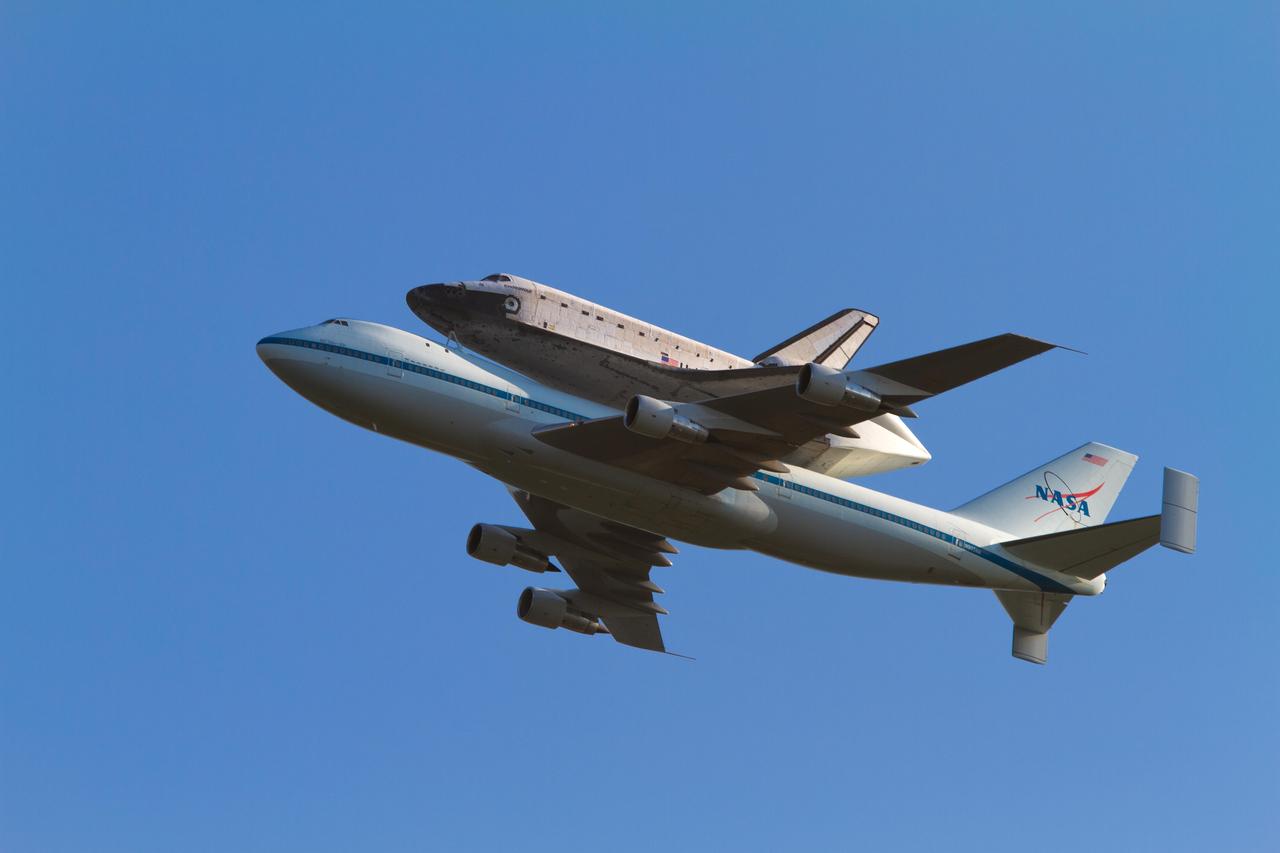
Space shuttle Endeavour embarked on the first leg of its final flight Sept. 19, departing Kennedy Space Center in Florida and making early-morning flyover visits to Stennis Space Center in Mississippi and nearby Michoud Assembly Facility in Louisiana. The shuttle flew atop the 747 Shuttle Carrier Aircraft, headed west, where it will go on display at the California Science Center in Los Angeles. The flight crew coordinated with the Federal Aviation Administration to conduct low-level flyovers at about 1,500 feet above Stennis and Michoud.
Shuttle flyover
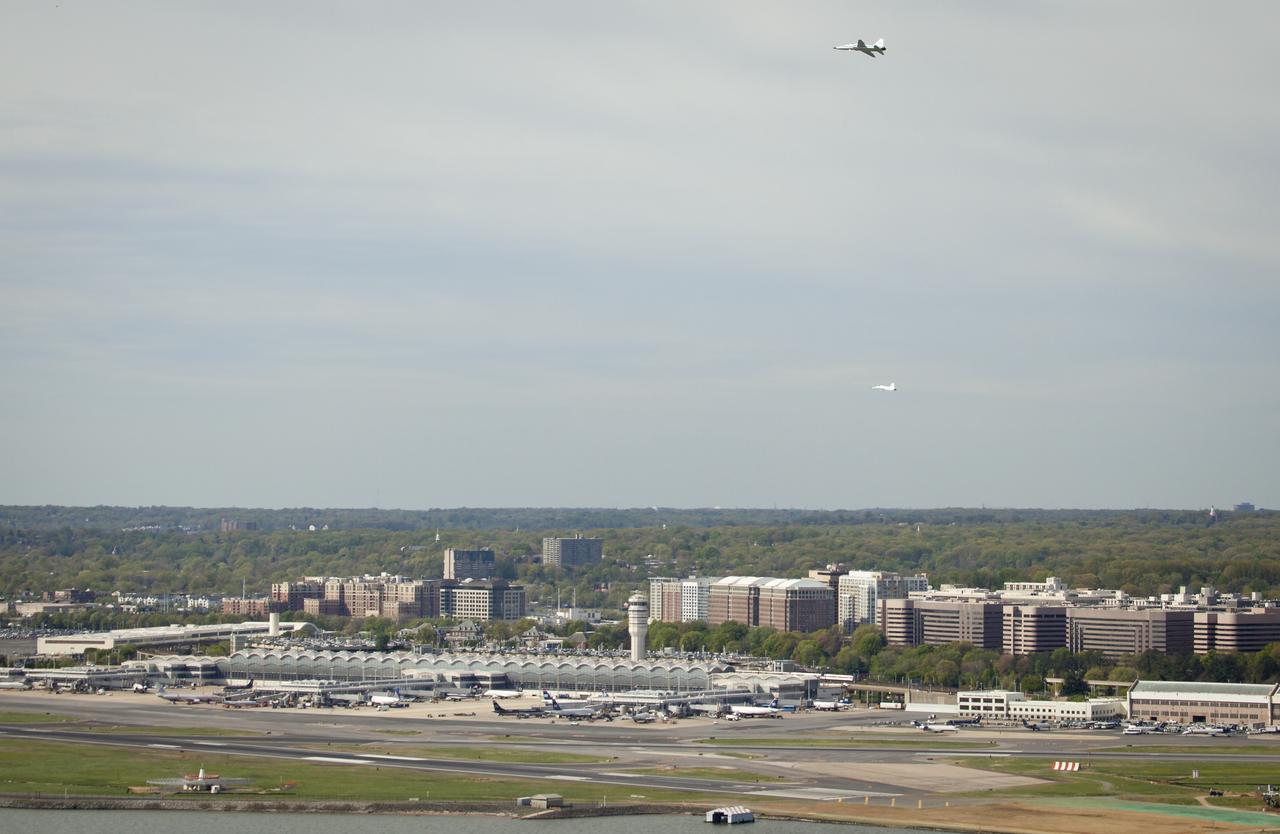
Two NASA T-38 training jets are seen as they fly over Reagan National Airport, Thursday, April 5, 2012 in Arlington, VA.  NASA, in cooperation with the Federal Aviation Administration, conducted training and photographic flights over the DC metropolitan area.  T-38 aircraft have been used for astronaut training for more than 30 years as they allow pilots and mission specialists to think quickly in changing situations, mental experiences the astronauts say are critical to practicing for the rigors of spaceflight.  Photo Credit:  (NASA/Bill Ingalls)
T-38 Aircraft Fly Over Washington
Dr. Karlin Toner, Director, Joint Planning and Development Office, Federal Aviation Administration (FAA), talks during a House Subcommittee on Oversight hearing titled "Operating Unmanned Aircraft Systems in the National Airspace System: Assessing Research and Development Efforts to Ensure Safety" on Friday, Feb. 15, 2013 at the Rayburn House Office Building in Washington.  Photo Credit: (NASA/Bill Ingalls)
Unmanned Aircraft House Hearing
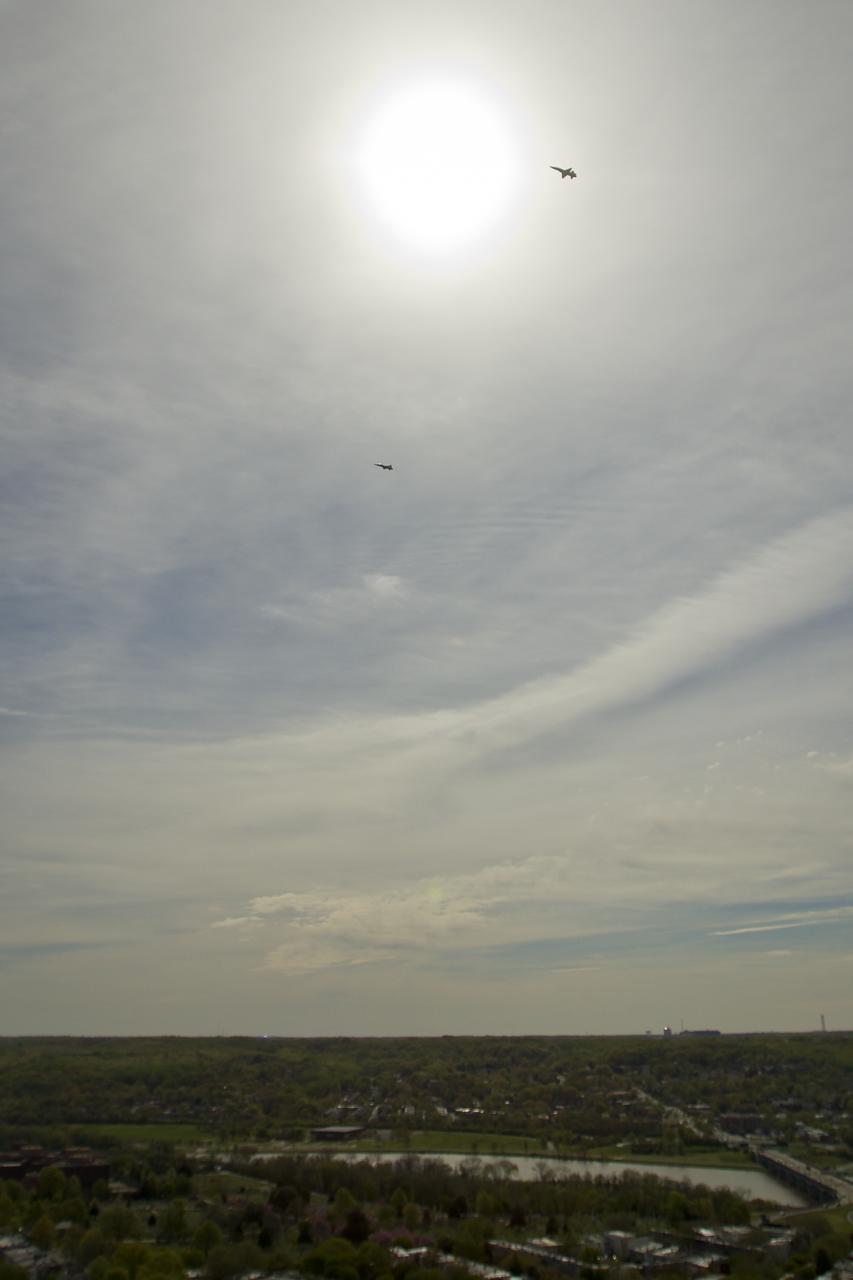
Two NASA T-38 training jets are seen as they fly over Washington, DC, Thursday, April 5, 2012.  NASA, in cooperation with the Federal Aviation Administration, conducted training and photographic flights over the DC metropolitan area.  T-38 aircraft have been used for astronaut training for more than 30 years as they allow pilots and mission specialists to think quickly in changing situations, mental experiences the astronauts say are critical to practicing for the rigors of spaceflight.  Photo Credit:  (NASA/Bill Ingalls)
T-38 Aircraft Fly Over Washington
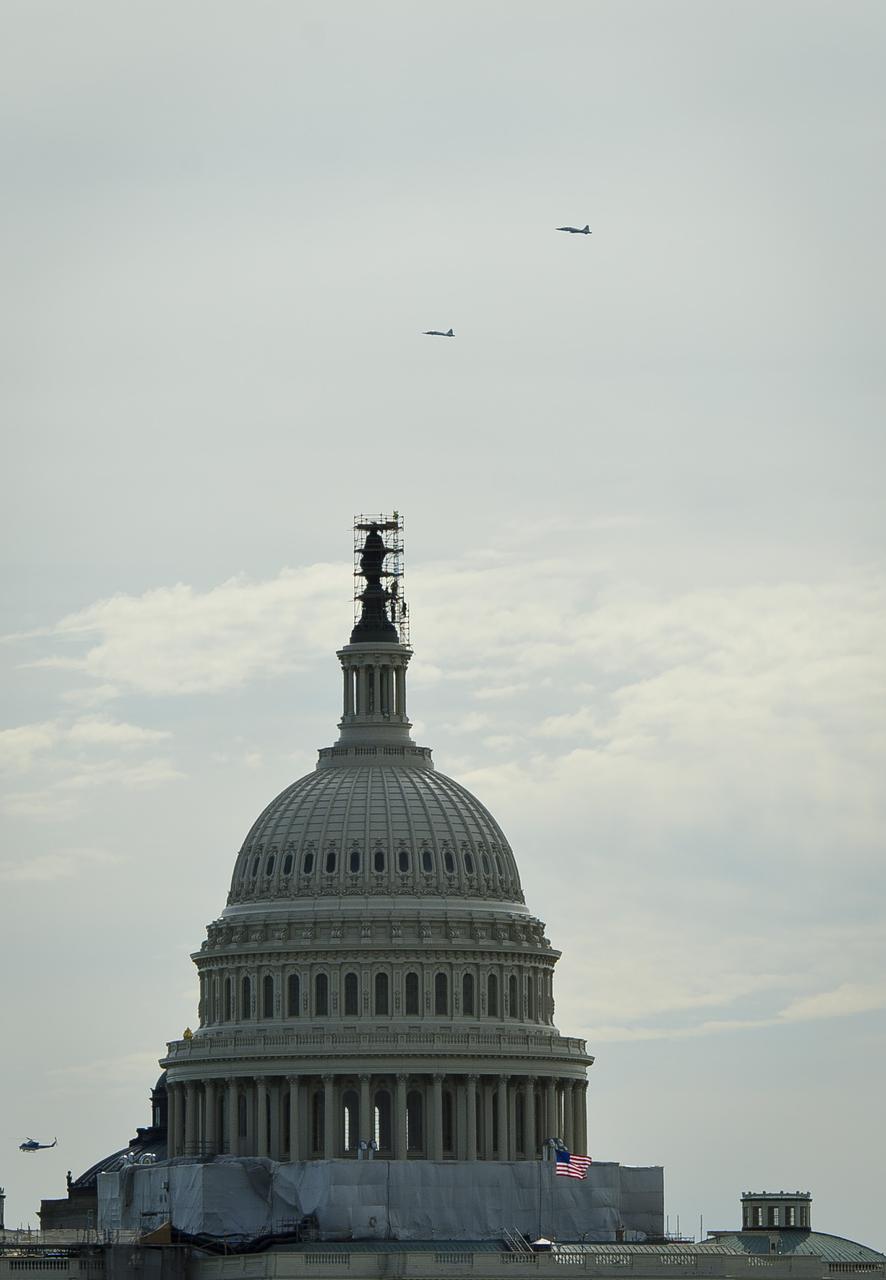
Two NASA T-38 training jets are seen as they fly over the U.S. Capitol, Thursday, April 5, 2012, in Washington.  NASA, in cooperation with the Federal Aviation Administration, conducted training and photographic flights over the DC metropolitan area.  T-38 aircraft have been used for astronaut training for more than 30 years as they allow pilots and mission specialists to think quickly in changing situations, mental experiences the astronauts say are critical to practicing for the rigors of spaceflight.  Photo Credit: (NASA/Paul E. Alers)
T-38 Aircraft Fly Over Washington
NASA’s all-electric X-57 Maxwell prepares for ground vibration testing, or GVT, at NASA’s Armstrong Flight Research Center in California. Done in parallel with cruise motor controller testing, the GVT tested the vehicle at various vibration levels, helping engineers to examine and validate the integrity of the vehicle for flight conditions. A goal of X-57 is to help the Federal Aviation Administration set certification standards for emerging electric aircraft markets.
X-57 Preps for Ground Vibration Testing in Mod 2 Configuration
Space shuttle Endeavour embarked on the first leg of its final flight Sept. 19, departing Kennedy Space Center in Florida and making early-morning flyover visits to Stennis Space Center in Mississippi and nearby Michoud Assembly Facility in Louisiana. The shuttle flew atop the 747 Shuttle Carrier Aircraft, headed west, where it will go on display at the California Science Center in Los Angeles. The flight crew coordinated with the Federal Aviation Administration to conduct low-level flyovers at about 1,500 feet above Stennis and Michoud.
Shuttle flyover
Ultra High Bypass Integrated System Test Testing of an Ultra High Bypass Ratio Turbofan model in the 9-by 15-Foot Low Speed Wind Tunnel. Pratt & Whitney designed the experimental engine to meet new efficiency and noise reduction targets for commercial aircraft set by NASA and the Federal Aviation Administration. The 9-by 15 tests analyzed two noise reduction technologies.
Ultra High Bypass Ratio Turbofan model in the 9-by 15-Foot Low Speed Wind Tunnel
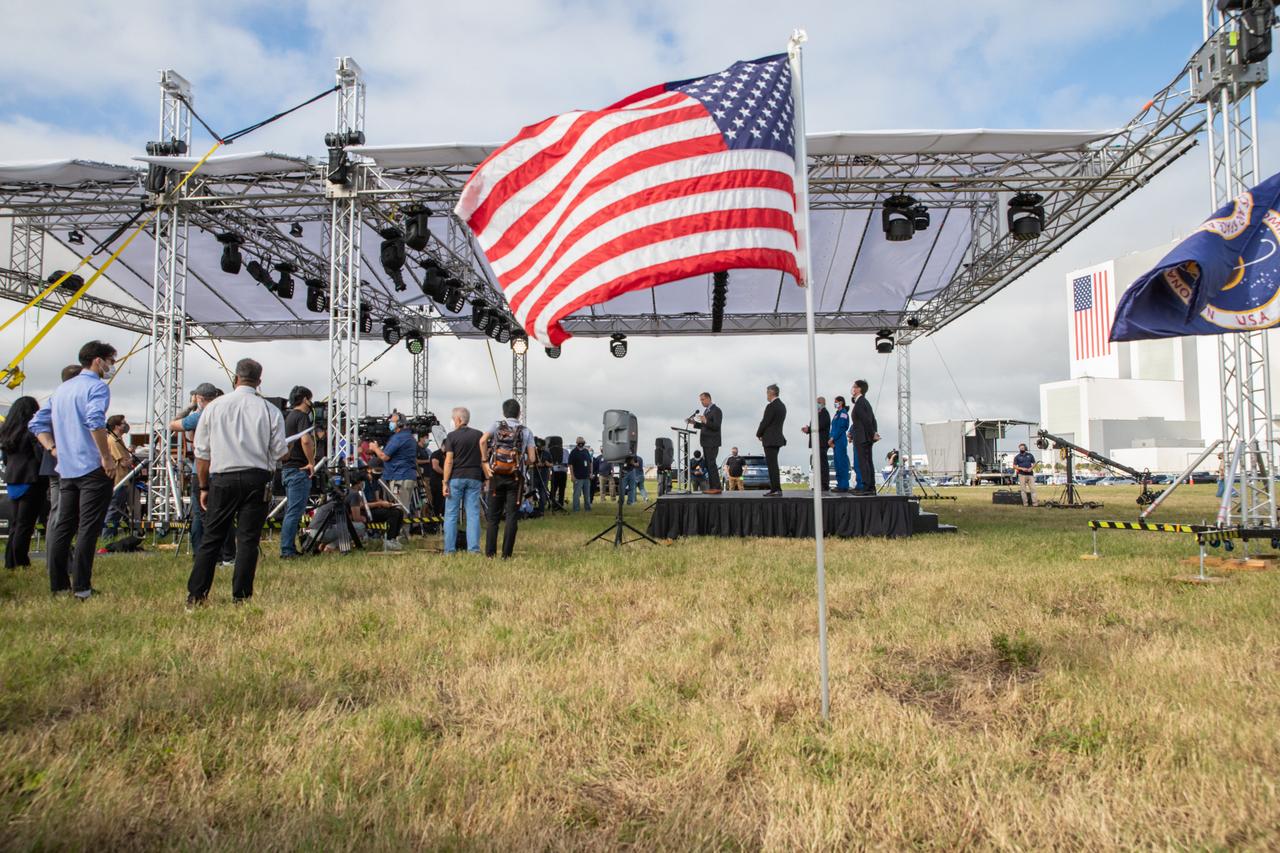
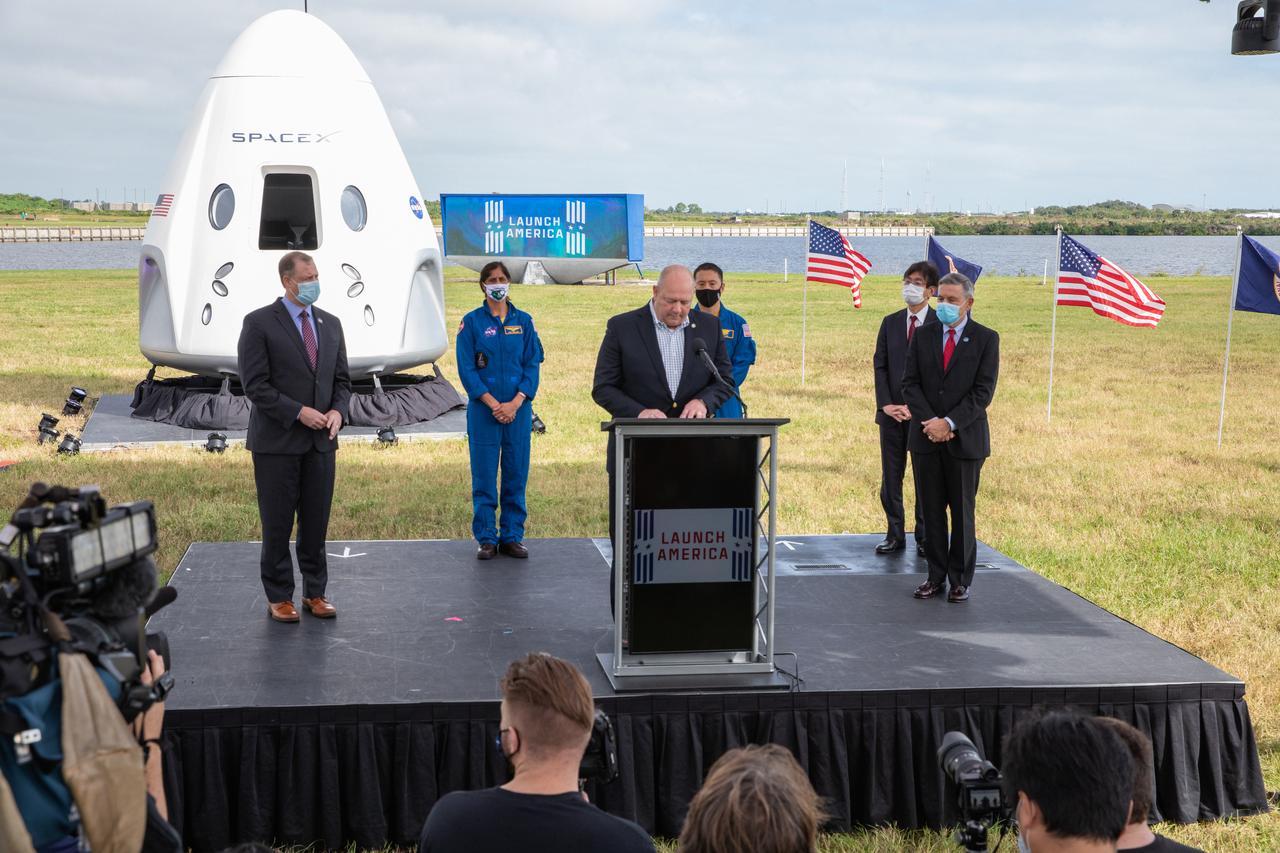
Members of the news media attend a press briefing Nov. 13, 2020, near the Press Site countdown clock at NASA’s Kennedy Space Center in Florida ahead of the agency’s SpaceX Crew-1 launch. Participating in the briefing, on the raised platform, are NASA Administrator Jim Bridenstine; Steve Dickson, administrator, Federal Aviation Administration; Kennedy Center Director Bob Cabana; Hiroshi Sasaki, vice president and director general, JAXA’s Human Spaceflight Technology Directorate; NASA astronaut Jonny Kim; and NASA astronaut Sunita Williams. Crew-1 is the first regular crew mission of a U.S. commercial spacecraft with astronauts to the International Space Station as part of NASA’s Commercial Crew Program. The SpaceX Crew Dragon Resilience capsule will launch atop the company’s Falcon 9 rocket from Launch Complex 39A to the space station for a six-month science mission.
SpaceX Crew-1 Administrator Briefing
Steve Dickson, administrator, Federal Aviation Administration, speaks during a press briefing Nov. 13, 2020, near the Press Site countdown clock at the agency’s Kennedy Space Center in Florida ahead of NASA’s SpaceX Crew-1 launch. Behind him, from left are NASA Administrator Jim Bridenstine, NASA astronaut Sunita Williams, NASA astronaut Jonny Kim, Hiroshi Sasaki, vice president and director general, JAXA’s Human Spaceflight, and Kennedy Space Center Director Bob Cabana. Crew-1 is the first regular crew mission of a U.S. commercial spacecraft with astronauts to the International Space Station as part of NASA’s Commercial Crew Program. The SpaceX Crew Dragon Resilience capsule will launch atop the company’s Falcon 9 rocket from Launch Complex 39A to the space station for a six-month science mission.
SpaceX Crew-1 Administrator Briefing
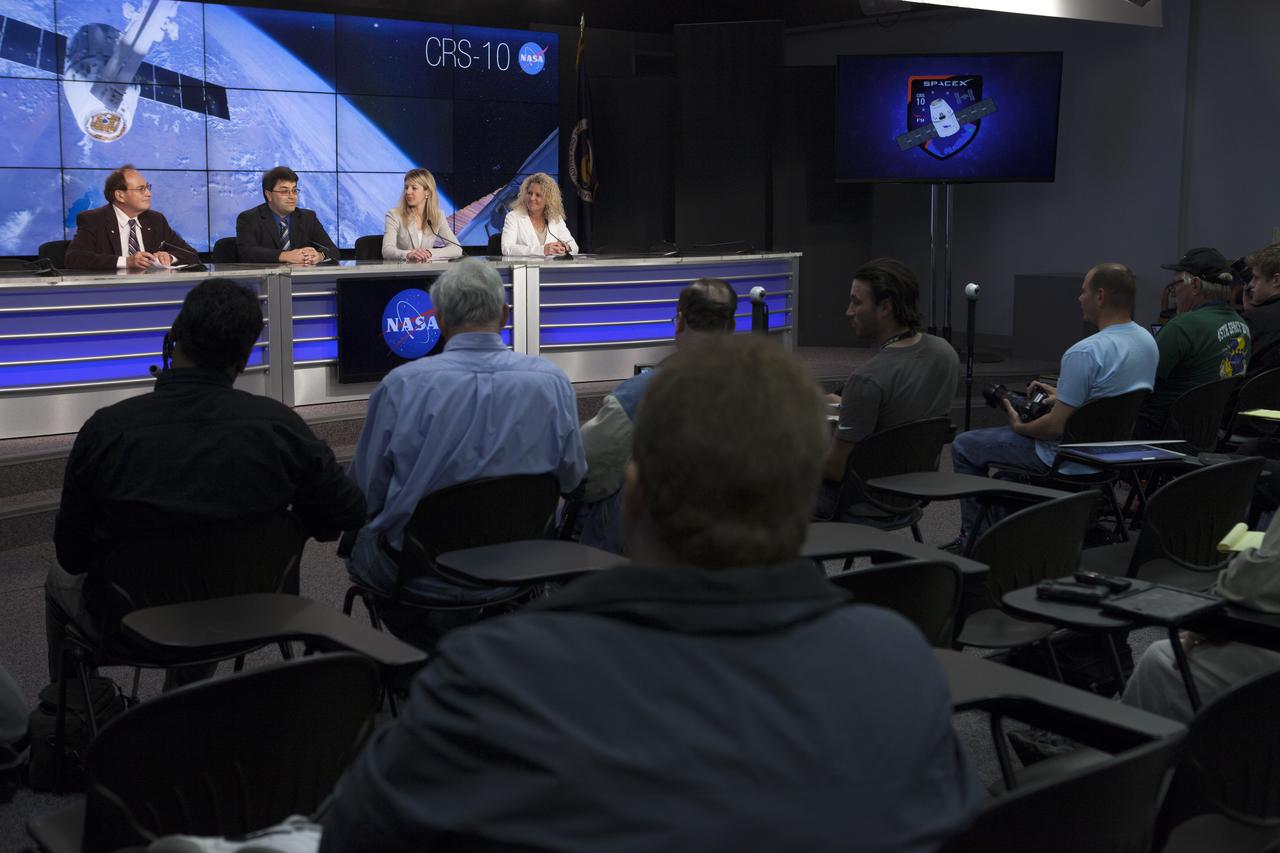
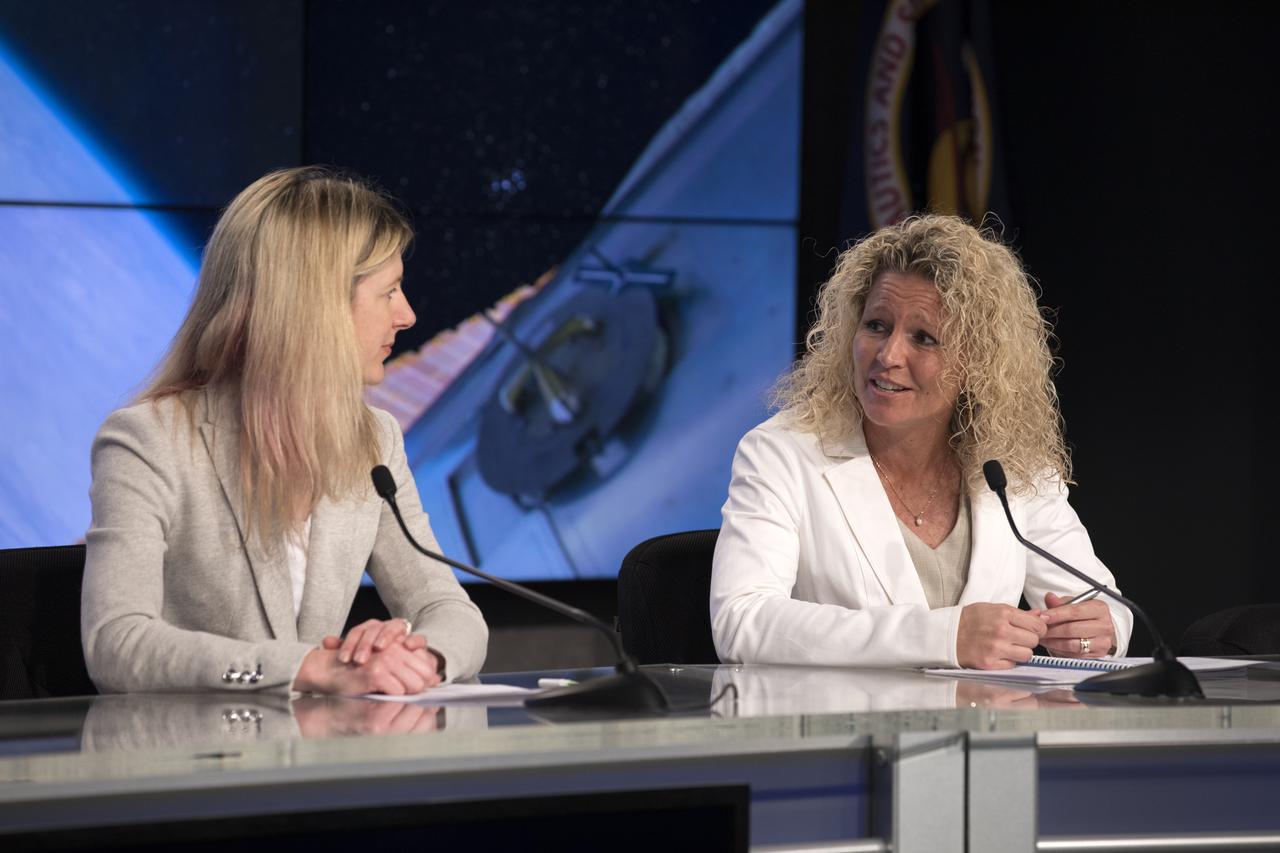
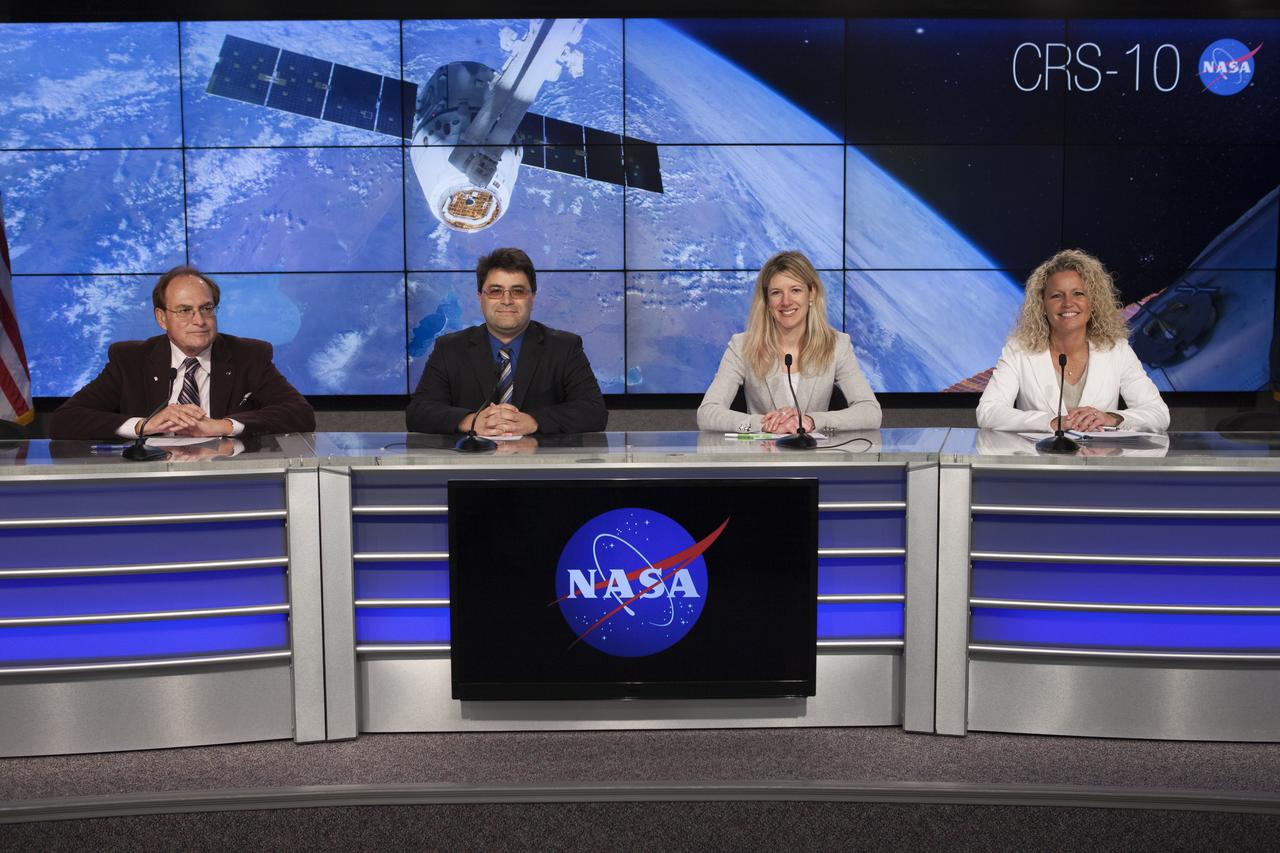
In the Press Site auditorium of NASA's Kennedy Space Center in Florida, NASA and industry leaders speak to media at a post-launch news conference following the liftoff of SpaceX CRS-10, a commercial resupply services mission to the International Space Station. From left are: George Diller, NASA Communications; William Spetch, deputy manager of the International Space Station Transportation Office; Jessica Jensen, Dragon mission manager for SpaceX; and Pam Underwood, manager of the Operations Integration Division of the Federal Aviation Administration Office of Commercial Space Transportation. SpaceX CRS-10 lifted off atop a Falcon 9 rocket from Kennedy's Launch Complex 39A at 9:39 a.m. EST.
SpaceX CRS-10 Post Launch News Conference
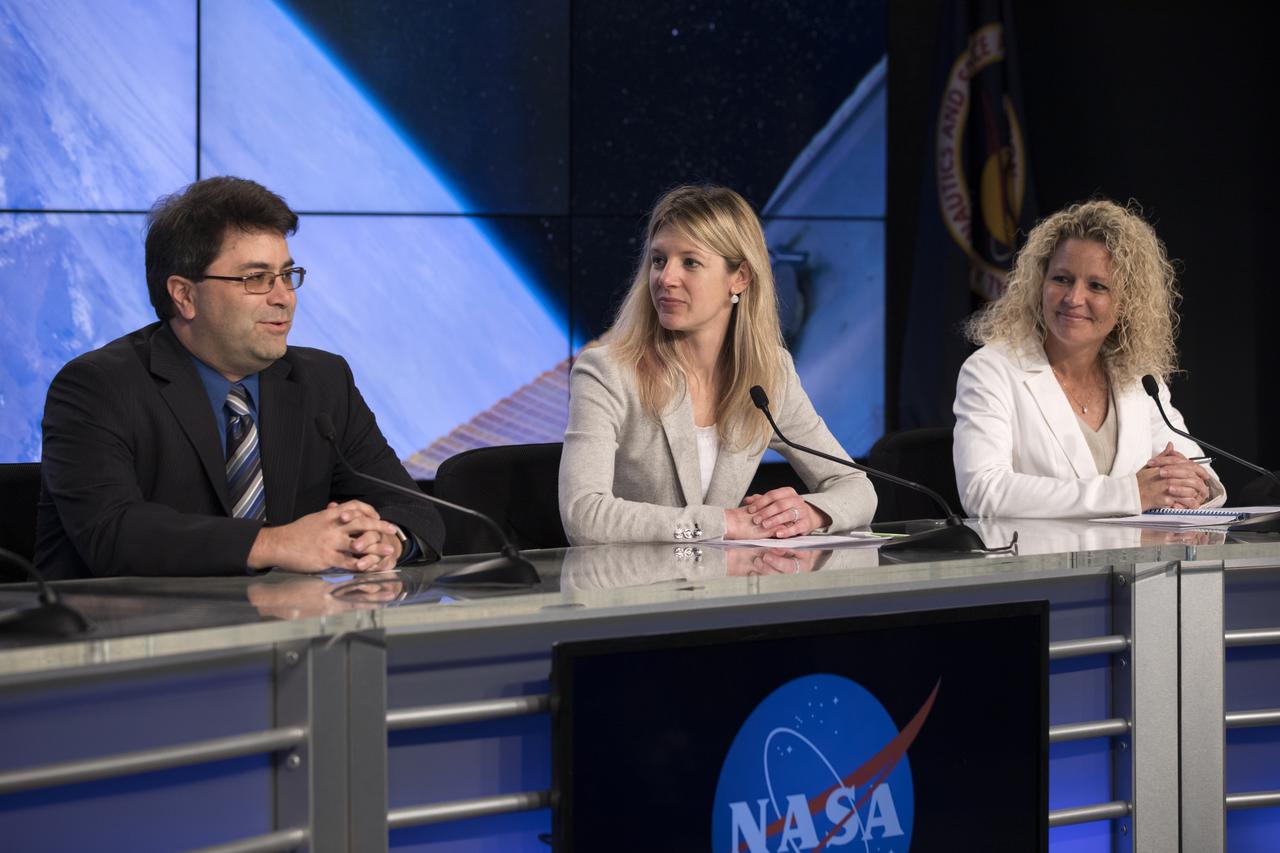
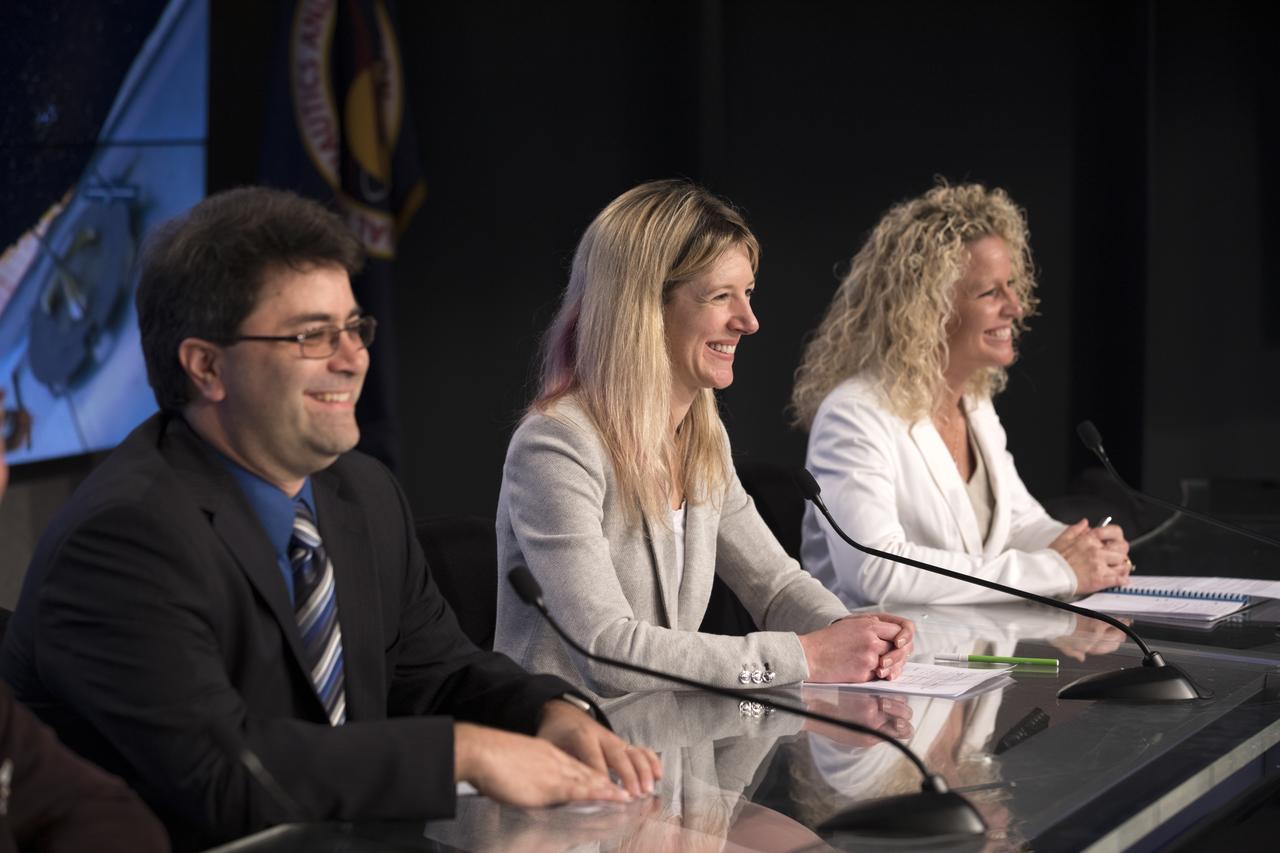
In the Press Site auditorium of NASA's Kennedy Space Center in Florida, NASA and industry leaders speak to media at a post-launch news conference following the liftoff of SpaceX CRS-10, a commercial resupply services mission to the International Space Station. From left are: William Spetch, deputy manager of the International Space Station Transportation Office; Jessica Jensen, Dragon mission manager for SpaceX; and Pam Underwood, manager of the Operations Integration Division of the Federal Aviation Administration Office of Commercial Space Transportation. SpaceX CRS-10 lifted off atop a Falcon 9 rocket from Kennedy's Launch Complex 39A at 9:39 a.m. EST.
SpaceX CRS-10 Post Launch News Conference
In the Press Site auditorium of NASA's Kennedy Space Center in Florida, NASA and industry leaders speak to media at a post-launch news conference following the liftoff of SpaceX CRS-10, a commercial resupply services mission to the International Space Station. From left are: William Spetch, deputy manager of the International Space Station Transportation Office; Jessica Jensen, Dragon mission manager for SpaceX; and Pam Underwood, manager of the Operations Integration Division of the Federal Aviation Administration Office of Commercial Space Transportation. SpaceX CRS-10 lifted off atop a Falcon 9 rocket from Kennedy's Launch Complex 39A at 9:39 a.m. EST.
SpaceX CRS-10 Post Launch News Conference
In the Press Site auditorium of NASA's Kennedy Space Center in Florida, NASA and industry leaders speak to media at a post-launch news conference following the liftoff of SpaceX CRS-10, a commercial resupply services mission to the International Space Station. From left are: George Diller, NASA Communications; William Spetch, deputy manager of the International Space Station Transportation Office; Jessica Jensen, Dragon mission manager for SpaceX; and Pam Underwood, manager of the Operations Integration Division of the Federal Aviation Administration Office of Commercial Space Transportation. SpaceX CRS-10 lifted off atop a Falcon 9 rocket from Kennedy's Launch Complex 39A at 9:39 a.m. EST.
SpaceX CRS-10 Post Launch News Conference
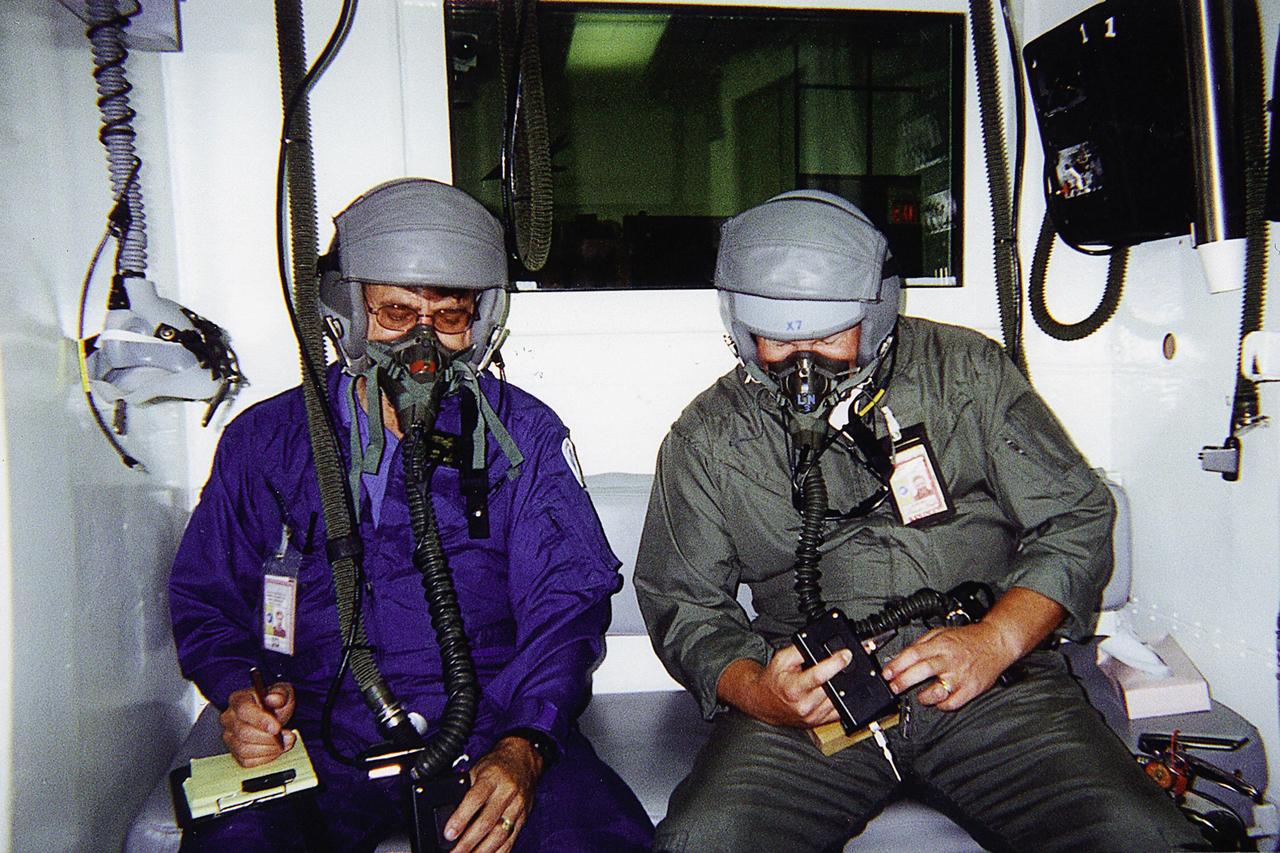
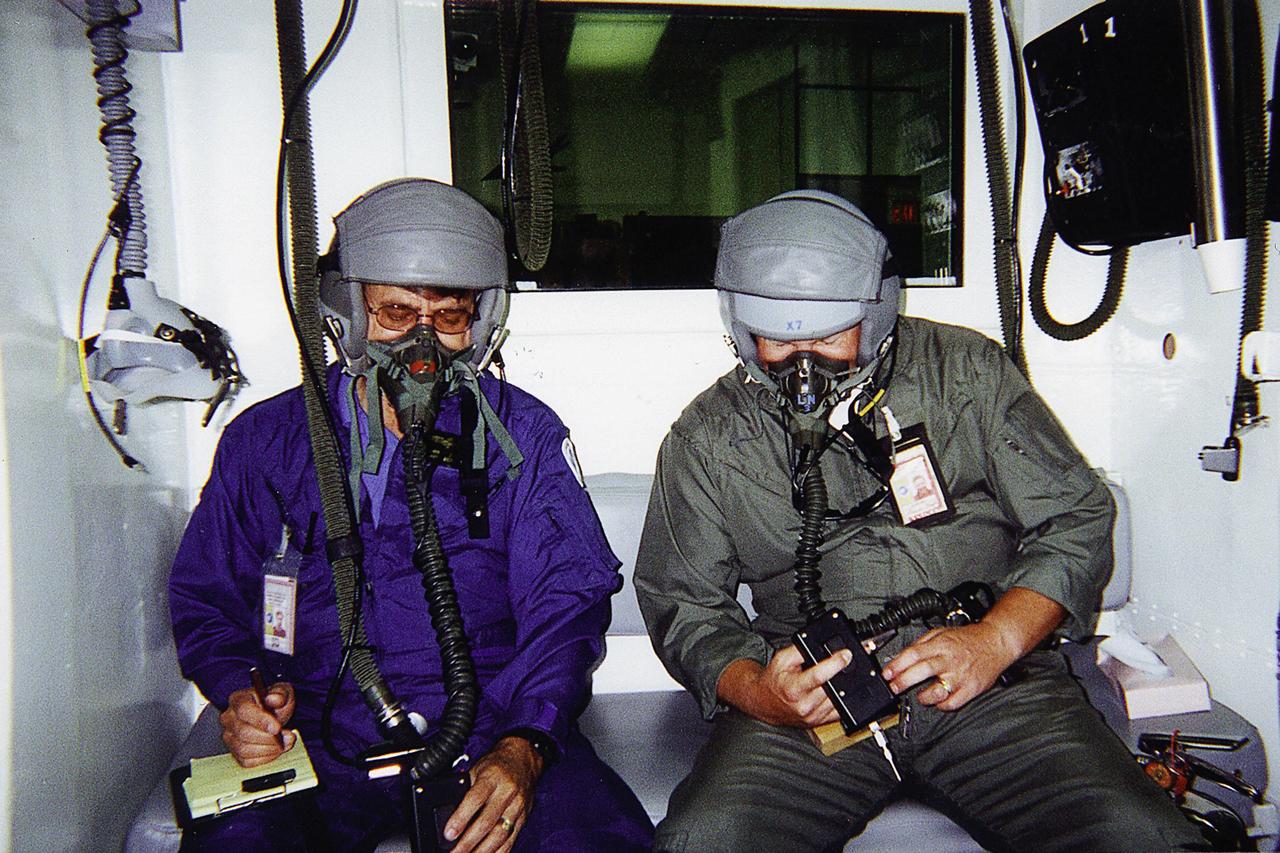
Jan Zysko (left) and Rich Mizell (right) test a Personal Cabin Pressure Altitude Monitor in an altitude chamber at Tyndall Air Force Base in Florida. Zysko invented the pager-sized monitor that alerts wearers of a potentially dangerous or deteriorating cabin pressure altitude condition, which can lead to life-threatening hypoxia. Zysko is chief of the KSC Spaceport Engineering and Technology directorate's data and electronic systems branch. Mizell is a Shuttle processing engineer. The monitor, which has drawn the interest of such organizations as the Federal Aviation Administration for use in commercial airliners and private aircraft, was originally designed to offer Space Shuttle and Space Station crew members added independent notification about any depressurization
KSC-00padig049
Jan Zysko (left) and Rich Mizell (right) test a Personal Cabin Pressure Altitude Monitor in an altitude chamber at Tyndall Air Force Base in Florida. Zysko invented the pager-sized monitor that alerts wearers of a potentially dangerous or deteriorating cabin pressure altitude condition, which can lead to life-threatening hypoxia. Zysko is chief of the KSC Spaceport Engineering and Technology directorate's data and electronic systems branch. Mizell is a Shuttle processing engineer. The monitor, which has drawn the interest of such organizations as the Federal Aviation Administration for use in commercial airliners and private aircraft, was originally designed to offer Space Shuttle and Space Station crew members added independent notification about any depressurization
KSC00padig049
In the Press Site auditorium of NASA's Kennedy Space Center in Florida, NASA and industry leaders speak to media at a post-launch news conference following the liftoff of SpaceX CRS-10, a commercial resupply services mission to the International Space Station. From left are: Jessica Jensen, Dragon mission manager for SpaceX; and Pam Underwood, manager of the Operations Integration Division of the Federal Aviation Administration Office of Commercial Space Transportation. SpaceX CRS-10 lifted off atop a Falcon 9 rocket from Kennedy's Launch Complex 39A at 9:39 a.m. EST.
SpaceX CRS-10 Post Launch News Conference
This close-up shows the pager-sized Personal Cabin Pressure Altitude Monitor developed by Jan Zysko, chief of the KSC Spaceport Engineering and Technology directorate's data and electronic systems branch. The monitor alerts wearers of a potentially dangerous or deteriorating cabin pressure altitude condition, which can lead to life-threatening hypoxia. Zysko originally designed the monitor to offer Space Shuttle and Space Station crew members added independent notification about any depressurization. However, it has drawn the interest of such organizations as the Federal Aviation Administration for use in commercial airliners and private aircraft as well
KSC-00padig050
CAPE CANAVERAL, Fla. – Pam Underwood of the Federal Aviation Administration's Office of Commercial Transportation and a panelist of the Commercial Crew Transportation Capability, or CCtCap, Pre-Proposal Conference, is seen before the start of an industry conference inside the Television Auditorium at NASA's Kennedy Space Center in Florida. The conference was held following the Commercial Crew Program, or CCP, request for proposals from commercial companies for a development and certification contract under CCtCap. The contract will provide a finish line for the agency following more than four years of development work by CCP and American aerospace companies. CCtCap is the second phase of a two-phase certification plan for privately built and operated integrated crew transportation systems. CCP’s goal is to aid in the development of commercial capabilities for crew transportation and rescue services to and from the International Space Station and other low-Earth orbit destinations by the end of 2017. Photo credit: NASA/Jim Grossmann
KSC-2013-4230
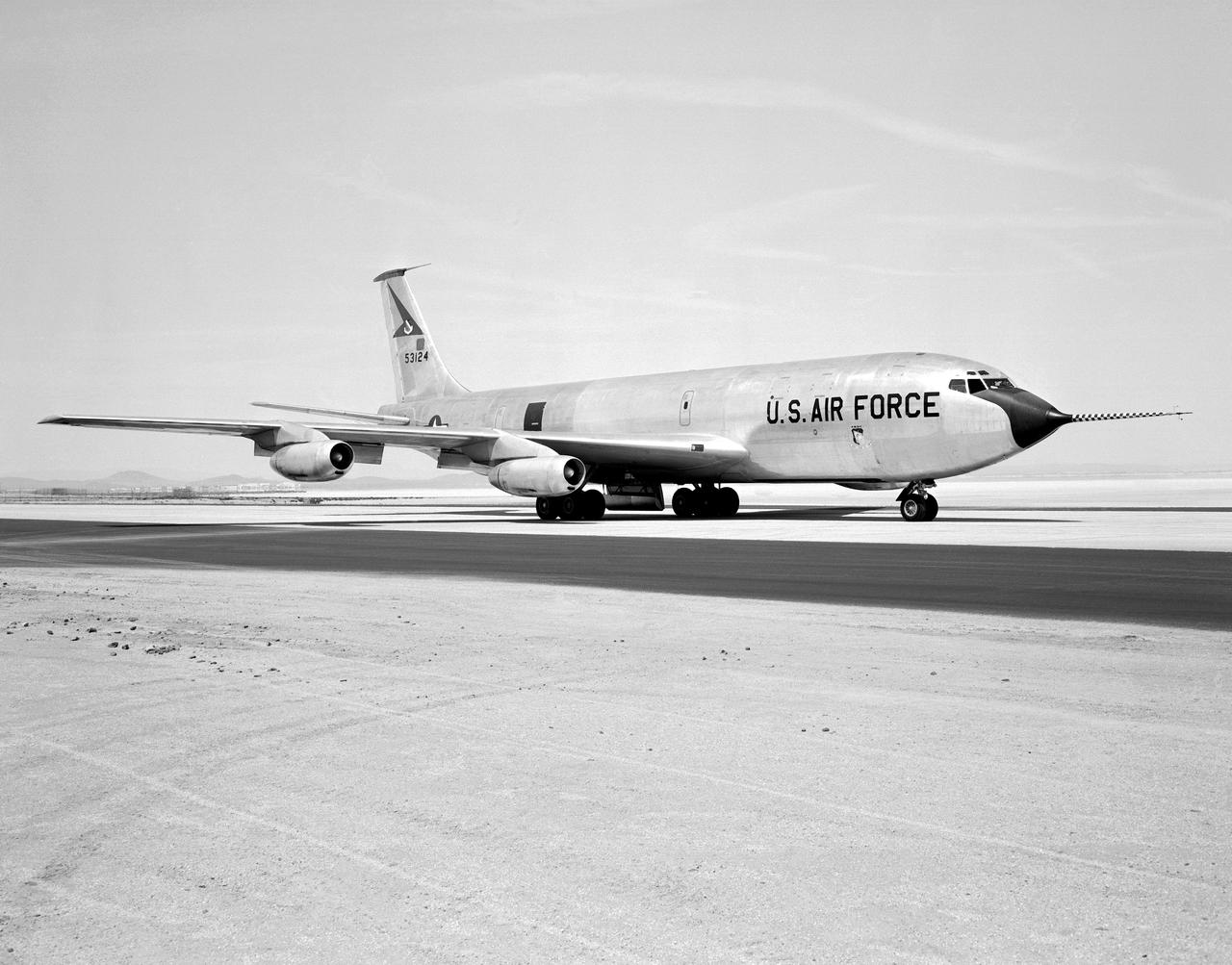
The Boeing KC-135 Stratotanker, besides being used extensively in its primary role as an inflight aircraft refueler, has assisted in several projects at the NASA Dryden Flight Research Center, Edwards, California. In 1957 and 1958, Dryden was asked by what was then the Civil Aeronautics Administration (later absorbed into the Federal Aviation Administration (FAA) in 1958) to help establish new approach procedure guidelines on cloud-ceiling and visibility minimums for Boeing's first jet airliner, the B-707. Dryden used a KC-135 (the military variant of the 707), seen here on the runway at Edwards Air Force Base, to aid the CAA in these tests.  In 1979 and 1980, Dryden was again involved with general aviation research with the KC-135. This time, a special wingtip "winglet", developed by Richard Whitcomb of Langley Research Center, was tested on the jet aircraft. Winglets are small, nearly vertical fins installed on an airplane's wing tips to help produce a forward thrust in the vortices that typically swirl off the end of the wing, thereby reducing drag. This winglet idea was tested at the Dryden Flight Research Center on a KC-135A tanker loaned to NASA by the Air Force. The research showed that the winglets could increase an aircraft's range by as much as 7 percent at cruise speeds. The first application of NASA's winglet technology in industry was in general aviation business jets, but winglets are now being incorporated into most new commercial and military transport jets, including the Gulfstream III and IV business jets, the Boeing 747-400 and MD-11 airliners, and the C-17 military transport.  In the 1980's, a KC-135 was used in support of the Space Shuttle program. Since the Shuttle was to be launched from Florida, researchers wanted to test the effect of rain on the sensitive thermal tiles. Tiles were mounted on special fixtures on an F-104 aircraft and a P-3 Orion. The F-104 was flown in actual rain conditions, and also behind the KC-135 spray tanker as it rel
E-4123
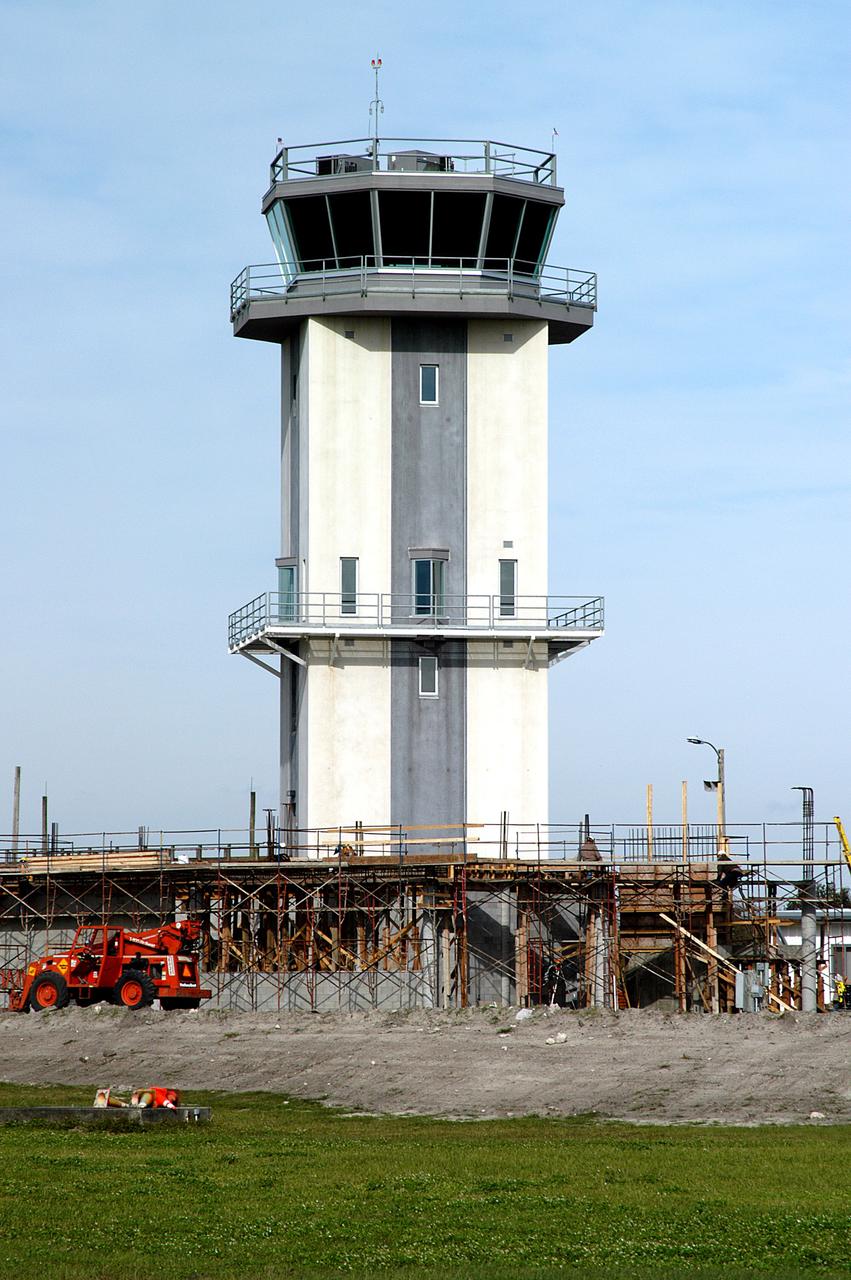
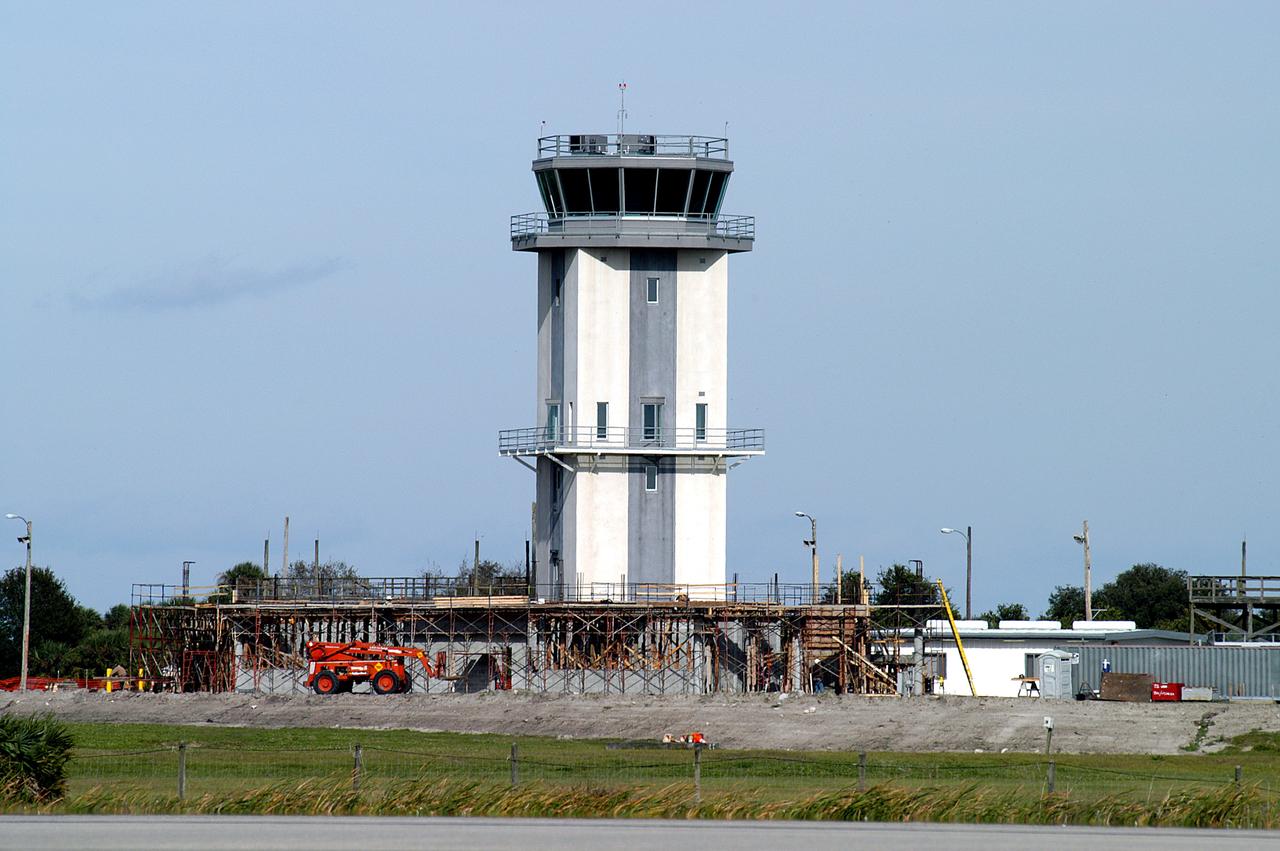
KENNEDY SPACE CENTER, FLA. -- A new control tower is nearing completion at the KSC Shuttle Landing Facility.  It will replace the old tower in use since 1987.   The old tower stands only 20 feet above the runway surface, too low to see the launch pads to the east. During nighttime landing operations, those inside the tower have been hindered by the eight-billion candlepower xenon lights that illuminate the runway.  The new control tower is built atop an existing mound, rising nearly 100 feet over the midpoint of the runway.  The height gives controllers a spectacular 360-degree view of NASA-KSC and northern Brevard County. The new facility will also replace the SLF Operations Building. The operations building is home to the Military Radar Unit that monitors NASA-KSC airspace 24 hours a day, as well as runway light controls, navigational aids, weather and wind speed instrumentation, and gate controls. In the new tower, the computer displays will be fully modernized to Federal Aviation Administration standards with touch-screen technology. Construction on the new facility began in February 2003 and is nearly ready for occupancy. Only some final inspections and approvals remain. A support building and Public Affairs viewing deck, to be used for observing future landing operations, will be added and are already in work.
KENNEDY SPACE CENTER, FLA. -- A new control tower is nearing completion at the KSC Shuttle Landing Facility. It will replace the old tower in use since 1987. The old tower stands only 20 feet above the runway surface, too low to see the launch pads to the east. During nighttime landing operations, those inside the tower have been hindered by the eight-billion candlepower xenon lights that illuminate the runway. The new control tower is built atop an existing mound, rising nearly 100 feet over the midpoint of the runway. The height gives controllers a spectacular 360-degree view of NASA-KSC and northern Brevard County. The new facility will also replace the SLF Operations Building. The operations building is home to the Military Radar Unit that monitors NASA-KSC airspace 24 hours a day, as well as runway light controls, navigational aids, weather and wind speed instrumentation, and gate controls. In the new tower, the computer displays will be fully modernized to Federal Aviation Administration standards with touch-screen technology. Construction on the new facility began in February 2003 and is nearly ready for occupancy. Only some final inspections and approvals remain. A support building and Public Affairs viewing deck, to be used for observing future landing operations, will be added and are already in work.
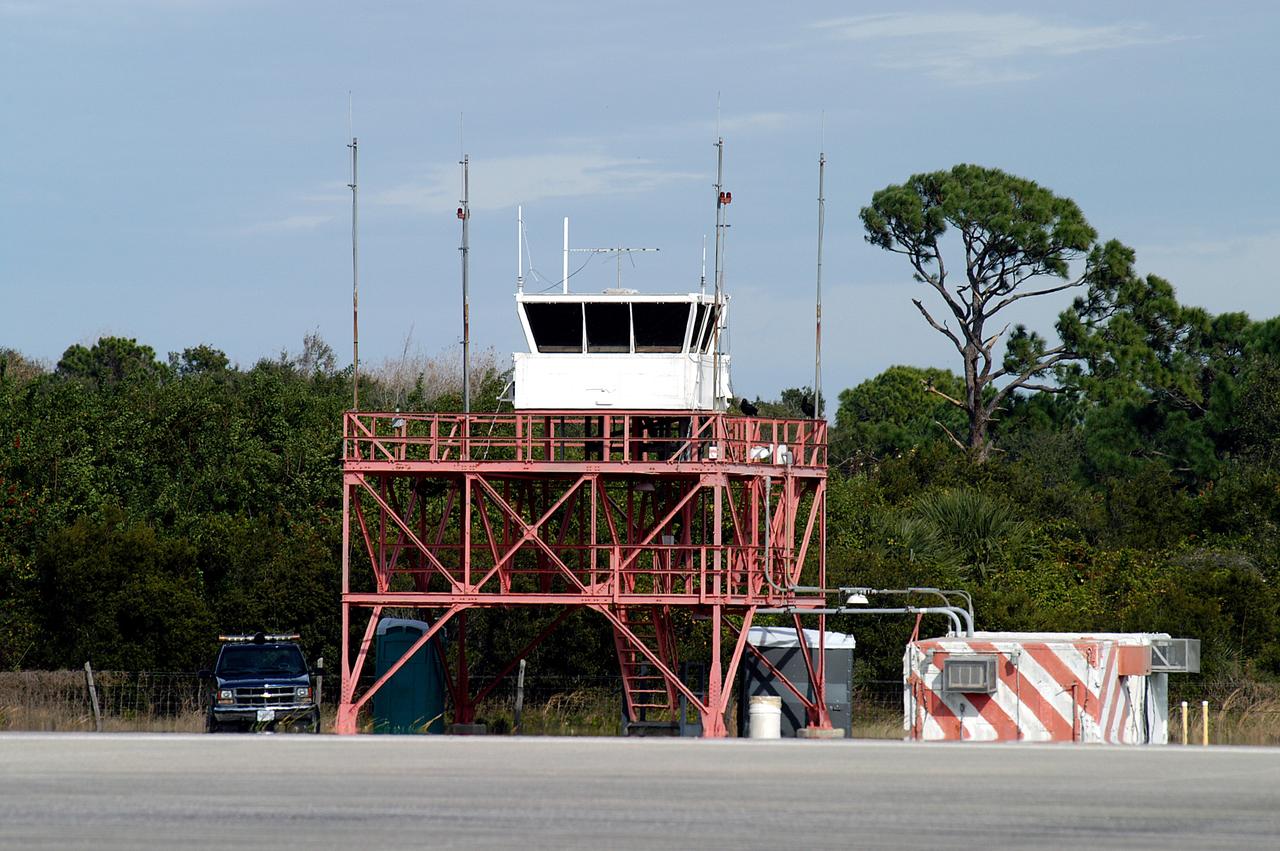
KENNEDY SPACE CENTER, FLA. -- The existing control tower seen here at the edge of the KSC Shuttle Landing Facility is being replaced.  In use since 1987, the old tower stands only 20 feet above the runway surface, too low to see the launch pads to the east. During nighttime landing operations, those inside the tower have been hindered by the eight-billion candlepower xenon lights that illuminate the runway.  The new control tower is built atop an existing mound, rising nearly 100 feet over the midpoint of the runway.  The height gives controllers a spectacular 360-degree view of NASA-KSC and northern Brevard County. The new facility will also replace the SLF Operations Building. The operations building is home to the Military Radar Unit that monitors NASA-KSC airspace 24 hours a day, as well as runway light controls, navigational aids, weather and wind speed instrumentation, and gate controls. In the new tower, the computer displays will be fully modernized to Federal Aviation Administration standards with touch-screen technology. Construction on the new facility began in February 2003 and is nearly ready for occupancy. Only some final inspections and approvals remain. A support building and Public Affairs viewing deck, to be used for observing future landing operations, will be added and are already in work.
KENNEDY SPACE CENTER, FLA. -- The existing control tower seen here at the edge of the KSC Shuttle Landing Facility is being replaced. In use since 1987, the old tower stands only 20 feet above the runway surface, too low to see the launch pads to the east. During nighttime landing operations, those inside the tower have been hindered by the eight-billion candlepower xenon lights that illuminate the runway. The new control tower is built atop an existing mound, rising nearly 100 feet over the midpoint of the runway. The height gives controllers a spectacular 360-degree view of NASA-KSC and northern Brevard County. The new facility will also replace the SLF Operations Building. The operations building is home to the Military Radar Unit that monitors NASA-KSC airspace 24 hours a day, as well as runway light controls, navigational aids, weather and wind speed instrumentation, and gate controls. In the new tower, the computer displays will be fully modernized to Federal Aviation Administration standards with touch-screen technology. Construction on the new facility began in February 2003 and is nearly ready for occupancy. Only some final inspections and approvals remain. A support building and Public Affairs viewing deck, to be used for observing future landing operations, will be added and are already in work.
KENNEDY SPACE CENTER, FLA. -- A new control tower is nearing completion at the KSC Shuttle Landing Facility.  It will replace the old tower in use since 1987.   The old tower stands only 20 feet above the runway surface, too low to see the launch pads to the east. During nighttime landing operations, those inside the tower have been hindered by the eight-billion candlepower xenon lights that illuminate the runway.  The new control tower is built atop an existing mound, rising nearly 100 feet over the midpoint of the runway.  The height gives controllers a spectacular 360-degree view of NASA-KSC and northern Brevard County. The new facility will also replace the SLF Operations Building. The operations building is home to the Military Radar Unit that monitors NASA-KSC airspace 24 hours a day, as well as runway light controls, navigational aids, weather and wind speed instrumentation, and gate controls. In the new tower, the computer displays will be fully modernized to Federal Aviation Administration standards with touch-screen technology. Construction on the new facility began in February 2003 and is nearly ready for occupancy. Only some final inspections and approvals remain. A support building and Public Affairs viewing deck, to be used for observing future landing operations, will be added and are already in work.
KENNEDY SPACE CENTER, FLA. -- A new control tower is nearing completion at the KSC Shuttle Landing Facility. It will replace the old tower in use since 1987. The old tower stands only 20 feet above the runway surface, too low to see the launch pads to the east. During nighttime landing operations, those inside the tower have been hindered by the eight-billion candlepower xenon lights that illuminate the runway. The new control tower is built atop an existing mound, rising nearly 100 feet over the midpoint of the runway. The height gives controllers a spectacular 360-degree view of NASA-KSC and northern Brevard County. The new facility will also replace the SLF Operations Building. The operations building is home to the Military Radar Unit that monitors NASA-KSC airspace 24 hours a day, as well as runway light controls, navigational aids, weather and wind speed instrumentation, and gate controls. In the new tower, the computer displays will be fully modernized to Federal Aviation Administration standards with touch-screen technology. Construction on the new facility began in February 2003 and is nearly ready for occupancy. Only some final inspections and approvals remain. A support building and Public Affairs viewing deck, to be used for observing future landing operations, will be added and are already in work.
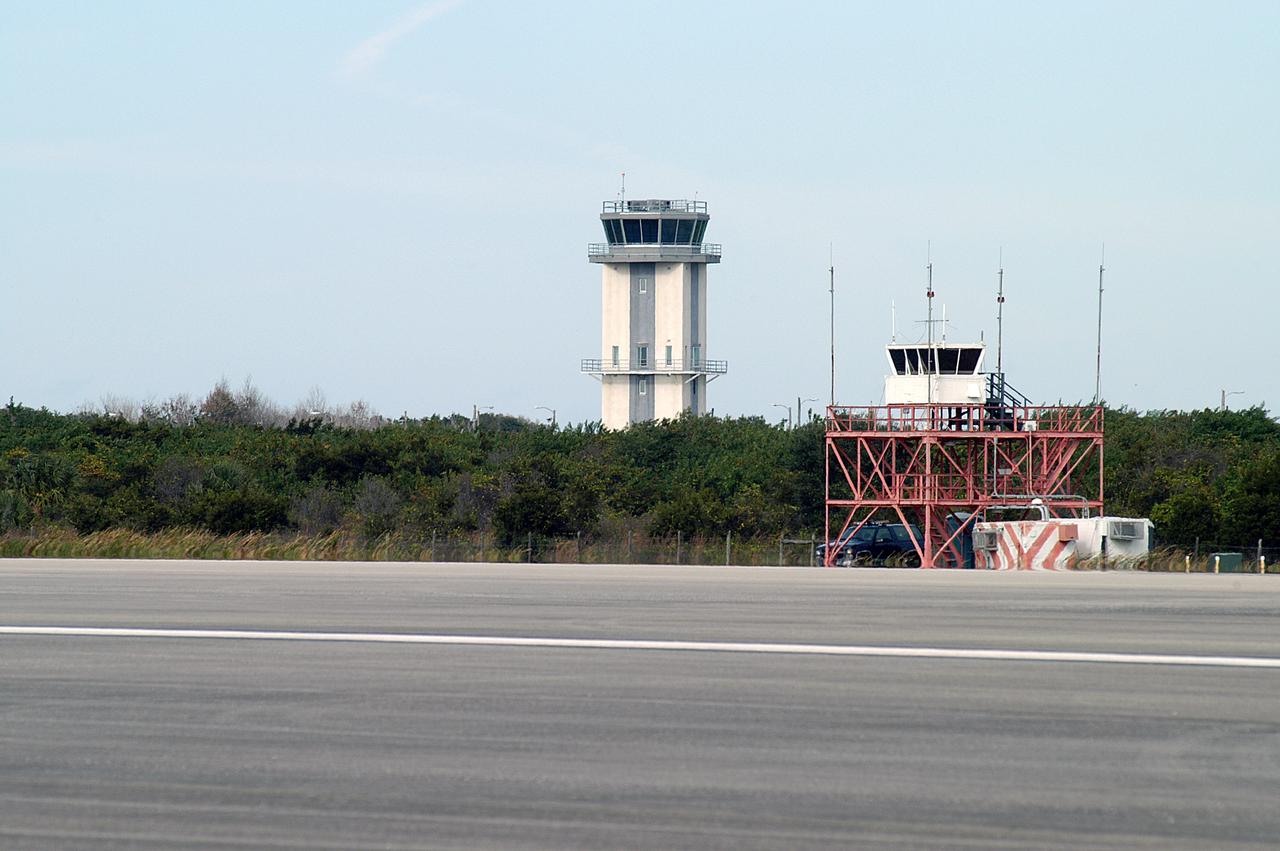
KENNEDY SPACE CENTER, FLA. -- Two control towers are seen at the edge of the KSC Shuttle Landing Facility, the old one in front and the nearly completed new tower in back.  The old tower stands only 20 feet above the runway surface, too low to see the launch pads to the east. During nighttime landing operations, those inside the tower have been hindered by the eight-billion candlepower xenon lights that illuminate the runway.  The new control tower is built atop an existing mound, rising nearly 100 feet over the midpoint of the runway.  The height gives controllers a spectacular 360-degree view of NASA-KSC and northern Brevard County. The new facility will also replace the SLF Operations Building. The operations building is home to the Military Radar Unit that monitors NASA-KSC airspace 24 hours a day, as well as runway light controls, navigational aids, weather and wind speed instrumentation, and gate controls. In the new tower, the computer displays will be fully modernized to Federal Aviation Administration standards with touch-screen technology. Construction on the new facility began in February 2003 and is nearly ready for occupancy. Only some final inspections and approvals remain. A support building and Public Affairs viewing deck, to be used for observing future landing operations, will be added and are already in work.
KENNEDY SPACE CENTER, FLA. -- Two control towers are seen at the edge of the KSC Shuttle Landing Facility, the old one in front and the nearly completed new tower in back. The old tower stands only 20 feet above the runway surface, too low to see the launch pads to the east. During nighttime landing operations, those inside the tower have been hindered by the eight-billion candlepower xenon lights that illuminate the runway. The new control tower is built atop an existing mound, rising nearly 100 feet over the midpoint of the runway. The height gives controllers a spectacular 360-degree view of NASA-KSC and northern Brevard County. The new facility will also replace the SLF Operations Building. The operations building is home to the Military Radar Unit that monitors NASA-KSC airspace 24 hours a day, as well as runway light controls, navigational aids, weather and wind speed instrumentation, and gate controls. In the new tower, the computer displays will be fully modernized to Federal Aviation Administration standards with touch-screen technology. Construction on the new facility began in February 2003 and is nearly ready for occupancy. Only some final inspections and approvals remain. A support building and Public Affairs viewing deck, to be used for observing future landing operations, will be added and are already in work.
Technicians set up test hardware inside the test section of the Icing Research Tunnel at the National Aeronautics and Space Administration (NASA) Lewis Research Center. The Icing Research Tunnel was built in the early 1940s to study the formation of ice on aircraft surfaces and develop methods of preventing or eradicating that ice. Ice buildup is dangerous because it adds extra weight, effects aerodynamics, and sometimes blocks air flow through engines.  The Icing Research Tunnel is a closed-loop atmospheric wind tunnel with a 6- by 9-foot test section. The tunnel can produce speeds up to 300 miles per hour and temperatures from 30 to -45 °F. NACA engineers struggled initially to perfect a spray bar system to introduce moisture into the airstream.    The tunnel was shut down in the late 1950s as the center focused its energy exclusively on space. Industrial customers began using the tunnel sporadically, then steadily, in the 1960s. Boeing, Aerojet, Lockheed, Sikorsky, Beech and others ran tests during the 1960s. Boeing analyzed engine inlets for the CH-47 Chinook, CH-46 (Sea Knight) and CH-113. This photograph was taken during a series of 100 ice-phobic coatings for the Federal Aviation Administration. They found that many of the coatings reduced ice adhesion to the test sample, but they could not be used for aircraft applications.
Setup in the Icing Research Tunnel Test Section
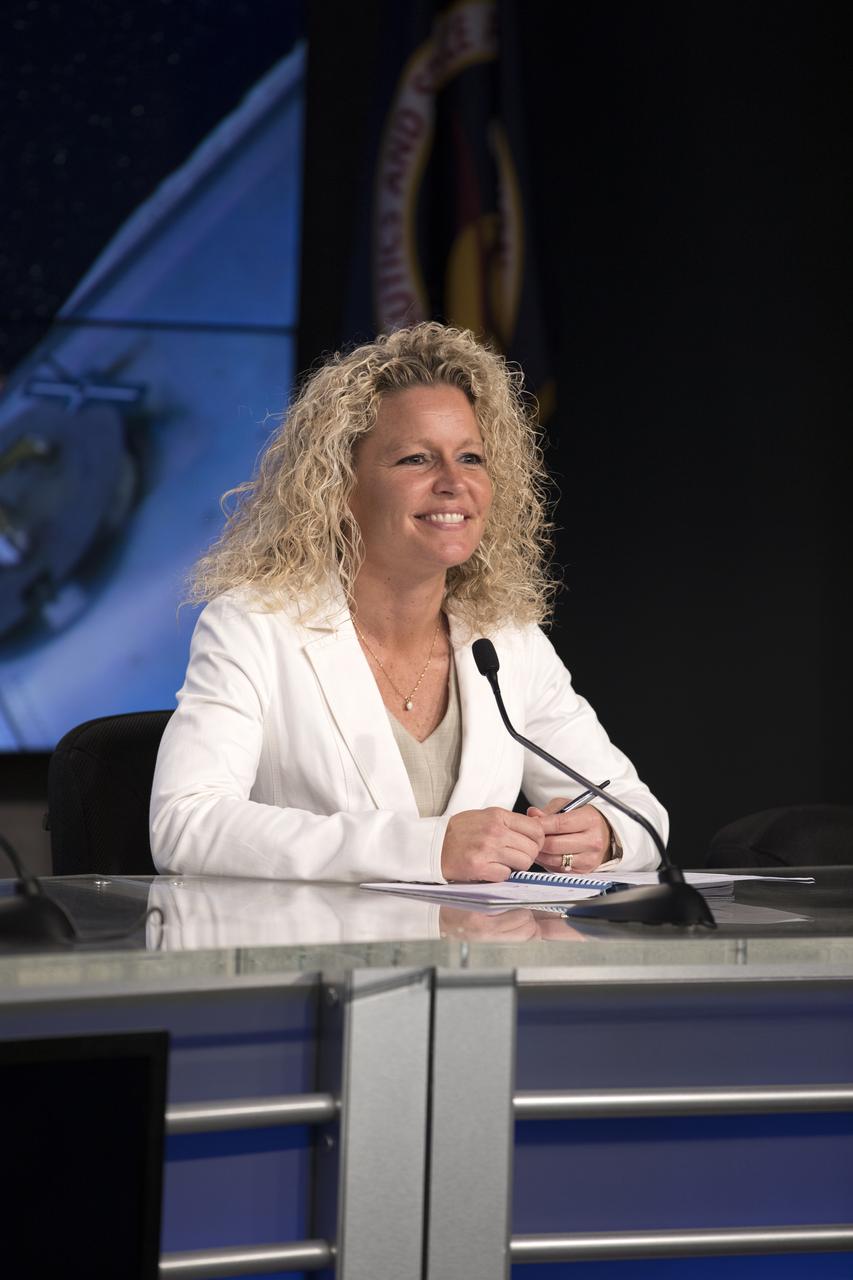
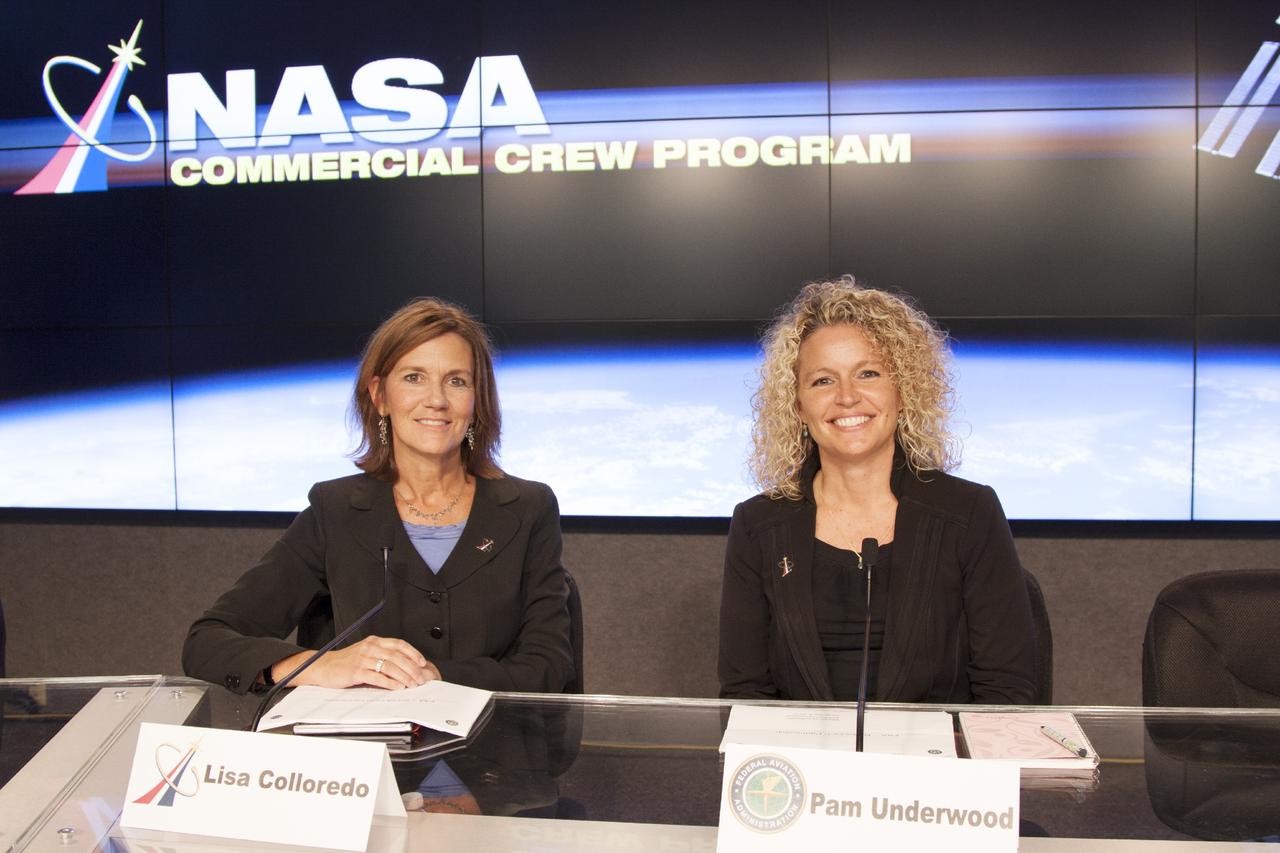
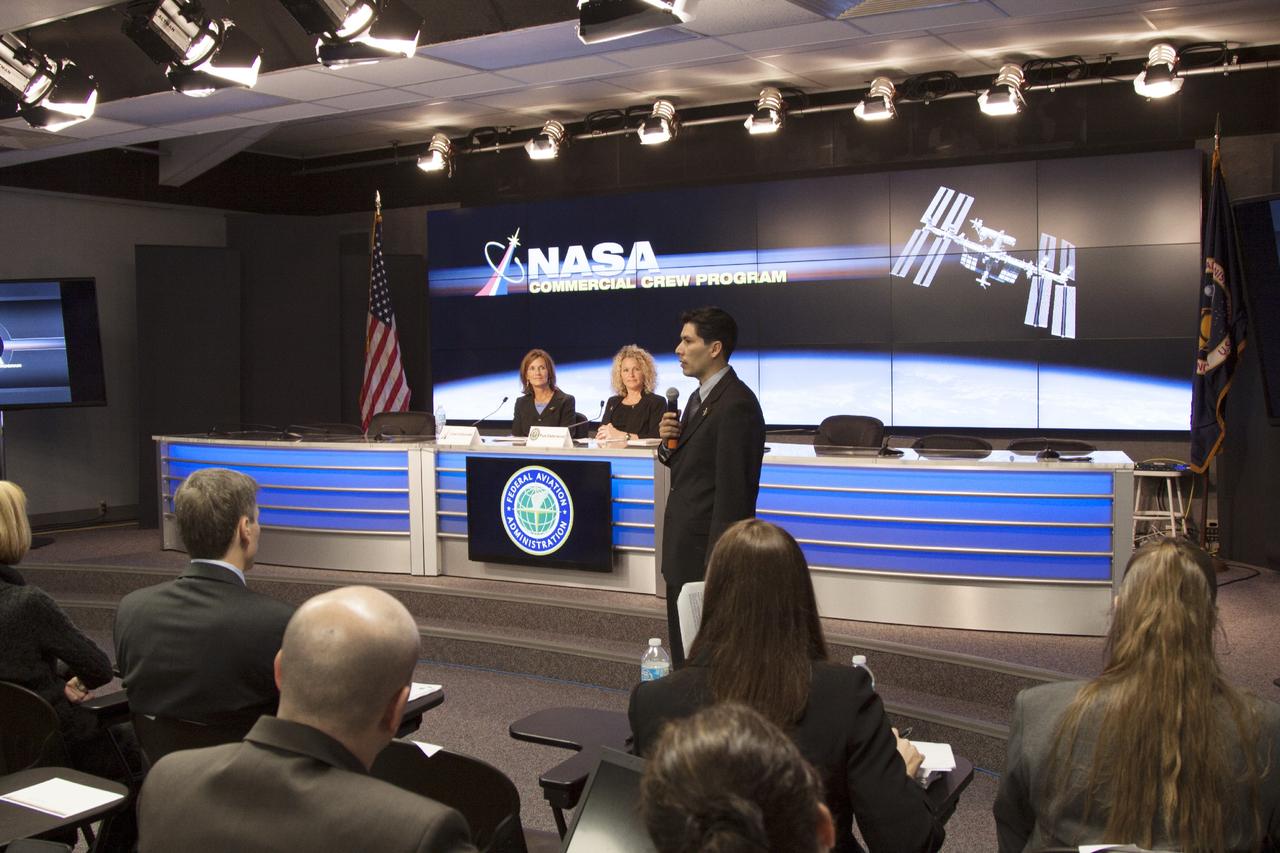
CAPE CANAVERAL, Fla. – Lisa Colloredo, left, associate program manager of NASA's Commercial Crew Program, and Pam Underwood of the Federal Aviation Administration's Office of Commercial Transportation, both panelists of the Commercial Crew Transportation Capability, or CCtCap, Pre-Proposal Conference, are seen before the start of an industry conference inside the Television Auditorium at NASA's Kennedy Space Center in Florida. The conference was held following the Commercial Crew Program, or CCP, request for proposals from commercial companies for a development and certification contract under CCtCap. The contract will provide a finish line for the agency following more than four years of development work by CCP and American aerospace companies. CCtCap is the second phase of a two-phase certification plan for privately built and operated integrated crew transportation systems. CCP’s goal is to aid in the development of commercial capabilities for crew transportation and rescue services to and from the International Space Station and other low-Earth orbit destinations by the end of 2017. Photo credit: NASA/Jim Grossmann
KSC-2013-4231
CAPE CANAVERAL, Fla. – Lisa Colloredo, left, associate program manager of NASA's Commercial Crew Program, and Pam Underwood of the Federal Aviation Administration's Office of Commercial Transportation, both panelists of the Commercial Crew Transportation Capability, or CCtCap, Pre-Proposal Conference, take questions during an industry conference inside the Television Auditorium at NASA's Kennedy Space Center in Florida. The conference was held following the Commercial Crew Program, or CCP, request for proposals from commercial companies for a development and certification contract under CCtCap. The contract will provide a finish line for the agency following more than four years of development work by CCP and American aerospace companies. CCtCap is the second phase of a two-phase certification plan for privately built and operated integrated crew transportation systems. CCP’s goal is to aid in the development of commercial capabilities for crew transportation and rescue services to and from the International Space Station and other low-Earth orbit destinations by the end of 2017. Photo credit: NASA/Jim Grossmann
KSC-2013-4232
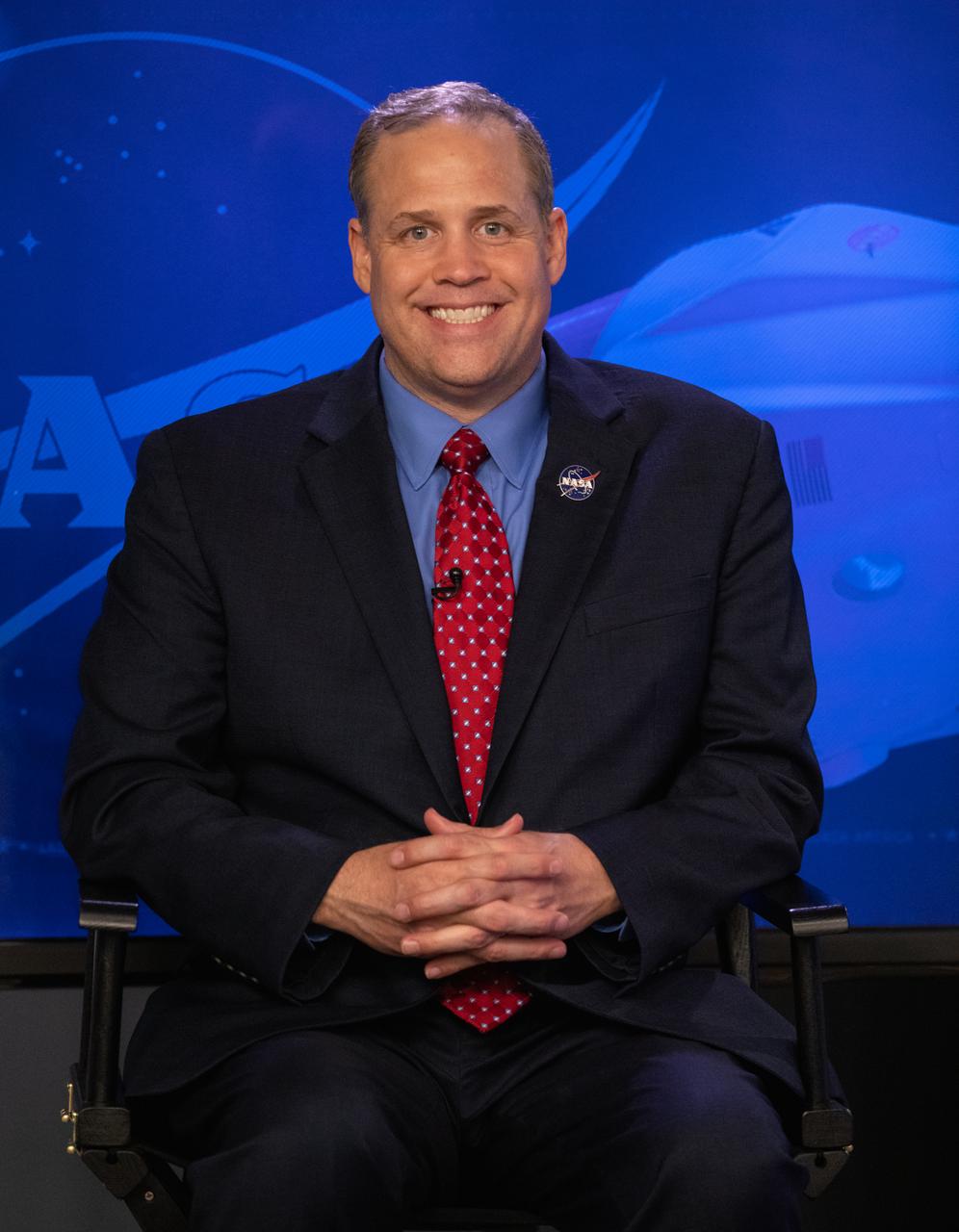
NASA Administrator Jim Bridenstine makes remarks during a postlaunch news conference for NASA’s SpaceX Crew-1 mission on Nov. 15, 2020, at Kennedy Space Center in Florida. Liftoff time on a Falcon 9 rocket was at 7:27 p.m. EST. The Crew Dragon is carrying NASA astronauts Michael Hopkins, spacecraft commander; Victor Glover, pilot; Shannon Walker, mission specialist; and Japan Aerospace Exploration Agency astronaut Soichi Noguchi, mission specialist, to the International Space Station. Crew-1 is the first regular crew mission of a U.S. commercial spacecraft with astronauts to the space station as part of NASA’s Commercial Crew Program. The Crew Dragon will dock with the station and the crew will remain on the orbiting laboratory for a six-month science mission.
SpaceX Crew-1 Post Launch News Conference
Hiroshi Sasaki, vice president and director general, JAXA’s Human Spaceflight Technology Directorate, answers questions from members of the news media during a postlaunch news conference for NASA’s SpaceX Crew-1 mission on Nov. 15, 2020, at Kennedy Space Center in Florida. Liftoff time on a Falcon 9 rocket was at 7:27 p.m. EST. The Crew Dragon is carrying NASA astronauts Michael Hopkins, spacecraft commander; Victor Glover, pilot; Shannon Walker, mission specialist; and Japan Aerospace Exploration Agency astronaut Soichi Noguchi, mission specialist, to the International Space Station. Crew-1 is the first regular crew mission of a U.S. commercial spacecraft with astronauts to the space station as part of NASA’s Commercial Crew Program. The Crew Dragon will dock with the station and the crew will remain on the orbiting laboratory for a six-month science mission.
SpaceX Crew-1 Post Launch News Conference
Gwynne Shotwell, president and chief operating officer, SpaceX, answers questions from members of the news media during a postlaunch news conference for NASA’s SpaceX Crew-1 mission on Nov. 15, 2020, at Kennedy Space Center in Florida. Liftoff time on a Falcon 9 rocket was at 7:27 p.m. EST. The Crew Dragon is carrying NASA astronauts Michael Hopkins, spacecraft commander; Victor Glover, pilot; Shannon Walker, mission specialist; and Japan Aerospace Exploration Agency astronaut Soichi Noguchi, mission specialist, to the International Space Station. Crew-1 is the first regular crew mission of a U.S. commercial spacecraft with astronauts to the space station as part of NASA’s Commercial Crew Program. The Crew Dragon will dock with the station and the crew will remain on the orbiting laboratory for a six-month science mission.
SpaceX Crew-1 Post Launch News Conference
Bettina Inclan, NASA Communications, moderates a postlaunch news conference for NASA’s SpaceX Crew-1 mission on Nov. 15, 2020, at Kennedy Space Center in Florida. Liftoff time on a Falcon 9 rocket was at 7:27 p.m. EST. The Crew Dragon is carrying NASA astronauts Michael Hopkins, spacecraft commander; Victor Glover, pilot; Shannon Walker, mission specialist; and Japan Aerospace Exploration Agency astronaut Soichi Noguchi, mission specialist, to the International Space Station. Crew-1 is the first regular crew mission of a U.S. commercial spacecraft with astronauts to the space station as part of NASA’s Commercial Crew Program. The Crew Dragon will dock with the station and the crew will remain on the orbiting laboratory for a six-month science mission.
SpaceX Crew-1 Post Launch News Conference
Kathy Lueders, associate administrator for human exploration and operations, NASA Headquarters, answers questions from members of the news media during a postlaunch news conference for NASA’s SpaceX Crew-1 mission on Nov. 15, 2020, at Kennedy Space Center in Florida. Liftoff time on a Falcon 9 rocket was at 7:27 p.m. EST. The Crew Dragon is carrying NASA astronauts Michael Hopkins, spacecraft commander; Victor Glover, pilot; Shannon Walker, mission specialist; and Japan Aerospace Exploration Agency astronaut Soichi Noguchi, mission specialist, to the International Space Station. Crew-1 is the first regular crew mission of a U.S. commercial spacecraft with astronauts to the space station as part of NASA’s Commercial Crew Program. The Crew Dragon will dock with the station and the crew will remain on the orbiting laboratory for a six-month science mission.
SpaceX Crew-1 Post Launch News Conference