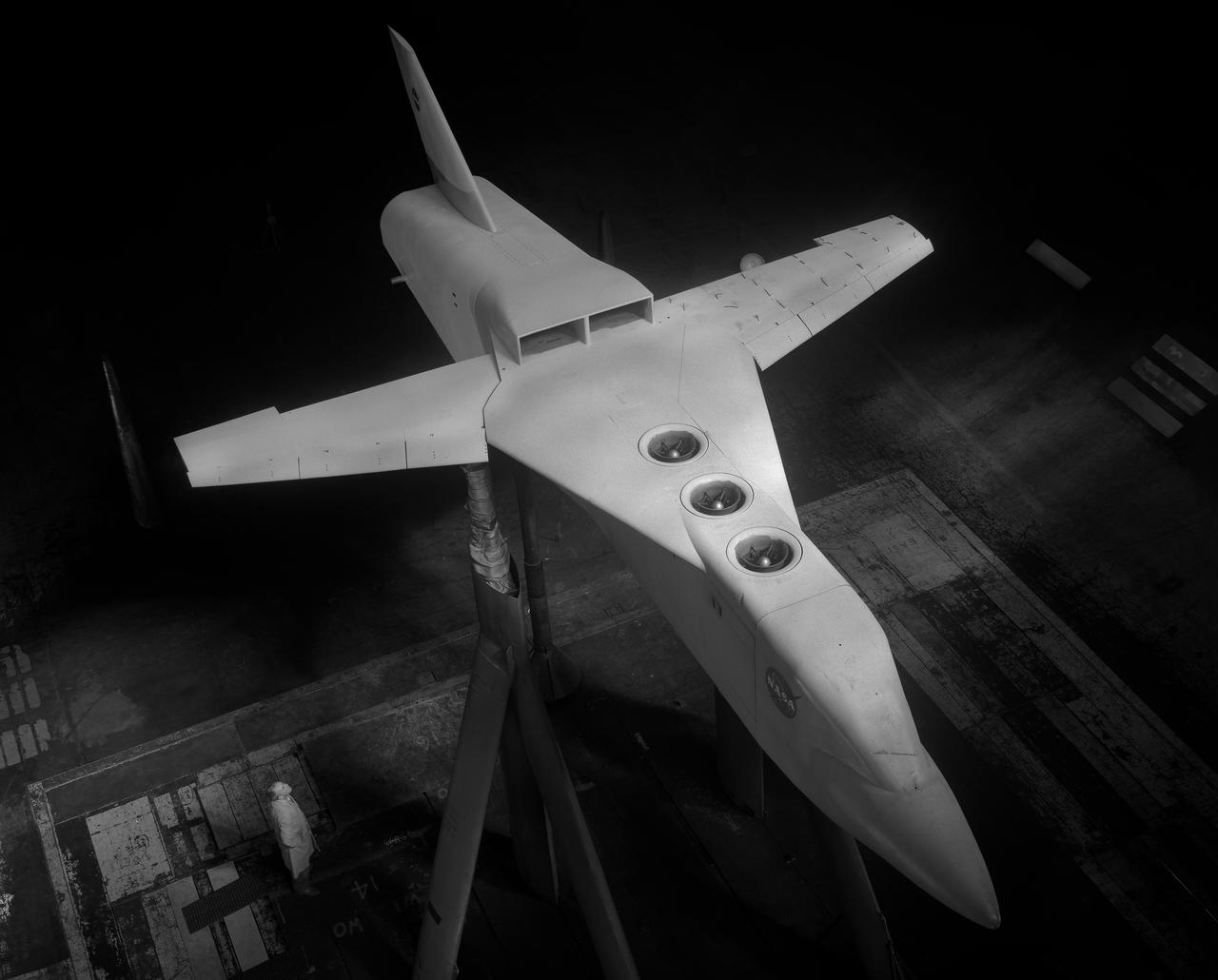
A-38524. Lift engine VSTOL fighter model, 3/4 top front view with jet engines. Edward Varerre, in picture.
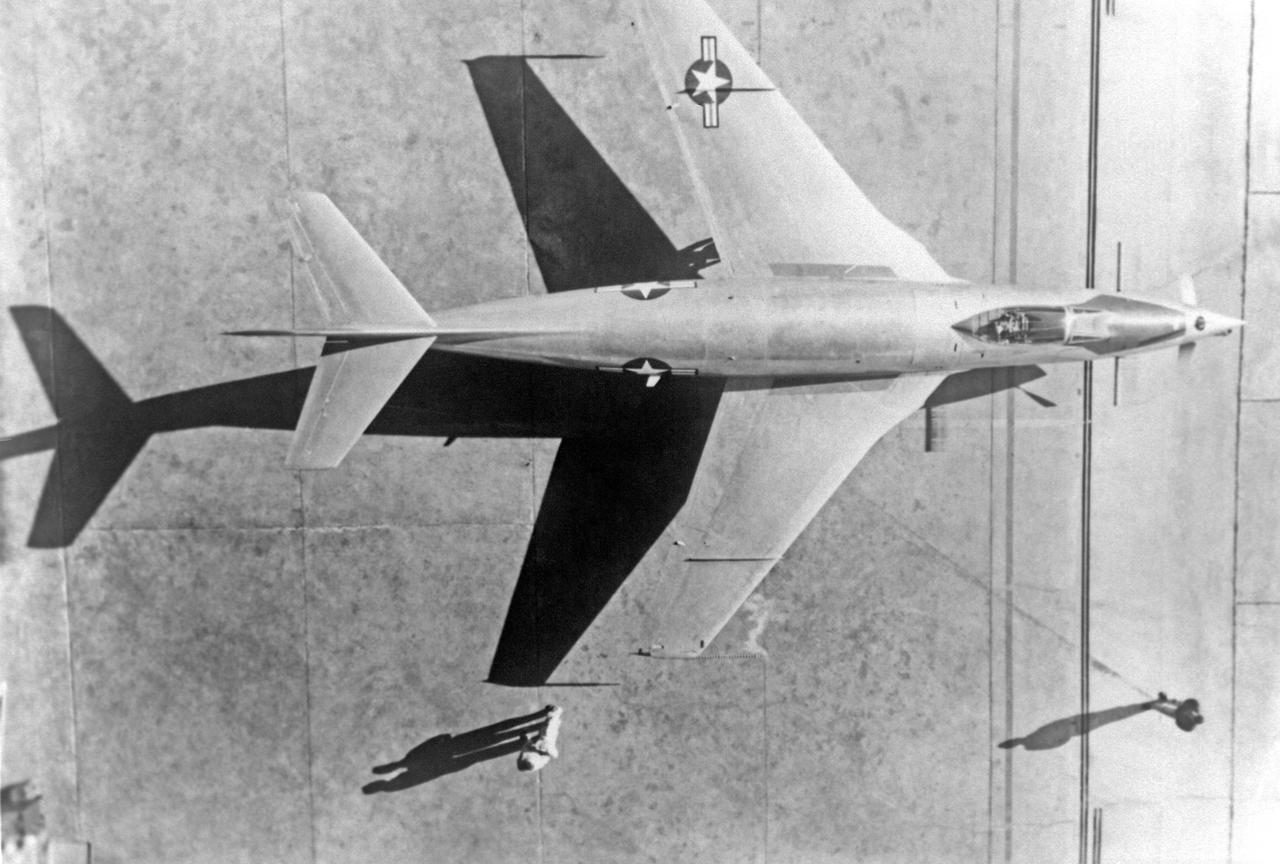
91,591 Overhead view. McDonnell XF-88B Experimental Jet Fighter. Langley used this aircraft in the mid-1950s to explore the potential of a supersonic propeller. Photographed in Engineer in Charge A History of the Langley Aeronautical Laboratory, 1917-1958 by James R. Hansen. Page 508. **Note see L57-2259 for eye level view.
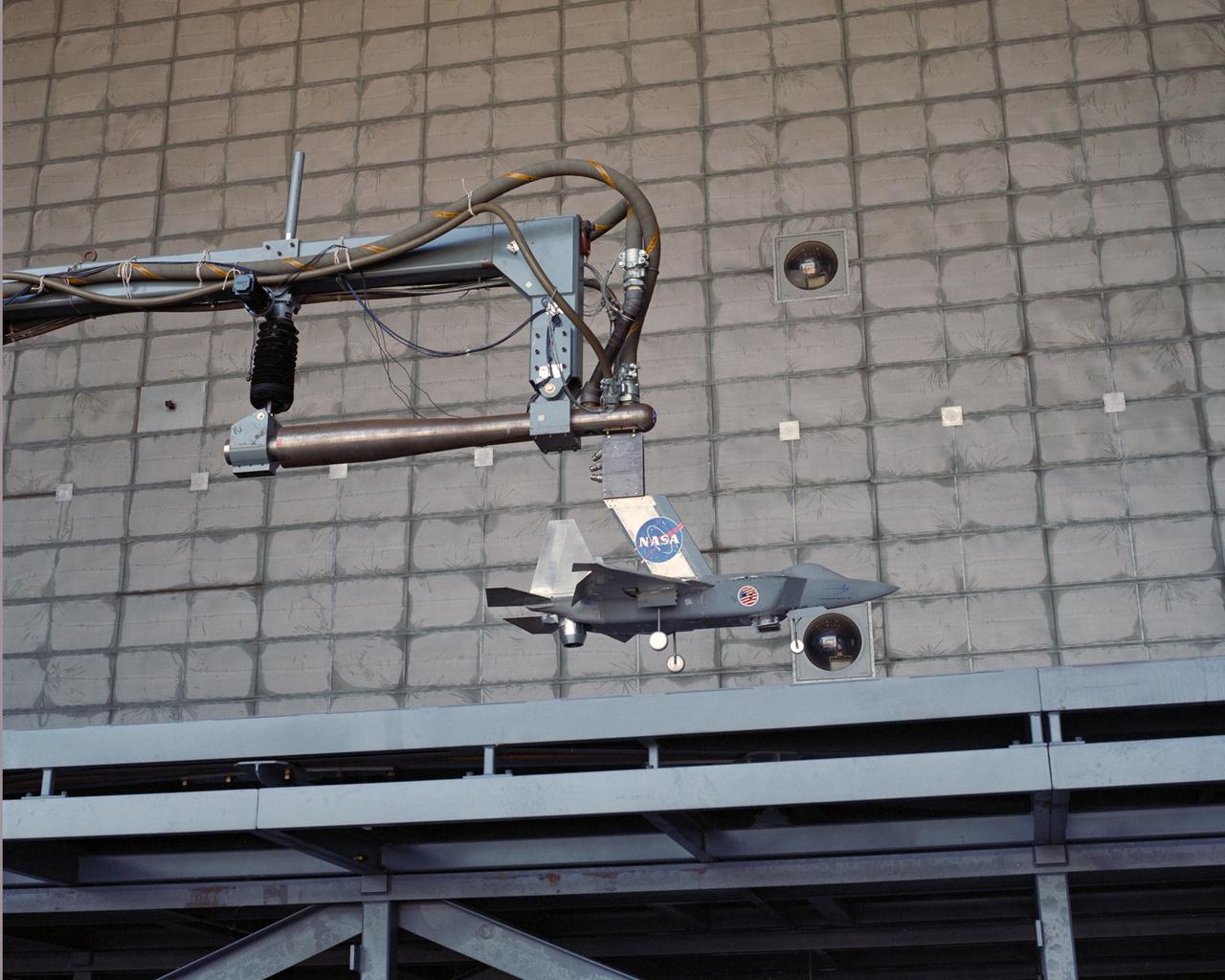
Lockheed Martin Joint Strike Fighter (JSF) model LM-80-2, jet effects test 80x120ft. w.t. Test-80-0029
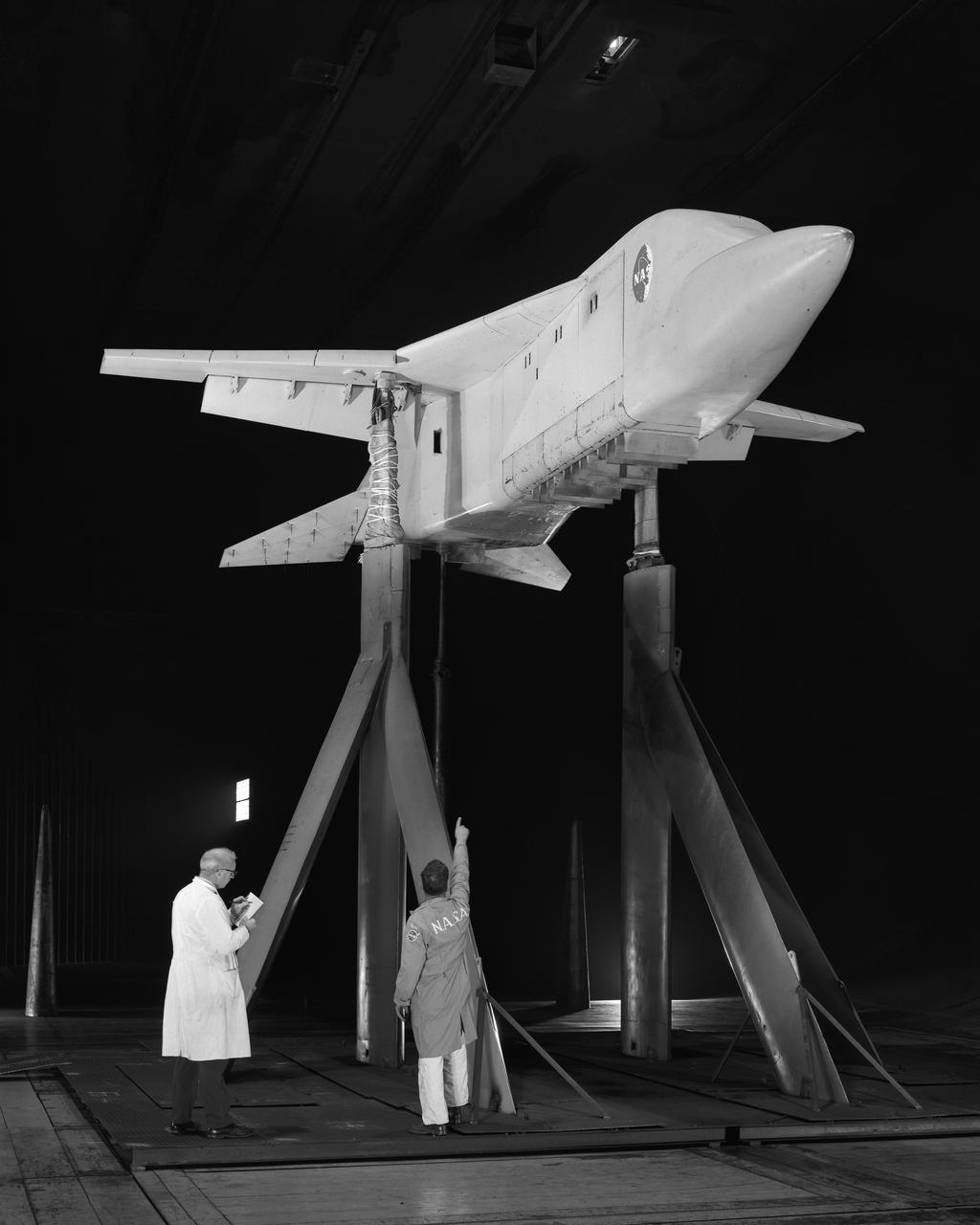
Lift engine VSTOL fighter model, 3/4 lower front view showing jet engines exit vanes. Yarn tufts attached to horizontal tail.
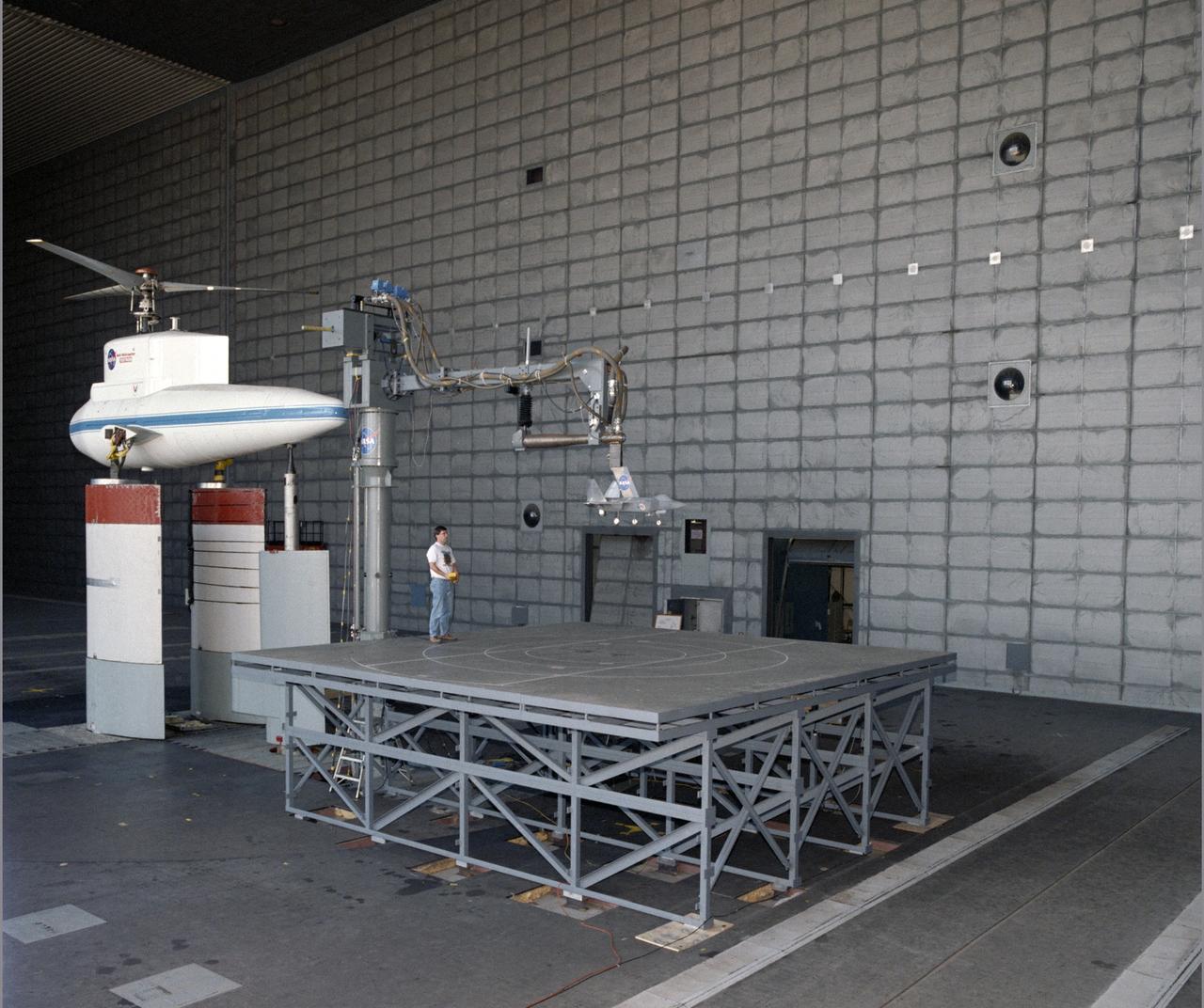
Lockheed Martin Joint Strike Fighter (JSF) model LM-80-2, jet effects test 80x120ft. w.t. Test-80-0029 with Paul Askins
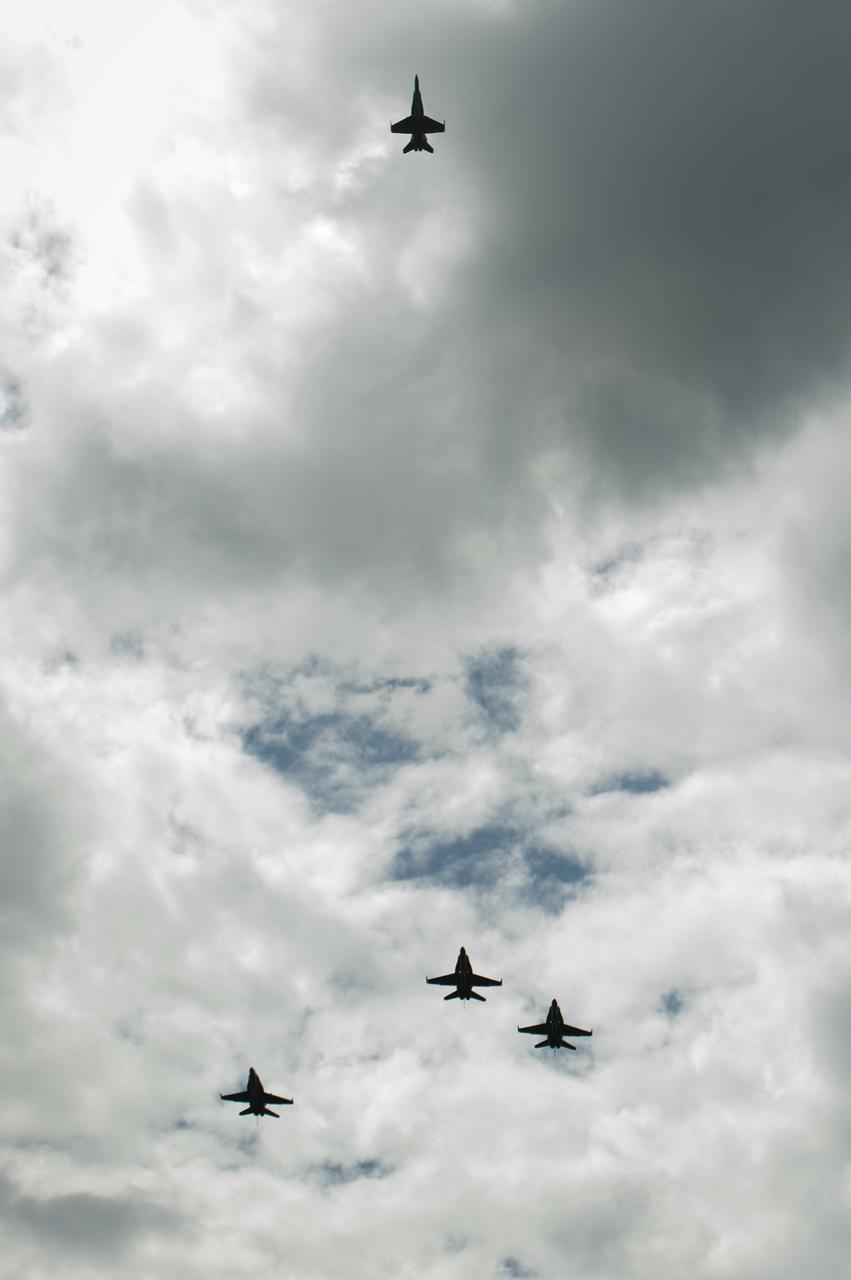
U.S. Navy F/A-18 jets from Strike Fighter Squadron (VFA) 106 and Strike Fighter Squadron (VFA) 34, from Naval Air Station Oceana (Va.) fly in a "Missing Man" formation over the Camargo Club following a memorial service celebrating the life of Neil Armstrong, Friday, Aug. 31, 2012, in Cincinnati. Armstrong, the first man to walk on the moon during the 1969 Apollo 11 mission, died Saturday, Aug. 25. He was 82. Photo Credit: (NASA/Bill Ingalls)
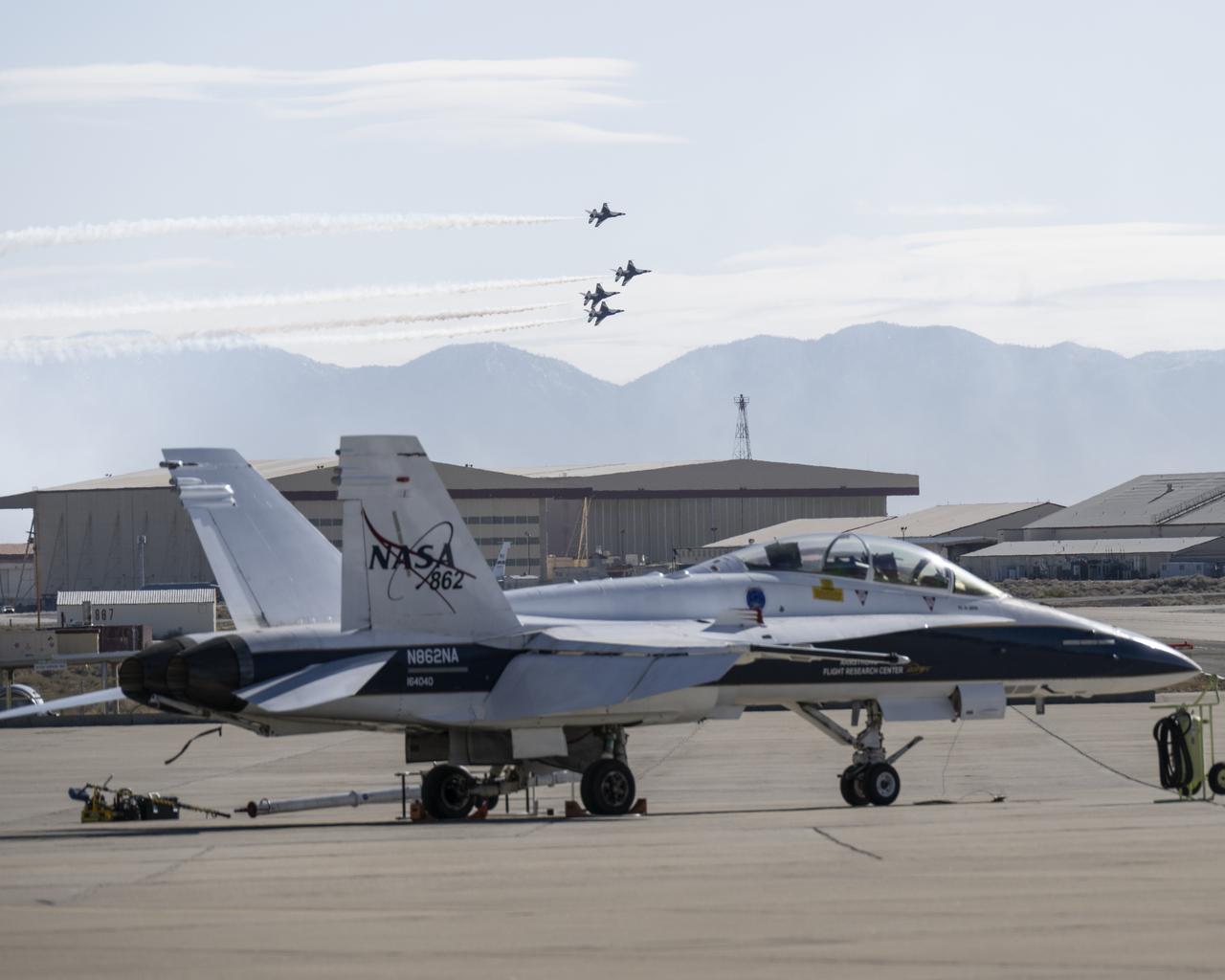
The U.S. Air Force Thunderbirds fly over NASA’s Armstrong Flight Research Center in Edwards, California, during the second phase of its winter training in February 2025 to prepare for the upcoming air show season. The Thunderbirds perform all over the world in F-16 Fighting Falcons, a multi-role fighter jet.

The U.S. Air Force Thunderbirds fly over NASA’s Armstrong Flight Research Center in Edwards, California, during the second phase of its winter training in February 2025 to prepare for the upcoming air show season. The Thunderbirds perform all over the world in F-16 Fighting Falcons, a multi-role fighter jet.
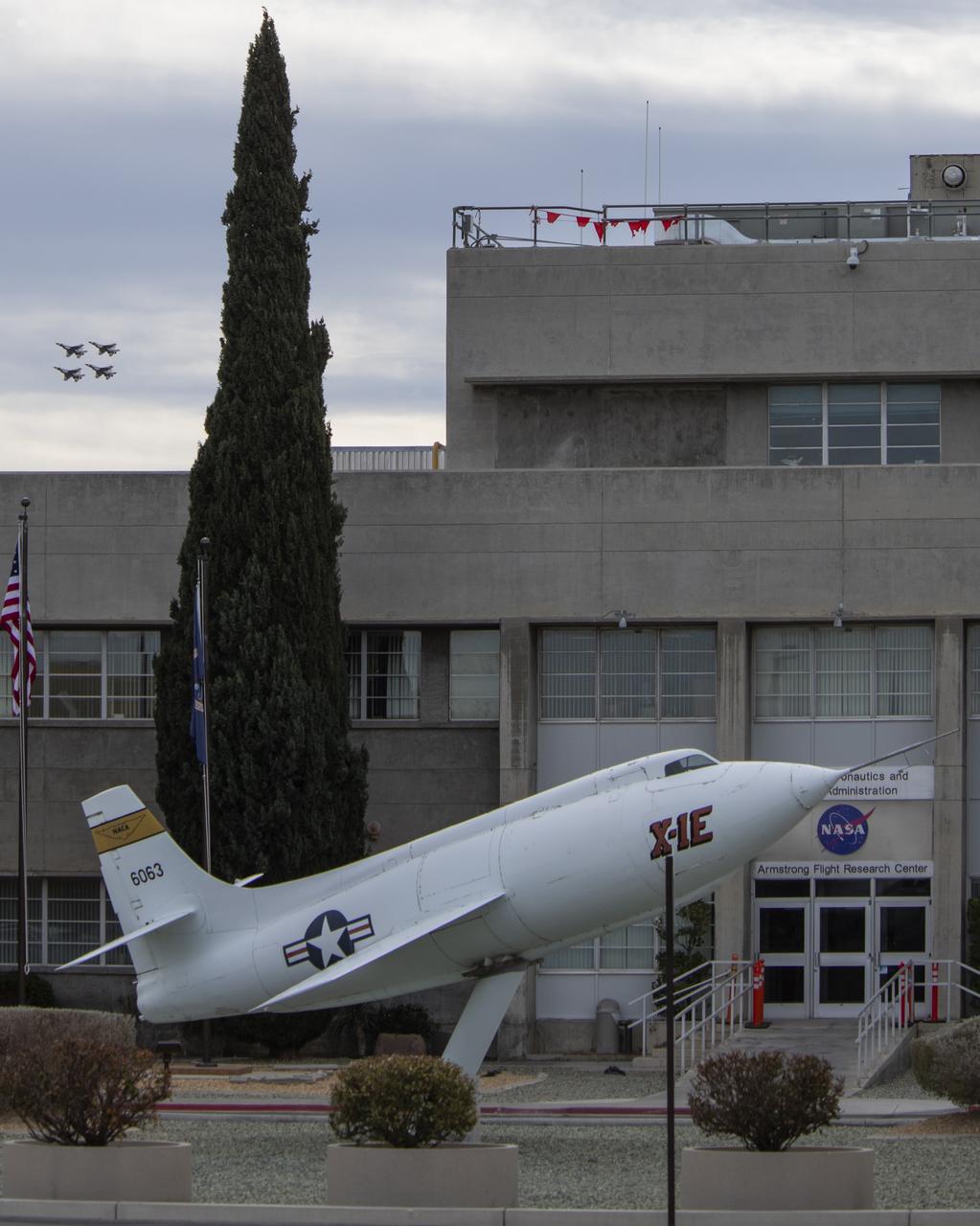
The U.S. Air Force Thunderbirds fly over NASA’s Armstrong Flight Research Center in Edwards, California, during the second phase of its winter training in February 2025 to prepare for the upcoming air show season. The Thunderbirds perform all over the world in F-16 Fighting Falcons, a multi-role fighter jet.
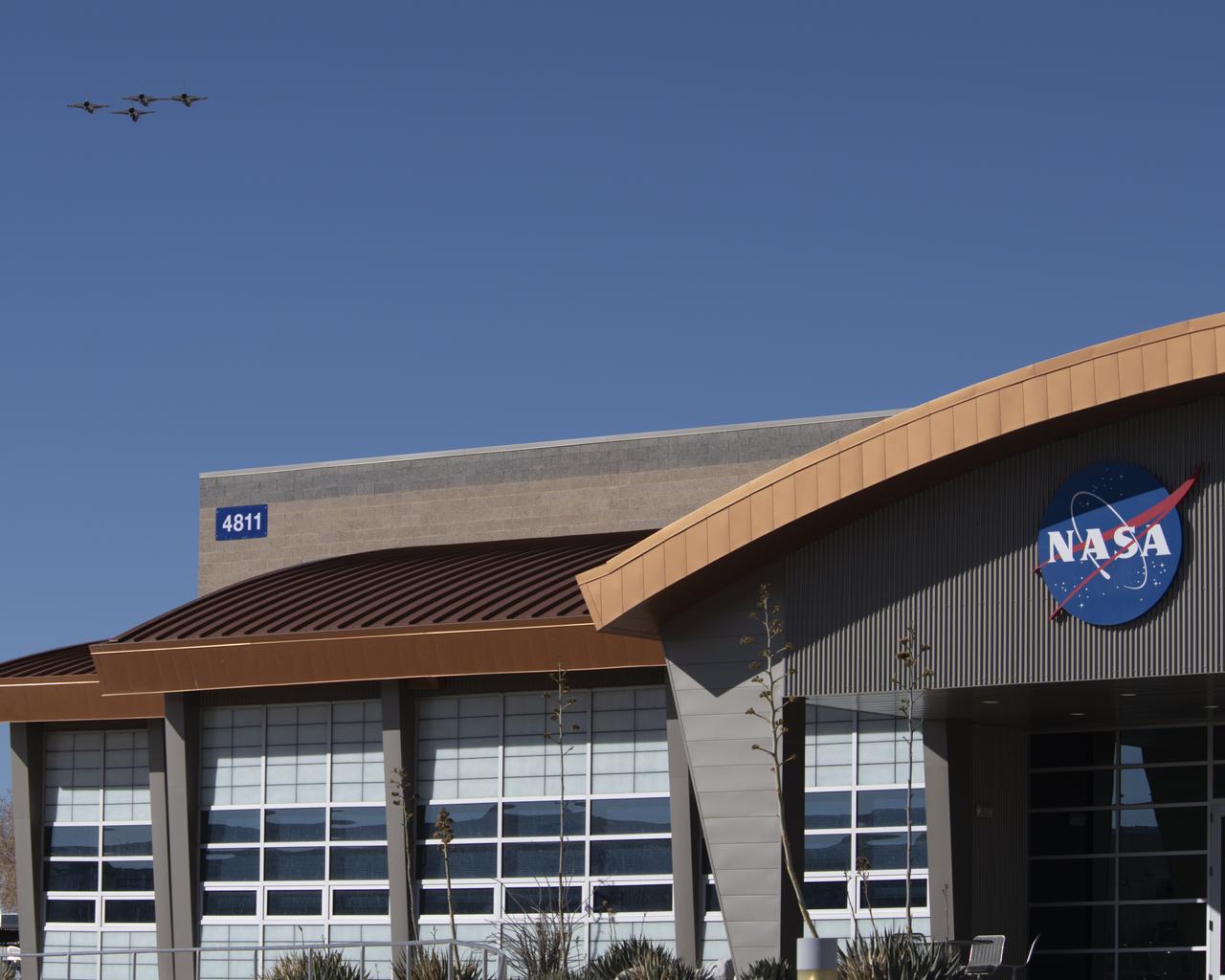
The U.S. Air Force Thunderbirds fly over NASA’s Armstrong Flight Research Center in Edwards, California, during the second phase of its winter training in February 2025 to prepare for the upcoming air show season. The Thunderbirds perform all over the world in F-16 Fighting Falcons, a multi-role fighter jet.
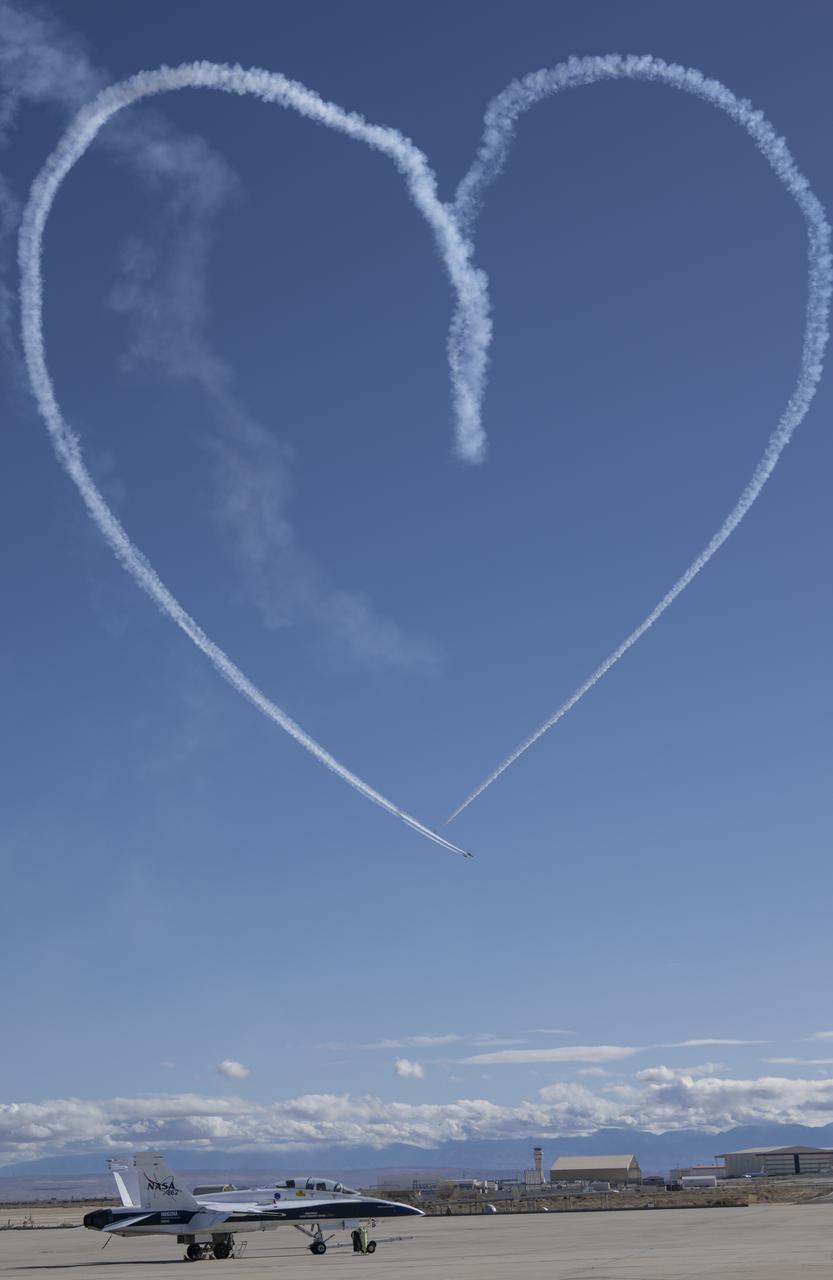
The U.S. Air Force Thunderbirds fly over NASA’s Armstrong Flight Research Center in Edwards, California, during the second phase of its winter training in February 2025 to prepare for the upcoming air show season. The Thunderbirds perform all over the world in F-16 Fighting Falcons, a multi-role fighter jet.
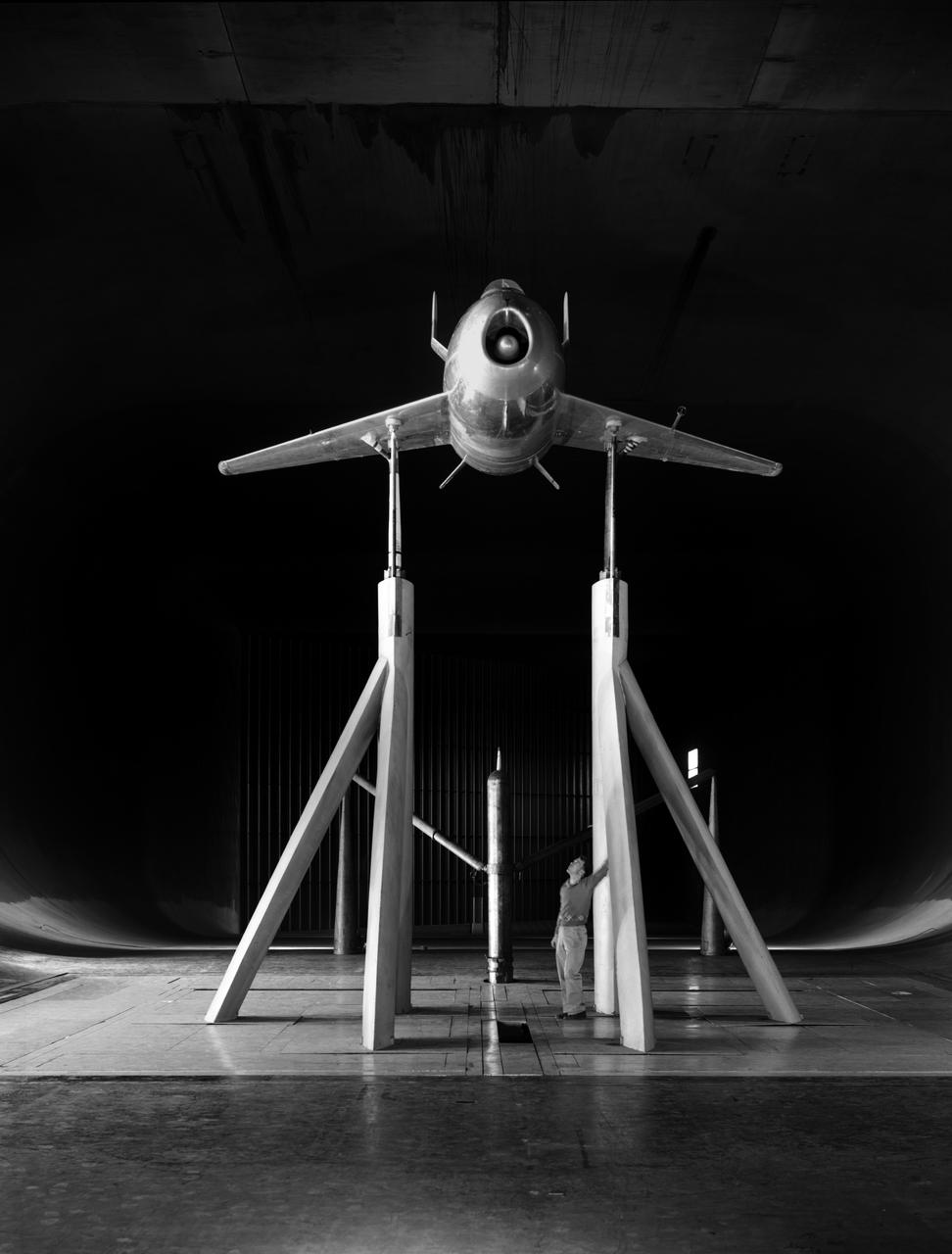
Front View of McDonald XP-85 Plan Model. Parasite Airplane designed to be carried in the B-36 bombay (never built) At the time it was the smallest Jet powered airplane. The McDonnell XF-85 Goblin was an American prototype fighter aircraft conceived during World War II by McDonnell Aircraft. It was intended to be deployed from the bomb bay of the giant Convair B-36 bomber as a parasite fighter. The XF-85's intended role was to defend bombers from hostile interceptor aircraft, a need demonstrated during World War II
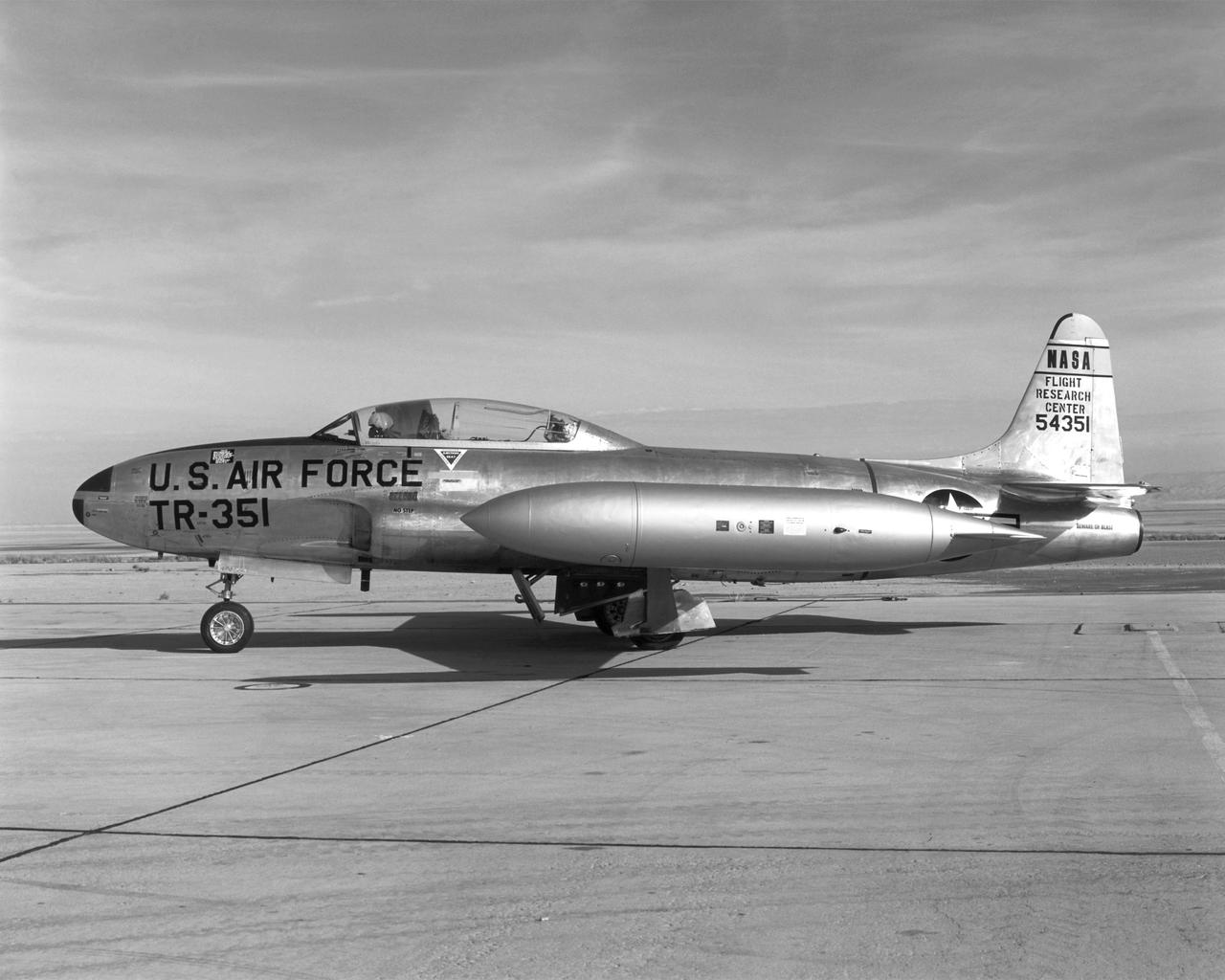
Arrived at NASA FRC January 9, 1963 Departed September 10, 1973 to Redding, California This aircraft, one of four T-33A jet trainers which NASA Dryden used from 1958 to 1973, was used in a monocular vision landing study. The T-33 was the first U.S. Air Force jet trainer, and was originally developed as a two-seat version of the F-80. The T-33 was used by not only the U.S. military, but also by foreign air forces as a trainer, fighter, and reconnaissance aircraft.
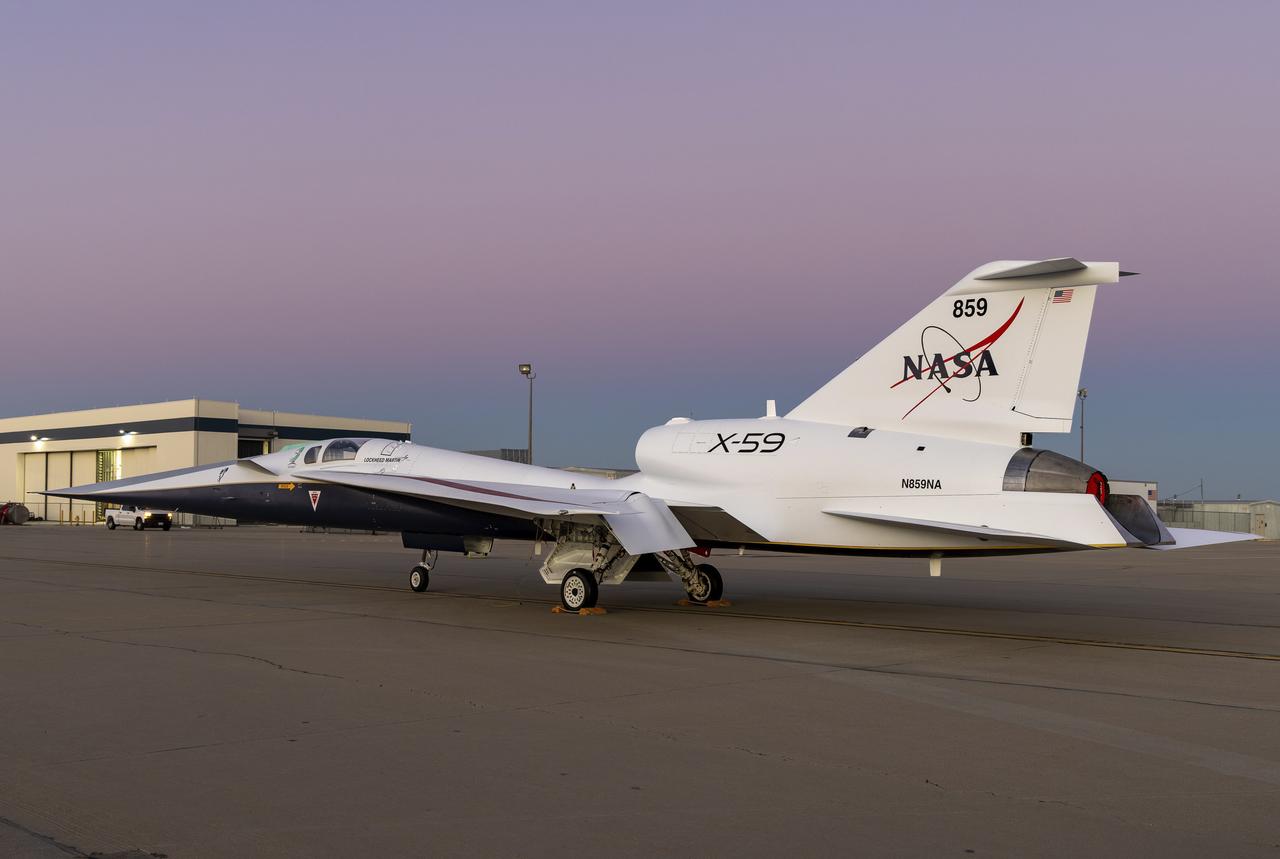
NASA’s X-59 quiet supersonic research aircraft sits on a ramp at Lockheed Martin Skunk Works in Palmdale, California, during sunset. The one-of-a-kind aircraft is powered by a General Electric F414 engine, a variant of the engines used on F/A-18 fighter jets. The engine is mounted above the fuselage to reduce the number of shockwaves that reach the ground. The X-59 is the centerpiece of NASA's Quesst mission, which aims to demonstrate quiet supersonic flight and enable future commercial travel over land – faster than the speed of sound.
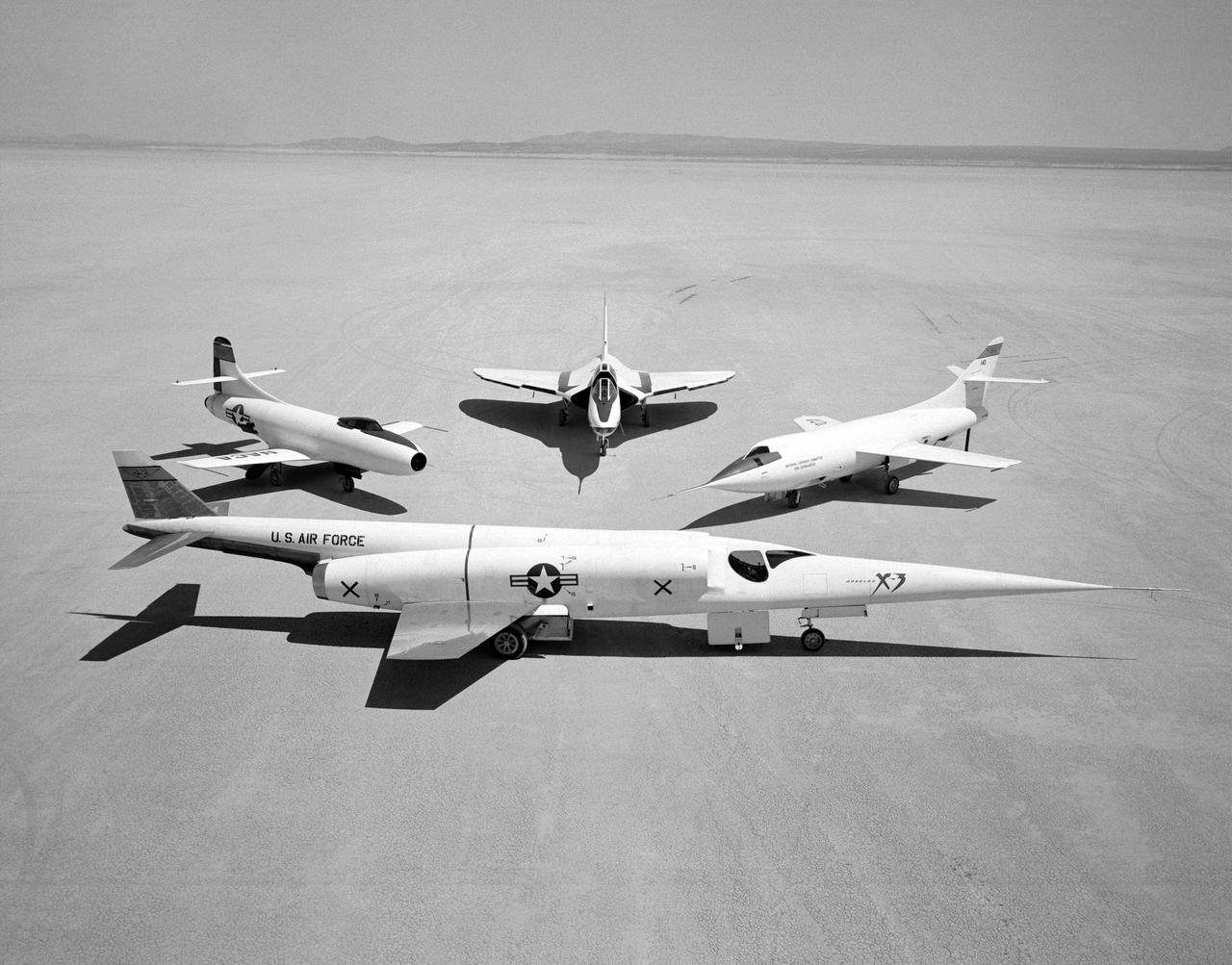
A group picture of Douglas Airplanes, taken for a photographic promotion in 1954, at what is now known as the Dryden Flight Research Center at Edwards Air Force Base, California. The photo includes the X-3 (in front--Air Force serial number 49-2892) then clockwise D-558-I, XF4D-1 (a Navy jet fighter prototype not flown by the NACA), and the first D-558-II (NACA tail number 143, Navy serial number 37973), which was flown only once by the NACA.
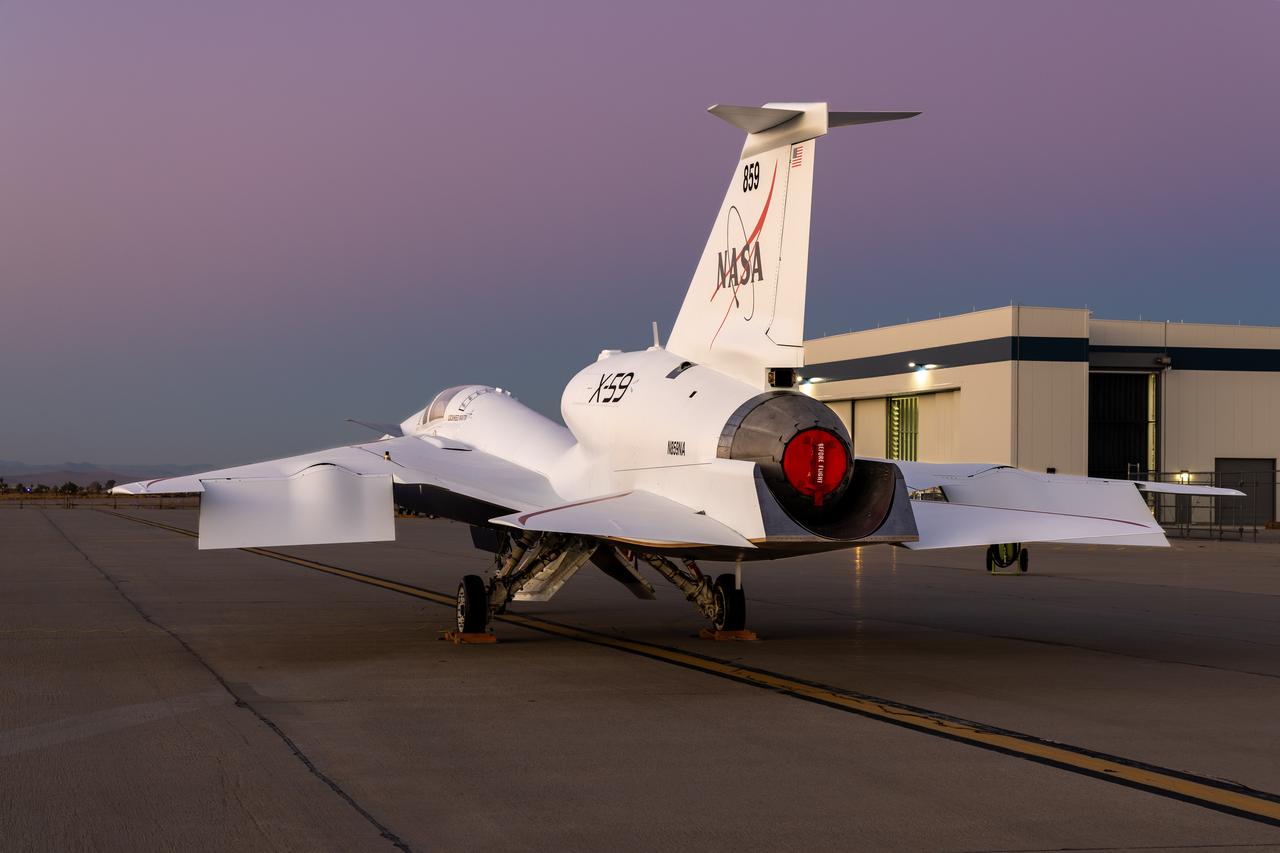
NASA’s X-59 quiet supersonic research aircraft sits on a ramp at Lockheed Martin Skunk Works in Palmdale, California, during sunset. The one-of-a-kind aircraft is powered by a General Electric F414 engine, a variant of the engines used on F/A-18 fighter jets. The engine is mounted above the fuselage to reduce the number of shockwaves that reach the ground. The X-59 is the centerpiece of NASA's Quesst mission, which aims to demonstrate quiet supersonic flight and enable future commercial travel over land – faster than the speed of sound.
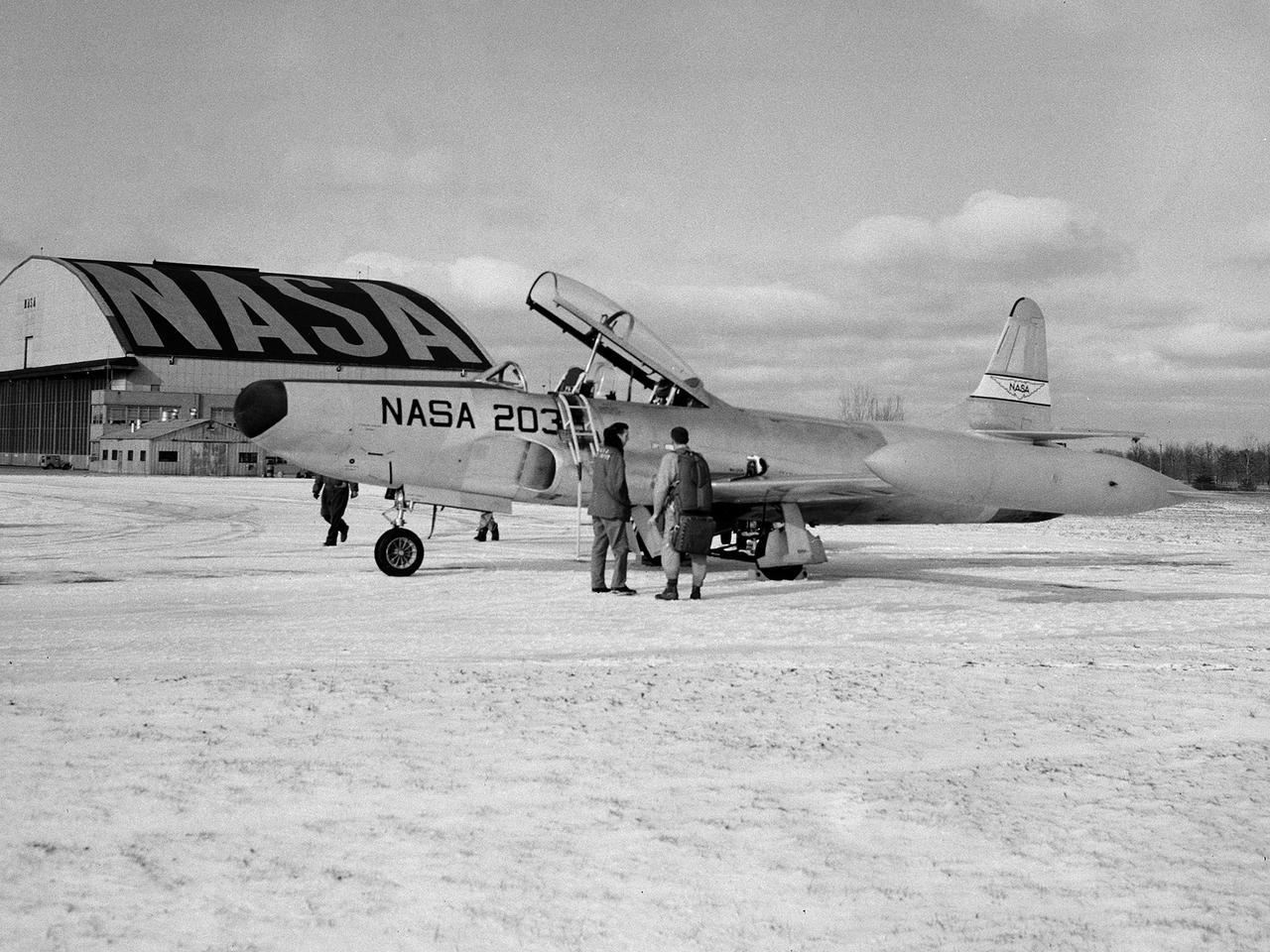
A Lockheed F-94B Starfire on the hangar apron at the National Aeronautics and Space Administration (NASA) Lewis Research Center in Cleveland, Ohio. The Air Force contracted Lockheed in November 1948 to create the new F-94s fighters. The first test flight occurred only months later in April 1949. This quick turnaround was due to the fact that the F-94 was based largely on the TF-80 fighter and constructed with parts from the P-80, including its two General Electric I-40 turbojet engines. The F-94Bs entered the Korean War in late 1951, but were initially prevented from flying over enemy territory due to fear that their fire control system would be copied by the enemy if an F-94B went down. The Starfire went on to perform scores of missions escorting B-29 and B-26 bombers deep into enemy territory and acting as interceptors against enemy fighters. In mid-1954 the F-94s were retired from active military service. Lewis acquired the F-94B Starfire in April 1956. At the time, the aircraft industry was preparing for the first use of jet engines for commercial aviation. The amount of noise generated by the engines was a major obstacle. Lewis undertook an extensive program to understand the causes of the noise and develop methods for reducing it. This program included the study of aerodynamic sound at high speed and altitude using the F-94B.
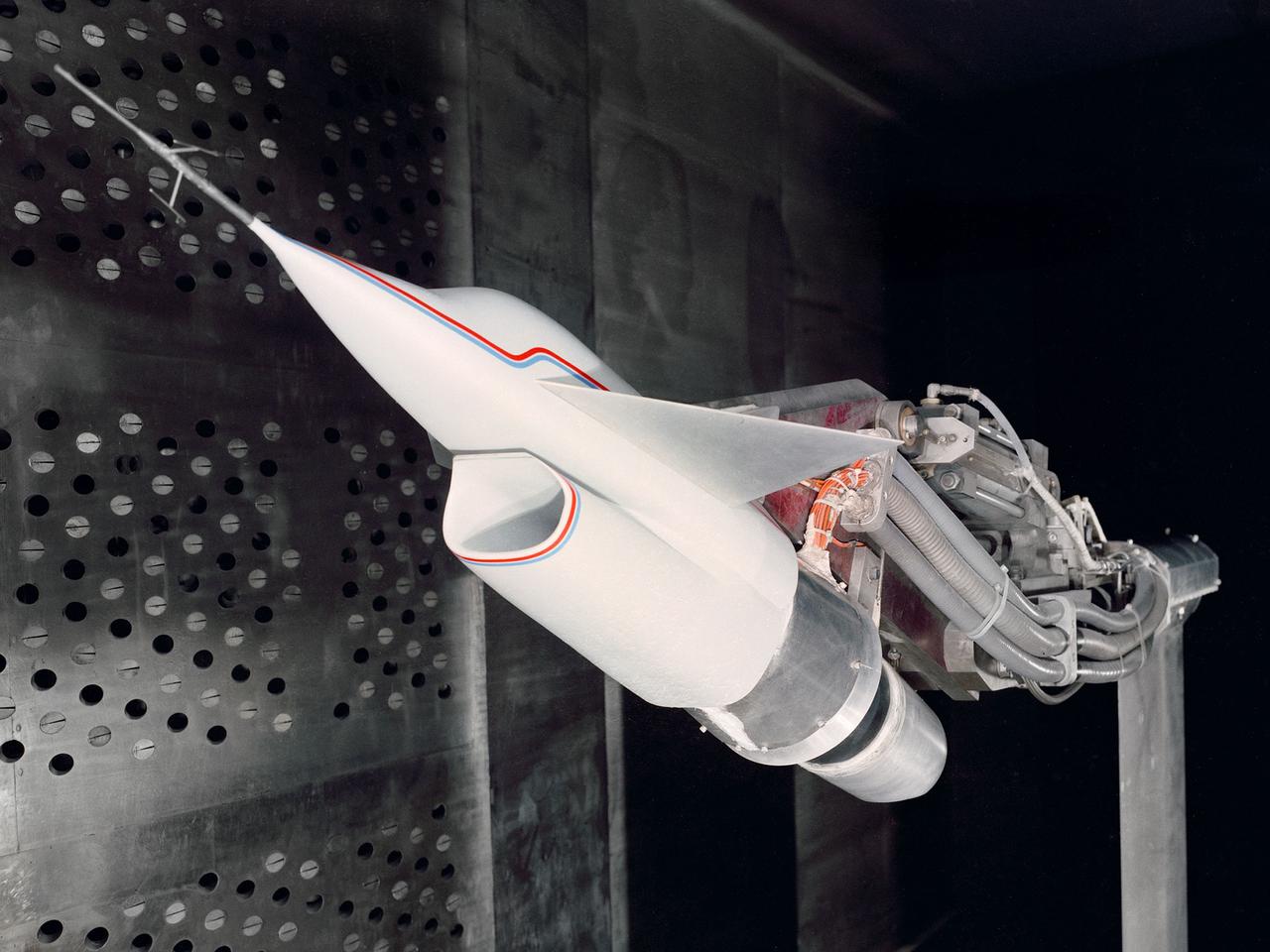
A Highly Maneuverable Aircraft Technology (HiMAT) inlet model installed in the test section of the 8- by 6-Foot Supersonic Wind Tunnel at the National Aeronautics and Space Administration (NASA) Lewis Research Center. Engineers at the Ames Research Center, Dryden Flight Research Center, and Rockwell International designed two pilotless subscale HiMAT vehicles in the mid-1970s to study new design concepts for fighter aircraft in the transonic realm without risking the lives of test pilots. The aircraft used sophisticated technologies such as advanced aerodynamics, composite materials, digital integrated propulsion control, and digital fly-by-wire control systems. In late 1977 NASA Lewis studied the HiMAT’s General Electric J85-21 jet engine in the Propulsion Systems Laboratory. The researchers charted the inlet quality with various combinations anti-distortion screens. HiMAT employed a relatively short and curved inlet compared to actual fighter jets. In the spring of 1979, Larry Smith led an in-depth analysis of the HiMAT inlet in the 8- by 6 tunnel. The researchers installed vortex generators to battle flow separation in the diffuser. The two HiMAT aircraft performed 11 hours of flying over the course of 26 missions from mid-1979 to January 1983 at Dryden and Ames. Although the HiMAT vehicles were considered to be overly complex and expensive, the program yielded a wealth of data that would validate computer-based design tools.
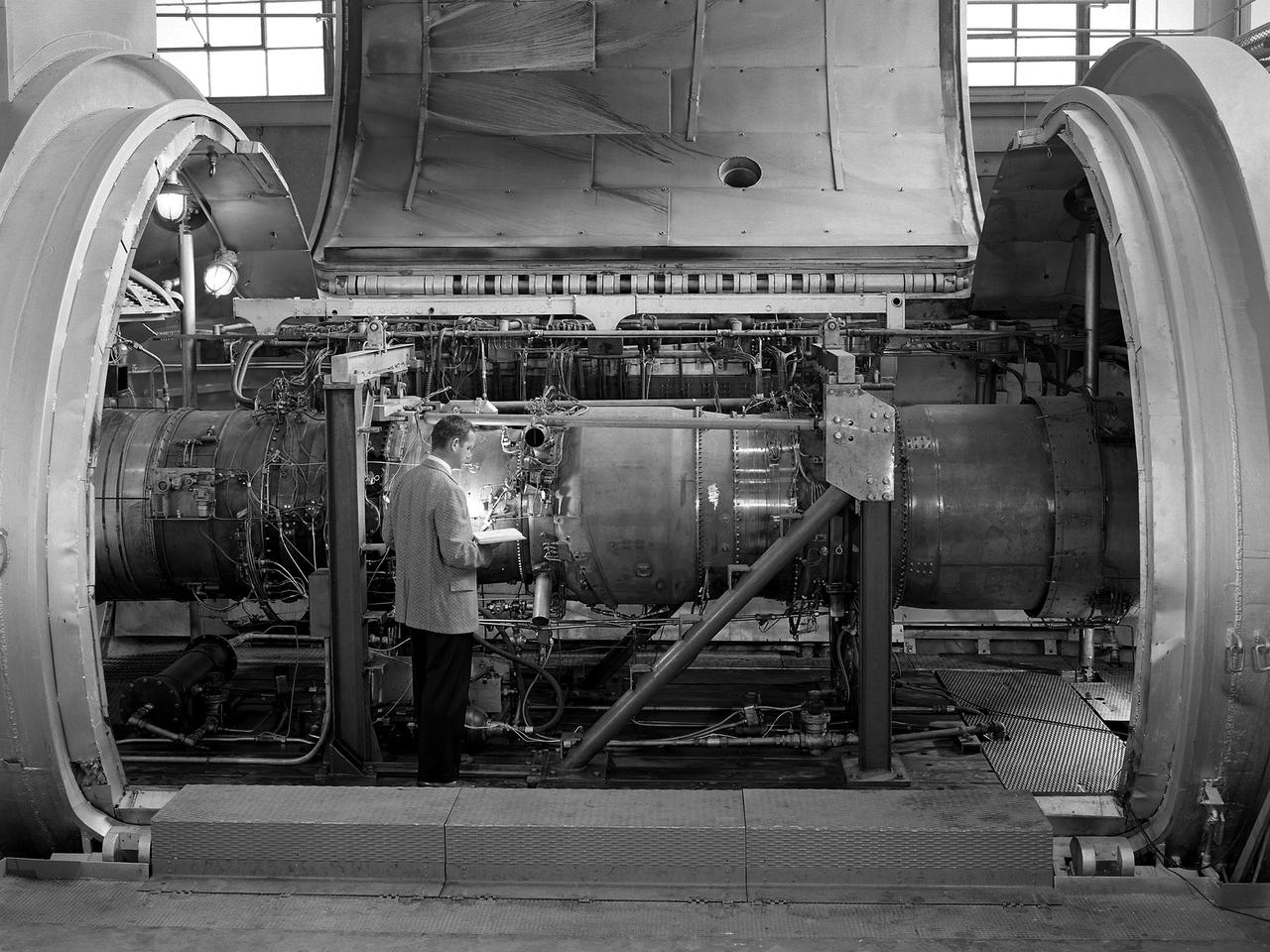
A researcher examines the Orenda Iroquois PS.13 turbojet in a Propulsion Systems Laboratory test chamber at the National Advisory Committee for Aeronautics (NACA) Lewis Flight Propulsion Laboratory. The Iroquois was being developed to power the CF-105 Arrow fighter designed by the Avro Canada Company. Avro began design work on the Arrow jet fighter in 1952. The company’s Orenda branch suggested building a titanium-based PS.13 Iroquois engine after development problems arose with the British engines that Avro had originally intended to use. The 10-stage, 20,000-pound-thrust Iroquois would prove to be more powerful than any contemporary US or British turbojet. It was also significantly lighter and more fuel efficient. An Iroquois was sent to Cleveland in April 1957 so that Lewis researchers could study the engine’s basic performance for the air force in the Propulsion Systems Laboratory. The tests were run over a wide range of speeds and altitudes with variations in exhaust-nozzle area. Initial studies determined the Iroquois’s windmilling and ignition characteristics at high altitude. After operating for 64 minutes, the engine was reignited at altitudes up to the 63,000-foot limit of the facility. Various modifications were attempted to reduce the occurrence of stall but did not totally eradicate the problem. The Arrow jet fighter made its initial flight in March 1958 powered by a substitute engine. In February 1959, however, both the engine and the aircraft programs were cancelled. The world’s superpowers had quickly transitioned from bombers to ballistic missiles which rendered the Avro Arrow prematurely obsolete.
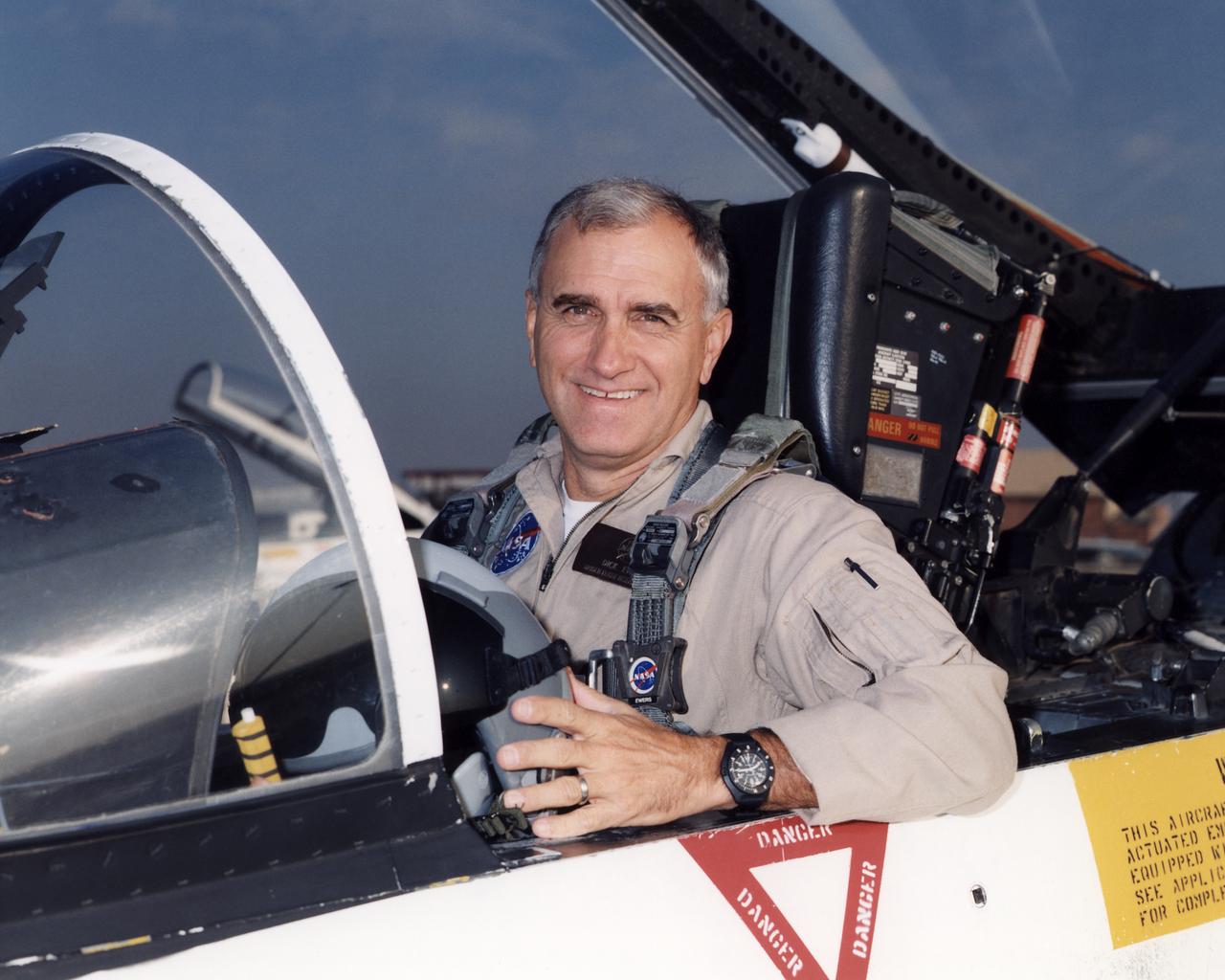
Richard G. (Dick) Ewers became a pilot in the Flight Crew Branch of NASA's Dryden Flight Research Center, Edwards, California, in May 1998. His flying duties focus on operation of the Airborne Science DC-8 and Systems Research F/A-18 aircraft, but he also maintains qualifications in the King Air and T-34C. He has more than 32 years and nearly 9,000 hours of military and civilian flight experience in all types of aircraft from jet fighters to blimps. Ewers came to NASA Dryden from a position as an engineering test pilot with Northrop Grumman's Electronic Sensors and Systems Division (formerly Westinghouse's Electronic Systems Group). He spent eight and a half years with Westinghouse flight testing radar and forward looking infrared systems under development for military and civilian use. Before going to work for Westinghouse, Ewers served for more than 21 years as a U.S. Marine Corps fighter and test pilot, flying F-4, A-4, and F/A-18 aircraft. He underwent flight training at Naval Air Station Pensacola, Fla., in 1969-70. He was subsequently assigned to both fighter/attack and reconnaissance squadrons before ultimately commanding an F-4S squadron for two years. Additionally, his flying included combat service in Vietnam and operational exchange tours with both U.S. Navy and U.S. Air Force squadrons flying F-4s around the world, including off aircraft carriers. Ewers graduated from the U.S. Naval Test Pilot School in 1981 and subsequently served two tours as a test pilot at the Naval Air Test Center, Patuxent River, Md. Most of his flight test experience was with the F/A-18 Hornet. He retired from the Marine Corps in 1989 with the rank of lieutenant colonel. Ewers graduated from the U.S. Air Force Academy in 1968 with a bachelor of science degree in engineering mechanics. He earned a master of science degree in aeronautical systems from the University of West Florida in 1970.
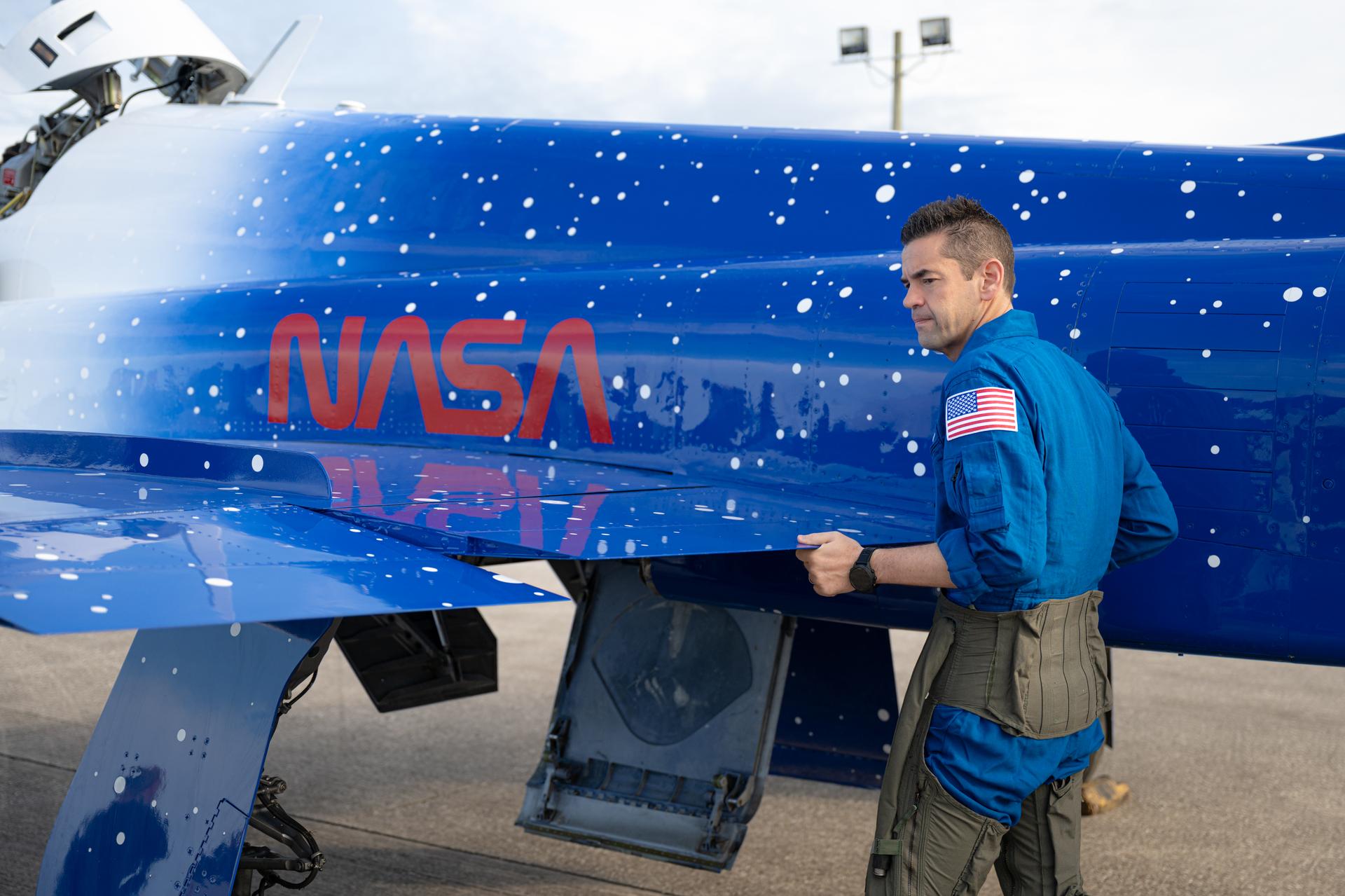
NASA Administrator Jared Isaacman is seen with his personal F-5 aircraft, Thursday, Jan. 22, 2026, at NASA’s Kennedy Space Center in Florida. Photo Credit: (NASA/John Kraus)
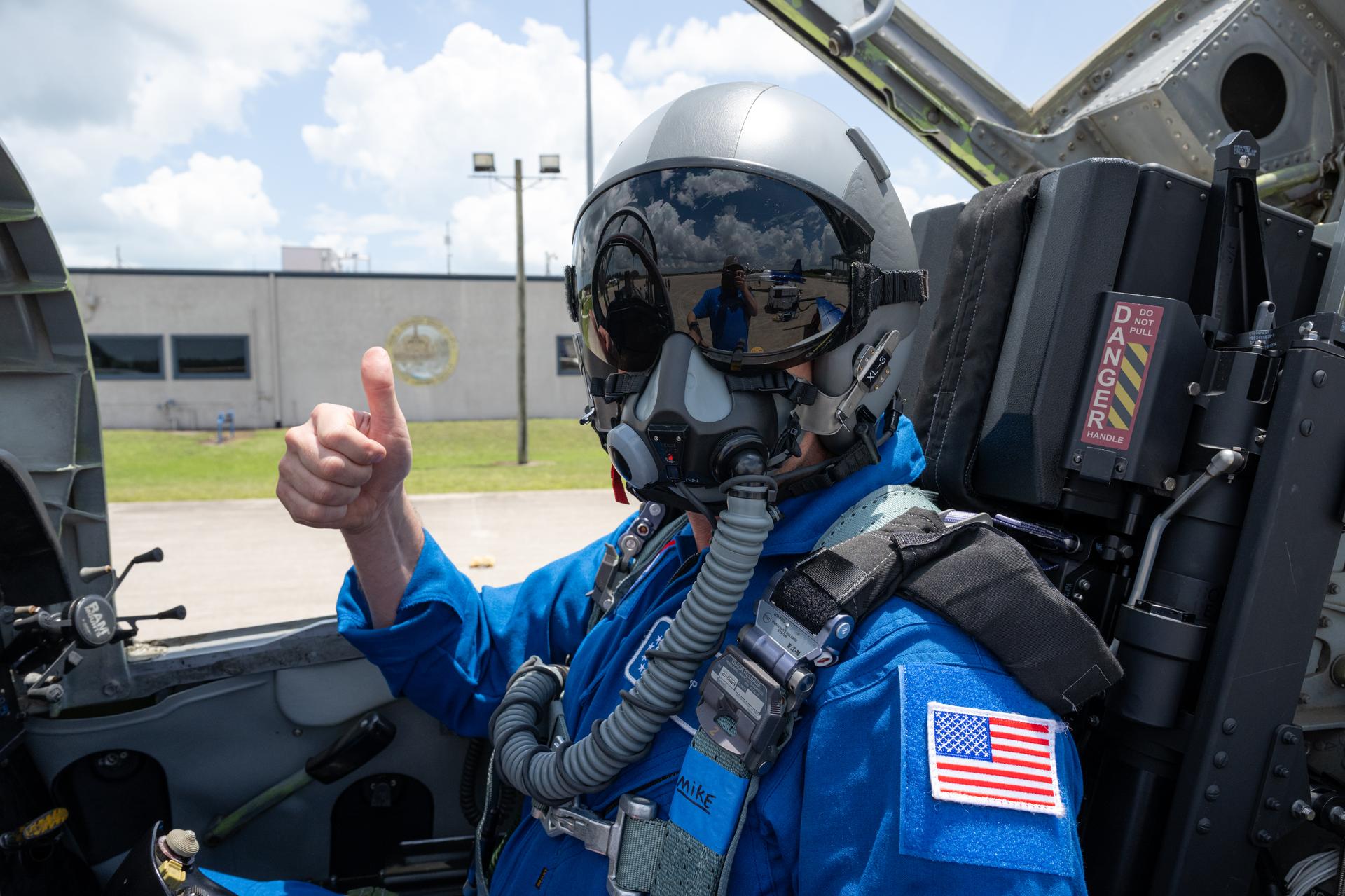
Michael J. Acheson, senior researcher and principal investigator at NASA’s Langley Research Center, participates in an employee incentive flying event with NASA Administrator Jared Isaacman's personal F-5 aircraft, Wednesday, May 13, 2026, at NASA’s Kennedy Space Center in Florida. Photo Credit: (NASA/John Kraus)

Sean Gustafson, senior advisor to the NASA Administrator, left, embraces Trey Carlson, chief of staff at NASA’s Kennedy Space Center, right, following an employee incentive flying event with NASA Administrator Jared Isaacman's personal F-5 aircraft, Friday, March 6, 2026, at NASA’s Kennedy Space Center in Florida. Photo Credit: (NASA/John Kraus)
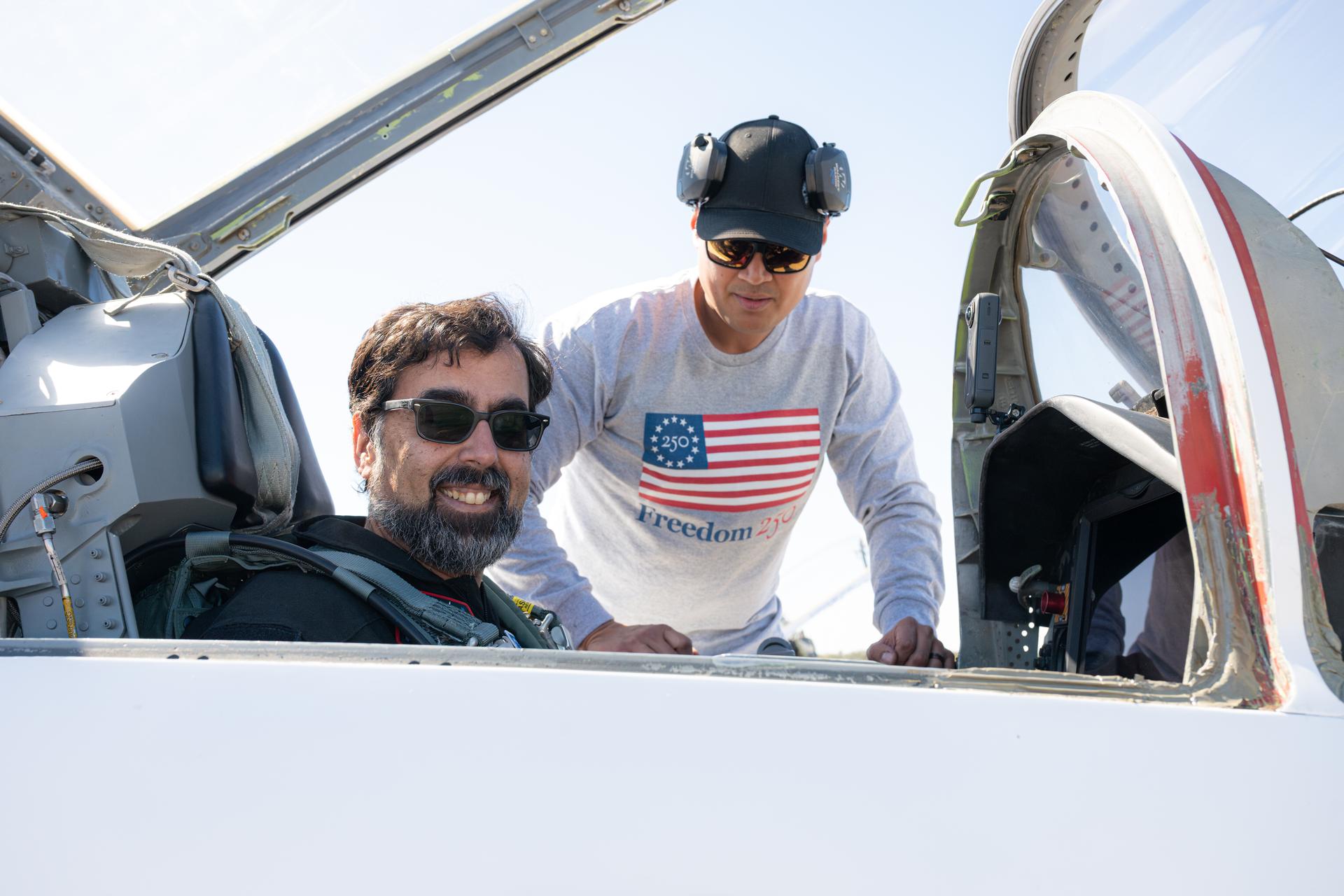
Amit Kshatriya, NASA associate administrator, poses for a photograph in NASA Administrator Jared Isaacman’s personal F-5 aircraft, Sunday, Feb. 8, 2026, ahead of a formation flight at NASA’s Kennedy Space Center in Florida. Photo Credit: (NASA/John Kraus)
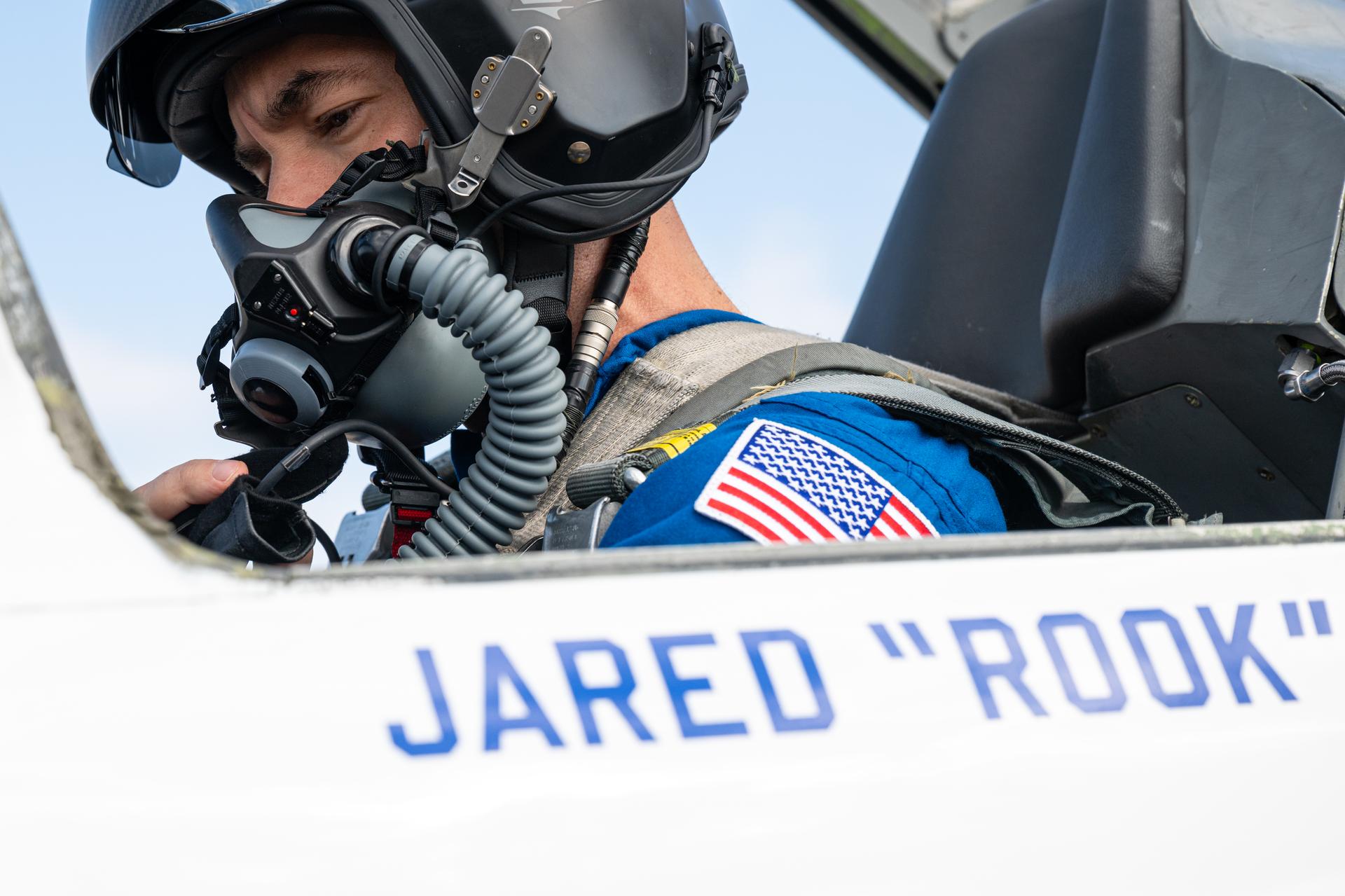
NASA Administrator Jared Isaacman is seen before an employee incentive flying event using his personal F-5 aircraft, Thursday, Feb. 12, 2026, at NASA’s Kennedy Space Center in Florida. Photo Credit: (NASA/John Kraus)
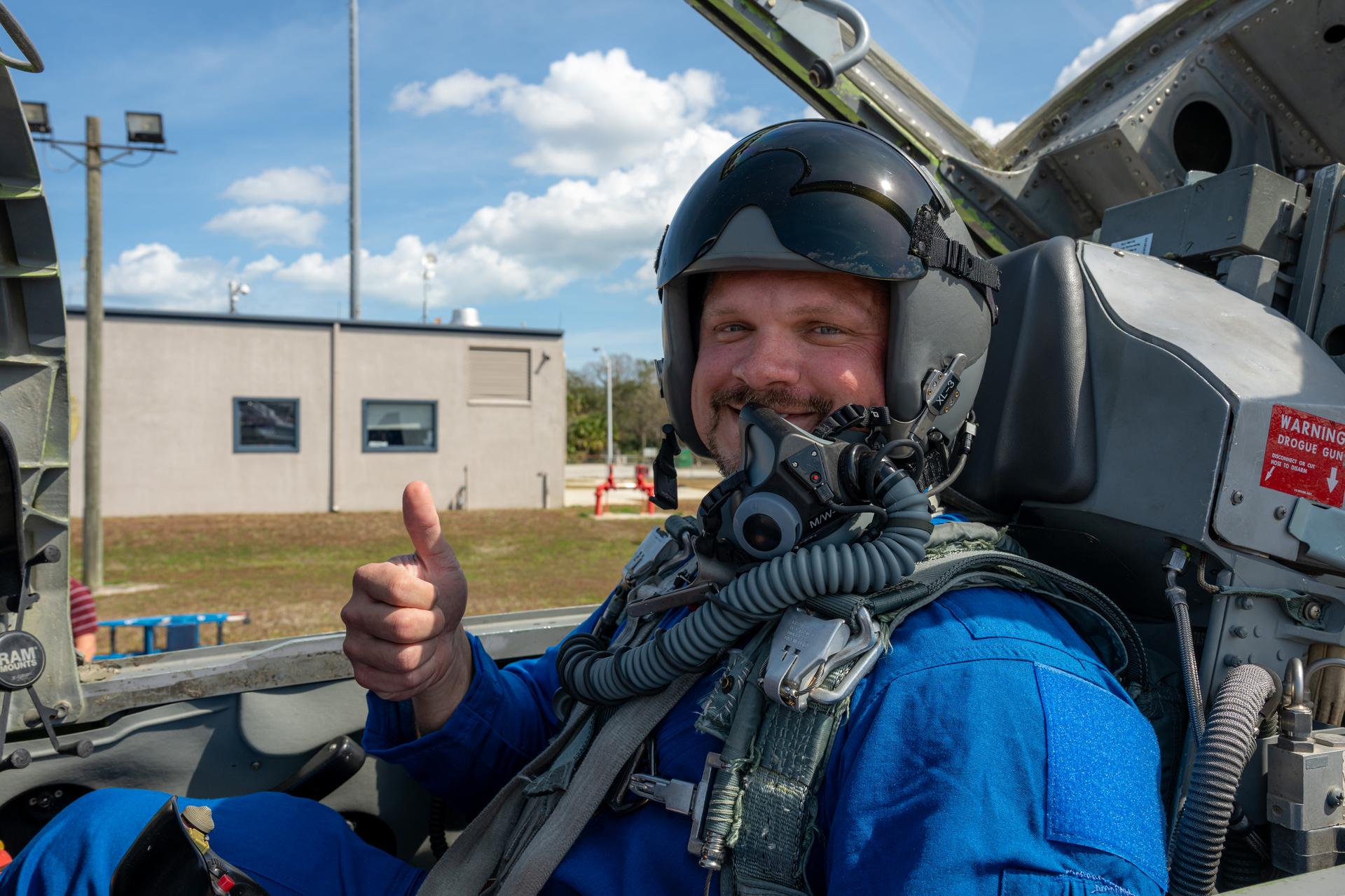
NASA employee James Hamilton, propellant and pressurant manager at NASA’s Stennis Space Center, participates in an employee incentive flying event with NASA Administrator Jared Isaacman's personal F-5 aircraft, Friday, Feb. 20, 2026, at NASA’s Kennedy Space Center in Florida. Photo Credit: (NASA/John Kraus)

One of NASA Administrator Jared Isaacman's personal F-5 aircraft is seen at sunset, Friday, March 27, 2026, at NASA's Kennedy Space Center in Florida. Photo Credit: (NASA/John Kraus)
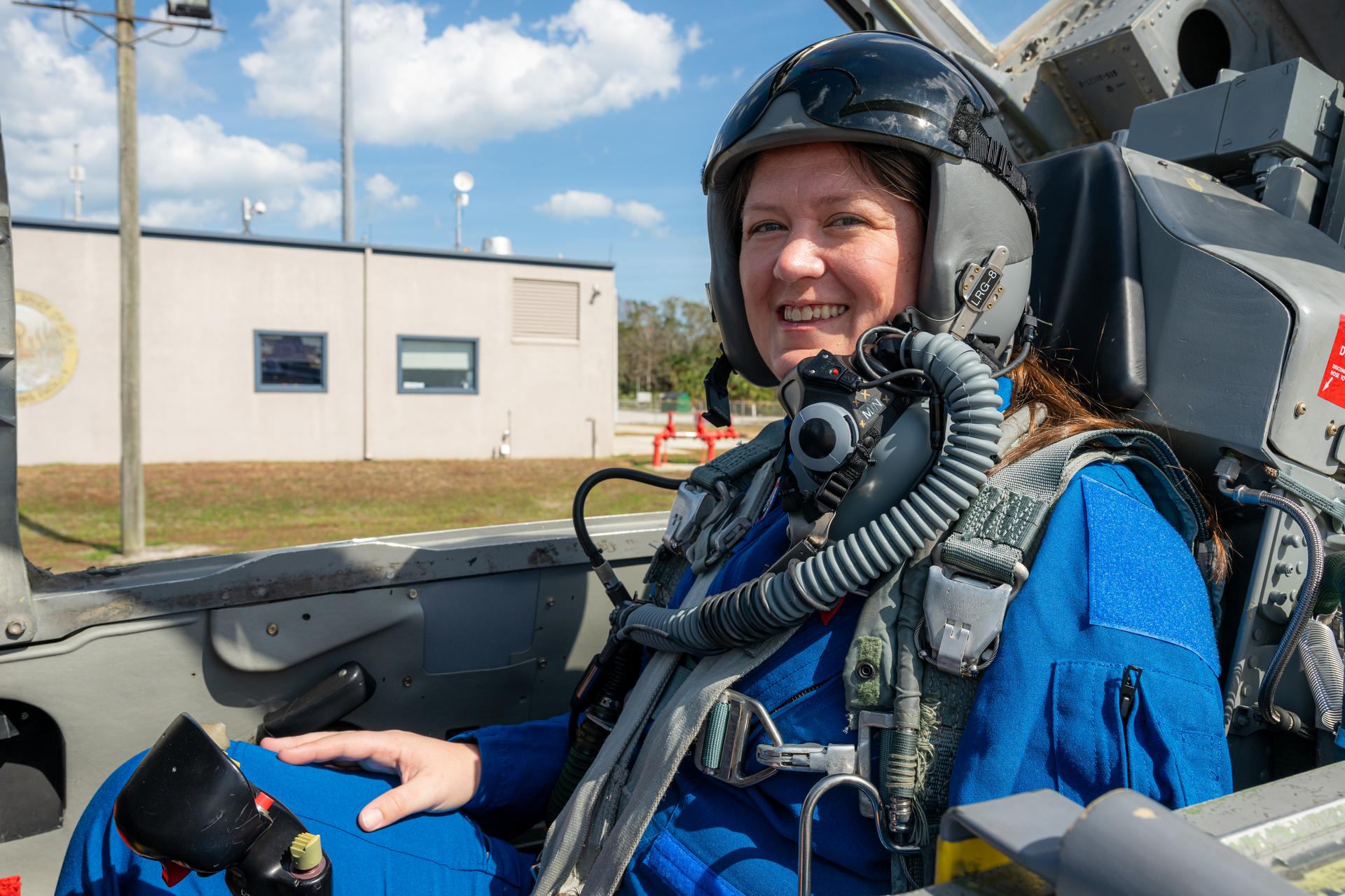
NASA employee Megan Vansant, chief architect and demolition program manager at NASA’s Marshall Space Flight Center, participates in an employee incentive flying event with NASA Administrator Jared Isaacman's personal F-5 aircraft, Friday, Feb. 20, 2026, at NASA’s Kennedy Space Center in Florida. Photo Credit: (NASA/John Kraus)
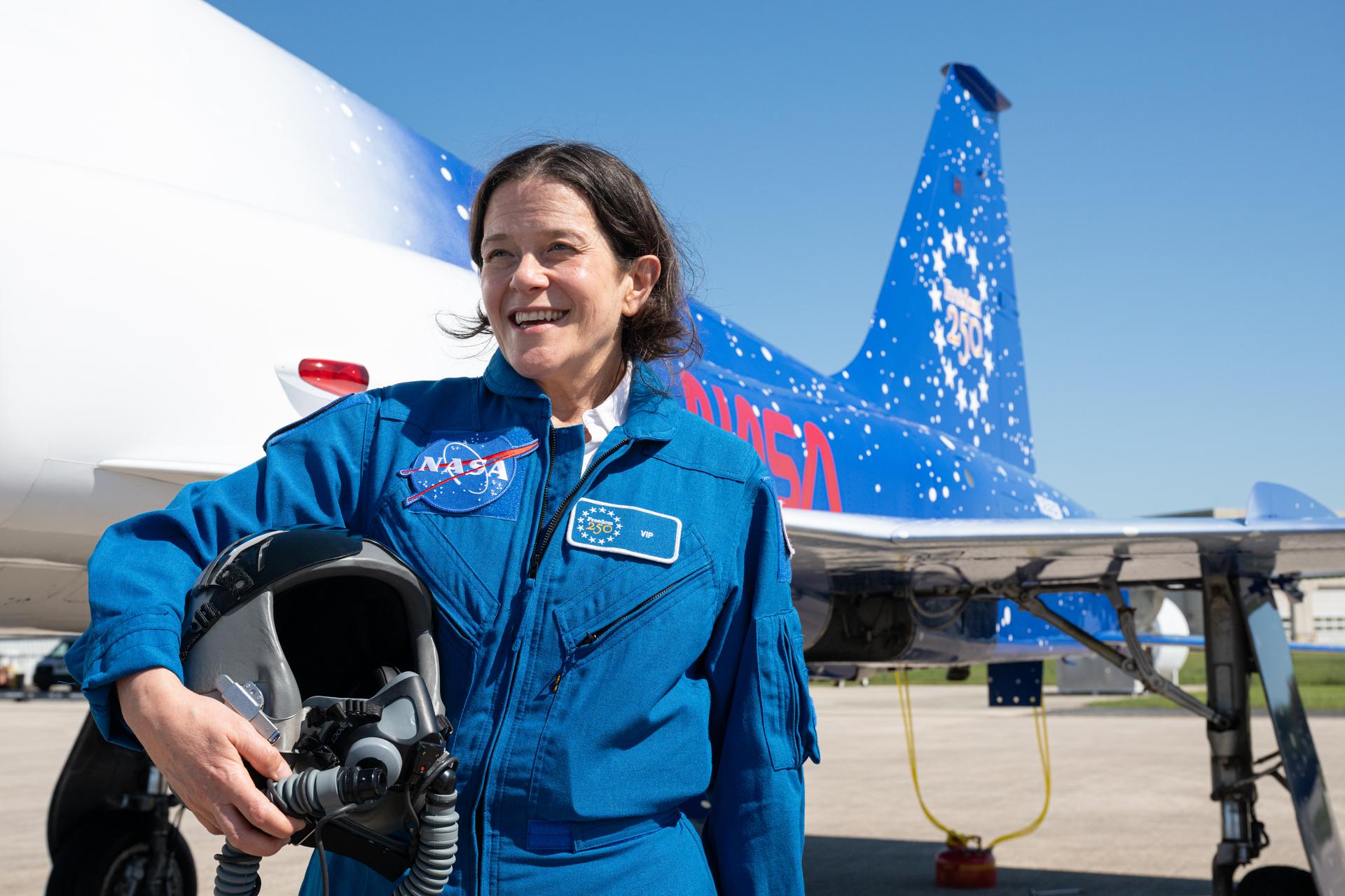
Teresa Nieves-Chinchilla, director of the Moon to Mars Space Weather Analysis Office at NASA’s Goddard Space Flight Center, poses for a photograph before an employee incentive flying event with NASA Administrator Jared Isaacman's personal F-5 aircraft, Friday, March 27, 2026, at NASA’s Kennedy Space Center in Florida. Photo Credit: (NASA/John Kraus)
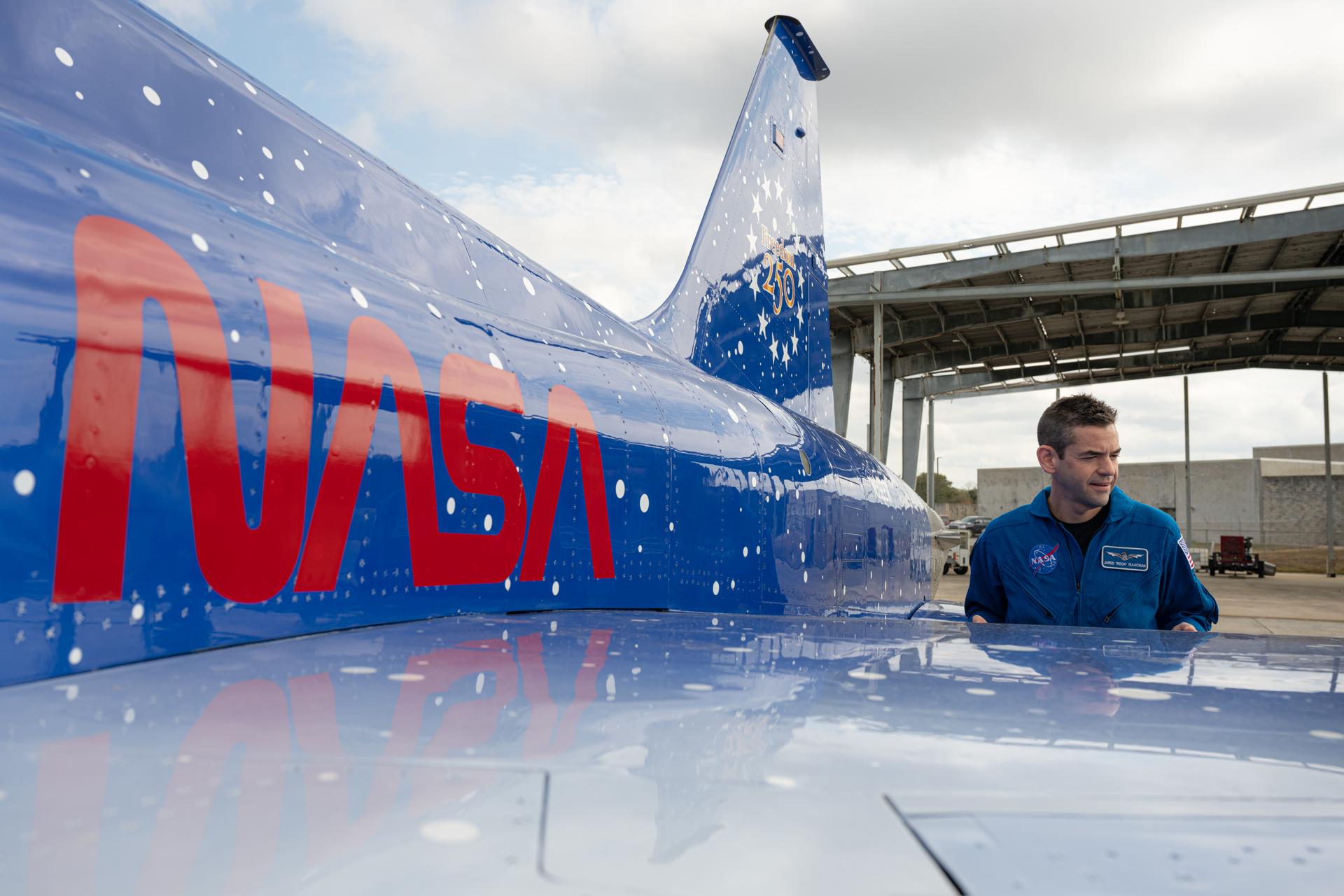
NASA Administrator Jared Isaacman is seen before an employee incentive flying event using his personal F-5 aircraft, Thursday, Feb. 12, 2026, at NASA’s Kennedy Space Center in Florida. Photo Credit: (NASA/John Kraus)

Michael J. Acheson, senior researcher and principal investigator at NASA’s Langley Research Center, participates in an employee incentive flying event with NASA Administrator Jared Isaacman's personal F-5 aircraft, Wednesday, May 13, 2026, at NASA’s Kennedy Space Center in Florida. Photo Credit: (NASA/John Kraus)

NASA Administrator Jared Isaacman is seen ahead of a flight in his personal F-5 aircraft, Wednesday, March 11, 2026, in a hangar at NASA’s Kennedy Space Center in Florida. Photo Credit: (NASA/John Kraus)
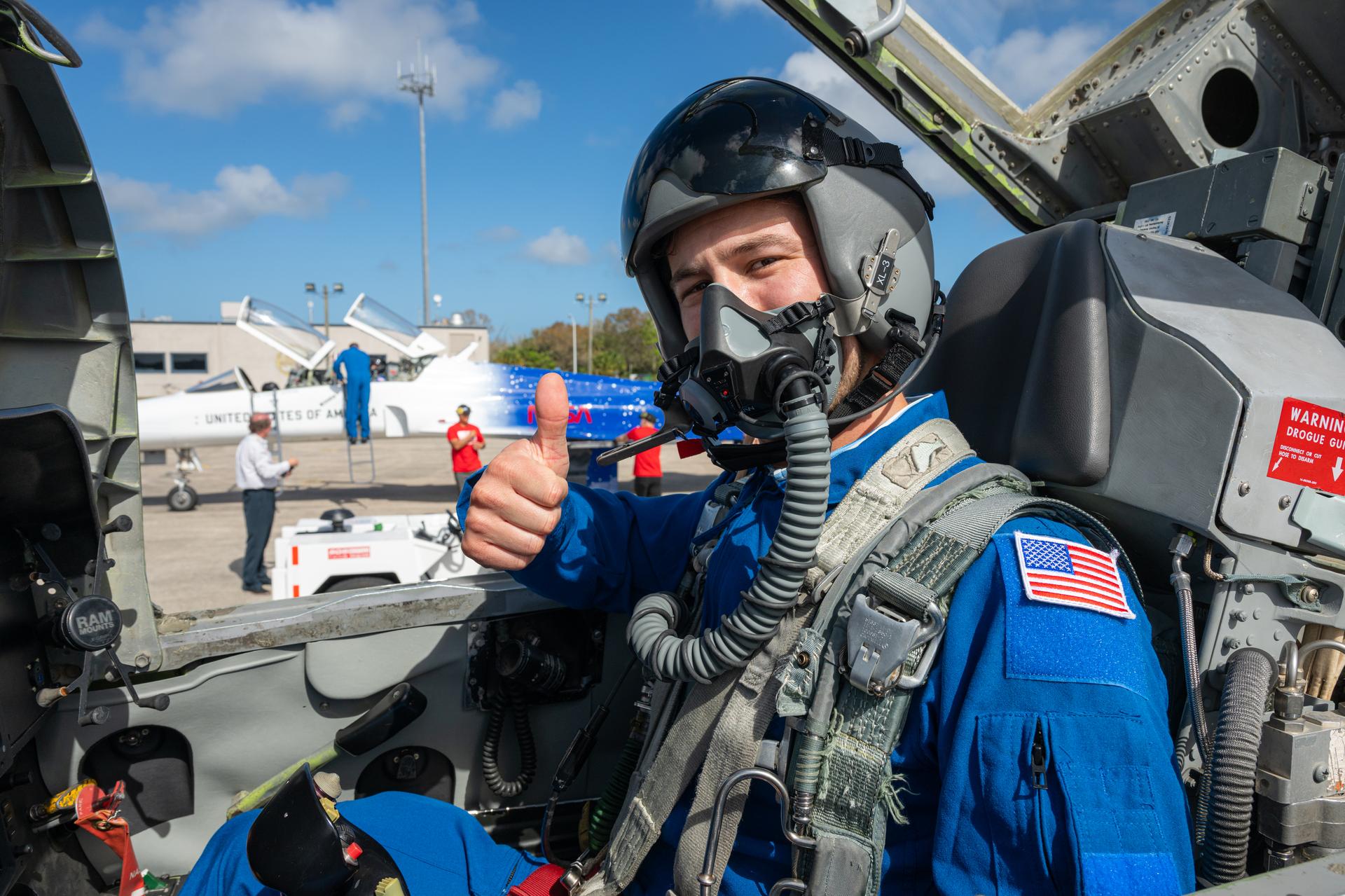
Spencer Barr, Exploration Ground Systems mission assurance manager at NASA’s Kennedy Space Center, participates in an employee incentive flying event with NASA Administrator Jared Isaacman's personal F-5 aircraft, Friday, March 6, 2026, at NASA’s Kennedy Space Center in Florida. Photo Credit: (NASA/John Kraus)
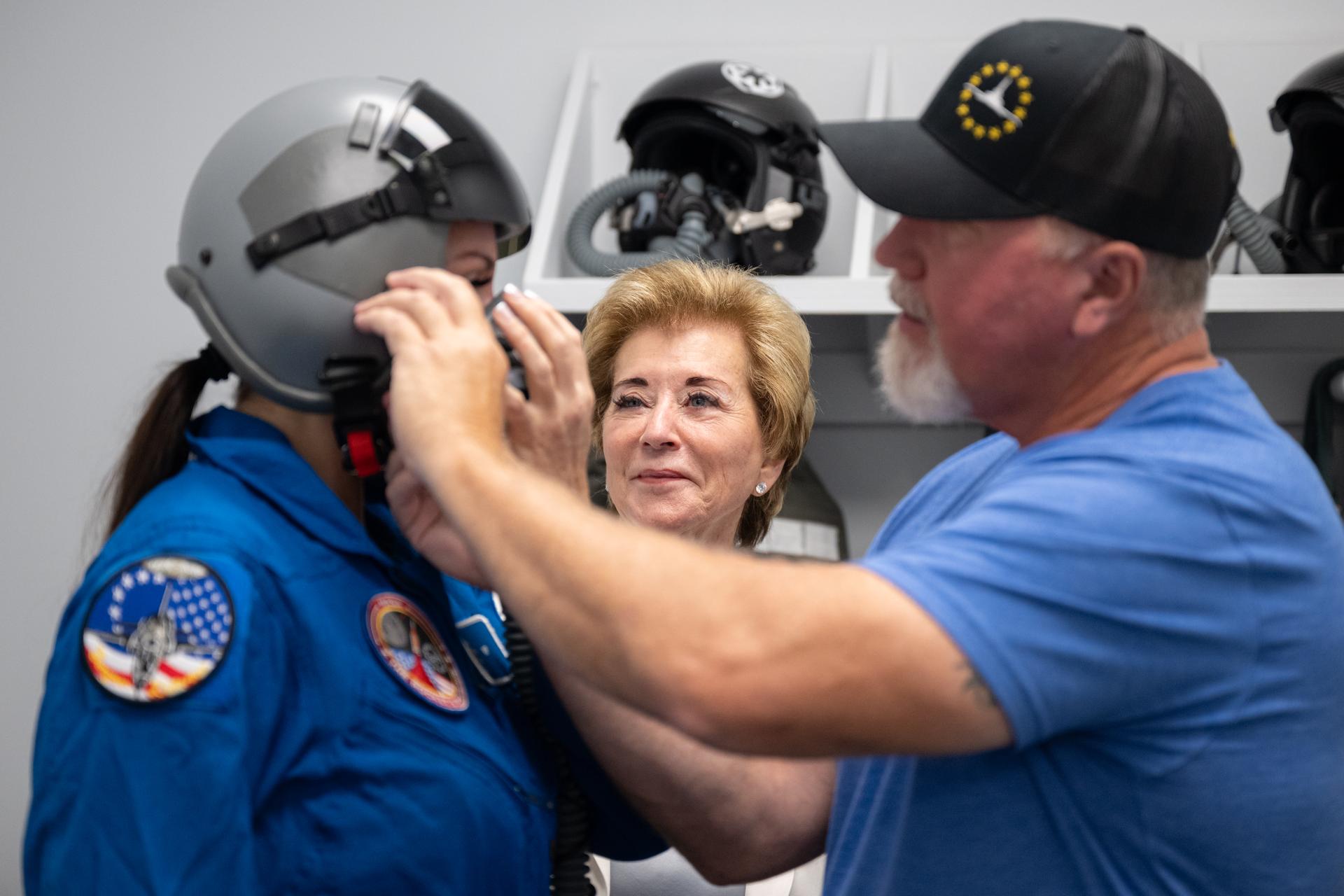
Secretary of Education Linda McMahon, center, watches as her daughter, Stephanie McMahon, left, is fitted in flight gear ahead of a flight in one of NASA Administrator Jared Isaacman's personal Alpha Jet aircraft, Saturday, Aug. 29, 2026, at NASA’s Kennedy Space Center in Florida. Photo Credit: (NASA/John Kraus)
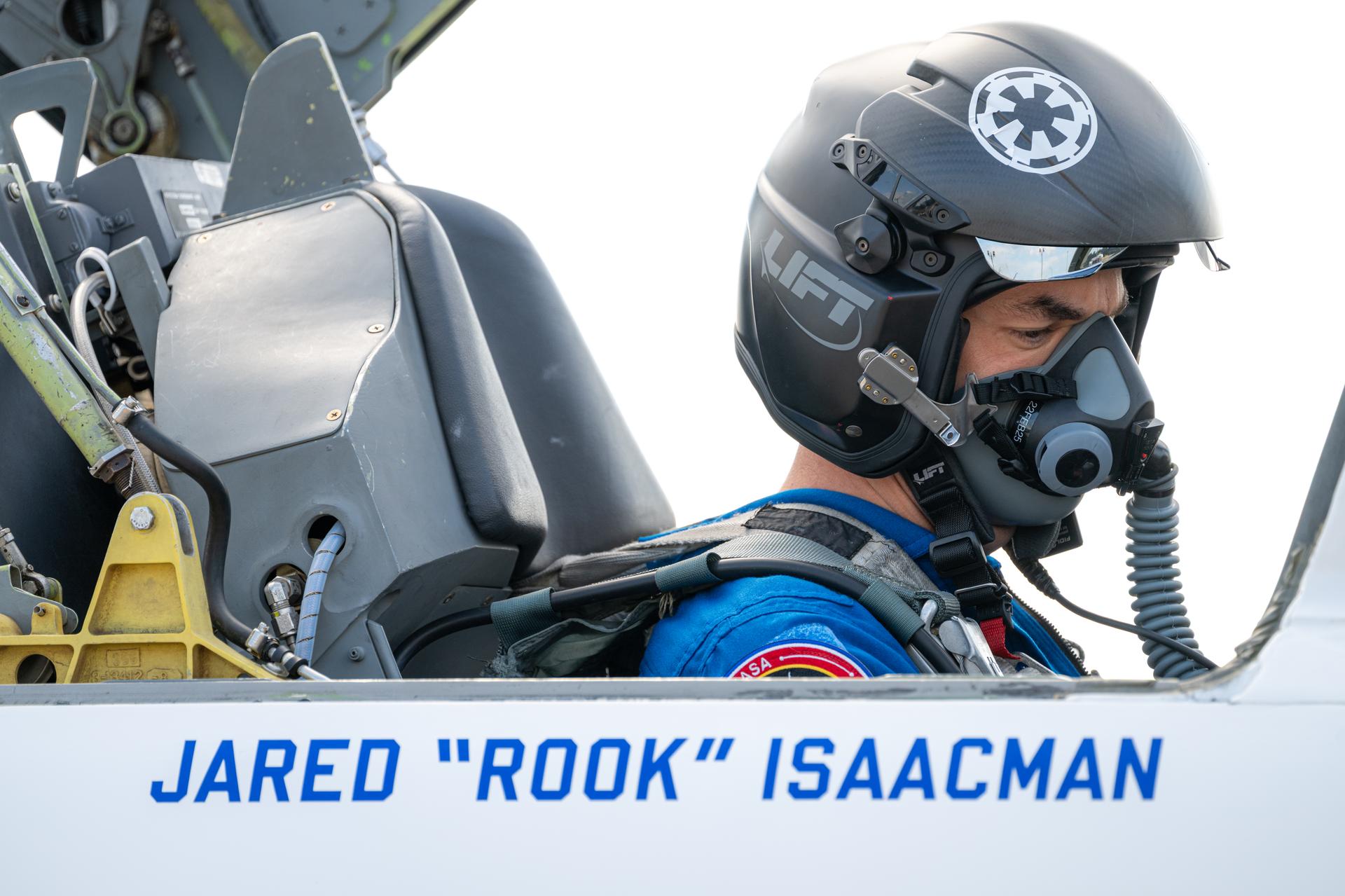
NASA Administrator Jared Isaacman is seen before an employee incentive flying event using his personal F-5 aircraft, Thursday, Feb. 12, 2026, at NASA’s Kennedy Space Center in Florida. Photo Credit: (NASA/John Kraus)
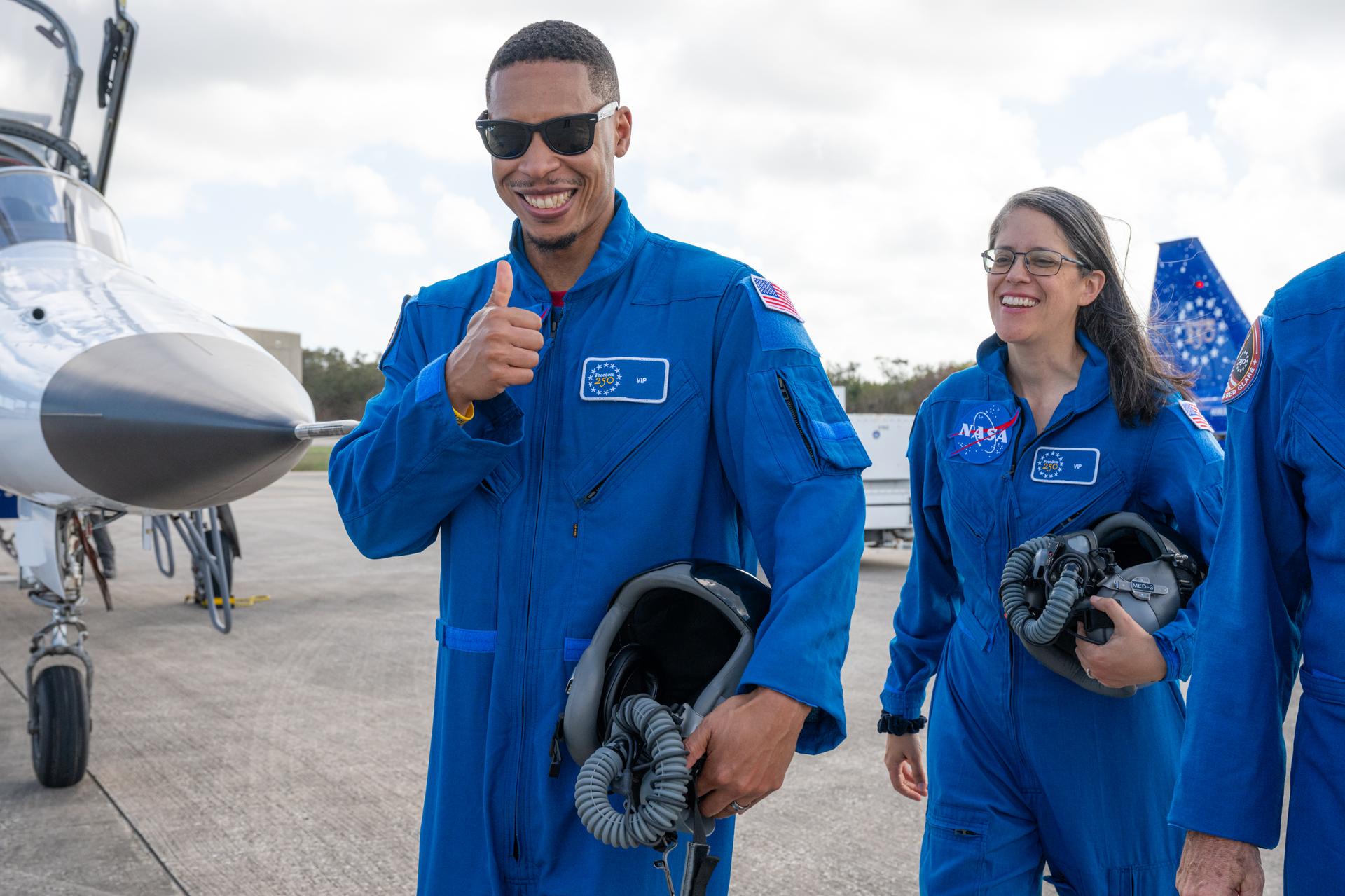
Matthew Mickens, project scientist, space crop production at NASA’s Kennedy Space Center, left, and Clara Wright, chief of the laboratories, development, and testing division within the engineering directorate at NASA’s Kennedy Space Center, right, are seen following an employee incentive flying event using NASA Administrator Jared Isaacman's personal F-5 aircraft, Friday, March 6, 2026, at NASA’s Kennedy Space Center in Florida. Photo Credit: (NASA/John Kraus)
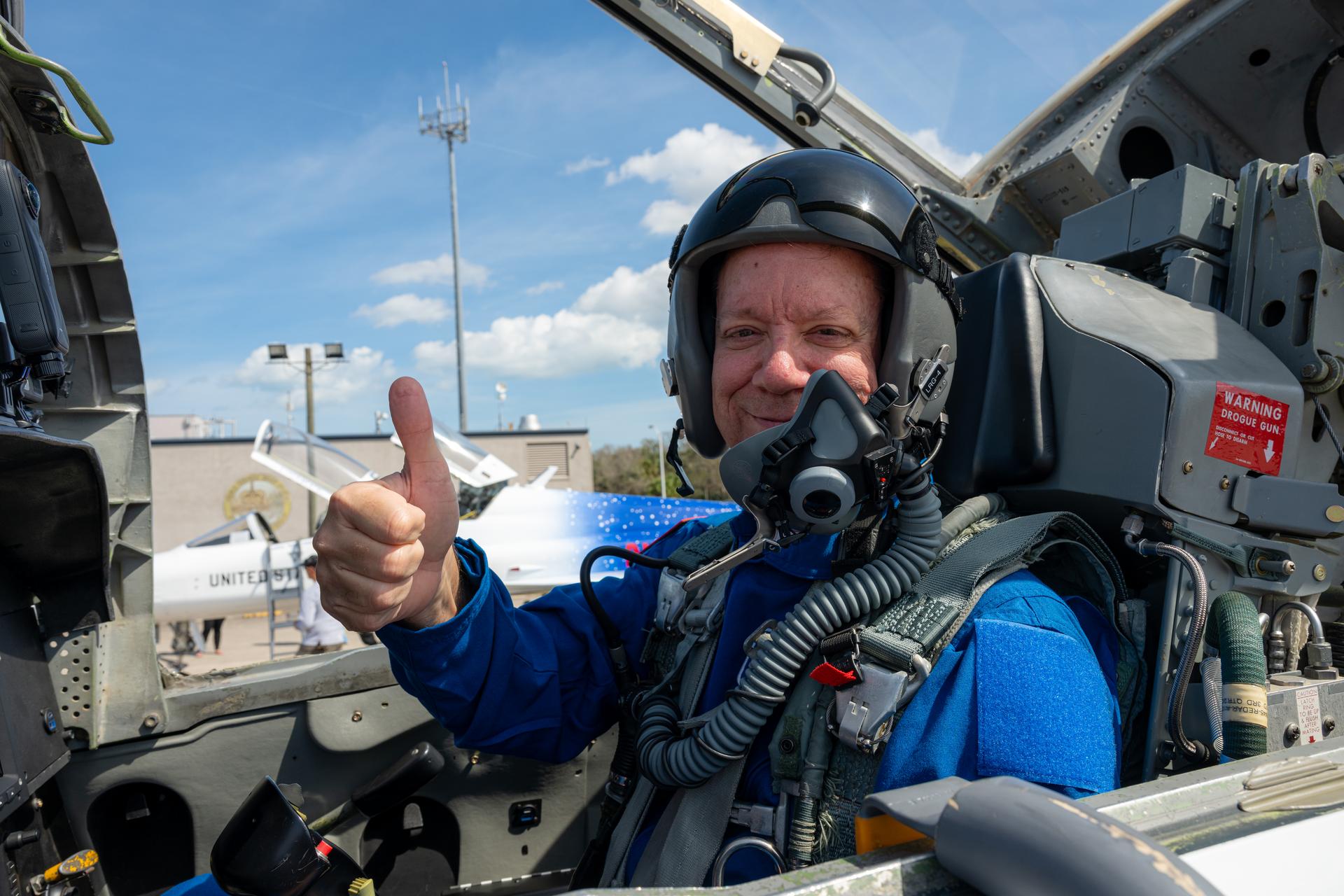
NASA employee Greg Gaddis, spaceport senior operations manager at NASA’s Kennedy Space Center, participates in an employee incentive flying event with NASA Administrator Jared Isaacman's personal F-5 aircraft, Friday, Feb. 20, 2026, at NASA’s Kennedy Space Center in Florida. Photo Credit: (NASA/John Kraus)

NASA Administrator Jared Isaacman is seen in his personal F-5 aircraft, Wednesday, March 11, 2026, at NASA’s Kennedy Space Center in Florida. Photo Credit: (NASA/John Kraus)
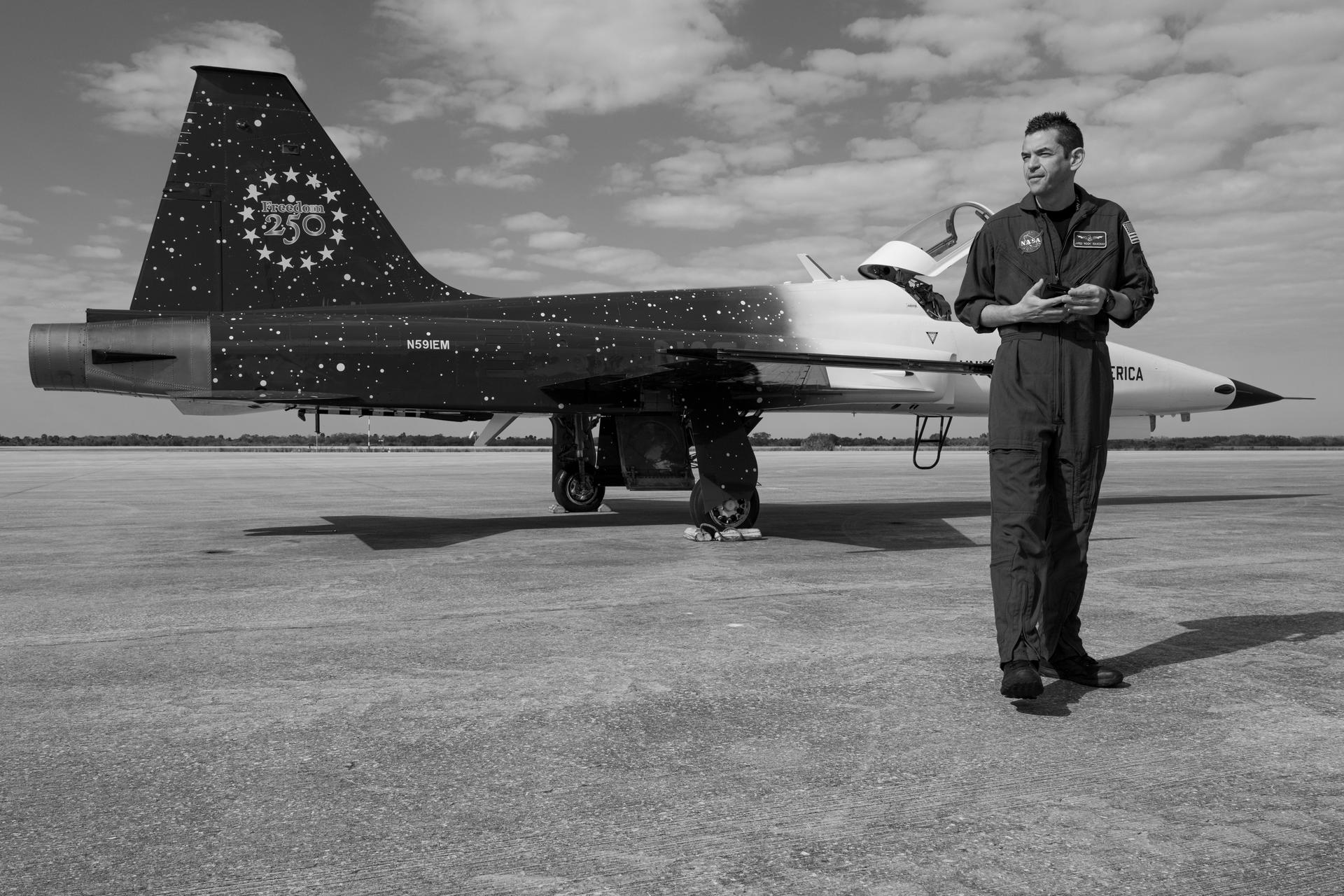
NASA Administrator Jared Isaacman is seen with his personal F-5 aircraft, Saturday, Feb. 21, 2026, at NASA’s Kennedy Space Center in Florida. Photo Credit: (NASA/John Kraus)
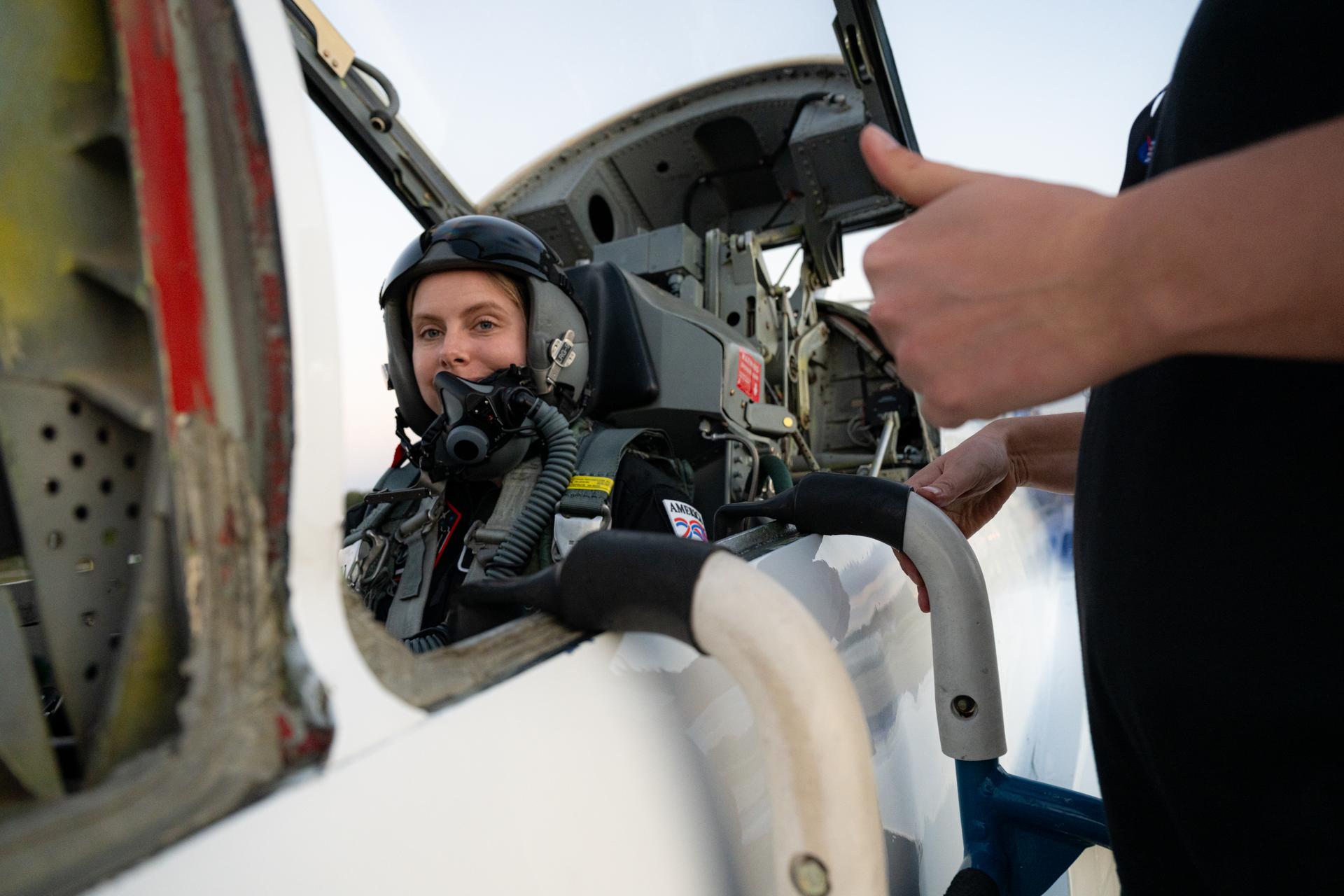
NASA employee Ashley Scharfenberg participates in an employee incentive flying event with NASA Administrator Jared Isaacman and his personal F-5 aircraft, Tuesday, Jan. 13, 2026, at NASA’s Kennedy Space Center in Florida. Photo Credit: (NASA/John Kraus)
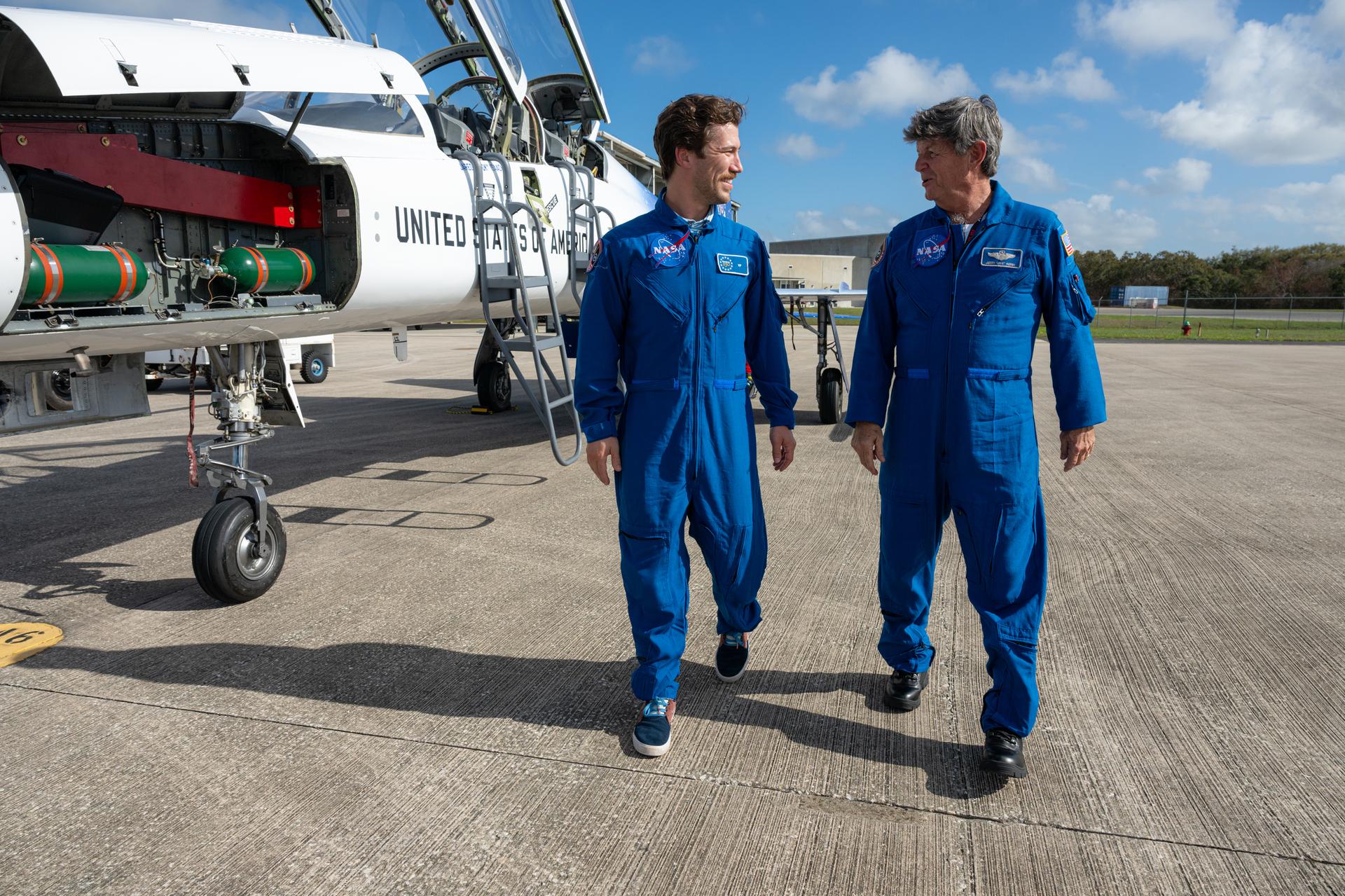
Spencer Barr, Exploration Ground Systems mission assurance manager at NASA’s Kennedy Space Center, left, speaks with Jerry Kerby, pilot, right, following an employee incentive flying event with NASA Administrator Jared Isaacman's personal F-5 aircraft, Friday, March 6, 2026, at NASA’s Kennedy Space Center in Florida. Photo Credit: (NASA/John Kraus)
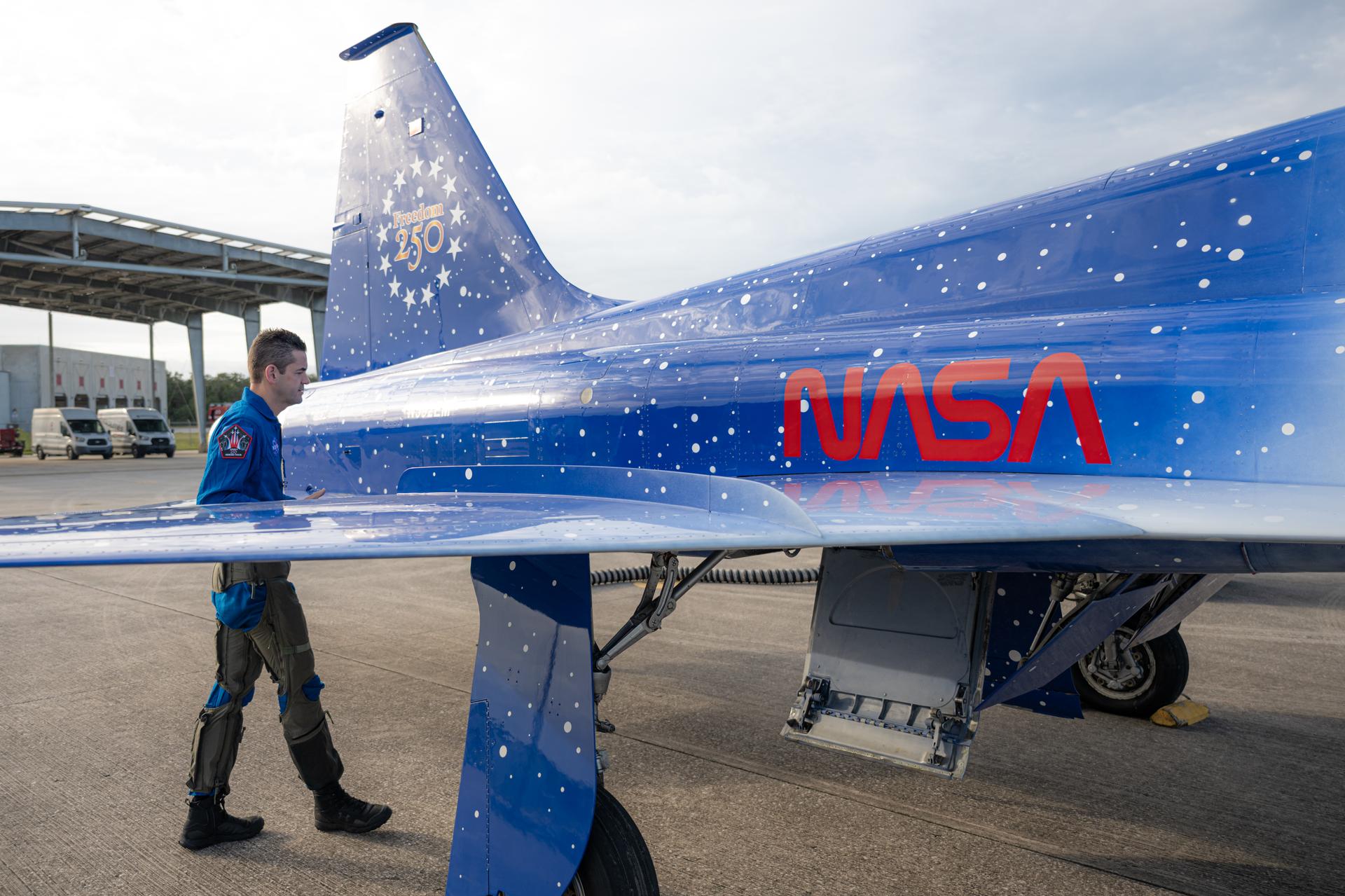
NASA Administrator Jared Isaacman is seen with his personal F-5 aircraft, Thursday, Jan. 22, 2026, at NASA’s Kennedy Space Center in Florida. Photo Credit: (NASA/John Kraus)
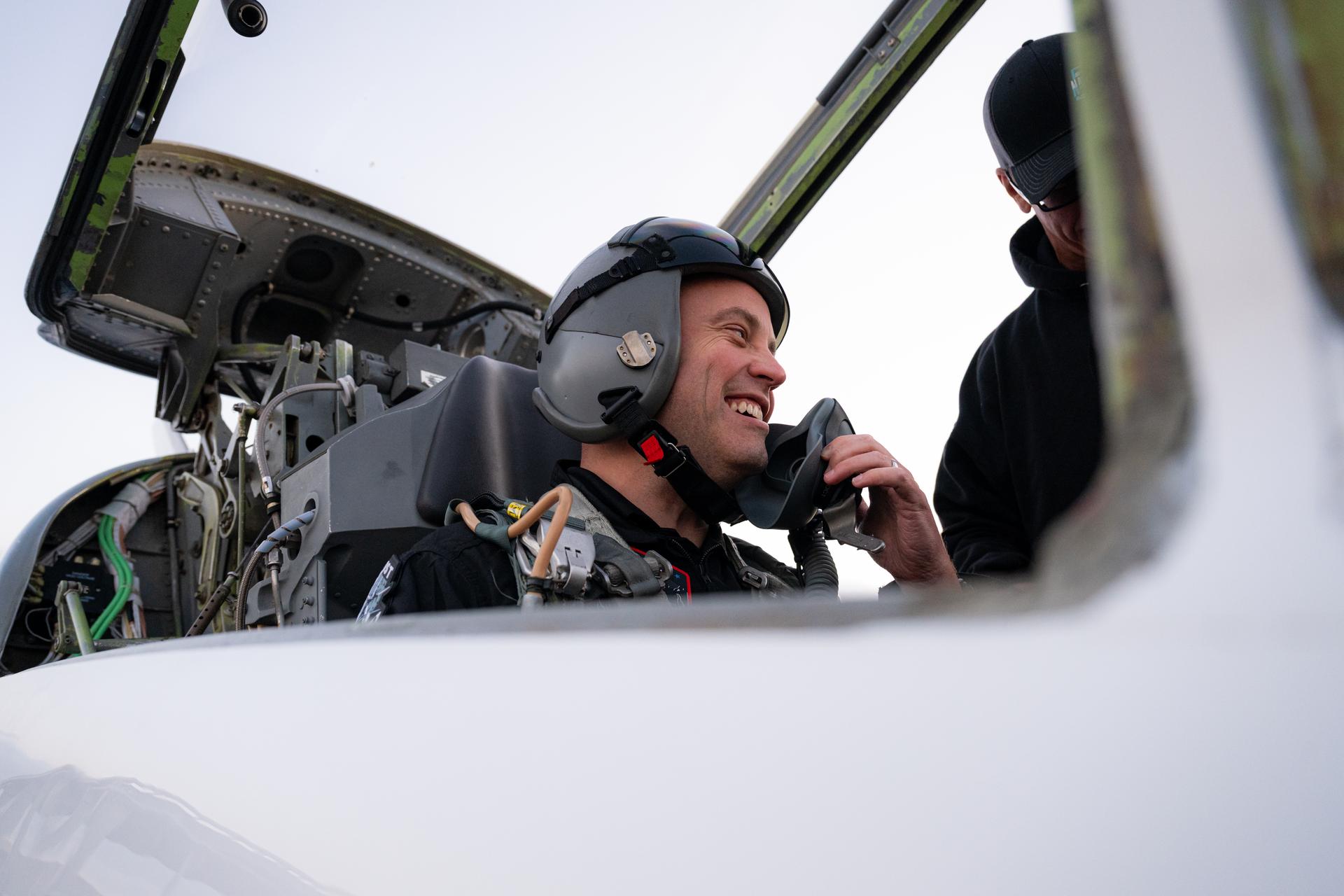
NASA employee Daniel Forrestel participates in an employee incentive flying event with NASA Administrator Jared Isaacman and his personal F-5 aircraft, Tuesday, Jan. 13, 2026, at NASA’s Kennedy Space Center in Florida. Photo Credit: (NASA/John Kraus)

Matthew Mickens, project scientist, space crop production at NASA’s Kennedy Space Center, left, and Clara Wright, chief of the laboratories, development, and testing division within the engineering directorate at NASA’s Kennedy Space Center, right, are seen following an employee incentive flying event using NASA Administrator Jared Isaacman's personal F-5 aircraft, Friday, March 6, 2026, at NASA’s Kennedy Space Center in Florida. Photo Credit: (NASA/John Kraus)
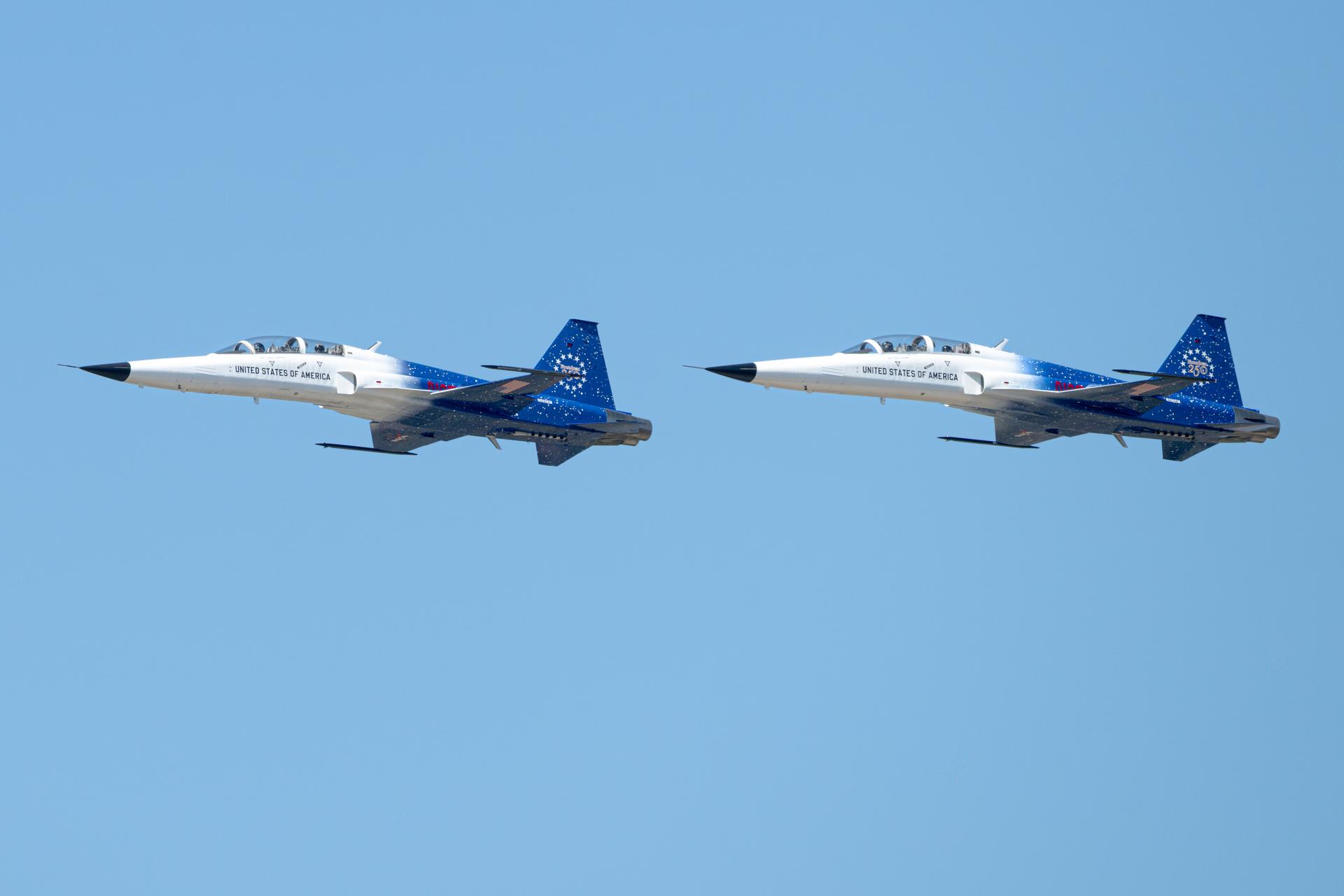
NASA employees participate in an employee incentive flying event using NASA Administrator Jared Isaacman's personal F-5 aircraft, Saturday, Feb. 21, 2026, at NASA’s Kennedy Space Center in Florida. Photo Credit: (NASA/John Kraus)
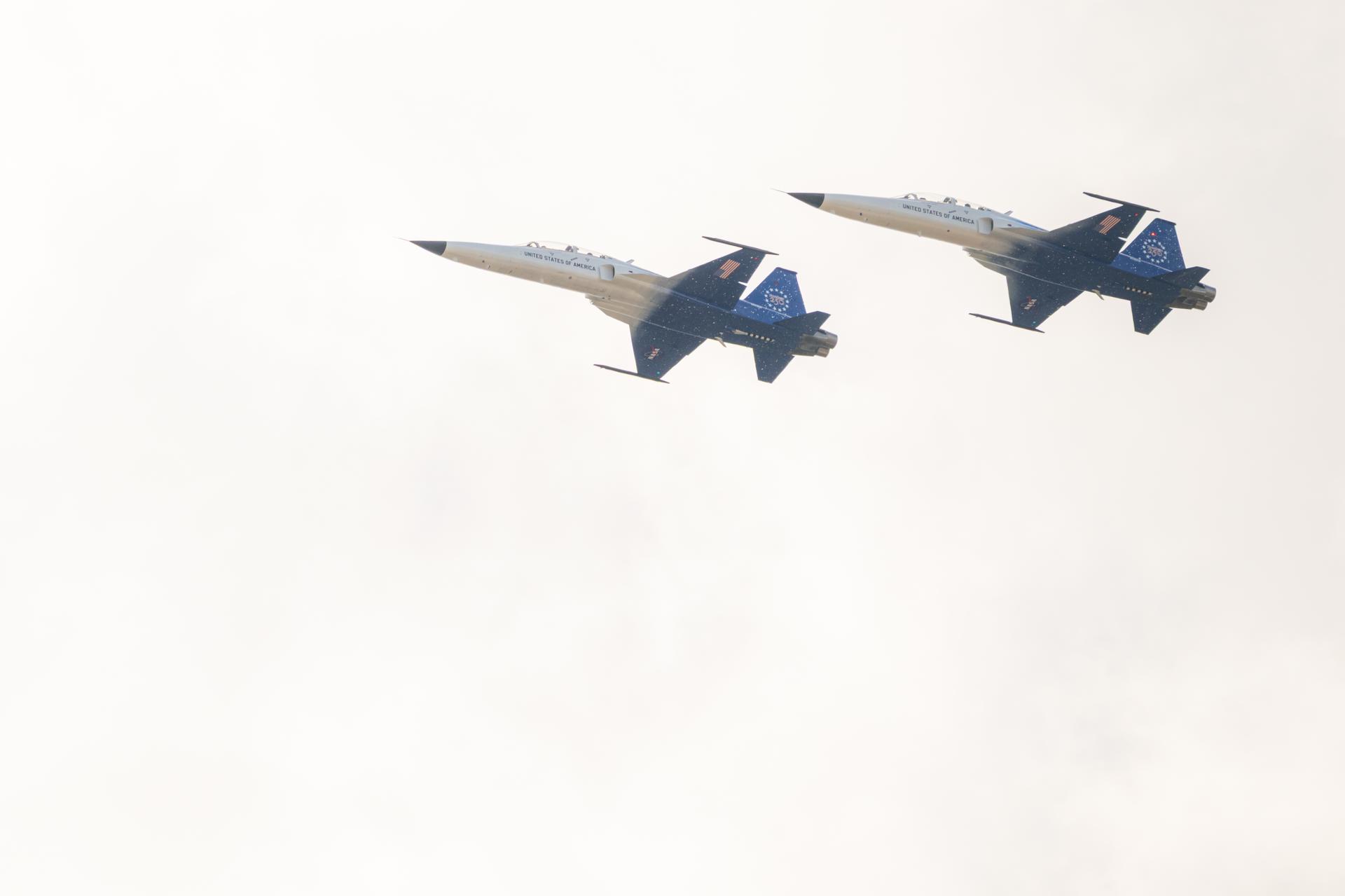
NASA employees participate in an employee incentive flying event using NASA Administrator Jared Isaacman's personal F-5 aircraft, Friday, Feb. 20, 2026, at NASA’s Kennedy Space Center in Florida. Photo Credit: (NASA/John Kraus)
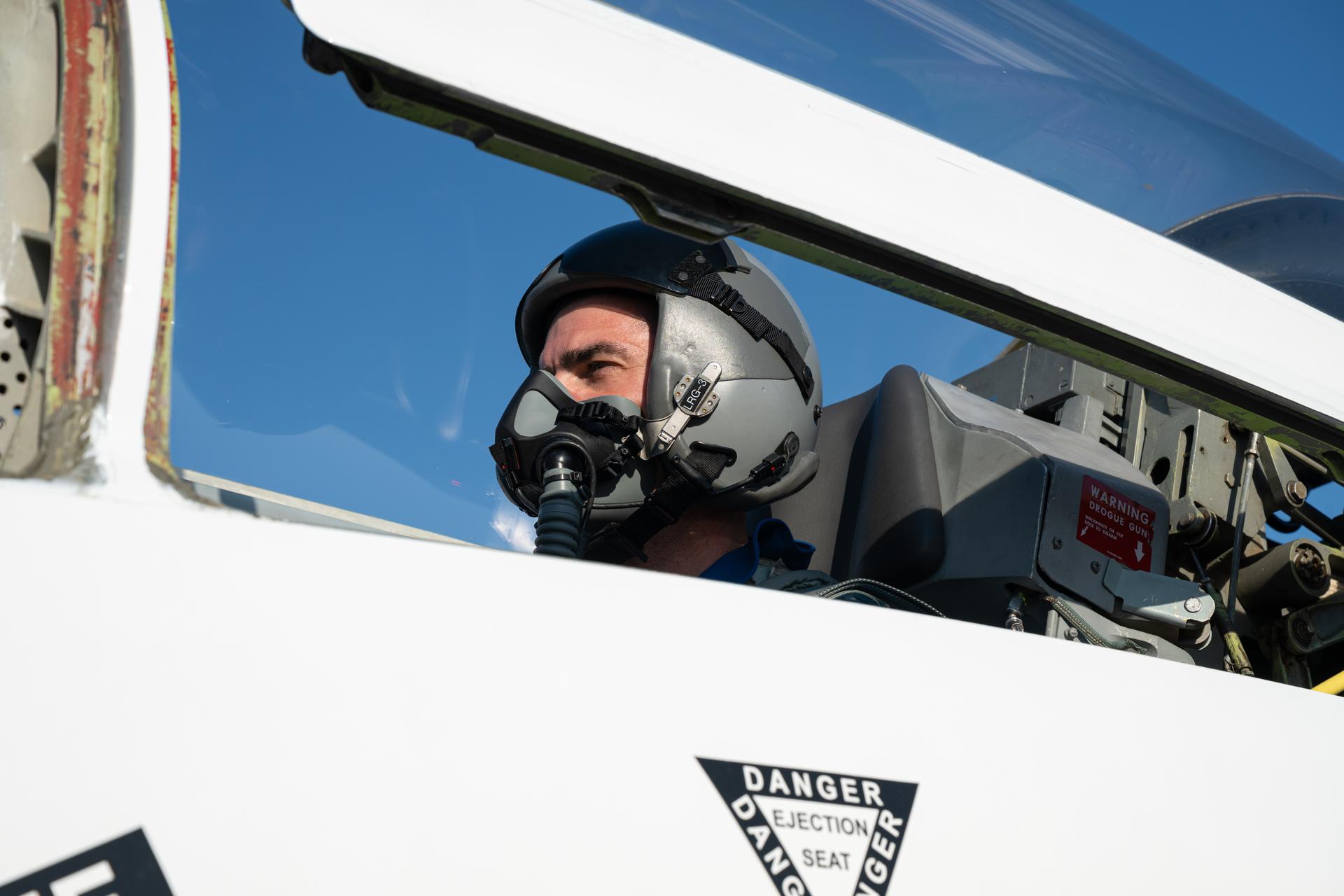
Kyle Back, director of the business management office at the Office of the Chief Financial Officer (OCFO) Enterprise at NASA Headquarters, participates in an employee incentive flying event with NASA Administrator Jared Isaacman's personal F-5 aircraft, Friday, March 27, 2026, at NASA’s Kennedy Space Center in Florida. Photo Credit: (NASA/John Kraus)
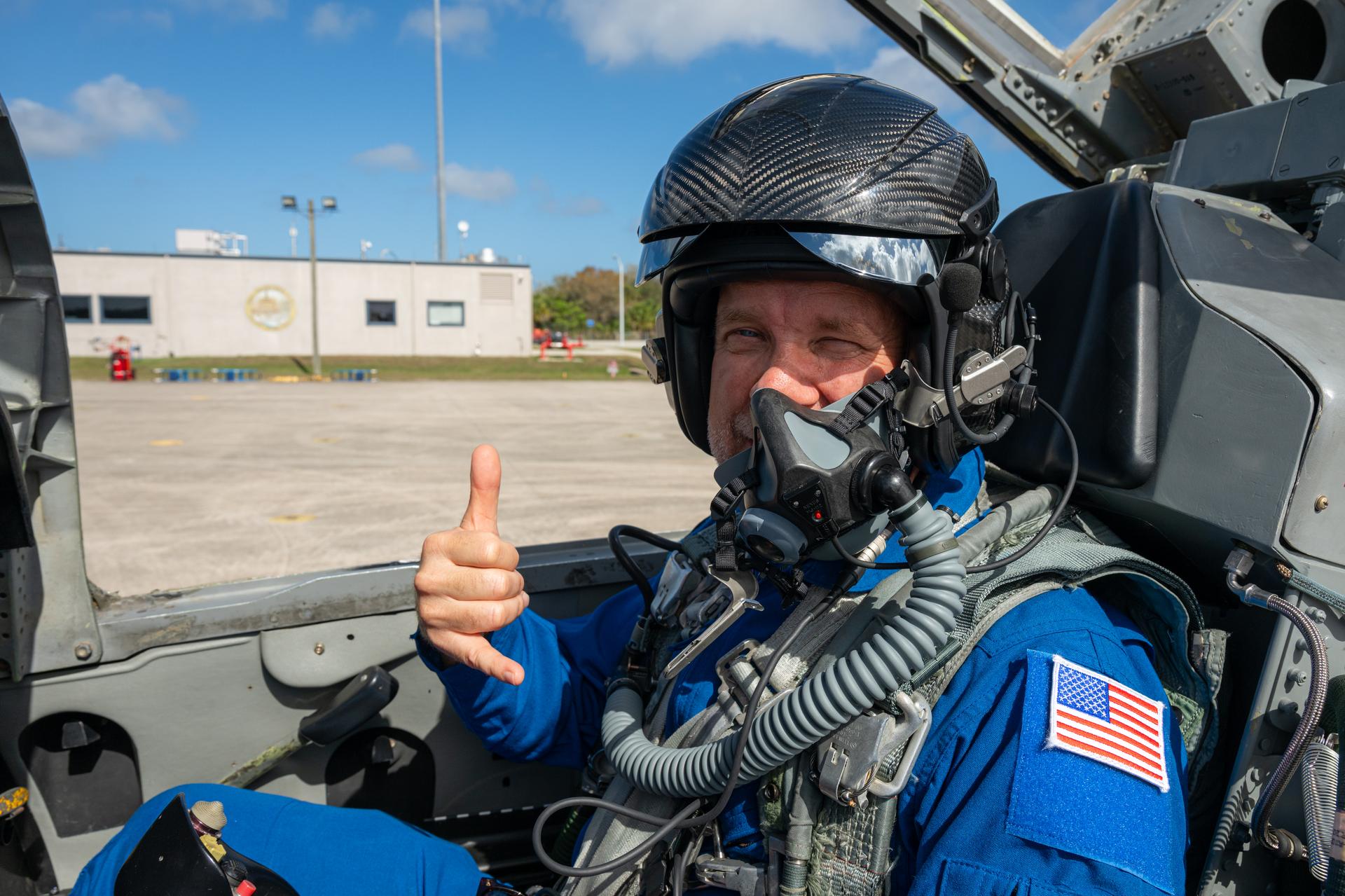
Trey Carlson, chief of staff at NASA’s Kennedy Space Center, participates in an employee incentive flying event with NASA Administrator Jared Isaacman's personal F-5 aircraft, Friday, March 6, 2026, at NASA’s Kennedy Space Center in Florida. Photo Credit: (NASA/John Kraus)

One of NASA Administrator Jared Isaacman’s personal F-5 aircraft is seen through the jet wash of another F-5 aircraft during an employee incentive flying event, Friday, March 6, 2026, at NASA’s Kennedy Space Center in Florida. Photo Credit: (NASA/John Kraus)
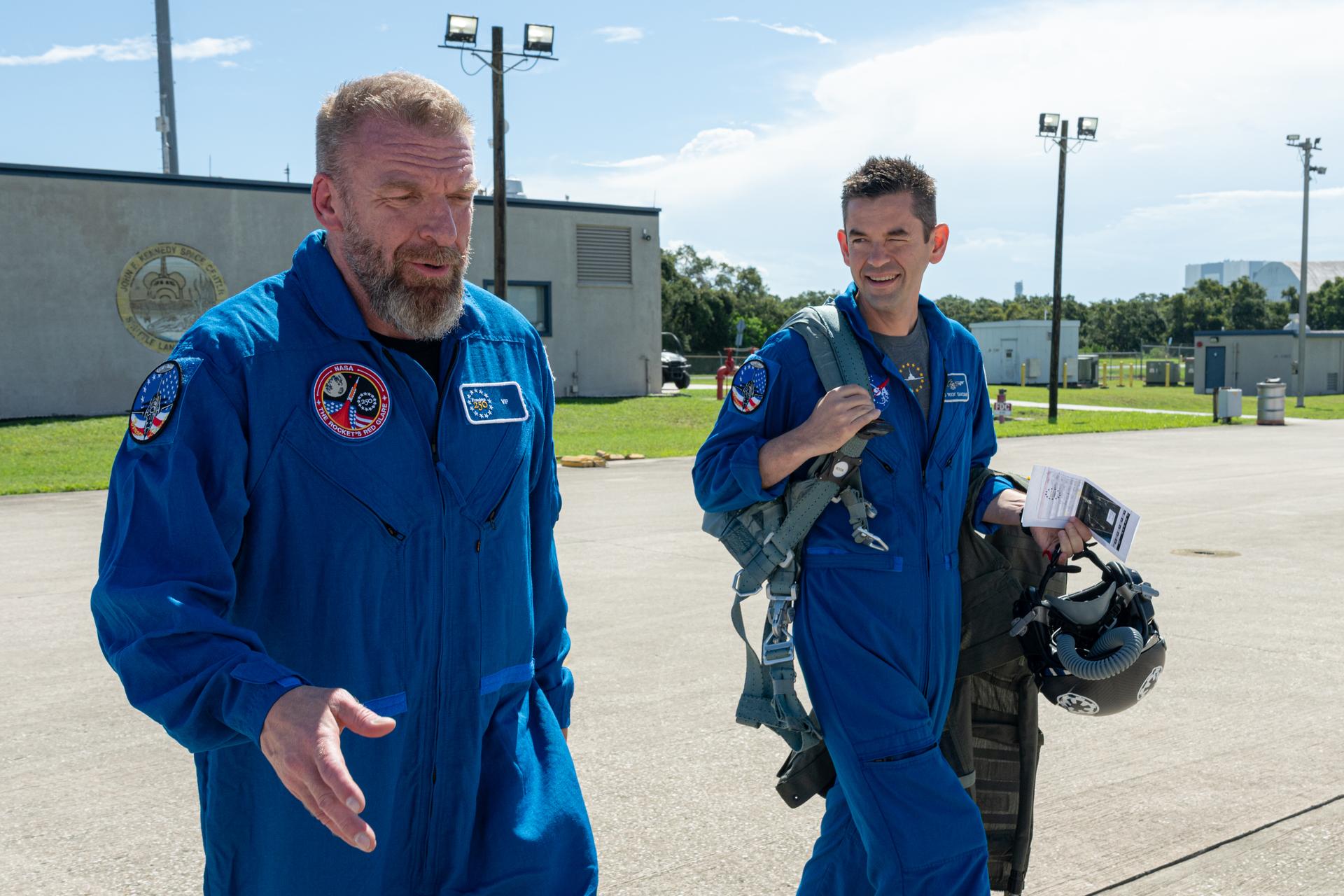
Paul "Triple H" Levesque, left, speaks with NASA Administrator Jared Isaacman, right, ahead of a flight in one of Isaacman's personal Alpha Jet aircraft, Saturday, Aug. 29, 2026, at NASA's Kennedy Space Center in Florida. Photo Credit: (NASA/John Kraus)
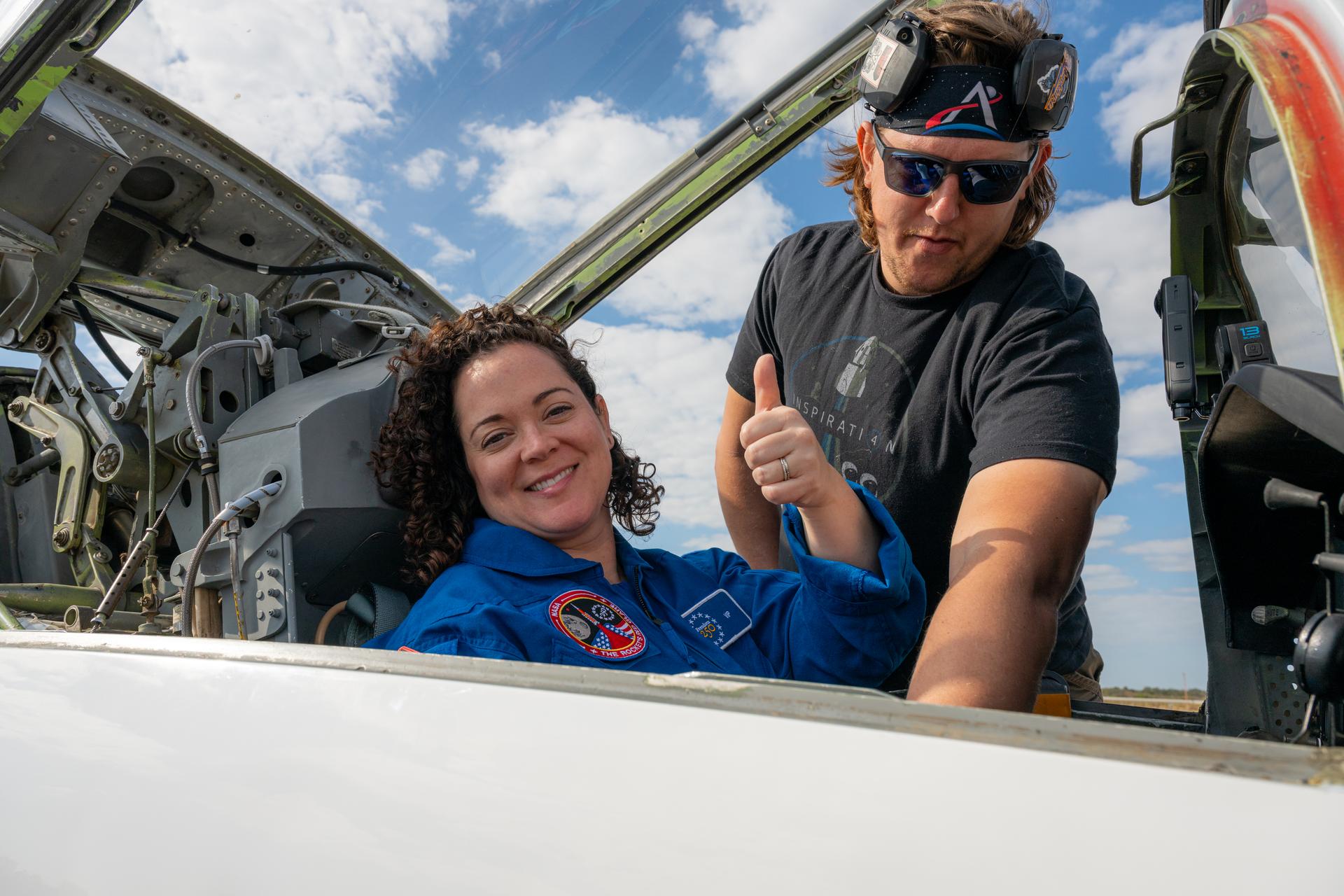
NASA employee Brittany Bouché, acting deputy chief of facility engineering services at NASA’s Stennis Space Center, participates in an employee incentive flying event with NASA Administrator Jared Isaacman's personal F-5 aircraft, Saturday, Feb. 21, 2026, at NASA’s Kennedy Space Center in Florida. Photo Credit: (NASA/John Kraus)

NASA Administrator Jared Isaacman is seen with his personal F-5 aircraft, Wednesday, March 11, 2026, at NASA’s Kennedy Space Center in Florida. Photo Credit: (NASA/John Kraus)

Sean Clarke, NASA technical fellow for electric power for the NASA Engineering and Safety Center (NESC), based at NASA’s Armstrong Flight Research Center, participates in an employee incentive flying event with NASA Administrator Jared Isaacman's personal F-5 aircraft, Friday, March 27, 2026, at NASA’s Kennedy Space Center in Florida. Photo Credit: (NASA/John Kraus)
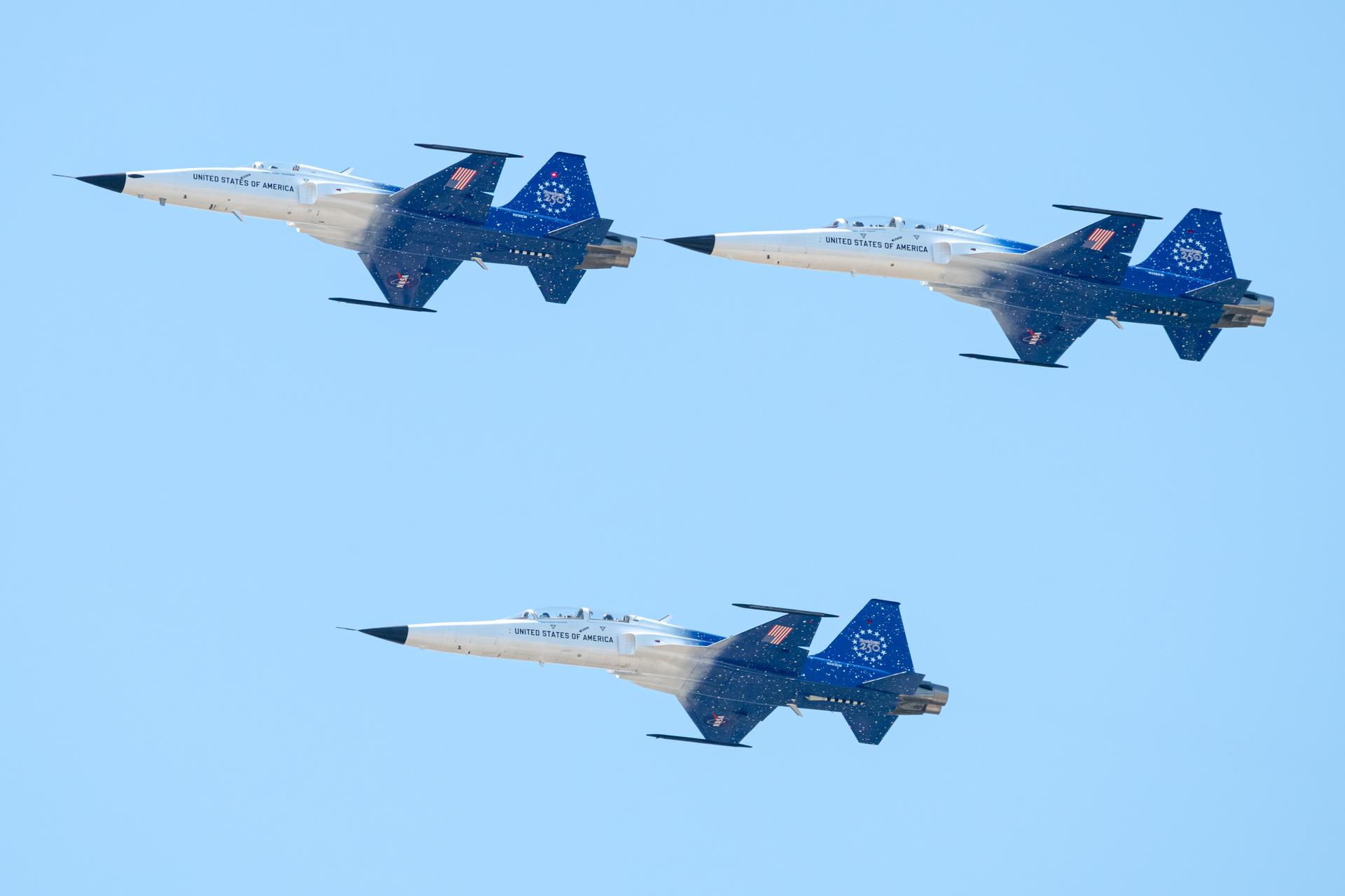
NASA Administrator Jared Isaacman participates in a formation flight with his personal F-5 aircraft, Saturday, Feb. 21, 2026, at NASA’s Kennedy Space Center in Florida. Photo Credit: (NASA/John Kraus)

Luis Muniz, radiation safety officer at NASA’s Goddard Space Flight Center, poses for a photograph before an employee incentive flying event with NASA Administrator Jared Isaacman's personal F-5 aircraft, Friday, March 27, 2026, at NASA’s Kennedy Space Center in Florida. Photo Credit: (NASA/John Kraus)
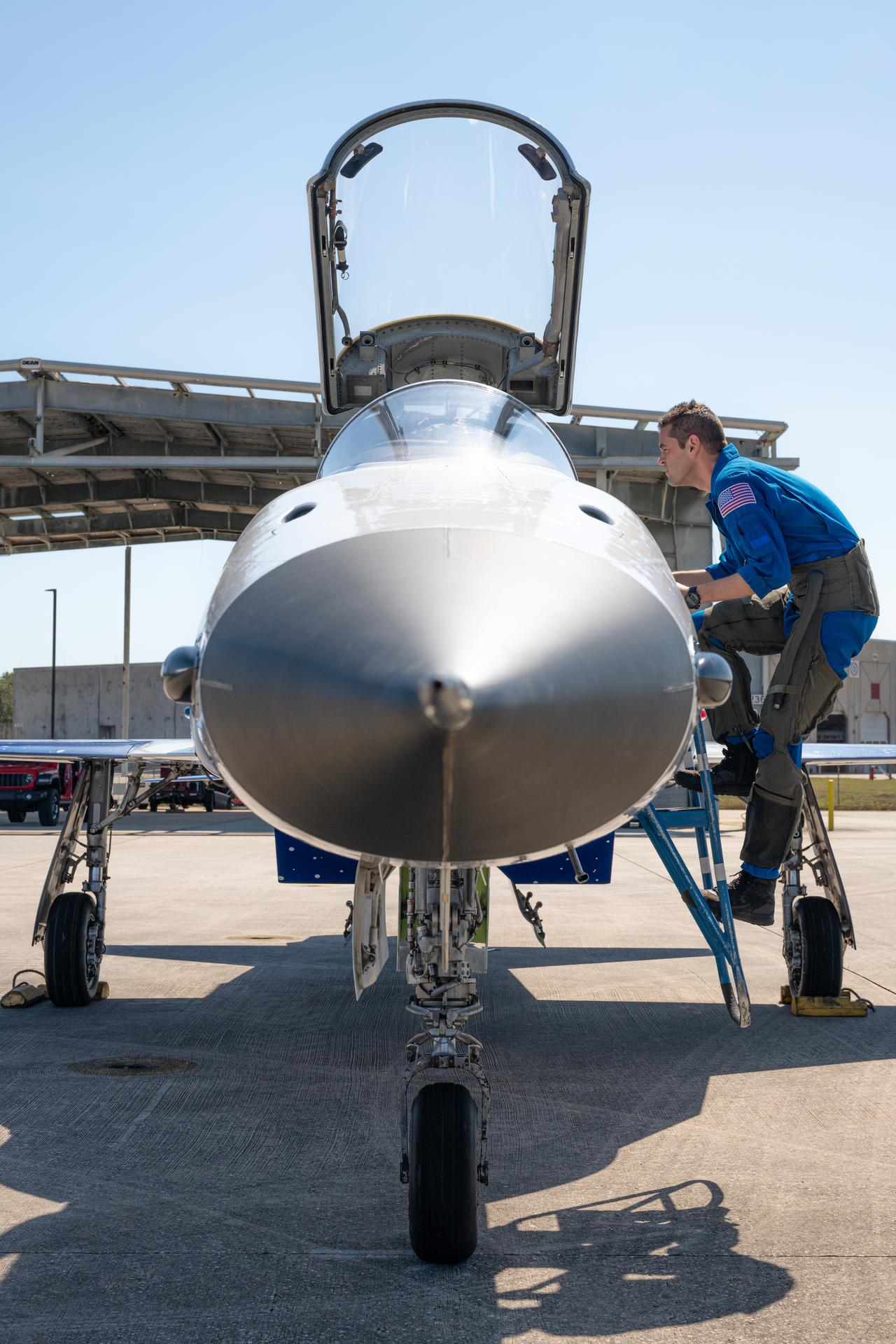
NASA Administrator Jared Isaacman is seen ingressing his personal F-5 aircraft, Saturday, Feb. 21, 2026, at NASA’s Kennedy Space Center in Florida. Photo Credit: (NASA/John Kraus)
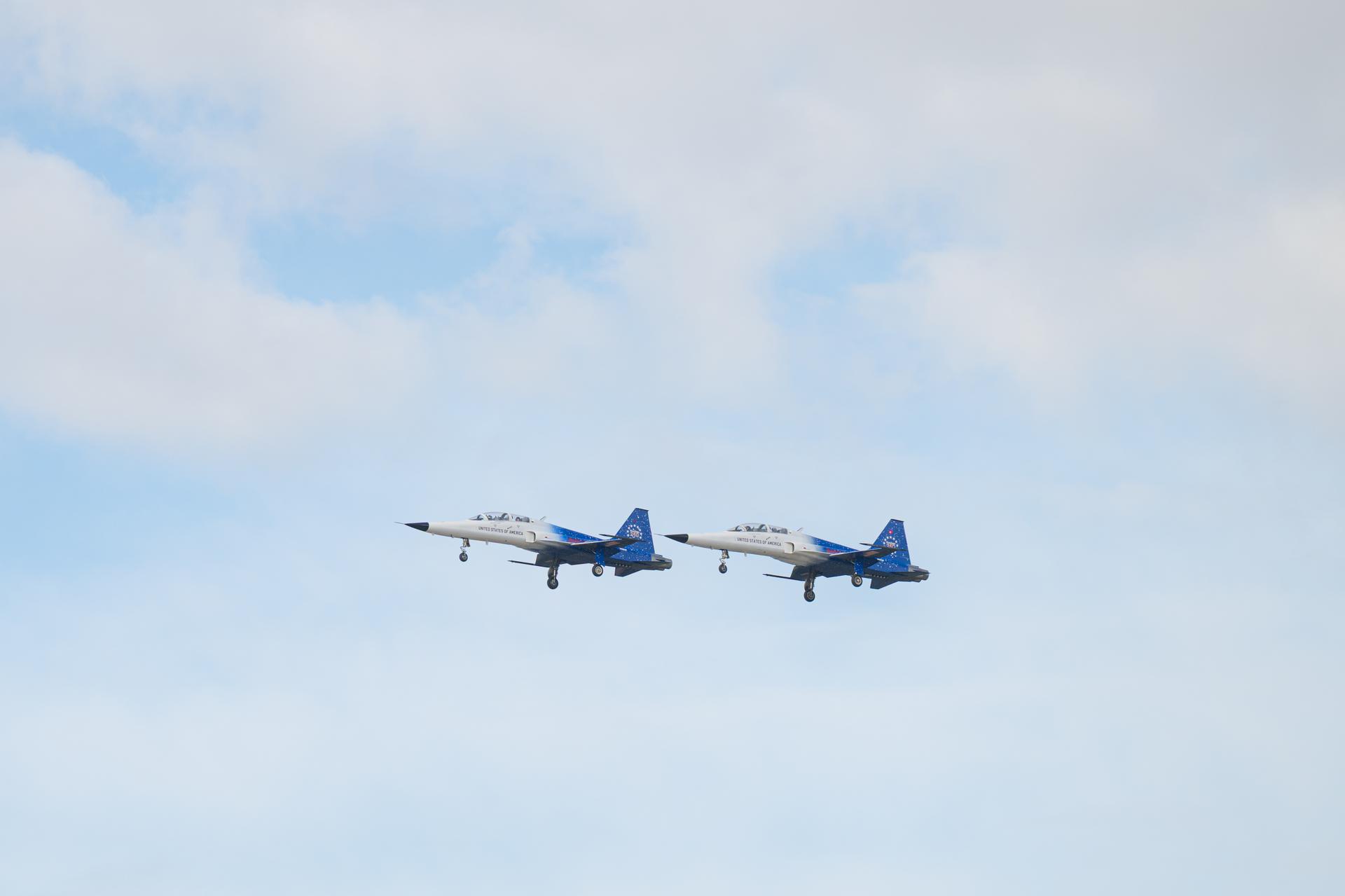
NASA Administrator Jared Isaacman participates in a formation flight with his personal F-5 aircraft, Thursday, Jan. 22, 2026, at NASA’s Kennedy Space Center in Florida. Photo Credit: (NASA/John Kraus)
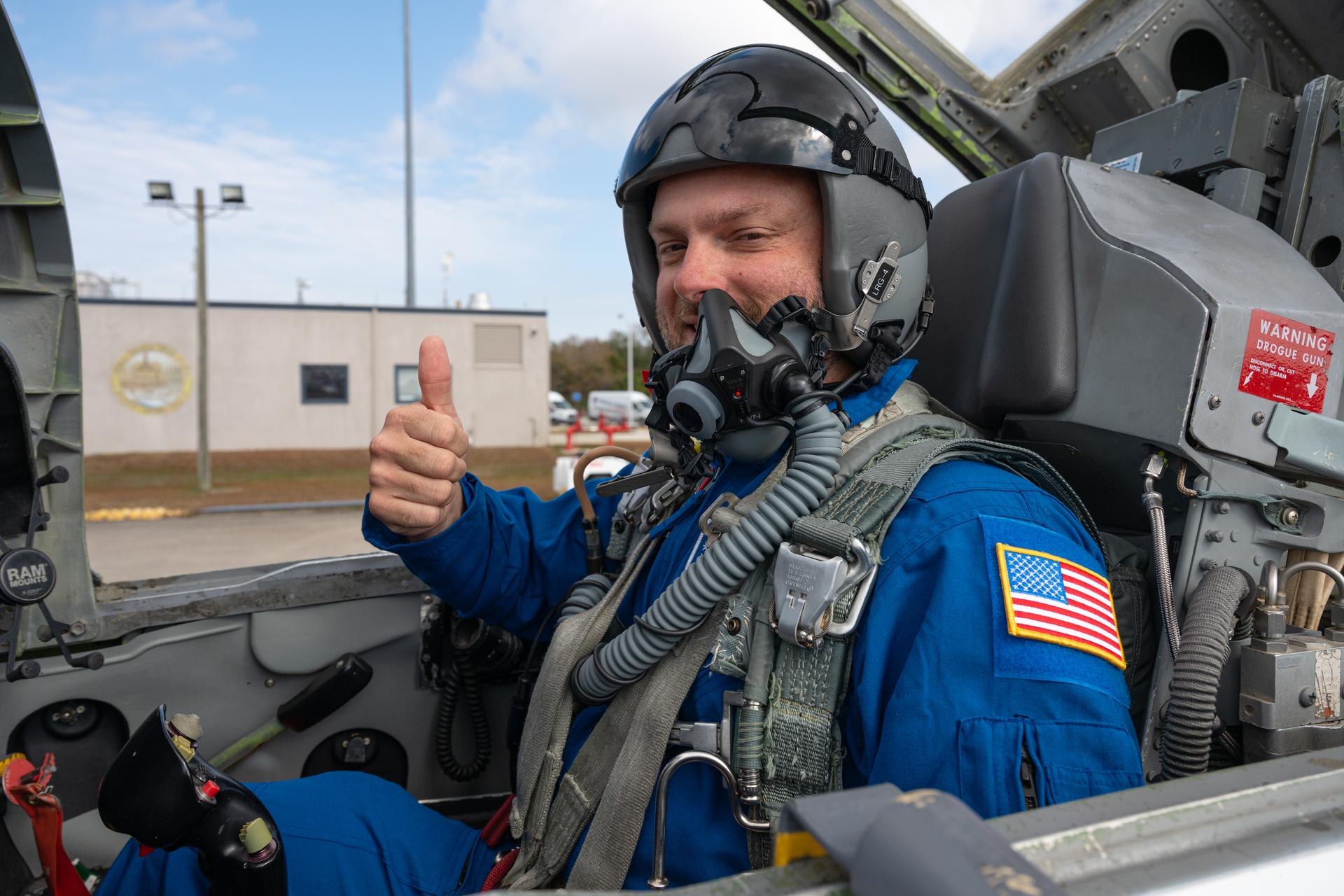
NASA employee Jonathan Baker, chief of the spaceport development division at NASA’s Kennedy Space Center, is seen before an employee incentive flying event with NASA Administrator Jared Isaacman and his personal F-5 aircraft, Thursday, Feb. 12, 2026, at NASA’s Kennedy Space Center in Florida. Photo Credit: (NASA/John Kraus)
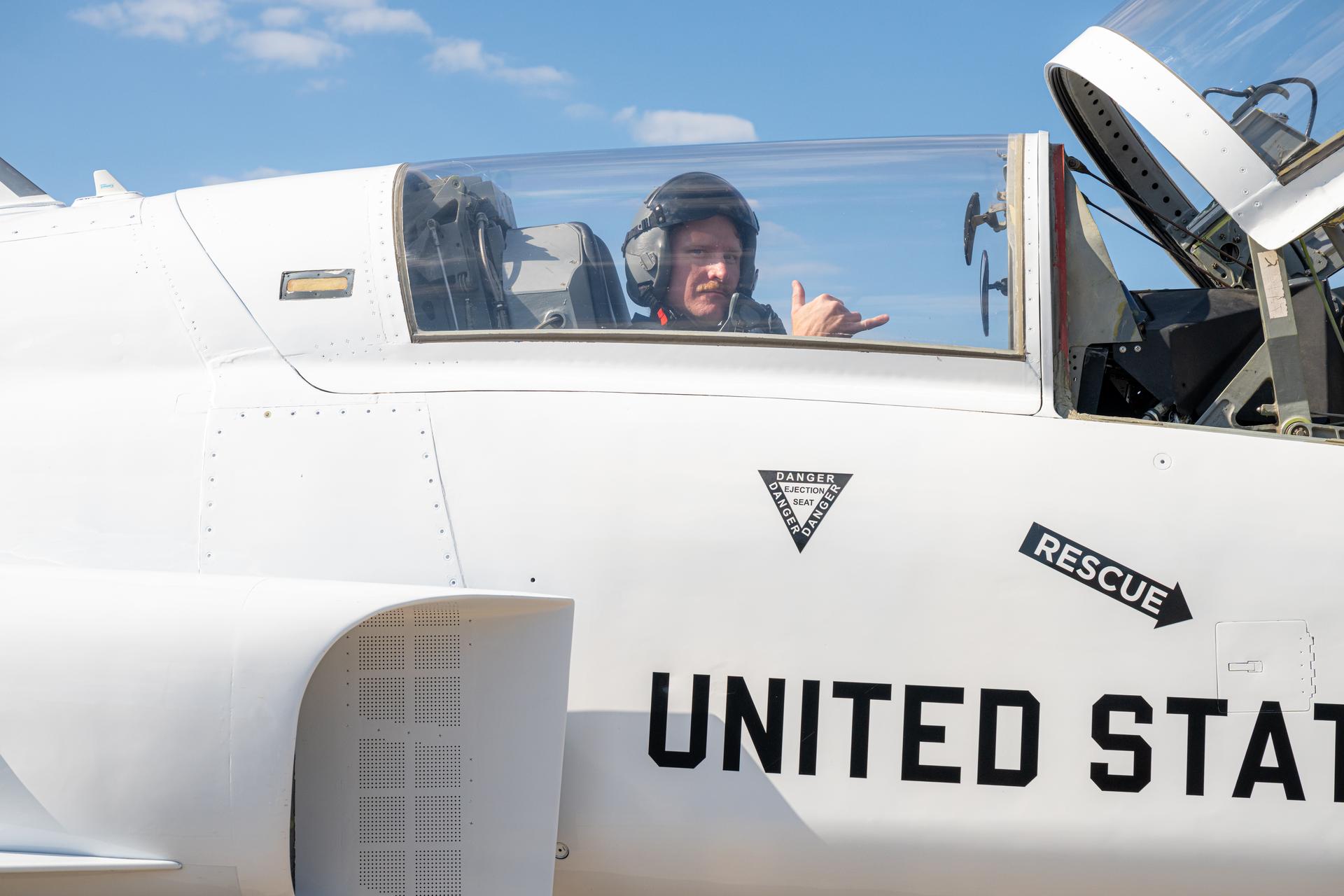
NASA employee Briou Bourgeois, E-3 test director at NASA’s Stennis Space Center, participates in an employee incentive flying event with NASA Administrator Jared Isaacman's personal F-5 aircraft, Saturday, Feb. 21, 2026, at NASA’s Kennedy Space Center in Florida. Photo Credit: (NASA/John Kraus)

NASA Administrator Jared Isaacman is seen ahead of a flight in his personal F-5 aircraft, Wednesday, March 11, 2026, in a hangar at NASA’s Kennedy Space Center in Florida. Photo Credit: (NASA/John Kraus)
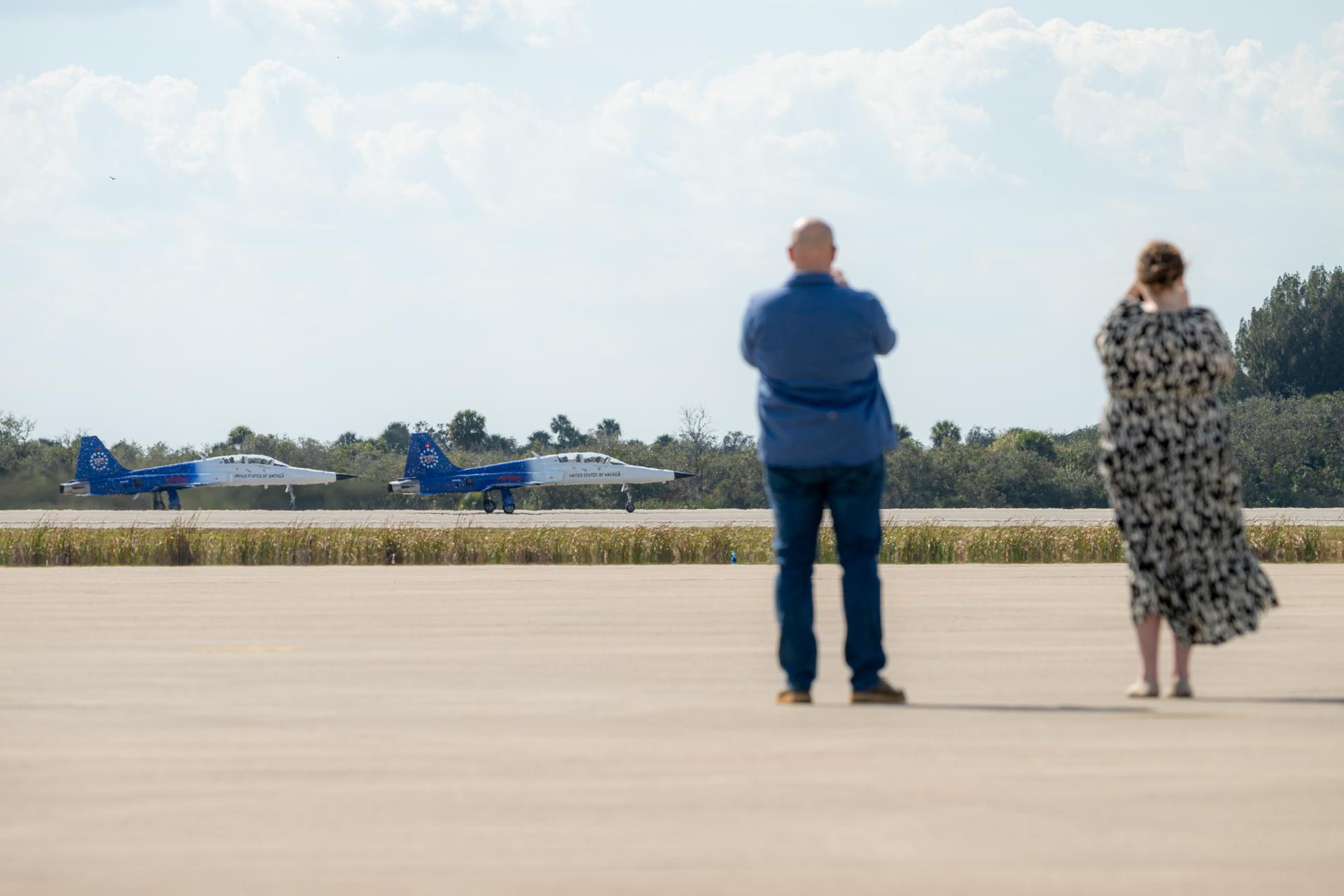
Family members of NASA employees watch as members of the NASA workforce participate in an employee incentive flying event with NASA Administrator Jared Isaacman's personal F-5 aircraft, Friday, Feb. 20, 2026, at NASA’s Kennedy Space Center in Florida. Photo Credit: (NASA/John Kraus)
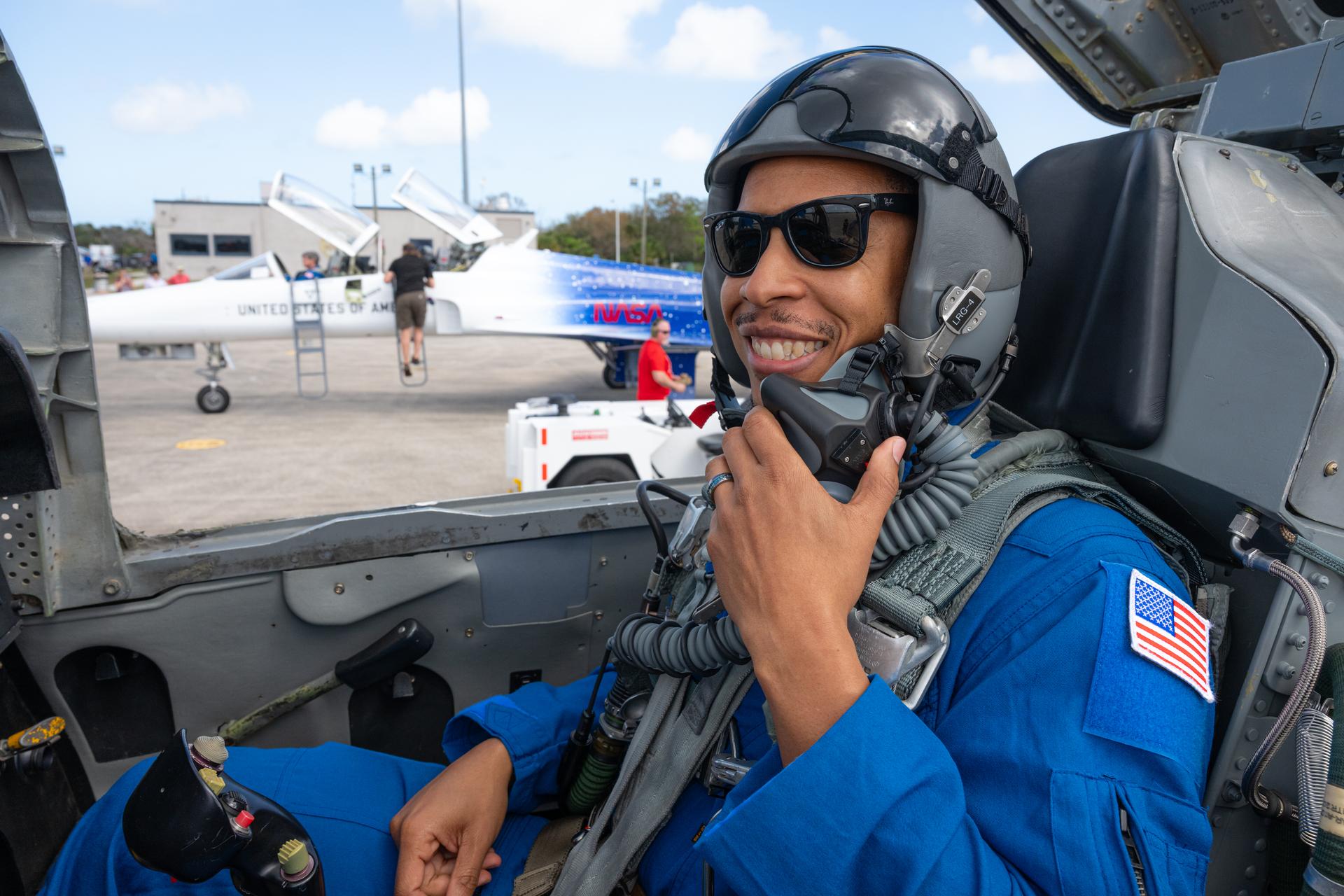
Matthew Mickens, project scientist, space crop production at NASA’s Kennedy Space Center, participates in an employee incentive flying event with NASA Administrator Jared Isaacman's personal F-5 aircraft, Friday, March 6, 2026, at NASA’s Kennedy Space Center in Florida. Photo Credit: (NASA/John Kraus)
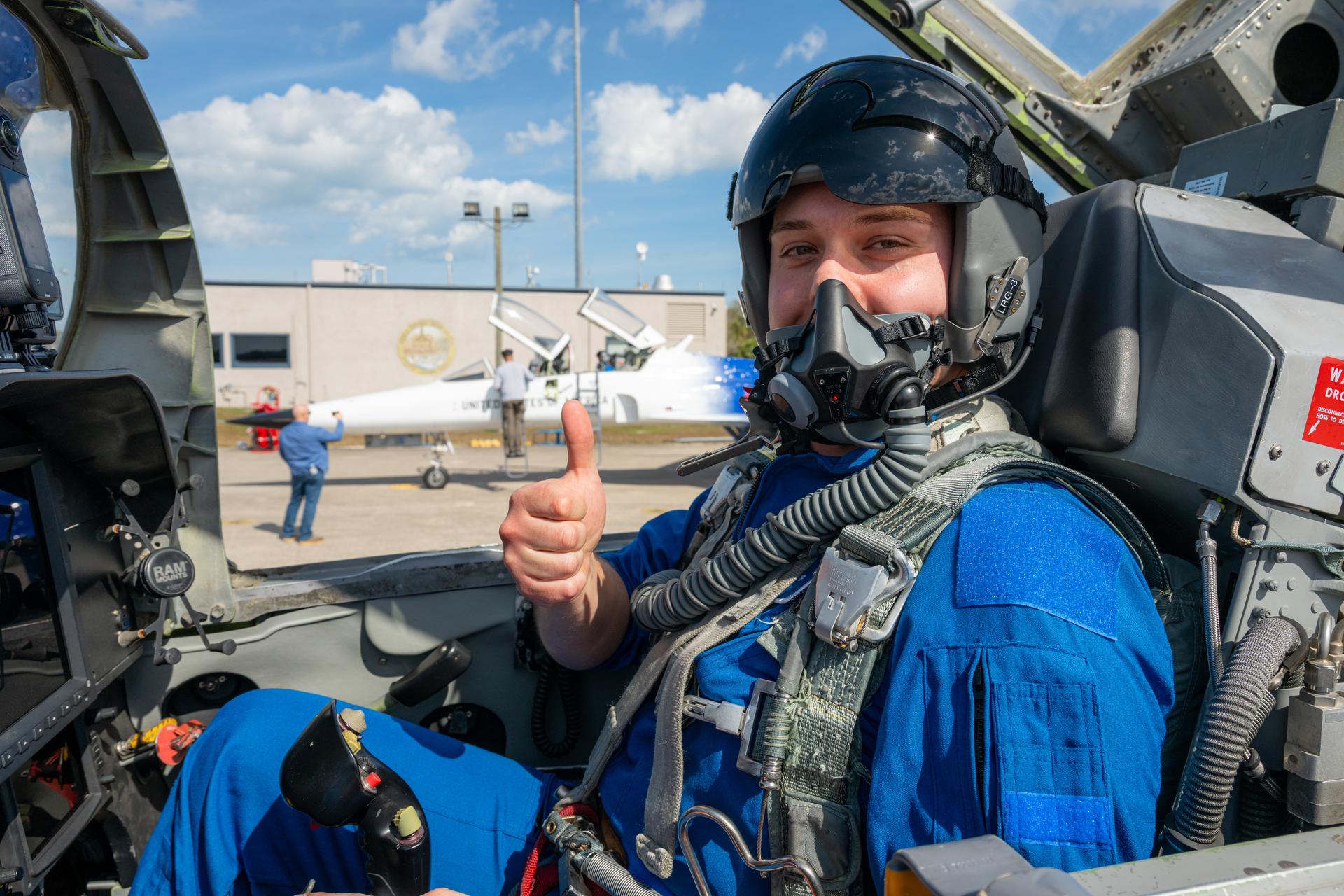
NASA employee Kristian Miasek, ET-10 test engineer at NASA’s Marshall Space Flight Center, participates in an employee incentive flying event with NASA Administrator Jared Isaacman's personal F-5 aircraft, Friday, Feb. 20, 2026, at NASA’s Kennedy Space Center in Florida. Photo Credit: (NASA/John Kraus)
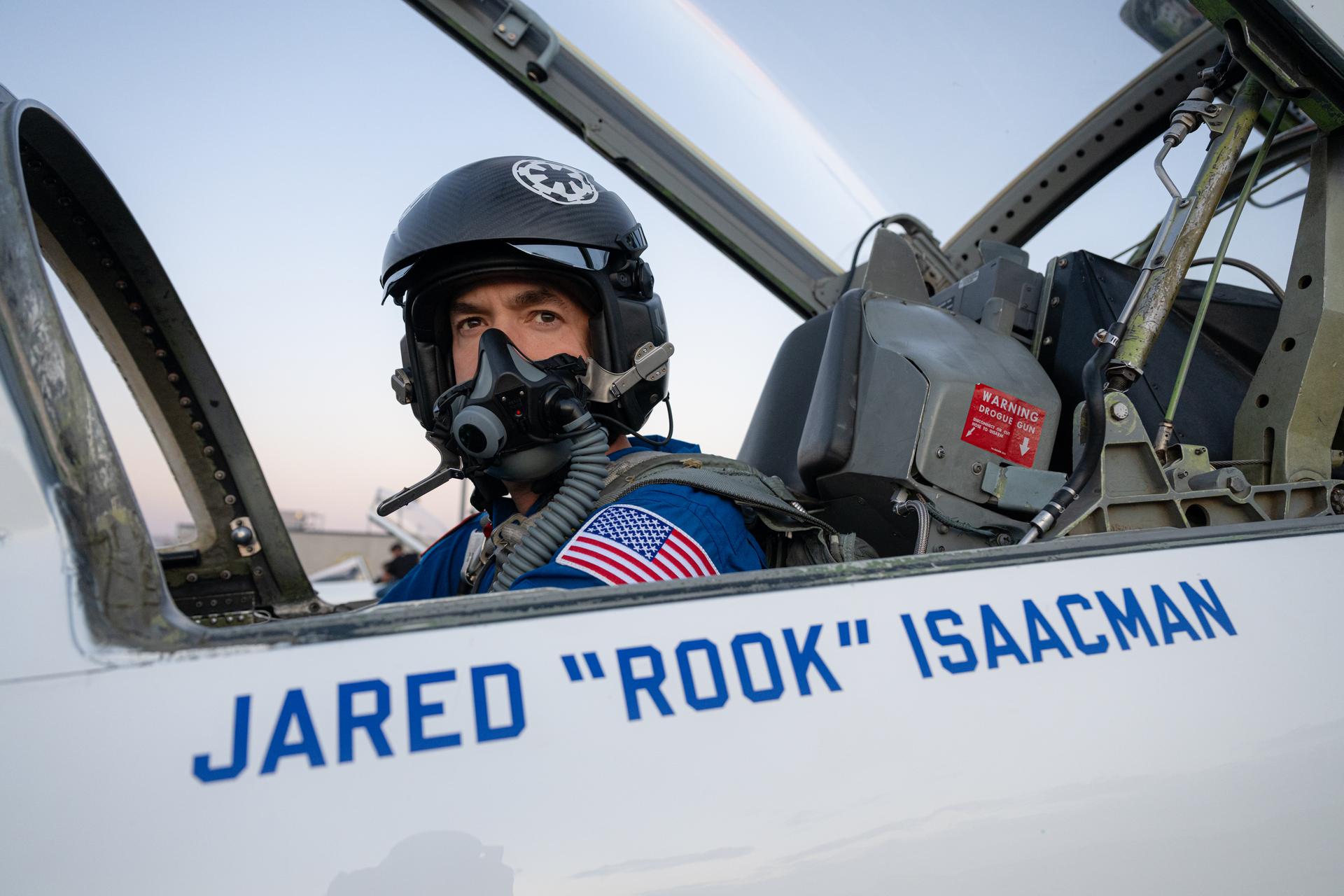
NASA Administrator Jared Isaacman participates in an employee incentive flying event using his personal F-5 aircraft, Tuesday, Jan. 13, 2026, at NASA’s Kennedy Space Center in Florida. Photo Credit: (NASA/John Kraus)

Clara Wright, chief of the laboratories, development, and testing division within the engineering directorate at NASA’s Kennedy Space Center, participates in an employee incentive flying event with NASA Administrator Jared Isaacman's personal F-5 aircraft, Friday, March 6, 2026, at NASA’s Kennedy Space Center in Florida. Photo Credit: (NASA/John Kraus)

Dr. Kyle Thompson, research aerothermodynamist at NASA’s Langley Research Center, participates in an employee incentive flying event with NASA Administrator Jared Isaacman's personal F-5 aircraft, Wednesday, May 13, 2026, at NASA’s Kennedy Space Center in Florida. Photo Credit: (NASA/John Kraus)
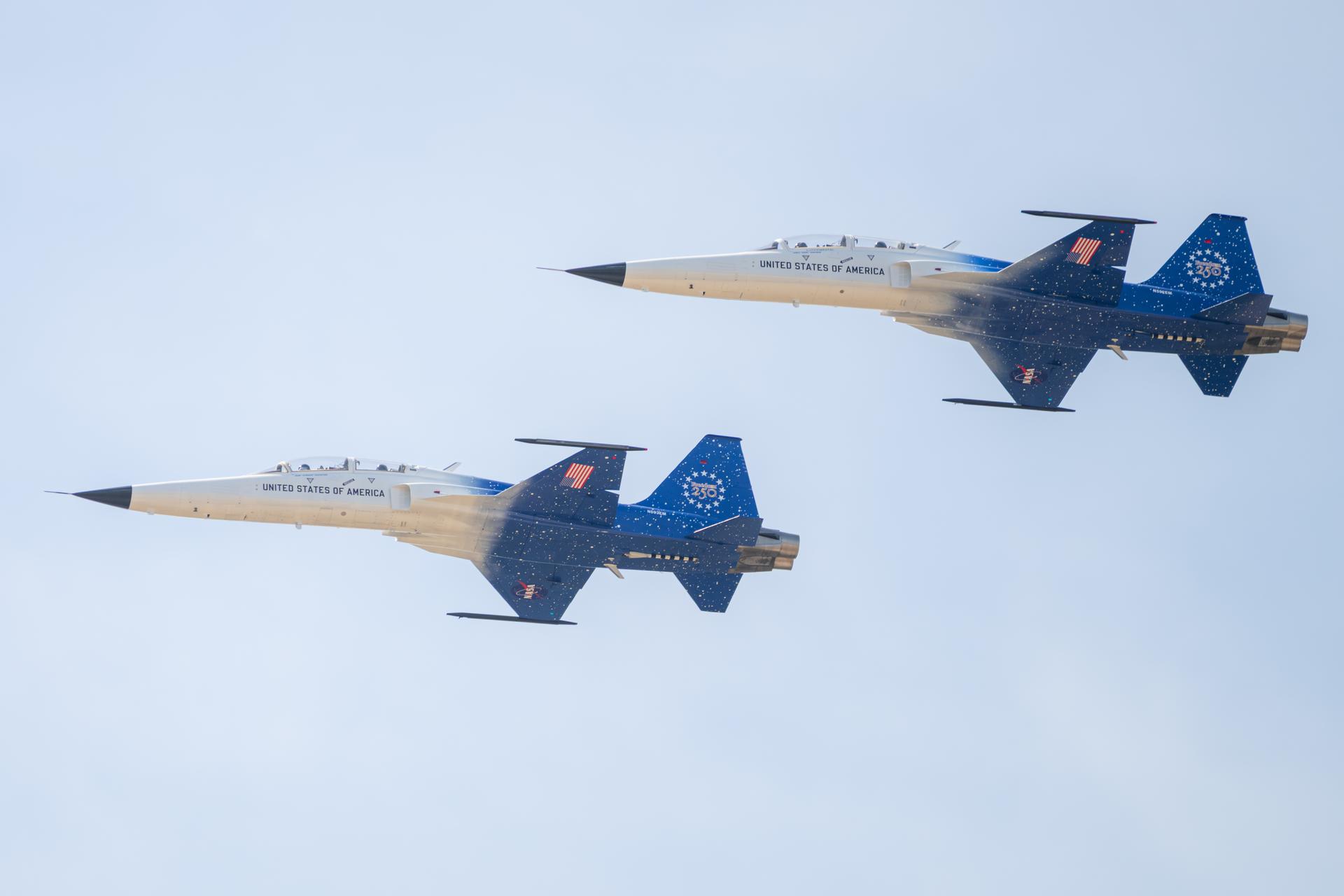
NASA employees participate in an employee incentive flying event using NASA Administrator Jared Isaacman's personal F-5 aircraft, Friday, Feb. 20, 2026, at NASA’s Kennedy Space Center in Florida. Photo Credit: (NASA/John Kraus)
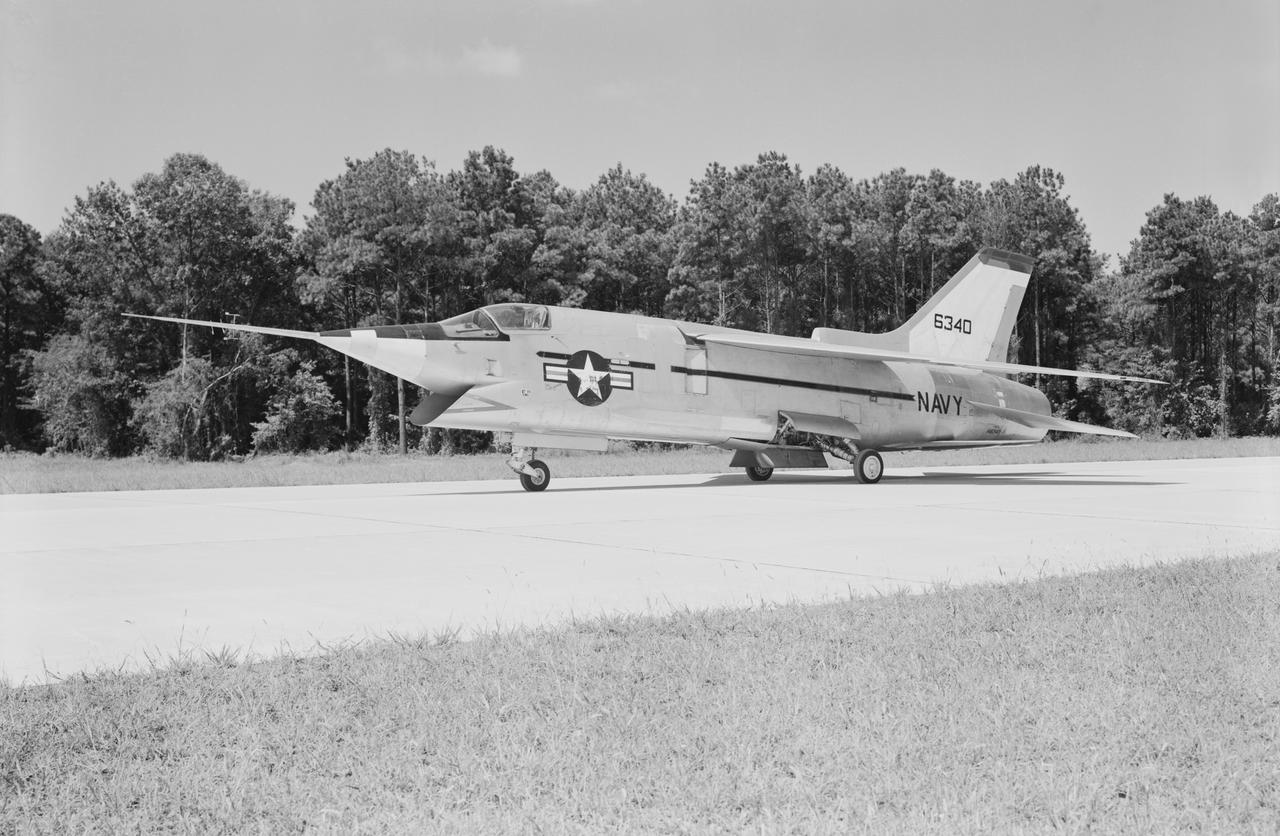
Crusader on runway. Navy aircraft number 6340. L59-6101 caption: The Navy's Vought XF8U-3 Supersonic Fighter was an entirely new design as compared to the earlier F8U Crusader series. This jet plane lost in competition with the McDonnell F4H, however, and was never put into production. Langley used the XF8U-3 in some of the first flight measurements of sonic boom intensity. Photograph published in Engineer in Charge A History of the Langley Aeronautical Laboratory, 1917-1958 by James R. Hansen. Page 507. Caption: Chance Vought F8U-3 airplane used in sonic boom investigation at Wallops, June-August 1959. Photograph published in A New Dimension Wallops Island Flight Test Range: The First Fifteen Years by Joseph Shortal. A NASA publication. Page 672.
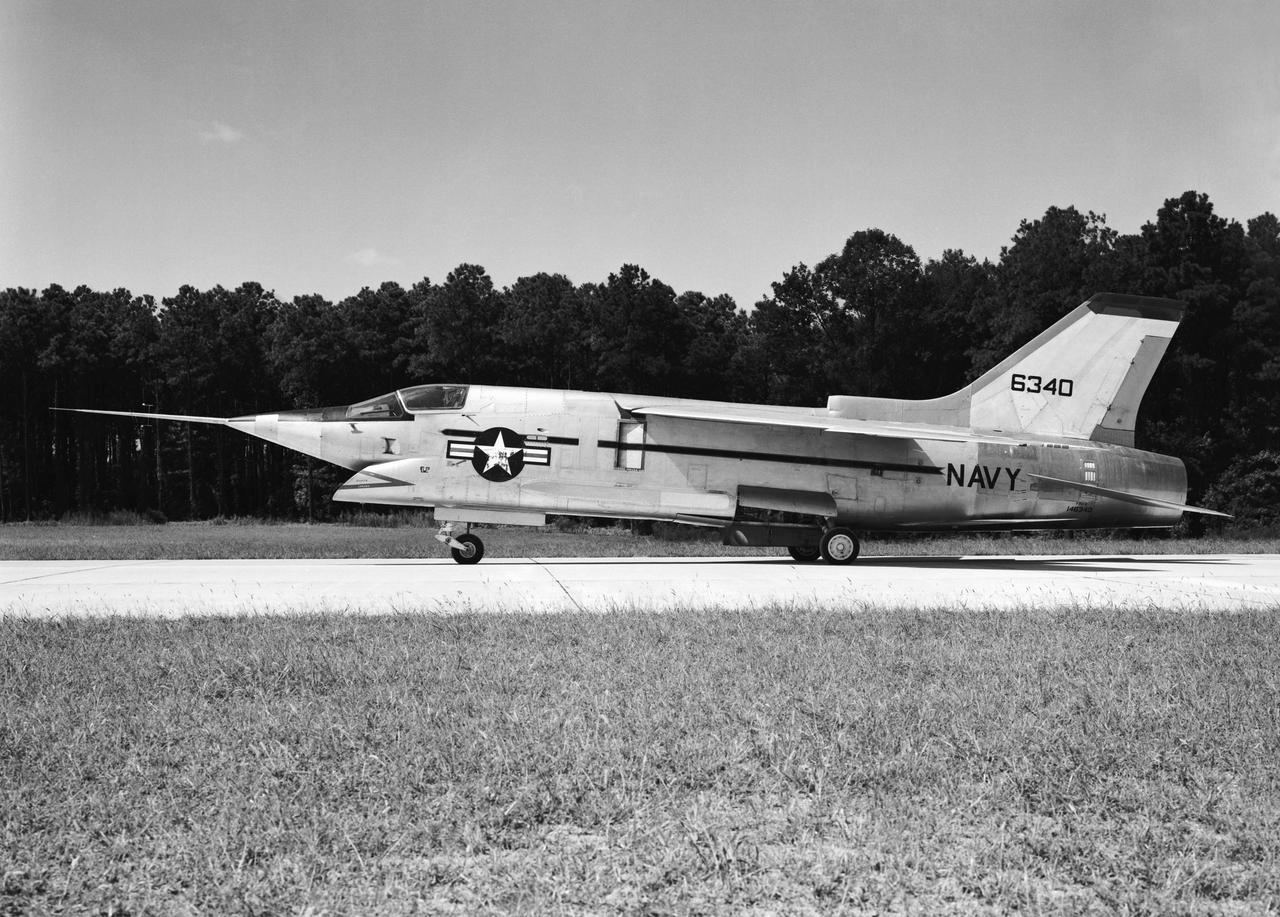
Crusader on runway. Navy aircraft number 6340. L59-6101 caption: The Navy's Vought XF8U-3 Supersonic Fighter was an entirely new design as compared to the earlier F8U Crusader series. This jet plane lost in competition with the McDonnell F4H, however, and was never put into production. Langley used the XF8U-3 in some of the first flight measurements of sonic boom intensity. Photograph published in Engineer in Charge A History of the Langley Aeronautical Laboratory, 1917-1958 by James R. Hansen. Page 507. Caption: Chance Vought F8U-3 airplane used in sonic boom investigation at Wallops, June-August 1959. Photograph published in A New Dimension Wallops Island Flight Test Range: The First Fifteen Years by Joseph Shortal. A NASA publication. Page 672.
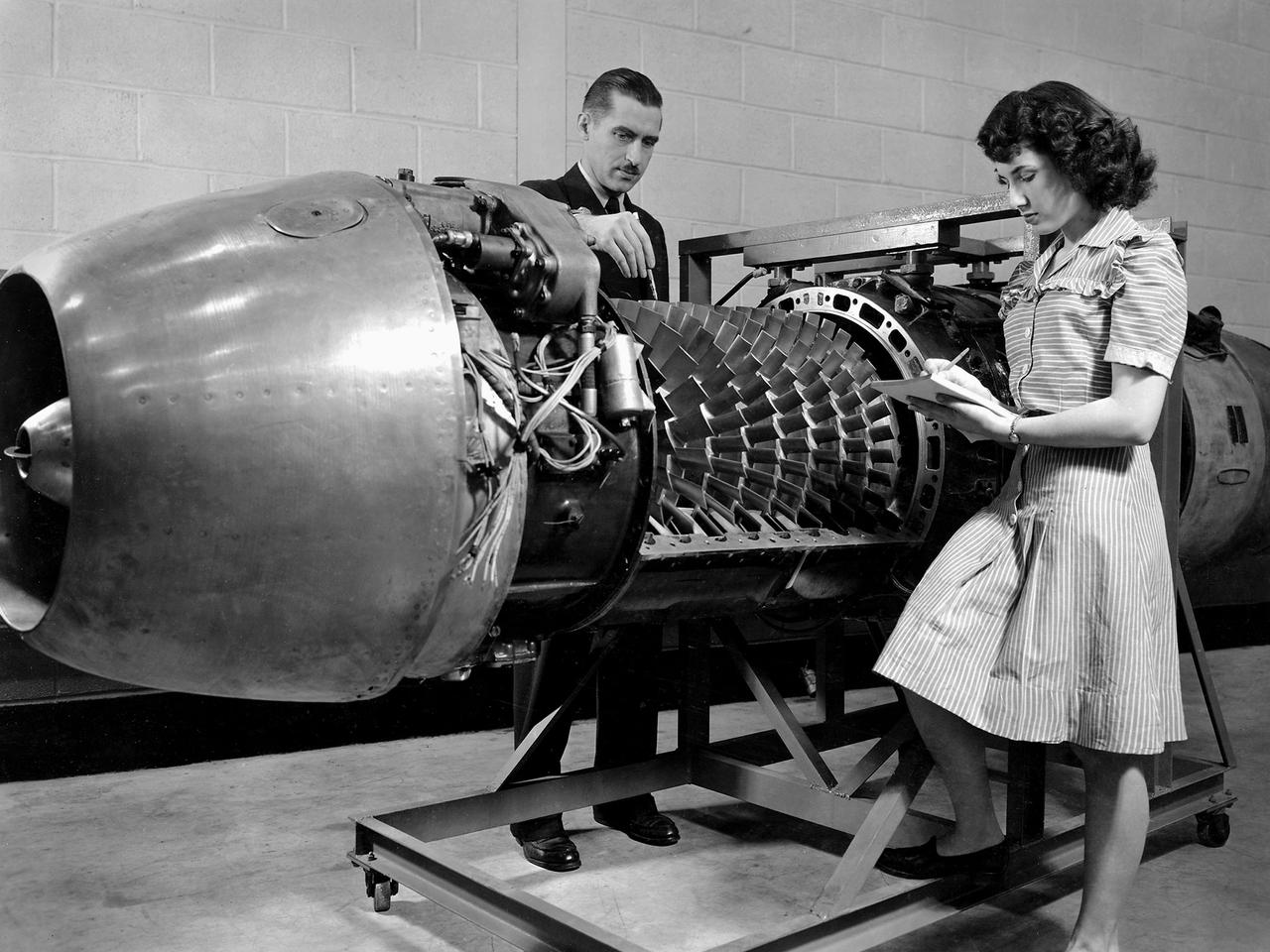
Researcher Robert Miller led an investigation into the combustor performance of a German Jumo 004 engine at the National Advisory Committee for Aeronautics (NACA) Lewis Flight Propulsion Laboratory. The Jumo 004 powered the world's first operational jet fighter, the Messerschmitt Me 262, beginning in 1942. The Me 262 was the only jet aircraft used in combat during World War II. The eight-stage axial-flow compressor Jumo 004 produced 2000 pounds of thrust. The US Army Air Forces provided the NACA with a Jumo 004 engine in 1945 to study the compressor’s design and performance. Conveniently the engine’s designer Anselm Franz had recently arrived at Wright-Patterson Air Force Base in nearby Dayton, Ohio as part of Project Paperclip. The Lewis researchers used a test rig in the Engine Research Building to analyze one of the six combustion chambers. It was difficult to isolate a single combustor’s performance when testing an entire engine. The combustion efficiency, outlet-temperature distribution, and total pressure drop were measured. The researchers determined the Jumo 004’s maximum performance was 5000 revolutions per minute at a 27,000 foot altitude and 11,000 revolutions per minute at a 45,000 foot altitude. The setup in this photograph was created for a tour of NACA Lewis by members of the Institute of Aeronautical Science on March 22, 1945.
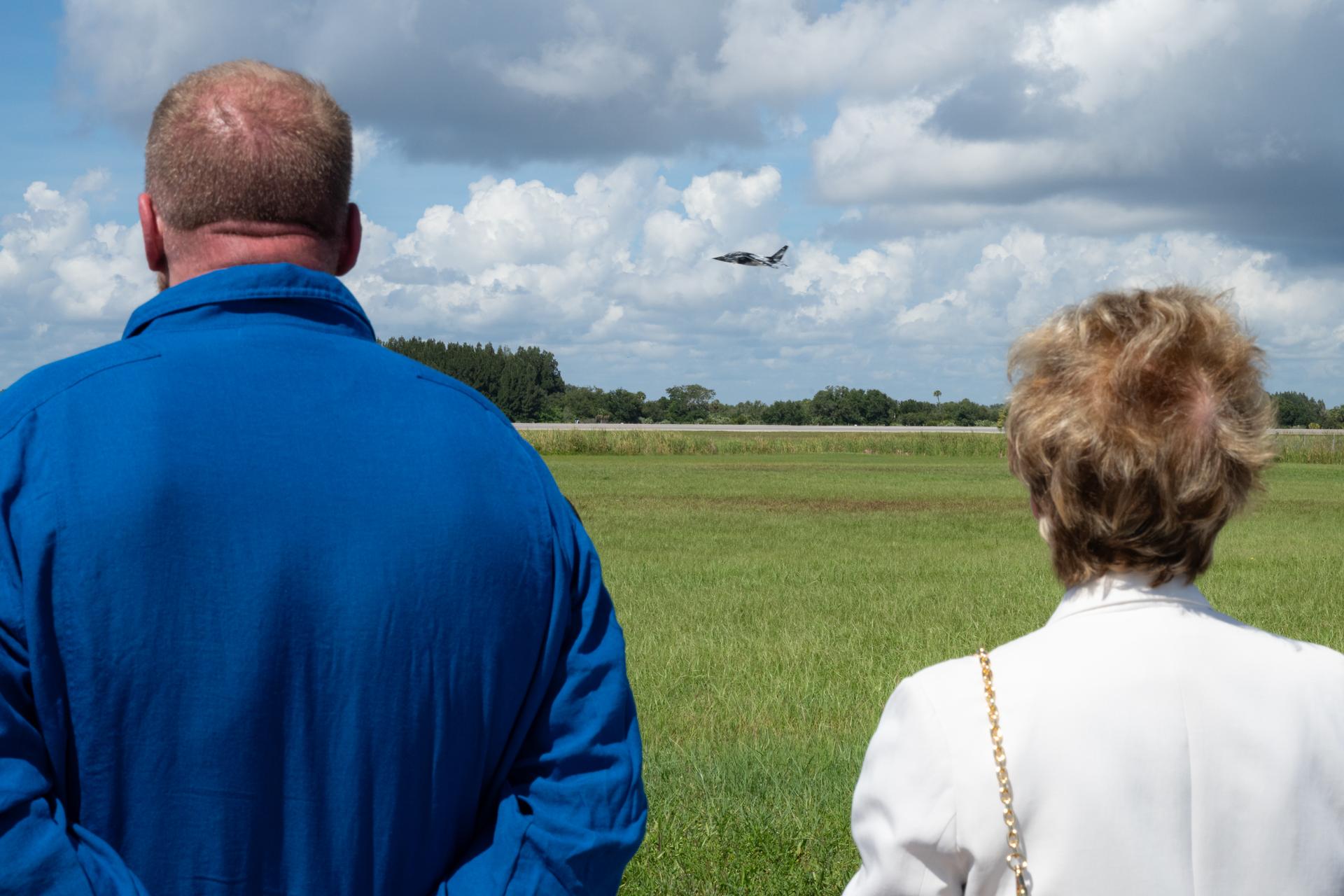
Paul “Triple H” Levesque, left, and Secretary of Education Linda McMahon, right, watch a flyby of NASA Administrator Jared Isaacman’s personal Alpha Jet, with Stephanie McMahon, Levesque’s wife and McMahon’s daughter, flying in the back seat, Saturday, Aug. 29, 2026, at NASA’s Kennedy Space Center in Florida. Photo Credit: (NASA/John Kraus)
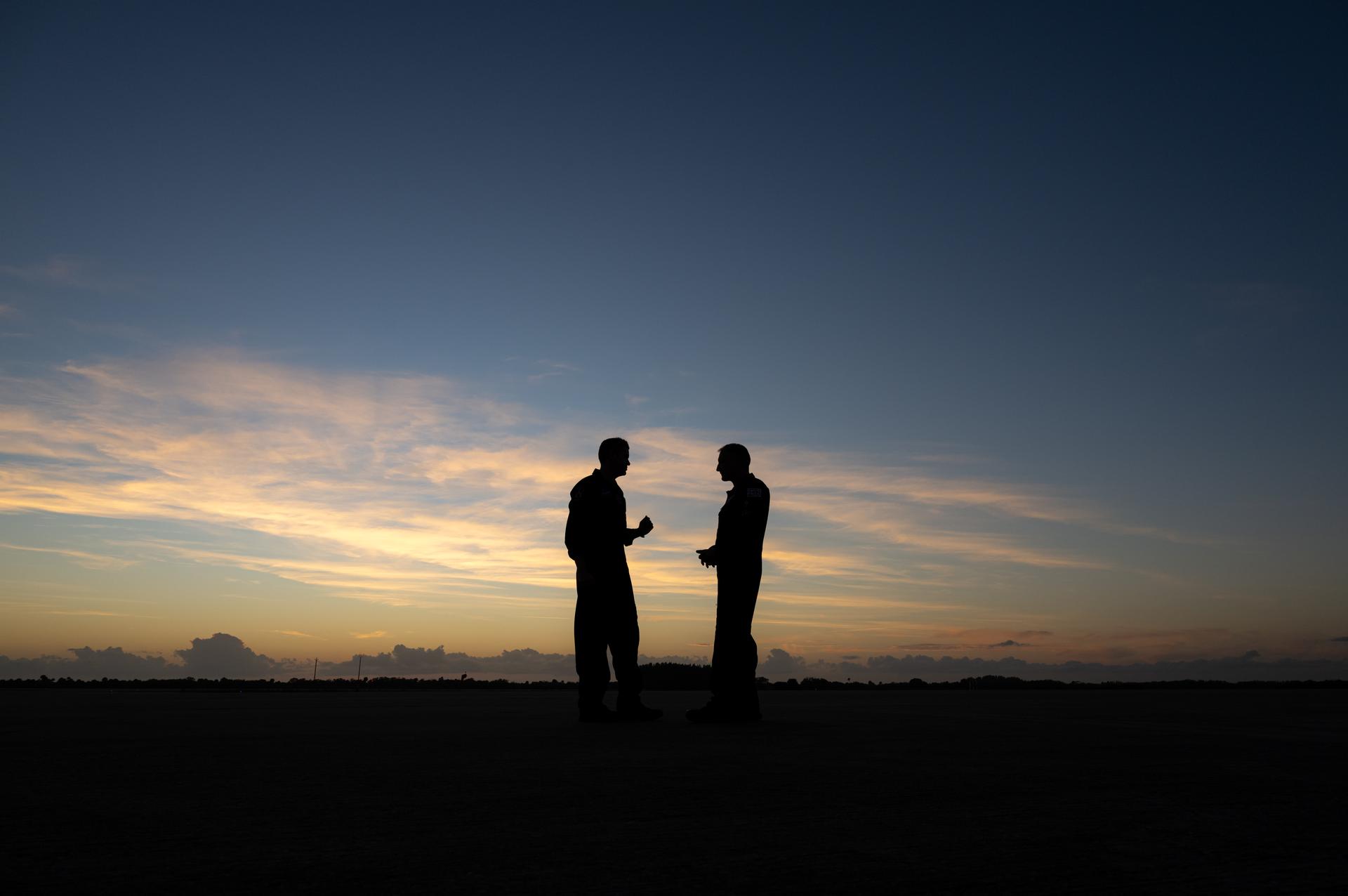
NASA Administrator Jared Isaacman, left, and Sean Gustafson, senior advisor to the administrator, right, are seen at sunset following a formation flight in Isaacman's personal F-5 aircraft, Monday, Jan. 5, 2026, at NASA’s Kennedy Space Center in Florida. Photo Credit: (NASA/John Kraus)
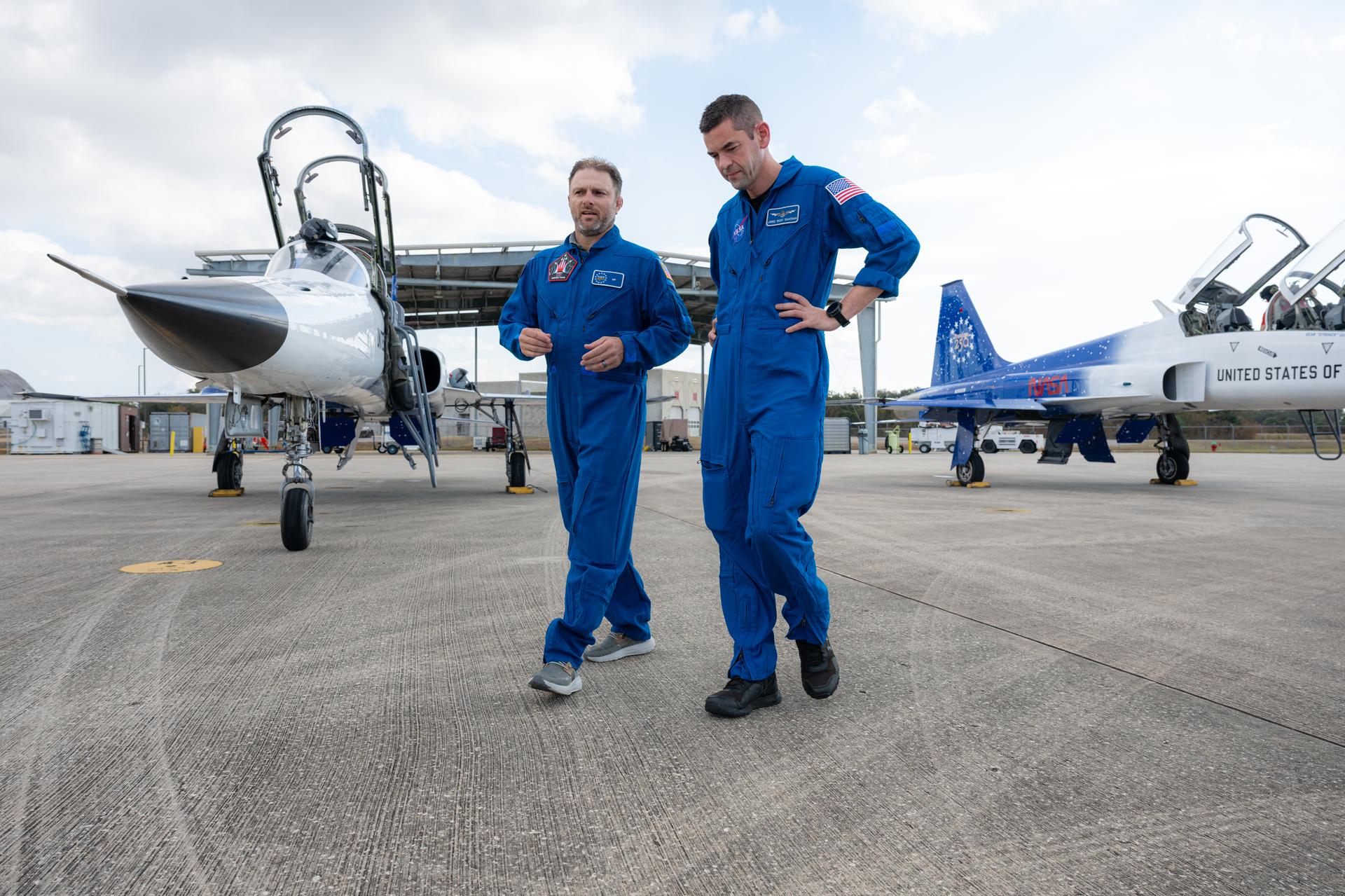
NASA employee Jonathan Baker, chief of the spaceport development division at NASA’s Kennedy Space Center, left, speaks with NASA Administrator Jared Isaacman, right, following an employee incentive flying event using Isaacman's personal F-5 aircraft, Thursday, Feb. 12, 2026, at NASA’s Kennedy Space Center in Florida. Photo Credit: (NASA/John Kraus)

NASA employees participate in an employee incentive flying event using NASA Administrator Jared Isaacman's personal F-5 aircraft, Friday, March 6, 2026, at NASA’s Kennedy Space Center in Florida. Photo Credit: (NASA/John Kraus)
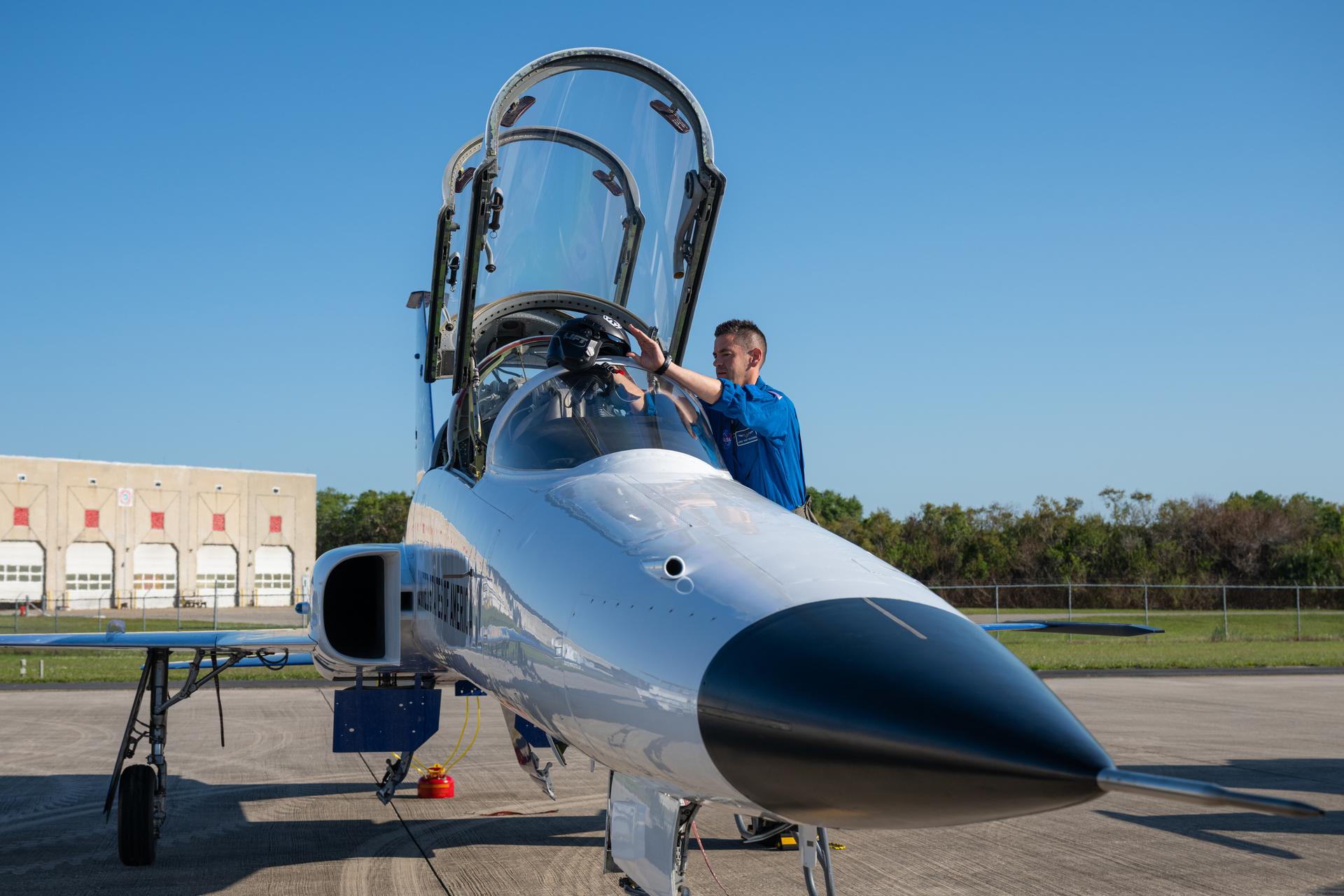
NASA Administrator Jared Isaacman is seen before an employee incentive flying event using his personal F-5 aircraft, Friday, March 27, 2026, at NASA’s Kennedy Space Center in Florida. Photo Credit: (NASA/John Kraus)
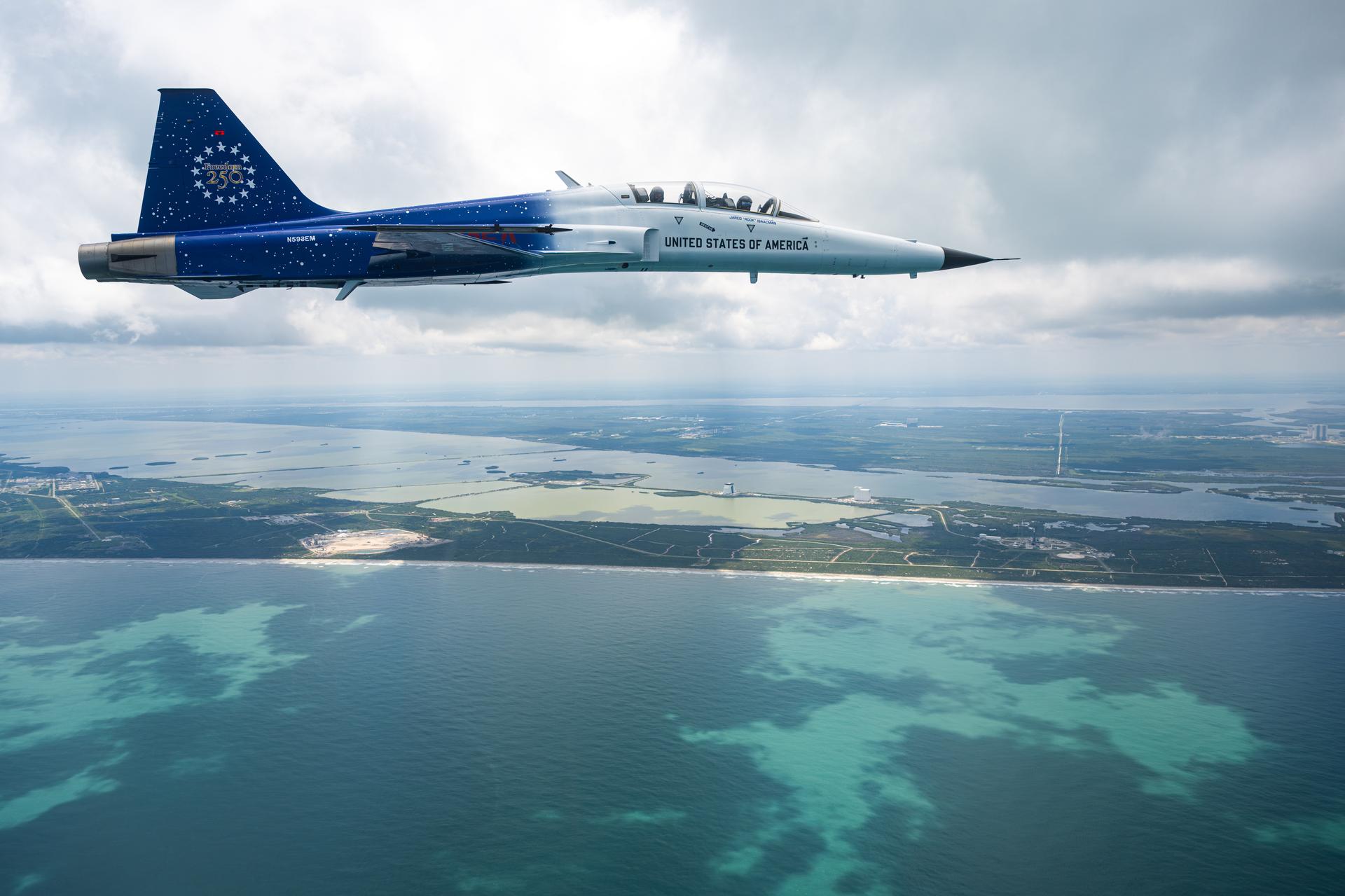
One of NASA Administrator Jared Isaacman’s personal F-5 aircraft is seen during an employee incentive flying event, Wednesday, May 13, 2026, at NASA’s Kennedy Space Center in Florida. Rachel Kraft, Artemis communications lead at NASA Headquarters, was flying in the back seat. Photo Credit: (NASA/John Kraus)

One of NASA Administrator Jared Isaacman’s personal F-5 aircraft is seen during an employee incentive flying event, Wednesday, May 13, 2026, at NASA’s Kennedy Space Center in Florida. Rachel Kraft, Artemis communications lead at NASA Headquarters, was flying in the back seat. Photo Credit: (NASA/John Kraus)
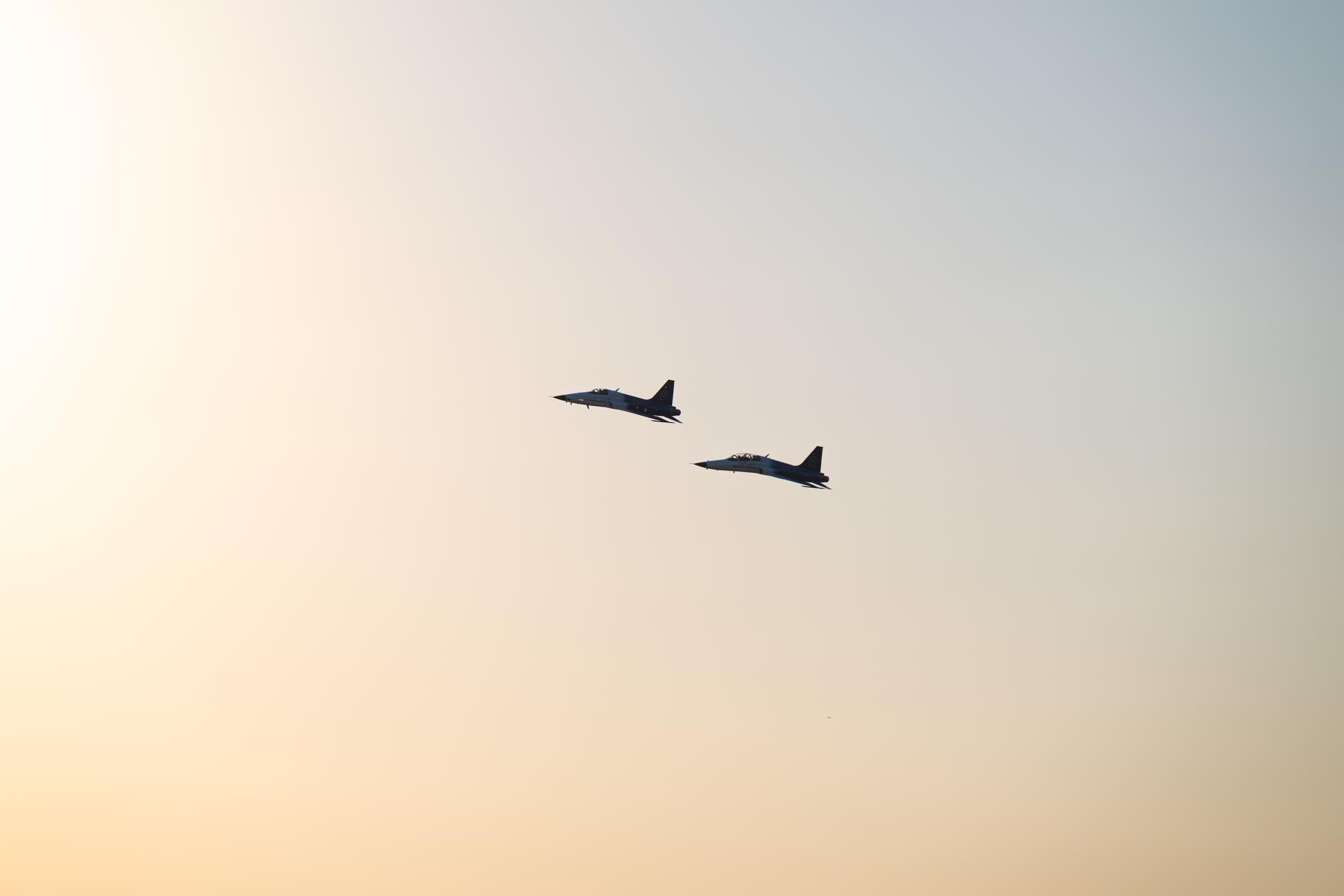
NASA employees participate in an employee incentive flying event using NASA Administrator Jared Isaacman's personal F-5 aircraft, Friday, March 27, 2026, at NASA’s Kennedy Space Center in Florida. Photo Credit: (NASA/John Kraus)
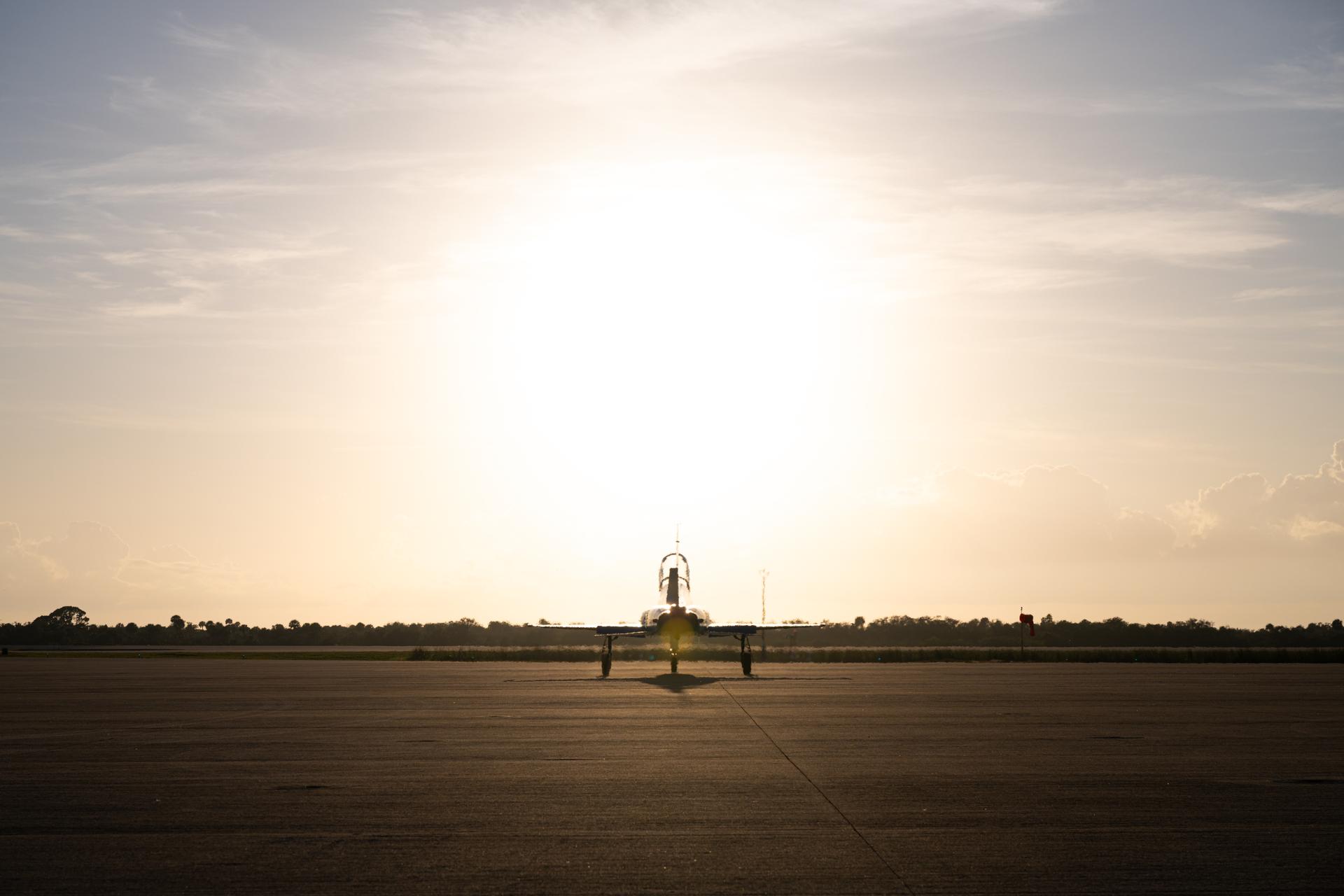
NASA Administrator Jared Isaacman participates in a formation flight with his personal F-5 aircraft, Monday, Jan. 5, 2026, at NASA’s Kennedy Space Center in Florida. Isaacman was joined by Lara Trump of Fox News flying in the back seat. Photo Credit: (NASA/John Kraus)
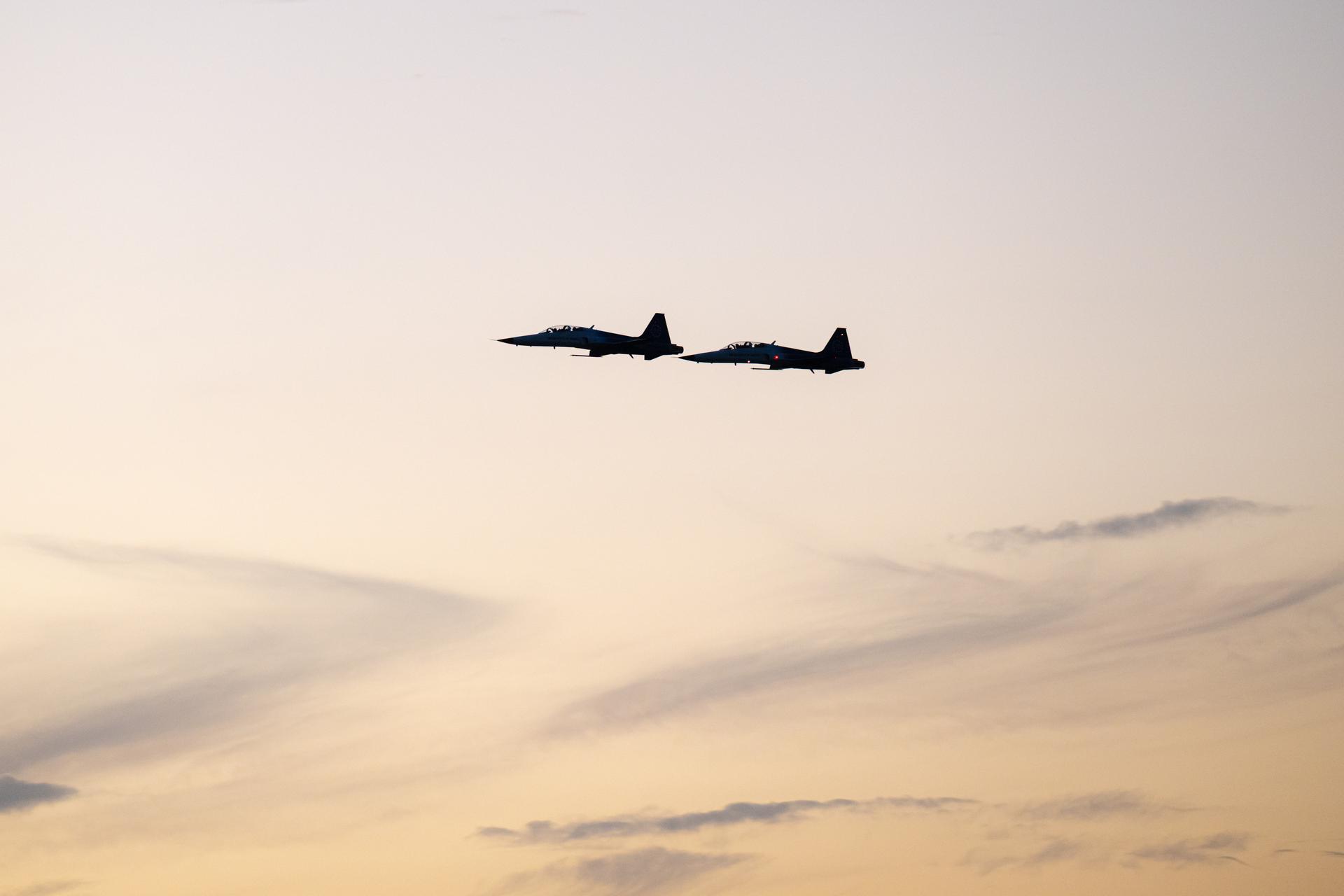
NASA Administrator Jared Isaacman participates in an employee incentive flying event using his personal F-5 aircraft with NASA employees Daniel Forrestel and Ashley Scharfenberg, Tuesday, Jan. 13, 2026, at NASA’s Kennedy Space Center in Florida. Photo Credit: (NASA/John Kraus)

NASA employees participate in an employee incentive flying event using NASA Administrator Jared Isaacman's personal F-5 aircraft, Friday, March 6, 2026, at NASA’s Kennedy Space Center in Florida. Photo Credit: (NASA/John Kraus)
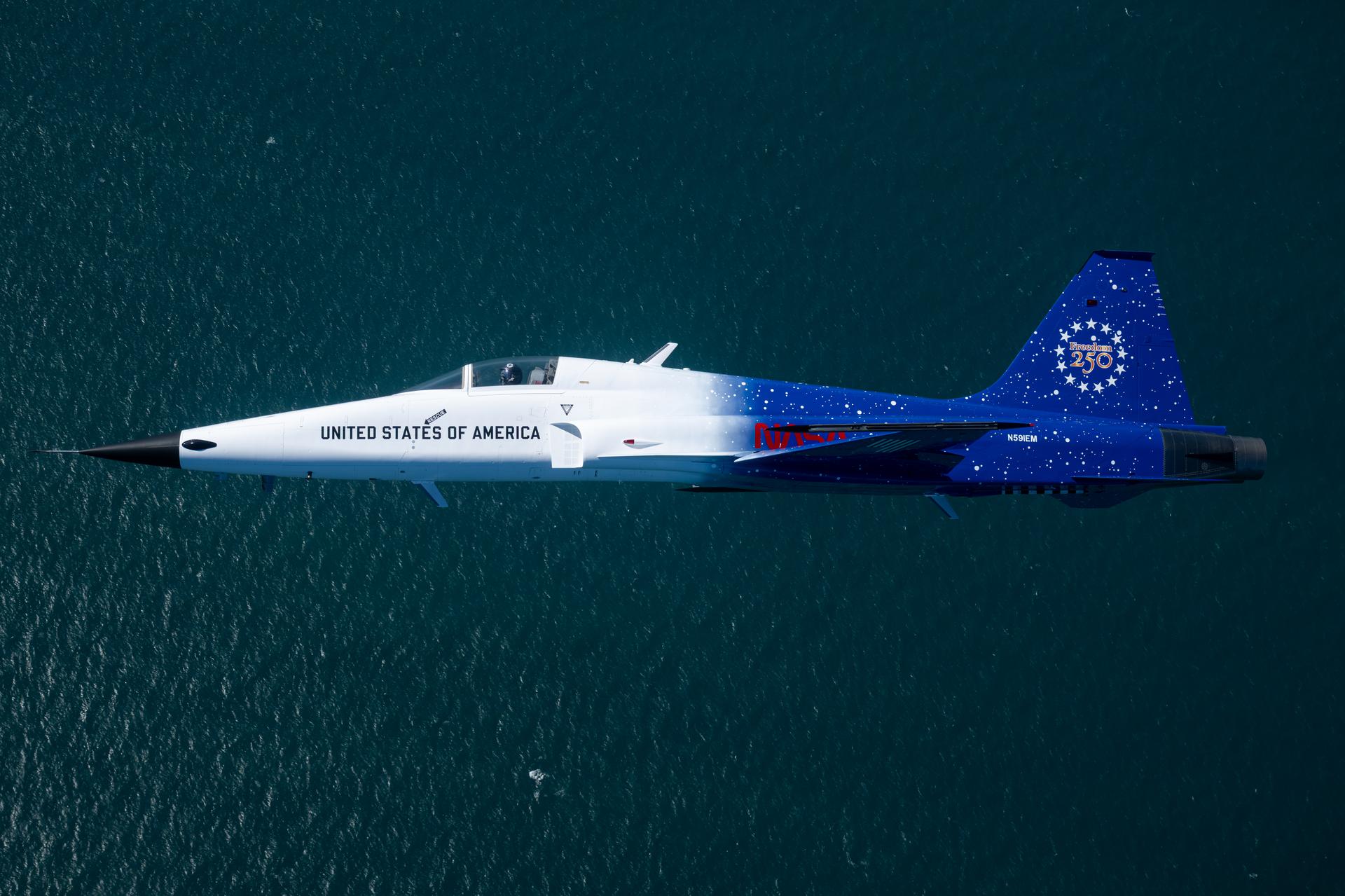
NASA Administrator Jared Isaacman is seen flying his personal F-5 aircraft, Sunday, Feb. 8, 2026, at NASA’s Kennedy Space Center in Florida. Photo Credit: (NASA/John Kraus)

One of NASA Administrator Jared Isaacman’s personal F-5 aircraft is seen during an employee incentive flying event, Wednesday, May 13, 2026, at NASA’s Kennedy Space Center in Florida. Rachel Kraft, Artemis communications lead at NASA Headquarters, was flying in the back seat. Photo Credit: (NASA/John Kraus)
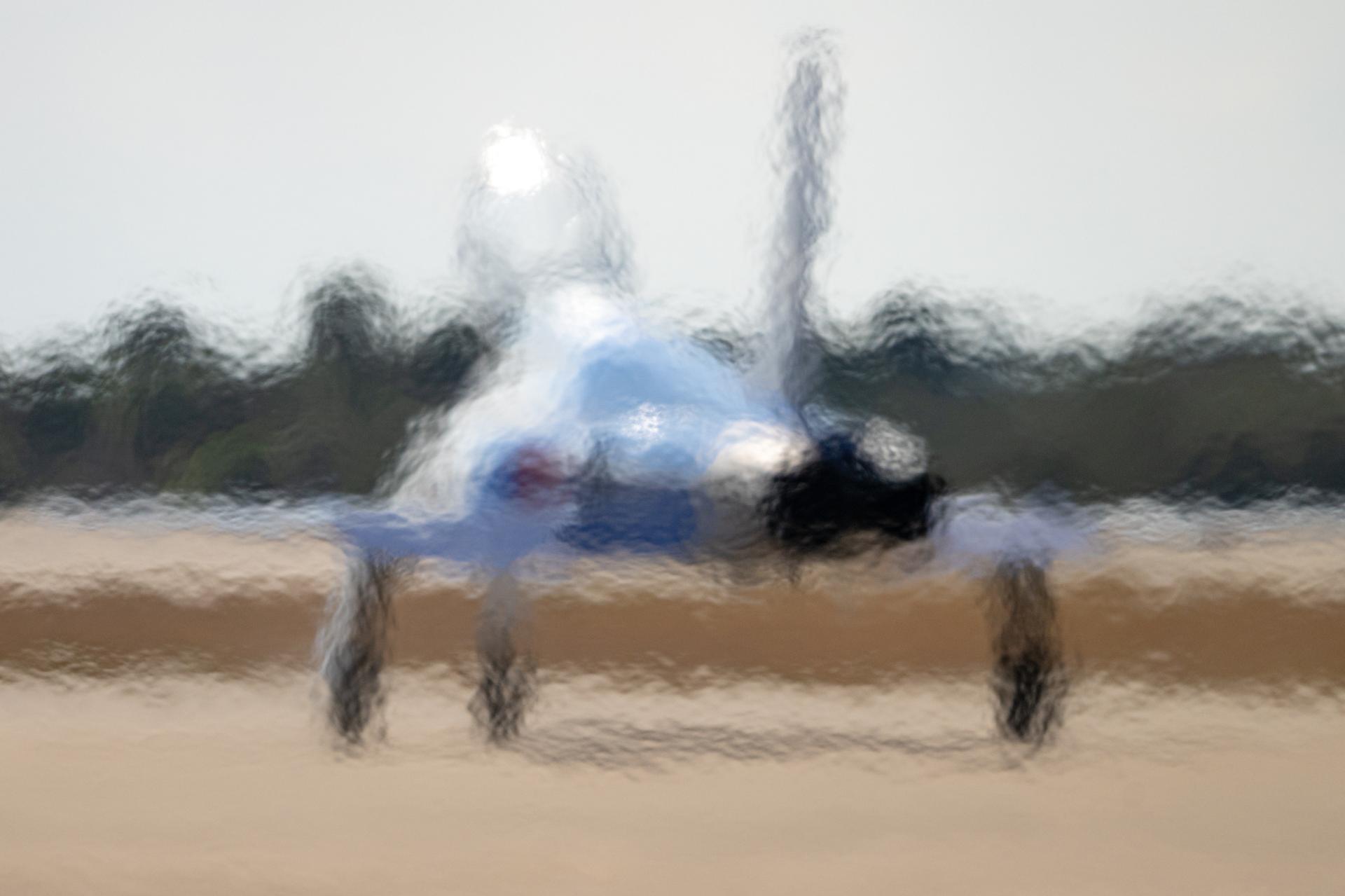
One of NASA Administrator Jared Isaacman’s personal F-5 aircraft is seen through the jet wash of another F-5 aircraft during an employee incentive flying event, Thursday, Feb. 12, 2026, at NASA’s Kennedy Space Center in Florida. Photo Credit: (NASA/John Kraus)
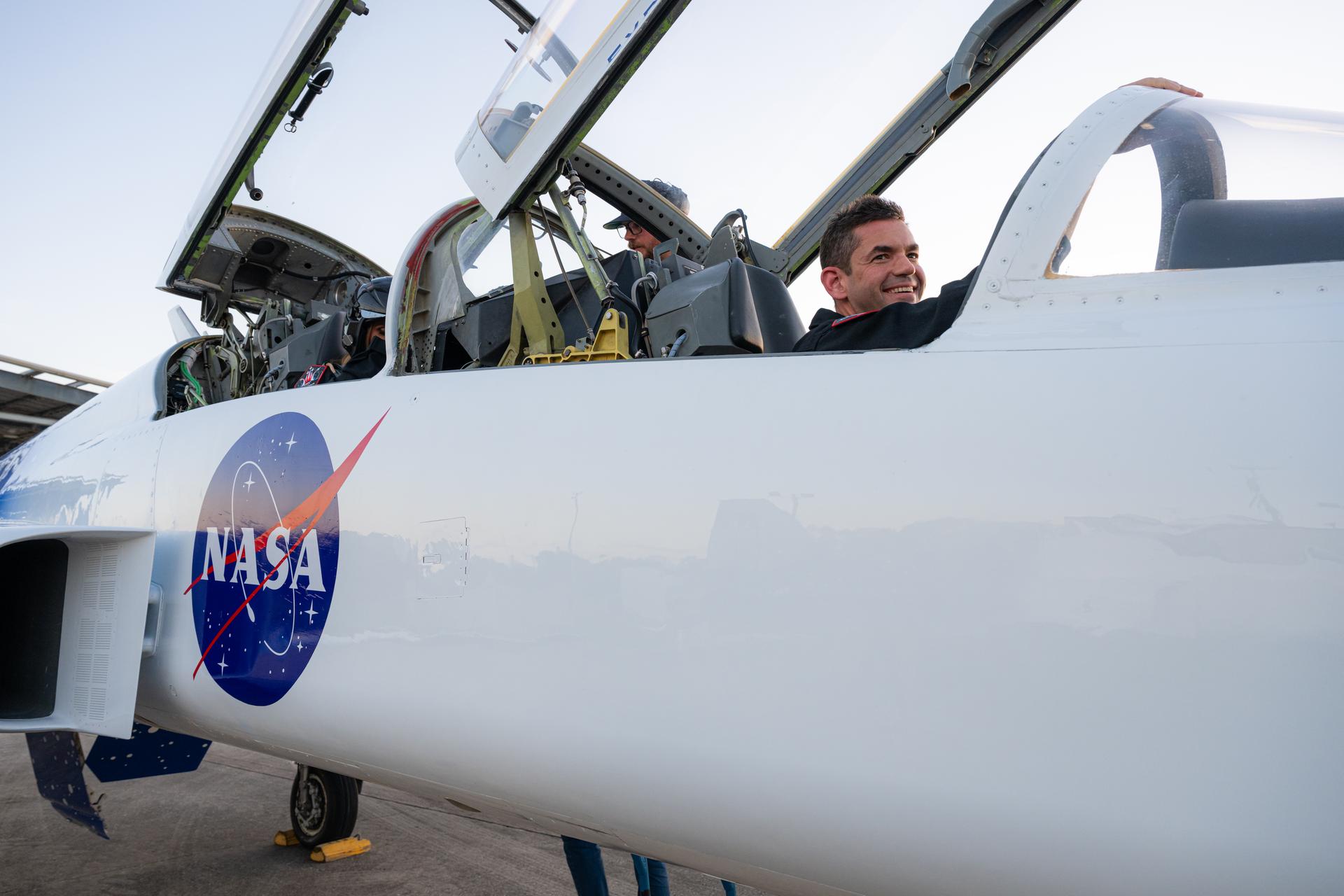
NASA Administrator Jared Isaacman is seen following a formation flight with his personal F-5 aircraft, Monday, Jan. 5, 2026, at NASA’s Kennedy Space Center in Florida. Isaacman was joined by Lara Trump of Fox News flying in the back seat. Photo Credit: (NASA/John Kraus)
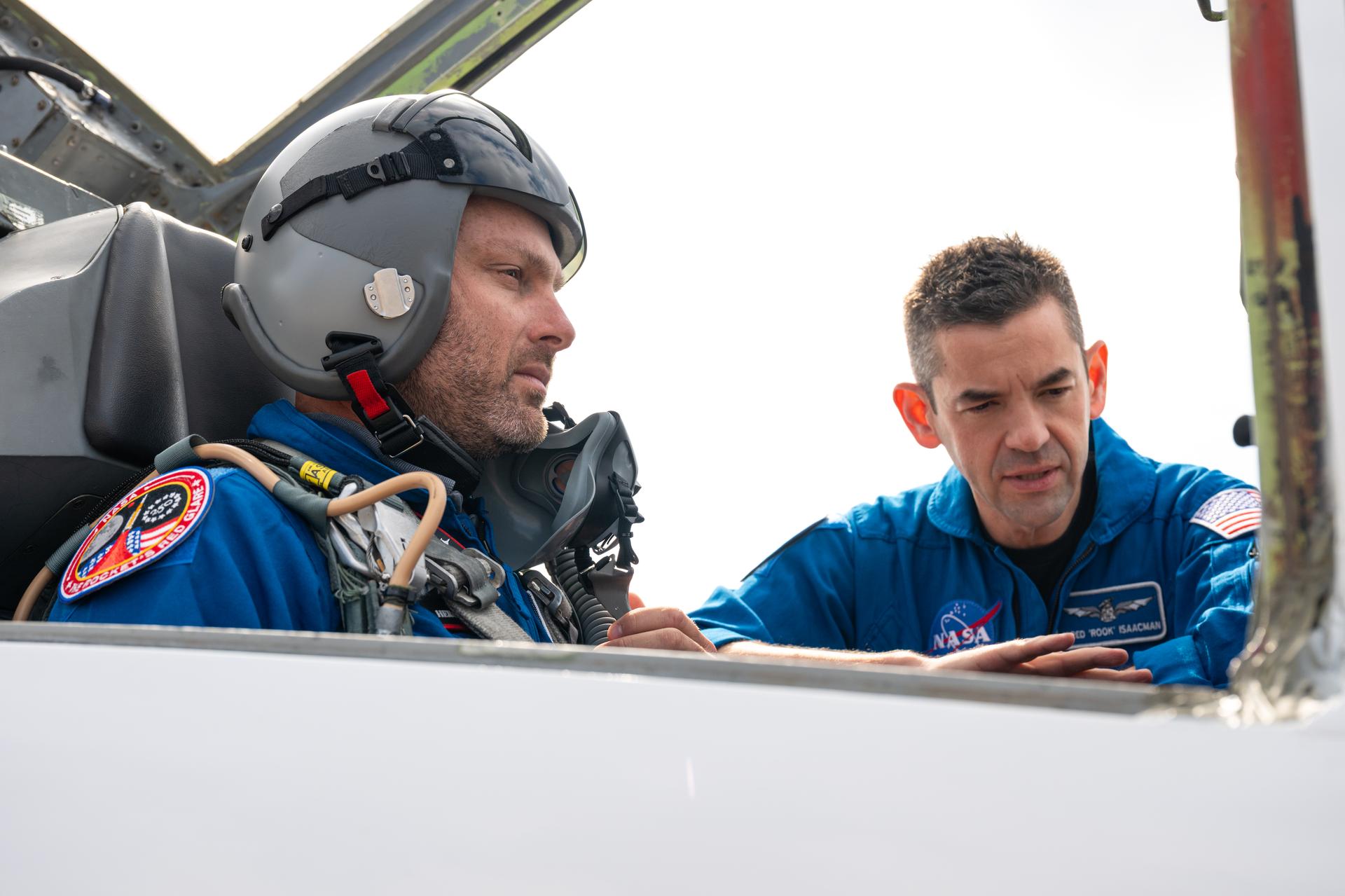
NASA employee Jonathan Baker, chief of the spaceport development division at NASA’s Kennedy Space Center, left, is seen before an employee incentive flying event with NASA Administrator Jared Isaacman, right, and his personal F-5 aircraft, Thursday, Feb. 12, 2026, at NASA’s Kennedy Space Center in Florida. Photo Credit: (NASA/John Kraus)
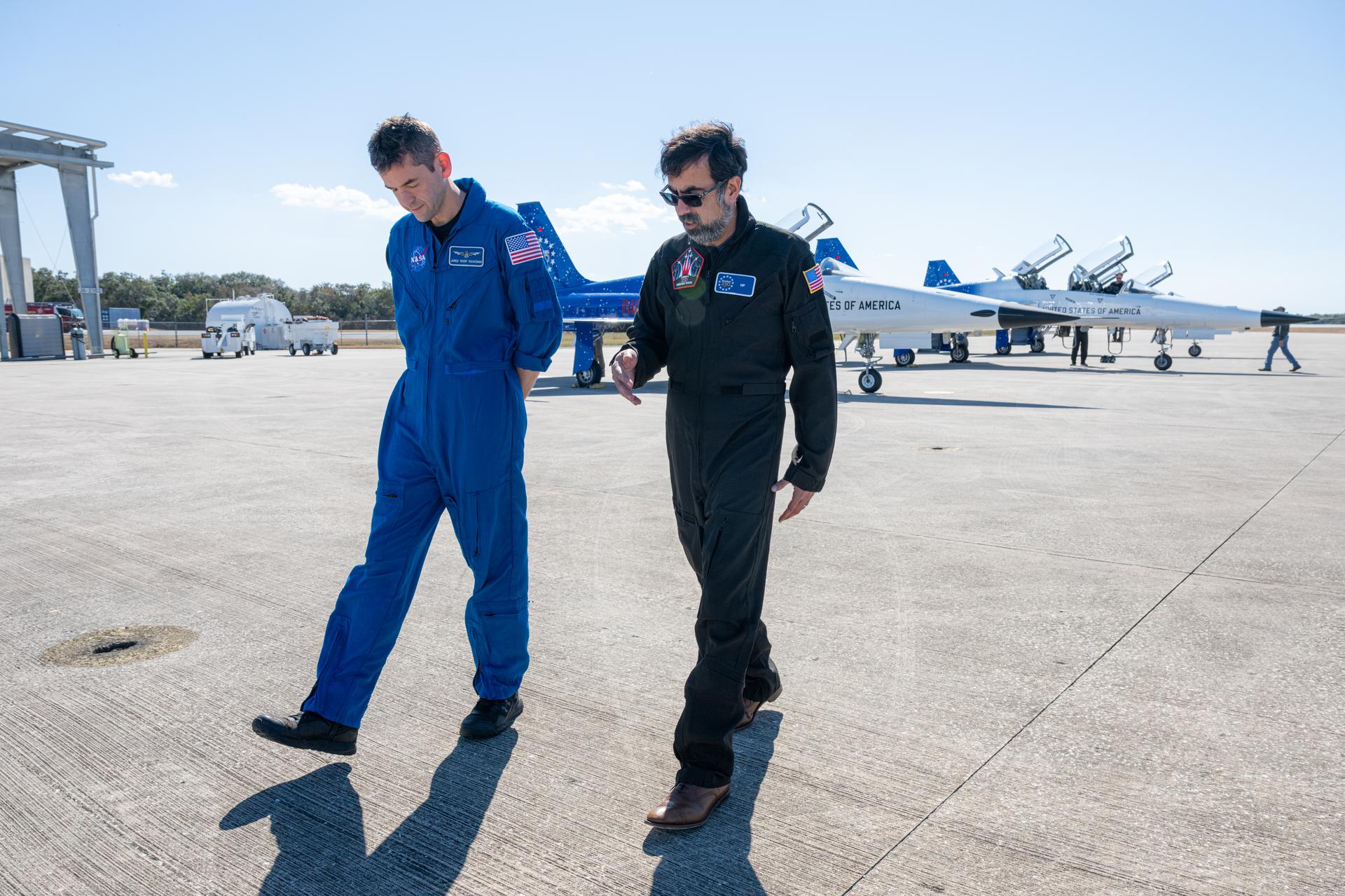
NASA Administrator Jared Isaacman and Amit Kshatriya, NASA associate administrator, are seen following a formation flight in Isaacman’s personal F-5 aircraft, Sunday, Feb. 8, 2026, at NASA’s Kennedy Space Center in Florida. Photo Credit: (NASA/John Kraus)

Dr. Scott Glaser, pilot, and Rachel Kraft, Artemis communications lead at NASA Headquarters, pose for a photograph following an employee incentive flying event with NASA Administrator Jared Isaacman's personal F-5 aircraft, Wednesday, May 13, 2026, at NASA’s Kennedy Space Center in Florida. Photo Credit: (NASA/John Kraus)
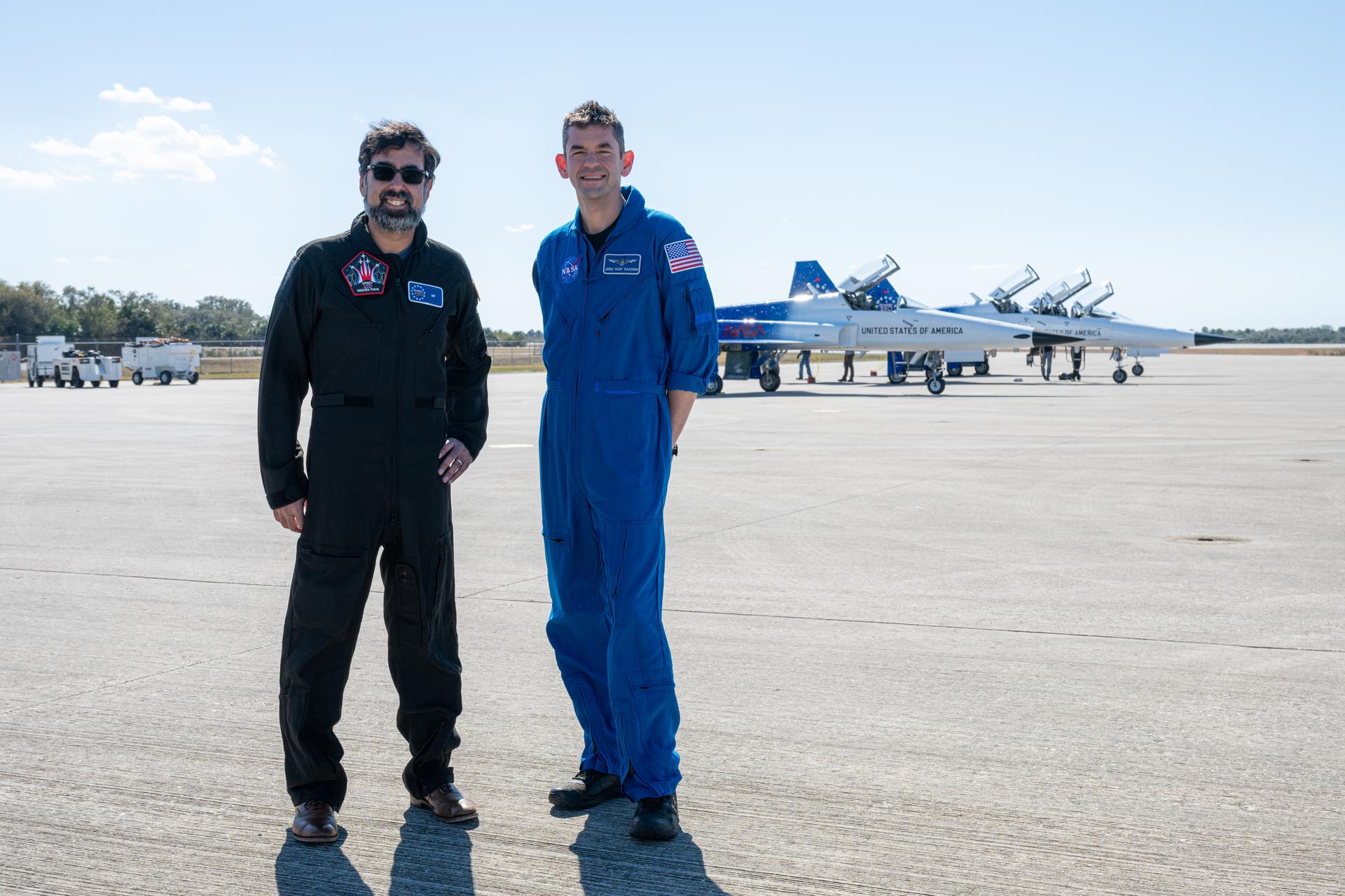
NASA Administrator Jared Isaacman and Amit Kshatriya, NASA associate administrator, pose for a photograph following a formation flight in Isaacman’s personal F-5 aircraft, Sunday, Feb. 8, 2026, at NASA’s Kennedy Space Center in Florida. Photo Credit: (NASA/John Kraus)

One of NASA Administrator Jared Isaacman’s personal F-5 aircraft is seen during an employee incentive flying event, Wednesday, May 13, 2026, at NASA’s Kennedy Space Center in Florida. Rachel Kraft, Artemis communications lead at NASA Headquarters, was flying in the back seat. Photo Credit: (NASA/John Kraus)

Rachel Kraft, Artemis communications lead at NASA Headquarters, participates in an employee incentive flying event with NASA Administrator Jared Isaacman's personal F-5 aircraft, Wednesday, May 13, 2026, at NASA’s Kennedy Space Center in Florida. Photo Credit: (NASA/John Kraus)
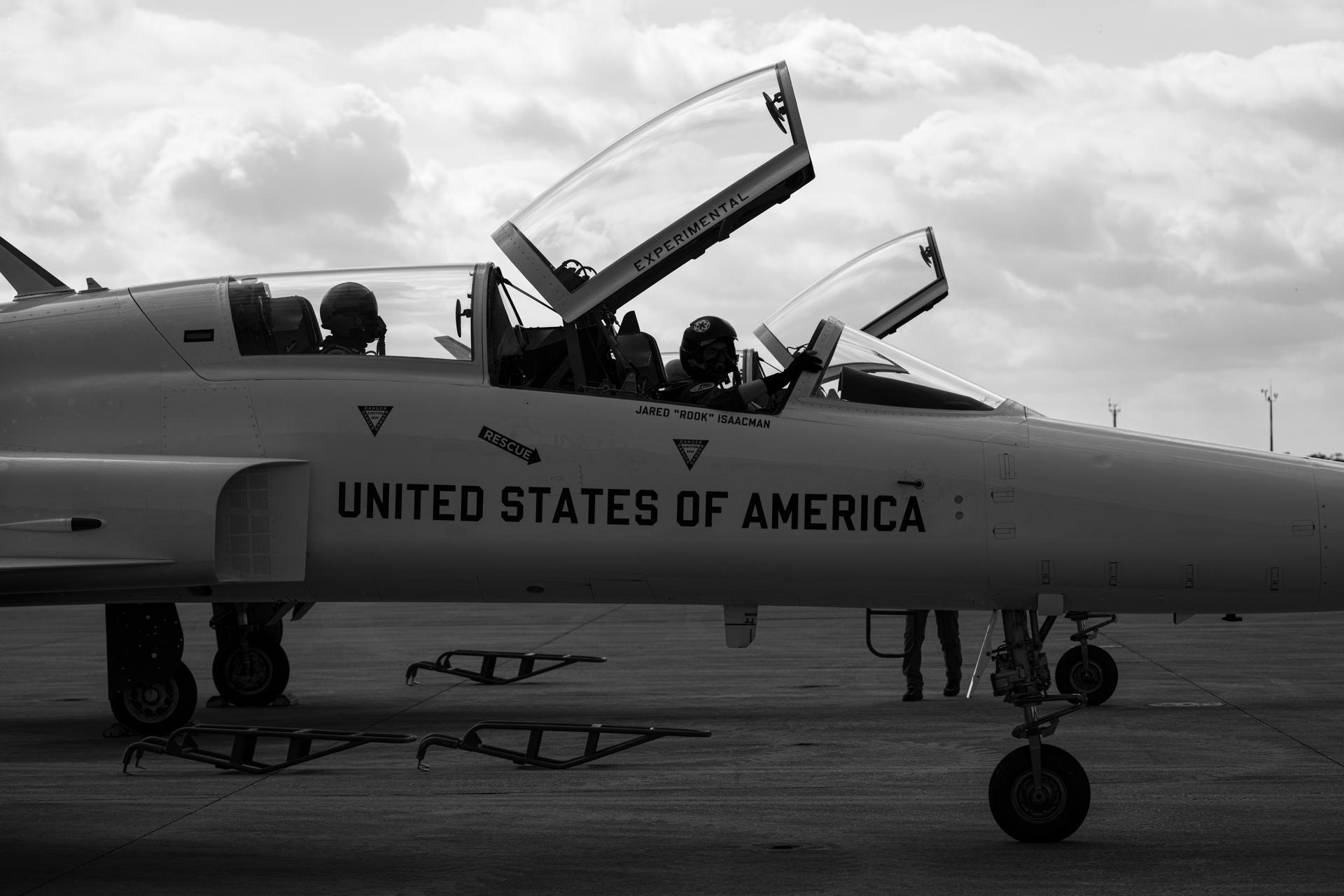
NASA employee Jonathan Baker, chief of the spaceport development division at NASA’s Kennedy Space Center, left, participates in an employee incentive flying event with NASA Administrator Jared Isaacman, center, and his personal F-5 aircraft, Thursday, Feb. 12, 2026, at NASA’s Kennedy Space Center in Florida. Photo Credit: (NASA/John Kraus)
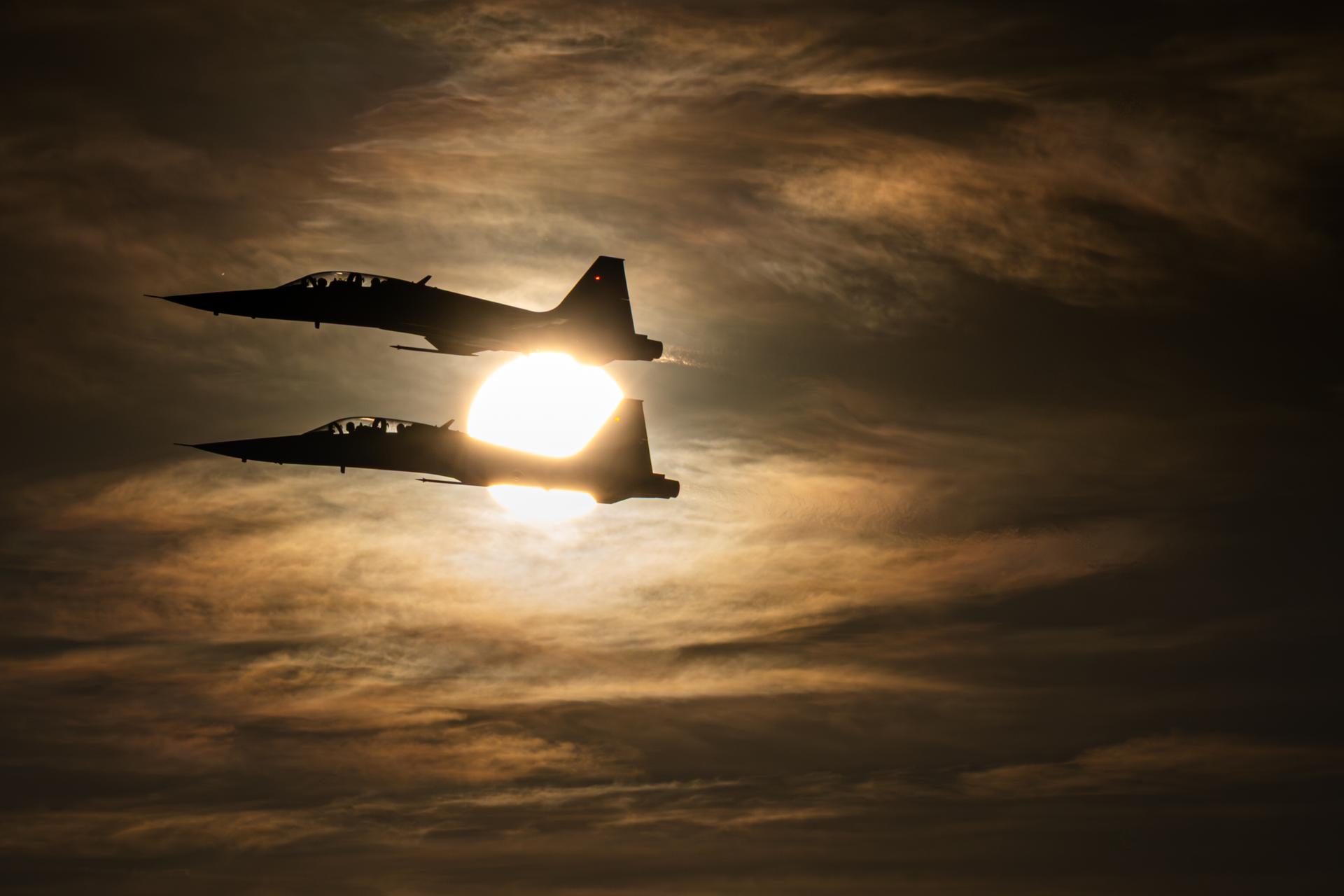
NASA Administrator Jared Isaacman participates in a formation flight with his personal F-5 aircraft, Wednesday, March 11, 2026, at NASA’s Kennedy Space Center in Florida. Photo Credit: (NASA/John Kraus)
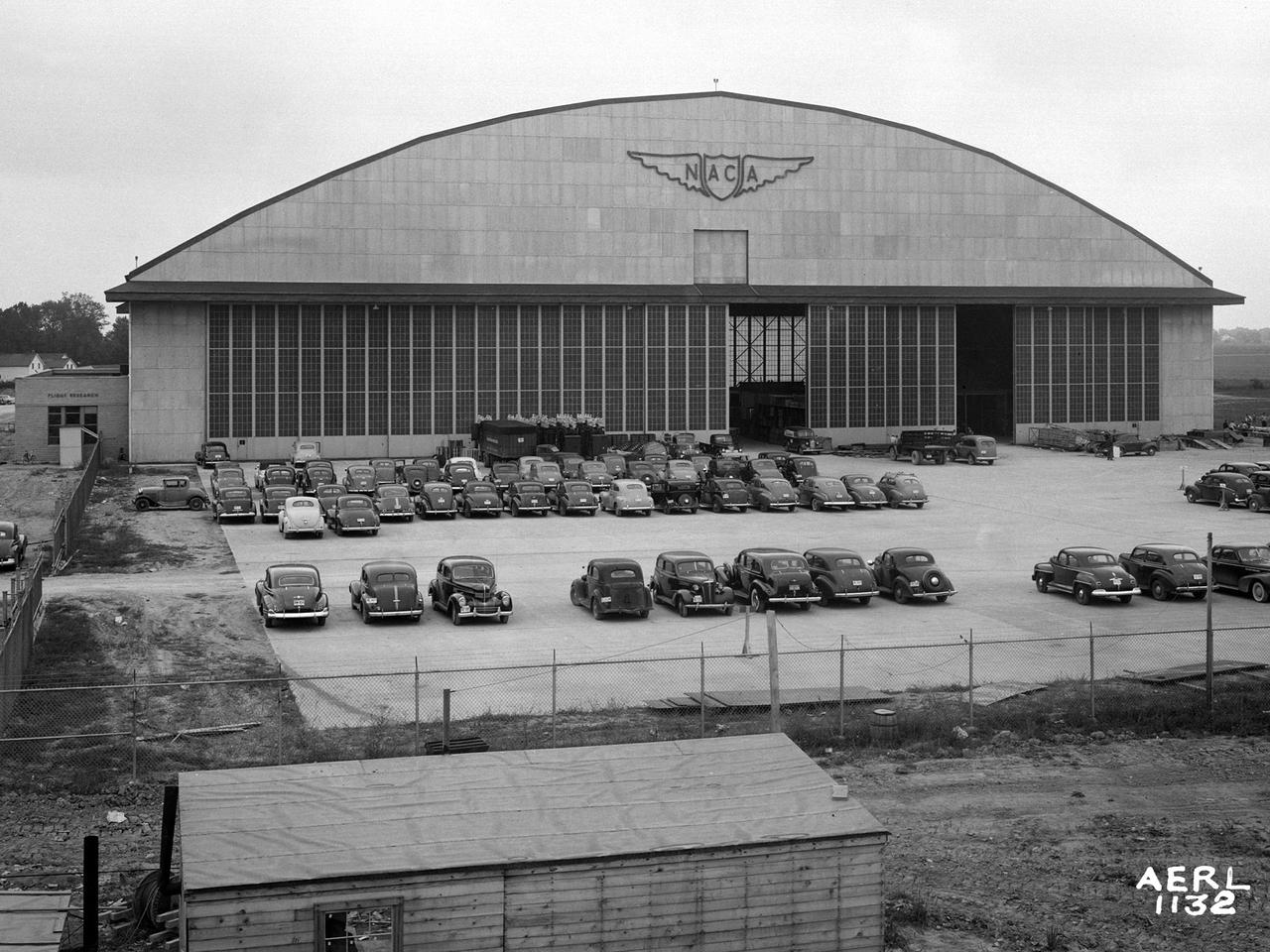
The Flight Research Building at the National Advisory Committee for Aeronautics (NACA) Aircraft Engine Research Laboratory is a 272- by 150-foot hangar with an internal height up to 90 feet. The hangar’s massive 37.5-foot-tall and 250-foot-long doors can be opened in sections to suit different size aircraft. The hangar has sheltered a diverse fleet of aircraft over the decades. These have ranged from World War II bombers to Cessna trainers and from supersonic fighter jets to a DC–9 airliner. At the time of this September 1942 photograph, however, the hangar was being used as an office building during the construction of the laboratory. In December of 1941, the Flight Research Building became the lab’s first functional building. Temporary offices were built inside the structure to house the staff while the other buildings were completed. The hangar offices were used for an entire year before being removed in early 1943. It was only then that the laboratory acquired its first aircraft, pilots and flight mechanics. The temporary one-story offices can be seen in this photograph inside the large sliding doors. Also note the vertical lift gate below the NACA logo. The gate was installed so that the tails of larger aircraft could pass into the hangar. The white Farm House that served as the Administration Building during construction can be seen in the distance to the left of the hangar.
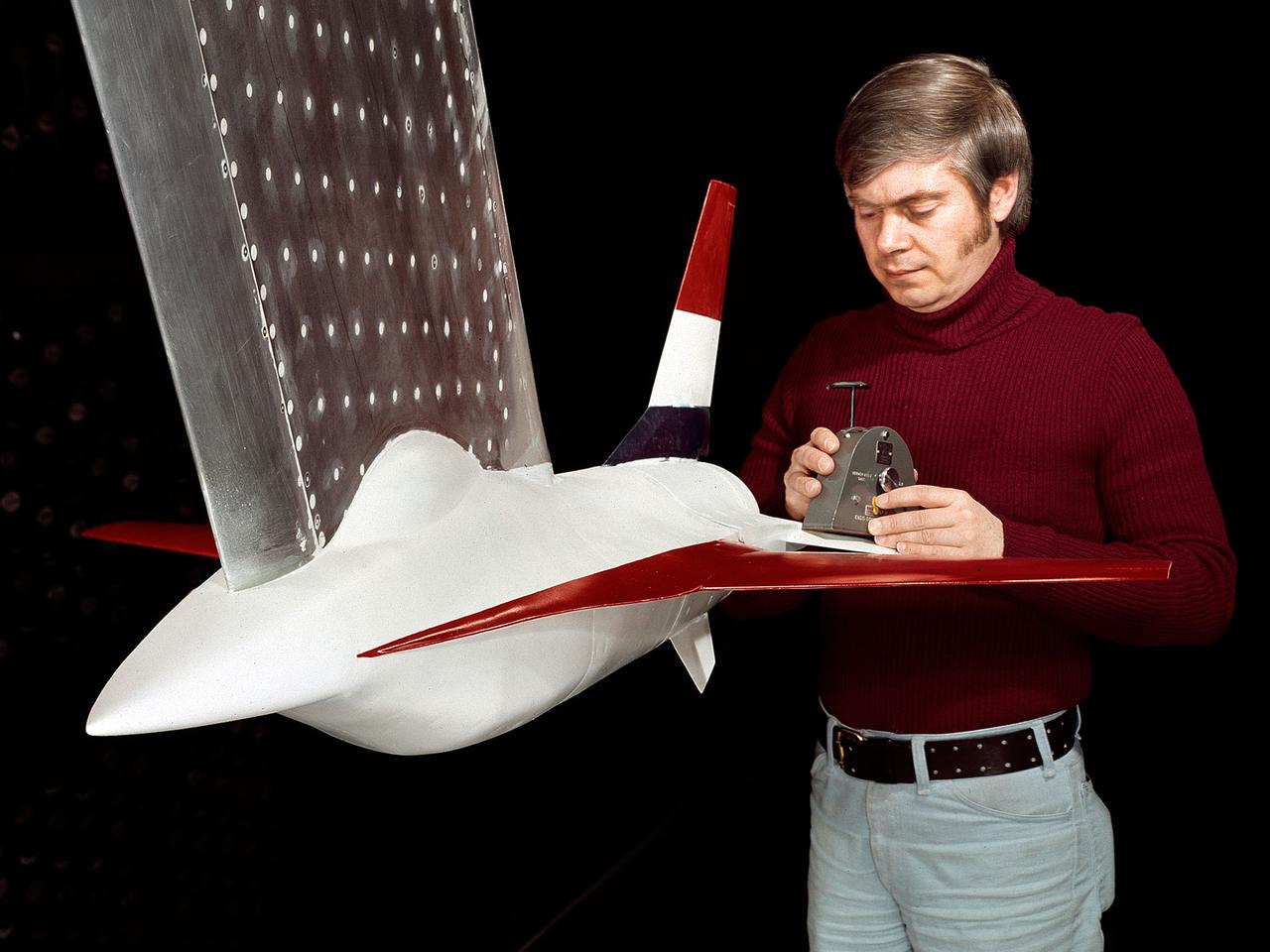
A model of the General Dynamics YF-16 Fighting Falcon in the test section of the 8- by 6-Foot Supersonic Wind Tunnel at the National Aeronautics and Space Administration (NASA) Lewis Research Center. The YF-16 was General Dynamics response to the military’s 1972 request for proposals to design a new 20,000-pound fighter jet with exceptional acceleration, turn rate, and range. The aircraft included innovative design elements to help pilots survive turns up to 9Gs, a new frameless bubble canopy, and a Pratt and Whitney 24,000-pound thrust F-100 engine. The YF-16 made its initial flight in February 1974, just six weeks before this photograph, at Edwards Air Force Base. Less than a year later, the Air Force ordered 650 of the aircraft, designated as F-16 Fighting Falcons. The March and April 1974 tests in the 8- by 6-foot tunnel analyzed the aircraft’s fixed-shroud ejector nozzle. The fixed-nozzle area limited drag, but also limited the nozzle’s internal performance. NASA researchers identified and assessed aerodynamic and aerodynamic-propulsion interaction uncertainties associated the prototype concept. YF-16 models were also tested extensively in the 11- by 11-Foot Transonic Wind Tunnel and 9- by 7-Foot Supersonic Wind Tunnel at Ames Research Center and the 12-Foot Pressure Wind Tunnel at Langley Research Center.
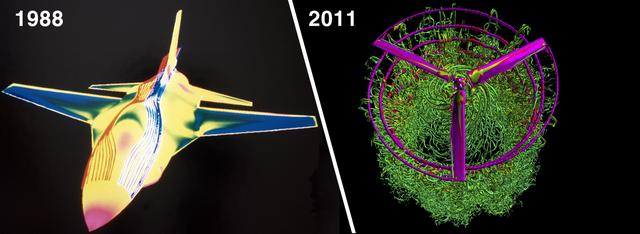
Then and Now: These images illustrate the dramatic improvement in NASA computing power over the last 23 years, and its effect on the number of grid points used for flow simulations. At left, an image from the first full-body Navier-Stokes simulation (1988) of an F-16 fighter jet showing pressure on the aircraft body, and fore-body streamlines at Mach 0.90. This steady-state solution took 25 hours using a single Cray X-MP processor to solve the 500,000 grid-point problem. Investigator: Neal Chaderjian, NASA Ames Research Center At right, a 2011 snapshot from a Navier-Stokes simulation of a V-22 Osprey rotorcraft in hover. The blade vortices interact with the smaller turbulent structures. This very detailed simulation used 660 million grid points, and ran on 1536 processors on the Pleiades supercomputer for 180 hours. Investigator: Neal Chaderjian, NASA Ames Research Center; Image: Tim Sandstrom, NASA Ames Research Center
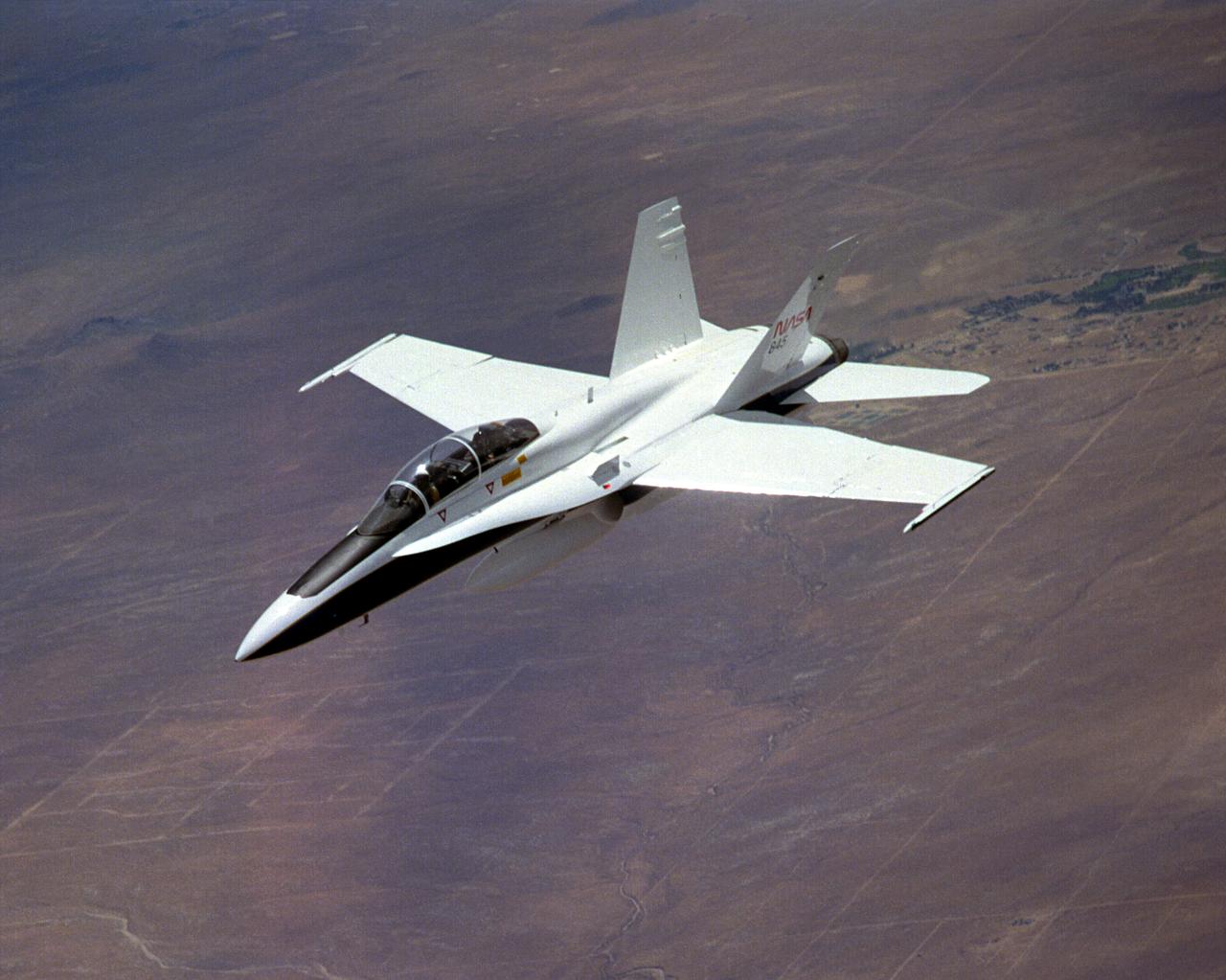
The National Aeronautics and Space Administration's Systems Research Aircraft (SRA), a highly modified F-18 jet fighter, during a research flight. The former Navy aircraft was flown by NASA's Dryden Flight Research Center at Edwards Air Force Base, California, to evaluate a number of experimental aerospace technologies in a multi-year, joint NASA/DOD/industry program. Among the more than 20 experiments flight-tested were several involving fiber optic sensor systems. Experiments developed by McDonnell-Douglas and Lockheed-Martin centered on installation and maintenace techniques for various types of fiber-optic hardware proposed for use in military and commercial aircraft, while a Parker-Hannifin experiment focused in alternative fiber-optic designs for position measurement sensors as well as operational experience in handling optical sensor systems. Other experiments flown on this testbed aircraft included electronically-controlled control surface actuators, flush air data collection systems, "smart" skin antennae and laser-based systems. Incorporation of one or more of these technologies in future aircraft and spacecraft could result in signifigant savings in weight, maintenance and overall cost.
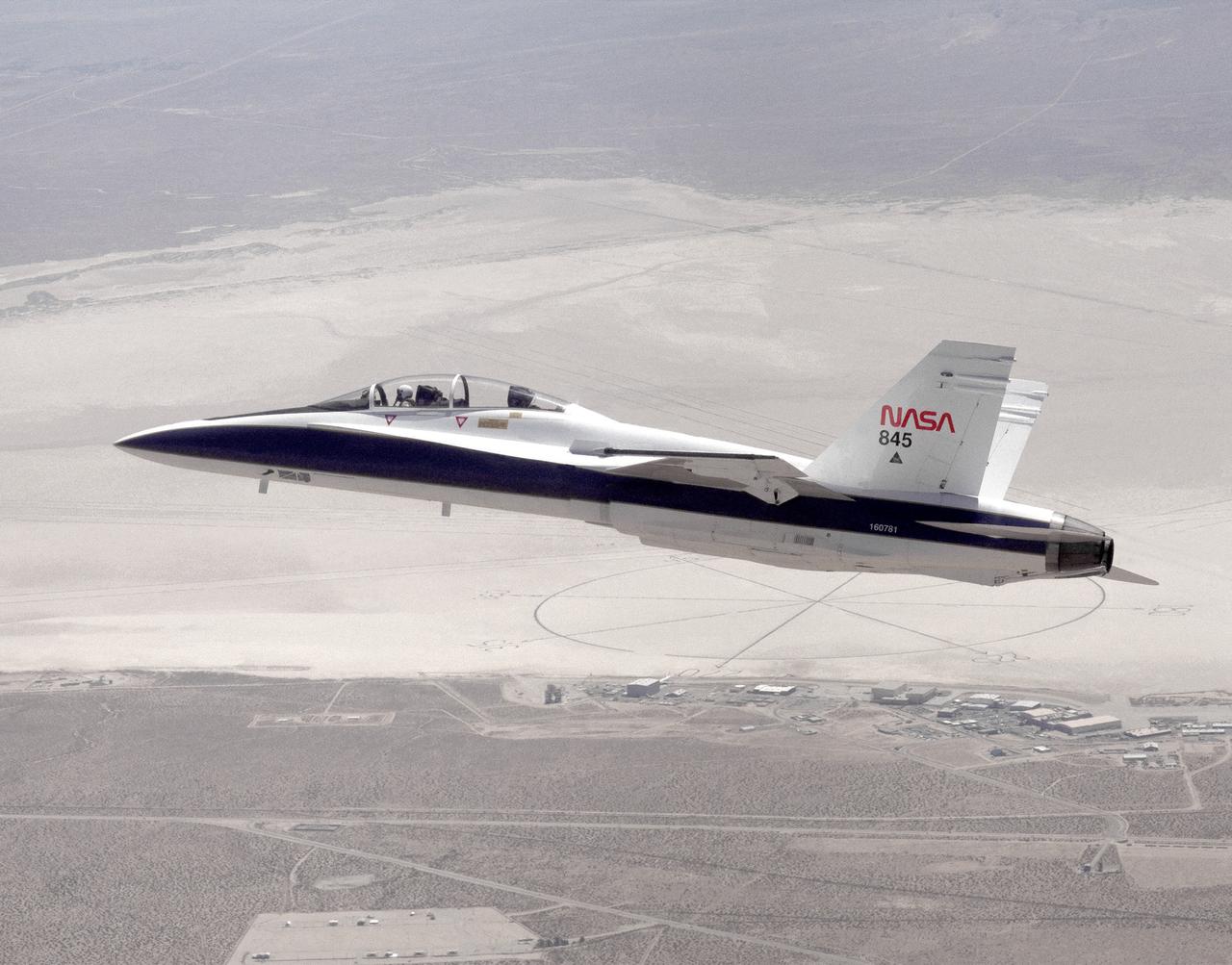
The National Aeronautics and Space Administration's Systems Research Aircraft (SRA), a highly modified F-18 jet fighter, on an early research flight over Rogers Dry Lake. The former Navy aircraft was flown by NASA's Dryden Flight Research Center at Edwards Air Force Base, California, to evaluate a number of experimental aerospace technologies in a multi-year, joint NASA/DOD/industry program. Among the more than 20 experiments flight-tested were several involving fiber optic sensor systems. Experiments developed by McDonnell-Douglas and Lockheed-Martin centered on installation and maintenace techniques for various types of fiber-optic hardware proposed for use in military and commercial aircraft, while a Parker-Hannifin experiment focused on alternative fiber-optic designs for postion measurement sensors as well as operational experience in handling optical sensor systems. Other experiments flown on this testbed aircraft included electronically-controlled control surface actuators, flush air data collection systems, "smart" skin antennae and laser-based systems. Incorporation of one or more of these technologies in future aircraft and spacecraft could result in signifigant savings in weight, maintenance and overall cost.
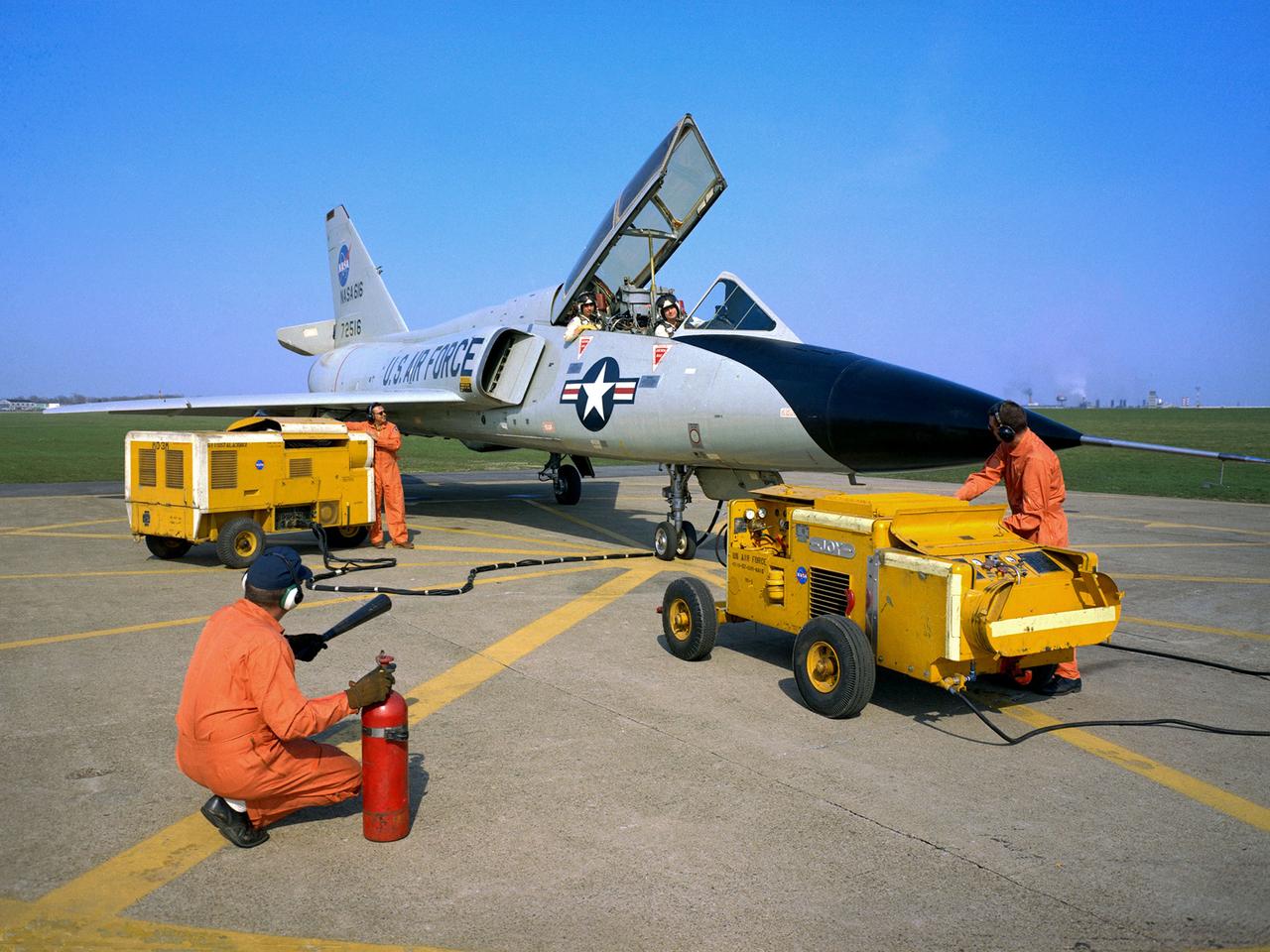
National Aeronautics and Space Administration (NASA) pilot Cliff Crabbs and the flight operations crew prepare a Convair F-106B Delta Dart for a flight from the Lewis Research Center in Cleveland, Ohio. NASA acquired the aircraft three years earlier to investigate noise-reducing inlet and nozzle designs for the supersonic transport engine program. Two General Electric J85 engines were installed underneath the aircraft’s delta wings to simulate the general shape of the supersonic transport’s engines. One of the engines was modified with experimental inlet or nozzle configurations. The unmodified engine was used for comparison. Most F-106B flights were flown in a 200-mile path over the lake between Buffalo and Sandusky, known as the Lake Erie Corridor. The 1100-miles per hour flight took only 11 minutes at an altitude of 30,000 feet. The aircraft almost always returned with a depleted fuel supply so a Visual Flight Rules operation was required. Following the crash of another jet fighter at Lewis in July 1969, the F-106s were stationed at Selfridge Air Force Base in Michigan. NASA pilots flew transport planes each morning to the base before commencing the F-106B missions.
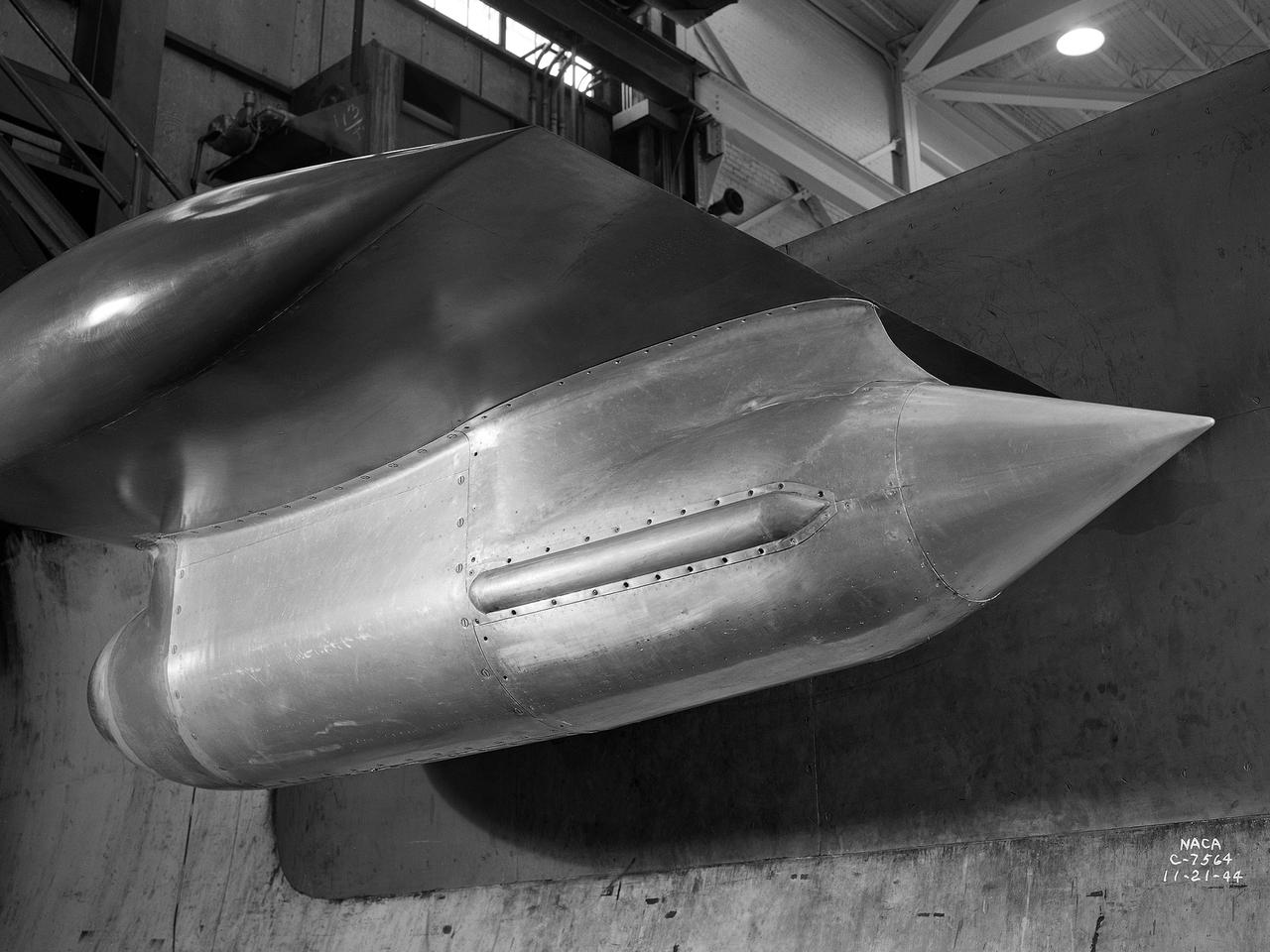
The Westinghouse 19XB turbojet seen from the side in the Altitude Wind Tunnel (AWT) test section at the National Advisory Committee for Aeronautics (NACA) Aircraft Engine Research Laboratory. Westinghouse started the development of a series of relatively small axial-flow turbojets for the Navy shortly after Pearl Harbor. In 1943 the 19A engine became both the first operational US-designed jet engine and the only U.S. turbojet incorporated into an aircraft during the war in Europe. In March 1943 Westinghouse agreed to create an improved six-stage 1400-pound thrust version, the 19B. The engine underwent its first test run a year later in March 1944. Almost immediately the navy agreed to Westinghouse’s proposal for the even larger 10-stage, 1600-pound-thrust 19XB prototype. By July 1944 the navy had contracted with the NACA for the testing of both engines in the AWT. The tunnel was the nation’s only facility for studying full-scale engines in simulated altitude conditions. The wind tunnel investigations, which began on September 9, 1944, revealed the superiority of the previously untested 19XB over the 19B. The 19B engines failed to restart consistently and suffered combustion blowouts above 17,000 feet. The 19XB, however, performed well and restarted routinely at twice that altitude. Two months later on January 26, 1945, two 19Bs powered a McDonnell XFD–1 Phantom, the US Navy’s first fighter jet, on its initial flight. Following its exceptional performance in the AWT, the 19XB engines soon replaced the 19Bs in the Phantom.