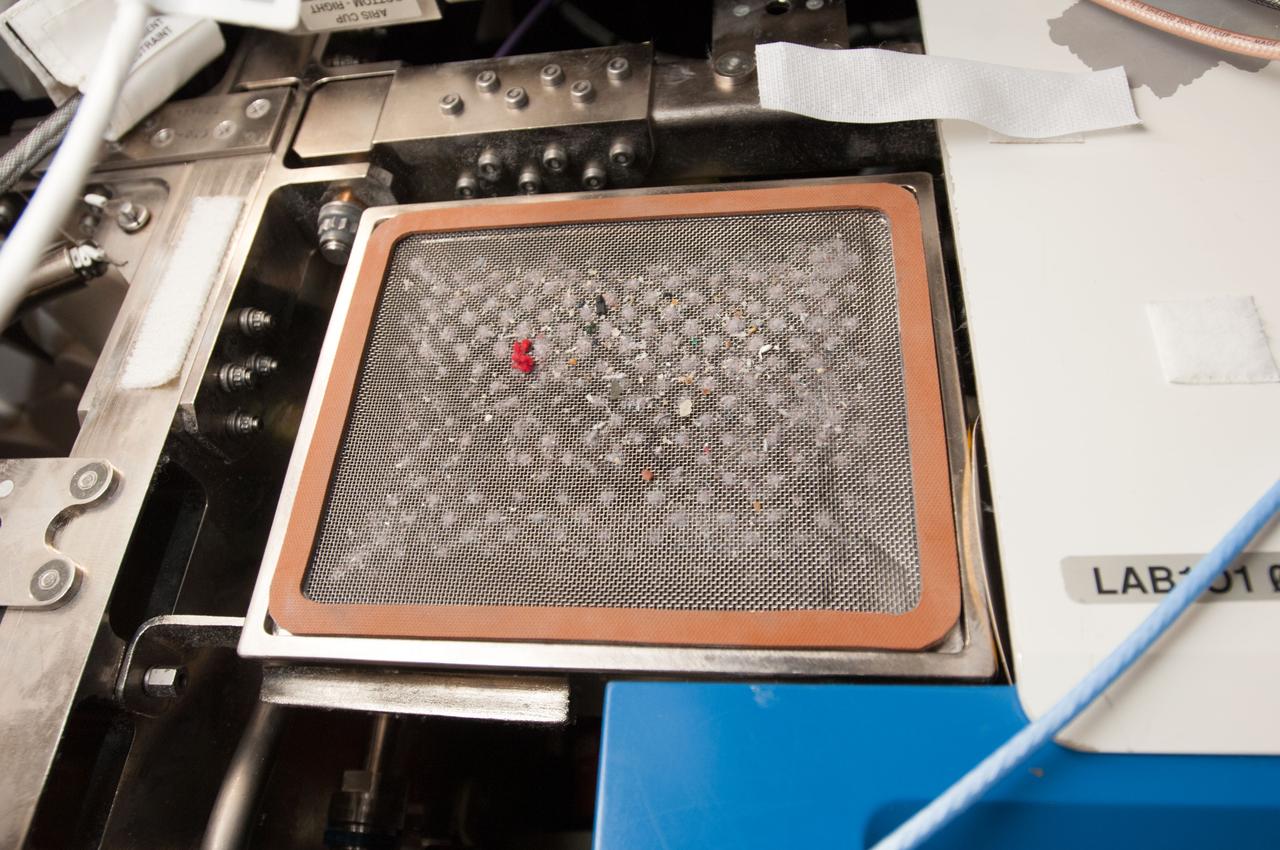
View of filter during cleaning on the Active Rack Isolation System (ARIS). Photo was taken during Expedition 34.
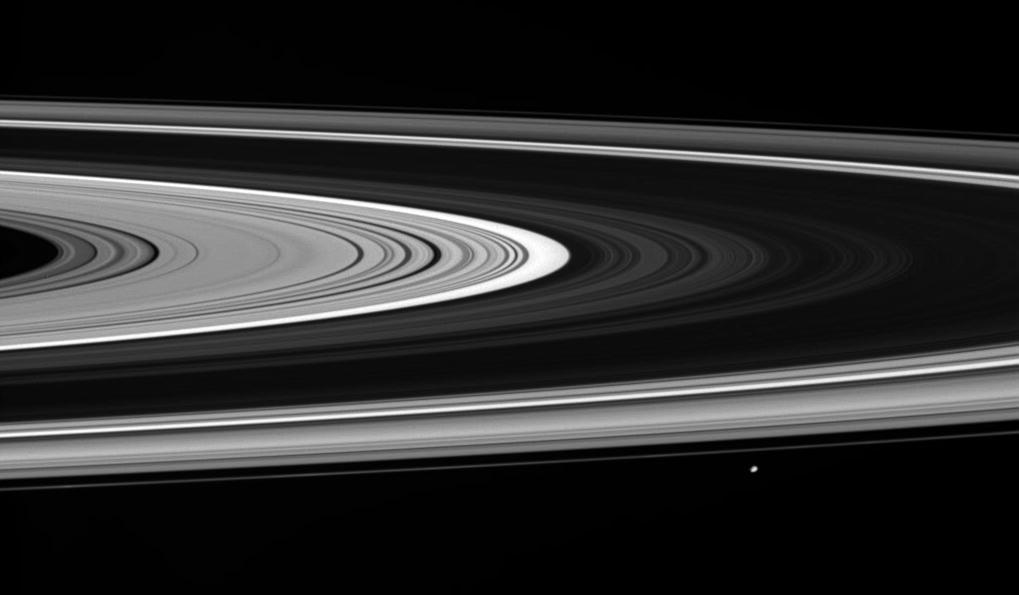
Filtering the Sun
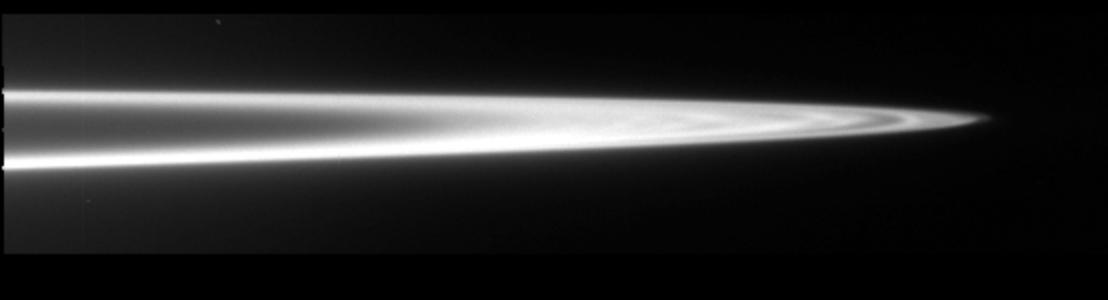
The Main Ring of Jupiter clear filter
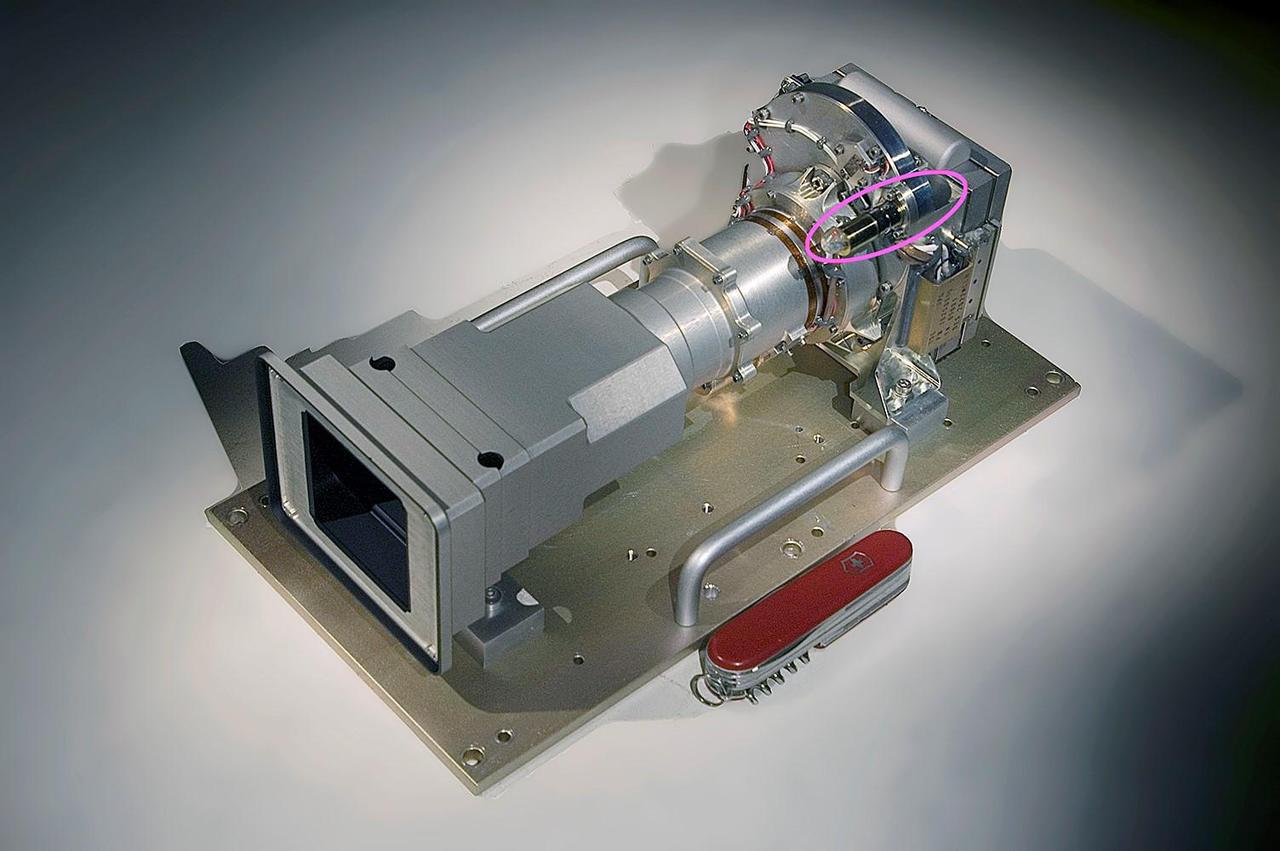
The Mast Camera, or Mastcam, aboard NASA's Curiosity Mars rover is built with two cameras – the left has a 34 mm focal length; the right, a 100 mm focal length. Behind each lens is a rotating wheel (circled in pink) arranged with filters. In addition to providing color images of the rover's surroundings, the cameras and their filters help scientists determine from afar the composition of rocks by the wavelengths of light, or spectra, they reflect in different colors. On Sept. 19, 2023, the left camera's filter wheel became stuck between the green and clear filter positions, the effects of which can be seen on the mission's raw, or unprocessed, images. The filter wheel is part of a spur-and-pinion mechanism, with the spur teeth around the filter wheel. The actuation uses a small motor that drives the pinion gear both forward and backward. Despite having been commanded at more than twice its normal torque, this motor has been unable to move in the counterclockwise direction. If unable to nudge the wheel back to the clear filter, the mission would rely on the higher resolution 100 mm right camera as the primary color-imaging system. The camera needs to take nine times more images than the left to cover the same area, which could affect how the team scouts for science targets and rover routes. The ability to observe detailed color spectra of rocks from afar would also be degraded. https://photojournal.jpl.nasa.gov/catalog/PIA26043
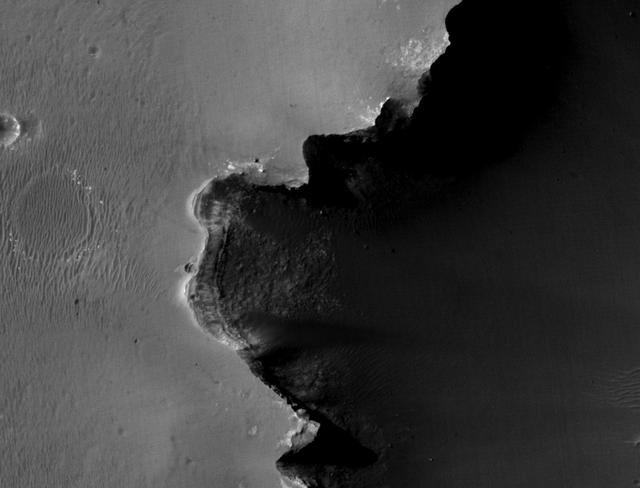
Opportunity at Crater Cape Verde Red Filter
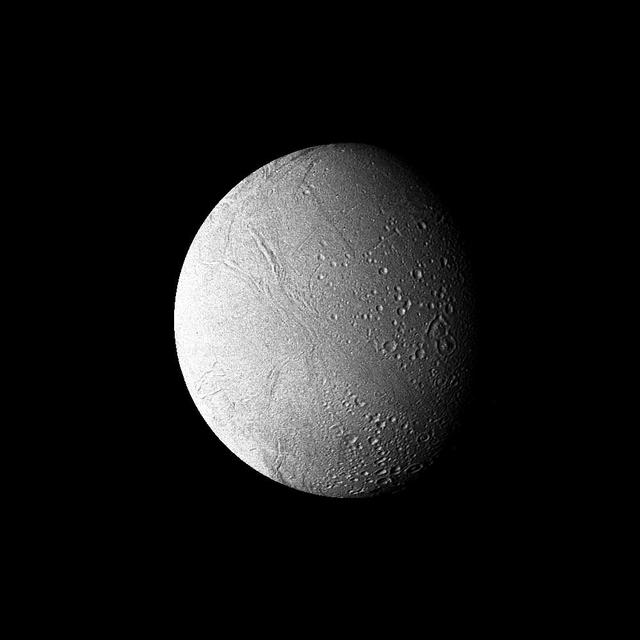
Saturn - High-resolution Filtered Image of Enceladus

This image shows a series of color filters on the Color Filter Assembly for the Coronagraph Instrument on NASA's Nancy Grace Roman Space Telescope. Each filter blocks all but a specific color, or wavelength, of light. Many of the filters appear dark in this photo because they block all visible light – the range of wavelengths that are visible to the human eye – but are transparent to infrared light, which encompasses a range of wavelengths slightly longer than visible light. Most of the filters will be used by the instrument for calibration purposes, but there are scientific uses for some of the filters as well. The presence or absence of different wavelengths can reveal properties of exoplanets (planets around other stars) including their chemical composition and the presence of clouds high or low in their atmospheres. For example, cold gas giant planets with high clouds will appear redder, like Jupiter, compared to those without high clouds, like Neptune. https://photojournal.jpl.nasa.gov/catalog/PIA25436

This image shows fine sand from Mars that was filtered by NASA Curiosity rover as part of its first decontamination exercise.
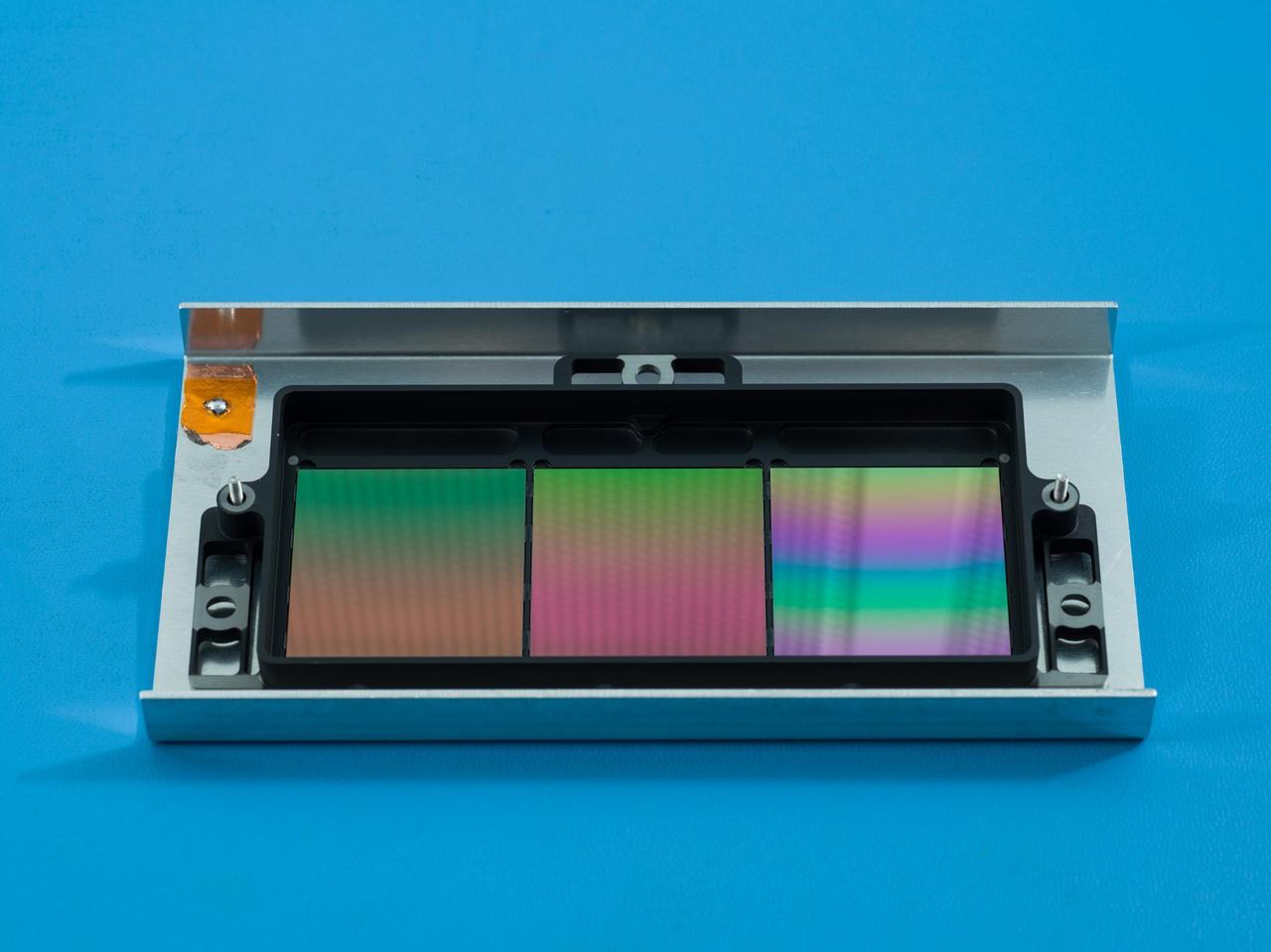
NASA's SPHEREx mission will use these filters to conduct spectroscopy, a technique that lets scientists measure individual wavelengths of light from a source, which can reveal information such as the chemical composition of the object or how far away it is. Each about the size of a cracker, the filters appear iridescent to the naked eye. The filters have multiple segments that block all but one specific wavelength of infrared light. Every object SPHEREx images will be observed by each segment, enabling scientists to see the specific infrared wavelengths emitted by every star or galaxy the telescope views. In total, SPHEREx can observe more than 100 distinct wavelengths. Short for Specto-Photometer for the History of the Universe, Epoch of Reionization and Ices Explorer, SPHEREx will create a map of the cosmos like no other, imaging the entire sky and gathering information about millions of galaxies. With this map, scientists will study what happened in the first fraction of a second after the big bang, the history of galaxy evolution, and the origins of water in planetary systems in our galaxy. https://photojournal.jpl.nasa.gov/catalog/PIA25788
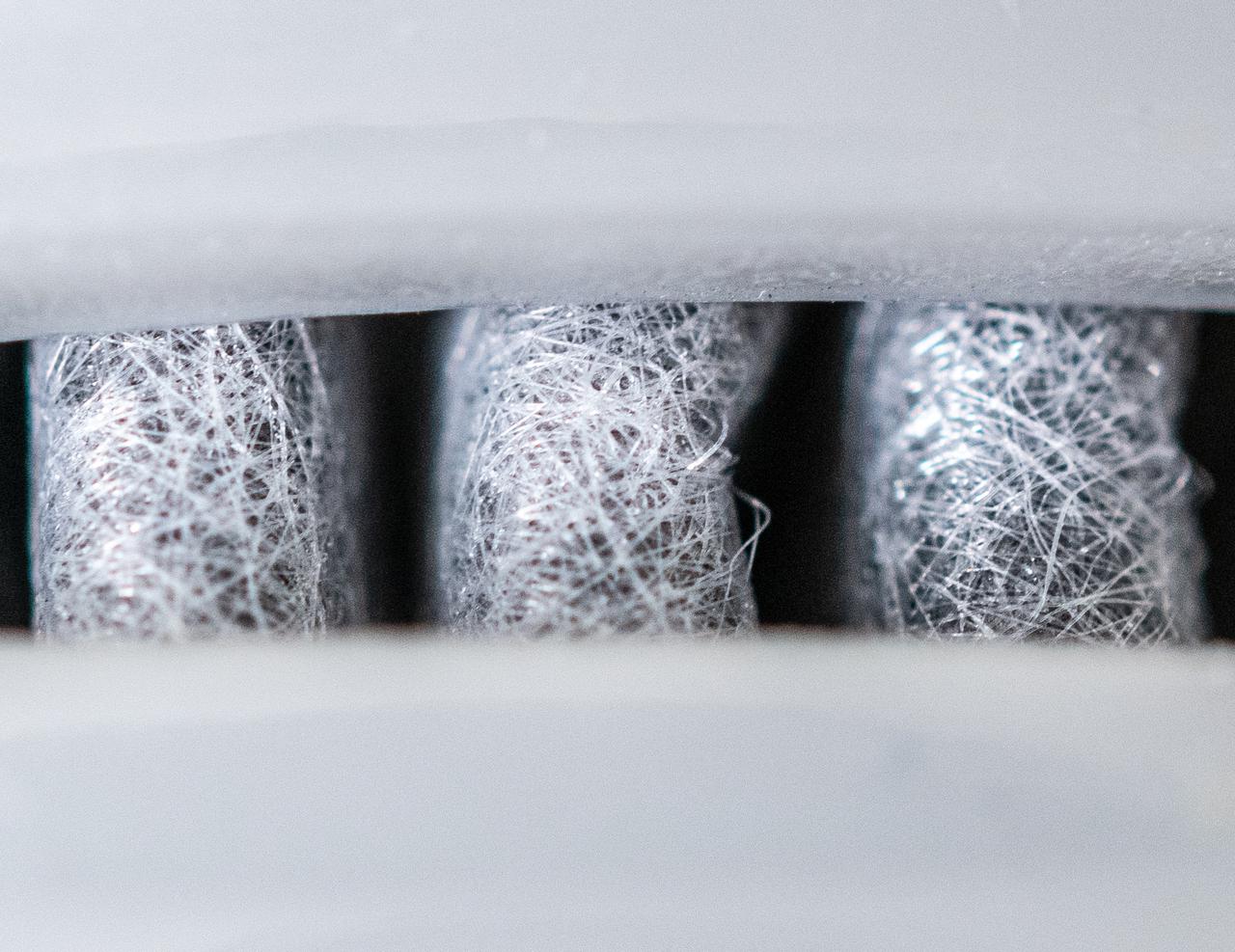
Spin Offs Macro Series - Water Filter
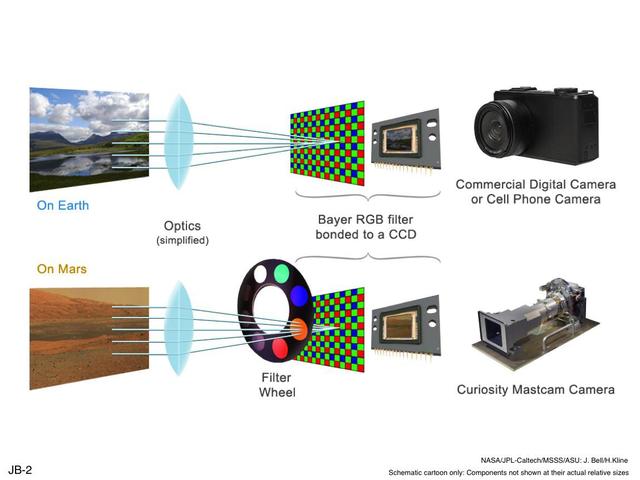
The color cameras on NASA Mars rover Curiosity, including the pair that make up the rover Mastcam instrument, use the same type of Bayer pattern RGB filter as found in typical commercial color cameras.
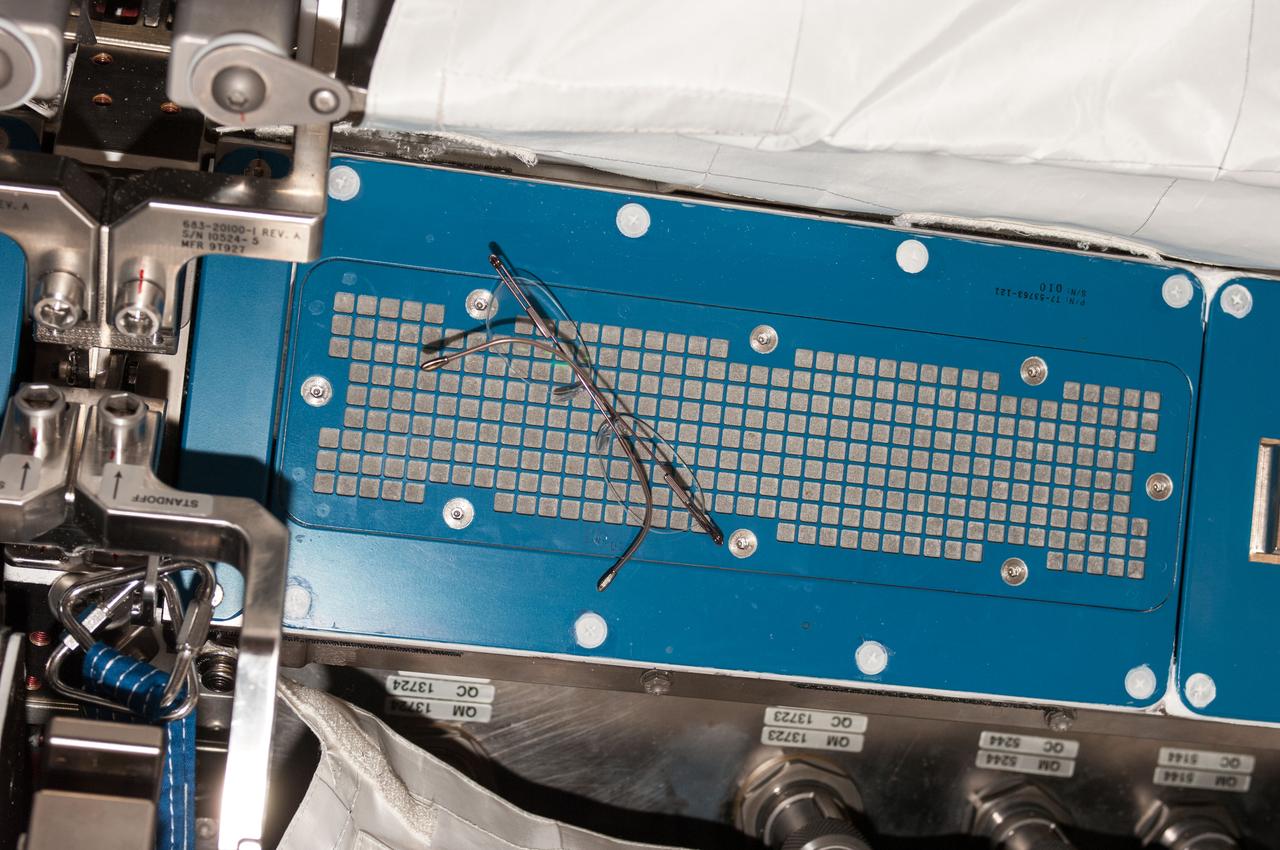
Candid view of a pair of eye glasses,floating in front of a ventilation filter in the Japanese Experiment Module (JEM).
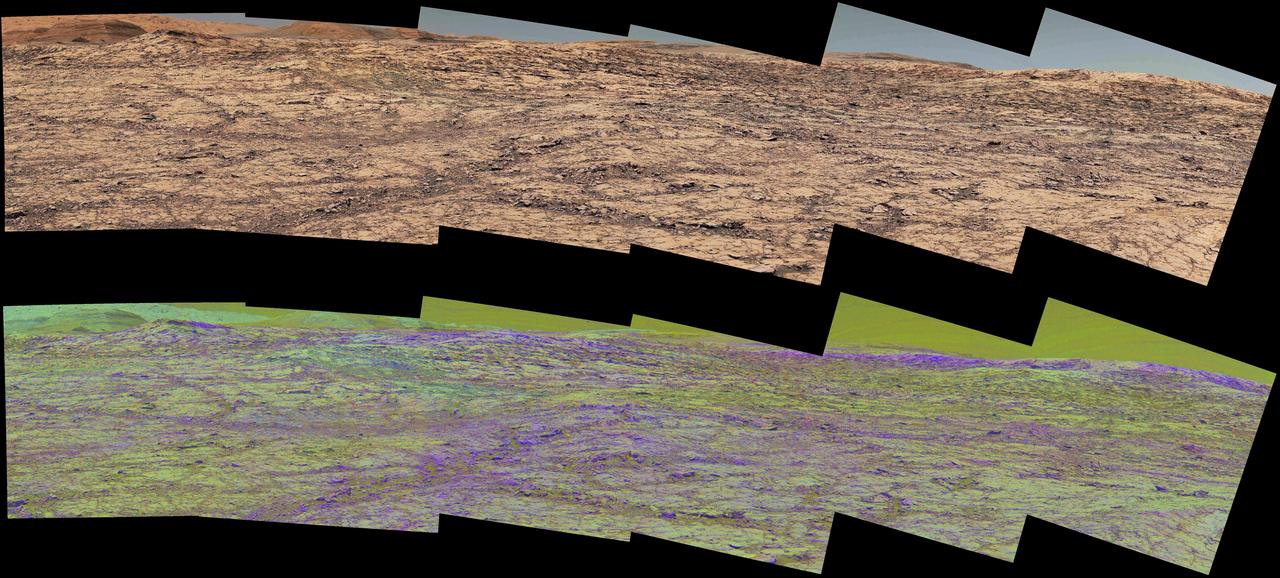
This pair of images from the Mast Camera (Mastcam) on NASA's Curiosity rover illustrates how special filters are used to scout terrain ahead for variations in the local bedrock. The upper panorama is in the Mastcam's usual full color, for comparison. The lower panorama of the same scene, in false color, combines three exposures taken through different "science filters," each selecting for a narrow band of wavelengths. Filters and image processing steps were selected to make stronger signatures of hematite, an iron-oxide mineral, evident as purple. Hematite is of interest in this area of Mars -- partway up "Vera Rubin Ridge" on lower Mount Sharp -- as holding clues about ancient environmental conditions under which that mineral originated. In this pair of panoramas, the strongest indications of hematite appear related to areas where the bedrock is broken up. With information from this Mastcam reconnaissance, the rover team selected destinations in the scene for close-up investigations to gain understanding about the apparent patchiness in hematite spectral features. The Mastcam's left-eye camera took the component images of both panoramas on Sept. 12, 2017, during the 1,814th Martian day, or sol, of Curiosity's work on Mars. The view spans from south-southeast on the left to south-southwest on the right. The foreground across the bottom of the scene is about 50 feet (about 15 meters) wide. Figure 1 includes scale bars of 1 meter (3.3 feet) in the middle distance and 5 meters (16 feet) at upper right. Curiosity's Mastcam combines two cameras: the right eye with a telephoto lens and the left eye with a wider-angle lens. Each camera has a filter wheel that can be rotated in front of the lens for a choice of eight different filters. One filter for each camera is clear to all visible light, for regular full-color photos, and another is specifically for viewing the Sun. Some of the other filters were selected to admit wavelengths of light that are useful for identifying iron minerals. Each of the filters used for the lower panorama shown here admits light from a narrow band of wavelengths, extending to only about 5 to 10 nanometers longer or shorter than the filter's central wavelength. The three observations combined into this product used filters centered at three near-infrared wavelengths: 751 nanometers, 867 nanometers and 1,012 nanometers. Hematite distinctively absorbs some frequencies of infrared light more than others. Usual color photographs from digital cameras -- such as the upper panorama here from Mastcam -- combine information from red, green and blue filtering. The filters are in a microscopic grid in a "Bayer" filter array situated directly over the detector behind the lens, with wider bands of wavelengths. The colors of the upper panorama, as with most featured images from Mastcam, have been tuned with a color adjustment similar to white balancing for approximating how the rocks and sand would appear under daytime lighting conditions on Earth. https://photojournal.jpl.nasa.gov/catalog/PIA22065
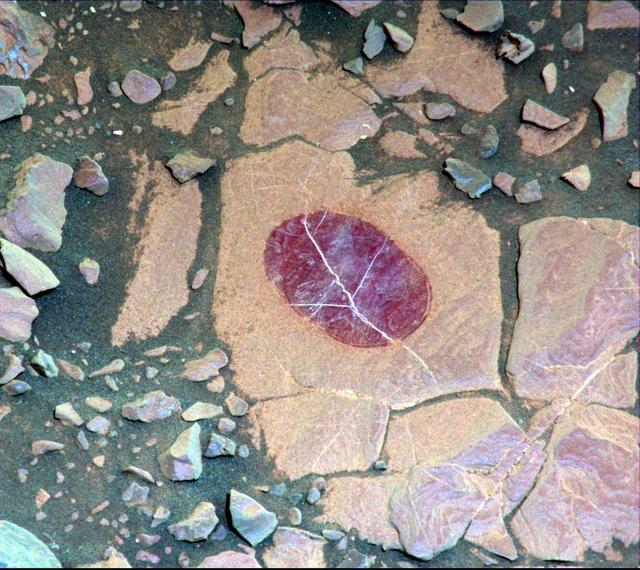
This false-color image demonstrates how use of special filters available on the Mast Camera (Mastcam) of NASA's Curiosity Mars rover can reveal the presence of certain minerals in target rocks. It is a composite of images taken through three "science" filters chosen for making hematite, an iron-oxide mineral, stand out as exaggerated purple. This target rock, called "Christmas Cove," lies in an area on Mars' "Vera Rubin Ridge" where Mastcam reconnaissance imaging (see PIA22065) with science filters suggested a patchy distribution of exposed hematite. Bright lines within the rocks are fractures filled with calcium sulfate minerals. Christmas Cove did not appear to contain much hematite until the rover team conducted an experiment on this target: Curiosity's wire-bristled brush, the Dust Removal Tool, scrubbed the rock, and a close-up with the Mars Hand Lens Imager (MAHLI) confirmed the brushing. The brushed area is about is about 2.5 inches (6 centimeters) across. The next day -- Sept. 17, 2017, on the mission's Sol 1819 -- this observation with Mastcam and others with the Chemistry and Camera (ChemCam showed a strong hematite presence that had been subdued beneath the dust. The team is continuing to explore whether the patchiness in the reconnaissance imaging may result more from variations in the amount of dust cover rather than from variations in hematite content. Curiosity's Mastcam combines two cameras: one with a telephoto lens and the other with a wider-angle lens. Each camera has a filter wheel that can be rotated in front of the lens for a choice of eight different filters. One filter for each camera is clear to all visible light, for regular full-color photos, and another is specifically for viewing the Sun. Some of the other filters were selected to admit wavelengths of light that are useful for identifying iron minerals. Each of the filters used for this image admits light from a narrow band of wavelengths, extending to only about 5 nanometers longer or shorter than the filter's central wavelength. Three observations are combined for this image, each through one of the filters centered at 751 nanometers (in the near-infrared part of the spectrum just beyond red light), 527 nanometers (green) and 445 nanometers (blue). Usual color photographs from digital cameras -- such as a Mastcam one of this same place (see PIA22067) -- also combine information from red, green and blue filtering, but the filters are in a microscopic grid in a "Bayer" filter array situated directly over the detector behind the lens, with wider bands of wavelengths. Mastcam's narrow-band filters used for this view help to increase spectral contrast, making blues bluer and reds redder, particularly with the processing used to boost contrast in each of the component images of this composite. Fine-grained hematite preferentially absorbs sunlight around in the green portion of the spectrum around 527 nanometers. That gives it the purple look from a combination of red and blue light reflected by the hematite and reaching the camera through the other two filters. https://photojournal.jpl.nasa.gov/catalog/PIA22066

On July 23, 1989, NASA Voyager 2 spacecraft took this picture of Neptune through a clear filter on its narrow-angle camera. The image on the right has a latitude and longitude grid added for reference. Neptune Great Dark Spot is visible on the left.
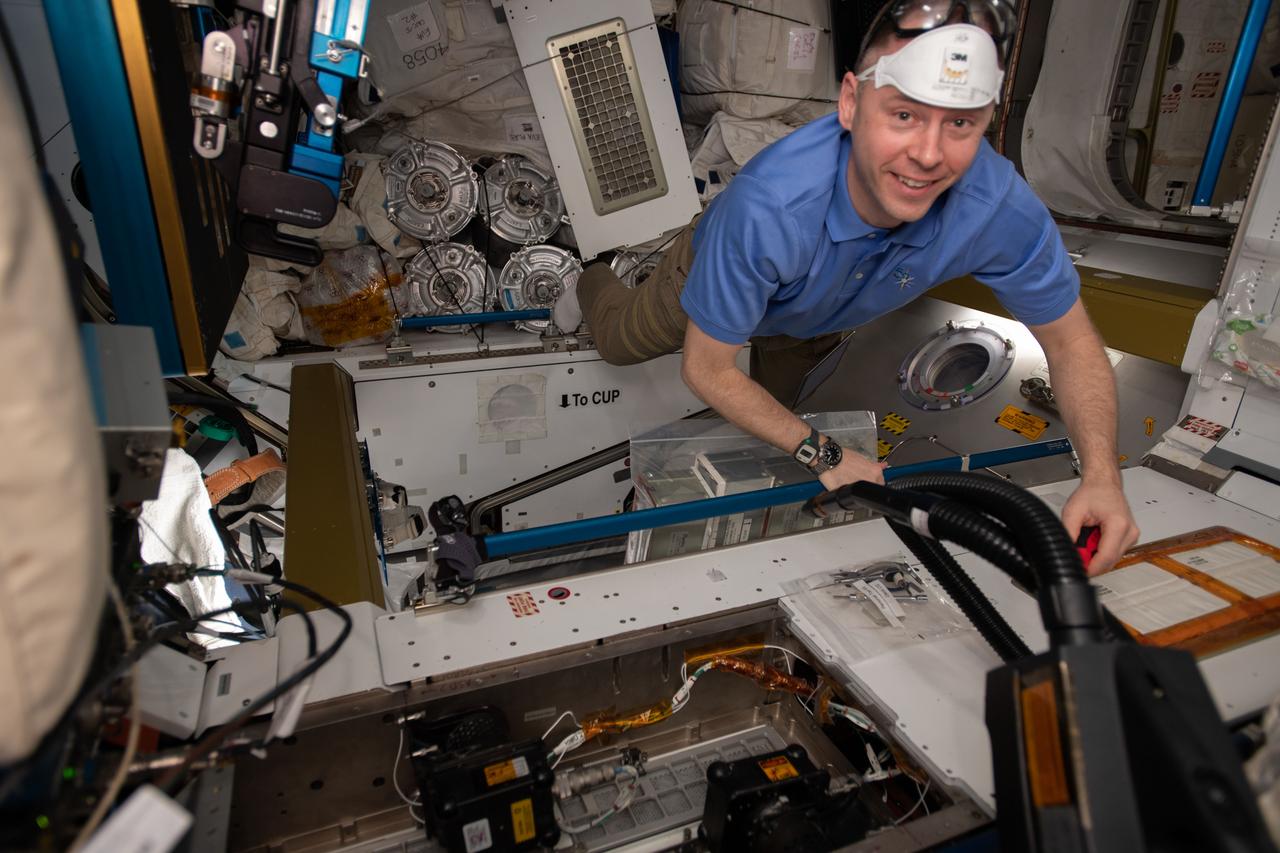
iss059e036143 (April 29, 2019) --- Expedition 59 Flight Engineer and NASA astronaut Nick Hague wears personal protection gear while working to remove bacteria filters and replacing them with charcoal filters inside the International Space Station's Tranquility module.
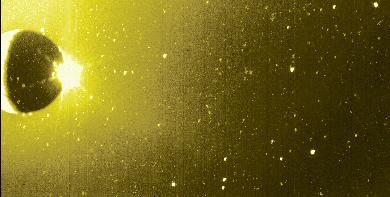
This image of Jupiter moon Io and its surrounding sky is shown in false color. This image was taken on Nov. 9, 1996 through the green-yellow filter of the solid state imaging CCD system aboard NASA Galileo spacecraft.
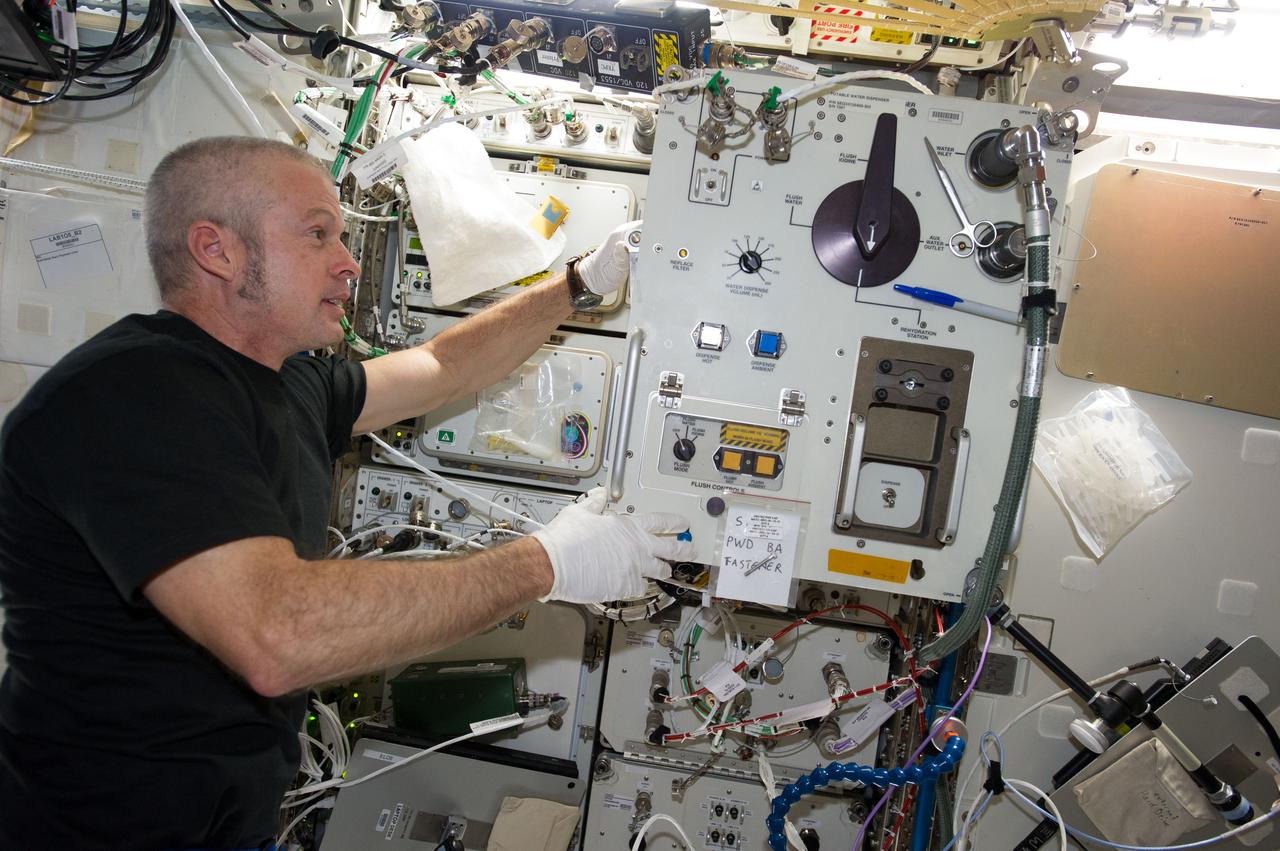
ISS040-E-064628 (15 July 2014) --- NASA astronaut Steve Swanson, Expedition 40 commander, replaces filters in the Potable Water Dispenser (PWD) in the Destiny laboratory of the International Space Station.
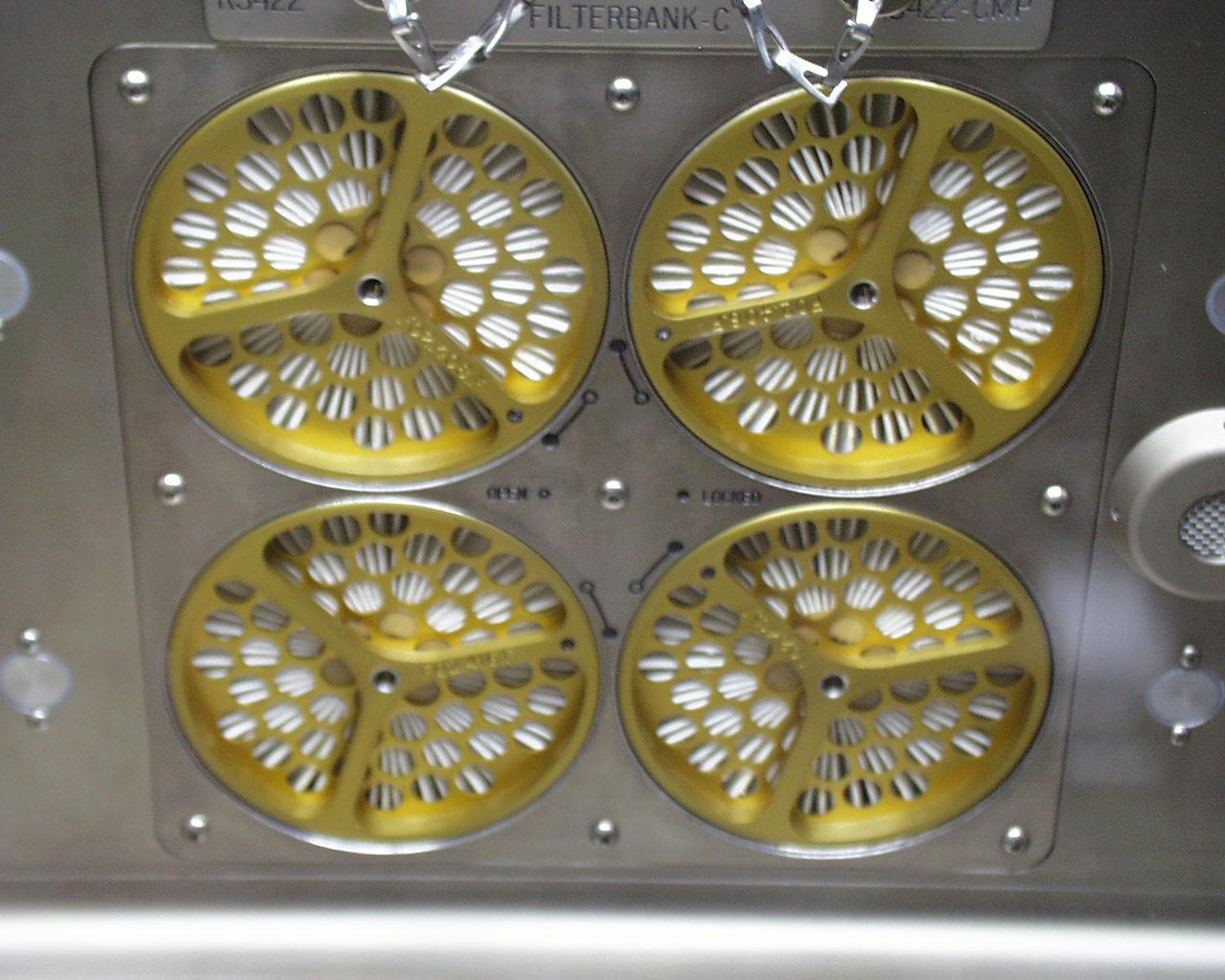
This photo shows one of three arrays of air filters inside the Microgravity Science Glovebox (MSG) being developed by the European Space Agency (ESA) and NASA for use aboard the International Space Station (ISS). Scientists will use the MSG to carry out multidisciplinary studies in combustion science, fluid physics and materials science. The MSG is managed by NASA's Marshall Space Flight Center (MSFC). Photo Credit: NASA/MSFC
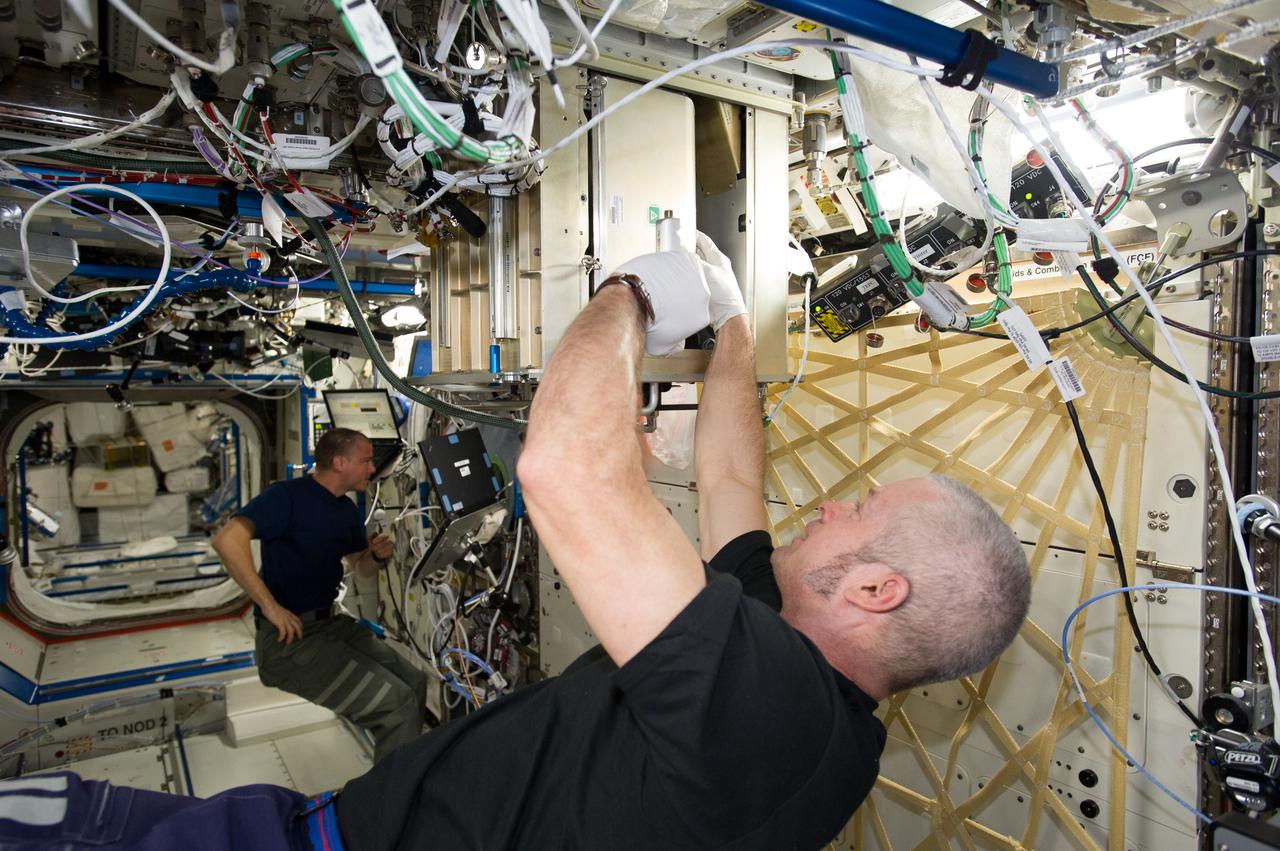
ISS040-E-064624 (15 July 2014) --- NASA astronaut Steve Swanson, Expedition 40 commander, replaces filters in the Potable Water Dispenser (PWD) in the Destiny laboratory of the International Space Station. NASA astronaut Reid Wiseman, flight engineer, works in the background.
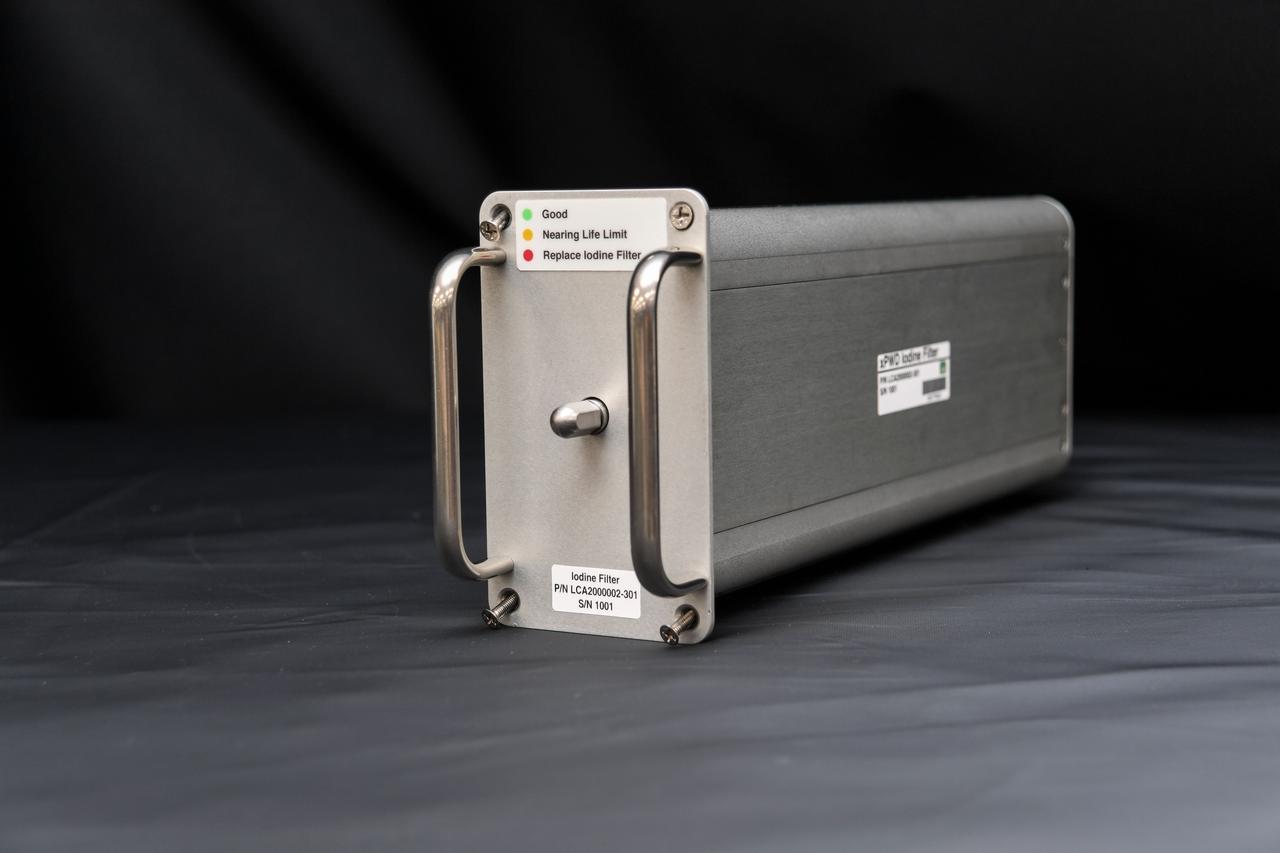
jsc2023e008494 (Feb. 10, 2023) --- A preflight image of the Exploration Potable Water Dispenser (Exploration PWD) iodine filter. Exploration PWD is a device that dispenses ambient and hot water into crew food and drink bags. The Exploration PWD is an improvement to the International Space Station (ISS) legacy PWD. Successful demonstration of this technology could lead to its adoption for future exploration missions and continued use for the space station crew.
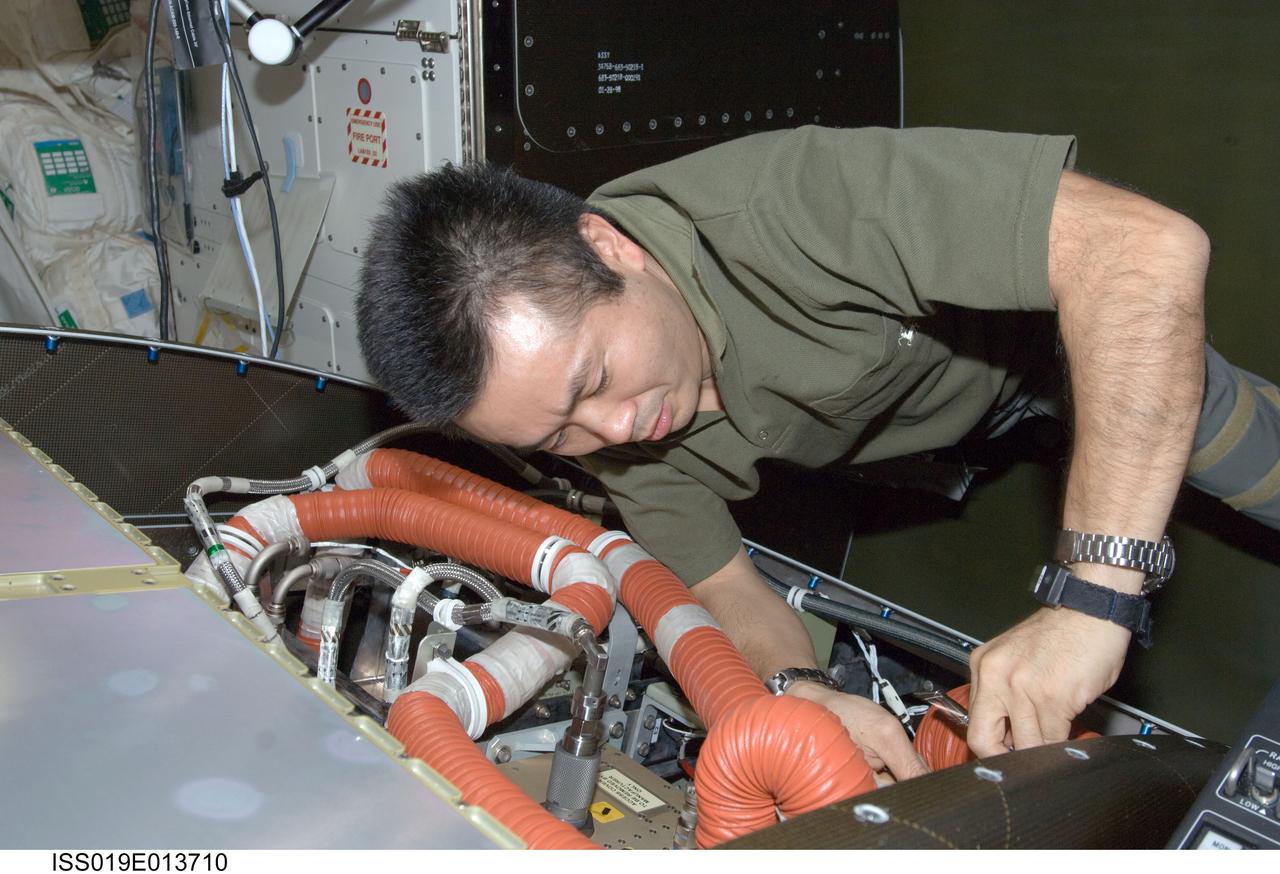
ISS019-E-013710 (5 May 2009) --- Japan Aerospace Exploration Agency (JAXA) astronaut Koichi Wakata, Expedition 19/20 flight engineer, cleans a fan filter on the Crew Health Care System Avionics Air Assembly (CHeCS AAA) in the Destiny laboratory of the International Space Station.
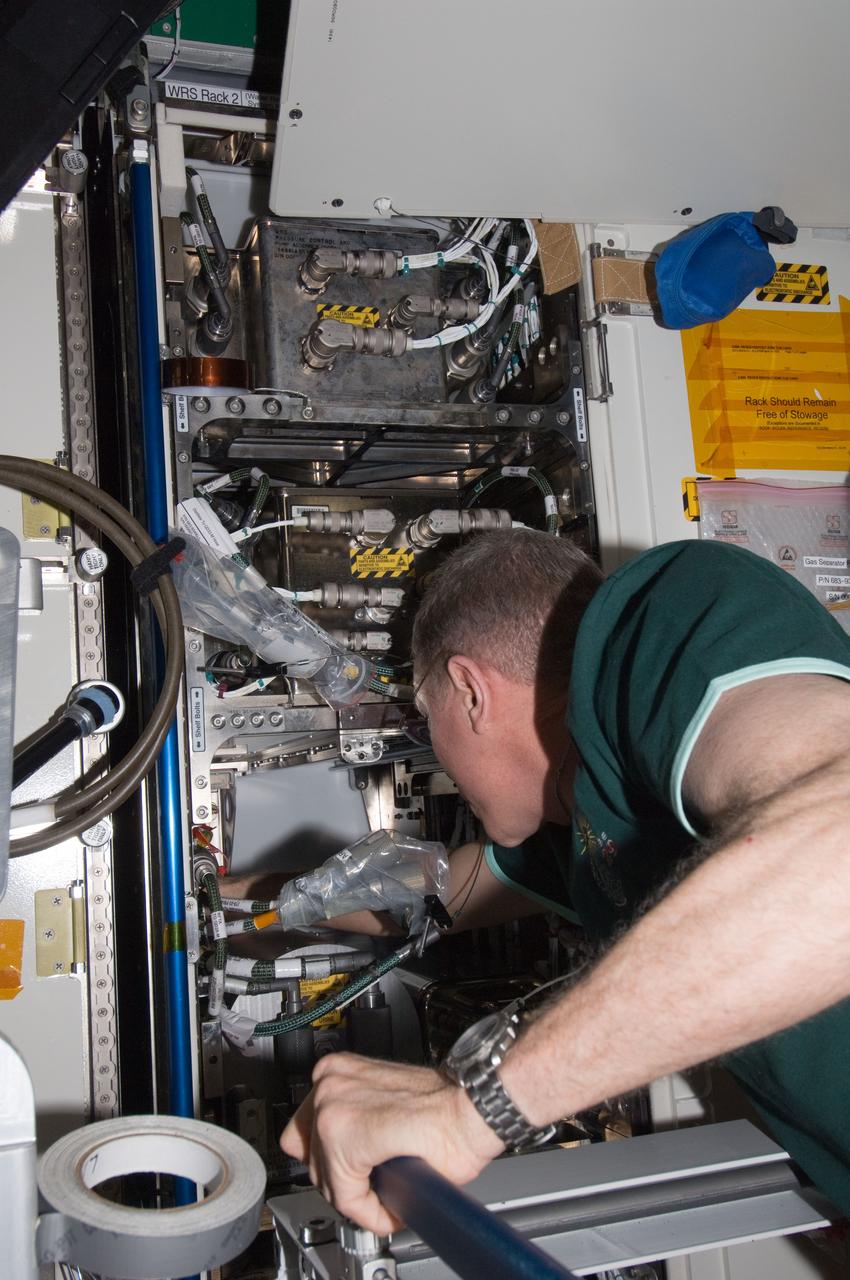
ISS029-E-021648 (10 Oct. 2011) --- NASA astronaut Mike Fossum, Expedition 29 commander, installs the Advanced Recycle Filter Tank Assembly (ARFTA) at the Urine Processor Assembly / Water Recovery System (UPA WRS) in the Destiny laboratory of the International Space Station.
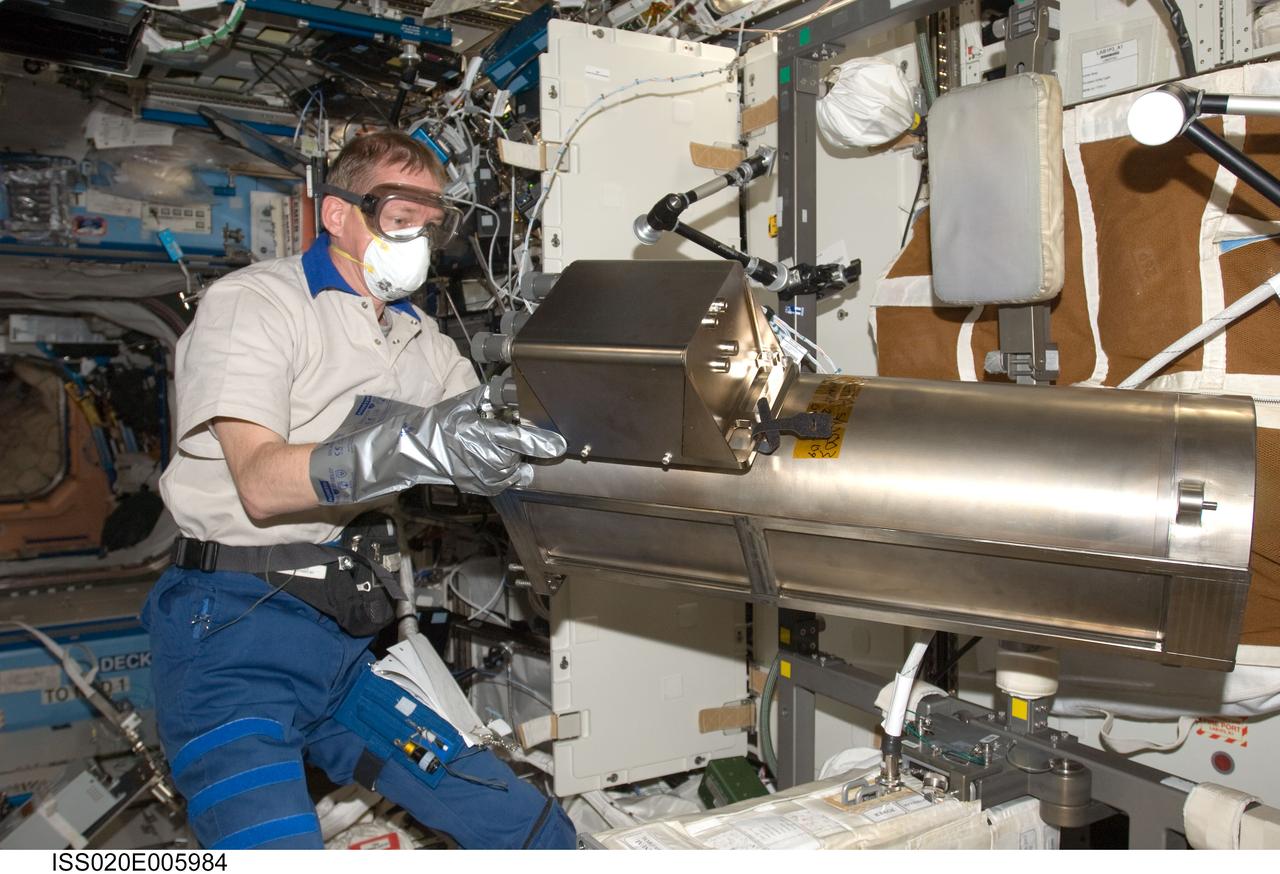
ISS020-E-005984 (2 June 2009) --- European Space Agency astronaut Frank De Winne, Expedition 20 flight engineer, works with the Water Recovery System Recycle Filter Tank Assembly (RFTA) in the Destiny laboratory of the International Space Station.
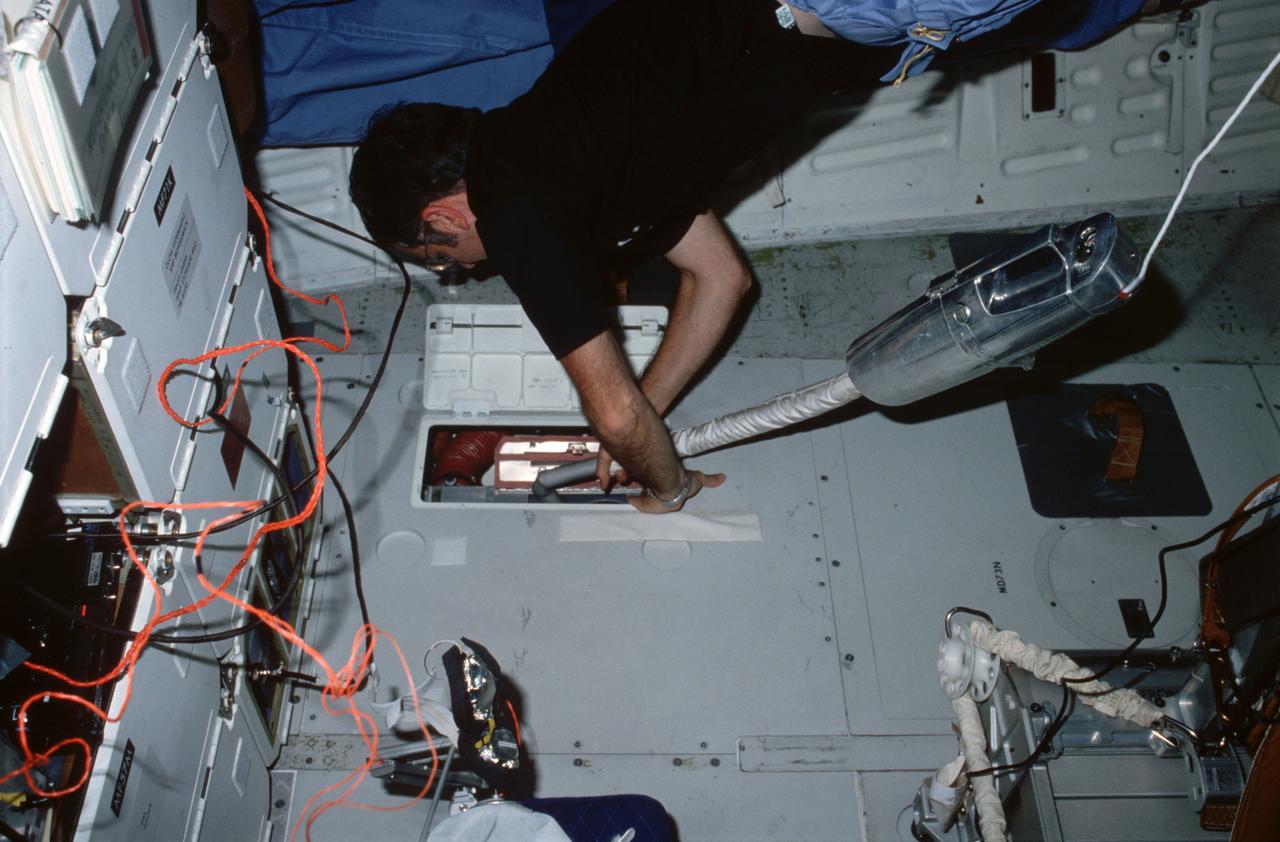
STS008-13-336 (5 Sept 1983) --- On middeck, Richard M. Truly, STS-8 commander, uses vacuum cleaner to remove debris from air revitalization system (ARS) filter assembly. Open panel on middeck floor is the ARS access panel.
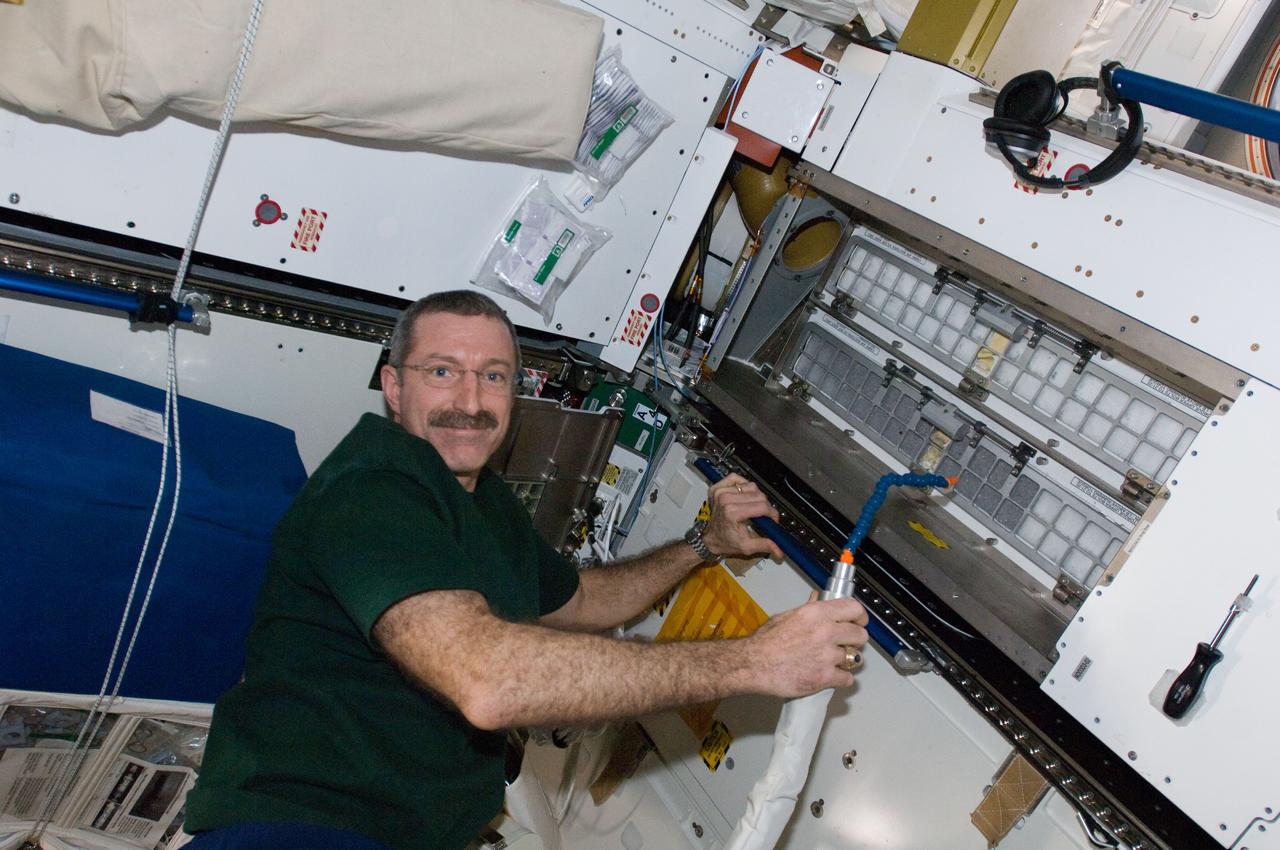
ISS030-E-060469 (4 Feb. 2012) --- NASA astronaut Dan Burbank, Expedition 30 commander, cleans cabin air bacteria filters in the Tranquility node of the International Space Station.
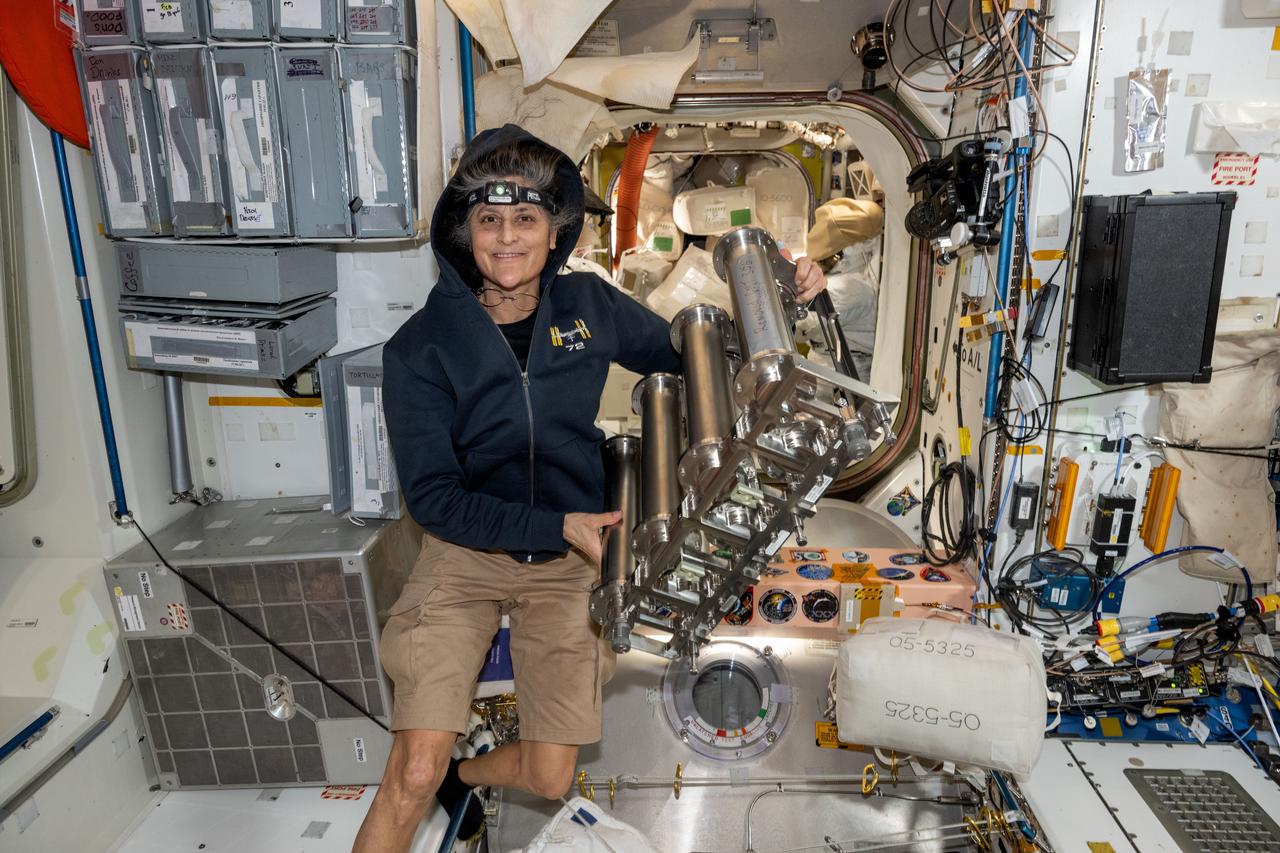
iss072e143163 (Nov. 1, 2024) --- NASA astronaut and Expedition 72 Commander Suni Williams replaces particulate filters on the water recovery system, a component of the Tranquility module's waste and hygiene compartment, the International Space Station's bathroom.
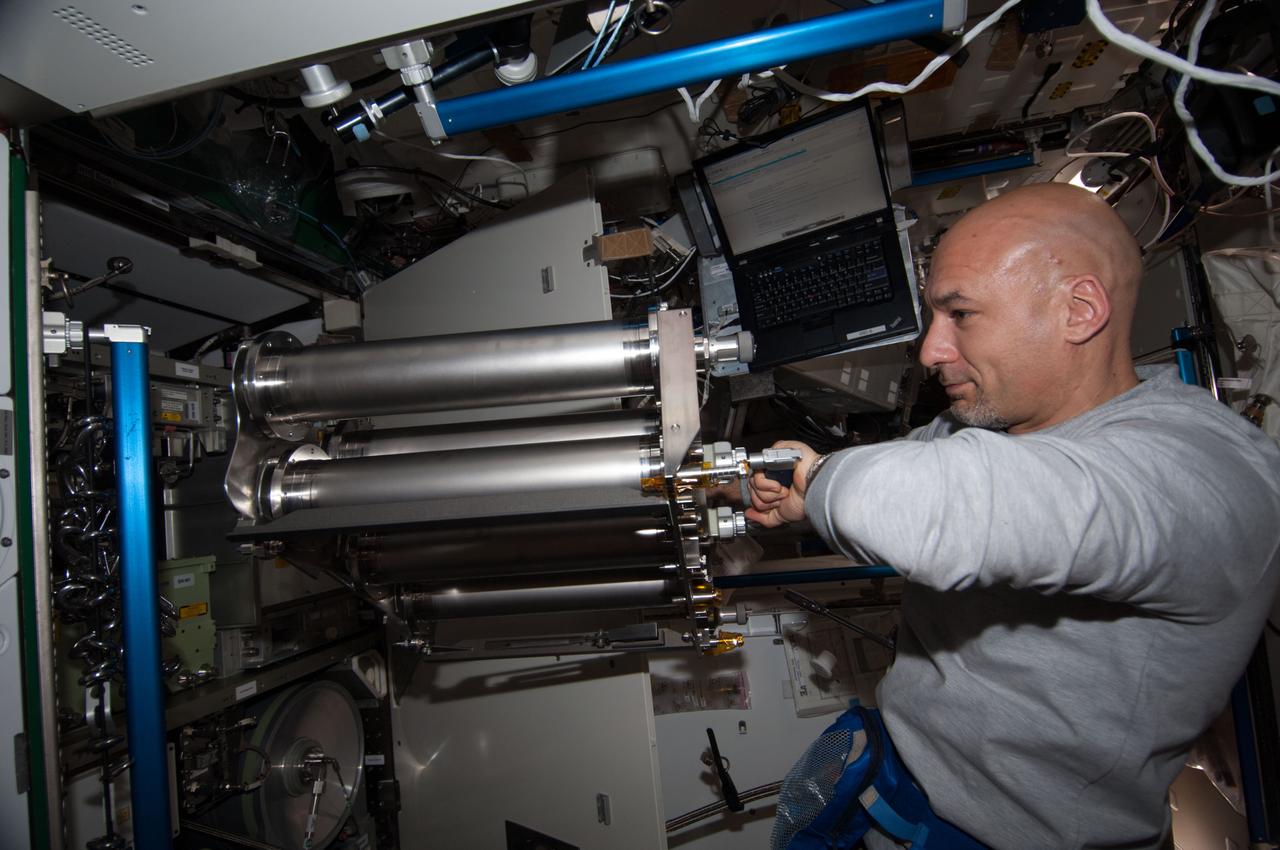
ISS036-E-018008 (12 July 2013) --- European Space Agency astronaut Luca Parmitano, Expedition 36 flight engineer, removes and replaces the particulate filter for the Water Pump Assembly 2 (WPA2) in Tranquility (also called Node 3) on the International Space Station.
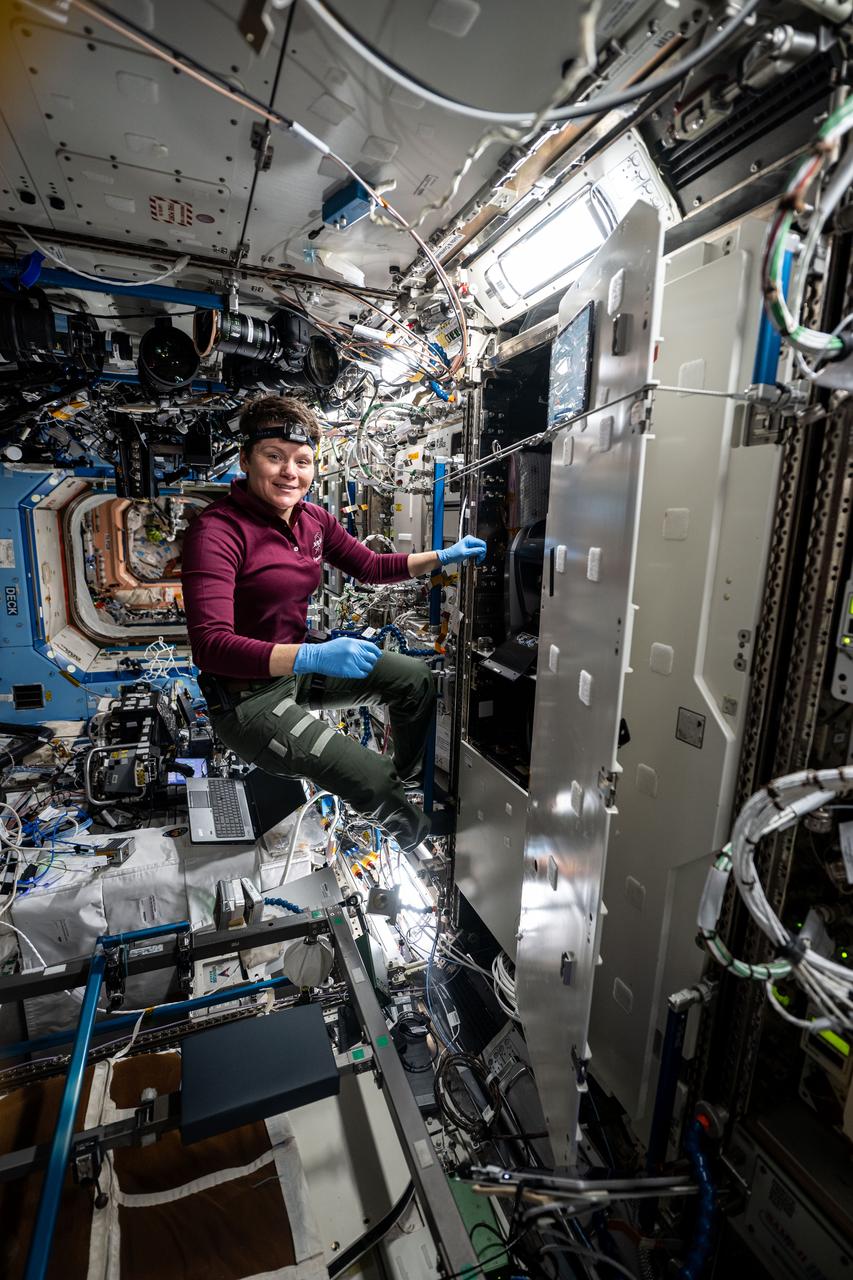
iss073e0118086 (May 29, 2025) --- NASA astronaut and Expedition 73 Flight Engineer Anne McClain works inside the Destiny laboratory module's Materials Science Research Rack and swaps filters inside the Kermit microscope. Kermit is an all-in-one fluorescence microscope system used to conduct biological, physical, and materials science research.
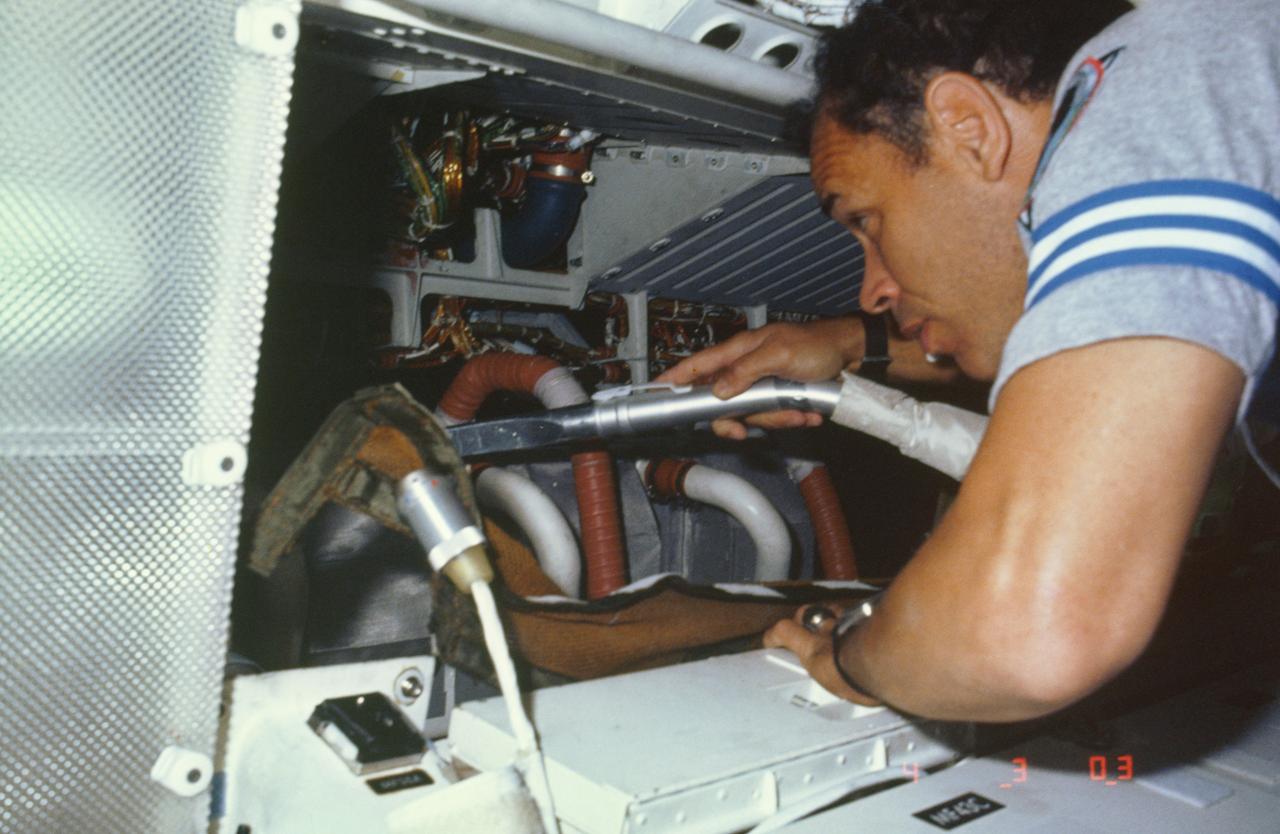
51B-13-008 (29 April-6 May 1985) --- Astronaut Frederick D. Gregory vacuums air filters in avionics bay. The 51-B pilot is physically located in the overhead area of the middeck on Challenger, but his activity is only a few meters away from the flight deck.
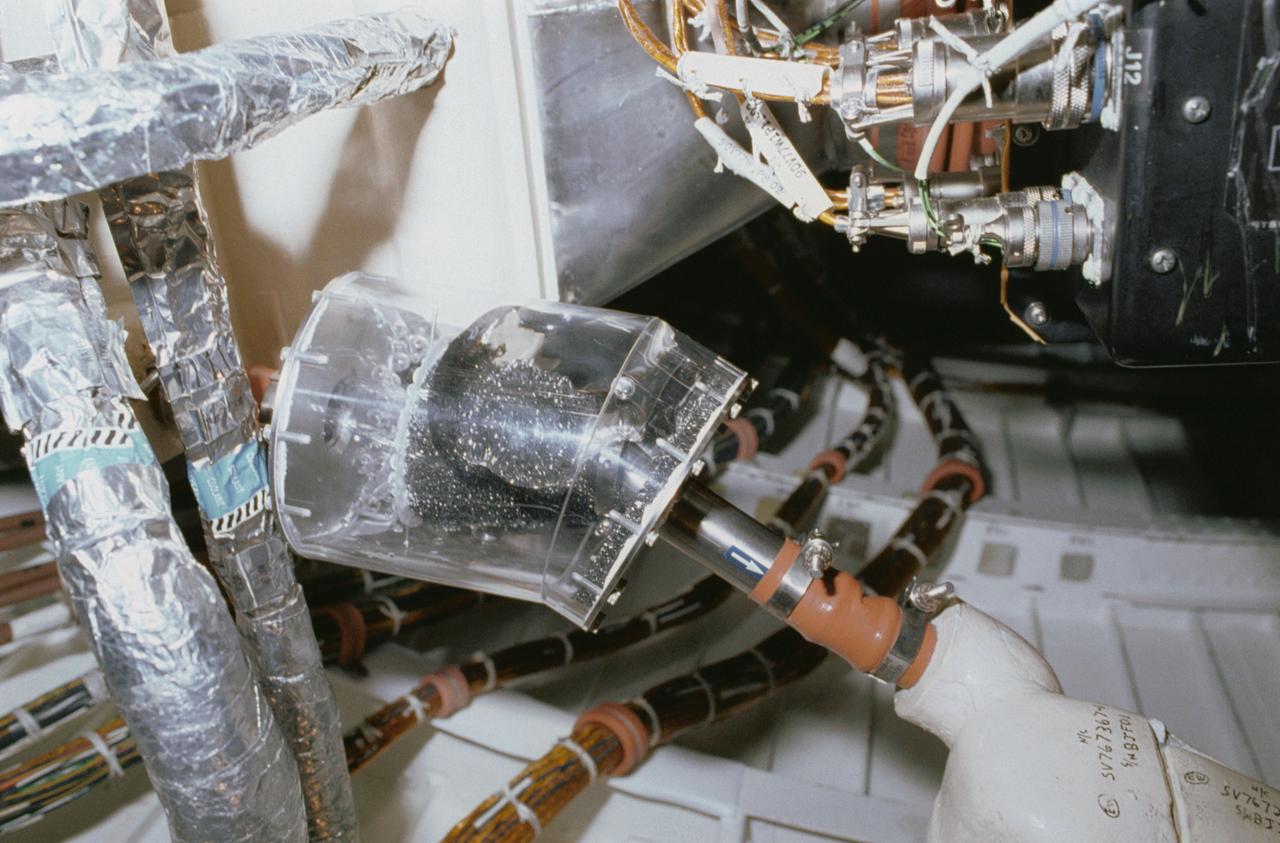
STS040-34-001 (5-14 June 1991) --- This 35mm scene shows a close-up of a prototype filter designed to remove contamination from air and water, before it flows into the Orbiter's humidity separators. This experiment is part of Development Test Objective (DTO) 647, Water Separator Filter Performance Evaluation. Astronauts Bryan D. O'Connor, mission commander, and Sidney M. Gutierrez, pilot, carried out the test and down linked television to the ground for engineering analysis.
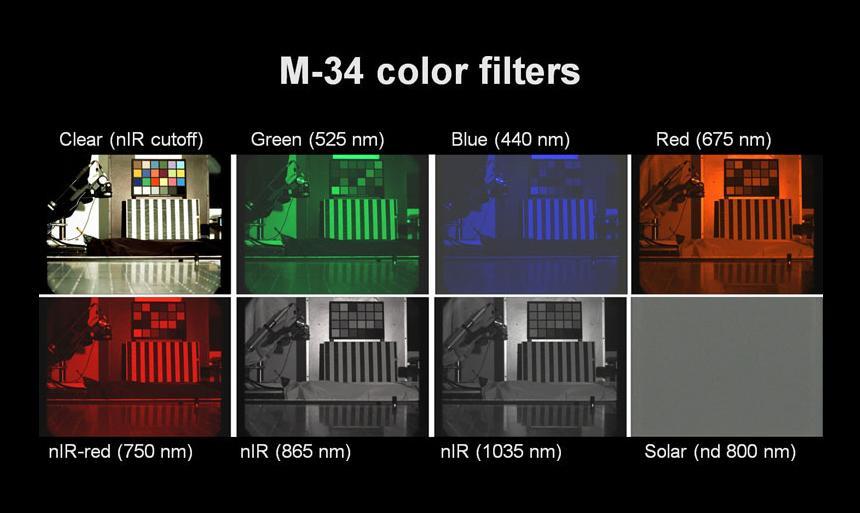
This figure shows images acquired through each of the eight filters in the filter wheel of the 34-millimeter-focal-length Mast Camera Mastcam-34 on NASA Mars rover Curiosity.
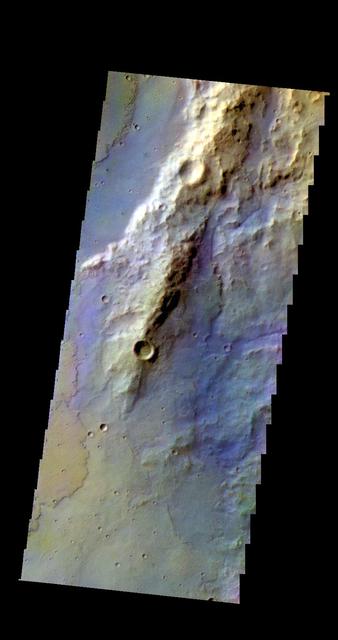
The THEMIS camera contains 5 filters. The data from different filters can be combined in multiple ways to create a false color image. This image from NASA 2001 Mars Odyssey spacecraft shows part of Terra Sirenum.
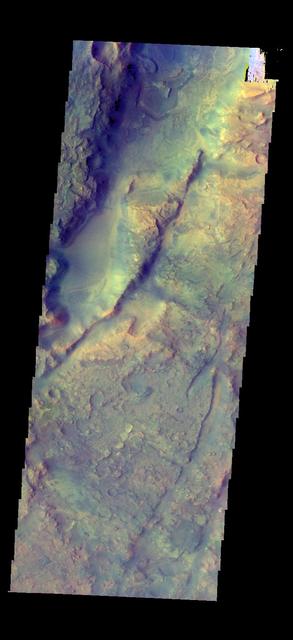
The THEMIS camera contains 5 filters. The data from different filters can be combined in multiple ways to create a false color image. This image from NASA 2001 Mars Odyssey spacecraft shows part of Nili Fossae.

The THEMIS camera contains 5 filters. The data from different filters can be combined in multiple ways to create a false color image. This image from NASA 2001 Mars Odyssey spacecraft shows part of Gale Crater.
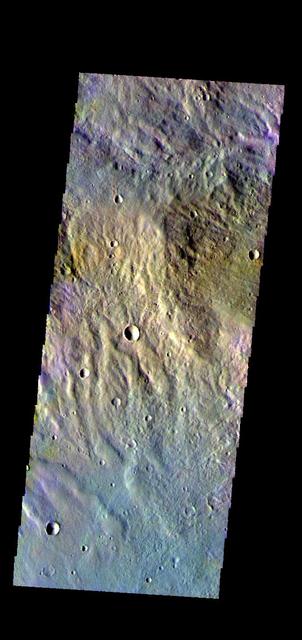
The THEMIS camera contains 5 filters. The data from different filters can be combined in multiple ways to create a false color image. This image from NASA 2001 Mars Odyssey spacecraft shows part of Eridania Planitia.
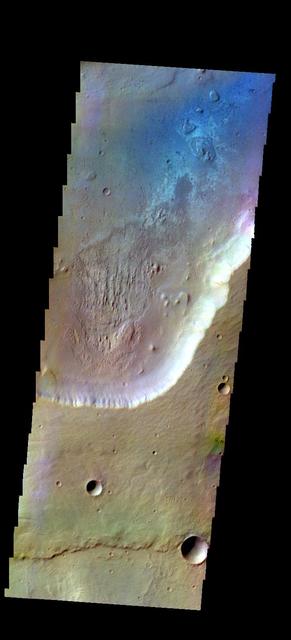
The THEMIS camera contains 5 filters. The data from different filters can be combined in multiple ways to create a false color image. This image from NASA 2001 Mars Odyssey spacecraft shows part of Peraea Cavus.
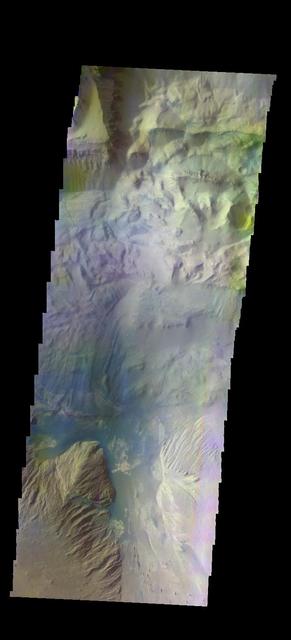
The THEMIS camera contains 5 filters. The data from different filters can be combined in multiple ways to create a false color image. This image from NASA 2001 Mars Odyssey spacecraft shows part of Ophir Chasma.
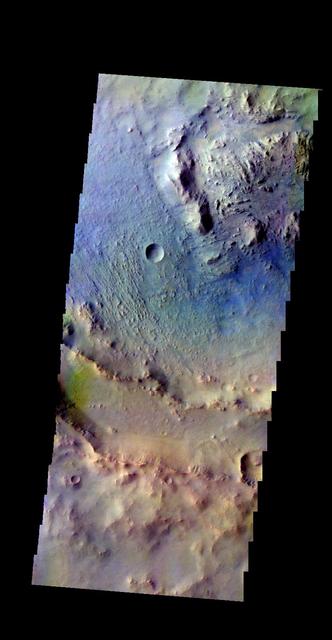
The THEMIS camera contains 5 filters. The data from different filters can be combined in multiple ways to create a false color image. This image from NASA 2001 Mars Odyssey spacecraft shows part of Martin Crater.
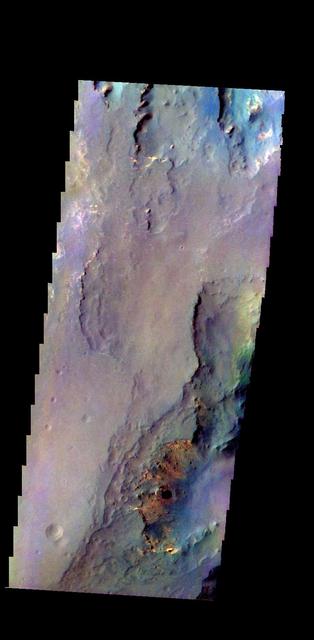
The THEMIS camera contains 5 filters. The data from different filters can be combined in multiple ways to create a false color image. This image from NASA 2001 Mars Odyssey spacecraft shows part of Capri Mensa.
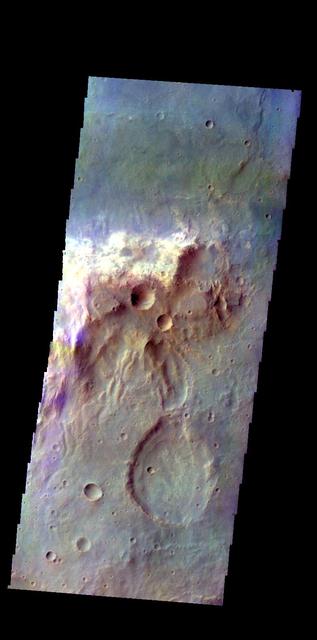
The THEMIS camera contains 5 filters. The data from different filters can be combined in multiple ways to create a false color image. This image from NASA 2001 Mars Odyssey spacecraft shows a hill in Tyrrhena Terra.
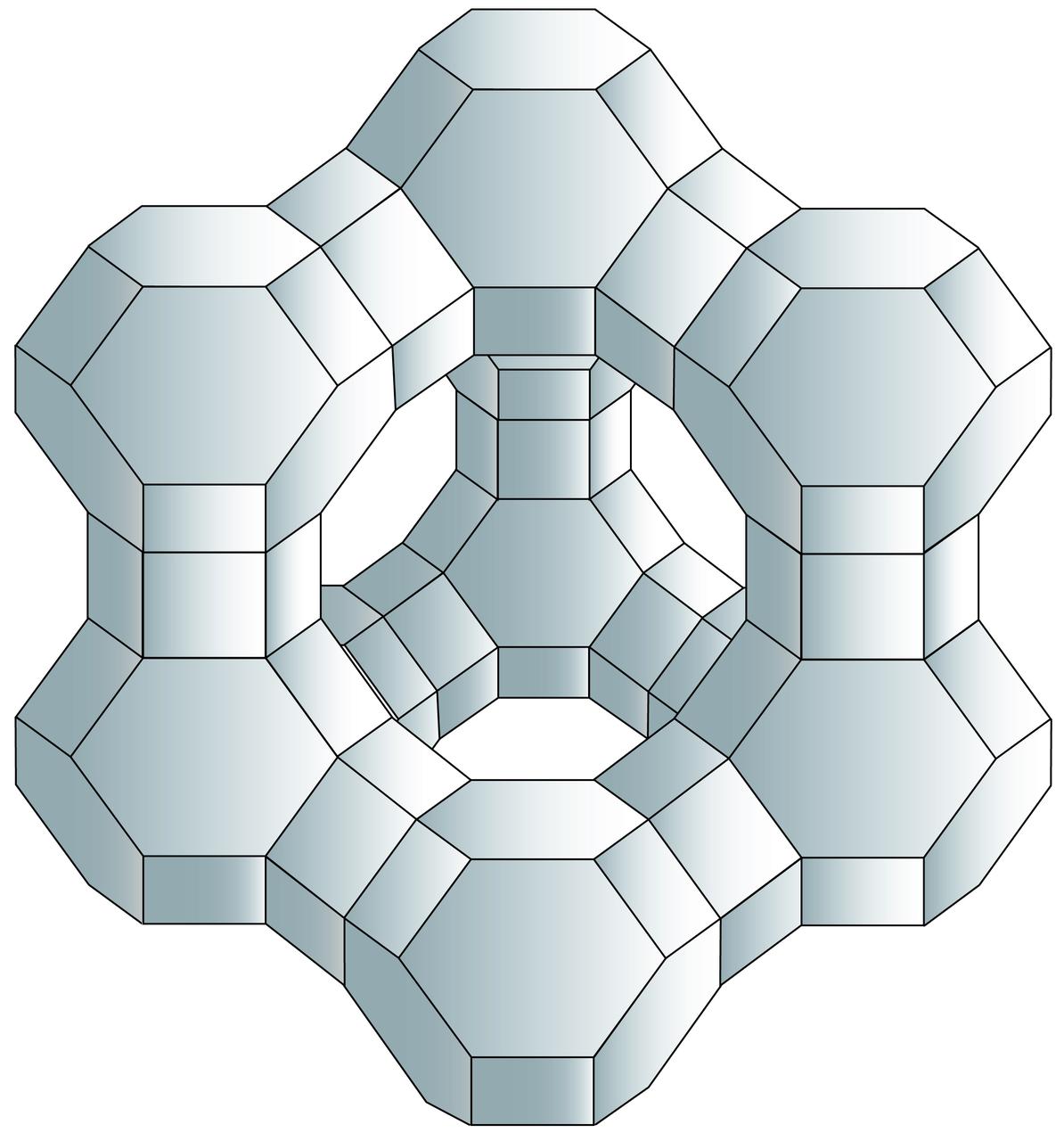
The Center for Advanced Microgravity Materials Processing (CAMMP) in Cambridge, MA, a NASA-sponsored Commercial Space Center, is working to improve zeolite materials for storing hydrogen fuel. CAMMP is also applying zeolites to detergents, optical cables, gas and vapor detection for environmental monitoring and control, and chemical production techniques that significantly reduce by-products that are hazardous to the environment. Depicted here is one of the many here complex geometric shapes which make them highly absorbent. Zeolite experiments have also been conducted aboard the International Space Station
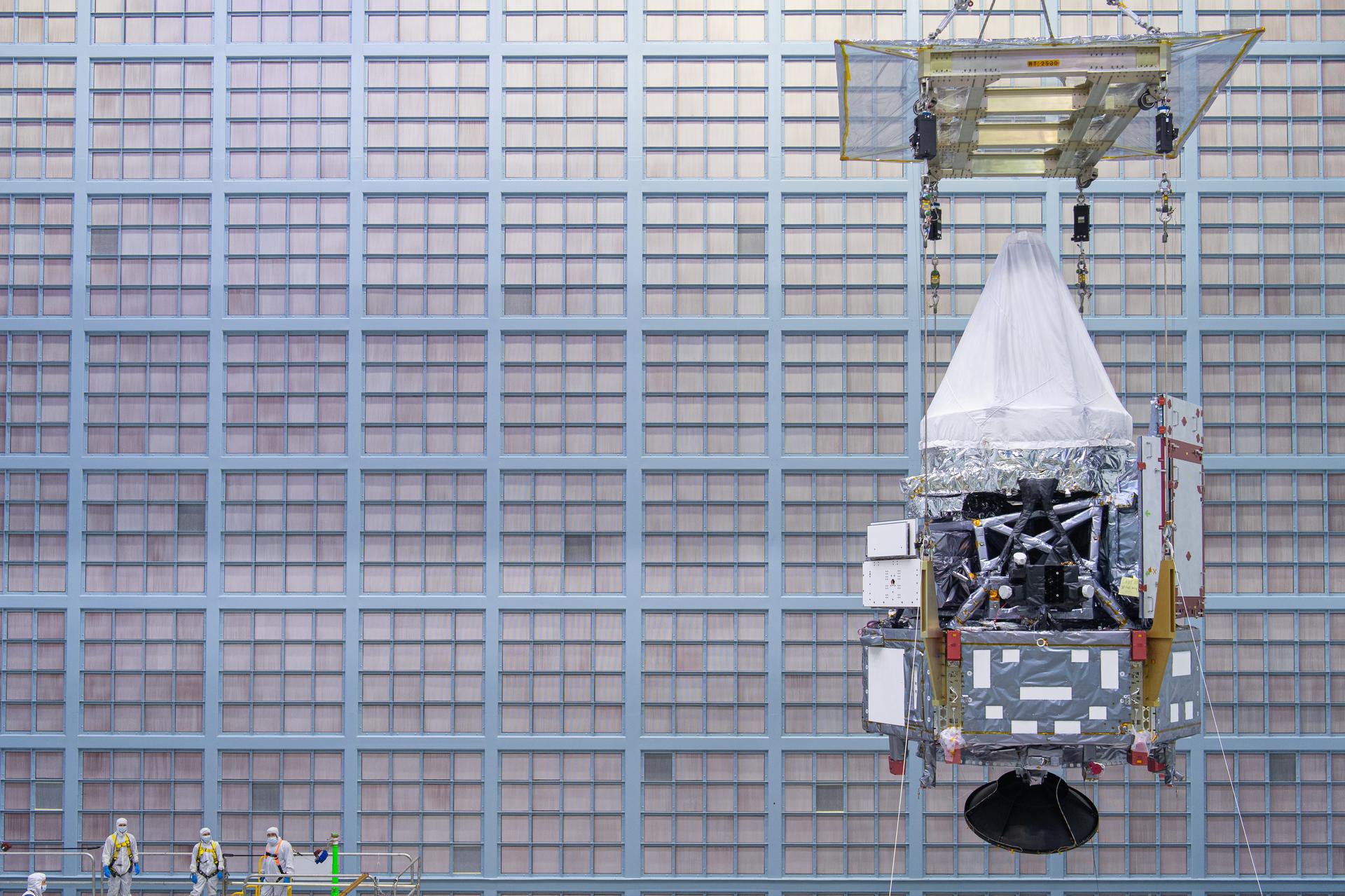
The Roman Space Telescope's Spacecraft Bus and Integrated Payload Assembly is crane lifted inside the cleanroom at Goddard Space Flight Center, Greenbelt Md., June 12, 2025. This photo has been approved for public release. NASA/Mike Guinto
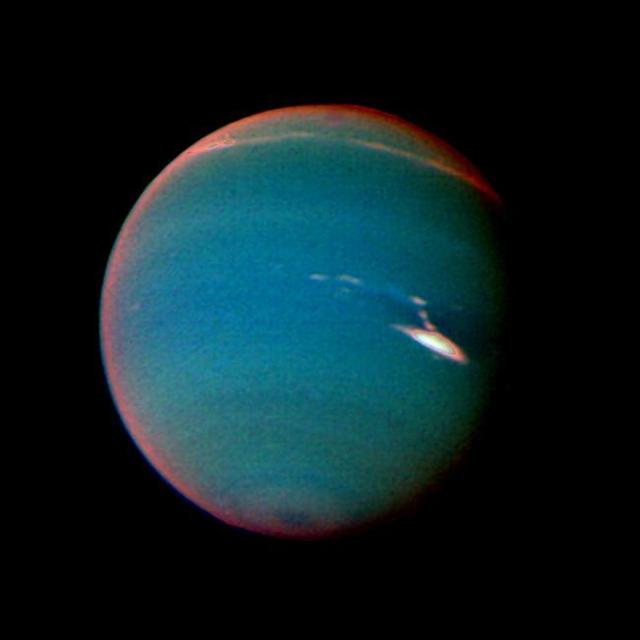
In this false color image of Neptune, objects that are deep in the atmosphere are blue, while those at higher altitudes are white. The image was taken by Voyager 2 wide-angle camera through an orange filter and two different methane filters. http://photojournal.jpl.nasa.gov/catalog/PIA00051
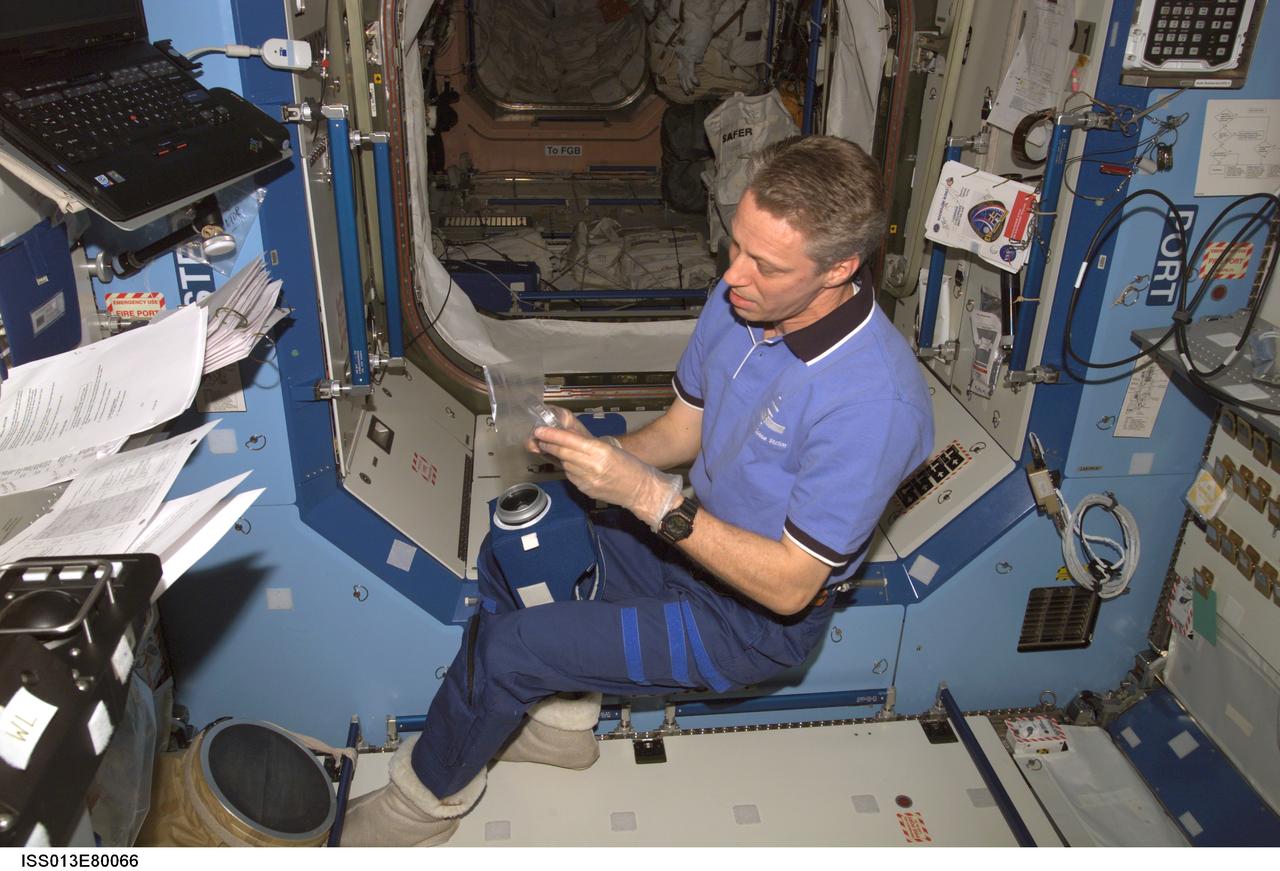
ISS013-E-80066 (10 Sept. 2006) --- European Space Agency (ESA) astronaut Thomas Reiter, Expedition 13 flight engineer, works with the surface, water and air biocharacterization (SWAB) air sampling device (ASD) filter kit in the Destiny laboratory of the International Space Station.
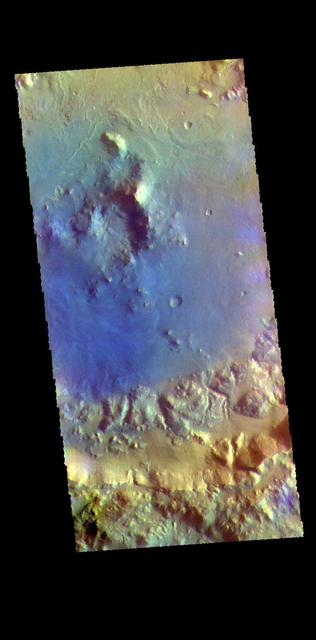
The THEMIS VIS camera contains 5 filters. The data from different filters can be combined in multiple ways to create a false color image. These false color images may reveal subtle variations of the surface not easily identified in a single band image. Today's false color image shows a crater in Arabia Terra. Dark blue in this filter combination indicates basaltic sand. Orbit Number: 69458 Latitude: 35.4862 Longitude: 0.619413 Instrument: VIS Captured: 2017-08-11 05:43 https://photojournal.jpl.nasa.gov/catalog/PIA24451
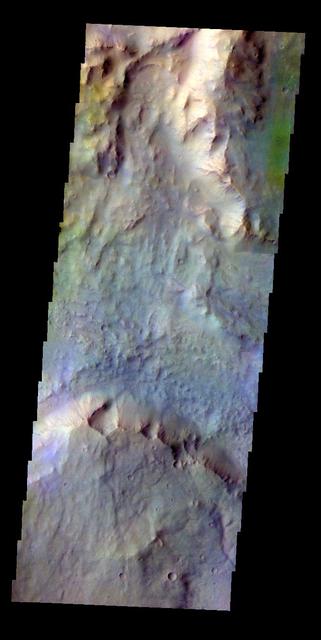
The THEMIS VIS camera contains 5 filters. The data from different filters can be combined in multiple ways to create a false color image. This false color image from NASA 2001 Mars Odyssey spacecraft shows part of Daga Vallis on Eos Mensa.
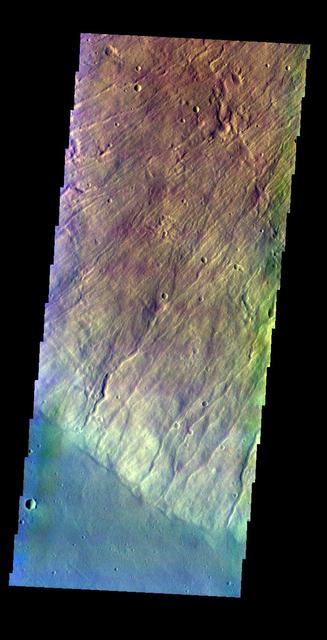
The THEMIS VIS camera contains 5 filters. The data from different filters can be combined in multiple ways to create a false color image. This false color image from NASA 2001 Mars Odyssey spacecraft shows part of the flank of Hecates Tholus.
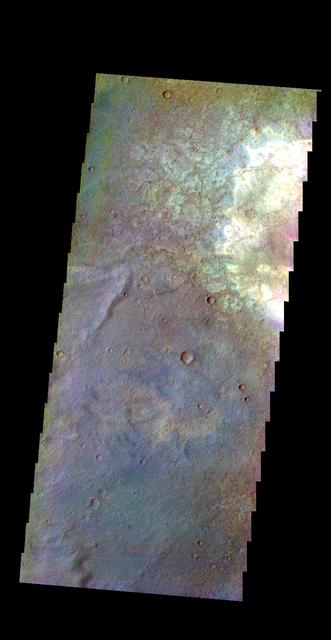
The THEMIS camera contains 5 filters. The data from different filters can be combined in multiple ways to create a false color image. This image captured by NASA 2001 Mars Odyssey spacecraft shows part of the plains of Terra Sabaea.
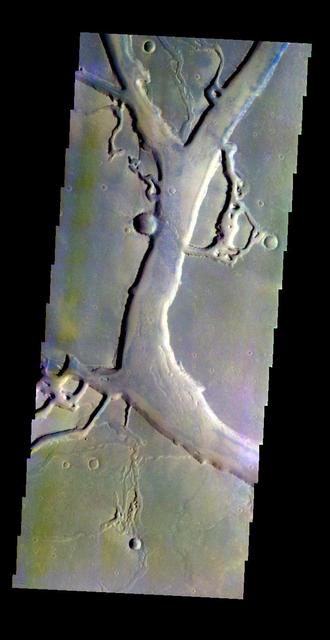
The THEMIS VIS camera contains 5 filters. The data from different filters can be combined in multiple ways to create a false color image. This false color image from NASA 2001 Mars Odyssey spacecraft shows part of Granicus Valles.
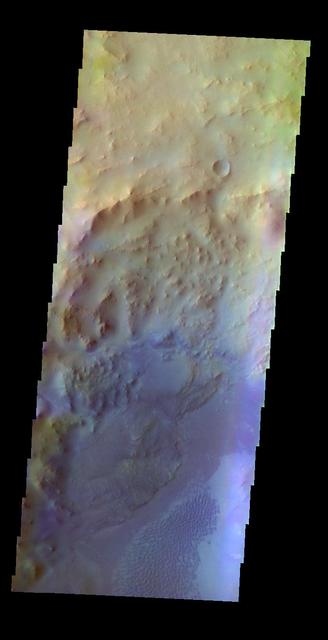
The THEMIS VIS camera contains 5 filters. The data from different filters can be combined in multiple ways to create a false color image. This false color image from NASA 2001 Mars Odyssey spacecraft shows part of Hargraves Crater.
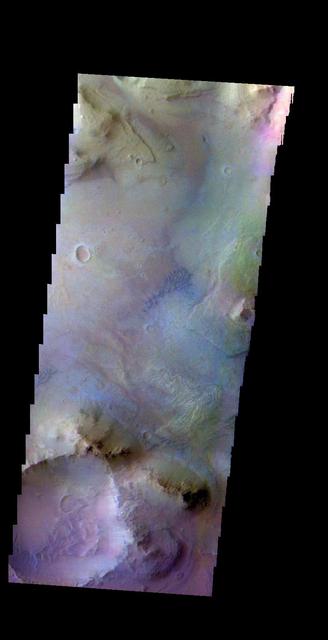
The THEMIS camera contains 5 filters. The data from different filters can be combined in multiple ways to create a false color image. This image from NASA 2001 Mars Odyssey spacecraft shows part of the floor of Coprates Chasma.
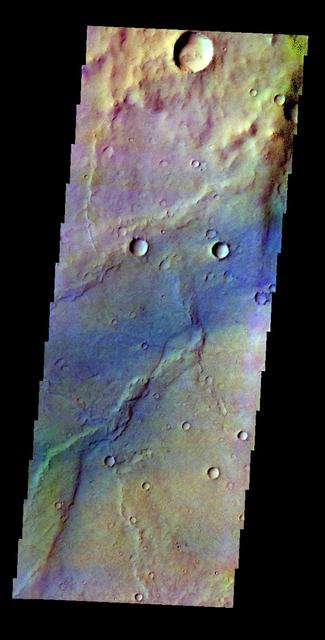
The THEMIS VIS camera contains 5 filters. The data from different filters can be combined in multiple ways to create a false color image. This false color image from NASA 2001 Mars Odyssey spacecraft shows a region in Syrtis Major.
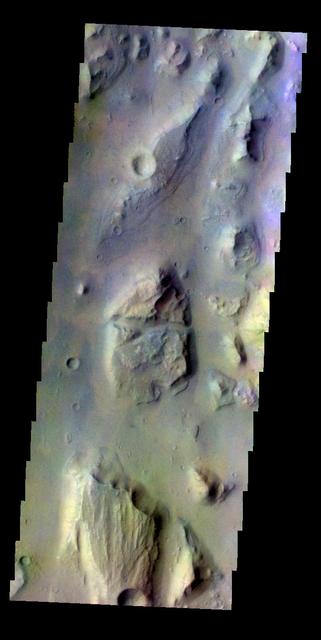
The THEMIS VIS camera contains 5 filters. The data from different filters can be combined in multiple ways to create a false color image. This false color image from NASA 2001 Mars Odyssey spacecraft shows part of of Eos Chasma.
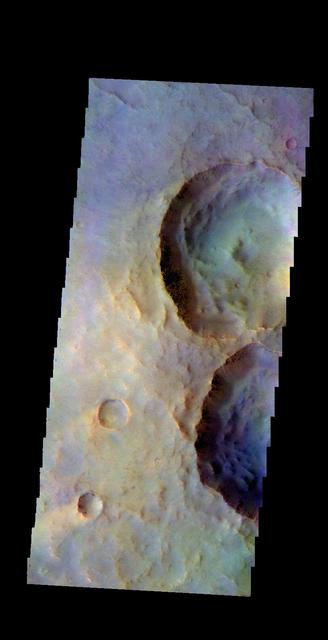
The THEMIS camera contains 5 filters. The data from different filters can be combined in multiple ways to create a false color image. This image captured by NASA 2001 Mars Odyssey spacecraft shows a group of unnamed craters north of Fournier Crater.
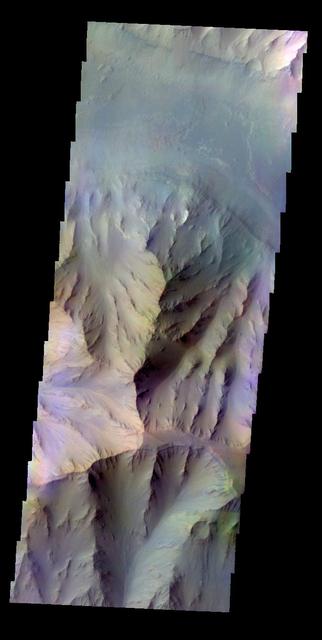
The THEMIS VIS camera contains 5 filters. The data from different filters can be combined in multiple ways to create a false color image. This false color image captured by NASA 2001 Mars Odyssey spacecraft shows part of Coprates Chasma.
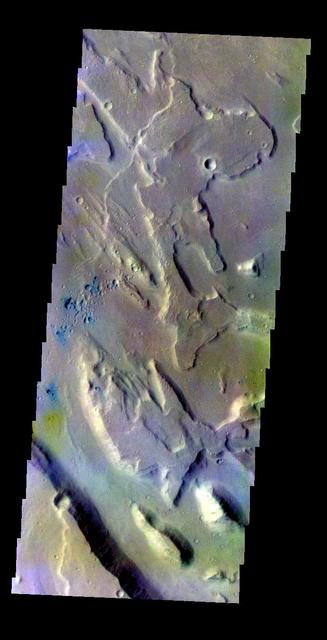
The THEMIS VIS camera contains 5 filters. The data from different filters can be combined in multiple ways to create a false color image. This false color image from NASA 2001 Mars Odyssey spacecraft shows part of of Ares Vallis.
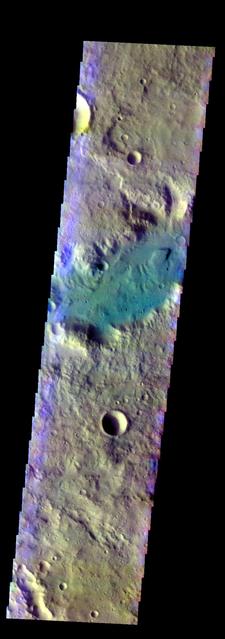
The THEMIS VIS camera contains 5 filters. The data from different filters can be combined in multiple ways to create a false color image. This false color image from NASA 2001 Mars Odyssey spacecraft shows part of an unnamed channel in Terra Cimmeria.
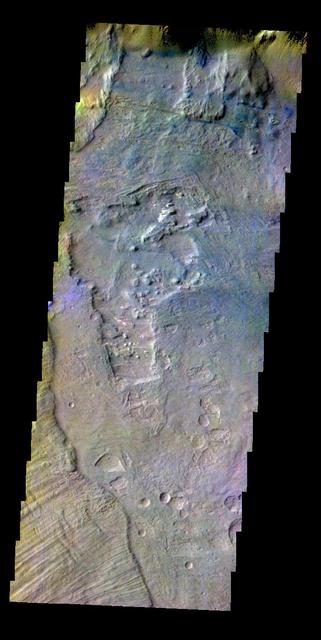
The THEMIS VIS camera contains 5 filters. The data from different filters can be combined in multiple ways to create a false color image. This false color image from NASA 2001 Mars Odyssey spacecraft shows part of Coprates Chasma.
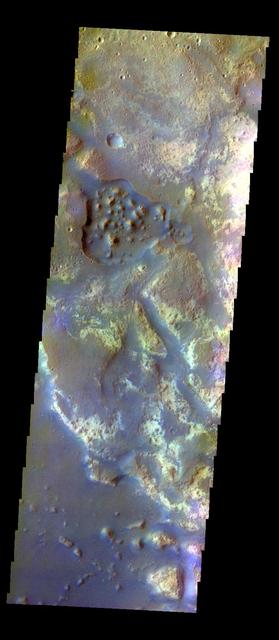
The THEMIS VIS camera contains 5 filters. The data from different filters can be combined in multiple ways to create a false color image. This image from NASA 2001 Mars Odyssey spacecraft shows where Mawrth Vallis empties into Chryse Planitia.
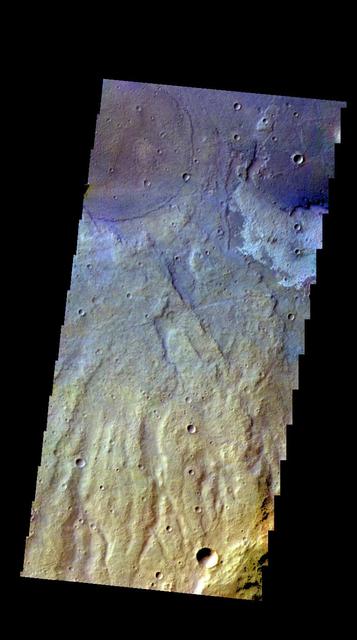
The THEMIS camera contains 5 filters. The data from different filters can be combined in multiple ways to create a false color image. This image from NASA 2001 Mars Odyssey spacecraft shows part of the plains of Terra Sirenum.

The THEMIS camera contains 5 filters. The data from different filters can be combined in multiple ways to create a false color image. This image from NASA 2001 Mars Odyssey spacecraft shows part of the plains of Terra Sirenum.
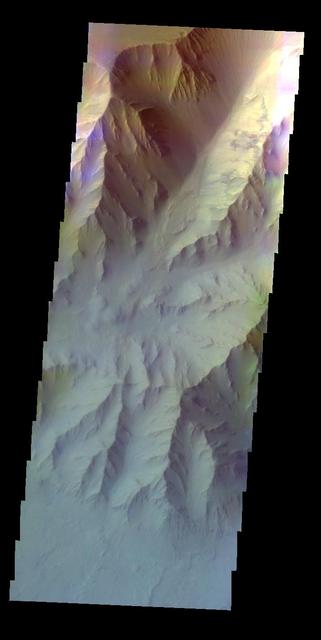
The THEMIS VIS camera contains 5 filters. The data from different filters can be combined in multiple ways to create a false color image. This false color image captured by NASA 2001 Mars Odyssey spacecraft shows part of Coprates Chasma.
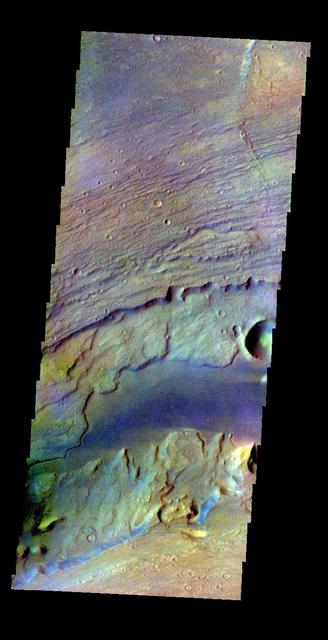
The THEMIS VIS camera contains 5 filters. The data from different filters can be combined in multiple ways to create a false color image. This false color image from NASA 2001 Mars Odyssey spacecraft shows a portion of Kasei Vallis.
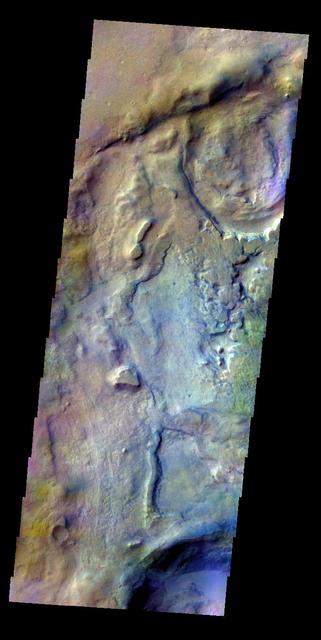
The THEMIS VIS camera contains 5 filters. The data from different filters can be combined in multiple ways to create a false color image. This false color image from NASA 2001 Mars Odyssey spacecraft shows part of the floor of Proctor Crater.
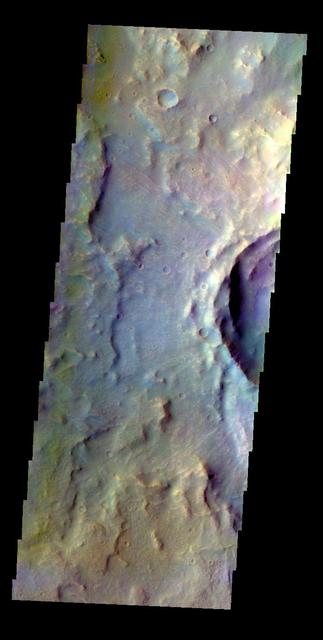
The THEMIS VIS camera contains 5 filters. The data from different filters can be combined in multiple ways to create a false color image. This false color image from NASA 2001 Mars Odyssey spacecraft shows part of an unnamed crater in Tyrrhena Terra.
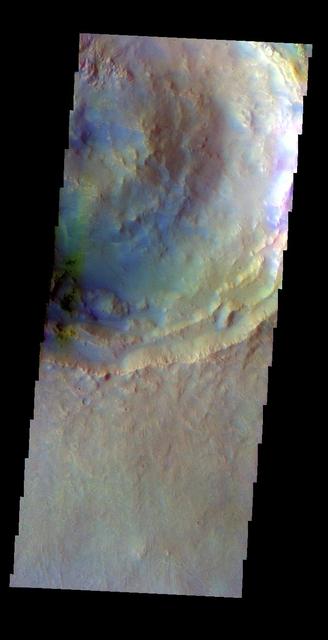
The THEMIS VIS camera contains 5 filters. The data from different filters can be combined in multiple ways to create a false color image. This false color image from NASA 2001 Mars Odyssey spacecraft shows part of Calahorra Crater in Chryse Planitia.
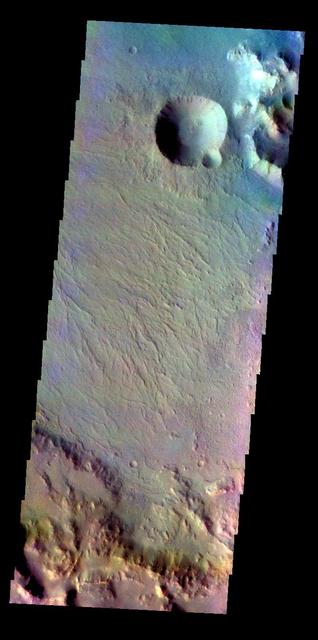
The THEMIS VIS camera contains 5 filters. The data from different filters can be combined in multiple ways to create a false color image. This false color image from NASA 2001 Mars Odyssey spacecraft shows part of the rim and floor of Saheki Crater.
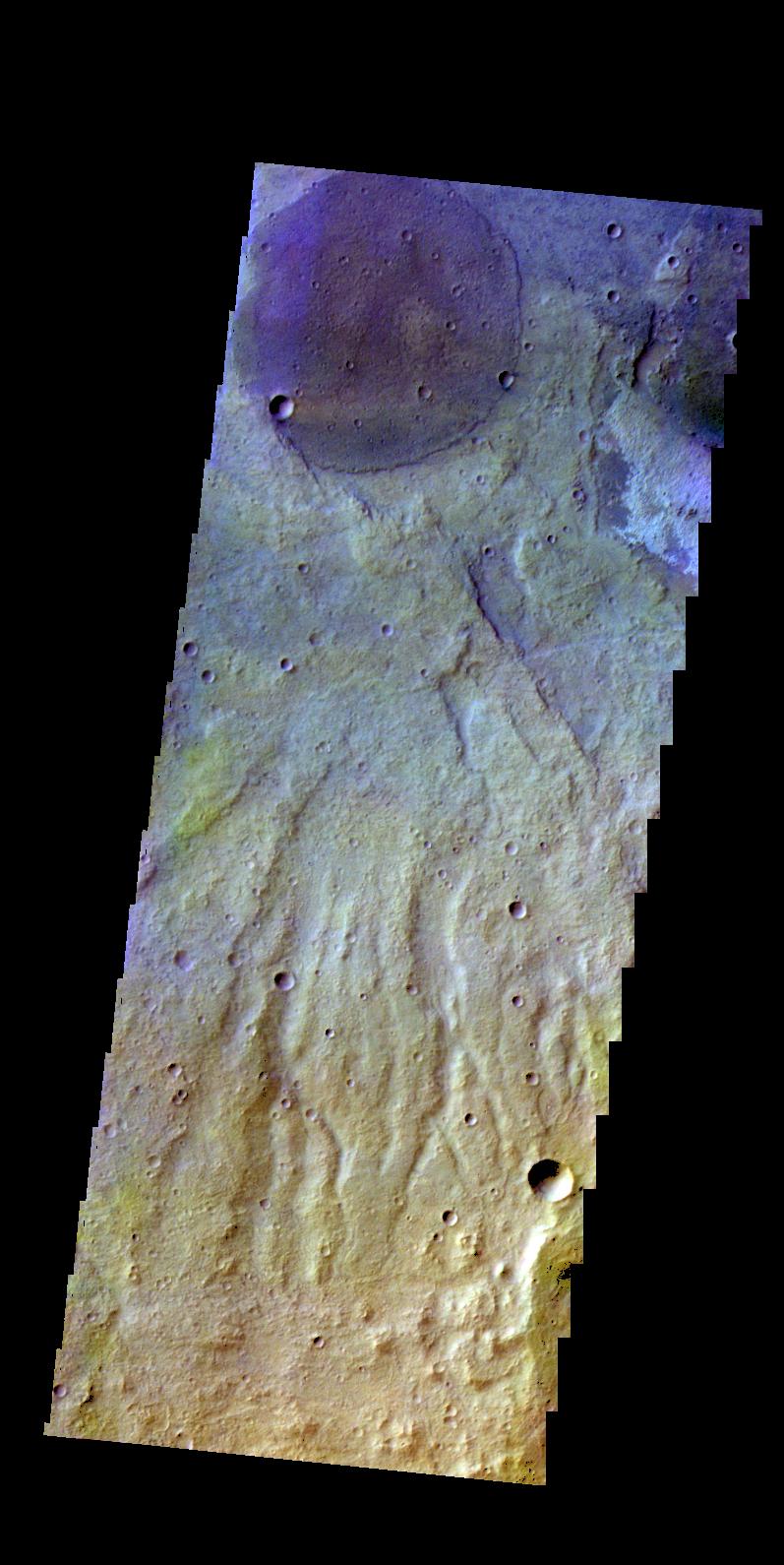
The THEMIS camera contains 5 filters. The data from different filters can be combined in multiple ways to create a false color image. This image from NASA 2001 Mars Odyssey spacecraft shows part of the plains of Terra Sirenum.
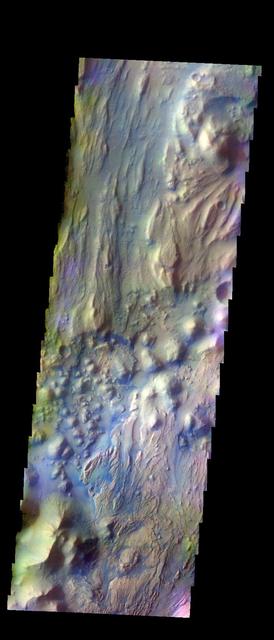
The THEMIS VIS camera contains 5 filters. The data from different filters can be combined in multiple ways to create a false color image. This image from NASA 2001 Mars Odyssey spacecraft shows the beginning of Ares Vallis at the edge of Iani Chaos.
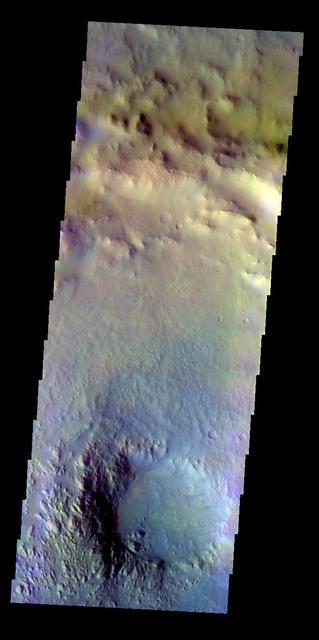
The THEMIS VIS camera contains 5 filters. Data from different filters can be combined in multiple ways to create a false color image. This image from NASA 2001 Mars Odyssey spacecraft shows the central pit of an unnamed crater south of Coprates Catena.
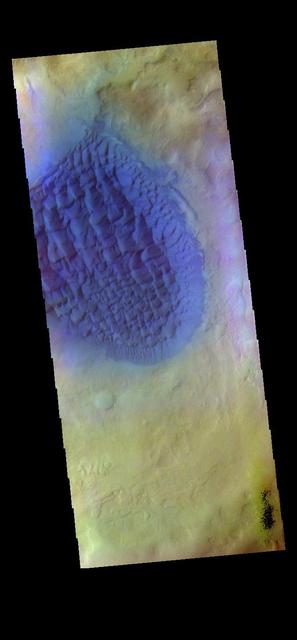
The THEMIS camera contains 5 filters. Data from different filters can be combined in many ways to create a false color image. This image from NASA 2001 Mars Odyssey spacecraft shows the sand sheet with surface dune forms on the floor of Matara Crater.
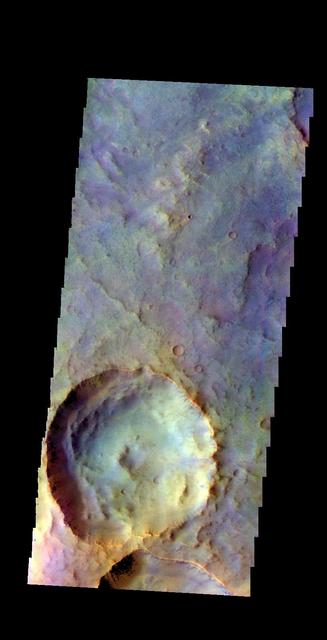
The THEMIS camera contains 5 filters. The data from different filters can be combined in multiple ways to create a false color image. This image from NASA 2001 Mars Odyssey spacecraft shows an unnamed crater in Terra Sabaea.
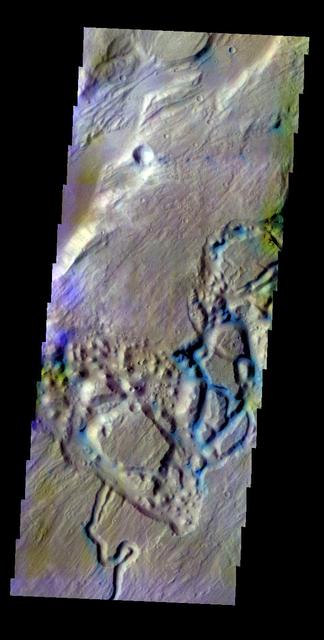
The THEMIS VIS camera contains 5 filters. The data from different filters can be combined to create a false color image. This false color image from NASA 2001 Mars Odyssey spacecraft shows part of a tributary channel that empties into Ares Vallis.
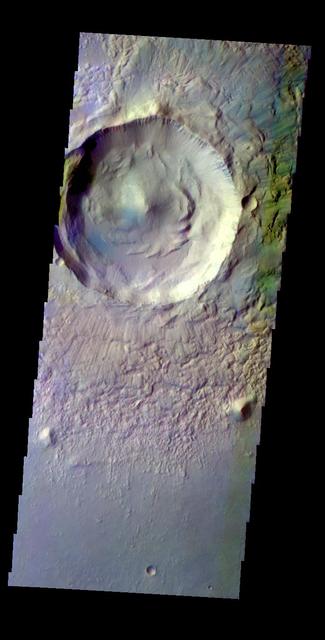
The THEMIS VIS camera contains 5 filters. The data from different filters can be combined in multiple ways to create a false color image. This false color image from NASA 2001 Mars Odyssey spacecraft shows an unnamed crater in Utopia Planitia.
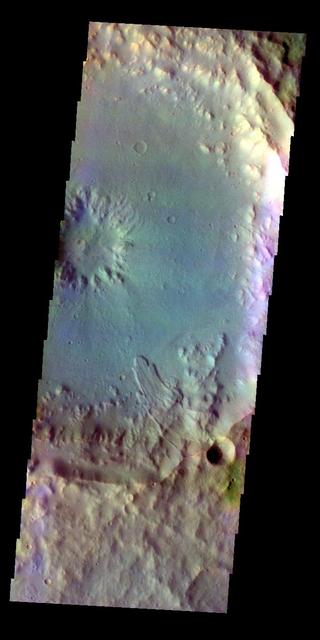
The THEMIS VIS camera contains 5 filters. The data from different filters can be combined in multiple ways to create a false color image. This false color image from NASA 2001 Mars Odyssey spacecraft shows part of an unnamed crater in Terra Cimmeria.
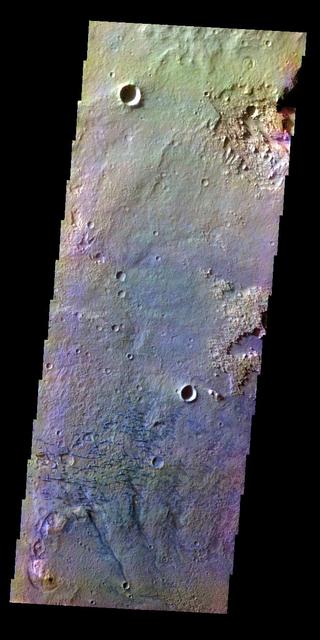
The THEMIS VIS camera contains 5 filters. The data from different filters can create a false color image. This false color image from NASA 2001 Mars Odyssey spacecraft shows part of the floor of Schaeberle Crater, including small dunes.

The THEMIS VIS camera contains 5 filters. The data from different filters can be combined in multiple ways to create a false color image. This false color image from NASA 2001 Mars Odyssey spacecraft shows part of Sulci Gordii east of Olympus Mons.
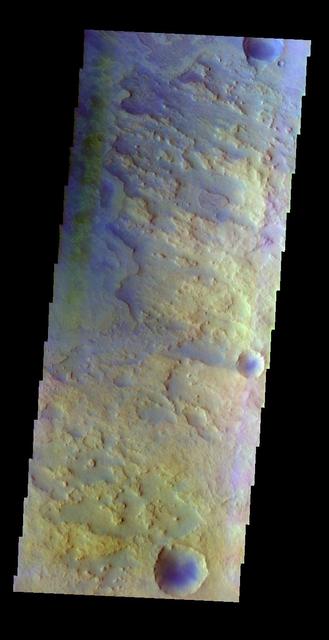
The THEMIS VIS camera contains 5 filters. The data from different filters can be combined in multiple ways to create a false color image. This false color image from NASA 2001 Mars Odyssey spacecraft shows part of the floor of Antoniadi Crater.
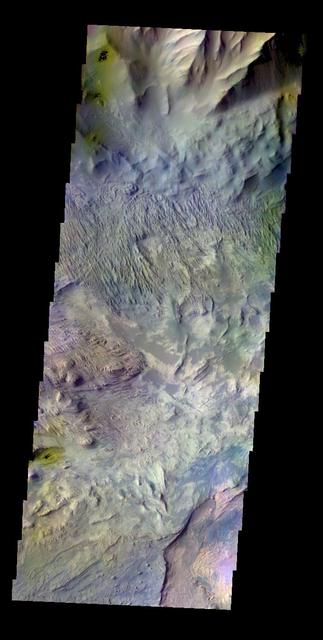
The THEMIS VIS camera contains 5 filters. The data from different filters can be combined in multiple ways to create a false color image. This false color image from NASA 2001 Mars Odyssey spacecraft shows part of Candor Labes.
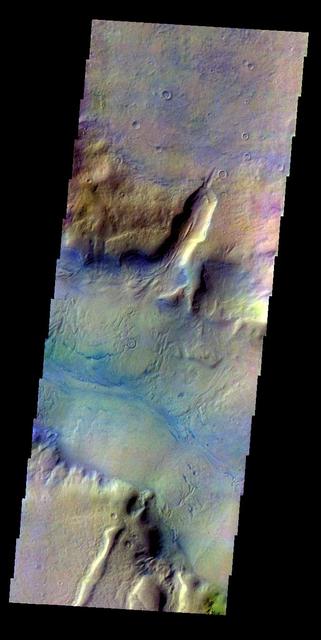
The THEMIS VIS camera contains 5 filters. The data from different filters can be combined in multiple ways to create a false color image. This false color image from NASA 2001 Mars Odyssey spacecraft shows part of Reull Vallis.
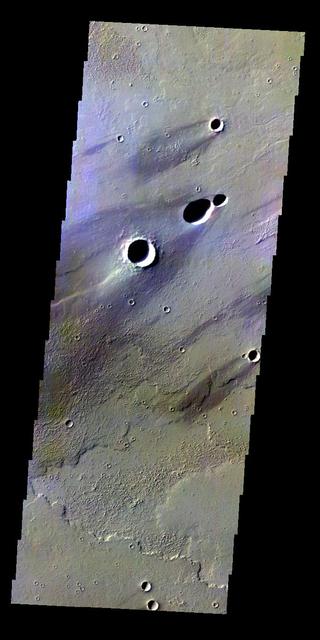
The THEMIS VIS camera contains 5 filters. The data from different filters can be combined in multiple ways to create a false color image. This false color image from NASA 2001 Mars Odyssey spacecraft shows windstreaks in Daedalia Planum.
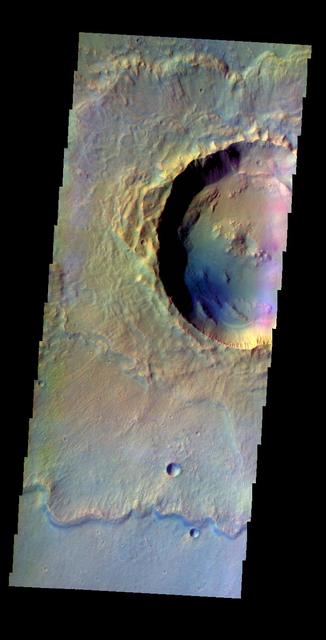
The THEMIS VIS camera contains 5 filters. The data from different filters can be combined in multiple ways to create a false color image. This false color image from NASA 2001 Mars Odyssey spacecraft shows Makhambet Crater.
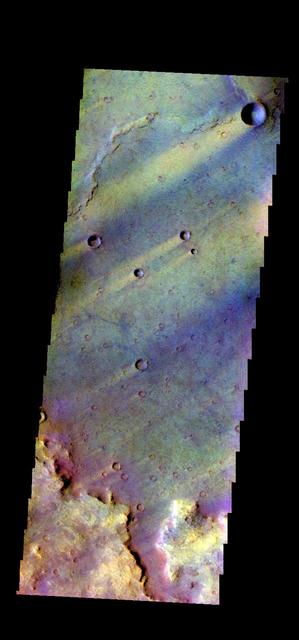
The THEMIS camera contains 5 filters. The data from different filters can be combined in multiple ways to create a false color image. This image from NASA 2001 Mars Odyssey spacecraft shows part of Syrtis Major Planum.
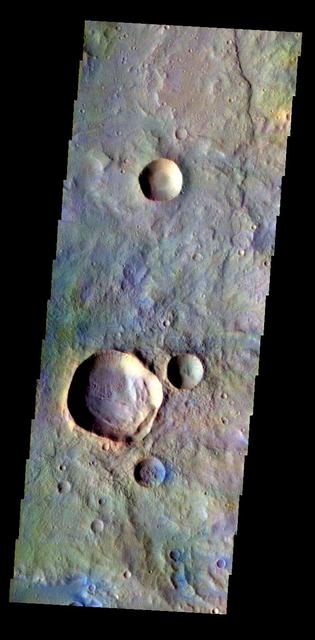
The THEMIS VIS camera contains 5 filters. The data from different filters can be combined in multiple ways to create a false color image. This false color image from NASA 2001 Mars Odyssey spacecraft shows part of the plains of Terra Cimmeria.
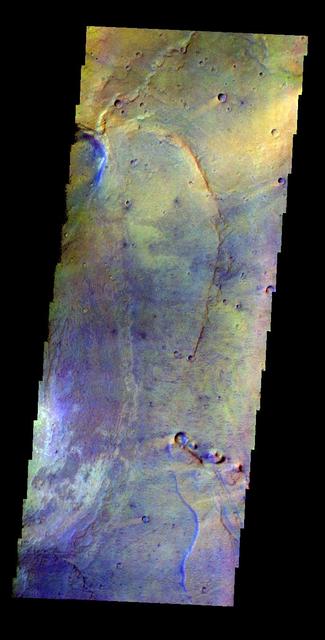
The THEMIS VIS camera contains 5 filters. The data from different filters can be combined in multiple ways to create a false color image. This false color image from NASA 2001 Mars Odyssey spacecraft shows part of Nili Patera.
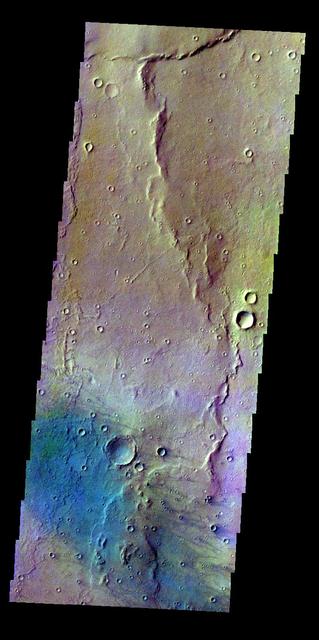
The THEMIS VIS camera contains 5 filters. The data from different filters can be combined in multiple ways to create a false color image. This false color image from NASA 2001 Mars Odyssey spacecraft shows windstreaks on the floor of Gusev Crater.

The THEMIS VIS camera contains 5 filters. The data from different filters can be combined in multiple ways to create a false color image. This false color image from NASA 2001 Mars Odyssey spacecraft shows part of Renaudot Crater.

The THEMIS camera contains 5 filters. The data from different filters can be combined in multiple ways to create a false color image. This image from NASA 2001 Mars Odyssey spacecraft shows a variety of surface materials in the plains of Sabaea Terra.
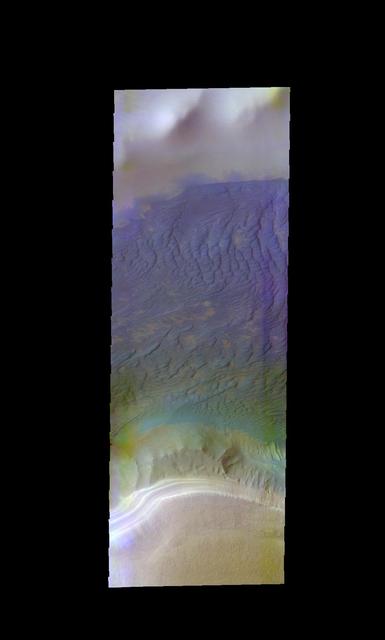
The THEMIS VIS camera contains 5 filters. Data from the filters can be combined in many ways to create a false color image. This image from NASA 2001 Mars Odyssey spacecraft shows the region just west of the dune/polar cap image from earlier this week.
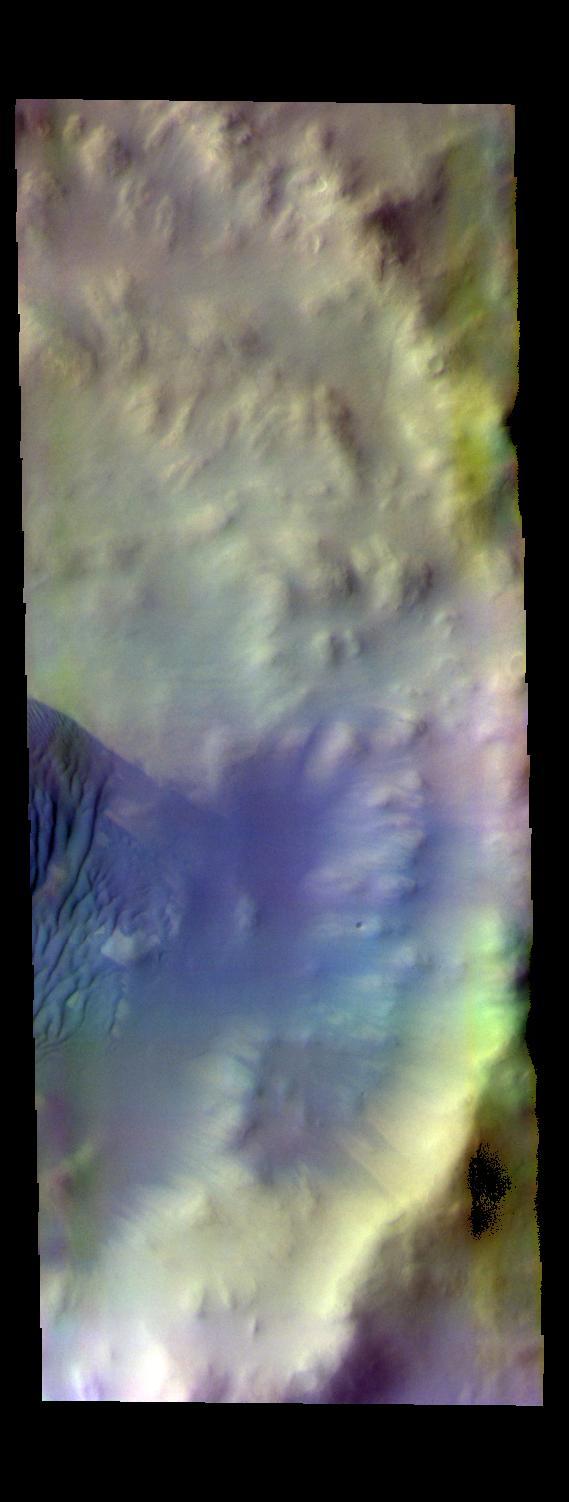
The THEMIS camera contains 5 filters. The data from different filters can be combined in multiple ways to create a false color image. This image from NASA 2001 Mars Odyssey spacecraft shows some of the dunes on the floor of Wegener Crater.
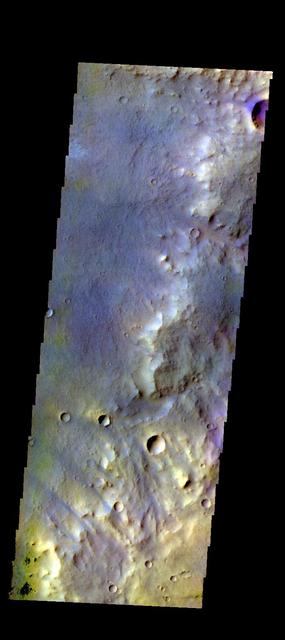
The THEMIS camera contains 5 filters. The data from different filters can be combined in multiple ways to create a false color image. This image from NASA 2001 Mars Odyssey spacecraft shows part of the plains of Arabia Terra.

The THEMIS VIS camera contains 5 filters. The data from different filters can be combined in multiple ways to create a false color image. This false color image from NASA 2001 Mars Odyssey spacecraft shows the margin of the north polar cap.
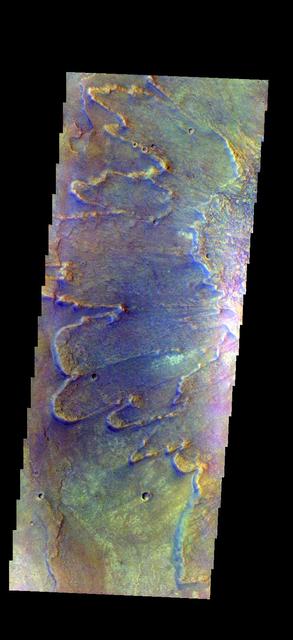
The THEMIS camera contains 5 filters. The data from different filters can be combined in multiple ways to create a false color image. This image from NASA 2001 Mars Odyssey spacecraft shows part of the ejecta from Yuty Crater.
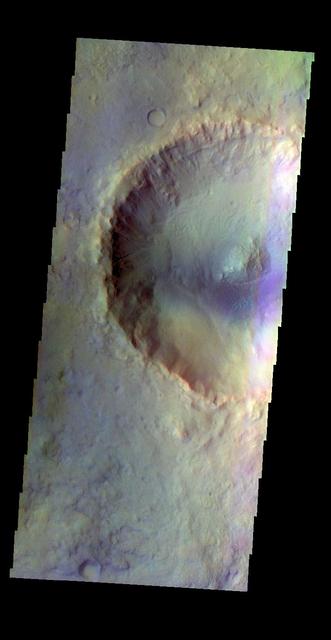
The THEMIS VIS camera contains 5 filters. The data from different filters can be combined in multiple ways to create a false color image. This false color image from NASA 2001 Mars Odyssey spacecraft shows an unnamed crater in Acidalia Planitia.
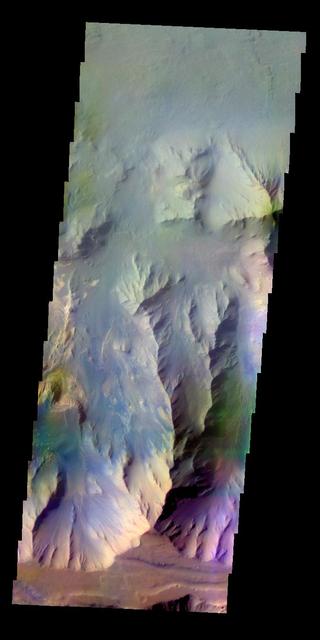
The THEMIS VIS camera contains 5 filters. The data from different filters can be combined in multiple ways to create a false color image. This false color image from NASA 2001 Mars Odyssey spacecraft shows part of Coprates Chasma.
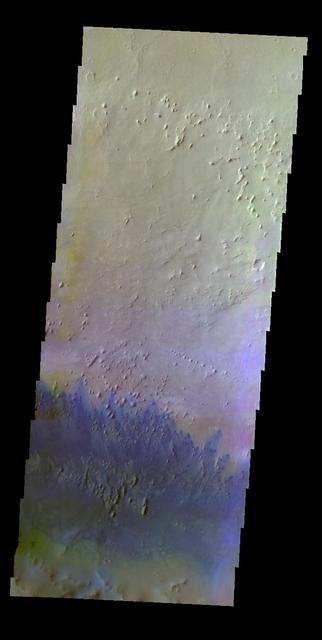
The THEMIS VIS camera contains 5 filters. The data from different filters can create a false color image. This false color image from NASA 2001 Mars Odyssey spacecraft shows small dunes of the floor of Capen Crater in Terra Sabea.
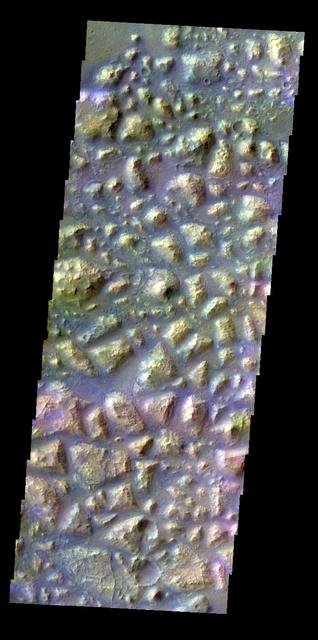
The THEMIS VIS camera contains 5 filters. The data from different filters can be combined in multiple ways to create a false color image. This false color image from NASA 2001 Mars Odyssey spacecraft shows part of Atlantis Chaos.

The THEMIS camera contains 5 filters. The data from different filters can be combined in multiple ways to create a false color image. This image from NASA 2001 Mars Odyssey spacecraft shows part of the plains of Terra Sabaea.
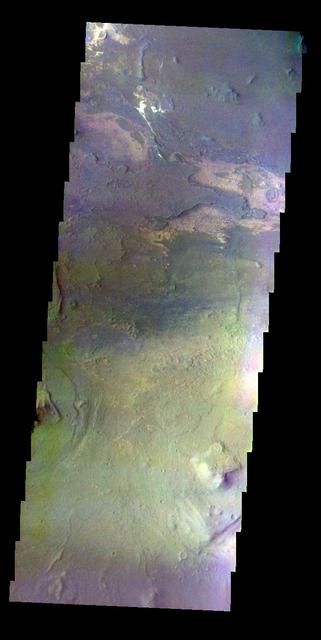
The THEMIS VIS camera contains 5 filters. The data from different filters can be combined in multiple ways to create a false color image. This false color image captured by NASA 2001 Mars Odyssey spacecraft shows part of Melas Chasma.