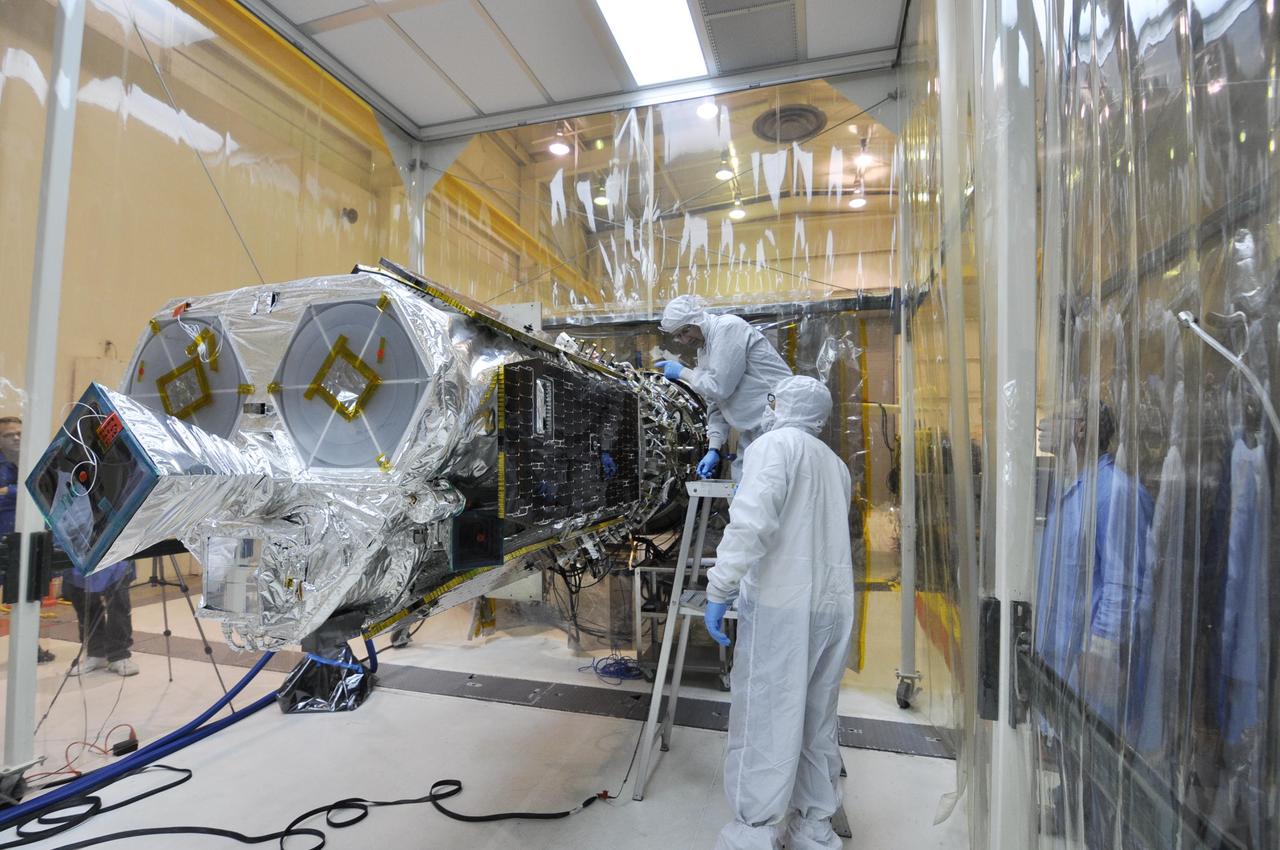
Inside an environmental enclosure at Vandenberg Air Force Base processing facility in California, technicians complete the final steps in mating NASA Nuclear Spectroscopic Telescope Array NuSTAR and its Orbital Sciences Pegasus XL rocket.
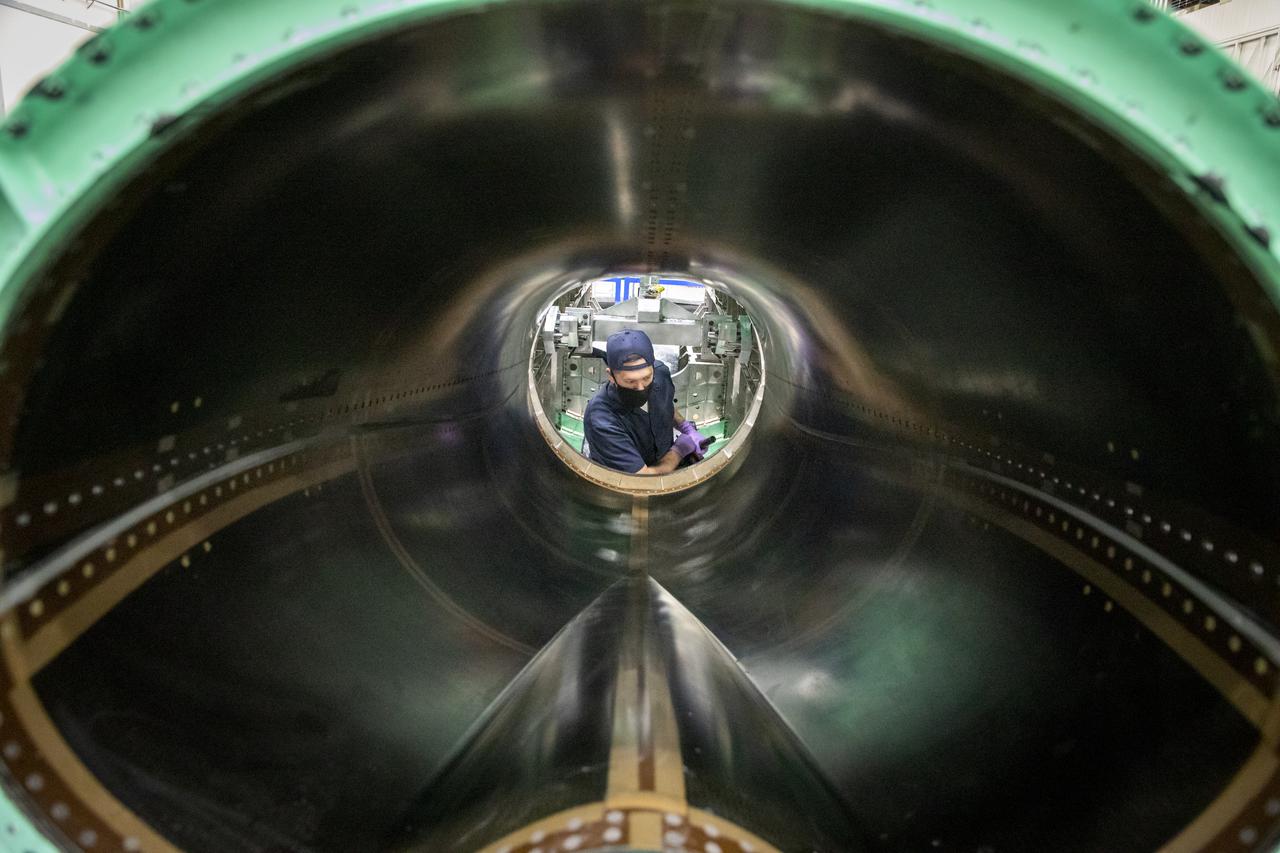
A technician is working on the engine inlet of NASA’s X-59 Quiet Supersonic Technology (QueSST) aircraft at Lockheed Martin’s Skunk Works facility in Palmdale, California.
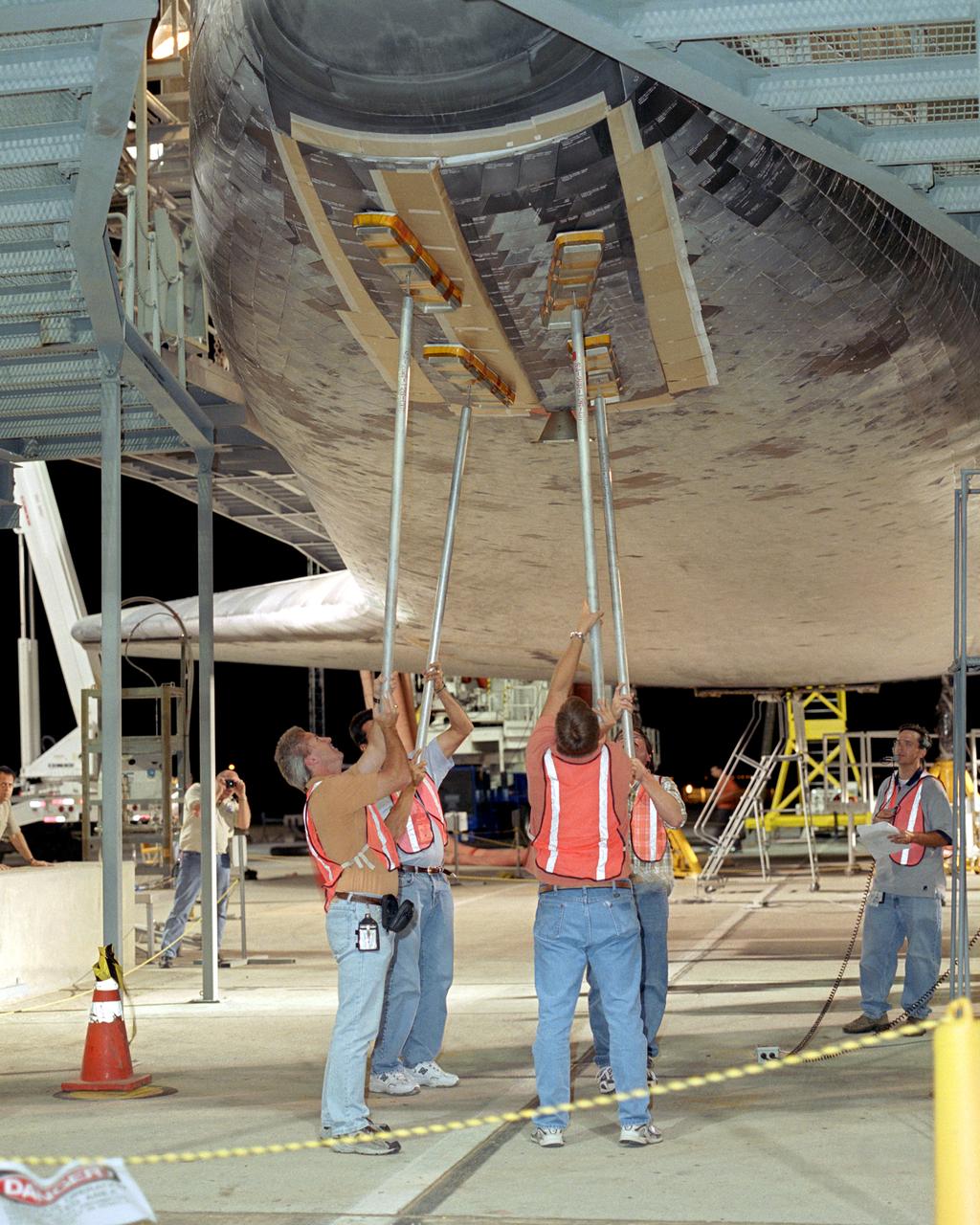
Closing the landing gear doors is one of the final servicing steps before lifting of the Space Shuttle Discovery and mating it to NASA's 747 can begin. After being raised in the gantry-like Mate-Demate Device (MDD), Discovery will be mounted on NASA's modified Boeing 747 Shuttle Carrier Aircraft, or SCA, for the return flight to the Kennedy Space Center in Florida. Space Shuttle Discovery landed safely at NASA's Dryden Flight Research Center at Edwards Air Force Base in California at 5:11:22 a.m. PDT, August 9, 2005, following the very successful 14-day STS-114 return to flight mission. During their two weeks in space, Commander Eileen Collins and her six crewmates tested out new safety procedures and delivered supplies and equipment the International Space Station. Discovery spent two weeks in space, where the crew demonstrated new methods to inspect and repair the Shuttle in orbit. The crew also delivered supplies, outfitted and performed maintenance on the International Space Station. A number of these tasks were conducted during three spacewalks. In an unprecedented event, spacewalkers were called upon to remove protruding gap fillers from the heat shield on Discovery's underbelly. In other spacewalk activities, astronauts installed an external platform onto the Station's Quest Airlock and replaced one of the orbital outpost's Control Moment Gyroscopes. Inside the Station, the STS-114 crew conducted joint operations with the Expedition 11 crew. They unloaded fresh supplies from the Shuttle and the Raffaello Multi-Purpose Logistics Module. Before Discovery undocked, the crews filled Raffeallo with unneeded items and returned to Shuttle payload bay. Discovery launched on July 26 and spent almost 14 days on orbit.
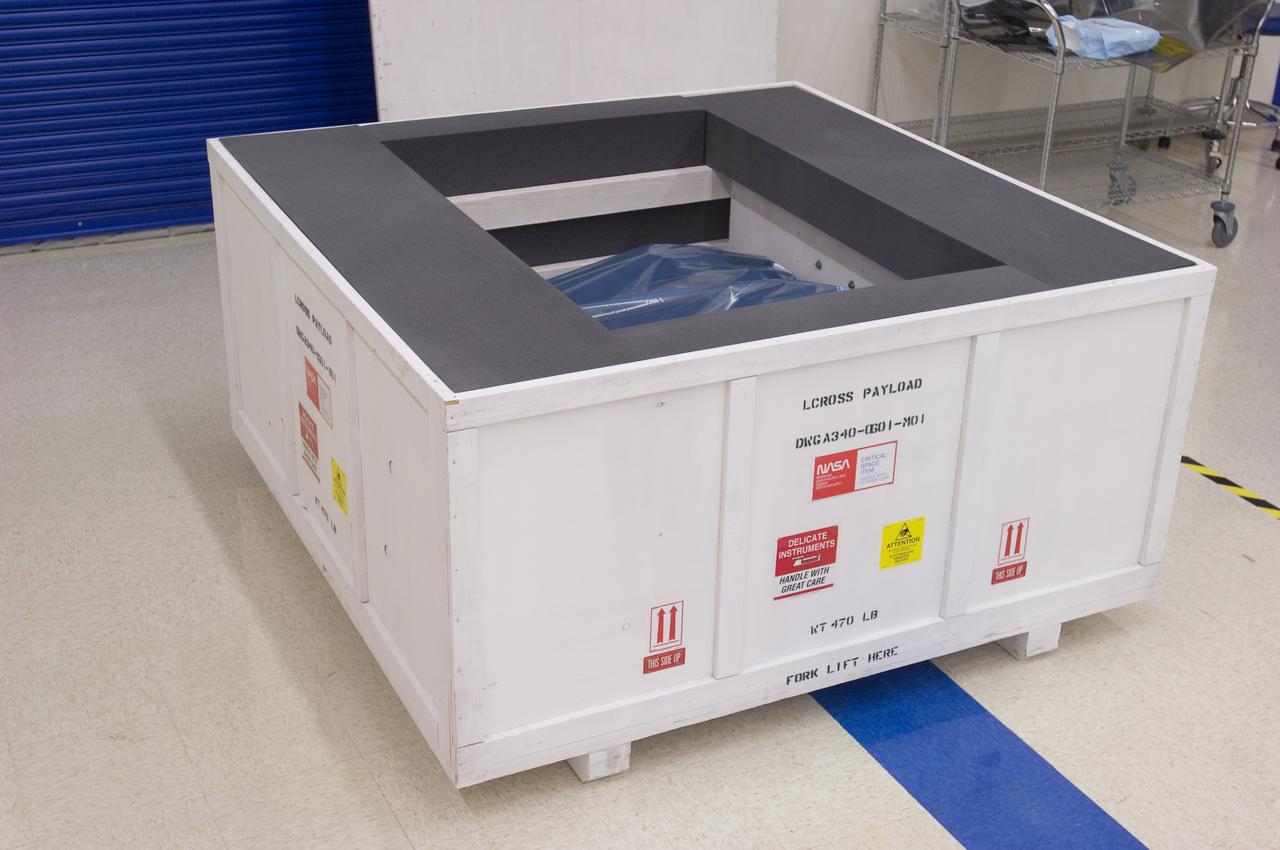
LCROSS in Ames clean room N-240- packed into a special made crate for transfer to Northrup Grumman Redondo Beach, CA where more calibration will be done before finally being sent for mating with the LRO spacecraft
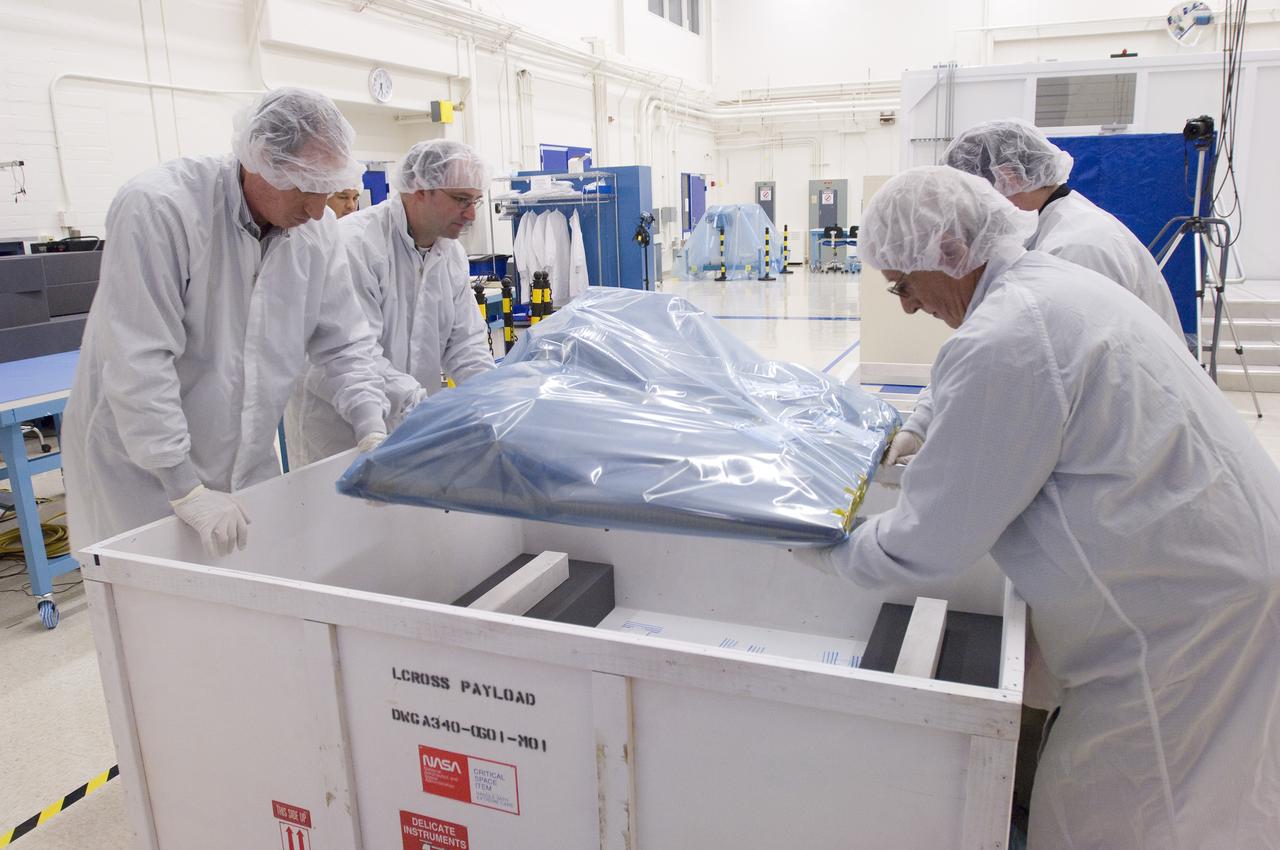
LCROSS in Ames clean room N-240- packing and crating for transfer to Northrup Grumman Redondo Beach, CA where more calibration will be done before finally being sent for mating with the LRO spacecraft
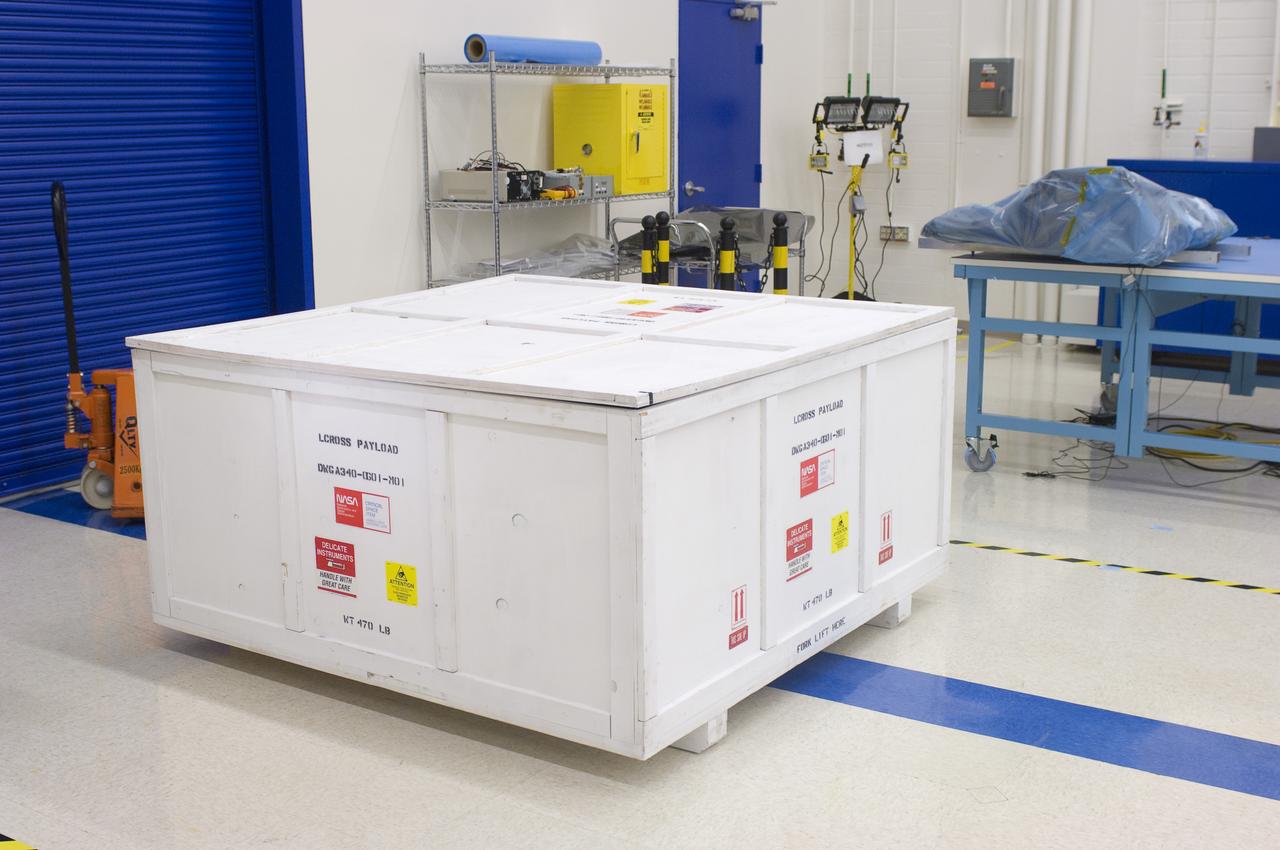
LCROSS in Ames clean room N-240- special made crate for transfer to Northrup Grumman Redondo Beach, CA where more calibration will be done before finally being sent for mating with the LRO spacecraft
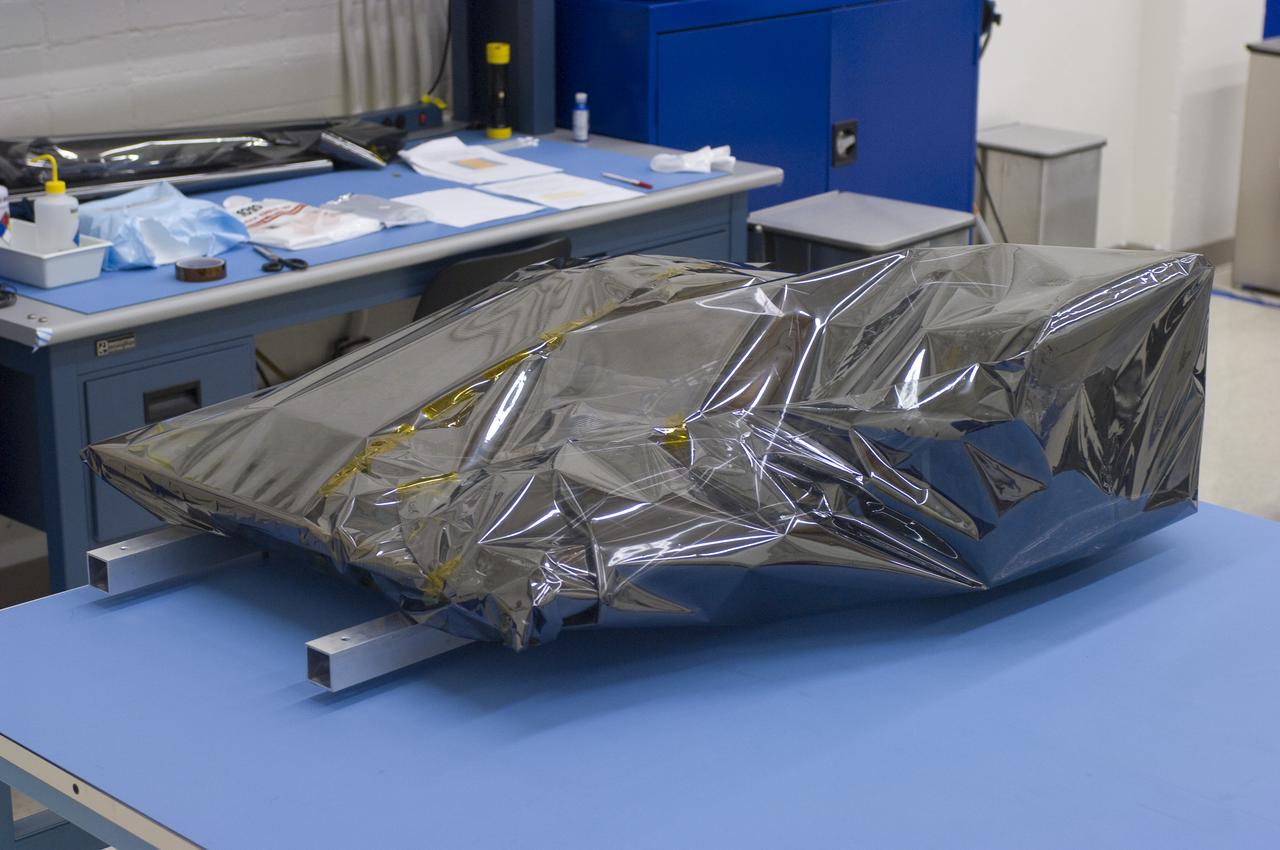
LCROSS in Ames clean room N-240- wrapped for transfer to Northrup Grumman Redondo Beach, CA where more calibration will be done before finally being sent for mating with the LRO spacecraft
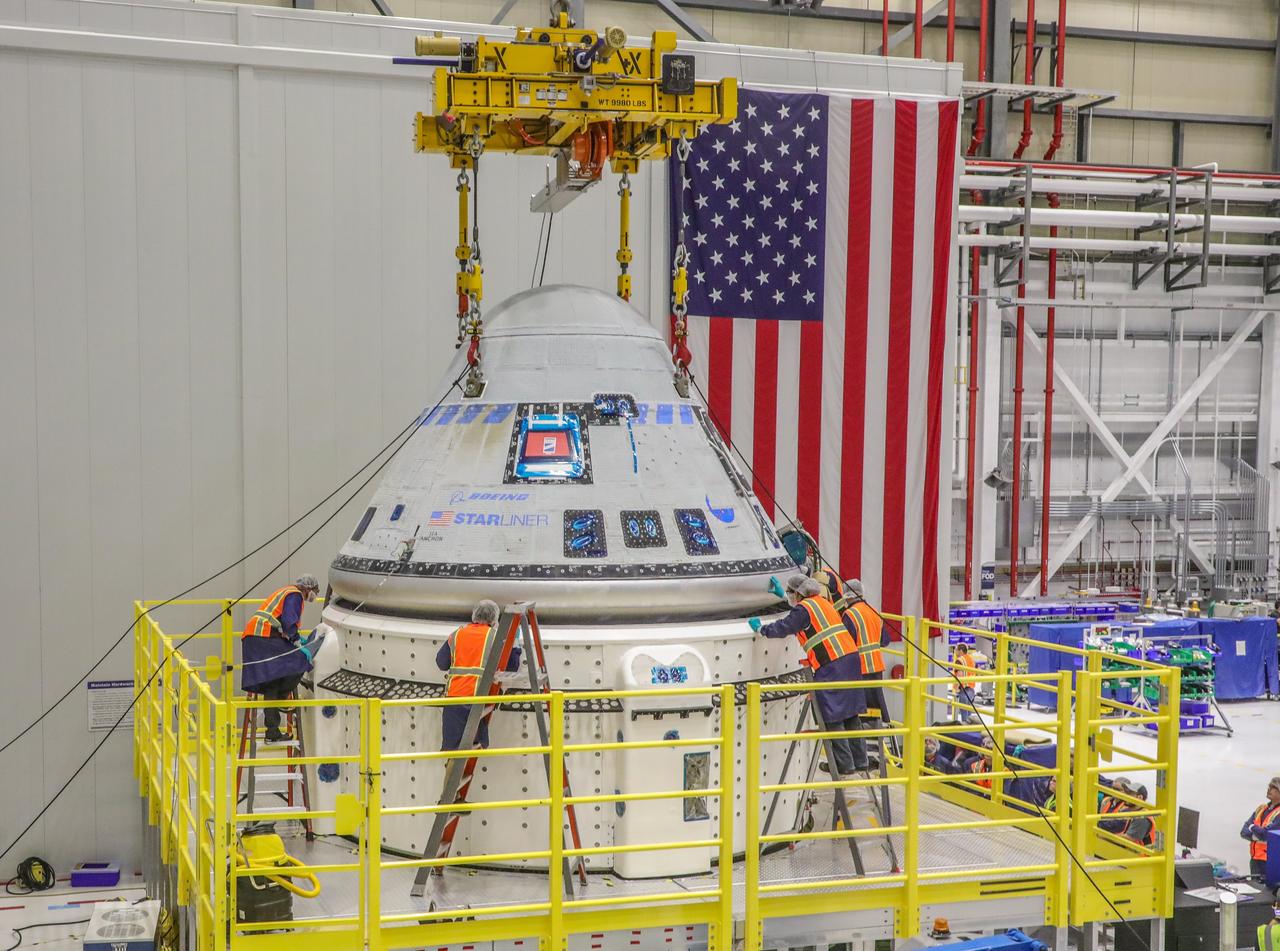
The Starliner team works to finalize the mate of the crew module and new service module for NASA's Boeing Crew Flight Test that will take NASA astronauts Barry “Butch” Wilmore and Sunita “Suni” Williams to and from the International Space Station.
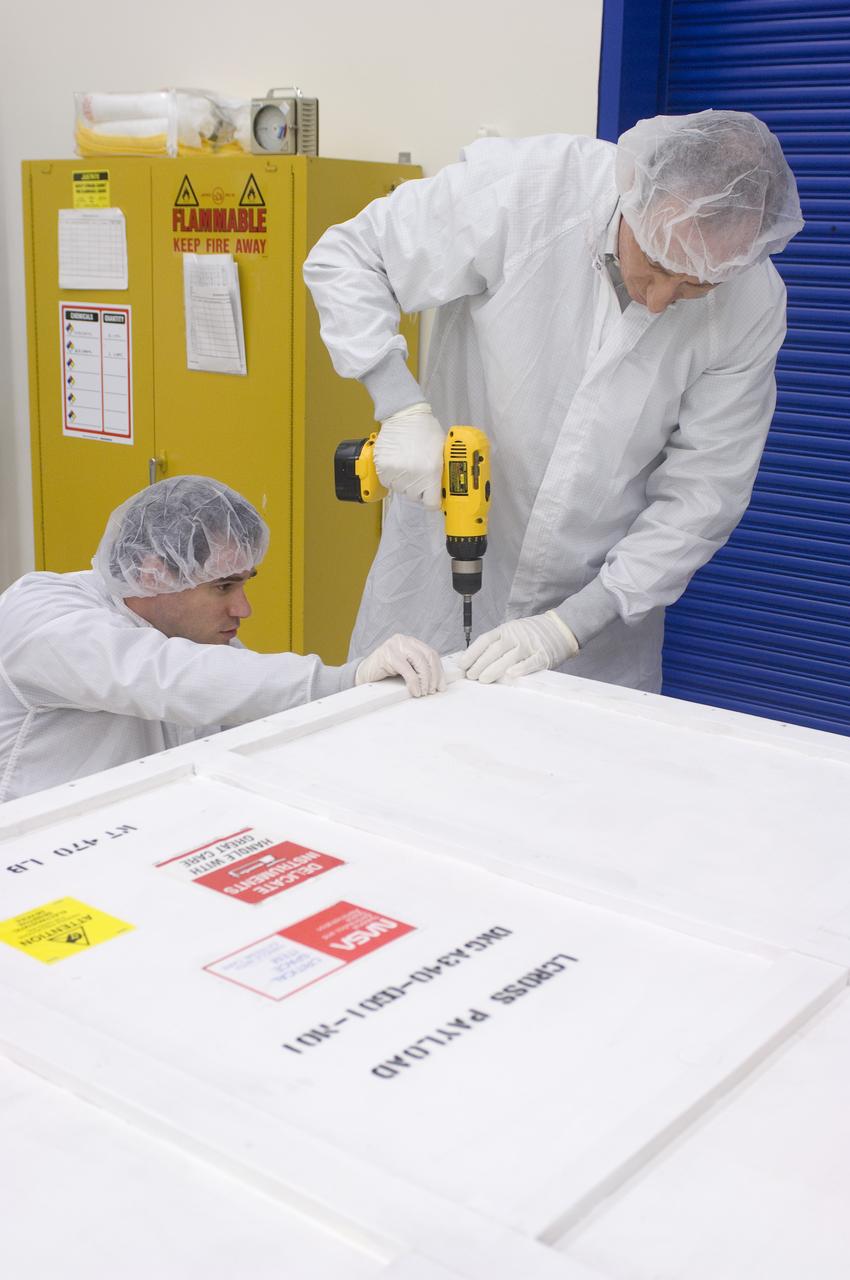
LCROSS in Ames clean room N-240- securing special made crate for transfer to Northrup Grumman Redondo Beach, CA where more calibration will be done before finally being sent for mating with the LRO spacecraft
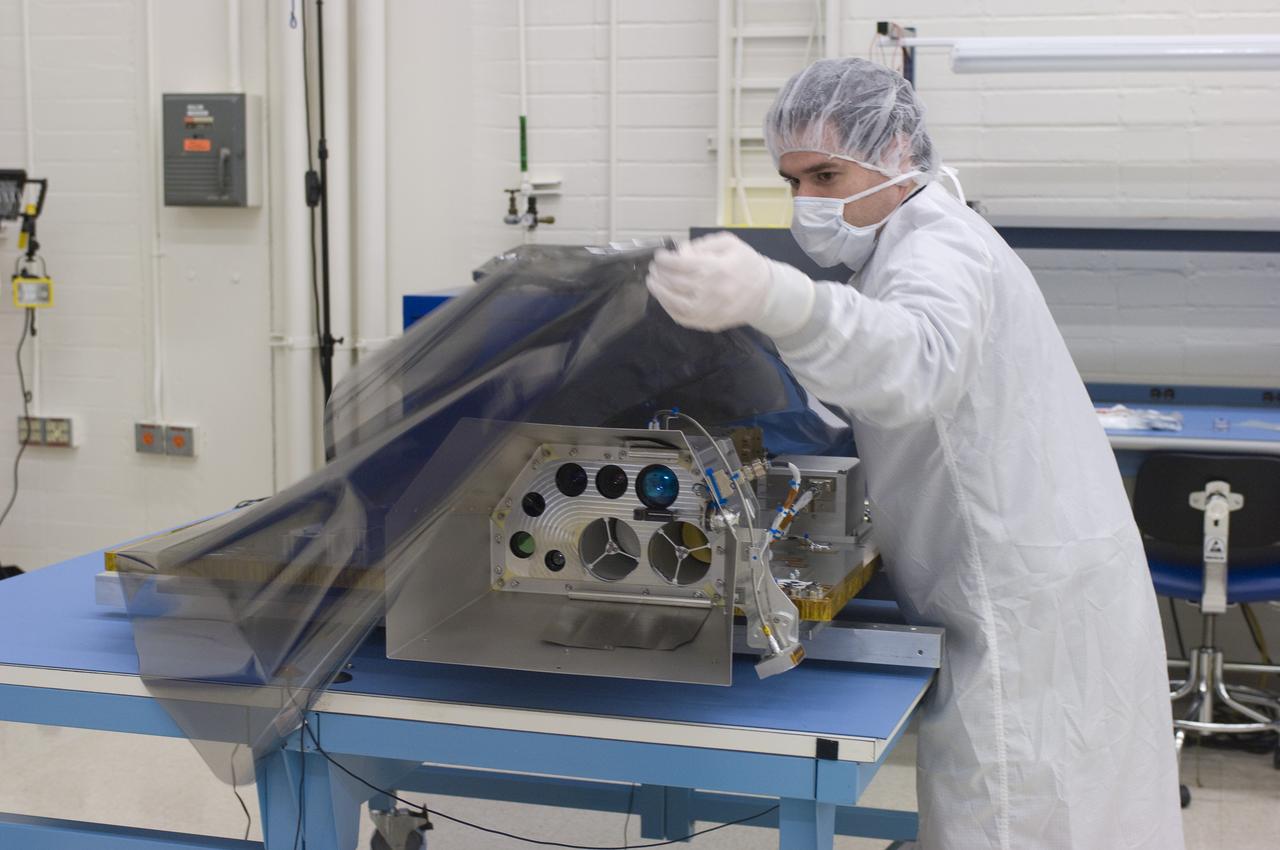
LCROSS in Ames clean room N-240- cleaning and wrapping for transfer to Northrup Grumman Redondo Beach, CA where more calibration will be done before finally being sent for mating with the LRO spacecraft (with Tony Colaprete)
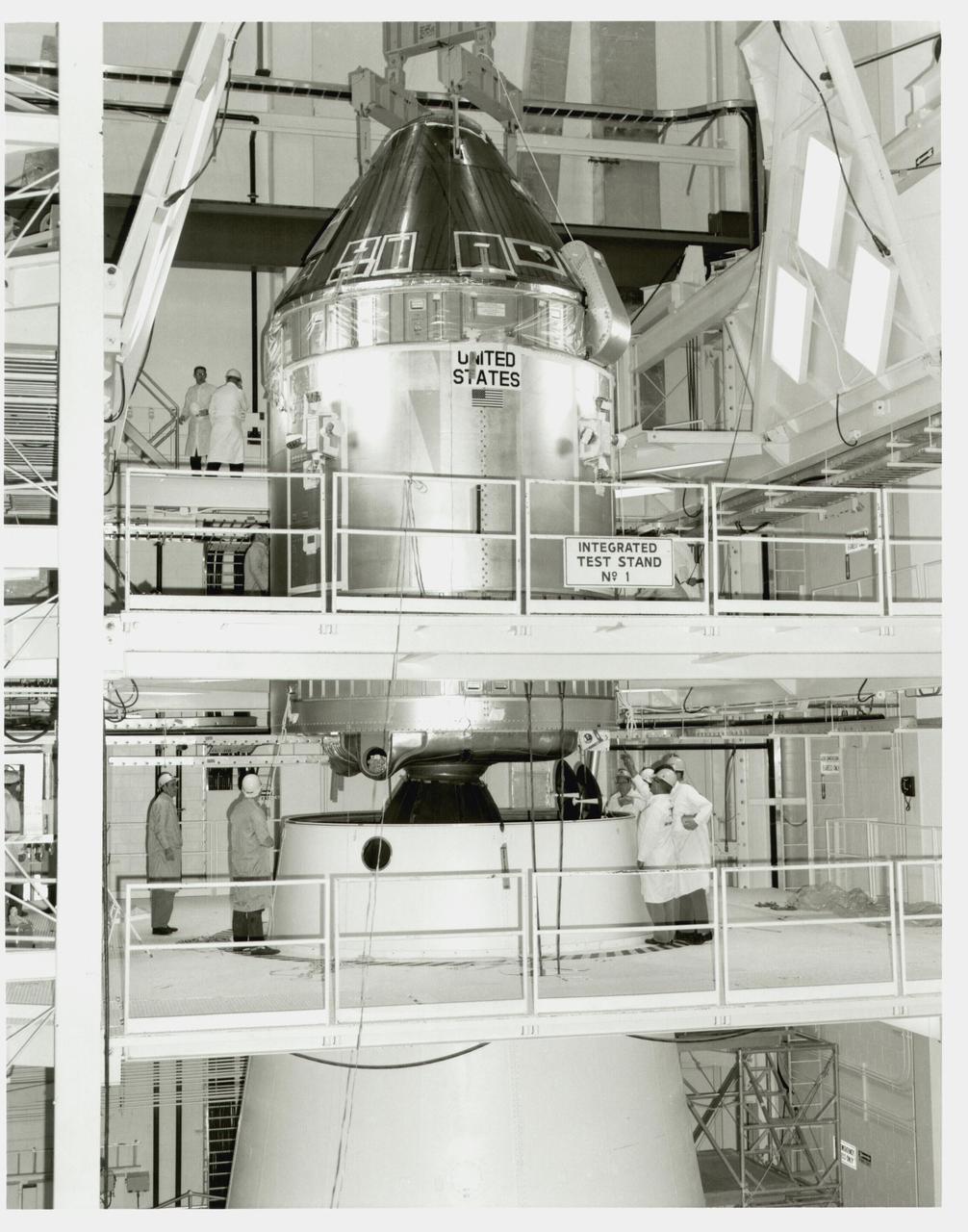
KENNEDY SPACE CENTER, FLA. - The Command and Service Module (CSM) for Apollo 11 move from 134 work stand and final mate to service-module-to-launch-module adapter (SLA).
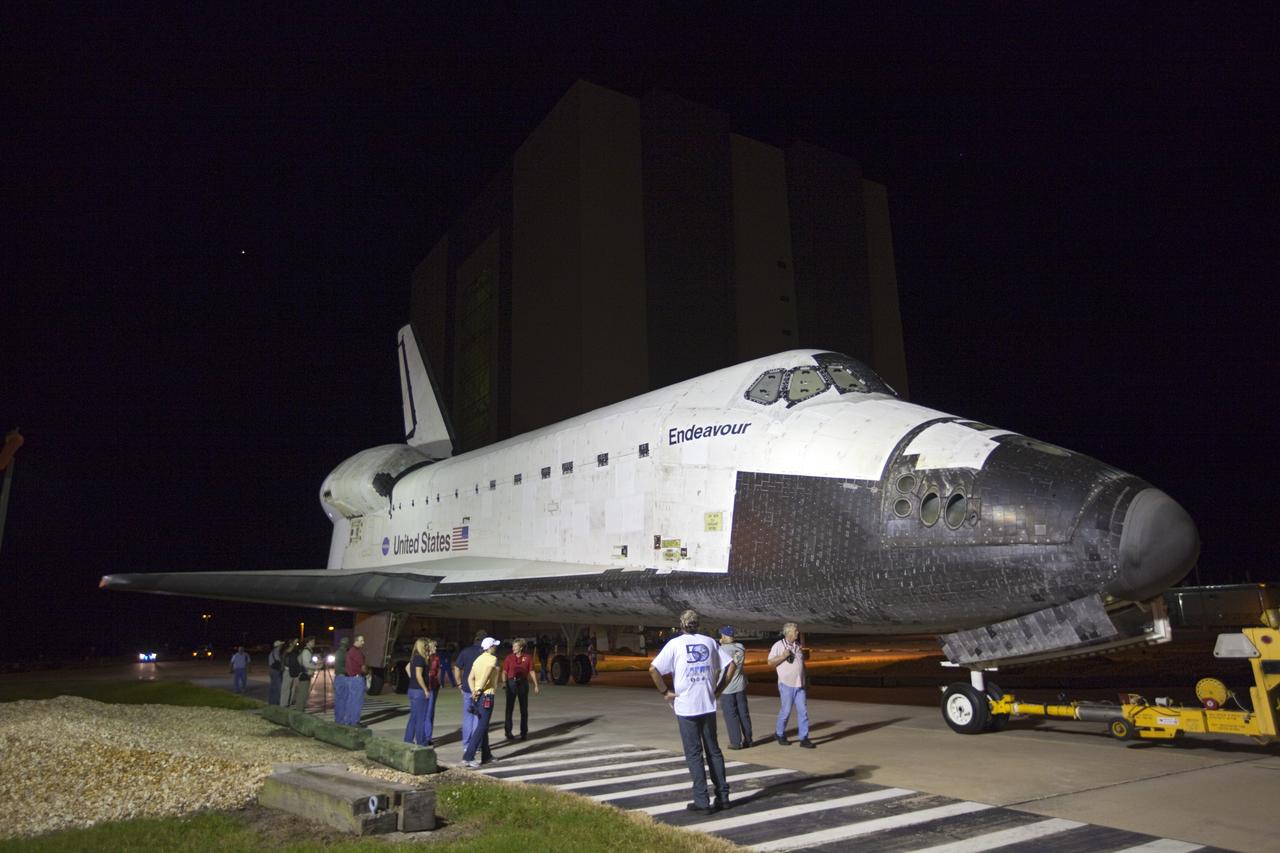
CAPE CANAVERAL, Fla. – Employees line space shuttle Endeavour's path as the spacecraft rolls toward the Shuttle Landing Facility at NASA's Kennedy Space Center in Florida. Endeavour will be lifted in the gantry-like mate Mate-Demate Device and placed atop NASA's modified 747 Shuttle Carrier Aircraft for the final ferry flight of the Space Shuttle Program. Endeavour will be placed on permanent public display at the California Science Center in Los Angeles. Photo credit: NASA/Kim Shiflett
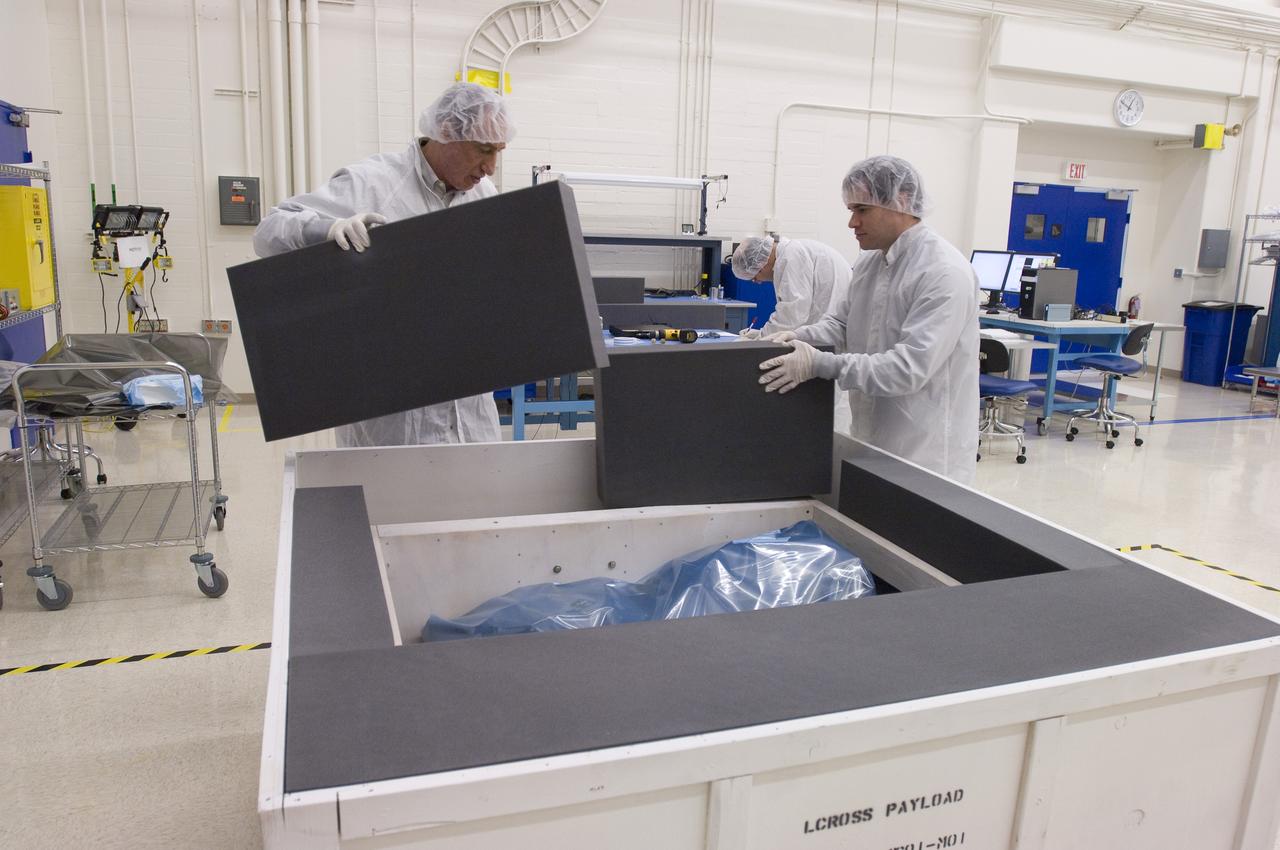
LCROSS in Ames clean room N-240- packing into a special made crate for transfer to Northrup Grumman Redondo Beach, CA where more calibration will be done before finally being sent for mating with the LRO spacecraft (Tony Colaprete (r) LCROSS P.I.)
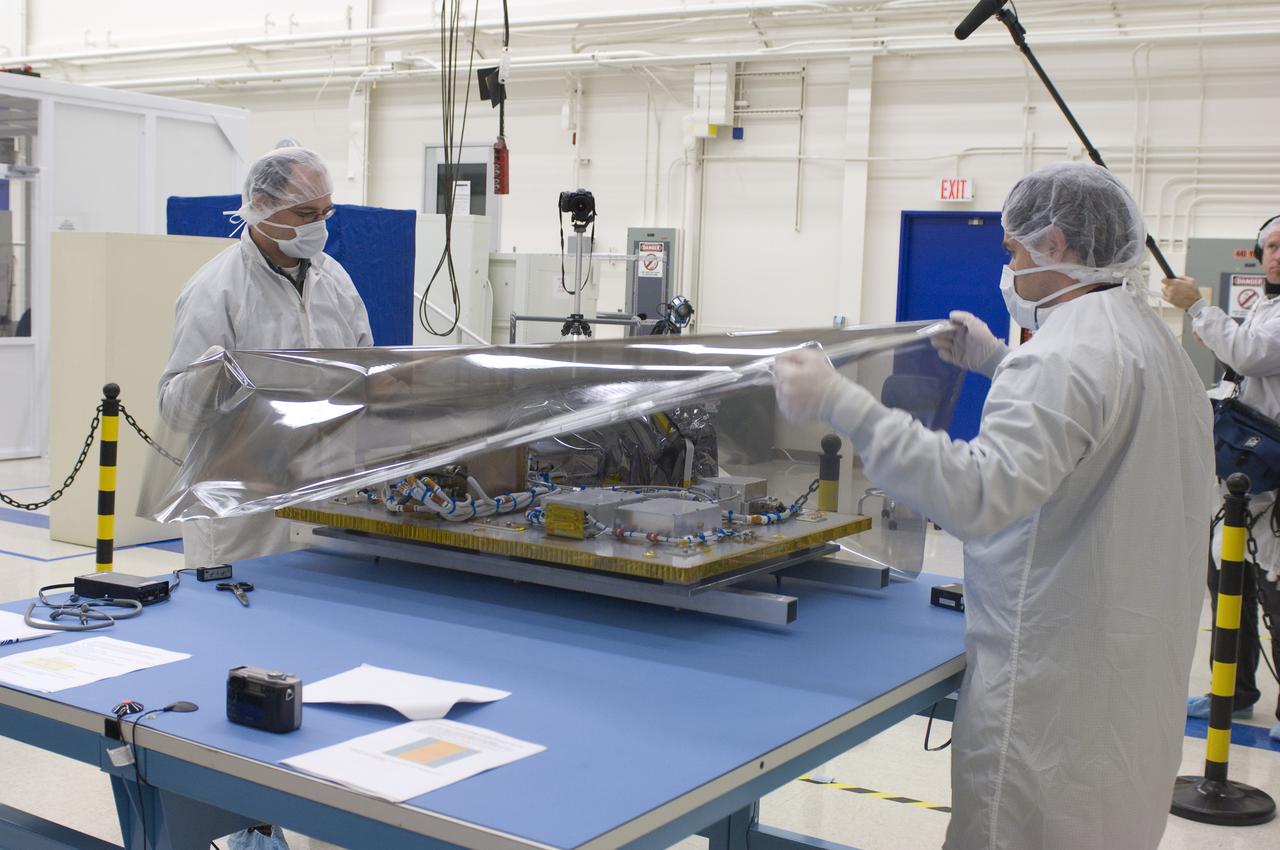
LCROSS in Ames clean room N-240- cleaning and wrapping for transfer to Northrup Grumman Redondo Beach, CA where more calibration will be done before finally being sent for mating with the LRO spacecraft (with Steve Ord, Project Management Division (l) and Tony Colaprete (r) LCROSS P.I.)
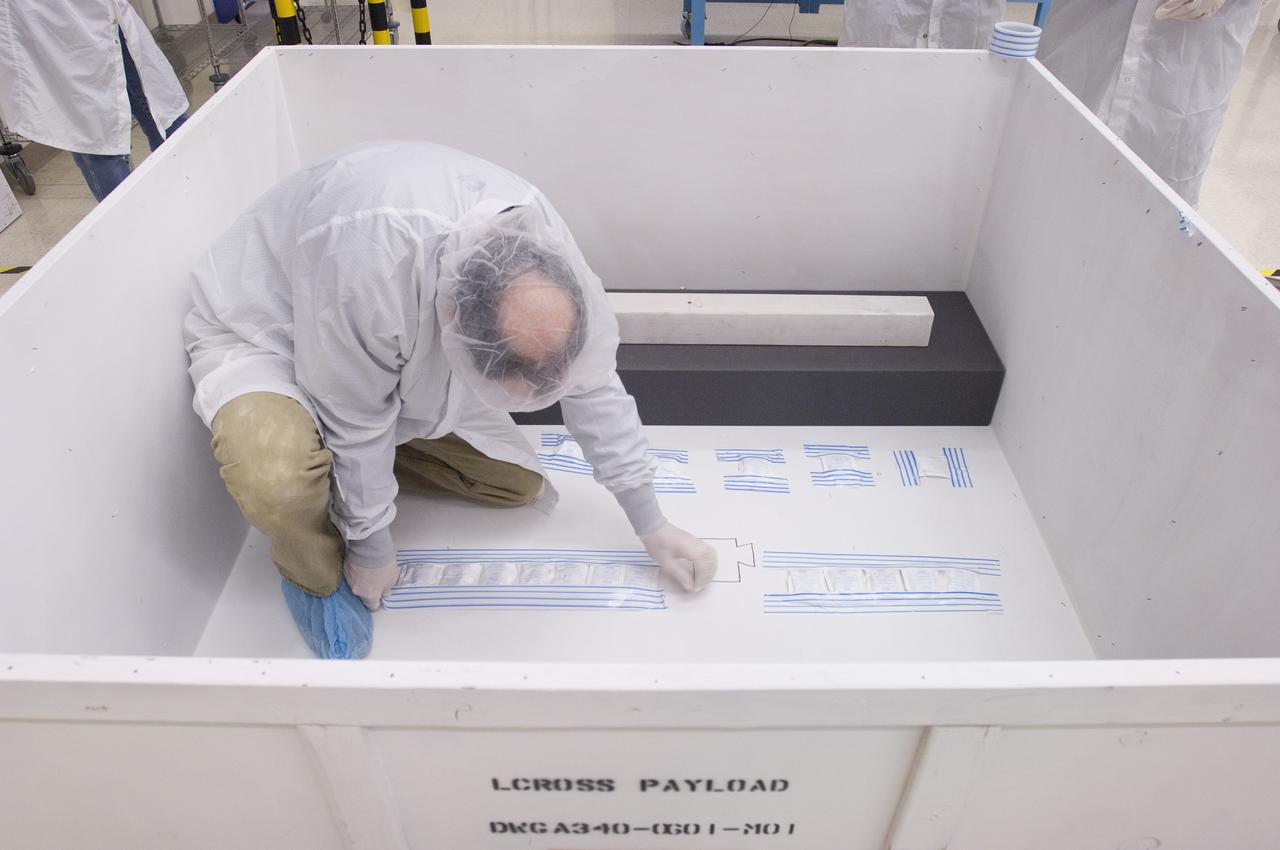
LCROSS in Ames clean room N-240- Steve Ord inspects special made crate for transfer to Northrup Grumman Redondo Beach, CA where more calibration will be done before finally being sent for mating with the LRO spacecraft
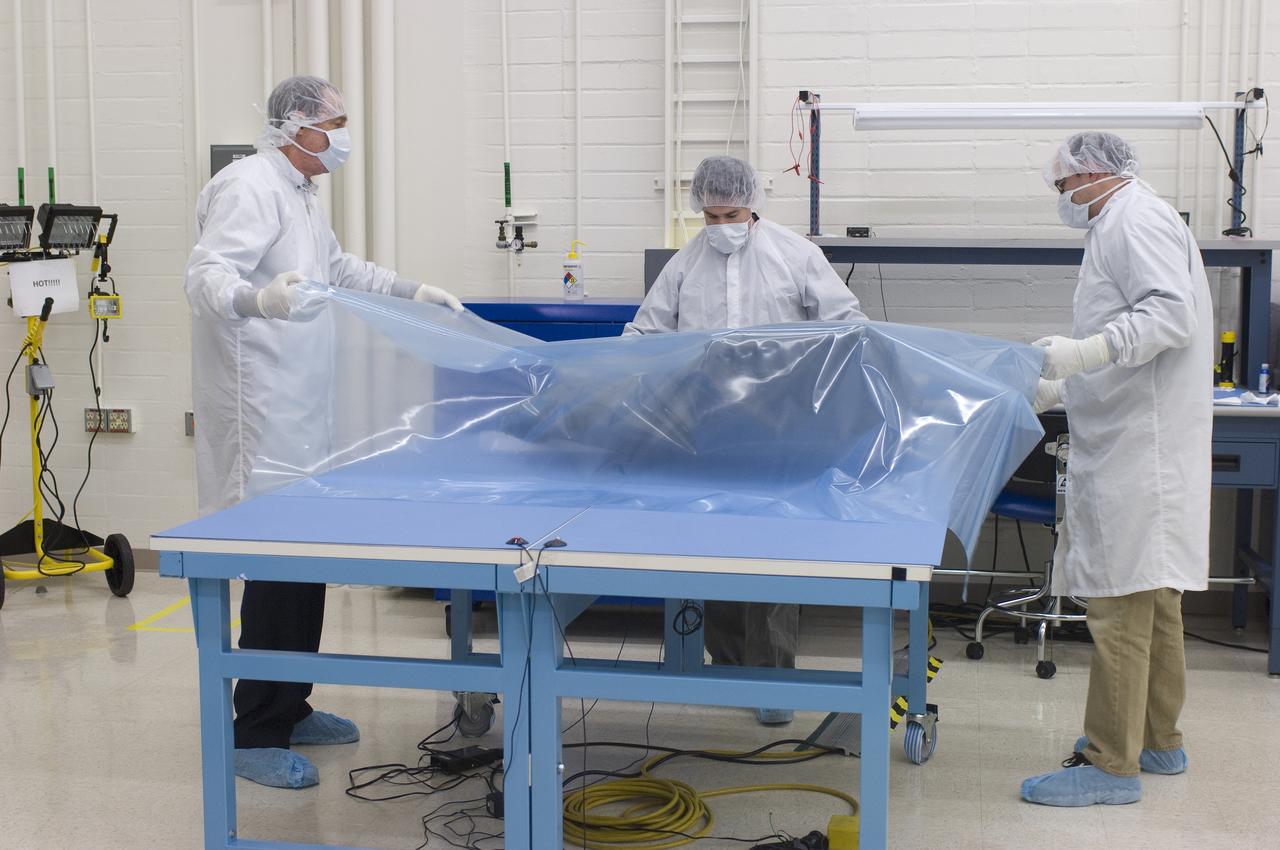
LCROSS in Ames clean room N-240- wrapping for transfer to Northrup Grumman Redondo Beach, CA where more calibration will be done before finally being sent for mating with the LRO spacecraft (with Steve Ord, Project Management Division (l) and Tony Colaprete (r), LCROSS P.I.)
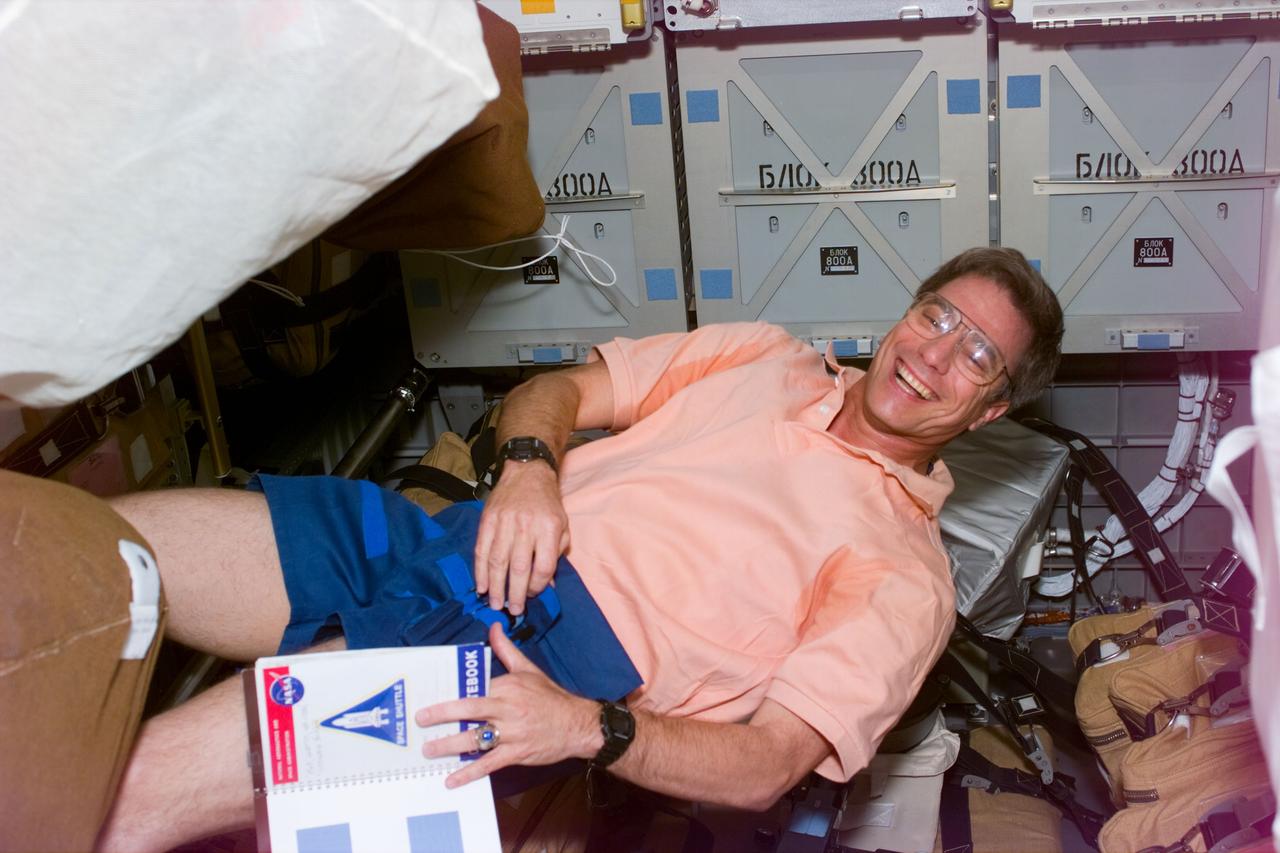
STS79-E-5027 (18 September 1996) --- Astronaut John E. Blaha, near Spacehab lockers onboard the Space Shuttle Atlantis, stays busy with final preparations for joining cosmonauts for crew mates following tomorrow's docking of the Atlantis and Russia's Mir Space Station, on Flight Day 3.
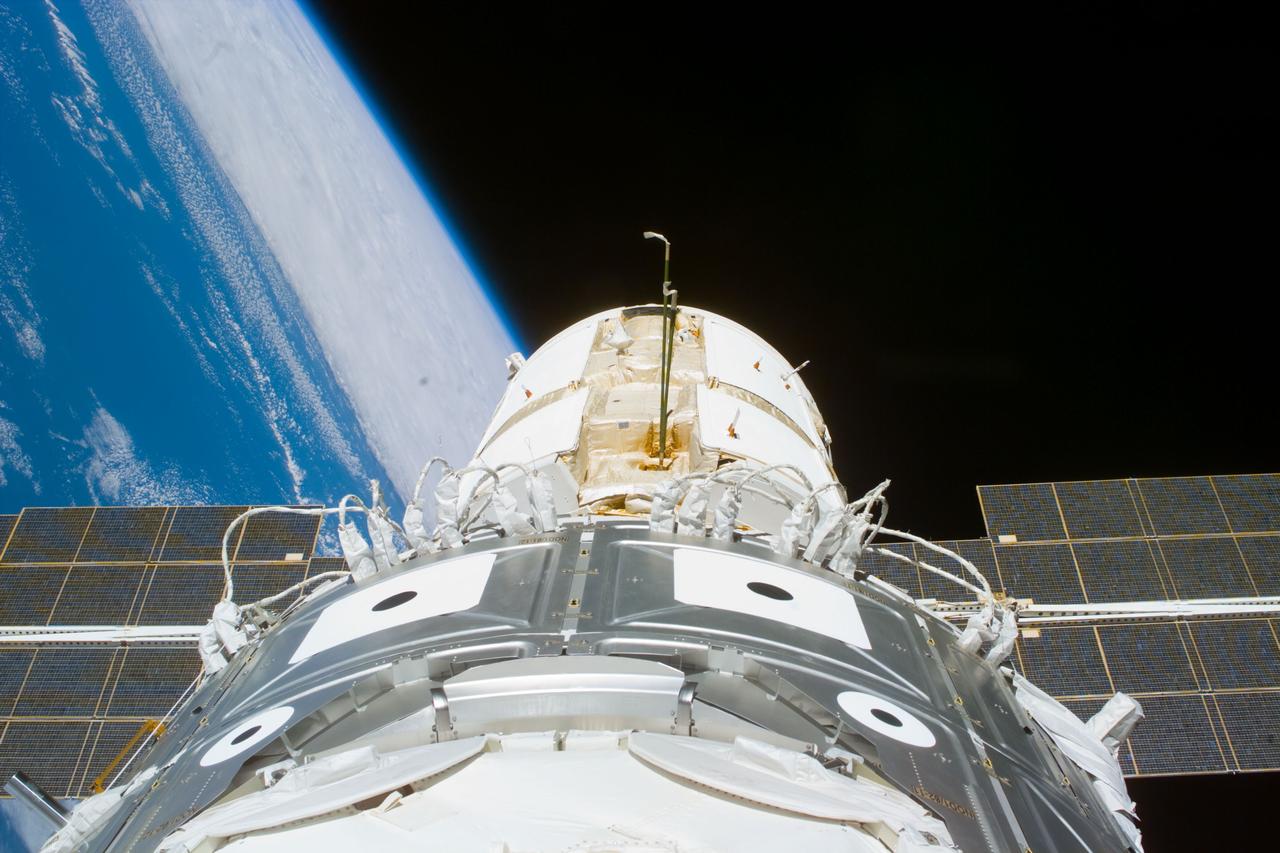
S88-E-5152 (12-13-98) --- One of the final looks at the mated Zarya and Unity modules before the ISS components left Endeavour's cargo bay. The scene was recorded with an electronic still camera (ESC) at 18:20:59 GMT, Dec. 13.
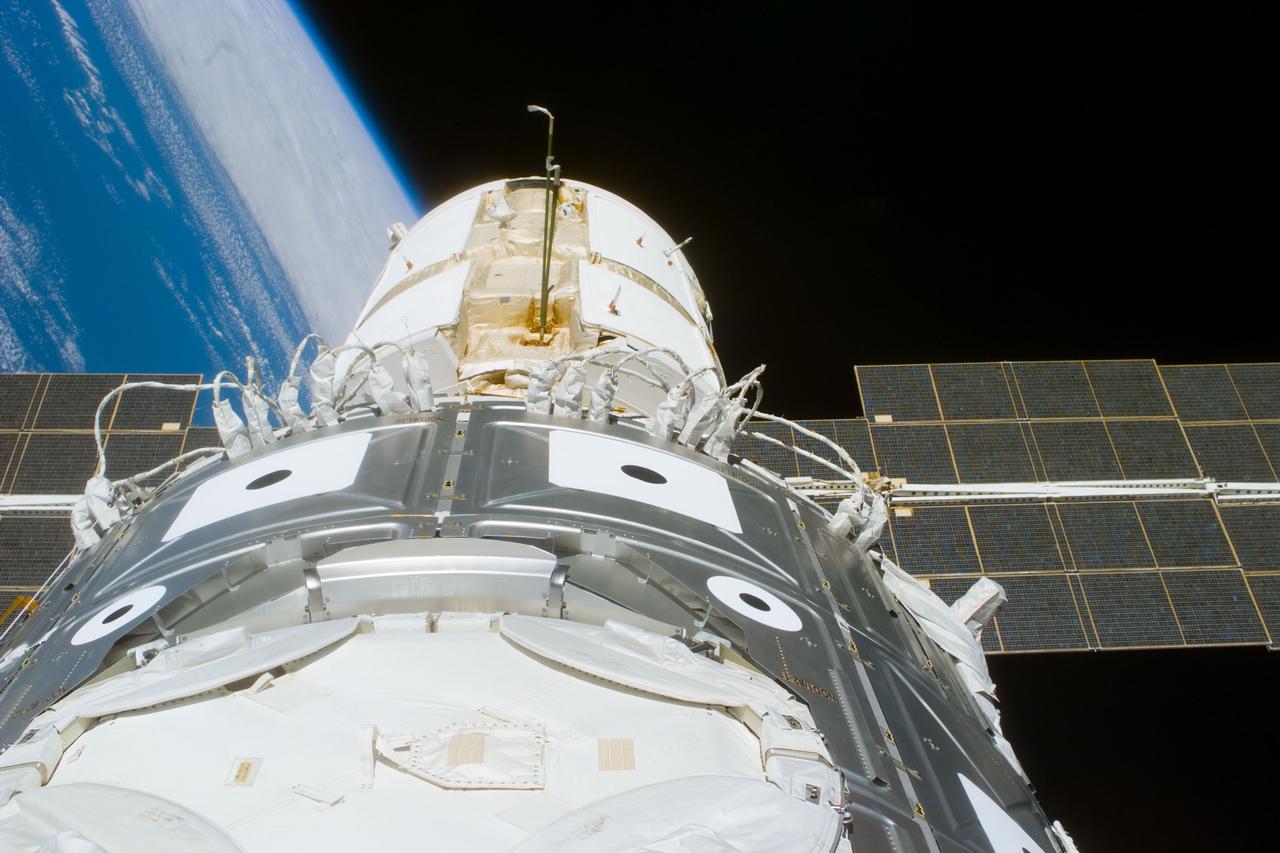
S88-E-5150 (12-13-98) --- One of the final looks at the mated Zarya and Unity modules before the ISS components left Endeavour's cargo bay. The scene was recorded with an electronic still camera (ESC) at 18:20:45 GMT, Dec. 13.
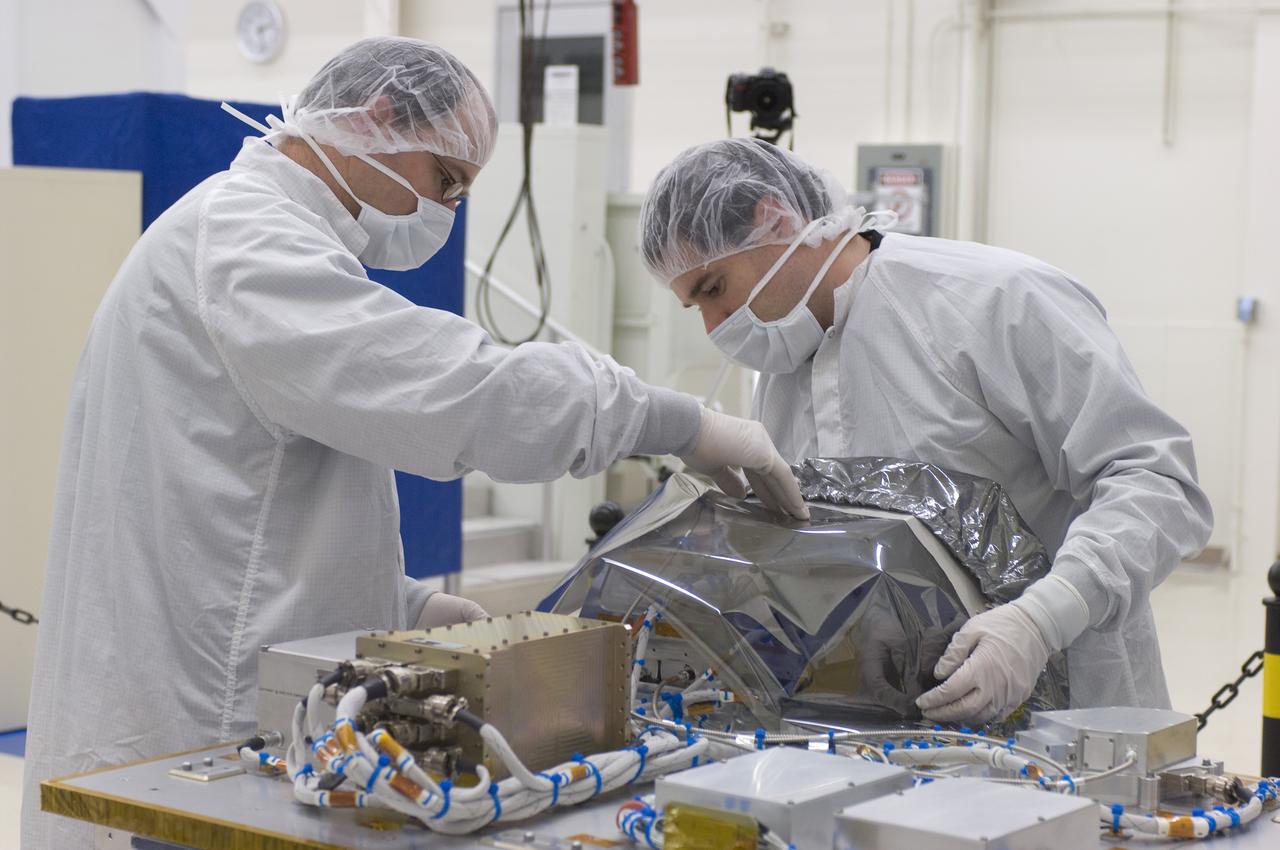
LCROSS in Ames clean room N-240- cleaning and wrapping for transfer to Northrup Grumman Redondo Beach, CA where more calibration will be done before finally being sent for mating with the LRO spacecraft (with Steve Ord, Project Management Division (l) and Tony Colaprete (r) LCROSS P.I.)
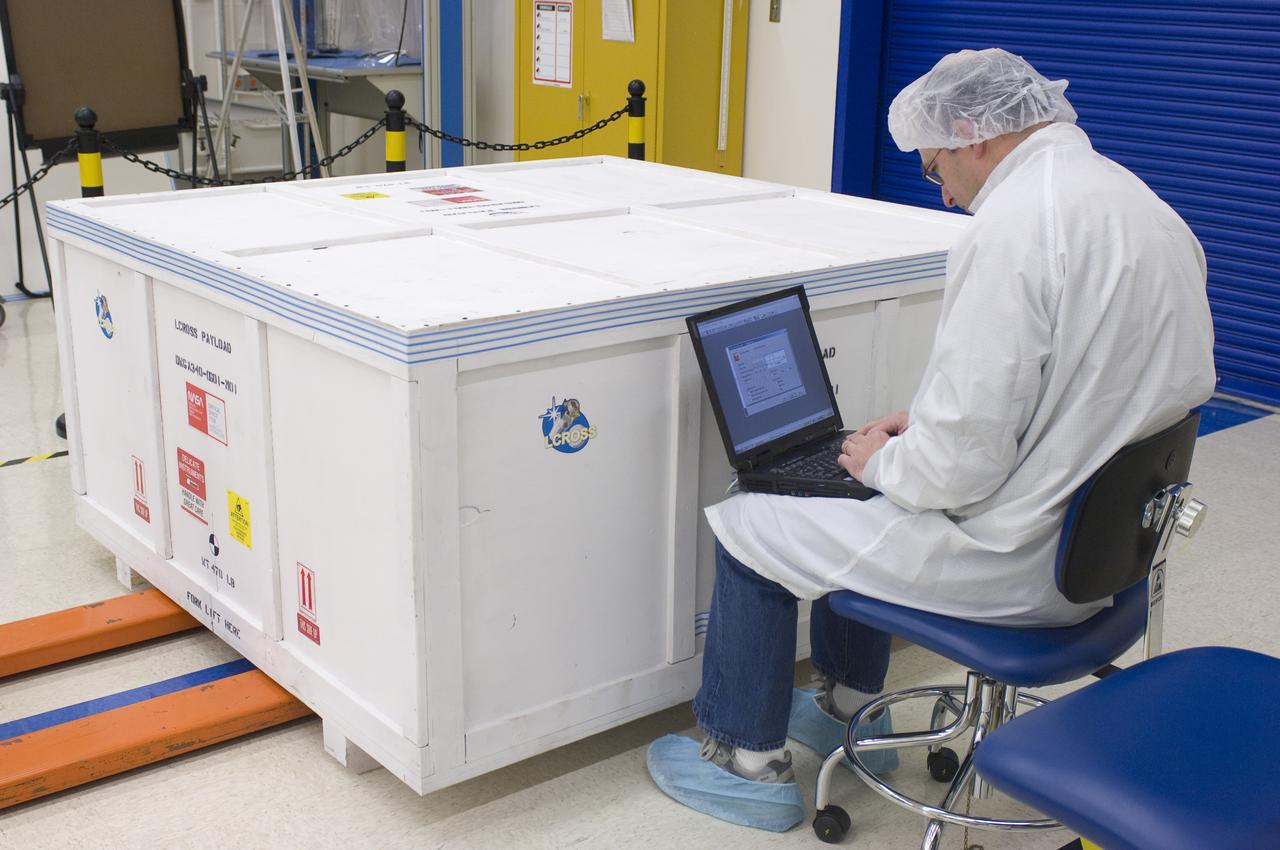
LCROSS in Ames clean room N-240- securing the special made crate for transfer to Northrup Grumman Redondo Beach, CA where more calibration will be done before finally being sent for mating with the LRO spacecraft with Steve Ord, Ames Project Management Office
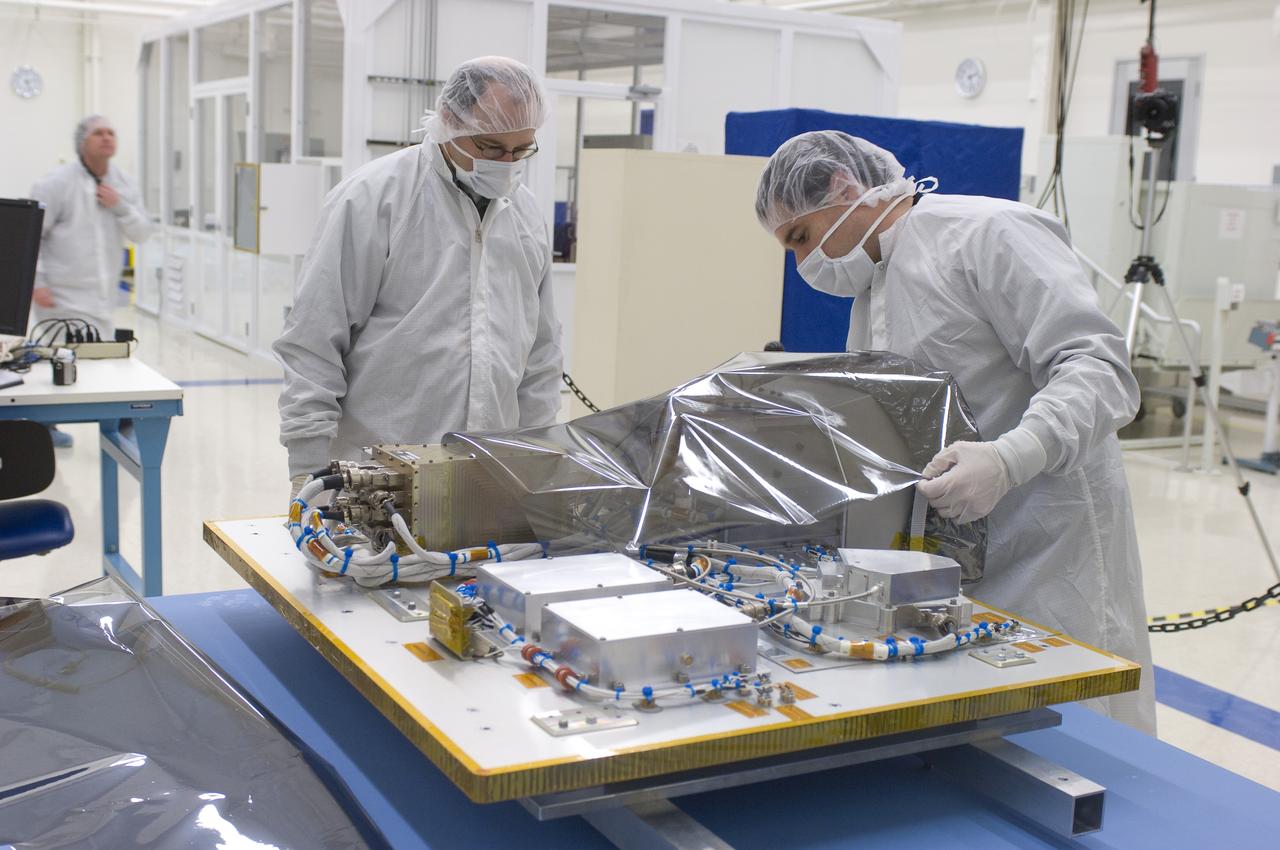
LCROSS in Ames clean room N-240- cleaning and wrapping for transfer to Northrup Grumman Redondo Beach, CA where more calibration will be done before finally being sent for mating with the LRO spacecraft (with Steve Ord, Project Management Division (l) and Tony Colaprete (r) LCROSS P.I.)
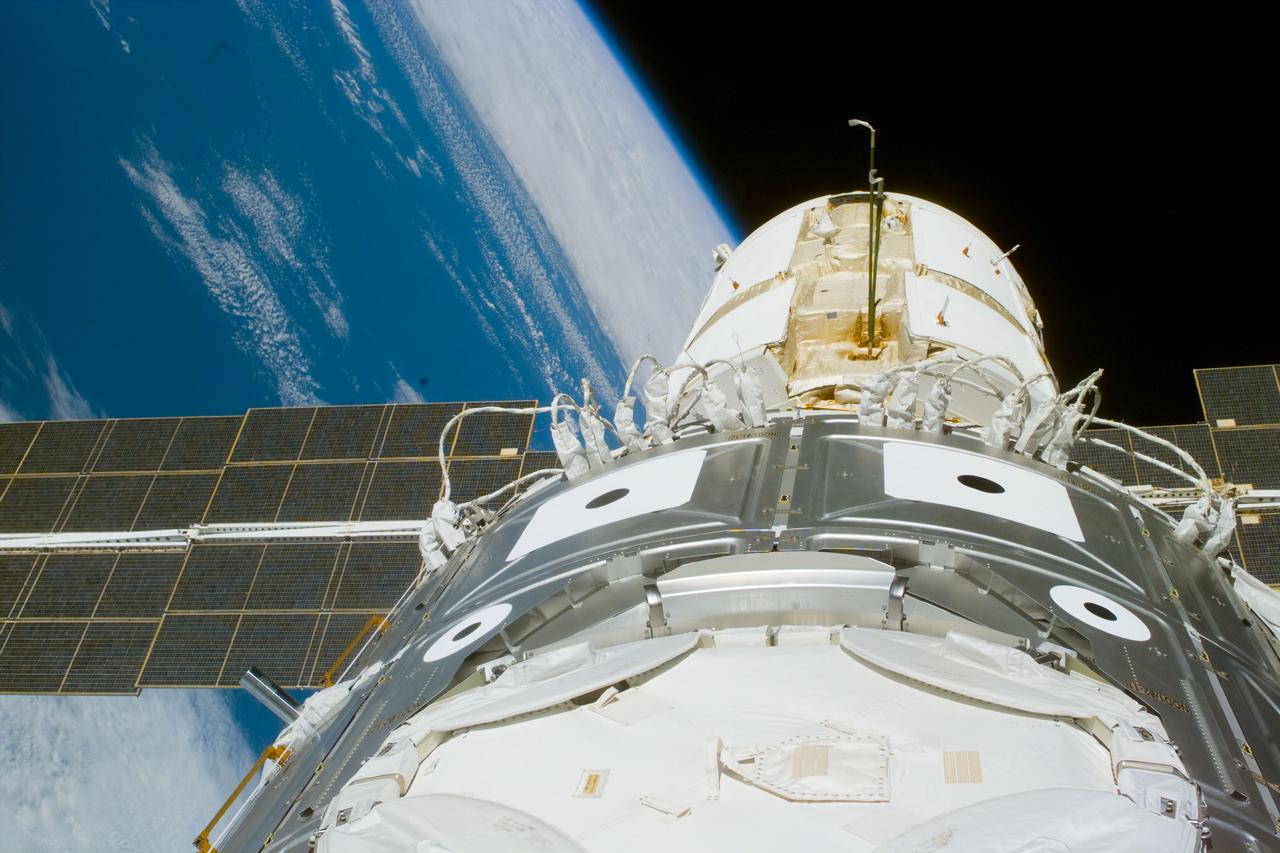
S88-E-5151 (12-13-98) --- One of the final looks at the mated Zarya and Unity modules before the ISS components left Endeavour's cargo bay. The scene was recorded with an electronic still camera (ESC) at 18:20:52 GMT, Dec. 13.
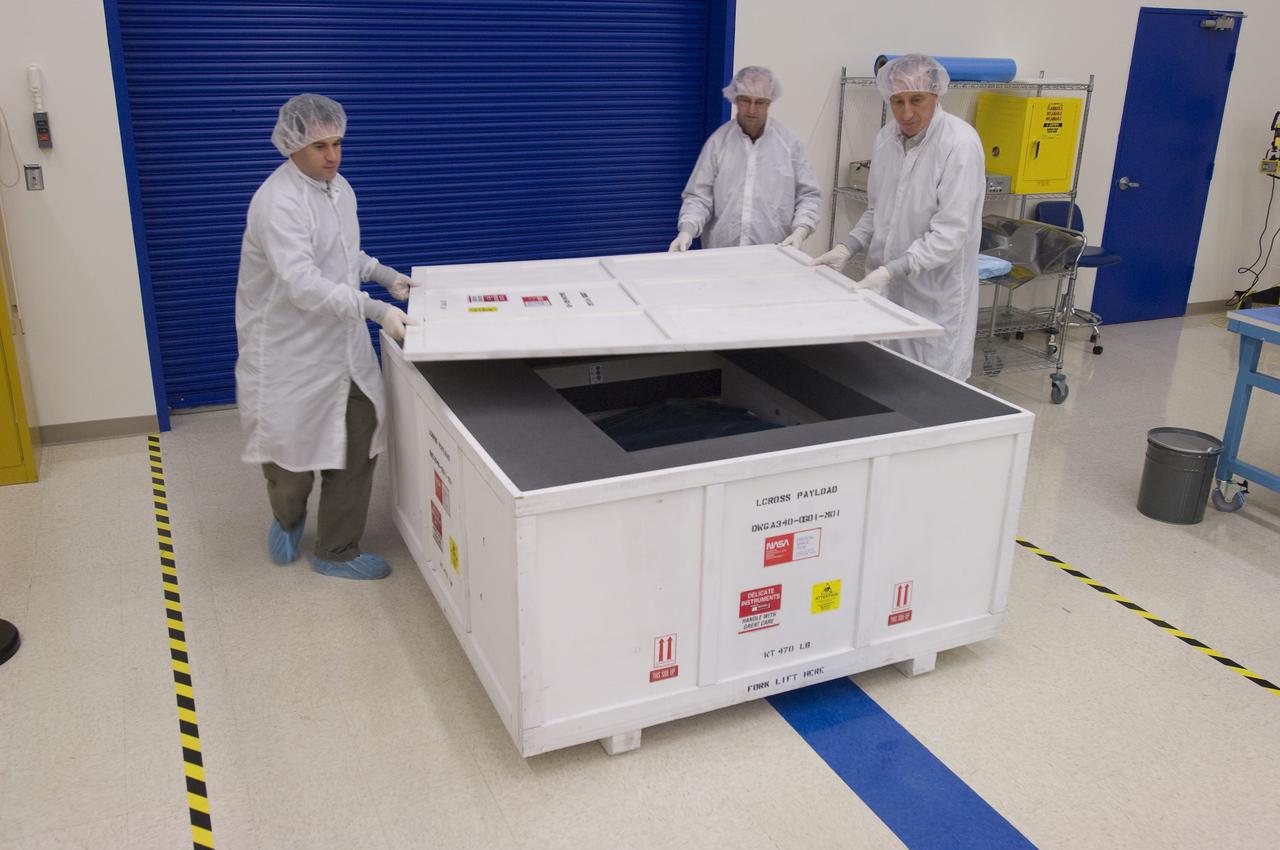
LCROSS in Ames clean room N-240- securing special made crate for transfer to Northrup Grumman Redondo Beach, CA where more calibration will be done before finally being sent for mating with the LRO spacecraft (with Tony Colaprete (l) LCROSS P.I. Steve Ord, Project Management Division (c) ) and Unknown)
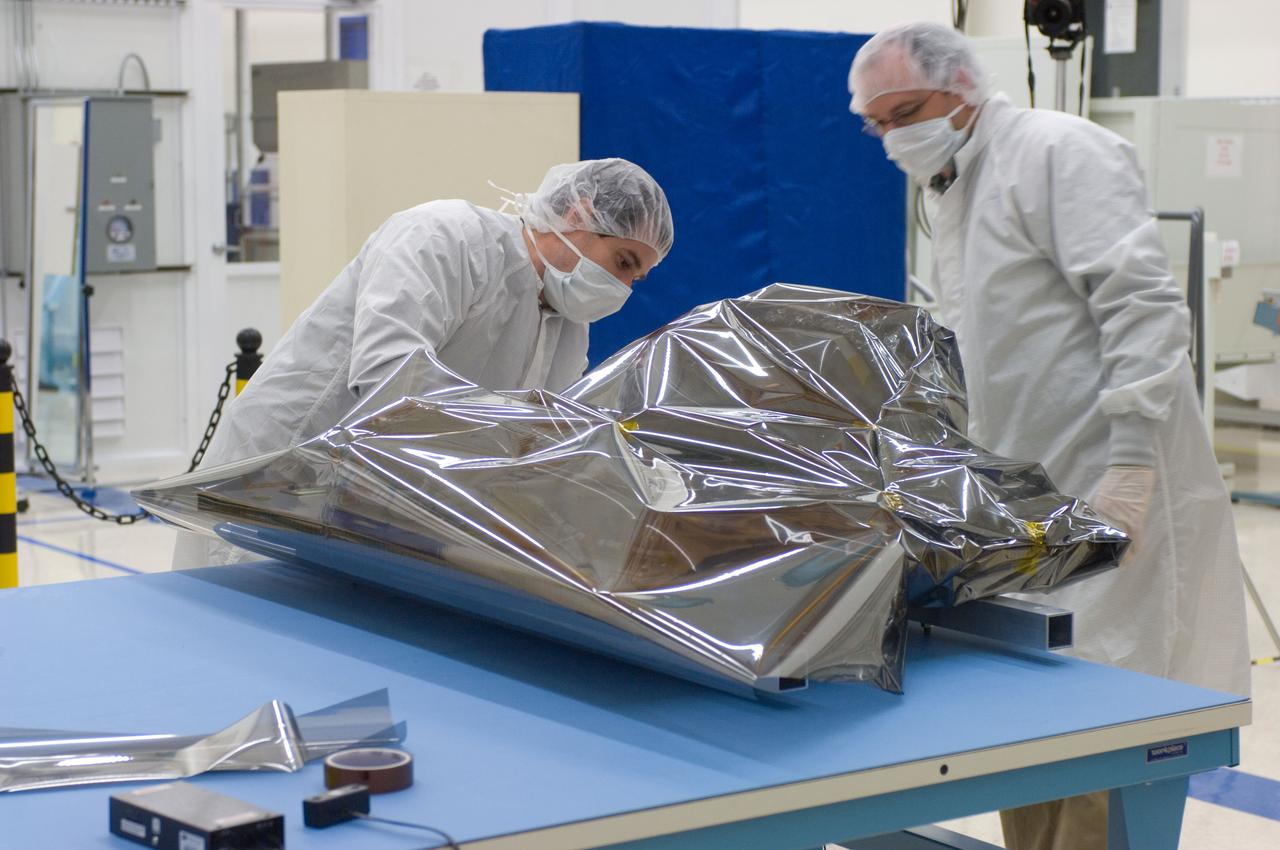
LCROSS in Ames clean room N-240- cleaning and wrapping for transfer to Northrup Grumman Redondo Beach, CA where more calibration will be done before finally being sent for mating with the LRO spacecraft (with Steve Ord, Project Management Division (l) and Tony Colaprete (r) LCROSS P.I.)
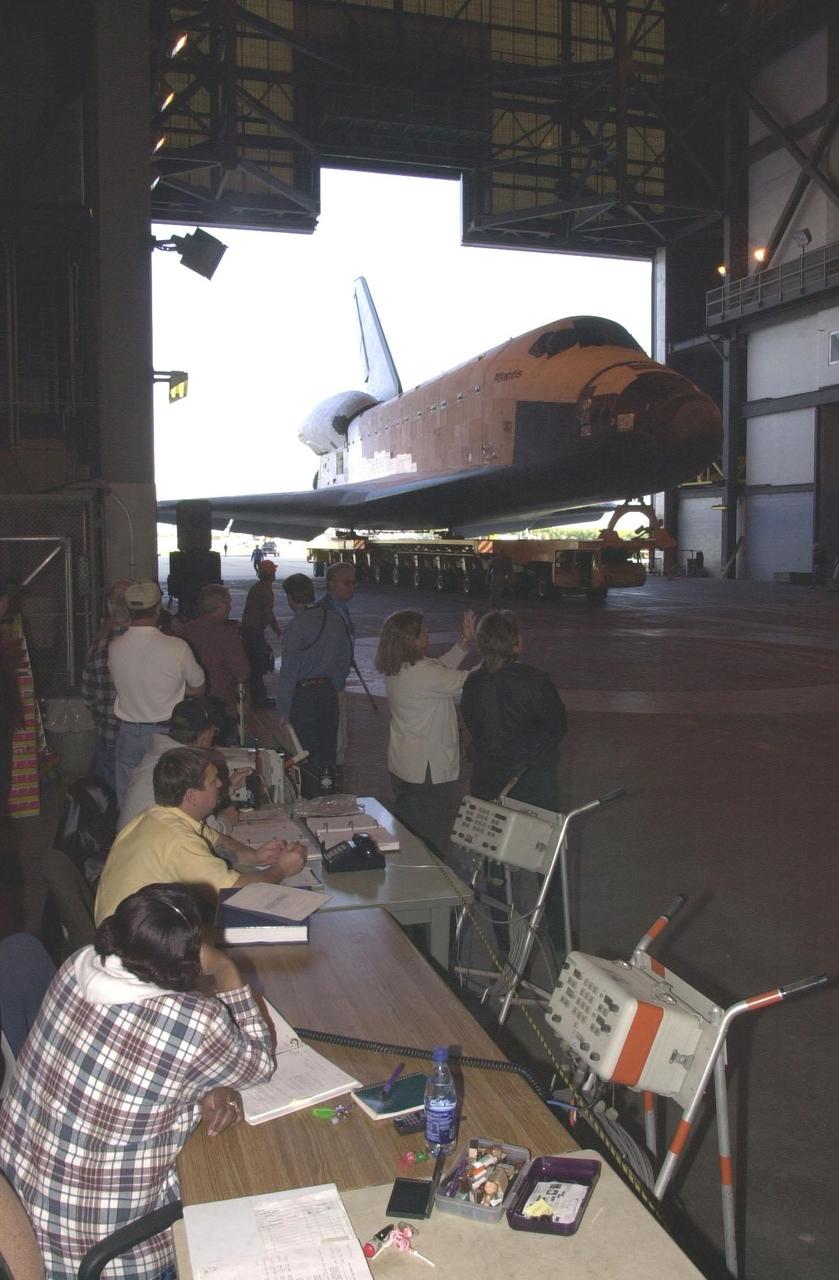
KENNEDY SPACE CENTER, Fla. - With employees watching, Orbiter Atlantis rolls into the Vehicle Assembly Building for space vehicle mate. As part of final preparations before transfer to the launch pad, Atlantis will be lifted vertically into its VAB high bay and mated to the twin solid rocket boosters and external tank. The STS-110 mission resumes International Space Station assembly operations with the delivery of the S0 truss, which will support solar panels providing additional power to the Station. The payload will also include the first part of a Mobile Transporter that will provide a moveable base for the Station’s Canadian robotic arm. STS-110 is scheduled for launch April 4
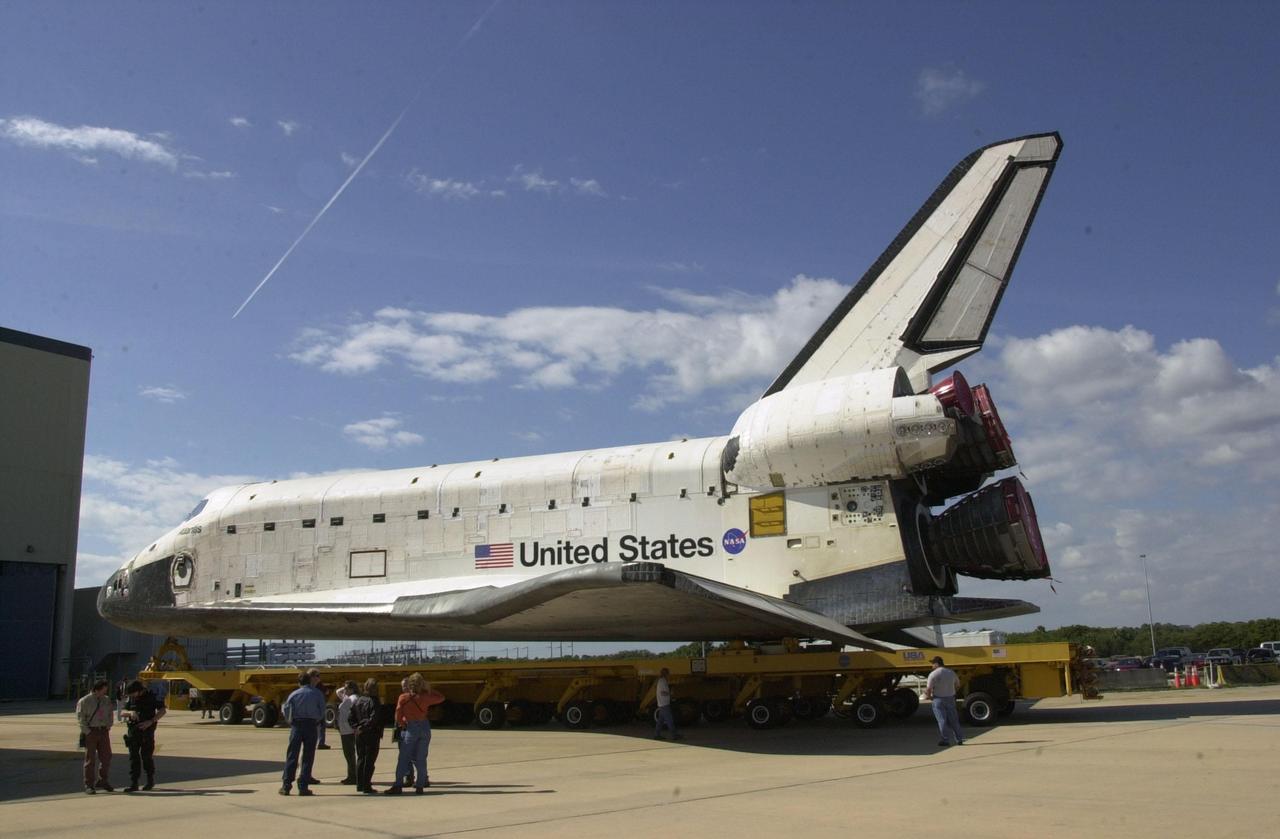
KENNEDY SPACE CENTER, FLA. -- Orbiter Atlantis rolls out of the Orbiter Processing Facility on its way to the Vehicle Assembly Building for space vehicle mate. As part of final preparations before transfer to the launch pad, Atlantis will be lifted vertically into its VAB high bay and mated to the twin solid rocket boosters and external tank. The STS-110 mission resumes International Space Station assembly operations with the delivery of the S0 truss, which will support solar panels providing additional power to the Station. The payload will also include the first part of a Mobile Transporter that will provide a moveable base for the Station’s Canadian robotic arm. STS-110 is scheduled for launch April 4
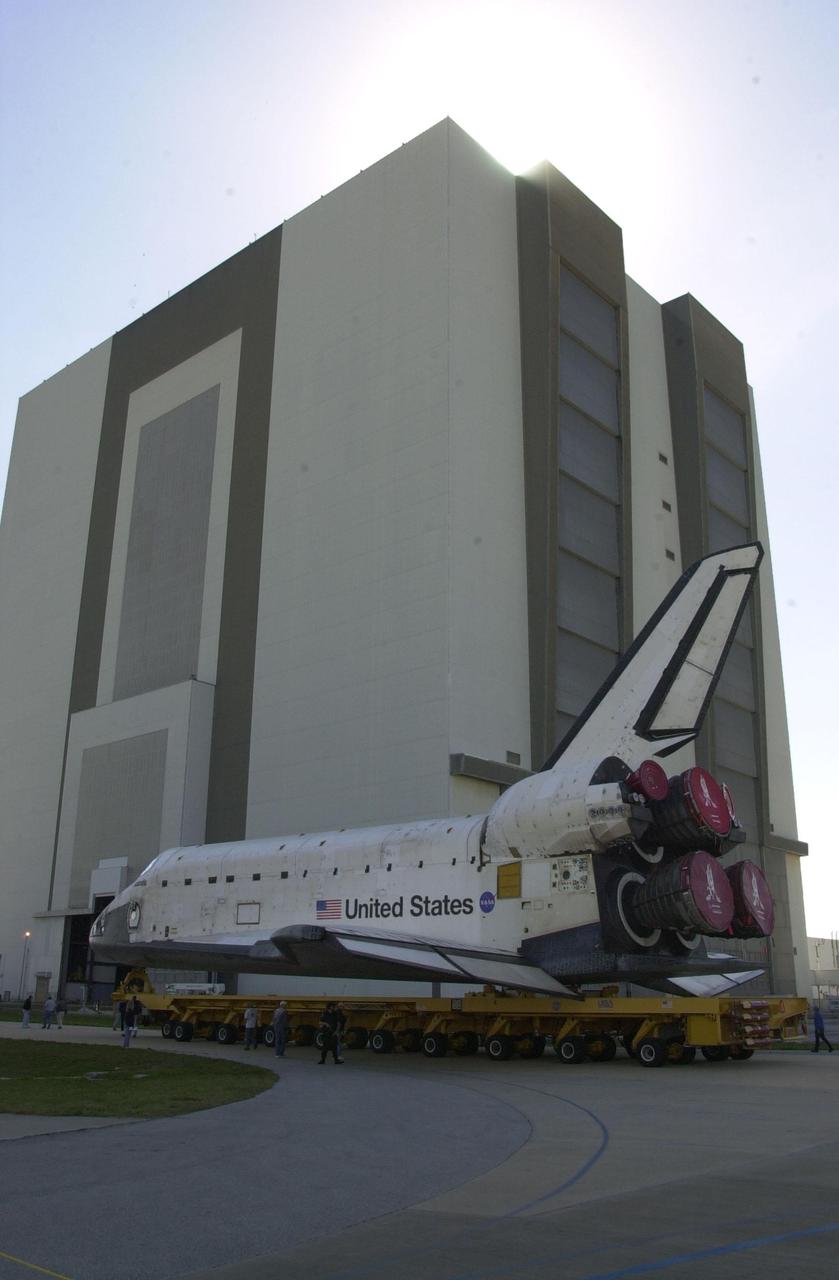
KENNEDY SPACE CENTER, Fla. - After leaving the Orbiter Processing Facility, Orbiter Atlantis nears the Vehicle Assembly Building for space vehicle mate. As part of final preparations before transfer to the launch pad, Atlantis will be lifted vertically into its VAB high bay and mated to the twin solid rocket boosters and external tank. The STS-110 mission resumes International Space Station assembly operations with the delivery of the S0 truss, which will support solar panels providing additional power to the Station. The payload will also include the first part of a Mobile Transporter that will provide a moveable base for the Station’s Canadian robotic arm. STS-110 is scheduled for launch April 4
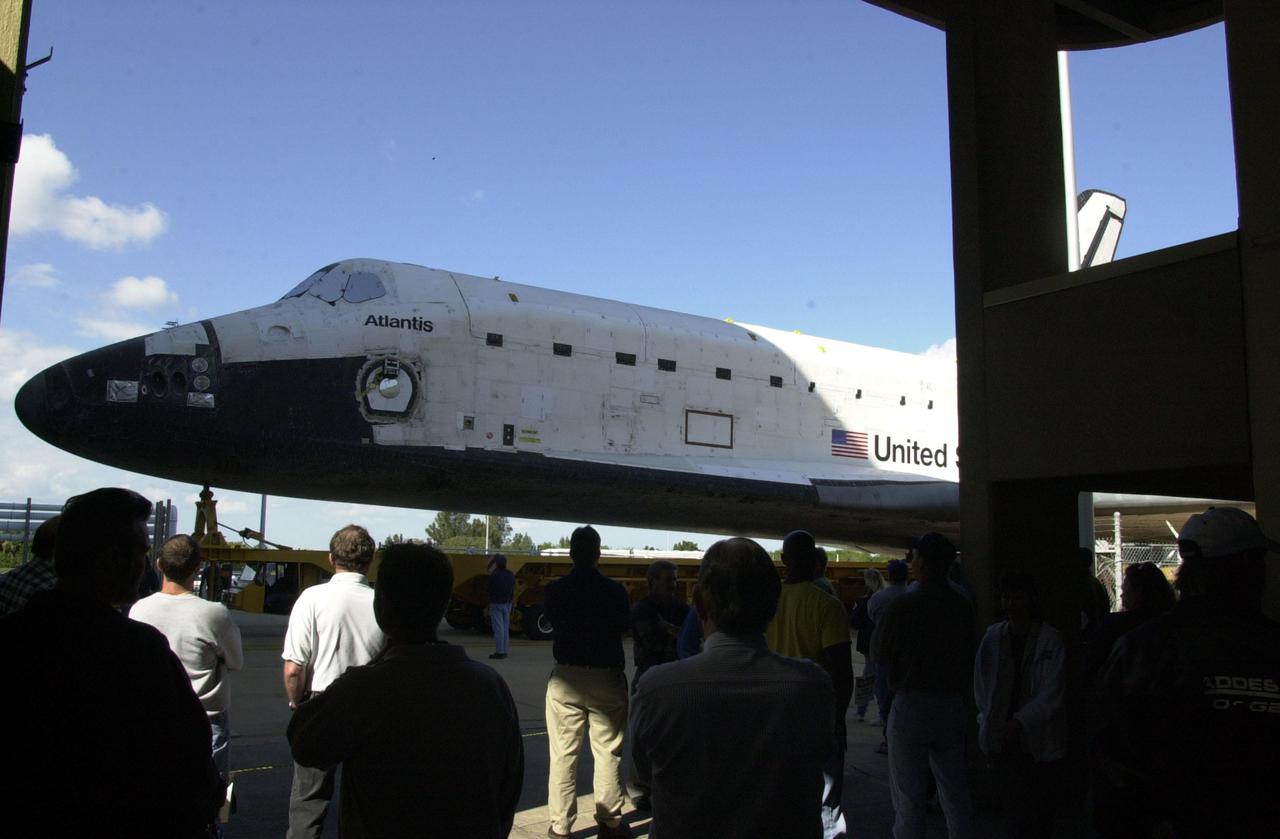
KENNEDY SPACE CENTER, Fla. - Employees watch as Orbiter Atlantis rolls out of the Orbiter Processing Facility on its way to the Vehicle Assembly Building for space vehicle mate. As part of final preparations before transfer to the launch pad, Atlantis will be lifted vertically into its VAB high bay and mated to the twin solid rocket boosters and external tank. The STS-110 mission resumes International Space Station assembly operations with the delivery of the S0 truss, which will support solar panels providing additional power to the Station. The payload will also include the first part of a Mobile Transporter that will provide a moveable base for the Station’s Canadian robotic arm. STS-110 is scheduled for launch April 4
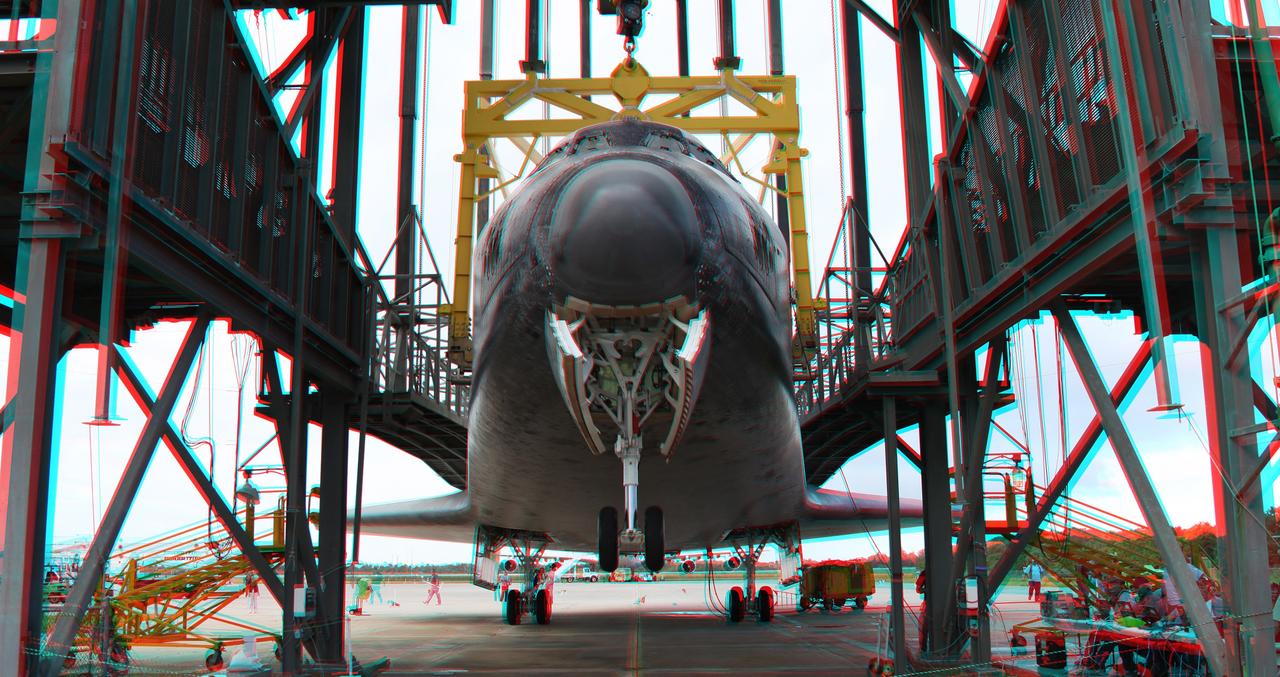
CAPE CANAVERAL, Fla. – This three -dimensional view at the Shuttle Landing Facility at NASA's Kennedy Space Center in Florida, shows the space shuttle Endeavour as it is being lifted in the mate-demate devise for mating to the NASA Shuttle Carrier Aircraft, or SCA, which will ferry the orbiter to California. This image may be viewed in 3-D with red and blue glasses. The SCA, a modified 747 jetliner, will fly Endeavour to Los Angeles where it will be placed on public display at the California Science Center. This is the final ferry flight scheduled in the Space Shuttle Program era. For more information on the shuttles' transition and retirement, visit http://www.nasa.gov/transition. Photo credit: NASA/ Frankie Martin
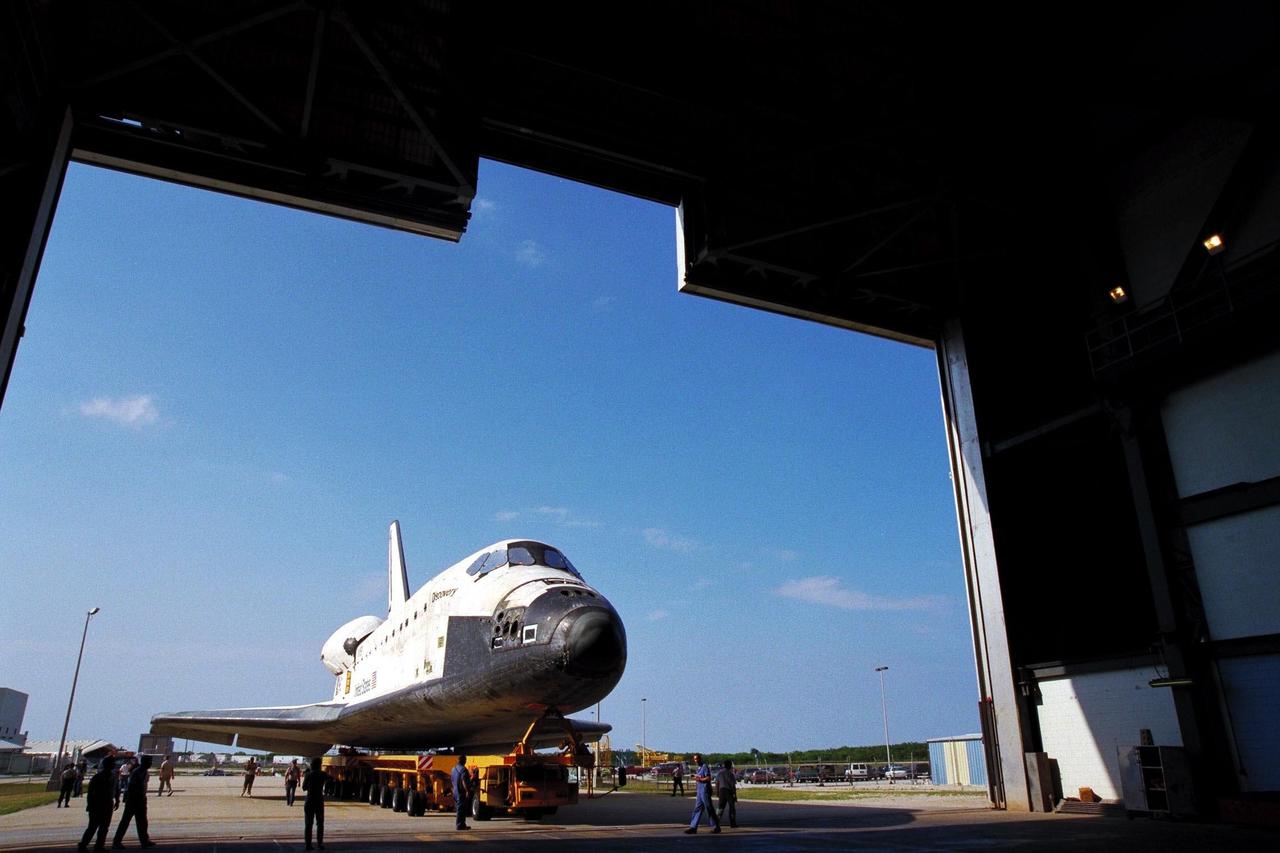
The orbiter Discovery approaches the door of KSC's Vehicle Assembly Building after leaving the Orbiter Processing Facility Bay 2. Soon, it will be hoisted upright into a vertical position to be mated with an orange external tank and two white solid rocket boosters. Once mated, the orbiter becomes the Space Shuttle Discovery, slated for launch on STS-91, the ninth and final docking mission with the Russian Space Station Mir. The six-member crew of STS-91 will dock with Mir and pick up Mission Specialist Andrew Thomas, Ph.D., who will have been on Mir about four months, to return him to Earth. STS-91 is scheduled to launch June 2 at about 6:04 p.m. EDT
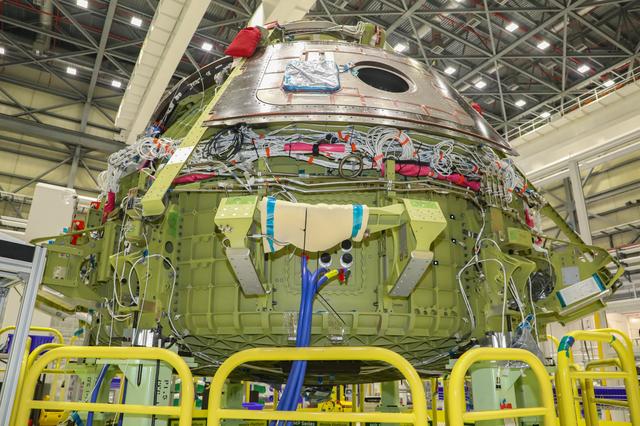
On March 11, Boeing mated the upper and lower domes of its CST-100 Starliner spacecraft slated to fly in the company’s Orbital Flight Test (OFT). The mate was completed at Boeing’s Commercial Crew and Cargo Processing Facility at NASA’s Kennedy Space Center in Florida. Starliner uses an innovative weldless design where the main structure is made of two domes, each spin-formed and machined from a solid piece of aerospace-grade aluminum. The two domes then undergo outfitting with avionics, cooling systems, wire harnesses, fuel and life support lines, and other critical systems before being mated together. This is one of the last major milestones ahead of final processing and closeouts for flight. OFT is Boeing’s uncrewed flight test of Starliner and part of NASA’s Commercial Crew Program, which will return human spaceflight launches into low-Earth orbit from U.S. soil.
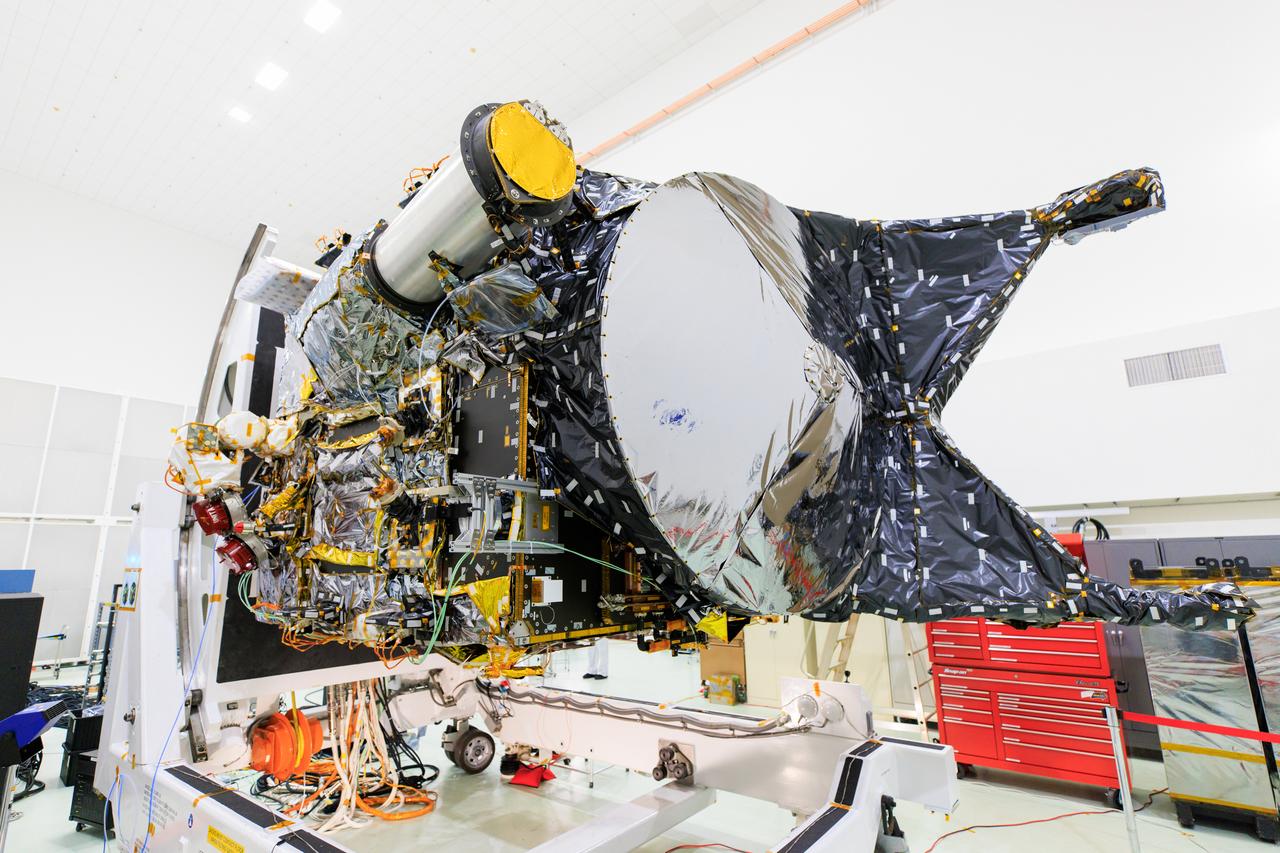
NASA's Psyche spacecraft is shown in a clean room on June 26, 2023, at Astrotech Space Operations Facility near the agency’s Kennedy Space Center in Florida. Engineers and technicians from NASA’s Jet Propulsion Laboratory in Southern California have begun final assembly, test, and launch operations on Psyche, with assembly of the spacecraft all but complete except for the installation of the solar arrays and the imagers. NASA’s Deep Space Optical Communications (DSOC) technology demonstration, testing high-data-rate laser communications, remains integrated into the spacecraft. A final suite of tests will be run on the vehicle, after which it will be fueled and then mated onto a SpaceX Falcon Heavy rocket just prior to launch, targeted for October 2023.
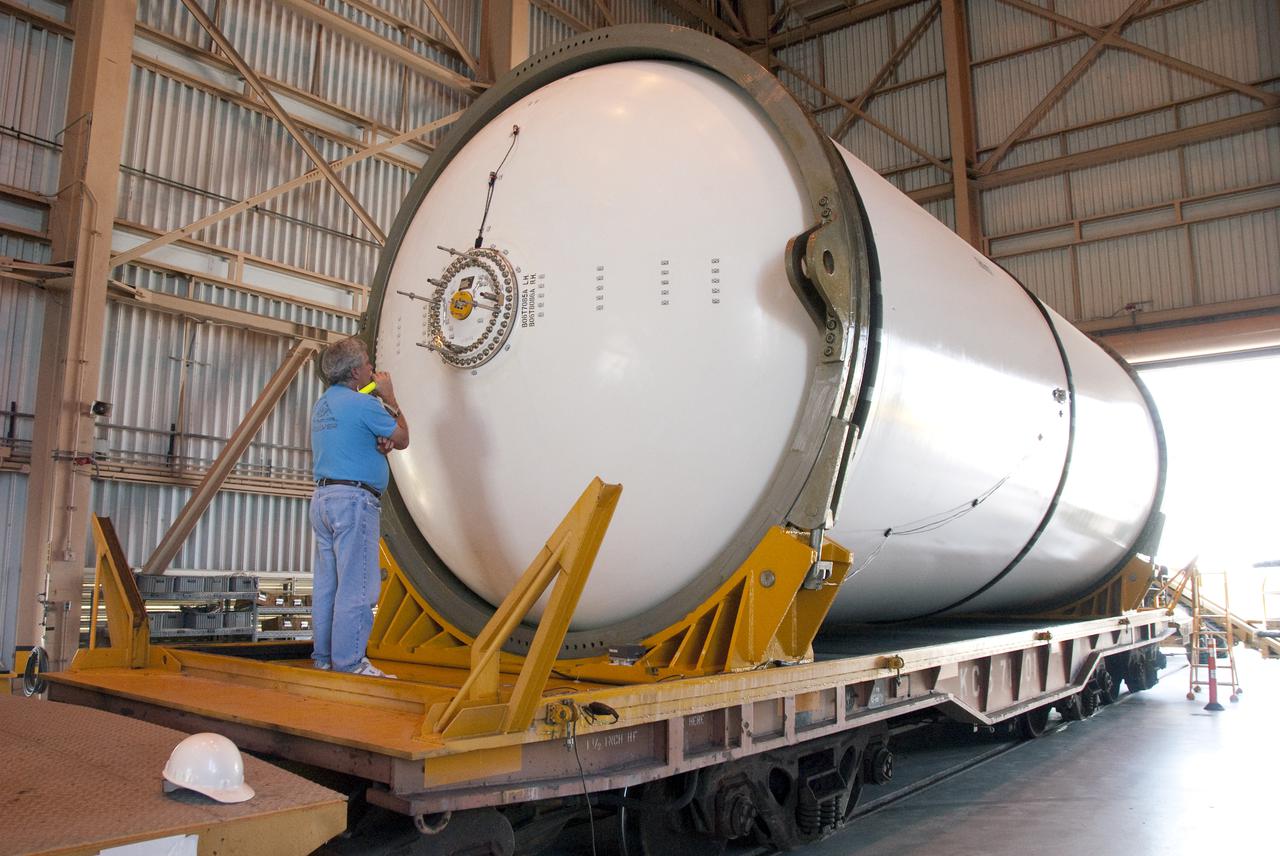
CAPE CANAVERAL, Fla. -- In the Rotation, Processing and Surge Facility, or RSPF, at NASA's Kennedy Space Center in Florida, workers perform the propellant grain inspection of the final solid rocket booster segments, which is a required safety analysis. The booster segments were manufactured at the ATK solid rocket booster plant in Promontory, Utah, and traveled to Kennedy along the Florida East Coast Railway. The booster segments will be stacked and then mated to space shuttle Atlantis and its external fuel tank in the Vehicle Assembly Building. The segments will be used for what currently is planned as the 'launch on need,' or potential rescue mission for the final shuttle flight, Endeavour's STS-134 mission. For information, visit www.nasa.gov_shuttle. Photo credit: NASA_Cory Huston
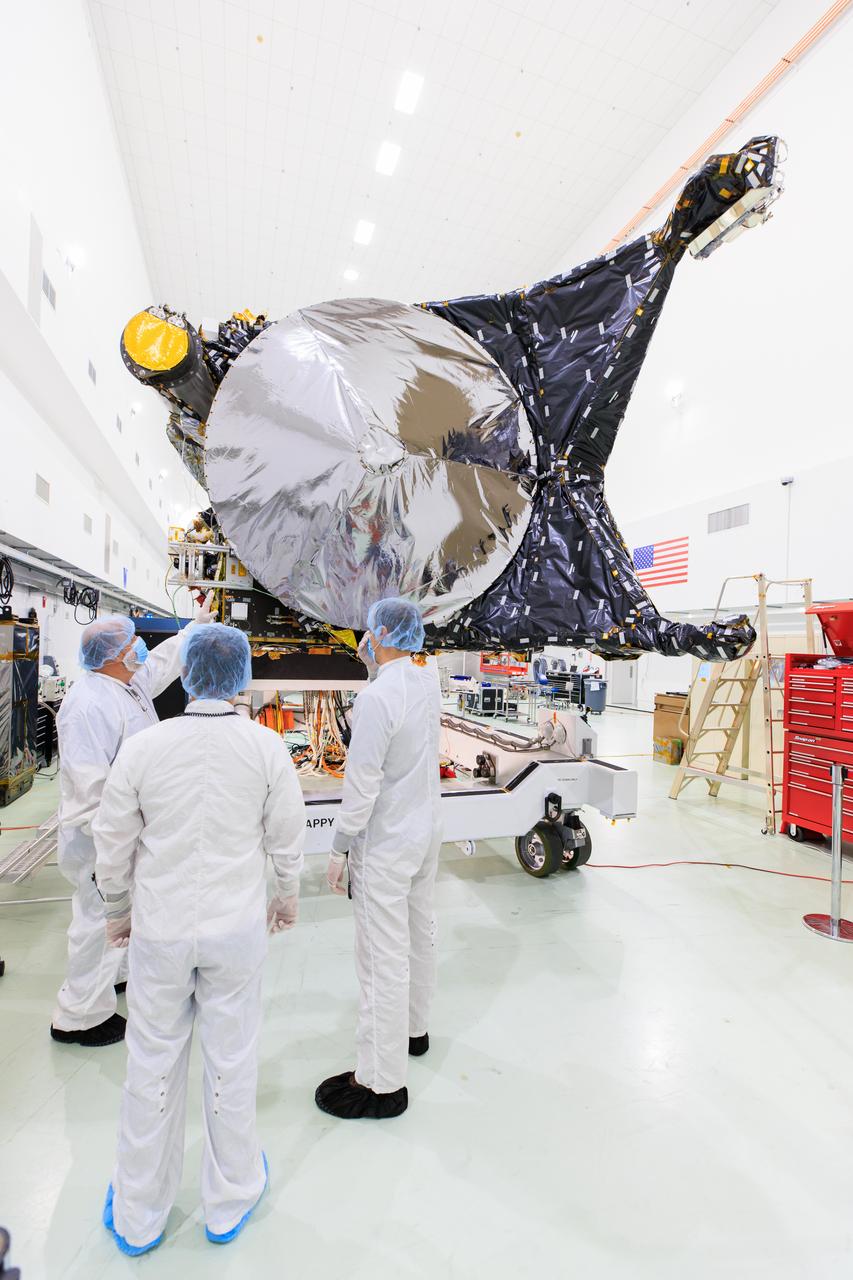
NASA's Psyche spacecraft is shown in a clean room on June 26, 2023, at Astrotech Space Operations Facility near the agency’s Kennedy Space Center in Florida. Engineers and technicians from NASA’s Jet Propulsion Laboratory in Southern California have begun final assembly, test, and launch operations on Psyche, with assembly of the spacecraft all but complete except for the installation of the solar arrays and the imagers. NASA’s Deep Space Optical Communications (DSOC) technology demonstration, testing high-data-rate laser communications, remains integrated into the spacecraft. A final suite of tests will be run on the vehicle, after which it will be fueled and then mated onto a SpaceX Falcon Heavy rocket just prior to launch, targeted for October 2023.
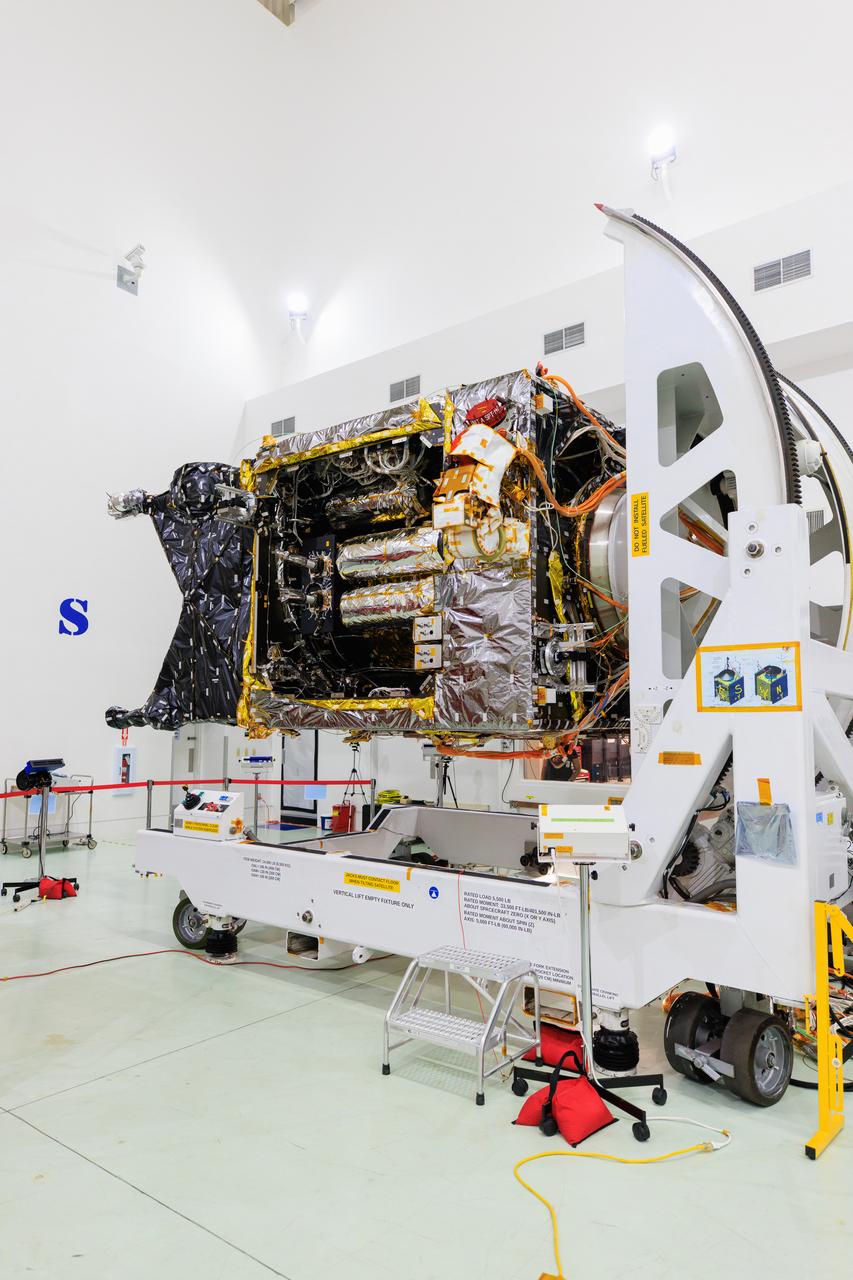
NASA's Psyche spacecraft is shown in a clean room on June 26, 2023, at Astrotech Space Operations Facility near the agency’s Kennedy Space Center in Florida. Engineers and technicians from NASA’s Jet Propulsion Laboratory in Southern California have begun final assembly, test, and launch operations on Psyche, with assembly of the spacecraft all but complete except for the installation of the solar arrays and the imagers. NASA’s Deep Space Optical Communications (DSOC) technology demonstration, testing high-data-rate laser communications, remains integrated into the spacecraft. A final suite of tests will be run on the vehicle, after which it will be fueled and then mated onto a SpaceX Falcon Heavy rocket just prior to launch, targeted for October 2023.

NASA's Psyche spacecraft is shown in a clean room on June 26, 2023, at Astrotech Space Operations Facility near the agency’s Kennedy Space Center in Florida. Engineers and technicians from NASA’s Jet Propulsion Laboratory in Southern California have begun final assembly, test, and launch operations on Psyche, with assembly of the spacecraft all but complete except for the installation of the solar arrays and the imagers. NASA’s Deep Space Optical Communications (DSOC) technology demonstration, testing high-data-rate laser communications, remains integrated into the spacecraft. A final suite of tests will be run on the vehicle, after which it will be fueled and then mated onto a SpaceX Falcon Heavy rocket just prior to launch, targeted for October 2023.
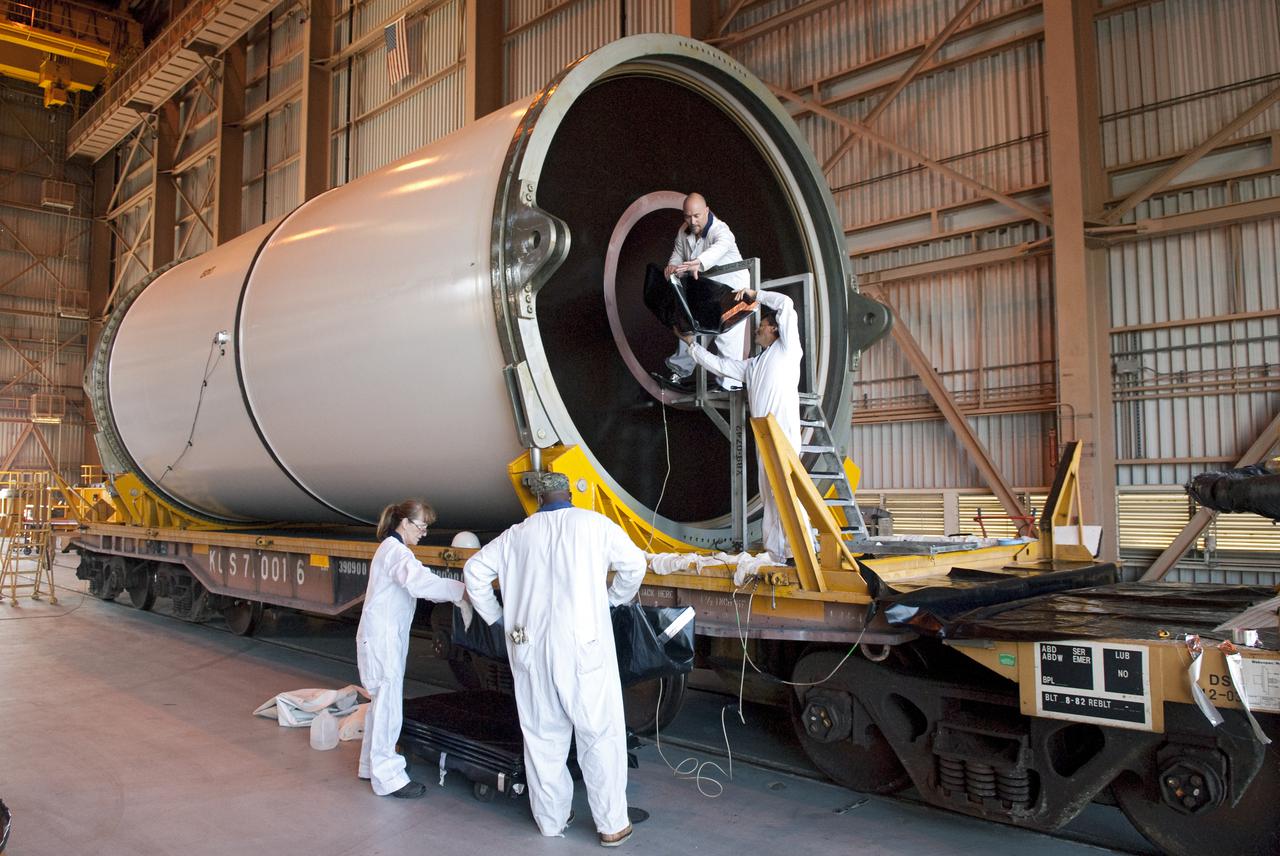
CAPE CANAVERAL, Fla. -- In the Rotation, Processing and Surge Facility, or RSPF, at NASA's Kennedy Space Center in Florida, workers prepare for the propellant grain inspection of the final solid rocket booster segments, which is a required safety analysis. The booster segments were manufactured at the ATK solid rocket booster plant in Promontory, Utah, and traveled to Kennedy along the Florida East Coast Railway. The booster segments will be stacked and then mated to space shuttle Atlantis and its external fuel tank in the Vehicle Assembly Building. The segments will be used for what currently is planned as the 'launch on need,' or potential rescue mission for the final shuttle flight, Endeavour's STS-134 mission. For information, visit www.nasa.gov_shuttle. Photo credit: NASA_Cory Huston
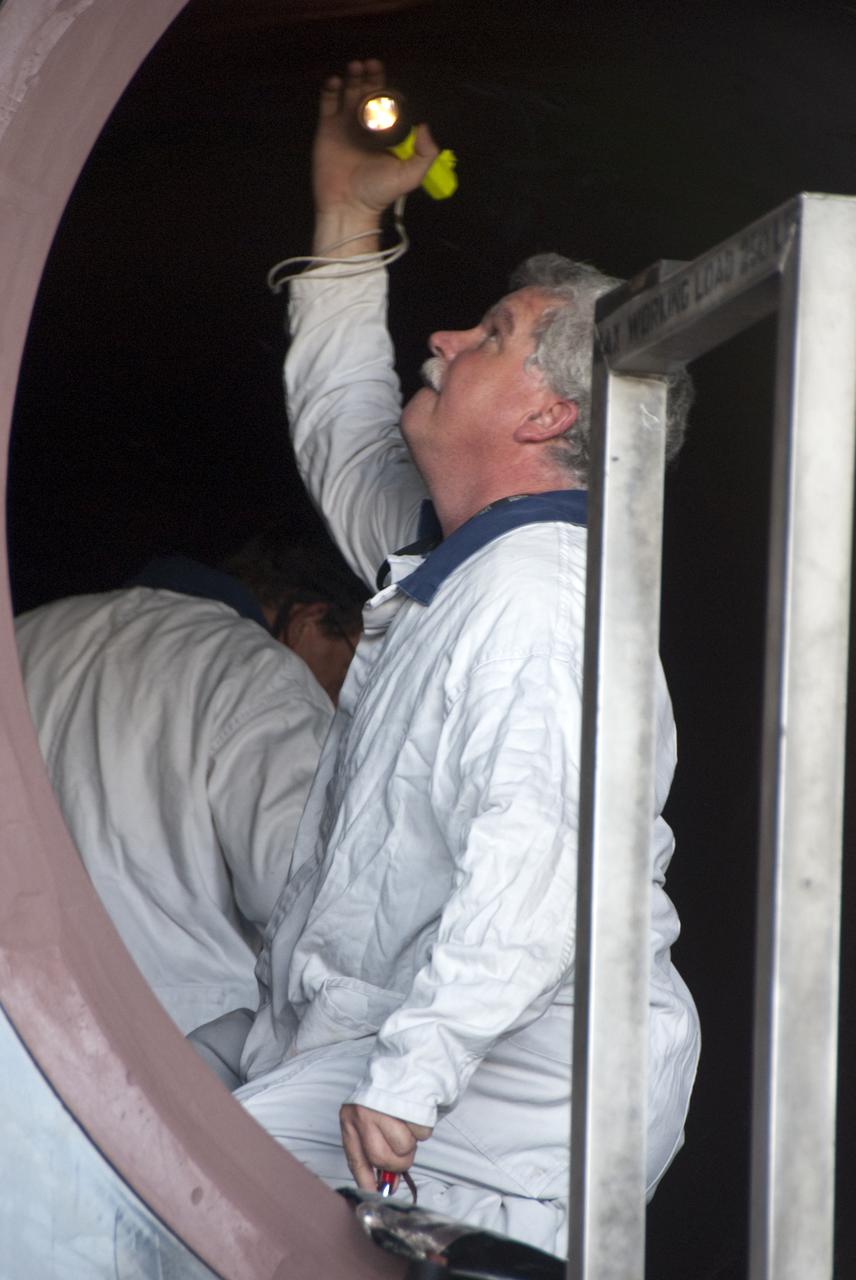
CAPE CANAVERAL, Fla. -- In the Rotation, Processing and Surge Facility, or RSPF, at NASA's Kennedy Space Center in Florida, a worker performs the propellant grain inspection of the final solid rocket booster segments, which is a required safety analysis. The booster segments were manufactured at the ATK solid rocket booster plant in Promontory, Utah, and traveled to Kennedy along the Florida East Coast Railway. The booster segments will be stacked and then mated to space shuttle Atlantis and its external fuel tank in the Vehicle Assembly Building. The segments will be used for what currently is planned as the 'launch on need,' or potential rescue mission for the final shuttle flight, Endeavour's STS-134 mission. For information, visit www.nasa.gov_shuttle. Photo credit: NASA_Cory Huston
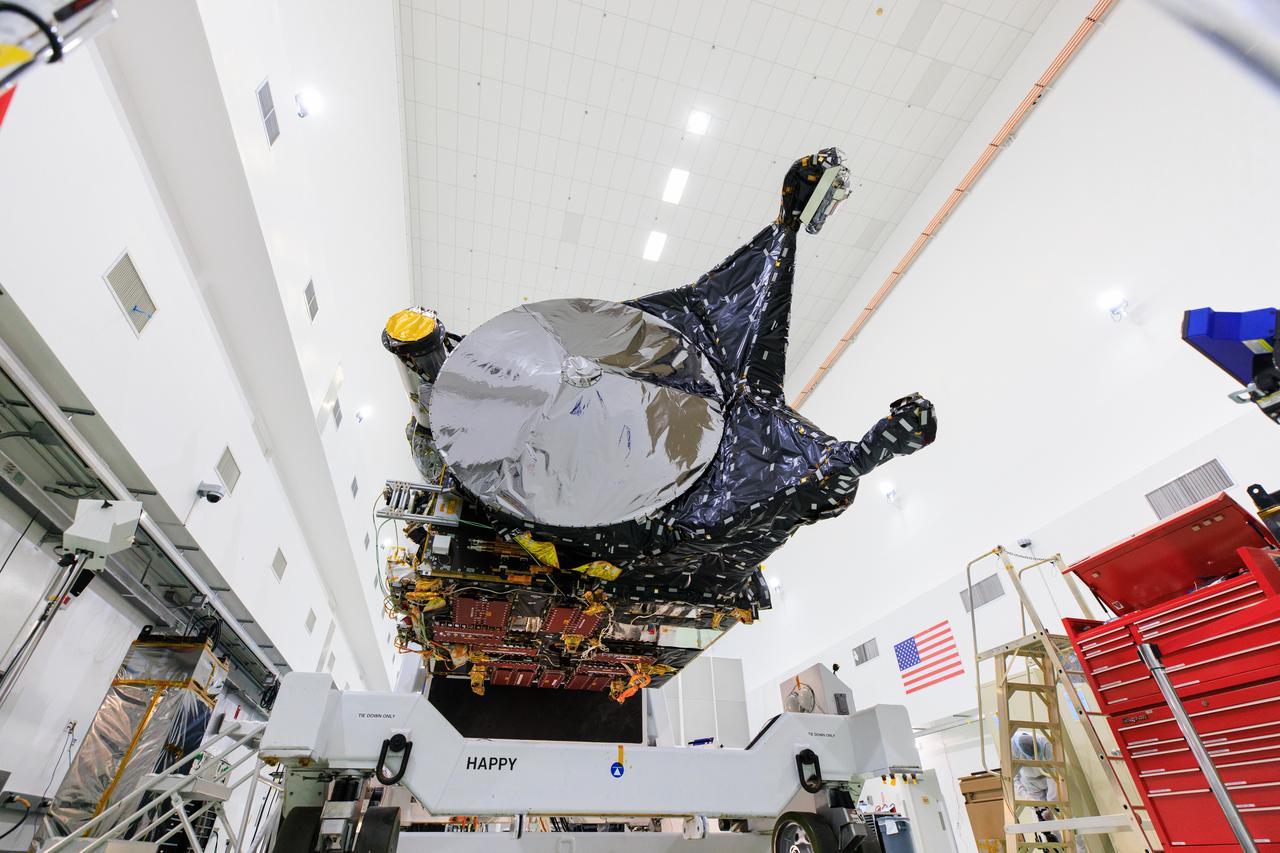
NASA's Psyche spacecraft is shown in a clean room on June 26, 2023, at Astrotech Space Operations Facility near the agency’s Kennedy Space Center in Florida. Engineers and technicians from NASA’s Jet Propulsion Laboratory in Southern California have begun final assembly, test, and launch operations on Psyche, with assembly of the spacecraft all but complete except for the installation of the solar arrays and the imagers. NASA’s Deep Space Optical Communications (DSOC) technology demonstration, testing high-data-rate laser communications, remains integrated into the spacecraft. A final suite of tests will be run on the vehicle, after which it will be fueled and then mated onto a SpaceX Falcon Heavy rocket just prior to launch, targeted for October 2023.
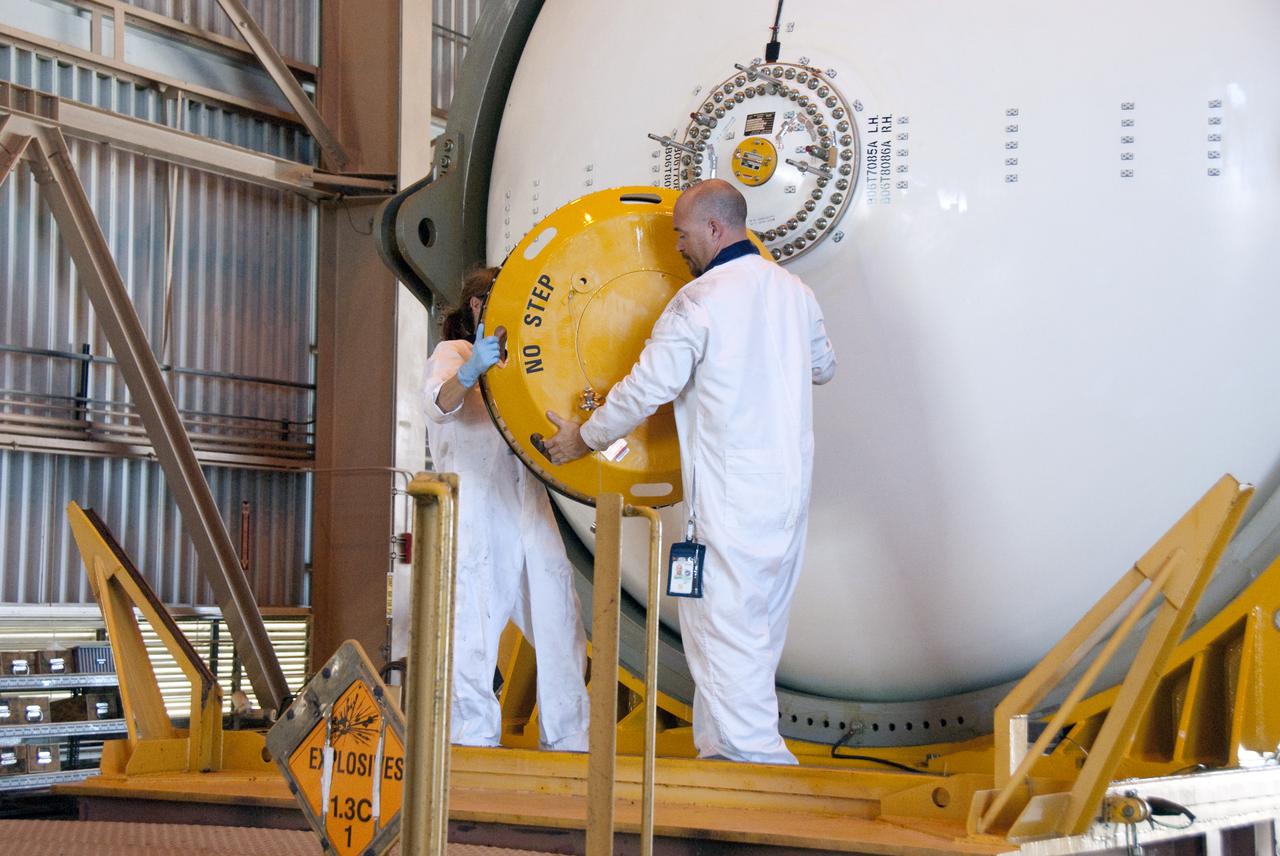
CAPE CANAVERAL, Fla. -- In the Rotation, Processing and Surge Facility, or RSPF, at NASA's Kennedy Space Center in Florida, workers perform the propellant grain inspection of the final solid rocket booster segments, which is a required safety analysis. The booster segments were manufactured at the ATK solid rocket booster plant in Promontory, Utah, and traveled to Kennedy along the Florida East Coast Railway. The booster segments will be stacked and then mated to space shuttle Atlantis and its external fuel tank in the Vehicle Assembly Building. The segments will be used for what currently is planned as the 'launch on need,' or potential rescue mission for the final shuttle flight, Endeavour's STS-134 mission. For information, visit www.nasa.gov_shuttle. Photo credit: NASA_Cory Huston
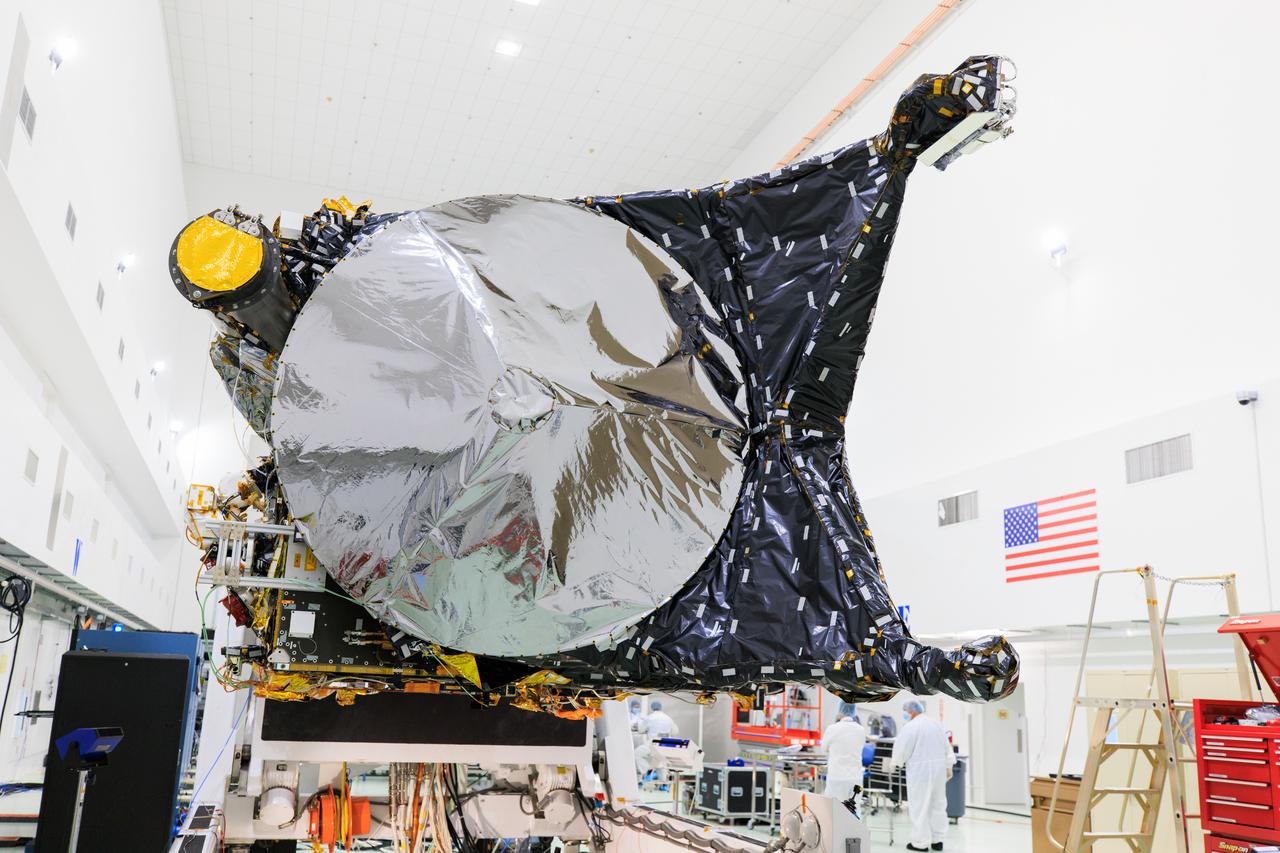
NASA's Psyche spacecraft is shown in a clean room on June 26, 2023, at Astrotech Space Operations Facility near the agency’s Kennedy Space Center in Florida. Engineers and technicians from NASA’s Jet Propulsion Laboratory in Southern California have begun final assembly, test, and launch operations on Psyche, with assembly of the spacecraft all but complete except for the installation of the solar arrays and the imagers. NASA’s Deep Space Optical Communications (DSOC) technology demonstration, testing high-data-rate laser communications, remains integrated into the spacecraft. A final suite of tests will be run on the vehicle, after which it will be fueled and then mated onto a SpaceX Falcon Heavy rocket just prior to launch, targeted for October 2023.
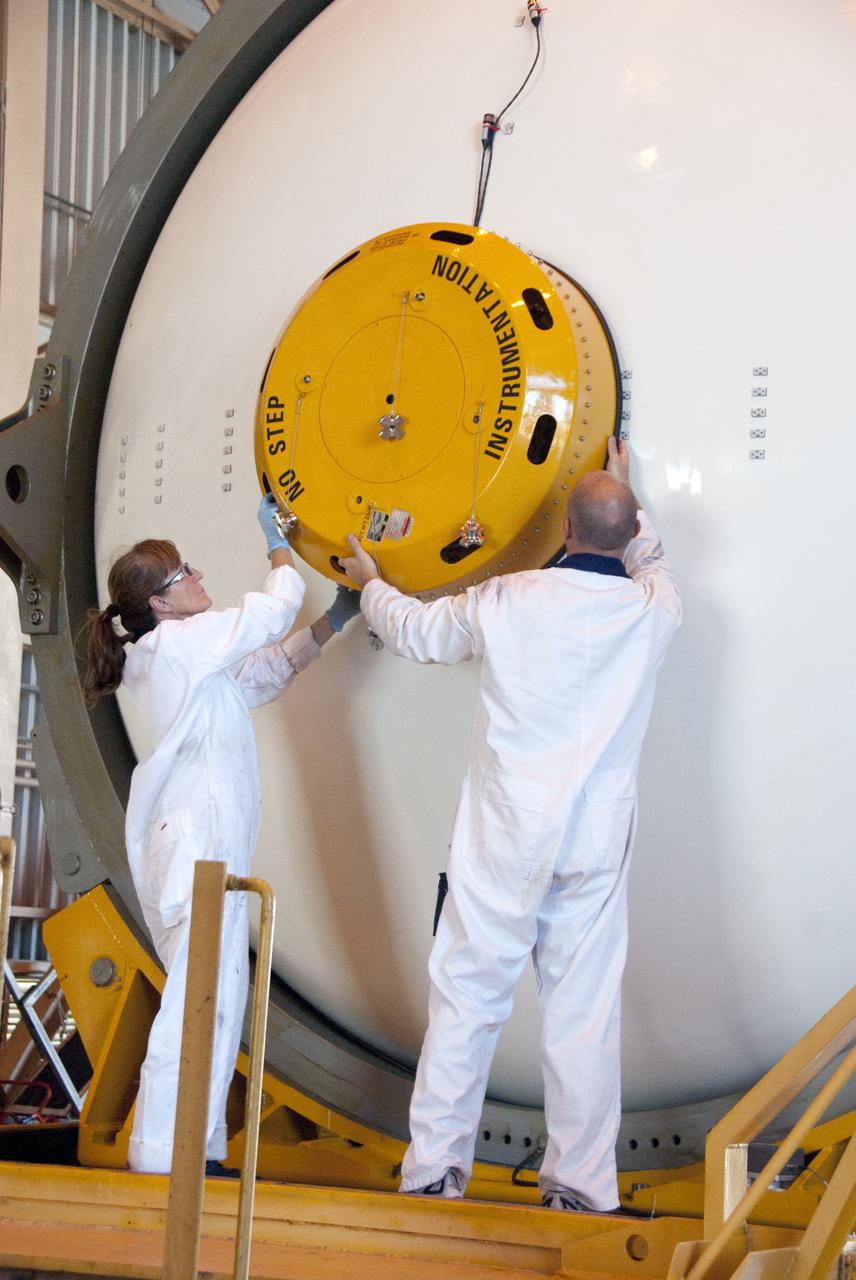
CAPE CANAVERAL, Fla. -- In the Rotation, Processing and Surge Facility, or RSPF, at NASA's Kennedy Space Center in Florida, workers perform the propellant grain inspection of the final solid rocket booster segments, which is a required safety analysis. The booster segments were manufactured at the ATK solid rocket booster plant in Promontory, Utah, and traveled to Kennedy along the Florida East Coast Railway. The booster segments will be stacked and then mated to space shuttle Atlantis and its external fuel tank in the Vehicle Assembly Building. The segments will be used for what currently is planned as the 'launch on need,' or potential rescue mission for the final shuttle flight, Endeavour's STS-134 mission. For information, visit www.nasa.gov_shuttle. Photo credit: NASA_Cory Huston
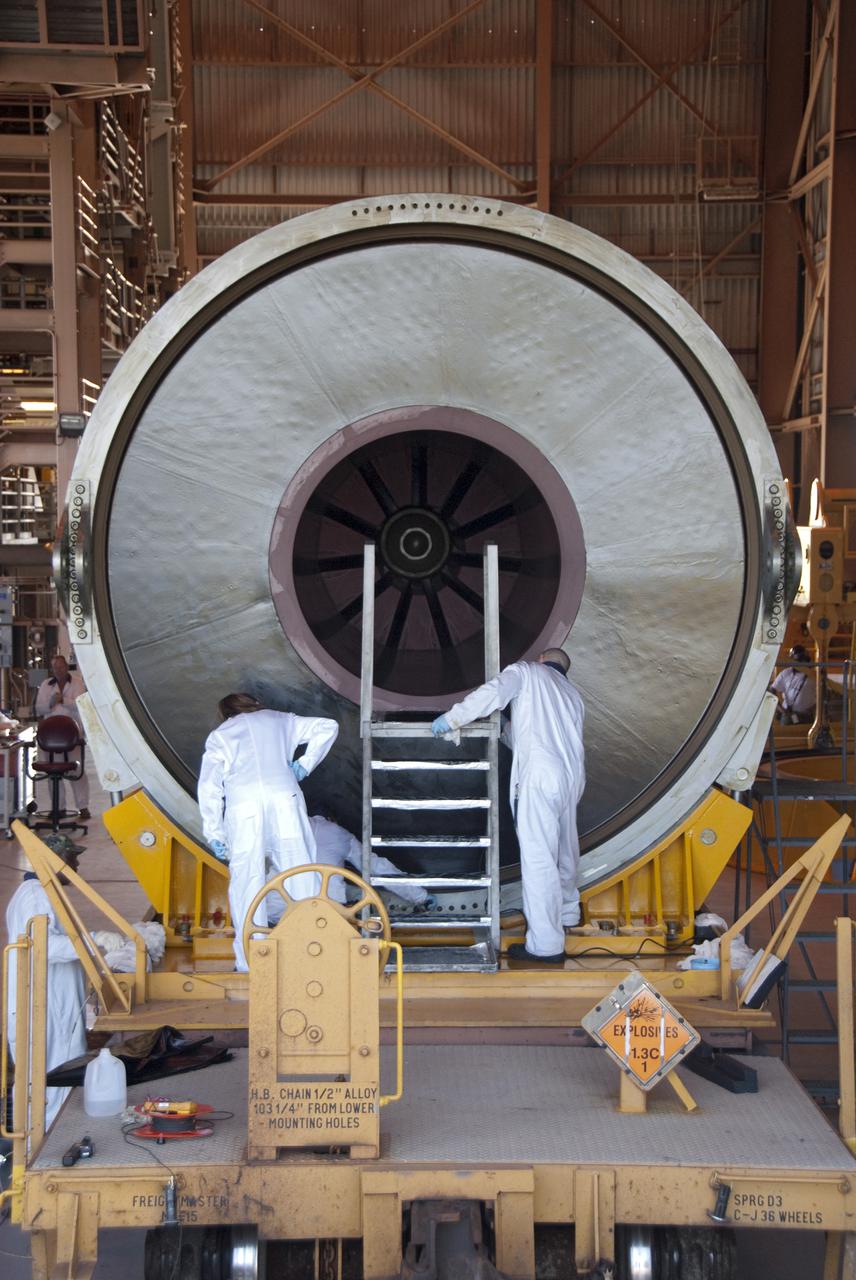
CAPE CANAVERAL, Fla. -- In the Rotation, Processing and Surge Facility, or RSPF, at NASA's Kennedy Space Center in Florida, workers prepare for the propellant grain inspection of the final solid rocket booster segments, which is a required safety analysis. The booster segments were manufactured at the ATK solid rocket booster plant in Promontory, Utah, and traveled to Kennedy along the Florida East Coast Railway. The booster segments will be stacked and then mated to space shuttle Atlantis and its external fuel tank in the Vehicle Assembly Building. The segments will be used for what currently is planned as the 'launch on need,' or potential rescue mission for the final shuttle flight, Endeavour's STS-134 mission. For information, visit www.nasa.gov_shuttle. Photo credit: NASA_Cory Huston
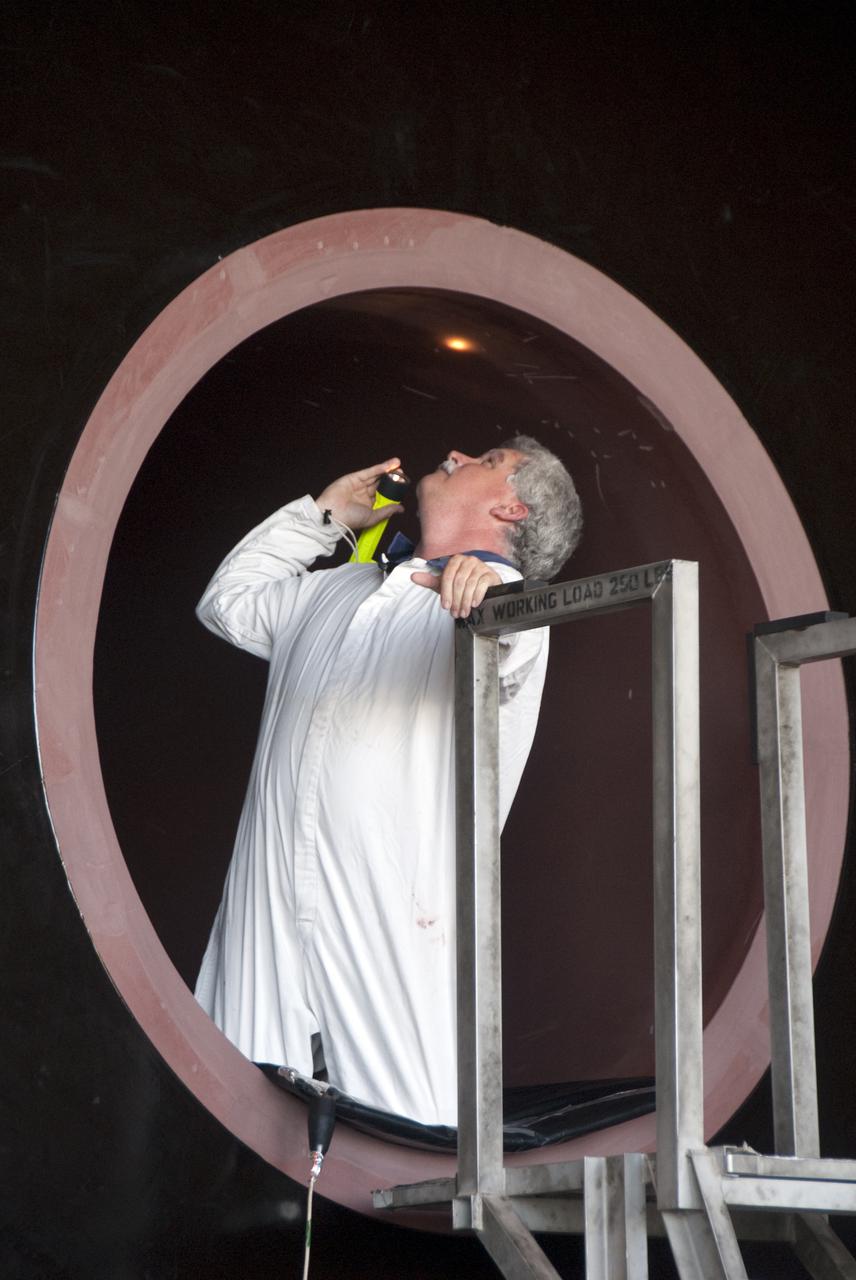
CAPE CANAVERAL, Fla. -- In the Rotation, Processing and Surge Facility, or RSPF, at NASA's Kennedy Space Center in Florida, a worker performs the propellant grain inspection of the final solid rocket booster segments, which is a required safety analysis. The booster segments were manufactured at the ATK solid rocket booster plant in Promontory, Utah, and traveled to Kennedy along the Florida East Coast Railway. The booster segments will be stacked and then mated to space shuttle Atlantis and its external fuel tank in the Vehicle Assembly Building. The segments will be used for what currently is planned as the 'launch on need,' or potential rescue mission for the final shuttle flight, Endeavour's STS-134 mission. For information, visit www.nasa.gov_shuttle. Photo credit: NASA_Cory Huston
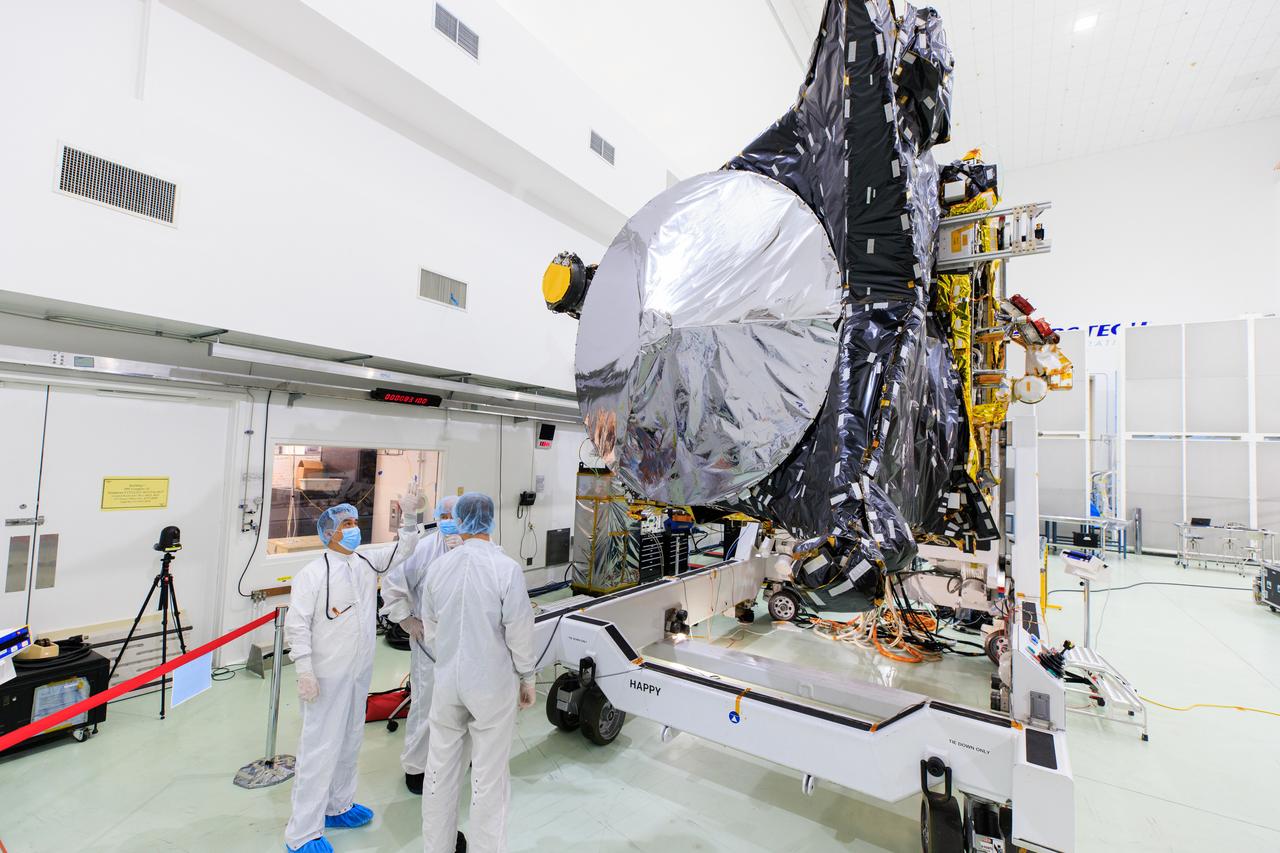
NASA's Psyche spacecraft is shown in a clean room on June 26, 2023, at Astrotech Space Operations Facility near the agency’s Kennedy Space Center in Florida. Engineers and technicians from NASA’s Jet Propulsion Laboratory in Southern California have begun final assembly, test, and launch operations on Psyche, with assembly of the spacecraft all but complete except for the installation of the solar arrays and the imagers. NASA’s Deep Space Optical Communications (DSOC) technology demonstration, testing high-data-rate laser communications, remains integrated into the spacecraft. A final suite of tests will be run on the vehicle, after which it will be fueled and then mated onto a SpaceX Falcon Heavy rocket just prior to launch, targeted for October 2023.
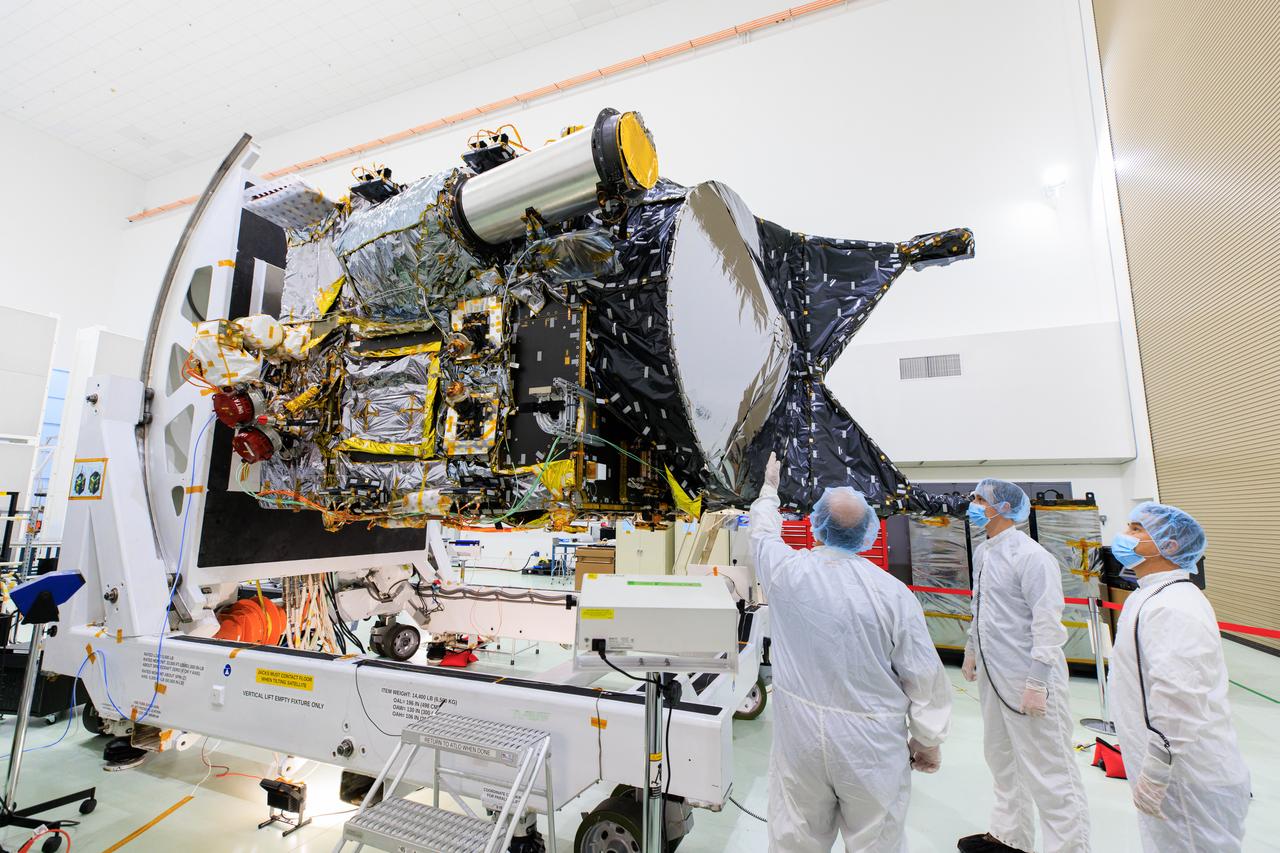
NASA's Psyche spacecraft is shown in a clean room on June 26, 2023, at Astrotech Space Operations Facility near the agency’s Kennedy Space Center in Florida. Engineers and technicians from NASA’s Jet Propulsion Laboratory in Southern California have begun final assembly, test, and launch operations on Psyche, with assembly of the spacecraft all but complete except for the installation of the solar arrays and the imagers. NASA’s Deep Space Optical Communications (DSOC) technology demonstration, testing high-data-rate laser communications, remains integrated into the spacecraft. A final suite of tests will be run on the vehicle, after which it will be fueled and then mated onto a SpaceX Falcon Heavy rocket just prior to launch, targeted for October 2023.

Expedition 50 NASA astronaut Peggy Whitson smiles as she listens to a reporter's question ahead of the final qualification exams with fellow crew mates Russian cosmonaut Oleg Novitskiy of Roscosmos and ESA astronaut Thomas Pesquet, Tuesday, Oct. 25, 2016, at the Gagarin Cosmonaut Training Center (GCTC) in Star City, Russia. Photo Credit: (NASA/Bill Ingalls)
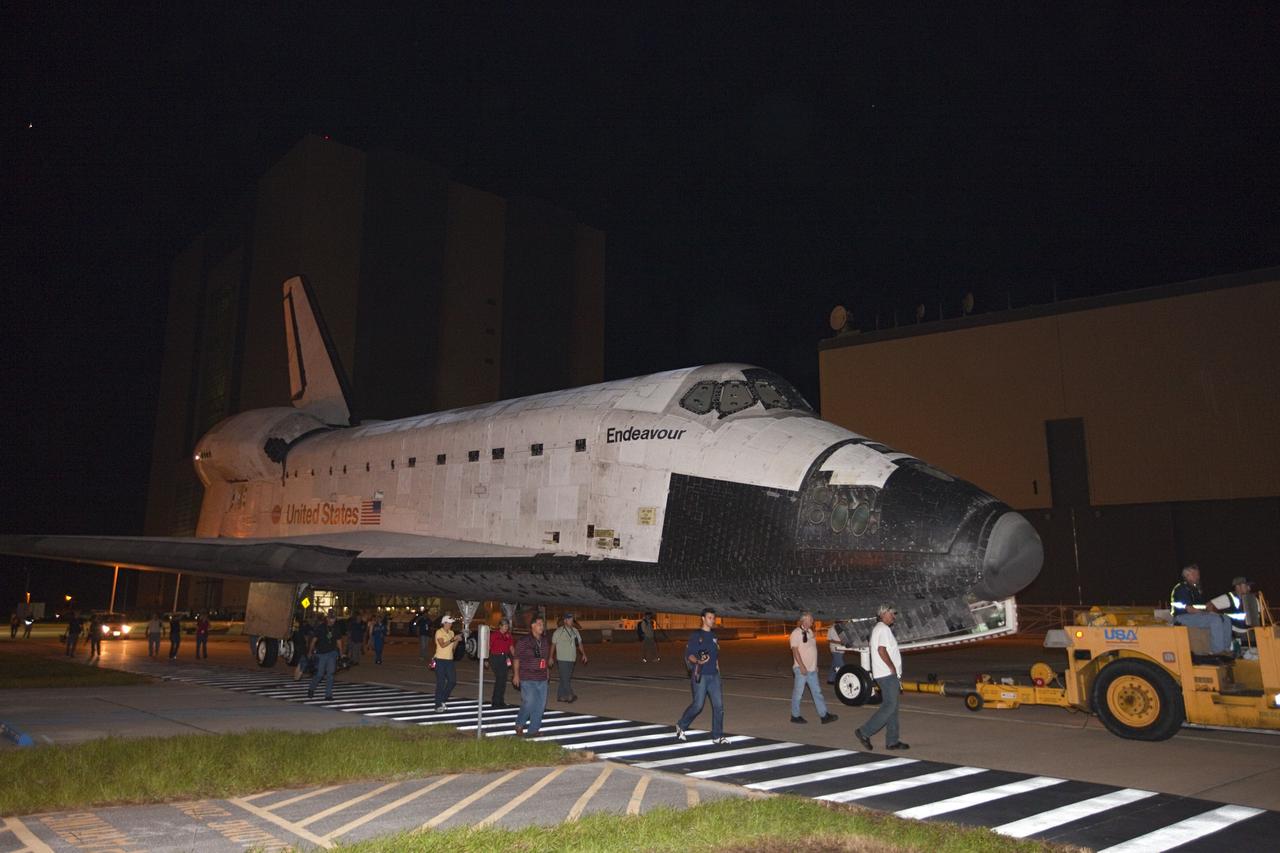
CAPE CANAVERAL, Fla. – At NASA's Kennedy Space Center in Florida, space shuttle Endeavour rolls past Orbiter Processing Facilty-1 on its way from the Vehicle Assembly Building to the nearby Shuttle Landing Facility. The spacecraft will be lifted in the gantry-like Mate-Demate Device and placed atop NASA's modified 747 Shuttle Carrier Aircraft for the final ferry flight of the Space Shuttle Program. Endeavour will be placed on permanent public display at the California Science Center in Los Angeles. Photo credit: NASA/Kim Shiflett

Expedition 50 NASA astronaut Peggy Whitson dons her Sokol suit ahead of her final qualification exams with fellow crew mates Russian cosmonaut Oleg Novitskiy of Roscosmos and ESA astronaut Thomas Pesquet, Tuesday, Oct. 25, 2016, at the Gagarin Cosmonaut Training Center (GCTC) in Star City, Russia. Photo Credit: (NASA/Bill Ingalls)
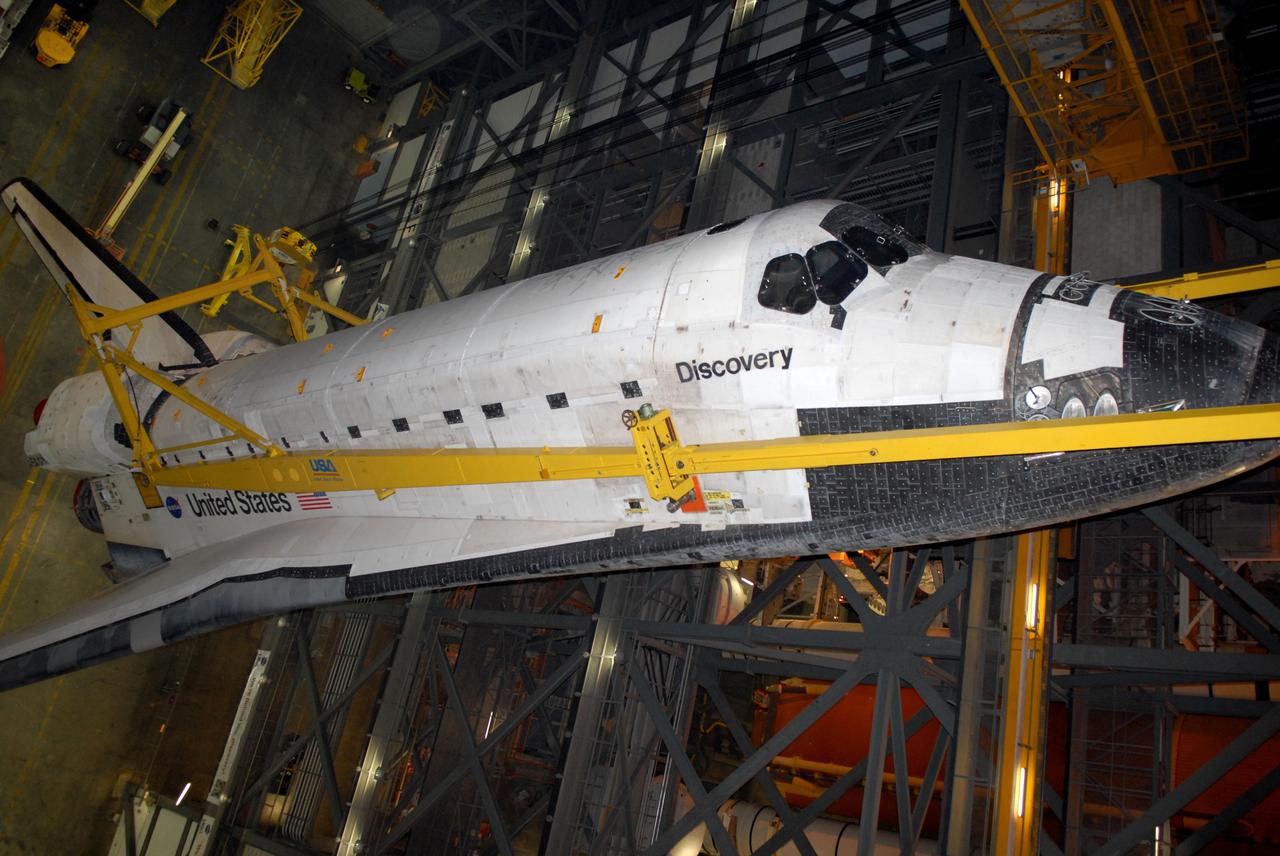
CAPE CANAVERAL, Fla. -- In the Vehicle Assembly Building at NASA's Kennedy Space Center in Florida, space shuttle Discovery is lifted into the upper levels for transfer to high bay 3. The shuttle will then be lowered onto the mobile launcher platform for mating with its external fuel tank and solid rocket boosters. After additional preparations are made, the shuttle will be rolled out to Launch Pad 39A for a targeted launch on Feb. 12. Discovery will carry the final starboard truss (S6) in the assembly of the International Space Station. Photo credit: NASA/Jack Pfaller
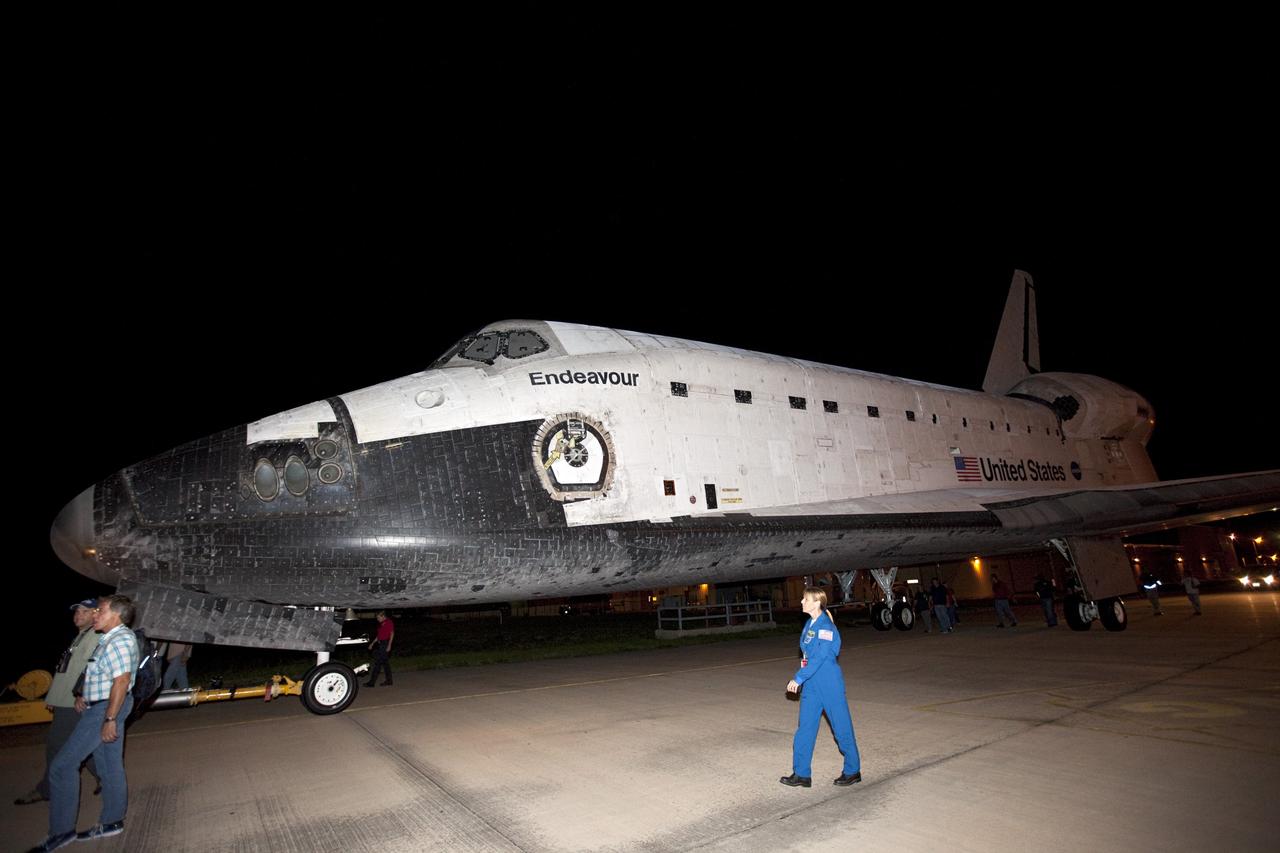
CAPE CANAVERAL, Fla. – NASA astronaut Kay Hire walks beside space shuttle Endeavour as it is towed to the Shuttle Landing Facility at Kennedy Space Center in Florida. The spacecraft will be lifted in the gantry-like Mate-Demate Device and placed atop NASA's modified 747 Shuttle Carrier Aircraft for the final ferry flight of the Space Shuttle Program. Endeavour will be placed on permanent public display at the California Science Center in Los Angeles. Photo credit: NASA/Kim Shiflett
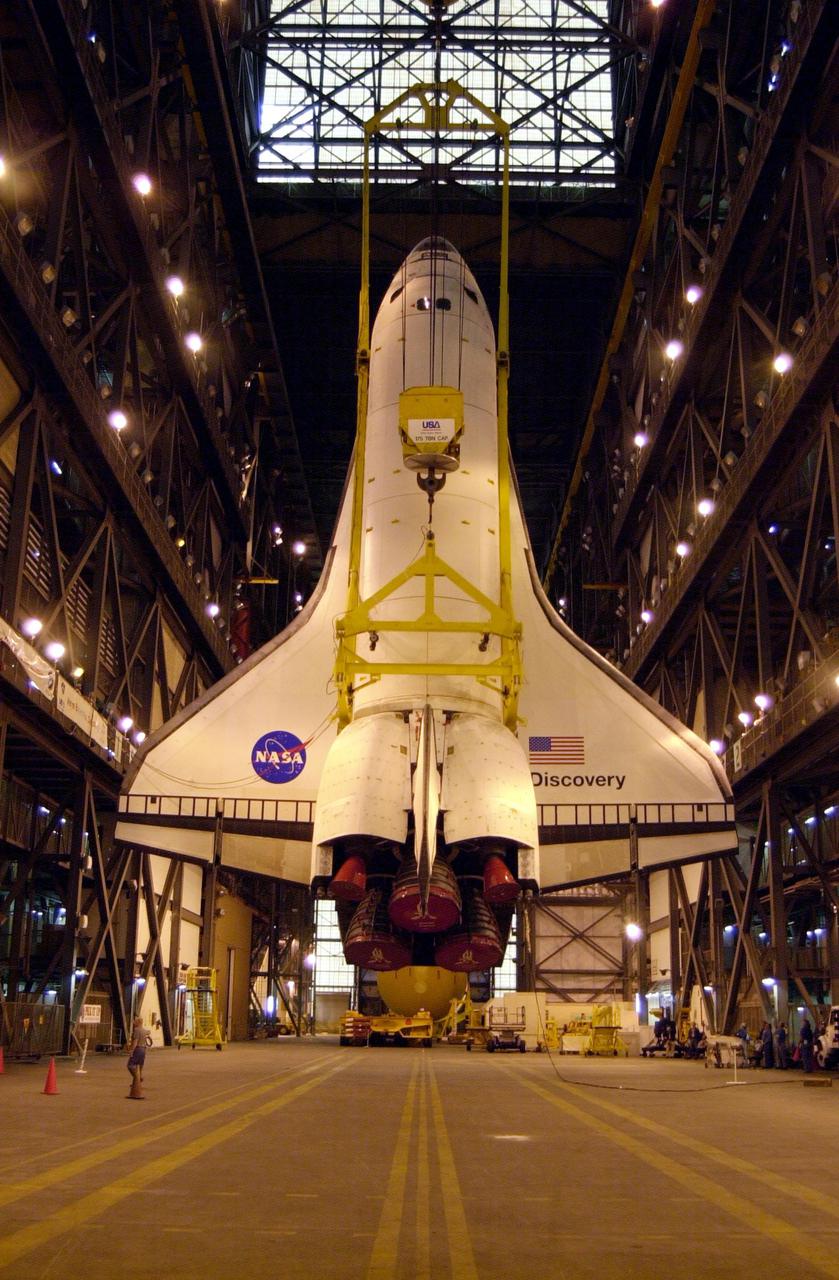
The orbiter Discovery is finally vertical and hangs suspended in the transfer aisle of the Vehicle Assembly Building. It will next be moved into high bay 1 for mating with its solid rocket boosters and external tank. Discovery will be launched March 8 on mission STS-102, the eighth construction flight to the International Space Station. The Shuttle will carry the Multi-Purpose Logistics Module Leonardo, the first of three pressurized modules provided by the Italian Space Agency to carry supplies and equipment to the Space Station and back to earth
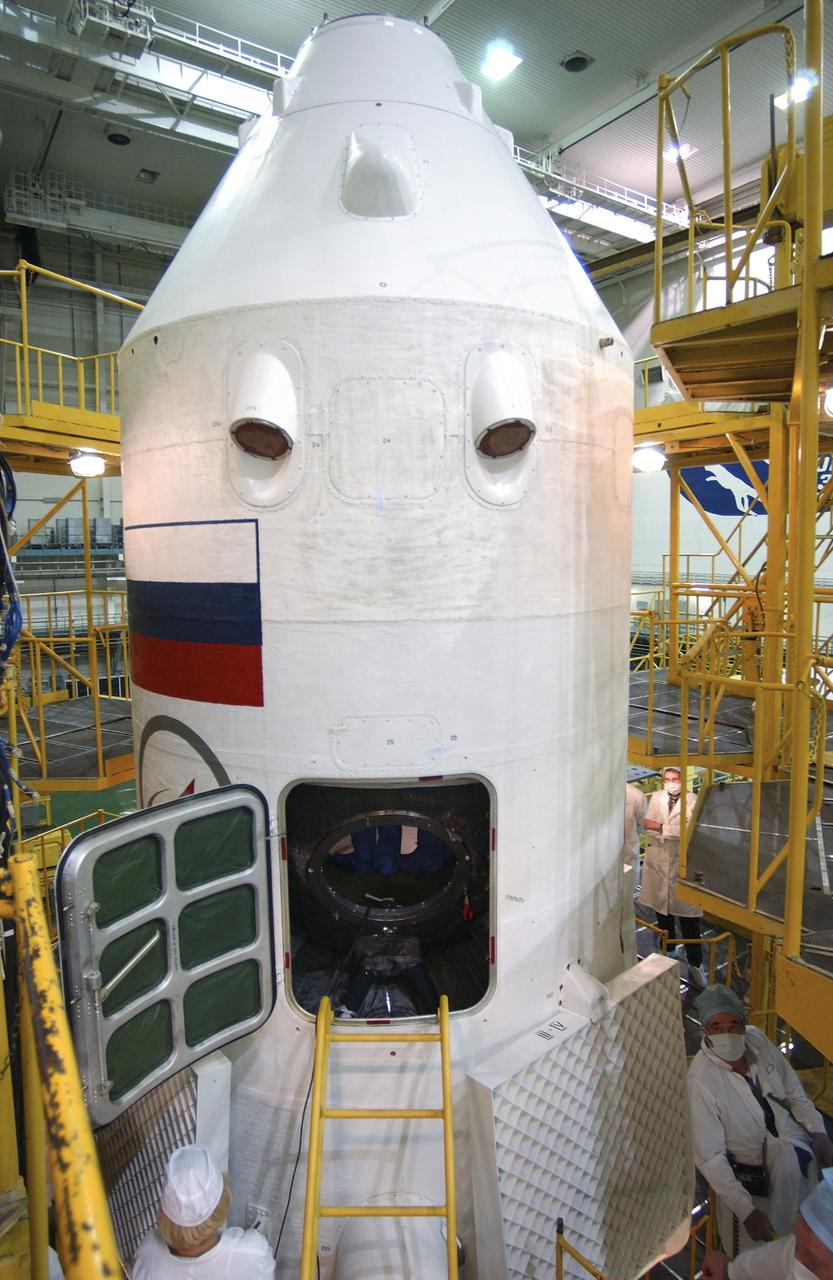
Expedition 10 Commander and NASA Science Officer Leroy Chiao, Flight Engineer and Soyuz Commander Salizhan Sharipov and Russian Space Forces Cosmonaut Yuri Shargin conducted a final inspection of their Soyuz TMA-5 spacecraft Saturday, October 9, 2004 at the Baikonur Cosmodrome in Kazakhstan in preparation for their launch October 14 to the International Space Station. The Soyuz vehicle will be mated to its booster rocket October 11 in preparation for its rollout to the Central Asian launch pad October 12. Photo Credit: (NASA/Bill Ingalls)
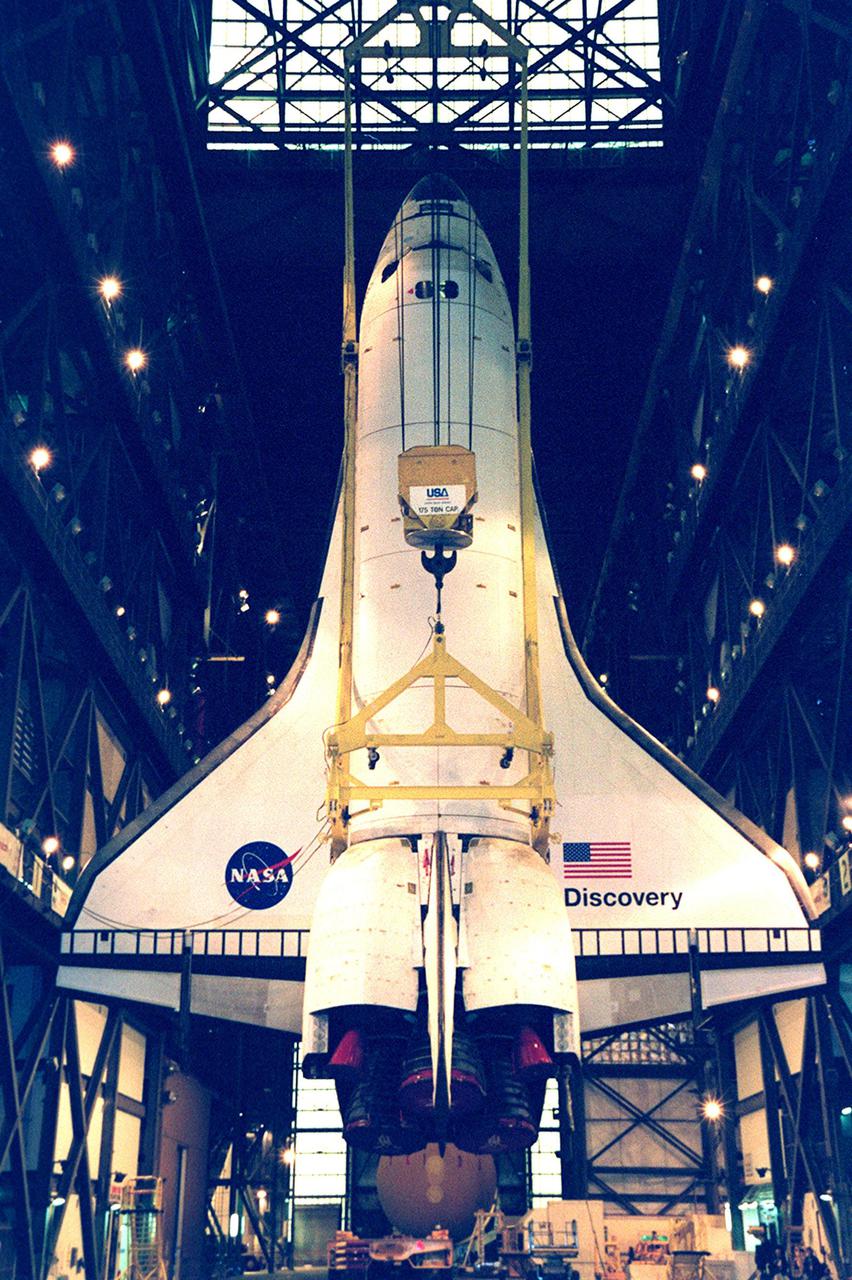
The orbiter Discovery finally hangs vertically, suspended from overhead cranes in the transfer aisle of the Vehicle Assembly Building. It will next be lifted into high bay 1 for mating with its solid rocket boosters and external tank. Discovery will be launched March 8 on mission STS-102, the eighth construction flight to the International Space Station. The Shuttle will carry the Multi-Purpose Logistics Module Leonardo, the first of three pressurized modules provided by the Italian Space Agency to carry supplies and equipment to the Space Station and back to Earth

Expedition 50 NASA astronaut Peggy Whitson dons her Sokol suit ahead of her final qualification exams with fellow crew mates Russian cosmonaut Oleg Novitskiy of Roscosmos and ESA astronaut Thomas Pesquet, Tuesday, Oct. 25, 2016, at the Gagarin Cosmonaut Training Center (GCTC) in Star City, Russia. Photo Credit: (NASA/Bill Ingalls)
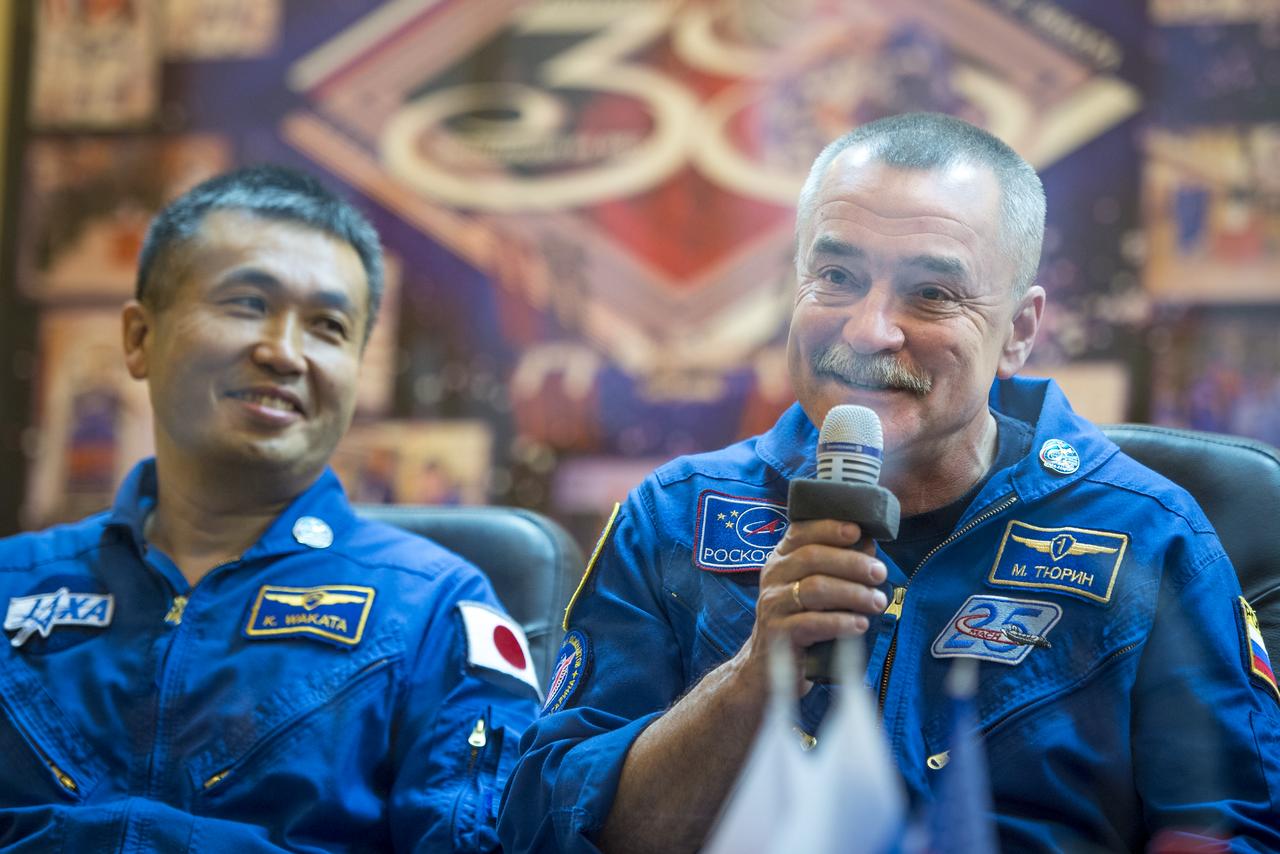
Expedition 38 Soyuz Commander Mikhail Tyurin of Roscosmos, right, talks as Flight Engineer Koichi Wakata of the Japan Aerospace Exploration Agency, listens, from quarantine behind glass, during the final press conference held a day ahead of their launch with fellow crew mate, Flight Engineer Rick Mastracchio of NASA, to the International Space Station, Wednesday, Nov. 6, 2013 at the Cosmonaut Hotel in Baikonur, Kazakhstan. Photo Credit: (NASA/Bill Ingalls)
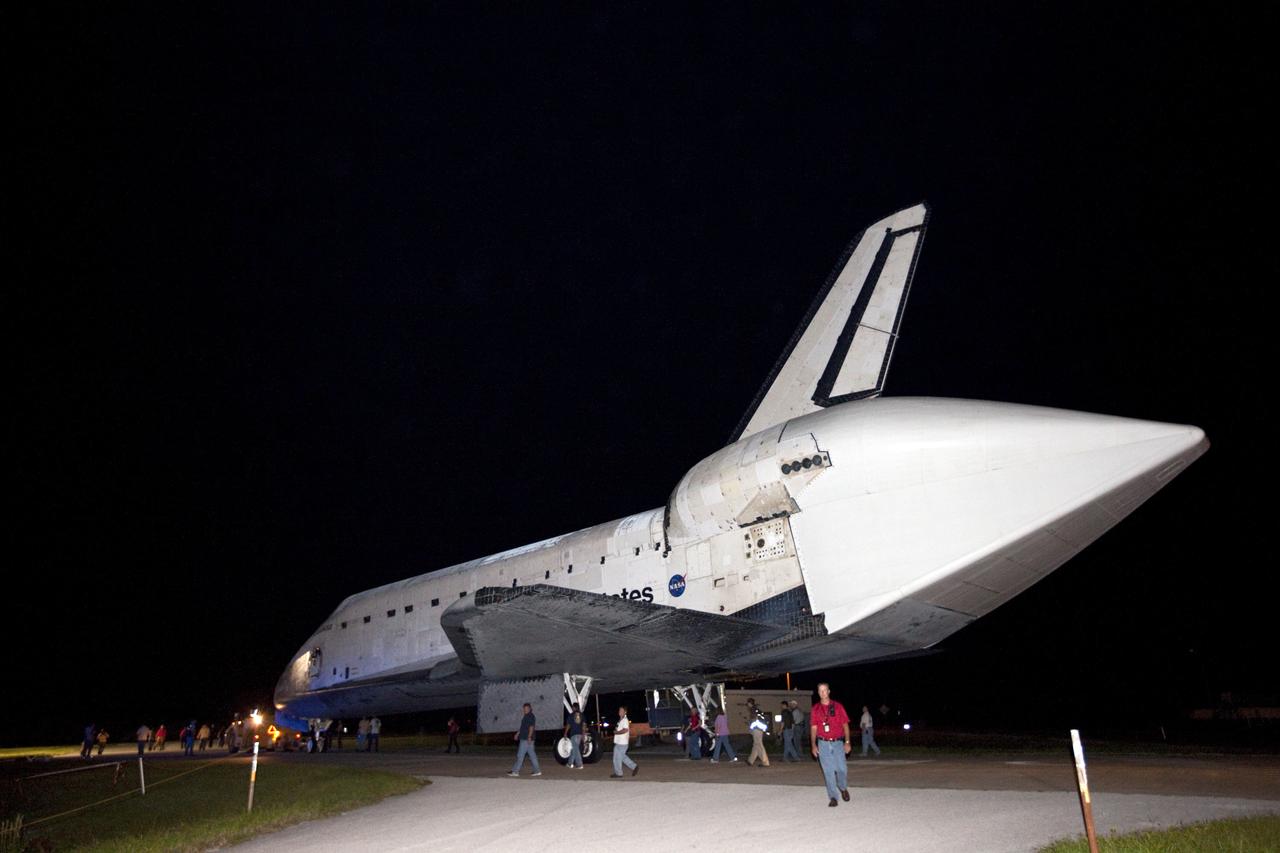
CAPE CANAVERAL, Fla. – Space shuttle Endeavour, fitted with an aerodynamic tail cone, leaves the processing facilities of Launch Complex 39 behind as it moves toward the Shuttle Landing Facility at NASA's Kennedy Space Center in Florida. The spacecraft will be lifted in the gantry-like Mate-Demate Device and placed atop NASA's modified 747 Shuttle Carrier Aircraft for the final ferry flight of the Space Shuttle Program. Endeavour will be placed on permanent public display at the California Science Center in Los Angeles. Photo credit: NASA/Kim Shiflett
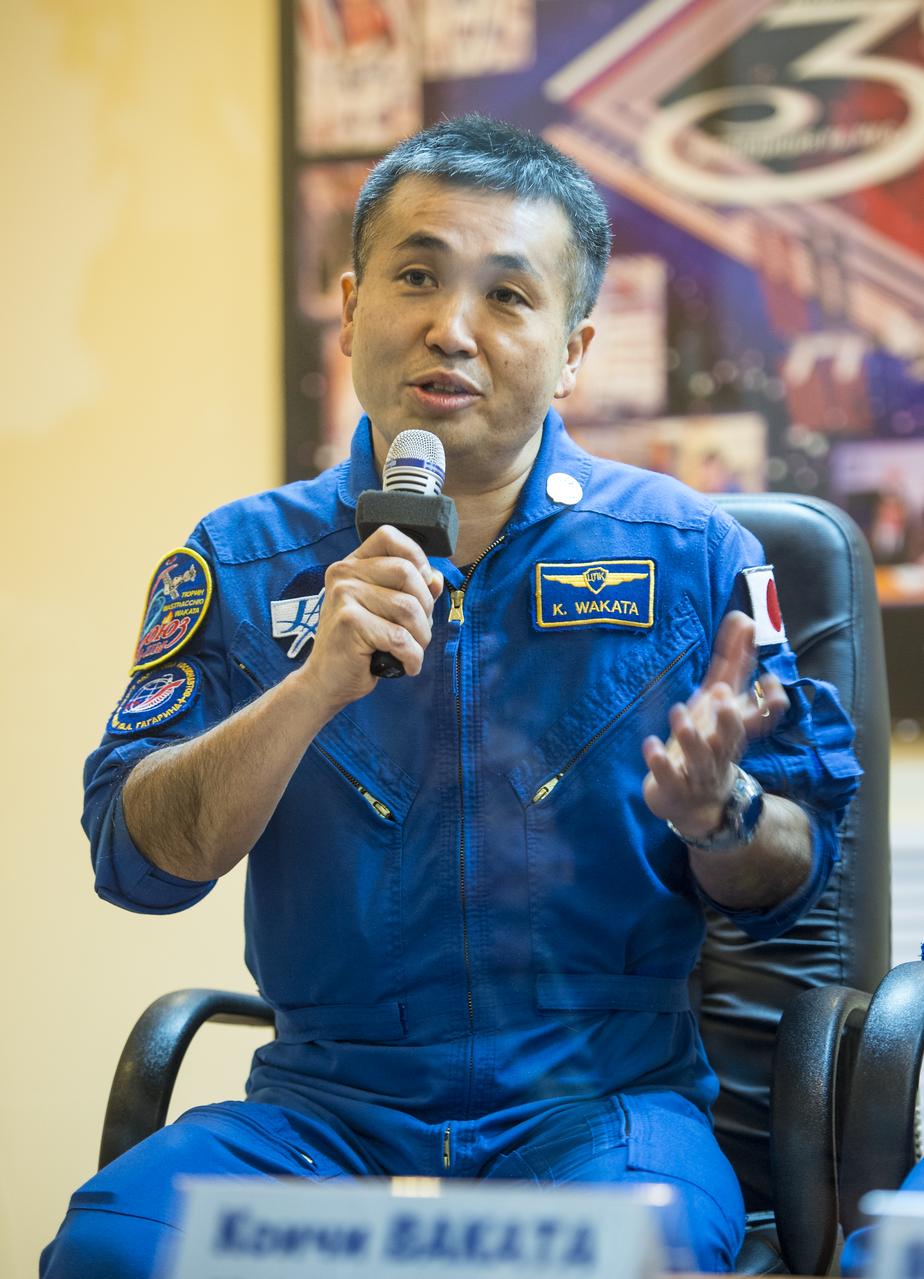
Expedition 38 Flight Engineer Koichi Wakata of the Japan Aerospace Exploration Agency is seen in quarantine, behind glass, during the final press conference held a day ahead of his launch with fellow crew mates, Expedition 38 Soyuz Commander Mikhail Tyurin of Roscosmos, and, Flight Engineer Rick Mastracchio of NASA, to the International Space Station, Wednesday, Nov. 6, 2013 at the Cosmonaut Hotel in Baikonur, Kazakhstan. Photo Credit: (NASA/Bill Ingalls)
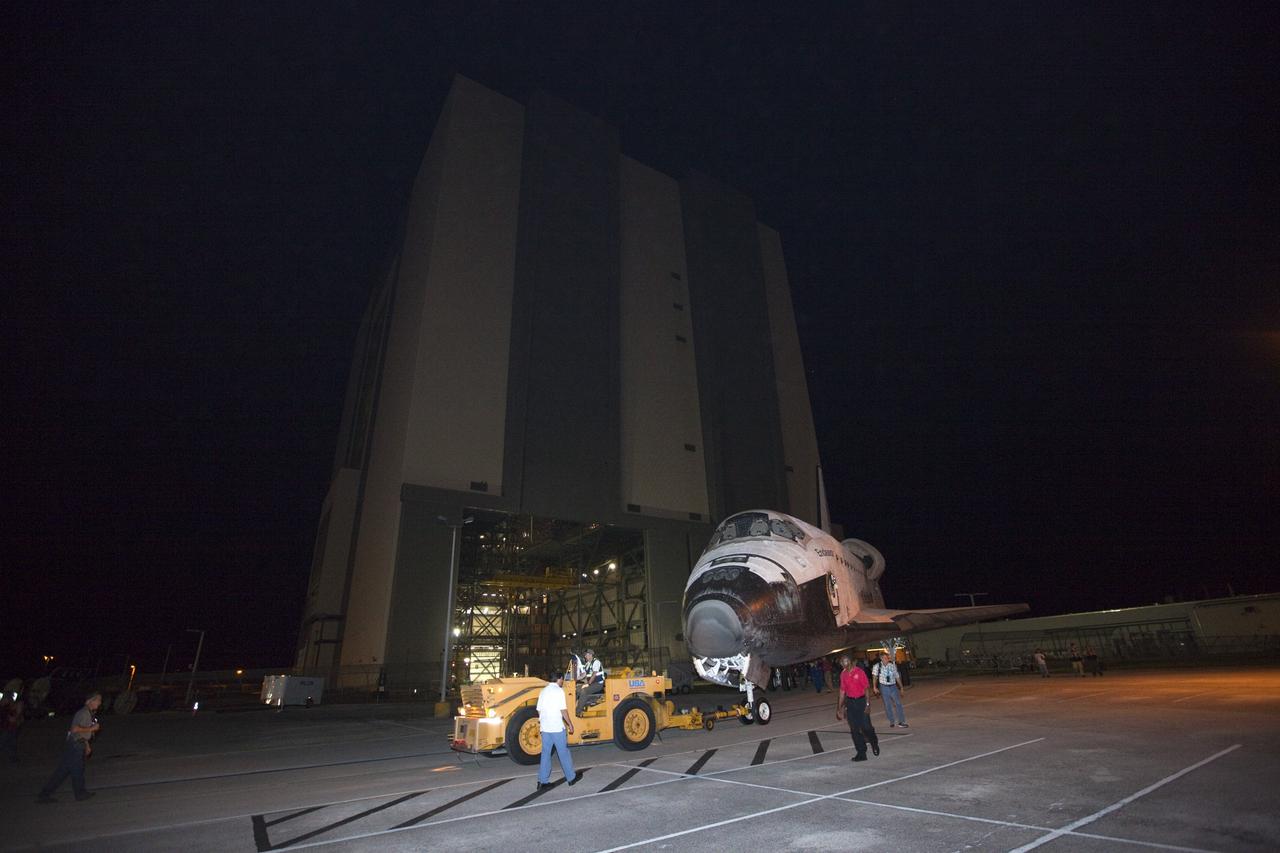
CAPE CANAVERAL, Fla. – Space shuttle Endeavour is towed away from the open doors of the Vehicle Assembly Building at NASA's Kennedy Space Center in Florida. The spacecraft moved to the nearby Shuttle Landing Facility, where it will be lifted in the gantry-like Mate-Demate Device and placed atop NASA's modified 747 Shuttle Carrier Aircraft for the final ferry flight of the Space Shuttle Program. Endeavour will be placed on permanent public display at the California Science Center in Los Angeles. Photo credit: NASA/Kim Shiflett
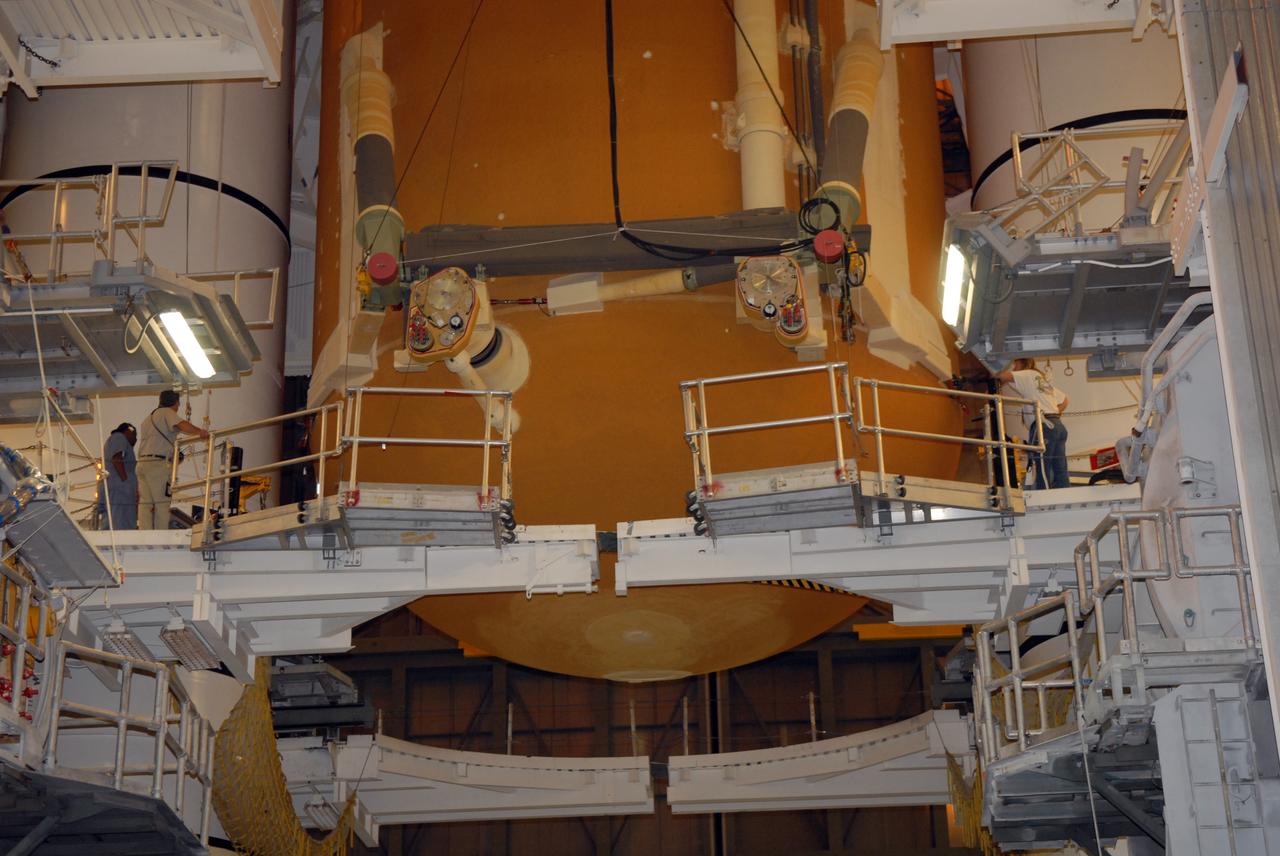
CAPE CANAVERAL, Fla. – In the Vehicle Assembly Building at NASA's Kennedy Space Center, the external tank for space shuttle Atlantis is lowered between the solid rocket boosters for mating on the mobile launcher platform. Atlantis' STS-125 mission is the fifth and final shuttle servicing mission to NASA’s Hubble Space Telescope. Launch is targeted for Oct. 8. Photo credit: NASA/Jack Pfaller
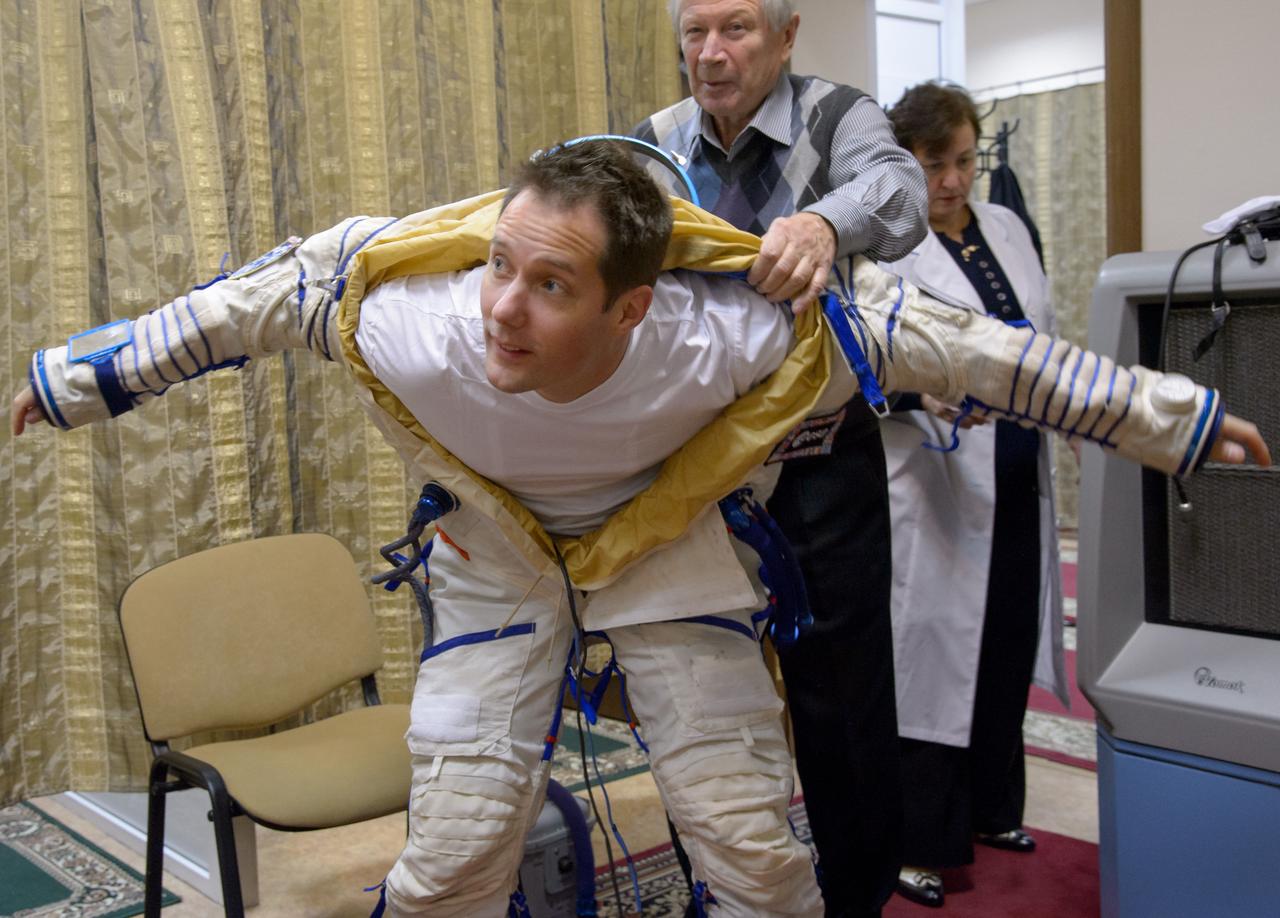
Expedition 50 ESA astronaut Thomas Pesquet dons his Sokol suit ahead of his final qualification exams with fellow crew mates NASA astronaut Peggy Whitson and Russian cosmonaut Oleg Novitskiy of Roscosmos, Tuesday, Oct. 25, 2016, at the Gagarin Cosmonaut Training Center (GCTC) in Star City, Russia. Photo Credit: (NASA/Bill Ingalls)
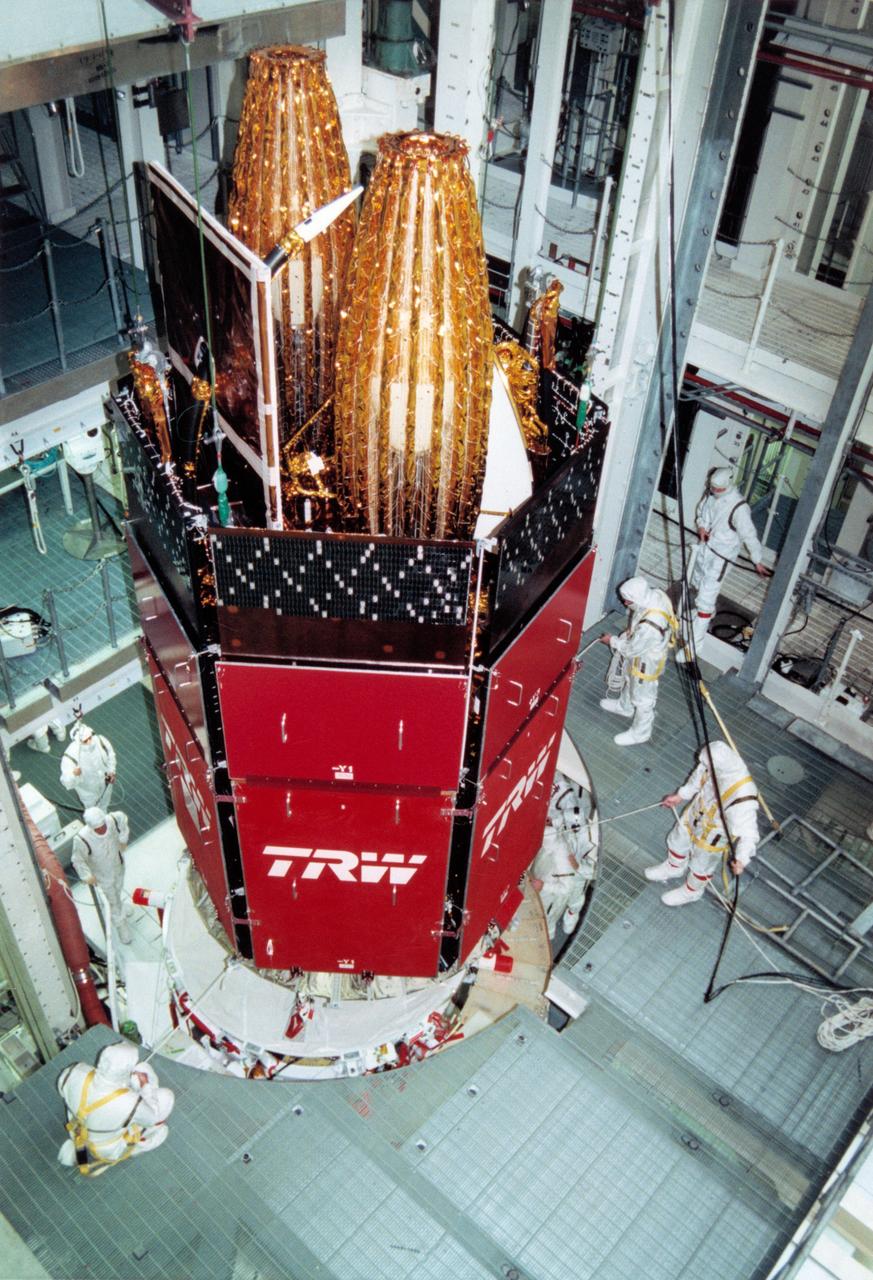
S95-08962 (12 APRIL 1995) --- Members of the Kennedy Space Center (KSC) Payload Processing Team hoist the Tracking and Data Relay Satellite (TDRS-G) into a work stand in the Vertical Processing Facility (VPF) for mating with its Inertial Upper Stage (IUS). After testing and final checkout, TDRS-G and the IUS will be transported to Launch Pad 39B and installed into the Space Shuttle Discovery's payload bay for launch on the STS-70 mission, scheduled for launch June 8, 1995.
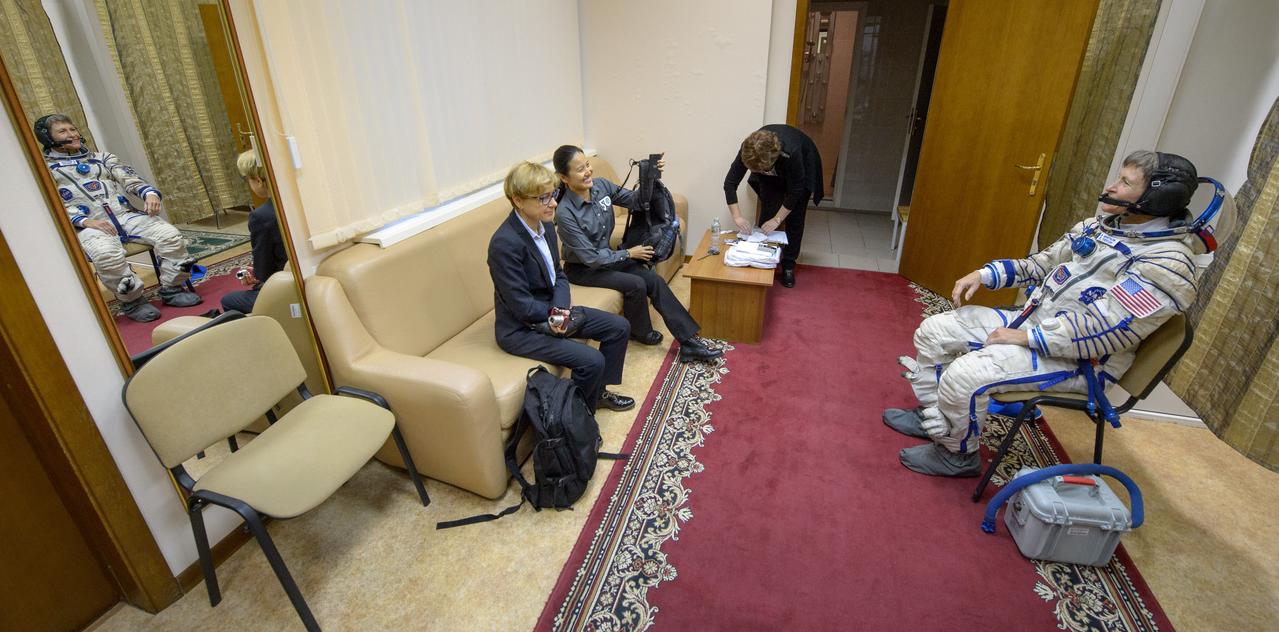
ESA Flight Surgeon Dr. Brigitte Godard, seated left, NASA Flight Surgeon Jennifer Law, center, talk with Expedition 50 NASA astronaut Peggy Whitson ahead of the final qualification exams with Whitson and her fellow crew mates Russian cosmonaut Oleg Novitskiy of Roscosmos and ESA astronaut Thomas Pesquet, Tuesday, Oct. 25, 2016, at the Gagarin Cosmonaut Training Center (GCTC) in Star City, Russia. Photo Credit: (NASA/Bill Ingalls)
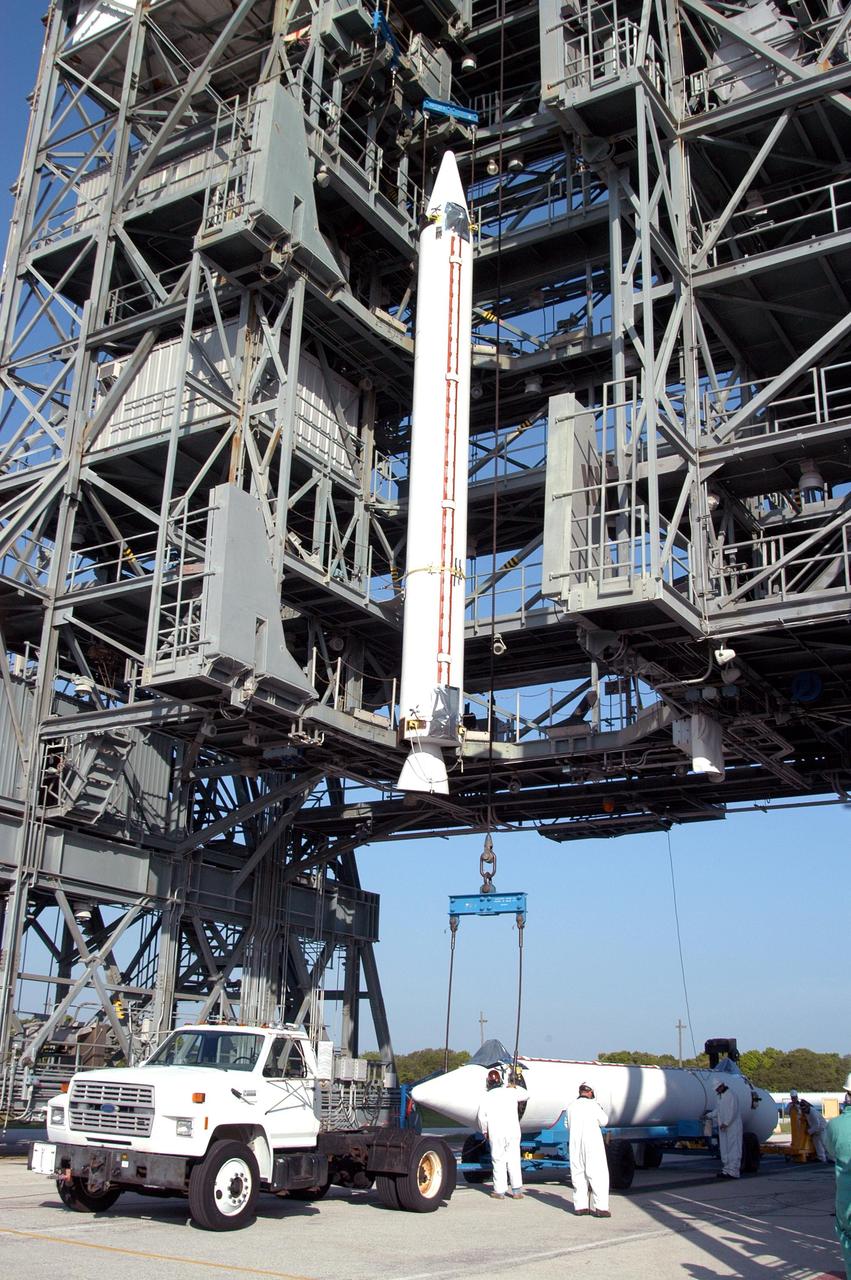
KENNEDY SPACE CENTER, FLA. - The final Solid Rocket Boosters (SRBs) arrive at Pad 17-B, Cape Canaveral Air Force Station, for mating with the Boeing Delta II Heavy rocket that will launch the MESSENGER (Mercury Surface, Space Environment, Geochemistry and Ranging) spacecraft. Scheduled to lift off Aug. 2, bound for Mercury, the spacecraft is expected to reach orbit around Mercury in March 2011. MESSENGER was built for NASA by the Johns Hopkins University Applied Physics Laboratory in Laurel, Md.
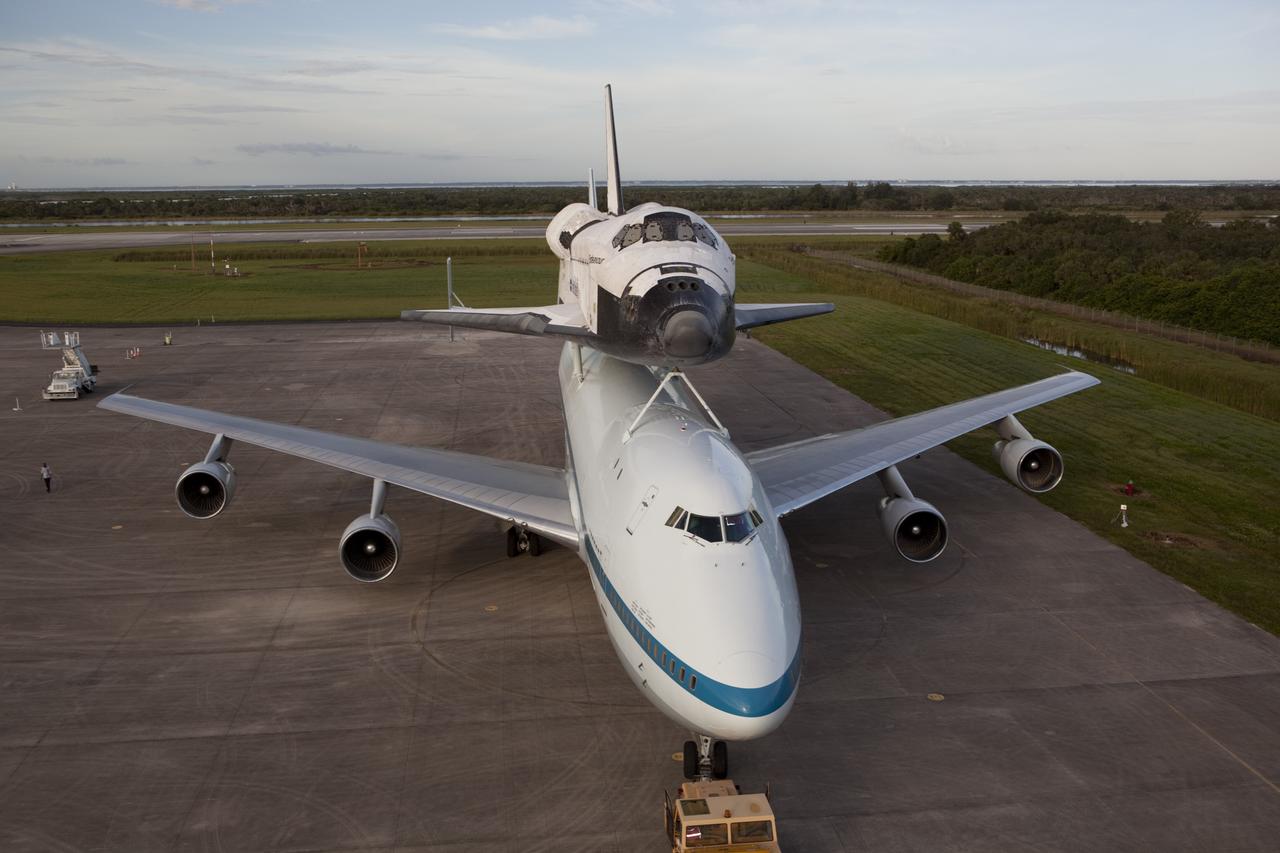
CAPE CANAVERAL, Fla. – Space shuttle Endeavour, secured atop NASA's Shuttle Carrier Aircraft, or SCA, backs away from the mate-demate device at the Shuttle Landing Facility at NASA's Kennedy Space Center in Florida. The SCA, a modified 747 jetliner, will fly Endeavour to Los Angeles where it will be placed on public display at the California Science Center. This is the final ferry flight scheduled in the Space Shuttle Program era. For more information on the shuttles' transition and retirement, visit http://www.nasa.gov/transition. Photo credit: NASA/Dimitri Gerondidakis
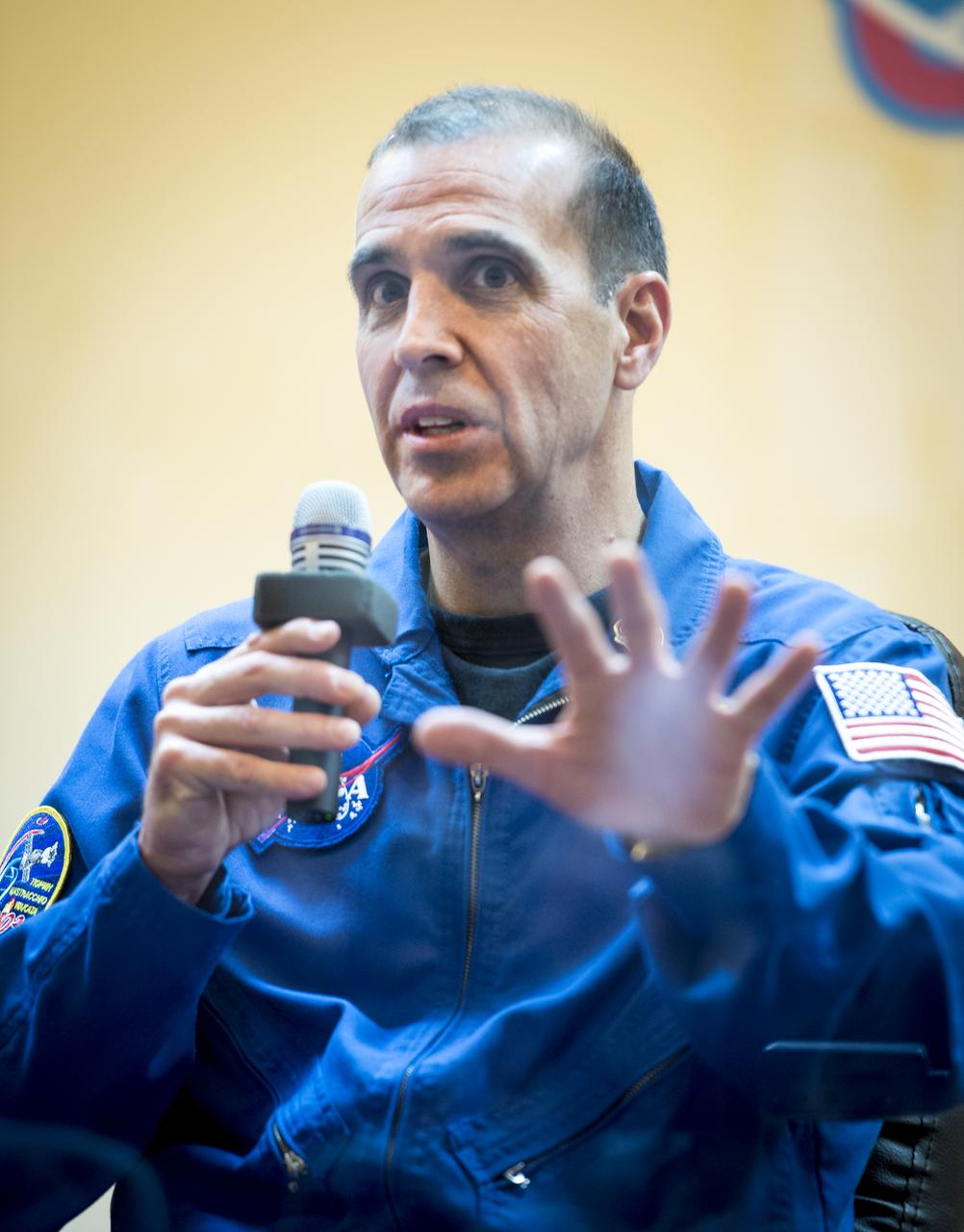
Expedition 38 Flight Engineer Rick Mastracchio of NASA talks, while in quarantine behind glass, during the final press conference held a day ahead of his launch with fellow crew mates, Soyuz Commander Mikhail Tyurin of Roscosmos, and, Flight Engineer Koichi Wakata of the Japan Aerospace Exploration Agency, to the International Space Station, Wednesday, Nov. 6, 2013 at the Cosmonaut Hotel in Baikonur, Kazakhstan. Photo Credit: (NASA/Bill Ingalls)
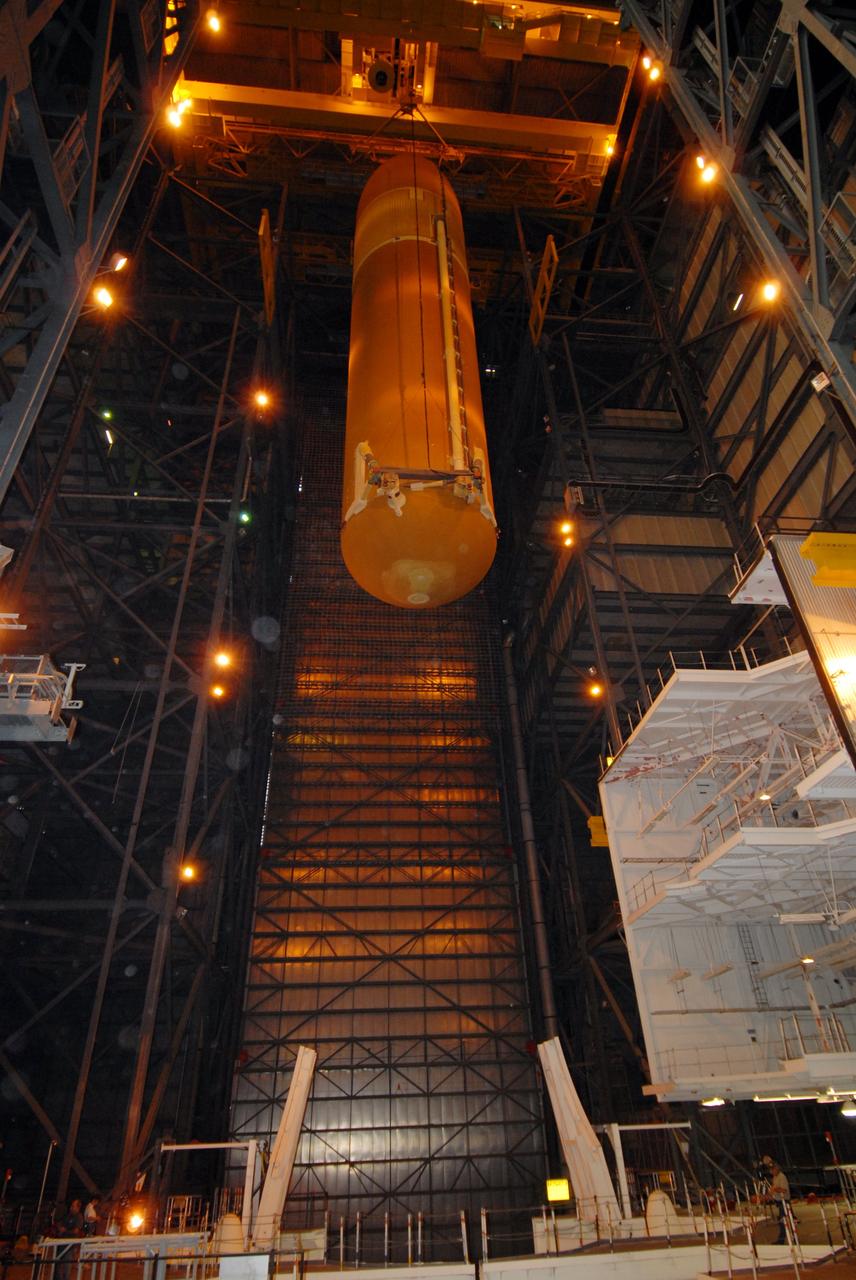
CAPE CANAVERAL, Fla. – In the Vehicle Assembly Building at NASA's Kennedy Space Center, the external tank for space shuttle Atlantis is moved across the transom to high bay 3 where it will be lowered toward the solid rocket boosters for mating. The tank and boosters will be secured on the mobile launcher platform below. Atlantis' STS-125 mission is the fifth and final shuttle servicing mission to NASA’s Hubble Space Telescope. Launch is targeted for Oct. 8. Photo credit: NASA/Jack Pfaller
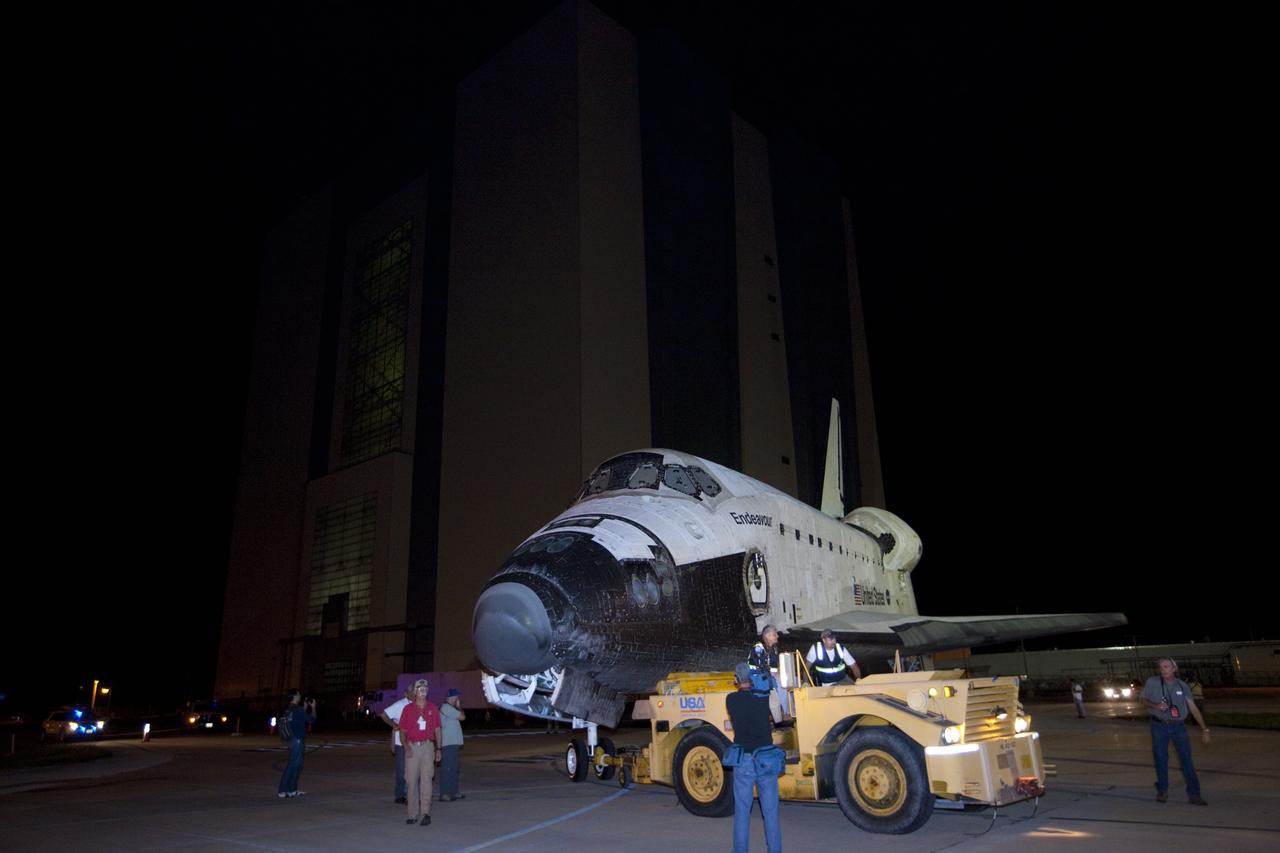
CAPE CANAVERAL, Fla. – At NASA's Kennedy Space Center in Florida, employees accompany space shuttle Endeavour at is rolls from the Vehicle Assembly Building to the Shuttle Landing Facility. The spacecraft will be lifted in the gantry-like Mate-Demate Device and placed atop NASA's modified 747 Shuttle Carrier Aircraft for the final ferry flight of the Space Shuttle Program. Endeavour will be placed on permanent public display at the California Science Center in Los Angeles. Photo credit: NASA/Kim Shiflett
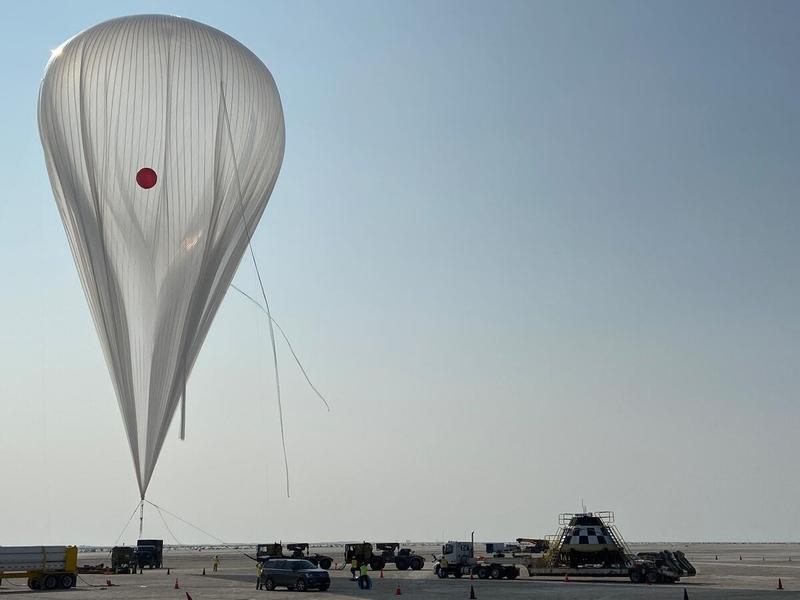
A Boeing CST-100 Starliner test article prepares to mate with a high altitude balloon ahead of its final parachute reliability drop test at White Sands, New Mexico, on Sept. 19, 2020. The test is part of a reliability campaign that will help strengthen the spacecraft’s landing system ahead of crewed flights to and from the International Space Station as part of NASA’s Commercial Crew Program.
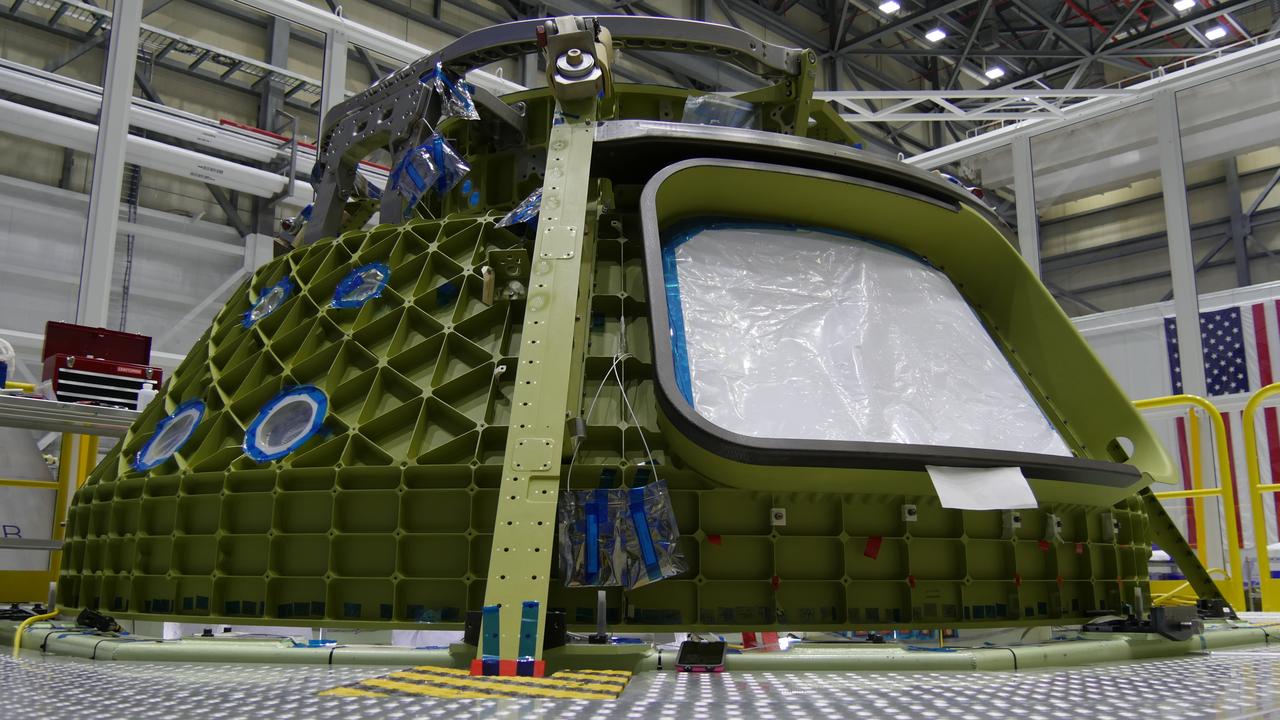
Boeing’s CST-100 Starliner Orbital Flight Test vehicle will fly the first test flight to space on an uncrewed mission to the International Space Station. Here you see the spacecraft’s upper dome undergoing the final preparations before the upper and lower dome are mated for a pressure test, and then the two domes will move on to be populated with avionics, life support and other critical hardware.
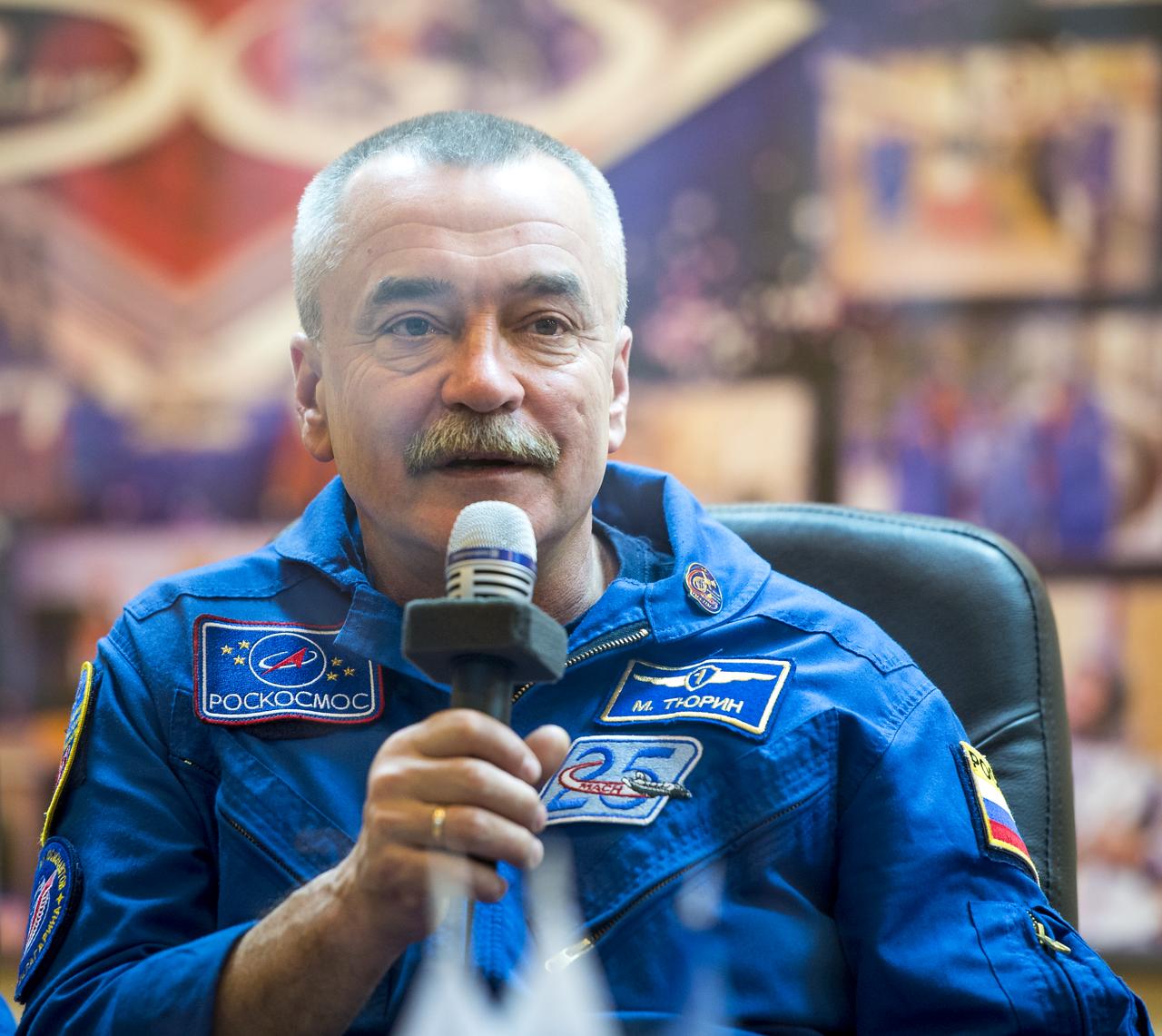
Expedition 38 Soyuz Commander Mikhail Tyurin of Roscosmos is seen in quarantine behind glass during the final press conference held a day ahead of his launch with fellow crew mates, Flight Engineer Koichi Wakata of the Japan Aerospace Exploration Agency, and, Flight Engineer Rick Mastracchio of NASA, to the International Space Station, Wednesday, Nov. 6, 2013 at the Cosmonaut Hotel in Baikonur, Kazakhstan. Photo Credit: (NASA/Bill Ingalls)
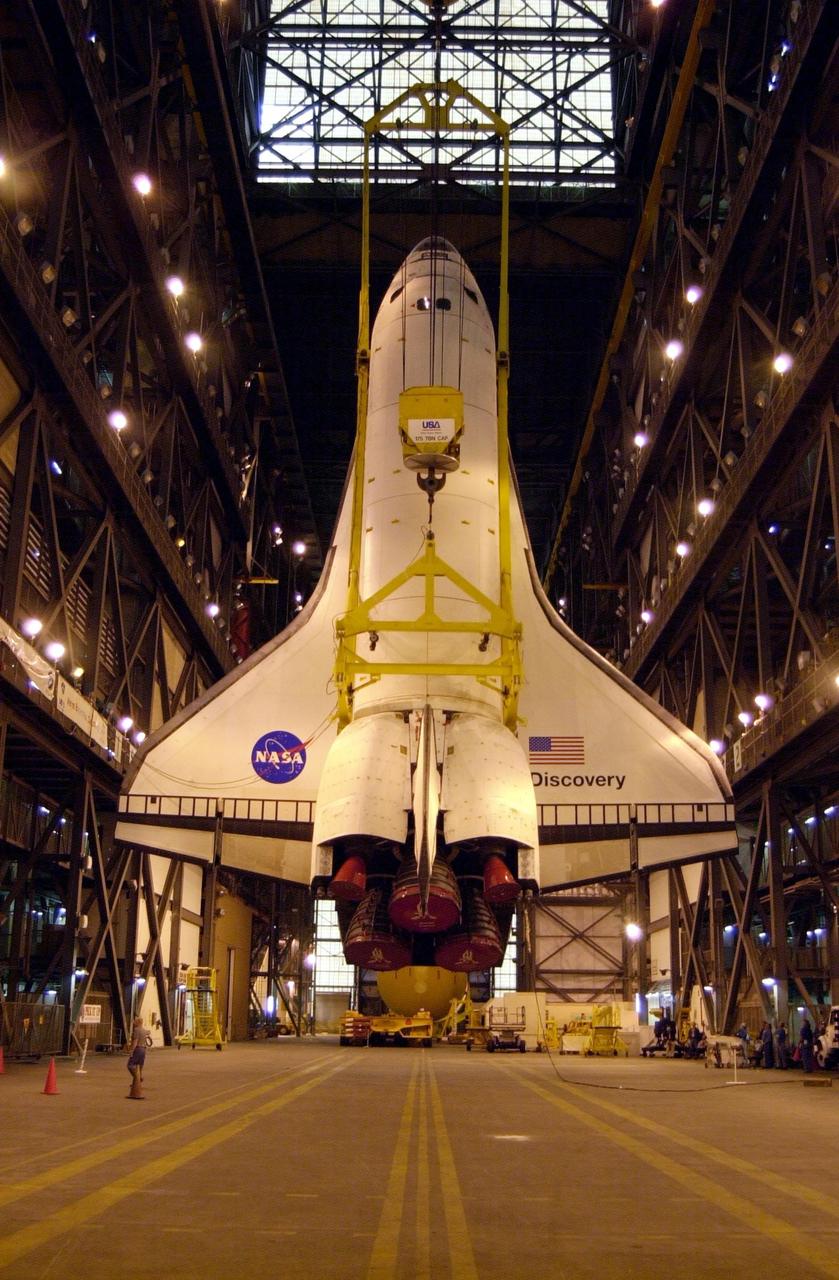
The orbiter Discovery is finally vertical and hangs suspended in the transfer aisle of the Vehicle Assembly Building. It will next be moved into high bay 1 for mating with its solid rocket boosters and external tank. Discovery will be launched March 8 on mission STS-102, the eighth construction flight to the International Space Station. The Shuttle will carry the Multi-Purpose Logistics Module Leonardo, the first of three pressurized modules provided by the Italian Space Agency to carry supplies and equipment to the Space Station and back to earth
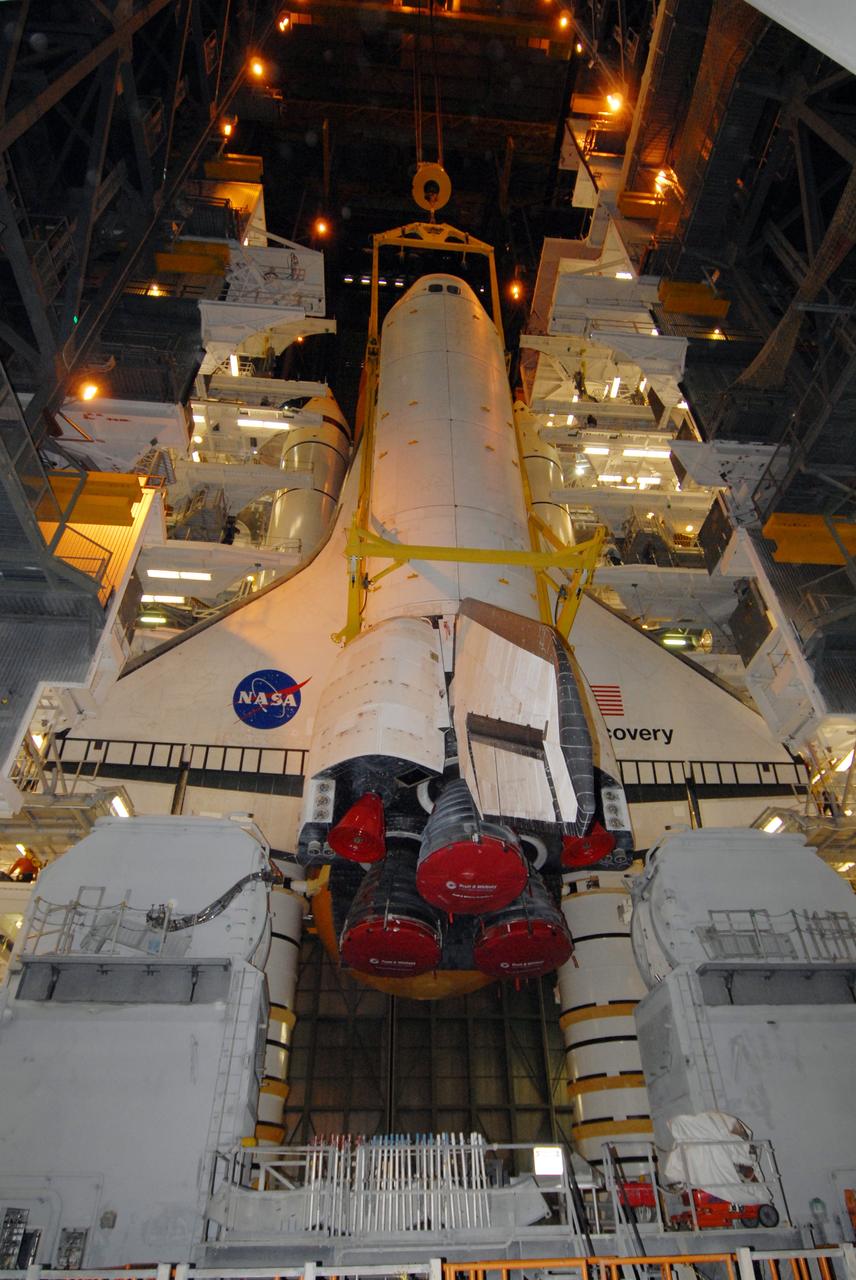
CAPE CANAVERAL, Fla. -- In the Vehicle Assembly Building at NASA's Kennedy Space Center in Florida, space shuttle Discovery is lowered alongside the external fuel tank and solid rocket boosters already stacked on the mobile launcher platform. Discovery will be mated with the stack. After additional preparations are made, the shuttle will be rolled out to Launch Pad 39A for a targeted launch on Feb. 12. Discovery will carry the final starboard truss (S6) in the assembly of the International Space Station. Photo credit: NASA/Jack Pfaller
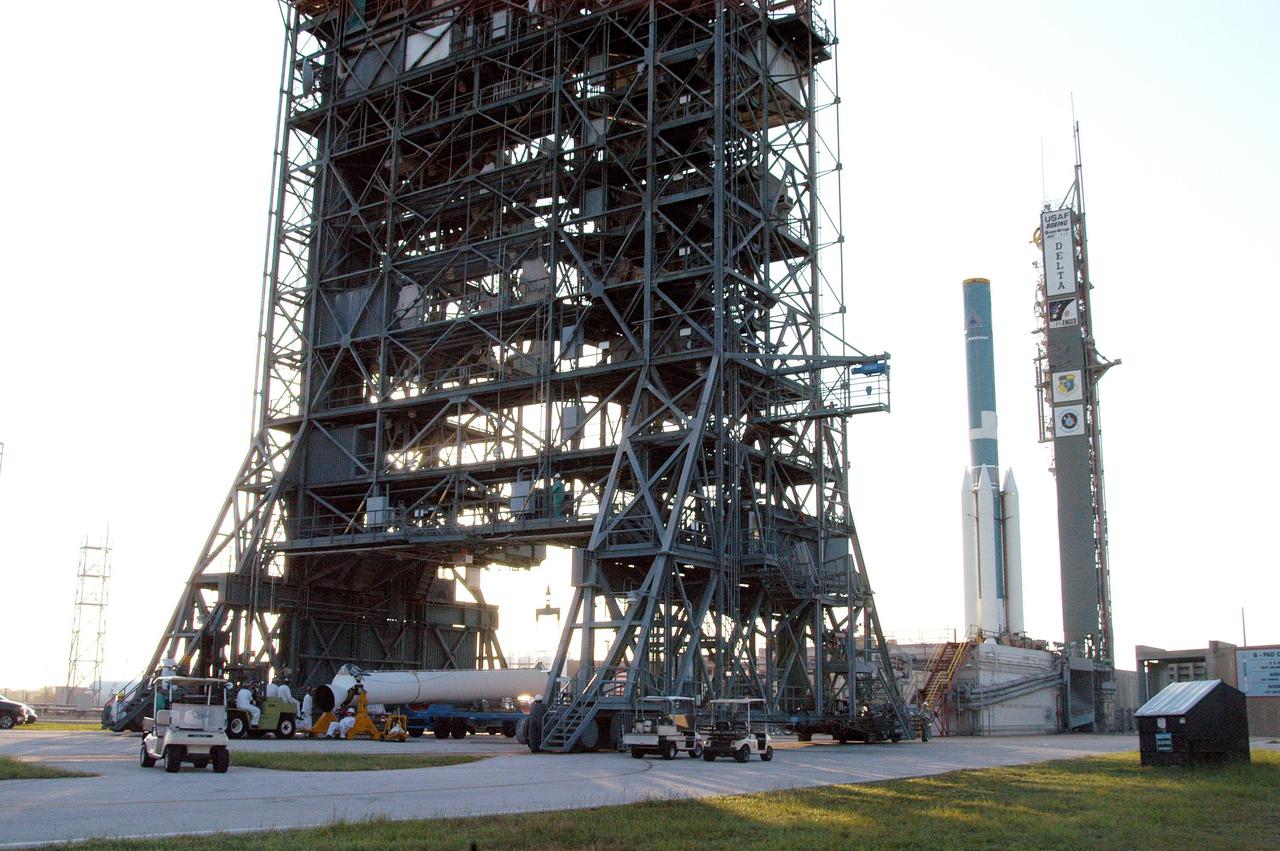
KENNEDY SPACE CENTER, FLA. - The final Solid Rocket Boosters (SRBs) arrive at Pad 17-B, Cape Canaveral Air Force Station, for mating with the Boeing Delta II Heavy rocket that will launch the MESSENGER (Mercury Surface, Space Environment, Geochemistry and Ranging) spacecraft. Scheduled to lift off Aug. 2, bound for Mercury, the spacecraft is expected to reach orbit around Mercury in March 2011. MESSENGER was built for NASA by the Johns Hopkins University Applied Physics Laboratory in Laurel, Md.
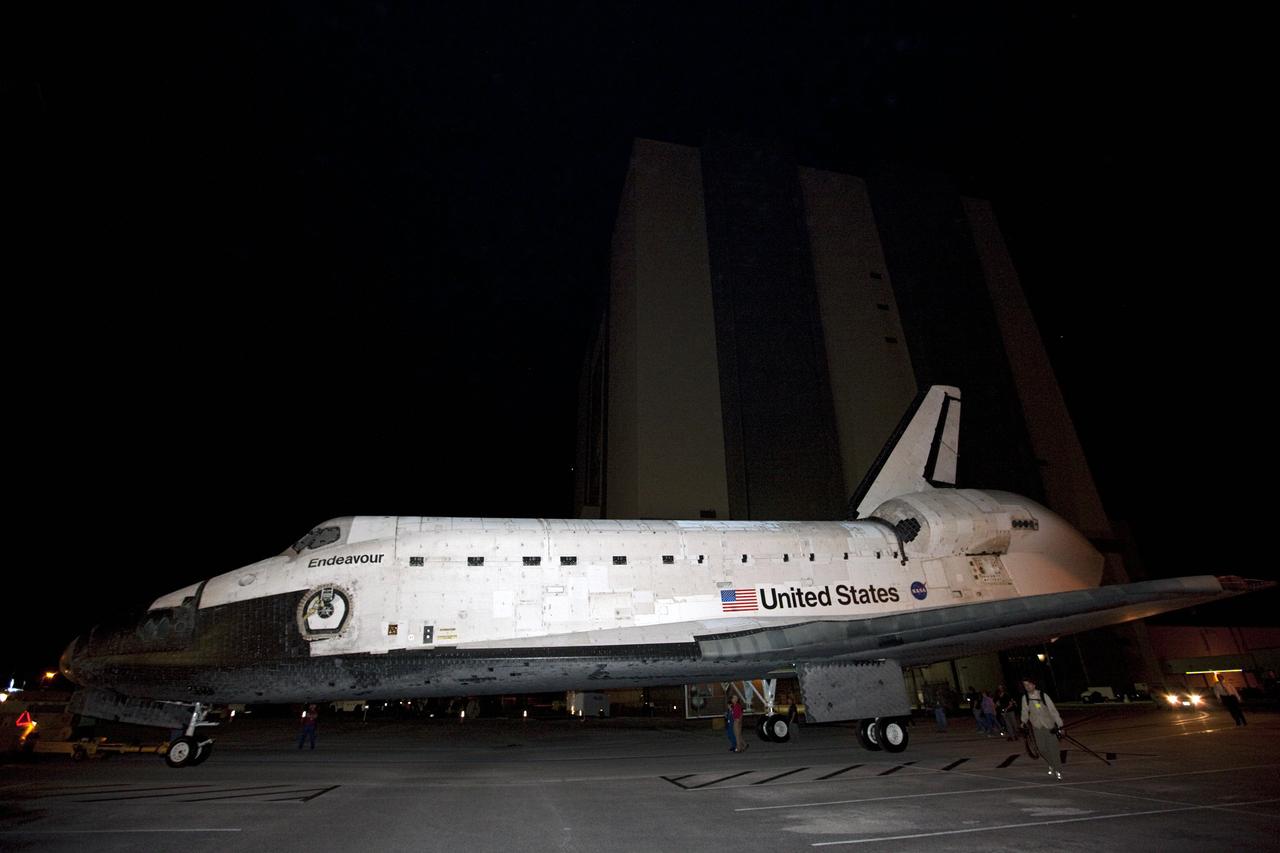
CAPE CANAVERAL, Fla. – In the early morning darkness at NASA's Kennedy Space Center in Florida, space shuttle Endeavour is towed away from the Vehicle Assembly Building, beginning the short move to the nearby Shuttle Landing Facility. The spacecraft will be lifted in the gantry-like Mate-Demate Device and placed atop NASA's modified 747 Shuttle Carrier Aircraft for the final ferry flight of the Space Shuttle Program. Endeavour will be placed on permanent public display at the California Science Center in Los Angeles. Photo credit: NASA/Kim Shiflett
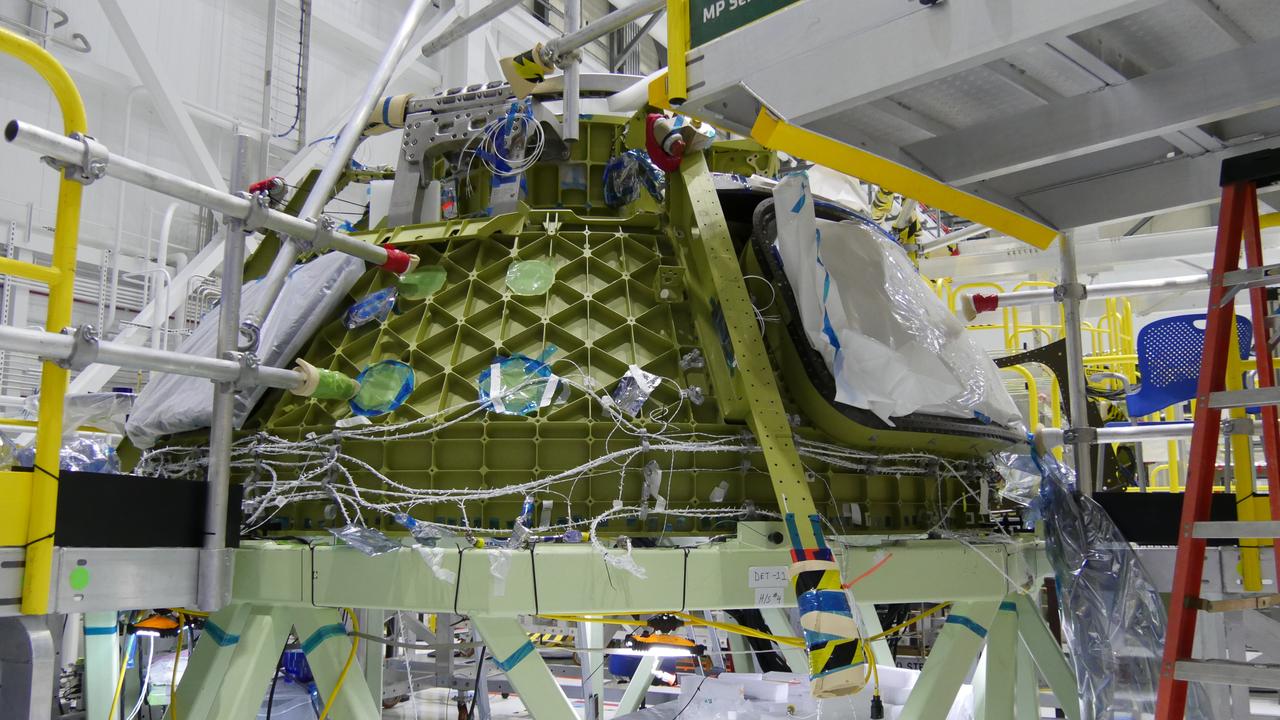
Boeing’s CST-100 Starliner Crew Flight Test vehicle will be the second to go to space, and the first to fly crew on a test flight to the International Space Station. In this picture, the upper dome is actually mated to the lower dome, but only electronically. The Boeing team is making sure all the hardware and software in the two pieces are working together correctly, before they will be put together for a final time. Then, the interior of the spacecraft will be outfitted and the outside will be covered with thermal protection.
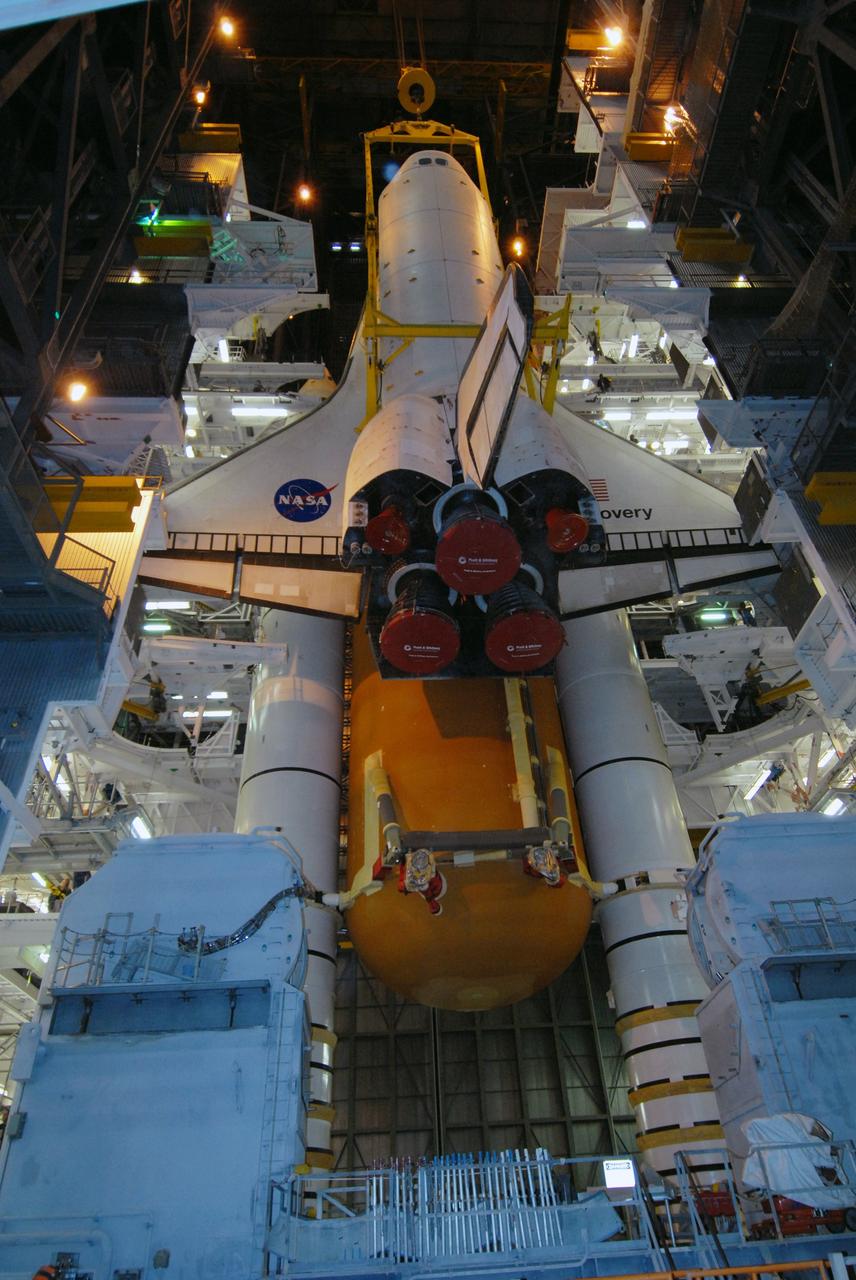
CAPE CANAVERAL, Fla. -- In the Vehicle Assembly Building at NASA's Kennedy Space Center in Florida, space shuttle Discovery is lowered into high bay 3 alongside the external fuel tank and solid rocket boosters are already stacked on the mobile launcher platform. Discovery will be mated with the stack. After additional preparations are made, the shuttle will be rolled out to Launch Pad 39A for a targeted launch on Feb. 12. Discovery will carry the final starboard truss (S6) in the assembly of the International Space Station. Photo credit: NASA/Jack Pfaller

Expedition 10 Commander and NASA Science Officer Leroy Chiao, right, Flight Engineer and Soyuz Commander Salizhan Sharipov and Russian Space Forces cosmonaut Yuri Shargin conducted a final inspection of their Soyuz TMA-5 spacecraft, Saturday, October 9, 2004, at the Baikonur Cosmodrome in Kazakhstan in preparation for their launch October 14 to the International Space Station. The Soyuz vehicle will be mated to its booster rocket October 11 in preparation for its rollout to the Central Asian launch pad October 12. Photo Credit: (NASA/Bill Ingalls)
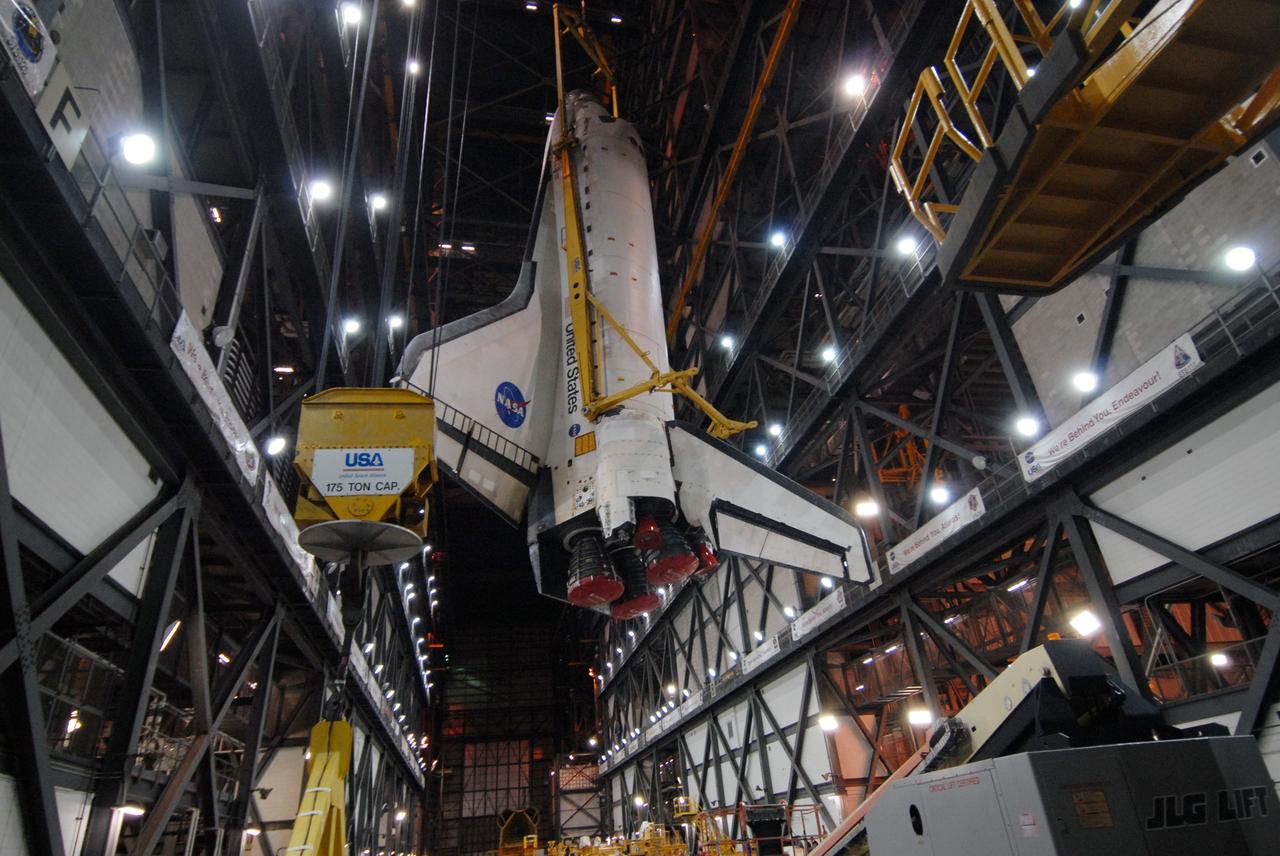
CAPE CANAVERAL, Fla. -- In the Vehicle Assembly Building at NASA's Kennedy Space Center in Florida, space shuttle Discovery is lifted into the upper levels for transfer to high bay 3. The shuttle will then be lowered onto the mobile launcher platform for mating with its external fuel tank and solid rocket boosters. After additional preparations are made, the shuttle will be rolled out to Launch Pad 39A for a targeted launch on Feb. 12. Discovery will carry the final starboard truss (S6) in the assembly of the International Space Station. Photo credit: NASA/Jack Pfaller
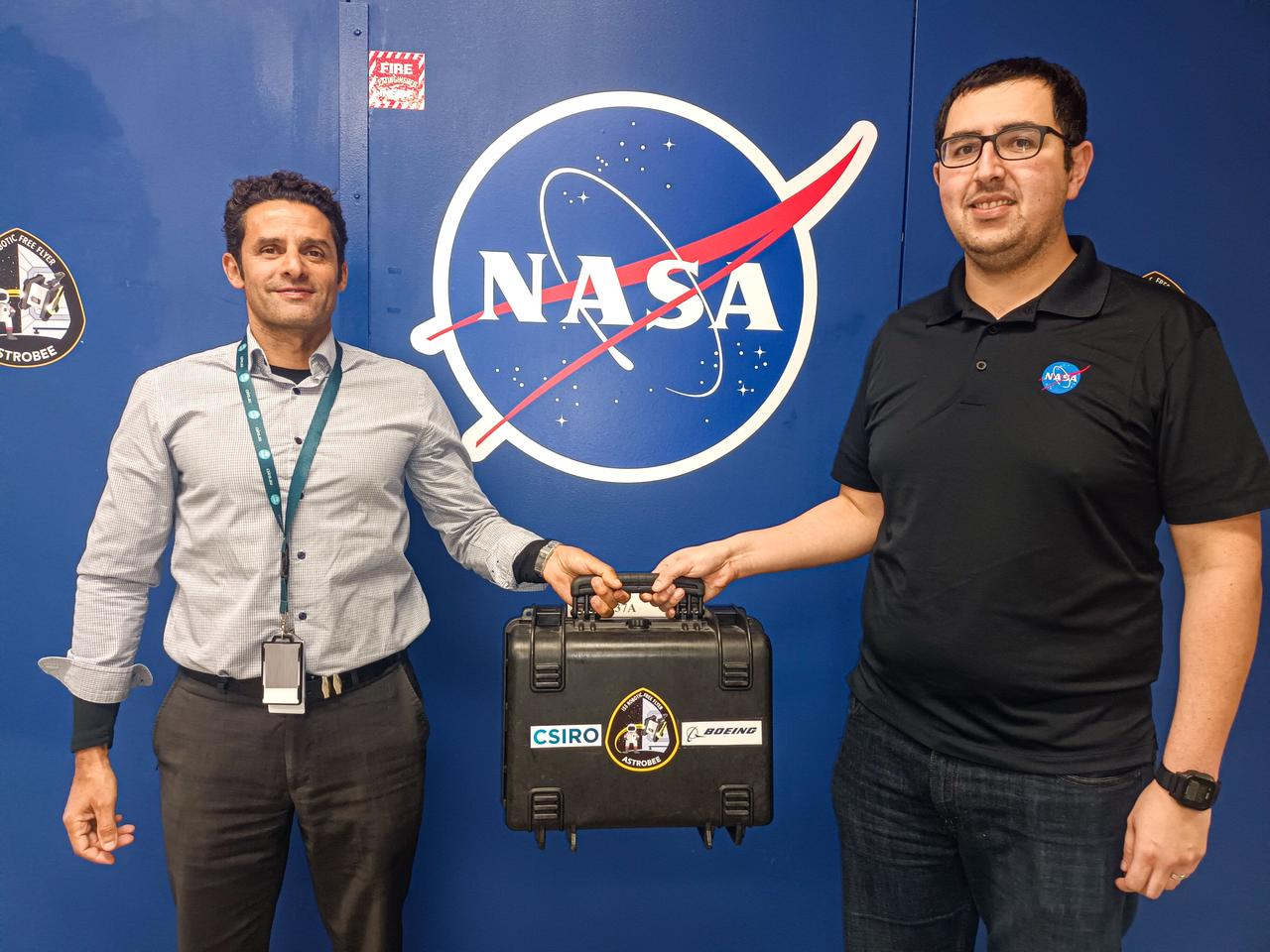
jsc2024e016242 (11/17/2023) --- CSIRO Project Lead Dr. Marc Elmouttie hands over the flight-ready Multi-Resolution Scanning payload to Jose Cortez from NASA’s Ames Research Center ahead of its final testing. The Multi-Resolution Scanning payload will be mated to the Astrobee free-flying robot, which will undertake a small flight and use the multi-resolution scanner (MRS) to create 3D maps of the interior of the International Space Station. Image courtesy of CSIRO.
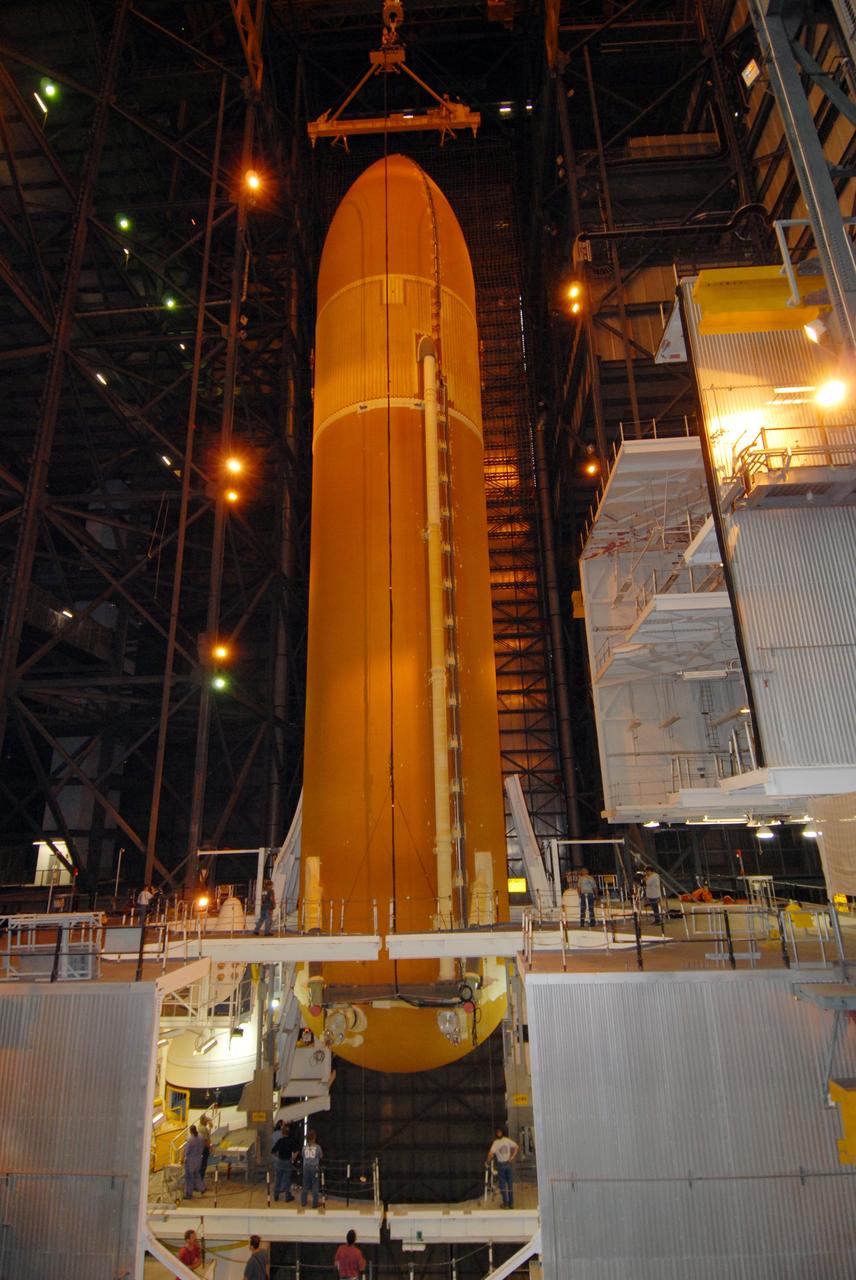
CAPE CANAVERAL, Fla. – In the Vehicle Assembly Building at NASA's Kennedy Space Center, the e3ternal tank for space shuttle Atlantis is lowered between the solid rocket boosters for mating. The tank and boosters will be secured on the mobile launcher platform below. Atlantis' STS-125 mission is the fifth and final shuttle servicing mission to NASA’s Hubble Space Telescope. Launch is targeted for Oct. 8. Photo credit: NASA/Jack Pfaller
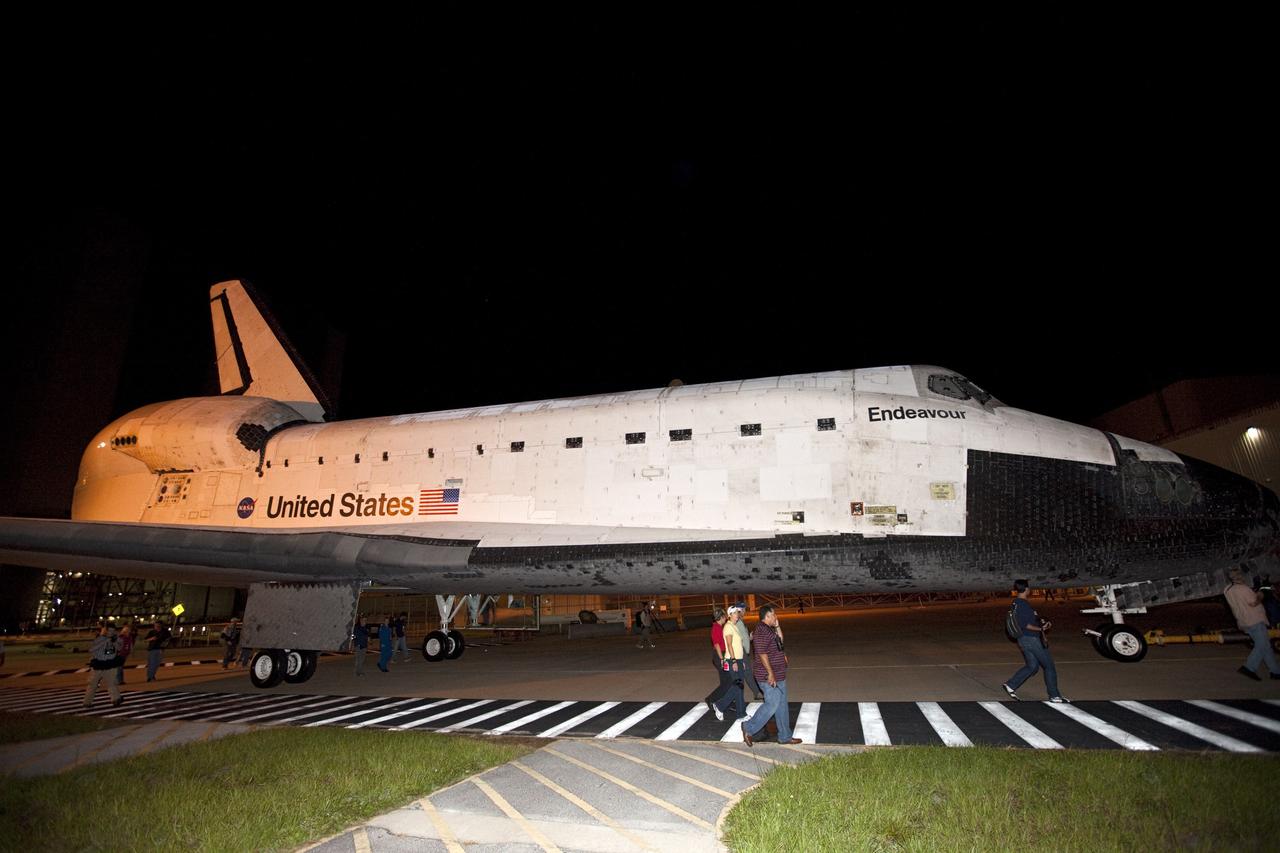
CAPE CANAVERAL, Fla. – Space shuttle Endeavour is towed to the Shuttle Landing Facility at NASA's Kennedy Space Center in Florida. The spacecraft will be lifted in the gantry-like Mate-Demate Device and placed atop NASA's modified 747 Shuttle Carrier Aircraft for the final ferry flight of the Space Shuttle Program. Endeavour will be placed on permanent public display at the California Science Center in Los Angeles. Photo credit: NASA/Kim Shiflett

On March 15, the base heat shield for Boeing’s CST-100 Starliner was freshly installed on the bottom of Spacecraft 1 in the High Bay of the Commercial Crew and Cargo Processing Facility at Kennedy Space Center. This is the spacecraft that will fly during the Pad Abort Test. The next step involves installation of the back shells and forward heat shield, and then the crew module will be mated to the service module for a fit check. Finally, the vehicle will head out to White Sands Missile Range in New Mexico for testing.

Expedition 50 NASA astronaut Peggy Whitson is seen after donning her Sokol suit ahead of her final qualification exams with fellow crew mates Russian cosmonaut Oleg Novitskiy of Roscosmos and ESA astronaut Thomas Pesquet, Tuesday, Oct. 25, 2016, at the Gagarin Cosmonaut Training Center (GCTC) in Star City, Russia. Photo Credit: (NASA/Bill Ingalls)
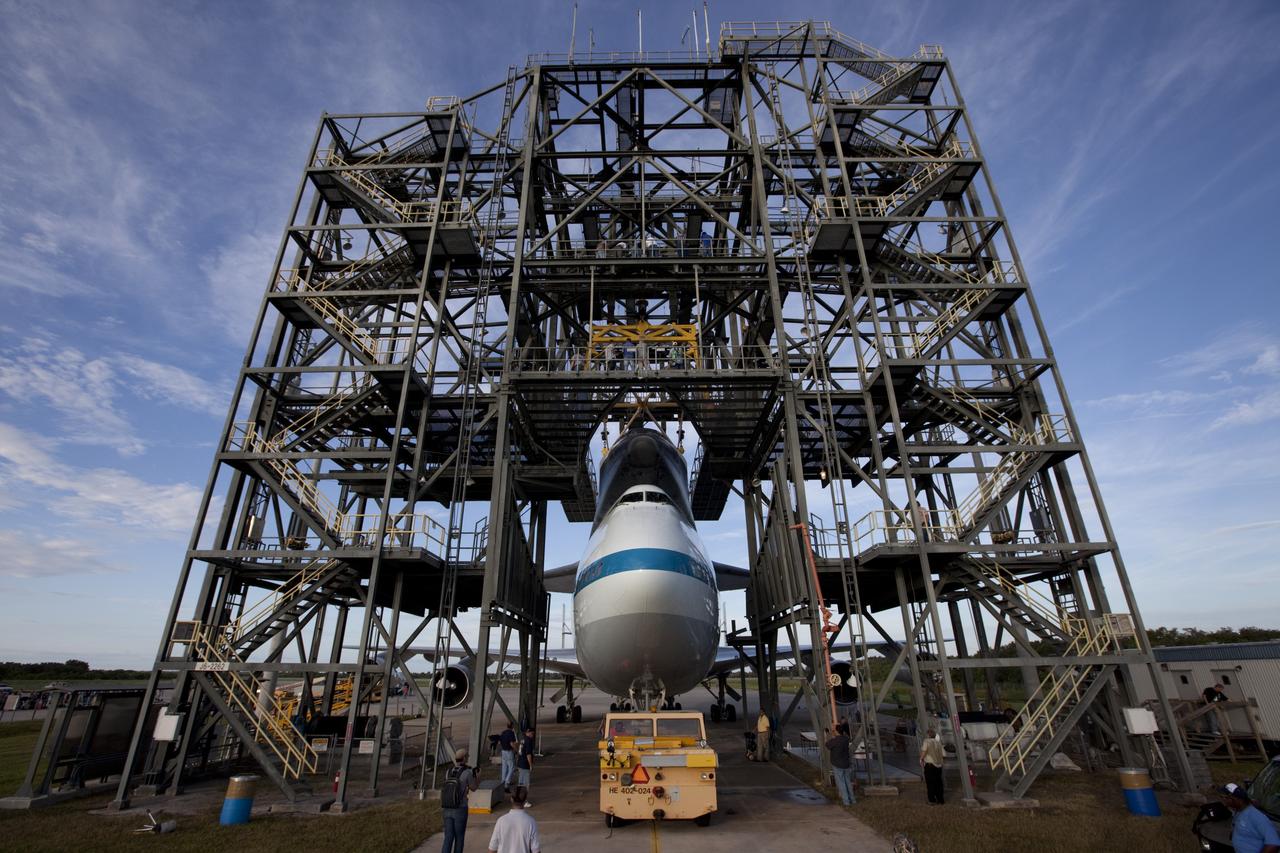
CAPE CANAVERAL, Fla. – At the Shuttle Landing Facility at NASA's Kennedy Space Center in Florida, the space shuttle Endeavour, mounted atop NASA's Shuttle Carrier Aircraft, or SCA, is rolled back from the mate-demate device. The SCA, a modified 747 jetliner, will fly Endeavour to Los Angeles where it will be placed on public display at the California Science Center. This is the final ferry flight scheduled in the Space Shuttle Program era. For more information on the shuttles' transition and retirement, visit http://www.nasa.gov/transition. Photo credit: NASA/ Kim Shiflett
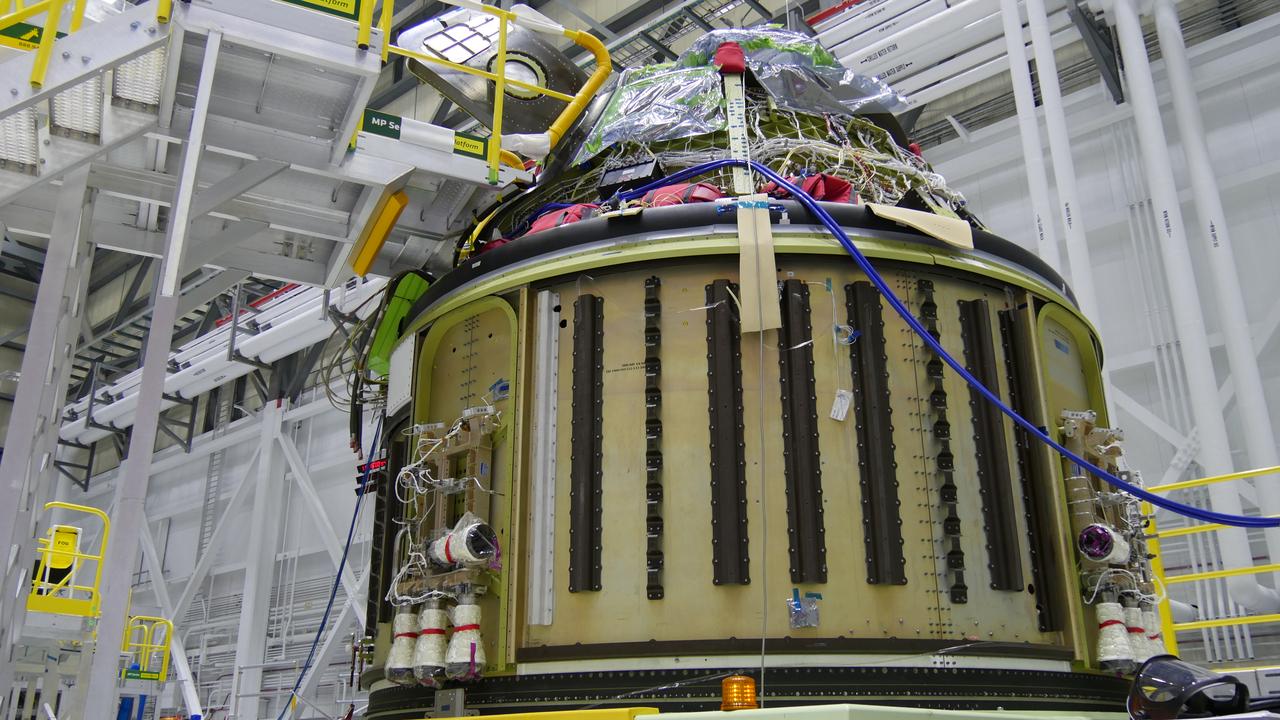
Boeing’s CST-100 Pad Abort Test Vehicle is almost ready to head to White Sands, New Mexico, to test the launch abort engines. During that test, the four abort engines will prove that the vehicle can safely perform an abort maneuver in the event of an emergency on the launchpad or during flight. The vehicle is mated to the service module for a fit check, and then the two will be taken apart for final preparations before heading to the desert.
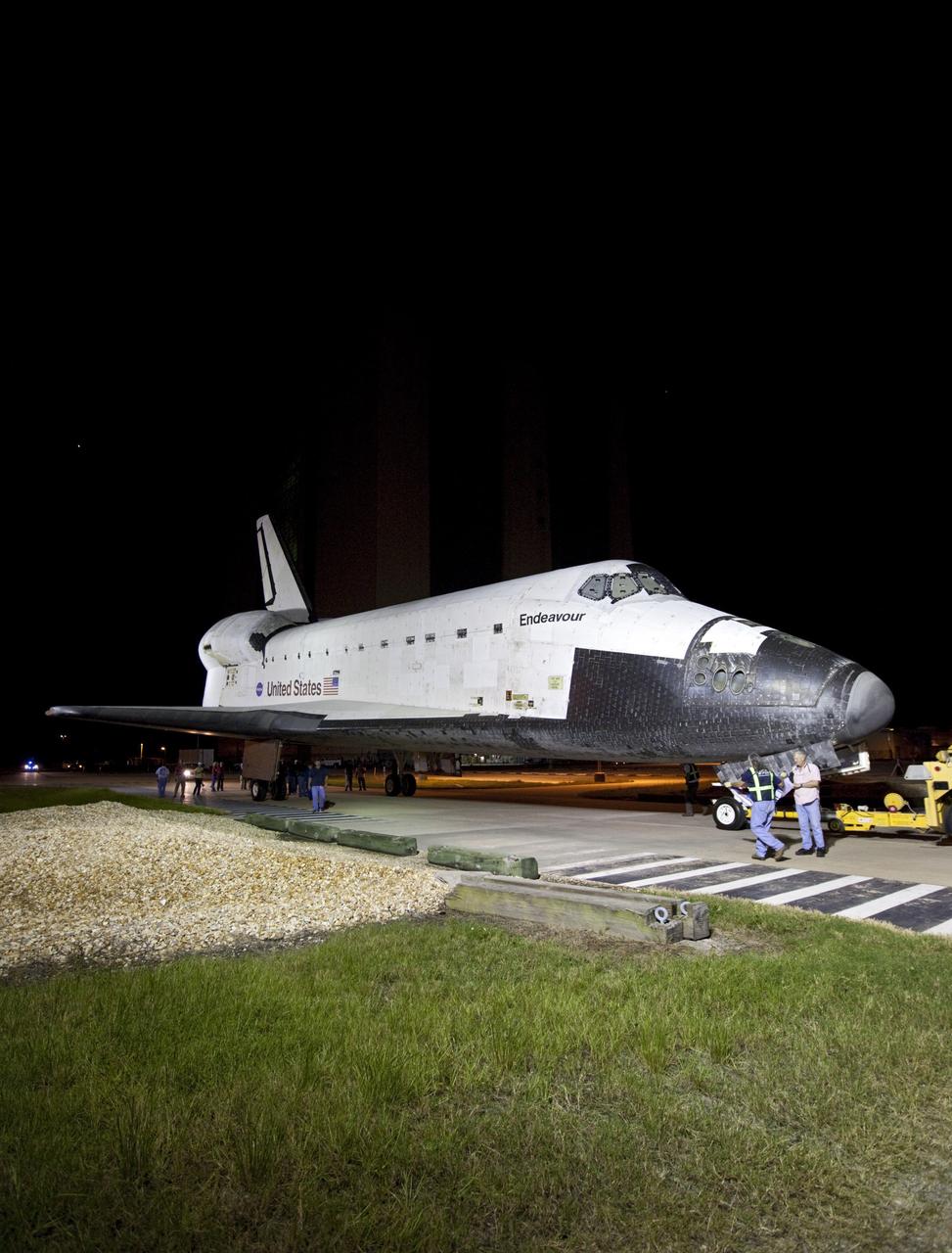
CAPE CANAVERAL, Fla. – At NASA's Kennedy Space Center in Florida, employees accompany space shuttle Endeavour at is rolls from the Vehicle Assembly Building to the Shuttle Landing Facility. The spacecraft will be lifted in the gantry-like Mate-Demate Device and placed atop NASA's modified 747 Shuttle Carrier Aircraft for the final ferry flight of the Space Shuttle Program. Endeavour will be placed on permanent public display at the California Science Center in Los Angeles. Photo credit: NASA/Kim Shiflett
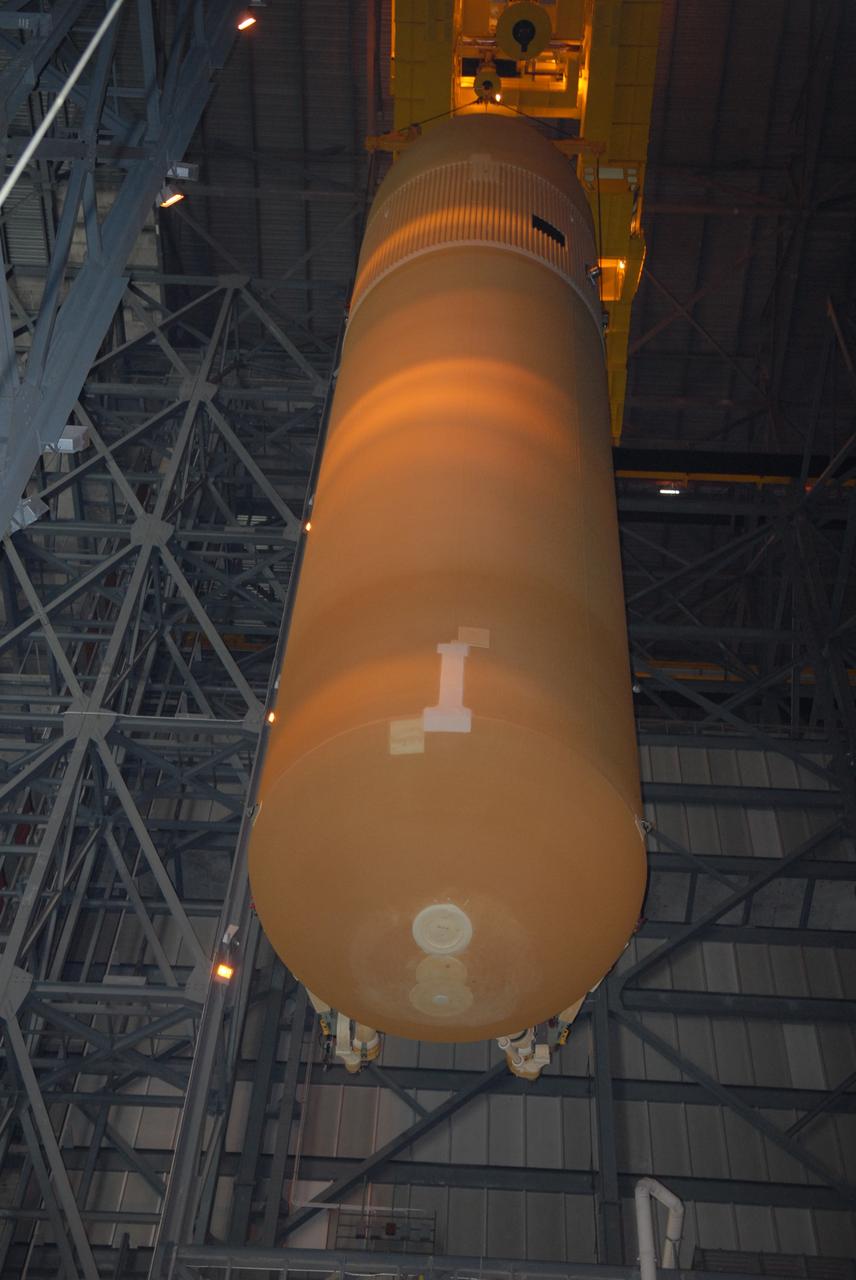
CAPE CANAVERAL, Fla. – In the Vehicle Assembly Building at NASA's Kennedy Space Center, the external tank for space shuttle Atlantis is lifted out of the checkout cell. The tank will be moved to high bay 3 and lowered toward the solid rocket boosters for mating. The tank and boosters will be secured on the mobile launcher platform below. Atlantis' STS-125 mission is the fifth and final shuttle servicing mission to NASA’s Hubble Space Telescope. Launch is targeted for Oct. 8. Photo credit: NASA/Jack Pfaller
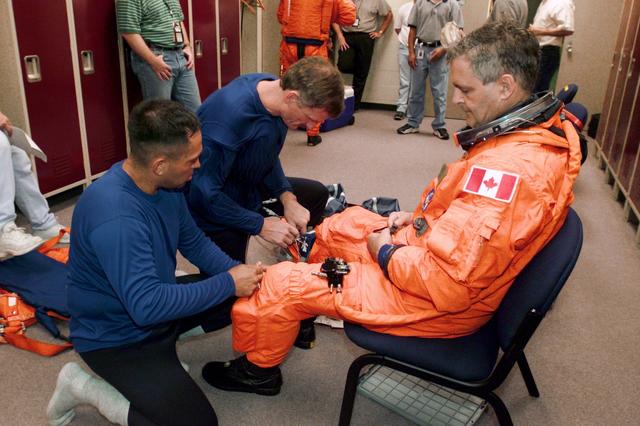
JSC2000-E-23527 (October 2000) --- Astronaut Marc Garneau, mission specialist representing the Canadian Space Agency (CSA), looks on as two crew mates assist him with final touches of suit-donning prior to a training session in the Johnson Space Center's Systems Integration Facility. Helping out are astronauts Carlos I. Noriega (left) and Joseph R. Tanner, mission specialists.
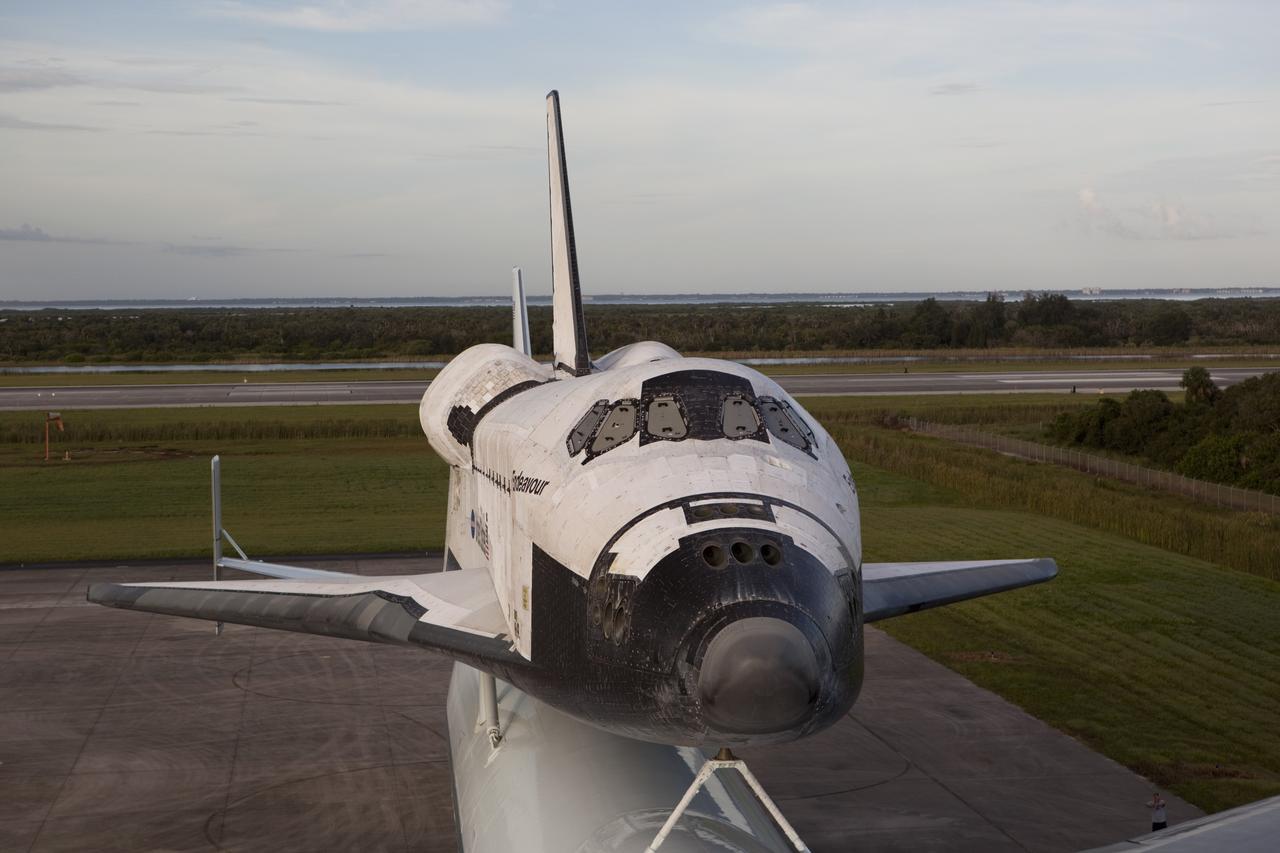
CAPE CANAVERAL, Fla. – Space shuttle Endeavour, secured atop NASA's Shuttle Carrier Aircraft, or SCA, glides away from the mate-demate device at the Shuttle Landing Facility at NASA's Kennedy Space Center in Florida. The SCA, a modified 747 jetliner, will fly Endeavour to Los Angeles where it will be placed on public display at the California Science Center. This is the final ferry flight scheduled in the Space Shuttle Program era. For more information on the shuttles' transition and retirement, visit http://www.nasa.gov/transition. Photo credit: NASA/Dimitri Gerondidakis

Expedition 50 ESA astronaut Thomas Pesquet listens to a reporter's question ahead of the final qualification exams with fellow crew mates Russian cosmonaut Oleg Novitskiy of Roscosmos and NASA astronaut Peggy Whitson, Tuesday, Oct. 25, 2016, at the Gagarin Cosmonaut Training Center (GCTC) in Star City, Russia. Photo Credit: (NASA/Bill Ingalls)

CAPE CANAVERAL, Fla. – Space shuttle Endeavour is ready to back out of the Vehicle Assembly Building at NASA's Kennedy Space Center in Florida, beginning the short move to the nearby Shuttle Landing Facility. Once in place near the runway, the spacecraft will be lifted in the gantry-like Mate-Demate Device and placed atop NASA's modified 747 Shuttle Carrier Aircraft for the final ferry flight of the Space Shuttle Program. Endeavour will be placed on permanent public display at the California Science Center in Los Angeles. Photo credit: NASA/Kim Shiflett

Expedition 50 ESA astronaut Thomas Pesquet dons his Sokol suit ahead of his final qualification exams with fellow crew mates NASA astronaut Peggy Whitson and Russian cosmonaut Oleg Novitskiy of Roscosmos, Tuesday, Oct. 25, 2016, at the Gagarin Cosmonaut Training Center (GCTC) in Star City, Russia. Photo Credit: (NASA/Bill Ingalls)
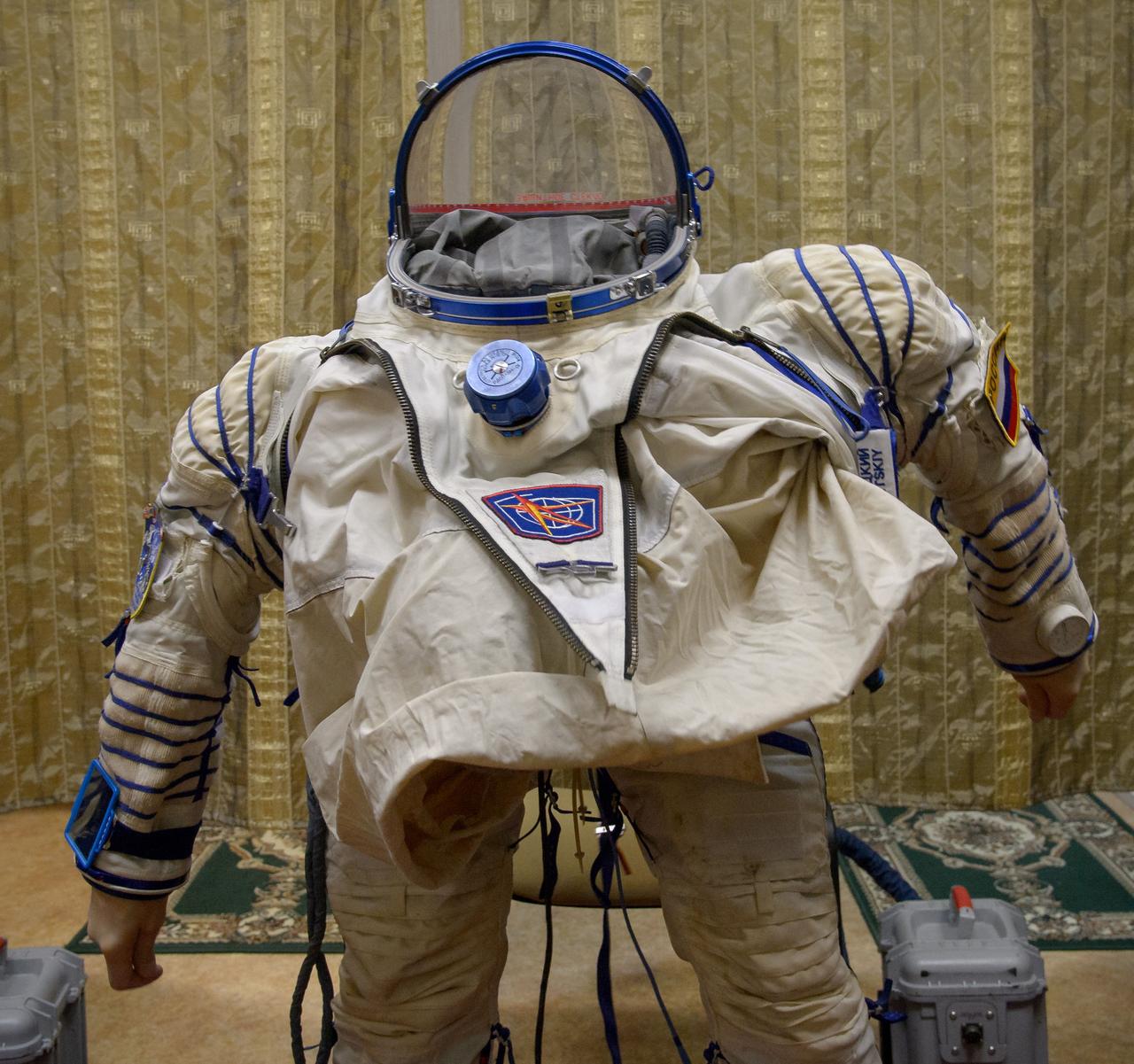
Expedition 50 Russian cosmonaut Oleg Novitskiy of Roscosmos dons his Sokol suit ahead of his final qualification exams with fellow crew mates NASA astronaut Peggy Whitson and ESA astronaut Thomas Pesquet, Tuesday, Oct. 25, 2016, at the Gagarin Cosmonaut Training Center (GCTC) in Star City, Russia. Photo Credit: (NASA/Bill Ingalls)
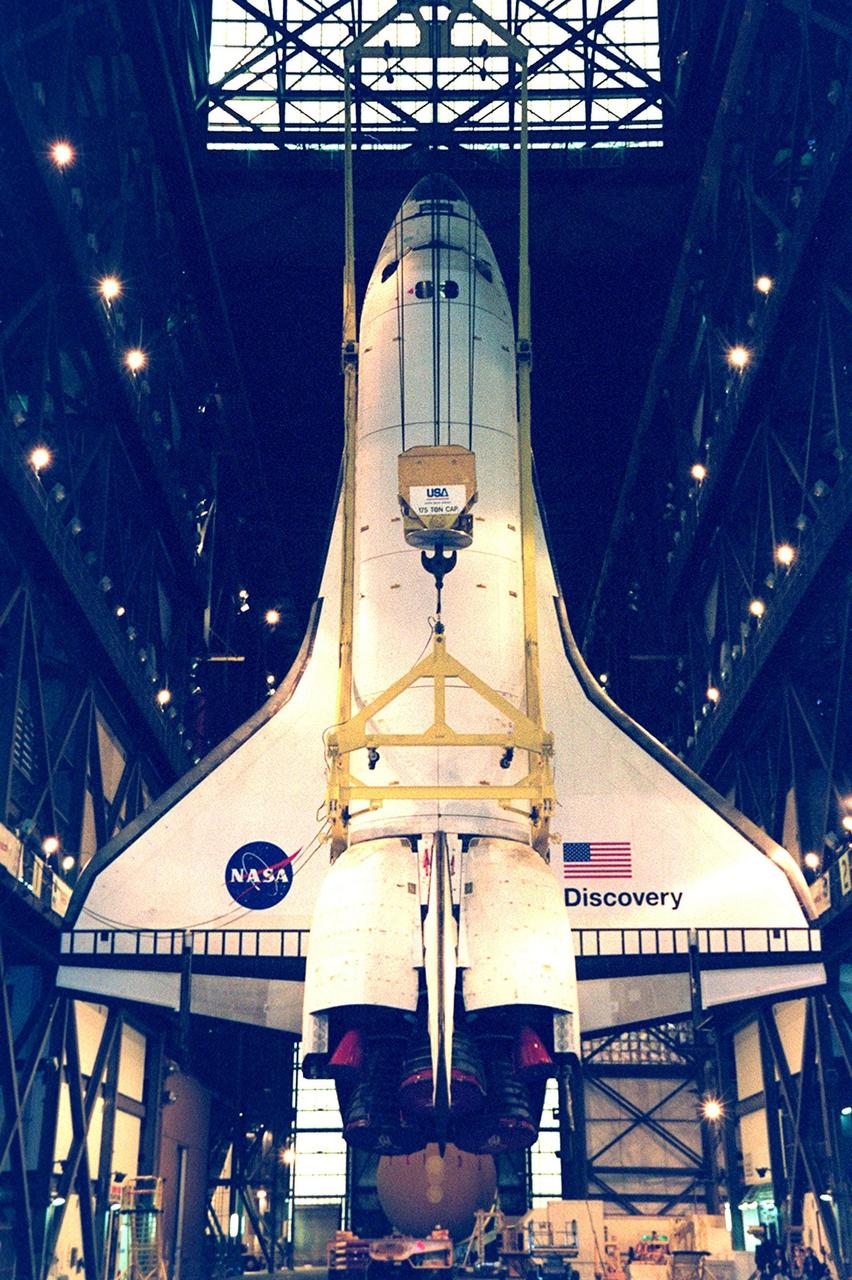
The orbiter Discovery finally hangs vertically, suspended from overhead cranes in the transfer aisle of the Vehicle Assembly Building. It will next be lifted into high bay 1 for mating with its solid rocket boosters and external tank. Discovery will be launched March 8 on mission STS-102, the eighth construction flight to the International Space Station. The Shuttle will carry the Multi-Purpose Logistics Module Leonardo, the first of three pressurized modules provided by the Italian Space Agency to carry supplies and equipment to the Space Station and back to Earth
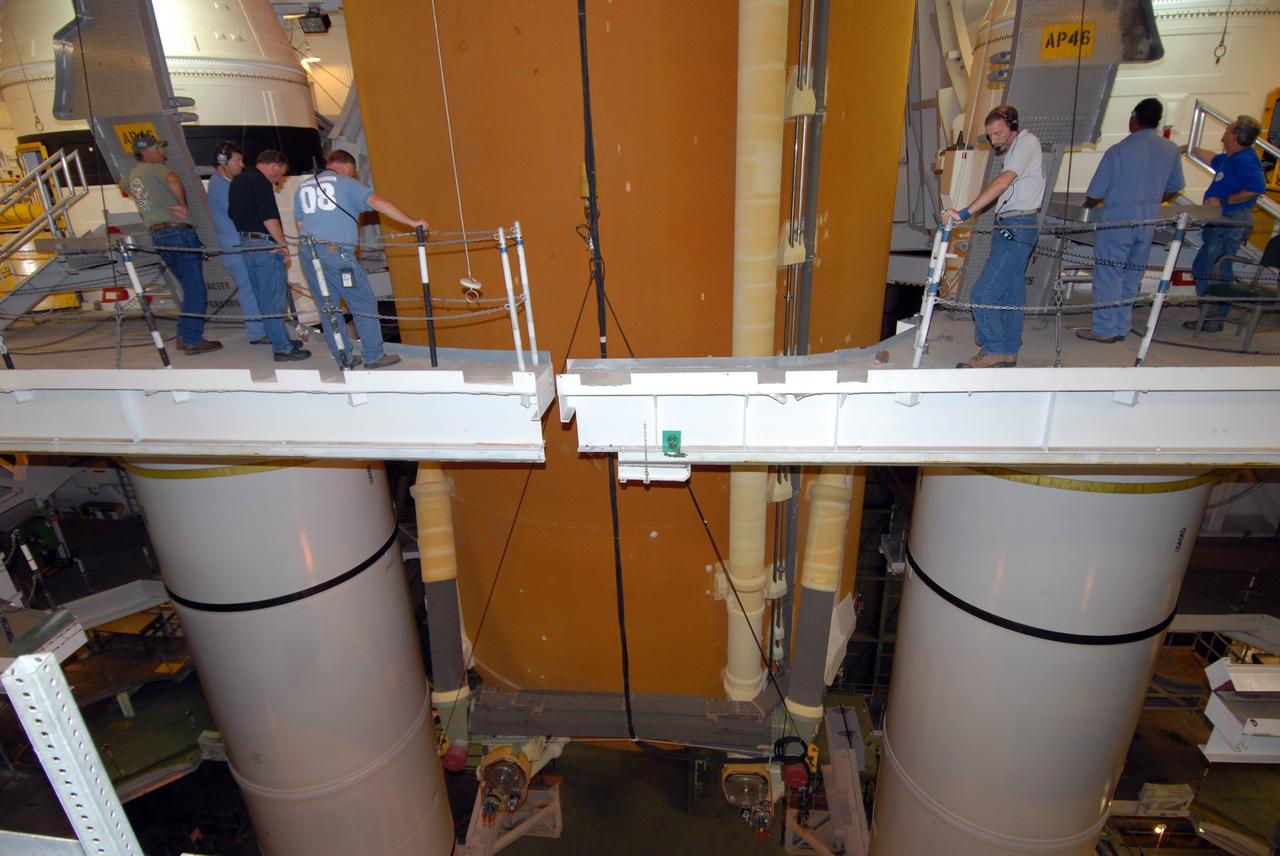
CAPE CANAVERAL, Fla. – In the Vehicle Assembly Building at NASA's Kennedy Space Center, the external tank for space shuttle Atlantis is lowered between the solid rocket boosters for mating on the mobile launcher platform. Atlantis' STS-125 mission is the fifth and final shuttle servicing mission to NASA’s Hubble Space Telescope. Launch is targeted for Oct. 8. Photo credit: NASA/Jack Pfaller

Expedition 50 ESA astronaut Thomas Pesquet dons his Sokol suit ahead of his final qualification exams with fellow crew mates NASA astronaut Peggy Whitson and Russian cosmonaut Oleg Novitskiy of Roscosmos, Tuesday, Oct. 25, 2016, at the Gagarin Cosmonaut Training Center (GCTC) in Star City, Russia. Photo Credit: (NASA/Bill Ingalls)
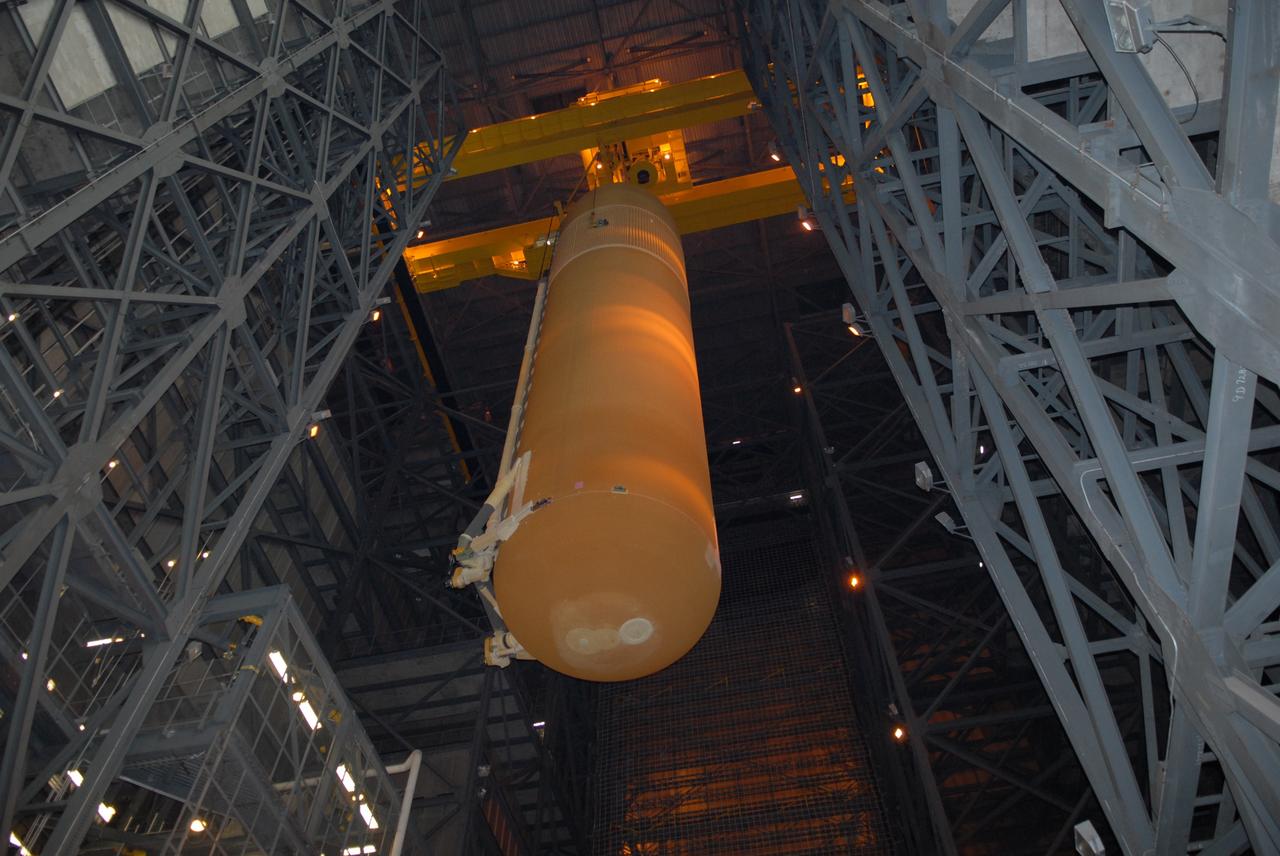
CAPE CANAVERAL, Fla. – In the Vehicle Assembly Building at NASA's Kennedy Space Center, the external tank for space shuttle Atlantis is lifted out of the checkout cell. The tank will be moved to high bay 3 and lowered toward the solid rocket boosters for mating. The tank and boosters will be secured on the mobile launcher platform below. Atlantis' STS-125 mission is the fifth and final shuttle servicing mission to NASA’s Hubble Space Telescope. Launch is targeted for Oct. 8. Photo credit: NASA/Jack Pfaller
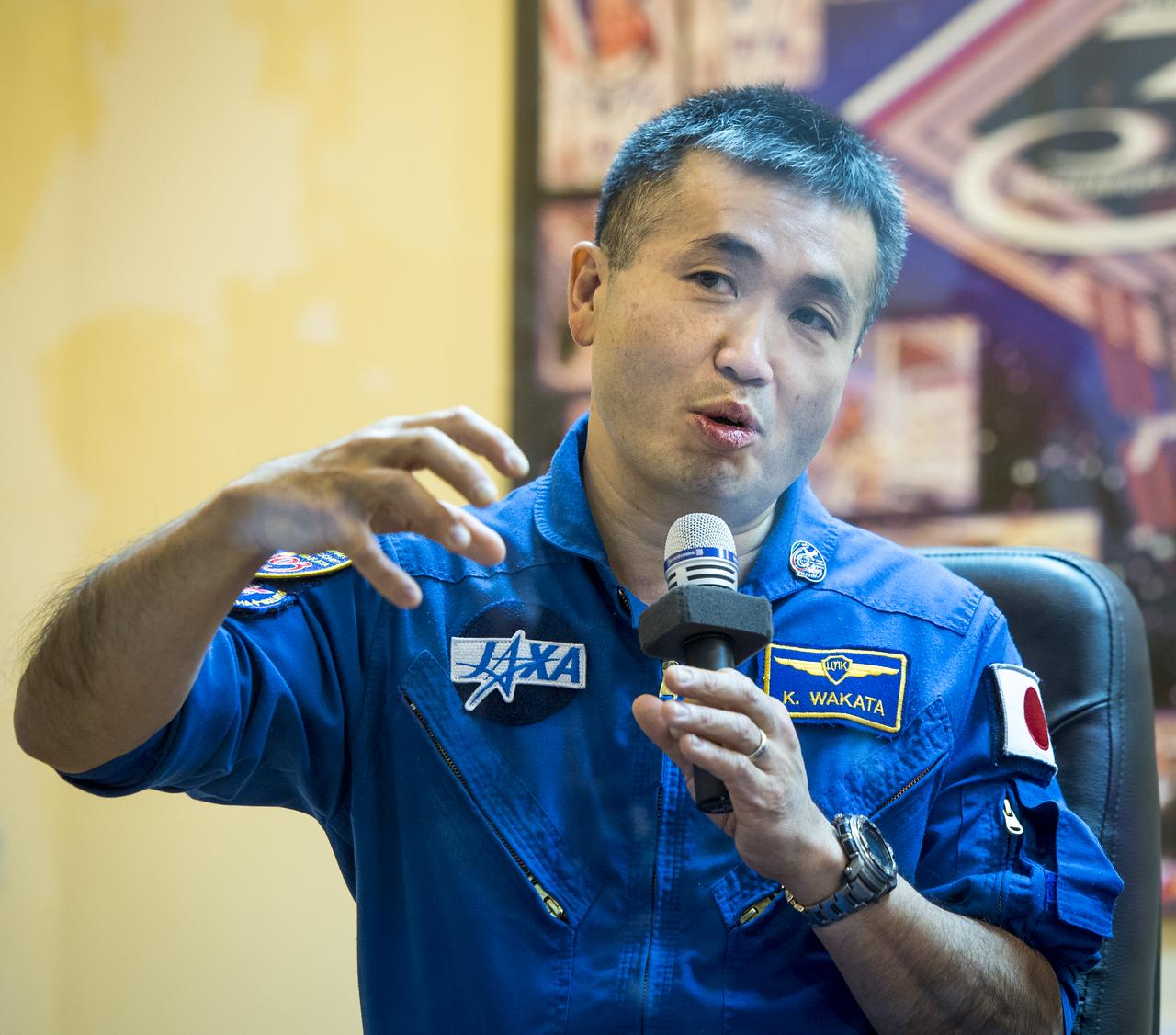
Expedition 38 Flight Engineer Koichi Wakata of the Japan Aerospace Exploration Agency is seen in quarantine, behind glass, during the final press conference held a day ahead of his launch with fellow crew mates, Expedition 38 Soyuz Commander Mikhail Tyurin of Roscosmos, and, Flight Engineer Rick Mastracchio of NASA, to the International Space Station, Wednesday, Nov. 6, 2013 at the Cosmonaut Hotel in Baikonur, Kazakhstan. Photo Credit: (NASA/Bill Ingalls)