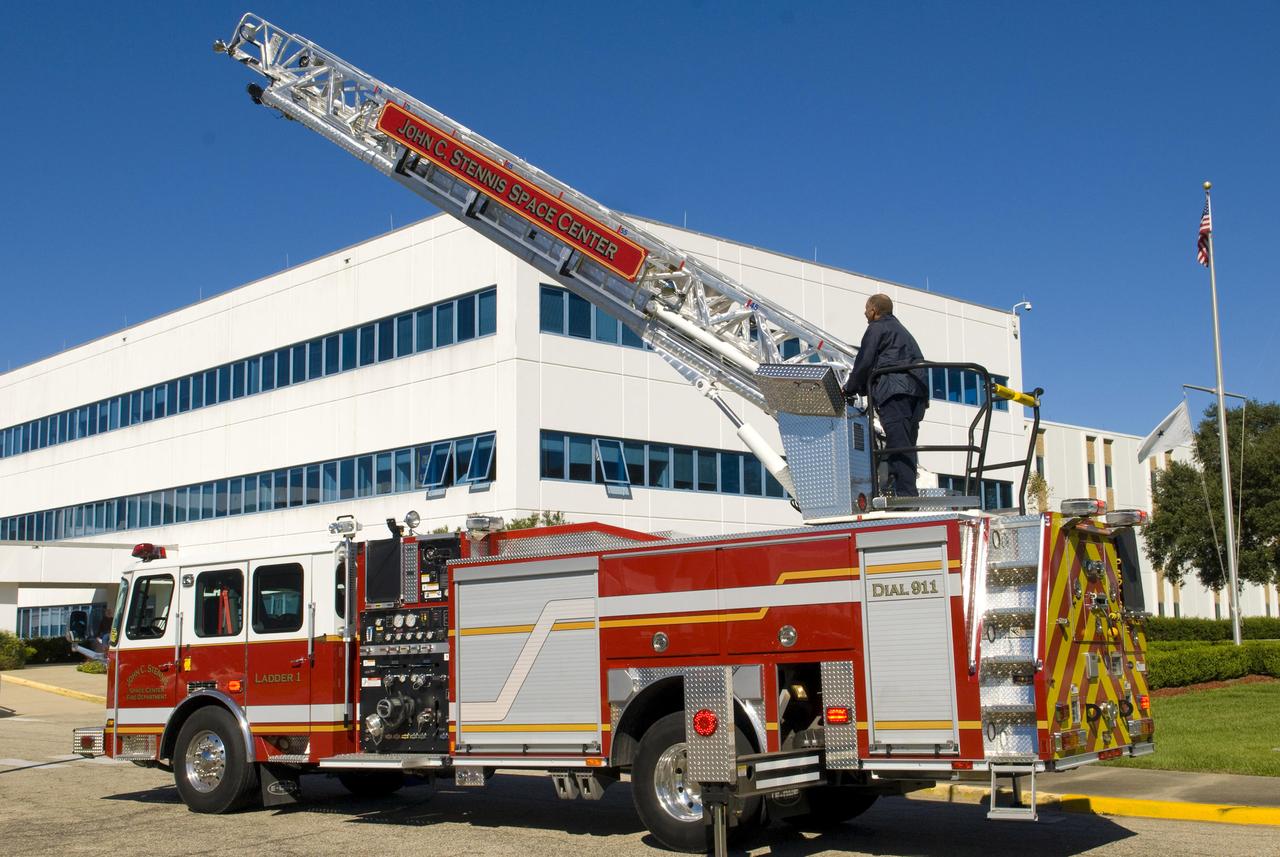
The Stennis Space Center Fire Department added to its fire-fighting capabilities with acquisition of a new emergency response vehicle, Ladder-1, for use on-site. The E-One HP78 Aerial Truck is a combination aerial ladder and fire suppression unit and is designed with the latest safety technology. Featuring a 78-foot ladder and a pumping capability of 1,500 gallons per minute, the new truck provides firefighters with a tremendous rescue and fire suppression tool, Stennis Fire Chief Clark Smith said.
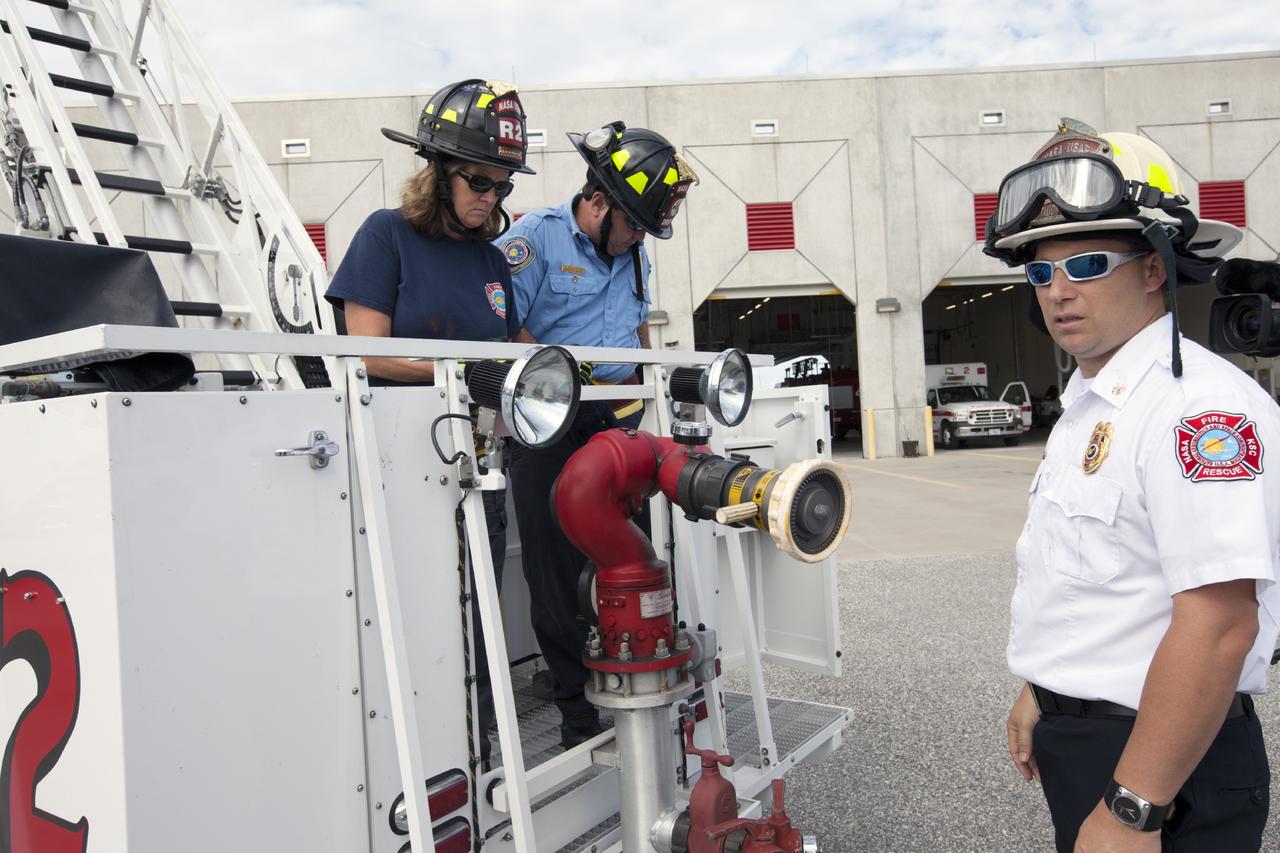
CAPE CANAVERAL, Fla. – At Fire Station No. 2 near the Shuttle Landing Facility at NASA’s Kennedy Space Center in Florida, Mark Huetter, assistant chief of training with the center’s Fire Department, monitors training procedures as two Fire Rescue Services personnel prepare to exit the bucket after training on the aerial fire truck. The center’s Fire Rescue Services recently achieved Pro Board Certification in aerial fire truck operations. Pro Board Certification is a globally recognized certification that puts on multiple courses that all fire departments throughout the world recognize and use to train their personnel. The unique aerial truck contains a 100-foot extendable ladder with a bucket at the end of it that can be used for rescues from taller buildings or aircraft rescue firefighting. Photo credit: NASA/Kim Shiflett
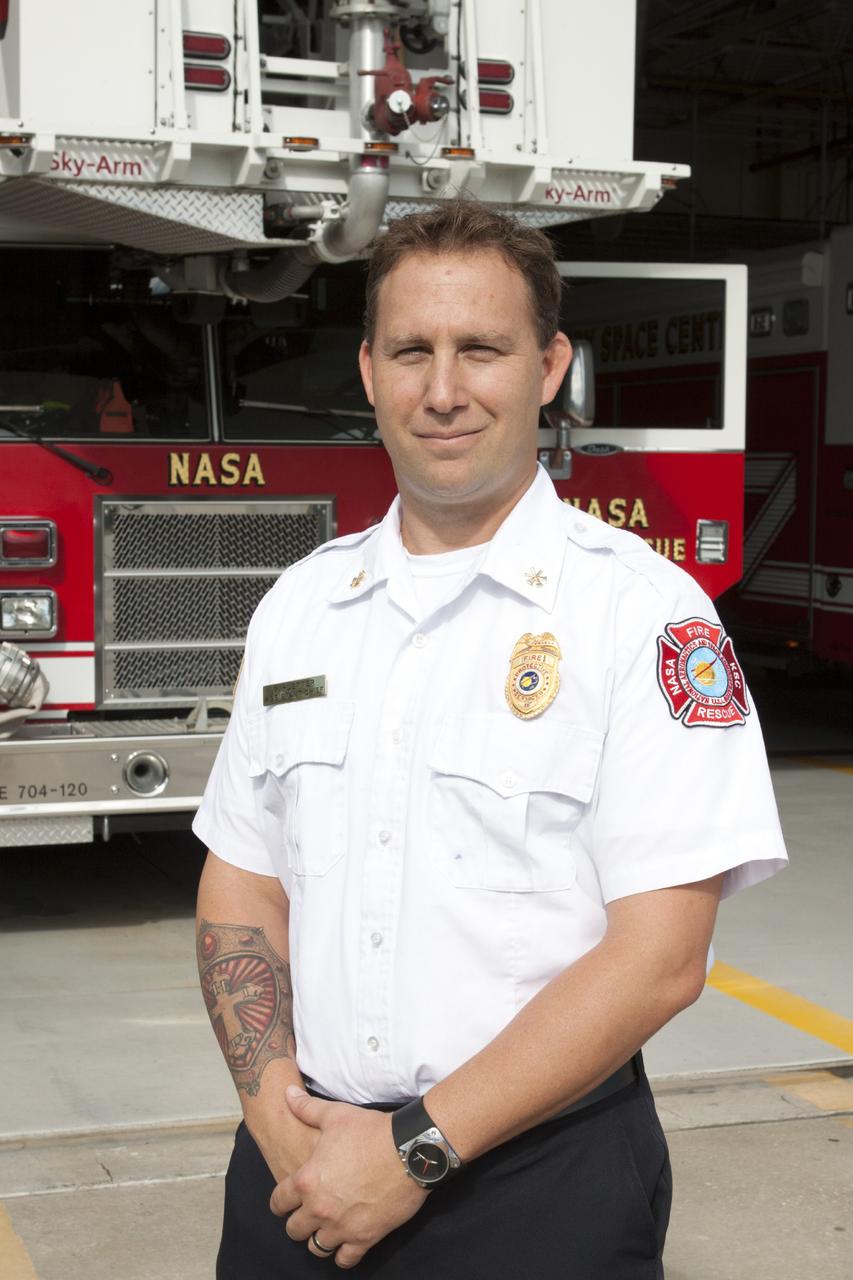
CAPE CANAVERAL, Fla. – At Fire Station No. 2 near the Shuttle Landing Facility at NASA’s Kennedy Space Center in Florida, Mark Huetter, assistant chief of training with the center’s Fire Department, prepares to train Fire Rescue Services personnel in the operation and use of the aerial fire truck. The center’s Fire Rescue Services recently achieved Pro Board Certification in aerial fire truck operations. Pro Board Certification is a globally recognized certification that puts on multiple courses that all fire departments throughout the world recognize and use to train their personnel. The unique aerial truck contains a 100-foot extendable ladder with a bucket at the end of it that can be used for rescues from taller buildings or aircraft rescue firefighting. Photo credit: NASA/Kim Shiflett
CAPE CANAVERAL, Fla. – At Fire Station No. 2 near the Shuttle Landing Facility at NASA’s Kennedy Space Center in Florida, Fire Rescue Services personnel have deployed and extended the ladder on the aerial fire truck during training in order to be certified in the operation and use of the vehicle. The stabilizers have been deployed on either side of the fire truck. The center’s Fire Rescue Services recently achieved Pro Board Certification in aerial fire truck operations. Pro Board Certification is a globally recognized certification that puts on multiple courses that all fire departments throughout the world recognize and use to train their personnel. The unique aerial truck contains a 100-foot extendable ladder with a bucket at the end of it that can be used for rescues from taller buildings or aircraft rescue firefighting. Photo credit: NASA/Kim Shiflett
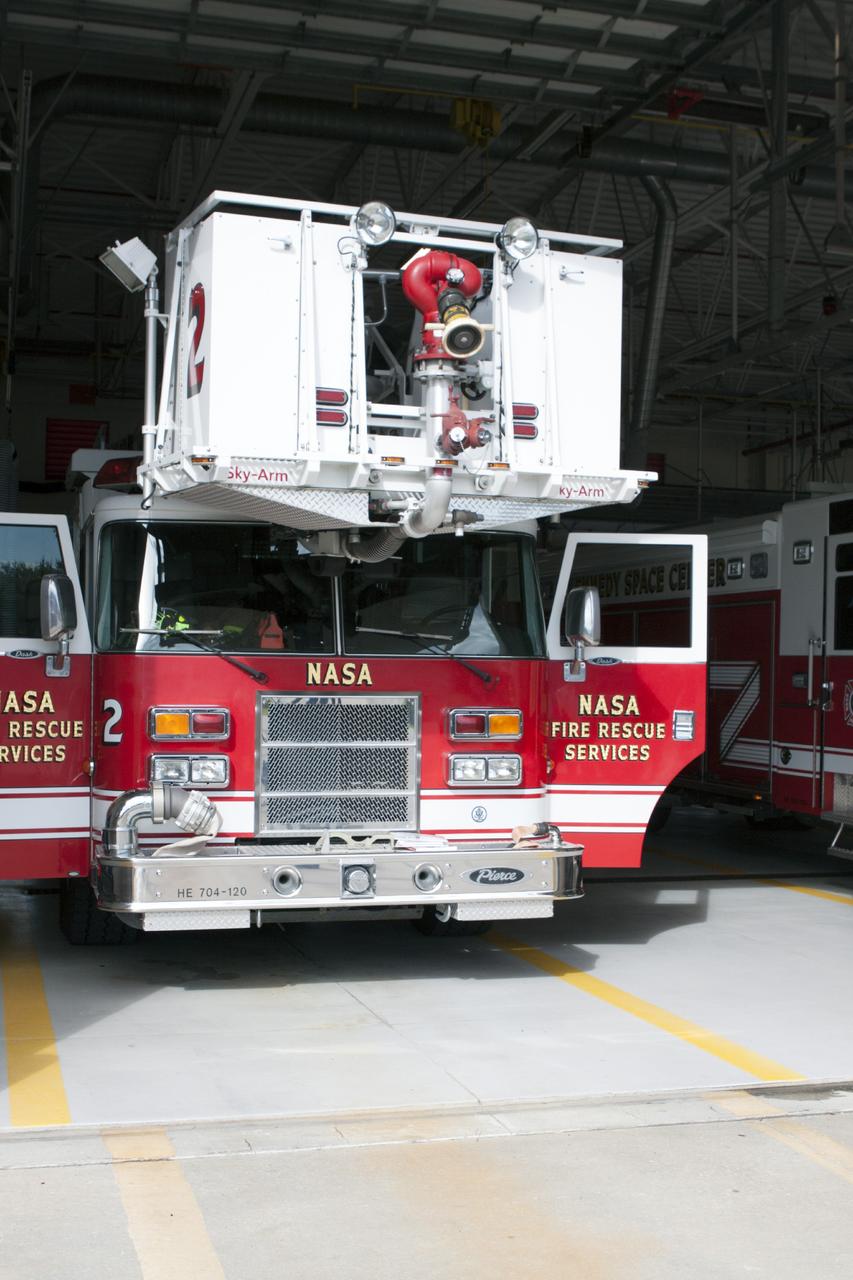
CAPE CANAVERAL, Fla. – At Fire Station No. 2 near the Shuttle Landing Facility at NASA’s Kennedy Space Center in Florida, the aerial fire truck sits in a bay as Fire Rescue Services personnel prepare to drive the fire truck out of the bay and then operate the extendable ladder during training in order to be certified in the operation and use of the vehicle. The center’s Fire Rescue Services recently achieved Pro Board Certification in aerial fire truck operations. Pro Board Certification is a globally recognized certification that puts on multiple courses that all fire departments throughout the world recognize and use to train their personnel. The unique aerial truck contains a 100-foot extendable ladder with a bucket at the end of it that can be used for rescues from taller buildings or aircraft rescue firefighting. Photo credit: NASA/Kim Shiflett
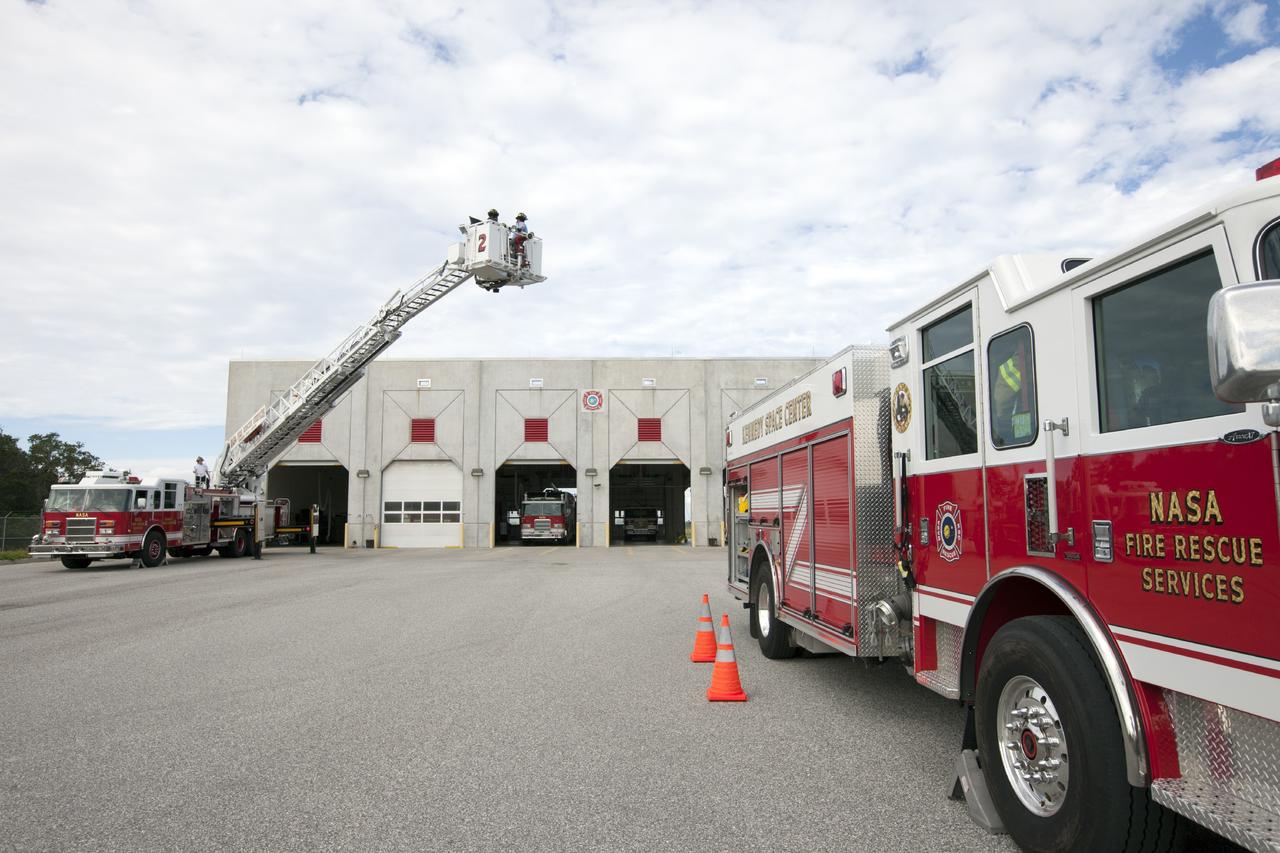
CAPE CANAVERAL, Fla. – At Fire Station No. 2 near the Shuttle Landing Facility at NASA’s Kennedy Space Center in Florida, Fire Rescue Services personnel have deployed and extended the ladder on the aerial fire truck during training in order to be certified in the operation and use of the vehicle. Two fire rescue workers are in the bucket practicing harness procedures. The center’s Fire Rescue Services recently achieved Pro Board Certification in aerial fire truck operations. Pro Board Certification is a globally recognized certification that puts on multiple courses that all fire departments throughout the world recognize and use to train their personnel. The unique aerial truck contains a 100-foot extendable ladder with a bucket at the end of it that can be used for rescues from taller buildings or aircraft rescue firefighting. Photo credit: NASA/Kim Shiflett
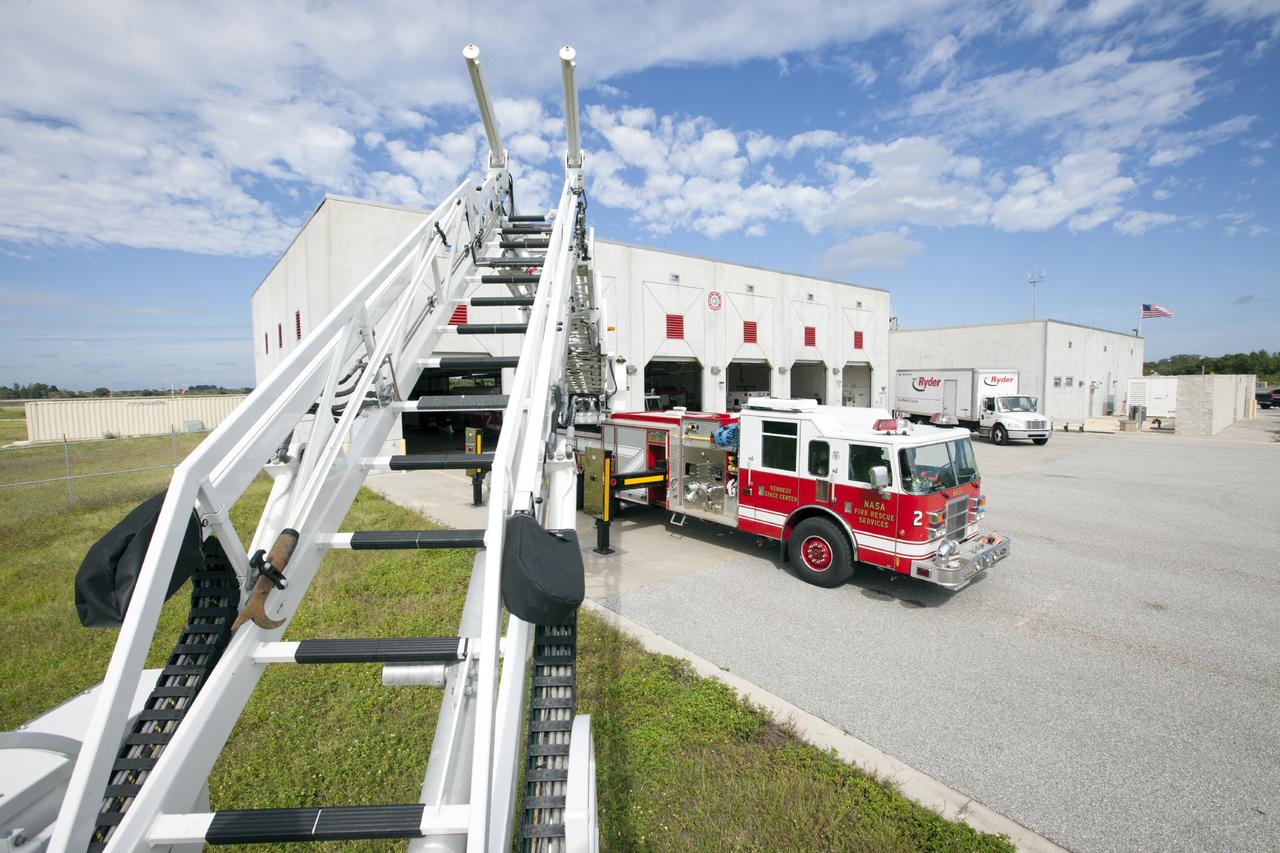
CAPE CANAVERAL, Fla. – At Fire Station No. 2 near the Shuttle Landing Facility at NASA’s Kennedy Space Center in Florida, Fire Rescue Services personnel have deployed and extended the ladder on the aerial fire truck during training in order to be certified in the operation and use of the vehicle. The stabilizers have been deployed on either side of the fire truck. The center’s Fire Rescue Services recently achieved Pro Board Certification in aerial fire truck operations. Pro Board Certification is a globally recognized certification that puts on multiple courses that all fire departments throughout the world recognize and use to train their personnel. The unique aerial truck contains a 100-foot extendable ladder with a bucket at the end of it that can be used for rescues from taller buildings or aircraft rescue firefighting. Photo credit: NASA/Kim Shiflett
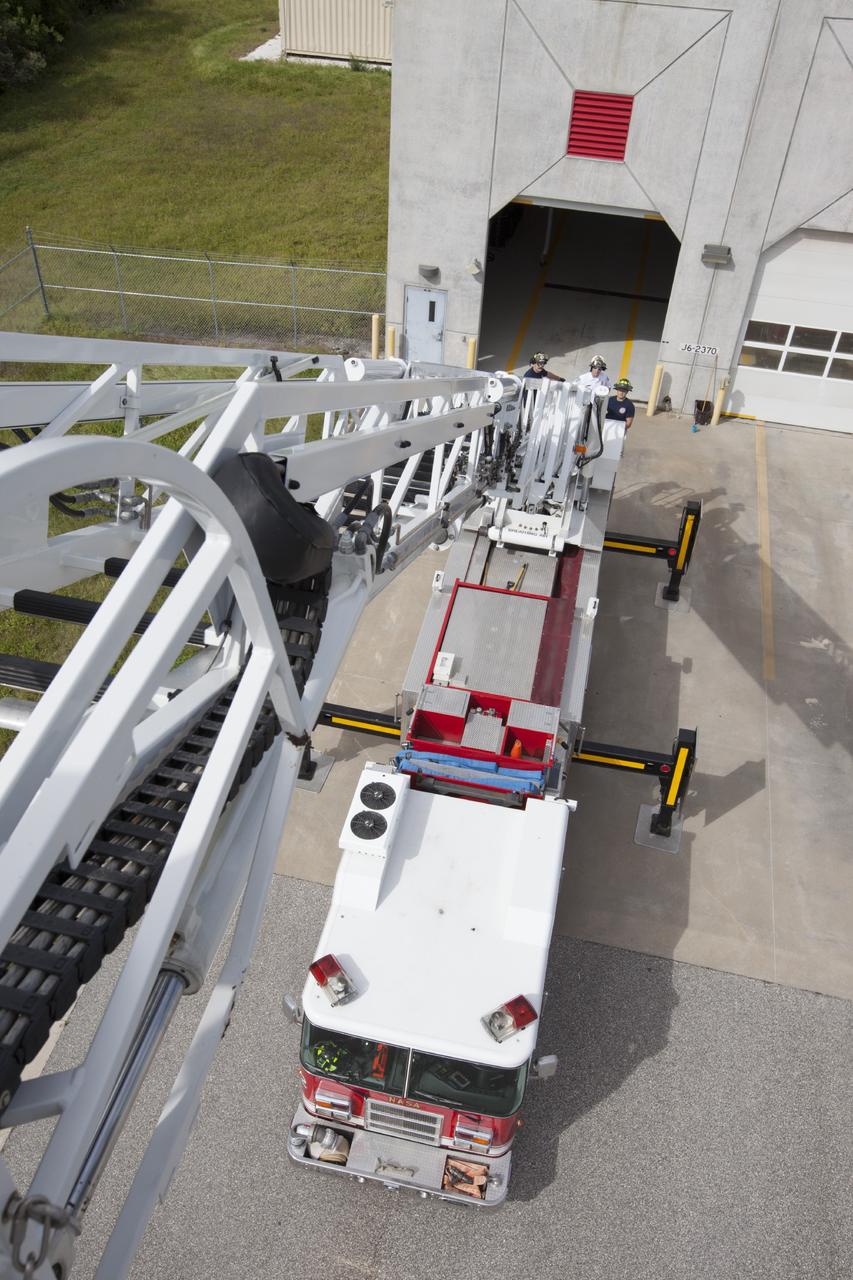
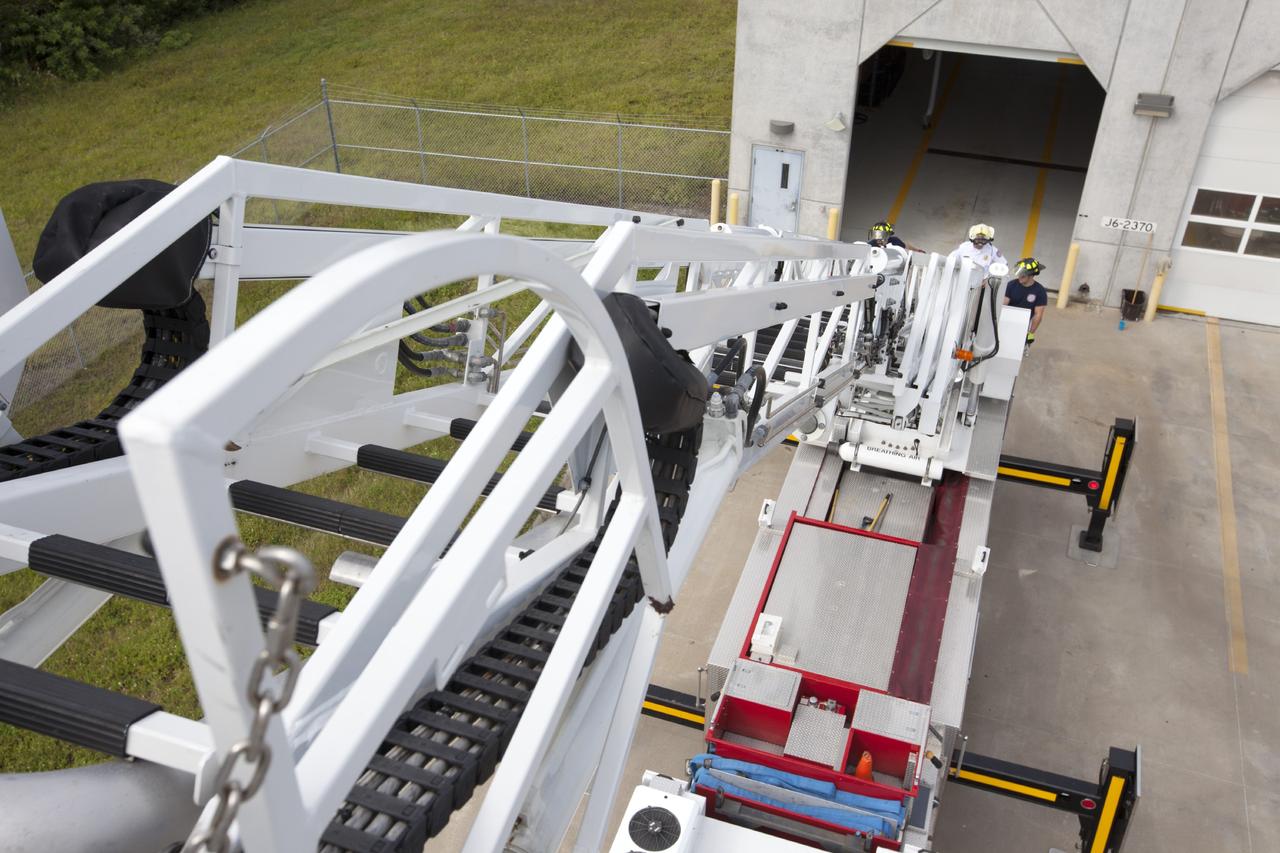
CAPE CANAVERAL, Fla. – At Fire Station No. 2 near the Shuttle Landing Facility at NASA’s Kennedy Space Center in Florida, a bird’s eye view reveals the ladder has been extended on the aerial fire truck during a training exercise. The stabilizers have been deployed on either side of the fire truck. The center’s Fire Rescue Services recently achieved Pro Board Certification in aerial fire truck operations. Pro Board Certification is a globally recognized certification that puts on multiple courses that all fire departments throughout the world recognize and use to train their personnel. The unique aerial truck contains a 100-foot extendable ladder with a bucket at the end of it that can be used for rescues from taller buildings or aircraft rescue firefighting. Photo credit: NASA/Kim Shiflett
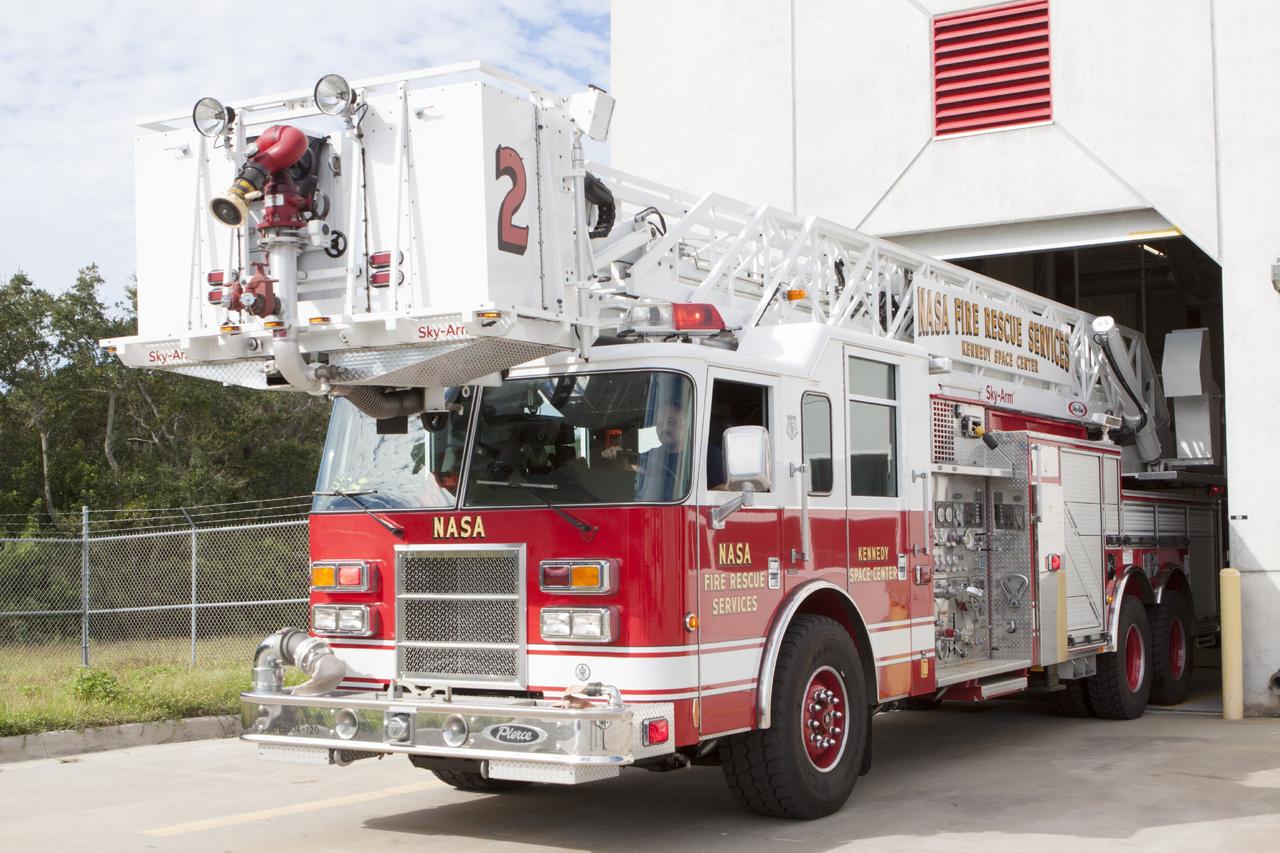
CAPE CANAVERAL, Fla. – At Fire Station No. 2 near the Shuttle Landing Facility at NASA’s Kennedy Space Center in Florida, the aerial fire truck is being driven out of the bay so that Fire Rescue Services personnel can be trained and certified in the operation and use of the vehicle. The center’s Fire Rescue Services recently achieved Pro Board Certification in aerial fire truck operations. Pro Board Certification is a globally recognized certification that puts on multiple courses that all fire departments throughout the world recognize and use to train their personnel. The unique aerial truck contains a 100-foot extendable ladder with a bucket at the end of it that can be used for rescues from taller buildings or aircraft rescue firefighting. Photo credit: NASA/Kim Shiflett
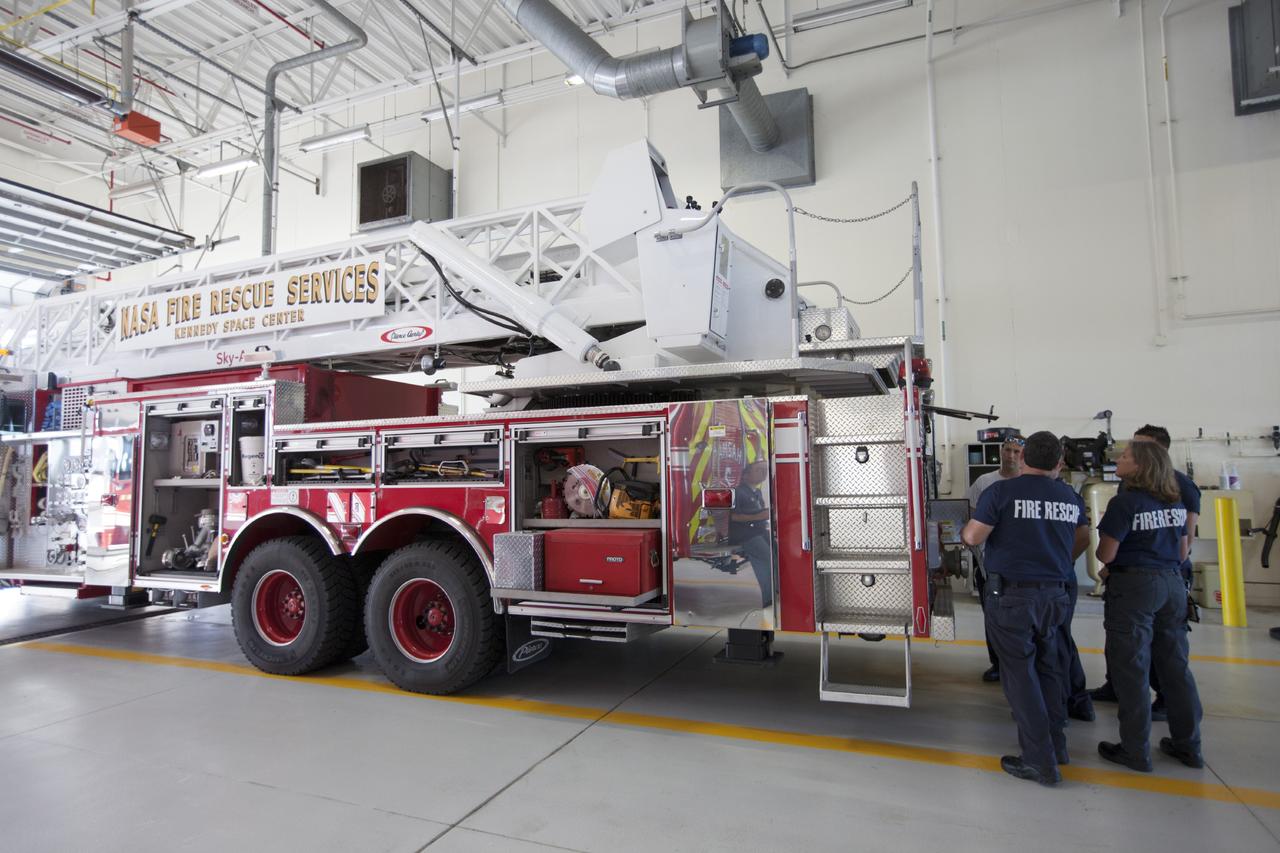
CAPE CANAVERAL, Fla. – At Fire Station No. 2 near the Shuttle Landing Facility at NASA’s Kennedy Space Center in Florida, Fire Rescue Services personnel review procedures and check equipment on the aerial fire truck as part of the training to be certified in the operation and use of the vehicle. The center’s Fire Rescue Services recently achieved Pro Board Certification in aerial fire truck operations. Pro Board Certification is a globally recognized certification that puts on multiple courses that all fire departments throughout the world recognize and use to train their personnel. The unique aerial truck contains a 100-foot extendable ladder with a bucket at the end of it that can be used for rescues from taller buildings or aircraft rescue firefighting. Photo credit: NASA/Kim Shiflett
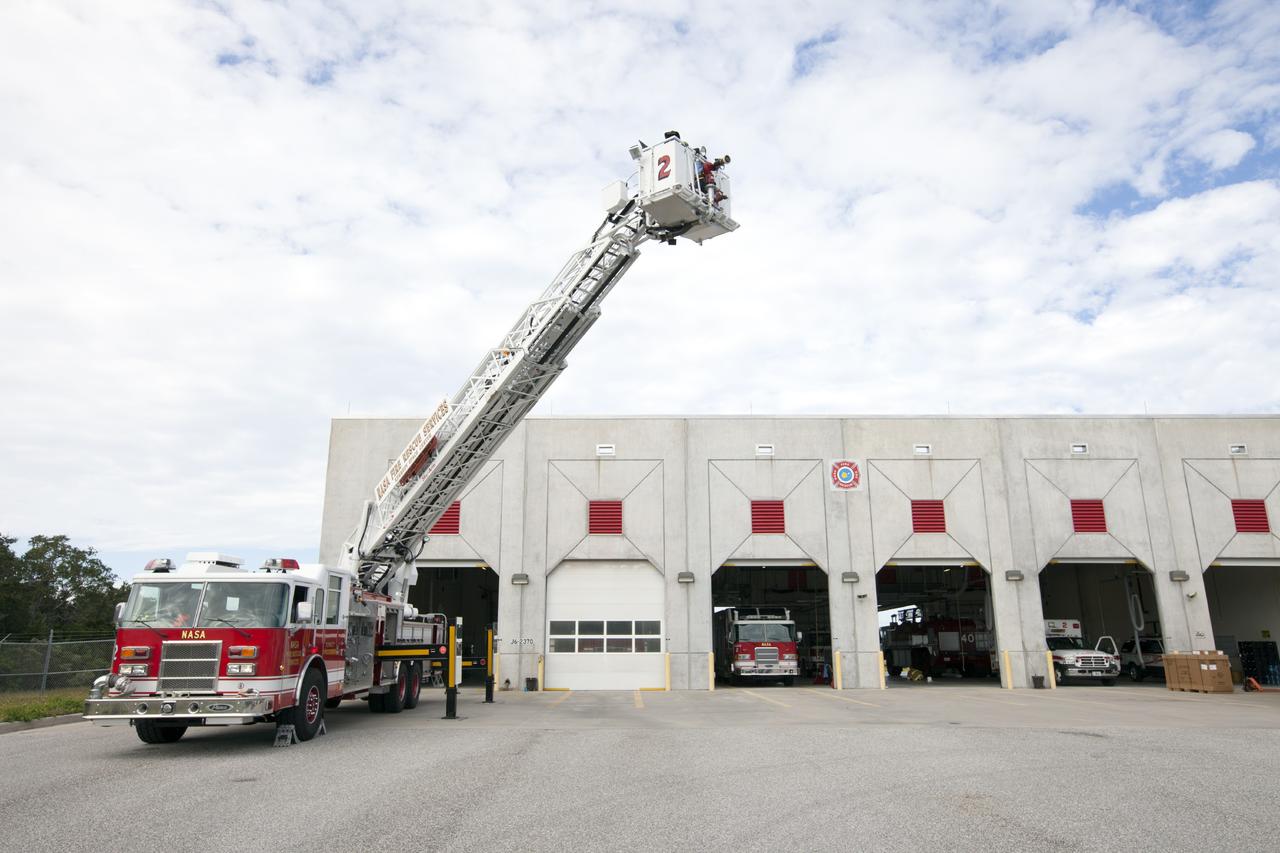
CAPE CANAVERAL, Fla. – At Fire Station No. 2 near the Shuttle Landing Facility at NASA’s Kennedy Space Center in Florida, Fire Rescue Services personnel have deployed the ladder on the aerial fire truck during training in order to be certified in the operation and use of the vehicle. The center’s Fire Rescue Services recently achieved Pro Board Certification in aerial fire truck operations. Pro Board Certification is a globally recognized certification that puts on multiple courses that all fire departments throughout the world recognize and use to train their personnel. The unique aerial truck contains a 100-foot extendable ladder with a bucket at the end of it that can be used for rescues from taller buildings or aircraft rescue firefighting. Photo credit: NASA/Kim Shiflett
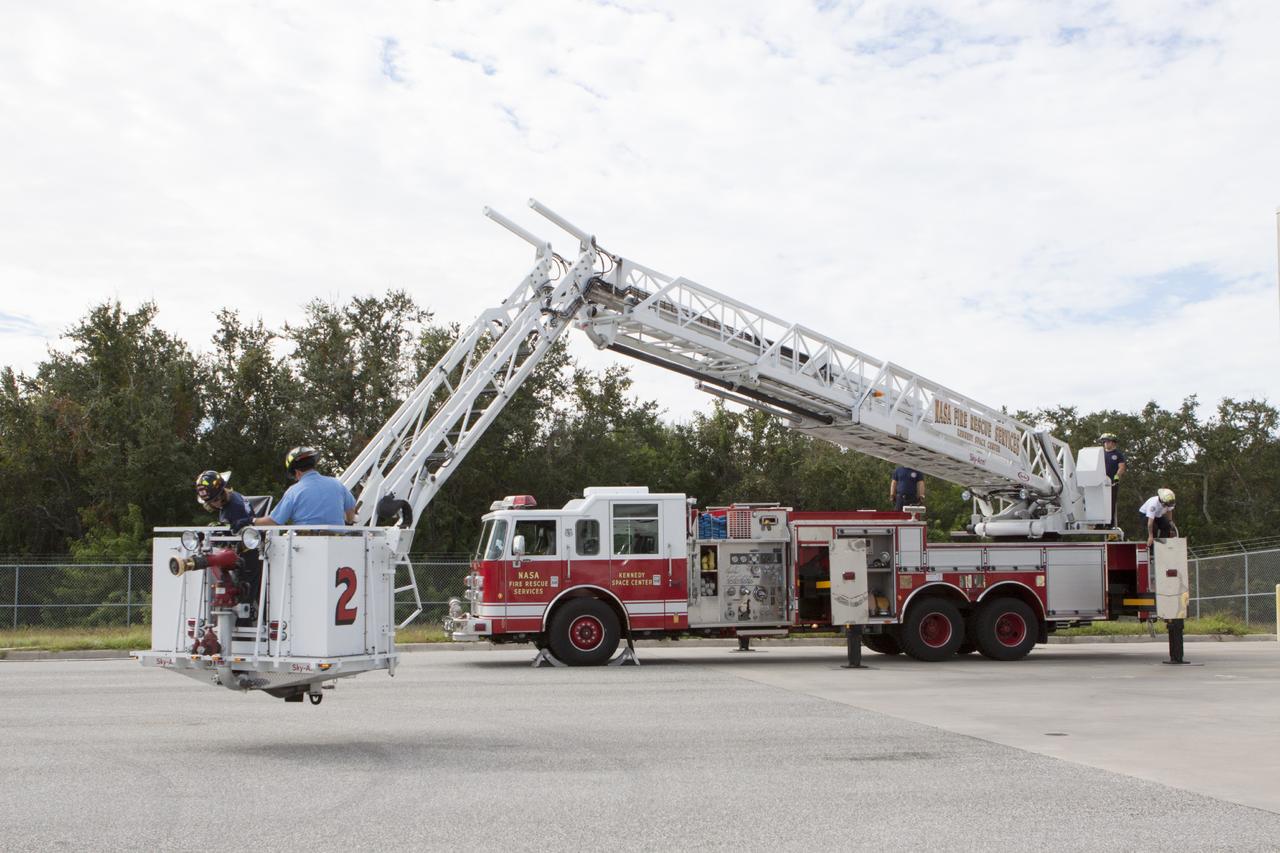
CAPE CANAVERAL, Fla. – At Fire Station No. 2 near the Shuttle Landing Facility at NASA’s Kennedy Space Center in Florida, Fire Rescue Services personnel lower the extendable ladder so that two fire rescue workers can exit the bucket during training to be certified in the operation and use of the vehicle. The center’s Fire Rescue Services recently achieved Pro Board Certification in aerial fire truck operations. Pro Board Certification is a globally recognized certification that puts on multiple courses that all fire departments throughout the world recognize and use to train their personnel. The unique aerial truck contains a 100-foot extendable ladder with a bucket at the end of it that can be used for rescues from taller buildings or aircraft rescue firefighting. Photo credit: NASA/Kim Shiflett
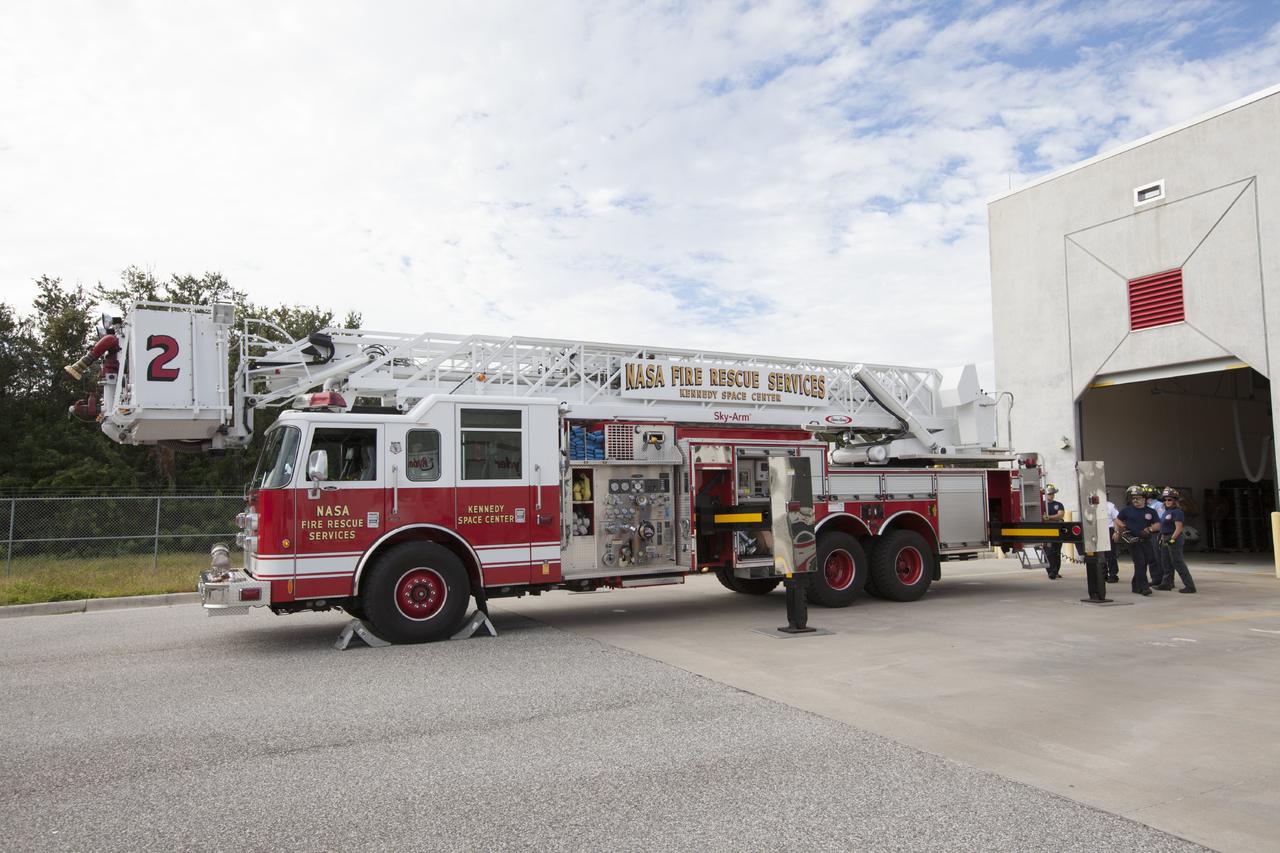
CAPE CANAVERAL, Fla. – At Fire Station No. 2 near the Shuttle Landing Facility at NASA’s Kennedy Space Center in Florida, the aerial fire truck has been moved out of the bay and Fire Rescue Services personnel have deployed the stabilizers on either side of the truck in order to prepare for training to be certified in the operation and use of the vehicle. The center’s Fire Rescue Services recently achieved Pro Board Certification in aerial fire truck operations. Pro Board Certification is a globally recognized certification that puts on multiple courses that all fire departments throughout the world recognize and use to train their personnel. The unique aerial truck contains a 100-foot extendable ladder with a bucket at the end of it that can be used for rescues from taller buildings or aircraft rescue firefighting. Photo credit: NASA/Kim Shiflett
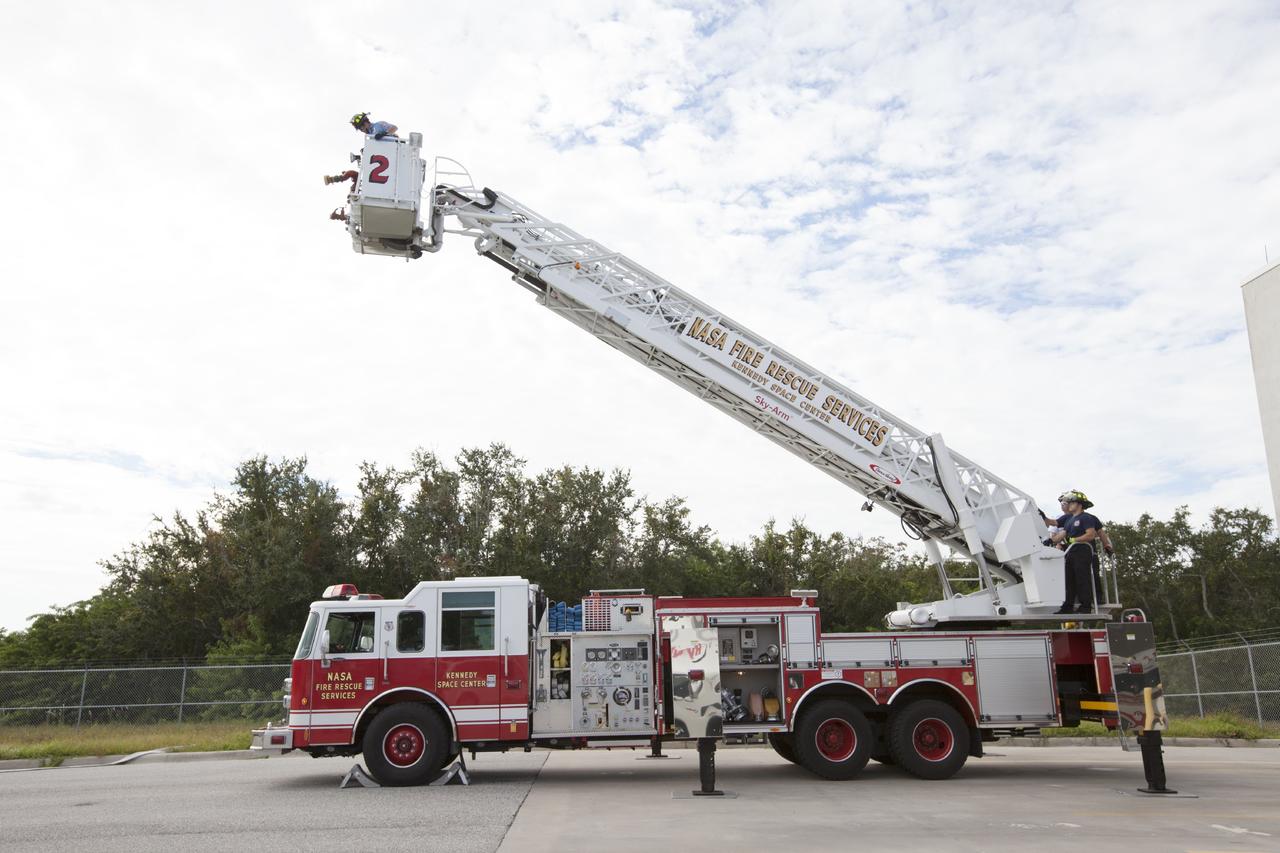
CAPE CANAVERAL, Fla. – At Fire Station No. 2 near the Shuttle Landing Facility at NASA’s Kennedy Space Center in Florida, Fire Rescue Services personnel have deployed the ladder on the aerial fire truck during training in order to be certified in the operation and use of the vehicle. The center’s Fire Rescue Services recently achieved Pro Board Certification in aerial fire truck operations. Pro Board Certification is a globally recognized certification that puts on multiple courses that all fire departments throughout the world recognize and use to train their personnel. The unique aerial truck contains a 100-foot extendable ladder with a bucket at the end of it that can be used for rescues from taller buildings or aircraft rescue firefighting. Photo credit: NASA/Kim Shiflett
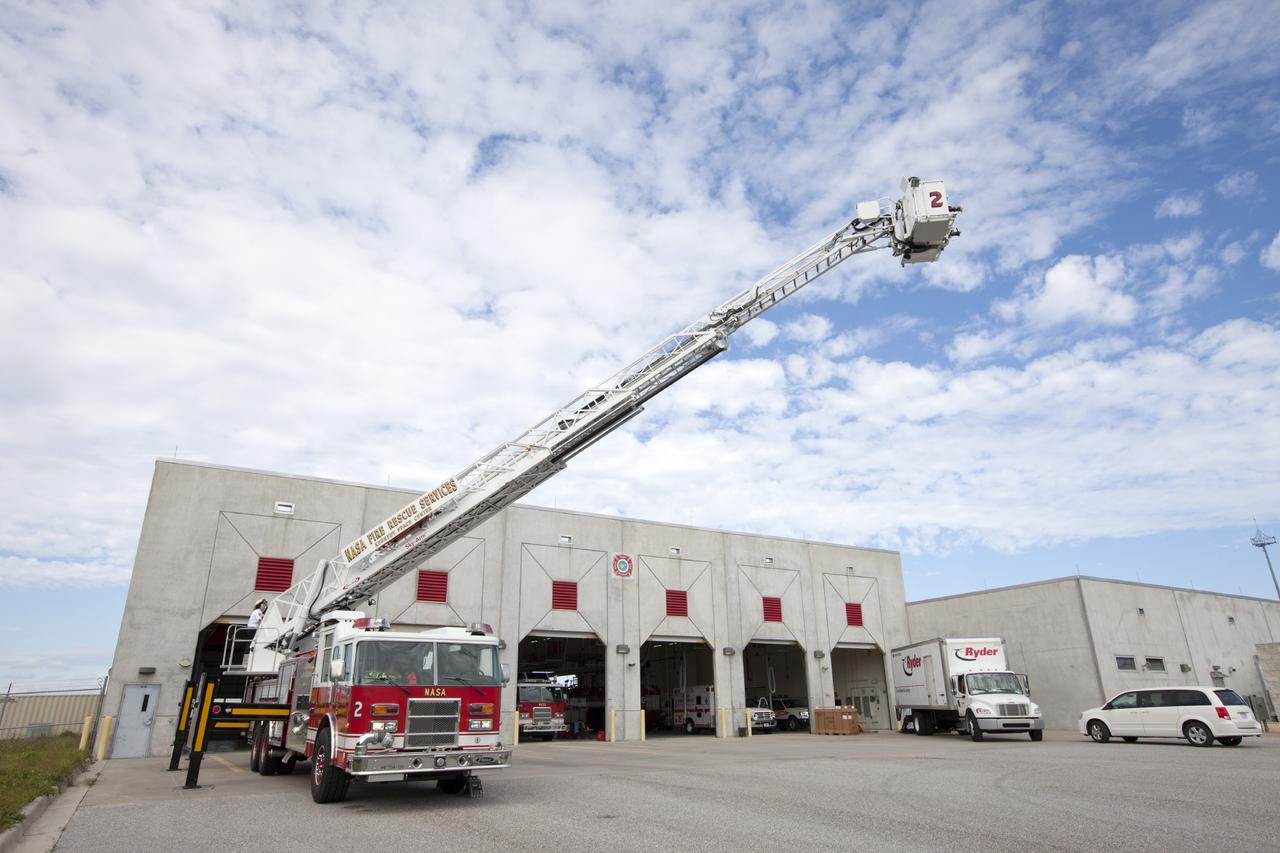
CAPE CANAVERAL, Fla. – At Fire Station No. 2 near the Shuttle Landing Facility at NASA’s Kennedy Space Center in Florida, Fire Rescue Services personnel have deployed and extended the ladder on the aerial fire truck during training in order to be certified in the operation and use of the vehicle. The center’s Fire Rescue Services recently achieved Pro Board Certification in aerial fire truck operations. Pro Board Certification is a globally recognized certification that puts on multiple courses that all fire departments throughout the world recognize and use to train their personnel. The unique aerial truck contains a 100-foot extendable ladder with a bucket at the end of it that can be used for rescues from taller buildings or aircraft rescue firefighting. Photo credit: NASA/Kim Shiflett
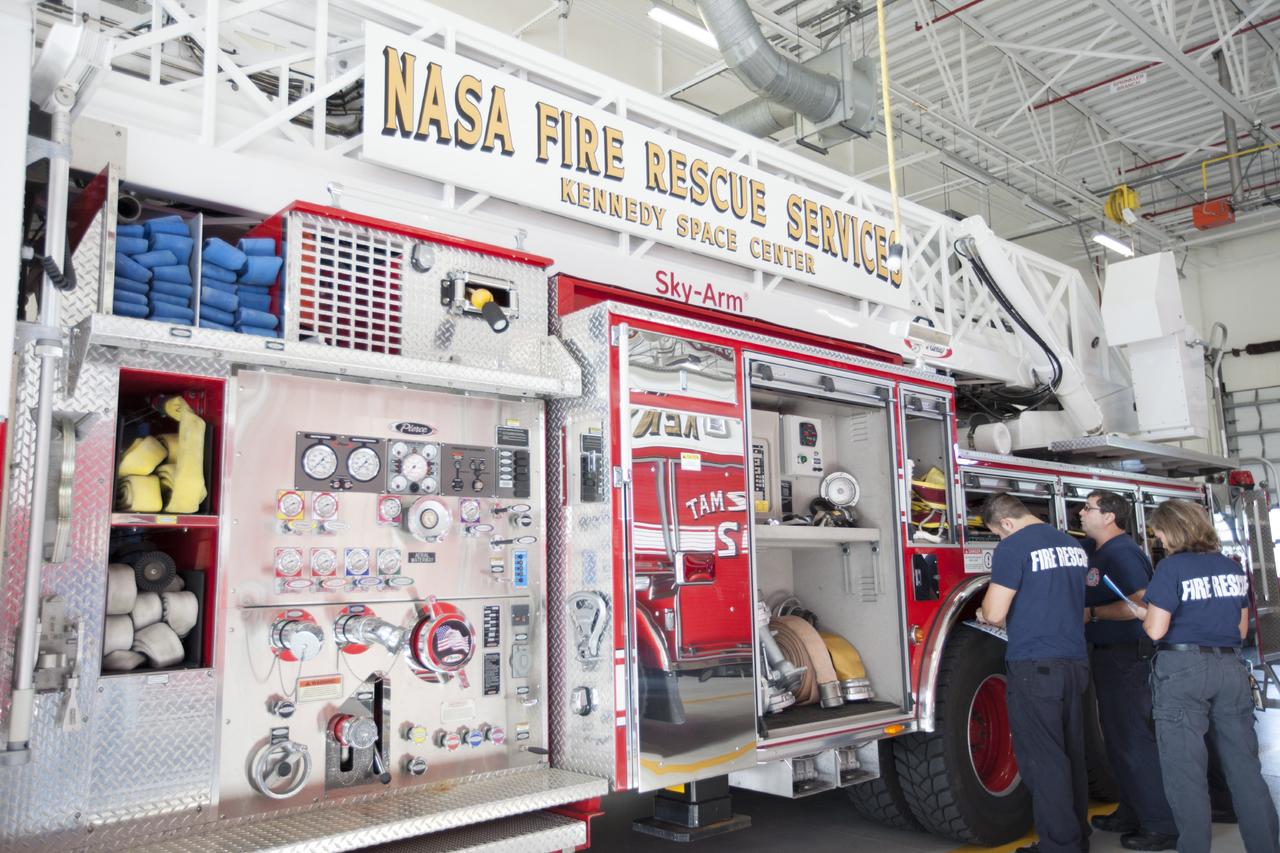
CAPE CANAVERAL, Fla. – At Fire Station No. 2 near the Shuttle Landing Facility at NASA’s Kennedy Space Center in Florida, Fire Rescue Services personnel review procedures and check equipment on the aerial fire truck as part of the training to be certified in the operation and use of the vehicle. The center’s Fire Rescue Services recently achieved Pro Board Certification in aerial fire truck operations. Pro Board Certification is a globally recognized certification that puts on multiple courses that all fire departments throughout the world recognize and use to train their personnel. The unique aerial truck contains a 100-foot extendable ladder with a bucket at the end of it that can be used for rescues from taller buildings or aircraft rescue firefighting. Photo credit: NASA/Kim Shiflett
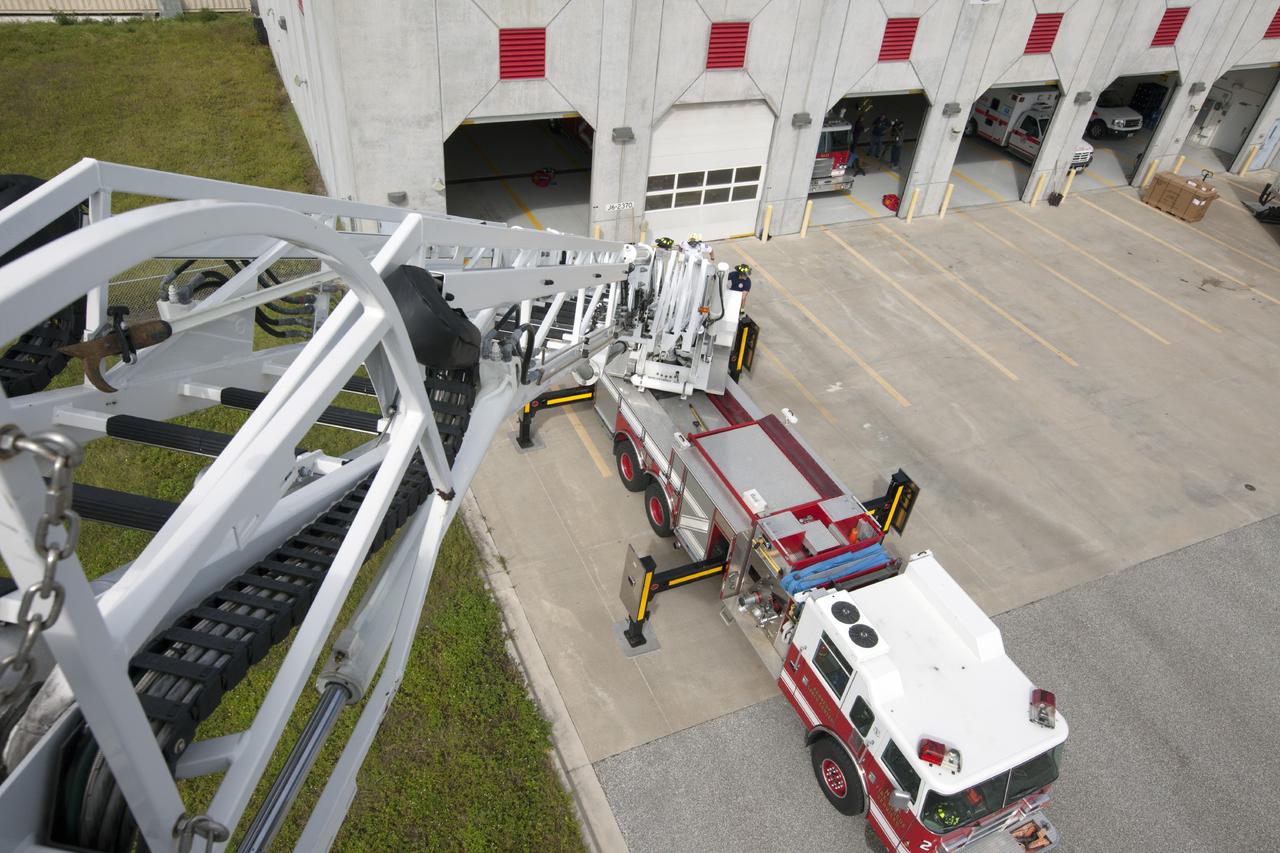
CAPE CANAVERAL, Fla. – At Fire Station No. 2 near the Shuttle Landing Facility at NASA’s Kennedy Space Center in Florida, a bird’s eye view reveals the ladder has been extended on the aerial fire truck during a training exercise. The center’s Fire Rescue Services recently achieved Pro Board Certification in aerial fire truck operations. Pro Board Certification is a globally recognized certification that puts on multiple courses that all fire departments throughout the world recognize and use to train their personnel. The unique aerial truck contains a 100-foot extendable ladder with a bucket at the end of it that can be used for rescues from taller buildings or aircraft rescue firefighting. Photo credit: NASA/Kim Shiflett
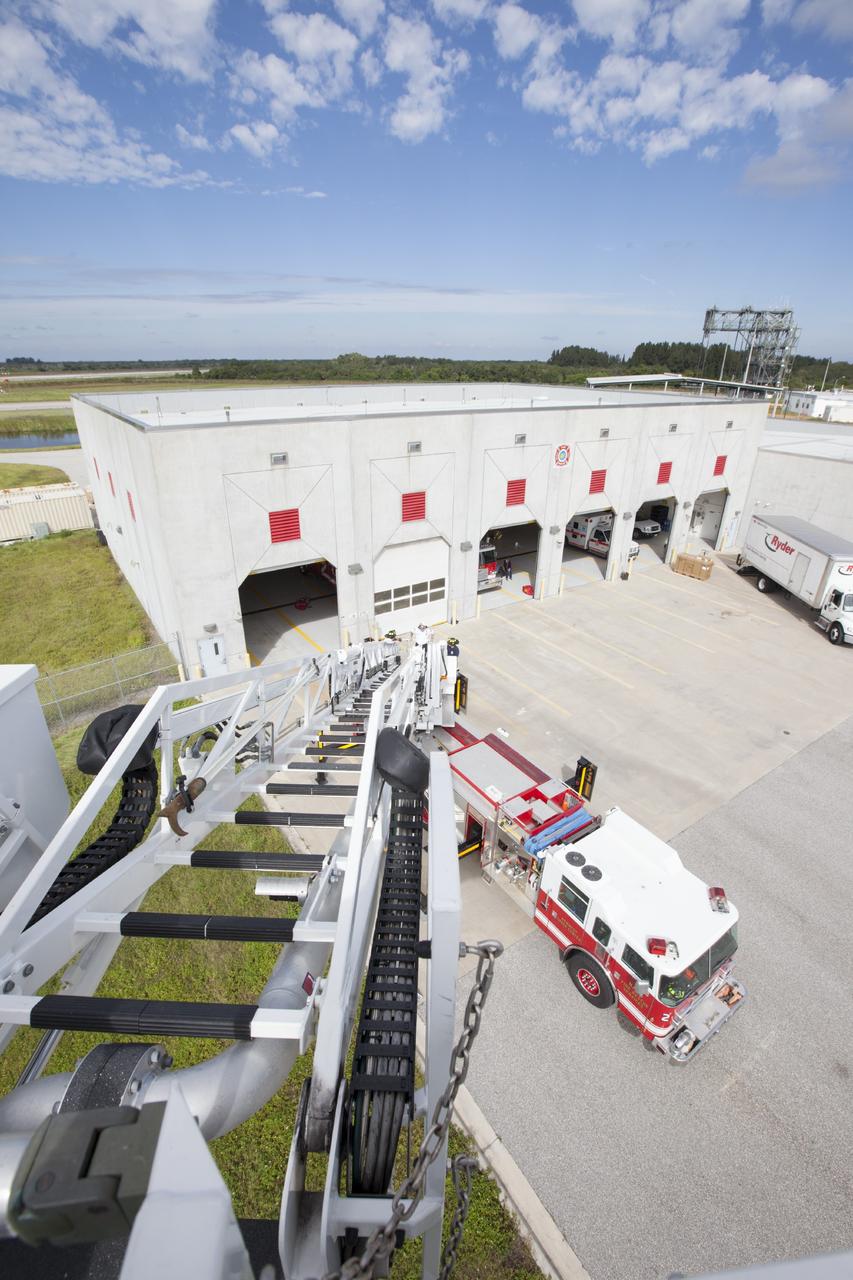
CAPE CANAVERAL, Fla. – At Fire Station No. 2 near the Shuttle Landing Facility at NASA’s Kennedy Space Center in Florida, a bird’s eye view reveals the ladder has been extended on the aerial fire truck during a training exercise. The center’s Fire Rescue Services recently achieved Pro Board Certification in aerial fire truck operations. Pro Board Certification is a globally recognized certification that puts on multiple courses that all fire departments throughout the world recognize and use to train their personnel. The unique aerial truck contains a 100-foot extendable ladder with a bucket at the end of it that can be used for rescues from taller buildings or aircraft rescue firefighting. Photo credit: NASA/Kim Shiflett
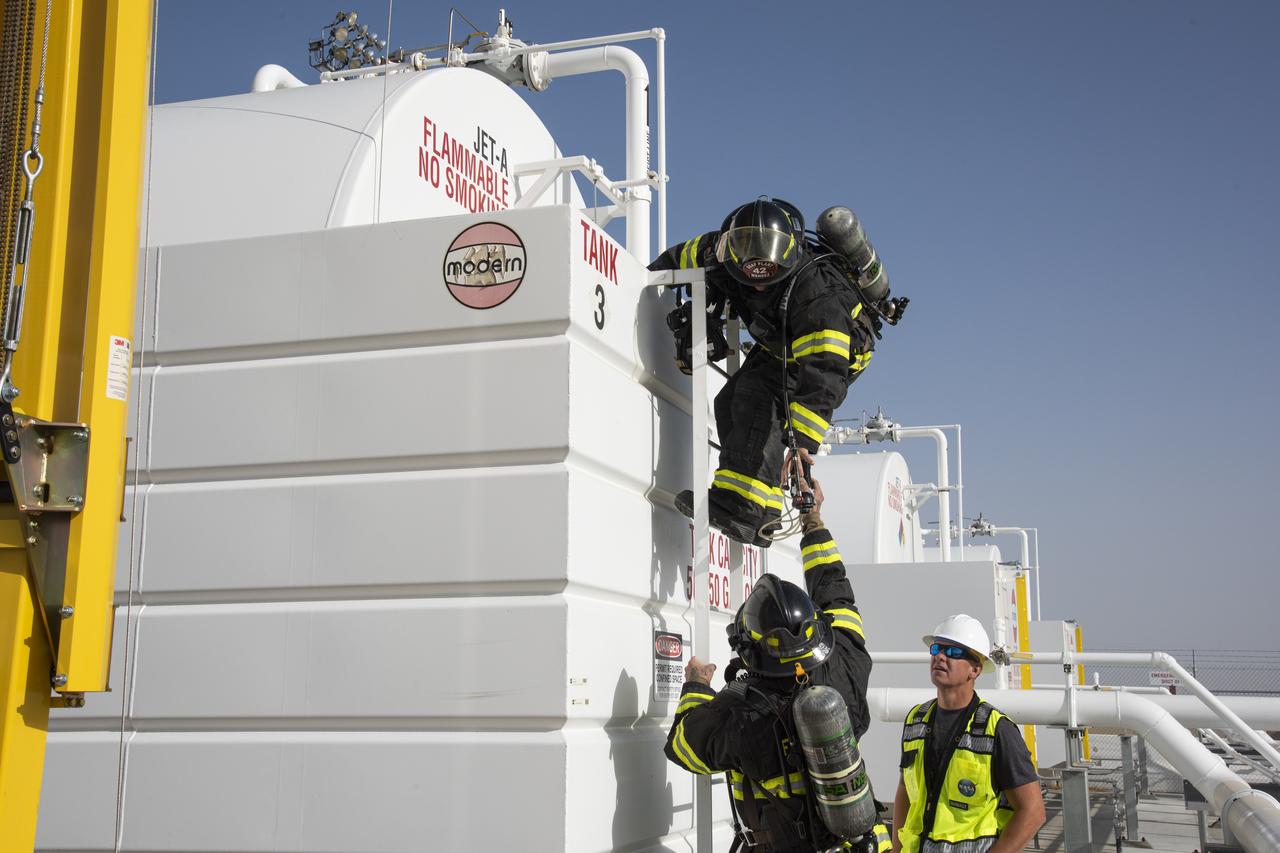
Air Force Plant 42 Fire Department responder Alfonzo Ortega, bottom, hands Doug Mendez a gas meter to test the air in a confined space during an exercise at NASA Armstrong Flight Research Center's Building 703 in Palmdale, California. Dale McCoy, Armstrong confined space co-program manager, observers.
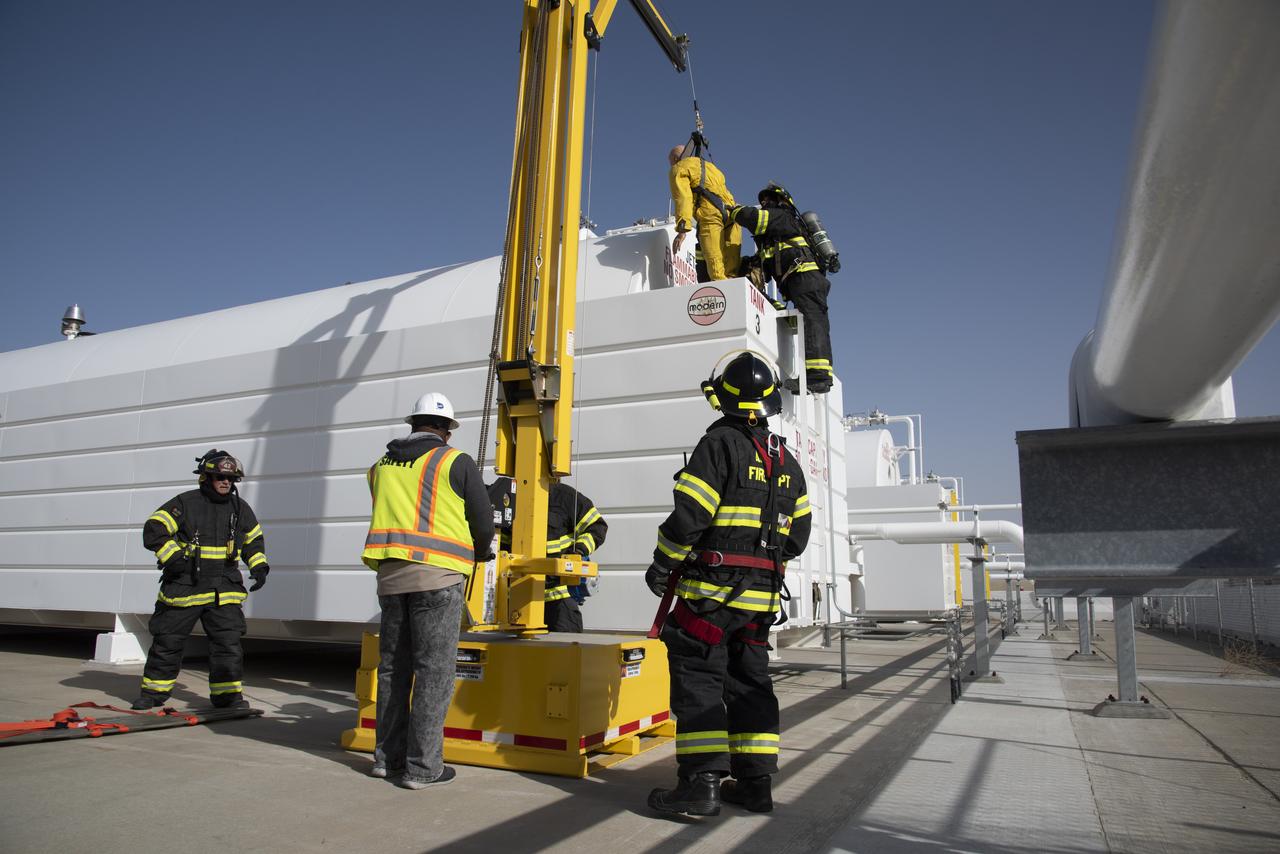
Syd Myers, a NASA Armstrong Flight Research Center confined space supervisor for a drill at NASA Armstrong Flight Research Center’s Building 703 in Palmdale, California, observes U.S. Air Force Plan 42 Fire Department responders extract a mannequin from a confined space as part of an emergency exercise.
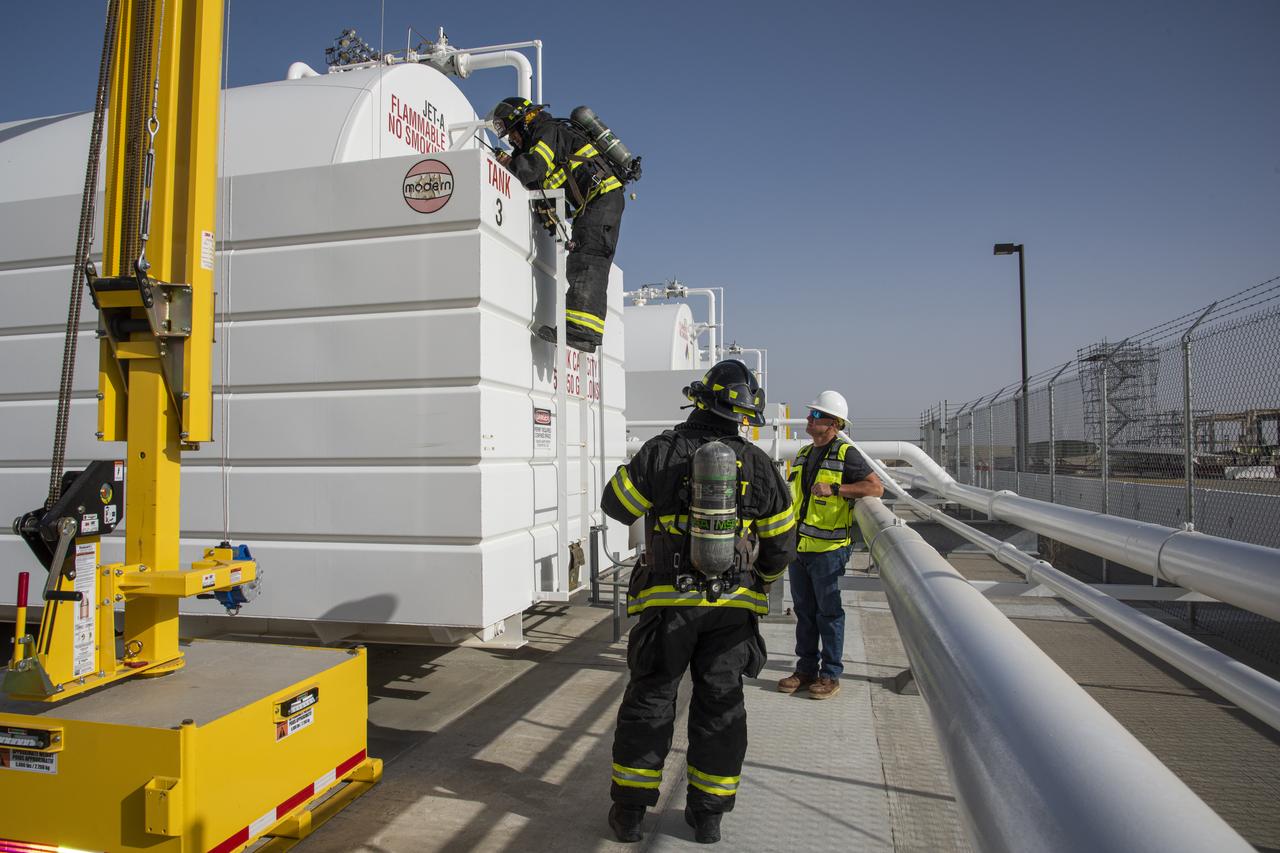
Air Force Plant 42 Fire Department responders Doug Mendez and Alfonzo Ortega test the air in a confined space with a gas meter during an exercise at NASA Armstrong Flight Research Center's Building 703 in Palmdale, California. Dale McCoy, Armstrong confined space co-program manager, observers.
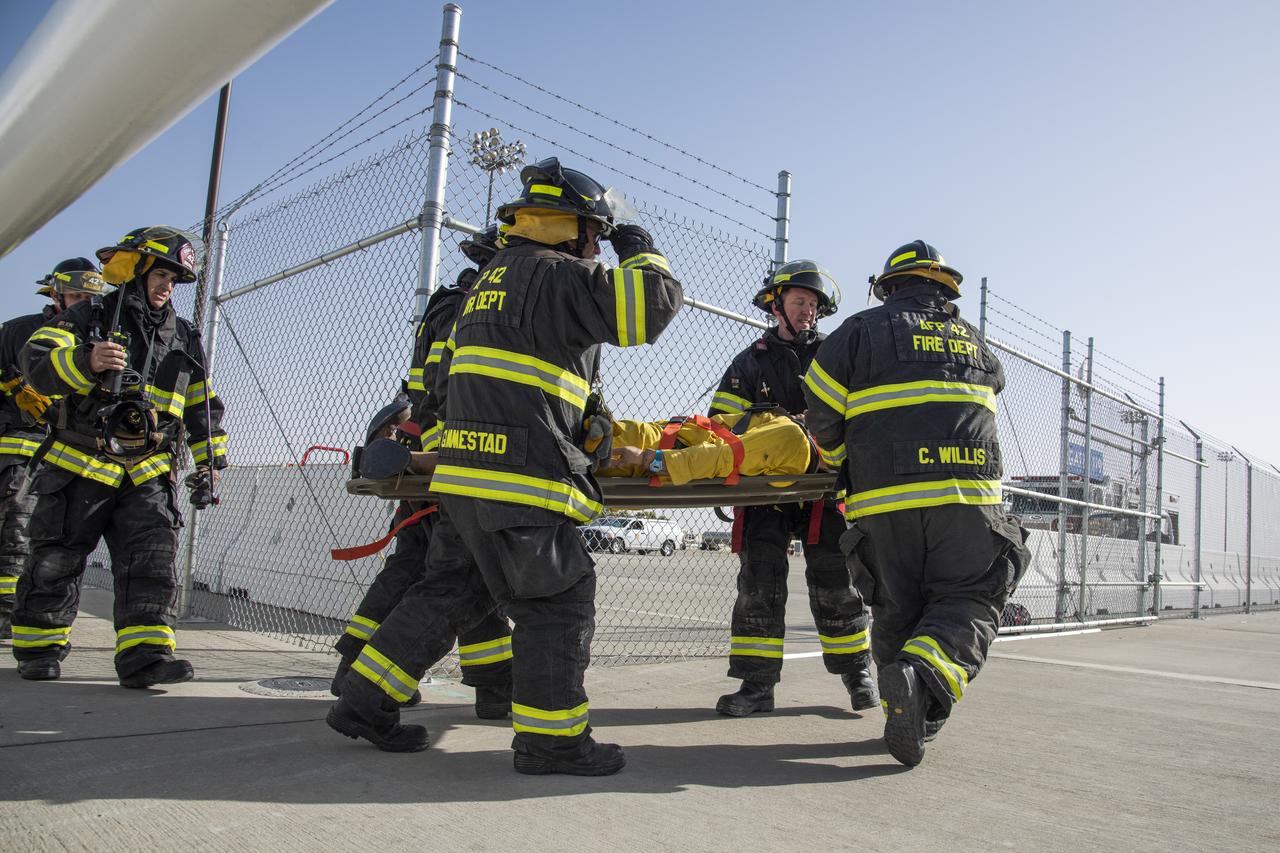
U.S. Air Force Plant 42 Fire Department responders carry out the mannequin to an emergency vehicle during an emergency exercise at NASA Armstrong Flight Research Center's Building 703 in Palmdale, California. Responders included, from left, Kent Courter, Doug Mendez, Alfonzo Ortega, Cedric Willis, Tyler Lippens and Ricky Gimmestad.
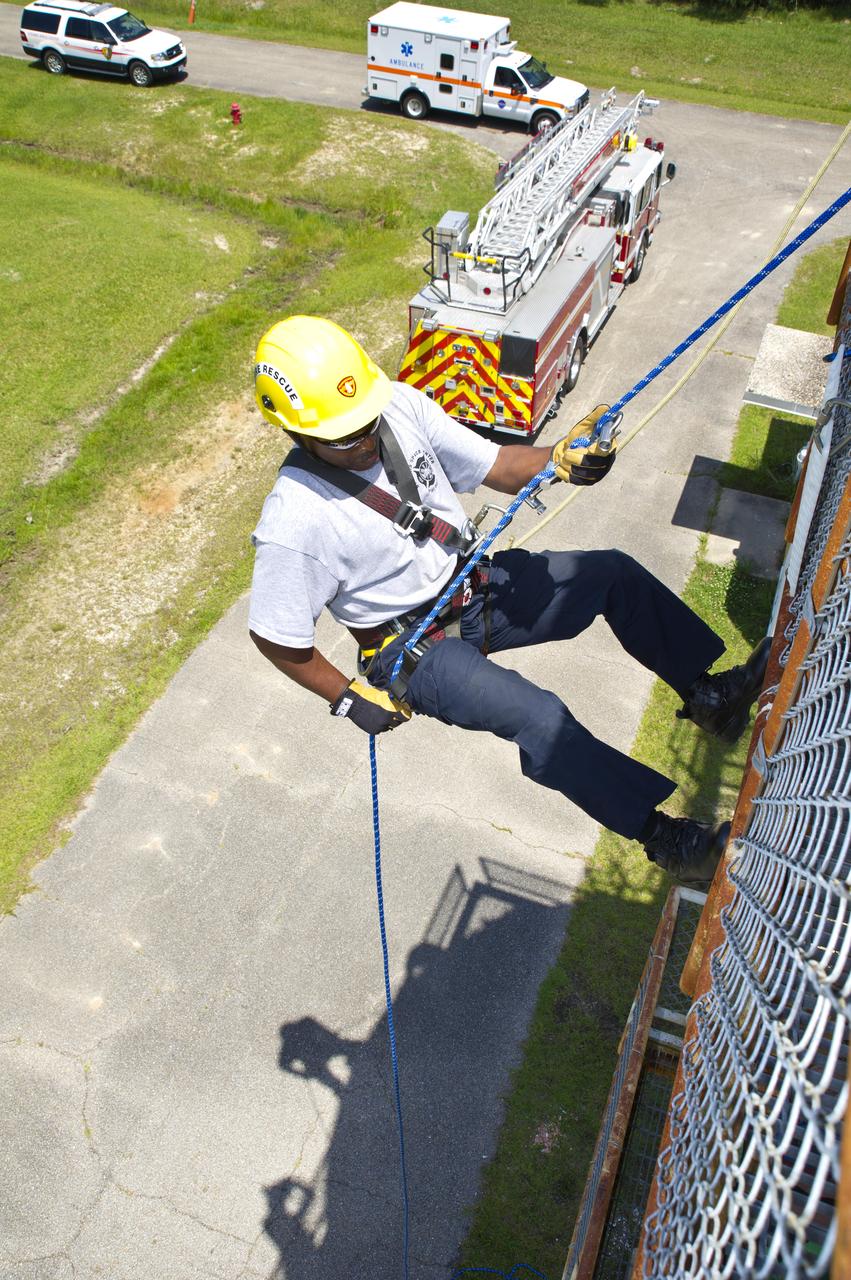
Stennis Space Center firefighter Rodney Boone rappels a tower structure during an onsite training exercise May 11, 2012. The training focused on high-angle rope rescues, which could be needed on the new 300-foot-tall A-3 Test Stand at Stennis.
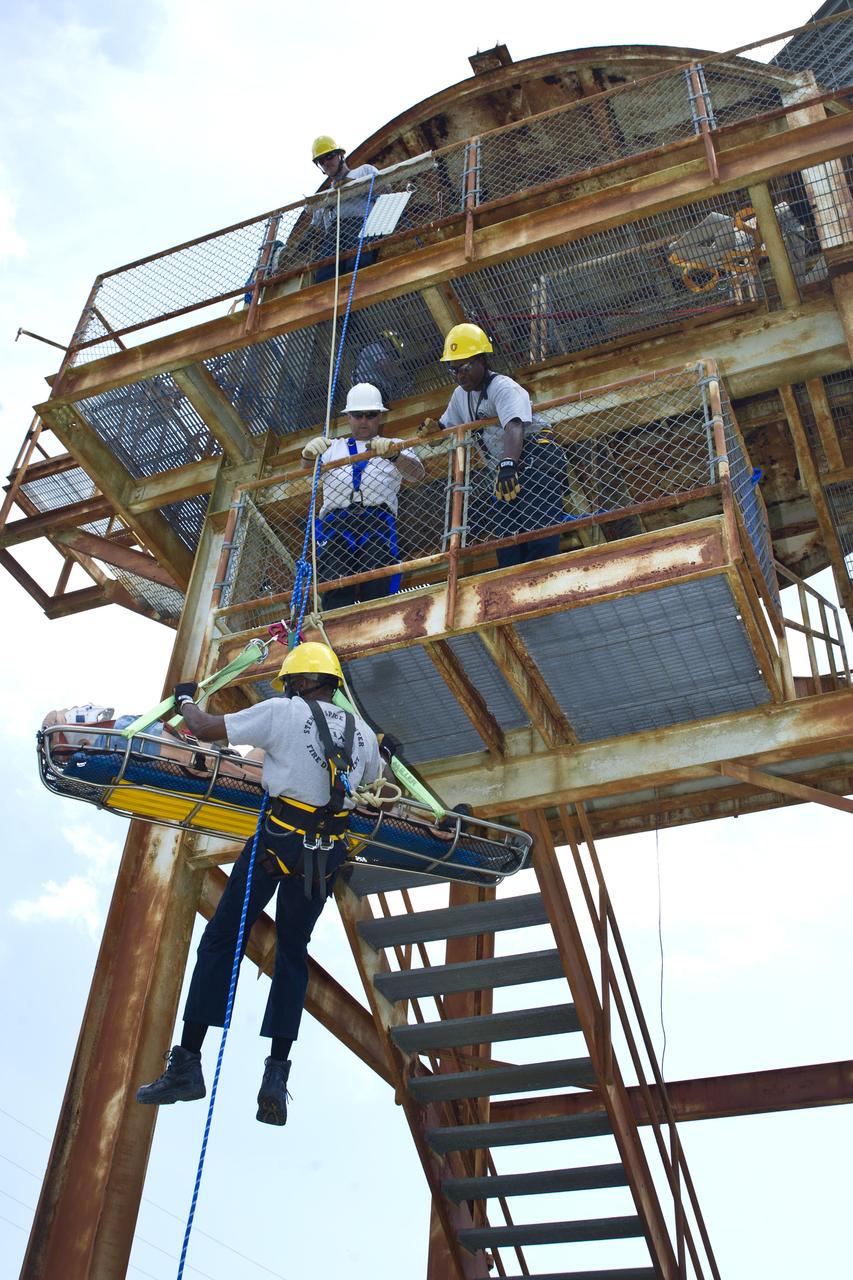
Instructor Rob Mortin watches as Stennis Space Center firefighters Lt. Greg Lampley, Rodney Boone, Vance Forrest and Billy Scarborough practice high-angle rope rescue techniques during a May 11, 2012, training exercise. The exercise specifically focused on scenarios applicable to the 300-foot-tall, open-steel-structure A-3 Test Stand under construction at the rocket engine test facility.
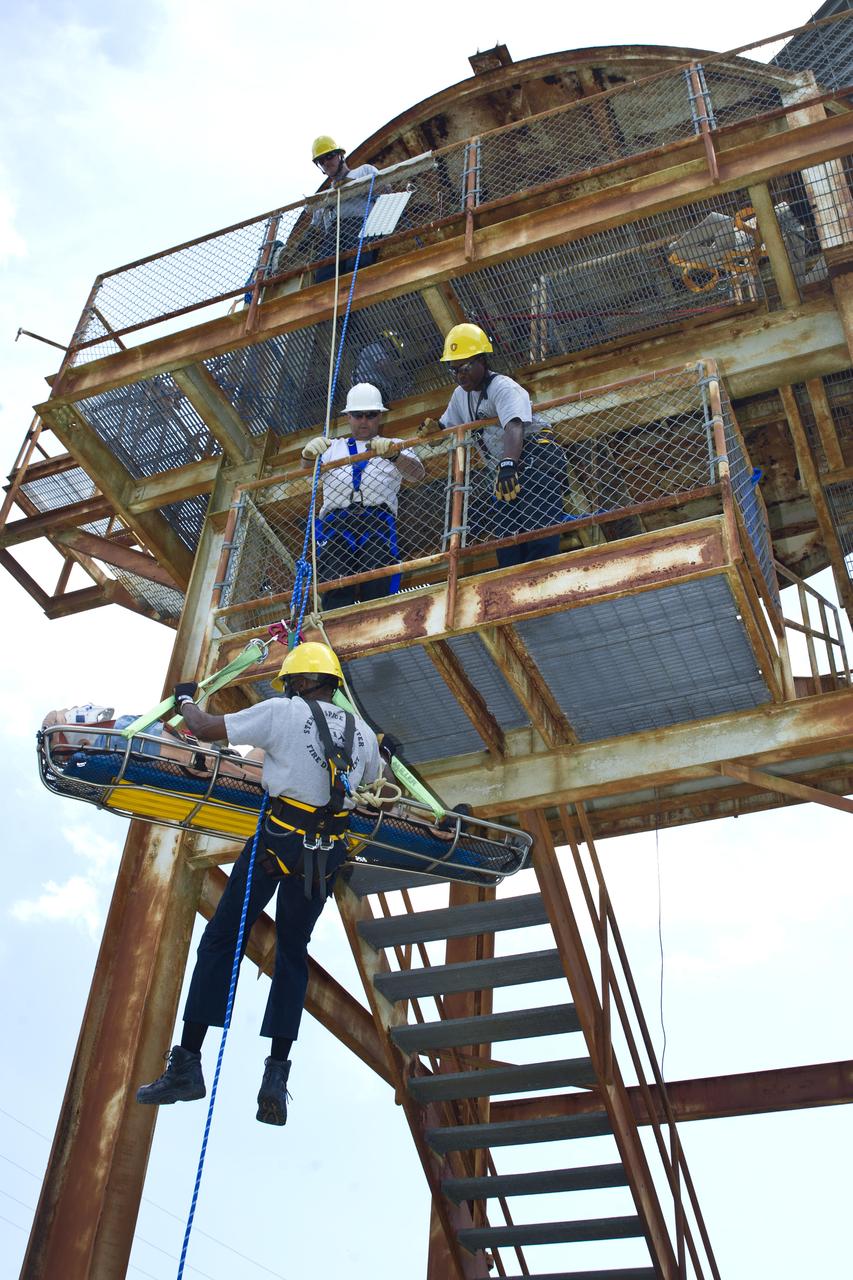
Instructor Rob Mortin watches as Stennis Space Center firefighters Lt. Greg Lampley, Rodney Boone, Vance Forrest and Billy Scarborough practice high-angle rope rescue techniques during a May 11, 2012, training exercise. The exercise specifically focused on scenarios applicable to the 300-foot-tall, open-steel-structure A-3 Test Stand under construction at the rocket engine test facility.
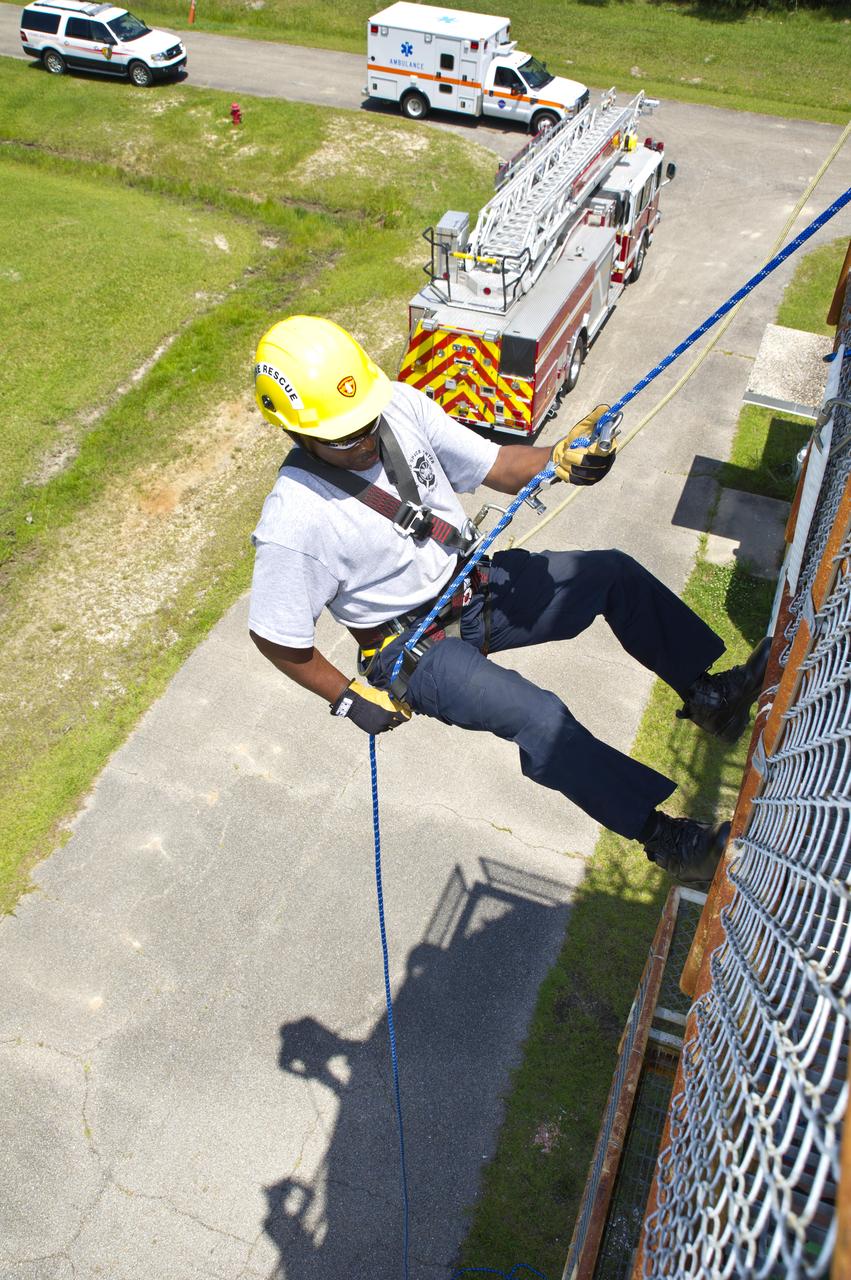
Stennis Space Center firefighter Rodney Boone rappels a tower structure during an onsite training exercise May 11, 2012. The training focused on high-angle rope rescues, which could be needed on the new 300-foot-tall A-3 Test Stand at Stennis.
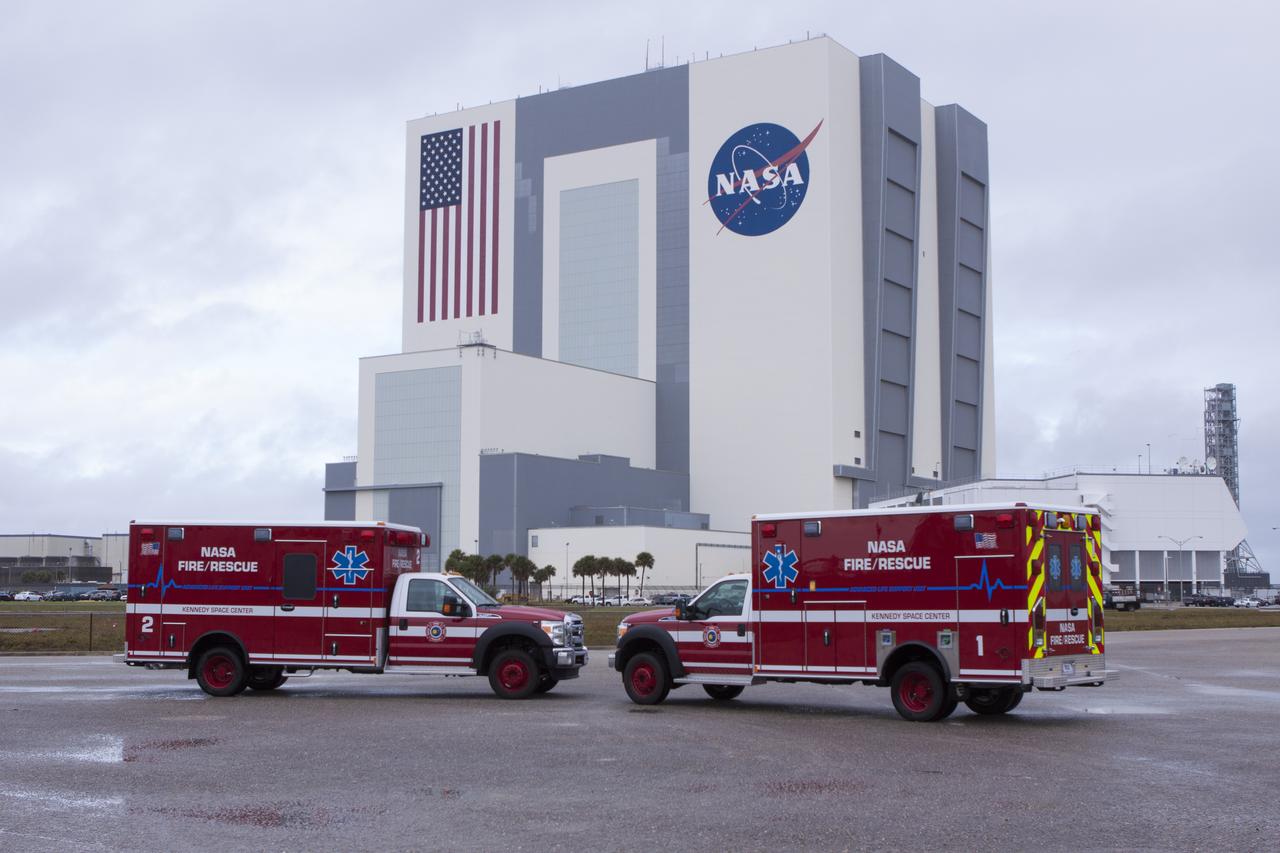
New Fire Department's Emergency Response Trucks in front of VAB. (Not on web)
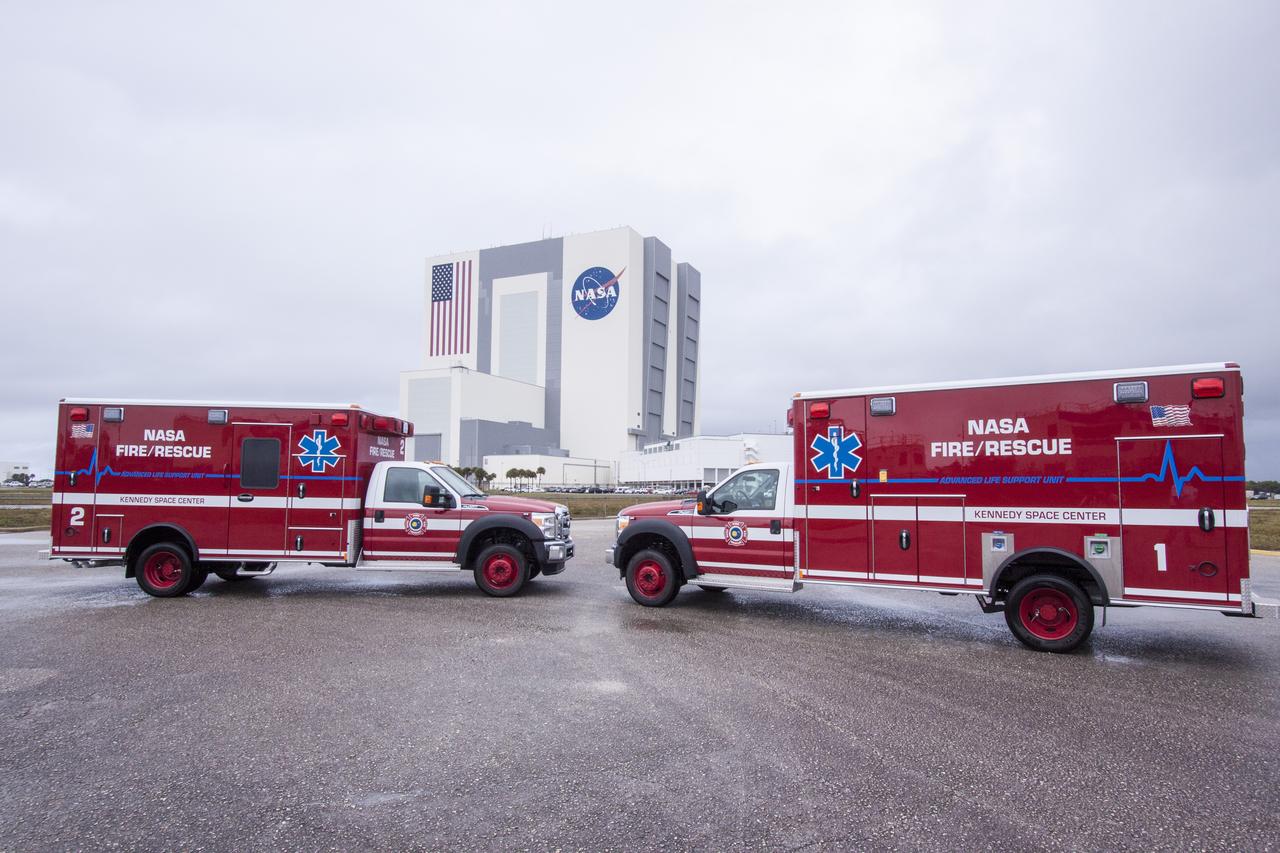
New Fire Department's Emergency Response Trucks in front of VAB. (Not on web)
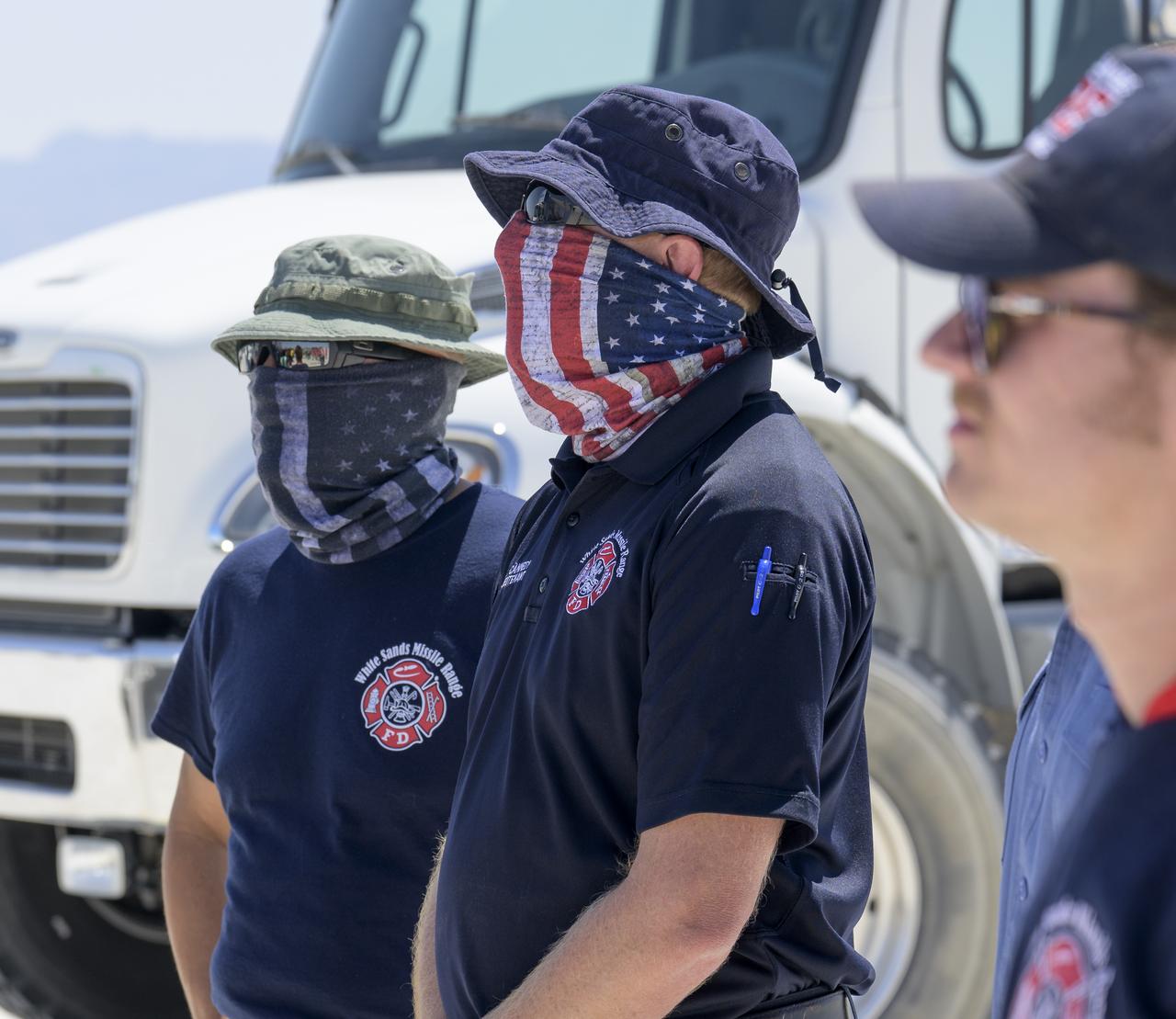
White Sands Missile Range Fire Department team members listen to a pretending briefing as they, NASA, and Boeing teams prepare for the landing of Boeing’s CST-100 Starliner spacecraft at White Sands Missile Range’s Space Harbor, Wednesday, May 25, 2022, in New Mexico. Boeing’s Orbital Flight Test-2 (OFT-2) is Starliner’s second uncrewed flight test to the International Space Station as part of NASA's Commercial Crew Program. OFT-2 serves as an end-to-end test of the system's capabilities. Photo Credit: (NASA/Bill Ingalls)
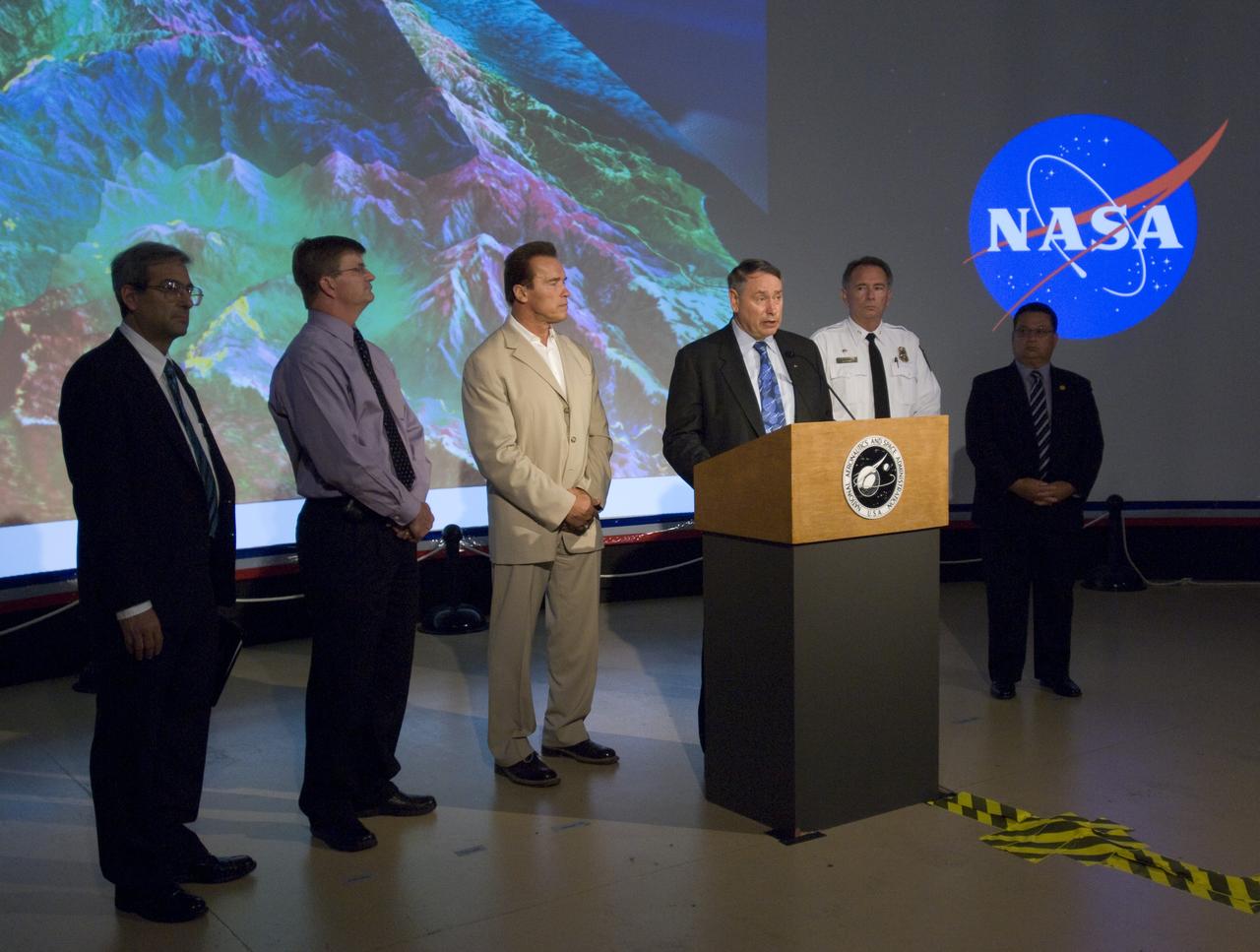
California Governor Arnold Schwarzenegger during a press briefing following a visit to Ames Earth Science Division for a briefing by Steve Hipskind on NASA Ames remote sensing fire fighting efforts. Also shown left to right, Mike Freilich, Director, NASA Earth Sceinces Division, Steve Hipskind, Pete Worden, Governor Schwarzenegger, Chief Del Walters, Assistant Region Fire Chief, California Department of Forestry and Fire Protection, Tom Maruyama, Deputy Director, Office of Emergency Services
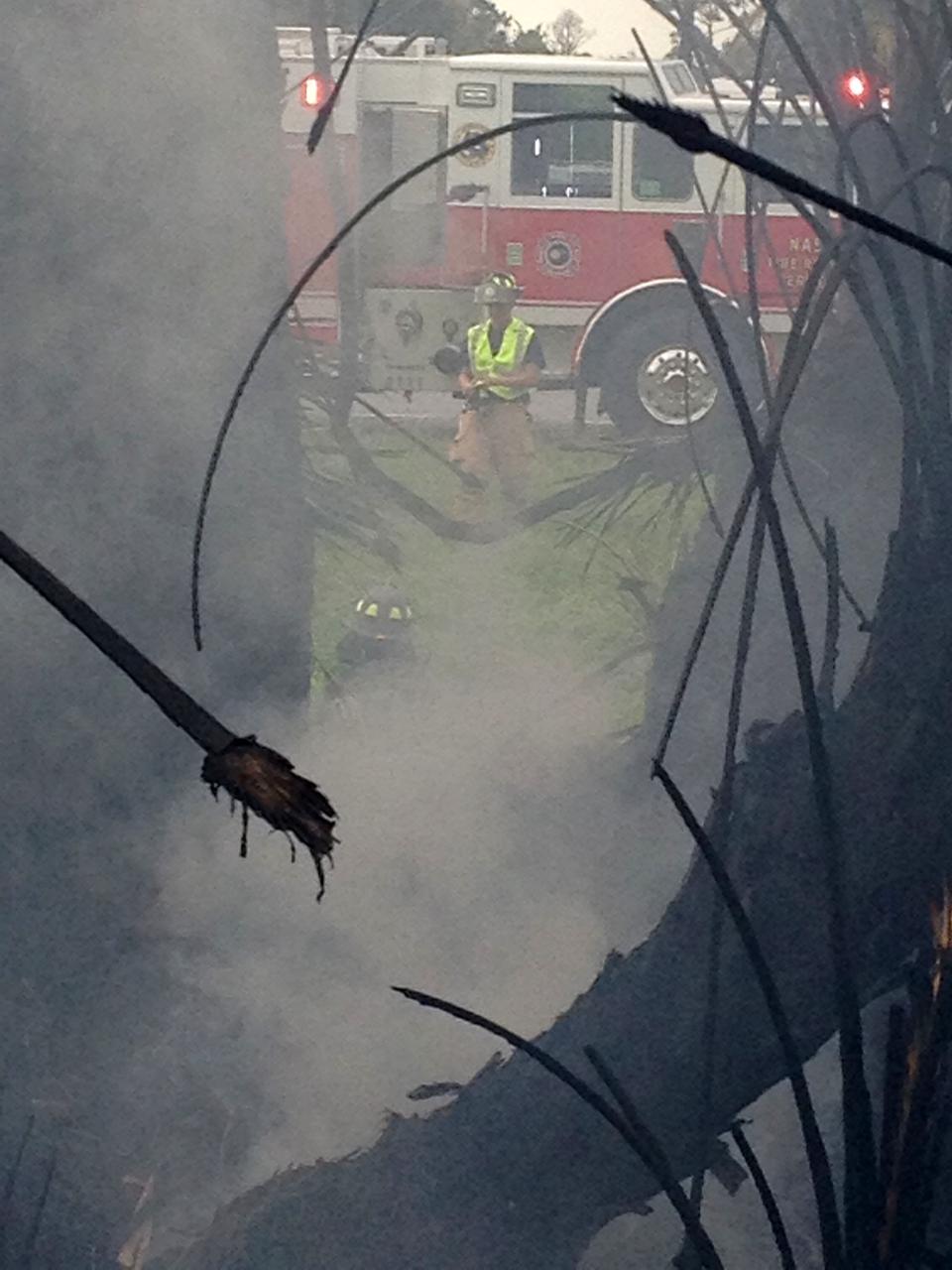
CAPE CANAVERAL, Fla. – Fire Rescue personnel douse a brush fire near Headquarters Building in the Industrial Area of NASA’s Kennedy Space Center in Florida. The fire was ignited by a lightning strike. The space center is nestled on the Merritt Island National Wildlife Refuge, which is managed by the U.S. Fish and Wildlife Service. Chenega Security & Support Solutions is responsible for Kennedy's Fire Rescue Department. For information on the refuge, visit http://www.fws.gov/merrittisland/Index.html. For more on Kennedy Space Center, visit http://www.nasa.gov/kennedy. Photo credit: NASA/Ben Smegelsky
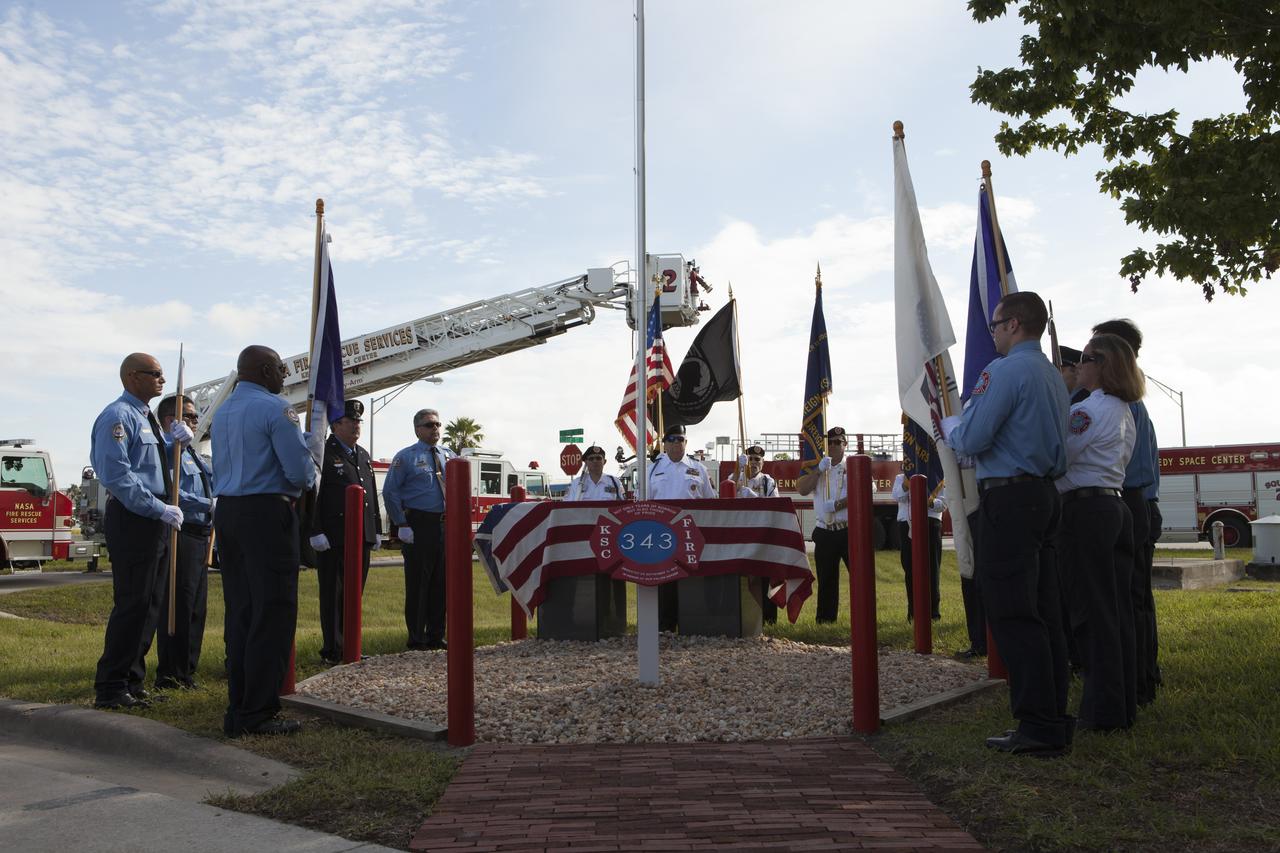
The honor guard for the Fire Department at NASA's Kennedy Space Center conducts the dedication service for a memorial to the 343 first responder victims of the Sept. 11, 2001, terror attacks at Fire Station 1 at Kennedy on Sept. 11, 2015. The ceremony dedicated a monument that includes a section of steel I-beam from the World Trade Center in New York.
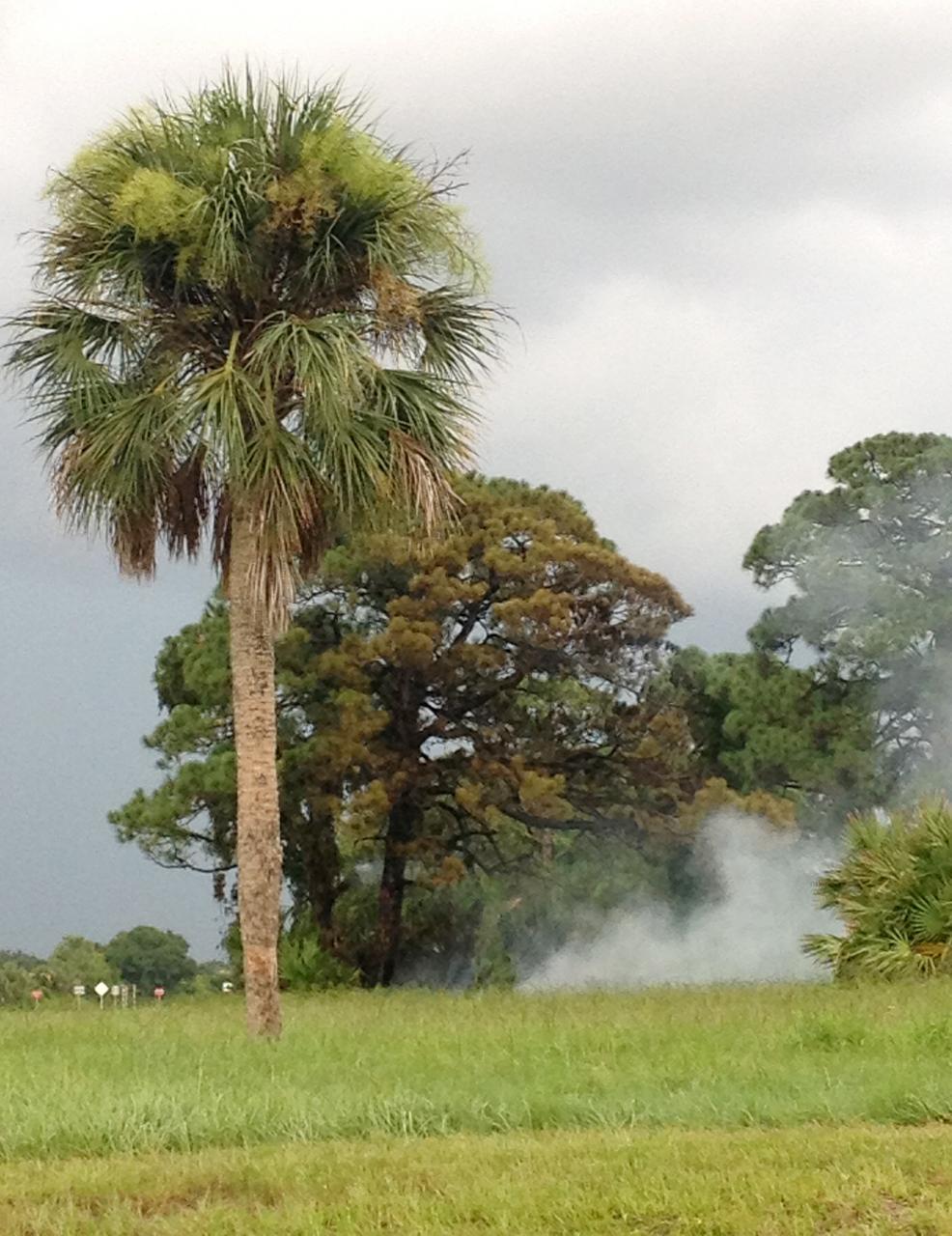
CAPE CANAVERAL, Fla. – A lightning strike sparks a brush fire near Headquarters Building in the Industrial Area of NASA’s Kennedy Space Center in Florida. The space center is nestled on the Merritt Island National Wildlife Refuge, which is managed by the U.S. Fish and Wildlife Service. Chenega Security & Support Solutions is responsible for Kennedy's Fire Rescue Department. For information on the refuge, visit http://www.fws.gov/merrittisland/Index.html. For more on Kennedy Space Center, visit http://www.nasa.gov/kennedy. Photo credit: NASA/Ben Smegelsky
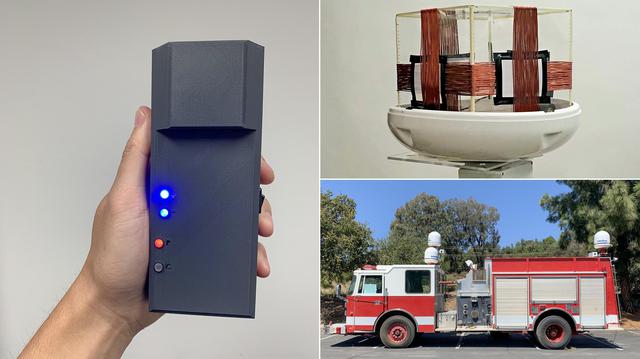
To help locate and track firefighters inside buildings, where other positioning technologies fail, NASA's Jet Propulsion Laboratory and the Department of Homeland Security Science and Technology Directorate (S&T) are developing POINTER. Short for Precision Outdoor and Indoor Navigation and Tracking for Emergency Responders, the system began taking shape in 2014 and is being matured for use by fire departments nationwide. The POINTER system is composed of three parts: a receiver, transmitter, and base station. The receiver (left) has been shrunk from the size of a backpack to the size of a large smartphone, and further development will miniaturize it so it can be easily clipped to a belt buckle. The transmitter (top right) is a system of coils that generate the magnetoquasistatic fields, which — unlike the radio waves used by GPS and radio-frequency identification — are able to pass through construction materials to interact with the receiver, enabling fire crews to track the location and orientation of firefighters. To test the system, transmitters have been attached to an out-of-service firetruck (lower right). Through 2021, POINTER will undergo field tests and a commercial version of POINTER will be made available to fire departments in 2022. https://photojournal.jpl.nasa.gov/catalog/PIA24562
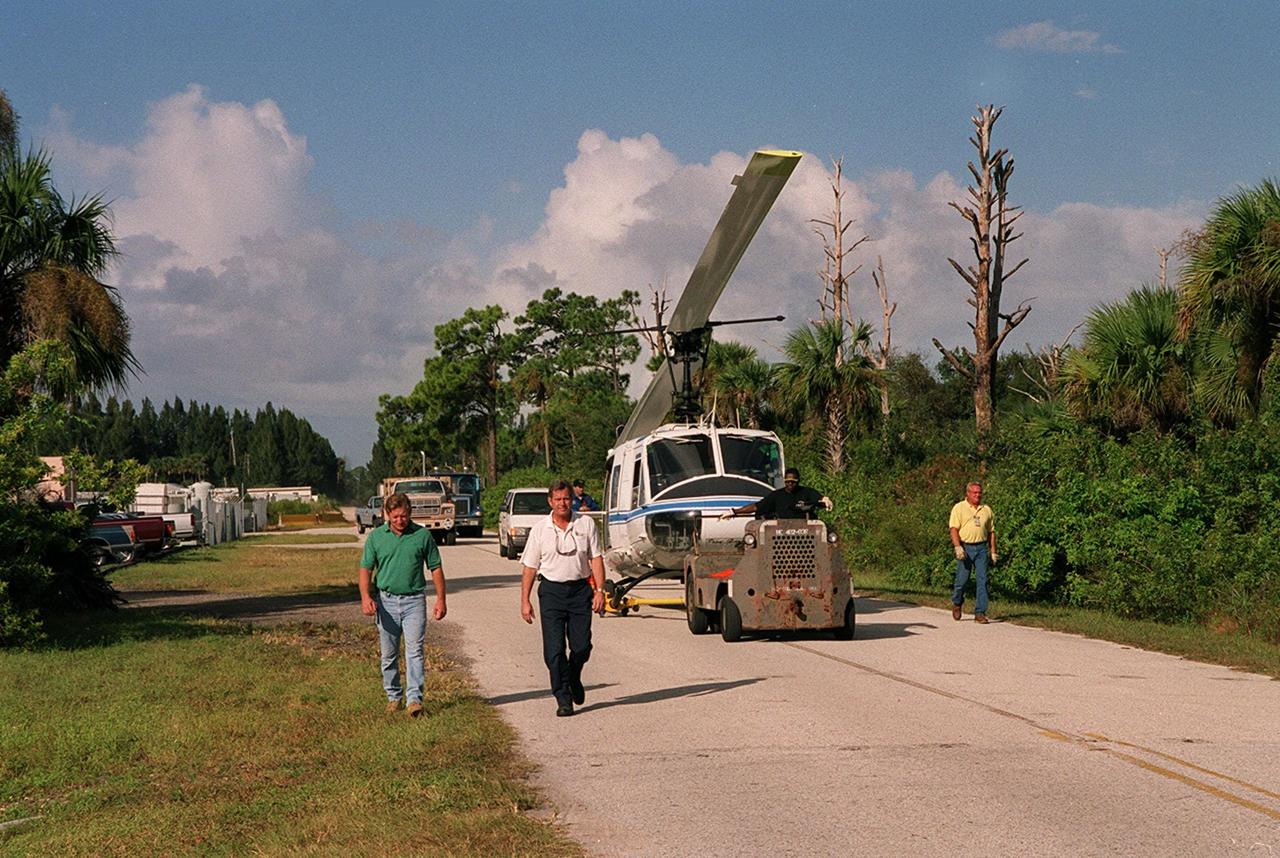
KENNEDY SPACE CENTER, FLA. -- A newly repainted NASA helicopter is transported to S.R. 3 for return to Patrick AFB. Workers painted the blades of four NASA UH-1H helicopters, changing the black to a pattern of white and yellow stripes. The pattern provides better visibility in smoke and fire conditions. When the rotors are turning, the stripes create a yellow and white circle that is more easily seen by a second helicopter from above. The helicopters, primarily used for security and medical evacuation for NASA, will be used to deliver water via buckets during brush fires. The change was made to comply with U.S. Fish and Wildlife and Department of Forestry regulations for helicopter-assisted fire control
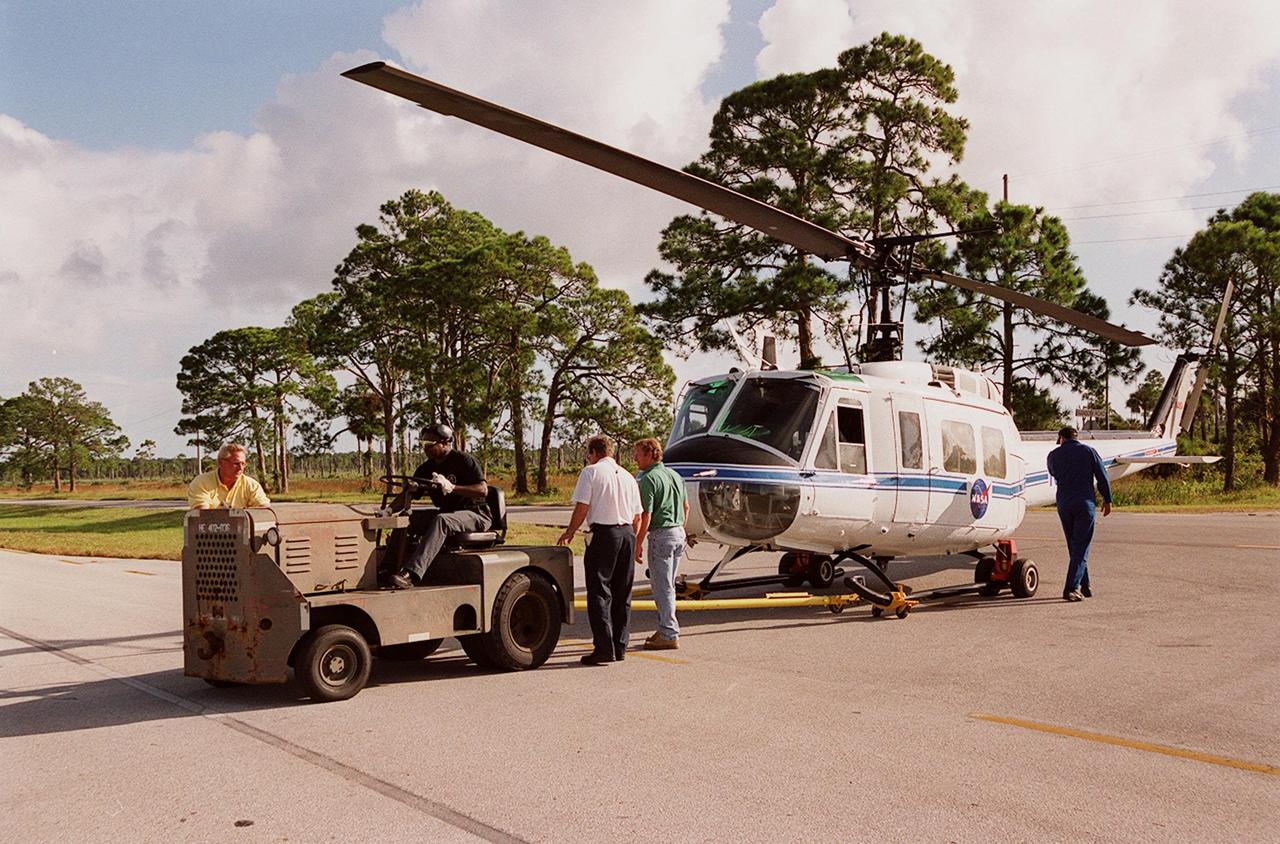
KENNEDY SPACE CENTER, FLA. -- A NASA helicopter is secured for transfer to Ransom Road at KSC. It is one of four UH-1H helicopters that will have its blades painted, changing the black to a pattern of white and yellow stripes. The pattern provides better visibility in smoke and fire conditions. When the rotors are turning, the stripes create a yellow and white circle that is more easily seen by a second helicopter from above. The helicopters, primarily used for security and medical evacuation for NASA, will be used to deliver water via buckets during brush fires. The change was made to comply with U.S. Fish and Wildlife and Department of Forestry regulations for helicopter-assisted fire control

KENNEDY SPACE CENTER, FLA. -- Workers put the finishing touches on new paint for the blades of a NASA UH-1H helicopter. They have changed the black to a pattern of white and yellow stripes. The pattern provides better visibility in smoke and fire conditions. When the rotors are turning, the stripes create a yellow and white circle that is more easily seen from above by a second helicopter. The helicopters, primarily used for security and medical evacuation for NASA, will be used to deliver water via buckets during brush fires. The change was made to comply with U.S. Fish and Wildlife and Department of Forestry regulations for helicopter-assisted fire control
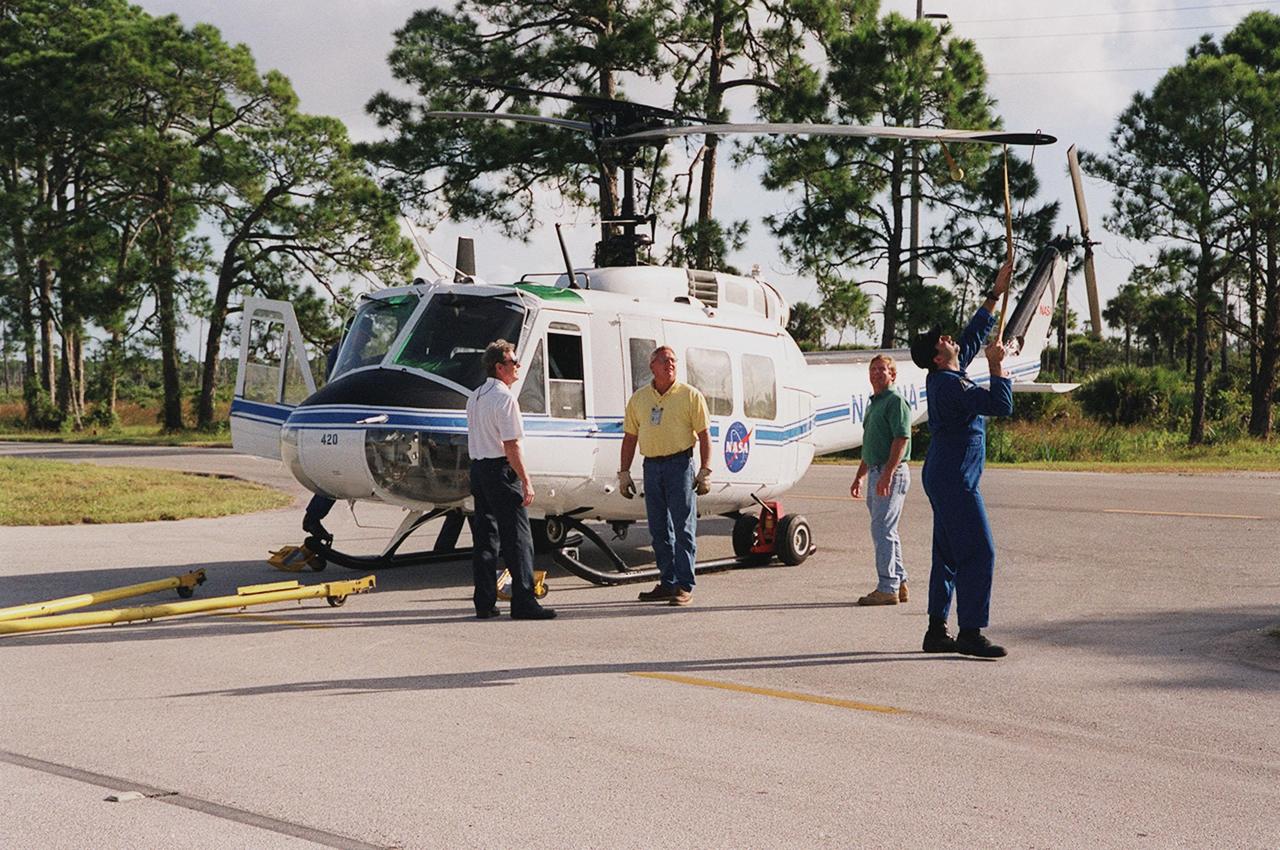
KENNEDY SPACE CENTER, FLA. -- The pilot of the NASA helicopter secures the rotary blade before the helicopter’s transfer to Ransom Road at KSC. It is one of four UH-1H helicopters that will have its blades painted, changing the black to a pattern of white and yellow stripes. The pattern provides better visibility in smoke and fire conditions. When the rotors are turning, the stripes create a yellow and white circle that is more easily seen by a second helicopter from above. The helicopters, primarily used for security and medical evacuation for NASA, will be used to deliver water via buckets during brush fires. The change was made to comply with U.S. Fish and Wildlife and Department of Forestry regulations for helicopter-assisted fire control
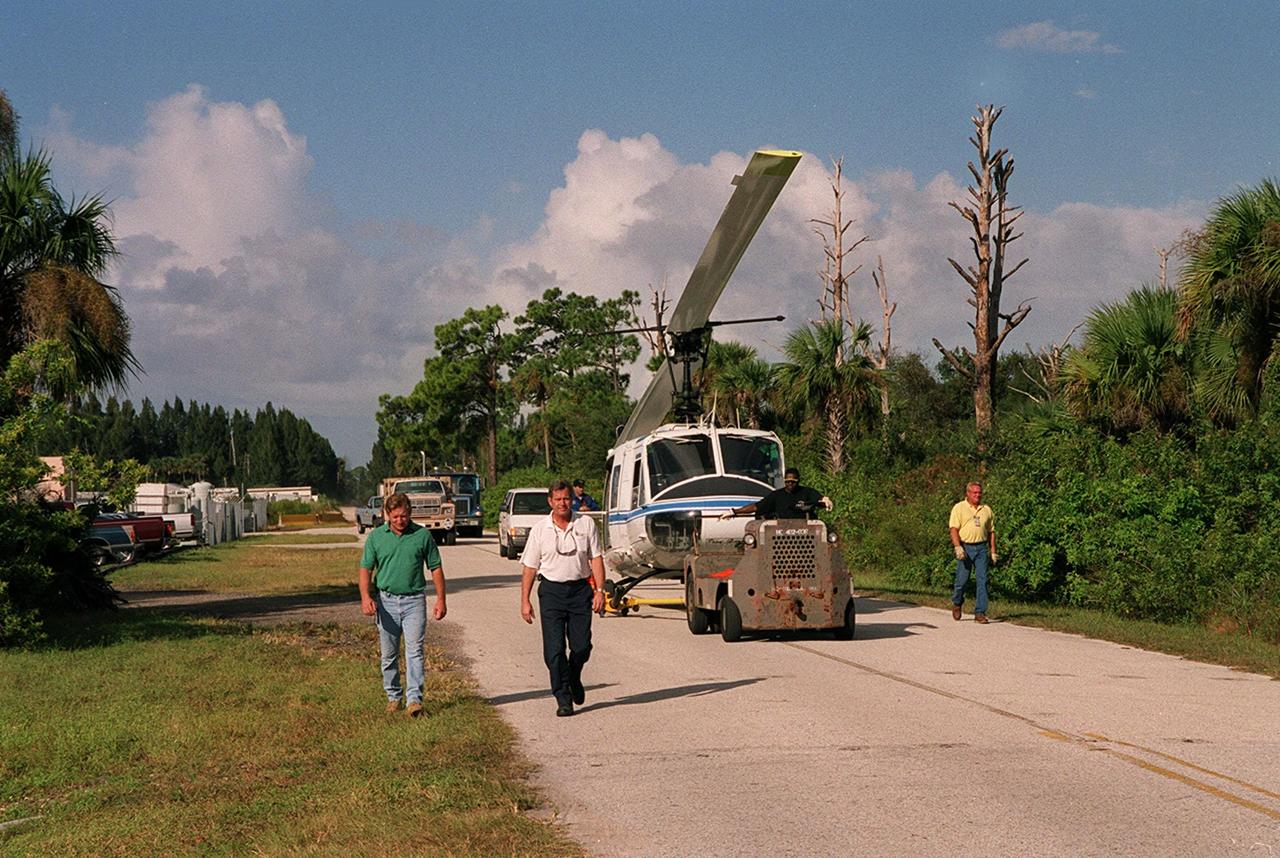
KENNEDY SPACE CENTER, FLA. -- A newly repainted NASA helicopter is transported to S.R. 3 for return to Patrick AFB. Workers painted the blades of four NASA UH-1H helicopters, changing the black to a pattern of white and yellow stripes. The pattern provides better visibility in smoke and fire conditions. When the rotors are turning, the stripes create a yellow and white circle that is more easily seen by a second helicopter from above. The helicopters, primarily used for security and medical evacuation for NASA, will be used to deliver water via buckets during brush fires. The change was made to comply with U.S. Fish and Wildlife and Department of Forestry regulations for helicopter-assisted fire control
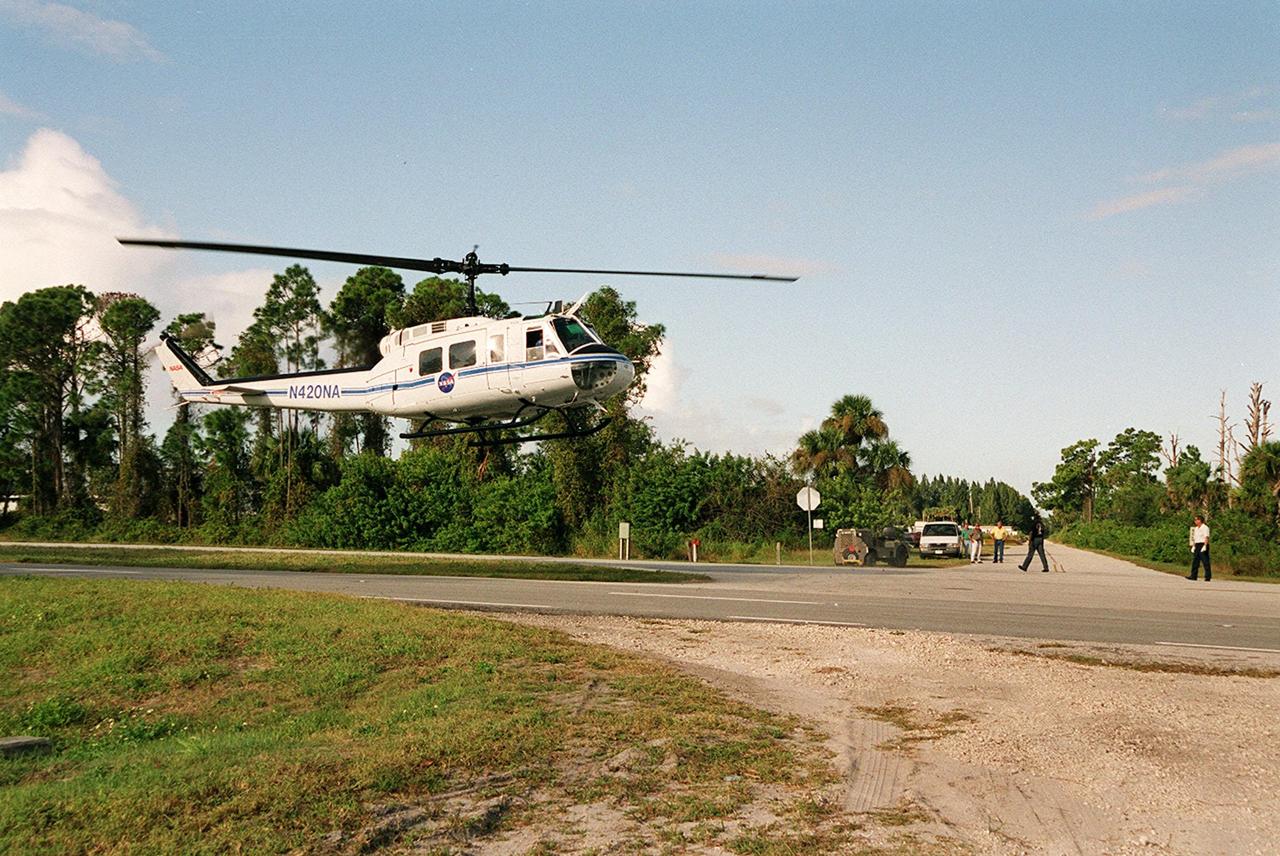
KENNEDY SPACE CENTER, FLA. -- A NASA helicopter from Patrick Air Force Base is about to land on S.R. 3. It is one of four UH-1H helicopters that will have its blades painted, changing the black to a pattern of white and yellow stripes. The pattern provides better visibility in smoke and fire conditions. When the rotors are turning, the stripes create a yellow and white circle that is more easily seen by a second helicopter from above. The helicopters, primarily used for security and medical evacuation for NASA, will be used to deliver water via buckets during brush fires. The change was made to comply with U.S. Fish and Wildlife and Department of Forestry regulations for helicopter-assisted fire control
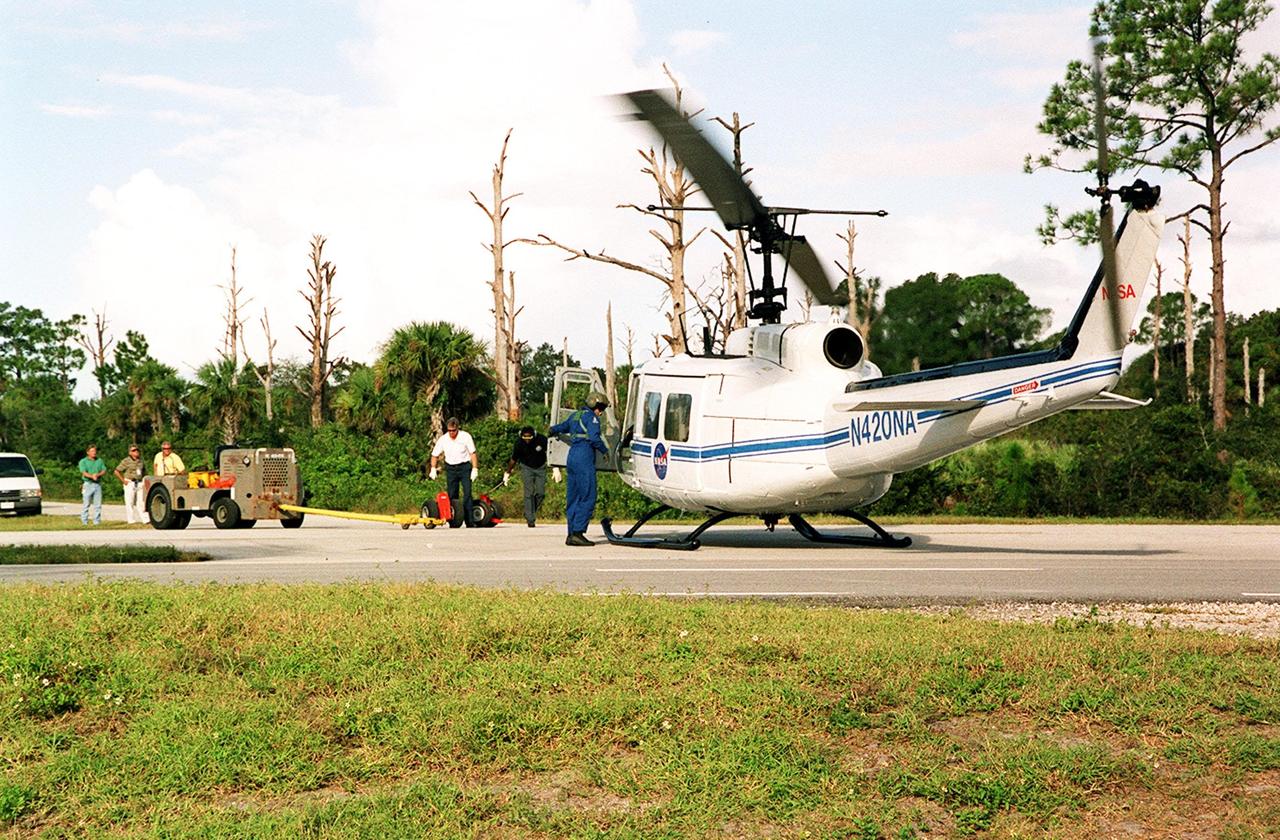
KENNEDY SPACE CENTER, FLA. -- A NASA helicopter lands on S.R. 3 for transfer to Patrick Air Force Base. It is one of four UH-1H helicopters that will have its blades painted, changing the black to a pattern of white and yellow stripes. The pattern provides better visibility in smoke and fire conditions. When the rotors are turning, the stripes create a yellow and white circle that is more easily seen by a second helicopter from above. The helicopters, primarily used for security and medical evacuation for NASA, will be used to deliver water via buckets during brush fires. The change was made to comply with U.S. Fish and Wildlife and Department of Forestry regulations for helicopter-assisted fire control
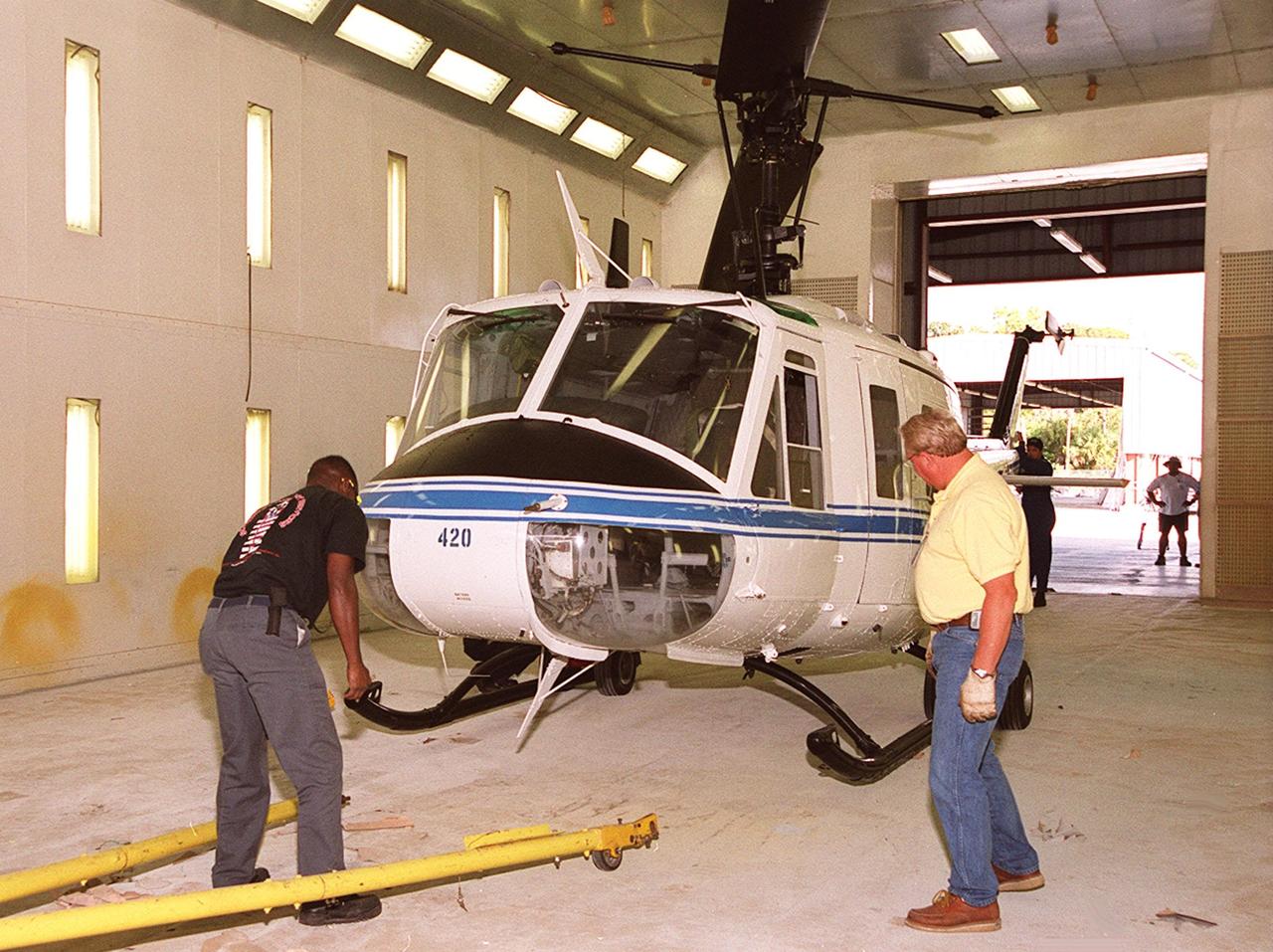
KENNEDY SPACE CENTER, FLA. -- Workers get ready to move a NASA UH-1H helicopter outside. They have been painting the blades of four NASA UH-1H helicopters, changing the black to a pattern of white and yellow stripes. The pattern provides better visibility in smoke and fire conditions. When the rotors are turning, the stripes create a yellow and white circle that is more easily seen by a second helicopter from above. The helicopters, primarily used for security and medical evacuation for NASA, will be used to deliver water via buckets during brush fires. The change was made to comply with U.S. Fish and Wildlife and Department of Forestry regulations for helicopter-assisted fire contro
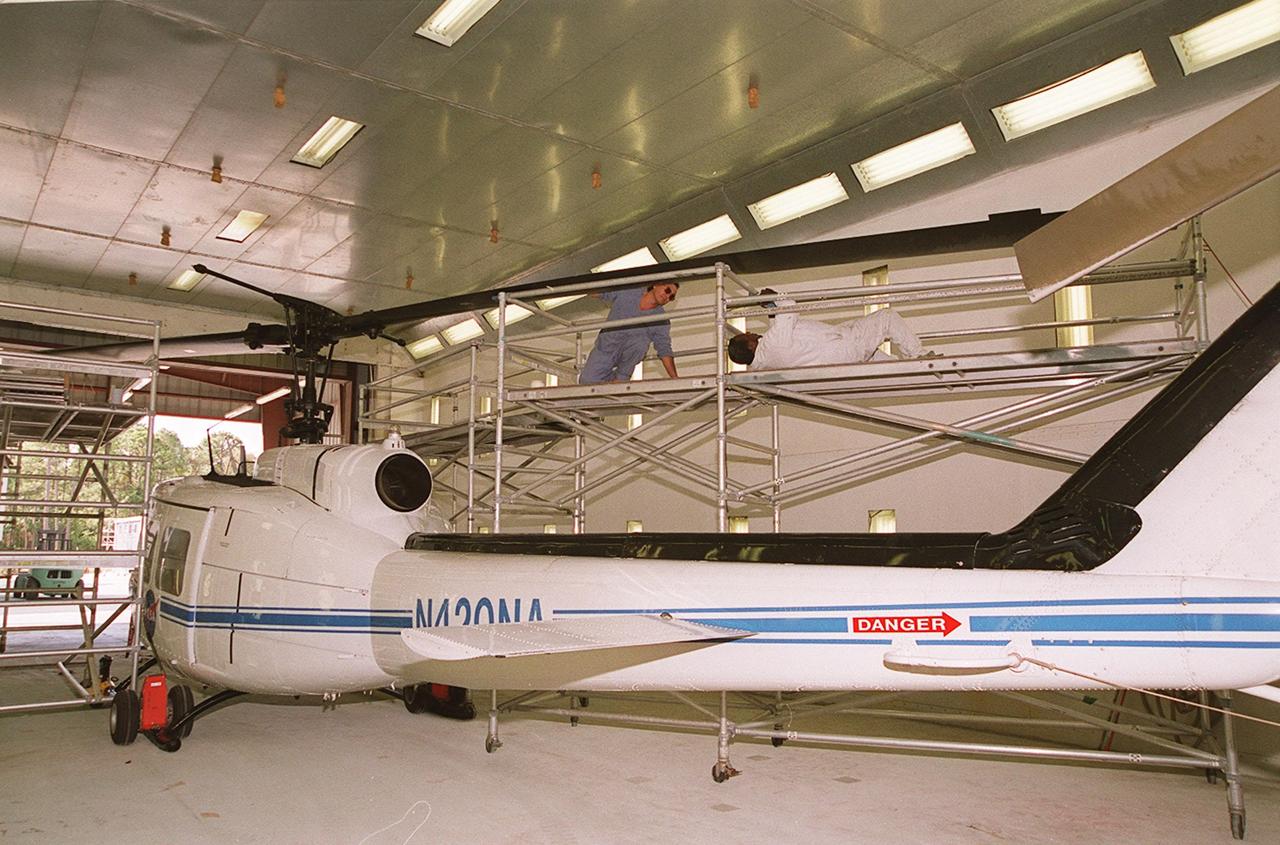
KENNEDY SPACE CENTER, FLA. -- Workers paint the blades of a NASA UH-1H helicopter, changing the black to a pattern of white and yellow stripes. The pattern provides better visibility in smoke and fire conditions. When the rotors are turning, the stripes create a yellow and white circle that is more easily seen by a second helicopter from above. The helicopters, primarily used for security and medical evacuation for NASA, will be used to deliver water via buckets during brush fires. The change was made to comply with U.S. Fish and Wildlife and Department of Forestry regulations for helicopter-assisted fire control
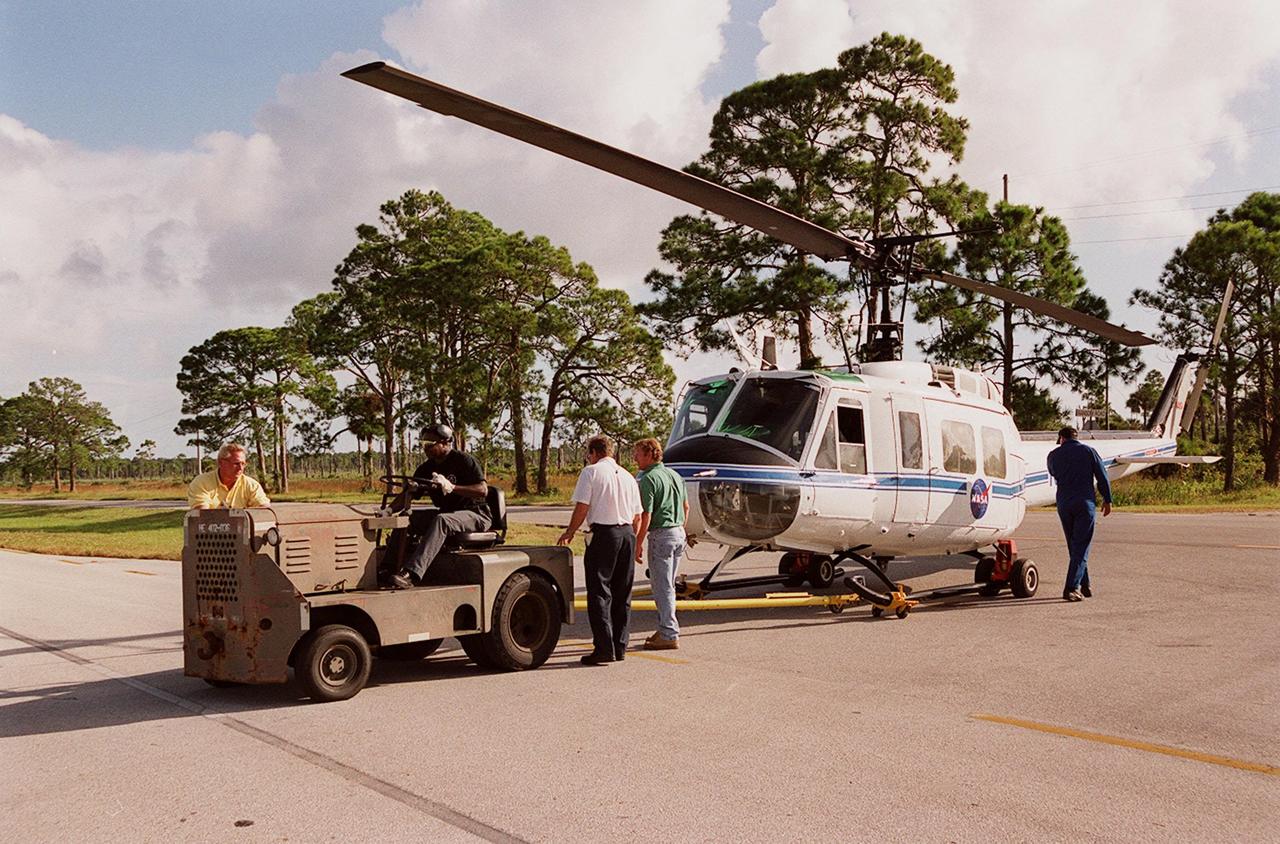
KENNEDY SPACE CENTER, FLA. -- A NASA helicopter is secured for transfer to Ransom Road at KSC. It is one of four UH-1H helicopters that will have its blades painted, changing the black to a pattern of white and yellow stripes. The pattern provides better visibility in smoke and fire conditions. When the rotors are turning, the stripes create a yellow and white circle that is more easily seen by a second helicopter from above. The helicopters, primarily used for security and medical evacuation for NASA, will be used to deliver water via buckets during brush fires. The change was made to comply with U.S. Fish and Wildlife and Department of Forestry regulations for helicopter-assisted fire control
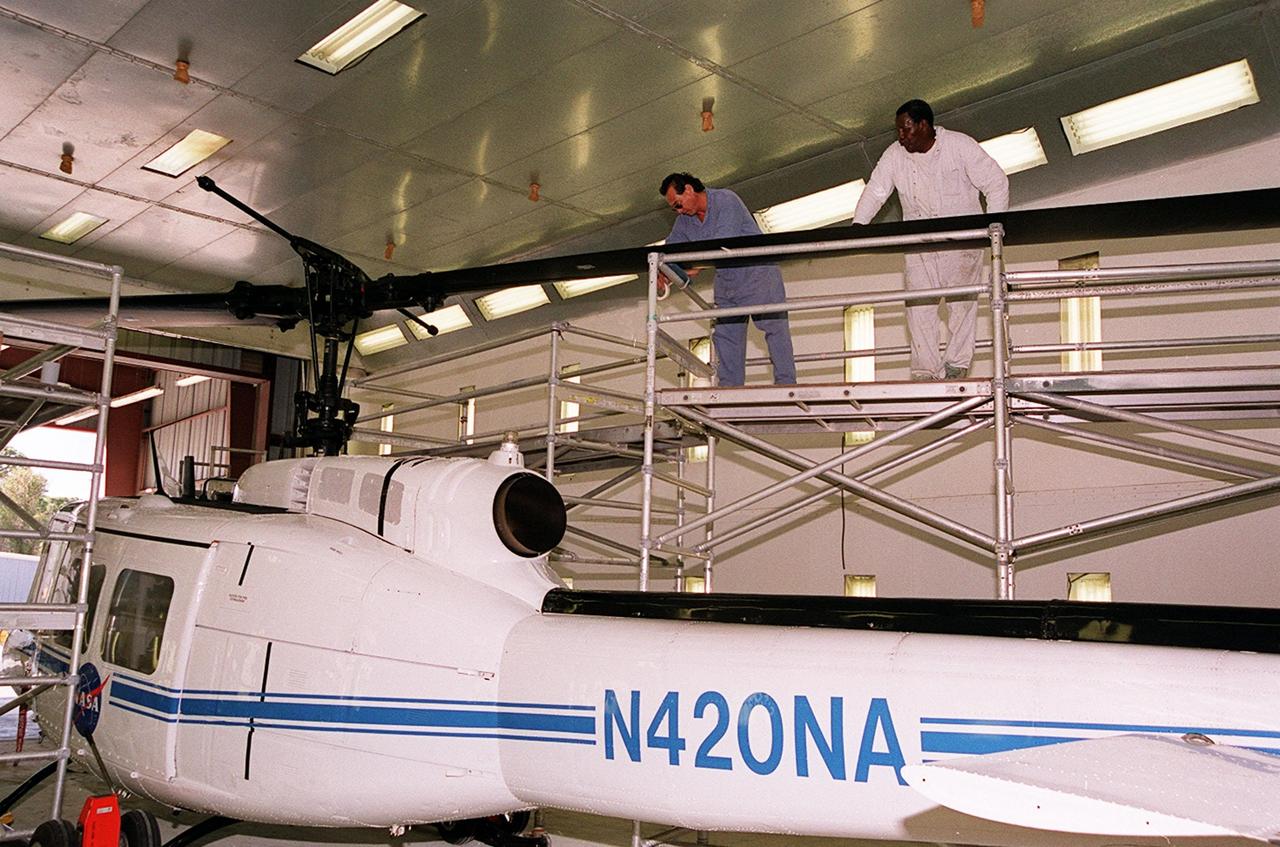
KENNEDY SPACE CENTER, FLA. -- Workers paint the blades of a NASA UH-1H helicopter, changing the black to a pattern of white and yellow stripes. The pattern provides better visibility in smoke and fire conditions. When the rotors are turning, the stripes create a yellow and white circle that is more easily seen by a second helicopter from above. The helicopters, primarily used for security and medical evacuation for NASA, will be used to deliver water via buckets during brush fires. The change was made to comply with U.S. Fish and Wildlife and Department of Forestry regulations for helicopter-assisted fire control
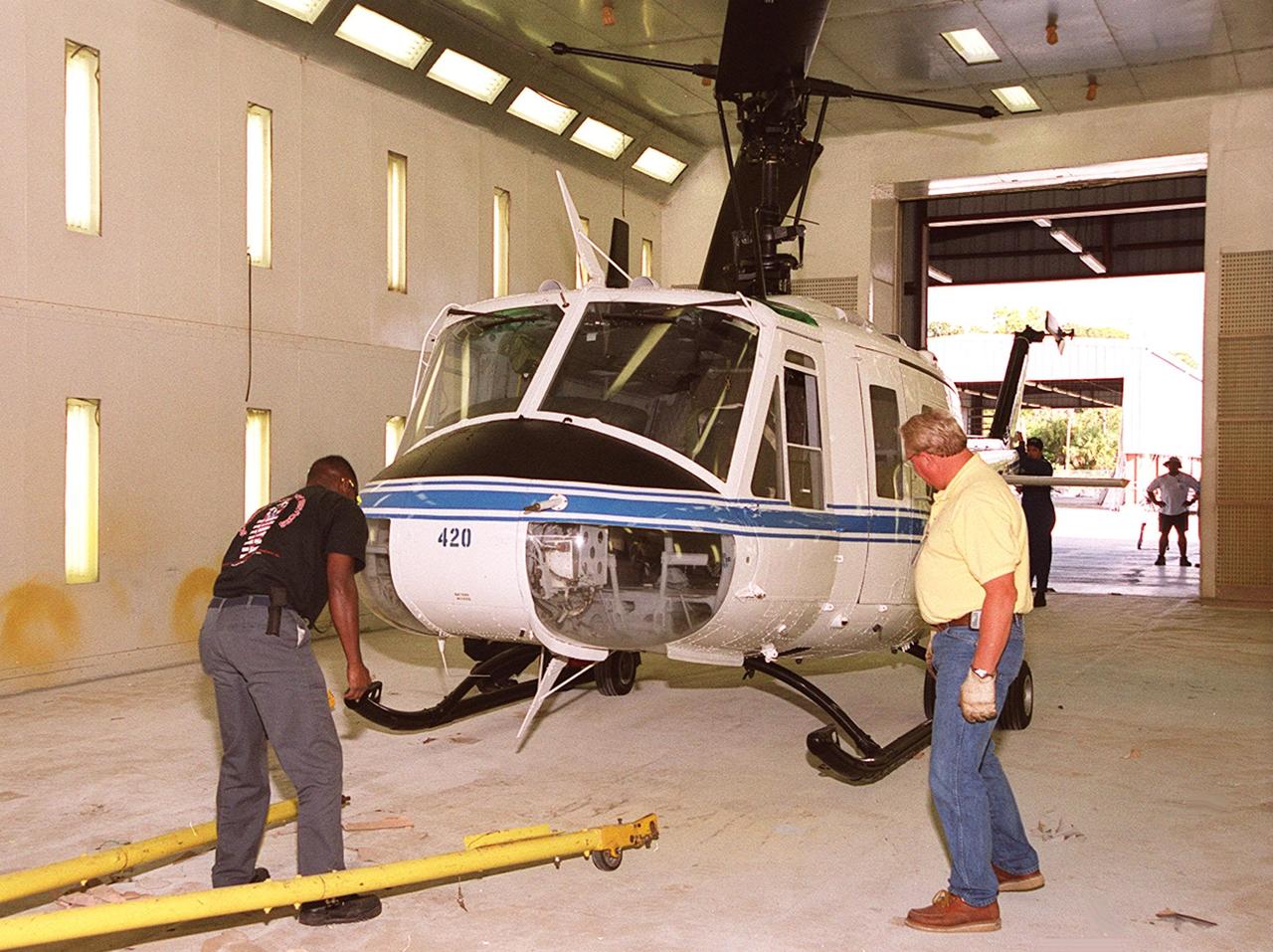
KENNEDY SPACE CENTER, FLA. -- Workers get ready to move a NASA UH-1H helicopter outside. They have been painting the blades of four NASA UH-1H helicopters, changing the black to a pattern of white and yellow stripes. The pattern provides better visibility in smoke and fire conditions. When the rotors are turning, the stripes create a yellow and white circle that is more easily seen by a second helicopter from above. The helicopters, primarily used for security and medical evacuation for NASA, will be used to deliver water via buckets during brush fires. The change was made to comply with U.S. Fish and Wildlife and Department of Forestry regulations for helicopter-assisted fire contro
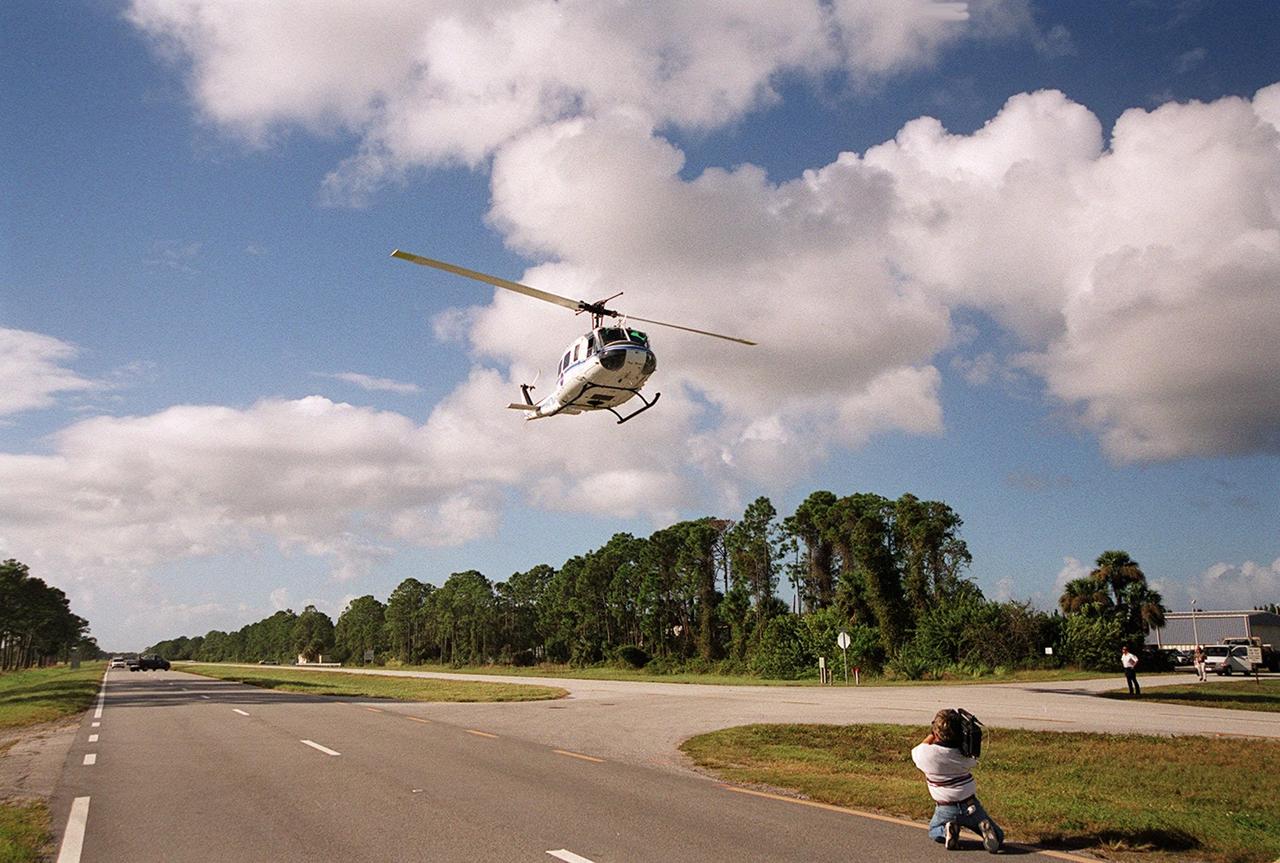
KENNEDY SPACE CENTER, FLA. -- At S.R. 3 a NASA helicopter returns to Patrick Air Force Base. The helicopter is one of four UH-1H helicopters that have had its blades painted, changing the previous black color to a pattern of white and yellow stripes. The pattern provides better visibility in smoke and fire conditions. When the rotors are turning, the stripes create a yellow and white circle that is more easily seen by a second helicopter from above. The helicopters, primarily used for security and medical evacuation for NASA, will be used to deliver water via buckets during brush fires. The change was made to comply with U.S. Fish and Wildlife and Department of Forestry regulations for helicopter-assisted fire control
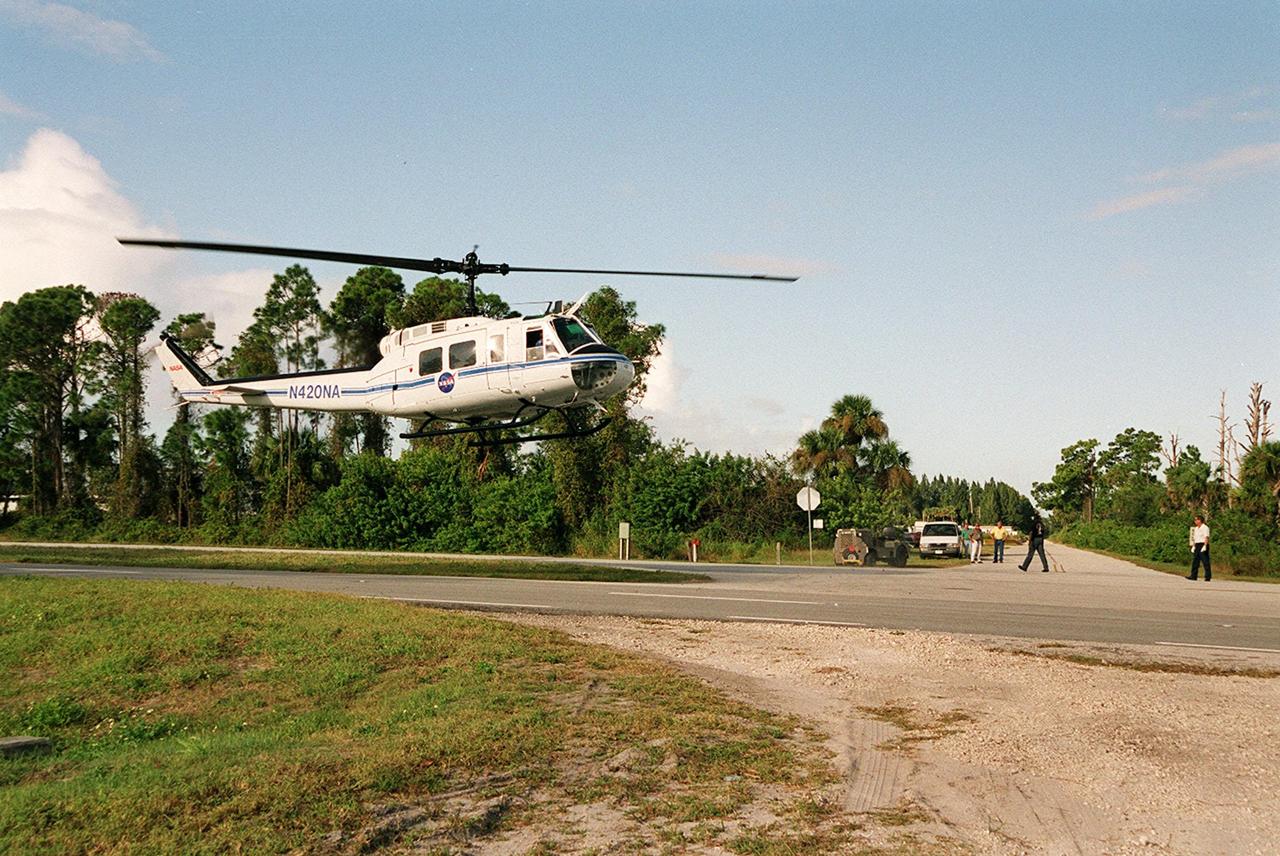
KENNEDY SPACE CENTER, FLA. -- A NASA helicopter from Patrick Air Force Base is about to land on S.R. 3. It is one of four UH-1H helicopters that will have its blades painted, changing the black to a pattern of white and yellow stripes. The pattern provides better visibility in smoke and fire conditions. When the rotors are turning, the stripes create a yellow and white circle that is more easily seen by a second helicopter from above. The helicopters, primarily used for security and medical evacuation for NASA, will be used to deliver water via buckets during brush fires. The change was made to comply with U.S. Fish and Wildlife and Department of Forestry regulations for helicopter-assisted fire control
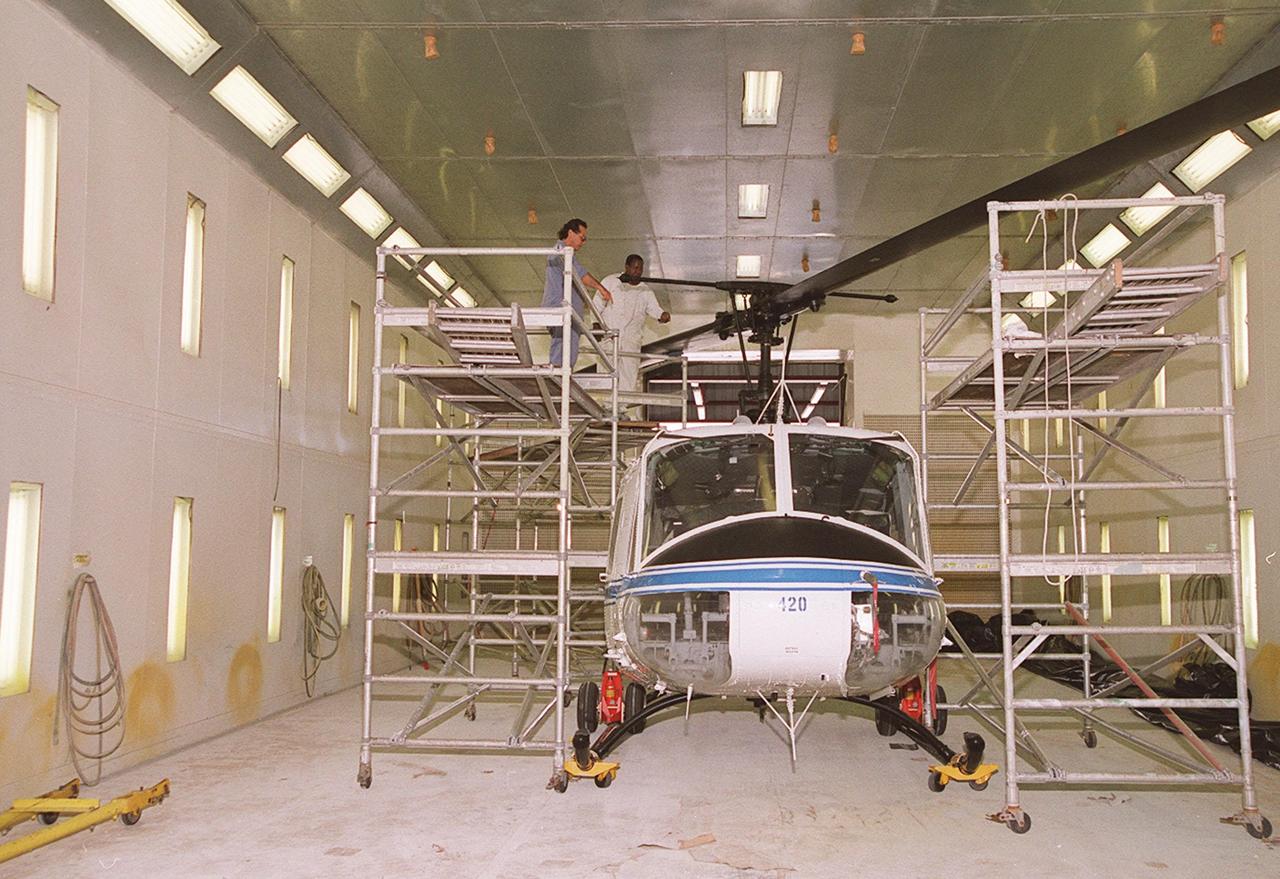
KENNEDY SPACE CENTER, FLA. -- Workers put the finishing touches on new paint for the blades of a NASA UH-1H helicopter. They have changed the black to a pattern of white and yellow stripes. The pattern provides better visibility in smoke and fire conditions. When the rotors are turning, the stripes create a yellow and white circle that is more easily seen from above by a second helicopter. The helicopters, primarily used for security and medical evacuation for NASA, will be used to deliver water via buckets during brush fires. The change was made to comply with U.S. Fish and Wildlife and Department of Forestry regulations for helicopter-assisted fire control
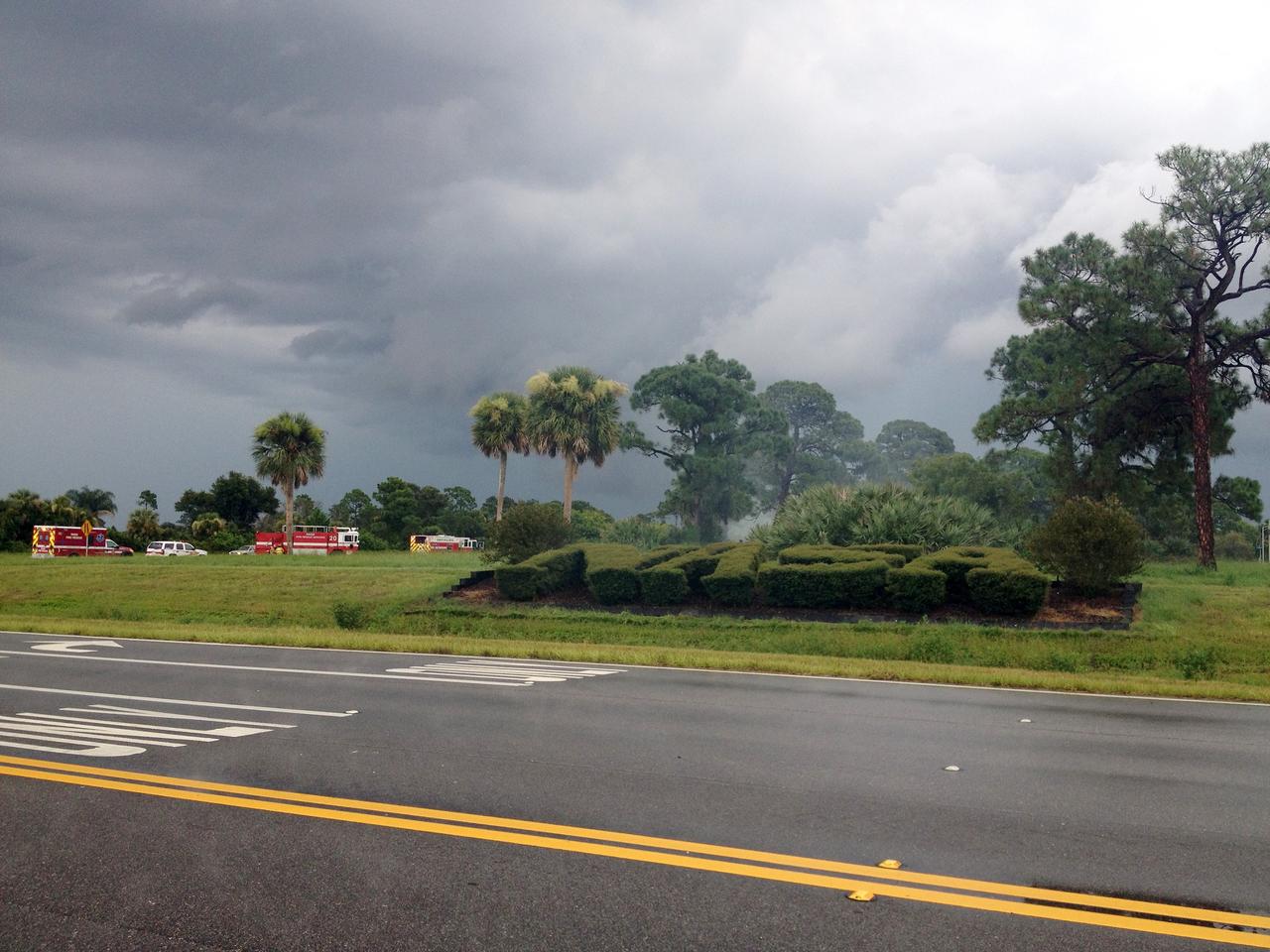
CAPE CANAVERAL, Fla. – Emergency responders are called to the scene of a brush fire near Headquarters Building in the Industrial Area of NASA’s Kennedy Space Center in Florida. The fire was ignited by a lightning strike. The space center is nestled on the Merritt Island National Wildlife Refuge, which is managed by the U.S. Fish and Wildlife Service. Chenega Security & Support Solutions is responsible for Kennedy's Fire Rescue Department. For information on the refuge, visit http://www.fws.gov/merrittisland/Index.html. For more on Kennedy Space Center, visit http://www.nasa.gov/kennedy. Photo credit: NASA/Ben Smegelsky
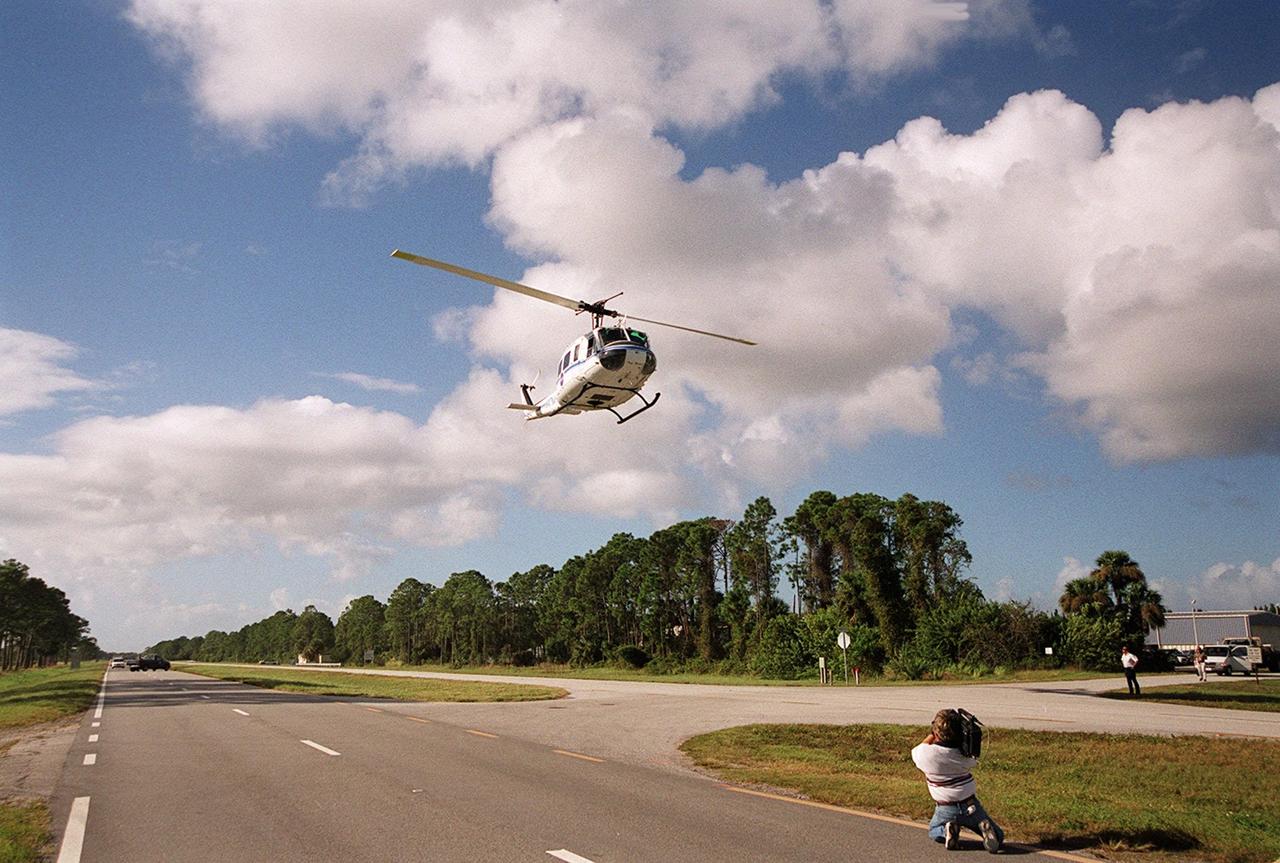
KENNEDY SPACE CENTER, FLA. -- At S.R. 3 a NASA helicopter returns to Patrick Air Force Base. The helicopter is one of four UH-1H helicopters that have had its blades painted, changing the previous black color to a pattern of white and yellow stripes. The pattern provides better visibility in smoke and fire conditions. When the rotors are turning, the stripes create a yellow and white circle that is more easily seen by a second helicopter from above. The helicopters, primarily used for security and medical evacuation for NASA, will be used to deliver water via buckets during brush fires. The change was made to comply with U.S. Fish and Wildlife and Department of Forestry regulations for helicopter-assisted fire control
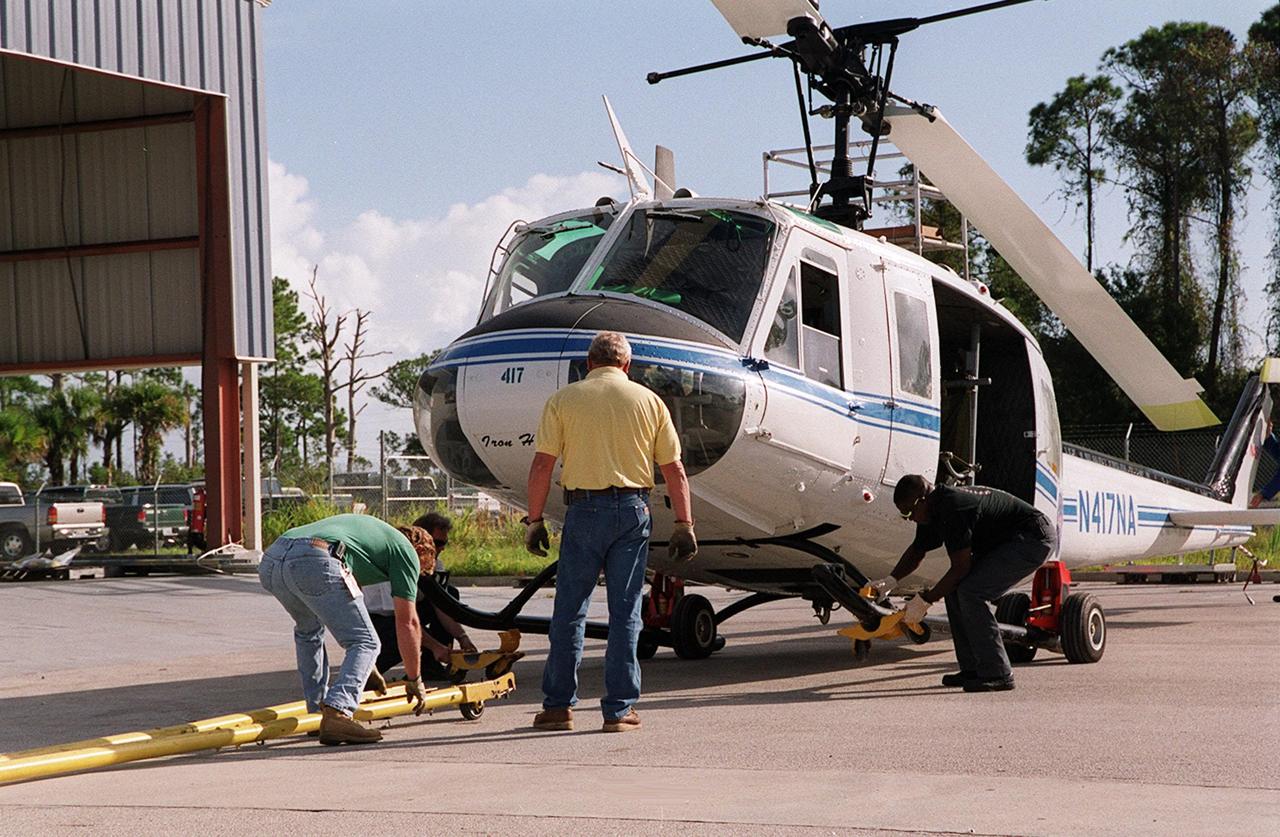
KENNEDY SPACE CENTER, FLA. -- A NASA UH-1H helicopter is prepared for transfer back to Patrick Air Force Base after being painted. The blades of four NASA UH-1H helicopters were repainted, changing the black to a pattern of white and yellow stripes. The pattern provides better visibility in smoke and fire conditions. When the rotors are turning, the stripes create a yellow and white circle that is more easily seen by a second helicopter from above. The helicopters, primarily used for security and medical evacuation for NASA, will be used to deliver water via buckets during brush fires. The change was made to comply with U.S. Fish and Wildlife and Department of Forestry regulations for helicopter-assisted fire control
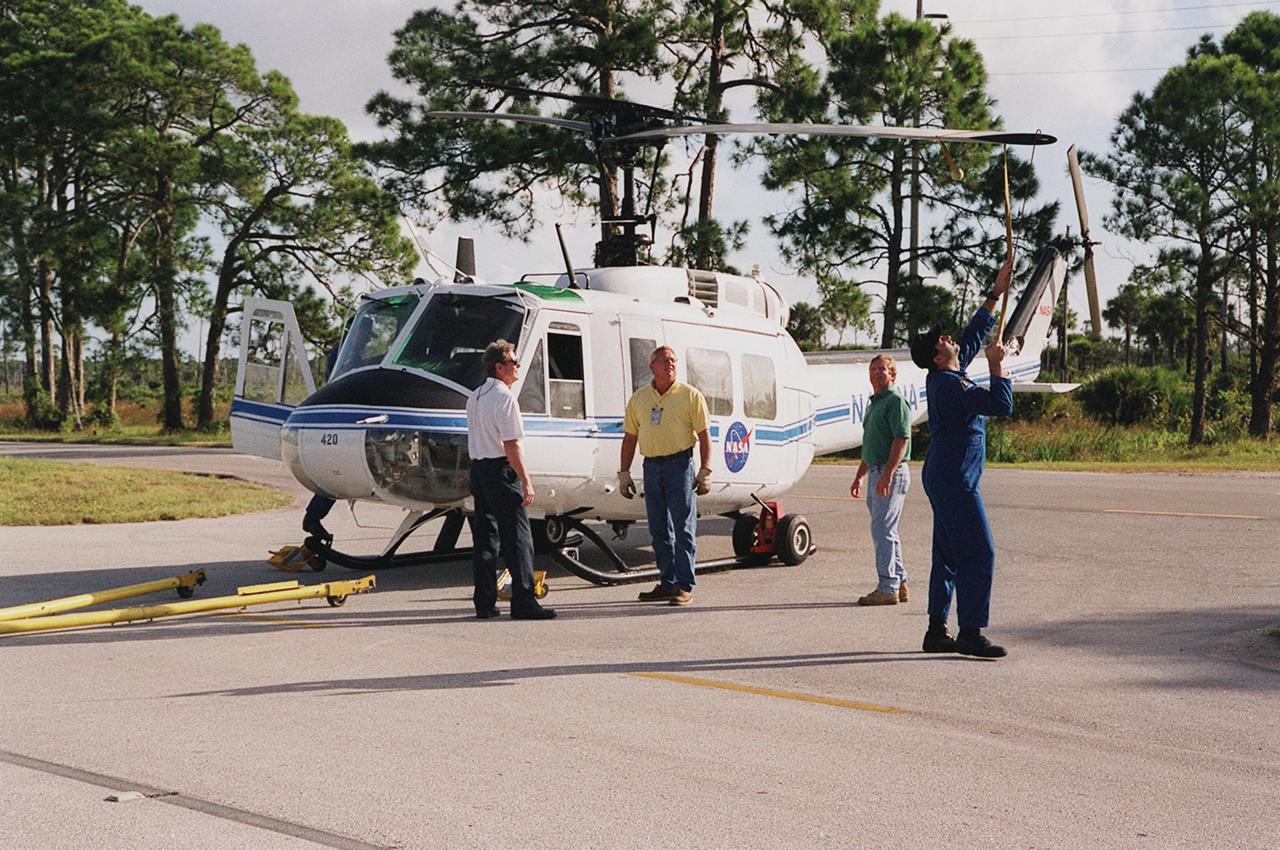
KENNEDY SPACE CENTER, FLA. -- The pilot of the NASA helicopter secures the rotary blade before the helicopter’s transfer to Ransom Road at KSC. It is one of four UH-1H helicopters that will have its blades painted, changing the black to a pattern of white and yellow stripes. The pattern provides better visibility in smoke and fire conditions. When the rotors are turning, the stripes create a yellow and white circle that is more easily seen by a second helicopter from above. The helicopters, primarily used for security and medical evacuation for NASA, will be used to deliver water via buckets during brush fires. The change was made to comply with U.S. Fish and Wildlife and Department of Forestry regulations for helicopter-assisted fire control
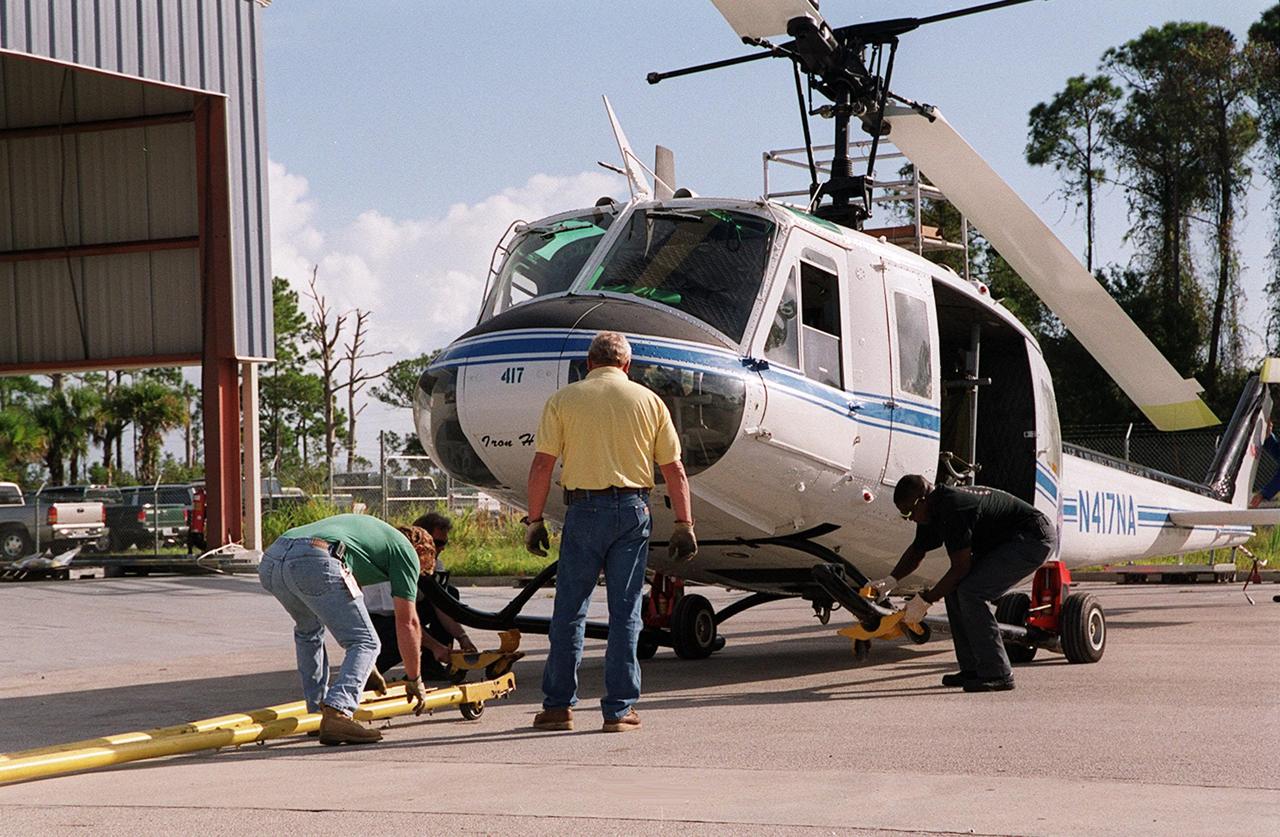
KENNEDY SPACE CENTER, FLA. -- A NASA UH-1H helicopter is prepared for transfer back to Patrick Air Force Base after being painted. The blades of four NASA UH-1H helicopters were repainted, changing the black to a pattern of white and yellow stripes. The pattern provides better visibility in smoke and fire conditions. When the rotors are turning, the stripes create a yellow and white circle that is more easily seen by a second helicopter from above. The helicopters, primarily used for security and medical evacuation for NASA, will be used to deliver water via buckets during brush fires. The change was made to comply with U.S. Fish and Wildlife and Department of Forestry regulations for helicopter-assisted fire control
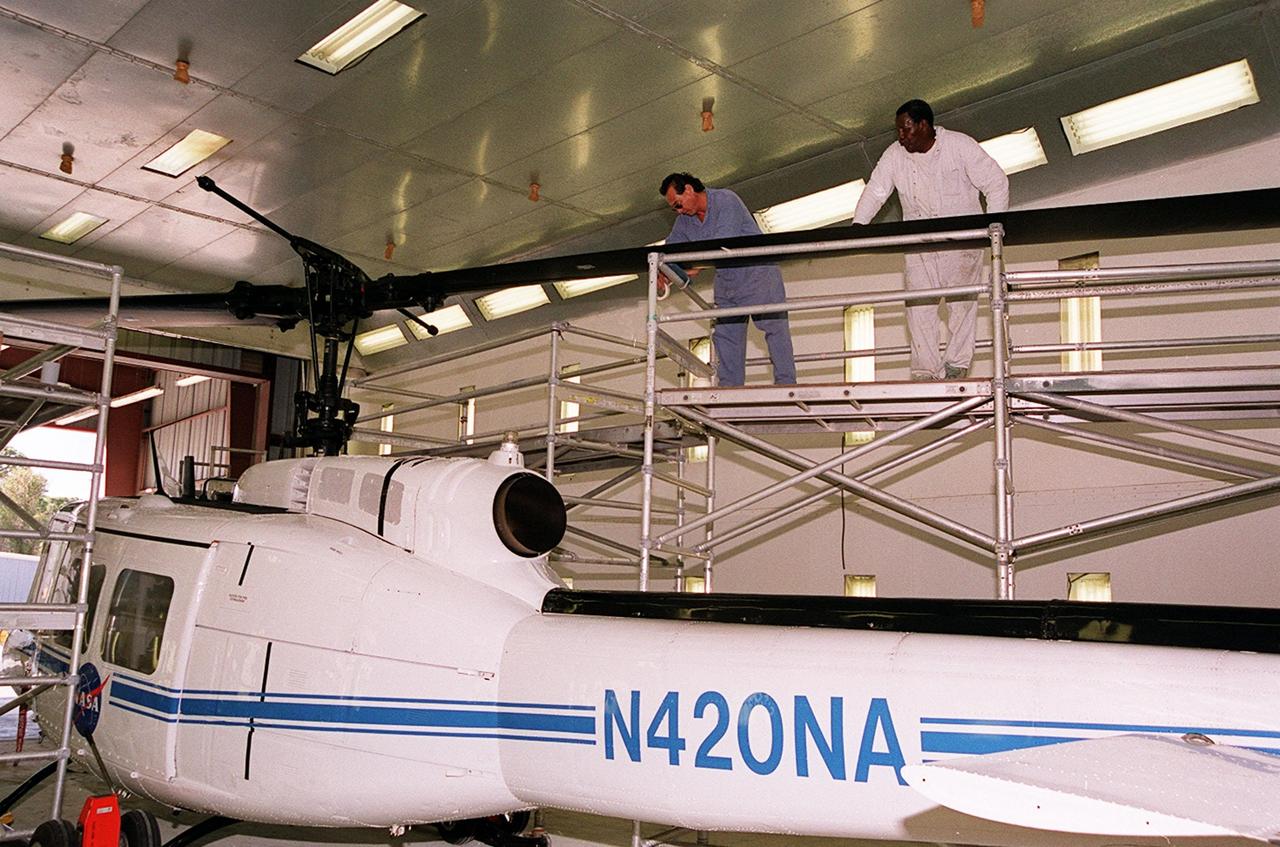
KENNEDY SPACE CENTER, FLA. -- Workers paint the blades of a NASA UH-1H helicopter, changing the black to a pattern of white and yellow stripes. The pattern provides better visibility in smoke and fire conditions. When the rotors are turning, the stripes create a yellow and white circle that is more easily seen by a second helicopter from above. The helicopters, primarily used for security and medical evacuation for NASA, will be used to deliver water via buckets during brush fires. The change was made to comply with U.S. Fish and Wildlife and Department of Forestry regulations for helicopter-assisted fire control
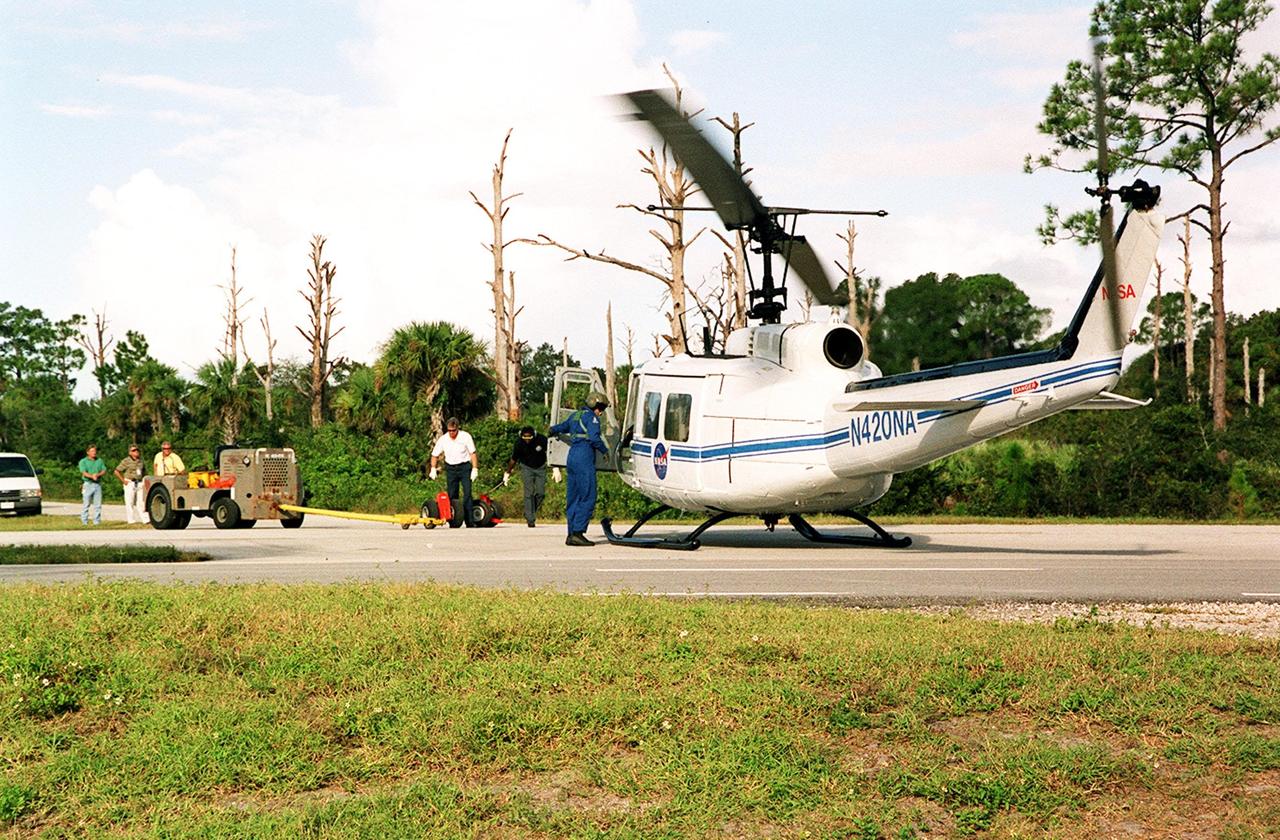
KENNEDY SPACE CENTER, FLA. -- A NASA helicopter lands on S.R. 3 for transfer to Patrick Air Force Base. It is one of four UH-1H helicopters that will have its blades painted, changing the black to a pattern of white and yellow stripes. The pattern provides better visibility in smoke and fire conditions. When the rotors are turning, the stripes create a yellow and white circle that is more easily seen by a second helicopter from above. The helicopters, primarily used for security and medical evacuation for NASA, will be used to deliver water via buckets during brush fires. The change was made to comply with U.S. Fish and Wildlife and Department of Forestry regulations for helicopter-assisted fire control
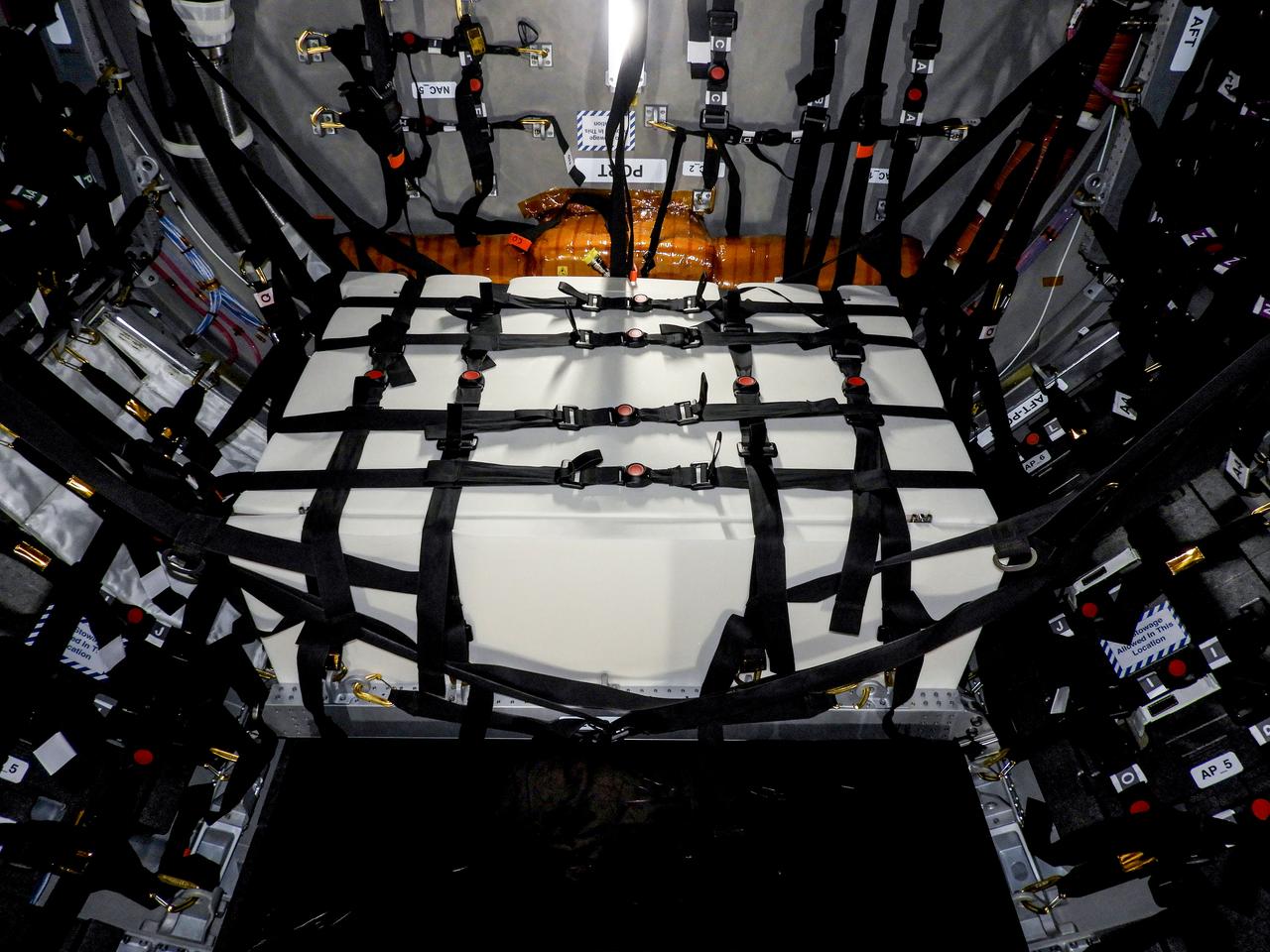
jsc2023e046377 (12/14/2019) --- A view of the Spacecraft Fire Safety Experiments (Saffire) VI experiment hardware, loaded inside the Northrop Grumman (NG) Cygnus cargo vehicle for the 19th NG resupply mission to the International Space Station. Saffire is a series of experiments to investigate how fire spreads on a variety of combustible materials in the microgravity environment. The experiments are ignited in the Cygnus cargo spacecraft after it departs the space station and before it reenters the Earth's atmosphere. Saffire-VI builds on prior results to test flammability at different oxygen levels and aims to further knowledge of realistic flame spread to aid the development of fire safety equipment and strategies for future spacecraft.
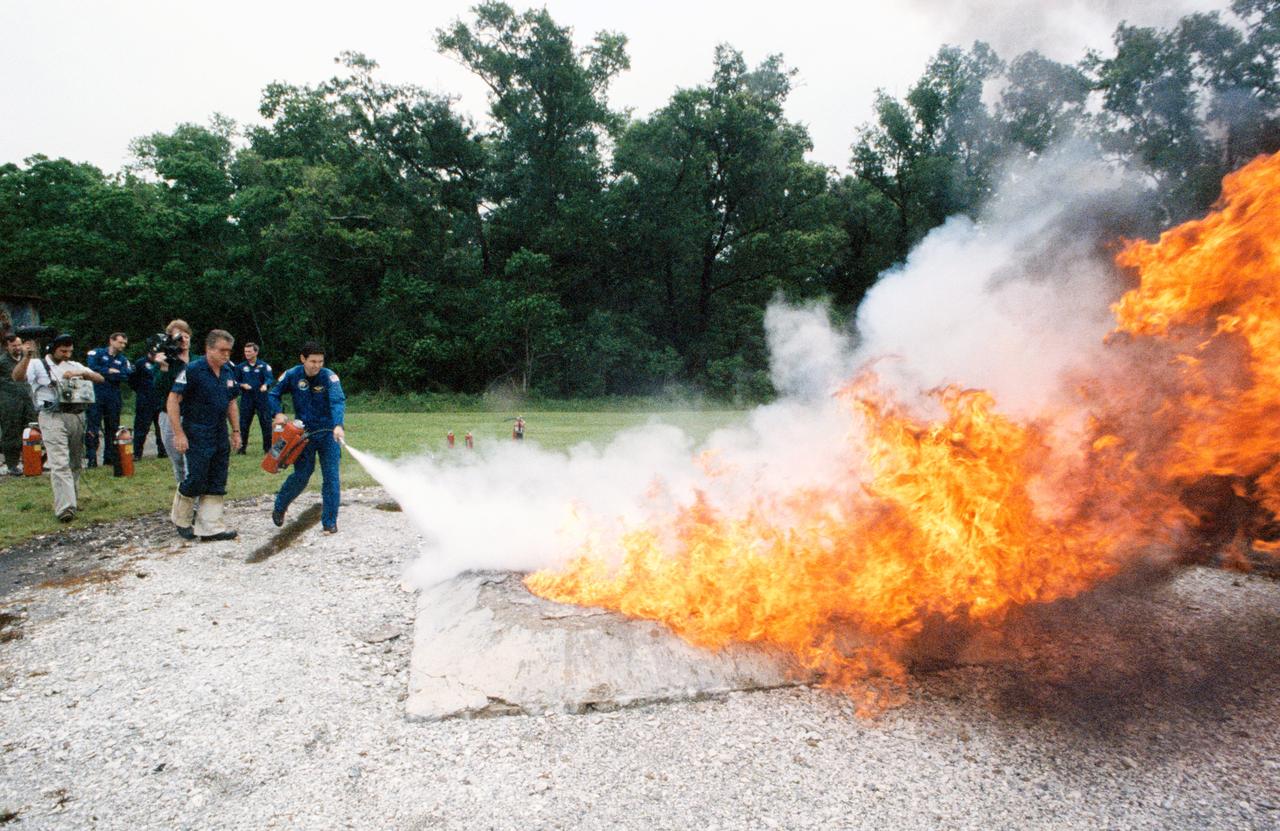
S90-38933 (4 May 1990) --- The STS-41 astronaut crew participates in fire control training exercises at the Johnson Space Center (JSC). Controlling the fire extinguisher at left frame is astronaut Robert D. Cabana, STS-41 pilot. Watching in the background are other STS-41 astronauts who participated in the session. They were Richard N. Richards, William M. Shepherd, Bruce E. Melnick and Thomas D. Akers. This type training is provided all crewmembers assigned to seats aboard Space Shuttle. Members of the both the Houston and Pasadena fire departments instruct the sessions.
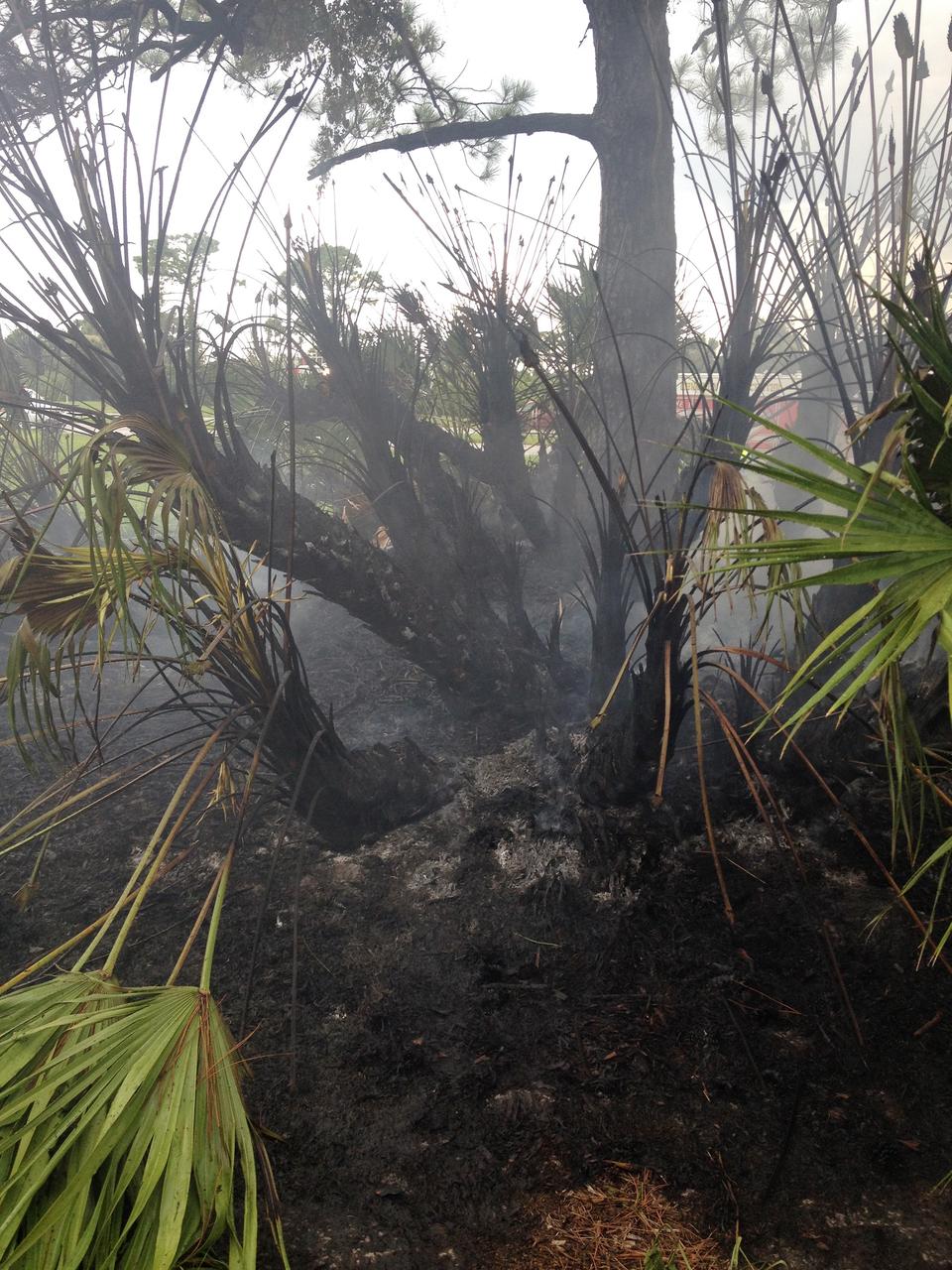
CAPE CANAVERAL, Fla. – A charred palmetto palm remains after a brush fire is extinguished near Headquarters Building in the Industrial Area of NASA’s Kennedy Space Center in Florida. The fire was ignited by a lightning strike. The space center is nestled on the Merritt Island National Wildlife Refuge, which is managed by the U.S. Fish and Wildlife Service. Chenega Security & Support Solutions is responsible for Kennedy's Fire Rescue Department. For information on the refuge, visit http://www.fws.gov/merrittisland/Index.html. For more on Kennedy Space Center, visit http://www.nasa.gov/kennedy. Photo credit: NASA/Ben Smegelsky
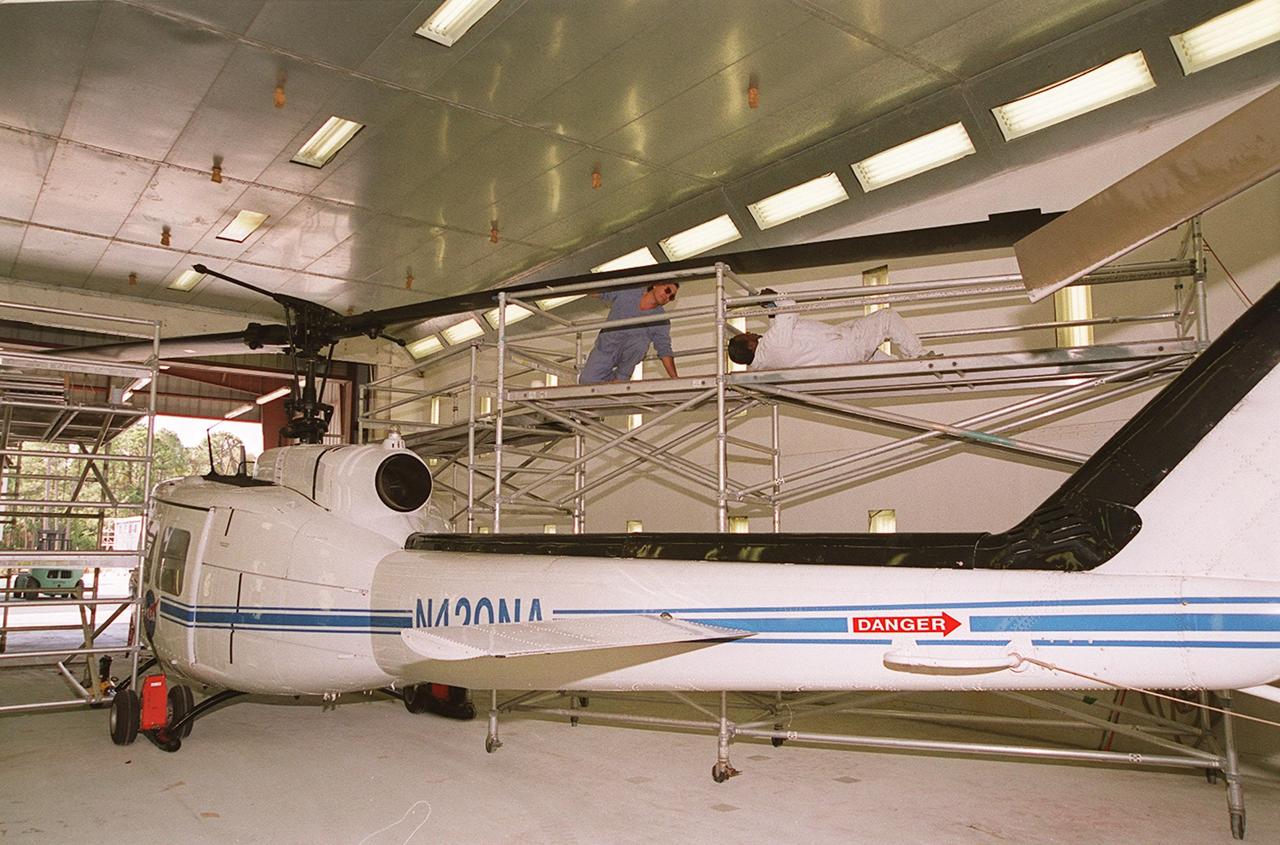
KENNEDY SPACE CENTER, FLA. -- Workers paint the blades of a NASA UH-1H helicopter, changing the black to a pattern of white and yellow stripes. The pattern provides better visibility in smoke and fire conditions. When the rotors are turning, the stripes create a yellow and white circle that is more easily seen by a second helicopter from above. The helicopters, primarily used for security and medical evacuation for NASA, will be used to deliver water via buckets during brush fires. The change was made to comply with U.S. Fish and Wildlife and Department of Forestry regulations for helicopter-assisted fire control

September 11th remembrance ceremony held in front of NASA Research Park Bldg-17 (Lunar Science Institute) hosted by the American Legion, Post 881, Moffett Field. Flag detail - Lt Randy Vincent - NASA Protective Services, Ty Locatelli, Carlos Pinedo - NASA Fire Department
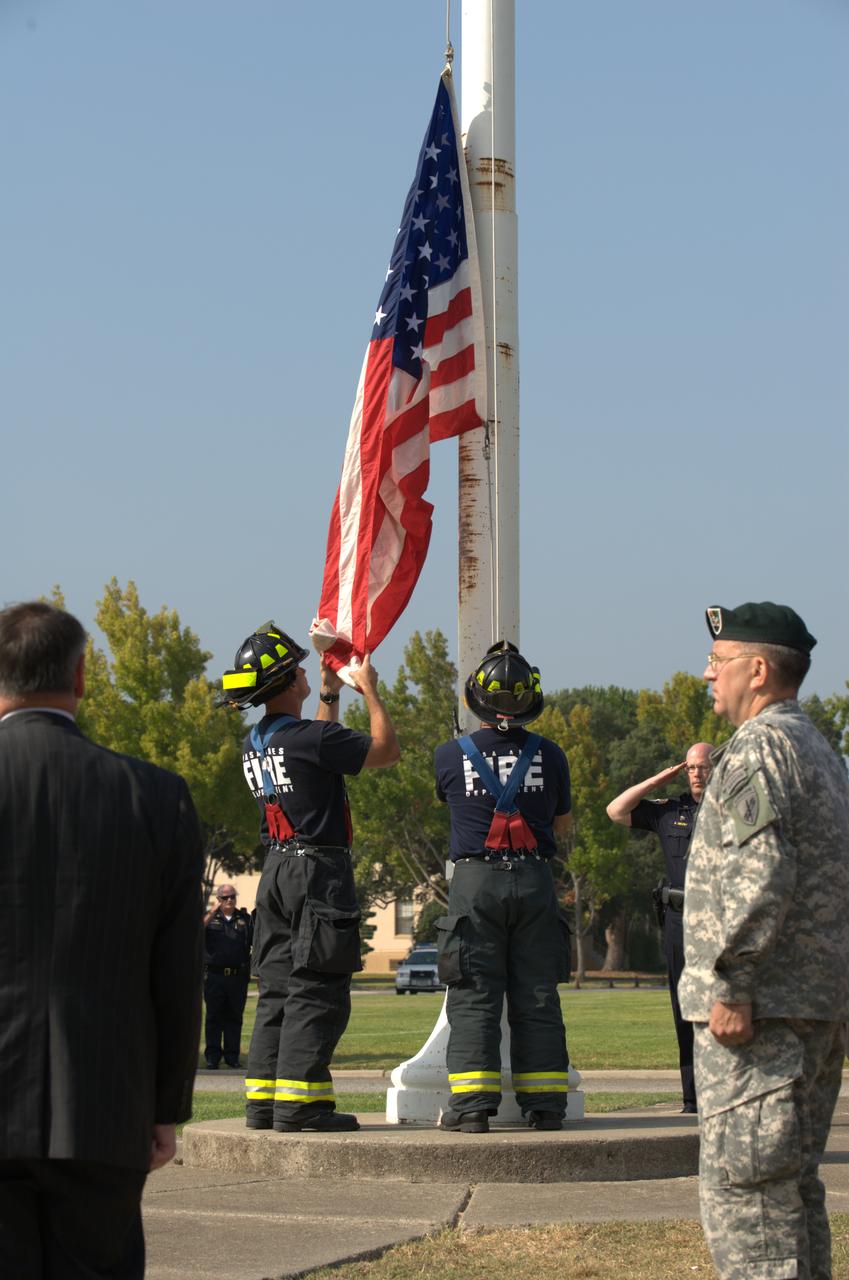
September 11th remembrance ceremony held in front of NASA Research Park Bldg-17 (Lunar Science Institute) hosted by the American Legion, Post 881, Moffett Field. Flag detail - Lt Randy Vincent - NASA Protective Services, Ty Locatelli, Carlos Pinedo - NASA Fire Department
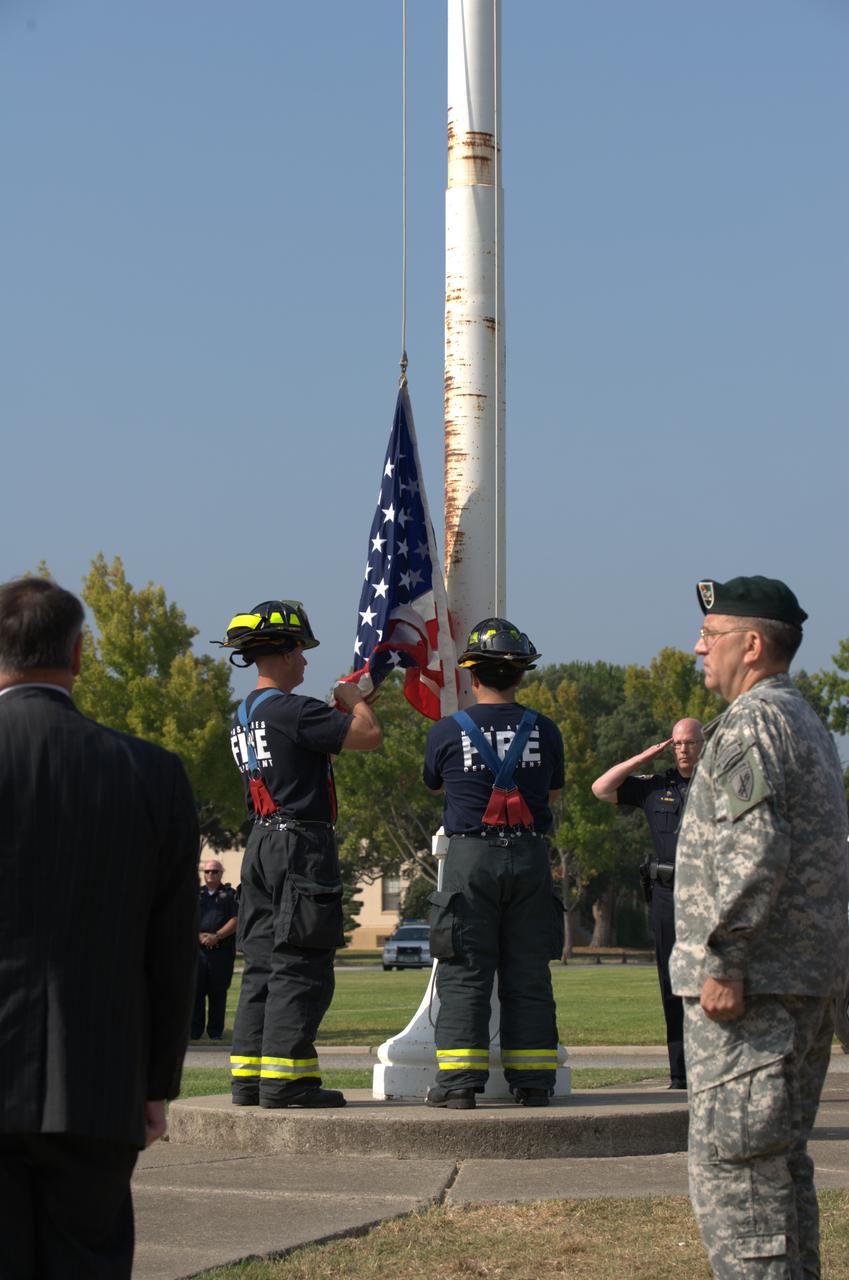
September 11th remembrance ceremony held in front of NASA Research Park Bldg-17 (Lunar Science Institute) hosted by the American Legion, Post 881, Moffett Field. Flag detail - Lt Randy Vincent - NASA Protective Services, Ty Locatelli, Carlos Pinedo - NASA Fire Department
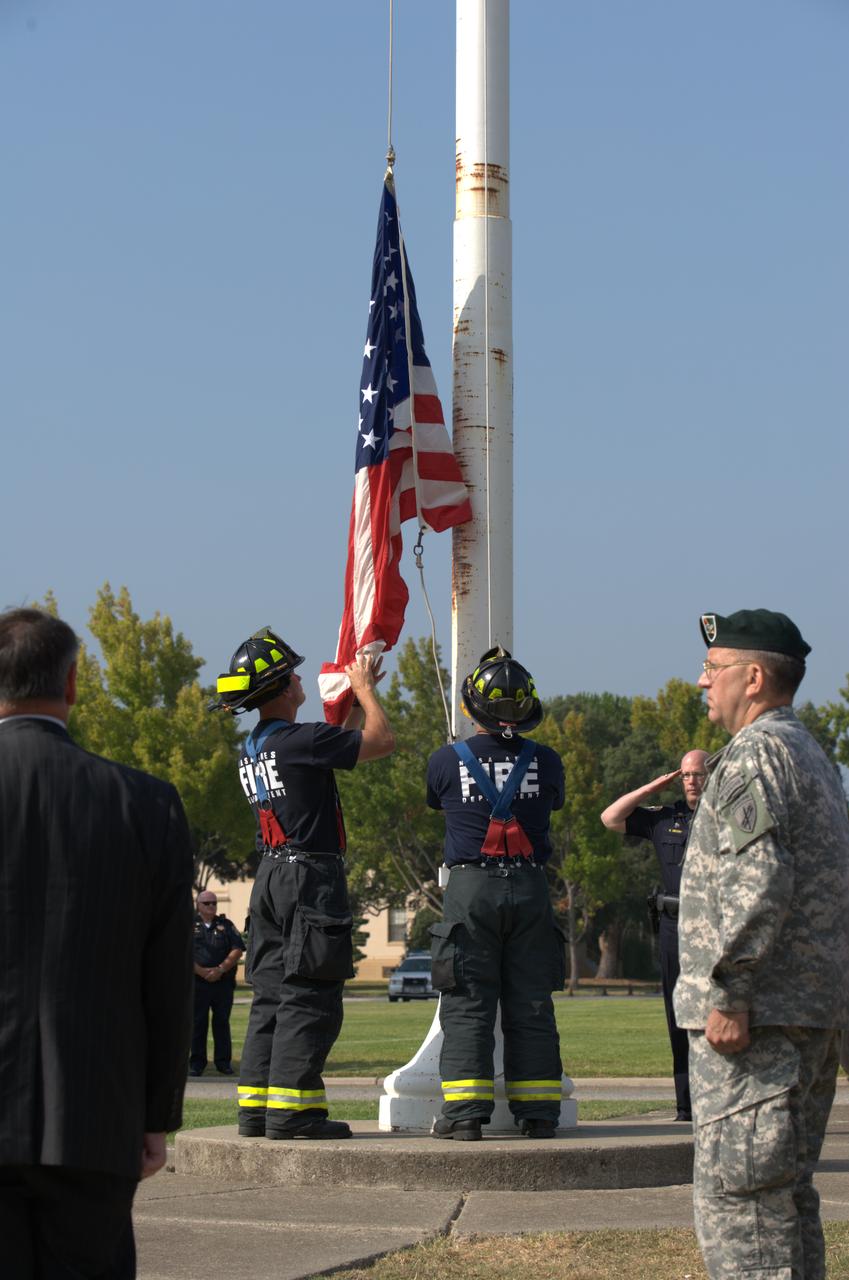
September 11th remembrance ceremony held in front of NASA Research Park Bldg-17 (Lunar Science Institute) hosted by the American Legion, Post 881, Moffett Field. Flag detail - Lt Randy Vincent - NASA Protective Services, Ty Locatelli, Carlos Pinedo - NASA Fire Department
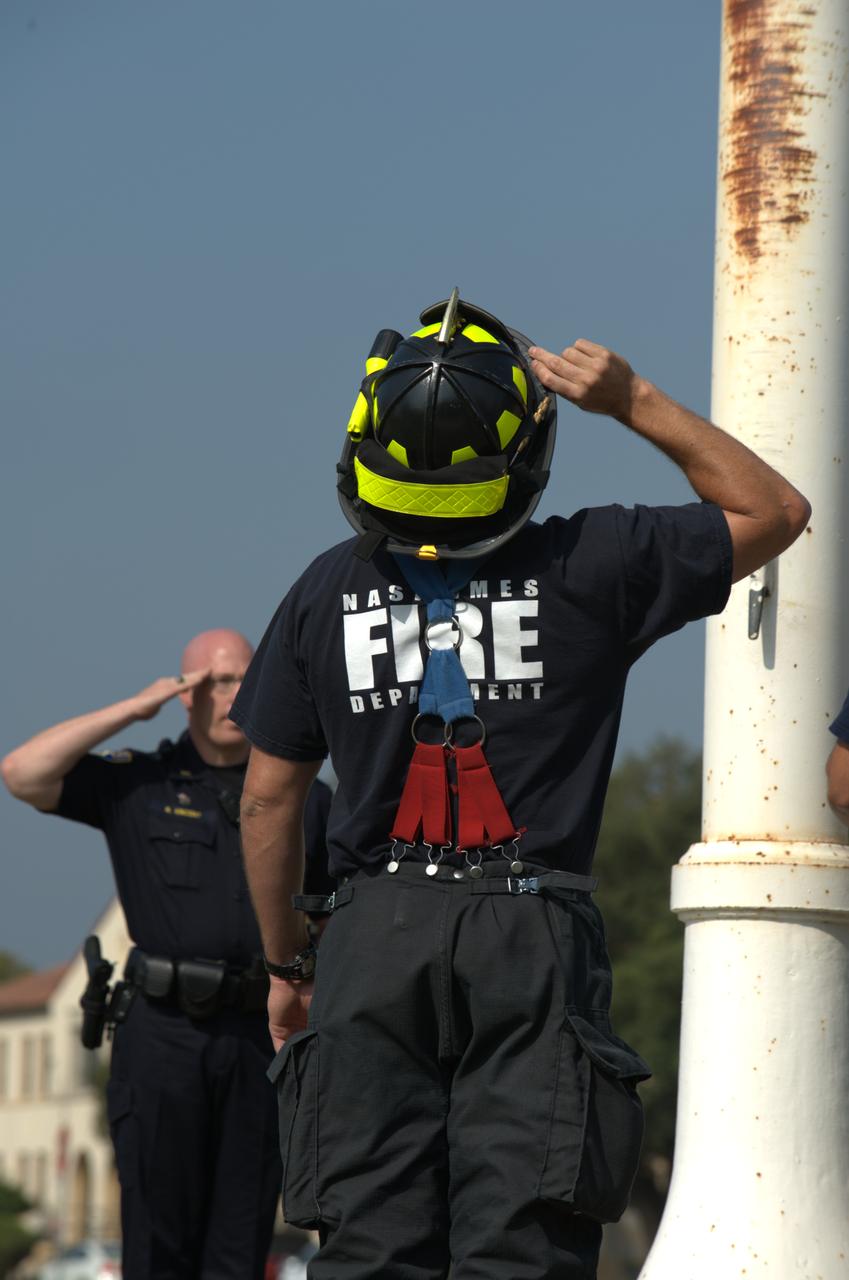
September 11th remembrance ceremony held in front of NASA Research Park Bldg-17 (Lunar Science Institute) hosted by the American Legion, Post 881, Moffett Field. Flag detail - Lt Randy Vincent - NASA Protective Services, Ty Locatelli, Carlos Pinedo - NASA Fire Department
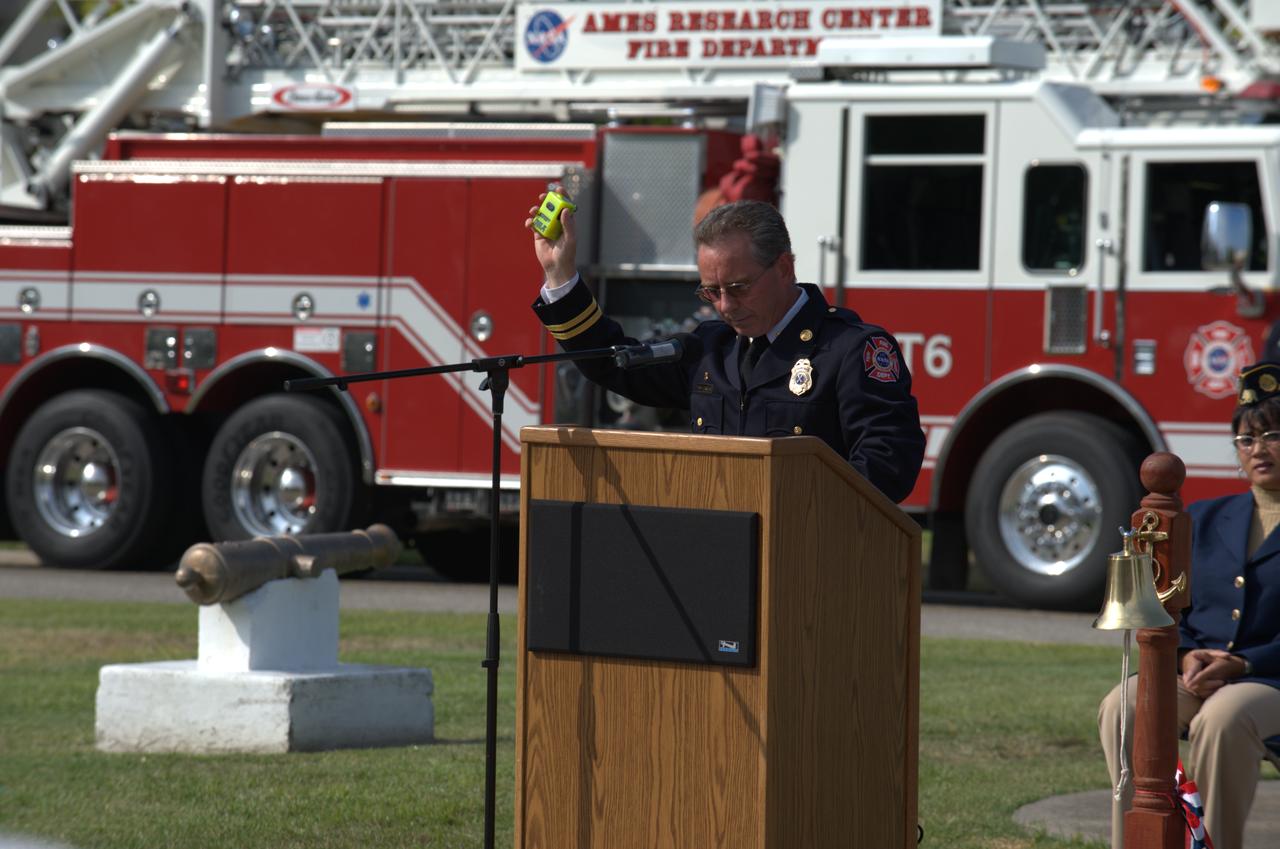
September 11th remembrance ceremony held in front of NASA Research Park Bldg-17 (Lunar Science Institute) hosted by the American Legion, Post 881, Moffett Field. Remarks by Rep for First Responders - Gattalion Chief Gary Alstrand, NASA Fire Department
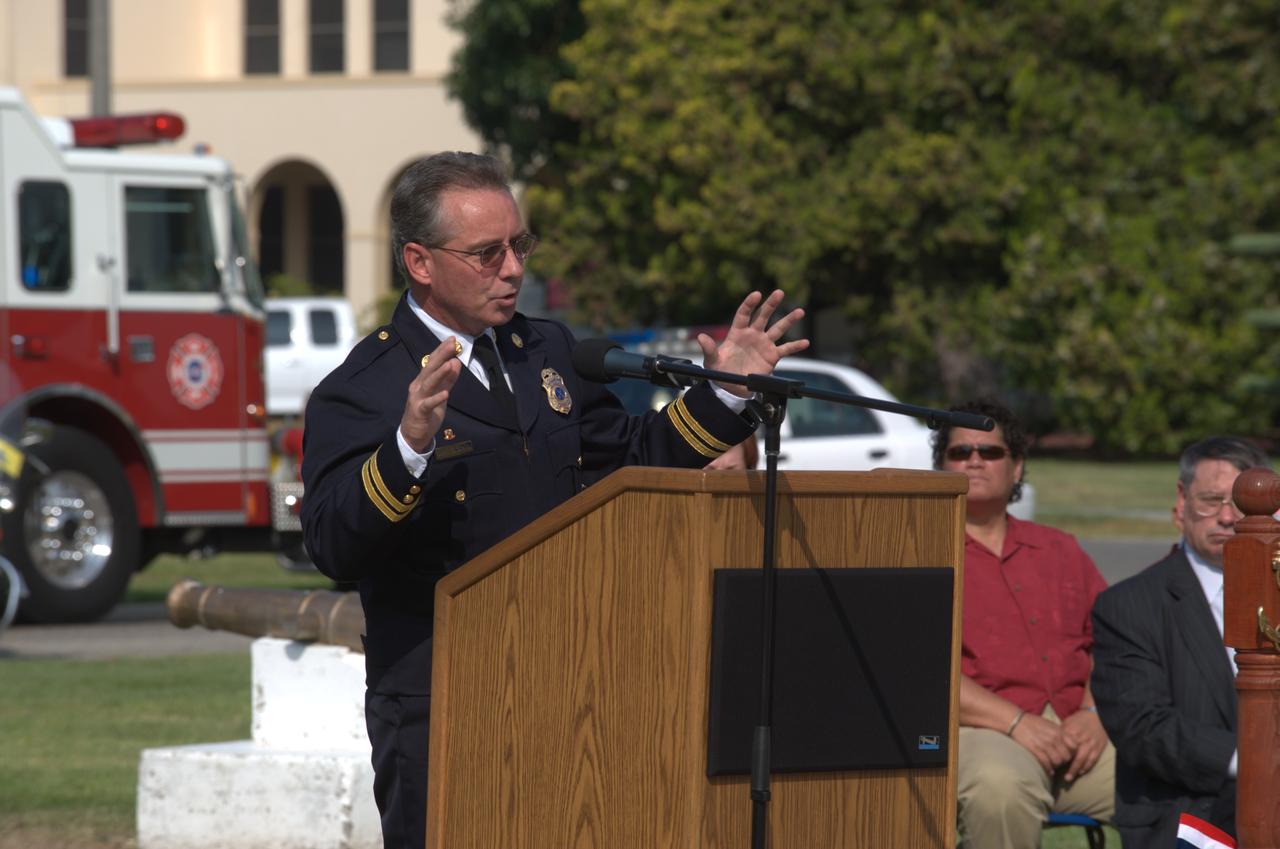
September 11th remembrance ceremony held in front of NASA Research Park Bldg-17 (Lunar Science Institute) hosted by the American Legion, Post 881, Moffett Field. Remarks by Rep for First Responders - Gattalion Chief Gary Alstrand, NASA Fire Department
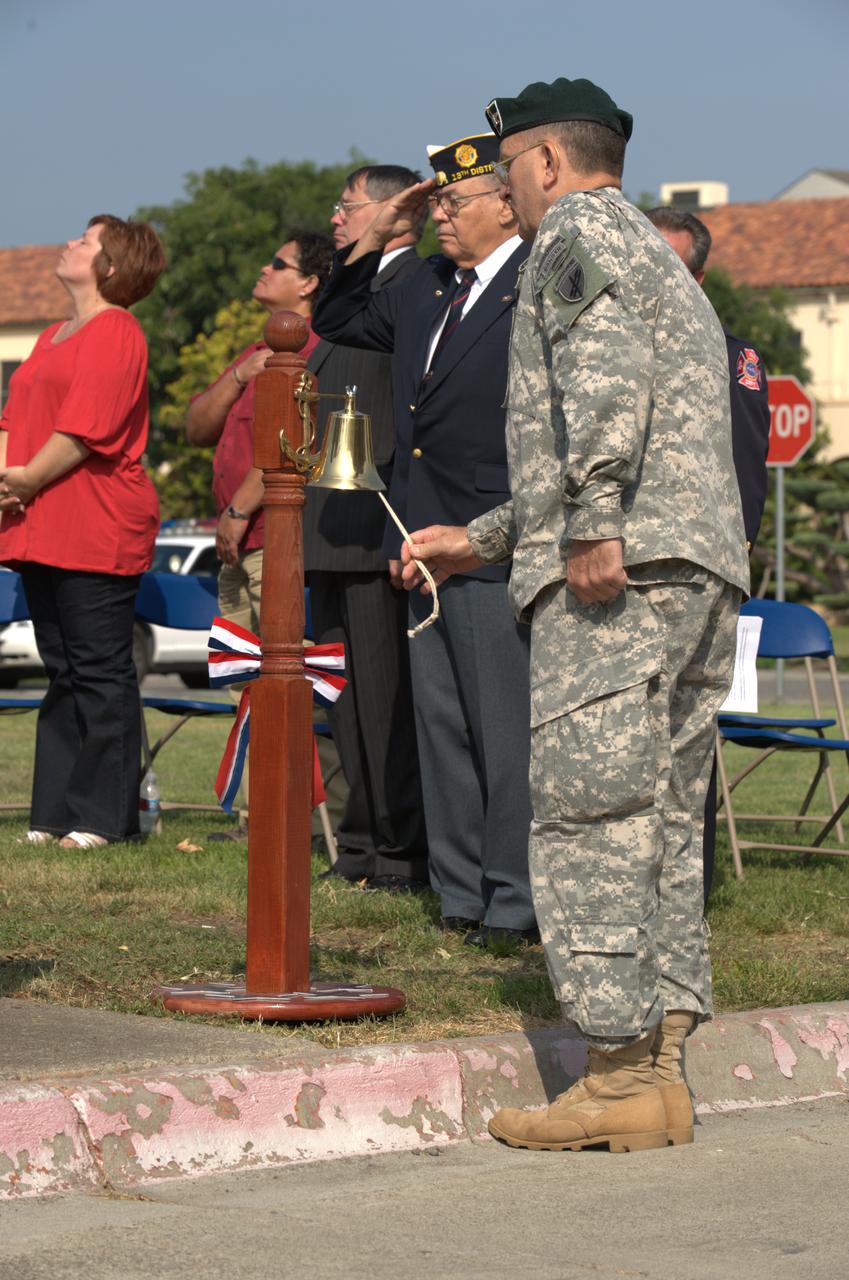
September 11th remembrance ceremony held in front of NASA Research Park Bldg-17 (Lunar Science Institute) hosted by the American Legion, Post 881, Moffett Field. Flag detail - Lt Randy Vincent - NASA Protective Services, Ty Locatelli, Carlos Pinedo - NASA Fire Department
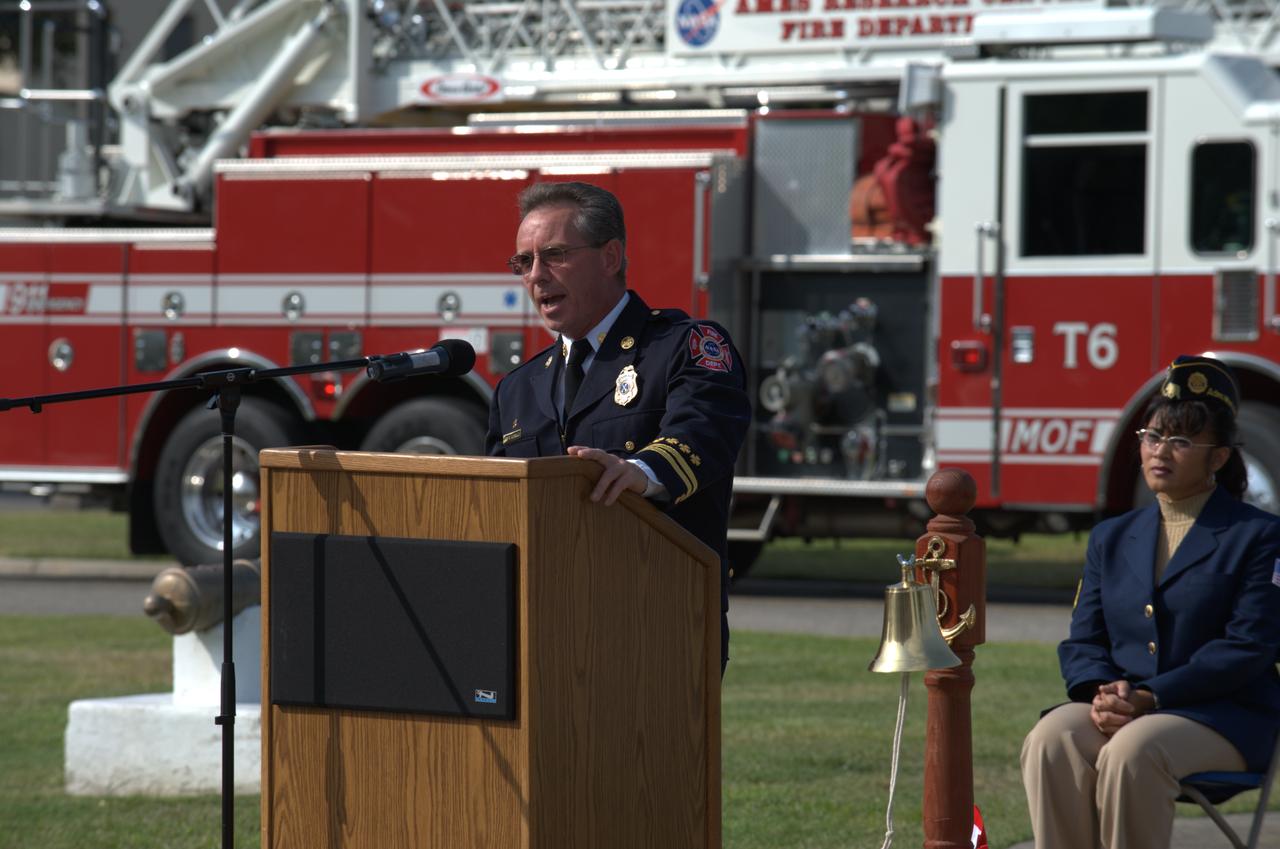
September 11th remembrance ceremony held in front of NASA Research Park Bldg-17 (Lunar Science Institute) hosted by the American Legion, Post 881, Moffett Field. Remarks by Rep for First Responders - Gattalion Chief Gary Alstrand, NASA Fire Department
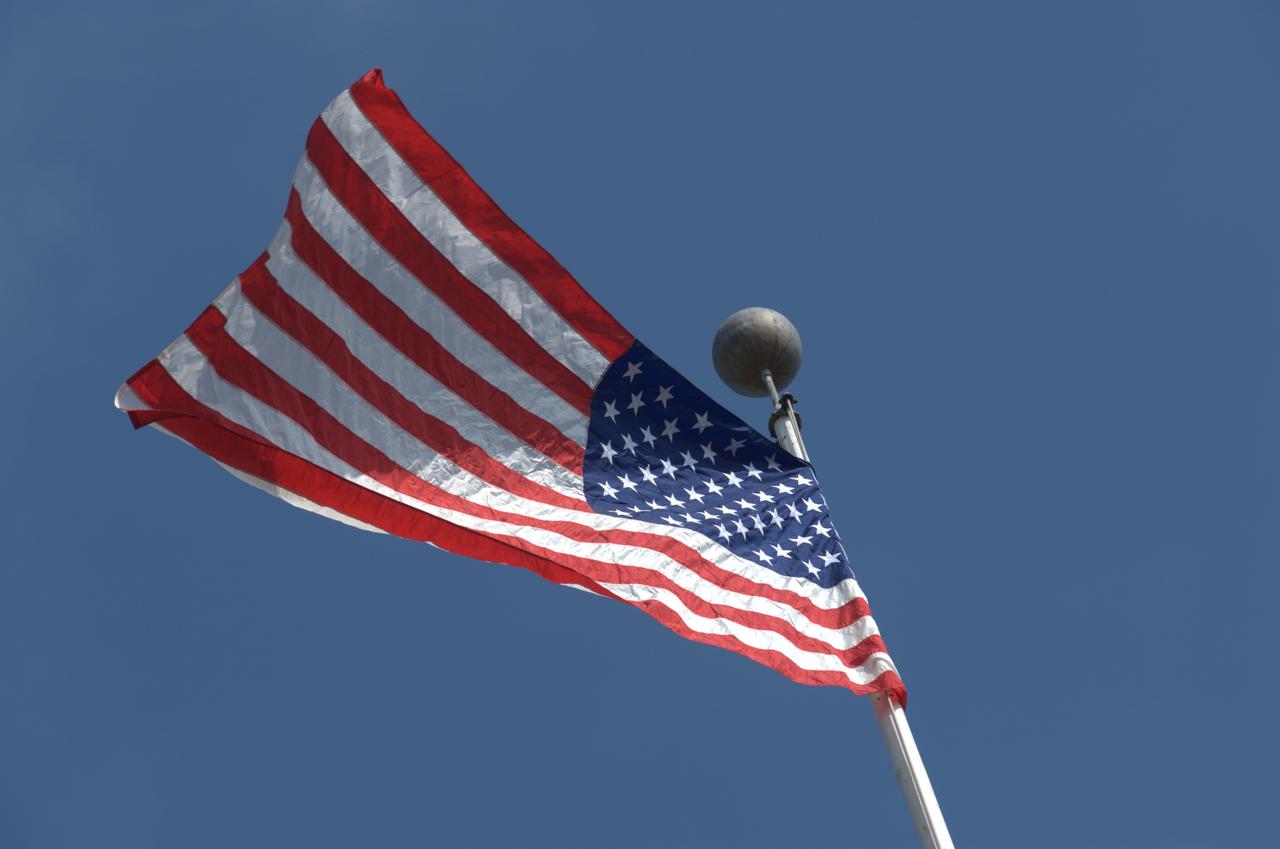
September 11th remembrance ceremony held in front of NASA Research Park Bldg-17 (Lunar Science Institute) hosted by the American Legion, Post 881, Moffett Field. Flag detail - Lt Randy Vincent - NASA Protective Services, Ty Locatelli, Carlos Pinedo - NASA Fire Department
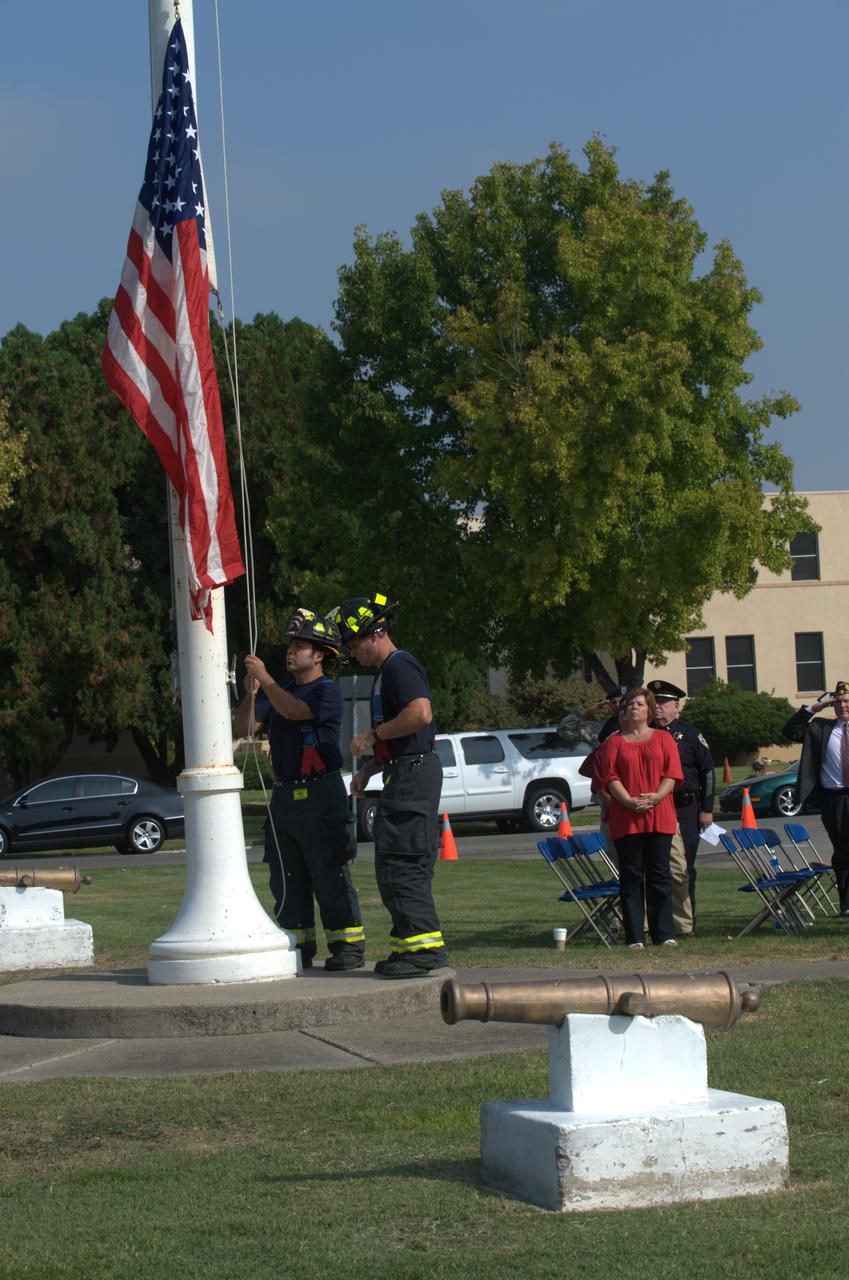
September 11th remembrance ceremony held in front of NASA Research Park Bldg-17 (Lunar Science Institute) hosted by the American Legion, Post 881, Moffett Field. Flag detail - Lt Randy Vincent - NASA Protective Services, Ty Locatelli, Carlos Pinedo - NASA Fire Department
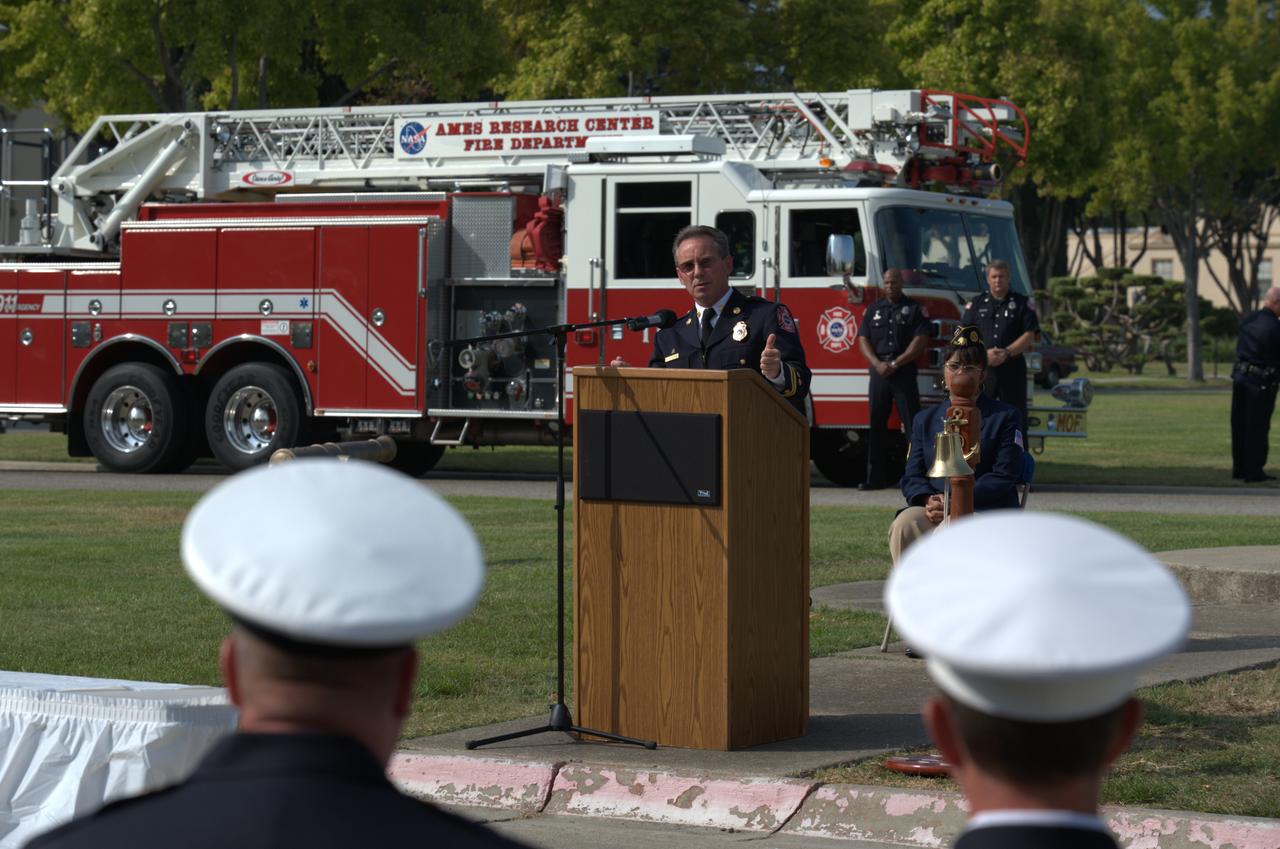
September 11th remembrance ceremony held in front of NASA Research Park Bldg-17 (Lunar Science Institute) hosted by the American Legion, Post 881, Moffett Field. Remarks by Rep for First Responders - Gattalion Chief Gary Alstrand, NASA Fire Department
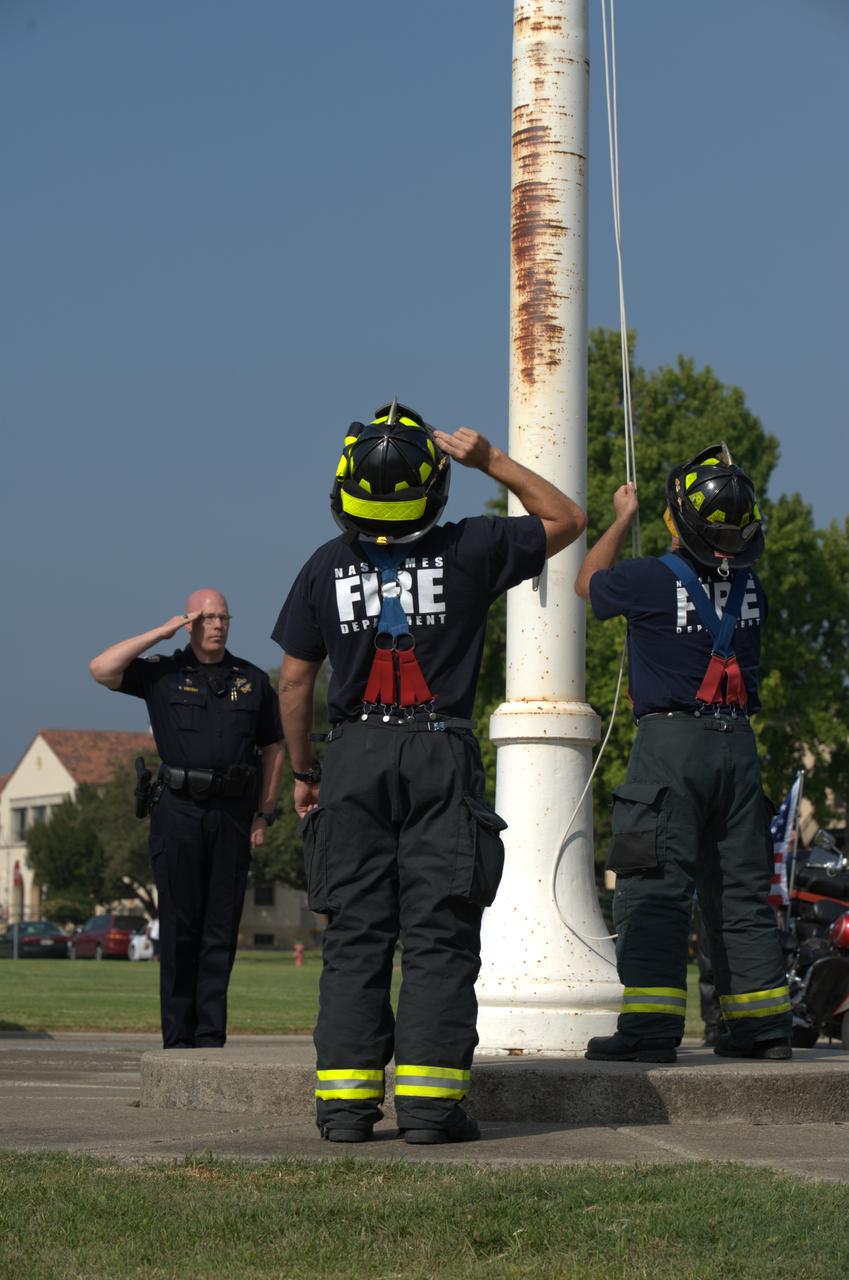
September 11th remembrance ceremony held in front of NASA Research Park Bldg-17 (Lunar Science Institute) hosted by the American Legion, Post 881, Moffett Field. Flag detail - Lt Randy Vincent - NASA Protective Services, Ty Locatelli, Carlos Pinedo - NASA Fire Department
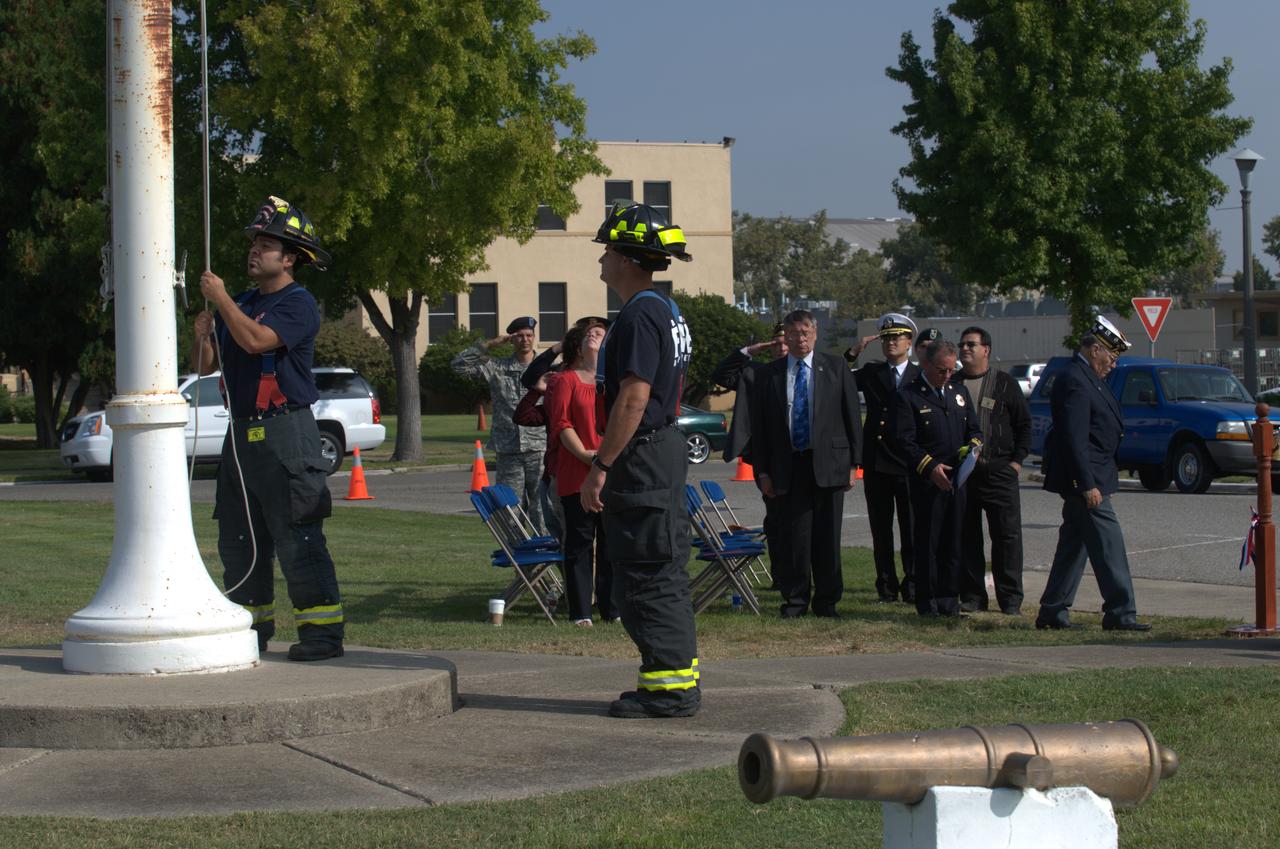
September 11th remembrance ceremony held in front of NASA Research Park Bldg-17 (Lunar Science Institute) hosted by the American Legion, Post 881, Moffett Field. Flag detail - Lt Randy Vincent - NASA Protective Services, Ty Locatelli, Carlos Pinedo - NASA Fire Department
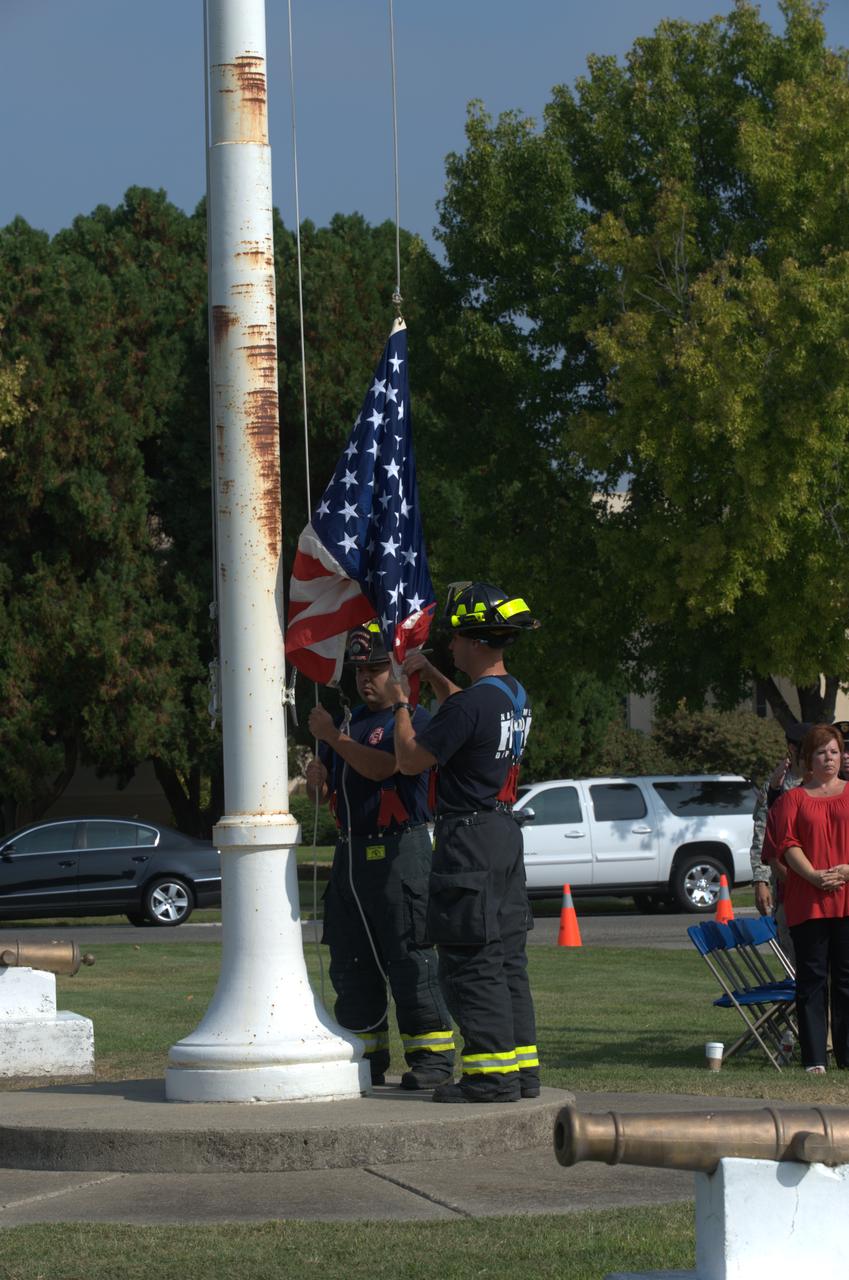
September 11th remembrance ceremony held in front of NASA Research Park Bldg-17 (Lunar Science Institute) hosted by the American Legion, Post 881, Moffett Field. Flag detail - Lt Randy Vincent - NASA Protective Services, Ty Locatelli, Carlos Pinedo - NASA Fire Department
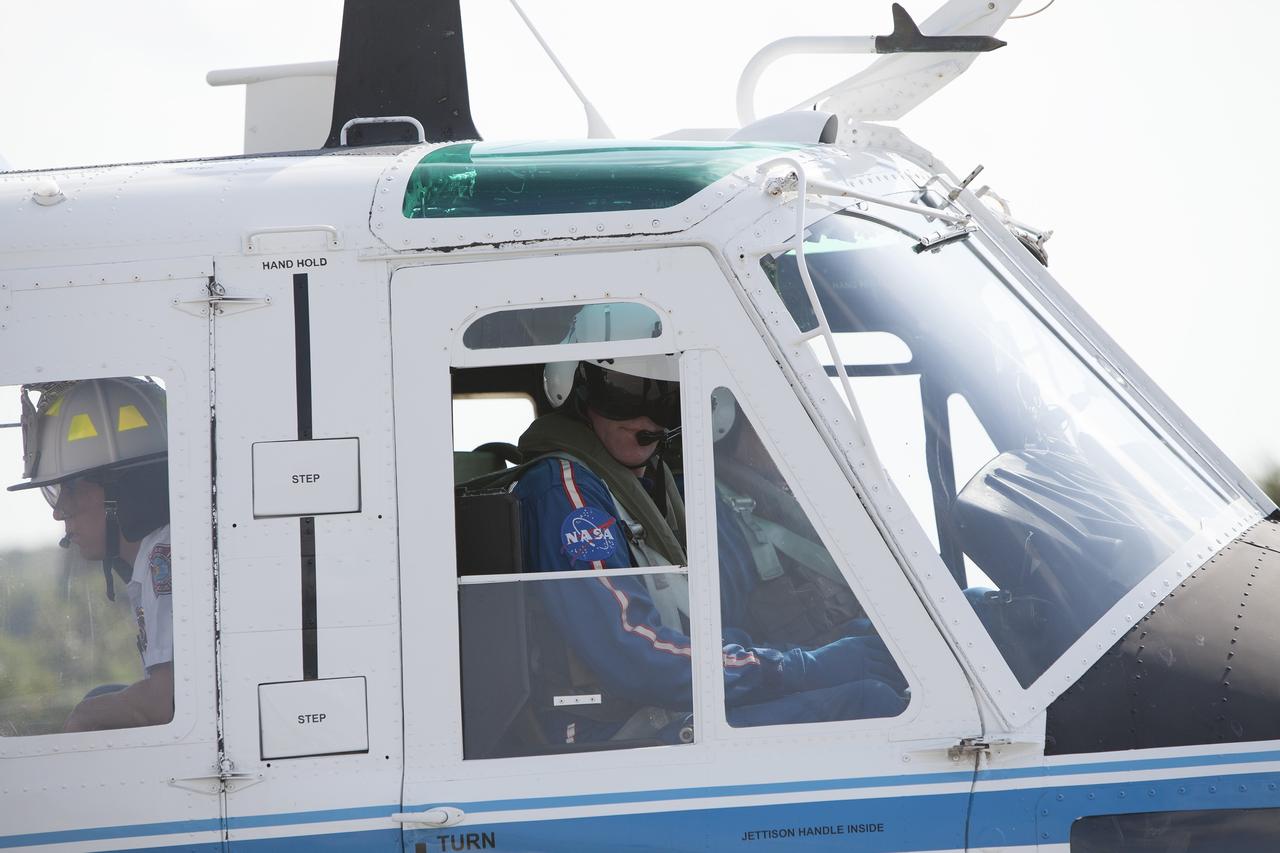
CAPE CANAVERAL, Fla. -- At NASA's Kennedy Space Center in Florida, agency helicopter pilots ensure all is clear before taking off during a training exercise. Helicopter pilot Bill Martin, a URS Federal Technical Services in the agency's Aircraft Operations, is seen in the front seat. Behind Martin on the left, is Mark Huetter, of Chenega Security & Support Solutions. Martin serves as assistant chief of Training for the center's Fire Rescue Department. The activity taking place in Kennedy's Launch Complex 39 turn-basin parking lot was only one of several drills. It was part of a new training program that was developed by Kennedy's Fire Rescue department along with NASA Aircraft Operations to sharpen the skills needed to help rescue personnel learn how to collaborate with helicopter pilots in taking injured patients to hospitals as quickly as possible. Photo credit: NASA/Dan Casper
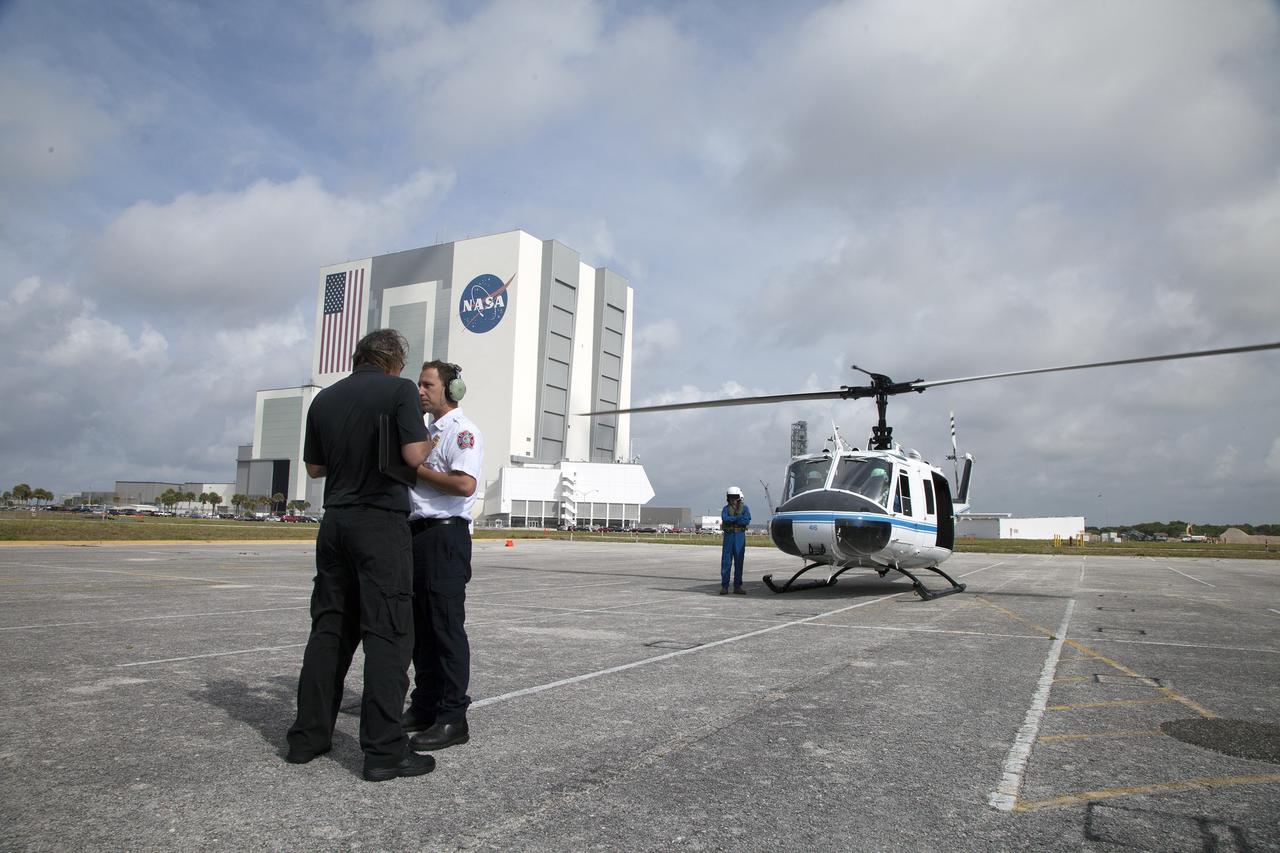
CAPE CANAVERAL, Fla. -- Following a training exercise at NASA's Kennedy Space Center in Florida, helicopter pilot Bill Martin, a URS Federal Technical Services in the agency's Aircraft Operations, left, confers with Mark Huetter of Chenega Security & Support Solutions. Martin serves as assistant chief of Training for the center's Fire Rescue Department. The activity taking place in Kennedy's Launch Complex 39 turn-basin parking lot was only one of several drills. It was part of a new training program that was developed by Kennedy's Fire Rescue department along with NASA Aircraft Operations to sharpen the skills needed to help rescue personnel learn how to collaborate with helicopter pilots in taking injured patients to hospitals as quickly as possible. Photo credit: NASA/Dan Casper
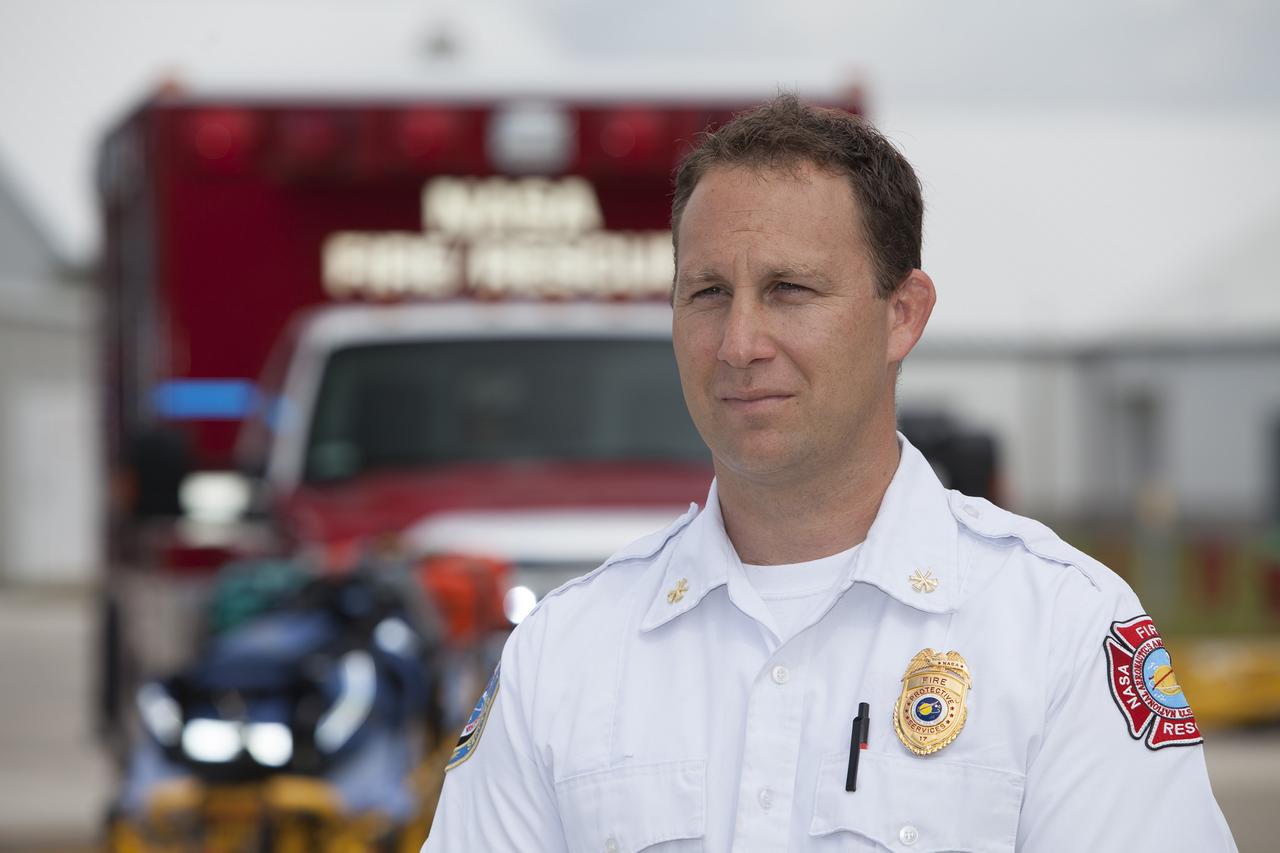
CAPE CANAVERAL, Fla. -- At NASA's Kennedy Space Center in Florida, Mark Huetter, assistant chief of Training for the center's Fire Rescue Department, is interviewed near the Shuttle Landing Facility. He discussed working with pilots in NASA Aircraft Operations to develop procedures for using agency helicopters to transport injured patients to a local hospital. The training activity took place in Kennedy's Launch Complex 39 turn-basin parking lot. It was part of a new training program developed by Kennedy's Fire Rescue department along with NASA Aircraft Operations to sharpen the skills needed to help rescue personnel learn how to collaborate with helicopter pilots in taking injured patients to hospitals as quickly as possible. Photo credit: NASA/Dimitri Gerondidakis
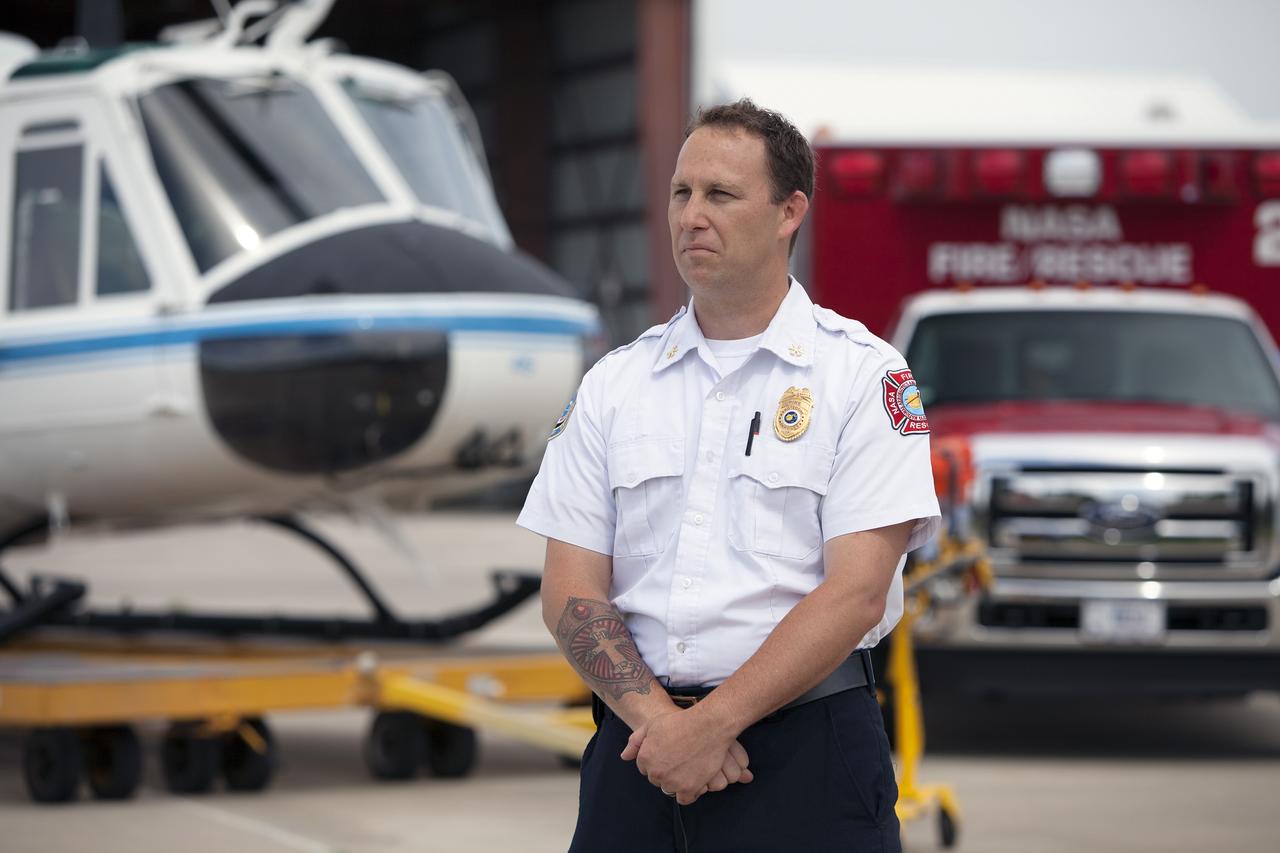
CAPE CANAVERAL, Fla. -- At NASA's Kennedy Space Center in Florida, Mark Huetter, assistant chief of Training for the center's Fire Rescue Department, is interviewed near the Shuttle Landing Facility. He discussed working with pilots in NASA Aircraft Operations to develop procedures for using agency helicopters to transport injured patients to a local hospital. The training activity took place in Kennedy's Launch Complex 39 turn-basin parking lot. It was part of a new training program developed by Kennedy's Fire Rescue department along with NASA Aircraft Operations to sharpen the skills needed to help rescue personnel learn how to collaborate with helicopter pilots in taking injured patients to hospitals as quickly as possible. Photo credit: NASA/Dimitri Gerondidakis
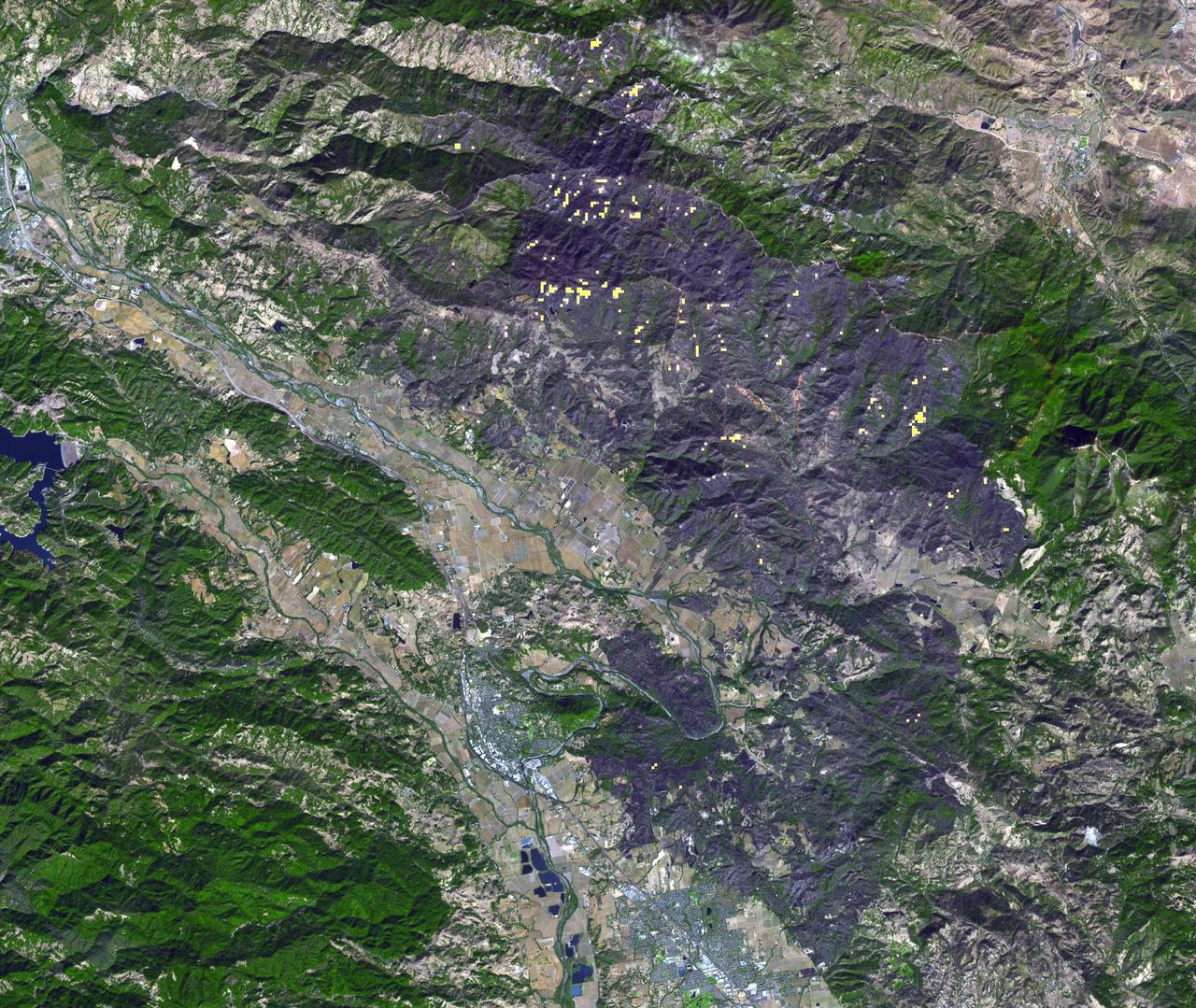
Thousands of acres damaged by the ongoing Kincade Fire in Northern California's Sonoma County are visible in this new image from the Advanced Spaceborne Thermal Emission and Reflection Radiometer (ASTER) instrument aboard NASA's Terra satellite. The image was taken at 11:01 a.m. PST (2:01 p.m. EST) on Nov. 3, 2019. The burned area appears dark gray in ASTER's visible channels. Hotspots, where the fire is still smoldering, appear as yellow dots in ASTER's heat-sensing, thermal infrared channels. After starting on Oct. 23, forcing residents to evacuate, the fire had burned 77,758 acres and destroyed 372 structures by Nov. 3, according to the California Department of Forestry and Fire Protection. It is now over 80% contained. The town of Healdsburg is in the center of the image, which covers an area of about 24 by 25 miles (39 by 40 kilometers). https://photojournal.jpl.nasa.gov/catalog/PIA23426
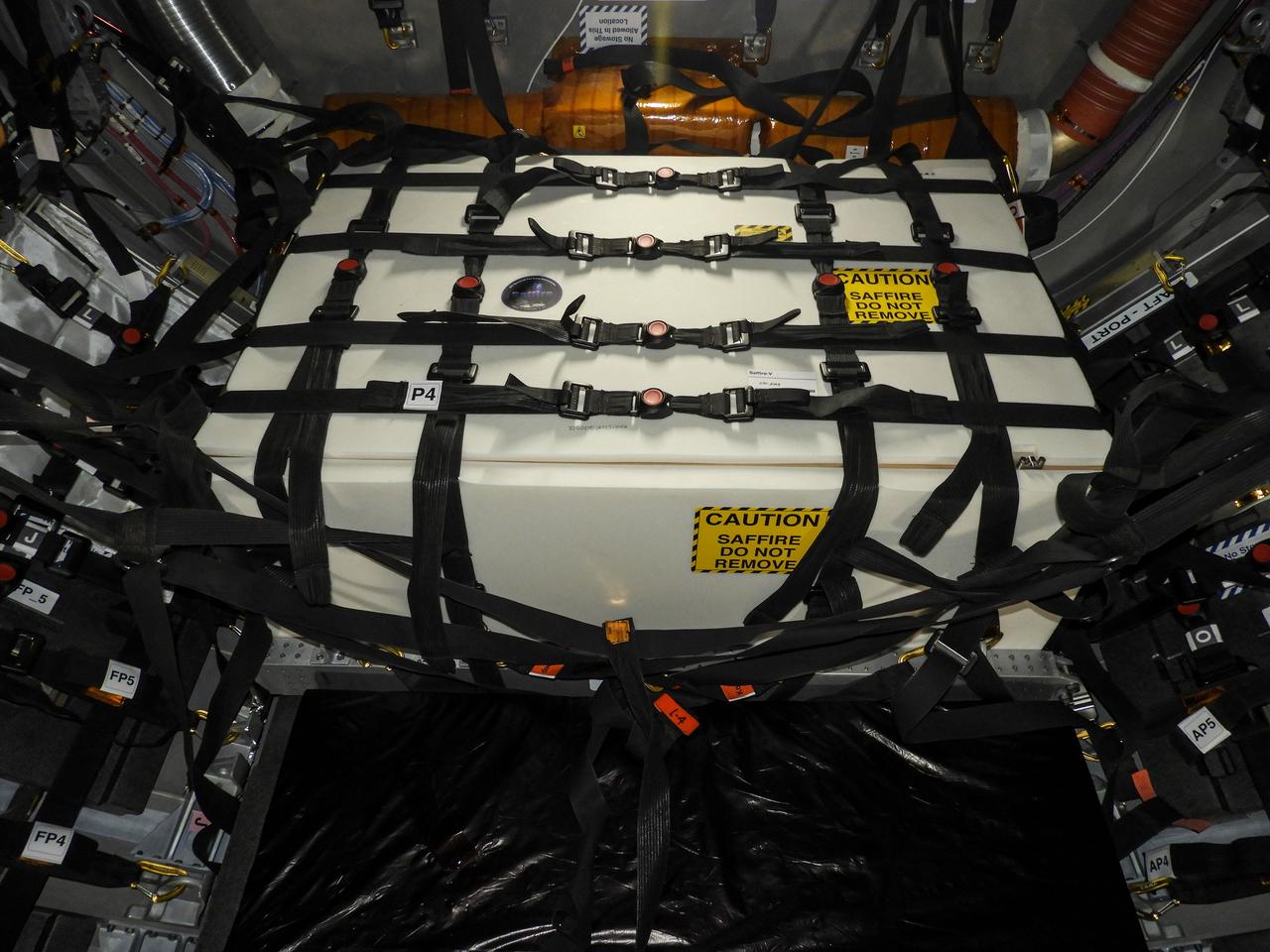
jsc2020e043815 (Sept. 10, 2020) --- A view of the Spacecraft Fire Safety Experiments (Saffire) V experiment hardware, loaded inside the Northrop Grumman(NG) Cygnus cargo vehicle for the 14th NG resupply mission to the International Space Station. Saffire is a series of experiments to investigate how fire spreads on a variety of combustible materials in the microgravity environment. The experiments are ignited in Cygnus cargo spacecraft after it departs the space station and before it reenters the Earth's atmosphere. Studying the development and growth of fire in a re-supply cargo vehicle eliminates the risk of exposure to humans in an occupied spacecraft. Understanding how fire behaves in microgravity, and how different materials propagate flames in space is immensely important for the development of future crew spacecraft.
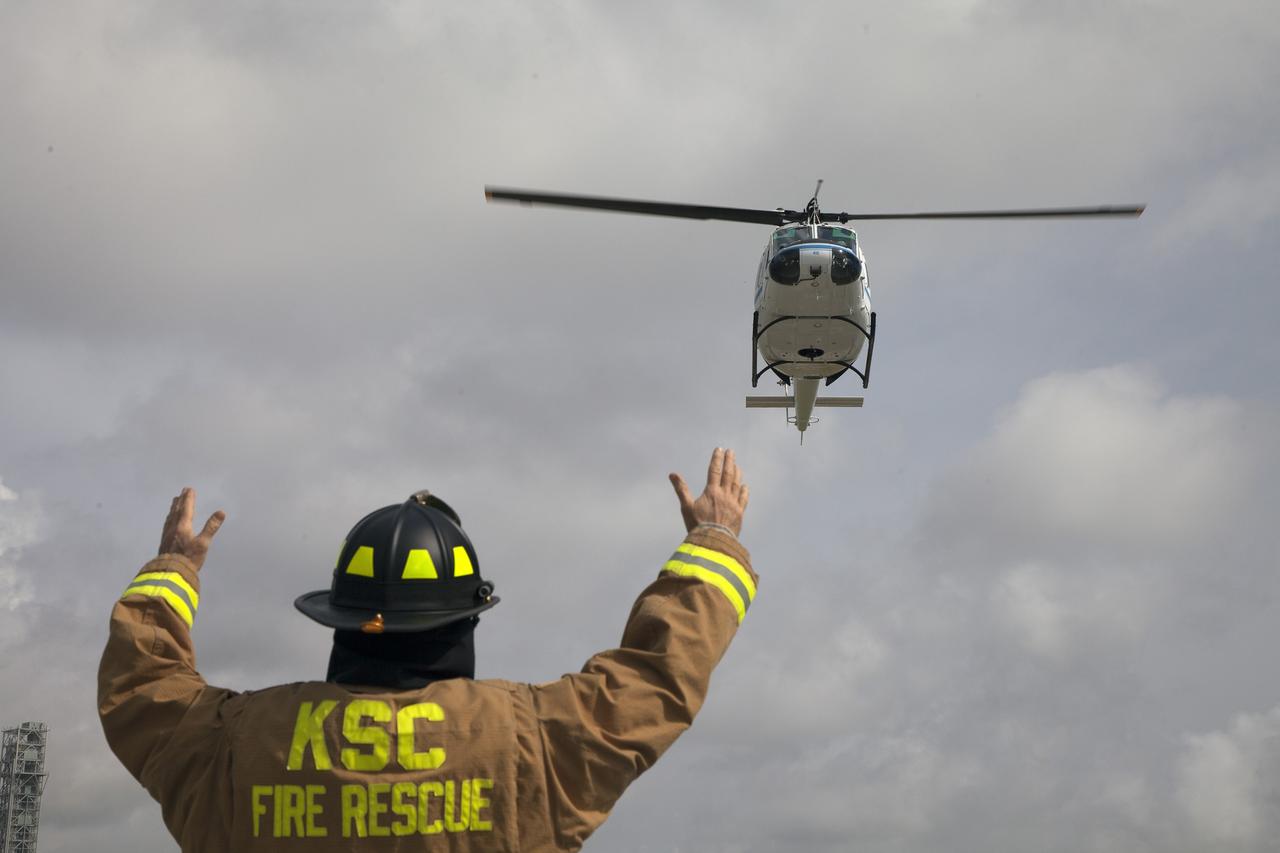
CAPE CANAVERAL, Fla. -- At NASA's Kennedy Space Center in Florida, NASA Fire Rescue Lt. David Tacy, of Chenega Security & Support Solutions, directs an agency helicopter in for a landing during a training exercise. The activity taking place in Kennedy's Launch Complex 39 turn-basin parking lot was only one of several drills. It was part of a new training program that was developed by Kennedy's Fire Rescue department along with NASA Aircraft Operations to sharpen the skills needed to help rescue personnel learn how to collaborate with helicopter pilots in taking injured patients to hospitals as quickly as possible. Photo credit: NASA/Dan Casper
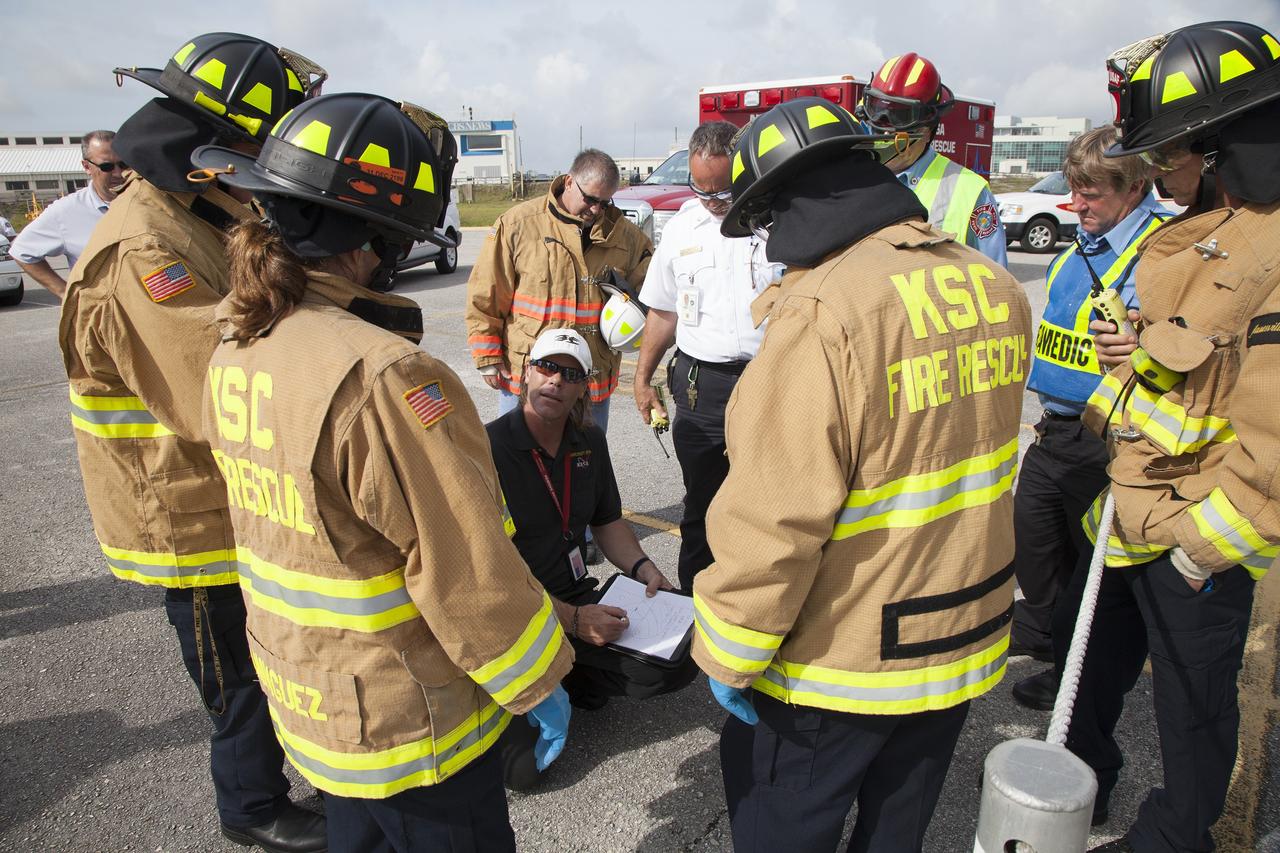
CAPE CANAVERAL, Fla. -- At NASA's Kennedy Space Center in Florida, Bill Martin, a URS Federal Technical Services helicopter pilot in NASA Aircraft Operations, kneeling, briefs NASA Fire Rescue personnel prior to the start of a simulated emergency. The activity taking place in Kennedy's Launch Complex 39 turn-basin parking lot was only one of several drills. It was part of a new training program that was developed by Kennedy's Fire Rescue department along with NASA Aircraft Operations to sharpen the skills needed to help rescue personnel learn how to collaborate with helicopter pilots in taking injured patients to hospitals as quickly as possible. Photo credit: NASA/Dan Casper
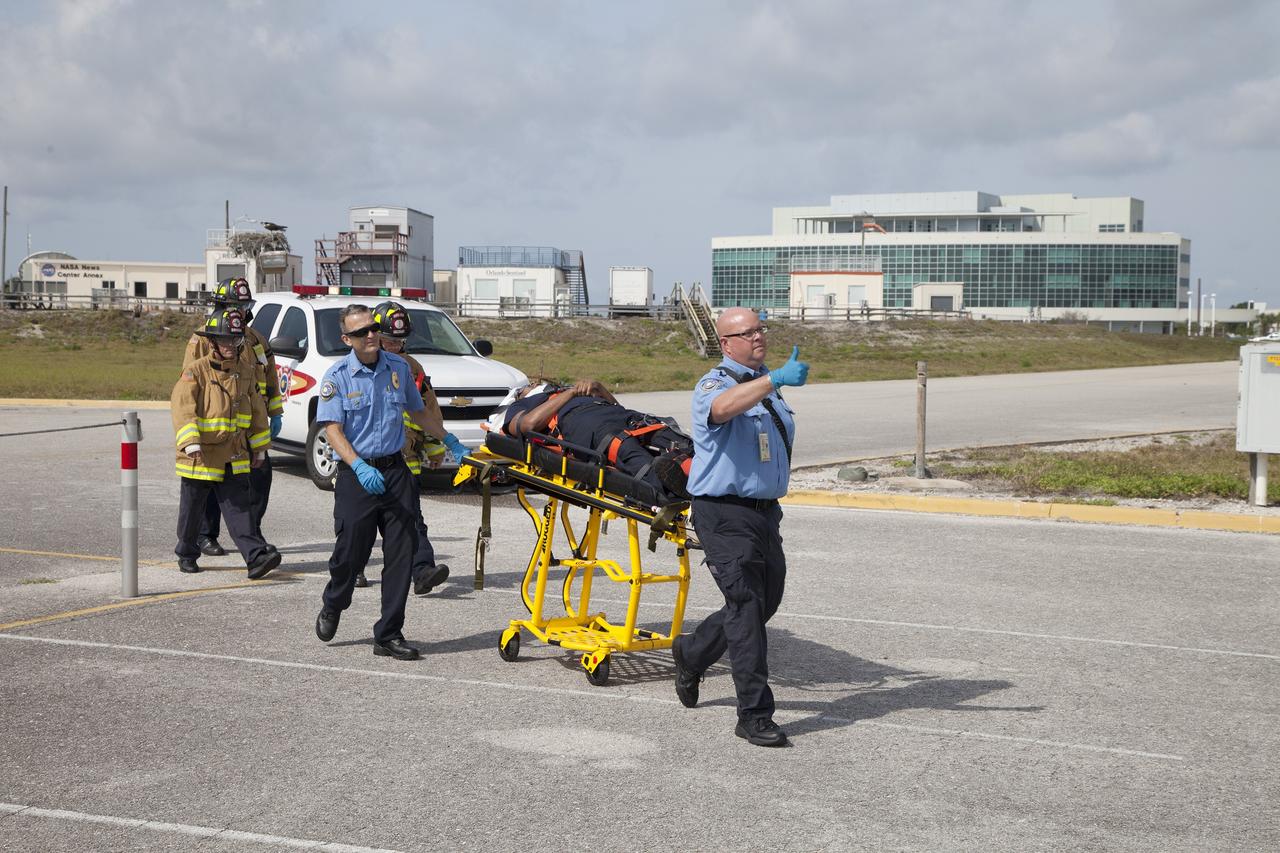
CAPE CANAVERAL, Fla. -- At NASA's Kennedy Space Center in Florida, paramedics and Fire Rescue personnel move a stretcher to the waiting helicopter as they work quickly to have the patient ready to transport after he was removed from a vehicle. The activity taking place in Kennedy's Launch Complex 39 turn-basin parking lot was only one of several drills. It was part of a new training program that was developed by Kennedy's Fire Rescue department along with NASA Aircraft Operations to sharpen the skills needed to help rescue personnel learn how to collaborate with helicopter pilots in taking injured patients to hospitals as quickly as possible. Photo credit: NASA/Dan Casper
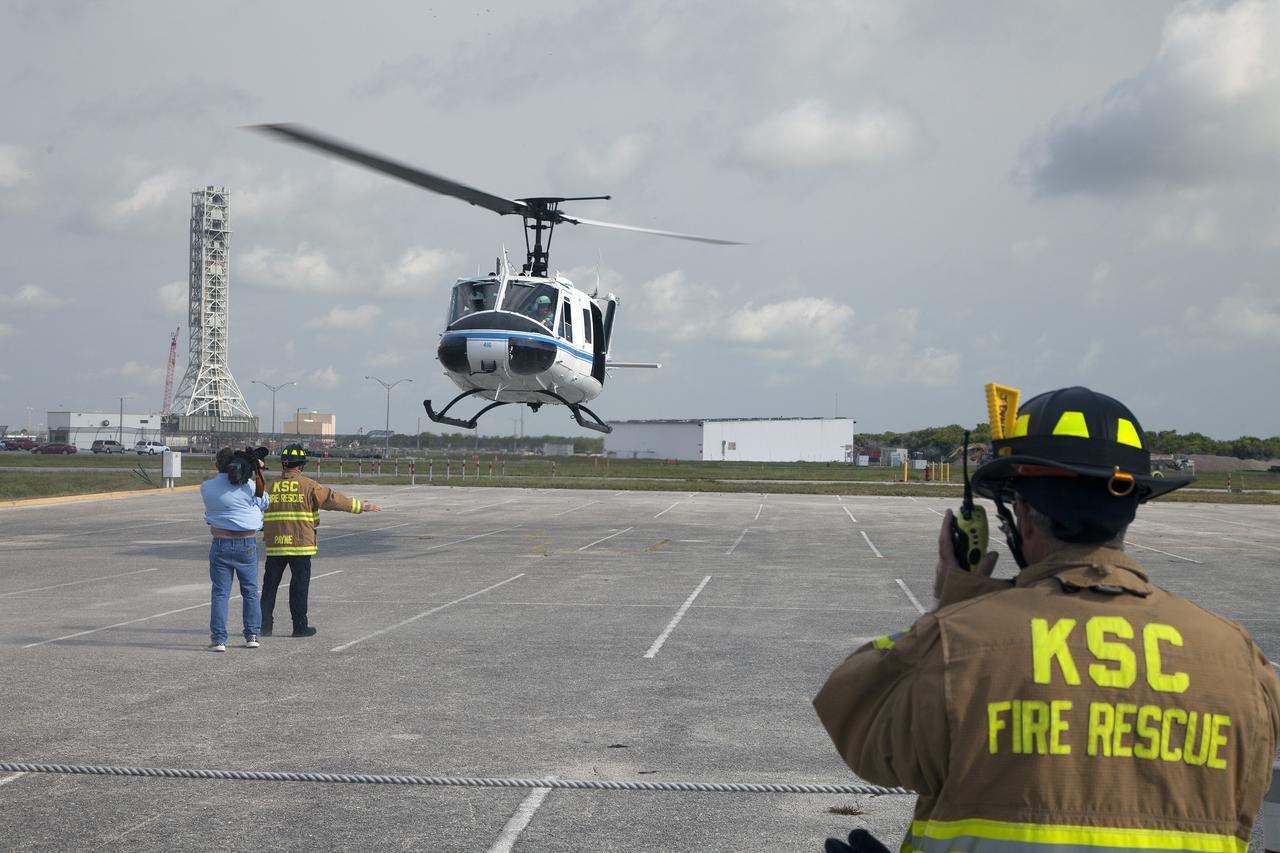
CAPE CANAVERAL, Fla. -- At NASA's Kennedy Space Center in Florida, agency Fire Rescue personnel direct an agency helicopter in for a landing during a training exercise. The activity taking place in Kennedy's Launch Complex 39 turn-basin parking lot was only one of several drills. It was part of a new training program that was developed by Kennedy's Fire Rescue department along with NASA Aircraft Operations to sharpen the skills needed to help rescue personnel learn how to collaborate with helicopter pilots in taking injured patients to hospitals as quickly as possible. Photo credit: NASA/Dan Casper
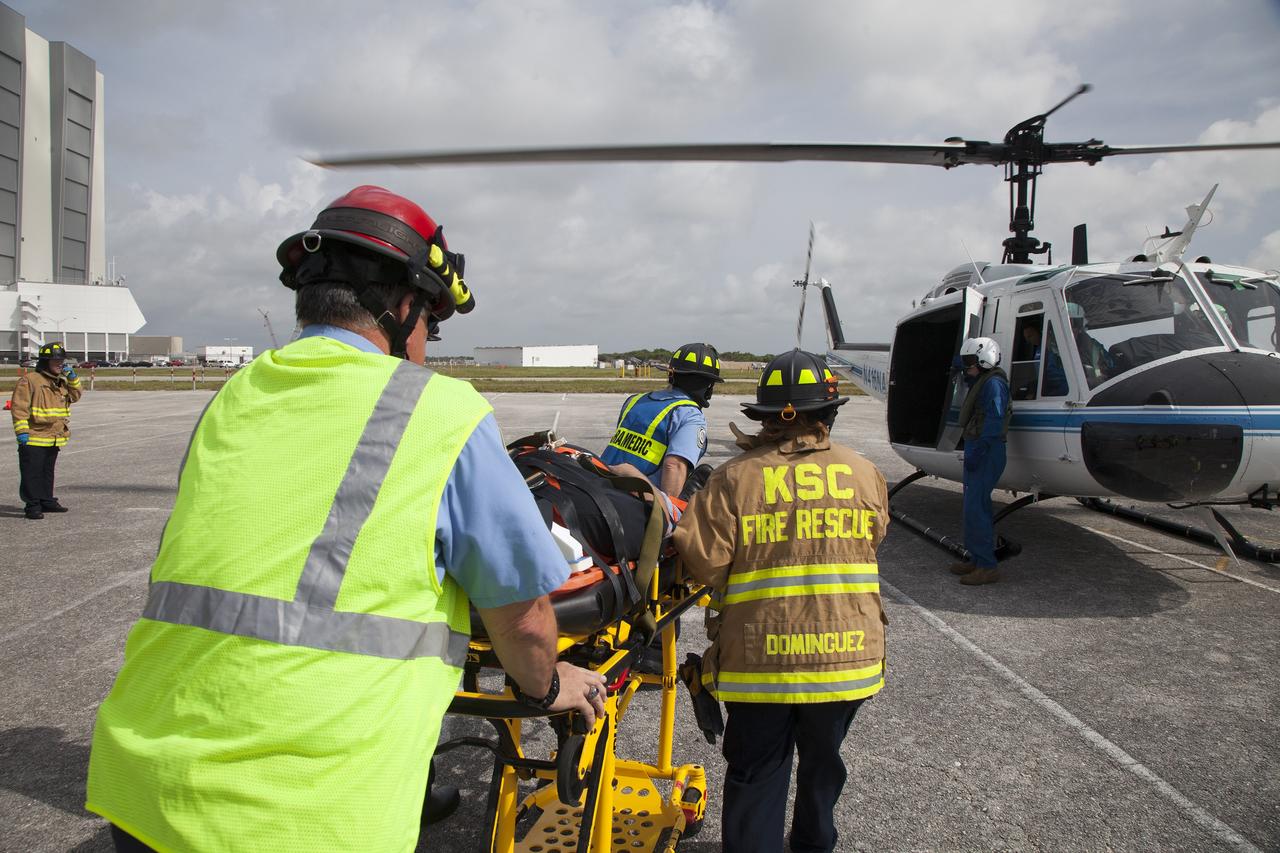
CAPE CANAVERAL, Fla. -- At NASA's Kennedy Space Center in Florida, Paramedics and Fire Rescue personnel move a stretcher to the waiting helicopter as they work quickly to have the patient ready to transport after he was removed from a vehicle. The activity taking place in Kennedy's Launch Complex 39 turn-basin parking lot was only one of several drills. It was part of a new training program that was developed by Kennedy's Fire Rescue department along with NASA Aircraft Operations to sharpen the skills needed to help rescue personnel learn how to collaborate with helicopter pilots in taking injured patients to hospitals as quickly as possible. Photo credit: NASA/Dan Casper
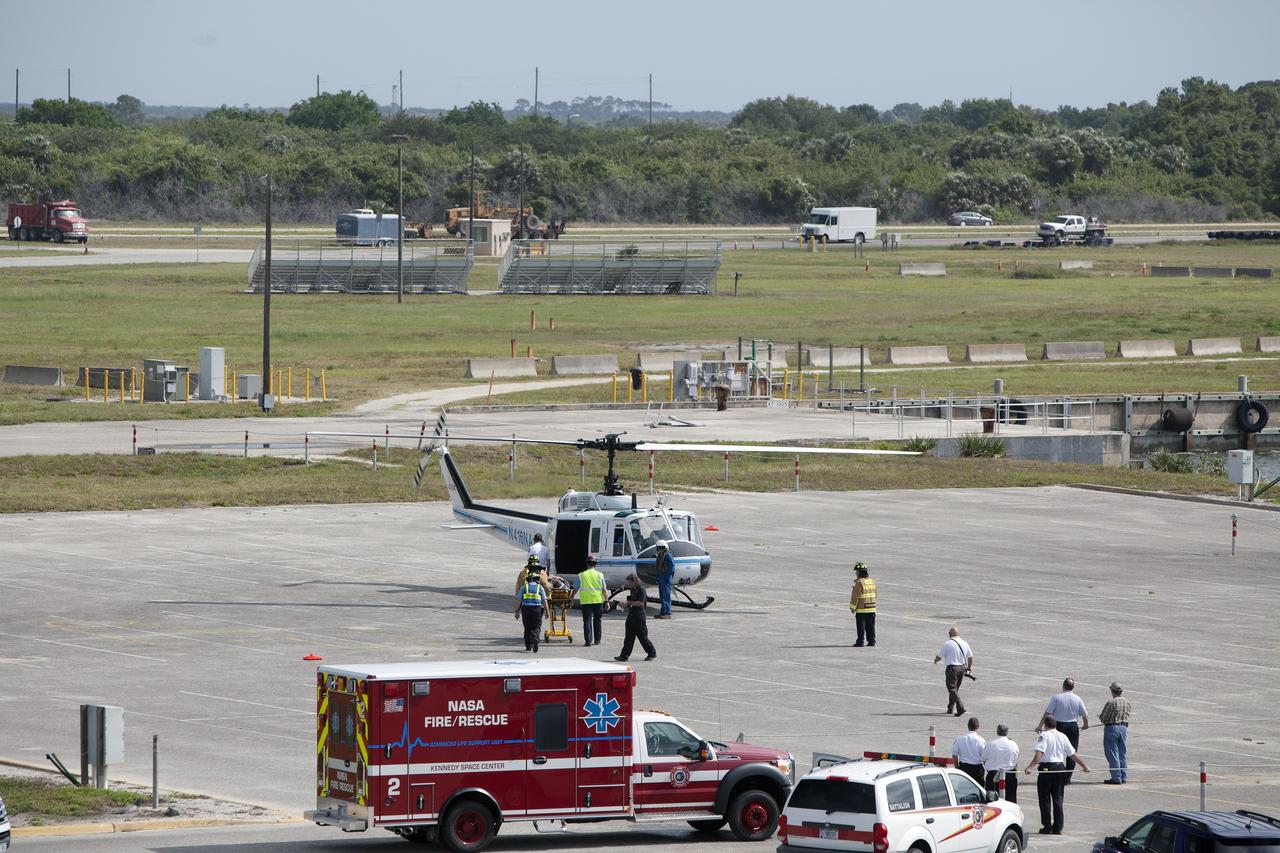
CAPE CANAVERAL, Fla. -- At NASA's Kennedy Space Center in Florida, paramedics and Fire Rescue personnel move a stretcher to the waiting helicopter as they work quickly to have the patient ready to transport five minutes after he was removed from a vehicle. The activity taking place in Kennedy's Launch Complex 39 turn-basin parking lot was only one of several drills. It was part of a new training program that was developed by Kennedy's Fire Rescue department along with NASA Aircraft Operations to sharpen the skills needed to help rescue personnel learn how to collaborate with helicopter pilots in taking injured patients to hospitals as quickly as possible. Photo credit: NASA/Dan Casper
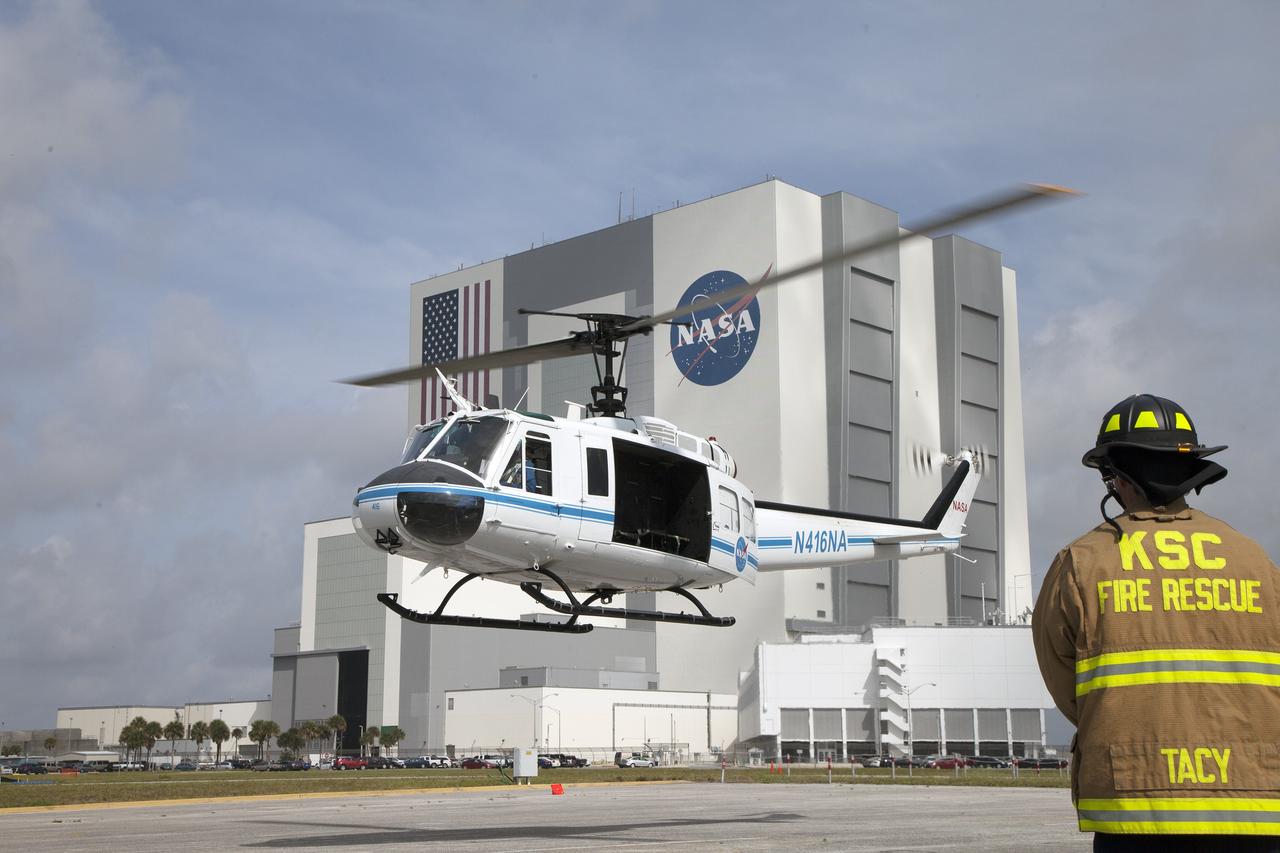
CAPE CANAVERAL, Fla. -- At NASA's Kennedy Space Center in Florida, NASA Fire Rescue Lt. David Tacy of Chenega Security & Support Solutions watches as an agency helicopter takes off as part of a training exercise. The activity taking place in Kennedy's Launch Complex 39 turn-basin parking lot was only one of several drills. It was part of a new training program that was developed by Kennedy's Fire Rescue department along with NASA Aircraft Operations to sharpen the skills needed to help rescue personnel learn how to collaborate with helicopter pilots in taking injured patients to hospitals as quickly as possible. Photo credit: NASA/Dan Casper
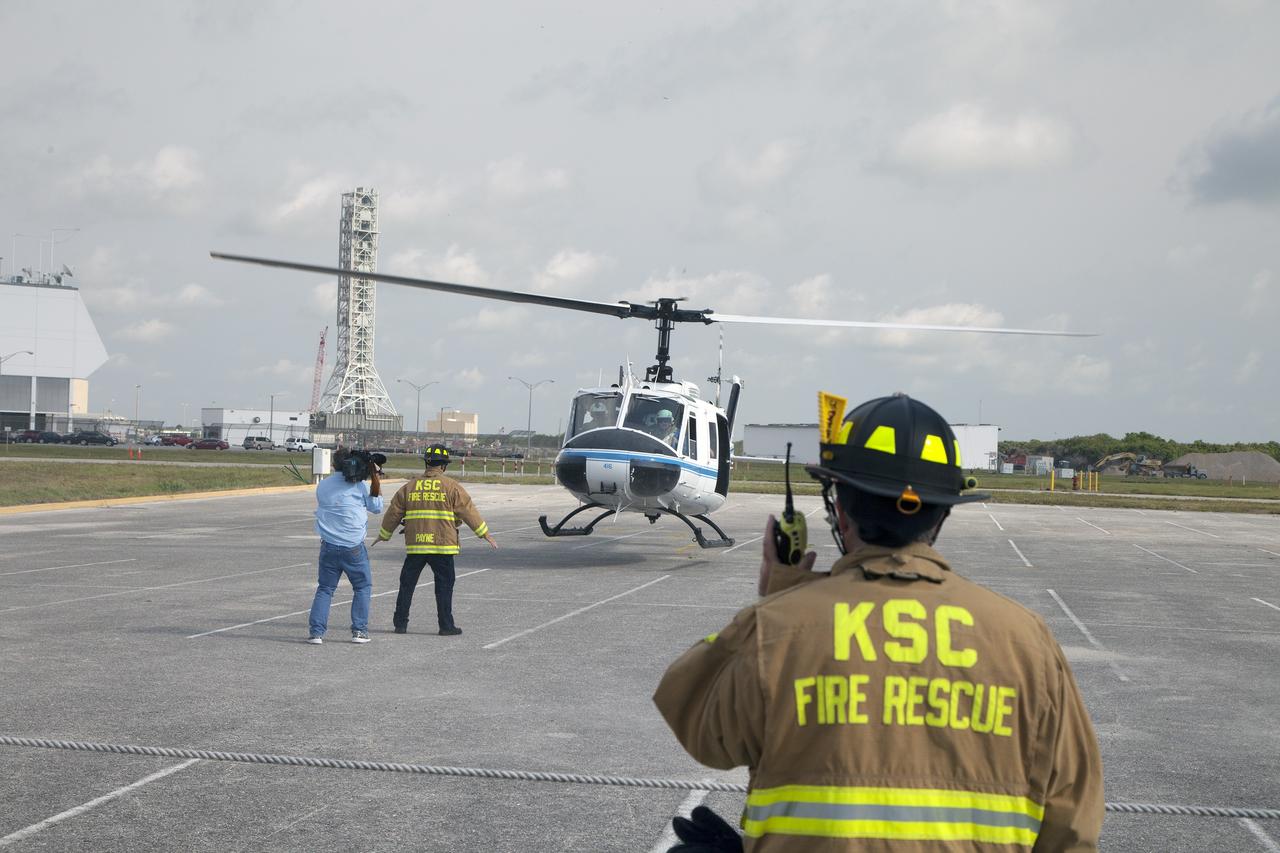
CAPE CANAVERAL, Fla. -- At NASA's Kennedy Space Center in Florida, agency Fire Rescue personnel direct an agency helicopter in for a landing during a training exercise. The activity taking place in Kennedy's Launch Complex 39 turn-basin parking lot was only one of several drills. It was part of a new training program that was developed by Kennedy's Fire Rescue department along with NASA Aircraft Operations to sharpen the skills needed to help rescue personnel learn how to collaborate with helicopter pilots in taking injured patients to hospitals as quickly as possible. Photo credit: NASA/Dan Casper
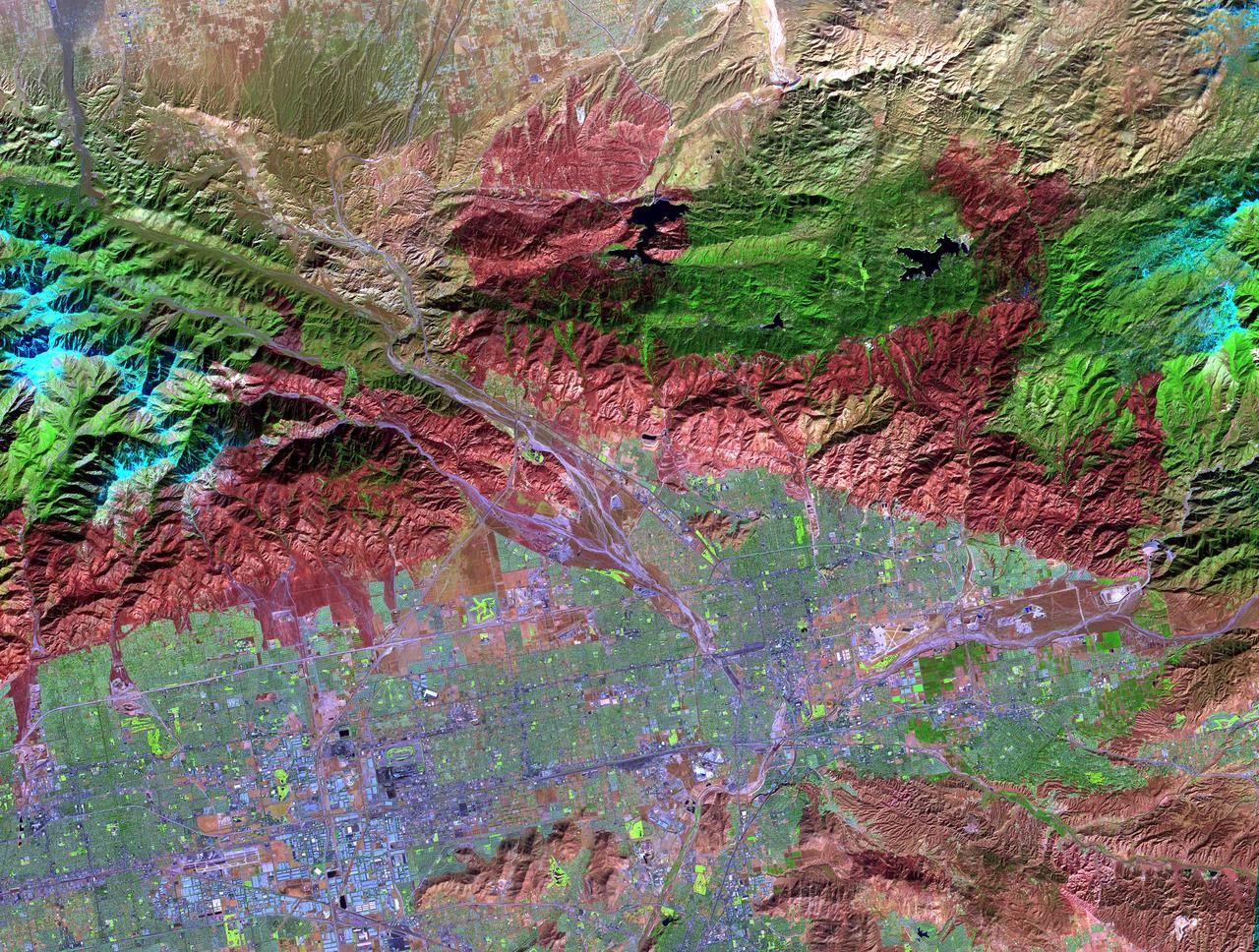
On November 18, 2003, the Advanced Spaceborne Thermal Emission and Reflection Radiometer (ASTER) on NASA's Terra satellite acquired this image of the Old Fire/Grand Prix fire east of Los Angeles. The image is being processed by NASA's Wildfire Response Team and will be sent to the United States Department of Agriculture's Forest Service Remote Sensing Applications Center (RSAC) which provides interpretation services to Burned Area Emergency Response (BAER) teams to assist in mapping the severity of the burned areas. The image combines data from the visible and infrared wavelength regions to highlight the burned areas. http://photojournal.jpl.nasa.gov/catalog/PIA04879

CAPE CANAVERAL, Fla. -- At NASA's Kennedy Space Center in Florida, agency Fire Rescue personnel direct an agency helicopter in for a landing during a training exercise. The activity taking place in Kennedy's Launch Complex 39 turn-basin parking lot was only one of several drills. It was part of a new training program that was developed by Kennedy's Fire Rescue department along with NASA Aircraft Operations to sharpen the skills needed to help rescue personnel learn how to collaborate with helicopter pilots in taking injured patients to hospitals as quickly as possible. Photo credit: NASA/Dan Casper
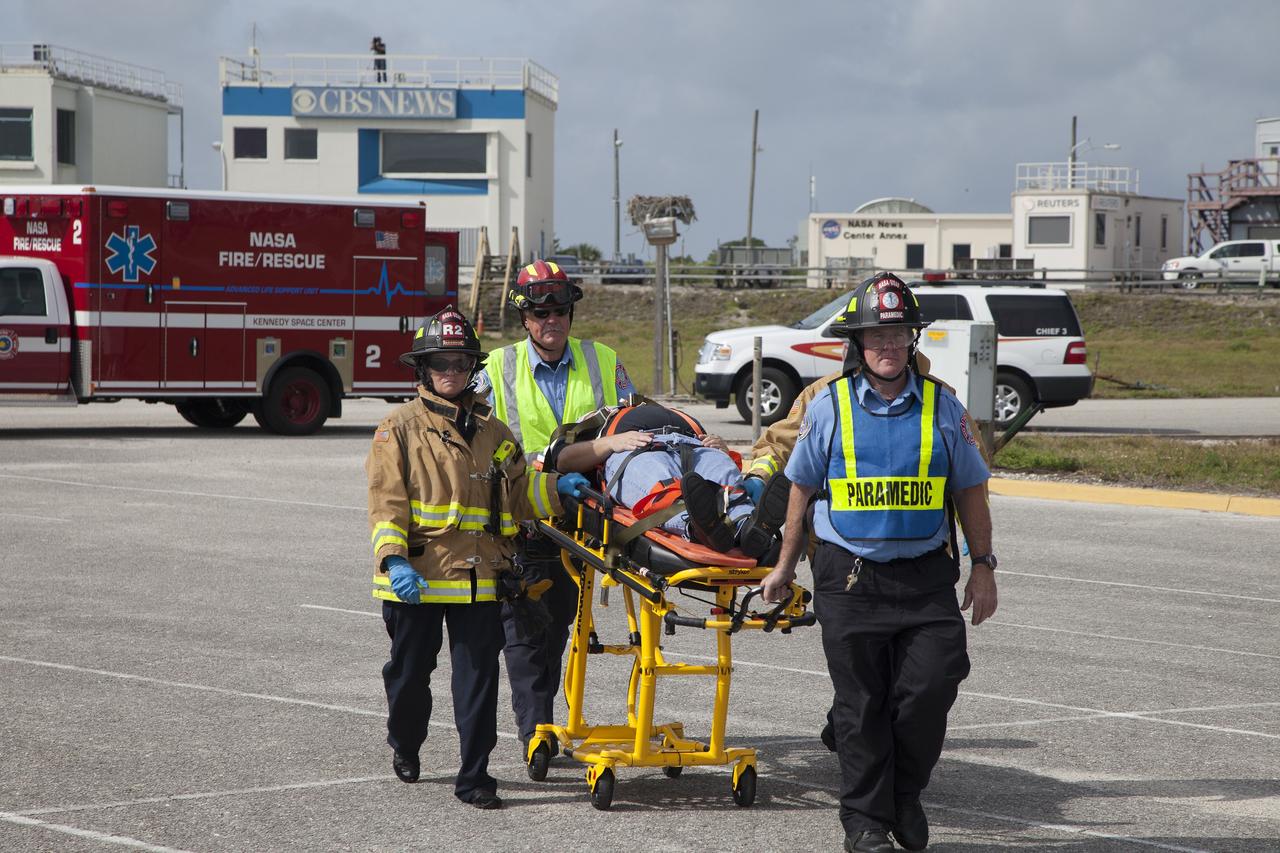
CAPE CANAVERAL, Fla. -- At NASA's Kennedy Space Center in Florida, Paramedics and Fire Rescue personnel move a stretcher to the waiting helicopter as they work quickly to have the patient ready to transport after he was removed from a vehicle. The activity taking place in Kennedy's Launch Complex 39 turn-basin parking lot was only one of several drills. It was part of a new training program that was developed by Kennedy's Fire Rescue department along with NASA Aircraft Operations to sharpen the skills needed to help rescue personnel learn how to collaborate with helicopter pilots in taking injured patients to hospitals as quickly as possible. Photo credit: NASA/Dan Casper
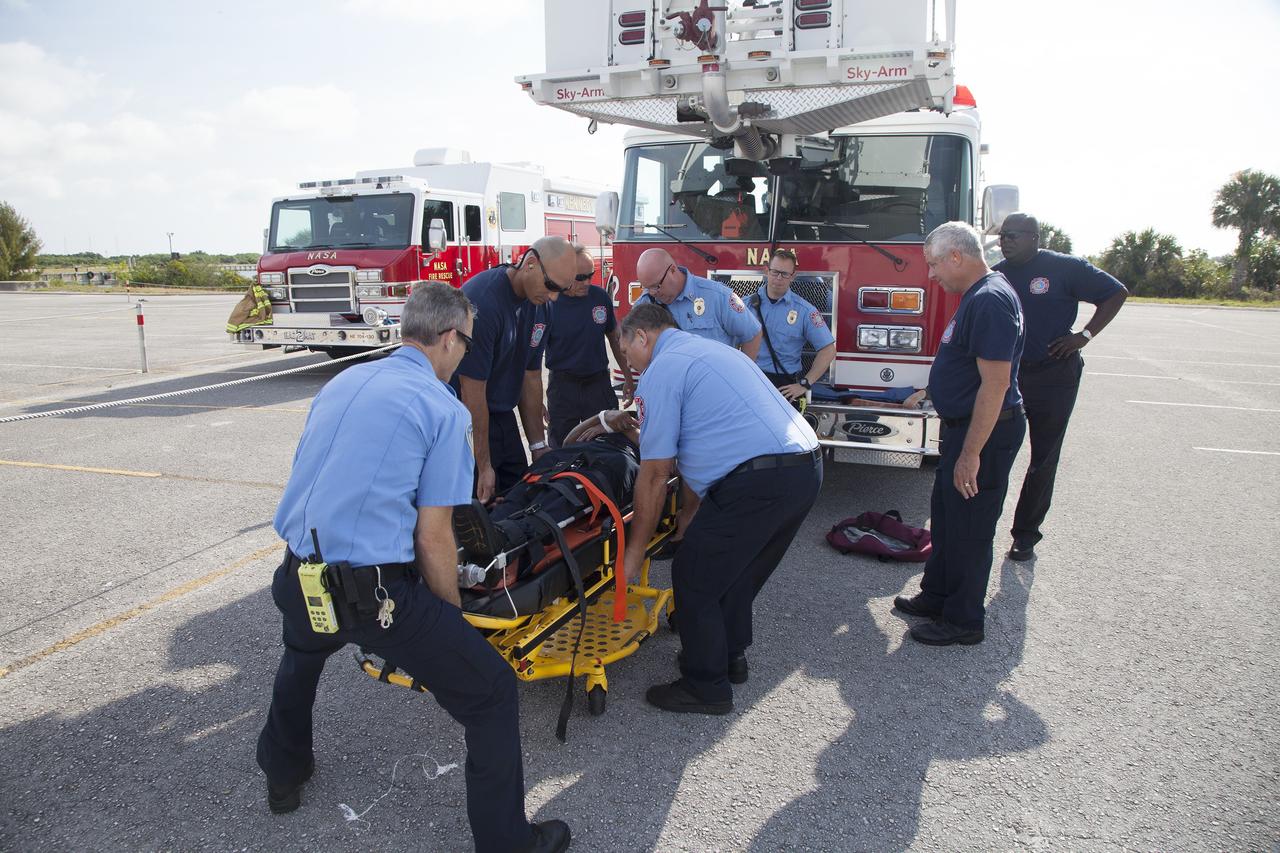
CAPE CANAVERAL, Fla. -- At NASA's Kennedy Space Center in Florida, a Fire Rescue team member serves as a "volunteer patient" for a simulated emergency operation. Paramedics prepare to move his stretcher to an awaiting helicopter. The activity taking place in Kennedy's Launch Complex 39 turn-basin parking lot was only one of several drills. It was part of a new training program that was developed by Kennedy's Fire Rescue department along with NASA Aircraft Operations to sharpen the skills needed to help rescue personnel learn how to collaborate with helicopter pilots in taking injured patients to hospitals as quickly as possible. Photo credit: NASA/Dan Casper
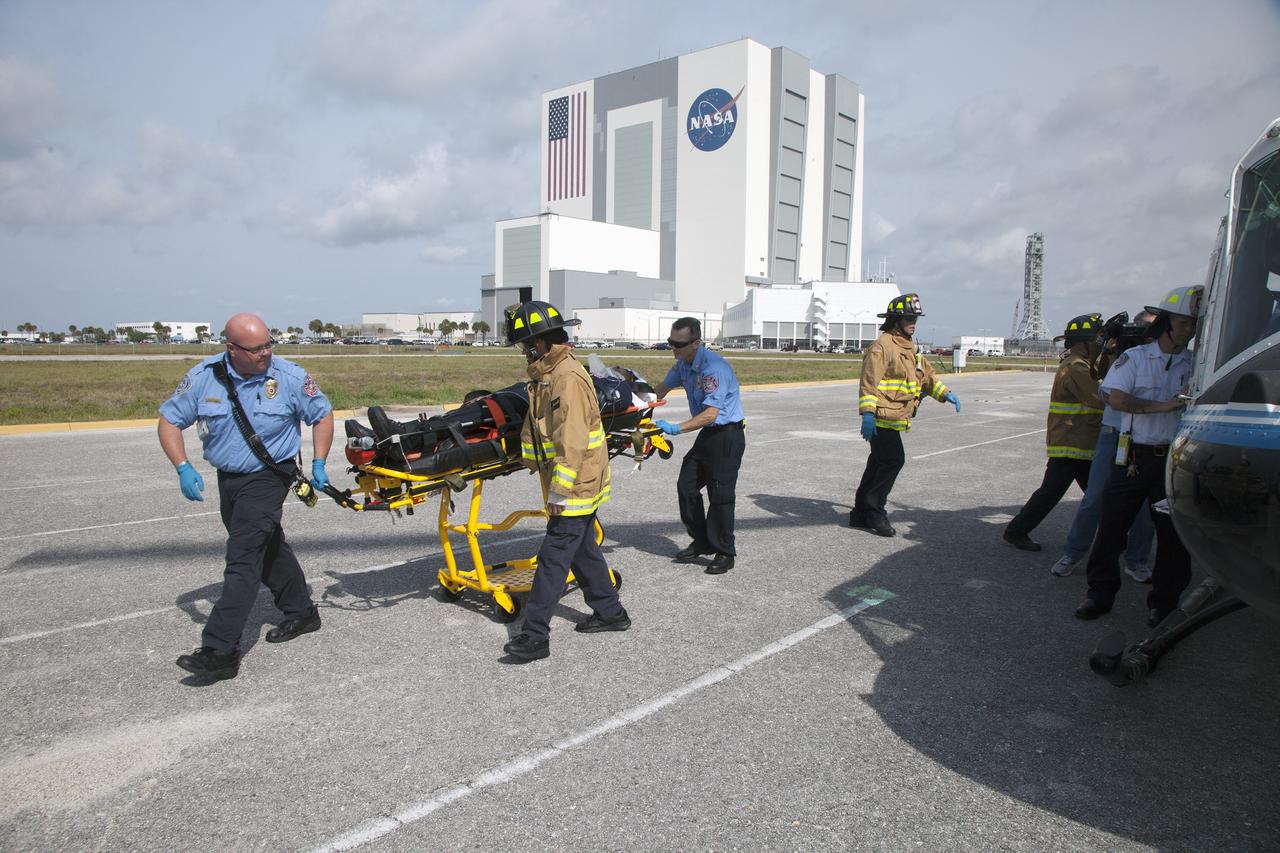
CAPE CANAVERAL, Fla. -- At NASA's Kennedy Space Center in Florida, paramedics and Fire Rescue personnel move a stretcher away from a helicopter after they practiced placing the "volunteer patient" aboard during a training exercise. The activity taking place in Kennedy's Launch Complex 39 turn-basin parking lot was only one of several drills. It was part of a new training program that was developed by Kennedy's Fire Rescue department along with NASA Aircraft Operations to sharpen the skills needed to help rescue personnel learn how to collaborate with helicopter pilots in taking injured patients to hospitals as quickly as possible. Photo credit: NASA/Dan Casper
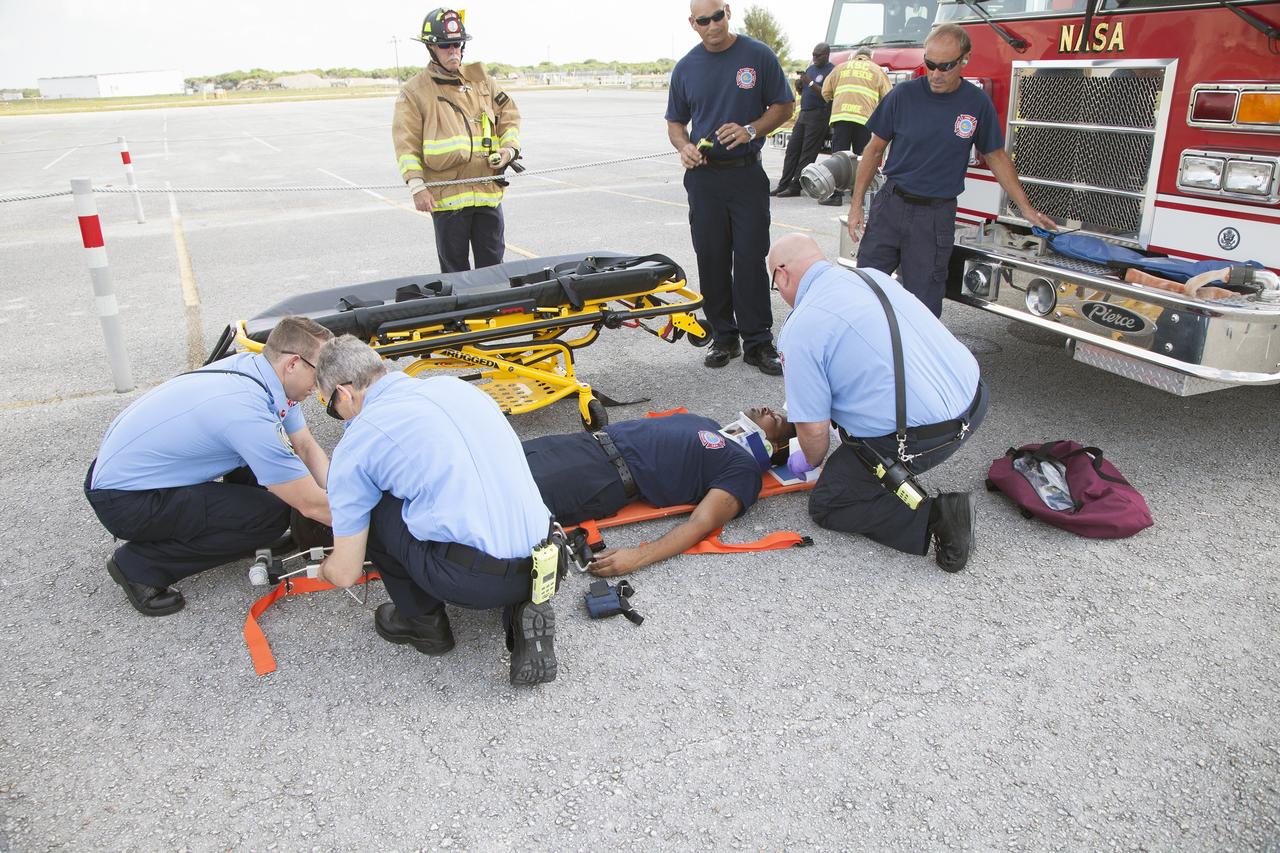
CAPE CANAVERAL, Fla. -- At NASA's Kennedy Space Center in Florida, a Fire Rescue team member serves as a "volunteer patient" for a simulated emergency operation. Paramedics are attaching a neck brace and leg splint. The activity taking place in Kennedy's Launch Complex 39 turn-basin parking lot was only one of several drills. It was part of a new training program that was developed by Kennedy's Fire Rescue department along with NASA Aircraft Operations to sharpen the skills needed to help rescue personnel learn how to collaborate with helicopter pilots in taking injured patients to hospitals as quickly as possible. Photo credit: NASA/Dan Casper

CAPE CANAVERAL, Fla. -- At NASA's Kennedy Space Center in Florida, a Fire Rescue team member serves as a "volunteer patient" for a simulated emergency operation. Paramedics prepare to move his stretcher to an awaiting helicopter. The activity taking place in Kennedy's Launch Complex 39 turn-basin parking lot was only one of several drills. It was part of a new training program that was developed by Kennedy's Fire Rescue department along with NASA Aircraft Operations to sharpen the skills needed to help rescue personnel learn how to collaborate with helicopter pilots in taking injured patients to hospitals as quickly as possible. Photo credit: NASA/Dan Casper
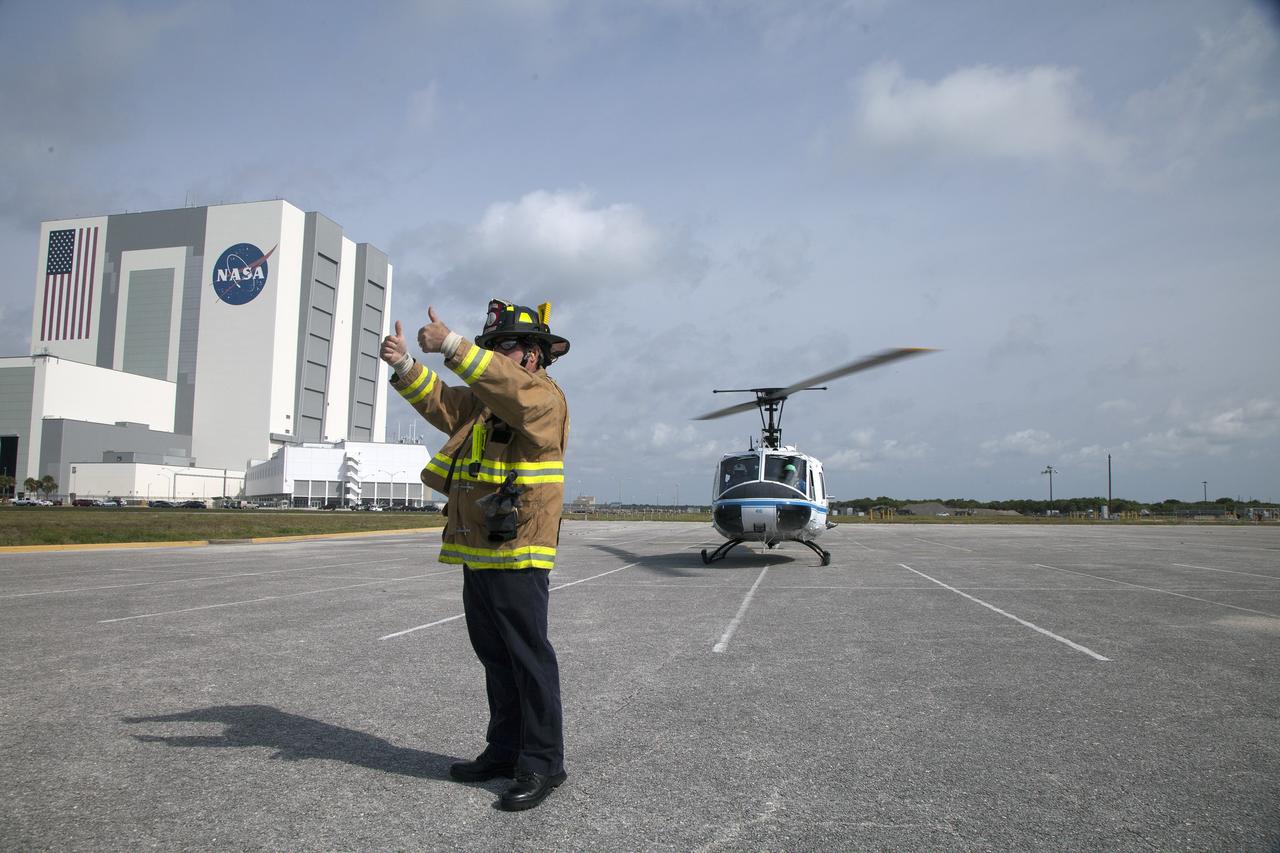
CAPE CANAVERAL, Fla. -- At NASA's Kennedy Space Center in Florida, an agency Fire Rescue team member gives "thumbs up" signaling that it is safe to bring in a stretcher with a "volunteer patient" to be placed aboard the nearby helicopter. The activity taking place in Kennedy's Launch Complex 39 turn-basin parking lot was only one of several drills. It was part of a new training program that was developed by Kennedy's Fire Rescue department along with NASA Aircraft Operations to sharpen the skills needed to help rescue personnel learn how to collaborate with helicopter pilots in taking injured patients to hospitals as quickly as possible. Photo credit: NASA/Dan Casper
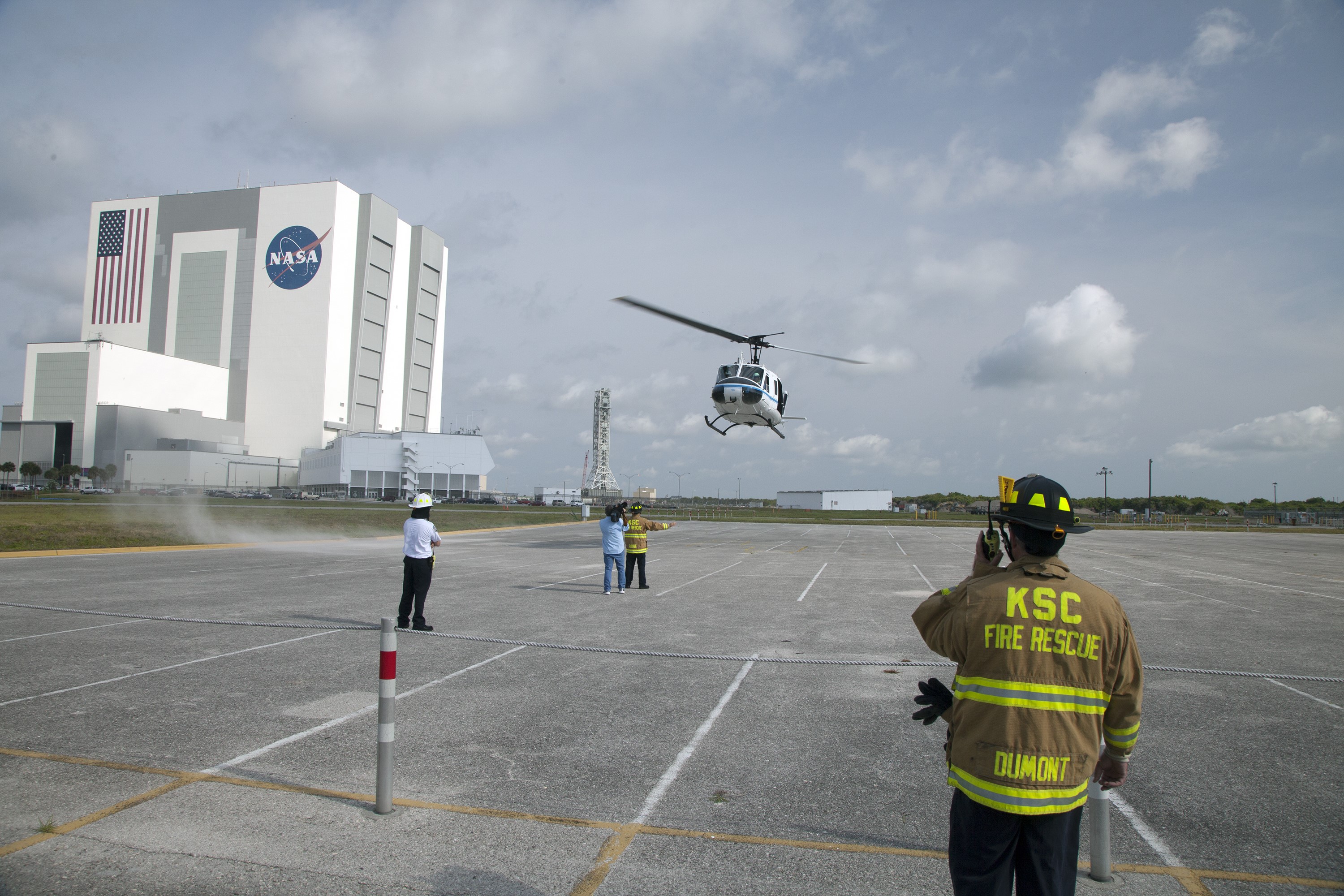
CAPE CANAVERAL, Fla. -- At NASA's Kennedy Space Center in Florida, agency Fire Rescue personnel direct an agency helicopter in for a landing during a training exercise. The activity taking place in Kennedy's Launch Complex 39 turn-basin parking lot was only one of several drills. It was part of a new training program that was developed by Kennedy's Fire Rescue department along with NASA Aircraft Operations to sharpen the skills needed to help rescue personnel learn how to collaborate with helicopter pilots in taking injured patients to hospitals as quickly as possible. Photo credit: NASA/Dan Casper
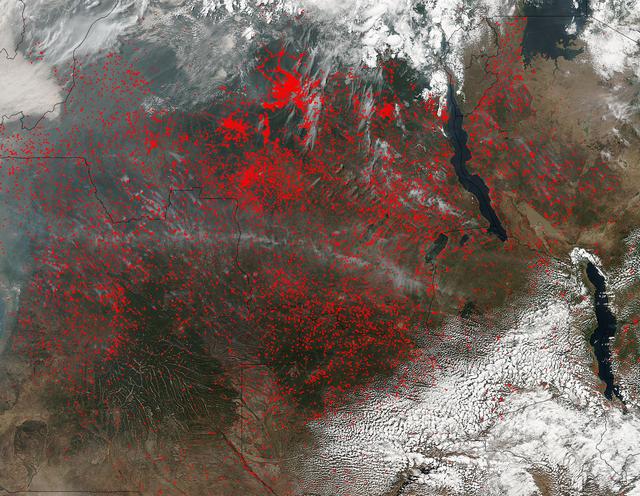
NASA’s Suomi NPP satellite detected thousands of fires burning in central Africa on July 11, 2016. The fires are represented by the multitudes of red dots. Most of the fires burn in grass or cropland. The location, widespread nature, and number of fires suggest that these fires were deliberately set to manage land. Places where traditional plots of open land is not available because the vegetation in the area is dense are the places where "slash and burn" agriculture is practiced most often. These regions include parts of Africa, northern South America, and Southeast Asia, where an abundance of grasslands and rainforests are found. Although most parts of the world outlaw this type of agriculture due to the fact that the smoke from these (or any) fires is a health hazard, the method of agriculture continues because it is the easiest and lowest cost solution to clearing fields for next year's crops. The Suomi NPP satellite is a joint mission between NASA, NOAA and the U.S. Department of Defense. NASA image courtesy Jeff Schmaltz, MODIS Rapid Response Team.

KENNEDY SPACE CENTER, FLA. -- At S.R. 3 a pilot prepares a NASA helicopter for a return flight to Patrick Air Force Base. The helicopter is one of four UH-1H helicopters that have had its blades painted, changing the previous black color to a pattern of white and yellow stripes. The pattern provides better visibility in smoke and fire conditions. When the rotors are turning, the stripes create a yellow and white circle that is more easily seen by a second helicopter from above. The helicopters, primarily used for security and medical evacuation for NASA, will be used to deliver water via buckets during brush fires. The change was made to comply with U.S. Fish and Wildlife and Department of Forestry regulations for helicopter-assisted fire control