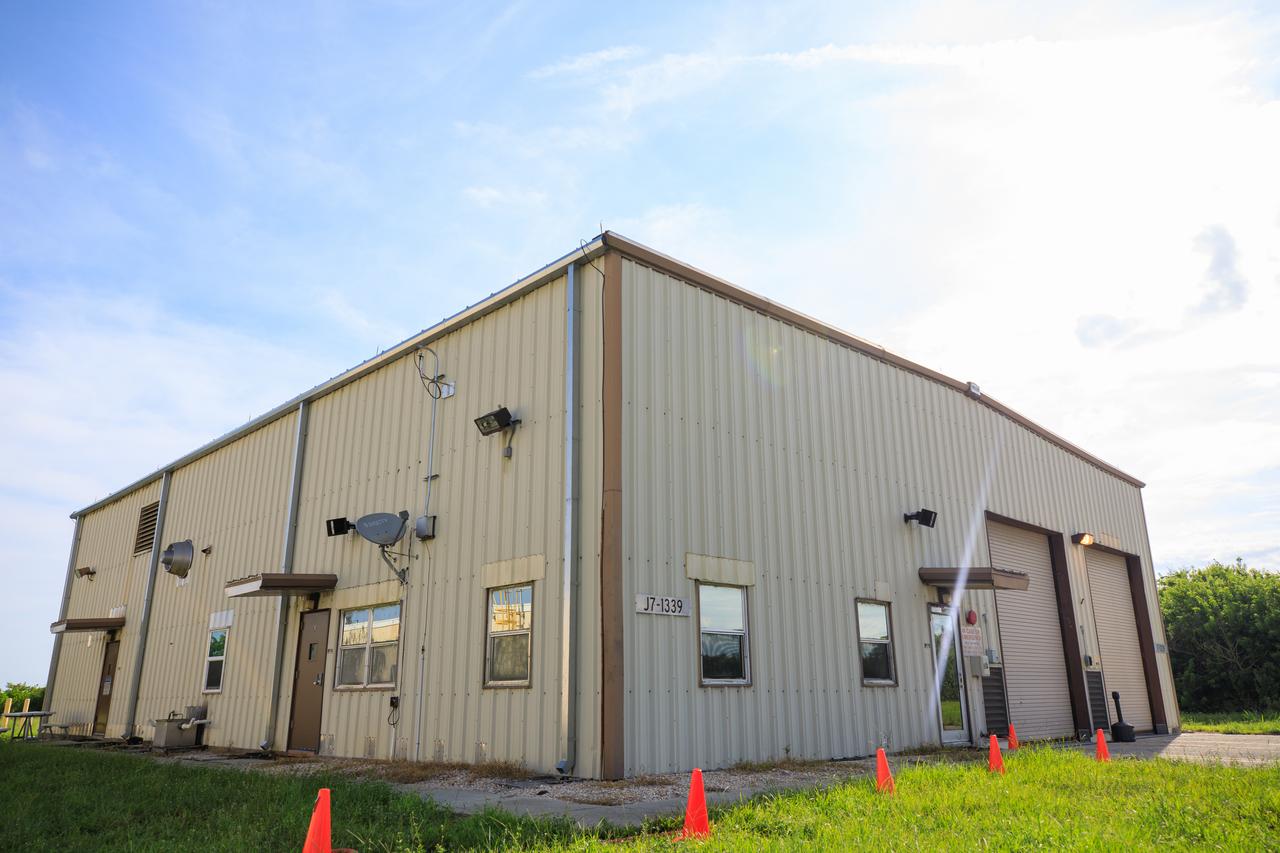
An exterior view of Fire Station 3 at Launch Complex 39B at NASA’s Kennedy Space Center in Florida on Sept. 8, 2022.
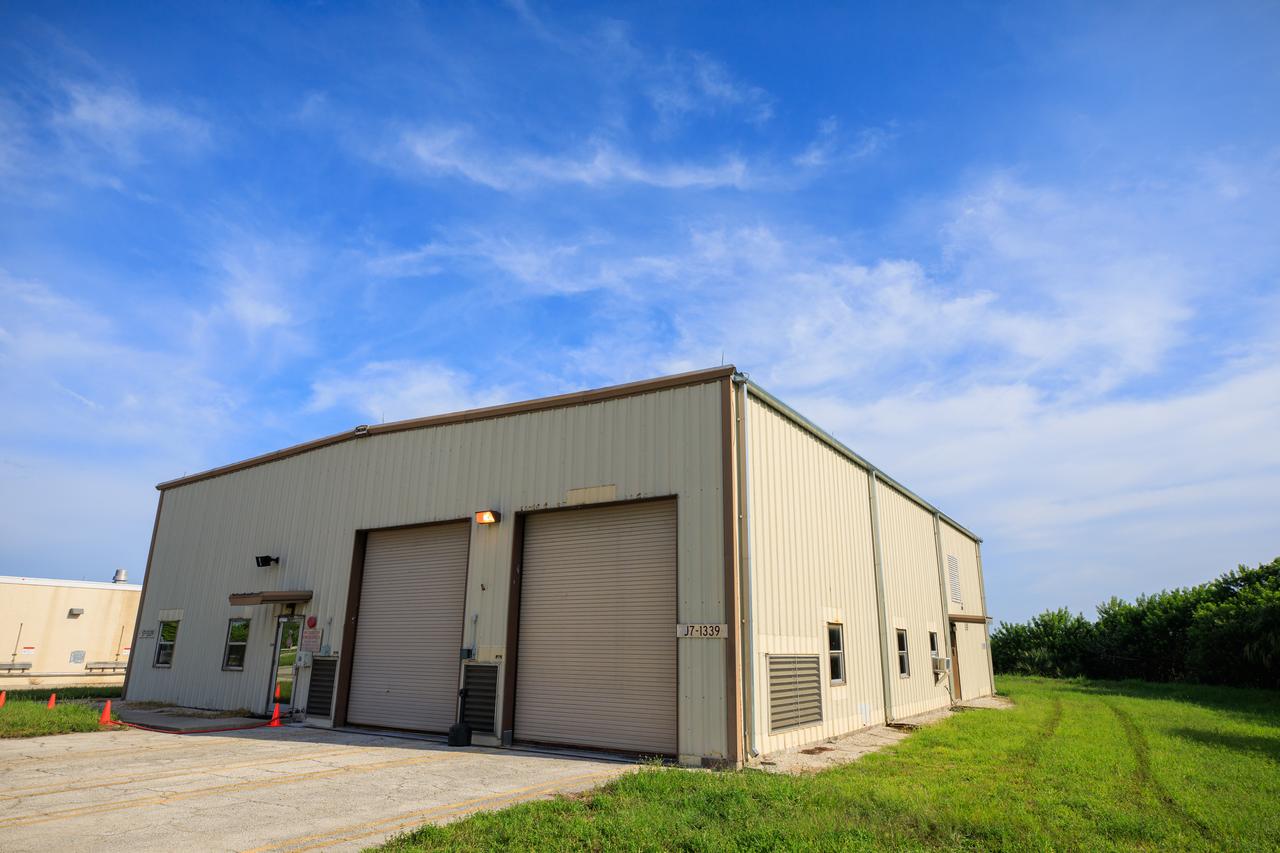
An exterior view of Fire Station 3 at Launch Complex 39B at NASA’s Kennedy Space Center in Florida on Sept. 8, 2022.
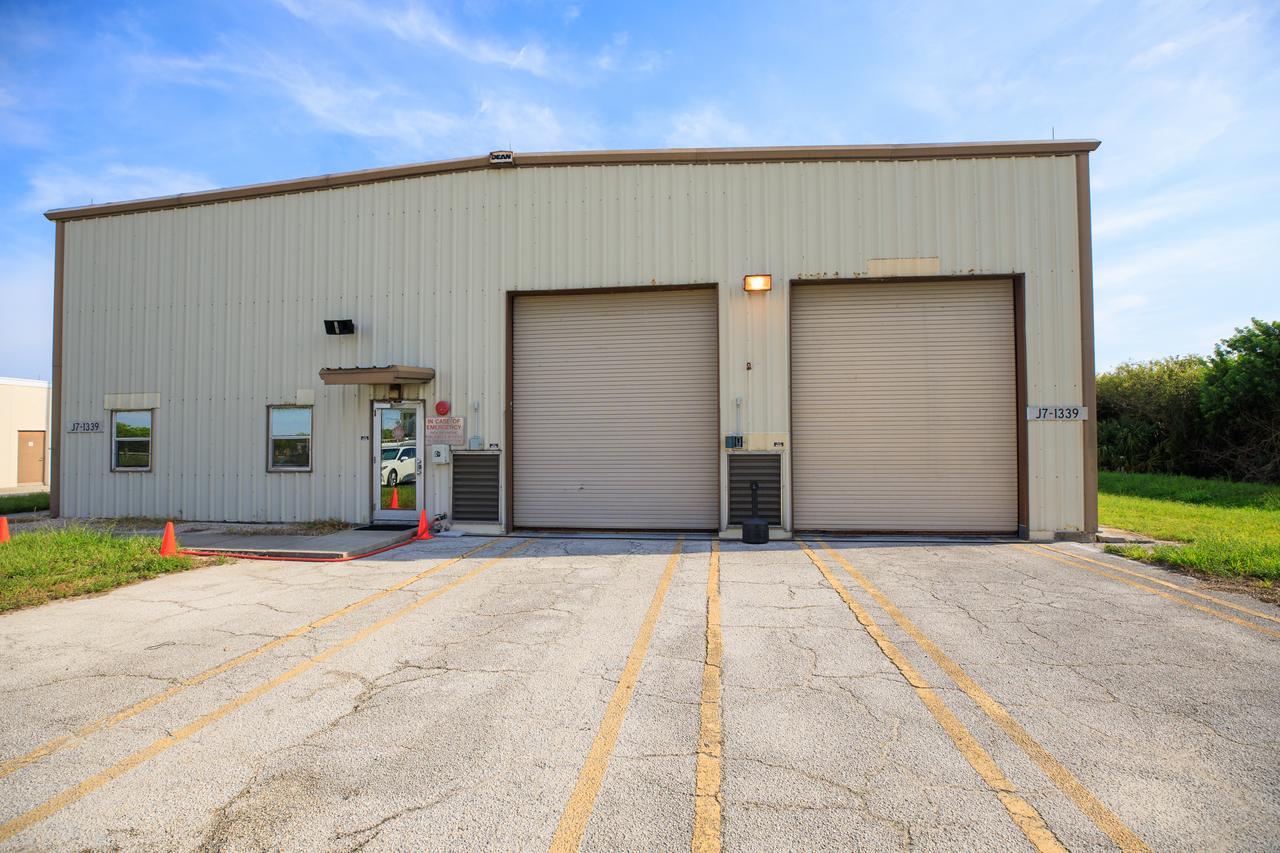
An exterior view of Fire Station 3 at Launch Complex 39B at NASA’s Kennedy Space Center in Florida on Sept. 8, 2022.
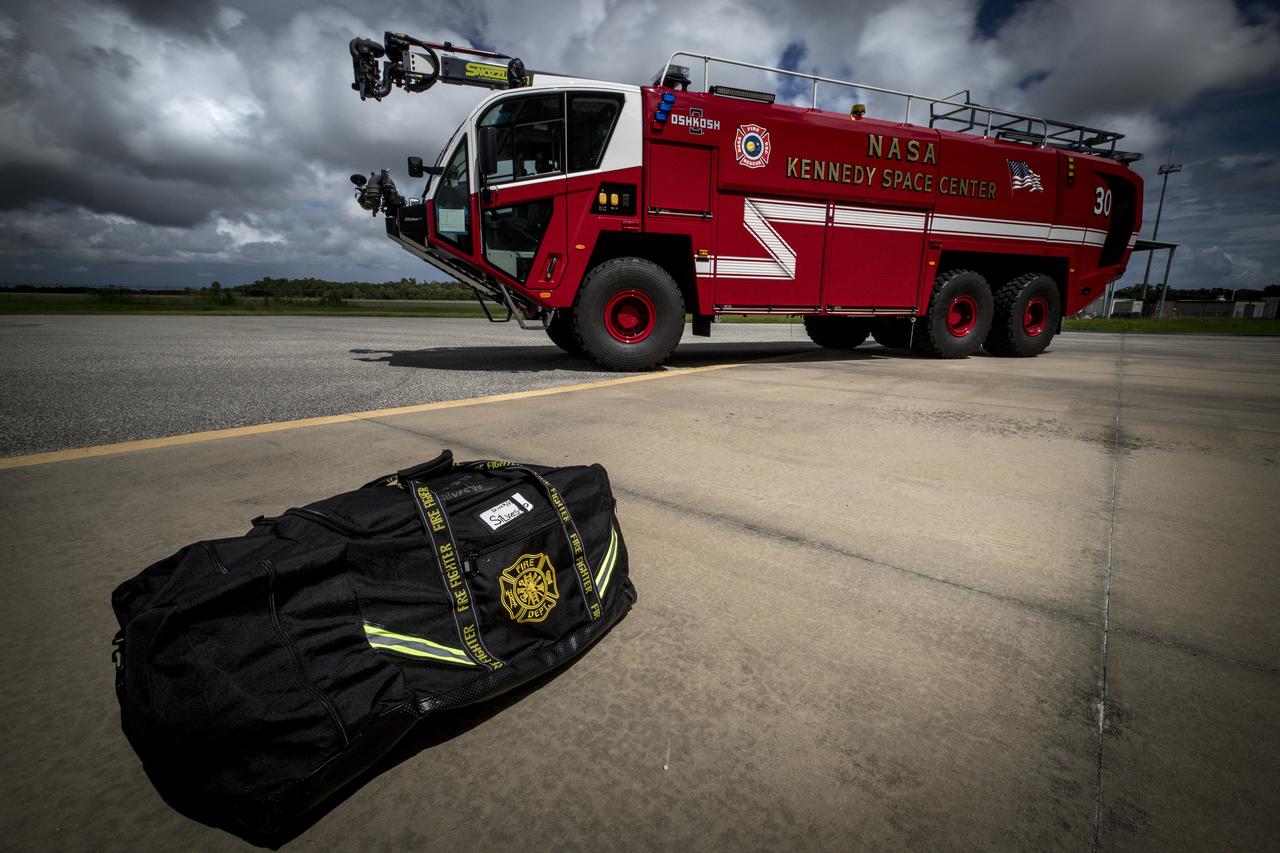
A new Aircraft Rescue and Fire Fighting vehicle is photographed in front of Fire Station No. 2 near the Shuttle Landing Facility runway at NASA’s Kennedy Space Center in Florida. The state-of-the-art truck replaces a 28-year-old vehicle. Kennedy is upgrading its fleet of emergency vehicles to enhance its safety and security posture at the growing, multi-user spaceport.
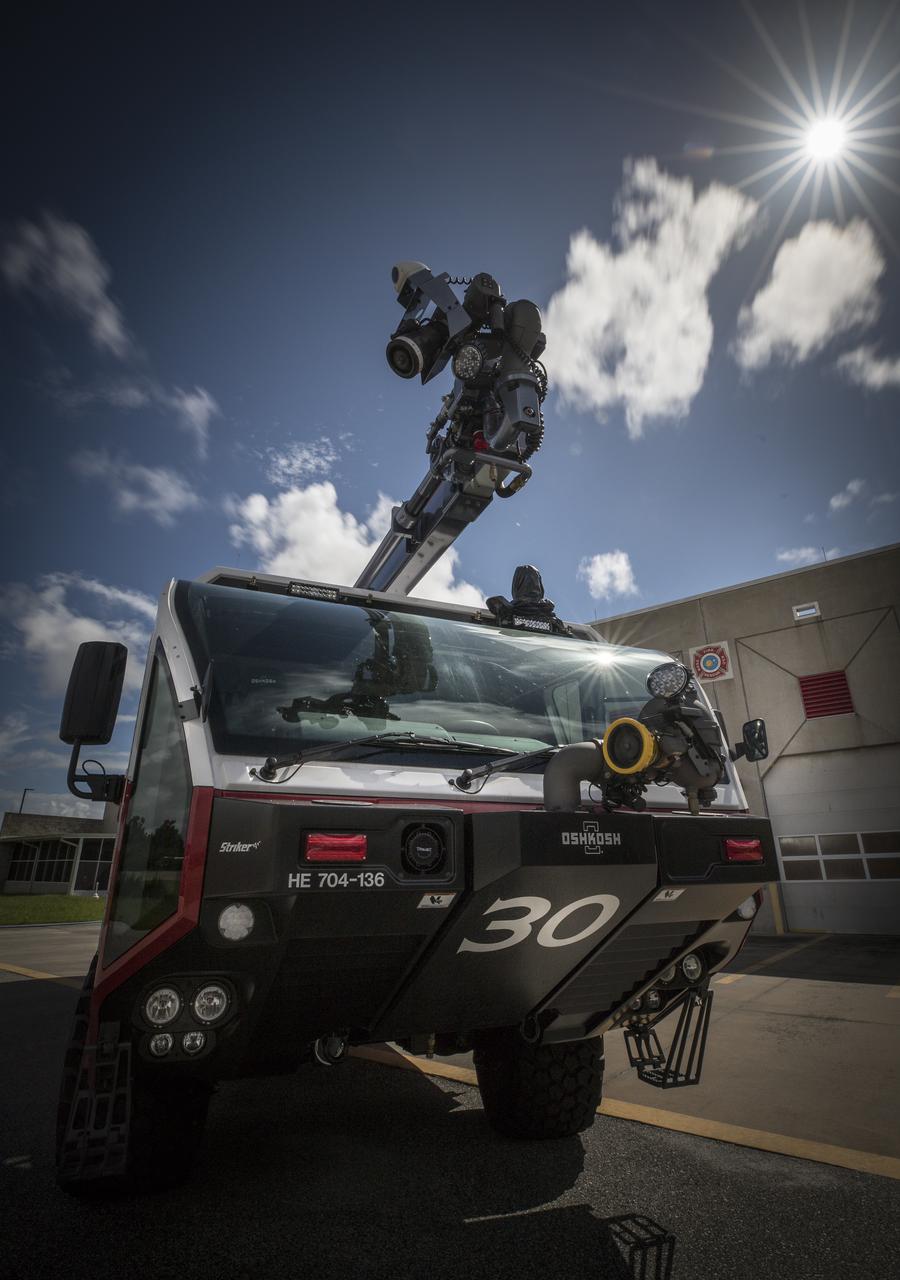
A new Aircraft Rescue and Fire Fighting vehicle is photographed in front of Fire Station No. 2 near the Shuttle Landing Facility runway at NASA’s Kennedy Space Center in Florida. The state-of-the-art truck replaces a 28-year-old vehicle. Kennedy is upgrading its fleet of emergency vehicles to enhance its safety and security posture at the growing, multi-user spaceport.
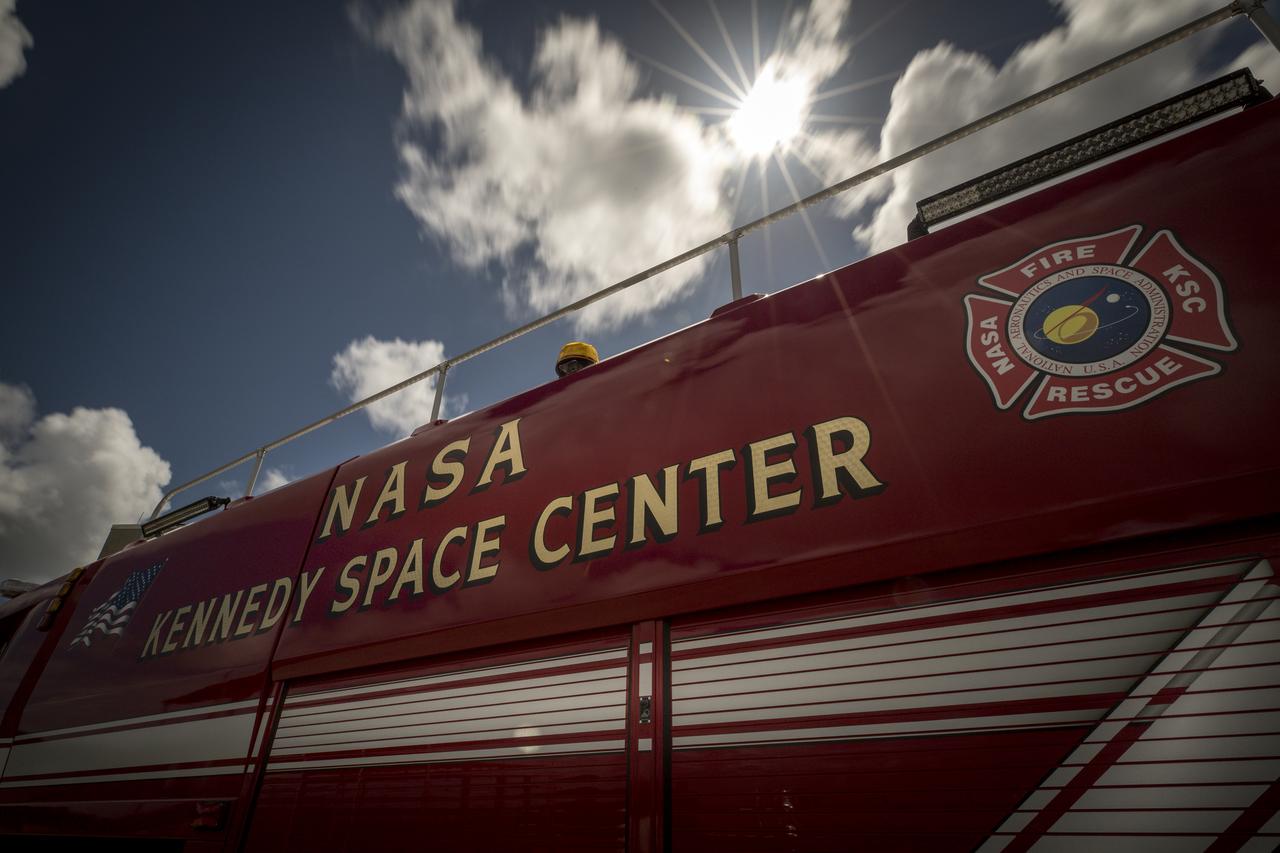
A new Aircraft Rescue and Fire Fighting vehicle is photographed in front of Fire Station No. 2 near the Shuttle Landing Facility runway at NASA’s Kennedy Space Center in Florida. The state-of-the-art truck replaces a 28-year-old vehicle. Kennedy is upgrading its fleet of emergency vehicles to enhance its safety and security posture at the growing, multi-user spaceport.
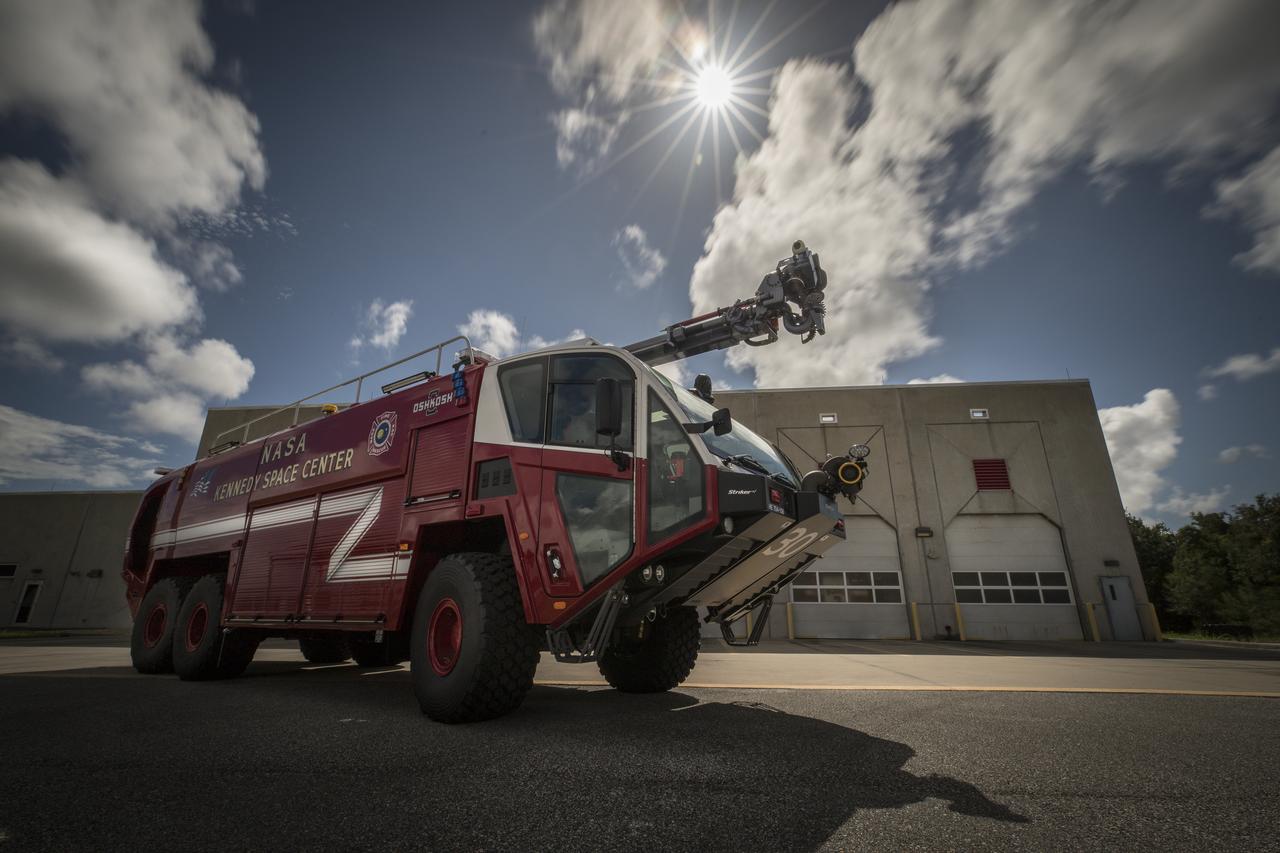
A new Aircraft Rescue and Fire Fighting vehicle is photographed in front of Fire Station No. 2 near the Shuttle Landing Facility runway at NASA’s Kennedy Space Center in Florida. The state-of-the-art truck replaces a 28-year-old vehicle. Kennedy is upgrading its fleet of emergency vehicles to enhance its safety and security posture at the growing, multi-user spaceport.
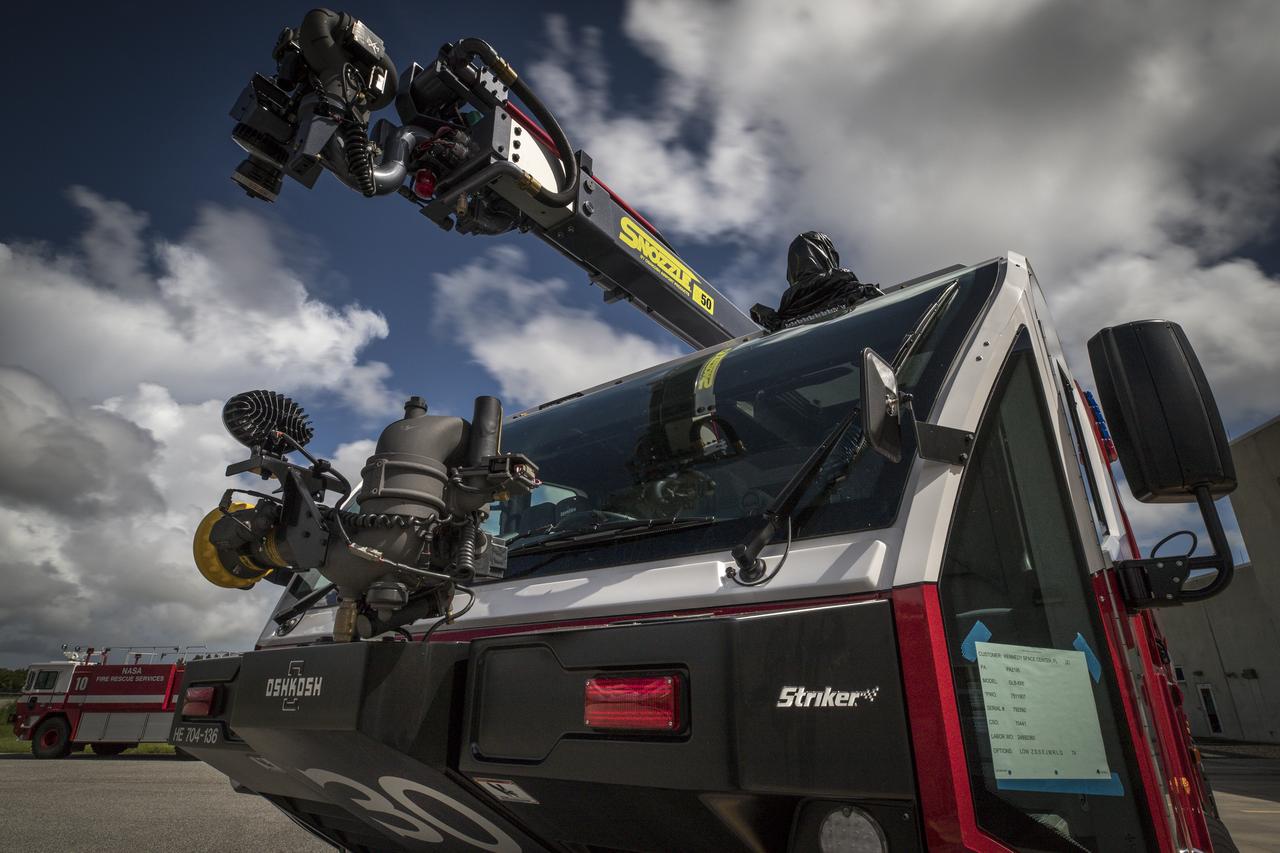
A new Aircraft Rescue and Fire Fighting vehicle is photographed in front of Fire Station No. 2 near the Shuttle Landing Facility runway at NASA’s Kennedy Space Center in Florida. The state-of-the-art truck replaces a 28-year-old vehicle. Kennedy is upgrading its fleet of emergency vehicles to enhance its safety and security posture at the growing, multi-user spaceport.
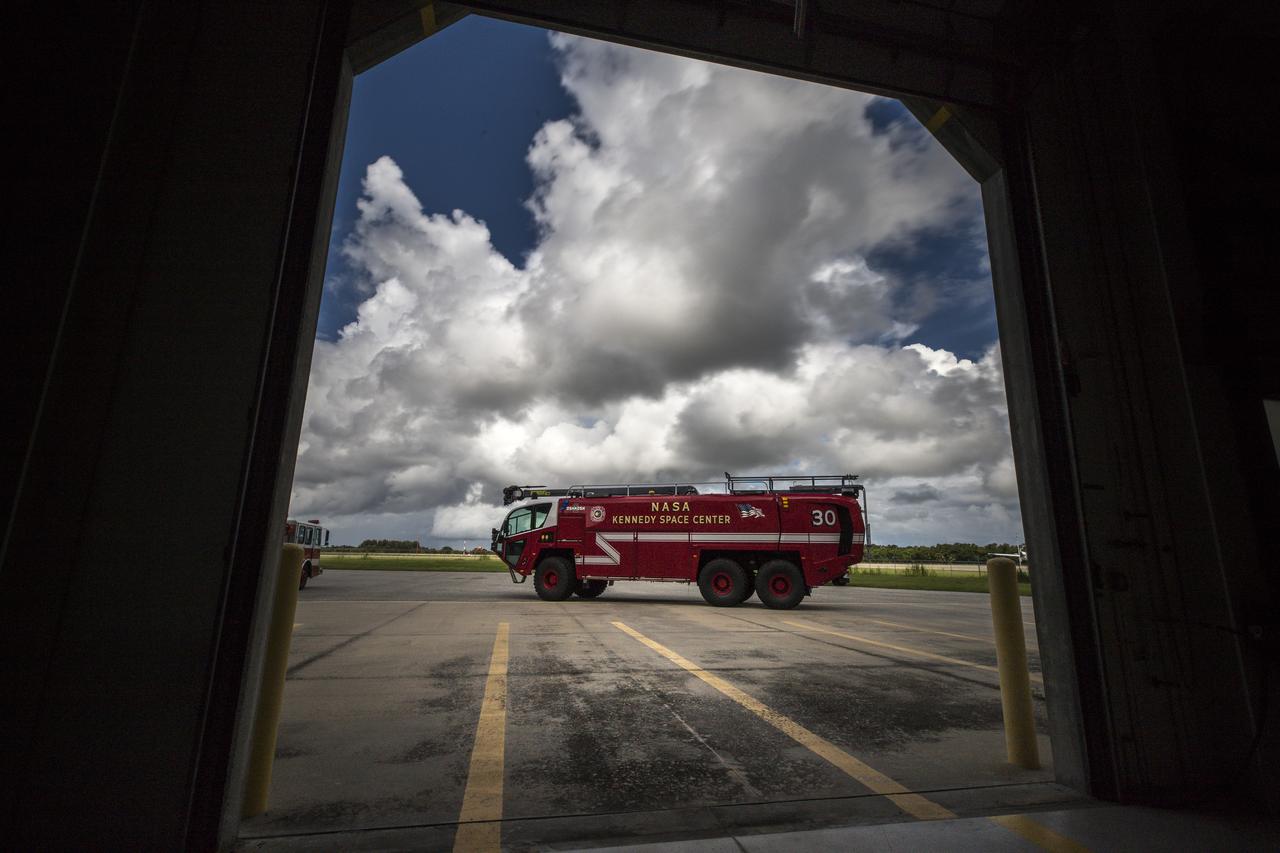
A new Aircraft Rescue and Fire Fighting vehicle is photographed through the open door of Fire Station No. 2 near the Shuttle Landing Facility runway at NASA’s Kennedy Space Center in Florida. The state-of-the-art truck replaces a 28-year-old vehicle. Kennedy is upgrading its fleet of emergency vehicles to enhance its safety and security posture at the growing, multi-user spaceport.
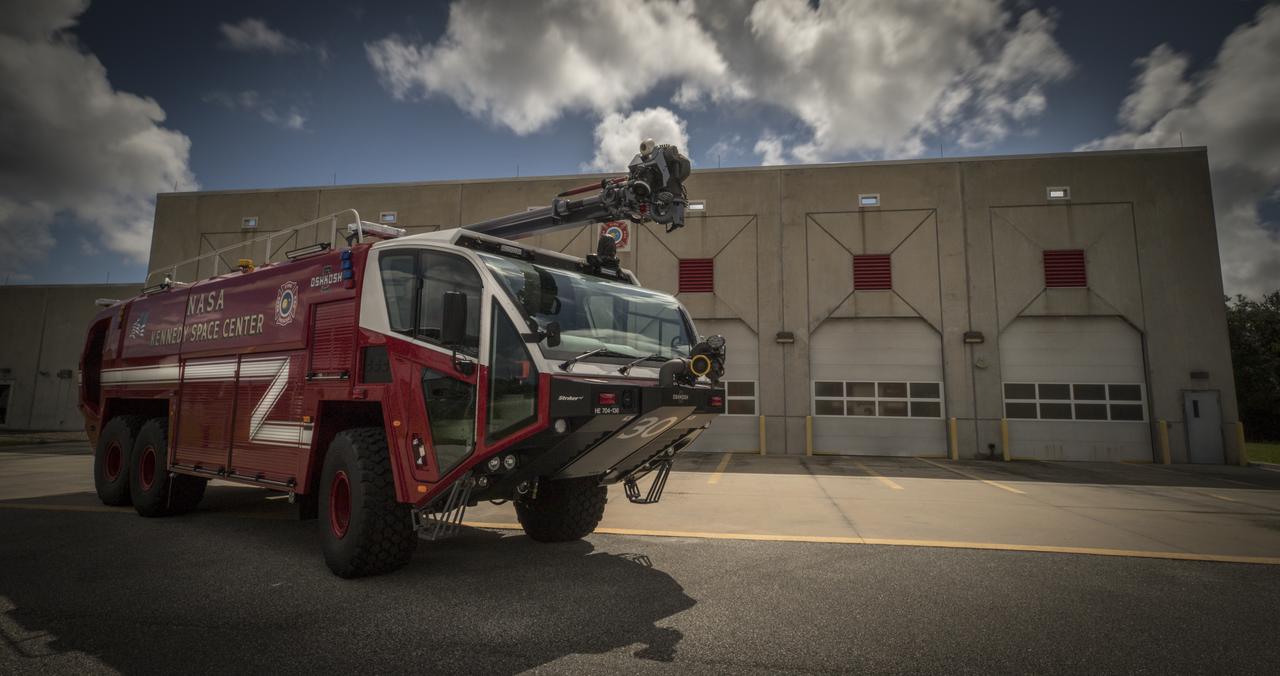
A new Aircraft Rescue and Fire Fighting vehicle is photographed in front of Fire Station No. 2 near the Shuttle Landing Facility runway at NASA’s Kennedy Space Center in Florida. The state-of-the-art truck replaces a 28-year-old vehicle. Kennedy is upgrading its fleet of emergency vehicles to enhance its safety and security posture at the growing, multi-user spaceport.
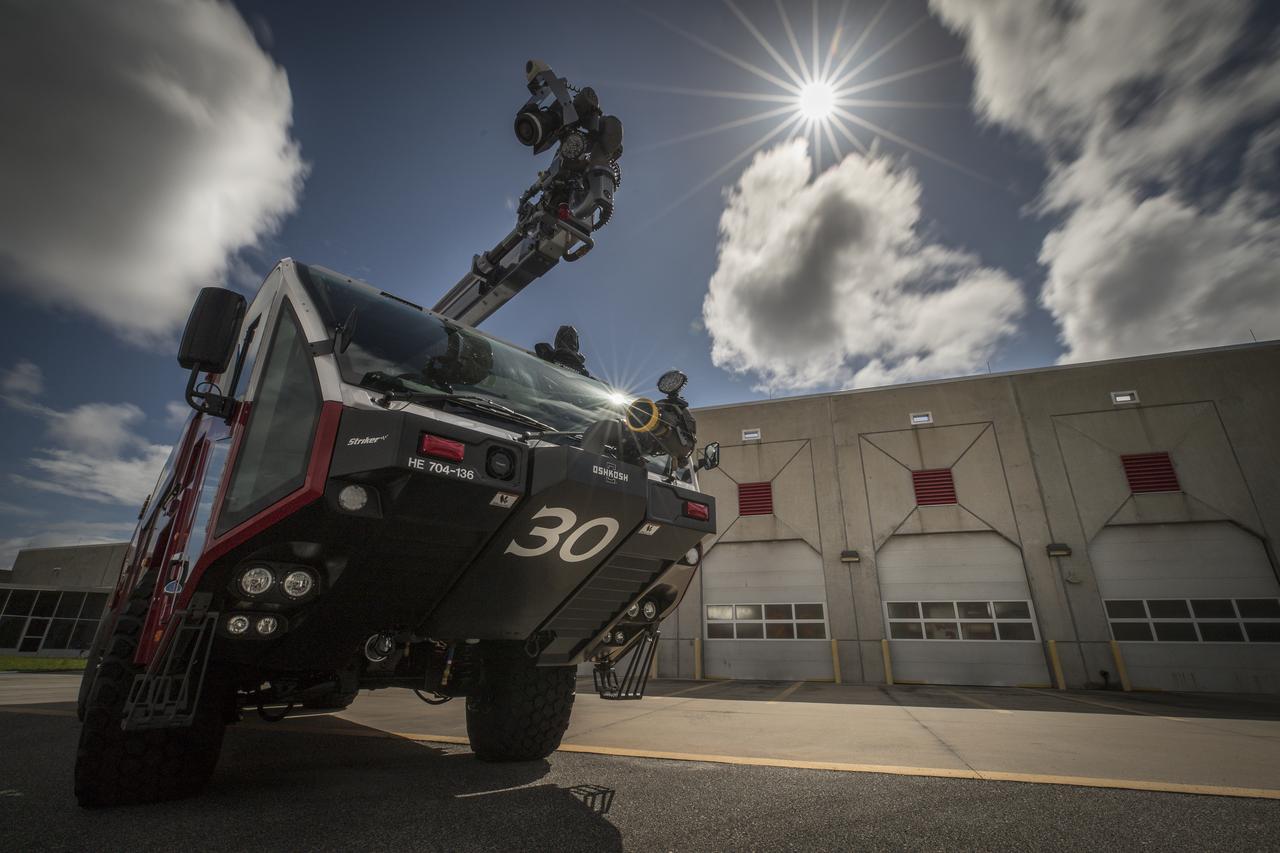
A new Aircraft Rescue and Fire Fighting vehicle is photographed in front of Fire Station No. 2 near the Shuttle Landing Facility runway at NASA’s Kennedy Space Center in Florida. The state-of-the-art truck replaces a 28-year-old vehicle. Kennedy is upgrading its fleet of emergency vehicles to enhance its safety and security posture at the growing, multi-user spaceport.
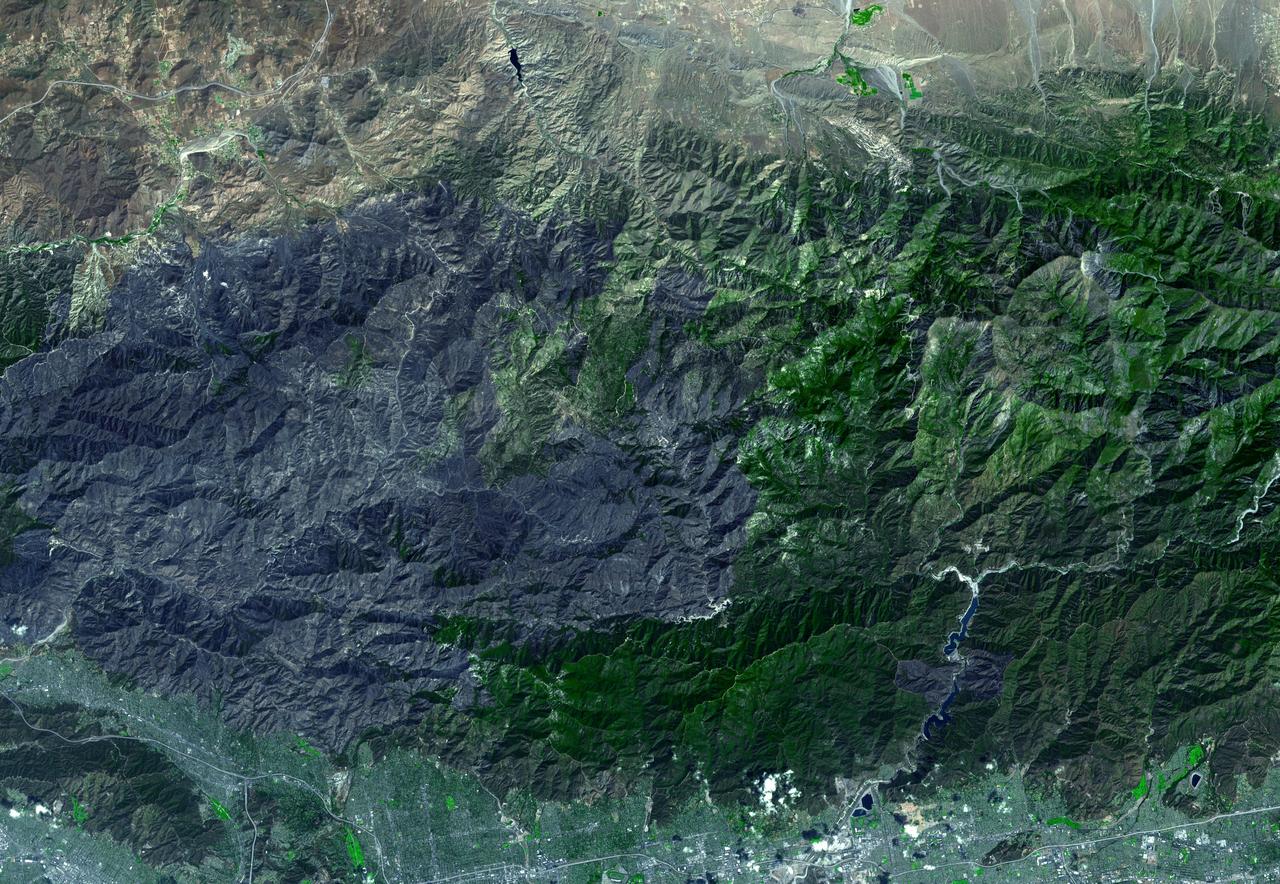
JPL Advanced Spaceborne Thermal Emission and Reflection Radiometer aboard NASA Terra satellite captured this simulated natural color image of the Station fire burning in the San Gabriel Mountains.
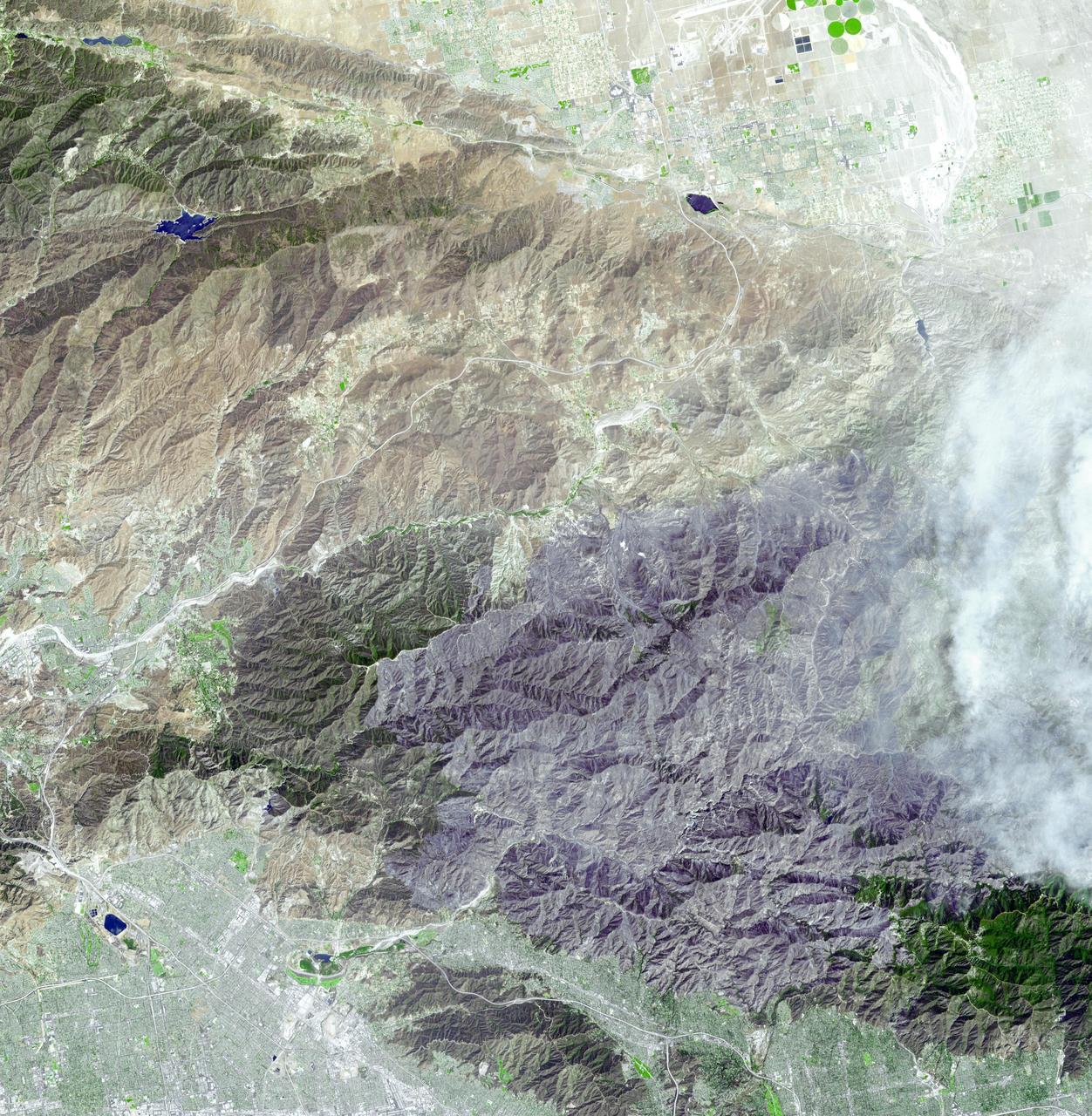
JPL Advanced Spaceborne Thermal Emission and Reflection Radiometer aboard NASA Terra satellite captured this simulated natural color image of the Station fire, burning in the San Gabriel Mountains.
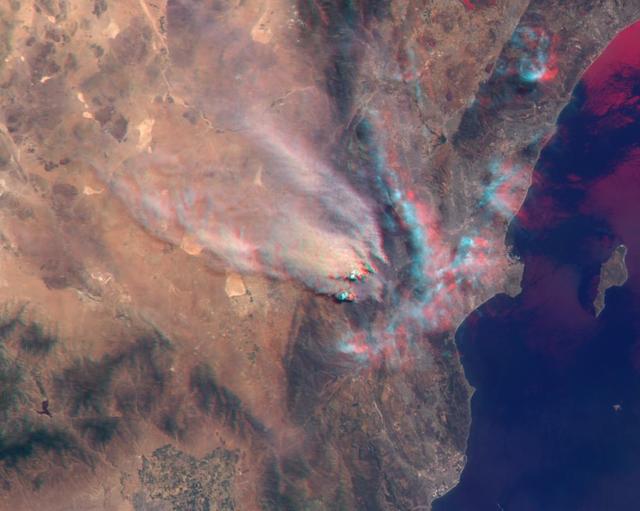
NASA Terra satellite took this anaglyph of several pyrocumulus clouds, created by the Station Fire, visible above the smoke plumes rising from the San Gabriel Mountains north of Los Angeles. 3D glasses are necessary to view this image.
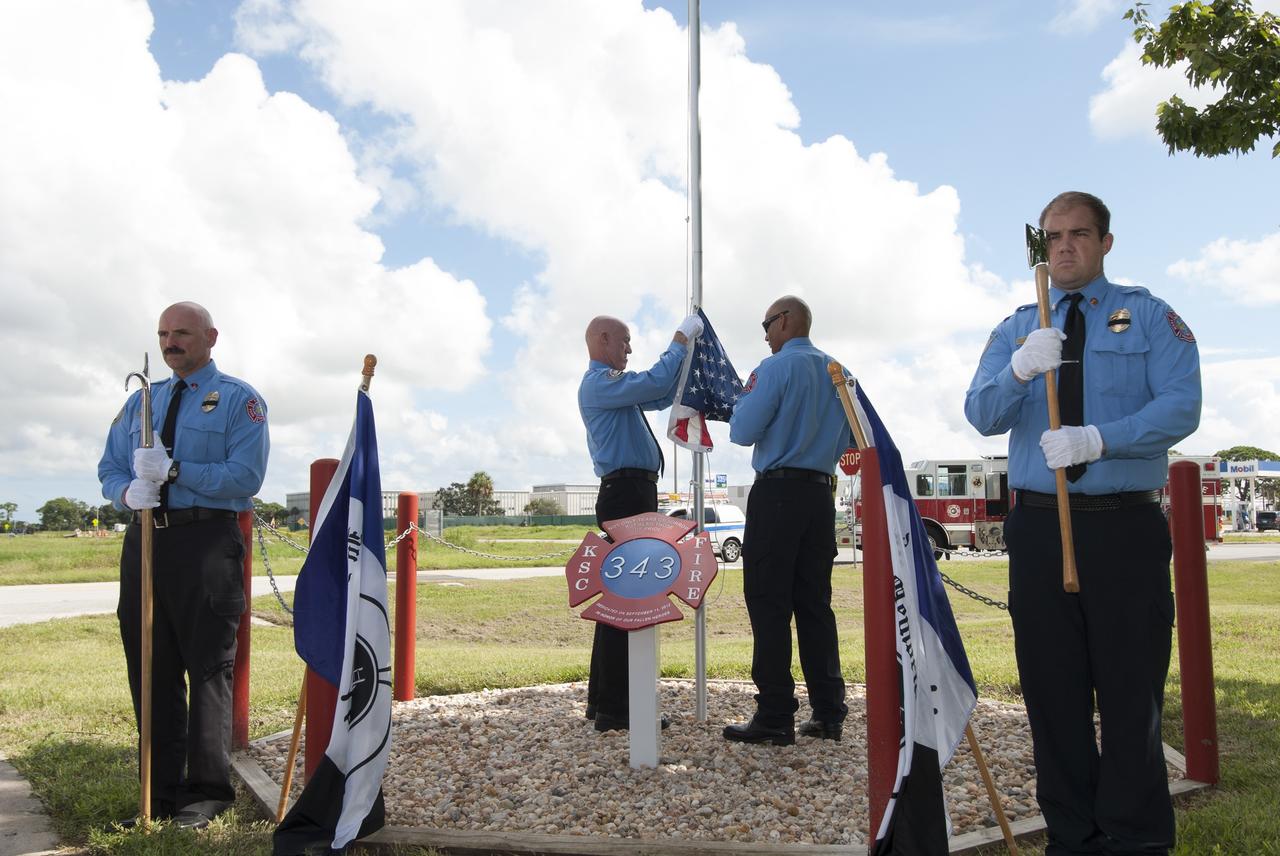
Cape Canaveral, Fla. – At Fire Station 1 at NASA’s Kennedy Space Center in Florida, Fire and Rescue personnel stand at attention as the American flag is raised during a ceremony held by Kennedy’s Fire and Rescue personnel. Kennedy Fire and Rescue Services commemorated the 13th anniversary of 9/11 with a ceremony that included a minute of silence at 10:28 a.m., which was the moment of collapse of the north tower of the World Trade Center. Photo credit: Jim Grossmann
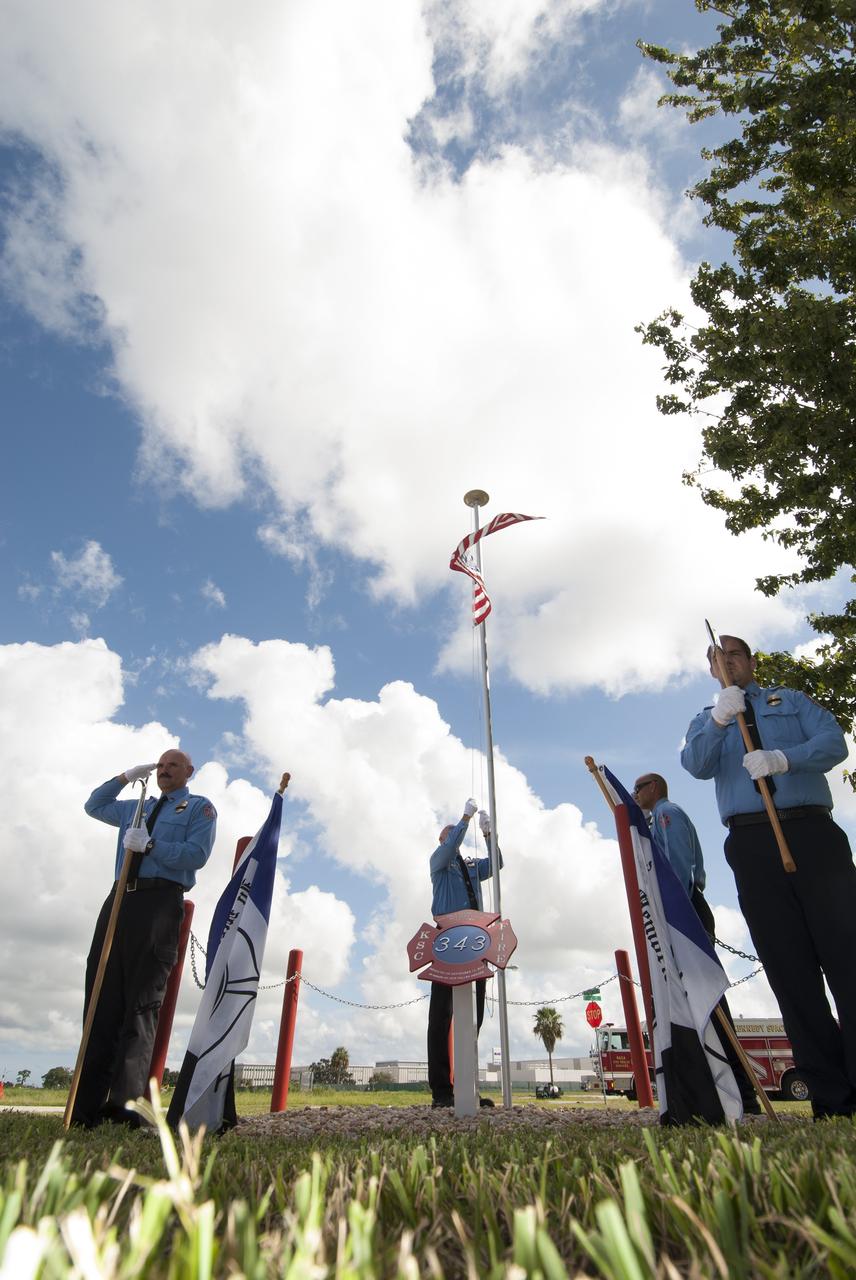
Cape Canaveral, Fla. – At Fire Station 1 at NASA’s Kennedy Space Center in Florida, Fire and Rescue personnel salute or stand at attention as the American flag is raised during a ceremony held by Kennedy’s Fire and Rescue personnel. Kennedy Fire and Rescue Services commemorated the 13th anniversary of 9/11 with a ceremony that included a minute of silence at 10:28 a.m., which was the moment of collapse of the north tower of the World Trade Center. Photo credit: Jim Grossmann

Cape Canaveral, Fla. – At Fire Station 1 at NASA’s Kennedy Space Center in Florida, Fire and Rescue personnel salute or stand at attention as the American flag is raised during a ceremony held by Kennedy’s Fire and Rescue personnel. Kennedy Fire and Rescue Services commemorated the 13th anniversary of 9/11 with a ceremony that included a minute of silence at 10:28 a.m., which was the moment of collapse of the north tower of the World Trade Center. Photo credit: Jim Grossmann
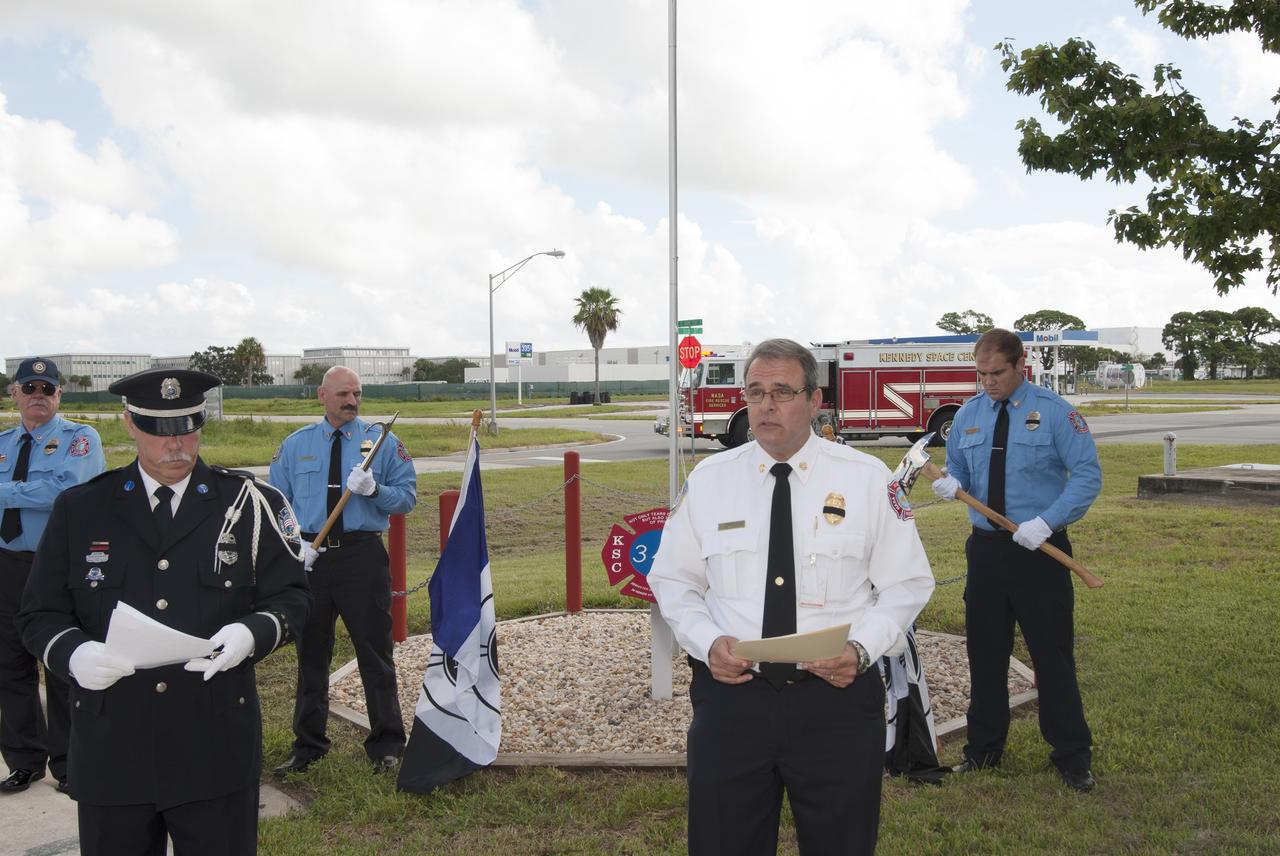
Cape Canaveral, Fla. – At Fire Station 1 at NASA’s Kennedy Space Center in Florida, Kennedy Space Center Fire Chief Richard Anderson, center and Commander of the Honor Guard James Dumont, left, share emotional words at the 9/11 memorial during a ceremony held by Kennedy’s Fire and Rescue personnel. Behind the pair are members of NASA's Protective Services. Kennedy Fire and Rescue Services commemorated the 13th anniversary of 9/11 with a ceremony that included a minute of silence at 10:28 a.m., which was the moment of collapse of the north tower of the World Trade Center. Photo credit: Jim Grossmann
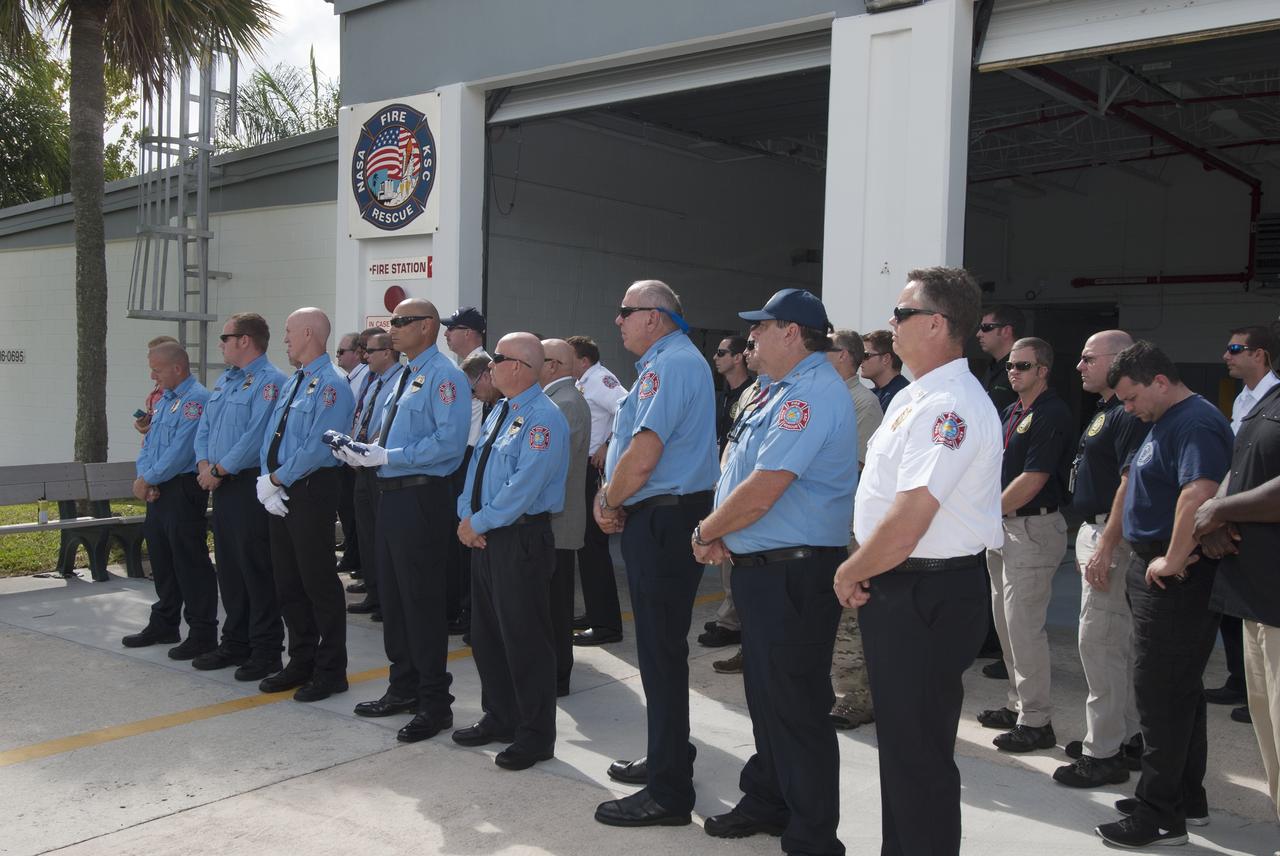
Cape Canaveral, Fla. – At Fire Station 1 at NASA’s Kennedy Space Center in Florida, Fire and Rescue personnel pause for a moment of silence during a ceremony commemorating the 13th anniversary of 9/11 at 10:28 a.m., which was the moment of collapse of the north tower of the World Trade Center. Photo credit: Jim Grossmann
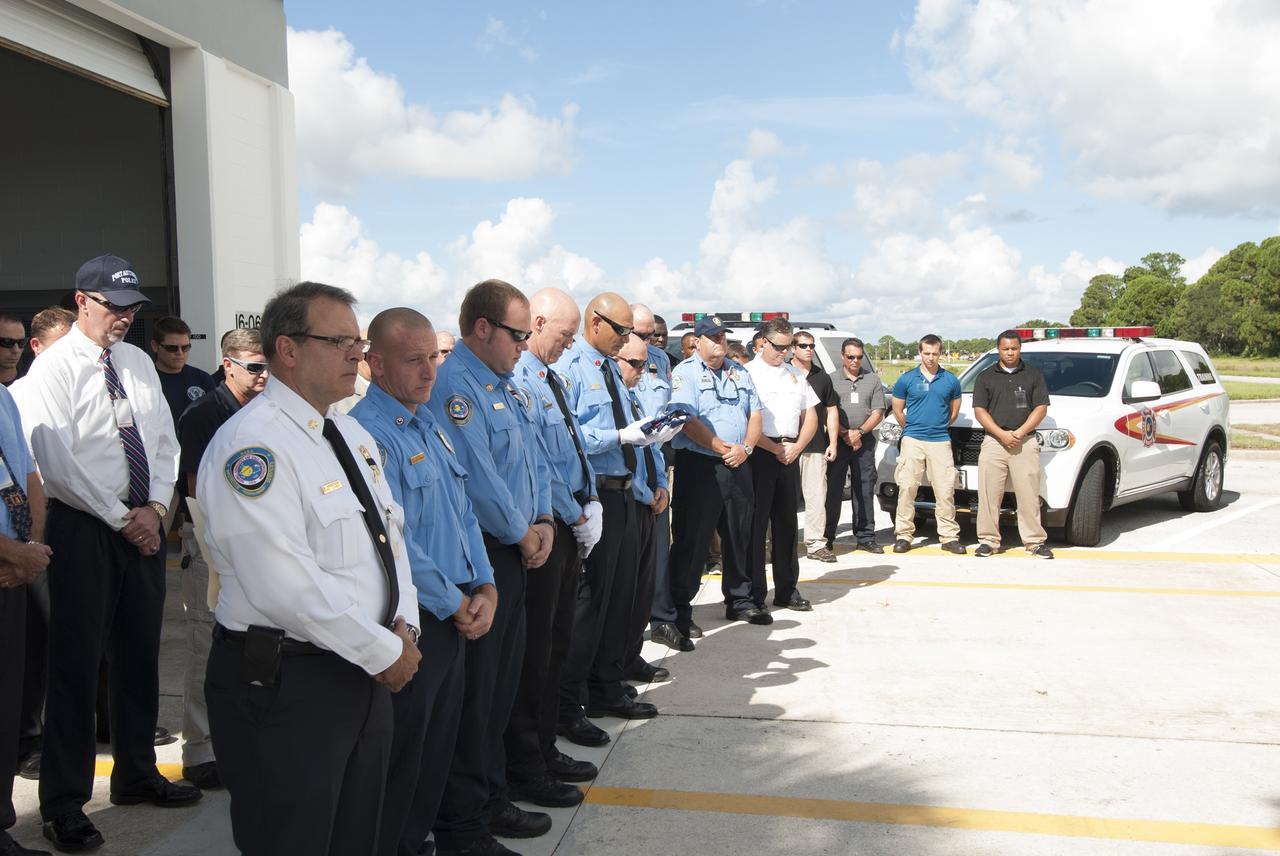
Cape Canaveral, Fla. – At Fire Station 1 at NASA’s Kennedy Space Center in Florida, Fire and Rescue personnel pause for a moment of silence during a ceremony commemorating the 13th anniversary of 9/11 at 10:28 a.m., which was the moment of collapse of the north tower of the World Trade Center. Photo credit: Jim Grossmann
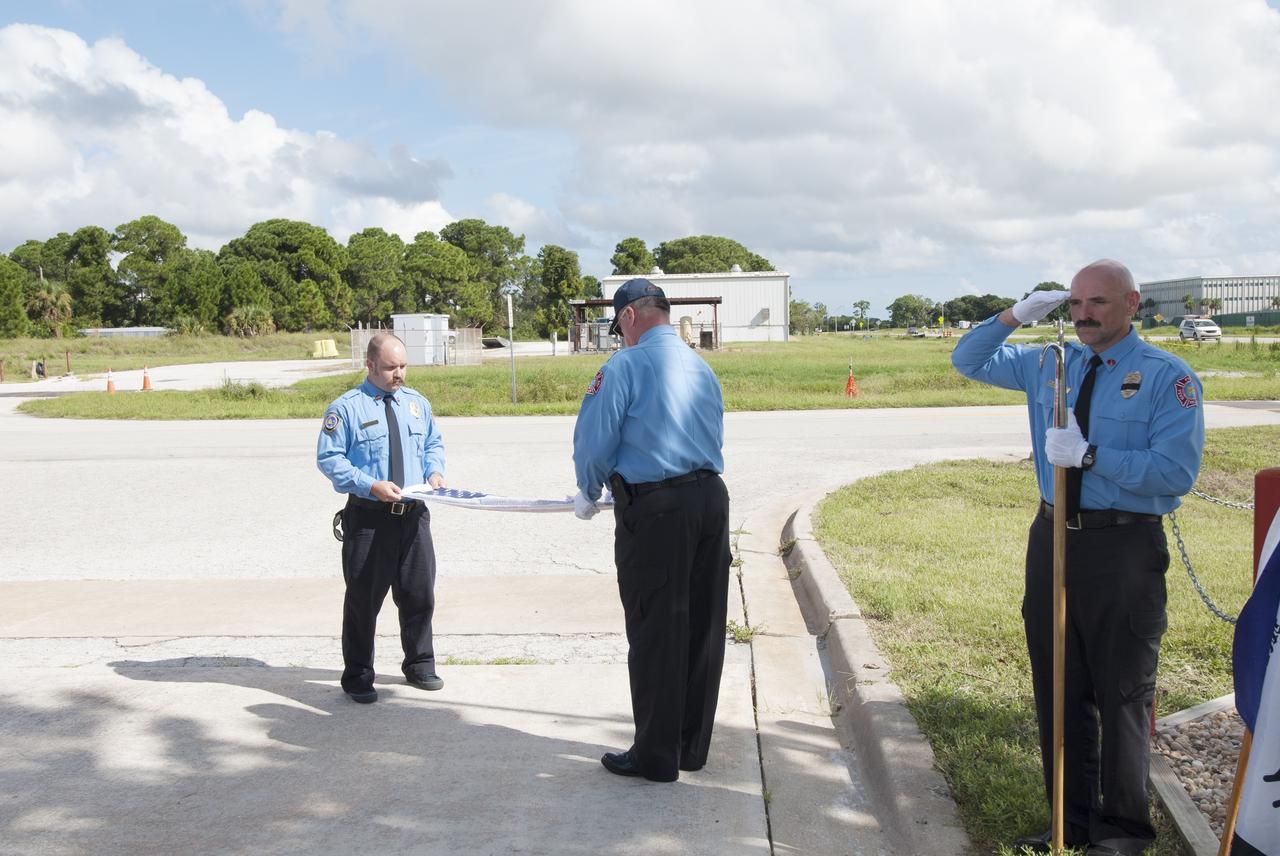
Cape Canaveral, Fla. – At Fire Station 1 at NASA’s Kennedy Space Center in Florida, Gabe Wingard and Steve Dudgeon, both with NASA's Protective Services, fold the commemorative flag during a ceremony held by Kennedy’s Fire and Rescue personnel. Kennedy Fire and Rescue Services commemorated the 13th anniversary of 9/11 with a ceremony that included a minute of silence at 10:28 a.m., which was the moment of collapse of the north tower of the World Trade Center. Photo credit: Jim Grossmann
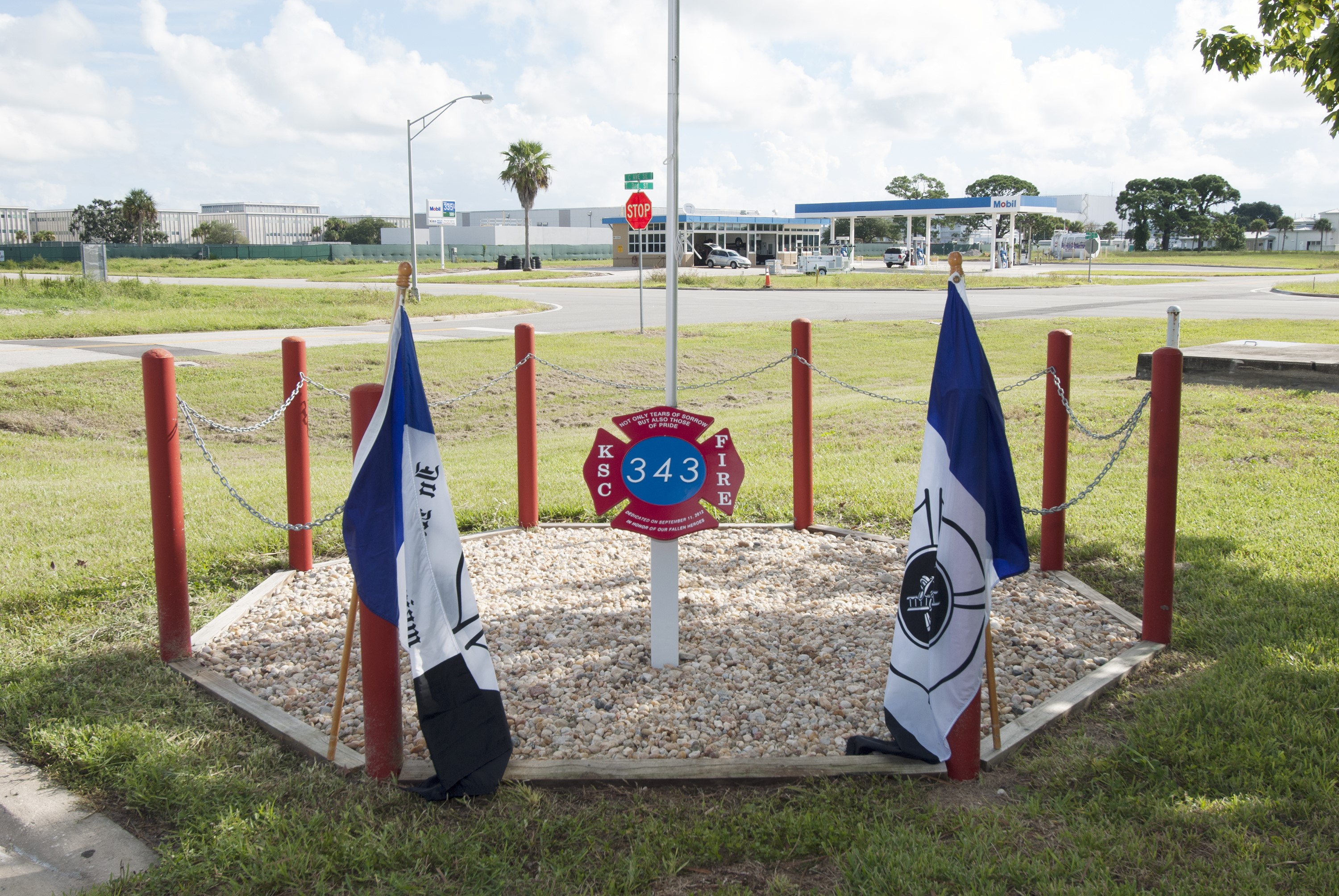
Cape Canaveral, Fla. – At Fire Station 1 at NASA’s Kennedy Space Center in Florida, the 9/11 memorial is shown before a ceremony held by Kennedy’s Fire and Rescue personnel. Kennedy Fire and Rescue Services commemorated the 13th anniversary of 9/11 with a ceremony that included a minute of silence at 10:28 a.m., which was the moment of collapse of the north tower of the World Trade Center. Photo credit: Jim Grossmann
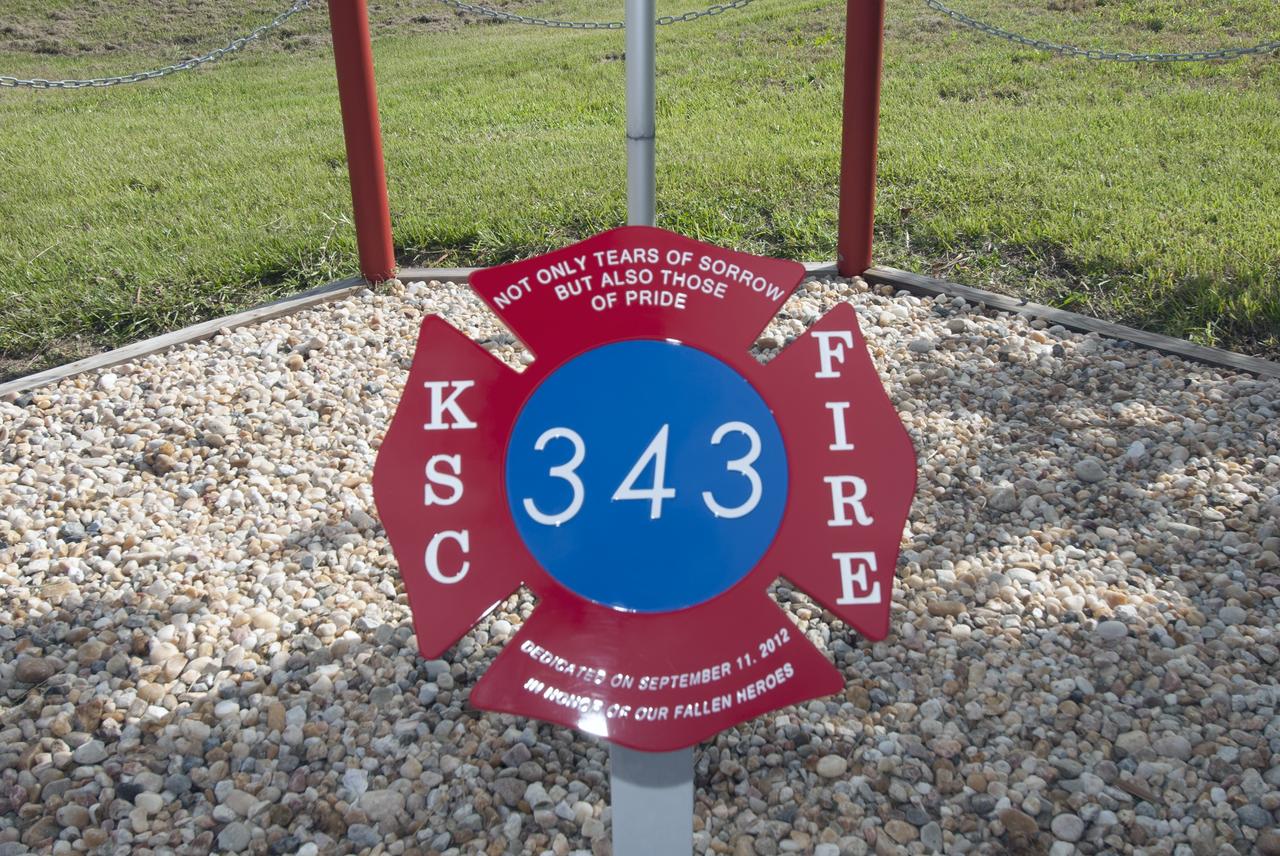
Cape Canaveral, Fla. – At Fire Station 1 at NASA’s Kennedy Space Center in Florida, the 9/11 memorial emblem is shown during a ceremony held by Kennedy’s Fire and Rescue personnel. Kennedy Fire and Rescue Services commemorated the 13th anniversary of 9/11 with a ceremony that included a minute of silence at 10:28 a.m., which was the moment of collapse of the north tower of the World Trade Center. Photo credit: Jim Grossmann
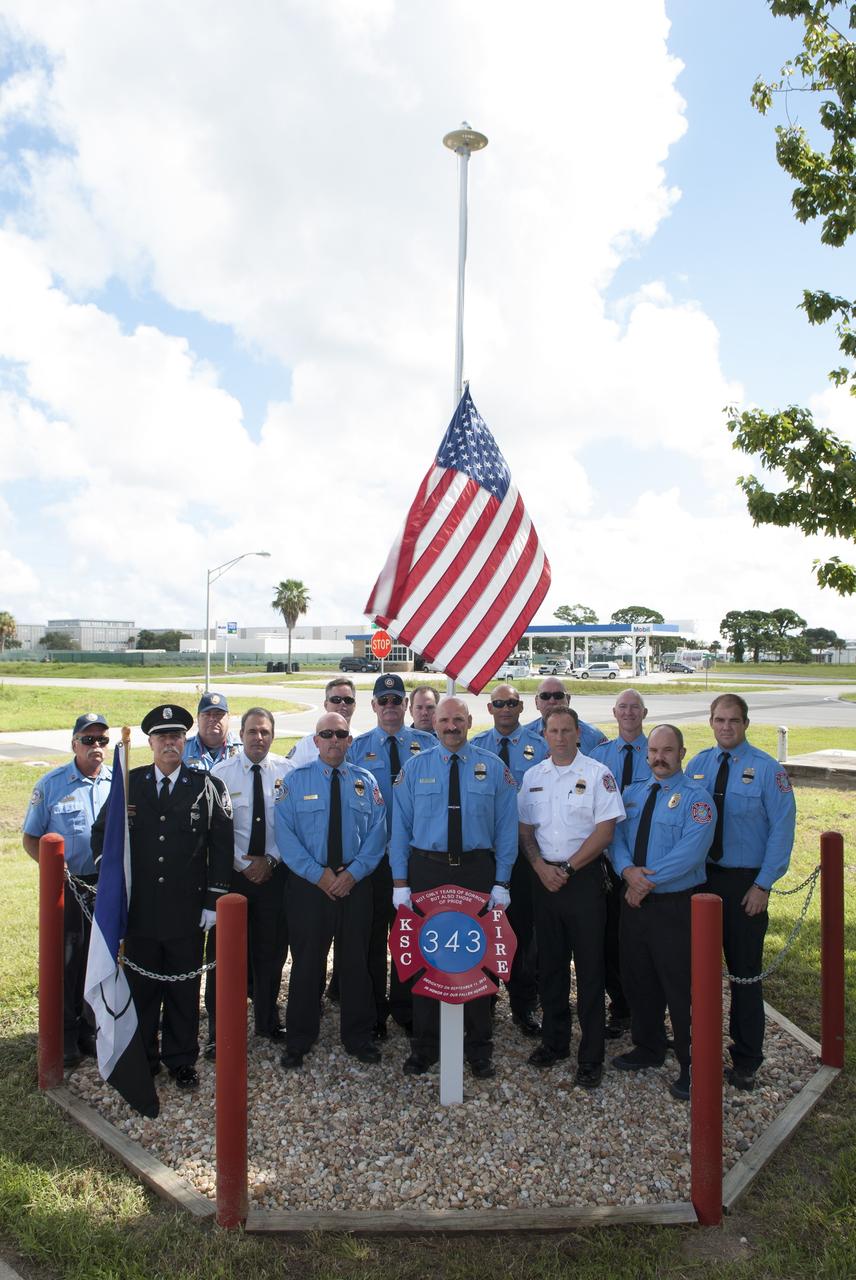
Cape Canaveral, Fla. – At Fire Station 1 at NASA’s Kennedy Space Center in Florida, Fire and Rescue personnel gathered near the 9/11 memorial after a ceremony commemorating the 13th anniversary of 9/11 with a ceremony that included a minute of silence at 10:28 a.m., which was the moment of collapse of the north tower of the World Trade Center. Photo credit: Jim Grossmann
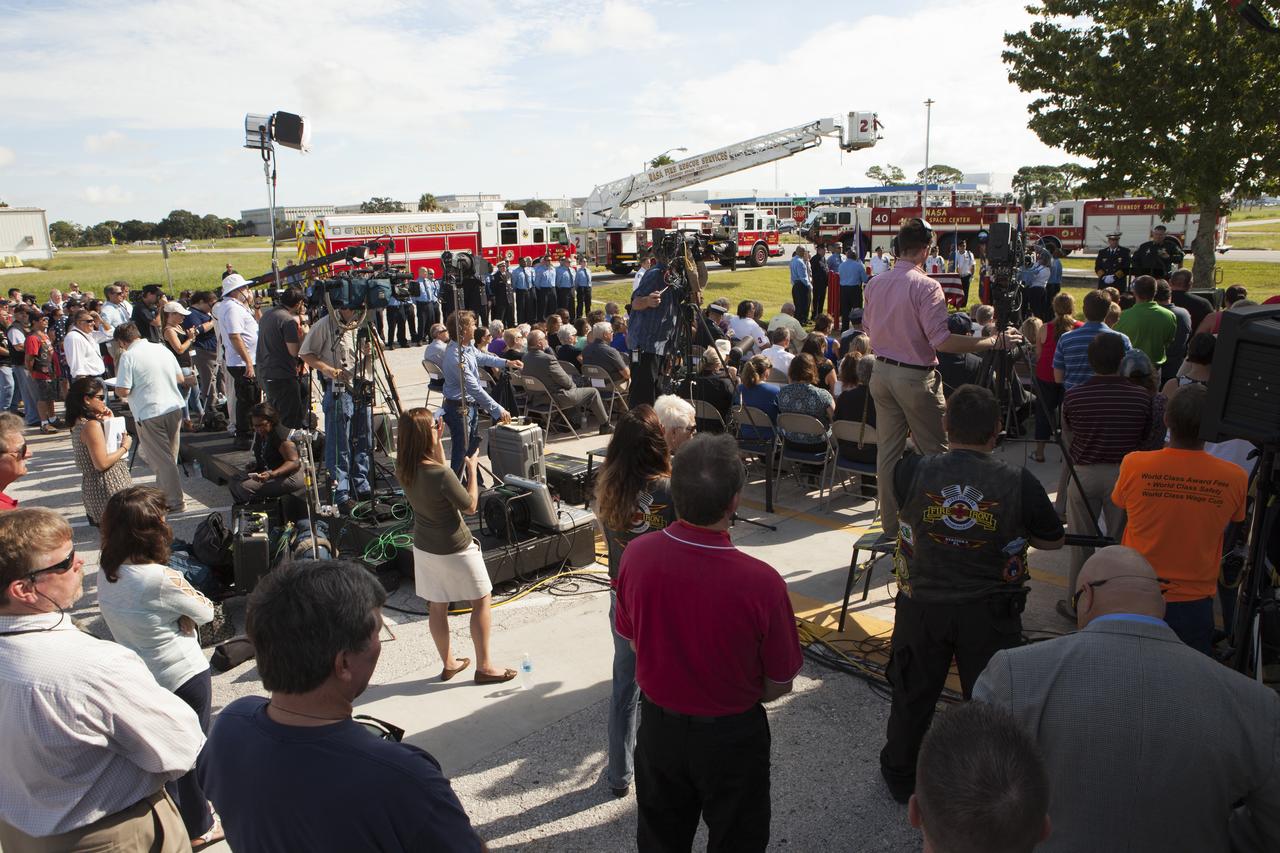
September 11 World Trade Center Beam Dedication Ceremony at Fire Station 1.
September 11 World Trade Center Beam Dedication Ceremony at Fire Station 1.
September 11 World Trade Center Beam Dedication Ceremony at Fire Station 1.
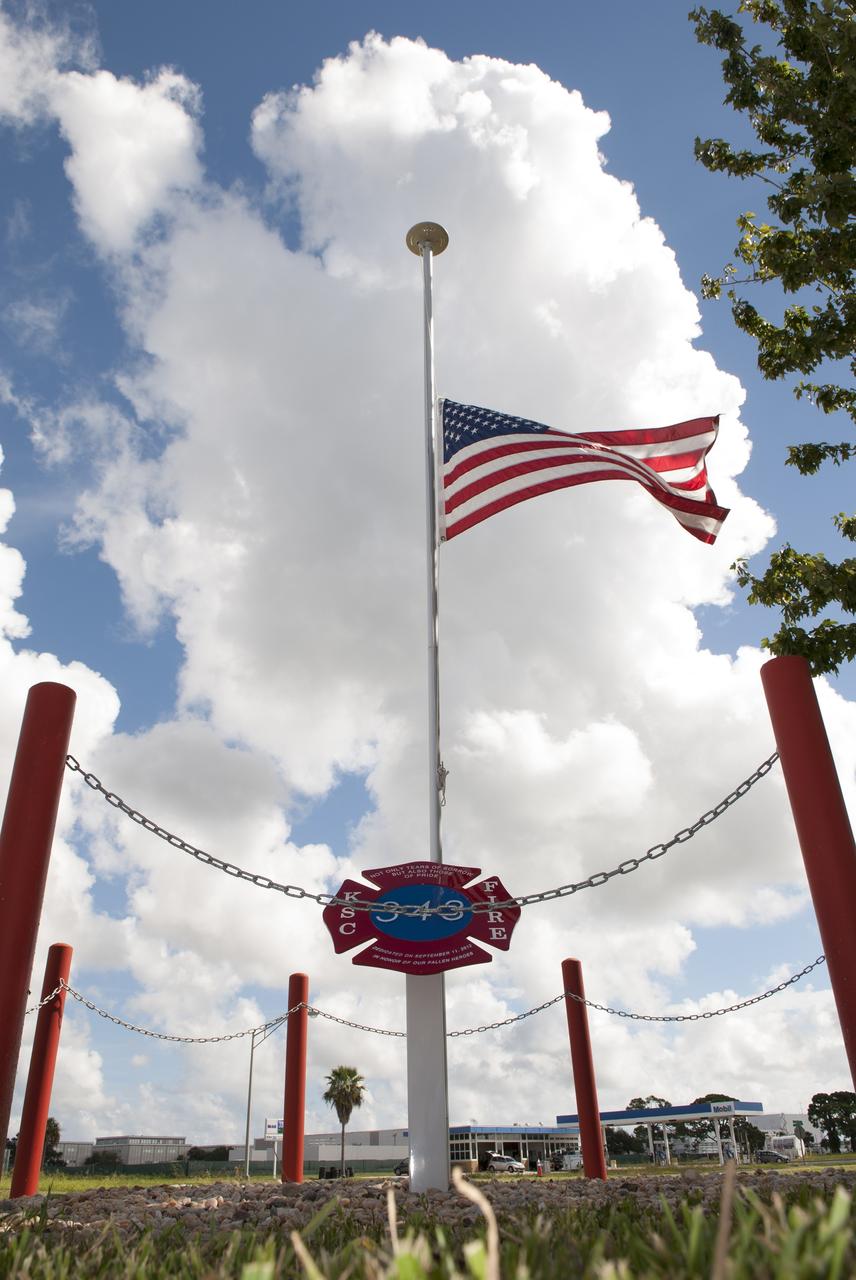
Cape Canaveral, Fla. – At Fire Station 1 at NASA’s Kennedy Space Center in Florida, the American flag is at half-mast after a ceremony commemorating the 13th anniversary of 9/11 that included a minute of silence at 10:28 a.m., which was the moment of collapse of the north tower of the World Trade Center. Photo credit: Jim Grossmann
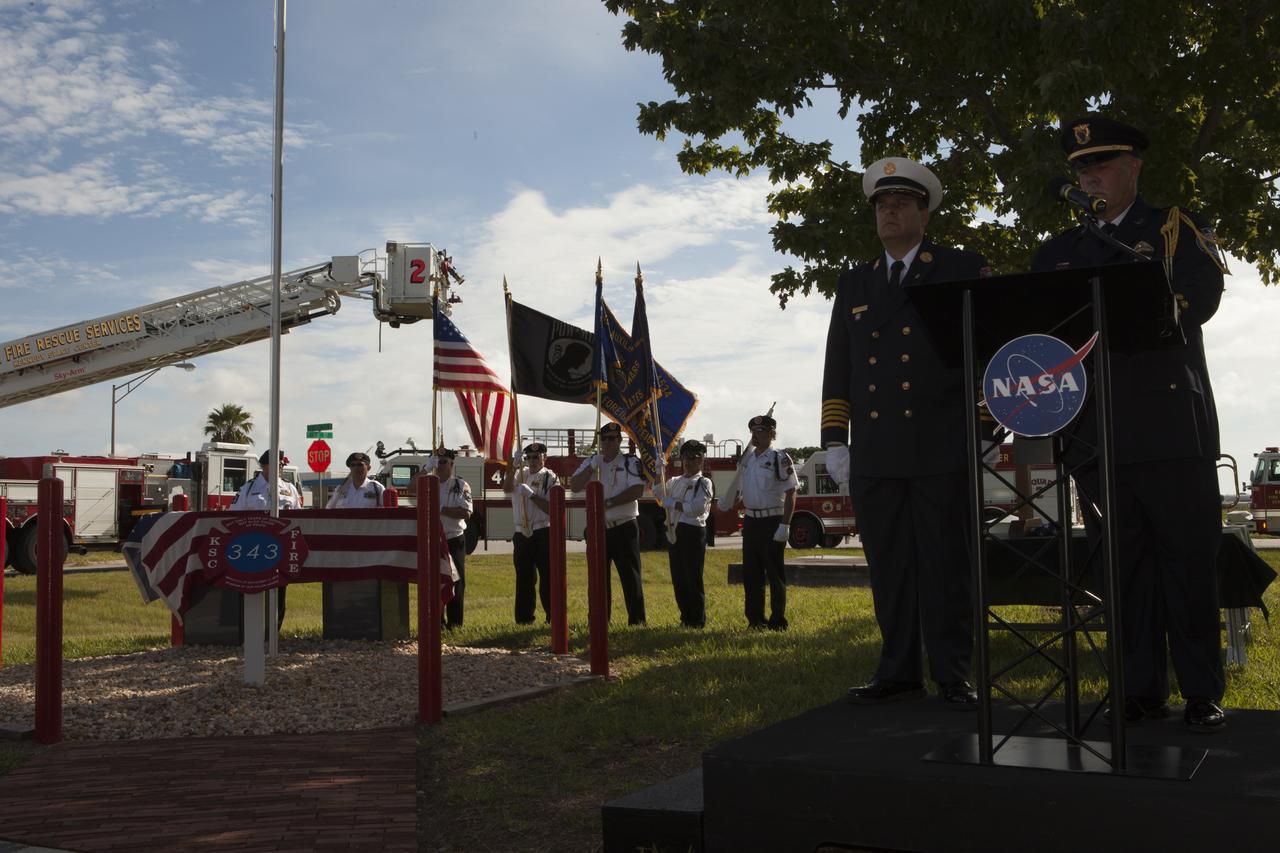
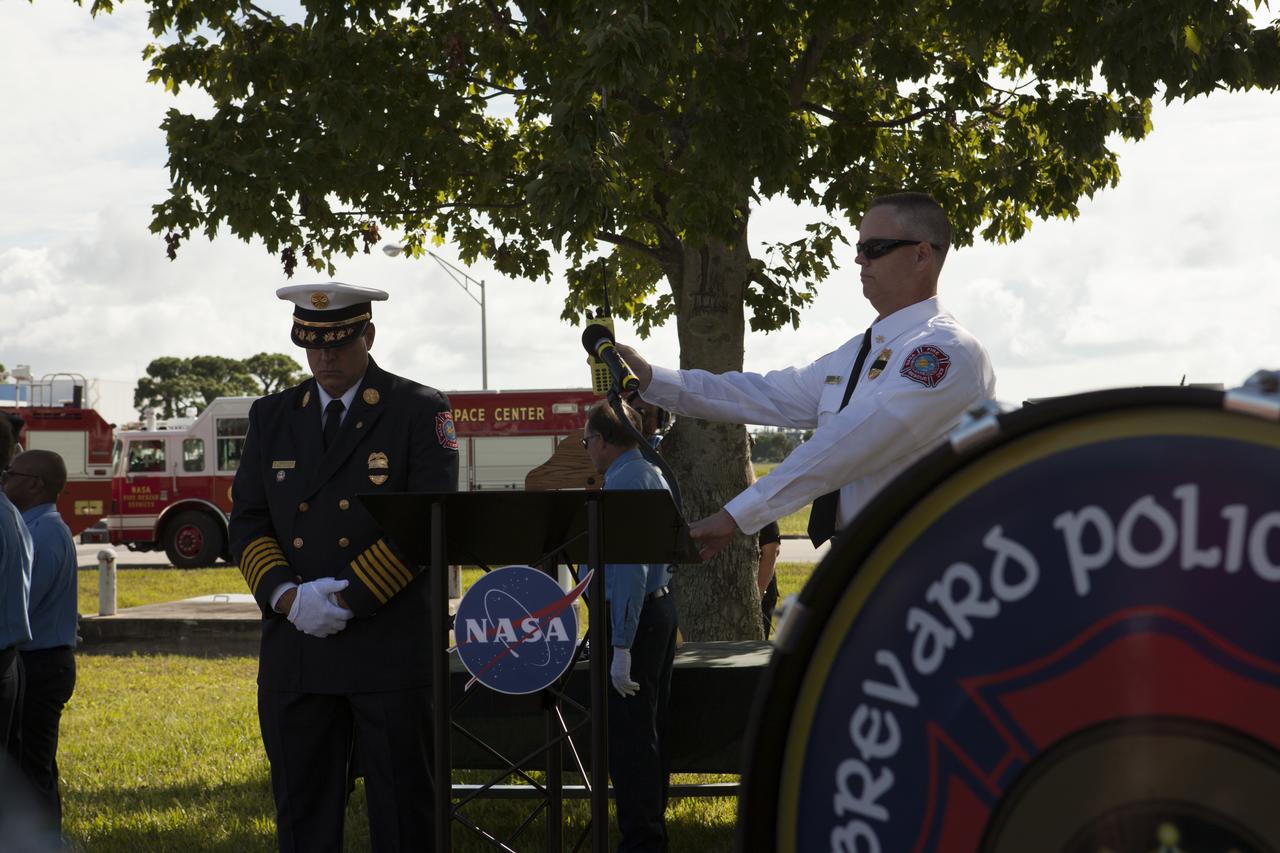
Rick Anderson, fire chief at NASA's Kennedy Space Center, on podium, left, and Lt. James Dumont lead the dedication service for a memorial to the343 first responder victims of the Sept. 11, 2001, terror attacks at Kennedy's Fire Station 1 on Sept. 11, 2015. The ceremony dedicated a monument that includes a section of steel I-beam from the World Trade Center in New York.
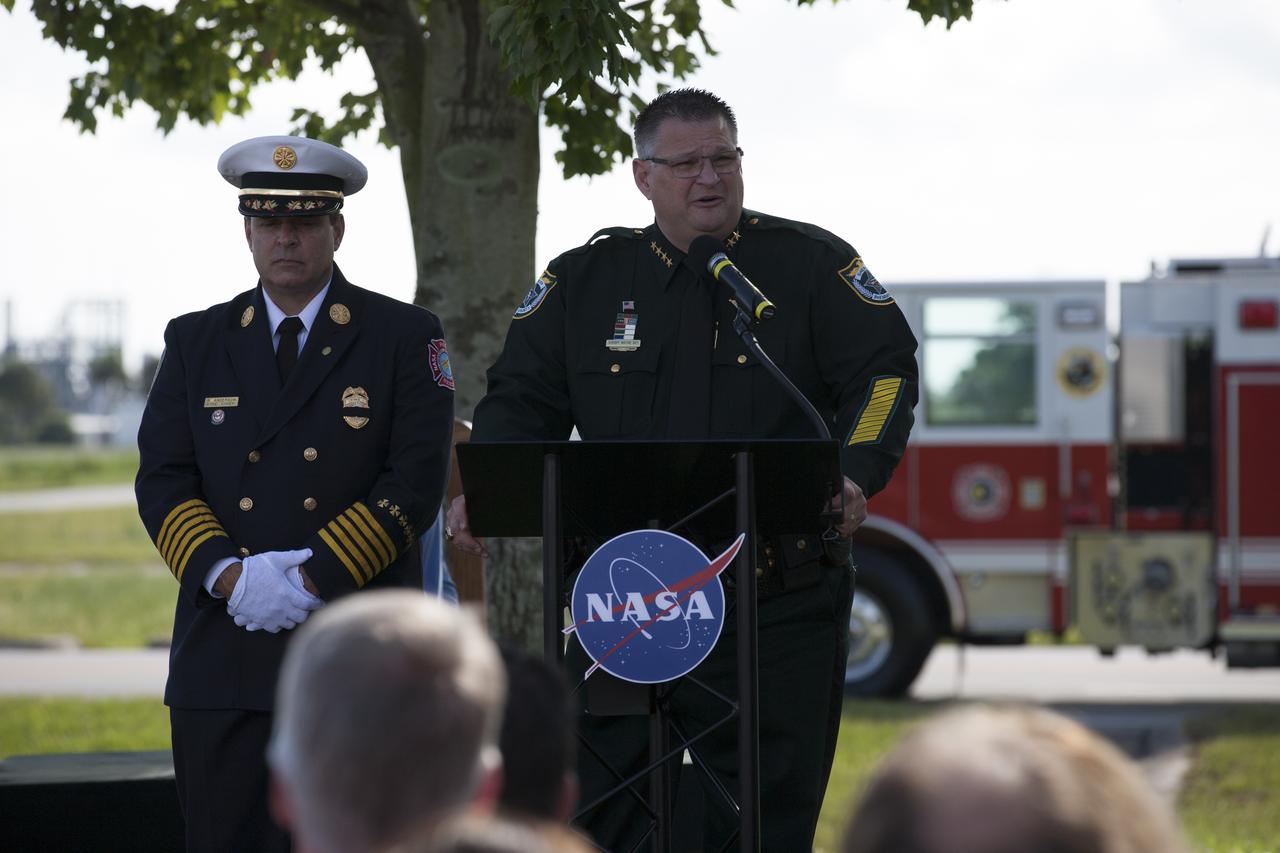
Rick Anderson, fire chief at NASA's Kennedy Space Center, on podium, left, and Brevard County Sheriff Wayne Ivey take part in the dedication service for a memorial to the 343 first responder victims of the Sept. 11, 2001, terror attacks at Kennedy's Fire Station 1 on Sept. 11, 2015. The ceremony dedicated a monument that includes a section of steel I-beam from the World Trade Center in New York.
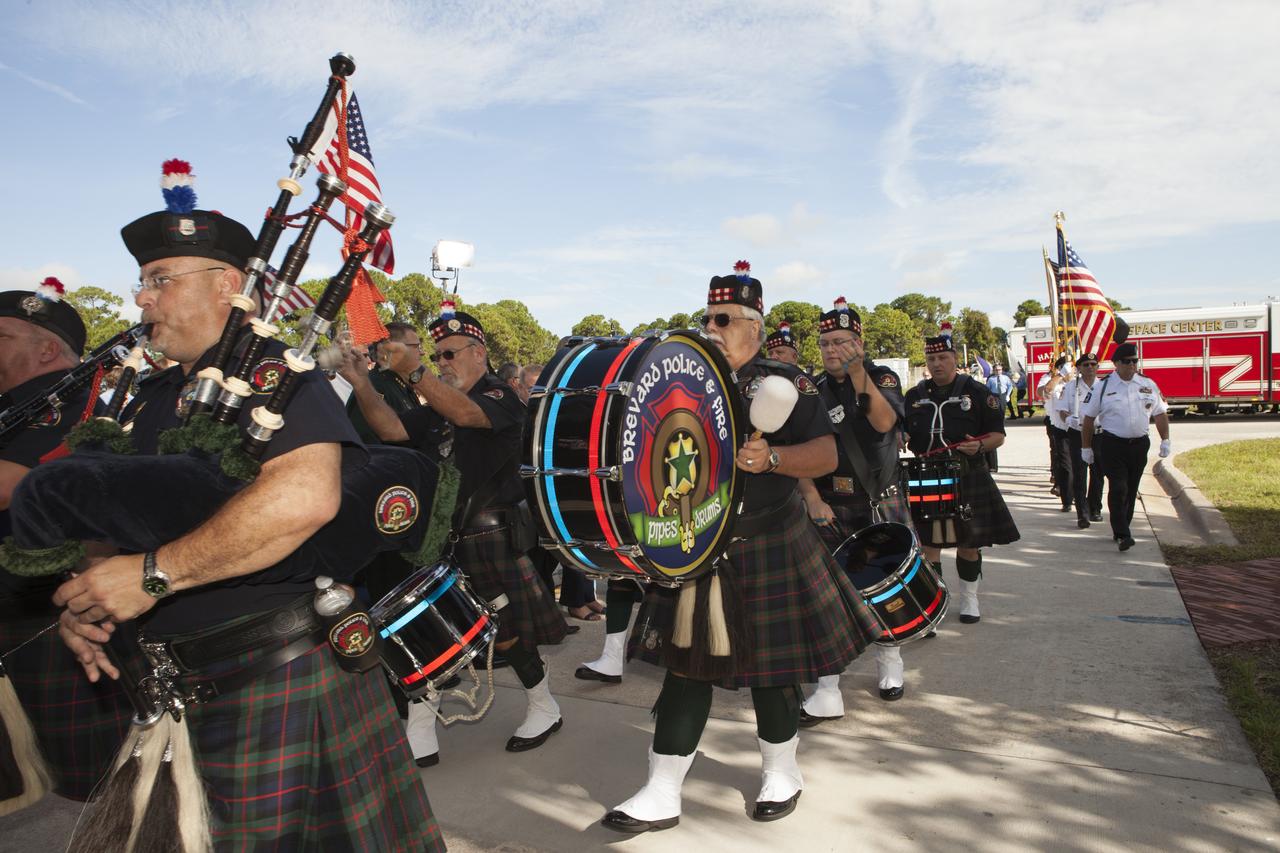
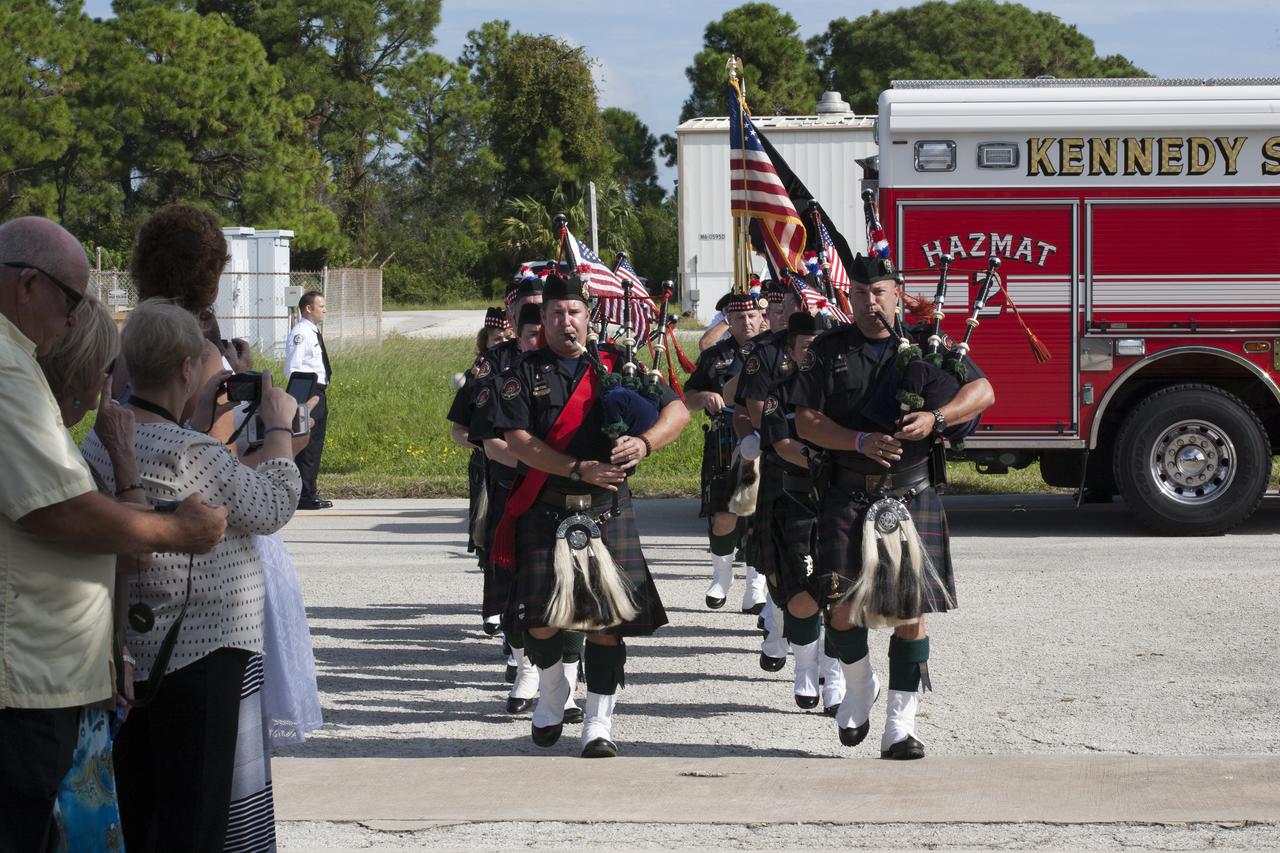
The Brevard Police and Fire Pipe and Drum corps open the dedication service for a memorial to the 343 first responder victims of the Sept. 11, 2001, terror attacks at Fire Station 1 at NASA's Kennedy Space Center on Sept. 11, 2015. The ceremony dedicated a monument that includes a section of steel I-beam from the World Trade Center in New York.
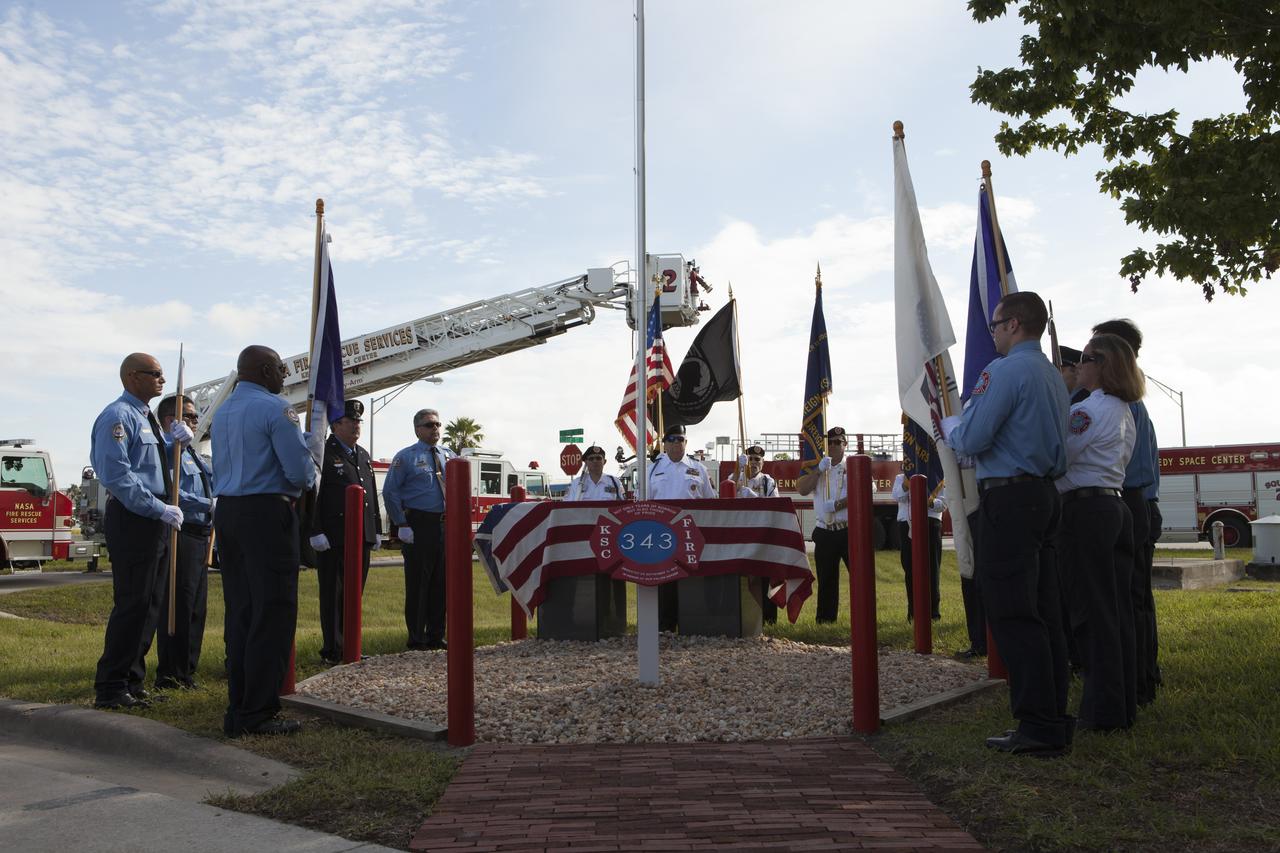
The honor guard for the Fire Department at NASA's Kennedy Space Center conducts the dedication service for a memorial to the 343 first responder victims of the Sept. 11, 2001, terror attacks at Fire Station 1 at Kennedy on Sept. 11, 2015. The ceremony dedicated a monument that includes a section of steel I-beam from the World Trade Center in New York.
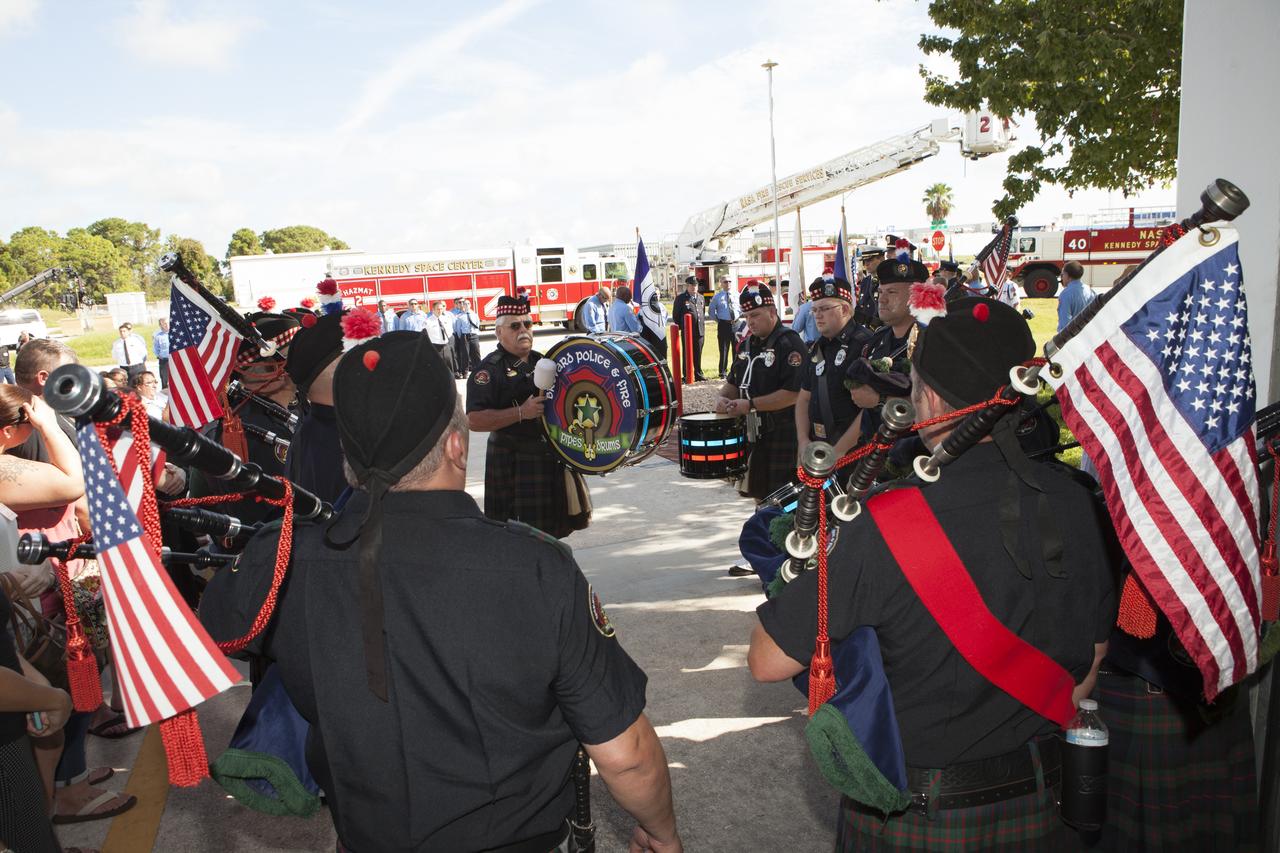
The Brevard Police and Fire Pipe and Drum corps perform during the dedication service for a memorial to the 343 first responder victims of the Sept. 11, 2001, terror attacks at Fire Station 1 at NASA's Kennedy Space Center on Sept. 11, 2015. The ceremony dedicated a monument that includes a section of steel I-beam from the World Trade Center in New York.
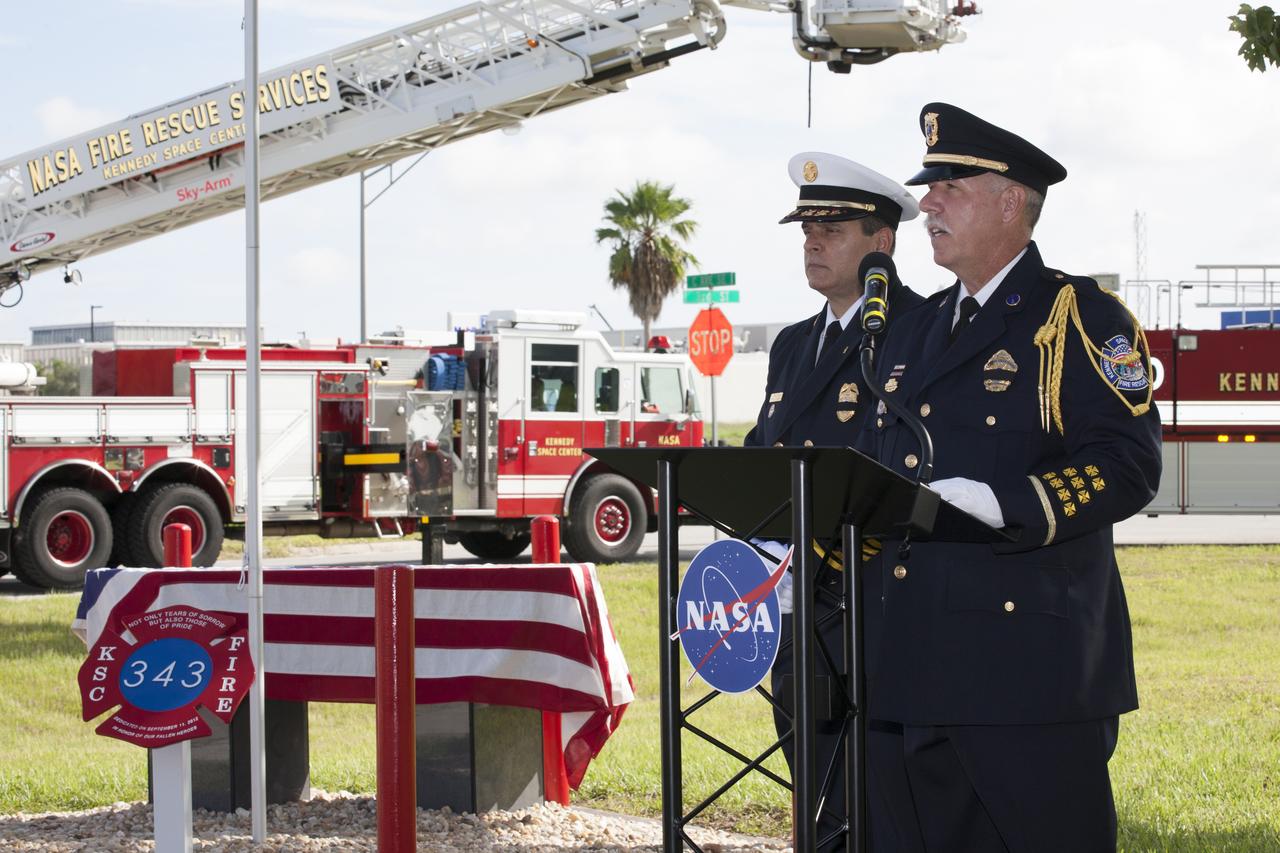
Rick Anderson, fire chief at NASA's Kennedy Space Center, on podium, left, and Lt. James Dumont lead the dedication service for a memorial to the 343 first responder victims of the Sept. 11, 2001, terror attacks at Kennedy's Fire Station 1 on Sept. 11, 2015. The ceremony dedicated a monument that includes a section of steel I-beam from the World Trade Center in New York.
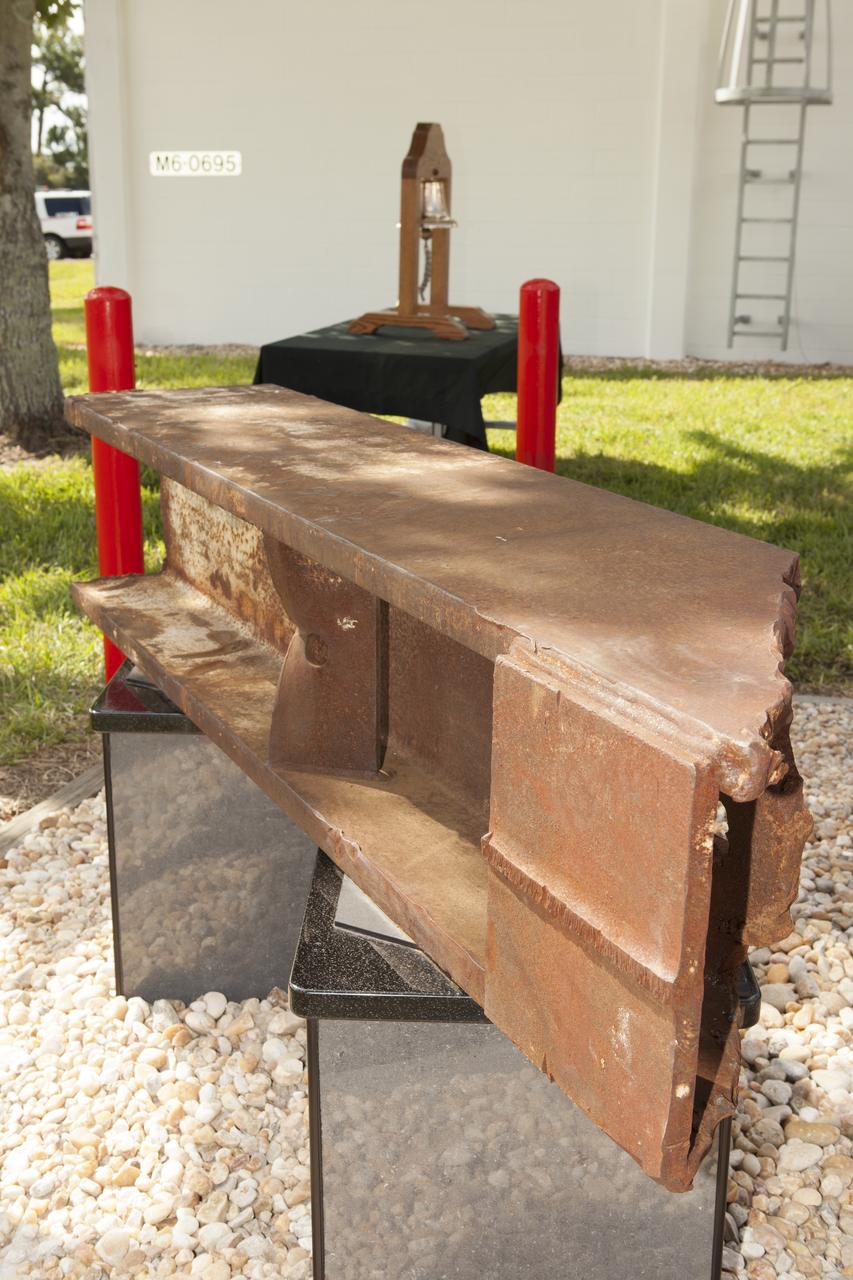
A memorial to the 343 first responder victims of the Sept. 11, 2001, terror attacks stands at Fire Station 1 at NASA's Kennedy Space Center during its dedication on Sept. 11, 2015. A section of steel I-beam from the World Trade Center in New York forms the centerpiece of the monument.
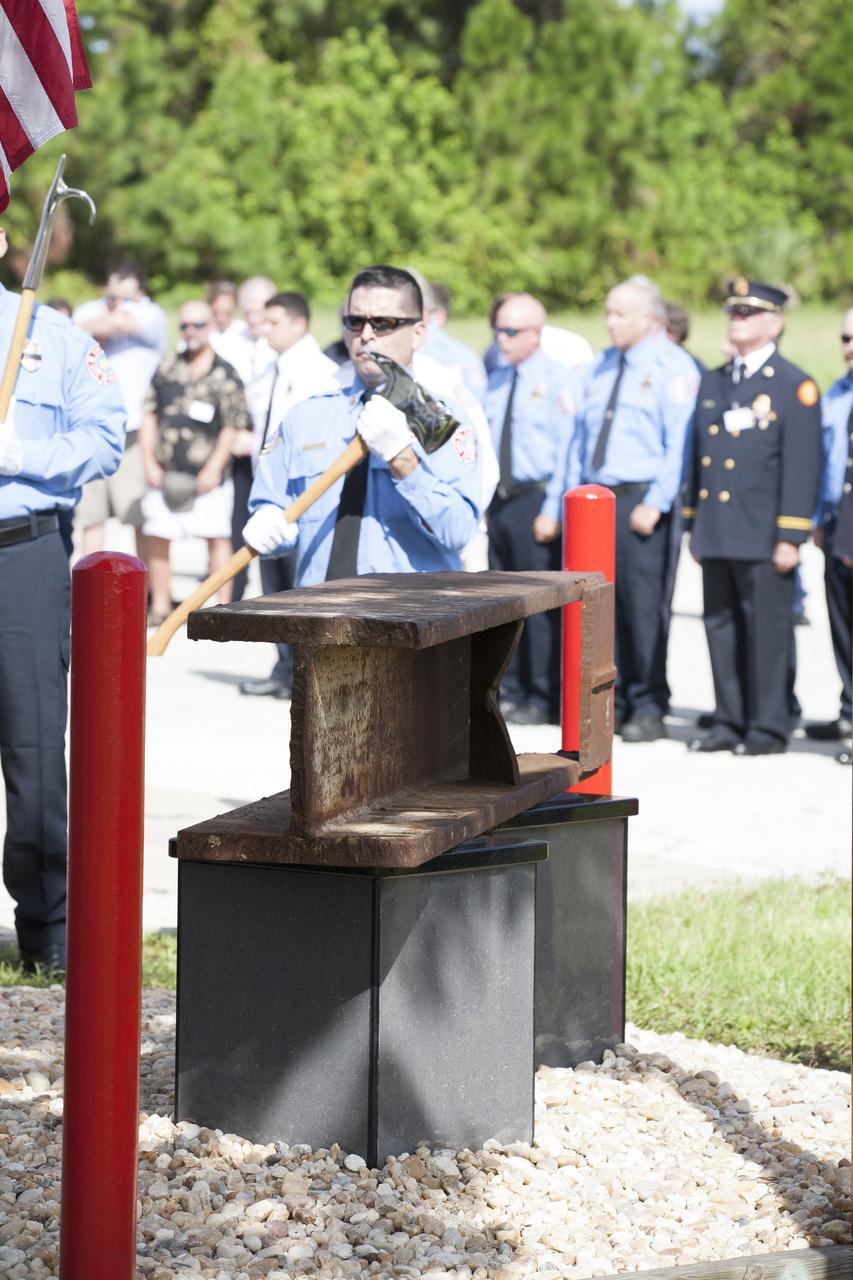
A memorial to the 343 first responder victims of the Sept. 11, 2001, terror attacks stands at Fire Station 1 at NASA's Kennedy Space Center during its dedication on Sept. 11, 2015. A section of steel I-beam from the World Trade Center in New York forms the centerpiece of the monument.
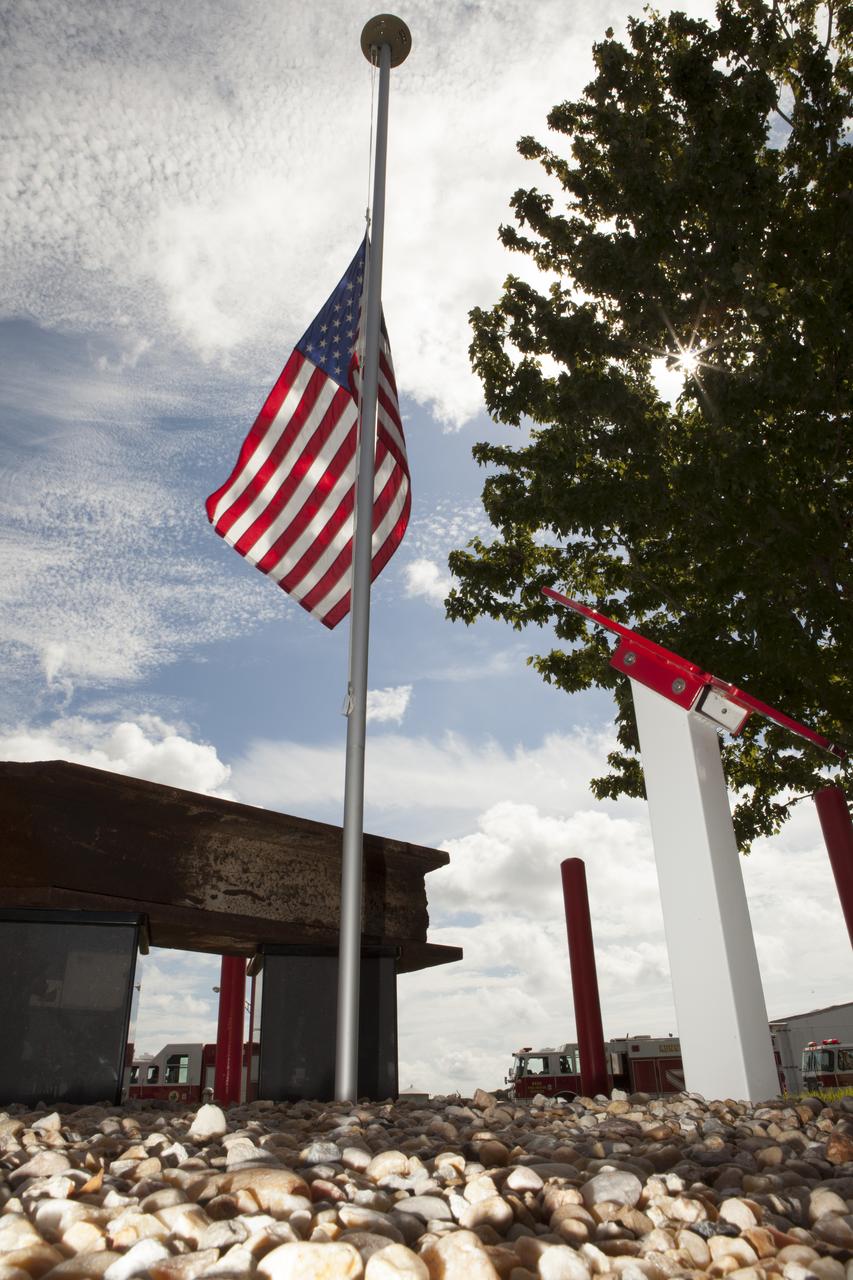
A memorial to the 343 first responder victims of the Sept. 11, 2001, terror attacks stands at Fire Station 1 at NASA's Kennedy Space Center during its dedication on Sept. 11, 2015. A section of steel I-beam from the World Trade Center in New York forms the centerpiece of the monument.
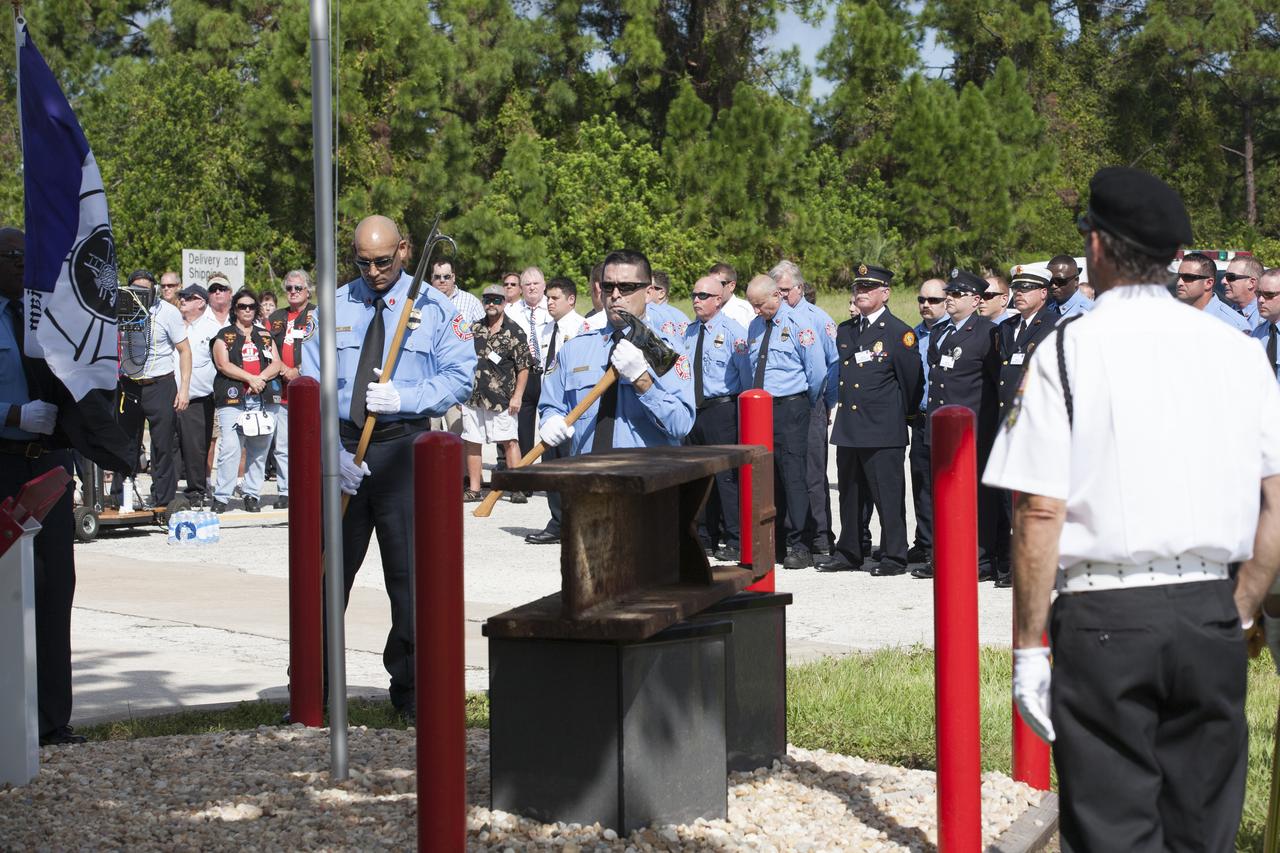
Firefighters stand at attention as a memorial to the 343 first responder victims of the Sept. 11, 2001, terror attacks is dedicated at Fire Station 1 at NASA's Kennedy Space Center on Sept. 11, 2015. A section of steel I-beam from the World Trade Center in New York forms the centerpiece of the monument.
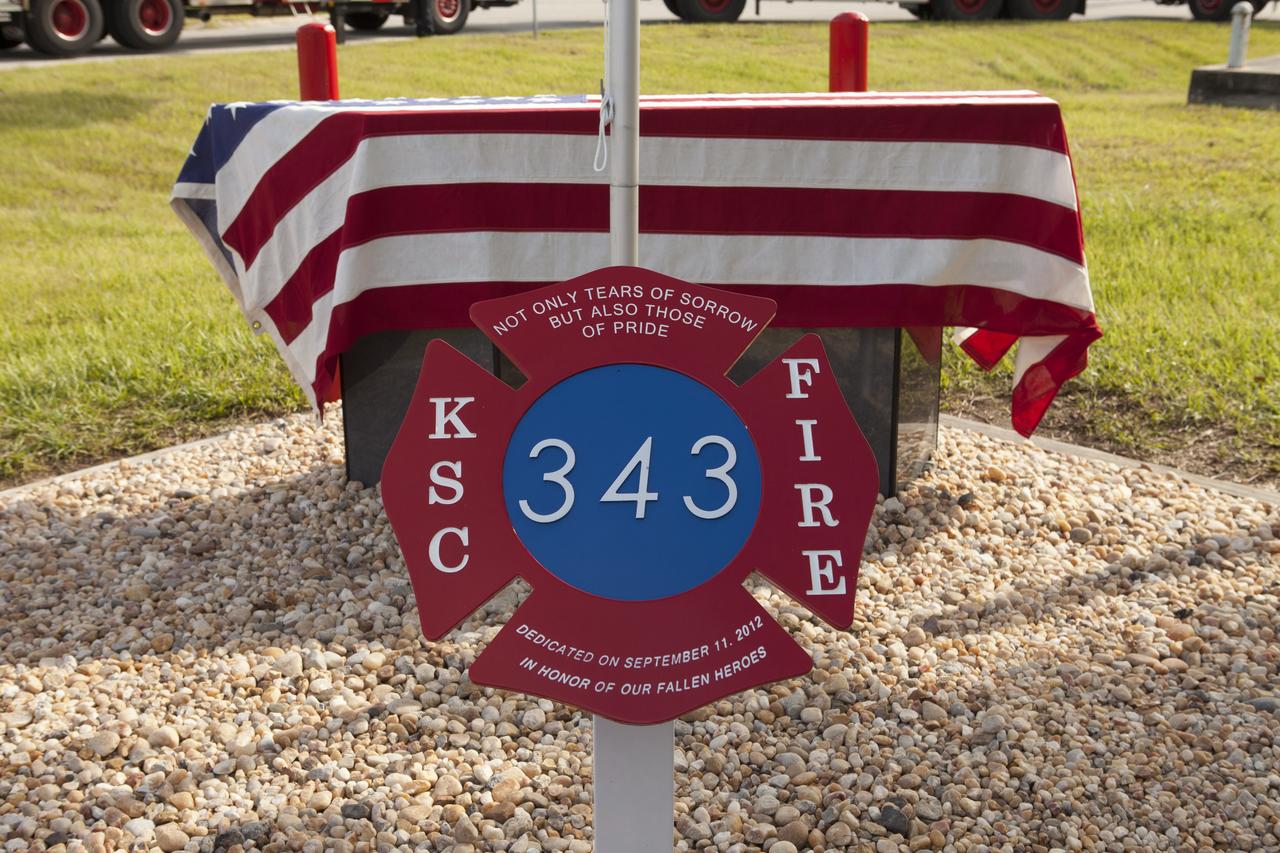
A memorial to the 343 first responder victims of the Sept. 11, 2001, terror attacks stands at Fire Station 1 at NASA's Kennedy Space Center prior to its dedication on Sept. 11, 2015. Beneath the American flag is a section of steel I-beam from the World Trade Center in New York that forms the centerpiece of the monument.
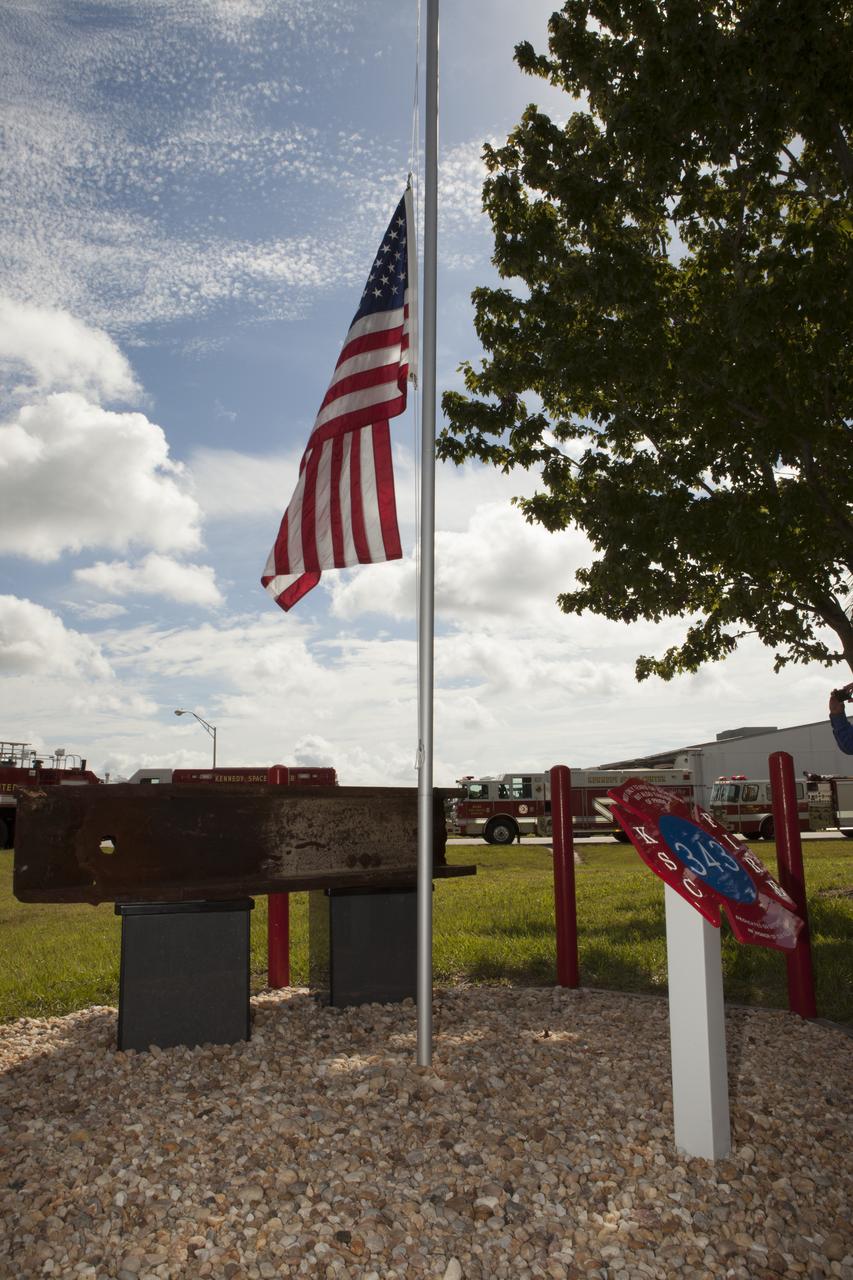
A memorial to the 343 first responder victims of the Sept. 11, 2001, terror attacks stands at Fire Station 1 at NASA's Kennedy Space Center during its dedication on Sept. 11, 2015. A section of steel I-beam from the World Trade Center in New York forms the centerpiece of the monument.
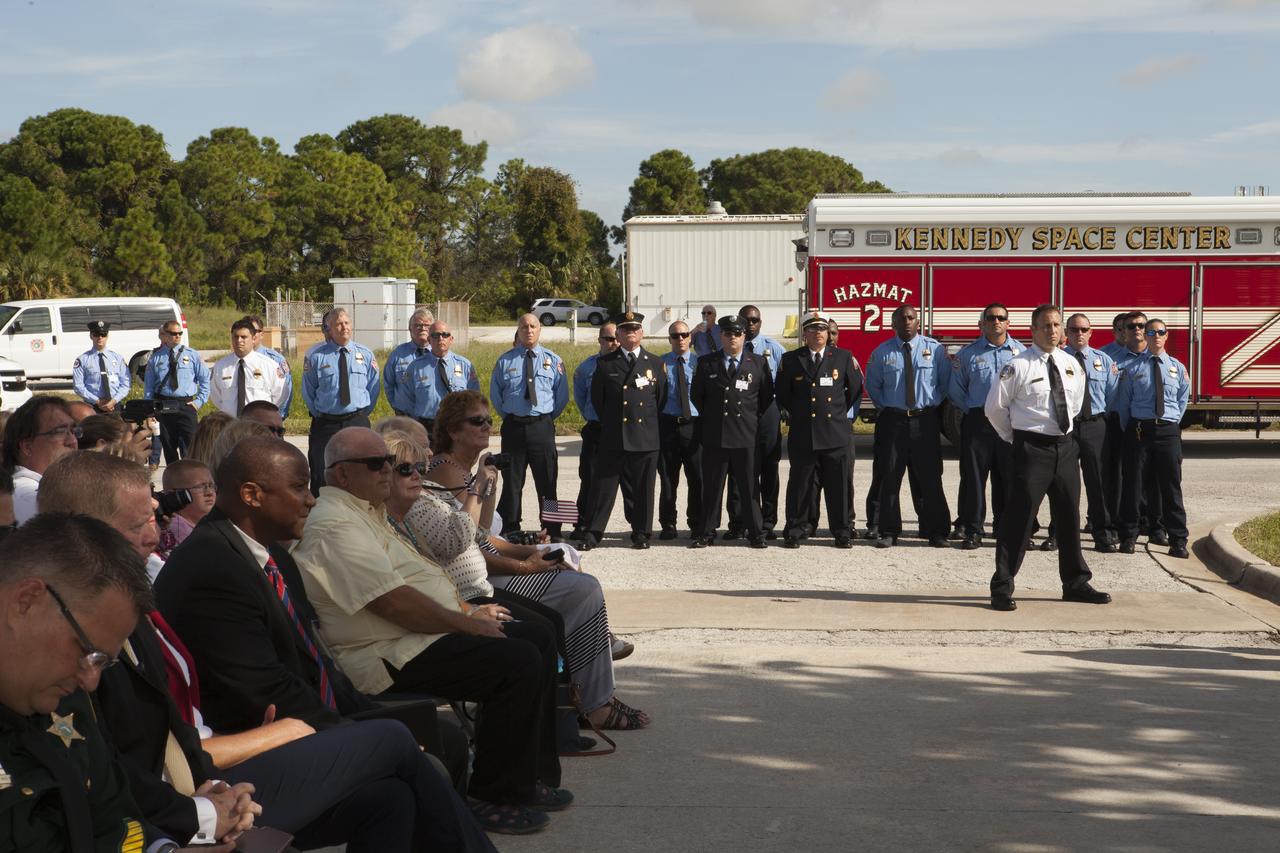
Officials and firefighters at NASA's Kennedy Space Center observe the dedication service for a memorial to the 343 first responder victims of the Sept. 11, 2001, terror attacks at Fire Station 1 at Kennedy on Sept. 11, 2015. The ceremony dedicated a monument that includes a section of steel I-beam from the World Trade Center in New York.
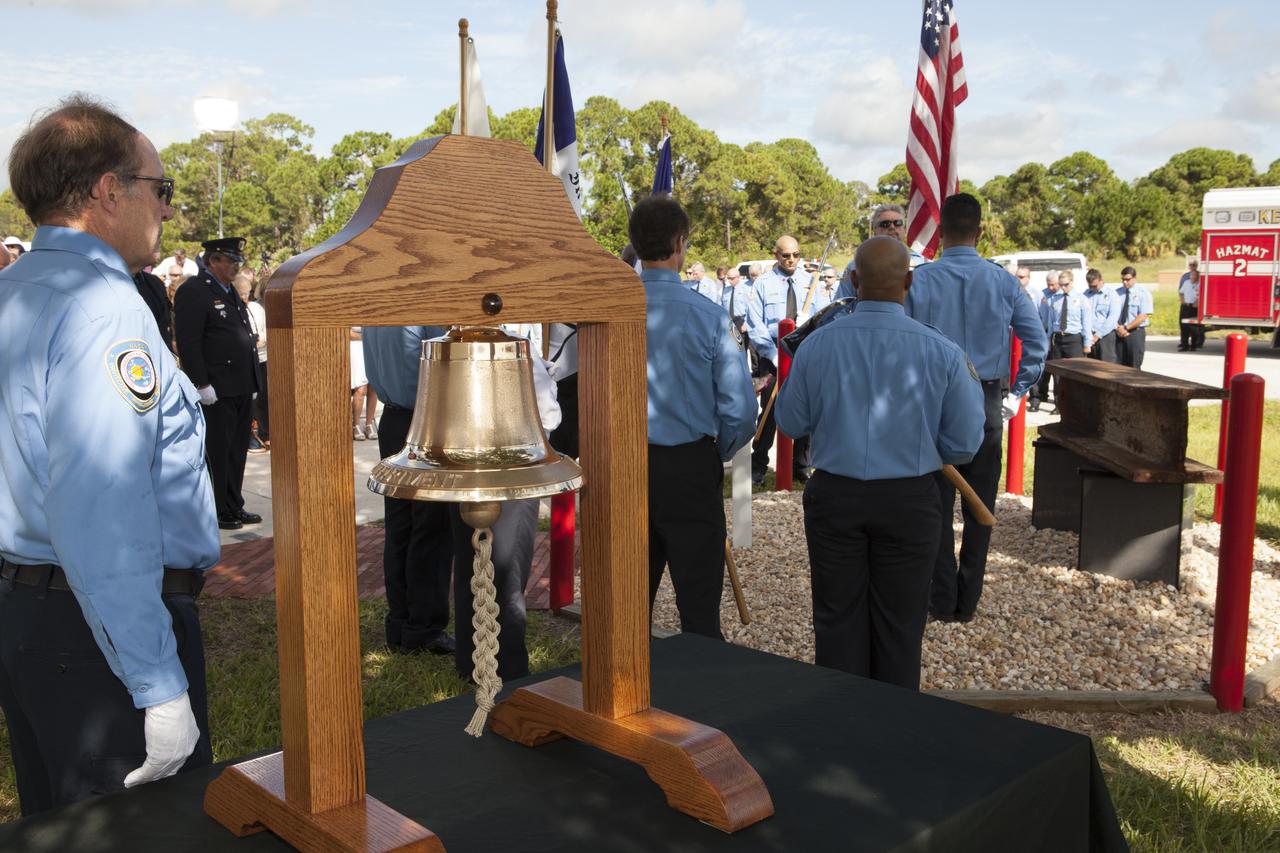
Firefighters stand at attention as a memorial to the 343 first responder victims of the Sept. 11, 2001, terror attacks is dedicated at Fire Station 1 at NASA's Kennedy Space Center on Sept. 11, 2015. A section of steel I-beam from the World Trade Center in New York forms the centerpiece of the monument.
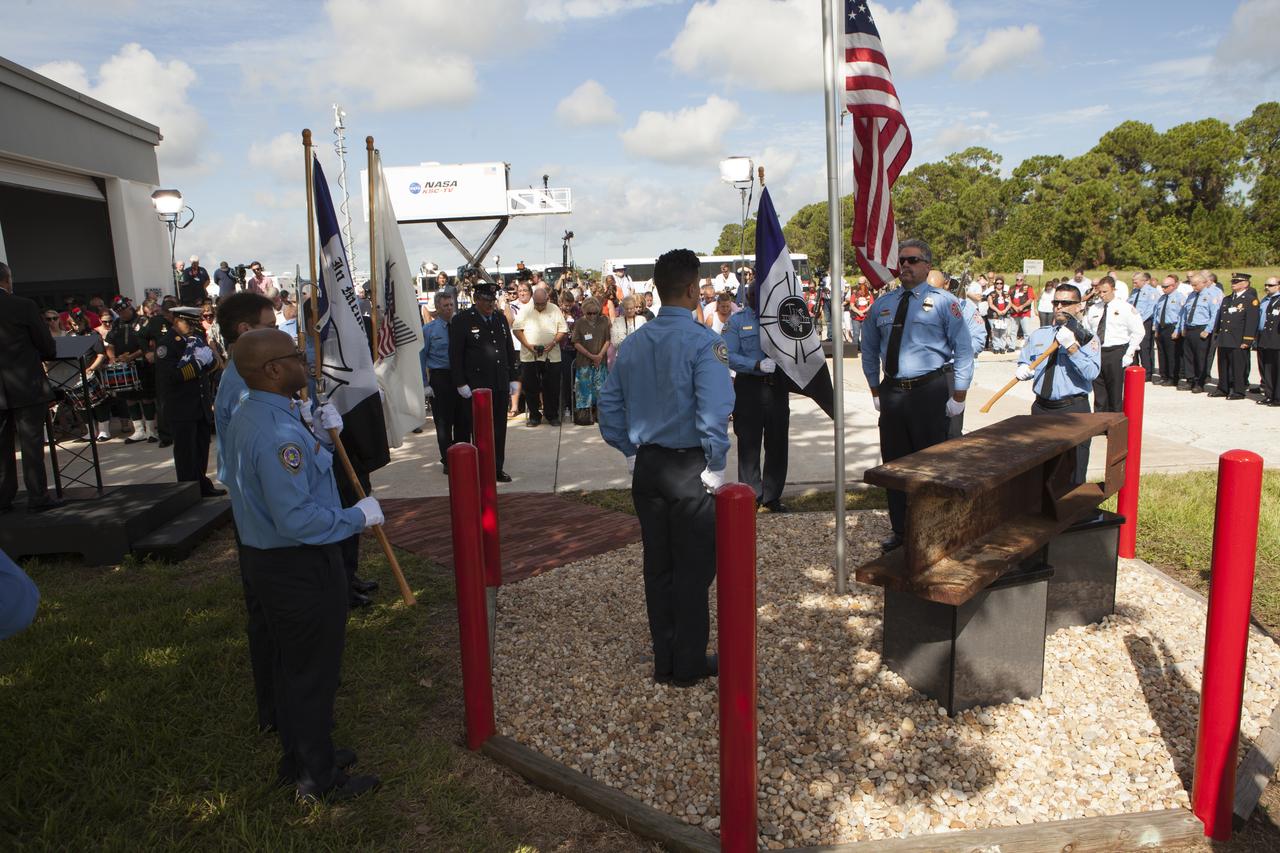
Firefighters stand at attention as a memorial to the 343 first responder victims of the Sept. 11, 2001, terror attacks is dedicated at Fire Station 1 at NASA's Kennedy Space Center on Sept. 11, 2015. A section of steel I-beam from the World Trade Center in New York forms the centerpiece of the monument.
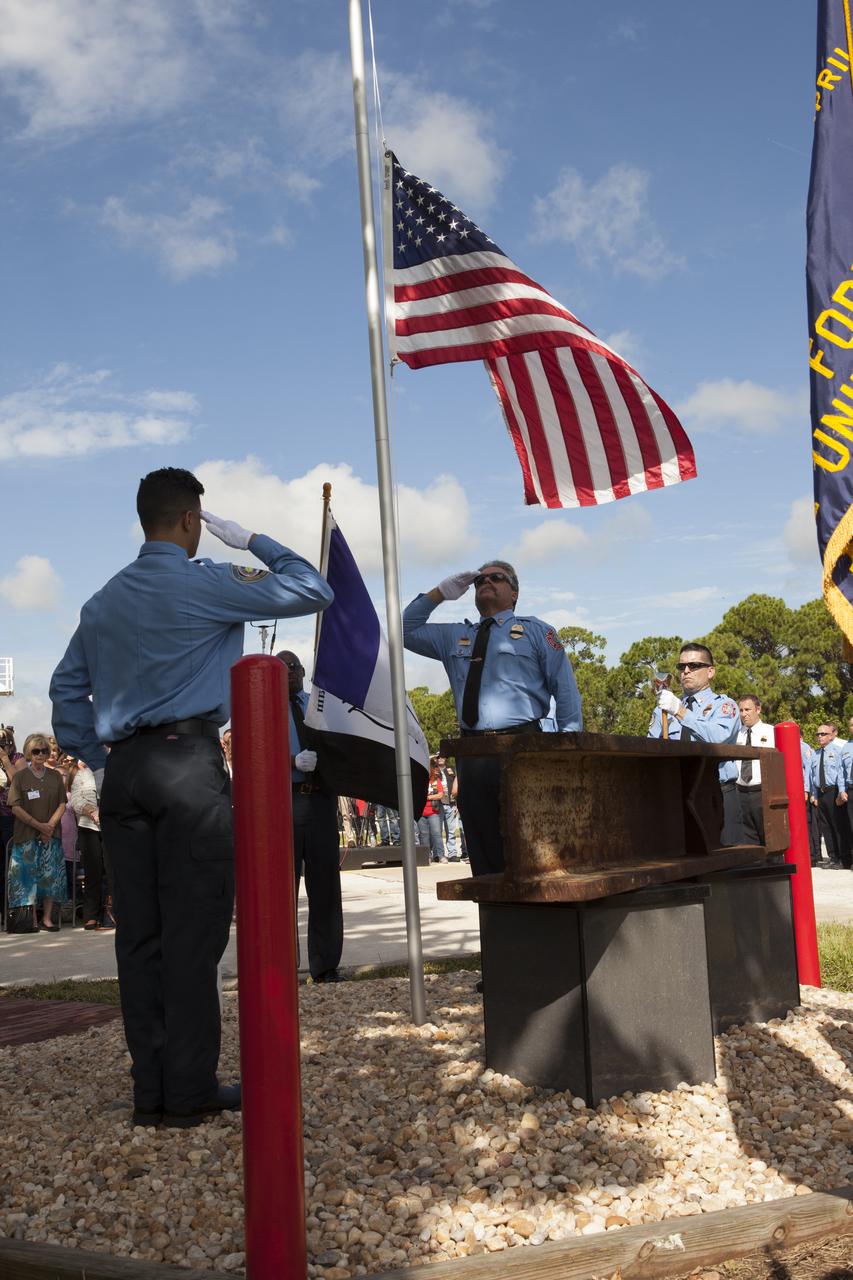
Firefighters place the American flag at half-staff during dedication services for a memorial to the 343 first responder victims of the Sept. 11, 2001, terror attacks at Fire Station 1 at NASA's Kennedy Space Center on Sept. 11, 2015. A section of steel I-beam from the World Trade Center in New York forms the centerpiece of the monument.
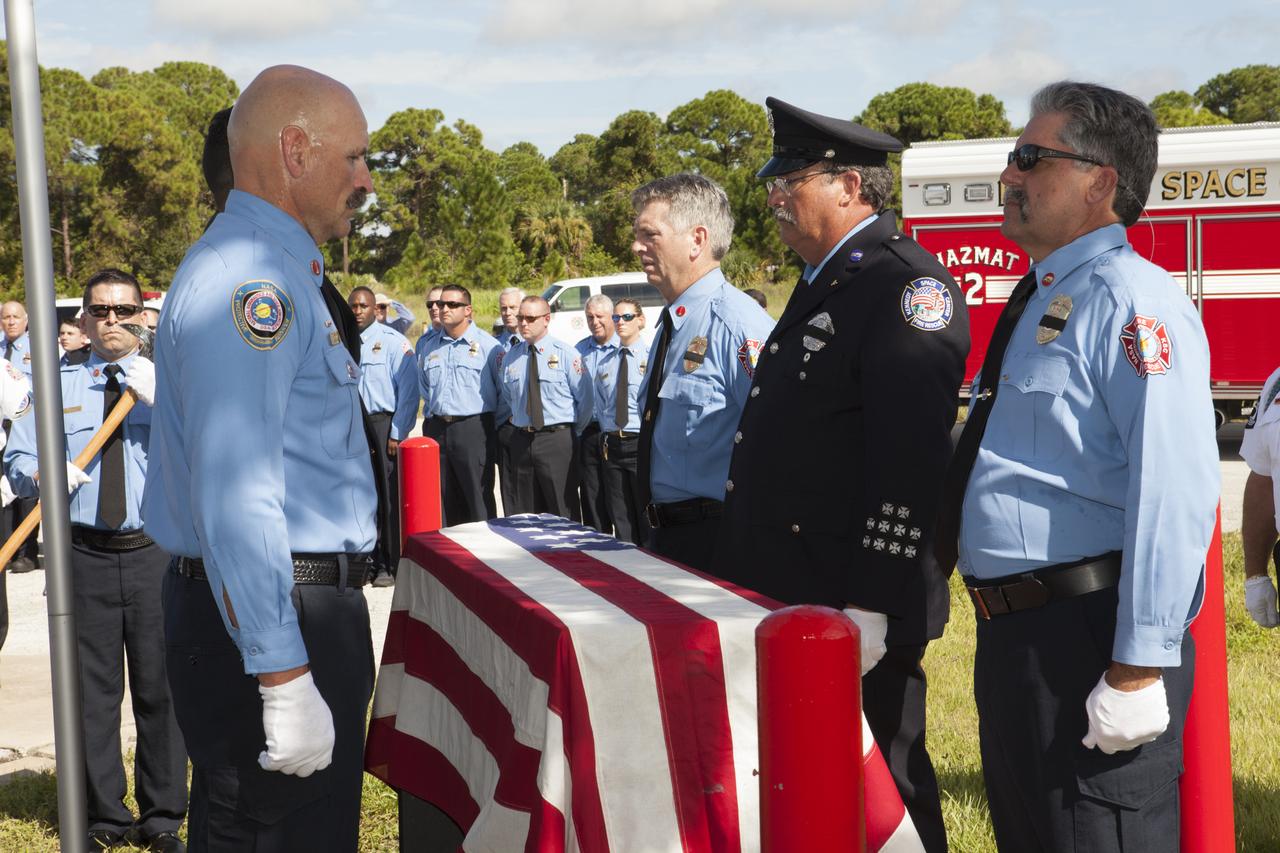
An honor guard prepares to fold an American flag during the dedication service for a memorial to the 343 first responder victims of the Sept. 11, 2001, terror attacks at Fire Station 1 at NASA's Kennedy Space Center on Sept. 11, 2015. The ceremony dedicated a monument that includes a section of steel I-beam from the World Trade Center in New York.
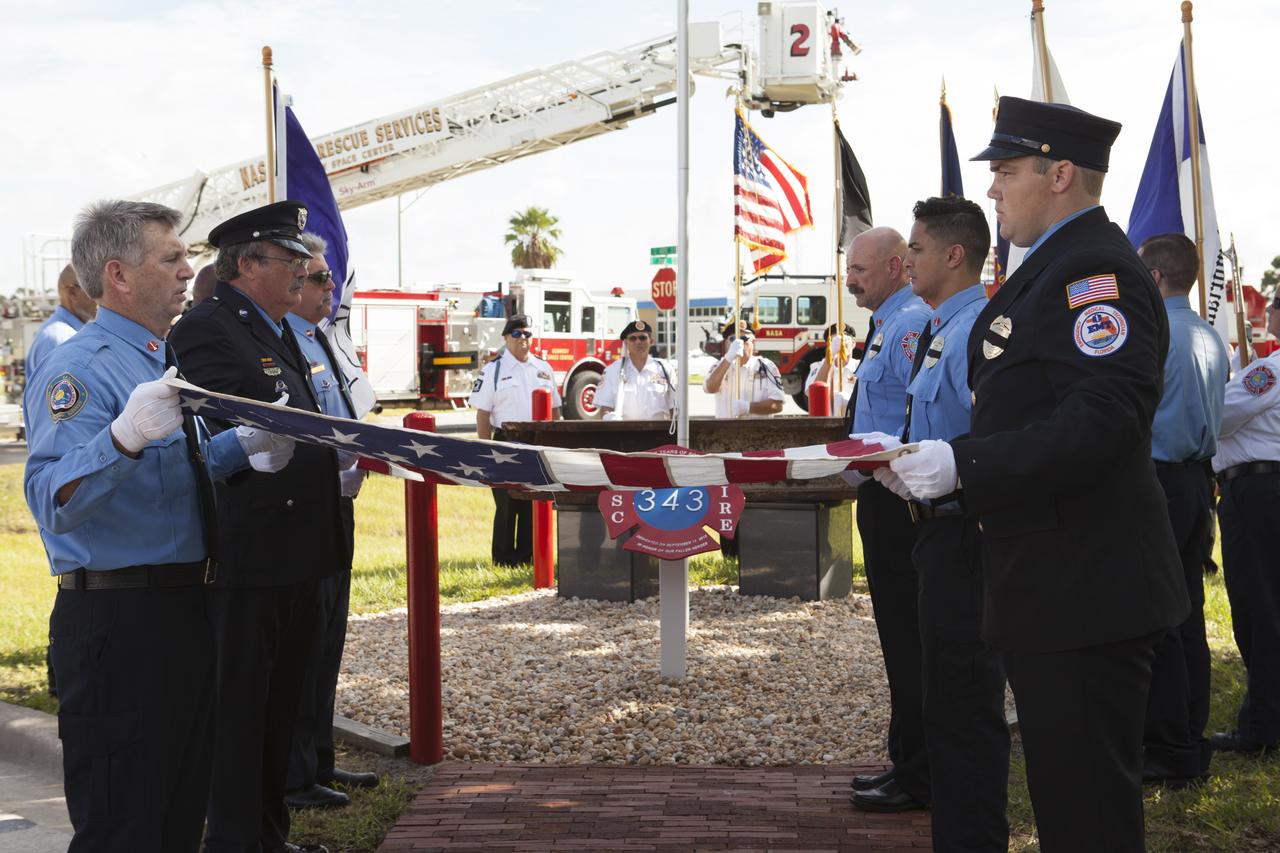
An honor guard folds an American flag during the dedication service for a memorial to the 343 first responder victims of the Sept. 11, 2001, terror attacks at Fire Station 1 at NASA's Kennedy Space Center on Sept. 11, 2015. The ceremony dedicated a monument that includes a section of steel I-beam from the World Trade Center in New York.
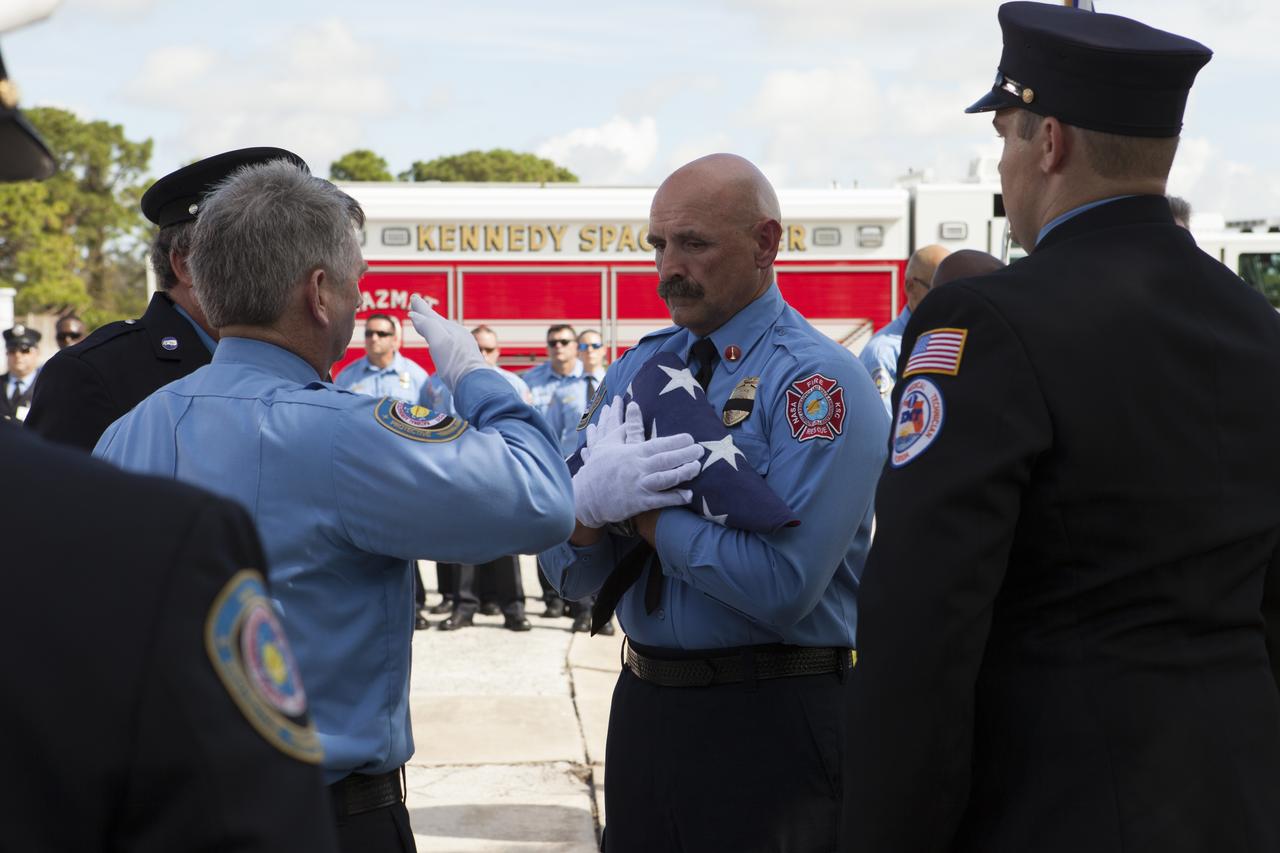
An honor guard folds an American flag during the dedication service for a memorial to the 343 first responder victims of the Sept. 11, 2001, terror attacks at Fire Station 1 at NASA's Kennedy Space Center on Sept. 11, 2015. The ceremony dedicated a monument that includes a section of steel I-beam from the World Trade Center in New York.
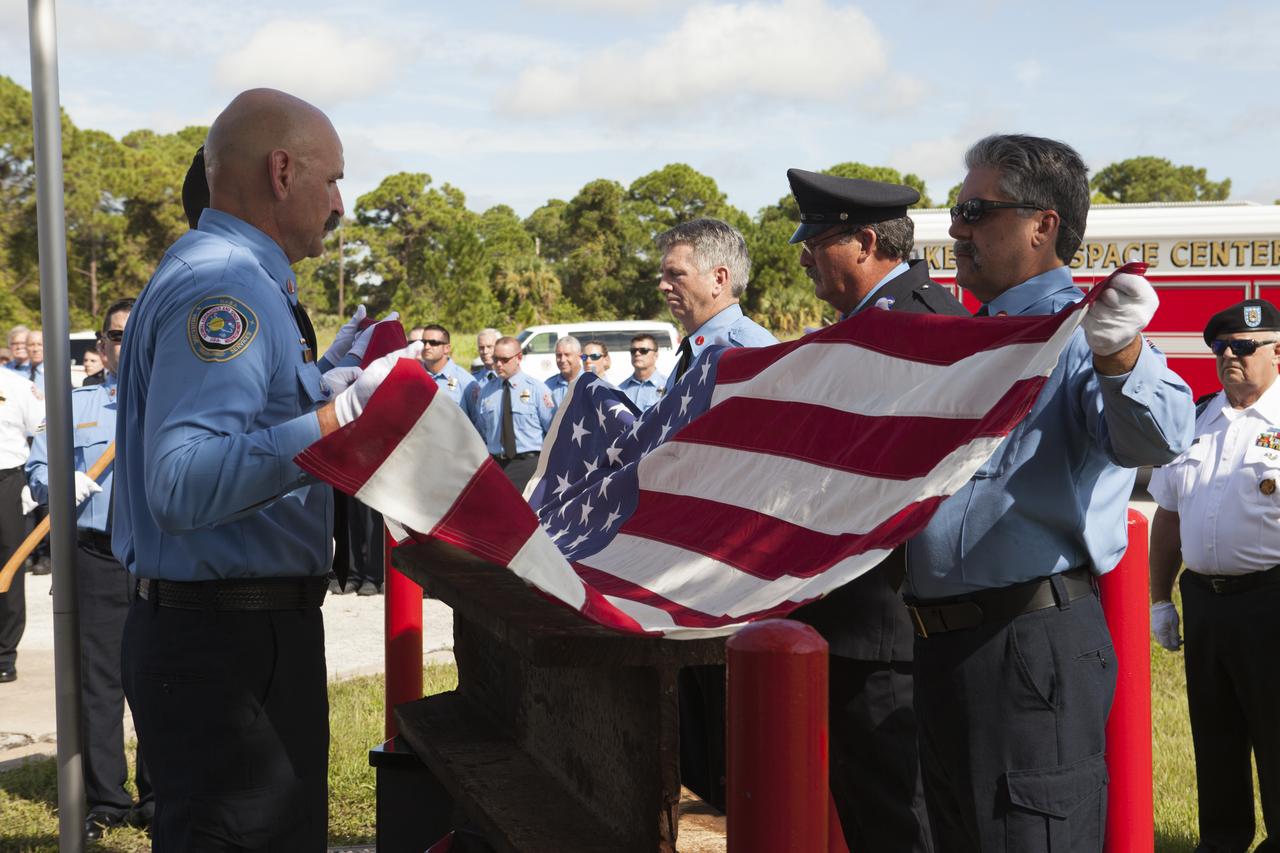
An honor guard folds an American flag during the dedication service for a memorial to the 343 first responder victims of the Sept. 11, 2001, terror attacks at Fire Station 1 at NASA's Kennedy Space Center on Sept. 11, 2015. The ceremony dedicated a monument that includes a section of steel I-beam from the World Trade Center in New York.
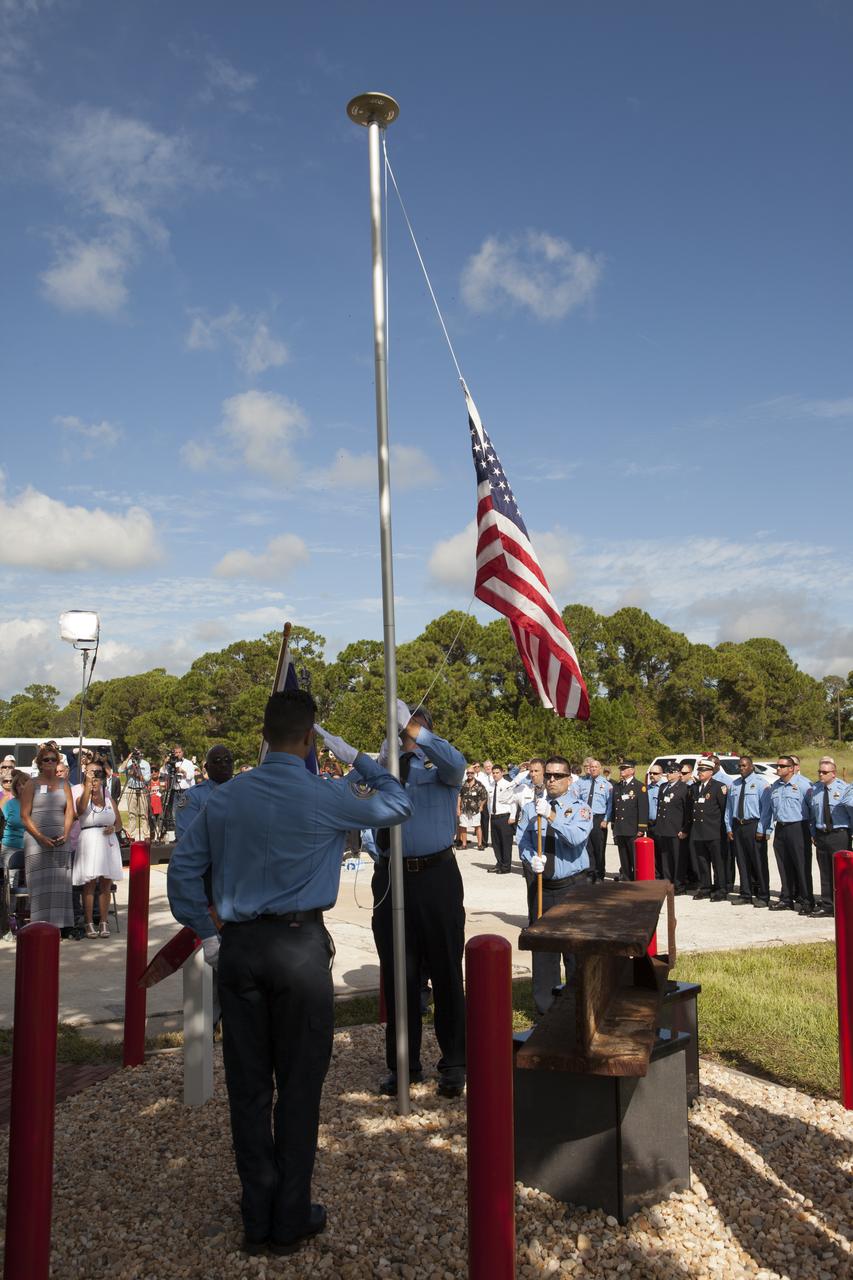
Firefighters place the American flag at half-staff during dedication services for a memorial to the 343 first responder victims of the Sept. 11, 2001, terror attacks at Fire Station 1 at NASA's Kennedy Space Center on Sept. 11, 2015. A section of steel I-beam from the World Trade Center in New York forms the centerpiece of the monument.
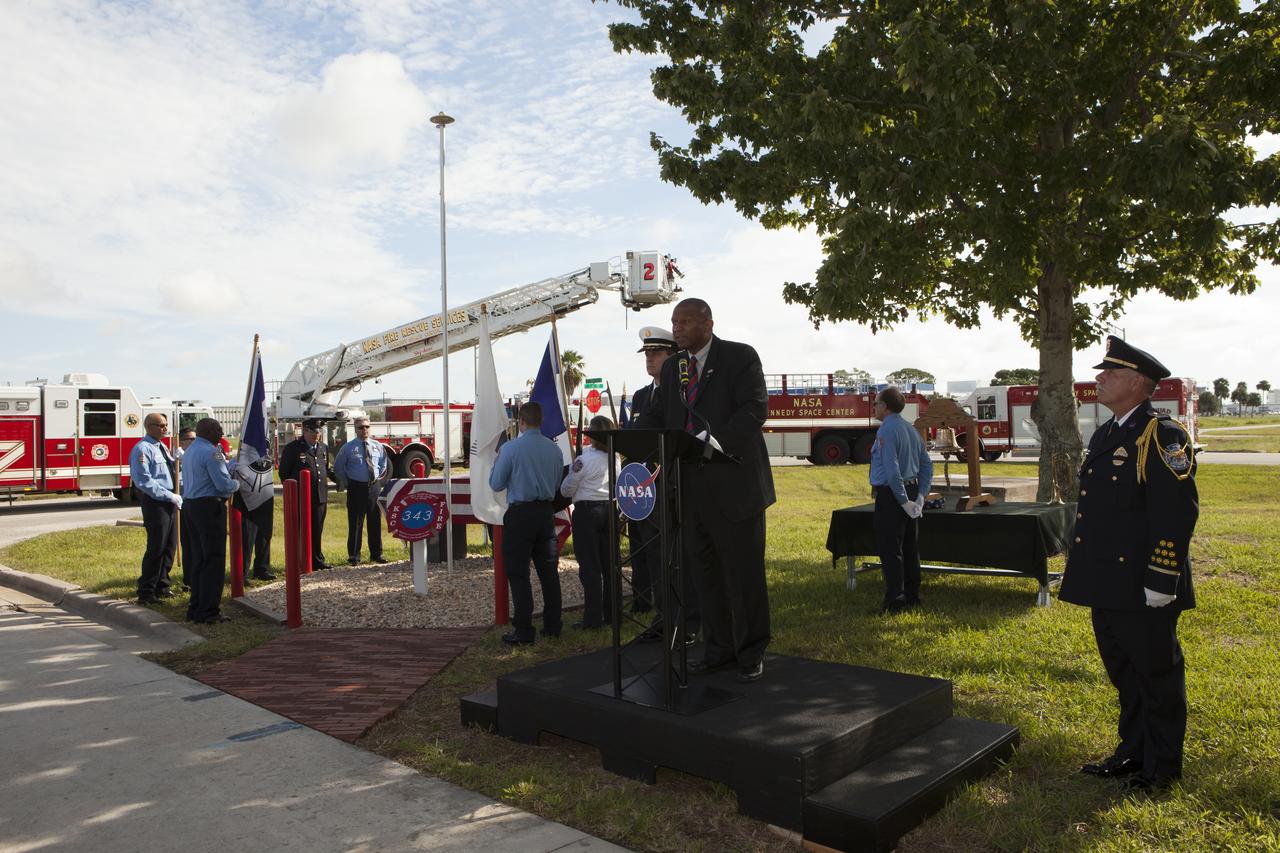
Kelvin Manning, associate director of NASA's Kennedy Space Center, speaks during the dedication service for a memorial to the 343 first responder victims of the Sept. 11, 2001, terror attacks at Fire Station 1 at Kennedy on Sept. 11, 2015. The ceremony dedicated a monument that includes a section of steel I-beam from the World Trade Center in New York.
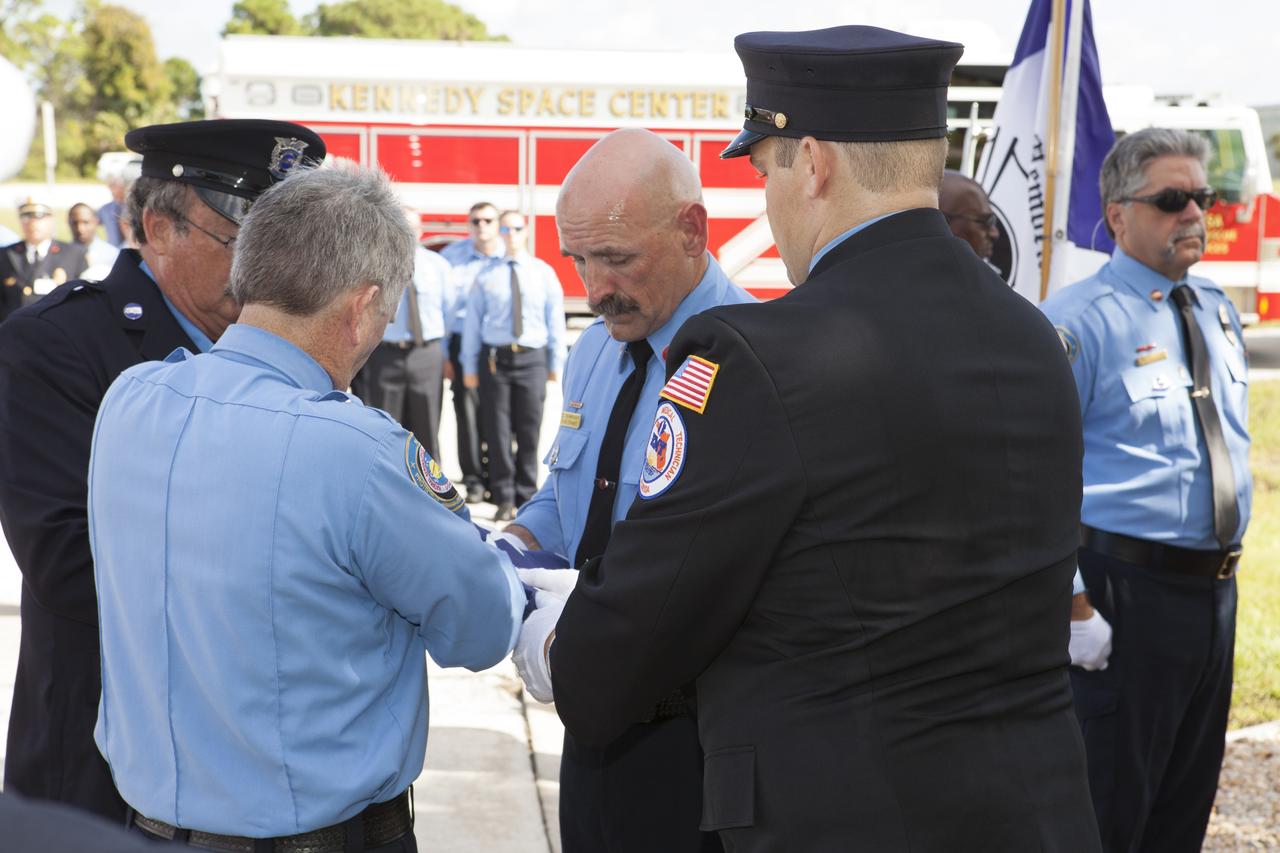
An honor guard folds an American flag during the dedication service for a memorial to the 343 first responder victims of the Sept. 11, 2001, terror attacks at Fire Station 1 at NASA's Kennedy Space Center on Sept. 11, 2015. The ceremony dedicated a monument that includes a section of steel I-beam from the World Trade Center in New York.

iss071e666237 (Sept. 17, 2024) --- NASA astronaut Don Pettit was able to capture a photo of a recent fire in La Porte, Texas yesterday. Our NASA Astronauts have the ability to observe natural disasters from a vantage point of 250 miles above Earth. The imagery and data provided from the International Space Station can provide benefits to regions that experience unexpected events such as fires, floods, hurricanes, earthquakes, and more. This information is valuable when monitoring disasters on Earth in real time.

NASA astronaut Don Pettit was able to capture a photo of a recent fire in La Porte, Texas yesterday. Our NASA Astronauts have the ability to observe natural disasters from a vantage point of 250 miles above Earth. The imagery and data provided from the International Space Station can provide benefits to regions that experience unexpected events such as fires, floods, hurricanes, earthquakes, and more. This information is valuable when monitoring disasters on Earth in real time.

iss071e666253 (Sept. 17, 2024) --- NASA astronaut Don Pettit was able to capture a photo of a recent fire in La Porte, Texas yesterday. Our NASA Astronauts have the ability to observe natural disasters from a vantage point of 250 miles above Earth. The imagery and data provided from the International Space Station can provide benefits to regions that experience unexpected events such as fires, floods, hurricanes, earthquakes, and more. This information is valuable when monitoring disasters on Earth in real time.
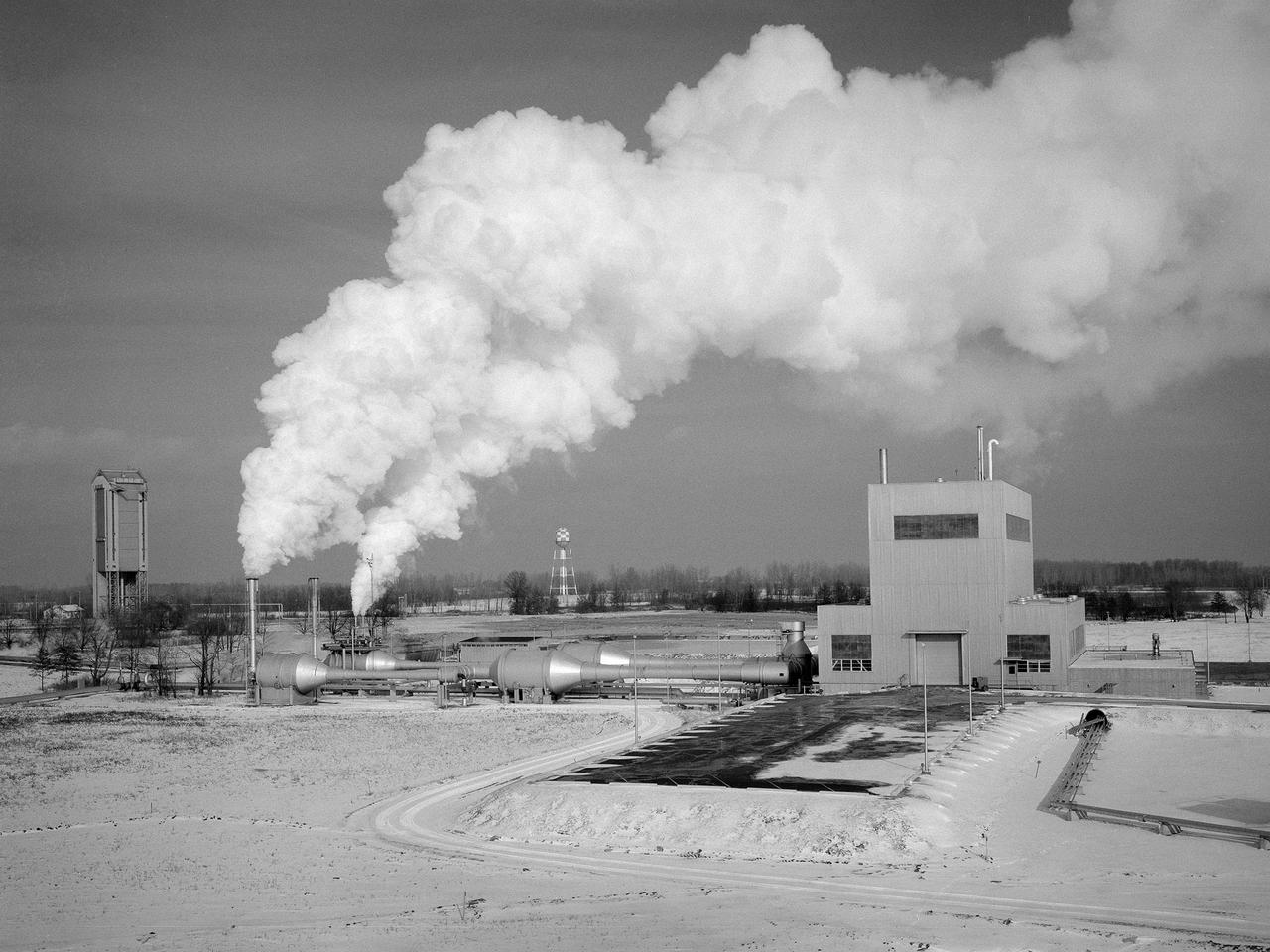
The Space Propulsion Research Facility, better known as B-2, operating at the National Aeronautics and Space Administration’s (NASA) Plum Brook Station in Sandusky, Ohio. B-2 is the world's only high altitude test facility capable of full-scale rocket engine and launch vehicle system level tests. It was created to test rocket propulsion systems with up to 100,000 pounds of thrust in a simulated space environment. The facility has the unique ability to maintain a vacuum at the rocket’s nozzle while the engine is firing. The rocket fires into a 120-foot deep spray chamber which cools the exhaust before it is ejected outside the facility. B-2 simulated space using giant diffusion pumps to reduce chamber pressure, nitrogen-filled cold walls create cryogenic temperatures, and quartz lamps replicate the radiation of the sun. This photograph shows the facility undergoing check-out runs prior to its first test in late 1969.The 38-foot diameter and 62-foot tall vacuum chamber is inside the high-bay on the right. Below that is a 67-foot diameter and 120-foot deep spray chamber. The hot rocket exhaust is cooled in the chamber by a spray of 250,000 gallons of water per minute. B-2’s first test was a hot firing of Centaur D-1A rocket on December 18, 1969. Since then the facility has fired more than 100 Pratt and Whitney RL-10 engines during the Centaur development, 80 current RL-10B-2 engines for Delta-3 development, and another 12 RL-10B-2s for the Delta 3 Upper Stage.
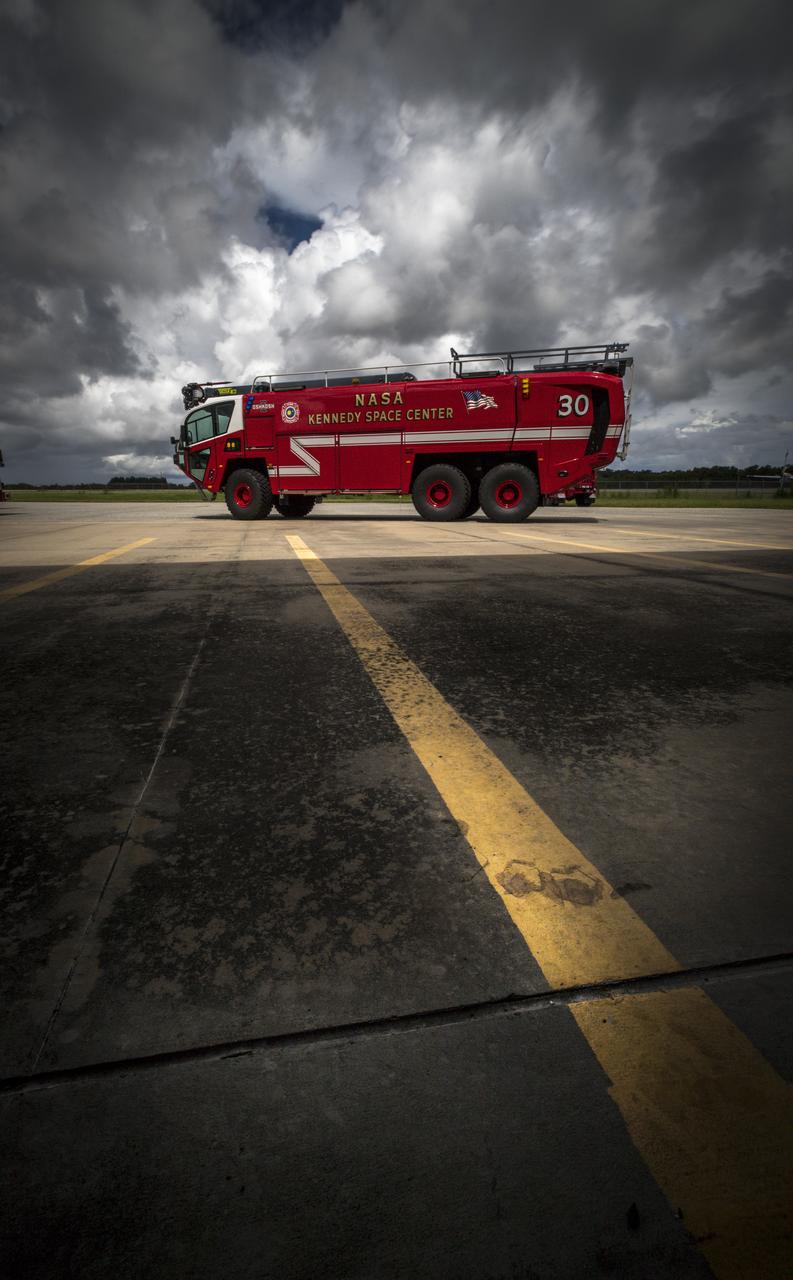
A new Aircraft Rescue and Fire Fighting vehicle is backdropped by the Shuttle Landing Facility runway at NASA’s Kennedy Space Center in Florida. The state-of-the-art truck replaces a 28-year-old vehicle. Kennedy is upgrading its fleet of emergency vehicles to enhance its safety and security posture at the growing, multi-user spaceport.
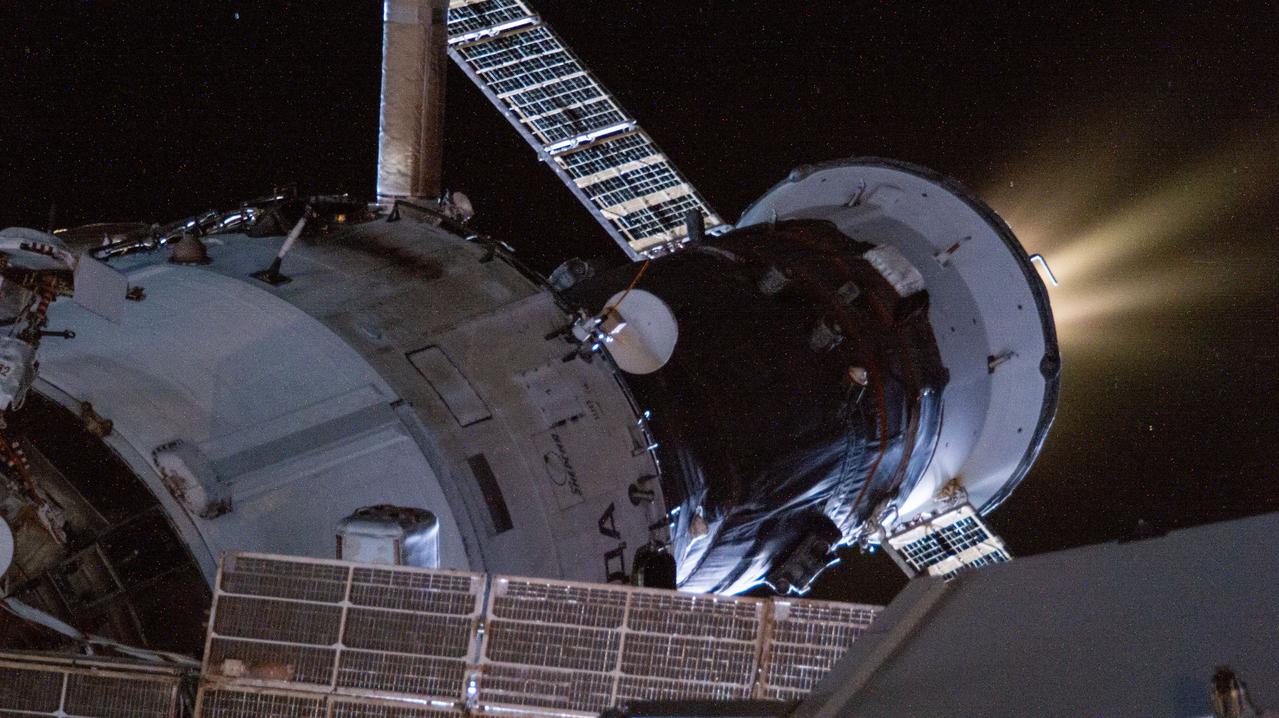
iss073e0429326 (Aug. 14, 2025) --- The Progress 91 resupply ship, docked to the rear port of the Zvezda service module, fires its thrusters to reboost the International Space Station’s orbit. This maneuver sets the correct altitude for the arrival of the next Roscosmos cargo craft, Progress 93, scheduled to launch and dock in September.
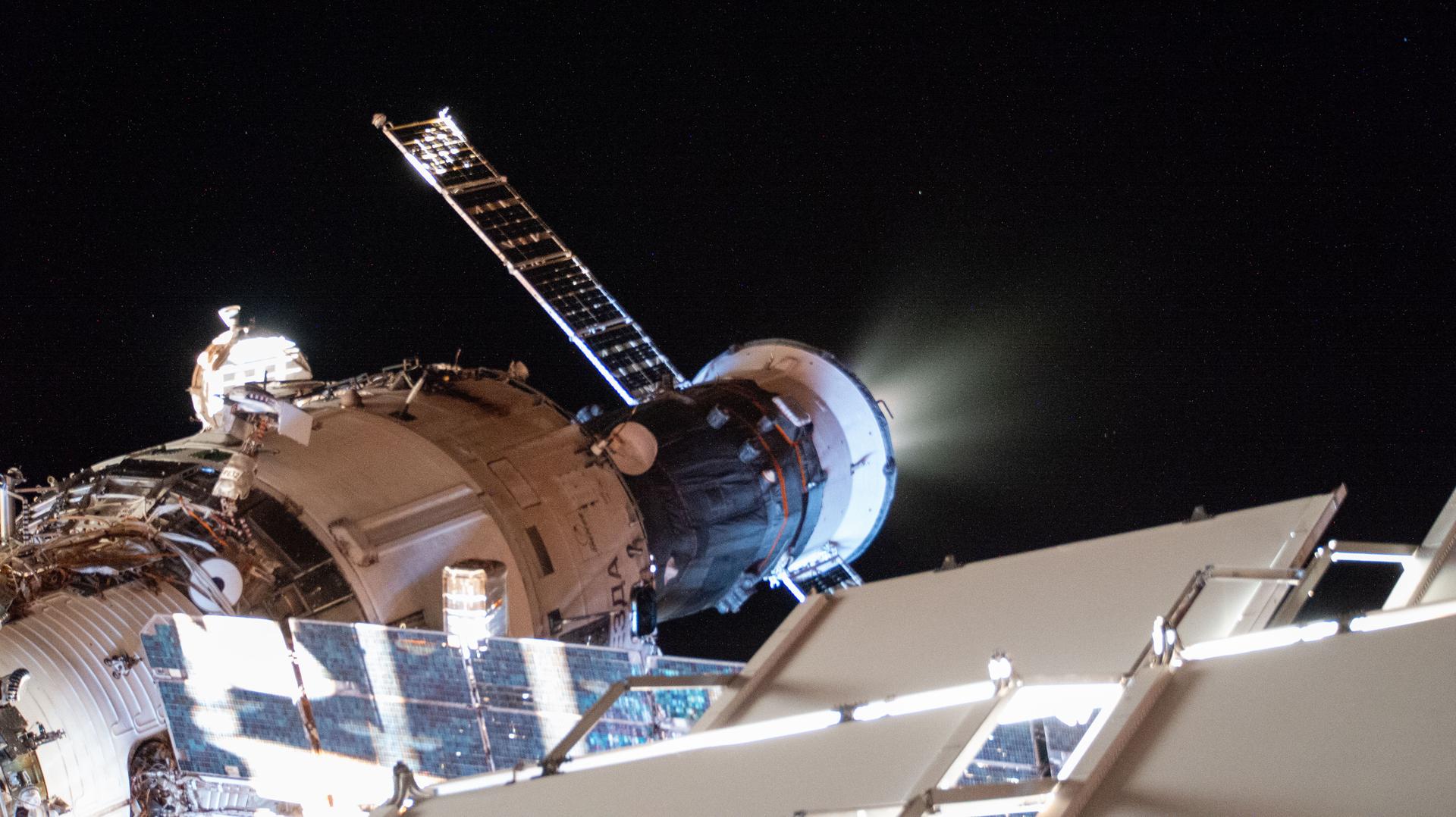
iss073e1128946 (Nov. 19, 2025) --- The Roscosmos Progress 93 cargo craft, docked to the rear port of the Zvezda service module, fires its engines to raise the International Space Station's orbit. This reboost maneuver positioned the orbital outpost at the correct altitude for the arrival of the Soyuz MS-28 crew spacecraft on Nov. 27 and the undocking of the Soyuz MS-27 crew spacecraft on Dec. 8.
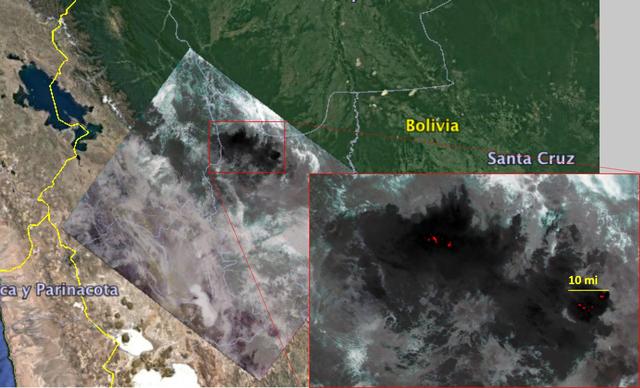
NASA's Ecosystem Spaceborne Thermal Radiometer Experiment on Space Station (ECOSTRESS) captured new imagery of fires in the Amazon regions of Brazil and Bolivia on Aug. 23, 2019. The red areas are where surface temperatures exceeded the maximum measureable temperature of the instrument's sensor (approximately 220 degrees Fahrenheit or 104 degrees Celsius), highlighting the burning areas along the fire fronts. The dark wispy areas indicate thick smoke — thick enough that it obscures much of the fire from view. The measurements cover areas of about 77 by 77 yards (70 by 70 meters) each, or about the size of a football field. https://photojournal.jpl.nasa.gov/catalog/PIA23357
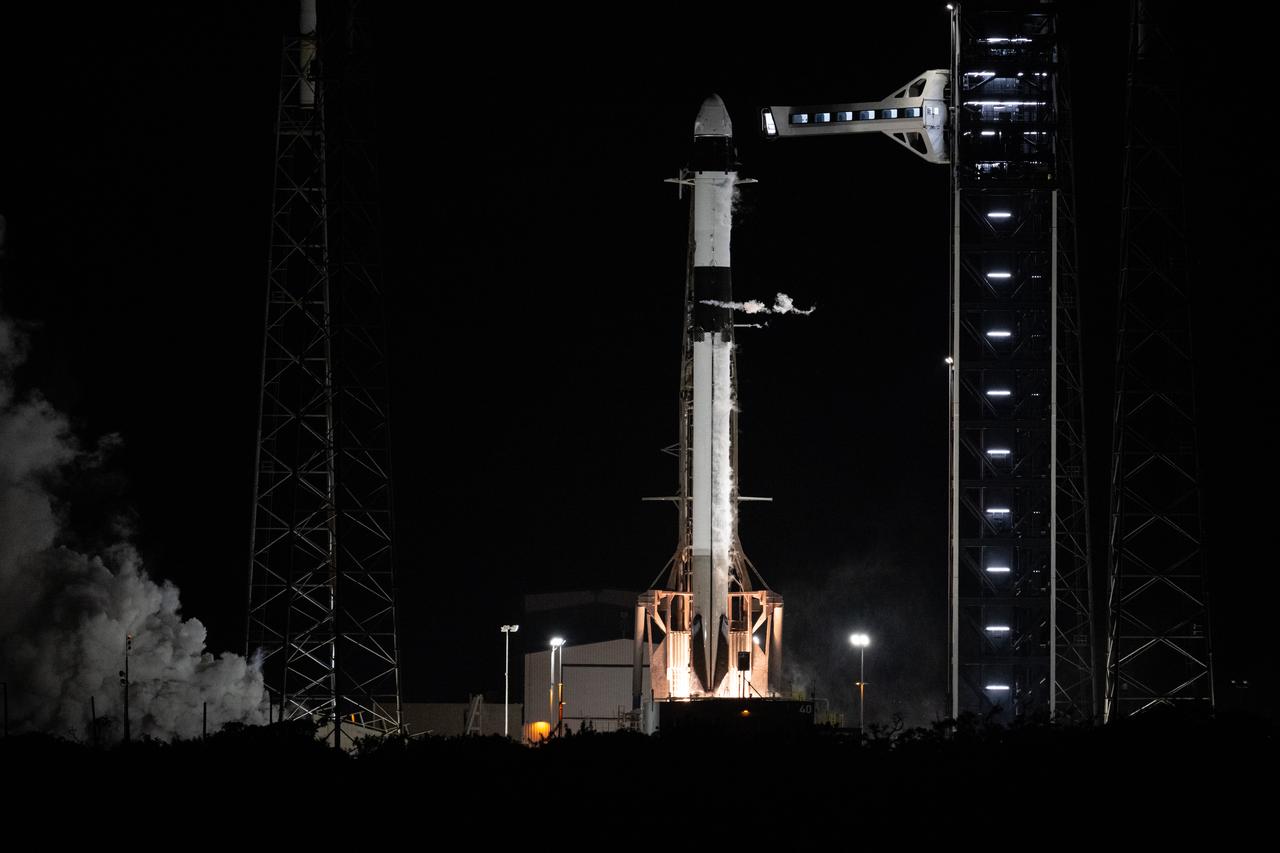
A SpaceX Falcon 9 rocket with the company's Dragon spacecraft onboard is seen on the launch pad at Space Launch Complex 40 during a brief static fire test ahead of NASA’s SpaceX Crew-9 mission, Tuesday, Sept. 24, 2024, at the Cape Canaveral Space Force Station in Florida. NASA’s SpaceX Crew-9 mission is the ninth crew rotation mission of the SpaceX Dragon spacecraft and Falcon 9 rocket to the International Space Station as part of the agency’s Commercial Crew Program. Photo Credit: (NASA/Keegan Barber)
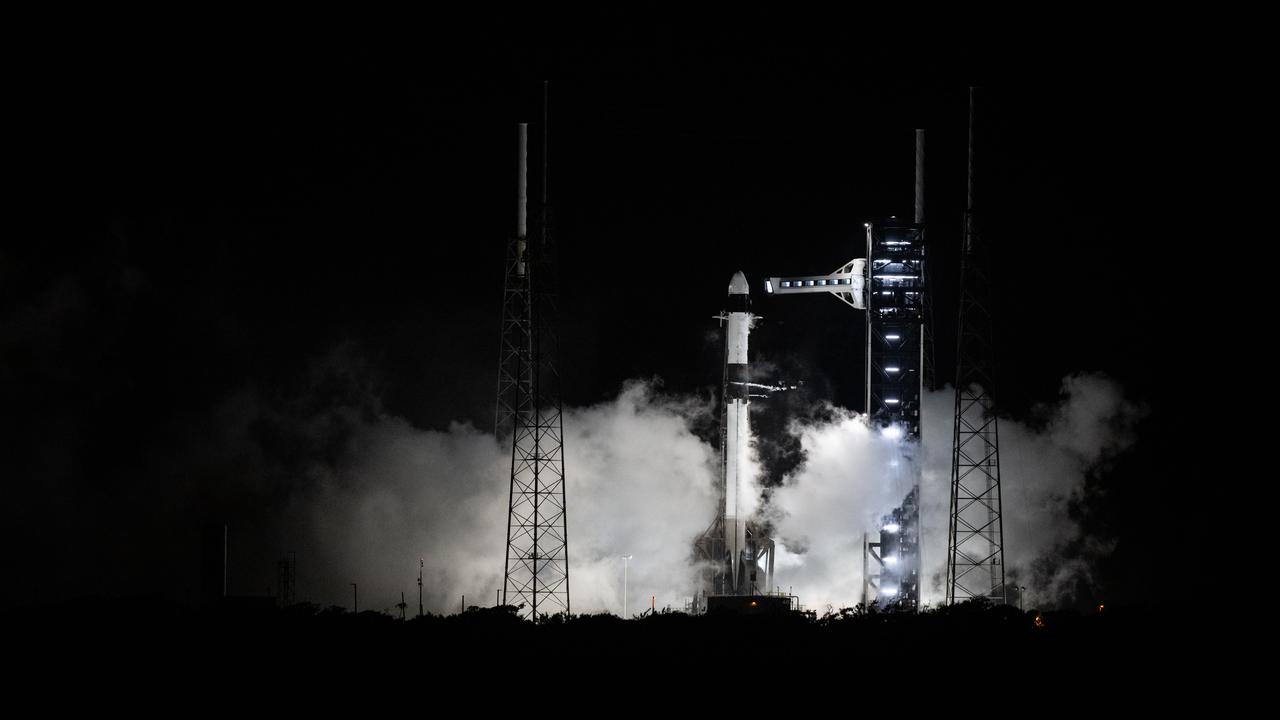
A SpaceX Falcon 9 rocket with the company's Dragon spacecraft onboard is seen on the launch pad at Space Launch Complex 40 following a brief static fire test ahead of NASA’s SpaceX Crew-9 mission, Tuesday, Sept. 24, 2024, at the Cape Canaveral Space Force Station in Florida. NASA’s SpaceX Crew-9 mission is the ninth crew rotation mission of the SpaceX Dragon spacecraft and Falcon 9 rocket to the International Space Station as part of the agency’s Commercial Crew Program. Photo Credit: (NASA/Keegan Barber)
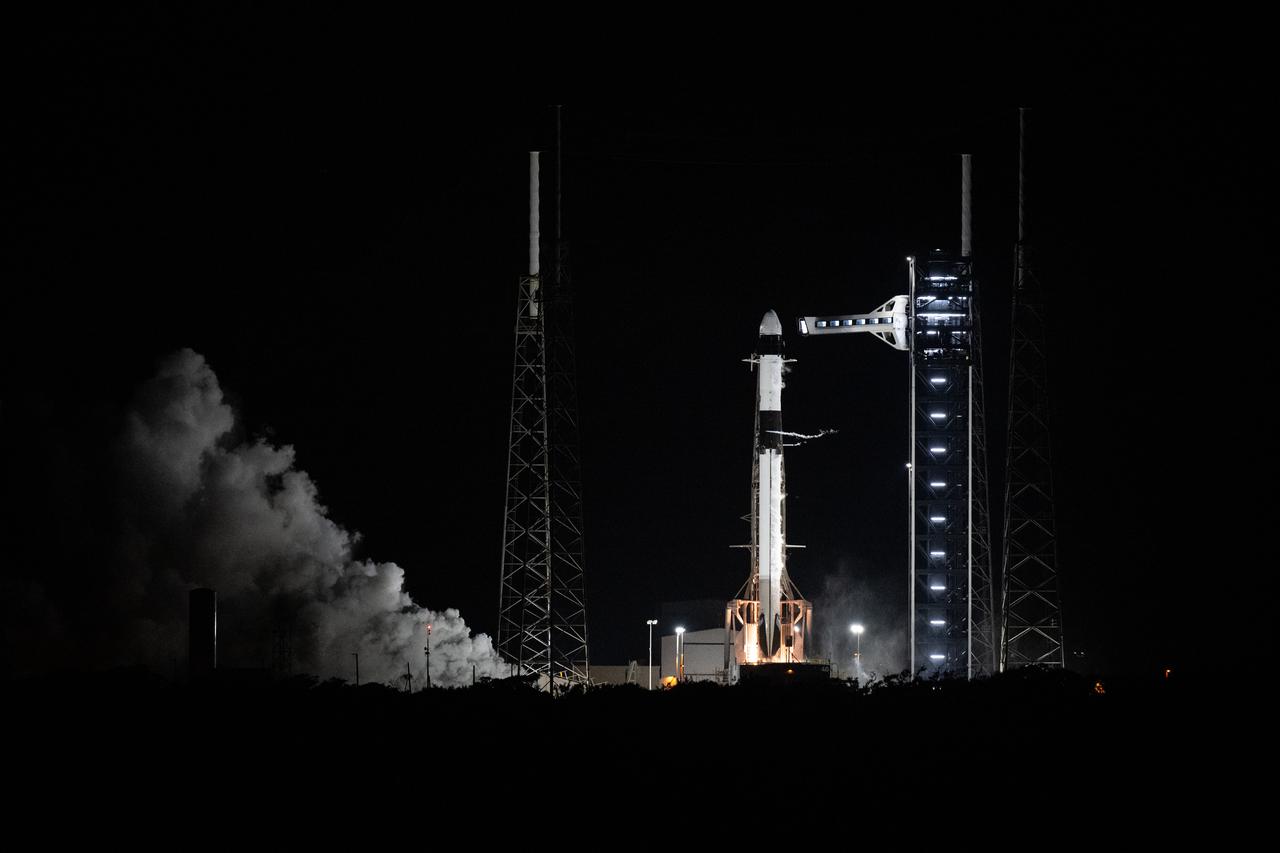
A SpaceX Falcon 9 rocket with the company's Dragon spacecraft onboard is seen on the launch pad at Space Launch Complex 40 during a brief static fire test ahead of NASA’s SpaceX Crew-9 mission, Tuesday, Sept. 24, 2024, at the Cape Canaveral Space Force Station in Florida. NASA’s SpaceX Crew-9 mission is the ninth crew rotation mission of the SpaceX Dragon spacecraft and Falcon 9 rocket to the International Space Station as part of the agency’s Commercial Crew Program. Photo Credit: (NASA/Keegan Barber)
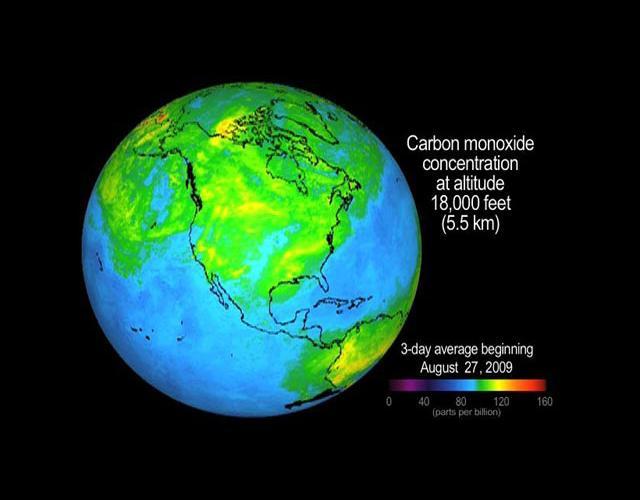
Carbon monoxide in the smoke from the Station fire was lofted high into the atmosphere, where it was observed by JPL Atmospheric Infrared Sounder instrument onboard NASA Aqua satellite. Animation available at the Photojournal.
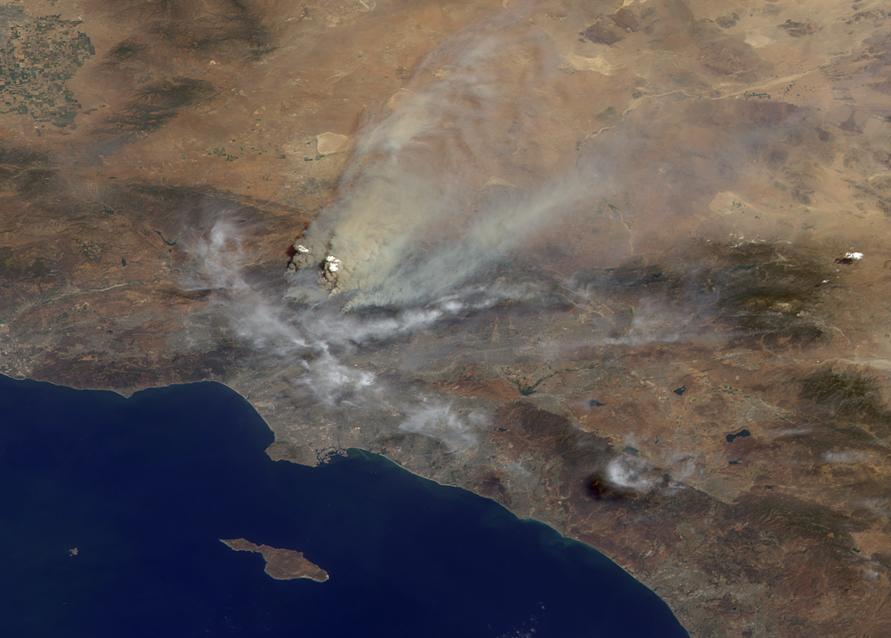
The Multi-angle Imaging SpectroRadiometer MISR instrument on NASA Terra satellite captured this Aug. 30 image of smoke plumes from the Station and other wildfires burning throughout Southern California.
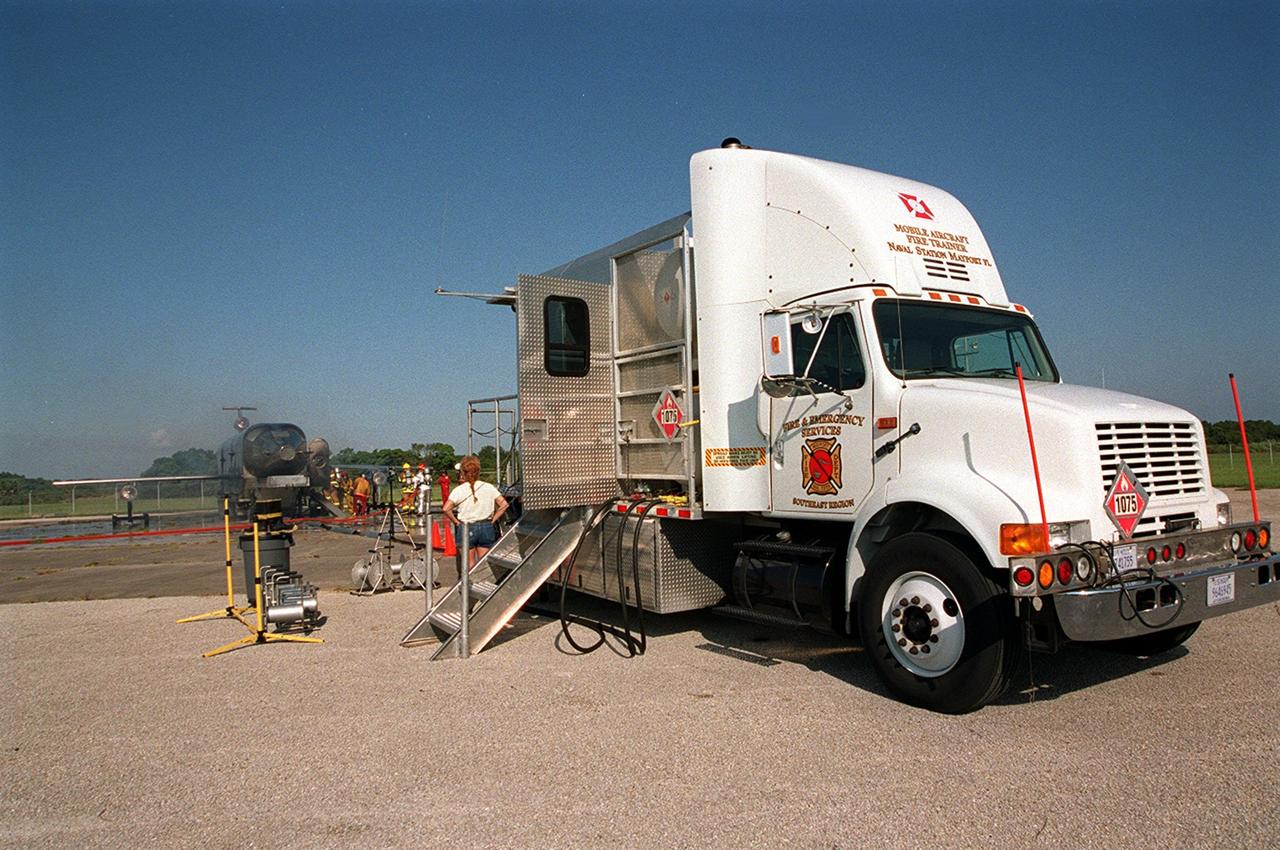
KENNEDY SPACE CENTER, FLA. -- A Mobile Aircraft Fire Trainer vehicle from Naval Station Mayport, Fla., stands by during fire training exercises at Cape Canaveral Air Force Station Pad 30. In the background is the simulated aircraft that was set on fire for the exercise. Firefighters with the Fire and Emergency Services at the Naval Station (in the background) gather around the site of the extinguished flames.
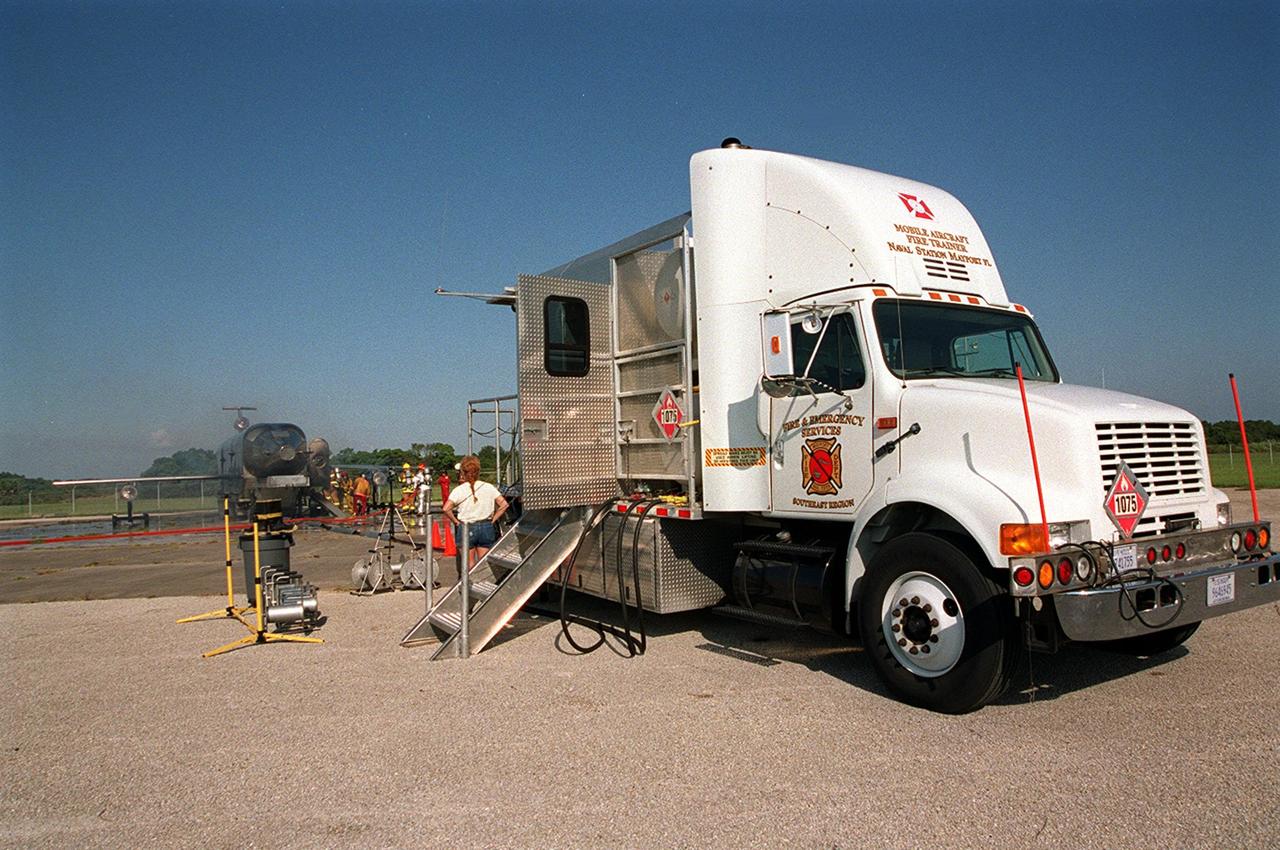
KENNEDY SPACE CENTER, FLA. -- A Mobile Aircraft Fire Trainer vehicle from Naval Station Mayport, Fla., stands by during fire training exercises at Cape Canaveral Air Force Station Pad 30. In the background is the simulated aircraft that was set on fire for the exercise. Firefighters with the Fire and Emergency Services at the Naval Station (in the background) gather around the site of the extinguished flames.
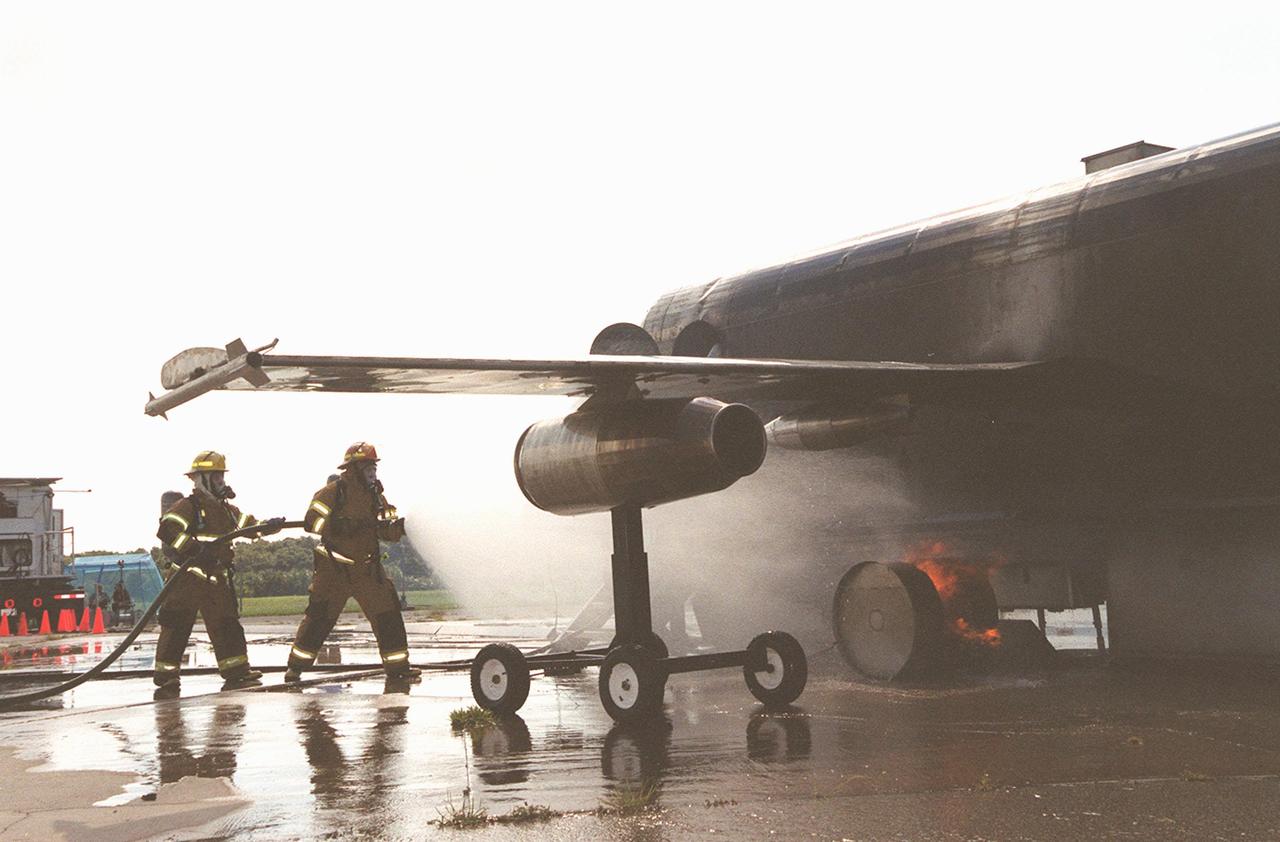
KENNEDY SPACE CENTER, FLA. -- Firefighters in full gear douse a fire on a simulated aircraft. The firefighters, who are with Fire and Emergency Services at the Naval Station Mayport, Fla., are taking part in fire training exercises at Cape Canaveral Air Force Station Pad 30.
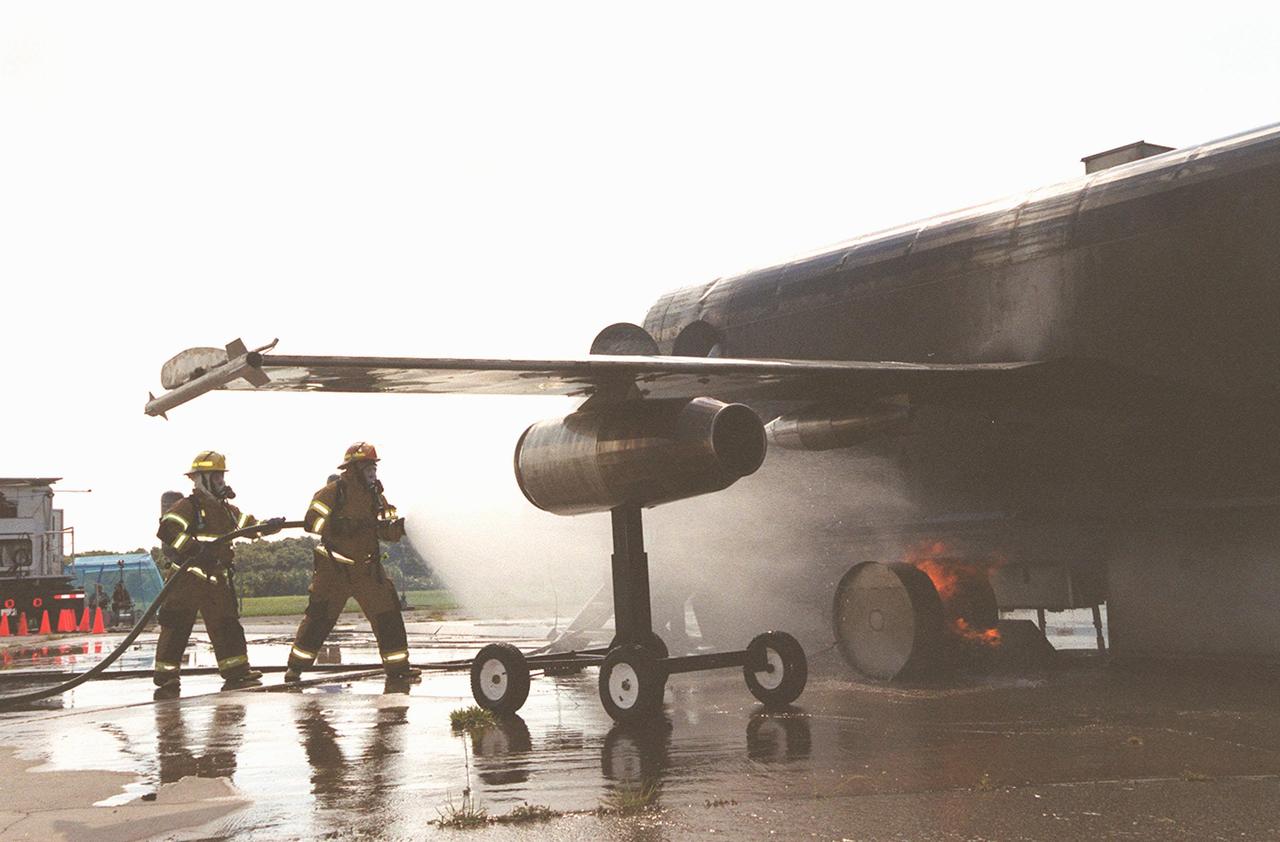
KENNEDY SPACE CENTER, FLA. -- Firefighters in full gear douse a fire on a simulated aircraft. The firefighters, who are with Fire and Emergency Services at the Naval Station Mayport, Fla., are taking part in fire training exercises at Cape Canaveral Air Force Station Pad 30.
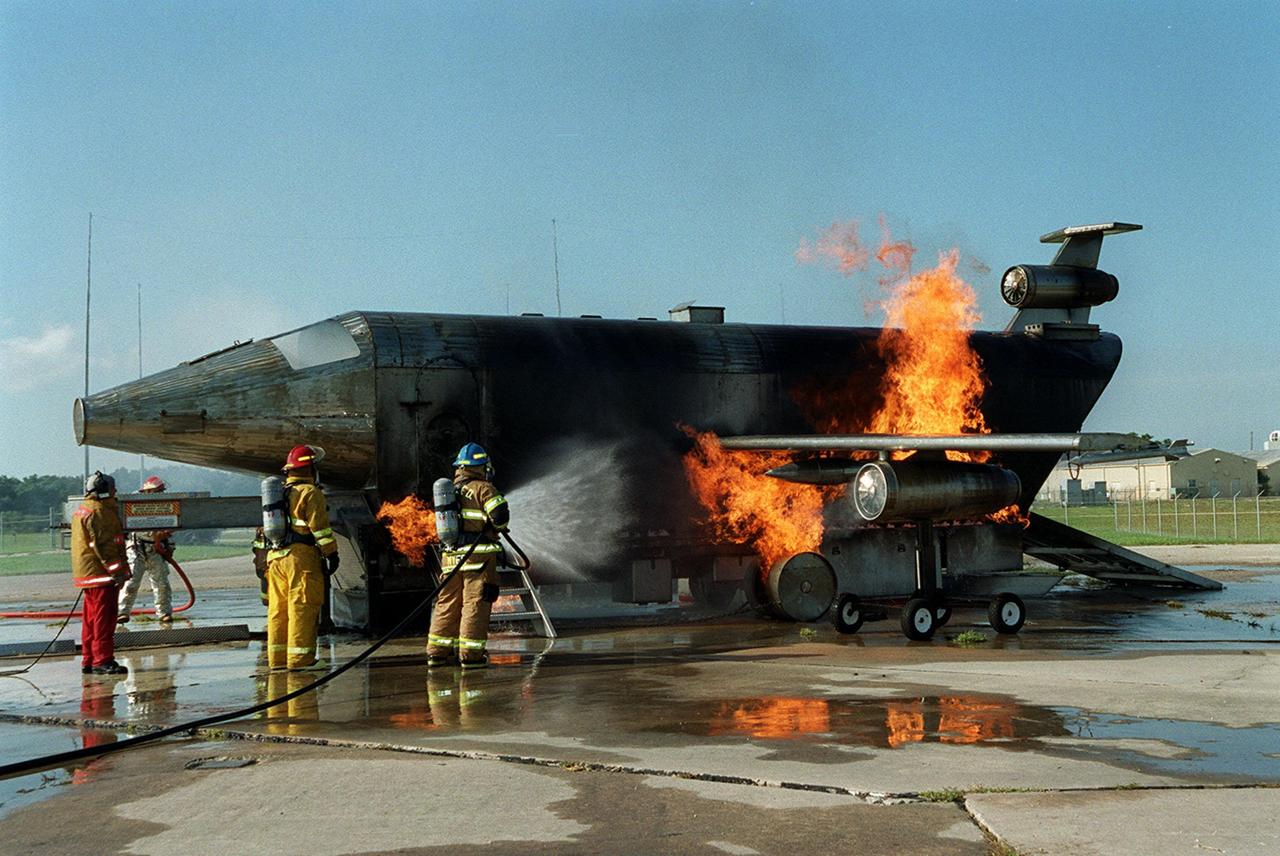
KENNEDY SPACE CENTER, FLA. -- During training exercises at Cape Canaveral Air Force Station Pad 30, firefighters with the Fire and Emergency Services at the Naval Station Mayport, Fla., turn their hoses toward the fire on the simulated aircraft.
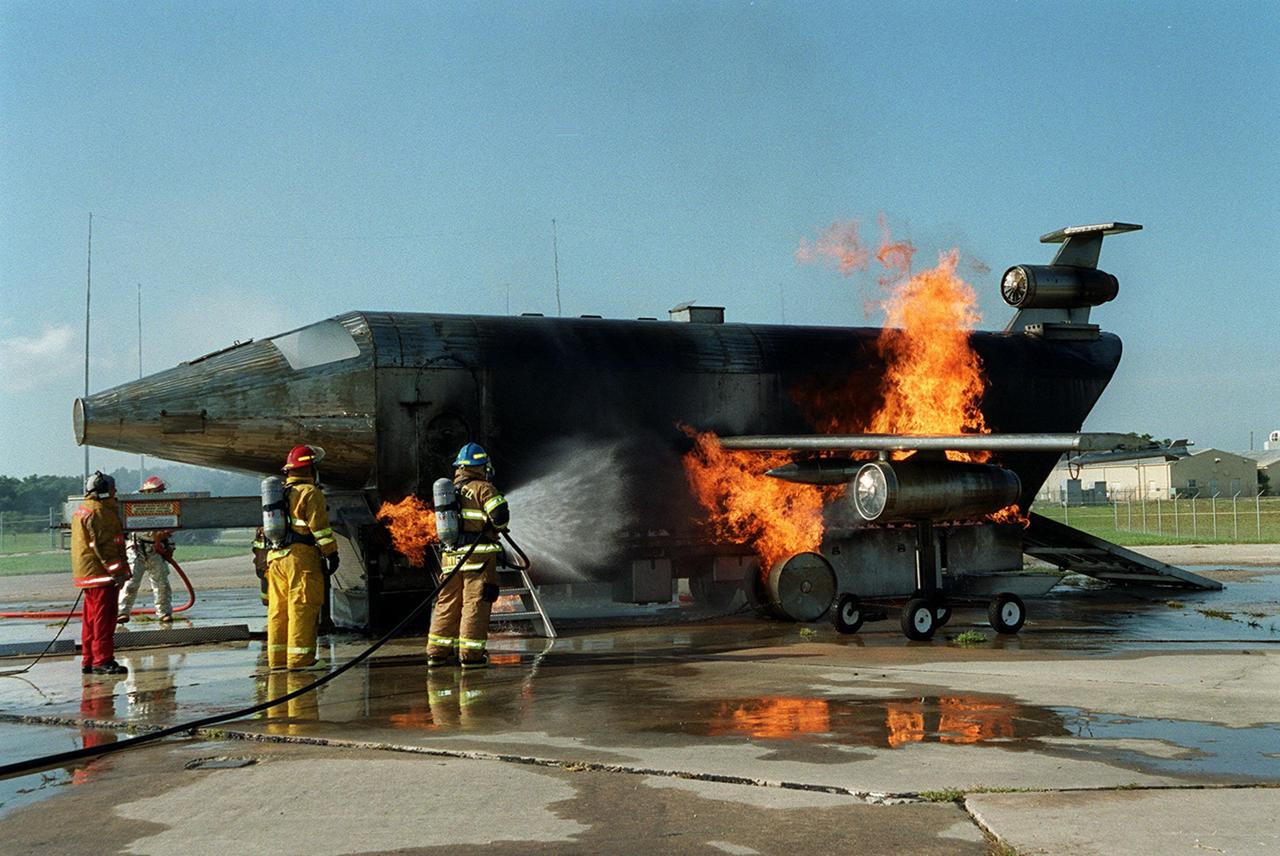
KENNEDY SPACE CENTER, FLA. -- During training exercises at Cape Canaveral Air Force Station Pad 30, firefighters with the Fire and Emergency Services at the Naval Station Mayport, Fla., turn their hoses toward the fire on the simulated aircraft.
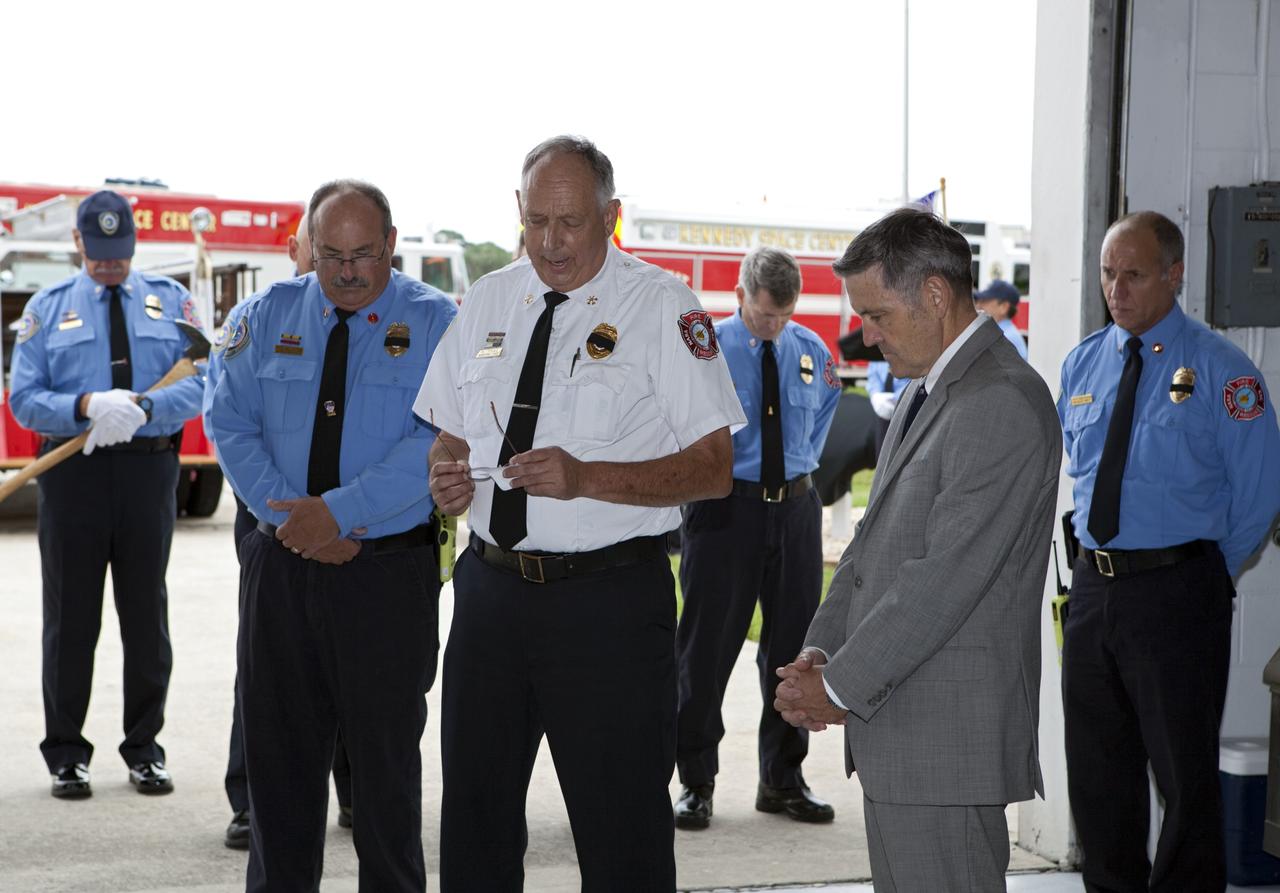
CAPE CANAVERAL, Fla. – At Fire Station 1 at NASA’s Kennedy Space Center in Florida, Fire and Rescue personnel stand at attention as Kennedy Director Robert Cabana, at right, participates in a 9/11 memorial dedication at Fire Station 1. Kennedy Fire and Rescue Services commemorated the 11th anniversary of 9/11 with a ceremony that included a minute of silence at 10:28 a.m., which was the moment of collapse of the north tower of the World Trade Center. Kennedy center-wide emergency units dispatched by Fire Control engaged in one-minute sirens, the new memorial was dedicated and the Honor Guard performed a flag-folding ceremony. Photo credit: NASA/Dimitri Gerondidakis
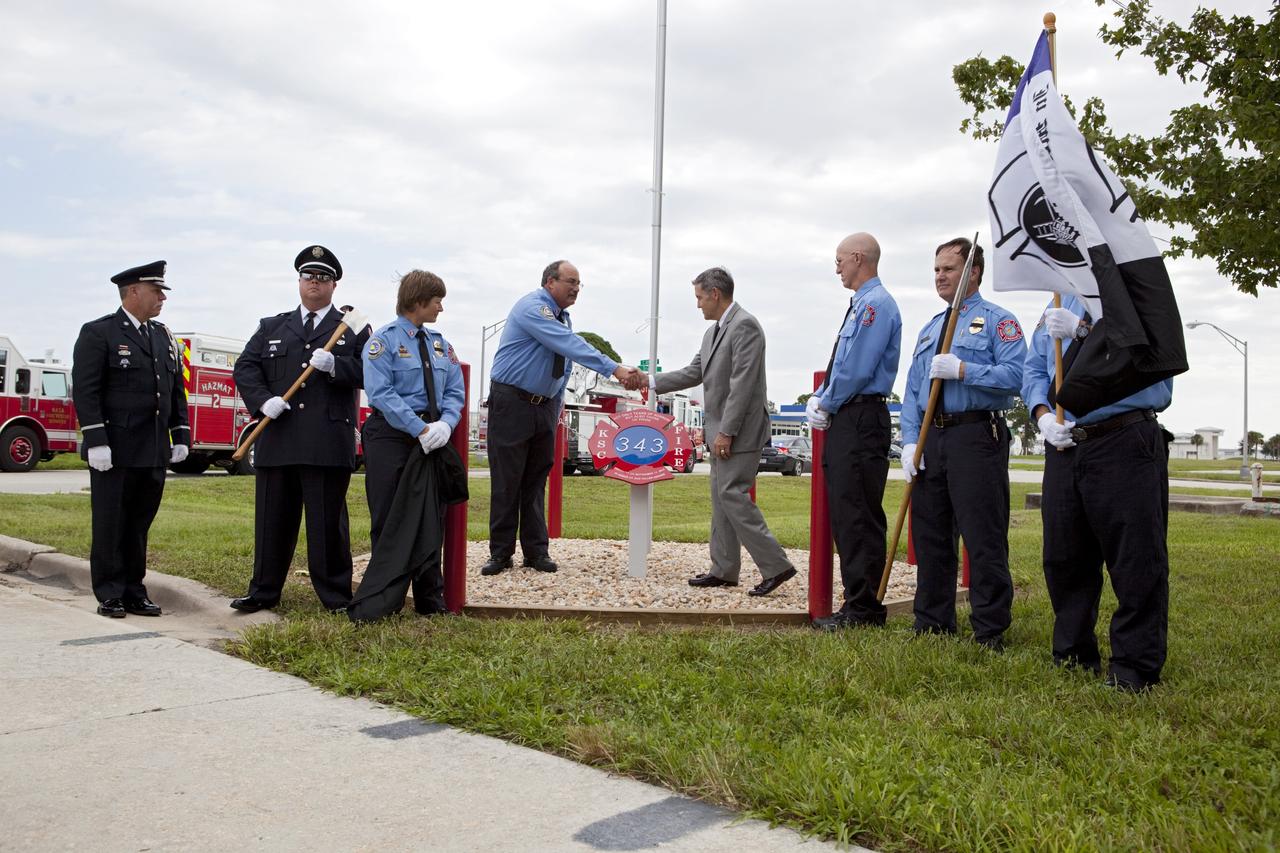
CAPE CANAVERAL, Fla. – At Fire Station 1 at NASA’s Kennedy Space Center in Florida, Fire and Rescue personnel stand at attention as Kennedy Director Robert Cabana participates in a 9/11 memorial dedication at Fire Station 1. Kennedy Fire and Rescue Services commemorated the 11th anniversary of 9/11 with a ceremony that included a minute of silence at 10:28 a.m., which was the moment of collapse of the north tower of the World Trade Center. Kennedy center-wide emergency units dispatched by Fire Control engaged in one-minute sirens, the new memorial was dedicated and the Honor Guard performed a flag-folding ceremony. Photo credit: NASA/Dimitri Gerondidakis

CAPE CANAVERAL, Fla. – At Fire Station 1 at NASA’s Kennedy Space Center in Florida, Fire and Rescue personnel stand at attention as Kennedy Director Robert Cabana, at right, participates in a 9/11 memorial dedication at Fire Station 1. Kennedy Fire and Rescue Services commemorated the 11th anniversary of 9/11 with a ceremony that included a minute of silence at 10:28 a.m., which was the moment of collapse of the north tower of the World Trade Center. Kennedy center-wide emergency units dispatched by Fire Control engaged in one-minute sirens, the new memorial was dedicated and the Honor Guard performed a flag-folding ceremony. Photo credit: NASA/Dimitri Gerondidakis
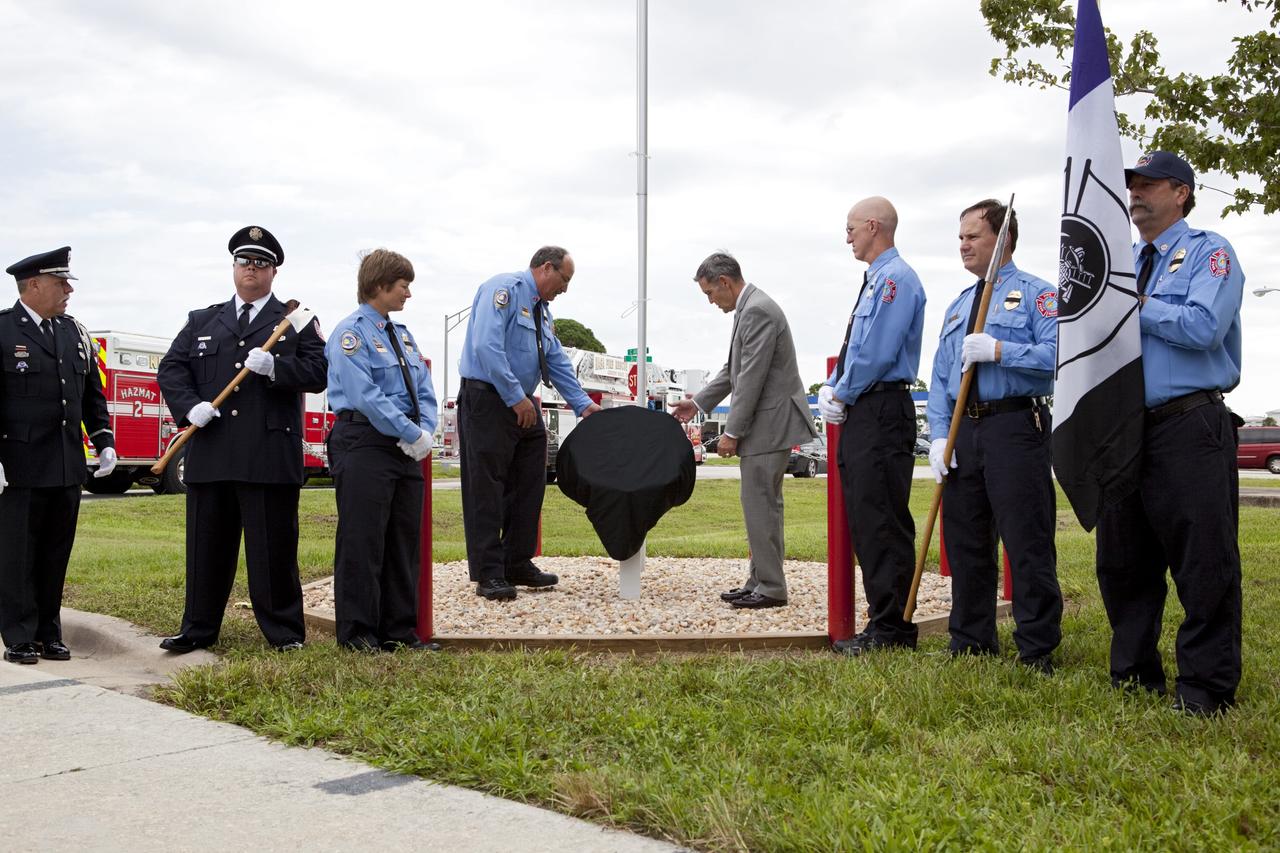
CAPE CANAVERAL, Fla. – At Fire Station 1 at NASA’s Kennedy Space Center in Florida, Fire and Rescue personnel stand at attention as Kennedy Director Robert Cabana, at right, participates in a 9/11 memorial dedication at Fire Station 1. Kennedy Fire and Rescue Services commemorated the 11th anniversary of 9/11 with a ceremony that included a minute of silence at 10:28 a.m., which was the moment of collapse of the north tower of the World Trade Center. Kennedy center-wide emergency units dispatched by Fire Control engaged in one-minute sirens, the new memorial was dedicated and the Honor Guard performed a flag-folding ceremony. Photo credit: NASA/Dimitri Gerondidakis
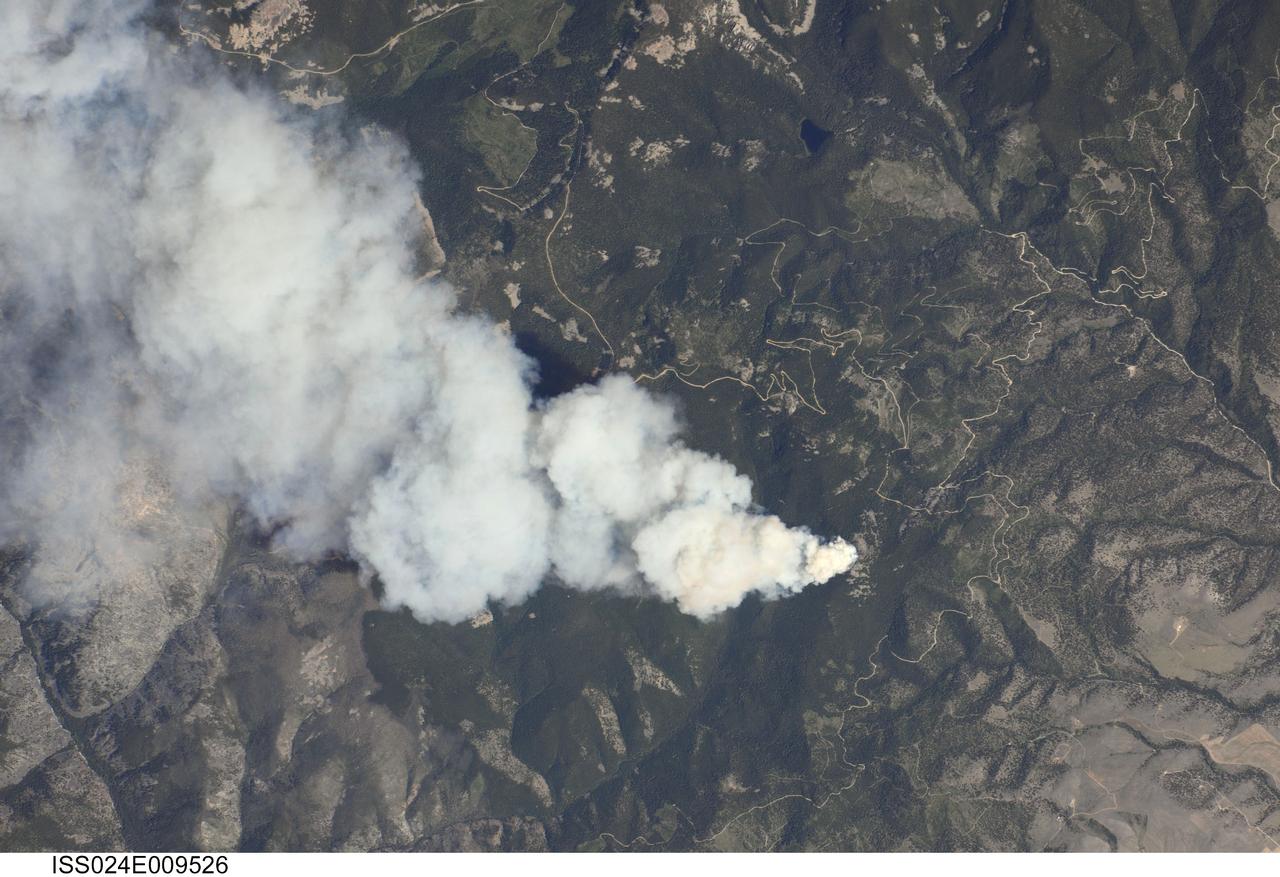
ISS024-E-009526 (25 July 2010) --- Dominic Point Fire in Montana is featured in this image photographed by an Expedition 24 crew member on the International Space Station. Lightning strikes in the forested mountains of the western United States, and human activities, can spark wild fires during the summer dry season. The Dominic Point Fire was first reported near 3:00 p.m. local time on July 25 2010. Approximately one hour later, the space station crew photographed the fire?s large smoke plume ? already extending at least eight kilometers to the east ? from orbit as they passed almost directly overhead. Forest Service fire crews, slurry bombers and helicopters were on the scene by that evening. The fire may have been started by a lightning strike, as there are no trails leading into the fire area located approximately 22 kilometers northeast of Hamilton, MT (according to local reports). As of July 26, 2010 the fire had burned approximately 283?405 hectares of the Bitterroot National Forest in western Montana. The fire is thought to have expanded quickly due to high temperatures, low humidity, and favorable winds with an abundance of deadfall ? dead trees and logs that provide readily combustible fuels ? in the area.
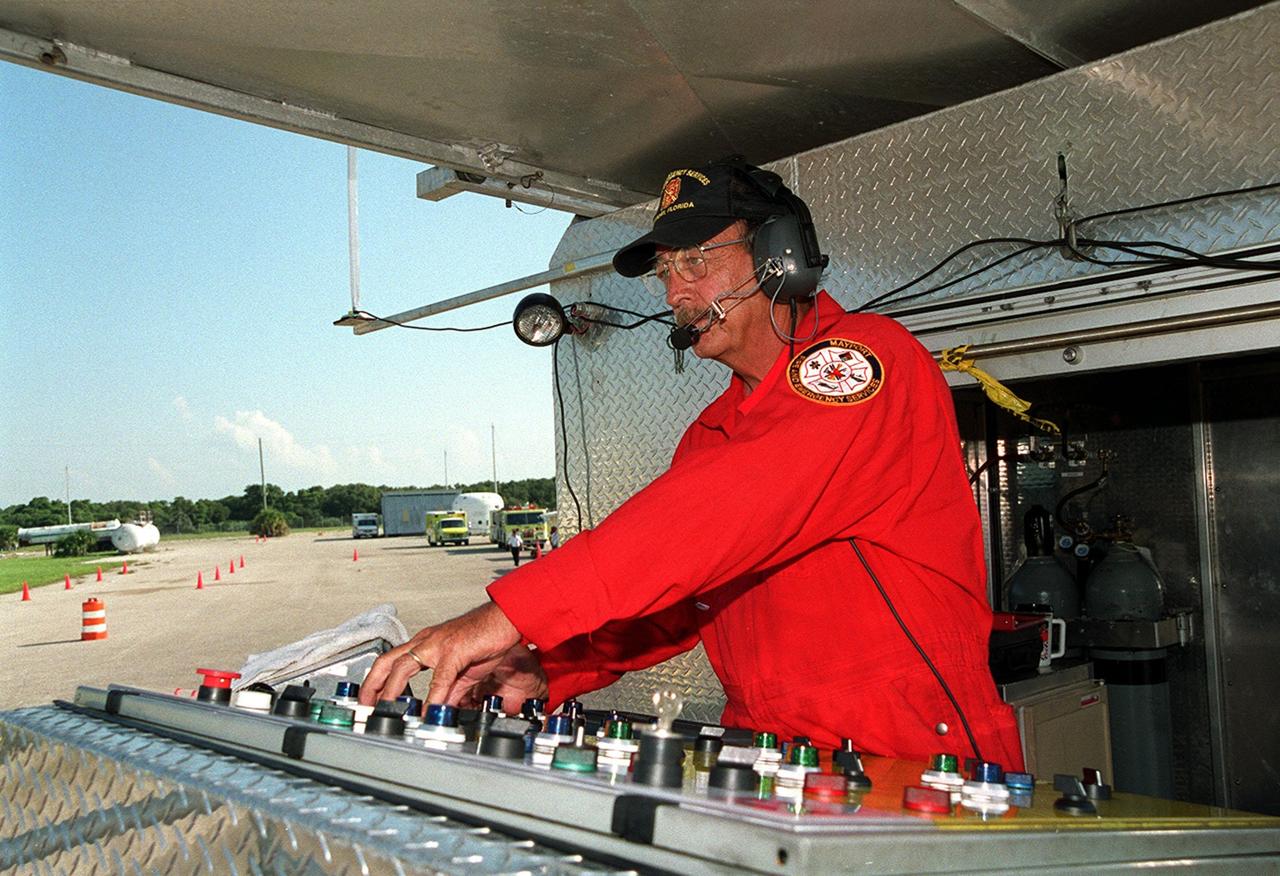
KENNEDY SPACE CENTER, FLA. -- A training officer controls elements of a fire training exercise at Cape Canaveral Air Force Station Pad 30 for firefighters with Fire and Emergency Services at the Naval Station Mayport, Fla. The firefighters tackled flames from a burning simulated aircraft.
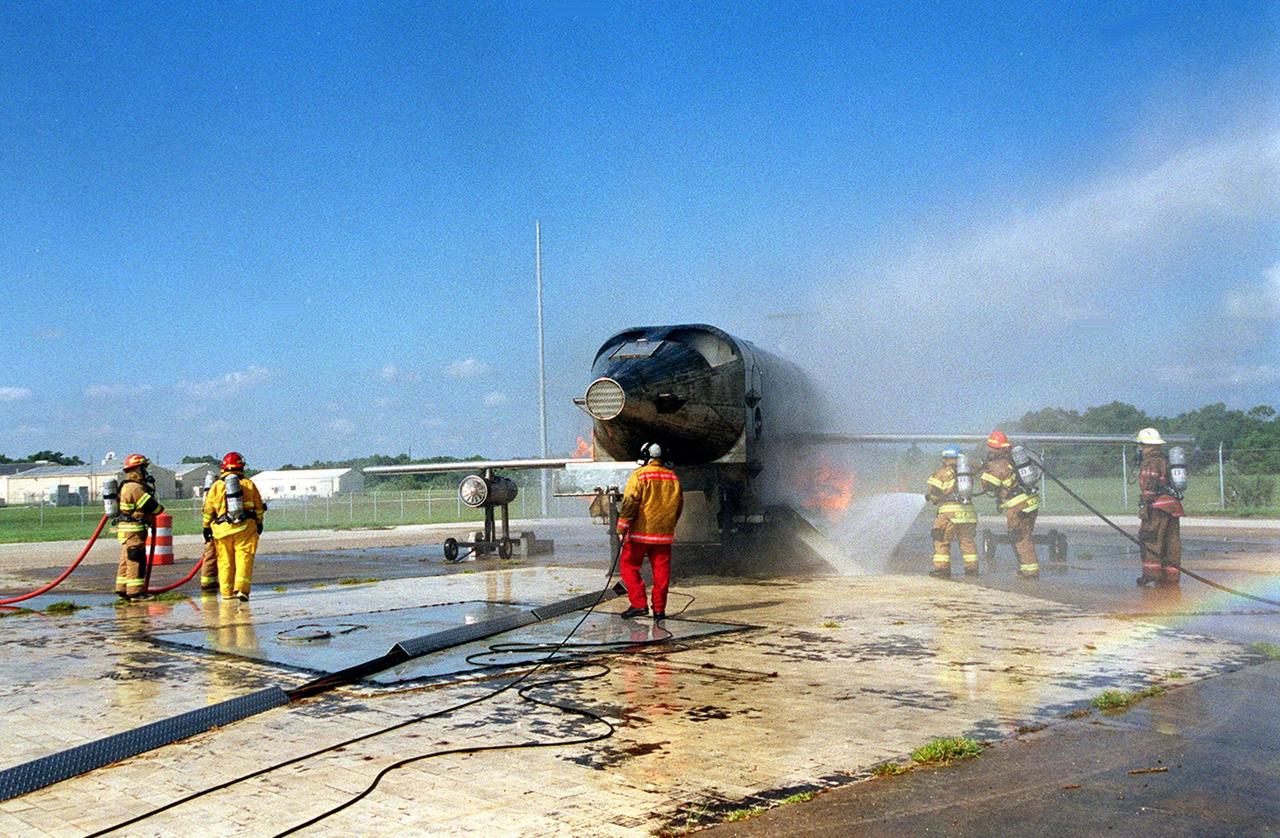
KENNEDY SPACE CENTER, FLA. -- Firefighters surround a burning simulated aircraft during training exercises Cape Canaveral Air Force Station Pad 30. Those at left wait their turn as the crew on the right turn their hoses toward the fire. The firefighters are with Fire and Emergency Services at the Naval Station Mayport, Fla
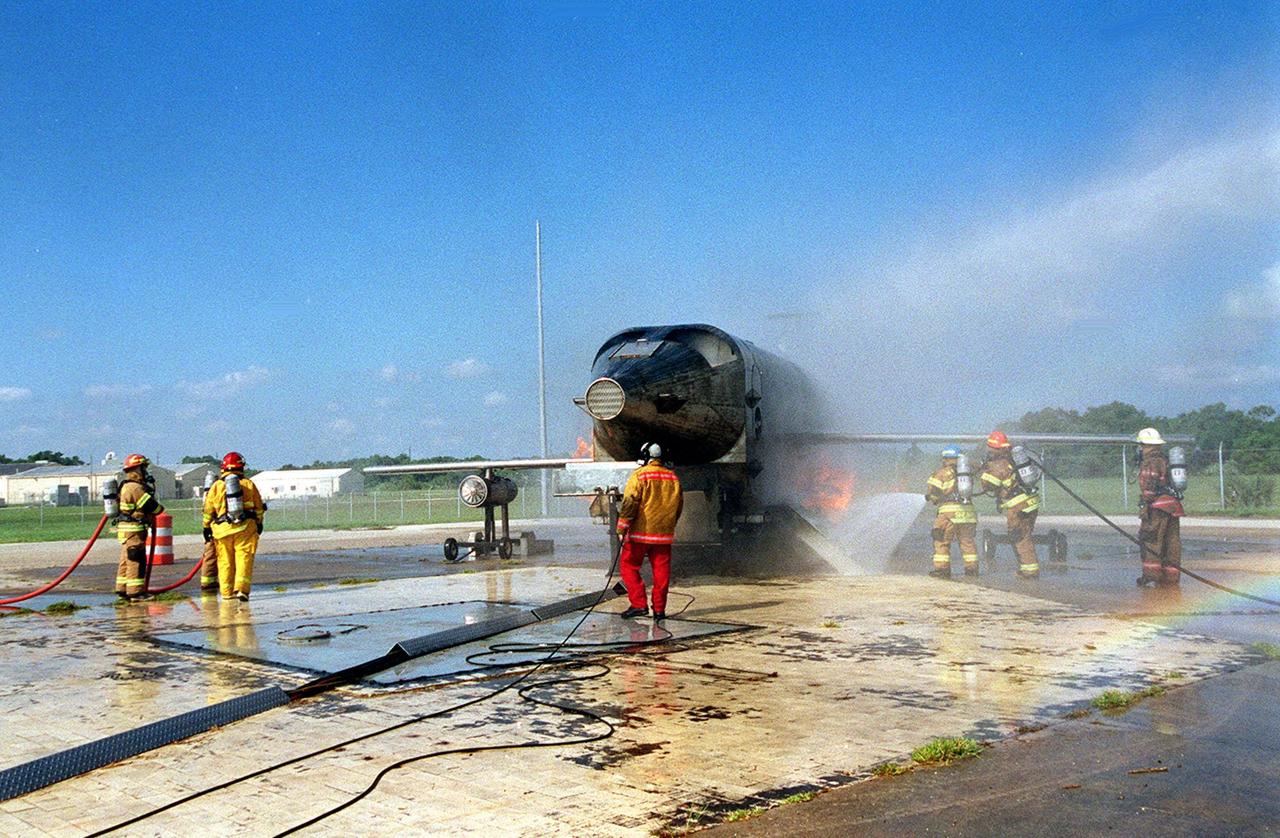
KENNEDY SPACE CENTER, FLA. -- Firefighters surround a burning simulated aircraft during training exercises Cape Canaveral Air Force Station Pad 30. Those at left wait their turn as the crew on the right turn their hoses toward the fire. The firefighters are with Fire and Emergency Services at the Naval Station Mayport, Fla
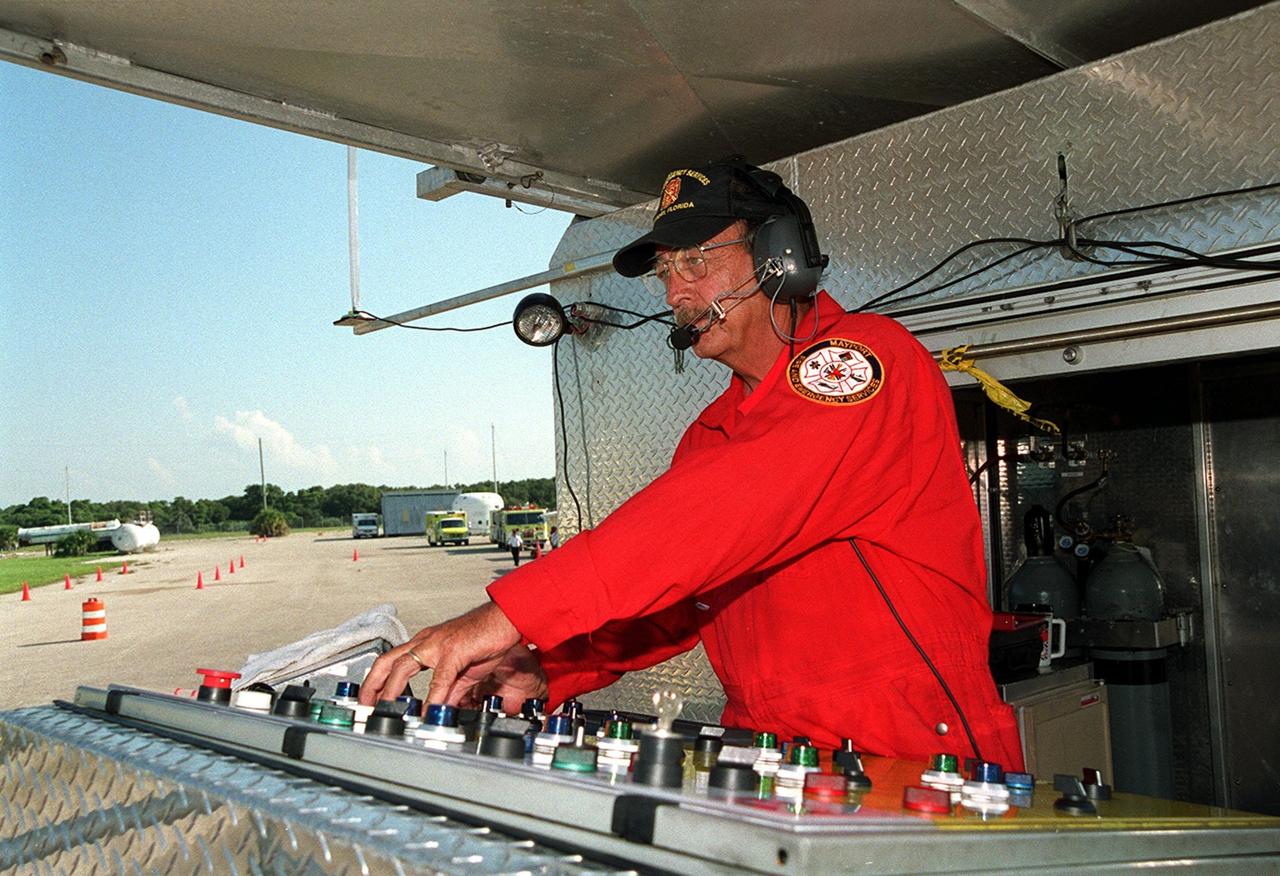
KENNEDY SPACE CENTER, FLA. -- A training officer controls elements of a fire training exercise at Cape Canaveral Air Force Station Pad 30 for firefighters with Fire and Emergency Services at the Naval Station Mayport, Fla. The firefighters tackled flames from a burning simulated aircraft.
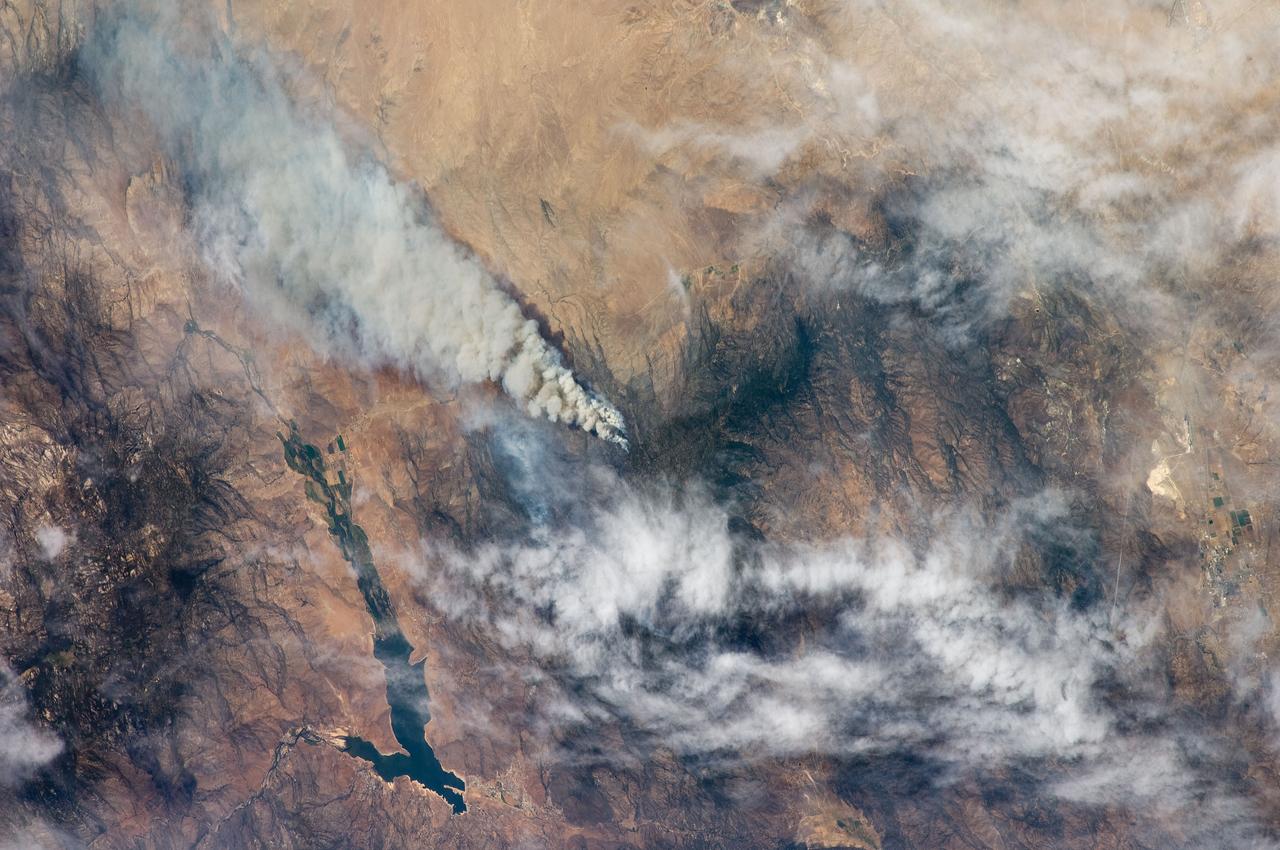
ISS017-E-010310 (4 July 2008) --- The Piute fire in California is featured in this image photographed by an Expedition 17 crewmember on the International Space Station. The Piute fire, burning south of Lake Isabella in the Sequoia National Forest in the southern Sierra Nevada Mountains, is one of the more than 300 wildfires burning across the state of California. The fire started June 28 just north of Twin Oaks, California, and has burned nearly 14,000 acres so far. Current estimates by fire officials suggest the fire may not be brought under control for another two weeks.
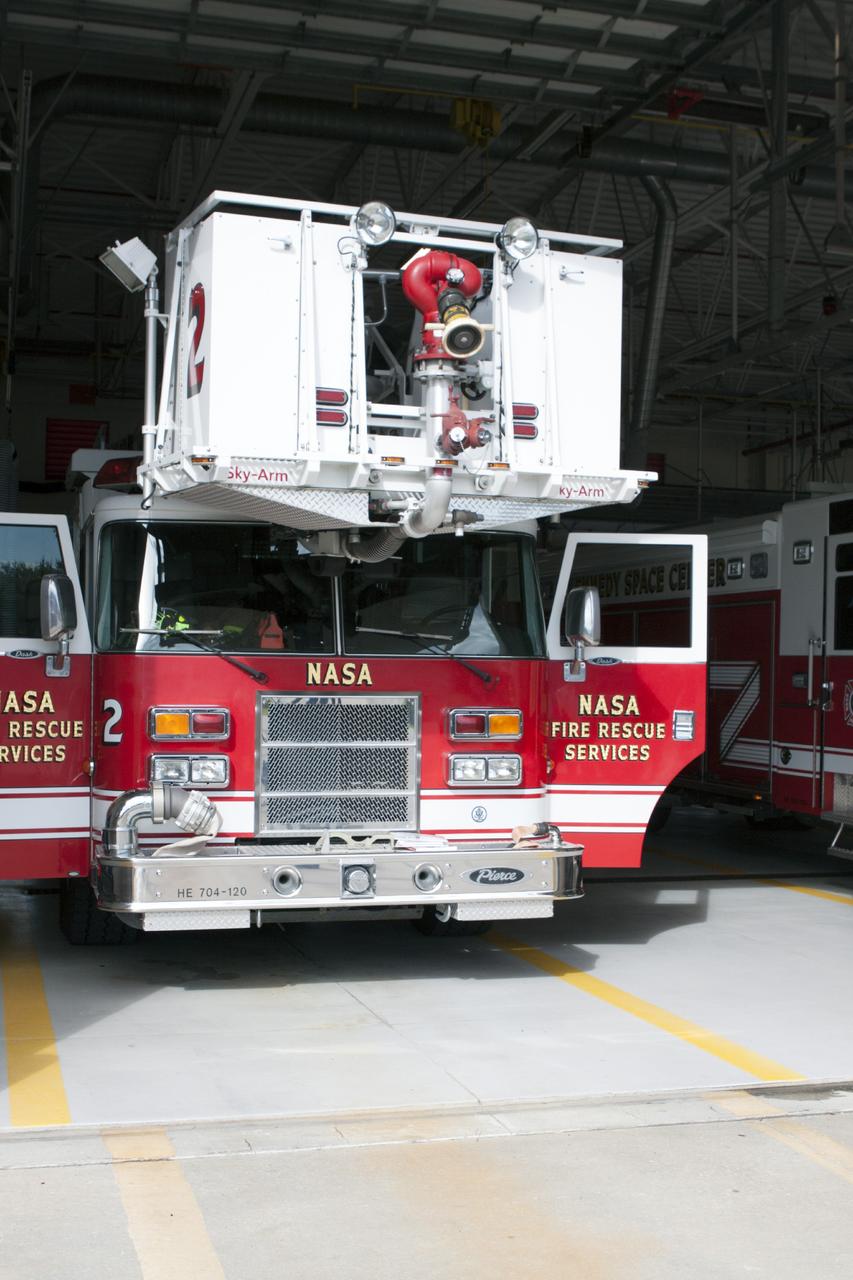
CAPE CANAVERAL, Fla. – At Fire Station No. 2 near the Shuttle Landing Facility at NASA’s Kennedy Space Center in Florida, the aerial fire truck sits in a bay as Fire Rescue Services personnel prepare to drive the fire truck out of the bay and then operate the extendable ladder during training in order to be certified in the operation and use of the vehicle. The center’s Fire Rescue Services recently achieved Pro Board Certification in aerial fire truck operations. Pro Board Certification is a globally recognized certification that puts on multiple courses that all fire departments throughout the world recognize and use to train their personnel. The unique aerial truck contains a 100-foot extendable ladder with a bucket at the end of it that can be used for rescues from taller buildings or aircraft rescue firefighting. Photo credit: NASA/Kim Shiflett
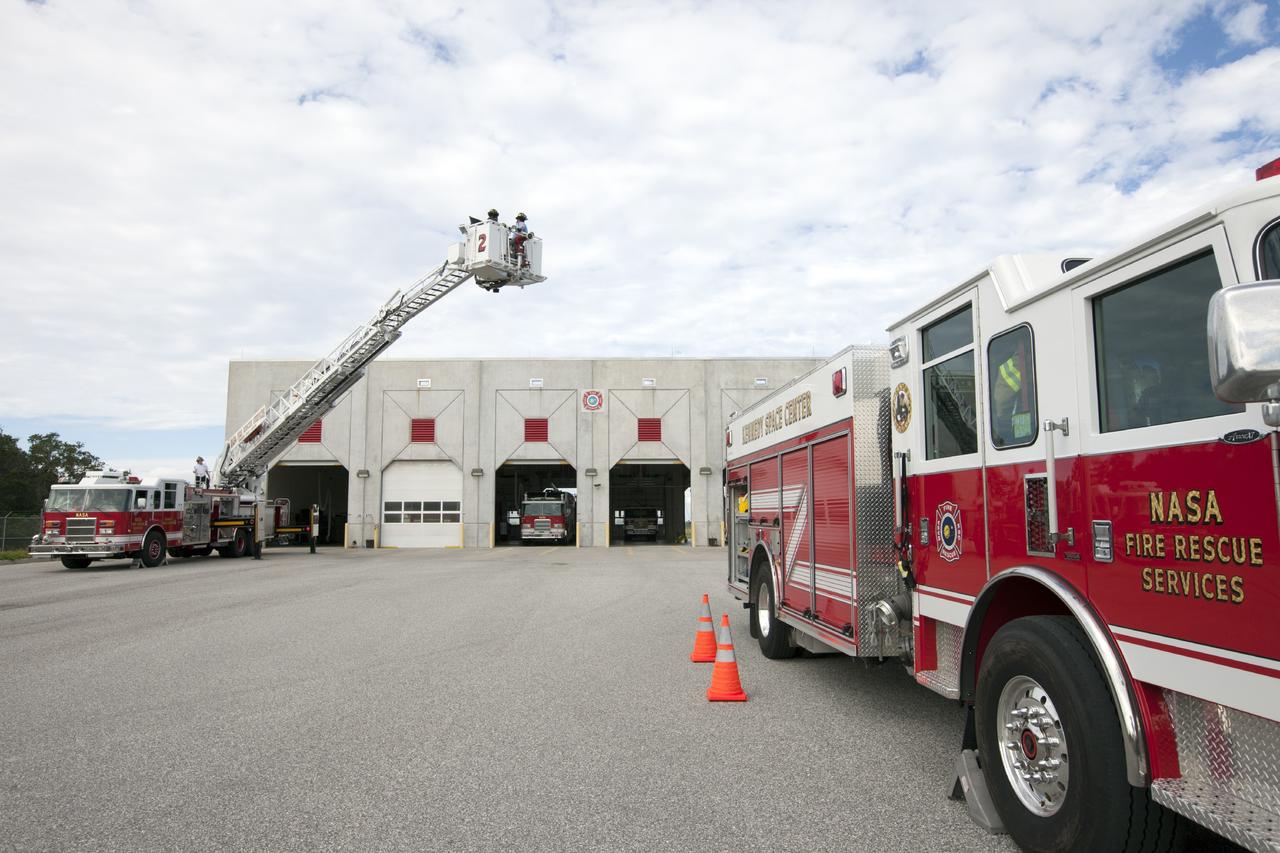
CAPE CANAVERAL, Fla. – At Fire Station No. 2 near the Shuttle Landing Facility at NASA’s Kennedy Space Center in Florida, Fire Rescue Services personnel have deployed and extended the ladder on the aerial fire truck during training in order to be certified in the operation and use of the vehicle. Two fire rescue workers are in the bucket practicing harness procedures. The center’s Fire Rescue Services recently achieved Pro Board Certification in aerial fire truck operations. Pro Board Certification is a globally recognized certification that puts on multiple courses that all fire departments throughout the world recognize and use to train their personnel. The unique aerial truck contains a 100-foot extendable ladder with a bucket at the end of it that can be used for rescues from taller buildings or aircraft rescue firefighting. Photo credit: NASA/Kim Shiflett
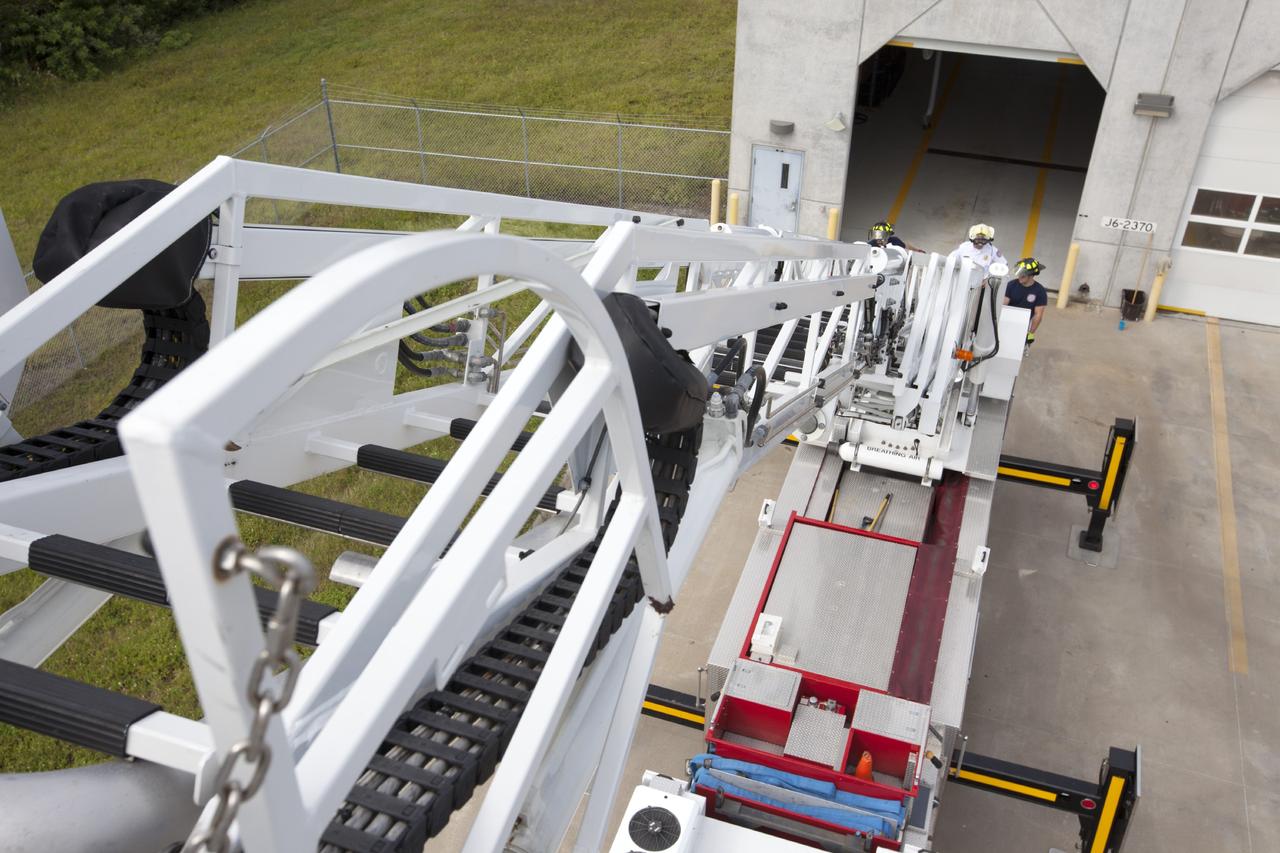
CAPE CANAVERAL, Fla. – At Fire Station No. 2 near the Shuttle Landing Facility at NASA’s Kennedy Space Center in Florida, Fire Rescue Services personnel have deployed and extended the ladder on the aerial fire truck during training in order to be certified in the operation and use of the vehicle. The stabilizers have been deployed on either side of the fire truck. The center’s Fire Rescue Services recently achieved Pro Board Certification in aerial fire truck operations. Pro Board Certification is a globally recognized certification that puts on multiple courses that all fire departments throughout the world recognize and use to train their personnel. The unique aerial truck contains a 100-foot extendable ladder with a bucket at the end of it that can be used for rescues from taller buildings or aircraft rescue firefighting. Photo credit: NASA/Kim Shiflett
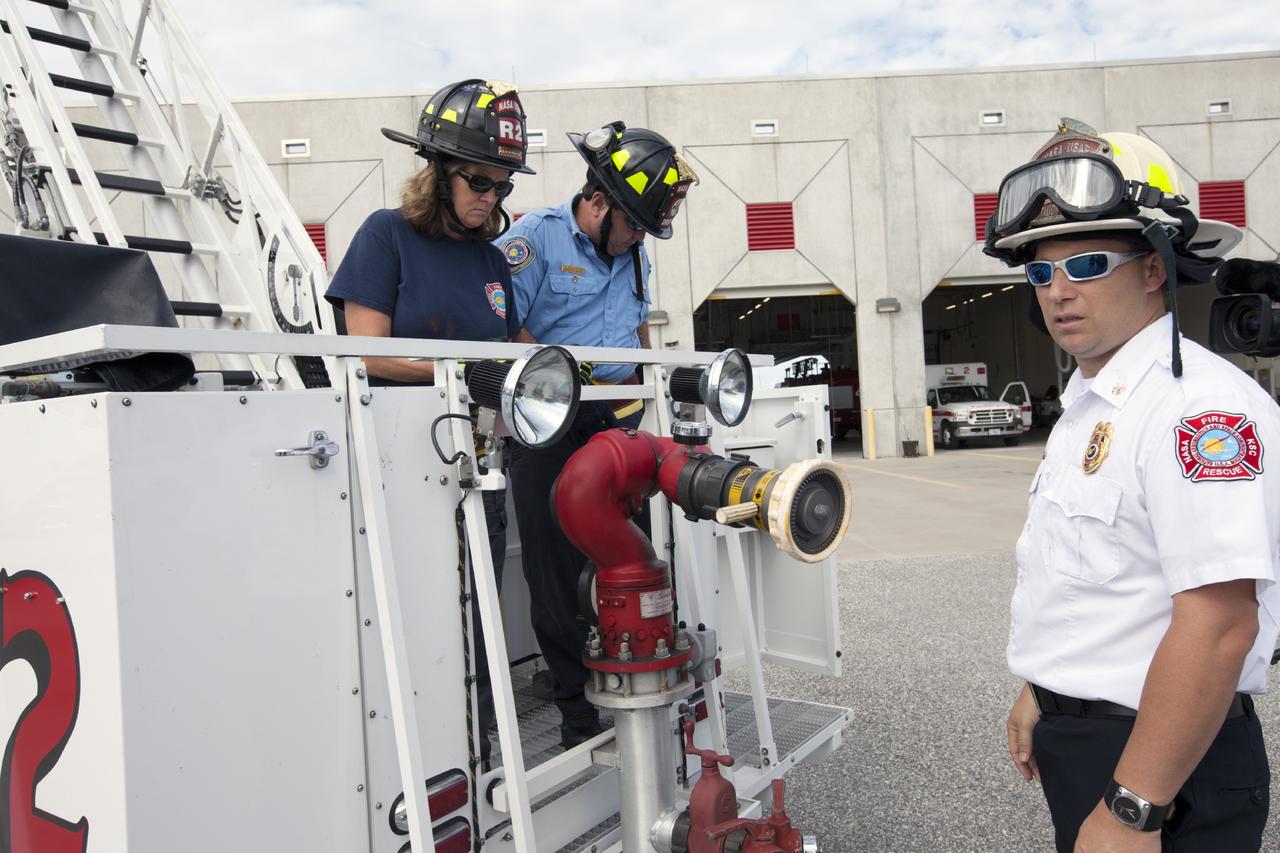
CAPE CANAVERAL, Fla. – At Fire Station No. 2 near the Shuttle Landing Facility at NASA’s Kennedy Space Center in Florida, Mark Huetter, assistant chief of training with the center’s Fire Department, monitors training procedures as two Fire Rescue Services personnel prepare to exit the bucket after training on the aerial fire truck. The center’s Fire Rescue Services recently achieved Pro Board Certification in aerial fire truck operations. Pro Board Certification is a globally recognized certification that puts on multiple courses that all fire departments throughout the world recognize and use to train their personnel. The unique aerial truck contains a 100-foot extendable ladder with a bucket at the end of it that can be used for rescues from taller buildings or aircraft rescue firefighting. Photo credit: NASA/Kim Shiflett
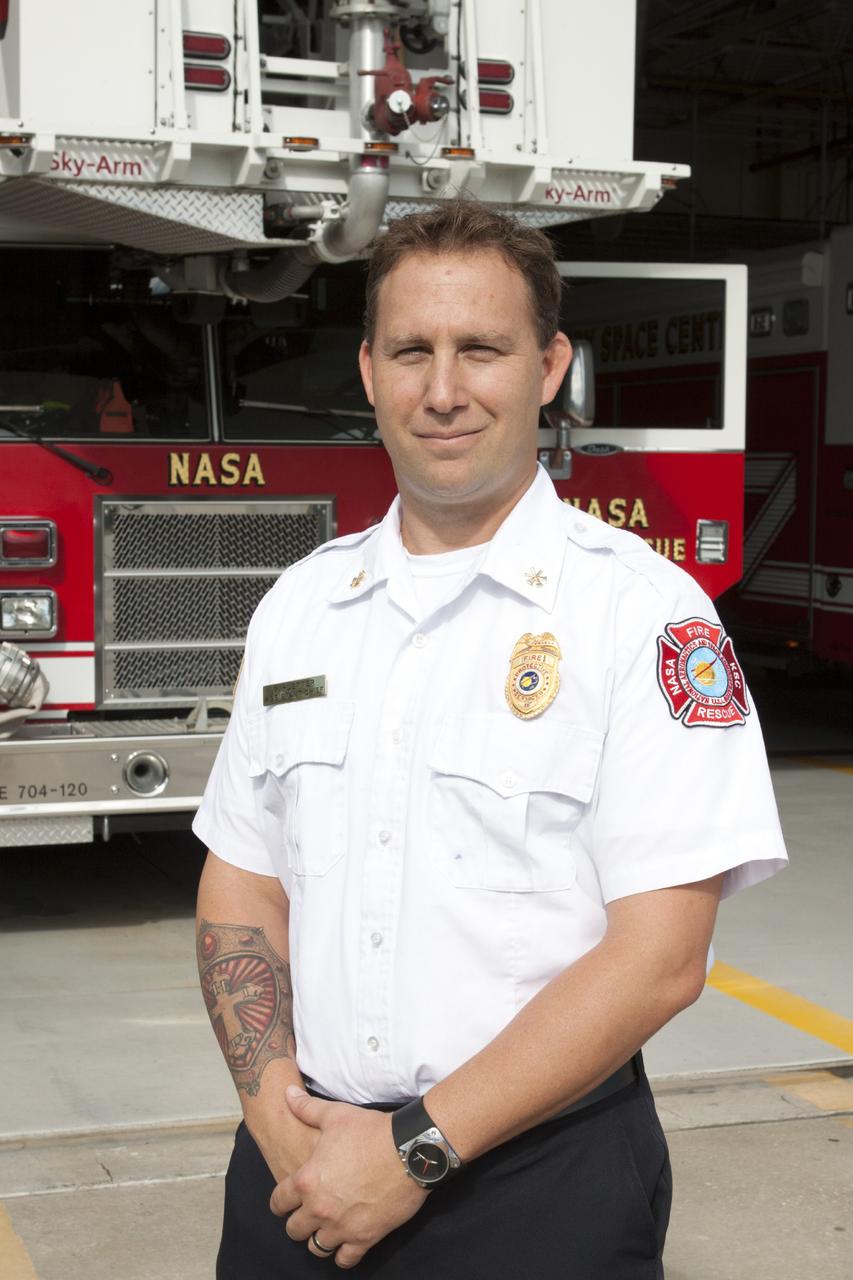
CAPE CANAVERAL, Fla. – At Fire Station No. 2 near the Shuttle Landing Facility at NASA’s Kennedy Space Center in Florida, Mark Huetter, assistant chief of training with the center’s Fire Department, prepares to train Fire Rescue Services personnel in the operation and use of the aerial fire truck. The center’s Fire Rescue Services recently achieved Pro Board Certification in aerial fire truck operations. Pro Board Certification is a globally recognized certification that puts on multiple courses that all fire departments throughout the world recognize and use to train their personnel. The unique aerial truck contains a 100-foot extendable ladder with a bucket at the end of it that can be used for rescues from taller buildings or aircraft rescue firefighting. Photo credit: NASA/Kim Shiflett
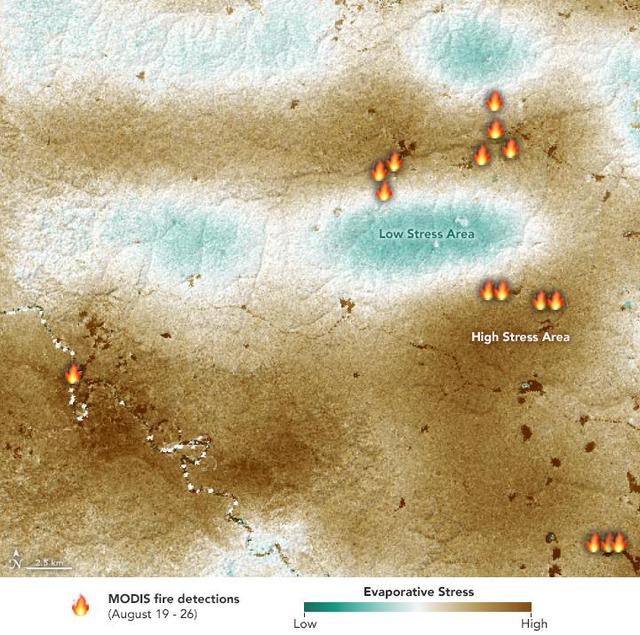
NASA's ECOsystem Spaceborne Thermal Radiometer Experiment on Space Station (ECOSTRESS) sensor measured the water-stress levels of plants when it passed over the Peruvian Amazon rainforest on Aug. 7, 2019, before the fires there began. The map shows areas of plants in distress (brown) and areas of less stress (blue). Water-stressed plants released measurably less water vapor into the air at the time of the summer fires. The fire icons represent fires imaged by NASA's Terra satellite between Aug. 19 and 26. The burn pattern reveals that the fires were concentrated in areas of highly water-stressed plants, pointing to how water-stressed plants can impact the spread of fires. The data may one day help NASA's Earth-observing missions predict the path of future forest or brush fires. https://photojournal.jpl.nasa.gov/catalog/PIA23432
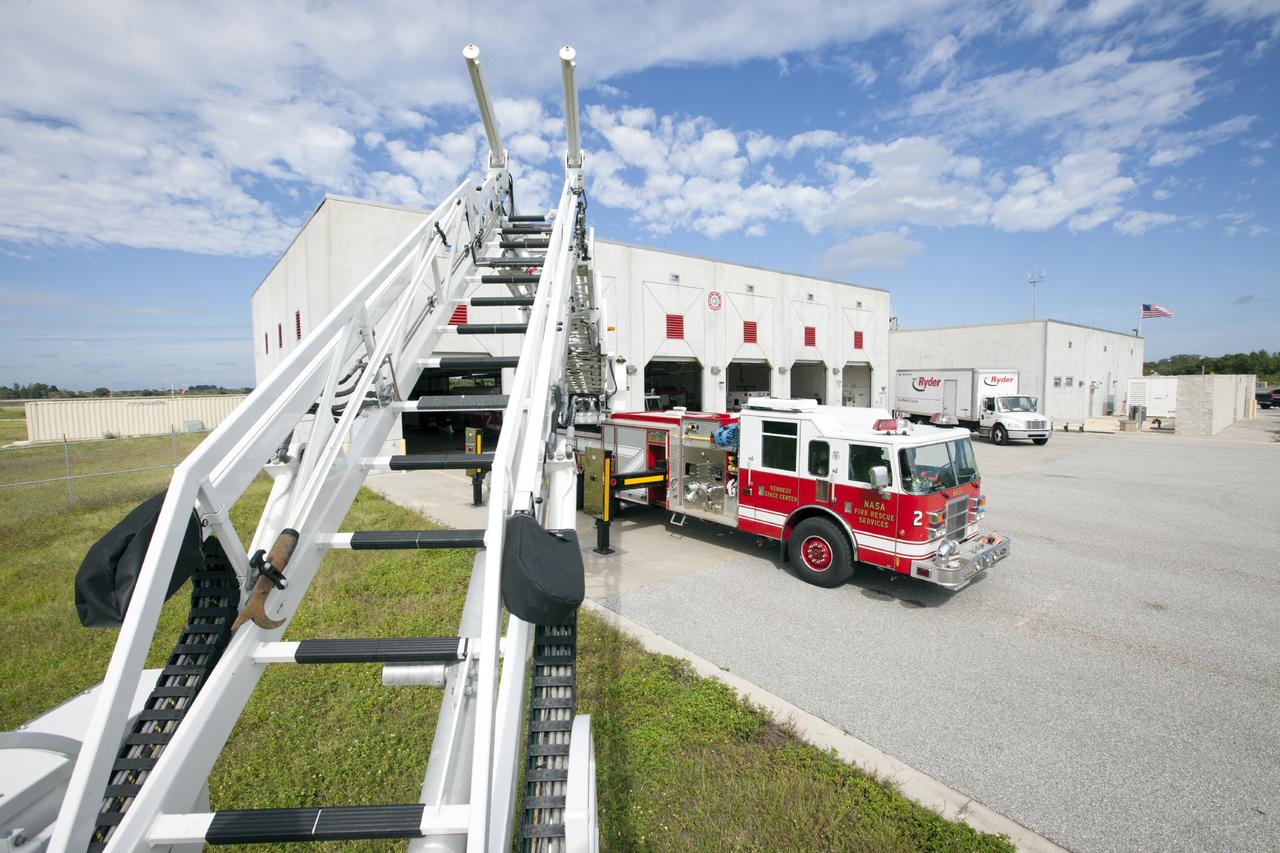
CAPE CANAVERAL, Fla. – At Fire Station No. 2 near the Shuttle Landing Facility at NASA’s Kennedy Space Center in Florida, Fire Rescue Services personnel have deployed and extended the ladder on the aerial fire truck during training in order to be certified in the operation and use of the vehicle. The stabilizers have been deployed on either side of the fire truck. The center’s Fire Rescue Services recently achieved Pro Board Certification in aerial fire truck operations. Pro Board Certification is a globally recognized certification that puts on multiple courses that all fire departments throughout the world recognize and use to train their personnel. The unique aerial truck contains a 100-foot extendable ladder with a bucket at the end of it that can be used for rescues from taller buildings or aircraft rescue firefighting. Photo credit: NASA/Kim Shiflett
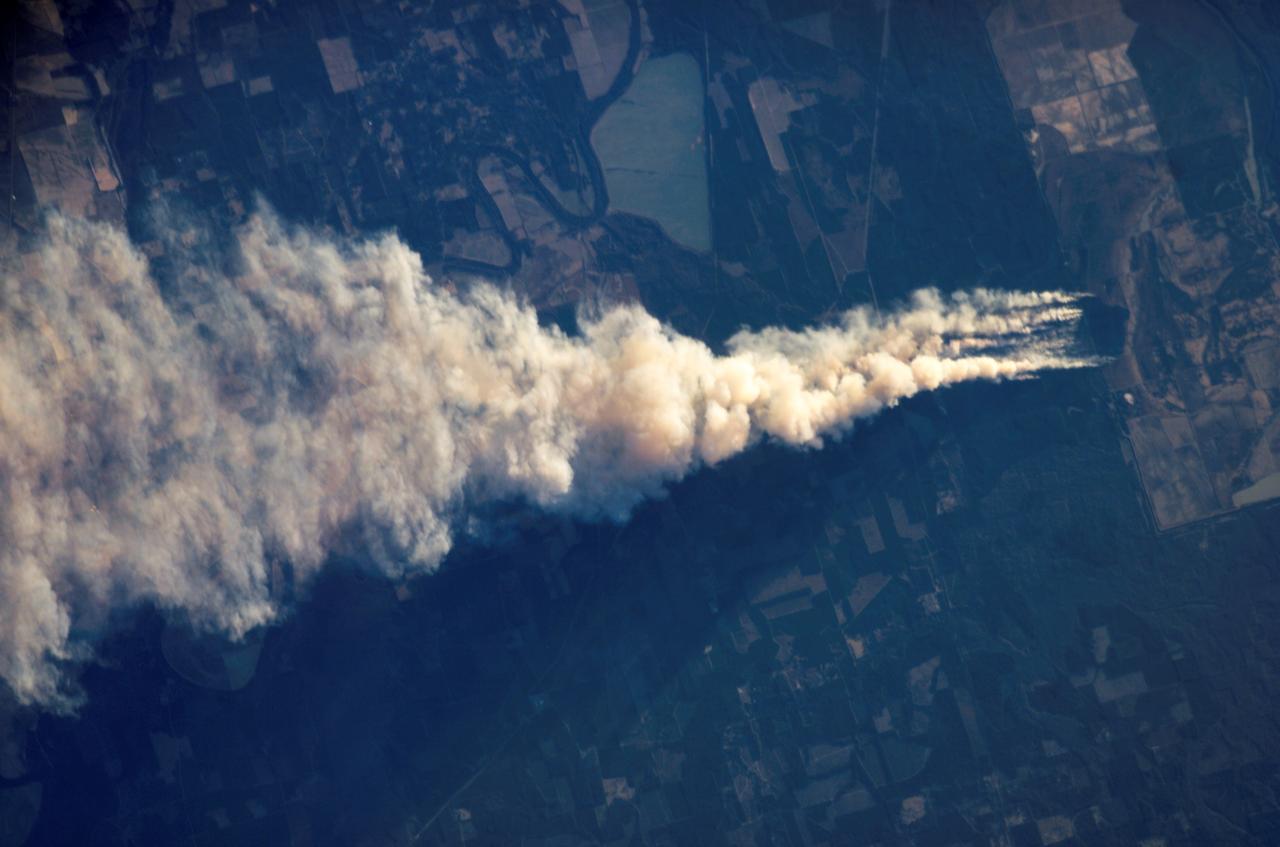
ISS012-E-13692 (2 Jan. 2006) --- A Forest Fire in Ouachita National Wildlife Refuge, Louisiana is featured in this image photographed by an Expedition 12 crew member on the International Space Station. Dry conditions and high winds have led to numerous recent fire outbreaks throughout much of the southwestern and south-central USA. This image captures the smoke plume from a fire in the Upper Ouachita National Wildlife Refuge in northeastern Louisiana. Drought conditions have persisted for much of the past year, leading to an increased fuel load comprised of dried grasses, shrubs, and trees. The combination of high amounts of dry fuel and frequent high winds has stoked small point fires into widespread brush fires. The fires generating this minimum 25-kilometer smoke plume started at approximately 13:00 hours local time. This image was acquired approximately 3.5 hours later as the station passed over the Texas/Louisiana border to the southwest. The extent of the plume reflects the strong westerly winds that drove the fire eastwards and damaged an estimated 200-300 acres of the wildlife refuge. The striking illumination of the plume is caused by a very low sun angle (angle between the horizon and the Sun directly below the space station), but this also results in generally low illumination of other scene features such as agricultural fields.
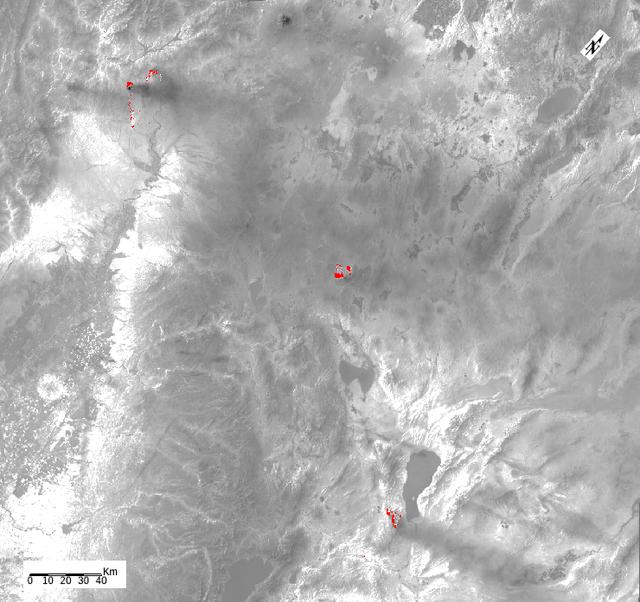
ECOSTRESS, NASA's new Earth-observing mission aboard the International Space Station, detected three wildfires burning in the western US on July 28, 2018 -- the Carr and Whaleback fires in California, and the Perry Fire in Nevada. The fires can be seen in red in Figures 1 and 2. Zooming in on the two larger fires shows the heat data in more detail and also reveals the fires' thick smoke plumes. ECOSTRESS launched on June 29 as part of a SpaceX commercial resupply mission to the space station. Its primary mission is to measure surface temperatures to detect plant health; however, it can also detect other heat-related phenomenon like heat waves, volcanoes and wildfires. This is the first image of wildfires acquired from ECOSTRESS. https://photojournal.jpl.nasa.gov/catalog/PIA22490
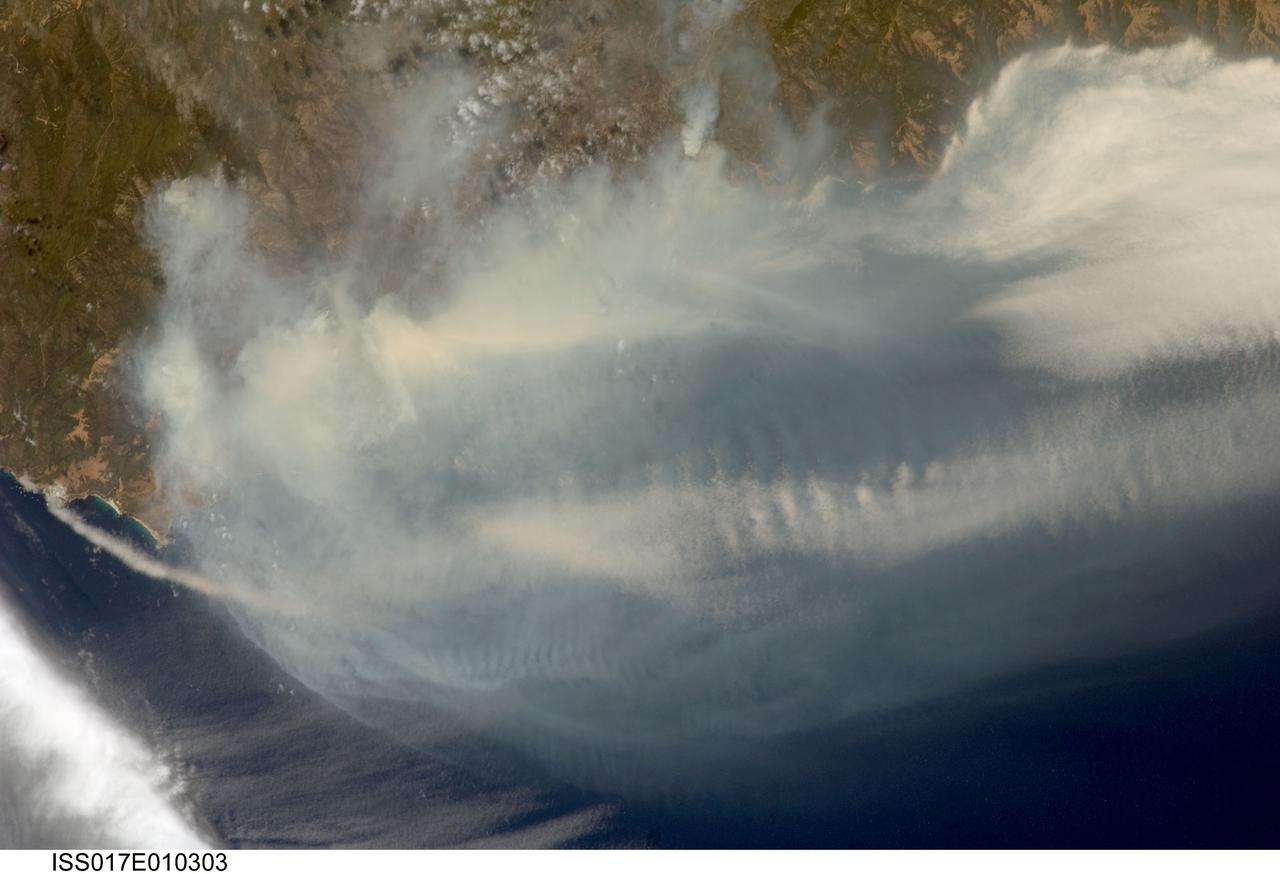
ISS017-E-010303 (4 July 2008) --- The Basin fire in central California is featured in this image photographed by astronaut Greg Chamitoff, Expedition 17 flight engineer, on the International Space Station. One of the largest and most destructive fires raging across California over the July 4 weekend was the Basin fire, threatening Big Sur, and covering the coast in a thick blanket of smoke. Chamitoff, observing the fires from approximately 344 kilometers above Earth (215 miles), was able to capture the regional view of the smoke pall. At the time this image was taken, more than 300 fires were burning in California alone. This Basin fire was triggered by a thunderstorm, has burned 77,000 acres, and is still only partially contained.
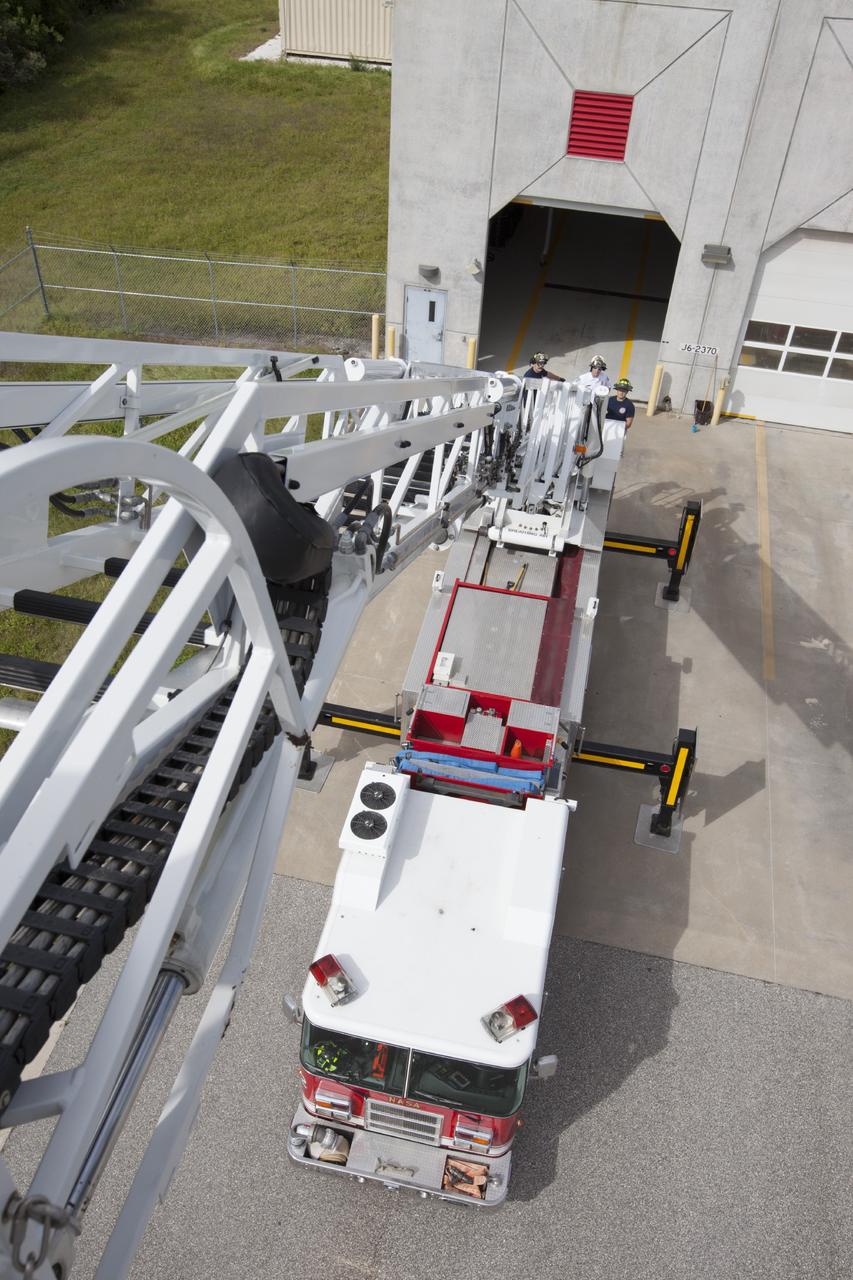
CAPE CANAVERAL, Fla. – At Fire Station No. 2 near the Shuttle Landing Facility at NASA’s Kennedy Space Center in Florida, a bird’s eye view reveals the ladder has been extended on the aerial fire truck during a training exercise. The stabilizers have been deployed on either side of the fire truck. The center’s Fire Rescue Services recently achieved Pro Board Certification in aerial fire truck operations. Pro Board Certification is a globally recognized certification that puts on multiple courses that all fire departments throughout the world recognize and use to train their personnel. The unique aerial truck contains a 100-foot extendable ladder with a bucket at the end of it that can be used for rescues from taller buildings or aircraft rescue firefighting. Photo credit: NASA/Kim Shiflett
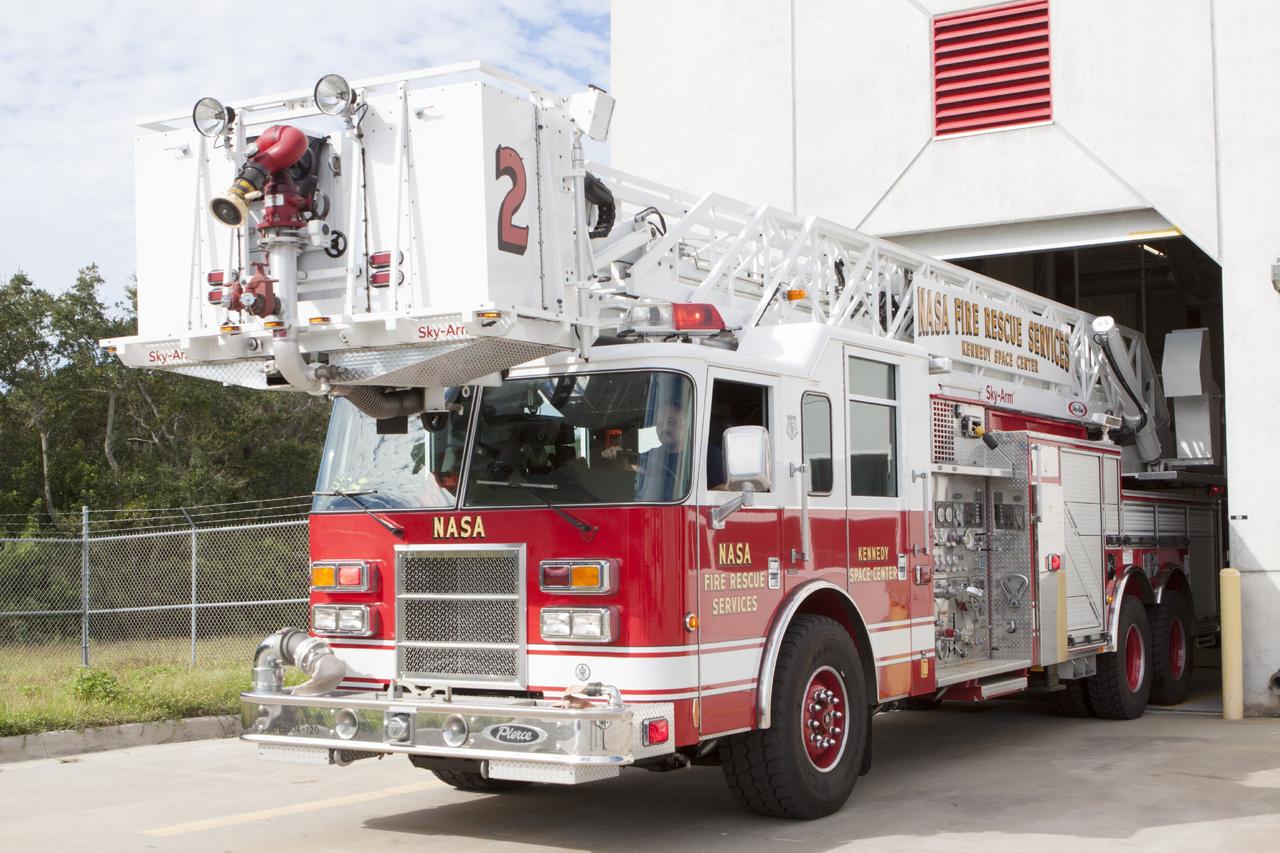
CAPE CANAVERAL, Fla. – At Fire Station No. 2 near the Shuttle Landing Facility at NASA’s Kennedy Space Center in Florida, the aerial fire truck is being driven out of the bay so that Fire Rescue Services personnel can be trained and certified in the operation and use of the vehicle. The center’s Fire Rescue Services recently achieved Pro Board Certification in aerial fire truck operations. Pro Board Certification is a globally recognized certification that puts on multiple courses that all fire departments throughout the world recognize and use to train their personnel. The unique aerial truck contains a 100-foot extendable ladder with a bucket at the end of it that can be used for rescues from taller buildings or aircraft rescue firefighting. Photo credit: NASA/Kim Shiflett
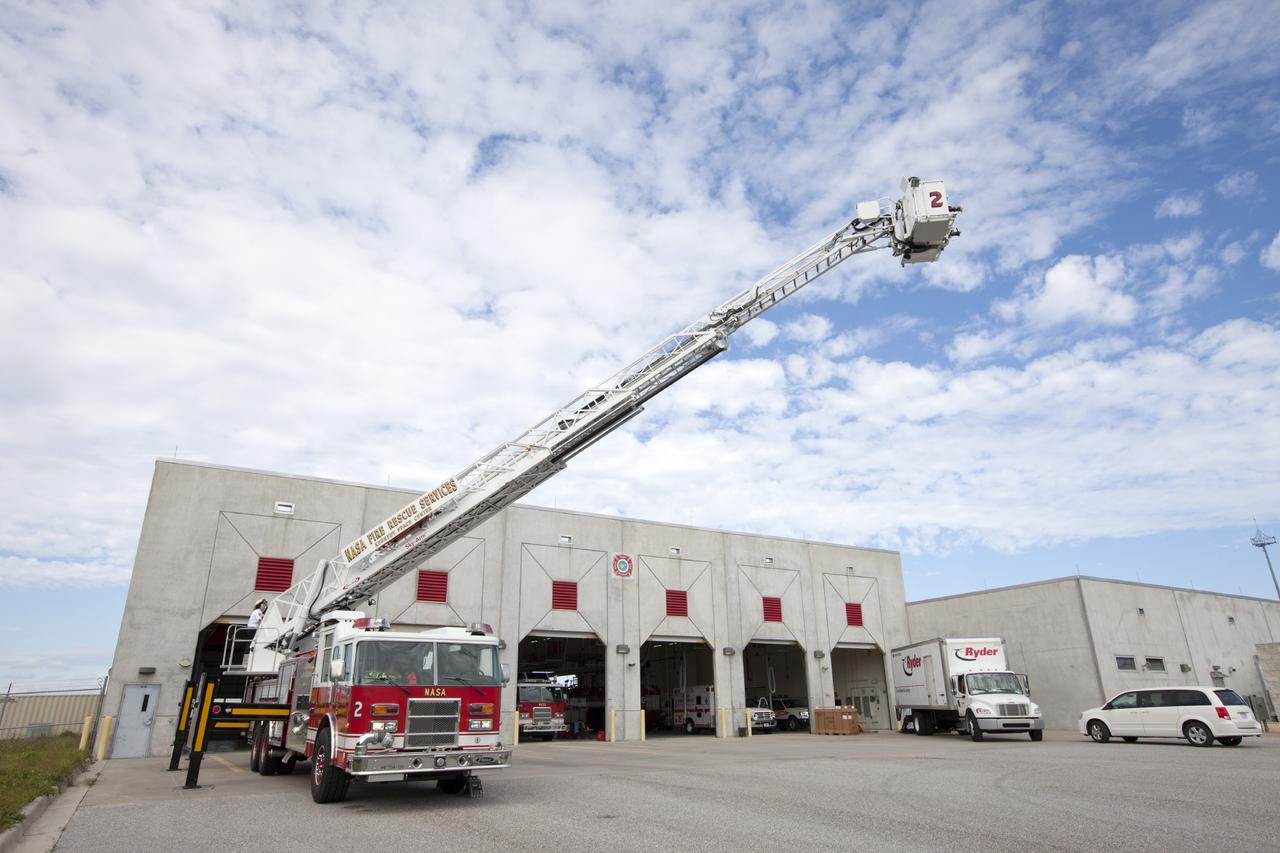
CAPE CANAVERAL, Fla. – At Fire Station No. 2 near the Shuttle Landing Facility at NASA’s Kennedy Space Center in Florida, Fire Rescue Services personnel have deployed and extended the ladder on the aerial fire truck during training in order to be certified in the operation and use of the vehicle. The center’s Fire Rescue Services recently achieved Pro Board Certification in aerial fire truck operations. Pro Board Certification is a globally recognized certification that puts on multiple courses that all fire departments throughout the world recognize and use to train their personnel. The unique aerial truck contains a 100-foot extendable ladder with a bucket at the end of it that can be used for rescues from taller buildings or aircraft rescue firefighting. Photo credit: NASA/Kim Shiflett
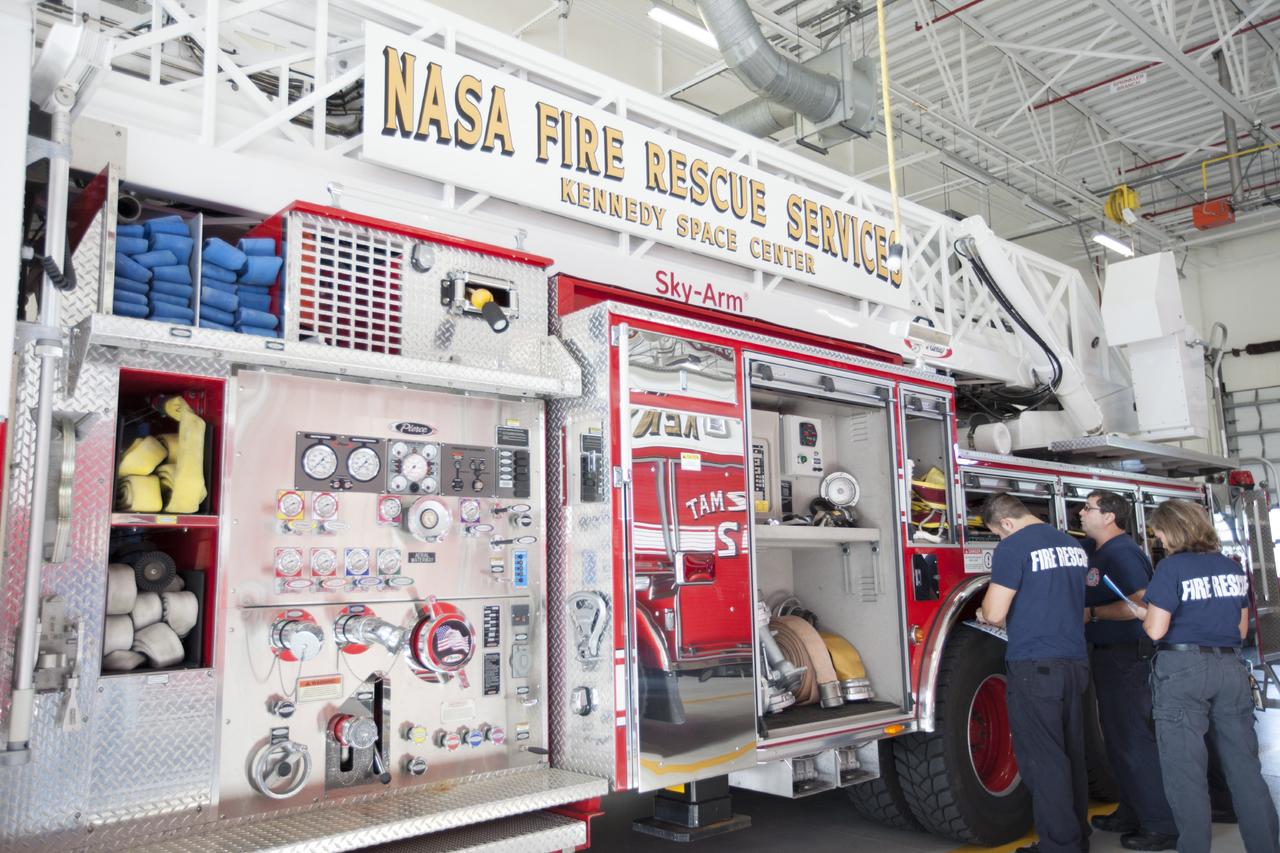
CAPE CANAVERAL, Fla. – At Fire Station No. 2 near the Shuttle Landing Facility at NASA’s Kennedy Space Center in Florida, Fire Rescue Services personnel review procedures and check equipment on the aerial fire truck as part of the training to be certified in the operation and use of the vehicle. The center’s Fire Rescue Services recently achieved Pro Board Certification in aerial fire truck operations. Pro Board Certification is a globally recognized certification that puts on multiple courses that all fire departments throughout the world recognize and use to train their personnel. The unique aerial truck contains a 100-foot extendable ladder with a bucket at the end of it that can be used for rescues from taller buildings or aircraft rescue firefighting. Photo credit: NASA/Kim Shiflett
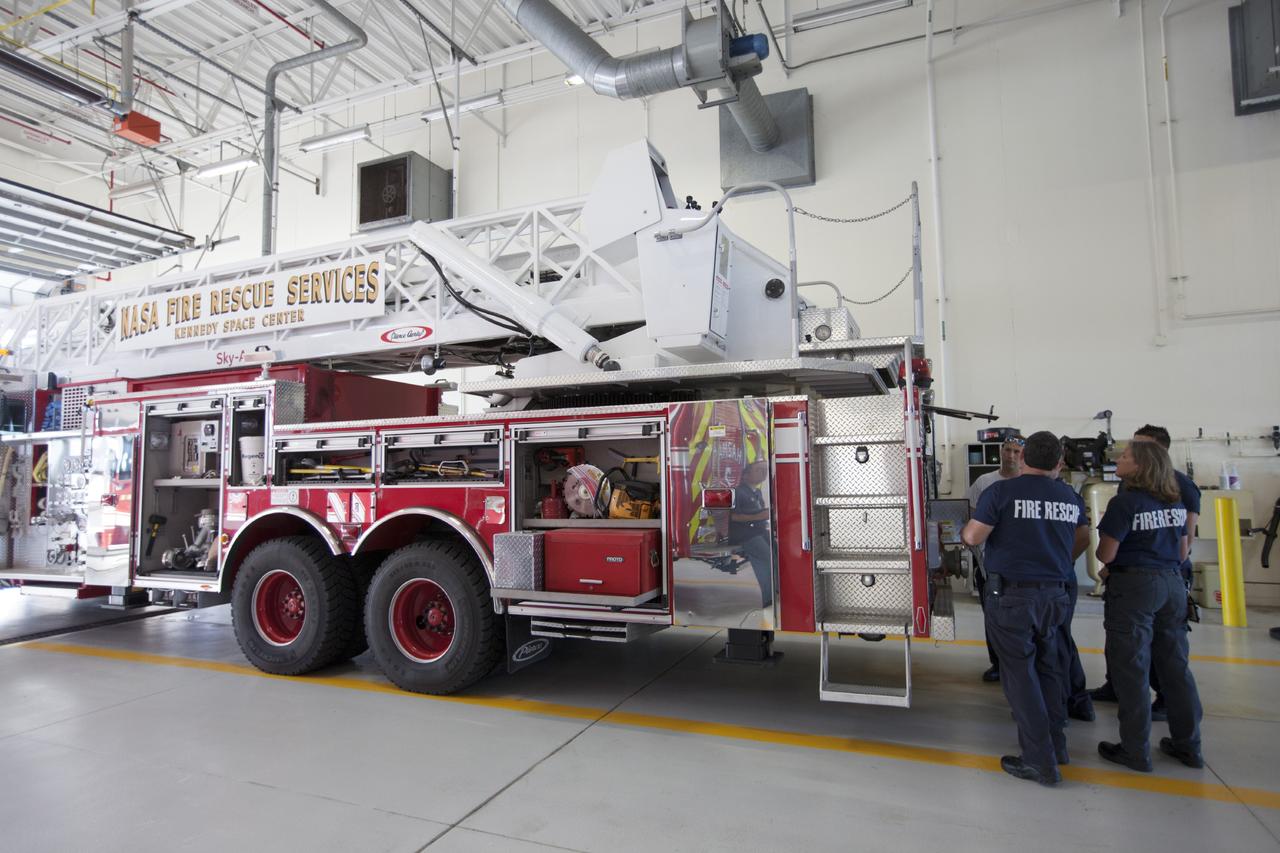
CAPE CANAVERAL, Fla. – At Fire Station No. 2 near the Shuttle Landing Facility at NASA’s Kennedy Space Center in Florida, Fire Rescue Services personnel review procedures and check equipment on the aerial fire truck as part of the training to be certified in the operation and use of the vehicle. The center’s Fire Rescue Services recently achieved Pro Board Certification in aerial fire truck operations. Pro Board Certification is a globally recognized certification that puts on multiple courses that all fire departments throughout the world recognize and use to train their personnel. The unique aerial truck contains a 100-foot extendable ladder with a bucket at the end of it that can be used for rescues from taller buildings or aircraft rescue firefighting. Photo credit: NASA/Kim Shiflett
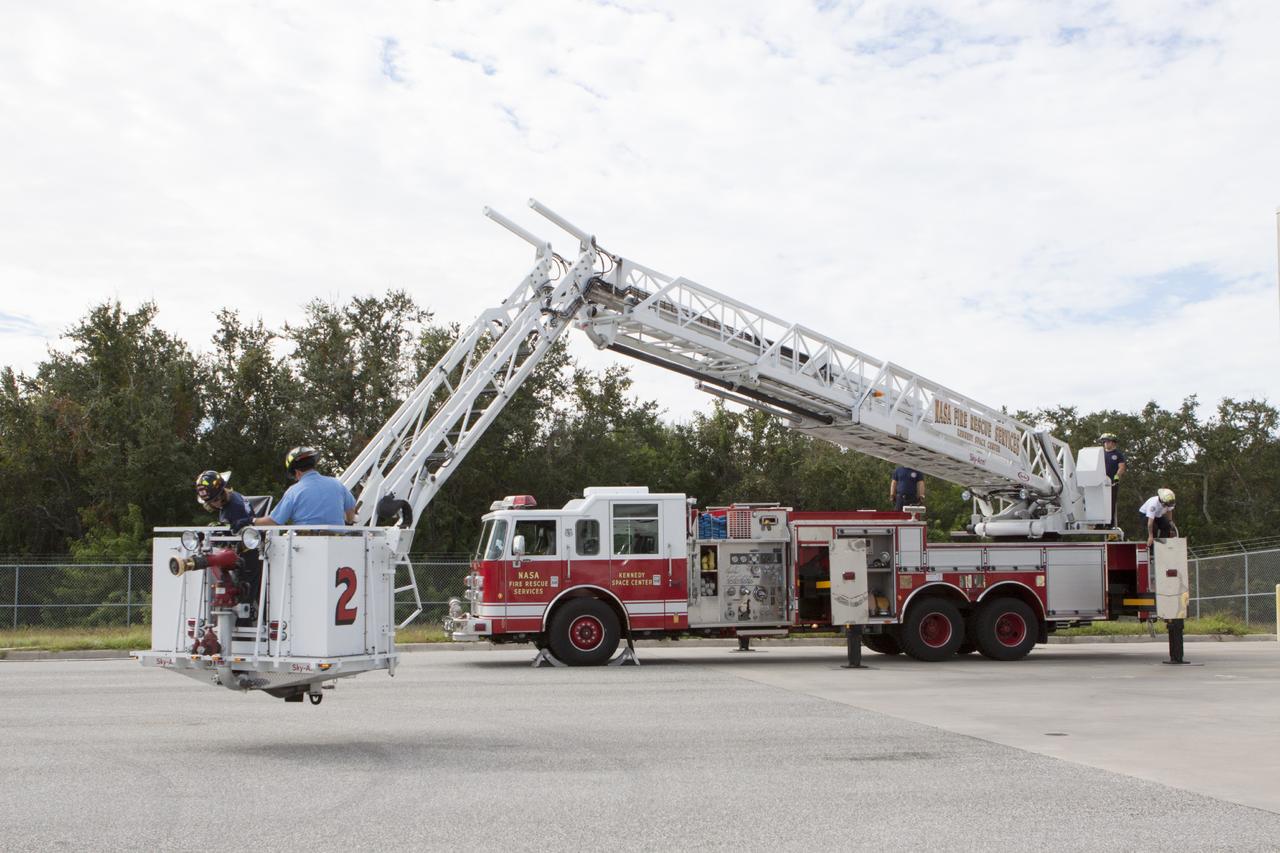
CAPE CANAVERAL, Fla. – At Fire Station No. 2 near the Shuttle Landing Facility at NASA’s Kennedy Space Center in Florida, Fire Rescue Services personnel lower the extendable ladder so that two fire rescue workers can exit the bucket during training to be certified in the operation and use of the vehicle. The center’s Fire Rescue Services recently achieved Pro Board Certification in aerial fire truck operations. Pro Board Certification is a globally recognized certification that puts on multiple courses that all fire departments throughout the world recognize and use to train their personnel. The unique aerial truck contains a 100-foot extendable ladder with a bucket at the end of it that can be used for rescues from taller buildings or aircraft rescue firefighting. Photo credit: NASA/Kim Shiflett
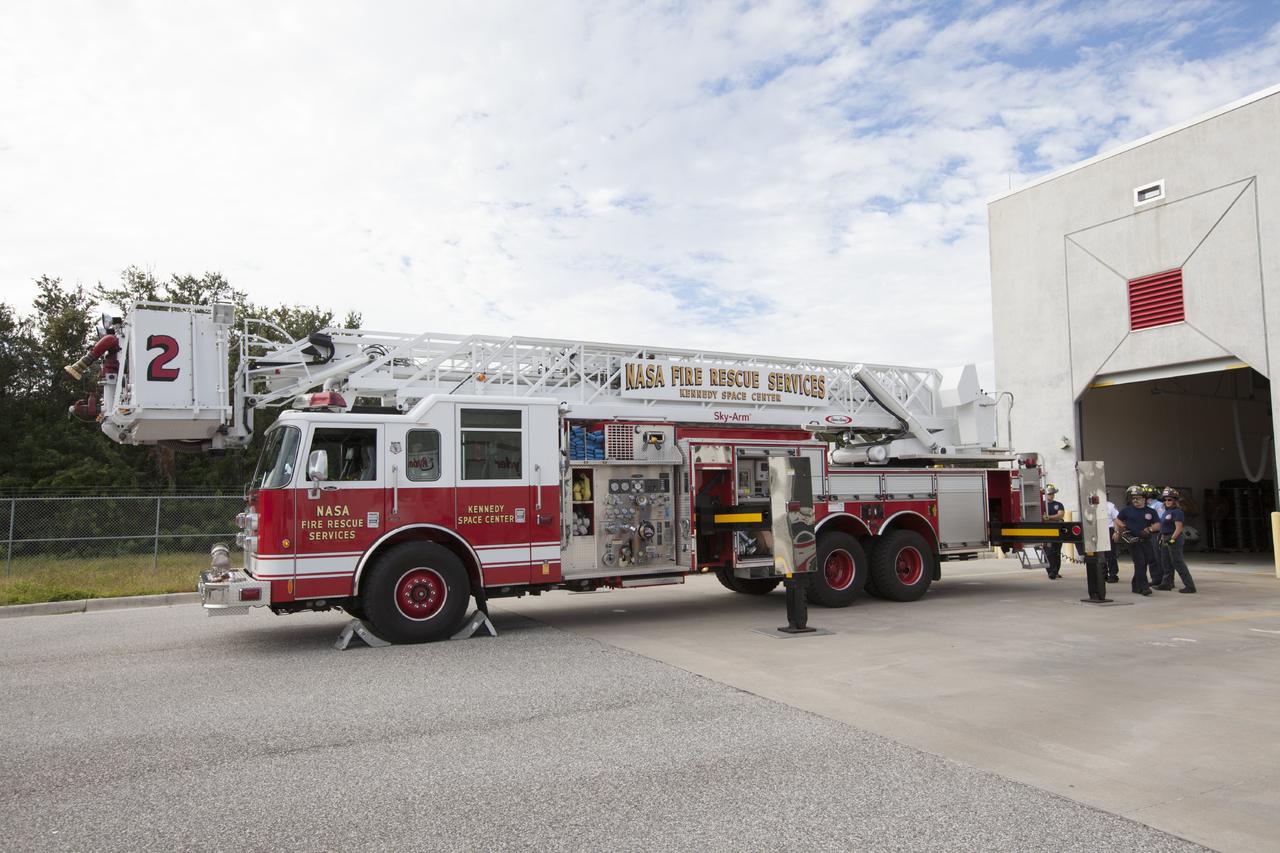
CAPE CANAVERAL, Fla. – At Fire Station No. 2 near the Shuttle Landing Facility at NASA’s Kennedy Space Center in Florida, the aerial fire truck has been moved out of the bay and Fire Rescue Services personnel have deployed the stabilizers on either side of the truck in order to prepare for training to be certified in the operation and use of the vehicle. The center’s Fire Rescue Services recently achieved Pro Board Certification in aerial fire truck operations. Pro Board Certification is a globally recognized certification that puts on multiple courses that all fire departments throughout the world recognize and use to train their personnel. The unique aerial truck contains a 100-foot extendable ladder with a bucket at the end of it that can be used for rescues from taller buildings or aircraft rescue firefighting. Photo credit: NASA/Kim Shiflett
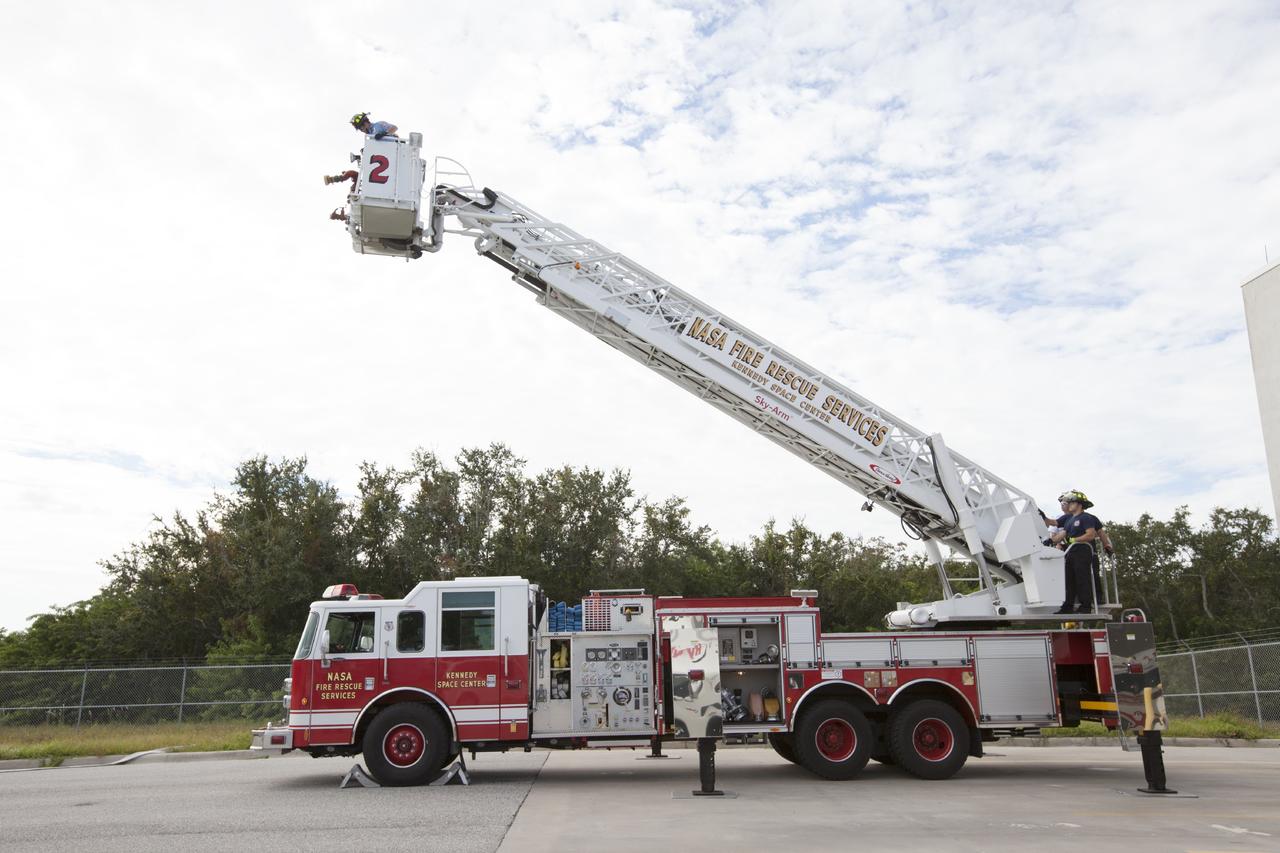
CAPE CANAVERAL, Fla. – At Fire Station No. 2 near the Shuttle Landing Facility at NASA’s Kennedy Space Center in Florida, Fire Rescue Services personnel have deployed the ladder on the aerial fire truck during training in order to be certified in the operation and use of the vehicle. The center’s Fire Rescue Services recently achieved Pro Board Certification in aerial fire truck operations. Pro Board Certification is a globally recognized certification that puts on multiple courses that all fire departments throughout the world recognize and use to train their personnel. The unique aerial truck contains a 100-foot extendable ladder with a bucket at the end of it that can be used for rescues from taller buildings or aircraft rescue firefighting. Photo credit: NASA/Kim Shiflett
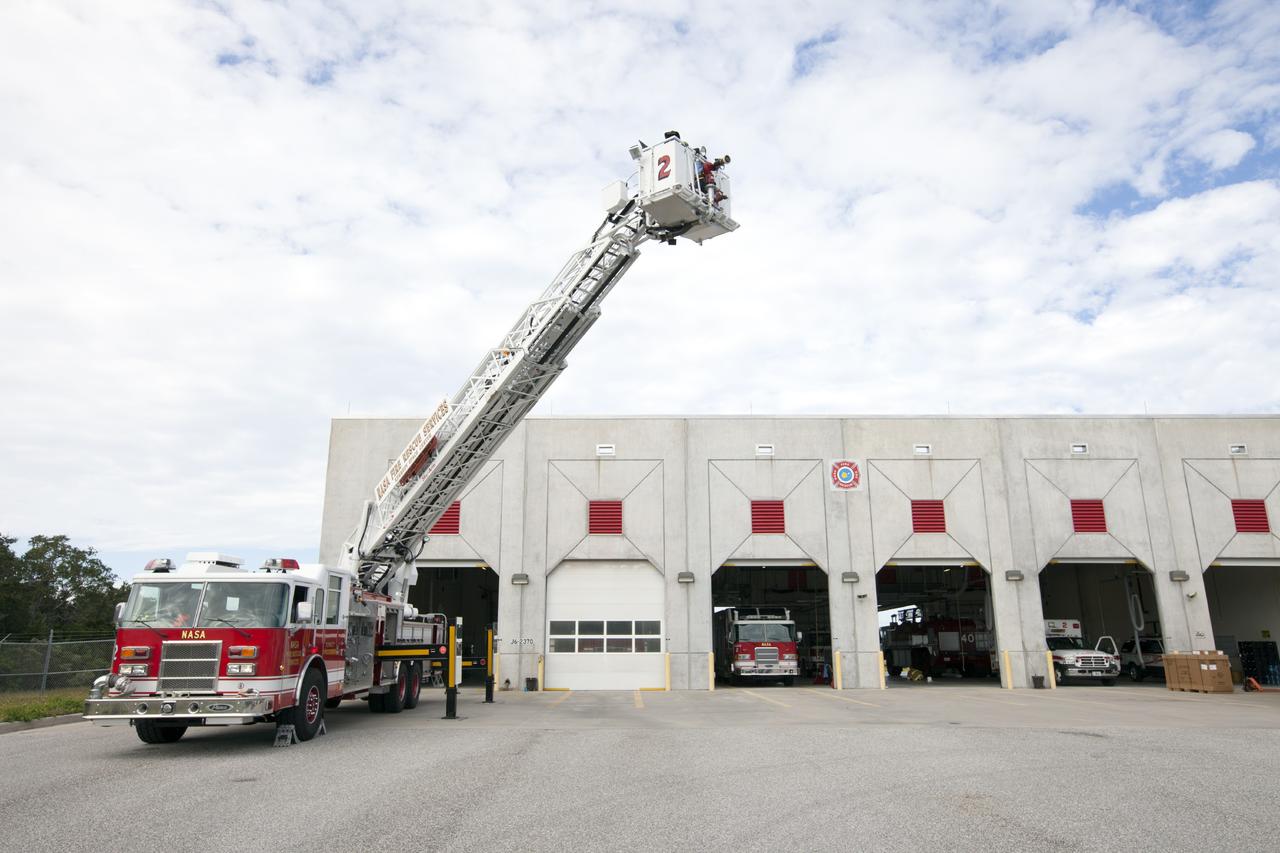
CAPE CANAVERAL, Fla. – At Fire Station No. 2 near the Shuttle Landing Facility at NASA’s Kennedy Space Center in Florida, Fire Rescue Services personnel have deployed the ladder on the aerial fire truck during training in order to be certified in the operation and use of the vehicle. The center’s Fire Rescue Services recently achieved Pro Board Certification in aerial fire truck operations. Pro Board Certification is a globally recognized certification that puts on multiple courses that all fire departments throughout the world recognize and use to train their personnel. The unique aerial truck contains a 100-foot extendable ladder with a bucket at the end of it that can be used for rescues from taller buildings or aircraft rescue firefighting. Photo credit: NASA/Kim Shiflett
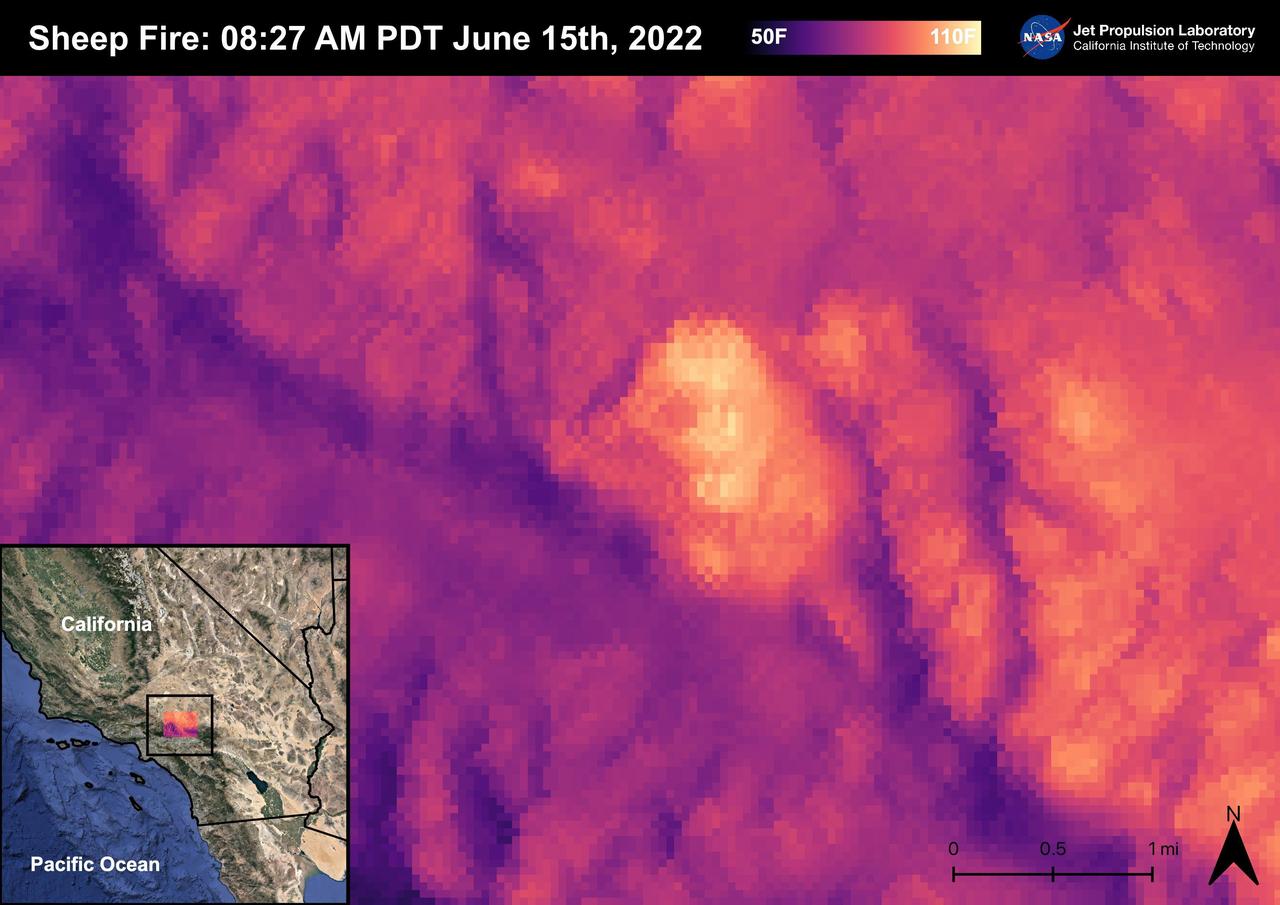
The Sheep Fire started on June 12th, 2022, Northeast of the town of Wrightwood in San Bernardino County. The fire burned 865 acres and was contained on June 19th, 2022. Due to the proximity of the Sheep Fire to Wrightwood, the town was evacuated. The Pacific Crest Trail in the San Gabriel Mountains and part of Highway 2 were closed due to the fire. There were no casualties or injuries as a result of the Sheep Fire. The fire was captured in an ECOSTRESS Land Surface Temperature image on 08:27 AM PDT on June 15th and shows the temperature of the fire surpassing 100 degrees Fahrenheit. As California is currently in a drought, there are concerns that 2022 will see a severe wildfire season; ECOSTRESS allows for the monitoring of the drought and of wildfires. ECOSTRESS is a thermal instrument on the International Space Station that measures the temperature of the ground, which is hotter than the air temperature during the day. It was launched to the space station in 2018. Its primary mission is to identify critical thresholds of water use and water stress in plants and to detect the timing, location, and predictive factors leading to plant water uptake decline and/or cessation. The nature of the high-resolution data provided by ECOSTRESS allows it to record heat related phenomena such as heat waves, droughts and wildfires. https://photojournal.jpl.nasa.gov/catalog/PIA25356