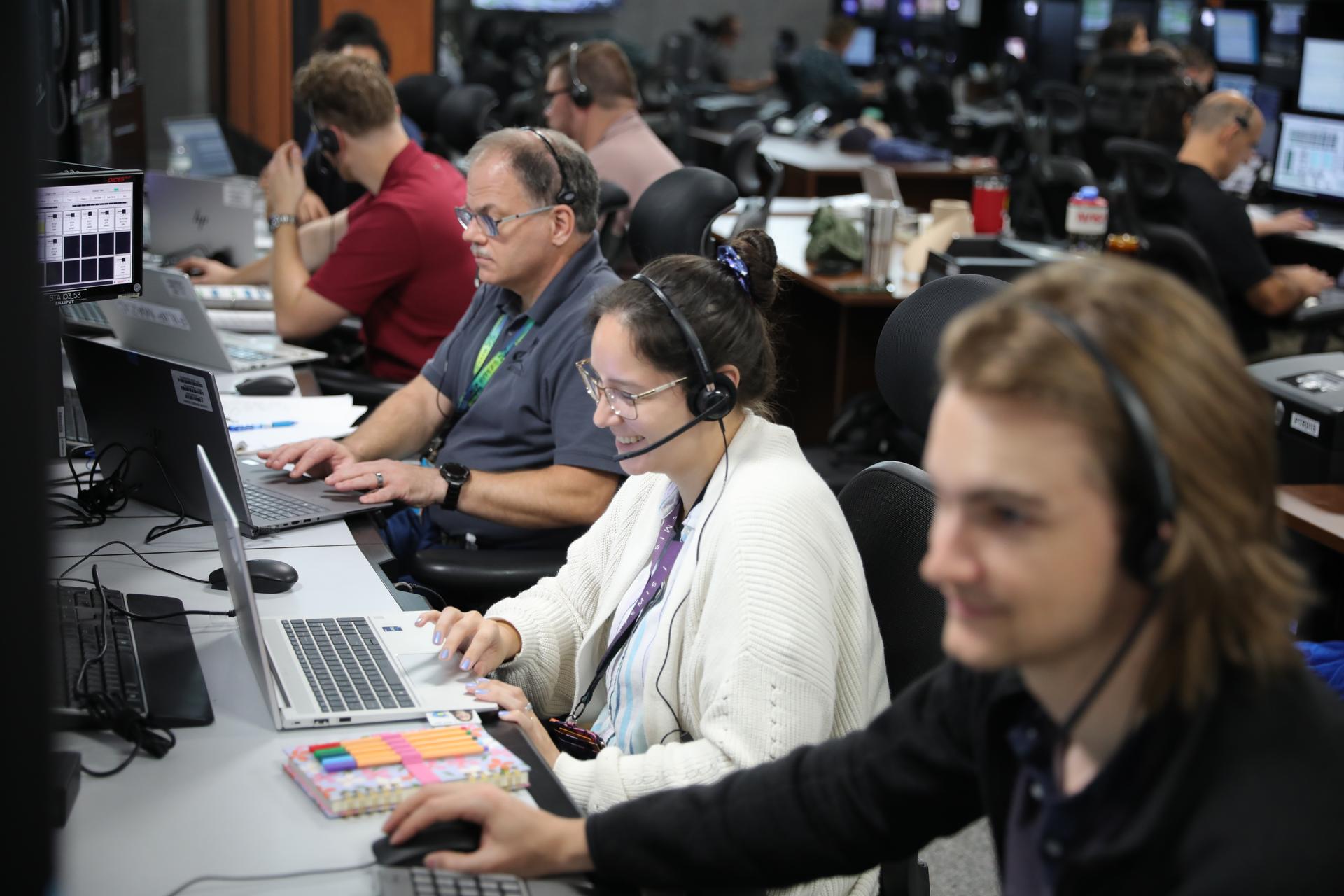
Artemis launch team members participate in a cryogenic propellant loading simulation for NASA’s Artemis III mission on Wednesday, Sept. 9, 2026, inside Firing Rooms 1 and 2 of the Rocco A. Petrone Launch Control Center at the agency’s Kennedy Space Center in Florida. Members of NASA’s Exploration Ground Systems team rehearse the steps to load the super-cooled liquid hydrogen and liquid oxygen into the SLS (Space Launch System) rocket core stage, a process that starts several hours before liftoff for the Artemis III mission. Artemis III will carry out a series of objectives in low Earth orbit designed to demonstrate critical systems needed for future lunar landings, beginning with Artemis IV.
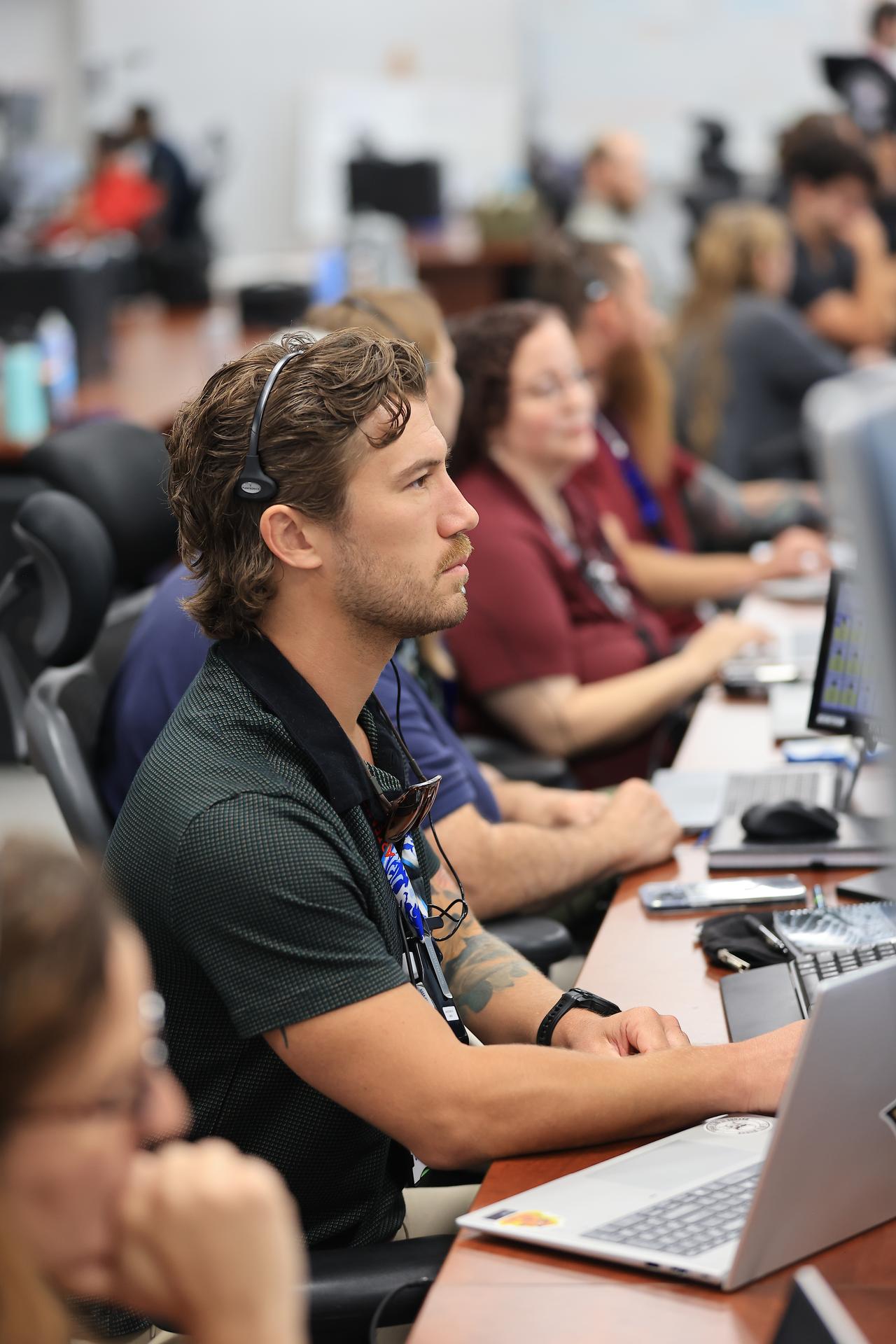
Artemis launch team members participate in a cryogenic propellant loading simulation for NASA’s Artemis III mission on Wednesday, Sept. 9, 2026, inside Firing Rooms 1 and 2 of the Rocco A. Petrone Launch Control Center at the agency’s Kennedy Space Center in Florida. Members of NASA’s Exploration Ground Systems team rehearse the steps to load the super-cooled liquid hydrogen and liquid oxygen into the SLS (Space Launch System) rocket core stage, a process that starts several hours before liftoff for the Artemis III mission. Artemis III will carry out a series of objectives in low Earth orbit designed to demonstrate critical systems needed for future lunar landings, beginning with Artemis IV.
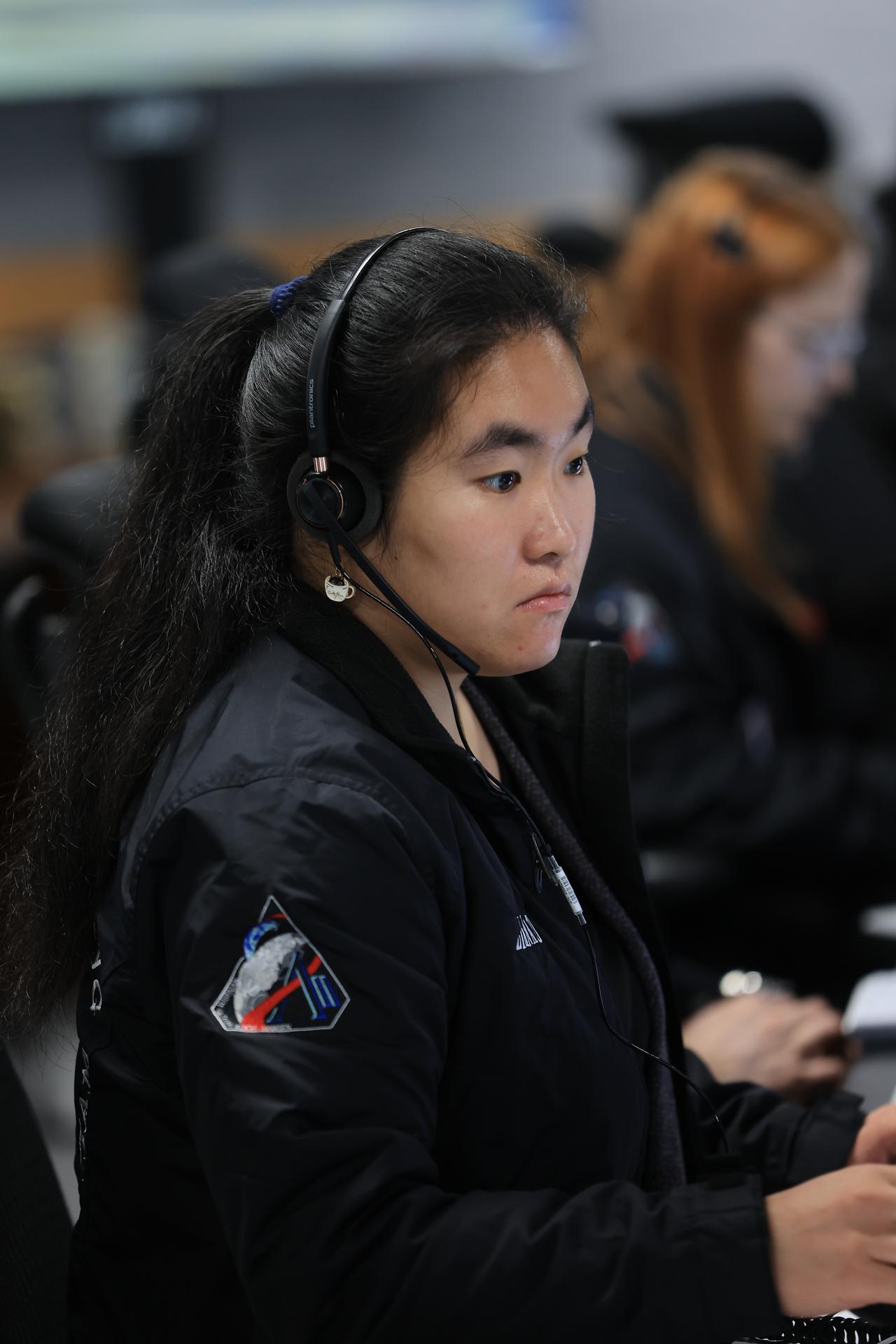
Artemis launch team members participate in a cryogenic propellant loading simulation for NASA’s Artemis III mission on Wednesday, Sept. 9, 2026, inside Firing Rooms 1 and 2 of the Rocco A. Petrone Launch Control Center at the agency’s Kennedy Space Center in Florida. Members of NASA’s Exploration Ground Systems team rehearse the steps to load the super-cooled liquid hydrogen and liquid oxygen into the SLS (Space Launch System) rocket core stage, a process that starts several hours before liftoff for the Artemis III mission. Artemis III will carry out a series of objectives in low Earth orbit designed to demonstrate critical systems needed for future lunar landings, beginning with Artemis IV.
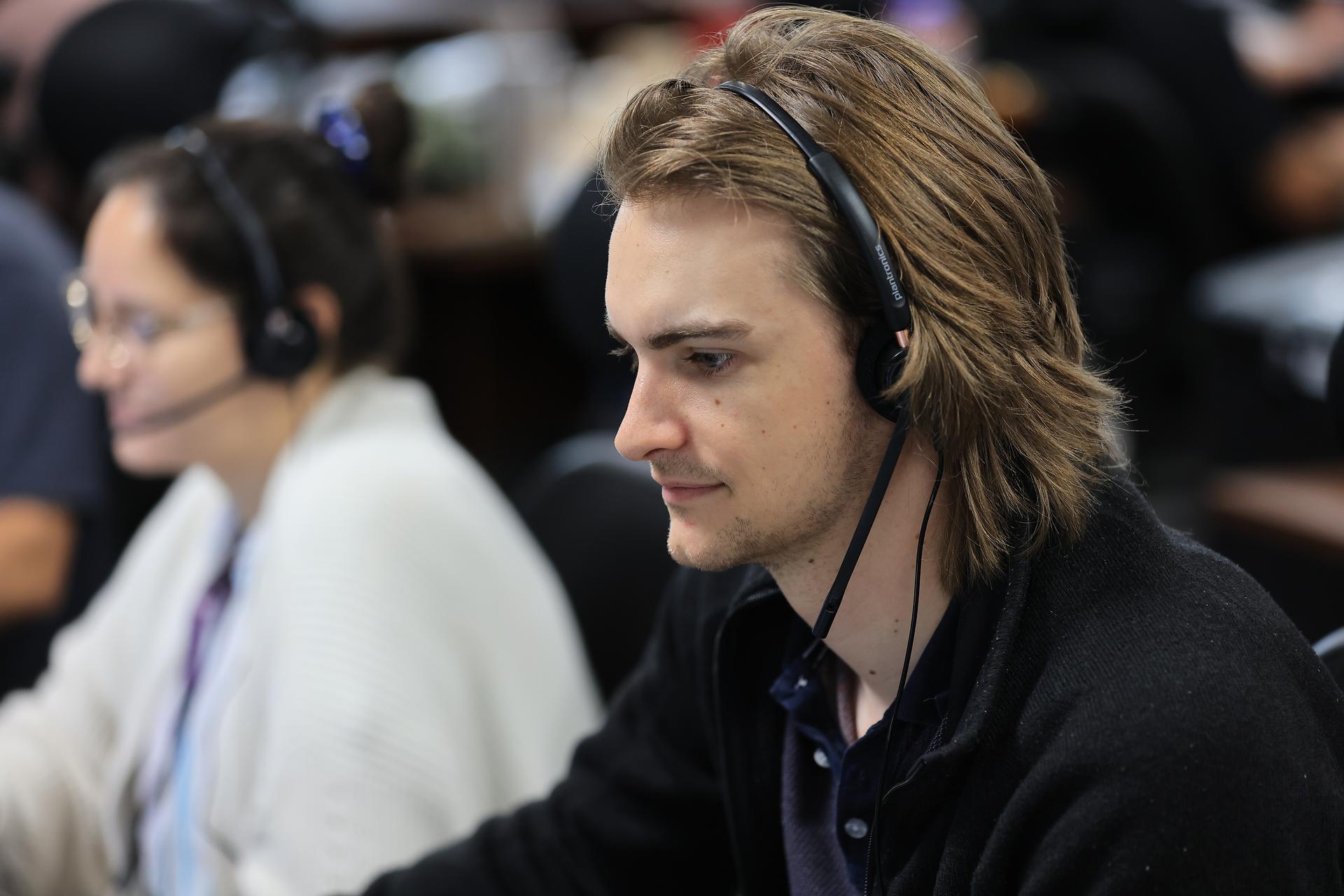
Artemis launch team members participate in a cryogenic propellant loading simulation for NASA’s Artemis III mission on Wednesday, Sept. 9, 2026, inside Firing Rooms 1 and 2 of the Rocco A. Petrone Launch Control Center at the agency’s Kennedy Space Center in Florida. Members of NASA’s Exploration Ground Systems team rehearse the steps to load the super-cooled liquid hydrogen and liquid oxygen into the SLS (Space Launch System) rocket core stage, a process that starts several hours before liftoff for the Artemis III mission. Artemis III will carry out a series of objectives in low Earth orbit designed to demonstrate critical systems needed for future lunar landings, beginning with Artemis IV.
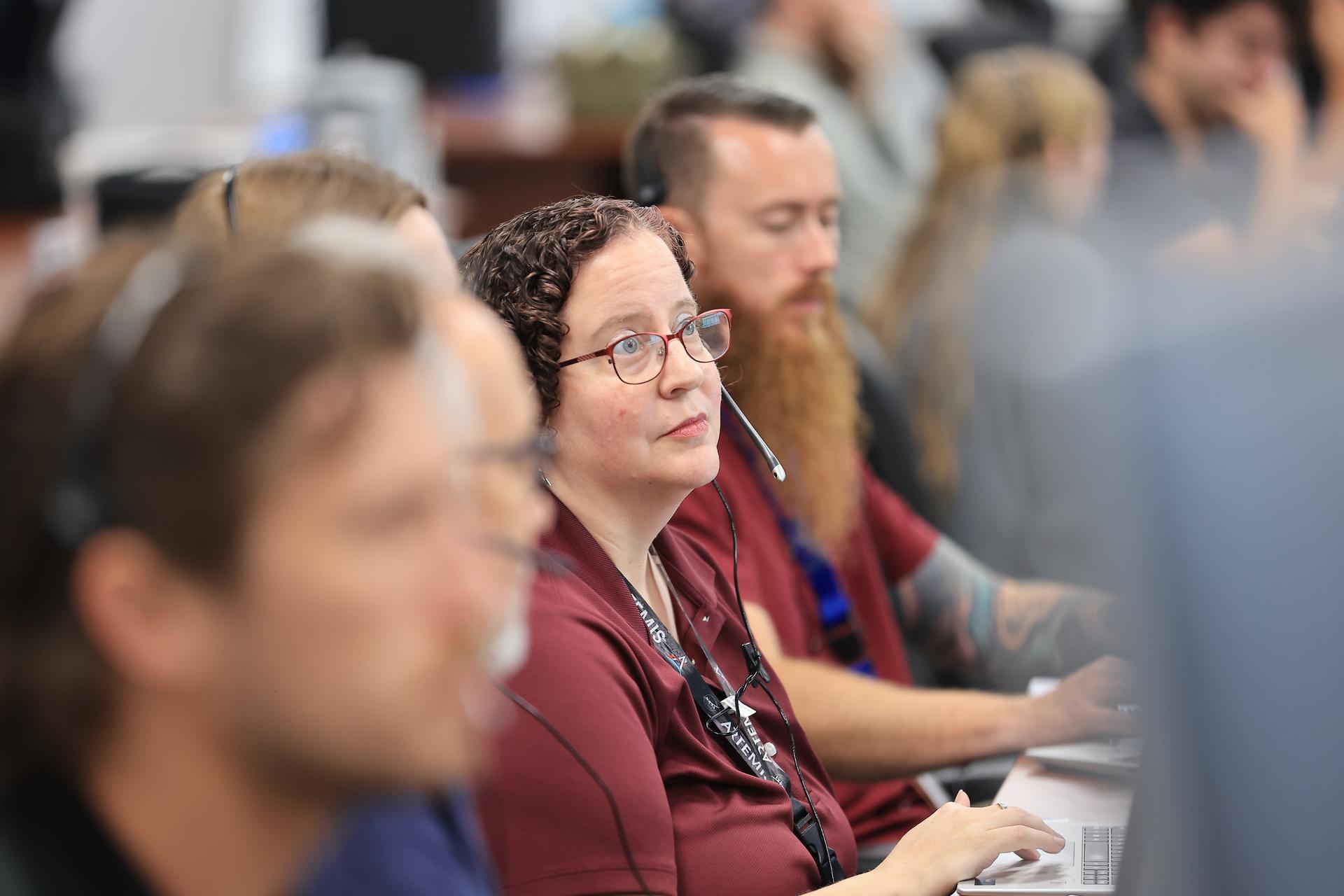
Artemis launch team members participate in a cryogenic propellant loading simulation for NASA’s Artemis III mission on Wednesday, Sept. 9, 2026, inside Firing Rooms 1 and 2 of the Rocco A. Petrone Launch Control Center at the agency’s Kennedy Space Center in Florida. Members of NASA’s Exploration Ground Systems team rehearse the steps to load the super-cooled liquid hydrogen and liquid oxygen into the SLS (Space Launch System) rocket core stage, a process that starts several hours before liftoff for the Artemis III mission. Artemis III will carry out a series of objectives in low Earth orbit designed to demonstrate critical systems needed for future lunar landings, beginning with Artemis IV.
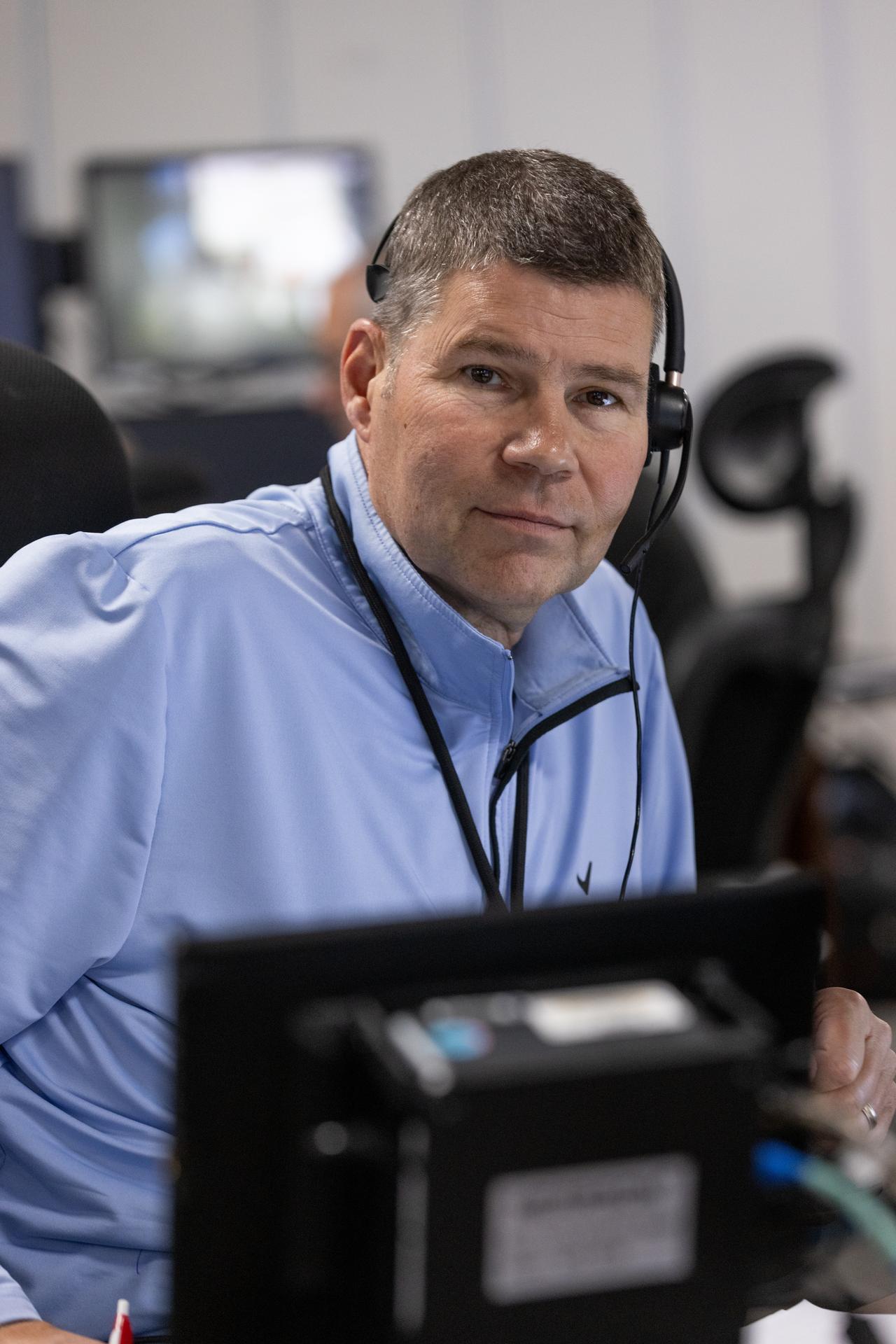
John Blevins, SLS (Space Launch System) rocket chief engineer, participates in an Artemis II launch countdown simulation inside Firing Room 2 in the Launch Control Center at NASA’s Kennedy Space Center in Florida on Wednesday, Nov. 5, 2025. The simulations go through launch day scenarios to help launch team members test software and make adjustments if needed during countdown operations. For Artemis II, four astronauts will venture around the Moon, the first crewed mission on NASA’s path to establishing a long-term presence for science and exploration through Artemis.
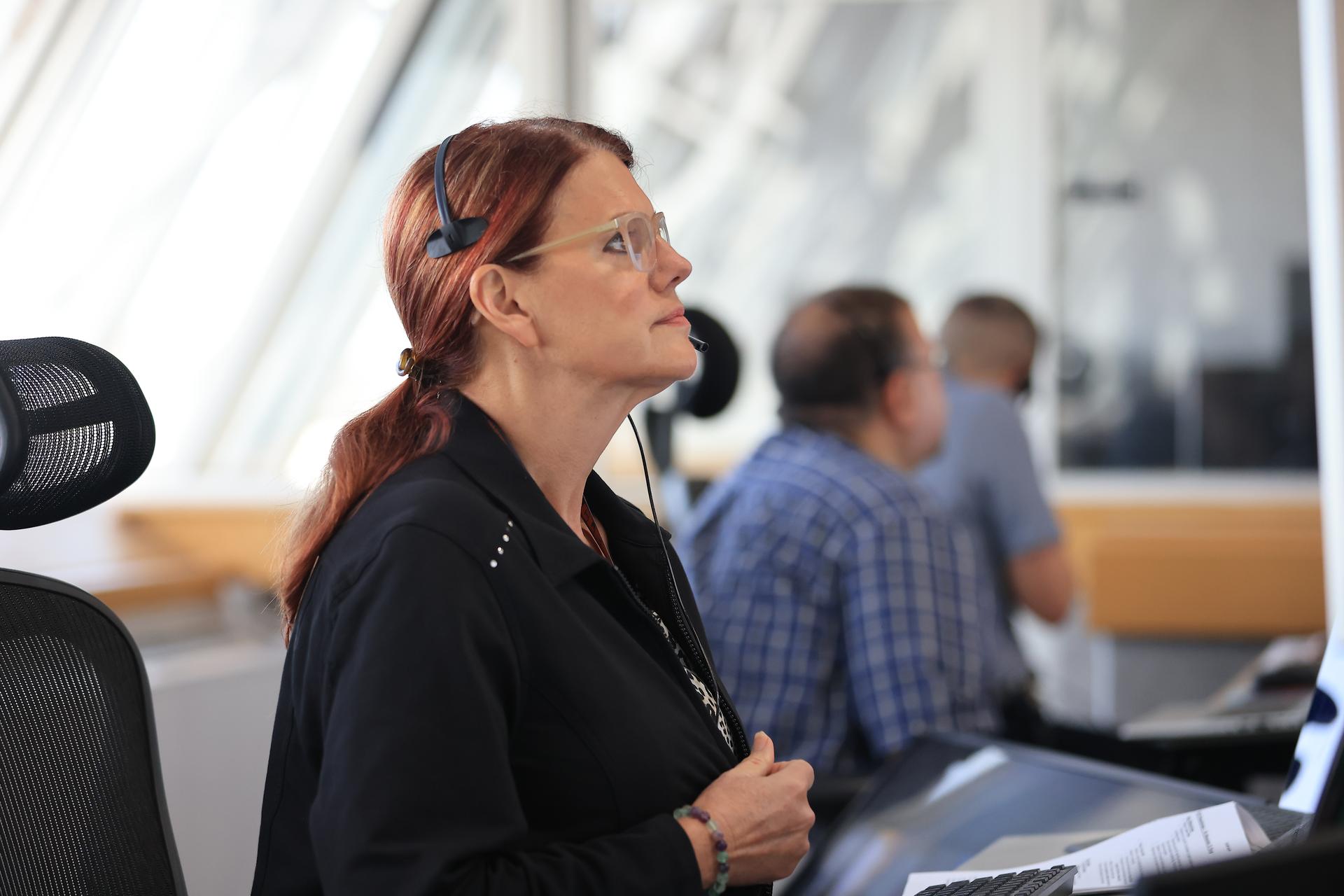
Charlie Blackwell-Thompson, Artemis launch director, participates in a cryogenic propellant loading simulation for NASA’s Artemis III mission on Wednesday, Sept. 9, 2026, inside Firing Room 1 of the Rocco A. Petrone Launch Control Center at the agency’s Kennedy Space Center in Florida. Members of NASA’s Exploration Ground Systems team rehearse the steps to load the super-cooled liquid hydrogen and liquid oxygen into the SLS (Space Launch System) rocket core stage, a process that starts several hours before liftoff for the Artemis III mission. Artemis III will carry out a series of objectives in low Earth orbit designed to demonstrate critical systems needed for future lunar landings, beginning with Artemis IV.
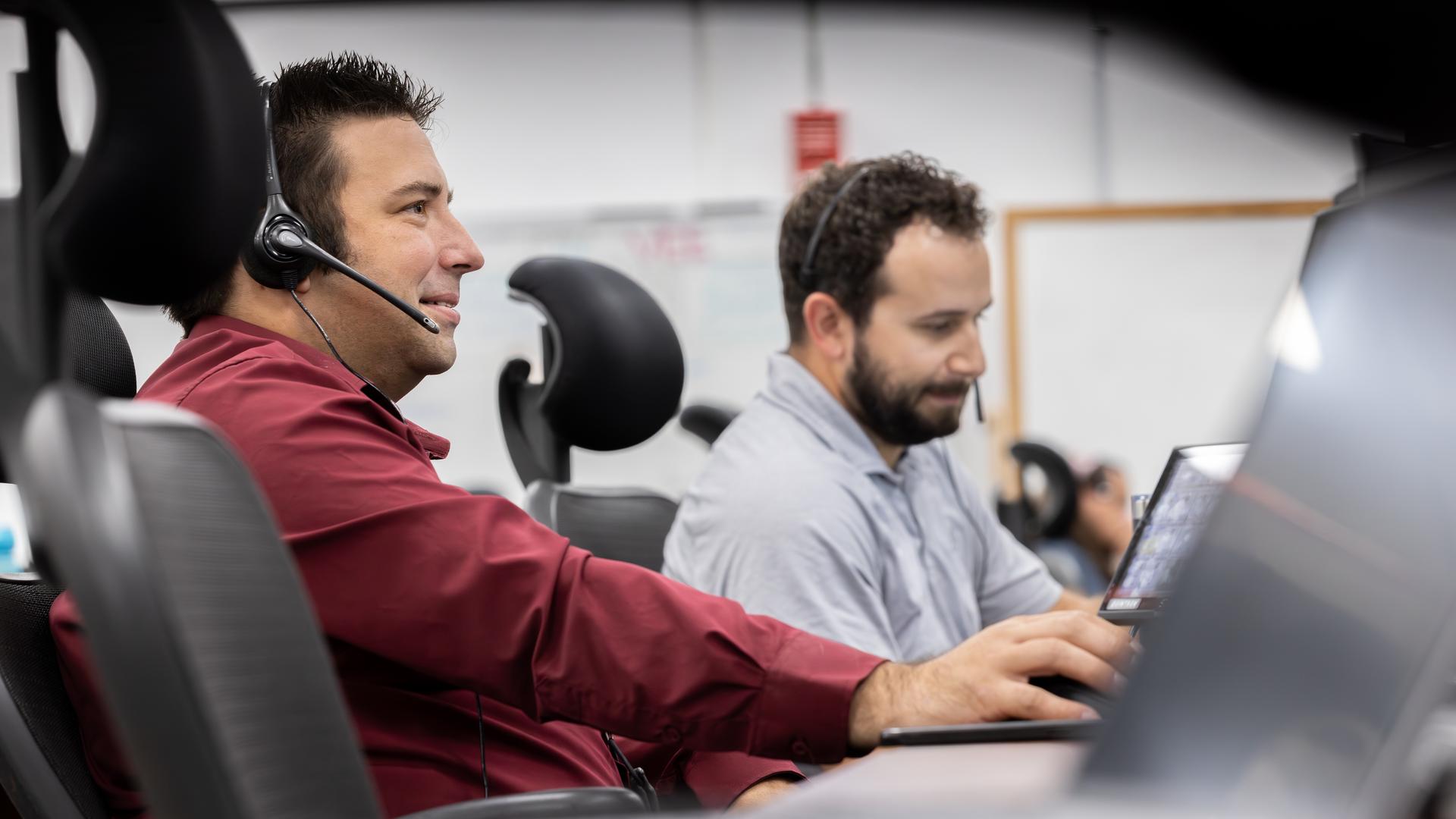
Artemis launch team members participate in a cryogenic propellant loading simulation for NASA’s Artemis III mission on Wednesday, Aug. 5, 2026, inside Firing Rooms 1 and 2 of the Rocco A. Petrone Launch Control Center at the agency’s Kennedy Space Center in Florida. Members of NASA’s Exploration Ground Systems team rehearse the steps to load the super-cooled liquid hydrogen and liquid oxygen into the SLS (Space Launch System) rocket core stage, a process that starts several hours before liftoff for the Artemis III mission. Artemis III will carry out a series of objectives in low Earth orbit designed to demonstrate critical systems needed for future lunar landings, beginning with Artemis IV.
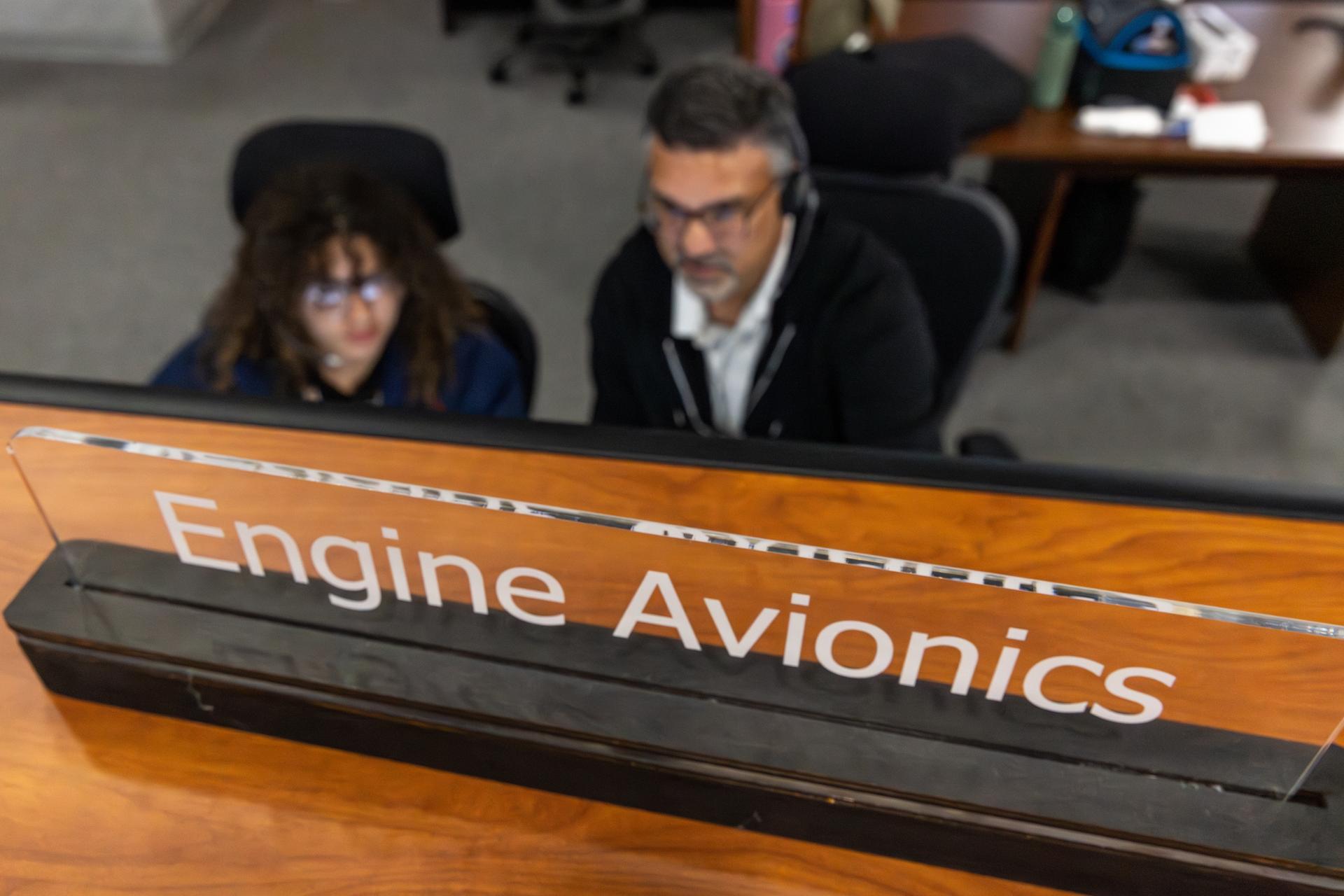
Artemis launch team members participate in a cryogenic propellant loading simulation for NASA’s Artemis III mission on Wednesday, Aug. 5, 2026, inside Firing Rooms 1 and 2 of the Rocco A. Petrone Launch Control Center at the agency’s Kennedy Space Center in Florida. Members of NASA’s Exploration Ground Systems team rehearse the steps to load the super-cooled liquid hydrogen and liquid oxygen into the SLS (Space Launch System) rocket core stage, a process that starts several hours before liftoff for the Artemis III mission. Artemis III will carry out a series of objectives in low Earth orbit designed to demonstrate critical systems needed for future lunar landings, beginning with Artemis IV.
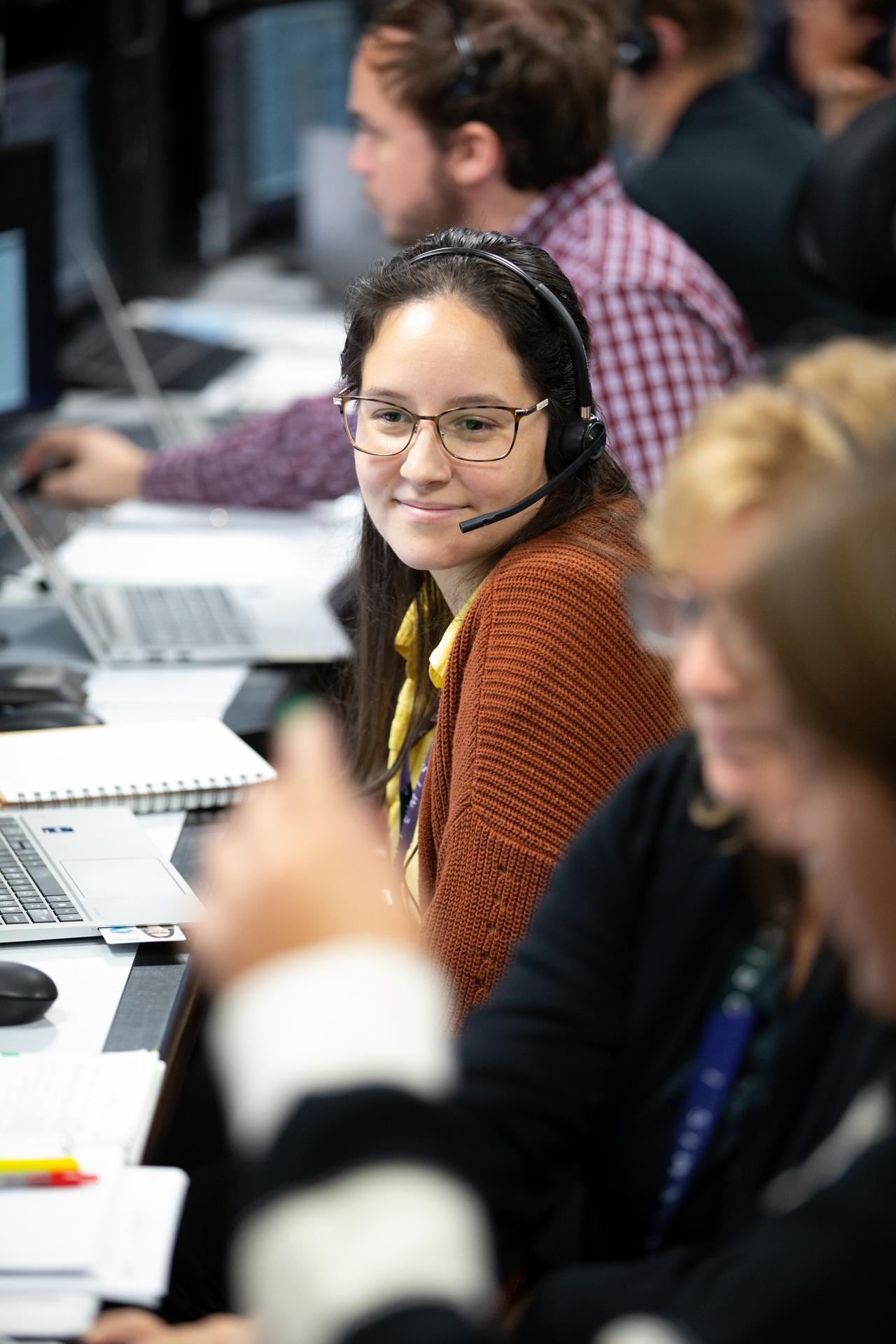
Artemis launch team members participate in a terminal countdown simulation for Artemis III on Thursday, Aug. 6, 2026, inside Firing Room 1 and 2 of the Rocco A. Petrone Launch Control Center at NASA’s Kennedy Space Center in Florida. The terminal count simulation conducted by NASA’s Exploration Ground Systems team runs through the final five hours of launch countdown, including terminal count - the remaining 10 minutes of the countdown. Artemis III will carry out a series of objectives in low Earth orbit designed to demonstrate critical systems needed for future lunar landings, beginning with Artemis IV.
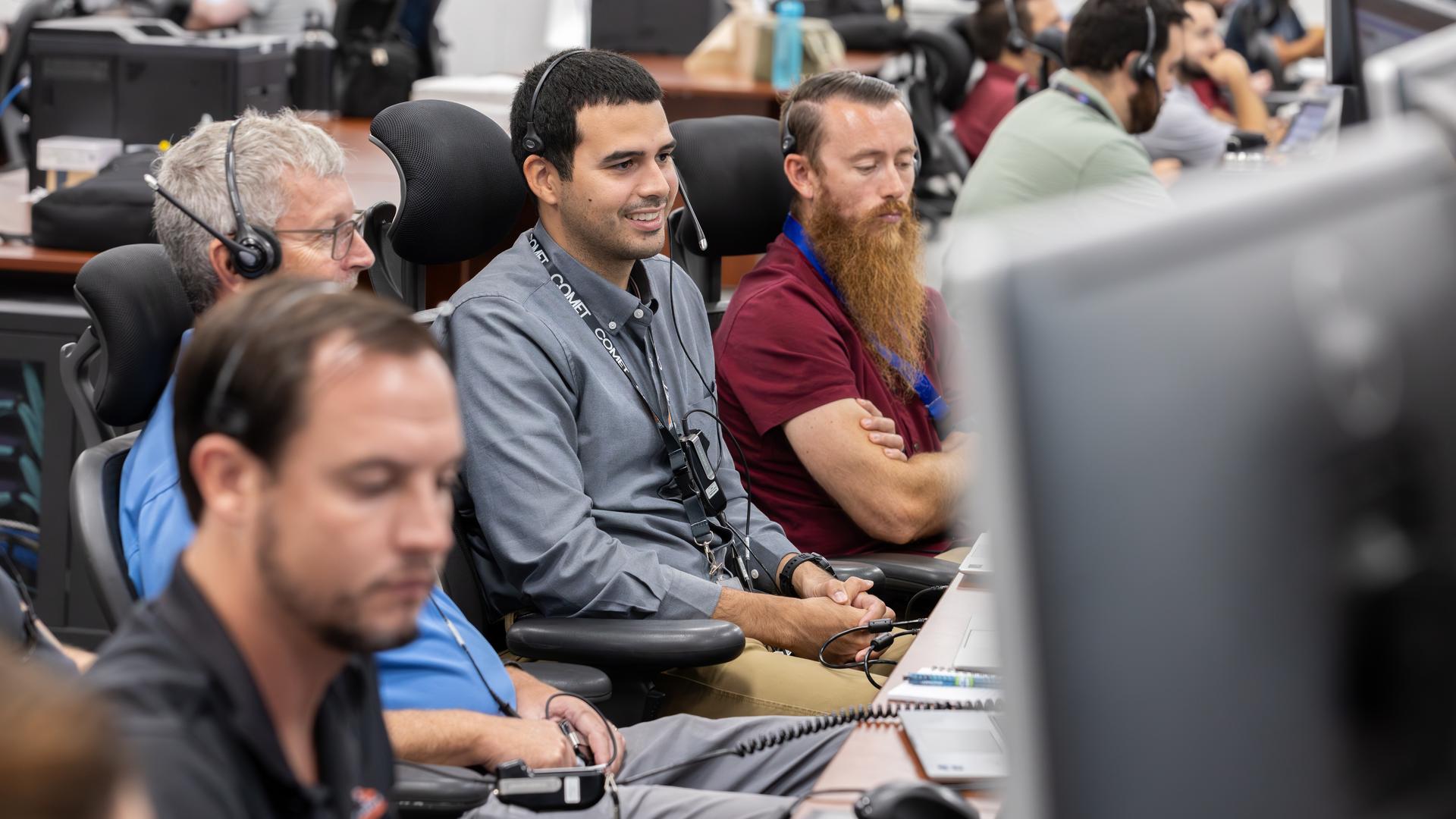
Artemis launch team members participate in a cryogenic propellant loading simulation for NASA’s Artemis III mission on Wednesday, Aug. 5, 2026, inside Firing Rooms 1 and 2 of the Rocco A. Petrone Launch Control Center at the agency’s Kennedy Space Center in Florida. Members of NASA’s Exploration Ground Systems team rehearse the steps to load the super-cooled liquid hydrogen and liquid oxygen into the SLS (Space Launch System) rocket core stage, a process that starts several hours before liftoff for the Artemis III mission. Artemis III will carry out a series of objectives in low Earth orbit designed to demonstrate critical systems needed for future lunar landings, beginning with Artemis IV.
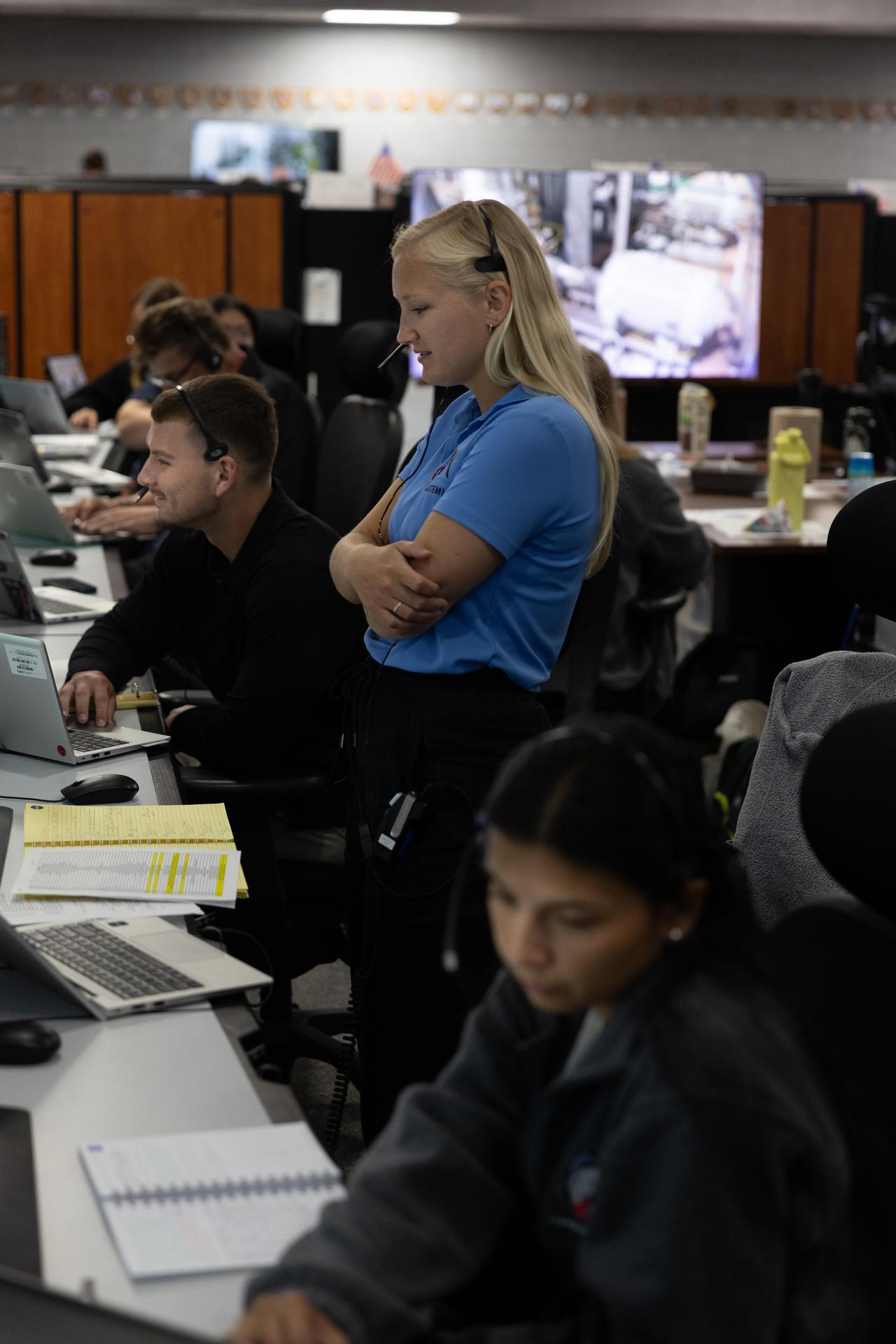
Artemis launch team members participate in a terminal countdown simulation for Artemis III on Thursday, Aug. 6, 2026, inside Firing Room 1 and 2 of the Rocco A. Petrone Launch Control Center at NASA’s Kennedy Space Center in Florida. The terminal count simulation conducted by NASA’s Exploration Ground Systems team runs through the final five hours of launch countdown, including terminal count - the remaining 10 minutes of the countdown. Artemis III will carry out a series of objectives in low Earth orbit designed to demonstrate critical systems needed for future lunar landings, beginning with Artemis IV.
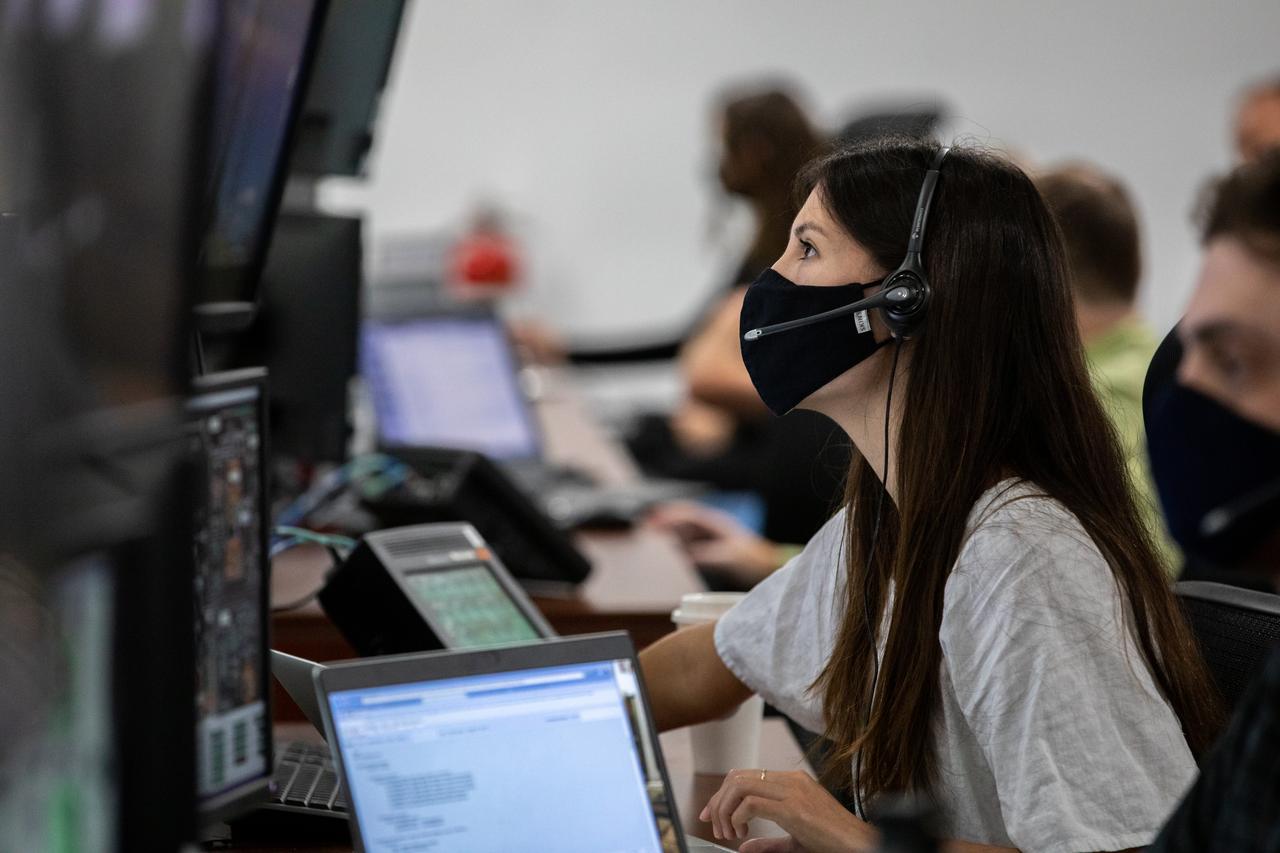
Artemis teams conduct the final simulation for the Artemis I mission inside the Launch Control Center at NASA’s Kennedy Space Center in Florida on Aug. 4, 2022. Artemis I will be the first integrated test of NASA’s Space Launch System (SLS) rocket and Orion spacecraft. During the flight, Orion will launch atop the most powerful rocket in the world and fly farther than any spacecraft for humans has ever flown. The spacecraft will stay in space longer than any human spacecraft has without docking to the International Space Station and return home faster than ever before.
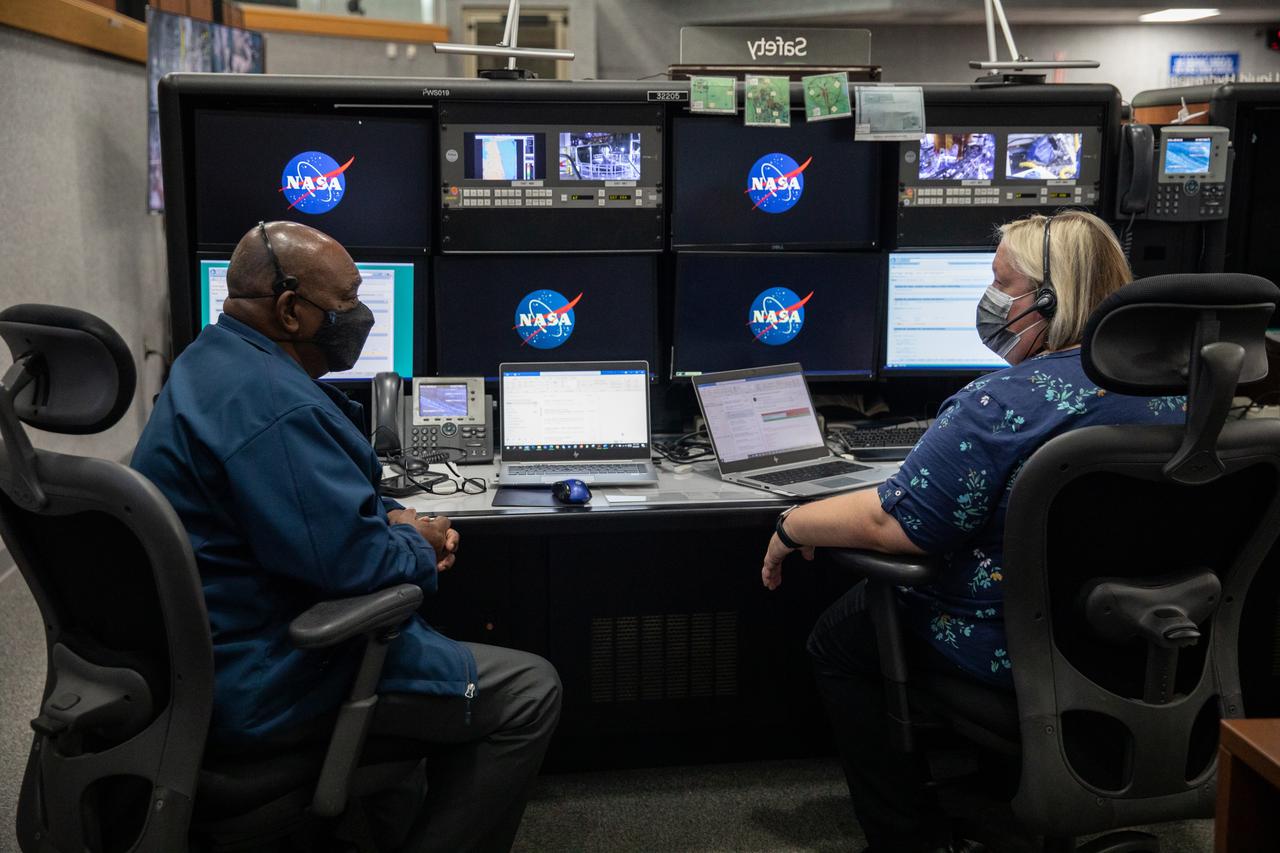
Artemis teams conduct the final simulation for the Artemis I mission inside the Launch Control Center at NASA’s Kennedy Space Center in Florida on Aug. 4, 2022. Artemis I will be the first integrated test of NASA’s Space Launch System (SLS) rocket and Orion spacecraft. During the flight, Orion will launch atop the most powerful rocket in the world and fly farther than any spacecraft for humans has ever flown. The spacecraft will stay in space longer than any human spacecraft has without docking to the International Space Station and return home faster than ever before. Shown here, from left to right, is Bubba Howard and Lisa DeVries, who are in charge of the safety console.
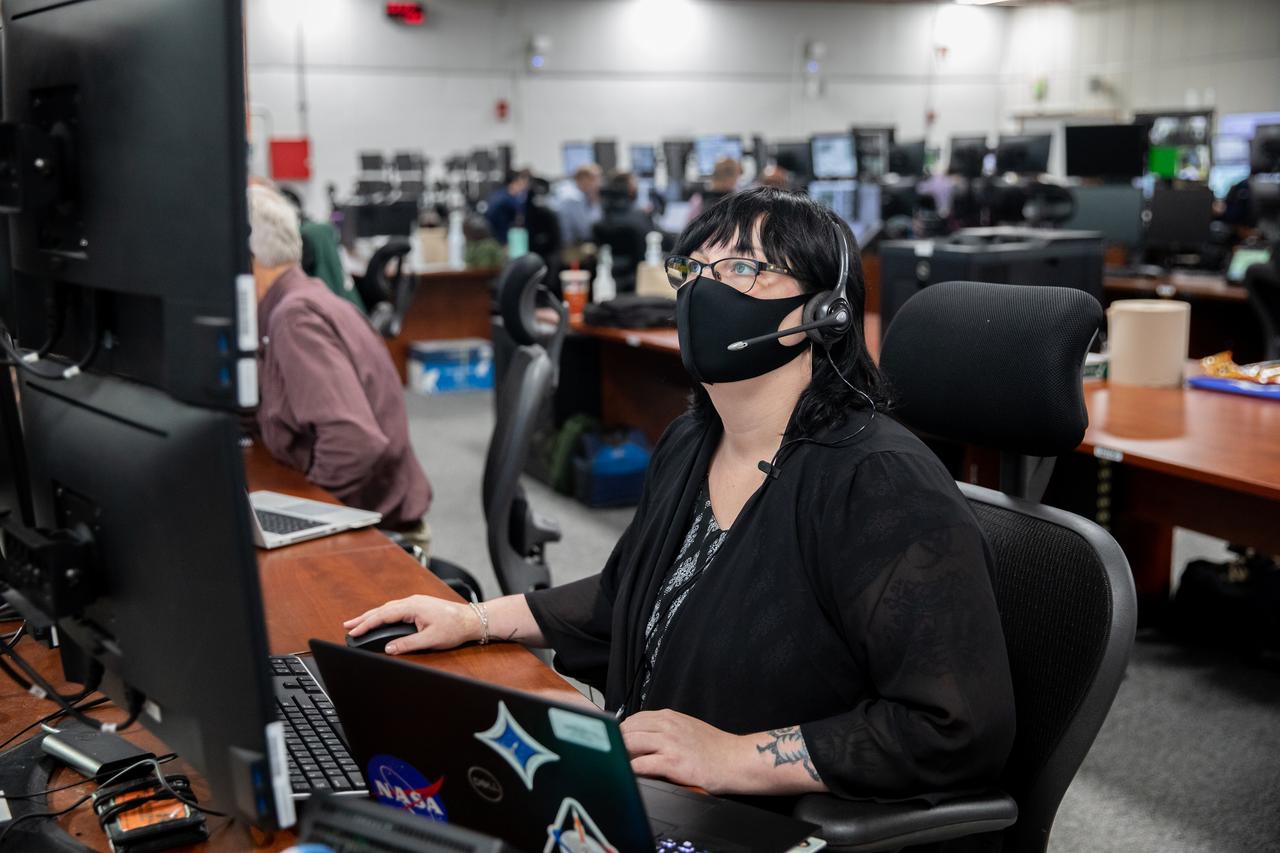
Artemis teams conduct the final simulation for the Artemis I mission inside the Launch Control Center at NASA’s Kennedy Space Center in Florida on Aug. 4, 2022. Artemis I will be the first integrated test of NASA’s Space Launch System (SLS) rocket and Orion spacecraft. During the flight, Orion will launch atop the most powerful rocket in the world and fly farther than any spacecraft for humans has ever flown. The spacecraft will stay in space longer than any human spacecraft has without docking to the International Space Station and return home faster than ever before.
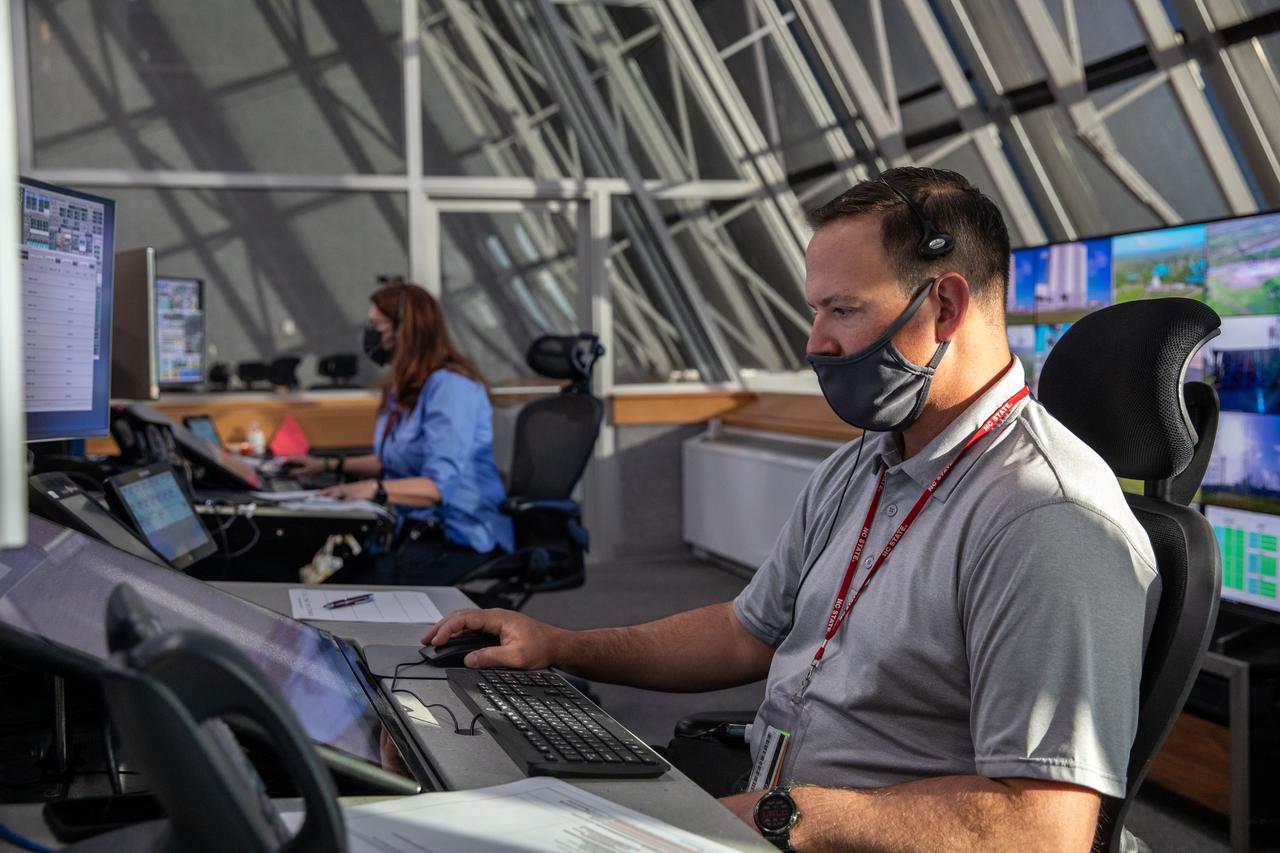
Artemis teams conduct the final simulation for the Artemis I mission inside the Launch Control Center at NASA’s Kennedy Space Center in Florida on Aug. 4, 2022. Artemis I will be the first integrated test of NASA’s Space Launch System (SLS) rocket and Orion spacecraft. During the flight, Orion will launch atop the most powerful rocket in the world and fly farther than any spacecraft for humans has ever flown. The spacecraft will stay in space longer than any human spacecraft has without docking to the International Space Station and return home faster than ever before. Shown here is Wes Mosedale, the technical assistant to Artemis Launch Director Charlie Blackwell-Thompson.
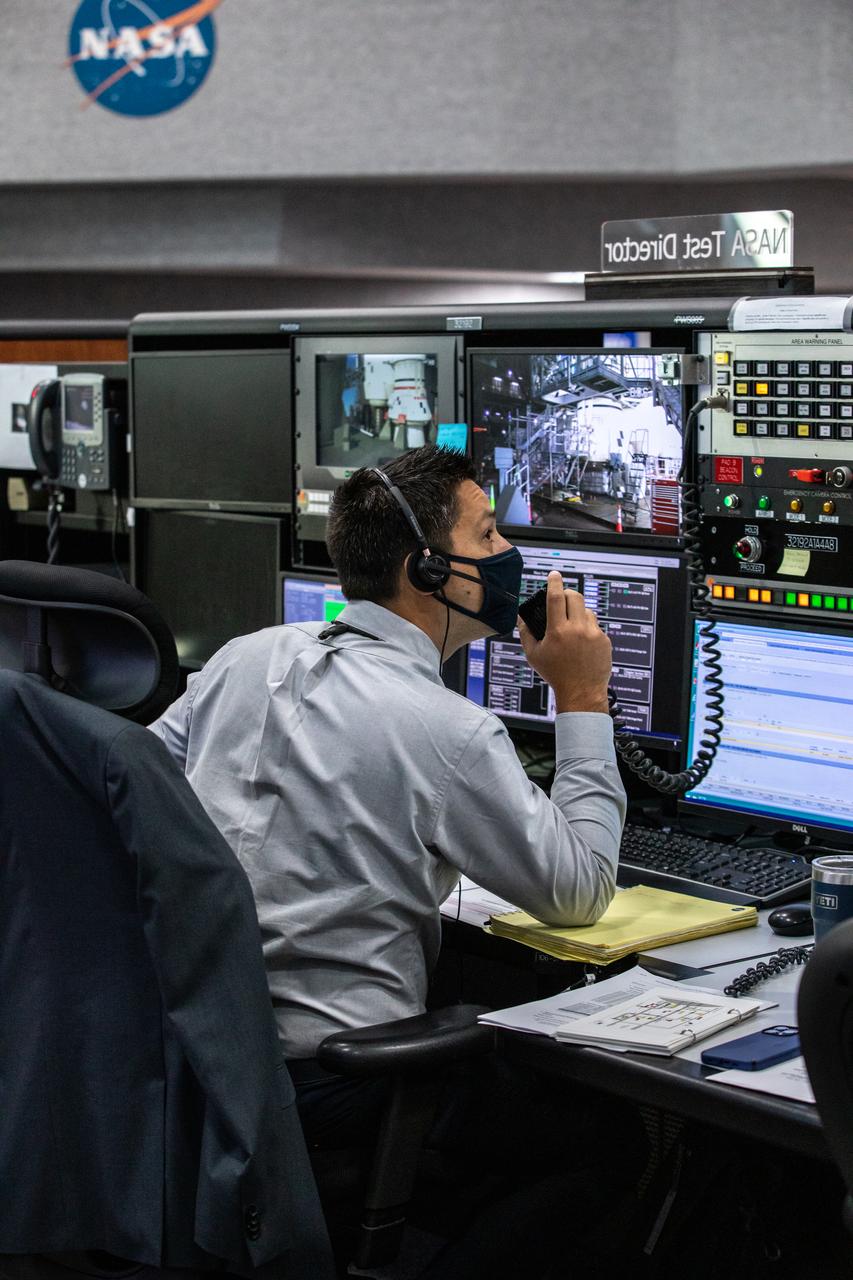
Artemis teams conduct the final simulation for the Artemis I mission inside the Launch Control Center at NASA’s Kennedy Space Center in Florida on Aug. 4, 2022. Artemis I will be the first integrated test of NASA’s Space Launch System (SLS) rocket and Orion spacecraft. During the flight, Orion will launch atop the most powerful rocket in the world and fly farther than any spacecraft for humans has ever flown. The spacecraft will stay in space longer than any human spacecraft has without docking to the International Space Station and return home faster than ever before. Shown here is Daniel Florez, NASA test director.
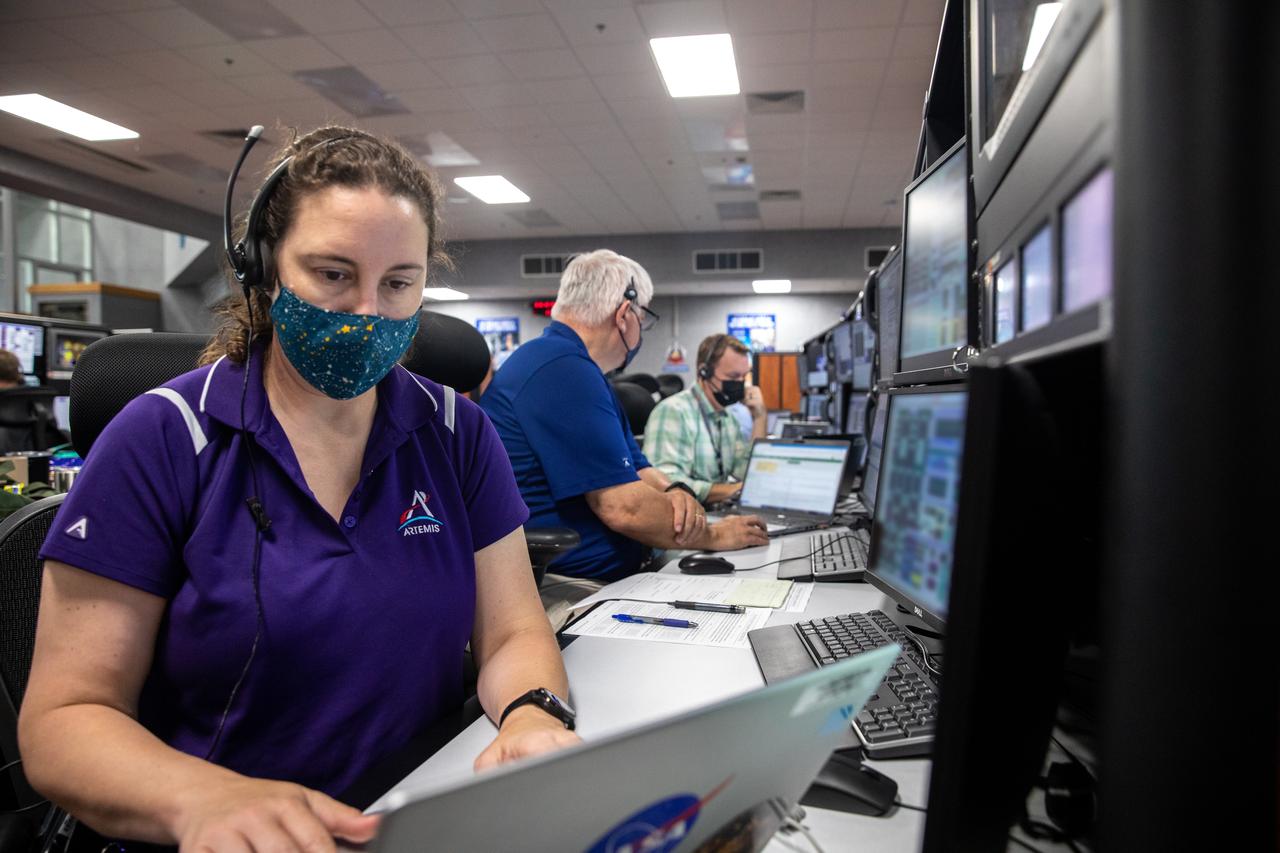
Artemis teams conduct the final simulation for the Artemis I mission inside the Launch Control Center at NASA’s Kennedy Space Center in Florida on Aug. 4, 2022. Artemis I will be the first integrated test of NASA’s Space Launch System (SLS) rocket and Orion spacecraft. During the flight, Orion will launch atop the most powerful rocket in the world and fly farther than any spacecraft for humans has ever flown. The spacecraft will stay in space longer than any human spacecraft has without docking to the International Space Station and return home faster than ever before.
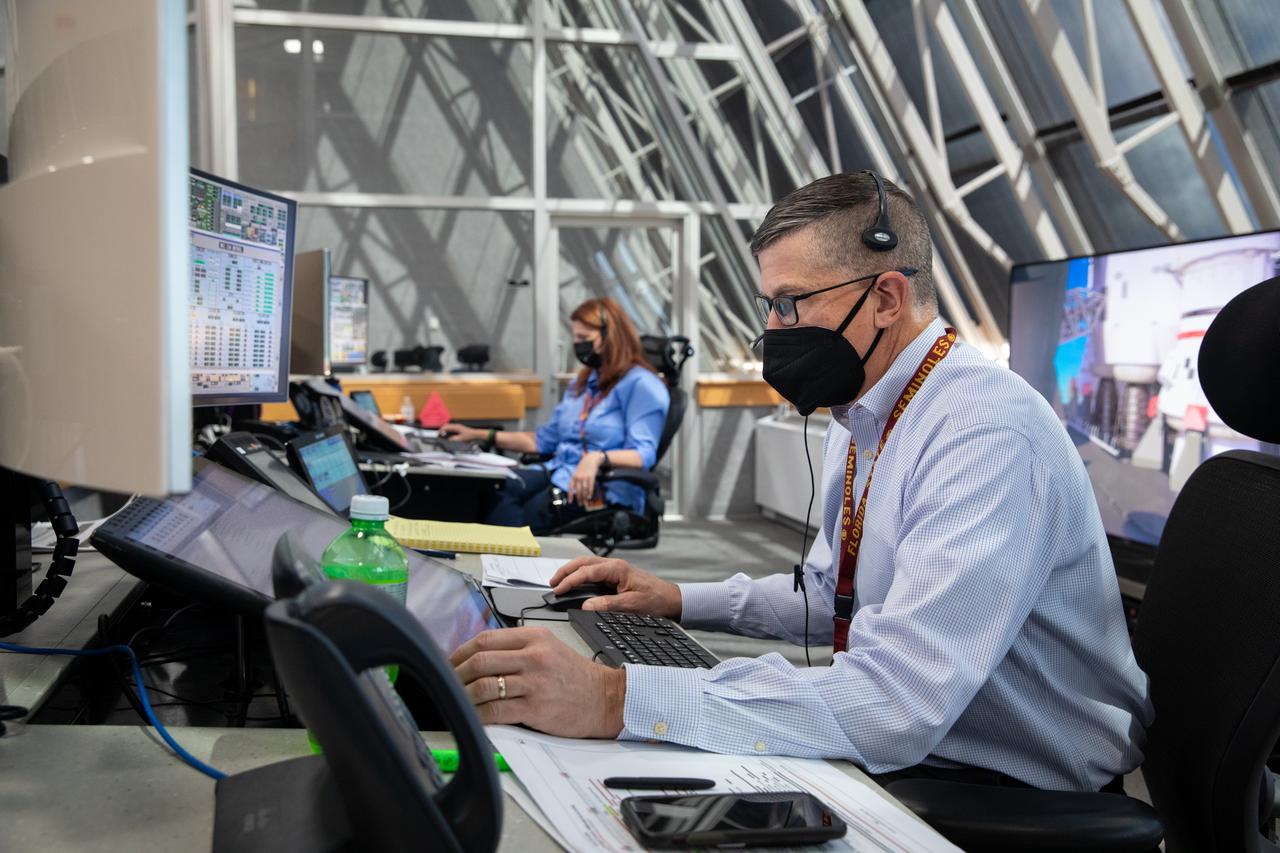
Artemis teams conduct the final simulation for the Artemis I mission inside the Launch Control Center at NASA’s Kennedy Space Center in Florida on Aug. 4, 2022. Artemis I will be the first integrated test of NASA’s Space Launch System (SLS) rocket and Orion spacecraft. During the flight, Orion will launch atop the most powerful rocket in the world and fly farther than any spacecraft for humans has ever flown. The spacecraft will stay in space longer than any human spacecraft has without docking to the International Space Station and return home faster than ever before. Shown here is Assistant Launch Director Jeremy Graeber and Launch Director Charlie Blackwell-Thompson.
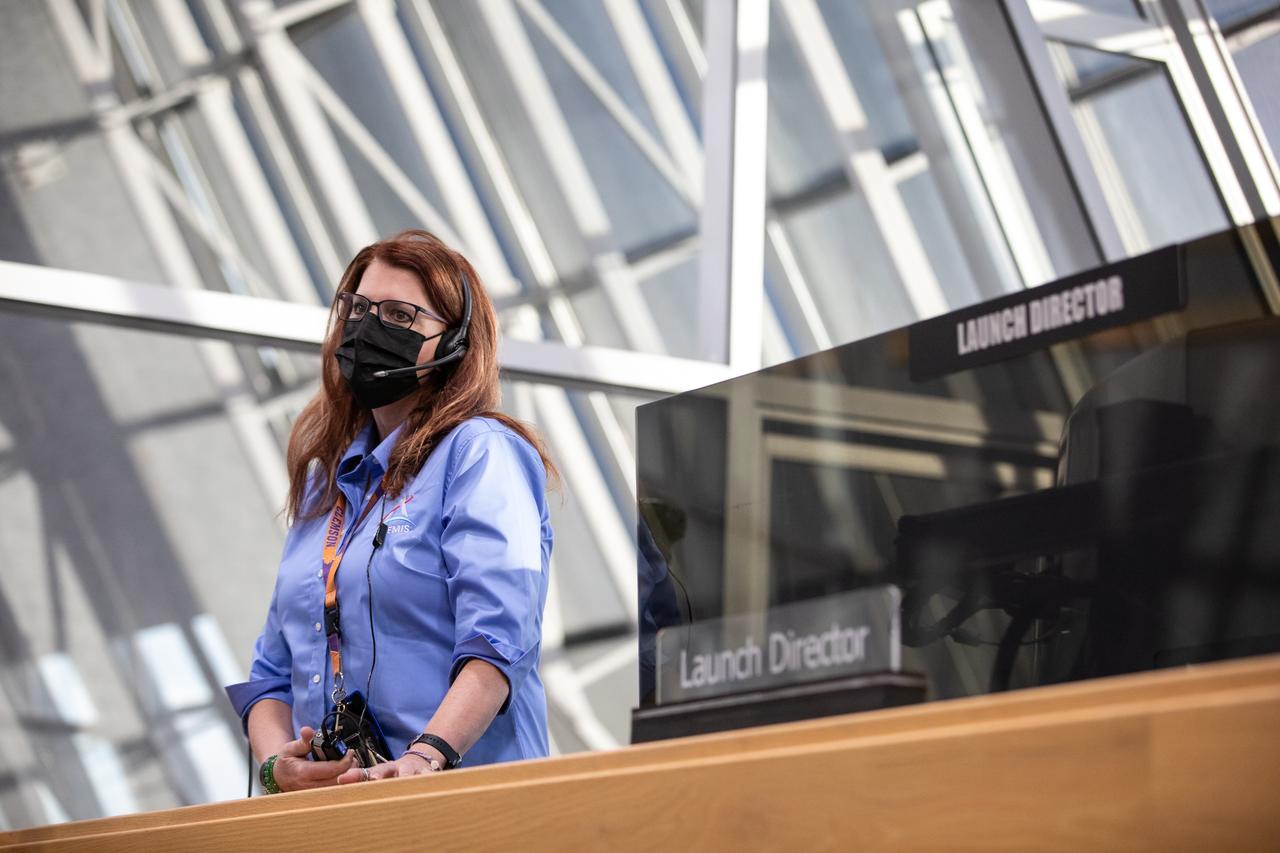
Artemis teams conduct the final simulation for the Artemis I mission inside the Launch Control Center at NASA’s Kennedy Space Center in Florida on Aug. 4, 2022. Artemis I will be the first integrated test of NASA’s Space Launch System (SLS) rocket and Orion spacecraft. During the flight, Orion will launch atop the most powerful rocket in the world and fly farther than any spacecraft for humans has ever flown. The spacecraft will stay in space longer than any human spacecraft has without docking to the International Space Station and return home faster than ever before. Shown here is Launch Director Charlie Blackwell-Thompson.
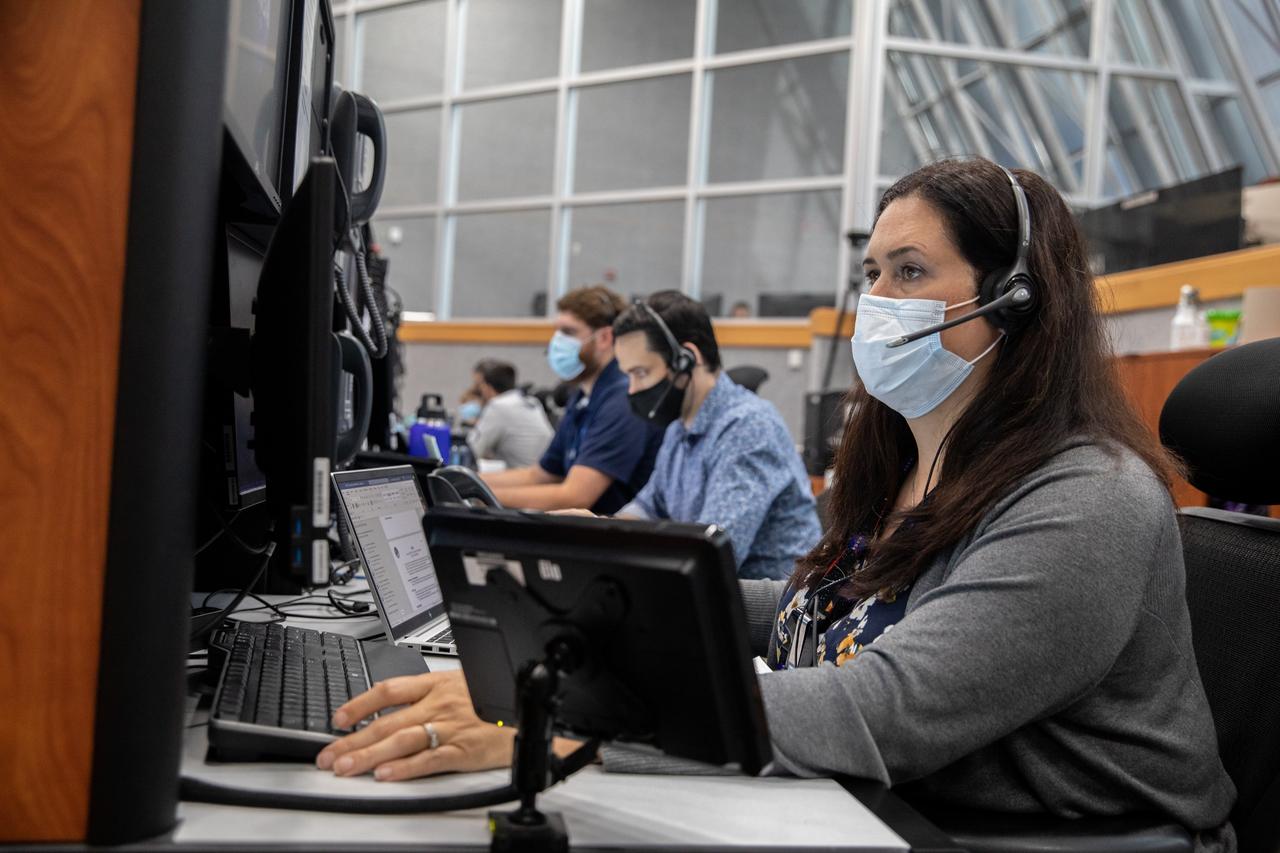
Artemis teams conduct the final simulation for the Artemis I mission inside the Launch Control Center at NASA’s Kennedy Space Center in Florida on Aug. 4, 2022. Artemis I will be the first integrated test of NASA’s Space Launch System (SLS) rocket and Orion spacecraft. During the flight, Orion will launch atop the most powerful rocket in the world and fly farther than any spacecraft for humans has ever flown. The spacecraft will stay in space longer than any human spacecraft has without docking to the International Space Station and return home faster than ever before. Shown here is Melissa Jones, Artemis I landing and recovery director.
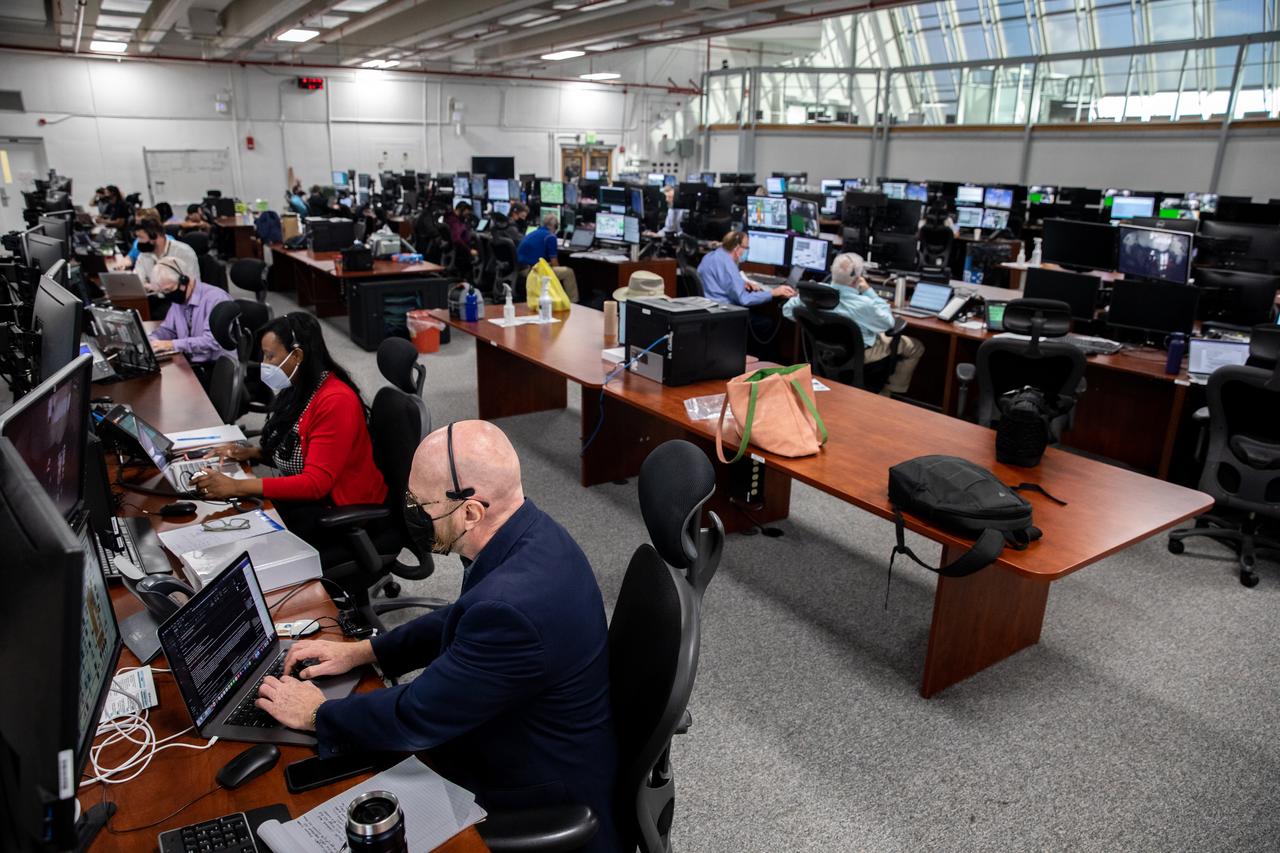
Artemis teams conduct the final simulation for the Artemis I mission inside the Launch Control Center at NASA’s Kennedy Space Center in Florida on Aug. 4, 2022. Artemis I will be the first integrated test of NASA’s Space Launch System (SLS) rocket and Orion spacecraft. During the flight, Orion will launch atop the most powerful rocket in the world and fly farther than any spacecraft for humans has ever flown. The spacecraft will stay in space longer than any human spacecraft has without docking to the International Space Station and return home faster than ever before.
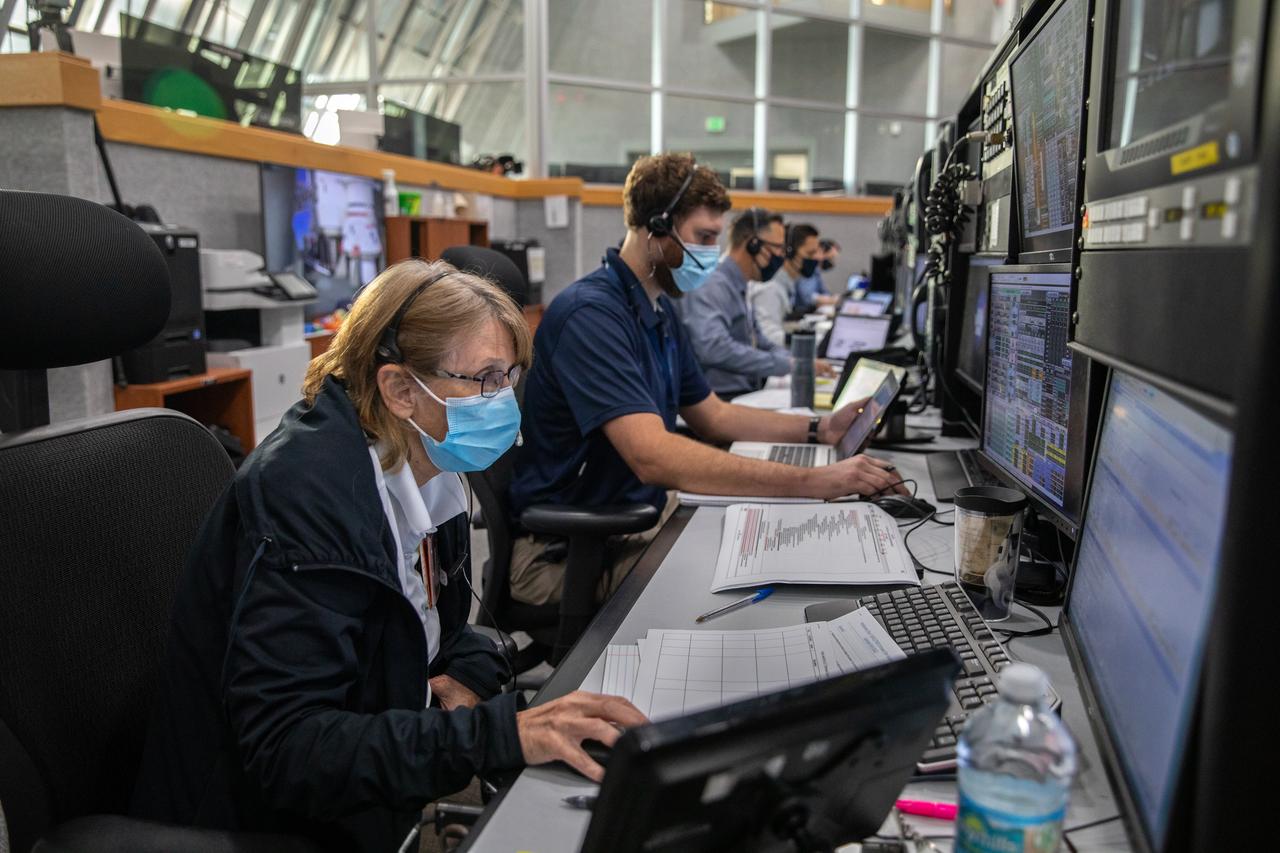
Artemis teams conduct the final simulation for the Artemis I mission inside the Launch Control Center at NASA’s Kennedy Space Center in Florida on Aug. 4, 2022. Artemis I will be the first integrated test of NASA’s Space Launch System (SLS) rocket and Orion spacecraft. During the flight, Orion will launch atop the most powerful rocket in the world and fly farther than any spacecraft for humans has ever flown. The spacecraft will stay in space longer than any human spacecraft has without docking to the International Space Station and return home faster than ever before. Shown here is Teresa Annulis, assistant SLS test conductor.
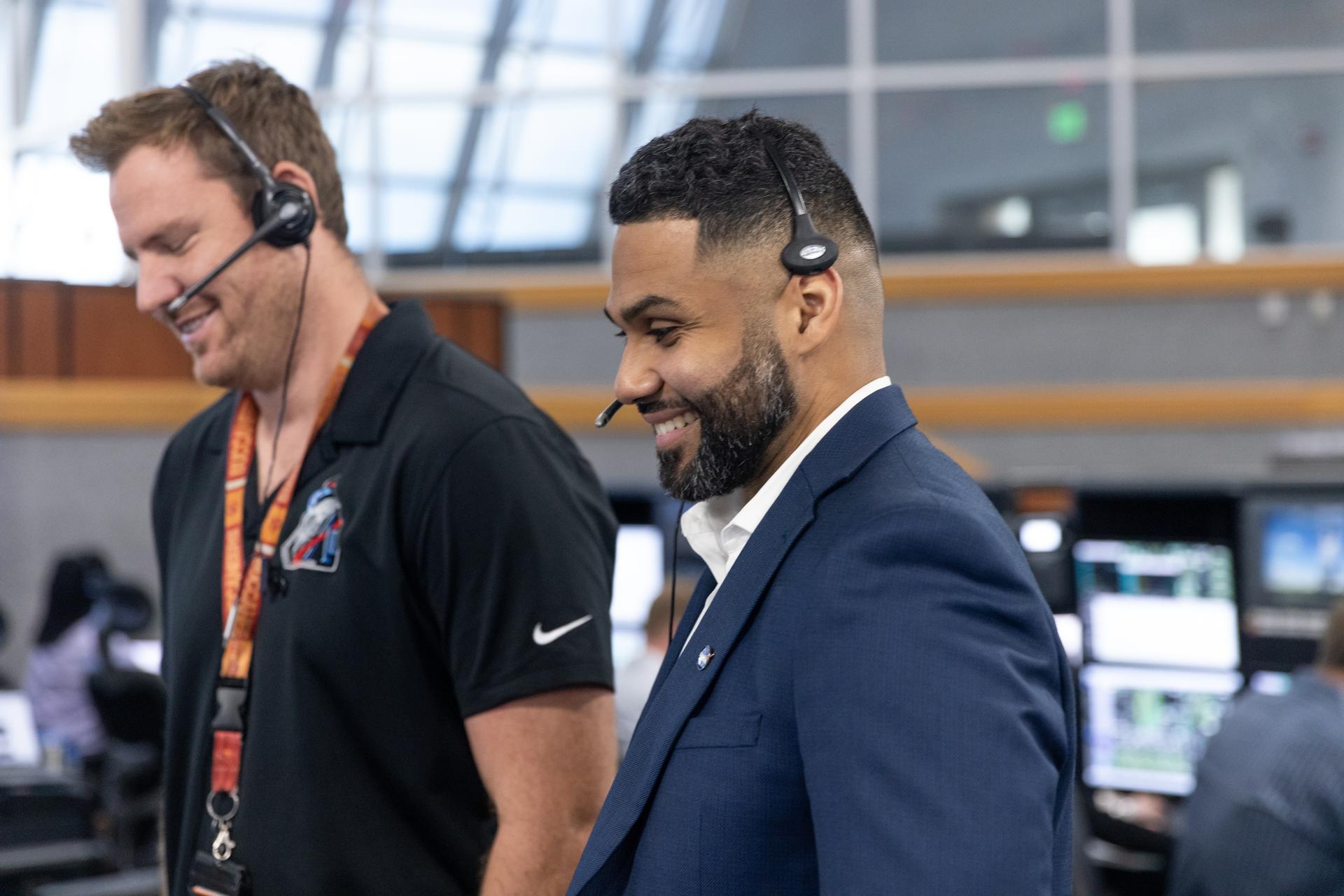
From left, Joe Pavicic, operations project engineer, and Mike Guzman, main propulsion systems engineer participate in an Artemis II launch countdown simulation inside Firing Room 1 in the Launch Control Center at NASA’s Kennedy Space Center in Florida on Wednesday, Nov. 5, 2025. The simulations go through launch day scenarios to help launch team members test software and make adjustments if needed during countdown operations. For Artemis II, four astronauts will venture around the Moon, the first crewed mission on NASA’s path to establishing a long-term presence for science and exploration through Artemis.
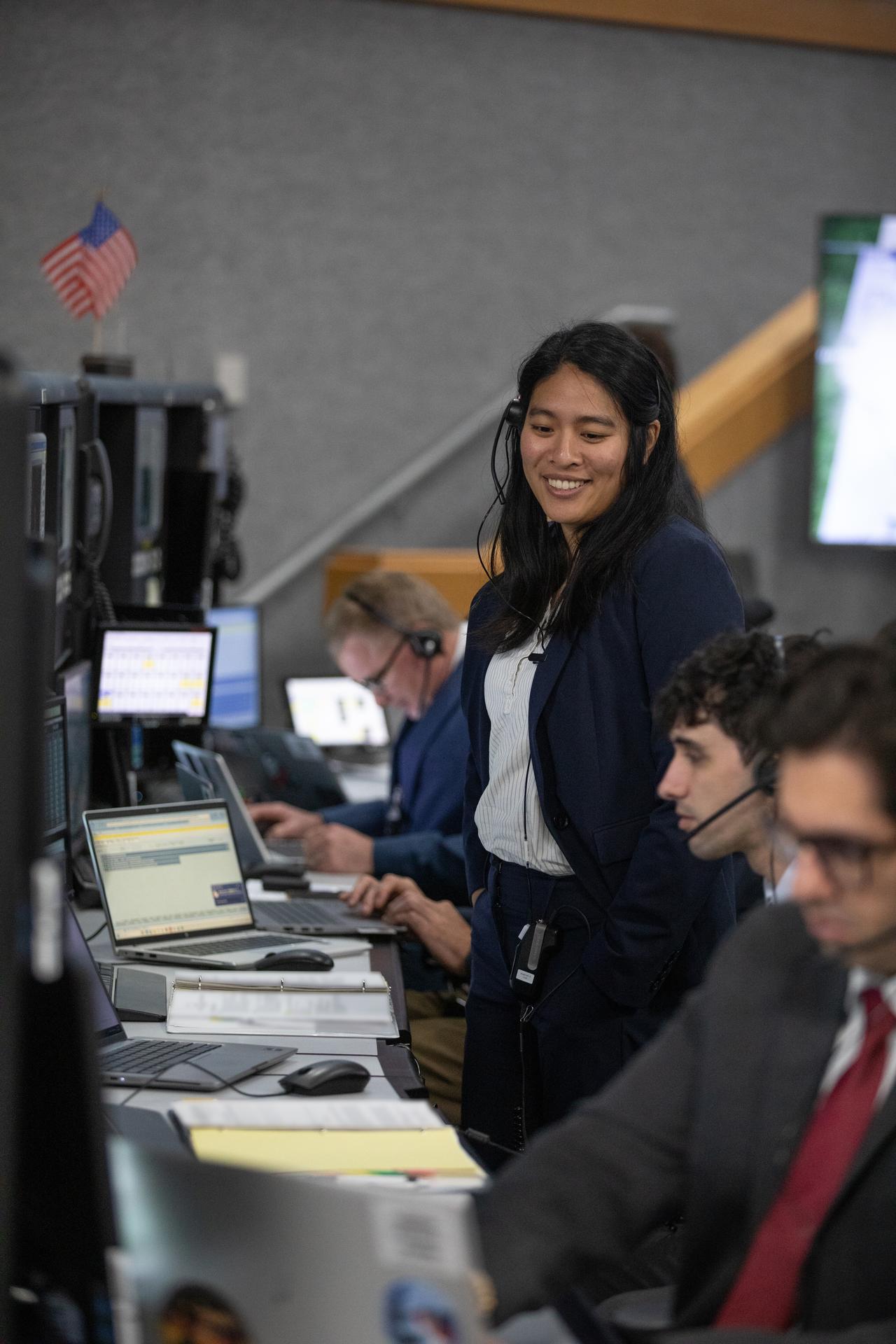
Artemis launch team members participate in an integrated launch countdown simulation for Artemis II inside Firing Room 1 of the Launch Control Center on Wednesday, Dec. 10, 2025. The training exercise involved engineers from Kennedy, Marshall Space Flight Center in Huntsville, Alabama, and Johnson Space Center in Houston coming together to rehearse all aspects of the launch countdown, from cryogenic loading – filling tanks in the SLS (Space Launch System) rocket’s core stage with liquid hydrogen and liquid oxygen – to liftoff. For Artemis II, four astronauts will venture around the Moon, the first crewed mission on NASA’s path to establishing a long-term presence for science and exploration through Artemis.
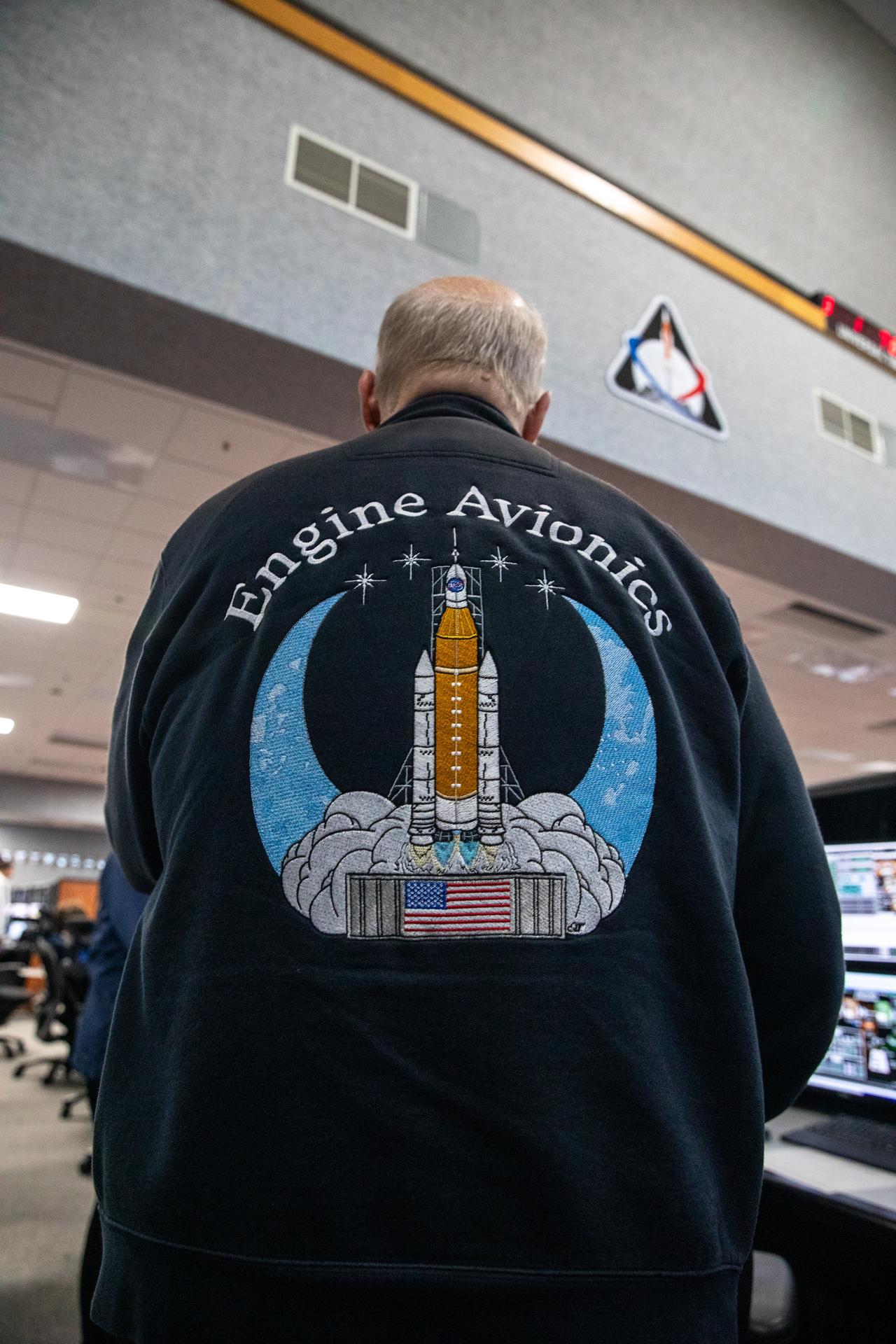
An Artemis launch team member participates in an Artemis II launch countdown simulation inside Firing Room 1 in the Launch Control Center at NASA’s Kennedy Space Center in Florida on Wednesday, Nov. 5, 2025. The simulations go through launch day scenarios to help launch team members test software and make adjustments if needed during countdown operations. For Artemis II, four astronauts will venture around the Moon, the first crewed mission on NASA’s path to establishing a long-term presence for science and exploration through Artemis.
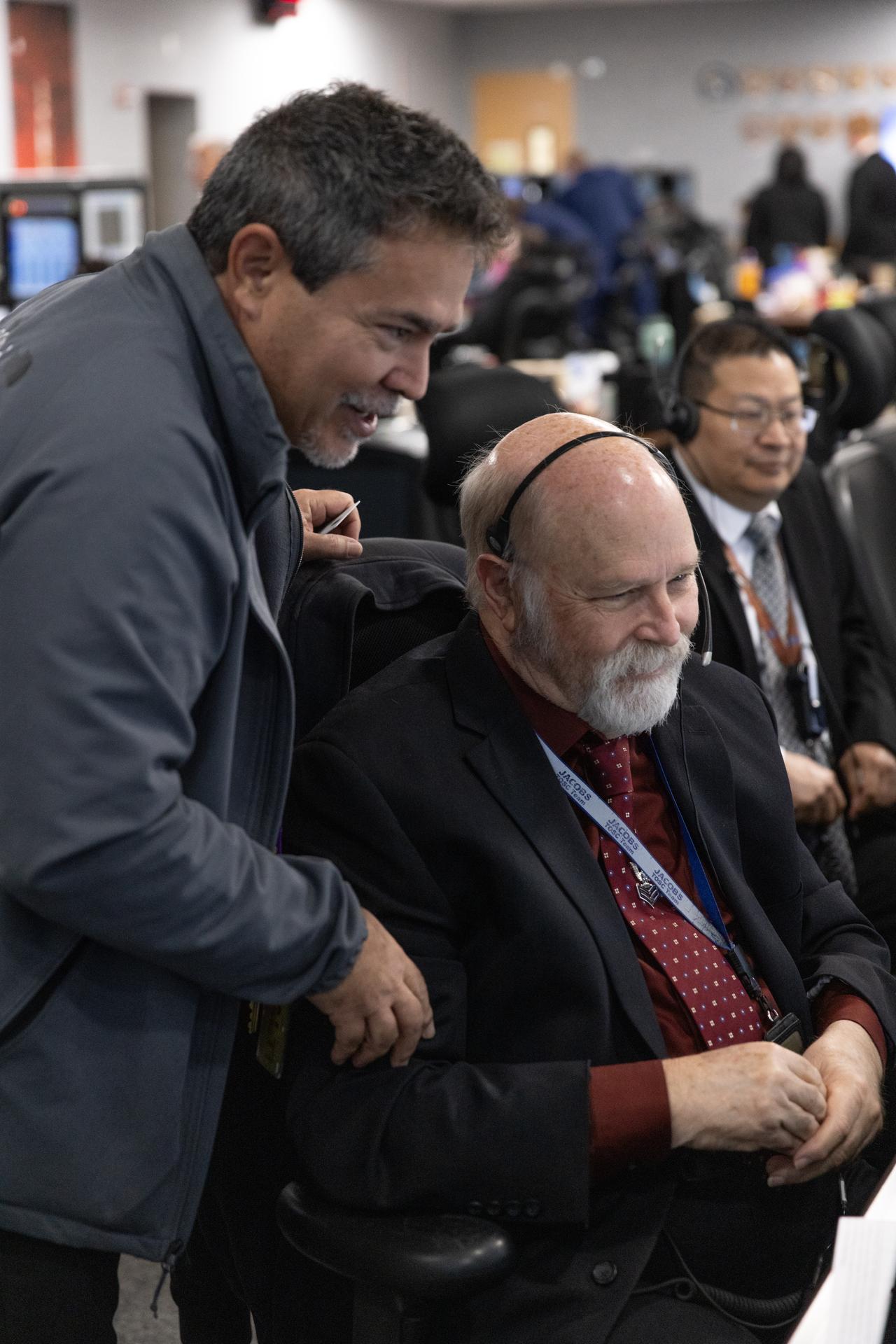
Artemis launch team members participate in an integrated launch countdown simulation for Artemis II inside Firing Room 1 of the Launch Control Center on Wednesday, Dec. 10, 2025. The training exercise involved engineers from Kennedy, Marshall Space Flight Center in Huntsville, Alabama, and Johnson Space Center in Houston coming together to rehearse all aspects of the launch countdown, from cryogenic loading – filling tanks in the SLS (Space Launch System) rocket’s core stage with liquid hydrogen and liquid oxygen – to liftoff. For Artemis II, four astronauts will venture around the Moon, the first crewed mission on NASA’s path to establishing a long-term presence for science and exploration through Artemis.
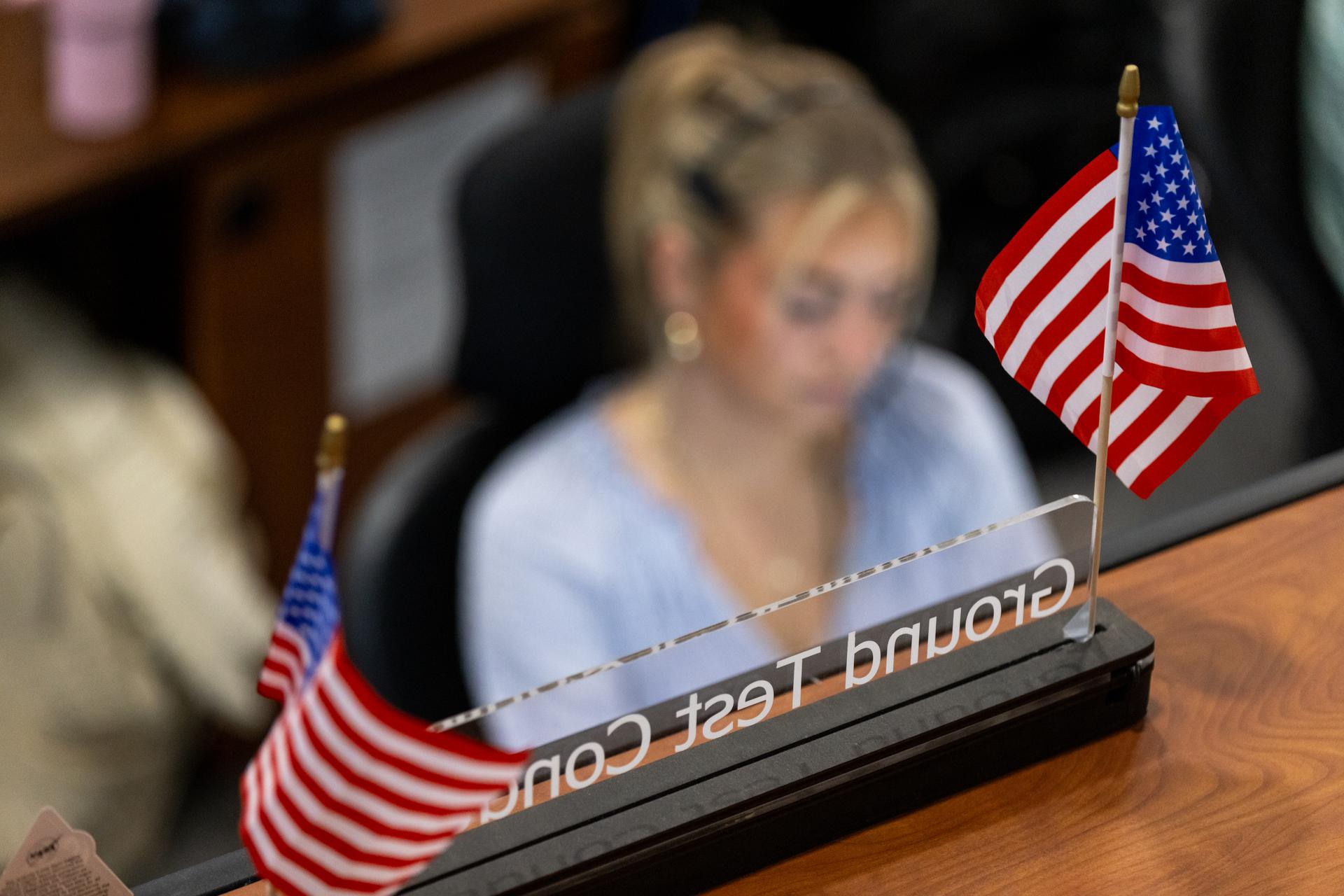
An Artemis launch team member participates in an Artemis II launch countdown simulation inside Firing Room 1 in the Launch Control Center at NASA’s Kennedy Space Center in Florida on Wednesday, Nov. 5, 2025. The simulations go through launch day scenarios to help launch team members test software and make adjustments if needed during countdown operations. For Artemis II, four astronauts will venture around the Moon, the first crewed mission on NASA’s path to establishing a long-term presence for science and exploration through Artemis.
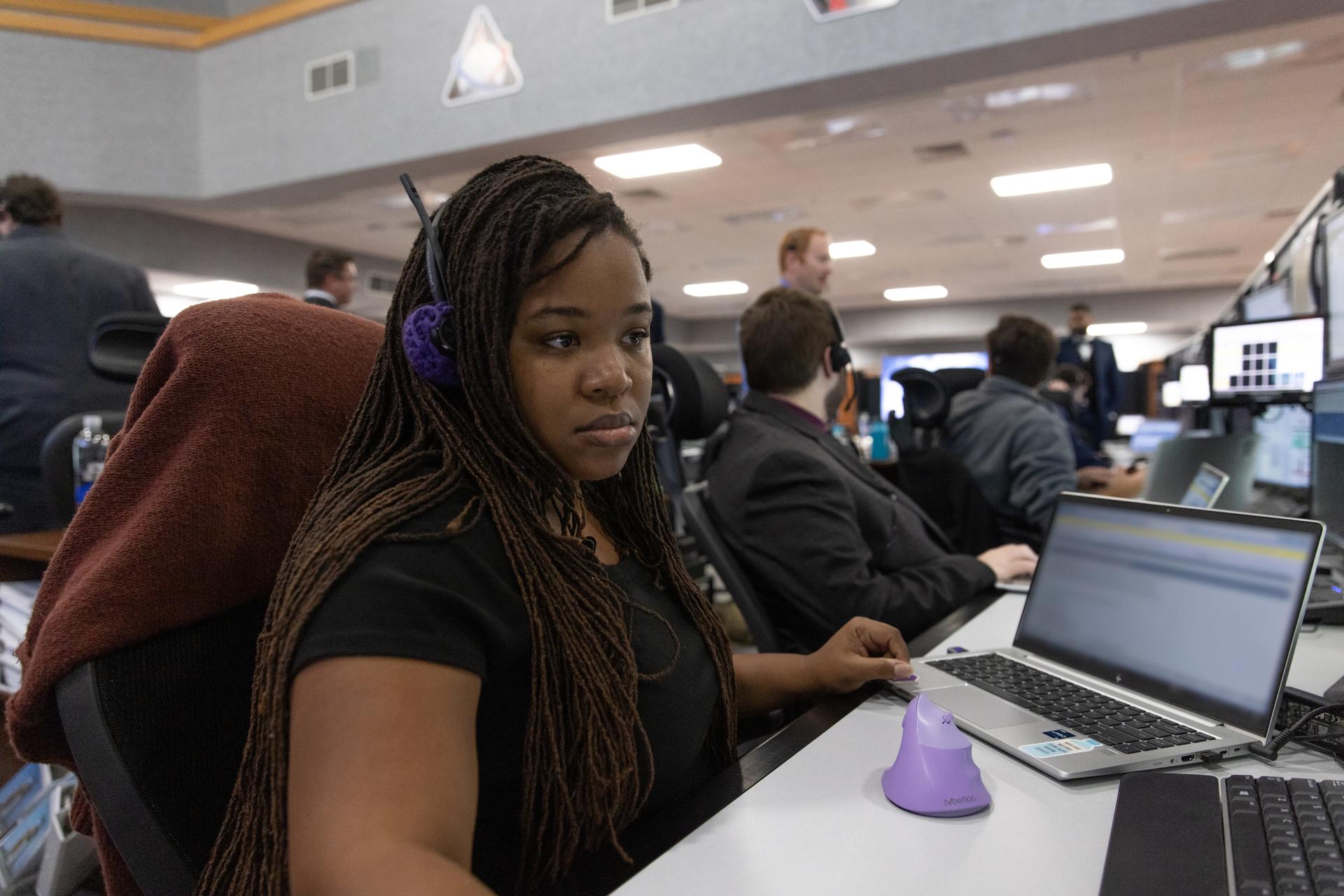
Artemis launch team members participate in an integrated launch countdown simulation for Artemis II inside Firing Room 1 of the Launch Control Center on Wednesday, Dec. 10, 2025. The training exercise involved engineers from Kennedy, Marshall Space Flight Center in Huntsville, Alabama, and Johnson Space Center in Houston coming together to rehearse all aspects of the launch countdown, from cryogenic loading – filling tanks in the SLS (Space Launch System) rocket’s core stage with liquid hydrogen and liquid oxygen – to liftoff. For Artemis II, four astronauts will venture around the Moon, the first crewed mission on NASA’s path to establishing a long-term presence for science and exploration through Artemis.

Mike Guzman, main propulsion systems engineer participates in an Artemis II launch countdown simulation inside Firing Room 1 in the Launch Control Center at NASA’s Kennedy Space Center in Florida on Wednesday, Nov. 5, 2025. The simulations go through launch day scenarios to help launch team members test software and make adjustments if needed during countdown operations. For Artemis II, four astronauts will venture around the Moon, the first crewed mission on NASA’s path to establishing a long-term presence for science and exploration through Artemis.
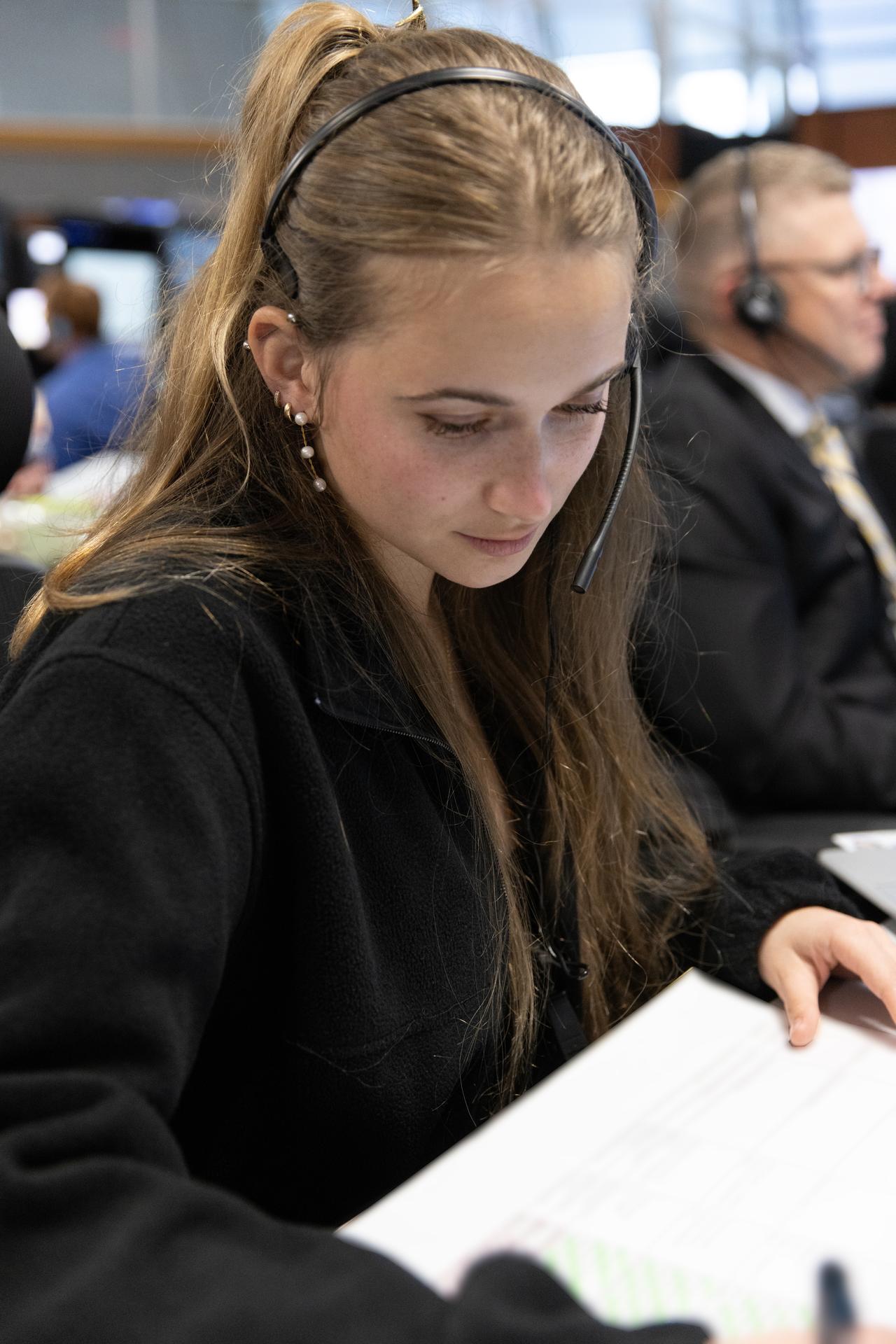
Artemis launch team members participate in an integrated launch countdown simulation for Artemis II inside Firing Room 1 of the Launch Control Center on Wednesday, Dec. 10, 2025. The training exercise involved engineers from Kennedy, Marshall Space Flight Center in Huntsville, Alabama, and Johnson Space Center in Houston coming together to rehearse all aspects of the launch countdown, from cryogenic loading – filling tanks in the SLS (Space Launch System) rocket’s core stage with liquid hydrogen and liquid oxygen – to liftoff. For Artemis II, four astronauts will venture around the Moon, the first crewed mission on NASA’s path to establishing a long-term presence for science and exploration through Artemis.
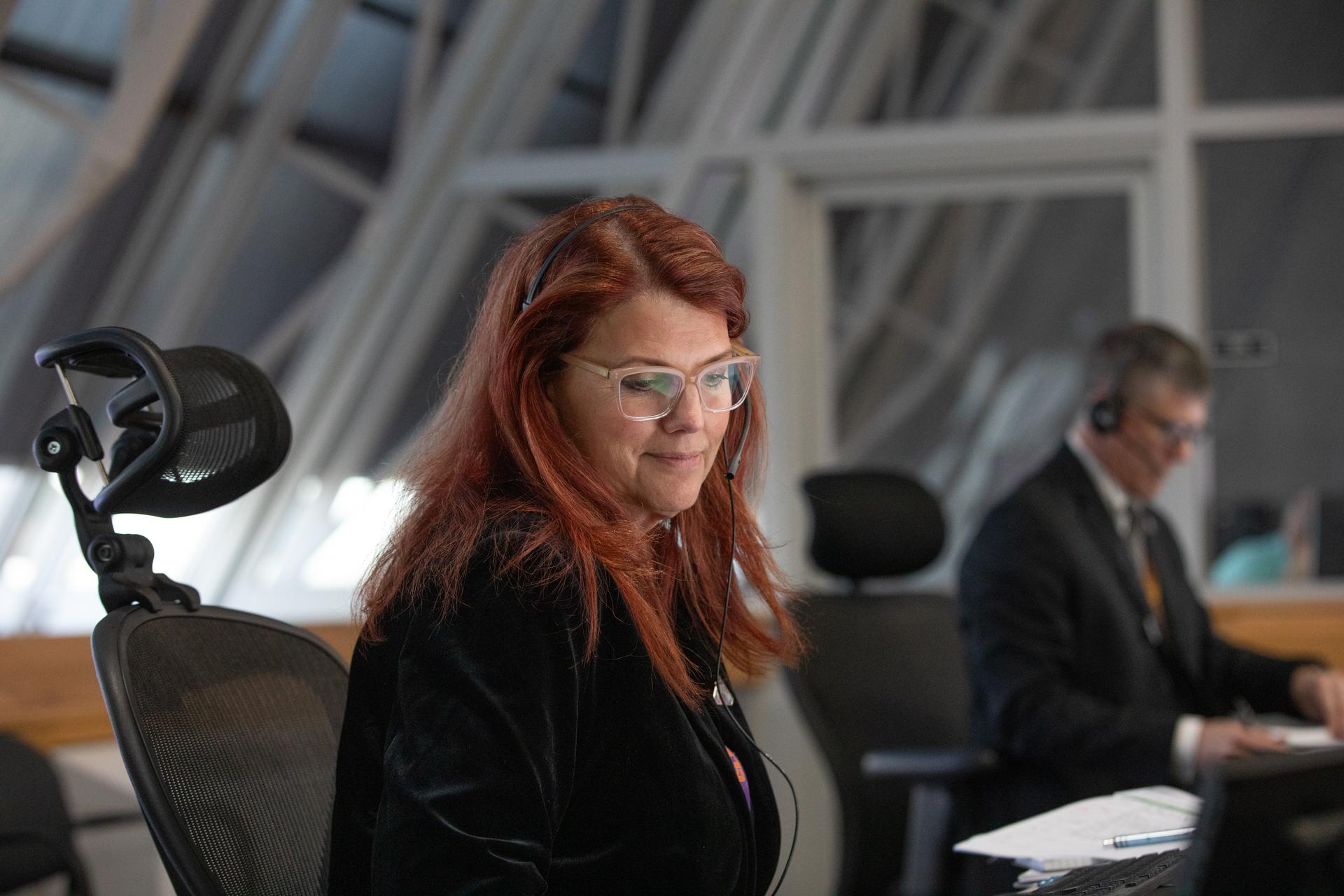
Charlie Blackwell-Thompson, Artemis launch director, Exploration Ground Systems at NASA’s Kennedy Space Center in Florida, participates in an integrated launch countdown simulation for Artemis II inside Firing Room 1 of the Launch Control Center on Wednesday, Dec. 10, 2025. The training exercise involved engineers from Kennedy, Marshall Space Flight Center in Huntsville, Alabama, and Johnson Space Center in Houston coming together to rehearse all aspects of the launch countdown, from cryogenic loading – filling tanks in the SLS (Space Launch System) rocket’s core stage with liquid hydrogen and liquid oxygen – to liftoff. For Artemis II, four astronauts will venture around the Moon, the first crewed mission on NASA’s path to establishing a long-term presence for science and exploration through Artemis.
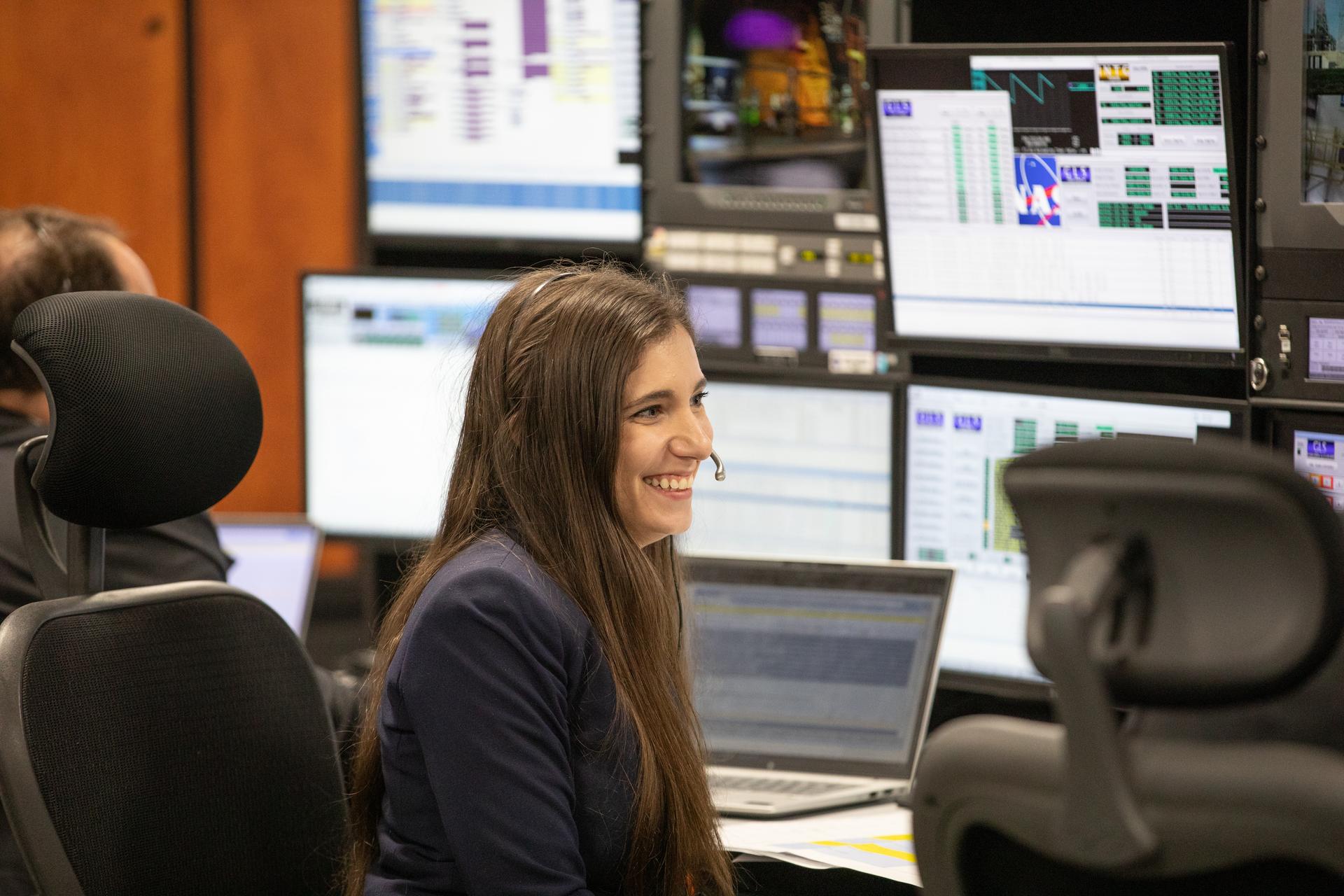
Artemis launch team members participate in an integrated launch countdown simulation for Artemis II inside Firing Room 1 of the Launch Control Center on Wednesday, Dec. 10, 2025. The training exercise involved engineers from Kennedy, Marshall Space Flight Center in Huntsville, Alabama, and Johnson Space Center in Houston coming together to rehearse all aspects of the launch countdown, from cryogenic loading – filling tanks in the SLS (Space Launch System) rocket’s core stage with liquid hydrogen and liquid oxygen – to liftoff. For Artemis II, four astronauts will venture around the Moon, the first crewed mission on NASA’s path to establishing a long-term presence for science and exploration through Artemis.
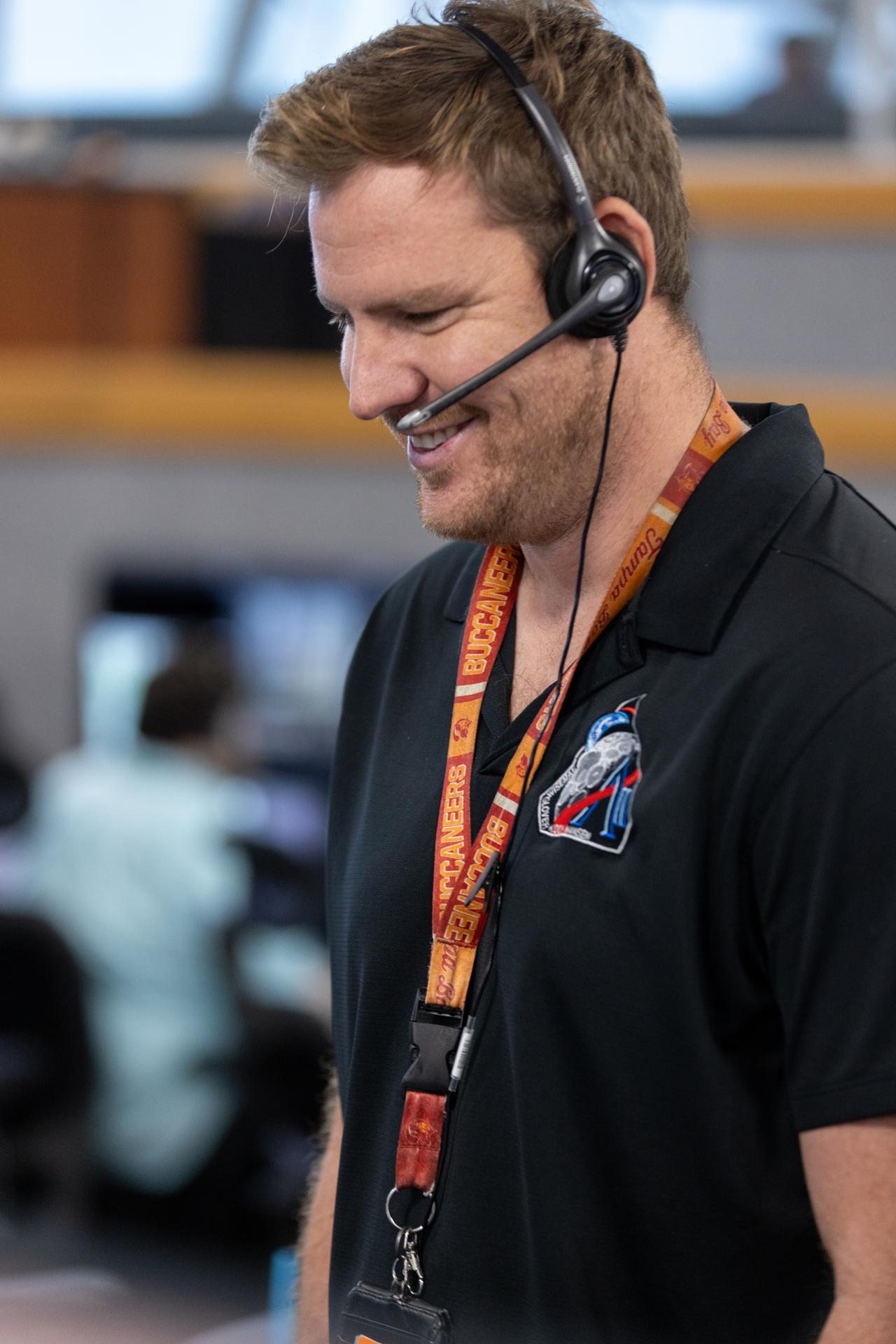
Joe Pavicic, operations project engineer within the Exploration Ground Systems Program, participates in an Artemis II launch countdown simulation inside Firing Room 1 in the Launch Control Center at NASA’s Kennedy Space Center in Florida on Wednesday, Nov. 5, 2025. The simulations go through launch day scenarios to help launch team members test software and make adjustments if needed during countdown operations. For Artemis II, four astronauts will venture around the Moon, the first crewed mission on NASA’s path to establishing a long-term presence for science and exploration through Artemis.
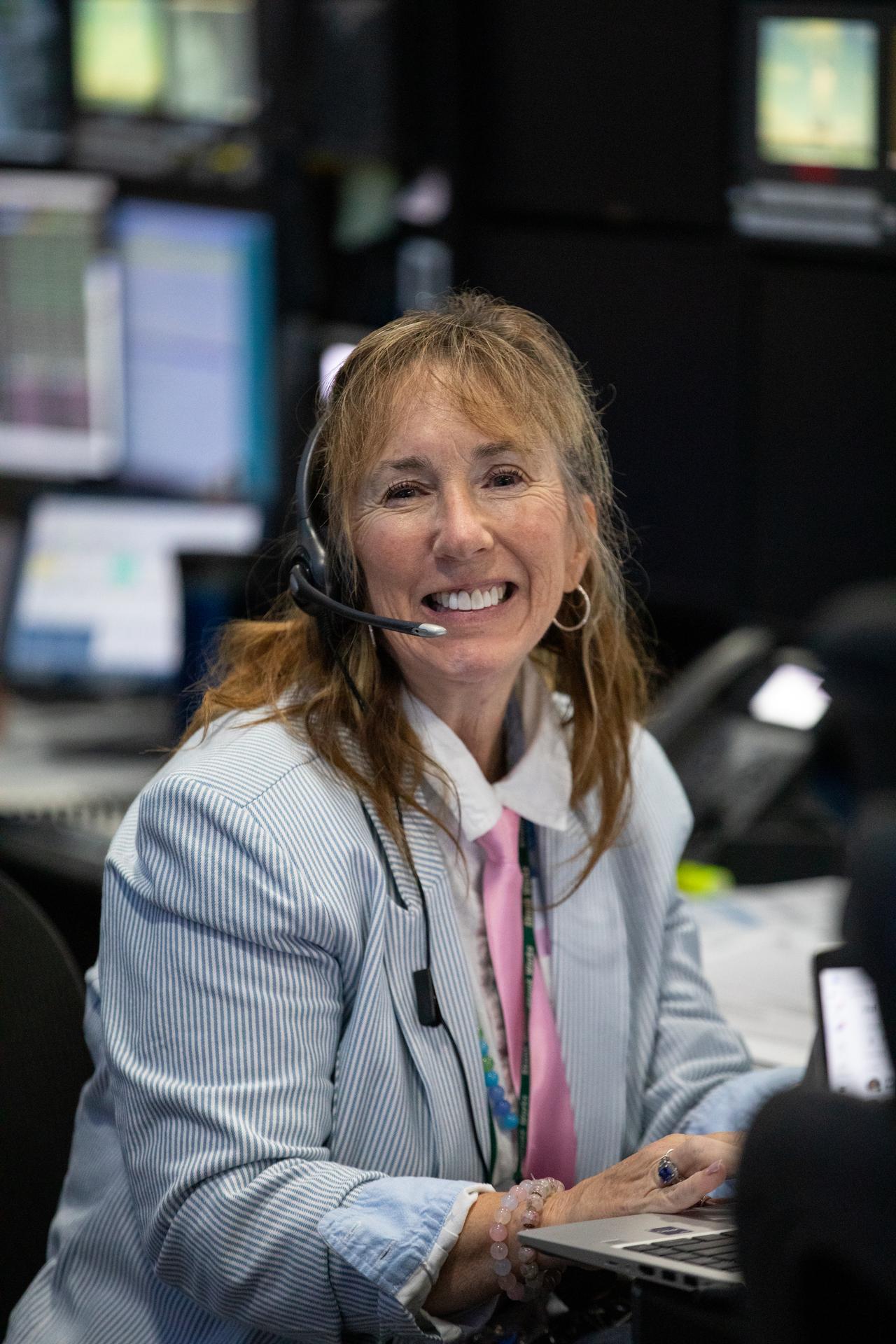
Artemis launch team members participate in an integrated launch countdown simulation for Artemis II inside Firing Room 1 of the Launch Control Center on Wednesday, Dec. 10, 2025. The training exercise involved engineers from Kennedy, Marshall Space Flight Center in Huntsville, Alabama, and Johnson Space Center in Houston coming together to rehearse all aspects of the launch countdown, from cryogenic loading – filling tanks in the SLS (Space Launch System) rocket’s core stage with liquid hydrogen and liquid oxygen – to liftoff. For Artemis II, four astronauts will venture around the Moon, the first crewed mission on NASA’s path to establishing a long-term presence for science and exploration through Artemis.
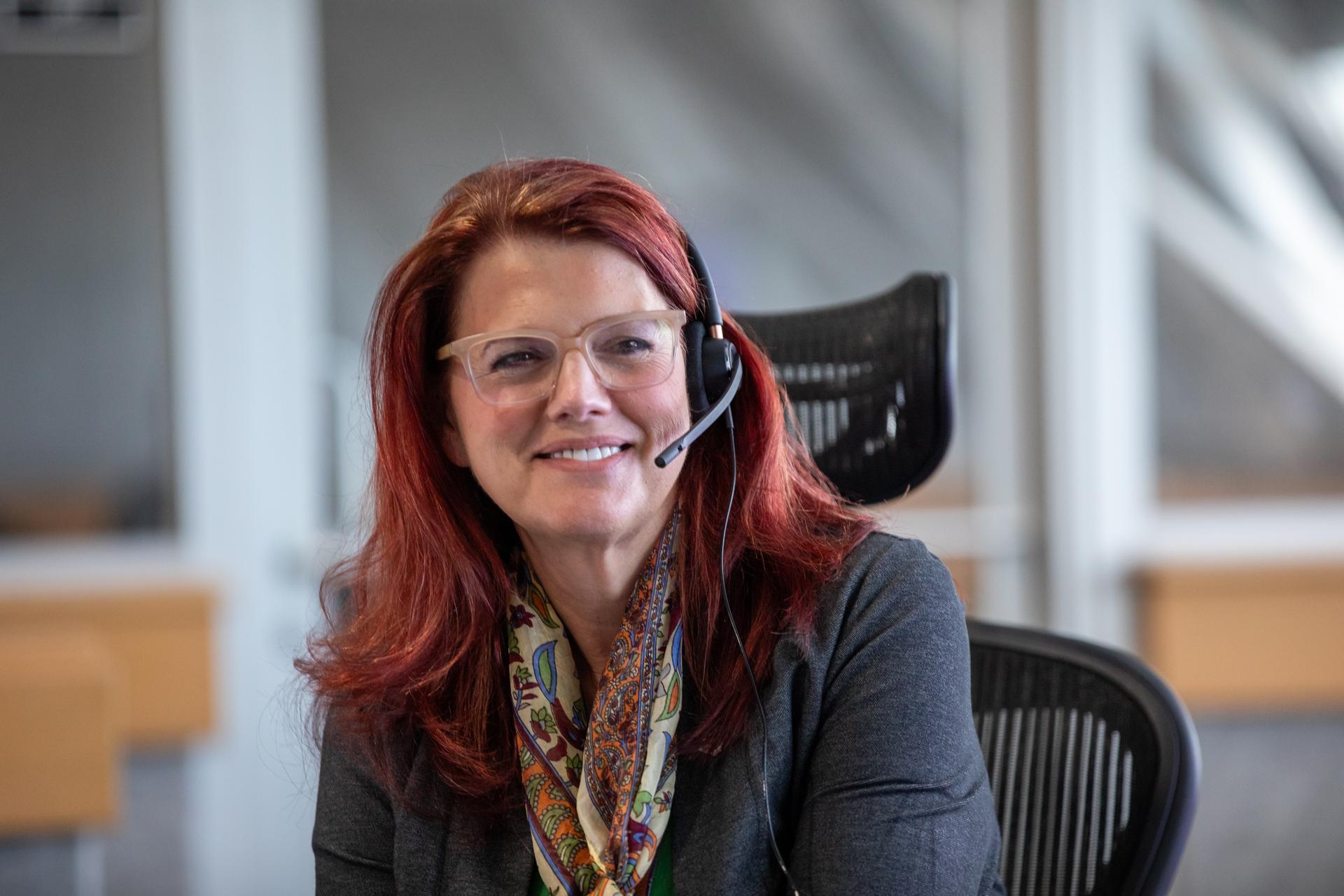
Charlie Blackwell-Thompson, Artemis launch director with the Exploration Ground Systems Program at NASA’s Kennedy Space Center in Florida, participates in an Artemis II launch countdown simulation inside Firing Room 1 in the Launch Control Center at NASA Kennedy on Wednesday, Nov. 5, 2025. The simulations go through launch day scenarios to help launch team members test software and make adjustments if needed during countdown operations. For Artemis II, four astronauts will venture around the Moon, the first crewed mission on NASA’s path to establishing a long-term presence for science and exploration through Artemis.

Artemis launch team members participate in an Artemis II launch countdown simulation inside Firing Room 1 in the Launch Control Center at NASA’s Kennedy Space Center in Florida on Wednesday, Nov. 5, 2025. The simulations go through launch day scenarios to help launch team members test software and make adjustments if needed during countdown operations. For Artemis II, four astronauts will venture around the Moon, the first crewed mission on NASA’s path to establishing a long-term presence for science and exploration through Artemis.
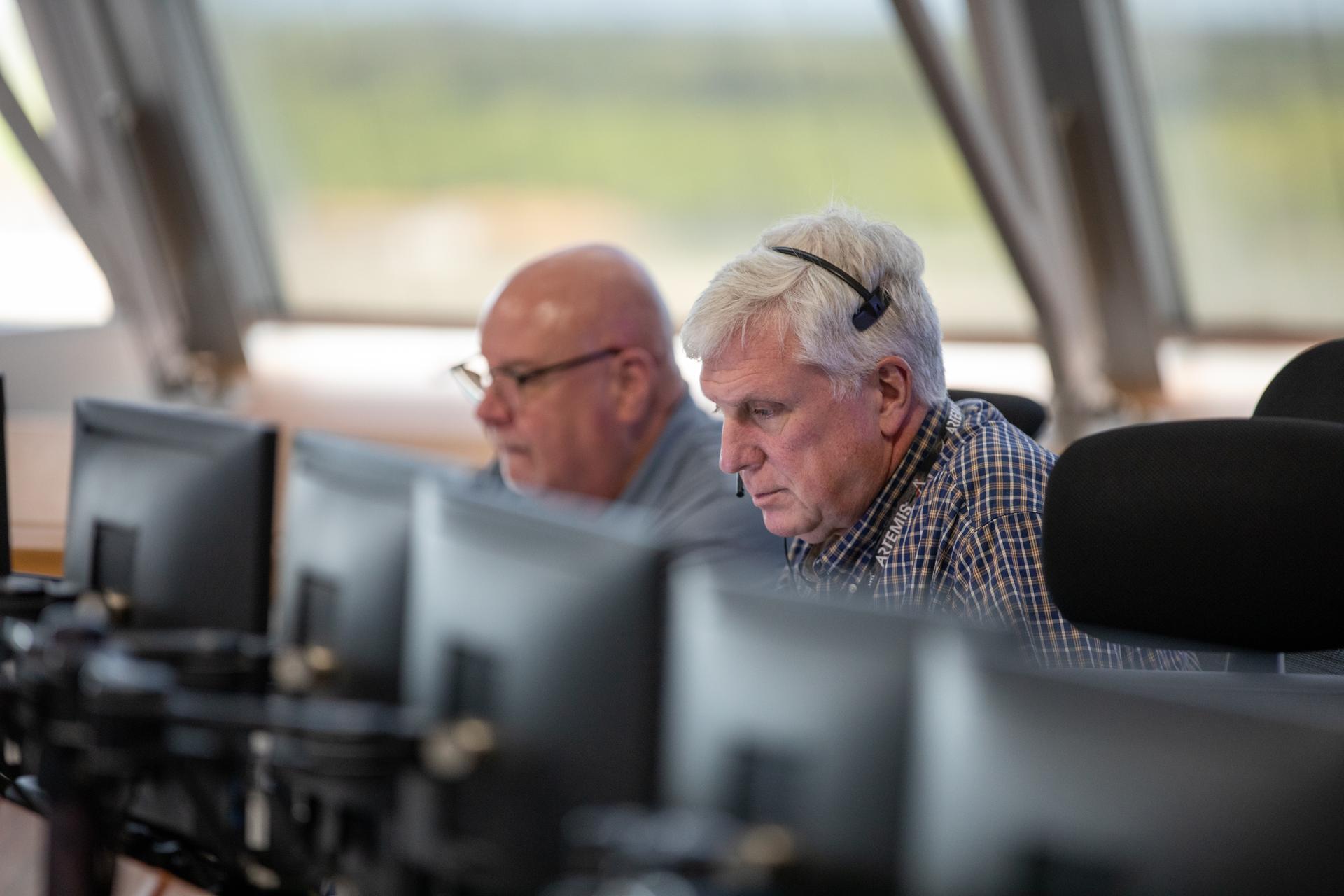
From left, John Honeycutt, Artemis II mission management team chair and Matthew Ramsey, Artemis II mission manager with NASA’s Exploration Systems Development Mission Directorate, participate in an Artemis II launch countdown simulation inside Firing Room 1 in the Launch Control Center at NASA’s Kennedy Space Center in Florida on Wednesday, Nov. 5, 2025. The simulations go through launch day scenarios to help launch team members test software and make adjustments if needed during countdown operations. For Artemis II, four astronauts will venture around the Moon, the first crewed mission on NASA’s path to establishing a long-term presence for science and exploration through Artemis.
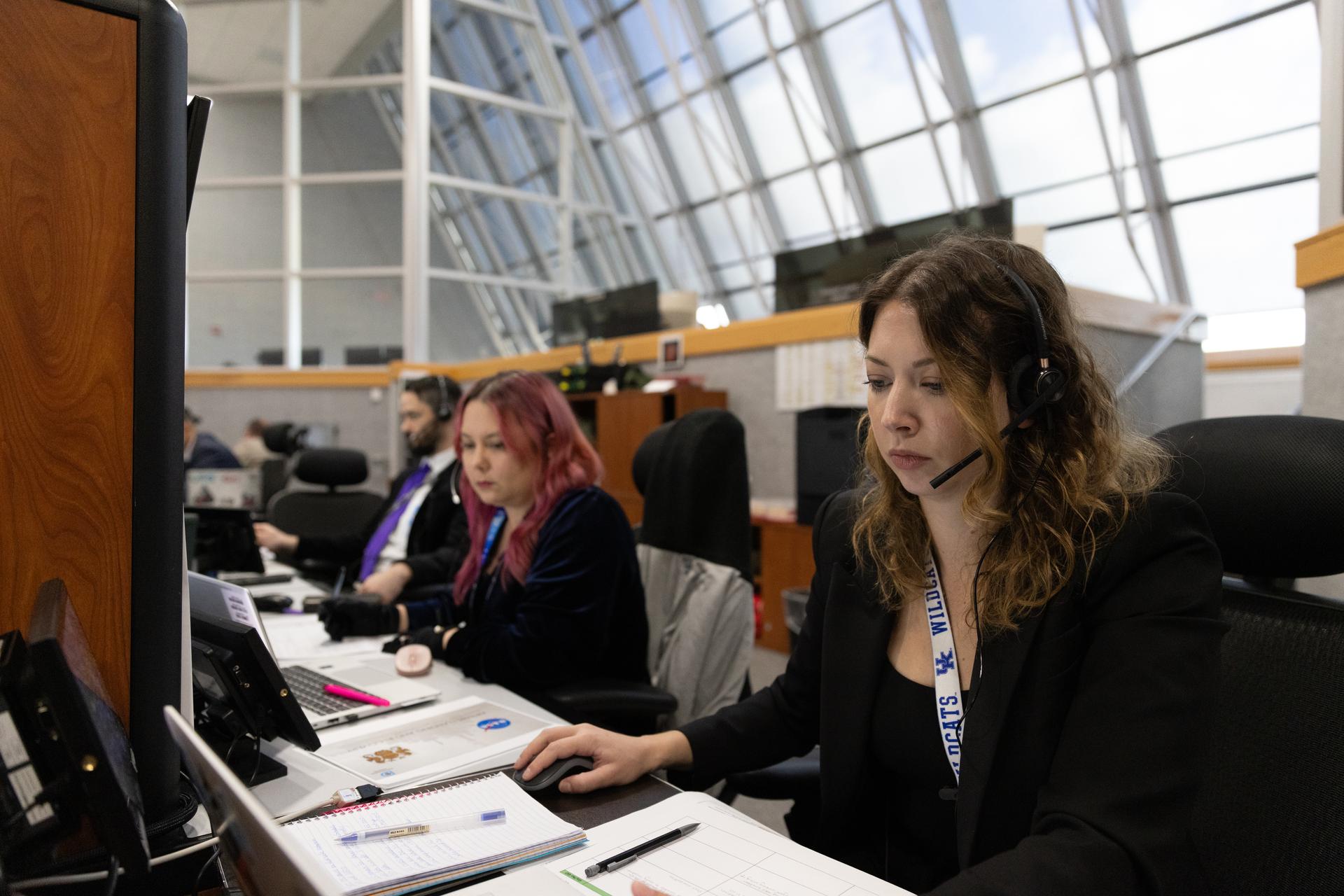
Artemis launch team members participate in an integrated launch countdown simulation for Artemis II inside Firing Room 1 of the Launch Control Center on Wednesday, Dec. 10, 2025. The training exercise involved engineers from Kennedy, Marshall Space Flight Center in Huntsville, Alabama, and Johnson Space Center in Houston coming together to rehearse all aspects of the launch countdown, from cryogenic loading – filling tanks in the SLS (Space Launch System) rocket’s core stage with liquid hydrogen and liquid oxygen – to liftoff. For Artemis II, four astronauts will venture around the Moon, the first crewed mission on NASA’s path to establishing a long-term presence for science and exploration through Artemis.
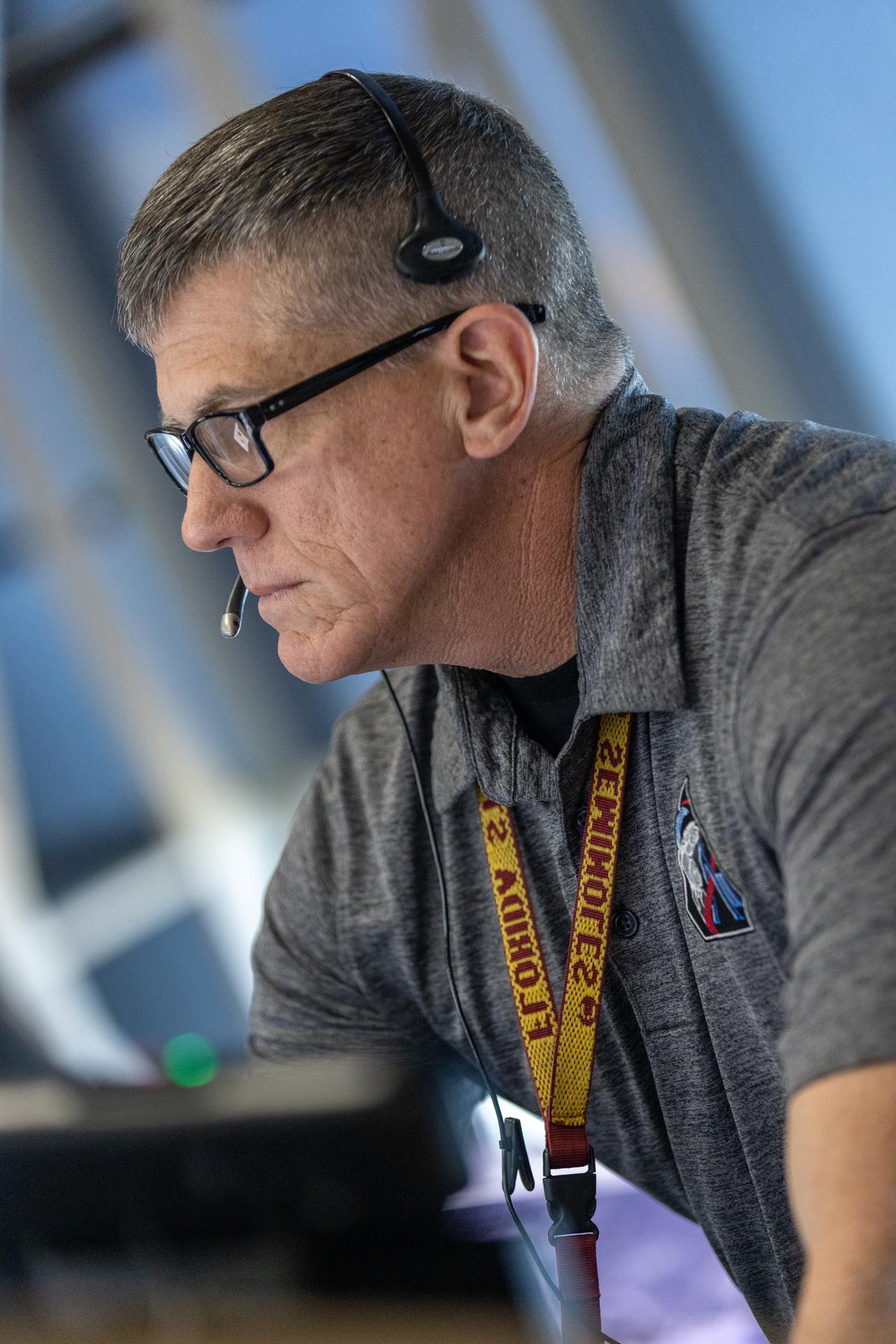
Jeremy Graeber, Artemis assistant launch director within NASA’s Exploration Ground Systems Program, participates in an Artemis II launch countdown simulation inside Firing Room 1 in the Launch Control Center at NASA’s Kennedy Space Center in Florida on Wednesday, Nov. 5, 2025. The simulations go through launch day scenarios to help launch team members test software and make adjustments if needed during countdown operations. For Artemis II, four astronauts will venture around the Moon, the first crewed mission on NASA’s path to establishing a long-term presence for science and exploration through Artemis.
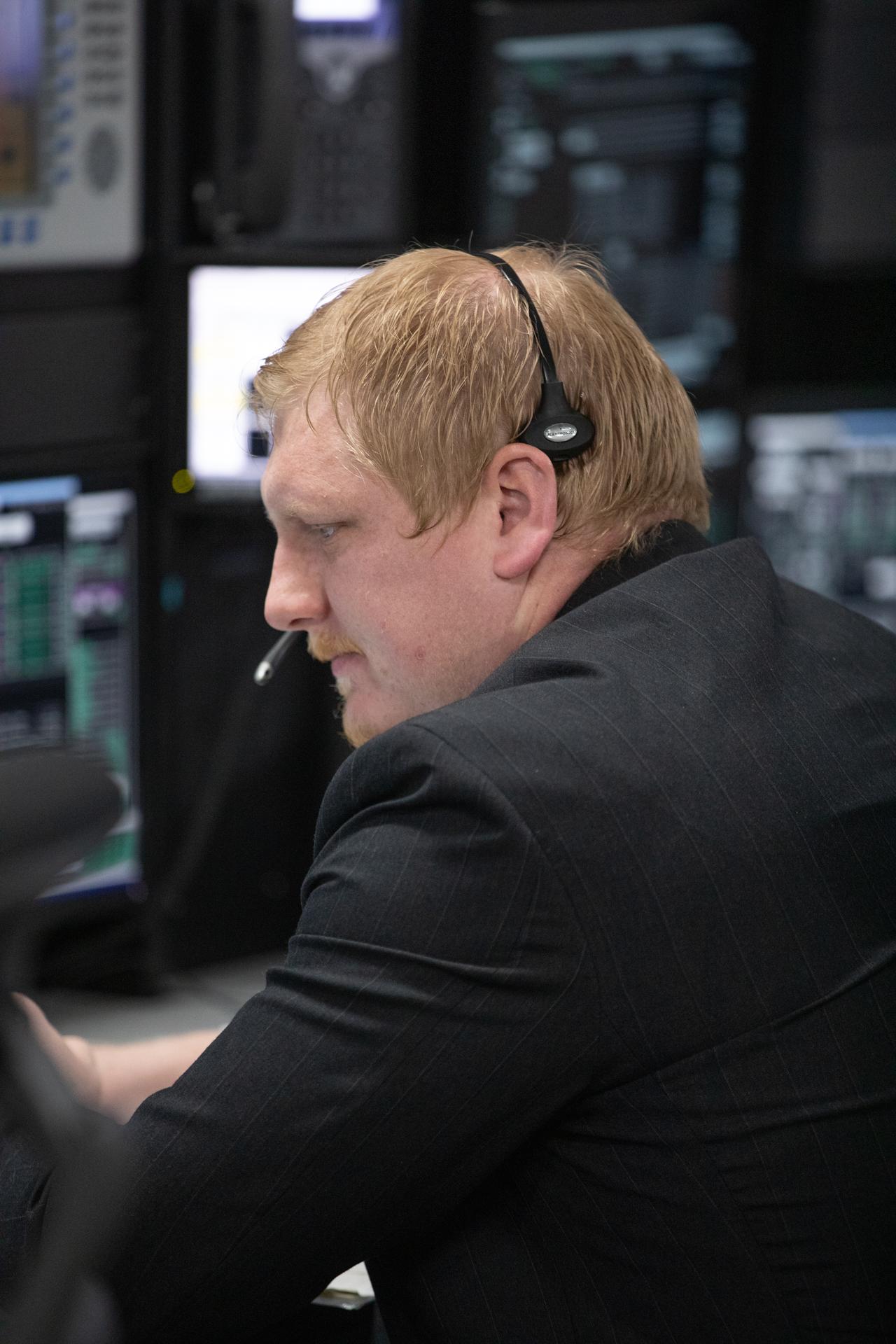
Artemis launch team members participate in an integrated launch countdown simulation for Artemis II inside Firing Room 1 of the Launch Control Center on Wednesday, Dec. 10, 2025. The training exercise involved engineers from Kennedy, Marshall Space Flight Center in Huntsville, Alabama, and Johnson Space Center in Houston coming together to rehearse all aspects of the launch countdown, from cryogenic loading – filling tanks in the SLS (Space Launch System) rocket’s core stage with liquid hydrogen and liquid oxygen – to liftoff. For Artemis II, four astronauts will venture around the Moon, the first crewed mission on NASA’s path to establishing a long-term presence for science and exploration through Artemis.
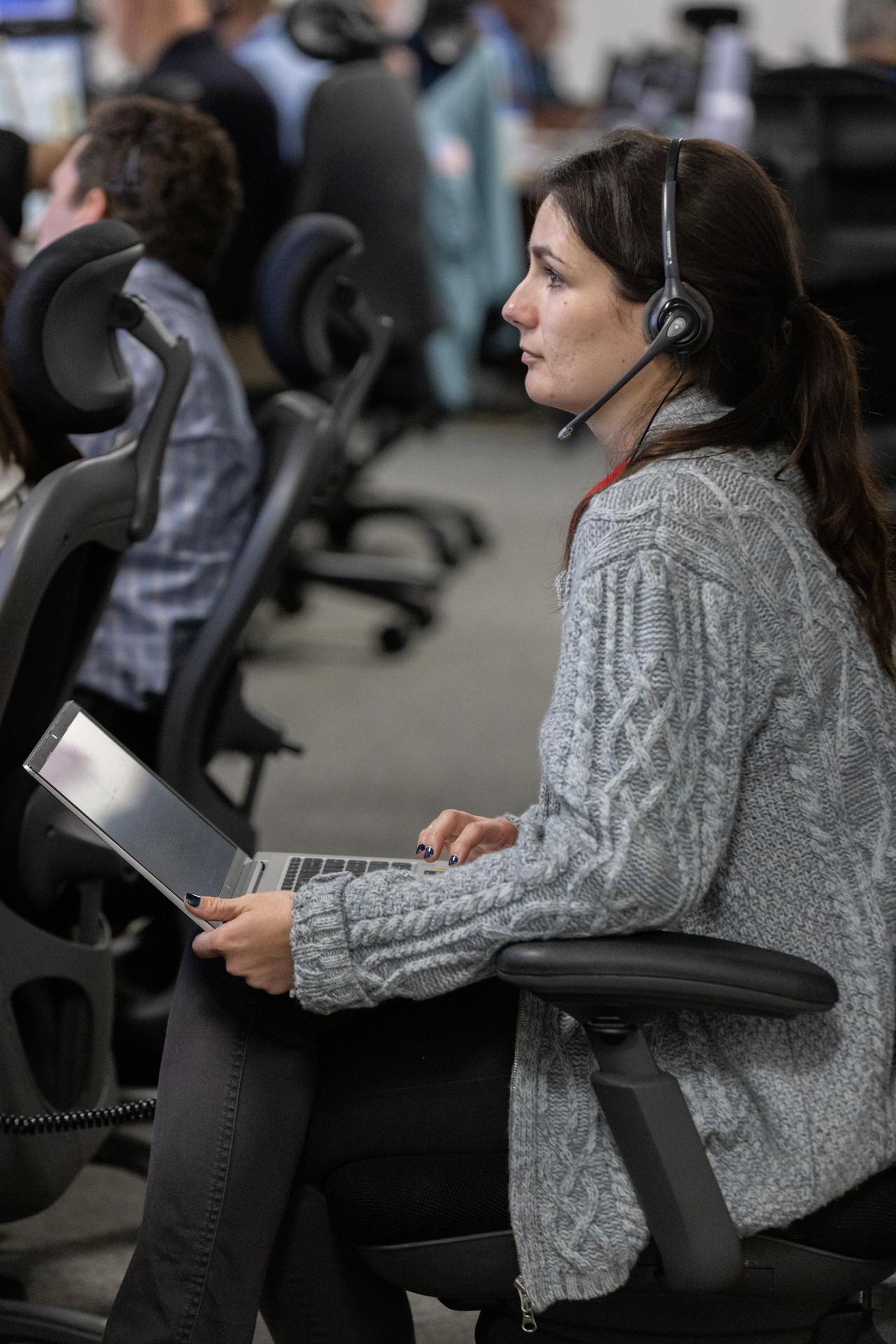
An Artemis launch team member participates in an Artemis II launch countdown simulation inside Firing Room 1 in the Launch Control Center at NASA’s Kennedy Space Center in Florida on Wednesday, Nov. 5, 2025. The simulations go through launch day scenarios to help launch team members test software and make adjustments if needed during countdown operations. For Artemis II, four astronauts will venture around the Moon, the first crewed mission on NASA’s path to establishing a long-term presence for science and exploration through Artemis.
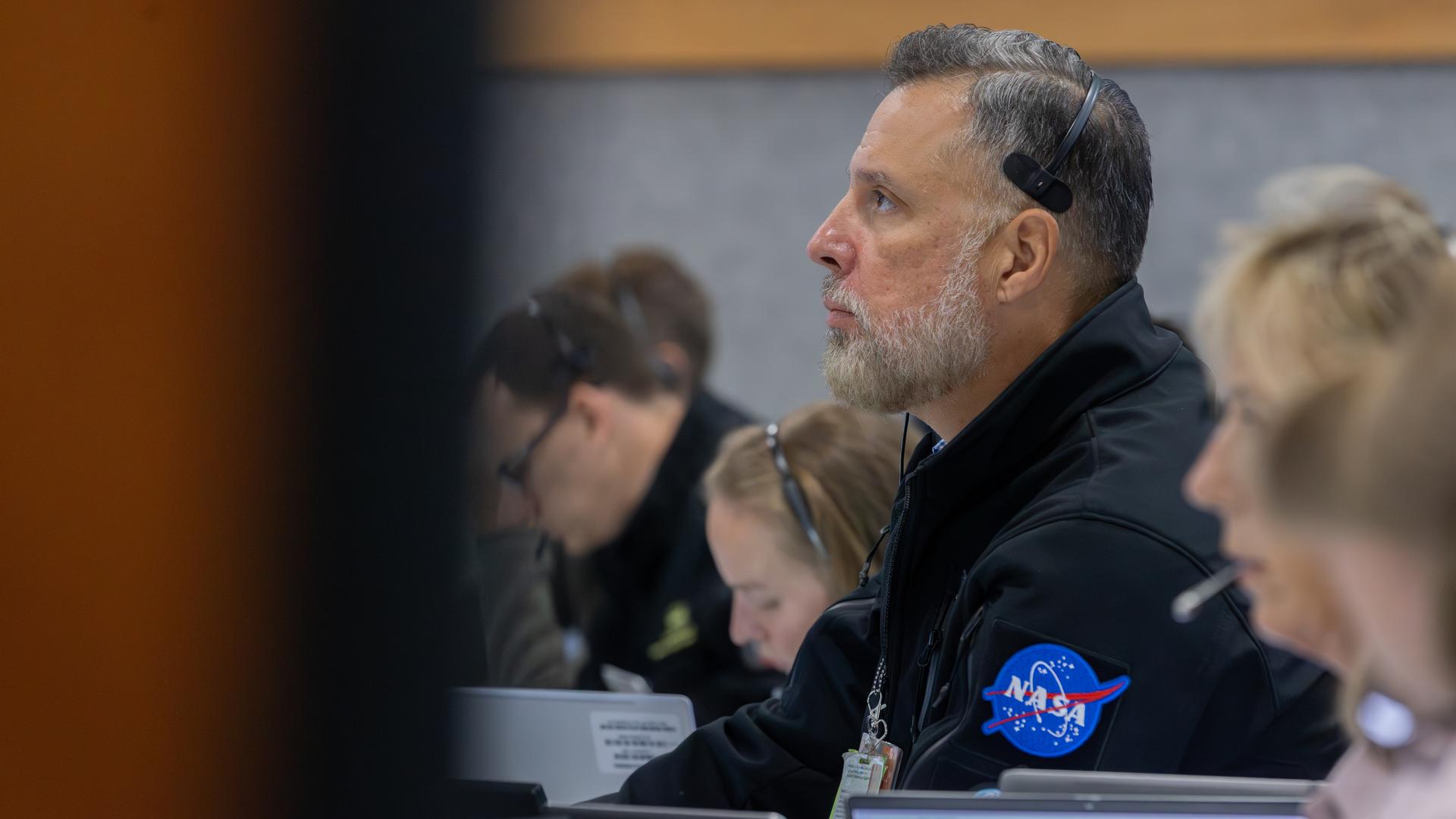
Carlos Moonge, branch chief of Test, Launch, and Recovery Operations, participates in a cryogenic propellant loading simulation for NASA’s Artemis III mission on Wednesday, Aug. 5, 2026, inside Firing Rooms 1 and 2 of the Rocco A. Petrone Launch Control Center at the agency’s Kennedy Space Center in Florida. Members of NASA’s Exploration Ground Systems team rehearse the steps to load the super-cooled liquid hydrogen and liquid oxygen into the SLS (Space Launch System) rocket core stage, a process that starts several hours before liftoff for the Artemis III mission. Artemis III will carry out a series of objectives in low Earth orbit designed to demonstrate critical systems needed for future lunar landings, beginning with Artemis IV.

Jeremy Graeber, assistant launch director, NASA’s Exploration Ground Systems Program, smiles during a cryogenic propellant loading simulation for NASA’s Artemis III mission on Wednesday, Aug. 5, 2026, inside Firing Rooms 1 and 2 of the Rocco A. Petrone Launch Control Center at the agency’s Kennedy Space Center in Florida. Members of NASA’s Exploration Ground Systems team rehearse the steps to load the super-cooled liquid hydrogen and liquid oxygen into the SLS (Space Launch System) rocket core stage, a process that starts several hours before liftoff for the Artemis III mission. Artemis III will carry out a series of objectives in low Earth orbit designed to demonstrate critical systems needed for future lunar landings, beginning with Artemis IV.
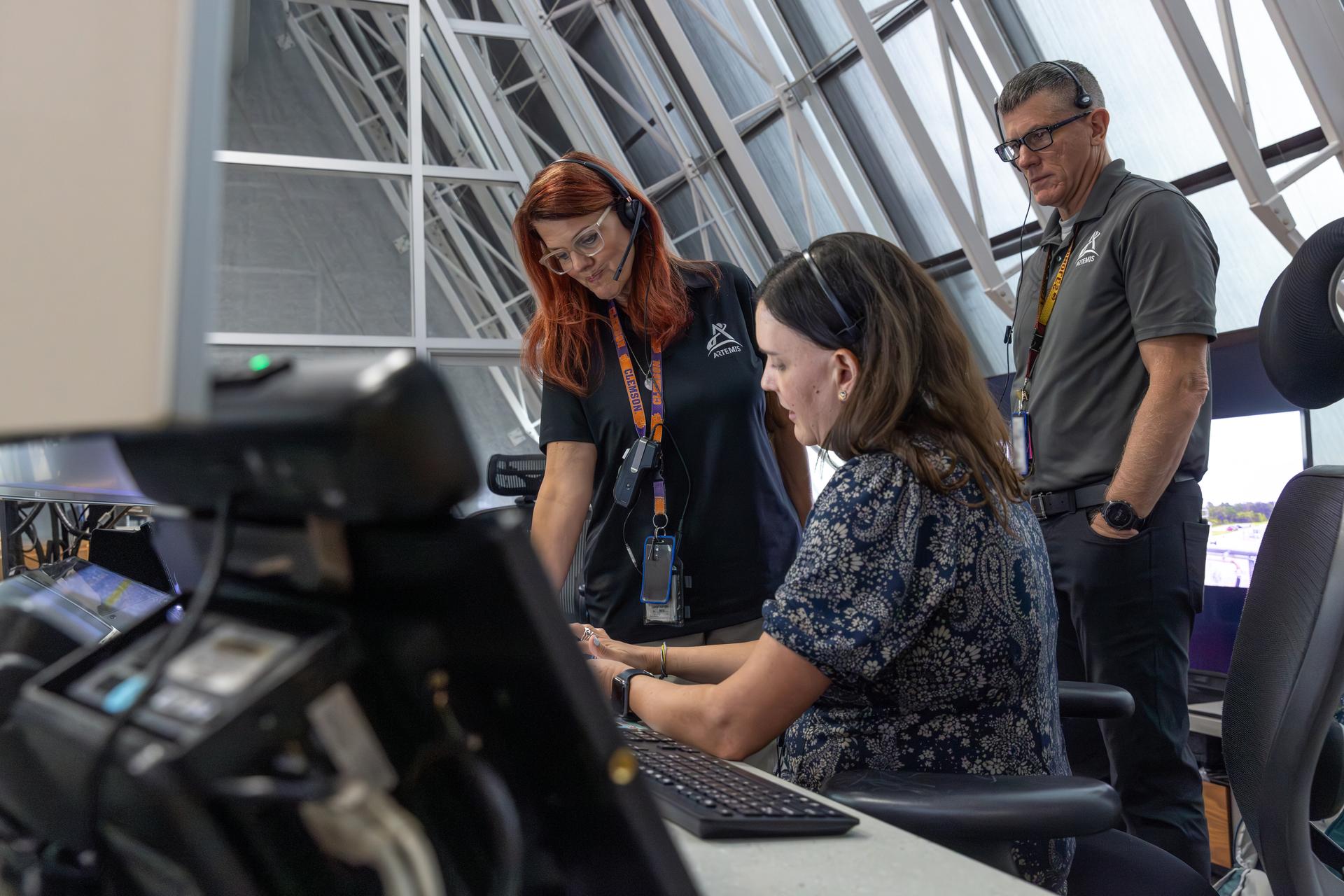
From left, Charlie Blackwell-Thompson, Artemis launch director; Mari Forrestel, Artemis launch director technical assistant; and Jeremy Graeber, assistant launch director, all with NASA’s Exploration Ground Systems Program, participate in a cryogenic propellant loading simulation for NASA’s Artemis III mission on Wednesday, Aug. 5, 2026, inside Firing Rooms 1 and 2 of the Rocco A. Petrone Launch Control Center at the agency’s Kennedy Space Center in Florida. Members of NASA’s Exploration Ground Systems team rehearse the steps to load the super-cooled liquid hydrogen and liquid oxygen into the SLS (Space Launch System) rocket core stage, a process that starts several hours before liftoff for the Artemis III mission. Artemis III will carry out a series of objectives in low Earth orbit designed to demonstrate critical systems needed for future lunar landings, beginning with Artemis IV.
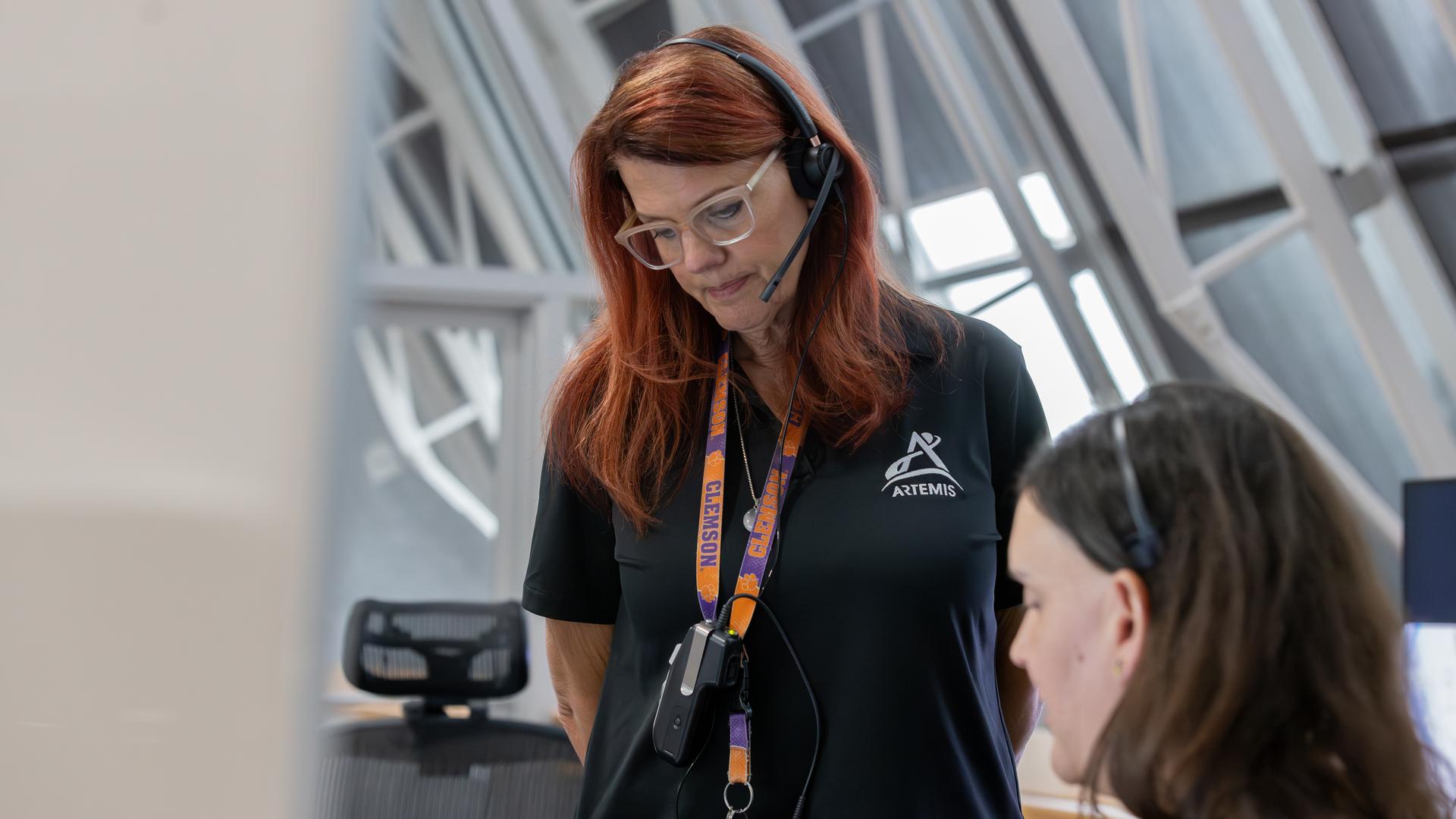
From left, Charlie Blackwell-Thompson, Artemis launch director and Mari Forrestel, Artemis launch director technical assistant, both with NASA’s Exploration Ground Systems Program, participate in a cryogenic propellant loading simulation for NASA’s Artemis III mission on Wednesday, Aug. 5, 2026, inside Firing Rooms 1 and 2 of the Rocco A. Petrone Launch Control Center at the agency’s Kennedy Space Center in Florida. Members of NASA’s Exploration Ground Systems team rehearse the steps to load the super-cooled liquid hydrogen and liquid oxygen into the SLS (Space Launch System) rocket core stage, a process that starts several hours before liftoff for the Artemis III mission. Artemis III will carry out a series of objectives in low Earth orbit designed to demonstrate critical systems needed for future lunar landings, beginning with Artemis IV.
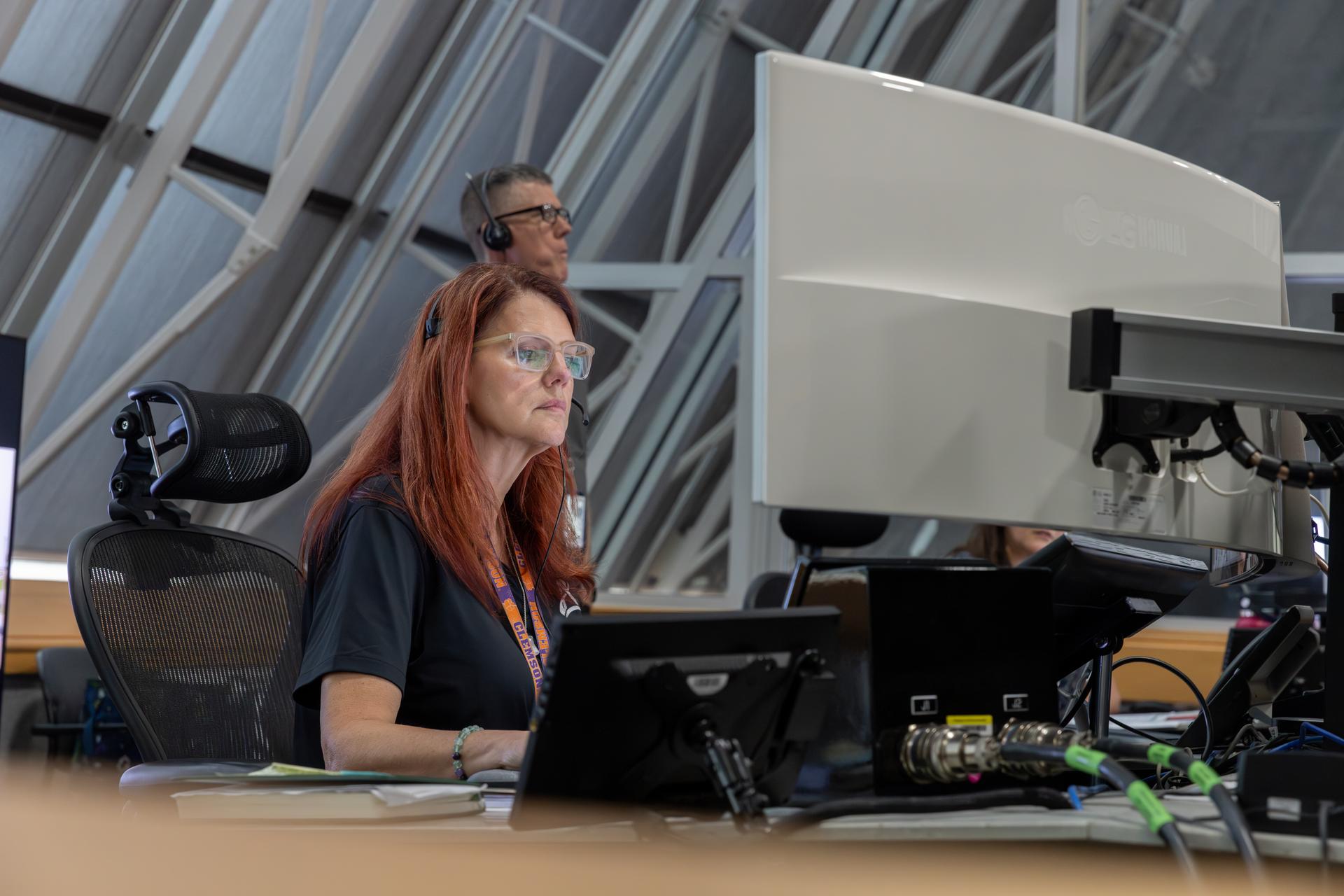
From left, Charlie Blackwell-Thompson, Artemis launch director and Jeremy Graeber, assistant launch director, both with NASA’s Exploration Ground Systems Program, participate in a cryogenic propellant loading simulation for NASA’s Artemis III mission on Wednesday, Aug. 5, 2026, inside Firing Rooms 1 and 2 of the Rocco A. Petrone Launch Control Center at the agency’s Kennedy Space Center in Florida. Members of NASA’s Exploration Ground Systems team rehearse the steps to load the super-cooled liquid hydrogen and liquid oxygen into the SLS (Space Launch System) rocket core stage, a process that starts several hours before liftoff for the Artemis III mission. Artemis III will carry out a series of objectives in low Earth orbit designed to demonstrate critical systems needed for future lunar landings, beginning with Artemis IV.

An Artemis launch team member participates in the Artemis III terminal countdown simulation on Thursday, May 7, 2026, inside Firing Room 1 of the Rocco A. Petrone Launch Control Center at NASA’s Kennedy Space Center in Florida. This marked the first simulation the launch team performed ahead of Artemis III.

Jeff Spaulding, senior NASA test director, Exploration Ground Systems Program, participates in the Artemis III terminal countdown simulation on Thursday, May 7, 2026, inside Firing Room 1 of the Rocco A. Petrone Launch Control Center at NASA’s Kennedy Space Center in Florida. This marked the first simulation the launch team performed ahead of Artemis III.

Maria Zapata, test conductor, participates in the Artemis III terminal countdown simulation on Thursday, May 7, 2026, inside Firing Room 1 of the Rocco A. Petrone Launch Control Center at NASA’s Kennedy Space Center in Florida. This marked the first simulation the launch team performed ahead of Artemis III.

Vanessa Stroh, project engineer, Exploration Ground Systems Program, participates in the Artemis III terminal countdown simulation on Thursday, May 7, 2026, inside Firing Room 1 of the Rocco A. Petrone Launch Control Center at NASA’s Kennedy Space Center in Florida. This marked the first simulation the launch team performed ahead of Artemis III.

An Artemis launch team member participates in the Artemis III terminal countdown simulation on Thursday, May 7, 2026, inside Firing Room 1 of the Rocco A. Petrone Launch Control Center at NASA’s Kennedy Space Center in Florida. This marked the first simulation the launch team performed ahead of Artemis III.

Jeremy Graeber, assistant launch director, Exploration Ground Systems Program, participates in the Artemis III terminal countdown simulation on Thursday, May 7, 2026, inside Firing Room 1 of the Rocco A. Petrone Launch Control Center at NASA’s Kennedy Space Center in Florida. This marked the first simulation the launch team performed ahead of Artemis III.

Charlie Blackwell-Thompson, launch director, Exploration Ground Systems Program, participates in the Artemis III terminal countdown simulation on Thursday, May 7, 2026, inside Firing Room 1 of the Rocco A. Petrone Launch Control Center at NASA’s Kennedy Space Center in Florida. This marked the first simulation the launch team performed ahead of Artemis III.

From left to right, Dmitriy Bank, NASA test director, and Paul Sierpinski, Artemis assistant landing and recovery director, participate in the Artemis III terminal countdown simulation on Thursday, May 7, 2026, inside Firing Room 1 of the Rocco A. Petrone Launch Control Center at NASA’s Kennedy Space Center in Florida. This marked the first simulation the launch team performed ahead of Artemis III.

An Artemis launch team member participates in the Artemis III terminal countdown simulation on Thursday, May 7, 2026, inside Firing Room 1 of the Rocco A. Petrone Launch Control Center at NASA’s Kennedy Space Center in Florida. This marked the first simulation the launch team performed ahead of Artemis III.

An Artemis launch team member participates in the Artemis III terminal countdown simulation on Thursday, May 7, 2026, inside Firing Room 1 of the Rocco A. Petrone Launch Control Center at NASA’s Kennedy Space Center in Florida. This marked the first simulation the launch team performed ahead of Artemis III.

Sierra Sewdass, test conductor, participates in the Artemis III terminal countdown simulation on Thursday, May 7, 2026, inside Firing Room 1 of the Rocco A. Petrone Launch Control Center at NASA’s Kennedy Space Center in Florida. This marked the first simulation the launch team performed ahead of Artemis III.

Maria Zapata, test conductor, participates in the Artemis III terminal countdown simulation on Thursday, May 7, 2026, inside Firing Room 1 of the Rocco A. Petrone Launch Control Center at NASA’s Kennedy Space Center in Florida. This marked the first simulation the launch team performed ahead of Artemis III.

Jeremy Graeber, assistant launch director, Exploration Ground Systems Program, participates in the Artemis III terminal countdown simulation on Thursday, May 7, 2026, inside Firing Room 1 of the Rocco A. Petrone Launch Control Center at NASA’s Kennedy Space Center in Florida. This marked the first simulation the launch team performed ahead of Artemis III.
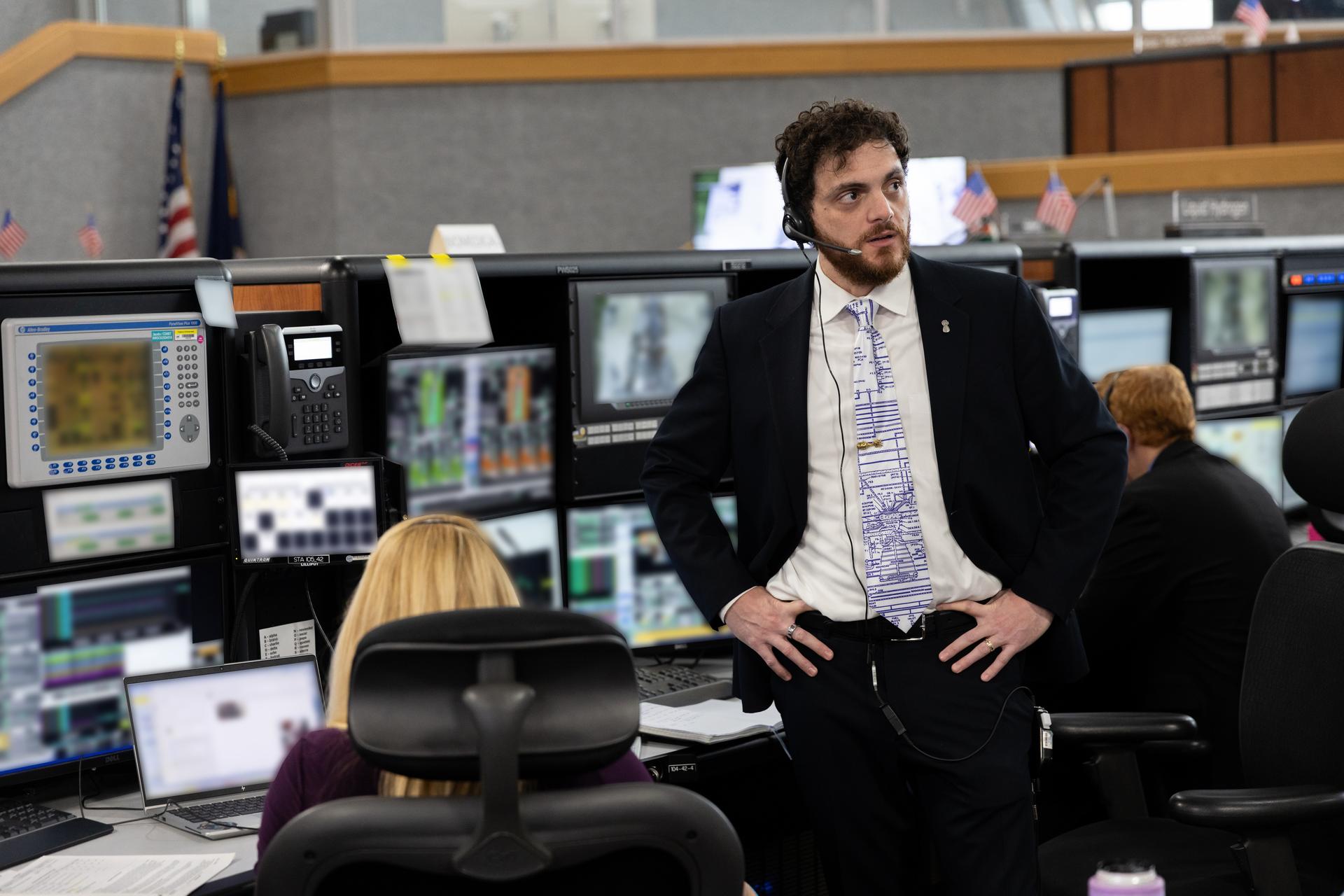
Kevin Todaro, Artemis launch team member, participates in the Artemis II terminal count simulation on Wednesday, Jan. 14, 2026, inside Firing Room 1 of the Rocco A. Petrone Launch Control Center at NASA’s Kennedy Space Center in Florida. The terminal count simulation conducted by NASA’s Exploration Ground Systems team runs through the final five hours of launch countdown, include terminal count - the remaining 10 minutes of the countdown - for NASA’s Artemis II test flight which will take Commander Reid Wiseman, Pilot Victor Glover, and Mission Specialist Christina Koch from NASA, and Mission Specialist Jeremy Hansen from the CSA (Canadian Space Agency), around the Moon and back to Earth no later than no later than April 2026 from Launch Complex 39B at NASA Kennedy.
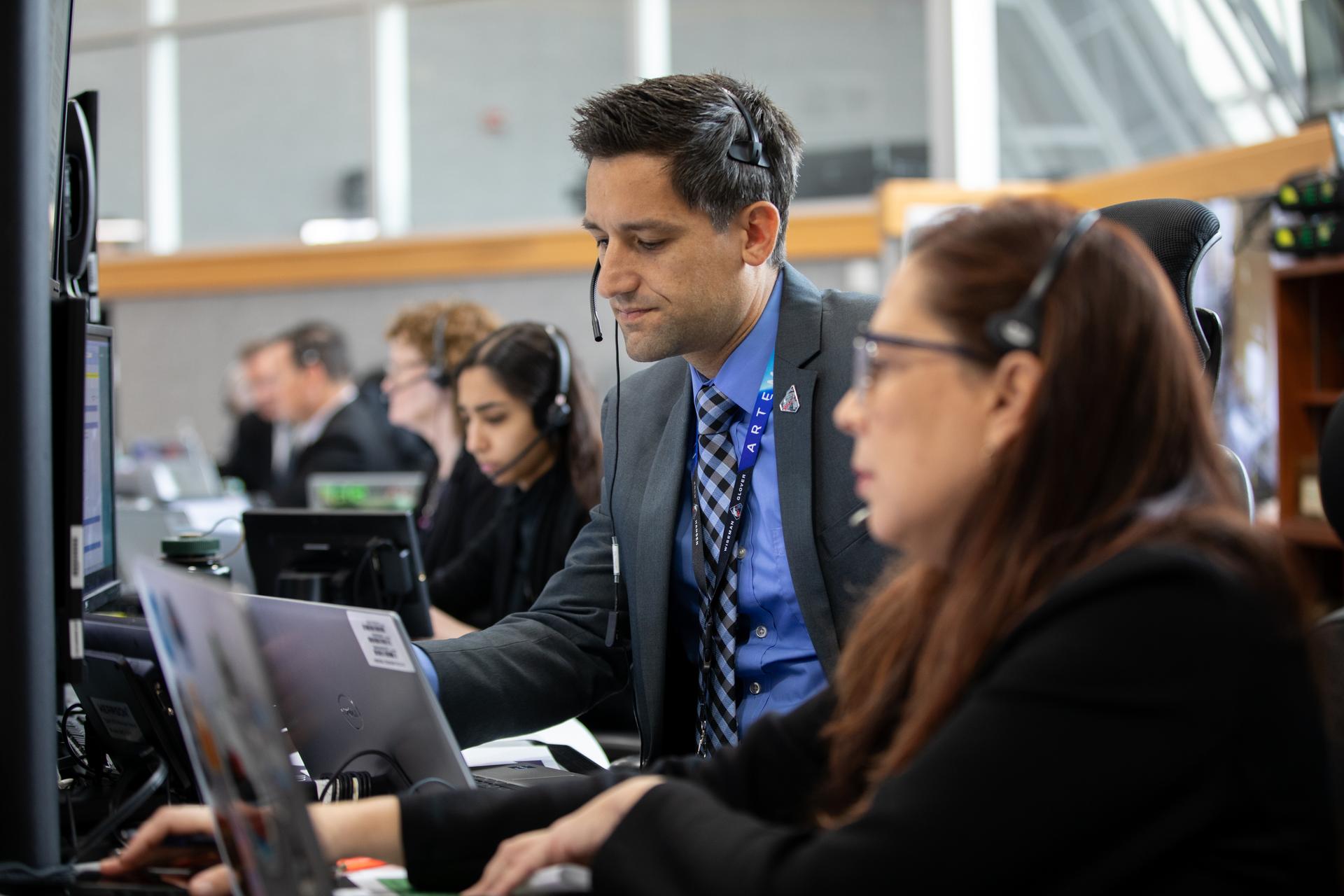
From left, Dan Florez, NASA test director, and Lili Villarreal, Artemis II landing and recovery director, participate in the Artemis II terminal count simulation on Wednesday, Jan. 14, 2026, inside Firing Room 1 of the Rocco A. Petrone Launch Control Center at NASA’s Kennedy Space Center in Florida. The terminal count simulation conducted by NASA’s Exploration Ground Systems team runs through the final five hours of launch countdown, include terminal count - the remaining 10 minutes of the countdown - for NASA’s Artemis II test flight which will take Commander Reid Wiseman, Pilot Victor Glover, and Mission Specialist Christina Koch from NASA, and Mission Specialist Jeremy Hansen from the CSA (Canadian Space Agency), around the Moon and back to Earth no later than no later than April 2026 from Launch Complex 39B at NASA Kennedy.
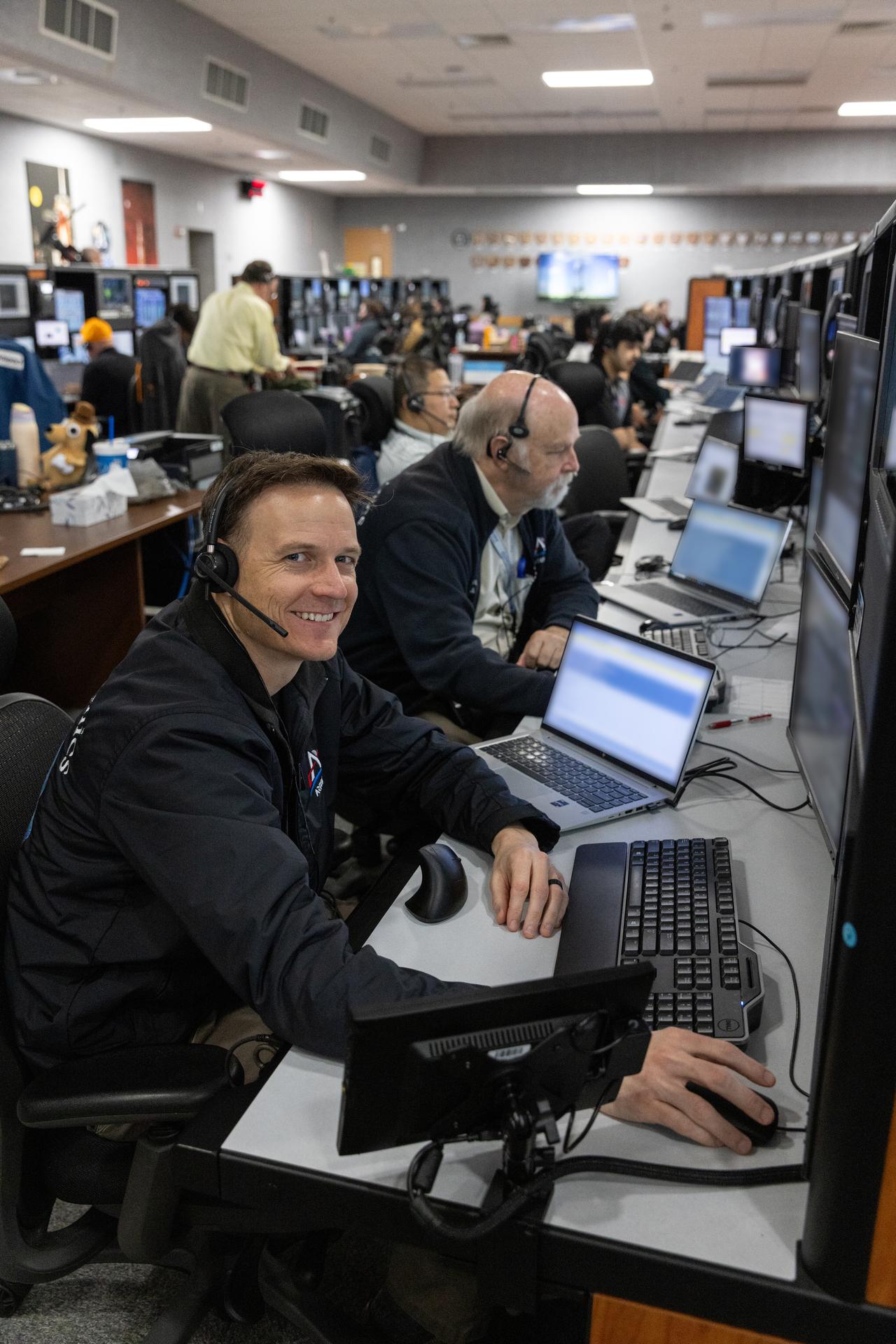
Artemis launch team members participate in a cryogenic propellant loading simulation on Thursday, Jan. 15, 2026, inside Firing Room 1 of the Rocco A. Petrone Launch Control Center at NASA’s Kennedy Space Center in Florida. Members of NASA’s Exploration Ground Systems team rehearse the steps to load the super-cooled liquid hydrogen and liquid oxygen into the SLS (Space Launch System) rocket core stage and interim cryogenic propulsion stage, a process that starts approximately nine hours before liftoff for the Artemis II mission. The test flight will take Commander Reid Wiseman, Pilot Victor Glover, and Mission Specialist Christina Koch from NASA, and Mission Specialist Jeremy Hansen from the CSA (Canadian Space Agency), around the Moon and back to Earth no later than no later than April 2026 from Launch Complex 39B at NASA Kennedy.
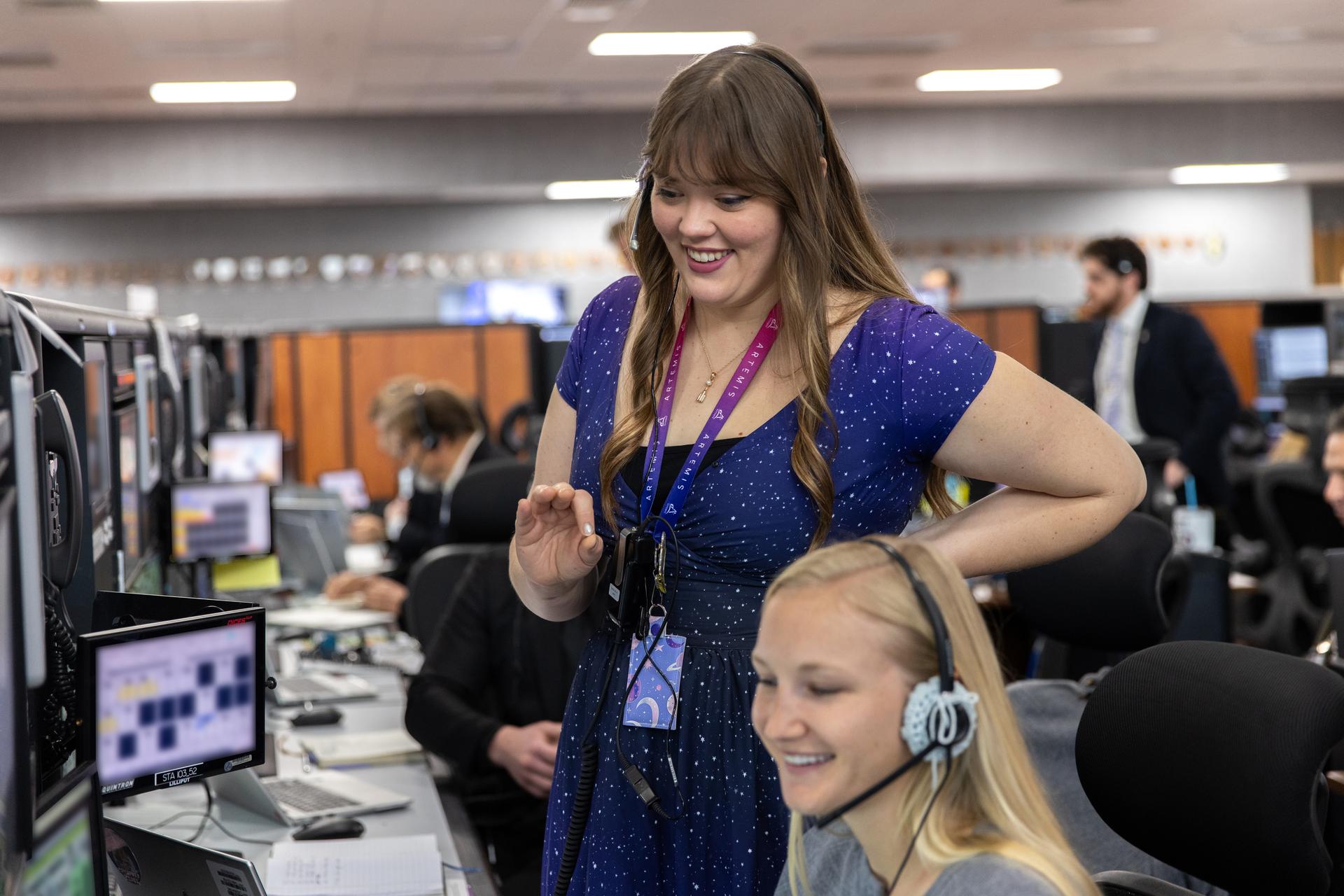
From left to right, Artemis launch team members Emily Eilish, Clare Hadley, and Holly Wells participate in the Artemis II terminal count simulation on Wednesday, Jan. 14, 2026, inside Firing Room 1 of the Rocco A. Petrone Launch Control Center at NASA’s Kennedy Space Center in Florida. The terminal count simulation conducted by NASA’s Exploration Ground Systems team runs through the final five hours of launch countdown, include terminal count - the remaining 10 minutes of the countdown - for NASA’s Artemis II test flight which will take Commander Reid Wiseman, Pilot Victor Glover, and Mission Specialist Christina Koch from NASA, and Mission Specialist Jeremy Hansen from the CSA (Canadian Space Agency), around the Moon and back to Earth no later than no later than April 2026 from Launch Complex 39B at NASA Kennedy.
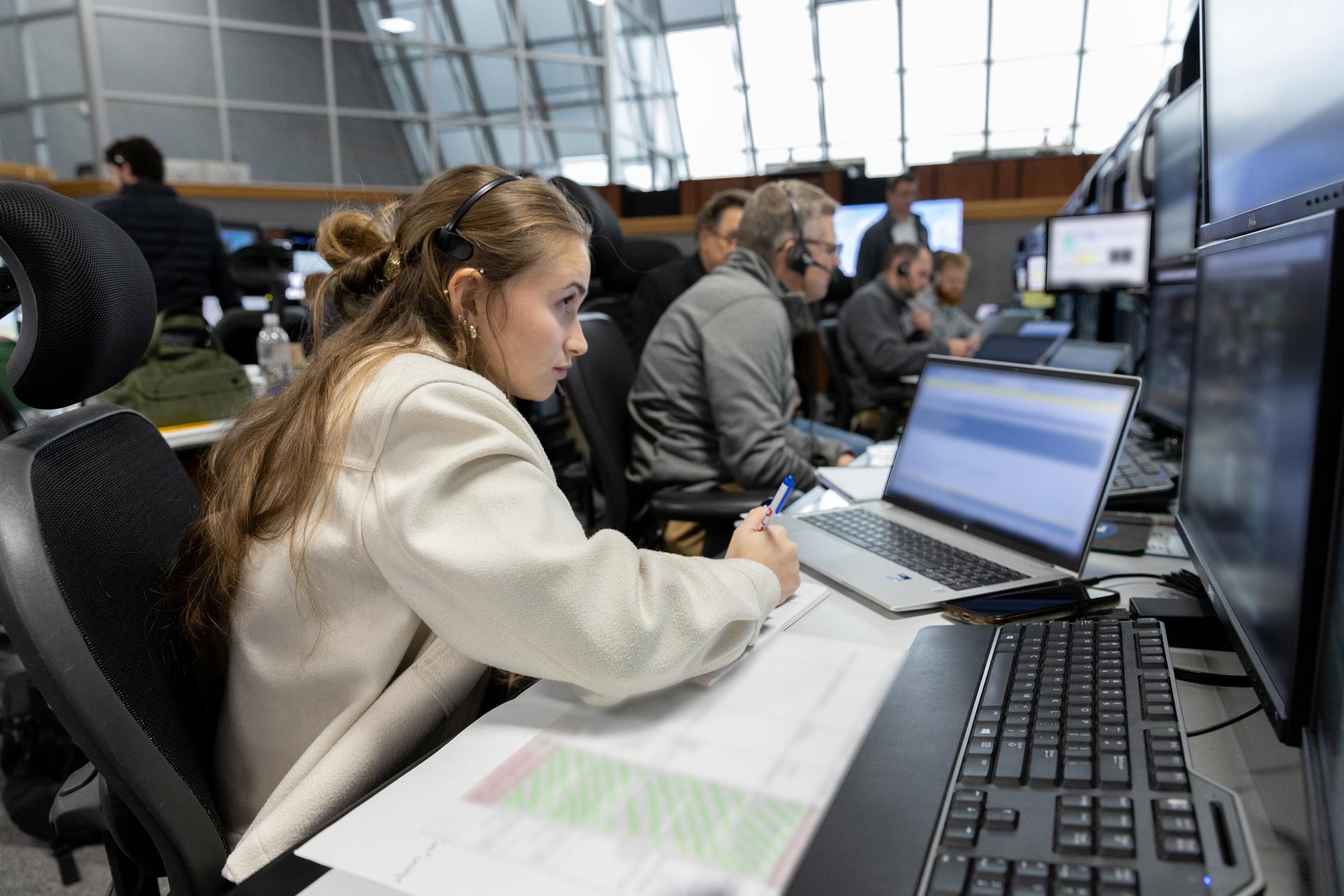
Artemis launch team members participate in a cryogenic propellant loading simulation on Thursday, Jan. 15, 2026, inside Firing Room 1 of the Rocco A. Petrone Launch Control Center at NASA’s Kennedy Space Center in Florida. Members of NASA’s Exploration Ground Systems team rehearse the steps to load the super-cooled liquid hydrogen and liquid oxygen into the SLS (Space Launch System) rocket core stage and interim cryogenic propulsion stage, a process that starts approximately nine hours before liftoff for the Artemis II mission. The test flight will take Commander Reid Wiseman, Pilot Victor Glover, and Mission Specialist Christina Koch from NASA, and Mission Specialist Jeremy Hansen from the CSA (Canadian Space Agency), around the Moon and back to Earth no later than no later than April 2026 from Launch Complex 39B at NASA Kennedy.

An American flag displays inside Firing Room 1 of the Rocco A. Petrone Launch Control Center while members of NASA’s Exploration Ground Systems participate in the Artemis II terminal count simulation on Wednesday, Jan. 14, 2026, at NASA’s Kennedy Space Center in Florida. The terminal count simulation runs through the final five hours of launch countdown, include terminal count - the remaining 10 minutes of the countdown - for NASA’s Artemis II test flight which will take Commander Reid Wiseman, Pilot Victor Glover, and Mission Specialist Christina Koch from NASA, and Mission Specialist Jeremy Hansen from the CSA (Canadian Space Agency), around the Moon and back to Earth no later than no later than April 2026 from Launch Complex 39B at NASA Kennedy.
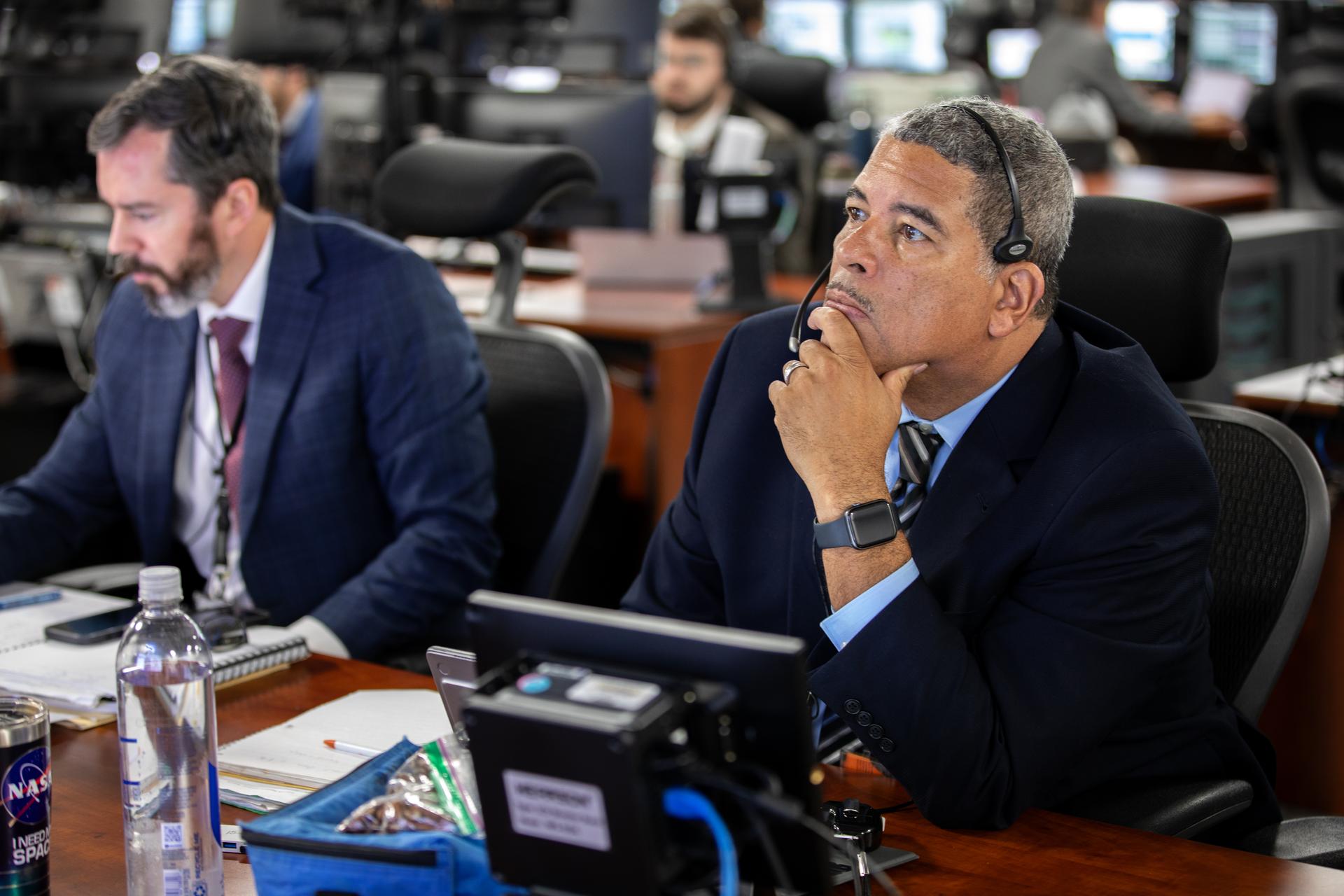
Artemis launch team members participate in the Artemis II terminal count simulation on Wednesday, Jan. 14, 2026, inside Firing Room 1 of the Rocco A. Petrone Launch Control Center at NASA’s Kennedy Space Center in Florida. The terminal count simulation conducted by NASA’s Exploration Ground Systems team runs through the final five hours of launch countdown, include terminal count - the remaining 10 minutes of the countdown - for NASA’s Artemis II test flight which will take Commander Reid Wiseman, Pilot Victor Glover, and Mission Specialist Christina Koch from NASA, and Mission Specialist Jeremy Hansen from the CSA (Canadian Space Agency), around the Moon and back to Earth no later than no later than April 2026 from Launch Complex 39B at NASA Kennedy.
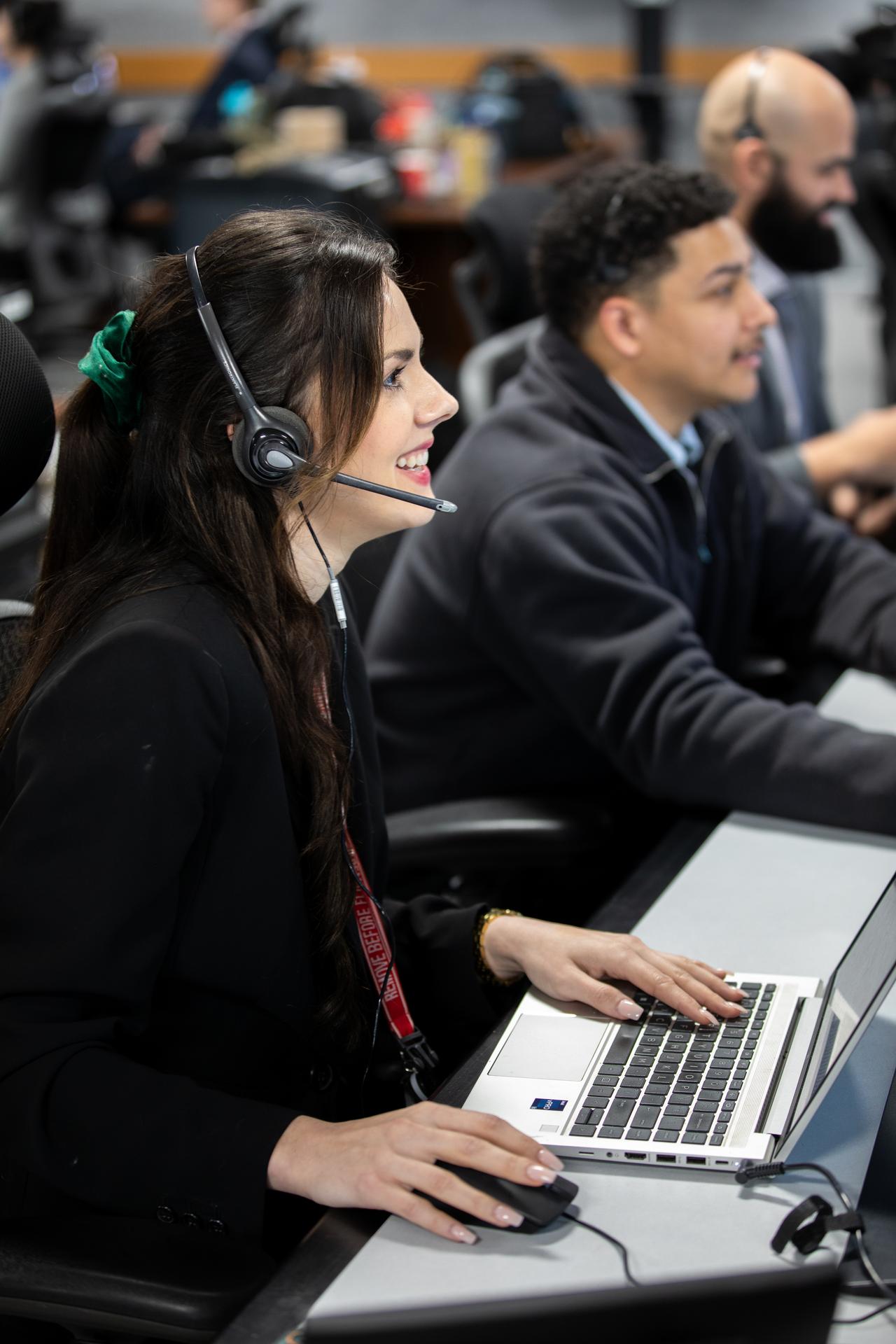
Alora Mazarakis, Artemis launch team member, participates in the Artemis II terminal count simulation on Wednesday, Jan. 14, 2026, inside Firing Room 1 of the Rocco A. Petrone Launch Control Center at NASA’s Kennedy Space Center in Florida. The terminal count simulation conducted by NASA’s Exploration Ground Systems team runs through the final five hours of launch countdown, include terminal count - the remaining 10 minutes of the countdown - for NASA’s Artemis II test flight which will take Commander Reid Wiseman, Pilot Victor Glover, and Mission Specialist Christina Koch from NASA, and Mission Specialist Jeremy Hansen from the CSA (Canadian Space Agency), around the Moon and back to Earth no later than no later than April 2026 from Launch Complex 39B at NASA Kennedy.
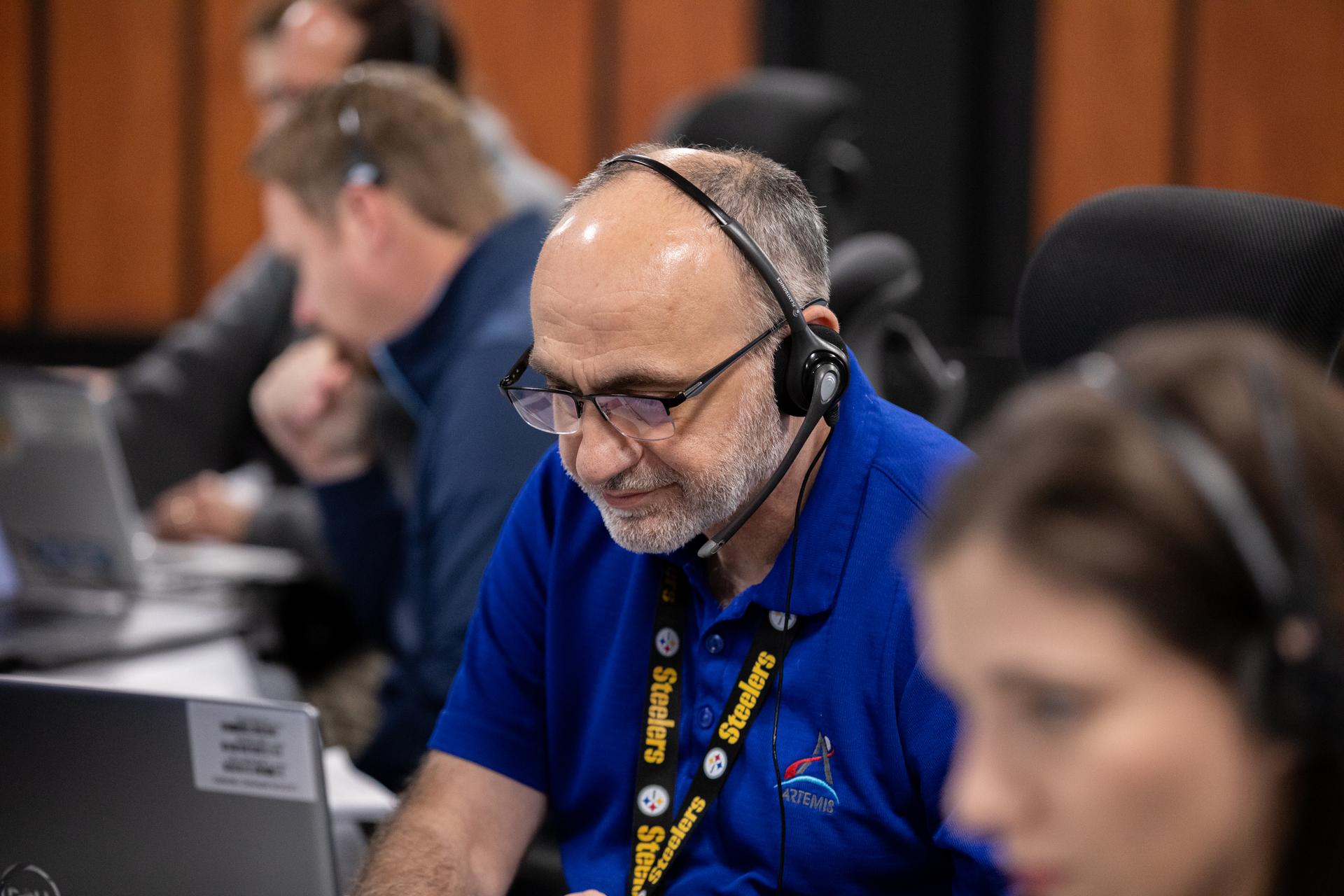
Alex Pandelos, ground launch sequencer operator, participates in a cryogenic propellant loading simulation on Thursday, Jan. 15, 2026, inside Firing Room 1 of the Rocco A. Petrone Launch Control Center at NASA’s Kennedy Space Center in Florida. Members of NASA’s Exploration Ground Systems team rehearse the steps to load the super-cooled liquid hydrogen and liquid oxygen into the SLS (Space Launch System) rocket core stage and interim cryogenic propulsion stage, a process that starts approximately nine hours before liftoff for the Artemis II mission. The test flight will take Commander Reid Wiseman, Pilot Victor Glover, and Mission Specialist Christina Koch from NASA, and Mission Specialist Jeremy Hansen from the CSA (Canadian Space Agency), around the Moon and back to Earth no later than no later than April 2026 from Launch Complex 39B at NASA Kennedy.
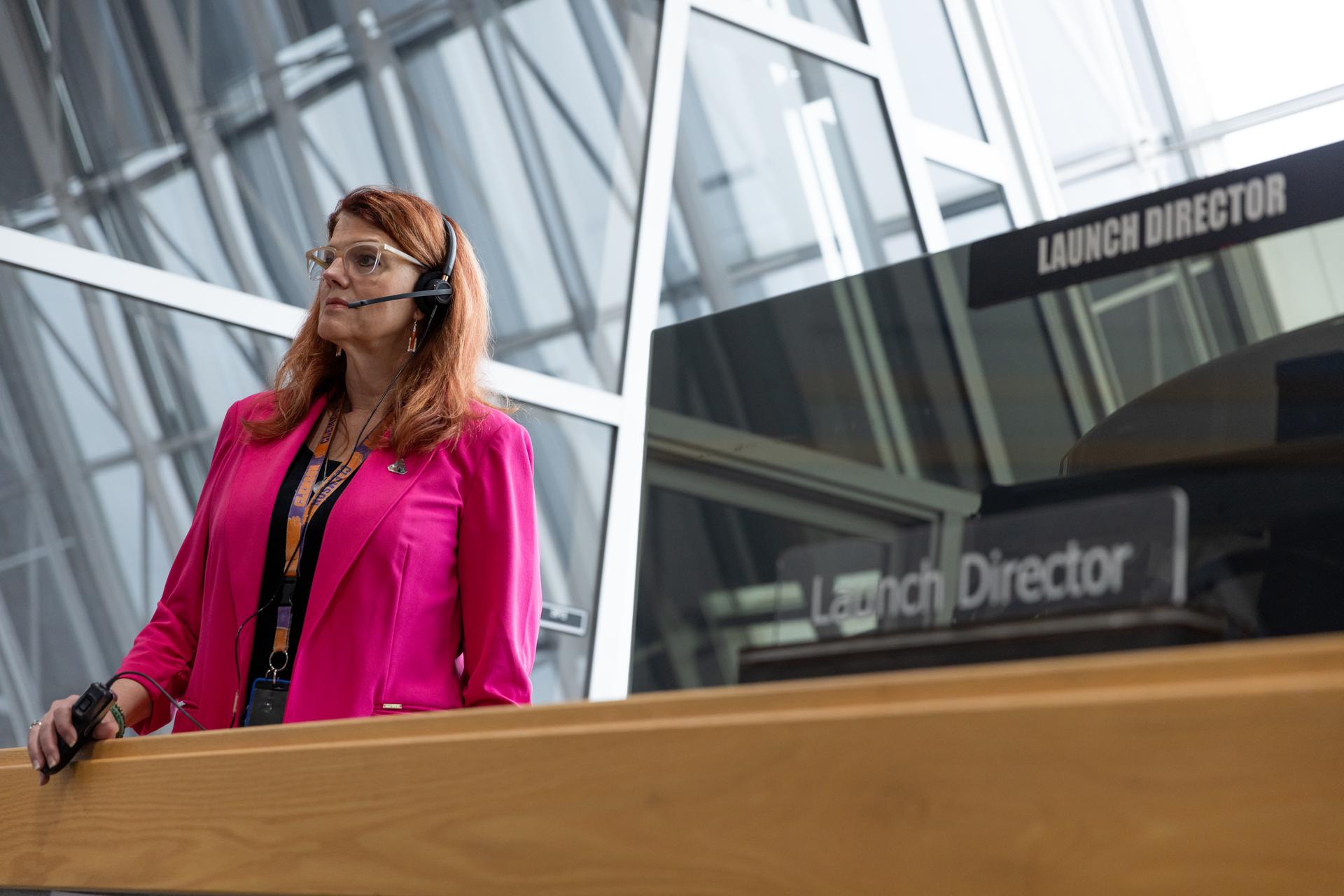
Charlie Blackwell-Thompson, Artemis II launch director, participates in the Artemis II terminal count simulation on Wednesday, Jan. 14, 2026, inside Firing Room 1 of the Rocco A. Petrone Launch Control Center at NASA’s Kennedy Space Center in Florida. The terminal count simulation conducted by NASA’s Exploration Ground Systems team runs through the final five hours of launch countdown, include terminal count - the remaining 10 minutes of the countdown - for NASA’s Artemis II test flight which will take Commander Reid Wiseman, Pilot Victor Glover, and Mission Specialist Christina Koch from NASA, and Mission Specialist Jeremy Hansen from the CSA (Canadian Space Agency), around the Moon and back to Earth no later than no later than April 2026 from Launch Complex 39B at NASA Kennedy.
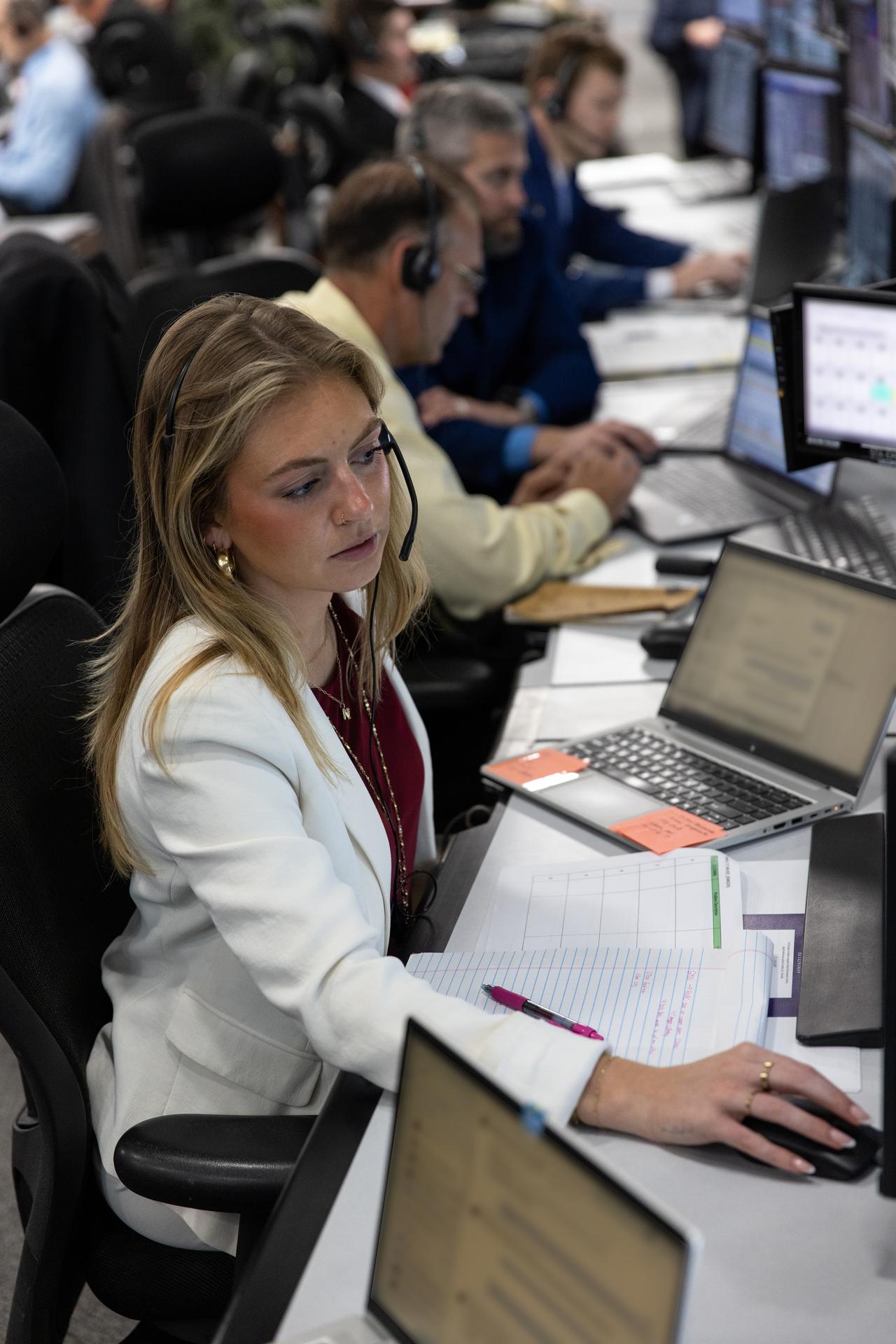
Madison Schmaltz, Artemis launch team member, participates in the Artemis II terminal count simulation on Wednesday, Jan. 14, 2026, inside Firing Room 1 of the Rocco A. Petrone Launch Control Center at NASA’s Kennedy Space Center in Florida. The terminal count simulation conducted by NASA’s Exploration Ground Systems team runs through the final five hours of launch countdown, include terminal count - the remaining 10 minutes of the countdown - for NASA’s Artemis II test flight which will take Commander Reid Wiseman, Pilot Victor Glover, and Mission Specialist Christina Koch from NASA, and Mission Specialist Jeremy Hansen from the CSA (Canadian Space Agency), around the Moon and back to Earth no later than no later than April 2026 from Launch Complex 39B at NASA Kennedy.
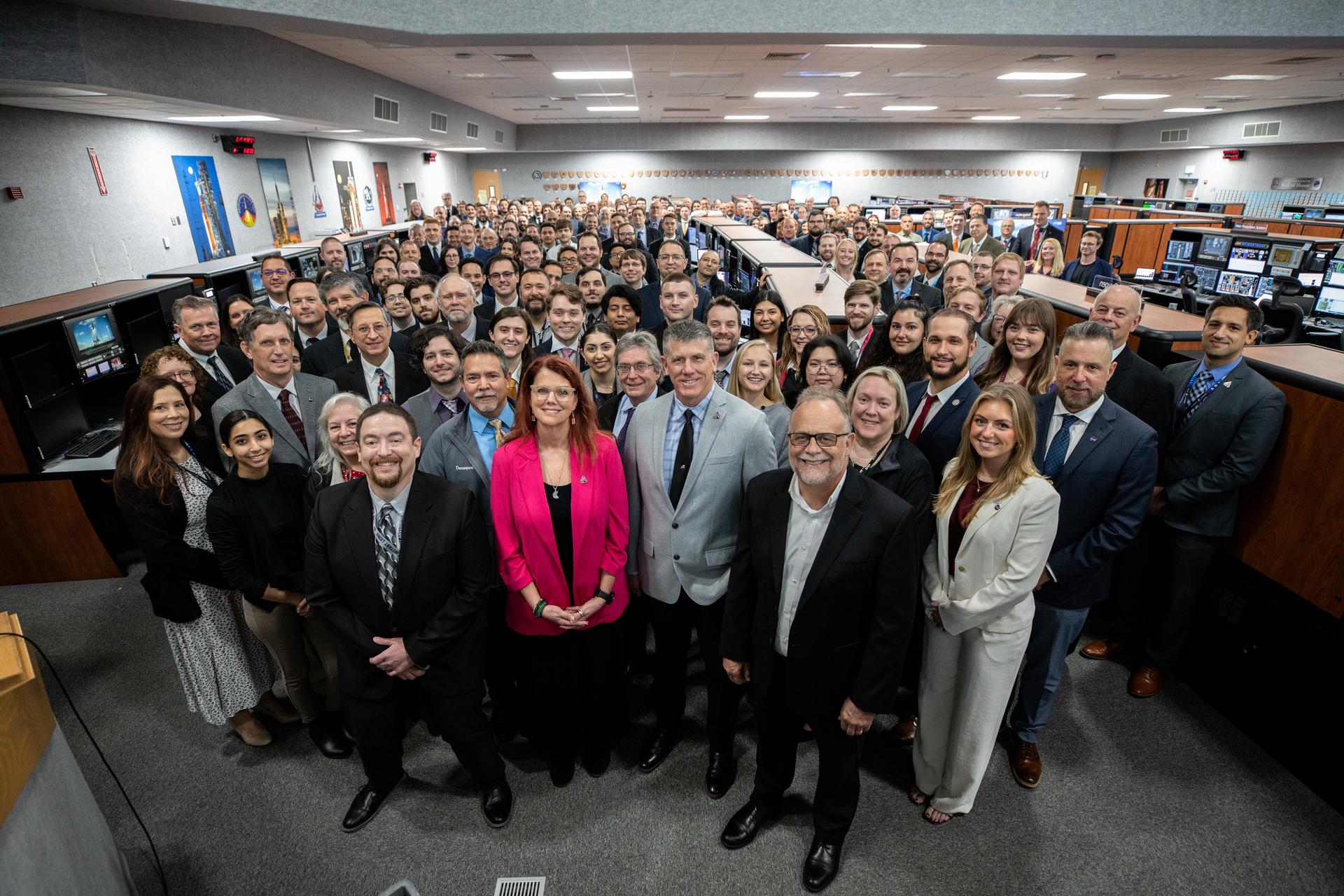
Members of NASA’s Exploration Ground Systems team pose for a photograph following the completion of the Artemis II terminal count simulation on Wednesday, Jan. 14, 2026, inside Firing Room 1 of the Rocco A. Petrone Launch Control Center at NASA’s Kennedy Space Center in Florida. The terminal count simulation conducted by NASA’s Exploration Ground Systems team runs through the final five hours of launch countdown, include terminal count - the remaining 10 minutes of the countdown - for NASA’s Artemis II test flight which will take Commander Reid Wiseman, Pilot Victor Glover, and Mission Specialist Christina Koch from NASA, and Mission Specialist Jeremy Hansen from the CSA (Canadian Space Agency), around the Moon and back to Earth no later than no later than April 2026 from Launch Complex 39B at NASA Kennedy.
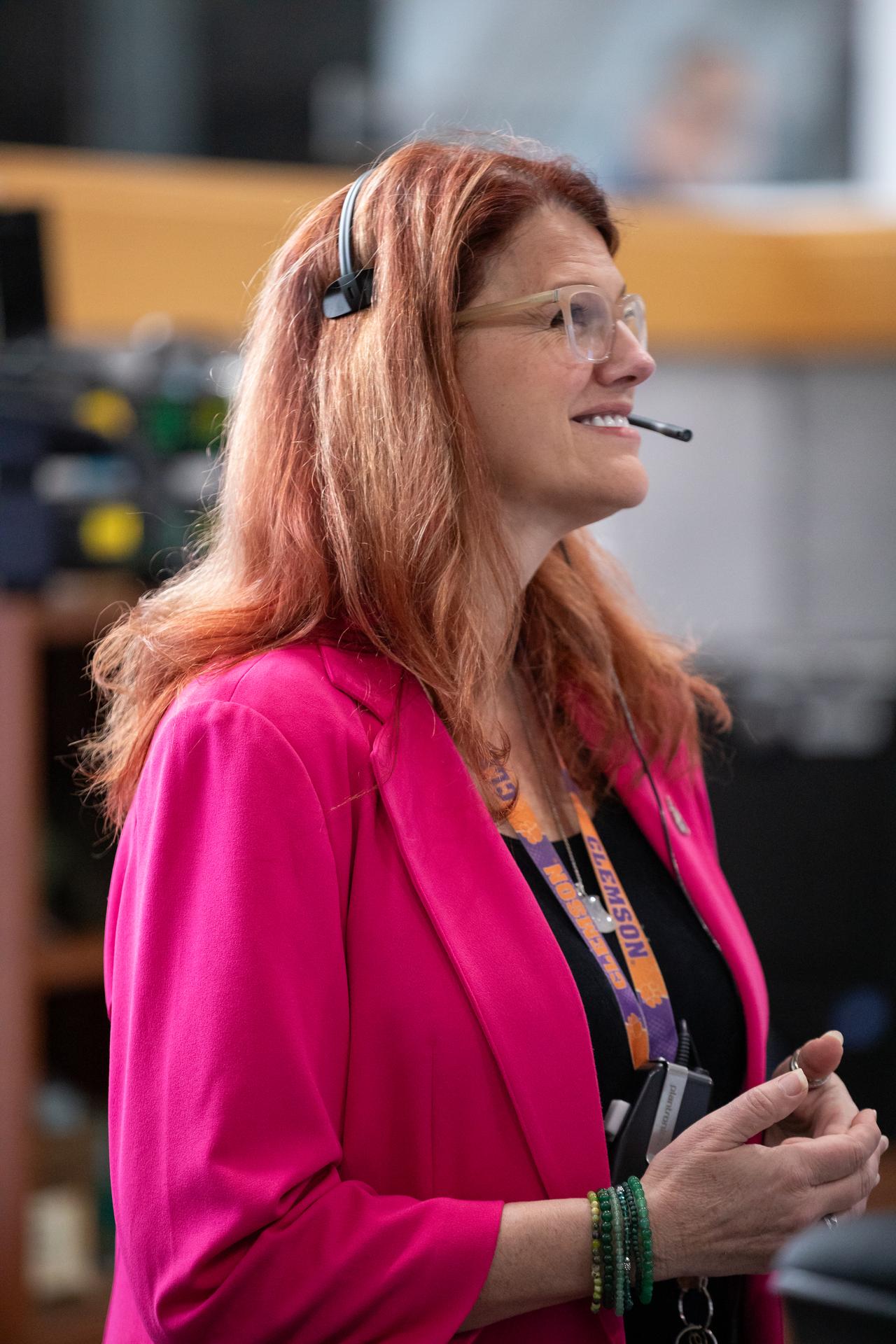
Charlie Blackwell-Thompson, Artemis II launch director, participates in the Artemis II terminal count simulation on Wednesday, Jan. 14, 2026, inside Firing Room 1 of the Rocco A. Petrone Launch Control Center at NASA’s Kennedy Space Center in Florida. The terminal count simulation conducted by NASA’s Exploration Ground Systems team runs through the final five hours of launch countdown, include terminal count - the remaining 10 minutes of the countdown - for NASA’s Artemis II test flight which will take Commander Reid Wiseman, Pilot Victor Glover, and Mission Specialist Christina Koch from NASA, and Mission Specialist Jeremy Hansen from the CSA (Canadian Space Agency), around the Moon and back to Earth no later than no later than April 2026 from Launch Complex 39B at NASA Kennedy.
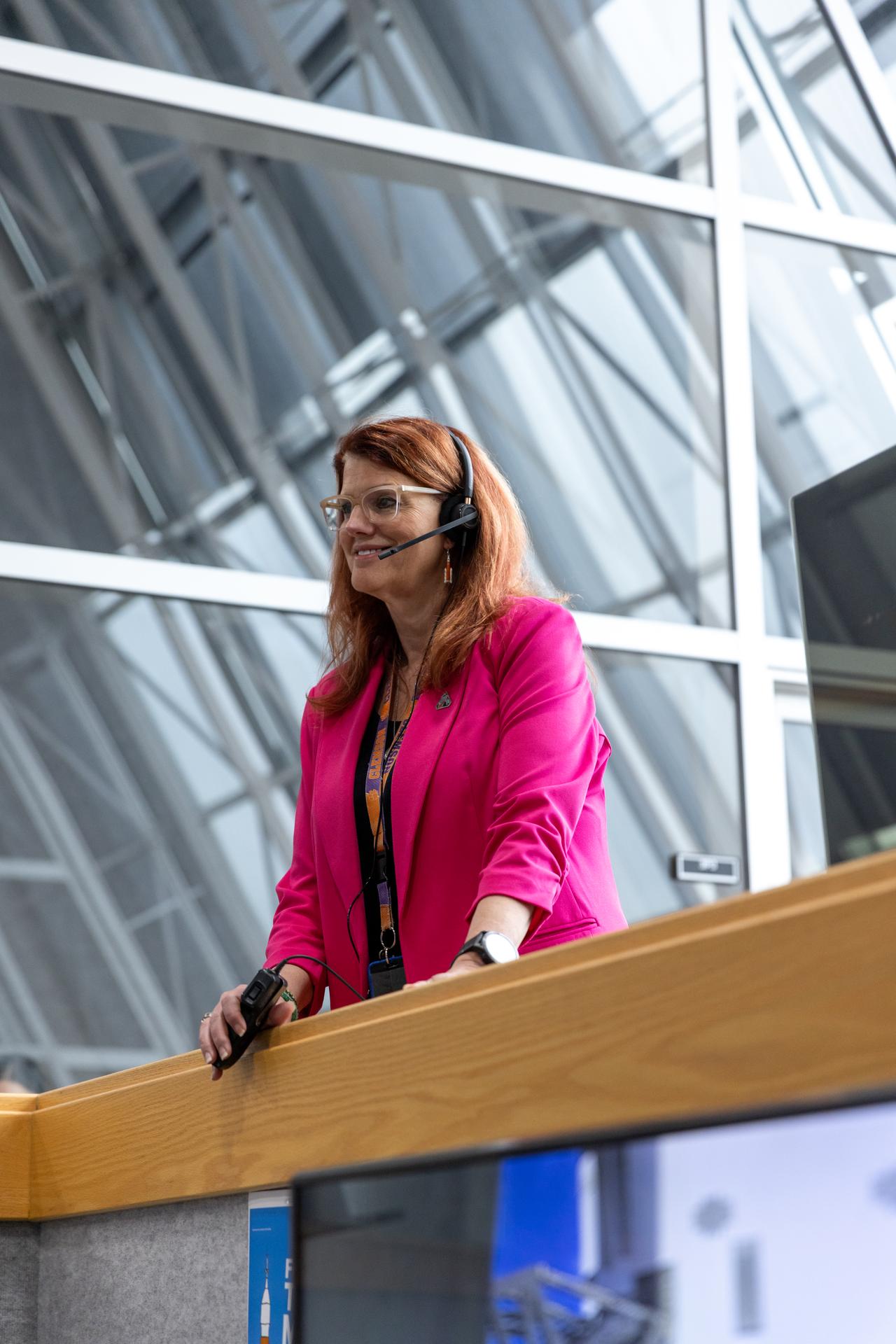
Charlie Blackwell-Thompson, Artemis II launch director, participates in the Artemis II terminal count simulation on Wednesday, Jan. 14, 2026, inside Firing Room 1 of the Rocco A. Petrone Launch Control Center at NASA’s Kennedy Space Center in Florida. The terminal count simulation conducted by NASA’s Exploration Ground Systems team runs through the final five hours of launch countdown, include terminal count - the remaining 10 minutes of the countdown - for NASA’s Artemis II test flight which will take Commander Reid Wiseman, Pilot Victor Glover, and Mission Specialist Christina Koch from NASA, and Mission Specialist Jeremy Hansen from the CSA (Canadian Space Agency), around the Moon and back to Earth no later than no later than April 2026 from Launch Complex 39B at NASA Kennedy.
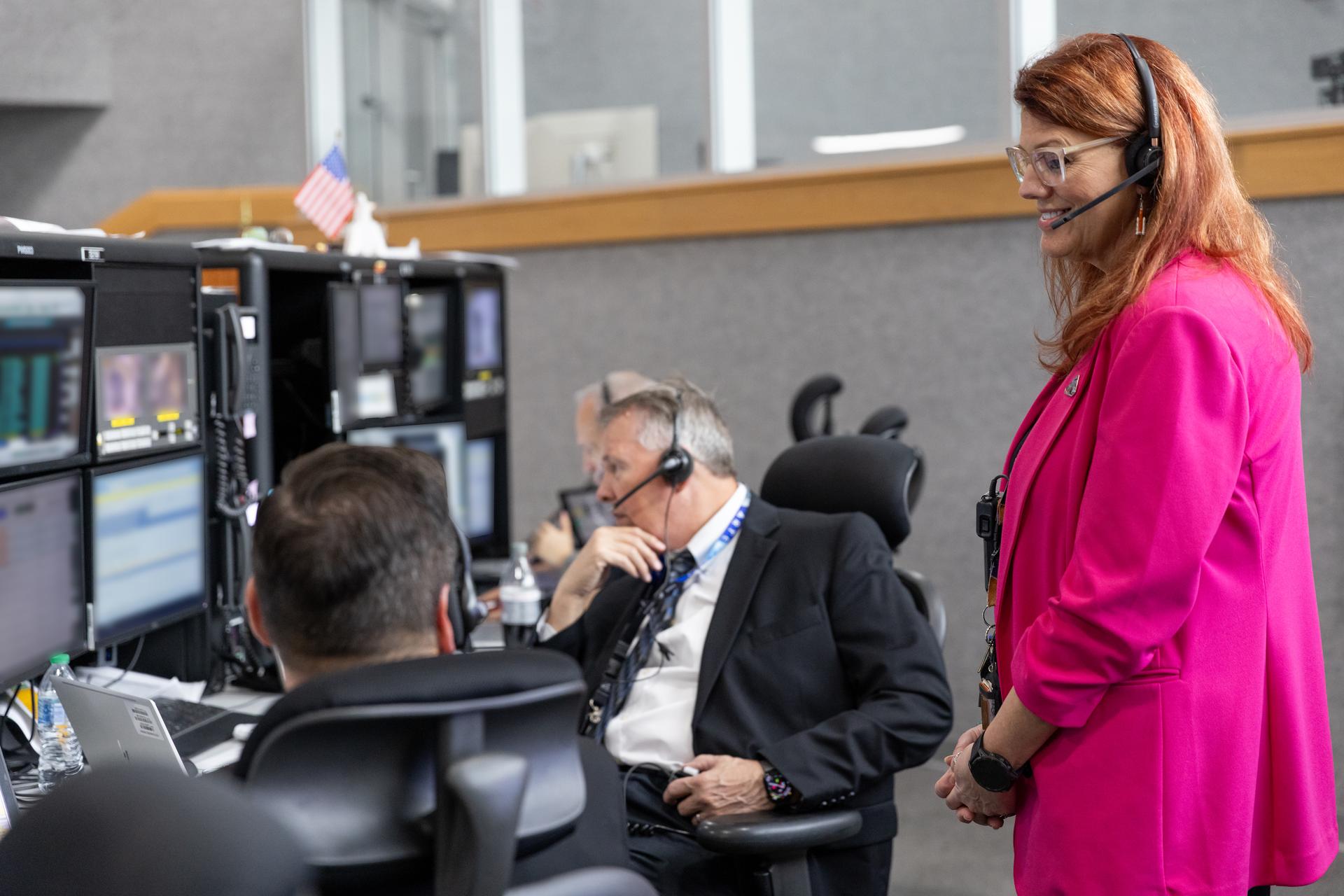
Charlie Blackwell-Thompson, Artemis II launch director, participates in the Artemis II terminal count simulation on Wednesday, Jan. 14, 2026, inside Firing Room 1 of the Rocco A. Petrone Launch Control Center at NASA’s Kennedy Space Center in Florida. The terminal count simulation conducted by NASA’s Exploration Ground Systems team runs through the final five hours of launch countdown, include terminal count - the remaining 10 minutes of the countdown - for NASA’s Artemis II test flight which will take Commander Reid Wiseman, Pilot Victor Glover, and Mission Specialist Christina Koch from NASA, and Mission Specialist Jeremy Hansen from the CSA (Canadian Space Agency), around the Moon and back to Earth no later than no later than April 2026 from Launch Complex 39B at NASA Kennedy.
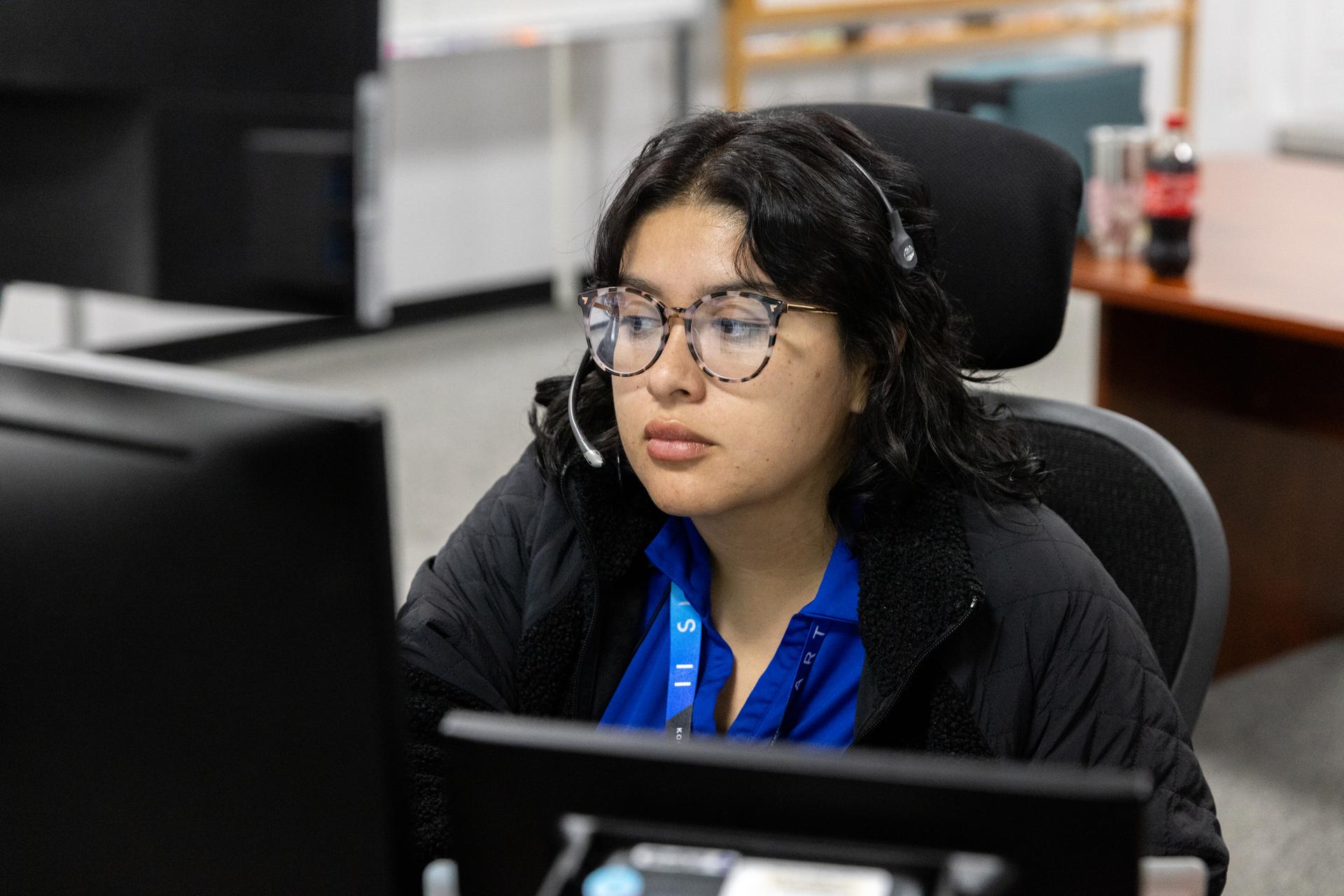
An Artemis launch team member participates in a cryogenic propellant loading simulation on Thursday, Jan. 15, 2026, inside Firing Room 1 of the Rocco A. Petrone Launch Control Center at NASA’s Kennedy Space Center in Florida. Members of NASA’s Exploration Ground Systems team rehearse the steps to load the super-cooled liquid hydrogen and liquid oxygen into the SLS (Space Launch System) rocket core stage and interim cryogenic propulsion stage, a process that starts approximately nine hours before liftoff for the Artemis II mission. The test flight will take Commander Reid Wiseman, Pilot Victor Glover, and Mission Specialist Christina Koch from NASA, and Mission Specialist Jeremy Hansen from the CSA (Canadian Space Agency), around the Moon and back to Earth no later than no later than April 2026 from Launch Complex 39B at NASA Kennedy.
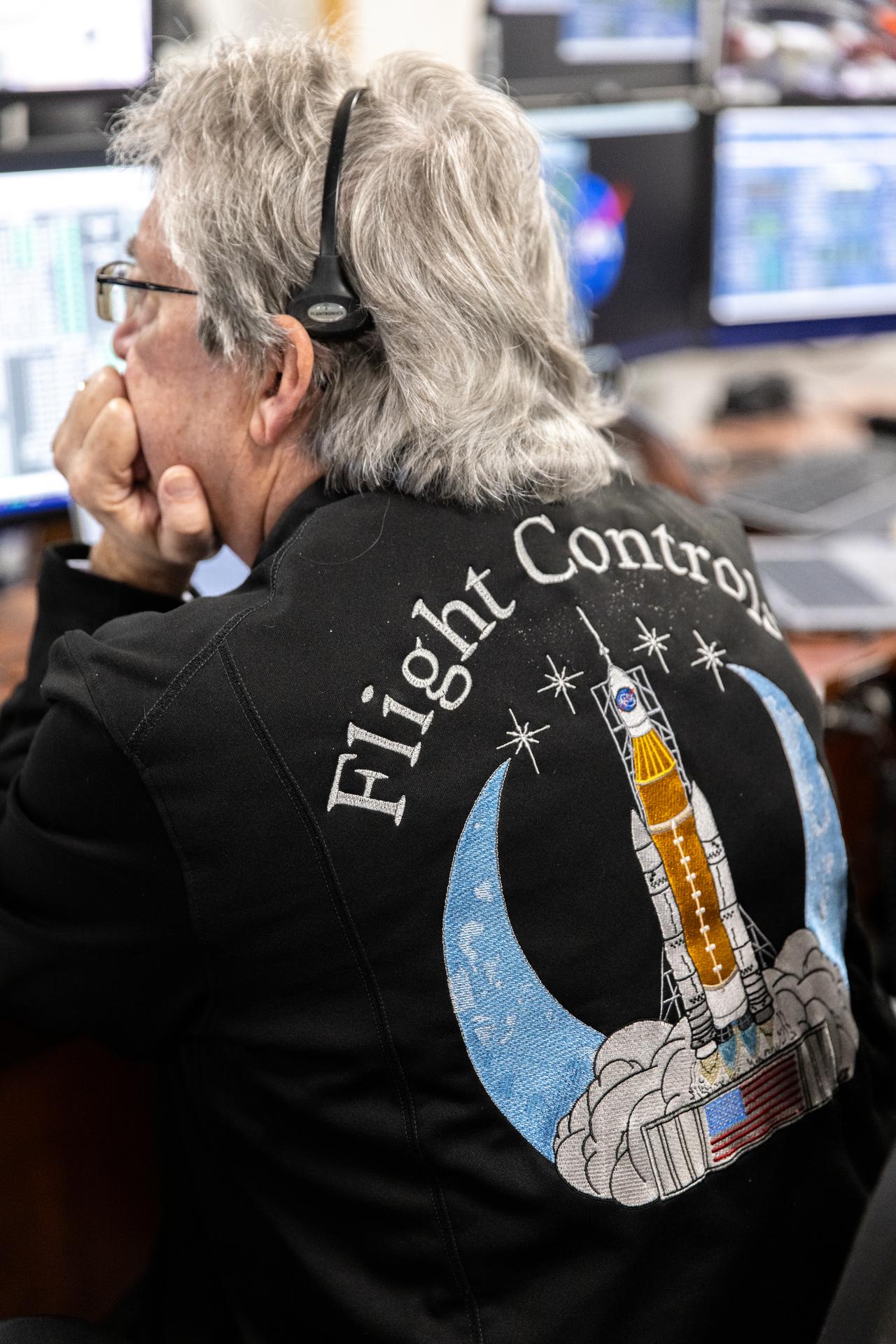
An Artemis launch team member participates in the Artemis II terminal count simulation on Wednesday, Jan. 14, 2026, inside Firing Room 1 of the Rocco A. Petrone Launch Control Center at NASA’s Kennedy Space Center in Florida. The terminal count simulation conducted by NASA’s Exploration Ground Systems team runs through the final five hours of launch countdown, include terminal count - the remaining 10 minutes of the countdown - for NASA’s Artemis II test flight which will take Commander Reid Wiseman, Pilot Victor Glover, and Mission Specialist Christina Koch from NASA, and Mission Specialist Jeremy Hansen from the CSA (Canadian Space Agency), around the Moon and back to Earth no later than no later than April 2026 from Launch Complex 39B at NASA Kennedy.
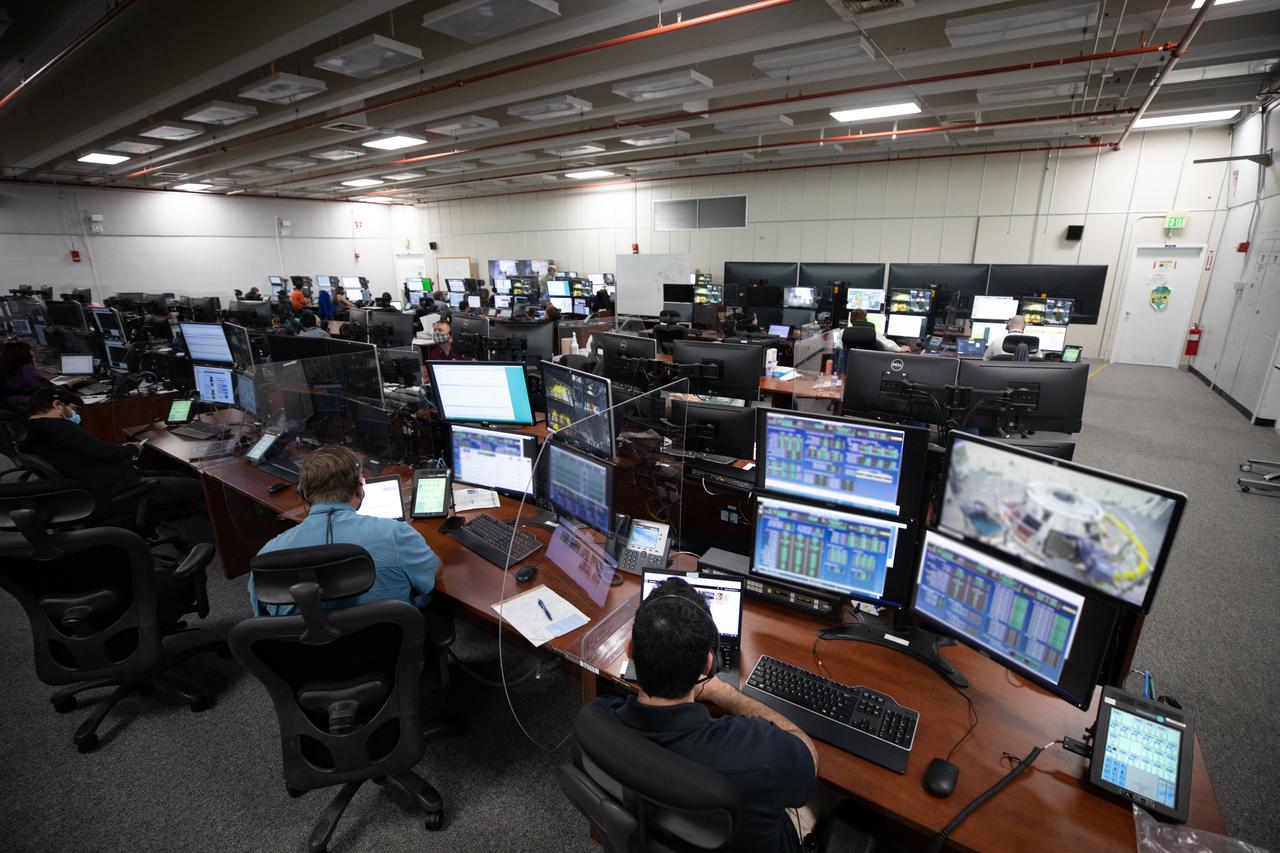
Members of the Artemis I launch team, including personnel with NASA’s Exploration Ground Systems (EGS) and contractor Jacobs, monitor activities during the ninth formal terminal countdown simulation inside Firing Room 2 in the Launch Control Center at NASA’s Kennedy Space Center in Florida on June 24, 2021. This is part of a series of simulations to help the team prepare for the launch of Artemis I, the uncrewed first flight of the Space Launch System rocket and Orion spacecraft.
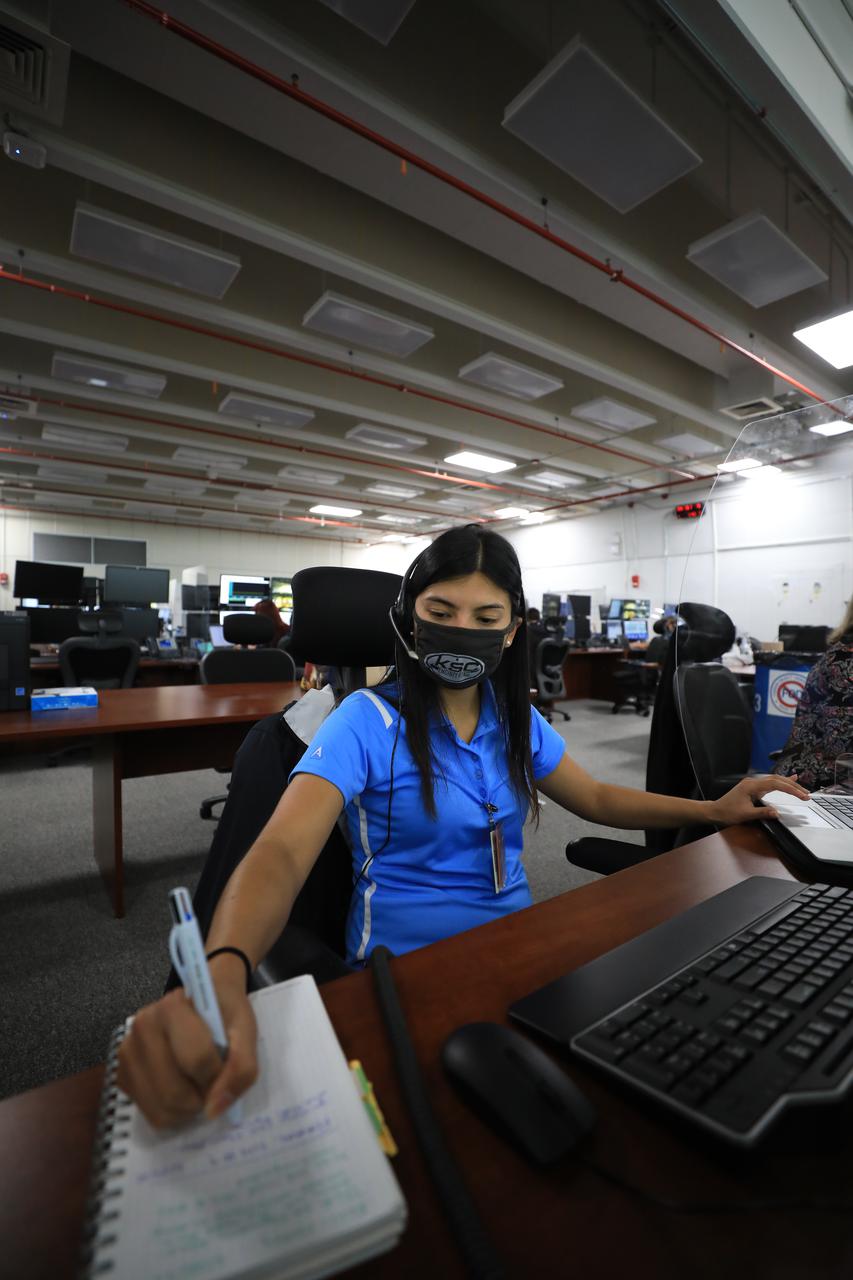
Members of the Artemis I launch team, including personnel with NASA’s Exploration Ground Systems (EGS) and contractor Jacobs, monitor activities during the ninth formal terminal countdown simulation inside Firing Room 2 in the Launch Control Center at NASA’s Kennedy Space Center in Florida on June 24, 2021. This is part of a series of simulations to help the team prepare for the launch of Artemis I, the uncrewed first flight of the Space Launch System rocket and Orion spacecraft.
Artemis teams conduct a launch simulation for the Artemis I mission inside Firing Rooms 1 and 2 of the Rocco A. Petrone Launch Control Center at NASA’s Kennedy Space Center in Florida on Oct. 27, 2022. Artemis I will be the first integrated test of NASA’s Space Launch System (SLS) rocket and Orion spacecraft. The primary goal of Artemis I is to thoroughly test the integrated systems before crewed missions by launching Orion atop the SLS rocket, operating the spacecraft in a deep space environment, testing Orion’s heat shield, and recovering the crew module after reentry, descent, and splashdown. During the flight, Orion will launch atop the most powerful rocket in the world and fly farther than any human-rated spacecraft has ever flown, paving the way for human deep space exploration and demonstrating our commitment and capability to extend human presence to the Moon and beyond.
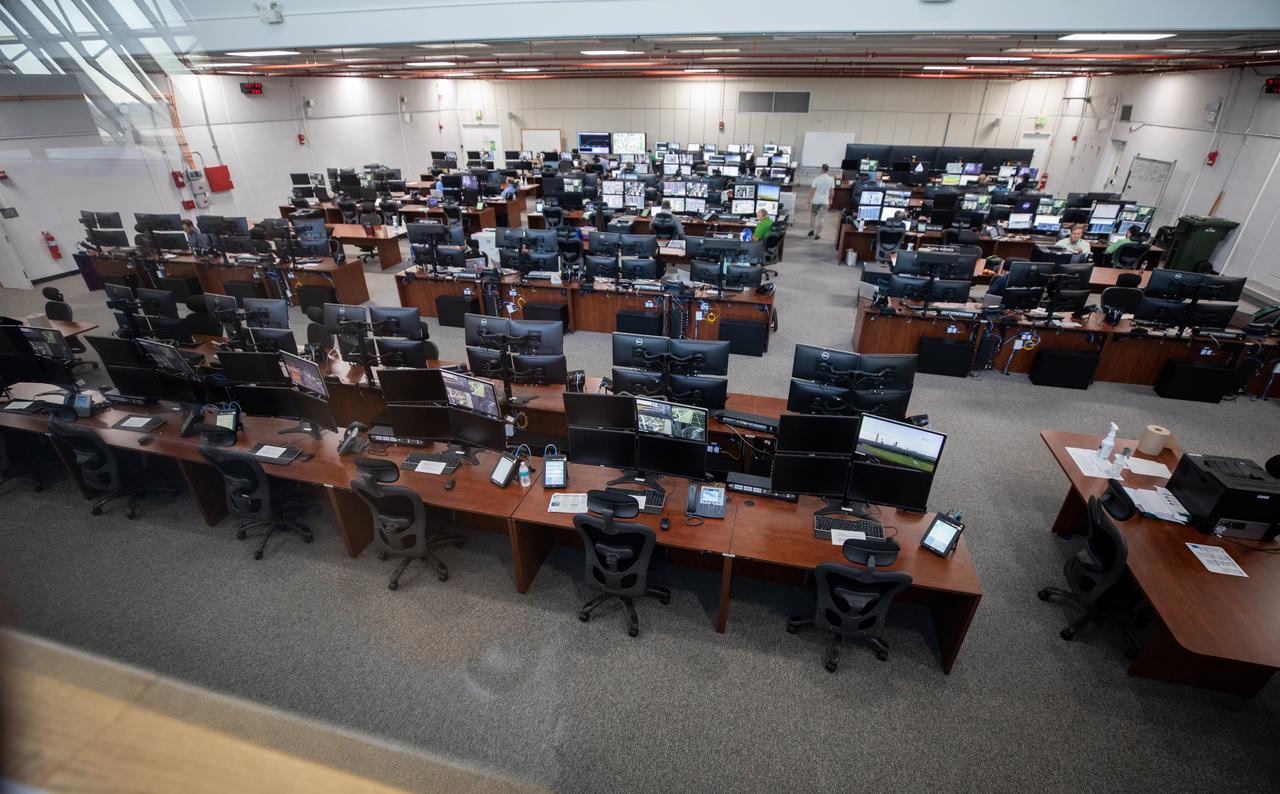
Artemis teams conduct a launch simulation for the Artemis I mission inside Firing Room 2 of the Rocco A. Petrone Launch Control Center at NASA’s Kennedy Space Center in Florida on Oct. 27, 2022. Artemis I will be the first integrated test of NASA’s Space Launch System (SLS) rocket and Orion spacecraft. The primary goal of Artemis I is to thoroughly test the integrated systems before crewed missions by launching Orion atop the SLS rocket, operating the spacecraft in a deep space environment, testing Orion’s heat shield, and recovering the crew module after reentry, descent, and splashdown. During the flight, Orion will launch atop the most powerful rocket in the world and fly farther than any human-rated spacecraft has ever flown, paving the way for human deep space exploration and demonstrating our commitment and capability to extend human presence to the Moon and beyond.
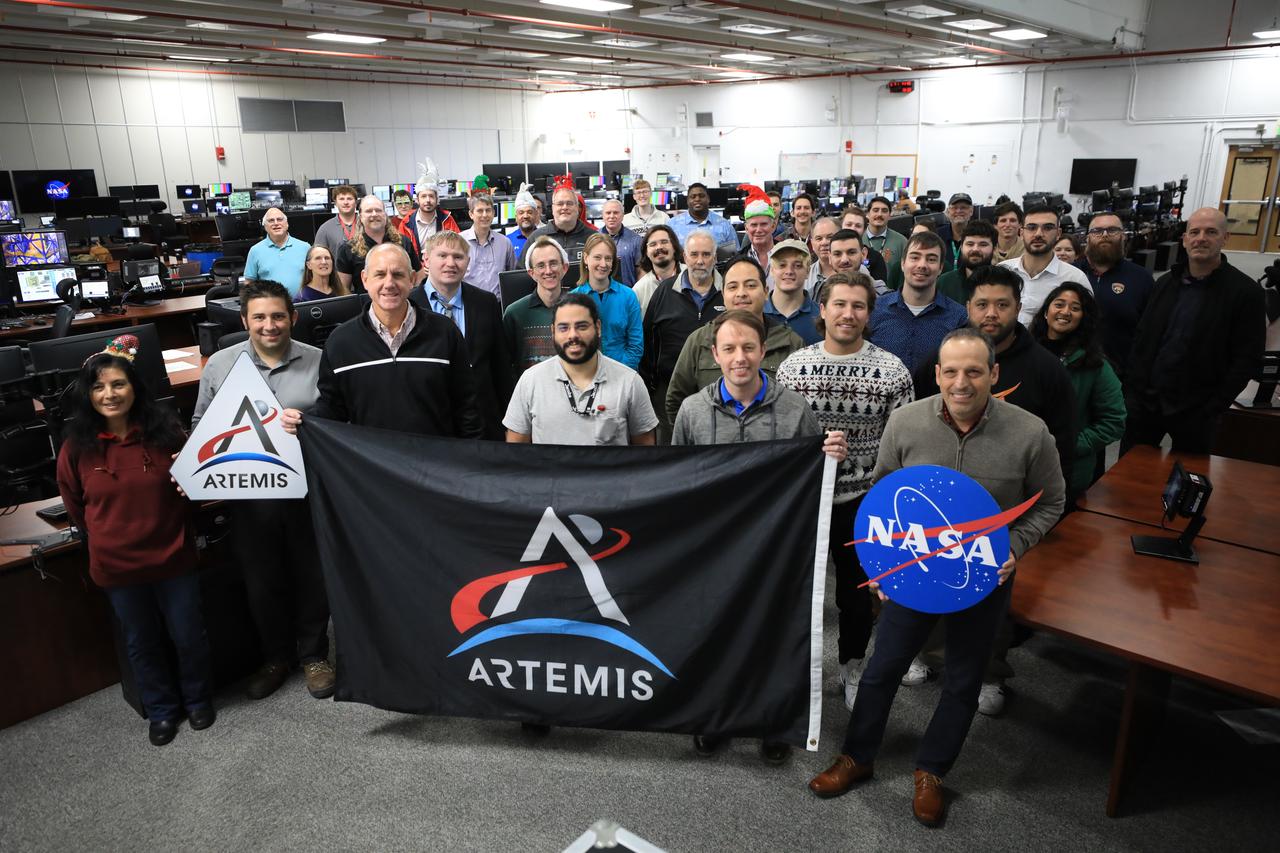
Members of the Artemis launch team pose for a holiday group photo in Firing Room 2 inside the Launch Control Center at NASA’s Kennedy Space Center in Florida on Thursday, Dec. 12, 2024. Teams participated in a cryogenic and terminal count simulation for Artemis II. The simulations go through launch day scenarios to help launch team members test software and make any necessary adjustments during countdown operations. Four astronauts will venture around the Moon on Artemis II, the first crewed mission on NASA’s path to establishing a long-term presence for science and exploration through Artemis.
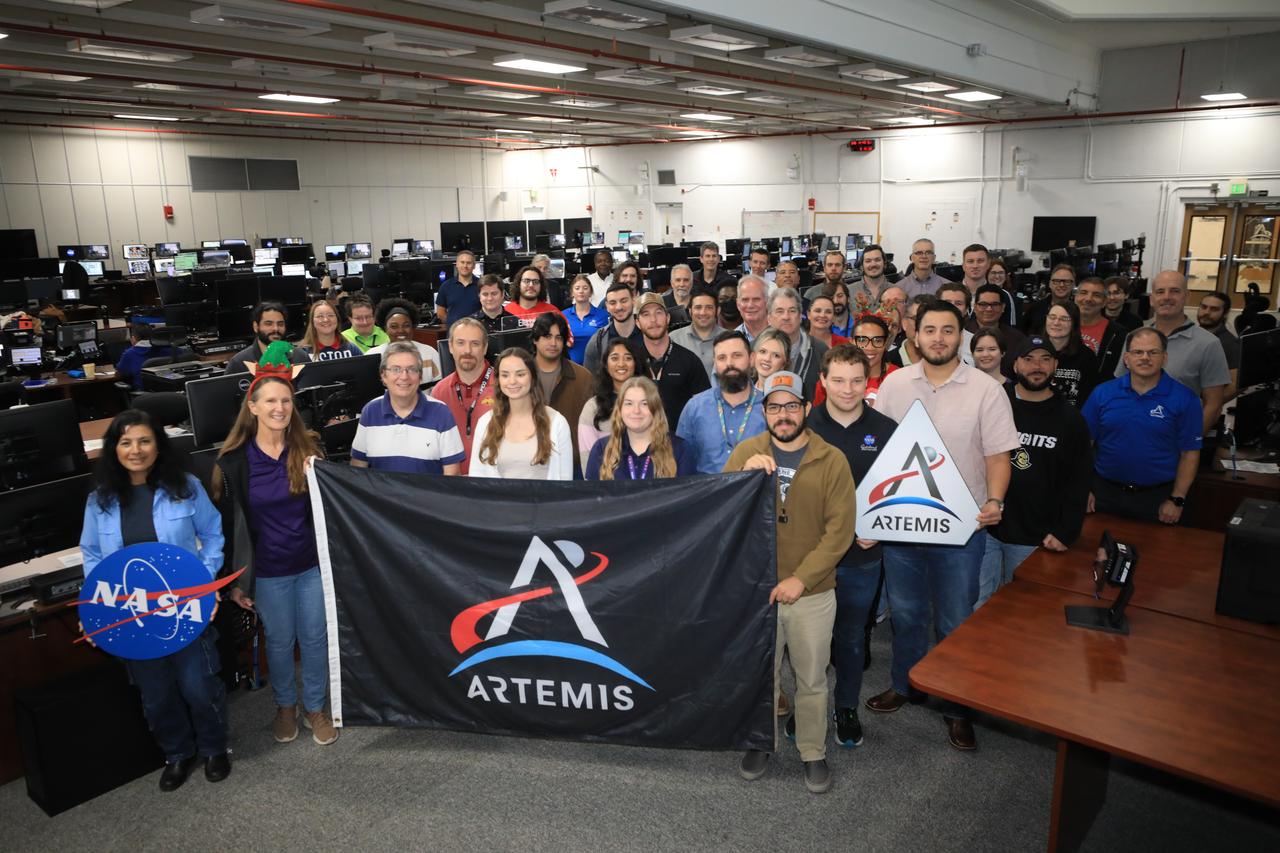
Members of the Artemis launch team pose for a holiday group photo in Firing Room 2 inside the Launch Control Center at NASA’s Kennedy Space Center in Florida on Wednesday, Dec. 11, 2024. Teams participated in a cryogenic and terminal count simulation for Artemis II. The simulations go through launch day scenarios to help launch team members test software and make any necessary adjustments during countdown operations. Four astronauts will venture around the Moon on Artemis II, the first crewed mission on NASA’s path to establishing a long-term presence for science and exploration through Artemis.
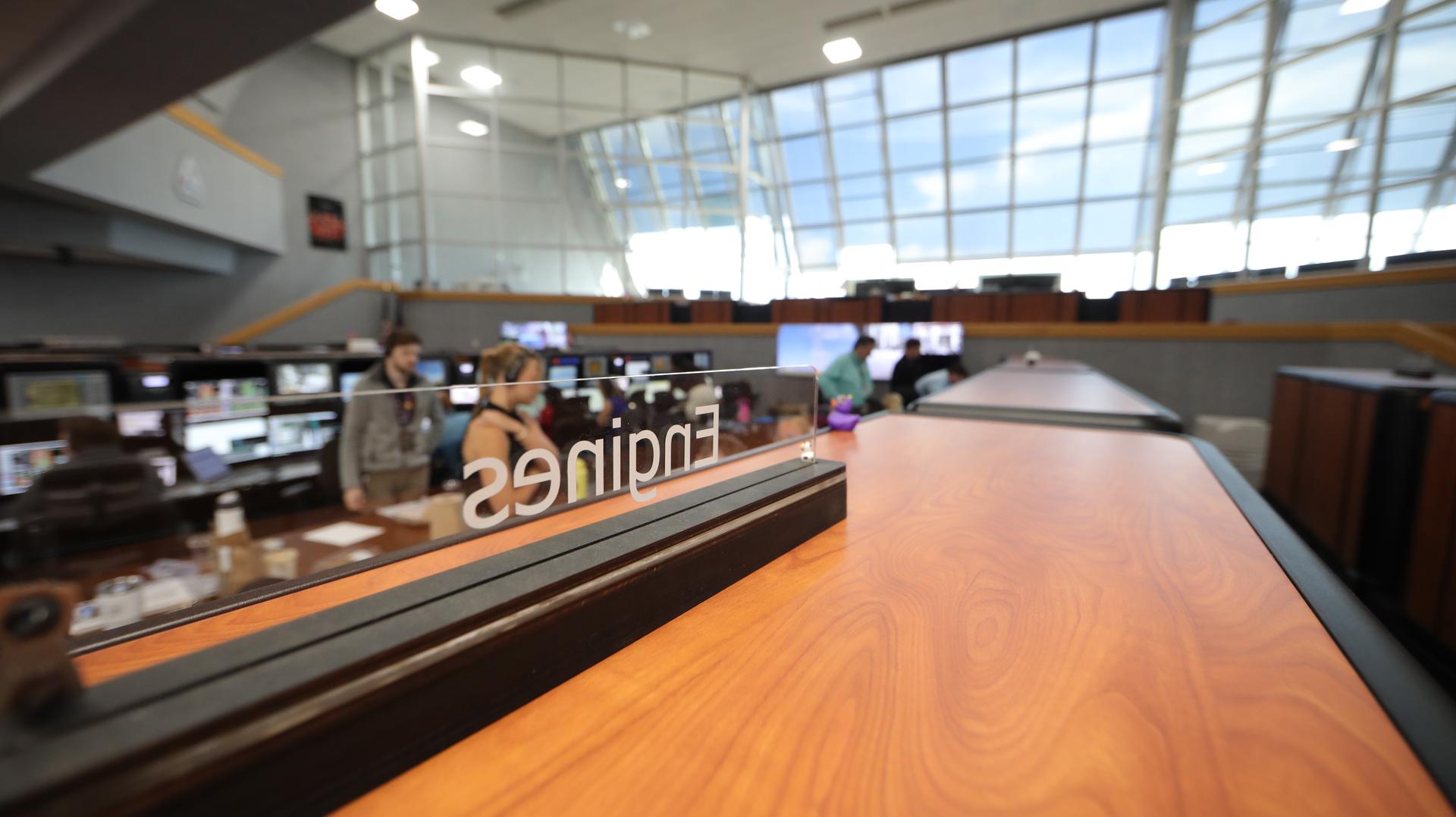
Artemis launch team members participate in a terminal countdown simulation for Artemis III on Thursday, Sept. 10, 2026, inside Firing Room 1 and 2 of the Rocco A. Petrone Launch Control Center at NASA’s Kennedy Space Center in Florida. Terminal count simulations conducted by NASA’s Exploration Ground Systems team run through the final five hours of launch countdown, including terminal count - the remaining 10 minutes of the countdown. Artemis III will carry out a series of objectives in low Earth orbit designed to demonstrate critical systems needed for future lunar landings, beginning with Artemis IV.
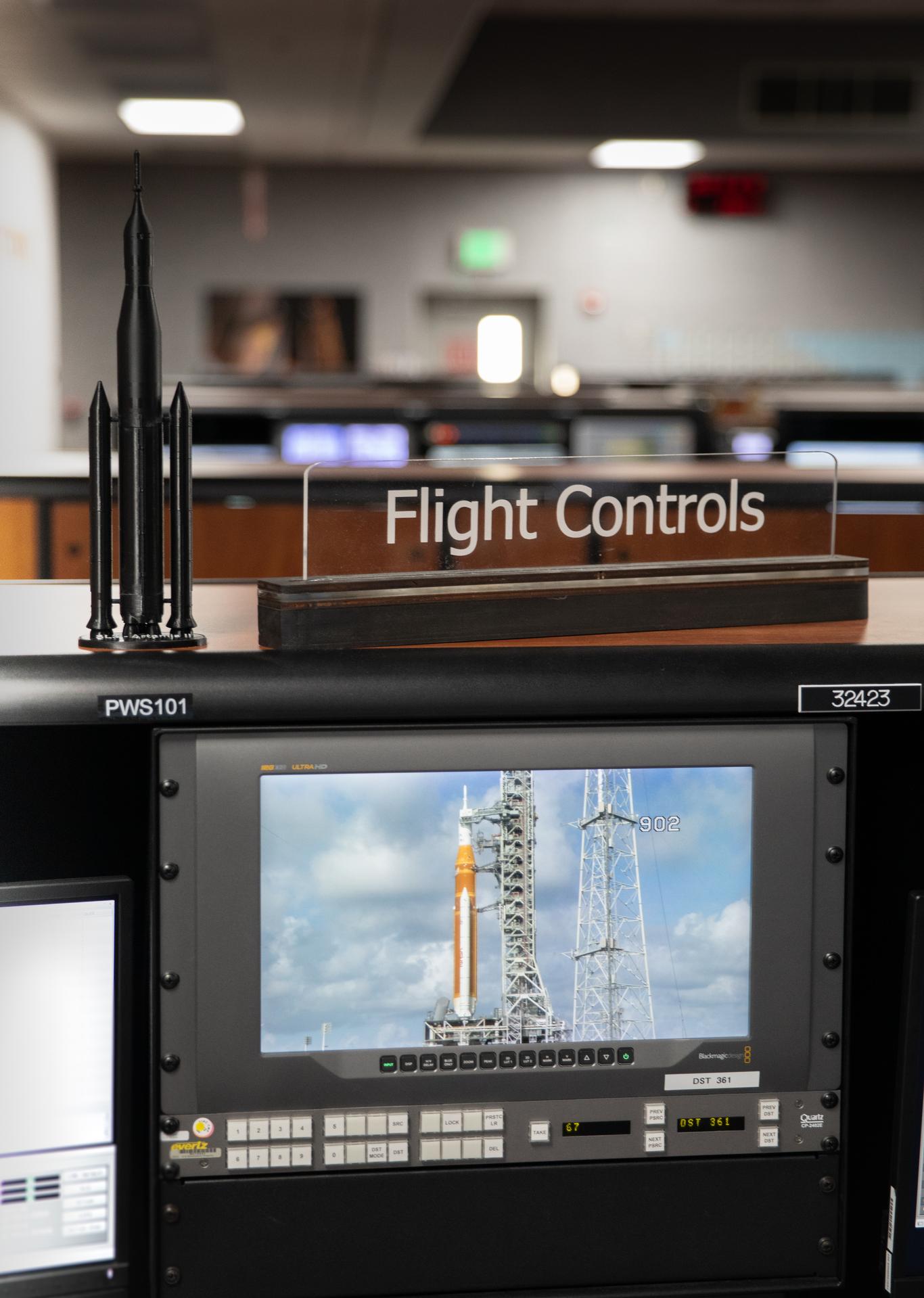
Artemis launch team members participate in a terminal countdown simulation for Artemis III on Thursday, Sept. 10, 2026, inside Firing Room 1 and 2 of the Rocco A. Petrone Launch Control Center at NASA’s Kennedy Space Center in Florida. Terminal count simulations conducted by NASA’s Exploration Ground Systems team run through the final five hours of launch countdown, including terminal count - the remaining 10 minutes of the countdown. Artemis III will carry out a series of objectives in low Earth orbit designed to demonstrate critical systems needed for future lunar landings, beginning with Artemis IV.
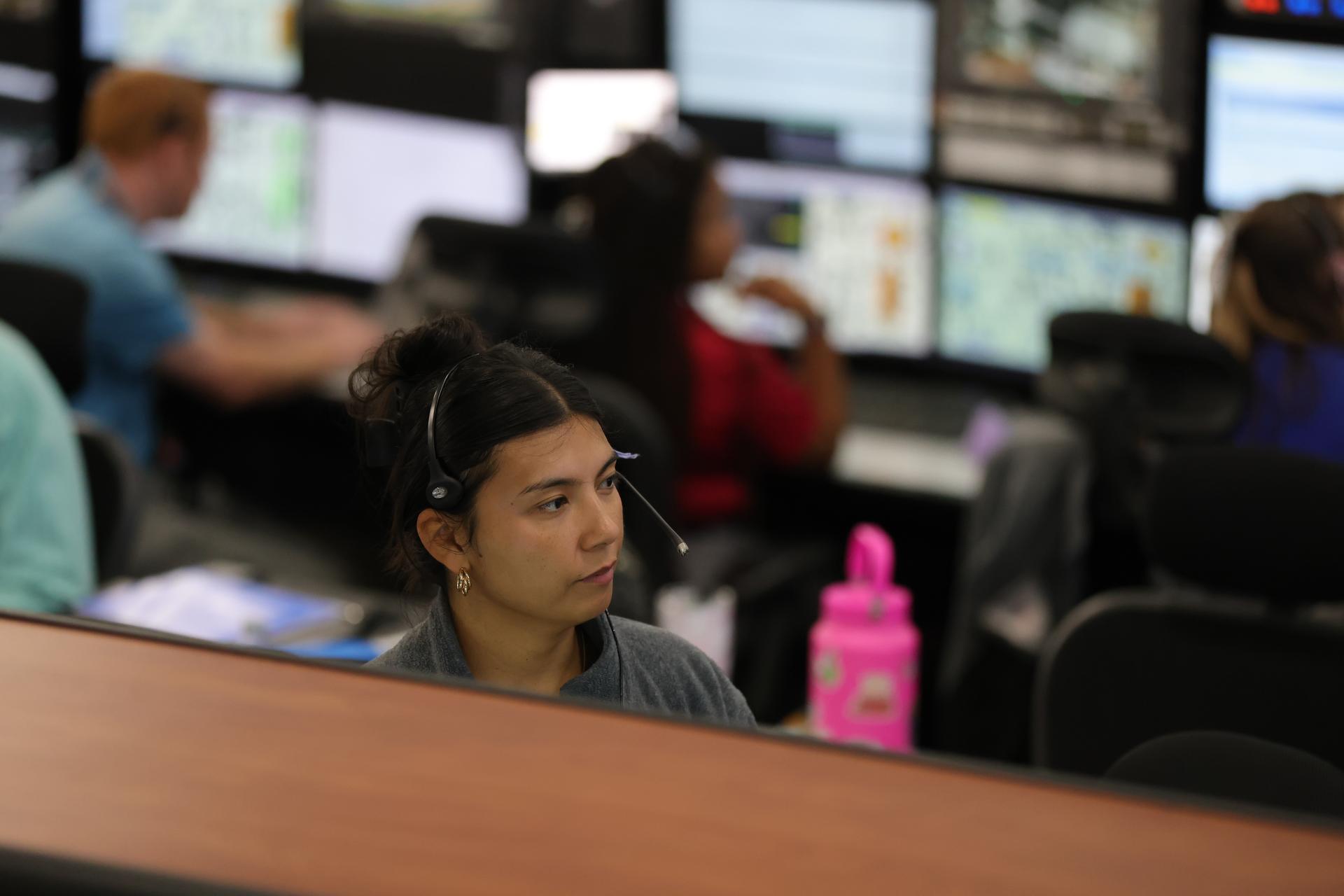
Artemis launch team members participate in a terminal countdown simulation for Artemis III on Thursday, Sept. 10, 2026, inside Firing Room 1 and 2 of the Rocco A. Petrone Launch Control Center at NASA’s Kennedy Space Center in Florida. Terminal count simulations conducted by NASA’s Exploration Ground Systems team run through the final five hours of launch countdown, including terminal count - the remaining 10 minutes of the countdown. Artemis III will carry out a series of objectives in low Earth orbit designed to demonstrate critical systems needed for future lunar landings, beginning with Artemis IV.
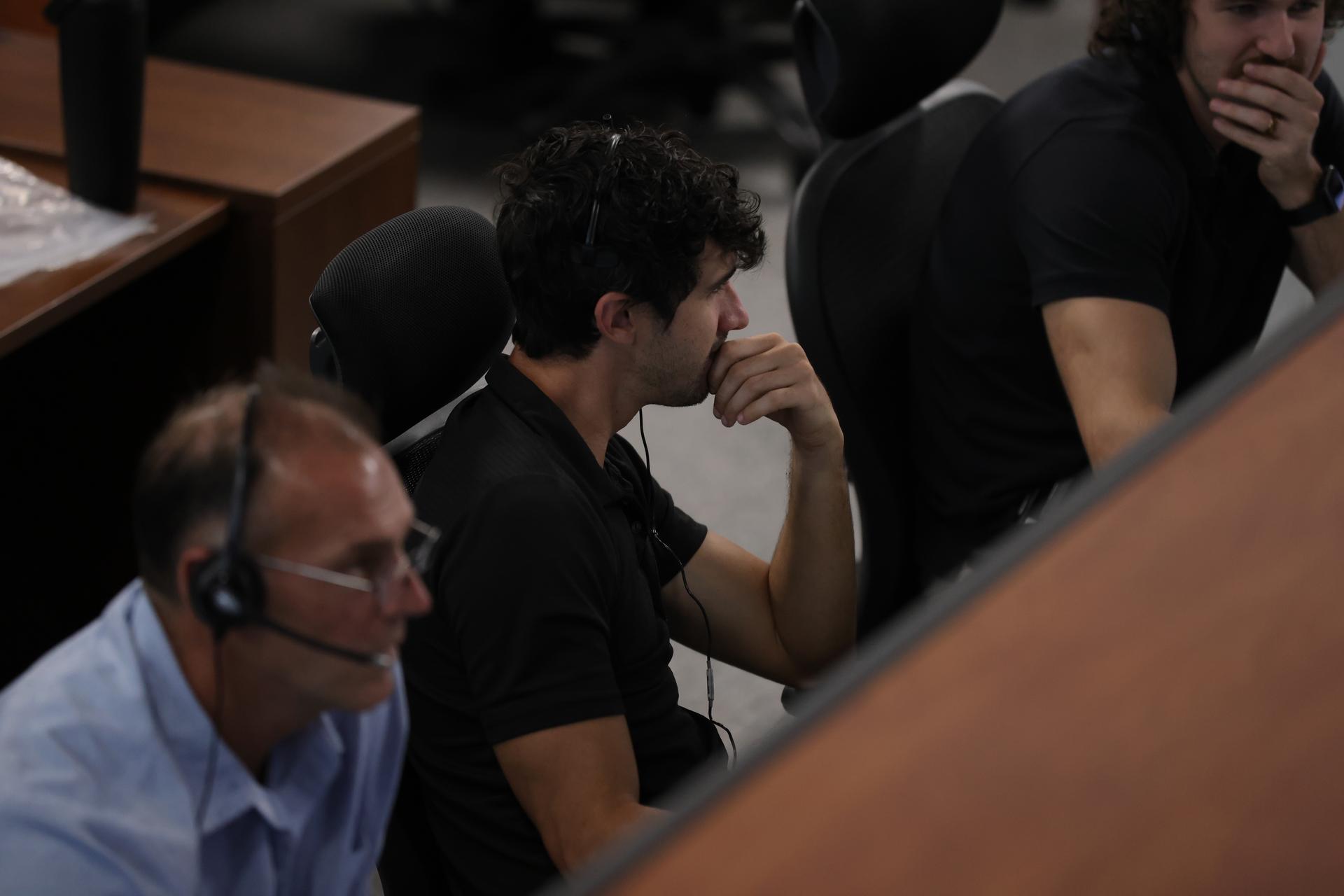
Artemis launch team members participate in a terminal countdown simulation for Artemis III on Thursday, Sept. 10, 2026, inside Firing Room 1 and 2 of the Rocco A. Petrone Launch Control Center at NASA’s Kennedy Space Center in Florida. Terminal count simulations conducted by NASA’s Exploration Ground Systems team run through the final five hours of launch countdown, including terminal count - the remaining 10 minutes of the countdown. Artemis III will carry out a series of objectives in low Earth orbit designed to demonstrate critical systems needed for future lunar landings, beginning with Artemis IV.

Artemis III launch team members participate in a cryogenic propellant loading simulation on Wednesday, June 10, 2026, inside Firing Room 1 and 2 of the Rocco A. Petrone Launch Control Center at NASA’s Kennedy Space Center in Florida. Members of NASA’s Exploration Ground Systems team rehearse the steps to load the super-cooled liquid hydrogen and liquid oxygen into the SLS (Space Launch System) rocket core stage, a process that starts several hours before liftoff for the Artemis III mission. Artemis III will carry out a series of objectives in low Earth orbit designed to demonstrate critical systems needed for future lunar landings, beginning with Artemis IV.
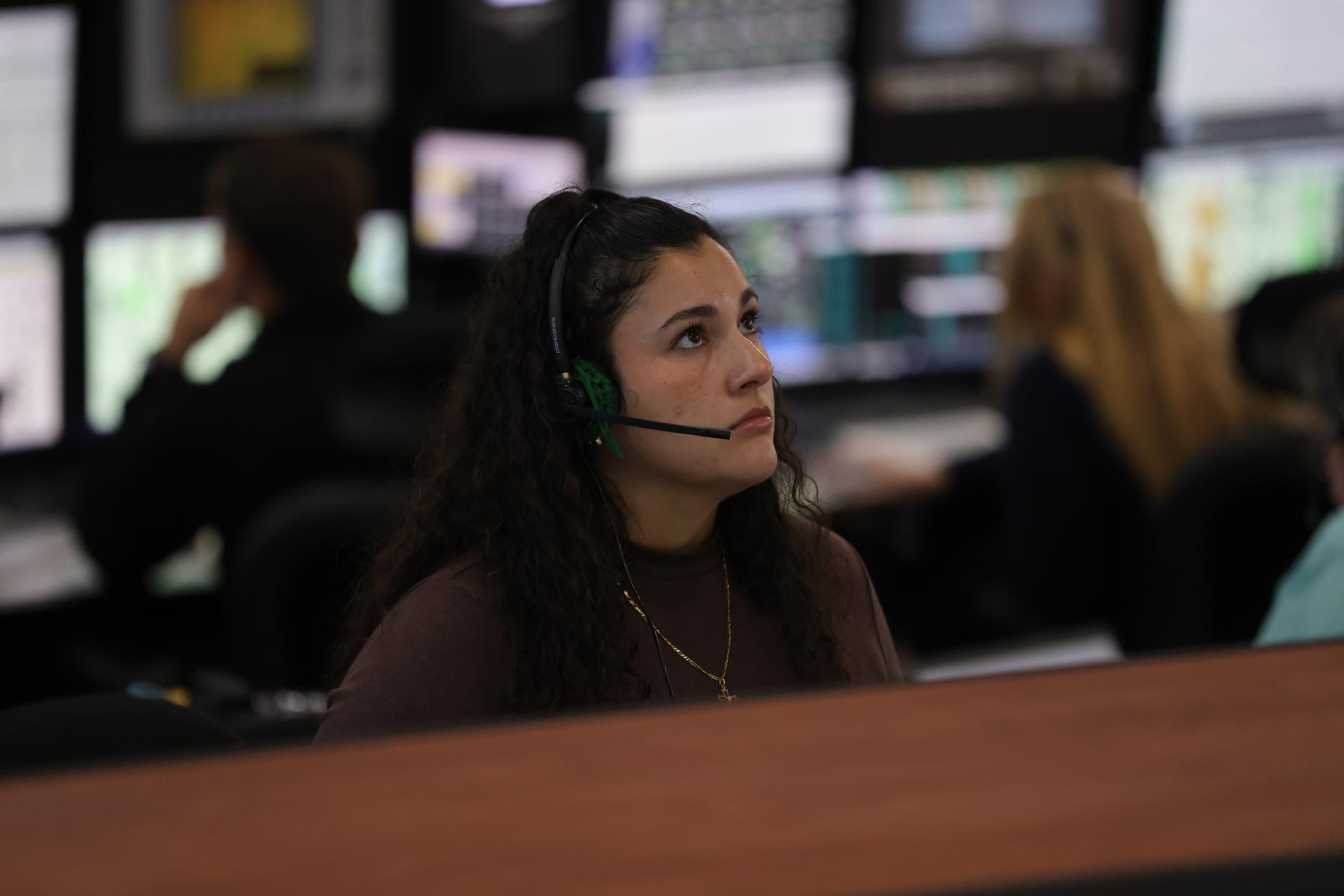
Artemis launch team members participate in a terminal countdown simulation for Artemis III on Thursday, Sept. 10, 2026, inside Firing Room 1 and 2 of the Rocco A. Petrone Launch Control Center at NASA’s Kennedy Space Center in Florida. Terminal count simulations conducted by NASA’s Exploration Ground Systems team run through the final five hours of launch countdown, including terminal count - the remaining 10 minutes of the countdown. Artemis III will carry out a series of objectives in low Earth orbit designed to demonstrate critical systems needed for future lunar landings, beginning with Artemis IV.
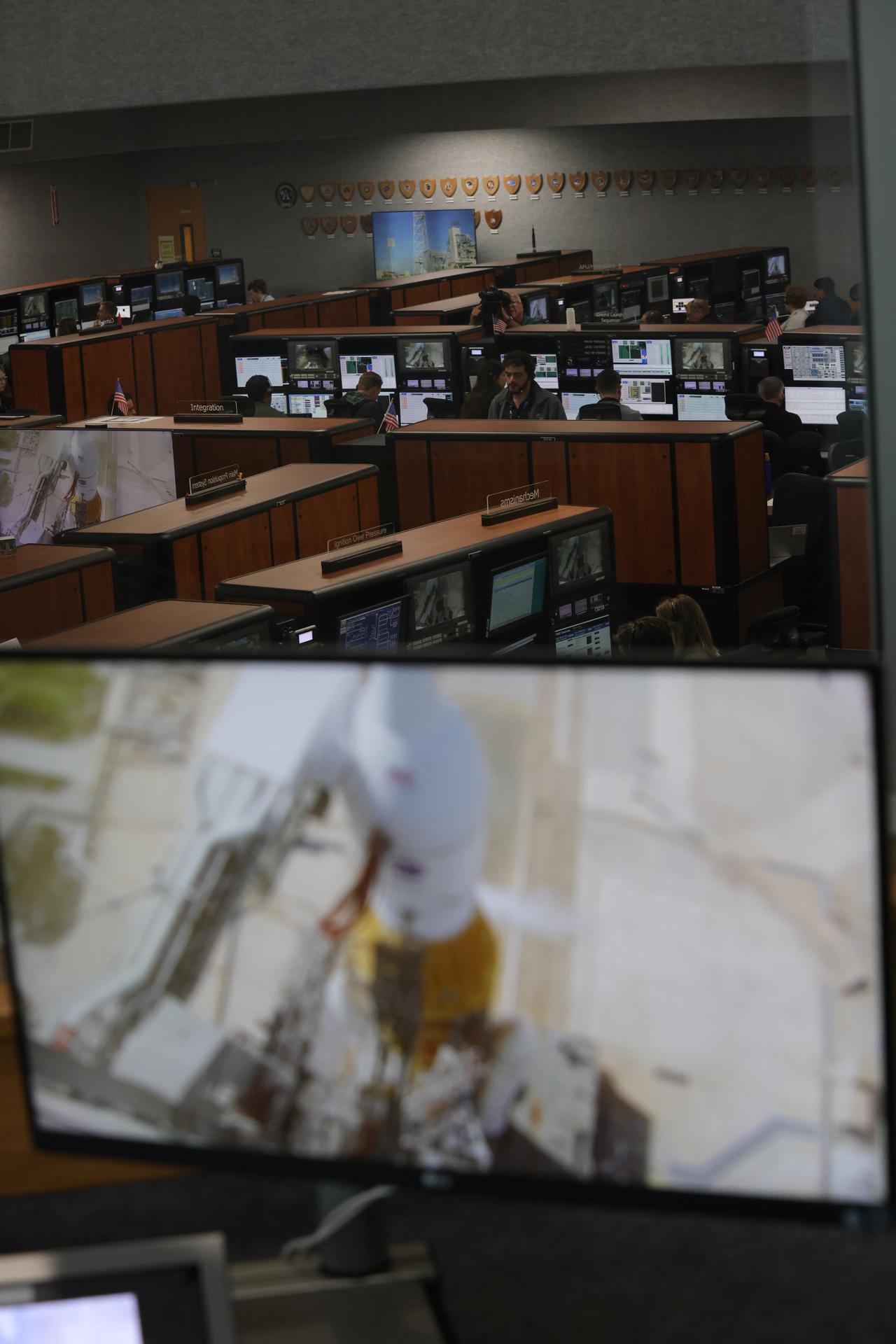
Artemis launch team members participate in a terminal countdown simulation for Artemis III on Thursday, Sept. 10, 2026, inside Firing Room 1 and 2 of the Rocco A. Petrone Launch Control Center at NASA’s Kennedy Space Center in Florida. Terminal count simulations conducted by NASA’s Exploration Ground Systems team run through the final five hours of launch countdown, including terminal count - the remaining 10 minutes of the countdown. Artemis III will carry out a series of objectives in low Earth orbit designed to demonstrate critical systems needed for future lunar landings, beginning with Artemis IV.
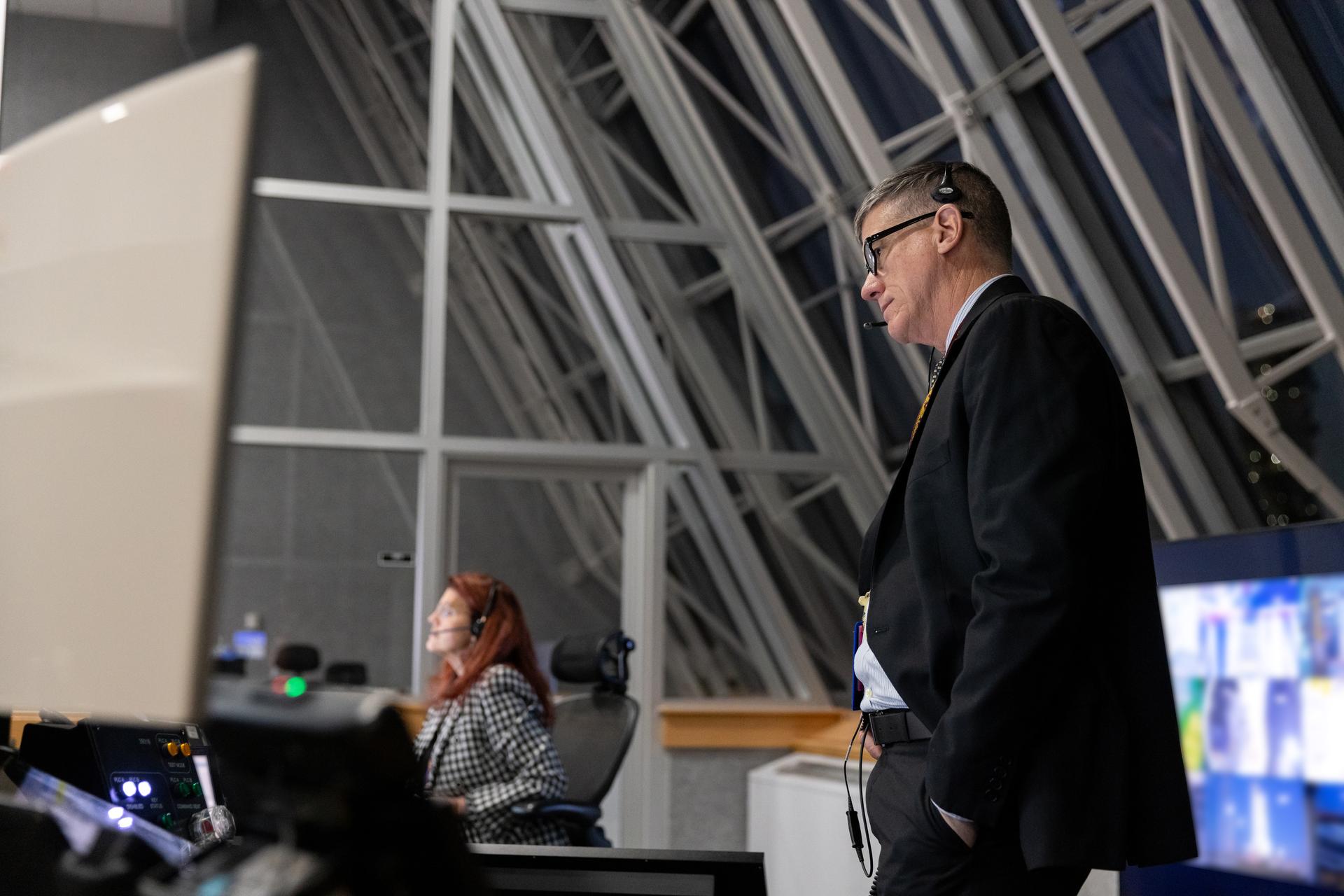
Jeremy Graeber, assistant launch director, participates in a wet dress rehearsal for the Artemis II mission on Monday, Feb. 2, 2026, inside Firing Room 1 at the Rocco A. Petrone Launch Control Center at NASA’s Kennedy Space Center in Florida. The wet dress rehearsal allows the Artemis II launch team to run through operations to load propellant, conduct a full launch countdown, demonstrate the ability to recycle the countdown clock, and drain the tanks to practice timelines and procedures for launch. The Artemis II test flight will take Commander Reid Wiseman, Pilot Victor Glover, and Mission Specialist Christina Koch from NASA, and Mission Specialist Jeremy Hansen from the CSA (Canadian Space Agency), around the Moon and back to Earth from Launch Complex 39B at NASA Kennedy.
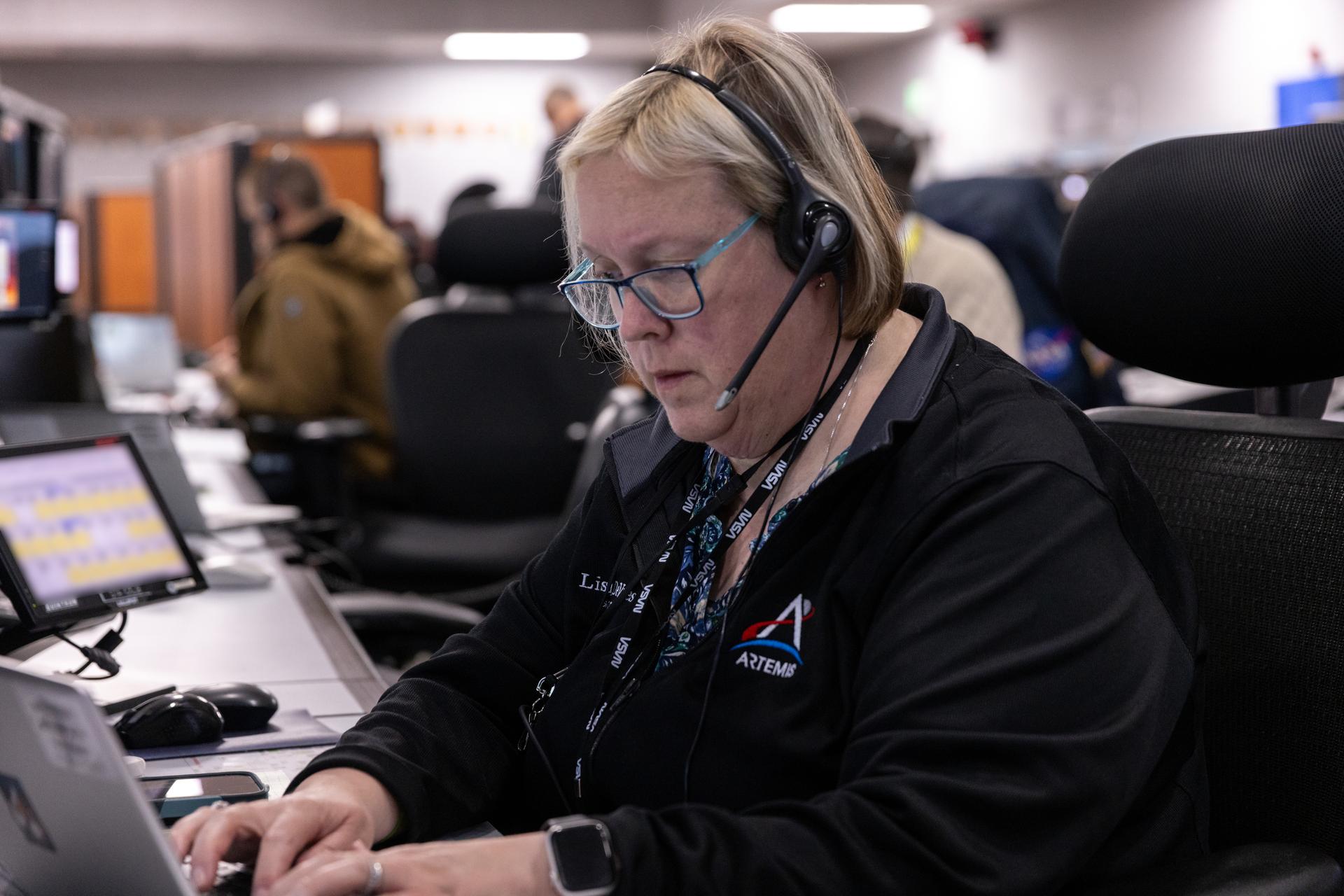
A member of the Artemis launch team participates in a wet dress rehearsal for the Artemis II mission on Monday, Feb. 2, 2026, inside Firing Room 1 at the Rocco A. Petrone Launch Control Center at NASA’s Kennedy Space Center in Florida. The wet dress rehearsal allows the Artemis II launch team to run through operations to load propellant, conduct a full launch countdown, demonstrate the ability to recycle the countdown clock, and drain the tanks to practice timelines and procedures for launch. The Artemis II test flight will take Commander Reid Wiseman, Pilot Victor Glover, and Mission Specialist Christina Koch from NASA, and Mission Specialist Jeremy Hansen from the CSA (Canadian Space Agency), around the Moon and back to Earth from Launch Complex 39B at NASA Kennedy.

Mike Guzman, main propulsion systems engineer, participates in a wet dress rehearsal for the Artemis II mission on Monday, Feb. 2, 2026, inside Firing Room 1 at the Rocco A. Petrone Launch Control Center at NASA’s Kennedy Space Center in Florida. The wet dress rehearsal allows the Artemis II launch team to run through operations to load propellant, conduct a full launch countdown, demonstrate the ability to recycle the countdown clock, and drain the tanks to practice timelines and procedures for launch. The Artemis II test flight will take Commander Reid Wiseman, Pilot Victor Glover, and Mission Specialist Christina Koch from NASA, and Mission Specialist Jeremy Hansen from the CSA (Canadian Space Agency), around the Moon and back to Earth from Launch Complex 39B at NASA Kennedy.
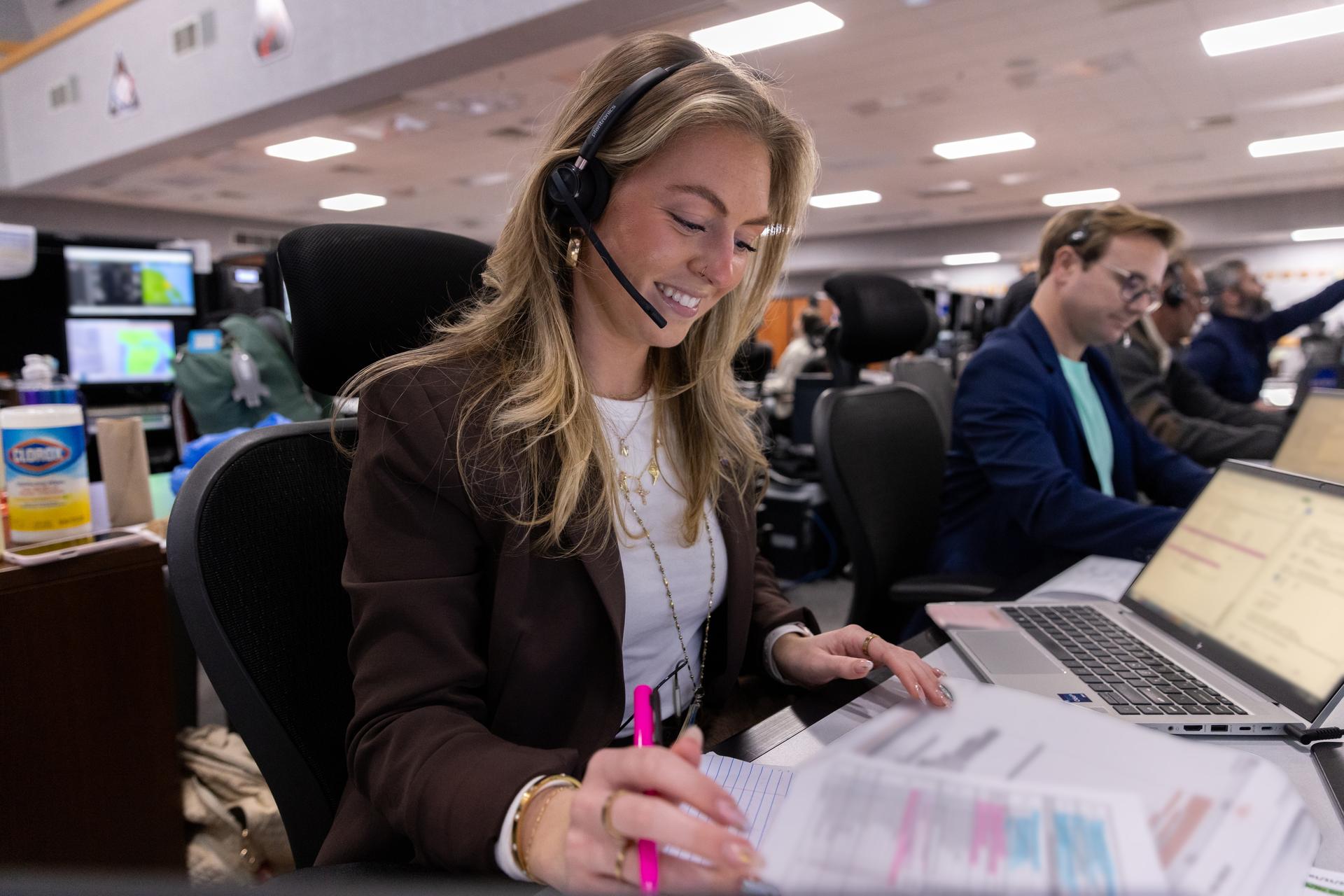
A member of the Artemis launch team participates in a wet dress rehearsal for the Artemis II mission on Monday, Feb. 2, 2026, inside Firing Room 1 at the Rocco A. Petrone Launch Control Center at NASA’s Kennedy Space Center in Florida. The wet dress rehearsal allows the Artemis II launch team to run through operations to load propellant, conduct a full launch countdown, demonstrate the ability to recycle the countdown clock, and drain the tanks to practice timelines and procedures for launch. The Artemis II test flight will take Commander Reid Wiseman, Pilot Victor Glover, and Mission Specialist Christina Koch from NASA, and Mission Specialist Jeremy Hansen from the CSA (Canadian Space Agency), around the Moon and back to Earth from Launch Complex 39B at NASA Kennedy.
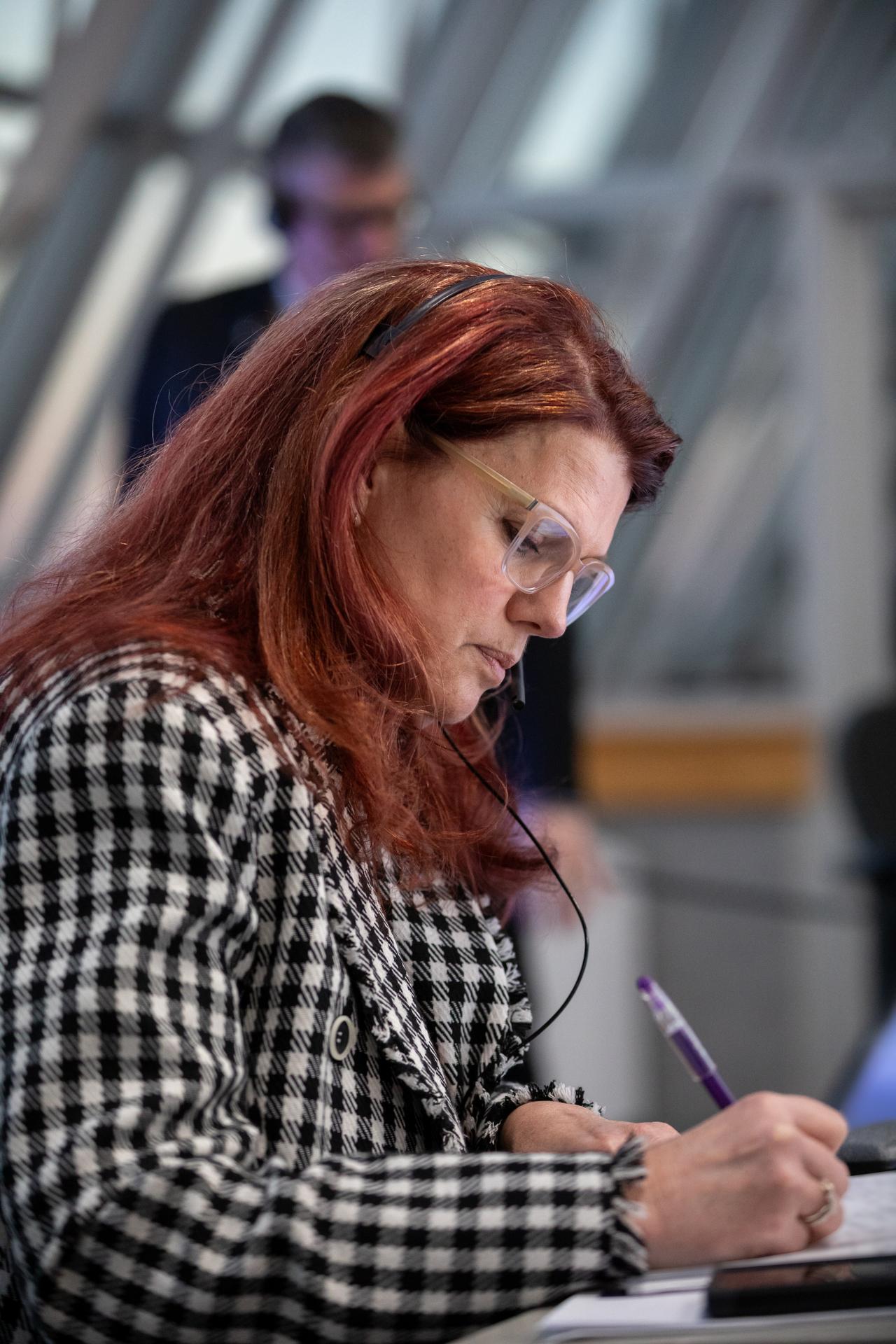
Charlie Blackwell-Thompson, Artemis launch director, participates in a wet dress rehearsal for the Artemis II mission on Monday, Feb. 2, 2026, inside Firing Room 1 at the Rocco A. Petrone Launch Control Center at NASA’s Kennedy Space Center in Florida. The wet dress rehearsal allows the Artemis II launch team to run through operations to load propellant, conduct a full launch countdown, demonstrate the ability to recycle the countdown clock, and drain the tanks to practice timelines and procedures for launch. The Artemis II test flight will take Commander Reid Wiseman, Pilot Victor Glover, and Mission Specialist Christina Koch from NASA, and Mission Specialist Jeremy Hansen from the CSA (Canadian Space Agency), around the Moon and back to Earth from Launch Complex 39B at NASA Kennedy.
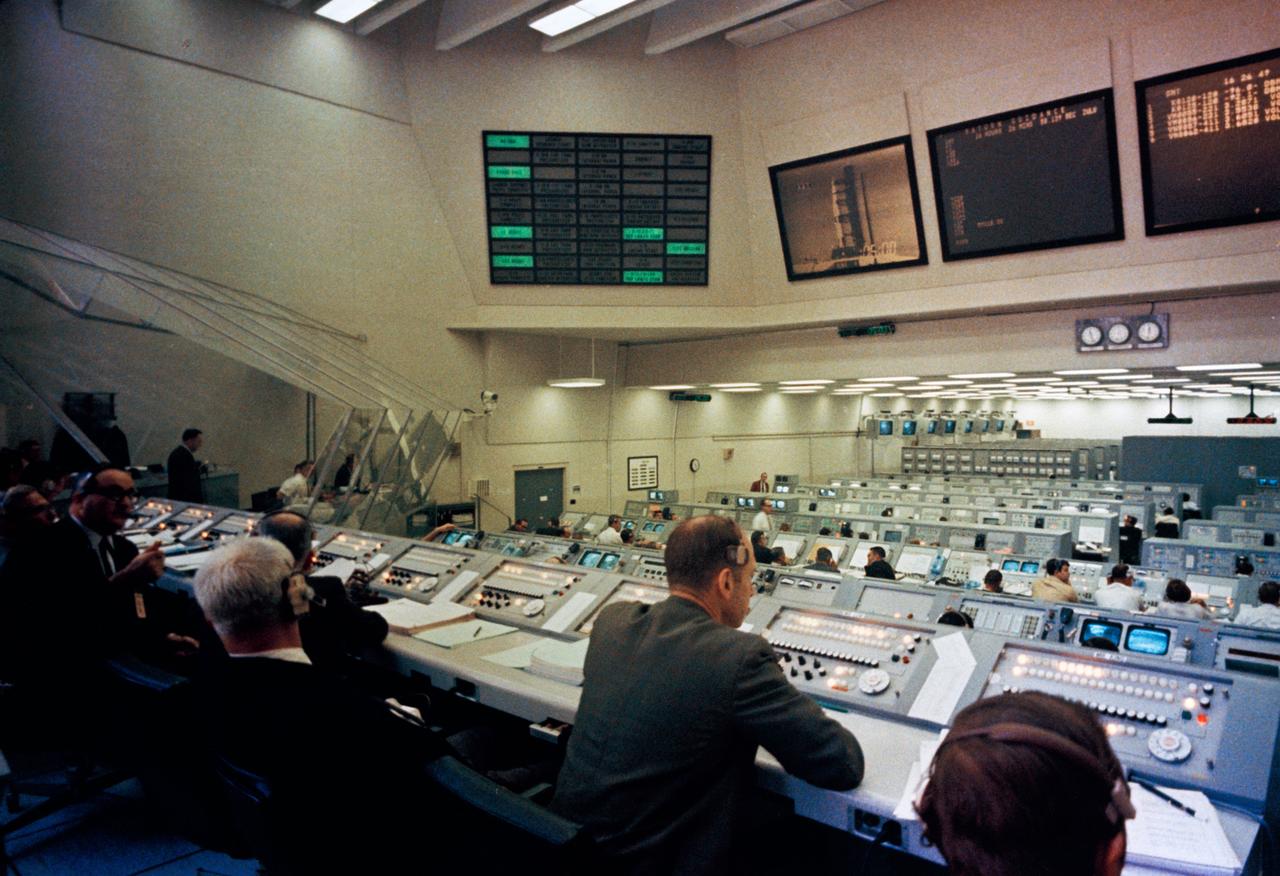
S69-25880 (23 Feb. 1969) --- Overall view of Firing Room 2 in the Launch Control Center, Launch Complex 39, Kennedy Space Center, during an Apollo 9 Countdown Demonstration Test. Astronauts James A. McDivitt, David R. Scott, and Russell L. Schweickart were participating in a training exercise in preparation for their scheduled 10-day Earth-orbital space mission.
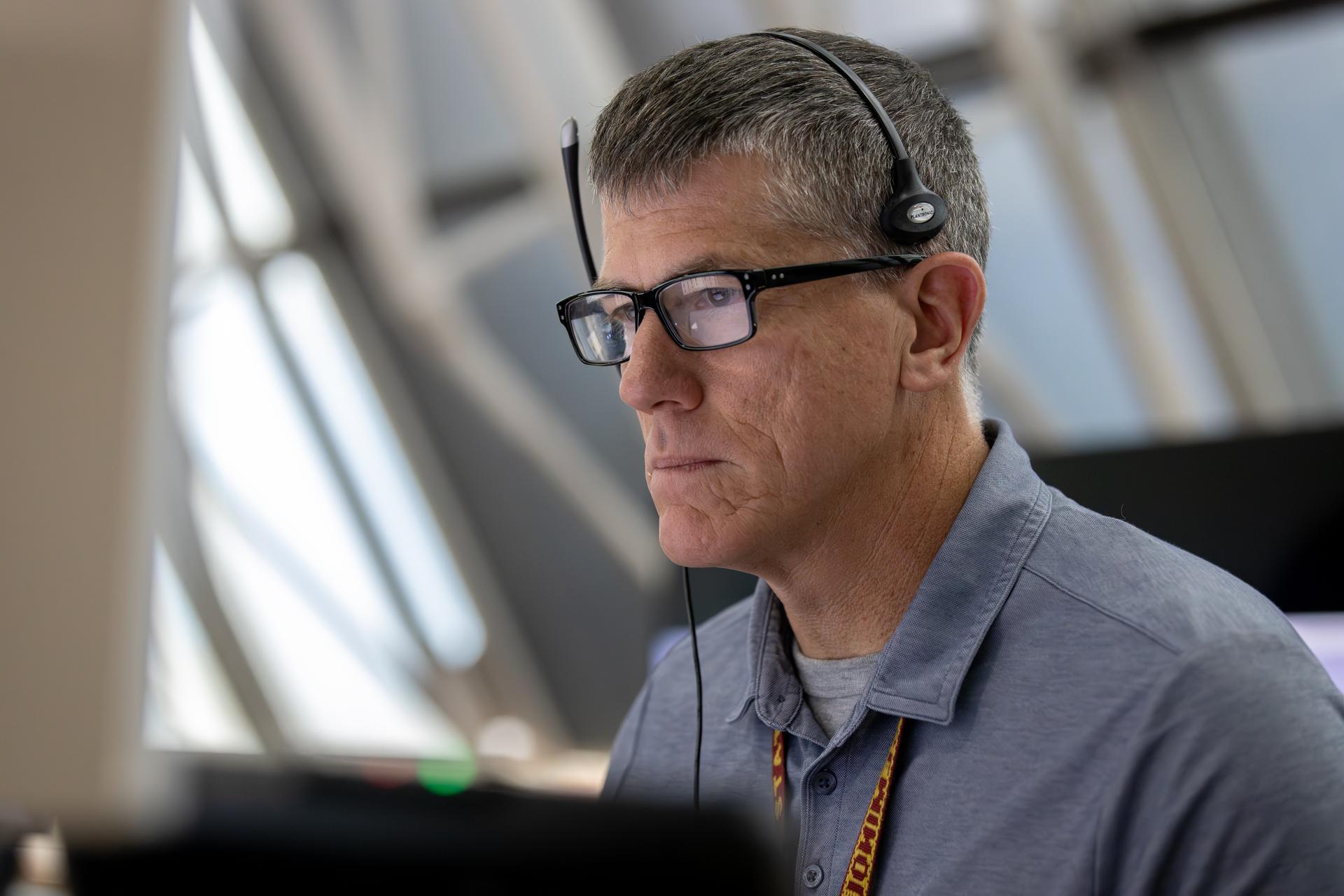
The Artemis launch team performs their second round of Artemis III launch simulations inside Firing Room 1 and 2 in NASA Kennedy's Launch Control Center in Florida.
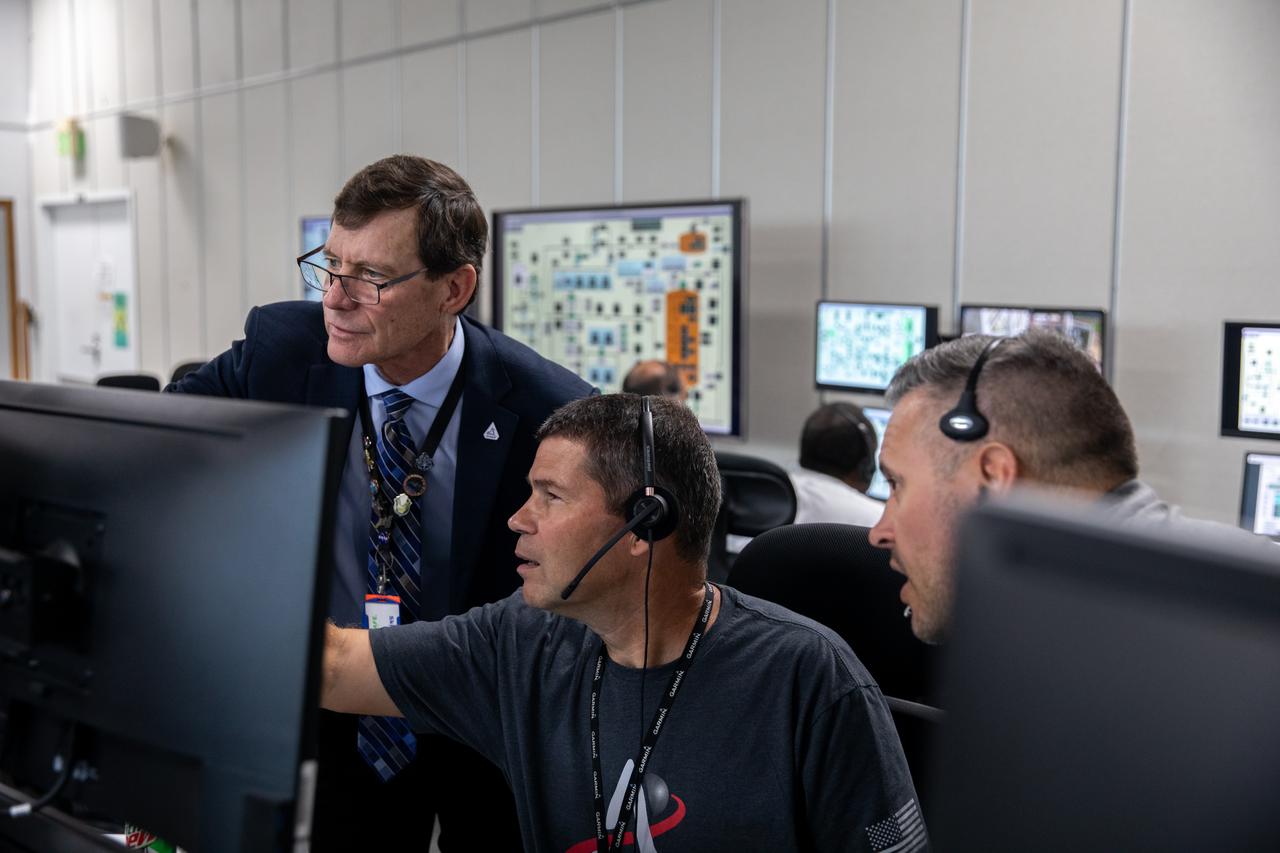
Members of the Artemis I launch team monitor data at their consoles inside Firing Room 1 of the Rocco A. Petrone Launch Control Center at NASA’s Kennedy Space Center in Florida during a cryogenic propellant tanking demonstration on Sept. 21, 2022. The first in a series of increasingly complex missions, Artemis I will provide a foundation for human deep space exploration and demonstrate our commitment and capability to extend human presence to the Moon and beyond. The primary goal of Artemis I is to thoroughly test the integrated systems before crewed missions by operating the spacecraft in a deep space environment, testing Orion’s heat shield, and recovering the crew module after reentry, descent, and splashdown.
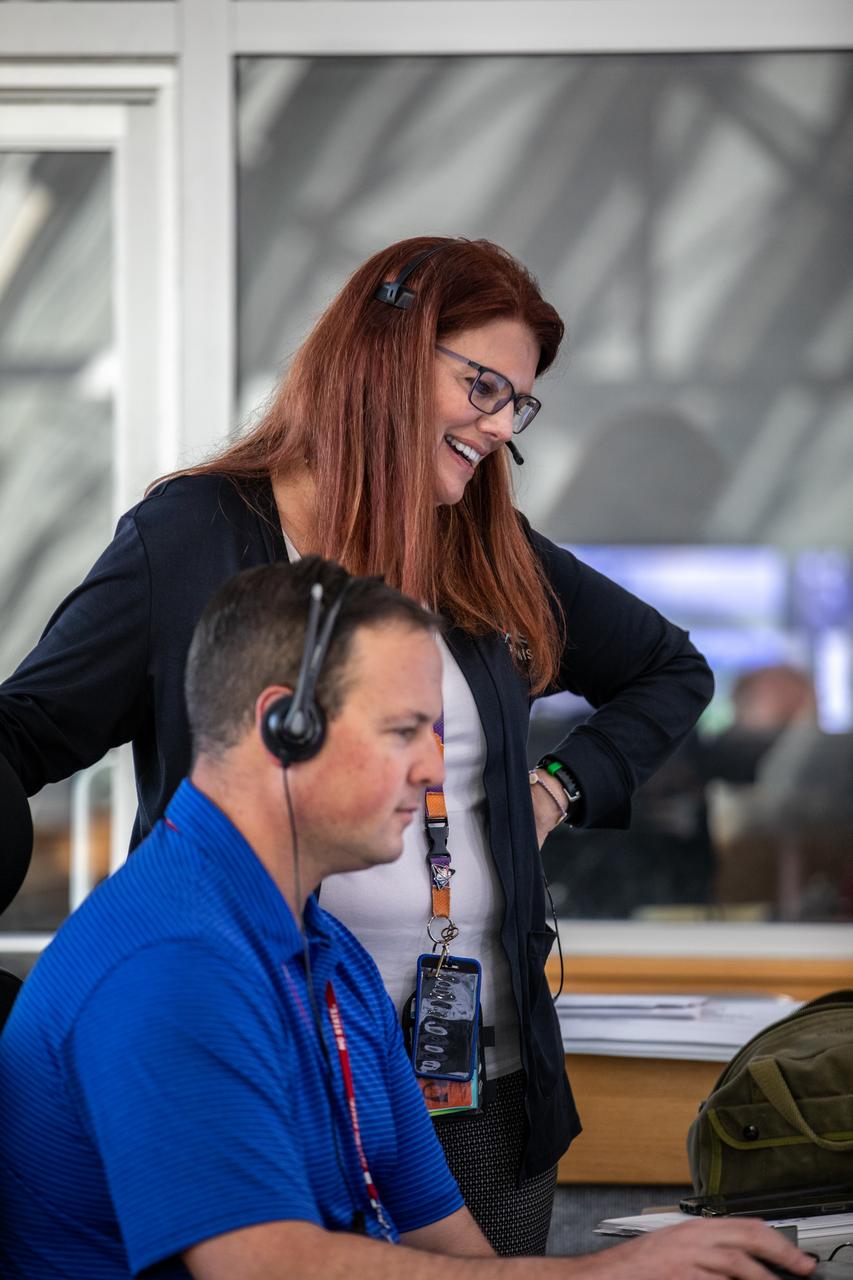
Artemis I Launch Director Charlie Blackwell-Thompson, standing, leads a cryogenic propellant tanking demonstration inside Firing Room 1 of the Rocco A. Petrone Launch Control Center at NASA’s Kennedy Space Center in Florida on Sept. 21, 2022. Seated at his console is Wes Mosedale, technical assistant to the launch director. The first in a series of increasingly complex missions, Artemis I will provide a foundation for human deep space exploration and demonstrate our commitment and capability to extend human presence to the Moon and beyond. The primary goal of Artemis I is to thoroughly test the integrated systems before crewed missions by operating the spacecraft in a deep space environment, testing Orion’s heat shield, and recovering the crew module after reentry, descent, and splashdown.
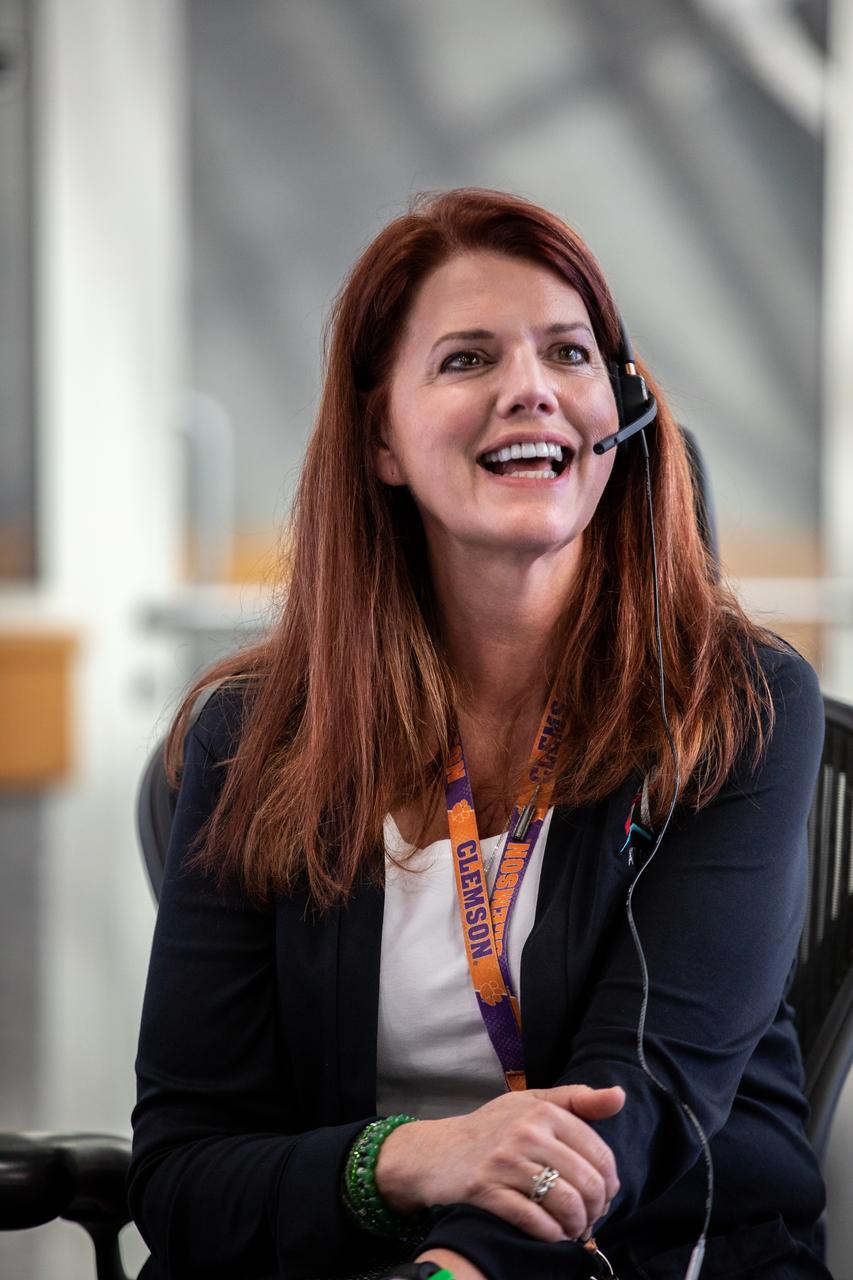
Artemis I Launch Director Charlie Blackwell-Thompson leads a cryogenic propellant tanking demonstration inside Firing Room 1 of the Rocco A. Petrone Launch Control Center at NASA’s Kennedy Space Center in Florida on Sept. 21, 2022. The first in a series of increasingly complex missions, Artemis I will provide a foundation for human deep space exploration and demonstrate our commitment and capability to extend human presence to the Moon and beyond. The primary goal of Artemis I is to thoroughly test the integrated systems before crewed missions by operating the spacecraft in a deep space environment, testing Orion’s heat shield, and recovering the crew module after reentry, descent, and splashdown.