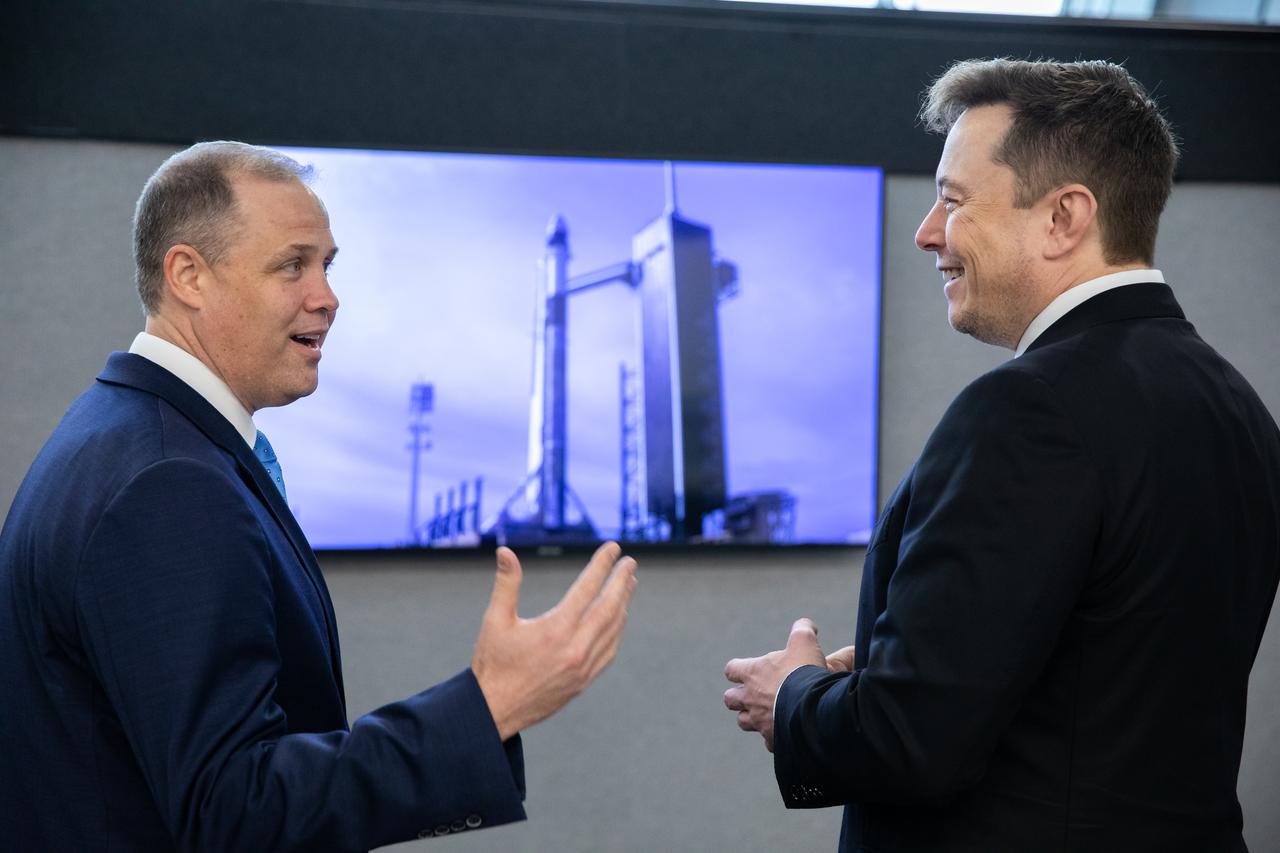
NASA Administrator Jim Bridenstine, left, and SpaceX Chief Engineer Elon Musk converse inside Firing Room 4 in Kennedy Space Center’s Launch Control Center while awaiting the liftoff of a SpaceX Falcon 9 rocket and Crew Dragon spacecraft on the uncrewed In-Flight Abort Test, Jan. 19, 2020. The test demonstrated the spacecraft’s escape capabilities in preparation for crewed flights to the International Space Station as part of the agency’s Commercial Crew Program.
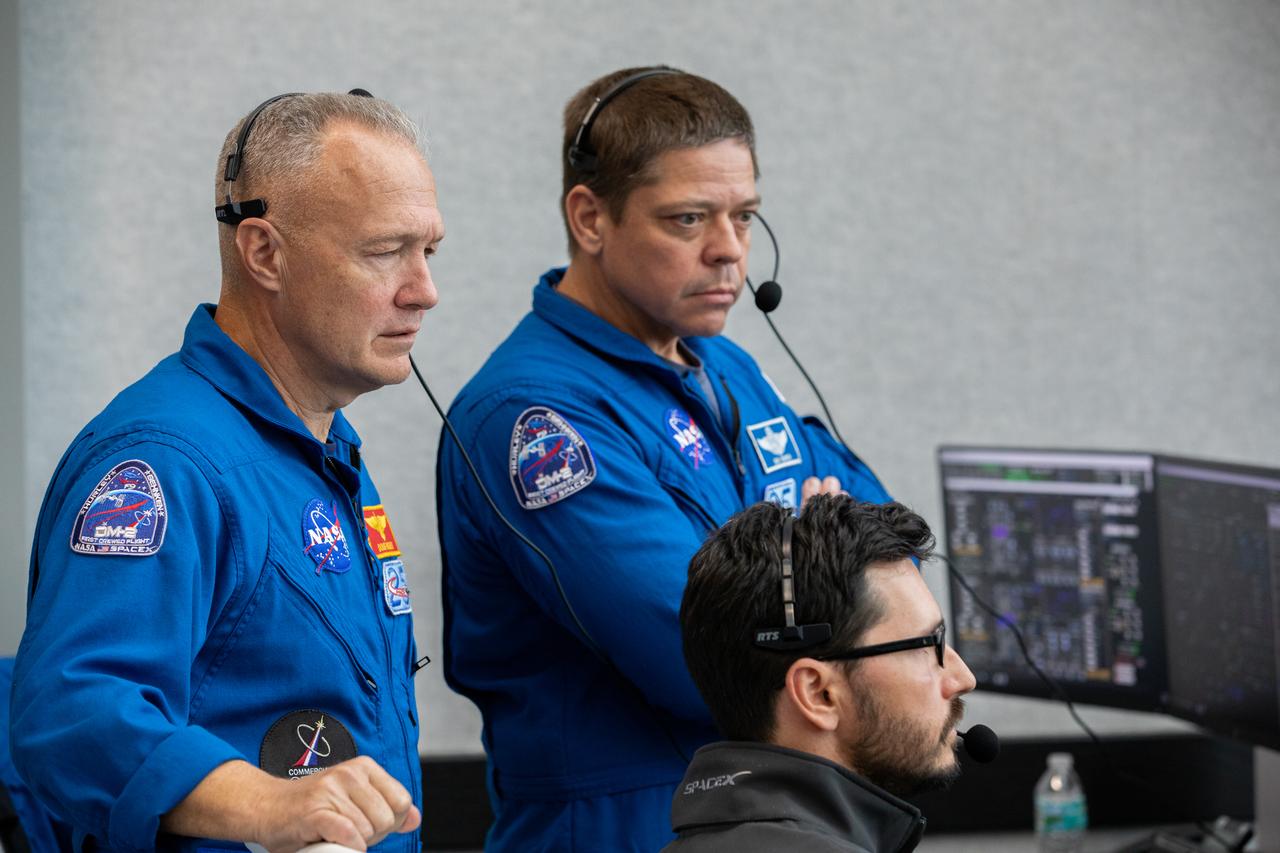
NASA astronauts Doug Hurley, left, and Bob Behnken watch the liftoff of a SpaceX Falcon 9 rocket and Crew Dragon spacecraft on the uncrewed In-Flight Abort Test, Jan. 19, 2020, inside Firing Room 4 in Kennedy Space Center’s Launch Control Center. The test demonstrated the spacecraft’s escape capabilities in preparation for crewed flights to the International Space Station as part of the agency’s Commercial Crew Program.
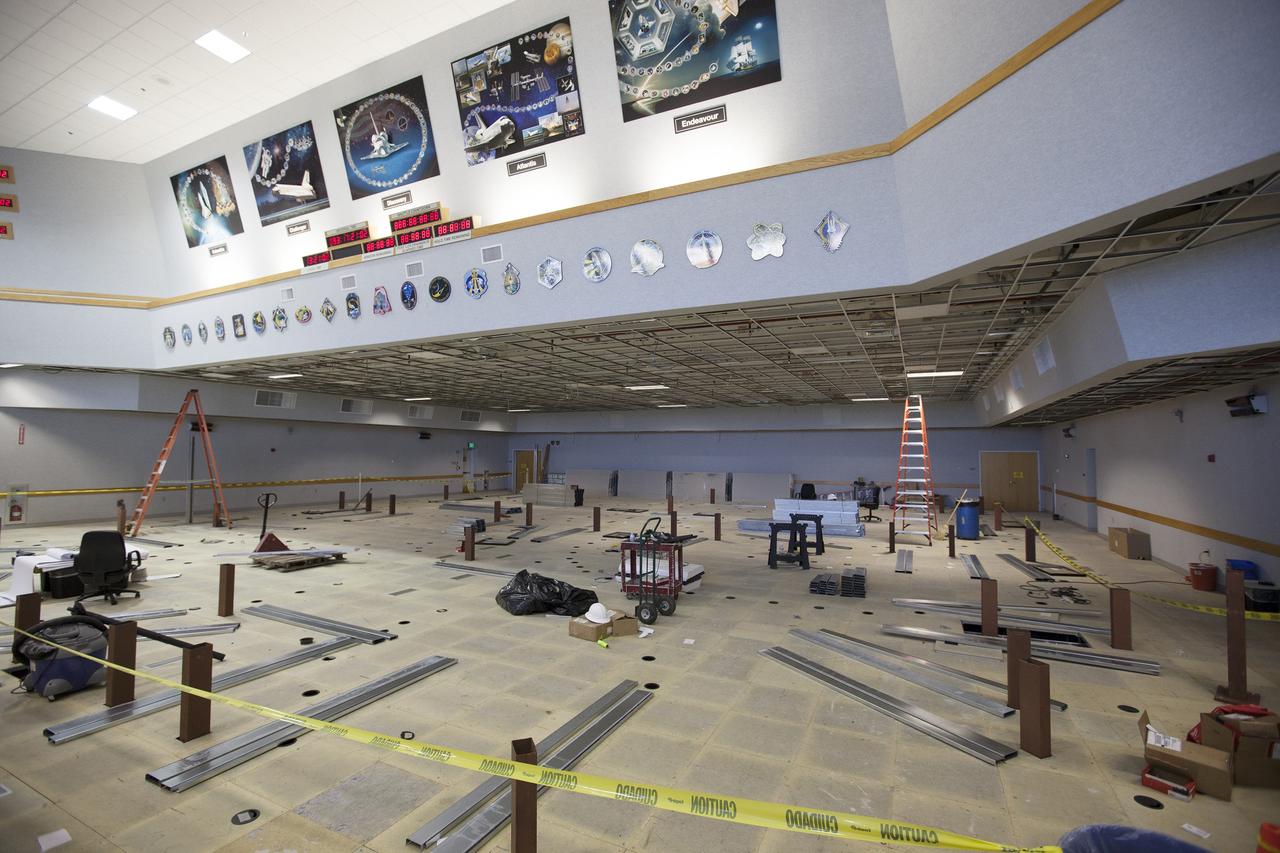
CAPE CANAVERAL, Fla. – The Ground Systems Development and Operations Program is overseeing efforts to create a new multi-user firing room in Firing Room 4 in the Launch Control Center at NASA's Kennedy Space Center in Florida. The main floor consoles, cabling and wires below the floor and ceiling tiles above have been removed. Sub-flooring has been installed and the room is marked off to create four separate rooms on the main floor. In view along the soffit are space shuttle launch plaques for 21 missions launched from Firing Room 4. The design of Firing Room 4 will incorporate five control room areas that are flexible to meet current and future NASA and commercial user requirements. The equipment and most of the consoles from Firing Room 4 were moved to Firing Room 2 for possible future reuse. Photo credit: NASA/Ben Smegelsky
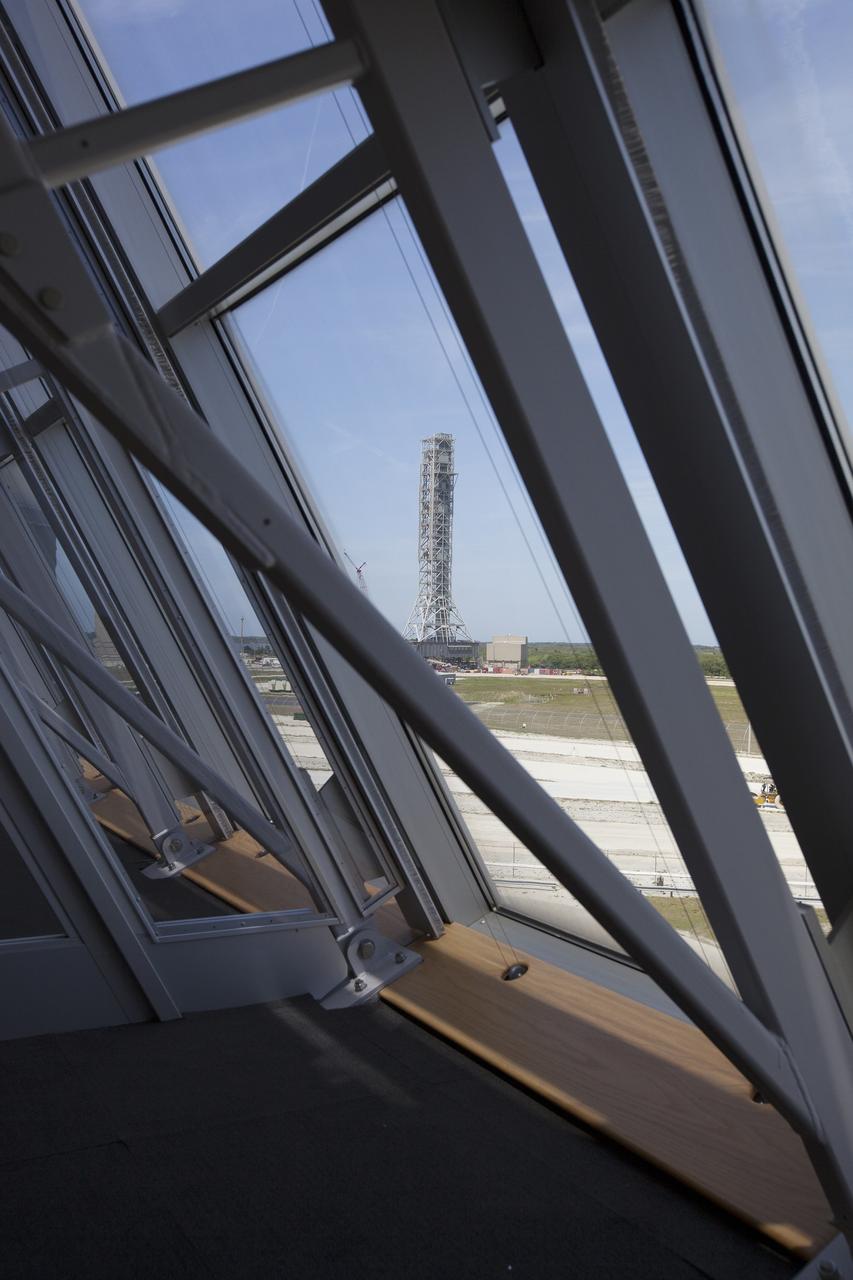
CAPE CANAVERAL, Fla. – The Mobile Launcher is visible through a window inside Firing Room 4 in the Launch Control Center at NASA's Kennedy Space Center in Florida. The Ground Systems Development and Operations Program is overseeing efforts to create a new multi-user firing room in Firing Room 4. The main floor consoles, cabling and wires below the floor and ceiling tiles above have been removed. Sub-flooring has been installed and the room is marked off to create four separate rooms on the main floor. The design of Firing Room 4 will incorporate five control room areas that are flexible to meet current and future NASA and commercial user requirements. The equipment and most of the consoles from Firing Room 4 were moved to Firing Room 2 for possible future reuse. Photo credit: NASA/Ben Smegelsky
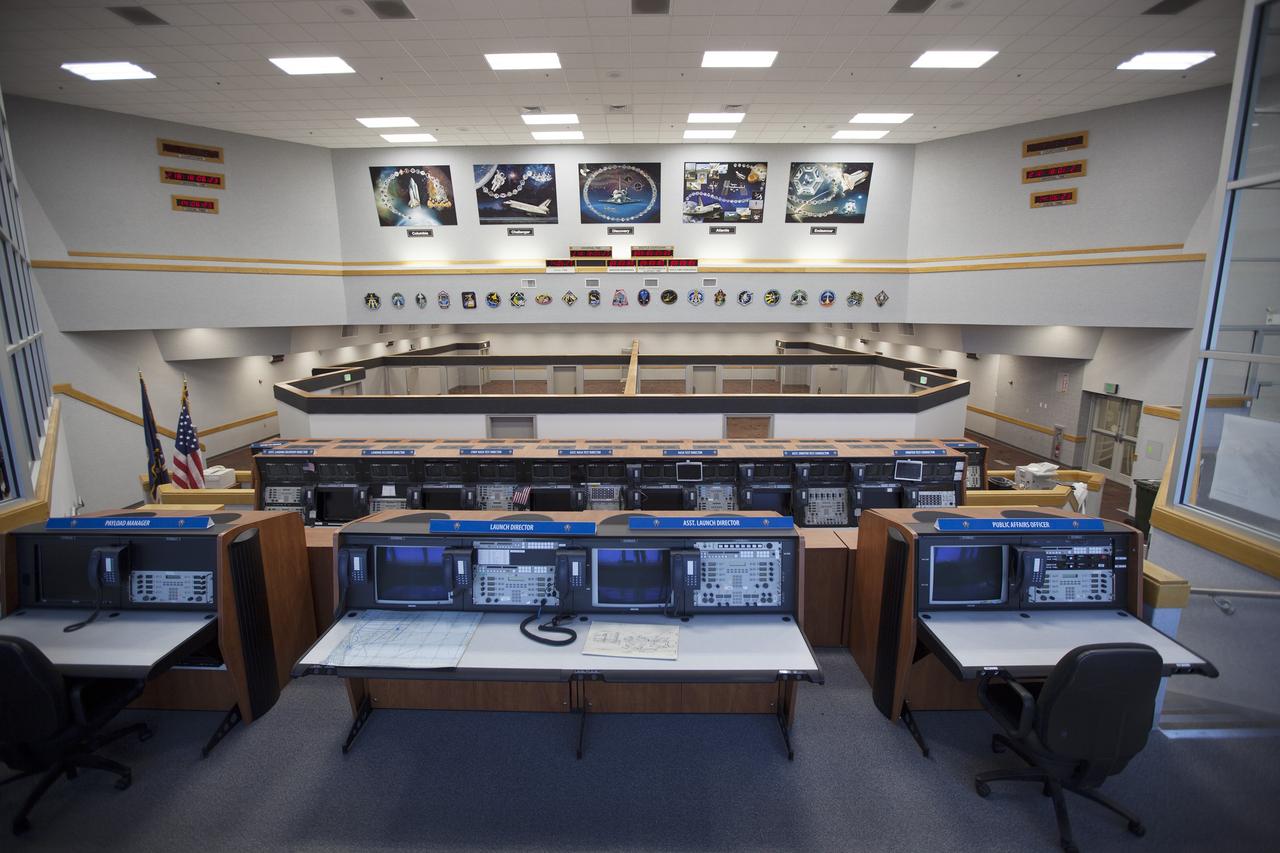
CAPE CANAVERAL, Fla. – Inside Firing Room 4 in the Launch Control Center at NASA's Kennedy Space Center in Florida, the outer walls, inner walls, windows and doors for the four separate firing rooms on the main floor have been completed. Three rows of upper level management consoles remain and could be used as a fifth firing room. The Ground Systems Development and Operations Program is overseeing the efforts to create a new firing room based on a multi-user concept. The space shuttle mission plaques and posters remain on the wall above the firing rooms. The design of Firing Room 4 incorporates five control room areas that can be flexible to meet current and future NASA and commercial user requirements. The equipment and most of the consoles from Firing Room 4 were moved to Firing Room 2 for possible future reuse. Photo credit: NASA/Dimitri Gerondidakis
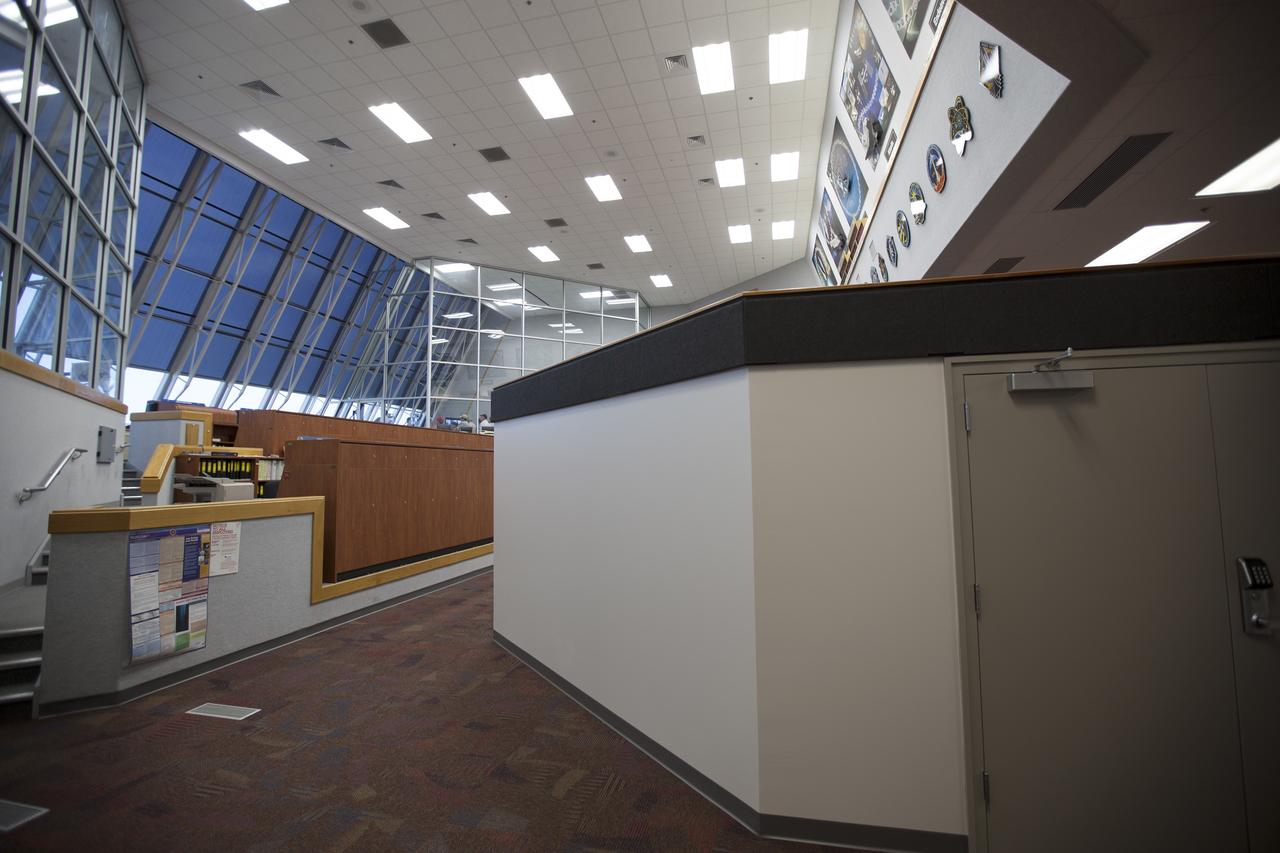
CAPE CANAVERAL, Fla. – Inside Firing Room 4 in the Launch Control Center at NASA's Kennedy Space Center in Florida, the inner walls, outer walls, windows and doors have been completed for the four individual firing rooms. New ceiling tiles, lighting and carpeting have been installed. Three rows of upper level management consoles remain and could be used as a fifth firing room. The Ground Systems Development and Operations Program is overseeing the efforts to create a new firing room based on a multi-user concept. The space shuttle plaques and posters remain on the wall above the firing rooms. The design of Firing Room 4 incorporates five control room areas that can be flexible to meet current and future NASA and commercial user requirements. The equipment and most of the consoles from Firing Room 4 were moved to Firing Room 2 for possible future reuse. Photo credit: NASA/Dimitri Gerondidakis
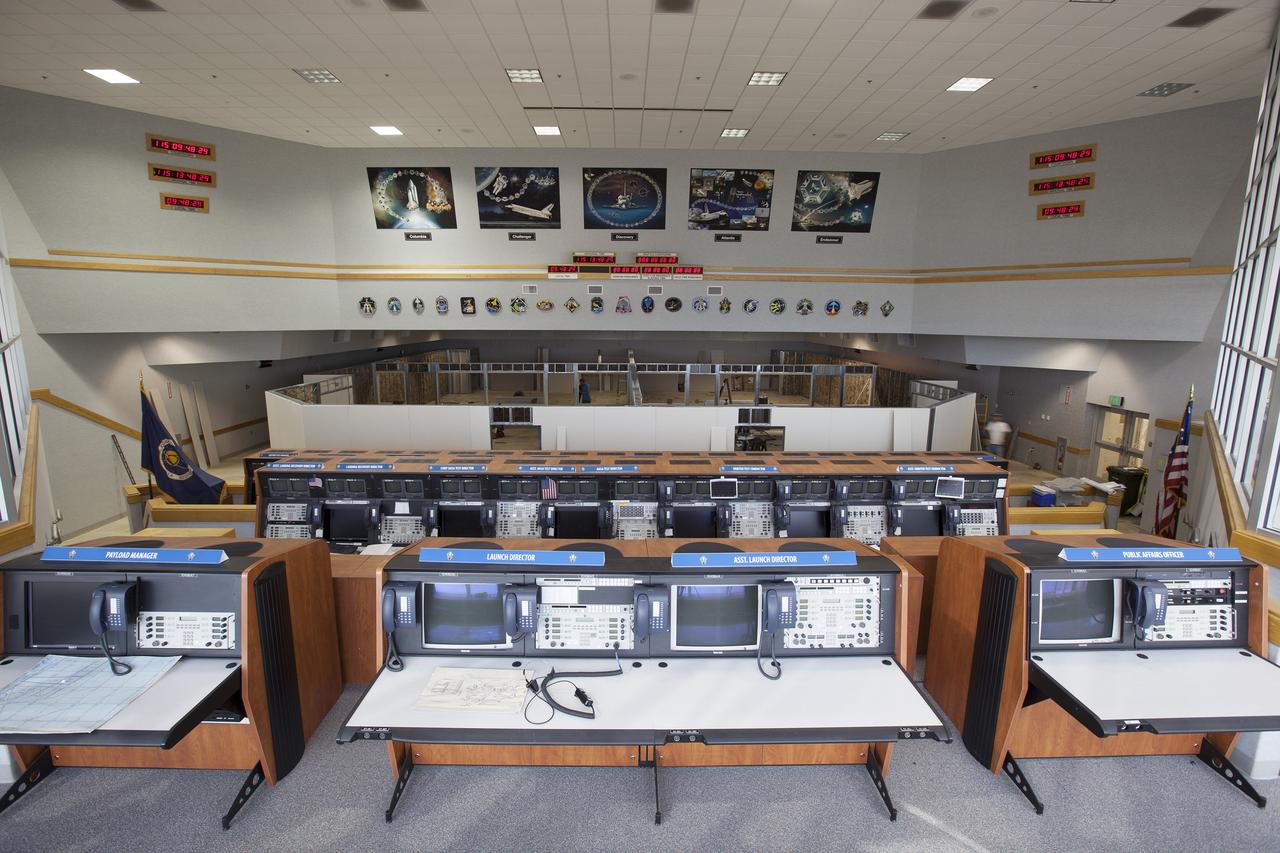
CAPE CANAVERAL, Fla. – Construction workers have installed the framing and some of the inner walls inside Firing Room 4 in the Launch Control Center at NASA's Kennedy Space Center in Florida. Three rows of upper level management consoles remain. The Ground Systems Development and Operations Program is overseeing efforts to create a new firing room based on a multi-user concept. The design of Firing Room 4 will incorporate five control room areas that are flexible to meet current and future NASA and commercial user requirements. The equipment and most of the consoles from Firing Room 4 were moved to Firing Room 2 for possible future reuse. Photo credit: NASA/Dimitri Gerondidakis
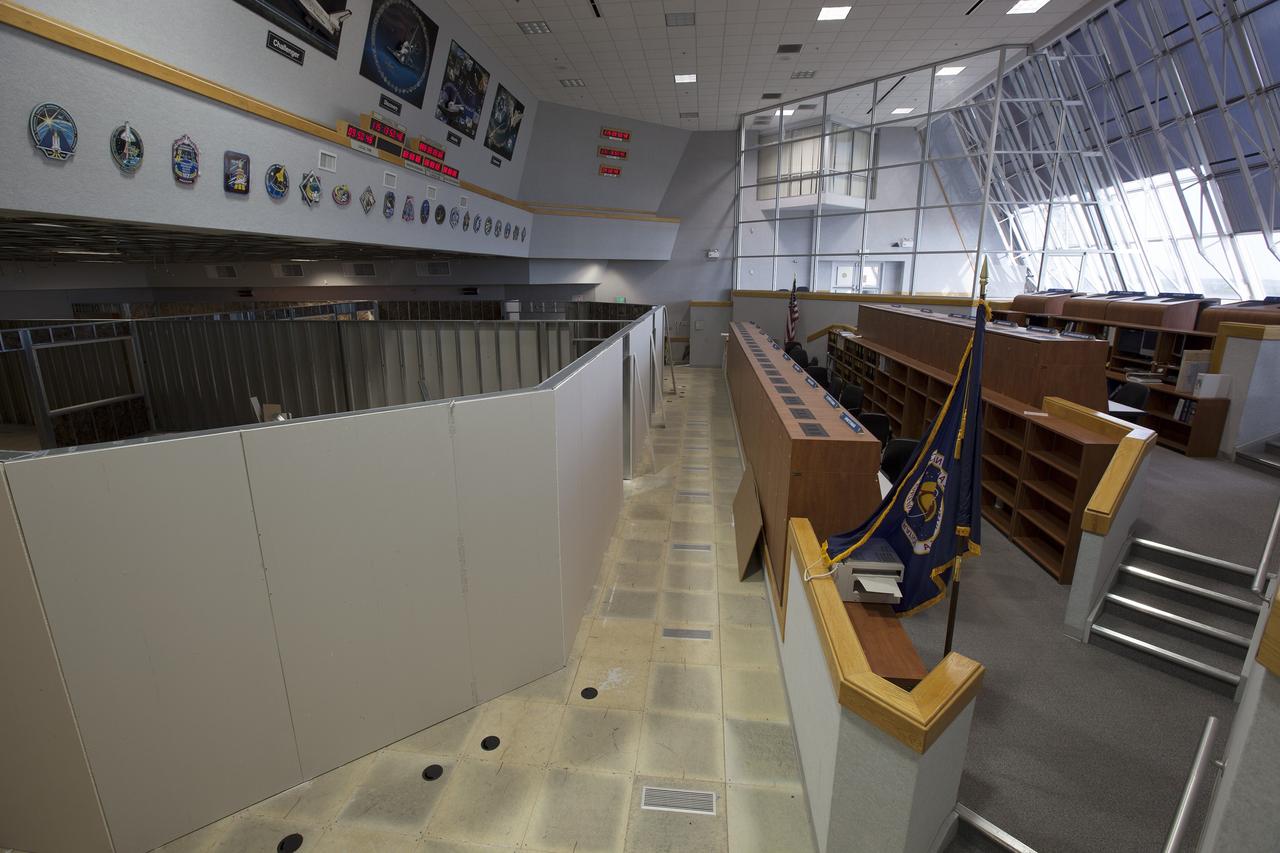
CAPE CANAVERAL, Fla. – Construction workers have installed the framing and some of the inner walls inside Firing Room 4 in the Launch Control Center at NASA's Kennedy Space Center in Florida. Three rows of upper level management consoles remain. The Ground Systems Development and Operations Program is overseeing efforts to create a new firing room based on a multi-user concept. The design of Firing Room 4 will incorporate five control room areas that are flexible to meet current and future NASA and commercial user requirements. The equipment and most of the consoles from Firing Room 4 were moved to Firing Room 2 for possible future reuse. Photo credit: NASA/Dimitri Gerondidakis
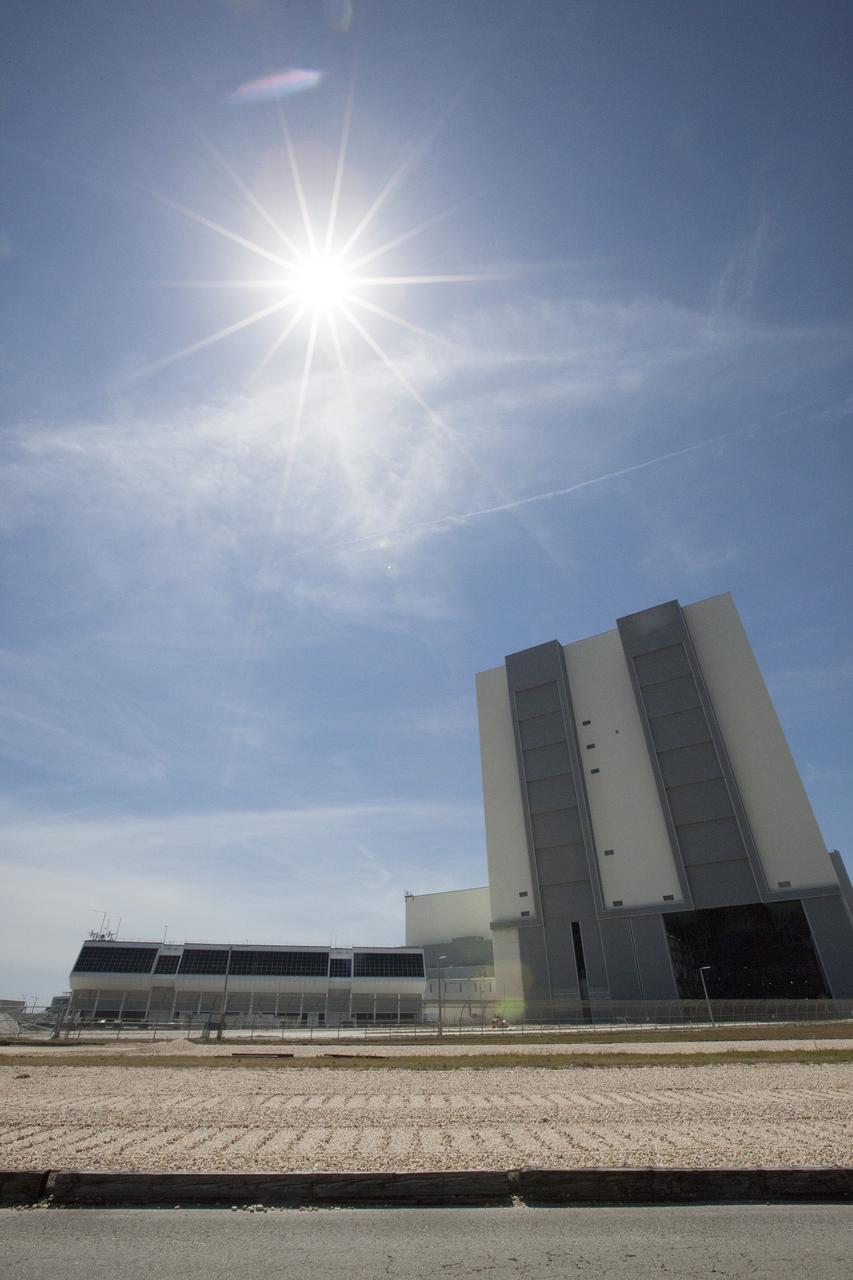
CAPE CANAVERAL, Fla. – A portion of the crawlerway, the Vehicle Assembly Building and the Launch Control Center are illuminated by a bright sun in this view looking west at NASA's Kennedy Space Center in Florida. Inside Firing Room 4 in the Launch Control Center, the Ground Systems Development and Operations Program is overseeing efforts to create a new firing room based on a multi-user concept. The design of Firing Room 4 will incorporate five control room areas that are flexible to meet current and future NASA and commercial user requirements. The equipment and most of the consoles from Firing Room 4 were moved to Firing Room 2 for possible future reuse. Photo credit: NASA/Ben Smegelsky
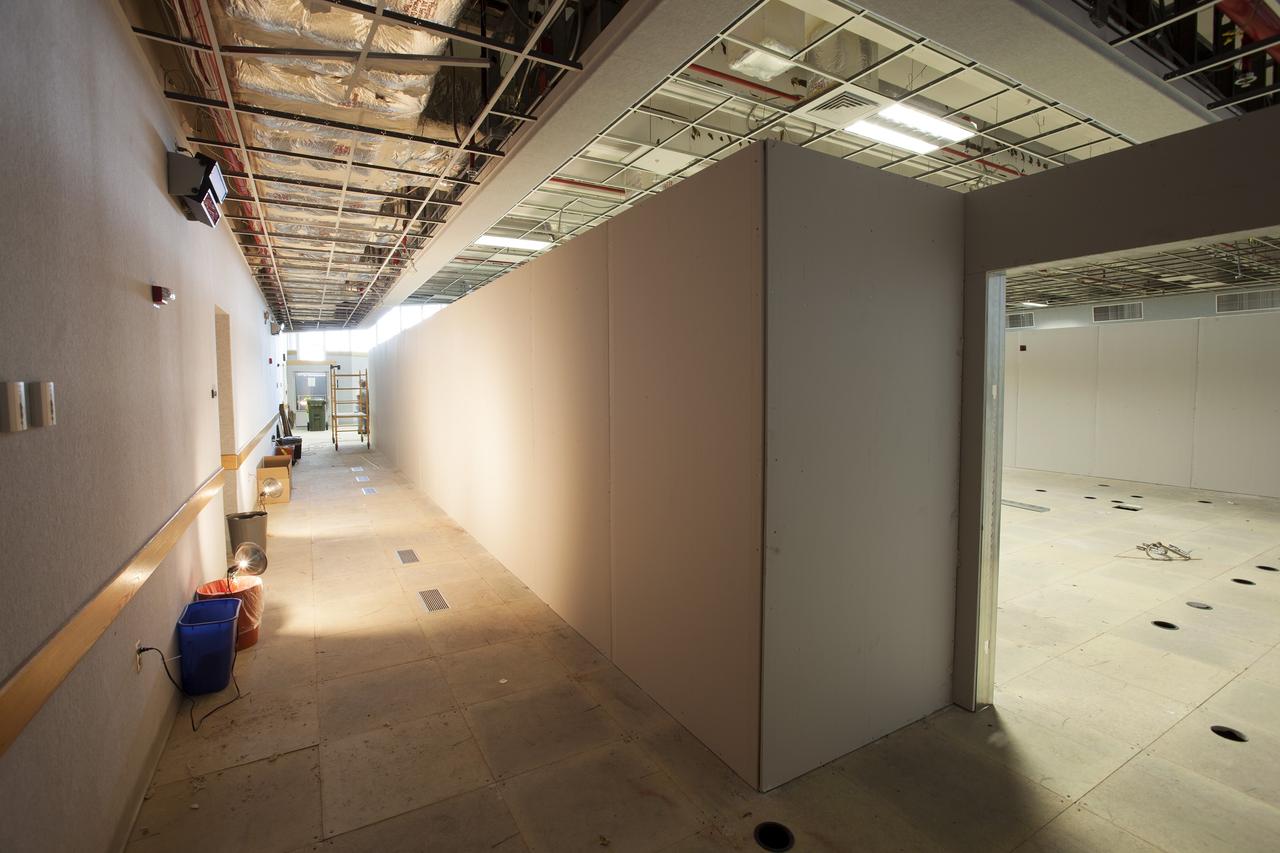
CAPE CANAVERAL, Fla. – Modifications to Firing Room 4 in the Launch Control Center at NASA's Kennedy Space Center in Florida continue to take shape. Construction workers have installed the framing and some of the inner walls. The Ground Systems Development and Operations Program is overseeing efforts to create a new firing room based on a multi-user concept. The design of Firing Room 4 will incorporate five control room areas that are flexible to meet current and future NASA and commercial user requirements. The equipment and most of the consoles from Firing Room 4 were moved to Firing Room 2 for possible future reuse. Photo credit: NASA/Dimitri Gerondidakis
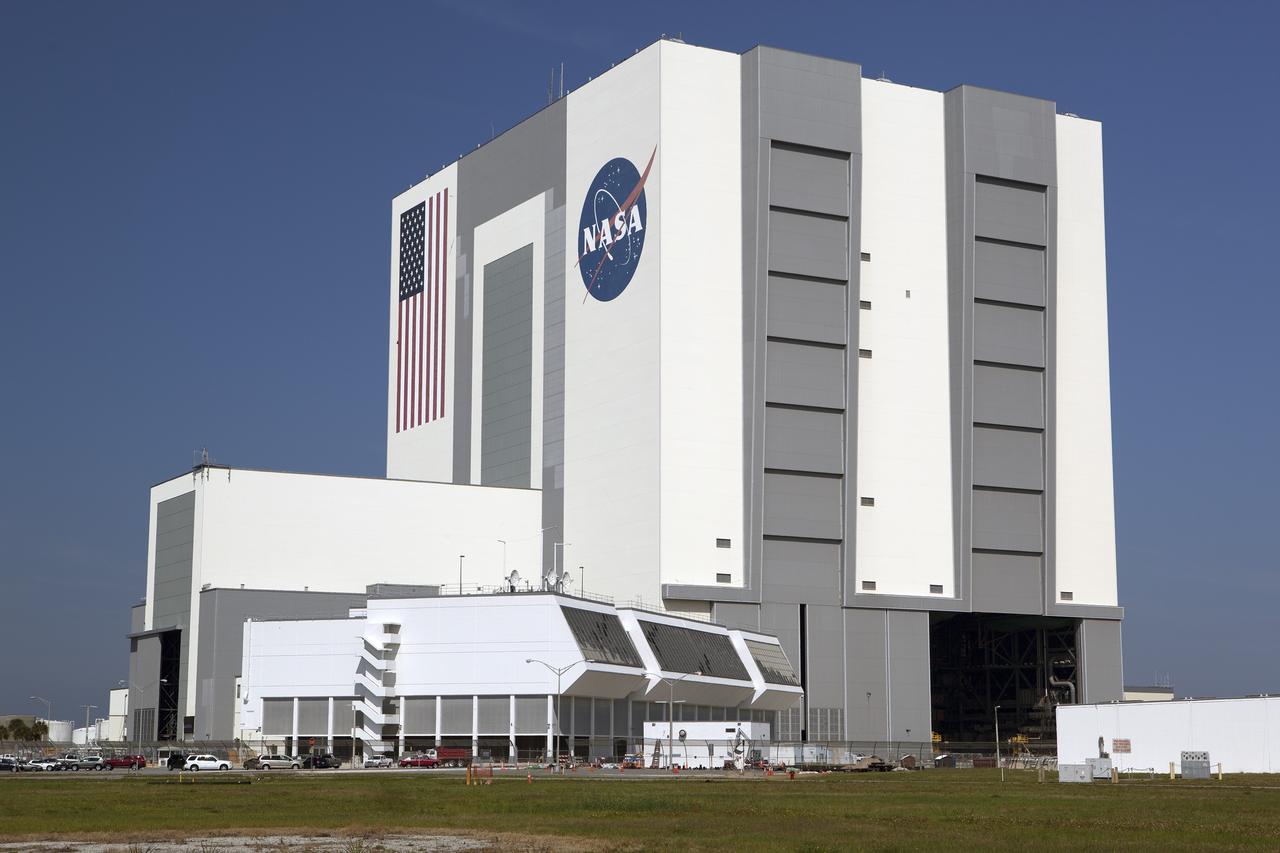
CAPE CANAVERAL, Fla. – The Vehicle Assembly Building and Launch Control Center are contrasted against a blue sky at NASA's Kennedy Space Center in Florida. Inside Firing Room 4, the Ground Systems Development and Operations Program is overseeing efforts to create a new firing room based on a multi-user concept. Construction workers have installed the framing and some of the insulation and inner walls. The design of Firing Room 4 will incorporate five control room areas that are flexible to meet current and future NASA and commercial user requirements. The equipment and most of the consoles from Firing Room 4 were moved to Firing Room 2 for possible future reuse. Photo credit: NASA/Dimitri Gerondidakis
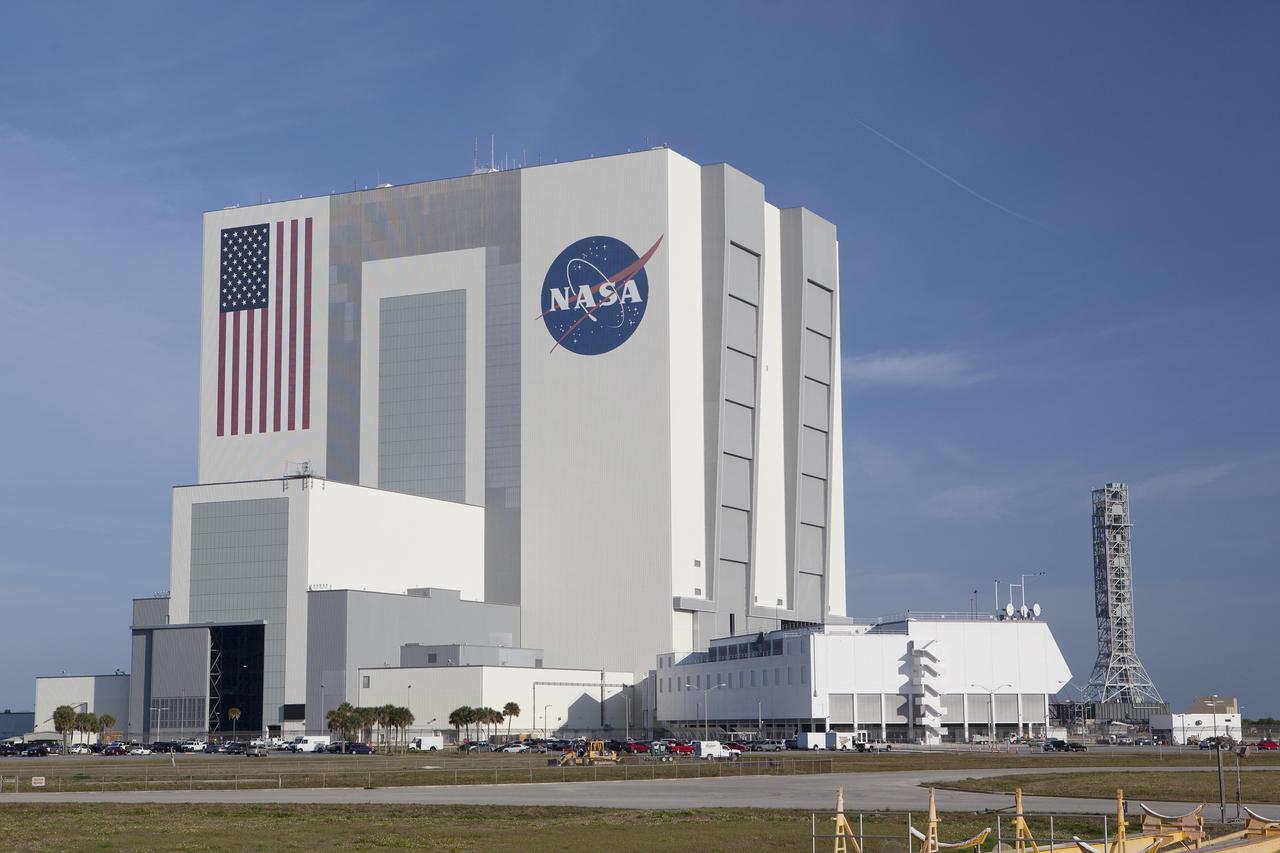
CAPE CANAVERAL, Fla. – The Vehicle Assembly Building, Launch Control Center and Mobile Launcher are in this view of the Launch Complex 39 area at NASA's Kennedy Space Center in Florida. Inside the Launch Control Center, the Ground Systems Development and Operations Program is overseeing efforts to create a new firing room based on a multi-user concept in Firing Room 4. The design of Firing Room 4 will incorporate five control room areas that are flexible to meet current and future NASA and commercial user requirements. The equipment and most of the consoles from Firing Room 4 were moved to Firing Room 2 for possible future reuse. Photo credit: NASA/Ben Smegelsky
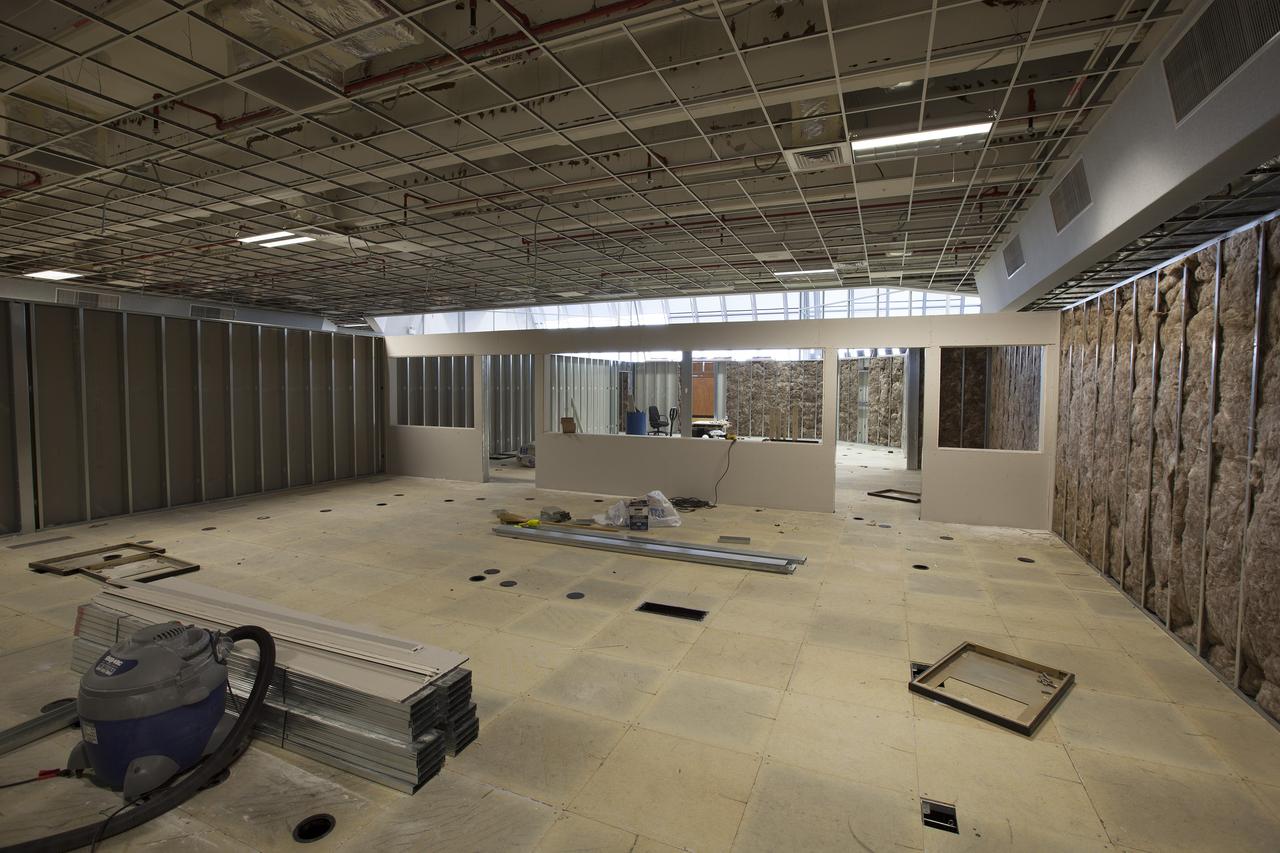
CAPE CANAVERAL, Fla. – Modifications to Firing Room 4 in the Launch Control Center at NASA's Kennedy Space Center in Florida continue to take shape. Construction workers have installed the framing and some of the insulation and inner walls. The Ground Systems Development and Operations Program is overseeing efforts to create a new firing room based on a multi-user concept. The design of Firing Room 4 will incorporate five control room areas that are flexible to meet current and future NASA and commercial user requirements. The equipment and most of the consoles from Firing Room 4 were moved to Firing Room 2 for possible future reuse. Photo credit: NASA/Dimitri Gerondidakis
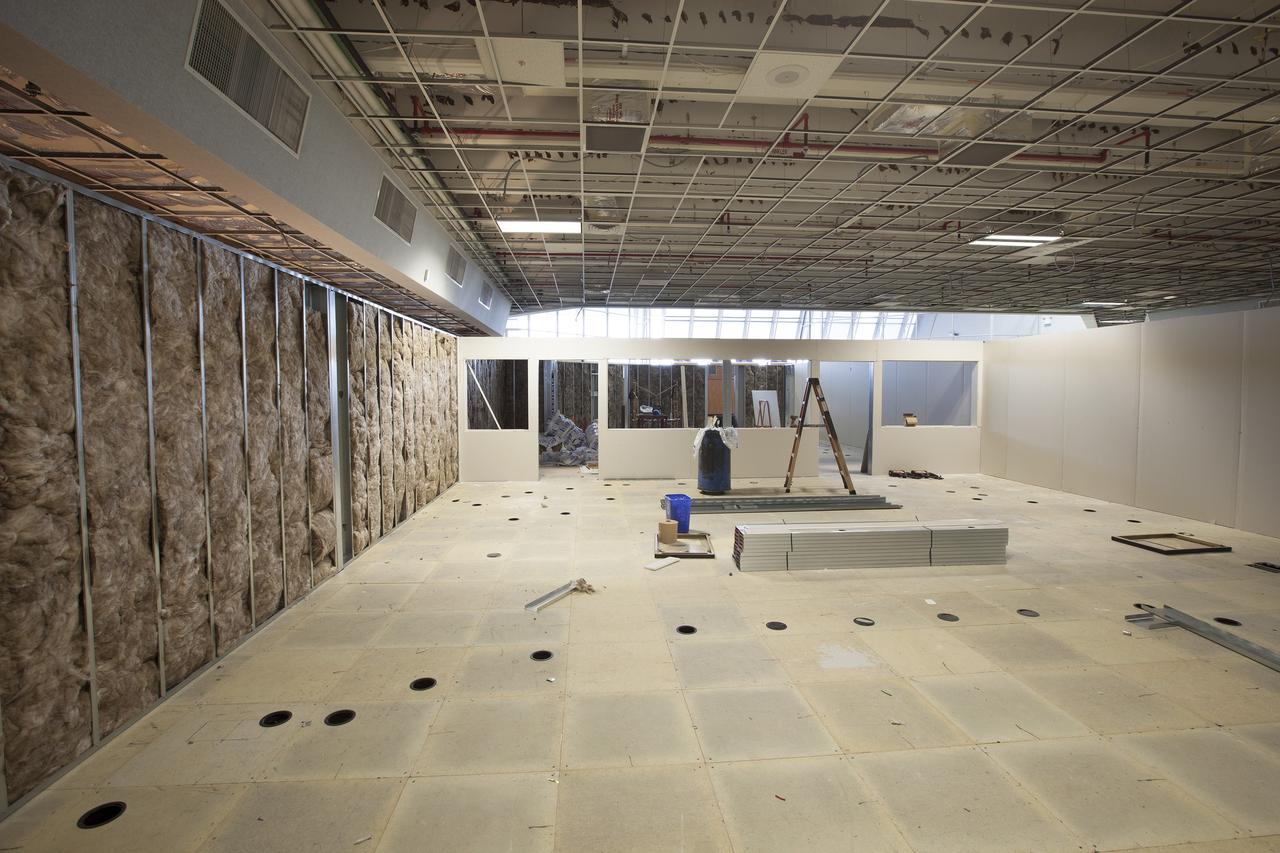
CAPE CANAVERAL, Fla. – Modifications to Firing Room 4 in the Launch Control Center at NASA's Kennedy Space Center in Florida continue to take shape. Construction workers have installed the framing and some of the insulation and inner walls. The Ground Systems Development and Operations Program is overseeing efforts to create a new firing room based on a multi-user concept. The design of Firing Room 4 will incorporate five control room areas that are flexible to meet current and future NASA and commercial user requirements. The equipment and most of the consoles from Firing Room 4 were moved to Firing Room 2 for possible future reuse. Photo credit: NASA/Dimitri Gerondidakis
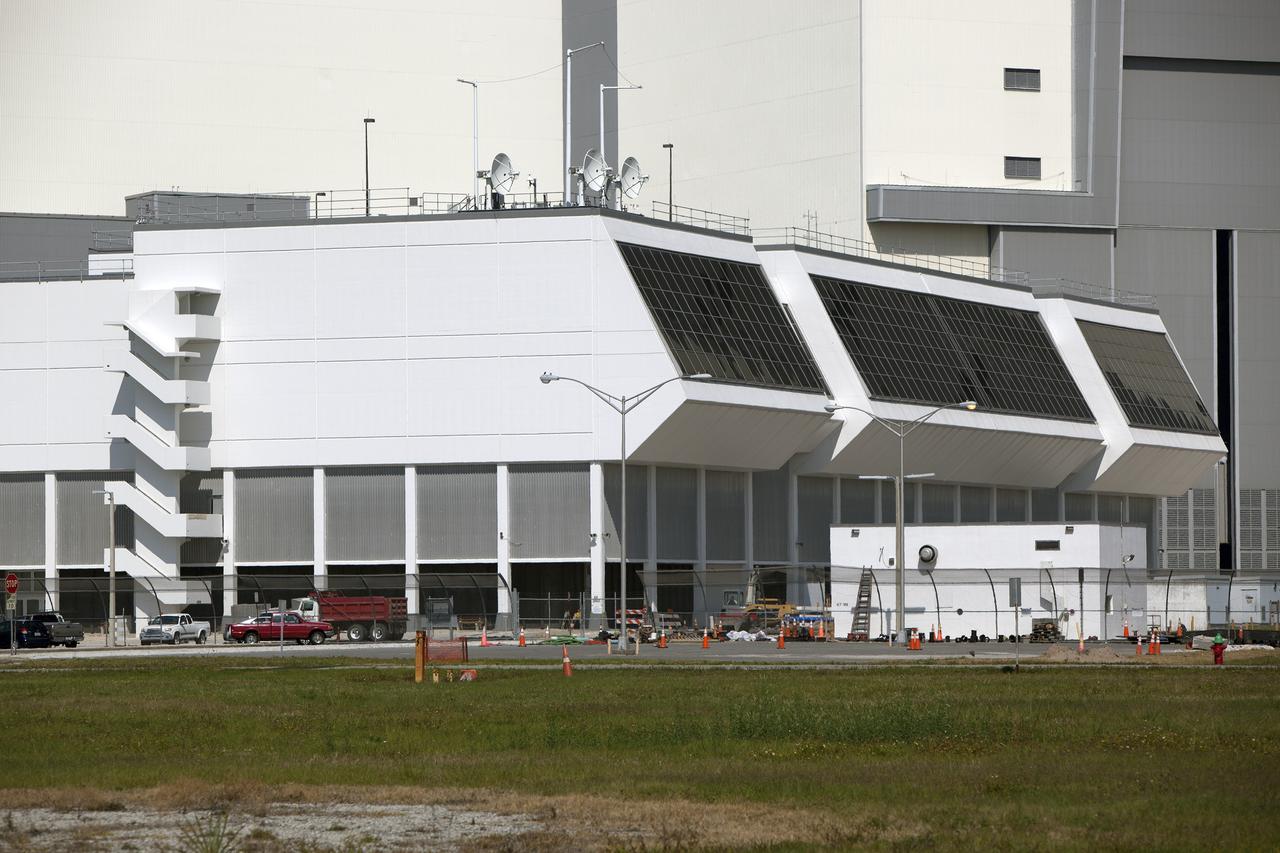
CAPE CANAVERAL, Fla. – An exterior view of the Launch Control Center at NASA's Kennedy Space Center in Florida. Inside Firing Room 4, the Ground Systems Development and Operations Program is overseeing efforts to create a new firing room based on a multi-user concept. Construction workers have installed the framing and some of the insulation and inner walls. The design of Firing Room 4 will incorporate five control room areas that are flexible to meet current and future NASA and commercial user requirements. The equipment and most of the consoles from Firing Room 4 were moved to Firing Room 2 for possible future reuse. Photo credit: NASA/Dimitri Gerondidakis
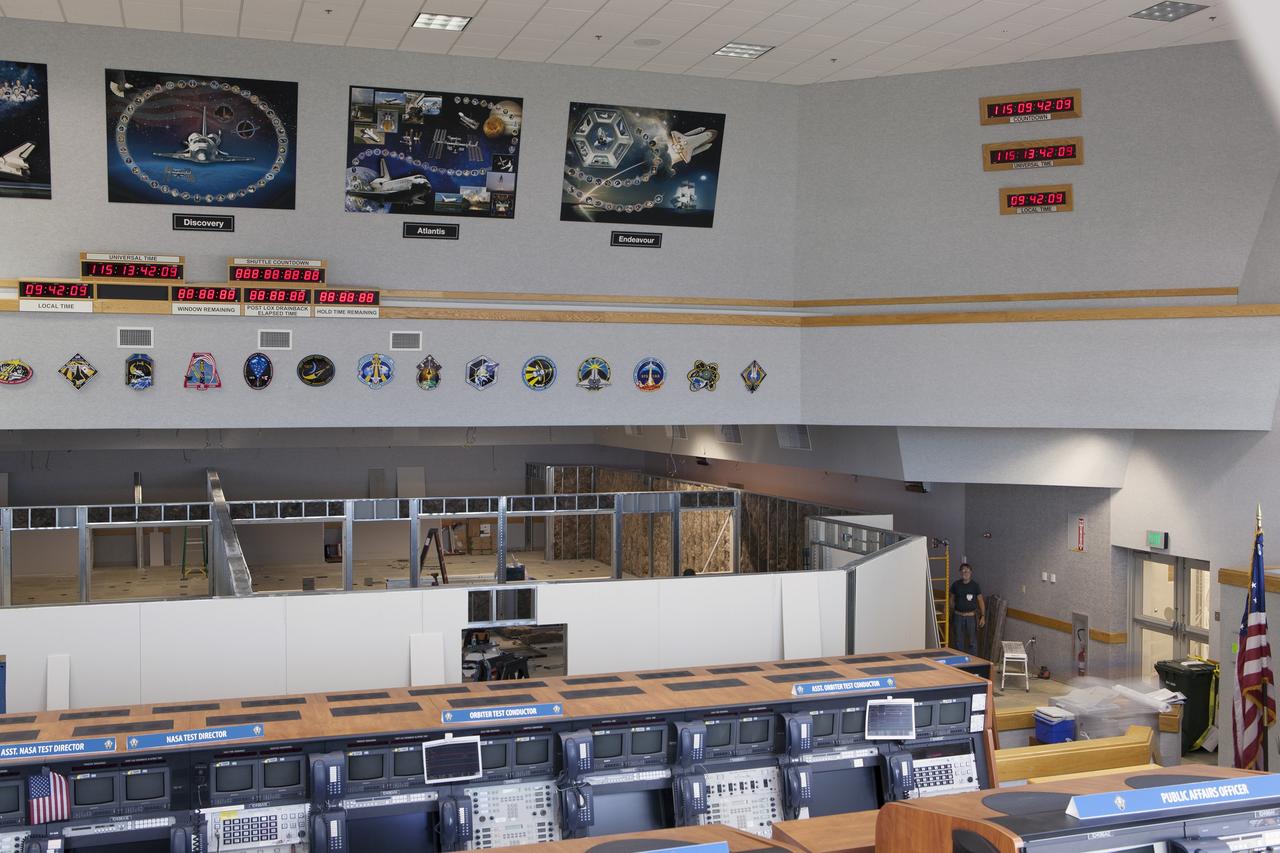
CAPE CANAVERAL, Fla. – Construction workers have installed the framing and some of the inner walls inside Firing Room 4 in the Launch Control Center at NASA's Kennedy Space Center in Florida. Three rows of upper level management consoles remain. The Ground Systems Development and Operations Program is overseeing efforts to create a new firing room based on a multi-user concept. The design of Firing Room 4 will incorporate five control room areas that are flexible to meet current and future NASA and commercial user requirements. The equipment and most of the consoles from Firing Room 4 were moved to Firing Room 2 for possible future reuse. Photo credit: NASA/Dimitri Gerondidakis
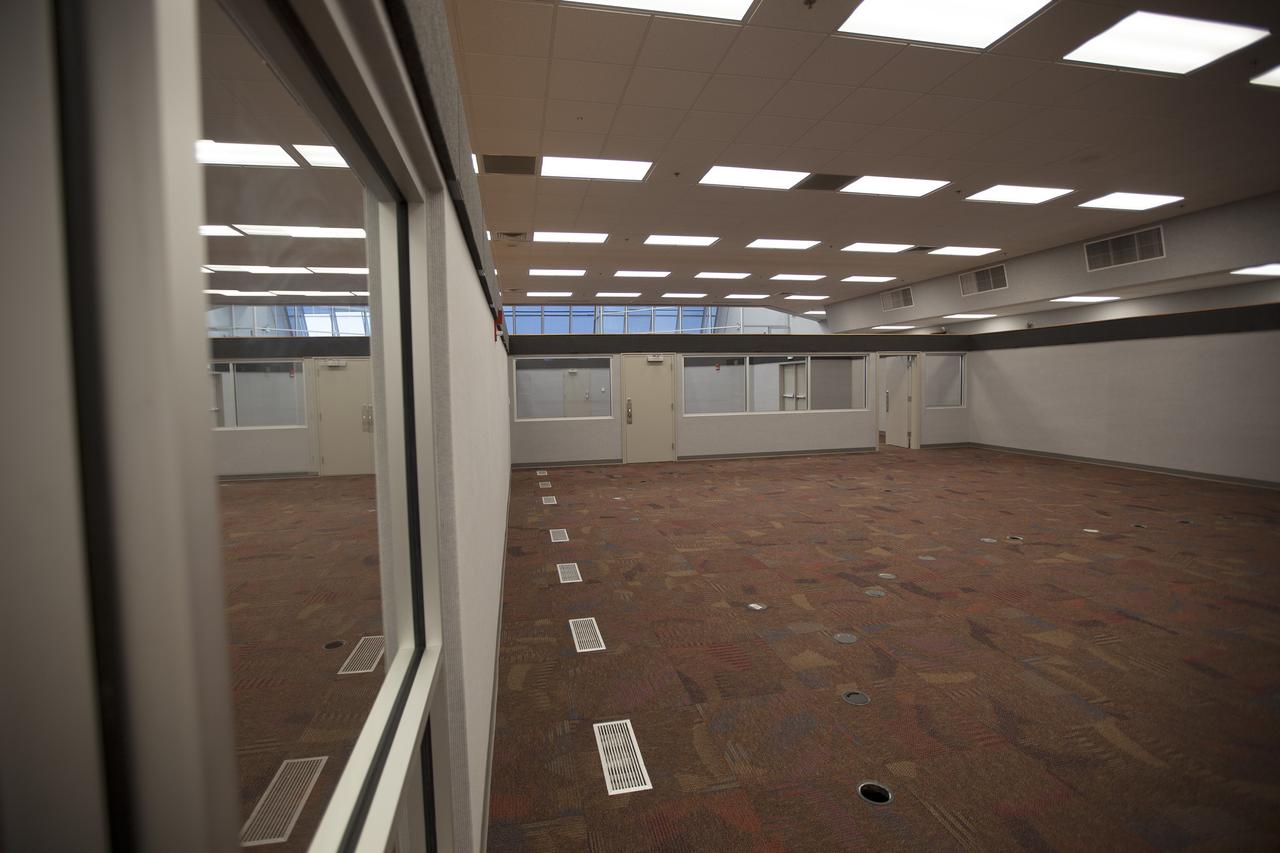
CAPE CANAVERAL, Fla. – Inside Firing Room 4 in the Launch Control Center at NASA's Kennedy Space Center in Florida, the inner walls, outer walls, windows and doors have been completed for the four individual firing rooms. New ceiling tiles, lighting and carpeting have been installed. Three rows of upper level management consoles remain and could be used as a fifth firing room. The Ground Systems Development and Operations Program is overseeing the efforts to create a new firing room based on a multi-user concept. The design of Firing Room 4 incorporates five control room areas that can be flexible to meet current and future NASA and commercial user requirements. The equipment and most of the consoles from Firing Room 4 were moved to Firing Room 2 for possible future reuse. Photo credit: NASA/Dimitri Gerondidakis
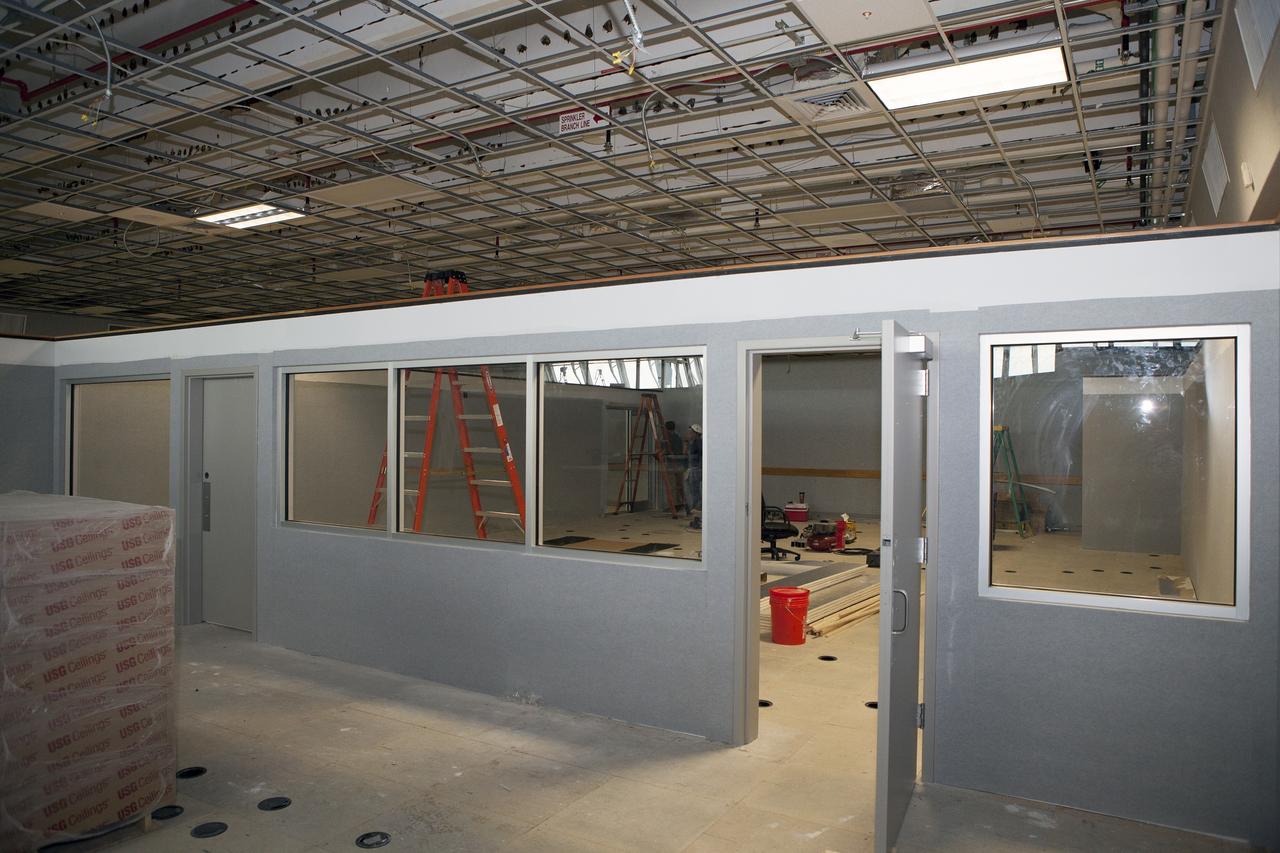
CAPE CANAVERAL, Fla. – Inside Firing Room 4 in the Launch Control Center at NASA's Kennedy Space Center in Florida, construction workers are completing the inner walls that separate the four firing rooms and the window framing and doorways are nearing completion. Three rows of upper level management consoles remain and could be used as a fifth firing room. The Ground Systems Development and Operations Program is overseeing the efforts to create a new firing room based on a multi-user concept. The design of Firing Room 4 will incorporate five control room areas that are flexible to meet current and future NASA and commercial user requirements. The equipment and most of the consoles from Firing Room 4 were moved to Firing Room 2 for possible future reuse. Photo credit: NASA/Daniel Casper
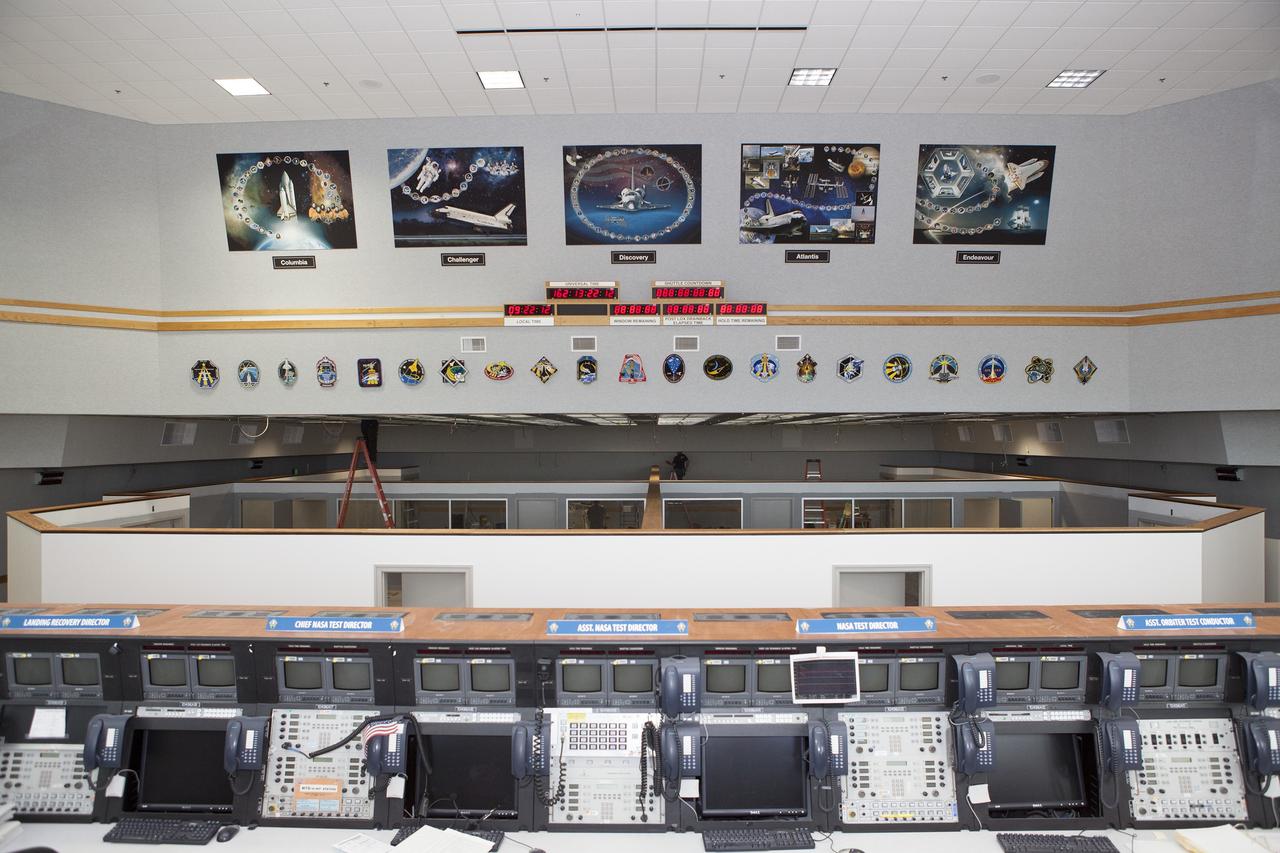
CAPE CANAVERAL, Fla. – Inside Firing Room 4 in the Launch Control Center at NASA's Kennedy Space Center in Florida, the outer walls and window framing for the four separate firing rooms on the main floor have been completed. Three rows of upper level management consoles remain and could be used as a fifth firing room. The Ground Systems Development and Operations Program is overseeing the efforts to create a new firing room based on a multi-user concept. The design of Firing Room 4 will incorporate five control room areas that are flexible to meet current and future NASA and commercial user requirements. The equipment and most of the consoles from Firing Room 4 were moved to Firing Room 2 for possible future reuse. Photo credit: NASA/Daniel Casper
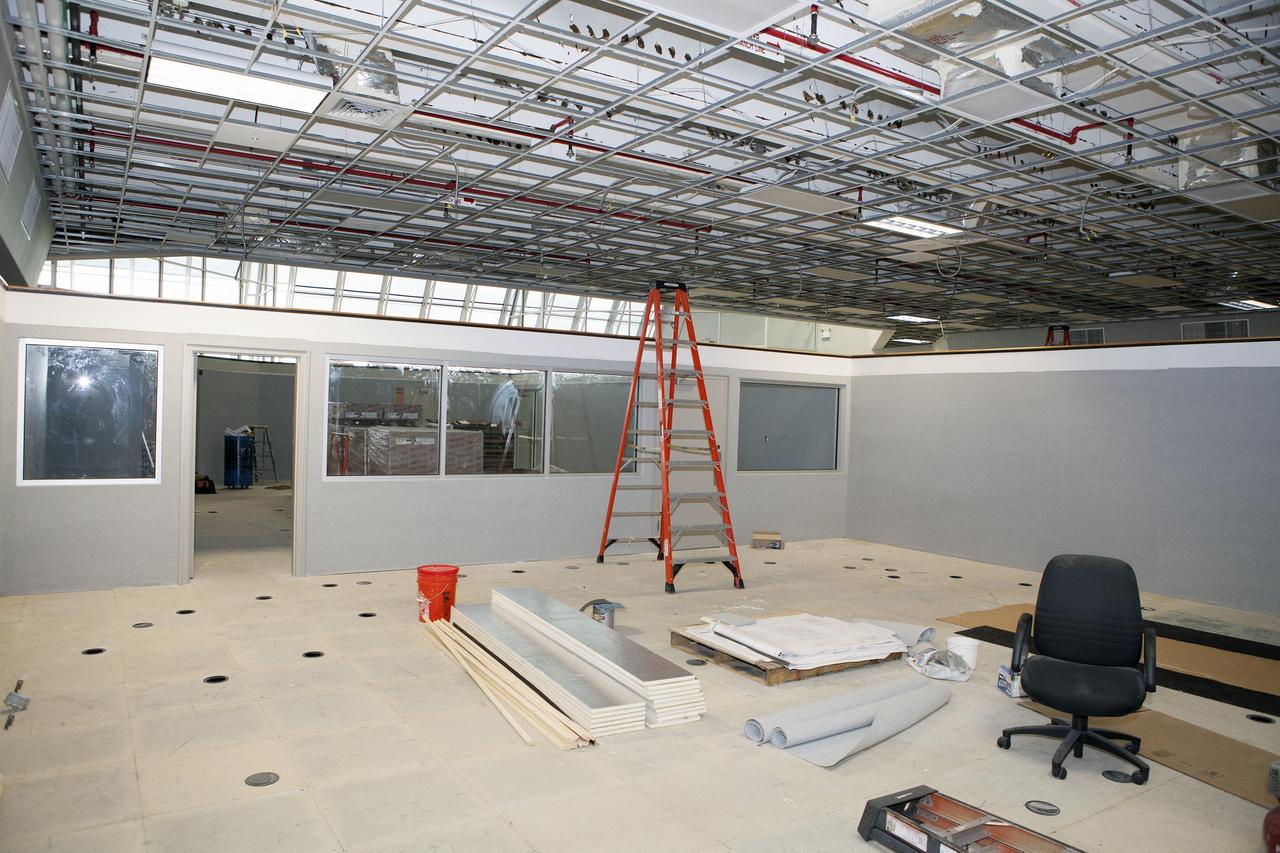
CAPE CANAVERAL, Fla. – Inside Firing Room 4 in the Launch Control Center at NASA's Kennedy Space Center in Florida, construction workers are completing the inner walls that separate the four firing rooms and the window framing and doorways are nearing completion. Preparations are underway for installation of new ceiling tiles. Three rows of upper level management consoles remain and could be used as a fifth firing room. The Ground Systems Development and Operations Program is overseeing the efforts to create a new firing room based on a multi-user concept. The design of Firing Room 4 will incorporate five control room areas that are flexible to meet current and future NASA and commercial user requirements. The equipment and most of the consoles from Firing Room 4 were moved to Firing Room 2 for possible future reuse. Photo credit: NASA/Daniel Casper
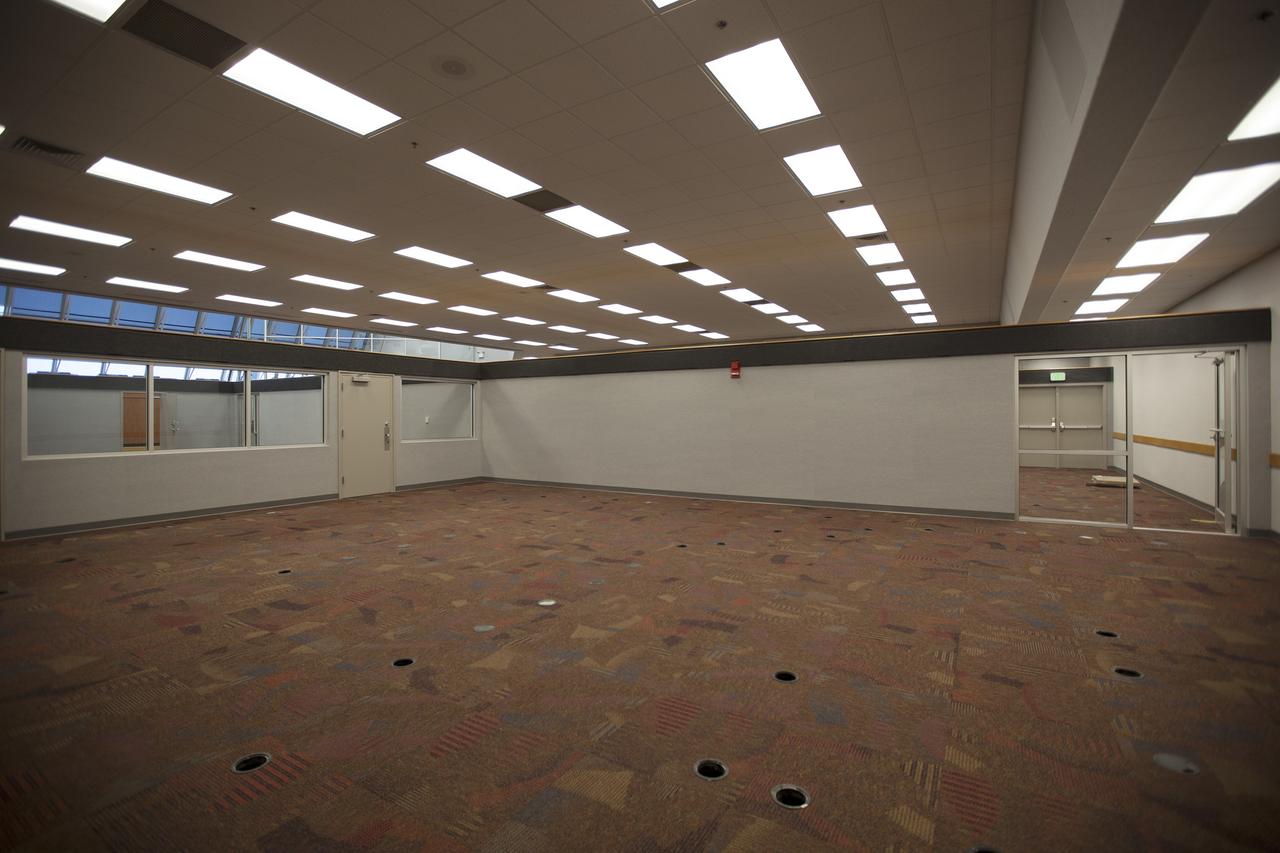
CAPE CANAVERAL, Fla. – Inside Firing Room 4 in the Launch Control Center at NASA's Kennedy Space Center in Florida, the outer walls, inner walls, windows and doors for the four firing rooms have been completed and new carpeting has been installed. Three rows of upper level management consoles remain and could be used as a fifth firing room. The Ground Systems Development and Operations Program is overseeing the efforts to create a new firing room based on a multi-user concept. The design of Firing Room 4 incorporates five control room areas that can be flexible to meet current and future NASA and commercial user requirements. The equipment and most of the consoles from Firing Room 4 were moved to Firing Room 2 for possible future reuse. Photo credit: NASA/Dimitri Gerondidakis
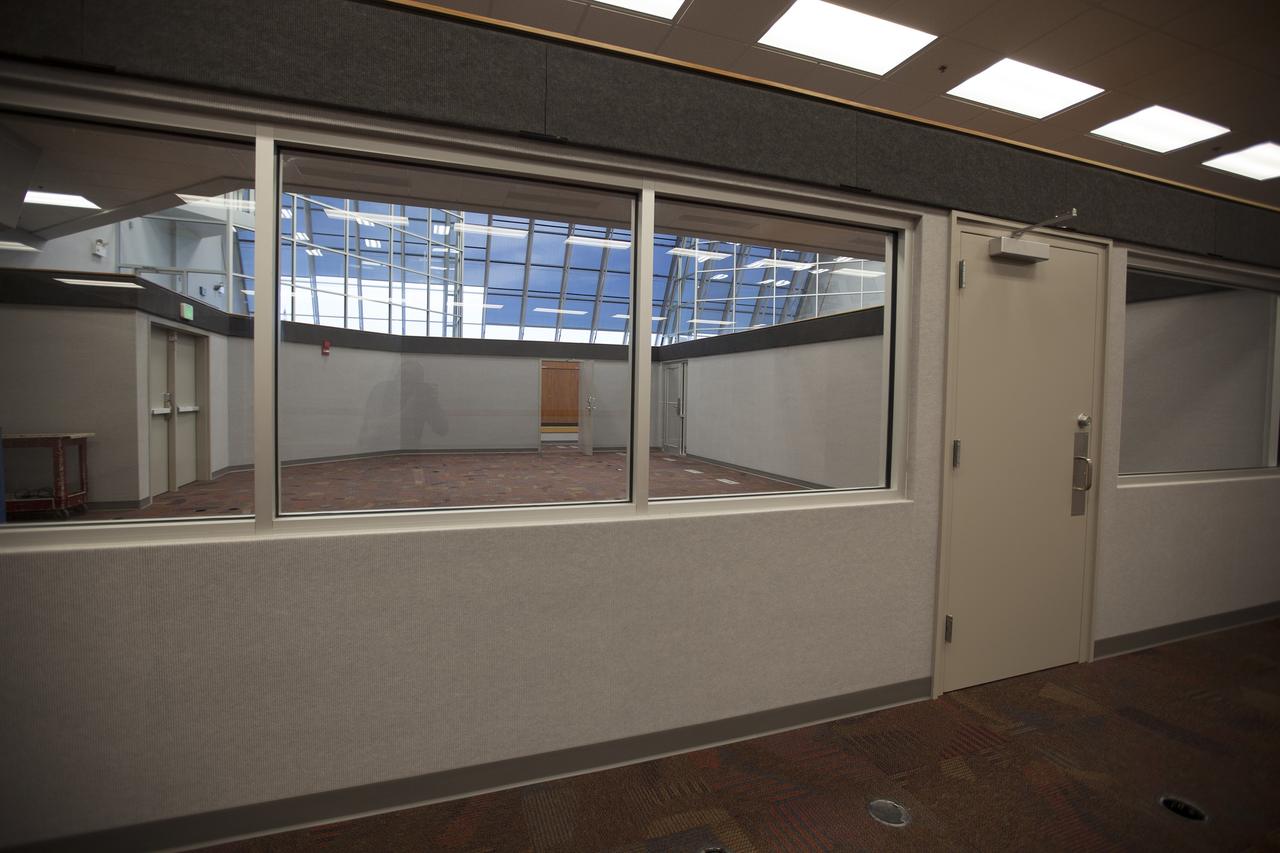
CAPE CANAVERAL, Fla. – A close-up view of one of the individual firing rooms inside Firing Room 4 in the Launch Control Center at NASA's Kennedy Space Center in Florida, reveals the inner walls, outer walls, windows and doors have been completed. New ceiling tiles, lighting and carpeting have been installed. Three rows of upper level management consoles remain and could be used as a fifth firing room. The Ground Systems Development and Operations Program is overseeing the efforts to create a new firing room based on a multi-user concept. The design of Firing Room 4 incorporates five control room areas that can be flexible to meet current and future NASA and commercial user requirements. The equipment and most of the consoles from Firing Room 4 were moved to Firing Room 2 for possible future reuse. Photo credit: NASA/Dimitri Gerondidakis
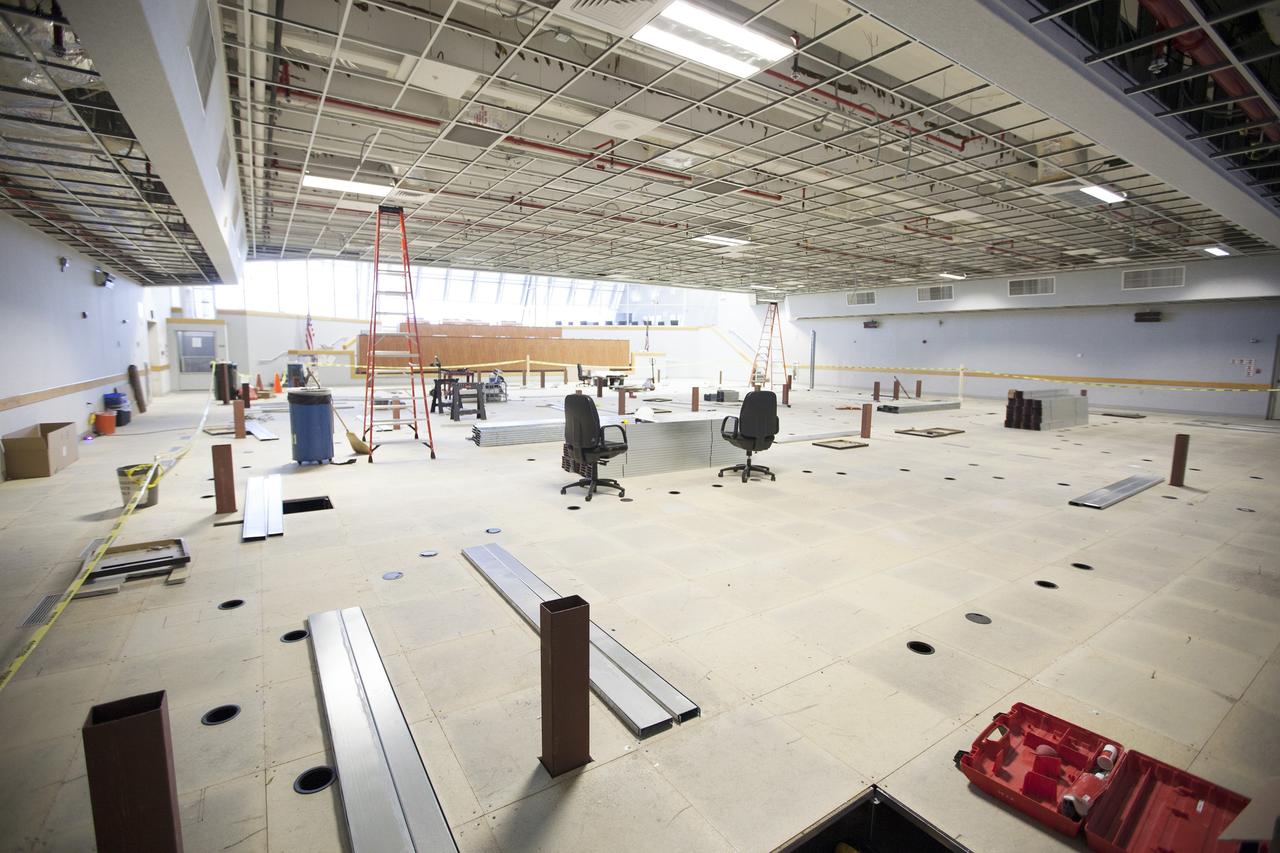
CAPE CANAVERAL, Fla. – The Ground Systems Development and Operations Program is overseeing efforts to create a new multi-user firing room in Firing Room 4 in the Launch Control Center at NASA's Kennedy Space Center in Florida. The main floor consoles, cabling and wires below the floor and ceiling tiles have been removed. Sub-flooring has been installed and the room is marked off to create four separate rooms on the main floor. The design of Firing Room 4 will incorporate five control room areas that are flexible to meet current and future NASA and commercial user requirements. The equipment and most of the consoles from Firing Room 4 were moved to Firing Room 2 for possible future reuse. Photo credit: NASA/Ben Smegelsky
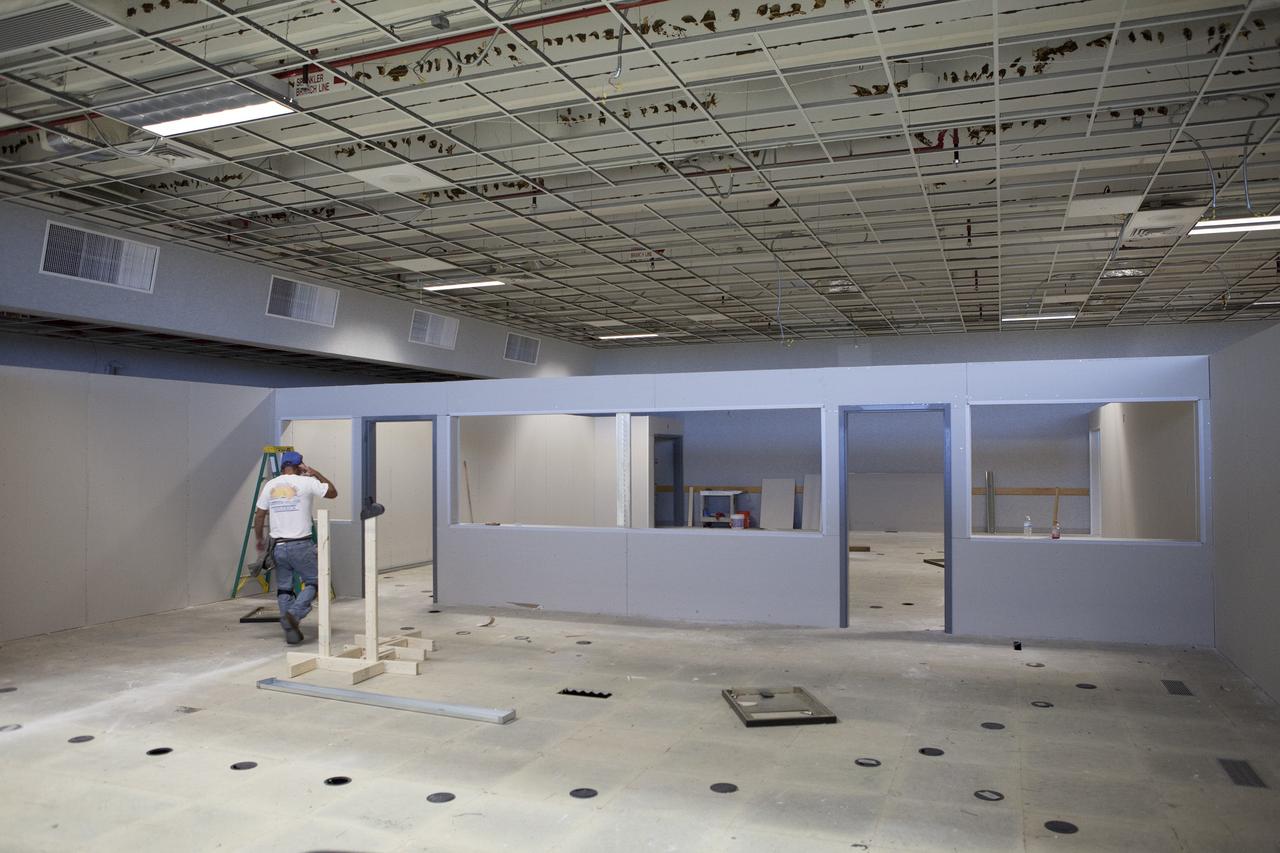
CAPE CANAVERAL, Fla. – A construction worker completes the installation of an inner wall inside Firing Room 4 in the Launch Control Center at NASA's Kennedy Space Center in Florida. The main floor has been divided into four separate rooms. The windows and doors between the rooms have been framed in. Ceiling tiles have been removed for upgrades to conduit and wiring. The Ground Systems Development and Operations Program is overseeing efforts to create a new firing room based on a multi-user concept. The design of Firing Room 4 will incorporate five control room areas that are flexible to meet current and future NASA and commercial user requirements. The equipment and most of the consoles from Firing Room 4 were moved to Firing Room 2 for possible future reuse. Photo credit: NASA/Daniel Casper
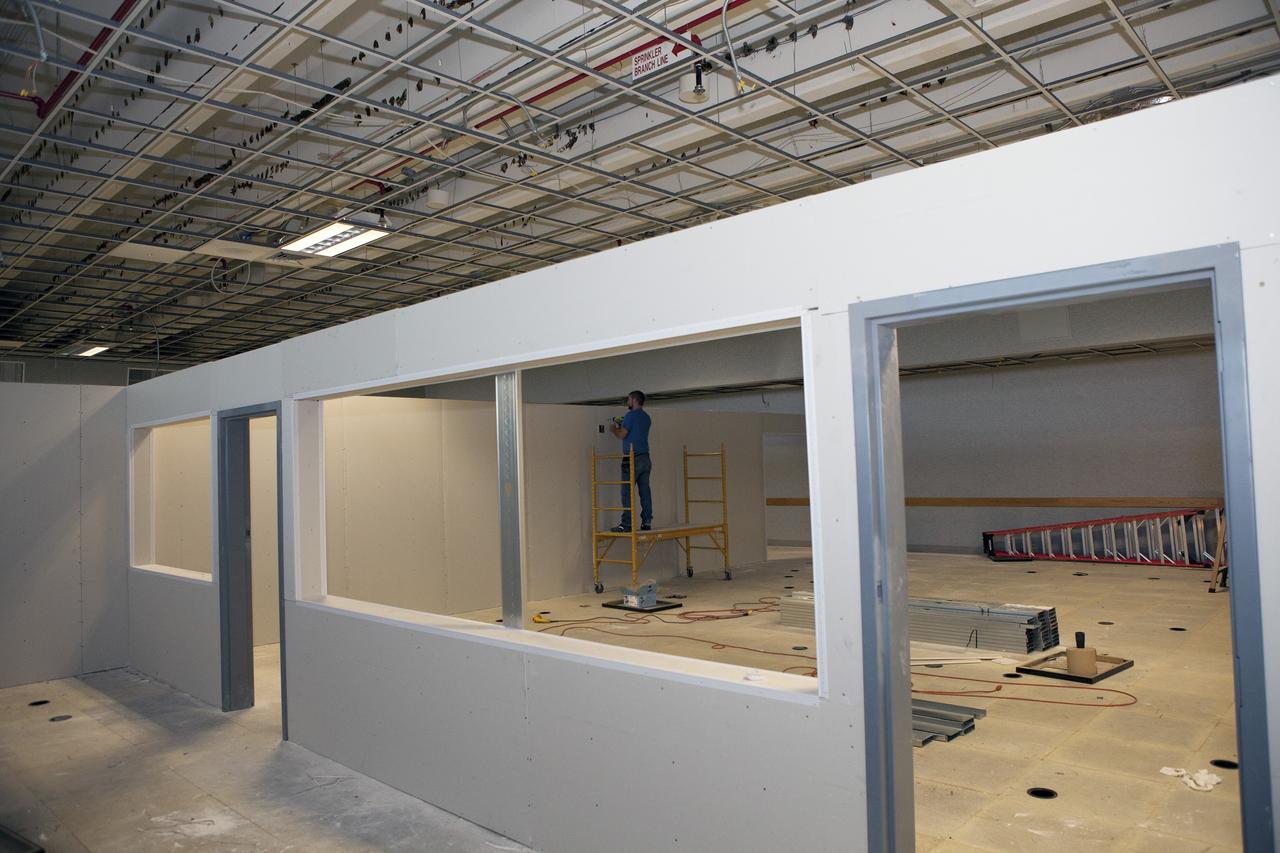
CAPE CANAVERAL, Fla. – A construction worker completes the installation of an inner wall inside Firing Room 4 in the Launch Control Center at NASA's Kennedy Space Center in Florida. The main floor has been divided into four separate rooms. The windows and doors between the rooms have been framed in. The Ground Systems Development and Operations Program is overseeing efforts to create a new firing room based on a multi-user concept. The design of Firing Room 4 will incorporate five control room areas that are flexible to meet current and future NASA and commercial user requirements. The equipment and most of the consoles from Firing Room 4 were moved to Firing Room 2 for possible future reuse. Photo credit: NASA/Daniel Casper
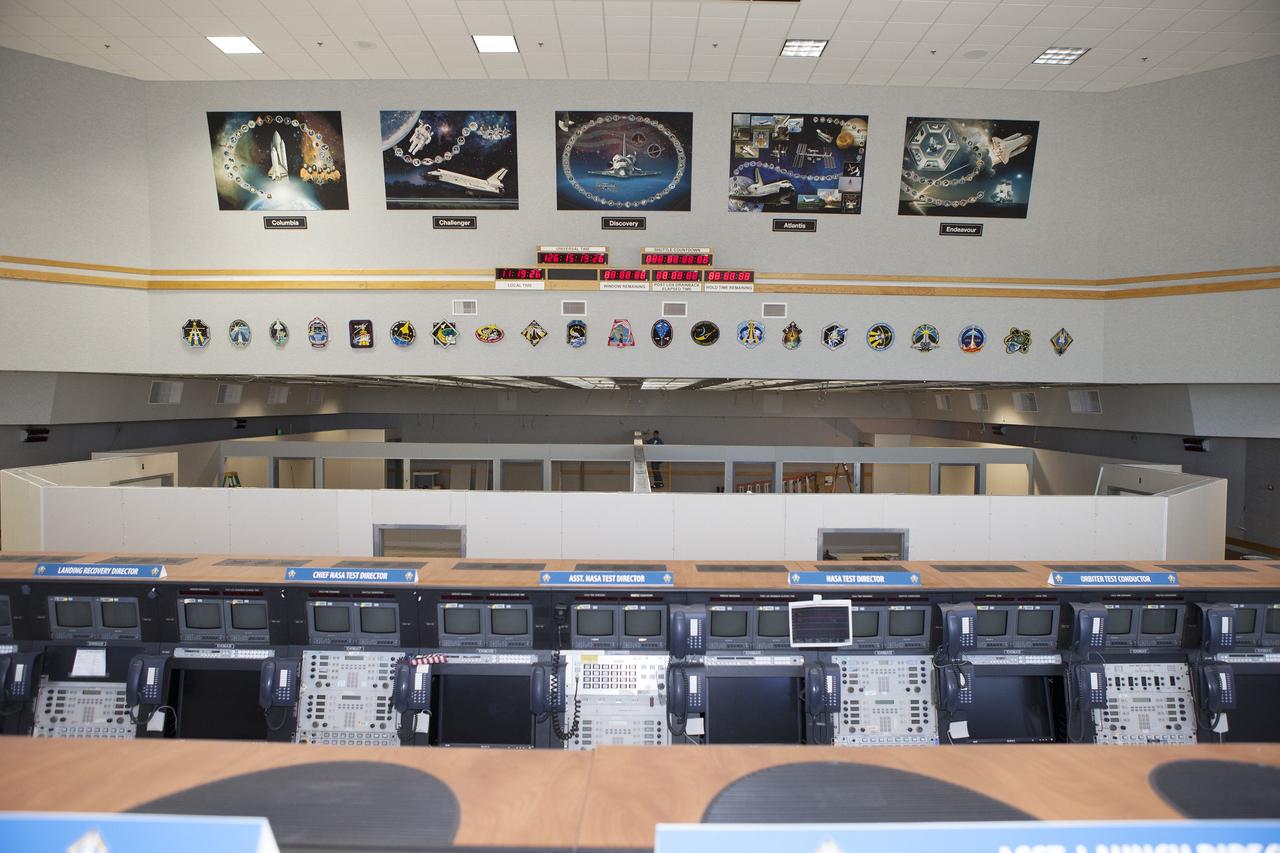
CAPE CANAVERAL, Fla. – Construction workers have installed the framing and most of the inner walls inside Firing Room 4 in the Launch Control Center at NASA's Kennedy Space Center in Florida. The main floor has been divided into four separate rooms. Three rows of upper level management consoles remain. The Ground Systems Development and Operations Program is overseeing efforts to create a new firing room based on a multi-user concept. The design of Firing Room 4 will incorporate five control room areas that are flexible to meet current and future NASA and commercial user requirements. The equipment and most of the consoles from Firing Room 4 were moved to Firing Room 2 for possible future reuse. Photo credit: NASA/Daniel Casper

CAPE CANAVERAL, Fla. – Three rows of upper level management consoles are all that remain in Firing Room 4 in the Launch Control Center at NASA’s Kennedy Space Center in Florida. The main floor consoles, cabling and wires below the floor and ceiling tiles above have been removed. The Ground Systems Development and Operations Program is overseeing efforts to create a new firing room based on a multi-user concept that will support NASA and commercial launch needs. The design of Firing Room 4 will incorporate five control room areas that are flexible to meet current and future NASA and commercial user requirements. The equipment and most of the consoles from Firing Room 4 were moved to Firing Room 2 for possible future reuse. Photo credit: NASA/Ben Smegelsky
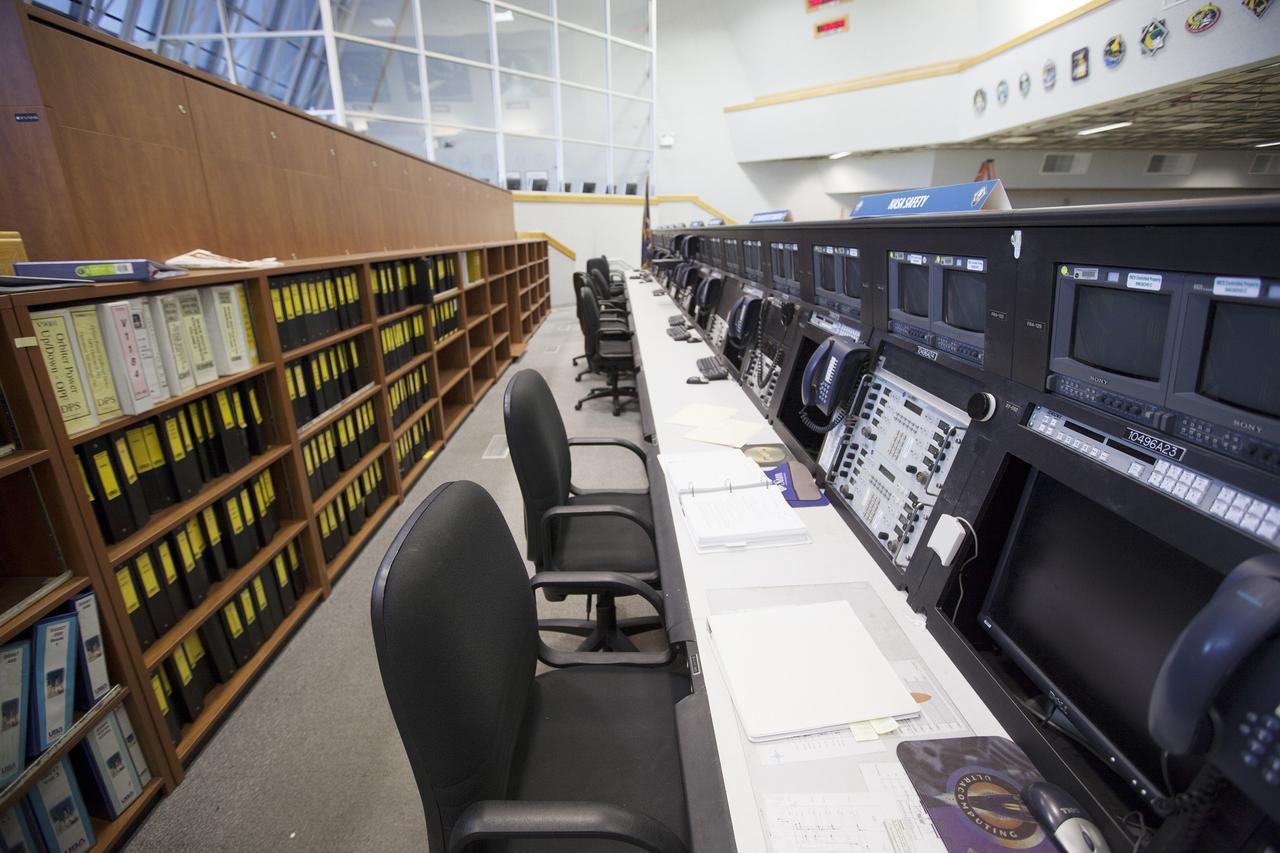
CAPE CANAVERAL, Fla. – Three rows of upper level management consoles are all that remain in Firing Room 4 in the Launch Control Center at NASA’s Kennedy Space Center in Florida. The main floor consoles, cabling and wires below the floor and ceiling tiles above have been removed. The Ground Systems Development and Operations Program is overseeing efforts to create a new firing room based on a multi-user concept that will support NASA and commercial launch needs. The design of Firing Room 4 will incorporate five control room areas that are flexible to meet current and future NASA and commercial user requirements. The equipment and most of the consoles from Firing Room 4 were moved to Firing Room 2 for possible future reuse. Photo credit: NASA/Ben Smegelsky

CAPE CANAVERAL, Fla. – Modifications to Firing Room 4 in the Launch Control Center at NASA's Kennedy Space Center in Florida continue to take shape. Construction workers have installed the framing and some of the inner walls. Three rows of upper level management consoles remain. The Ground Systems Development and Operations Program is overseeing efforts to create a new firing room based on a multi-user concept. The design of Firing Room 4 will incorporate five control room areas that are flexible to meet current and future NASA and commercial user requirements. The equipment and most of the consoles from Firing Room 4 were moved to Firing Room 2 for possible future reuse. Photo credit: NASA/Dimitri Gerondidakis
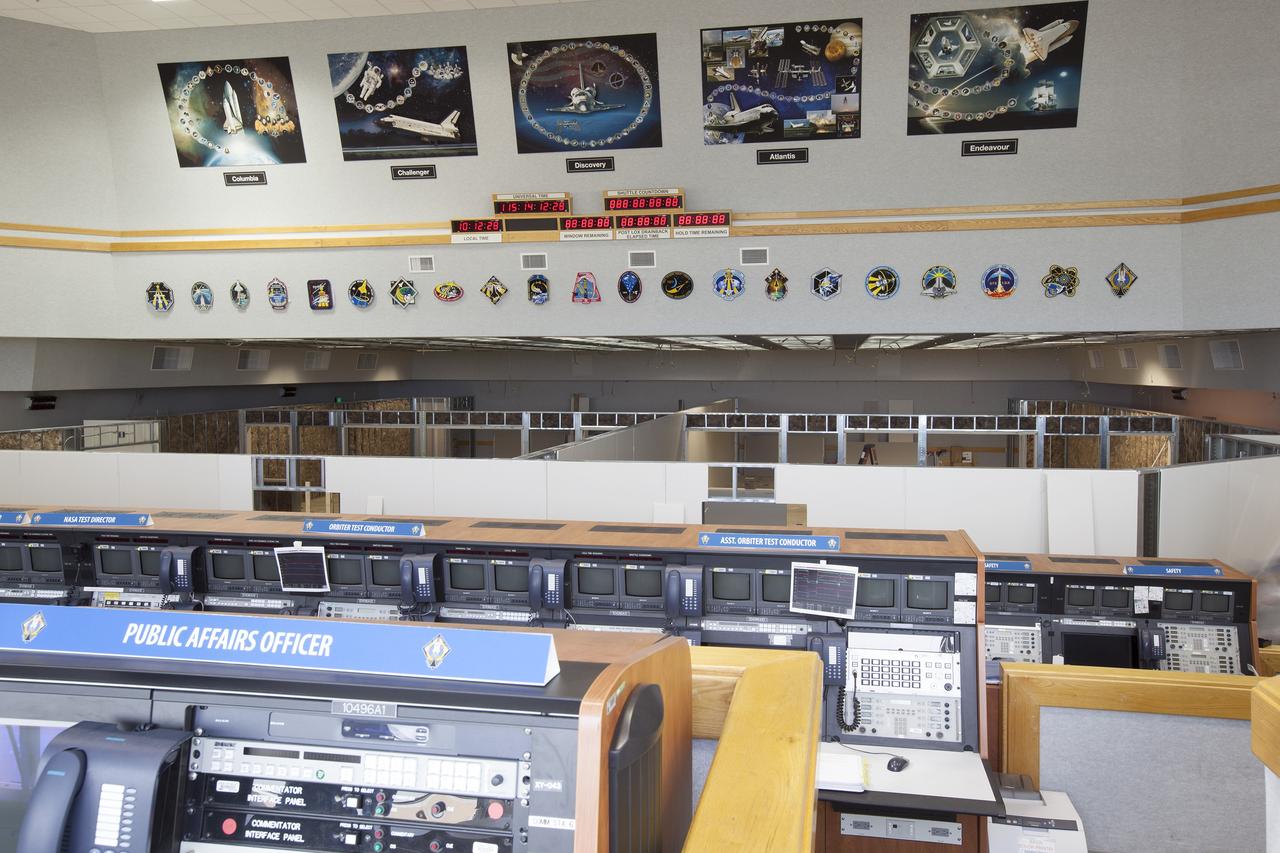
CAPE CANAVERAL, Fla. – Modifications to Firing Room 4 in the Launch Control Center at NASA's Kennedy Space Center in Florida continue to take shape. Construction workers have installed the framing and some of the inner walls. Three rows of upper level management consoles remain. The Ground Systems Development and Operations Program is overseeing efforts to create a new firing room based on a multi-user concept. The design of Firing Room 4 will incorporate five control room areas that are flexible to meet current and future NASA and commercial user requirements. The equipment and most of the consoles from Firing Room 4 were moved to Firing Room 2 for possible future reuse. Photo credit: NASA/Dimitri Gerondidakis
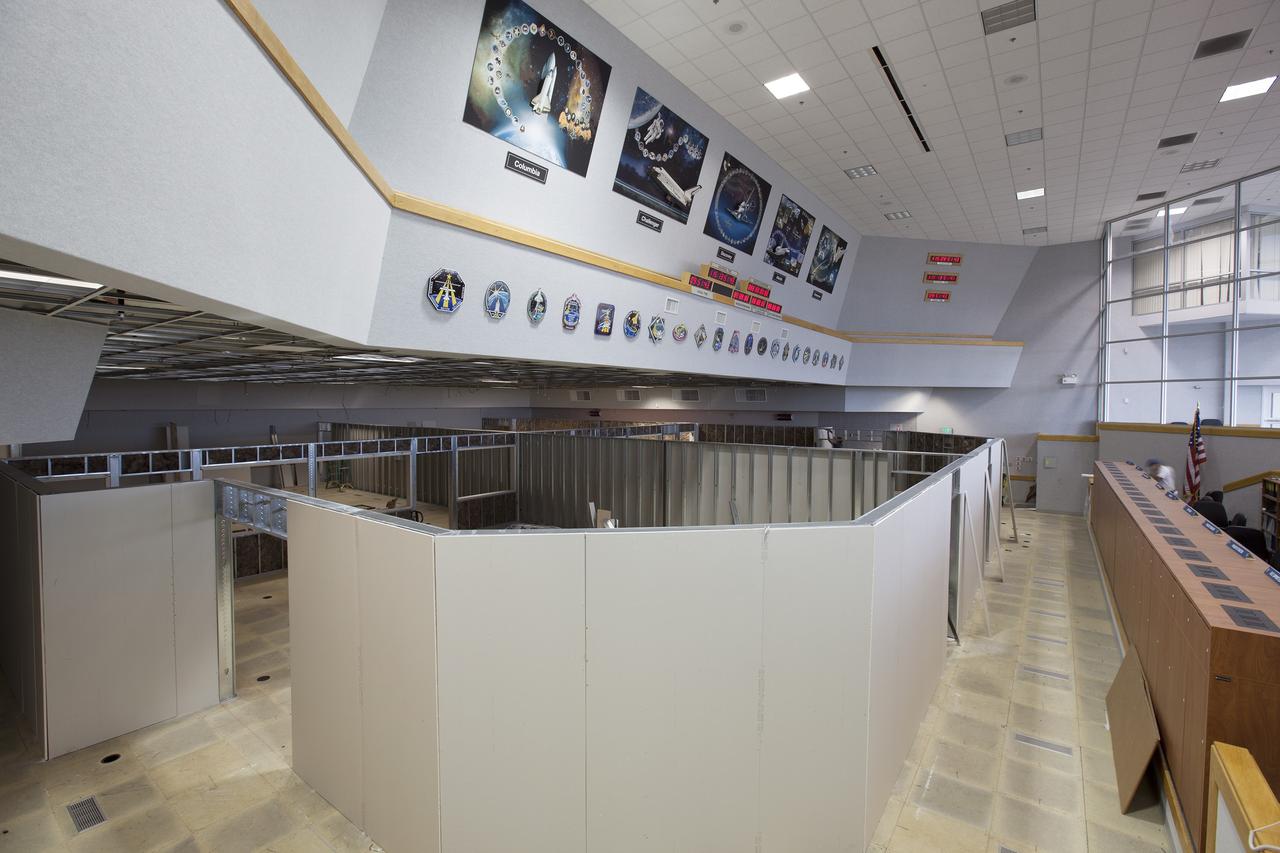
CAPE CANAVERAL, Fla. – Modifications to Firing Room 4 in the Launch Control Center at NASA's Kennedy Space Center in Florida continue to take shape. Construction workers have installed the framing and some of the inner walls. Three rows of upper level management consoles remain. The Ground Systems Development and Operations Program is overseeing efforts to create a new firing room based on a multi-user concept. The design of Firing Room 4 will incorporate five control room areas that are flexible to meet current and future NASA and commercial user requirements. The equipment and most of the consoles from Firing Room 4 were moved to Firing Room 2 for possible future reuse. Photo credit: NASA/Dimitri Gerondidakis
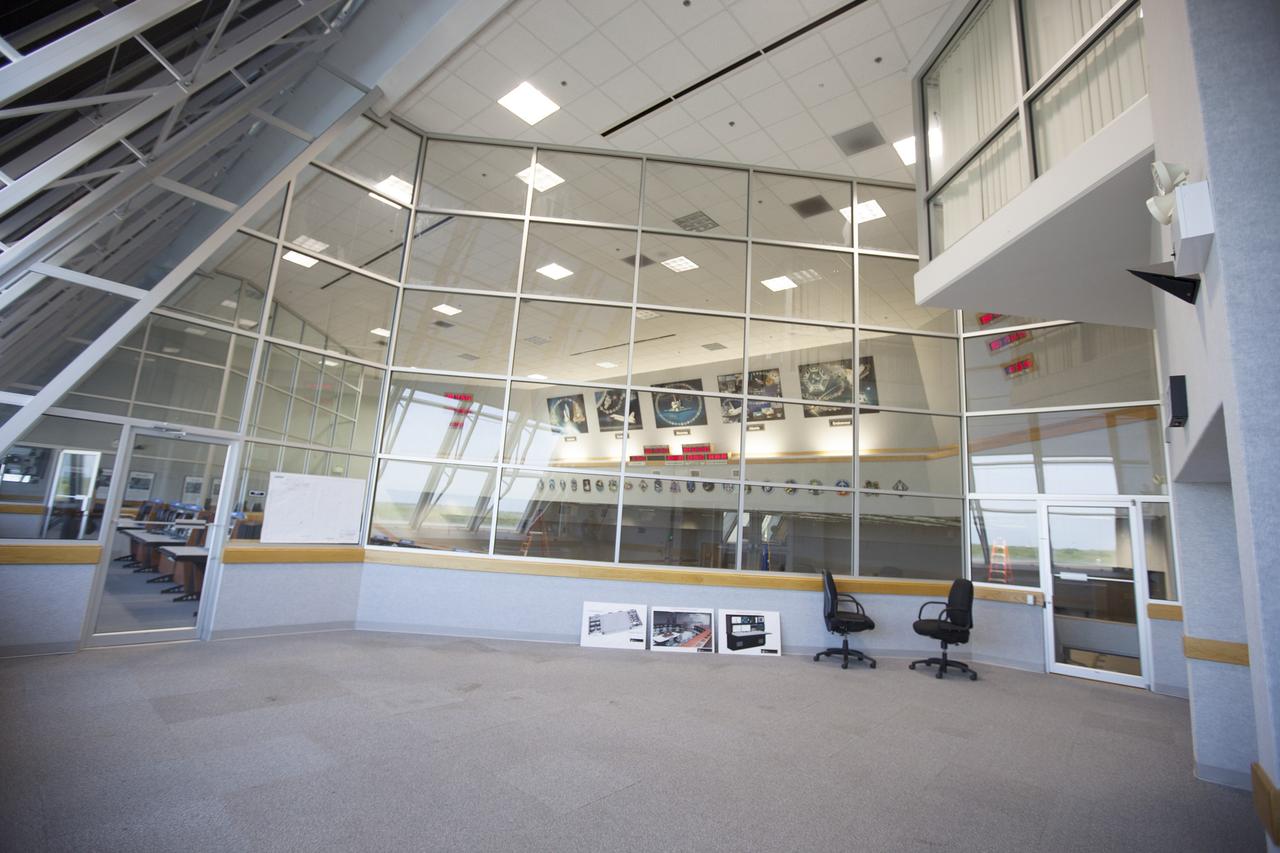
CAPE CANAVERAL, Fla. – Progress on modifications to Firing Room 4 in the Launch Control Center at NASA's Kennedy Space Center in Florida can be viewed through one of two glass-enclosed observation rooms. The Ground Systems Development and Operations Program is overseeing efforts to create a new firing room based on a multi-user concept that will support NASA and commercial launch needs. The main floor consoles, cabling and wires below the floor and ceiling tiles above have been removed. Sub flooring has been installed and the room is marked off to create four separate rooms on the main floor. In view along the soffit are space shuttle launch plaques for 21 missions launched from Firing Room 4. The design of Firing Room 4 will incorporate five control room areas that are flexible to meet current and future NASA and commercial user requirements. The equipment and most of the consoles from Firing Room 4 were moved to Firing Room 2 for possible future reuse. Photo credit: NASA/Ben Smegelsky
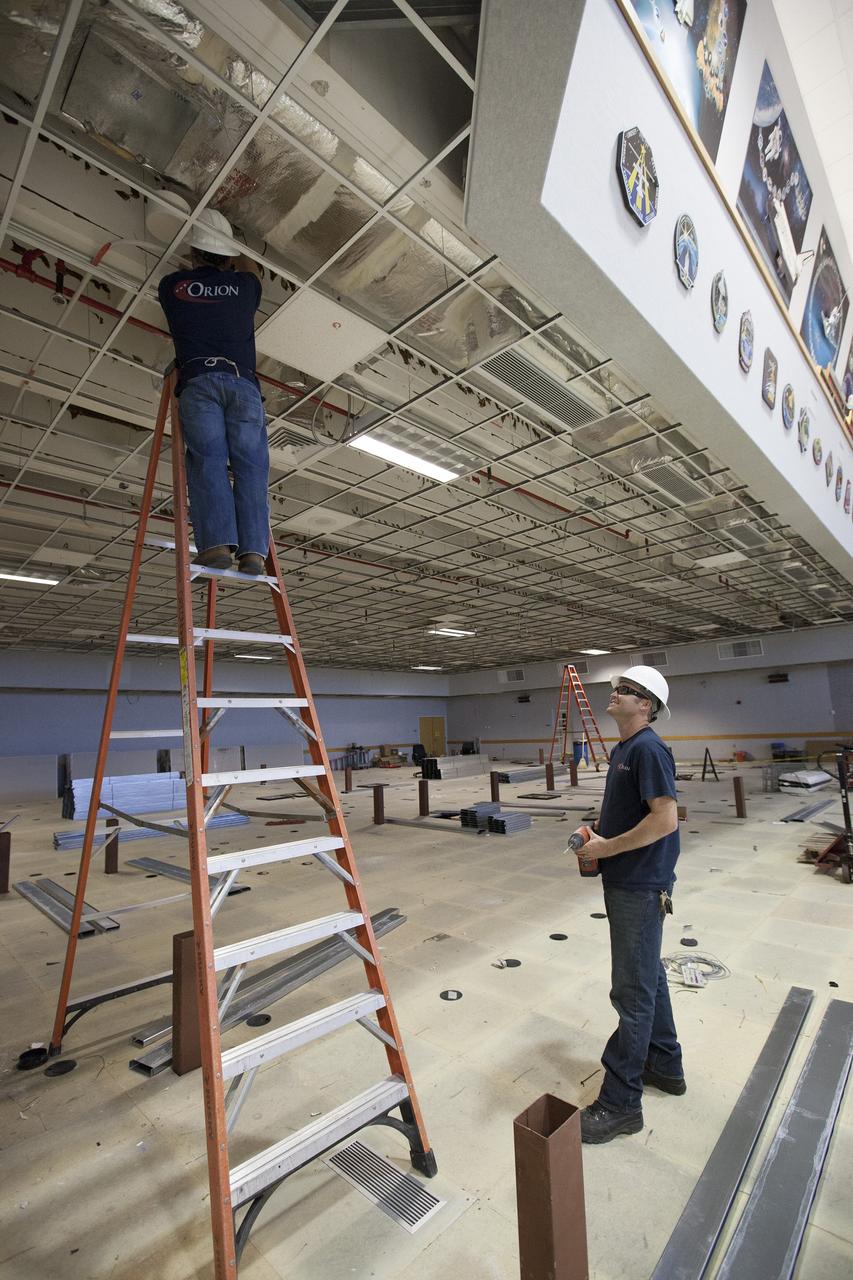
CAPE CANAVERAL, Fla. – Inside Firing Room 4 in the Launch Control Center at NASA's Kennedy Space Center in Florida, construction workers make adjustments to conduit in the ceiling. The Ground Systems Development and Operations Program is overseeing efforts to create a new firing room based on a multi-user concept that will support NASA and commercial launch needs. The main floor consoles, cabling and wires below the floor and the ceiling tiles above have been removed. Sub flooring has been installed and the room is marked off to create four separate rooms on the main floor. In view along the soffit are space shuttle launch plaques for 21 missions launched from Firing Room 4. The design of Firing Room 4 will incorporate five control room areas that are flexible to meet current and future NASA and commercial user requirements. The equipment and most of the consoles from Firing Room 4 were moved to Firing Room 2 for possible future reuse. Photo credit: NASA/Ben Smegelsky
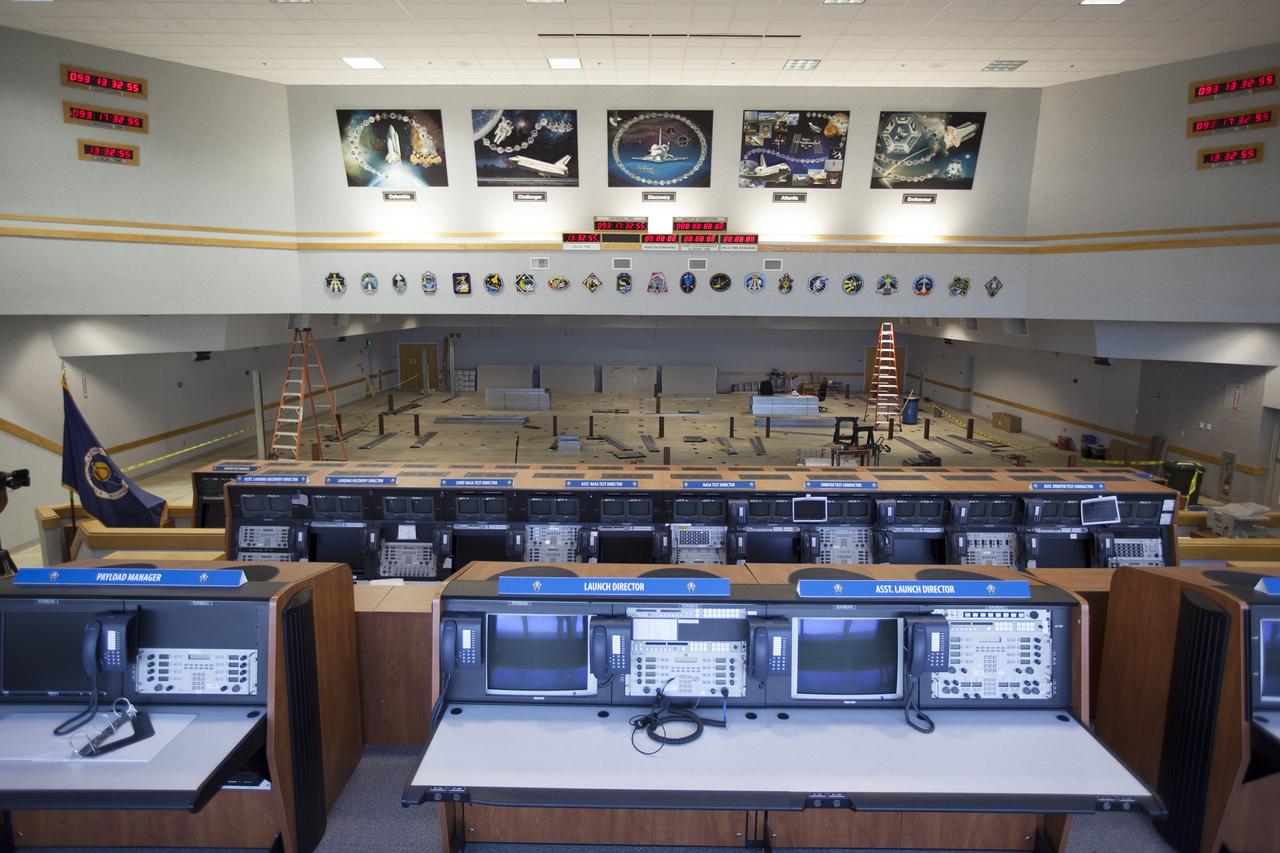
CAPE CANAVERAL, Fla. – Three rows of upper level management consoles are all that remain in Firing Room 4 in the Launch Control Center at NASA’s Kennedy Space Center in Florida. The Ground Systems Development and Operations Program is overseeing efforts to create a new firing room based on a multi-user concept that will support NASA and commercial launch needs. The main floor consoles, cabling and wires below the floor and ceiling tiles above have been removed. Sub flooring has been installed and the room is marked off to create four separate rooms on the main floor. In view along the soffit are space shuttle launch plaques for 21 missions launched from Firing Room 4. The design of Firing Room 4 will incorporate five control room areas that are flexible to meet current and future NASA and commercial user requirements. The equipment and most of the consoles from Firing Room 4 were moved to Firing Room 2 for possible future reuse. Photo credit: NASA/Ben Smegelsky
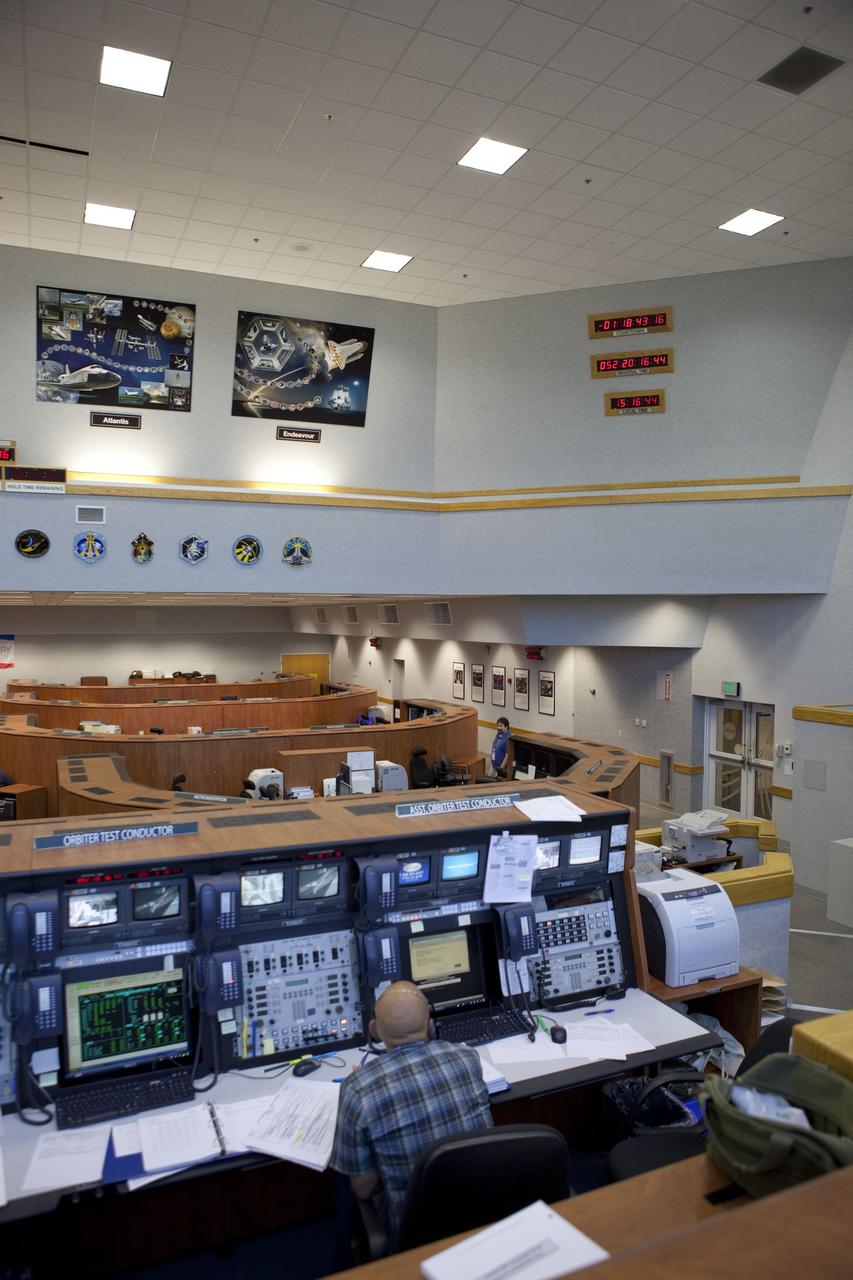
CAPE CANAVERAL, Fla. -- In Firing Room-4 in the Launch Control Center at NASA's Kennedy Space Center in Florida, launch controllers took their posts at about 2:30 p.m. EST for space shuttle Discovery's STS-133 mission to the International Space Station. The countdown clock began ticking backward from the T-43 hour mark at 3 p.m. Scheduled to lift off Feb. 24 at 4:50 p.m. EST, Discovery and its six-member crew will deliver the Permanent Multipurpose Module, packed with supplies and critical spare parts, as well as Robonaut 2, the dexterous humanoid astronaut helper, to the orbiting outpost. For more information on the STS-133 mission, visit www.nasa.gov/mission_pages/shuttle/shuttlemissions/sts133/. Photo credit: NASA/Frank Michaux
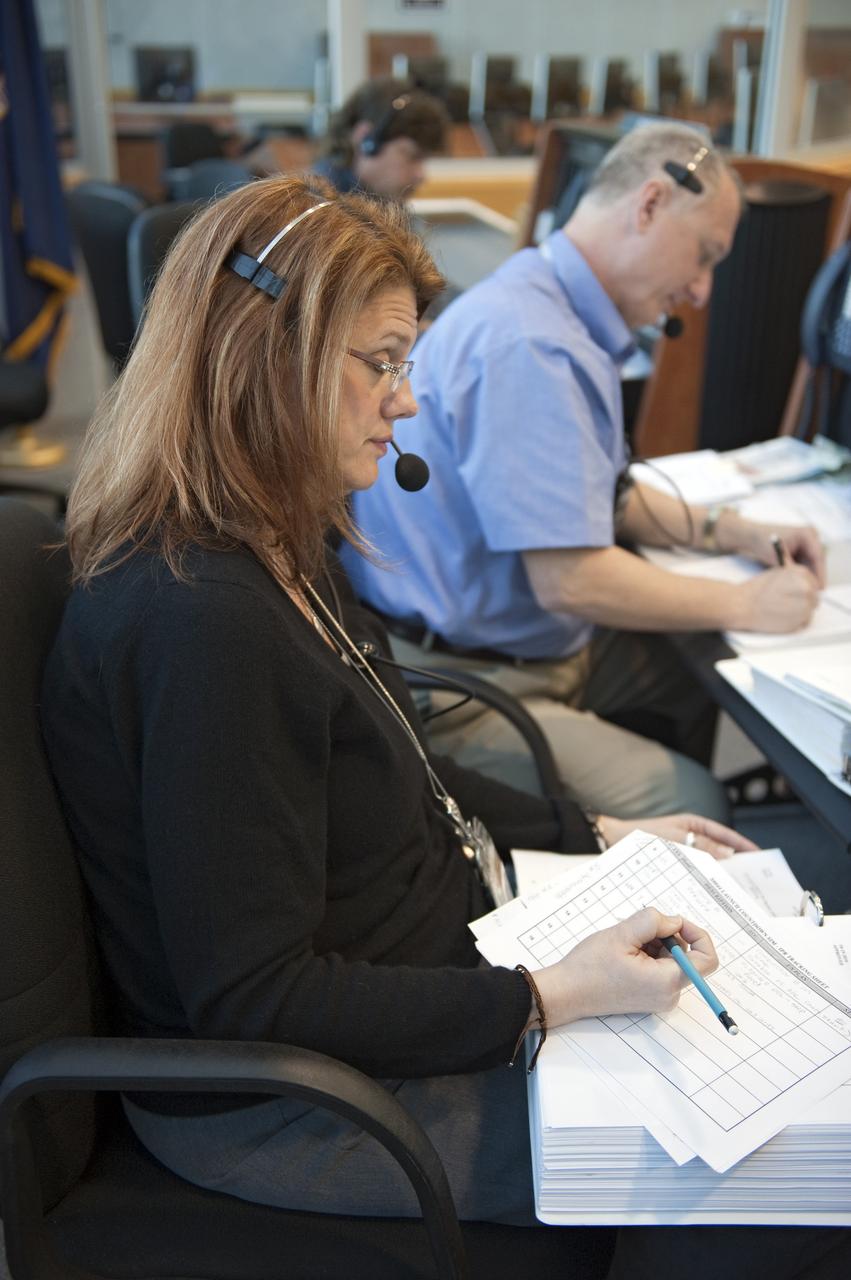
CAPE CANAVERAL, Fla. -- In the Launch Control Center at NASA's Kennedy Space Center in Florida, NASA Test Director Charlie Blackwell-Thompson sits at her console in Firing Room 4 along with other STS-133 launch team members to rehearse procedures for the liftoff of space shuttle Discovery's final mission. The team at Kennedy also participated in launch simulations with personnel at NASA's Johnson Space Center in Houston. Discovery's next launch opportunity to the International Space Station on the STS-133 mission is planned for no earlier than Feb. 24. For more information on STS-133, visit www.nasa.gov/mission_pages/shuttle/shuttlemissions/sts133/. Photo credit: NASA/Kim Shiflett

CAPE CANAVERAL, Fla. -- In the Launch Control Center at NASA's Kennedy Space Center in Florida, STS-133 NASA Test Director Stephen Payne sits at his console in Firing Room 4 along with other STS-133 launch team members to rehearse procedures for the liftoff of space shuttle Discovery's final mission. The team at Kennedy also participated in launch simulations with personnel at NASA's Johnson Space Center in Houston. Discovery's next launch opportunity to the International Space Station on the STS-133 mission is planned for no earlier than Feb. 24. For more information on STS-133, visit www.nasa.gov/mission_pages/shuttle/shuttlemissions/sts133/. Photo credit: NASA/Kim Shiflett
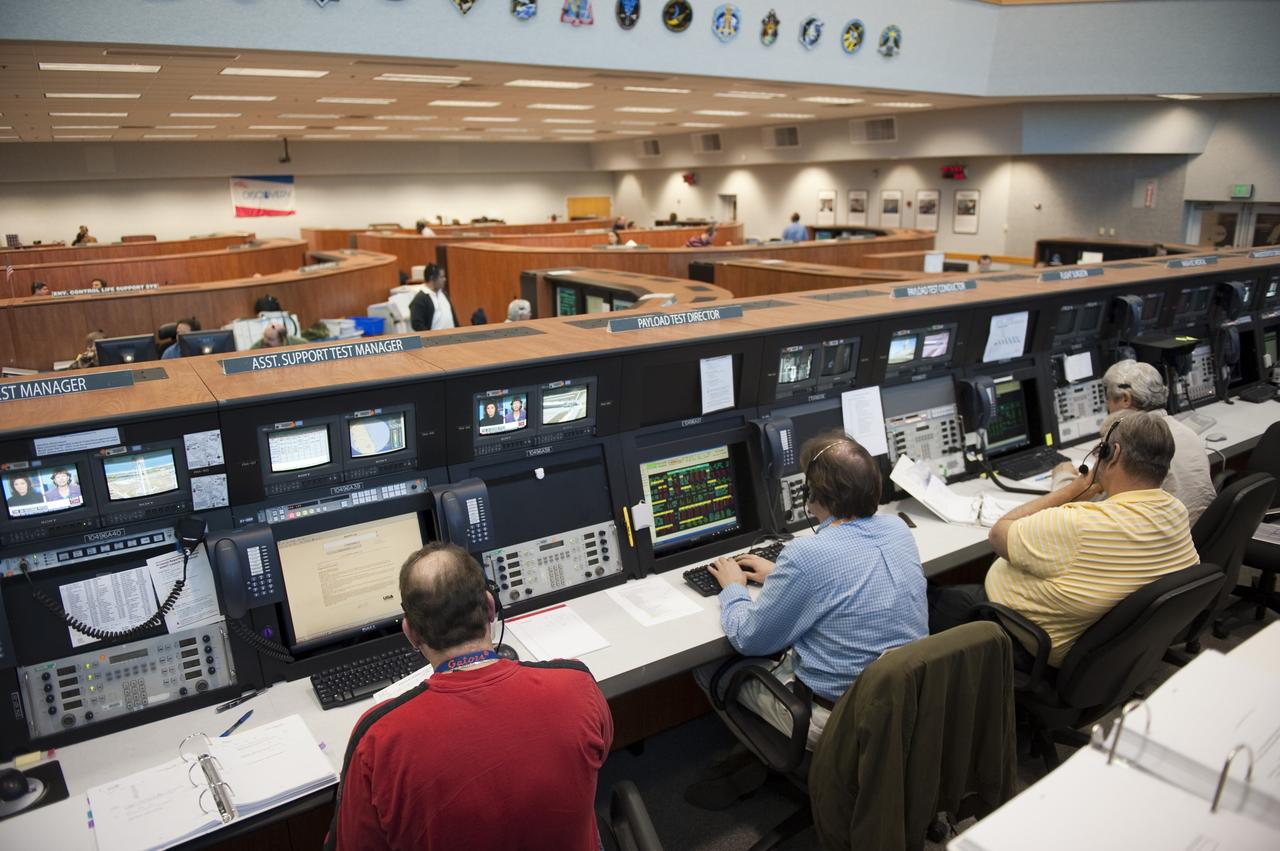
CAPE CANAVERAL, Fla. -- At NASA's Kennedy Space Center in Florida, STS-133 launch team members rehearse procedures for the liftoff of space shuttle Discovery's final mission in Firing Room 4. The team at Kennedy also participated in launch simulations with personnel at NASA's Johnson Space Center in Houston. Discovery's next launch opportunity to the International Space Station on the STS-133 mission is planned for no earlier than Feb. 24. For more information on STS-133, visit www.nasa.gov/mission_pages/shuttle/shuttlemissions/sts133/. Photo credit: NASA/Kim Shiflett

CAPE CANAVERAL, Fla. -- In the Launch Control Center at NASA's Kennedy Space Center in Florida, STS-133 Assistant Launch Director Pete Nickolenko sits at his console in Firing Room 4 along with other launch team members to rehearse procedures for the liftoff of space shuttle Discovery's final mission. The team at Kennedy also participated in launch simulations with personnel at NASA's Johnson Space Center in Houston. Discovery's next launch opportunity to the International Space Station on the STS-133 mission is planned for no earlier than Feb. 24. For more information on STS-133, visit www.nasa.gov/mission_pages/shuttle/shuttlemissions/sts133/. Photo credit: NASA/Kim Shiflett

CAPE CANAVERAL, Fla. -- At NASA's Kennedy Space Center in Florida, STS-133 launch team members rehearse procedures for the liftoff of space shuttle Discovery's final mission in Firing Room 4. The team at Kennedy also participated in launch simulations with personnel at NASA's Johnson Space Center in Houston. Seen on display overhead are the five orbiter tribute wall hangings. Discovery's next launch opportunity to the International Space Station on the STS-133 mission is planned for no earlier than Feb. 24. For more information on STS-133, visit www.nasa.gov/mission_pages/shuttle/shuttlemissions/sts133/. Photo credit: NASA/Kim Shiflett

CAPE CANAVERAL, Fla. -- In the Launch Control Center at NASA's Kennedy Space Center in Florida, Shuttle Launch Director Mike Leinbach sits at his console in Firing Room 4 along with other STS-133 launch team members to rehearse procedures for the liftoff of space shuttle Discovery's final mission. The team at Kennedy also participated in launch simulations with personnel at NASA's Johnson Space Center in Houston. Discovery's next launch opportunity to the International Space Station on the STS-133 mission is planned for no earlier than Feb. 24. For more information on STS-133, visit www.nasa.gov/mission_pages/shuttle/shuttlemissions/sts133/. Photo credit: NASA/Kim Shiflett
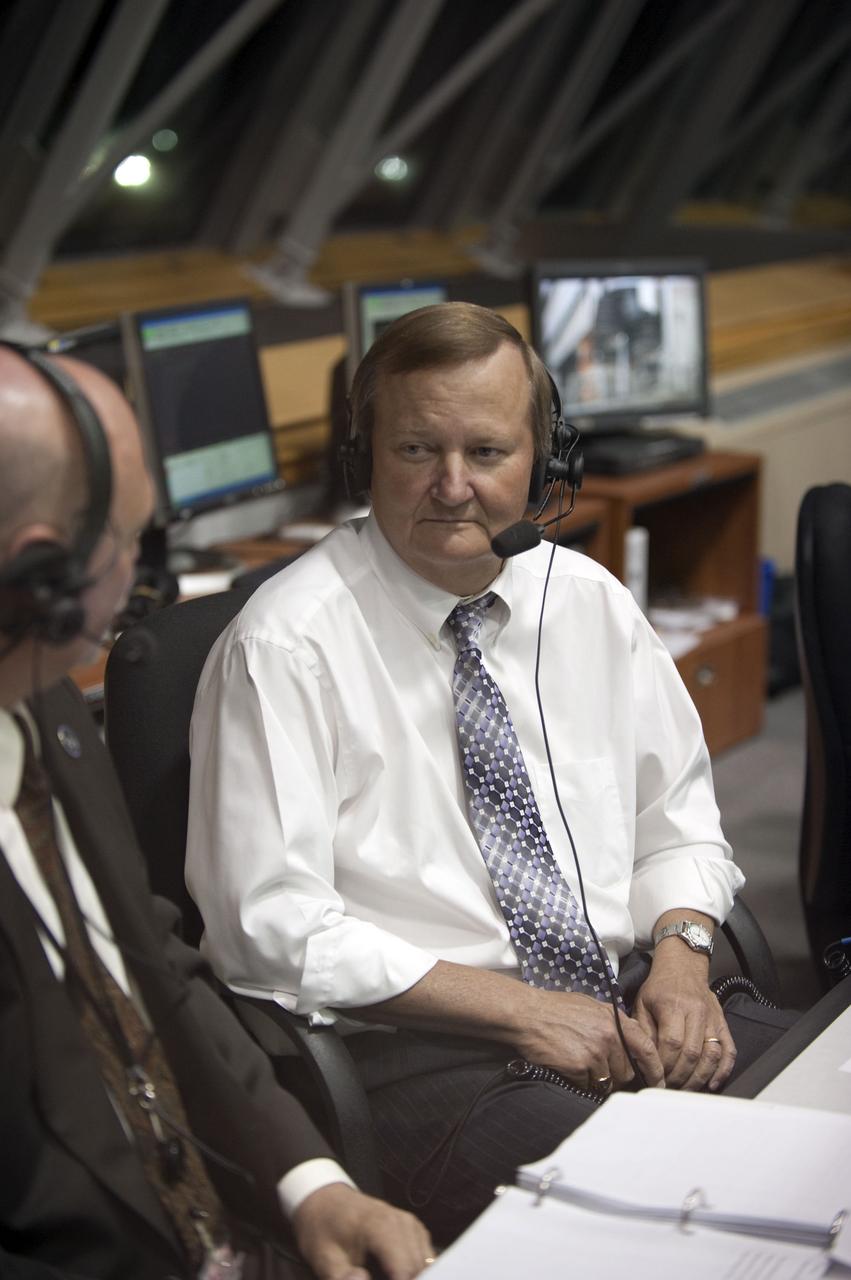
STS131-S-055 (5 April 2010) --- Assistant Launch Director Mike Leinbach (right) speaks with NASA commentator Mike Curie in Firing Room 4 in the Launch Control Center at NASA's Kennedy Space Center in Florida prior to the launch of space shuttle Discovery's STS-131 mission. The seven-member STS-131 crew will deliver the multi-purpose logistics module Leonardo, filled with supplies, a new crew sleeping quarters and science racks that will be transferred to the International Space Station's laboratories. The crew also will switch out a gyroscope on the station’s truss structure, install a spare ammonia storage tank and retrieve a Japanese experiment from the station’s exterior. STS-131 is the 33rd shuttle mission to the station and the 131st shuttle mission overall.
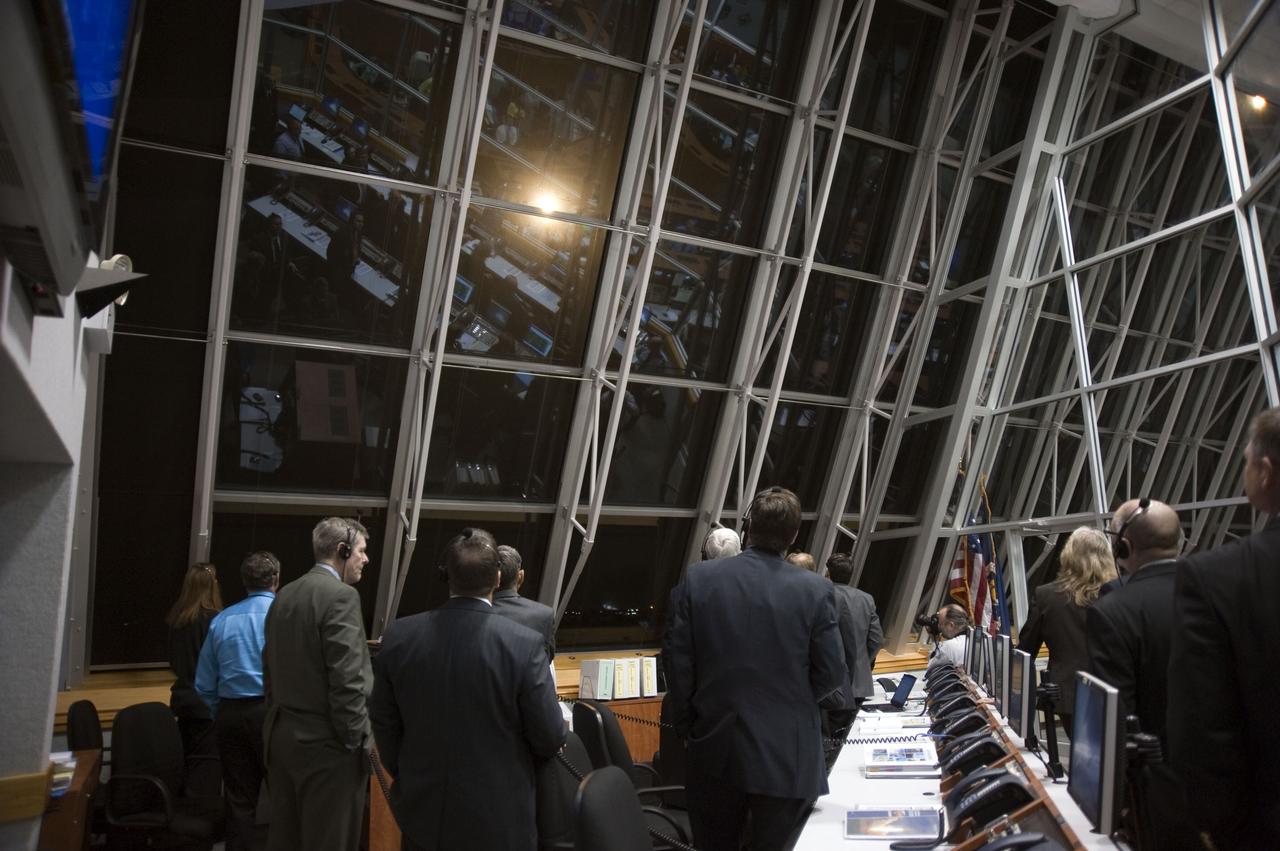
STS131-S-056 (5 April 2010) --- NASA officials watch the liftoff of space shuttle Discovery through the windows of Firing Room 4 in the Launch Control Center at NASA's Kennedy Space Center in Florida. Discovery lifted off at 6:21 a.m. (EDT) on April 5, 2010. The seven-member STS-131 crew will deliver the multi-purpose logistics module Leonardo, filled with supplies, a new crew sleeping quarters and science racks that will be transferred to the International Space Station's laboratories. The crew also will switch out a gyroscope on the station’s truss structure, install a spare ammonia storage tank and retrieve a Japanese experiment from the station’s exterior. STS-131 is the 33rd shuttle mission to the station and the 131st shuttle mission overall.
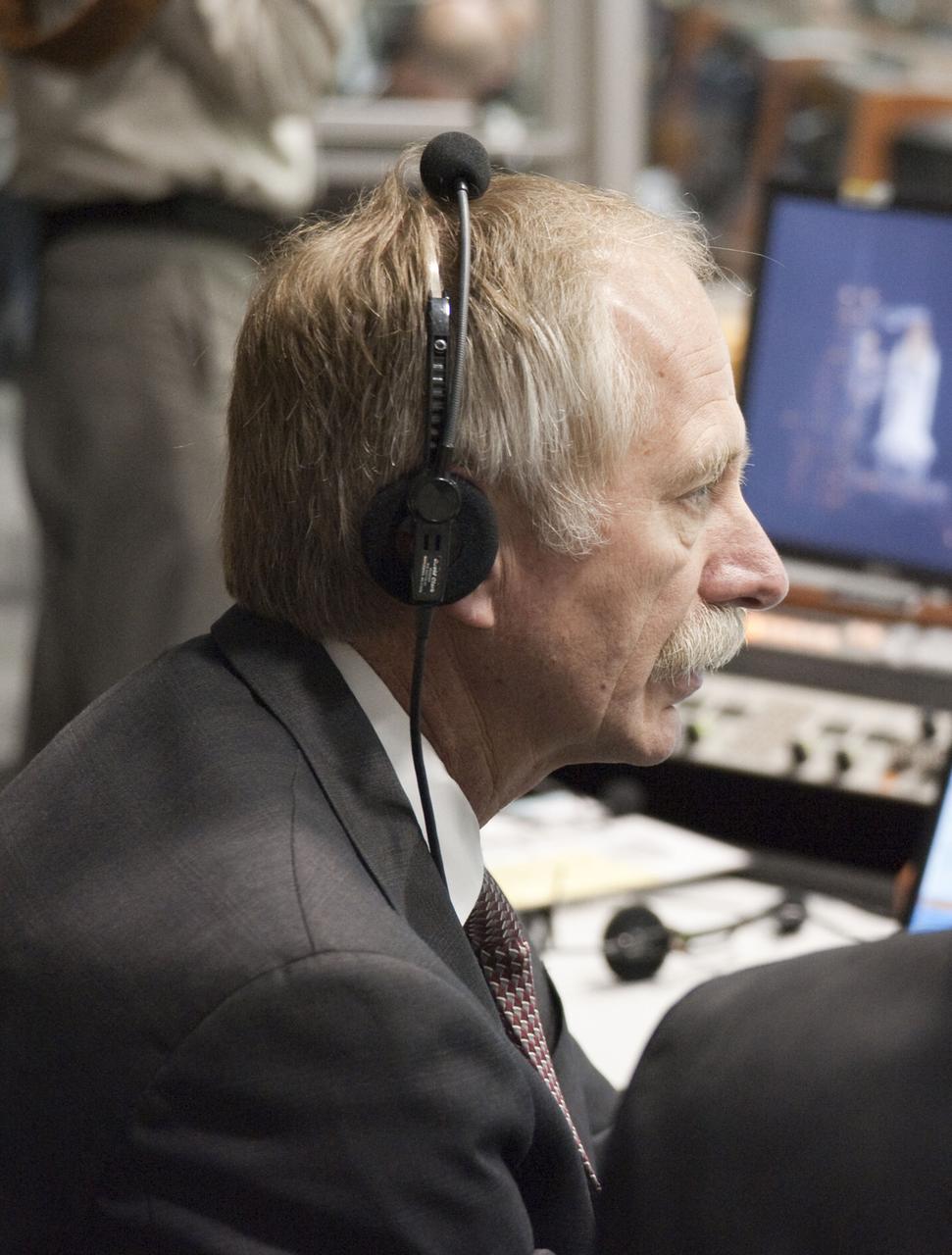
STS131-S-054 (5 April 2010) --- Bill Gerstenmaier, associate administrator for Space Operations, intently watches the progress of space shuttle Discovery's STS-131 mission launch countdown in Firing Room 4 in the Launch Control Center at NASA's Kennedy Space Center in Florida. The seven-member STS-131 crew will deliver the multi-purpose logistics module Leonardo, filled with supplies, a new crew sleeping quarters and science racks that will be transferred to the International Space Station's laboratories. The crew also will switch out a gyroscope on the station’s truss structure, install a spare ammonia storage tank and retrieve a Japanese experiment from the station’s exterior. STS-131 is the 33rd shuttle mission to the station and the 131st shuttle mission overall.
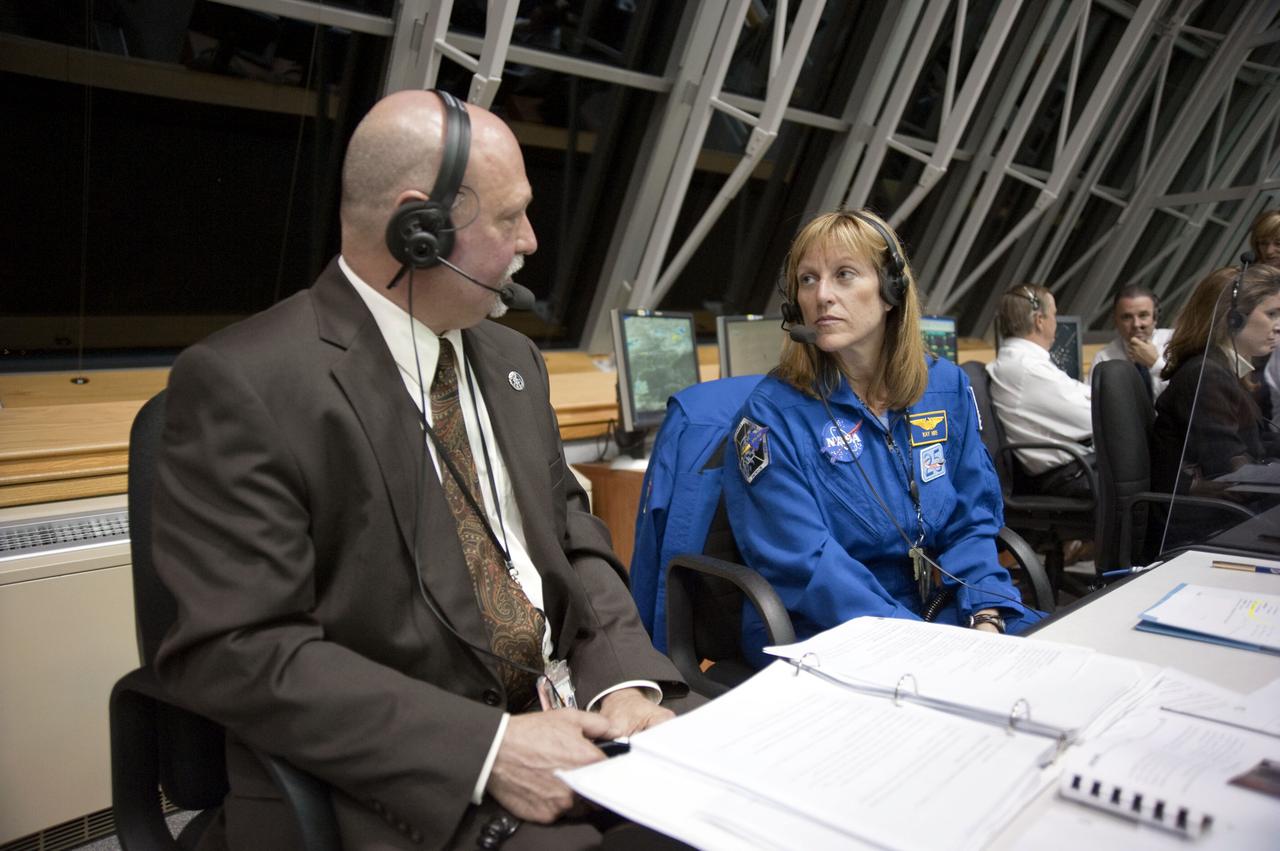
STS131-S-050 (5 April 2010) --- NASA commentator Mike Curie and astronaut Kathryn (Kay) Hire discuss the launch of space shuttle Discovery on the STS-131 mission in the Launch Control Center's Firing Room 4 at NASA's Kennedy Space Center in Florida. The seven-member STS-131 crew will deliver the multi-purpose logistics module Leonardo, filled with supplies, a new crew sleeping quarters and science racks that will be transferred to the International Space Station's laboratories. The crew also will switch out a gyroscope on the station’s truss structure, install a spare ammonia storage tank and retrieve a Japanese experiment from the station’s exterior. STS-131 is the 33rd shuttle mission to the station and the 131st shuttle mission overall.
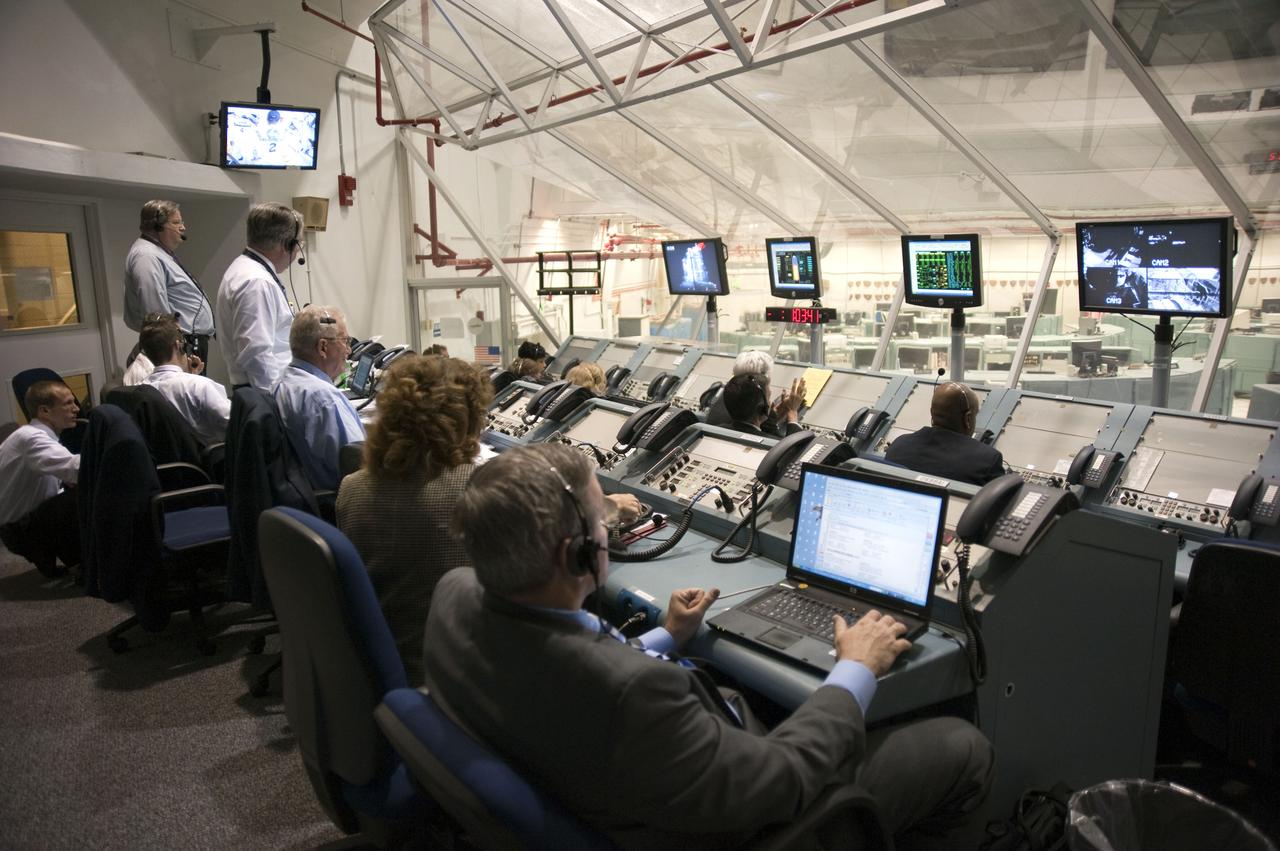
STS131-S-052 (5 April 2010) --- In Firing Room 4 of the Launch Control Center at NASA's Kennedy Space Center in Florida, NASA managers monitor the countdown to launch of space shuttle Discovery's STS-131 mission. Discovery lifted off at 6:21 a.m. (EDT) on April 5, 2010. The seven-member STS-131 crew will deliver the multi-purpose logistics module Leonardo, filled with supplies, a new crew sleeping quarters and science racks that will be transferred to the International Space Station's laboratories. The crew also will switch out a gyroscope on the station’s truss structure, install a spare ammonia storage tank and retrieve a Japanese experiment from the station’s exterior. STS-131 is the 33rd shuttle mission to the station and the 131st shuttle mission overall.
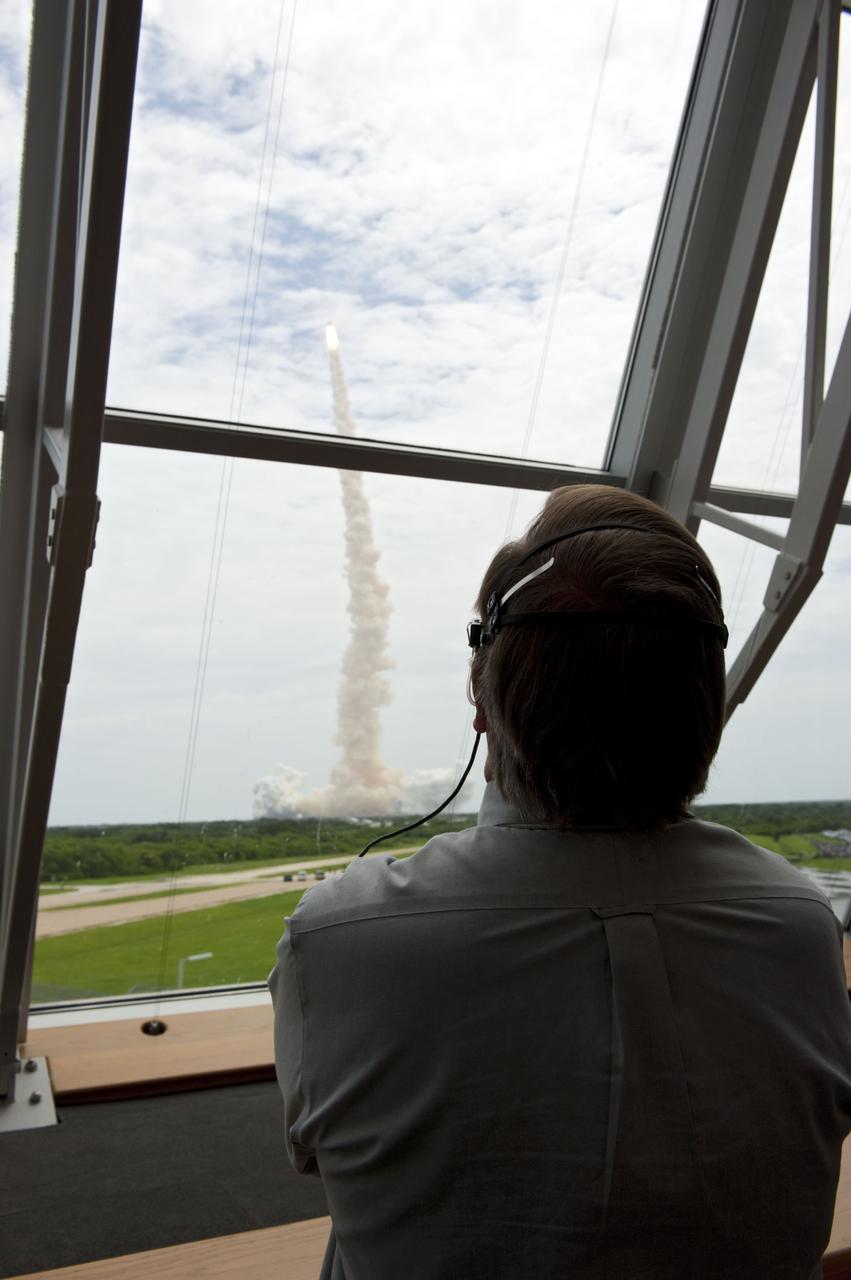
CAPE CANAVERAL, Fla. -- In Firing Room 4 of the Launch Control Center at NASA's Kennedy Space Center in Florida, Shuttle Launch Director Mike Leinbach watches intently as space shuttle Atlantis lifts off on its STS-135 mission to the International Space Station. Atlantis with its crew of four; Commander Chris Ferguson, Pilot Doug Hurley, Mission Specialists Sandy Magnus and Rex Walheim, lifted off at 11:29 a.m. EDT on July 8, 2011 to deliver the Raffaello multi-purpose logistics module packed with supplies and spare parts for the station. Atlantis also will fly the Robotic Refueling Mission experiment that will investigate the potential for robotically refueling existing satellites in orbit. In addition, Atlantis will return with a failed ammonia pump module to help NASA better understand the failure mechanism and improve pump designs for future systems. STS-135 will be the 33rd flight of Atlantis, the 37th shuttle mission to the space station, and the 135th and final mission of NASA's Space Shuttle Program. For more information, visit www.nasa.gov/mission_pages/shuttle/shuttlemissions/sts135/index.html. Photo credit: NASA/Kim Shiflett
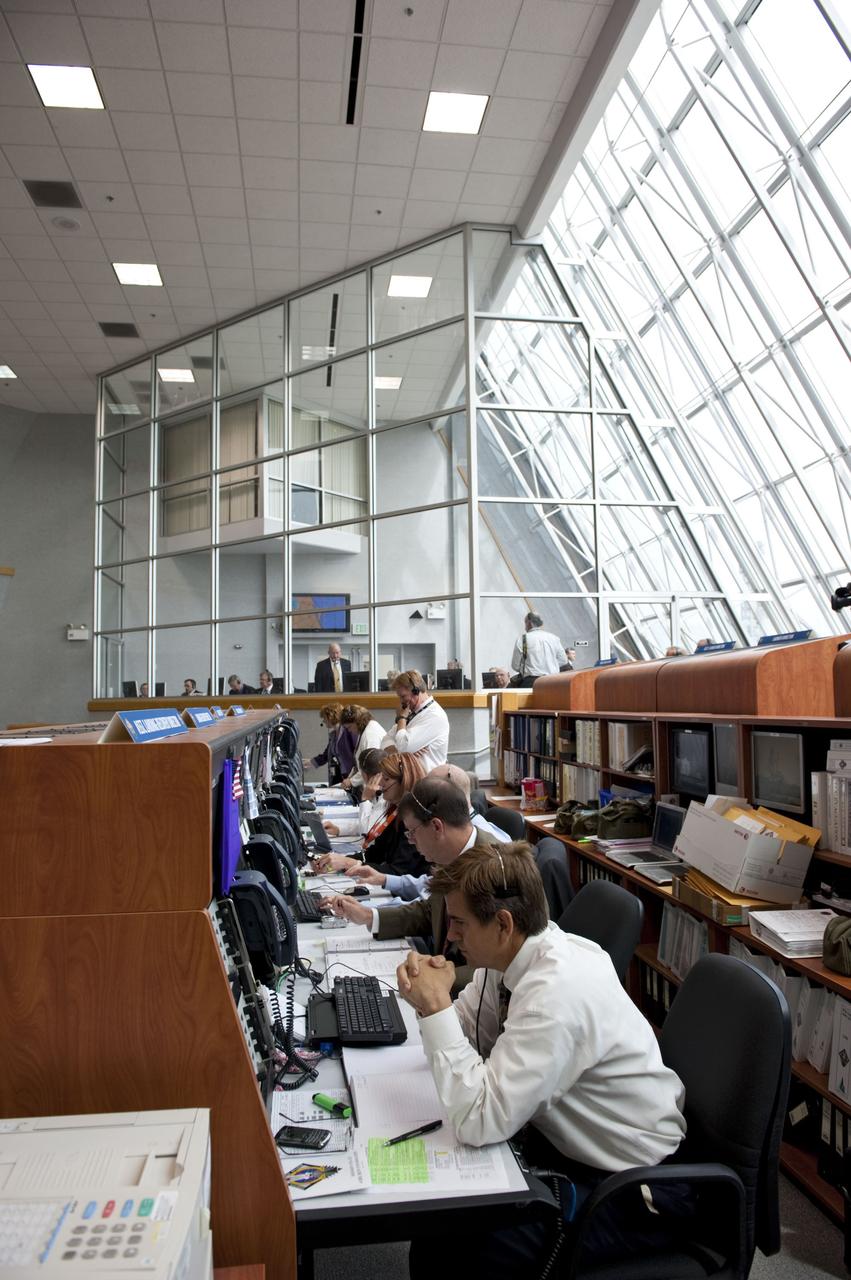
CAPE CANAVERAL, Fla. -- In Firing Room 4 of the Launch Control Center at NASA's Kennedy Space Center in Florida, launch team members monitor the countdown to the launch of space shuttle Atlantis on its STS-135 mission to the International Space Station. Atlantis with its crew of four; Commander Chris Ferguson, Pilot Doug Hurley, Mission Specialists Sandy Magnus and Rex Walheim, lifted off at 11:29 a.m. EDT on July 8, 2011 to deliver the Raffaello multi-purpose logistics module packed with supplies and spare parts for the station. Atlantis also will fly the Robotic Refueling Mission experiment that will investigate the potential for robotically refueling existing satellites in orbit. In addition, Atlantis will return with a failed ammonia pump module to help NASA better understand the failure mechanism and improve pump designs for future systems. STS-135 will be the 33rd flight of Atlantis, the 37th shuttle mission to the space station, and the 135th and final mission of NASA's Space Shuttle Program. For more information, visit www.nasa.gov/mission_pages/shuttle/shuttlemissions/sts135/index.html. Photo credit: NASA/Kim Shiflett
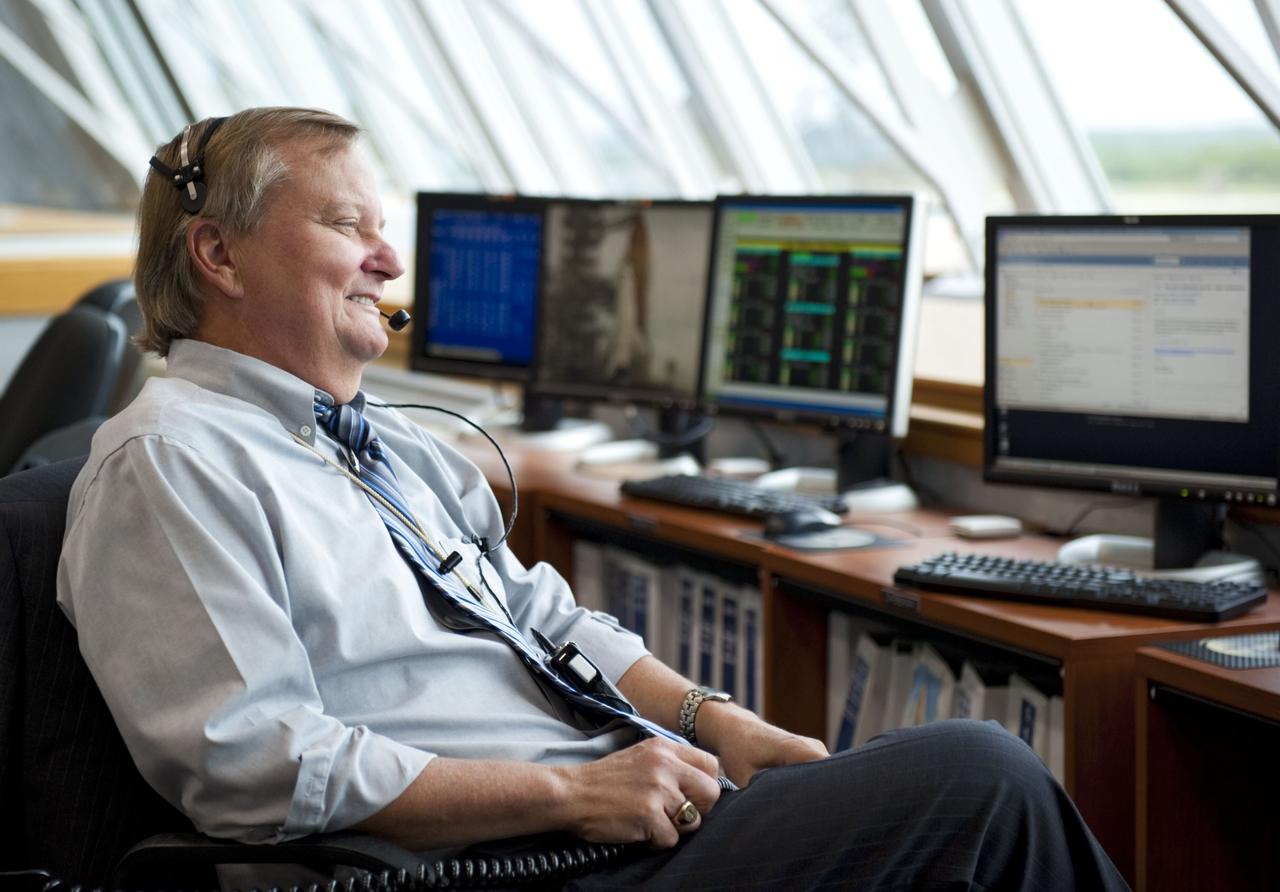
CAPE CANAVERAL, Fla. -- Shuttle Launch Director Mike Leinbach, enjoys a light moment during the countdown to liftoff of space shuttle Atlantis to the International Space Station in Firing Room 4 of the Launch Control Center at NASA's Kennedy Space Center in Florida. Atlantis with its crew of four; Commander Chris Ferguson, Pilot Doug Hurley, Mission Specialists Sandy Magnus and Rex Walheim, lifted off at 11:29 a.m. EDT on July 8, 2011 to deliver the Raffaello multi-purpose logistics module packed with supplies and spare parts for the station. Atlantis also will fly the Robotic Refueling Mission experiment that will investigate the potential for robotically refueling existing satellites in orbit. In addition, Atlantis will return with a failed ammonia pump module to help NASA better understand the failure mechanism and improve pump designs for future systems. STS-135 will be the 33rd flight of Atlantis, the 37th shuttle mission to the space station, and the 135th and final mission of NASA's Space Shuttle Program. For more information, visit www.nasa.gov/mission_pages/shuttle/shuttlemissions/sts135/index.html. Photo credit: NASA/Kim Shiflett
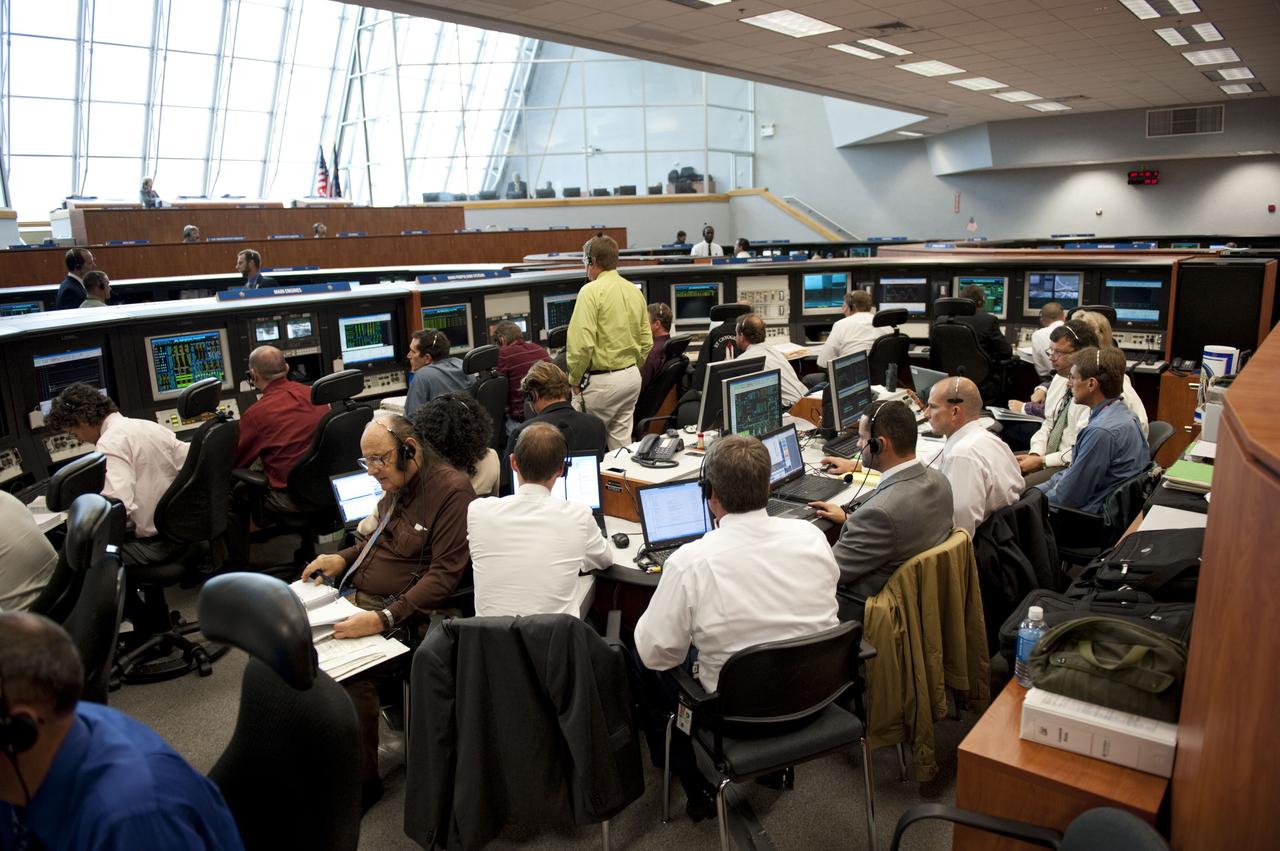
CAPE CANAVERAL, Fla. -- In Firing Room 4 of the Launch Control Center at NASA's Kennedy Space Center in Florida, launch team members monitor the countdown to the launch of space shuttle Atlantis on its STS-135 mission to the International Space Station. Atlantis with its crew of four; Commander Chris Ferguson, Pilot Doug Hurley, Mission Specialists Sandy Magnus and Rex Walheim, lifted off at 11:29 a.m. EDT on July 8, 2011 to deliver the Raffaello multi-purpose logistics module packed with supplies and spare parts for the station. Atlantis also will fly the Robotic Refueling Mission experiment that will investigate the potential for robotically refueling existing satellites in orbit. In addition, Atlantis will return with a failed ammonia pump module to help NASA better understand the failure mechanism and improve pump designs for future systems. STS-135 will be the 33rd flight of Atlantis, the 37th shuttle mission to the space station, and the 135th and final mission of NASA's Space Shuttle Program. For more information, visit www.nasa.gov/mission_pages/shuttle/shuttlemissions/sts135/index.html. Photo credit: NASA/Kim Shiflett
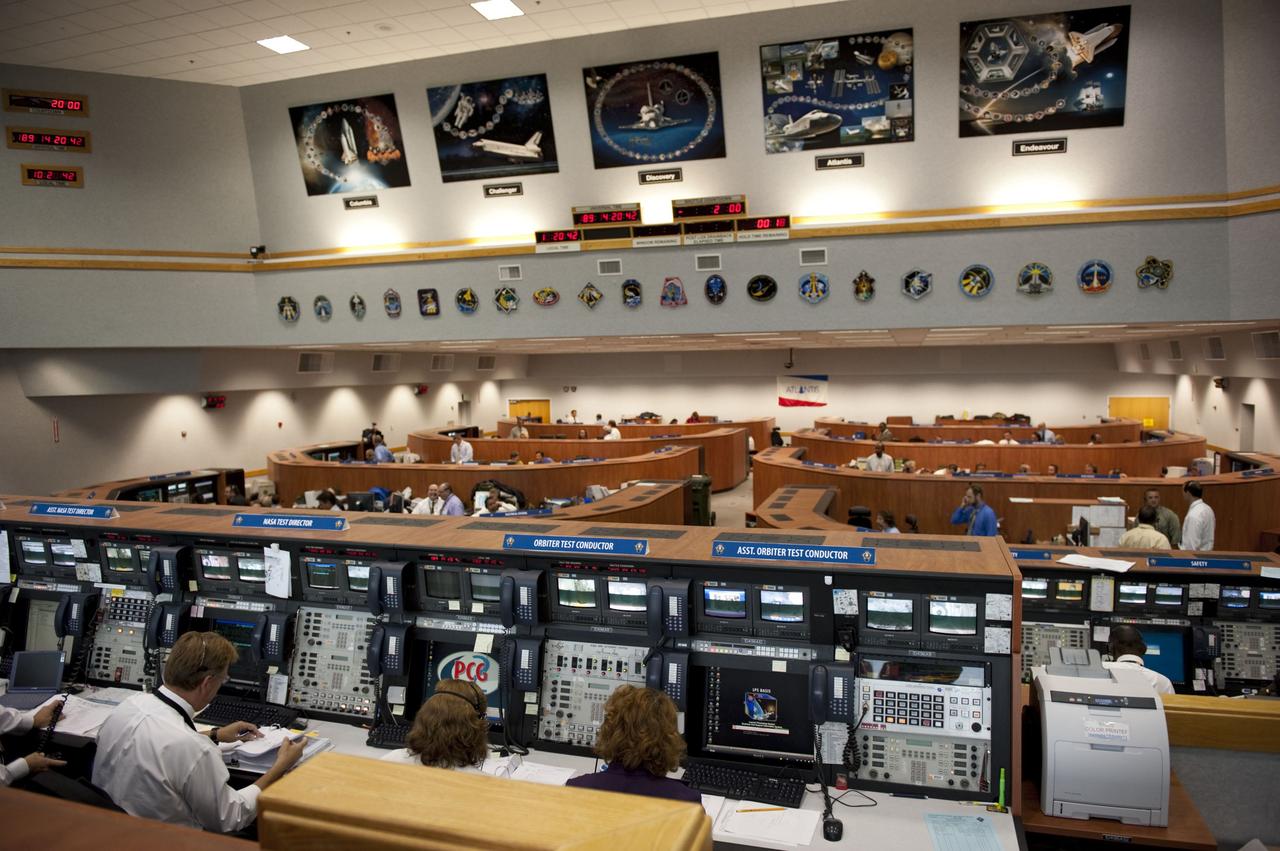
CAPE CANAVERAL, Fla. -- In Firing Room 4 of the Launch Control Center at NASA's Kennedy Space Center in Florida, launch team members monitor the countdown to the launch of space shuttle Atlantis on its STS-135 mission to the International Space Station. Above the space shuttle countdown clock are five orbiter tributes on display. The tributes feature major accomplishments and significant achievements made by each shuttle, as well as mission patches and processing milestones. Atlantis with its crew of four; Commander Chris Ferguson, Pilot Doug Hurley, Mission Specialists Sandy Magnus and Rex Walheim, lifted off at 11:29 a.m. EDT on July 8, 2011 to deliver the Raffaello multi-purpose logistics module packed with supplies and spare parts for the station. Atlantis also will fly the Robotic Refueling Mission experiment that will investigate the potential for robotically refueling existing satellites in orbit. In addition, Atlantis will return with a failed ammonia pump module to help NASA better understand the failure mechanism and improve pump designs for future systems. STS-135 will be the 33rd flight of Atlantis, the 37th shuttle mission to the space station, and the 135th and final mission of NASA's Space Shuttle Program. For more information, visit www.nasa.gov/mission_pages/shuttle/shuttlemissions/sts135/index.html. Photo credit: NASA/Kim Shiflett
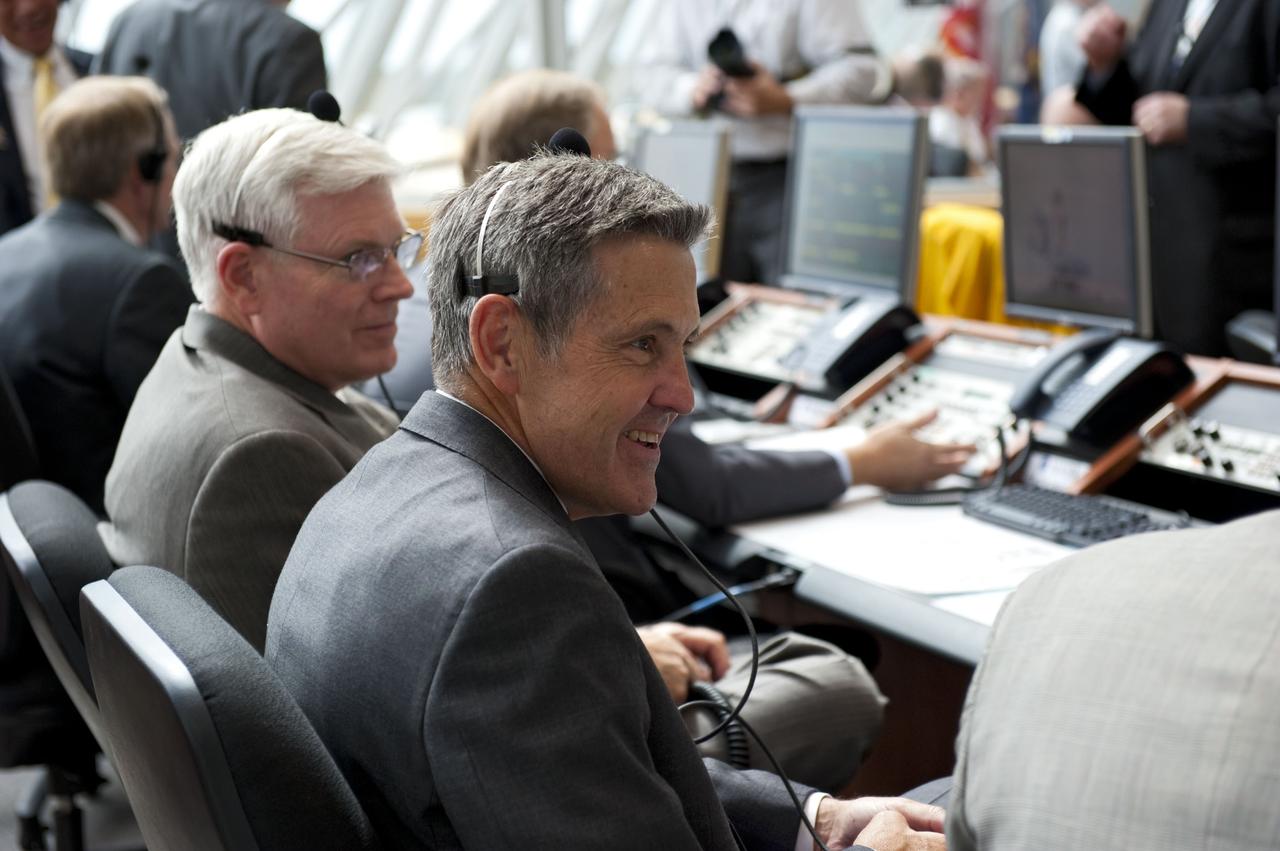
CAPE CANAVERAL, Fla. -- In Firing Room 4 of the Launch Control Center at NASA's Kennedy Space Center in Florida, Kennedy Center Director Bob Cabana and Johnson Center Director Mike Coats monitor the countdown to the launch of space shuttle Atlantis on its STS-135 mission to the International Space Station. Atlantis with its crew of four; Commander Chris Ferguson, Pilot Doug Hurley, Mission Specialists Sandy Magnus and Rex Walheim, lifted off at 11:29 a.m. EDT on July 8, 2011 to deliver the Raffaello multi-purpose logistics module packed with supplies and spare parts for the station. Atlantis also will fly the Robotic Refueling Mission experiment that will investigate the potential for robotically refueling existing satellites in orbit. In addition, Atlantis will return with a failed ammonia pump module to help NASA better understand the failure mechanism and improve pump designs for future systems. STS-135 will be the 33rd flight of Atlantis, the 37th shuttle mission to the space station, and the 135th and final mission of NASA's Space Shuttle Program. For more information, visit www.nasa.gov/mission_pages/shuttle/shuttlemissions/sts135/index.html. Photo credit: NASA/Kim Shiflett
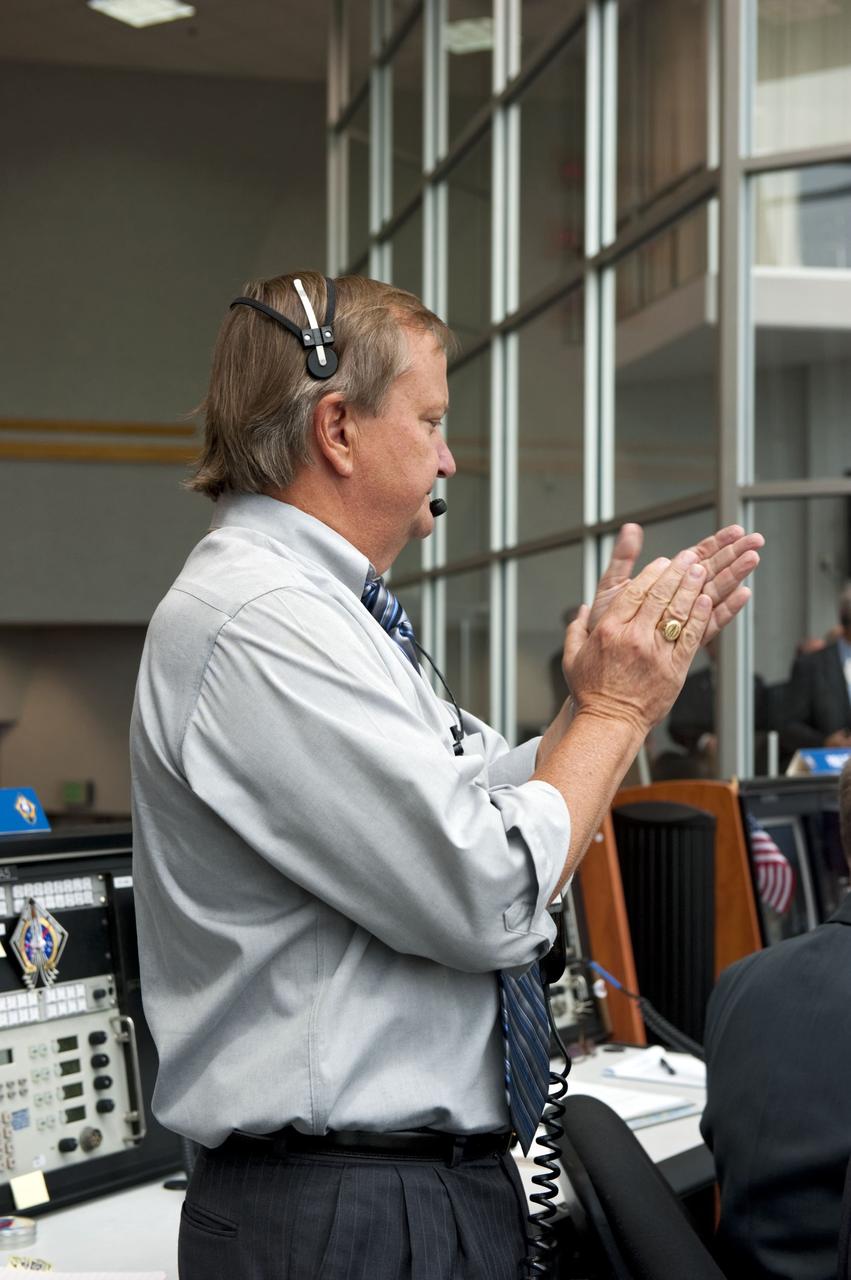
CAPE CANAVERAL, Fla. -- In Firing Room 4 of the Launch Control Center at NASA's Kennedy Space Center in Florida, Shuttle Launch Director Mike Leinbach reacts with applause to the liftoff of space shuttle Atlantis on its STS-135 mission to the International Space Station. Atlantis with its crew of four; Commander Chris Ferguson, Pilot Doug Hurley, Mission Specialists Sandy Magnus and Rex Walheim, lifted off at 11:29 a.m. EDT on July 8, 2011 to deliver the Raffaello multi-purpose logistics module packed with supplies and spare parts for the station. Atlantis also will fly the Robotic Refueling Mission experiment that will investigate the potential for robotically refueling existing satellites in orbit. In addition, Atlantis will return with a failed ammonia pump module to help NASA better understand the failure mechanism and improve pump designs for future systems. STS-135 will be the 33rd flight of Atlantis, the 37th shuttle mission to the space station, and the 135th and final mission of NASA's Space Shuttle Program. For more information, visit www.nasa.gov/mission_pages/shuttle/shuttlemissions/sts135/index.html. Photo credit: NASA/Kim Shiflett
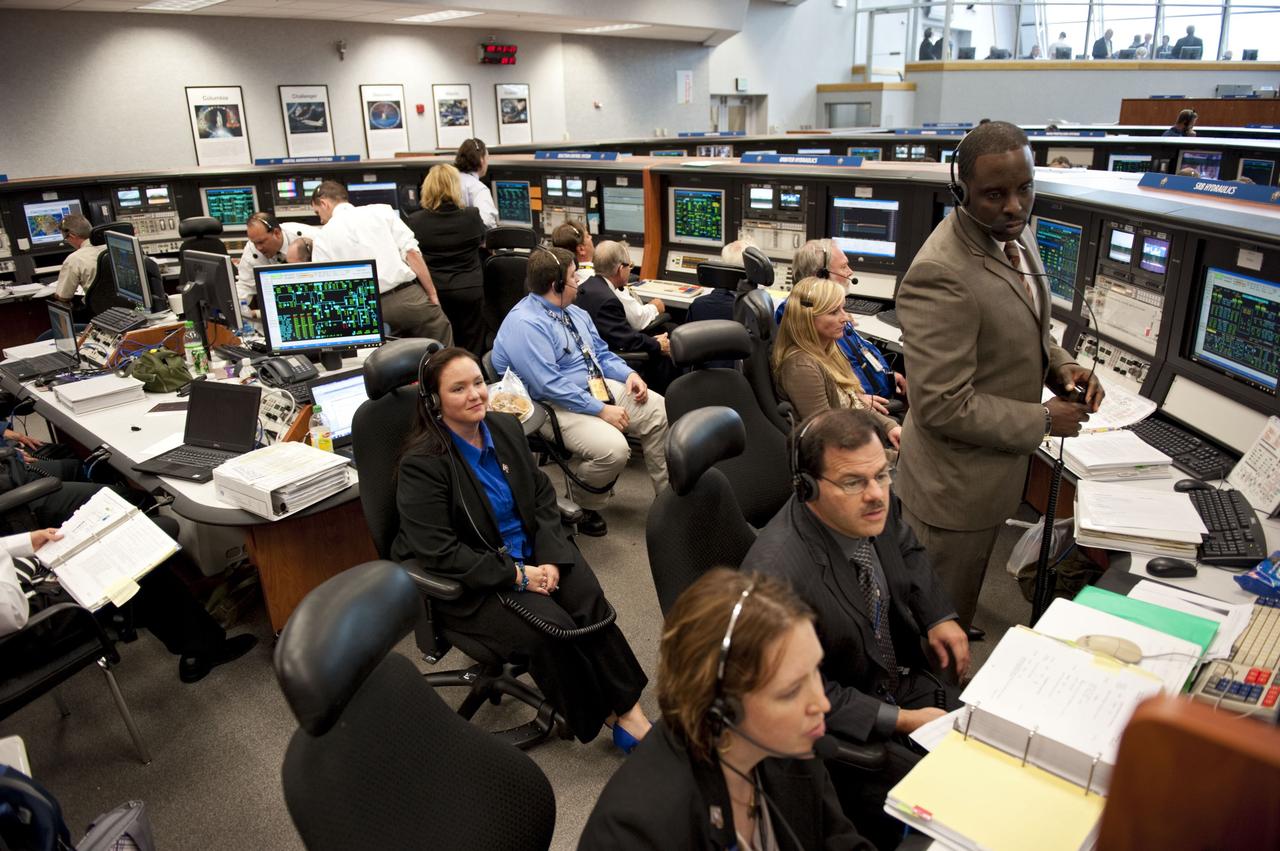
CAPE CANAVERAL, Fla. -- In Firing Room 4 of the Launch Control Center at NASA's Kennedy Space Center in Florida, launch team members monitor the countdown to the launch of space shuttle Atlantis on its STS-135 mission to the International Space Station. Atlantis with its crew of four; Commander Chris Ferguson, Pilot Doug Hurley, Mission Specialists Sandy Magnus and Rex Walheim, lifted off at 11:29 a.m. EDT on July 8, 2011 to deliver the Raffaello multi-purpose logistics module packed with supplies and spare parts for the station. Atlantis also will fly the Robotic Refueling Mission experiment that will investigate the potential for robotically refueling existing satellites in orbit. In addition, Atlantis will return with a failed ammonia pump module to help NASA better understand the failure mechanism and improve pump designs for future systems. STS-135 will be the 33rd flight of Atlantis, the 37th shuttle mission to the space station, and the 135th and final mission of NASA's Space Shuttle Program. For more information, visit www.nasa.gov/mission_pages/shuttle/shuttlemissions/sts135/index.html. Photo credit: NASA/Kim Shiflett
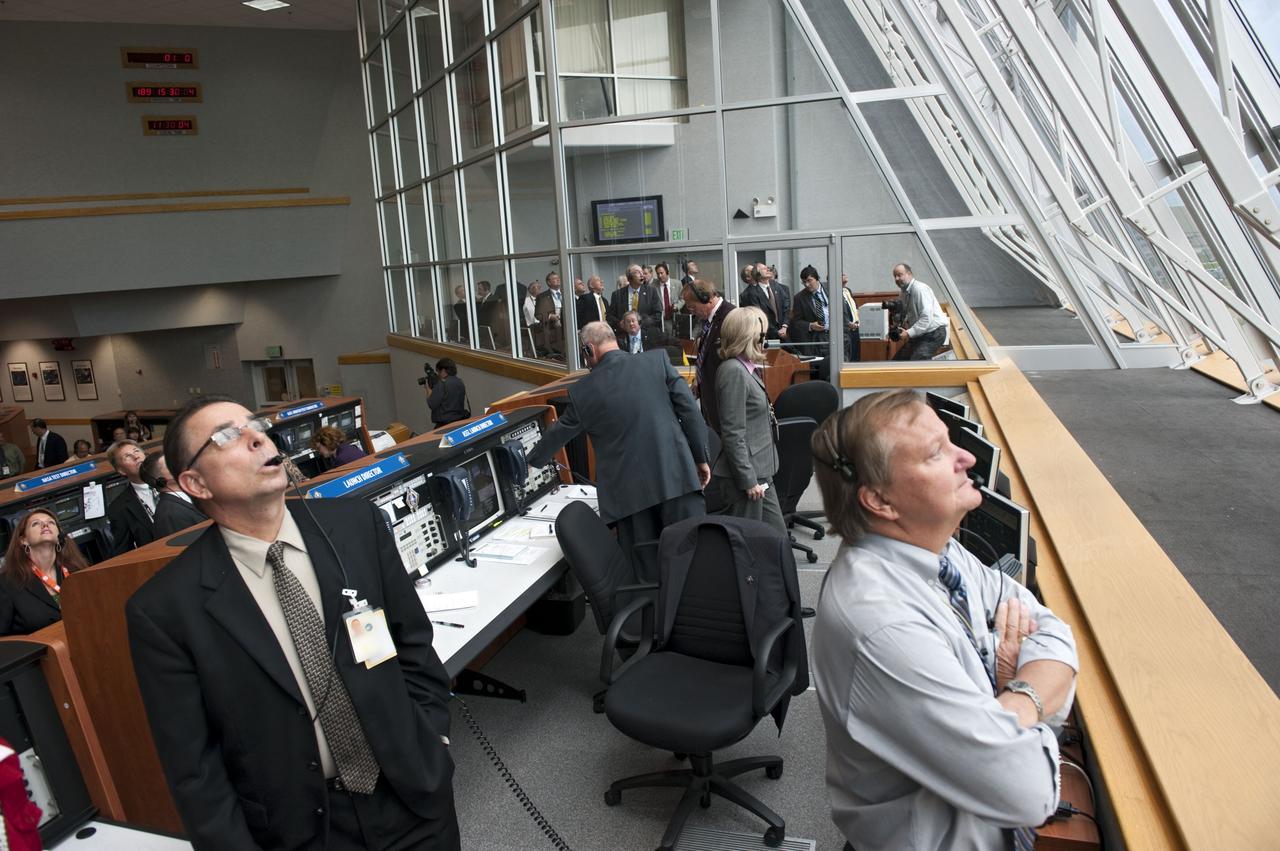
CAPE CANAVERAL, Fla. -- In Firing Room 4 of the Launch Control Center at NASA's Kennedy Space Center in Florida, Shuttle Launch Director Mike Leinbach, and Payloads Launch Manager and Deputy Director of ISS and Spacecraft Processing at Kennedy, Bill Dowdell along with the launch control members, watch intently as space shuttle Atlantis lifts off on its STS-135 mission to the International Space Station. Atlantis with its crew of four; Commander Chris Ferguson, Pilot Doug Hurley, Mission Specialists Sandy Magnus and Rex Walheim, lifted off at 11:29 a.m. EDT on July 8, 2011 to deliver the Raffaello multi-purpose logistics module packed with supplies and spare parts for the station. Atlantis also will fly the Robotic Refueling Mission experiment that will investigate the potential for robotically refueling existing satellites in orbit. In addition, Atlantis will return with a failed ammonia pump module to help NASA better understand the failure mechanism and improve pump designs for future systems. STS-135 will be the 33rd flight of Atlantis, the 37th shuttle mission to the space station, and the 135th and final mission of NASA's Space Shuttle Program. For more information, visit www.nasa.gov/mission_pages/shuttle/shuttlemissions/sts135/index.html. Photo credit: NASA/Kim Shiflett
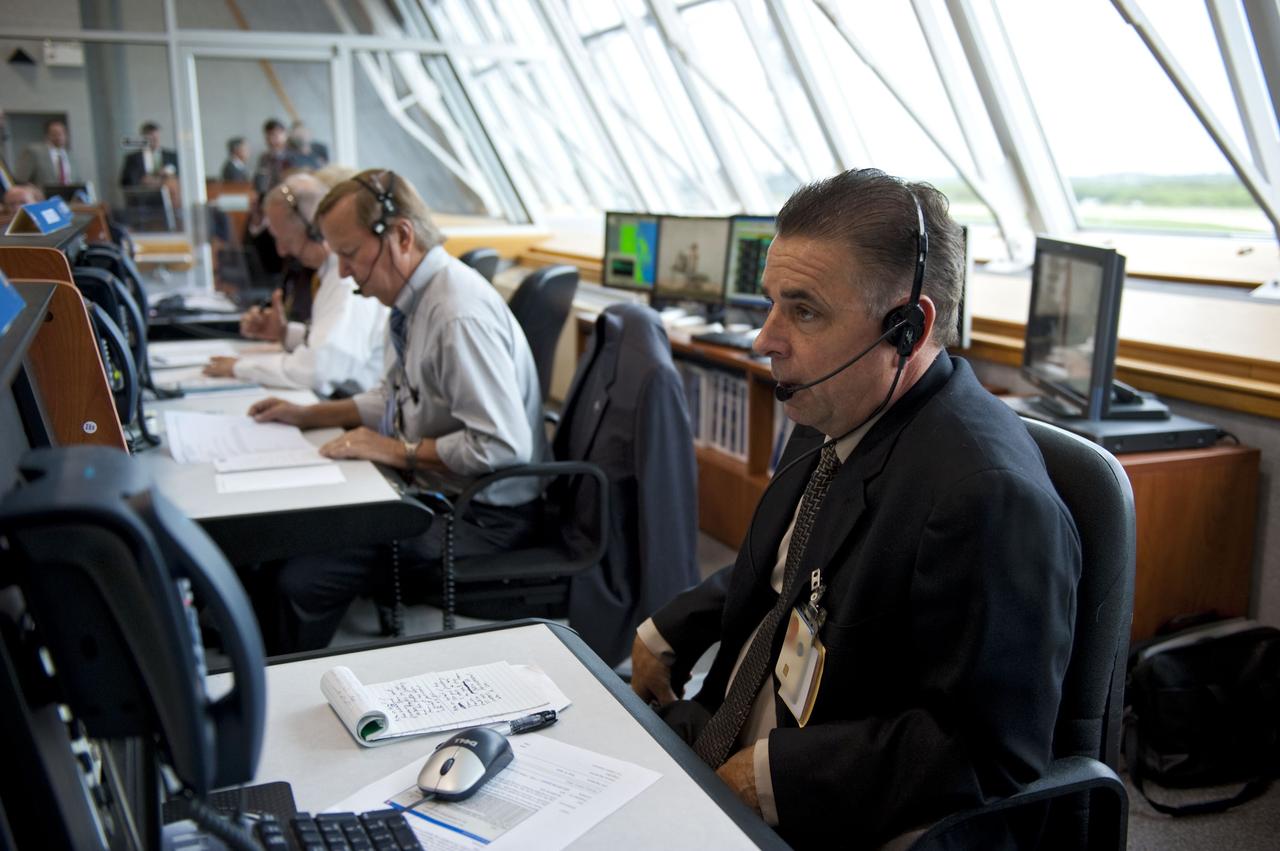
CAPE CANAVERAL, Fla. -- In Firing Room 4 of the Launch Control Center at NASA's Kennedy Space Center in Florida, launch team members monitor the countdown to the launch of space shuttle Atlantis on its STS-135 mission to the International Space Station. Seen here are Assistant Launch Director Pete Nickolenko (background) Shuttle Launch Director Mike Leinbach and Payloads Launch Manager and Deputy Director of ISS and Spacecraft Processing at Kennedy, Bill Dowdell. Atlantis with its crew of four; Commander Chris Ferguson, Pilot Doug Hurley, Mission Specialists Sandy Magnus and Rex Walheim, lifted off at 11:29 a.m. EDT on July 8, 2011 to deliver the Raffaello multi-purpose logistics module packed with supplies and spare parts for the station. Atlantis also will fly the Robotic Refueling Mission experiment that will investigate the potential for robotically refueling existing satellites in orbit. In addition, Atlantis will return with a failed ammonia pump module to help NASA better understand the failure mechanism and improve pump designs for future systems. STS-135 will be the 33rd flight of Atlantis, the 37th shuttle mission to the space station, and the 135th and final mission of NASA's Space Shuttle Program. For more information, visit www.nasa.gov/mission_pages/shuttle/shuttlemissions/sts135/index.html. Photo credit: NASA/Kim Shiflett
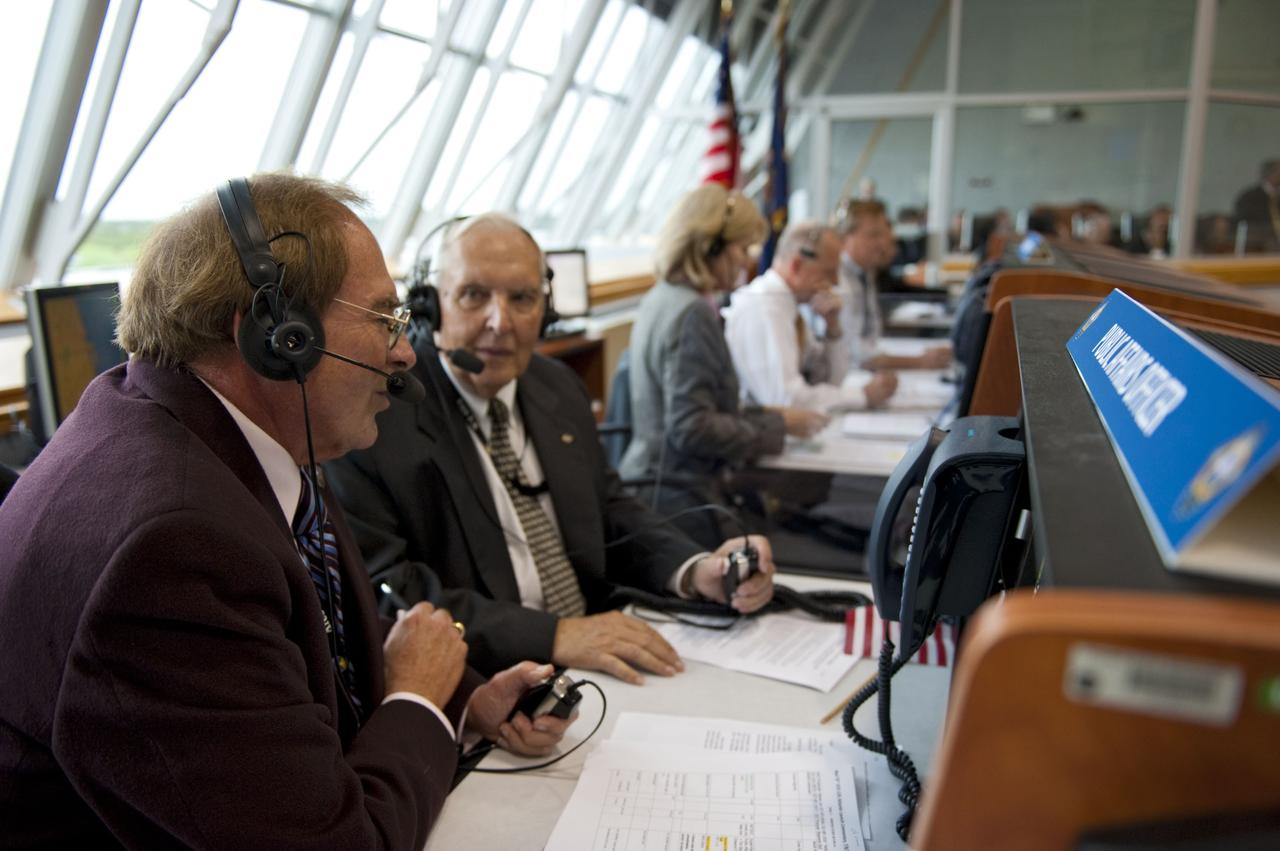
CAPE CANAVERAL, Fla. -- In Firing Room 4 of the Launch Control Center at NASA's Kennedy Space Center in Florida, NASA Launch Commentator and Public Affairs Officer George Diller interviews former Kennedy Director of Public Affairs Hugh Harris during prelaunch activities before liftoff of space shuttle Atlantis on its STS-135 mission. Atlantis with its crew of four; Commander Chris Ferguson, Pilot Doug Hurley, Mission Specialists Sandy Magnus and Rex Walheim, lifted off at 11:29 a.m. EDT on July 8, 2011 to deliver the Raffaello multi-purpose logistics module packed with supplies and spare parts for the station. Atlantis also will fly the Robotic Refueling Mission experiment that will investigate the potential for robotically refueling existing satellites in orbit. In addition, Atlantis will return with a failed ammonia pump module to help NASA better understand the failure mechanism and improve pump designs for future systems. STS-135 will be the 33rd flight of Atlantis, the 37th shuttle mission to the space station, and the 135th and final mission of NASA's Space Shuttle Program. For more information, visit www.nasa.gov/mission_pages/shuttle/shuttlemissions/sts135/index.html. Photo credit: NASA/Kim Shiflett

CAPE CANAVERAL, Fla. -- In Firing Room 4 of the Launch Control Center at NASA's Kennedy Space Center in Florida, NASA Administrator Charles Bolden (right), Associate Administrator for Space Operations Bill Gerstenmaier and Space Shuttle Program Manager John Shannon monitor the countdown to the launch of space shuttle Atlantis on its STS-135 mission to the International Space Station. Atlantis with its crew of four; Commander Chris Ferguson, Pilot Doug Hurley, Mission Specialists Sandy Magnus and Rex Walheim, lifted off at 11:29 a.m. EDT on July 8, 2011 to deliver the Raffaello multi-purpose logistics module packed with supplies and spare parts for the station. Atlantis also will fly the Robotic Refueling Mission experiment that will investigate the potential for robotically refueling existing satellites in orbit. In addition, Atlantis will return with a failed ammonia pump module to help NASA better understand the failure mechanism and improve pump designs for future systems. STS-135 will be the 33rd flight of Atlantis, the 37th shuttle mission to the space station, and the 135th and final mission of NASA's Space Shuttle Program. For more information, visit www.nasa.gov/mission_pages/shuttle/shuttlemissions/sts135/index.html. Photo credit: NASA/Kim Shiflett
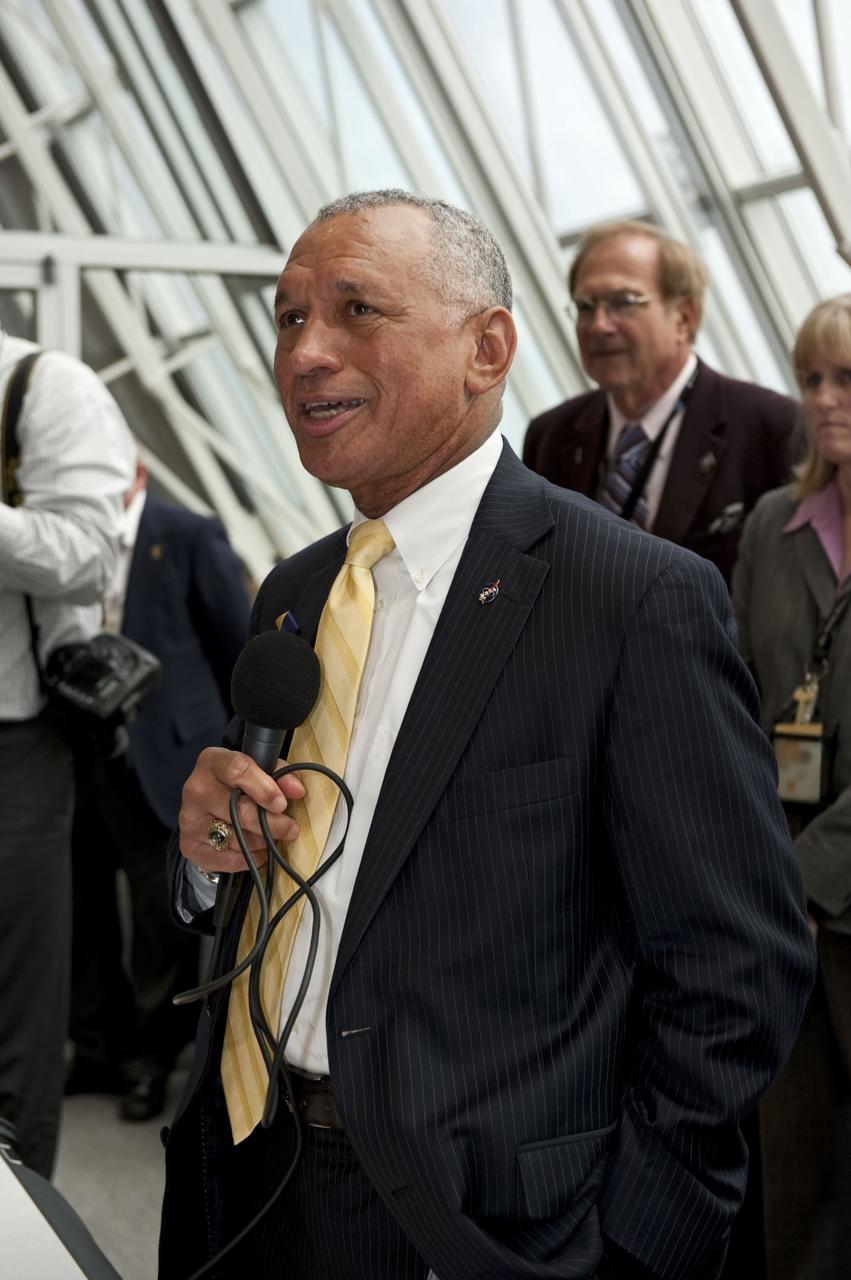
CAPE CANAVERAL, Fla. -- In Firing Room 4 of the Launch Control Center at NASA's Kennedy Space Center in Florida, NASA Administrator Charles Bolden congratulates the launch control team members following the successful launch of space shuttle Atlantis on its STS-135 mission to the International Space Station. Atlantis with its crew of four; Commander Chris Ferguson, Pilot Doug Hurley, Mission Specialists Sandy Magnus and Rex Walheim, lifted off at 11:29 a.m. EDT on July 8, 2011 to deliver the Raffaello multi-purpose logistics module packed with supplies and spare parts for the station. Atlantis also will fly the Robotic Refueling Mission experiment that will investigate the potential for robotically refueling existing satellites in orbit. In addition, Atlantis will return with a failed ammonia pump module to help NASA better understand the failure mechanism and improve pump designs for future systems. STS-135 will be the 33rd flight of Atlantis, the 37th shuttle mission to the space station, and the 135th and final mission of NASA's Space Shuttle Program. For more information, visit www.nasa.gov/mission_pages/shuttle/shuttlemissions/sts135/index.html. Photo credit: NASA/Kim Shiflett
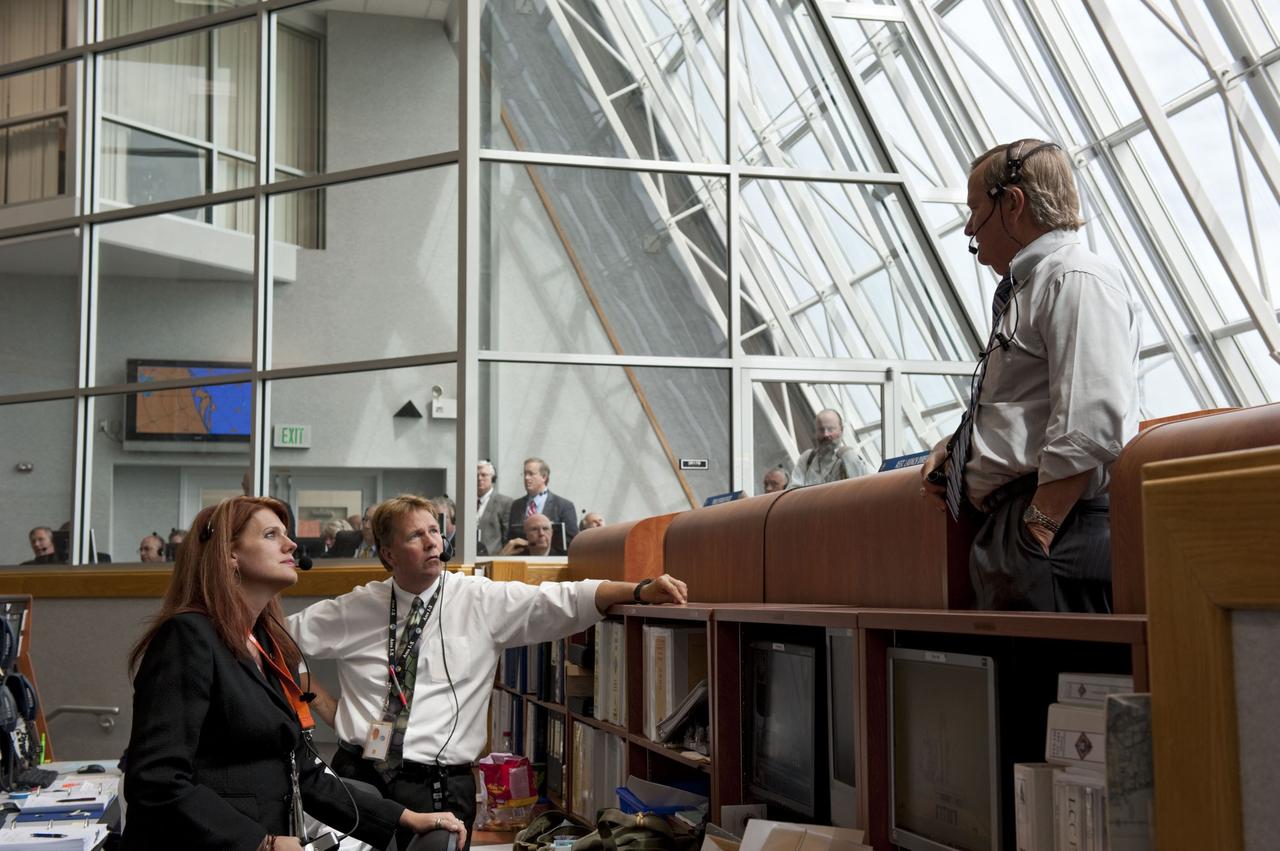
CAPE CANAVERAL, Fla. -- In Firing Room 4 of the Launch Control Center at NASA's Kennedy Space Center in Florida, Shuttle Launch Director Mike Leinbach speaks with NASA Test Directors Jeff Spaulding (center) and Charlie Blackwell-Thompson during the countdown to the launch of space shuttle Atlantis on its STS-135 mission to the International Space Station. Atlantis with its crew of four; Commander Chris Ferguson, Pilot Doug Hurley, Mission Specialists Sandy Magnus and Rex Walheim, lifted off at 11:29 a.m. EDT on July 8, 2011 to deliver the Raffaello multi-purpose logistics module packed with supplies and spare parts for the station. Atlantis also will fly the Robotic Refueling Mission experiment that will investigate the potential for robotically refueling existing satellites in orbit. In addition, Atlantis will return with a failed ammonia pump module to help NASA better understand the failure mechanism and improve pump designs for future systems. STS-135 will be the 33rd flight of Atlantis, the 37th shuttle mission to the space station, and the 135th and final mission of NASA's Space Shuttle Program. For more information, visit www.nasa.gov/mission_pages/shuttle/shuttlemissions/sts135/index.html. Photo credit: NASA/Kim Shiflett
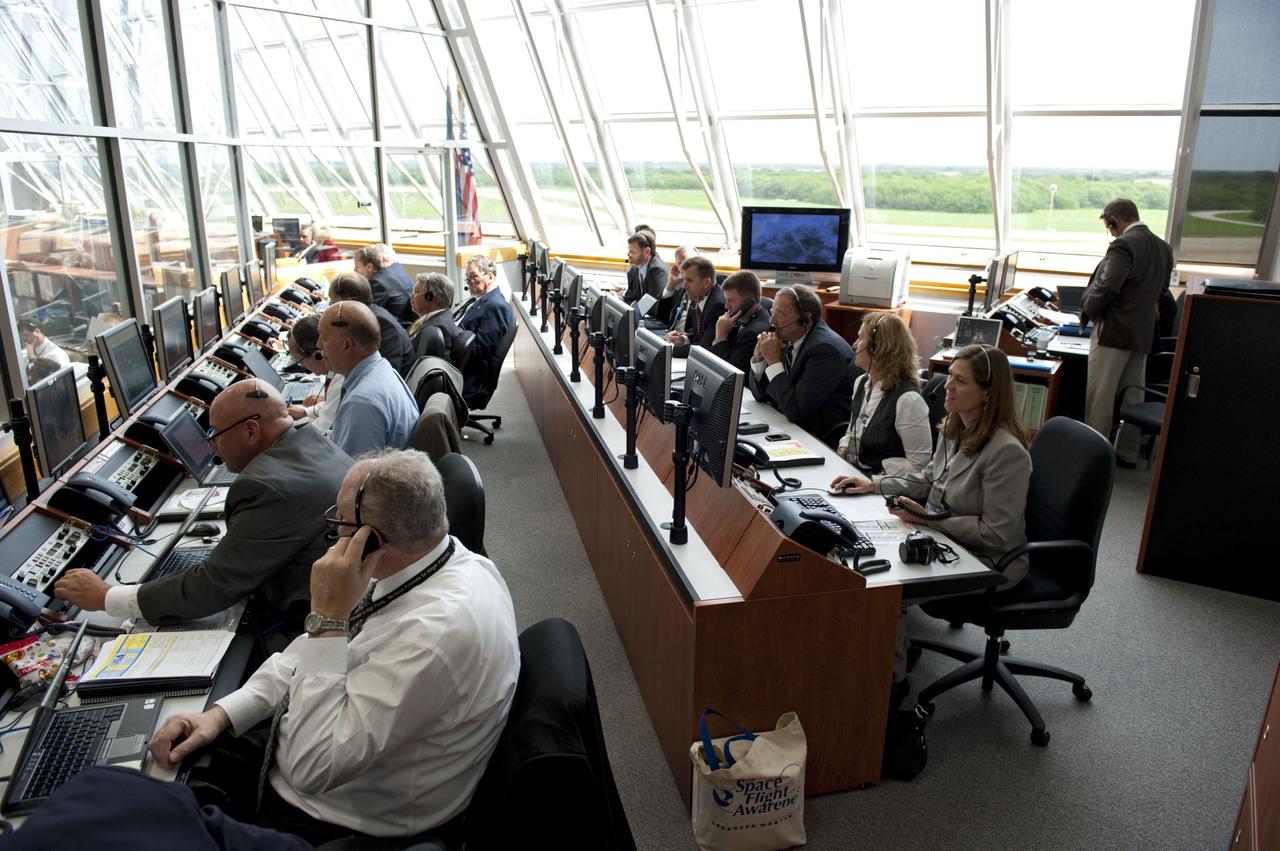
CAPE CANAVERAL, Fla. -- In Firing Room 4 of the Launch Control Center at NASA's Kennedy Space Center in Florida, launch team members monitor the countdown to the launch of space shuttle Atlantis on its STS-135 mission to the International Space Station. Atlantis with its crew of four; Commander Chris Ferguson, Pilot Doug Hurley, Mission Specialists Sandy Magnus and Rex Walheim, lifted off at 11:29 a.m. EDT on July 8, 2011 to deliver the Raffaello multi-purpose logistics module packed with supplies and spare parts for the station. Atlantis also will fly the Robotic Refueling Mission experiment that will investigate the potential for robotically refueling existing satellites in orbit. In addition, Atlantis will return with a failed ammonia pump module to help NASA better understand the failure mechanism and improve pump designs for future systems. STS-135 will be the 33rd flight of Atlantis, the 37th shuttle mission to the space station, and the 135th and final mission of NASA's Space Shuttle Program. For more information, visit www.nasa.gov/mission_pages/shuttle/shuttlemissions/sts135/index.html. Photo credit: NASA/Kim Shiflett
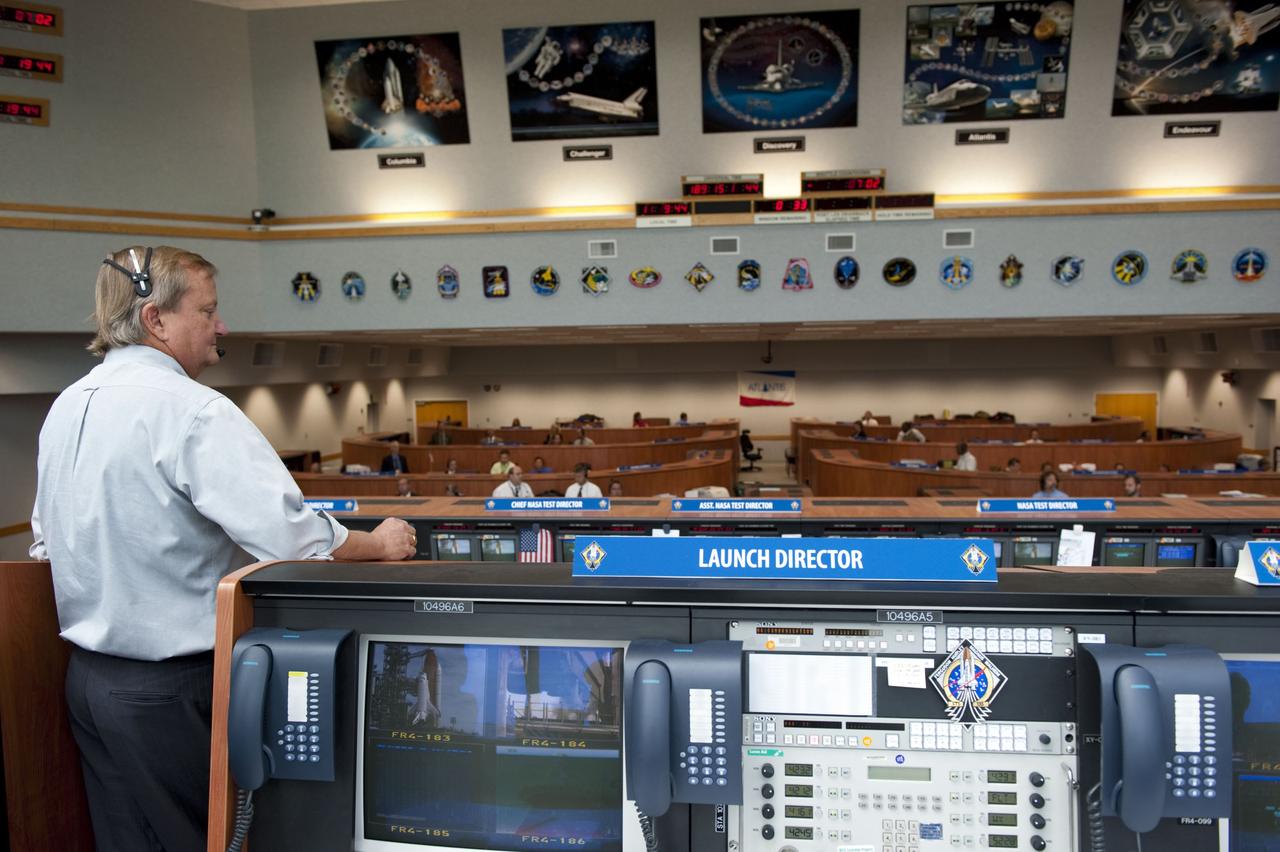
CAPE CANAVERAL, Fla. -- In Firing Room 4 of the Launch Control Center at NASA's Kennedy Space Center in Florida, Shuttle Launch Director Mike Leinbach oversees the countdown to the launch of space shuttle Atlantis on its STS-135 mission to the International Space Station. Atlantis with its crew of four; Commander Chris Ferguson, Pilot Doug Hurley, Mission Specialists Sandy Magnus and Rex Walheim, lifted off at 11:29 a.m. EDT on July 8, 2011 to deliver the Raffaello multi-purpose logistics module packed with supplies and spare parts for the station. Atlantis also will fly the Robotic Refueling Mission experiment that will investigate the potential for robotically refueling existing satellites in orbit. In addition, Atlantis will return with a failed ammonia pump module to help NASA better understand the failure mechanism and improve pump designs for future systems. STS-135 will be the 33rd flight of Atlantis, the 37th shuttle mission to the space station, and the 135th and final mission of NASA's Space Shuttle Program. For more information, visit www.nasa.gov/mission_pages/shuttle/shuttlemissions/sts135/index.html. Photo credit: NASA/Kim Shiflett
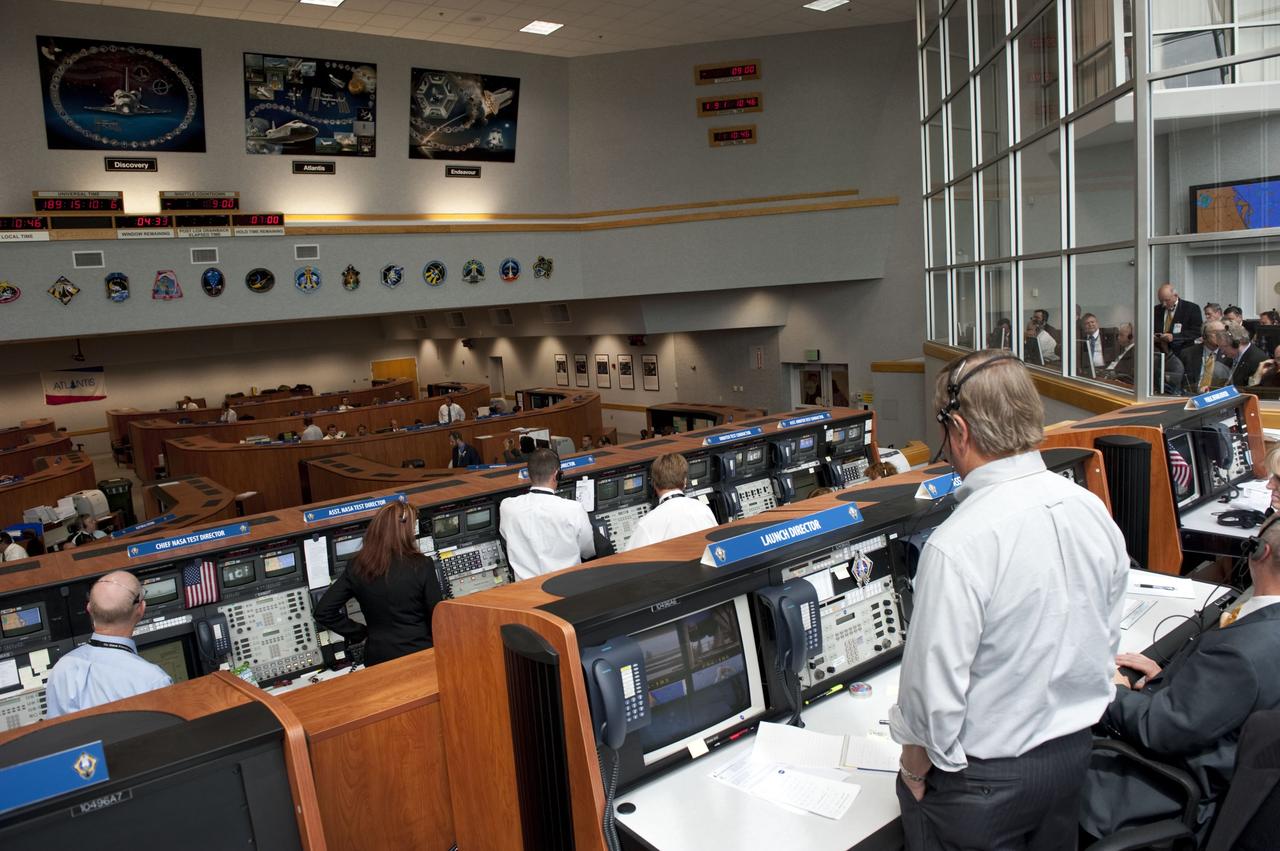
CAPE CANAVERAL, Fla. -- In Firing Room 4 of the Launch Control Center at NASA's Kennedy Space Center in Florida, Shuttle Launch Director Mike Leinbach oversees the countdown to the launch of space shuttle Atlantis on its STS-135 mission to the International Space Station. Atlantis with its crew of four; Commander Chris Ferguson, Pilot Doug Hurley, Mission Specialists Sandy Magnus and Rex Walheim, lifted off at 11:29 a.m. EDT on July 8, 2011 to deliver the Raffaello multi-purpose logistics module packed with supplies and spare parts for the station. Atlantis also will fly the Robotic Refueling Mission experiment that will investigate the potential for robotically refueling existing satellites in orbit. In addition, Atlantis will return with a failed ammonia pump module to help NASA better understand the failure mechanism and improve pump designs for future systems. STS-135 will be the 33rd flight of Atlantis, the 37th shuttle mission to the space station, and the 135th and final mission of NASA's Space Shuttle Program. For more information, visit www.nasa.gov/mission_pages/shuttle/shuttlemissions/sts135/index.html. Photo credit: NASA/Kim Shiflett
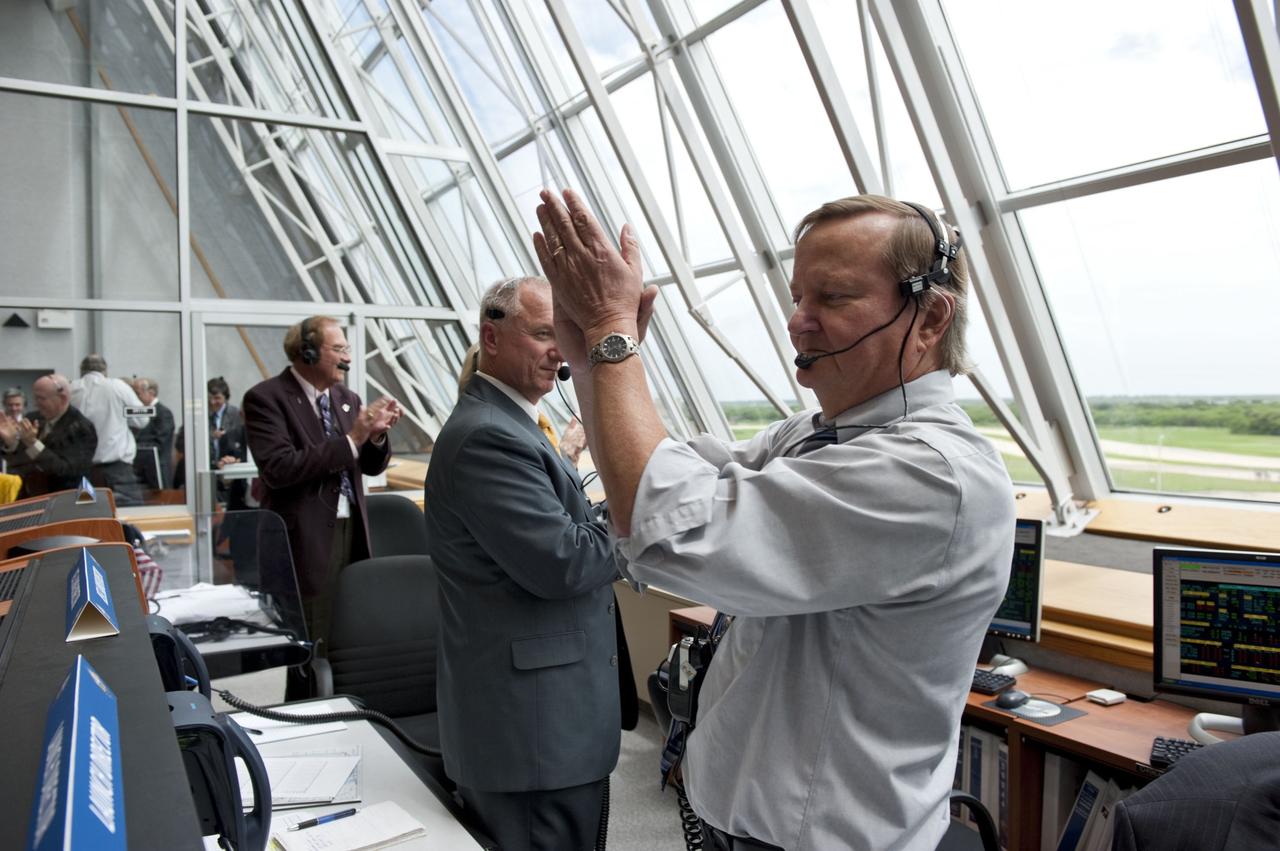
CAPE CANAVERAL, Fla. -- In Firing Room 4 of the Launch Control Center at NASA's Kennedy Space Center in Florida, Shuttle Launch Director Mike Leinbach (right), Assistant Launch Director Pete Nickolenko and NASA Commentator and Public Affairs Officer George Diller applaud the successful launch of space shuttle Atlantis on its STS-135 mission to the International Space Station. Atlantis with its crew of four; Commander Chris Ferguson, Pilot Doug Hurley, Mission Specialists Sandy Magnus and Rex Walheim, lifted off at 11:29 a.m. EDT on July 8, 2011 to deliver the Raffaello multi-purpose logistics module packed with supplies and spare parts for the station. Atlantis also will fly the Robotic Refueling Mission experiment that will investigate the potential for robotically refueling existing satellites in orbit. In addition, Atlantis will return with a failed ammonia pump module to help NASA better understand the failure mechanism and improve pump designs for future systems. STS-135 will be the 33rd flight of Atlantis, the 37th shuttle mission to the space station, and the 135th and final mission of NASA's Space Shuttle Program. For more information, visit www.nasa.gov/mission_pages/shuttle/shuttlemissions/sts135/index.html. Photo credit: NASA/Kim Shiflett
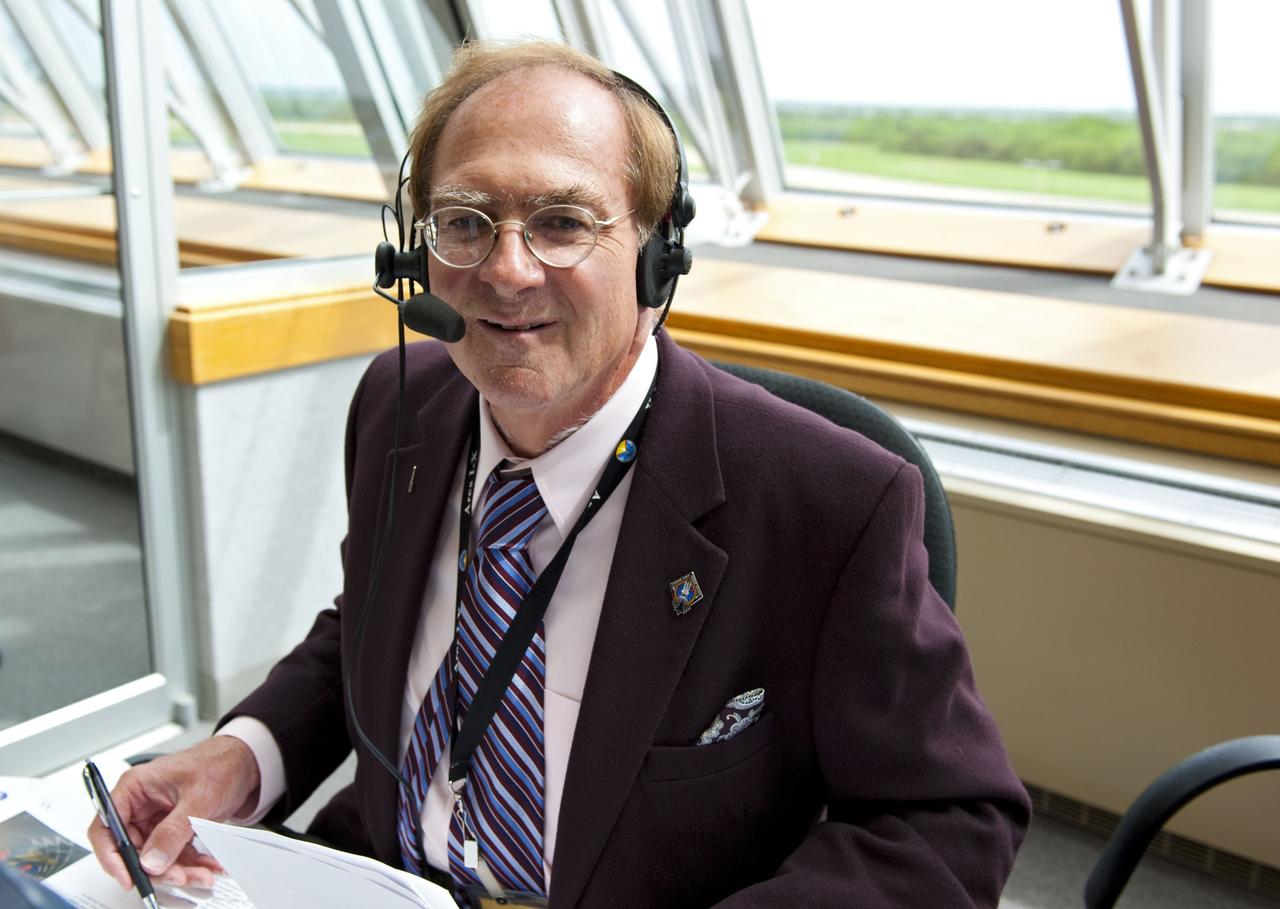
CAPE CANAVERAL, Fla. -- In Firing Room 4 of the Launch Control Center at NASA's Kennedy Space Center in Florida, NASA Commentator and Public Affairs Officer George Diller provides live launch coverage of space shuttle Atlantis' STS-135 mission to the International Space Station for NASA TV. Atlantis with its crew of four; Commander Chris Ferguson, Pilot Doug Hurley, Mission Specialists Sandy Magnus and Rex Walheim, lifted off at 11:29 a.m. EDT on July 8, 2011 to deliver the Raffaello multi-purpose logistics module packed with supplies and spare parts for the station. Atlantis also will fly the Robotic Refueling Mission experiment that will investigate the potential for robotically refueling existing satellites in orbit. In addition, Atlantis will return with a failed ammonia pump module to help NASA better understand the failure mechanism and improve pump designs for future systems. STS-135 will be the 33rd flight of Atlantis, the 37th shuttle mission to the space station, and the 135th and final mission of NASA's Space Shuttle Program. For more information, visit www.nasa.gov/mission_pages/shuttle/shuttlemissions/sts135/index.html. Photo credit: NASA/Kim Shiflett
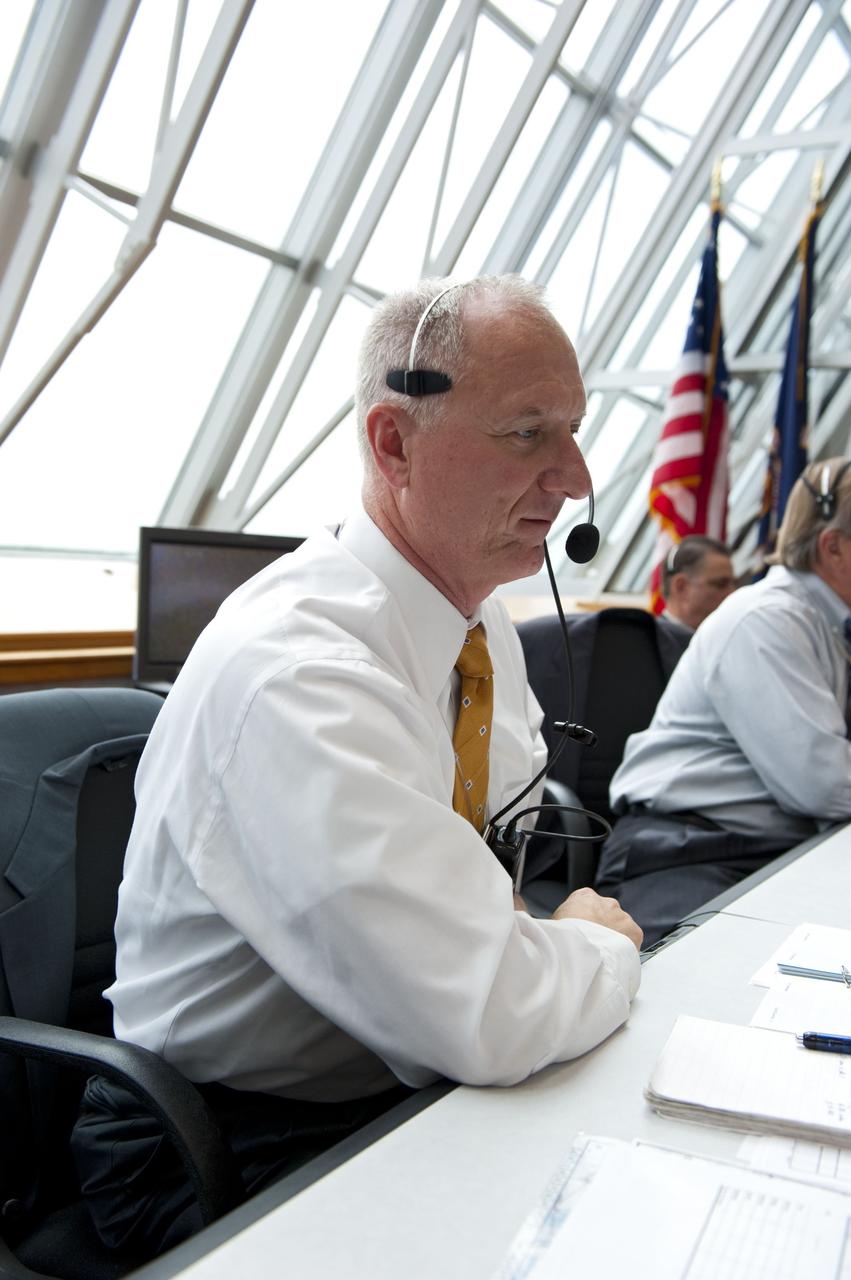
CAPE CANAVERAL, Fla. -- In Firing Room 4 of the Launch Control Center at NASA's Kennedy Space Center in Florida, launch team members monitor the countdown to the launch of space shuttle Atlantis on its STS-135 mission to the International Space Station. Seen here is Assistant Launch Director Pete Nickolenko. Atlantis with its crew of four; Commander Chris Ferguson, Pilot Doug Hurley, Mission Specialists Sandy Magnus and Rex Walheim, lifted off at 11:29 a.m. EDT on July 8, 2011 to deliver the Raffaello multi-purpose logistics module packed with supplies and spare parts for the station. Atlantis also will fly the Robotic Refueling Mission experiment that will investigate the potential for robotically refueling existing satellites in orbit. In addition, Atlantis will return with a failed ammonia pump module to help NASA better understand the failure mechanism and improve pump designs for future systems. STS-135 will be the 33rd flight of Atlantis, the 37th shuttle mission to the space station, and the 135th and final mission of NASA's Space Shuttle Program. For more information, visit www.nasa.gov/mission_pages/shuttle/shuttlemissions/sts135/index.html. Photo credit: NASA/Kim Shiflett
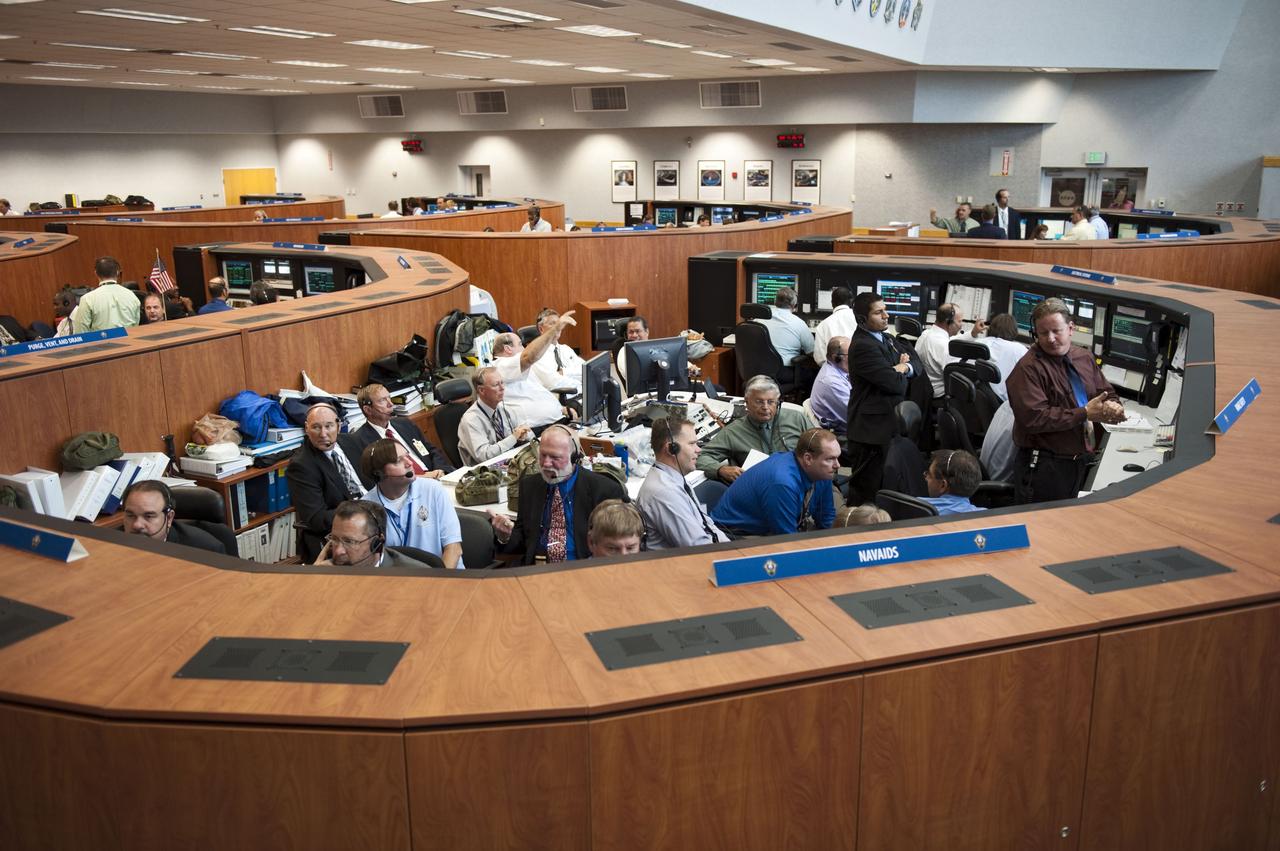
CAPE CANAVERAL, Fla. -- In Firing Room 4 of the Launch Control Center at NASA's Kennedy Space Center in Florida, launch team members monitor the countdown to the launch of space shuttle Atlantis on its STS-135 mission to the International Space Station. Atlantis with its crew of four; Commander Chris Ferguson, Pilot Doug Hurley, Mission Specialists Sandy Magnus and Rex Walheim, lifted off at 11:29 a.m. EDT on July 8, 2011 to deliver the Raffaello multi-purpose logistics module packed with supplies and spare parts for the station. Atlantis also will fly the Robotic Refueling Mission experiment that will investigate the potential for robotically refueling existing satellites in orbit. In addition, Atlantis will return with a failed ammonia pump module to help NASA better understand the failure mechanism and improve pump designs for future systems. STS-135 will be the 33rd flight of Atlantis, the 37th shuttle mission to the space station, and the 135th and final mission of NASA's Space Shuttle Program. For more information, visit www.nasa.gov/mission_pages/shuttle/shuttlemissions/sts135/index.html. Photo credit: NASA/Kim Shiflett
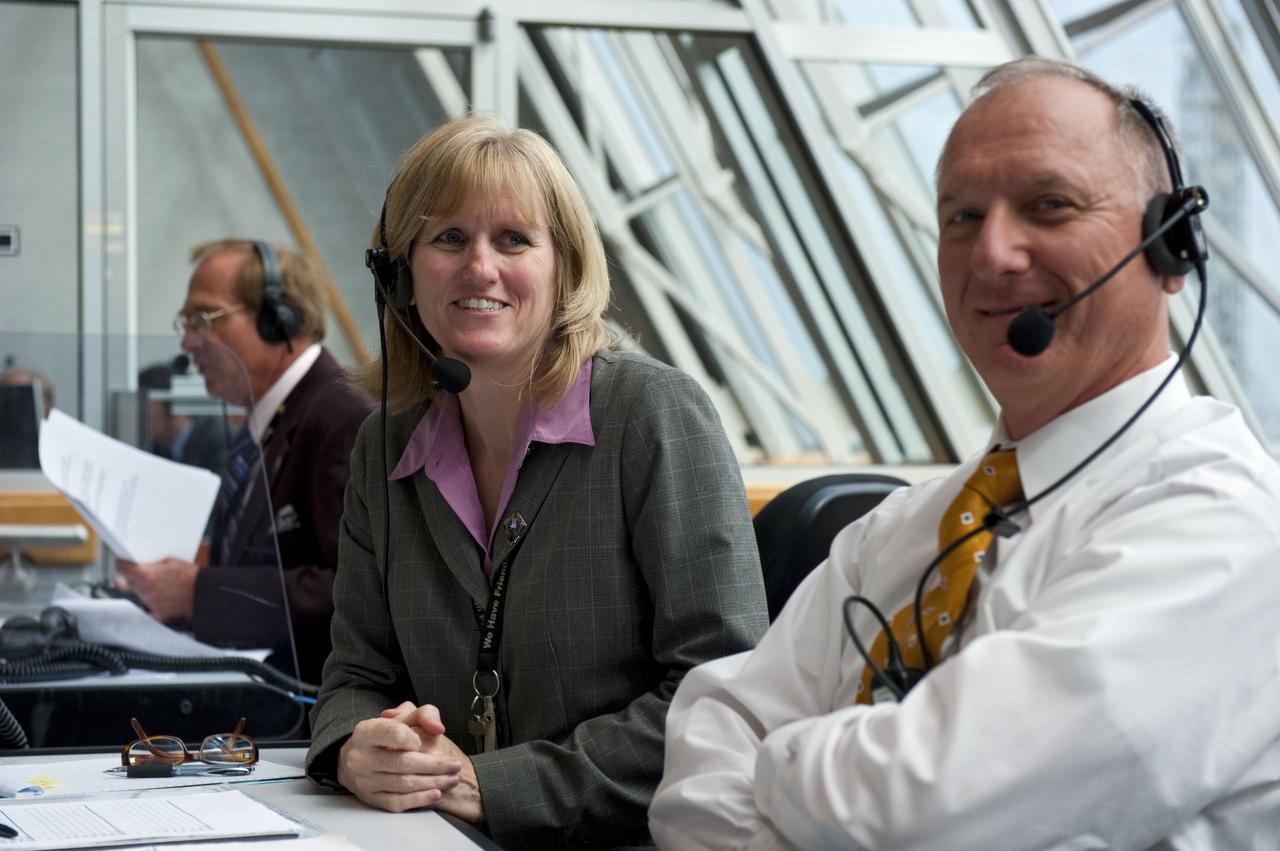
CAPE CANAVERAL, Fla. -- In Firing Room 4 of the Launch Control Center at NASA's Kennedy Space Center in Florida, launch team members monitor the countdown to the launch of space shuttle Atlantis on its STS-135 mission to the International Space Station. Seen here are Assistant Launch Director Pete Nickolenko (right), Atlantis NASA Flow Director Angie Brewer and NASA Commentator and Public Affairs Officer George Diller. Atlantis with its crew of four; Commander Chris Ferguson, Pilot Doug Hurley, Mission Specialists Sandy Magnus and Rex Walheim, lifted off at 11:29 a.m. EDT on July 8, 2011 to deliver the Raffaello multi-purpose logistics module packed with supplies and spare parts for the station. Atlantis also will fly the Robotic Refueling Mission experiment that will investigate the potential for robotically refueling existing satellites in orbit. In addition, Atlantis will return with a failed ammonia pump module to help NASA better understand the failure mechanism and improve pump designs for future systems. STS-135 will be the 33rd flight of Atlantis, the 37th shuttle mission to the space station, and the 135th and final mission of NASA's Space Shuttle Program. For more information, visit www.nasa.gov/mission_pages/shuttle/shuttlemissions/sts135/index.html. Photo credit: NASA/Kim Shiflett
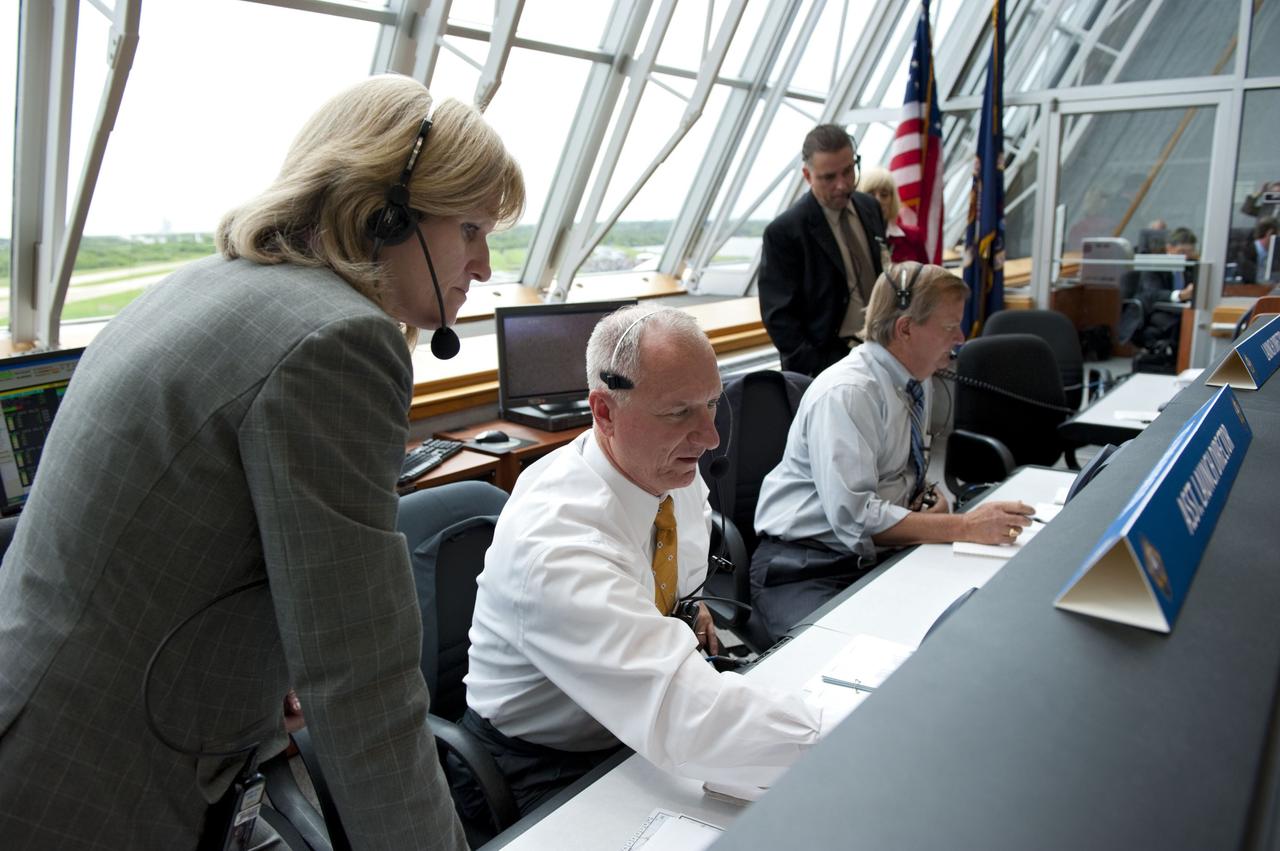
CAPE CANAVERAL, Fla. -- In Firing Room 4 of the Launch Control Center at NASA's Kennedy Space Center in Florida, launch team members monitor the countdown to the launch of space shuttle Atlantis on its STS-135 mission to the International Space Station. Seen here are Atlantis NASA Flow Director Angie Brewer, Assistant Launch Director Pete Nickolenko, Shuttle Launch Director Mike Leinbach and Payloads Launch Manager and Deputy Director of ISS and Spacecraft Processing at Kennedy, Bill Dowdell. Atlantis with its crew of four; Commander Chris Ferguson, Pilot Doug Hurley, Mission Specialists Sandy Magnus and Rex Walheim, lifted off at 11:29 a.m. EDT on July 8, 2011 to deliver the Raffaello multi-purpose logistics module packed with supplies and spare parts for the station. Atlantis also will fly the Robotic Refueling Mission experiment that will investigate the potential for robotically refueling existing satellites in orbit. In addition, Atlantis will return with a failed ammonia pump module to help NASA better understand the failure mechanism and improve pump designs for future systems. STS-135 will be the 33rd flight of Atlantis, the 37th shuttle mission to the space station, and the 135th and final mission of NASA's Space Shuttle Program. For more information, visit www.nasa.gov/mission_pages/shuttle/shuttlemissions/sts135/index.html. Photo credit: NASA/Kim Shiflett
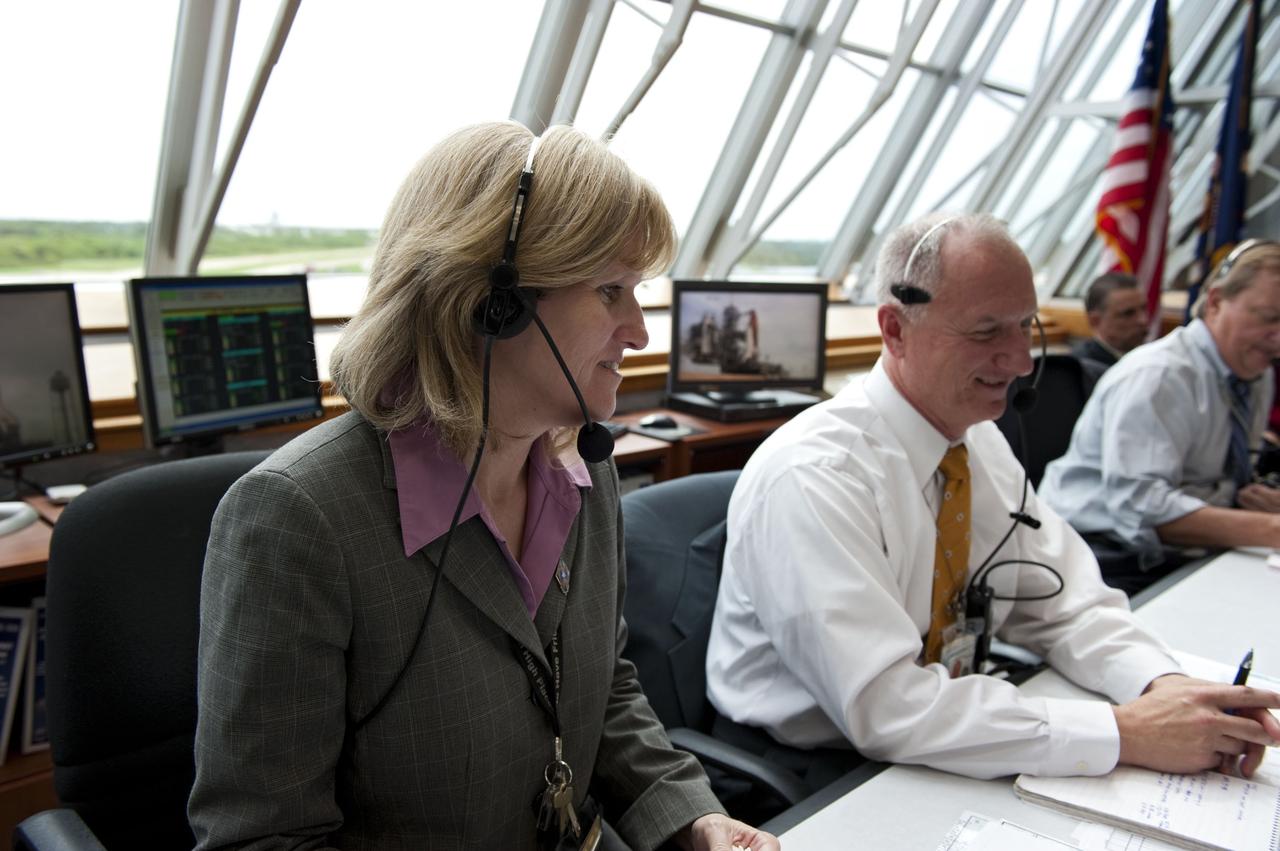
CAPE CANAVERAL, Fla. -- In Firing Room 4 of the Launch Control Center at NASA's Kennedy Space Center in Florida, launch team members monitor the countdown to the launch of space shuttle Atlantis on its STS-135 mission to the International Space Station. Seen here are Atlantis NASA Flow Director Angie Brewer, Assistant Launch Director Pete Nickolenko and Shuttle Launch Director Mike Leinbach (far right). Atlantis with its crew of four; Commander Chris Ferguson, Pilot Doug Hurley, Mission Specialists Sandy Magnus and Rex Walheim, lifted off at 11:29 a.m. EDT on July 8, 2011 to deliver the Raffaello multi-purpose logistics module packed with supplies and spare parts for the station. Atlantis also will fly the Robotic Refueling Mission experiment that will investigate the potential for robotically refueling existing satellites in orbit. In addition, Atlantis will return with a failed ammonia pump module to help NASA better understand the failure mechanism and improve pump designs for future systems. STS-135 will be the 33rd flight of Atlantis, the 37th shuttle mission to the space station, and the 135th and final mission of NASA's Space Shuttle Program. For more information, visit www.nasa.gov/mission_pages/shuttle/shuttlemissions/sts135/index.html. Photo credit: NASA/Kim Shiflett
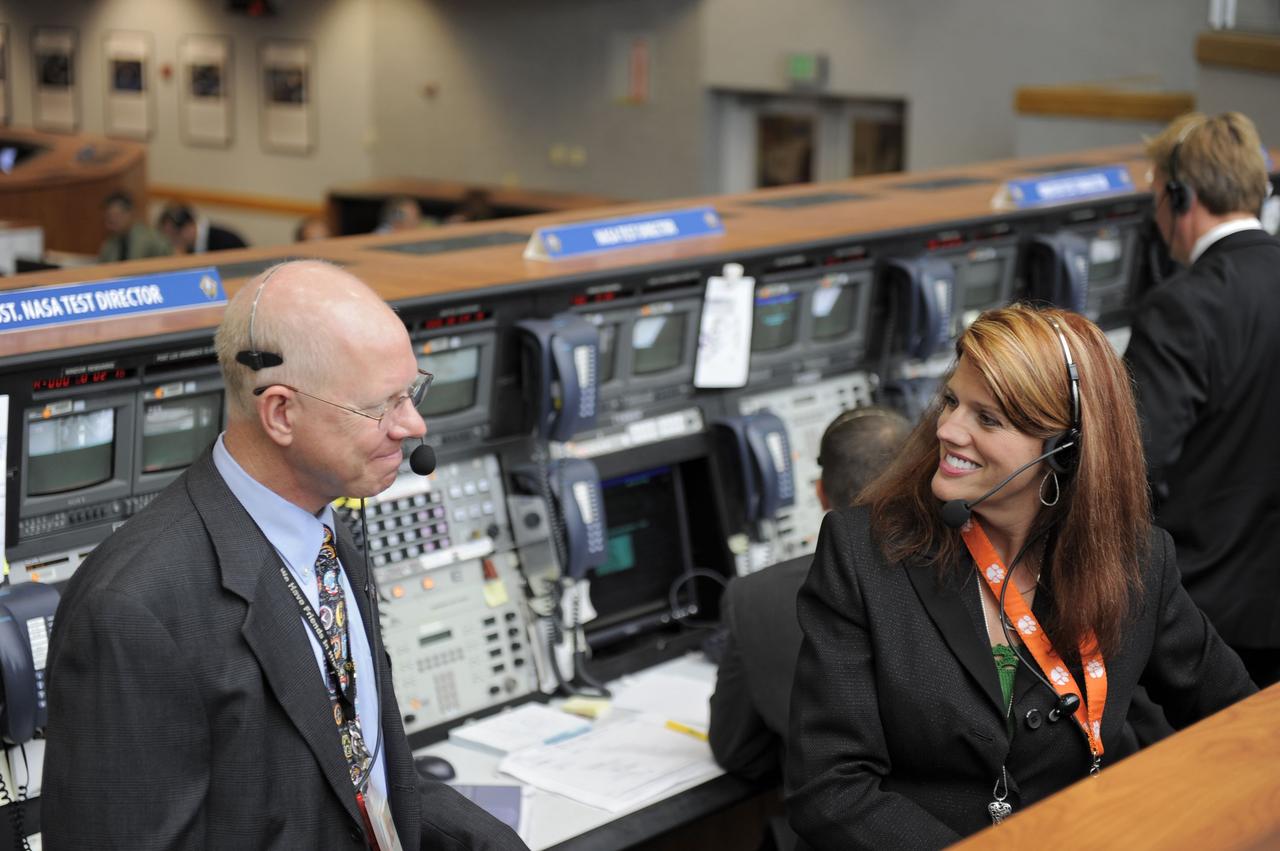
CAPE CANAVERAL, Fla. -- In Firing Room 4 of the Launch Control Center at NASA's Kennedy Space Center in Florida, NASA Test Directors Steve Payne and Charlie Blackwell-Thompson smile approvingly after space shuttle Atlantis' successful launch on its STS-135 mission to the International Space Station. Atlantis with its crew of four; Commander Chris Ferguson, Pilot Doug Hurley, Mission Specialists Sandy Magnus and Rex Walheim, lifted off at 11:29 a.m. EDT on July 8, 2011 to deliver the Raffaello multi-purpose logistics module packed with supplies and spare parts for the station. Atlantis also will fly the Robotic Refueling Mission experiment that will investigate the potential for robotically refueling existing satellites in orbit. In addition, Atlantis will return with a failed ammonia pump module to help NASA better understand the failure mechanism and improve pump designs for future systems. STS-135 will be the 33rd flight of Atlantis, the 37th shuttle mission to the space station, and the 135th and final mission of NASA's Space Shuttle Program. For more information, visit www.nasa.gov/mission_pages/shuttle/shuttlemissions/sts135/index.html. Photo credit: NASA/Kim Shiflett

CAPE CANAVERAL, Fla. -- In Firing Room 4 of the Launch Control Center at NASA's Kennedy Space Center in Florida, Kennedy Center Director Bob Cabana congratulates the launch control team members following the successful launch of space shuttle Atlantis on its STS-135 mission to the International Space Station. Atlantis with its crew of four; Commander Chris Ferguson, Pilot Doug Hurley, Mission Specialists Sandy Magnus and Rex Walheim, lifted off at 11:29 a.m. EDT on July 8, 2011 to deliver the Raffaello multi-purpose logistics module packed with supplies and spare parts for the station. Atlantis also will fly the Robotic Refueling Mission experiment that will investigate the potential for robotically refueling existing satellites in orbit. In addition, Atlantis will return with a failed ammonia pump module to help NASA better understand the failure mechanism and improve pump designs for future systems. STS-135 will be the 33rd flight of Atlantis, the 37th shuttle mission to the space station, and the 135th and final mission of NASA's Space Shuttle Program. For more information, visit www.nasa.gov/mission_pages/shuttle/shuttlemissions/sts135/index.html. Photo credit: NASA/Kim Shiflett
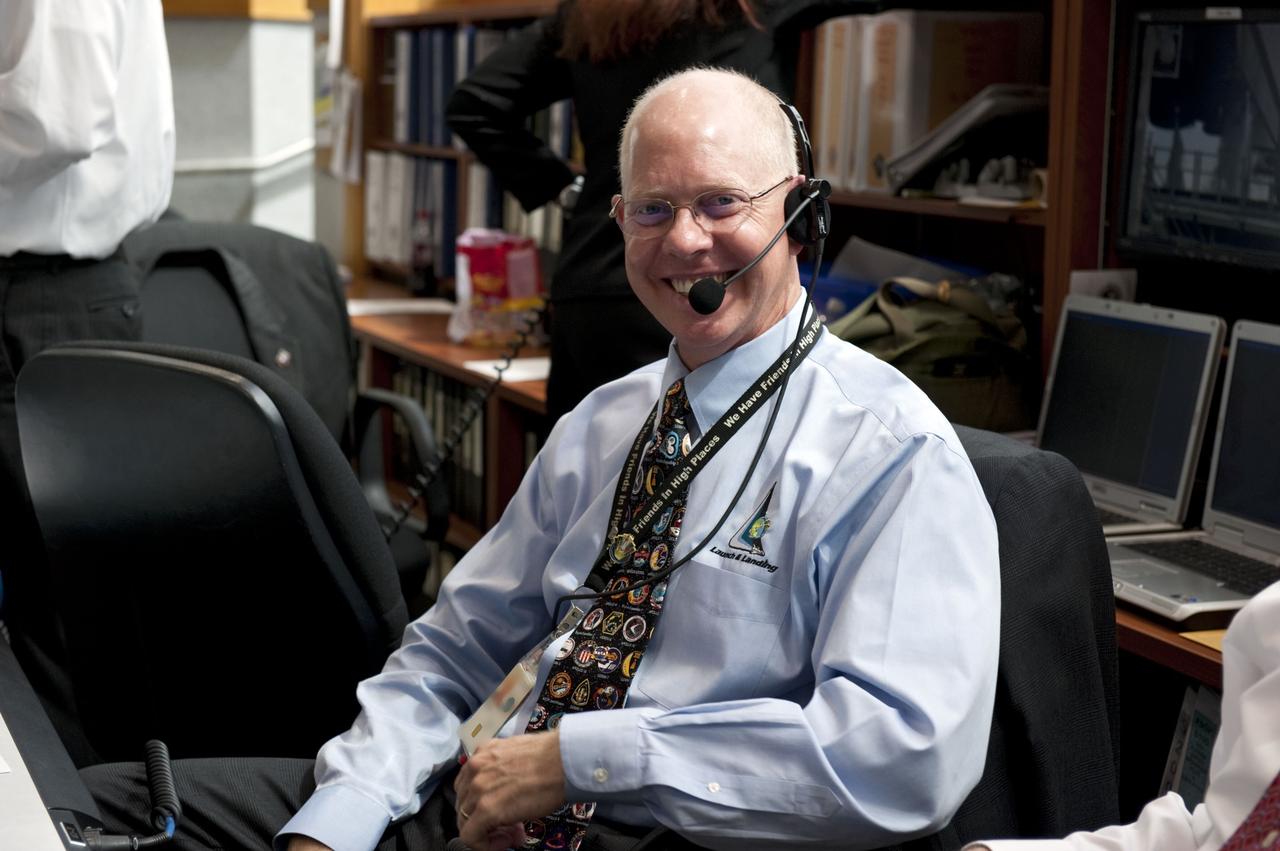
CAPE CANAVERAL, Fla. -- In Firing Room 4 of the Launch Control Center at NASA's Kennedy Space Center in Florida, launch team members monitor the countdown to the launch of space shuttle Atlantis on its STS-135 mission to the International Space Station. Seen here is NASA Test Director Steve Payne. Atlantis with its crew of four; Commander Chris Ferguson, Pilot Doug Hurley, Mission Specialists Sandy Magnus and Rex Walheim, lifted off at 11:29 a.m. EDT on July 8, 2011 to deliver the Raffaello multi-purpose logistics module packed with supplies and spare parts for the station. Atlantis also will fly the Robotic Refueling Mission experiment that will investigate the potential for robotically refueling existing satellites in orbit. In addition, Atlantis will return with a failed ammonia pump module to help NASA better understand the failure mechanism and improve pump designs for future systems. STS-135 will be the 33rd flight of Atlantis, the 37th shuttle mission to the space station, and the 135th and final mission of NASA's Space Shuttle Program. For more information, visit www.nasa.gov/mission_pages/shuttle/shuttlemissions/sts135/index.html. Photo credit: NASA/Kim Shiflett
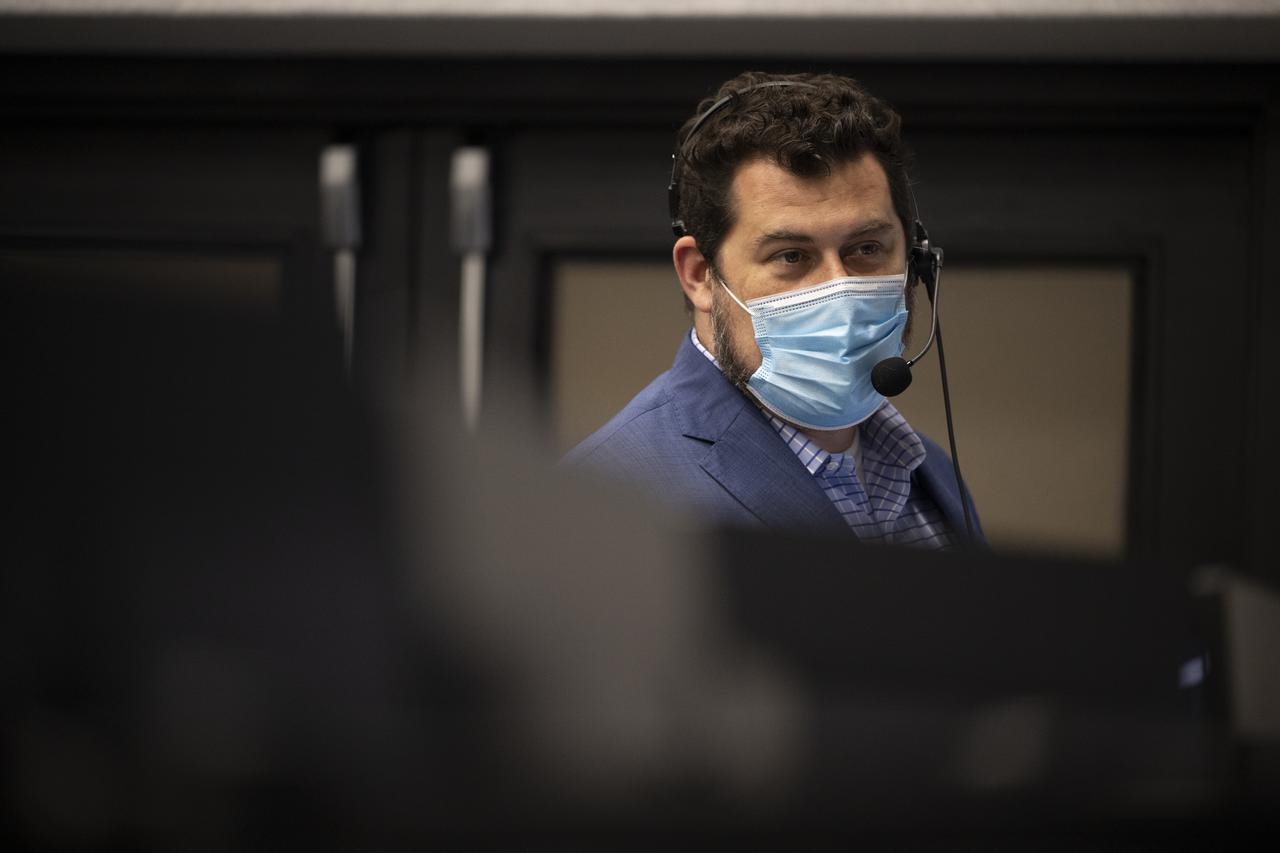
Scott Ede, mission manager for mission management and integration in NASA's Commercial Crew Program, monitors the countdown of the launch of a SpaceX Falcon 9 rocket carrying the company's Crew Dragon spacecraft on NASA’s SpaceX Crew-4 mission with NASA astronauts Kjell Lindgren, Robert Hines, Jessica Watkins, and ESA (European Space Agency) astronaut Samantha Cristoforetti onboard, Wednesday, April 27, 2022, in firing room four of the Rocco A. Petrone Launch Control Center at NASA’s Kennedy Space Center in Florida. NASA’s SpaceX Crew-4 mission is the fourth crew rotation mission of the SpaceX Crew Dragon spacecraft and Falcon 9 rocket to the International Space Station as part of the agency’s Commercial Crew Program. Lindgren, Hines, Watkins, and Cristoforetti launched at at 3:52 a.m. ET, from Launch Complex 39A at the Kennedy Space Center. Photo Credit: (NASA/Joel Kowsky)
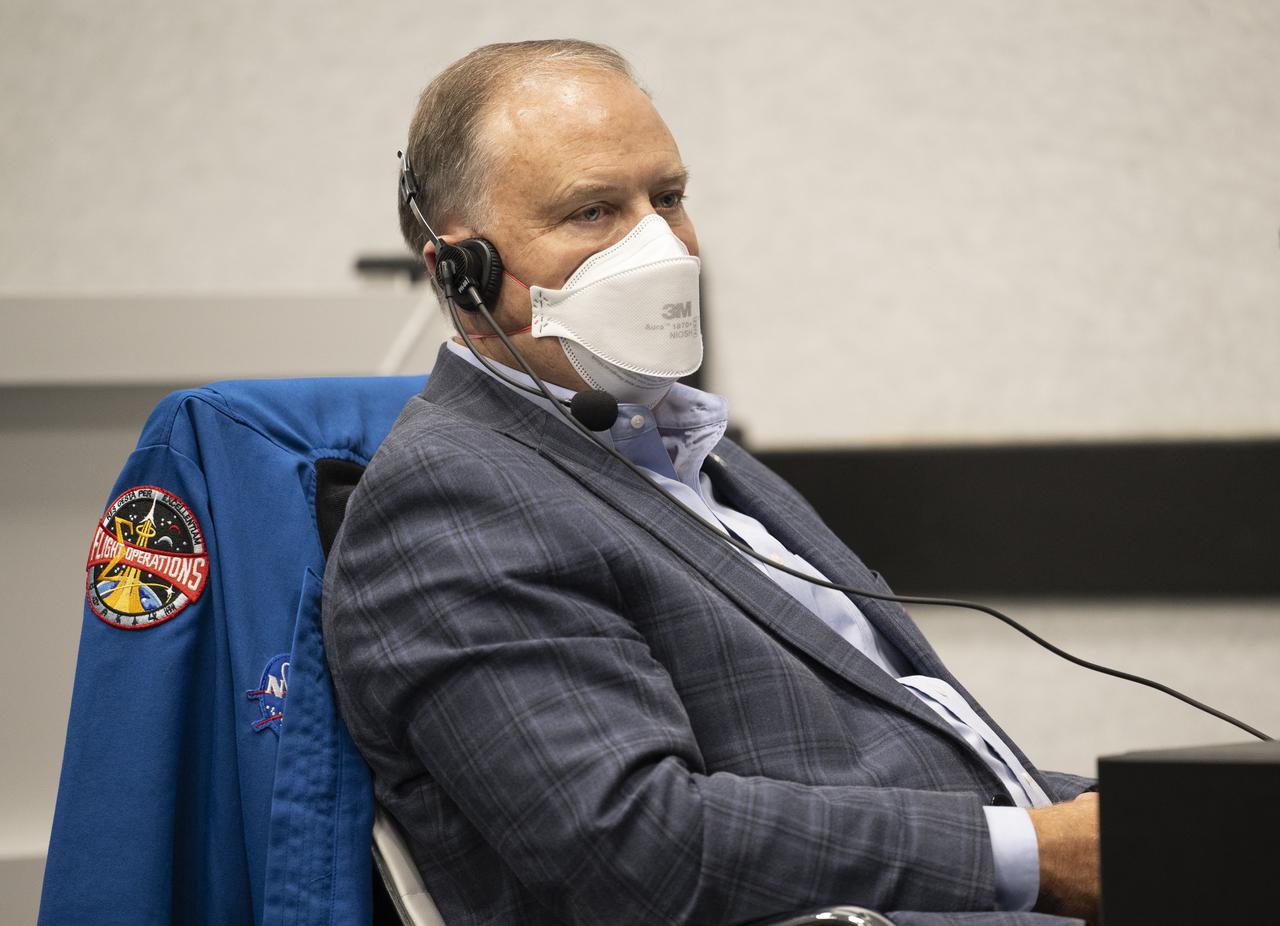
Norm Knight, director of Flight Operations at NASA's Johnson Space Center, monitors the countdown of the launch of a SpaceX Falcon 9 rocket carrying the company's Crew Dragon spacecraft on NASA’s SpaceX Crew-4 mission with NASA astronauts Kjell Lindgren, Robert Hines, Jessica Watkins, and ESA (European Space Agency) astronaut Samantha Cristoforetti onboard, Wednesday, April 27, 2022, in firing room four of the Rocco A. Petrone Launch Control Center at NASA’s Kennedy Space Center in Florida. NASA’s SpaceX Crew-4 mission is the fourth crew rotation mission of the SpaceX Crew Dragon spacecraft and Falcon 9 rocket to the International Space Station as part of the agency’s Commercial Crew Program. Lindgren, Hines, Watkins, and Cristoforetti launched at 3:52 a.m. ET, from Launch Complex 39A at the Kennedy Space Center. Photo Credit: (NASA/Joel Kowsky)
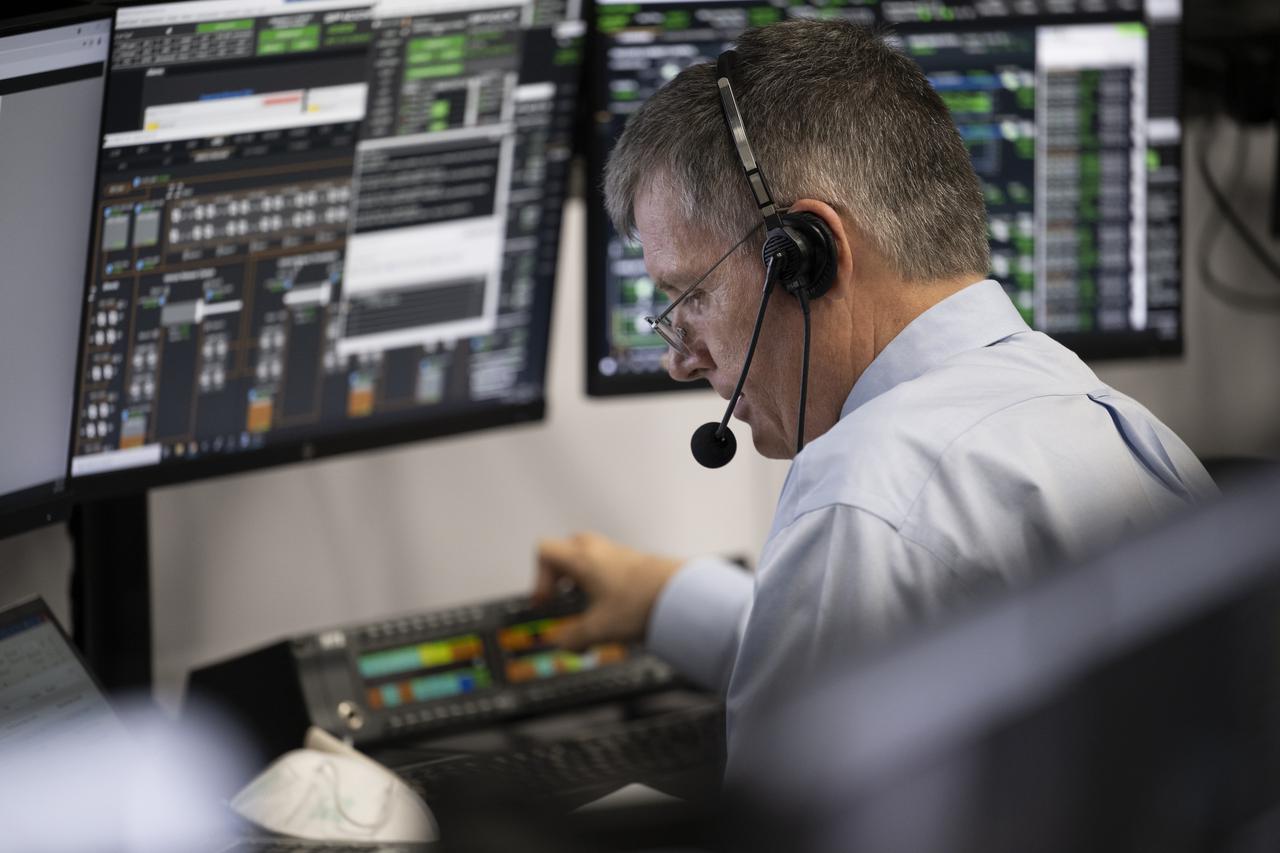
Steve Stich, manager of NASA’s Commercial Crew Program, monitors the countdown of the launch of a SpaceX Falcon 9 rocket carrying the company's Crew Dragon spacecraft on NASA’s SpaceX Crew-4 mission with NASA astronauts Kjell Lindgren, Robert Hines, Jessica Watkins, and ESA (European Space Agency) astronaut Samantha Cristoforetti onboard, Wednesday, April 27, 2022, in firing room four of the Rocco A. Petrone Launch Control Center at NASA’s Kennedy Space Center in Florida. NASA’s SpaceX Crew-4 mission is the fourth crew rotation mission of the SpaceX Crew Dragon spacecraft and Falcon 9 rocket to the International Space Station as part of the agency’s Commercial Crew Program. Lindgren, Hines, Watkins, and Cristoforetti launched at 3:52 a.m. ET, from Launch Complex 39A at the Kennedy Space Center. Photo Credit: (NASA/Joel Kowsky)
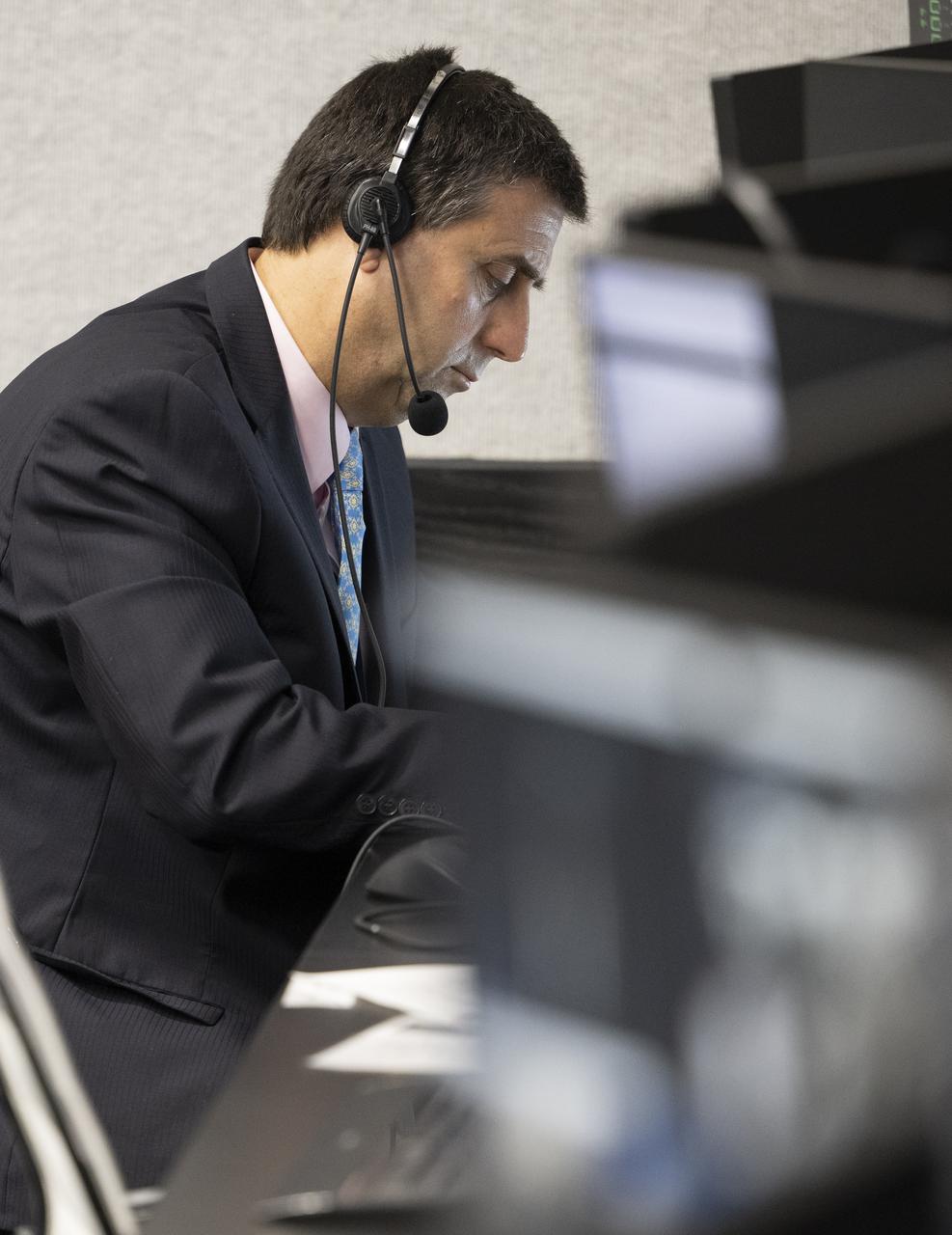
NASA International Space Station program manger Joel Montalbano, monitors the countdown of the launch of a SpaceX Falcon 9 rocket carrying the company's Crew Dragon spacecraft on NASA’s SpaceX Crew-4 mission with NASA astronauts Kjell Lindgren, Robert Hines, Jessica Watkins, and ESA (European Space Agency) astronaut Samantha Cristoforetti onboard, Wednesday, April 27, 2022, in firing room four of the Rocco A. Petrone Launch Control Center at NASA’s Kennedy Space Center in Florida. NASA’s SpaceX Crew-4 mission is the fourth crew rotation mission of the SpaceX Crew Dragon spacecraft and Falcon 9 rocket to the International Space Station as part of the agency’s Commercial Crew Program. Lindgren, Hines, Watkins, and Cristoforetti launched at 3:52 a.m. ET, from Launch Complex 39A at the Kennedy Space Center. Photo Credit: (NASA/Joel Kowsky)
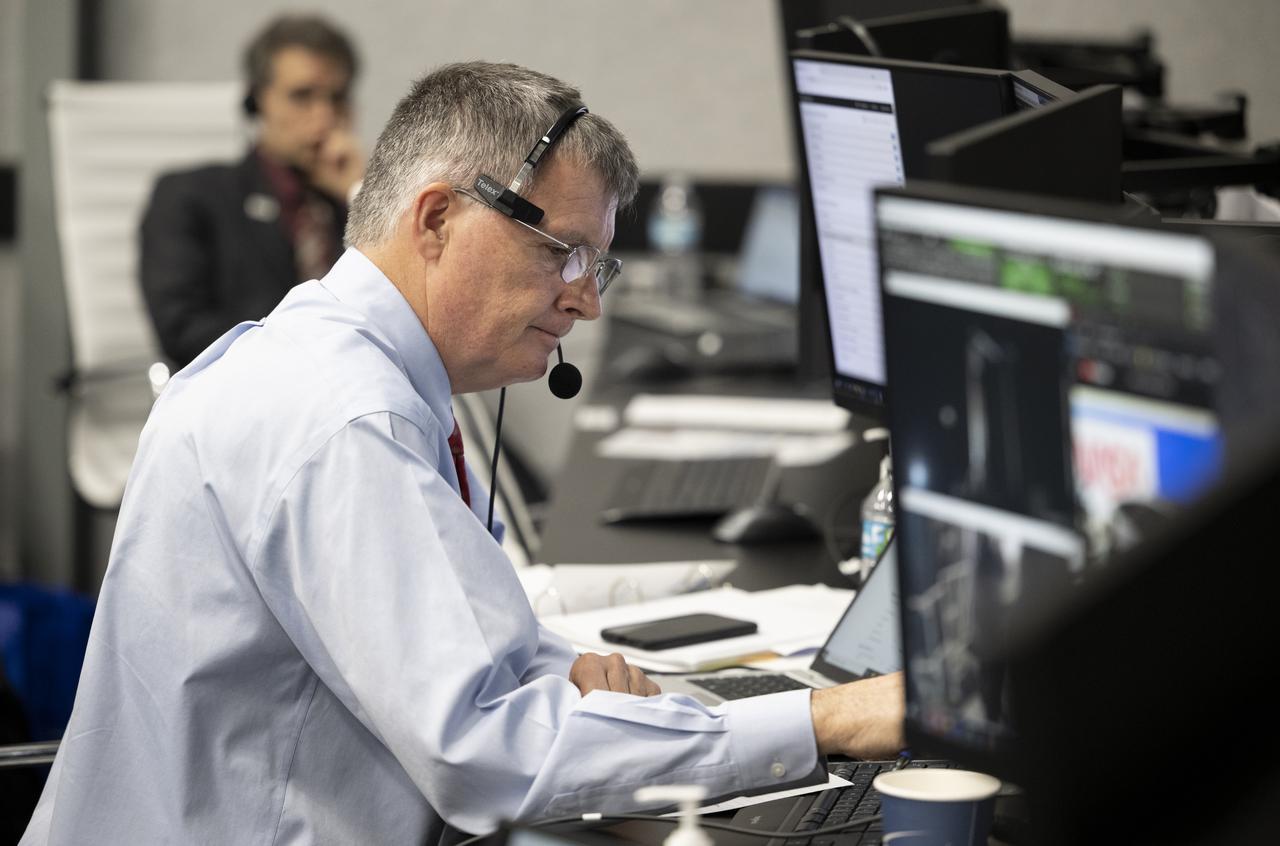
Steve Stich, manager of NASA’s Commercial Crew Program, monitors the countdown of a SpaceX Falcon 9 rocket carrying the company's Crew Dragon spacecraft on the Crew-4 mission with NASA astronauts Kjell Lindgren, Robert Hines, Jessica Watkins, and ESA (European Space Agency) astronaut Samantha Cristoforetti onboard, Wednesday, April 27, 2022, in firing room four of the Rocco A. Petrone Launch Control Center at NASA’s Kennedy Space Center in Florida. NASA’s SpaceX Crew-4 mission is the fourth crew rotation mission of the SpaceX Crew Dragon spacecraft and Falcon 9 rocket to the International Space Station as part of the agency’s Commercial Crew Program. Lindgren, Hines, Watkins, and Cristoforetti launched at 3:52 a.m. ET, from Launch Complex 39A at the Kennedy Space Center to begin a six month mission onboard the International Space Station. Photo Credit: (NASA/Joel Kowsky)
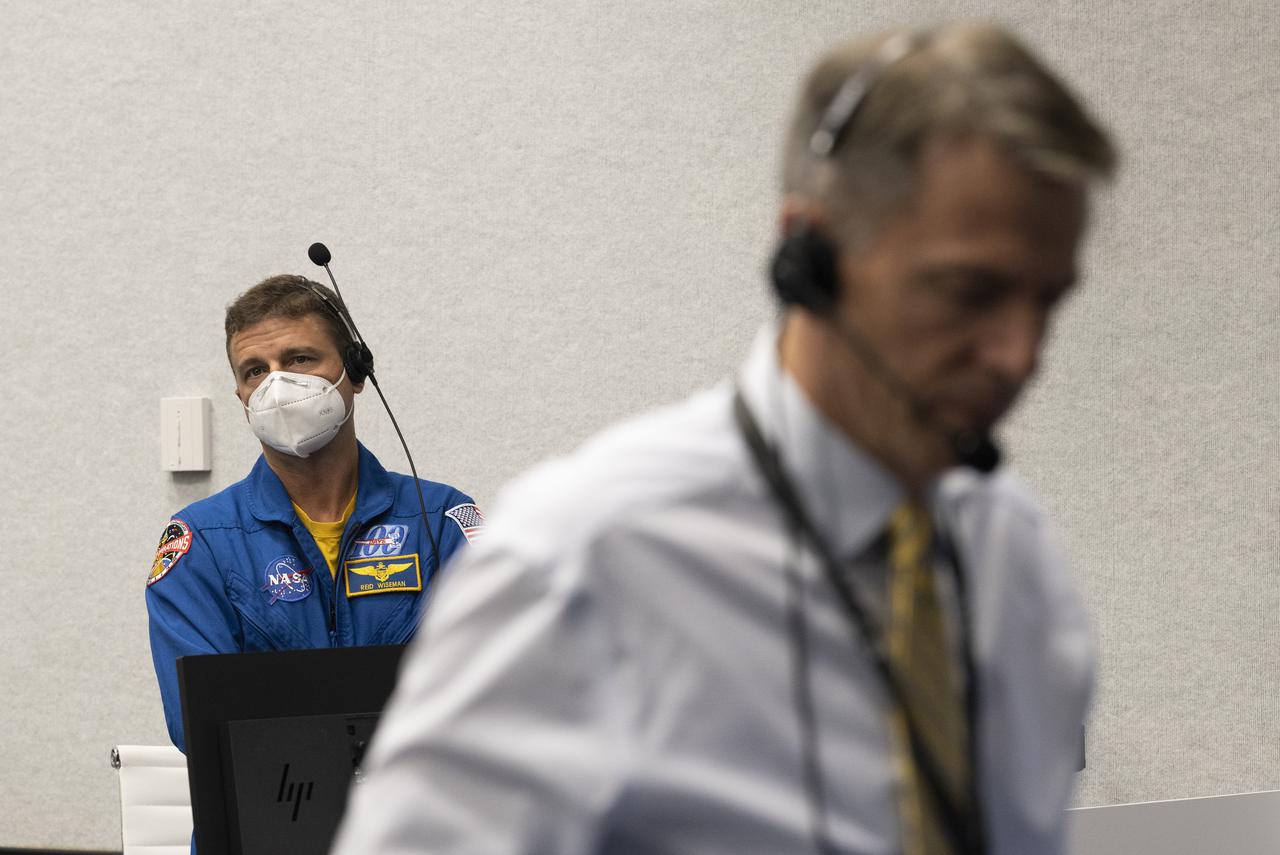
Reid Wiseman, Chief of the Astronaut Office, monitors the countdown of the launch of a SpaceX Falcon 9 rocket carrying the company's Crew Dragon spacecraft on NASA’s SpaceX Crew-4 mission with NASA astronauts Kjell Lindgren, Robert Hines, Jessica Watkins, and ESA (European Space Agency) astronaut Samantha Cristoforetti onboard, Wednesday, April 27, 2022, in firing room four of the Rocco A. Petrone Launch Control Center at NASA’s Kennedy Space Center in Florida. NASA’s SpaceX Crew-4 mission is the fourth crew rotation mission of the SpaceX Crew Dragon spacecraft and Falcon 9 rocket to the International Space Station as part of the agency’s Commercial Crew Program. Lindgren, Hines, Watkins, and Cristoforetti launched at 3:52 a.m. ET, from Launch Complex 39A at the Kennedy Space Center. Photo Credit: (NASA/Joel Kowsky)
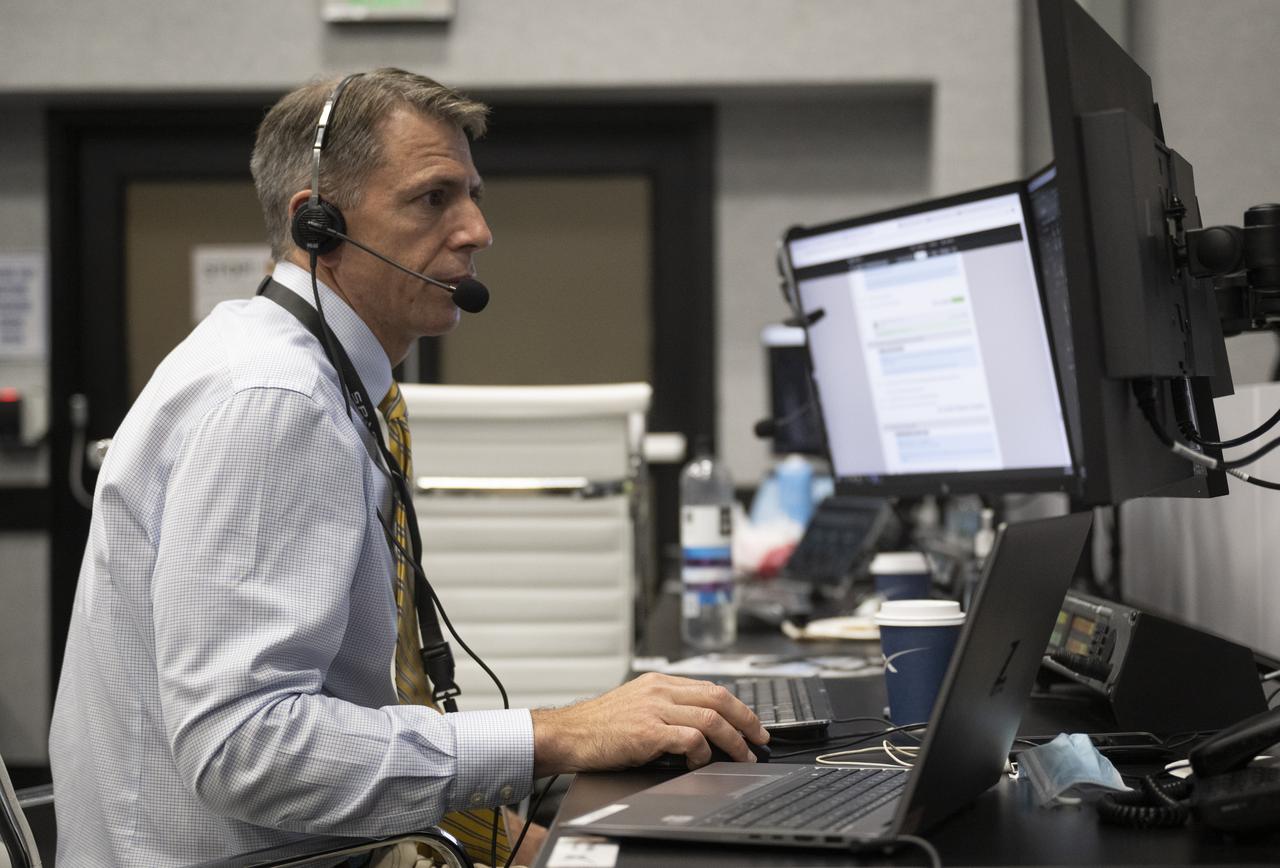
Zeb Scoville, NASA's chief flight director, monitors the launch of a SpaceX Falcon 9 rocket carrying the company's Crew Dragon spacecraft on the Crew-4 mission with NASA astronauts Kjell Lindgren, Robert Hines, Jessica Watkins, and ESA (European Space Agency) astronaut Samantha Cristoforetti onboard, Wednesday, April 27, 2022, in firing room four of the Rocco A. Petrone Launch Control Center at NASA’s Kennedy Space Center in Florida. NASA’s SpaceX Crew-4 mission is the fourth crew rotation mission of the SpaceX Crew Dragon spacecraft and Falcon 9 rocket to the International Space Station as part of the agency’s Commercial Crew Program. Lindgren, Hines, Watkins, and Cristoforetti launched at 3:52 a.m. ET, from Launch Complex 39A at the Kennedy Space Center to begin a six month mission onboard the International Space Station. Photo Credit: (NASA/Joel Kowsky)
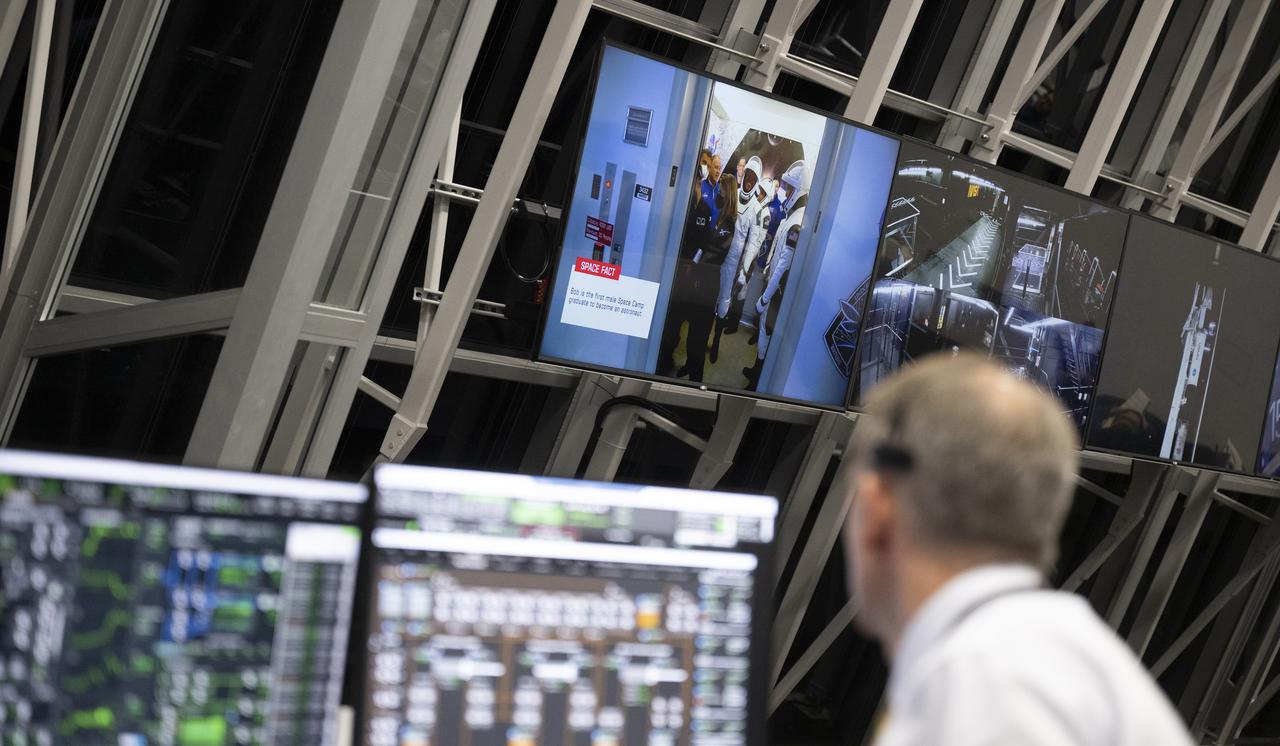
NASA astronauts Kjell Lindgren, Robert Hines, Jessica Watkins, and ESA (European Space Agency) astronaut Samantha Cristoforetti are seen as they depart the Neil A. Armstrong Operations and Checkout Building on a monitor inside firing room four, Wednesday, April 27, 2022, in the Rocco A. Petrone Launch Control Center at NASA’s Kennedy Space Center in Florida. NASA’s SpaceX Crew-4 mission is the fourth crew rotation mission of the SpaceX Crew Dragon spacecraft and Falcon 9 rocket to the International Space Station as part of the agency’s Commercial Crew Program. Lindgren, Hines, Watkins, and Cristoforetti launched at 3:52 a.m. ET, from Launch Complex 39A at the Kennedy Space Center to begin a six month mission onboard the International Space Station. Photo Credit: (NASA/Joel Kowsky)
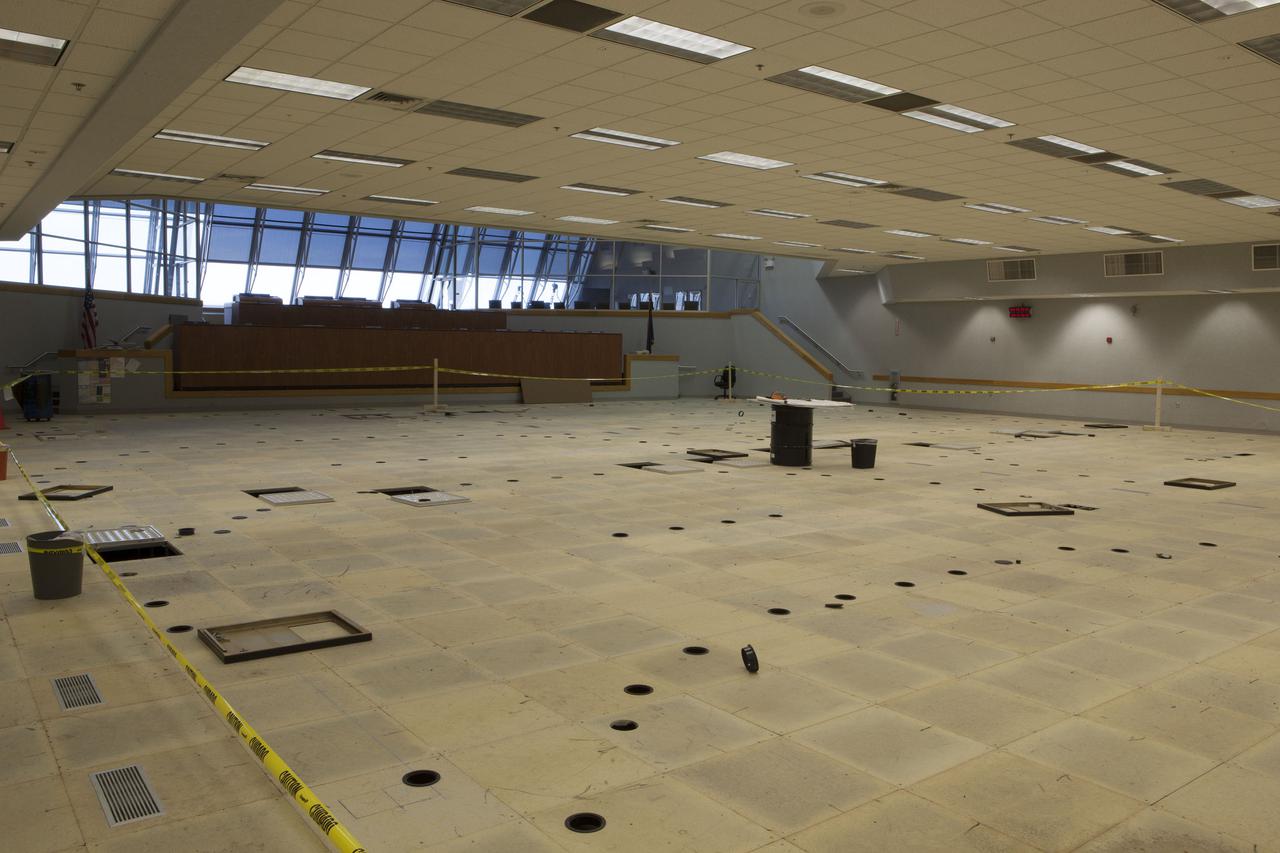
CAPE CANAVERAL, Fla. – In Firing Room 4 in the Launch Control Center at NASA’s Kennedy Space Center in Florida, the legacy consoles, Launch Processing System and cabling that once supported the Space Shuttle Program have been removed. The Ground Systems Development and Operations Program is overseeing the construction in progress on a multi-use control room that will support NASA and commercial launch needs. The design of Firing Room 4 will incorporate five control room areas that are flexible to meet current and future user requirements. The equipment and consoles from Firing Room 4 are being moved to Firing Room 2 for possible future reuse. Photo credit: NASA_Dimitri Gerondidakis
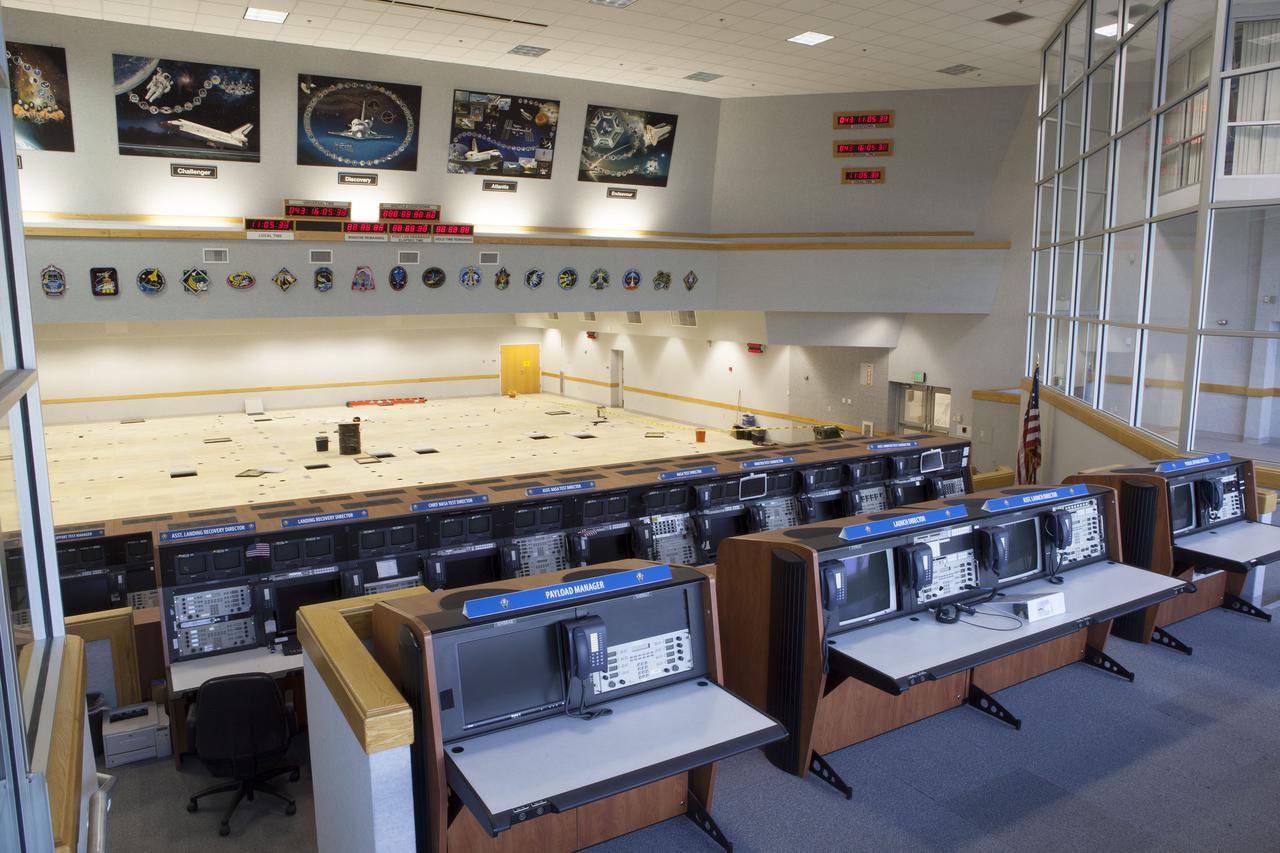
CAPE CANAVERAL, Fla. – In Firing Room 4 in the Launch Control Center at NASA’s Kennedy Space Center in Florida, the legacy consoles, Launch Processing System and cabling that once supported the Space Shuttle Program have been removed. The Ground Systems Development and Operations Program is overseeing the construction in progress on a multi-use control room that will support NASA and commercial launch needs. The design of Firing Room 4 will incorporate five control room areas that are flexible to meet current and future user requirements. The equipment and consoles from Firing Room 4 are being moved to Firing Room 2 for possible future reuse. Photo credit: NASA_Dimitri Gerondidakis
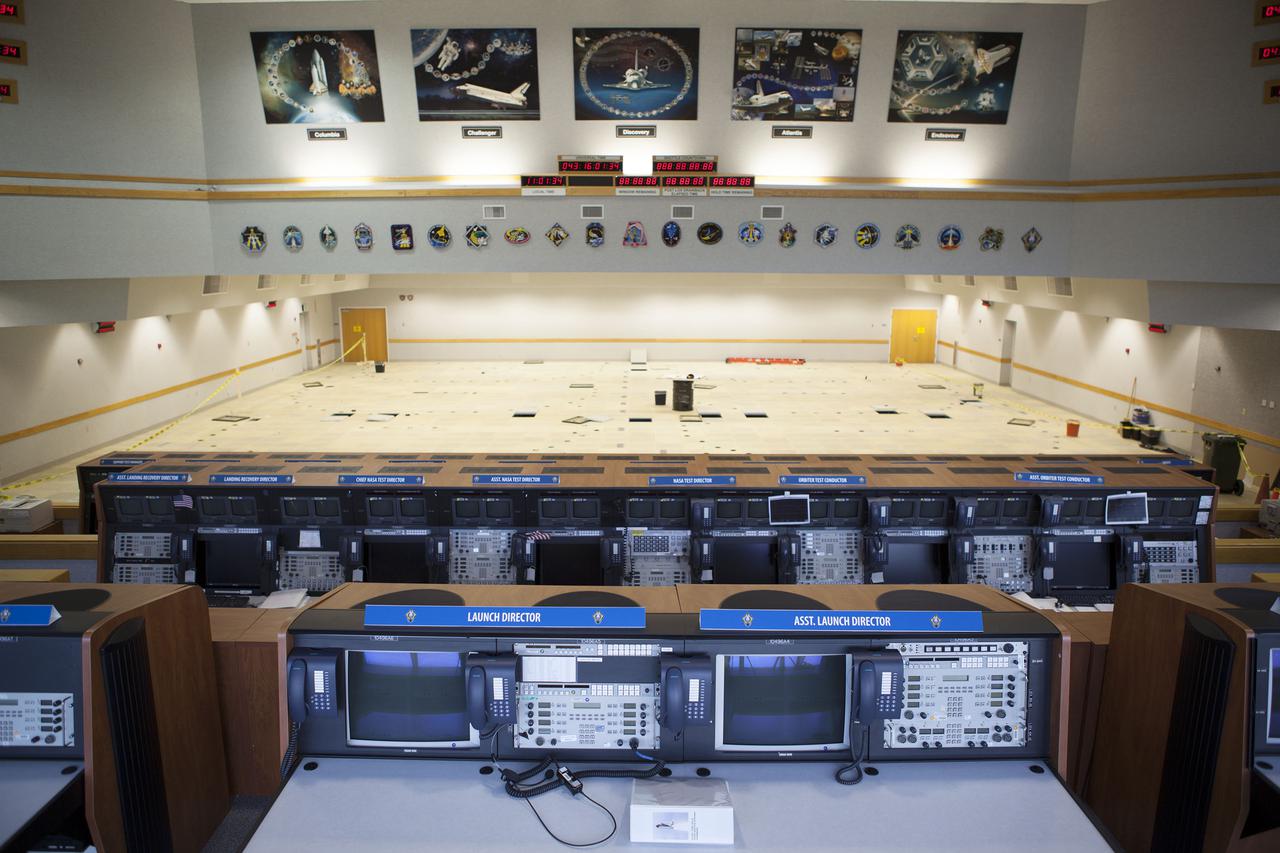
CAPE CANAVERAL, Fla. – In Firing Room 4 in the Launch Control Center at NASA’s Kennedy Space Center in Florida, the legacy consoles, Launch Processing System and cabling that once supported the Space Shuttle Program have been removed. The Ground Systems Development and Operations Program is overseeing the construction in progress on a multi-use control room that will support NASA and commercial launch needs. The design of Firing Room 4 will incorporate five control room areas that are flexible to meet current and future user requirements. The equipment and consoles from Firing Room 4 are being moved to Firing Room 2 for possible future reuse. Photo credit: NASA_Dimitri Gerondidakis
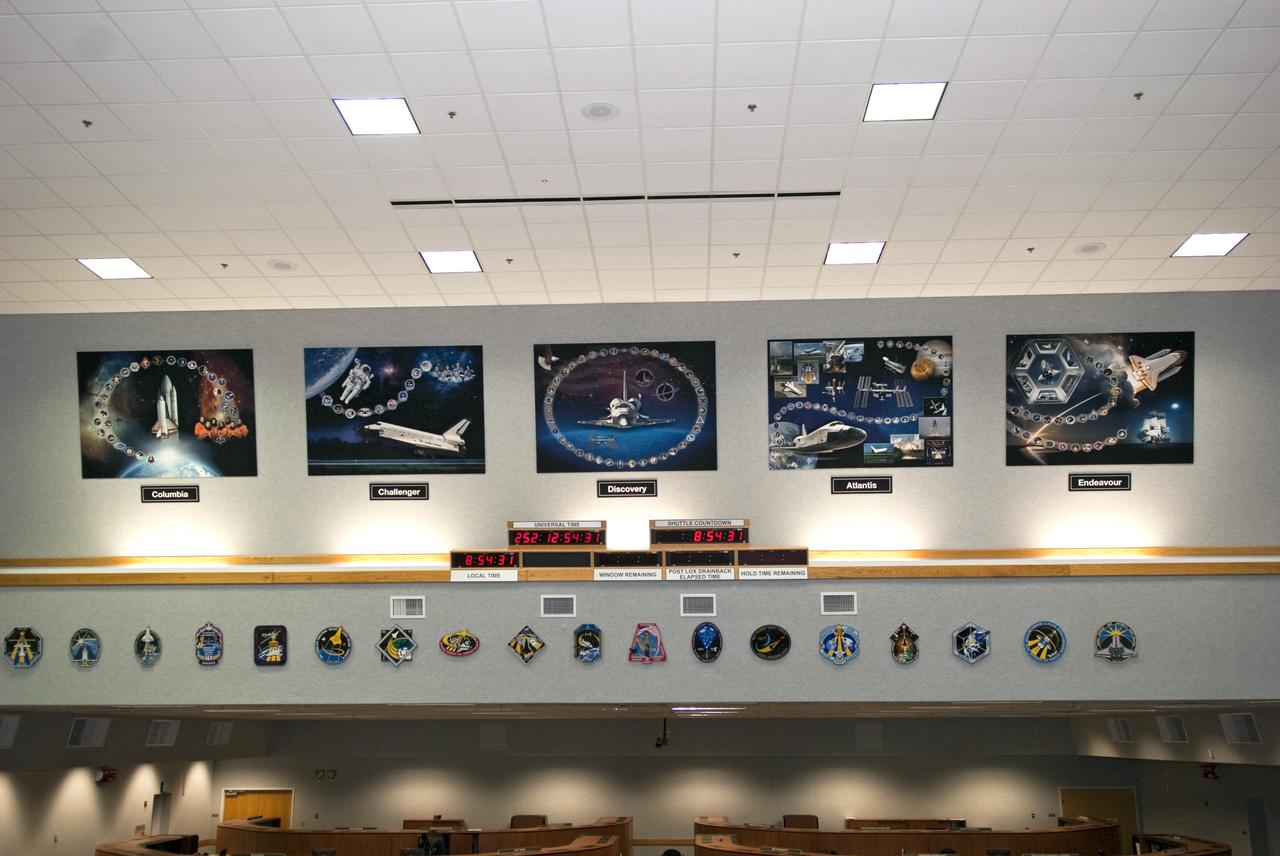
ORBITER TRIBUTES - FIRING ROOM 4
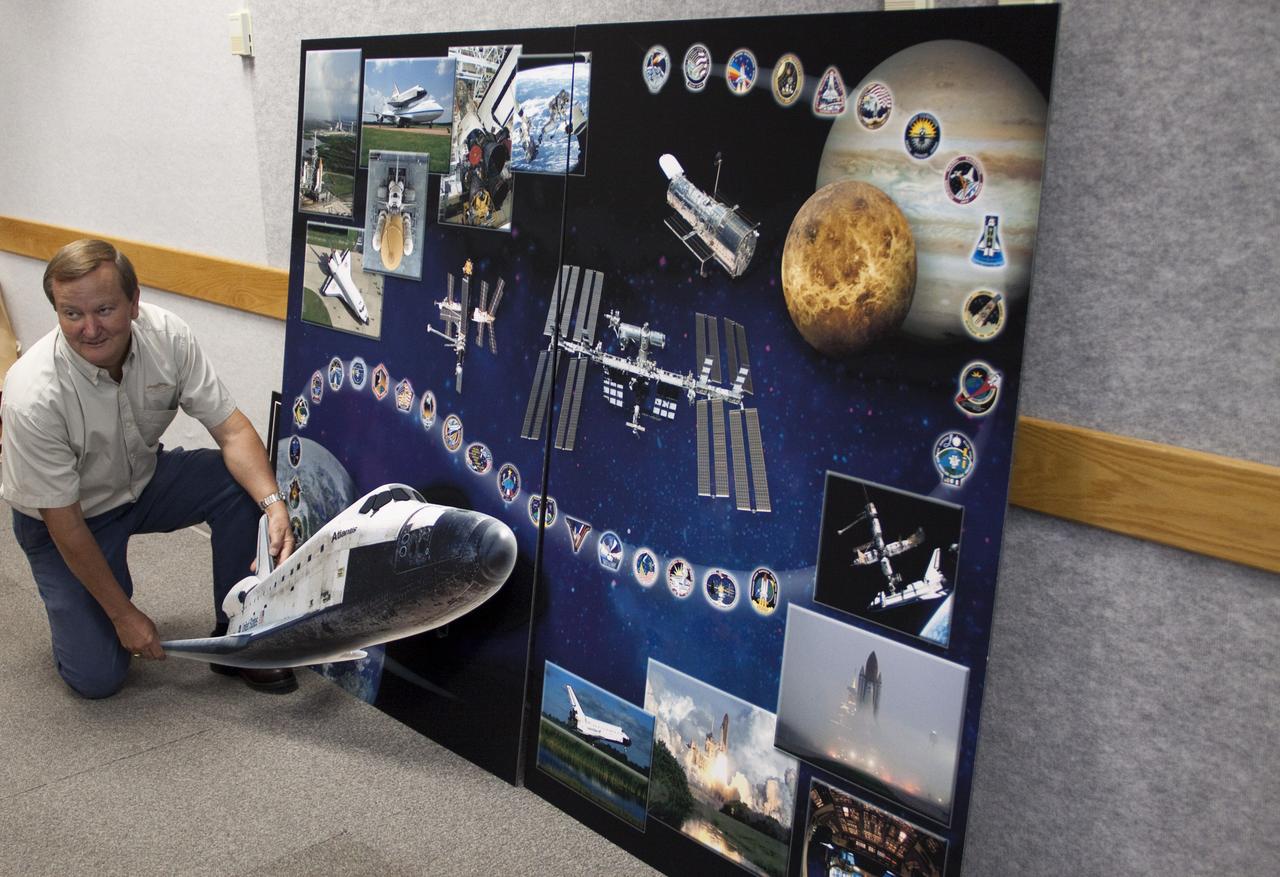
ATLANTIS REMEMBERED COLLAGE IN FIRING ROOM 4

ATLANTIS REMEMBERED COLLAGE IN FIRING ROOM 4
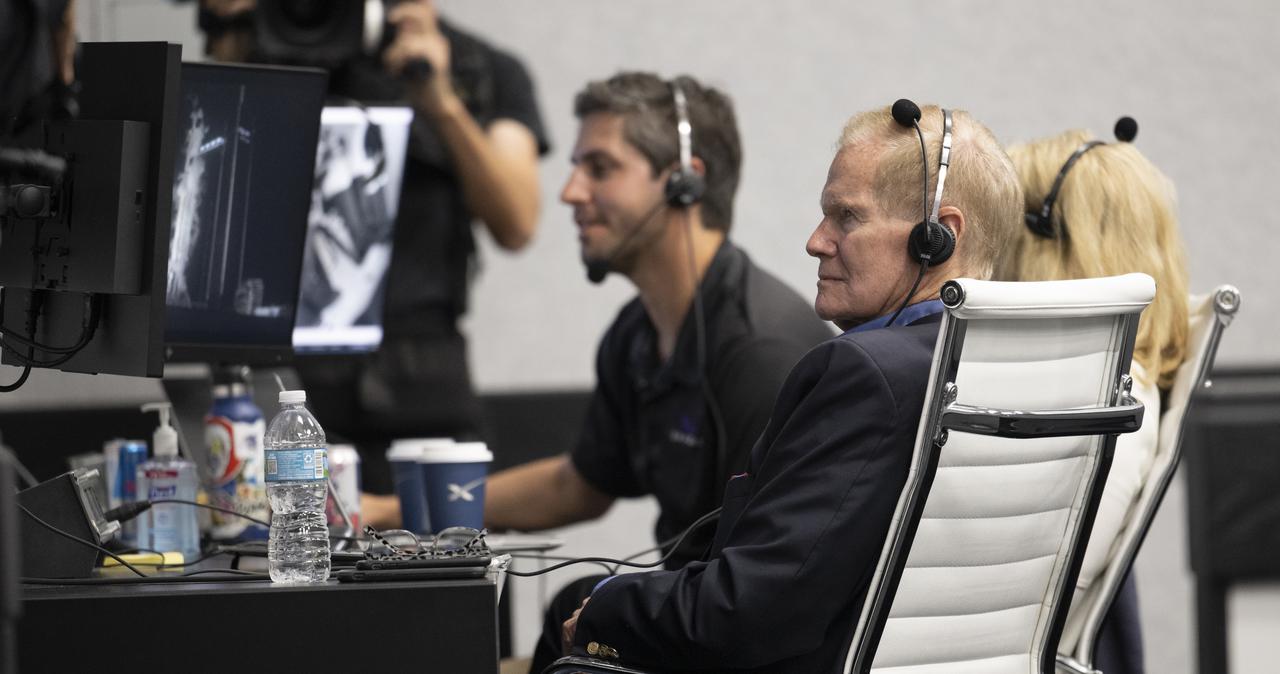
NASA Administrator Bill Nelson is seen in firing room four during the countdown of a SpaceX Falcon 9 rocket carrying the company's Crew Dragon spacecraft on the Crew-4 mission with NASA astronauts Kjell Lindgren, Robert Hines, Jessica Watkins, and ESA (European Space Agency) astronaut Samantha Cristoforetti onboard, Wednesday, April 27, 2022, in the Rocco A. Petrone Launch Control Center at NASA’s Kennedy Space Center in Florida. NASA’s SpaceX Crew-4 mission is the fourth crew rotation mission of the SpaceX Crew Dragon spacecraft and Falcon 9 rocket to the International Space Station as part of the agency’s Commercial Crew Program. Lindgren, Hines, Watkins, and Cristoforetti launched at 3:52 a.m. ET, from Launch Complex 39A at the Kennedy Space Center. Photo Credit: (NASA/Joel Kowsky)
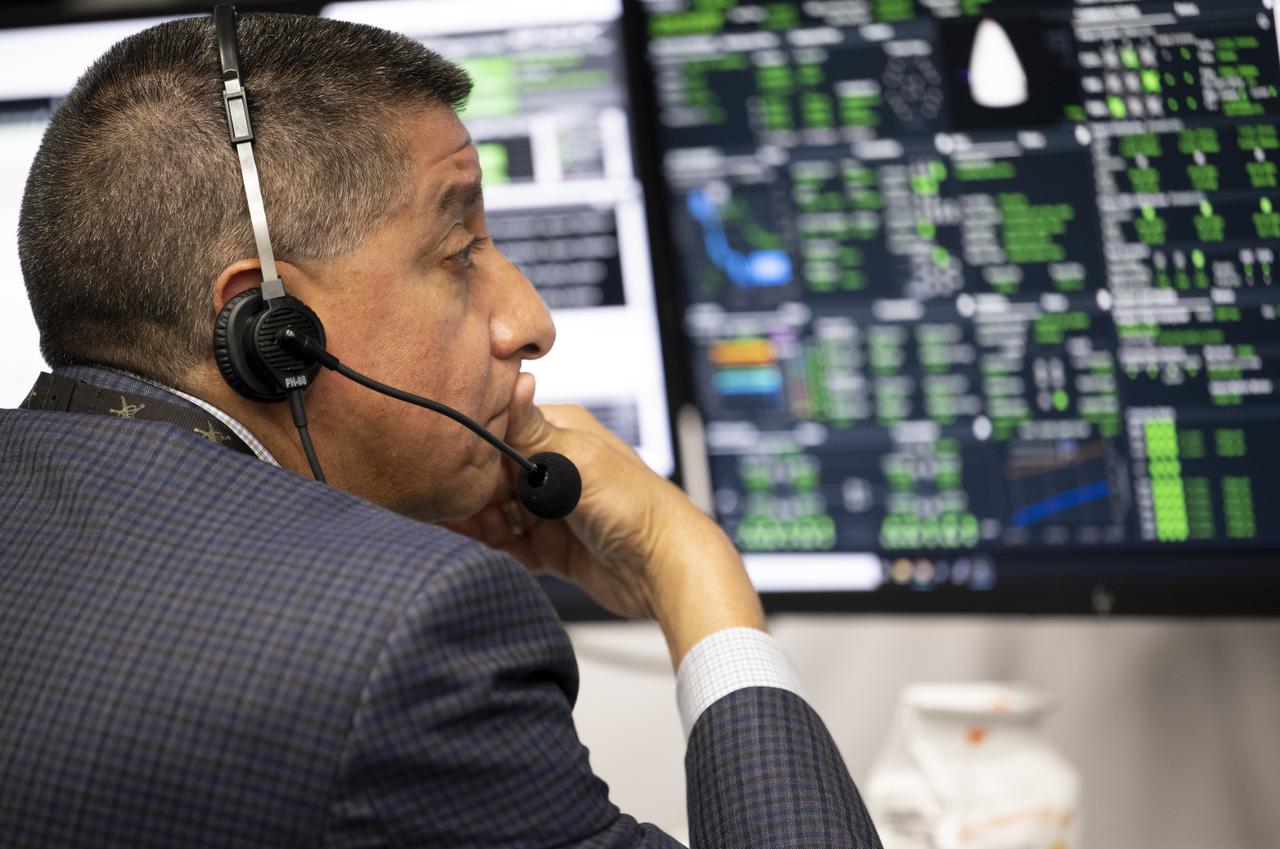
Richard Jones, manager of the Mission Management and Integration Office for NASA's Commercial Crew Program, monitors the countdown during a dress rehearsal in preparation for the launch of a SpaceX Falcon 9 rocket carrying the company's Crew Dragon spacecraft on NASA’s SpaceX Crew-4 mission with NASA astronauts Kjell Lindgren, Robert Hines, Jessica Watkins, and ESA (European Space Agency) astronaut Samantha Cristoforetti onboard, Wednesday, April 20, 2022, in firing room four of the Rocco A. Petrone Launch Control Center at NASA’s Kennedy Space Center in Florida. NASA’s SpaceX Crew-4 mission is the fourth crew rotation mission of the SpaceX Crew Dragon spacecraft and Falcon 9 rocket to the International Space Station as part of the agency’s Commercial Crew Program. Lindgren, Hines, Watkins, and Cristoforetti are scheduled to launch on April 23 at 5:26 a.m. EDT, from Launch Complex 39A at the Kennedy Space Center. Photo Credit: (NASA/Joel Kowsky)
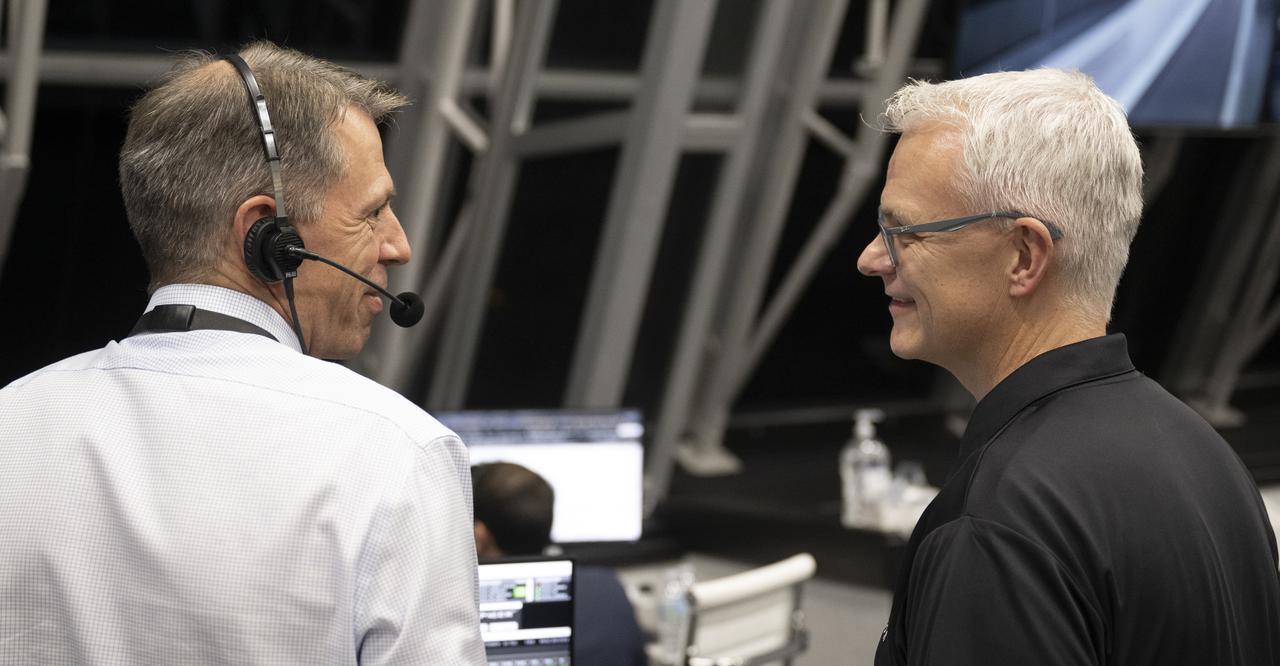
Zeb Scoville, NASA's chief flight director, left, and Benji Reed, senior director of Human Spaceflight Programs at SpaceX, right, are seen as teams monitor the countdown of the launch of a SpaceX Falcon 9 rocket carrying the company's Crew Dragon spacecraft on NASA’s SpaceX Crew-4 mission with NASA astronauts Kjell Lindgren, Robert Hines, Jessica Watkins, and ESA (European Space Agency) astronaut Samantha Cristoforetti onboard, Wednesday, April 27, 2022, in firing room four of the Rocco A. Petrone Launch Control Center at NASA’s Kennedy Space Center in Florida. NASA’s SpaceX Crew-4 mission is the fourth crew rotation mission of the SpaceX Crew Dragon spacecraft and Falcon 9 rocket to the International Space Station as part of the agency’s Commercial Crew Program. Lindgren, Hines, Watkins, and Cristoforetti launched at 3:52 a.m. ET, from Launch Complex 39A at the Kennedy Space Center. Photo Credit: (NASA/Joel Kowsky)
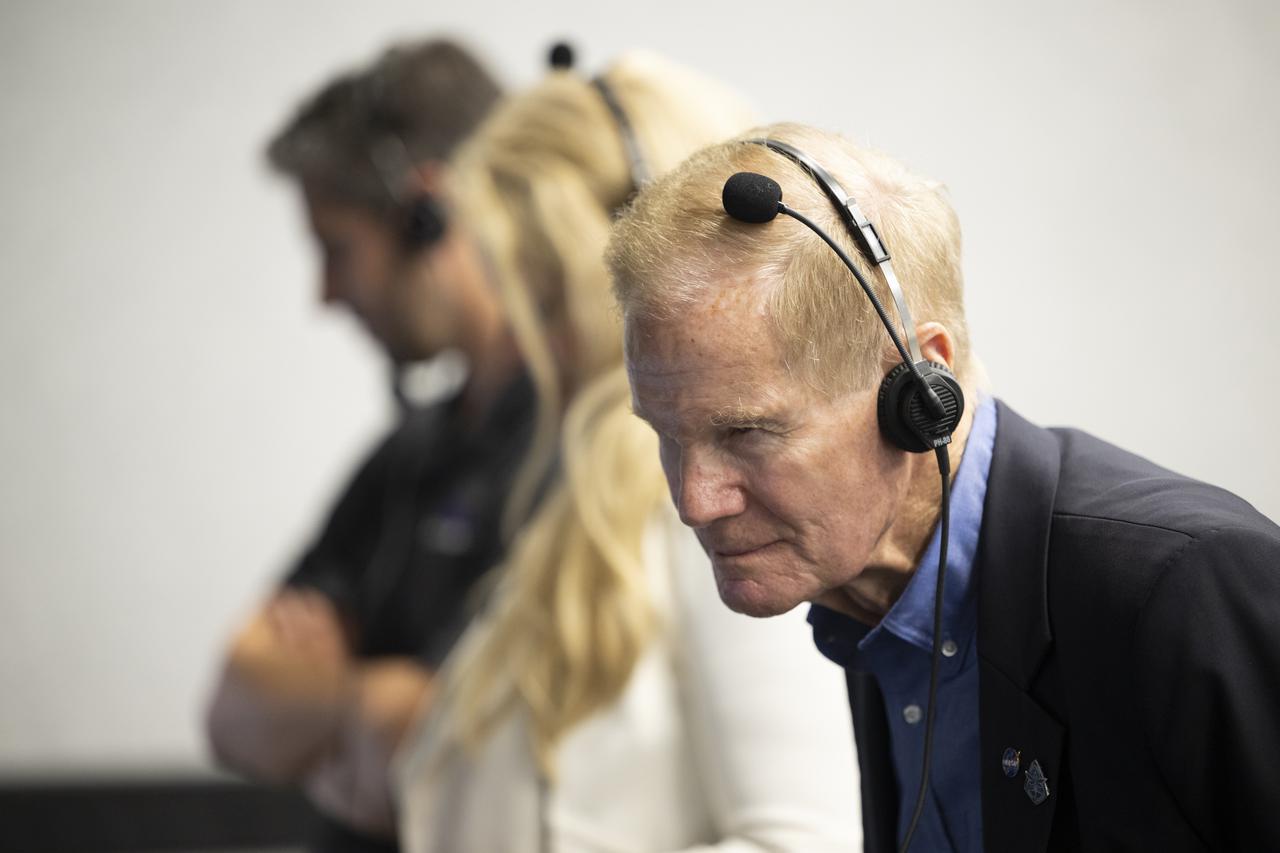
NASA Administrator Bill Nelson is seen in firing room four during the launch of a SpaceX Falcon 9 rocket carrying the company's Crew Dragon spacecraft on the Crew-4 mission with NASA astronauts Kjell Lindgren, Robert Hines, Jessica Watkins, and ESA (European Space Agency) astronaut Samantha Cristoforetti onboard, Wednesday, April 27, 2022, in the Rocco A. Petrone Launch Control Center at NASA’s Kennedy Space Center in Florida. NASA’s SpaceX Crew-4 mission is the fourth crew rotation mission of the SpaceX Crew Dragon spacecraft and Falcon 9 rocket to the International Space Station as part of the agency’s Commercial Crew Program. Lindgren, Hines, Watkins, and Cristoforetti launched at 3:52 a.m. ET, from Launch Complex 39A at the Kennedy Space Center. Photo Credit: (NASA/Joel Kowsky)
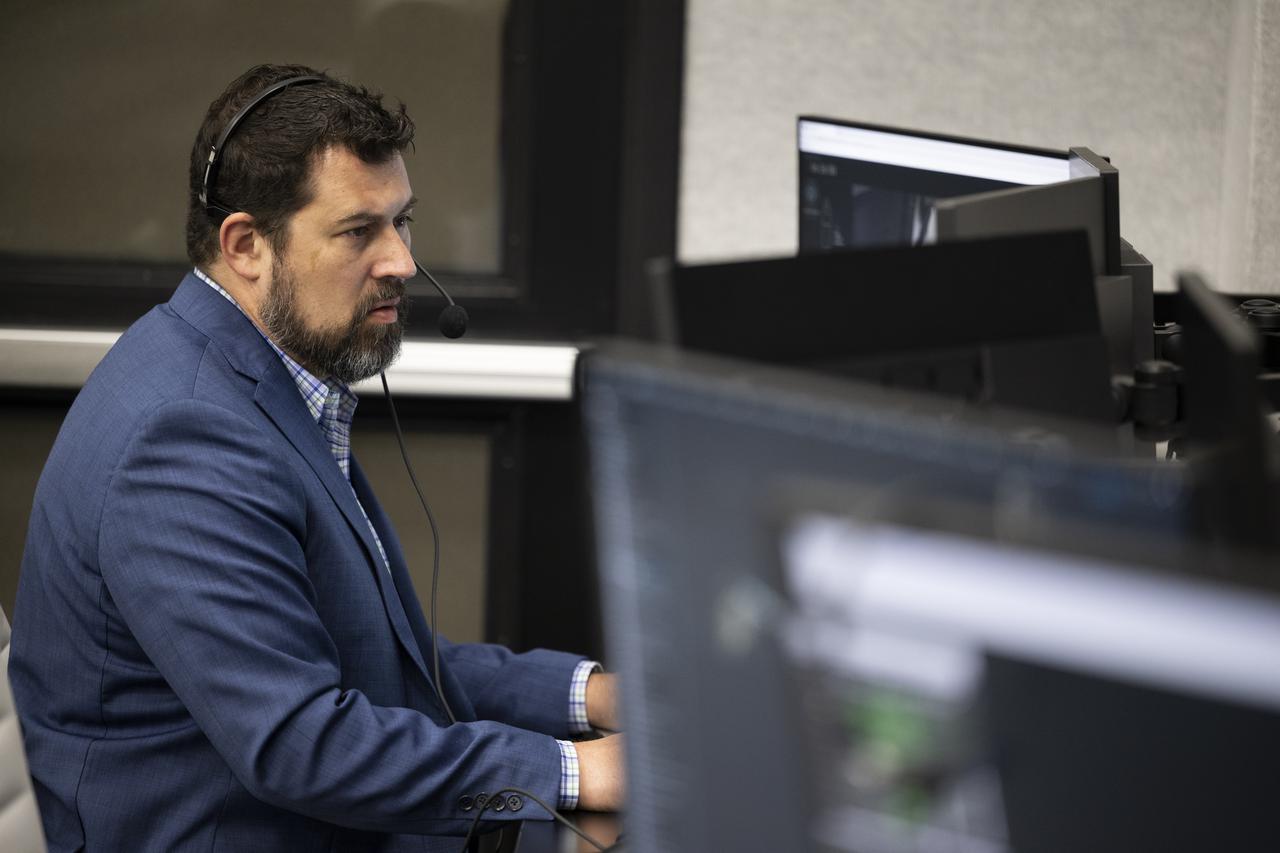
Scott Ede, mission manager for mission management and integration in NASA's Commercial Crew Program, monitors the countdown during a dress rehearsal in preparation for the launch of a SpaceX Falcon 9 rocket carrying the company's Crew Dragon spacecraft on NASA’s SpaceX Crew-4 mission with NASA astronauts Kjell Lindgren, Robert Hines, Jessica Watkins, and ESA (European Space Agency) astronaut Samantha Cristoforetti onboard, Wednesday, April 20, 2022, in firing room four of the Rocco A. Petrone Launch Control Center at NASA’s Kennedy Space Center in Florida. NASA’s SpaceX Crew-4 mission is the fourth crew rotation mission of the SpaceX Crew Dragon spacecraft and Falcon 9 rocket to the International Space Station as part of the agency’s Commercial Crew Program. Lindgren, Hines, Watkins, and Cristoforetti are scheduled to launch on April 23 at 5:26 a.m. EDT, from Launch Complex 39A at the Kennedy Space Center. Photo Credit: (NASA/Joel Kowsky)
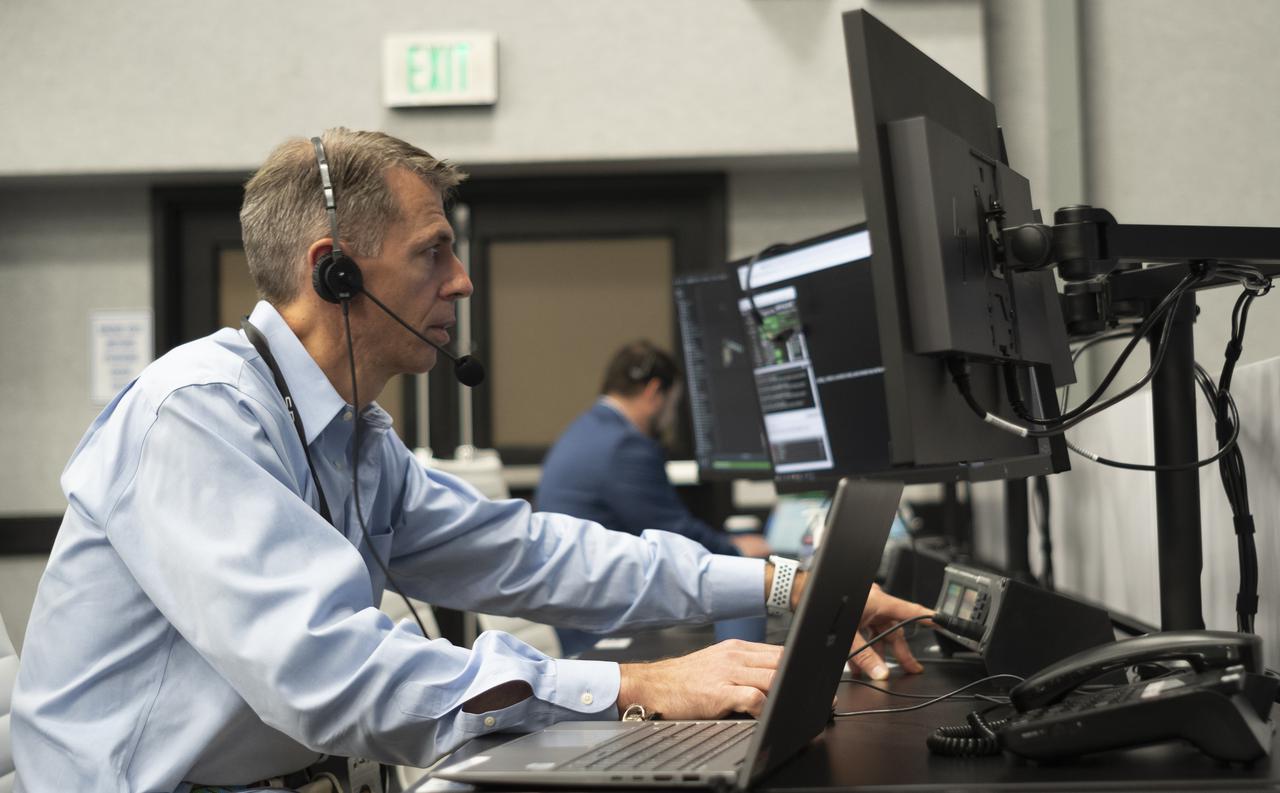
Zeb Scoville, NASA's chief flight director, monitors the countdown during a dress rehearsal in preparation for the launch of a SpaceX Falcon 9 rocket carrying the company's Crew Dragon spacecraft on NASA’s SpaceX Crew-4 mission with NASA astronauts Kjell Lindgren, Robert Hines, Jessica Watkins, and ESA (European Space Agency) astronaut Samantha Cristoforetti onboard, Wednesday, April 20, 2022, in firing room four of the Rocco A. Petrone Launch Control Center at NASA’s Kennedy Space Center in Florida. NASA’s SpaceX Crew-4 mission is the fourth crew rotation mission of the SpaceX Crew Dragon spacecraft and Falcon 9 rocket to the International Space Station as part of the agency’s Commercial Crew Program. Lindgren, Hines, Watkins, and Cristoforetti are scheduled to launch on April 23 at 5:26 a.m. EDT, from Launch Complex 39A at the Kennedy Space Center. Photo Credit: (NASA/Joel Kowsky)
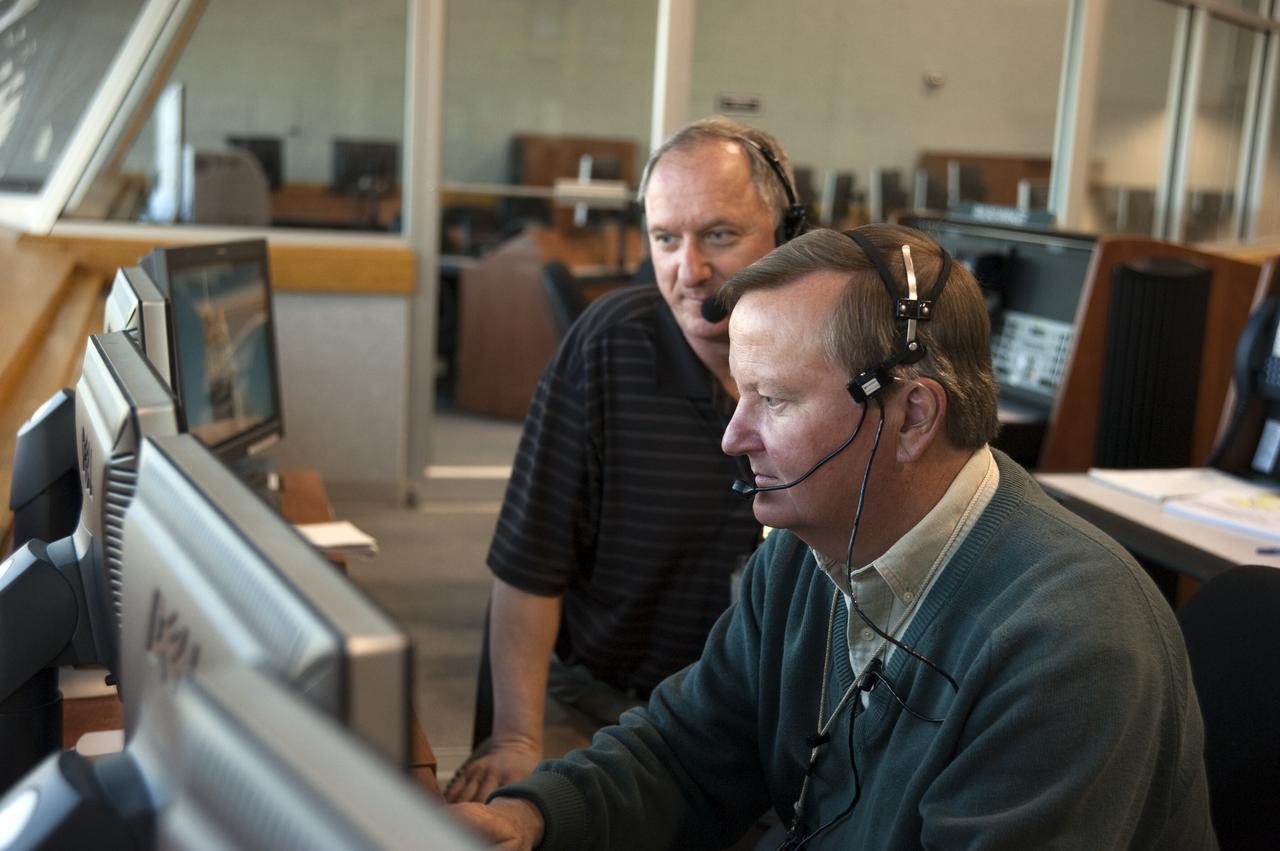
STS-131 TCDT - T-0 LCC FIRING ROOM 4 ACTIVITIES
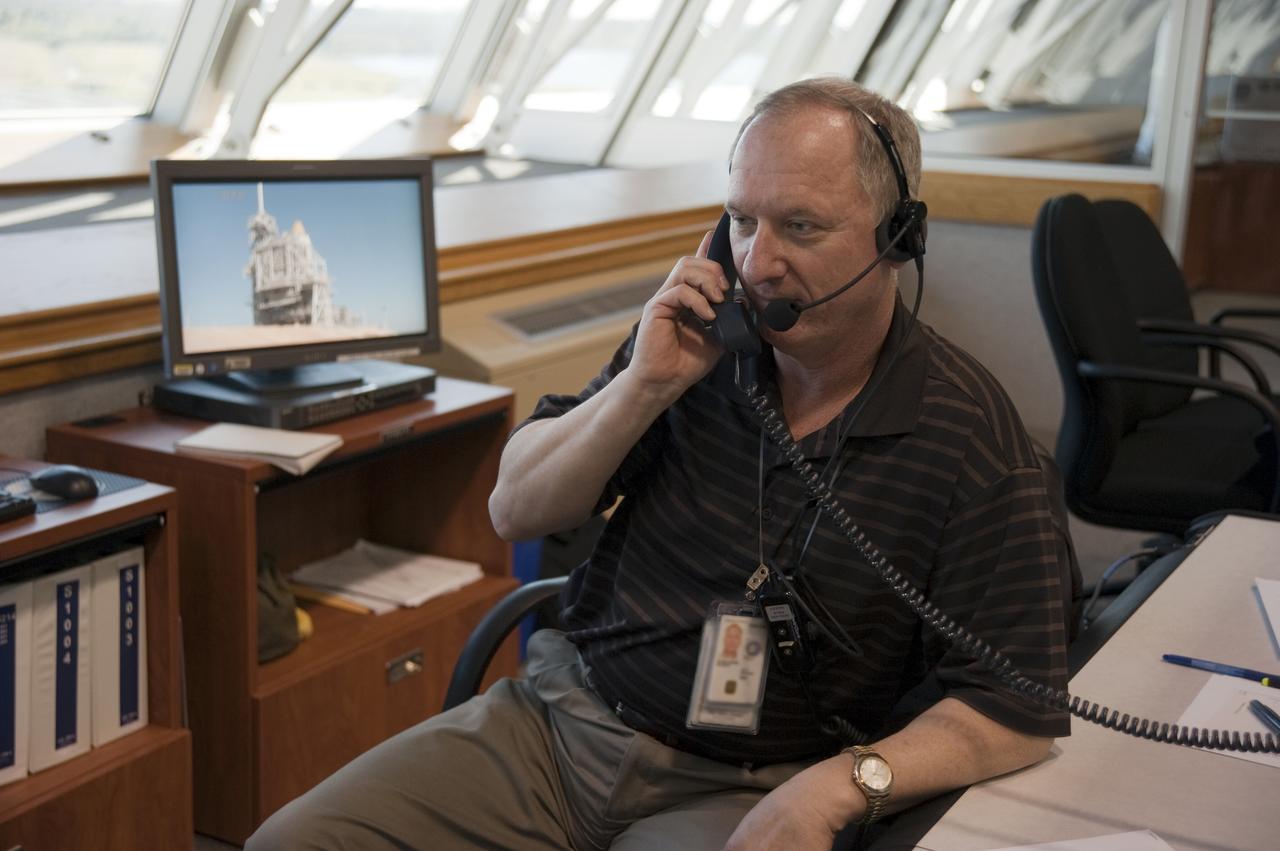
STS-131 TCDT - T-0 LCC FIRING ROOM 4 ACTIVITIES

Firing Room 4 Shuttle Art with Robert Cabana & Mike Leinback
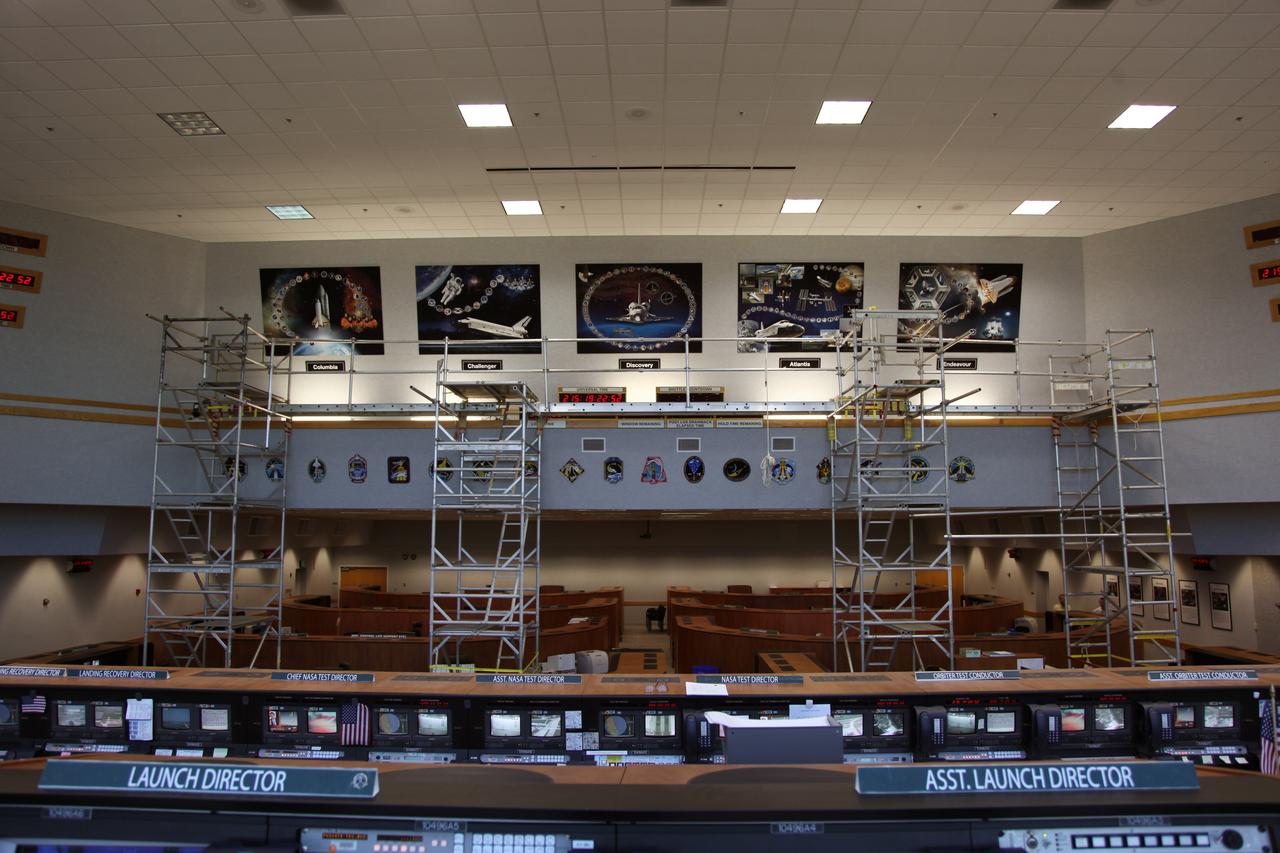
Firing Room 4 Shuttle Art with Robert Cabana & Mike Leinback
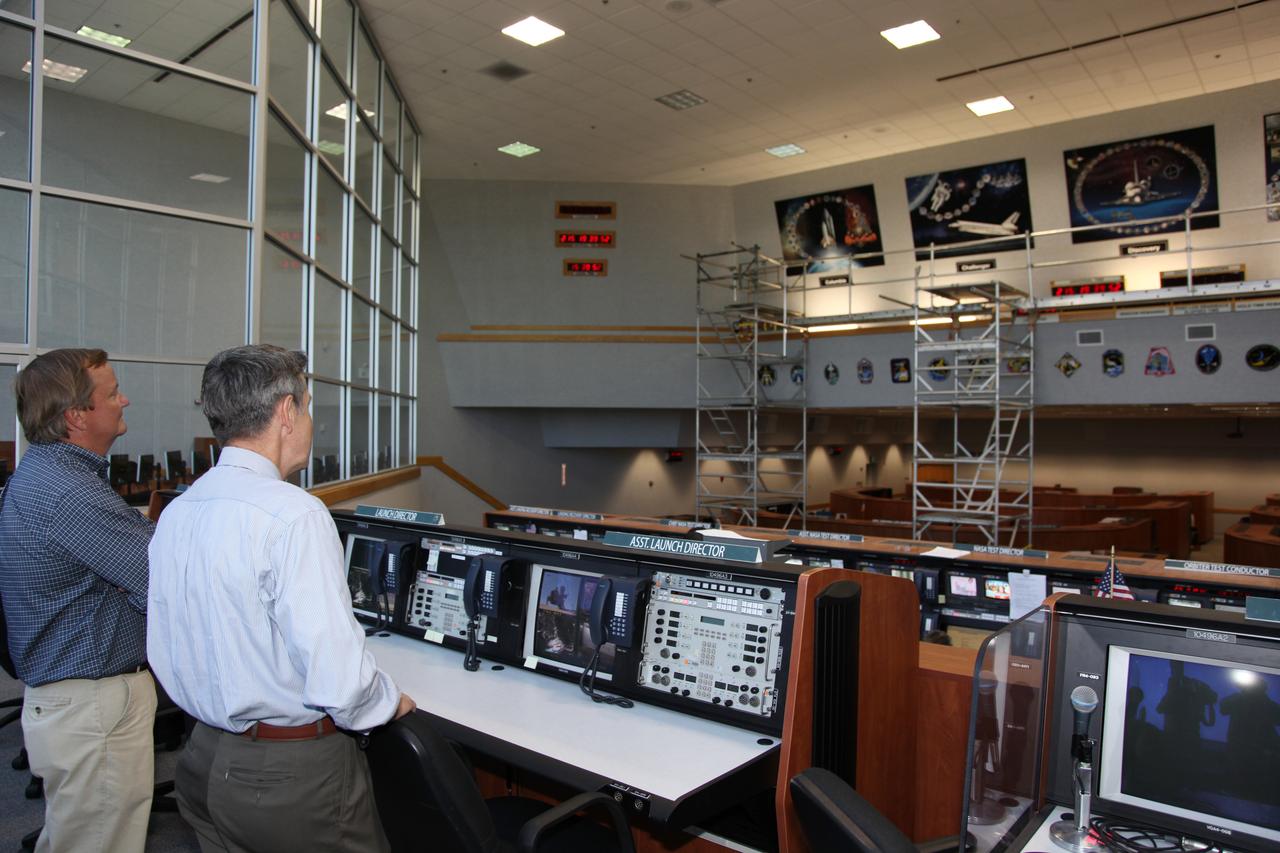
Firing Room 4 Shuttle Art with Robert Cabana & Mike Leinback
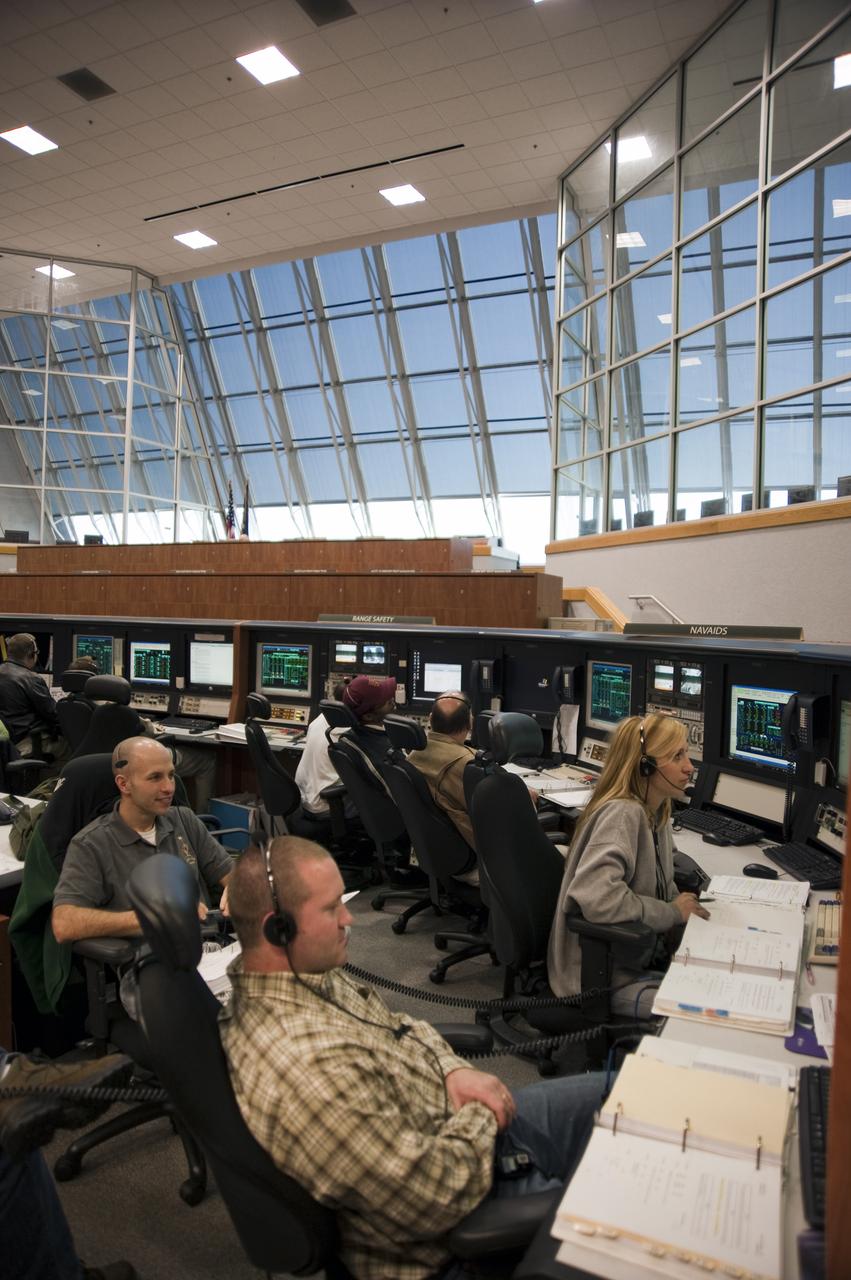
STS-131 TCDT - T-0 LCC FIRING ROOM 4 ACTIVITIES
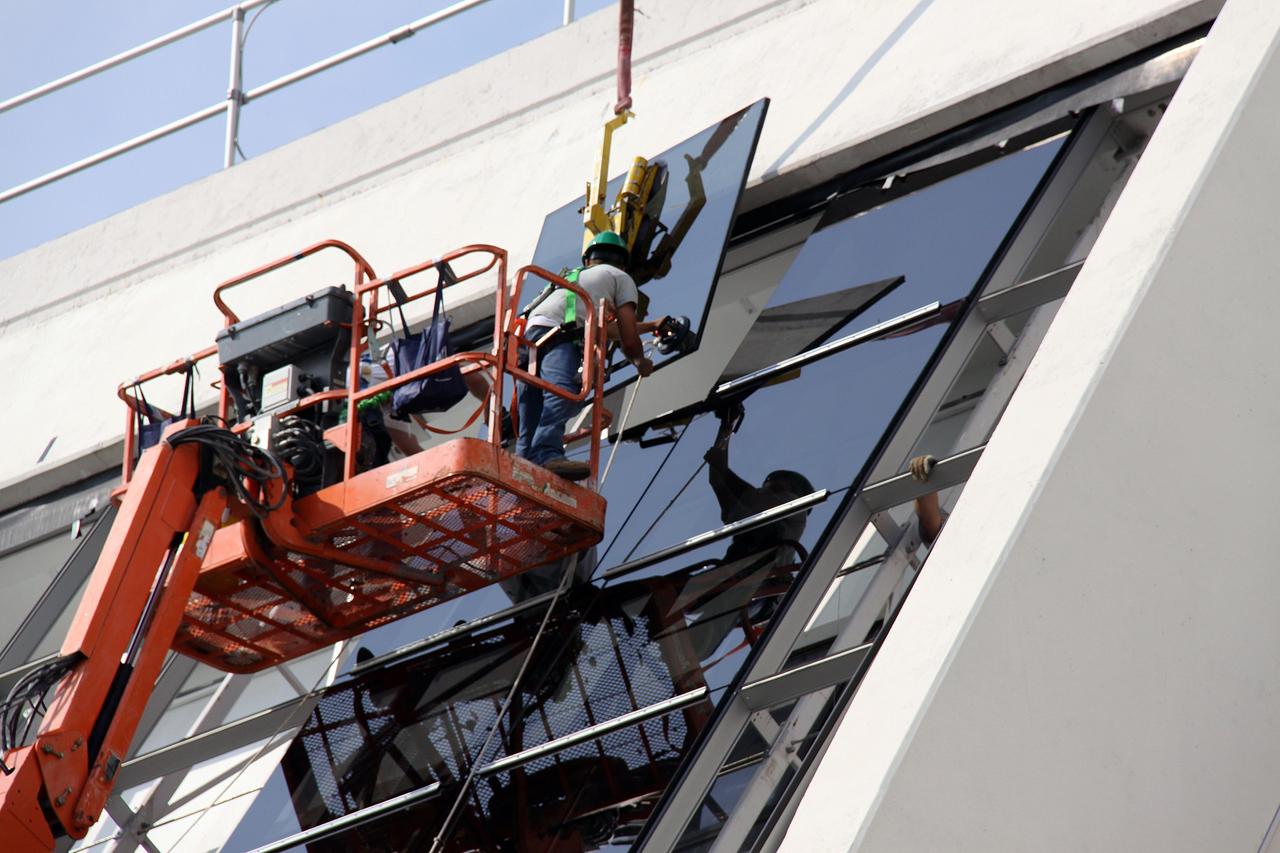
CAPE CANAVERAL, Fla. – A new window is lowered toward the existing Firing Room windows in the Launch Control Center at NASA's Kennedy Space Center in Florida. New, hurricane-rated window systems for the four Firing Rooms and the vestibule areas between Firing Rooms 1 & 2 and Firing Rooms 3 & 4 are being installed. In order to avoid operational impacts the new windows are being installed on the outside of the existing windows, enclosing the space formerly occupied by the louvers. The old windows will remain in place until the new windows are completely installed and leak tested. This approach will continue to keep the firing rooms from being exposed to the elements. Photo credit: NASA/Jack Pfaller