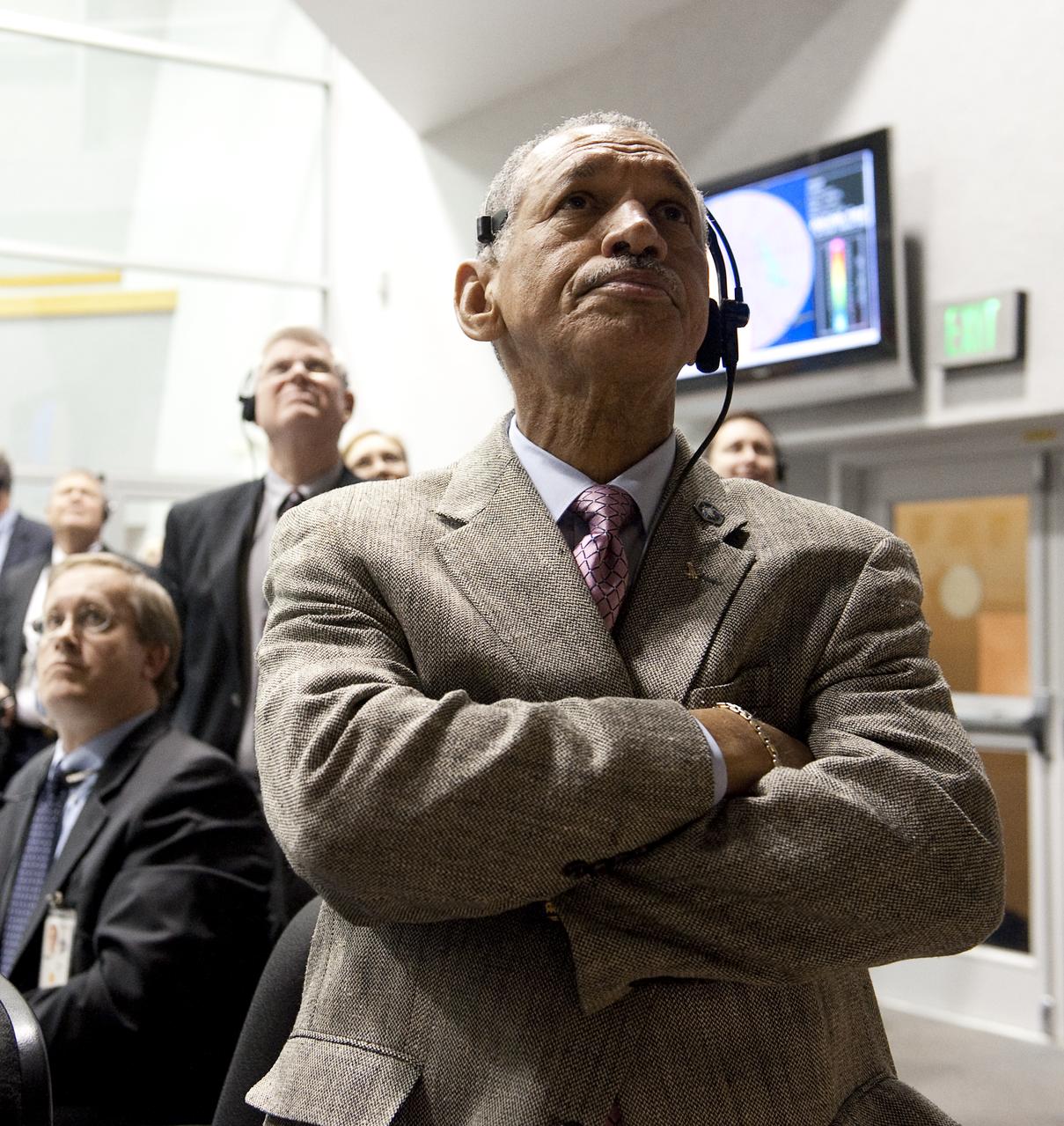
NASA Administrator Charles Bolden looks out the window of Firing Room Four in the Launch Control Center during the launch of the space shuttle Endeavour and the start of the STS-130 mission at NASA Kennedy Space Center in Cape Canaveral, Fla. on Monday Feb. 8, 2010. Endeavour and its crew will deliver to the International Space Station a third connecting module, the Italian-built Tranquility node and the seven-windowed cupola, which will be used as a control room for robotics. The mission will feature three spacewalks. Photo Credit: (NASA/Bill Ingalls)
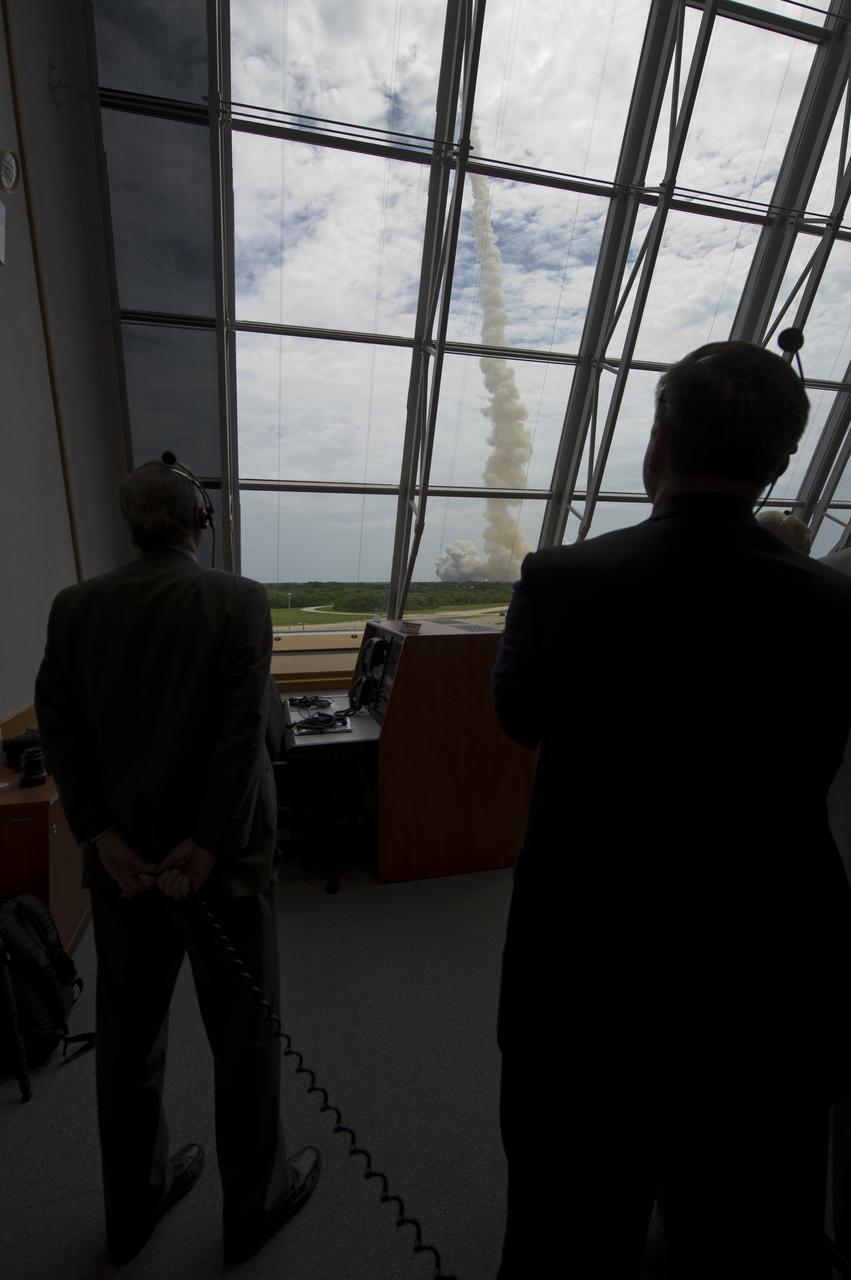
NASA management look on from Firing Room Four of the Launch Control Center (LCC) as space shuttle Atlantis launches from pad 39A on Friday, July 8, 2011, in Cape Canaveral, Fla. The launch of Atlantis, STS-135, is the final flight of the shuttle program, a 12-day mission to the International Space Station. Photo Credit: (NASA/Bill Ingalls)
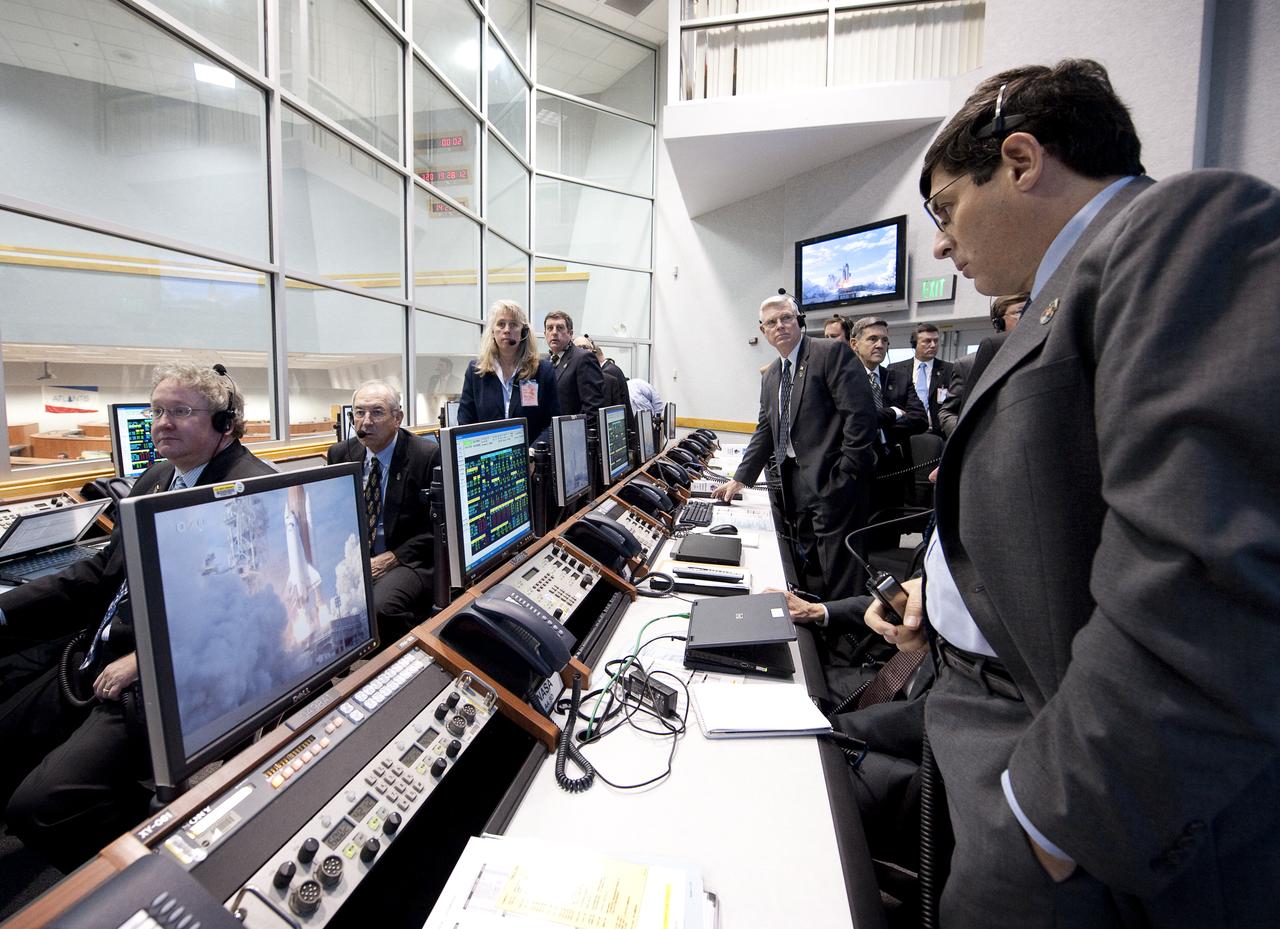
NASA Associate Administrator Chris Scolese monitors the launch of the space shuttle Atlantis from firing room four of the NASA Kennedy Space Center, Monday, Nov. 16, 2009, Cape Canaveral, FL. Space shuttle Atlantis and its six-member crew began the 11-day STS-129 mission to the International Space Station. The shuttle will transport spare hardware to the outpost and return a station crew member who spent more than two months in space. Photo Credit: (NASA/Bill Ingalls)
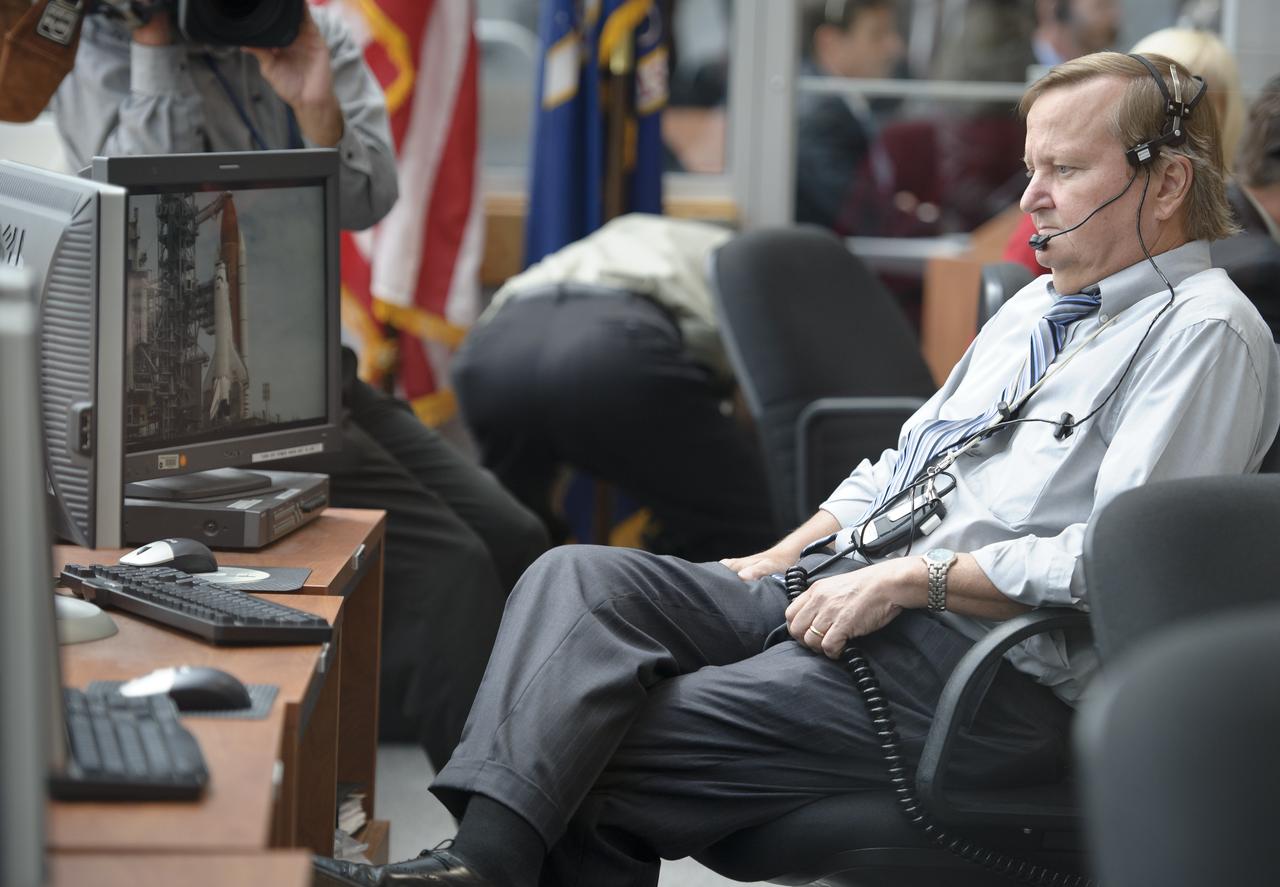
NASA Shuttle Launch Director Michael Leinbach monitors the launch countdown from Firing Room Four of the Launch Control Center (LCC) at NASA's Kennedy Space Center on Friday, July 8, 2011, in Cape Canaveral, Fla. The launch of Atlantis, STS-135, is the final flight of the shuttle program, a 12-day mission to the International Space Station. Photo Credit: (NASA/Bill Ingalls)
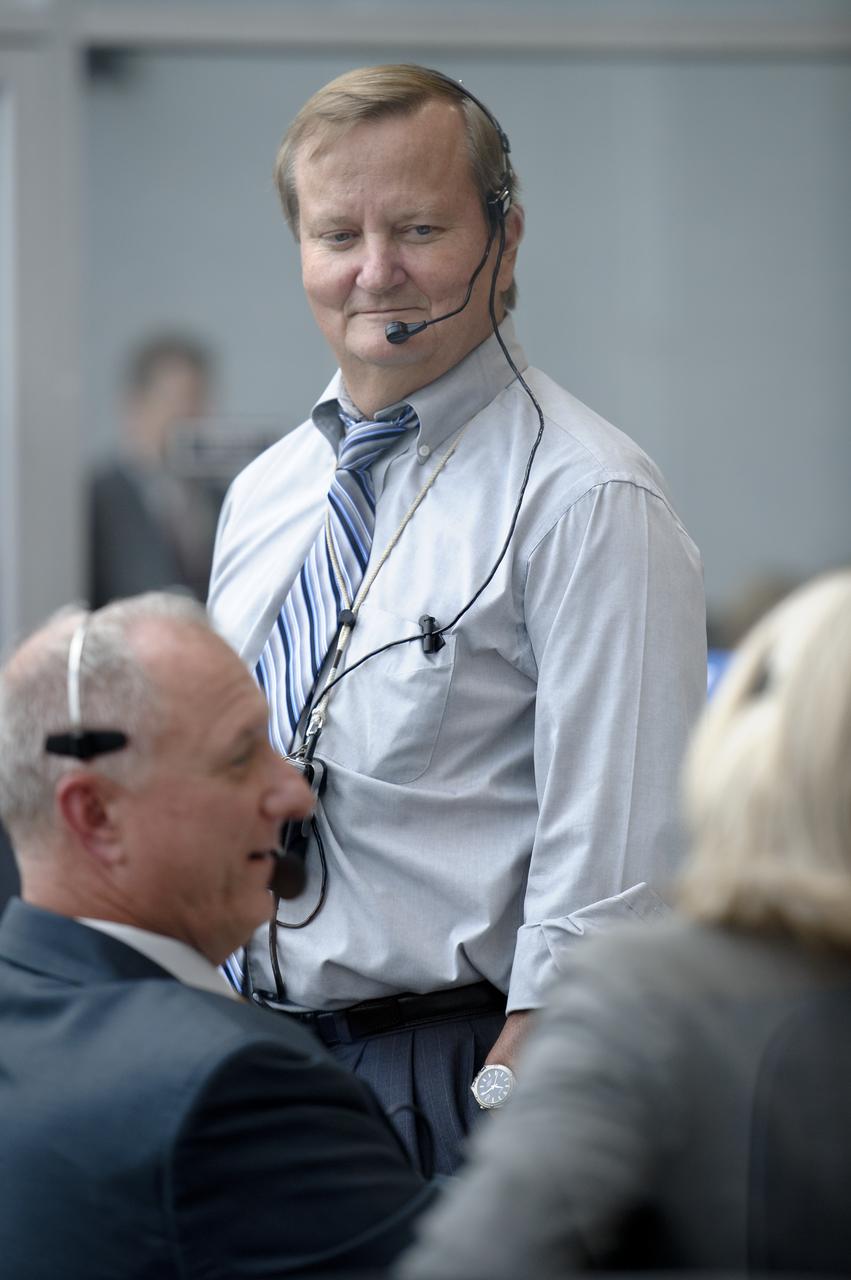
NASA Shuttle Launch Director Michael Leinbach talks with other members of teh launch team as they monitor the launch countdown from Firing Room Four of the Launch Control Center (LCC) at NASA's Kennedy Space Center on Friday, July 8, 2011, in Cape Canaveral, Fla. The launch of Atlantis, STS-135, is the final flight of the shuttle program, a 12-day mission to the International Space Station. Photo Credit: (NASA/Bill Ingalls)
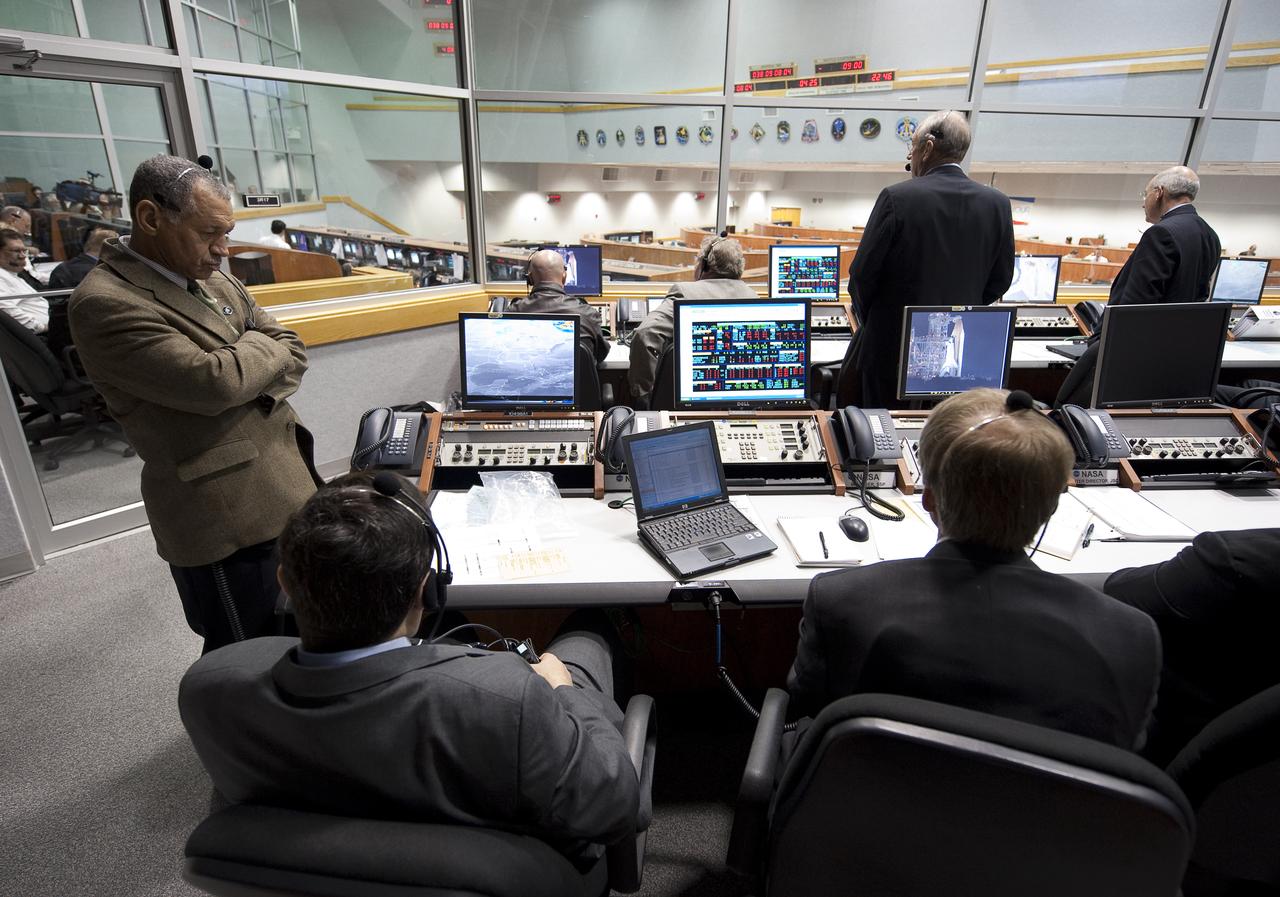
NASA Administrator Charles Bolden, standing left, and other NASA mission managers monitor the countdown of the launch of the space shuttle Endeavour and the start of the STS-130 mission from Firing Room Four of the Launch Control Center at NASA Kennedy Space Center in Cape Canaveral, Fla. on Sunday Feb. 7, 2010. Space shuttle Endeavour's launch attempt was scrubbed due to a low cloud ceiling over Kennedy Space Center. Photo Credit: (NASA/Bill Ingalls)
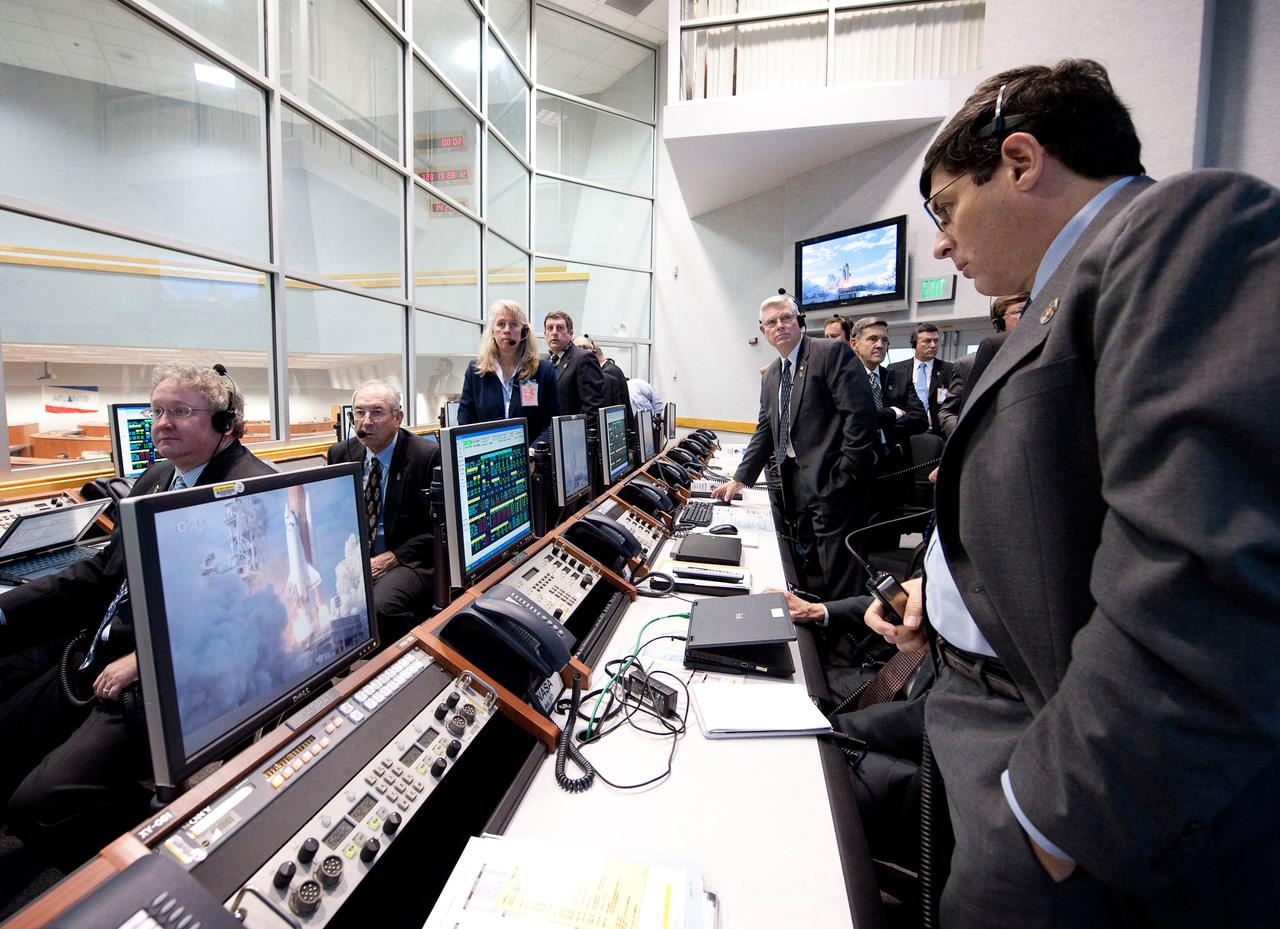
NASA Associate Administrator Chris Scolese monitors the launch of the space shuttle Atlantis from firing room four of the NASA Kennedy Space Center, Monday, Nov. 16, 2009, Cape Canaveral, FL. Space shuttle Atlantis and its six-member crew began the 11-day STS-129 mission to the International Space Station. The shuttle will transport spare hardware to the outpost and return a station crew member who spent more than two months in space. Photo Credit: (NASA/Bill Ingalls)
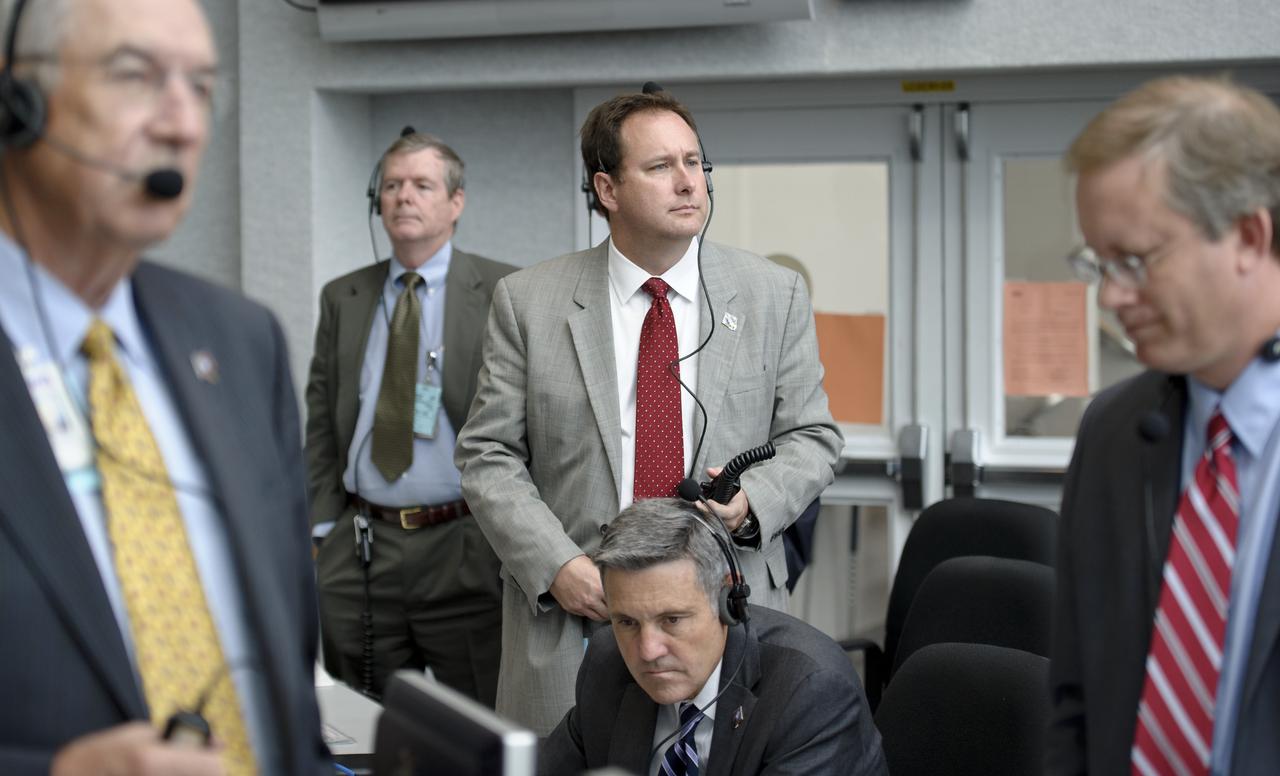
NASA Marshall Space Flight Center Director Robert Lightfoot Jr., standing center, and other management looks on from Firing Room Four of the NASA Kennedy Space Center Launch Control Center (LCC) as he and the launch team monitor the weather and countdown to the launch of the space shuttle Atlantis on Friday, July 8, 2011, in Cape Canaveral, Fla. The launch of Atlantis, STS-135, is the final flight of the shuttle program, a 12-day mission to the International Space Station. Photo Credit: (NASA/Bill Ingalls)
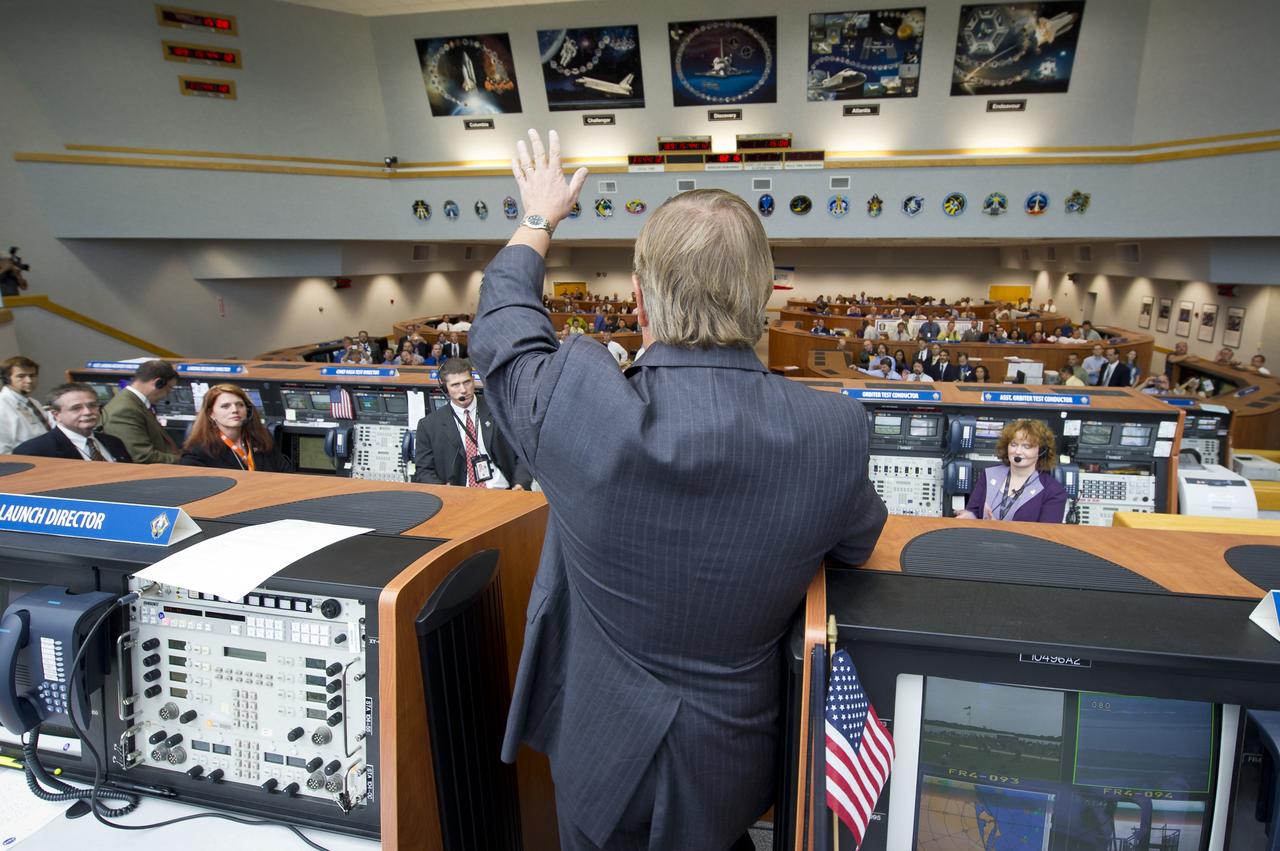
NASA Launch Director Michael Leinbach congratulates the launch team in the NASA Kennedy Space Center Firing Room Four of the Launch Control Center (LCC) shortly after the space shuttle Atlantis, STS-135, launched on Friday, July 8, 2011, in Cape Canaveral, Fla. The launch of Atlantis, STS-135, is the final flight of the shuttle program, a 12-day mission to the International Space Station. Photo Credit: (NASA/Bill Ingalls)
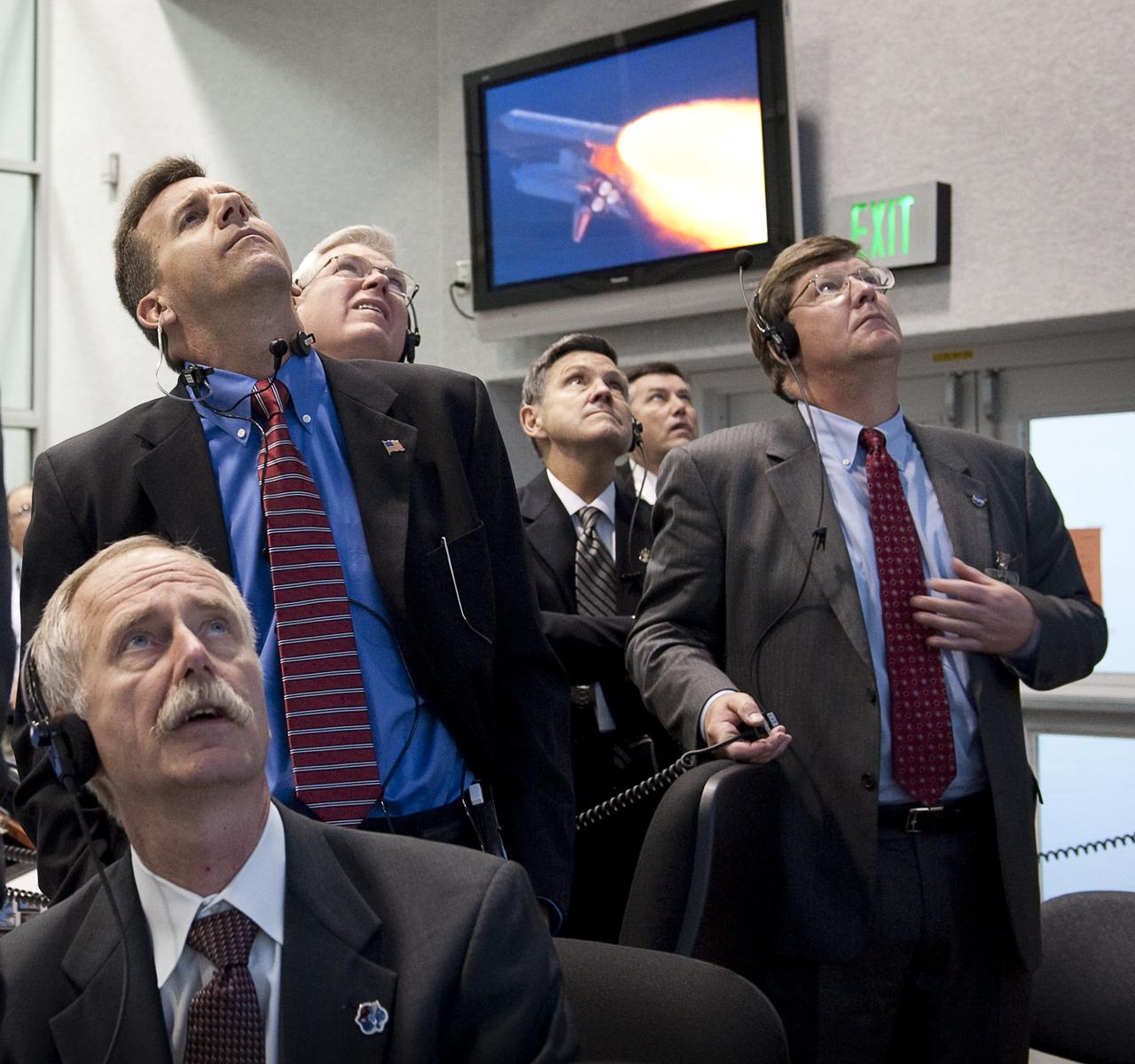
NASA mission managers monitor the launch of the space shuttle Atlantis from firing room four of the NASA Kennedy Space Center, Monday, Nov. 16, 2009, Cape Canaveral, FL. Space shuttle Atlantis and its six-member crew began the 11-day STS-129 mission to the International Space Station. The shuttle will transport spare hardware to the outpost and return a station crew member who spent more than two months in space. Photo Credit: (NASA/Bill Ingalls)
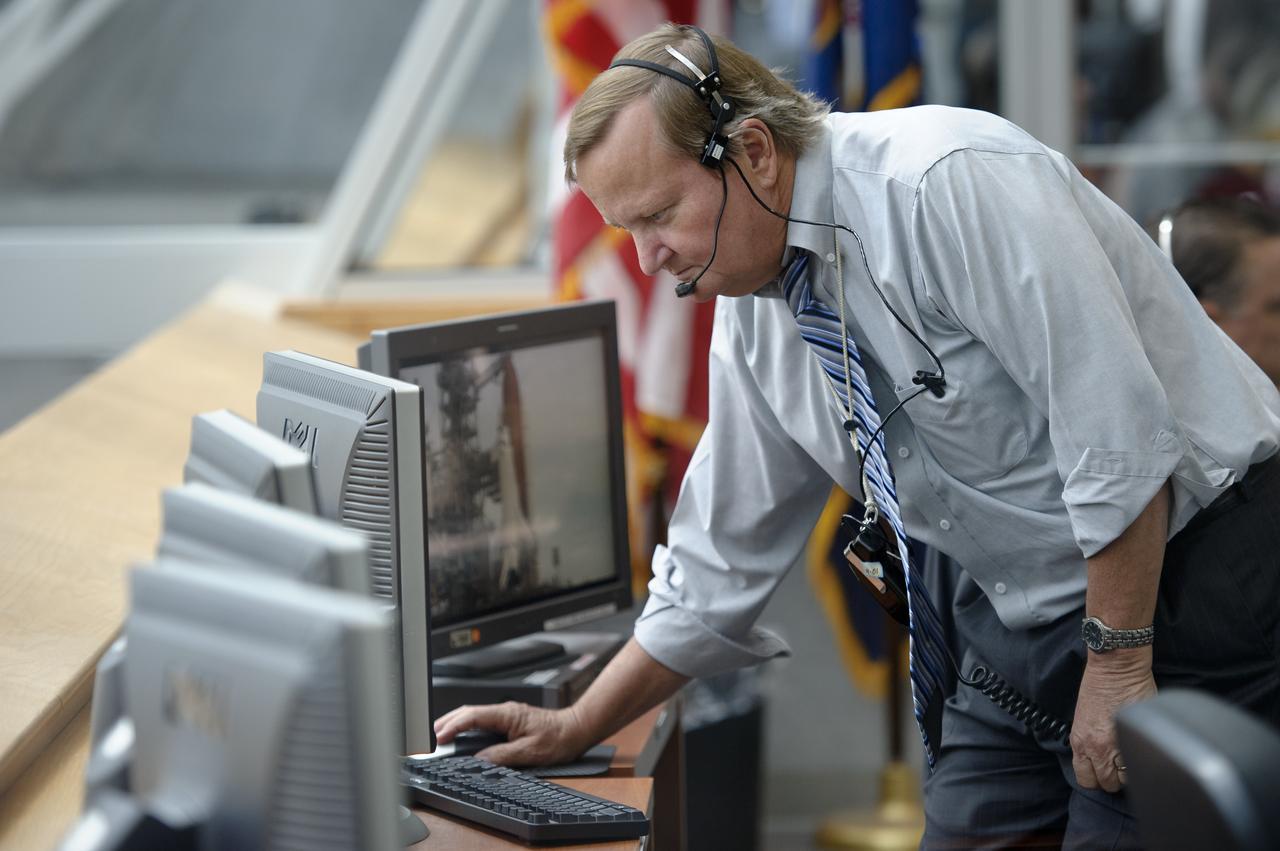
NASA Shuttle Launch Director Michael Leinbach monitors the launch countdown from Firing Room Four of the Launch Control Center (LCC) at NASA's Kennedy Space Center on Friday, July 8, 2011, in Cape Canaveral, Fla. The launch of Atlantis, STS-135, is the final flight of the shuttle program, a 12-day mission to the International Space Station. Photo Credit: (NASA/Bill Ingalls)
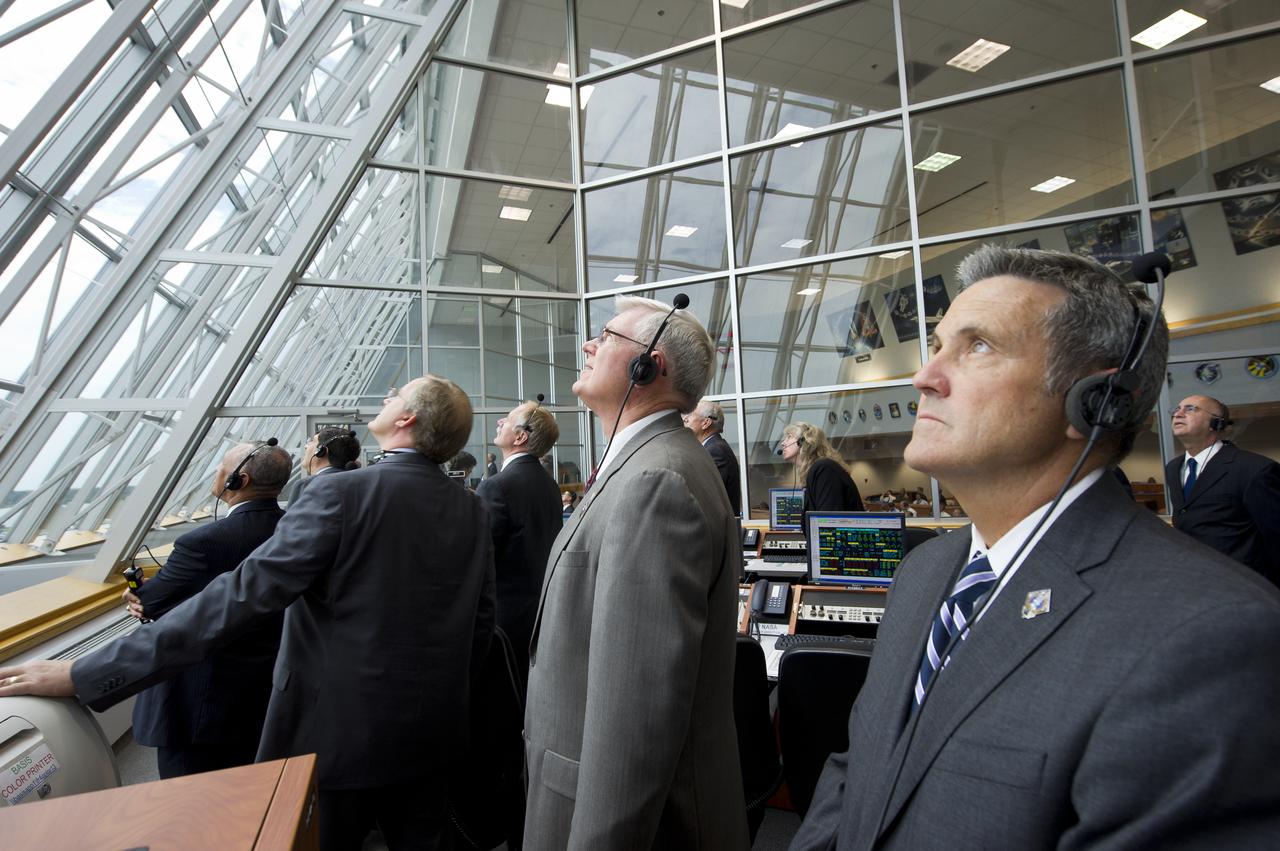
NASA Kennedy Space Center Director Bob Cabana, right, and other management look on from Firing Room Four of the Launch Control Center (LCC) as space shuttle Atlantis launches from pad 39A on Friday, July 8, 2011, in Cape Canaveral, Fla. The launch of Atlantis, STS-135, is the final flight of the shuttle program, a 12-day mission to the International Space Station. Photo Credit: (NASA/Bill Ingalls)
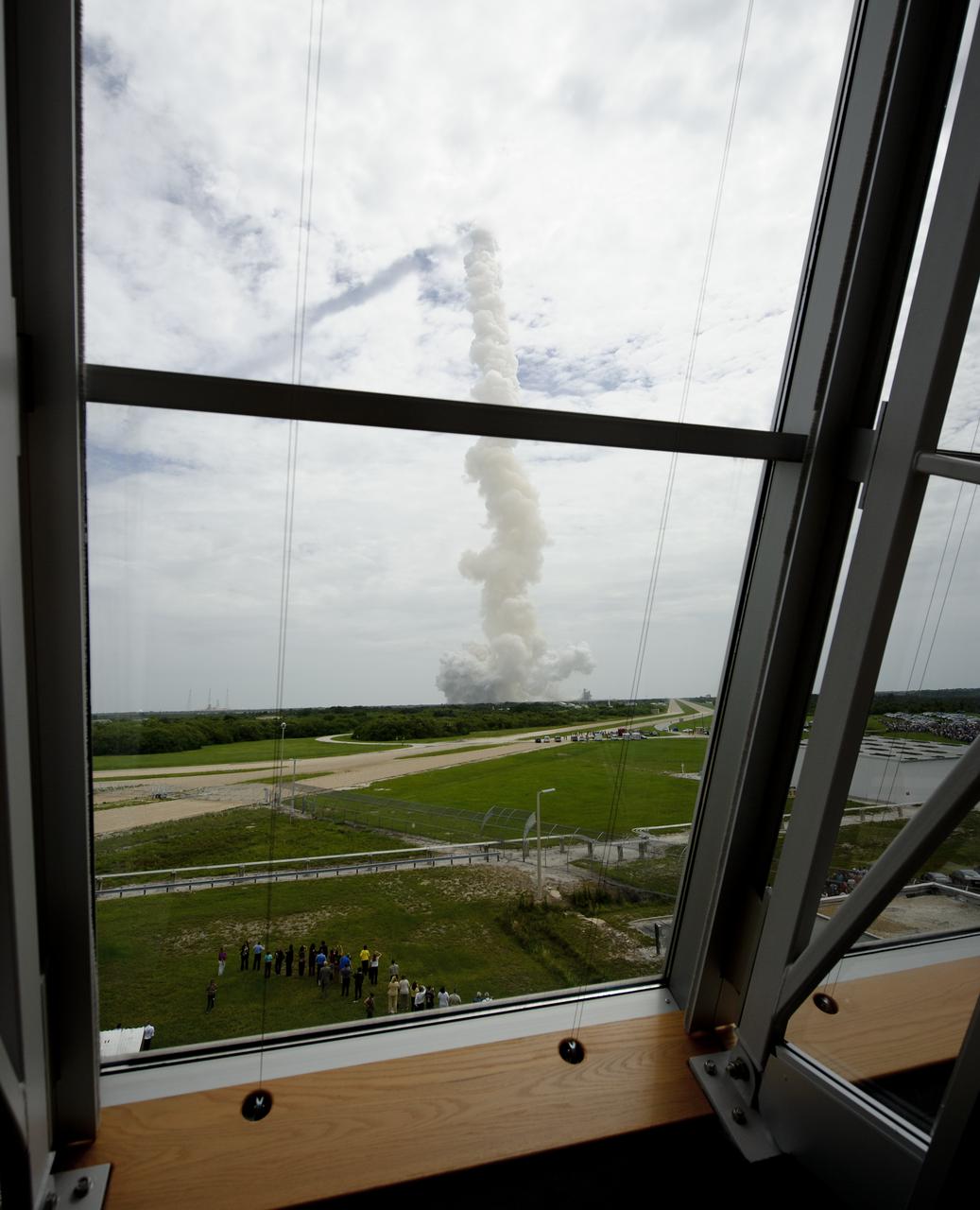
The exhaust plume from space shuttle Atlantis is seen from Firing Room Four of the Launch Control Center (LCC) as space shuttle Atlantis launches from pad 39A on Friday, July 8, 2011, in Cape Canaveral, Fla. The launch of Atlantis, STS-135, is the final flight of the shuttle program, a 12-day mission to the International Space Station. Photo Credit: (NASA/Bill Ingalls)
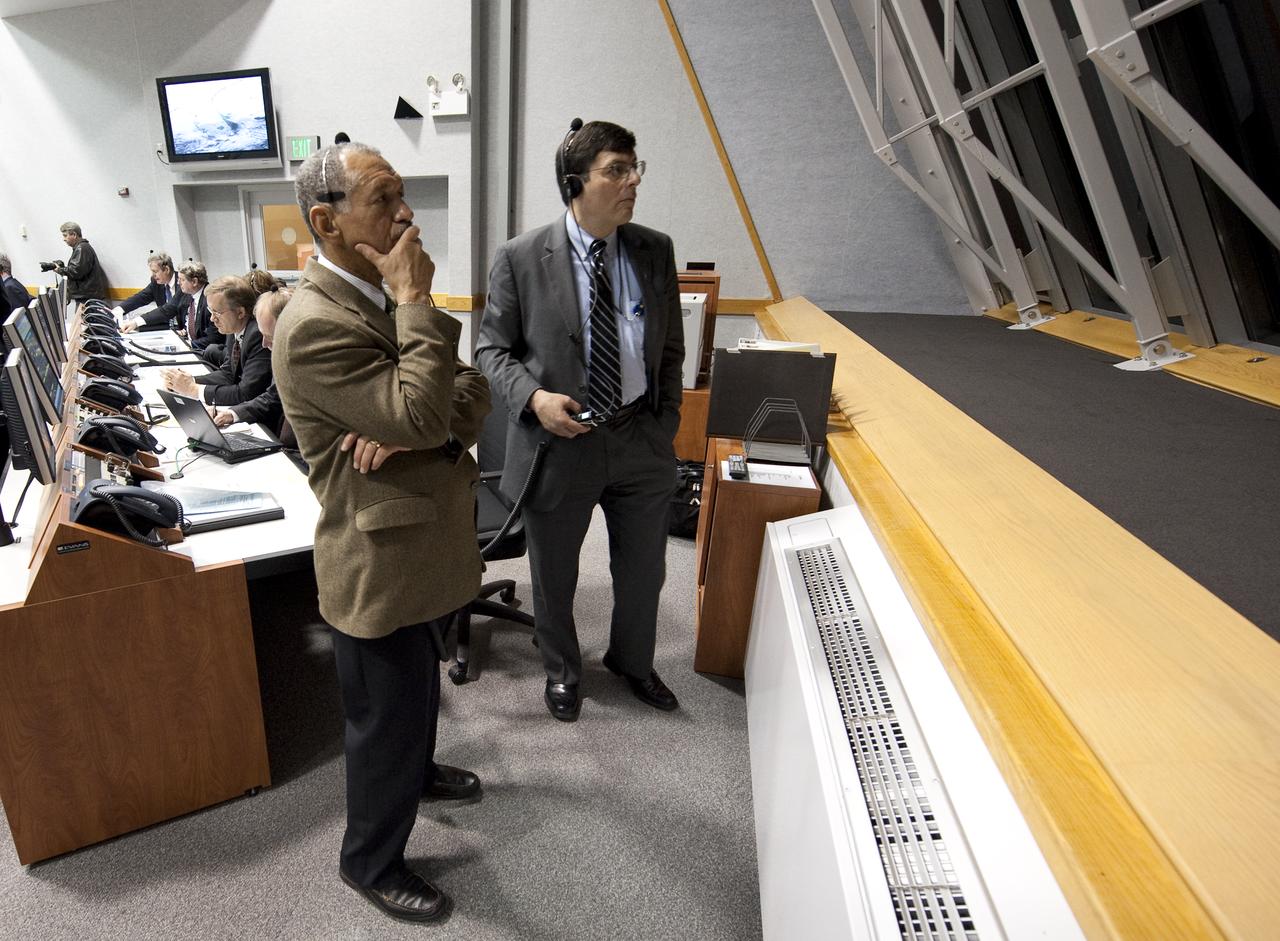
NASA Administrator Charles Bolden, left, and Associate Administrator Chris Scolese look out the window of Firing Room Four of the Launch Control Center as they monitor the countdown of the launch of the space shuttle Endeavour and the start of the STS-130 mission at NASA Kennedy Space Center in Cape Canaveral, Fla. on Sunday Feb. 7, 2010. Space shuttle Endeavour's launch attempt was scrubbed due to a low cloud ceiling over Kennedy Space Center. Photo Credit: (NASA/Bill Ingalls)
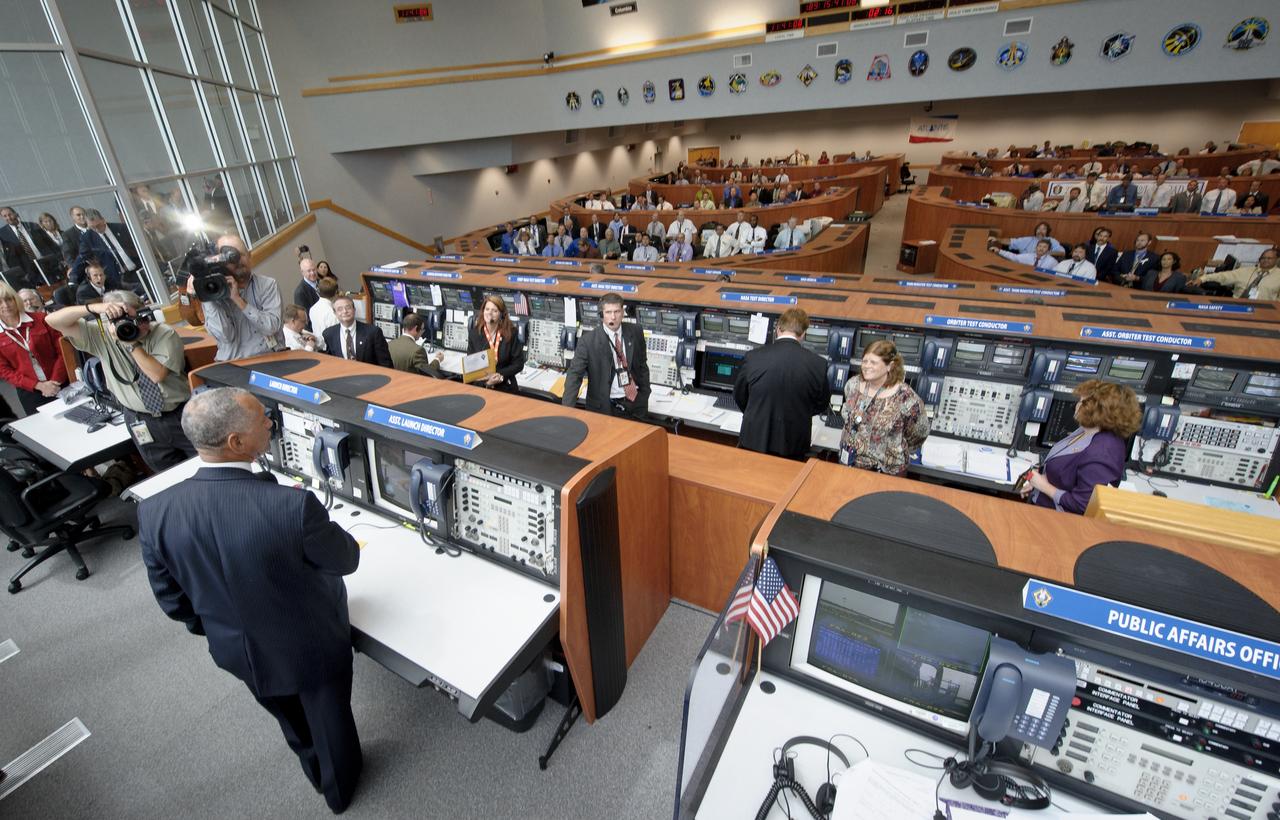
NASA Administrator Charles Bolden congratulates the launch team in the NASA Kennedy Space Center Firing Room Four of the Launch Control Center (LCC) shortly after the space shuttle Atlantis, STS-135, launched on Friday, July 8, 2011, in Cape Canaveral, Fla. The launch of Atlantis is the final flight of the shuttle program, a 12-day mission to the International Space Station. Photo Credit: (NASA/Bill Ingalls)
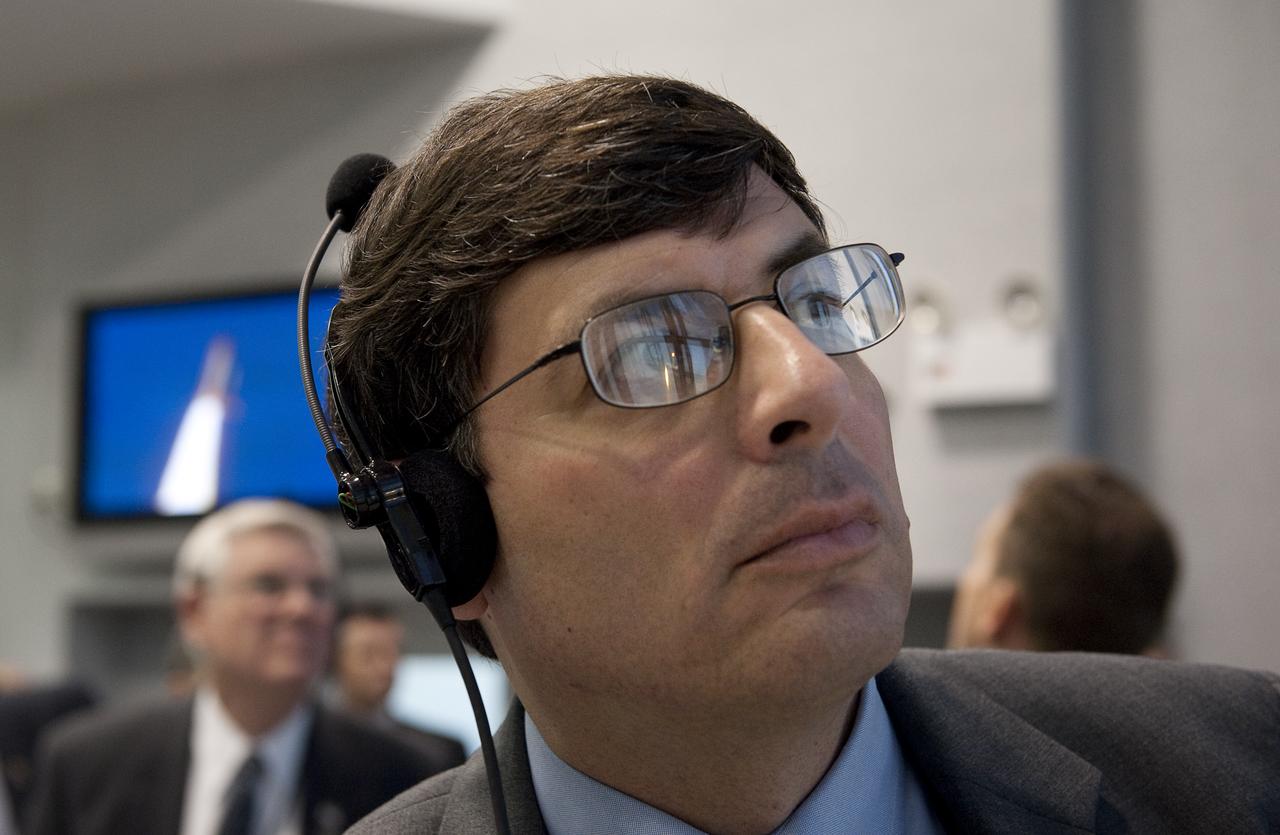
NASA Associate Administrator Chris Scolese monitors the launch of the space shuttle Atlantis from firing room four of the NASA Kennedy Space Center, Monday, Nov. 16, 2009, Cape Canaveral, FL. Space shuttle Atlantis and its six-member crew began the 11-day STS-129 mission to the International Space Station. The shuttle will transport spare hardware to the outpost and return a station crew member who spent more than two months in space. Photo Credit: (NASA/Bill Ingalls)
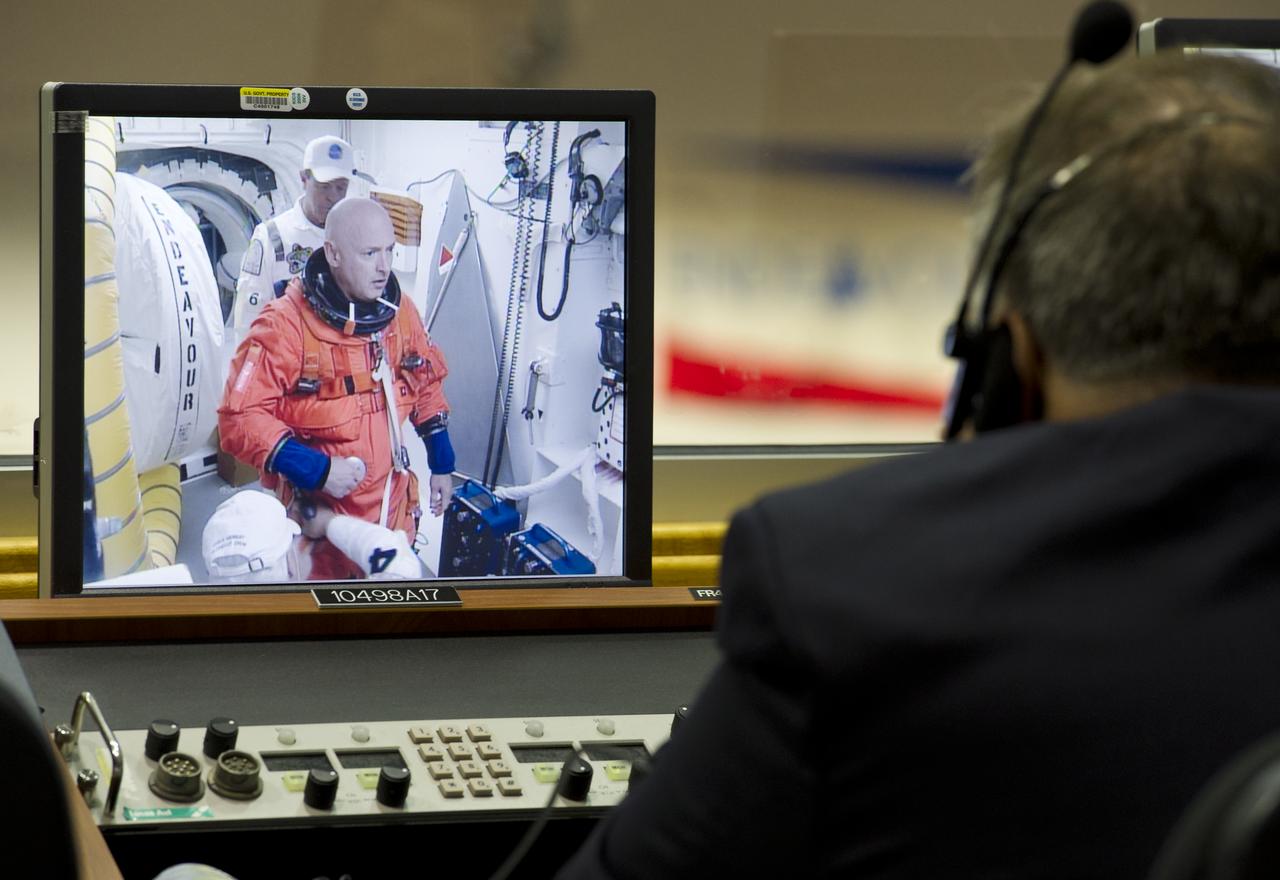
STS-134 mission Commander Mark Kelly is seen preparing to enter space shuttle Endeavour on a monitor in Firing Room Four of the Launch Control Center (LCC), Monday, May 16, 2011, at the Kennedy Space Center in Cape Canaveral, Fla. During the mission, Endeavour and the STS-134 crew will deliver the Alpha Magnetic Spectrometer (AMS) and spare parts including two S-band communications antennas, a high-pressure gas tank and additional spare parts for Dextre. Photo Credit: (NASA/Bill Ingalls)
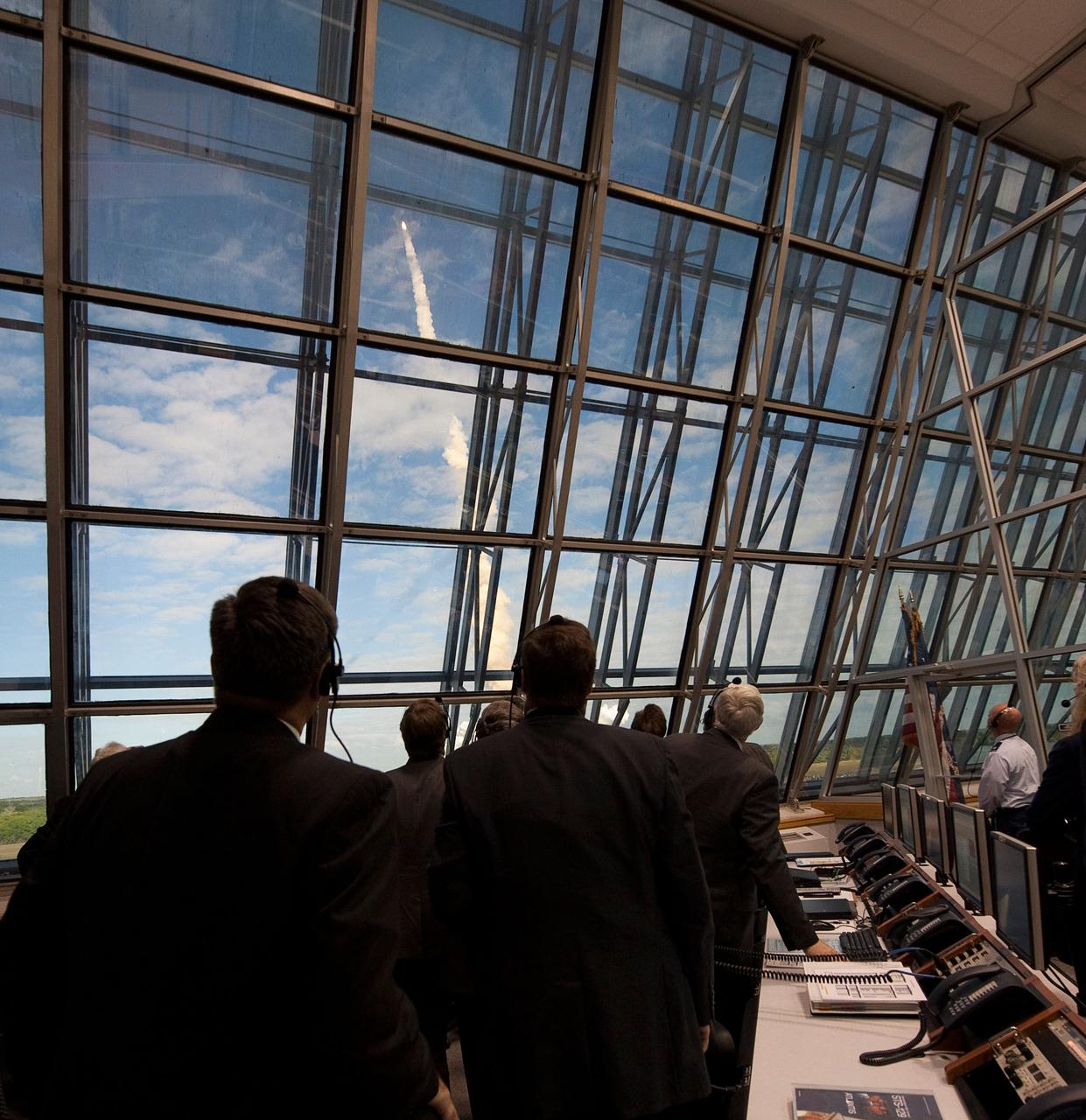
NASA mission managers monitor the launch of the space shuttle Atlantis from firing room four of the NASA Kennedy Space Center, Monday, Nov. 16, 2009, Cape Canaveral, FL. Space shuttle Atlantis and its six-member crew began the 11-day STS-129 mission to the International Space Station. The shuttle will transport spare hardware to the outpost and return a station crew member who spent more than two months in space. Photo Credit: (NASA/Bill Ingalls)
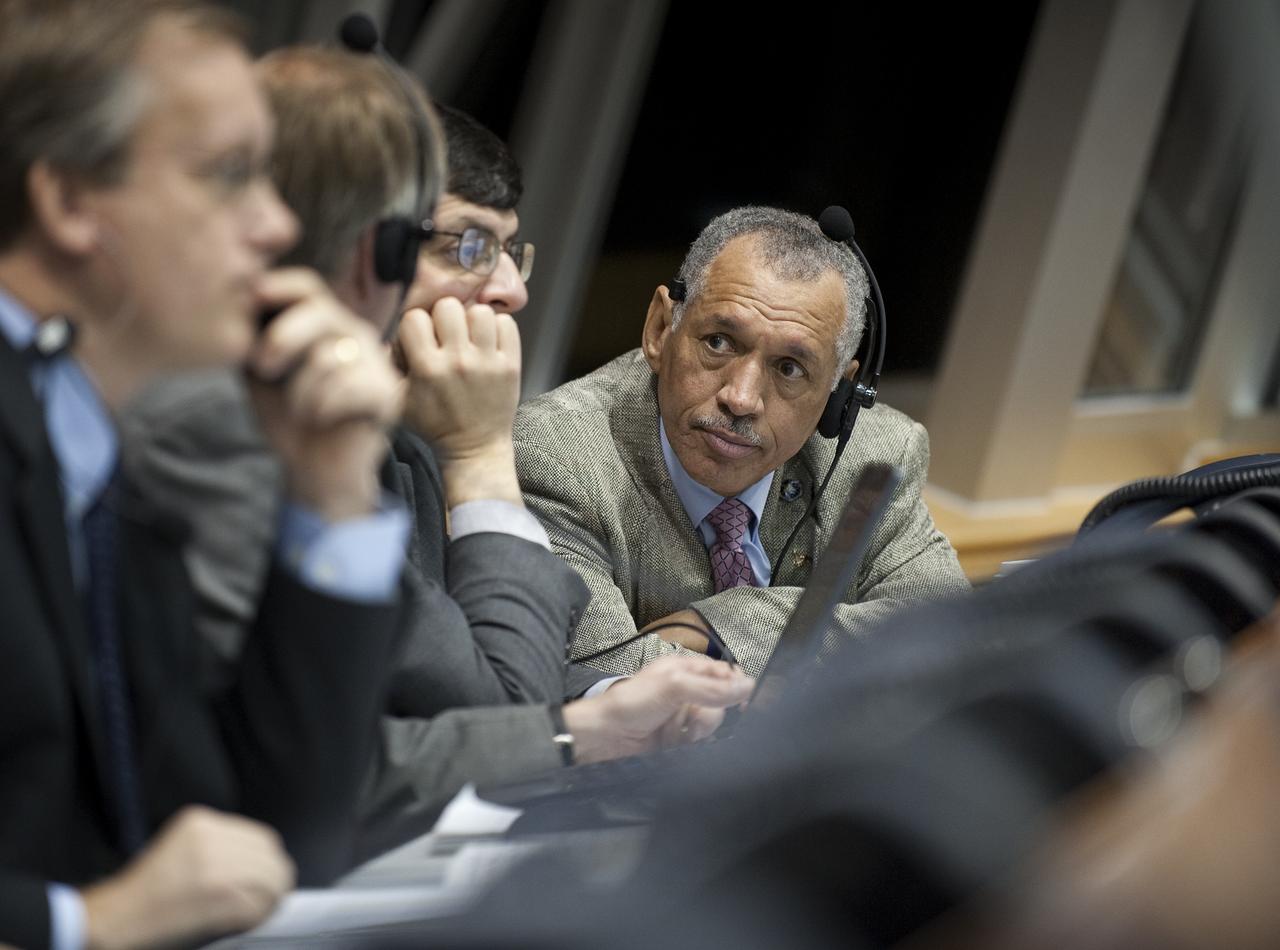
NASA Administrator Charles Bolden talks with other NASA mission managers in Firing Room Four of the Launch Control Center as they monitor the countdown of the launch of the space shuttle Endeavour and the start of the STS-130 mission at NASA Kennedy Space Center in Cape Canaveral, Fla. on Monday Feb. 8, 2010. Photo Credit: (NASA/Bill Ingalls)
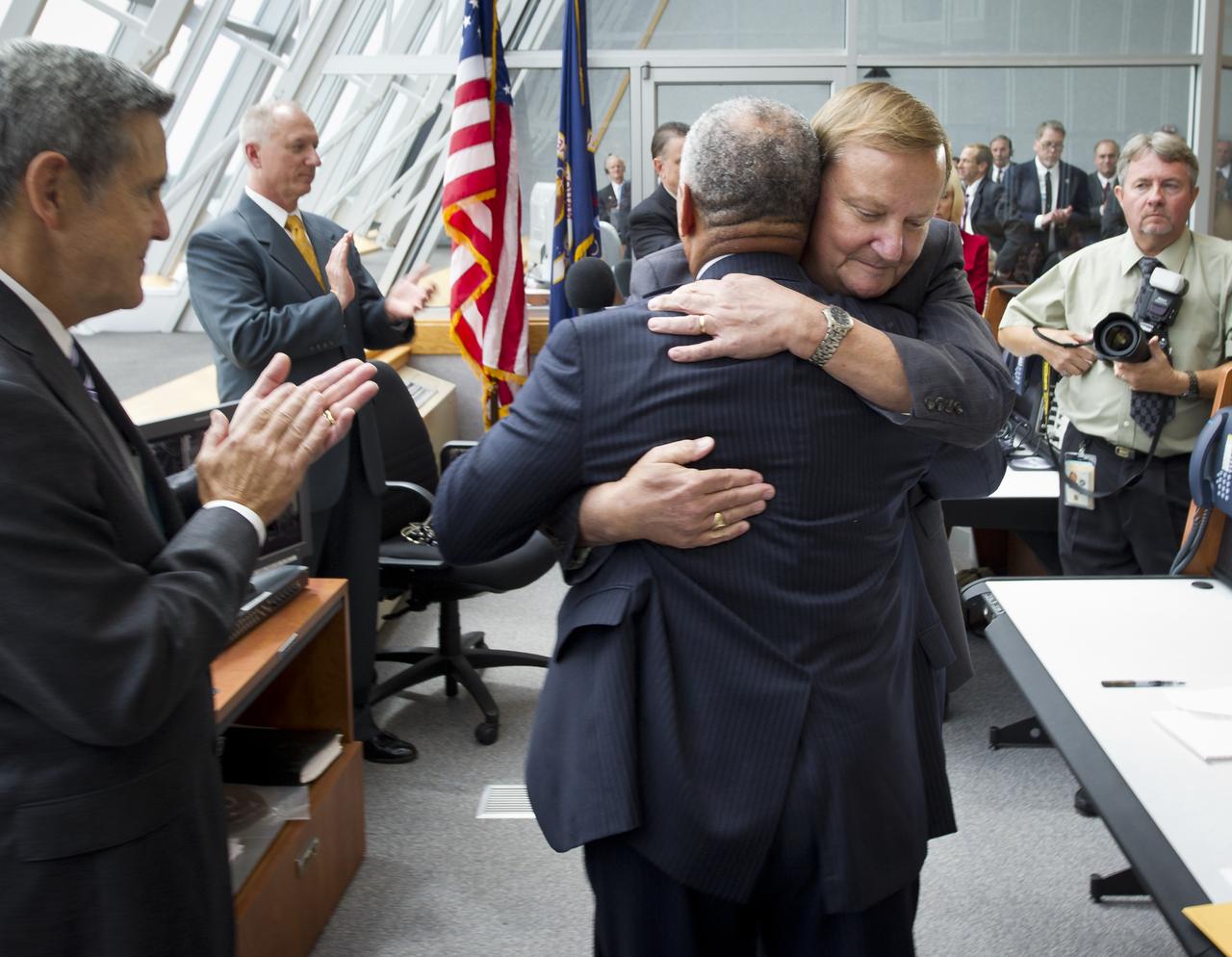
NASA Administrator Charles Bolden congratulates Launch Director Michael Leinbach, facing camera, in Firing Room Four of the Launch Control Center (LCC) shortly after the space shuttle Atlantis, STS-135, launched on Friday, July 8, 2011, in Cape Canaveral, Fla. The launch of Atlantis, STS-135, is the final flight of the shuttle program, a 12-day mission to the International Space Station. Photo Credit: (NASA/Bill Ingalls)
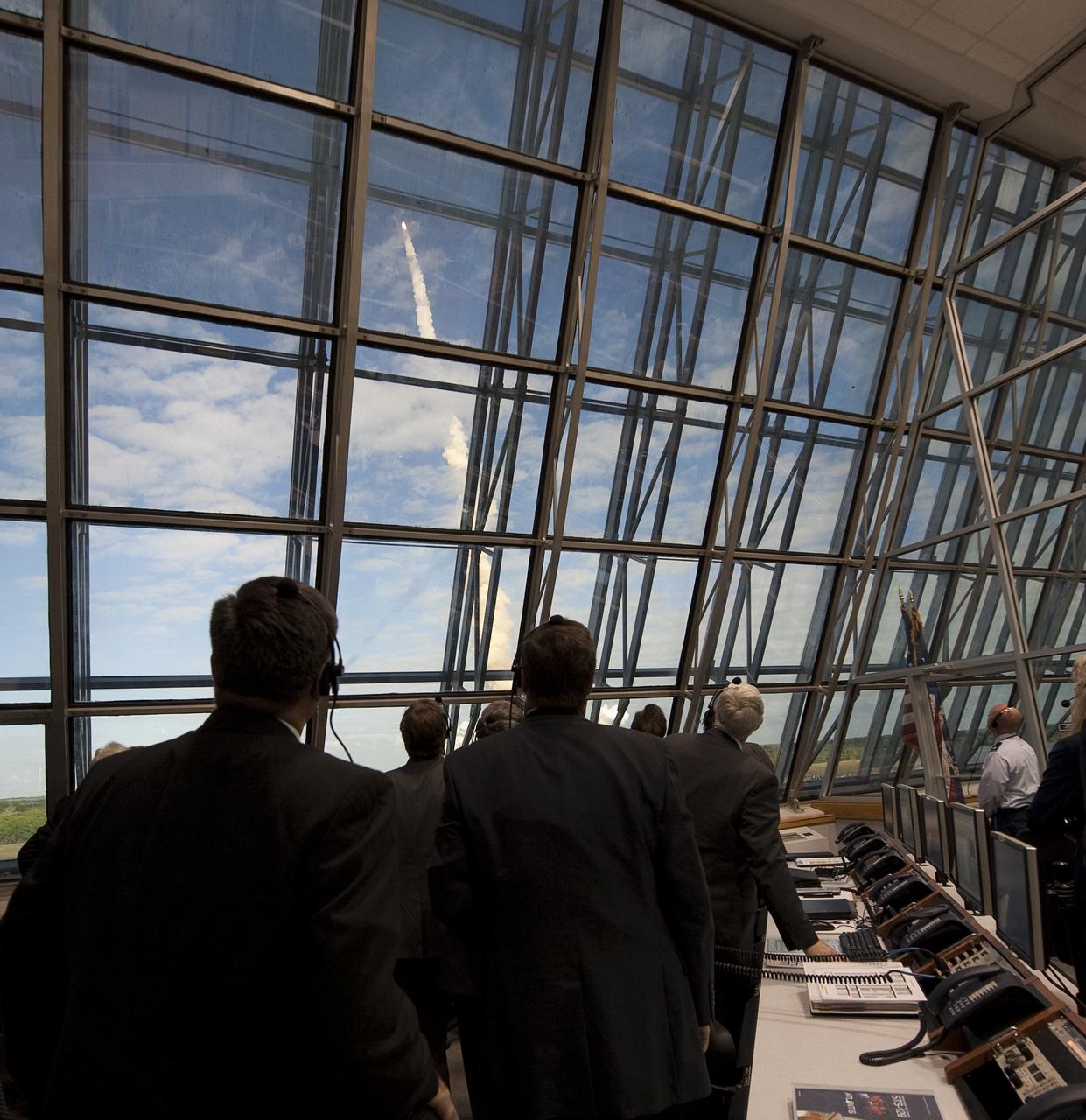
NASA mission managers monitor the launch of the space shuttle Atlantis from firing room four of the NASA Kennedy Space Center, Monday, Nov. 16, 2009, Cape Canaveral, FL. Space shuttle Atlantis and its six-member crew began the 11-day STS-129 mission to the International Space Station. The shuttle will transport spare hardware to the outpost and return a station crew member who spent more than two months in space. Photo Credit: (NASA/Bill Ingalls)
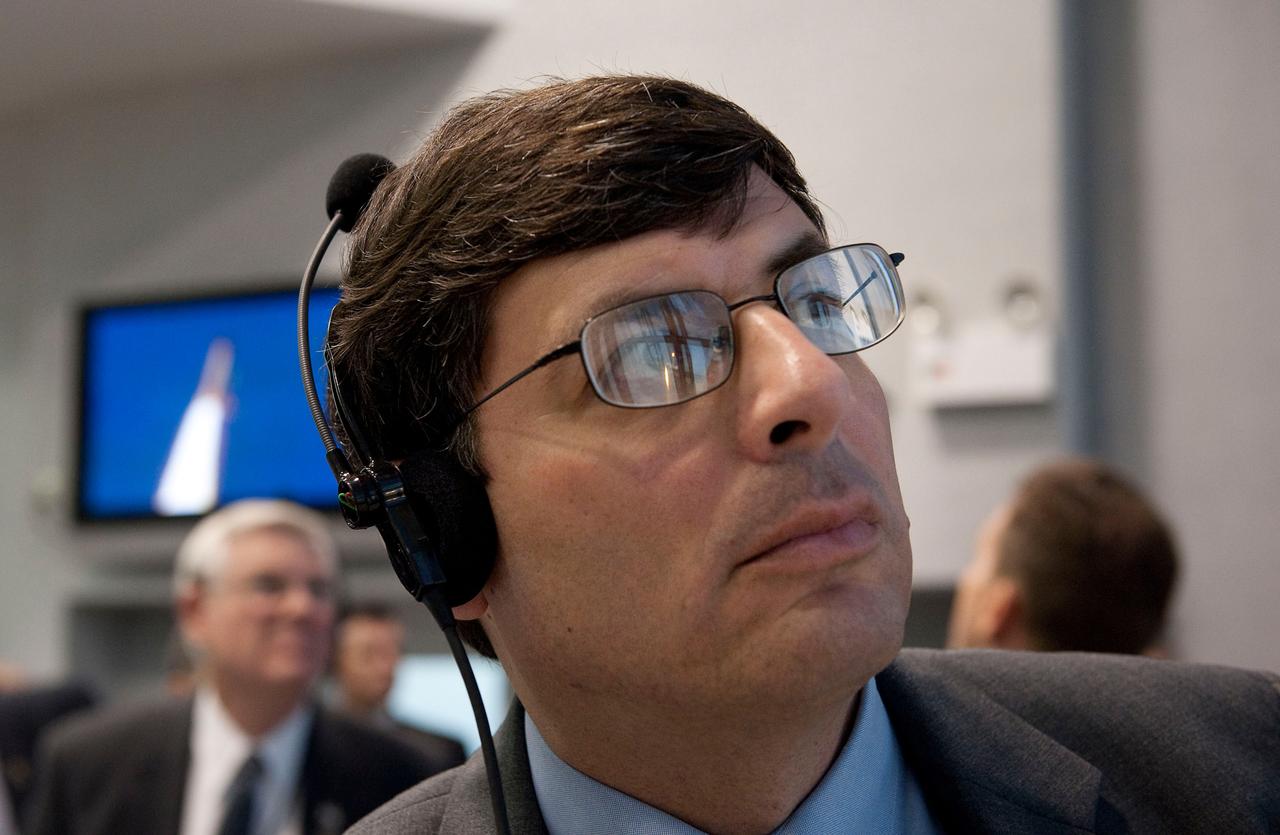
NASA Associate Administrator Chris Scolese monitors the launch of the space shuttle Atlantis from firing room four of the NASA Kennedy Space Center, Monday, Nov. 16, 2009, Cape Canaveral, FL. Space shuttle Atlantis and its six-member crew began the 11-day STS-129 mission to the International Space Station. The shuttle will transport spare hardware to the outpost and return a station crew member who spent more than two months in space. Photo Credit: (NASA/Bill Ingalls)
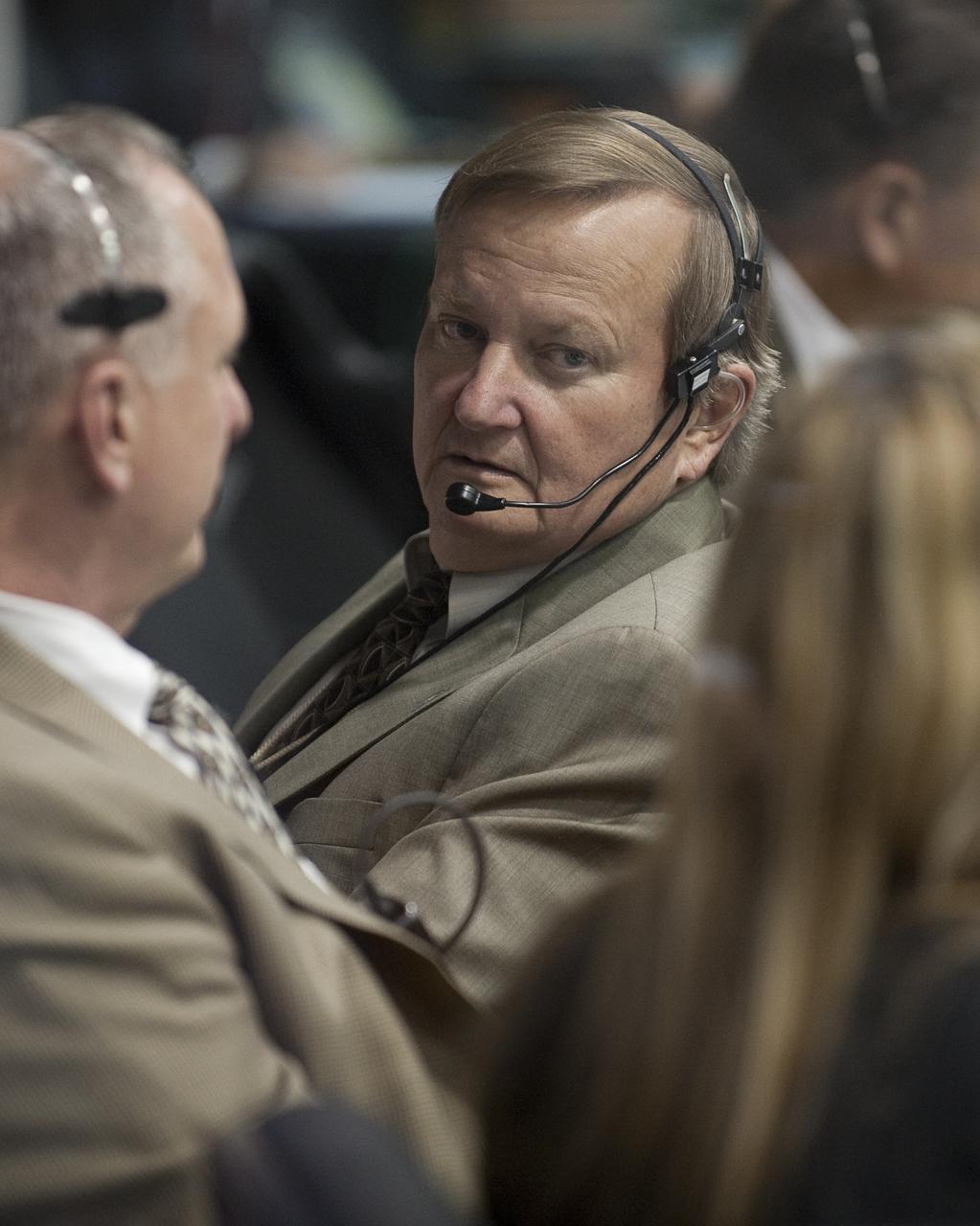
NASA Shuttle Launch Director Michael Leinbach talks with other launch managers in Firing Room Four of the Launch Control Center as they monitor the countdown of the launch of the space shuttle Endeavour and the start of the STS-130 mission at NASA Kennedy Space Center in Cape Canaveral, Fla. on Monday Feb. 8, 2010. Photo Credit: (NASA/Bill Ingalls)
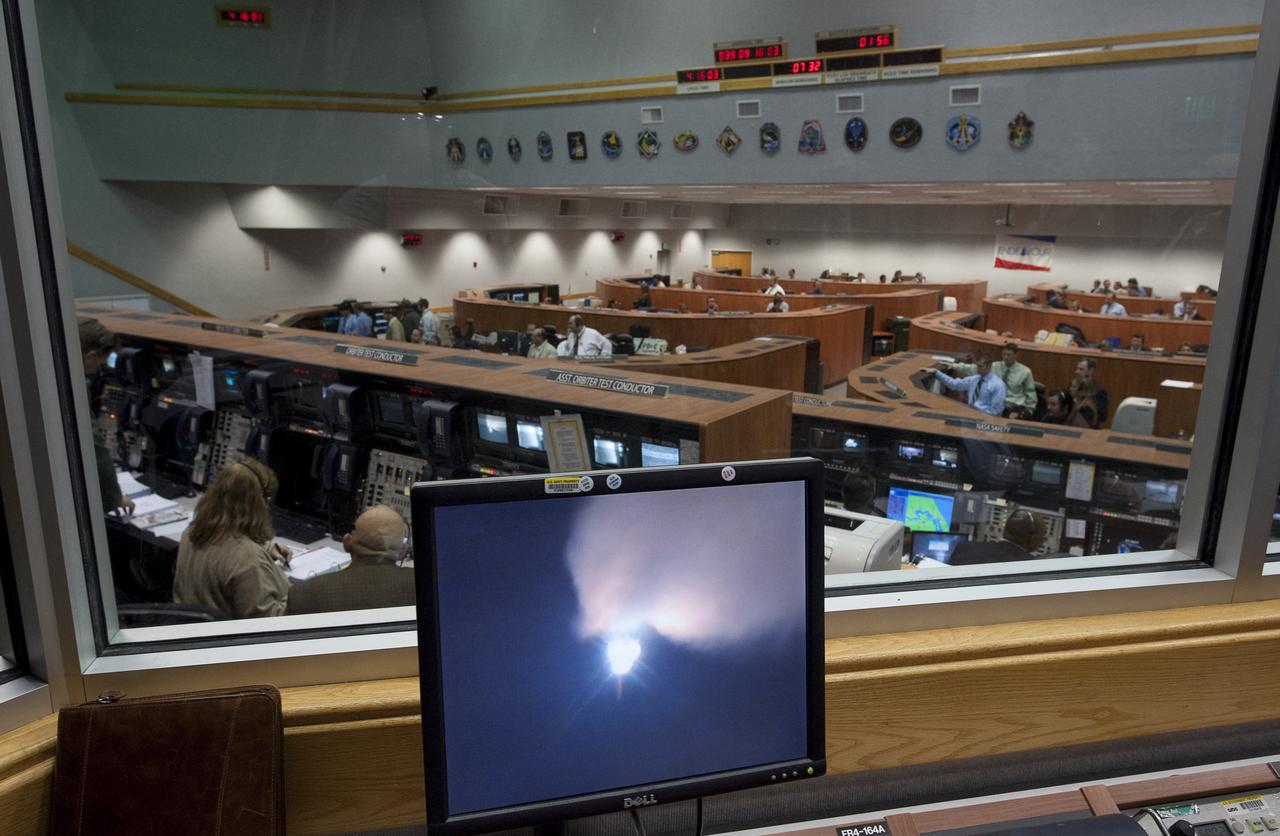
The space shuttle Endeavour is seen on a monitor in Firing Room Four of the Launch Control Center as it launches from pad 39a at NASA Kennedy Space Center in Cape Canaveral, Fla. on Monday Feb. 8, 2010. Endeavour and it the STS-130 mission crew will deliver to the International Space Station a third connecting module, the Italian-built Tranquility node and the seven-windowed cupola, which will be used as a control room for robotics. The mission will feature three spacewalks. Photo Credit: (NASA/Bill Ingalls)
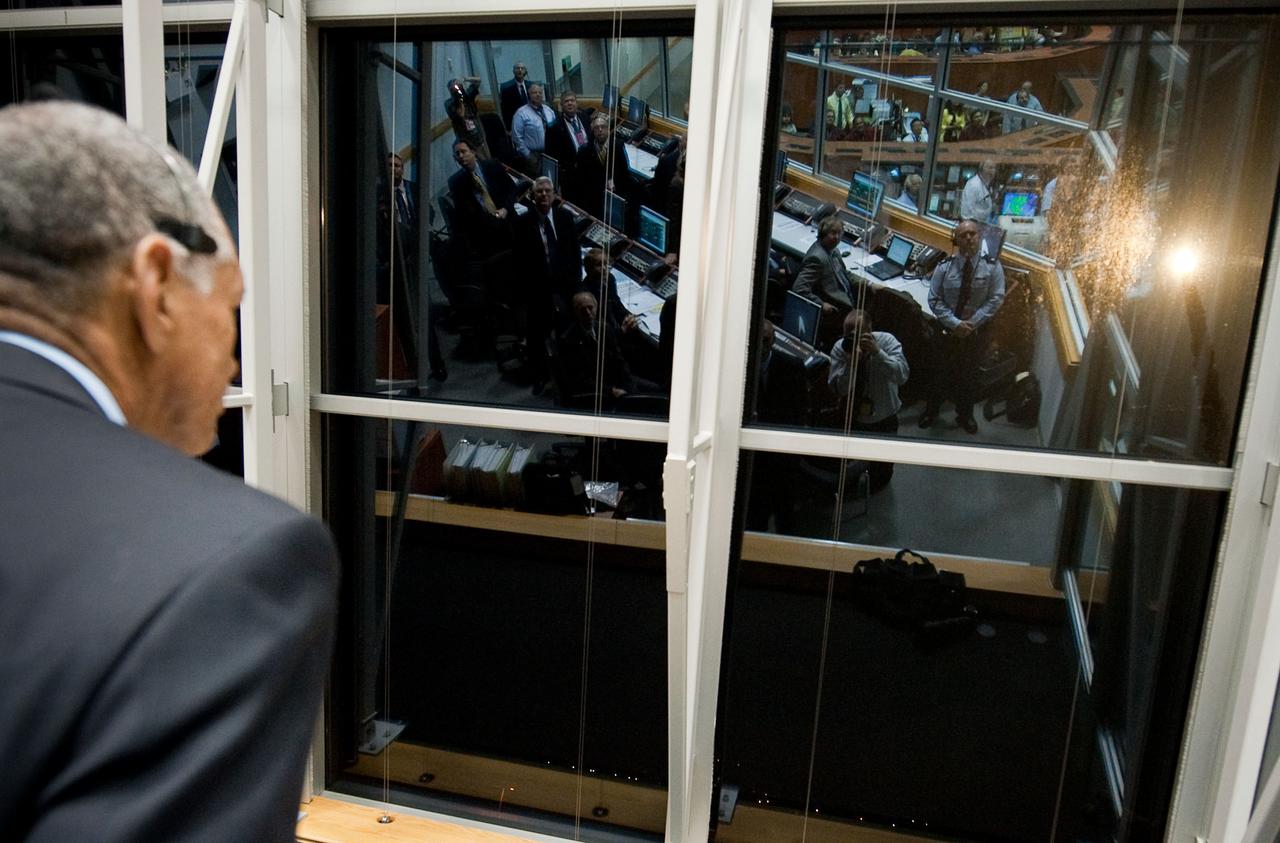
201004050001hq (5 April 2010) --- NASA Administrator Charles Bolden looks out the window of Firing Room Four in the Launch Control Center during the launch of the space shuttle Discovery and the start of the STS-131 mission at NASA Kennedy Space Center in Cape Canaveral, Fla. on April 5, 2010. Discovery is carrying a multi-purpose logistics module filled with science racks for the laboratories aboard the International Space Station. The mission has three planned spacewalks, with work to include replacing an ammonia tank assembly, retrieving a Japanese experiment from the station?s exterior, and switching out a rate gyro assembly on the station?s truss structure. Photo Credit: NASA/Bill Ingalls
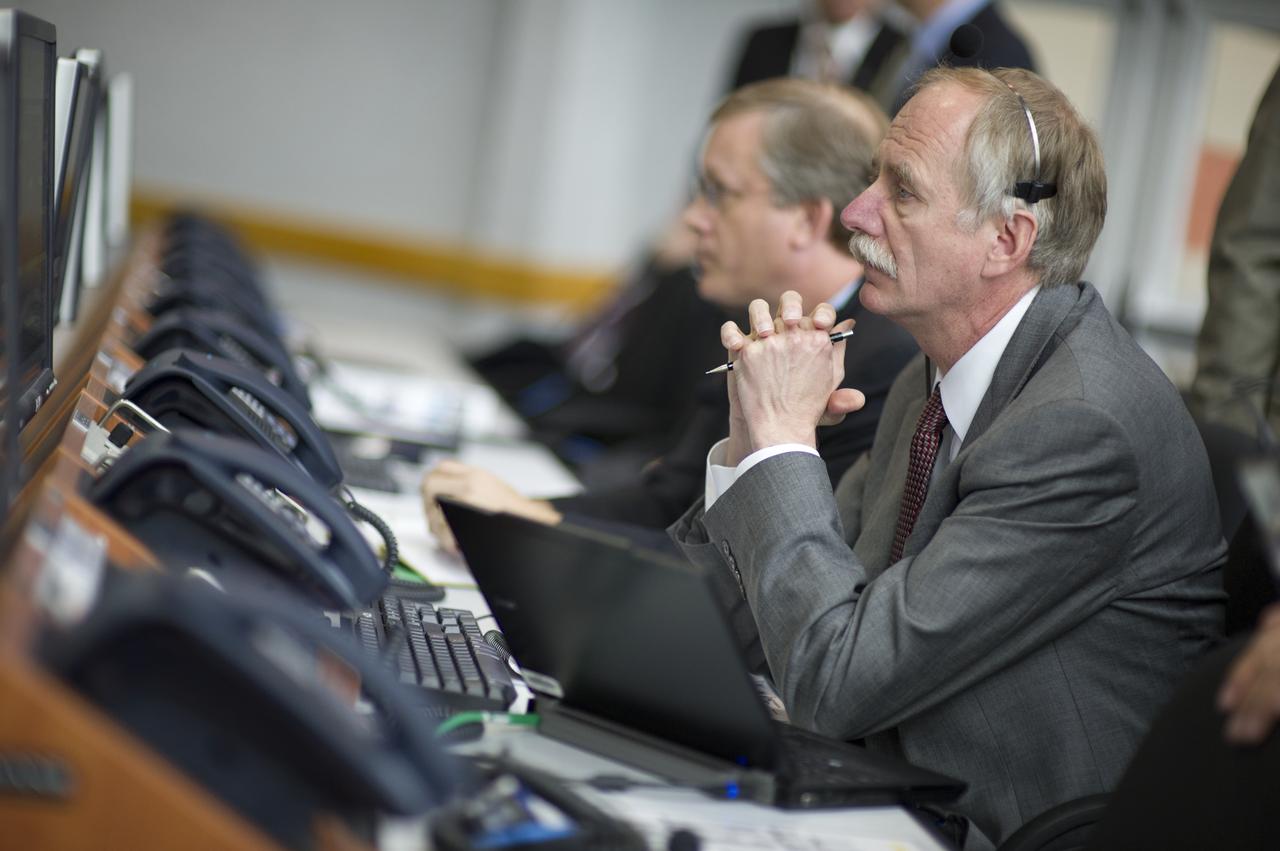
NASA Associate Administrator for Space Operations William Gerstenmaier monitors the countdown to the launch of the space shuttle Endeavour (STS-134) from Firing Room Four of the Launch Control Center (LCC), Monday, May 16, 2011, at Kennedy Space Center in Cape Canaveral, Fla. During the mission, Endeavour and the STS-134 crew will deliver the Alpha Magnetic Spectrometer (AMS) and spare parts including two S-band communications antennas, a high-pressure gas tank and additional spare parts for Dextre. Photo Credit: (NASA/Bill Ingalls)
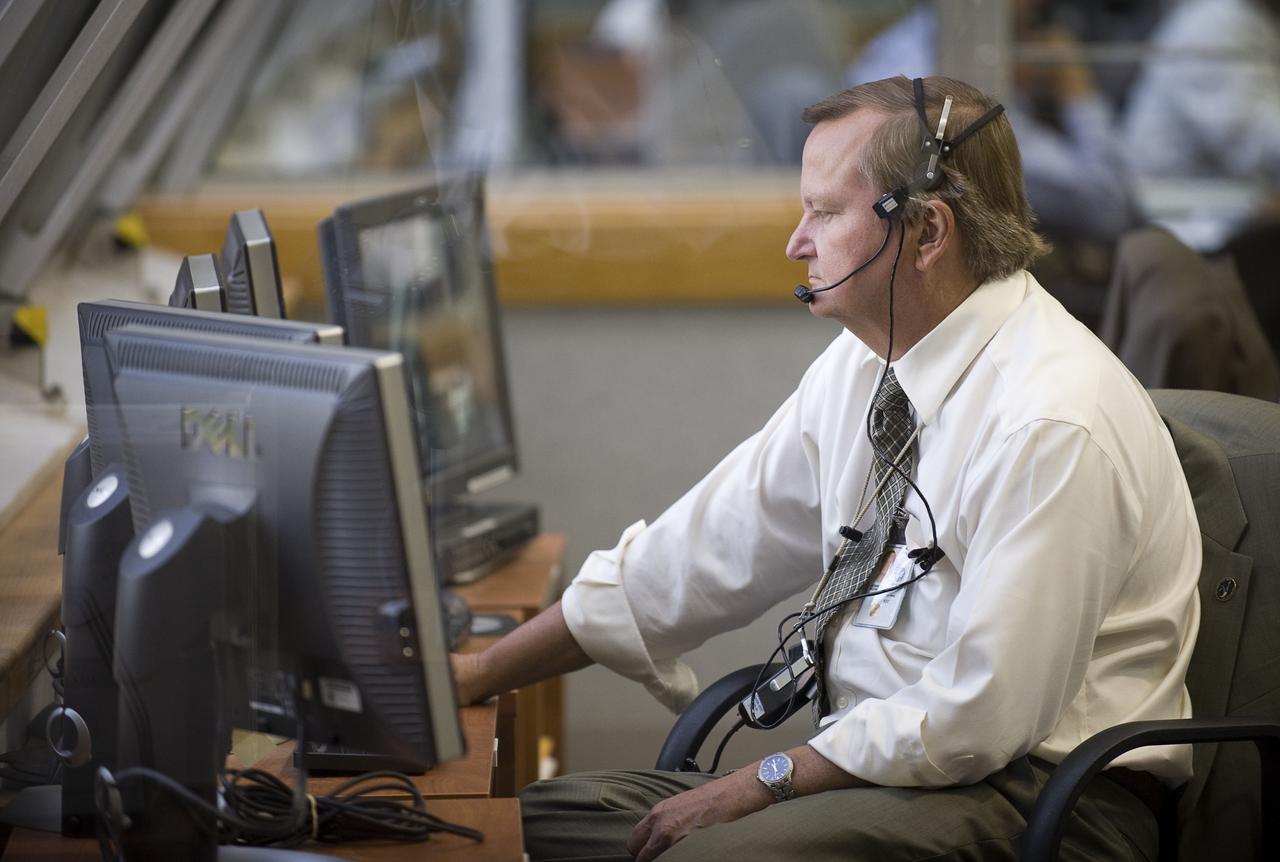
Mike Leinbach, NASA Assistant Shuttle Launch Director for the STS-127 mission, monitors the launch countdown progress and local weather from Firing Room Four of the Launch Control Center at NASA's Kennedy Space Center in Cape Canaveral, Florida, Monday, July 13, 2009. The space shuttle Endeavour is set to launch at 6:51p.m. EDT with the crew of STS-127 and start a 16-day mission that will feature five spacewalks and complete construction of the Japan Aerospace Exploration Agency's Kibo laboratory. Photo Credit: (NASA/Bill Ingalls)
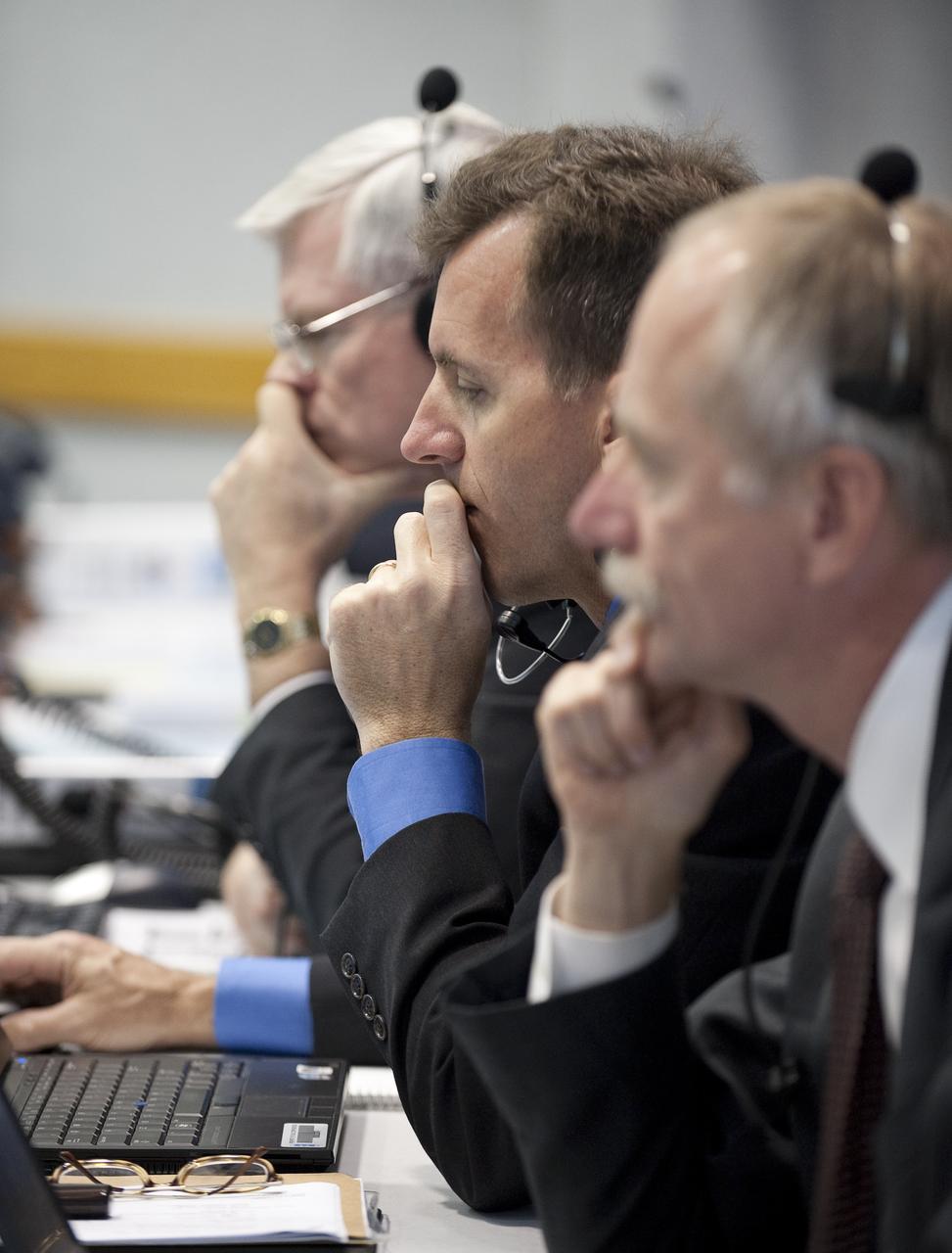
LeRoy E. Cain, NASA manager of Launch Integration, center and other NASA mission managers, monitor the countdown to launch of the space shuttle Atlantis from firing room four of the NASA Kennedy Space Center, Monday, Nov. 16, 2009, Cape Canaveral, Fla. Space shuttle Atlantis and its six-member crew began the 11-day STS-129 mission to the International Space Station. The shuttle will transport spare hardware to the outpost and return a station crew member who spent more than two months in space. Photo Credit: (NASA/Bill Ingalls)
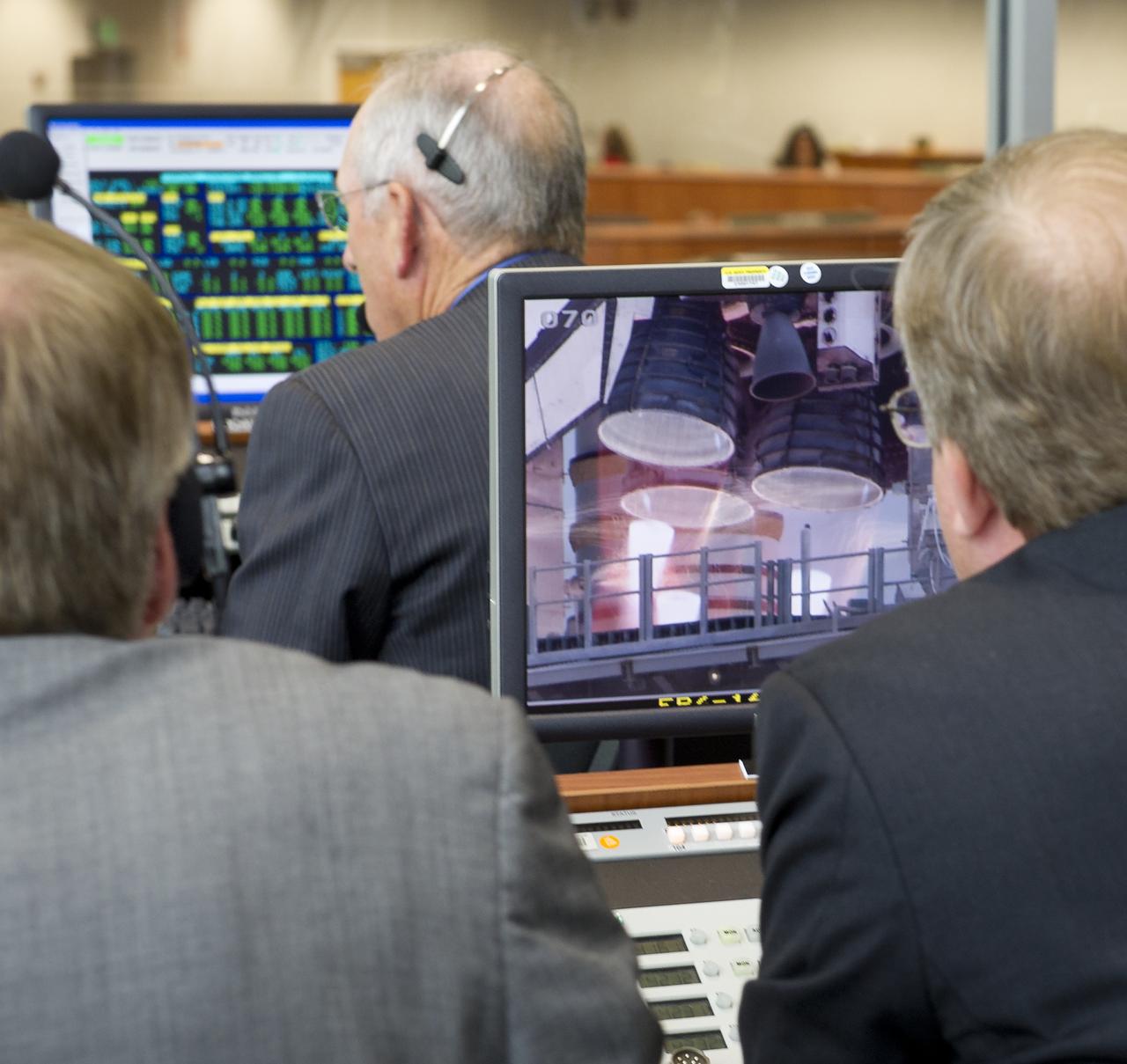
NASA officials in Firing Room Four of the NASA Kennedy Space Center Launch Control Center (LCC) monitor space shuttle Endeavour (STS-134) as it launches Monday, May 16, 2011, from Cape Canaveral, Fla. During the 16-day mission, Endeavour, with Commander Mark Kelly, Pilot Gregory H. Johnson, Mission Specialists Michael Fincke, Greg Chamitoff, Andrew Feustel and European Space Agency astronaut Robert Vittori will deliver the Alpha Magnetic Spectrometer (AMS) and spare parts including two S-band communications antennas, a high-pressure gas tank and additional spare parts for Dextre. Photo Credit: (NASA/Bill Ingalls)
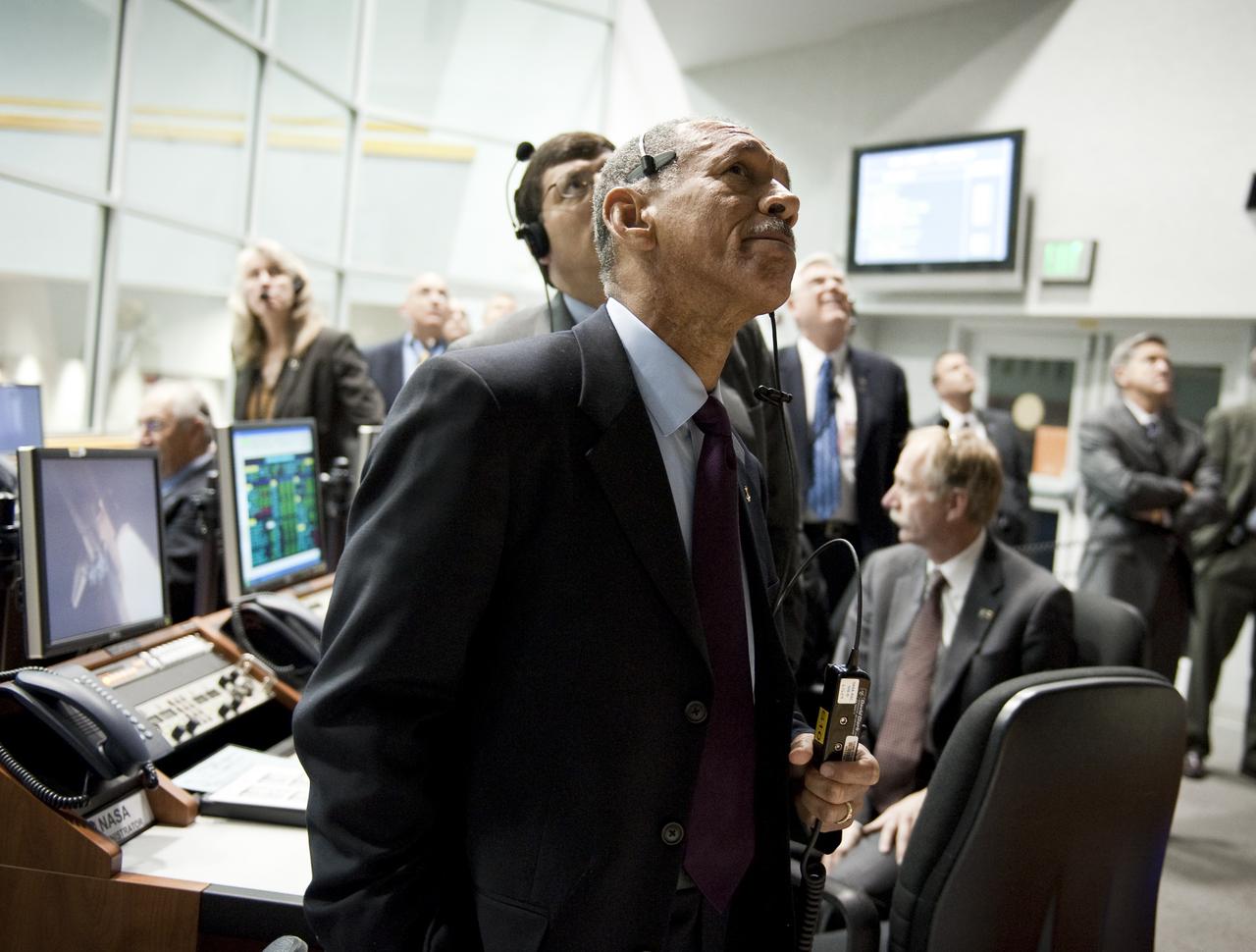
NASA Administrator Charles Bolden looks out the window of Firing Room Four in the Launch Control Center during the launch of the space shuttle Discovery and the start of the STS-131 mission at NASA Kennedy Space Center in Cape Canaveral, Fla. on Monday April 5, 2010. Discovery is carrying a multi-purpose logistics module filled with science racks for the laboratories aboard the station. The mission has three planned spacewalks, with work to include replacing an ammonia tank assembly, retrieving a Japanese experiment from the station’s exterior, and switching out a rate gyro assembly on the station’s truss structure. Photo Credit: (NASA/Bill Ingalls)
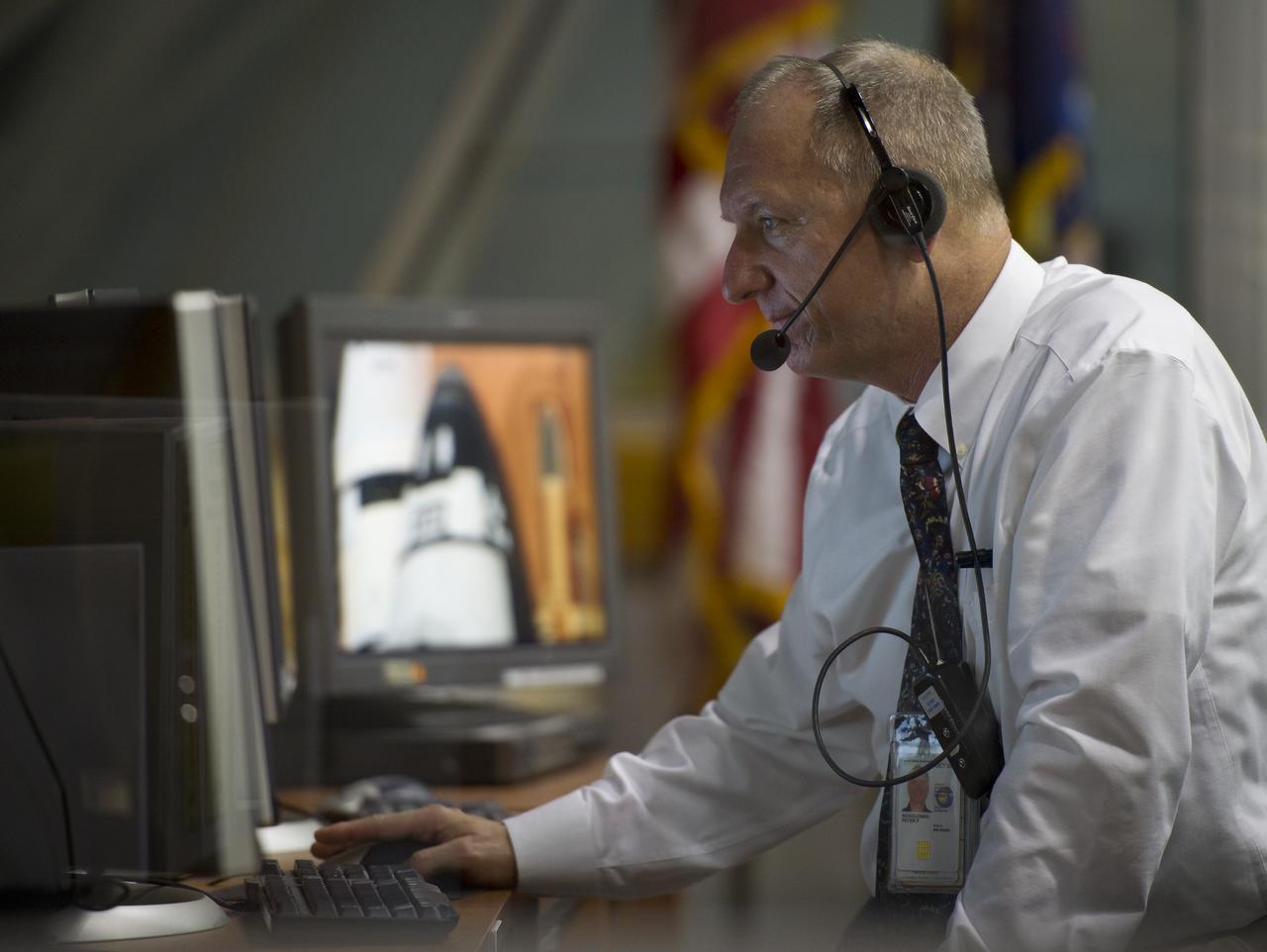
NASA Kennedy Space Center Assistant Launch Director Pete Nickolenko monitors the countdown to the launch of the space shuttle Endeavour (STS-134) from Firing Room Four of the Launch Control Center (LCC), Monday May 16, 2011, at the Kennedy Space Center in Cape Canaveral, Fla. During the mission, Endeavour and the STS-134 crew will deliver the Alpha Magnetic Spectrometer (AMS) and spare parts including two S-band communications antennas, a high-pressure gas tank and additional spare parts for Dextre. Photo Credit: (NASA/Bill Ingalls)

NASA Associate Administrator Chris Scolese, left, NASA Administrator Charles Bolden, right, and other mission managers are seen in Firing Room Four of the Launch Control Center as they monitor the launch of the space shuttle Endeavour and the start of the STS-130 mission at NASA Kennedy Space Center in Cape Canaveral, Fla. on Monday Feb. 8, 2010. Endeavour and its crew will deliver to the International Space Station a third connecting module, the Italian-built Tranquility node and the seven-windowed cupola, which will be used as a control room for robotics. The mission will feature three spacewalks. Photo Credit: (NASA/Bill Ingalls)
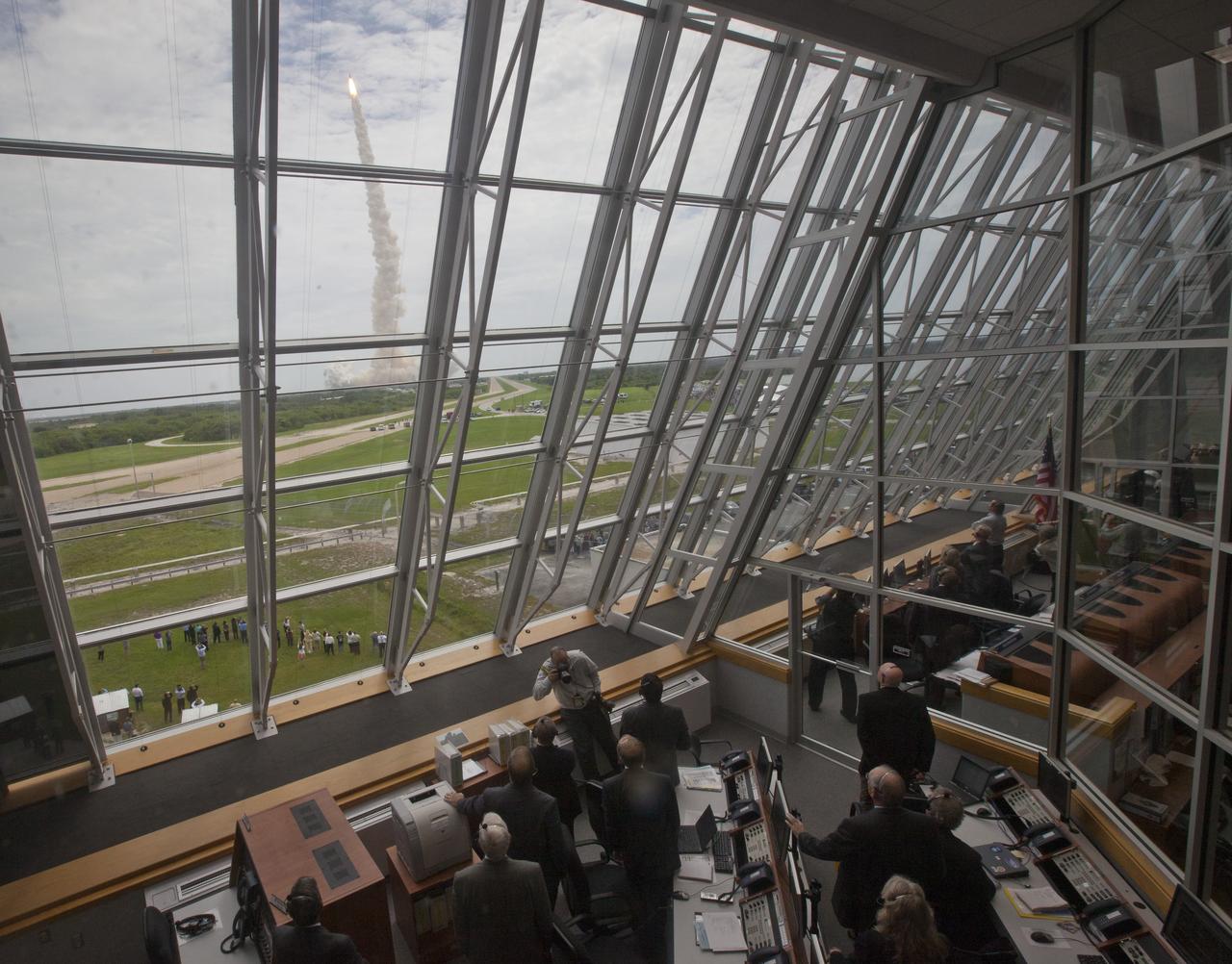
NASA management look on from Firing Room Four of the Launch Control Center (LCC) as space shuttle Atlantis launches from pad 39A on Friday, July 8, 2011, in Cape Canaveral, Fla. The launch of Atlantis, STS-135, is the final flight of the shuttle program, a 12-day mission to the International Space Station. Photo Credit: (NASA/Bill Ingalls)
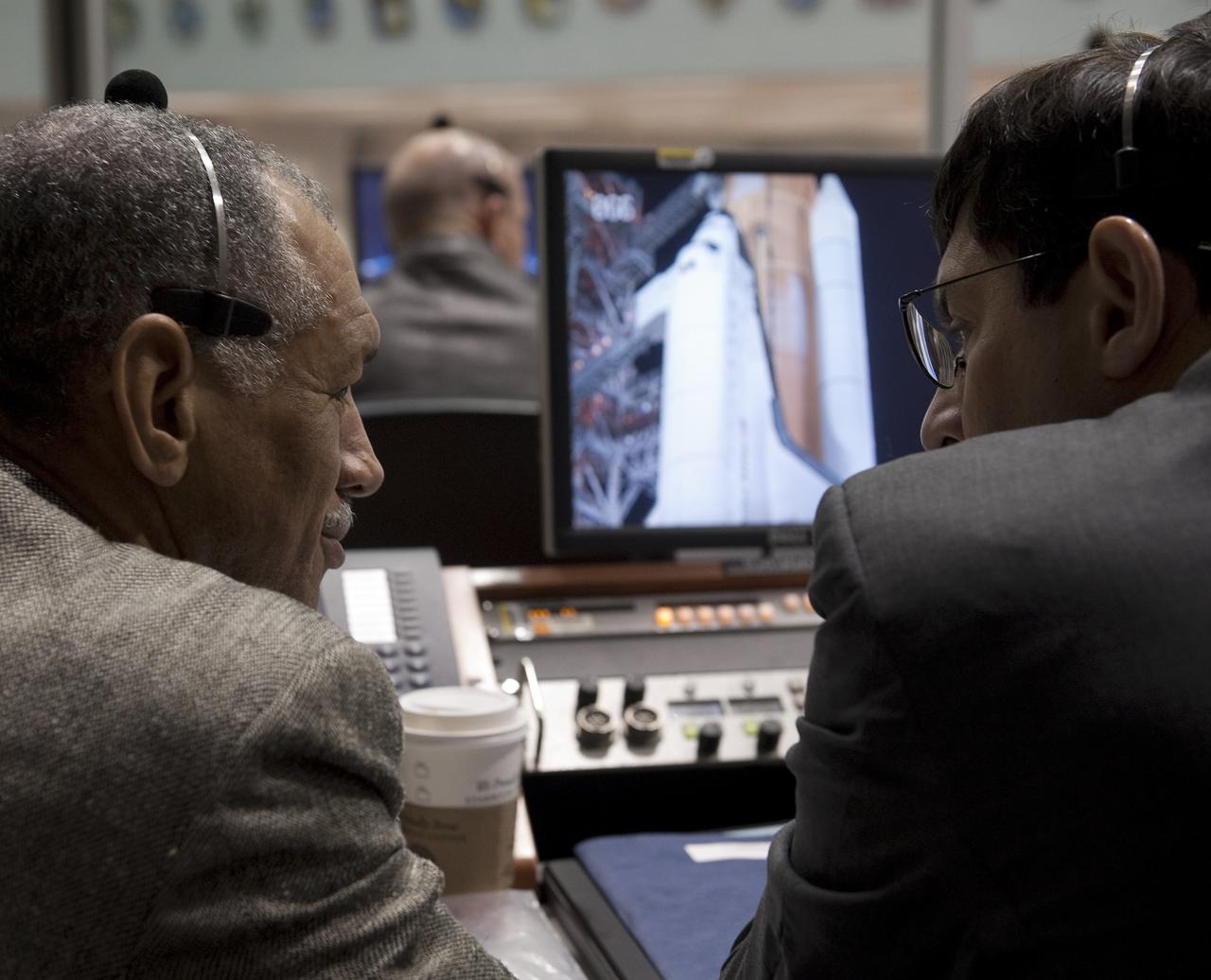
NASA Administrator Charles Bolden, left, and NASA Associate Administrator Chris Scolese are seen in Firing Room Four of the Launch Control Center as they monitor the countdown of the launch of the space shuttle Endeavour and the start of the STS-130 mission at NASA Kennedy Space Center in Cape Canaveral, Fla. on Monday Feb. 8, 2010. Photo Credit: (NASA/Bill Ingalls)

NASA management look at the weather from the NASA Kennedy Space Center, Firing Room Four of the Launch Control Center (LCC) during the countdown to the launch of the space shuttle Atlantis on Friday, July 8, 2011, in Cape Canaveral, Fla. The launch of Atlantis, STS-135, is the final flight of the shuttle program, a 12-day mission to the International Space Station. Photo Credit: (NASA/Bill Ingalls)
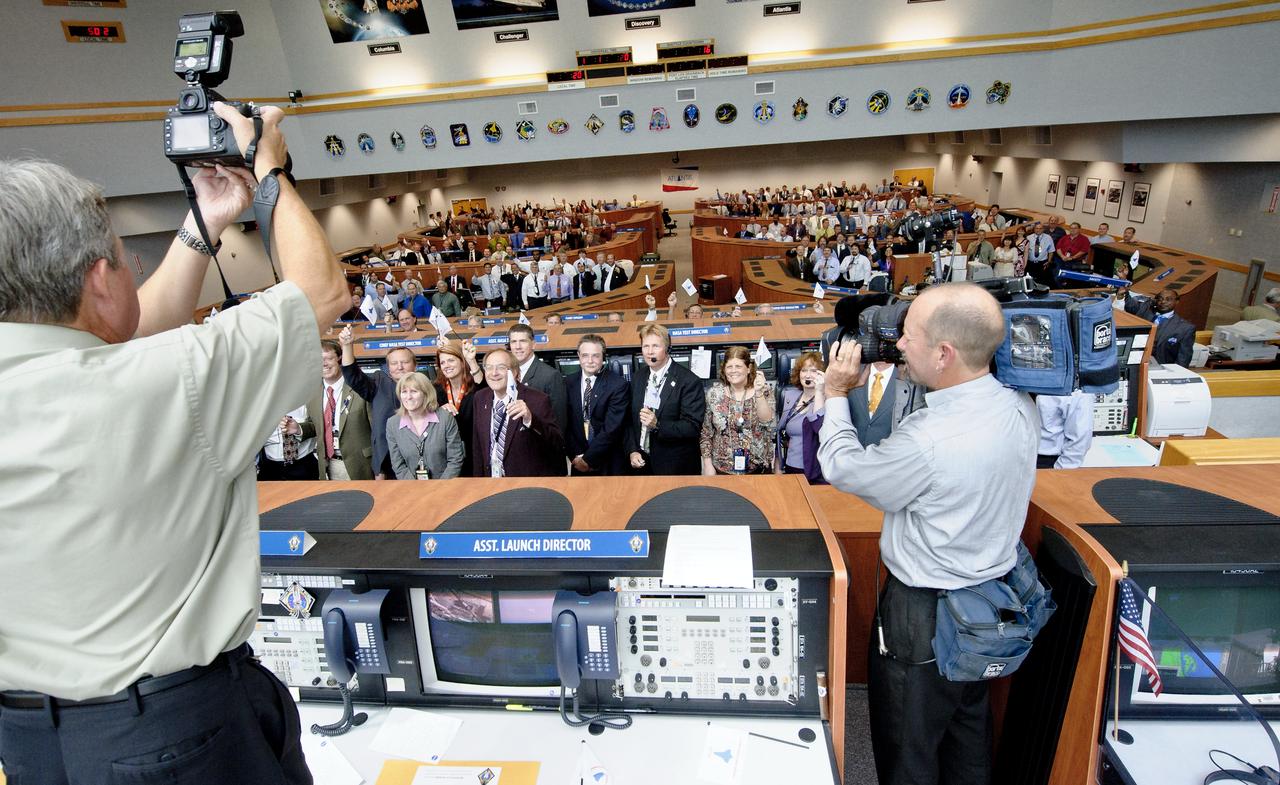
NASA Photographer Kim Shiflett, left, and Videographer Glenn Benson capture a group photo of the launch team in Firing Room Four of the NASA Kennedy Space Center Launch Control Center (LCC) shortly after the space shuttle Atlantis, STS-135, launched on Friday, July 8, 2011, in Cape Canaveral, Fla. The launch of Atlantis is the final flight of the shuttle program, a 12-day mission to the International Space Station. Photo Credit: (NASA/Bill Ingalls)
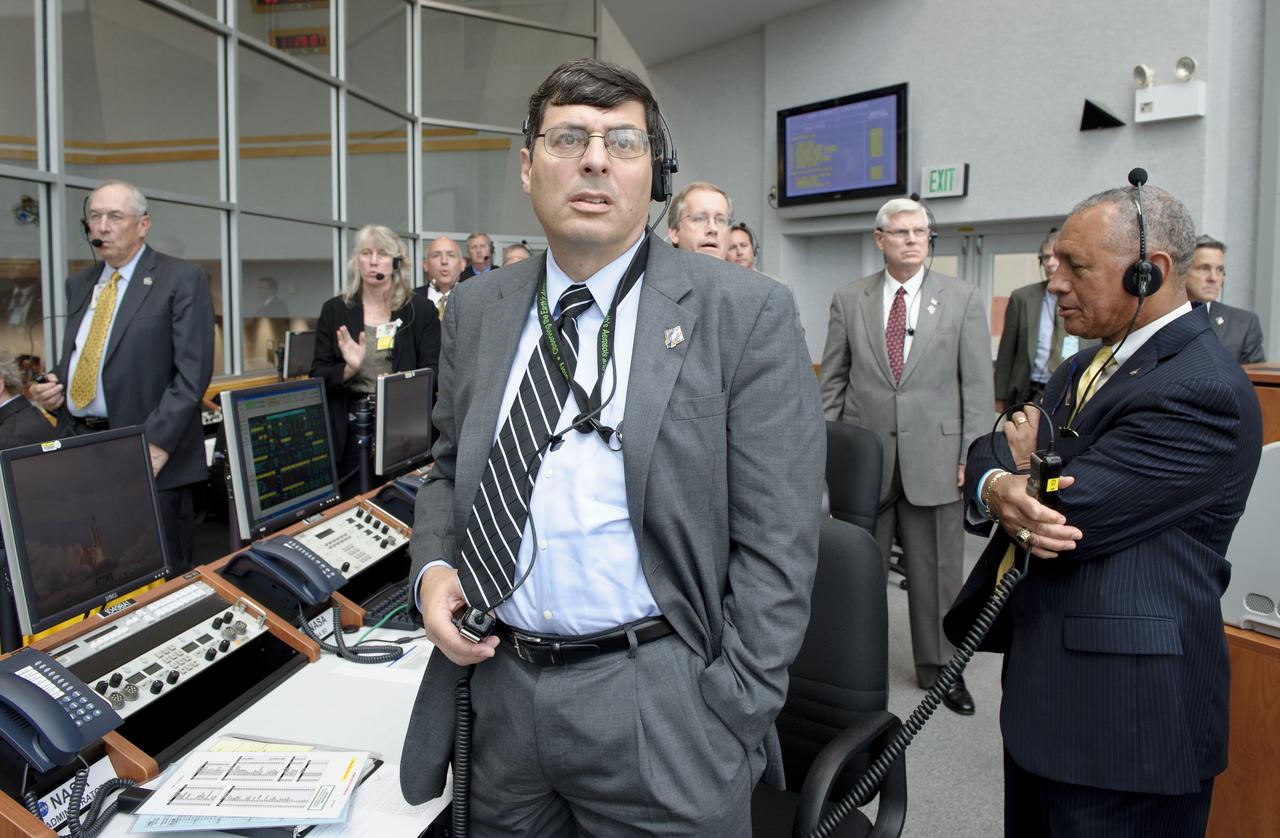
NASA Administrator Charles Bolden, right, Associate Administrator Christopher Scolese, left, and other management look on from Firing Room Four of the Launch Control Center (LCC) as space shuttle Atlantis launches from pad 39A on Friday, July 8, 2011, in Cape Canaveral, Fla. The launch of Atlantis, STS-135, is the final flight of the shuttle program, a 12-day mission to the International Space Station. Photo Credit: (NASA/Bill Ingalls)
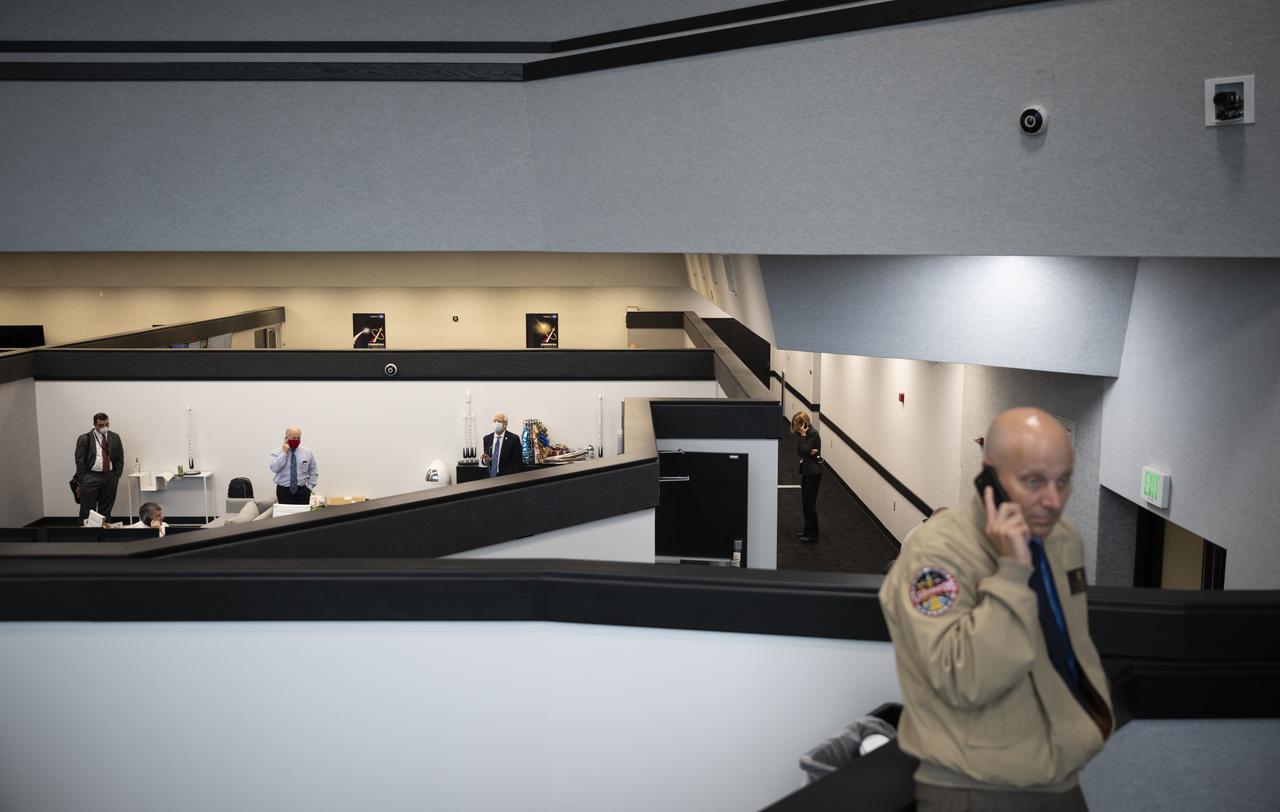
Members of NASA management are seen on a teleconference in firing room four following the attempted launch of a SpaceX Falcon 9 rocket carrying the company's Crew Dragon spacecraft on NASA’s SpaceX Demo-2 mission with NASA astronauts Robert Behnken and Douglas Hurley onboard, Wednesday, May 27, 2020, in firing room four of the Launch Control Center at NASA’s Kennedy Space Center in Florida. NASA’s SpaceX Demo-2 mission is the first launch with astronauts of the SpaceX Crew Dragon spacecraft and Falcon 9 rocket to the International Space Station as part of the agency’s Commercial Crew Program. The test flight serves as an end-to-end demonstration of SpaceX’s crew transportation system. Today’s launch of Behnken and Hurley was scrubbed due to weather and is now scheduled for 3:22 p.m. EDT on Saturday, May 30, from Launch Complex 39A at the Kennedy Space Center. A new era of human spaceflight is set to begin as American astronauts once again launch on an American rocket from American soil to low-Earth orbit for the first time since the conclusion of the Space Shuttle Program in 2011. Photo Credit: (NASA/Joel Kowsky)
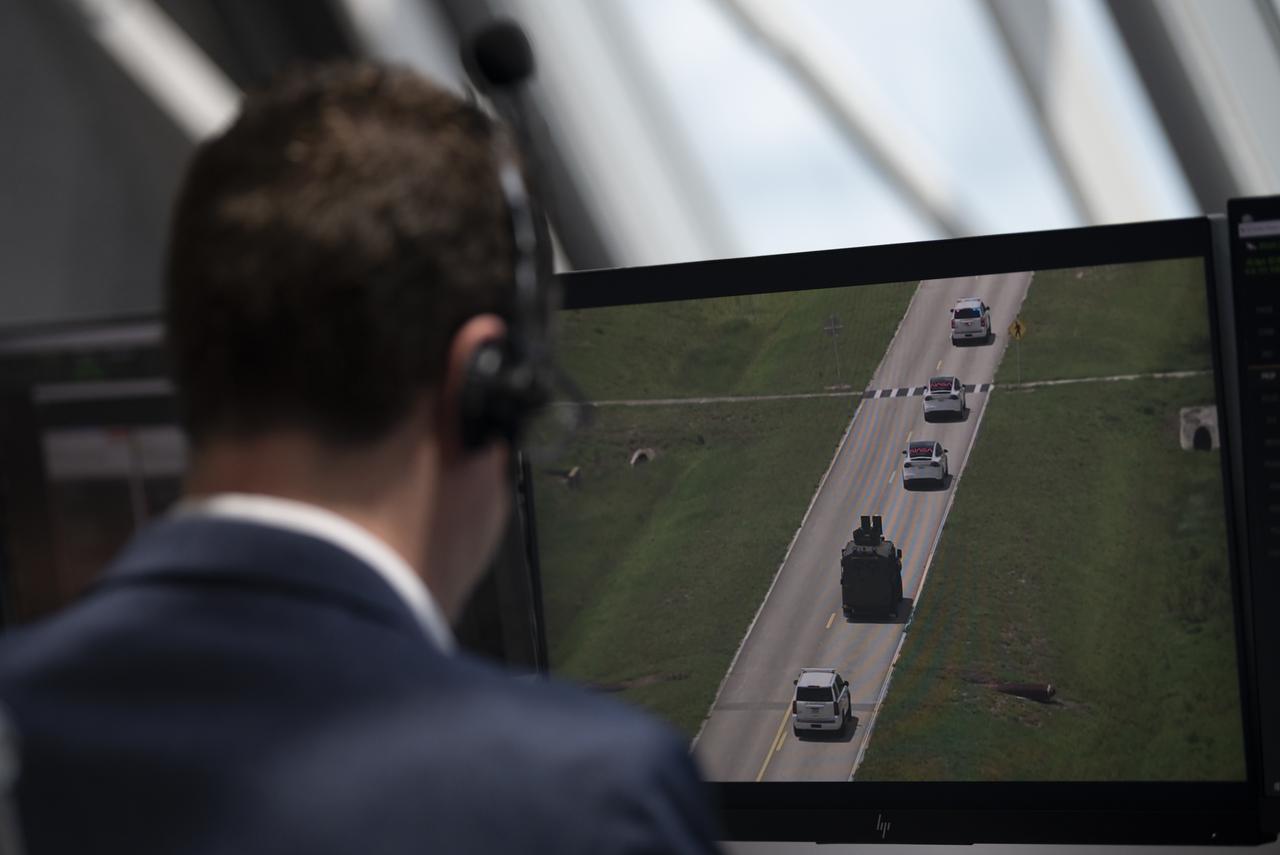
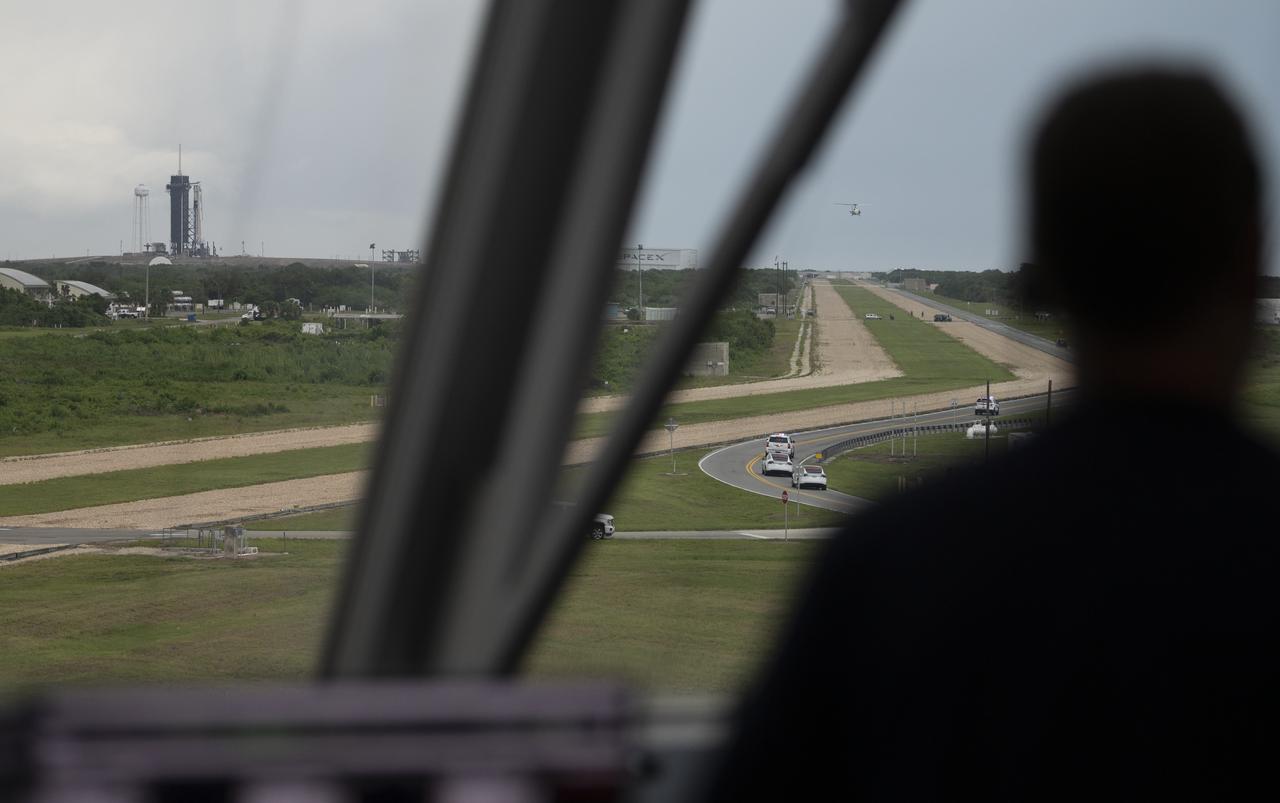
The convoy carrying NASA astronauts Robert Behnken and Douglas Hurley is seen through the windows of firing room four as it makes its way to Launch Complex 39A, Saturday, May 30, 2020, in firing room four of the Launch Control Center at NASA’s Kennedy Space Center in Florida. NASA’s SpaceX Demo-2 mission is the first launch with astronauts of the SpaceX Crew Dragon spacecraft and Falcon 9 rocket to the International Space Station as part of the agency’s Commercial Crew Program. The test flight serves as an end-to-end demonstration of SpaceX’s crew transportation system. Behnken and Hurley launched at 3:22 p.m. EDT on Saturday, May 30, from Launch Complex 39A at the Kennedy Space Center. A new era of human spaceflight is set to begin as American astronauts once again launch on an American rocket from American soil to low-Earth orbit for the first time since the conclusion of the Space Shuttle Program in 2011. Photo Credit: (NASA/Joel Kowsky)
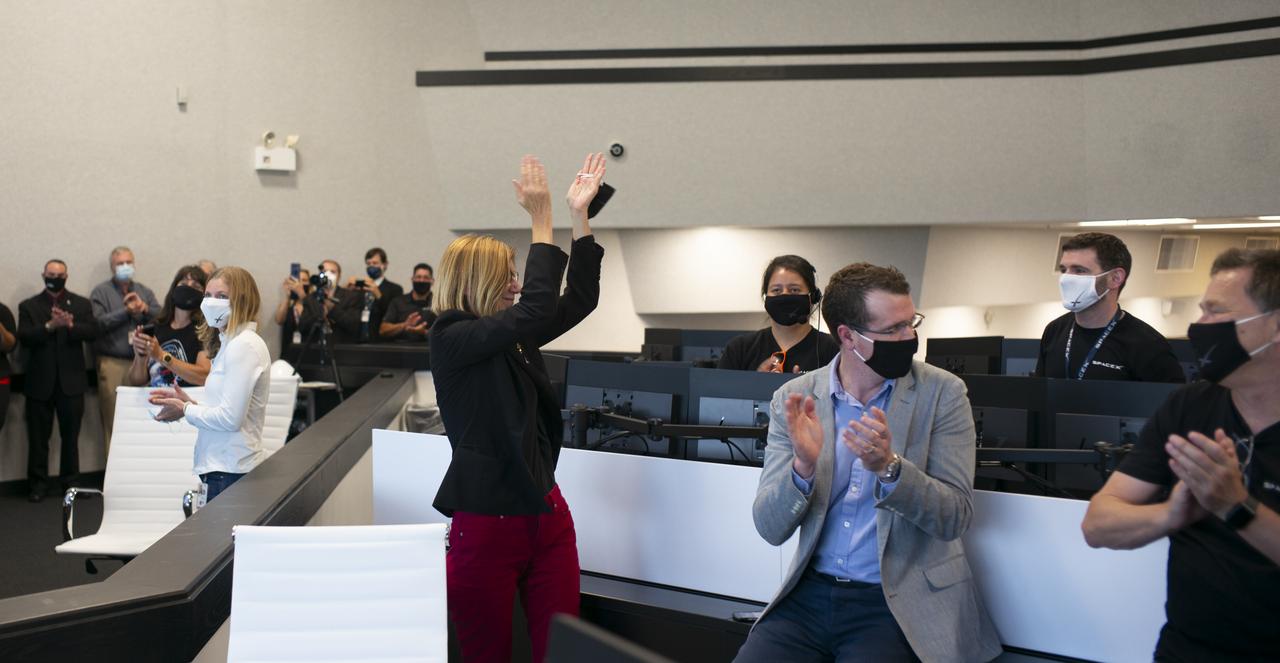
Kathy Lueders, manager of NASA's Commercial Crew Program, applauds the SpaceX and NASA teams present in firing room four after the hatches were opened between SpaceX’s Crew Dragon spacecraft with NASA astronauts Douglas Hurley and Robert Behnken onboard and the International Space Station, Sunday, May 31, 2020, in firing room four of the Launch Control Center at NASA’s Kennedy Space Center in Florida. NASA’s SpaceX Demo-2 mission is the first launch with astronauts of the SpaceX Crew Dragon spacecraft and Falcon 9 rocket to the International Space Station as part of the agency’s Commercial Crew Program. The test flight serves as an end-to-end demonstration of SpaceX’s crew transportation system. Behnken and Hurley launched at 3:22 p.m. EDT on Saturday, May 30, from Launch Complex 39A at the Kennedy Space Center and docked with the International Space Station at 10:16am EDT on Sunday, May 31.. A new era of human spaceflight is set to begin as American astronauts once again launch on an American rocket from American soil to low-Earth orbit for the first time since the conclusion of the Space Shuttle Program in 2011. Photo Credit: (NASA/Joel Kowsky)
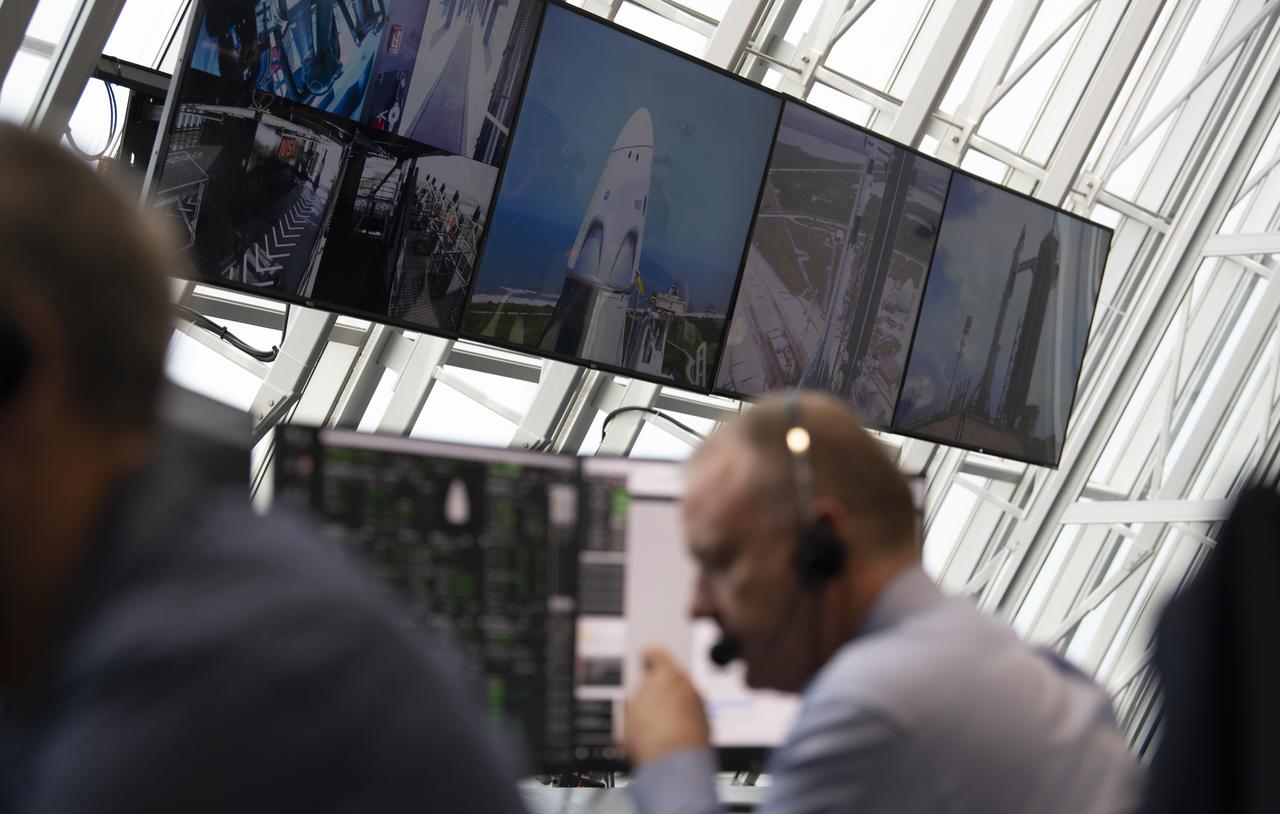
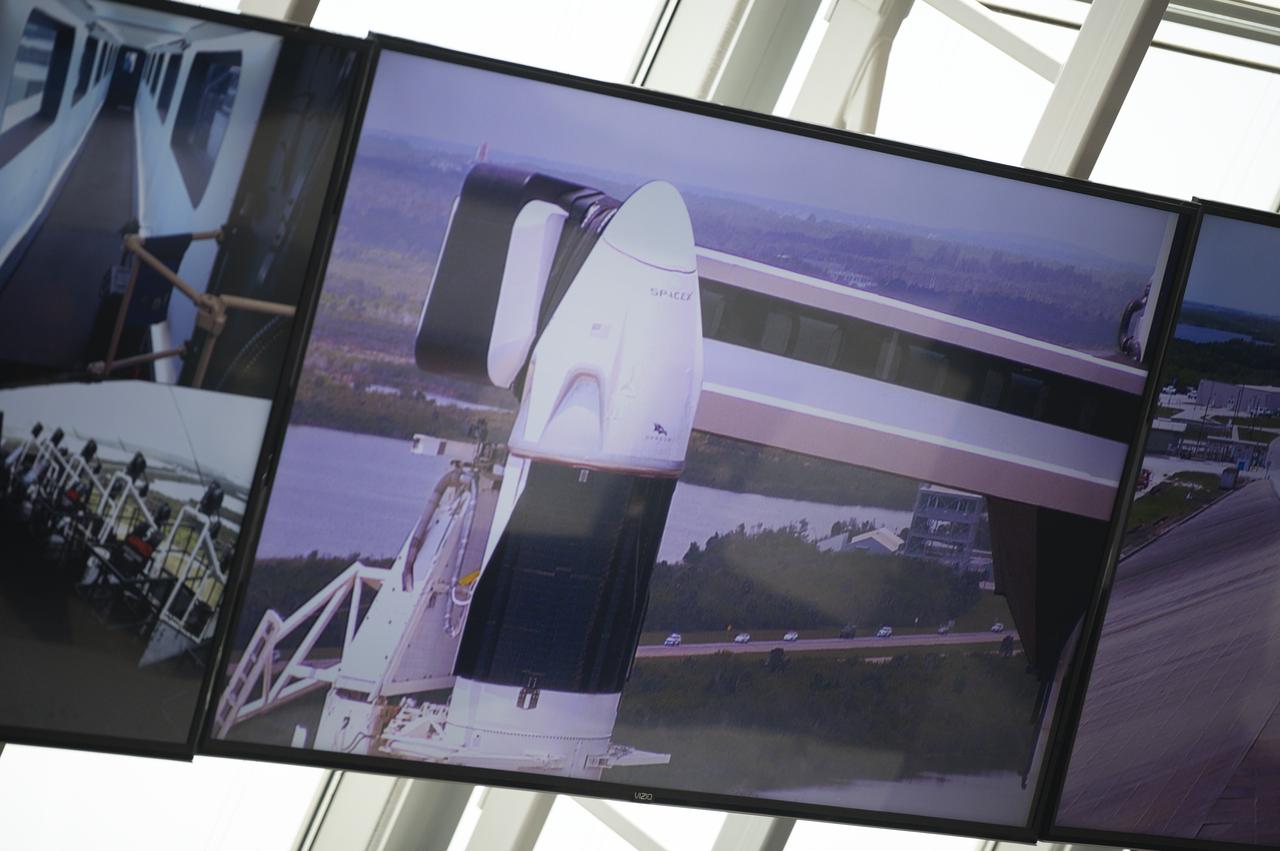
Monitors inside firing room four show views of a SpaceX Falcon 9 rocket carrying the company's Crew Dragon spacecraft on the Demo-2 mission with NASA astronauts Douglas Hurley and Robert Behnken onboard at Launch Complex 39A, Saturday, May 30, 2020, in firing room four of the Launch Control Center at NASA’s Kennedy Space Center in Florida. NASA’s SpaceX Demo-2 mission is the first launch with astronauts of the SpaceX Crew Dragon spacecraft and Falcon 9 rocket to the International Space Station as part of the agency’s Commercial Crew Program. The test flight serves as an end-to-end demonstration of SpaceX’s crew transportation system. Behnken and Hurley launched at 3:22 p.m. EDT on Saturday, May 30, from Launch Complex 39A at the Kennedy Space Center. A new era of human spaceflight is set to begin as American astronauts once again launch on an American rocket from American soil to low-Earth orbit for the first time since the conclusion of the Space Shuttle Program in 2011. Photo Credit: (NASA/Joel Kowsky)
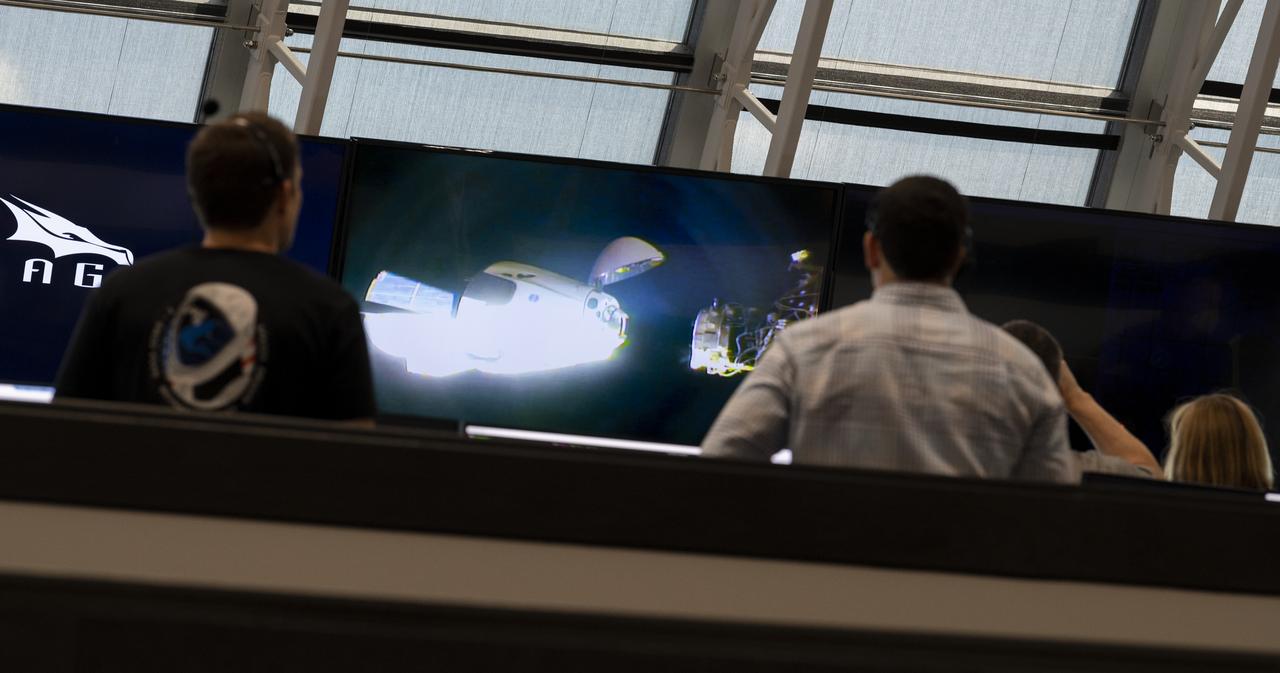
A view of SpaceX’s Crew Dragon spacecraft with NASA astronauts Douglas Hurley and Robert Behnken onboard are seen on monitors inside firing room four as the spacecraft approaches to the International Space Station for docking, Sunday, May 31, 2020, in firing room four of the Launch Control Center at NASA’s Kennedy Space Center in Florida. NASA’s SpaceX Demo-2 mission is the first launch with astronauts of the SpaceX Crew Dragon spacecraft and Falcon 9 rocket to the International Space Station as part of the agency’s Commercial Crew Program. The test flight serves as an end-to-end demonstration of SpaceX’s crew transportation system. Behnken and Hurley launched at 3:22 p.m. EDT on Saturday, May 30, from Launch Complex 39A at the Kennedy Space Center and docked with the International Space Station at 10:16am EDT on Sunday, May 31.. A new era of human spaceflight is set to begin as American astronauts once again launch on an American rocket from American soil to low-Earth orbit for the first time since the conclusion of the Space Shuttle Program in 2011. Photo Credit: (NASA/Joel Kowsky)
The convoy carrying NASA astronauts Robert Behnken and Douglas Hurley is seen through the windows of firing room four as it makes its way to Launch Complex 39A , Saturday, May 30, 2020, in firing room four of the Launch Control Center at NASA’s Kennedy Space Center in Florida. NASA’s SpaceX Demo-2 mission is the first launch with astronauts of the SpaceX Crew Dragon spacecraft and Falcon 9 rocket to the International Space Station as part of the agency’s Commercial Crew Program. The test flight serves as an end-to-end demonstration of SpaceX’s crew transportation system. Behnken and Hurley launched at 3:22 p.m. EDT on Saturday, May 30, from Launch Complex 39A at the Kennedy Space Center. A new era of human spaceflight is set to begin as American astronauts once again launch on an American rocket from American soil to low-Earth orbit for the first time since the conclusion of the Space Shuttle Program in 2011. Photo Credit: (NASA/Joel Kowsky)
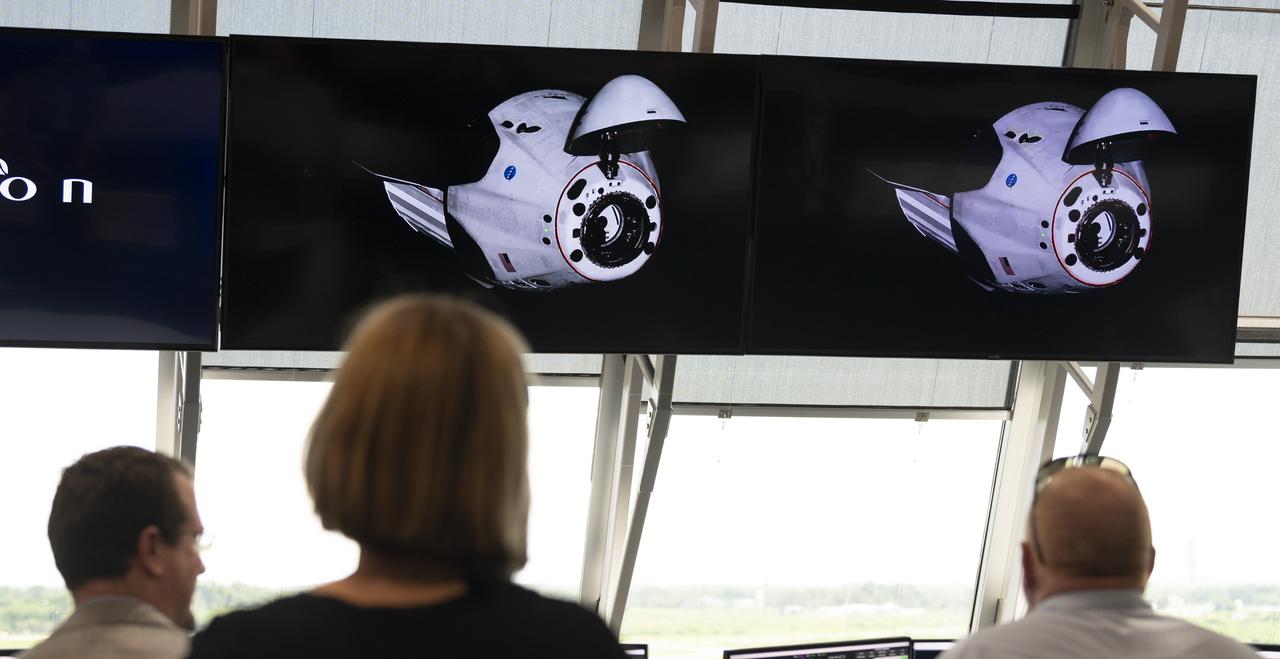
Views of SpaceX’s Crew Dragon spacecraft with NASA astronauts Douglas Hurley and Robert Behnken onboard are seen on monitors inside firing room four as the spacecraft approaches to the International Space Station for docking, Sunday, May 31, 2020, in firing room four of the Launch Control Center at NASA’s Kennedy Space Center in Florida. NASA’s SpaceX Demo-2 mission is the first launch with astronauts of the SpaceX Crew Dragon spacecraft and Falcon 9 rocket to the International Space Station as part of the agency’s Commercial Crew Program. The test flight serves as an end-to-end demonstration of SpaceX’s crew transportation system. Behnken and Hurley launched at 3:22 p.m. EDT on Saturday, May 30, from Launch Complex 39A at the Kennedy Space Center and docked with the International Space Station at 10:16am EDT on Sunday, May 31.. A new era of human spaceflight is set to begin as American astronauts once again launch on an American rocket from American soil to low-Earth orbit for the first time since the conclusion of the Space Shuttle Program in 2011. Photo Credit: (NASA/Joel Kowsky)
The convoy carrying NASA astronauts Robert Behnken and Douglas Hurley is seen through the windows of firing room four as it makes its way to Launch Complex 39A ahead of the launch of NASA’s SpaceX Demo-2 mission, Wednesday, May 27, 2020, in firing room four of the Launch Control Center at NASA’s Kennedy Space Center in Florida. NASA’s SpaceX Demo-2 mission is the first launch with astronauts of the SpaceX Crew Dragon spacecraft and Falcon 9 rocket to the International Space Station as part of the agency’s Commercial Crew Program. The test flight serves as an end-to-end demonstration of SpaceX’s crew transportation system. Behnken and Hurley are scheduled to launch at 4:33 p.m. EDT on Wednesday, May 27, from Launch Complex 39A at the Kennedy Space Center. A new era of human spaceflight is set to begin as American astronauts once again launch on an American rocket from American soil to low-Earth orbit for the first time since the conclusion of the Space Shuttle Program in 2011. Photo Credit: (NASA/Joel Kowsky)
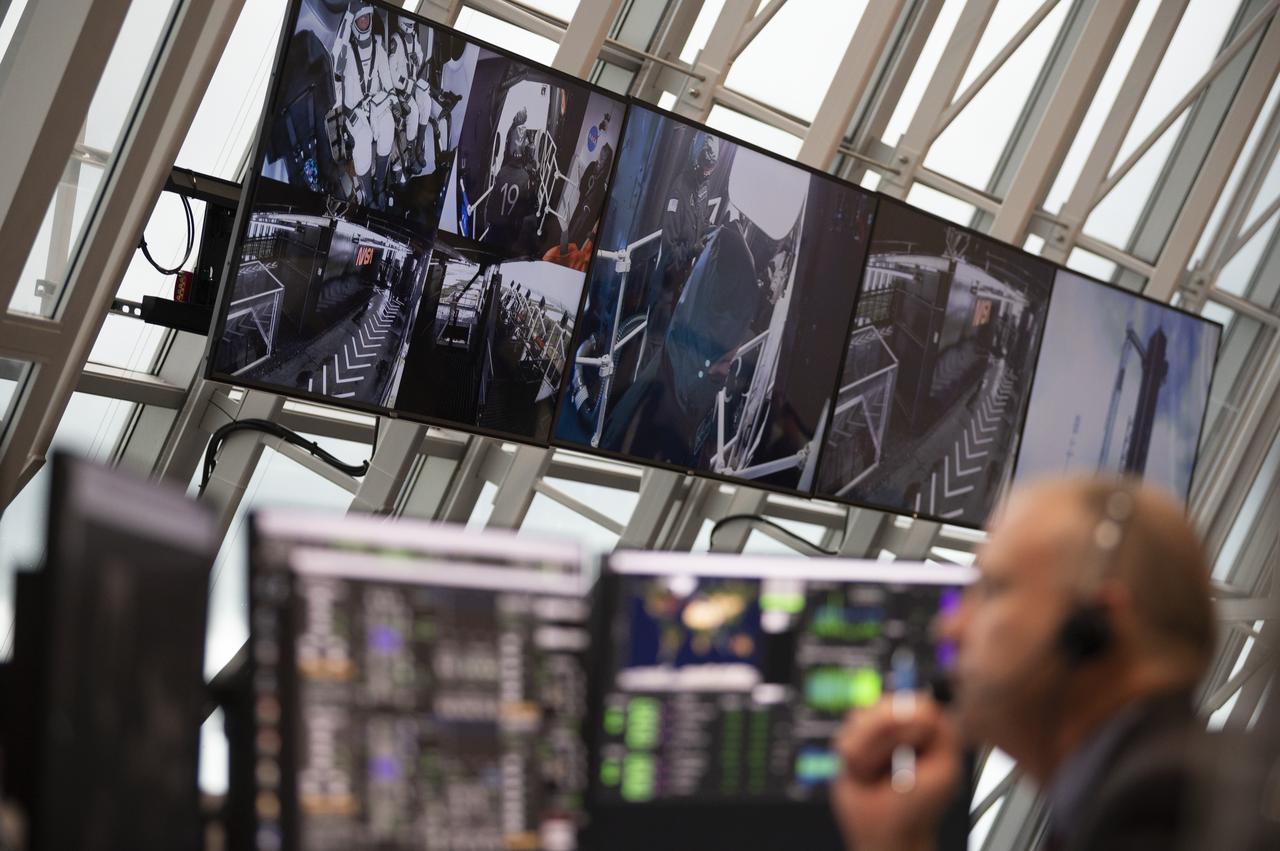
Monitors inside firing room four show views of Launch Complex 39A during the attempted launch of a SpaceX Falcon 9 rocket carrying the company's Crew Dragon spacecraft on NASA’s SpaceX Demo-2 mission with NASA astronauts Robert Behnken and Douglas Hurley onboard, Wednesday, May 27, 2020, in firing room four of the Launch Control Center at NASA’s Kennedy Space Center in Florida. NASA’s SpaceX Demo-2 mission is the first launch with astronauts of the SpaceX Crew Dragon spacecraft and Falcon 9 rocket to the International Space Station as part of the agency’s Commercial Crew Program. The test flight serves as an end-to-end demonstration of SpaceX’s crew transportation system. Today’s launch of Behnken and Hurley was scrubbed due to weather and is now scheduled for 3:22 p.m. EDT on Saturday, May 30, from Launch Complex 39A at the Kennedy Space Center. A new era of human spaceflight is set to begin as American astronauts once again launch on an American rocket from American soil to low-Earth orbit for the first time since the conclusion of the Space Shuttle Program in 2011. Photo Credit: (NASA/Joel Kowsky)
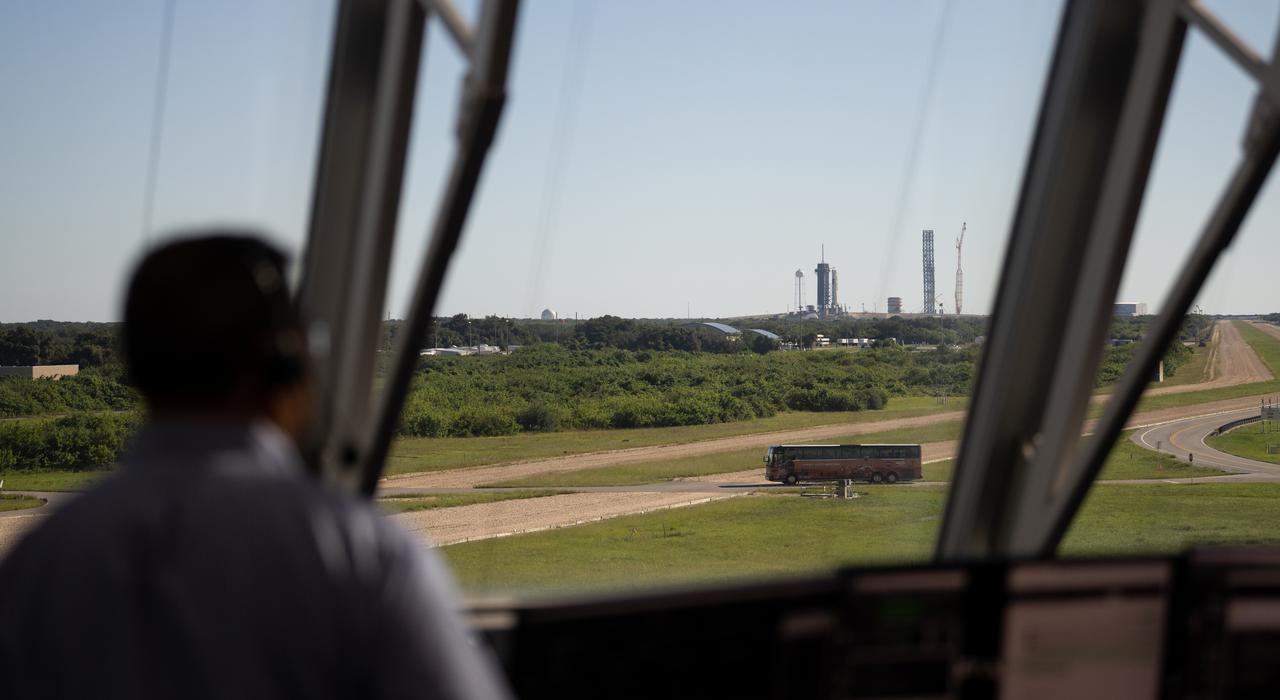
The SpaceX Falcon 9 and Crew Dragon spacecraft are seen from inside firing room four during a dress rehearsal in preparation for the launch on NASA’s SpaceX Crew-5 mission with NASA astronauts Nicole Mann and Josh Cassada, Japan Aerospace Exploration Agency (JAXA) astronaut Koichi Wakata, and Roscosmos cosmonaut Anna Kikina onboard, Sunday, Oct. 2, 2022, in firing room four of the Rocco A. Petrone Launch Control Center at NASA’s Kennedy Space Center in Florida. NASA’s SpaceX Crew-5 mission is the fifth crew rotation mission of the SpaceX Crew Dragon spacecraft and Falcon 9 rocket to the International Space Station as part of the agency’s Commercial Crew Program. Mann, Cassada, Wakata, and Kikini are scheduled to launch at 12:00 p.m. EDT on Oct. 5, from Launch Complex 39A at the Kennedy Space Center. Photo Credit: (NASA/Joel Kowsky)
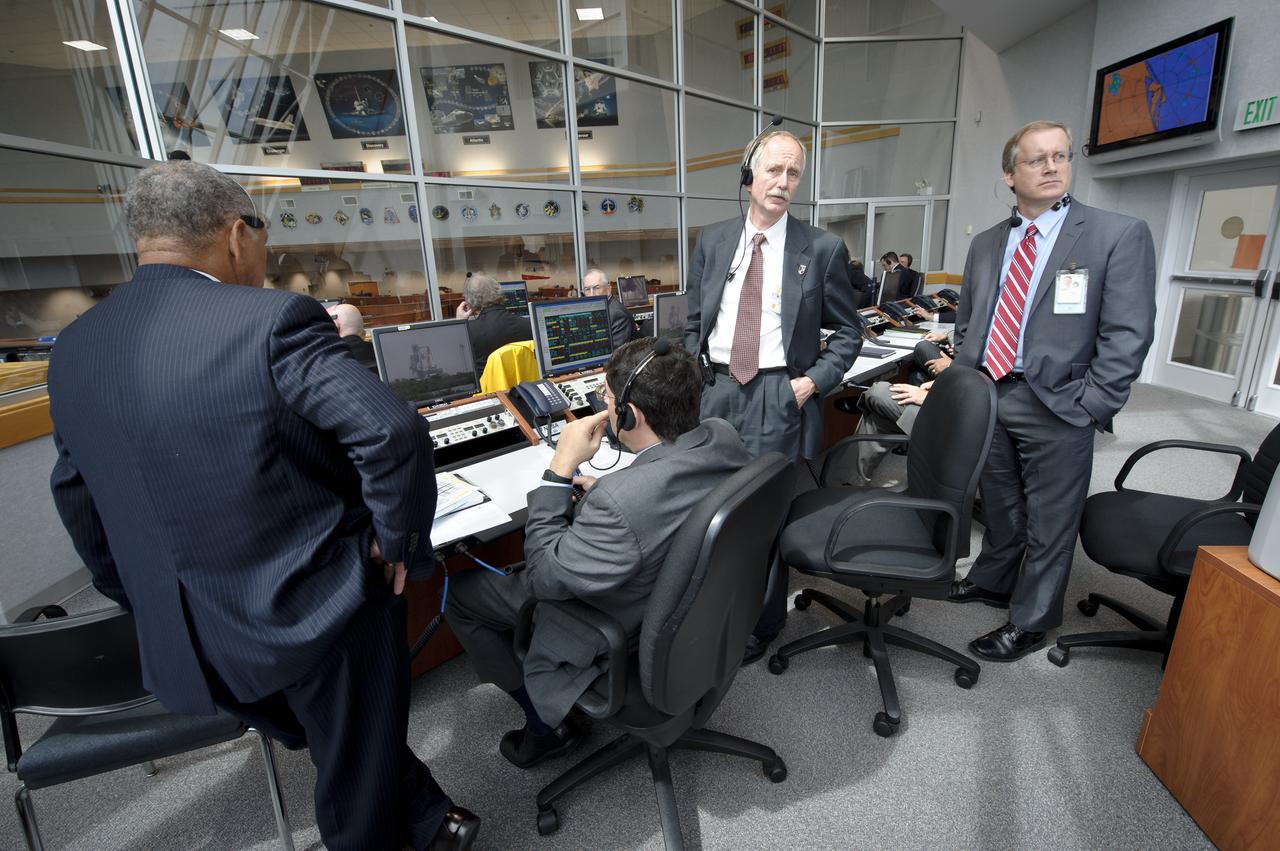
NASA Associate Administrator for Space Operations William Gerstenmaier, standing left, Manager, Space Shuttle Program Office John Shannon, standing right, and other management look on from Firing Room Four of the NASA Kennedy Space Center Launch Control Center (LCC) as they monitor the weather and countdown to the launch of the space shuttle Atlantis on Friday, July 8, 2011, in Cape Canaveral, Fla. The launch of Atlantis, STS-135, is the final flight of the shuttle program, a 12-day mission to the International Space Station. Photo Credit: (NASA/Bill Ingalls)
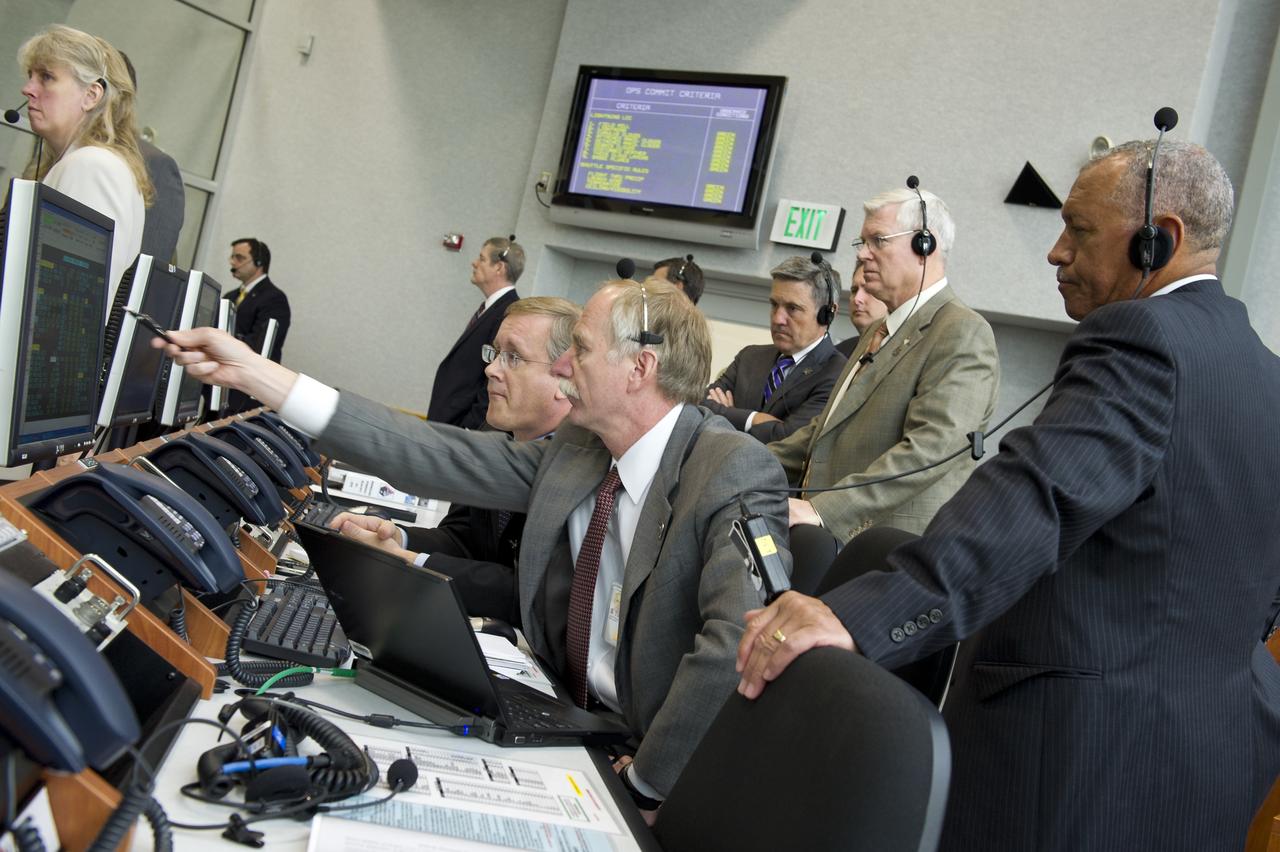
NASA Associate Administrator for Space Operations William Gerstenmaier points to one the monitors in Firing Room Four of the Launch Control Center (LCC) as NASA Administrator Charles Bolden, right, and other NASA managers look on during the launch of the space shuttle Endeavour (STS-134), Monday, May 16, 2011, at Kennedy Space Center in Cape Canaveral, Fla. During the mission, Endeavour and the STS-134 crew will deliver the Alpha Magnetic Spectrometer (AMS) and spare parts including two S-band communications antennas, a high-pressure gas tank and additional spare parts for Dextre. Photo Credit: (NASA/Bill Ingalls)
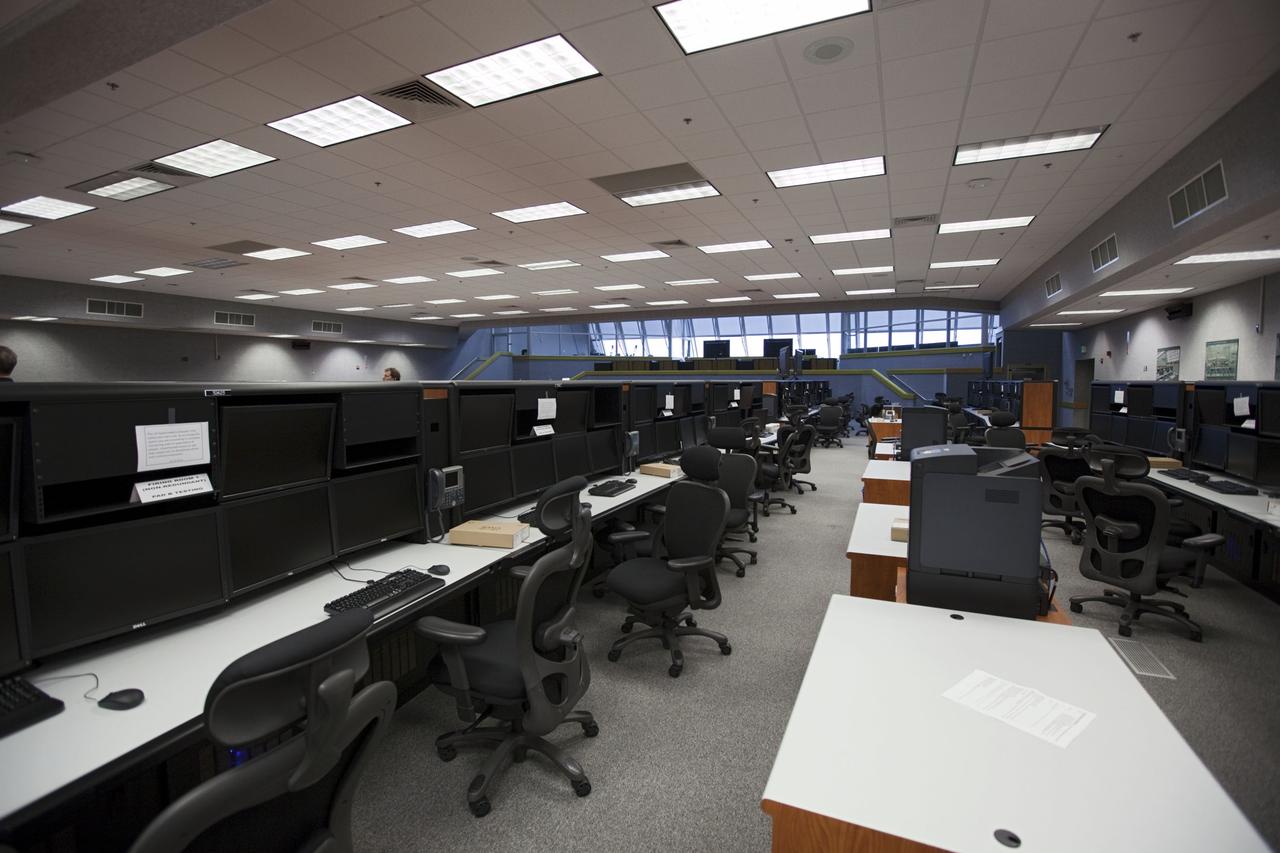
CAPE CANAVERAL, Fla. – Firing Room 1, also known as the Young-Crippen Firing Room, has been outfitted with computer, communications and networking systems to host rockets and spacecraft that are currently under development. The firing room is where the launch of rockets and spacecraft are controlled at NASA's Kennedy Space Center in Florida. Flight controllers also monitor processing and preparations of launch vehicles from the firing room. There are four firing rooms inside the Launch Control Center at Kennedy. Photo credit: NASA/Dmitri Gerondidakis
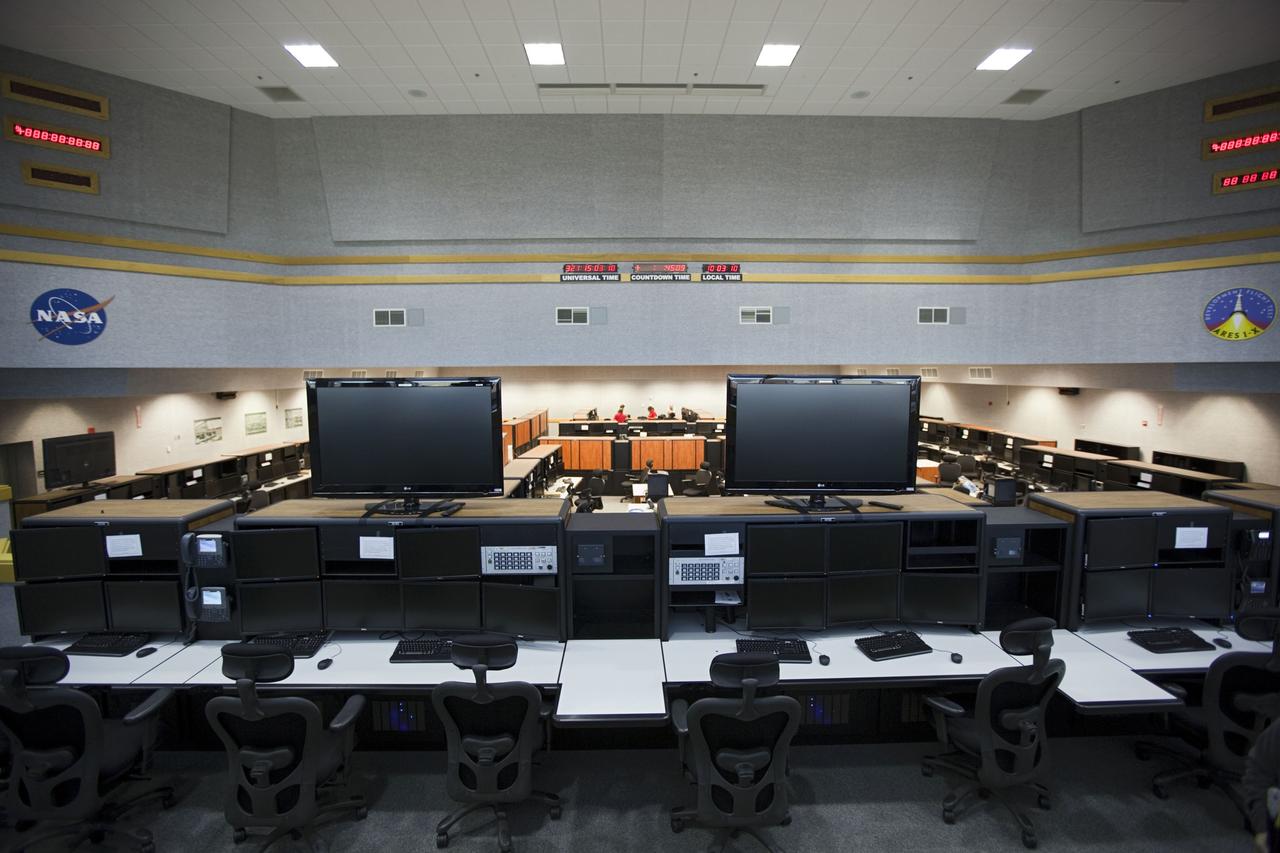
CAPE CANAVERAL, Fla. – Firing Room 1, also known as the Young-Crippen Firing Room, has been outfitted with computer, communications and networking systems to host rockets and spacecraft that are currently under development. The firing room is where the launch of rockets and spacecraft are controlled at NASA's Kennedy Space Center in Florida. Flight controllers also monitor processing and preparations of launch vehicles from the firing room. There are four firing rooms inside the Launch Control Center at Kennedy. Photo credit: NASA/Dmitri Gerondidakis
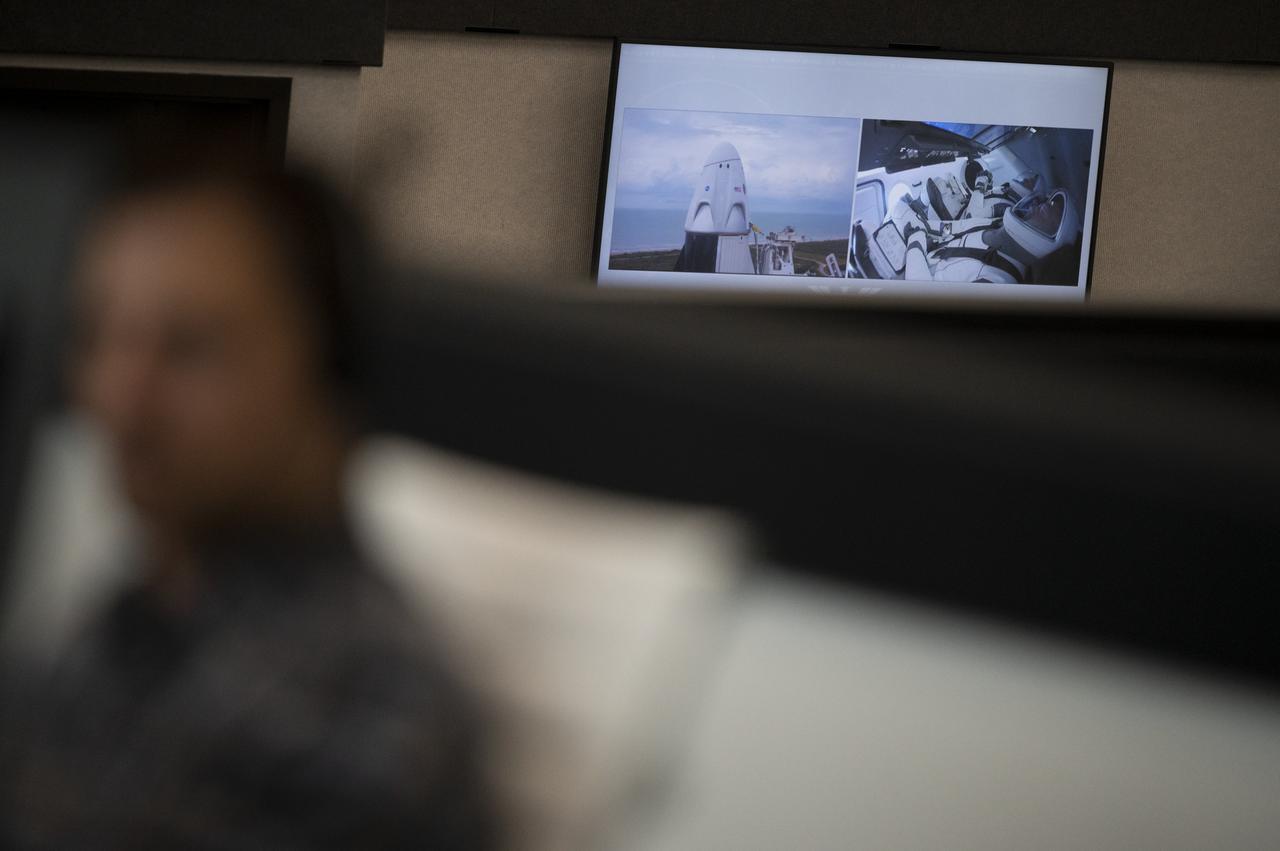
A monitor in firing room four shows views NASA astronauts Douglas Hurley and Robert Behnken onboard SpaceX’s Crew Dragon spacecraft during a launch attempt of NASA’s SpaceX Demo-2 mission, Wednesday, May 27, 2020, in firing room four of the Launch Control Center at NASA’s Kennedy Space Center in Florida. NASA’s SpaceX Demo-2 mission is the first launch with astronauts of the SpaceX Crew Dragon spacecraft and Falcon 9 rocket to the International Space Station as part of the agency’s Commercial Crew Program. The test flight serves as an end-to-end demonstration of SpaceX’s crew transportation system. Today’s launch of Behnken and Hurley was scrubbed due to weather and is now scheduled for 3:22 p.m. EDT on Saturday, May 30, from Launch Complex 39A at the Kennedy Space Center. A new era of human spaceflight is set to begin as American astronauts once again launch on an American rocket from American soil to low-Earth orbit for the first time since the conclusion of the Space Shuttle Program in 2011. Photo Credit: (NASA/Joel Kowsky)
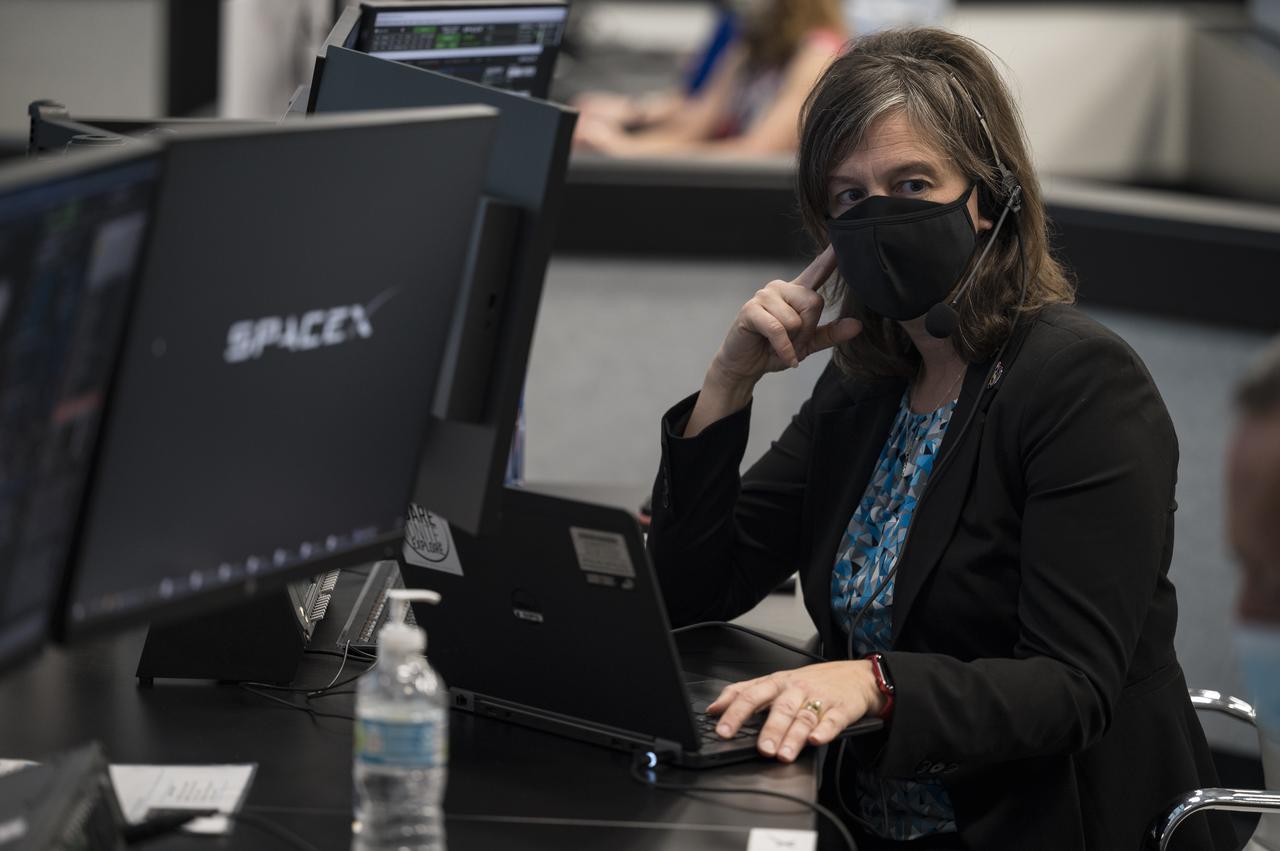
Holly Ridings, NASA's chief flight director, monitors the countdown of the launch of a SpaceX Falcon 9 rocket carrying the company's Crew Dragon spacecraft on NASA’s SpaceX Crew-3 mission with NASA astronauts Raja Chari, Tom Marshburn, Kayla Barron, and ESA (European Space Agency) astronaut Matthias Maurer onboard, Wednesday, Nov. 10, 2021, in firing room four of the Launch Control Center at NASA’s Kennedy Space Center in Florida. NASA’s SpaceX Crew-3 mission is the first crew rotation mission of the SpaceX Crew Dragon spacecraft and Falcon 9 rocket to the International Space Station as part of the agency’s Commercial Crew Program. Chari, Marshburn, Barron, Maurer are scheduled to launch at 9:03 p.m. EST, from Launch Complex 39A at the Kennedy Space Center. Photo Credit: (NASA/Aubrey Gemignani)
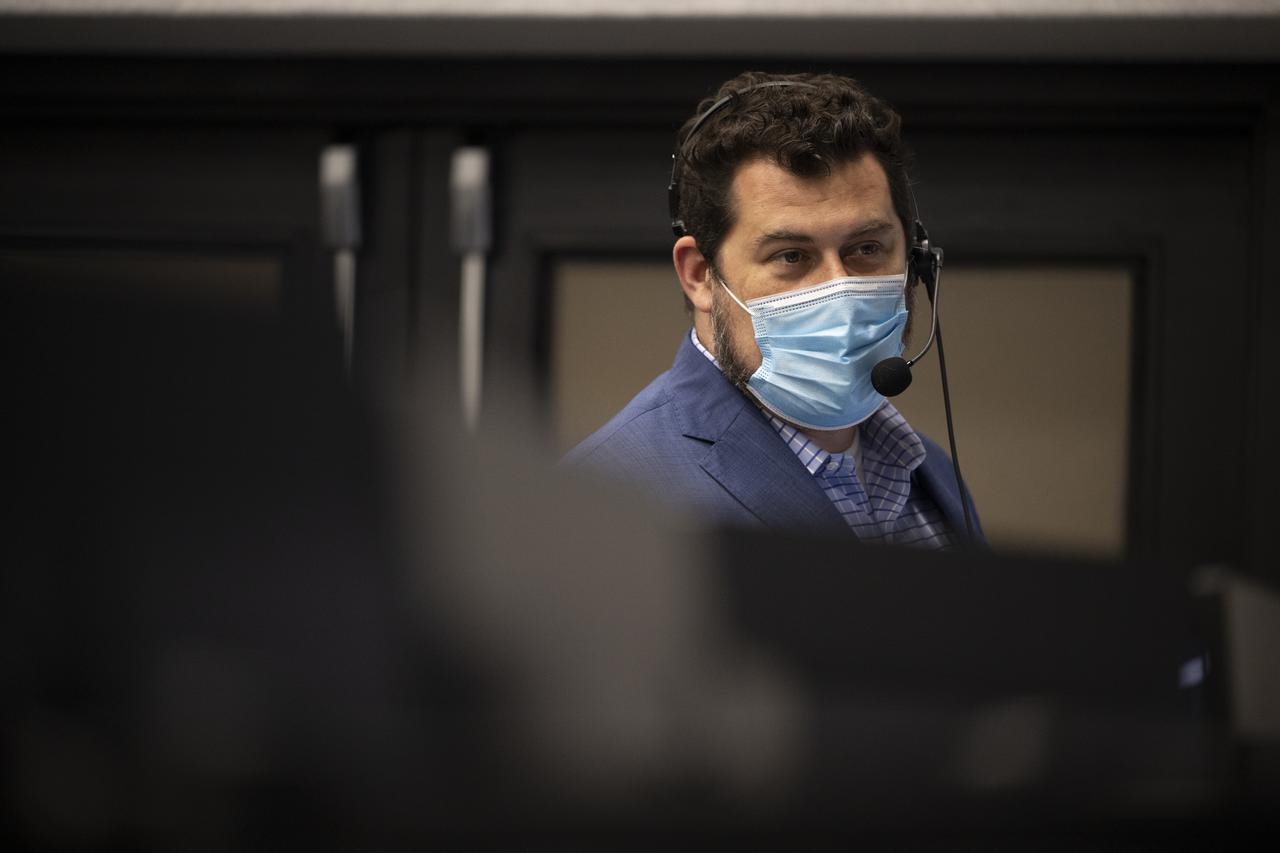
Scott Ede, mission manager for mission management and integration in NASA's Commercial Crew Program, monitors the countdown of the launch of a SpaceX Falcon 9 rocket carrying the company's Crew Dragon spacecraft on NASA’s SpaceX Crew-4 mission with NASA astronauts Kjell Lindgren, Robert Hines, Jessica Watkins, and ESA (European Space Agency) astronaut Samantha Cristoforetti onboard, Wednesday, April 27, 2022, in firing room four of the Rocco A. Petrone Launch Control Center at NASA’s Kennedy Space Center in Florida. NASA’s SpaceX Crew-4 mission is the fourth crew rotation mission of the SpaceX Crew Dragon spacecraft and Falcon 9 rocket to the International Space Station as part of the agency’s Commercial Crew Program. Lindgren, Hines, Watkins, and Cristoforetti launched at at 3:52 a.m. ET, from Launch Complex 39A at the Kennedy Space Center. Photo Credit: (NASA/Joel Kowsky)
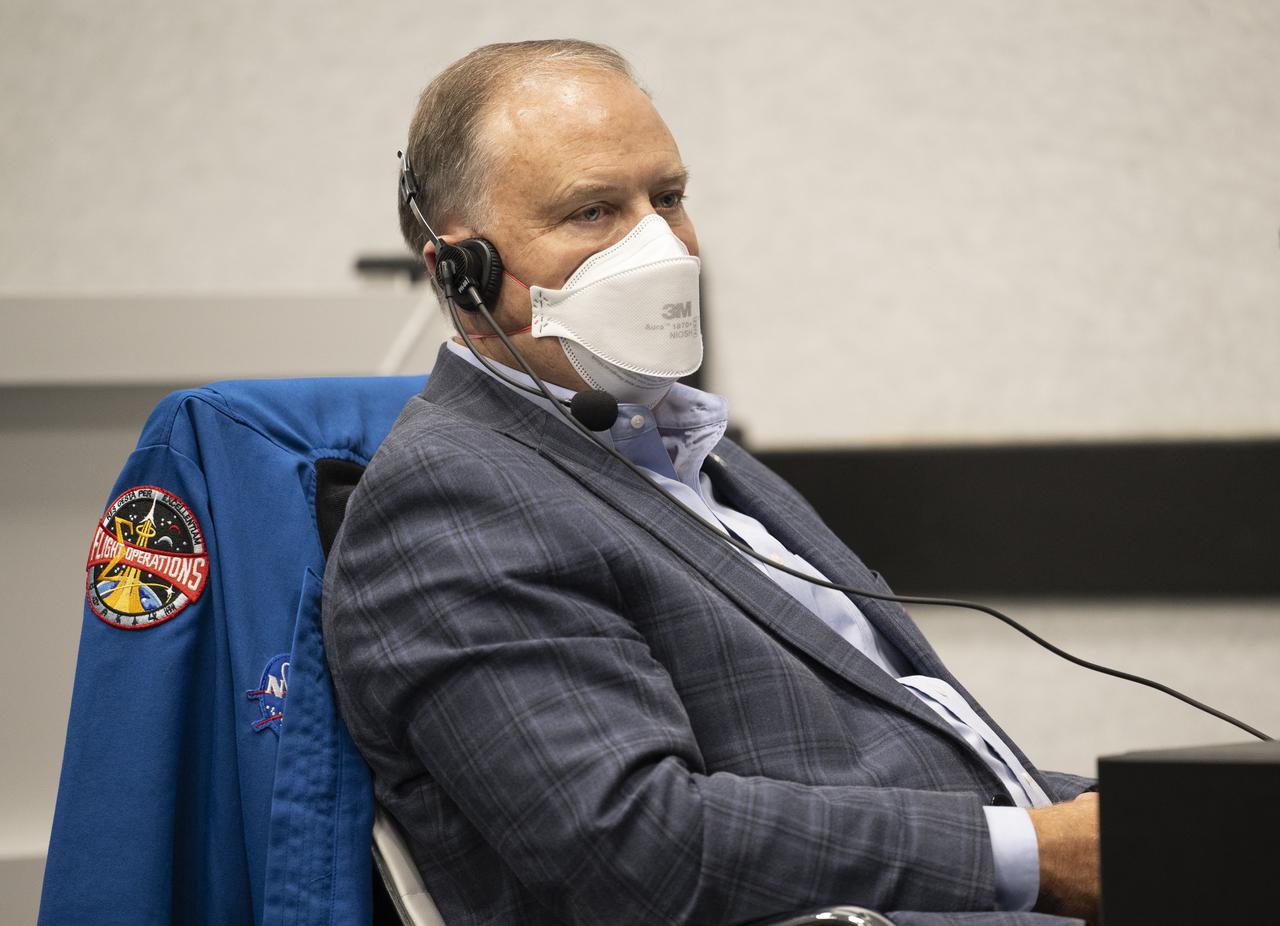
Norm Knight, director of Flight Operations at NASA's Johnson Space Center, monitors the countdown of the launch of a SpaceX Falcon 9 rocket carrying the company's Crew Dragon spacecraft on NASA’s SpaceX Crew-4 mission with NASA astronauts Kjell Lindgren, Robert Hines, Jessica Watkins, and ESA (European Space Agency) astronaut Samantha Cristoforetti onboard, Wednesday, April 27, 2022, in firing room four of the Rocco A. Petrone Launch Control Center at NASA’s Kennedy Space Center in Florida. NASA’s SpaceX Crew-4 mission is the fourth crew rotation mission of the SpaceX Crew Dragon spacecraft and Falcon 9 rocket to the International Space Station as part of the agency’s Commercial Crew Program. Lindgren, Hines, Watkins, and Cristoforetti launched at 3:52 a.m. ET, from Launch Complex 39A at the Kennedy Space Center. Photo Credit: (NASA/Joel Kowsky)
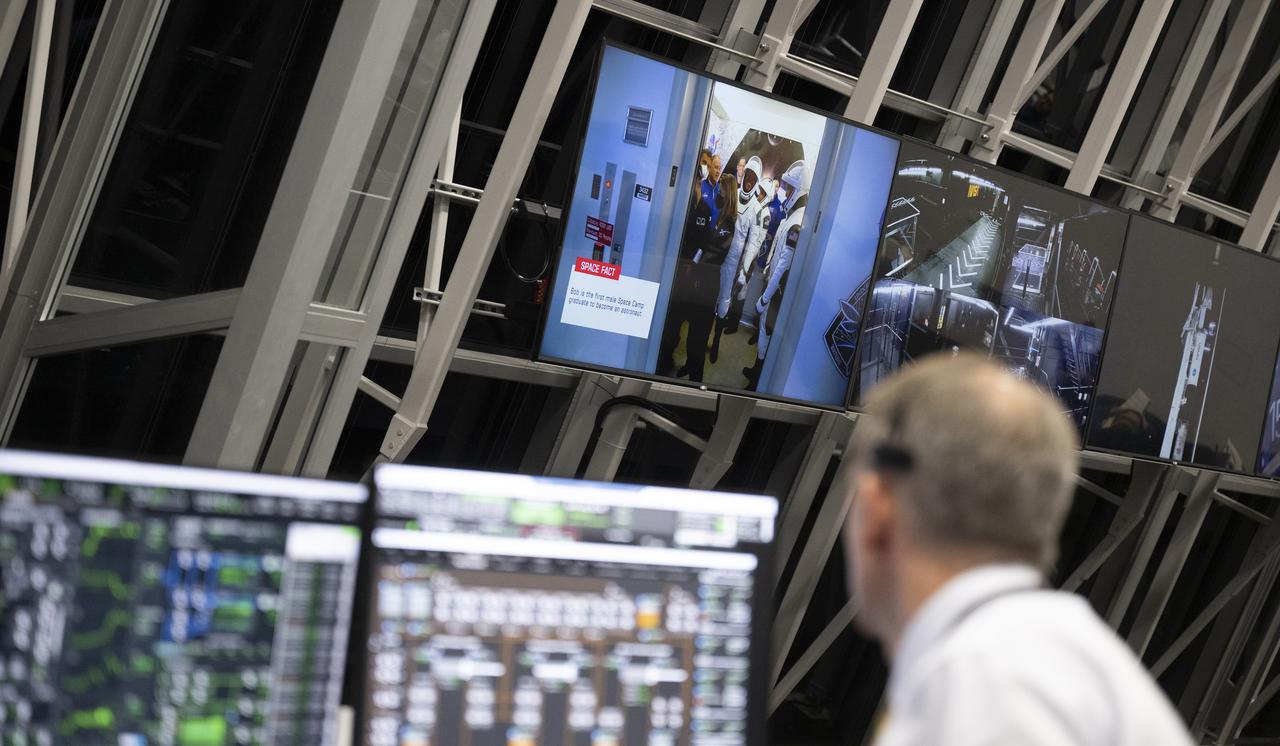
NASA astronauts Kjell Lindgren, Robert Hines, Jessica Watkins, and ESA (European Space Agency) astronaut Samantha Cristoforetti are seen as they depart the Neil A. Armstrong Operations and Checkout Building on a monitor inside firing room four, Wednesday, April 27, 2022, in the Rocco A. Petrone Launch Control Center at NASA’s Kennedy Space Center in Florida. NASA’s SpaceX Crew-4 mission is the fourth crew rotation mission of the SpaceX Crew Dragon spacecraft and Falcon 9 rocket to the International Space Station as part of the agency’s Commercial Crew Program. Lindgren, Hines, Watkins, and Cristoforetti launched at 3:52 a.m. ET, from Launch Complex 39A at the Kennedy Space Center to begin a six month mission onboard the International Space Station. Photo Credit: (NASA/Joel Kowsky)
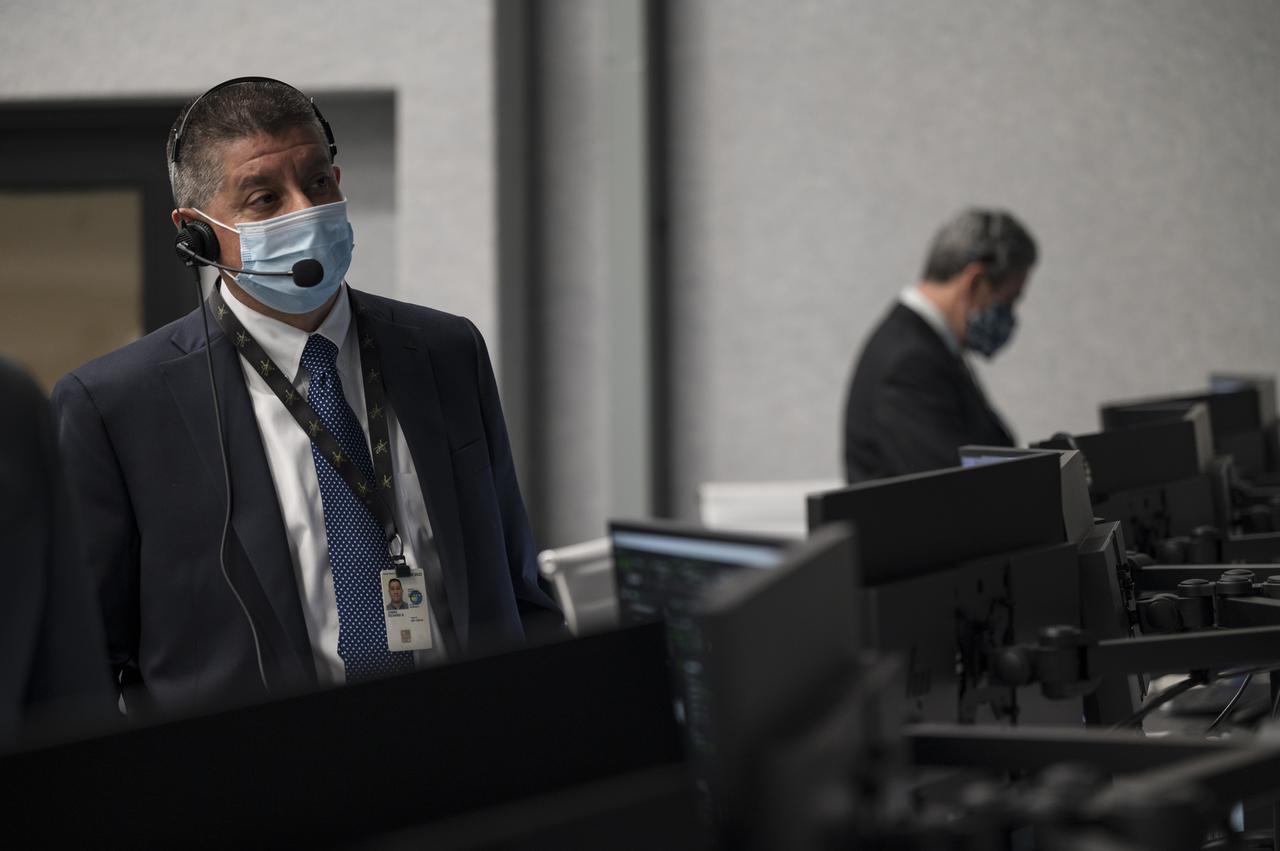
Richard Jones, manager of the Mission Management and Integration Office for NASA's Commercial Crew Program, monitors the countdown of the launch of a SpaceX Falcon 9 rocket carrying the company's Crew Dragon spacecraft on NASA’s SpaceX Crew-3 mission with NASA astronauts Raja Chari, Tom Marshburn, Kayla Barron, and ESA (European Space Agency) astronaut Matthias Maurer onboard, Wednesday, Nov. 10, 2021, in firing room four of the Launch Control Center at NASA’s Kennedy Space Center in Florida. NASA’s SpaceX Crew-3 mission is the first crew rotation mission of the SpaceX Crew Dragon spacecraft and Falcon 9 rocket to the International Space Station as part of the agency’s Commercial Crew Program. Chari, Marshburn, Barron, Maurer are scheduled to launch at 9:03 p.m. EST, from Launch Complex 39A at the Kennedy Space Center. Photo Credit: (NASA/Aubrey Gemignani)
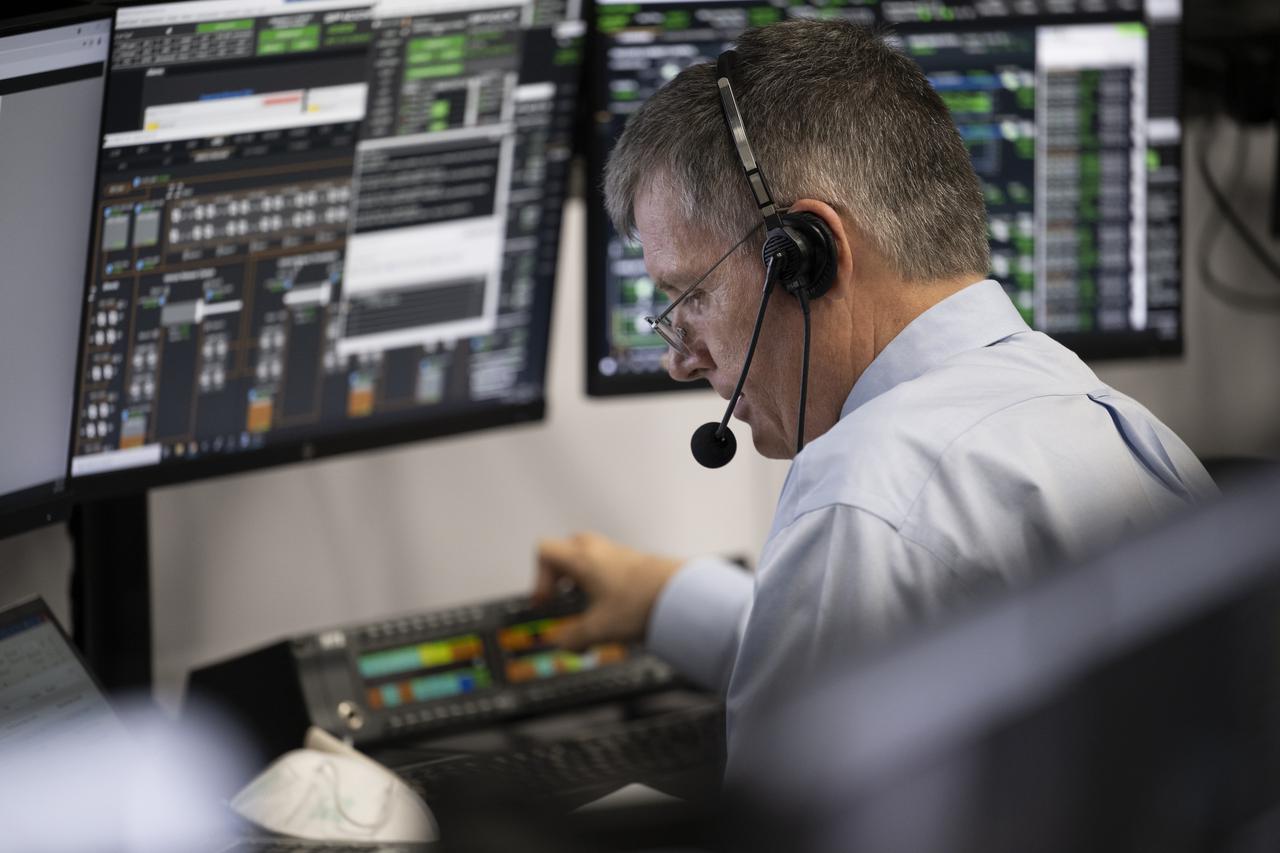
Steve Stich, manager of NASA’s Commercial Crew Program, monitors the countdown of the launch of a SpaceX Falcon 9 rocket carrying the company's Crew Dragon spacecraft on NASA’s SpaceX Crew-4 mission with NASA astronauts Kjell Lindgren, Robert Hines, Jessica Watkins, and ESA (European Space Agency) astronaut Samantha Cristoforetti onboard, Wednesday, April 27, 2022, in firing room four of the Rocco A. Petrone Launch Control Center at NASA’s Kennedy Space Center in Florida. NASA’s SpaceX Crew-4 mission is the fourth crew rotation mission of the SpaceX Crew Dragon spacecraft and Falcon 9 rocket to the International Space Station as part of the agency’s Commercial Crew Program. Lindgren, Hines, Watkins, and Cristoforetti launched at 3:52 a.m. ET, from Launch Complex 39A at the Kennedy Space Center. Photo Credit: (NASA/Joel Kowsky)
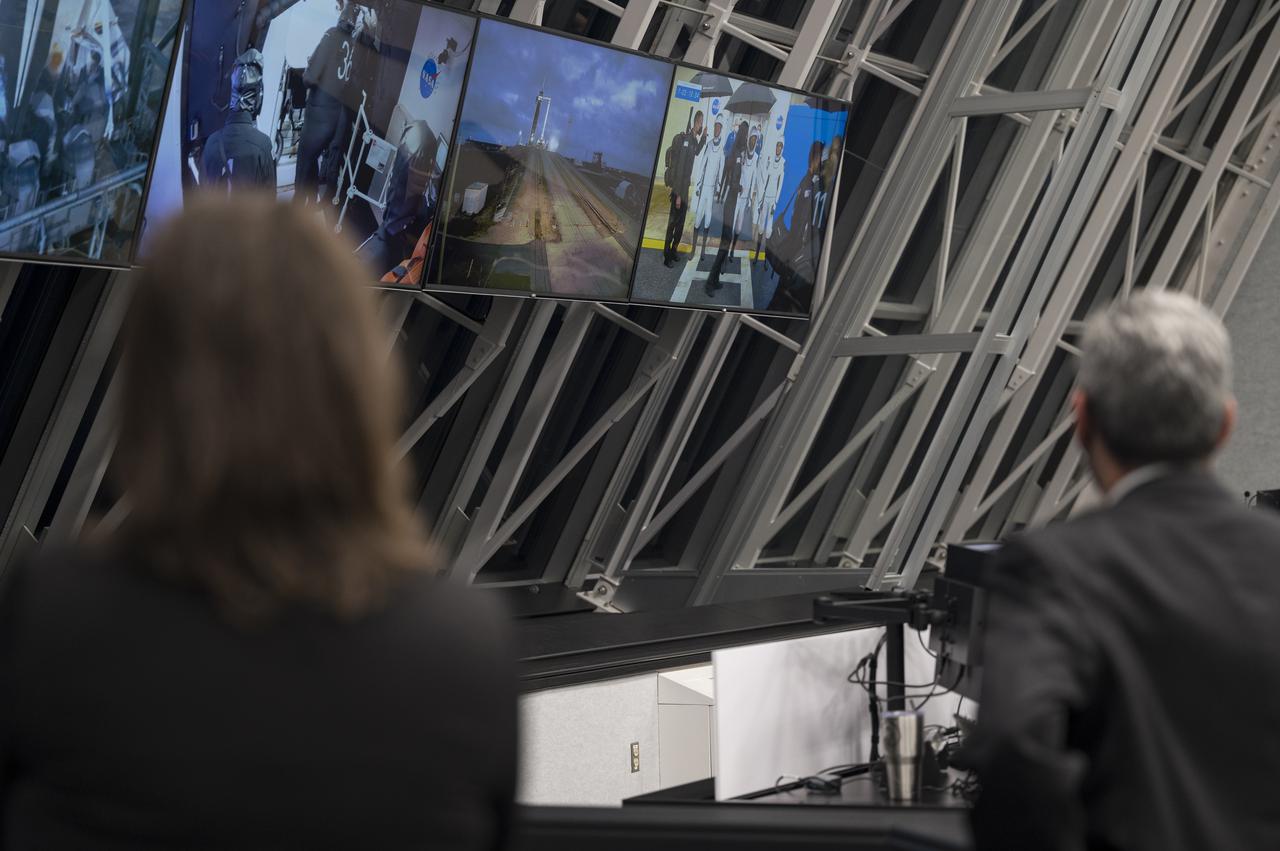
SpaceX and NASA officials monitor the countdown of the launch of a SpaceX Falcon 9 rocket carrying the company's Crew Dragon spacecraft on NASA’s SpaceX Crew-3 mission with NASA astronauts Raja Chari, Tom Marshburn, Kayla Barron, and ESA (European Space Agency) astronaut Matthias Maurer onboard, Wednesday, Nov. 10, 2021, in firing room four of the Launch Control Center at NASA’s Kennedy Space Center in Florida. NASA’s SpaceX Crew-3 mission is the first crew rotation mission of the SpaceX Crew Dragon spacecraft and Falcon 9 rocket to the International Space Station as part of the agency’s Commercial Crew Program. Chari, Marshburn, Barron, Maurer are scheduled to launch at 9:03 p.m. EST, from Launch Complex 39A at the Kennedy Space Center. Photo Credit: (NASA/Aubrey Gemignani)
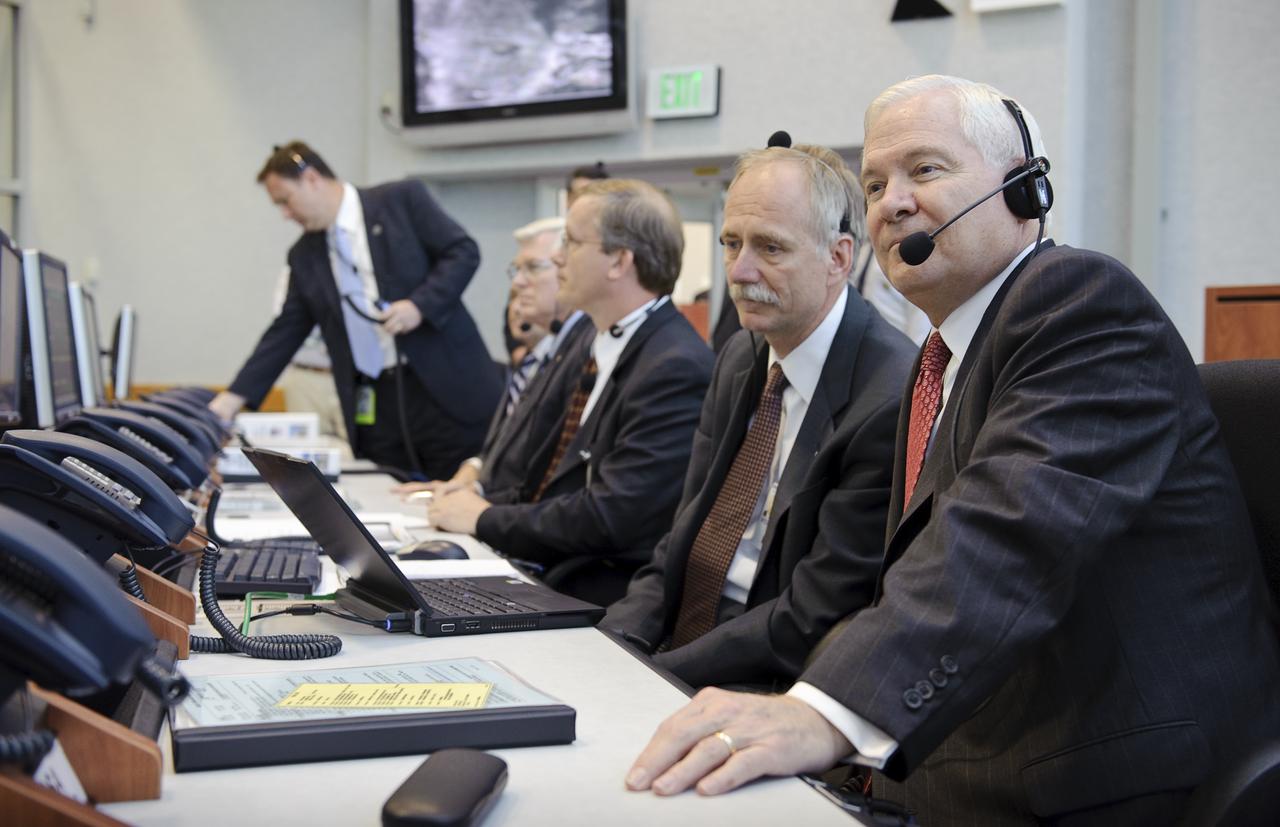
Secretary of Defense Dr. Robert M. Gates, right, NASA Associate Administrator for Space Operations William H. Gerstenmaier, center, and other NASA mission managers monitor the launch of the space shuttle Atlantis and the STS-132 mission from Firing Room Four of the NASA Kennedy Space Center Launch Control Center, Friday, May 14, 2010 in Cape Canaveral Florida. Space shuttle Atlantis is embarking on its final planned mission. During the 12-day flight, Atlantis and six astronauts will fly to the International Space Station, leaving behind a Russian Mini Research Module, a set of batteries for the station's truss and dish antenna, along with other replacement parts. Atlantis' 32nd flight is scheduled to last 12 days and include three spacewalks and extensive robotics work. Photo Credit: (NASA/Bill Ingalls)
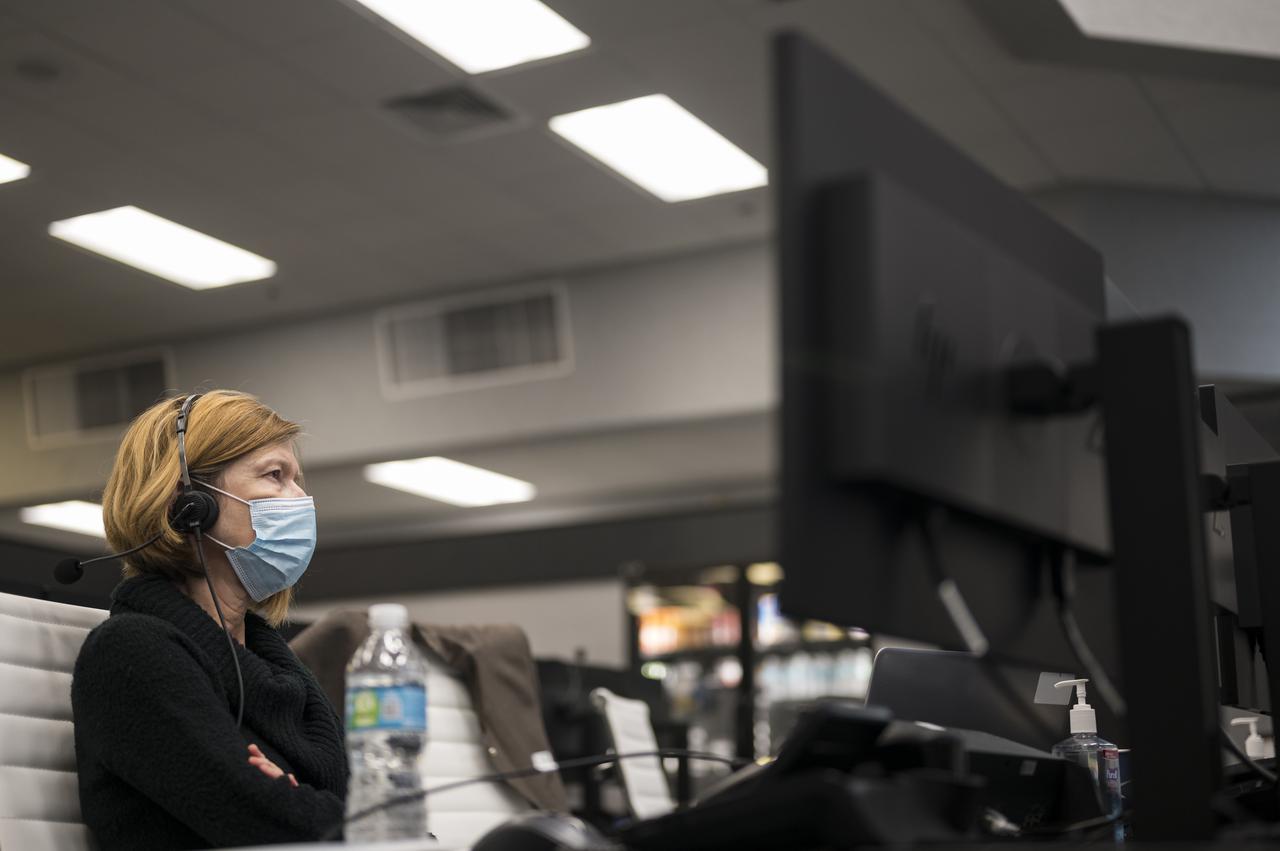
Kathy Lueders, associate administrator for NASA's Space Operations Mission Directorate, monitors the countdown of the launch of a SpaceX Falcon 9 rocket carrying the company's Crew Dragon spacecraft on NASA’s SpaceX Crew-3 mission with NASA astronauts Raja Chari, Tom Marshburn, Kayla Barron, and ESA (European Space Agency) astronaut Matthias Maurer onboard, Wednesday, Nov. 10, 2021, in firing room four of the Launch Control Center at NASA’s Kennedy Space Center in Florida. NASA’s SpaceX Crew-3 mission is the first crew rotation mission of the SpaceX Crew Dragon spacecraft and Falcon 9 rocket to the International Space Station as part of the agency’s Commercial Crew Program. Chari, Marshburn, Barron, Maurer are scheduled to launch at 9:03 p.m. EST, from Launch Complex 39A at the Kennedy Space Center. Photo Credit: (NASA/Aubrey Gemignani)
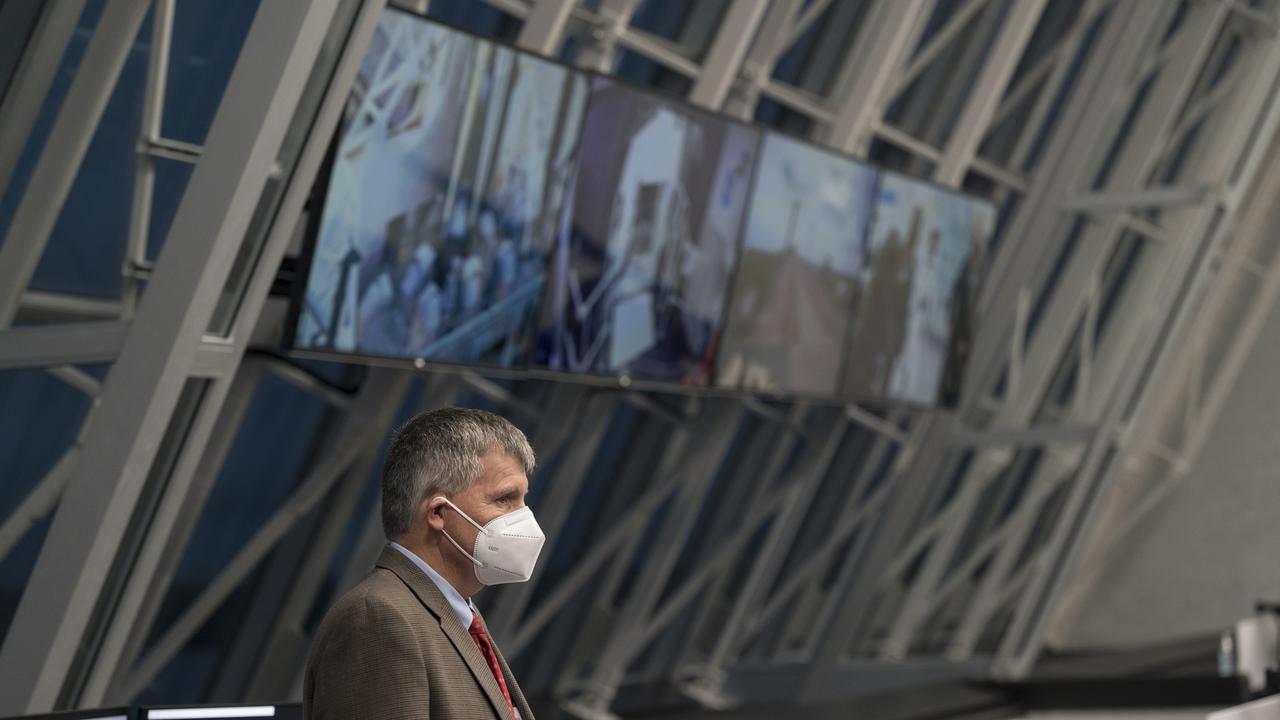
Steve Stich, manager of NASA’s Commercial Crew Program, monitors the countdown of the launch of a SpaceX Falcon 9 rocket carrying the company's Crew Dragon spacecraft on NASA’s SpaceX Crew-3 mission with NASA astronauts Raja Chari, Tom Marshburn, Kayla Barron, and ESA (European Space Agency) astronaut Matthias Maurer onboard, Wednesday, Nov. 10, 2021, in firing room four of the Launch Control Center at NASA’s Kennedy Space Center in Florida. NASA’s SpaceX Crew-3 mission is the first crew rotation mission of the SpaceX Crew Dragon spacecraft and Falcon 9 rocket to the International Space Station as part of the agency’s Commercial Crew Program. Chari, Marshburn, Barron, Maurer are scheduled to launch at 9:03 p.m. EST, from Launch Complex 39A at the Kennedy Space Center. Photo Credit: (NASA/Aubrey Gemignani)
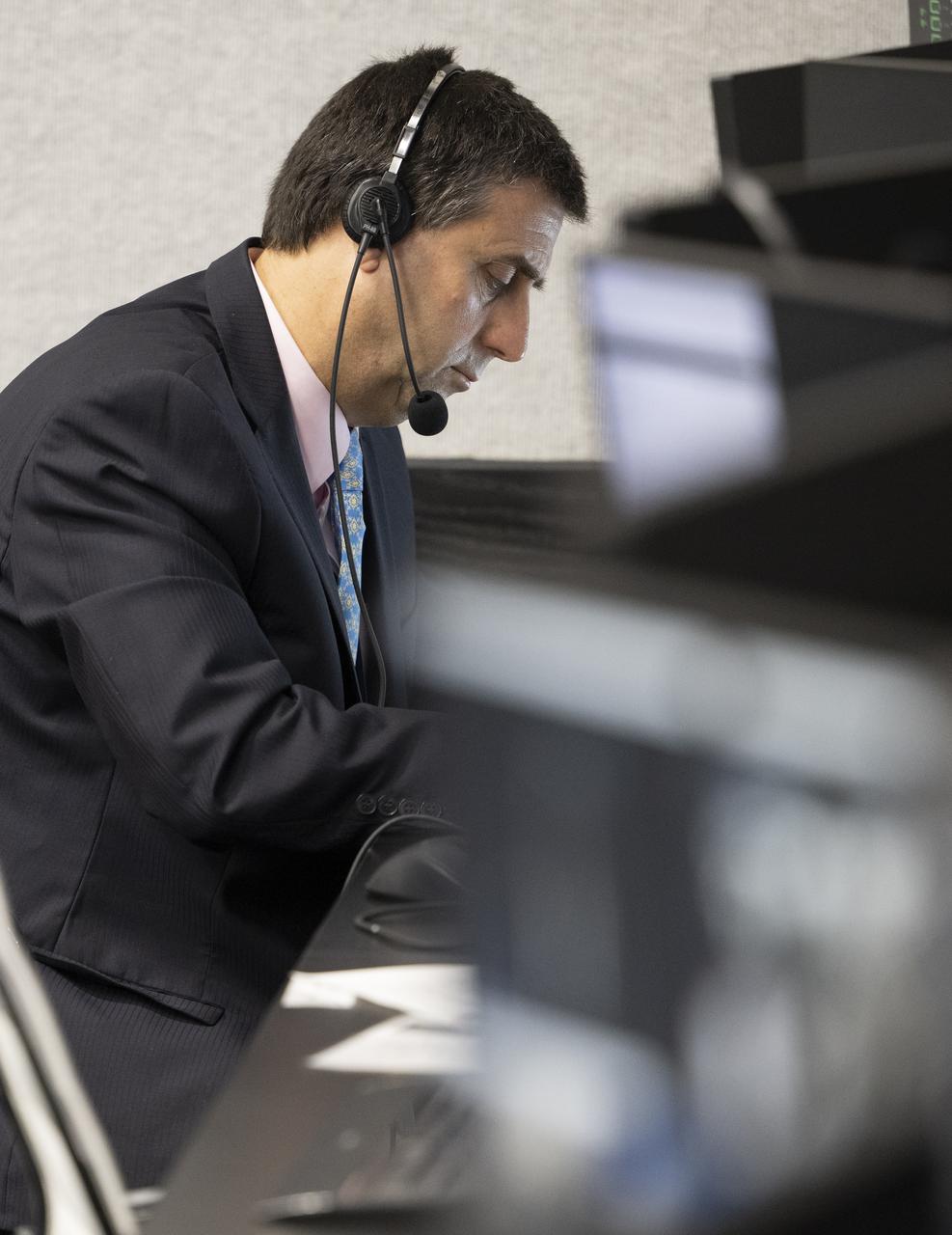
NASA International Space Station program manger Joel Montalbano, monitors the countdown of the launch of a SpaceX Falcon 9 rocket carrying the company's Crew Dragon spacecraft on NASA’s SpaceX Crew-4 mission with NASA astronauts Kjell Lindgren, Robert Hines, Jessica Watkins, and ESA (European Space Agency) astronaut Samantha Cristoforetti onboard, Wednesday, April 27, 2022, in firing room four of the Rocco A. Petrone Launch Control Center at NASA’s Kennedy Space Center in Florida. NASA’s SpaceX Crew-4 mission is the fourth crew rotation mission of the SpaceX Crew Dragon spacecraft and Falcon 9 rocket to the International Space Station as part of the agency’s Commercial Crew Program. Lindgren, Hines, Watkins, and Cristoforetti launched at 3:52 a.m. ET, from Launch Complex 39A at the Kennedy Space Center. Photo Credit: (NASA/Joel Kowsky)
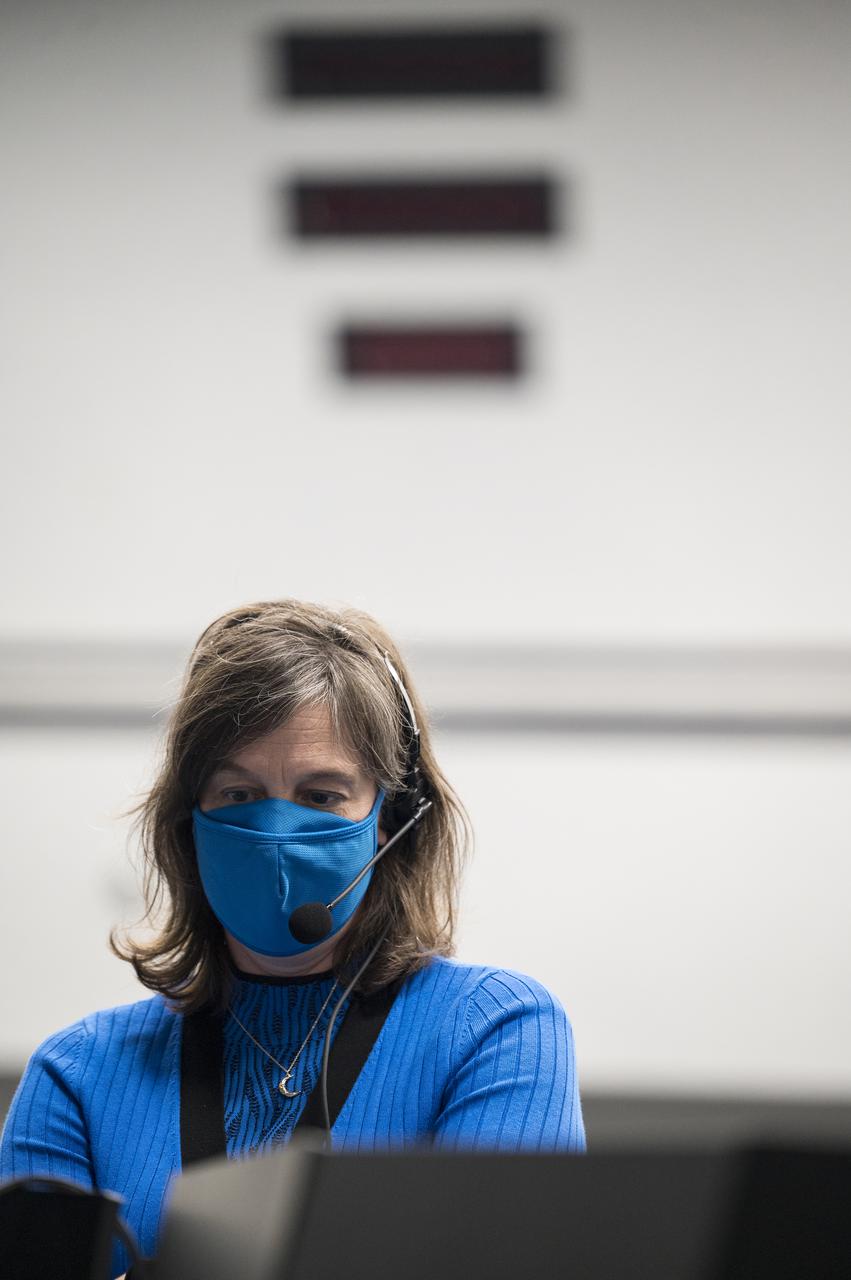
Holly Ridings, NASA’s chief flight director, monitors the countdown during a dress rehearsal in preparation for the launch of a SpaceX Falcon 9 rocket carrying the company's Crew Dragon spacecraft on NASA’s SpaceX Crew-3 mission with NASA astronauts Raja Chari, Tom Marshburn, Kayla Barron, and ESA (European Space Agency) astronaut Matthias Maurer onboard, Thursday, Oct. 28, 2021, in firing room four of the Launch Control Center at NASA’s Kennedy Space Center in Florida. NASA’s SpaceX Crew-3 mission is the third crew rotation mission of the SpaceX Crew Dragon spacecraft and Falcon 9 rocket to the International Space Station as part of the agency’s Commercial Crew Program. Chari, Marshburn, Barron, Maurer are scheduled to launch on Oct. 31 at 2:21 a.m. ET, from Launch Complex 39A at the Kennedy Space Center. Photo Credit: (NASA/Aubrey Gemignani)
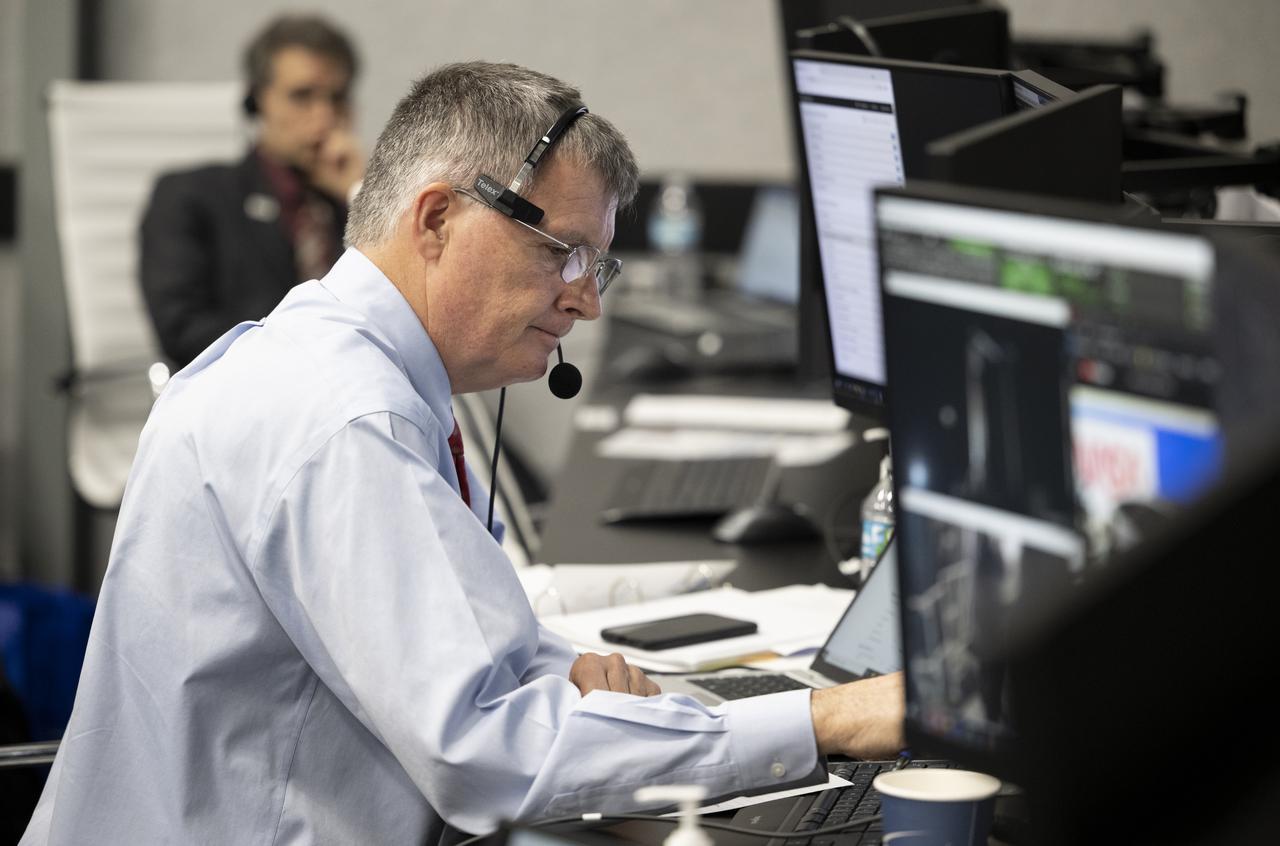
Steve Stich, manager of NASA’s Commercial Crew Program, monitors the countdown of a SpaceX Falcon 9 rocket carrying the company's Crew Dragon spacecraft on the Crew-4 mission with NASA astronauts Kjell Lindgren, Robert Hines, Jessica Watkins, and ESA (European Space Agency) astronaut Samantha Cristoforetti onboard, Wednesday, April 27, 2022, in firing room four of the Rocco A. Petrone Launch Control Center at NASA’s Kennedy Space Center in Florida. NASA’s SpaceX Crew-4 mission is the fourth crew rotation mission of the SpaceX Crew Dragon spacecraft and Falcon 9 rocket to the International Space Station as part of the agency’s Commercial Crew Program. Lindgren, Hines, Watkins, and Cristoforetti launched at 3:52 a.m. ET, from Launch Complex 39A at the Kennedy Space Center to begin a six month mission onboard the International Space Station. Photo Credit: (NASA/Joel Kowsky)
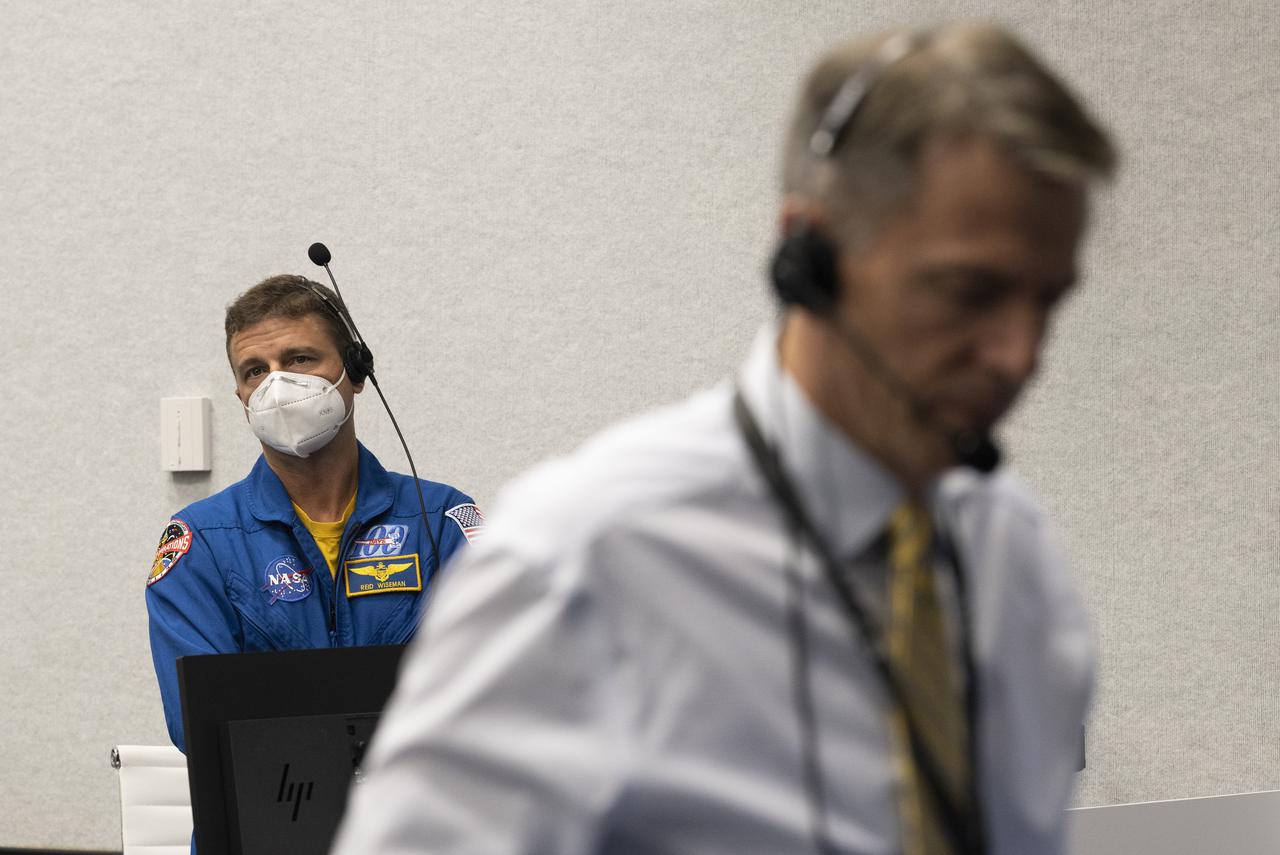
Reid Wiseman, Chief of the Astronaut Office, monitors the countdown of the launch of a SpaceX Falcon 9 rocket carrying the company's Crew Dragon spacecraft on NASA’s SpaceX Crew-4 mission with NASA astronauts Kjell Lindgren, Robert Hines, Jessica Watkins, and ESA (European Space Agency) astronaut Samantha Cristoforetti onboard, Wednesday, April 27, 2022, in firing room four of the Rocco A. Petrone Launch Control Center at NASA’s Kennedy Space Center in Florida. NASA’s SpaceX Crew-4 mission is the fourth crew rotation mission of the SpaceX Crew Dragon spacecraft and Falcon 9 rocket to the International Space Station as part of the agency’s Commercial Crew Program. Lindgren, Hines, Watkins, and Cristoforetti launched at 3:52 a.m. ET, from Launch Complex 39A at the Kennedy Space Center. Photo Credit: (NASA/Joel Kowsky)
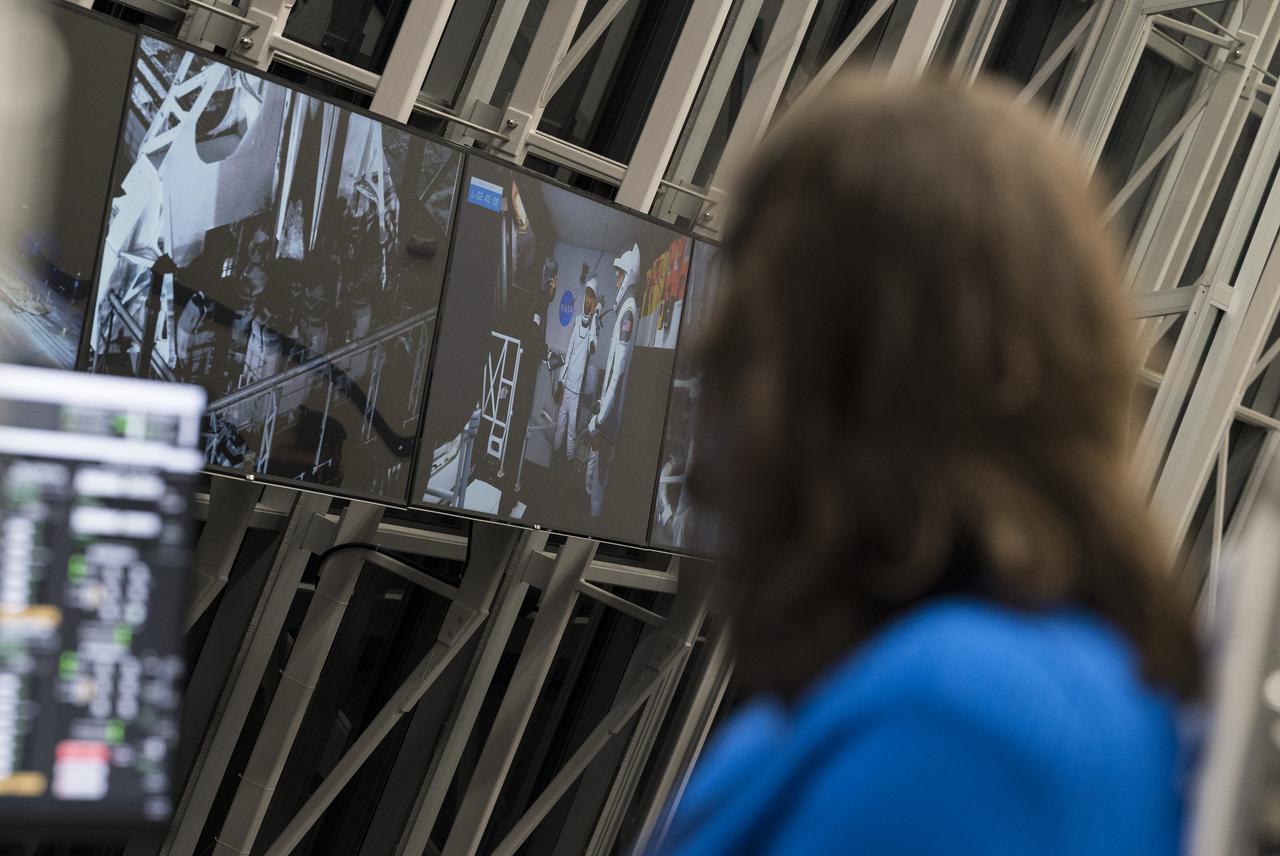
Holly Ridings, NASA’s chief flight director, monitors the countdown during a dress rehearsal in preparation for the launch of a SpaceX Falcon 9 rocket carrying the company's Crew Dragon spacecraft on NASA’s SpaceX Crew-3 mission with NASA astronauts Raja Chari, Tom Marshburn, Kayla Barron, and ESA (European Space Agency) astronaut Matthias Maurer onboard, Thursday, Oct. 28, 2021, in firing room four of the Launch Control Center at NASA’s Kennedy Space Center in Florida. NASA’s SpaceX Crew-3 mission is the third crew rotation mission of the SpaceX Crew Dragon spacecraft and Falcon 9 rocket to the International Space Station as part of the agency’s Commercial Crew Program. Chari, Marshburn, Barron, Maurer are scheduled to launch on Oct. 31 at 2:21 a.m. ET, from Launch Complex 39A at the Kennedy Space Center. Photo Credit: (NASA/Aubrey Gemignani)
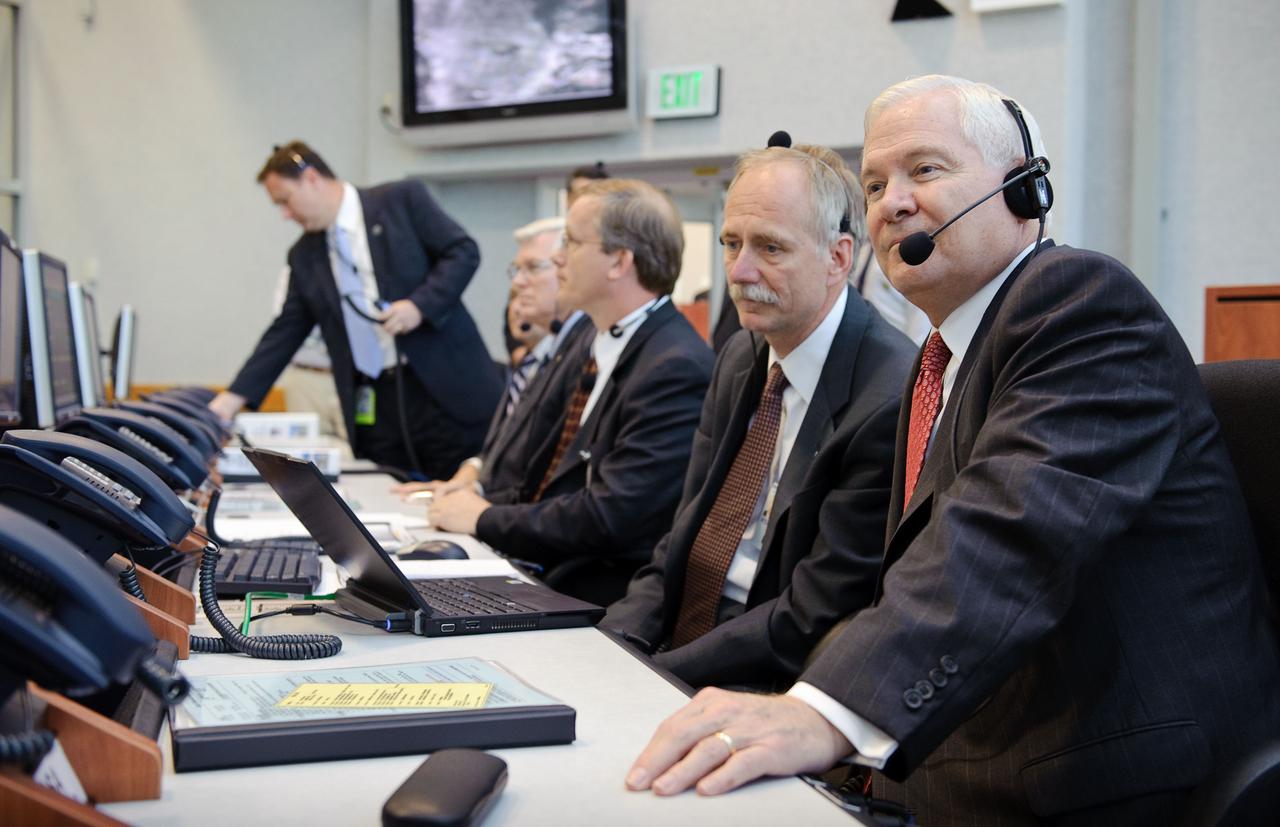
STS132-S-012 (14 May 2010) --- Secretary of Defense Dr. Robert M. Gates, right, NASA Associate Administrator for Space Operations William H. Gerstenmaier, center, and other NASA mission managers monitor the launch of the space shuttle Atlantis and the STS-132 mission from Firing Room Four of the NASA Kennedy Space Center Launch Control Center, Friday, May 14, 2010 in Cape Canaveral Florida. Space shuttle Atlantis is embarking on its final planned mission. During the 12-day flight, Atlantis and six astronauts will fly to the International Space Station, leaving behind a Russian Mini Research Module, a set of batteries for the station's truss and dish antenna, along with other replacement parts. Atlantis' 32nd flight is scheduled to last 12 days and include three spacewalks and extensive robotics work. Photo credit: NASA/Bill Ingalls
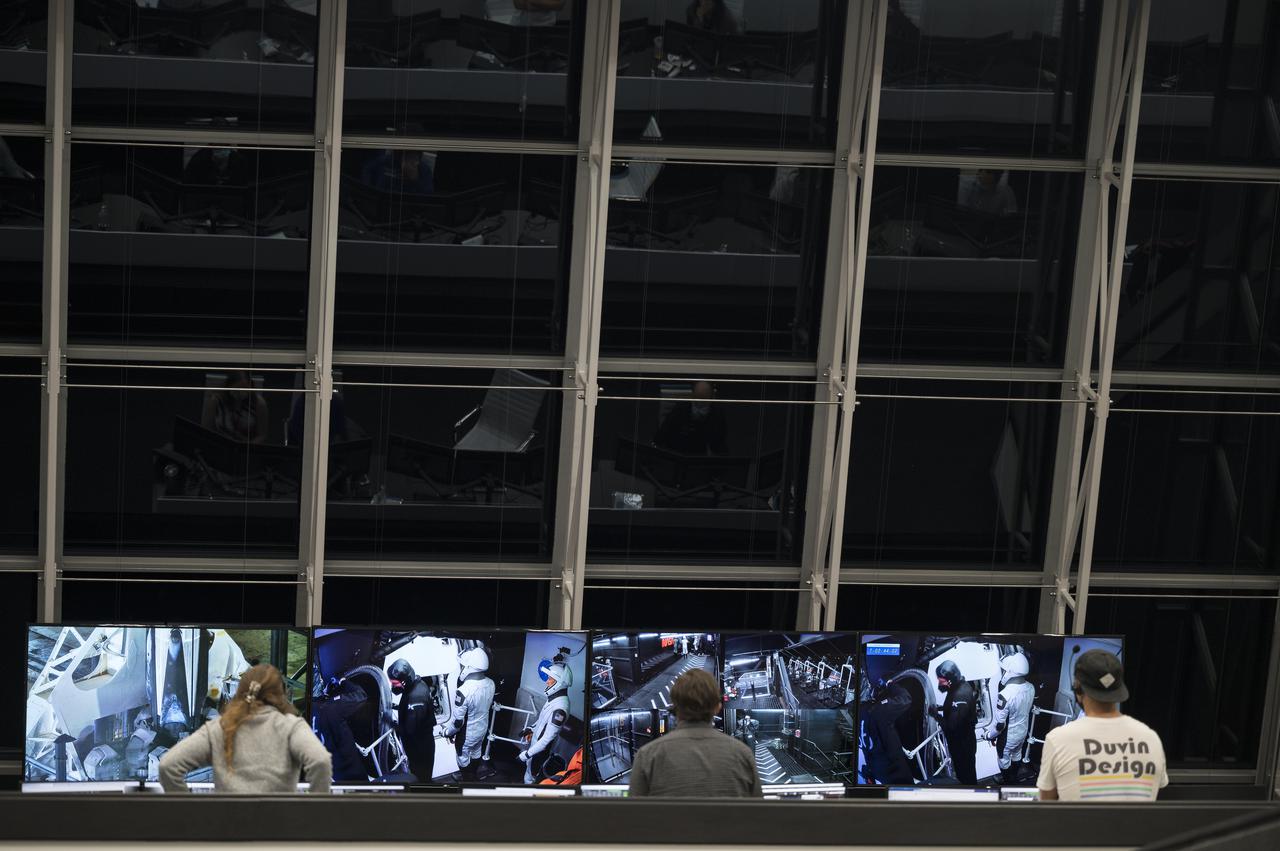
SpaceX staff monitor the countdown of the launch of a SpaceX Falcon 9 rocket carrying the company's Crew Dragon spacecraft on NASA’s SpaceX Crew-3 mission with NASA astronauts Raja Chari, Tom Marshburn, Kayla Barron, and ESA (European Space Agency) astronaut Matthias Maurer onboard, Wednesday, Nov. 10, 2021, in firing room four of the Launch Control Center at NASA’s Kennedy Space Center in Florida. NASA’s SpaceX Crew-3 mission is the first crew rotation mission of the SpaceX Crew Dragon spacecraft and Falcon 9 rocket to the International Space Station as part of the agency’s Commercial Crew Program. Chari, Marshburn, Barron, Maurer are scheduled to launch at 9:03 p.m. EST, from Launch Complex 39A at the Kennedy Space Center. Photo Credit: (NASA/Aubrey Gemignani)
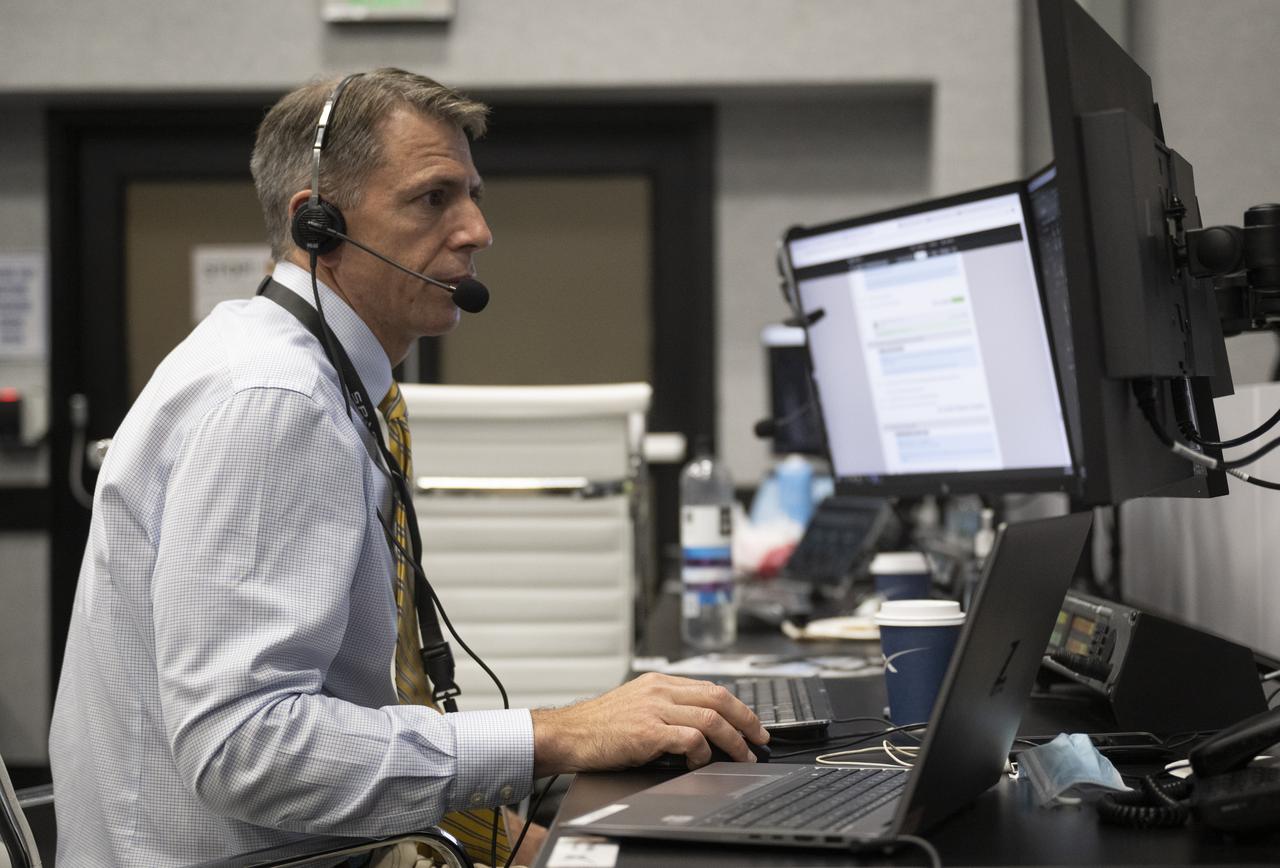
Zeb Scoville, NASA's chief flight director, monitors the launch of a SpaceX Falcon 9 rocket carrying the company's Crew Dragon spacecraft on the Crew-4 mission with NASA astronauts Kjell Lindgren, Robert Hines, Jessica Watkins, and ESA (European Space Agency) astronaut Samantha Cristoforetti onboard, Wednesday, April 27, 2022, in firing room four of the Rocco A. Petrone Launch Control Center at NASA’s Kennedy Space Center in Florida. NASA’s SpaceX Crew-4 mission is the fourth crew rotation mission of the SpaceX Crew Dragon spacecraft and Falcon 9 rocket to the International Space Station as part of the agency’s Commercial Crew Program. Lindgren, Hines, Watkins, and Cristoforetti launched at 3:52 a.m. ET, from Launch Complex 39A at the Kennedy Space Center to begin a six month mission onboard the International Space Station. Photo Credit: (NASA/Joel Kowsky)
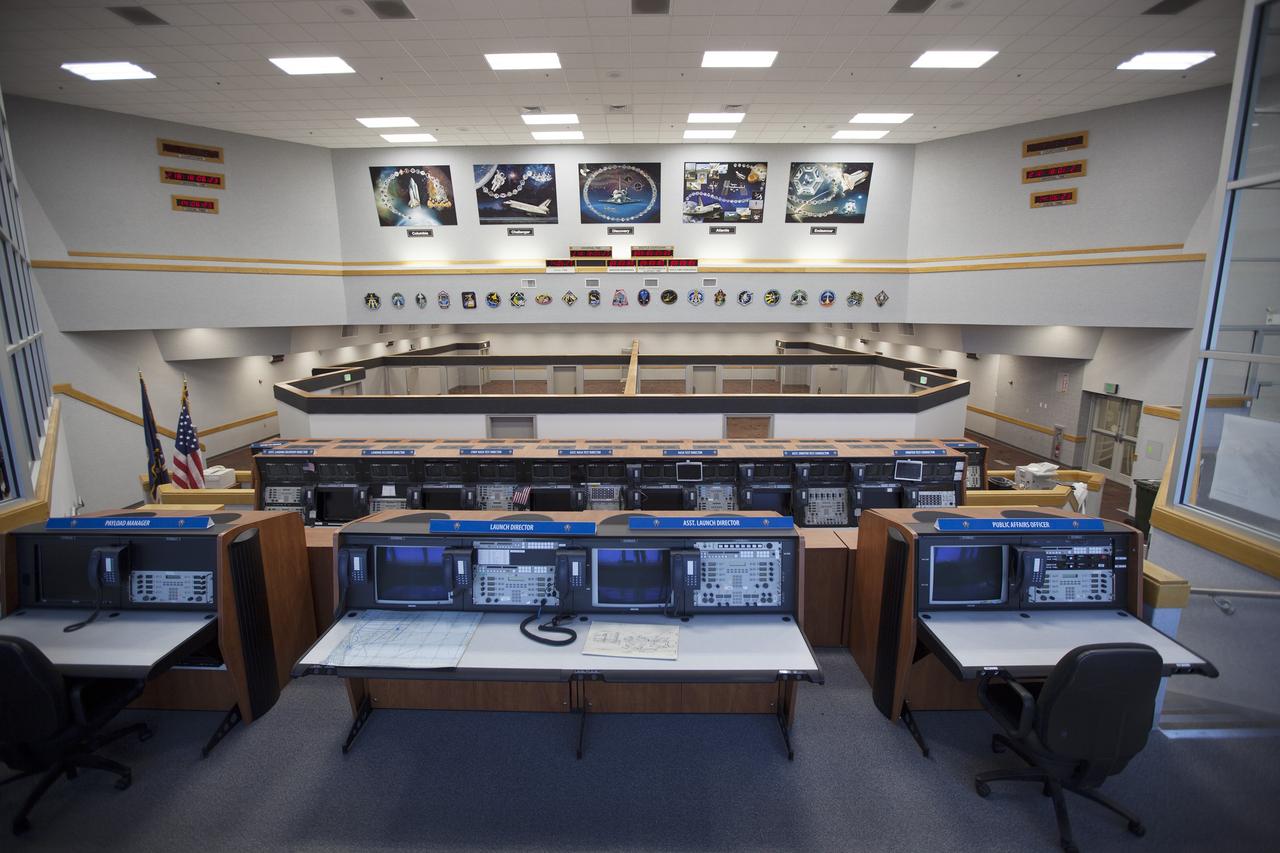
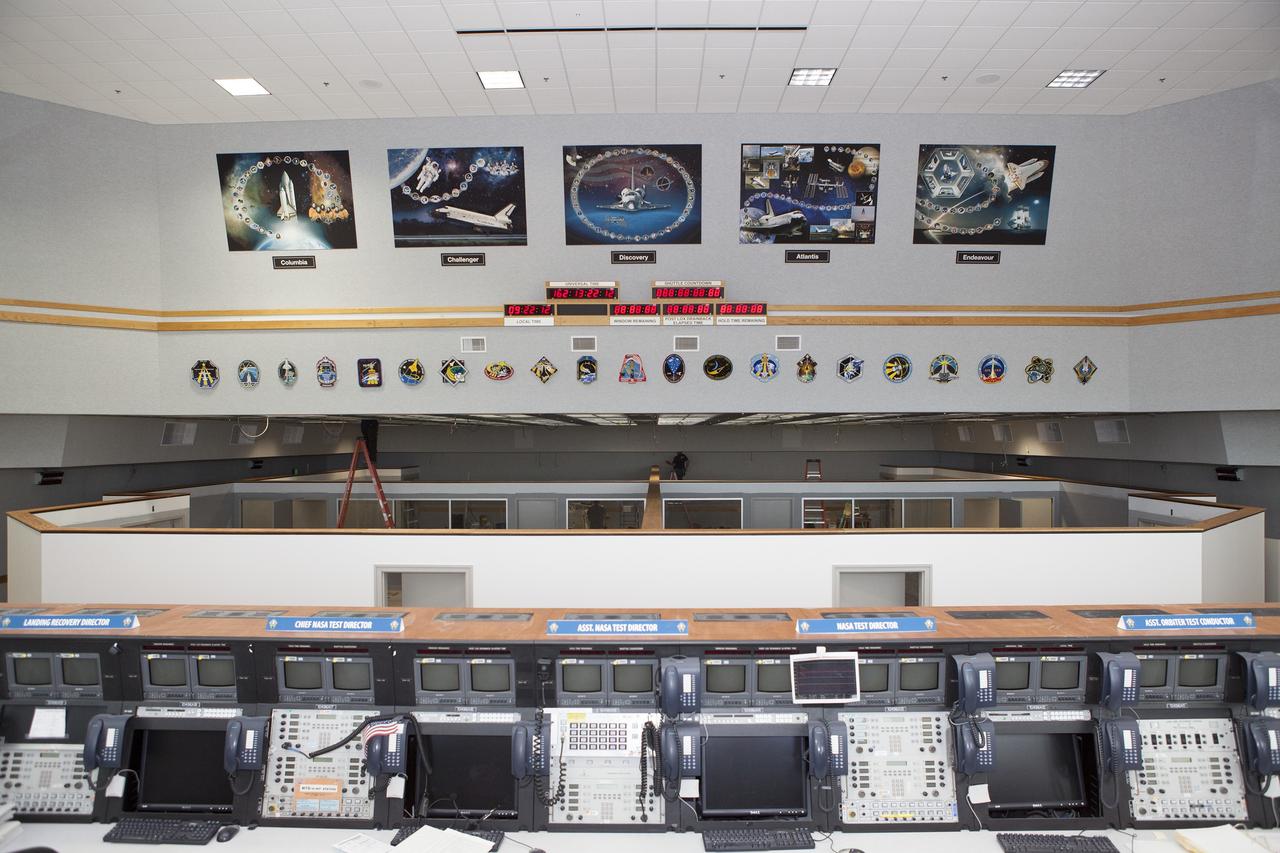
CAPE CANAVERAL, Fla. – Inside Firing Room 4 in the Launch Control Center at NASA's Kennedy Space Center in Florida, the outer walls, inner walls, windows and doors for the four separate firing rooms on the main floor have been completed. Three rows of upper level management consoles remain and could be used as a fifth firing room. The Ground Systems Development and Operations Program is overseeing the efforts to create a new firing room based on a multi-user concept. The space shuttle mission plaques and posters remain on the wall above the firing rooms. The design of Firing Room 4 incorporates five control room areas that can be flexible to meet current and future NASA and commercial user requirements. The equipment and most of the consoles from Firing Room 4 were moved to Firing Room 2 for possible future reuse. Photo credit: NASA/Dimitri Gerondidakis
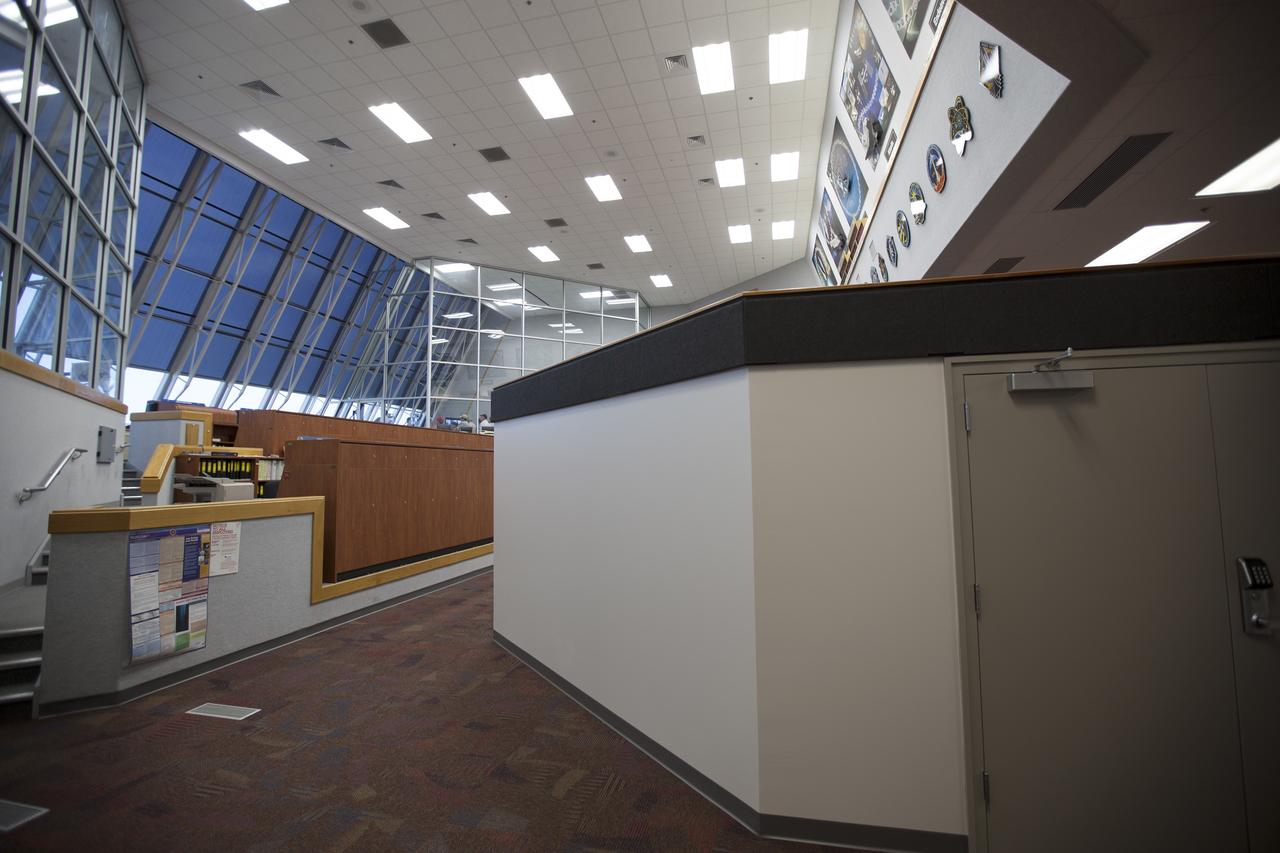
CAPE CANAVERAL, Fla. – Inside Firing Room 4 in the Launch Control Center at NASA's Kennedy Space Center in Florida, the inner walls, outer walls, windows and doors have been completed for the four individual firing rooms. New ceiling tiles, lighting and carpeting have been installed. Three rows of upper level management consoles remain and could be used as a fifth firing room. The Ground Systems Development and Operations Program is overseeing the efforts to create a new firing room based on a multi-user concept. The space shuttle plaques and posters remain on the wall above the firing rooms. The design of Firing Room 4 incorporates five control room areas that can be flexible to meet current and future NASA and commercial user requirements. The equipment and most of the consoles from Firing Room 4 were moved to Firing Room 2 for possible future reuse. Photo credit: NASA/Dimitri Gerondidakis
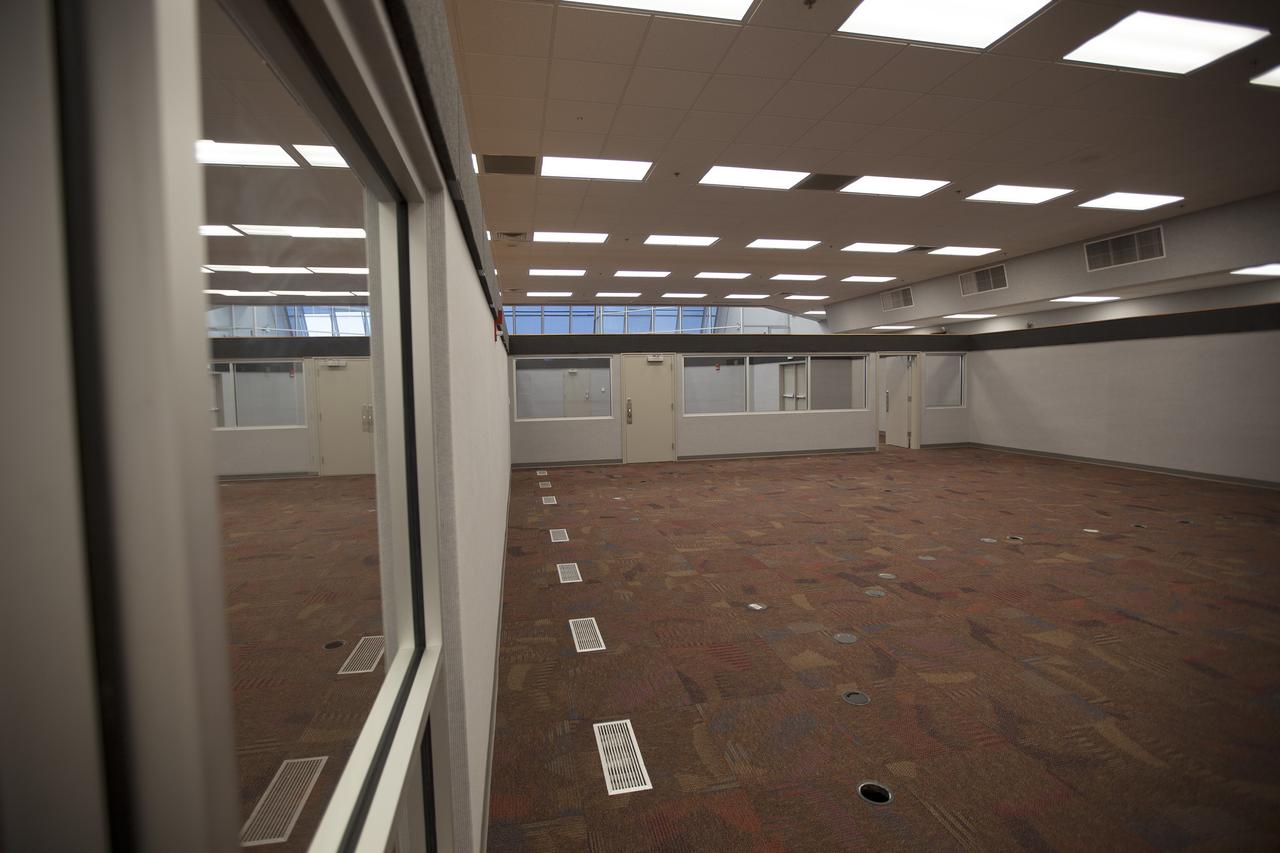
CAPE CANAVERAL, Fla. – Inside Firing Room 4 in the Launch Control Center at NASA's Kennedy Space Center in Florida, the inner walls, outer walls, windows and doors have been completed for the four individual firing rooms. New ceiling tiles, lighting and carpeting have been installed. Three rows of upper level management consoles remain and could be used as a fifth firing room. The Ground Systems Development and Operations Program is overseeing the efforts to create a new firing room based on a multi-user concept. The design of Firing Room 4 incorporates five control room areas that can be flexible to meet current and future NASA and commercial user requirements. The equipment and most of the consoles from Firing Room 4 were moved to Firing Room 2 for possible future reuse. Photo credit: NASA/Dimitri Gerondidakis
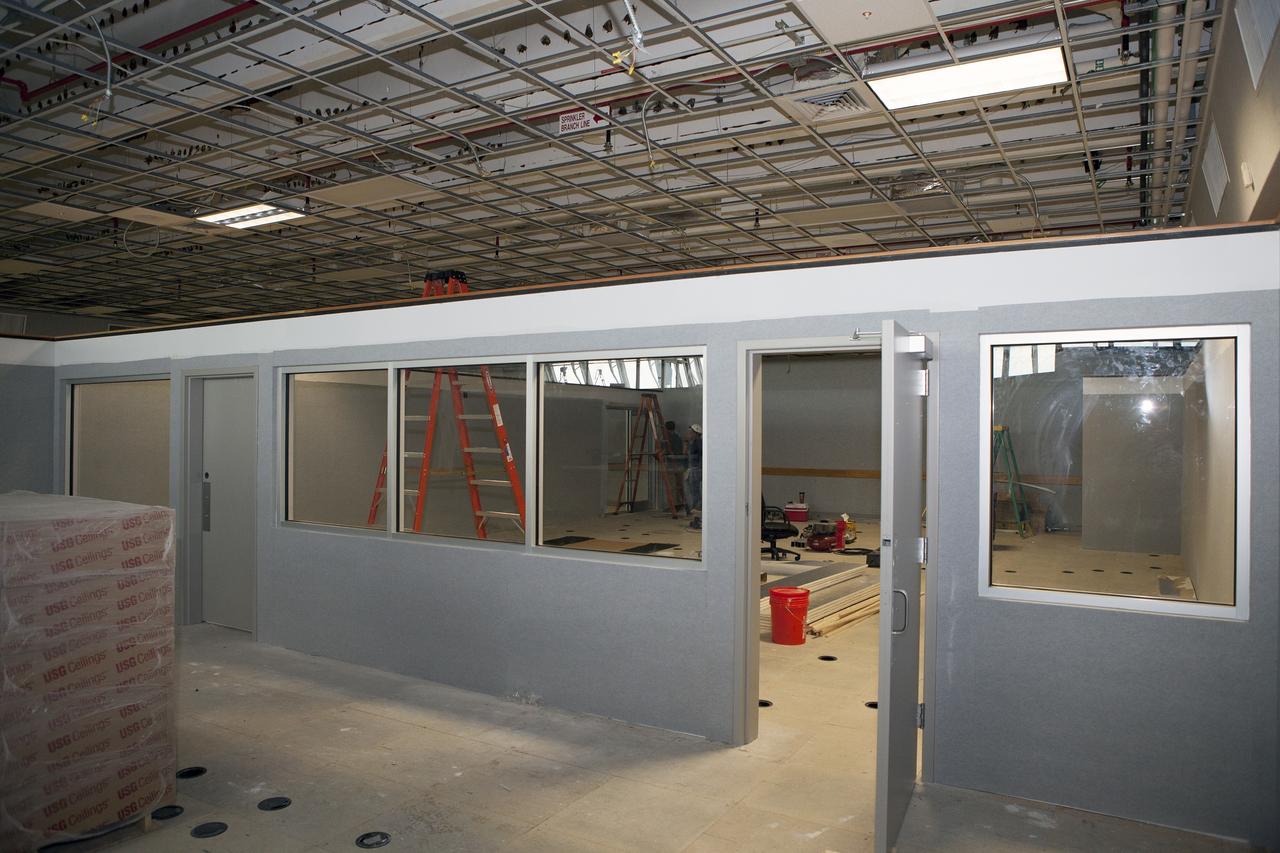
CAPE CANAVERAL, Fla. – Inside Firing Room 4 in the Launch Control Center at NASA's Kennedy Space Center in Florida, construction workers are completing the inner walls that separate the four firing rooms and the window framing and doorways are nearing completion. Three rows of upper level management consoles remain and could be used as a fifth firing room. The Ground Systems Development and Operations Program is overseeing the efforts to create a new firing room based on a multi-user concept. The design of Firing Room 4 will incorporate five control room areas that are flexible to meet current and future NASA and commercial user requirements. The equipment and most of the consoles from Firing Room 4 were moved to Firing Room 2 for possible future reuse. Photo credit: NASA/Daniel Casper
CAPE CANAVERAL, Fla. – Inside Firing Room 4 in the Launch Control Center at NASA's Kennedy Space Center in Florida, the outer walls and window framing for the four separate firing rooms on the main floor have been completed. Three rows of upper level management consoles remain and could be used as a fifth firing room. The Ground Systems Development and Operations Program is overseeing the efforts to create a new firing room based on a multi-user concept. The design of Firing Room 4 will incorporate five control room areas that are flexible to meet current and future NASA and commercial user requirements. The equipment and most of the consoles from Firing Room 4 were moved to Firing Room 2 for possible future reuse. Photo credit: NASA/Daniel Casper
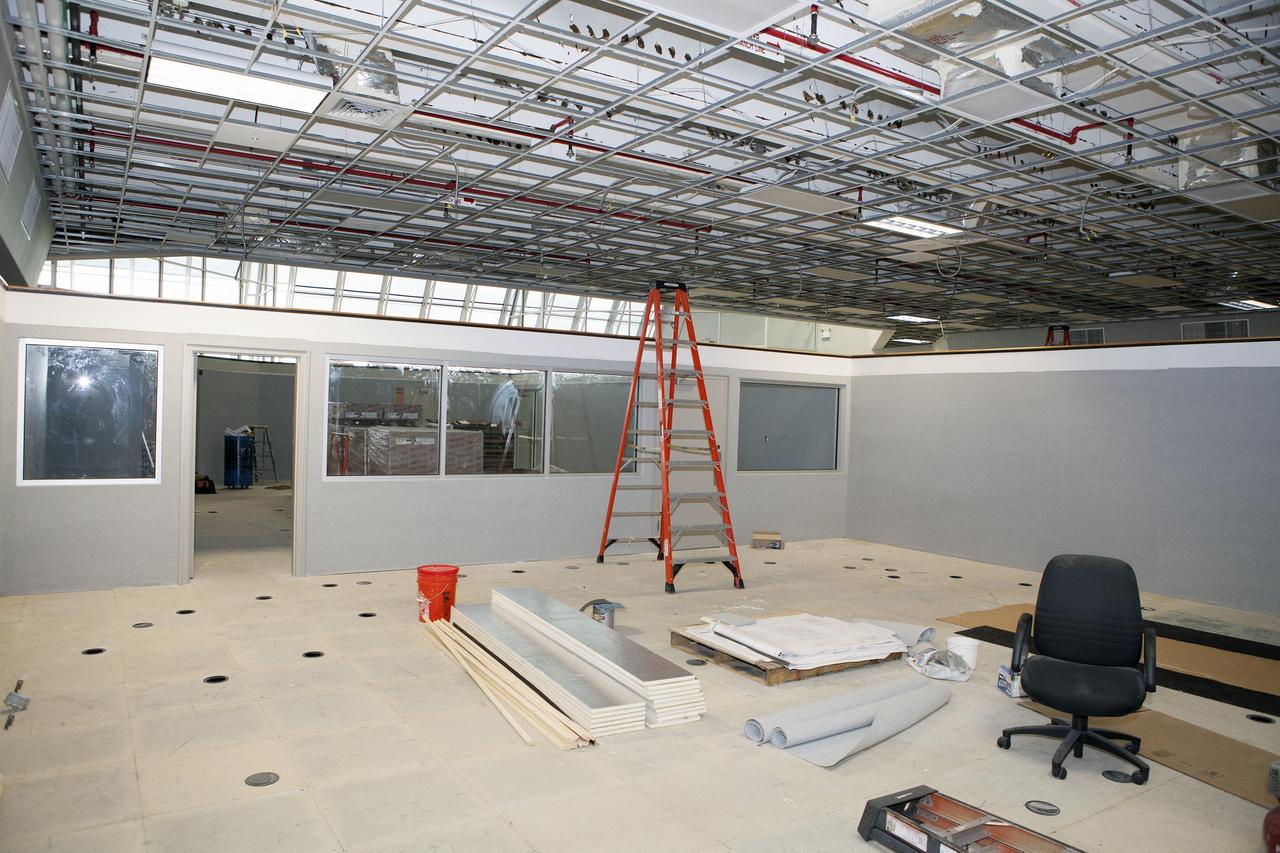
CAPE CANAVERAL, Fla. – Inside Firing Room 4 in the Launch Control Center at NASA's Kennedy Space Center in Florida, construction workers are completing the inner walls that separate the four firing rooms and the window framing and doorways are nearing completion. Preparations are underway for installation of new ceiling tiles. Three rows of upper level management consoles remain and could be used as a fifth firing room. The Ground Systems Development and Operations Program is overseeing the efforts to create a new firing room based on a multi-user concept. The design of Firing Room 4 will incorporate five control room areas that are flexible to meet current and future NASA and commercial user requirements. The equipment and most of the consoles from Firing Room 4 were moved to Firing Room 2 for possible future reuse. Photo credit: NASA/Daniel Casper
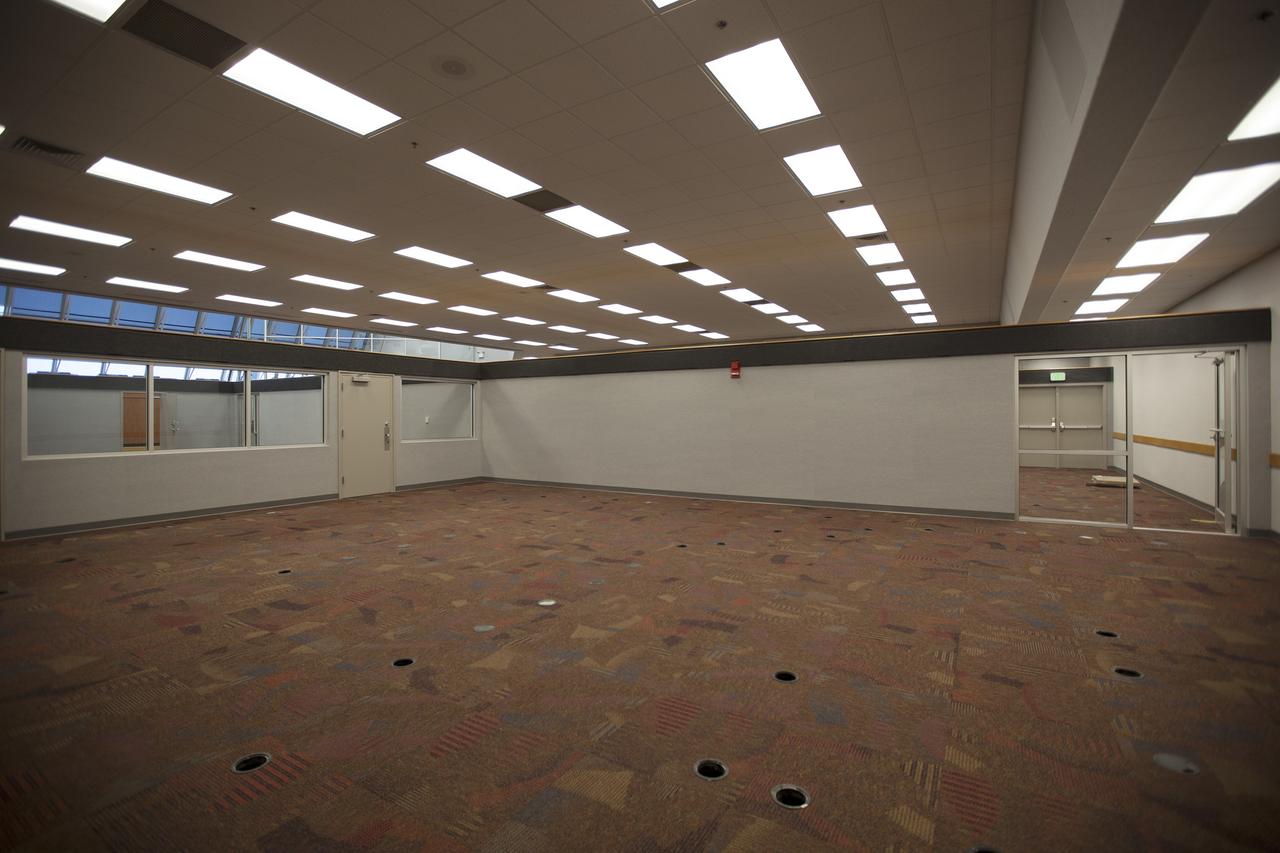
CAPE CANAVERAL, Fla. – Inside Firing Room 4 in the Launch Control Center at NASA's Kennedy Space Center in Florida, the outer walls, inner walls, windows and doors for the four firing rooms have been completed and new carpeting has been installed. Three rows of upper level management consoles remain and could be used as a fifth firing room. The Ground Systems Development and Operations Program is overseeing the efforts to create a new firing room based on a multi-user concept. The design of Firing Room 4 incorporates five control room areas that can be flexible to meet current and future NASA and commercial user requirements. The equipment and most of the consoles from Firing Room 4 were moved to Firing Room 2 for possible future reuse. Photo credit: NASA/Dimitri Gerondidakis
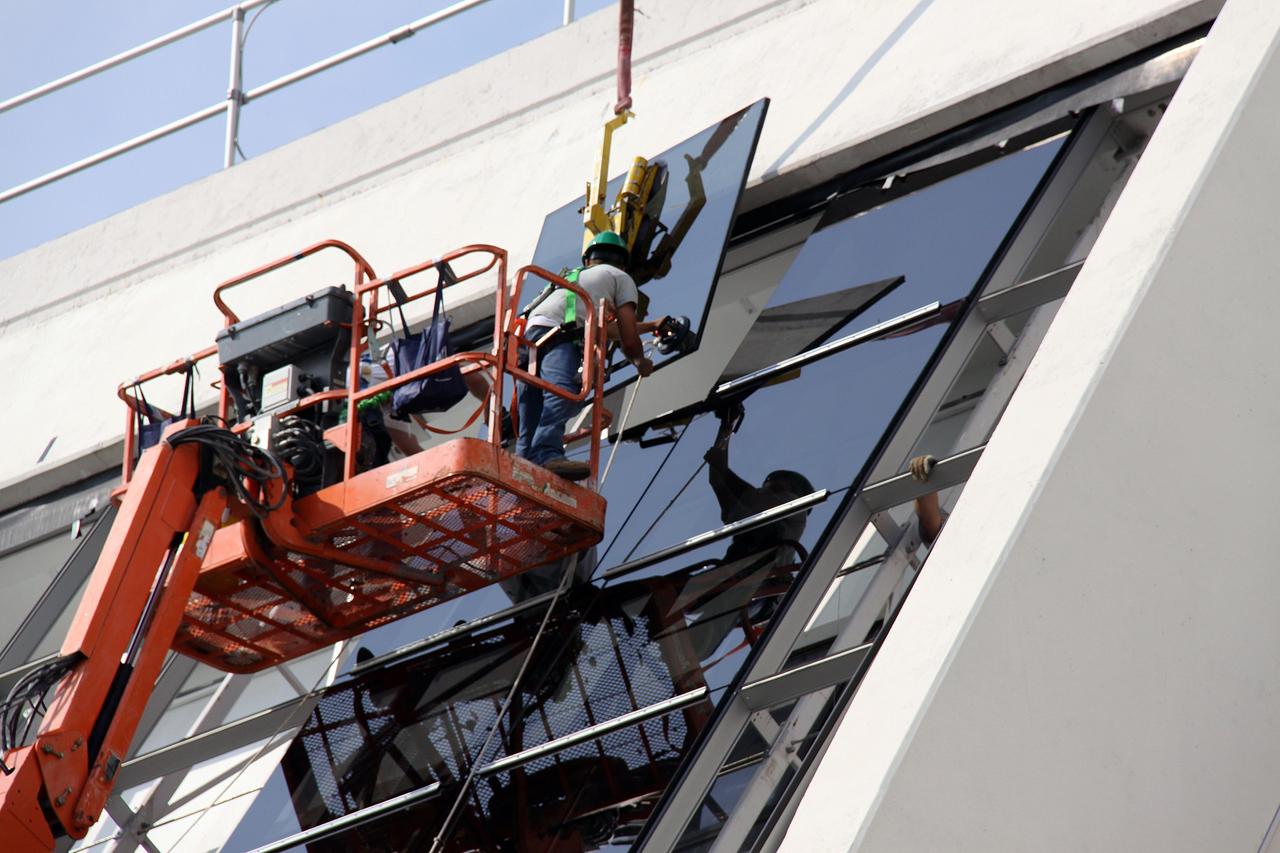
CAPE CANAVERAL, Fla. – A new window is lowered toward the existing Firing Room windows in the Launch Control Center at NASA's Kennedy Space Center in Florida. New, hurricane-rated window systems for the four Firing Rooms and the vestibule areas between Firing Rooms 1 & 2 and Firing Rooms 3 & 4 are being installed. In order to avoid operational impacts the new windows are being installed on the outside of the existing windows, enclosing the space formerly occupied by the louvers. The old windows will remain in place until the new windows are completely installed and leak tested. This approach will continue to keep the firing rooms from being exposed to the elements. Photo credit: NASA/Jack Pfaller
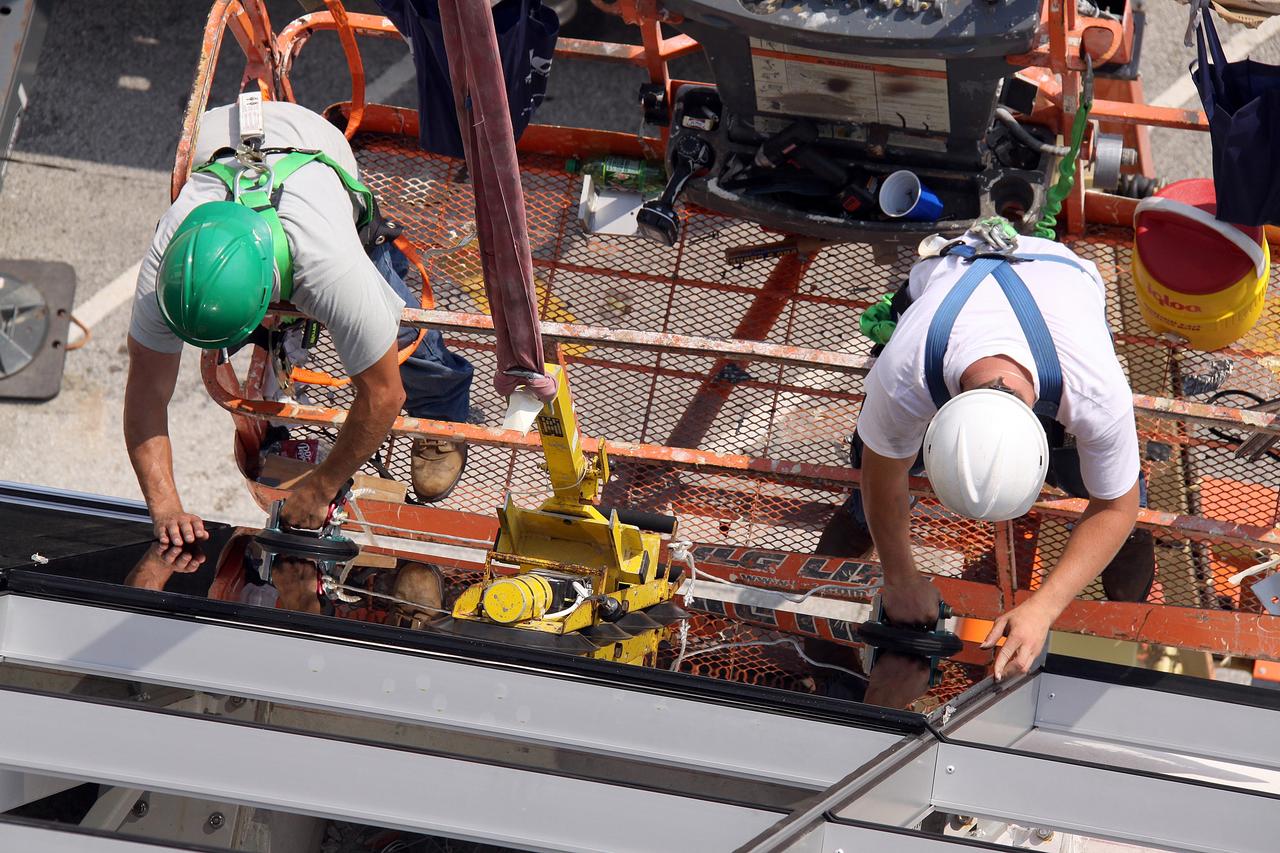
CAPE CANAVERAL, Fla. – Workers at NASA's Kennedy Space Center in Florida secure a new window on the Firing Room in the Launch Control Center. New, hurricane-rated window systems for the four Firing Rooms and the vestibule areas between Firing Rooms 1 & 2 and Firing Rooms 3 & 4 are being installed. In order to avoid operational impacts the new windows are being installed on the outside of the existing windows, enclosing the space formerly occupied by the louvers. The old windows will remain in place until the new windows are completely installed and leak tested. This approach will continue to keep the firing rooms from being exposed to the elements. Photo credit: NASA/Jack Pfaller
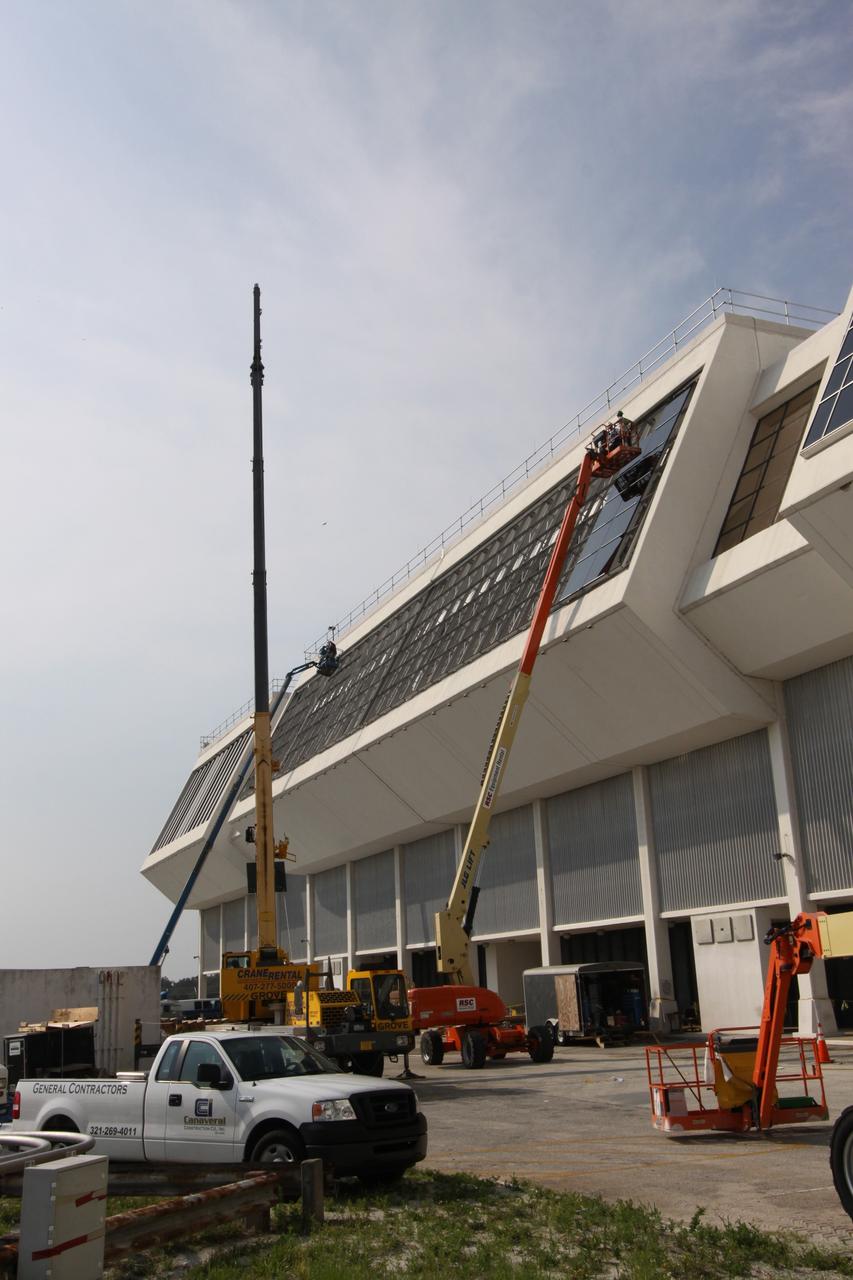
CAPE CANAVERAL, Fla. – Work continues on removing the louvers and replacing the windows on the Firing Room windows in the Launch Control Center at NASA's Kennedy Space Center in Florida. New, hurricane-rated window systems for the four Firing Rooms and the vestibule areas between Firing Rooms 1 & 2 and Firing Rooms 3 & 4 are being installed. In order to avoid operational impacts the new windows are being installed on the outside of the existing windows, enclosing the space formerly occupied by the louvers. The old windows will remain in place until the new windows are completely installed and leak tested. This approach will continue to keep the firing rooms from being exposed to the elements. Photo credit: NASA/Jack Pfaller
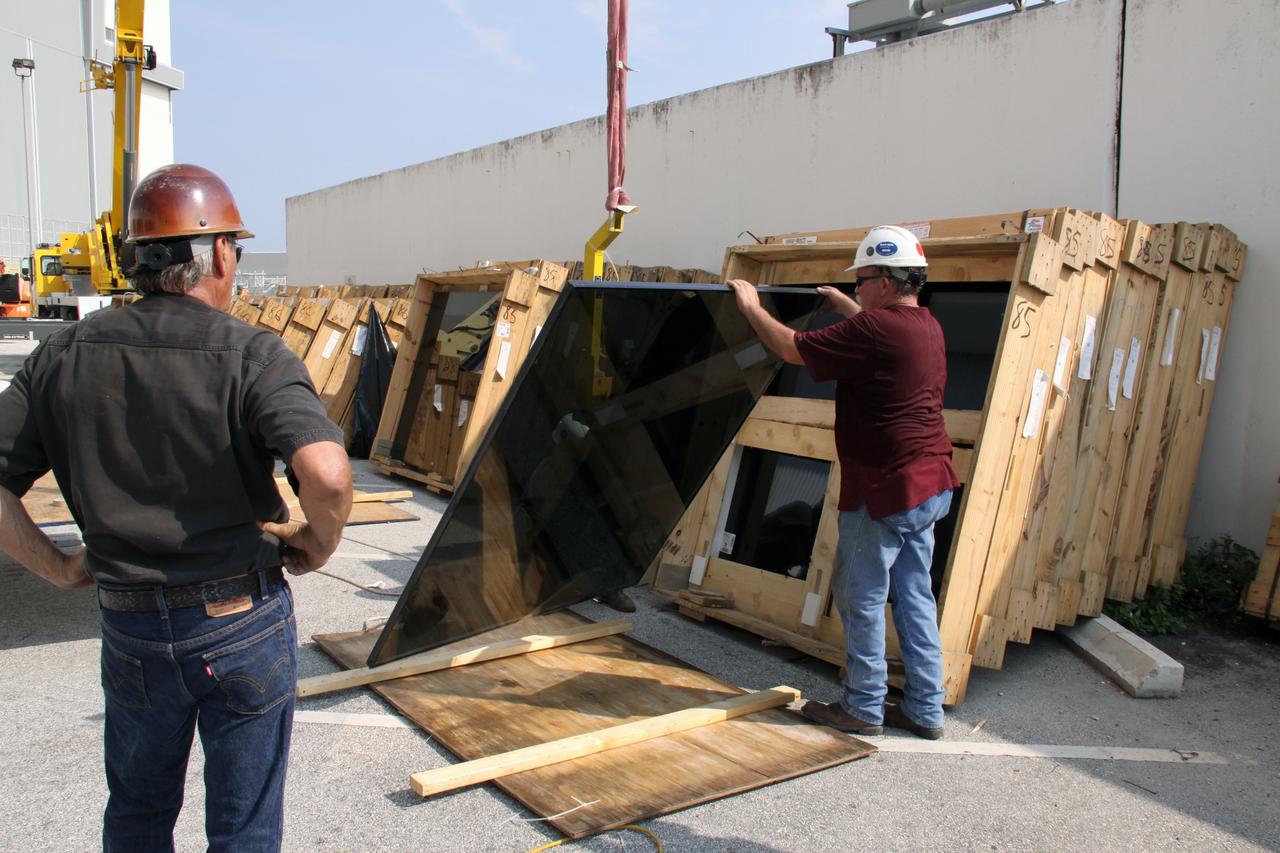
CAPE CANAVERAL, Fla. – Alongside the Launch Control Center at NASA's Kennedy Space Center in Florida, a new window is prepared to be lifted up to the existing Firing Room windows. New, hurricane-rated window systems for the four Firing Rooms and the vestibule areas between Firing Rooms 1 & 2 and Firing Rooms 3 & 4 are being installed. In order to avoid operational impacts the new windows are being installed on the outside of the existing windows, enclosing the space formerly occupied by the louvers. The old windows will remain in place until the new windows are completely installed and leak tested. This approach will continue to keep the firing rooms from being exposed to the elements. Photo credit: NASA/Jack Pfaller
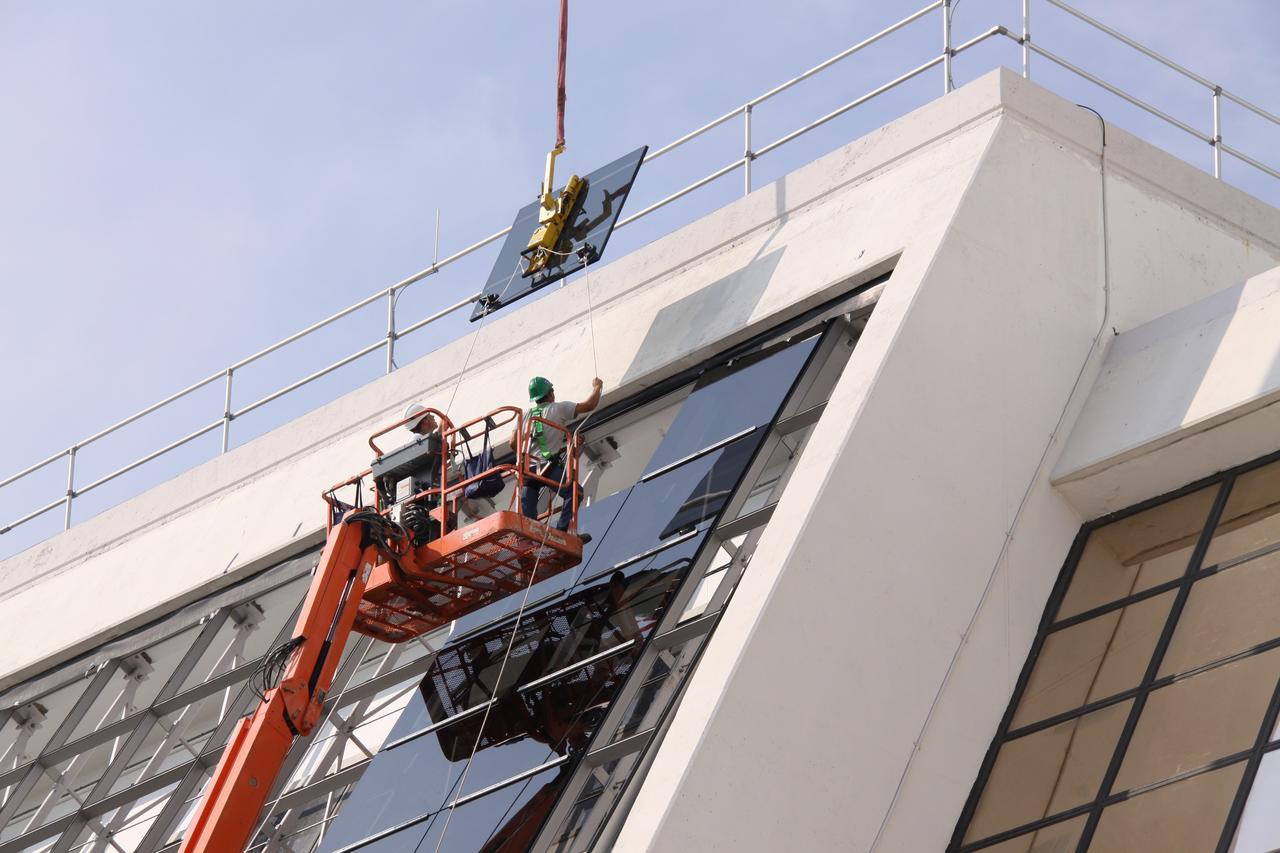
CAPE CANAVERAL, Fla. – A new window is lowered toward the existing Firing Room windows in the Launch Control Center at NASA's Kennedy Space Center in Florida. New, hurricane-rated window systems for the four Firing Rooms and the vestibule areas between Firing Rooms 1 & 2 and Firing Rooms 3 & 4 are being installed. In order to avoid operational impacts the new windows are being installed on the outside of the existing windows, enclosing the space formerly occupied by the louvers. The old windows will remain in place until the new windows are completely installed and leak tested. This approach will continue to keep the firing rooms from being exposed to the elements. Photo credit: NASA/Jack Pfaller
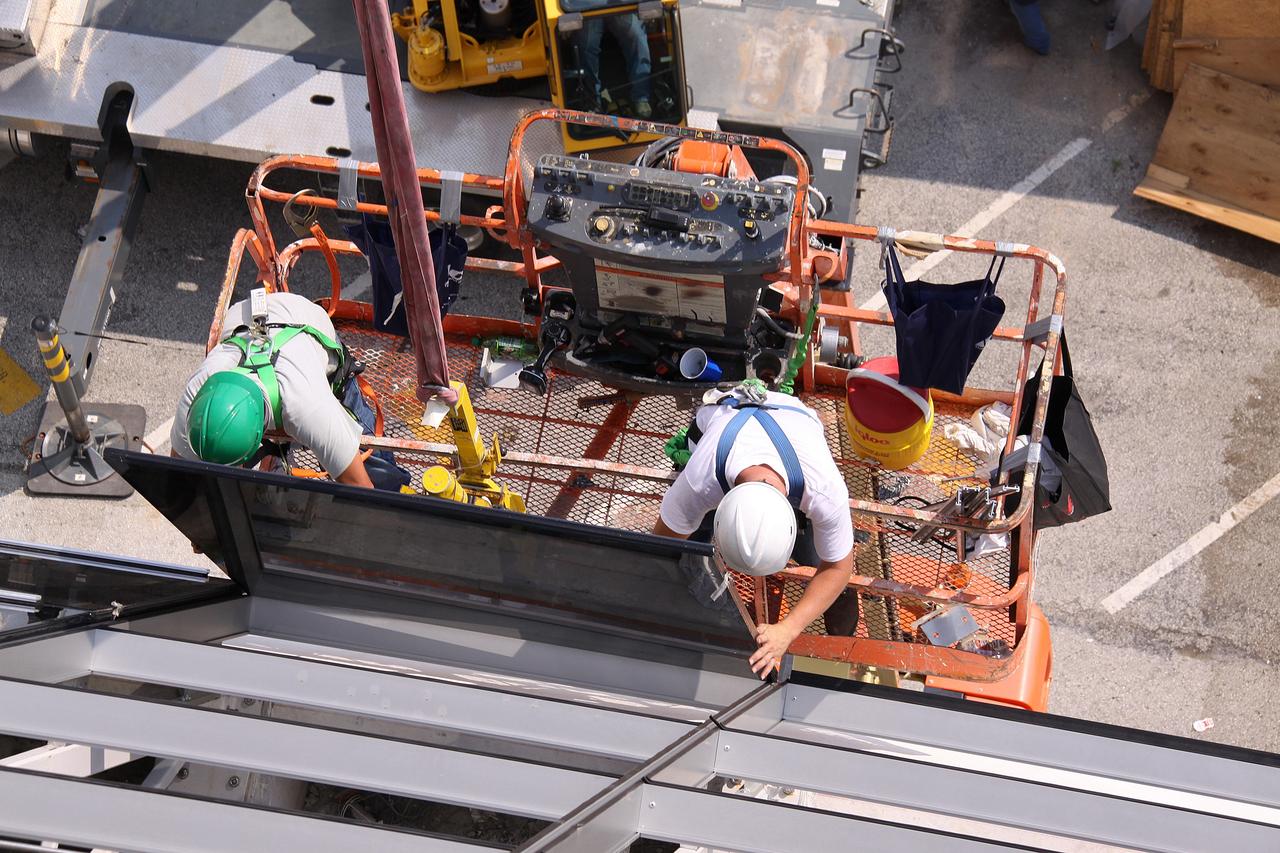
CAPE CANAVERAL, Fla. – Workers at NASA's Kennedy Space Center in Florida carefully place a new window on the Firing Room in the Launch Control Center. New, hurricane-rated window systems for the four Firing Rooms and the vestibule areas between Firing Rooms 1 & 2 and Firing Rooms 3 & 4 are being installed. In order to avoid operational impacts the new windows are being installed on the outside of the existing windows, enclosing the space formerly occupied by the louvers. The old windows will remain in place until the new windows are completely installed and leak tested. This approach will continue to keep the firing rooms from being exposed to the elements. Photo credit: NASA/Jack Pfaller
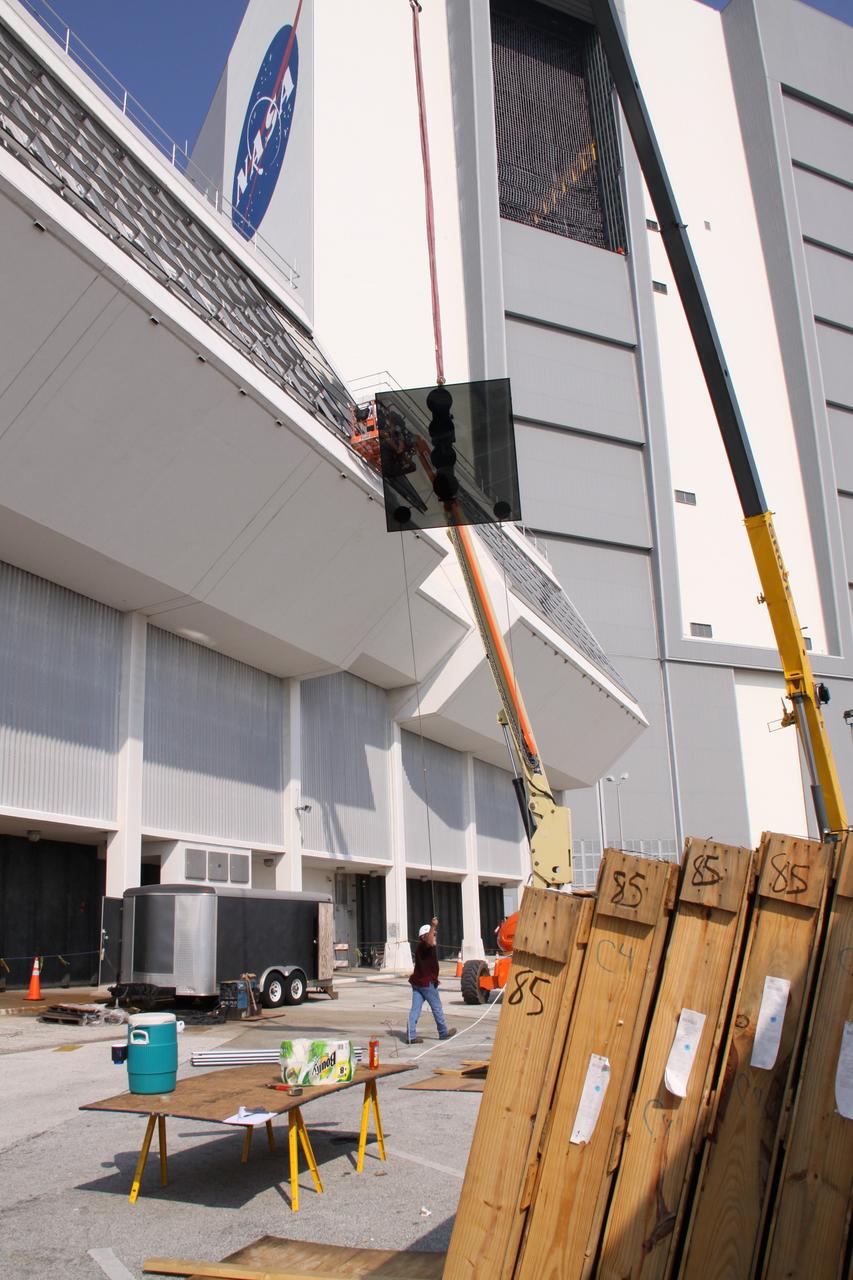
CAPE CANAVERAL, Fla. – A new window is raised toward the existing Firing Room windows in the Launch Control Center at NASA's Kennedy Space Center in Florida. New, hurricane-rated window systems for the four Firing Rooms and the vestibule areas between Firing Rooms 1 & 2 and Firing Rooms 3 & 4 are being installed. In order to avoid operational impacts the new windows are being installed on the outside of the existing windows, enclosing the space formerly occupied by the louvers. The old windows will remain in place until the new windows are completely installed and leak tested. This approach will continue to keep the firing rooms from being exposed to the elements. Photo credit: NASA/Jack Pfaller
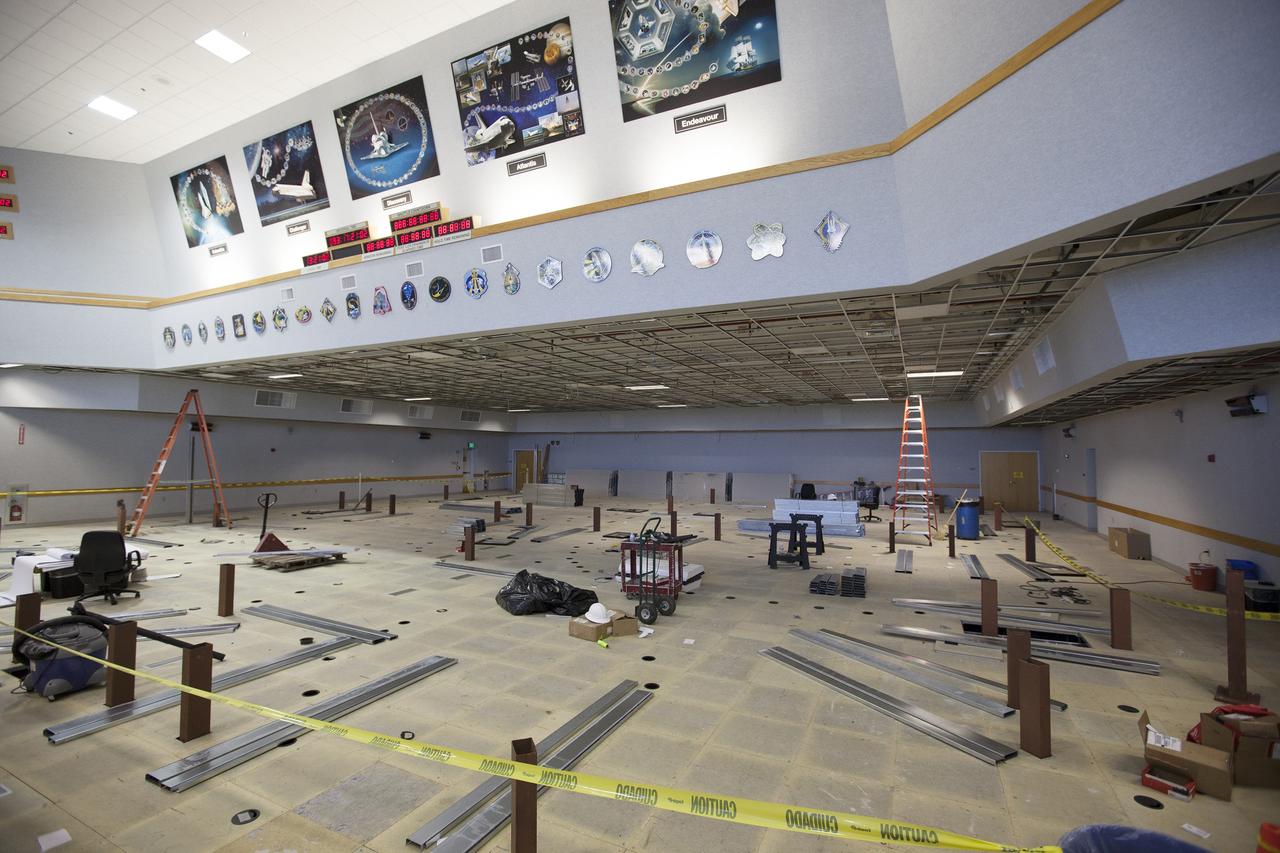
CAPE CANAVERAL, Fla. – The Ground Systems Development and Operations Program is overseeing efforts to create a new multi-user firing room in Firing Room 4 in the Launch Control Center at NASA's Kennedy Space Center in Florida. The main floor consoles, cabling and wires below the floor and ceiling tiles above have been removed. Sub-flooring has been installed and the room is marked off to create four separate rooms on the main floor. In view along the soffit are space shuttle launch plaques for 21 missions launched from Firing Room 4. The design of Firing Room 4 will incorporate five control room areas that are flexible to meet current and future NASA and commercial user requirements. The equipment and most of the consoles from Firing Room 4 were moved to Firing Room 2 for possible future reuse. Photo credit: NASA/Ben Smegelsky
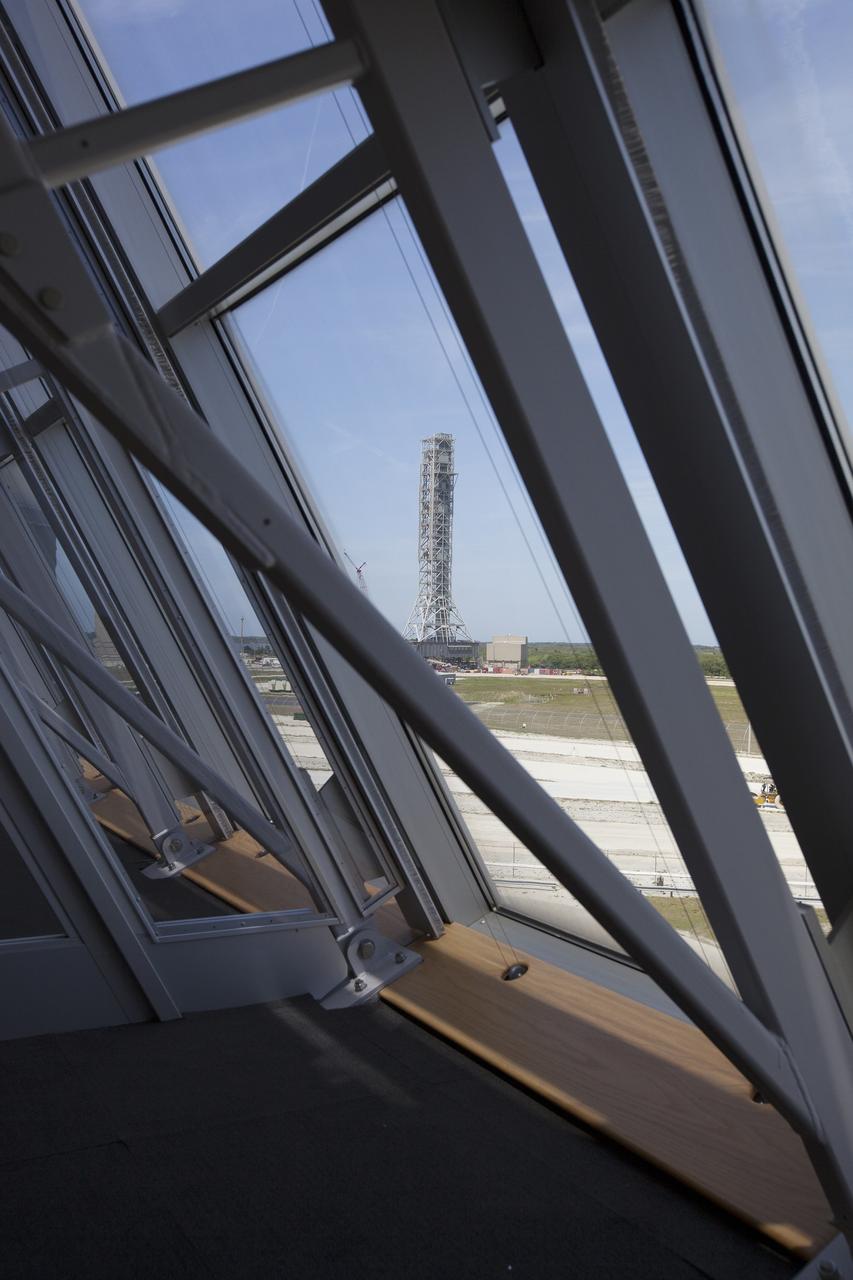
CAPE CANAVERAL, Fla. – The Mobile Launcher is visible through a window inside Firing Room 4 in the Launch Control Center at NASA's Kennedy Space Center in Florida. The Ground Systems Development and Operations Program is overseeing efforts to create a new multi-user firing room in Firing Room 4. The main floor consoles, cabling and wires below the floor and ceiling tiles above have been removed. Sub-flooring has been installed and the room is marked off to create four separate rooms on the main floor. The design of Firing Room 4 will incorporate five control room areas that are flexible to meet current and future NASA and commercial user requirements. The equipment and most of the consoles from Firing Room 4 were moved to Firing Room 2 for possible future reuse. Photo credit: NASA/Ben Smegelsky
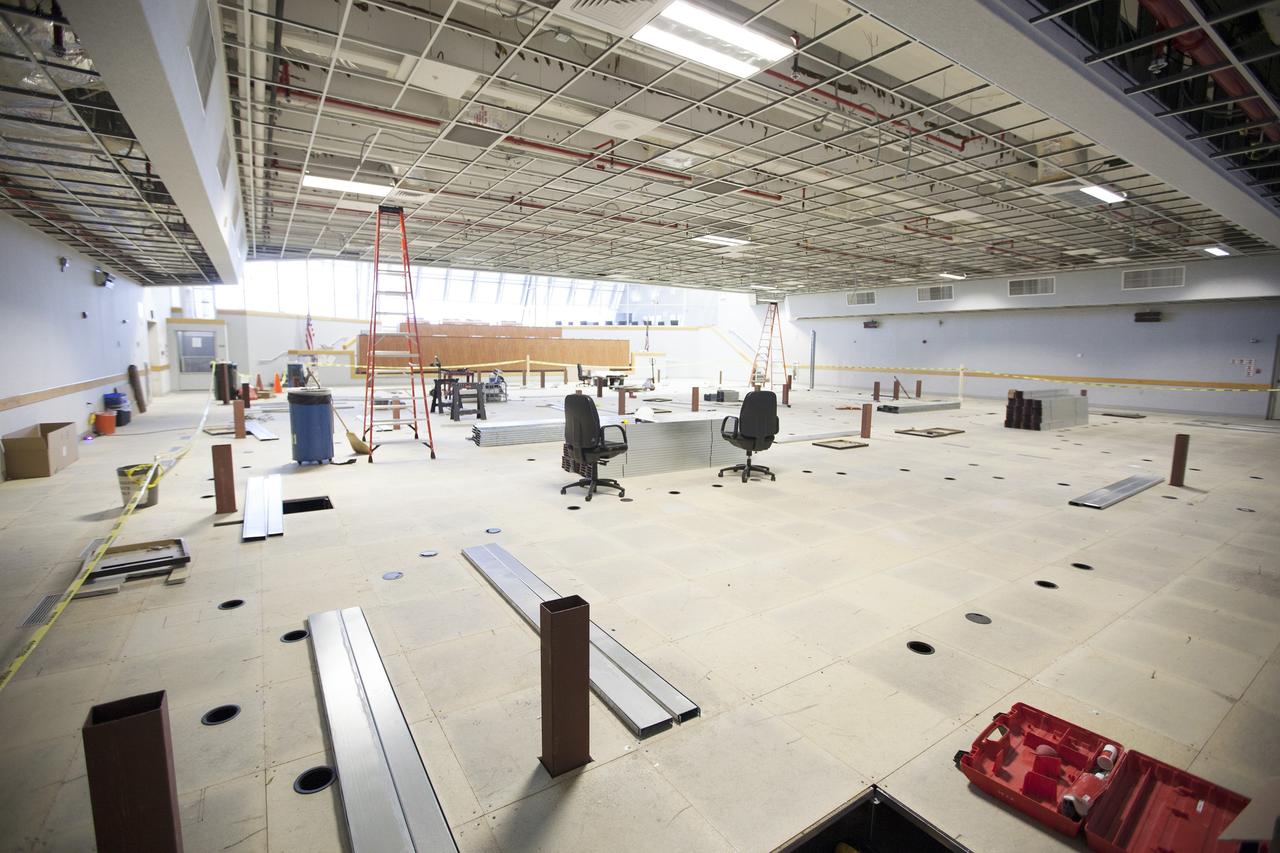
CAPE CANAVERAL, Fla. – The Ground Systems Development and Operations Program is overseeing efforts to create a new multi-user firing room in Firing Room 4 in the Launch Control Center at NASA's Kennedy Space Center in Florida. The main floor consoles, cabling and wires below the floor and ceiling tiles have been removed. Sub-flooring has been installed and the room is marked off to create four separate rooms on the main floor. The design of Firing Room 4 will incorporate five control room areas that are flexible to meet current and future NASA and commercial user requirements. The equipment and most of the consoles from Firing Room 4 were moved to Firing Room 2 for possible future reuse. Photo credit: NASA/Ben Smegelsky
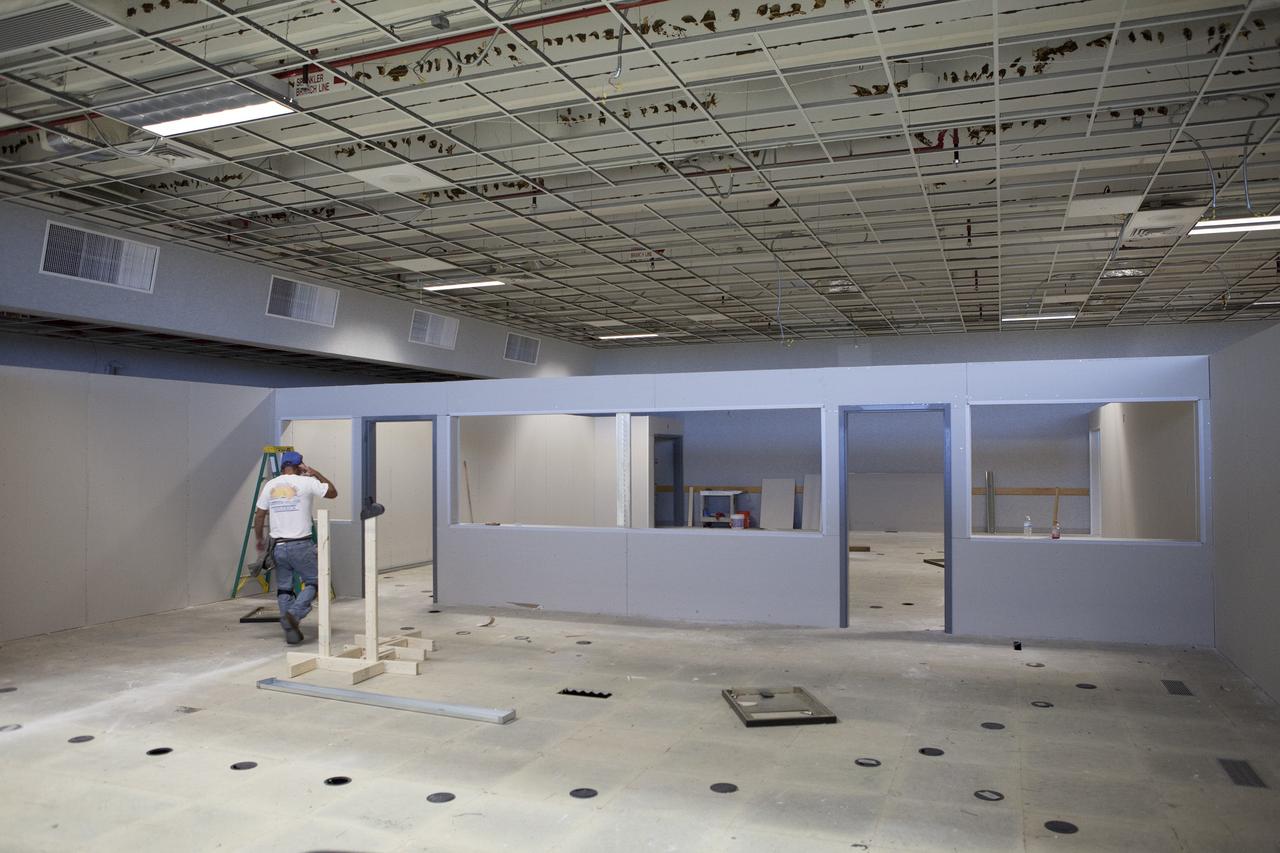
CAPE CANAVERAL, Fla. – A construction worker completes the installation of an inner wall inside Firing Room 4 in the Launch Control Center at NASA's Kennedy Space Center in Florida. The main floor has been divided into four separate rooms. The windows and doors between the rooms have been framed in. Ceiling tiles have been removed for upgrades to conduit and wiring. The Ground Systems Development and Operations Program is overseeing efforts to create a new firing room based on a multi-user concept. The design of Firing Room 4 will incorporate five control room areas that are flexible to meet current and future NASA and commercial user requirements. The equipment and most of the consoles from Firing Room 4 were moved to Firing Room 2 for possible future reuse. Photo credit: NASA/Daniel Casper
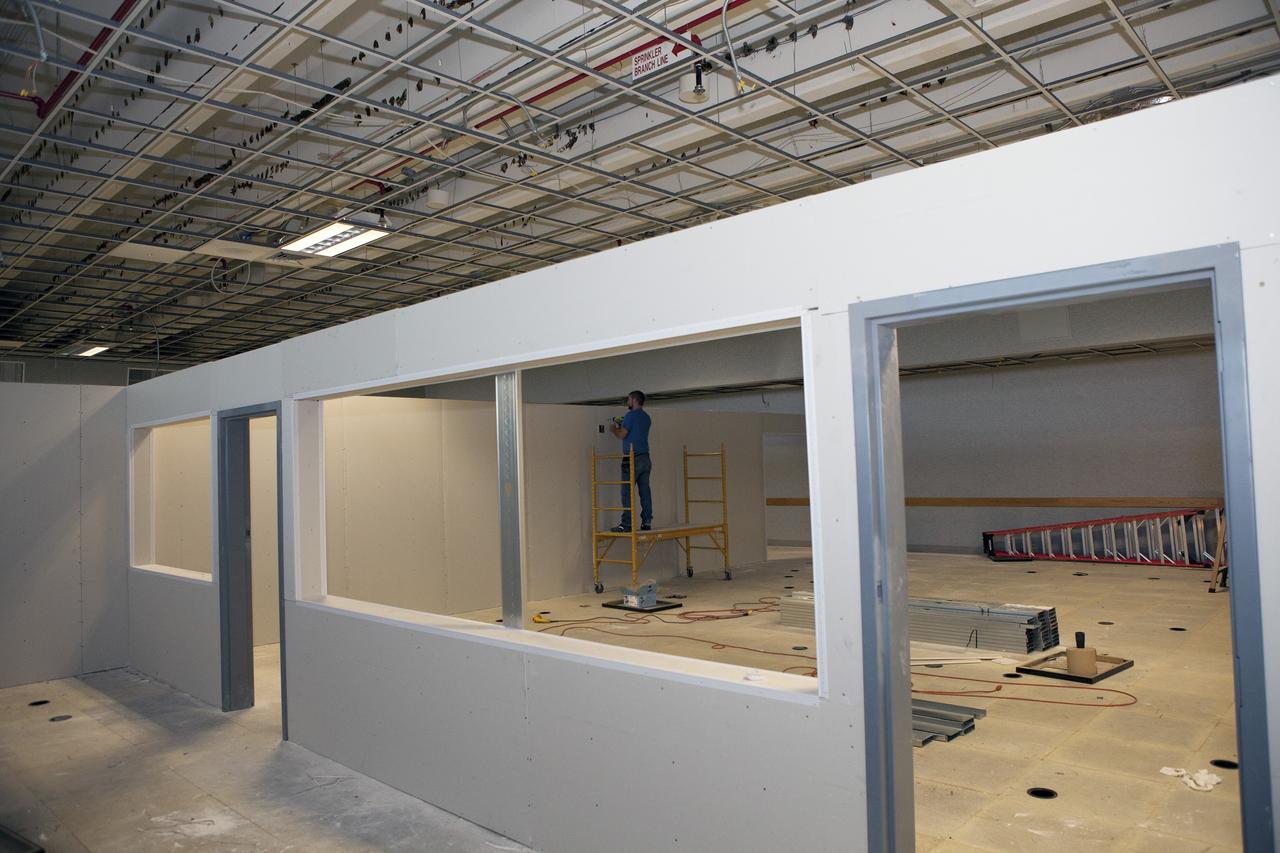
CAPE CANAVERAL, Fla. – A construction worker completes the installation of an inner wall inside Firing Room 4 in the Launch Control Center at NASA's Kennedy Space Center in Florida. The main floor has been divided into four separate rooms. The windows and doors between the rooms have been framed in. The Ground Systems Development and Operations Program is overseeing efforts to create a new firing room based on a multi-user concept. The design of Firing Room 4 will incorporate five control room areas that are flexible to meet current and future NASA and commercial user requirements. The equipment and most of the consoles from Firing Room 4 were moved to Firing Room 2 for possible future reuse. Photo credit: NASA/Daniel Casper
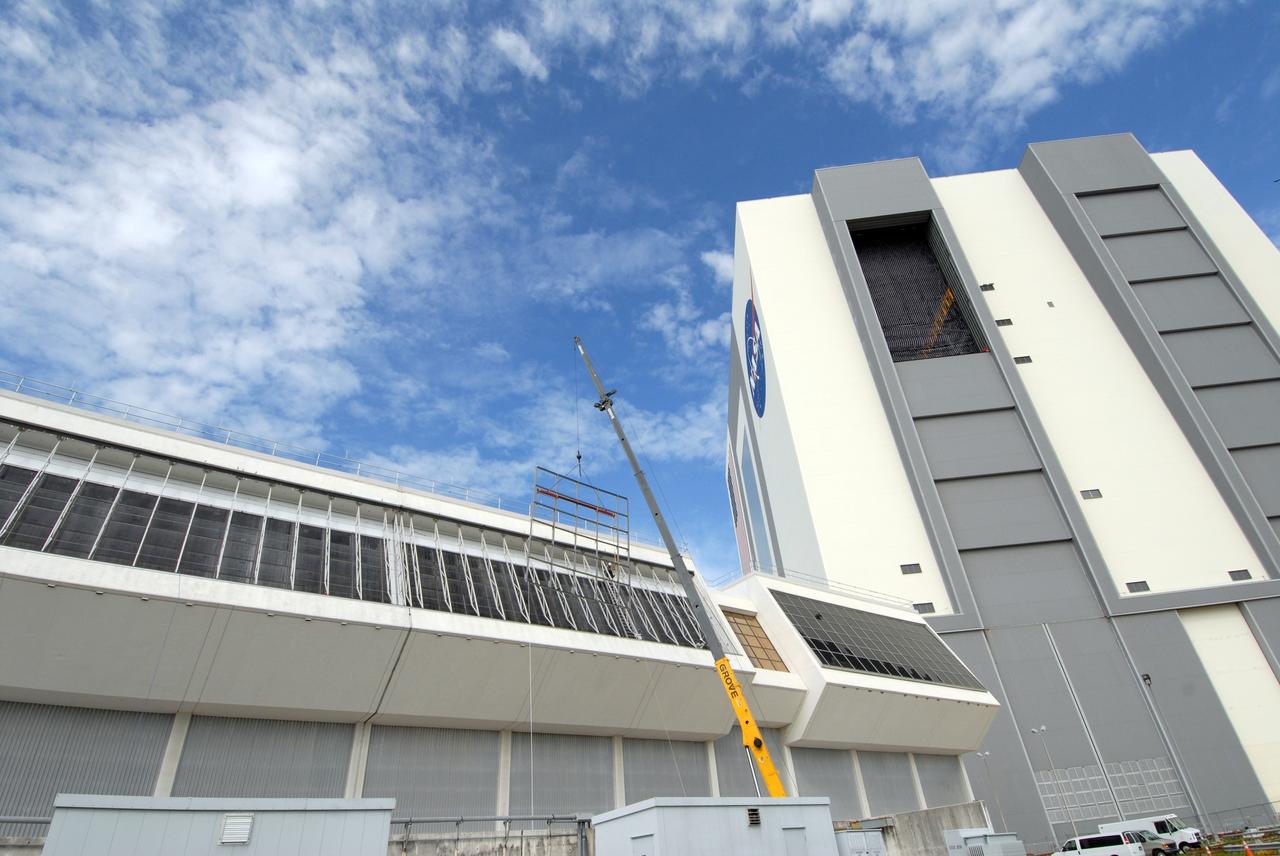
CAPE CANAVERAL, Fla. – At NASA's Kennedy Space Center in Florida, new, hurricane-rated window systems for the four Firing Rooms and the vestibule areas between Firing Rooms 1 & 2 and Firing Rooms 3 & 4 are being installed. In order to avoid operational impacts, the new windows are being installed on the outside of the existing windows, enclosing the space formerly occupied by the louvers, and the old windows will remain in place until the new windows are completely installed and leak tested. This approach will continue to keep the firing rooms from being exposed to the elements. Photo credit: NASA/Tim Jacobs
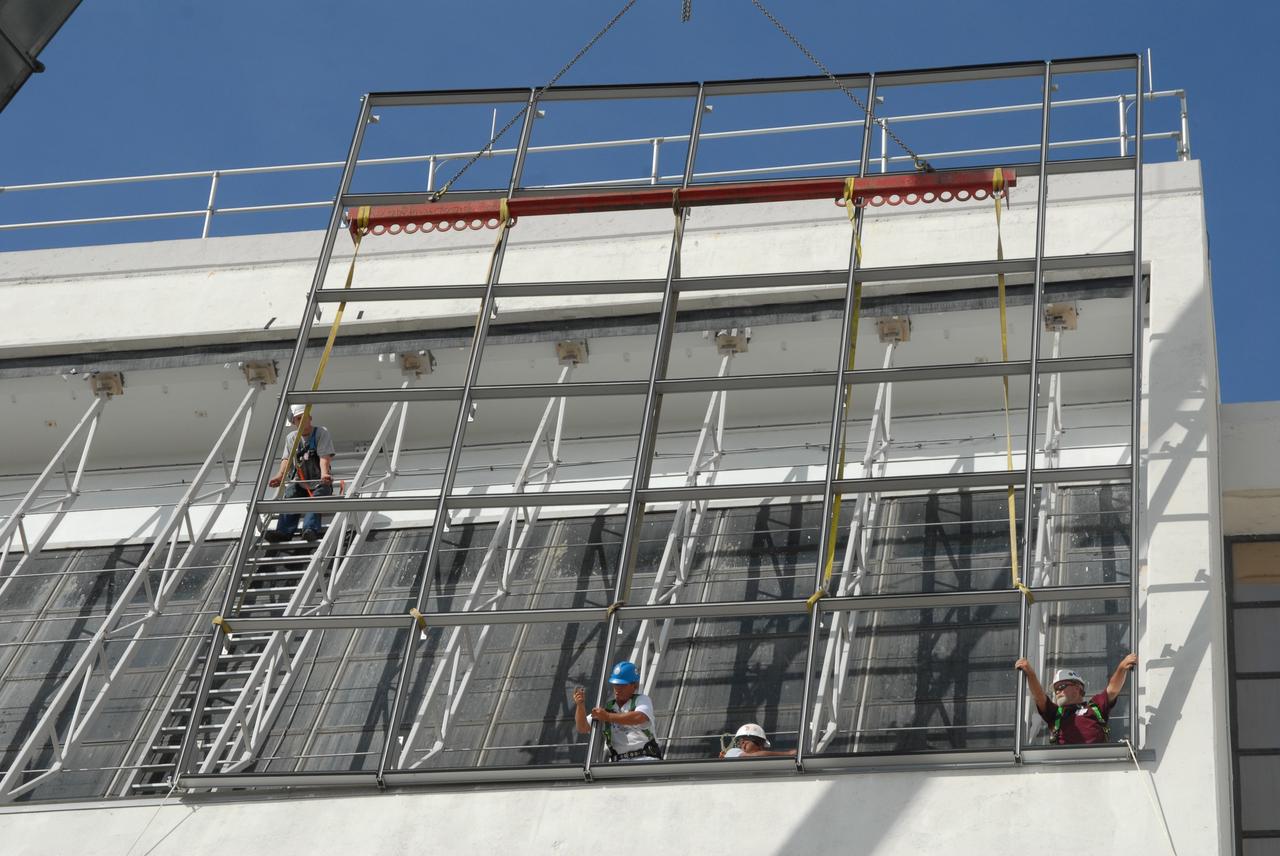
CAPE CANAVERAL, Fla. – At NASA's Kennedy Space Center in Florida, new, hurricane-rated window systems for the Launch Control Center's four Firing Rooms and the vestibule areas between Firing Rooms 1 & 2 and Firing Rooms 3 & 4 are being installed. In order to avoid operational impacts, the new windows are being installed on the outside of the existing windows, enclosing the space formerly occupied by the louvers, and the old windows will remain in place until the new windows are completely installed and leak tested. This approach will continue to keep the firing rooms from being exposed to the elements. Photo credit: NASA/Tim Jacobs
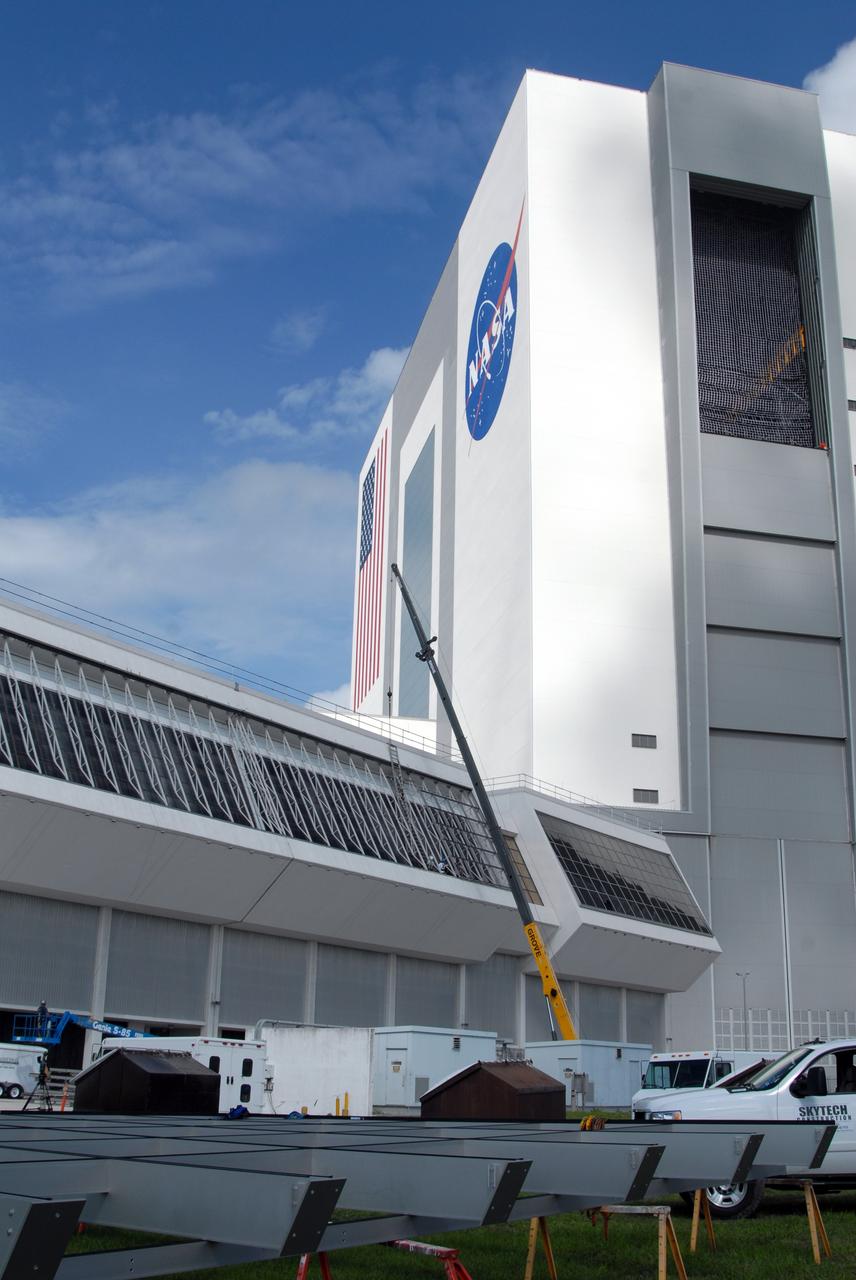
CAPE CANAVERAL, Fla. – At NASA's Kennedy Space Center in Florida, new, hurricane-rated window systems for the Launch Control Center's four Firing Rooms and the vestibule areas between Firing Rooms 1 & 2 and Firing Rooms 3 & 4 are being installed. In order to avoid operational impacts, the new windows are being installed on the outside of the existing windows, enclosing the space formerly occupied by the louvers, and the old windows will remain in place until the new windows are completely installed and leak tested. This approach will continue to keep the firing rooms from being exposed to the elements. Photo credit: NASA/Tim Jacobs
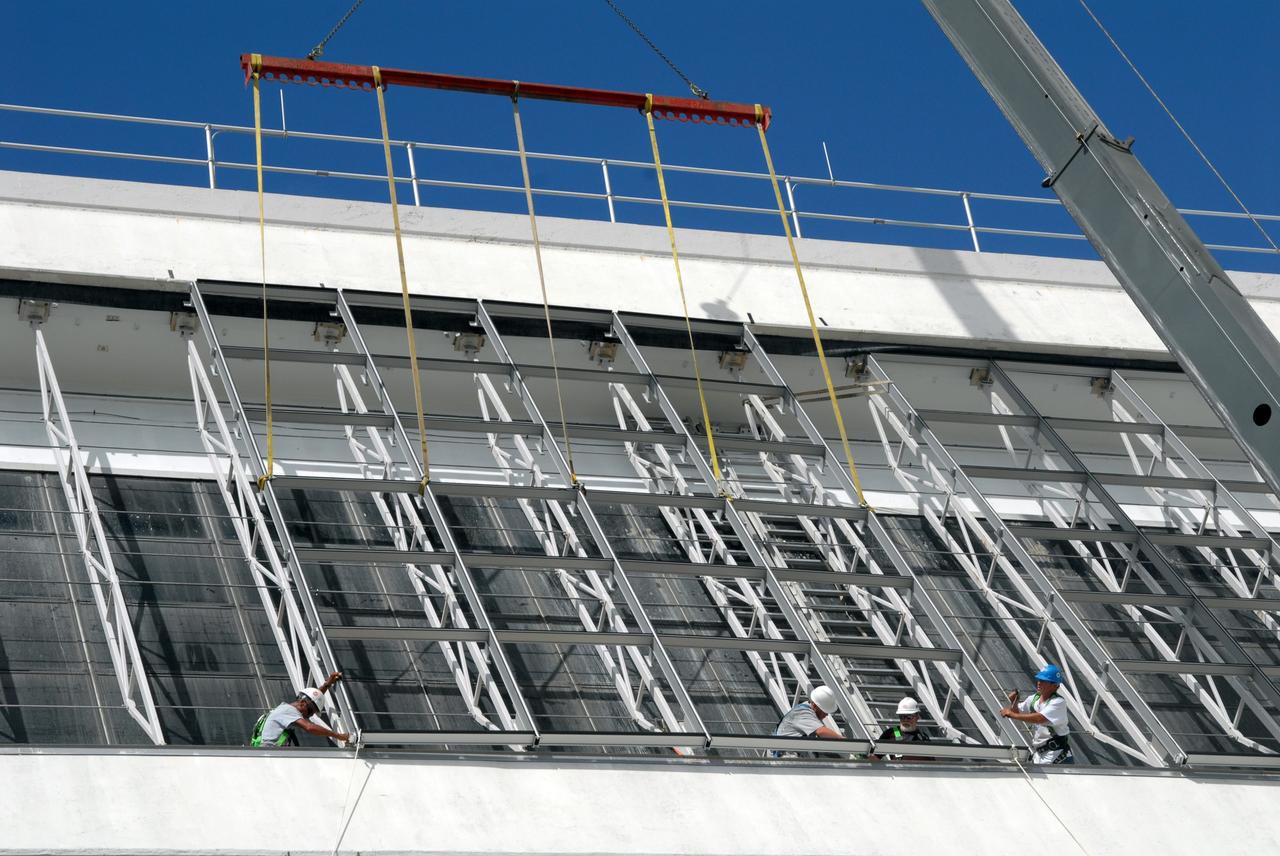
CAPE CANAVERAL, Fla. – At NASA's Kennedy Space Center in Florida, new, hurricane-rated window systems for the Launch Control Center's four Firing Rooms and the vestibule areas between Firing Rooms 1 & 2 and Firing Rooms 3 & 4 are being installed. In order to avoid operational impacts, the new windows are being installed on the outside of the existing windows, enclosing the space formerly occupied by the louvers, and the old windows will remain in place until the new windows are completely installed and leak tested. This approach will continue to keep the firing rooms from being exposed to the elements. Photo credit: NASA/Tim Jacobs
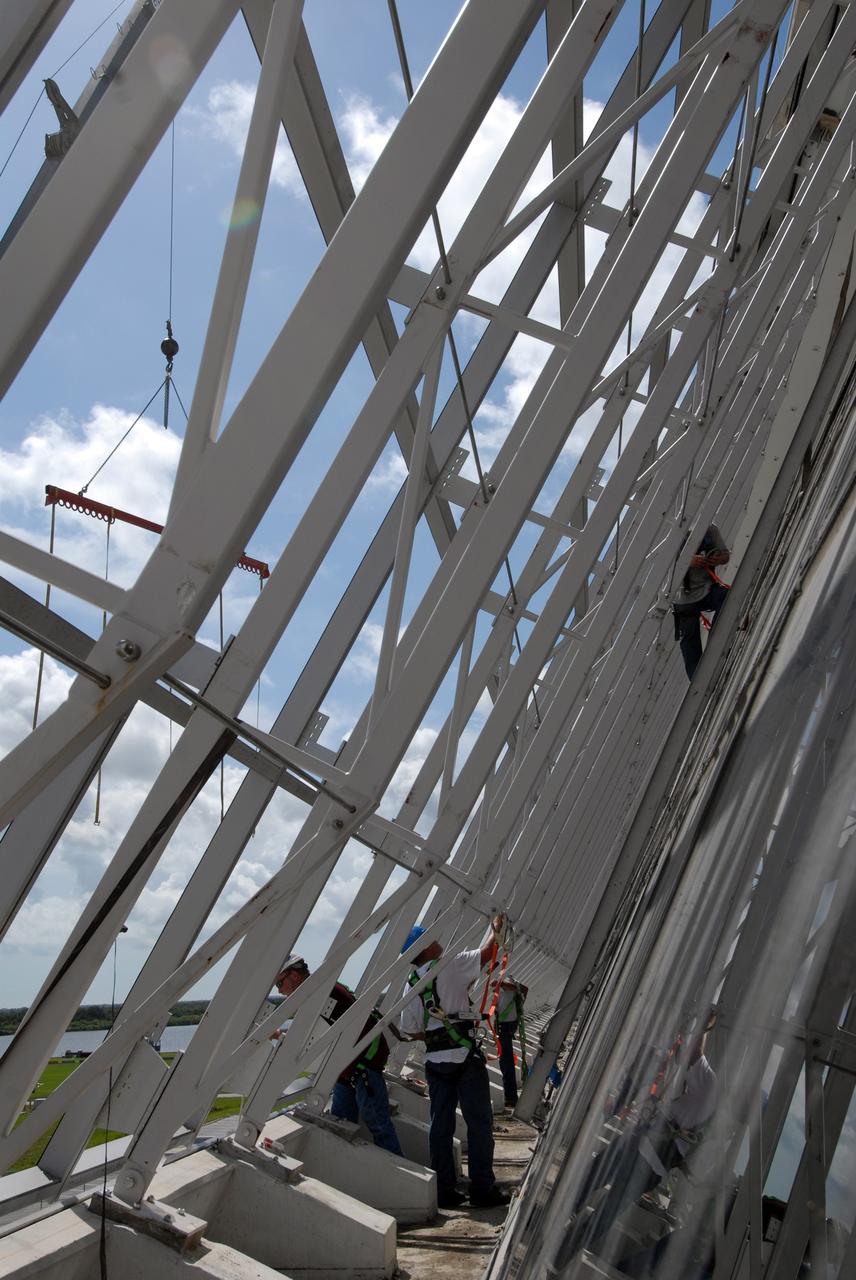
CAPE CANAVERAL, Fla. – At NASA's Kennedy Space Center in Florida, new, hurricane-rated window systems for the Launch Control Center's four Firing Rooms and the vestibule areas between Firing Rooms 1 & 2 and Firing Rooms 3 & 4 are being installed. In order to avoid operational impacts, the new windows are being installed on the outside of the existing windows, enclosing the space formerly occupied by the louvers, and the old windows will remain in place until the new windows are completely installed and leak tested. This approach will continue to keep the firing rooms from being exposed to the elements. Photo credit: NASA/Tim Jacobs
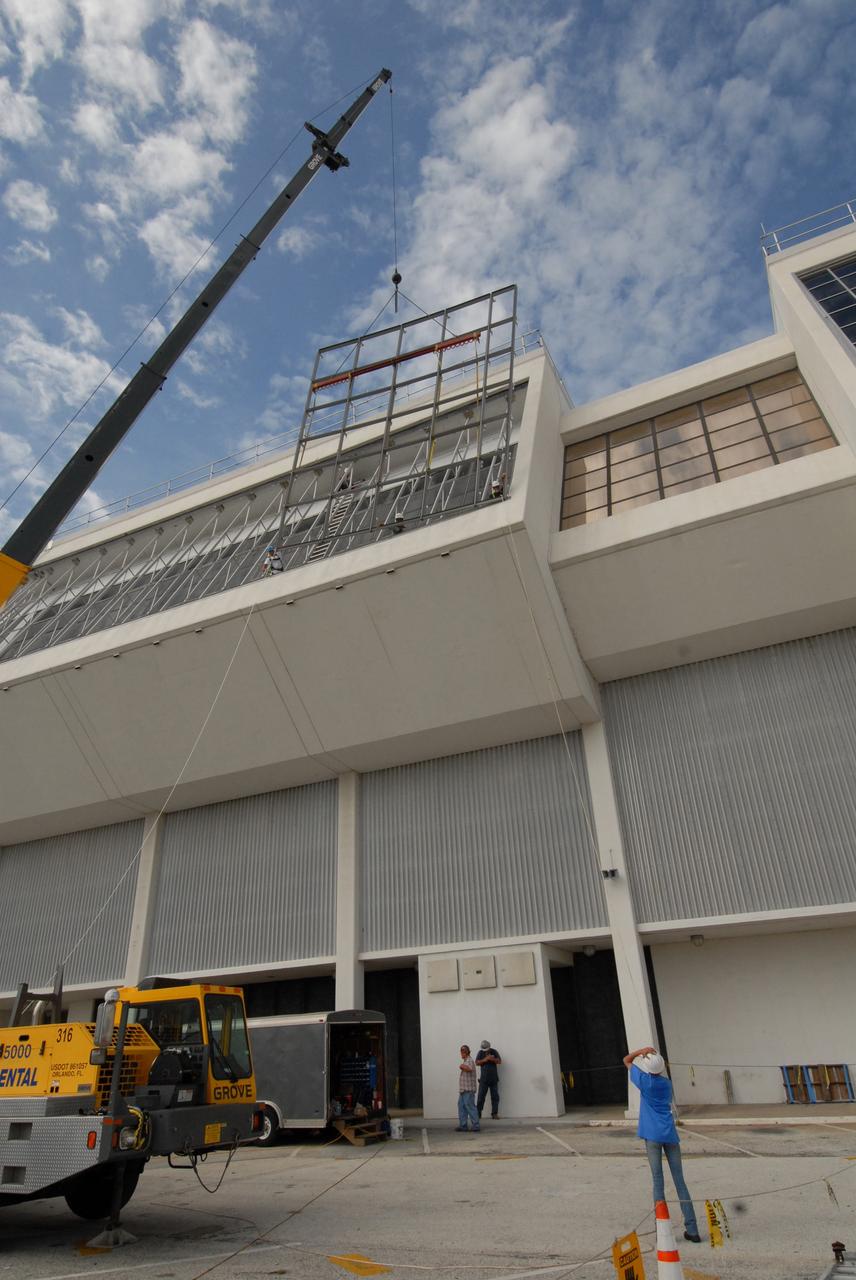
CAPE CANAVERAL, Fla. – At NASA's Kennedy Space Center in Florida, new, hurricane-rated window systems for the Launch Control Center's four Firing Rooms and the vestibule areas between Firing Rooms 1 & 2 and Firing Rooms 3 & 4 are being installed. In order to avoid operational impacts, the new windows are being installed on the outside of the existing windows, enclosing the space formerly occupied by the louvers, and the old windows will remain in place until the new windows are completely installed and leak tested. This approach will continue to keep the firing rooms from being exposed to the elements. Photo credit: NASA/Tim Jacobs
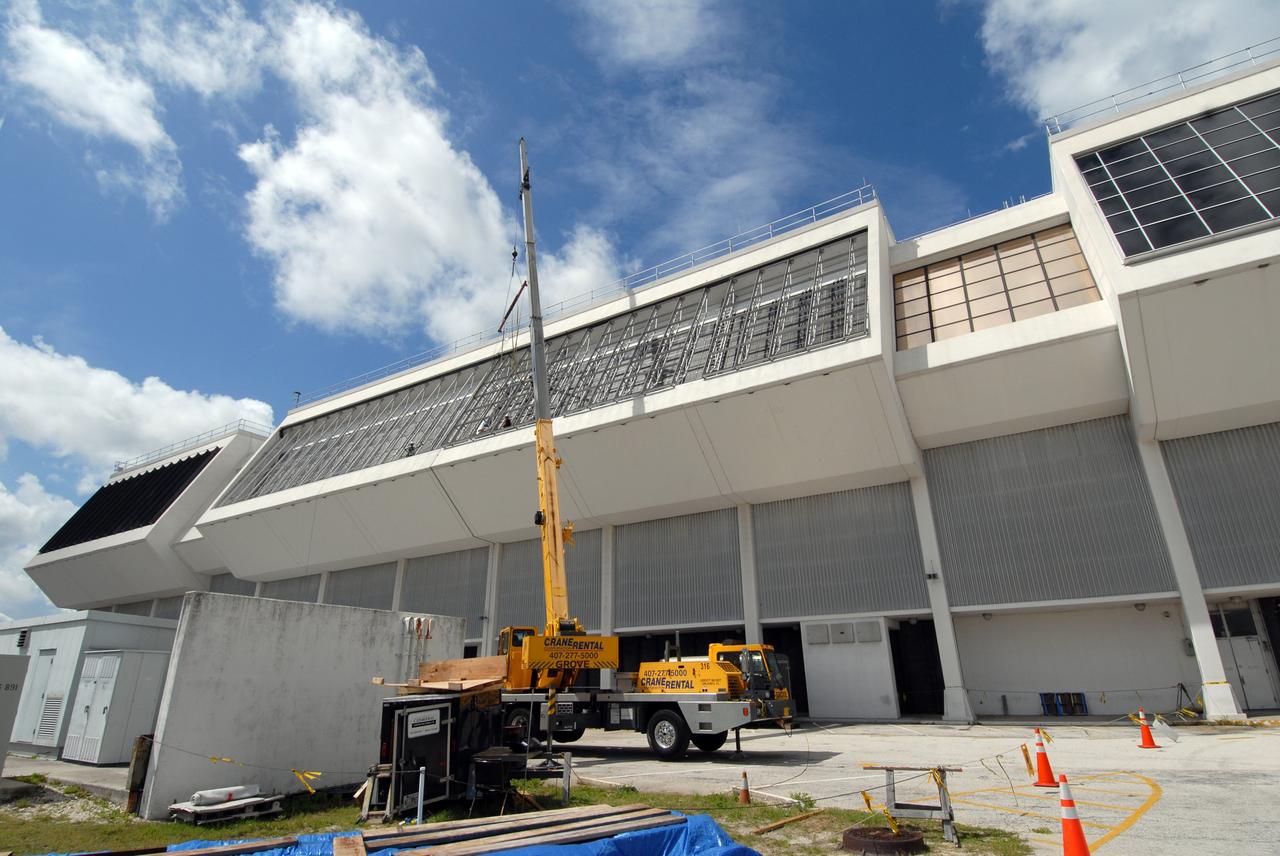
CAPE CANAVERAL, Fla. – At NASA's Kennedy Space Center in Florida, new, hurricane-rated window systems for the Launch Control Center's four Firing Rooms and the vestibule areas between Firing Rooms 1 & 2 and Firing Rooms 3 & 4 are being installed. In order to avoid operational impacts, the new windows are being installed on the outside of the existing windows, enclosing the space formerly occupied by the louvers, and the old windows will remain in place until the new windows are completely installed and leak tested. This approach will continue to keep the firing rooms from being exposed to the elements. Photo credit: NASA/Tim Jacobs
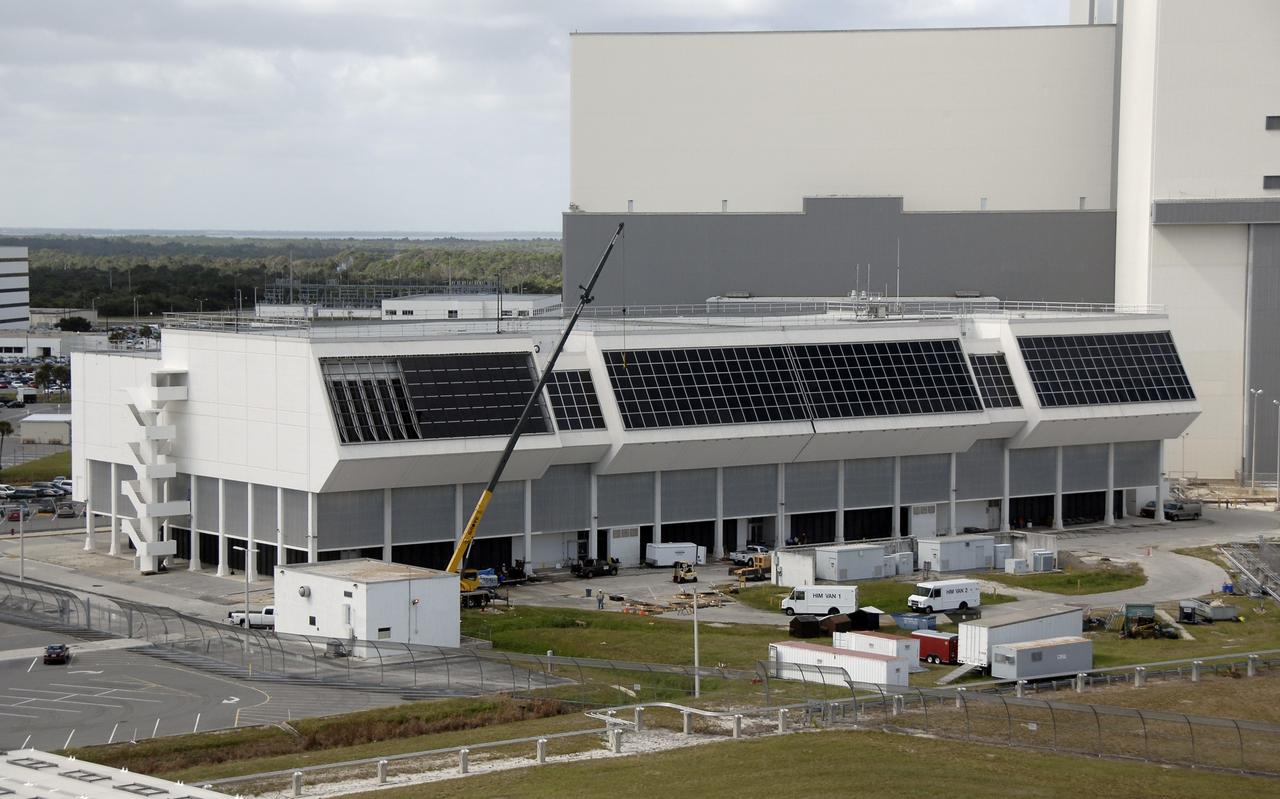
CAPE CANAVERAL, Fla. – This aerial view of the Launch Control Center at NASA's Kennedy Space Center in Florida shows the installation of new windows nearing completion. New, hurricane-rated window systems for the four Firing Rooms and the vestibule areas between Firing Rooms 1 and 2 and Firing Rooms 3 and 4 are being installed. In order to avoid operational impacts the new windows are being installed on the outside of the existing windows, enclosing the space formerly occupied by the louvers. The old windows will remain in place until the new windows are completely installed and leak tested. This approach will continue to keep the firing rooms from being exposed to the elements. Photo credit: NASA/Kim Shiflett
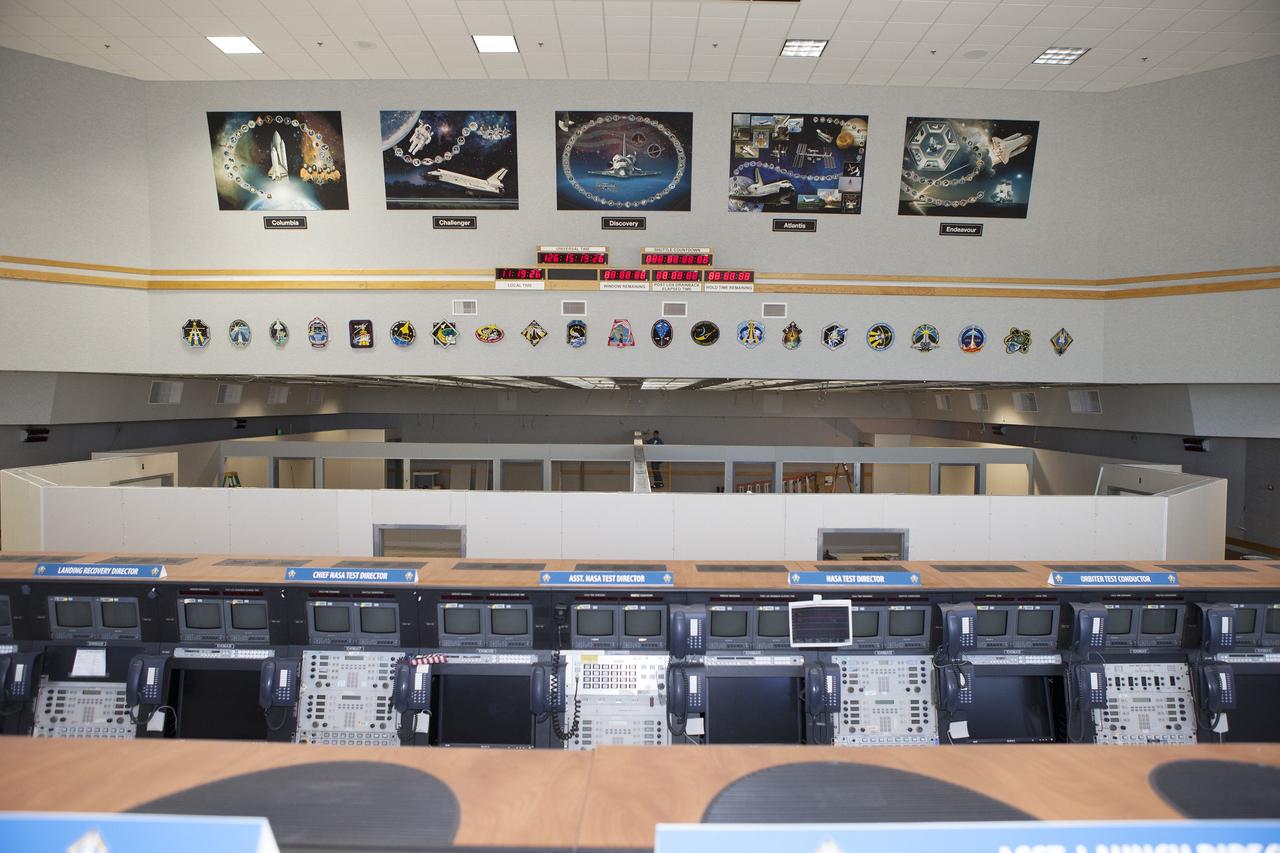
CAPE CANAVERAL, Fla. – Construction workers have installed the framing and most of the inner walls inside Firing Room 4 in the Launch Control Center at NASA's Kennedy Space Center in Florida. The main floor has been divided into four separate rooms. Three rows of upper level management consoles remain. The Ground Systems Development and Operations Program is overseeing efforts to create a new firing room based on a multi-user concept. The design of Firing Room 4 will incorporate five control room areas that are flexible to meet current and future NASA and commercial user requirements. The equipment and most of the consoles from Firing Room 4 were moved to Firing Room 2 for possible future reuse. Photo credit: NASA/Daniel Casper
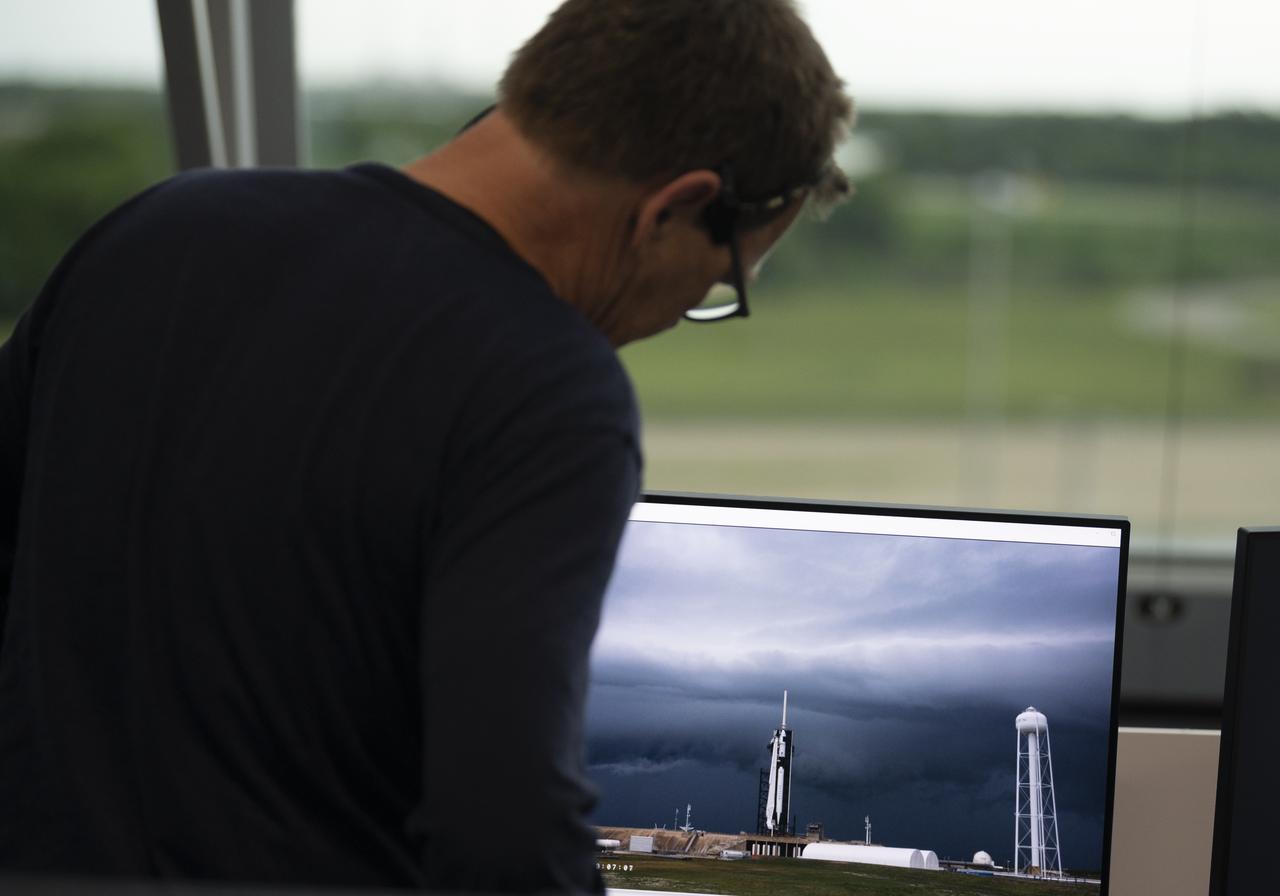
Hans Koenigsmann, vice president for build and flight reliability at SpaceX, looks at a monitor showing a live feed of a SpaceX Falcon 9 rocket carrying the company's Crew Dragon spacecraft on the launch pad during the countdown for a launch attempt of NASA’s SpaceX Demo-2 mission with NASA astronauts Robert Behnken and Douglas Hurley onboard, Wednesday, May 27, 2020, in firing room four of the Launch Control Center at NASA’s Kennedy Space Center in Florida. NASA’s SpaceX Demo-2 mission is the first launch with astronauts of the SpaceX Crew Dragon spacecraft and Falcon 9 rocket to the International Space Station as part of the agency’s Commercial Crew Program. The test flight serves as an end-to-end demonstration of SpaceX’s crew transportation system. Today’s launch of Behnken and Hurley was scrubbed due to weather and is now scheduled for 3:22 p.m. EDT on Saturday, May 30, from Launch Complex 39A at the Kennedy Space Center. A new era of human spaceflight is set to begin as American astronauts once again launch on an American rocket from American soil to low-Earth orbit for the first time since the conclusion of the Space Shuttle Program in 2011. Photo Credit: (NASA/Joel Kowsky)
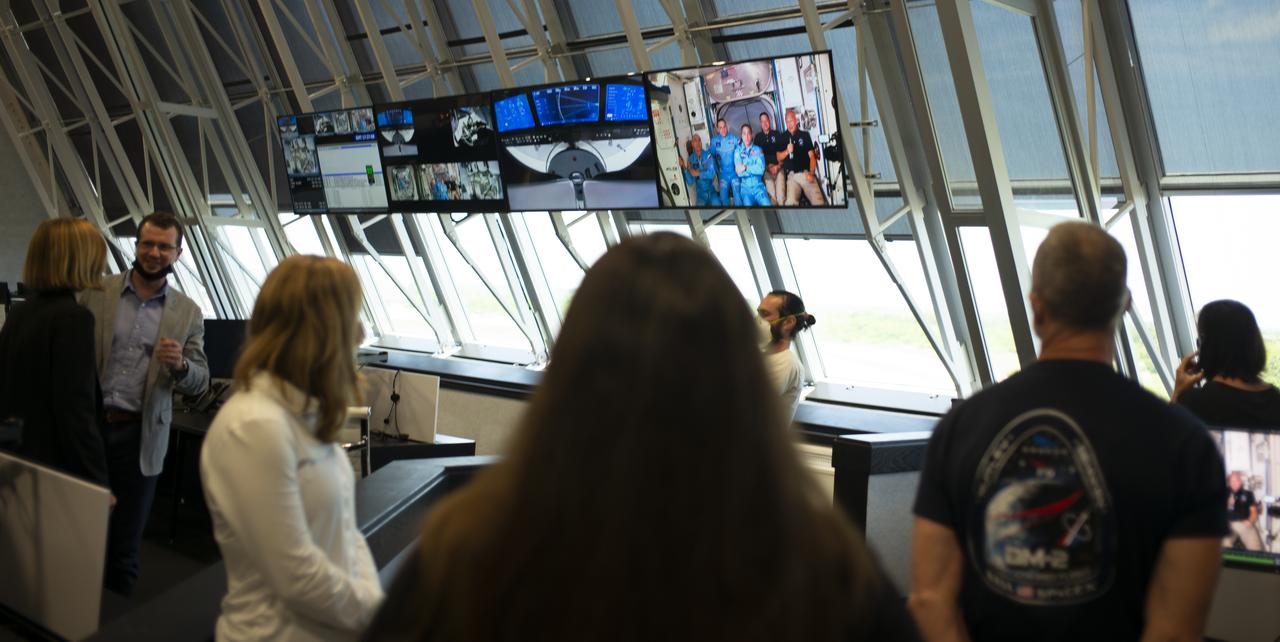
NASA astronauts Robert Behnken and Douglas Hurley are seen with Expedition 53 Commander NASA astronaut Chris Cassidy and cosmonauts Anatoly Ivanishin and Ivan Vagner of Roscosmos onboard the International Space Station after hatches were opened between SpaceX’s Crew Dragon spacecraft the orbiting laboratory, Sunday, May 31, 2020, in firing room four of the Launch Control Center at NASA’s Kennedy Space Center in Florida. NASA’s SpaceX Demo-2 mission is the first launch with astronauts of the SpaceX Crew Dragon spacecraft and Falcon 9 rocket to the International Space Station as part of the agency’s Commercial Crew Program. The test flight serves as an end-to-end demonstration of SpaceX’s crew transportation system. Behnken and Hurley launched at 3:22 p.m. EDT on Saturday, May 30, from Launch Complex 39A at the Kennedy Space Center and docked with the International Space Station at 10:16am EDT on Sunday, May 31. A new era of human spaceflight is set to begin as American astronauts once again launch on an American rocket from American soil to low-Earth orbit for the first time since the conclusion of the Space Shuttle Program in 2011. Photo Credit: (NASA/Joel Kowsky)