
First Quarter Mimas
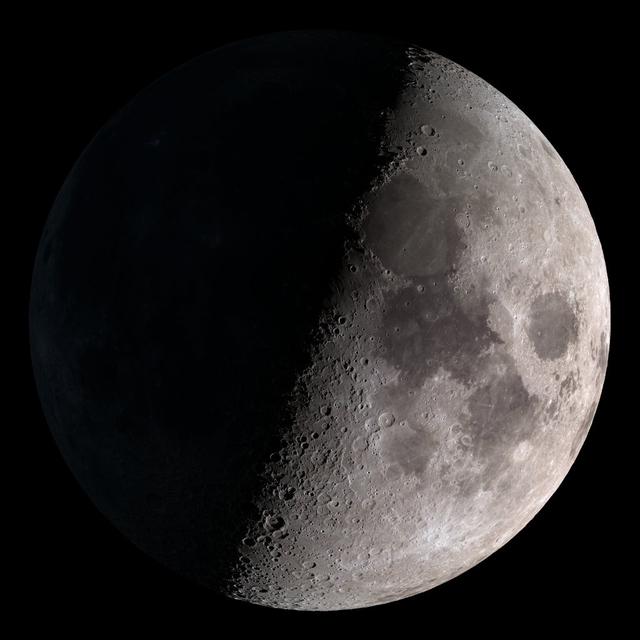
First quarter. Visible high in the southern sky in early evening. NASA's Lunar Reconnaissance Orbiter (LRO) has been in orbit around the Moon since the summer of 2009. Its laser altimeter (LOLA) and camera (LROC) are recording the rugged, airless lunar terrain in exceptional detail, making it possible to visualize the Moon with unprecedented fidelity. This is especially evident in the long shadows cast near the terminator, or day-night line. The pummeled, craggy landscape thrown into high relief at the terminator would be impossible to recreate in the computer without global terrain maps like those from LRO. To download, learn more about this visualization, or to see what the Moon will look like at any hour in 2015, visit <a href="http://svs.gsfc.nasa.gov/goto?4236" rel="nofollow">svs.gsfc.nasa.gov/goto?4236</a> <b><a href="http://www.nasa.gov/audience/formedia/features/MP_Photo_Guidelines.html" rel="nofollow">NASA image use policy.</a></b> <b><a href="http://www.nasa.gov/centers/goddard/home/index.html" rel="nofollow">NASA Goddard Space Flight Center</a></b> enables NASA’s mission through four scientific endeavors: Earth Science, Heliophysics, Solar System Exploration, and Astrophysics. Goddard plays a leading role in NASA’s accomplishments by contributing compelling scientific knowledge to advance the Agency’s mission. <b>Follow us on <a href="http://twitter.com/NASAGoddardPix" rel="nofollow">Twitter</a></b> <b>Like us on <a href="http://www.facebook.com/pages/Greenbelt-MD/NASA-Goddard/395013845897?ref=tsd" rel="nofollow">Facebook</a></b> <b>Find us on <a href="http://instagram.com/nasagoddard?vm=grid" rel="nofollow">Instagram</a></b>
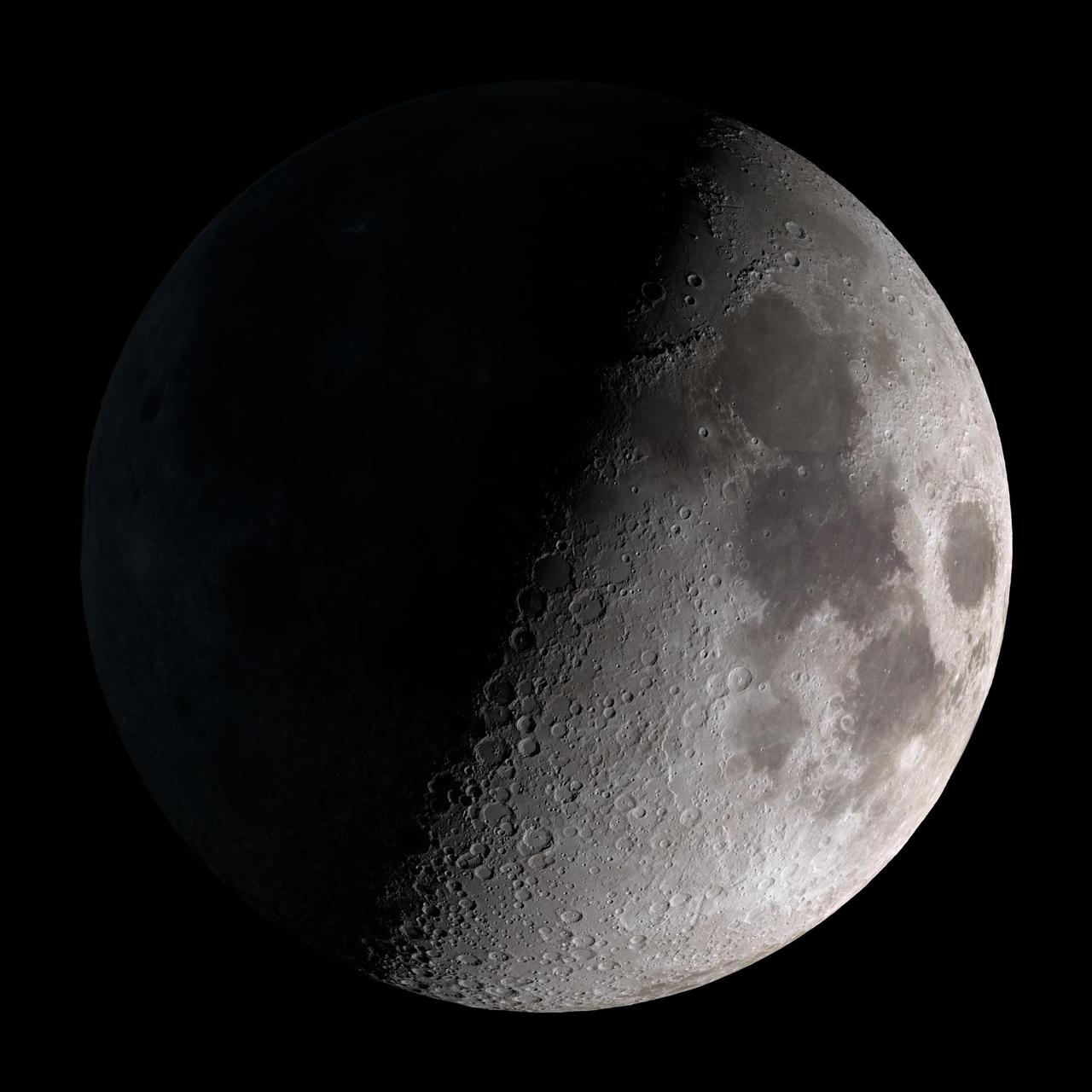
First quarter. Visible high in the southern sky in early evening. This marks the first time that accurate shadows at this level of detail are possible in such a computer simulation. The shadows are based on the global elevation map being developed from measurements by the Lunar Orbiter Laser Altimeter (LOLA) aboard the Lunar Reconnaissance Orbiter (LRO). LOLA has already taken more than 10 times as many elevation measurements as all previous missions combined. The Moon always keeps the same face to us, but not exactly the same face. Because of the tilt and shape of its orbit, we see the Moon from slightly different angles over the course of a month. When a month is compressed into 12 seconds, as it is in this animation, our changing view of the Moon makes it look like it's wobbling. This wobble is called libration. The word comes from the Latin for "balance scale" (as does the name of the zodiac constellation Libra) and refers to the way such a scale tips up and down on alternating sides. The sub-Earth point gives the amount of libration in longitude and latitude. The sub-Earth point is also the apparent center of the Moon's disk and the location on the Moon where the Earth is directly overhead. The Moon is subject to other motions as well. It appears to roll back and forth around the sub-Earth point. The roll angle is given by the position angle of the axis, which is the angle of the Moon's north pole relative to celestial north. The Moon also approaches and recedes from us, appearing to grow and shrink. The two extremes, called perigee (near) and apogee (far), differ by more than 10%. The most noticed monthly variation in the Moon's appearance is the cycle of phases, caused by the changing angle of the Sun as the Moon orbits the Earth. The cycle begins with the waxing (growing) crescent Moon visible in the west just after sunset. By first quarter, the Moon is high in the sky at sunset and sets around midnight. The full Moon rises at sunset and is high in the sky at midnight. The third quarter Moon is often surprisingly conspicuous in the daylit western sky long after sunrise. Celestial north is up in these images, corresponding to the view from the northern hemisphere. The descriptions of the print resolution stills also assume a northern hemisphere orientation. To adjust for southern hemisphere views, rotate the images 180 degrees, and substitute "north" for "south" in the descriptions. Credit: <a href="http://svs.gsfc.nasa.gov/index.html" rel="nofollow">NASA/Goddard Space Flight Center Scientific Visualization Studio</a> <b><a href="http://www.nasa.gov/centers/goddard/home/index.html" rel="nofollow">NASA Goddard Space Flight Center</a></b> enables NASA’s mission through four scientific endeavors: Earth Science, Heliophysics, Solar System Exploration, and Astrophysics. Goddard plays a leading role in NASA’s accomplishments by contributing compelling scientific knowledge to advance the Agency’s mission. <b>Follow us on <a href="http://twitter.com/NASA_GoddardPix" rel="nofollow">Twitter</a></b> <b>Join us on <a href="http://www.facebook.com/pages/Greenbelt-MD/NASA-Goddard/395013845897?ref=tsd" rel="nofollow">Facebook</a></b> <b>Find us on <a href="http://web.stagram.com/n/nasagoddard/?vm=grid" rel="nofollow">Instagram</a></b>
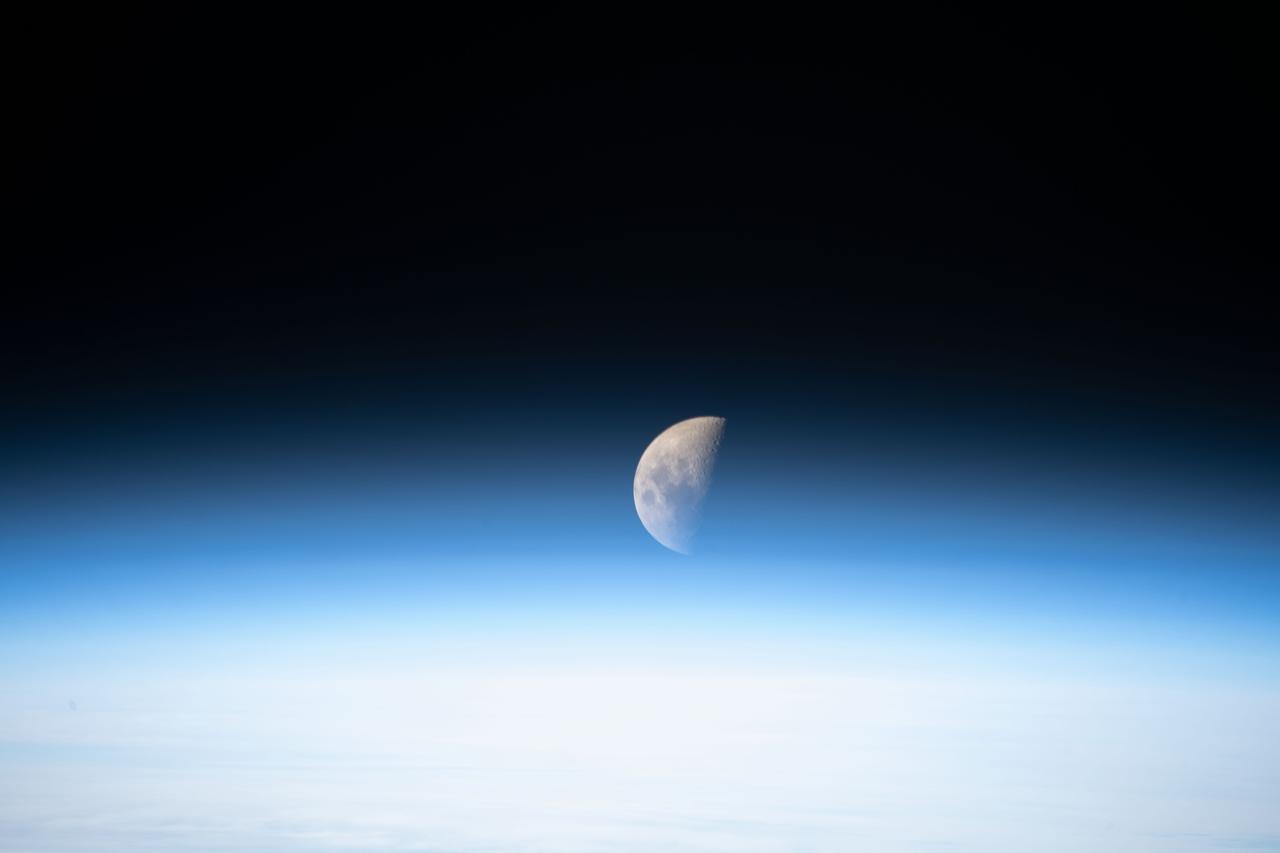
iss061e003881 (Oct. 5, 2019) --- A first quarter Moon is pictured from the International Space Station just above the Earth's limb.
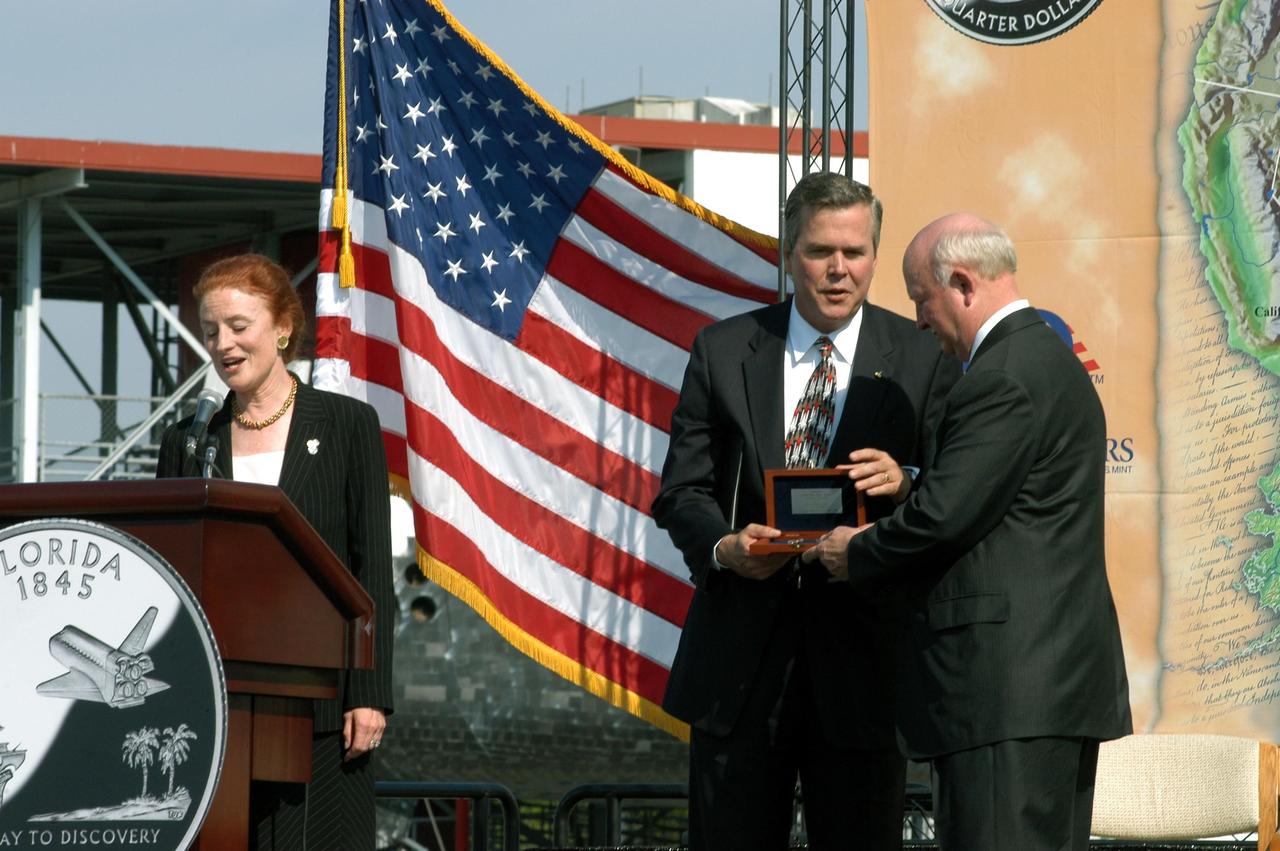
KENNEDY SPACE CENTER, FLA. -- U.S. Mint Director Henrietta Holsman Fore addresses the audience at a ceremony to launch the new Florida quarter, held at the KSC Visitor Complex, as Deputy Secretary of the Treasury Samuel W. Bodman presents Florida Gov. Jeb Bush with a set of "first-strike" quarters. The quarter celebrates Florida as the gateway to discovery -- a destination for explorers in the past, a launch site for space explorers of the future, and an inviting place for visitors today.
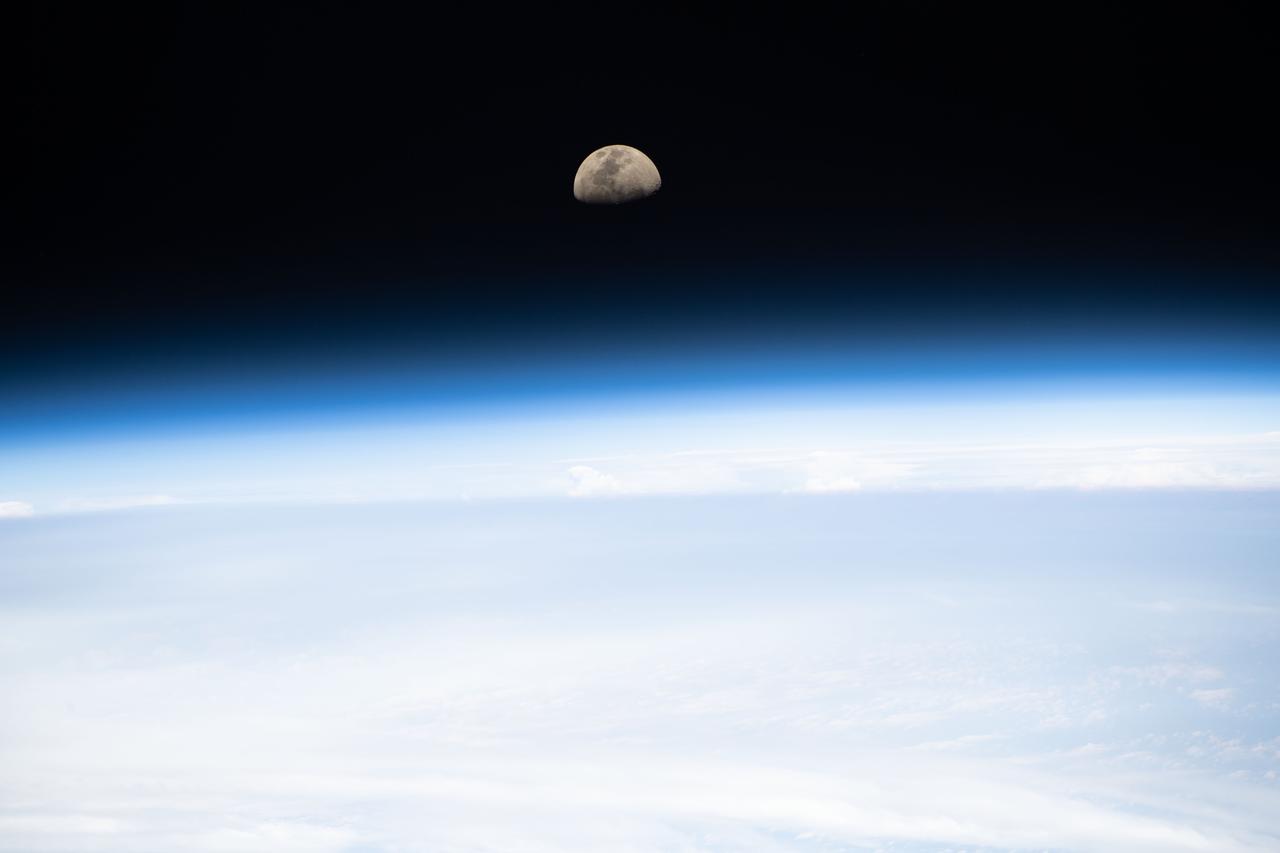
iss061e118331 (Jan. 4, 2020) --- A first quarter Moon is pictured as the International Space Station orbited 265 miles above the South Pacific.
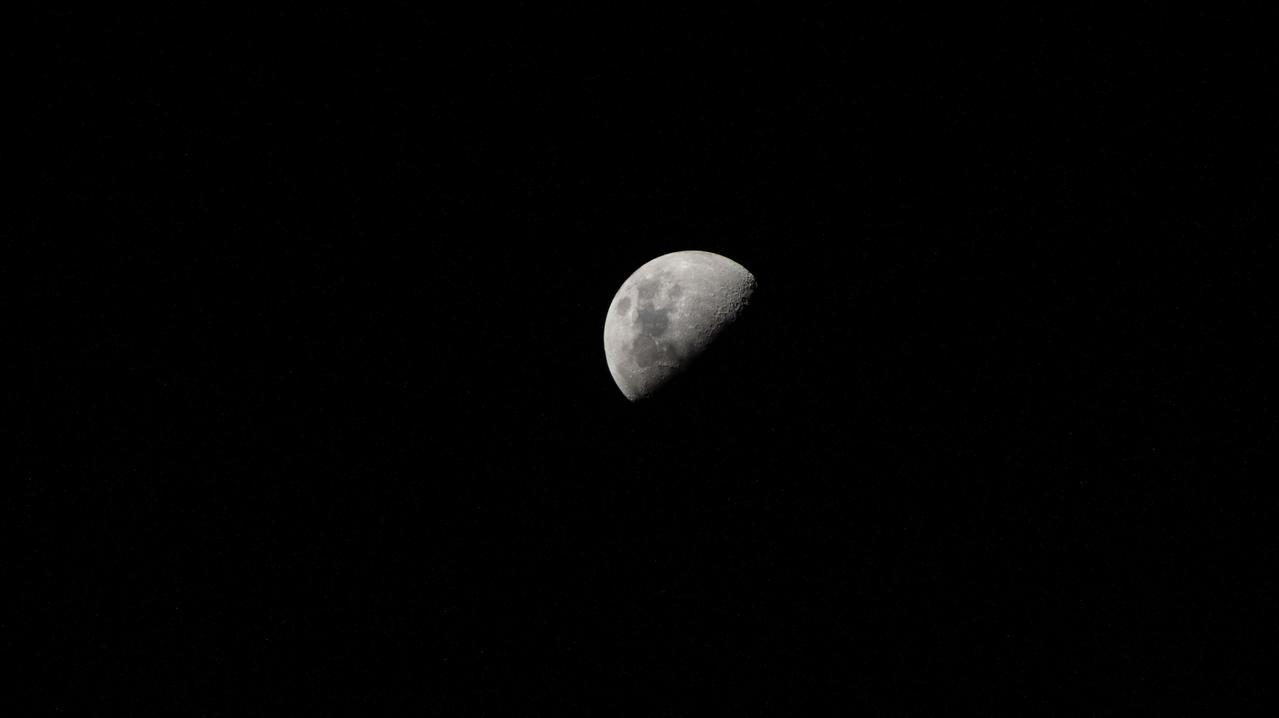
iss071e081873 (May 16, 2024) --- The First Quarter Moon is pictured from the International Space Station as it orbited 255 miles above the Pacific Ocean.
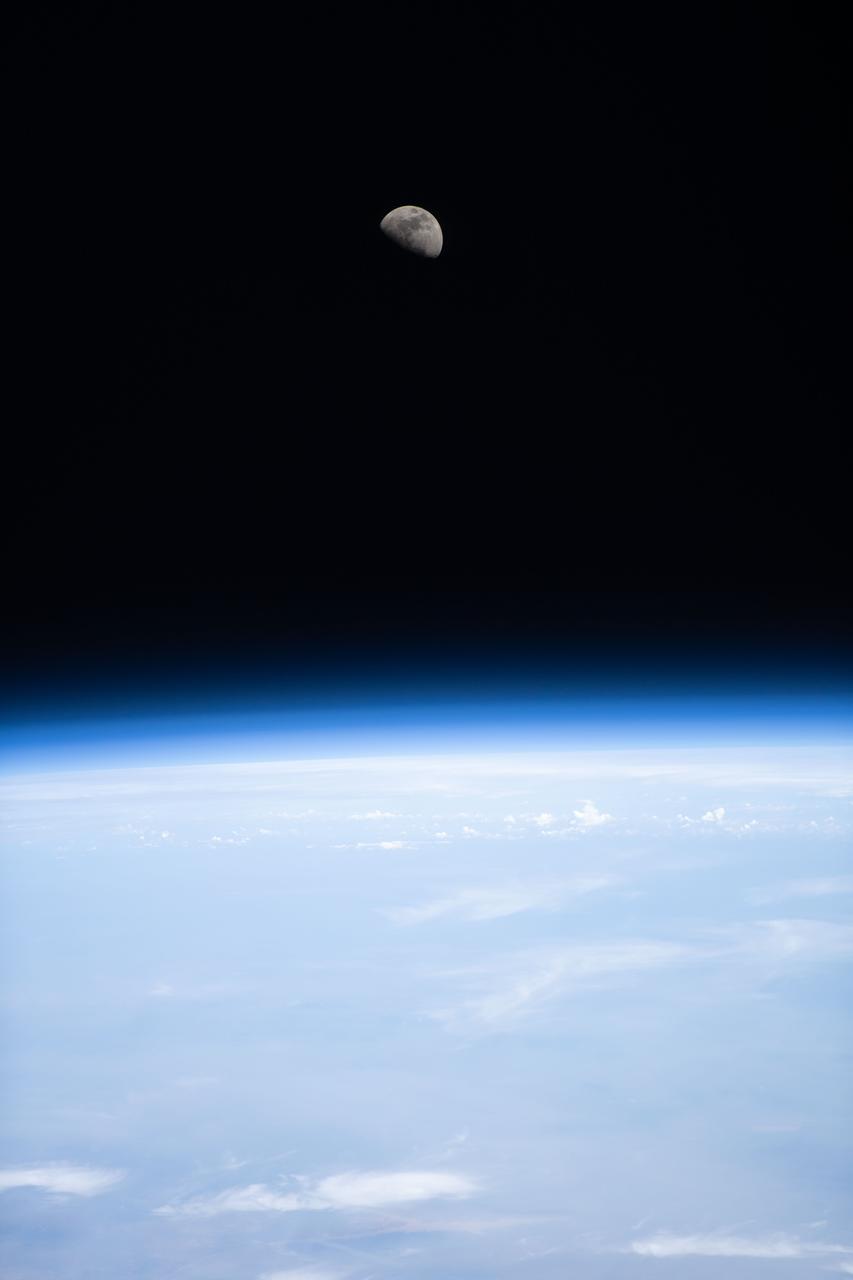
iss070e008520 (Oct. 23, 2023) --- The first quarter Moon is pictured above Earth's horizon from the International Space Station as it orbited 260 miles above the African nation of Niger.
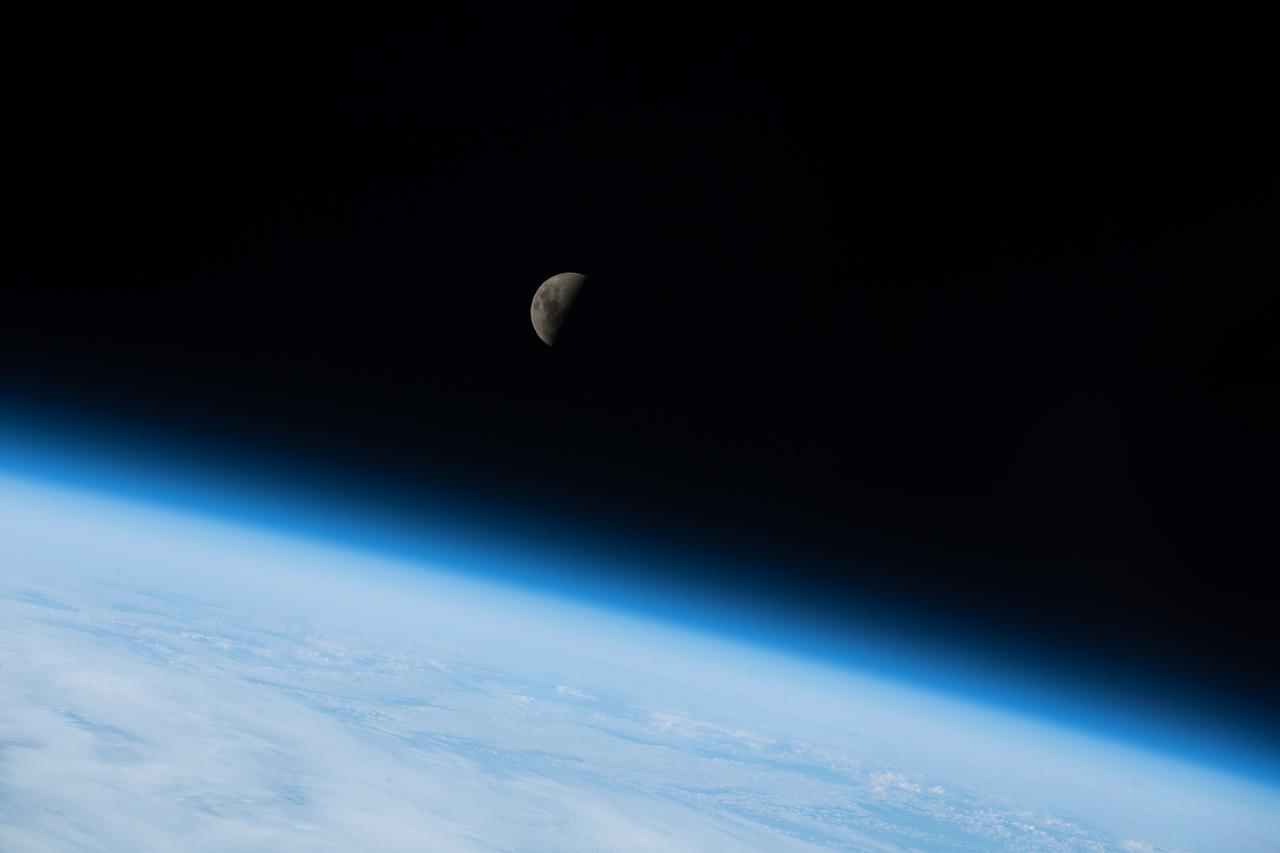
iss068e007201 (Oct. 2, 2022) --- The First Quarter Moon is pictured above the Earth's horizon as the International Space Station orbited 268 miles above the Indian Ocean south of Australia.
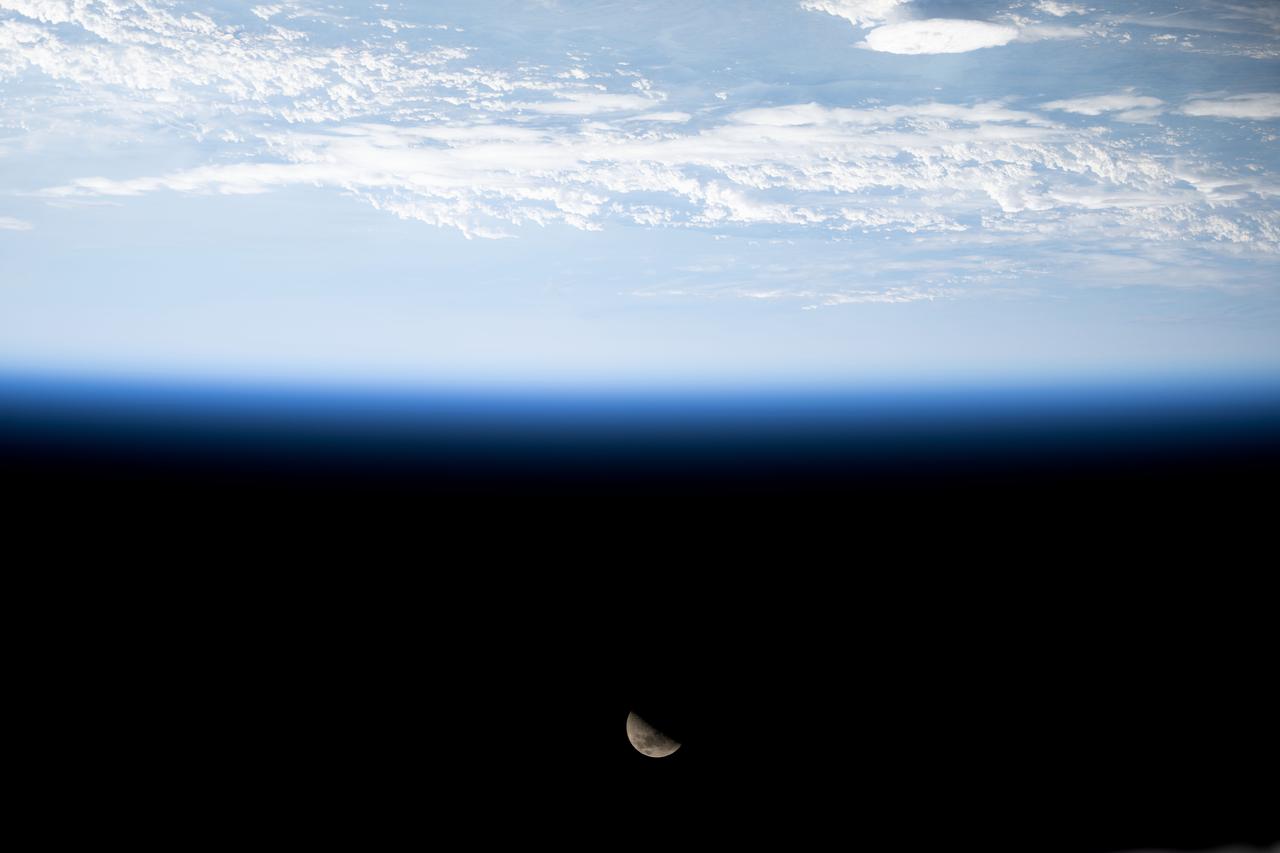
iss071e485735 (Aug. 12, 2024) --- The First Quarter Moon is pictured above Earth's horizon from the International Space Station as it orbited 263 miles above the English Channel in between France and England.
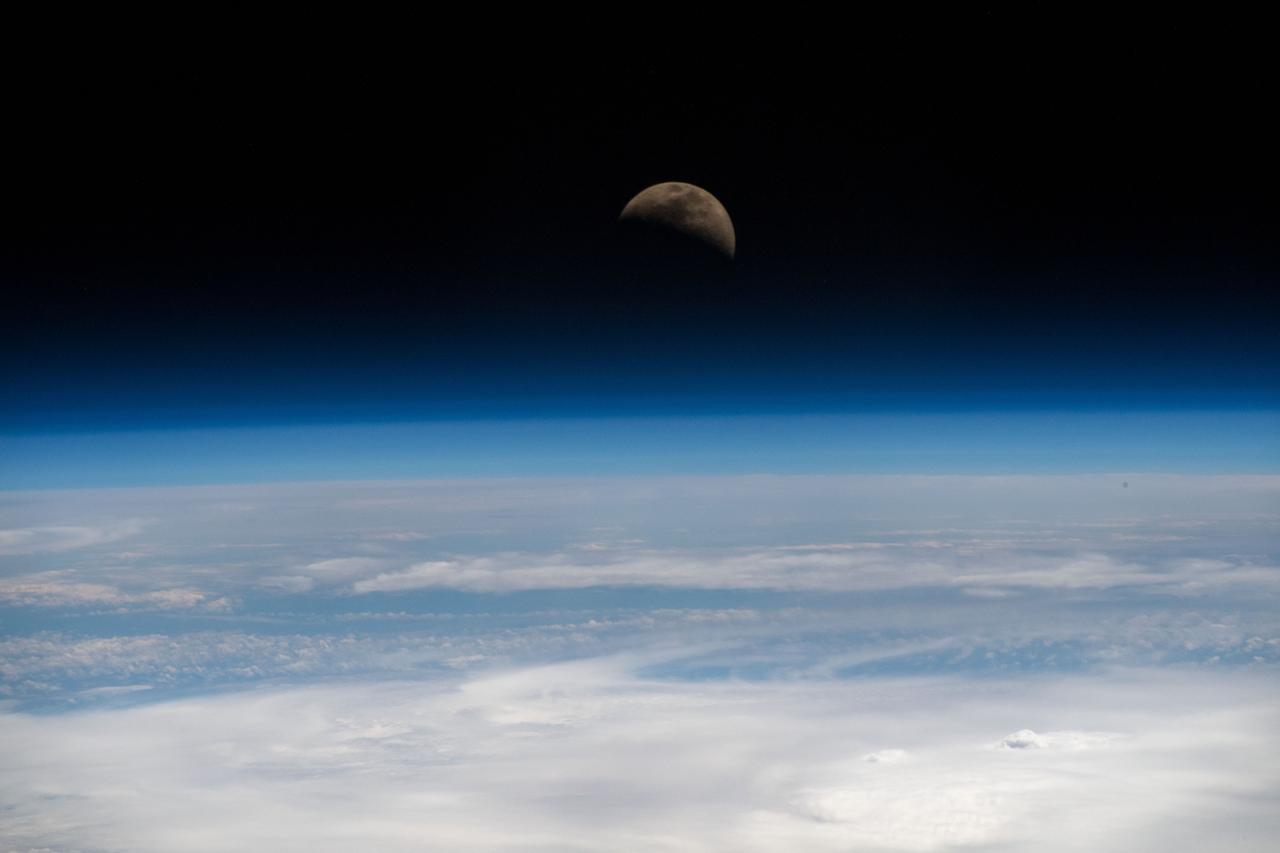
iss059e019955 (April 11, 2019) --- The moon is photographed in its first quarter phase just above the Earth's limb as the International Space Station orbited 255 miles above the Pacific Ocean south of the Hawaiian island chain.
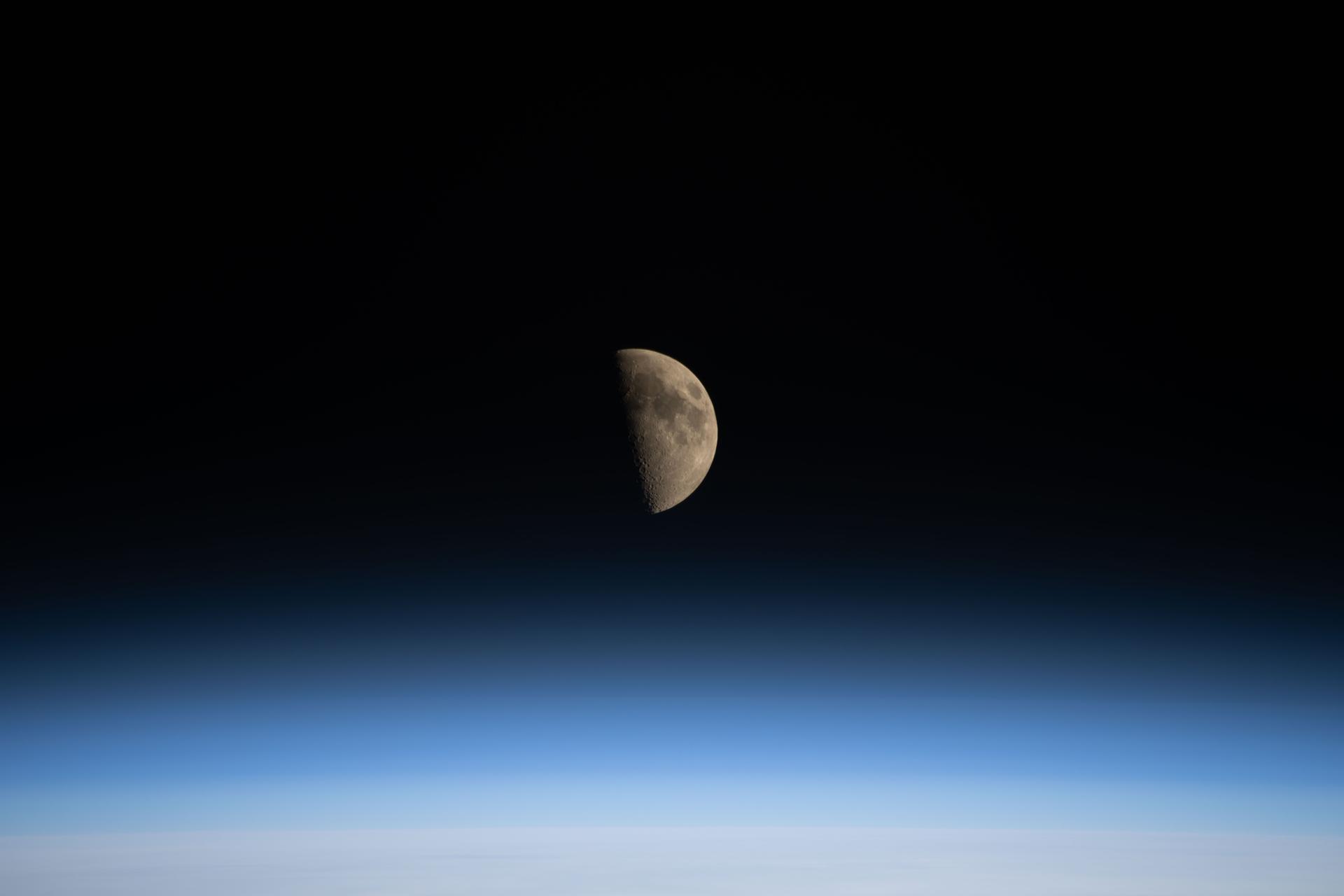
iss074e0325229 (Feb. 24, 2026) --- The first‑quarter Moon is pictured setting over the Pacific Ocean in this photograph from the International Space Station as it orbited 261 miles above Earth. Credit: NASA/Chris Williams
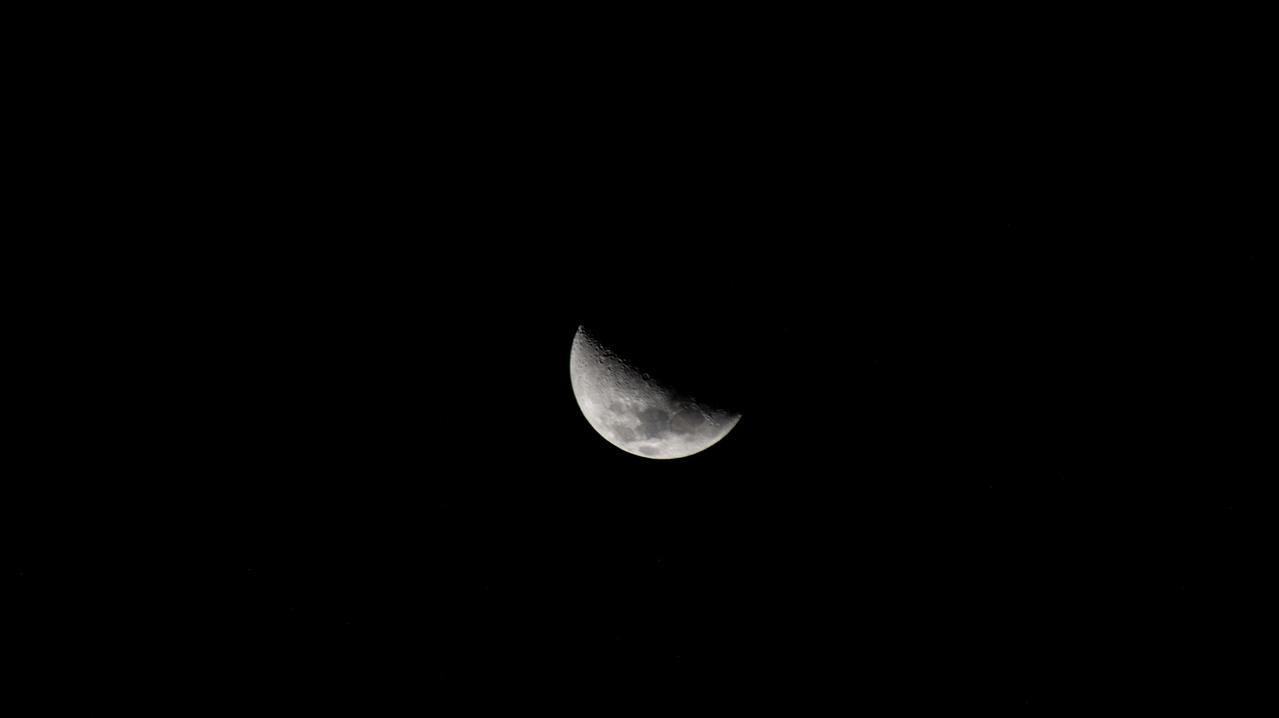
iss067e175497 (July 6, 2022) --- The First Quarter Moon is pictured from the International Space Station as it orbited 266 miles above the Indian Ocean south of Adelaide, Australia.
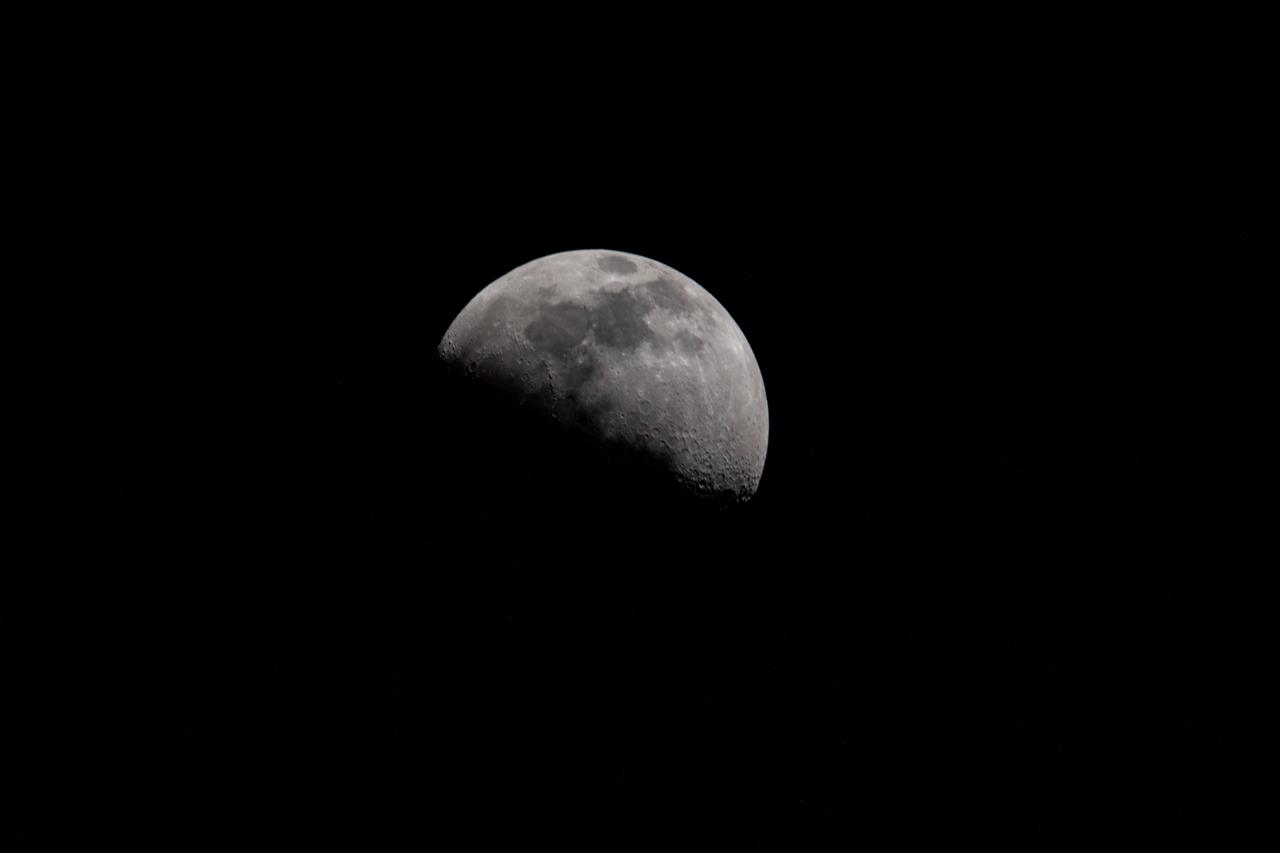
iss069e037324 (July 26, 2023) -- Earth's Moon in first quarter phase as United Arab Emirates (UAE) Flight Engineer Sultan Alneyadi captured this photo aboard the International Space Station.
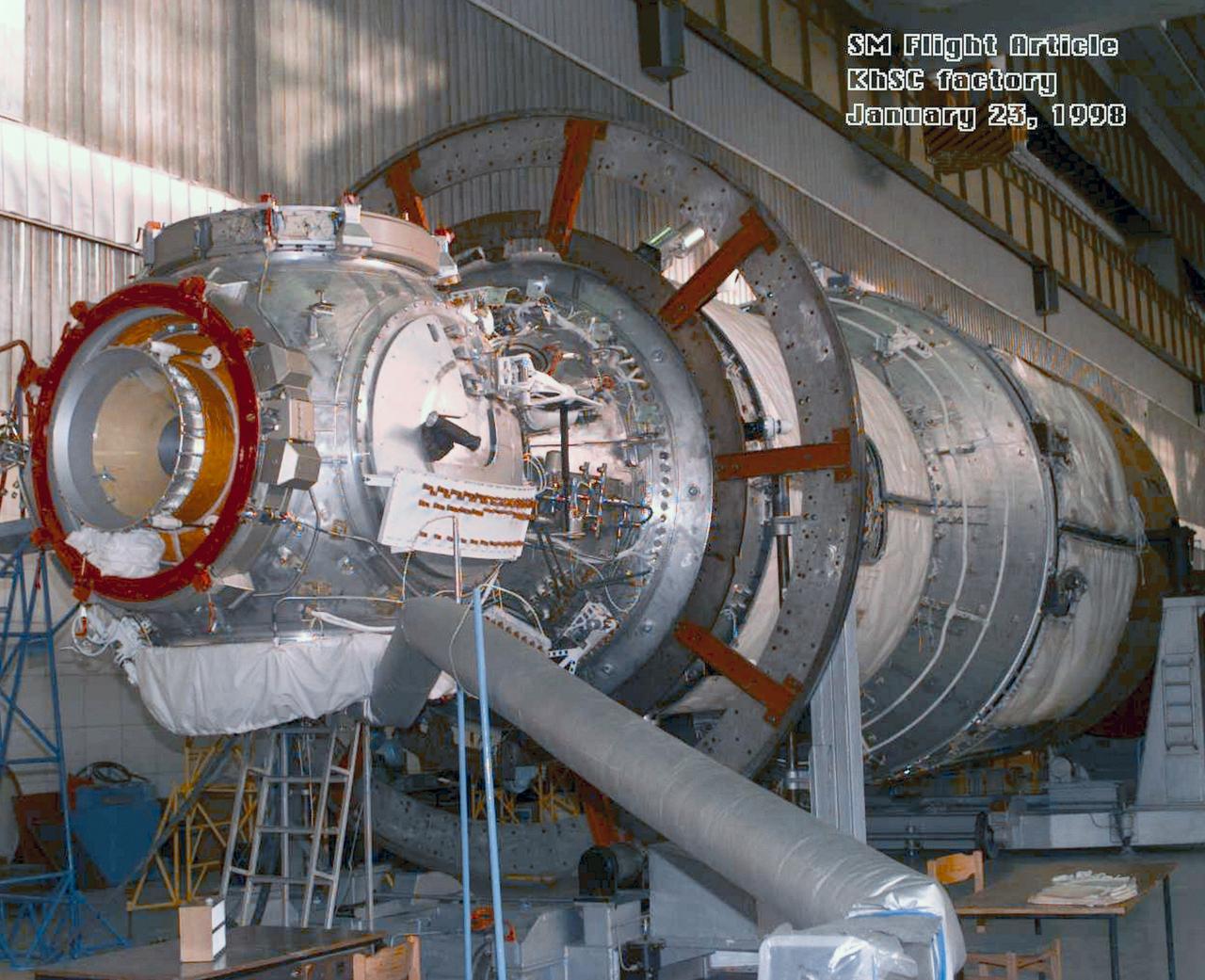
S98-04906 (23 Jan. 1998) --- A three-quarter frontal view of the flight article of the Service Module (SM) for the International Space Station (ISS). The first fully Russian contribution to ISS, the SM will provide early power, propulsion, life support, communications and living quarters for the station. It will be the third station element to be launched and join the United States-funded, Russian-built Functional Cargo Block (FGB) and the United States connecting module Node 1 in orbit.
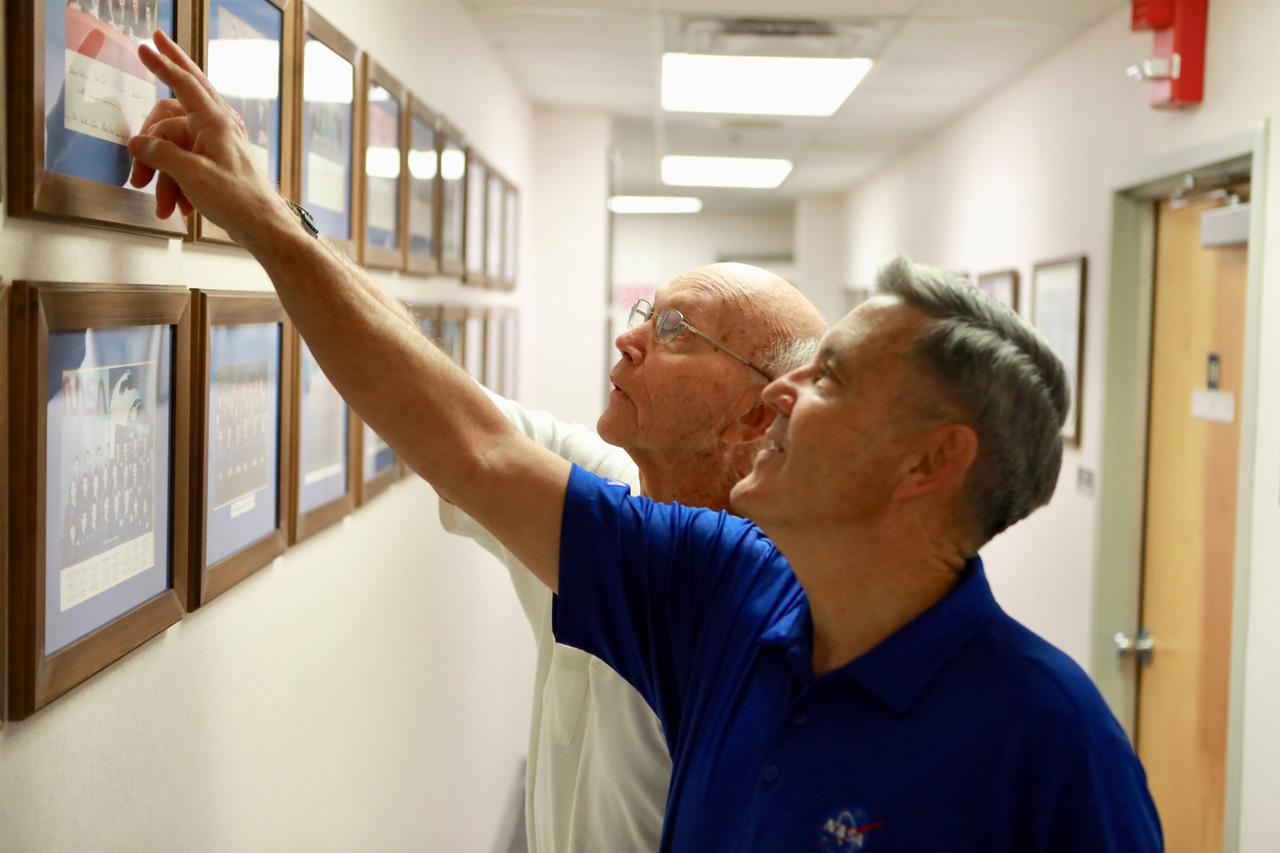
On the 50th anniversary of the Apollo 11 launch, July 16, 2019, astronaut Michael Collins, left, speaks to Kennedy Space Center Director Bob Cabana in the astronaut crew quarters about the moments leading up to launch at 9:32 a.m. on July 16, 1969, and what it was like to be the first to land on the Moon.
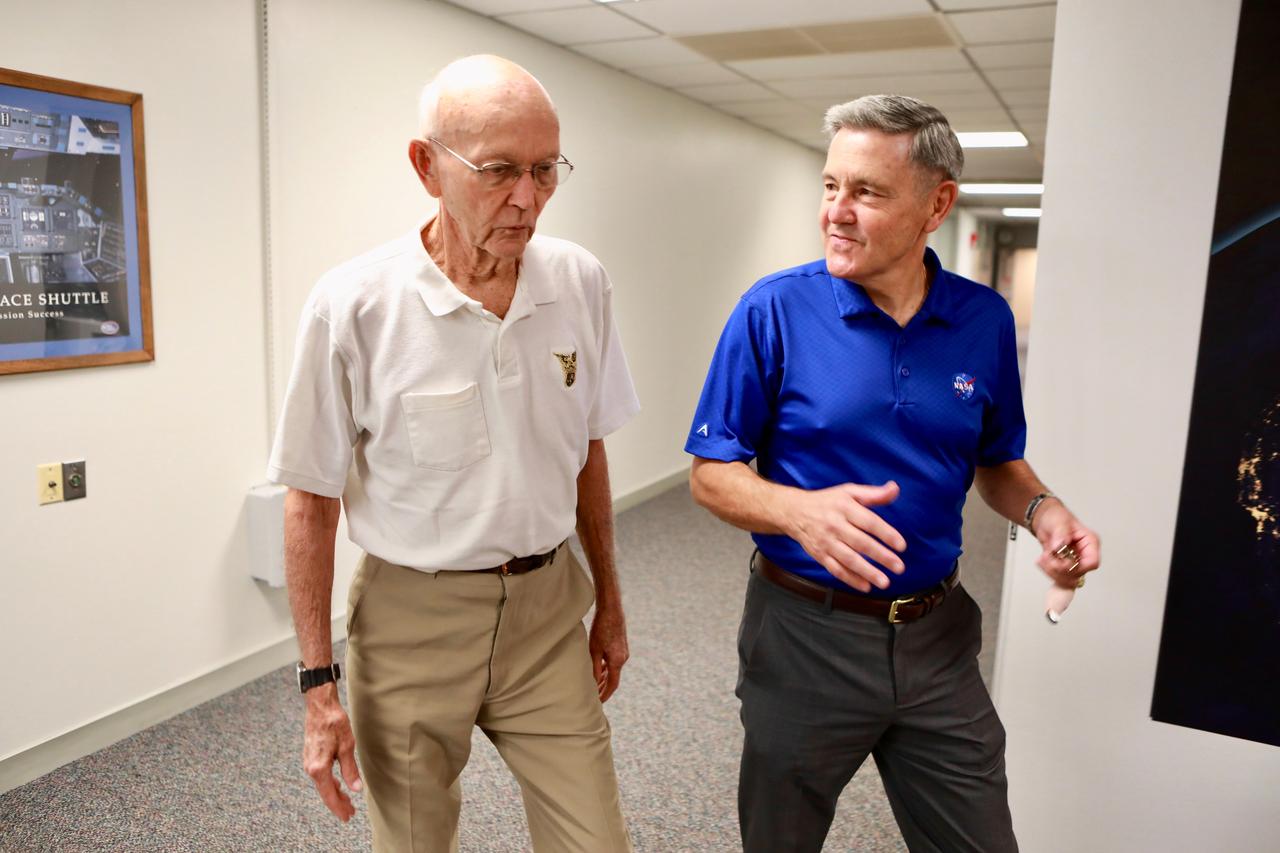
On the 50th anniversary of the Apollo 11 launch, July 16, 2019, astronaut Michael Collins speaks to Kennedy Space Center Director Bob Cabana in the astronaut crew quarters about the moments leading up to launch at 9:32 a.m. on July 16, 1969, and what it was like to be the first to land on the Moon.
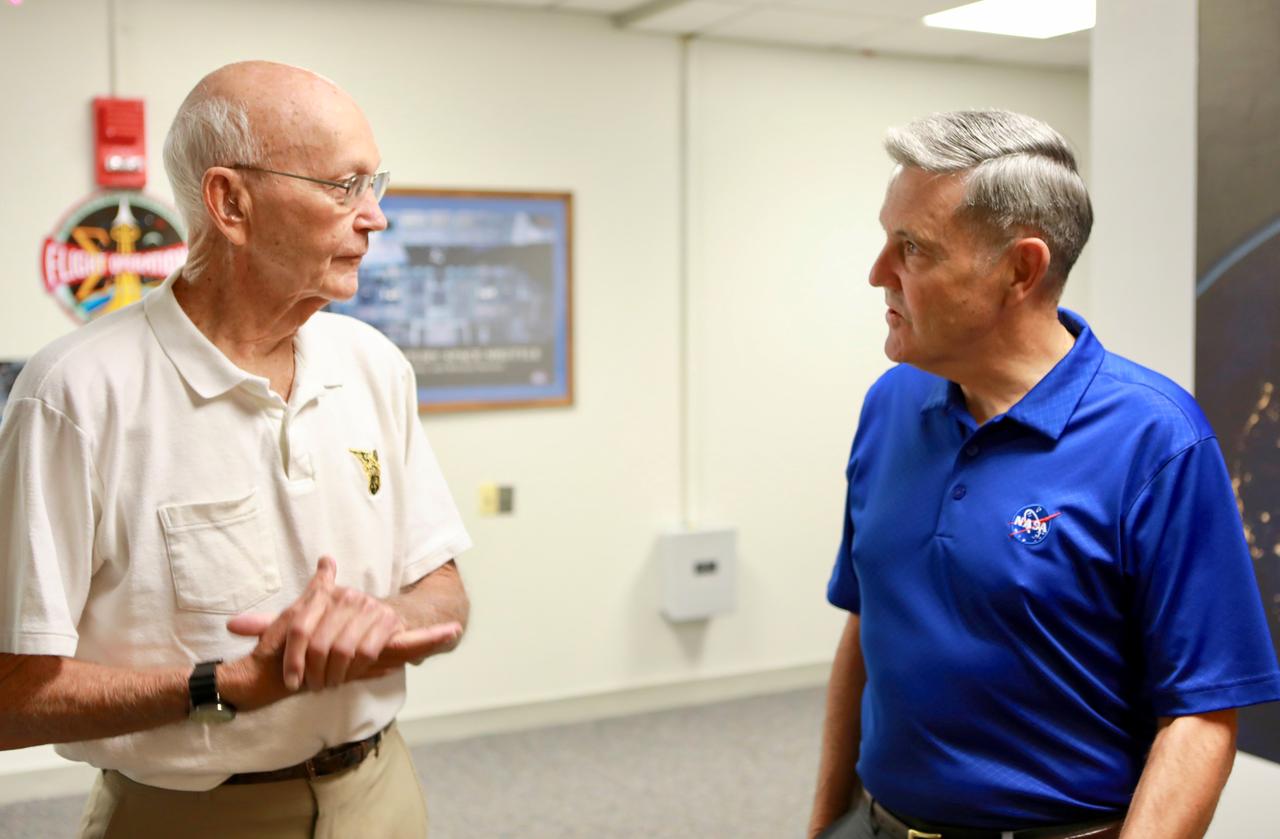
On the 50th anniversary of the Apollo 11 launch, July 16, 2019, astronaut Michael Collins, left, speaks to Kennedy Space Center Director Bob Cabana in the astronaut crew quarters about the moments leading up to launch at 9:32 a.m. on July 16, 1969, and what it was like to be the first to land on the Moon.
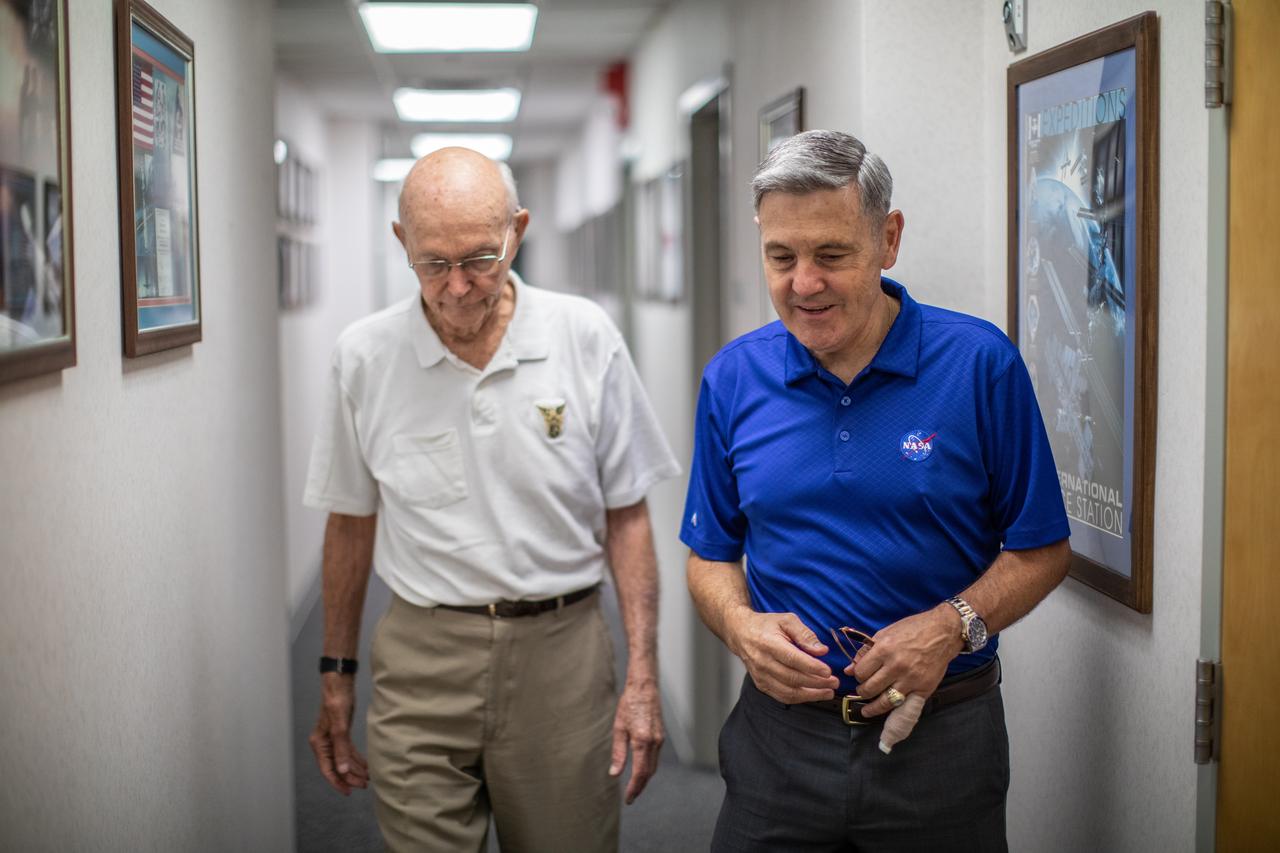
On the 50th anniversary of the Apollo 11 launch, July 16, 2019, astronaut Michael Collins, left, speaks to Kennedy Space Center Director Bob Cabana in the astronaut crew quarters about the moments leading up to launch at 9:32 a.m. on July 16, 1969, and what it was like to be the first to land on the Moon.
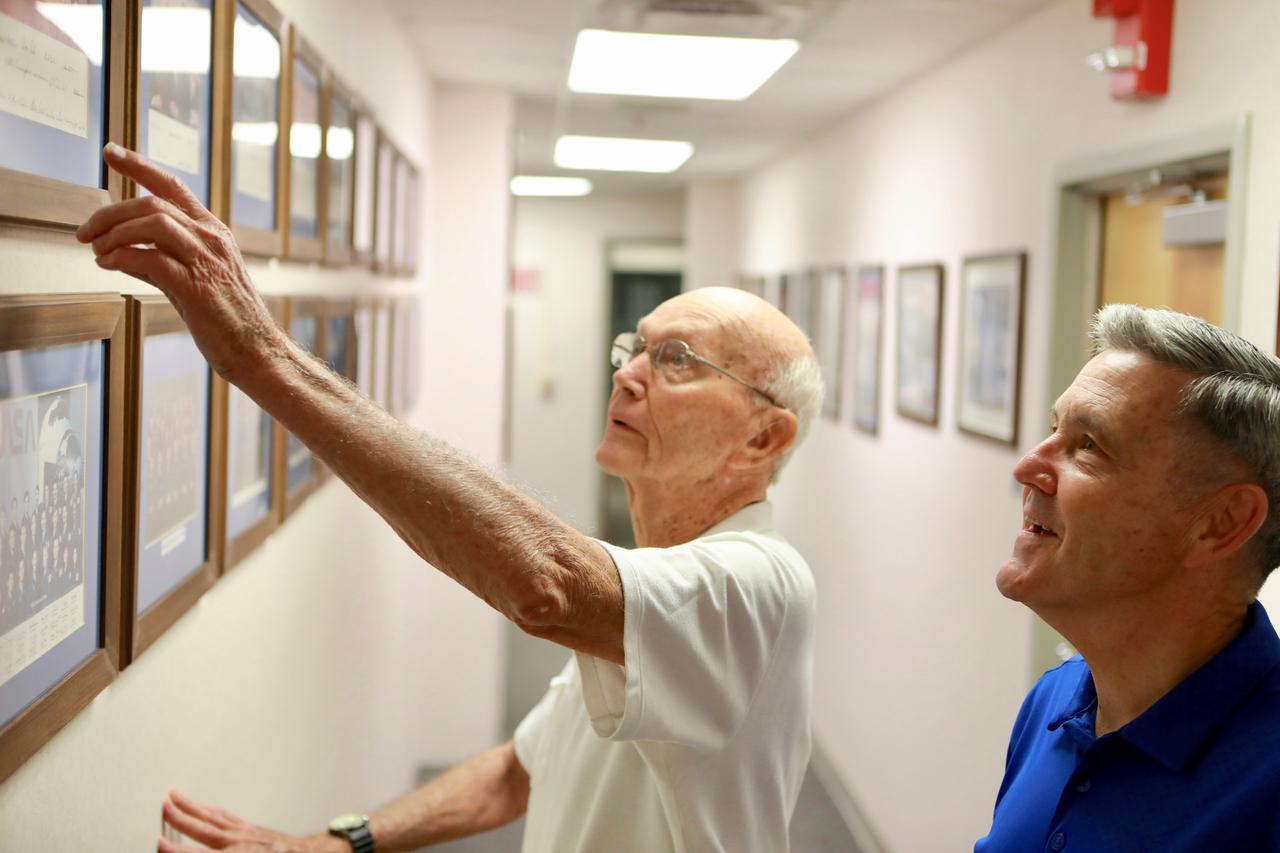
On the 50th anniversary of the Apollo 11 launch, July 16, 2019, astronaut Michael Collins speaks to Kennedy Space Center Director Bob Cabana in the astronaut crew quarters about the moments leading up to launch at 9:32 a.m. on July 16, 1969, and what it was like to be the first to land on the Moon.

On the 50th anniversary of the Apollo 11 launch, July 16, 2019, astronaut Michael Collins, left, speaks to Kennedy Space Center Director Bob Cabana in the astronaut crew quarters about the moments leading up to launch at 9:32 a.m. on July 16, 1969, and what it was like to be the first to land on the Moon.
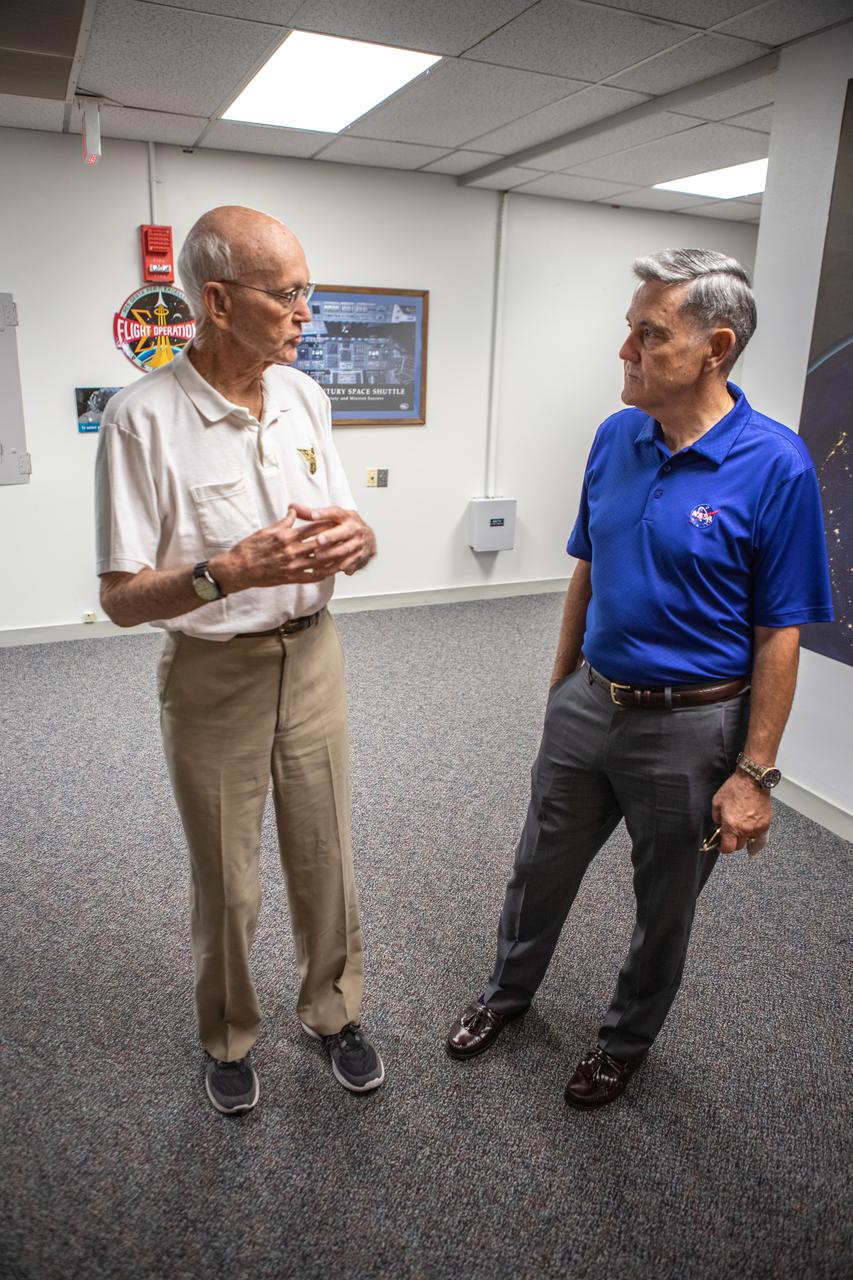
On the 50th anniversary of the Apollo 11 launch, July 16, 2019, astronaut Michael Collins, left, speaks to Kennedy Space Center Director Bob Cabana in the astronaut crew quarters about the moments leading up to launch at 9:32 a.m. on July 16, 1969, and what it was like to be the first to land on the Moon.
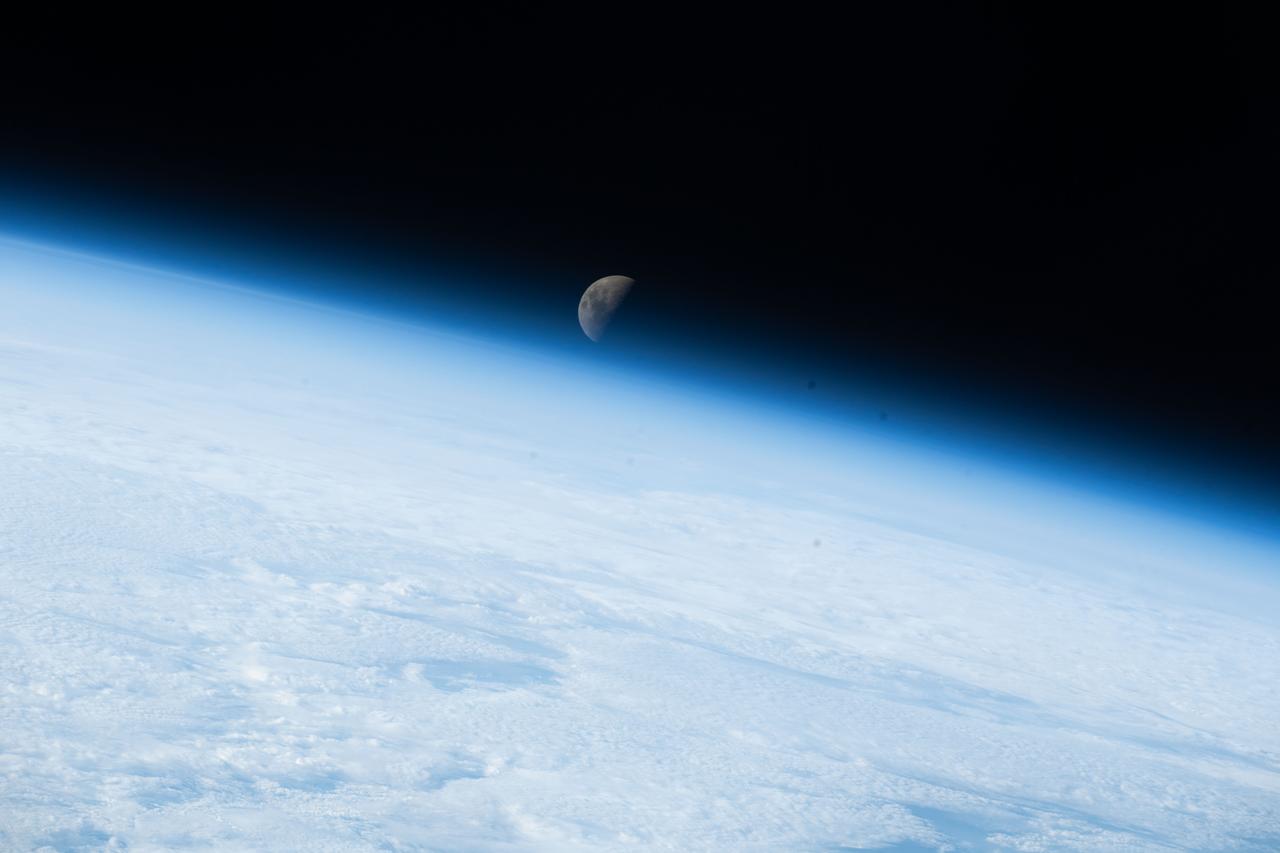
iss068e007324 (Oct. 2, 2022) --- The first quarter Moon is pictured setting below Earth's horizon as the International Space Station orbited 267 miles above the Indian Ocean west of Australia's island state of Tasmania. Credit: ESA/Samantha Cristoforetti
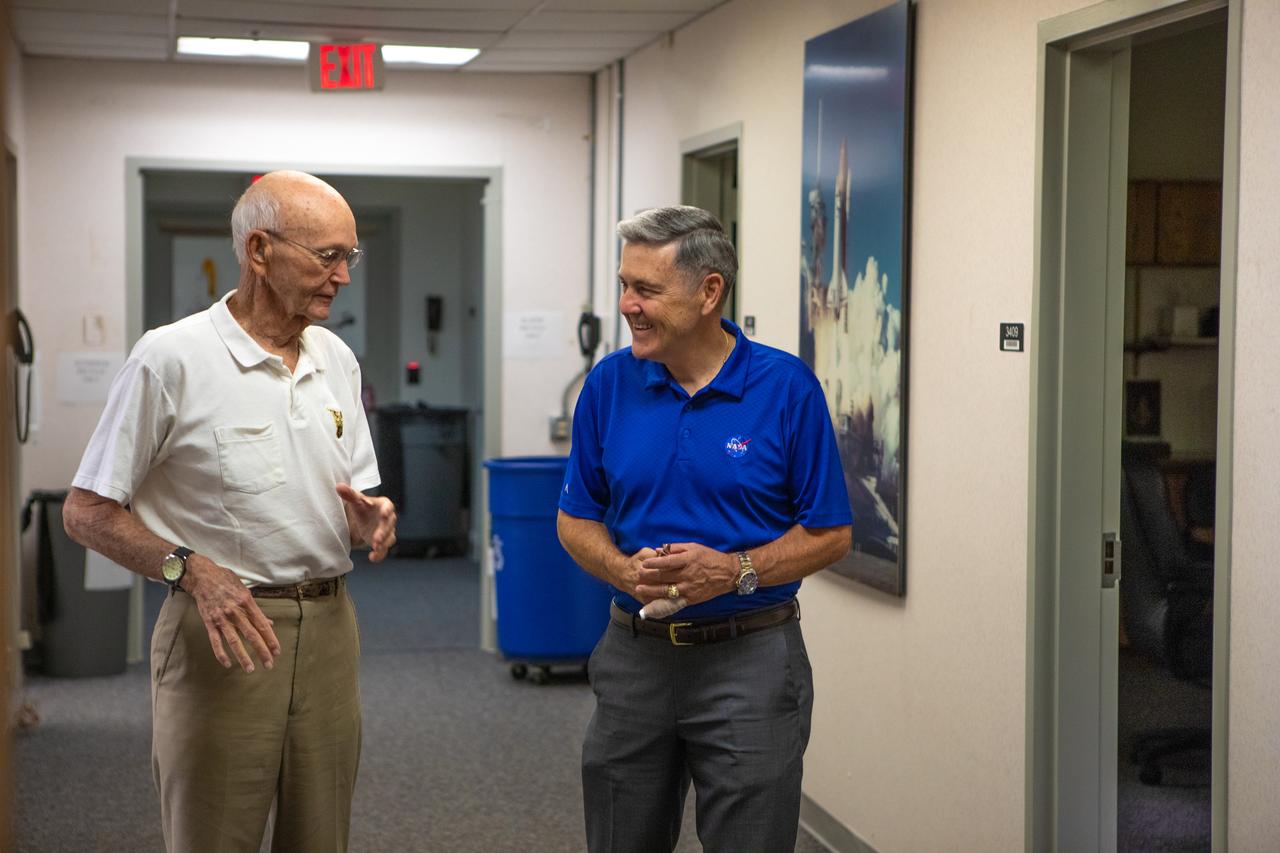
On the 50th anniversary of the Apollo 11 launch, July 16, 2019, astronaut Michael Collins, left, speaks to Kennedy Space Center Director Bob Cabana in the astronaut crew quarters about the moments leading up to launch at 9:32 a.m. on July 16, 1969, and what it was like to be the first to land on the Moon.
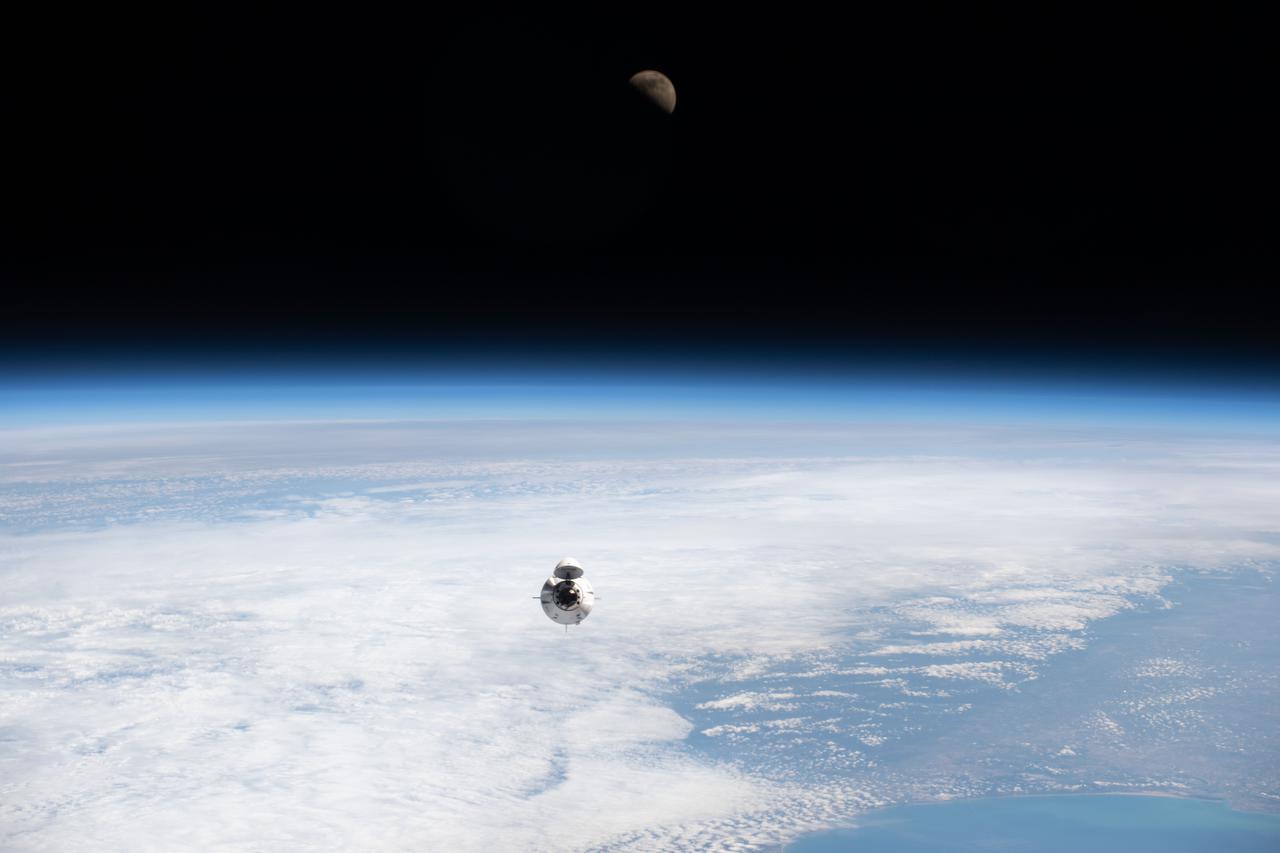
iss067e006192 (April 9, 2022) --- The SpaceX Dragon Endeavour carrying four Axiom Mission 1 astronauts approaches the International Space Station less than a day after launching from NASA's Kennedy Space Center in Florida. Pictured above Earth's horizon is the first quarter Moon.
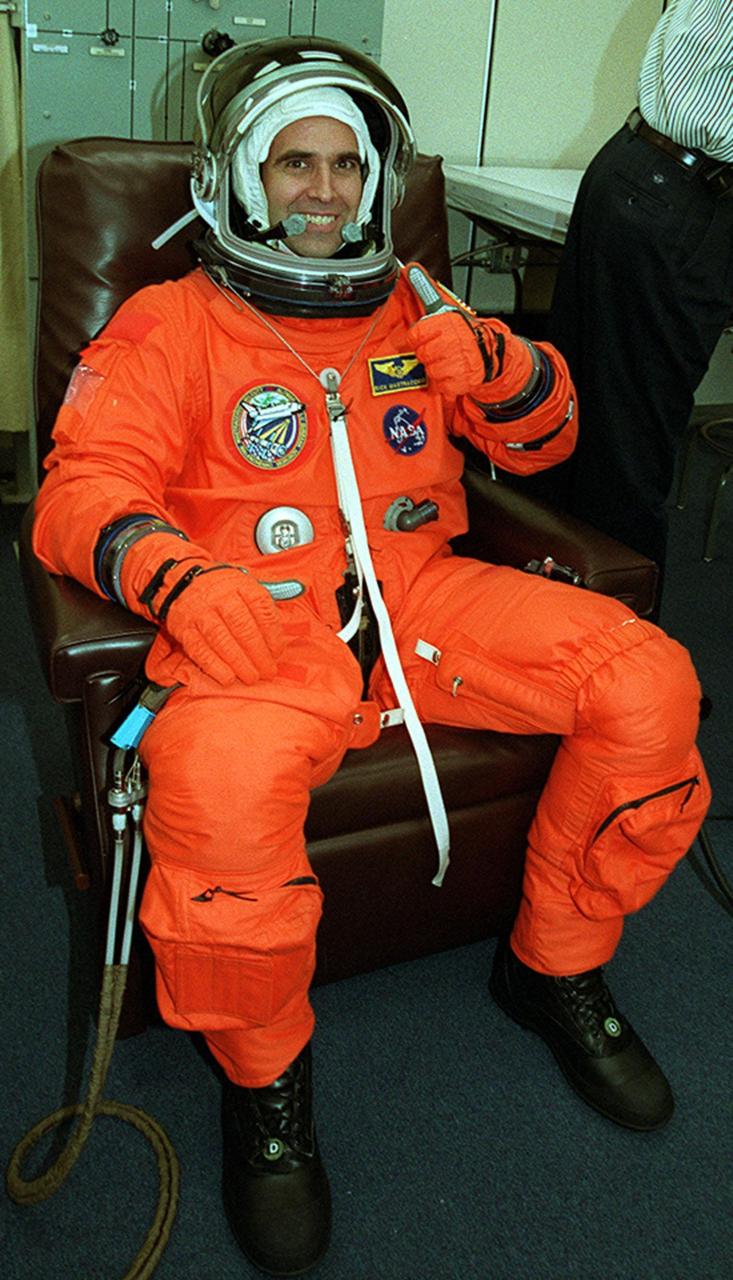
Already suited up, Mission Specialist Richard A. Mastracchio gives thumbs up for launch today. This is Mastracchio’s first space flight. Space Shuttle Atlantis is set to lift off 8:45 a.m. EDT on the fourth flight to the International Space Station. During the 11-day mission, the seven-member crew will perform support tasks on orbit, transfer supplies and prepare the living quarters in the newly arrived Zvezda Service Module. The first long-duration crew, dubbed “Expedition One,” is due to arrive at the Station in late fall
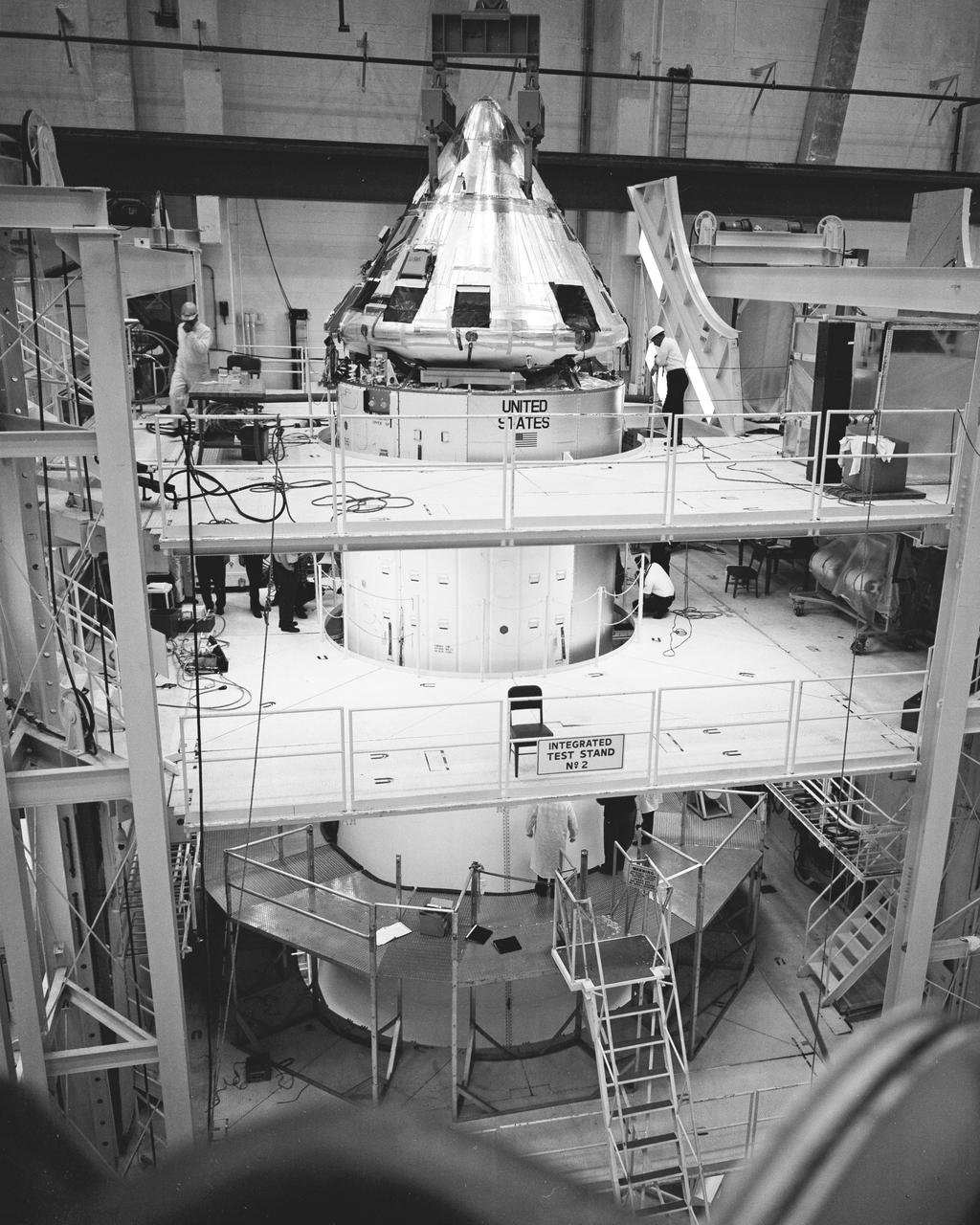
The Apollo/Saturn 501 spacecraft undergoes checkout in test stand within the Kennedy Space Center’s Manned Spacecraft Operations Building in preparation for the first flight of NASA’s Saturn V space vehicle in the second quarter of this year. The command module, top, was mated to the service module, and both were joined to the Spacecraft Lunar Module Adapter, the type that eventually will house a Lunar Module. The first Saturn V flight will be unmanned.
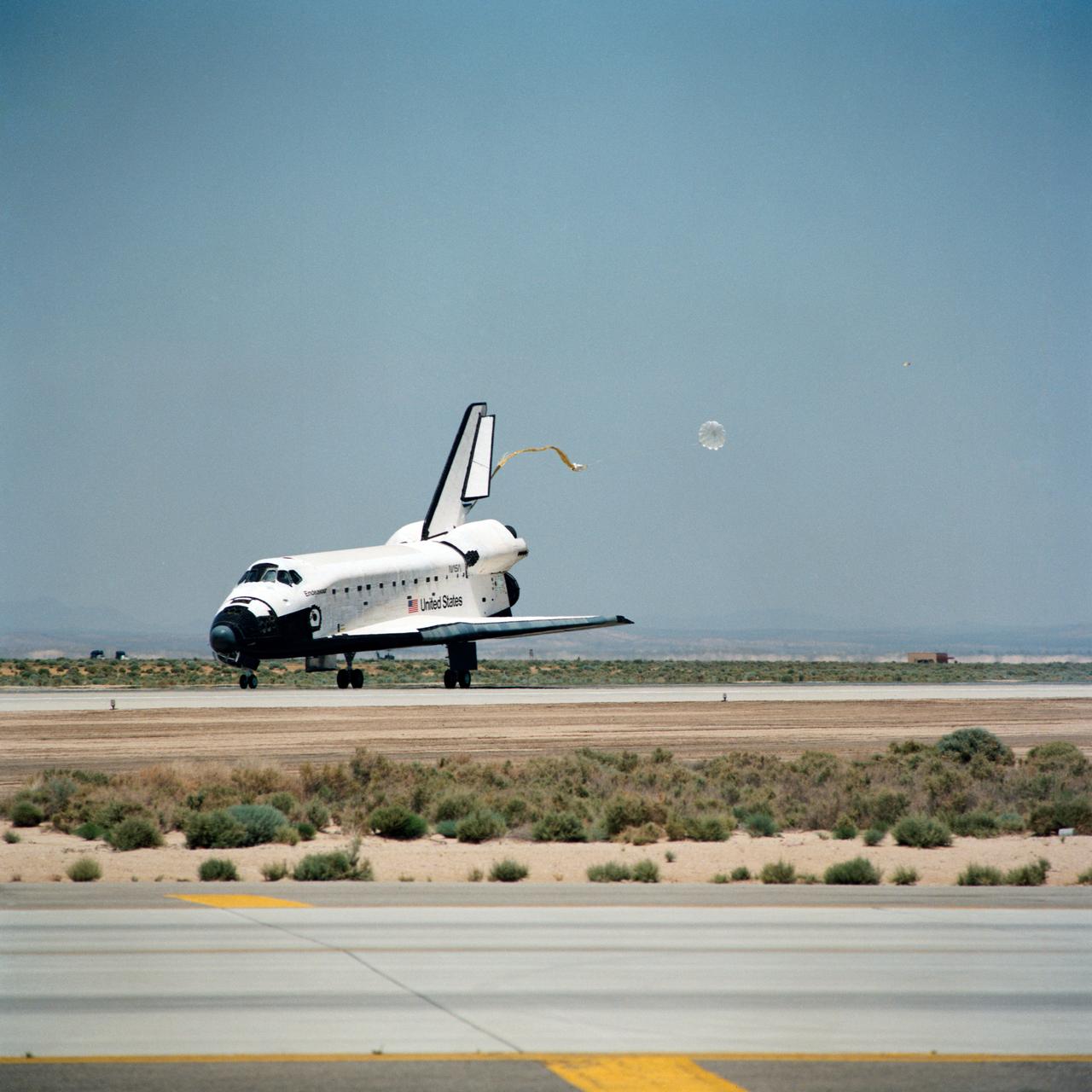
STS049-S-268 (16 May 1992) --- A three-quarter forward view of the Space Shuttle Endeavour making its first landing, following a successful nine-day mission in Earth orbit. The drogue chute precedes the main chute in NASA's first exercise of its detailed test objective (DTO-521) on the drag chute system. Main gear touchdown occurred at 1:57:38 p.m. (PDT), May 16, 1992.

STS049-S-301 (16 May 1992) --- A three-quarter aft view of the Space Shuttle Endeavour making its first landing, following a successful nine-day mission in Earth orbit. Fully deployed here is the main chute in NASA's first exercise of its detailed test objective (DTO-521) on the drag chute system. Main gear touchdown occurred at 1:57:38 p.m. (PDT), May 16, 1992.
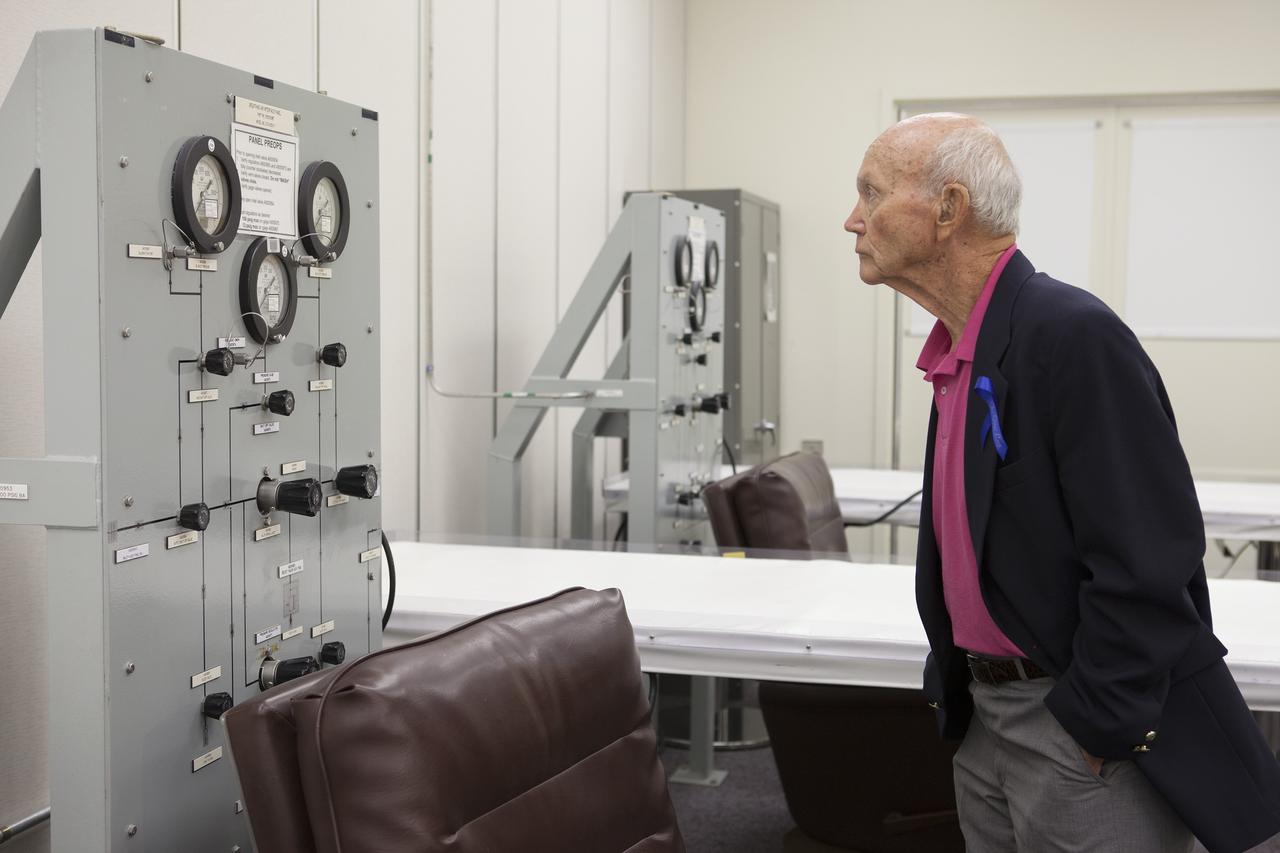
CAPE CANAVERAL, Fla. -- Apollo 11 astronaut Michael Collins checks out some equipment during a tour of the astronaut crew quarters in the Operations and Checkout Building at NASA's Kennedy Space Center in Florida. The tour followed a ceremony renaming the refurbished Operations and Checkout Building for Apollo 11 astronaut Neil Armstrong, the first person to set foot on the moon. Besides housing the crew quarters, the building's high bay is being used to support the agency's new Orion spacecraft and is the same spaceport facility where the Apollo 11 command/service module and lunar module were prepped for the first lunar landing mission in 1969. Orion is designed to take humans farther than they’ve ever gone before, serving as the exploration vehicle that will carry astronauts to deep space and sustain the crew during travel to destinations such as an asteroid or Mars. The visit of the former astronauts was part of NASA's 45th anniversary celebration of the moon landing. As the world watched, Neil Armstrong and Aldrin landed in the moon's Sea of Tranquility aboard the lunar module Eagle on July 20, 1969. Meanwhile, crewmate Collins orbited above in the command module Columbia. For more, visit http://www.nasa.gov/press/2014/july/nasa-honors-historic-first-moon-landing-eyes-first-mars-mission. Photo credit: NASA/Kim Shiflett

CAPE CANAVERAL, Fla. -- Apollo astronauts Jim Lovell, left, and Buzz Aldrin tour the astronaut crew quarters in the Operations and Checkout Building at NASA's Kennedy Space Center in Florida. The tour followed a ceremony renaming the refurbished Operations and Checkout Building for Apollo 11 astronaut Neil Armstrong, the first person to set foot on the moon. Besides housing the crew quarters, the building's high bay is being used to support the agency's new Orion spacecraft and is the same spaceport facility where the Apollo 11 command/service module and lunar module were prepped for the first lunar landing mission in 1969. Orion is designed to take humans farther than they’ve ever gone before, serving as the exploration vehicle that will carry astronauts to deep space and sustain the crew during travel to destinations such as an asteroid or Mars. The visit of the former astronauts was part of NASA's 45th anniversary celebration of the moon landing. As the world watched, Neil Armstrong and Aldrin landed in the moon's Sea of Tranquility aboard the lunar module Eagle on July 20, 1969. Meanwhile, crewmate Collins orbited above in the command module Columbia. For more, visit http://www.nasa.gov/press/2014/july/nasa-honors-historic-first-moon-landing-eyes-first-mars-mission. Photo credit: NASA/Kim Shiflett

CAPE CANAVERAL, Fla. -- Apollo astronaut Michael Collins tours the astronaut crew quarters in the Operations and Checkout Building at NASA's Kennedy Space Center in Florida, accompanied by family members and friends. The tour followed a ceremony renaming the refurbished Operations and Checkout Building for Apollo 11 astronaut Neil Armstrong, the first person to set foot on the moon. Besides housing the crew quarters, the building's high bay is being used to support the agency's new Orion spacecraft and is the same spaceport facility where the Apollo 11 command/service module and lunar module were prepped for the first lunar landing mission in 1969. Orion is designed to take humans farther than they’ve ever gone before, serving as the exploration vehicle that will carry astronauts to deep space and sustain the crew during travel to destinations such as an asteroid or Mars. The visit of the former astronauts was part of NASA's 45th anniversary celebration of the moon landing. As the world watched, Neil Armstrong and Aldrin landed in the moon's Sea of Tranquility aboard the lunar module Eagle on July 20, 1969. Meanwhile, crewmate Collins orbited above in the command module Columbia. For more, visit http://www.nasa.gov/press/2014/july/nasa-honors-historic-first-moon-landing-eyes-first-mars-mission. Photo credit: NASA/Kim Shiflett
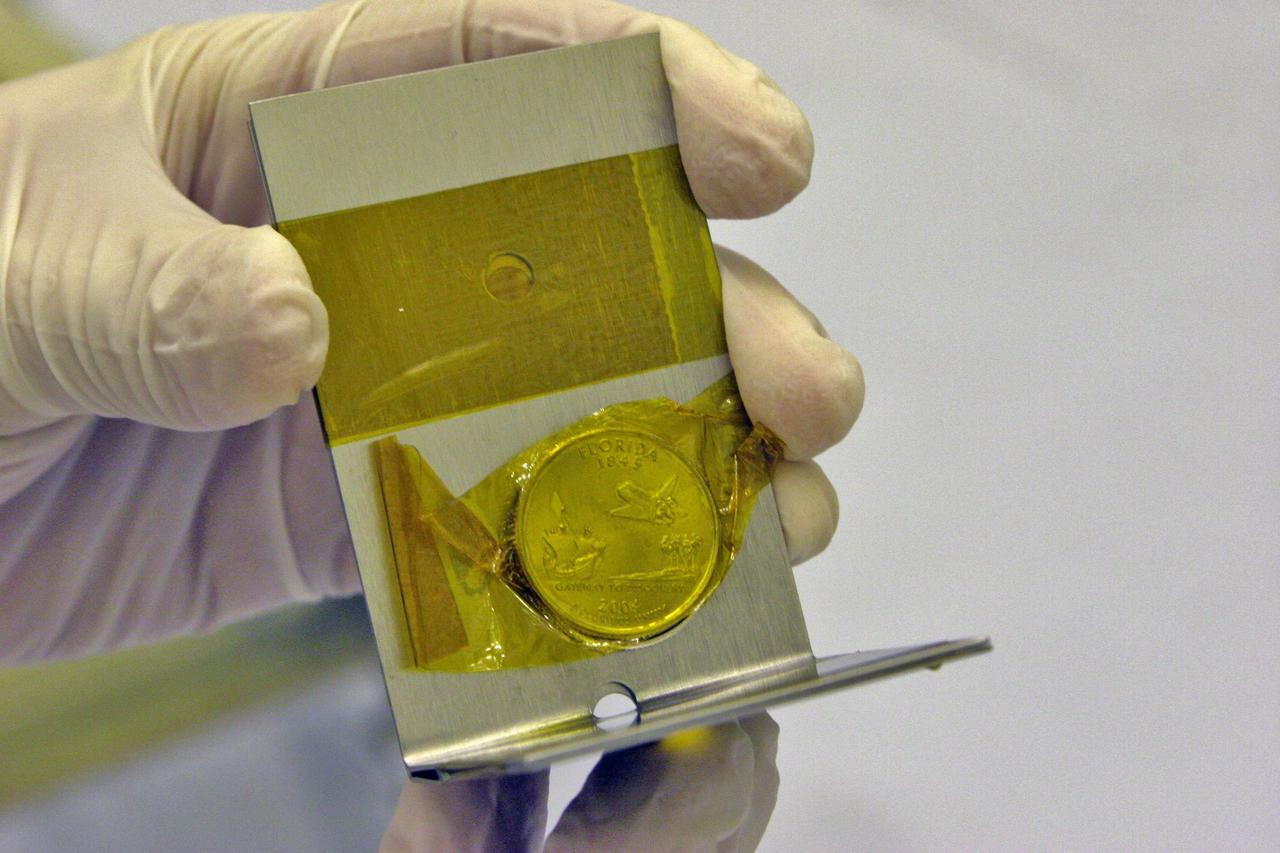
KENNEDY SPACE CENTER, FLA. - A Florida quarter is prepared for installation on the New Horizons spacecraft in Kennedy Space Center's Payload Hazardous Servicing Facility. The new quarter, engraved with the "Gateway to Discovery" design, will accompany New Horizons on its 3-billion-mile journey to the planet Pluto and its moon, Charon. Although appropriate for the mission to carry the coin from the state that symbolizes space exploration, it will also serve a practical purpose: scientists are using the quarter as a spin-balance weight. New Horizons comprises seven scientific instruments that will characterize the global geology and geomorphology of Pluto and its moon Charon, map their surface compositions and temperatures, and examine Pluto's complex atmosphere. After that, flybys of Kuiper Belt objects from even farther in the solar system may be undertaken in an extended mission. New Horizons is the first mission in NASA's New Frontiers program of medium-class planetary missions. The spacecraft, designed for NASA by the Johns Hopkins University Applied Physics Laboratory in Laurel, Md., will launch aboard a Lockheed Martin Atlas V rocket and fly by Pluto and Charon as early as summer 2015. Photo Credit: Applied Physics Laboratory/George W. Rogers III

StenniSphere, the John C. Stennis Space Center's visitor center in Hancock County, Miss., features a 14,000-square-foot museum and outdoor exhibits about Stennis Space Center. Designed to entertain while educating, StenniSphere includes informative displays and exhibits from NASA, the Naval Meteorology and Oceanography Command, and other resident agencies. Recently named Mississippi's Travel Attraction of the Year, StenniSphere hosted a quarter of a million visitors in its first year and is a major school field trip destination.
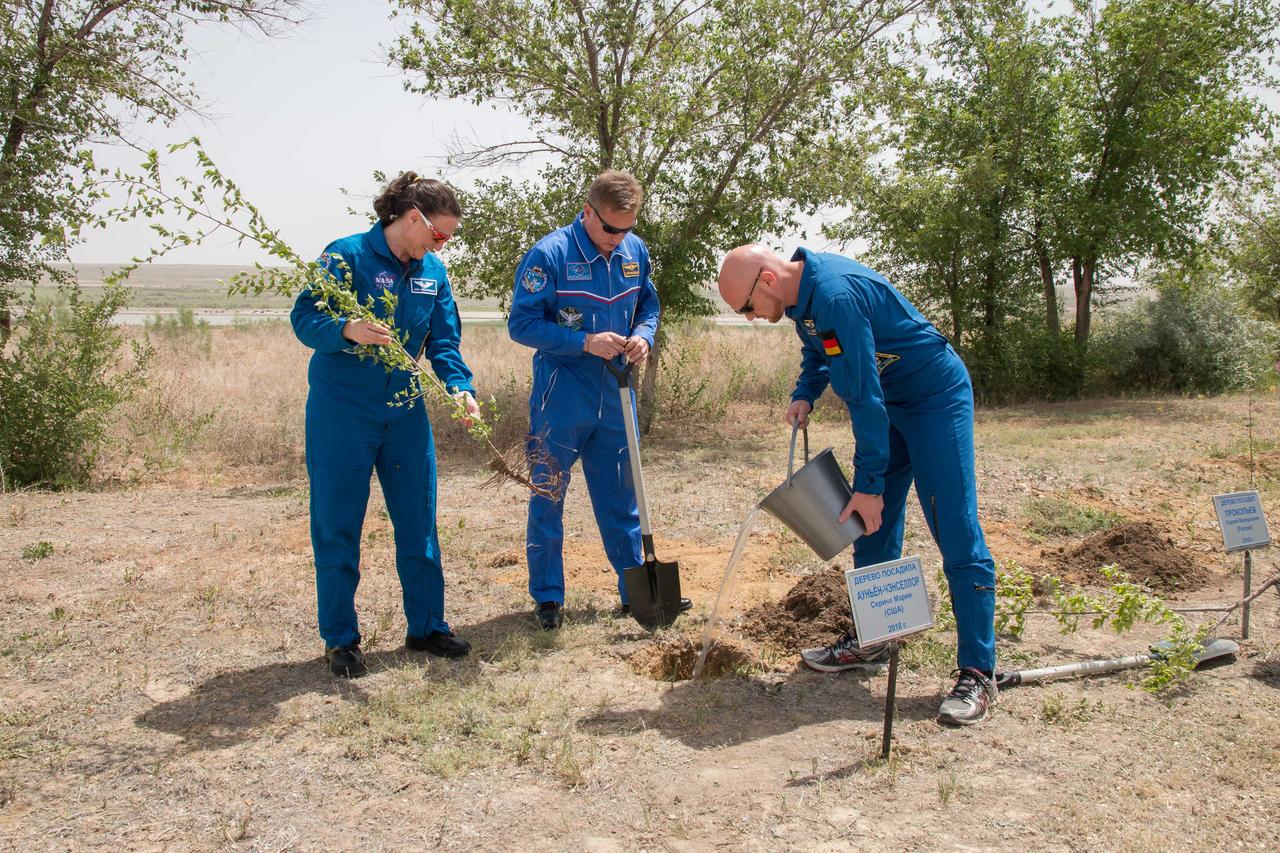
jsc2018e050830 - At the Cosmonaut Hotel crew quarters in Baikonur, Kazakhstan, Expedition 56 crewmember Serena Aunon-Chancellor of NASA (left) plants a tree in her name May 29 in traditional pre-launch activities for a first-time flier. Assisting are crewmates Sergey Prokopyev of Roscosmos (center) and Alexander Gerst of the European Space Agency (right). Aunon-Chancellor, Prokopyev and Gerst will launch June 6 from the Baikonur Cosmodrome in Kazakhstan on the Soyuz MS-09 spacecraft for a six-month mission on the International Space Station...NASA/Victor Zelentsov.
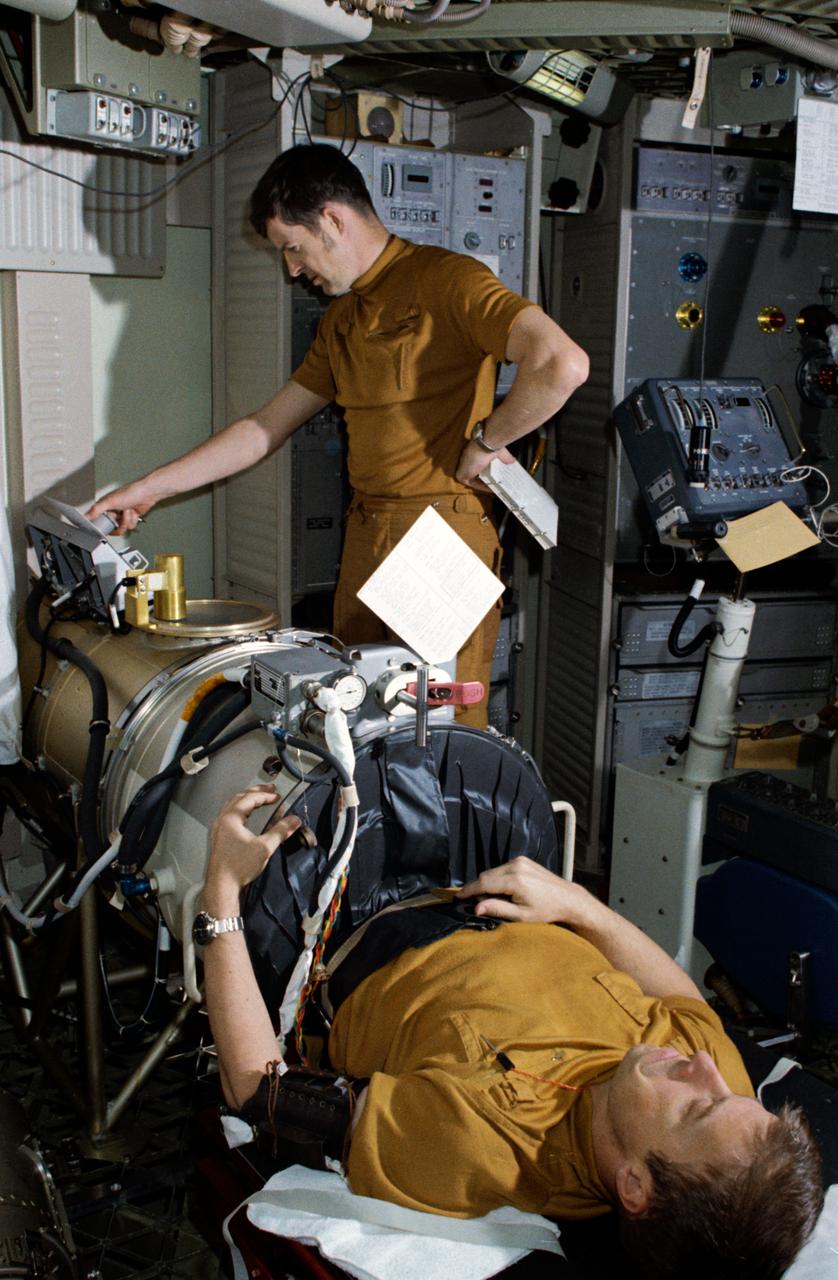
S73-20276 (1 March 1973) --- Astronaut Paul J. Weitz, pilot of the first manned Skylab mission, lies in the lower body negative pressure device during Skylab training at Johnson Space Center. Operating the controls in the background is scientist-astronaut Joseph P. Kerwin, science pilot of the mission. They are in the work and experiments area of the crew quarters of the Skylab Orbital Workshop (OWS) trainer at JSC. Photo credit: NASA
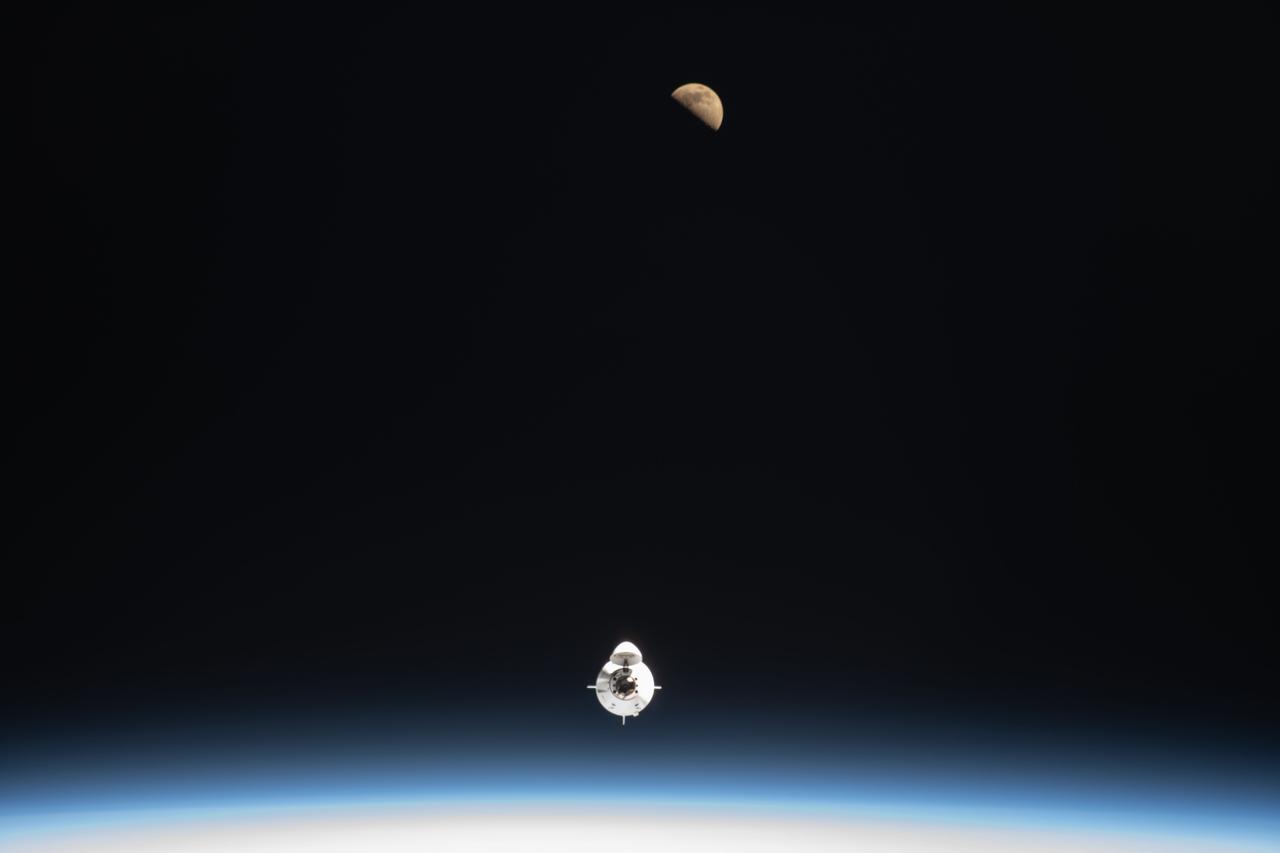
iss067e006147 (April 9, 2022) --- The SpaceX Dragon Endeavour crew ship carrying four Axiom Mission 1 astronauts approaches the International Space Station less than a day after launching from NASA's Kennedy Space Center in Florida. Pictured above Endeavour is the first quarter Moon as both spaceraft were orbiting 259 miles above the Atlantic Ocean off the coast of Morocco.
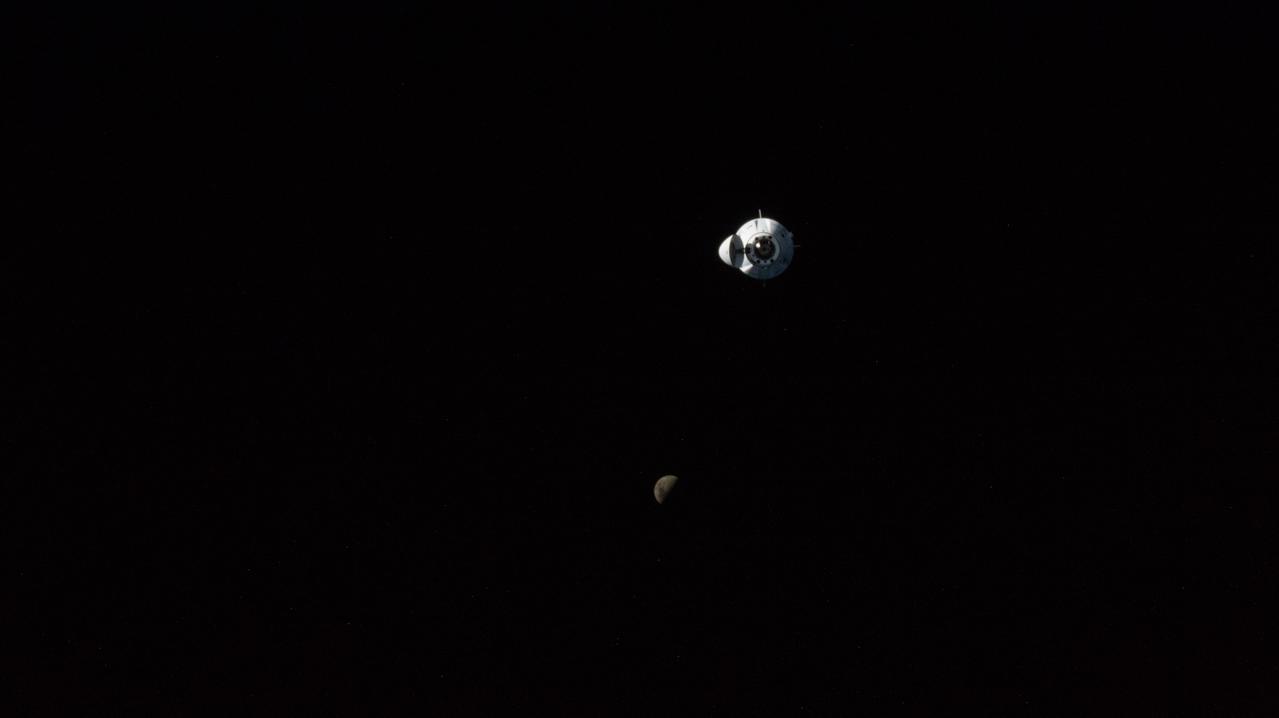
iss067e006366 (April 9, 2022) --- The SpaceX Dragon Endeavour crew ship carrying four Axiom Mission 1 astronauts approaches the International Space Station less than a day after launching from NASA's Kennedy Space Center in Florida. Pictured below Endeavour is the first quarter Moon as both spaceraft were orbiting 262 miles above central China.
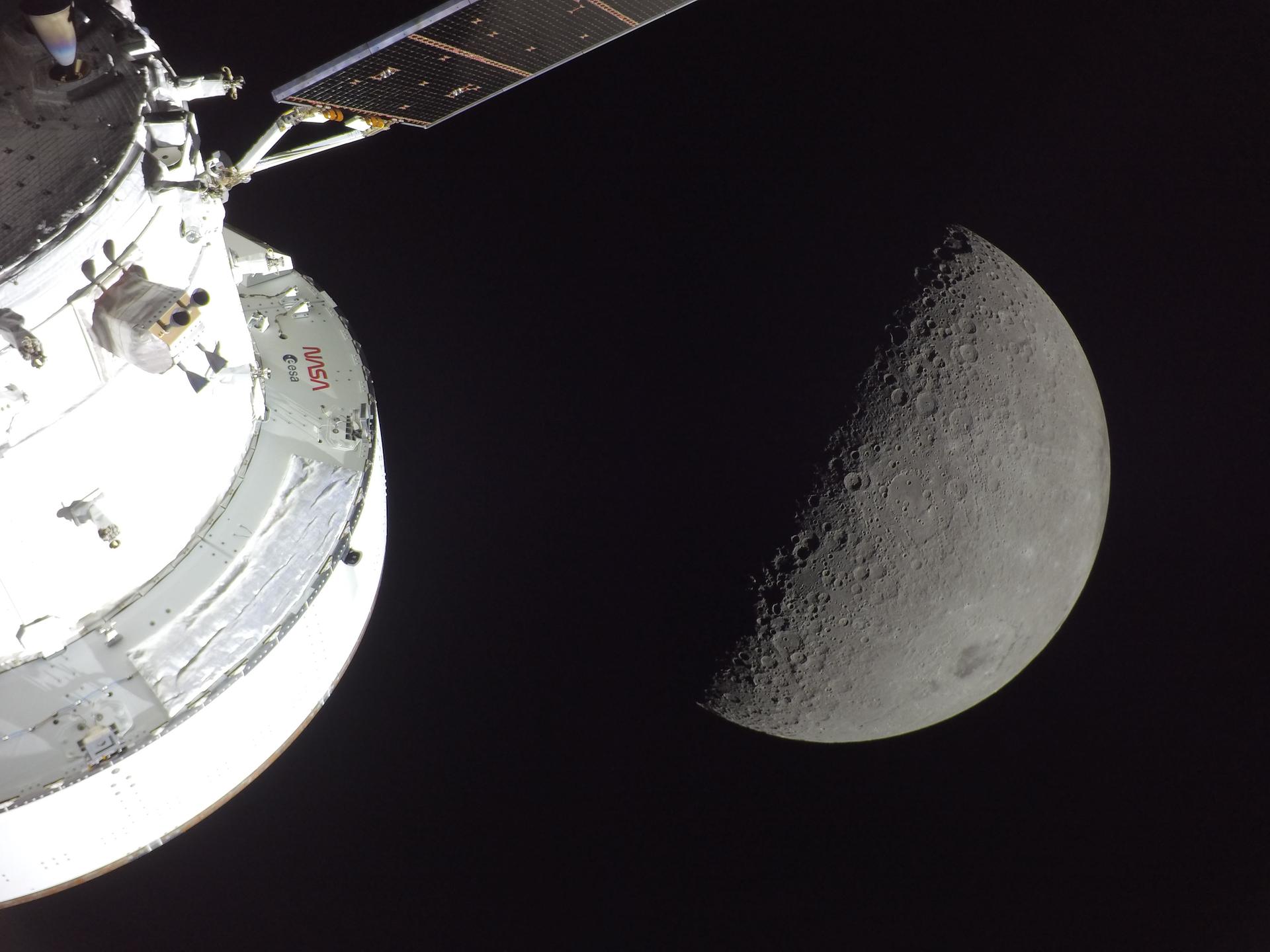
art002e009566 (April 6, 2026) - NASA’s Orion spacecraft is seen in the foreground, lit up by the Sun. A first quarter Moon is visible behind it, with sunlight coming from the right. Near the bottom right edge of the Moon, Orientale basin stands out with a black patch of ancient lava in its center. A 600-mile-wide impact crater ringed by mountains, Orientale straddles the near and far sides of the Moon. Credit: NASA
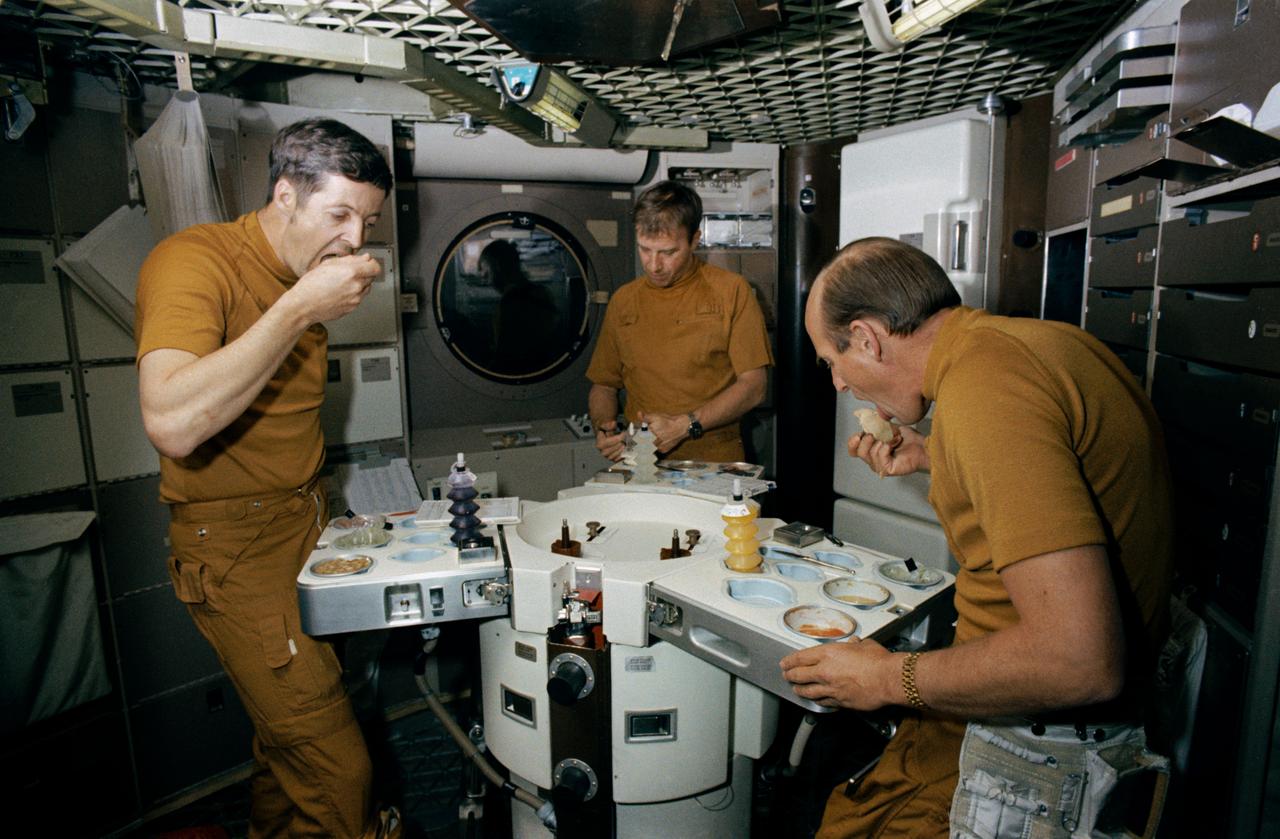
S73-20236 (1 March 1973) --- The three members of the prime crew of the first manned Skylab mission dine on specially prepared Skylab space food in the wardroom of the crew quarters of the Skylab Orbital Workshop (OWS) trainer during Skylab training at the Johnson Space Center. They are, left to right, scientist-astronaut Joseph P. Kerwin, science pilot; astronaut Paul J. Weitz, pilot; and astronaut Charles Conrad Jr., commander. Photo credit: NASA
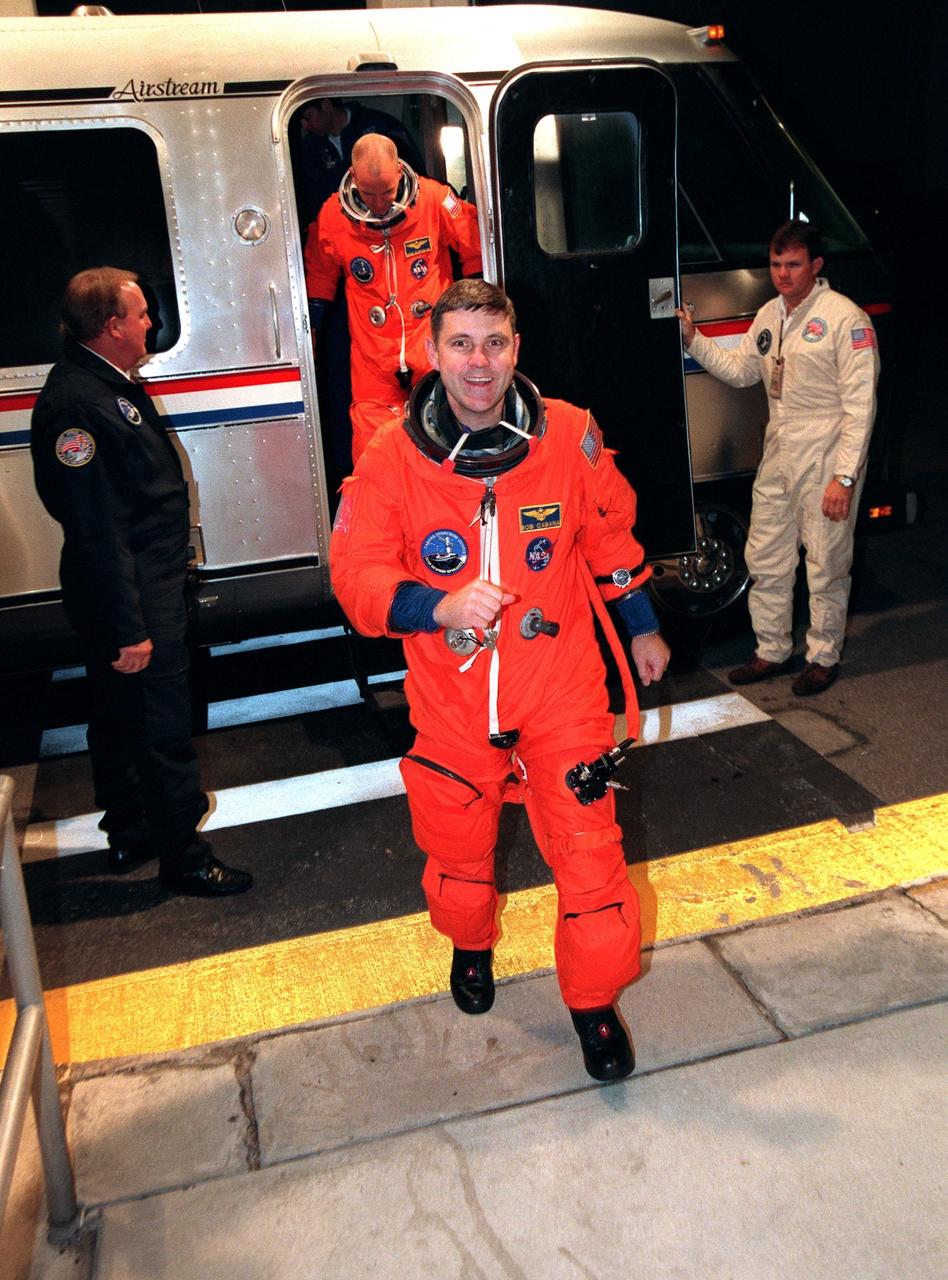
Despite the launch scrub of Space Shuttle Mission STS-88, Commander Robert D. Cabana has a big smile as he returns to the crew quarters in the Operations and Checkout Building. Behind him in the astronaut van is Pilot Frederick W. "Rick" Sturckow. The Space Shuttle Endeavour is slated to make another liftoff attempt on Friday, Dec. 4, for the first U.S. mission dedicated to the assembly of the International Space Station
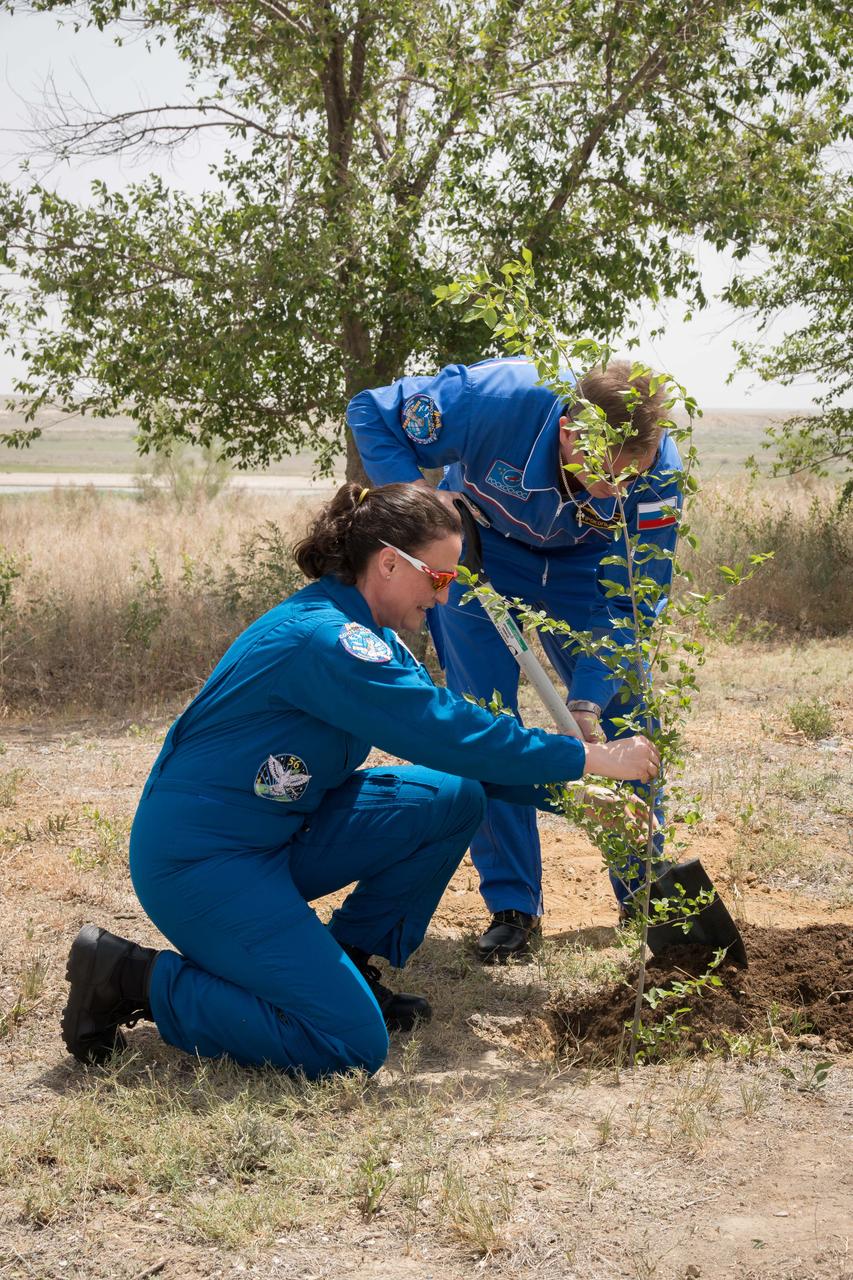
jsc2018e050831 - At the Cosmonaut Hotel crew quarters in Baikonur, Kazakhstan, Expedition 56 crewmember Serena Aunon-Chancellor of NASA (kneeling) plants a tree in her name May 29 in traditional pre-launch activities for a first-time flier. Assisting is crewmate Sergey Prokopyev of Roscosmos. Aunon-Chancellor, Prokopyev and Alexander Gerst of the European Space Agency will launch June 6 from the Baikonur Cosmodrome in Kazakhstan on the Soyuz MS-09 spacecraft for a six-month mission on the International Space Station...NASA/Victor Zelentsov.
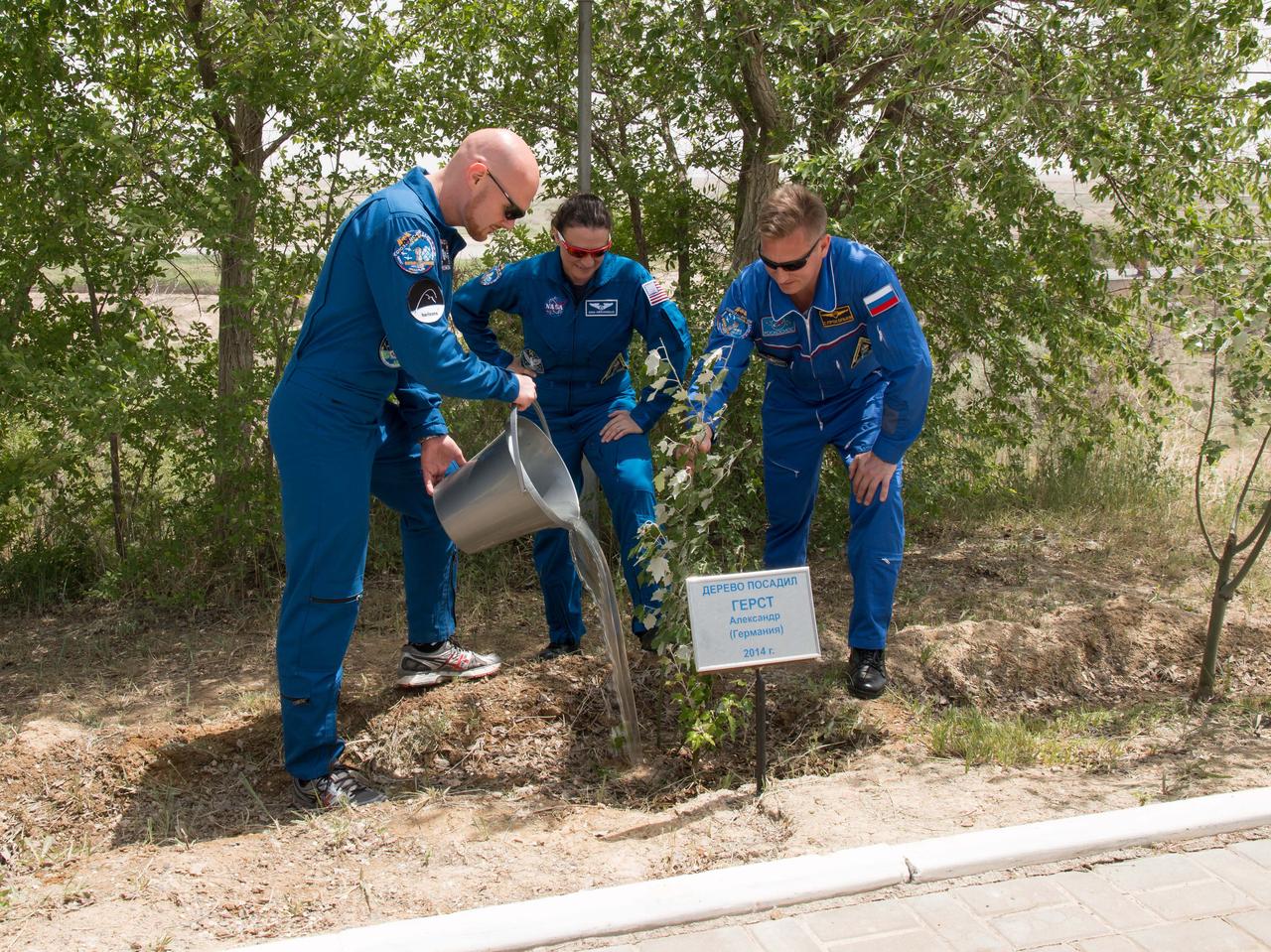
jsc2018e050833 - At the Cosmonaut Hotel crew quarters in Baikonur, Kazakhstan, Expedition 56 crewmember Alexander Gerst of the European Space Agency waters a tree May 29 first planted prior to his initial flight into space in 2014 as crewmates Serena Aunon-Chancellor of NASA (center) and Sergey Prokopyev of Roscosmos look on. They will launch June 6 from the Baikonur Cosmodrome in Kazakhstan on the Soyuz MS-09 spacecraft for a six-month mission on the International Space Station...NASA/Victor Zelentsov.
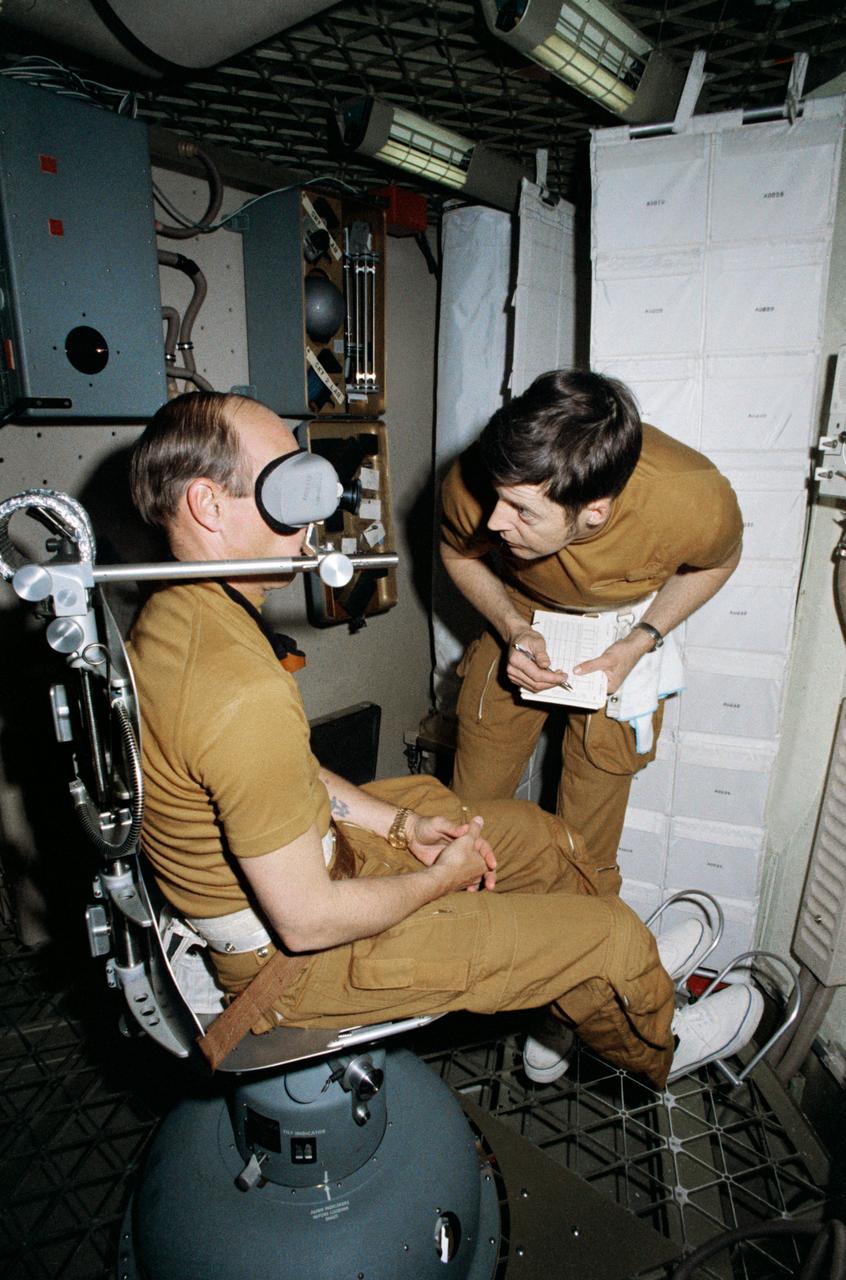
S73-20678 (1 March 1973) --- Astronaut Charles Conrad Jr., commander of the first manned Skylab mission, checks out the Human Vestibular Function, Experiment M131, during Skylab training at Johnson Space Center. Scientist-astronaut Joseph P. Kerwin, science pilot of the mission, goes over a checklist. The two men are in the work and experiments compartment of the crew quarters of the Skylab Orbital Workshop (OWS) trainer at JSC. Photo credit: NASA
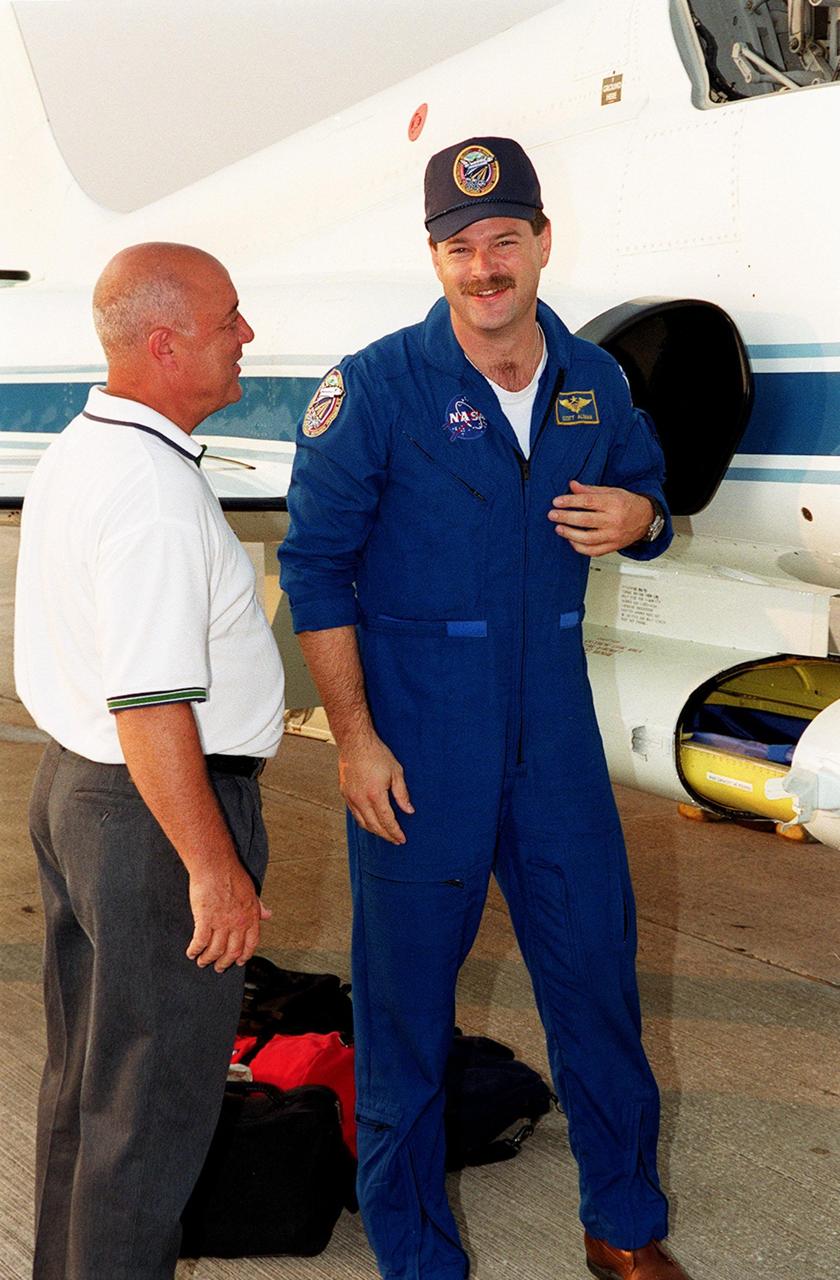
will be taking part in Terminal Countdown Demonstration Test activities, which include emergency egress training and a simulated launch countdown. STS-106 is scheduled to launch Sept. 8, 2000, at 8:31 a.m. EDT from Launch Pad 39B. On the 11-day mission, the seven-member crew will perform support tasks on orbit, transfer supplies and prepare the living quarters in the newly arrived Zvezda Service Module. The first long-duration crew, dubbed “Expedition One,” is due to arrive at the Station in late fall
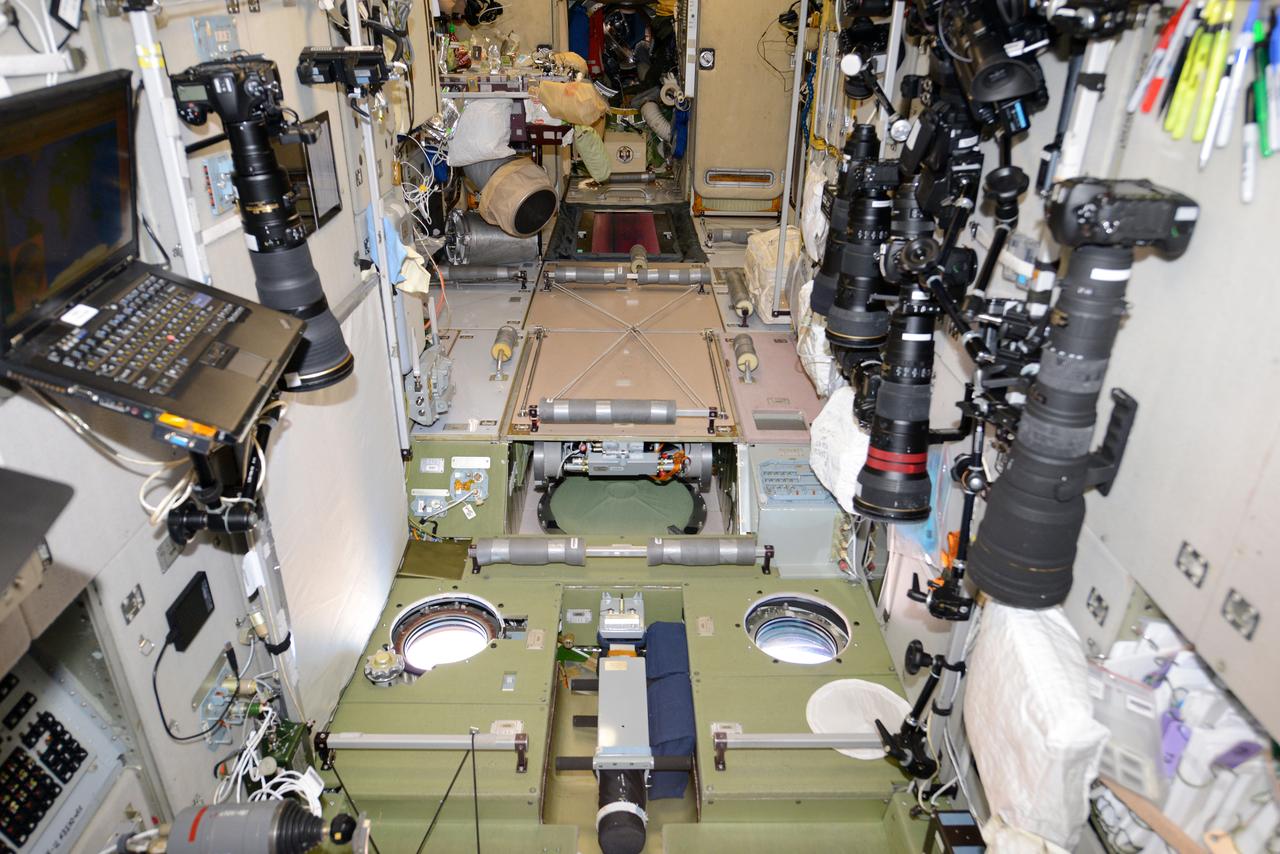
iss061e013837 (10/28/2019) --- A view of the Zvezda Service Module (SM) aboard the International Space Station (ISS). The Zvezda Service Module was the first fully Russian contribution to the International Space Station and served as the early cornerstone for the first human habitation of the station. The module provides station living quarters, life support systems, electrical power distribution, data processing systems, flight control systems and propulsion systems. It provides a communications system that includes remote command capabilities from ground flight controllers, and a docking port for Russian Soyuz and Progress spacecraft.
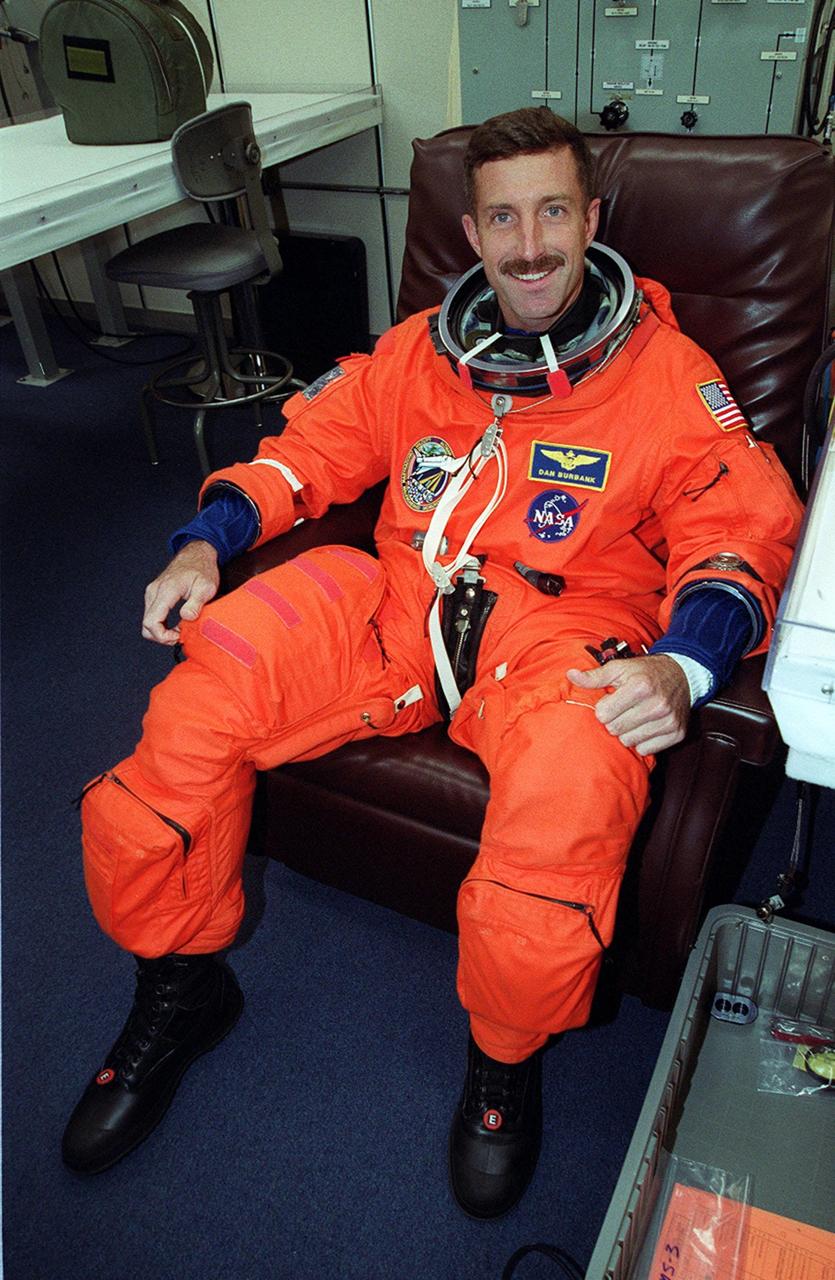
During suitup in the Operations and Checkout Building, STS-106 Mission Specialist Daniel C. Burbank smiles in anticipation of launch. This is Burbank’s first space flight. Space Shuttle Atlantis is set to lift off 8:45 a.m. EDT on the fourth flight to the International Space Station. During the 11-day mission, the seven-member crew will perform support tasks on orbit, transfer supplies and prepare the living quarters in the newly arrived Zvezda Service Module. The first long-duration crew, dubbed “Expedition One,” is due to arrive at the Station in late fall
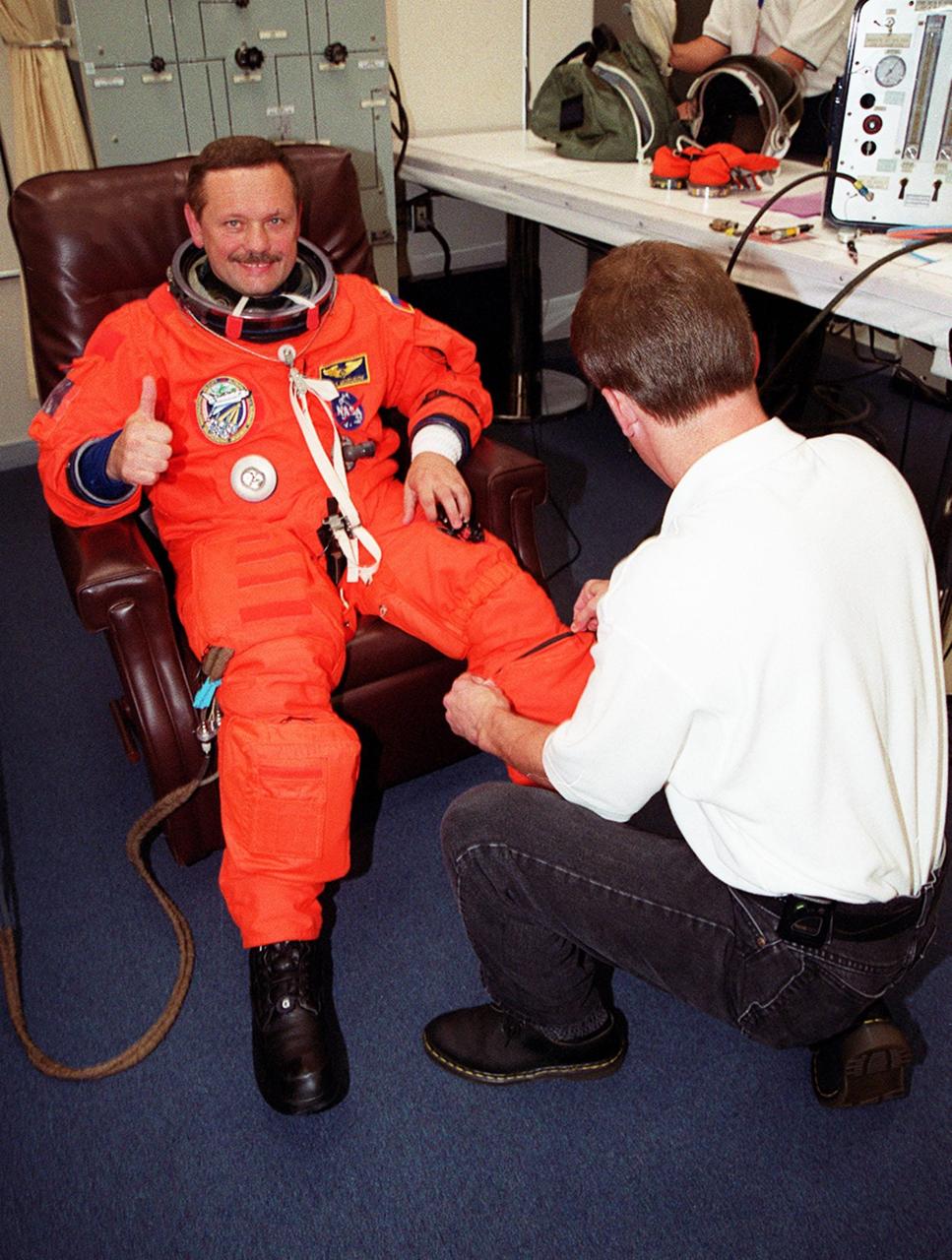
STS-106 Mission Specialist Boris V. Morukov gives a thumbs up for launch during suitup in the Operations and Checkout Building before launch. This is Morukov’s first space flight. Space Shuttle Atlantis is set to lift off 8:45 a.m. EDT on the fourth flight to the International Space Station. During the 11-day mission, the seven-member crew will perform support tasks on orbit, transfer supplies and prepare the living quarters in the newly arrived Zvezda Service Module. The first long-duration crew, dubbed “Expedition One,” is due to arrive at the Station in late fall
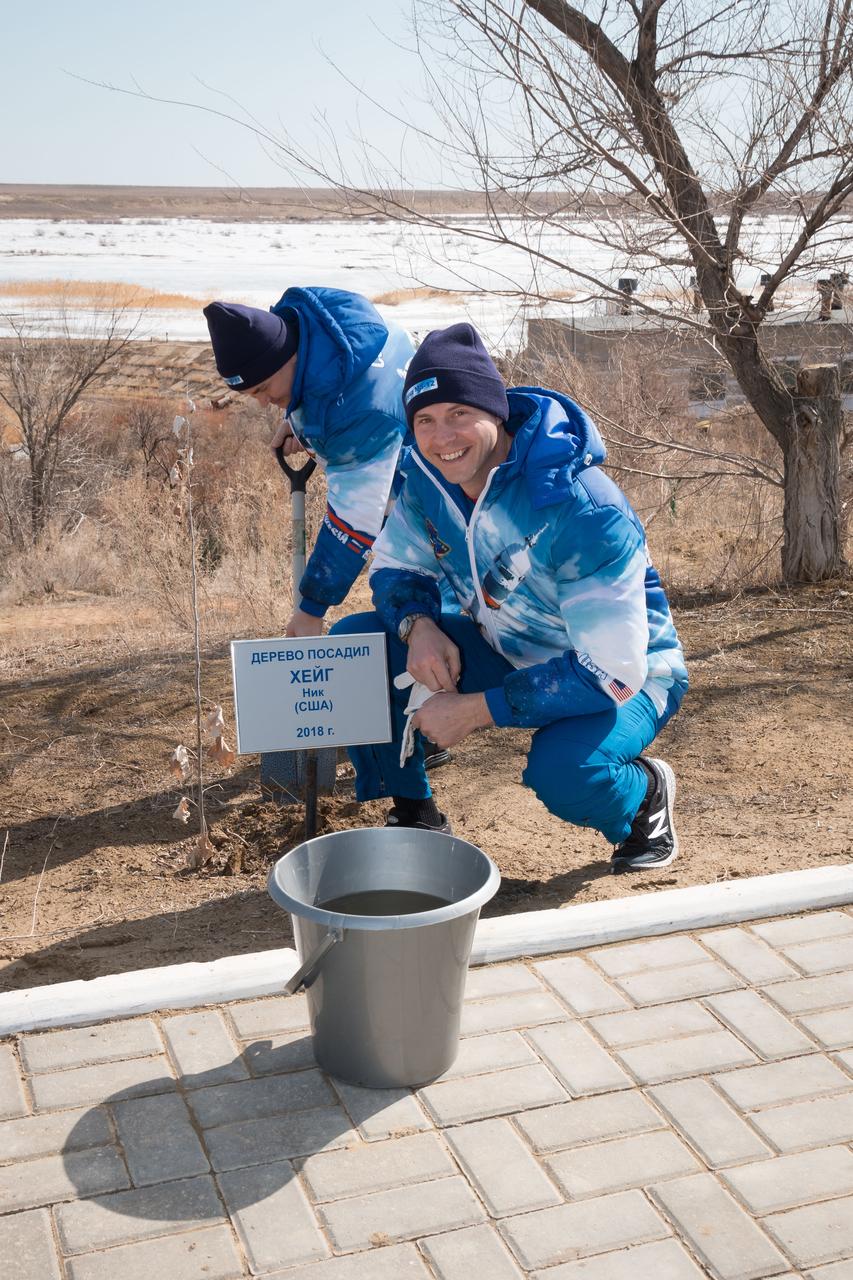
At the Cosmonaut Hotel crew quarters in Baikonur, Kazakhstan, Expedition 59 crewmember Nick Hague of NASA poses for pictures March 7 in front of a tree he originally planted last October before his first flight. Preparing the tree for watering is crewmate Alexey Ovchinin of Roscosmos. They launched together last October 11, but their flight was cut short two minutes after launch by an abort triggered by a first-stage booster rocket separation problem. They are set to launch again March 14, U.S. time, this time with crewmate Christina Koch of NASA on the Soyuz MS-12 spacecraft from the Baikonur Cosmodrome for a six-and-a-half month mission on the International Space Station...NASA/Victor Zelentsov.
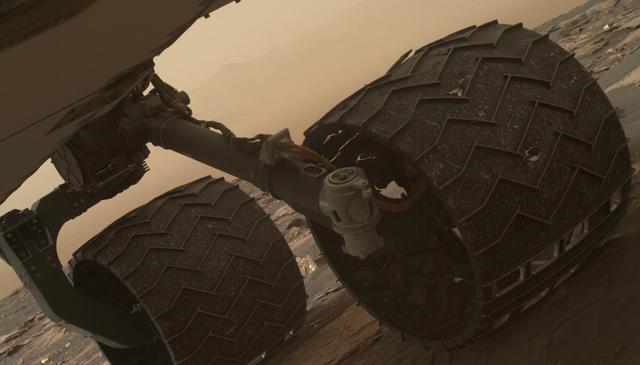
Two of the raised treads, called grousers, on the left middle wheel of NASA's Curiosity Mars rover broke during the first quarter of 2017, including the one seen partially detached at the top of the wheel in this image from the Mars Hand Lens Imager (MAHLI) camera on the rover's arm. This image was taken on March 19, 2017, as part of a set used by rover team members to inspect the condition of the rover's six wheels during the 1,641st Martian day, or sol, of Curiosity's work on Mars. Holes and tears in the wheels worsened significantly during 2013 as Curiosity was crossing terrain studded with sharp rocks on the route from near its 2012 landing site to the base of Mount Sharp. Team members have used MAHLI systematically since then to watch for when any of the zig-zag shaped grousers begin to break. The last prior set of wheel-inspection images from before Sol 1641 was taken on Jan. 27, 2017, (Sol 1591) and revealed no broken grousers. Longevity testing with identical aluminum wheels on Earth indicates that when three grousers on a given wheel have broken, that wheel has reached about 60 percent of its useful life. Curiosity has driven well over 60 percent of the amount needed for reaching all the geological layers planned as the mission's science destinations, so the start of seeing broken grousers is not expected to affect the mission's operations. Curiosity's six aluminum wheels are about 20 inches (50 centimeters) in diameter and 16 inches (40 centimeters) wide. Each of the six wheels has its own drive motor, and the four corner wheels also have steering motors. http://photojournal.jpl.nasa.gov/catalog/PIA21486
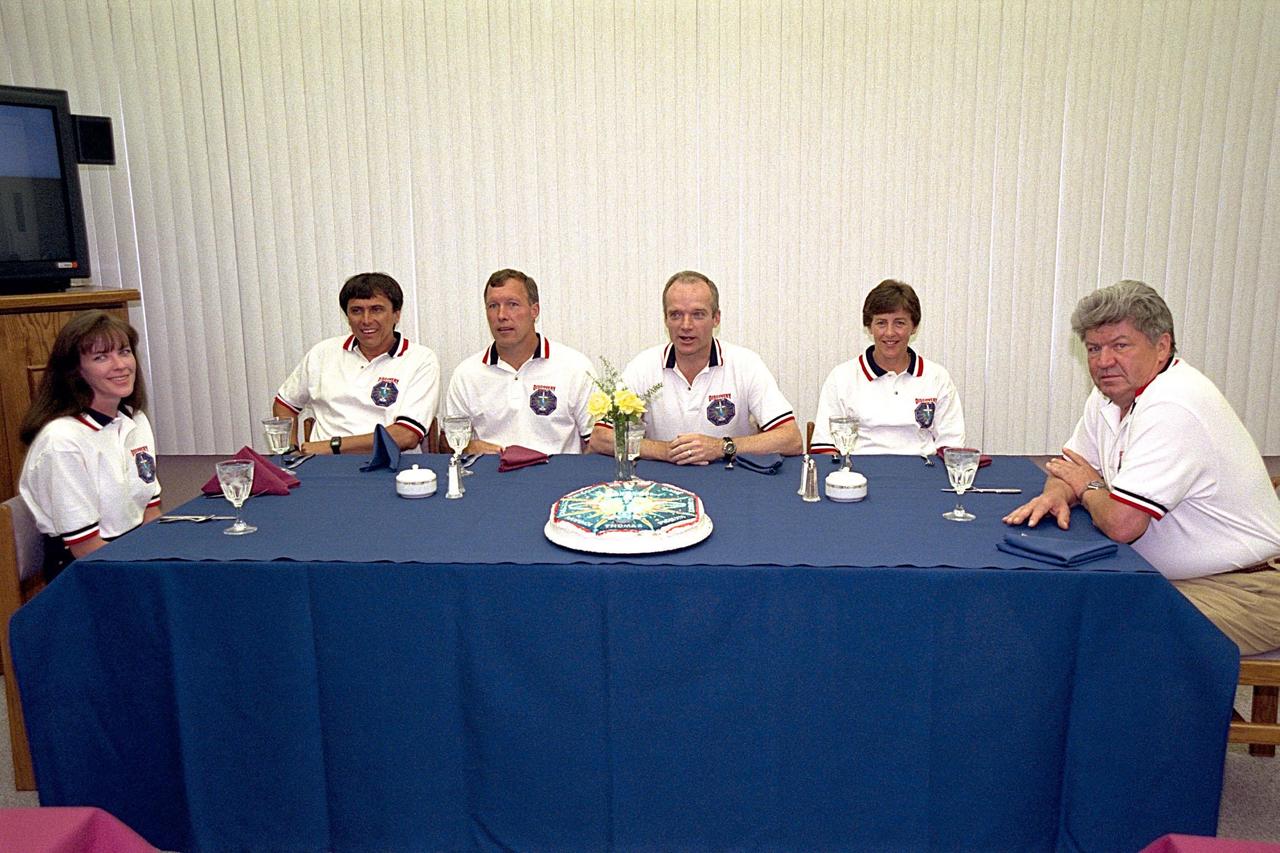
The STS-91 crew partakes in the traditional breakfast in the crew quarters at the Operations and Checkout (O&C) Building prior to their suitup for their trip to Launch Pad 39A.They are (from left): Mission Specialists Janet Lynn Kavandi and Franklin R. Chang-Diaz ; Pilot Dominic L. Gorie; Mission Commander Charles J. Precourt; and Mission Specialists Wendy B. Lawrence and Valery Victorovitch Ryumin. STS-91 is scheduled to be launched on June 2 with a launch window opening around 6:10 p.m. EDT. The mission will feature the ninth and final Shuttle docking with the Russian space station Mir, the first Mir docking for Discovery, the first on-orbit test of the Alpha Magnetic Spectrometer (AMS), and the first flight of the new Space Shuttle super lightweight external tank. Astronaut Andrew S. W. Thomas will be returning to Earth as a STS-91 crew member after living more than four months aboard Mir

At the Cosmonaut Hotel crew quarters in Baikonur, Kazakhstan, Expedition 34/35 crewmembers Flight Engineer Chris Hadfield of the Canadian Space Agency (left), Soyuz Commander Roman Romanenko (center) and Flight Engineer Tom Marshburn (right) pose for pictures Dec. 13, 2012 at the site of the tree planted in honor of Yuri Gagarin, the first human in space, as part of traditional pre-launch ceremonies. The trio will launch Dec. 19 from the Baikonur Cosmodrome in Kazakhstan Dec. 19 on the Soyuz TMA-07M spacecraft for a five-month mission on the International Space Station. NASA/Victor Zelentsov

CAPE CANAVERAL, Fla. - At NASA's Kennedy Space Center in Florida, space shuttle Endeavour rolls off Launch Pad 39B for the 3.4-mile rollaround to Launch Pad 39A. First motion was at 8:28 a.m. EDT. Endeavour is targeted to launch Nov. 14 on the STS-126 mission. On this 27th mission to the International Space Station, Endeavour will carry the Lightweight Multi-Purpose Experiment Support Structure Carrier and the Multi-Purpose Logistics Module Leonardo that will hold supplies and equipment, including additional crew quarters, additional exercise equipment, spare hardware and equipment for the regenerative life support system. Photo credit: NASA/Troy Cryder
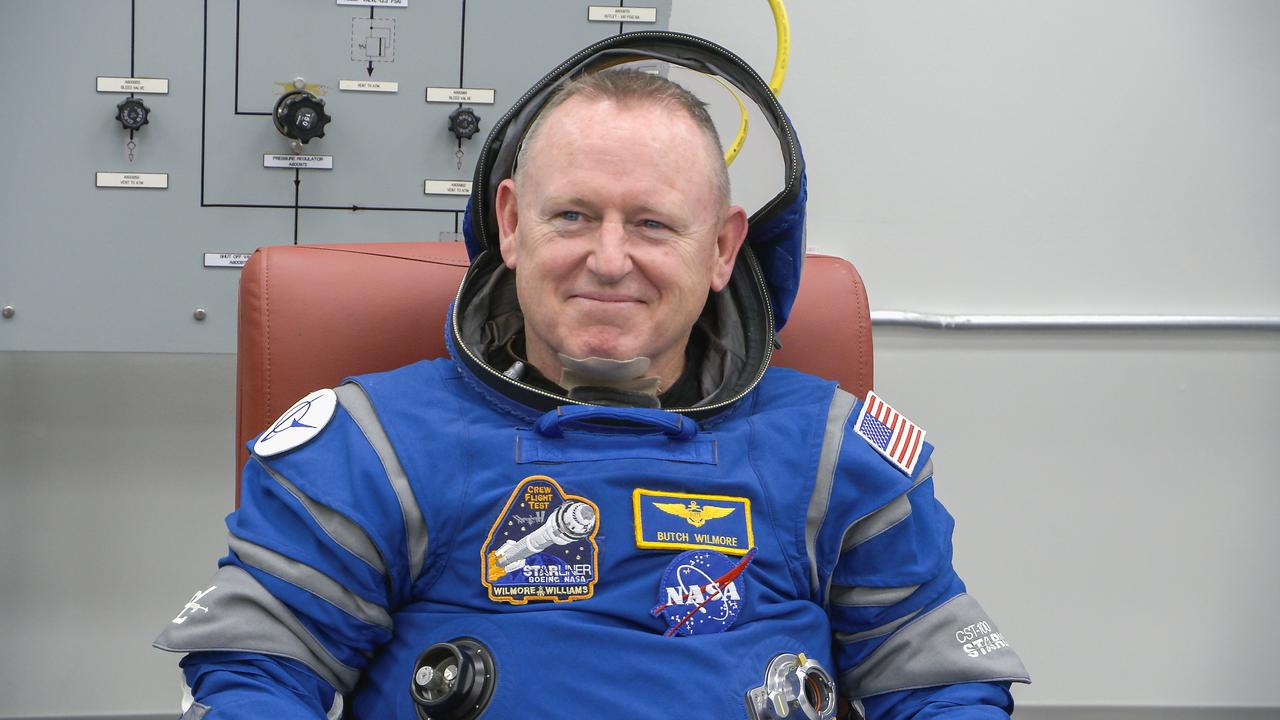
NASA’s Boeing Crew Flight Test astronaut Butch Wilmore relaxes in the suit-up room in the Astronaut Crew Quarters inside Kennedy Space Center’s Neil A. Armstrong Operations and Checkout Building in Florida a few hours during a launch attempt on Saturday, June 1, 2024. As part of NASA’s Commercial Crew Program, Wilmore, joined by NASA astronaut Suni Williams, is preparing for the first crewed launch to the International Space Station aboard Boeing’s Starliner spacecraft atop a United Launch Alliance Atlas V rocket from Space Launch Complex-41 at nearby Cape Canaveral Space Force Station. Liftoff was targeted for 12:25 p.m. EDT but scrubbed for the day.
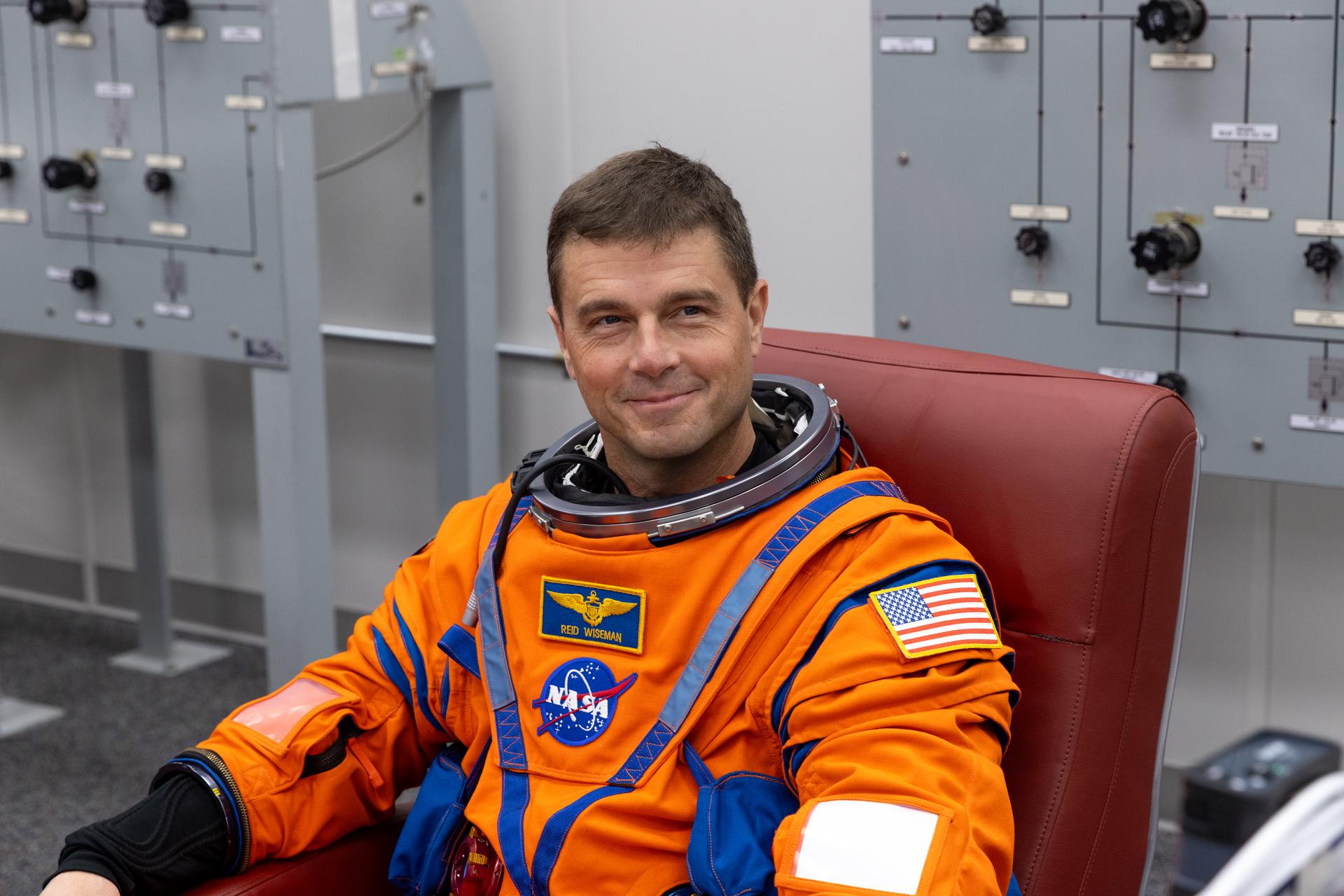
NASA astronaut Reid Wiseman, Artemis II commander, undergoes spacesuit checks inside the crew quarters suit-up room in the Neil A. Armstrong Operations and Checkout Building part of the Artemis II Countdown Demonstration Test at the agency’s Kennedy Space Center on Saturday, Dec. 20, 2025. For this operation, the Artemis II crew and launch team are simulating the launch day timeline including suit-up, walkout, and climbing in and out of the spacecraft. Through the Artemis campaign, NASA will send astronauts to explore the Moon for scientific discovery, economic benefits, and to build the foundation for the first crewed missions to Mars, for the benefit of all.
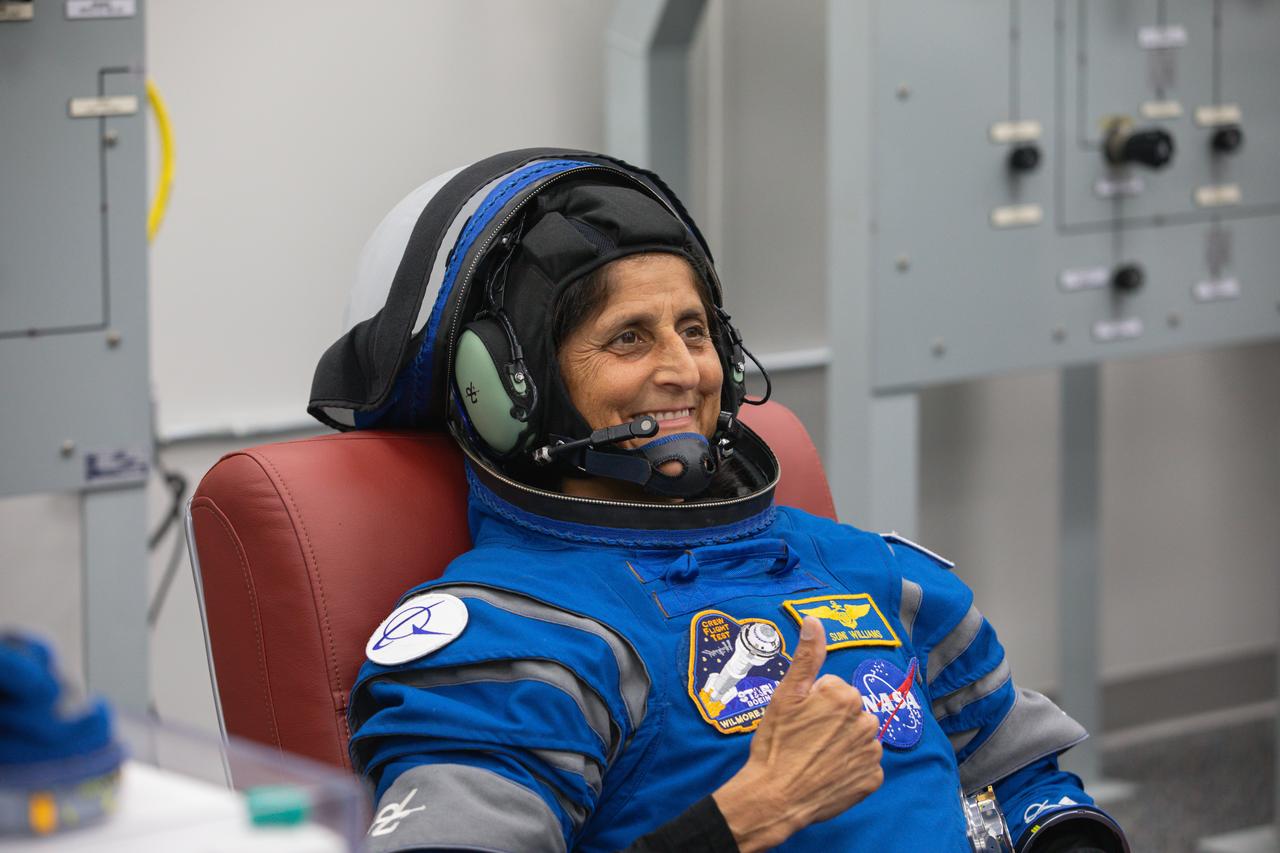
NASA’s Boeing Crew Flight Test astronaut Suni Williams relaxes in the suit-up room in the Astronaut Crew Quarters inside Kennedy Space Center’s Neil A. Armstrong Operations and Checkout Building in Florida a few hours before launch on Wednesday, June 5, 2024. As part of NASA’s Commercial Crew Program, Williams, joined by NASA astronaut Butch Wilmore, is preparing for the first crewed launch to the International Space Station aboard Boeing’s Starliner spacecraft atop a United Launch Alliance Atlas V rocket from Space Launch Complex-41 at nearby Cape Canaveral Space Force Station at 10:52 a.m. EDT.
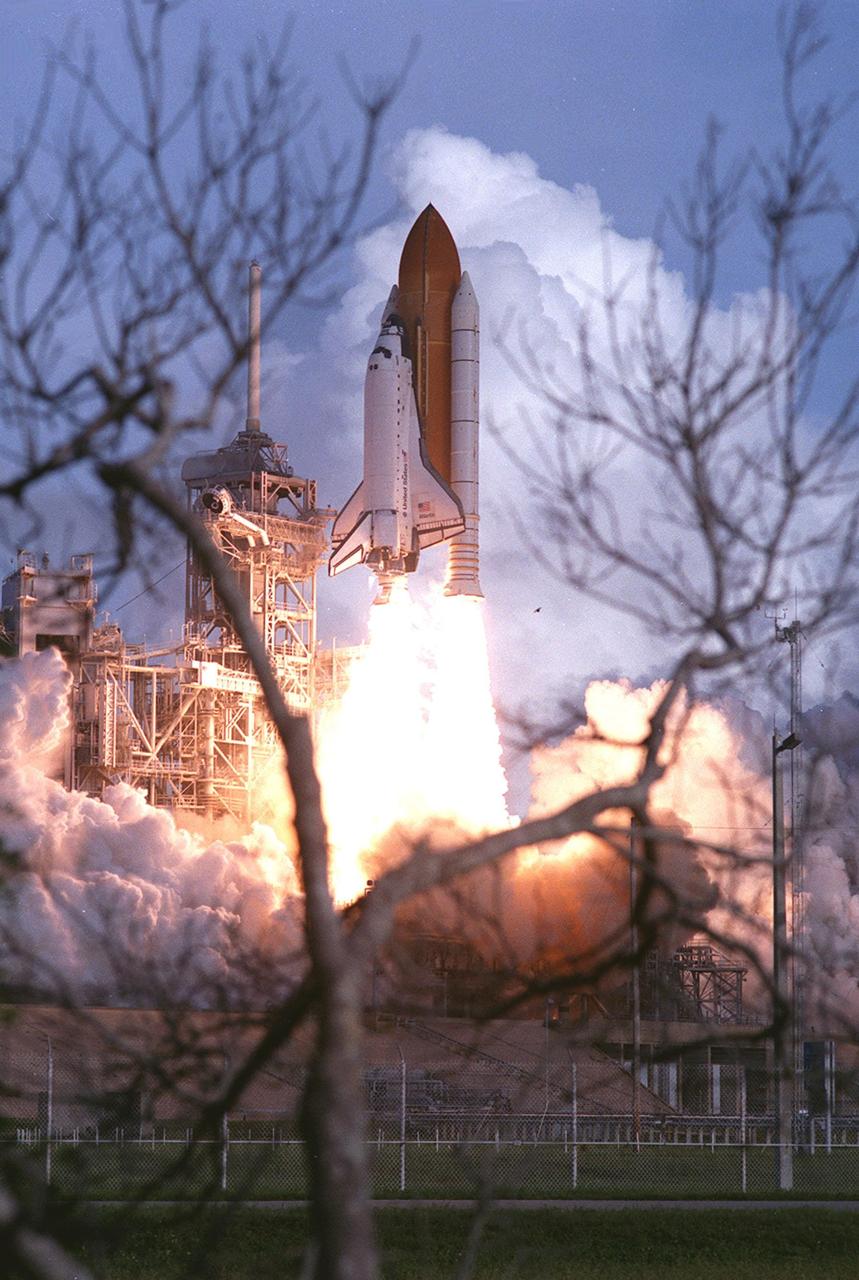
KENNEDY SPACE CENTER, Fla. -- Bare branches frame the liftoff of Space Shuttle Atlantis on mission STS-106 to the International Space Station. Billows of smoke and steam are illuminated by the flames of the solid rocket boosters. The perfect on-time liftoff of Atlantis occurred at 8:45:47 a.m. EDT. On the 11-day mission to the International Space Station, the seven-member crew will perform support tasks on orbit, transfer supplies and prepare the living quarters in the newly arrived Zvezda Service Module. The first long-duration crew, dubbed “Expedition One,” is due to arrive at the Station in late fall. Landing of Atlantis is targeted for 4:45 a.m. EDT on Sept. 19
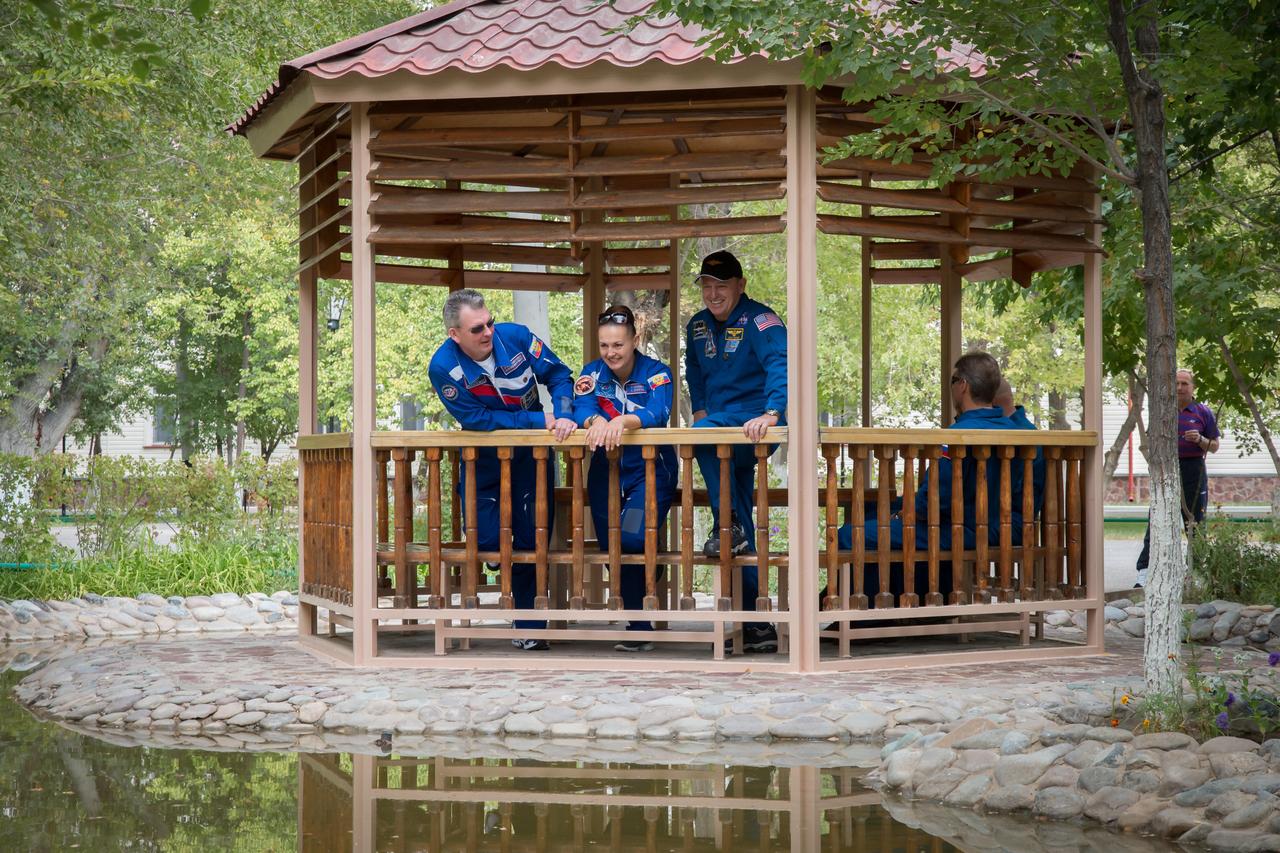
17-14-11-48: (17 Sept. 2014) --- Expedition 41/42 Soyuz Commander Alexander Samokutyaev of the Russian Federal Space Agency (Roscosmos), left; Flight Engineer Elena Serova of Roscosmos (center) and NASA Flight Engineer Barry Wilmore enjoy a moment of relaxation at a gazebo adjacent to their Cosmonaut Hotel crew quarters in Baikonur, Kazakhstan Sept. 17. The trio will launch from the Baikonur Cosmodrome Sept. 26, Kazakh time, in the Soyuz TMA-14M spacecraft for a 5 ½ month mission on the International Space Station. Serova will become the fourth Russian woman to fly in space and the first Russian woman to live and work on the station. Photo credit: NASA/Victor Zelentsov
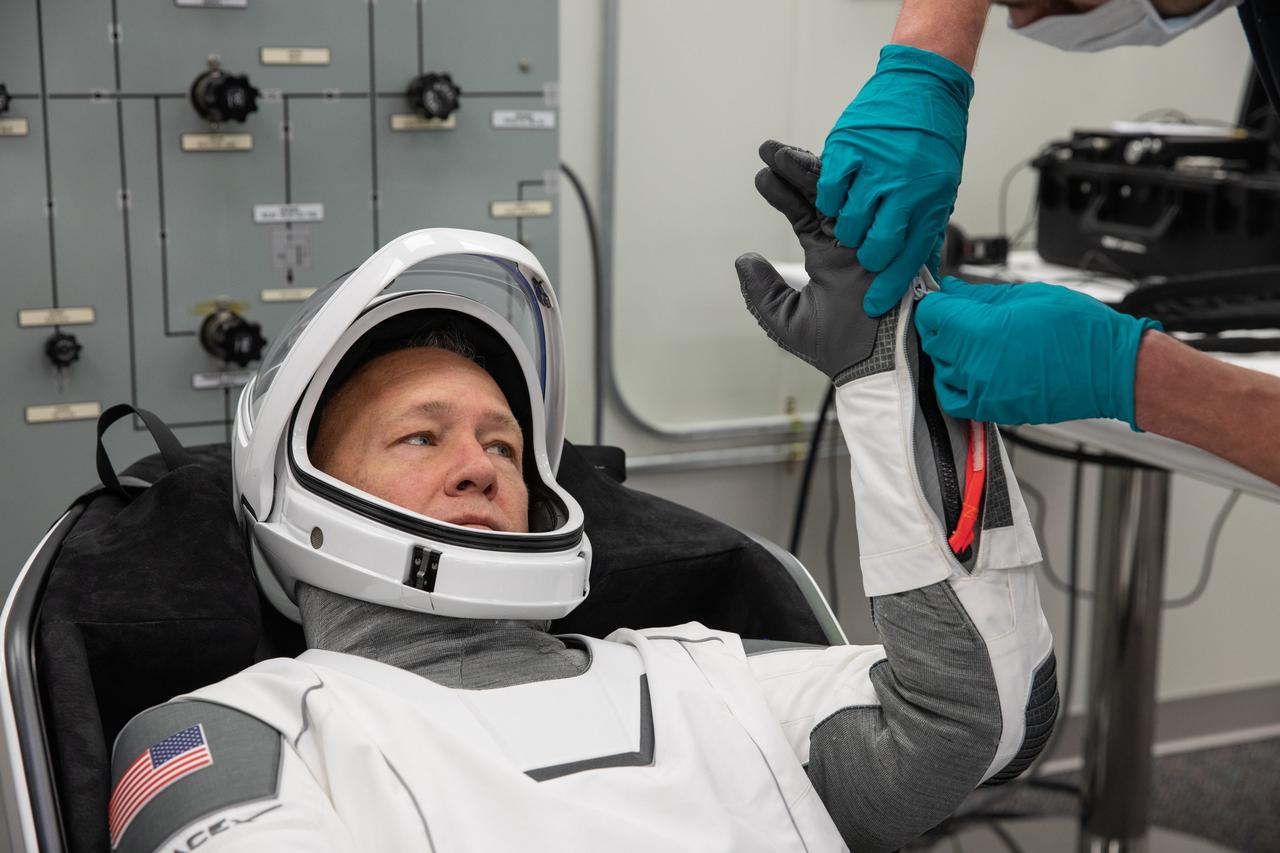
NASA astronaut Doug Hurley dons a SpaceX spacesuit in the Astronaut Crew Quarters at Kennedy Space Center in Florida on Jan. 17, 2020, during a dress rehearsal ahead of the company’s uncrewed In-Flight Abort Test. A SpaceX Falcon 9 rocket and Crew Dragon spacecraft will lift off from Launch Complex 39A on the flight test, which will demonstrate the spacecraft’s escape capabilities in preparation for crewed flights to the International Space Station as part of the agency’s Commercial Crew Program. Hurley and NASA astronaut Bob Behnken are slated to fly on the company’s first crewed mission, Demo-2.
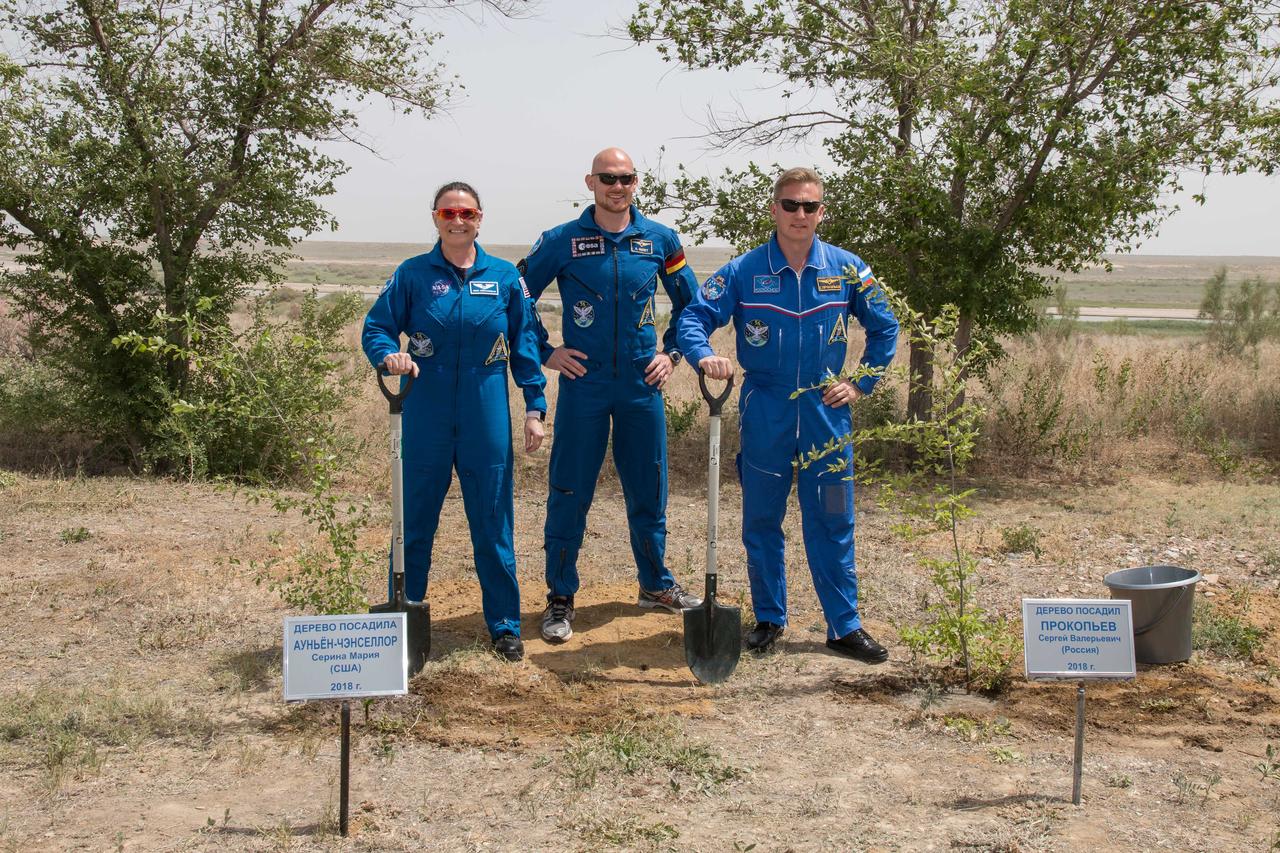
jsc2018e050832 - At the Cosmonaut Hotel crew quarters in Baikonur, Kazakhstan, Expedition 56 crewmembers Serena Aunon-Chancellor of NASA (left), Alexander Gerst of the European Space Agency (center) and Sergey Prokopyev of Roscosmos (right) pose for pictures May 29 after Aunon-Chancellor and Prokopyev planted trees bearing their names in traditional pre-launch activities for first-time fliers. Aunon-Chancellor, Prokopyev and Gerst will launch June 6 from the Baikonur Cosmodrome in Kazakhstan on the Soyuz MS-09 spacecraft for a six-month mission on the International Space Station...NASA/Victor Zelentsov.
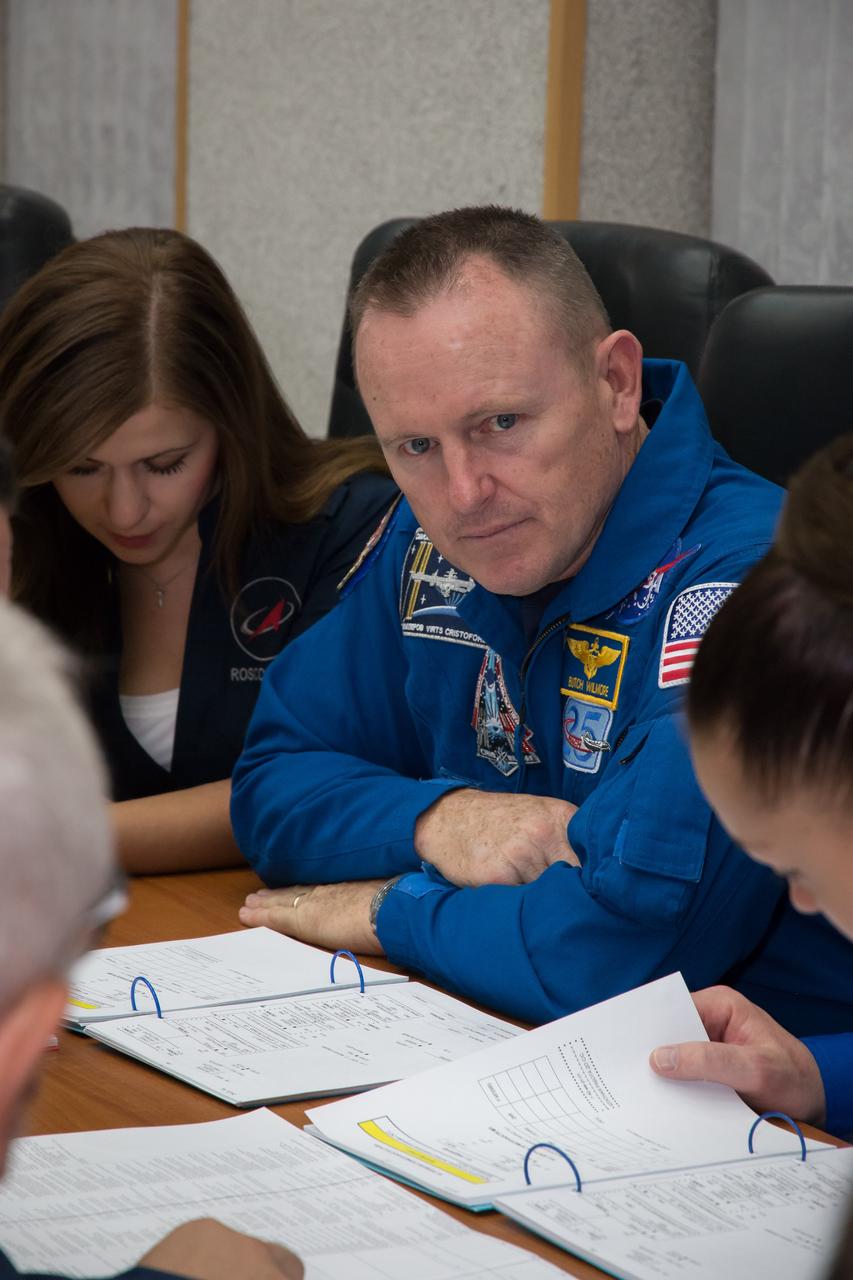
17-11-26-12: (17 Sept. 2014) --- At the Cosmonaut Hotel crew quarters in Baikonur, Kazakhstan, Expedition 41 Flight Engineer Barry Wilmore looks on intently as he and his crewmates review flight procedures Sept. 17 for their upcoming launch. Wilmore, Flight Engineer Elena Serova of the Russian Federal Space Agency (Roscosmos) and Soyuz Commander Alexander Samokutyaev of Roscosmos will launch from the Baikonur Cosmodrome Sept. 26, Kazakh time, in the Soyuz TMA-14M spacecraft for a 5 ½ month mission on the International Space Station. Serova will become the fourth Russian woman to fly in space and the first Russian woman to live and work on the station. Photo credit: NASA/Victor Zelentsov
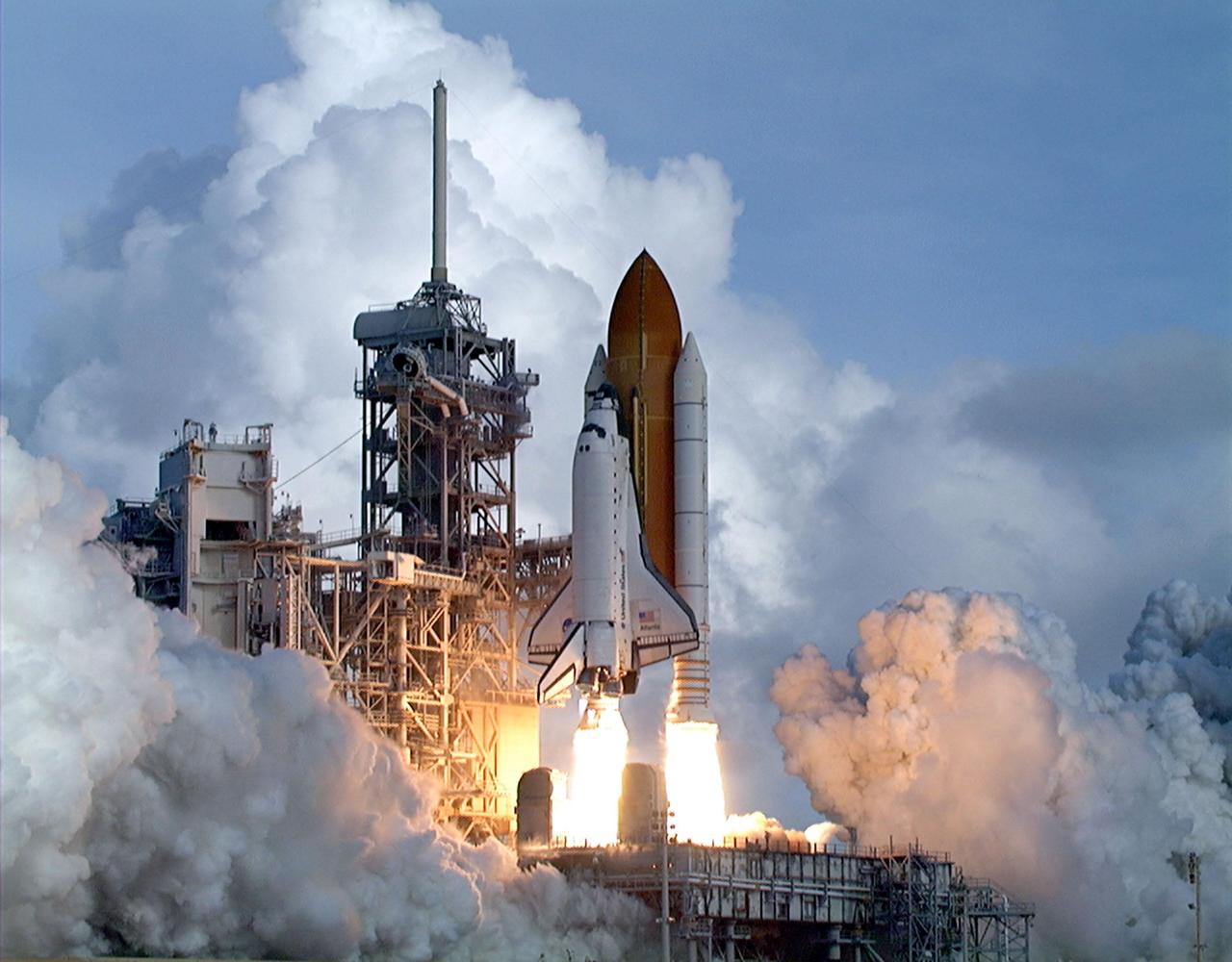
KENNEDY SPACE CENTER, Fla. -- Columns of flame spew from the solid rocket boosters hurling Space Shuttle Atlantis toward space on mission STS-106. The on-time liftoff occurred at 8:45:47 a.m. EDT for the start of an 11-day mission to the International Space Station. While on board, the seven-member crew will perform support tasks, transfer supplies and prepare the living quarters in the newly arrived Zvezda Service Module. The first long-duration crew, dubbed “Expedition One,” is due to arrive at the Station in late fall. Landing of Atlantis is targeted for 4:45 a.m. EDT on Sept. 19
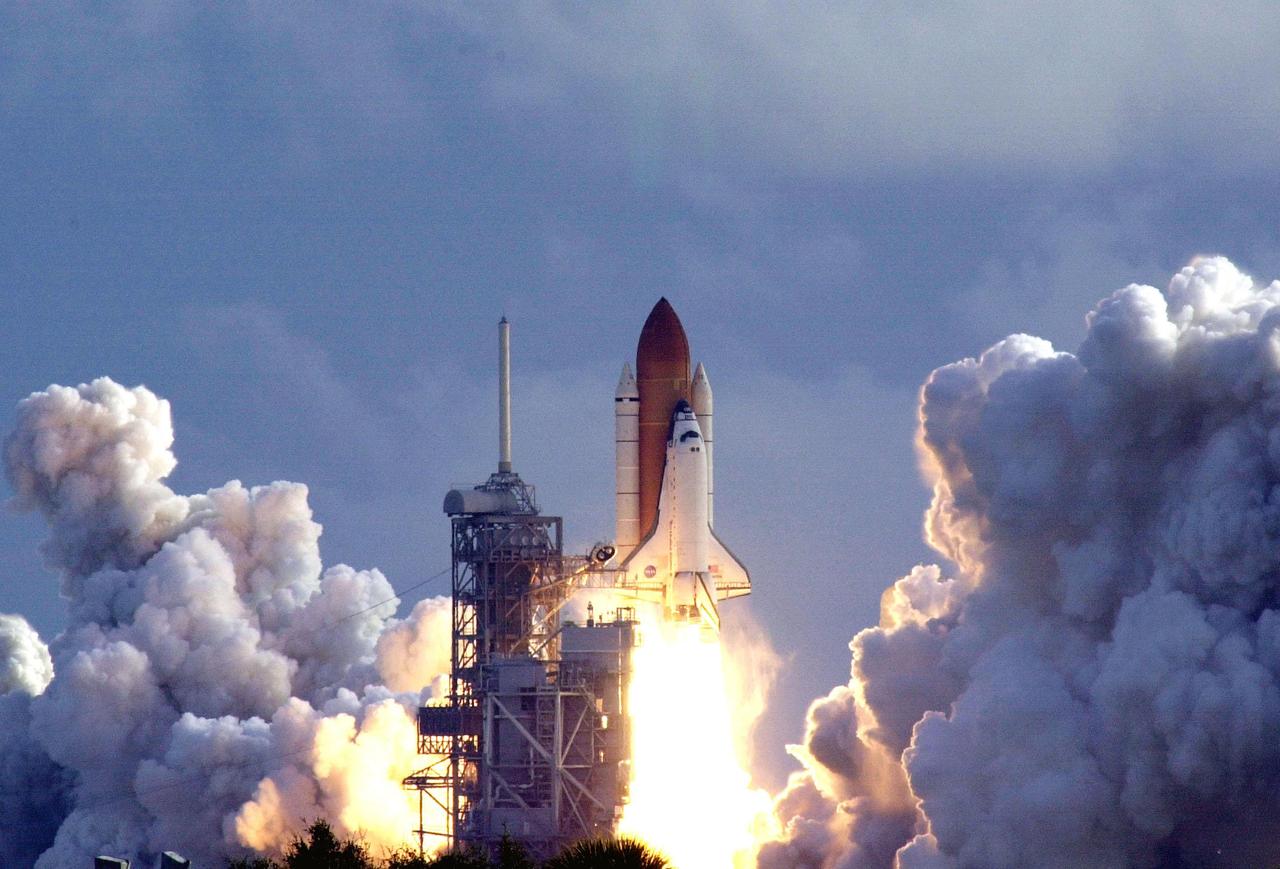
KENNEDY SPACE CENTER, Fla. -- A perfect launch sends Space Shuttle Atlantis, leaving a trail of flames and billows of smoke and clouds behind, hurtling toward space on mission STS-106. Liftoff occurred at 8:45:47 a.m. EDT today. On the 11-day mission to the International Space Station, the seven-member crew will perform support tasks on orbit, transfer supplies and prepare the living quarters in the newly arrived Zvezda Service Module. The first long-duration crew, dubbed “Expedition One,” is due to arrive at the Station in late fall. Landing of Atlantis is targeted for 4:45 a.m. EDT on Sept. 19

KENNEDY SPACE CENTER, Fla. -- Bare branches frame the liftoff of Space Shuttle Atlantis on mission STS-106 to the International Space Station. Billows of smoke and steam are illuminated by the flames of the solid rocket boosters. The perfect on-time liftoff of Atlantis occurred at 8:45:47 a.m. EDT. On the 11-day mission to the International Space Station, the seven-member crew will perform support tasks on orbit, transfer supplies and prepare the living quarters in the newly arrived Zvezda Service Module. The first long-duration crew, dubbed “Expedition One,” is due to arrive at the Station in late fall. Landing of Atlantis is targeted for 4:45 a.m. EDT on Sept. 19
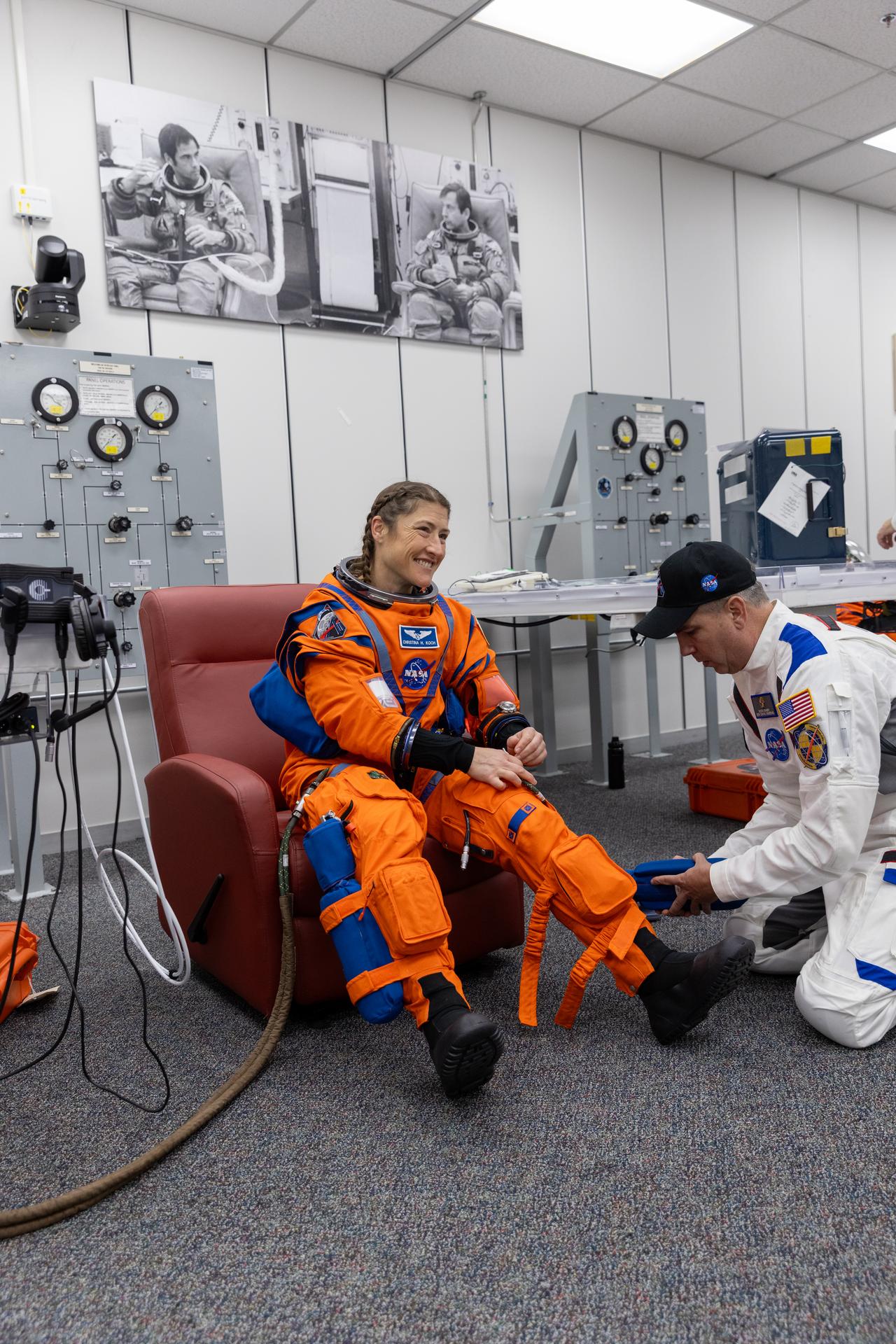
NASA astronaut, Christina Koch, Artemis II mission specialist, undergoes spacesuit checks inside the crew quarters suit-up room in the Neil A. Armstrong Operations and Checkout Building part of the Artemis II Countdown Demonstration Test at the agency’s Kennedy Space Center on Saturday, Dec. 20, 2025. For this operation, the Artemis II crew and launch team are simulating the launch day timeline including suit-up, walkout, and climbing in and out of the spacecraft. Through the Artemis campaign, NASA will send astronauts to explore the Moon for scientific discovery, economic benefits, and to build the foundation for the first crewed missions to Mars, for the benefit of all.
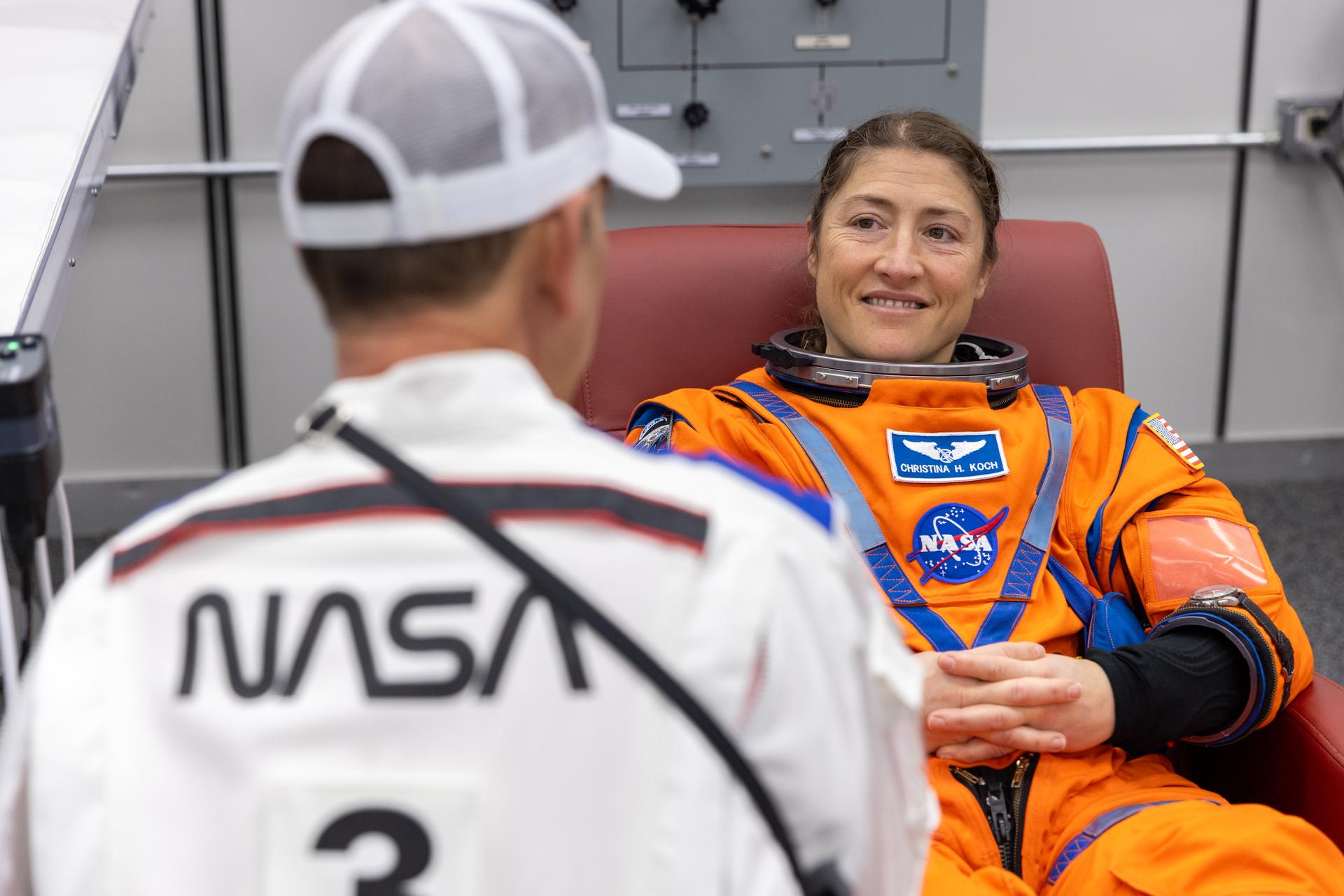
NASA astronaut, Christina Koch, Artemis II mission specialist, undergoes spacesuit checks inside the crew quarters suit-up room in the Neil A. Armstrong Operations and Checkout Building part of the Artemis II Countdown Demonstration Test at the agency’s Kennedy Space Center on Saturday, Dec. 20, 2025. For this operation, the Artemis II crew and launch team are simulating the launch day timeline including suit-up, walkout, and climbing in and out of the spacecraft. Through the Artemis campaign, NASA will send astronauts to explore the Moon for scientific discovery, economic benefits, and to build the foundation for the first crewed missions to Mars, for the benefit of all.
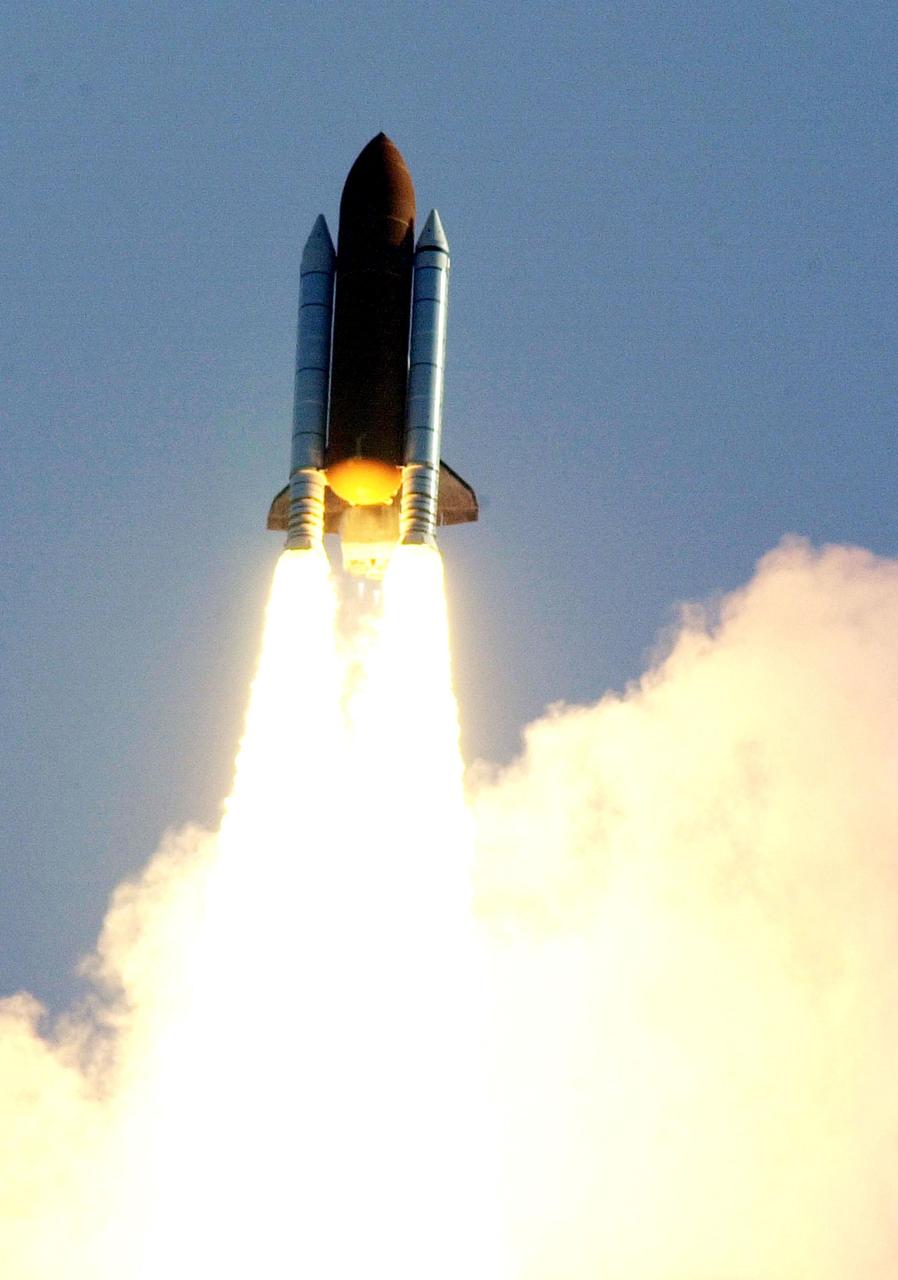
KENNEDY SPACE CENTER, Fla. -- After a perfect on-time launch on mission STS-106 at 8:45:47 a.m. EDT, Space Shuttle Atlantis rolls and displays its external tank and solid rocket boosters. On the 11-day mission to the International Space Station, the seven-member crew will perform support tasks on orbit, transfer supplies and prepare the living quarters in the newly arrived Zvezda Service Module. The first long-duration crew, dubbed “Expedition One,” is due to arrive at the Station in late fall. Landing of Atlantis is targeted for 4:45 a.m. EDT on Sept. 19
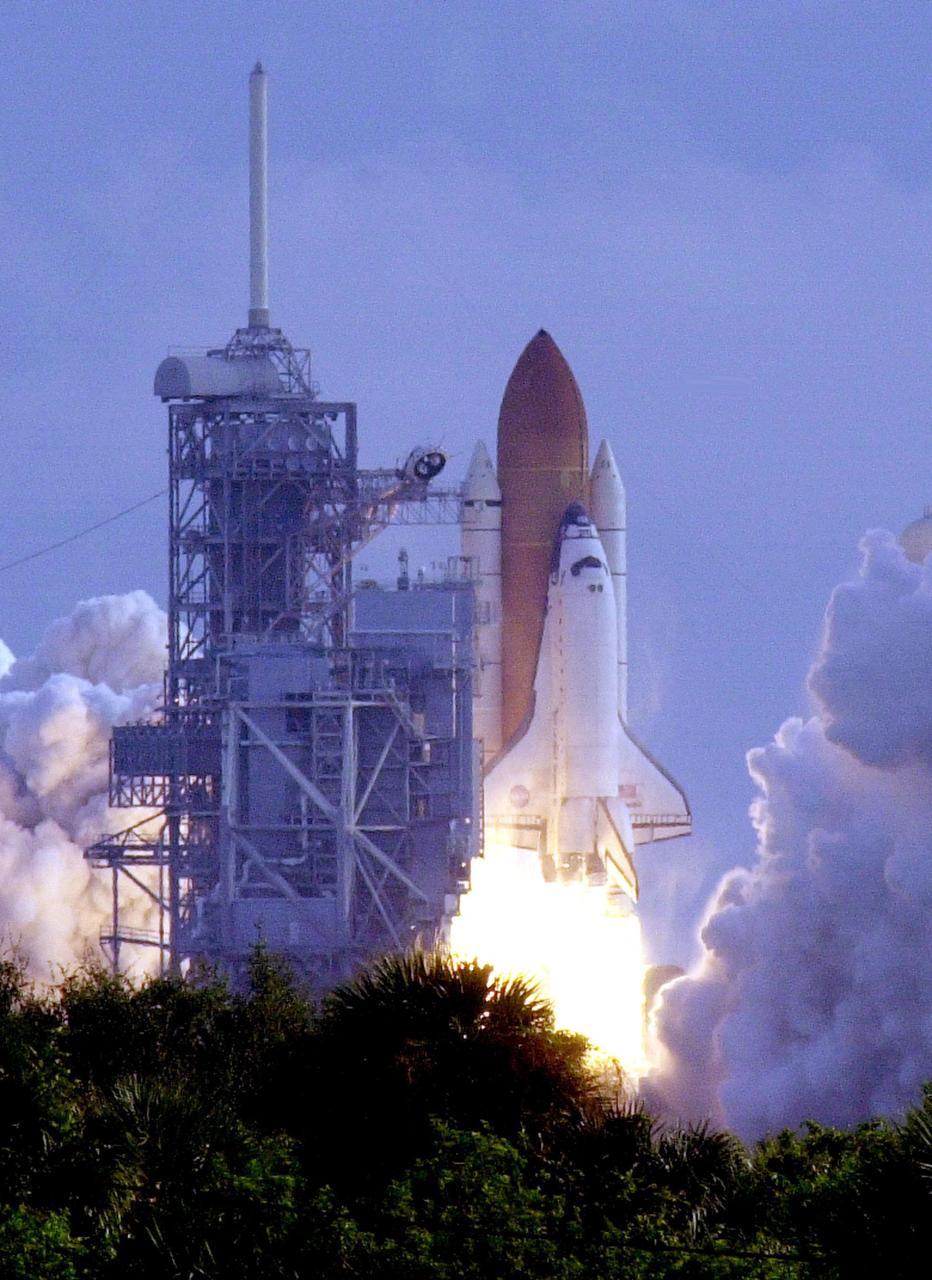
KENNEDY SPACE CENTER, Fla. -- Space Shuttle Atlantis roars toward space on mission STS-106 as it lifts off in a perfect launch at 8:45:47 a.m. EDT today. On the 11-day mission to the International Space Station, the seven-member crew will perform support tasks on orbit, transfer supplies and prepare the living quarters in the newly arrived Zvezda Service Module. The first long-duration crew, dubbed “Expedition One,” is due to arrive at the Station in late fall. Landing of Atlantis is targeted for 4:45 a.m. EDT on Sept. 19
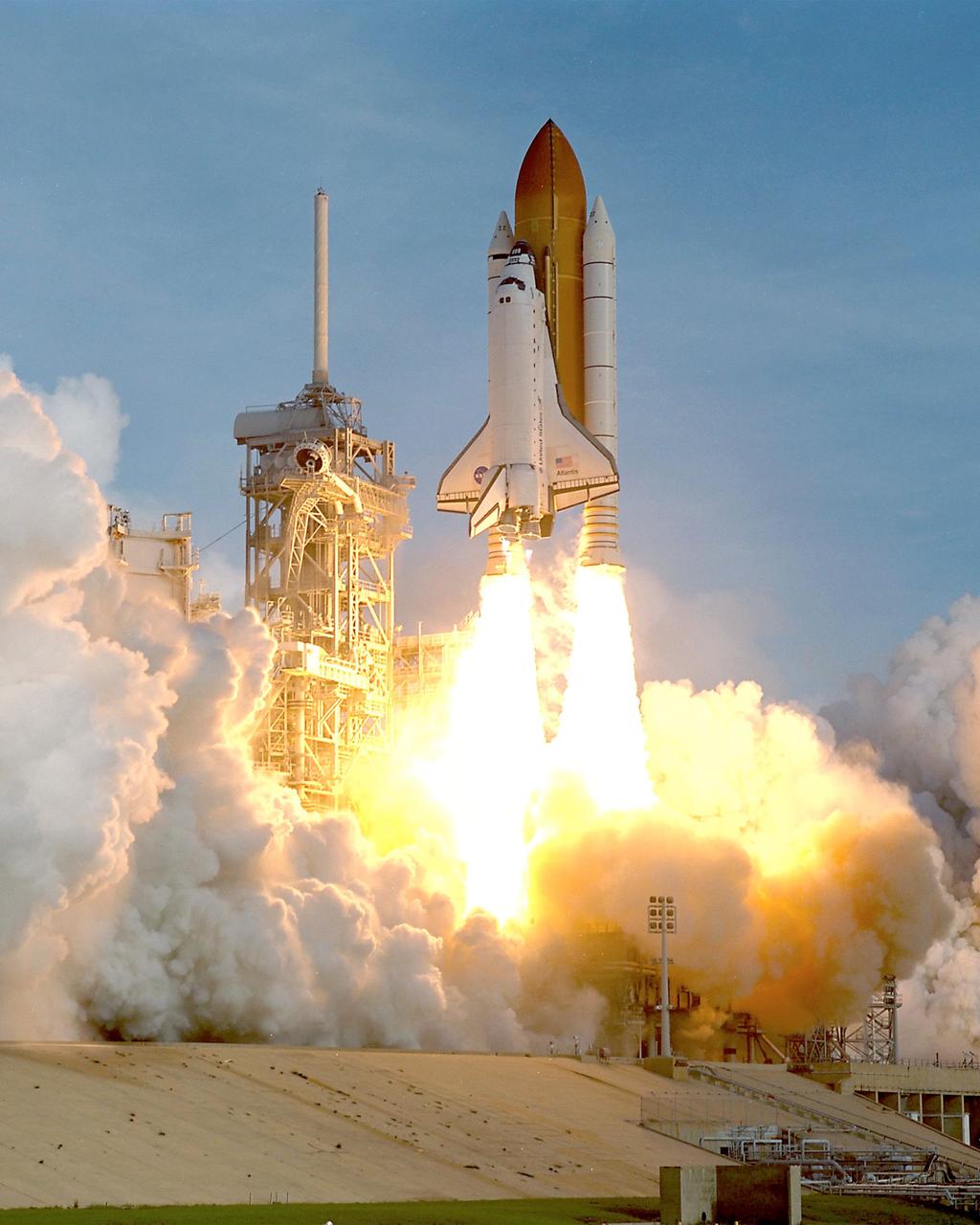
KENNEDY SPACE CENTER, Fla. -- Space Shuttle Atlantis appears to burst forth from a cocoon of smoke as it rockets toward space on mission STS-106. The perfect on-time liftoff of Atlantis occurred at 8:45:47 a.m. EDT. On the 11-day mission to the International Space Station, the seven-member crew will perform support tasks on orbit, transfer supplies and prepare the living quarters in the newly arrived Zvezda Service Module. The first long-duration crew, dubbed “Expedition One,” is due to arrive at the Station in late fall. Landing of Atlantis is targeted for 4:45 a.m. EDT on Sept. 19
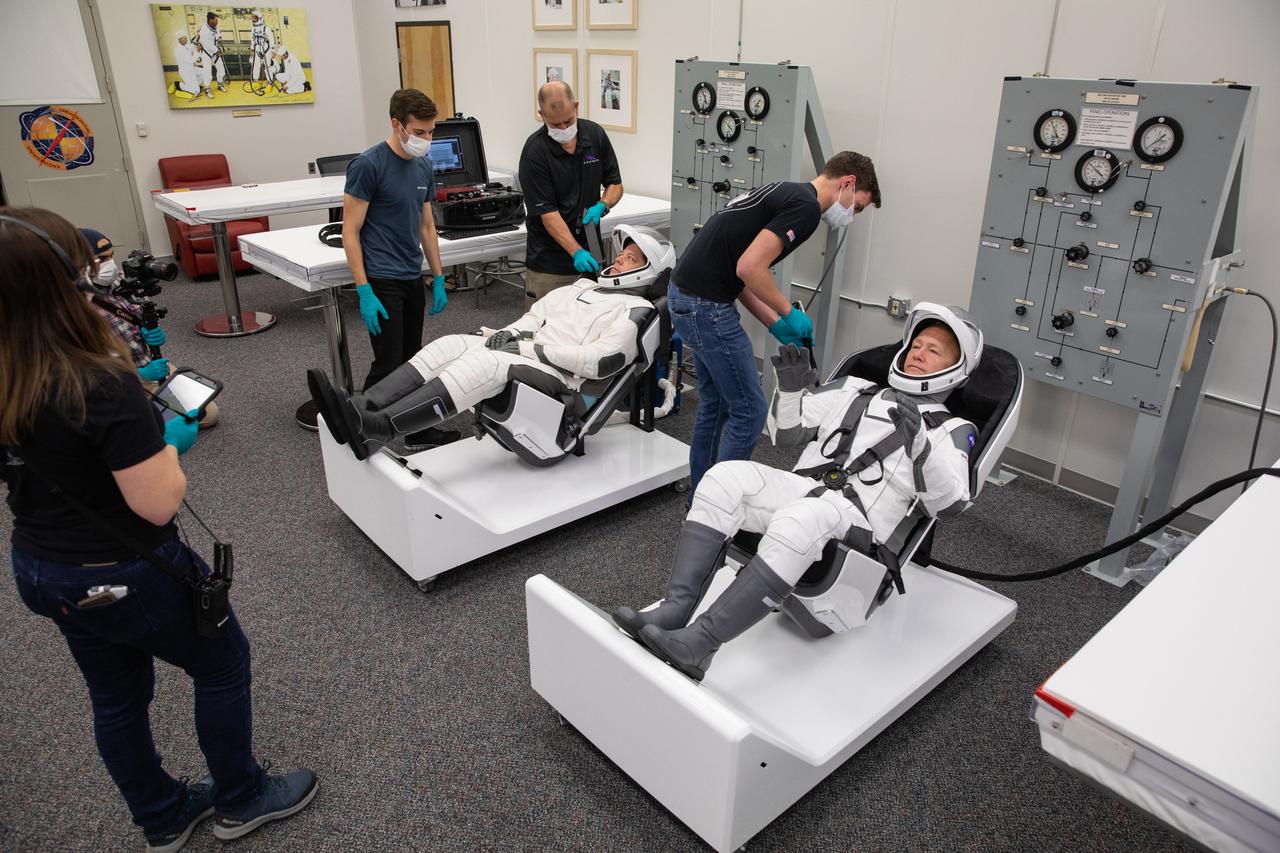
NASA astronauts Doug Hurley, foreground, and Bob Behnken don SpaceX spacesuits in the Astronaut Crew Quarters at Kennedy Space Center in Florida on Jan. 17, 2020, during a dress rehearsal ahead of the company’s uncrewed In-Flight Abort Test. A SpaceX Falcon 9 rocket and Crew Dragon spacecraft will lift off from Launch Complex 39A on the flight test, which will demonstrate the spacecraft’s escape capabilities in preparation for crewed flights to the International Space Station as part of the agency’s Commercial Crew Program. Hurley and Behnken are slated to fly on the company’s first crewed mission, Demo-2.

KENNEDY SPACE CENTER, Fla. -- Columns of flame spew from the solid rocket boosters hurling Space Shuttle Atlantis toward space on mission STS-106. The on-time liftoff occurred at 8:45:47 a.m. EDT for the start of an 11-day mission to the International Space Station. While on board, the seven-member crew will perform support tasks, transfer supplies and prepare the living quarters in the newly arrived Zvezda Service Module. The first long-duration crew, dubbed “Expedition One,” is due to arrive at the Station in late fall. Landing of Atlantis is targeted for 4:45 a.m. EDT on Sept. 19
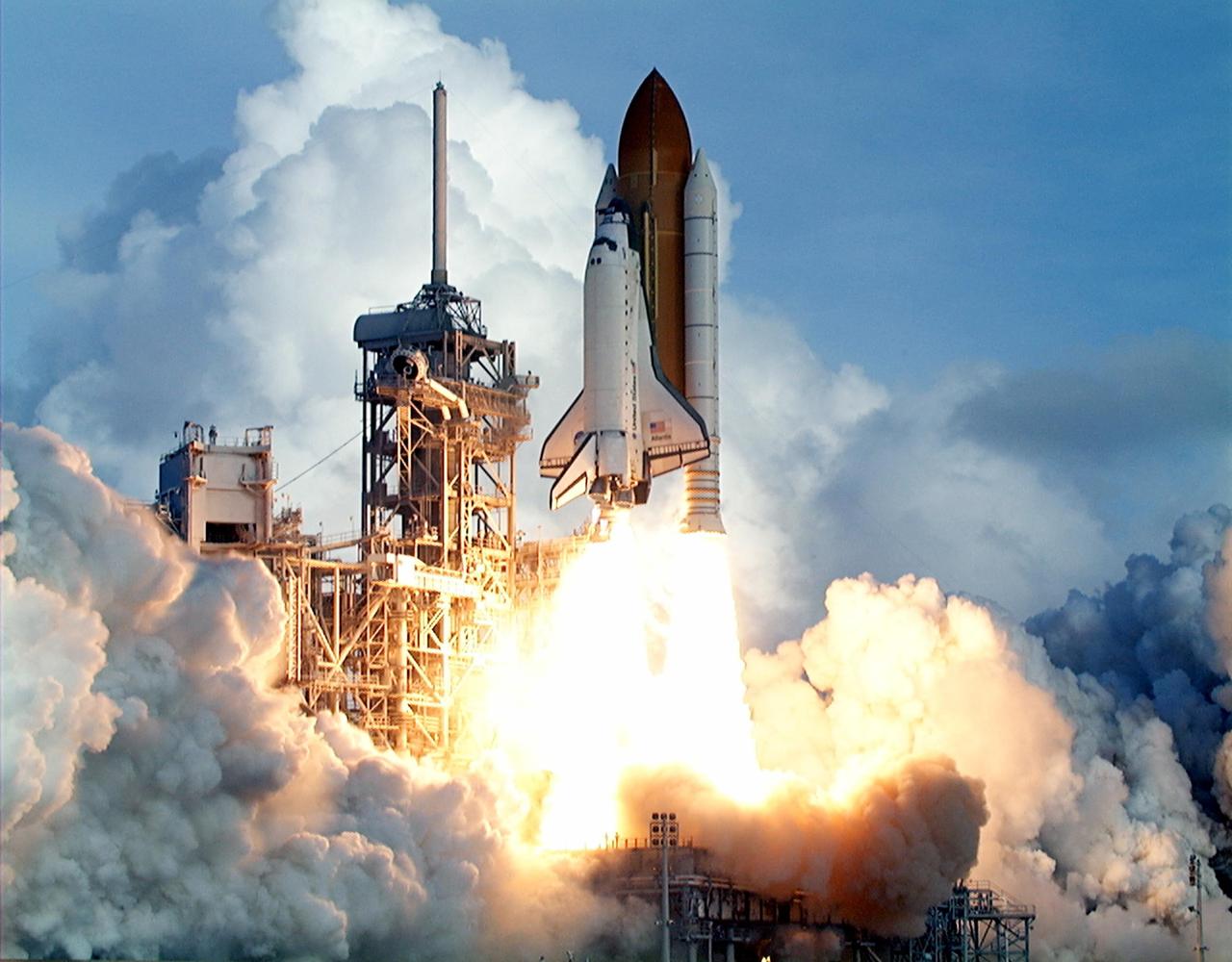
KENNEDY SPACE CENTER, Fla. -- Filling the ground with billows of smoke and steam created by the flaming solid rocket boosters, Space Shuttle Atlantis speeds toward space on mission STS-106. The perfect on-time liftoff occurred at 8:45:47 a.m. EDT. On the 11-day mission to the International Space Station, the seven-member crew will perform support tasks on orbit, transfer supplies and prepare the living quarters in the newly arrived Zvezda Service Module. The first long-duration crew, dubbed “Expedition One,” is due to arrive at the Station in late fall. Landing of Atlantis is targeted for 4:45 a.m. EDT on Sept. 19
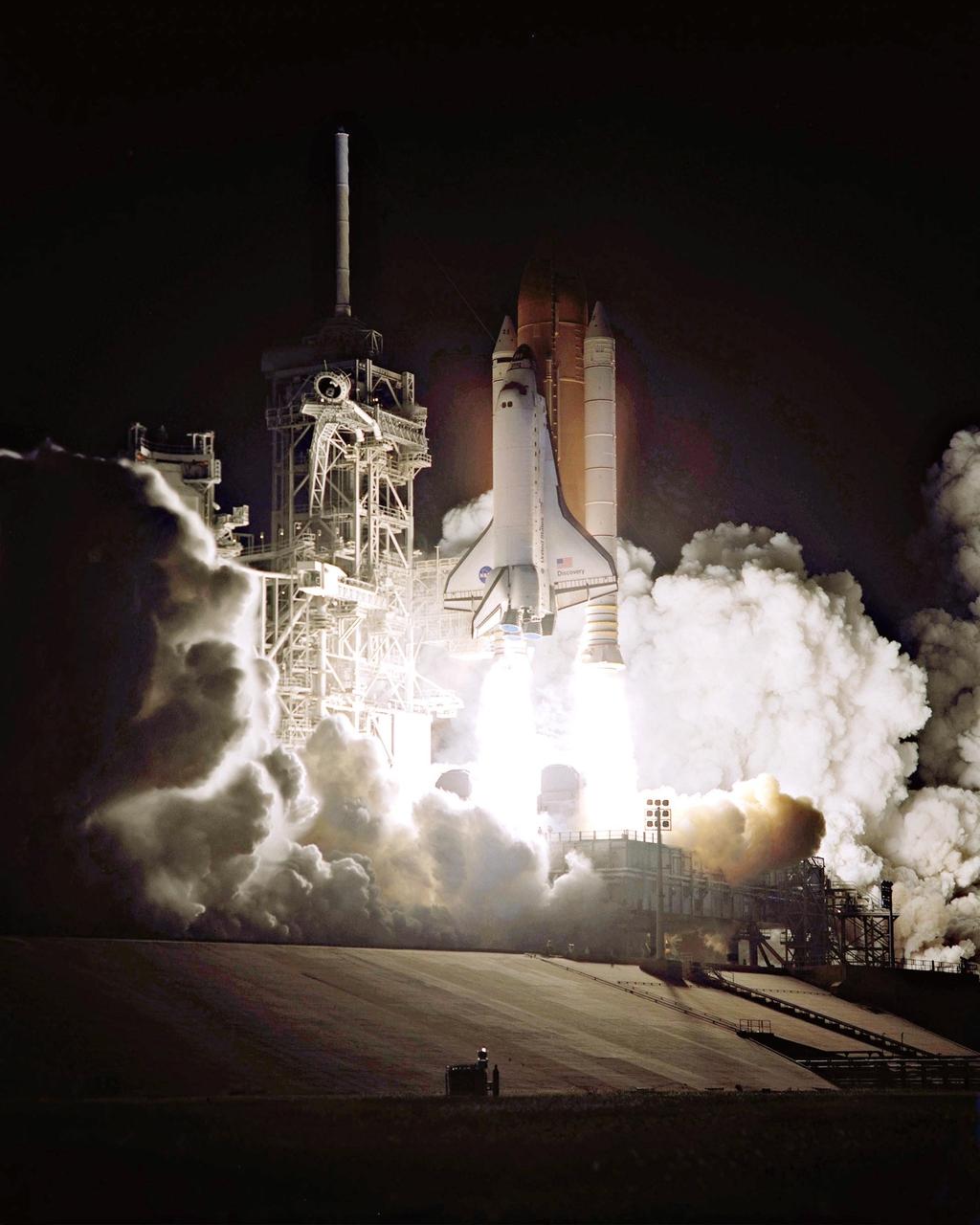
KENNEDY SPACE CENTER, Fla. -- A perfect on-time launch for Atlantis as it rockets toward space on mission STS-106. Liftoff occurred at 8:45:47 a.m. EDT. On the 11-day mission to the International Space Station, the seven-member crew will perform support tasks on orbit, transfer supplies and prepare the living quarters in the newly arrived Zvezda Service Module. The first long-duration crew, dubbed “Expedition One,” is due to arrive at the Station in late fall. Landing of Atlantis is targeted for 4:45 a.m. EDT on Sept. 19
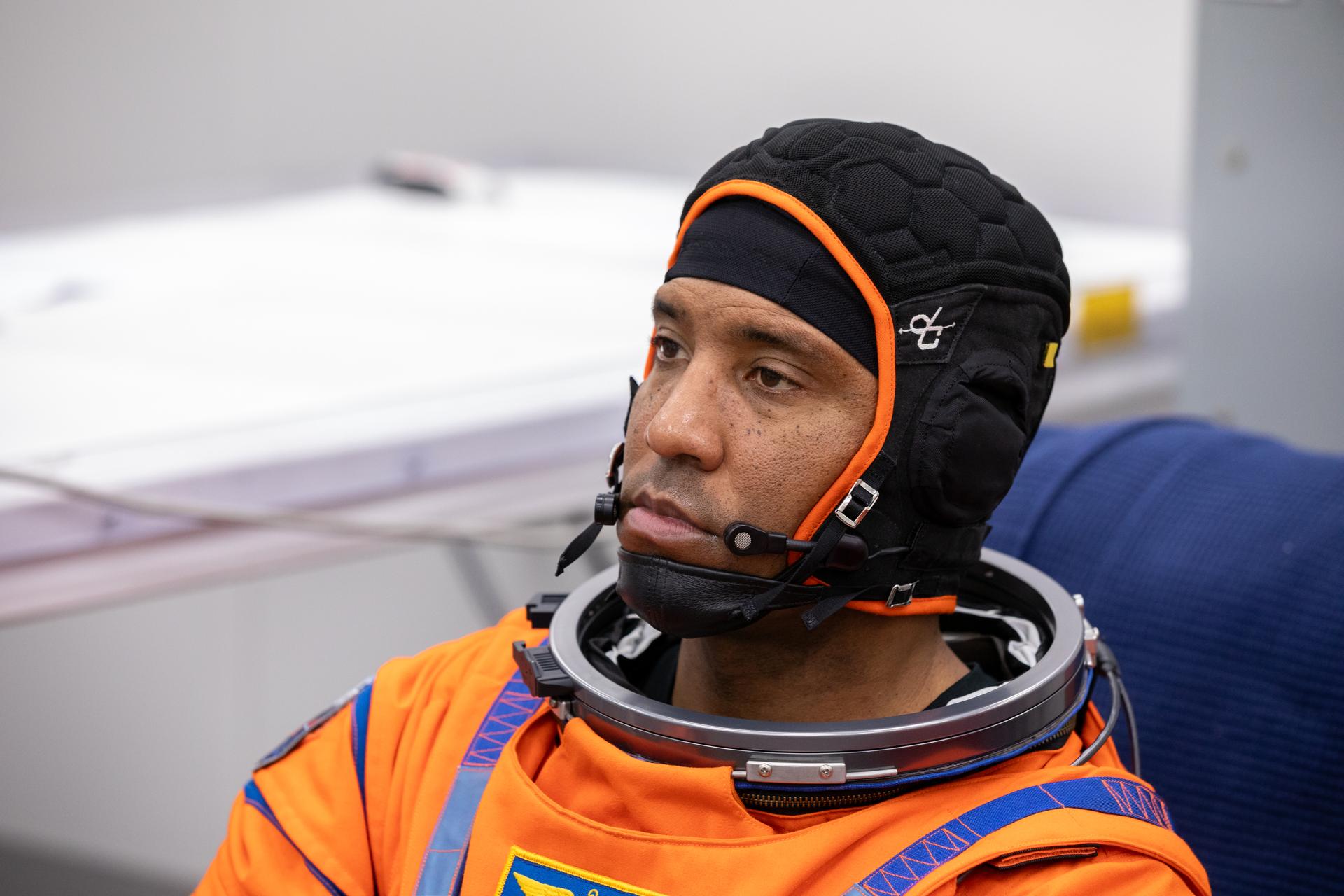
NASA astronaut Victor Glover, Artemis II pilot, undergoes spacesuit checks inside the crew quarters suit-up room in the Neil A. Armstrong Operations and Checkout Building part of the Artemis II Countdown Demonstration Test at the agency’s Kennedy Space Center on Saturday, Dec. 20, 2025. For this operation, the Artemis II crew and launch team are simulating the launch day timeline including suit-up, walkout, and climbing in and out of the spacecraft. Through the Artemis campaign, NASA will send astronauts to explore the Moon for scientific discovery, economic benefits, and to build the foundation for the first crewed missions to Mars, for the benefit of all.
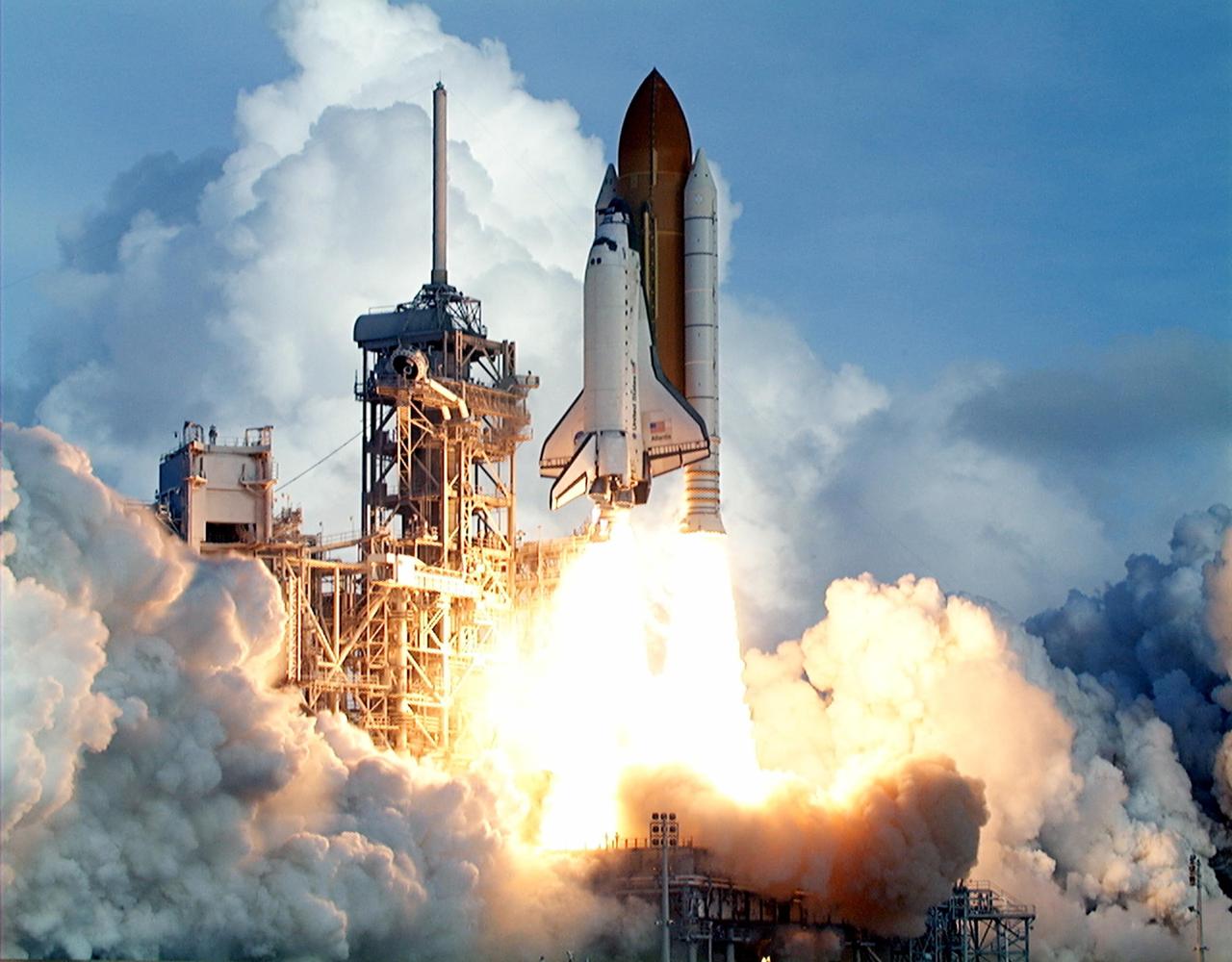
KENNEDY SPACE CENTER, Fla. -- Filling the ground with billows of smoke and steam created by the flaming solid rocket boosters, Space Shuttle Atlantis speeds toward space on mission STS-106. The perfect on-time liftoff occurred at 8:45:47 a.m. EDT. On the 11-day mission to the International Space Station, the seven-member crew will perform support tasks on orbit, transfer supplies and prepare the living quarters in the newly arrived Zvezda Service Module. The first long-duration crew, dubbed “Expedition One,” is due to arrive at the Station in late fall. Landing of Atlantis is targeted for 4:45 a.m. EDT on Sept. 19
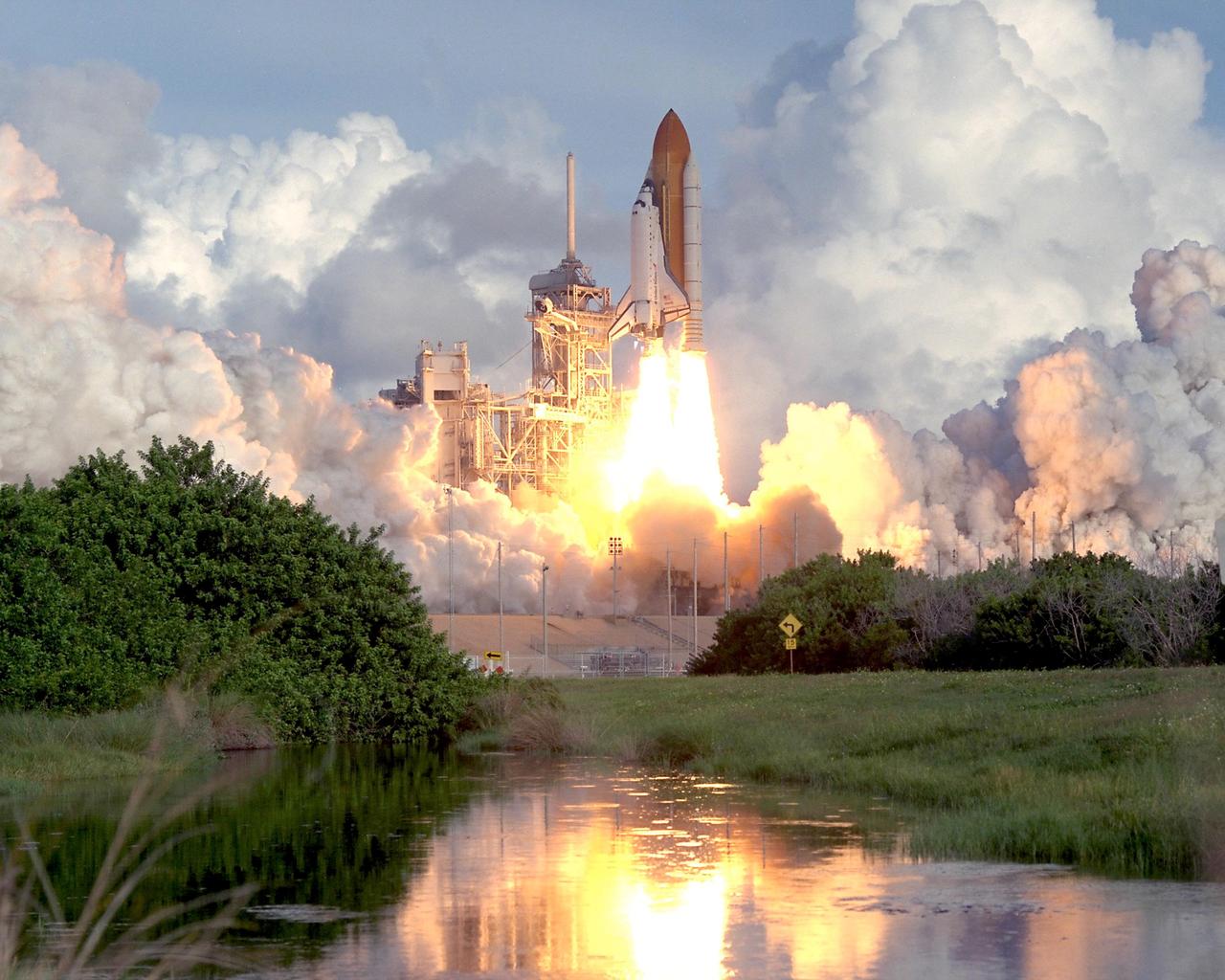
KENNEDY SPACE CENTER, Fla. -- The waters near Launch Pad 39B reflect the brilliant red-orange flames from the solid rocket boosters as Space Shuttle Atlantis lifts off on mission STS-106 to the International Space Station. The perfect on-time launch occurred at 8:45:47 a.m. EDT. On the 11-day mission to the Station, the seven-member crew will perform support tasks on orbit, transfer supplies and prepare the living quarters in the newly arrived Zvezda Service Module. The first long-duration crew, dubbed “Expedition One,” is due to arrive at the Station in late fall. Landing of Atlantis is targeted for 4:45 a.m. EDT on Sept. 19.
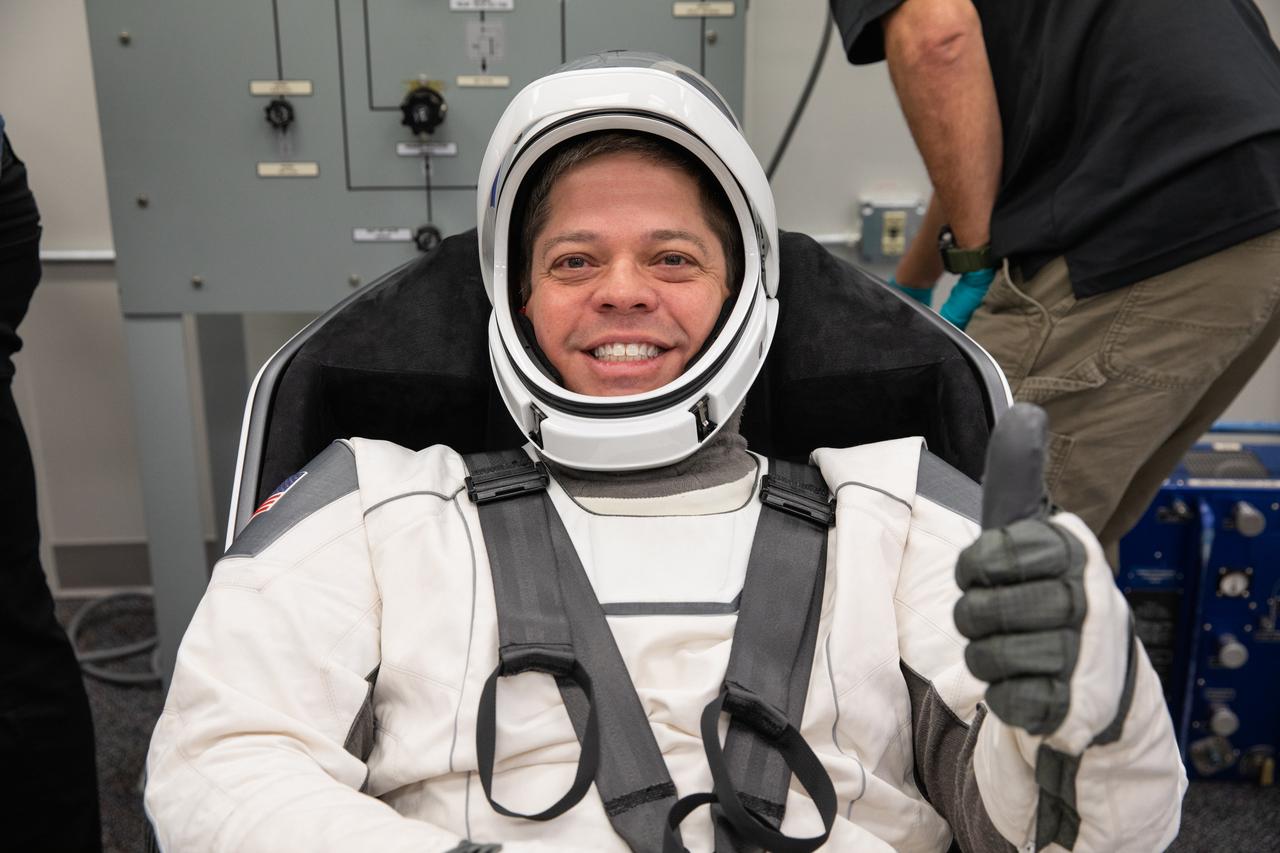
NASA astronaut Bob Behnken gives a thumbs-up as he dons a SpaceX spacesuit in the Astronaut Crew Quarters at Kennedy Space Center in Florida on Jan. 17, 2020, during a dress rehearsal ahead of the company’s uncrewed In-Flight Abort Test. A SpaceX Falcon 9 rocket and Crew Dragon spacecraft will lift off from Launch Complex 39A on the flight test, which will demonstrate the spacecraft’s escape capabilities in preparation for crewed flights to the International Space Station as part of the agency’s Commercial Crew Program. Behnken and NASA astronaut Doug Hurley are slated to fly on the company’s first crewed mission, Demo-2.
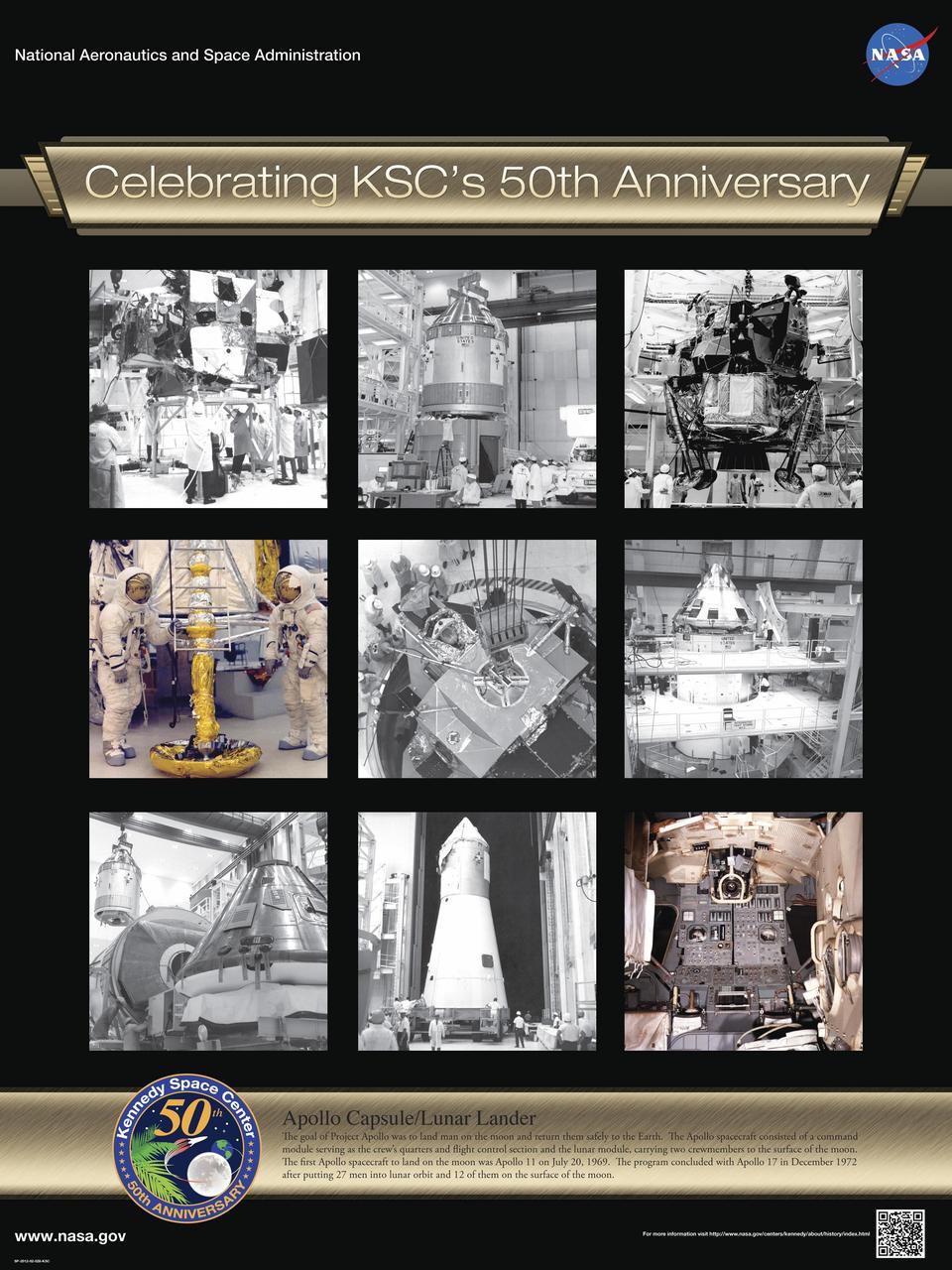
Apollo Capsule/Lunar Lander: The goal of Project Apollo was to land man on the moon and return them safely to the Earth. The Apollo spacecraft consisted of a command module serving as the crew’s quarters and flight control section and the lunar module, carrying two crewmembers to the surface of the moon. The first Apollo spacecraft to land on the moon was Apollo 11 on July 20, 1969. The program concluded with Apollo 17 in December 1972 after putting 27 men into lunar orbit and 12 of them on the surface of the moon. Poster designed by Kennedy Space Center Graphics Department/Greg Lee. Credit: NASA
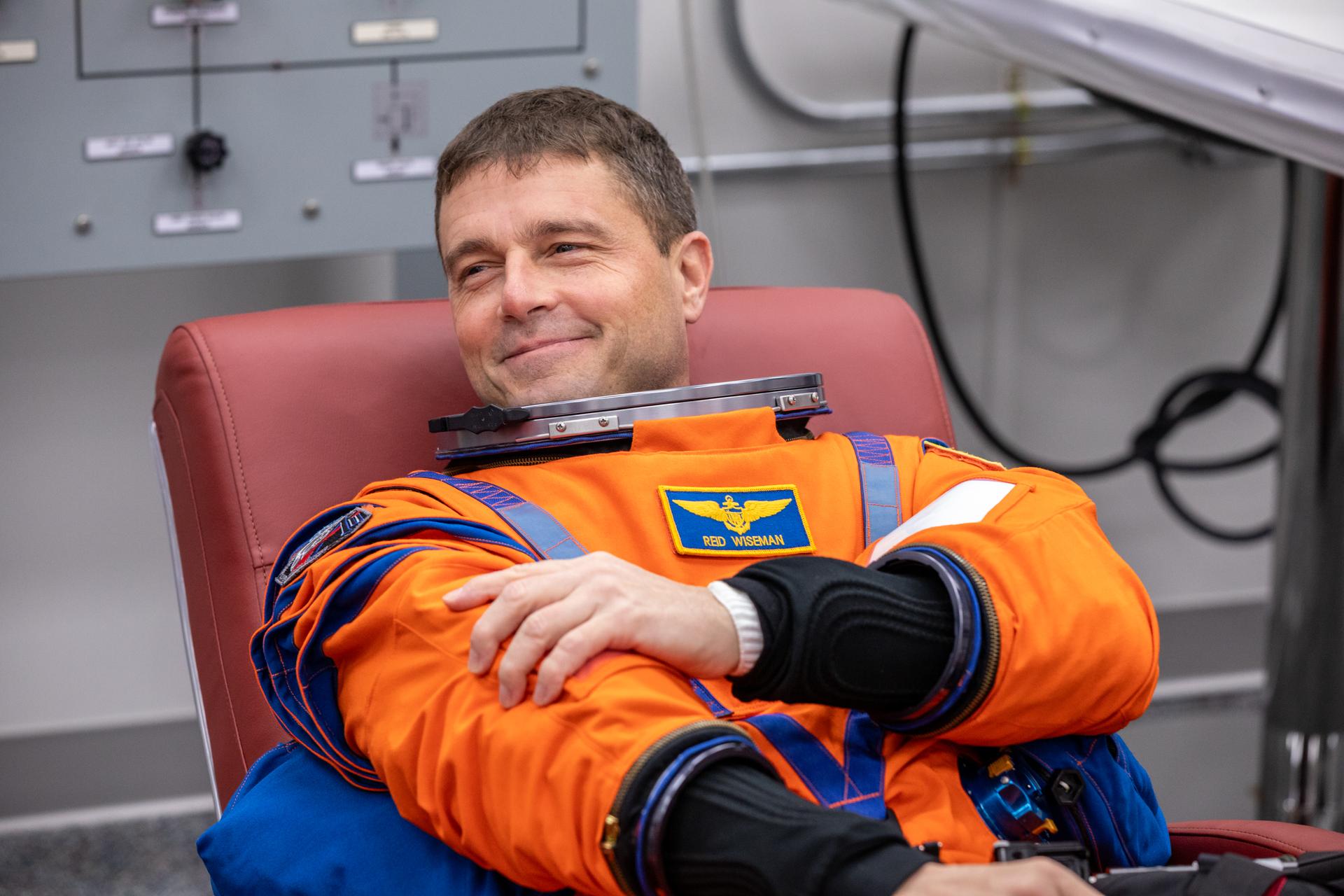
NASA astronaut Reid Wiseman, Artemis II commander, undergoes spacesuit checks inside the crew quarters suit-up room in the Neil A. Armstrong Operations and Checkout Building part of the Artemis II Countdown Demonstration Test at the agency’s Kennedy Space Center on Saturday, Dec. 20, 2025. For this operation, the Artemis II crew and launch team are simulating the launch day timeline including suit-up, walkout, and climbing in and out of the spacecraft. Through the Artemis campaign, NASA will send astronauts to explore the Moon for scientific discovery, economic benefits, and to build the foundation for the first crewed missions to Mars, for the benefit of all.
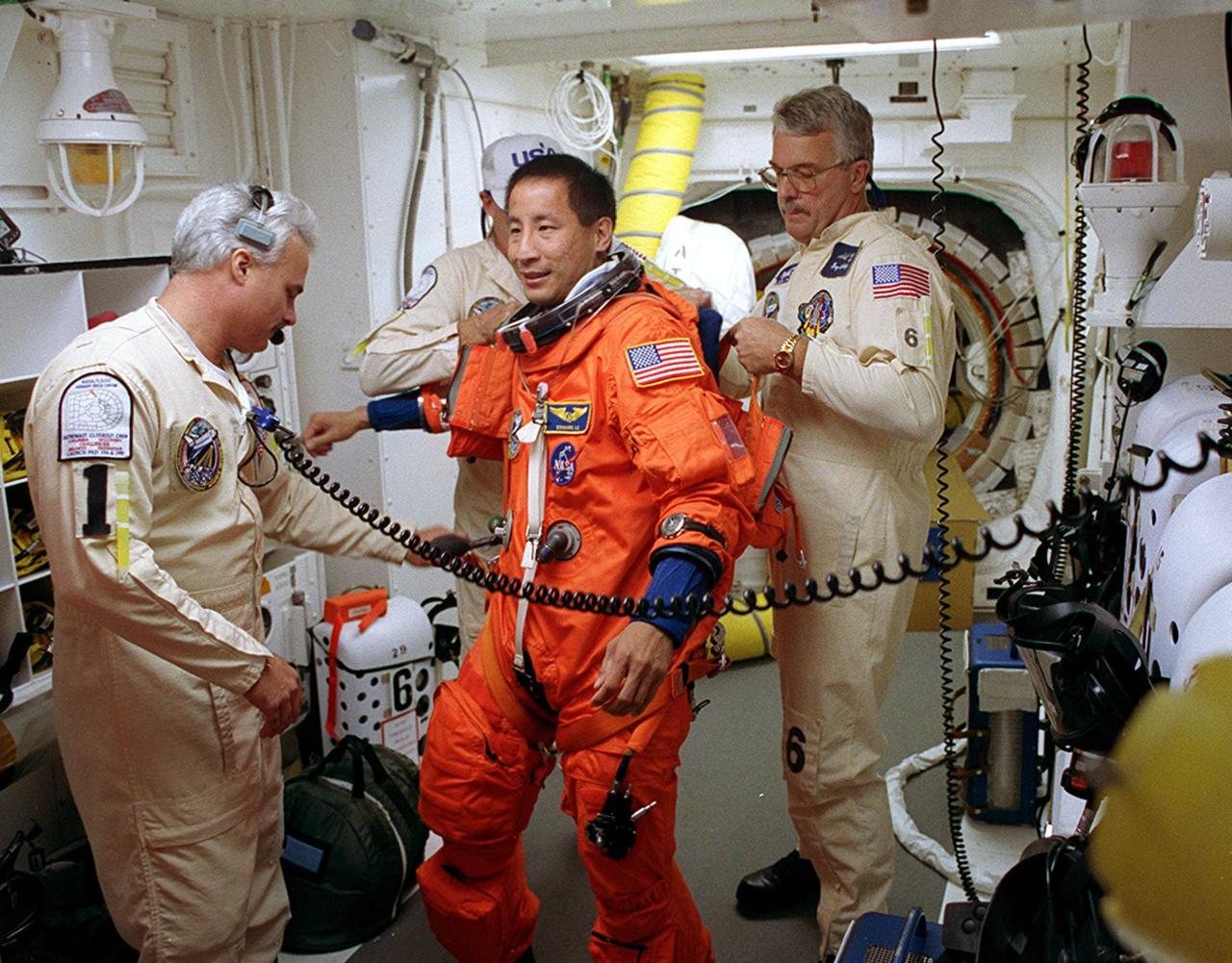
Before entering Space Shuttle Atlantis, STS-106 Mission Specialist Edward T. Lu gets help with his launch and entry suit in the White Room. The perfect on-time liftoff of Atlantis on mission STS-106 occurred at 8:45:47 a.m. EDT. On the 11-day mission to the International Space Station, the seven-member crew will perform support tasks on orbit, transfer supplies and prepare the living quarters in the newly arrived Zvezda Service Module. The first long-duration crew, dubbed “Expedition One,” is due to arrive at the Station in late fall. Landing of Atlantis is targeted for 4:45 a.m. EDT on Sept. 19
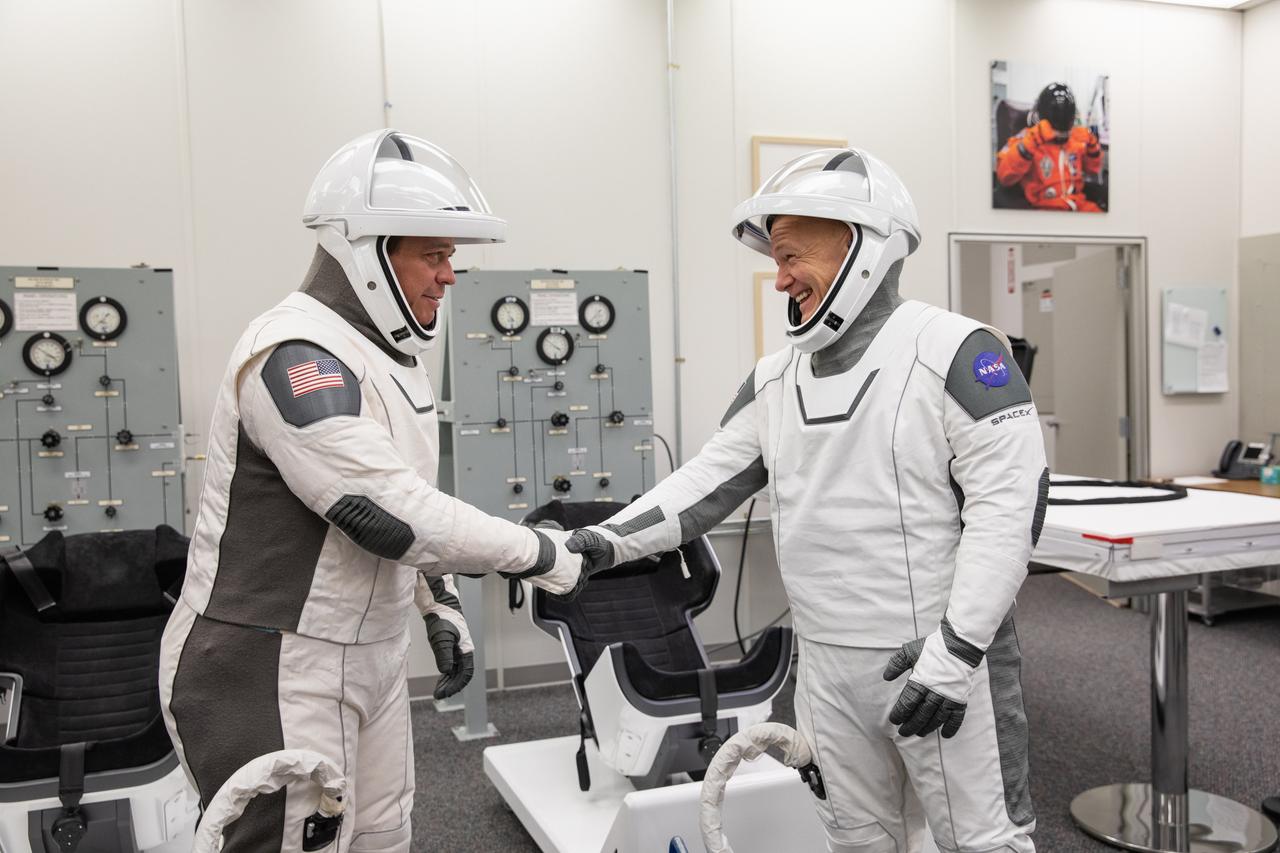
NASA astronauts Bob Behnken, left, and Doug Hurley shake hands after suiting up in SpaceX spacesuits in the Astronaut Crew Quarters at Kennedy Space Center in Florida on Jan. 17, 2020, during a dress rehearsal ahead of the company’s uncrewed In-Flight Abort Test. A SpaceX Falcon 9 rocket and Crew Dragon spacecraft will lift off from Launch Complex 39A on the flight test, which will demonstrate the spacecraft’s escape capabilities in preparation for crewed flights to the International Space Station as part of the agency’s Commercial Crew Program. Behnken and Hurley are slated to fly on the company’s first crewed mission, Demo-2.
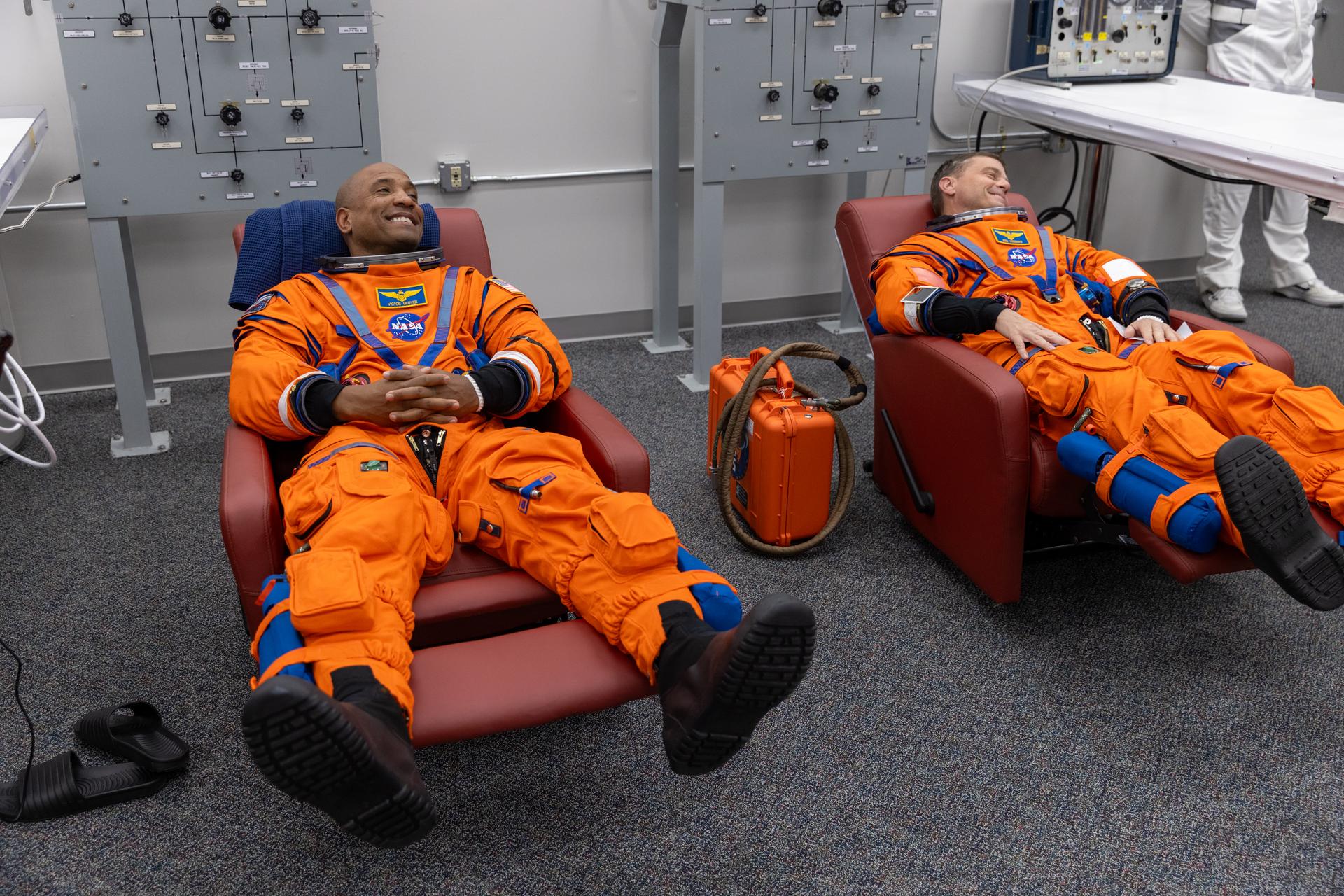
From left, NASA astronauts Victor Glover, Artemis II pilot, and Reid Wiseman, Artemis II commander, undergo spacesuit checks inside the crew quarters suit-up room in the Neil A. Armstrong Operations and Checkout Building part of the Artemis II Countdown Demonstration Test at the agency’s Kennedy Space Center on Saturday, Dec. 20, 2025. For this operation, the Artemis II crew and launch team are simulating the launch day timeline including suit-up, walkout, and climbing in and out of the spacecraft. Through the Artemis campaign, NASA will send astronauts to explore the Moon for scientific discovery, economic benefits, and to build the foundation for the first crewed missions to Mars, for the benefit of all.
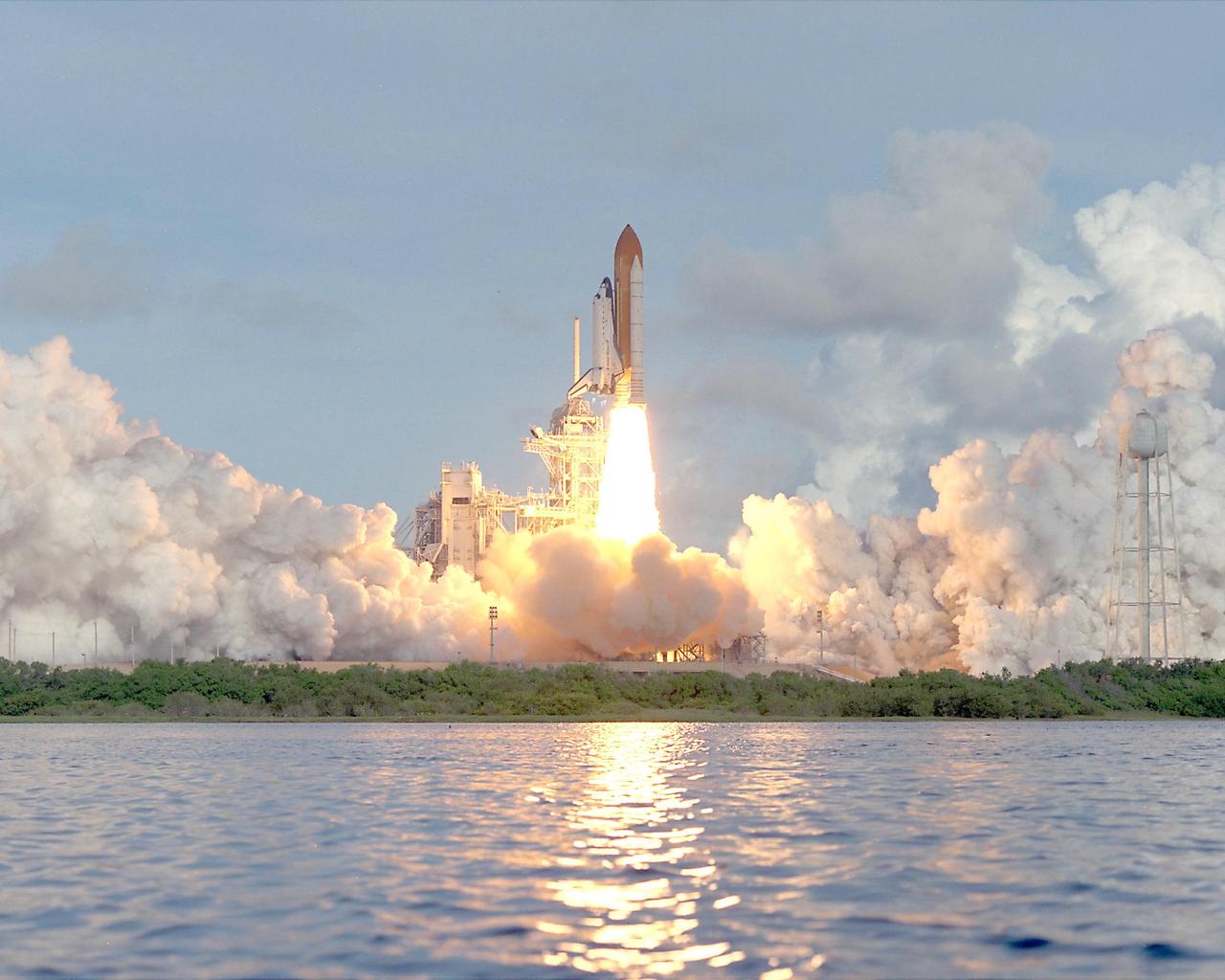
KENNEDY SPACE CENTER, Fla. -- The clouds of steam and smoke generated from the launch of Space Shuttle Atlantis seem to blend with the sky. The launch is reflected in waters near Launch Pad 39B. The perfect on-time liftoff of Atlantis on mission STS-106 occurred at 8:45:47 a.m. EDT. On the 11-day mission to the International Space Station, the seven-member crew will perform support tasks on orbit, transfer supplies and prepare the living quarters in the newly arrived Zvezda Service Module. The first long-duration crew, dubbed “Expedition One,” is due to arrive at the Station in late fall. Landing of Atlantis is targeted for 4:45 a.m. EDT on Sept. 19
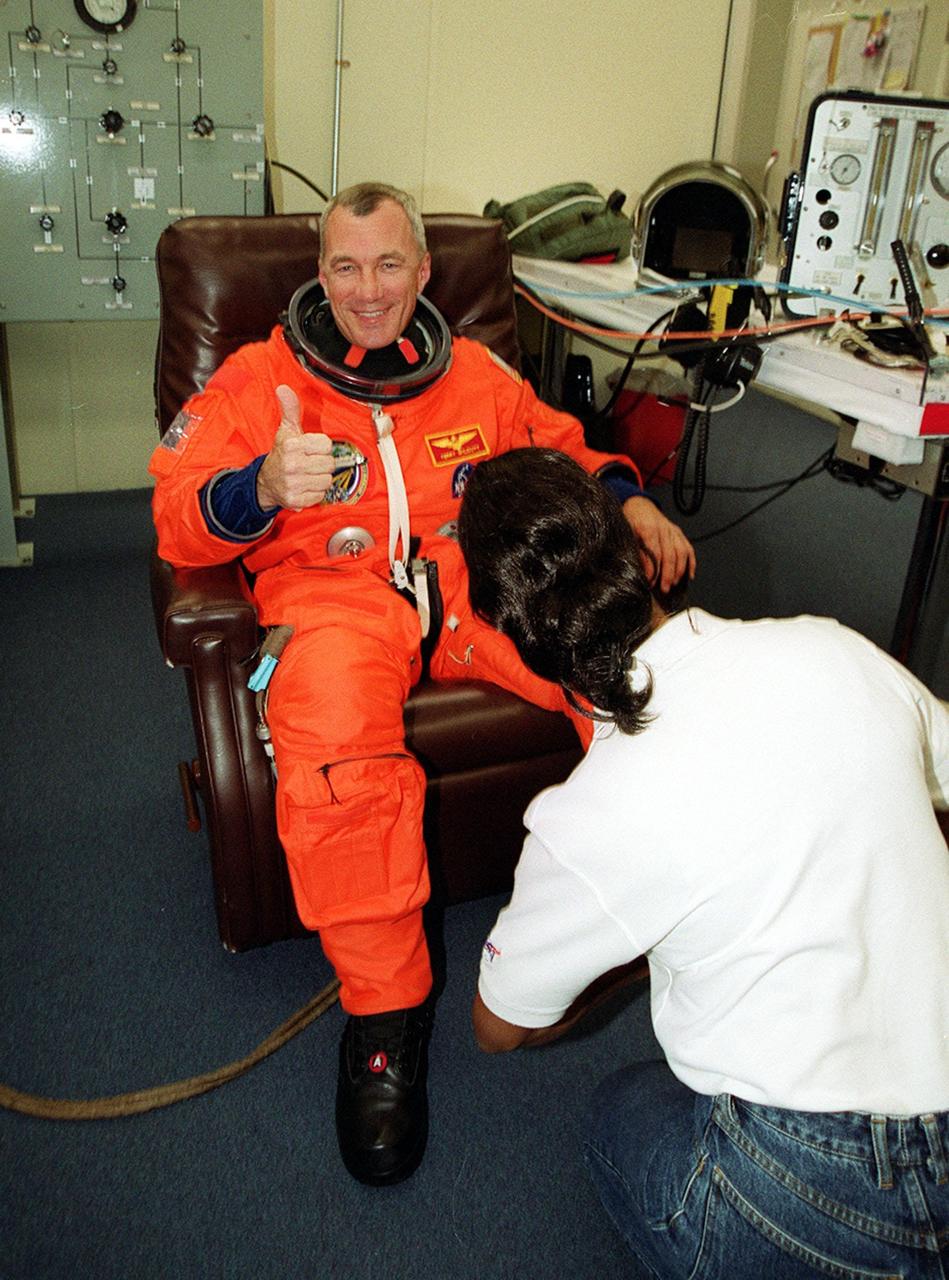
STS-106 Commander Terrence W. Wilcutt gives thumbs up for launch today as he gets help suiting up. This is Wilcutt’s fourth Shuttle flight. Space Shuttle Atlantis is set to lift off 8:45 a.m. EDT on the fourth flight to the International Space Station. During the 11-day mission, the seven-member crew will perform support tasks on orbit, transfer supplies and prepare the living quarters in the newly arrived Zvezda Service Module. The first long-duration crew, dubbed “Expedition One,” is due to arrive at the Station in late fall. Atlantis is scheduled to land at KSC Sept. 19 at 4:59 a.m. EDT
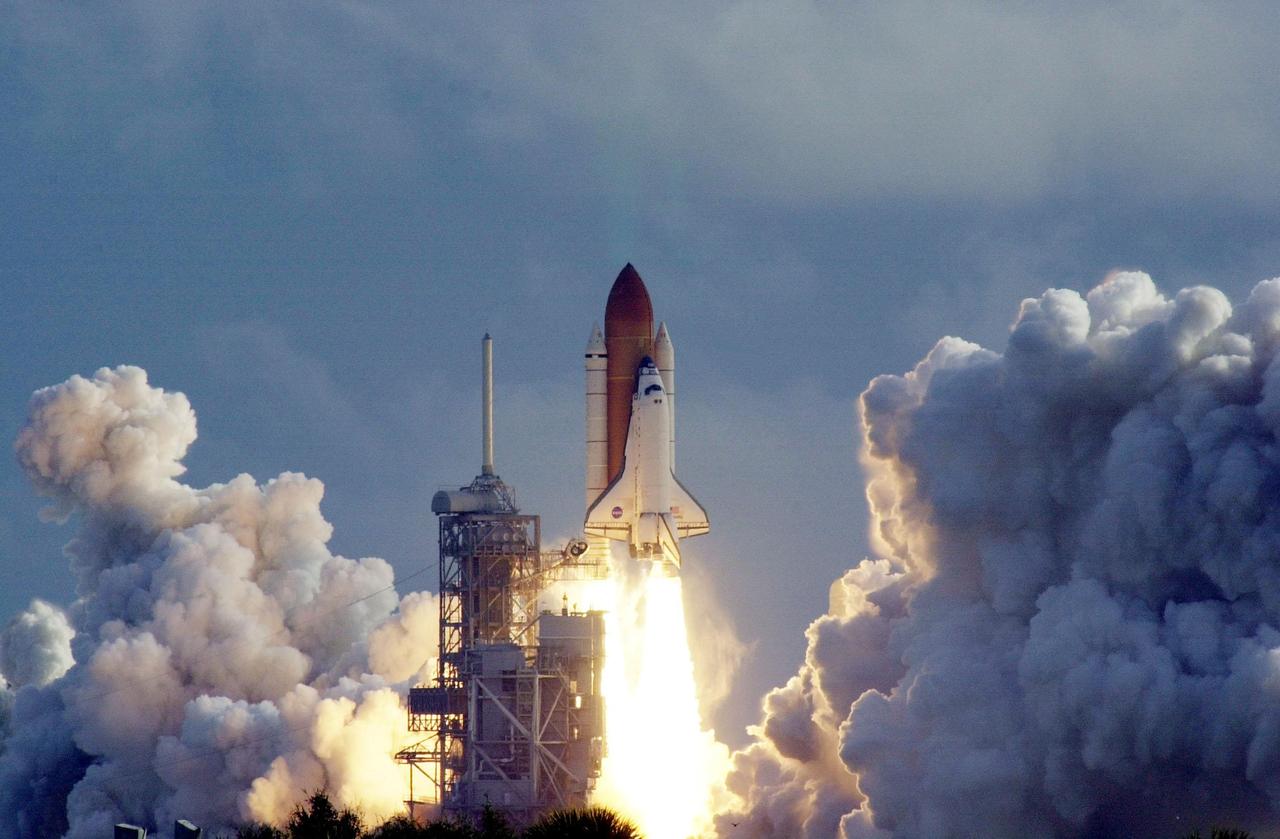
KENNEDY SPACE CENTER, Fla. -- Billows of clouds and smoke frame Space Shuttle Atlantis after a perfect on-time launch on mission STS-106 at 8:45:47 a.m. EDT. On the 11-day mission to the International Space Station, the seven-member crew will perform support tasks on orbit, transfer supplies and prepare the living quarters in the newly arrived Zvezda Service Module. The first long-duration crew, dubbed “Expedition One,” is due to arrive at the Station in late fall. Landing of Atlantis is targeted for 4:45 a.m. EDT on Sept. 19
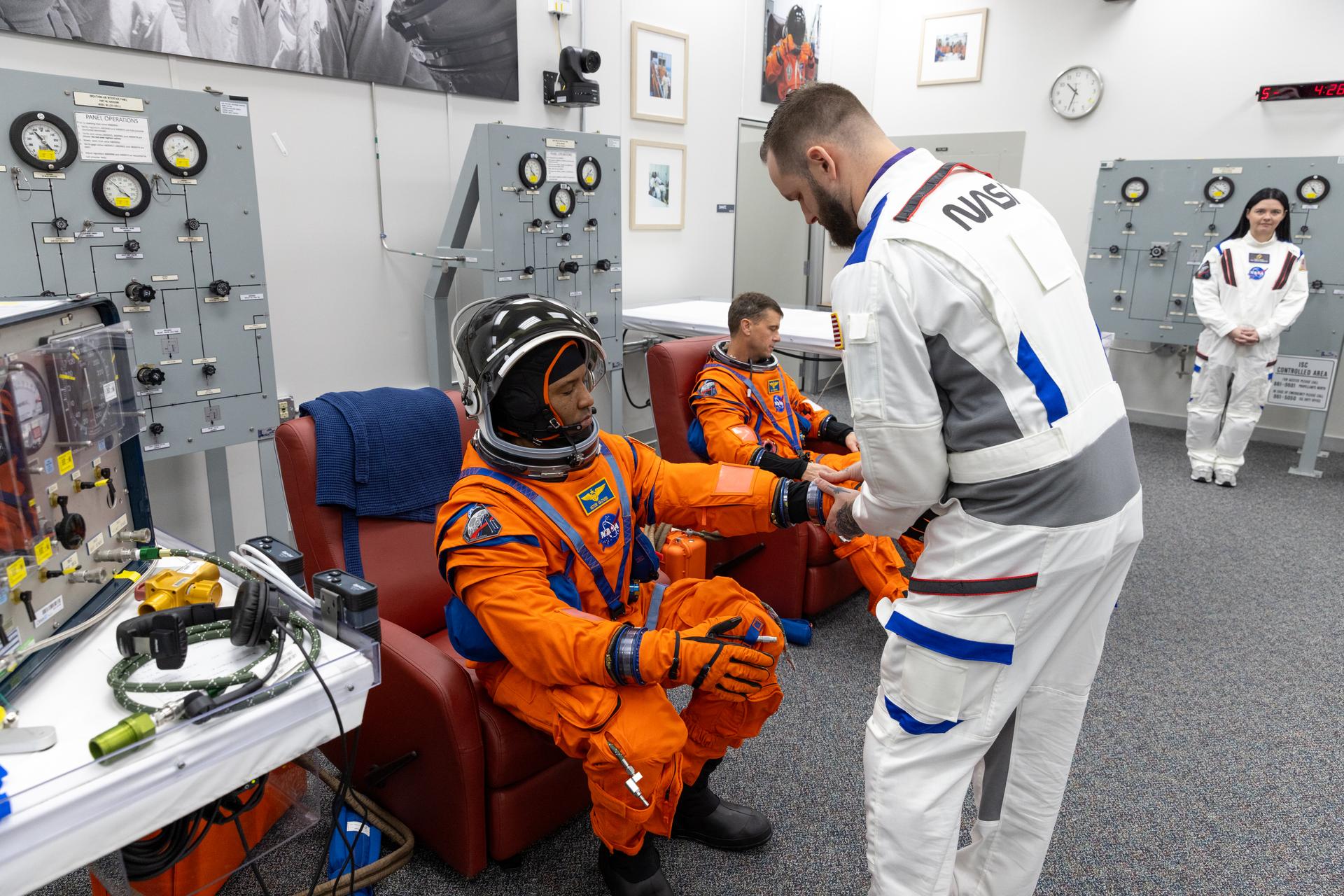
From left, NASA astronauts Victor Glover, Artemis II pilot, and Reid Wiseman, Artemis II commander, undergo spacesuit checks inside the crew quarters suit-up room in the Neil A. Armstrong Operations and Checkout Building part of the Artemis II Countdown Demonstration Test at the agency’s Kennedy Space Center on Saturday, Dec. 20, 2025. For this operation, the Artemis II crew and launch team are simulating the launch day timeline including suit-up, walkout, and climbing in and out of the spacecraft. Through the Artemis campaign, NASA will send astronauts to explore the Moon for scientific discovery, economic benefits, and to build the foundation for the first crewed missions to Mars, for the benefit of all.
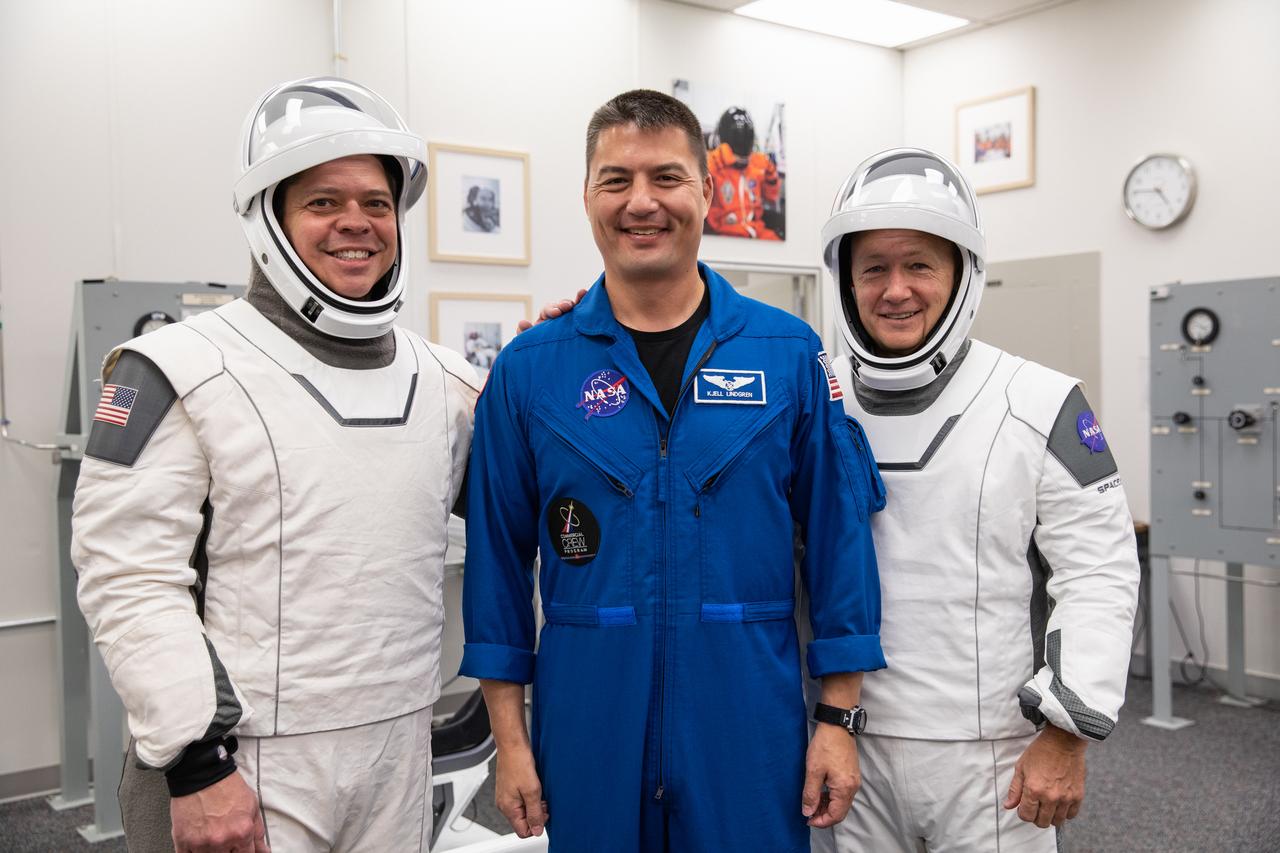
From left to right, NASA astronauts Bob Behnken, Kjell Lindgren and Doug Hurley pause for a photo in the Astronaut Crew Quarters at Kennedy Space Center in Florida on Jan. 17, 2020, during a dress rehearsal ahead of the SpaceX uncrewed In-Flight Abort Test. Behken and Hurley are wearing SpaceX spacesuits. A SpaceX Falcon 9 rocket and Crew Dragon spacecraft will lift off from Launch Complex 39A on the flight test, which will demonstrate the spacecraft’s escape capabilities in preparation for crewed flights to the International Space Station as part of the agency’s Commercial Crew Program. Behnken and Hurley are slated to fly on the company’s first crewed mission, Demo-2.
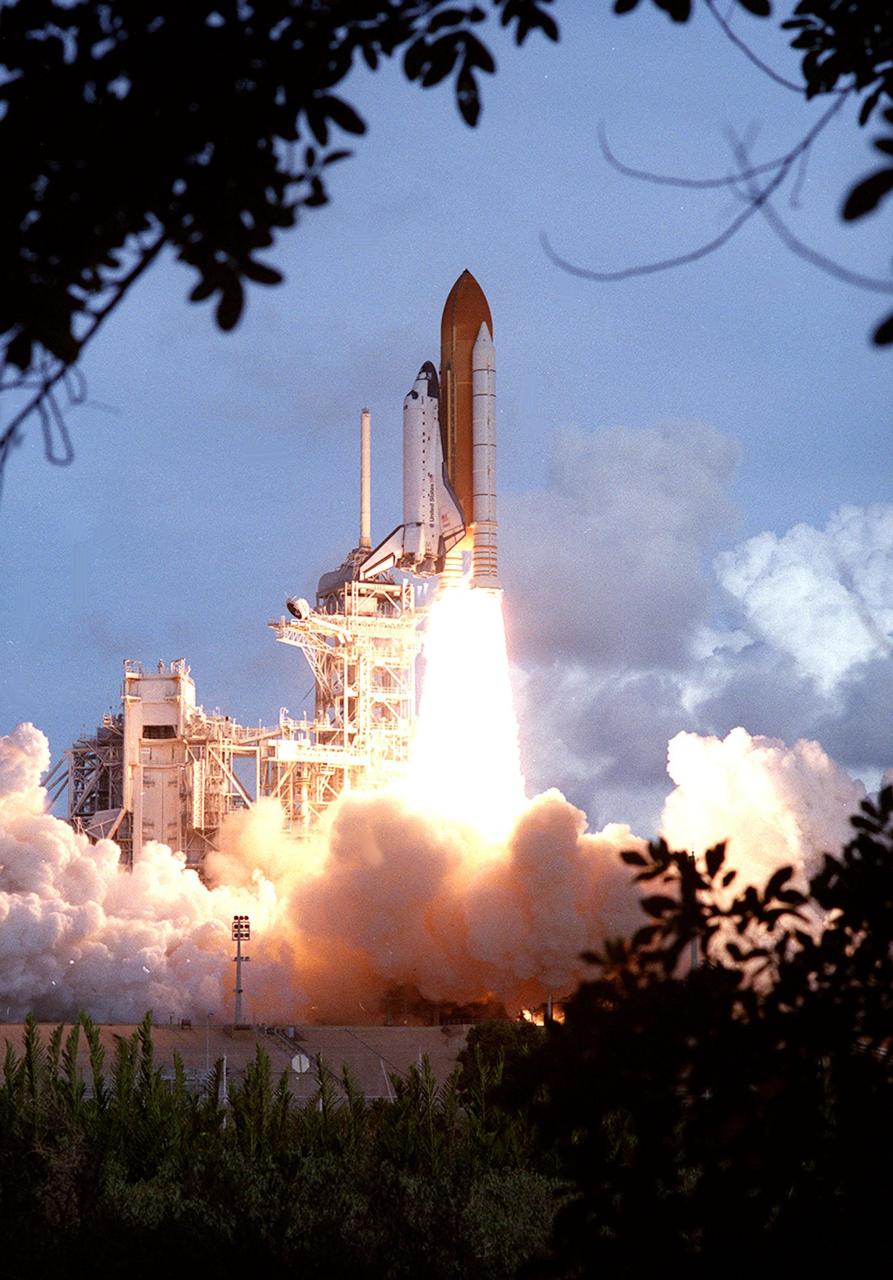
KENNEDY SPACE CENTER, Fla. -- Space Shuttle Atlantis appears to burst forth from a cocoon of smoke in the Florida marsh lands as it rockets toward space on mission STS-106. The perfect on-time liftoff of Atlantis occurred at 8:45:47 a.m. EDT. On the 11-day mission to the International Space Station, the seven-member crew will perform support tasks on orbit, transfer supplies and prepare the living quarters in the newly arrived Zvezda Service Module. The first long-duration crew, dubbed “Expedition One,” is due to arrive at the Station in late fall. Landing of Atlantis is targeted for 4:45 a.m. EDT on Sept. 19
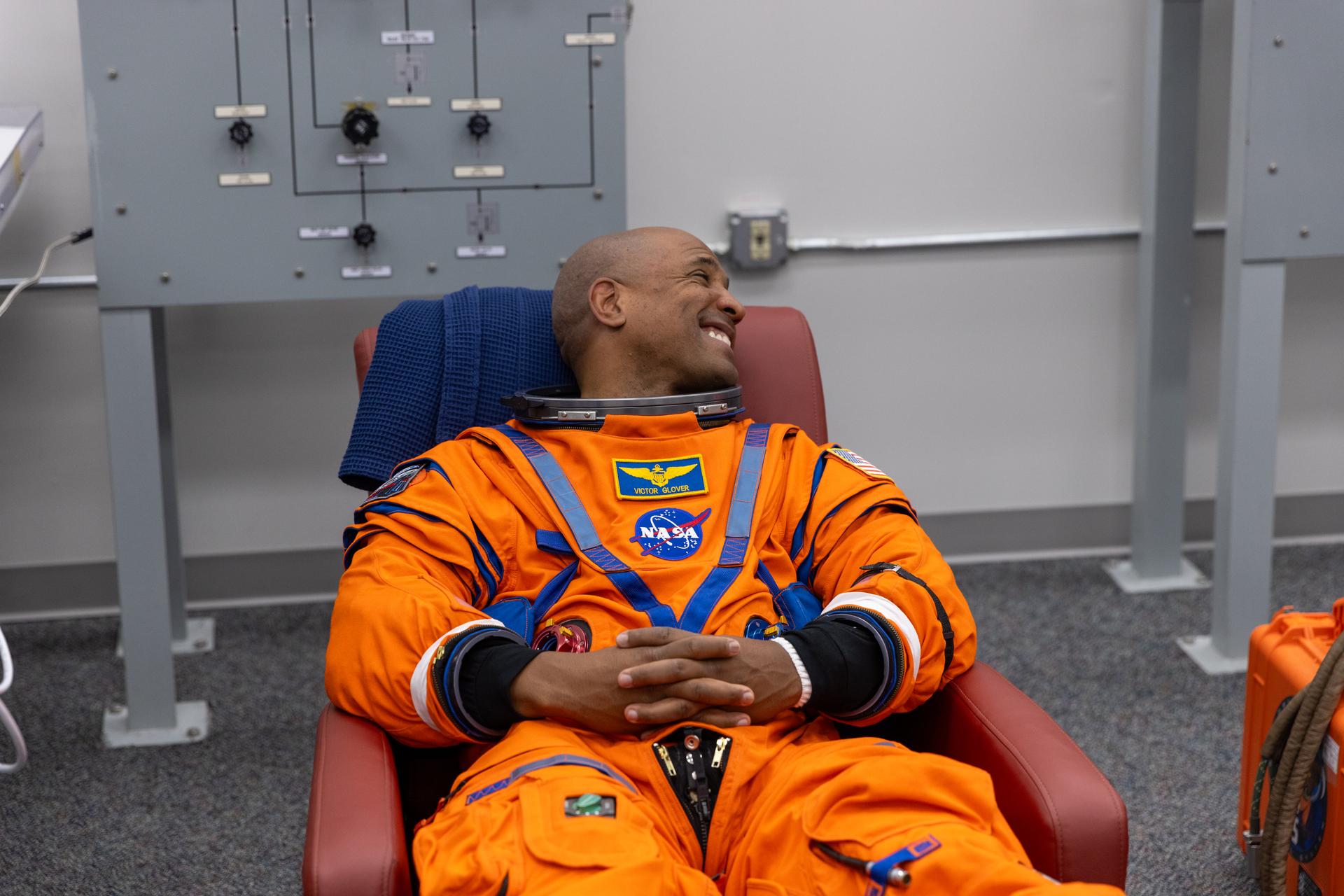
NASA astronaut Victor Glover, Artemis II pilot, undergoes spacesuit checks inside the crew quarters suit-up room in the Neil A. Armstrong Operations and Checkout Building part of the Artemis II Countdown Demonstration Test at the agency’s Kennedy Space Center on Saturday, Dec. 20, 2025. For this operation, the Artemis II crew and launch team are simulating the launch day timeline including suit-up, walkout, and climbing in and out of the spacecraft. Through the Artemis campaign, NASA will send astronauts to explore the Moon for scientific discovery, economic benefits, and to build the foundation for the first crewed missions to Mars, for the benefit of all.
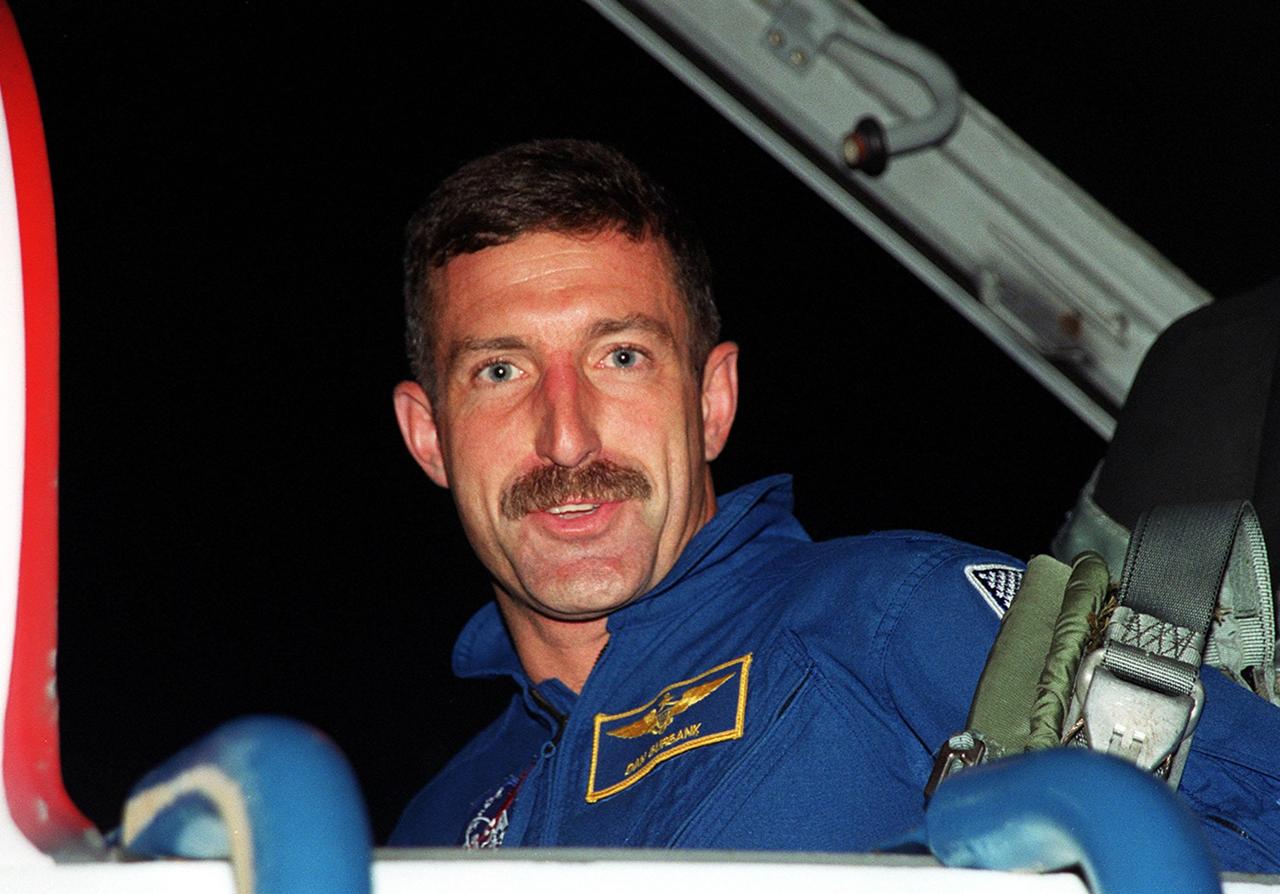
STS-106 Mission Specialist Daniel C. Burbank smiles on his arrival at the KSC Shuttle Landing Facility. He and the rest of the crew will be making pre-launch preparations for the fourth flight to the International Space Station. STS-106 is scheduled to launch Sept. 8, 2000, at 8:45 a.m. EDT from Launch Pad 39B. On the 11-day mission, the seven-member crew will perform support tasks on orbit, transfer supplies and prepare the living quarters in the newly arrived Zvezda Service Module. The first long-duration crew, dubbed “Expedition One,” is due to arrive at the Station in late fall
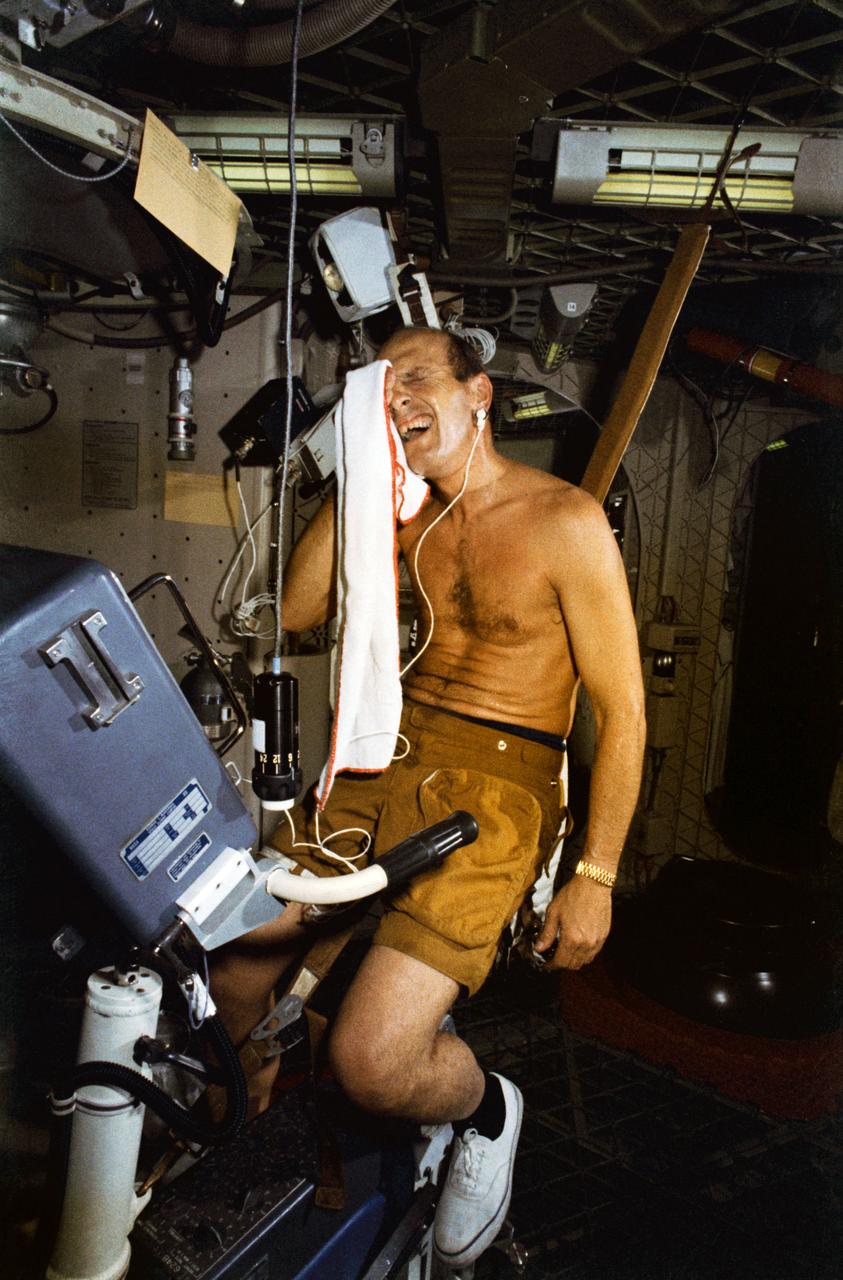
S73-20713 (1 March 1973) --- Astronaut Charles Conrad Jr., commander of the first manned Skylab mission, wipes perspiration from his face following an exercise session on the bicycle ergometer during Skylab training at Johnson Space Center. Conrad is in the work and experiments compartment of the crew quarters of the Skylab Orbital Workshop (OWS) trainer at JSC. In addition to being the prime exercise for the crewmen, the ergometer is also used for the vector-cardiogram test and the metabolic activity experiment. The bicycle ergometer produces measured workloads for use in determining man's metabolic effectiveness. Photo credit: NASA
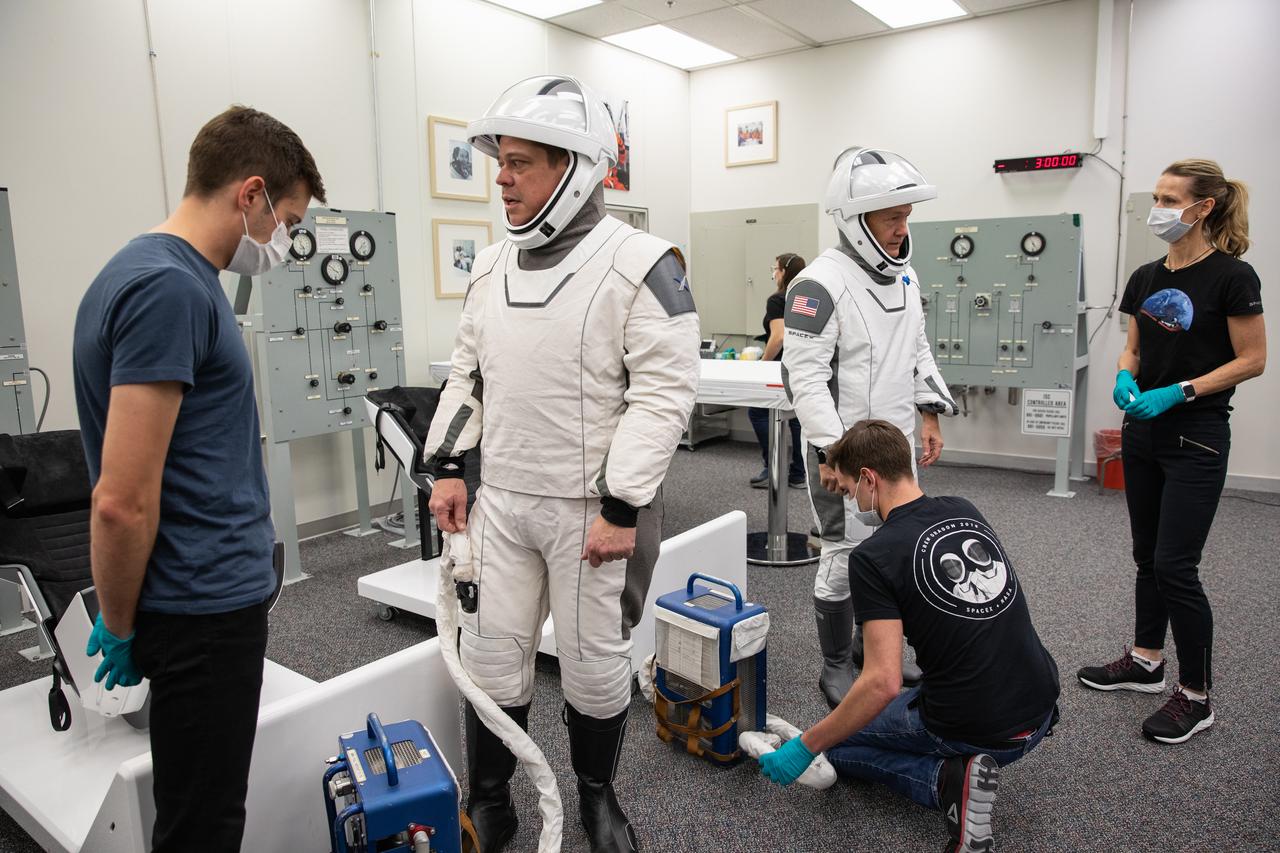
NASA astronauts Bob Behnken, foreground, and Doug Hurley don SpaceX spacesuits in the Astronaut Crew Quarters at Kennedy Space Center in Florida on Jan. 17, 2020, during a dress rehearsal ahead of the company’s uncrewed In-Flight Abort Test. A SpaceX Falcon 9 rocket and Crew Dragon spacecraft will lift off from Launch Complex 39A on the flight test, which will demonstrate the spacecraft’s escape capabilities in preparation for crewed flights to the International Space Station as part of the agency’s Commercial Crew Program. Behnken and Hurley are slated to fly on the company’s first crewed mission, Demo-2.
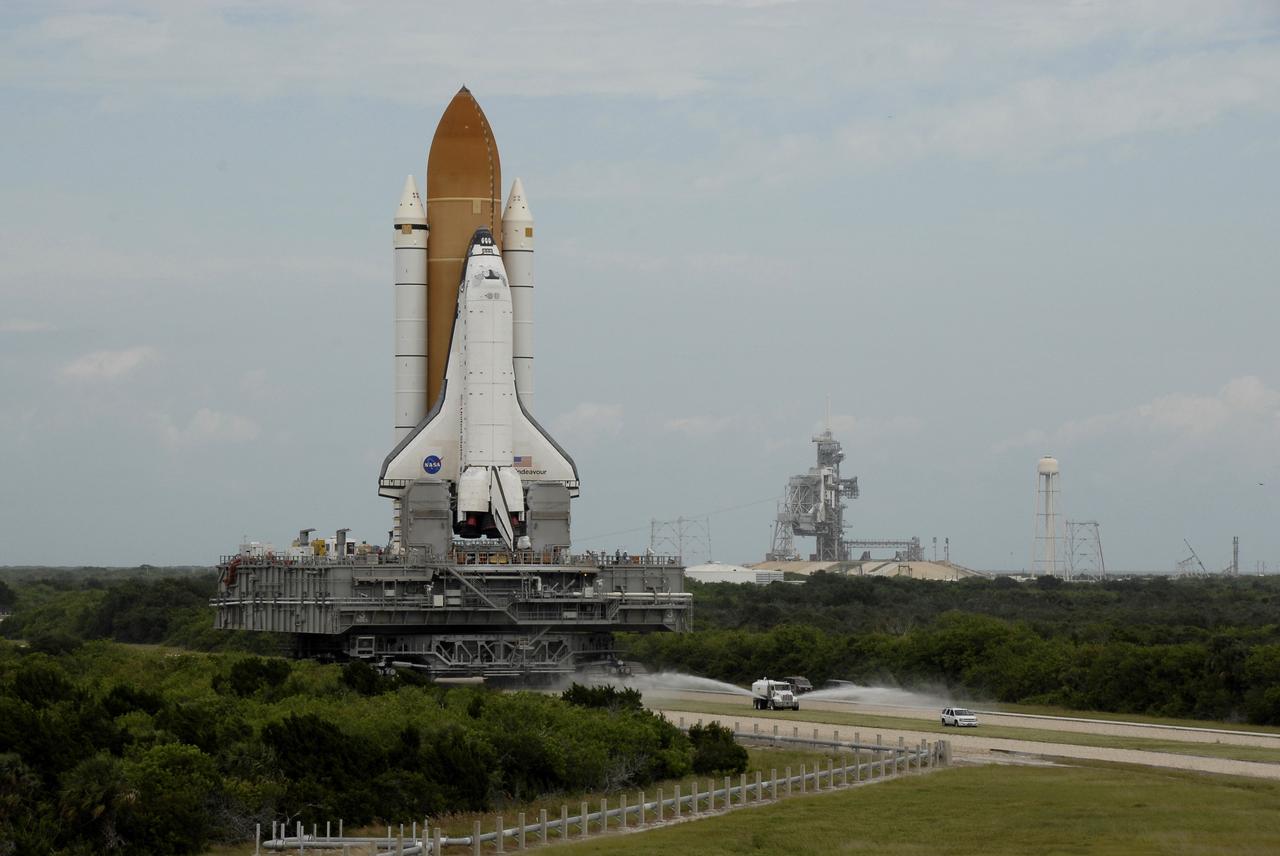
CAPE CANAVERAL, Fla. - At NASA's Kennedy Space Center in Florida, space shuttle Endeavour turns toward Launch Pad 39A after rolling off Launch Pad 39B. First motion was at 8:28 a.m. EDT. Endeavour is targeted to launch Nov. 14 on the STS-126 mission. On this 27th mission to the International Space Station, Endeavour will carry the Lightweight Multi-Purpose Experiment Support Structure Carrier and the Multi-Purpose Logistics Module Leonardo that will hold supplies and equipment, including additional crew quarters, additional exercise equipment, spare hardware and equipment for the regenerative life support system. Photo credit: NASA/Kim Shiflett
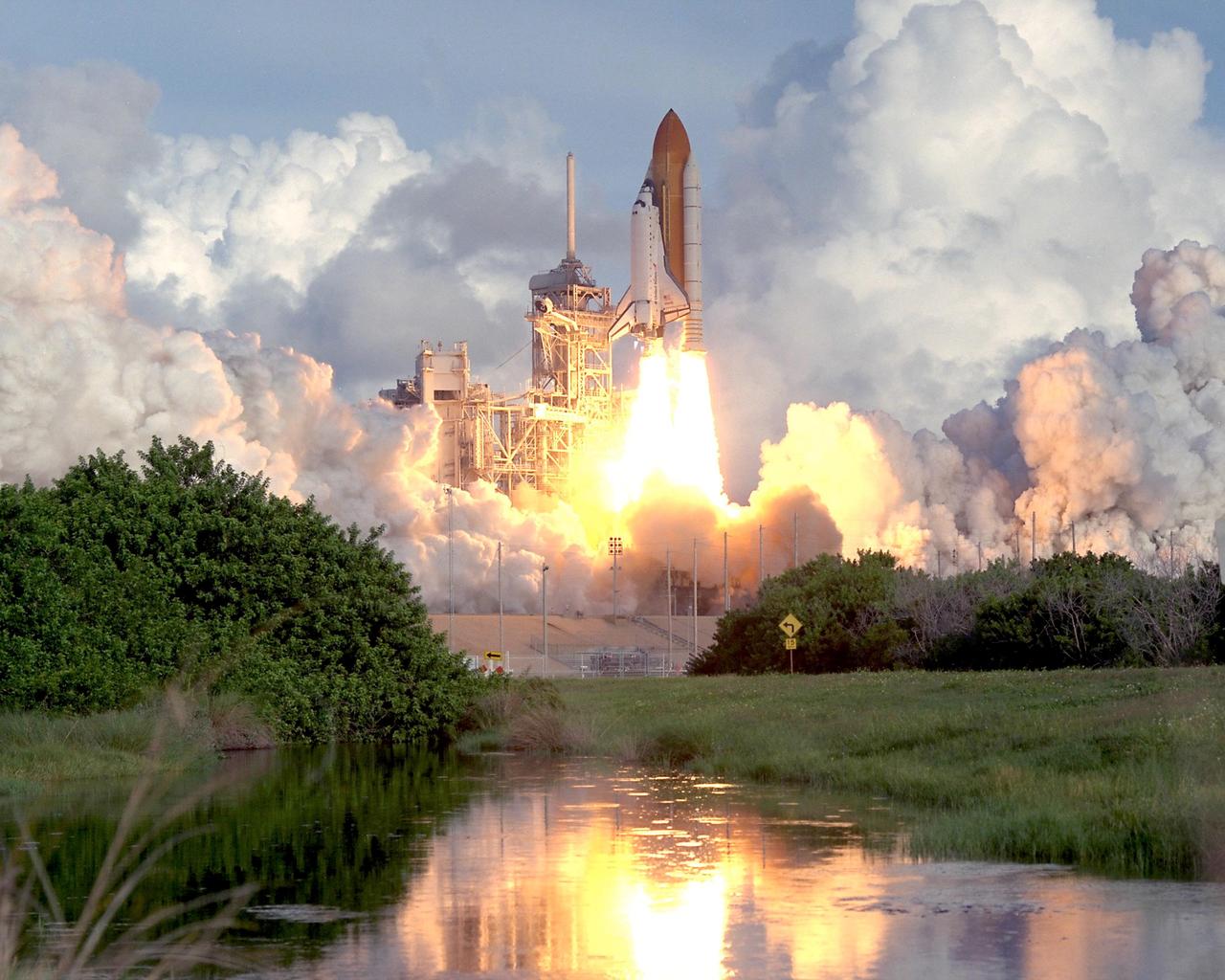
KENNEDY SPACE CENTER, Fla. -- The waters near Launch Pad 39B reflect the brilliant red-orange flames from the solid rocket boosters as Space Shuttle Atlantis lifts off on mission STS-106 to the International Space Station. The perfect on-time launch occurred at 8:45:47 a.m. EDT. On the 11-day mission to the Station, the seven-member crew will perform support tasks on orbit, transfer supplies and prepare the living quarters in the newly arrived Zvezda Service Module. The first long-duration crew, dubbed “Expedition One,” is due to arrive at the Station in late fall. Landing of Atlantis is targeted for 4:45 a.m. EDT on Sept. 19.
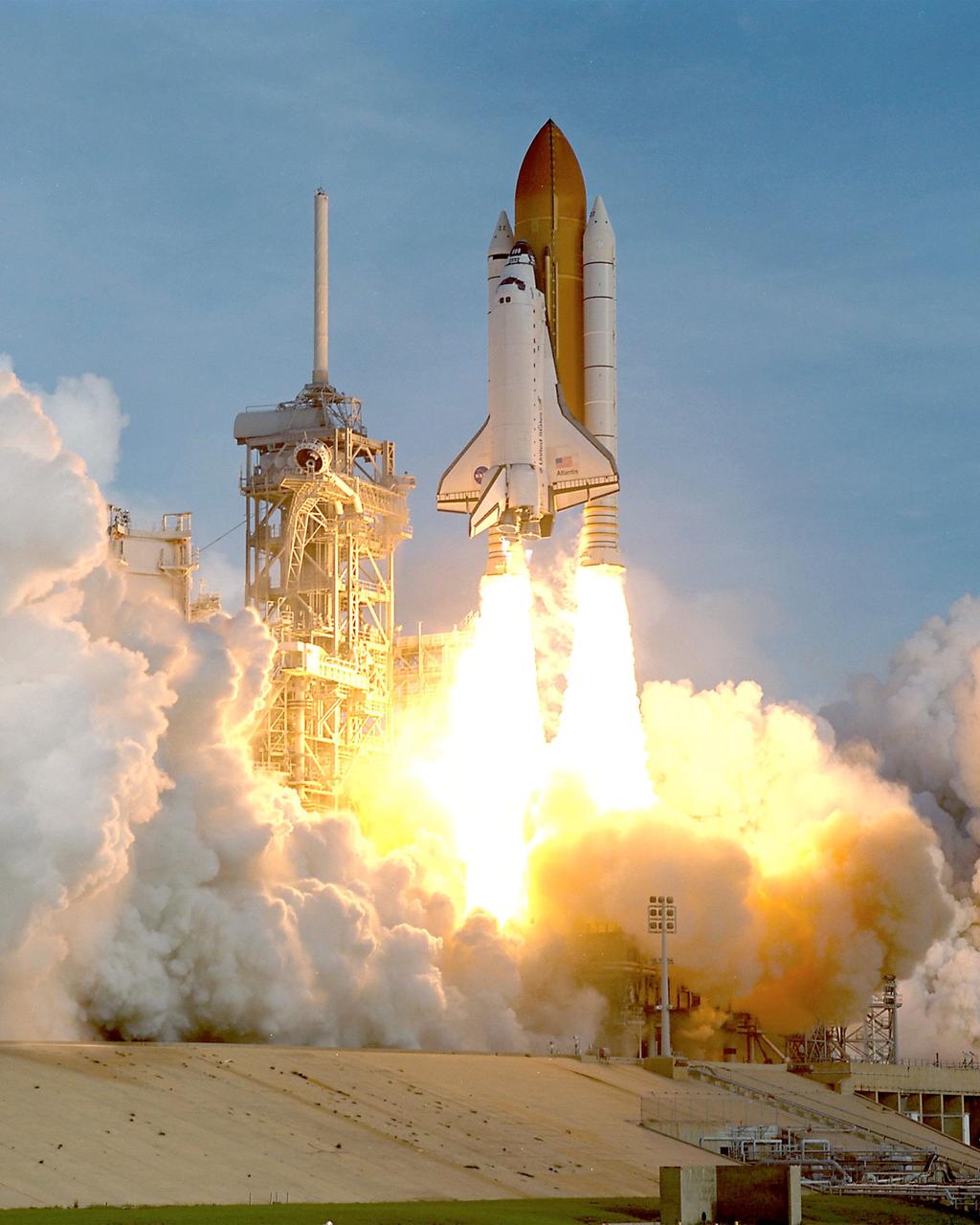
KENNEDY SPACE CENTER, Fla. -- Space Shuttle Atlantis appears to burst forth from a cocoon of smoke as it rockets toward space on mission STS-106. The perfect on-time liftoff of Atlantis occurred at 8:45:47 a.m. EDT. On the 11-day mission to the International Space Station, the seven-member crew will perform support tasks on orbit, transfer supplies and prepare the living quarters in the newly arrived Zvezda Service Module. The first long-duration crew, dubbed “Expedition One,” is due to arrive at the Station in late fall. Landing of Atlantis is targeted for 4:45 a.m. EDT on Sept. 19
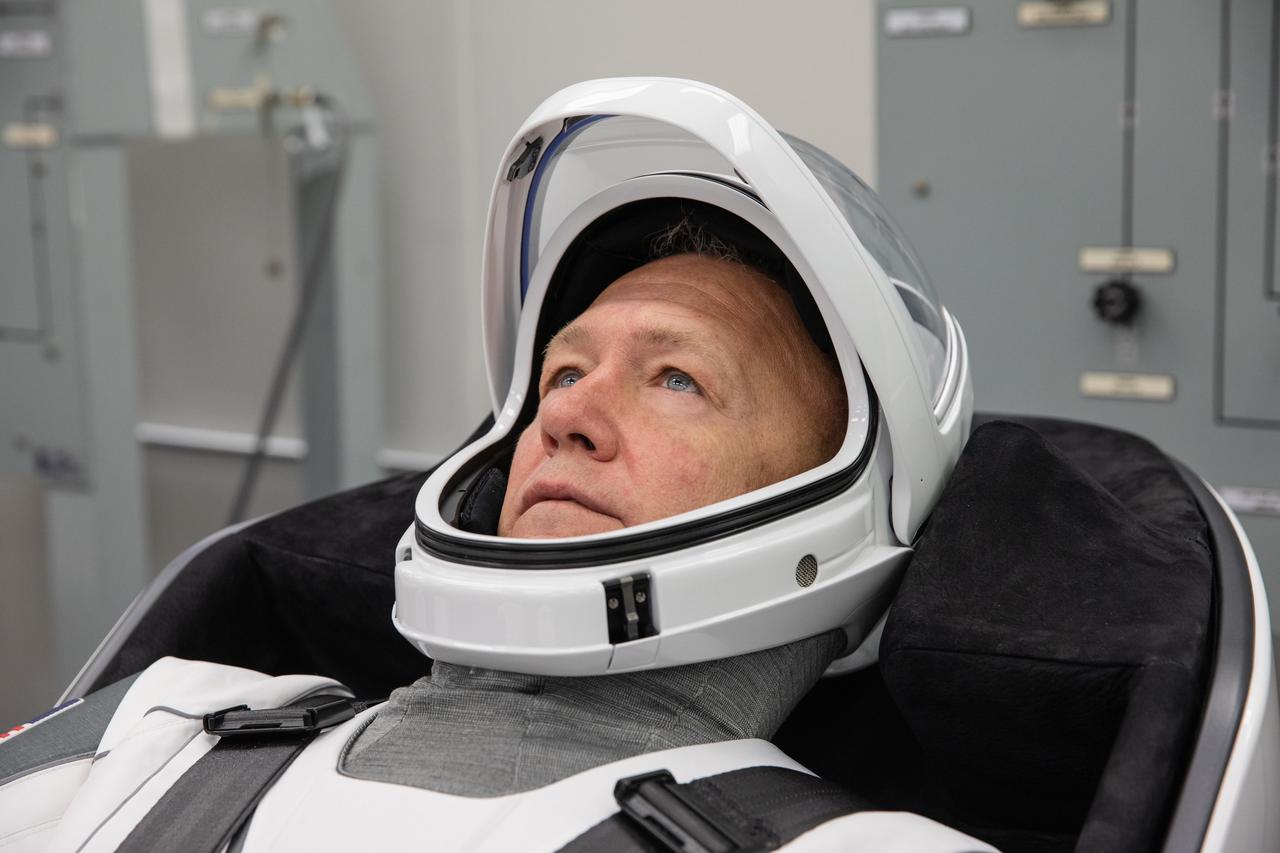
NASA astronaut Doug Hurley dons a SpaceX spacesuit in the Astronaut Crew Quarters at Kennedy Space Center in Florida on Jan. 17, 2020, during a dress rehearsal ahead of the company’s uncrewed In-Flight Abort Test. A SpaceX Falcon 9 rocket and Crew Dragon spacecraft will lift off from Launch Complex 39A on the flight test, which will demonstrate the spacecraft’s escape capabilities in preparation for crewed flights to the International Space Station as part of the agency’s Commercial Crew Program. Hurley and NASA astronaut Bob Behnken are slated to fly on the company’s first crewed mission, Demo-2.
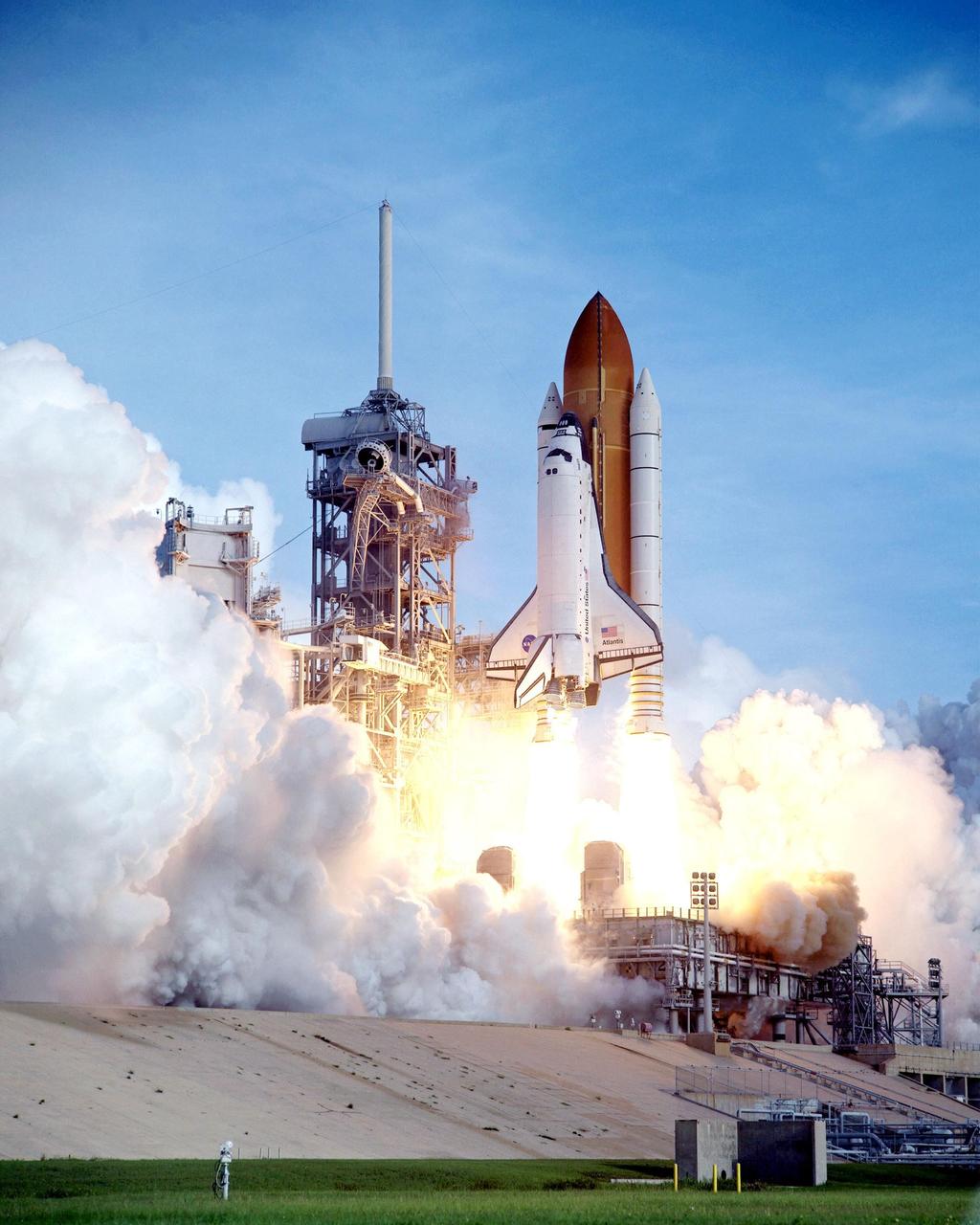
KENNEDY SPACE CENTER, Fla. -- Space Shuttle Atlantis rises from a cocoon of smoke as it rockets toward space on mission STS-106. The perfect on-time liftoff of Atlantis occurred at 8:45:47 a.m. EDT. On the 11-day mission to the International Space Station, the seven-member crew will perform support tasks on orbit, transfer supplies and prepare the living quarters in the newly arrived Zvezda Service Module. The first long-duration crew, dubbed “Expedition One,” is due to arrive at the Station in late fall. Landing of Atlantis is targeted for 4:45 a.m. EDT on Sept. 19
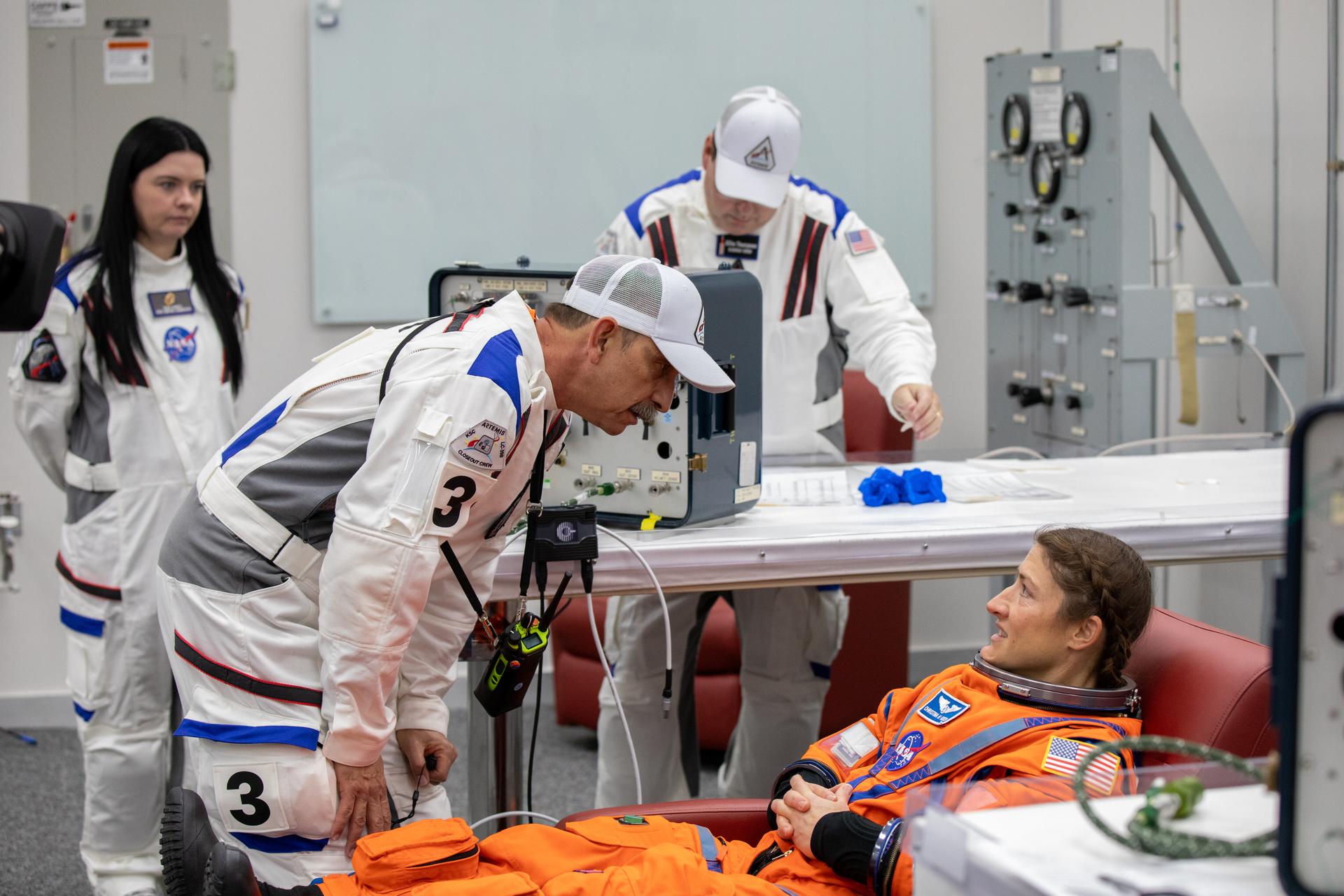
NASA astronaut, Christina Koch, Artemis II mission specialist, undergoes spacesuit checks inside the crew quarters suit-up room in the Neil A. Armstrong Operations and Checkout Building part of the Artemis II Countdown Demonstration Test at the agency’s Kennedy Space Center on Saturday, Dec. 20, 2025. For this operation, the Artemis II crew and launch team are simulating the launch day timeline including suit-up, walkout, and climbing in and out of the spacecraft. Through the Artemis campaign, NASA will send astronauts to explore the Moon for scientific discovery, economic benefits, and to build the foundation for the first crewed missions to Mars, for the benefit of all.
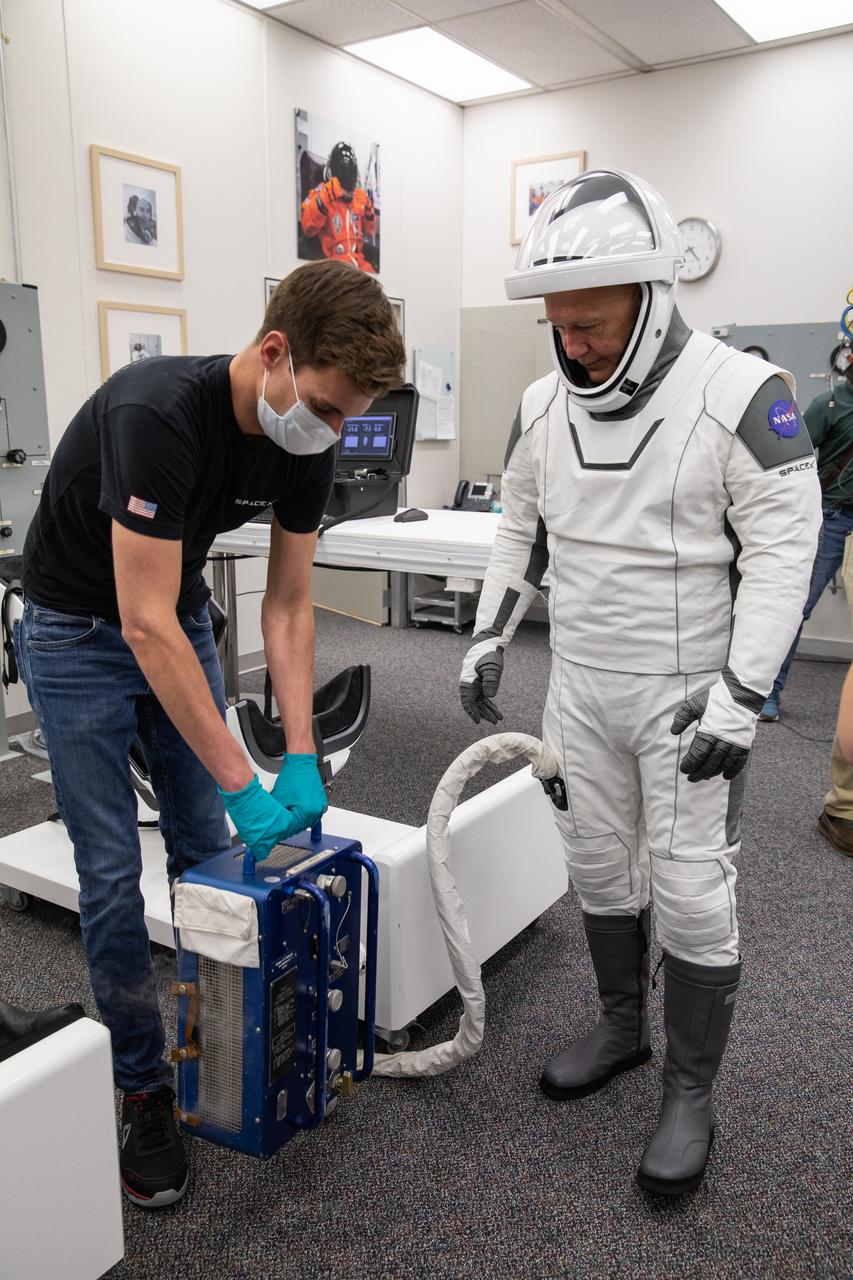
NASA astronaut Doug Hurley wears a SpaceX spacesuit in the Astronaut Crew Quarters at Kennedy Space Center in Florida on Jan. 17, 2020, during a dress rehearsal ahead of the company’s uncrewed In-Flight Abort Test. A SpaceX Falcon 9 rocket and Crew Dragon spacecraft will lift off from Launch Complex 39A on the flight test, which will demonstrate the spacecraft’s escape capabilities in preparation for crewed flights to the International Space Station as part of the agency’s Commercial Crew Program. Hurley and NASA astronaut Bob Behnken are slated to fly on the company’s first crewed mission, Demo-2.
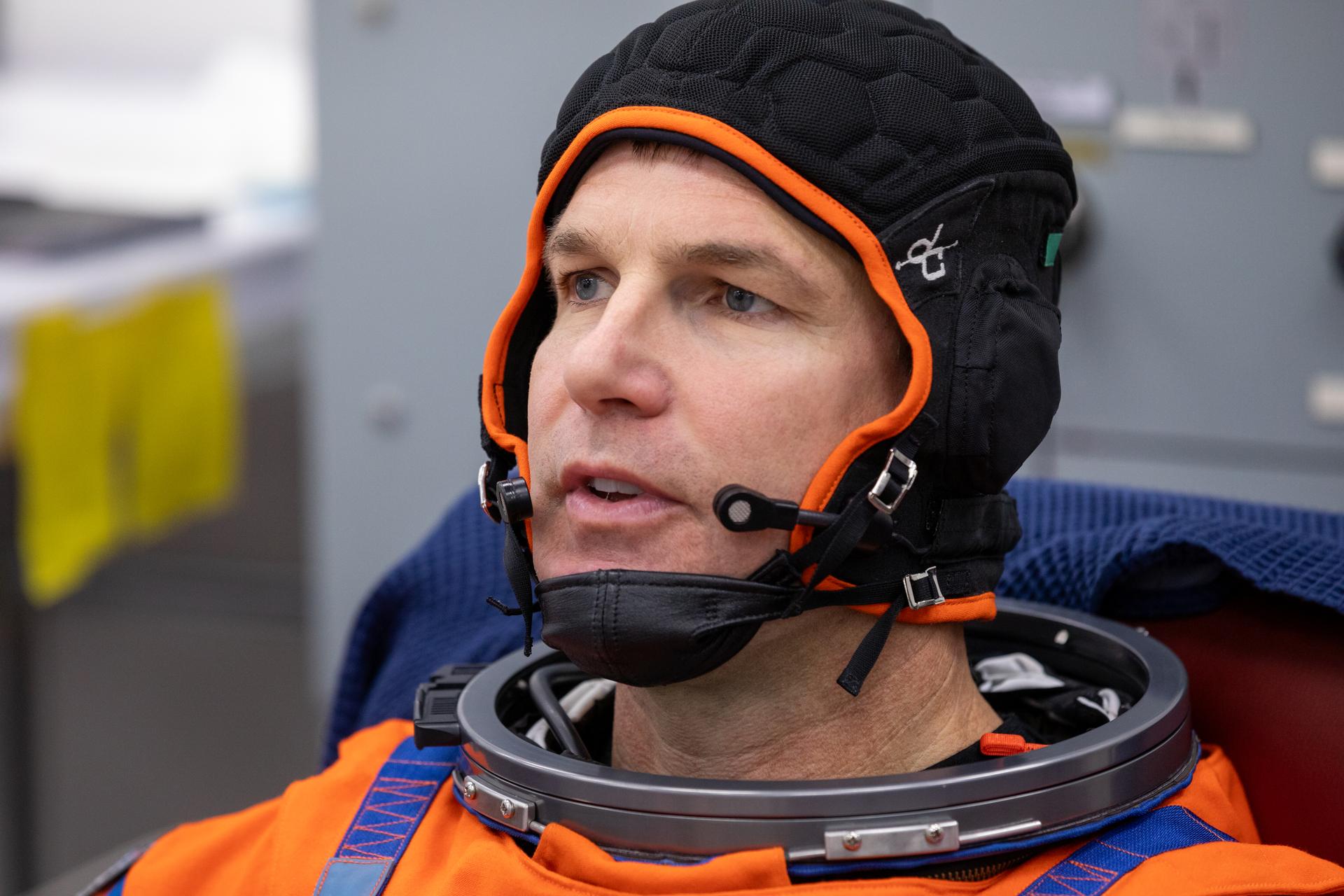
CSA (Canadian Space Agency) astronaut Jeremy Hansen, Artemis II mission specialist, undergoes spacesuit checks inside the crew quarters suit-up room in the Neil A. Armstrong Operations and Checkout Building part of the Artemis II Countdown Demonstration Test at the agency’s Kennedy Space Center on Saturday, Dec. 20, 2025. For this operation, the Artemis II crew and launch team are simulating the launch day timeline including suit-up, walkout, and climbing in and out of the spacecraft. Through the Artemis campaign, NASA will send astronauts to explore the Moon for scientific discovery, economic benefits, and to build the foundation for the first crewed missions to Mars, for the benefit of all.