
The SpaceX Falcon 9 first stage booster that will launch NASA’s SpaceX Crew-1 mission arrived in Florida Tuesday, July 14, 2020. The rocket was shipped from the SpaceX facility in McGregor, Texas, and will now undergo prelaunch processing in the company’s facility on nearby Cape Canaveral Air Force Station.
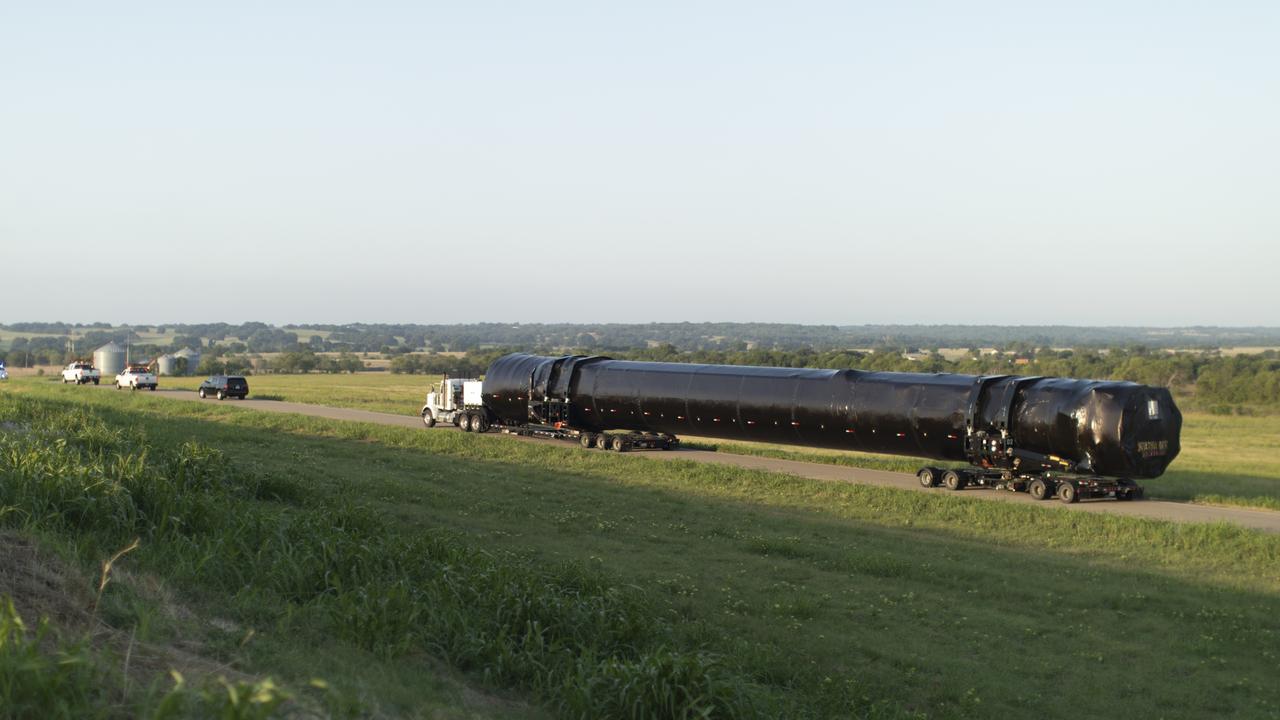
The SpaceX Falcon 9 first stage booster that will launch NASA’s SpaceX Crew-1 mission arrived in Florida Tuesday, July 14, 2020. The rocket was shipped from the SpaceX facility in McGregor, Texas, and will now undergo prelaunch processing in the company’s facility on nearby Cape Canaveral Air Force Station.
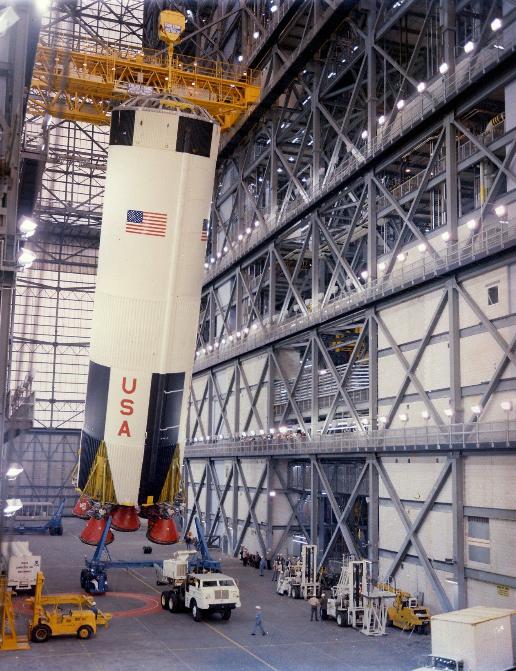
Teams lift the first stage of the Apollo 8 Saturn V rocket inside the transfer aisle of the Vehicle Assembly Building at NASA’s Kennedy Space Center in Florida on Feb. 1, 1968, and prepare to place it atop the mobile launcher. Apollo 8 was the first crewed spacecraft to successfully orbit the Moon and return to Earth, setting the stage for Apollo 11 – the first crewed lunar landing. Apollo 8 launched on Dec. 21, 1968, and the crew members consisted of Frank Borman, William A. Anders, and James A. Lovell Jr.
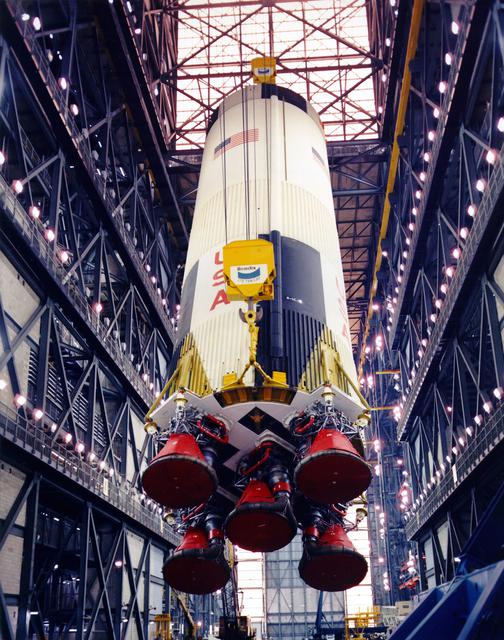
Teams lift the first stage of the Apollo 10 Saturn V rocket by crane inside High Bay 3 of the Vehicle Assembly Building at NASA’s Kennedy Space Center in Florida on Dec. 3, 1968, in preparation for stacking on the mobile launcher. The 138-foot-long stage generated 7.5 million pounds of thrust when it launched Apollo 10 astronauts Thomas P. Stafford, John W. Young, and Eugene A. Cernan. The mission launched on May 18, 1969, and was the first flight of a complete, crewed Apollo spacecraft to operate around the Moon.
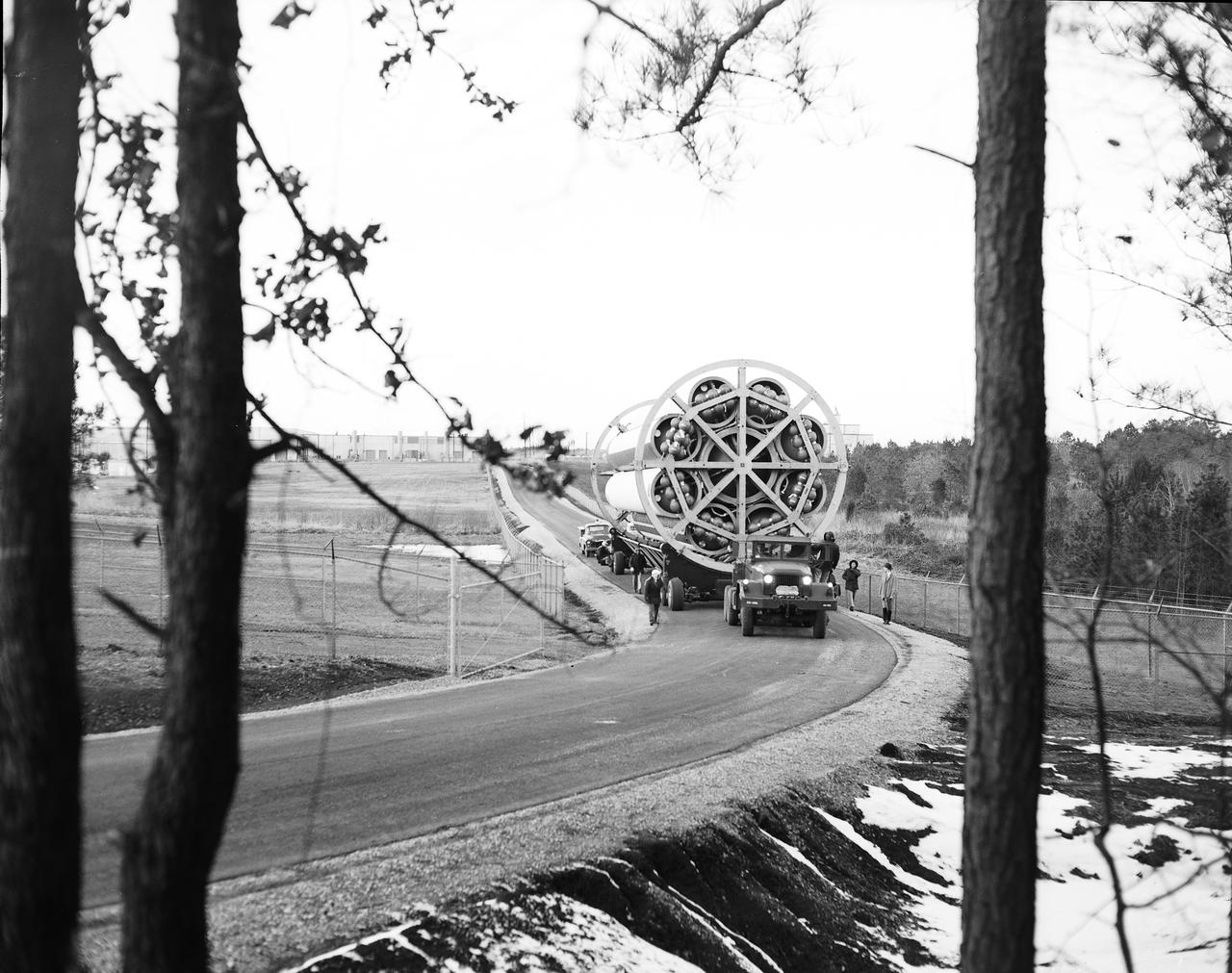
This photograph shows the Saturn-I first stage (S-1 stage) being transported to the test stand for a static test firing at the Marshall Space Flight Center. Soon after NASA began operations in October 1958, it was evident that sending people and substantial equipment beyond the Earth's gravitational field would require launch vehicles with weight-lifting capabilities far beyond any developed to that time. In early 1959, NASA accepted the proposal of Dr. Wernher von Braun for a multistage rocket, with a number of engines clustered in one or more of the stages to provide a large total thrust. The initiation of the Saturn launch vehicle program ultimately led to the study and preliminary plarning of many different configurations and resulted in production of three Saturn launch vehicles, the Saturn-I, Saturn I-B, and Saturn V. The Saturn family of launch vehicles began with the Saturn-I, a two-stage vehicle originally designated C-1. The research and development program was planned in two phases, or blocks: one for first stage development (Block I) and the second for both first and second stage development (Block-II). Saturn I had a low-earth-orbit payload capability of approximately 25,000 pounds. The design of the first stage (S-1 stage) used a cluster of propellant tanks containing liquid oxygen (LOX) and kerosene (RP-1), and eight H-1 engines, yielding a total thrust of 1,500,000 pounds. Of the ten Saturn-Is planned, the first eight were designed and built at the Marshall Space Flight Center, and the remaining two were built by the Chrysler Corporation.
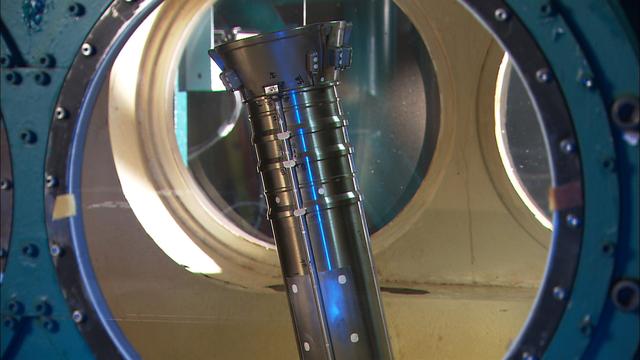
THIS IS A TEST OF THE 1ST STAGE RE-ENTRY VEHICLE. HEAT TESTING OF A 3% MODEL TO SUPPORT THE ARES/ CLV FIRST STAGE RE-ENTRY. THIS TEST OCCURRED AT ARNOLD AIR FORCE BASE, TENNESSEE. THIS TESTING SUPPORTS THE DEVELOPMENT OF THE CONSTELLATION/ARES PROJECT. THIS IMAGE IS EXTRACTED FROM A HIGH DEFINITION VIDEO FILE AND IS THE HIGHEST RESOLUTION AVAILABLE.
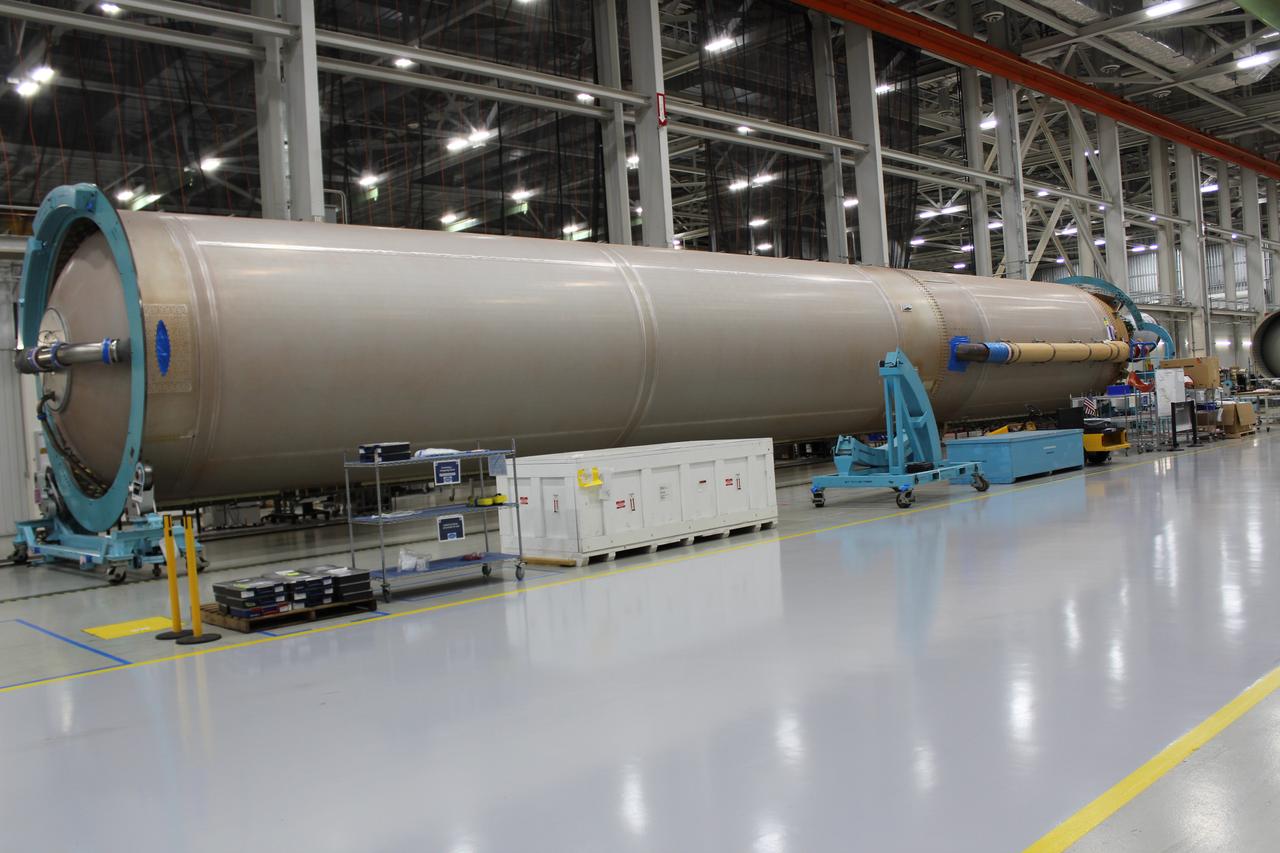
The United Launch Alliance (ULA) Atlas V first stage booster for the Crew Flight Test of Boeing’s CST-100 Starliner is in production in ULA's factory in Decatur, Alabama on March 1, 2019. Soon the booster will be assembled with the dual engine Centaur upper stage. They will be shipped aboard the company’s Mariner cargo ship to NASA’s Kennedy Space Center in Florida. Starliner and the Atlas V rockets that will launch the spacecraft, are key to restoring the nation’s capability to send astronauts to the space station from U.S. soil with NASA’s Commercial Crew Program. NASA astronauts Mike Fincke and Nicole Mann, and Boeing astronaut Chris Ferguson will launch to the space station aboard the Starliner for the Crew Flight Test.
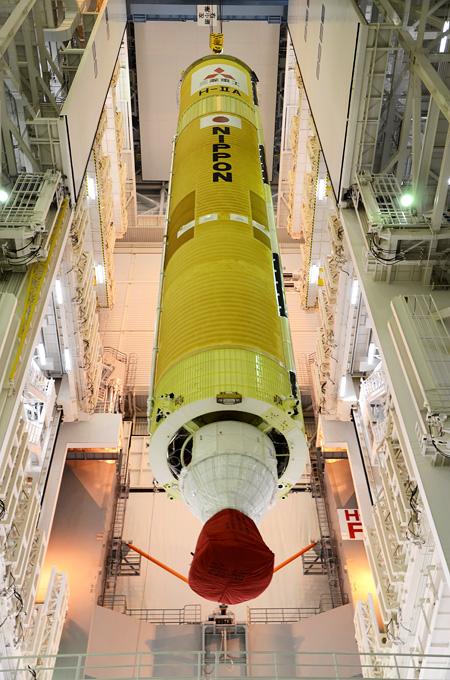
GPM's launch vehicle, the H-IIA No.23, first stage VOS (Vehicle On Stand). GPM is a joint mission between NASA and the Japan Aerospace Exploration Agency (JAXA). The Core Observatory will link data from a constellation of current and planned satellites to produce next-generation global measurements of rainfall and snowfall from space. The GPM mission is the first coordinated international satellite network to provide near real-time observations of rain and snow every three hours anywhere on the globe. The GPM Core Observatory anchors this network by providing observations on all types of precipitation. The observatory's data acts as the measuring stick by which partner observations can be combined into a unified data set. The data will be used by scientists to study climate change, freshwater resources, floods and droughts, and hurricane formation and tracking. Credit: Mitsubishi Heavy Industries <b><a href="http://www.nasa.gov/audience/formedia/features/MP_Photo_Guidelines.html" rel="nofollow">NASA image use policy.</a></b> <b><a href="http://www.nasa.gov/centers/goddard/home/index.html" rel="nofollow">NASA Goddard Space Flight Center</a></b> enables NASA’s mission through four scientific endeavors: Earth Science, Heliophysics, Solar System Exploration, and Astrophysics. Goddard plays a leading role in NASA’s accomplishments by contributing compelling scientific knowledge to advance the Agency’s mission. <b>Follow us on <a href="http://twitter.com/NASAGoddardPix" rel="nofollow">Twitter</a></b> <b>Like us on <a href="http://www.facebook.com/pages/Greenbelt-MD/NASA-Goddard/395013845897?ref=tsd" rel="nofollow">Facebook</a></b> <b>Find us on <a href="http://instagram.com/nasagoddard?vm=grid" rel="nofollow">Instagram</a></b>
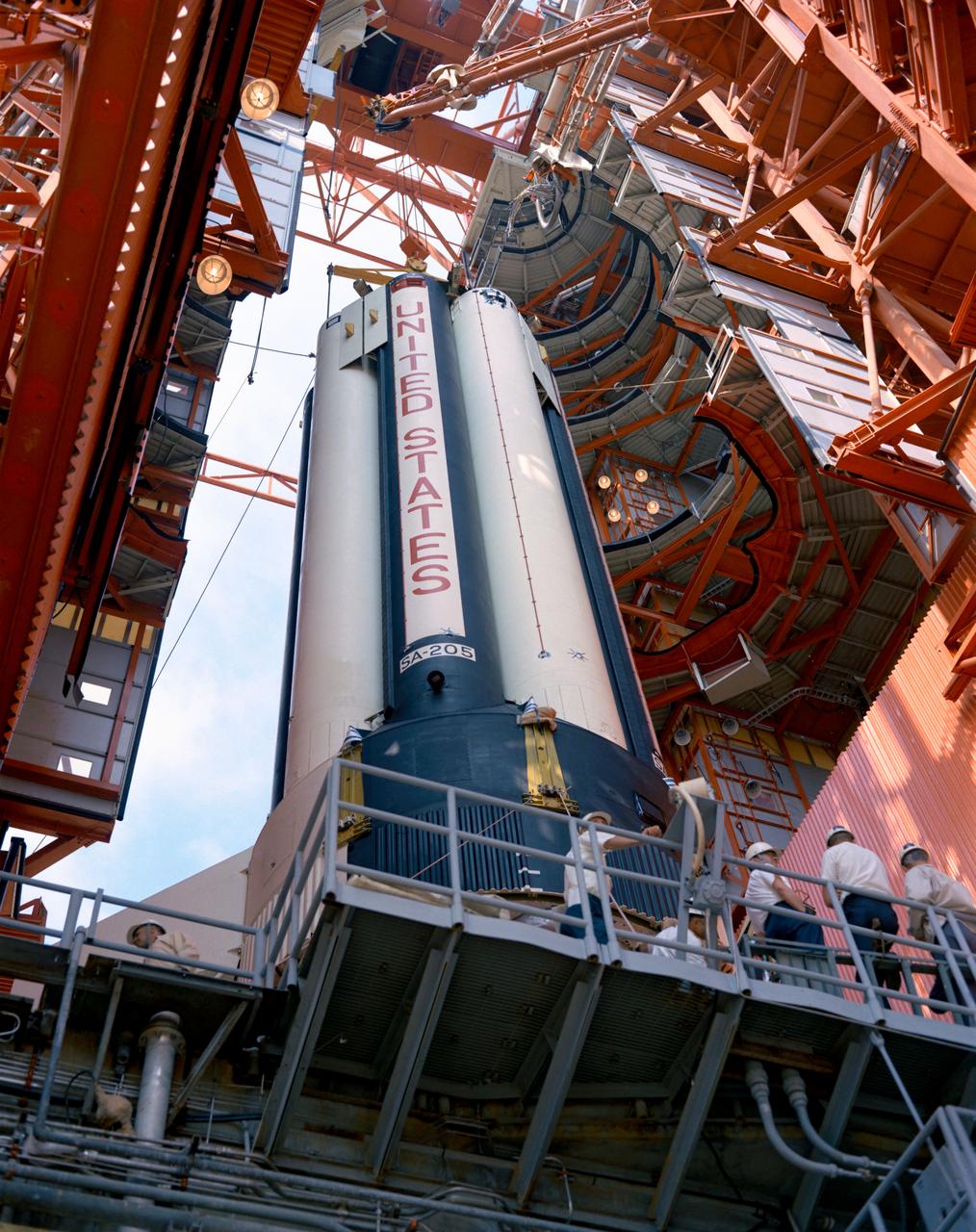
S68-29781 (22 April 1968) --- Low angle view at the Kennedy Space Center's Pad 34 showing the erection of the first stage of the Saturn 205 launch vehicle. The two-stage Saturn IB will be the launch vehicle for the first unmanned Apollo space mission, Apollo 7 (Spacecraft 101/Saturn 205).
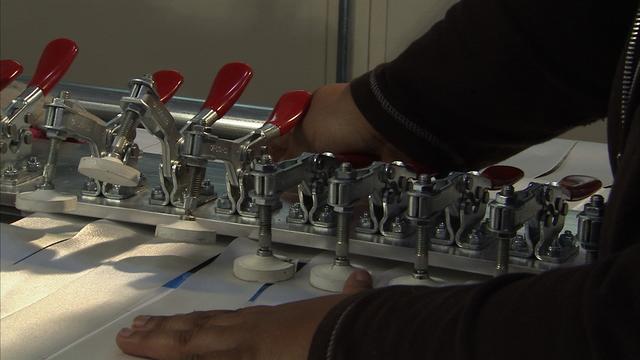
Shown is the fabrication of the First Stage Main Parachute in support of Ares/CLV at the Pioneer Zodiac Facility in Mississippi in support of the Constellation/Ares project. This image is extracted from a high definition video file and is the highest resolution available
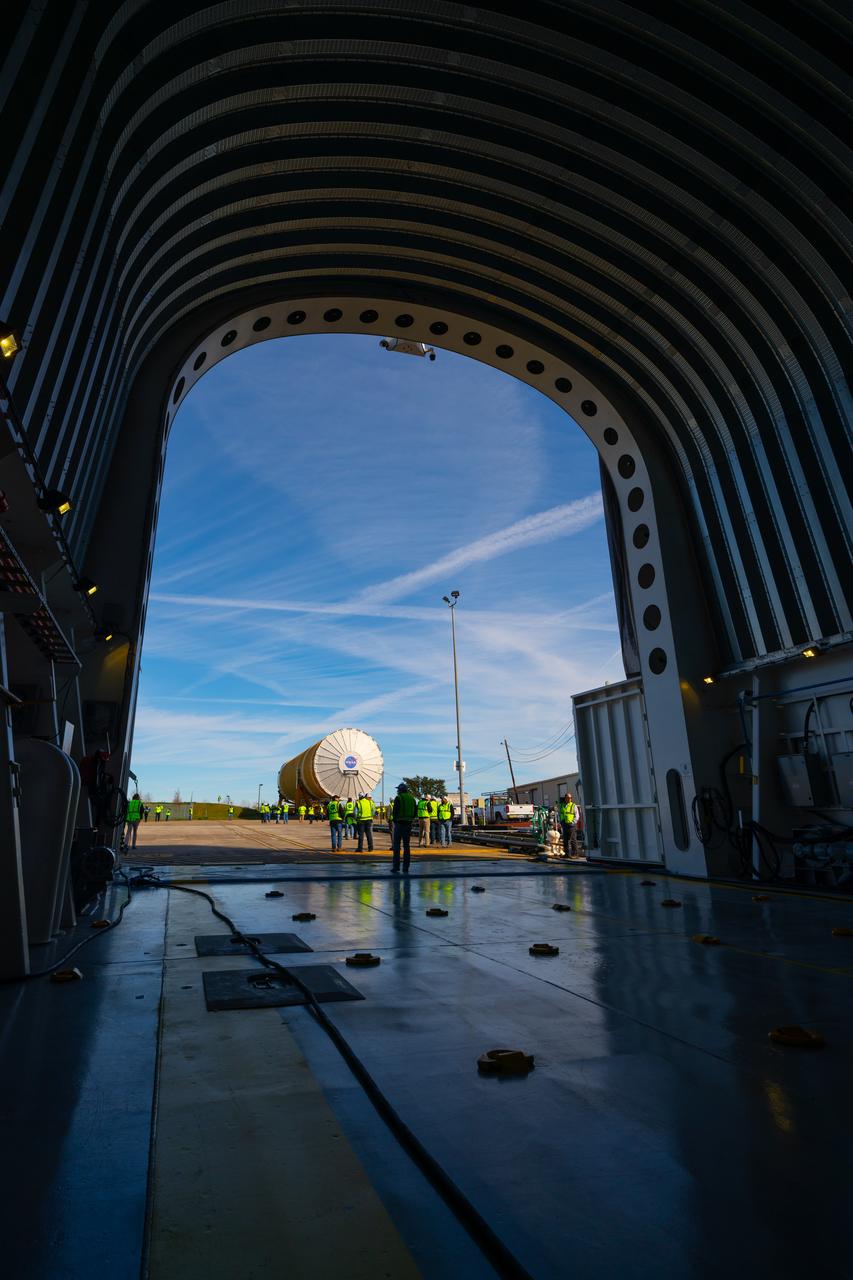
These images show how teams rolled out, or moved, the completed core stage for NASA’s Space Launch System rocket from NASA’s Michoud Assembly Facility in New Orleans. Crews moved the flight hardware for the first Artemis mission to NASA’s Pegasus barge on Jan. 8 in preparation for the core stage Green Run test series at NASA’s Stennis Space Center near Bay St. Louis, Mississippi. Pegasus, which was modified to ferry SLS rocket hardware, will transport the core stage from Michoud to Stennis for the comprehensive core stage Green Run test series. Once at Stennis, the Artemis rocket stage will be loaded into the B-2 Test Stand for the core stage Green Run test series. The comprehensive test campaign will progressively bring the entire core stage, including its avionics and engines, to life for the first time to verify the stage is fit for flight ahead of the launch of Artemis I. Assembly and integration of the core stage and its four RS-25 engines has been a collaborative, multistep process for NASA and its partners Boeing, the core stage lead contractor, and Aerojet Rocketdyne, the RS-25 engines lead contractor. Together with four RS-25 engines, the rocket’s massive 212-foot-tall core stage — the largest stage NASA has ever built — and its twin solid rocket boosters will produce 8.8 million pounds of thrust to send NASA’s Orion spacecraft, astronauts and supplies beyond Earth’s orbit to the Moon and, ultimately, Mars. Offering more payload mass, volume capability and energy to speed missions through space, the SLS rocket, along with NASA’s Gateway in lunar orbit and Orion, is part of NASA’s backbone for deep space exploration and the Artemis lunar program.
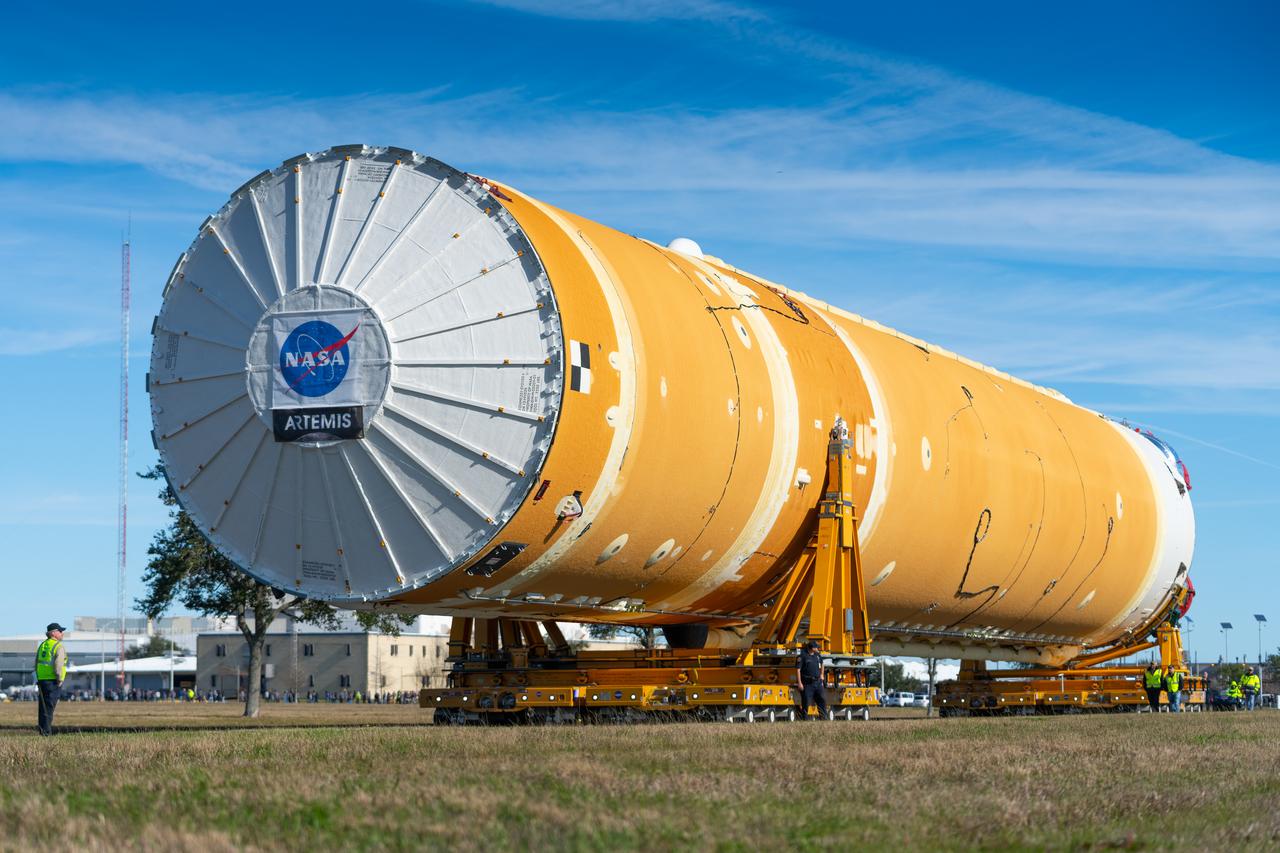
These images show how teams rolled out, or moved, the completed core stage for NASA’s Space Launch System rocket from NASA’s Michoud Assembly Facility in New Orleans. Crews moved the flight hardware for the first Artemis mission to NASA’s Pegasus barge on Jan. 8 in preparation for the core stage Green Run test series at NASA’s Stennis Space Center near Bay St. Louis, Mississippi. Pegasus, which was modified to ferry SLS rocket hardware, will transport the core stage from Michoud to Stennis for the comprehensive core stage Green Run test series. Once at Stennis, the Artemis rocket stage will be loaded into the B-2 Test Stand for the core stage Green Run test series. The comprehensive test campaign will progressively bring the entire core stage, including its avionics and engines, to life for the first time to verify the stage is fit for flight ahead of the launch of Artemis I. Assembly and integration of the core stage and its four RS-25 engines has been a collaborative, multistep process for NASA and its partners Boeing, the core stage lead contractor, and Aerojet Rocketdyne, the RS-25 engines lead contractor. Together with four RS-25 engines, the rocket’s massive 212-foot-tall core stage — the largest stage NASA has ever built — and its twin solid rocket boosters will produce 8.8 million pounds of thrust to send NASA’s Orion spacecraft, astronauts and supplies beyond Earth’s orbit to the Moon and, ultimately, Mars. Offering more payload mass, volume capability and energy to speed missions through space, the SLS rocket, along with NASA’s Gateway in lunar orbit and Orion, is part of NASA’s backbone for deep space exploration and the Artemis lunar program.
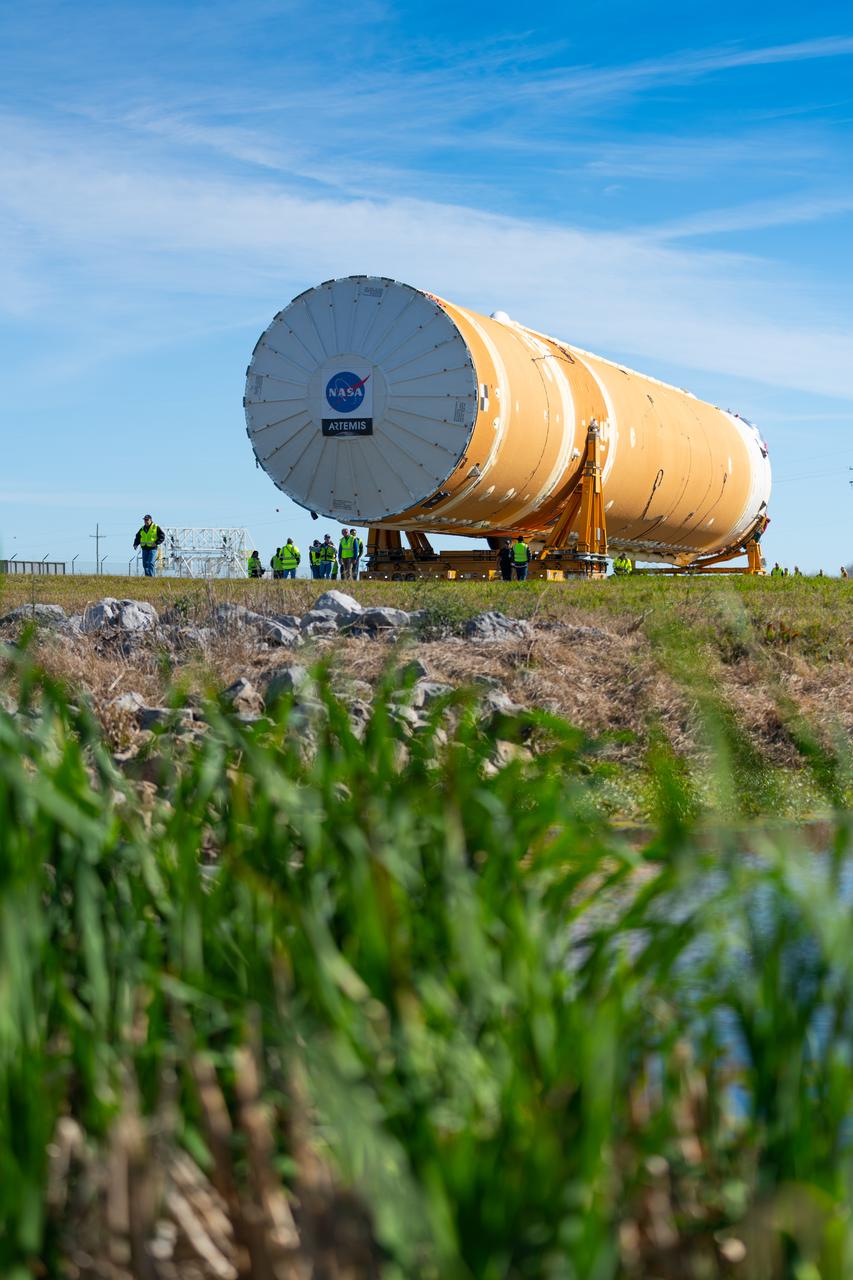
These images show how teams rolled out, or moved, the completed core stage for NASA’s Space Launch System rocket from NASA’s Michoud Assembly Facility in New Orleans. Crews moved the flight hardware for the first Artemis mission to NASA’s Pegasus barge on Jan. 8 in preparation for the core stage Green Run test series at NASA’s Stennis Space Center near Bay St. Louis, Mississippi. Pegasus, which was modified to ferry SLS rocket hardware, will transport the core stage from Michoud to Stennis for the comprehensive core stage Green Run test series. Once at Stennis, the Artemis rocket stage will be loaded into the B-2 Test Stand for the core stage Green Run test series. The comprehensive test campaign will progressively bring the entire core stage, including its avionics and engines, to life for the first time to verify the stage is fit for flight ahead of the launch of Artemis I. Assembly and integration of the core stage and its four RS-25 engines has been a collaborative, multistep process for NASA and its partners Boeing, the core stage lead contractor, and Aerojet Rocketdyne, the RS-25 engines lead contractor. Together with four RS-25 engines, the rocket’s massive 212-foot-tall core stage — the largest stage NASA has ever built — and its twin solid rocket boosters will produce 8.8 million pounds of thrust to send NASA’s Orion spacecraft, astronauts and supplies beyond Earth’s orbit to the Moon and, ultimately, Mars. Offering more payload mass, volume capability and energy to speed missions through space, the SLS rocket, along with NASA’s Gateway in lunar orbit and Orion, is part of NASA’s backbone for deep space exploration and the Artemis lunar program.
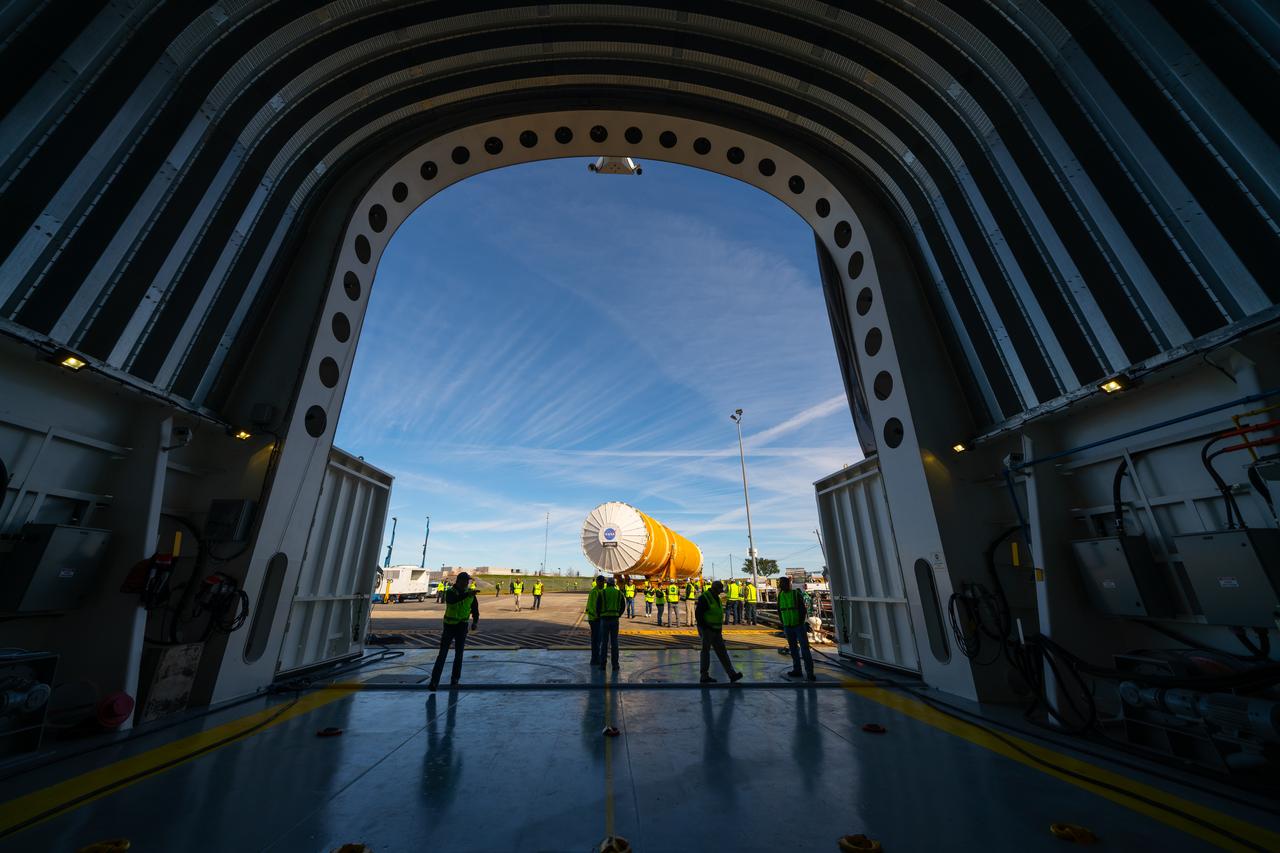
These images show how teams rolled out, or moved, the completed core stage for NASA’s Space Launch System rocket from NASA’s Michoud Assembly Facility in New Orleans. Crews moved the flight hardware for the first Artemis mission to NASA’s Pegasus barge on Jan. 8 in preparation for the core stage Green Run test series at NASA’s Stennis Space Center near Bay St. Louis, Mississippi. Pegasus, which was modified to ferry SLS rocket hardware, will transport the core stage from Michoud to Stennis for the comprehensive core stage Green Run test series. Once at Stennis, the Artemis rocket stage will be loaded into the B-2 Test Stand for the core stage Green Run test series. The comprehensive test campaign will progressively bring the entire core stage, including its avionics and engines, to life for the first time to verify the stage is fit for flight ahead of the launch of Artemis I. Assembly and integration of the core stage and its four RS-25 engines has been a collaborative, multistep process for NASA and its partners Boeing, the core stage lead contractor, and Aerojet Rocketdyne, the RS-25 engines lead contractor. Together with four RS-25 engines, the rocket’s massive 212-foot-tall core stage — the largest stage NASA has ever built — and its twin solid rocket boosters will produce 8.8 million pounds of thrust to send NASA’s Orion spacecraft, astronauts and supplies beyond Earth’s orbit to the Moon and, ultimately, Mars. Offering more payload mass, volume capability and energy to speed missions through space, the SLS rocket, along with NASA’s Gateway in lunar orbit and Orion, is part of NASA’s backbone for deep space exploration and the Artemis lunar program.
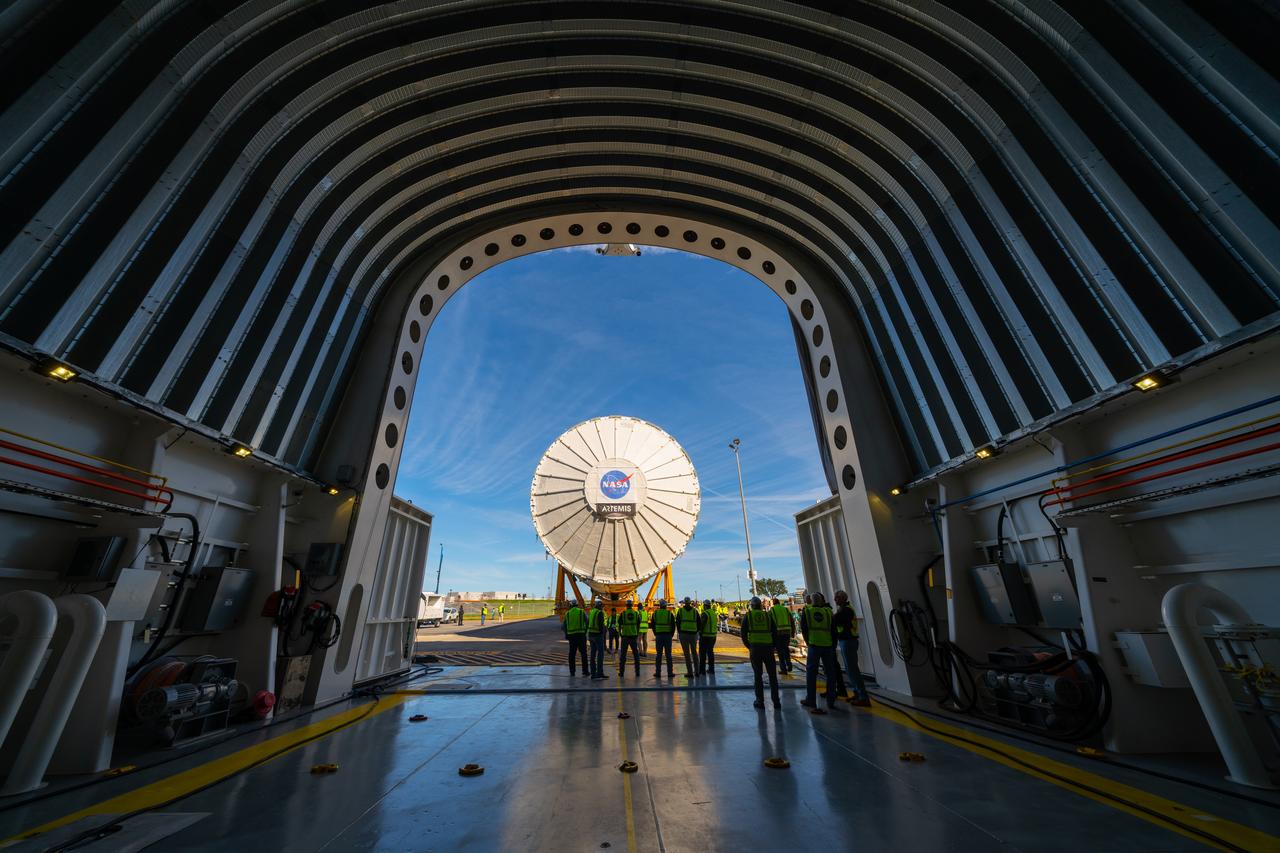
These images show how teams rolled out, or moved, the completed core stage for NASA’s Space Launch System rocket from NASA’s Michoud Assembly Facility in New Orleans. Crews moved the flight hardware for the first Artemis mission to NASA’s Pegasus barge on Jan. 8 in preparation for the core stage Green Run test series at NASA’s Stennis Space Center near Bay St. Louis, Mississippi. Pegasus, which was modified to ferry SLS rocket hardware, will transport the core stage from Michoud to Stennis for the comprehensive core stage Green Run test series. Once at Stennis, the Artemis rocket stage will be loaded into the B-2 Test Stand for the core stage Green Run test series. The comprehensive test campaign will progressively bring the entire core stage, including its avionics and engines, to life for the first time to verify the stage is fit for flight ahead of the launch of Artemis I. Assembly and integration of the core stage and its four RS-25 engines has been a collaborative, multistep process for NASA and its partners Boeing, the core stage lead contractor, and Aerojet Rocketdyne, the RS-25 engines lead contractor. Together with four RS-25 engines, the rocket’s massive 212-foot-tall core stage — the largest stage NASA has ever built — and its twin solid rocket boosters will produce 8.8 million pounds of thrust to send NASA’s Orion spacecraft, astronauts and supplies beyond Earth’s orbit to the Moon and, ultimately, Mars. Offering more payload mass, volume capability and energy to speed missions through space, the SLS rocket, along with NASA’s Gateway in lunar orbit and Orion, is part of NASA’s backbone for deep space exploration and the Artemis lunar program.
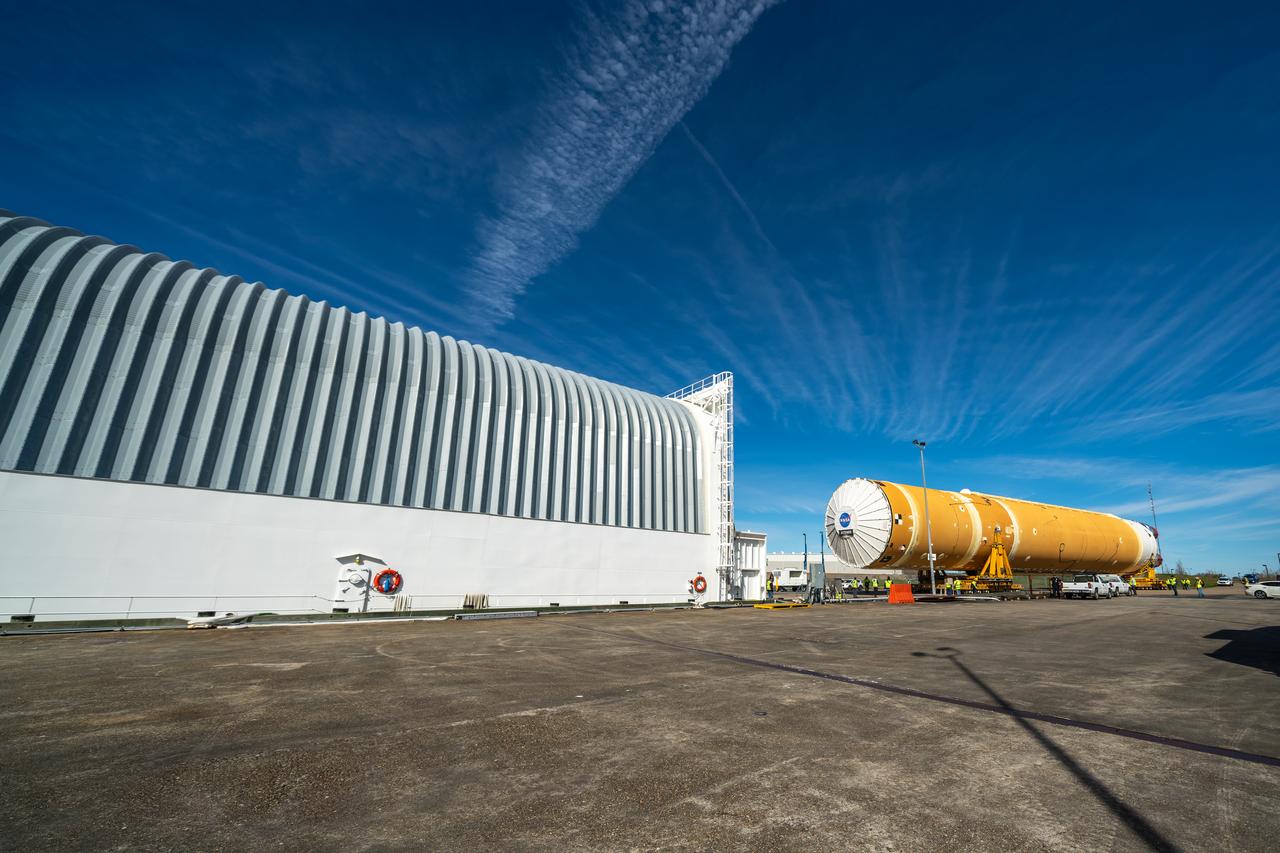
These images show how teams rolled out, or moved, the completed core stage for NASA’s Space Launch System rocket from NASA’s Michoud Assembly Facility in New Orleans. Crews moved the flight hardware for the first Artemis mission to NASA’s Pegasus barge on Jan. 8 in preparation for the core stage Green Run test series at NASA’s Stennis Space Center near Bay St. Louis, Mississippi. Pegasus, which was modified to ferry SLS rocket hardware, will transport the core stage from Michoud to Stennis for the comprehensive core stage Green Run test series. Once at Stennis, the Artemis rocket stage will be loaded into the B-2 Test Stand for the core stage Green Run test series. The comprehensive test campaign will progressively bring the entire core stage, including its avionics and engines, to life for the first time to verify the stage is fit for flight ahead of the launch of Artemis I. Assembly and integration of the core stage and its four RS-25 engines has been a collaborative, multistep process for NASA and its partners Boeing, the core stage lead contractor, and Aerojet Rocketdyne, the RS-25 engines lead contractor. Together with four RS-25 engines, the rocket’s massive 212-foot-tall core stage — the largest stage NASA has ever built — and its twin solid rocket boosters will produce 8.8 million pounds of thrust to send NASA’s Orion spacecraft, astronauts and supplies beyond Earth’s orbit to the Moon and, ultimately, Mars. Offering more payload mass, volume capability and energy to speed missions through space, the SLS rocket, along with NASA’s Gateway in lunar orbit and Orion, is part of NASA’s backbone for deep space exploration and the Artemis lunar program.
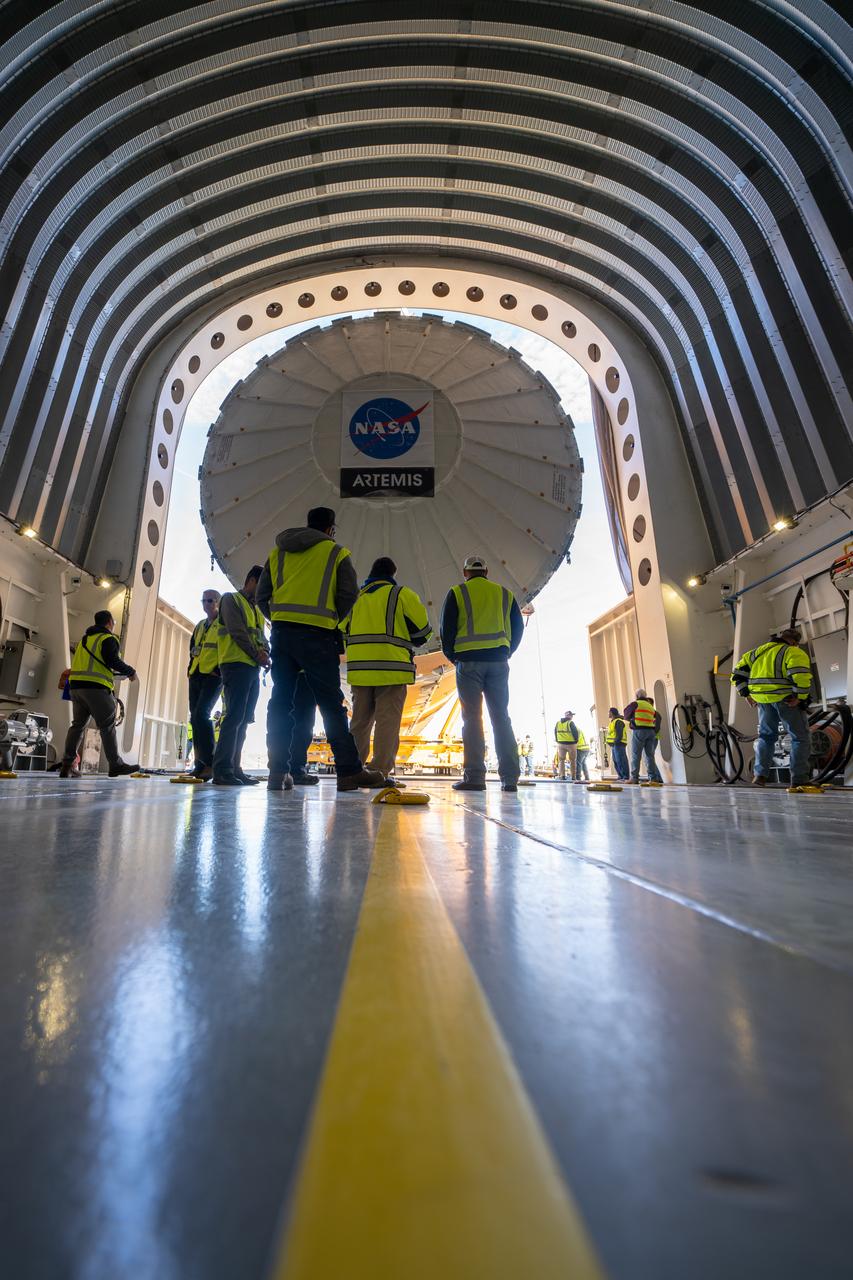
These images show how teams rolled out, or moved, the completed core stage for NASA’s Space Launch System rocket from NASA’s Michoud Assembly Facility in New Orleans. Crews moved the flight hardware for the first Artemis mission to NASA’s Pegasus barge on Jan. 8 in preparation for the core stage Green Run test series at NASA’s Stennis Space Center near Bay St. Louis, Mississippi. Pegasus, which was modified to ferry SLS rocket hardware, will transport the core stage from Michoud to Stennis for the comprehensive core stage Green Run test series. Once at Stennis, the Artemis rocket stage will be loaded into the B-2 Test Stand for the core stage Green Run test series. The comprehensive test campaign will progressively bring the entire core stage, including its avionics and engines, to life for the first time to verify the stage is fit for flight ahead of the launch of Artemis I. Assembly and integration of the core stage and its four RS-25 engines has been a collaborative, multistep process for NASA and its partners Boeing, the core stage lead contractor, and Aerojet Rocketdyne, the RS-25 engines lead contractor. Together with four RS-25 engines, the rocket’s massive 212-foot-tall core stage — the largest stage NASA has ever built — and its twin solid rocket boosters will produce 8.8 million pounds of thrust to send NASA’s Orion spacecraft, astronauts and supplies beyond Earth’s orbit to the Moon and, ultimately, Mars. Offering more payload mass, volume capability and energy to speed missions through space, the SLS rocket, along with NASA’s Gateway in lunar orbit and Orion, is part of NASA’s backbone for deep space exploration and the Artemis lunar program.
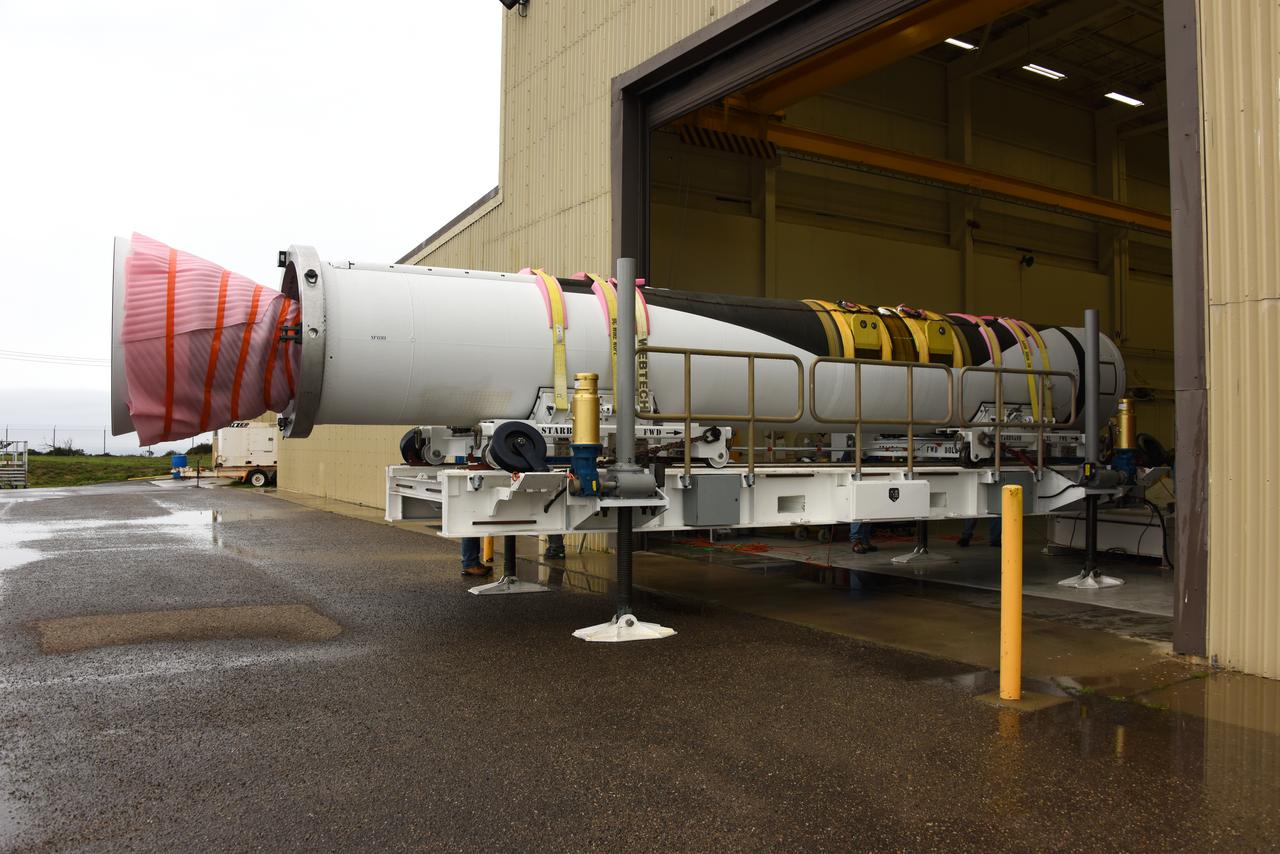
The first stage motor for the Orbital ATK Pegasus XL rocket is moved inside Building 1555 at Vandenberg Air Force Base in California. In the background are the second and third stage segments. The rocket is being prepared for NASA's Ionospheric Connection Explorer, or ICON, mission. ICON will launch from the Kwajalein Atoll aboard the Pegasus XL on Dec. 8, 2017. ICON will study the frontier of space - the dynamic zone high in Earth's atmosphere where terrestrial weather from below meets space weather above. The explorer will help determine the physics of Earth's space environment and pave the way for mitigating its effects on our technology, communications systems and society.
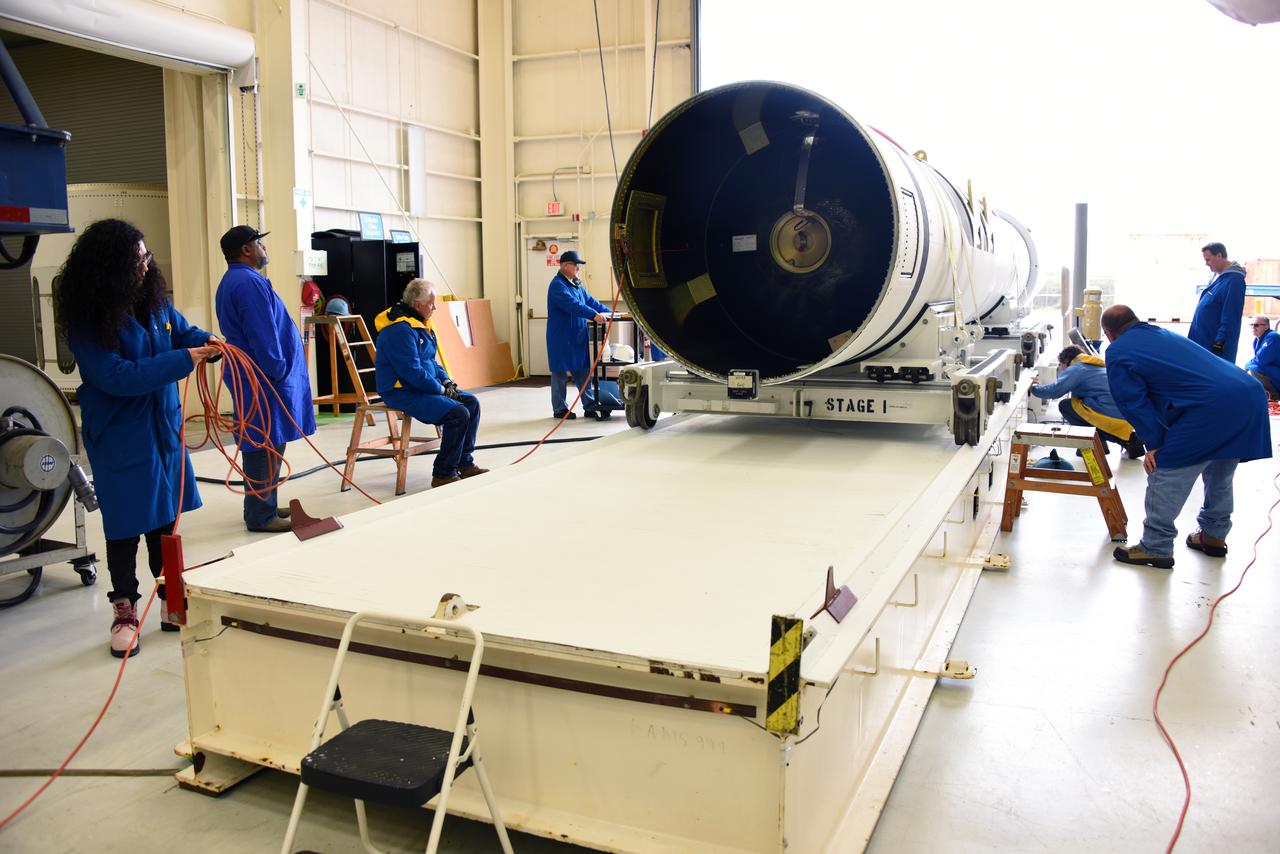
The first stage motor for the Orbital ATK Pegasus XL rocket is moved inside Building 1555 at Vandenberg Air Force Base in California. In the background are the second and third stage segments. The rocket is being prepared for NASA's Ionospheric Connection Explorer, or ICON, mission. ICON will launch from the Kwajalein Atoll aboard the Pegasus XL on Dec. 8, 2017. ICON will study the frontier of space - the dynamic zone high in Earth's atmosphere where terrestrial weather from below meets space weather above. The explorer will help determine the physics of Earth's space environment and pave the way for mitigating its effects on our technology, communications systems and society.
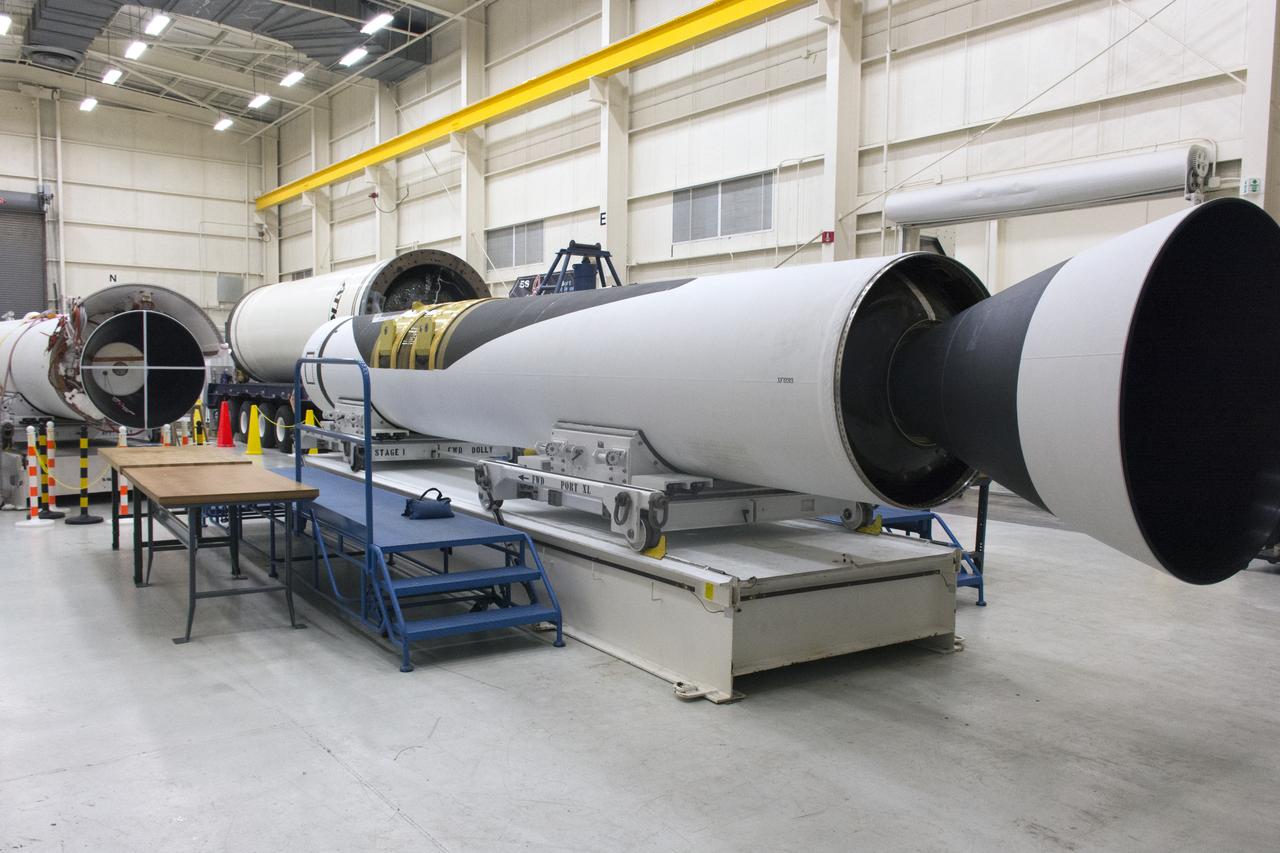
The first stage motor for the Orbital ATK Pegasus XL rocket was moved inside Building 1555 at Vandenberg Air Force Base in California. In the background are the second and third stage segments. The rocket is being prepared for NASA's Ionospheric Connection Explorer, or ICON, mission. ICON will launch from the Kwajalein Atoll aboard the Pegasus XL on Dec. 8, 2017. ICON will study the frontier of space - the dynamic zone high in Earth's atmosphere where terrestrial weather from below meets space weather above. The explorer will help determine the physics of Earth's space environment and pave the way for mitigating its effects on our technology, communications systems and society.
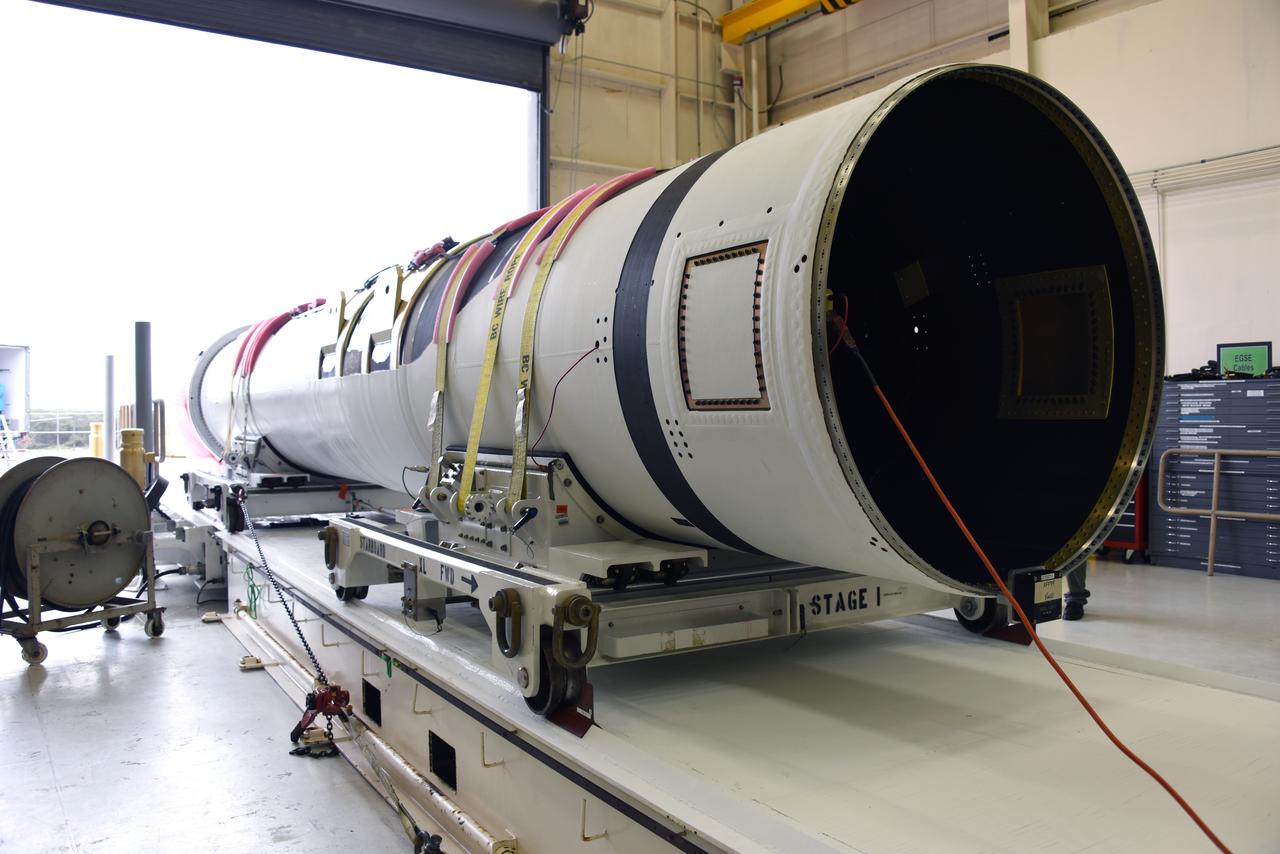
The first stage motor for the Orbital ATK Pegasus XL rocket was moved inside Building 1555 at Vandenberg Air Force Base in California. In the background are the second and third stage segments. The rocket is being prepared for NASA's Ionospheric Connection Explorer, or ICON, mission. ICON will launch from the Kwajalein Atoll aboard the Pegasus XL on Dec. 8, 2017. ICON will study the frontier of space - the dynamic zone high in Earth's atmosphere where terrestrial weather from below meets space weather above. The explorer will help determine the physics of Earth's space environment and pave the way for mitigating its effects on our technology, communications systems and society.
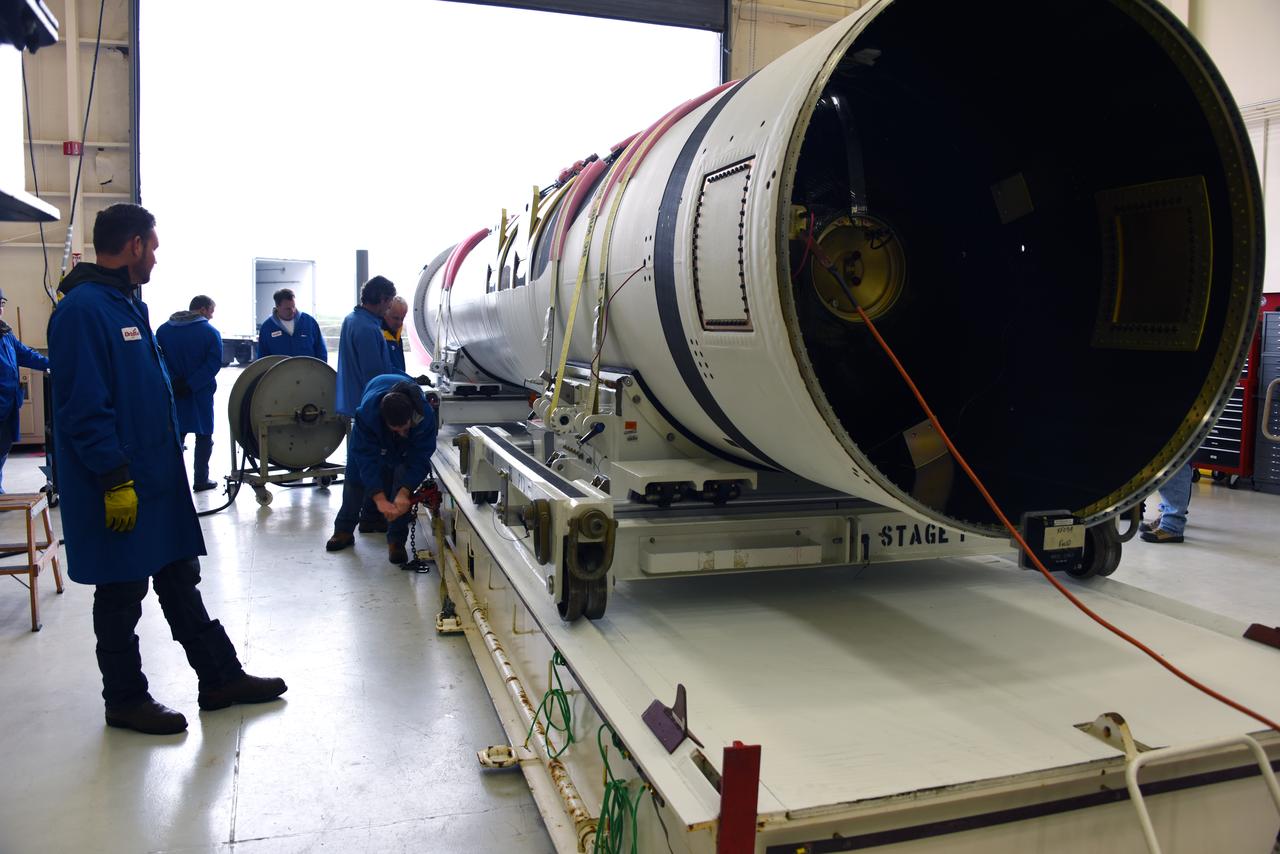
The first stage motor for the Orbital ATK Pegasus XL rocket was moved inside Building 1555 at Vandenberg Air Force Base in California. In the background are the second and third stage segments. The rocket is being prepared for NASA's Ionospheric Connection Explorer, or ICON, mission. ICON will launch from the Kwajalein Atoll aboard the Pegasus XL on Dec. 8, 2017. ICON will study the frontier of space - the dynamic zone high in Earth's atmosphere where terrestrial weather from below meets space weather above. The explorer will help determine the physics of Earth's space environment and pave the way for mitigating its effects on our technology, communications systems and society.
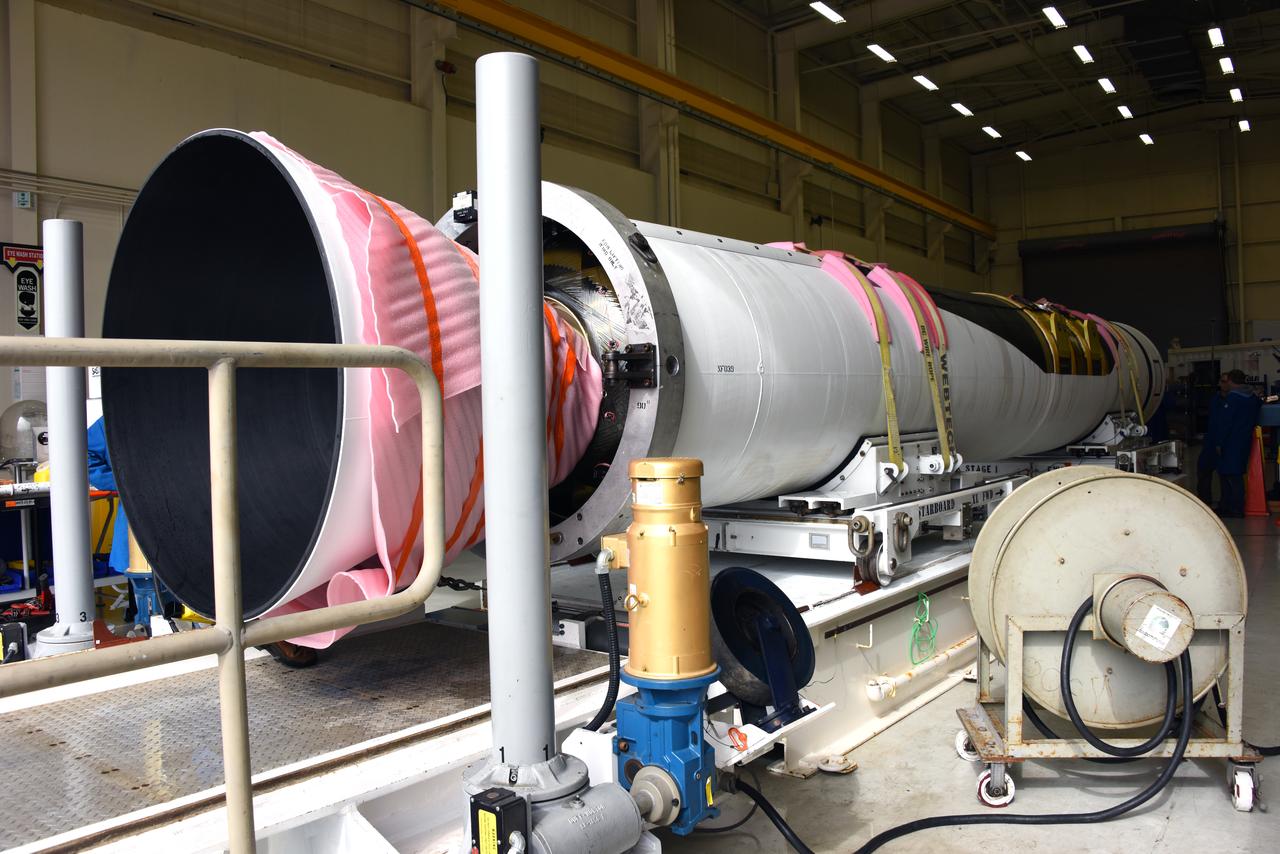
The first stage motor for the Orbital ATK Pegasus XL rocket was moved inside Building 1555 at Vandenberg Air Force Base in California. In the background are the second and third stage segments. The rocket is being prepared for NASA's Ionospheric Connection Explorer, or ICON, mission. ICON will launch from the Kwajalein Atoll aboard the Pegasus XL on Dec. 8, 2017. ICON will study the frontier of space - the dynamic zone high in Earth's atmosphere where terrestrial weather from below meets space weather above. The explorer will help determine the physics of Earth's space environment and pave the way for mitigating its effects on our technology, communications systems and society.
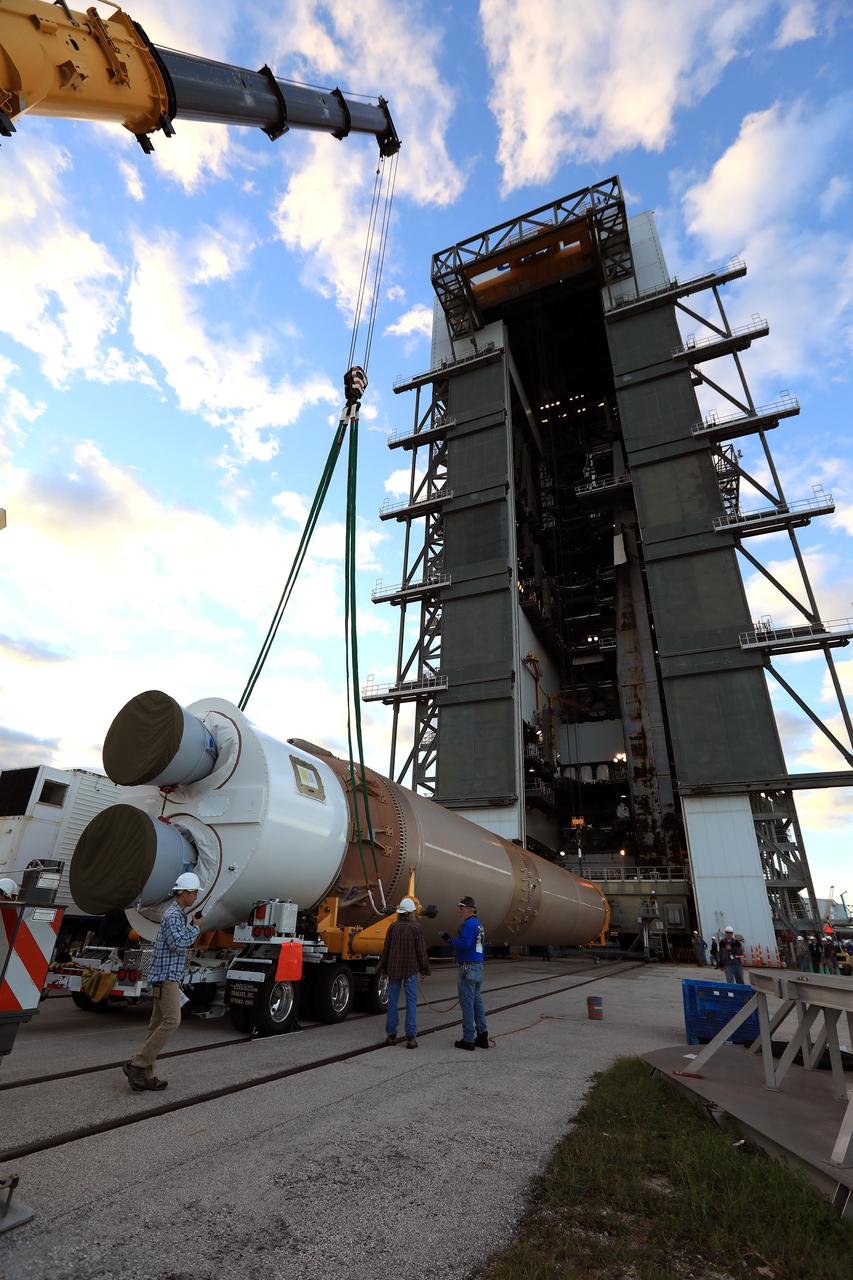
The United Launch Alliance Atlas V first stage has arrived at the Vertical Integration Facility at Space Launch Complex 41 at Cape Canaveral Air Force Station in Florida. A crane has been attached to the first stage to begin the lift to the vertical position. The Geostationary Operational Environmental Satellite (GOES-R) will launch aboard the Atlas V rocket in November. GOES-R will be the first satellite in a series of next-generation NOAA GOES Satellites.
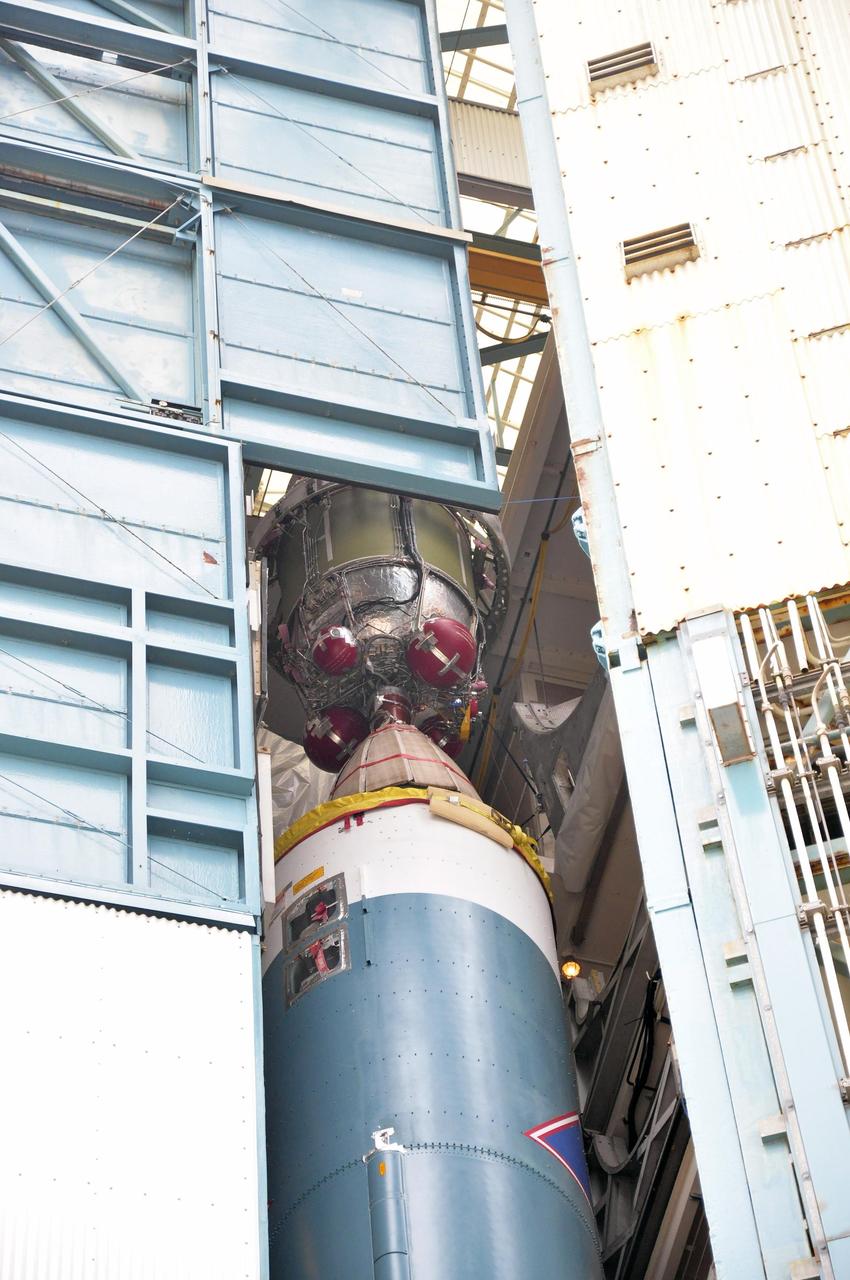
The Delta II second stage for NASA Orbiting Carbon Observatory-2 mission, or OCO-2, makes contact with the rocket first stage in the mobile service tower at Space Launch Complex 2 on Vandenberg Air Force Base in California.
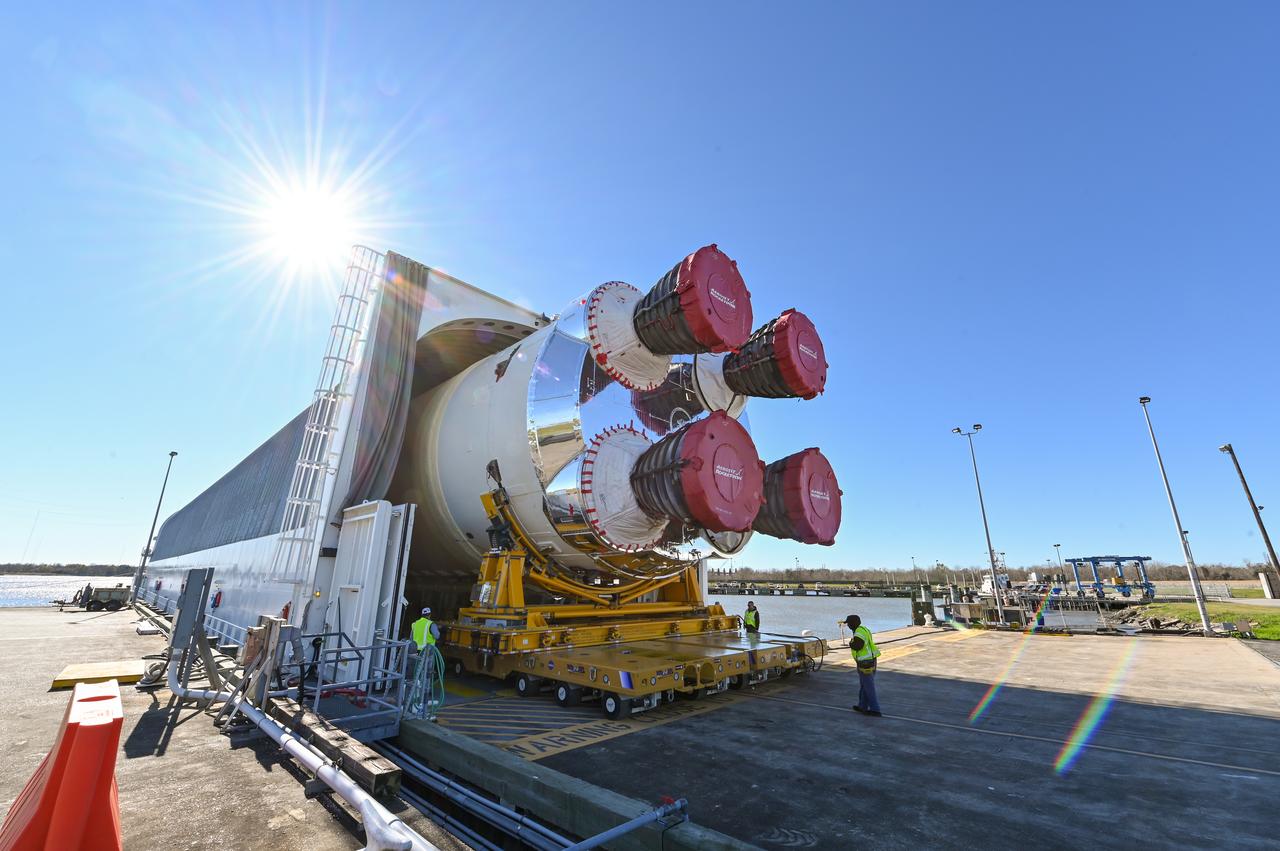
These images show how teams rolled out, or moved, the completed core stage for NASA’s Space Launch System rocket from NASA’s Michoud Assembly Facility in New Orleans. Crews moved the flight hardware for the first Artemis mission to NASA’s Pegasus barge on Jan. 8 in preparation for the core stage Green Run test series at NASA’s Stennis Space Center near Bay St. Louis, Mississippi. Pegasus, which was modified to ferry SLS rocket hardware, will transport the core stage from Michoud to Stennis for the comprehensive core stage Green Run test series. Once at Stennis, the Artemis rocket stage will be loaded into the B-2 Test Stand for the core stage Green Run test series. The comprehensive test campaign will progressively bring the entire core stage, including its avionics and engines, to life for the first time to verify the stage is fit for flight ahead of the launch of Artemis I. Assembly and integration of the core stage and its four RS-25 engines has been a collaborative, multistep process for NASA and its partners Boeing, the core stage lead contractor, and Aerojet Rocketdyne, the RS-25 engines lead contractor. Together with four RS-25 engines, the rocket’s massive 212-foot-tall core stage — the largest stage NASA has ever built — and its twin solid rocket boosters will produce 8.8 million pounds of thrust to send NASA’s Orion spacecraft, astronauts and supplies beyond Earth’s orbit to the Moon and, ultimately, Mars. Offering more payload mass, volume capability and energy to speed missions through space, the SLS rocket, along with NASA’s Gateway in lunar orbit and Orion, is part of NASA’s backbone for deep space exploration and the Artemis lunar program.
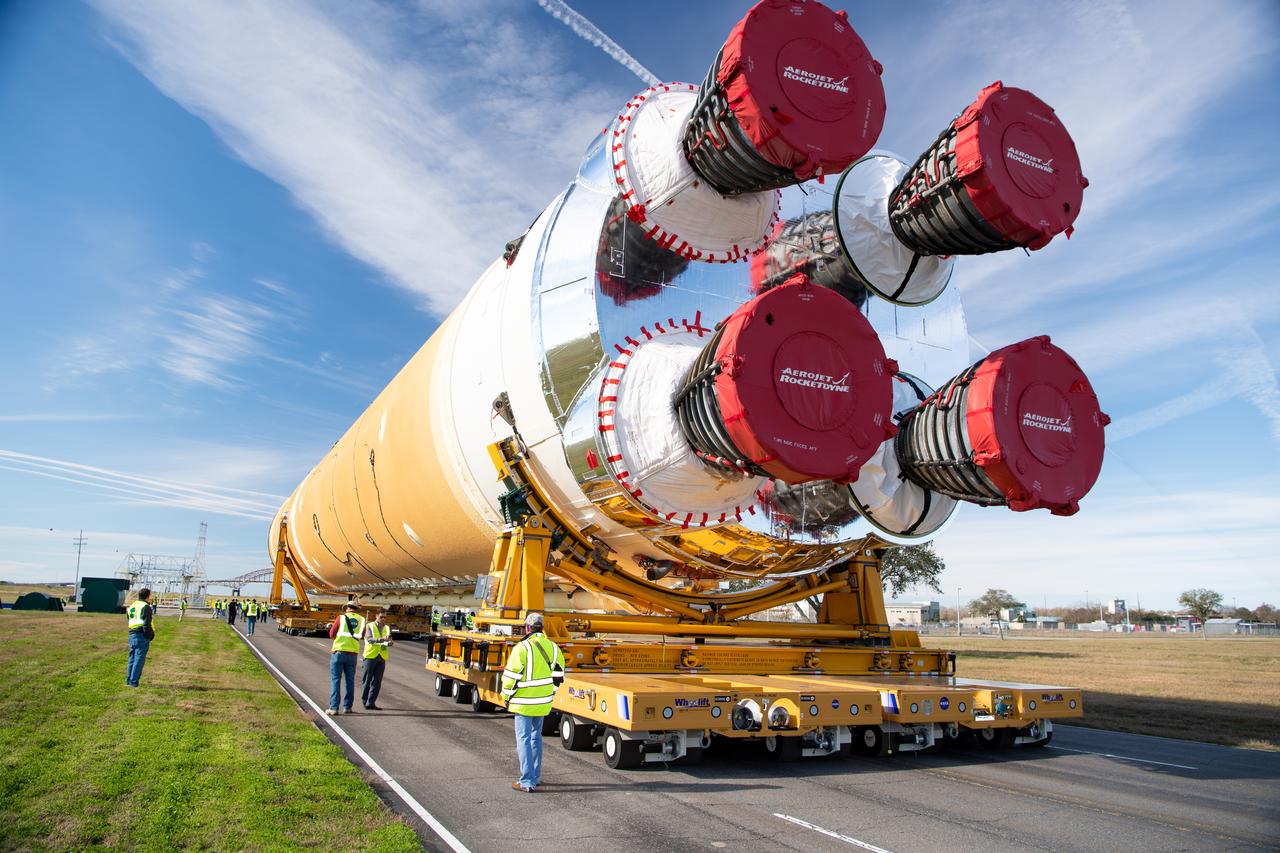
These images show how teams rolled out, or moved, the completed core stage for NASA’s Space Launch System rocket from NASA’s Michoud Assembly Facility in New Orleans. Crews moved the flight hardware for the first Artemis mission to NASA’s Pegasus barge on Jan. 8 in preparation for the core stage Green Run test series at NASA’s Stennis Space Center near Bay St. Louis, Mississippi. Pegasus, which was modified to ferry SLS rocket hardware, will transport the core stage from Michoud to Stennis for the comprehensive core stage Green Run test series. Once at Stennis, the Artemis rocket stage will be loaded into the B-2 Test Stand for the core stage Green Run test series. The comprehensive test campaign will progressively bring the entire core stage, including its avionics and engines, to life for the first time to verify the stage is fit for flight ahead of the launch of Artemis I. Assembly and integration of the core stage and its four RS-25 engines has been a collaborative, multistep process for NASA and its partners Boeing, the core stage lead contractor, and Aerojet Rocketdyne, the RS-25 engines lead contractor. Together with four RS-25 engines, the rocket’s massive 212-foot-tall core stage — the largest stage NASA has ever built — and its twin solid rocket boosters will produce 8.8 million pounds of thrust to send NASA’s Orion spacecraft, astronauts and supplies beyond Earth’s orbit to the Moon and, ultimately, Mars. Offering more payload mass, volume capability and energy to speed missions through space, the SLS rocket, along with NASA’s Gateway in lunar orbit and Orion, is part of NASA’s backbone for deep space exploration and the Artemis lunar program.
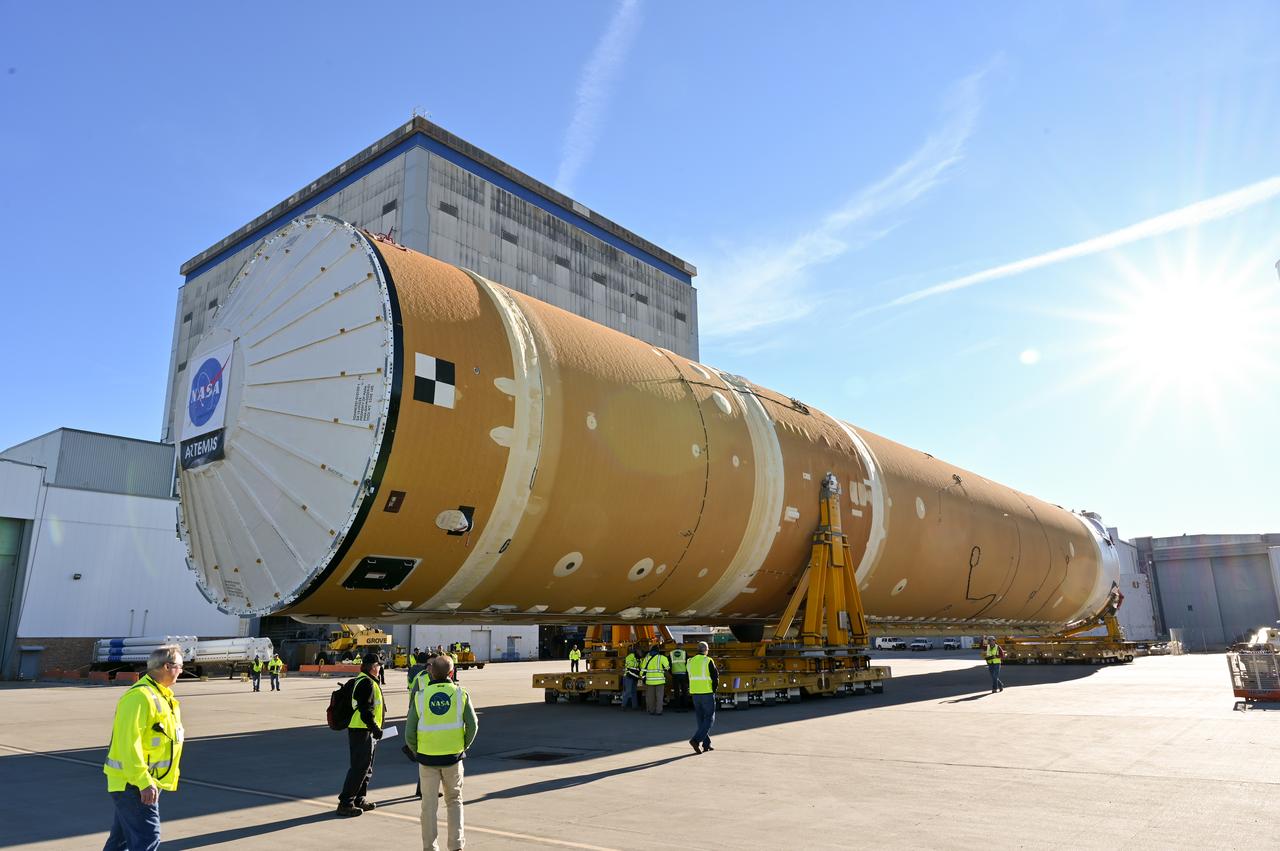
These images/video show how teams rolled out, or moved, the completed core stage for NASA’s Space Launch System rocket from NASA’s Michoud Assembly Facility in New Orleans. Crews moved the flight hardware for the first Artemis mission to NASA’s Pegasus barge on Jan. 8 in preparation for the core stage Green Run test series at NASA’s Stennis Space Center near Bay St. Louis, Mississippi. Pegasus, which was modified to ferry SLS rocket hardware, will transport the core stage from Michoud to Stennis for the comprehensive core stage Green Run test series. Once at Stennis, the Artemis rocket stage will be loaded into the B-2 Test Stand for the core stage Green Run test series. The comprehensive test campaign will progressively bring the entire core stage, including its avionics and engines, to life for the first time to verify the stage is fit for flight ahead of the launch of Artemis I. Assembly and integration of the core stage and its four RS-25 engines has been a collaborative, multistep process for NASA and its partners Boeing, the core stage lead contractor, and Aerojet Rocketdyne, the RS-25 engines lead contractor. Together with four RS-25 engines, the rocket’s massive 212-foot-tall core stage — the largest stage NASA has ever built — and its twin solid rocket boosters will produce 8.8 million pounds of thrust to send NASA’s Orion spacecraft, astronauts and supplies beyond Earth’s orbit to the Moon and, ultimately, Mars. Offering more payload mass, volume capability and energy to speed missions through space, the SLS rocket, along with NASA’s Gateway in lunar orbit and Orion, is part of NASA’s backbone for deep space exploration and the Artemis lunar program.
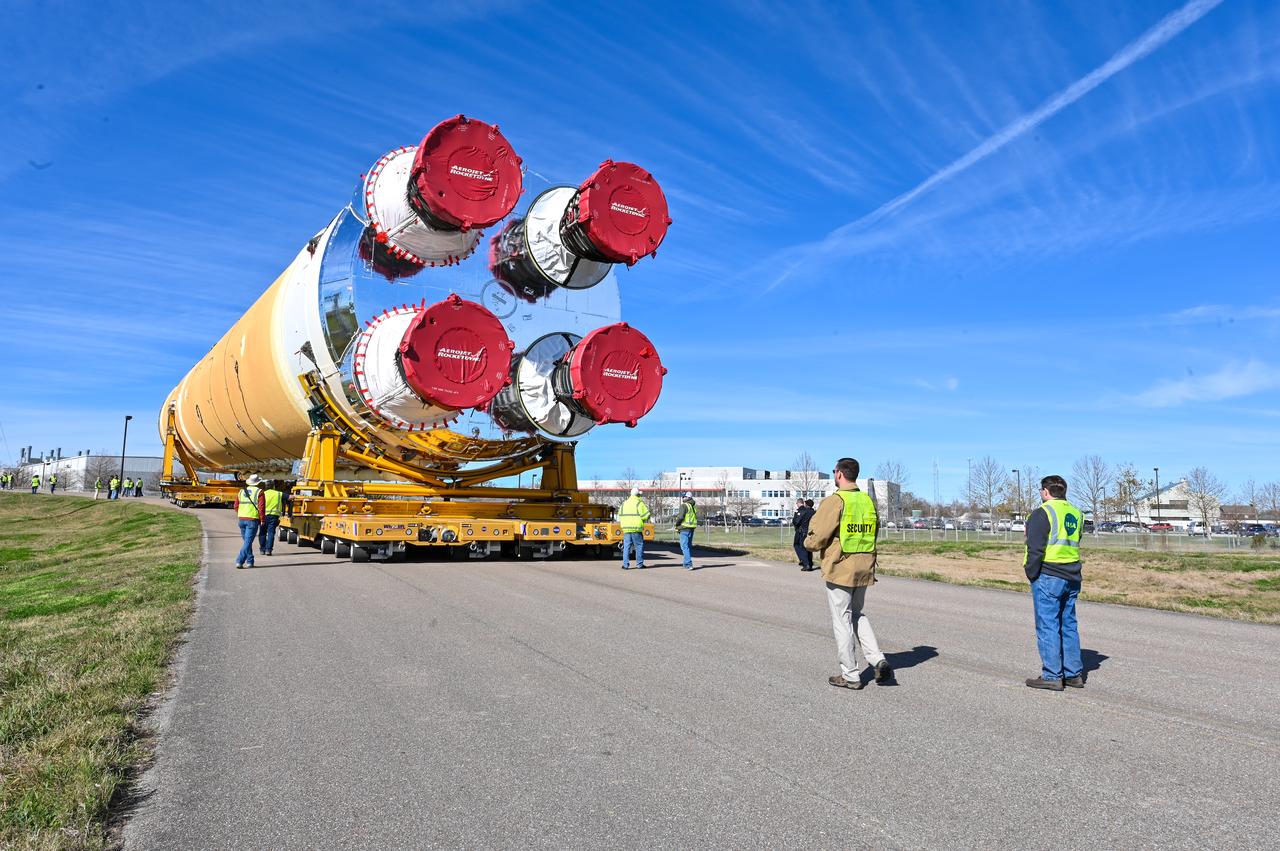
These images/video show how teams rolled out, or moved, the completed core stage for NASA’s Space Launch System rocket from NASA’s Michoud Assembly Facility in New Orleans. Crews moved the flight hardware for the first Artemis mission to NASA’s Pegasus barge on Jan. 8 in preparation for the core stage Green Run test series at NASA’s Stennis Space Center near Bay St. Louis, Mississippi. Pegasus, which was modified to ferry SLS rocket hardware, will transport the core stage from Michoud to Stennis for the comprehensive core stage Green Run test series. Once at Stennis, the Artemis rocket stage will be loaded into the B-2 Test Stand for the core stage Green Run test series. The comprehensive test campaign will progressively bring the entire core stage, including its avionics and engines, to life for the first time to verify the stage is fit for flight ahead of the launch of Artemis I. Assembly and integration of the core stage and its four RS-25 engines has been a collaborative, multistep process for NASA and its partners Boeing, the core stage lead contractor, and Aerojet Rocketdyne, the RS-25 engines lead contractor. Together with four RS-25 engines, the rocket’s massive 212-foot-tall core stage — the largest stage NASA has ever built — and its twin solid rocket boosters will produce 8.8 million pounds of thrust to send NASA’s Orion spacecraft, astronauts and supplies beyond Earth’s orbit to the Moon and, ultimately, Mars. Offering more payload mass, volume capability and energy to speed missions through space, the SLS rocket, along with NASA’s Gateway in lunar orbit and Orion, is part of NASA’s backbone for deep space exploration and the Artemis lunar program.
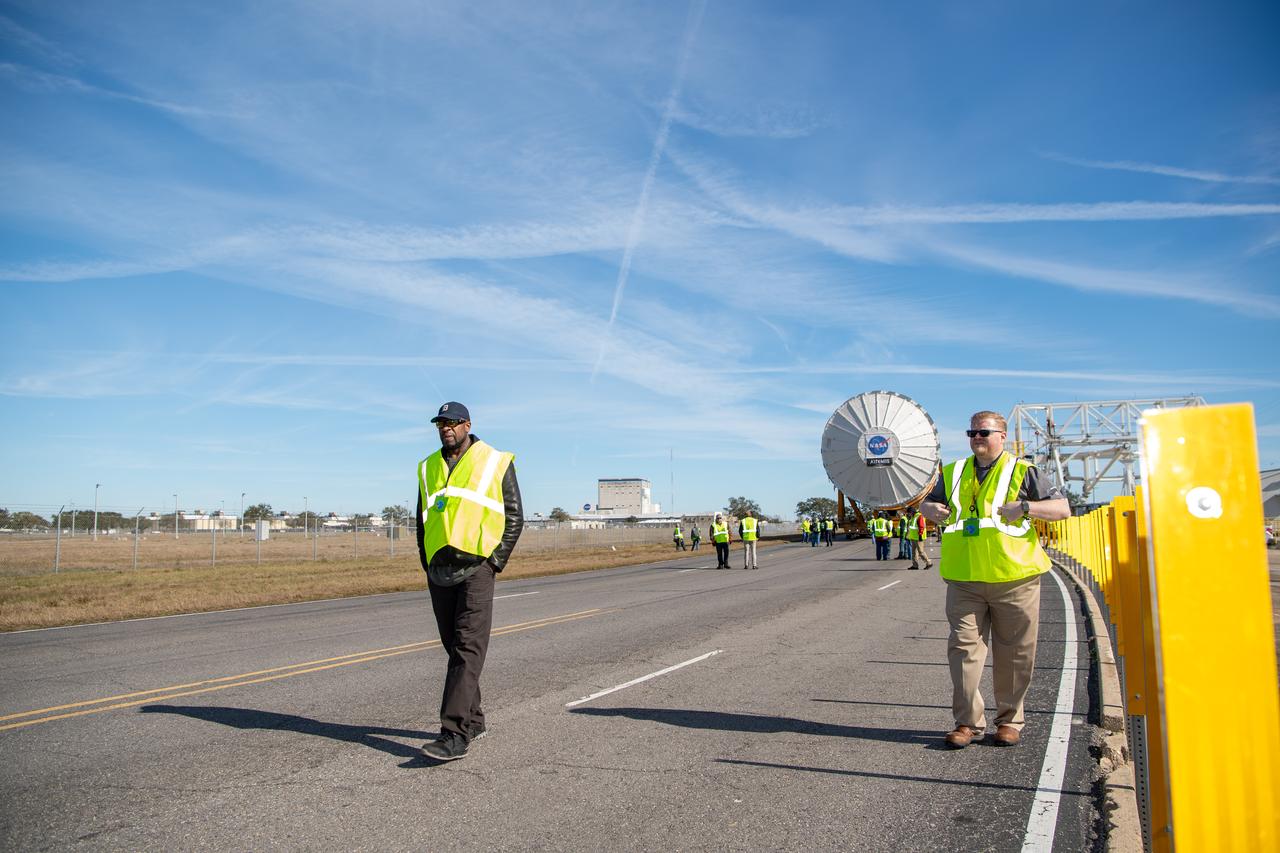
These images show how teams rolled out, or moved, the completed core stage for NASA’s Space Launch System rocket from NASA’s Michoud Assembly Facility in New Orleans. Crews moved the flight hardware for the first Artemis mission to NASA’s Pegasus barge on Jan. 8 in preparation for the core stage Green Run test series at NASA’s Stennis Space Center near Bay St. Louis, Mississippi. Pegasus, which was modified to ferry SLS rocket hardware, will transport the core stage from Michoud to Stennis for the comprehensive core stage Green Run test series. Once at Stennis, the Artemis rocket stage will be loaded into the B-2 Test Stand for the core stage Green Run test series. The comprehensive test campaign will progressively bring the entire core stage, including its avionics and engines, to life for the first time to verify the stage is fit for flight ahead of the launch of Artemis I. Assembly and integration of the core stage and its four RS-25 engines has been a collaborative, multistep process for NASA and its partners Boeing, the core stage lead contractor, and Aerojet Rocketdyne, the RS-25 engines lead contractor. Together with four RS-25 engines, the rocket’s massive 212-foot-tall core stage — the largest stage NASA has ever built — and its twin solid rocket boosters will produce 8.8 million pounds of thrust to send NASA’s Orion spacecraft, astronauts and supplies beyond Earth’s orbit to the Moon and, ultimately, Mars. Offering more payload mass, volume capability and energy to speed missions through space, the SLS rocket, along with NASA’s Gateway in lunar orbit and Orion, is part of NASA’s backbone for deep space exploration and the Artemis lunar program.
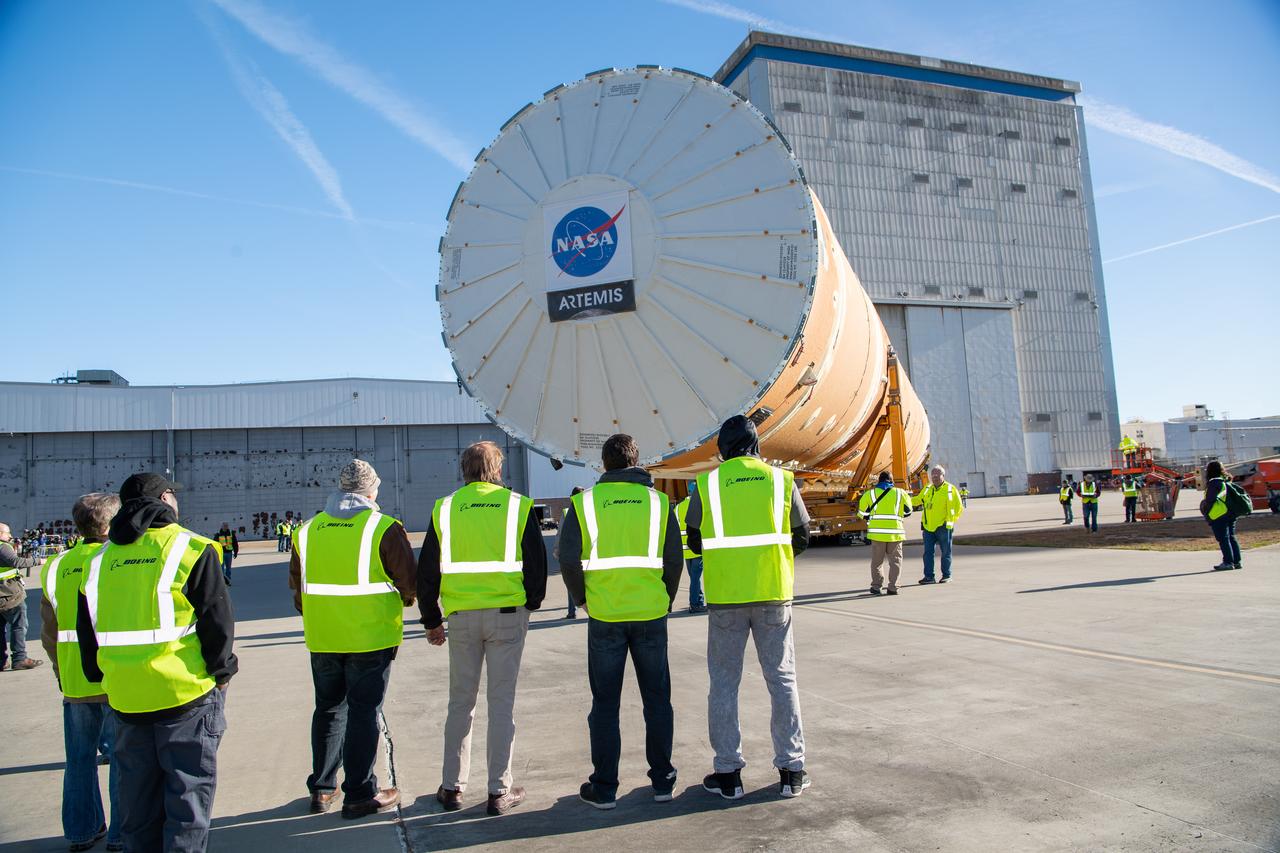
These images/video show how teams rolled out, or moved, the completed core stage for NASA’s Space Launch System rocket from NASA’s Michoud Assembly Facility in New Orleans. Crews moved the flight hardware for the first Artemis mission to NASA’s Pegasus barge on Jan. 8 in preparation for the core stage Green Run test series at NASA’s Stennis Space Center near Bay St. Louis, Mississippi. Pegasus, which was modified to ferry SLS rocket hardware, will transport the core stage from Michoud to Stennis for the comprehensive core stage Green Run test series. Once at Stennis, the Artemis rocket stage will be loaded into the B-2 Test Stand for the core stage Green Run test series. The comprehensive test campaign will progressively bring the entire core stage, including its avionics and engines, to life for the first time to verify the stage is fit for flight ahead of the launch of Artemis I. Assembly and integration of the core stage and its four RS-25 engines has been a collaborative, multistep process for NASA and its partners Boeing, the core stage lead contractor, and Aerojet Rocketdyne, the RS-25 engines lead contractor. Together with four RS-25 engines, the rocket’s massive 212-foot-tall core stage — the largest stage NASA has ever built — and its twin solid rocket boosters will produce 8.8 million pounds of thrust to send NASA’s Orion spacecraft, astronauts and supplies beyond Earth’s orbit to the Moon and, ultimately, Mars. Offering more payload mass, volume capability and energy to speed missions through space, the SLS rocket, along with NASA’s Gateway in lunar orbit and Orion, is part of NASA’s backbone for deep space exploration and the Artemis lunar program.
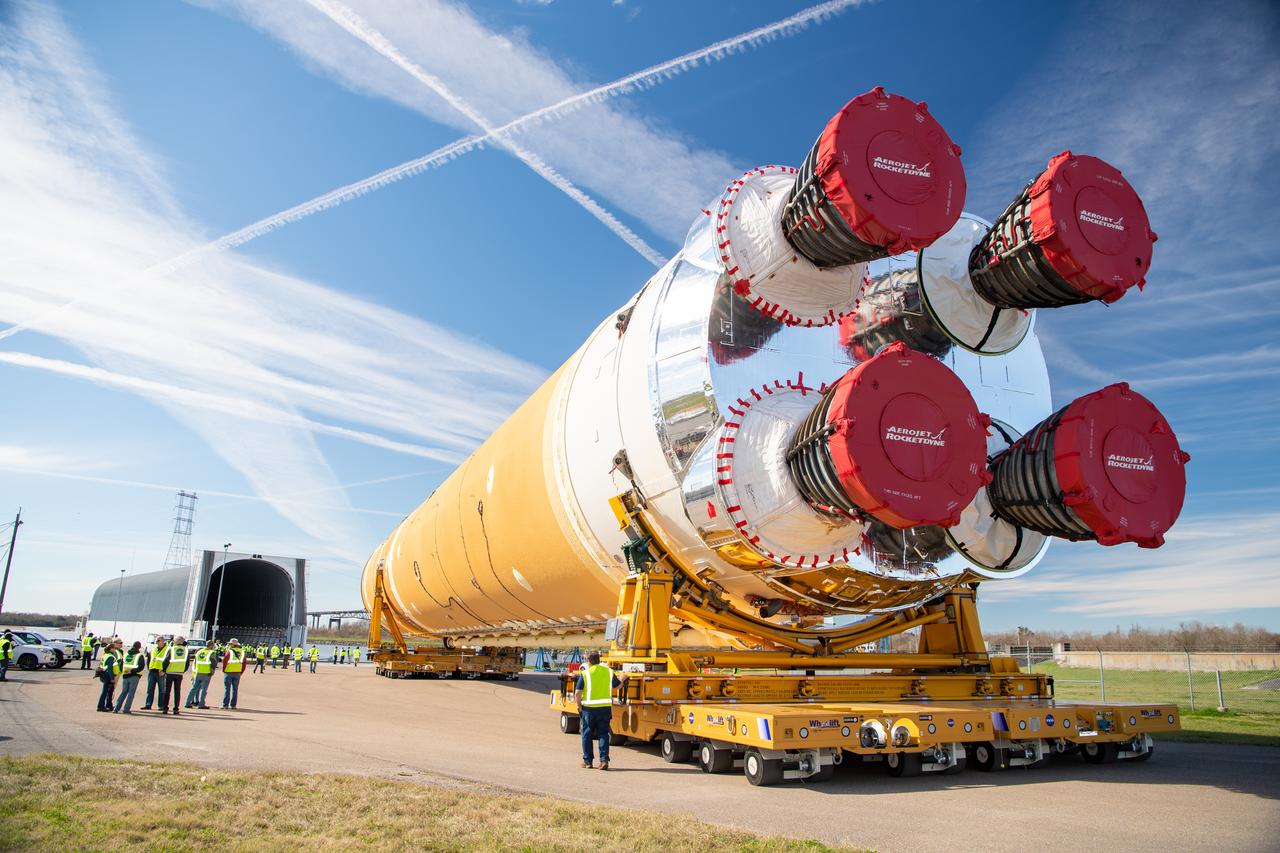
These images show how teams rolled out, or moved, the completed core stage for NASA’s Space Launch System rocket from NASA’s Michoud Assembly Facility in New Orleans. Crews moved the flight hardware for the first Artemis mission to NASA’s Pegasus barge on Jan. 8 in preparation for the core stage Green Run test series at NASA’s Stennis Space Center near Bay St. Louis, Mississippi. Pegasus, which was modified to ferry SLS rocket hardware, will transport the core stage from Michoud to Stennis for the comprehensive core stage Green Run test series. Once at Stennis, the Artemis rocket stage will be loaded into the B-2 Test Stand for the core stage Green Run test series. The comprehensive test campaign will progressively bring the entire core stage, including its avionics and engines, to life for the first time to verify the stage is fit for flight ahead of the launch of Artemis I. Assembly and integration of the core stage and its four RS-25 engines has been a collaborative, multistep process for NASA and its partners Boeing, the core stage lead contractor, and Aerojet Rocketdyne, the RS-25 engines lead contractor. Together with four RS-25 engines, the rocket’s massive 212-foot-tall core stage — the largest stage NASA has ever built — and its twin solid rocket boosters will produce 8.8 million pounds of thrust to send NASA’s Orion spacecraft, astronauts and supplies beyond Earth’s orbit to the Moon and, ultimately, Mars. Offering more payload mass, volume capability and energy to speed missions through space, the SLS rocket, along with NASA’s Gateway in lunar orbit and Orion, is part of NASA’s backbone for deep space exploration and the Artemis lunar program.
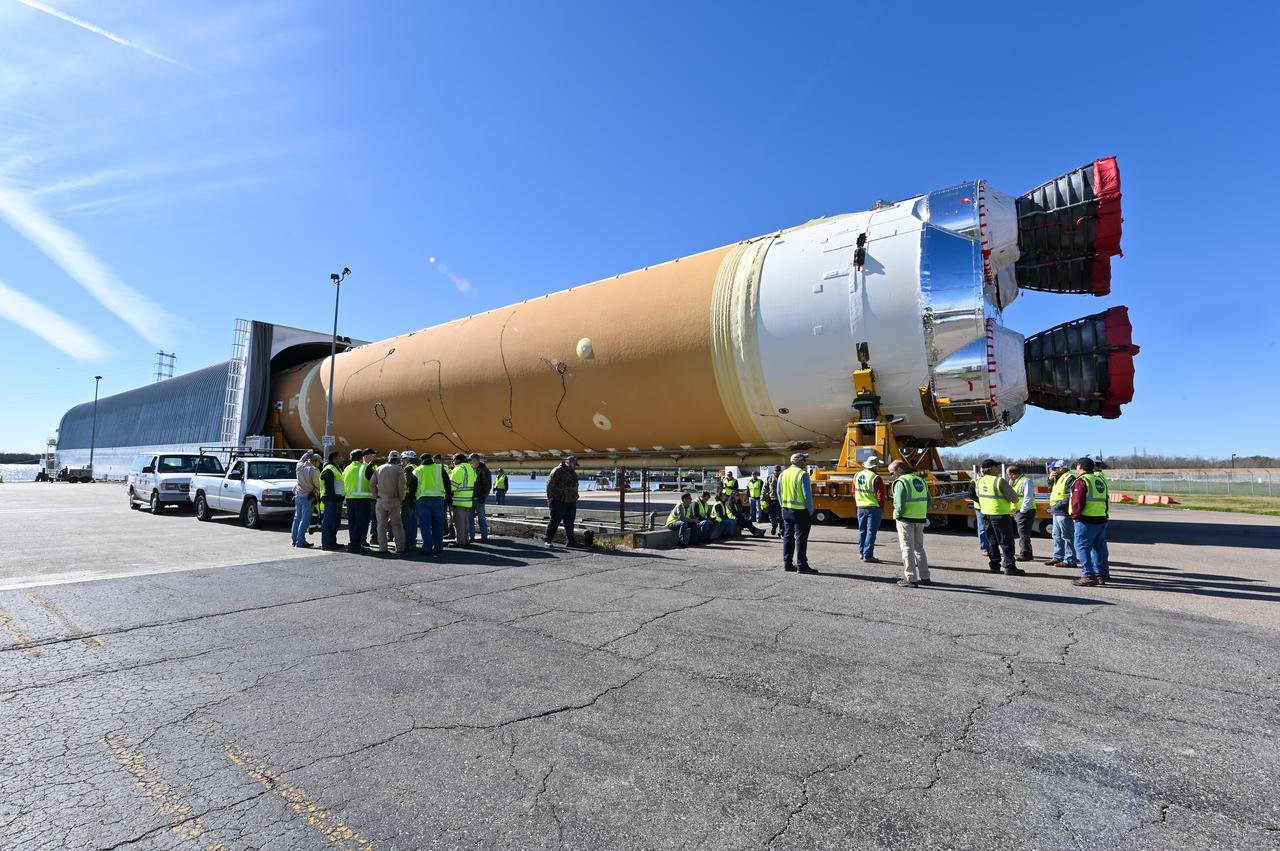
These images show how teams rolled out, or moved, the completed core stage for NASA’s Space Launch System rocket from NASA’s Michoud Assembly Facility in New Orleans. Crews moved the flight hardware for the first Artemis mission to NASA’s Pegasus barge on Jan. 8 in preparation for the core stage Green Run test series at NASA’s Stennis Space Center near Bay St. Louis, Mississippi. Pegasus, which was modified to ferry SLS rocket hardware, will transport the core stage from Michoud to Stennis for the comprehensive core stage Green Run test series. Once at Stennis, the Artemis rocket stage will be loaded into the B-2 Test Stand for the core stage Green Run test series. The comprehensive test campaign will progressively bring the entire core stage, including its avionics and engines, to life for the first time to verify the stage is fit for flight ahead of the launch of Artemis I. Assembly and integration of the core stage and its four RS-25 engines has been a collaborative, multistep process for NASA and its partners Boeing, the core stage lead contractor, and Aerojet Rocketdyne, the RS-25 engines lead contractor. Together with four RS-25 engines, the rocket’s massive 212-foot-tall core stage — the largest stage NASA has ever built — and its twin solid rocket boosters will produce 8.8 million pounds of thrust to send NASA’s Orion spacecraft, astronauts and supplies beyond Earth’s orbit to the Moon and, ultimately, Mars. Offering more payload mass, volume capability and energy to speed missions through space, the SLS rocket, along with NASA’s Gateway in lunar orbit and Orion, is part of NASA’s backbone for deep space exploration and the Artemis lunar program.
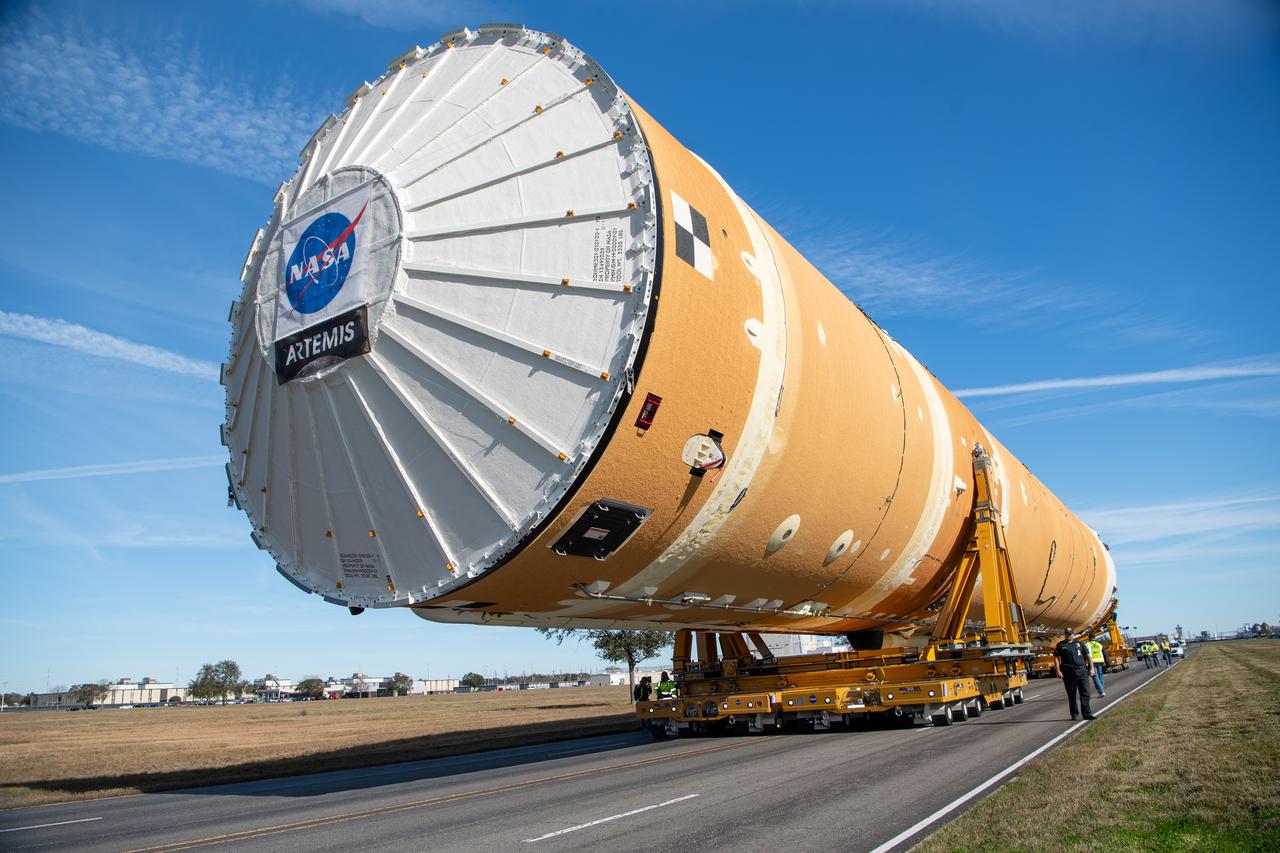
These images show how teams rolled out, or moved, the completed core stage for NASA’s Space Launch System rocket from NASA’s Michoud Assembly Facility in New Orleans. Crews moved the flight hardware for the first Artemis mission to NASA’s Pegasus barge on Jan. 8 in preparation for the core stage Green Run test series at NASA’s Stennis Space Center near Bay St. Louis, Mississippi. Pegasus, which was modified to ferry SLS rocket hardware, will transport the core stage from Michoud to Stennis for the comprehensive core stage Green Run test series. Once at Stennis, the Artemis rocket stage will be loaded into the B-2 Test Stand for the core stage Green Run test series. The comprehensive test campaign will progressively bring the entire core stage, including its avionics and engines, to life for the first time to verify the stage is fit for flight ahead of the launch of Artemis I. Assembly and integration of the core stage and its four RS-25 engines has been a collaborative, multistep process for NASA and its partners Boeing, the core stage lead contractor, and Aerojet Rocketdyne, the RS-25 engines lead contractor. Together with four RS-25 engines, the rocket’s massive 212-foot-tall core stage — the largest stage NASA has ever built — and its twin solid rocket boosters will produce 8.8 million pounds of thrust to send NASA’s Orion spacecraft, astronauts and supplies beyond Earth’s orbit to the Moon and, ultimately, Mars. Offering more payload mass, volume capability and energy to speed missions through space, the SLS rocket, along with NASA’s Gateway in lunar orbit and Orion, is part of NASA’s backbone for deep space exploration and the Artemis lunar program.
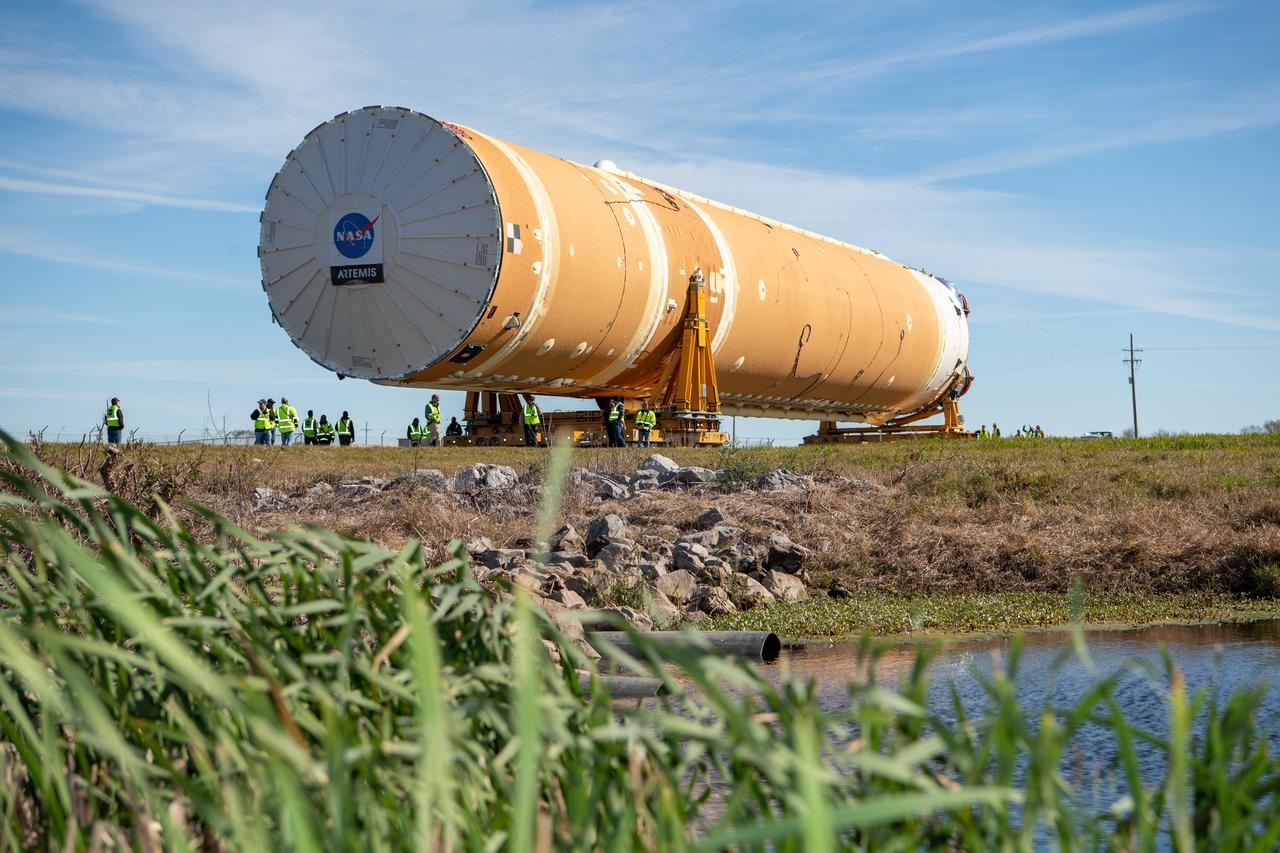
These images show how teams rolled out, or moved, the completed core stage for NASA’s Space Launch System rocket from NASA’s Michoud Assembly Facility in New Orleans. Crews moved the flight hardware for the first Artemis mission to NASA’s Pegasus barge on Jan. 8 in preparation for the core stage Green Run test series at NASA’s Stennis Space Center near Bay St. Louis, Mississippi. Pegasus, which was modified to ferry SLS rocket hardware, will transport the core stage from Michoud to Stennis for the comprehensive core stage Green Run test series. Once at Stennis, the Artemis rocket stage will be loaded into the B-2 Test Stand for the core stage Green Run test series. The comprehensive test campaign will progressively bring the entire core stage, including its avionics and engines, to life for the first time to verify the stage is fit for flight ahead of the launch of Artemis I. Assembly and integration of the core stage and its four RS-25 engines has been a collaborative, multistep process for NASA and its partners Boeing, the core stage lead contractor, and Aerojet Rocketdyne, the RS-25 engines lead contractor. Together with four RS-25 engines, the rocket’s massive 212-foot-tall core stage — the largest stage NASA has ever built — and its twin solid rocket boosters will produce 8.8 million pounds of thrust to send NASA’s Orion spacecraft, astronauts and supplies beyond Earth’s orbit to the Moon and, ultimately, Mars. Offering more payload mass, volume capability and energy to speed missions through space, the SLS rocket, along with NASA’s Gateway in lunar orbit and Orion, is part of NASA’s backbone for deep space exploration and the Artemis lunar program.
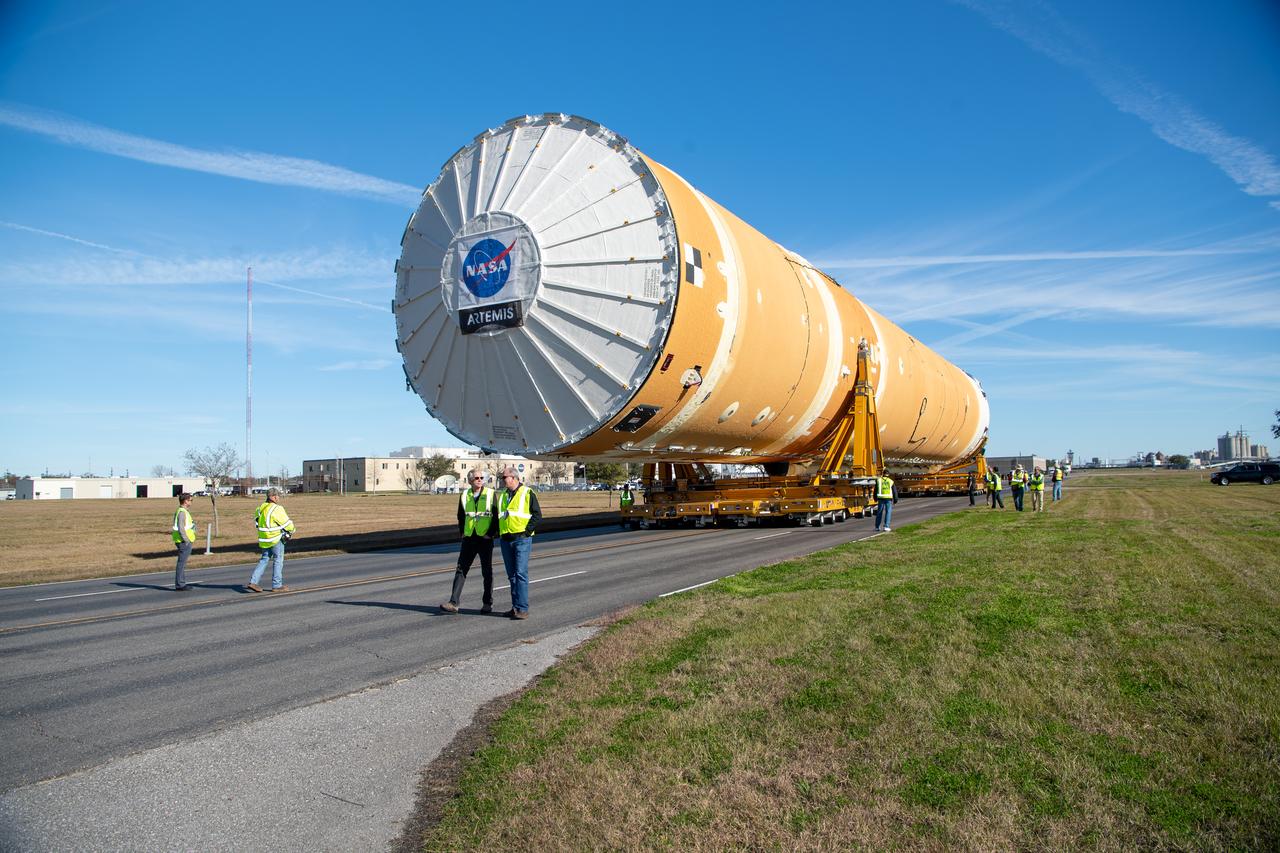
These images show how teams rolled out, or moved, the completed core stage for NASA’s Space Launch System rocket from NASA’s Michoud Assembly Facility in New Orleans. Crews moved the flight hardware for the first Artemis mission to NASA’s Pegasus barge on Jan. 8 in preparation for the core stage Green Run test series at NASA’s Stennis Space Center near Bay St. Louis, Mississippi. Pegasus, which was modified to ferry SLS rocket hardware, will transport the core stage from Michoud to Stennis for the comprehensive core stage Green Run test series. Once at Stennis, the Artemis rocket stage will be loaded into the B-2 Test Stand for the core stage Green Run test series. The comprehensive test campaign will progressively bring the entire core stage, including its avionics and engines, to life for the first time to verify the stage is fit for flight ahead of the launch of Artemis I. Assembly and integration of the core stage and its four RS-25 engines has been a collaborative, multistep process for NASA and its partners Boeing, the core stage lead contractor, and Aerojet Rocketdyne, the RS-25 engines lead contractor. Together with four RS-25 engines, the rocket’s massive 212-foot-tall core stage — the largest stage NASA has ever built — and its twin solid rocket boosters will produce 8.8 million pounds of thrust to send NASA’s Orion spacecraft, astronauts and supplies beyond Earth’s orbit to the Moon and, ultimately, Mars. Offering more payload mass, volume capability and energy to speed missions through space, the SLS rocket, along with NASA’s Gateway in lunar orbit and Orion, is part of NASA’s backbone for deep space exploration and the Artemis lunar program.
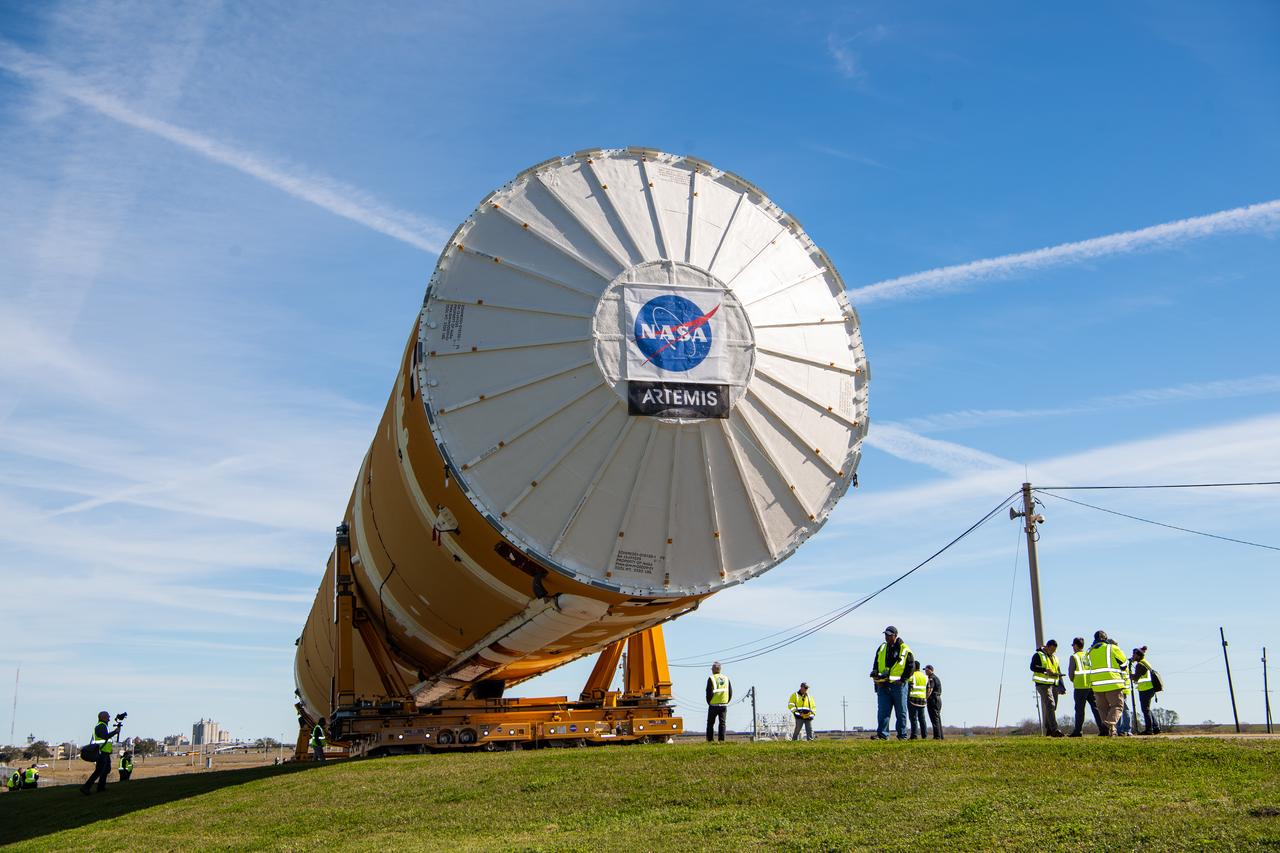
These images show how teams rolled out, or moved, the completed core stage for NASA’s Space Launch System rocket from NASA’s Michoud Assembly Facility in New Orleans. Crews moved the flight hardware for the first Artemis mission to NASA’s Pegasus barge on Jan. 8 in preparation for the core stage Green Run test series at NASA’s Stennis Space Center near Bay St. Louis, Mississippi. Pegasus, which was modified to ferry SLS rocket hardware, will transport the core stage from Michoud to Stennis for the comprehensive core stage Green Run test series. Once at Stennis, the Artemis rocket stage will be loaded into the B-2 Test Stand for the core stage Green Run test series. The comprehensive test campaign will progressively bring the entire core stage, including its avionics and engines, to life for the first time to verify the stage is fit for flight ahead of the launch of Artemis I. Assembly and integration of the core stage and its four RS-25 engines has been a collaborative, multistep process for NASA and its partners Boeing, the core stage lead contractor, and Aerojet Rocketdyne, the RS-25 engines lead contractor. Together with four RS-25 engines, the rocket’s massive 212-foot-tall core stage — the largest stage NASA has ever built — and its twin solid rocket boosters will produce 8.8 million pounds of thrust to send NASA’s Orion spacecraft, astronauts and supplies beyond Earth’s orbit to the Moon and, ultimately, Mars. Offering more payload mass, volume capability and energy to speed missions through space, the SLS rocket, along with NASA’s Gateway in lunar orbit and Orion, is part of NASA’s backbone for deep space exploration and the Artemis lunar program.
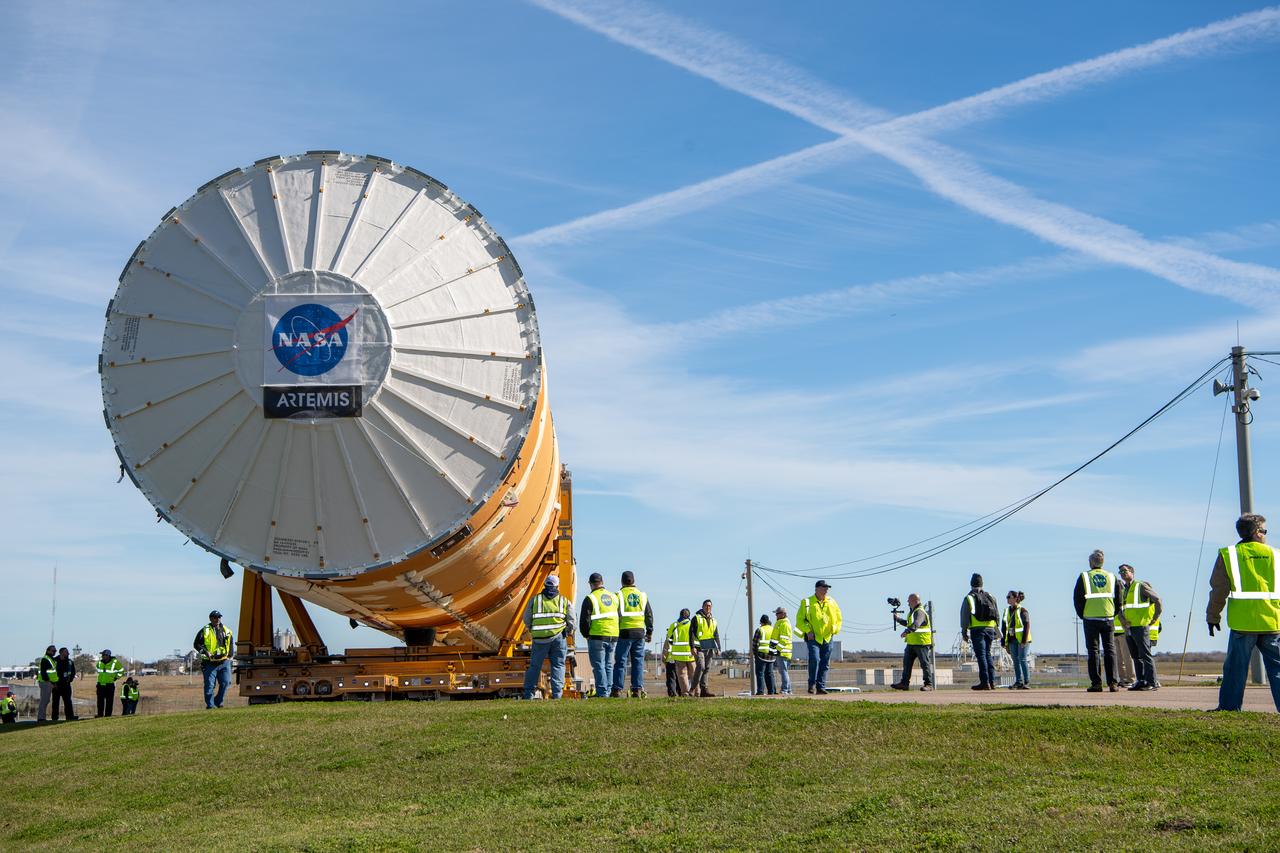
These images show how teams rolled out, or moved, the completed core stage for NASA’s Space Launch System rocket from NASA’s Michoud Assembly Facility in New Orleans. Crews moved the flight hardware for the first Artemis mission to NASA’s Pegasus barge on Jan. 8 in preparation for the core stage Green Run test series at NASA’s Stennis Space Center near Bay St. Louis, Mississippi. Pegasus, which was modified to ferry SLS rocket hardware, will transport the core stage from Michoud to Stennis for the comprehensive core stage Green Run test series. Once at Stennis, the Artemis rocket stage will be loaded into the B-2 Test Stand for the core stage Green Run test series. The comprehensive test campaign will progressively bring the entire core stage, including its avionics and engines, to life for the first time to verify the stage is fit for flight ahead of the launch of Artemis I. Assembly and integration of the core stage and its four RS-25 engines has been a collaborative, multistep process for NASA and its partners Boeing, the core stage lead contractor, and Aerojet Rocketdyne, the RS-25 engines lead contractor. Together with four RS-25 engines, the rocket’s massive 212-foot-tall core stage — the largest stage NASA has ever built — and its twin solid rocket boosters will produce 8.8 million pounds of thrust to send NASA’s Orion spacecraft, astronauts and supplies beyond Earth’s orbit to the Moon and, ultimately, Mars. Offering more payload mass, volume capability and energy to speed missions through space, the SLS rocket, along with NASA’s Gateway in lunar orbit and Orion, is part of NASA’s backbone for deep space exploration and the Artemis lunar program.
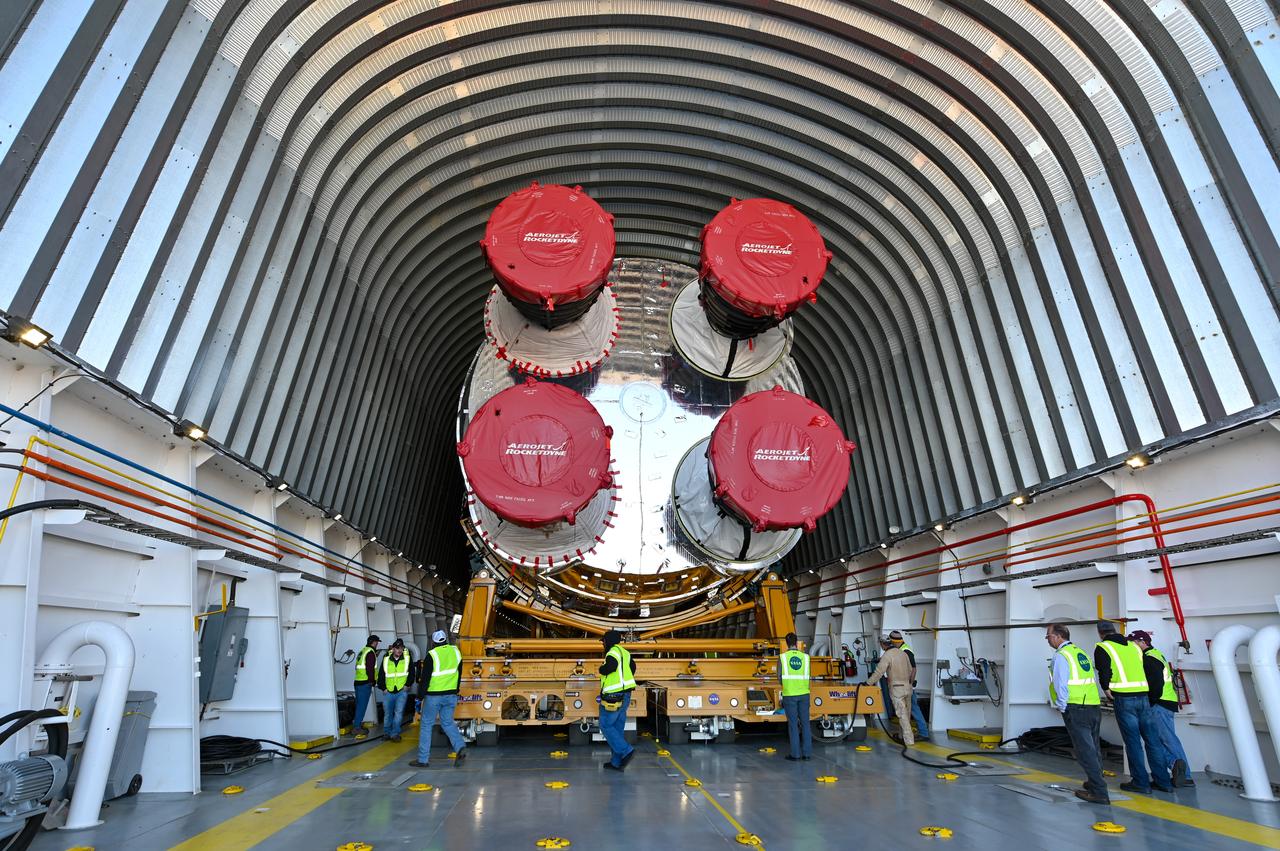
These images show how teams rolled out, or moved, the completed core stage for NASA’s Space Launch System rocket from NASA’s Michoud Assembly Facility in New Orleans. Crews moved the flight hardware for the first Artemis mission to NASA’s Pegasus barge on Jan. 8 in preparation for the core stage Green Run test series at NASA’s Stennis Space Center near Bay St. Louis, Mississippi. Pegasus, which was modified to ferry SLS rocket hardware, will transport the core stage from Michoud to Stennis for the comprehensive core stage Green Run test series. Once at Stennis, the Artemis rocket stage will be loaded into the B-2 Test Stand for the core stage Green Run test series. The comprehensive test campaign will progressively bring the entire core stage, including its avionics and engines, to life for the first time to verify the stage is fit for flight ahead of the launch of Artemis I. Assembly and integration of the core stage and its four RS-25 engines has been a collaborative, multistep process for NASA and its partners Boeing, the core stage lead contractor, and Aerojet Rocketdyne, the RS-25 engines lead contractor. Together with four RS-25 engines, the rocket’s massive 212-foot-tall core stage — the largest stage NASA has ever built — and its twin solid rocket boosters will produce 8.8 million pounds of thrust to send NASA’s Orion spacecraft, astronauts and supplies beyond Earth’s orbit to the Moon and, ultimately, Mars. Offering more payload mass, volume capability and energy to speed missions through space, the SLS rocket, along with NASA’s Gateway in lunar orbit and Orion, is part of NASA’s backbone for deep space exploration and the Artemis lunar program.
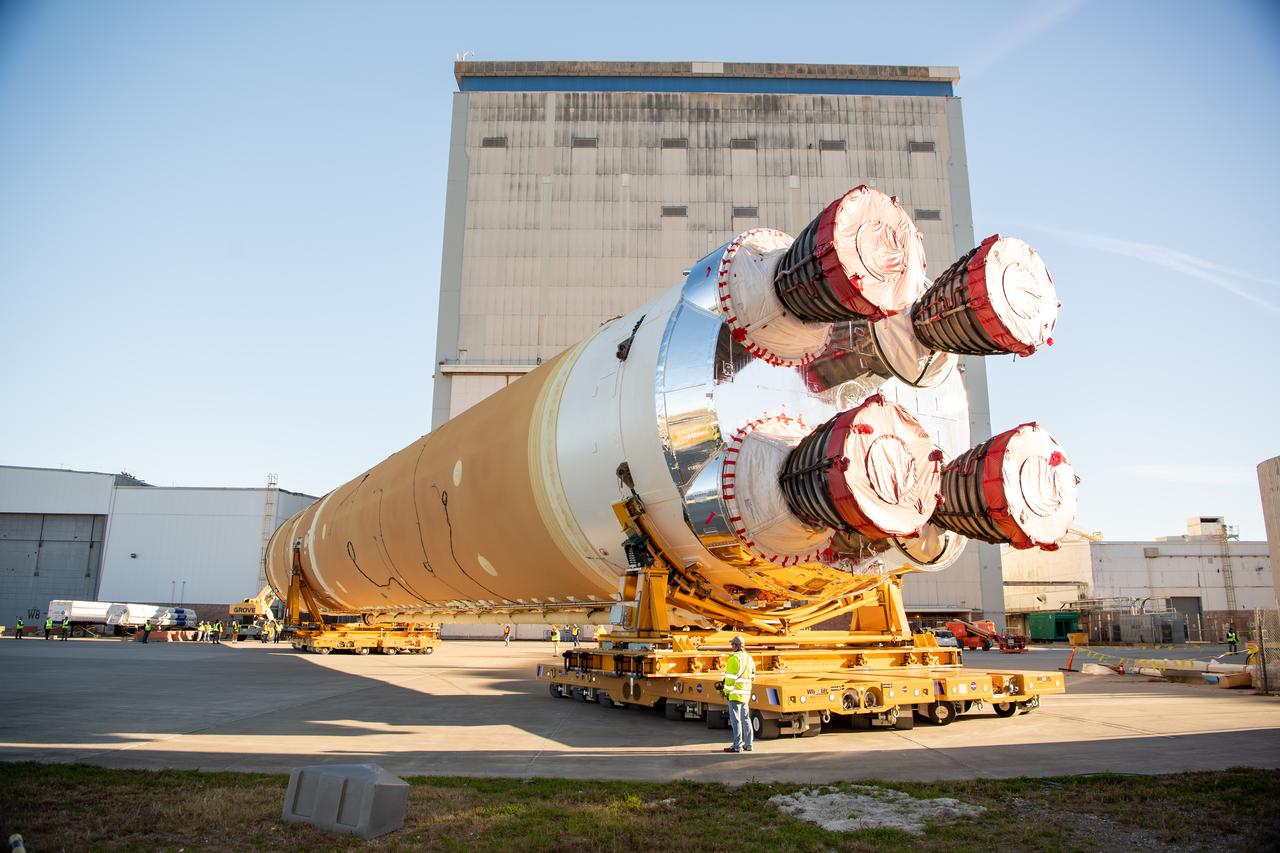
These images show how teams rolled out, or moved, the completed core stage for NASA’s Space Launch System rocket from NASA’s Michoud Assembly Facility in New Orleans. Crews moved the flight hardware for the first Artemis mission to NASA’s Pegasus barge on Jan. 8 in preparation for the core stage Green Run test series at NASA’s Stennis Space Center near Bay St. Louis, Mississippi. Pegasus, which was modified to ferry SLS rocket hardware, will transport the core stage from Michoud to Stennis for the comprehensive core stage Green Run test series. Once at Stennis, the Artemis rocket stage will be loaded into the B-2 Test Stand for the core stage Green Run test series. The comprehensive test campaign will progressively bring the entire core stage, including its avionics and engines, to life for the first time to verify the stage is fit for flight ahead of the launch of Artemis I. Assembly and integration of the core stage and its four RS-25 engines has been a collaborative, multistep process for NASA and its partners Boeing, the core stage lead contractor, and Aerojet Rocketdyne, the RS-25 engines lead contractor. Together with four RS-25 engines, the rocket’s massive 212-foot-tall core stage — the largest stage NASA has ever built — and its twin solid rocket boosters will produce 8.8 million pounds of thrust to send NASA’s Orion spacecraft, astronauts and supplies beyond Earth’s orbit to the Moon and, ultimately, Mars. Offering more payload mass, volume capability and energy to speed missions through space, the SLS rocket, along with NASA’s Gateway in lunar orbit and Orion, is part of NASA’s backbone for deep space exploration and the Artemis lunar program.
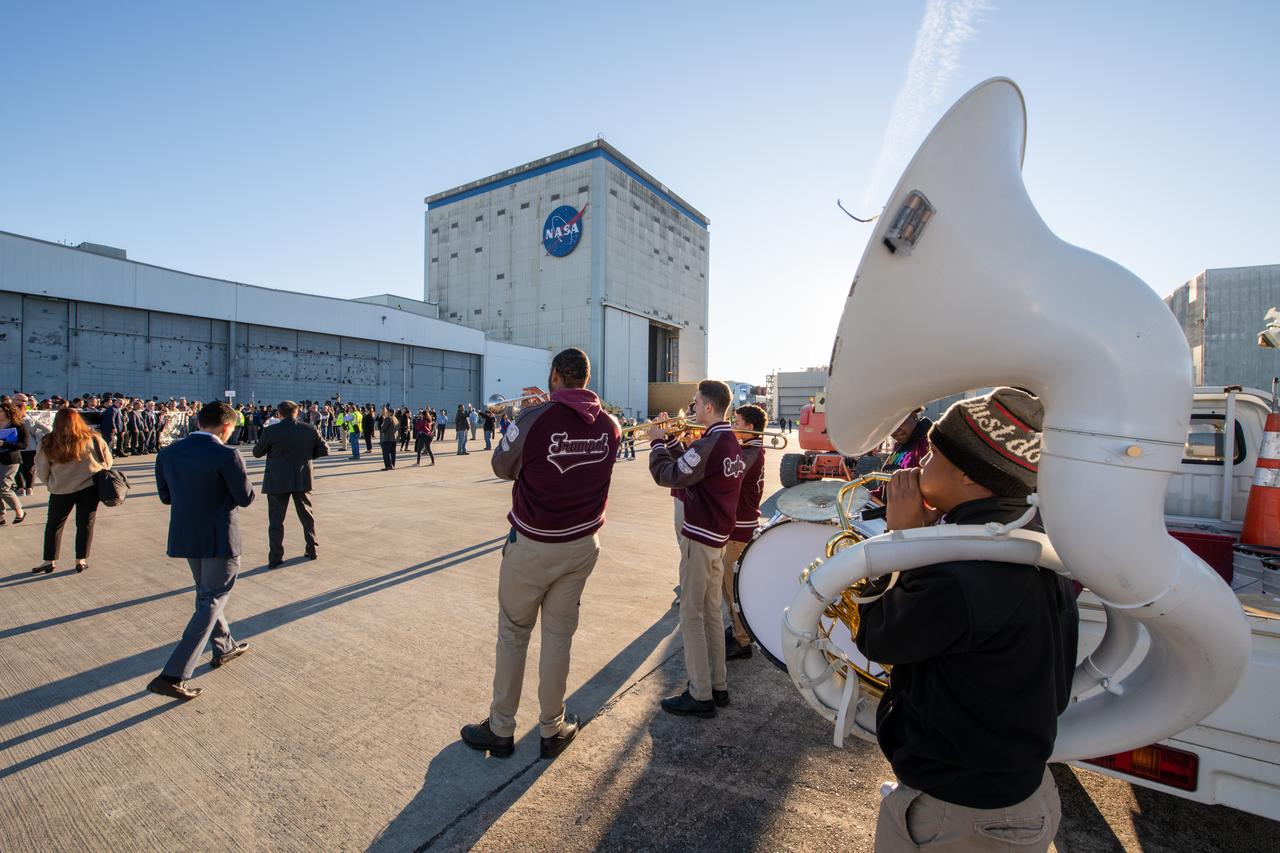
These images/video show how teams rolled out, or moved, the completed core stage for NASA’s Space Launch System rocket from NASA’s Michoud Assembly Facility in New Orleans. Crews moved the flight hardware for the first Artemis mission to NASA’s Pegasus barge on Jan. 8 in preparation for the core stage Green Run test series at NASA’s Stennis Space Center near Bay St. Louis, Mississippi. Pegasus, which was modified to ferry SLS rocket hardware, will transport the core stage from Michoud to Stennis for the comprehensive core stage Green Run test series. Once at Stennis, the Artemis rocket stage will be loaded into the B-2 Test Stand for the core stage Green Run test series. The comprehensive test campaign will progressively bring the entire core stage, including its avionics and engines, to life for the first time to verify the stage is fit for flight ahead of the launch of Artemis I. Assembly and integration of the core stage and its four RS-25 engines has been a collaborative, multistep process for NASA and its partners Boeing, the core stage lead contractor, and Aerojet Rocketdyne, the RS-25 engines lead contractor. Together with four RS-25 engines, the rocket’s massive 212-foot-tall core stage — the largest stage NASA has ever built — and its twin solid rocket boosters will produce 8.8 million pounds of thrust to send NASA’s Orion spacecraft, astronauts and supplies beyond Earth’s orbit to the Moon and, ultimately, Mars. Offering more payload mass, volume capability and energy to speed missions through space, the SLS rocket, along with NASA’s Gateway in lunar orbit and Orion, is part of NASA’s backbone for deep space exploration and the Artemis lunar program.
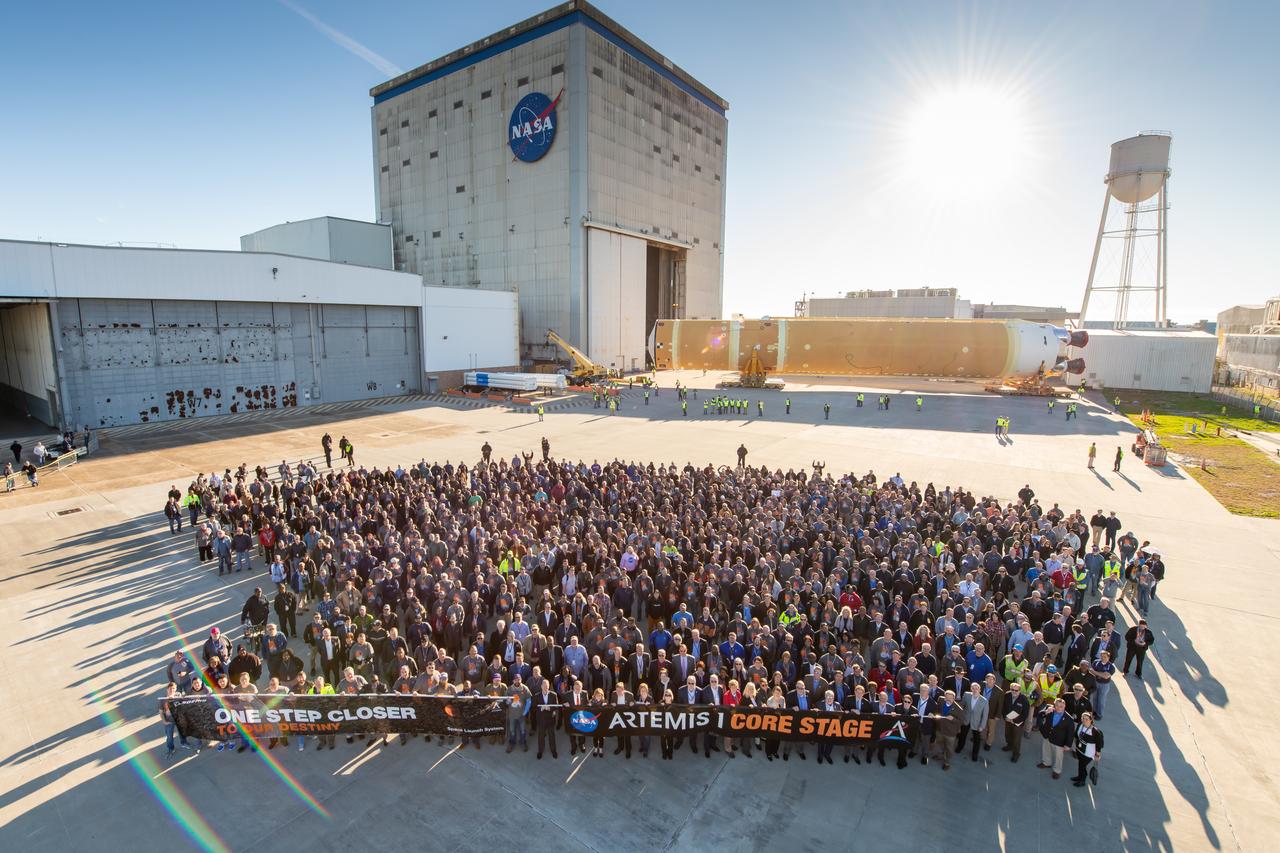
These images/video show how teams rolled out, or moved, the completed core stage for NASA’s Space Launch System rocket from NASA’s Michoud Assembly Facility in New Orleans. Crews moved the flight hardware for the first Artemis mission to NASA’s Pegasus barge on Jan. 8 in preparation for the core stage Green Run test series at NASA’s Stennis Space Center near Bay St. Louis, Mississippi. Pegasus, which was modified to ferry SLS rocket hardware, will transport the core stage from Michoud to Stennis for the comprehensive core stage Green Run test series. Once at Stennis, the Artemis rocket stage will be loaded into the B-2 Test Stand for the core stage Green Run test series. The comprehensive test campaign will progressively bring the entire core stage, including its avionics and engines, to life for the first time to verify the stage is fit for flight ahead of the launch of Artemis I. Assembly and integration of the core stage and its four RS-25 engines has been a collaborative, multistep process for NASA and its partners Boeing, the core stage lead contractor, and Aerojet Rocketdyne, the RS-25 engines lead contractor. Together with four RS-25 engines, the rocket’s massive 212-foot-tall core stage — the largest stage NASA has ever built — and its twin solid rocket boosters will produce 8.8 million pounds of thrust to send NASA’s Orion spacecraft, astronauts and supplies beyond Earth’s orbit to the Moon and, ultimately, Mars. Offering more payload mass, volume capability and energy to speed missions through space, the SLS rocket, along with NASA’s Gateway in lunar orbit and Orion, is part of NASA’s backbone for deep space exploration and the Artemis lunar program.
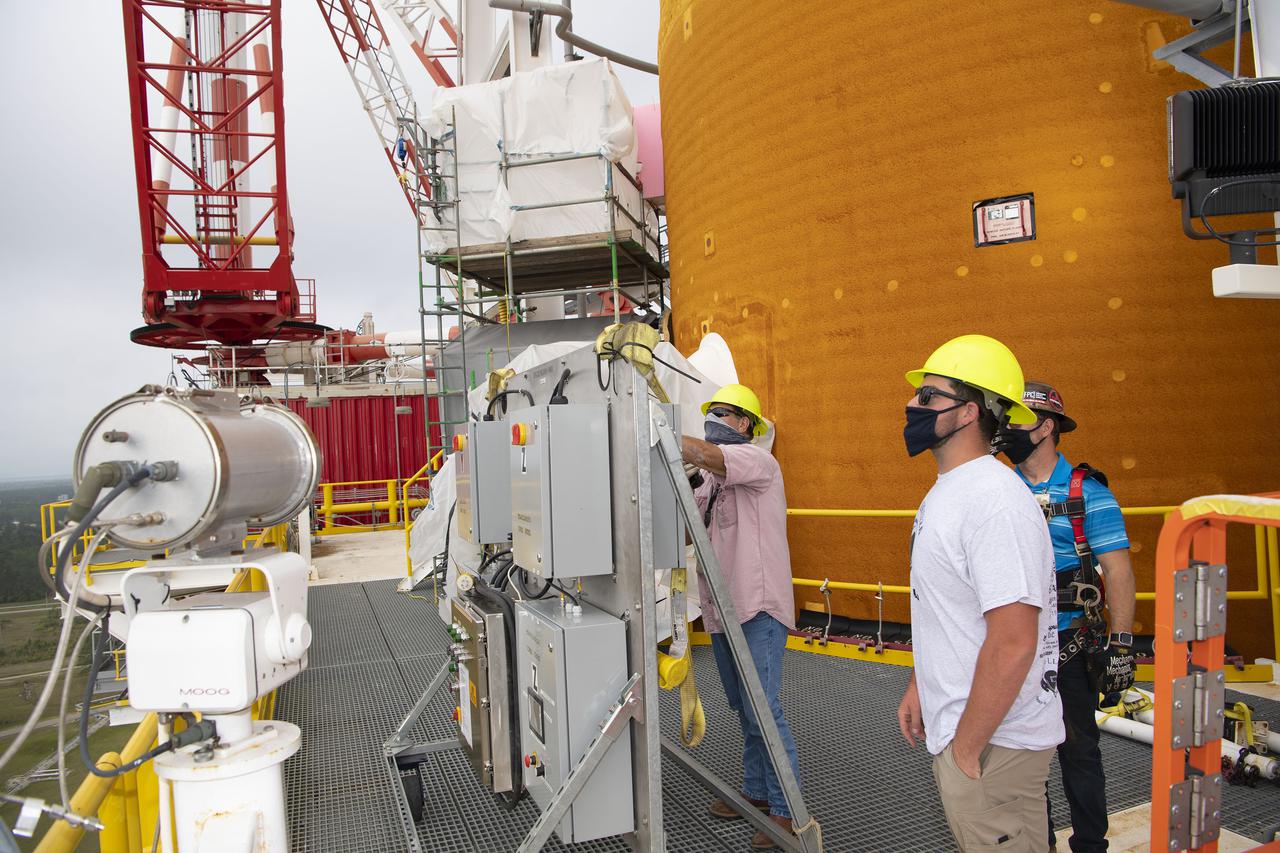
Team members at NASA’s Stennis Space Center near Bay St. Louis, Mississippi, complete refurbishment work on the first core stage of the agency’s Space Launch System (SLS) rocket. The work followed a successful hot fire of the stage and its four RS-25 engines March 18. The hot fire marked the culmination of a yearlong Green Run series of tests of the stage and its integrated systems. Following refurbishment work, the core stage will be removed from the test stand and transported to Kennedy Space Center in Florida, aboard NASA’s Pegasus barge, shown delivering equipment to the B-2 Test Stand. At Kennedy, the core stage will be integrated with the rest of SLS rocket and prepared for the launch of the Artemis I mission to the Moon. Photo Credit: NASA
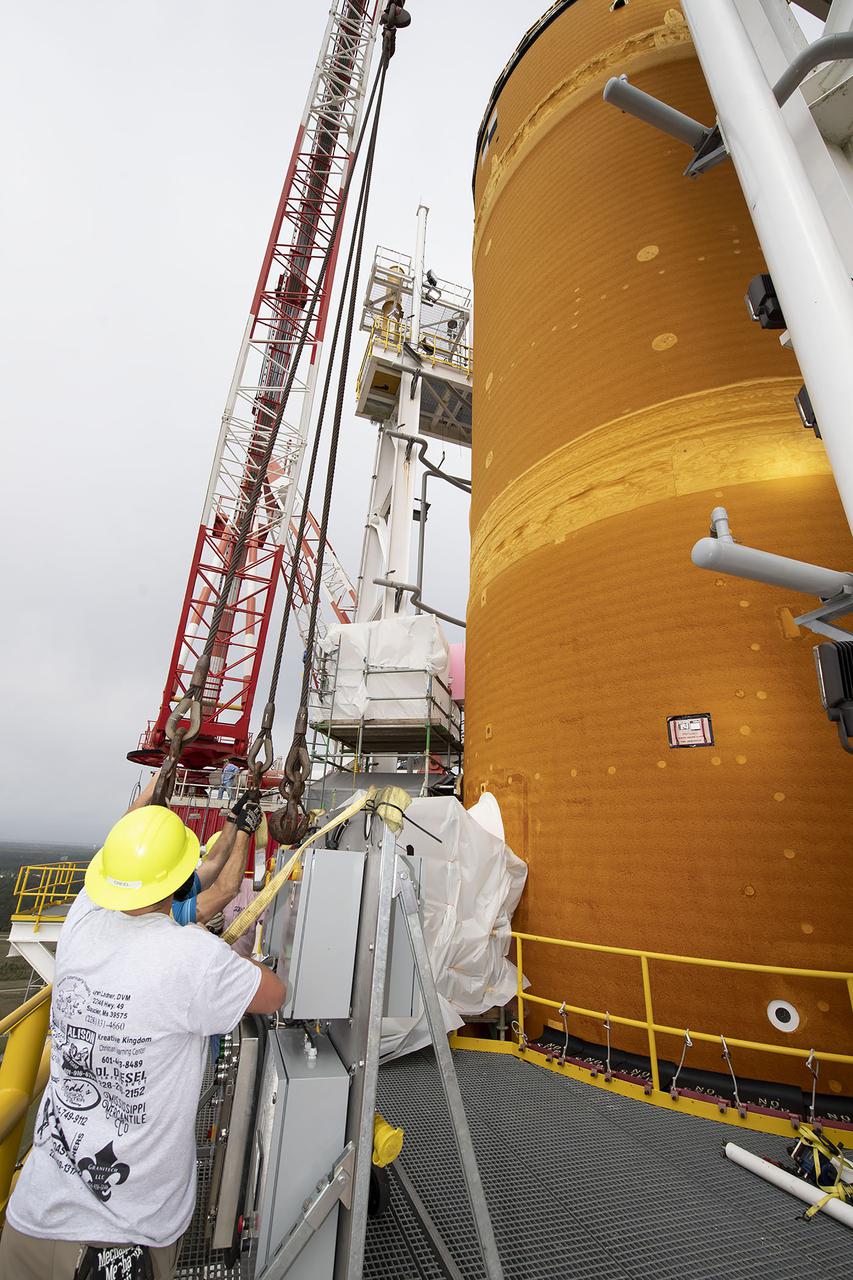
Team members at NASA’s Stennis Space Center near Bay St. Louis, Mississippi, complete refurbishment work on the first core stage of the agency’s Space Launch System (SLS) rocket. The work followed a successful hot fire of the stage and its four RS-25 engines March 18. The hot fire marked the culmination of a yearlong Green Run series of tests of the stage and its integrated systems. Following refurbishment work, the core stage will be removed from the test stand and transported to Kennedy Space Center in Florida, aboard NASA’s Pegasus barge, shown delivering equipment to the B-2 Test Stand. At Kennedy, the core stage will be integrated with the rest of SLS rocket and prepared for the launch of the Artemis I mission to the Moon. Photo Credit: NASA
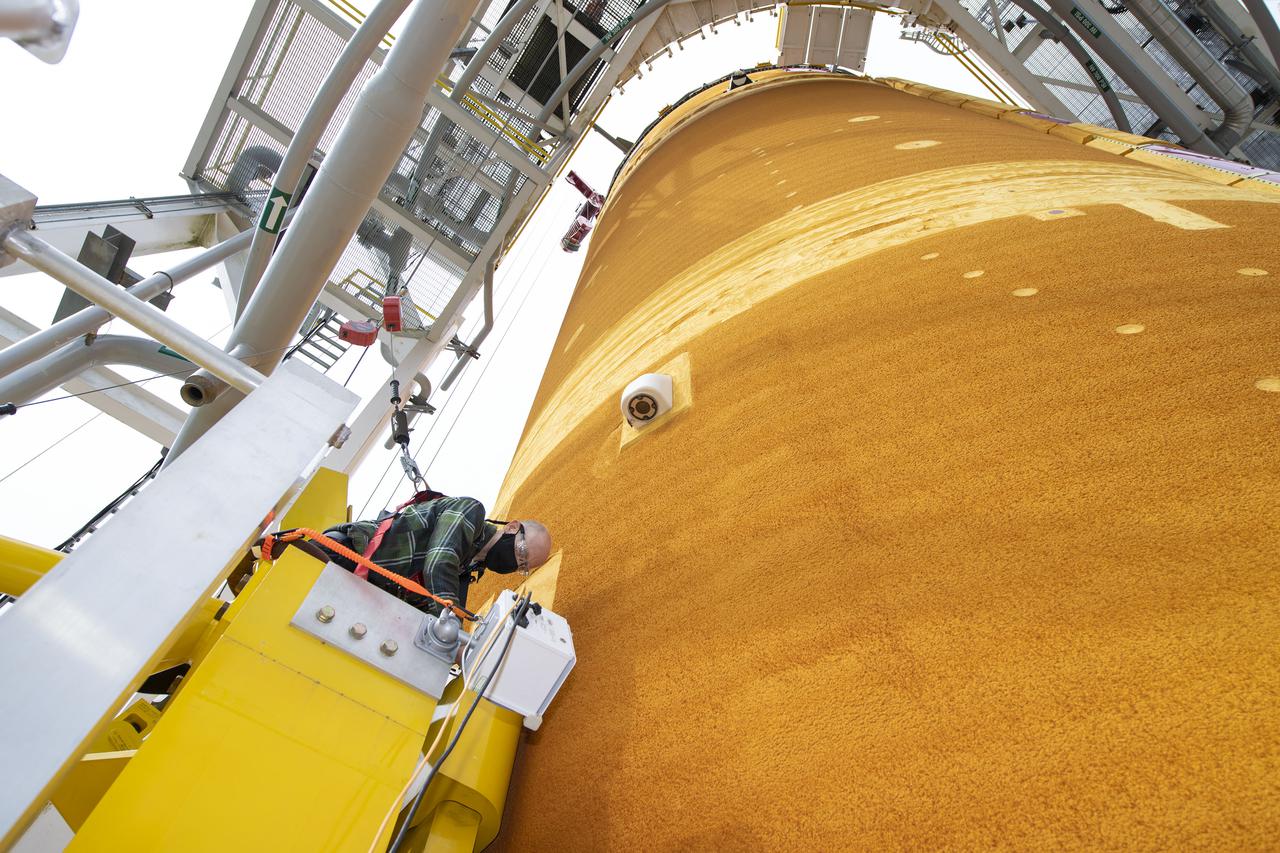
Team members at NASA’s Stennis Space Center near Bay St. Louis, Mississippi, complete refurbishment work on the first core stage of the agency’s Space Launch System (SLS) rocket. The work followed a successful hot fire of the stage and its four RS-25 engines March 18. The hot fire marked the culmination of a yearlong Green Run series of tests of the stage and its integrated systems. Following refurbishment work, the core stage will be removed from the test stand and transported to Kennedy Space Center in Florida, aboard NASA’s Pegasus barge, shown delivering equipment to the B-2 Test Stand. At Kennedy, the core stage will be integrated with the rest of SLS rocket and prepared for the launch of the Artemis I mission to the Moon. Photo Credit: NASA
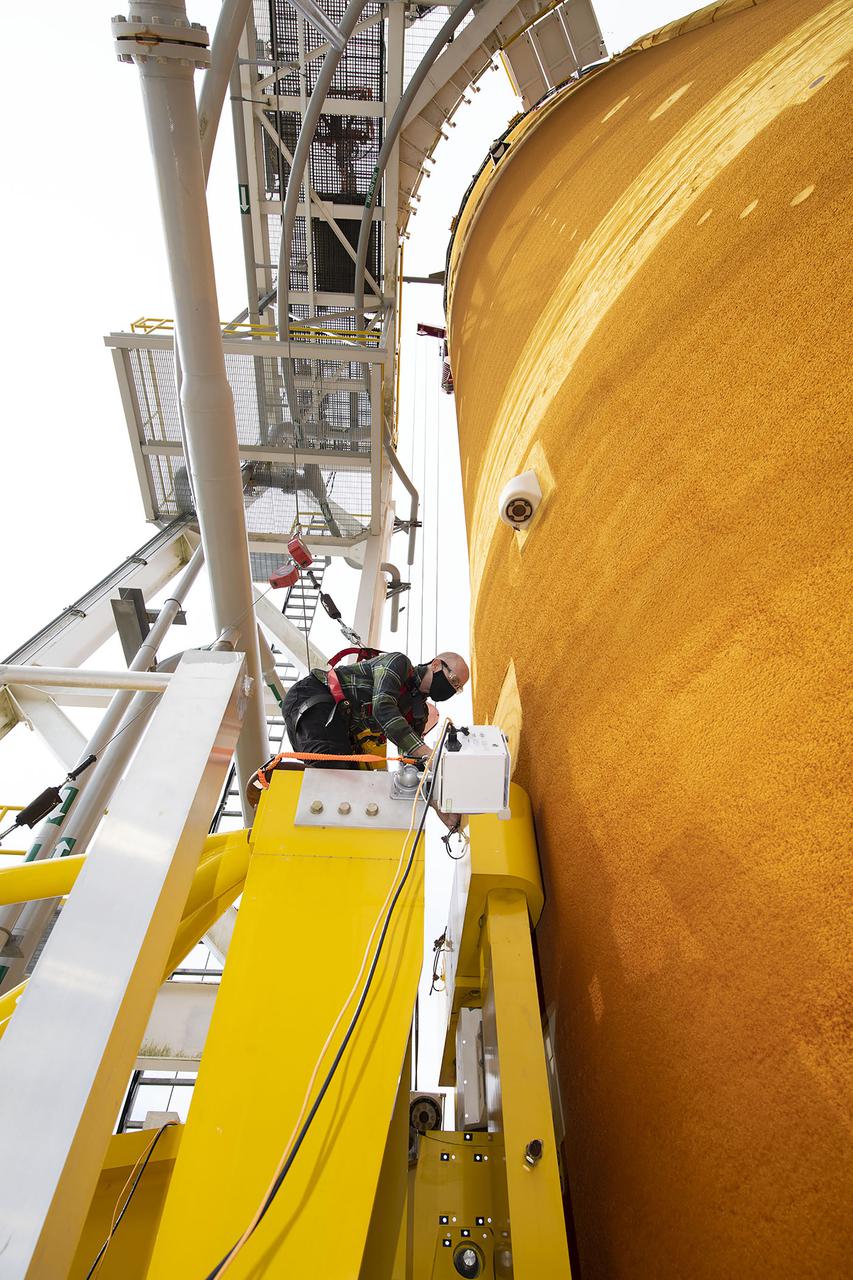
Team members at NASA’s Stennis Space Center near Bay St. Louis, Mississippi, complete refurbishment work on the first core stage of the agency’s Space Launch System (SLS) rocket. The work followed a successful hot fire of the stage and its four RS-25 engines March 18. The hot fire marked the culmination of a yearlong Green Run series of tests of the stage and its integrated systems. Following refurbishment work, the core stage will be removed from the test stand and transported to Kennedy Space Center in Florida, aboard NASA’s Pegasus barge, shown delivering equipment to the B-2 Test Stand. At Kennedy, the core stage will be integrated with the rest of SLS rocket and prepared for the launch of the Artemis I mission to the Moon. Photo Credit: NASA
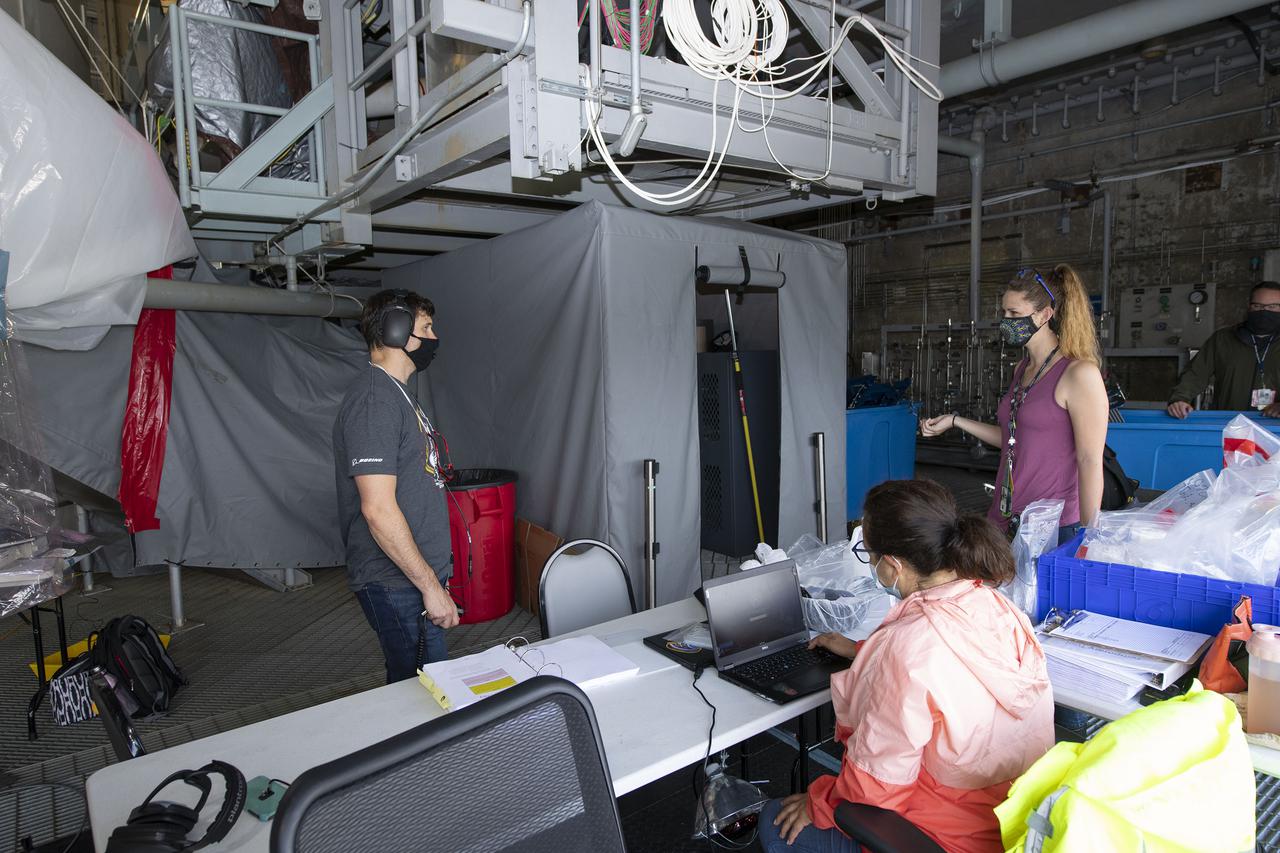
Team members at NASA’s Stennis Space Center near Bay St. Louis, Mississippi, complete refurbishment work on the first core stage of the agency’s Space Launch System (SLS) rocket. The work followed a successful hot fire of the stage and its four RS-25 engines March 18. The hot fire marked the culmination of a yearlong Green Run series of tests of the stage and its integrated systems. Following refurbishment work, the core stage will be removed from the test stand and transported to Kennedy Space Center in Florida, aboard NASA’s Pegasus barge, shown delivering equipment to the B-2 Test Stand. At Kennedy, the core stage will be integrated with the rest of SLS rocket and prepared for the launch of the Artemis I mission to the Moon. Photo Credit: NASA
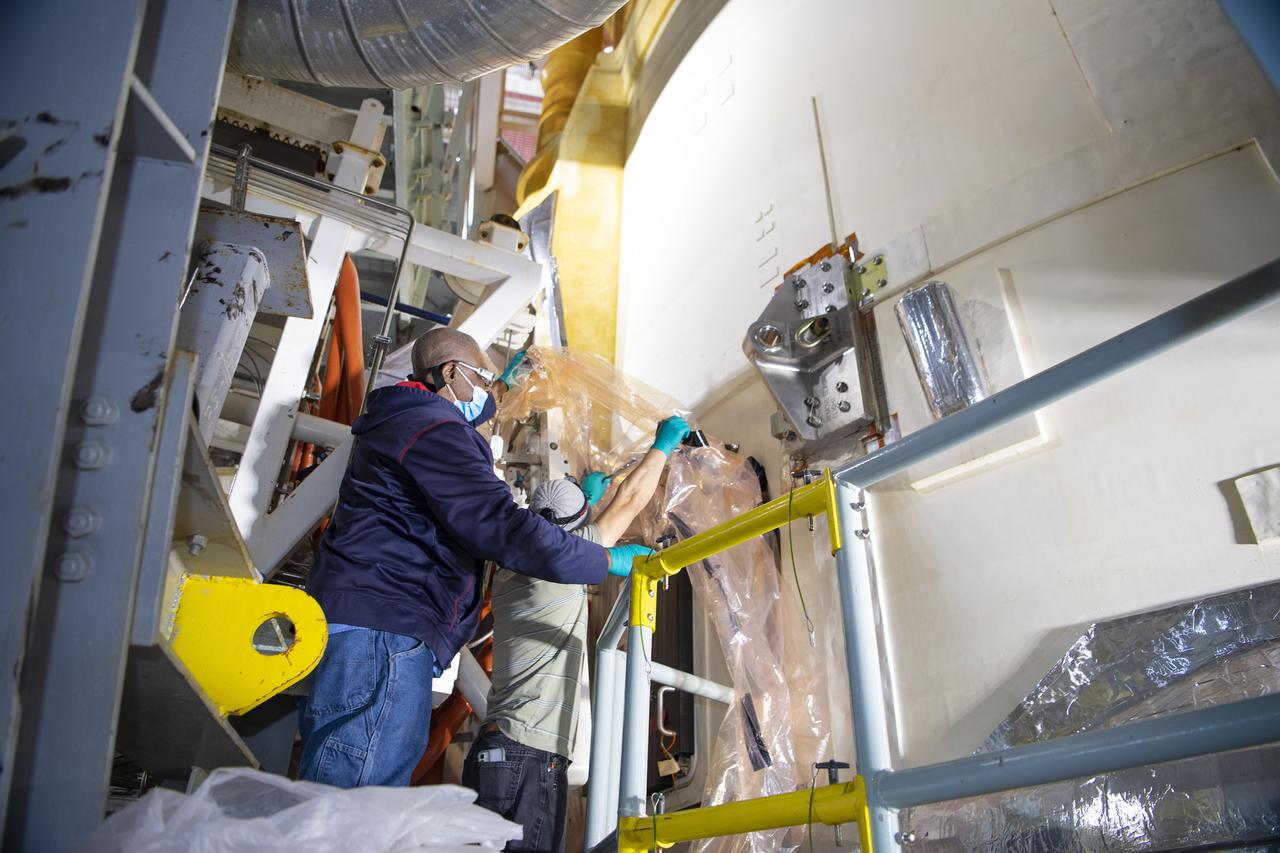
Team members at NASA’s Stennis Space Center near Bay St. Louis, Mississippi, complete refurbishment work on the first core stage of the agency’s Space Launch System (SLS) rocket. The work followed a successful hot fire of the stage and its four RS-25 engines March 18. The hot fire marked the culmination of a yearlong Green Run series of tests of the stage and its integrated systems. Following refurbishment work, the core stage will be removed from the test stand and transported to Kennedy Space Center in Florida, aboard NASA’s Pegasus barge, shown delivering equipment to the B-2 Test Stand. At Kennedy, the core stage will be integrated with the rest of SLS rocket and prepared for the launch of the Artemis I mission to the Moon. Photo Credit: NASA
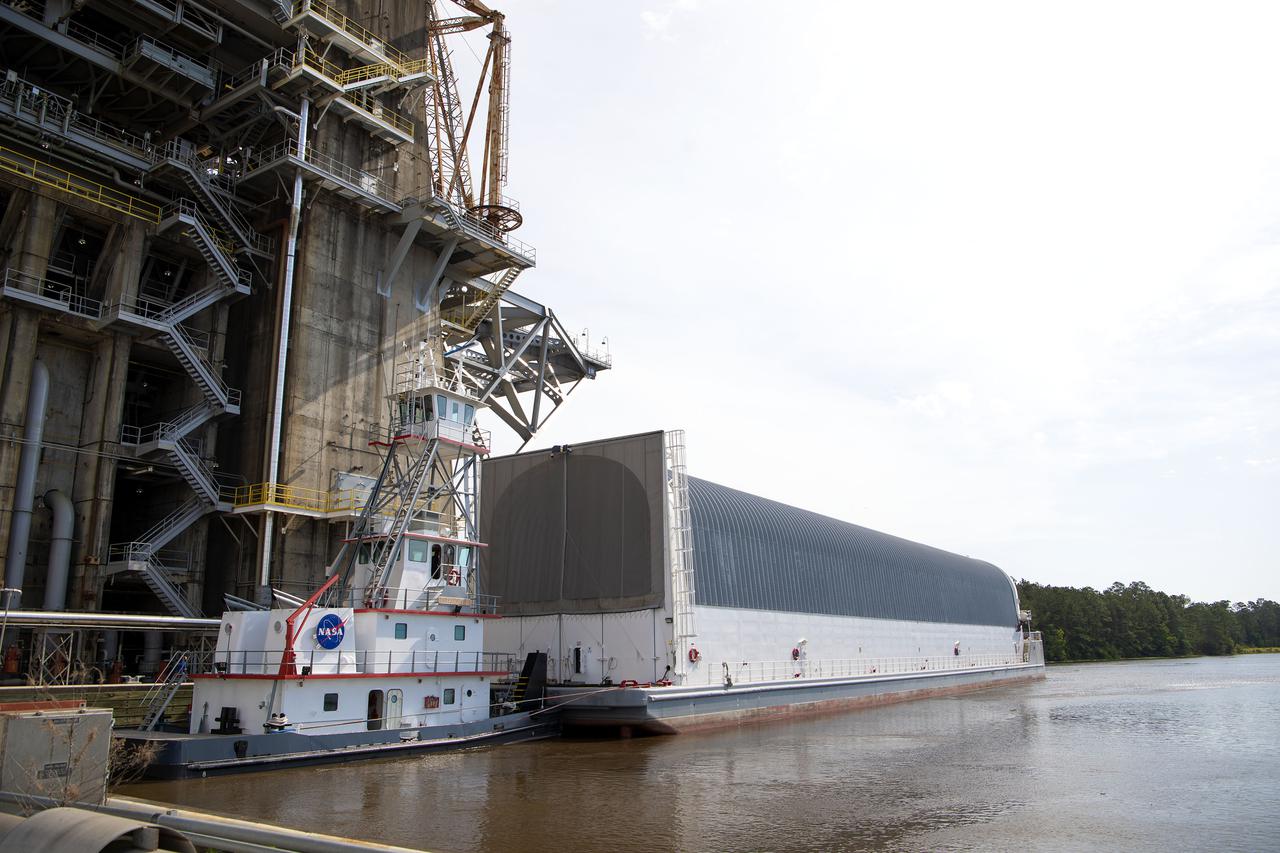
Team members at NASA’s Stennis Space Center near Bay St. Louis, Mississippi, complete refurbishment work on the first core stage of the agency’s Space Launch System (SLS) rocket. The work followed a successful hot fire of the stage and its four RS-25 engines March 18. The hot fire marked the culmination of a yearlong Green Run series of tests of the stage and its integrated systems. Following refurbishment work, the core stage will be removed from the test stand and transported to Kennedy Space Center in Florida, aboard NASA’s Pegasus barge, shown delivering equipment to the B-2 Test Stand. At Kennedy, the core stage will be integrated with the rest of SLS rocket and prepared for the launch of the Artemis I mission to the Moon. Photo Credit: NASA
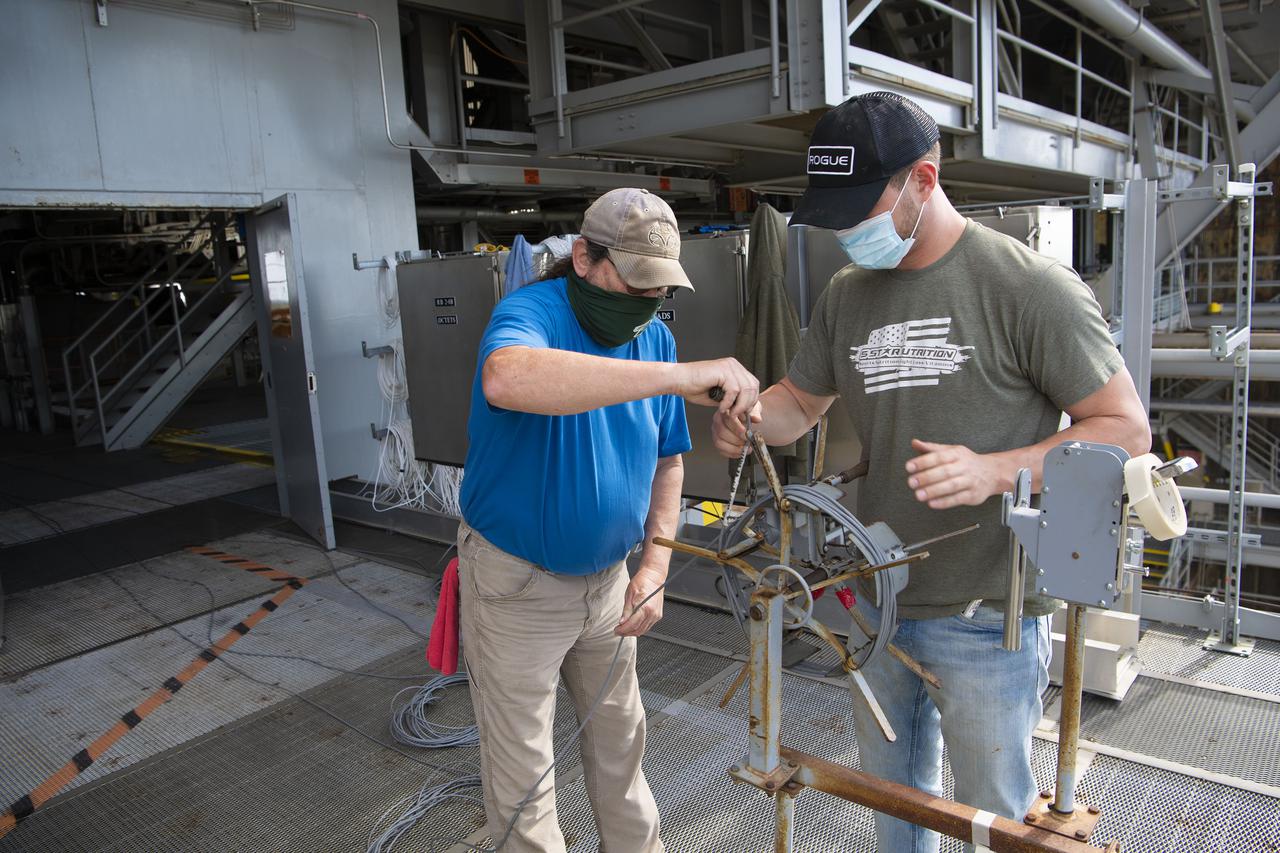
Team members at NASA’s Stennis Space Center near Bay St. Louis, Mississippi, complete refurbishment work on the first core stage of the agency’s Space Launch System (SLS) rocket. The work followed a successful hot fire of the stage and its four RS-25 engines March 18. The hot fire marked the culmination of a yearlong Green Run series of tests of the stage and its integrated systems. Following refurbishment work, the core stage will be removed from the test stand and transported to Kennedy Space Center in Florida, aboard NASA’s Pegasus barge, shown delivering equipment to the B-2 Test Stand. At Kennedy, the core stage will be integrated with the rest of SLS rocket and prepared for the launch of the Artemis I mission to the Moon. Photo Credit: NASA
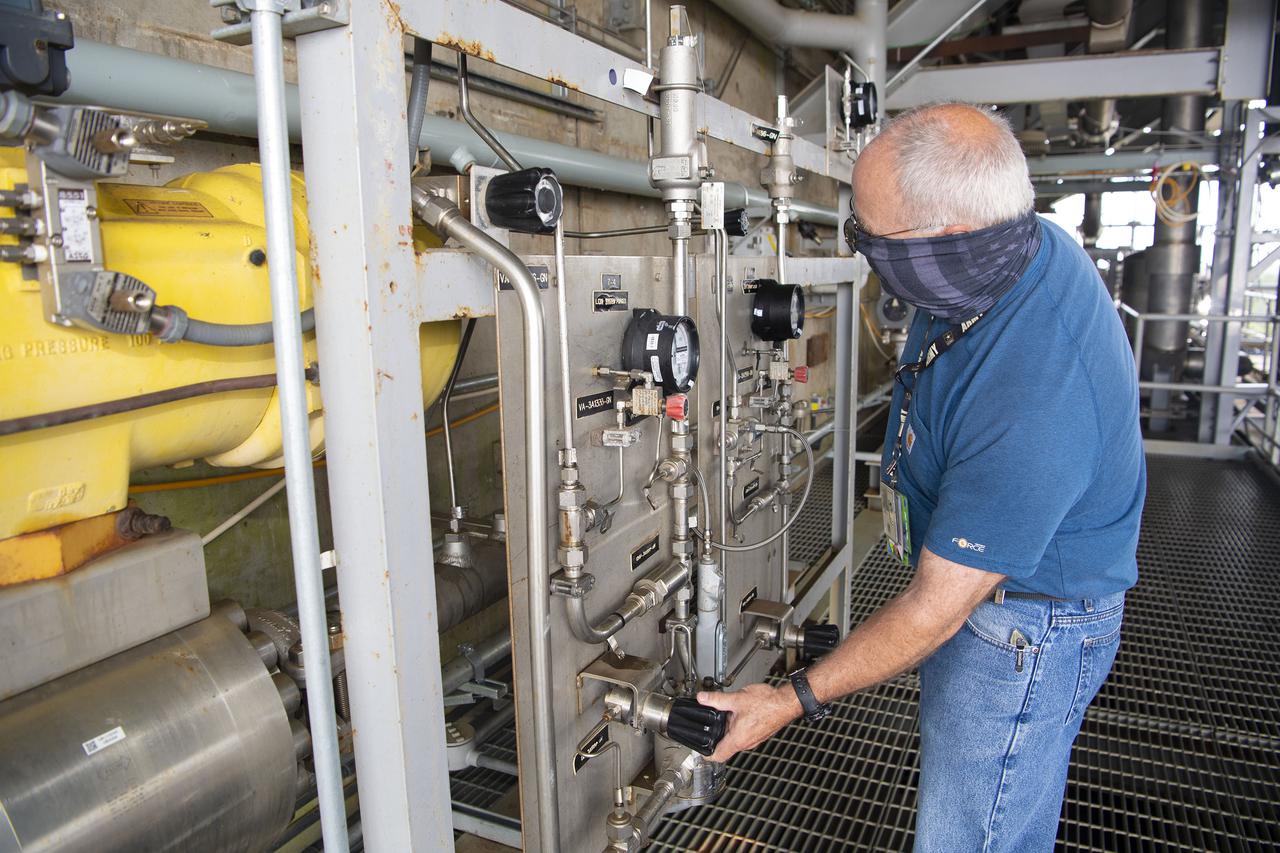
Team members at NASA’s Stennis Space Center near Bay St. Louis, Mississippi, complete refurbishment work on the first core stage of the agency’s Space Launch System (SLS) rocket. The work followed a successful hot fire of the stage and its four RS-25 engines March 18. The hot fire marked the culmination of a yearlong Green Run series of tests of the stage and its integrated systems. Following refurbishment work, the core stage will be removed from the test stand and transported to Kennedy Space Center in Florida, aboard NASA’s Pegasus barge, shown delivering equipment to the B-2 Test Stand. At Kennedy, the core stage will be integrated with the rest of SLS rocket and prepared for the launch of the Artemis I mission to the Moon. Photo Credit: NASA

Team members at NASA’s Stennis Space Center near Bay St. Louis, Mississippi, complete refurbishment work on the first core stage of the agency’s Space Launch System (SLS) rocket. The work followed a successful hot fire of the stage and its four RS-25 engines March 18. The hot fire marked the culmination of a yearlong Green Run series of tests of the stage and its integrated systems. Following refurbishment work, the core stage will be removed from the test stand and transported to Kennedy Space Center in Florida, aboard NASA’s Pegasus barge, shown delivering equipment to the B-2 Test Stand. At Kennedy, the core stage will be integrated with the rest of SLS rocket and prepared for the launch of the Artemis I mission to the Moon. Photo Credit: NASA
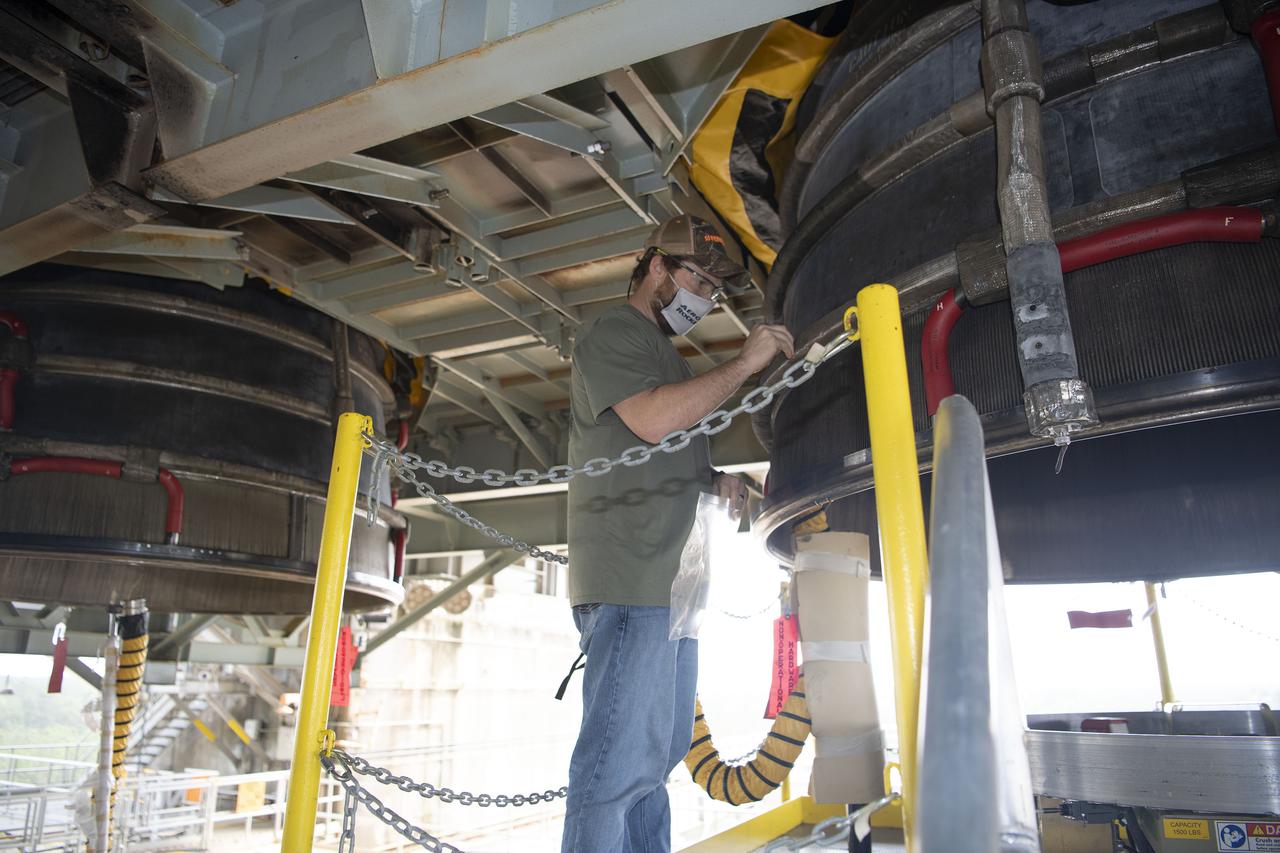
Team members at NASA’s Stennis Space Center near Bay St. Louis, Mississippi, complete refurbishment work on the first core stage of the agency’s Space Launch System (SLS) rocket. The work followed a successful hot fire of the stage and its four RS-25 engines March 18. The hot fire marked the culmination of a yearlong Green Run series of tests of the stage and its integrated systems. Following refurbishment work, the core stage will be removed from the test stand and transported to Kennedy Space Center in Florida, aboard NASA’s Pegasus barge, shown delivering equipment to the B-2 Test Stand. At Kennedy, the core stage will be integrated with the rest of SLS rocket and prepared for the launch of the Artemis I mission to the Moon. Photo Credit: NASA
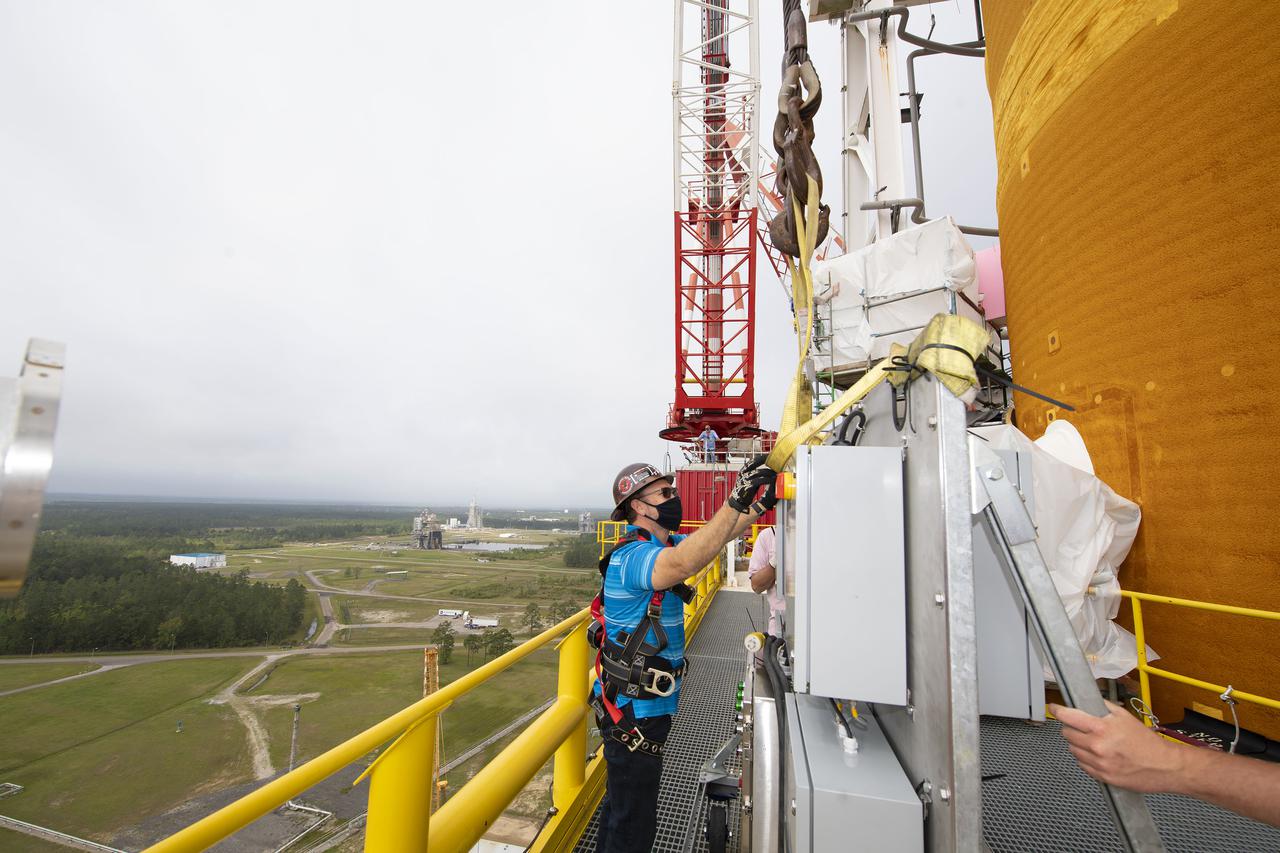
Team members at NASA’s Stennis Space Center near Bay St. Louis, Mississippi, complete refurbishment work on the first core stage of the agency’s Space Launch System (SLS) rocket. The work followed a successful hot fire of the stage and its four RS-25 engines March 18. The hot fire marked the culmination of a yearlong Green Run series of tests of the stage and its integrated systems. Following refurbishment work, the core stage will be removed from the test stand and transported to Kennedy Space Center in Florida, aboard NASA’s Pegasus barge, shown delivering equipment to the B-2 Test Stand. At Kennedy, the core stage will be integrated with the rest of SLS rocket and prepared for the launch of the Artemis I mission to the Moon. Photo Credit: NASA
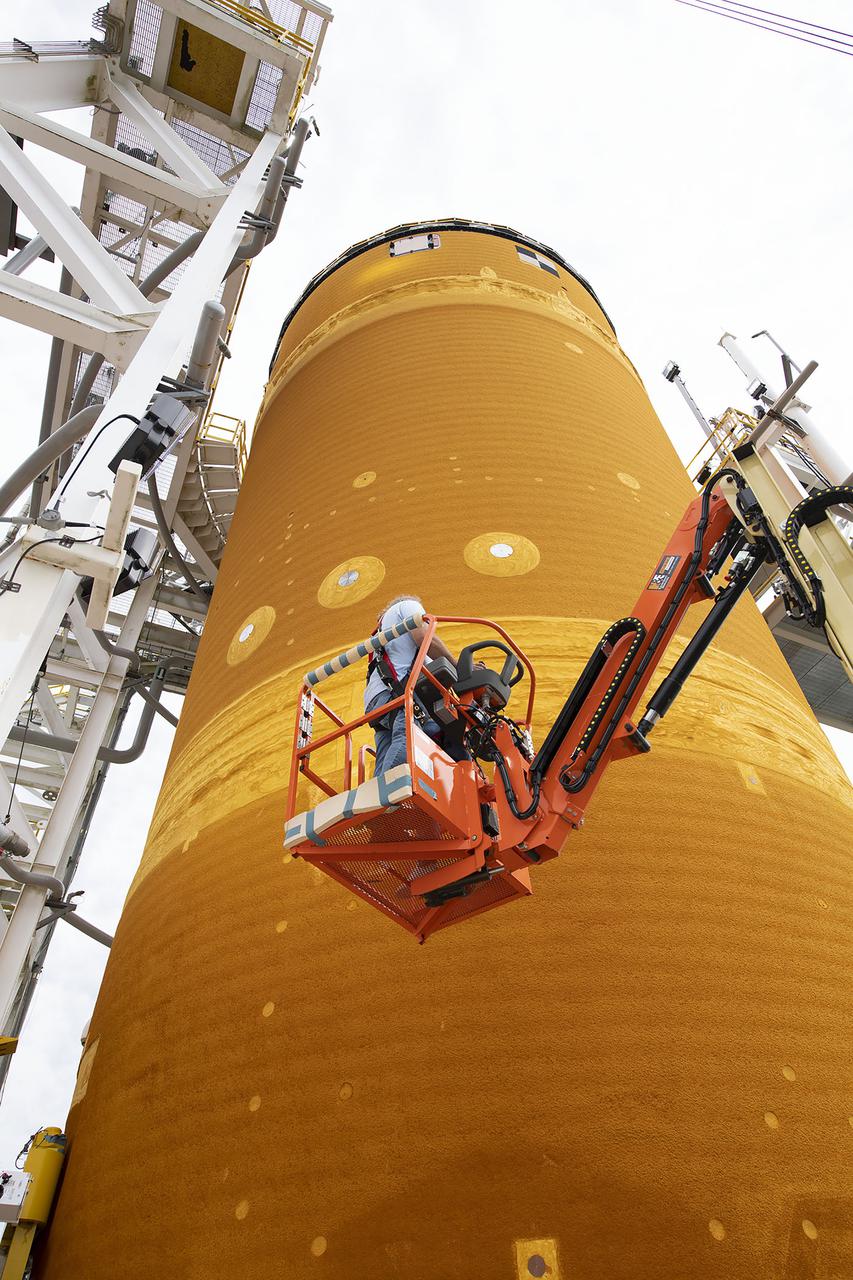
Team members at NASA’s Stennis Space Center near Bay St. Louis, Mississippi, complete refurbishment work on the first core stage of the agency’s Space Launch System (SLS) rocket. The work followed a successful hot fire of the stage and its four RS-25 engines March 18. The hot fire marked the culmination of a yearlong Green Run series of tests of the stage and its integrated systems. Following refurbishment work, the core stage will be removed from the test stand and transported to Kennedy Space Center in Florida, aboard NASA’s Pegasus barge, shown delivering equipment to the B-2 Test Stand. At Kennedy, the core stage will be integrated with the rest of SLS rocket and prepared for the launch of the Artemis I mission to the Moon. Photo Credit: NASA

Team members at NASA’s Stennis Space Center near Bay St. Louis, Mississippi, complete refurbishment work on the first core stage of the agency’s Space Launch System (SLS) rocket. The work followed a successful hot fire of the stage and its four RS-25 engines March 18. The hot fire marked the culmination of a yearlong Green Run series of tests of the stage and its integrated systems. Following refurbishment work, the core stage will be removed from the test stand and transported to Kennedy Space Center in Florida, aboard NASA’s Pegasus barge, shown delivering equipment to the B-2 Test Stand. At Kennedy, the core stage will be integrated with the rest of SLS rocket and prepared for the launch of the Artemis I mission to the Moon. Photo Credit: NASA
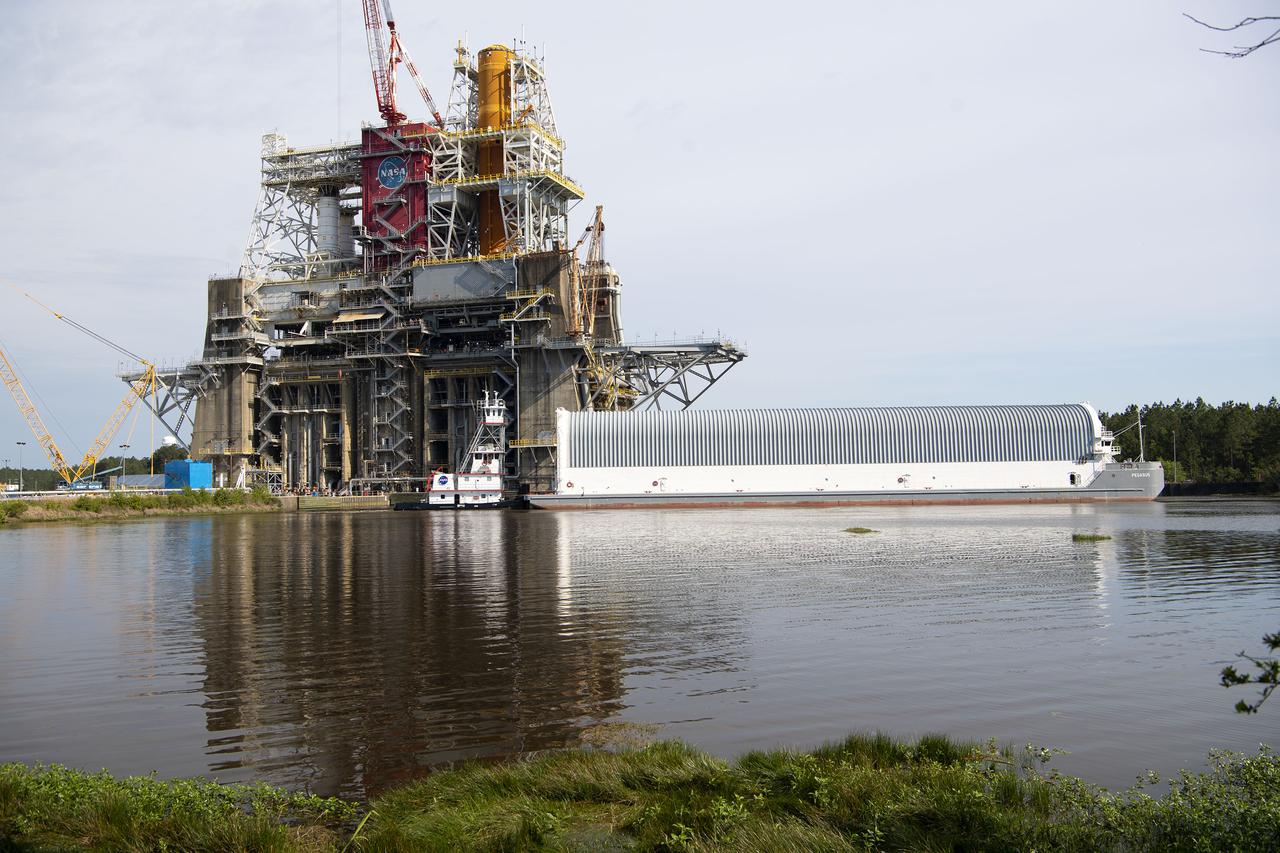
Team members at NASA’s Stennis Space Center near Bay St. Louis, Mississippi, complete refurbishment work on the first core stage of the agency’s Space Launch System (SLS) rocket. The work followed a successful hot fire of the stage and its four RS-25 engines March 18. The hot fire marked the culmination of a yearlong Green Run series of tests of the stage and its integrated systems. Following refurbishment work, the core stage will be removed from the test stand and transported to Kennedy Space Center in Florida, aboard NASA’s Pegasus barge, shown delivering equipment to the B-2 Test Stand. At Kennedy, the core stage will be integrated with the rest of SLS rocket and prepared for the launch of the Artemis I mission to the Moon. Photo Credit: NASA
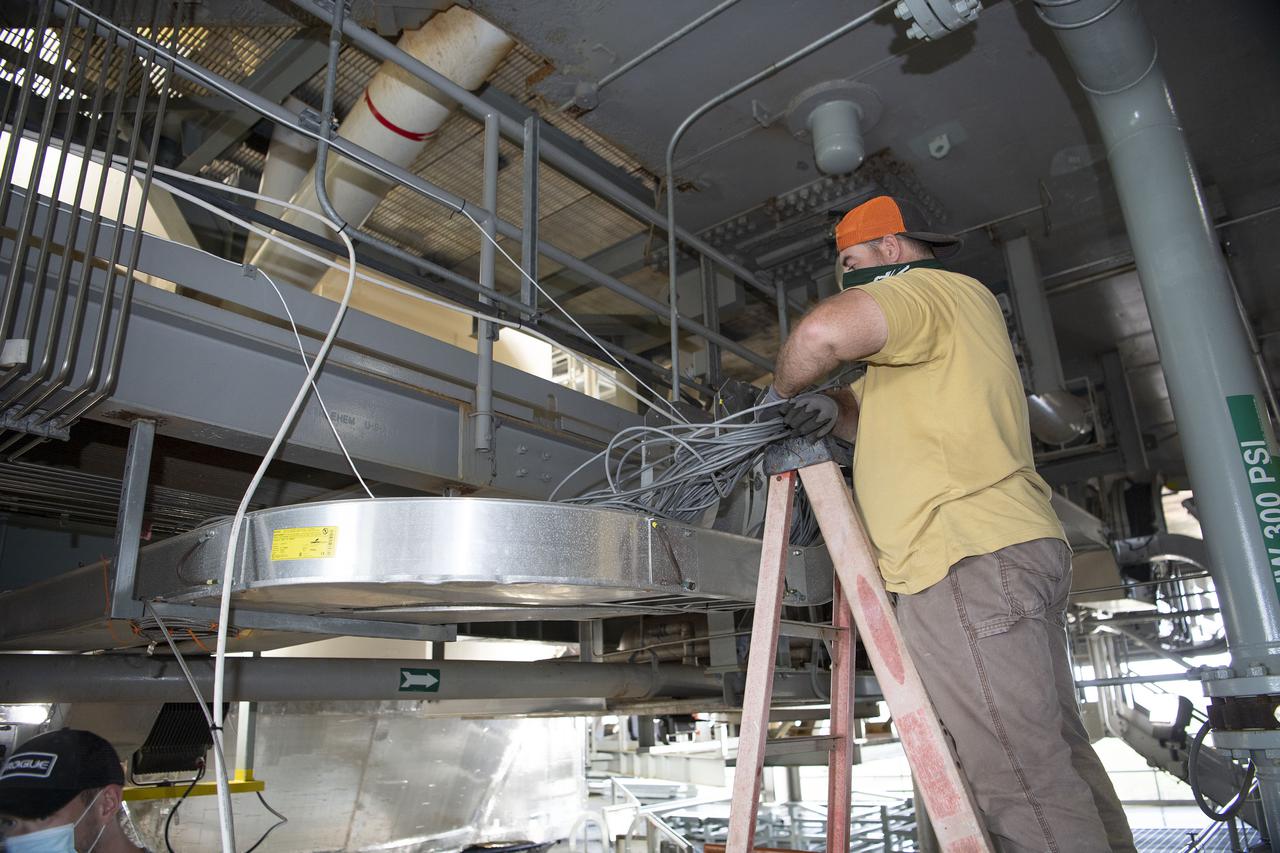
Team members at NASA’s Stennis Space Center near Bay St. Louis, Mississippi, complete refurbishment work on the first core stage of the agency’s Space Launch System (SLS) rocket. The work followed a successful hot fire of the stage and its four RS-25 engines March 18. The hot fire marked the culmination of a yearlong Green Run series of tests of the stage and its integrated systems. Following refurbishment work, the core stage will be removed from the test stand and transported to Kennedy Space Center in Florida, aboard NASA’s Pegasus barge, shown delivering equipment to the B-2 Test Stand. At Kennedy, the core stage will be integrated with the rest of SLS rocket and prepared for the launch of the Artemis I mission to the Moon. Photo Credit: NASA
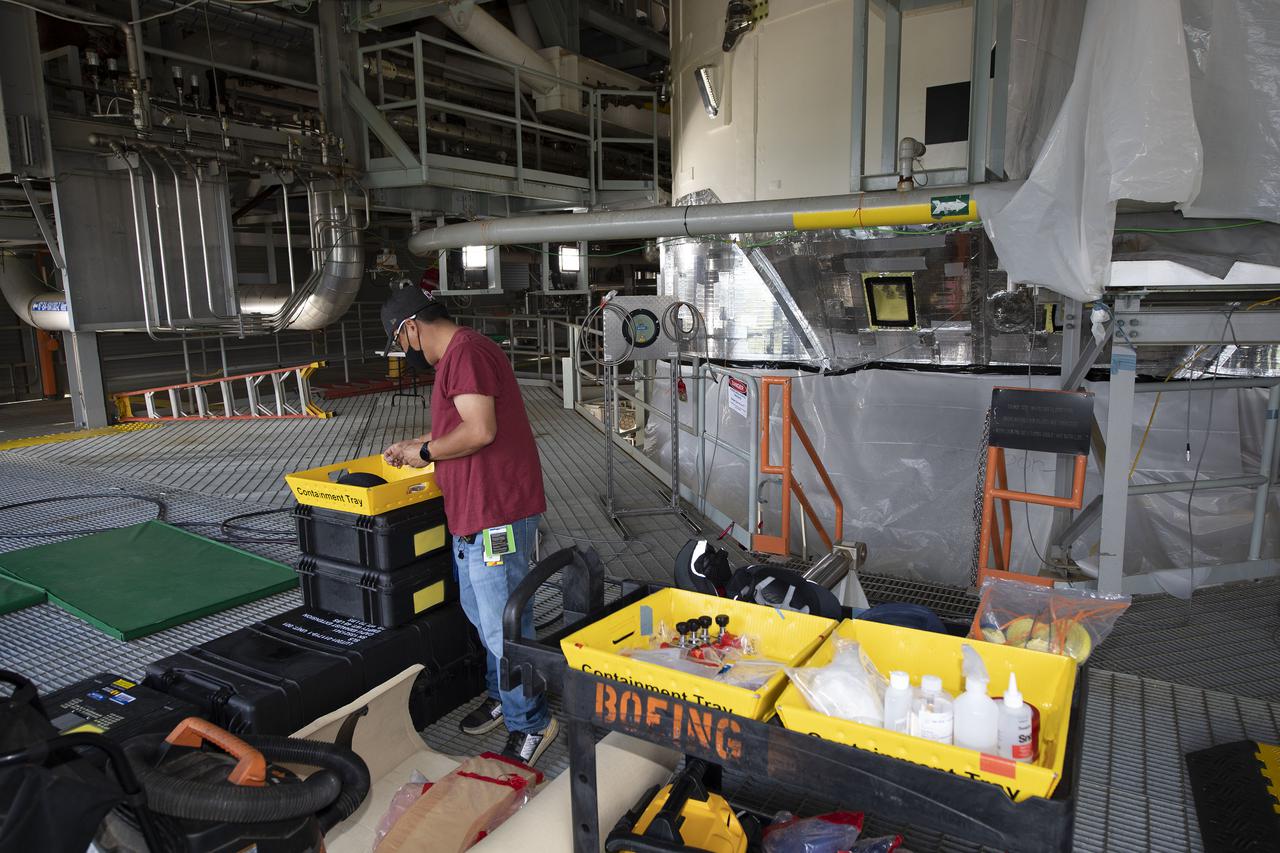
Team members at NASA’s Stennis Space Center near Bay St. Louis, Mississippi, complete refurbishment work on the first core stage of the agency’s Space Launch System (SLS) rocket. The work followed a successful hot fire of the stage and its four RS-25 engines March 18. The hot fire marked the culmination of a yearlong Green Run series of tests of the stage and its integrated systems. Following refurbishment work, the core stage will be removed from the test stand and transported to Kennedy Space Center in Florida, aboard NASA’s Pegasus barge, shown delivering equipment to the B-2 Test Stand. At Kennedy, the core stage will be integrated with the rest of SLS rocket and prepared for the launch of the Artemis I mission to the Moon. Photo Credit: NASA
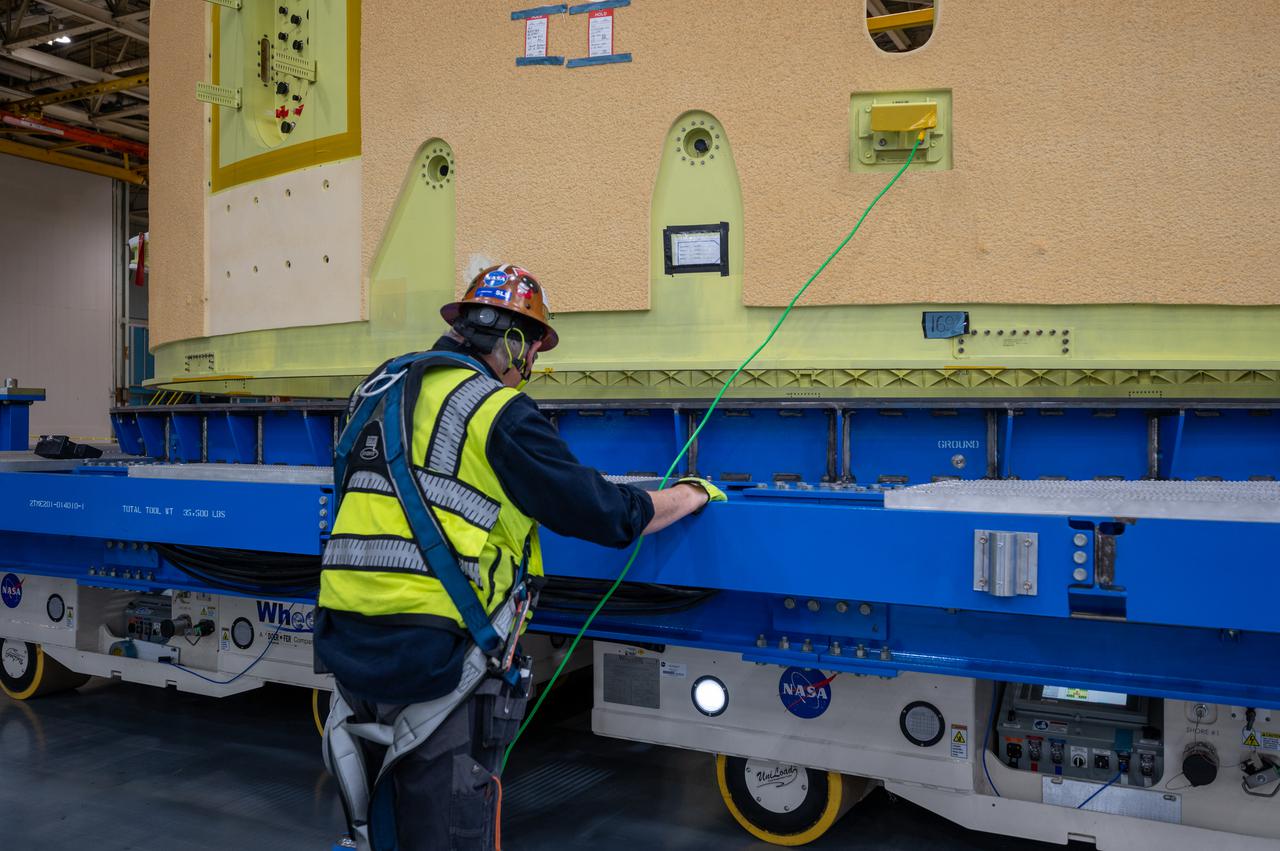
This image shows the forward skirt that will be used on the core stage of NASA’s Space Launch System rocket for Artemis II, the first crewed mission of NASA’s Artemis program, at NASA’s Michoud Assembly Facility. The SLS core stage is made up of five unique elements: the forward skirt, liquid oxygen tank, intertank, liquid hydrogen tank, and the engine section. The forward skirt houses flight computers, cameras, and avionics systems. The hardware is located at the top of the 212-foot-tall core stage and connects the upper part of the rocket to the core stage. Soon, technicians will ready the forward skirt for the first of three core stage assembly mates called the forward join. The forward join consists of three main parts -- the forward skirt, liquid oxygen tank, and intertank – to create the top, or forward part, of the core stage. Together with its four RS-25 engines, the rocket’s massive 212-foot-tall core stage — the largest stage NASA has ever built — and its twin solid rocket boosters will produce 8.8 million pounds of thrust to send NASA’s Orion spacecraft, astronauts and supplies beyond Earth’s orbit to the Moon and, ultimately, Mars. Offering more payload mass, volume capability and energy to speed missions through space, the SLS rocket, along with NASA’s Gateway in lunar orbit, the Human Landing System, and Orion spacecraft, is part of NASA’s backbone for deep space exploration and the Artemis lunar program. No other rocket is capable of carrying astronauts in Orion around the Moon in a single mission.
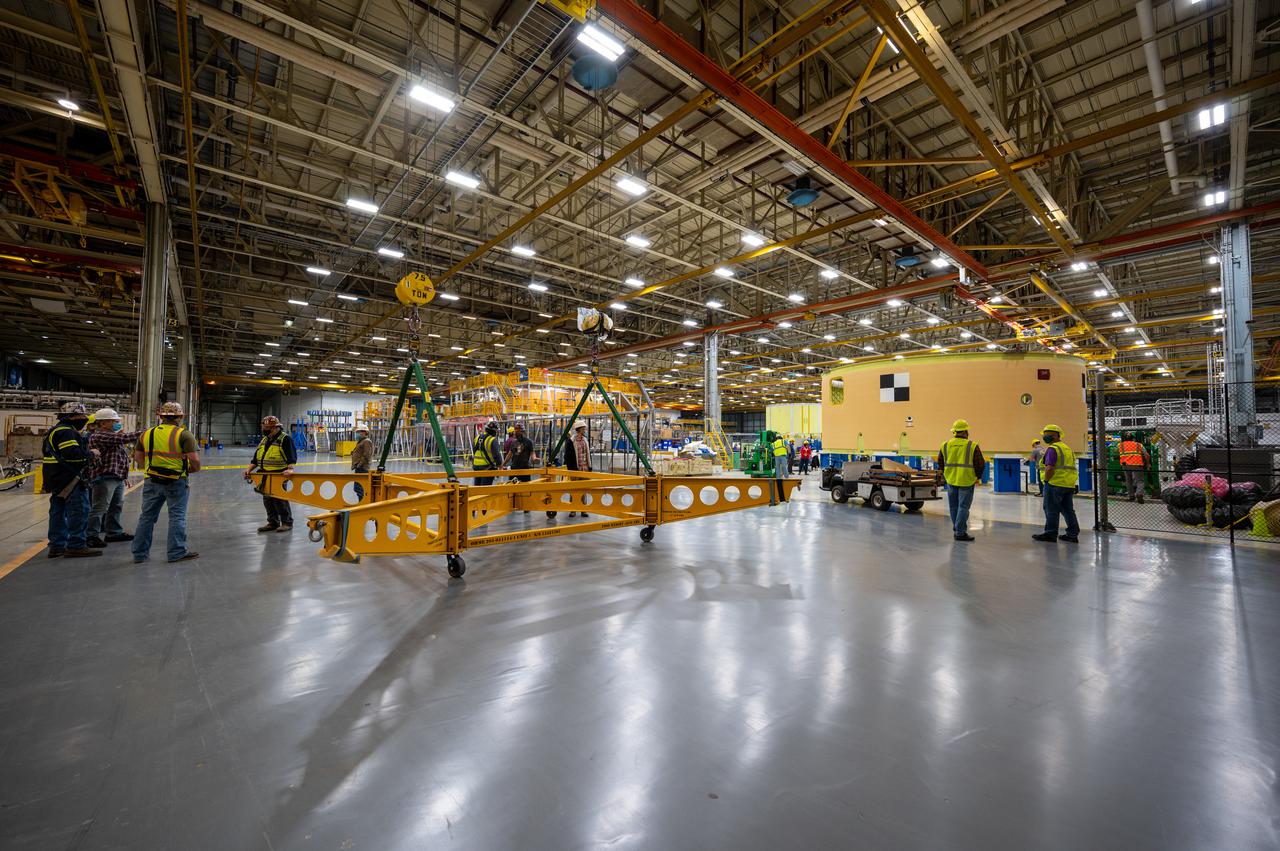
This image shows the forward skirt that will be used on the core stage of NASA’s Space Launch System rocket for Artemis II, the first crewed mission of NASA’s Artemis program, at NASA’s Michoud Assembly Facility. The SLS core stage is made up of five unique elements: the forward skirt, liquid oxygen tank, intertank, liquid hydrogen tank, and the engine section. The forward skirt houses flight computers, cameras, and avionics systems. The hardware is located at the top of the 212-foot-tall core stage and connects the upper part of the rocket to the core stage. Soon, technicians will ready the forward skirt for the first of three core stage assembly mates called the forward join. The forward join consists of three main parts -- the forward skirt, liquid oxygen tank, and intertank – to create the top, or forward part, of the core stage. Together with its four RS-25 engines, the rocket’s massive 212-foot-tall core stage — the largest stage NASA has ever built — and its twin solid rocket boosters will produce 8.8 million pounds of thrust to send NASA’s Orion spacecraft, astronauts and supplies beyond Earth’s orbit to the Moon and, ultimately, Mars. Offering more payload mass, volume capability and energy to speed missions through space, the SLS rocket, along with NASA’s Gateway in lunar orbit, the Human Landing System, and Orion spacecraft, is part of NASA’s backbone for deep space exploration and the Artemis lunar program. No other rocket is capable of carrying astronauts in Orion around the Moon in a single mission.
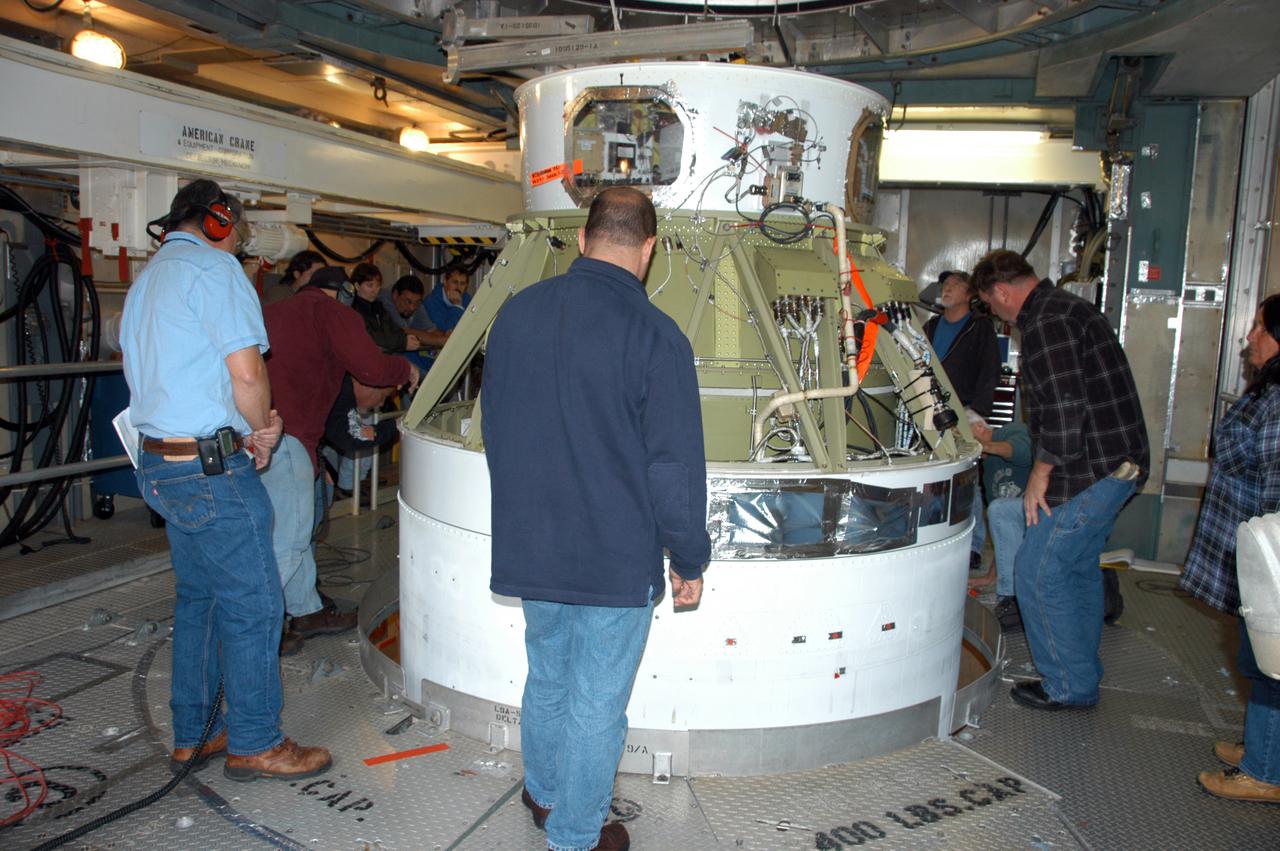
Inside the mobile service tower on Pad 17-B at Cape Canaveral Air Force Station, the Delta II second stage is mated with the first stage. The Delta II is the launch vehicle for the THEMIS spacecraft. THEMIS consists of five identical probes, the largest number of scientific satellites ever launched into orbit aboard a single rocket. This unique constellation of satellites will resolve the tantalizing mystery of what causes the spectacular sudden brightening of the aurora borealis and aurora australis - the fiery skies over the Earth's northern and southern polar regions. THEMIS is scheduled to launch Feb. 15 from Cape Canaveral Air Force Station.
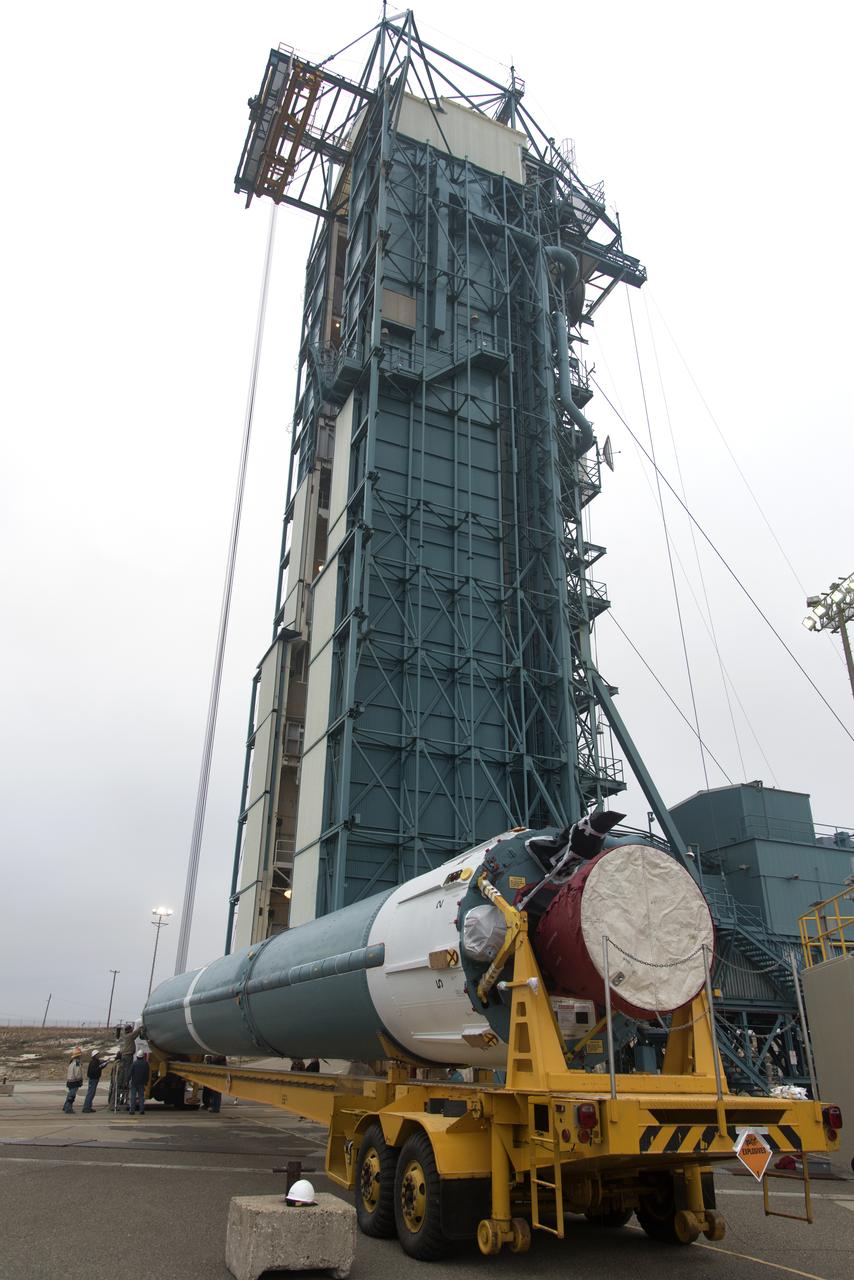
The United Launch Alliance Delta II first stage arrives at Space Launch Complex 2 on June 8, 2018, at Vandenberg Air Force Base in California. The booster will be lifted to vertical and moved into the mobile service tower. NASA's Ice, Cloud and land Elevation Satellite-2 (ICESat-2) will launch on the final Delta II rocket. ICESat-2 will measure the height of a changing Earth, one laser pulse at a time, 10,000 laser pulses a second. The satellite will carry a single instrument, the Advanced Topographic Laser Altimeter System. ICESat-2 will help scientists investigate why, and how much our planet's frozen and icy areas, called the cryosphere, is changing in a warming climate.
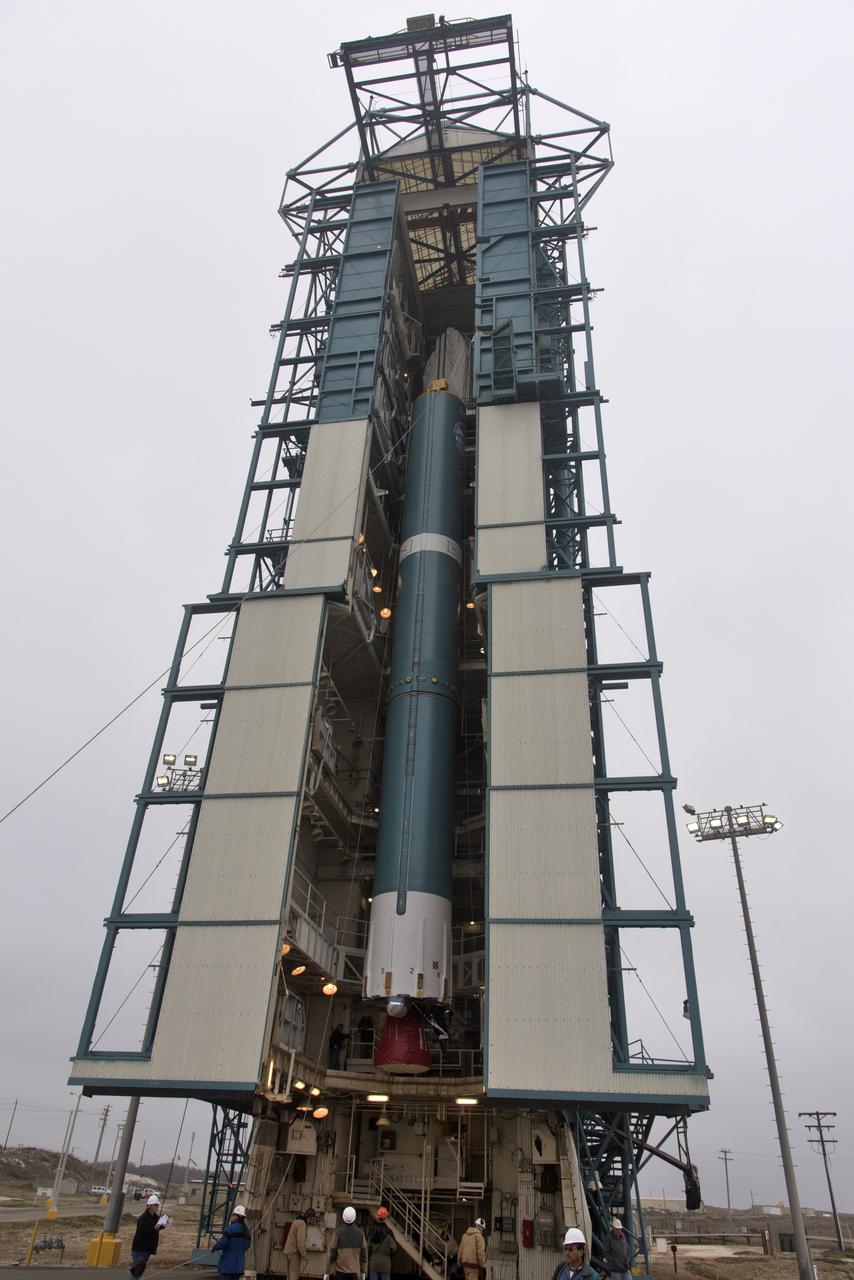
The United Launch Alliance Delta II first stage is lifted up in the mobile service tower at Space Launch Complex 2 on June 8, 2018, at Vandenberg Air Force Base in California. NASA's Ice, Cloud and land Elevation Satellite-2 (ICESat-2) will launch on the final Delta II rocket. ICESat-2 will measure the height of a changing Earth, one laser pulse at a time, 10,000 laser pulses a second. The satellite will carry a single instrument, the Advanced Topographic Laser Altimeter System. ICESat-2 will help scientists investigate why, and how much our planet's frozen and icy areas, called the cryosphere, is changing in a warming climate.
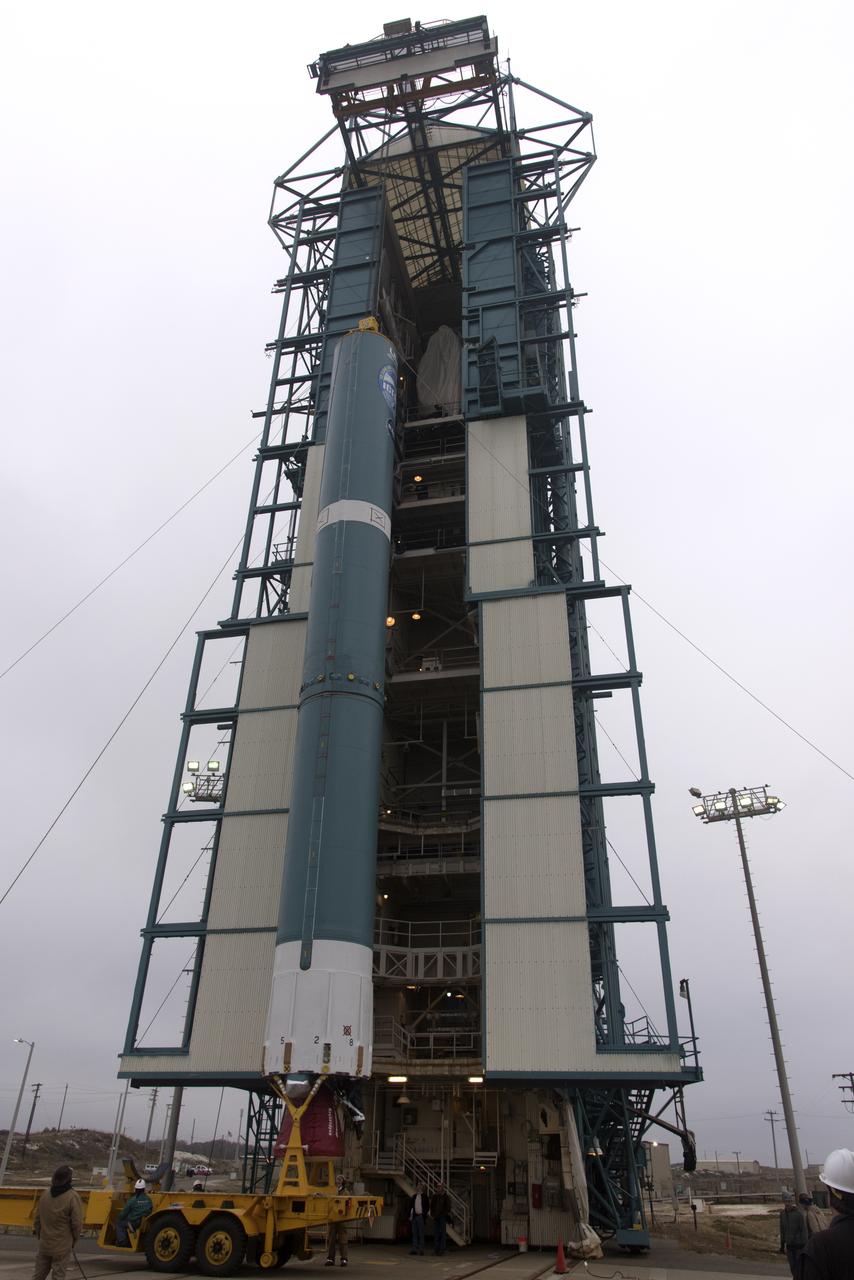
The United Launch Alliance Delta II first stage is lifted to vertical on the stand at Space Launch Complex 2 on June 8, 2018, at Vandenberg Air Force Base in California. The booster will be lifted and moved into the mobile service tower. NASA's Ice, Cloud and land Elevation Satellite-2 (ICESat-2) will launch on the final Delta II rocket. ICESat-2 will measure the height of a changing Earth, one laser pulse at a time, 10,000 laser pulses a second. The satellite will carry a single instrument, the Advanced Topographic Laser Altimeter System. ICESat-2 will help scientists investigate why, and how much our planet's frozen and icy areas, called the cryosphere, is changing in a warming climate.
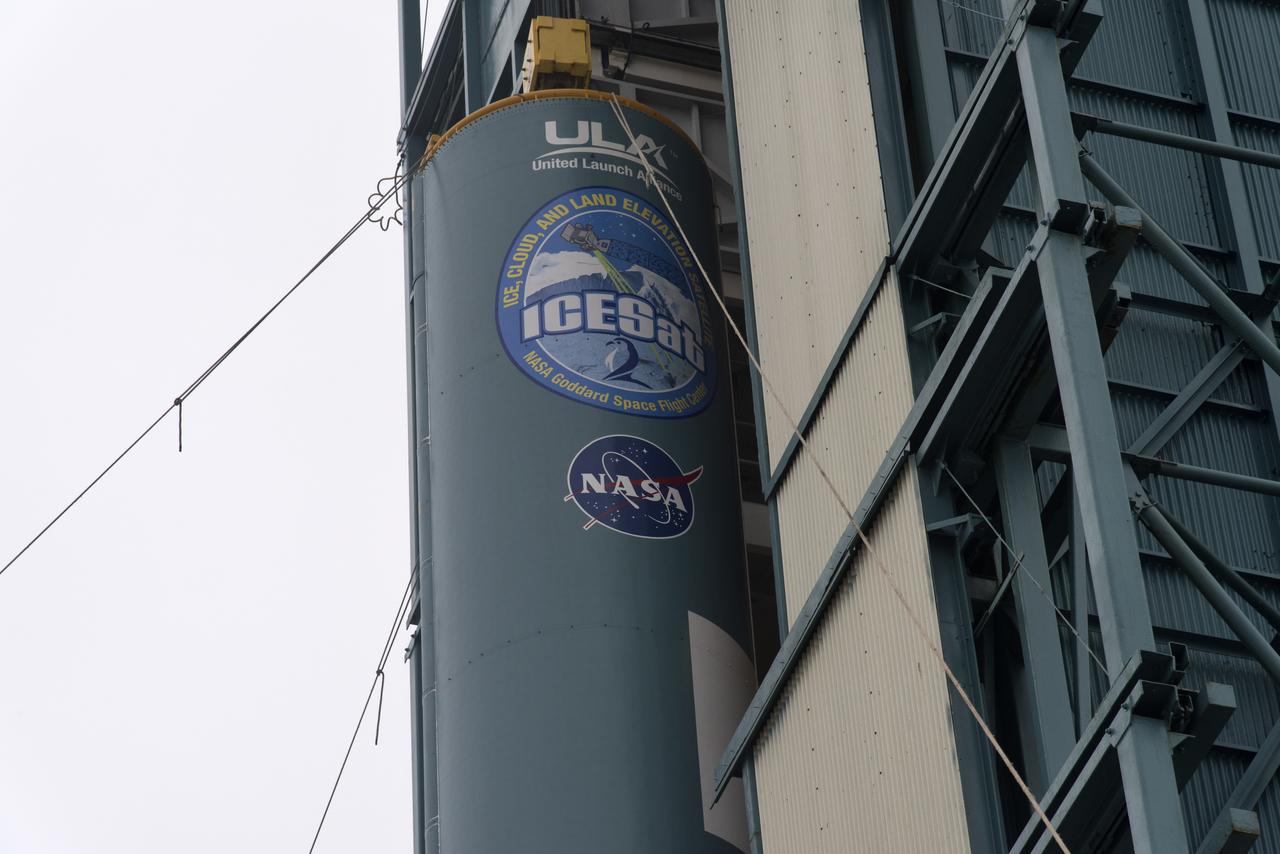
The United Launch Alliance Delta II first stage is lifted up and into the mobile service tower at Space Launch Complex 2 on June 8, 2018, at Vandenberg Air Force Base in California. NASA's Ice, Cloud and land Elevation Satellite-2 (ICESat-2) will launch on the final Delta II rocket. ICESat-2 will measure the height of a changing Earth, one laser pulse at a time, 10,000 laser pulses a second. The satellite will carry a single instrument, the Advanced Topographic Laser Altimeter System. ICESat-2 will help scientists investigate why, and how much our planet's frozen and icy areas, called the cryosphere, is changing in a warming climate.

The United Launch Alliance Delta II first stage is lifted to vertical at Space Launch Complex 2 on June 8, 2018, at Vandenberg Air Force Base in California. The booster will be lifted and moved into the mobile service tower. NASA's Ice, Cloud and land Elevation Satellite-2 (ICESat-2) will launch on the final Delta II rocket. ICESat-2 will measure the height of a changing Earth, one laser pulse at a time, 10,000 laser pulses a second. The satellite will carry a single instrument, the Advanced Topographic Laser Altimeter System. ICESat-2 will help scientists investigate why, and how much our planet's frozen and icy areas, called the cryosphere, is changing in a warming climate.

The United Launch Alliance Delta II first stage arrives at Space Launch Complex 2 on June 8, 2018, at Vandenberg Air Force Base in California. The booster will be lifted to vertical and moved into the mobile service tower. NASA's Ice, Cloud and land Elevation Satellite-2 (ICESat-2) will launch on the final Delta II rocket. ICESat-2 will measure the height of a changing Earth, one laser pulse at a time, 10,000 laser pulses a second. The satellite will carry a single instrument, the Advanced Topographic Laser Altimeter System. ICESat-2 will help scientists investigate why, and how much our planet's frozen and icy areas, called the cryosphere, is changing in a warming climate.

The United Launch Alliance Delta II first stage is lifted up from its stand and moved into the mobile service tower at Space Launch Complex 2 on June 8, 2018, at Vandenberg Air Force Base in California. NASA's Ice, Cloud and land Elevation Satellite-2 (ICESat-2) will launch on the final Delta II rocket. ICESat-2 will measure the height of a changing Earth, one laser pulse at a time, 10,000 laser pulses a second. The satellite will carry a single instrument, the Advanced Topographic Laser Altimeter System. ICESat-2 will help scientists investigate why, and how much our planet's frozen and icy areas, called the cryosphere, is changing in a warming climate.
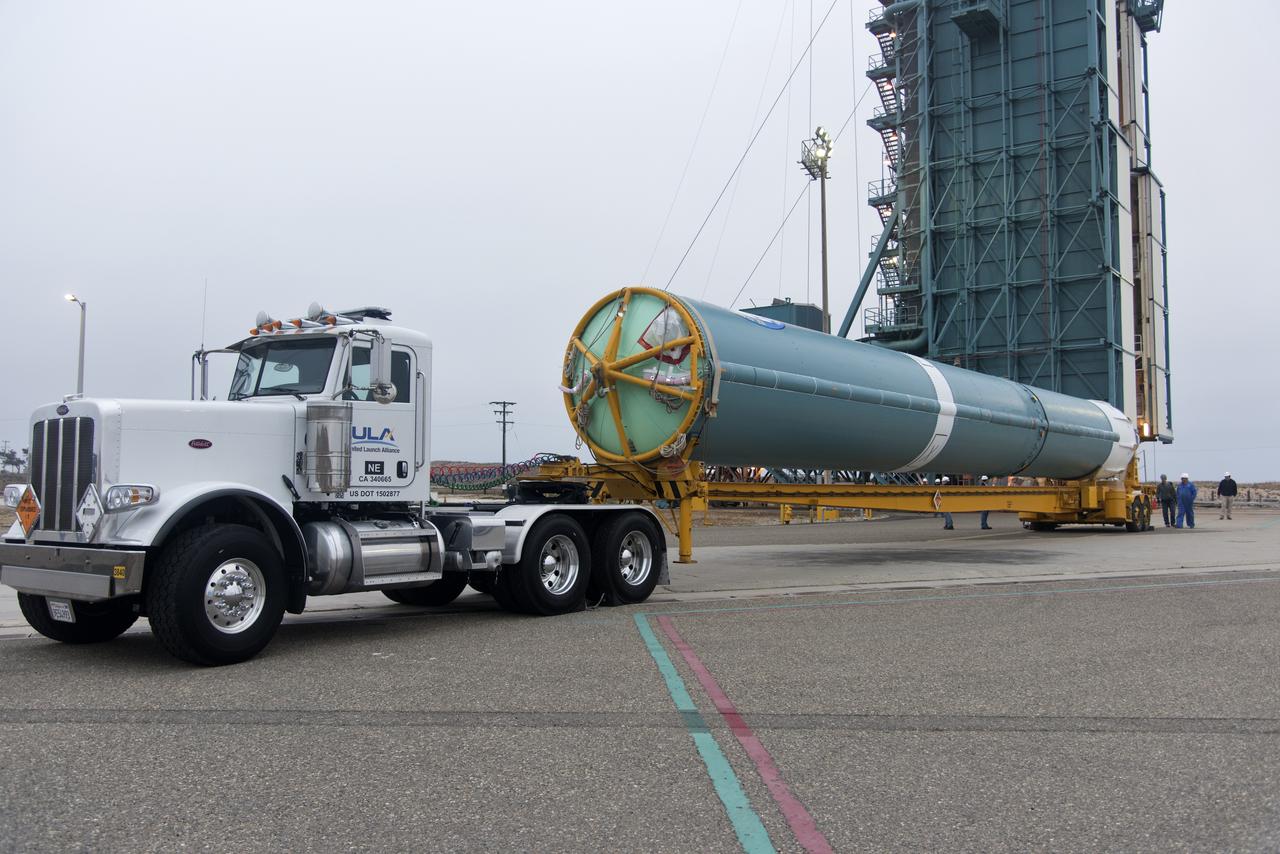
The United Launch Alliance Delta II first stage arrives at Space Launch Complex 2 on June 8, 2018, at Vandenberg Air Force Base in California. The booster will be lifted to vertical and moved into the mobile service tower. NASA's Ice, Cloud and land Elevation Satellite-2 (ICESat-2) will launch on the final Delta II rocket. ICESat-2 will measure the height of a changing Earth, one laser pulse at a time, 10,000 laser pulses a second. The satellite will carry a single instrument, the Advanced Topographic Laser Altimeter System. ICESat-2 will help scientists investigate why, and how much our planet's frozen and icy areas, called the cryosphere, is changing in a warming climate.
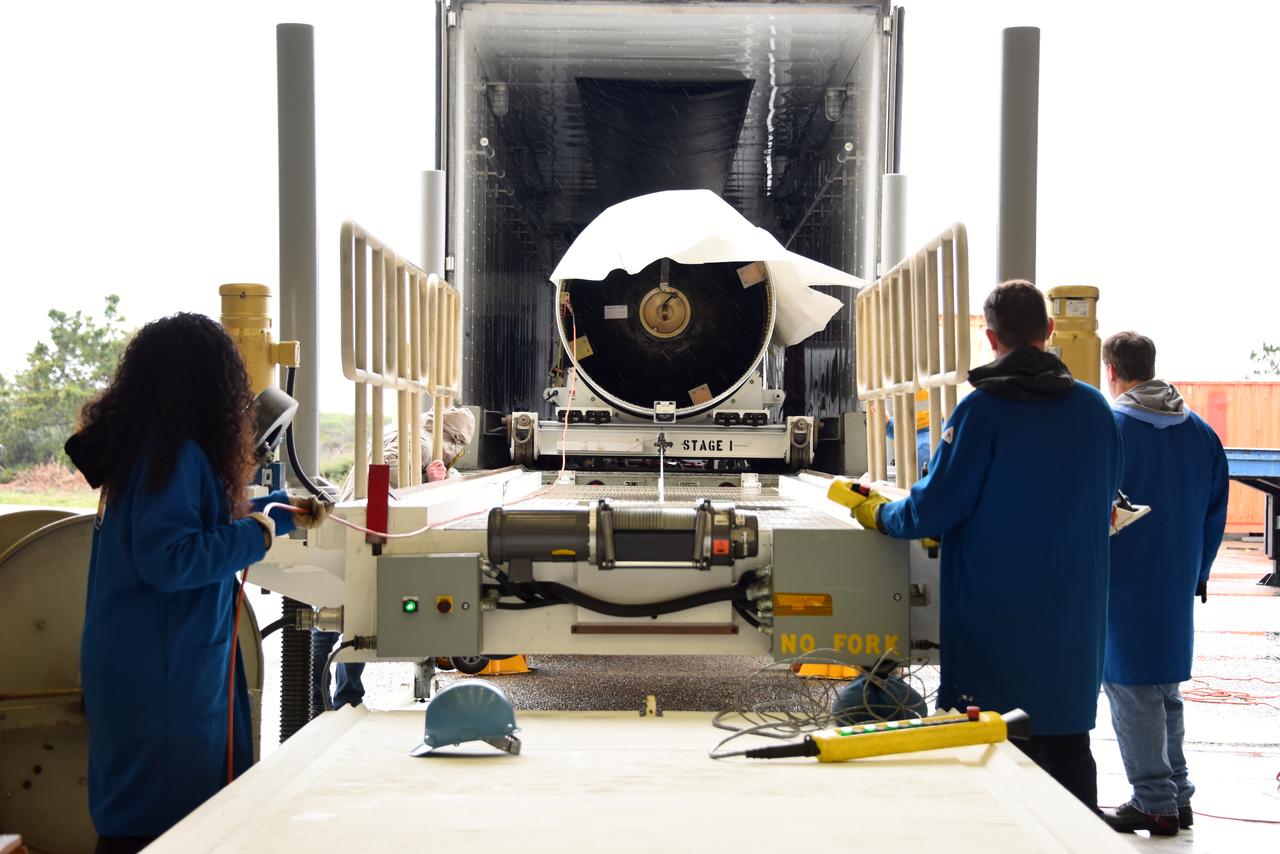
The first stage motor for the Orbital ATK Pegasus XL rocket is offloaded from a truck at Building 1555 at Vandenberg Air Force Base in California. The Pegasus rocket is being prepared for NASA's Ionospheric Connection Explorer, or ICON, mission. ICON will launch from the Kwajalein Atoll aboard the Pegasus XL on Dec. 8, 2017. ICON will study the frontier of space - the dynamic zone high in Earth's atmosphere where terrestrial weather from below meets space weather above. The explorer will help determine the physics of Earth's space environment and pave the way for mitigating its effects on our technology, communications systems and society.

The first stage motor for the Orbital ATK Pegasus XL rocket is moved into Building 1555 at Vandenberg Air Force Base in California. The rocket is being prepared for NASA's Ionospheric Connection Explorer, or ICON, mission. ICON will launch from the Kwajalein Atoll aboard the Pegasus XL on Dec. 8, 2017. ICON will study the frontier of space - the dynamic zone high in Earth's atmosphere where terrestrial weather from below meets space weather above. The explorer will help determine the physics of Earth's space environment and pave the way for mitigating its effects on our technology, communications systems and society.
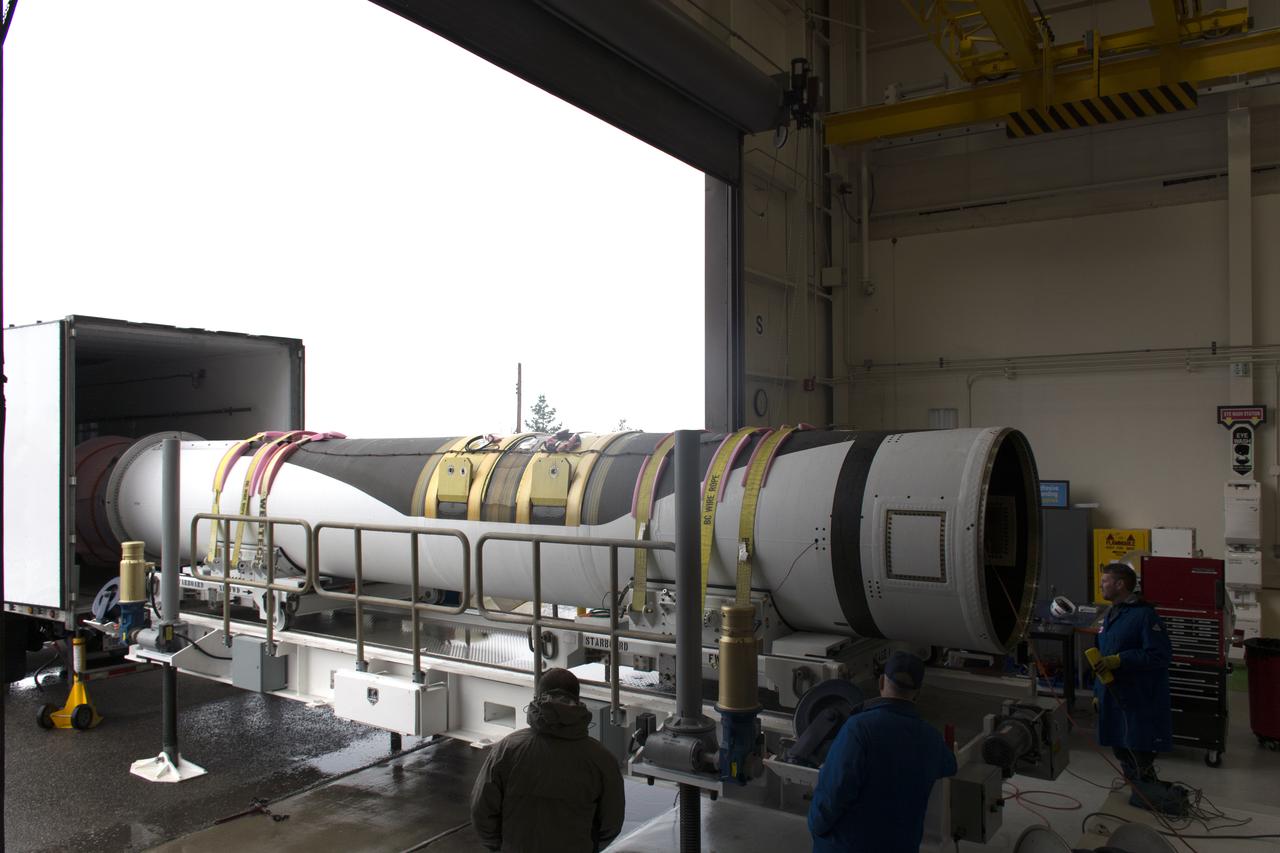
The first stage motor for the Orbital ATK Pegasus XL rocket arrives by truck at Building 1555 at Vandenberg Air Force Base in California. The Pegasus rocket is being prepared for NASA's Ionospheric Connection Explorer, or ICON, mission. ICON will launch from the Kwajalein Atoll aboard the Pegasus XL on Dec. 8, 2017. ICON will study the frontier of space - the dynamic zone high in Earth's atmosphere where terrestrial weather from below meets space weather above. The explorer will help determine the physics of Earth's space environment and pave the way for mitigating its effects on our technology, communications systems and society.
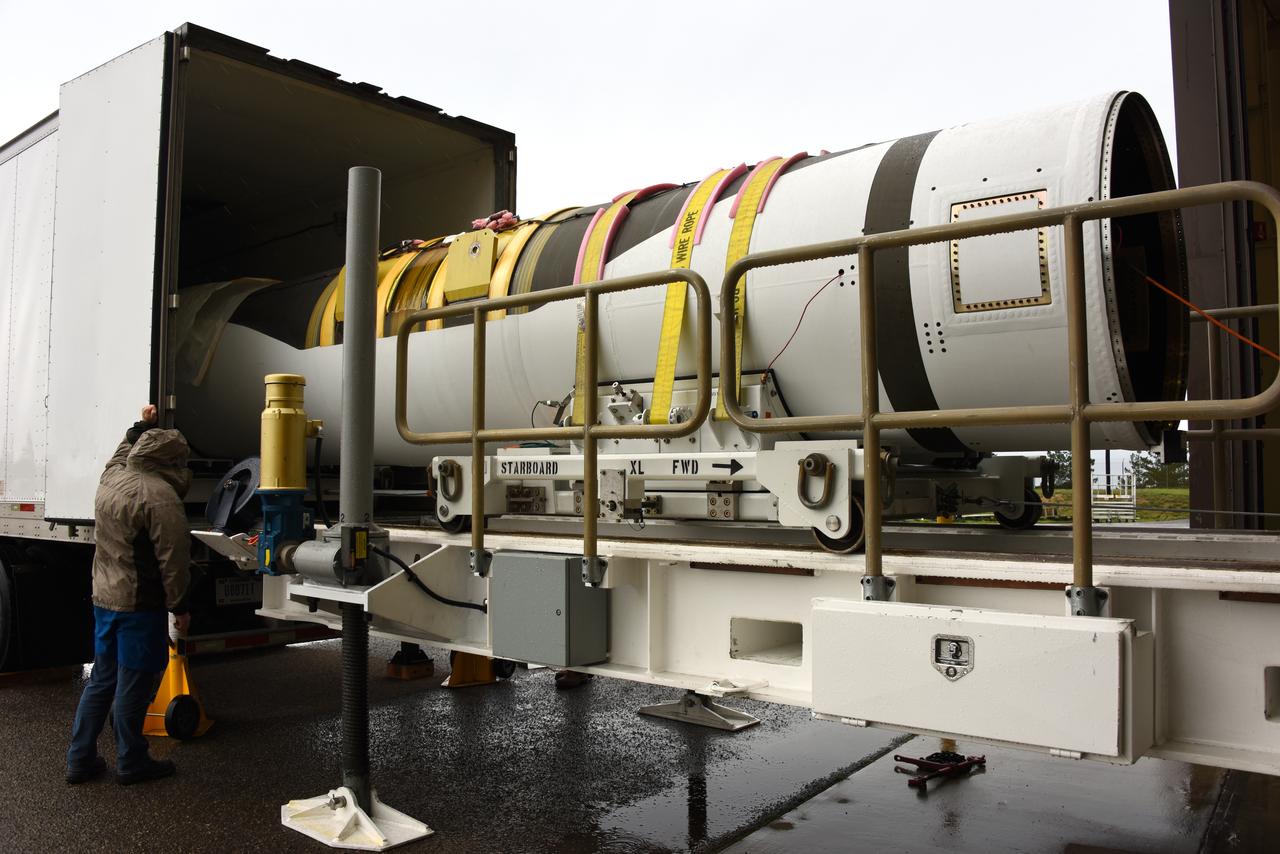
The first stage motor for the Orbital ATK Pegasus XL rocket is offloaded from a truck at Building 1555 at Vandenberg Air Force Base in California. The Pegasus rocket is being prepared for NASA's Ionospheric Connection Explorer, or ICON, mission. ICON will launch from the Kwajalein Atoll aboard the Pegasus XL on Dec. 8, 2017. ICON will study the frontier of space - the dynamic zone high in Earth's atmosphere where terrestrial weather from below meets space weather above. The explorer will help determine the physics of Earth's space environment and pave the way for mitigating its effects on our technology, communications systems and society.

The first stage of a United Launch Alliance Delta II rocket moves into place in front of at the mobile service tower on Launch Pad 17-B at Cape Canaveral Air Force Station in Florida. The rocket will be raised to a vertical position and lifted into the tower. The rocket is the launch vehicle for the THEMIS spacecraft, consisting of five identical probes, the largest number of scientific satellites ever launched into orbit aboard a single rocket. This unique constellation of satellites will resolve the tantalizing mystery of what causes the spectacular sudden brightening of the aurora borealis and aurora australis - the fiery skies over the Earth's northern and southern polar regions. After the first stage is in the mobile service tower on the pad, nine solid rocket boosters will be placed around the base of the first stage and attached in sets of three. THEMIS is scheduled to launch aboard the Delta II at 6:07 p.m. EST on Feb. 15.
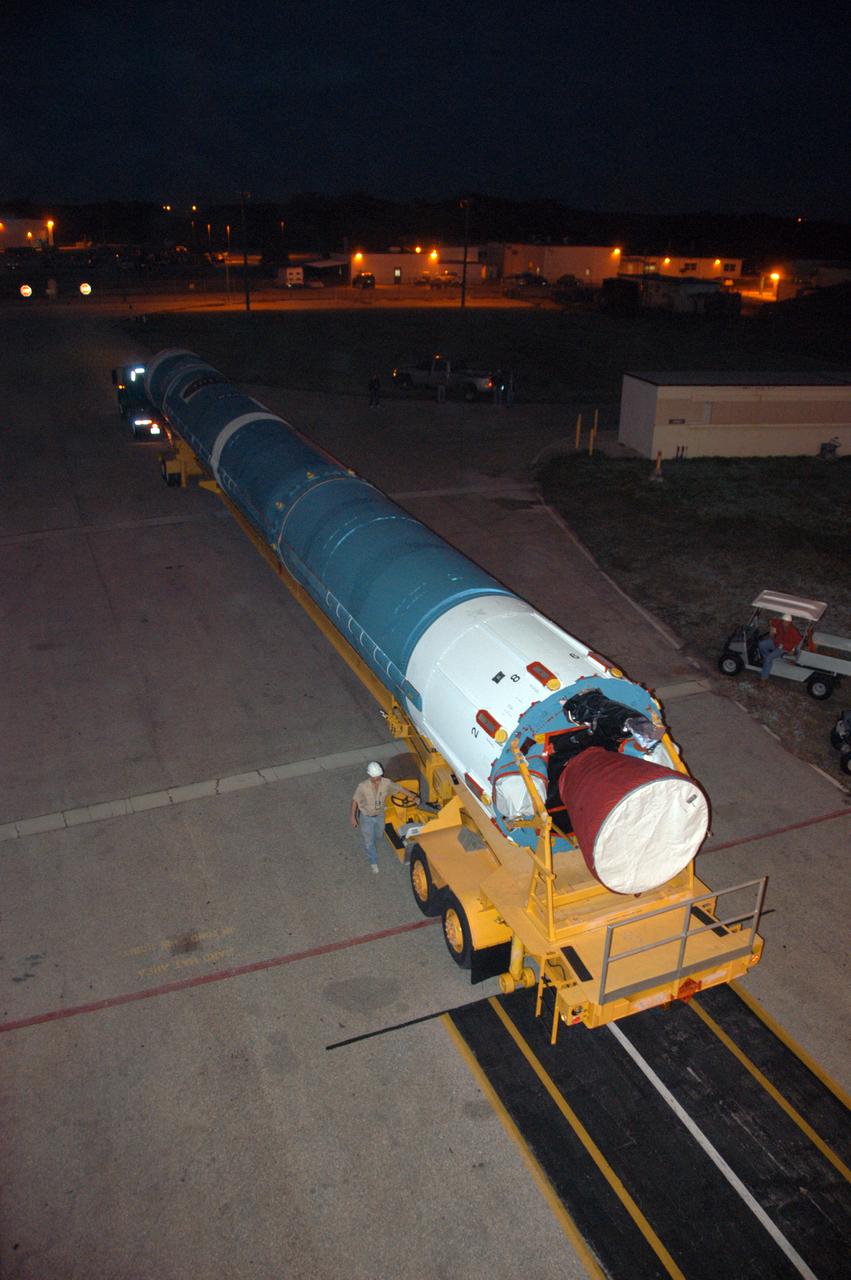
The first stage of a United Launch Alliance Delta II rocket is on its way to Launch Pad 17-B on Cape Canaveral Air Force Station in Florida. The rocket is the launch vehicle for the THEMIS spacecraft, consisting of five identical probes, the largest number of scientific satellites ever launched into orbit aboard a single rocket. This unique constellation of satellites will resolve the tantalizing mystery of what causes the spectacular sudden brightening of the aurora borealis and aurora australis - the fiery skies over the Earth's northern and southern polar regions. After the first stage is in the mobile service tower on the pad, nine solid rocket boosters will be placed around the base of the first stage and attached in sets of three. THEMIS is scheduled to launch aboard the Delta II at 6:07 p.m. EST on Feb. 15.

On Launch Pad 17-B at Cape Canaveral Air Force Station in Florida, the first stage of a United Launch Alliance Delta II rocket is raised off its transporter to a vertical position. The rocket will then be lifted into the mobile service tower. The rocket is the launch vehicle for the THEMIS spacecraft, consisting of five identical probes, the largest number of scientific satellites ever launched into orbit aboard a single rocket. This unique constellation of satellites will resolve the tantalizing mystery of what causes the spectacular sudden brightening of the aurora borealis and aurora australis - the fiery skies over the Earth's northern and southern polar regions. After the first stage is in the mobile service tower on the pad, nine solid rocket boosters will be placed around the base of the first stage and attached in sets of three. THEMIS is scheduled to launch aboard the Delta II at 6:07 p.m. EST on Feb. 15.

The first stage of a United Launch Alliance Delta II rocket leaves for Launch Pad 17-B on Cape Canaveral Air Force Station in Florida. The rocket is the launch vehicle for the THEMIS spacecraft, consisting of five identical probes, the largest number of scientific satellites ever launched into orbit aboard a single rocket. This unique constellation of satellites will resolve the tantalizing mystery of what causes the spectacular sudden brightening of the aurora borealis and aurora australis - the fiery skies over the Earth's northern and southern polar regions. After the first stage is in the mobile service tower on the pad, nine solid rocket boosters will be placed around the base of the first stage and attached in sets of three. THEMIS is scheduled to launch aboard the Delta II at 6:07 p.m. EST on Feb. 15.

On Launch Pad 17-B at Cape Canaveral Air Force Station in Florida, a crane (foreground) raises the first stage of a United Launch Alliance Delta II rocket off its transporter to a vertical position. The rocket will then be lifted into the mobile service tower. The rocket is the launch vehicle for the THEMIS spacecraft, consisting of five identical probes, the largest number of scientific satellites ever launched into orbit aboard a single rocket. This unique constellation of satellites will resolve the tantalizing mystery of what causes the spectacular sudden brightening of the aurora borealis and aurora australis - the fiery skies over the Earth's northern and southern polar regions. After the first stage is in the mobile service tower on the pad, nine solid rocket boosters will be placed around the base of the first stage and attached in sets of three. THEMIS is scheduled to launch aboard the Delta II at 6:07 p.m. EST on Feb. 15.

The first stage of a United Launch Alliance Delta II rocket arrives at the mobile service tower on Launch Pad 17-B at Cape Canaveral Air Force Station in Florida. The rocket is the launch vehicle for the THEMIS spacecraft, consisting of five identical probes, the largest number of scientific satellites ever launched into orbit aboard a single rocket. This unique constellation of satellites will resolve the tantalizing mystery of what causes the spectacular sudden brightening of the aurora borealis and aurora australis - the fiery skies over the Earth's northern and southern polar regions. After the first stage is in the mobile service tower on the pad, nine solid rocket boosters will be placed around the base of the first stage and attached in sets of three. THEMIS is scheduled to launch aboard the Delta II at 6:07 p.m. EST on Feb. 15.
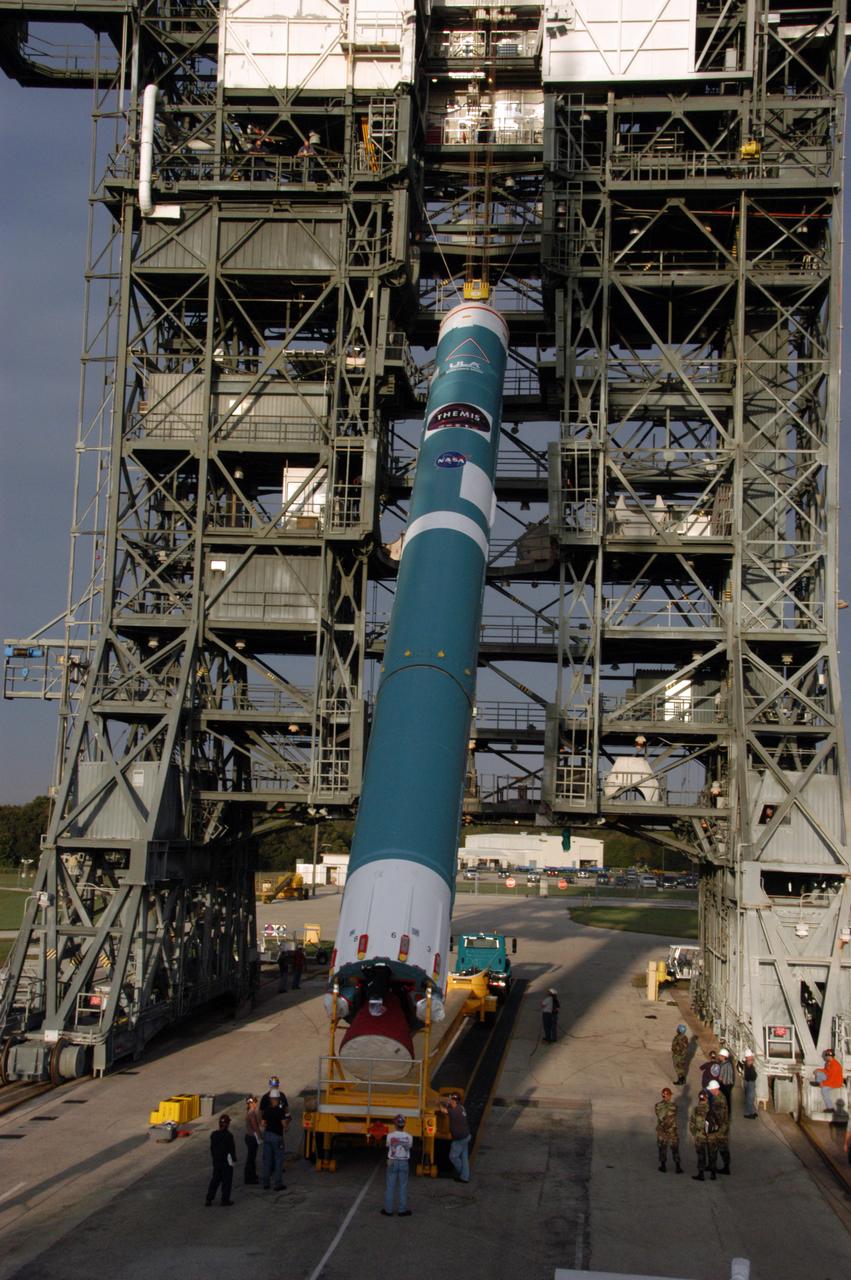
On Launch Pad 17-B at Cape Canaveral Air Force Station in Florida, the first stage of a United Launch Alliance Delta II rocket is raised off its transporter to a vertical position. The rocket will then be lifted into the mobile service tower. The rocket is the launch vehicle for the THEMIS spacecraft, consisting of five identical probes, the largest number of scientific satellites ever launched into orbit aboard a single rocket. This unique constellation of satellites will resolve the tantalizing mystery of what causes the spectacular sudden brightening of the aurora borealis and aurora australis - the fiery skies over the Earth's northern and southern polar regions. After the first stage is in the tower on the pad, nine solid rocket boosters will be placed around the base of the first stage and attached in sets of three. THEMIS is scheduled to launch aboard the Delta II at 6:07 p.m. EST on Feb. 15.

These images show how the team rolled out the completed core stage for NASA’s Space Launch System rocket from NASA’s Michoud Assembly Facility in New Orleans. Crews moved the flight hardware for the first Artemis mission to NASA’s Pegasus barge on Jan. 8 in preparation for the core stage Green Run test series at NASA’s Stennis Space Center near Bay St. Louis, Mississippi. Pegasus, which was modified to ferry SLS rocket hardware, will transport the core stage from Michoud to Stennis for the comprehensive core stage Green Run test series. Once at Stennis, the Artemis rocket stage will be loaded into the B-2 Test Stand for the core stage Green Run test series. The comprehensive test campaign will progressively bring the entire core stage, including its avionics and engines, to life for the first time to verify the stage is fit for flight ahead of the launch of Artemis I. Assembly and integration of the core stage and its four RS-25 engines has been a collaborative, multistep process for NASA and its partners Boeing, the core stage lead contractor, and Aerojet Rocketdyne, the RS-25 engines lead contractor. Together with four RS-25 engines, the rocket’s massive 212-foot-tall core stage — the largest stage NASA has ever built — and its twin solid rocket boosters will produce 8.8 million pounds of thrust to send NASA’s Orion spacecraft, astronauts and supplies beyond Earth’s orbit to the Moon and, ultimately, Mars. Offering more payload mass, volume capability and energy to speed missions through space, the SLS rocket, along with NASA’s Gateway in lunar orbit and Orion, is part of NASA’s backbone for deep space exploration and the Artemis lunar program.

These images show how the team rolled out the completed core stage for NASA’s Space Launch System rocket from NASA’s Michoud Assembly Facility in New Orleans. Crews moved the flight hardware for the first Artemis mission to NASA’s Pegasus barge on Jan. 8 in preparation for the core stage Green Run test series at NASA’s Stennis Space Center near Bay St. Louis, Mississippi. Pegasus, which was modified to ferry SLS rocket hardware, will transport the core stage from Michoud to Stennis for the comprehensive core stage Green Run test series. Once at Stennis, the Artemis rocket stage will be loaded into the B-2 Test Stand for the core stage Green Run test series. The comprehensive test campaign will progressively bring the entire core stage, including its avionics and engines, to life for the first time to verify the stage is fit for flight ahead of the launch of Artemis I. Assembly and integration of the core stage and its four RS-25 engines has been a collaborative, multistep process for NASA and its partners Boeing, the core stage lead contractor, and Aerojet Rocketdyne, the RS-25 engines lead contractor. Together with four RS-25 engines, the rocket’s massive 212-foot-tall core stage — the largest stage NASA has ever built — and its twin solid rocket boosters will produce 8.8 million pounds of thrust to send NASA’s Orion spacecraft, astronauts and supplies beyond Earth’s orbit to the Moon and, ultimately, Mars. Offering more payload mass, volume capability and energy to speed missions through space, the SLS rocket, along with NASA’s Gateway in lunar orbit and Orion, is part of NASA’s backbone for deep space exploration and the Artemis lunar program.

These images show how the team rolled out the completed core stage for NASA’s Space Launch System rocket from NASA’s Michoud Assembly Facility in New Orleans. Crews moved the flight hardware for the first Artemis mission to NASA’s Pegasus barge on Jan. 8 in preparation for the core stage Green Run test series at NASA’s Stennis Space Center near Bay St. Louis, Mississippi. Pegasus, which was modified to ferry SLS rocket hardware, will transport the core stage from Michoud to Stennis for the comprehensive core stage Green Run test series. Once at Stennis, the Artemis rocket stage will be loaded into the B-2 Test Stand for the core stage Green Run test series. The comprehensive test campaign will progressively bring the entire core stage, including its avionics and engines, to life for the first time to verify the stage is fit for flight ahead of the launch of Artemis I. Assembly and integration of the core stage and its four RS-25 engines has been a collaborative, multistep process for NASA and its partners Boeing, the core stage lead contractor, and Aerojet Rocketdyne, the RS-25 engines lead contractor. Together with four RS-25 engines, the rocket’s massive 212-foot-tall core stage — the largest stage NASA has ever built — and its twin solid rocket boosters will produce 8.8 million pounds of thrust to send NASA’s Orion spacecraft, astronauts and supplies beyond Earth’s orbit to the Moon and, ultimately, Mars. Offering more payload mass, volume capability and energy to speed missions through space, the SLS rocket, along with NASA’s Gateway in lunar orbit and Orion, is part of NASA’s backbone for deep space exploration and the Artemis lunar program.

These images show how the team rolled out the completed core stage for NASA’s Space Launch System rocket from NASA’s Michoud Assembly Facility in New Orleans. Crews moved the flight hardware for the first Artemis mission to NASA’s Pegasus barge on Jan. 8 in preparation for the core stage Green Run test series at NASA’s Stennis Space Center near Bay St. Louis, Mississippi. Pegasus, which was modified to ferry SLS rocket hardware, will transport the core stage from Michoud to Stennis for the comprehensive core stage Green Run test series. Once at Stennis, the Artemis rocket stage will be loaded into the B-2 Test Stand for the core stage Green Run test series. The comprehensive test campaign will progressively bring the entire core stage, including its avionics and engines, to life for the first time to verify the stage is fit for flight ahead of the launch of Artemis I. Assembly and integration of the core stage and its four RS-25 engines has been a collaborative, multistep process for NASA and its partners Boeing, the core stage lead contractor, and Aerojet Rocketdyne, the RS-25 engines lead contractor. Together with four RS-25 engines, the rocket’s massive 212-foot-tall core stage — the largest stage NASA has ever built — and its twin solid rocket boosters will produce 8.8 million pounds of thrust to send NASA’s Orion spacecraft, astronauts and supplies beyond Earth’s orbit to the Moon and, ultimately, Mars. Offering more payload mass, volume capability and energy to speed missions through space, the SLS rocket, along with NASA’s Gateway in lunar orbit and Orion, is part of NASA’s backbone for deep space exploration and the Artemis lunar program.

These images show how the team rolled out the completed core stage for NASA’s Space Launch System rocket from NASA’s Michoud Assembly Facility in New Orleans. Crews moved the flight hardware for the first Artemis mission to NASA’s Pegasus barge on Jan. 8 in preparation for the core stage Green Run test series at NASA’s Stennis Space Center near Bay St. Louis, Mississippi. Pegasus, which was modified to ferry SLS rocket hardware, will transport the core stage from Michoud to Stennis for the comprehensive core stage Green Run test series. Once at Stennis, the Artemis rocket stage will be loaded into the B-2 Test Stand for the core stage Green Run test series. The comprehensive test campaign will progressively bring the entire core stage, including its avionics and engines, to life for the first time to verify the stage is fit for flight ahead of the launch of Artemis I. Assembly and integration of the core stage and its four RS-25 engines has been a collaborative, multistep process for NASA and its partners Boeing, the core stage lead contractor, and Aerojet Rocketdyne, the RS-25 engines lead contractor. Together with four RS-25 engines, the rocket’s massive 212-foot-tall core stage — the largest stage NASA has ever built — and its twin solid rocket boosters will produce 8.8 million pounds of thrust to send NASA’s Orion spacecraft, astronauts and supplies beyond Earth’s orbit to the Moon and, ultimately, Mars. Offering more payload mass, volume capability and energy to speed missions through space, the SLS rocket, along with NASA’s Gateway in lunar orbit and Orion, is part of NASA’s backbone for deep space exploration and the Artemis lunar program.

These images show how the team rolled out the completed core stage for NASA’s Space Launch System rocket from NASA’s Michoud Assembly Facility in New Orleans. Crews moved the flight hardware for the first Artemis mission to NASA’s Pegasus barge on Jan. 8 in preparation for the core stage Green Run test series at NASA’s Stennis Space Center near Bay St. Louis, Mississippi. Pegasus, which was modified to ferry SLS rocket hardware, will transport the core stage from Michoud to Stennis for the comprehensive core stage Green Run test series. Once at Stennis, the Artemis rocket stage will be loaded into the B-2 Test Stand for the core stage Green Run test series. The comprehensive test campaign will progressively bring the entire core stage, including its avionics and engines, to life for the first time to verify the stage is fit for flight ahead of the launch of Artemis I. Assembly and integration of the core stage and its four RS-25 engines has been a collaborative, multistep process for NASA and its partners Boeing, the core stage lead contractor, and Aerojet Rocketdyne, the RS-25 engines lead contractor. Together with four RS-25 engines, the rocket’s massive 212-foot-tall core stage — the largest stage NASA has ever built — and its twin solid rocket boosters will produce 8.8 million pounds of thrust to send NASA’s Orion spacecraft, astronauts and supplies beyond Earth’s orbit to the Moon and, ultimately, Mars. Offering more payload mass, volume capability and energy to speed missions through space, the SLS rocket, along with NASA’s Gateway in lunar orbit and Orion, is part of NASA’s backbone for deep space exploration and the Artemis lunar program.
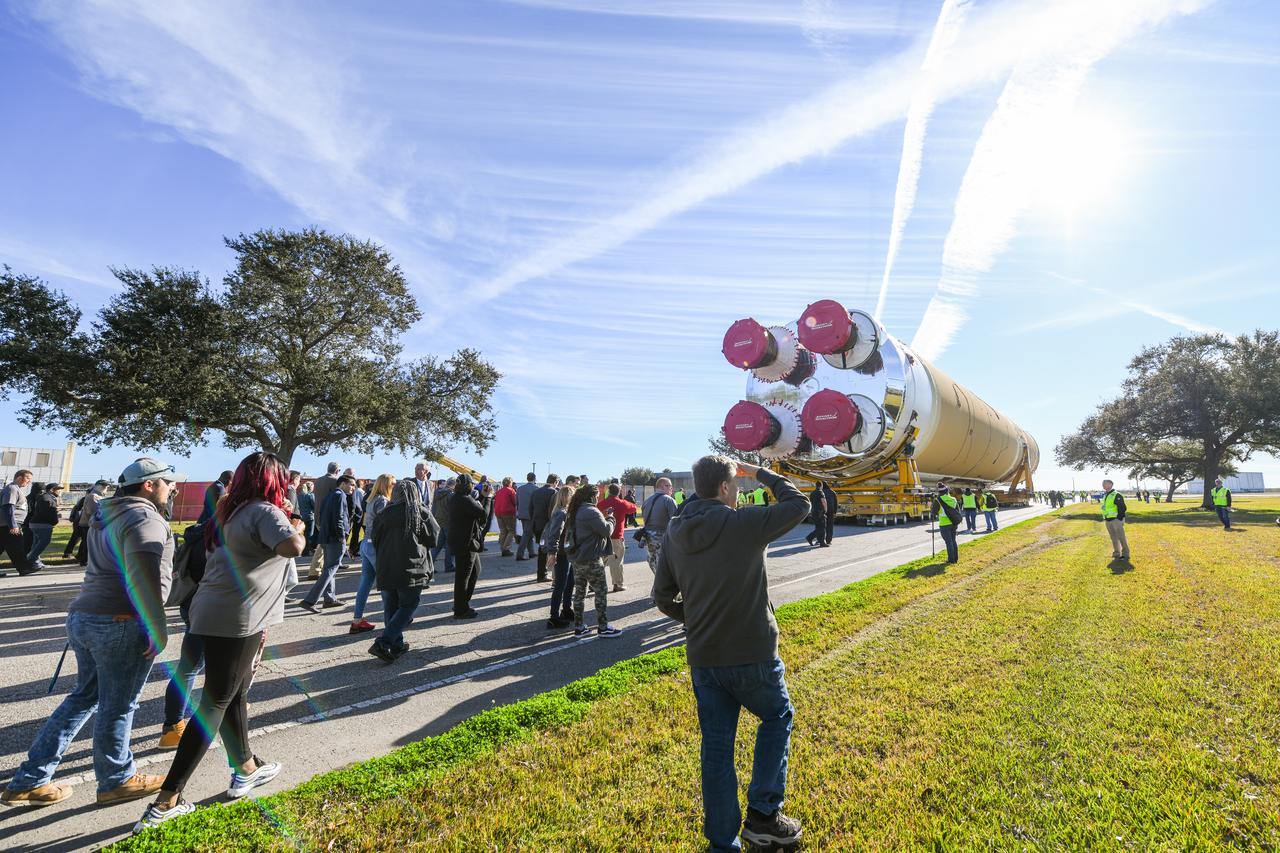
These images show how the team rolled out the completed core stage for NASA’s Space Launch System rocket from NASA’s Michoud Assembly Facility in New Orleans. Crews moved the flight hardware for the first Artemis mission to NASA’s Pegasus barge on Jan. 8 in preparation for the core stage Green Run test series at NASA’s Stennis Space Center near Bay St. Louis, Mississippi. Pegasus, which was modified to ferry SLS rocket hardware, will transport the core stage from Michoud to Stennis for the comprehensive core stage Green Run test series. Once at Stennis, the Artemis rocket stage will be loaded into the B-2 Test Stand for the core stage Green Run test series. The comprehensive test campaign will progressively bring the entire core stage, including its avionics and engines, to life for the first time to verify the stage is fit for flight ahead of the launch of Artemis I. Assembly and integration of the core stage and its four RS-25 engines has been a collaborative, multistep process for NASA and its partners Boeing, the core stage lead contractor, and Aerojet Rocketdyne, the RS-25 engines lead contractor. Together with four RS-25 engines, the rocket’s massive 212-foot-tall core stage — the largest stage NASA has ever built — and its twin solid rocket boosters will produce 8.8 million pounds of thrust to send NASA’s Orion spacecraft, astronauts and supplies beyond Earth’s orbit to the Moon and, ultimately, Mars. Offering more payload mass, volume capability and energy to speed missions through space, the SLS rocket, along with NASA’s Gateway in lunar orbit and Orion, is part of NASA’s backbone for deep space exploration and the Artemis lunar program.
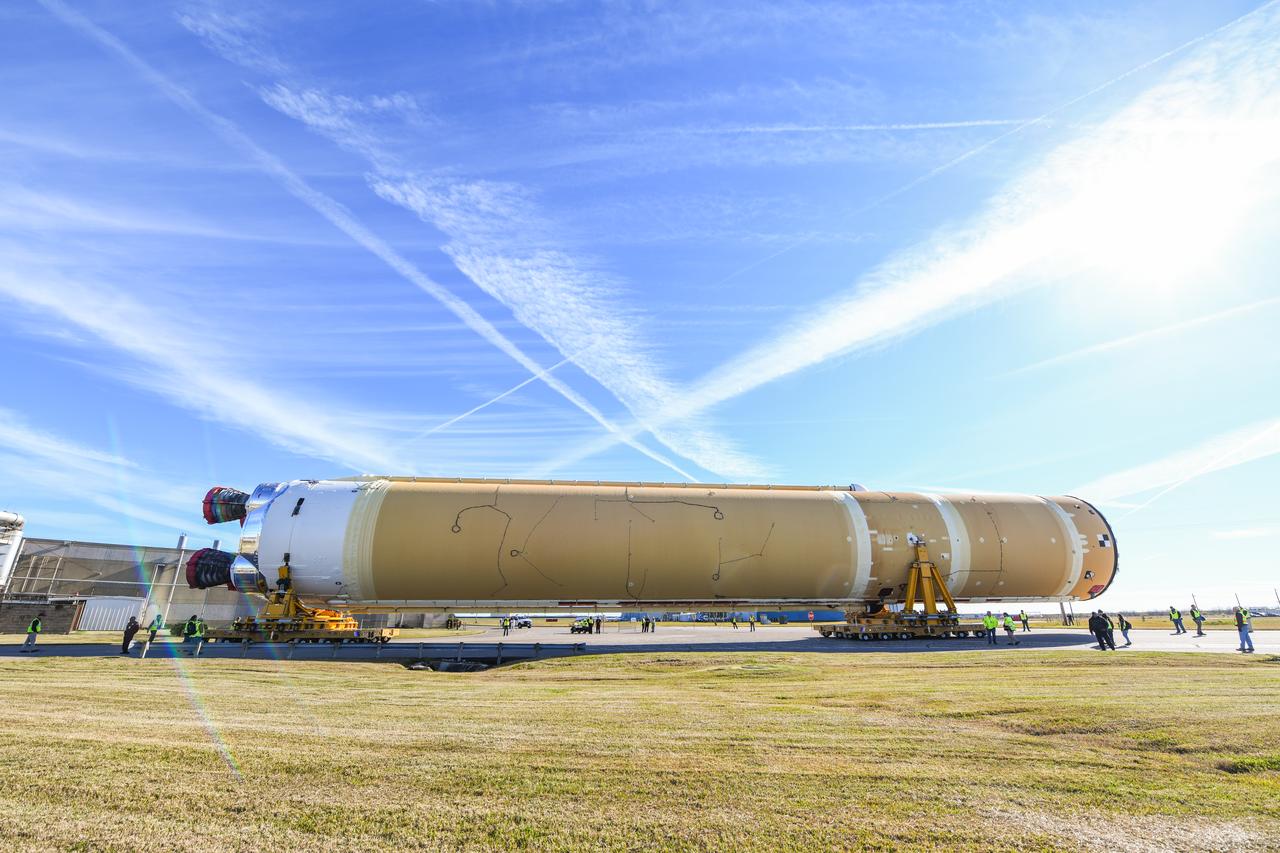
These images show how the team rolled out the completed core stage for NASA’s Space Launch System rocket from NASA’s Michoud Assembly Facility in New Orleans. Crews moved the flight hardware for the first Artemis mission to NASA’s Pegasus barge on Jan. 8 in preparation for the core stage Green Run test series at NASA’s Stennis Space Center near Bay St. Louis, Mississippi. Pegasus, which was modified to ferry SLS rocket hardware, will transport the core stage from Michoud to Stennis for the comprehensive core stage Green Run test series. Once at Stennis, the Artemis rocket stage will be loaded into the B-2 Test Stand for the core stage Green Run test series. The comprehensive test campaign will progressively bring the entire core stage, including its avionics and engines, to life for the first time to verify the stage is fit for flight ahead of the launch of Artemis I. Assembly and integration of the core stage and its four RS-25 engines has been a collaborative, multistep process for NASA and its partners Boeing, the core stage lead contractor, and Aerojet Rocketdyne, the RS-25 engines lead contractor. Together with four RS-25 engines, the rocket’s massive 212-foot-tall core stage — the largest stage NASA has ever built — and its twin solid rocket boosters will produce 8.8 million pounds of thrust to send NASA’s Orion spacecraft, astronauts and supplies beyond Earth’s orbit to the Moon and, ultimately, Mars. Offering more payload mass, volume capability and energy to speed missions through space, the SLS rocket, along with NASA’s Gateway in lunar orbit and Orion, is part of NASA’s backbone for deep space exploration and the Artemis lunar program.

These images show how the team rolled out the completed core stage for NASA’s Space Launch System rocket from NASA’s Michoud Assembly Facility in New Orleans. Crews moved the flight hardware for the first Artemis mission to NASA’s Pegasus barge on Jan. 8 in preparation for the core stage Green Run test series at NASA’s Stennis Space Center near Bay St. Louis, Mississippi. Pegasus, which was modified to ferry SLS rocket hardware, will transport the core stage from Michoud to Stennis for the comprehensive core stage Green Run test series. Once at Stennis, the Artemis rocket stage will be loaded into the B-2 Test Stand for the core stage Green Run test series. The comprehensive test campaign will progressively bring the entire core stage, including its avionics and engines, to life for the first time to verify the stage is fit for flight ahead of the launch of Artemis I. Assembly and integration of the core stage and its four RS-25 engines has been a collaborative, multistep process for NASA and its partners Boeing, the core stage lead contractor, and Aerojet Rocketdyne, the RS-25 engines lead contractor. Together with four RS-25 engines, the rocket’s massive 212-foot-tall core stage — the largest stage NASA has ever built — and its twin solid rocket boosters will produce 8.8 million pounds of thrust to send NASA’s Orion spacecraft, astronauts and supplies beyond Earth’s orbit to the Moon and, ultimately, Mars. Offering more payload mass, volume capability and energy to speed missions through space, the SLS rocket, along with NASA’s Gateway in lunar orbit and Orion, is part of NASA’s backbone for deep space exploration and the Artemis lunar program.

These images show how the team rolled out the completed core stage for NASA’s Space Launch System rocket from NASA’s Michoud Assembly Facility in New Orleans. Crews moved the flight hardware for the first Artemis mission to NASA’s Pegasus barge on Jan. 8 in preparation for the core stage Green Run test series at NASA’s Stennis Space Center near Bay St. Louis, Mississippi. Pegasus, which was modified to ferry SLS rocket hardware, will transport the core stage from Michoud to Stennis for the comprehensive core stage Green Run test series. Once at Stennis, the Artemis rocket stage will be loaded into the B-2 Test Stand for the core stage Green Run test series. The comprehensive test campaign will progressively bring the entire core stage, including its avionics and engines, to life for the first time to verify the stage is fit for flight ahead of the launch of Artemis I. Assembly and integration of the core stage and its four RS-25 engines has been a collaborative, multistep process for NASA and its partners Boeing, the core stage lead contractor, and Aerojet Rocketdyne, the RS-25 engines lead contractor. Together with four RS-25 engines, the rocket’s massive 212-foot-tall core stage — the largest stage NASA has ever built — and its twin solid rocket boosters will produce 8.8 million pounds of thrust to send NASA’s Orion spacecraft, astronauts and supplies beyond Earth’s orbit to the Moon and, ultimately, Mars. Offering more payload mass, volume capability and energy to speed missions through space, the SLS rocket, along with NASA’s Gateway in lunar orbit and Orion, is part of NASA’s backbone for deep space exploration and the Artemis lunar program.

These images show how the team rolled out the completed core stage for NASA’s Space Launch System rocket from NASA’s Michoud Assembly Facility in New Orleans. Crews moved the flight hardware for the first Artemis mission to NASA’s Pegasus barge on Jan. 8 in preparation for the core stage Green Run test series at NASA’s Stennis Space Center near Bay St. Louis, Mississippi. Pegasus, which was modified to ferry SLS rocket hardware, will transport the core stage from Michoud to Stennis for the comprehensive core stage Green Run test series. Once at Stennis, the Artemis rocket stage will be loaded into the B-2 Test Stand for the core stage Green Run test series. The comprehensive test campaign will progressively bring the entire core stage, including its avionics and engines, to life for the first time to verify the stage is fit for flight ahead of the launch of Artemis I. Assembly and integration of the core stage and its four RS-25 engines has been a collaborative, multistep process for NASA and its partners Boeing, the core stage lead contractor, and Aerojet Rocketdyne, the RS-25 engines lead contractor. Together with four RS-25 engines, the rocket’s massive 212-foot-tall core stage — the largest stage NASA has ever built — and its twin solid rocket boosters will produce 8.8 million pounds of thrust to send NASA’s Orion spacecraft, astronauts and supplies beyond Earth’s orbit to the Moon and, ultimately, Mars. Offering more payload mass, volume capability and energy to speed missions through space, the SLS rocket, along with NASA’s Gateway in lunar orbit and Orion, is part of NASA’s backbone for deep space exploration and the Artemis lunar program.

These images show how the team rolled out the completed core stage for NASA’s Space Launch System rocket from NASA’s Michoud Assembly Facility in New Orleans. Crews moved the flight hardware for the first Artemis mission to NASA’s Pegasus barge on Jan. 8 in preparation for the core stage Green Run test series at NASA’s Stennis Space Center near Bay St. Louis, Mississippi. Pegasus, which was modified to ferry SLS rocket hardware, will transport the core stage from Michoud to Stennis for the comprehensive core stage Green Run test series. Once at Stennis, the Artemis rocket stage will be loaded into the B-2 Test Stand for the core stage Green Run test series. The comprehensive test campaign will progressively bring the entire core stage, including its avionics and engines, to life for the first time to verify the stage is fit for flight ahead of the launch of Artemis I. Assembly and integration of the core stage and its four RS-25 engines has been a collaborative, multistep process for NASA and its partners Boeing, the core stage lead contractor, and Aerojet Rocketdyne, the RS-25 engines lead contractor. Together with four RS-25 engines, the rocket’s massive 212-foot-tall core stage — the largest stage NASA has ever built — and its twin solid rocket boosters will produce 8.8 million pounds of thrust to send NASA’s Orion spacecraft, astronauts and supplies beyond Earth’s orbit to the Moon and, ultimately, Mars. Offering more payload mass, volume capability and energy to speed missions through space, the SLS rocket, along with NASA’s Gateway in lunar orbit and Orion, is part of NASA’s backbone for deep space exploration and the Artemis lunar program.

These images show how the team rolled out the completed core stage for NASA’s Space Launch System rocket from NASA’s Michoud Assembly Facility in New Orleans. Crews moved the flight hardware for the first Artemis mission to NASA’s Pegasus barge on Jan. 8 in preparation for the core stage Green Run test series at NASA’s Stennis Space Center near Bay St. Louis, Mississippi. Pegasus, which was modified to ferry SLS rocket hardware, will transport the core stage from Michoud to Stennis for the comprehensive core stage Green Run test series. Once at Stennis, the Artemis rocket stage will be loaded into the B-2 Test Stand for the core stage Green Run test series. The comprehensive test campaign will progressively bring the entire core stage, including its avionics and engines, to life for the first time to verify the stage is fit for flight ahead of the launch of Artemis I. Assembly and integration of the core stage and its four RS-25 engines has been a collaborative, multistep process for NASA and its partners Boeing, the core stage lead contractor, and Aerojet Rocketdyne, the RS-25 engines lead contractor. Together with four RS-25 engines, the rocket’s massive 212-foot-tall core stage — the largest stage NASA has ever built — and its twin solid rocket boosters will produce 8.8 million pounds of thrust to send NASA’s Orion spacecraft, astronauts and supplies beyond Earth’s orbit to the Moon and, ultimately, Mars. Offering more payload mass, volume capability and energy to speed missions through space, the SLS rocket, along with NASA’s Gateway in lunar orbit and Orion, is part of NASA’s backbone for deep space exploration and the Artemis lunar program.

These images show how the team rolled out the completed core stage for NASA’s Space Launch System rocket from NASA’s Michoud Assembly Facility in New Orleans. Crews moved the flight hardware for the first Artemis mission to NASA’s Pegasus barge on Jan. 8 in preparation for the core stage Green Run test series at NASA’s Stennis Space Center near Bay St. Louis, Mississippi. Pegasus, which was modified to ferry SLS rocket hardware, will transport the core stage from Michoud to Stennis for the comprehensive core stage Green Run test series. Once at Stennis, the Artemis rocket stage will be loaded into the B-2 Test Stand for the core stage Green Run test series. The comprehensive test campaign will progressively bring the entire core stage, including its avionics and engines, to life for the first time to verify the stage is fit for flight ahead of the launch of Artemis I. Assembly and integration of the core stage and its four RS-25 engines has been a collaborative, multistep process for NASA and its partners Boeing, the core stage lead contractor, and Aerojet Rocketdyne, the RS-25 engines lead contractor. Together with four RS-25 engines, the rocket’s massive 212-foot-tall core stage — the largest stage NASA has ever built — and its twin solid rocket boosters will produce 8.8 million pounds of thrust to send NASA’s Orion spacecraft, astronauts and supplies beyond Earth’s orbit to the Moon and, ultimately, Mars. Offering more payload mass, volume capability and energy to speed missions through space, the SLS rocket, along with NASA’s Gateway in lunar orbit and Orion, is part of NASA’s backbone for deep space exploration and the Artemis lunar program.

These images show how the team rolled out the completed core stage for NASA’s Space Launch System rocket from NASA’s Michoud Assembly Facility in New Orleans. Crews moved the flight hardware for the first Artemis mission to NASA’s Pegasus barge on Jan. 8 in preparation for the core stage Green Run test series at NASA’s Stennis Space Center near Bay St. Louis, Mississippi. Pegasus, which was modified to ferry SLS rocket hardware, will transport the core stage from Michoud to Stennis for the comprehensive core stage Green Run test series. Once at Stennis, the Artemis rocket stage will be loaded into the B-2 Test Stand for the core stage Green Run test series. The comprehensive test campaign will progressively bring the entire core stage, including its avionics and engines, to life for the first time to verify the stage is fit for flight ahead of the launch of Artemis I. Assembly and integration of the core stage and its four RS-25 engines has been a collaborative, multistep process for NASA and its partners Boeing, the core stage lead contractor, and Aerojet Rocketdyne, the RS-25 engines lead contractor. Together with four RS-25 engines, the rocket’s massive 212-foot-tall core stage — the largest stage NASA has ever built — and its twin solid rocket boosters will produce 8.8 million pounds of thrust to send NASA’s Orion spacecraft, astronauts and supplies beyond Earth’s orbit to the Moon and, ultimately, Mars. Offering more payload mass, volume capability and energy to speed missions through space, the SLS rocket, along with NASA’s Gateway in lunar orbit and Orion, is part of NASA’s backbone for deep space exploration and the Artemis lunar program.

These images show how the team rolled out the completed core stage for NASA’s Space Launch System rocket from NASA’s Michoud Assembly Facility in New Orleans. Crews moved the flight hardware for the first Artemis mission to NASA’s Pegasus barge on Jan. 8 in preparation for the core stage Green Run test series at NASA’s Stennis Space Center near Bay St. Louis, Mississippi. Pegasus, which was modified to ferry SLS rocket hardware, will transport the core stage from Michoud to Stennis for the comprehensive core stage Green Run test series. Once at Stennis, the Artemis rocket stage will be loaded into the B-2 Test Stand for the core stage Green Run test series. The comprehensive test campaign will progressively bring the entire core stage, including its avionics and engines, to life for the first time to verify the stage is fit for flight ahead of the launch of Artemis I. Assembly and integration of the core stage and its four RS-25 engines has been a collaborative, multistep process for NASA and its partners Boeing, the core stage lead contractor, and Aerojet Rocketdyne, the RS-25 engines lead contractor. Together with four RS-25 engines, the rocket’s massive 212-foot-tall core stage — the largest stage NASA has ever built — and its twin solid rocket boosters will produce 8.8 million pounds of thrust to send NASA’s Orion spacecraft, astronauts and supplies beyond Earth’s orbit to the Moon and, ultimately, Mars. Offering more payload mass, volume capability and energy to speed missions through space, the SLS rocket, along with NASA’s Gateway in lunar orbit and Orion, is part of NASA’s backbone for deep space exploration and the Artemis lunar program.

These images show how the team rolled out the completed core stage for NASA’s Space Launch System rocket from NASA’s Michoud Assembly Facility in New Orleans. Crews moved the flight hardware for the first Artemis mission to NASA’s Pegasus barge on Jan. 8 in preparation for the core stage Green Run test series at NASA’s Stennis Space Center near Bay St. Louis, Mississippi. Pegasus, which was modified to ferry SLS rocket hardware, will transport the core stage from Michoud to Stennis for the comprehensive core stage Green Run test series. Once at Stennis, the Artemis rocket stage will be loaded into the B-2 Test Stand for the core stage Green Run test series. The comprehensive test campaign will progressively bring the entire core stage, including its avionics and engines, to life for the first time to verify the stage is fit for flight ahead of the launch of Artemis I. Assembly and integration of the core stage and its four RS-25 engines has been a collaborative, multistep process for NASA and its partners Boeing, the core stage lead contractor, and Aerojet Rocketdyne, the RS-25 engines lead contractor. Together with four RS-25 engines, the rocket’s massive 212-foot-tall core stage — the largest stage NASA has ever built — and its twin solid rocket boosters will produce 8.8 million pounds of thrust to send NASA’s Orion spacecraft, astronauts and supplies beyond Earth’s orbit to the Moon and, ultimately, Mars. Offering more payload mass, volume capability and energy to speed missions through space, the SLS rocket, along with NASA’s Gateway in lunar orbit and Orion, is part of NASA’s backbone for deep space exploration and the Artemis lunar program.

These images show how the team rolled out the completed core stage for NASA’s Space Launch System rocket from NASA’s Michoud Assembly Facility in New Orleans. Crews moved the flight hardware for the first Artemis mission to NASA’s Pegasus barge on Jan. 8 in preparation for the core stage Green Run test series at NASA’s Stennis Space Center near Bay St. Louis, Mississippi. Pegasus, which was modified to ferry SLS rocket hardware, will transport the core stage from Michoud to Stennis for the comprehensive core stage Green Run test series. Once at Stennis, the Artemis rocket stage will be loaded into the B-2 Test Stand for the core stage Green Run test series. The comprehensive test campaign will progressively bring the entire core stage, including its avionics and engines, to life for the first time to verify the stage is fit for flight ahead of the launch of Artemis I. Assembly and integration of the core stage and its four RS-25 engines has been a collaborative, multistep process for NASA and its partners Boeing, the core stage lead contractor, and Aerojet Rocketdyne, the RS-25 engines lead contractor. Together with four RS-25 engines, the rocket’s massive 212-foot-tall core stage — the largest stage NASA has ever built — and its twin solid rocket boosters will produce 8.8 million pounds of thrust to send NASA’s Orion spacecraft, astronauts and supplies beyond Earth’s orbit to the Moon and, ultimately, Mars. Offering more payload mass, volume capability and energy to speed missions through space, the SLS rocket, along with NASA’s Gateway in lunar orbit and Orion, is part of NASA’s backbone for deep space exploration and the Artemis lunar program.

These images show how the team rolled out the completed core stage for NASA’s Space Launch System rocket from NASA’s Michoud Assembly Facility in New Orleans. Crews moved the flight hardware for the first Artemis mission to NASA’s Pegasus barge on Jan. 8 in preparation for the core stage Green Run test series at NASA’s Stennis Space Center near Bay St. Louis, Mississippi. Pegasus, which was modified to ferry SLS rocket hardware, will transport the core stage from Michoud to Stennis for the comprehensive core stage Green Run test series. Once at Stennis, the Artemis rocket stage will be loaded into the B-2 Test Stand for the core stage Green Run test series. The comprehensive test campaign will progressively bring the entire core stage, including its avionics and engines, to life for the first time to verify the stage is fit for flight ahead of the launch of Artemis I. Assembly and integration of the core stage and its four RS-25 engines has been a collaborative, multistep process for NASA and its partners Boeing, the core stage lead contractor, and Aerojet Rocketdyne, the RS-25 engines lead contractor. Together with four RS-25 engines, the rocket’s massive 212-foot-tall core stage — the largest stage NASA has ever built — and its twin solid rocket boosters will produce 8.8 million pounds of thrust to send NASA’s Orion spacecraft, astronauts and supplies beyond Earth’s orbit to the Moon and, ultimately, Mars. Offering more payload mass, volume capability and energy to speed missions through space, the SLS rocket, along with NASA’s Gateway in lunar orbit and Orion, is part of NASA’s backbone for deep space exploration and the Artemis lunar program.