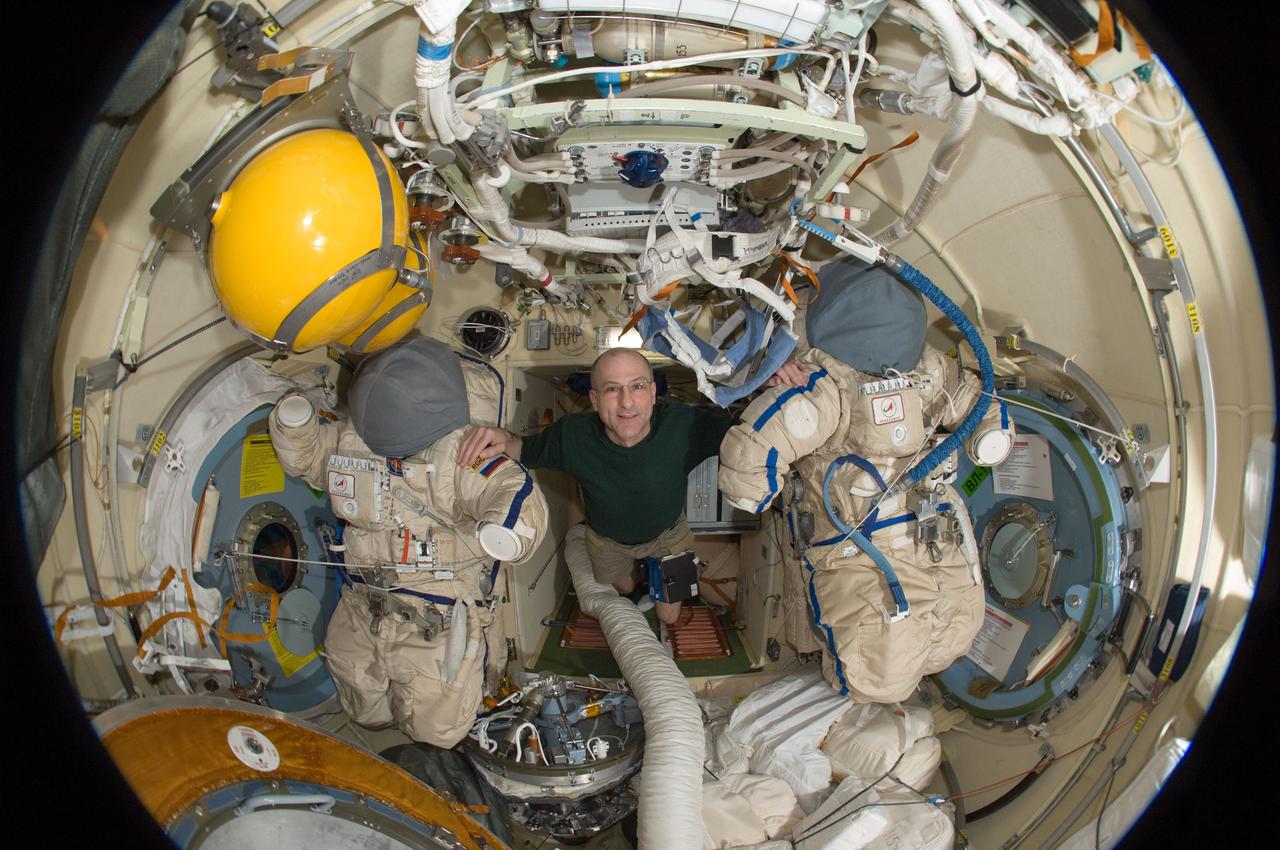
ISS031-E-030471 (12 May 2012) --- A fisheye lens attached to an electronic still camera was used to capture this image of NASA astronaut Don Pettit, Expedition 31 flight engineer, with two Russian Orlan spacesuits in the Pirs Docking Compartment of the International Space Station.
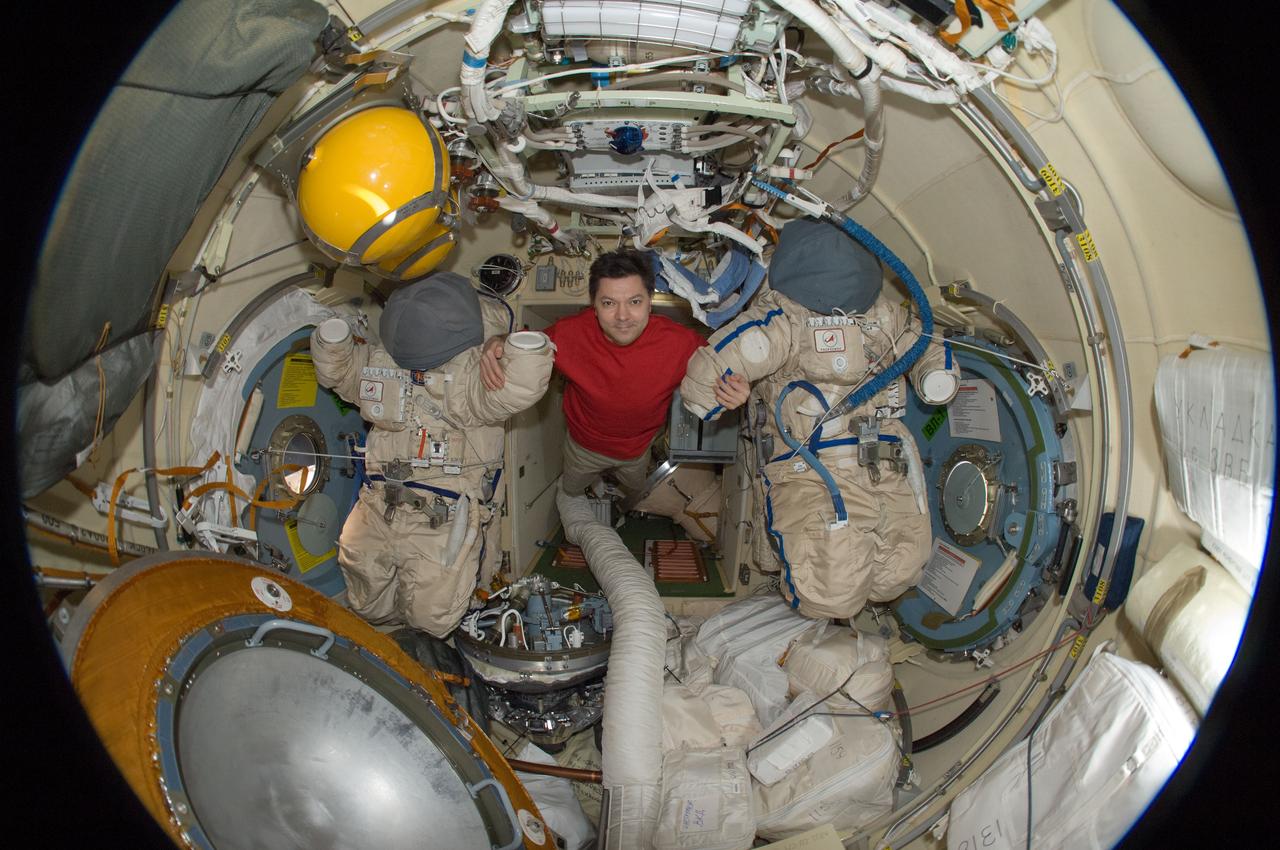
ISS031-E-030470 (12 May 2012) --- A fisheye lens attached to an electronic still camera was used to capture this image of Russian cosmonaut Oleg Kononenko, Expedition 31 commander, with two Russian Orlan spacesuits in the Pirs Docking Compartment of the International Space Station.
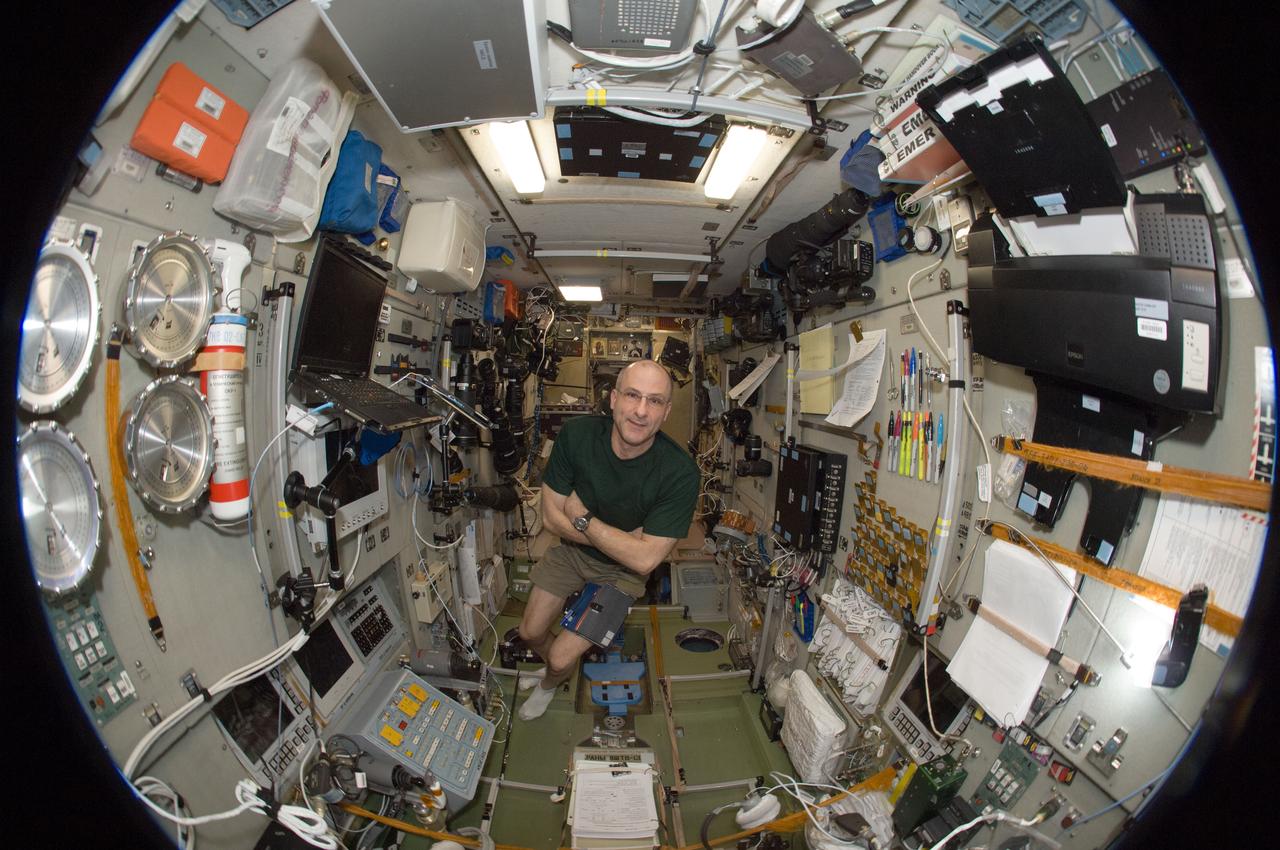
ISS031-E-030486 (12 May 2012) --- A fisheye lens attached to an electronic still camera was used to capture this image of NASA astronaut Don Pettit, Expedition 31 flight engineer, in the Zvezda Service Module of the International Space Station.
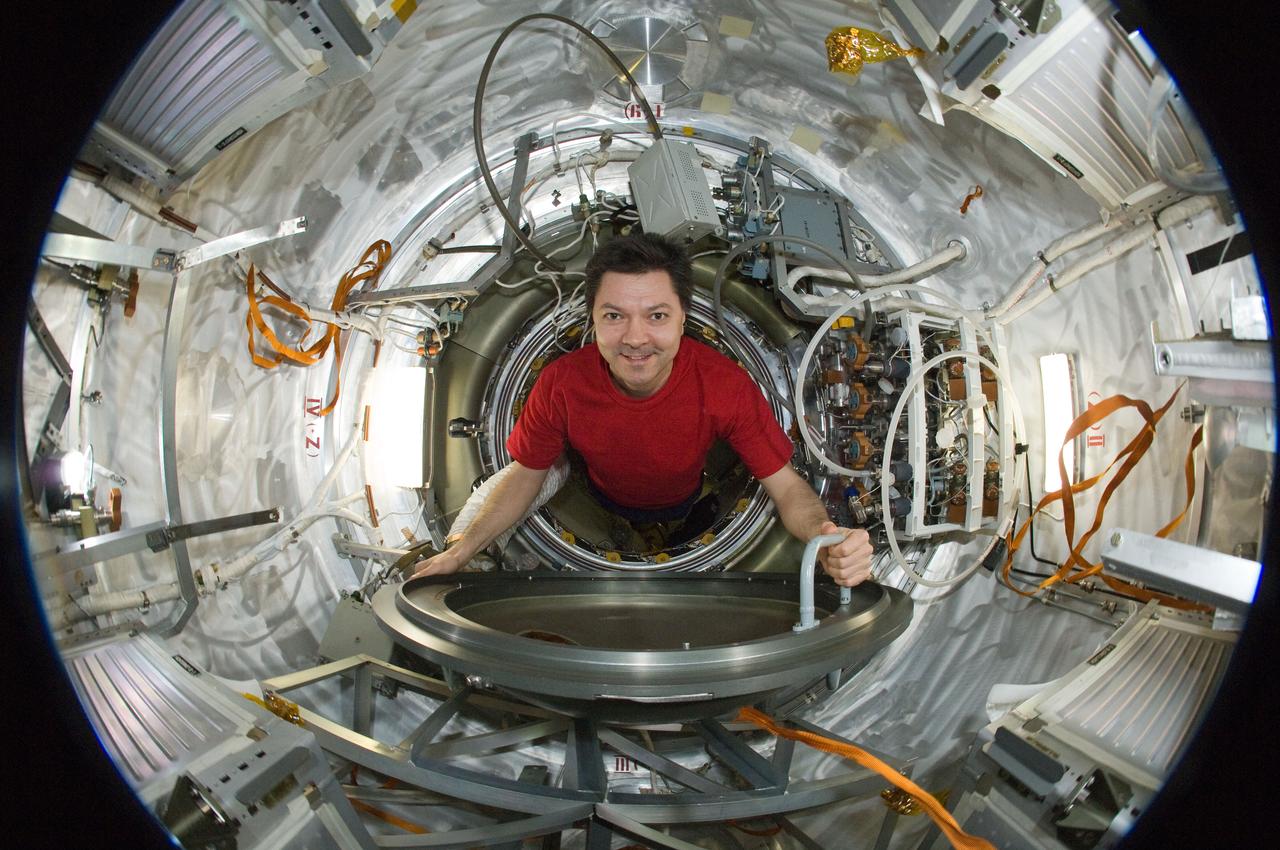
ISS031-E-035440 (15 May 2012) --- A fisheye lens attached to an electronic still camera was used to capture this image of Russian cosmonaut Oleg Kononenko, Expedition 31 commander, in the Progress 47 resupply vehicle docked to the International Space Station’s Pirs Docking Compartment.
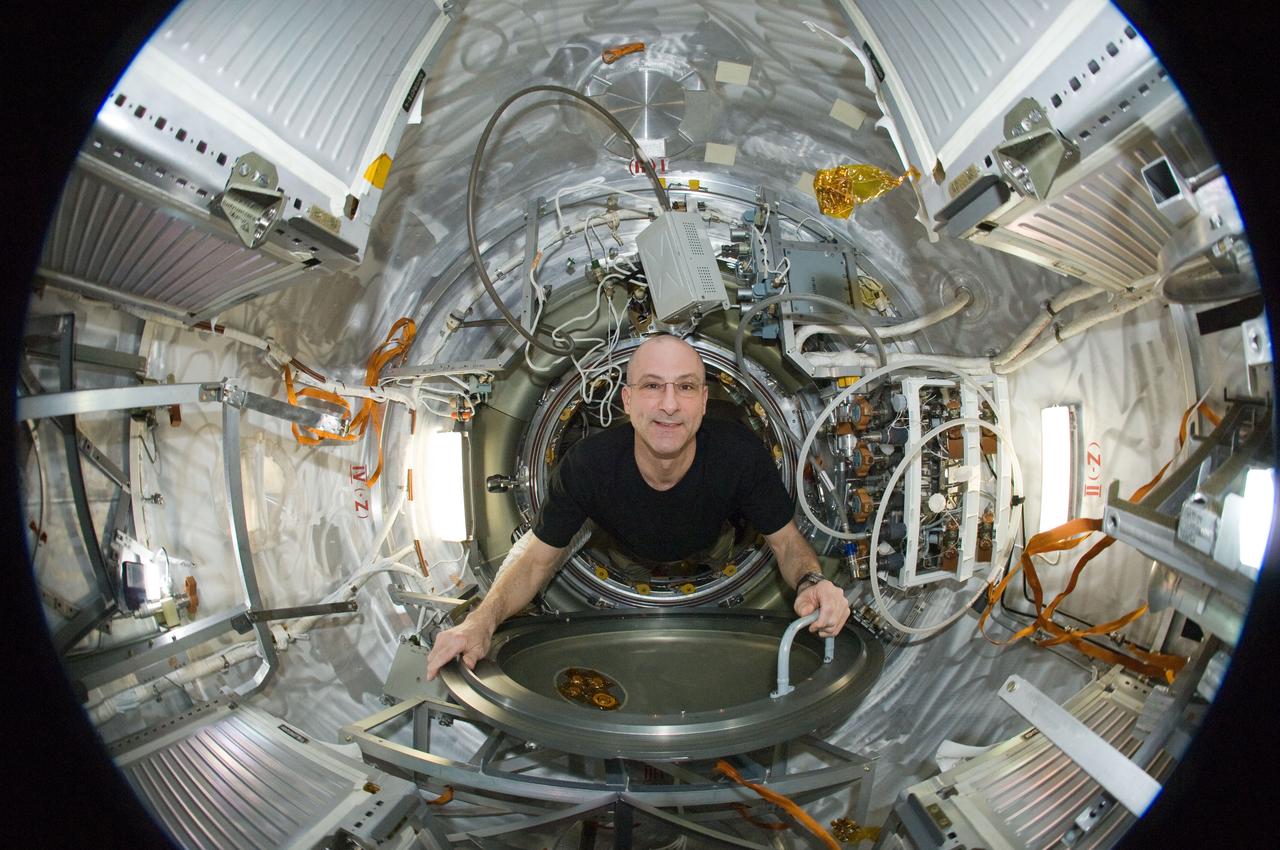
ISS031-E-035441 (15 May 2012) --- A fisheye lens attached to an electronic still camera was used to capture this image of NASA astronaut Don Pettit, Expedition 31 flight engineer, in the Progress 47 resupply vehicle docked to the International Space Station’s Pirs Docking Compartment.
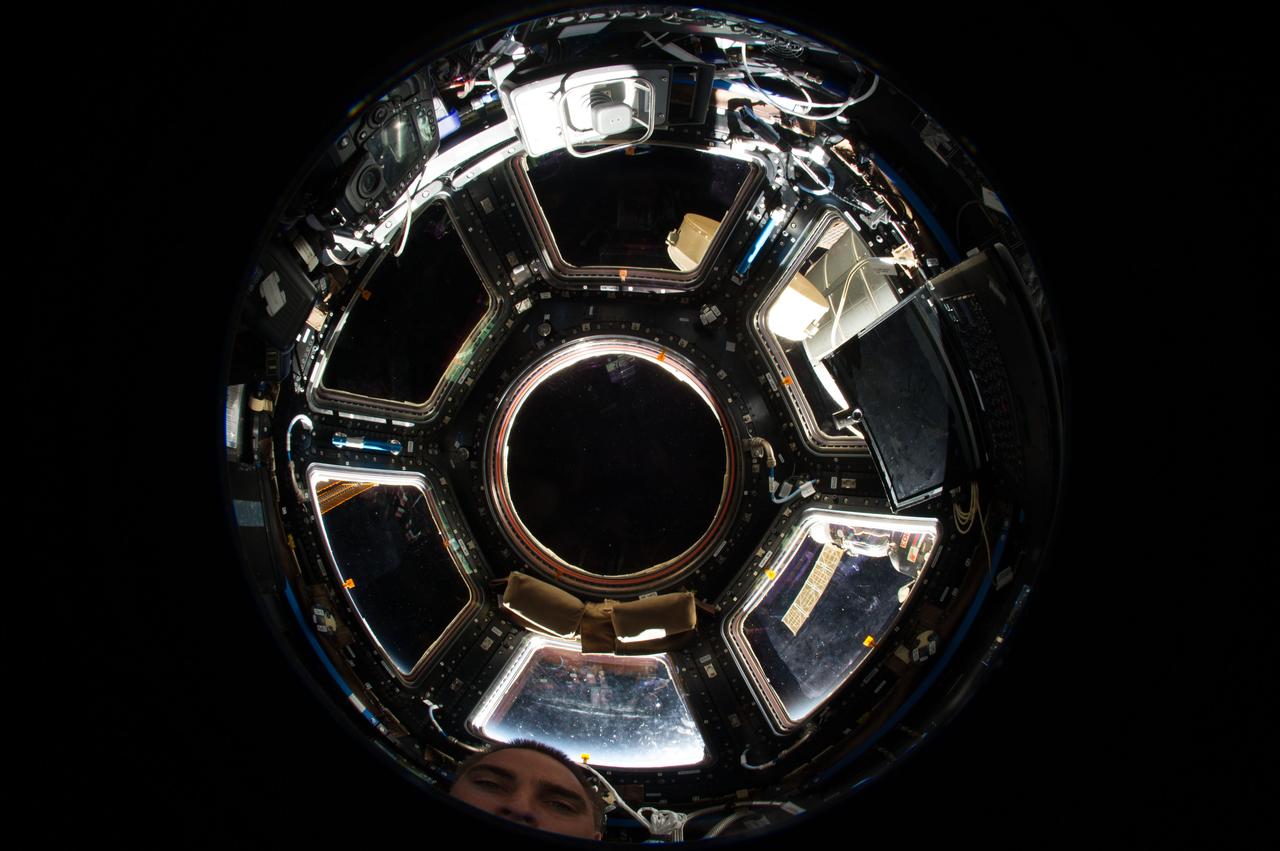
ISS036-E-022157 (20 July 2013) --- A fisheye lens attached to an electronic still camera was used to capture this image of the International Space Station’s Cupola and NASA astronaut Chris Cassidy (mostly out of frame at bottom), Expedition 36 flight engineer.
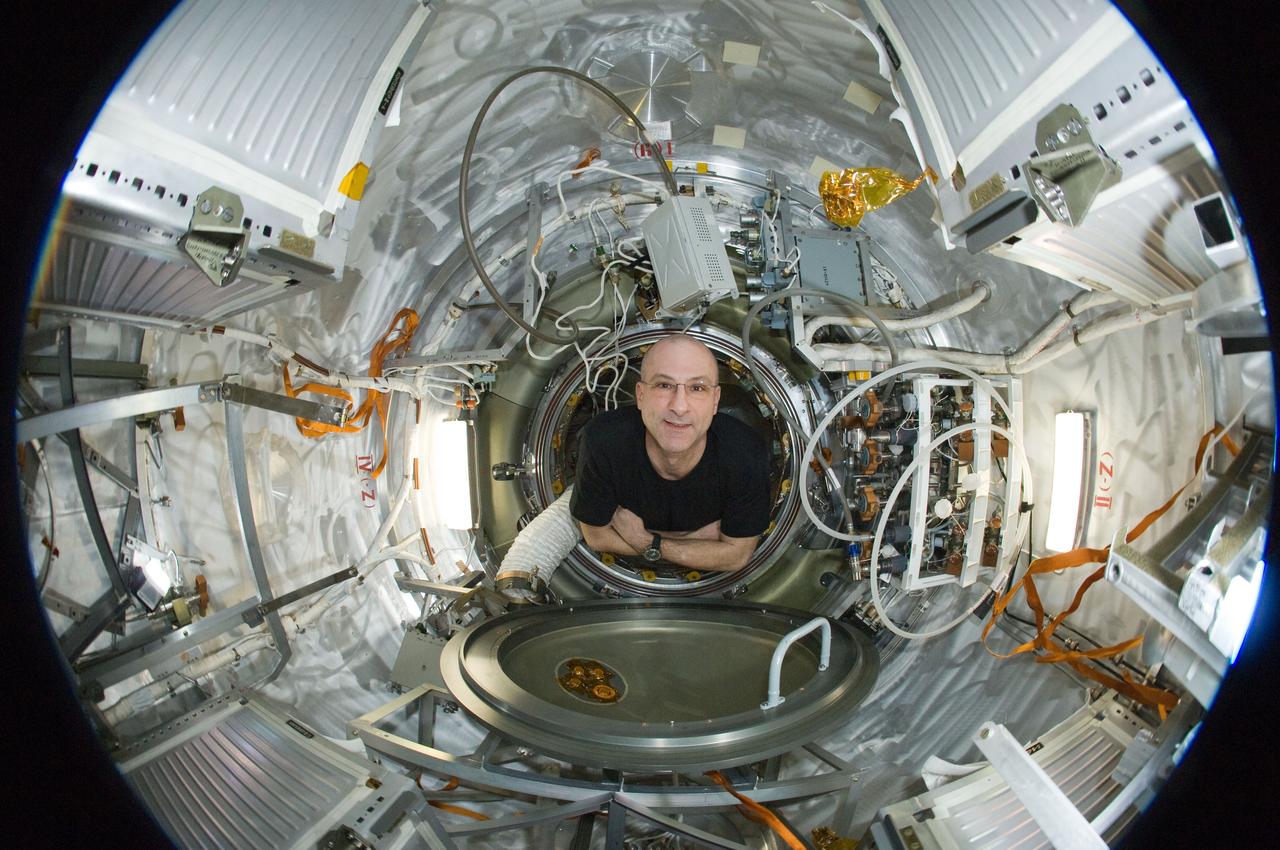
ISS031-E-035443 (15 May 2012) --- A fisheye lens attached to an electronic still camera was used to capture this image of NASA astronaut Don Pettit, Expedition 31 flight engineer, in the Progress 47 resupply vehicle docked to the International Space Station’s Pirs Docking Compartment.
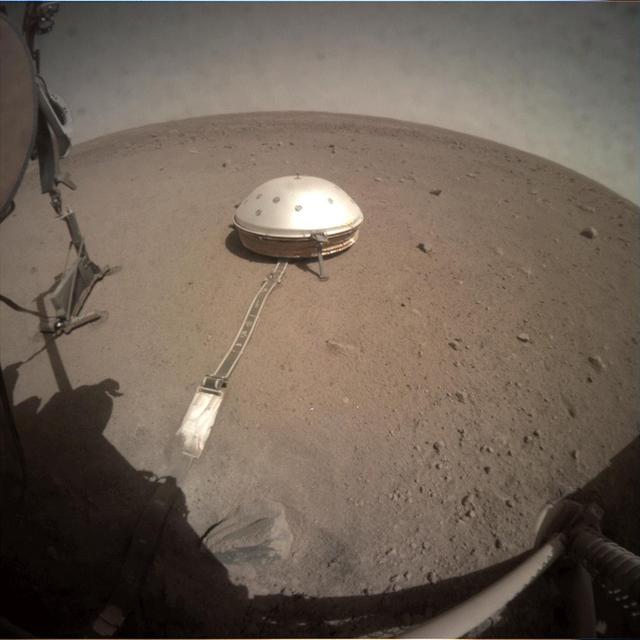
On June 28, 2019, NASA's InSight lander used its robotic arm to move the support structure for its digging instrument, informally called the "mole." This view was captured by the fisheye Instrument Context Camera under the lander's deck. Lifting the support structure had been done in three steps, a little bit at a time, to ensure the mole wasn't pulled out of the soil. Moving the structure out of the way will give the InSight team a better look at the mole and allow them to try to help it dig. https://photojournal.jpl.nasa.gov/catalog/PIA23308
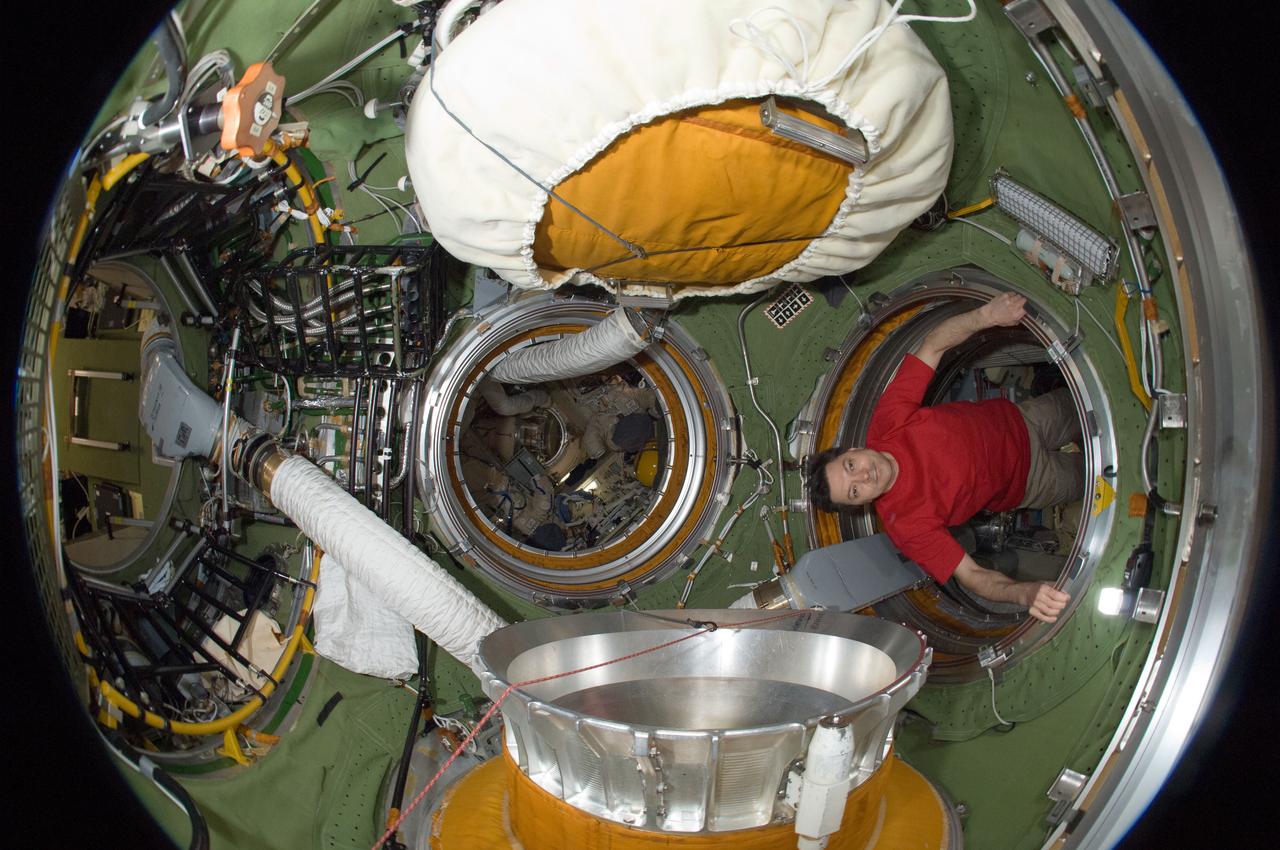
ISS031-E-030462 (12 May 2012) --- A fisheye lens attached to an electronic still camera was used to capture this image of Russian cosmonaut Oleg Kononenko, Expedition 31 commander, in the transfer compartment between the Zarya Functional Cargo Block (FGB) and the Zvezda Service Module of the International Space Station.
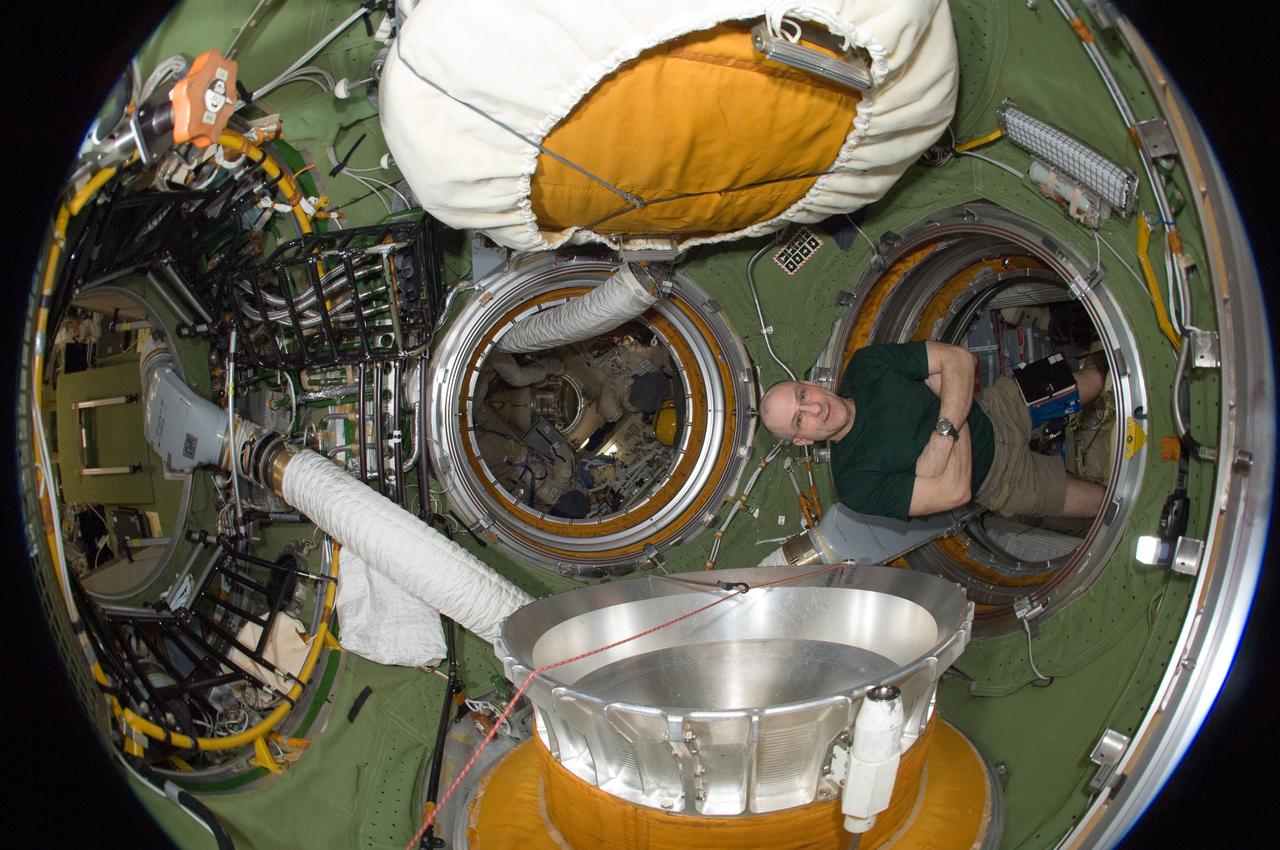
ISS031-E-030465 (12 May 2012) --- A fisheye lens attached to an electronic still camera was used to capture this image of NASA astronaut Don Pettit, Expedition 31 flight engineer, in the transfer compartment between the Zarya Functional Cargo Block (FGB) and the Zvezda Service Module of the International Space Station.
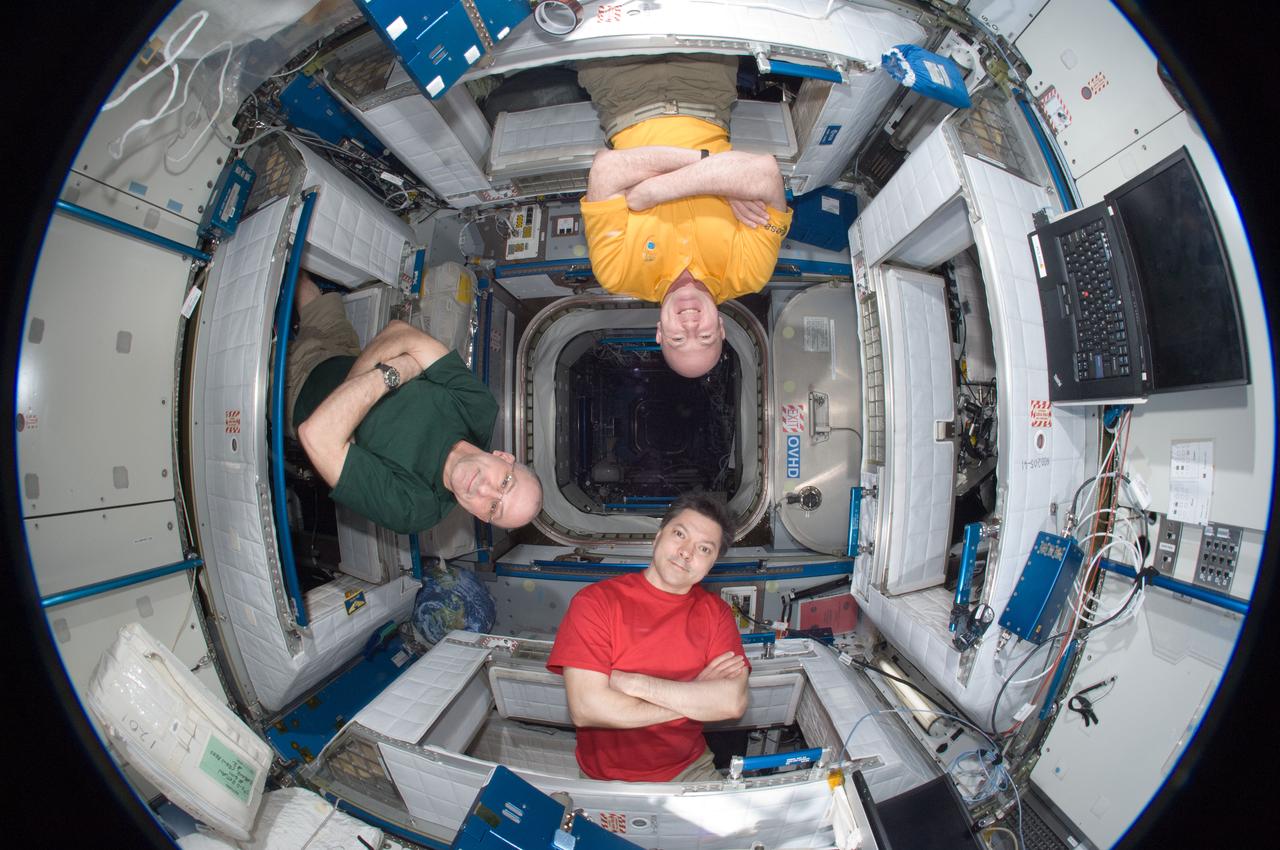
ISS031-E-030602 (12 May 2012) --- A fisheye lens attached to an electronic still camera was used to capture this image of Russian cosmonaut Oleg Kononenko (bottom), Expedition 31 commander; along with NASA astronaut Don Pettit (left) and European Space Agency astronaut Andre Kuipers, both flight engineers, in the Harmony node of the International Space Station.
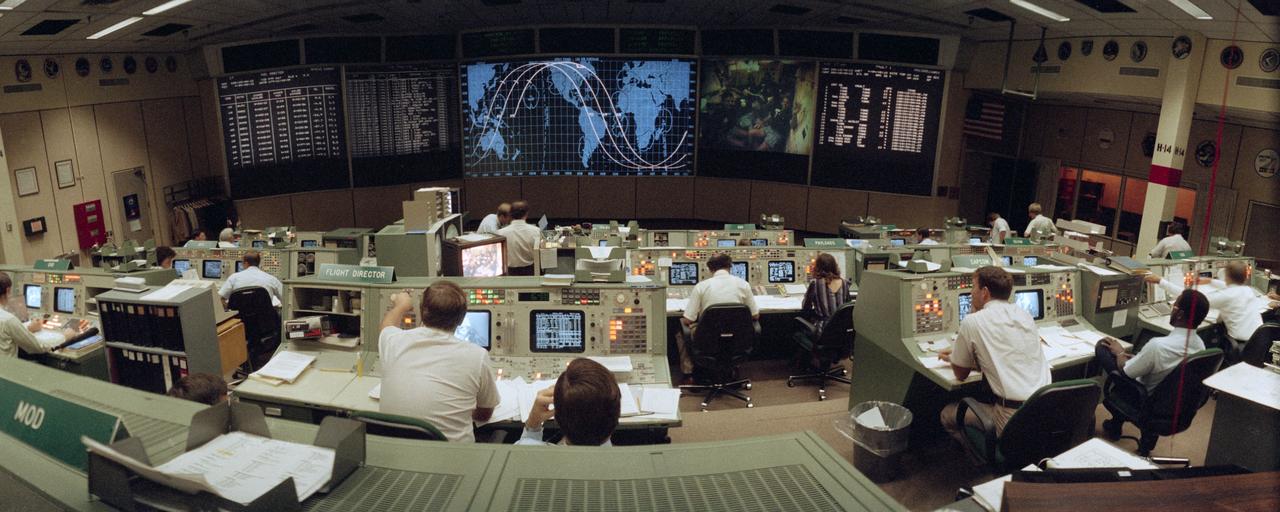
Fisheye view from the back of the Flight Control Room (FCR) of the Mission Control Center (MCC). Visible are the Flight Directors console (left front), the CAPCOM console (right front) and the Payloads console. Some of the STS 41-G crew can be seen on a large screen at the front of the MCC along with a map tracking the progress of the orbiter.
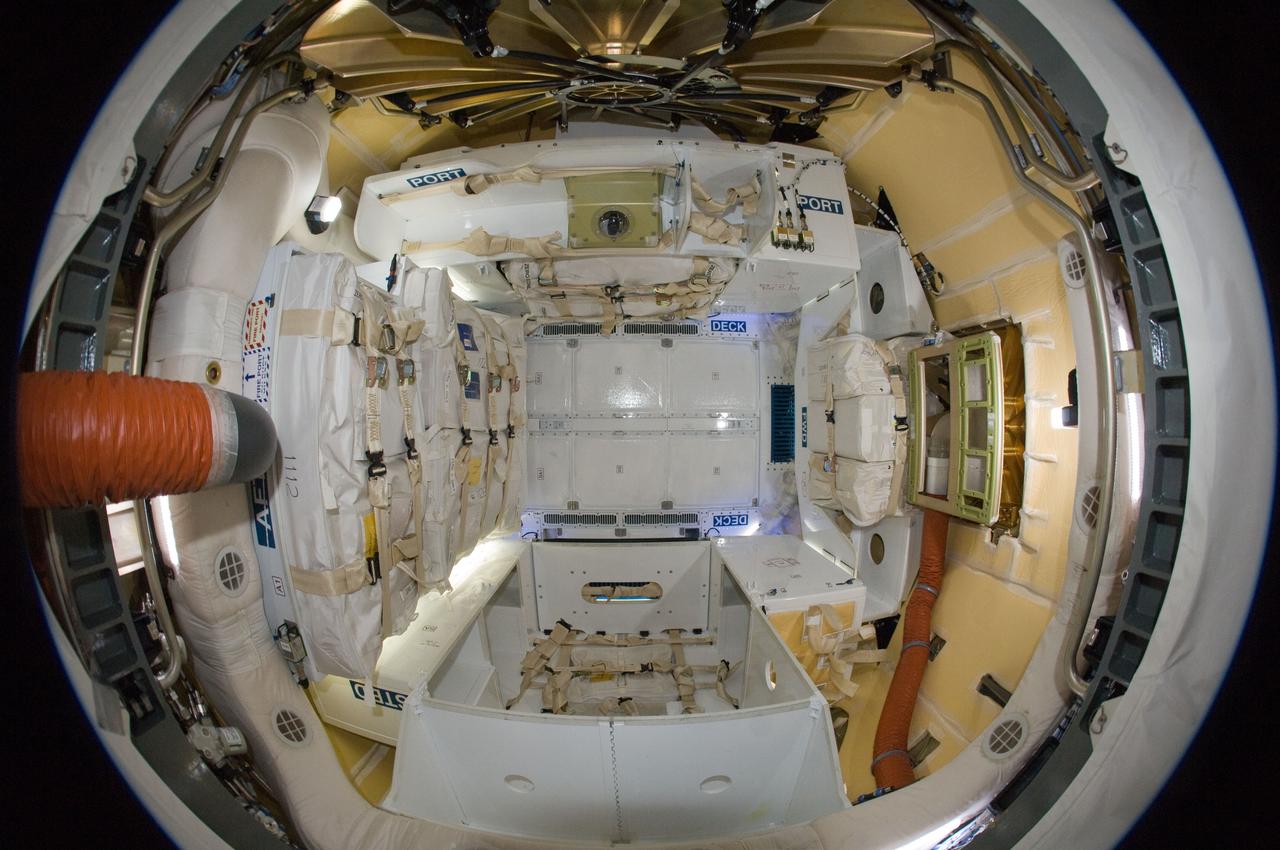
ISS031-E-077780 (26 May 2012) --- This “fisheye” image of the inside of the SpaceX Dragon cargo craft was photographed by an Expedition 31 crew member aboard the International Space Station on May 26, 2012, the day after grapple. The SpaceX Falcon 9 and its Dragon spacecraft launched on Tuesday, May 22, at 3:44 a.m. EDT. This mission is a demonstration flight by Space Exploration Technologies, or SpaceX, as part of its contract with NASA to have private companies launch cargo safely to the International Space Station.
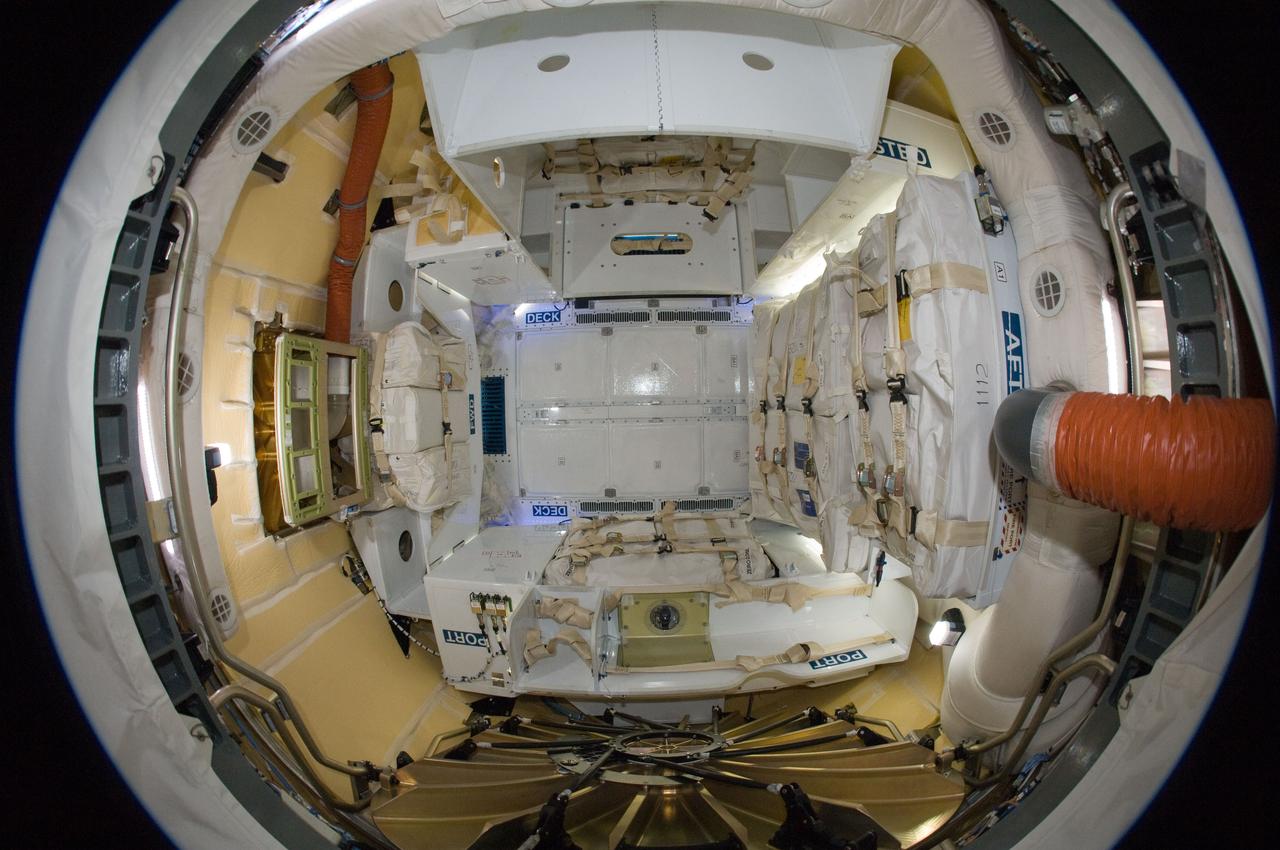
ISS031-E-077779 (26 May 2012) --- This “fisheye” image of the inside of the SpaceX Dragon cargo craft was photographed by an Expedition 31 crew member aboard the International Space Station on May 26, 2012, the day after grapple. The SpaceX Falcon 9 and its Dragon spacecraft launched on Tuesday, May 22, at 3:44 a.m. EDT. This mission is a demonstration flight by Space Exploration Technologies, or SpaceX, as part of its contract with NASA to have private companies launch cargo safely to the International Space Station.
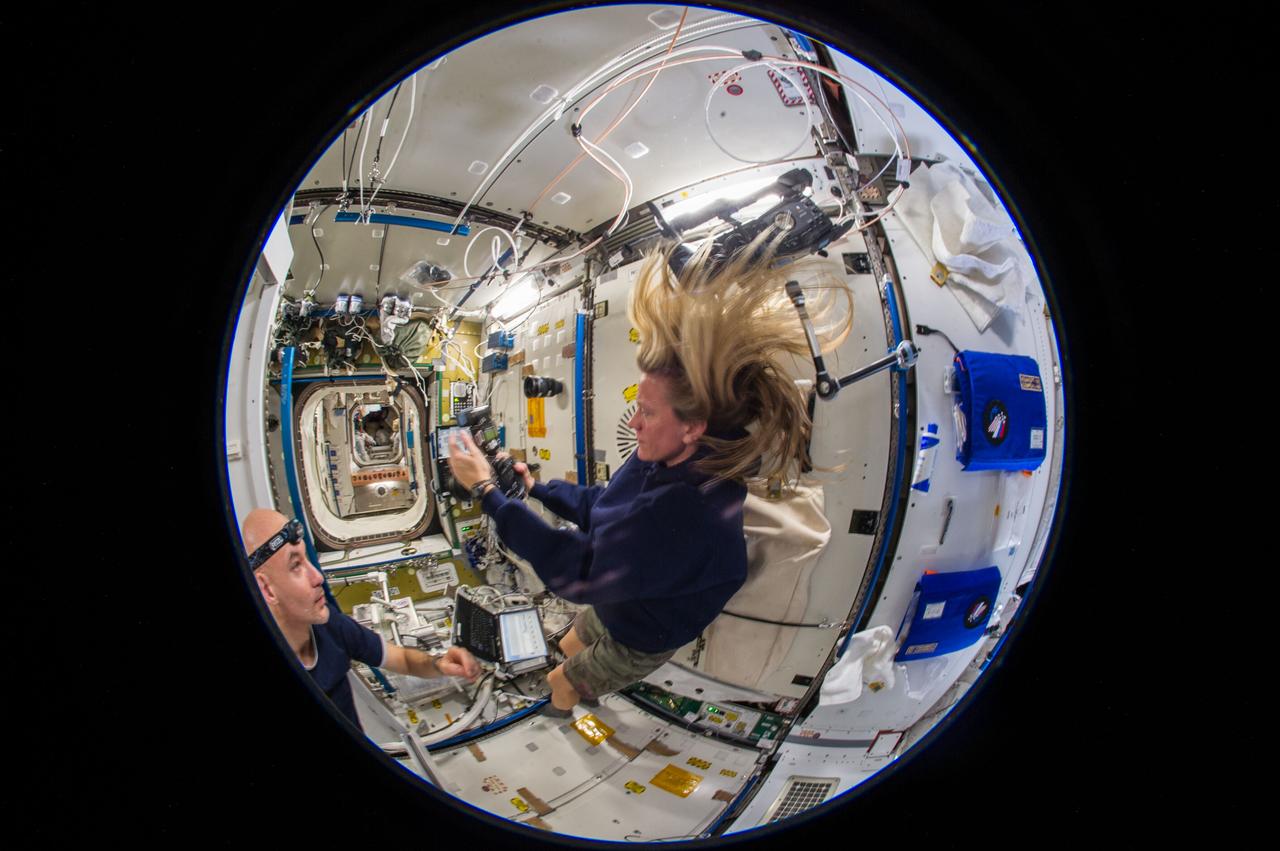
ISS036-E-022134 (20 July 2013) --- A fisheye lens attached to an electronic still camera was used to capture this image of NASA astronaut Karen Nyberg, Expedition 36 flight engineer, holding a digital still camera in the Tranquility node of the International Space Station. European Space Agency astronaut Luca Parmitano, flight engineer, is at lower left.
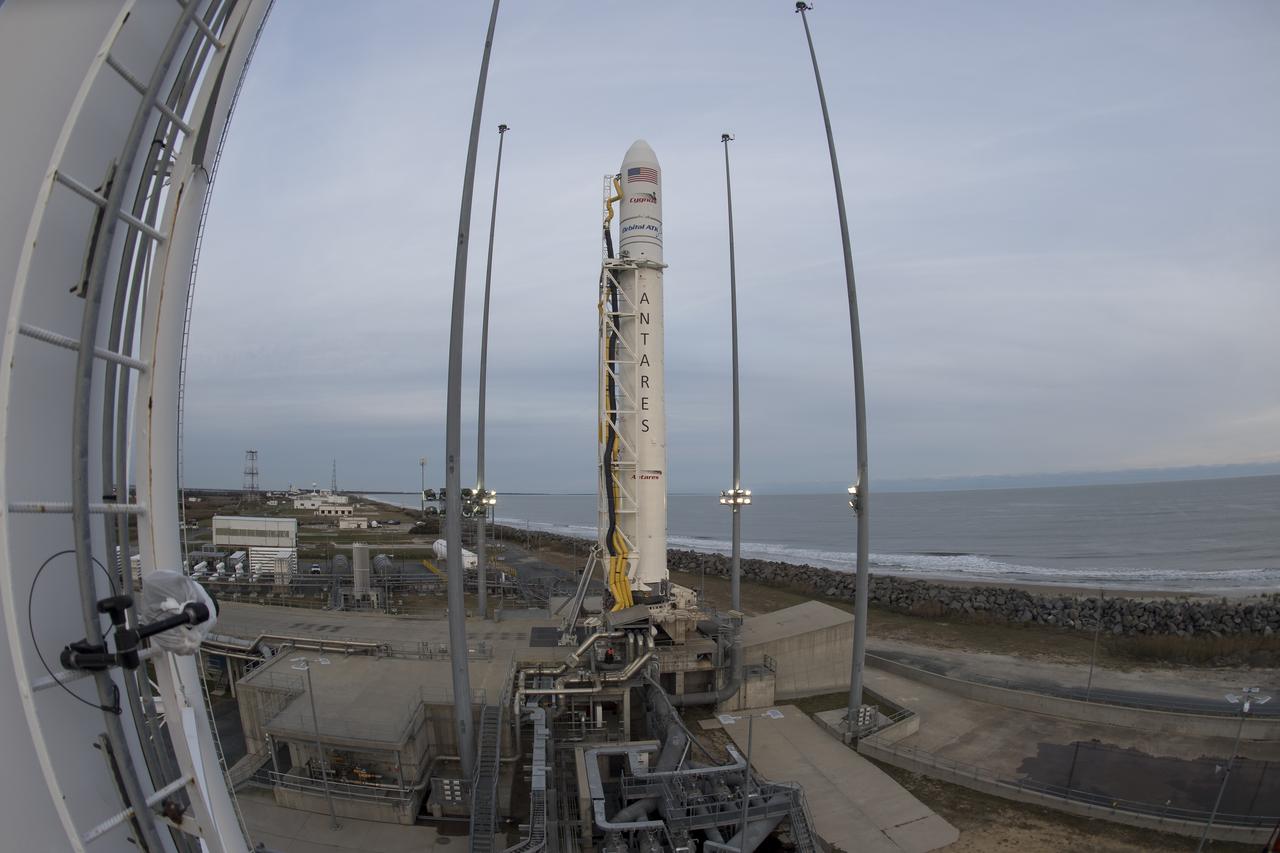
A fisheye lens view of the Orbital ATK Antares rocket, with the Cygnus spacecraft onboard, Saturday, Nov. 11, 2017 at NASA's Wallops Flight Facility, launch Pad-0A, in Virginia. Orbital ATK’s eighth contracted cargo resupply mission with NASA to the International Space Station will deliver approximately 7,400 pounds of science and research, crew supplies and vehicle hardware to the orbital laboratory and its crew. Photo Credit: (NASA/Bill Ingalls)
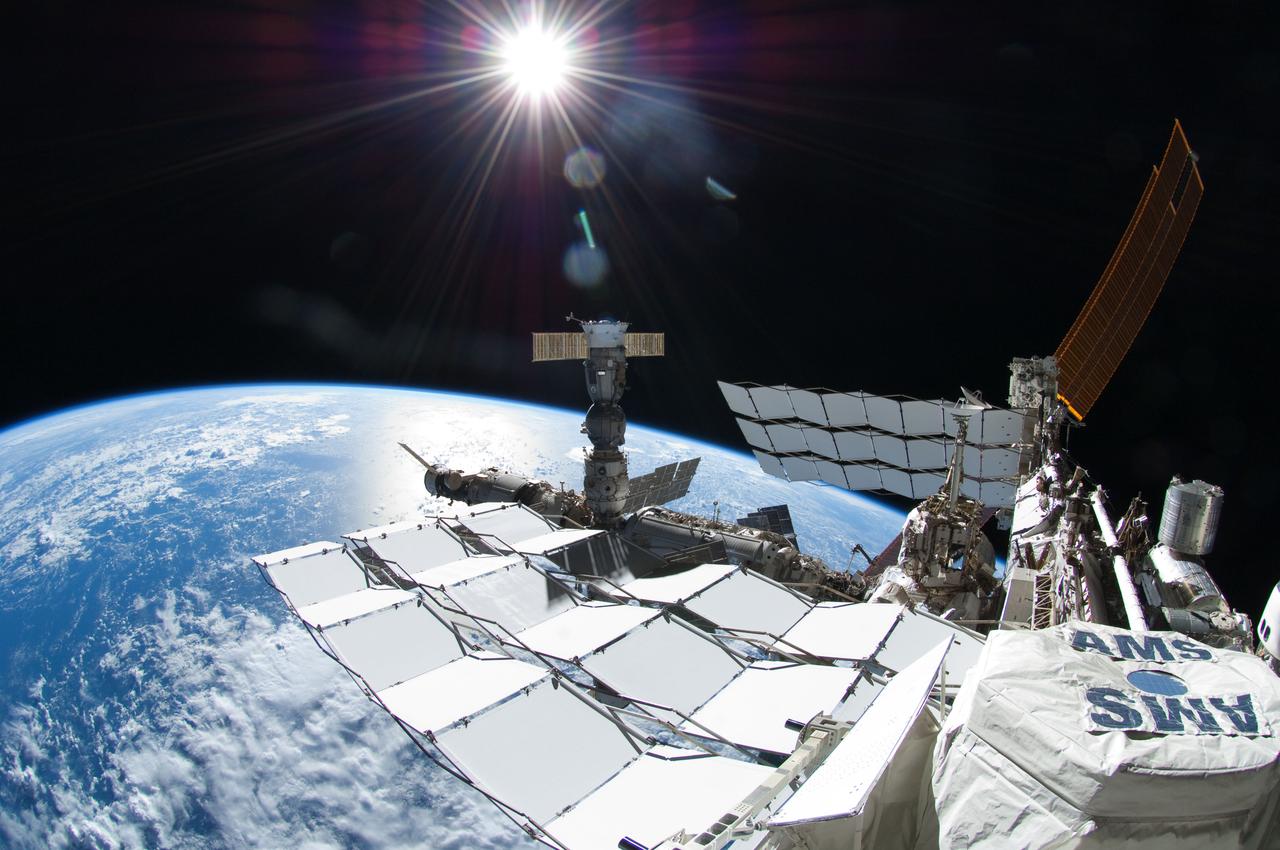
iss028e016135 (7/12/2011) --- Exterior view of the International Space Station (ISS) taken during a session of Extravehicular Activity (EVA) with a fisheye camera. The Alpha Magnetic Spectrometer - 2 (AMS-2) is visible in the right foreground and a Soyuz spacecraft is visible docked to the Pirs Docking Compartment (DC1/CO1). The Alpha Magnetic Spectrometer - 02 (AMS-02) is a high profile space-based particle physics experiment. As the largest and most advanced magnetic spectrometer in space, AMS-02 will collect information from cosmic sources emanating from stars and galaxies millions of light years beyond the Milky Way.
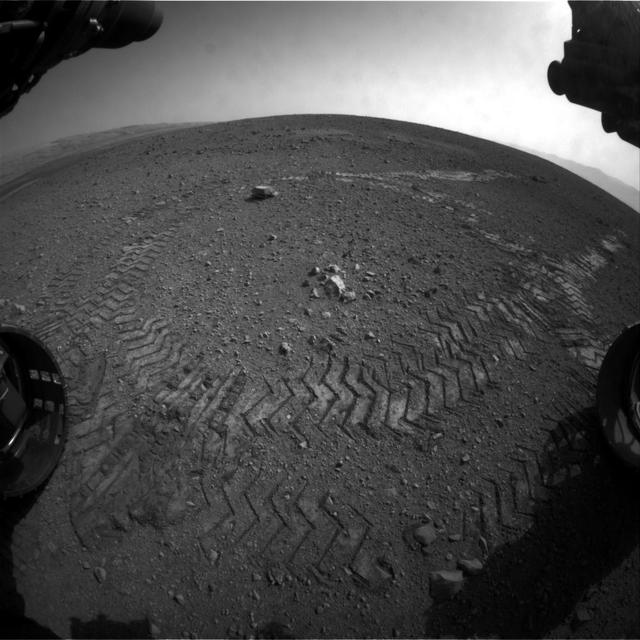
This image shows the tracks left by NASA Curiosity rover on Aug. 22, 2012, as it completed its first test drive on Mars. This image was taken by a front Hazard-Avoidance camera, which has a fisheye lens.
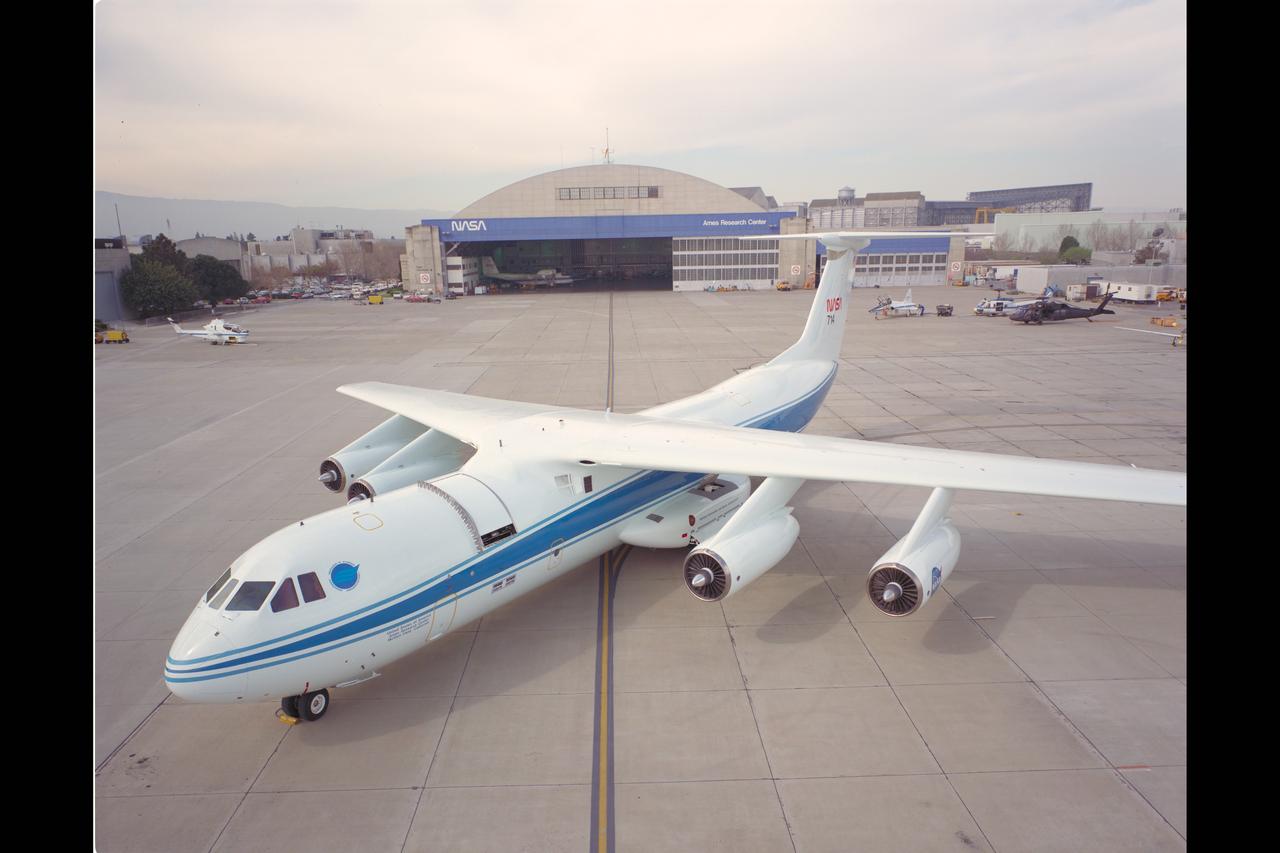
C-141 KAO (NASA-714) on ramp (fisheye view)
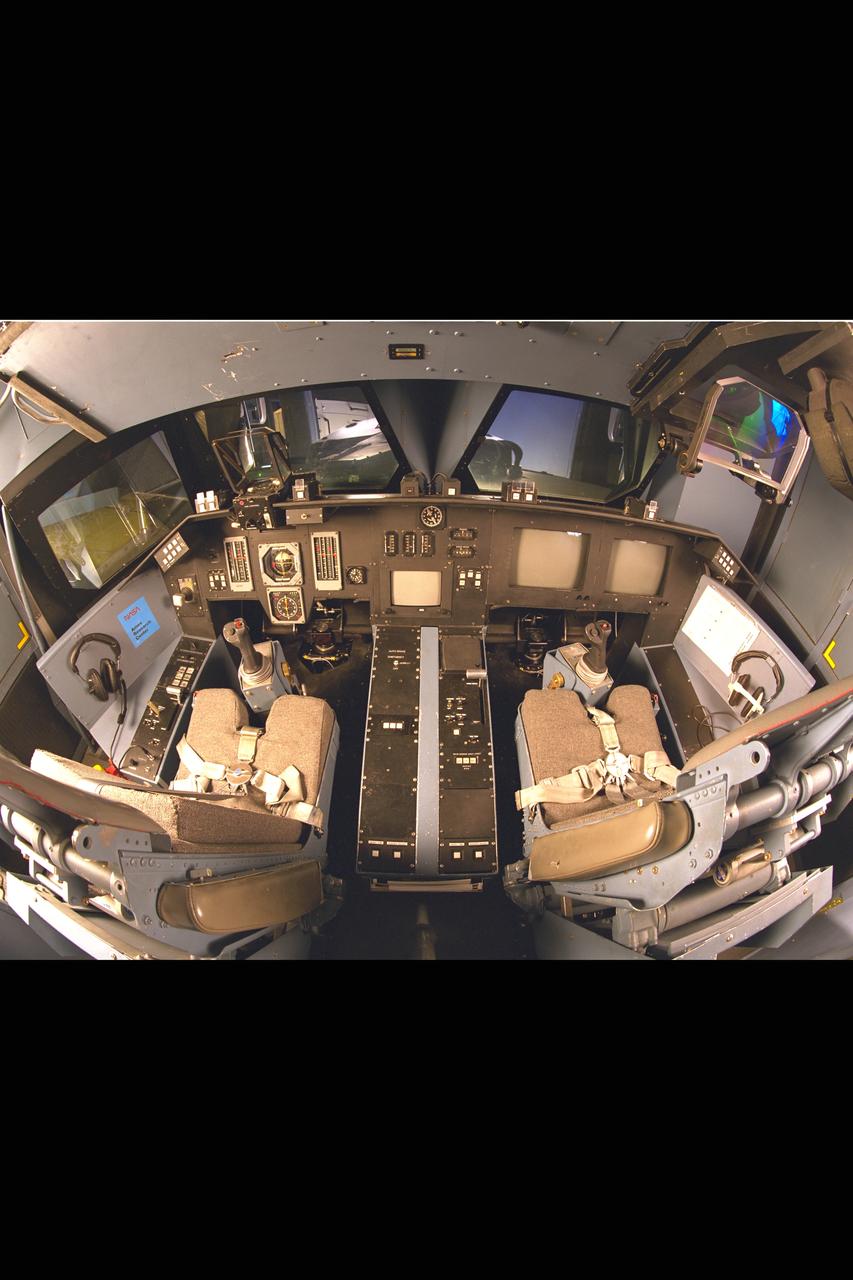
NASA Ames VMS (Vertical Motion Simulator) S-Cab (Space Shuttle Cab) overhead fisheye view
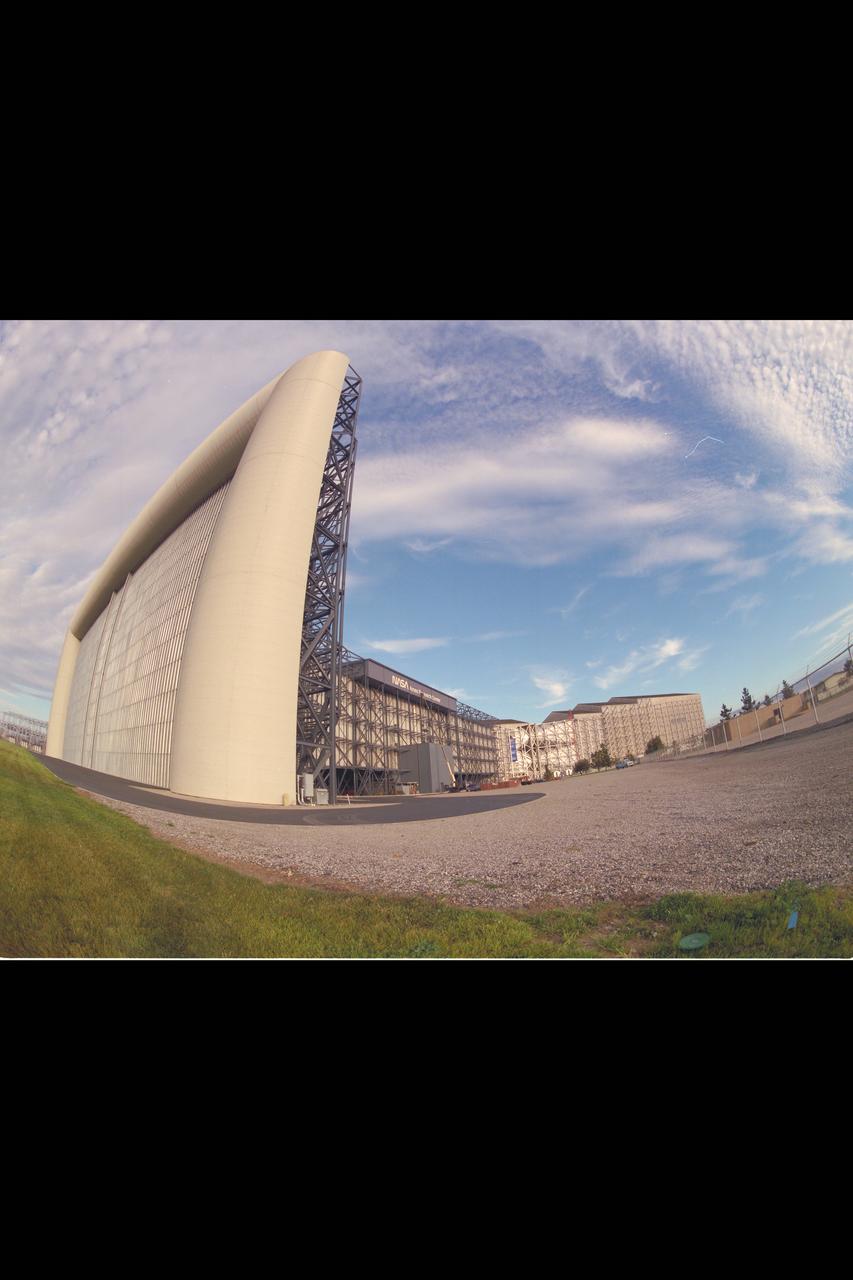
National Full-Scale Aerodynamic Complex (NFAC) 40x80x120ft wind tunnel fisheye view
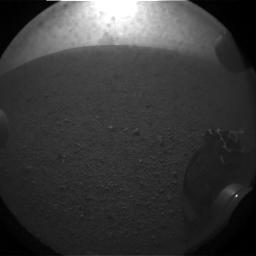
This is the first image taken by NASA Curiosity rover, which landed on Mars the evening of Aug. 5 PDT morning of Aug. 6 EDT. It was taken through a fisheye wide-angle lens on one of the rover rear left Hazard-Avoidance cameras.
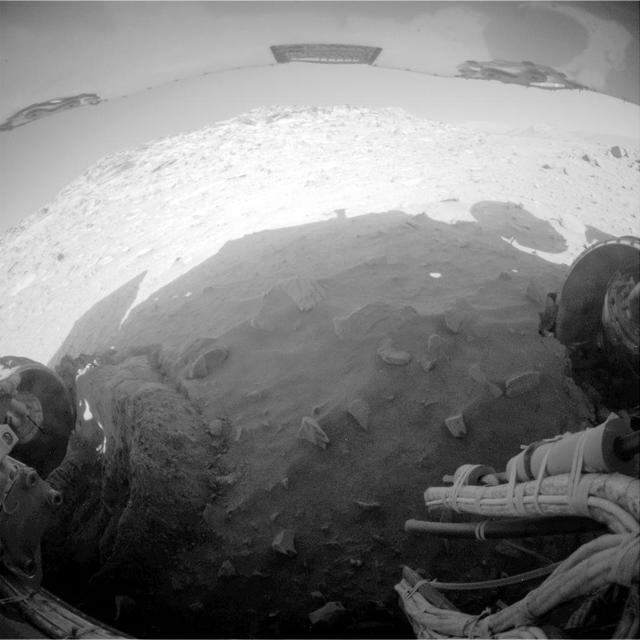
NASA Mars Exploration Rover Spirit recorded this fisheye view after completing a drive during on Mars on Feb. 8, 2010. The drive left Spirit in the position where the rover will stay parked during the upcoming Mars southern-hemisphere winter.

ISS030-E-108821 (28 Feb. 2012) --- Flight Engineer Don Pettit, one of the Expedition 30 crew members aboard the International Space Station, took this picture of a four-inch polished metal sphere in the U.S. Laboratory Destiny on Feb. 28, 2012. Pettit used an 8-mm lens to achieve what he called a "double fisheye" effect because the sphere itself provides a fisheye reflection. A close look of the sphere reveals a mirrored Pettit.
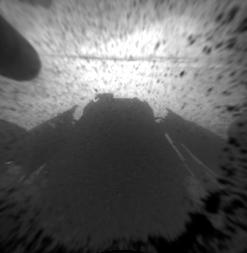
This is a version of one of the first images taken by a front Hazard-Avoidance camera on NASA Curiosity rover. It was taken through a fisheye wide-angle lens but has been linearized so that the horizon looks flat rather than curved.

This is a version of one of the first images taken by a front Hazard-Avoidance camera on NASA Curiosity rover. It was taken through a fisheye wide-angle lens but has been linearized so that the horizon looks flat rather than curved.
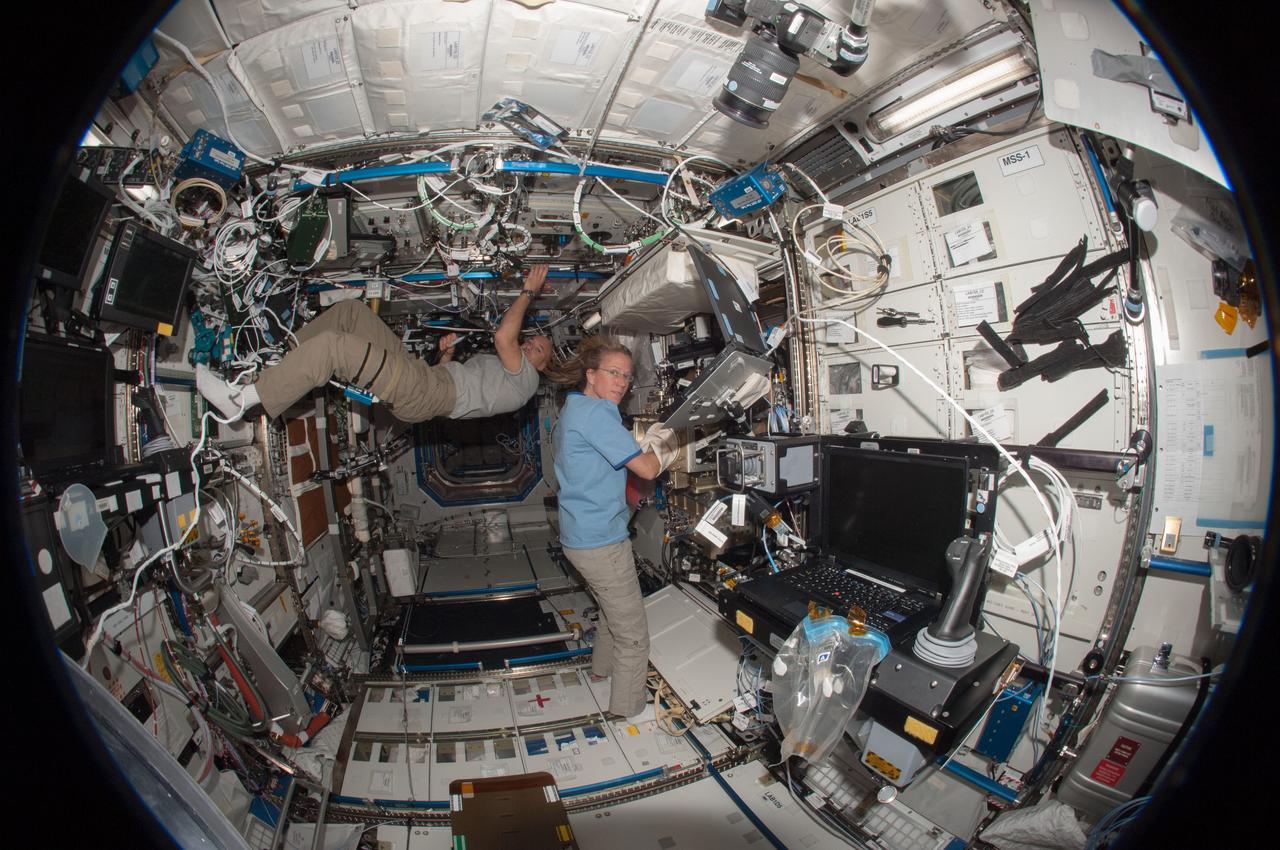
ISS036-E-019781 (24 June 2013) --- A fisheye lens attached to an electronic still camera was used to capture this image of European Space Agency astronaut Luca Parmitano and NASA astronaut Karen Nyberg, both Expedition 36 flight engineers, as they work in the Destiny laboratory of the International Space Station.
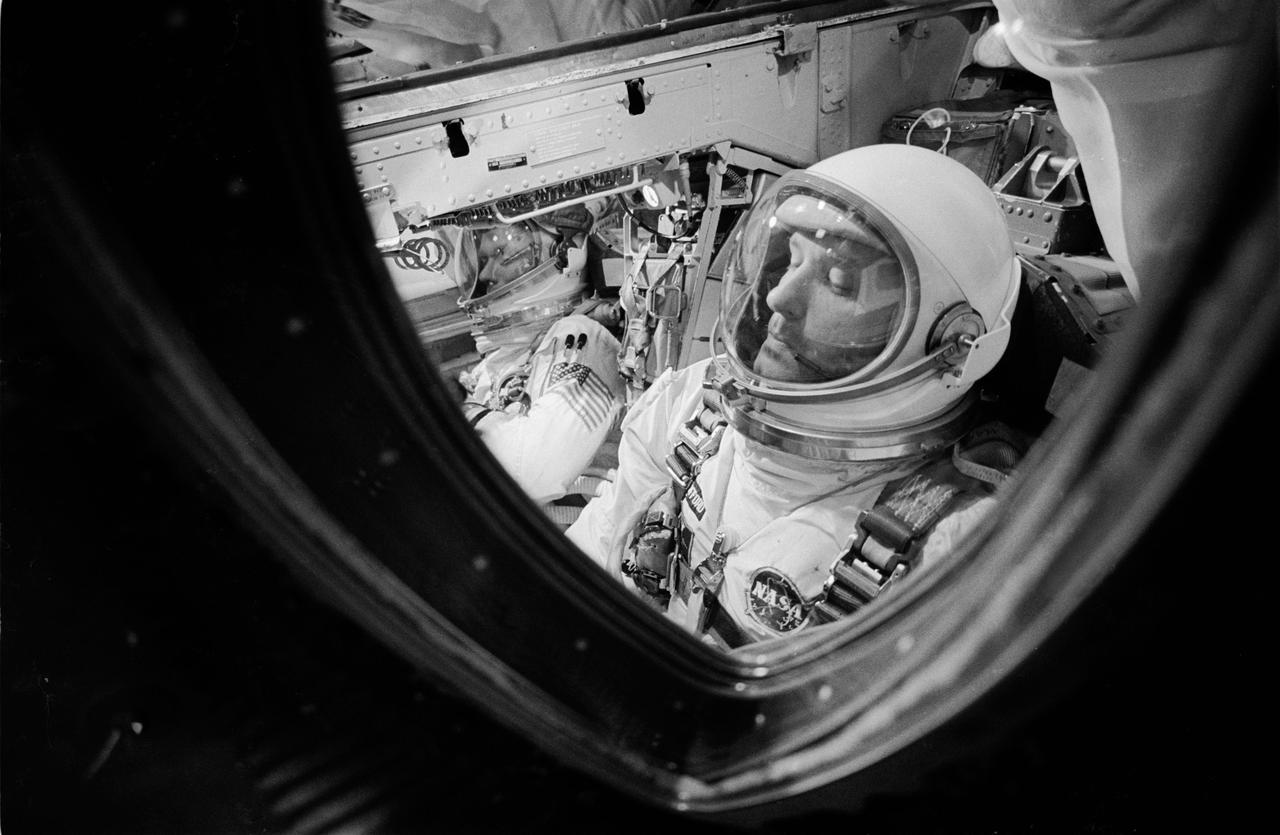
S66-34057 (3 June 1966) --- Fisheye view of astronauts Thomas P. Stafford and Eugene A. Cernan in the Gemini-9 spacecraft while hatches are sealed. They are in the White Room atop Pad 19 at the Kennedy Space Center. Photo credit: NASA
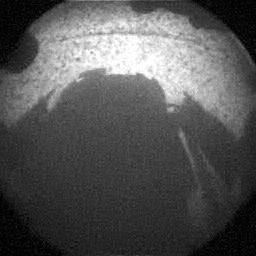
This is the first image taken by NASA Curiosity rover, which landed on Mars the evening of Aug. 5 PDT morning of Aug. 6 EDT. It was taken through a fisheye wide-angle lens on one of the rover front right Hazard-Avoidance cameras.
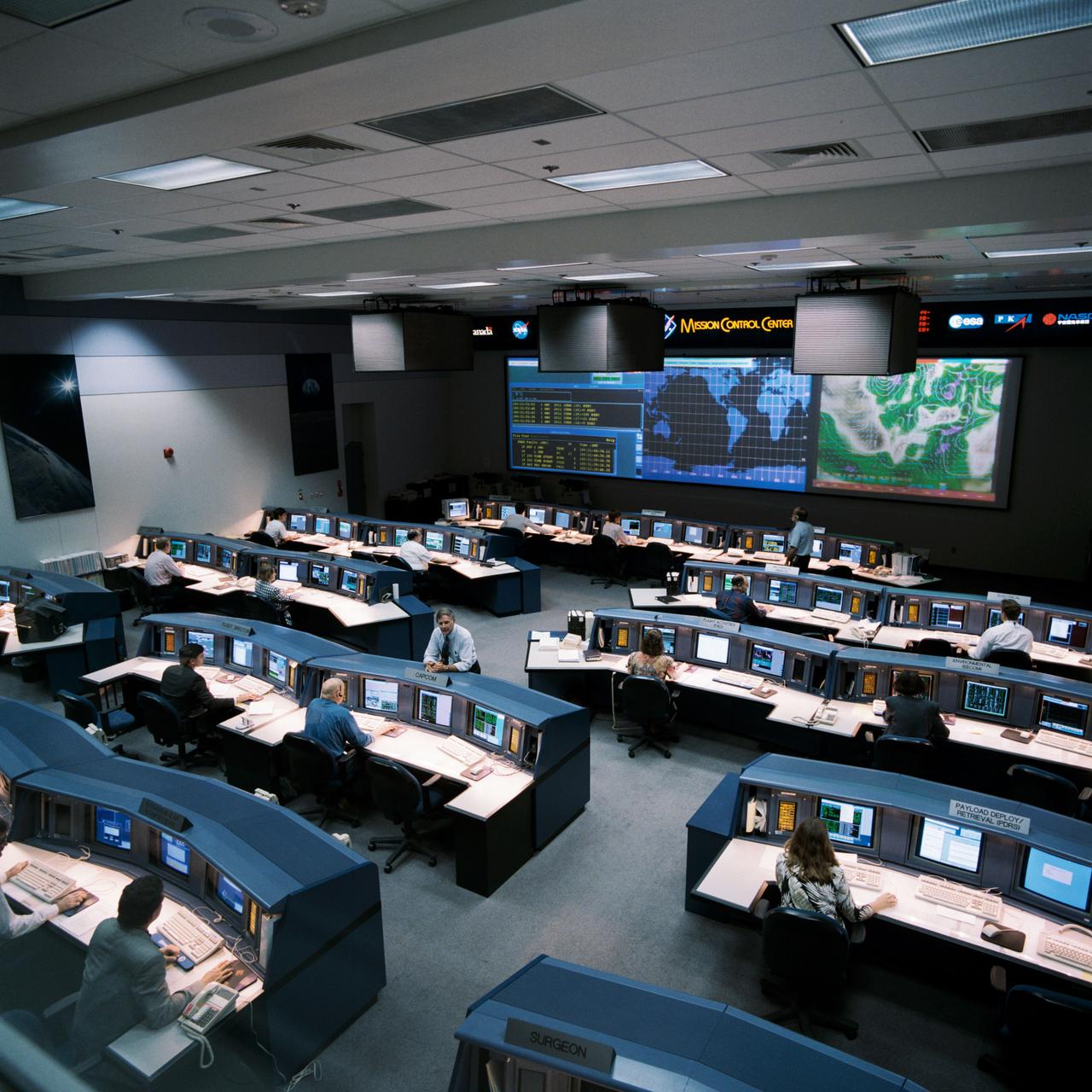
Documentation of the new mission control center White Flight Control Room (FLCR). Excellent overall view of White FLCR with personnel manning console workstations (11221). Fisheye lens perspective from Flight Director station with Brian Austin (11222). Environmental (EECOM) workstation and personnel (11223).
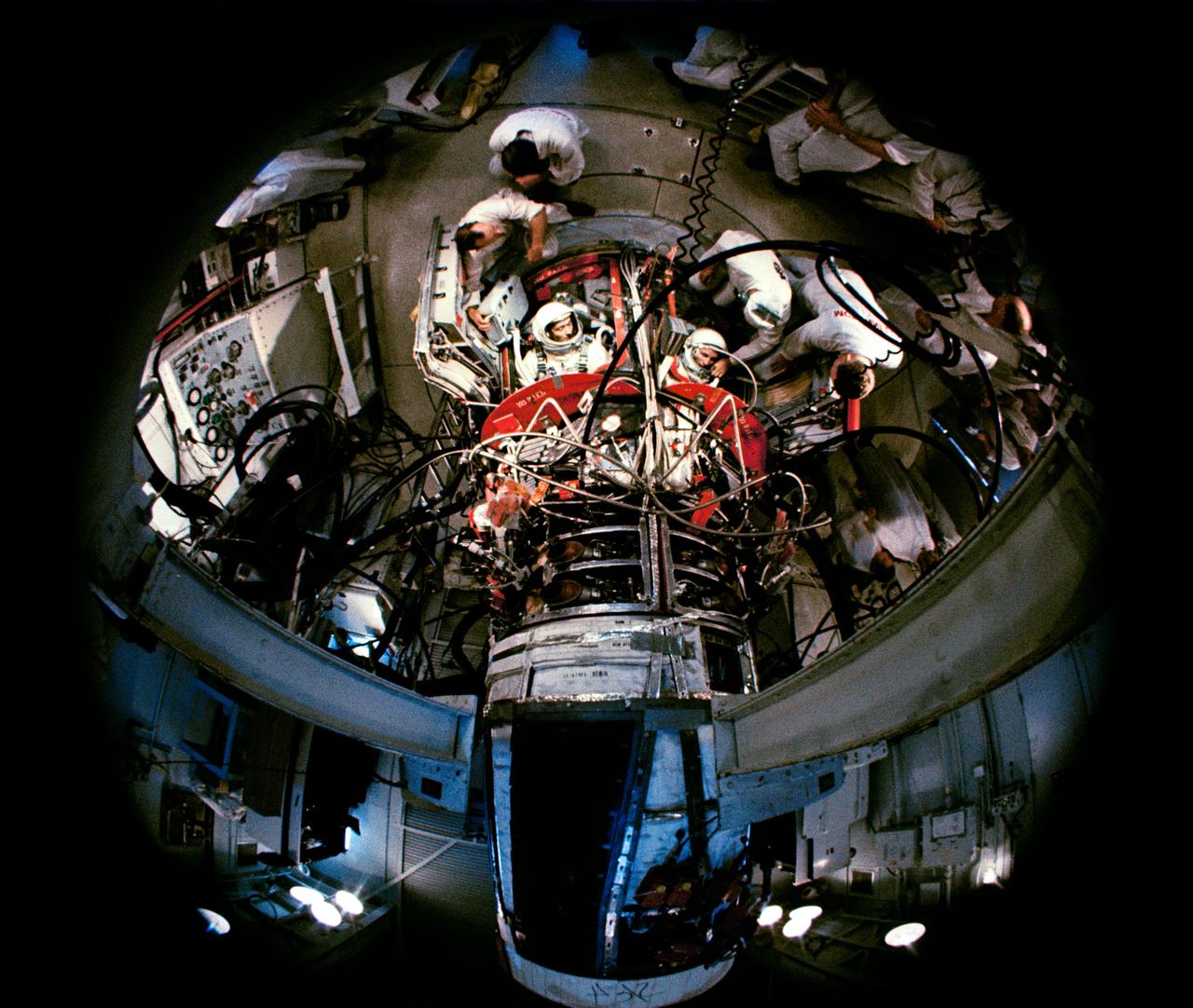
S65-29650 (3 June 1965) --- Fisheye view of astronauts James A. McDivitt and Edward H. White II inside the Gemini-4 spacecraft during simulated exercises at pad 19, Cape Kennedy, Florida. NASA Headquarters alternative photo number is 65-H-274.
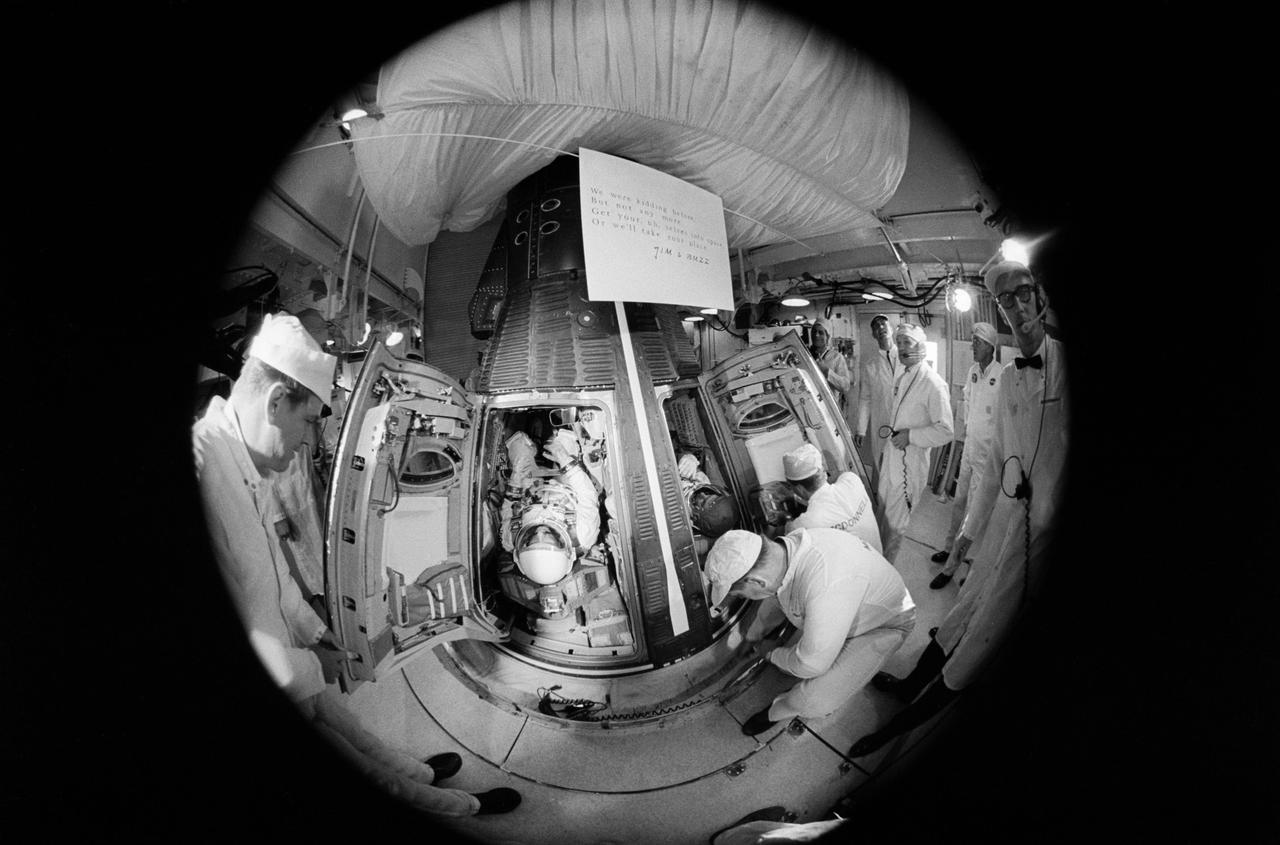
S66-34055 (3 June 1966) --- Fisheye camera lens view of the white room atop Pad 19 during the insertion of astronauts Thomas P. Stafford and Eugene A. Cernan into the Gemini-9A spacecraft. Minutes later the hatches were sealed on the spacecraft in preparation for launch of the proposed three-day mission. Photo credit: NASA

51I-13-024 (2 Sept. 1985) --- Astronaut Joe H. Engle, STS51-I commander, is seen in a 35mm frame exposed with a fisheye lens as he works at controls between the commander and pilot stations on the forward flight deck of the space shuttle Discovery. Photo credit: NASA
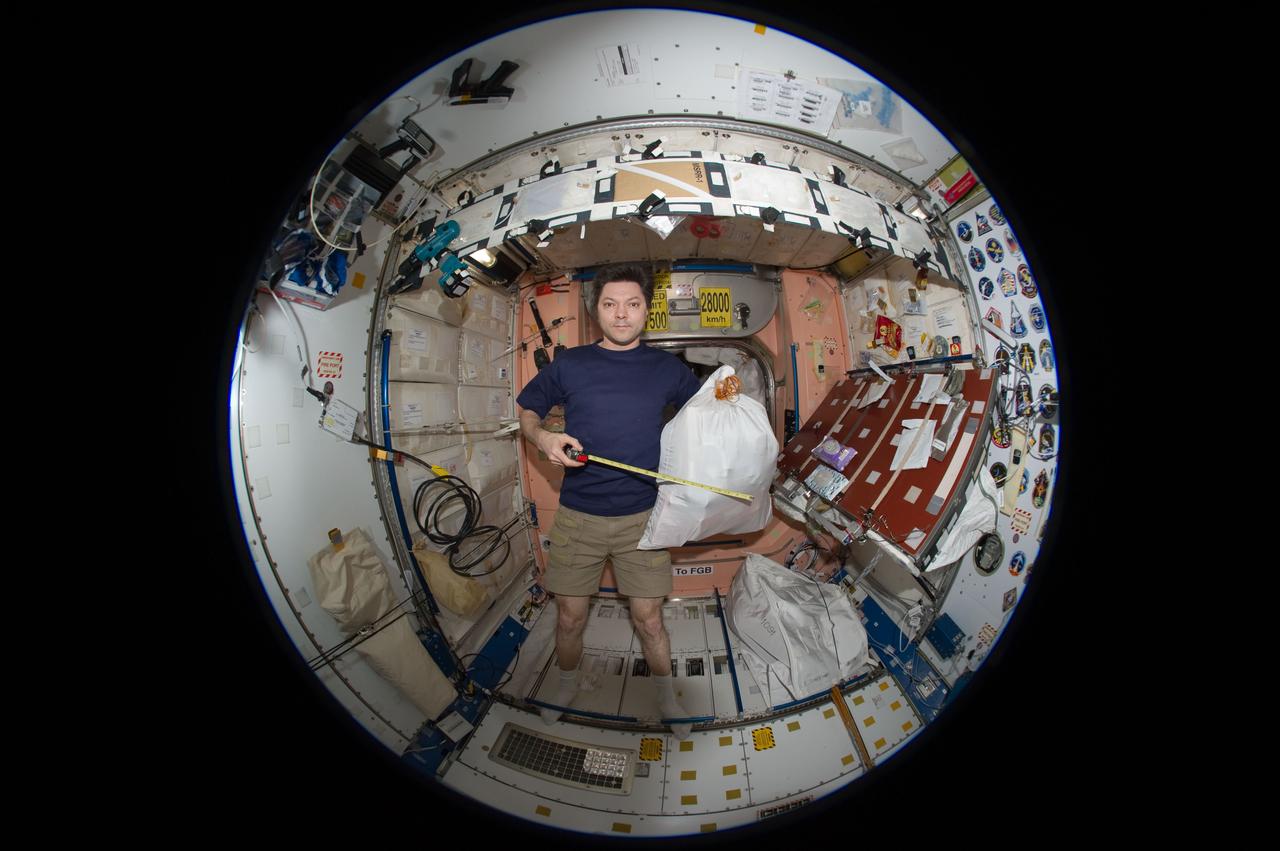
ISS031-E-148931 (28 June 2012) --- A fisheye lens attached to an electronic still camera was used to capture this image of Russian cosmonaut Oleg Kononenko, Expedition 31 commander, during stowage operations in the Unity node of the International Space Station.
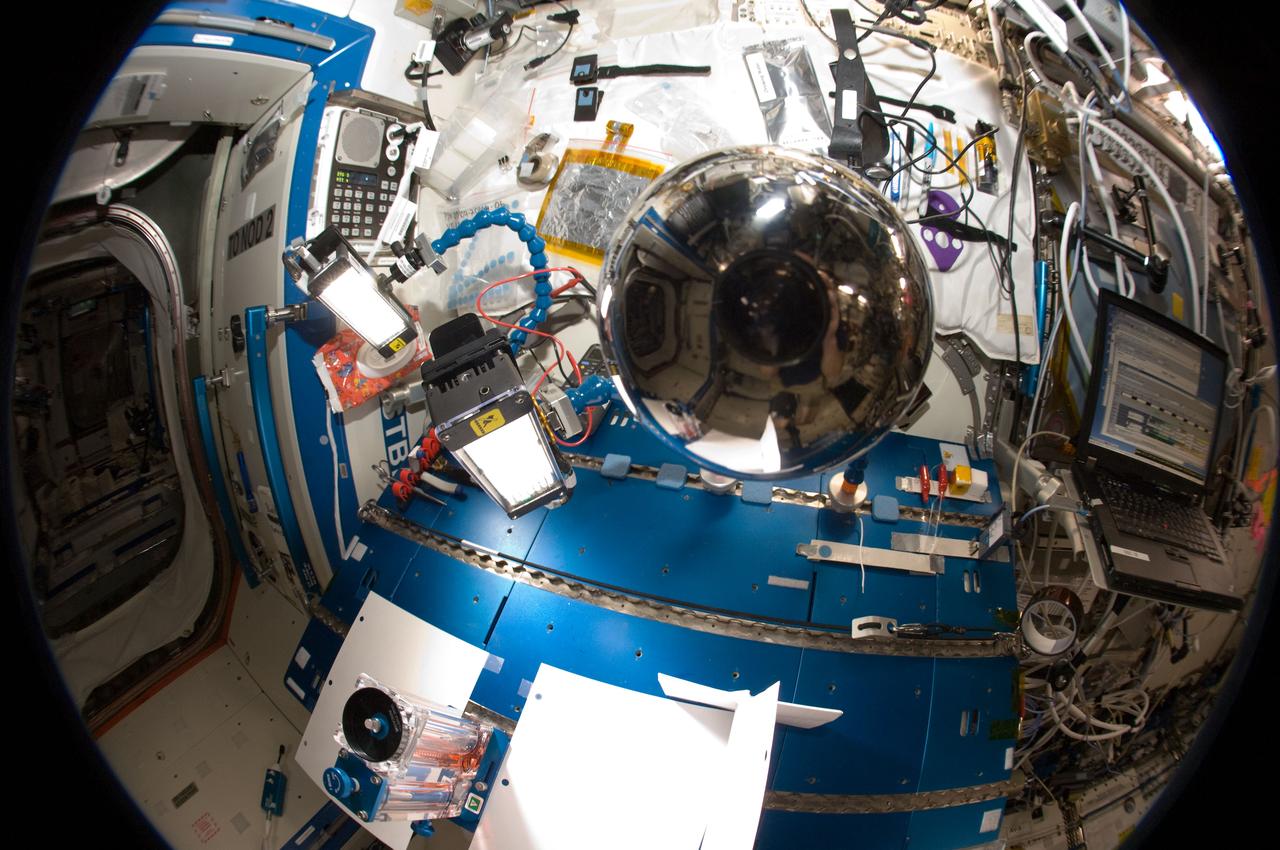
ISS030-E-108820 (28 Feb. 2012) --- In the center of this "fisheye" lens image is a four-inch polished metal sphere onboard the International Space Station. Expedition 30 crew members using an 8-mm lens took a series of pictures of the sphere.
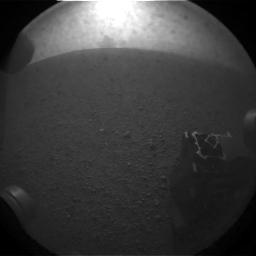
This is the first image taken by NASA Curiosity rover, which landed on Mars the evening of Aug. 5 PDT morning of Aug. 6 EDT. It was taken through a fisheye wide-angle lens on one of the rover rear right Hazard-Avoidance cameras.
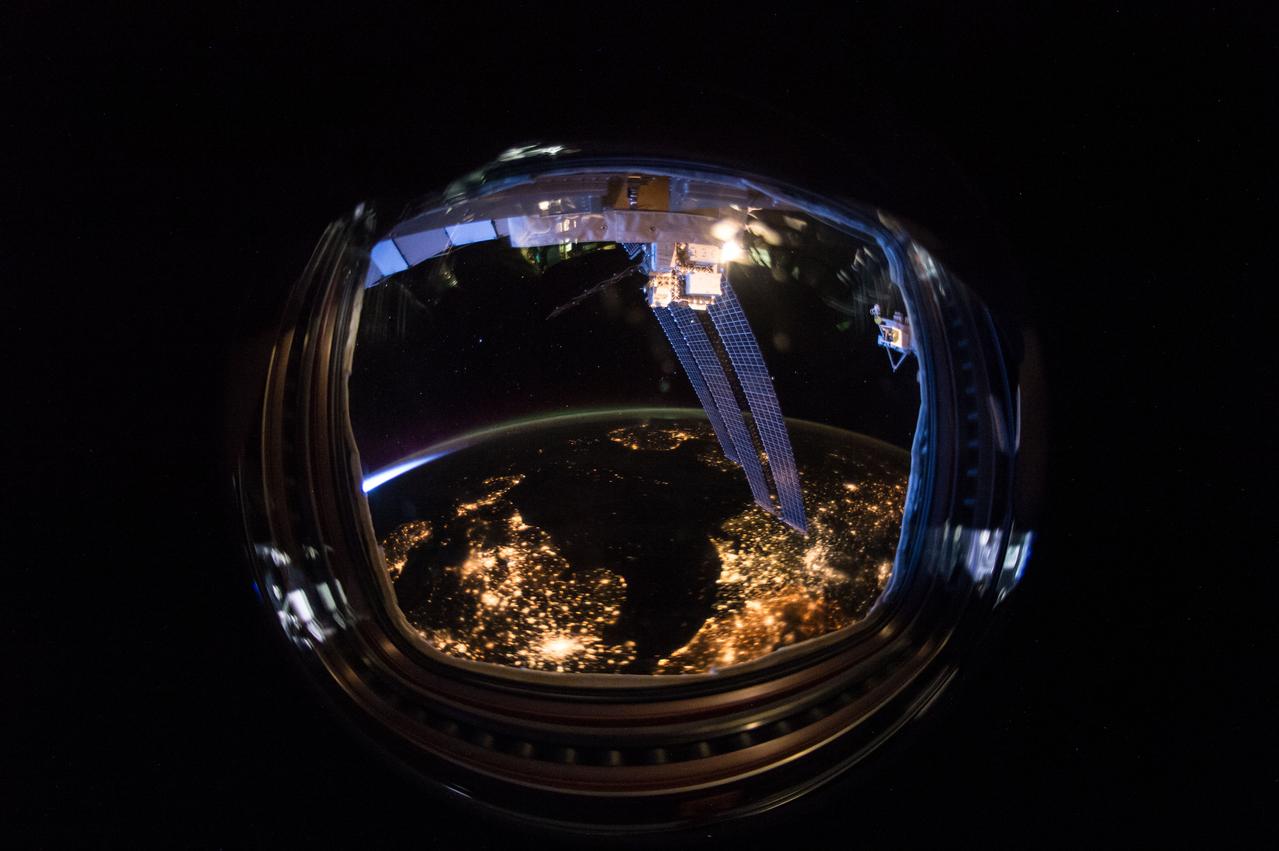
ISS046e040151 (02/11/2016) --- This wide fisheye lens night view of the Earth was taken aboard the International Space Station on Feb 11, 2016 by the crew of Expedition 46. Some of the stations solar array juts down into the image on the left side.
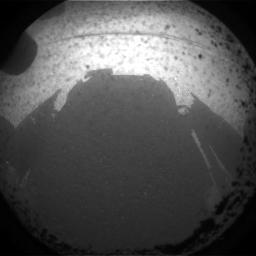
This is the first image taken by NASA Curiosity rover, which landed on Mars the evening of Aug. 5 PDT morning of Aug. 6 EDT. It was taken through a fisheye wide-angle lens on one of the rover front left Hazard-Avoidance cameras.
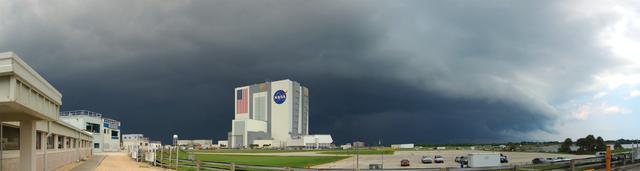
CAPE CANAVERAL, Fla. – This fisheye view shows storm clouds gathering over Launch Complex 39 at NASA's Kennedy Space Center, a common occurrence at this time of the year in Florida. The NASA News Center is at far left. The 525-foot-tall Vehicle Assembly Building towers above the complex, in the center, with the Launch Control Center nestled at its base to the right. The turn basin is behind the trees, at right. Photo credit: NASA/Chris Chamberland
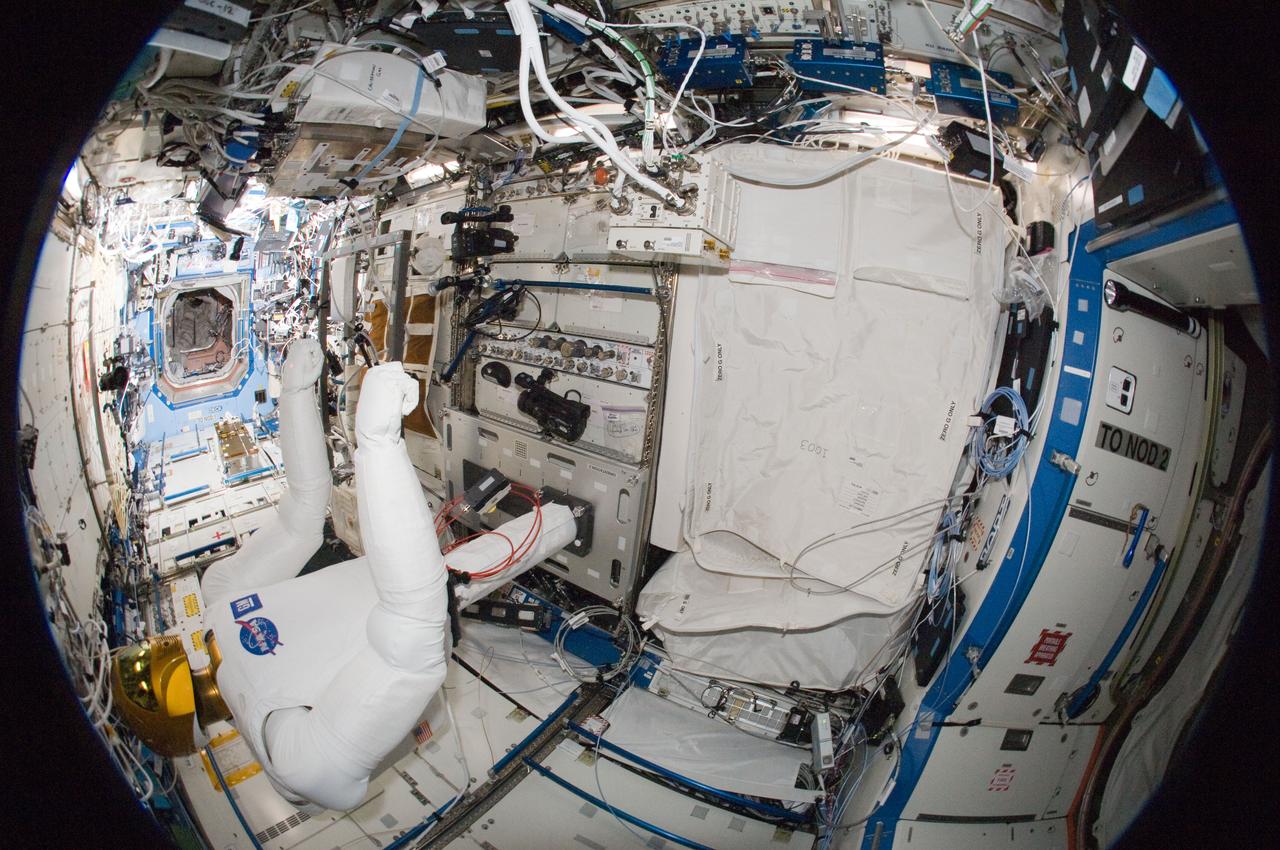
ISS030-E-135148 (13 March 2012) --- A fisheye lens attached to an electronic still camera was used to capture this image of Robonaut 2 humanoid robot during another system checkout in the Destiny laboratory of the International Space Station. Teams on the ground commanded Robonaut through a series of dexterity tests as it spelled out ?Hello world? in sign language.

In this image taken with a circular fisheye lens, the Soyuz rocket is seen as it is raised into a vertical position after being rolled out by train to the launch pad at Site 31, Saturday, April 5, 2025, at the Baikonur Cosmodrome in Kazakhstan. Expedition 73 crewmembers: NASA astronaut Jonny Kim, and Roscosmos cosmonauts Sergey Ryzhikov and Alexey Zubritskiy, are scheduled to launch aboard their Soyuz MS-27 spacecraft on April 8. Photo Credit: (NASA/Joel Kowsky)
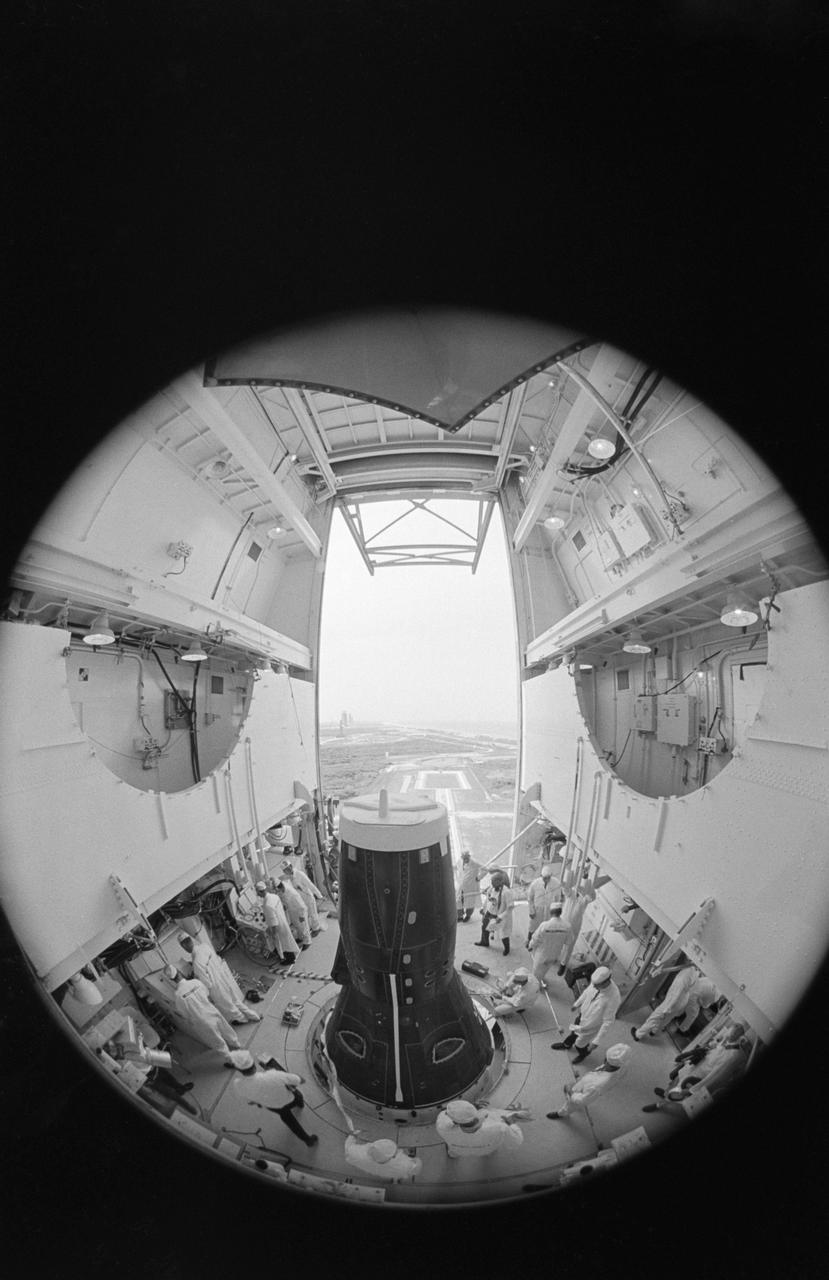
S66-42736 (18 July 1966) --- Fisheye camera lens view of activity in white room atop Pad 19 as technicians secure equipment in preparation for erector lowering. Inside the Gemini-10 spacecraft are astronauts John W. Young, command pilot, and Michael Collins, pilot. Liftoff was at 5:20 p.m. (EST), July 18, 1966. Photo credit: NASA
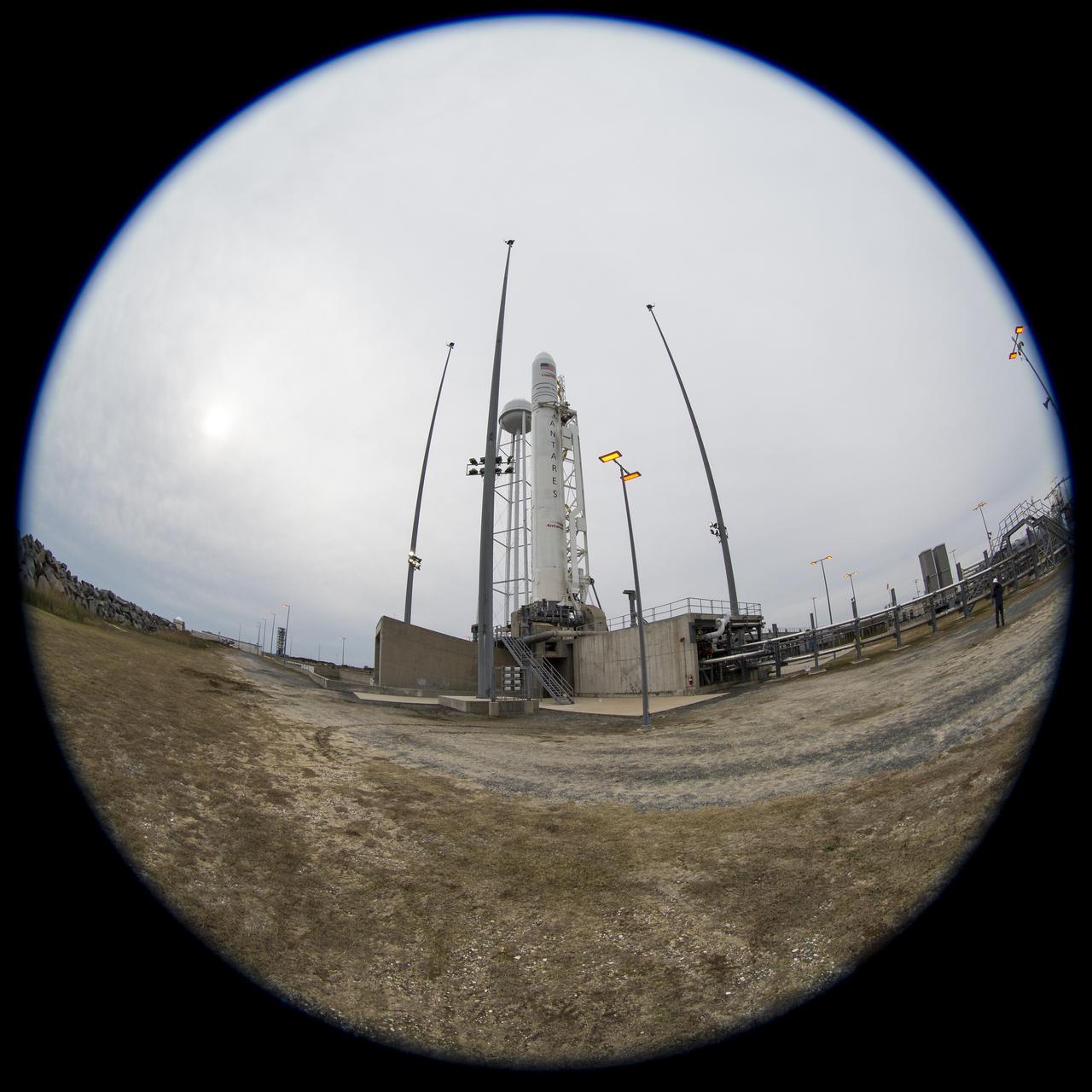
In this image taken with a circular fisheye lens, the Northrop Grumman Antares rocket, with Cygnus resupply spacecraft onboard, is seen on Pad-0A, Wednesday, Nov. 14, 2018 at NASA's Wallops Flight Facility in Virginia. Northrop Grumman's 10th contracted cargo resupply mission for NASA to the International Space Station will deliver about 7,400 pounds of science and research, crew supplies and vehicle hardware to the orbital laboratory and its crew. Launch is currently scheduled for Nov. 16 at 4:23 a.m. EST. Photo Credit: (NASA/Joel Kowsky)
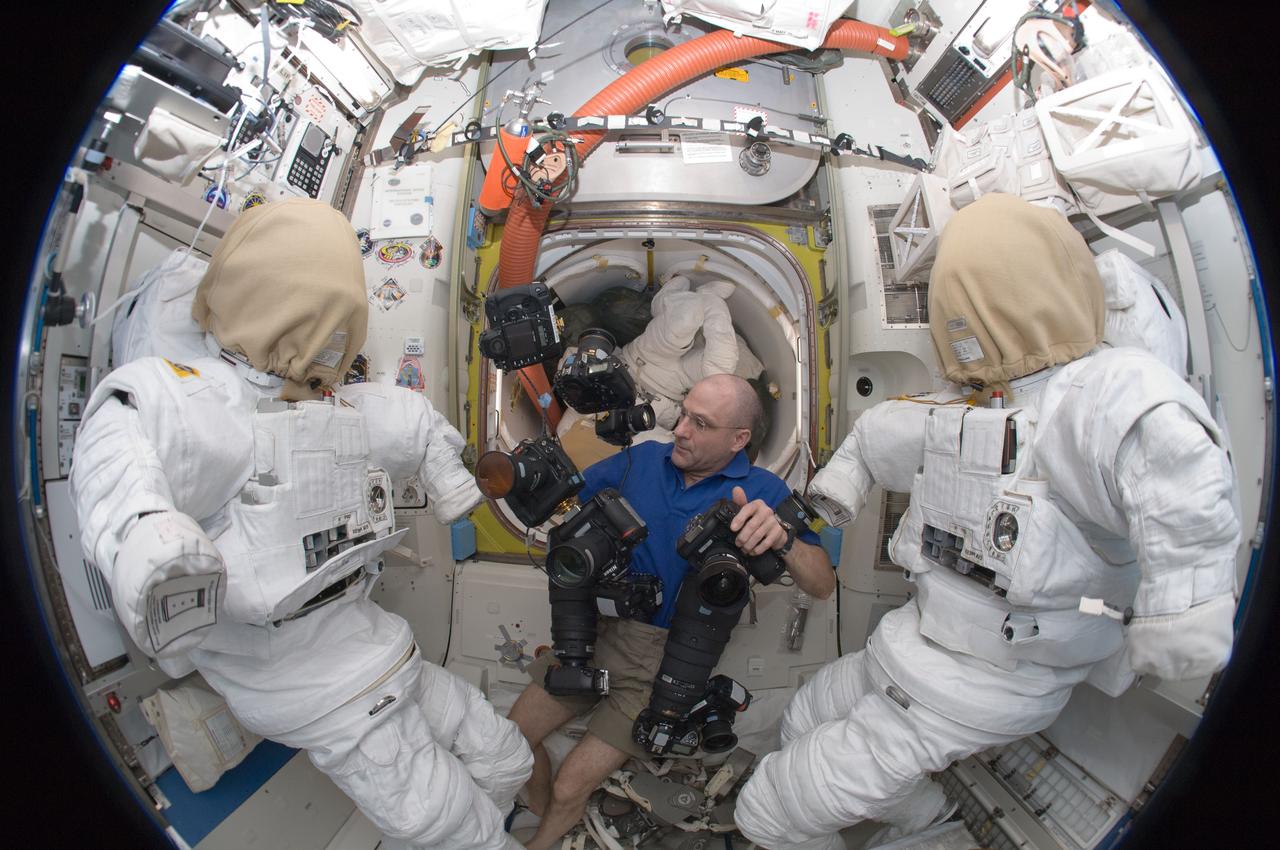
ISS031-E-112512 (10 June 2012) --- A fisheye lens attached to an electronic still camera was used to capture this image of NASA astronaut Don Pettit, Expedition 31 flight engineer, as he works with still camera equipment in the Quest airlock of the International Space Station, while flanked by a pair of NASA Extravehicular Mobility Unit (EMU) spacesuits.
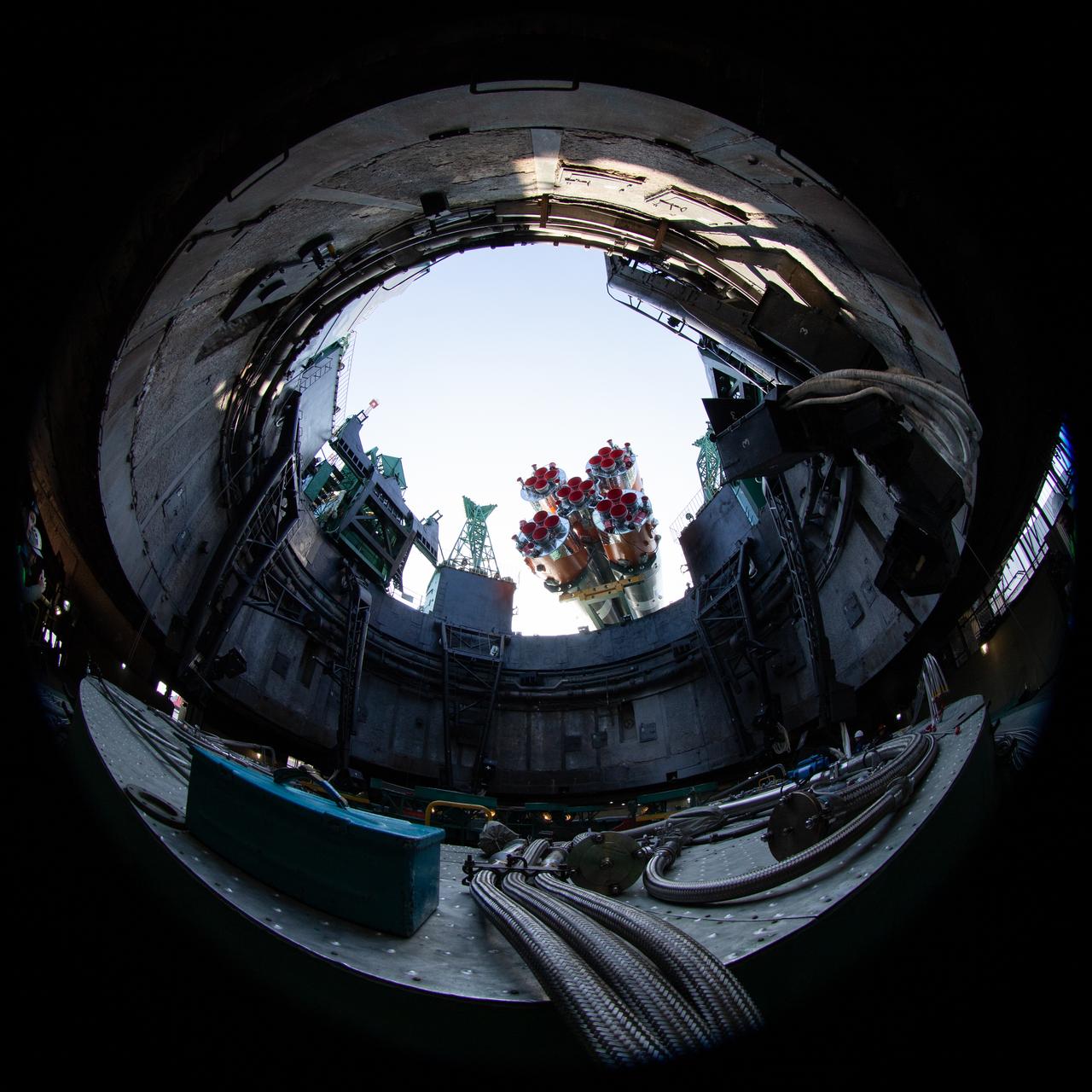
In this image taken with a circular fisheye lens, the Soyuz rocket is seen as it is raised into a vertical position after being rolled out by train to the launch pad at Site 31, Saturday, April 5, 2025, at the Baikonur Cosmodrome in Kazakhstan. Expedition 73 crewmembers: NASA astronaut Jonny Kim, and Roscosmos cosmonauts Sergey Ryzhikov and Alexey Zubritskiy, are scheduled to launch aboard their Soyuz MS-27 spacecraft on April 8. Photo Credit: (NASA/Joel Kowsky)
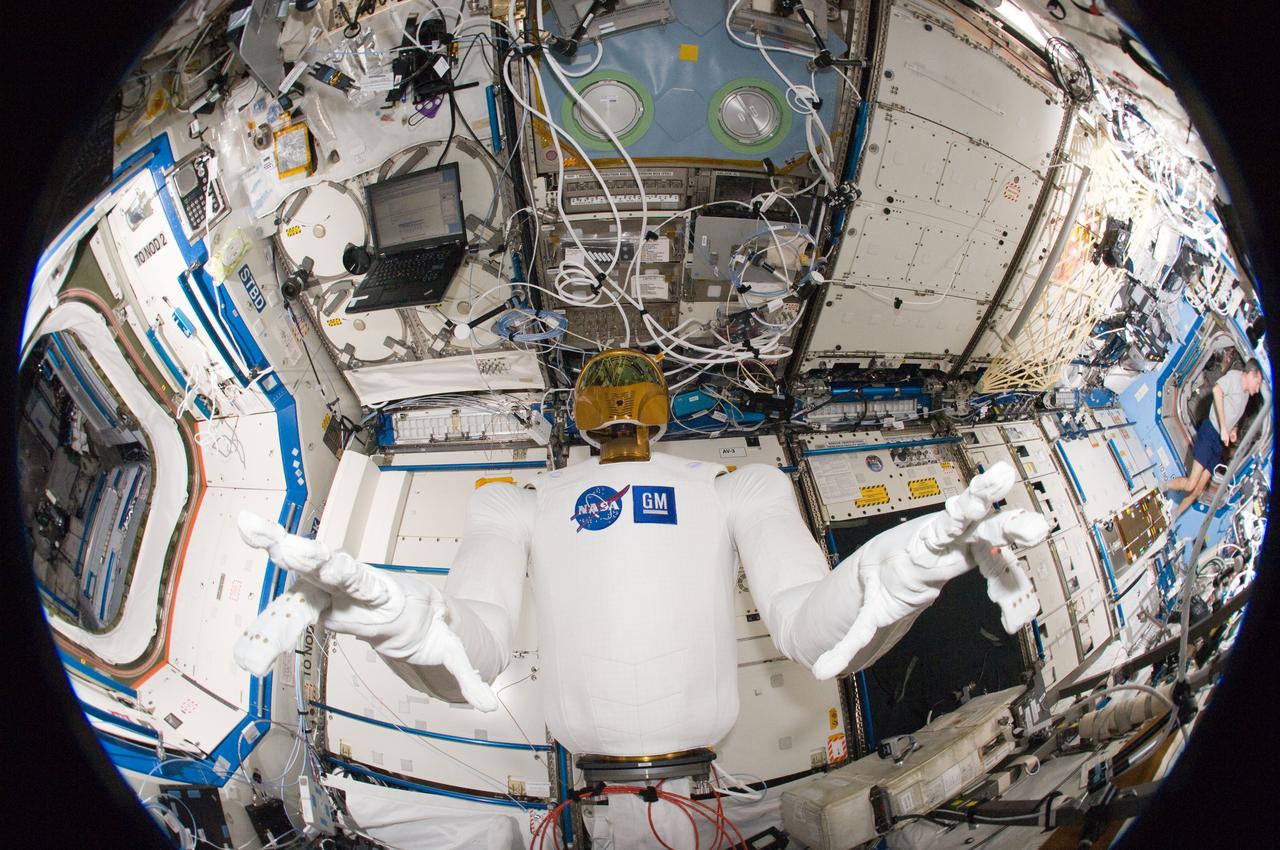
ISS030-E-135157 (13 March 2012) --- A fisheye lens attached to an electronic still camera was used to capture this image of Robonaut 2 humanoid robot during another system checkout in the Destiny laboratory of the International Space Station. Teams on the ground commanded Robonaut through a series of dexterity tests as it spelled out ?Hello world? in sign language.
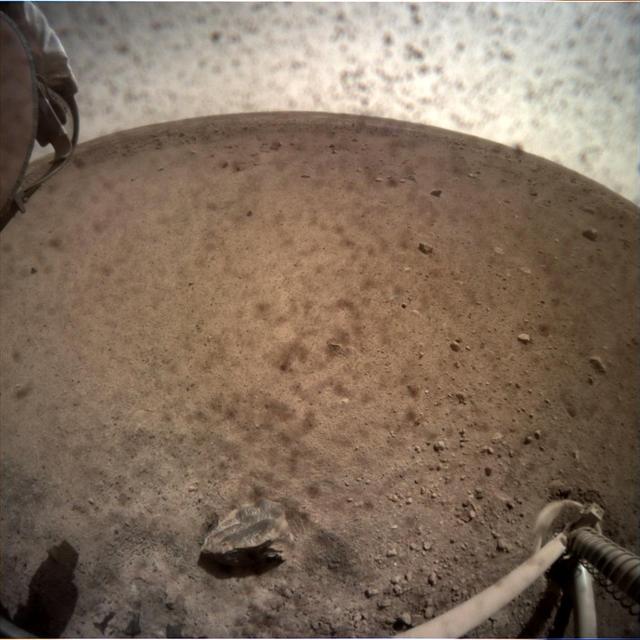
NASA's InSight spacecraft flipped open the lens cover on its Instrument Context Camera (ICC) on Nov. 30, 2018, and captured this view of Mars. Located below the deck of the InSight lander, the ICC has a fisheye view, creating a curved horizon. Some clumps of dust are still visible on the camera's lens. One of the spacecraft's footpads can be seen in the lower right corner. The seismometer's tether box is in the upper left corner. https://photojournal.jpl.nasa.gov/catalog/PIA22893
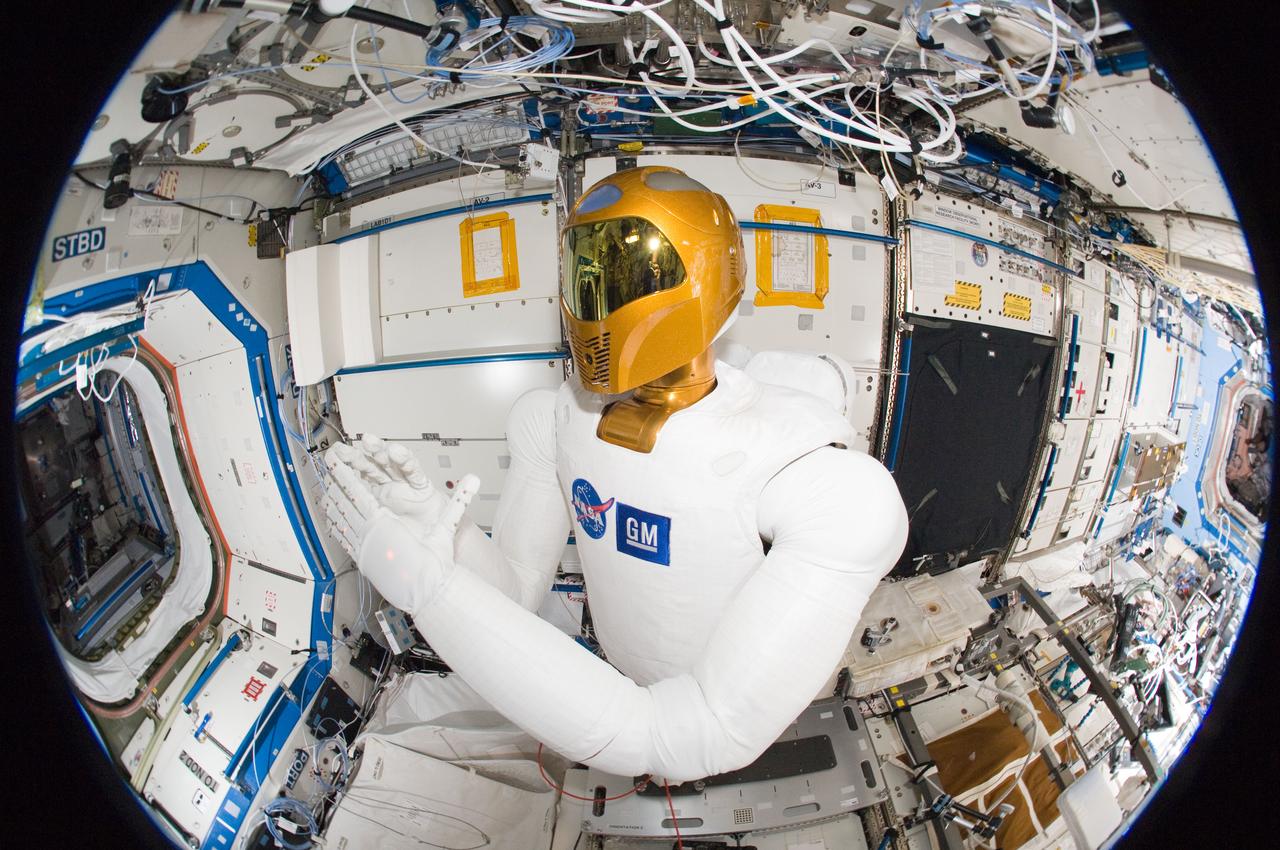
ISS030-E-135187 (13 March 2012) --- A fisheye lens attached to an electronic still camera was used to capture this image of Robonaut 2 humanoid robot during another system checkout in the Destiny laboratory of the International Space Station. Teams on the ground commanded Robonaut through a series of dexterity tests as it spelled out ?Hello world? in sign language.
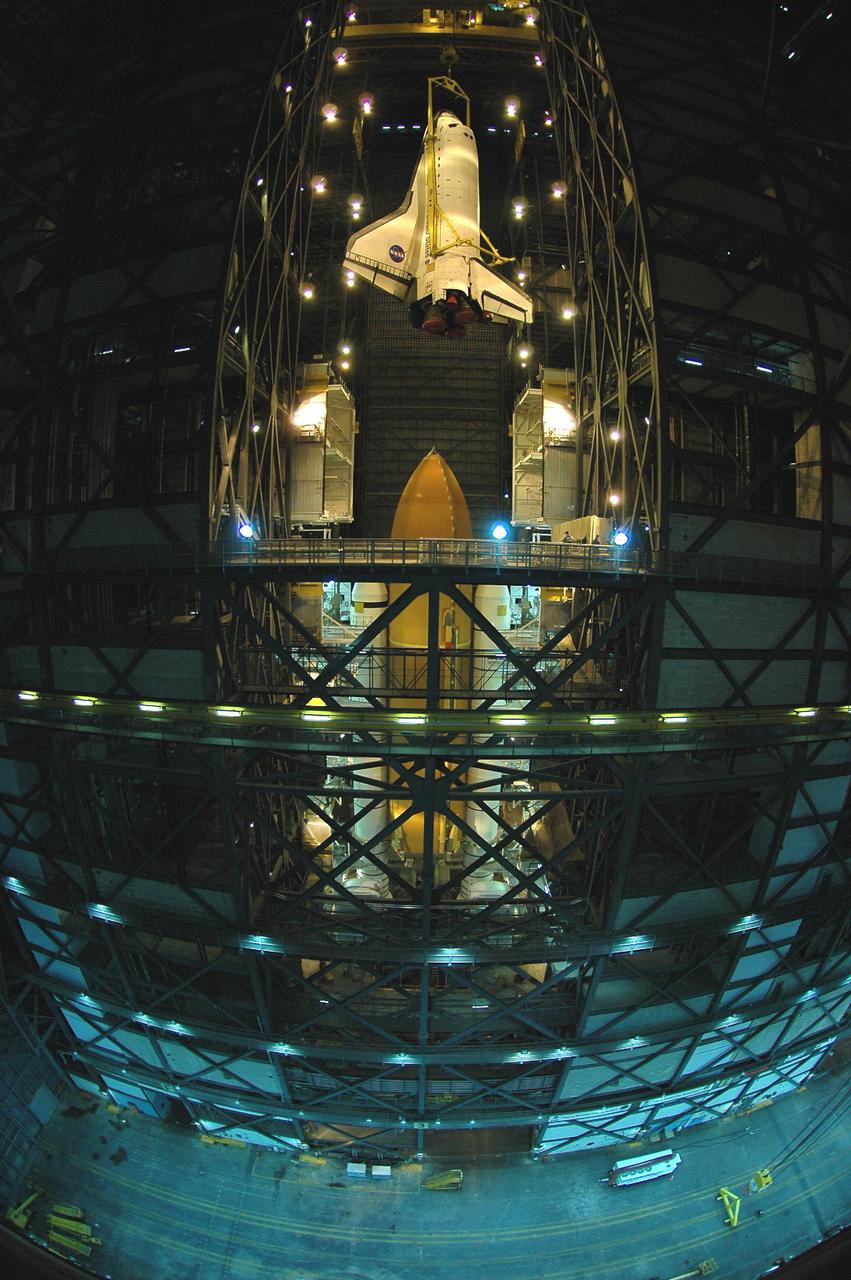
KENNEDY SPACE CENTER, FLA. - In the Vehicle Assembly Building, a fisheye lens captures Space Shuttle Atlantis as it is lifted above its External Tank_Solid Rocket Booster stack. The orbiter will be lowered into the transfer aisle and rolled back to Orbiter Processing Facility (OPF) bay 1. Once in the OPF, processing will begin for mission STS-115, the 19th flight to the International Space Station. The tank, ET-120, is the first redesigned ET to arrive at KSC and will undergo further testing before Return to Flight mission STS-121 next year.
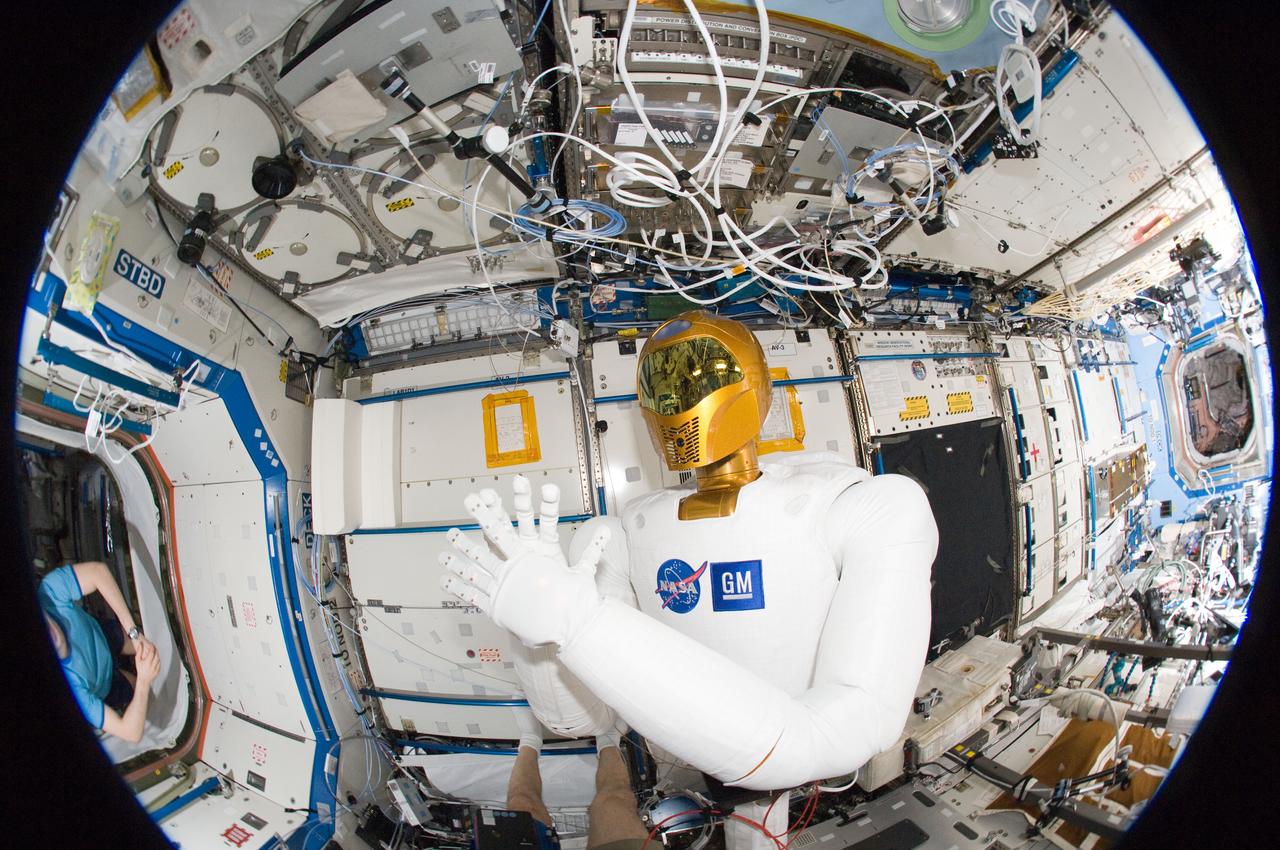
ISS030-E-135185 (13 March 2012) --- A fisheye lens attached to an electronic still camera was used to capture this image of Robonaut 2 humanoid robot during another system checkout in the Destiny laboratory of the International Space Station. Teams on the ground commanded Robonaut through a series of dexterity tests as it spelled out ?Hello world? in sign language.
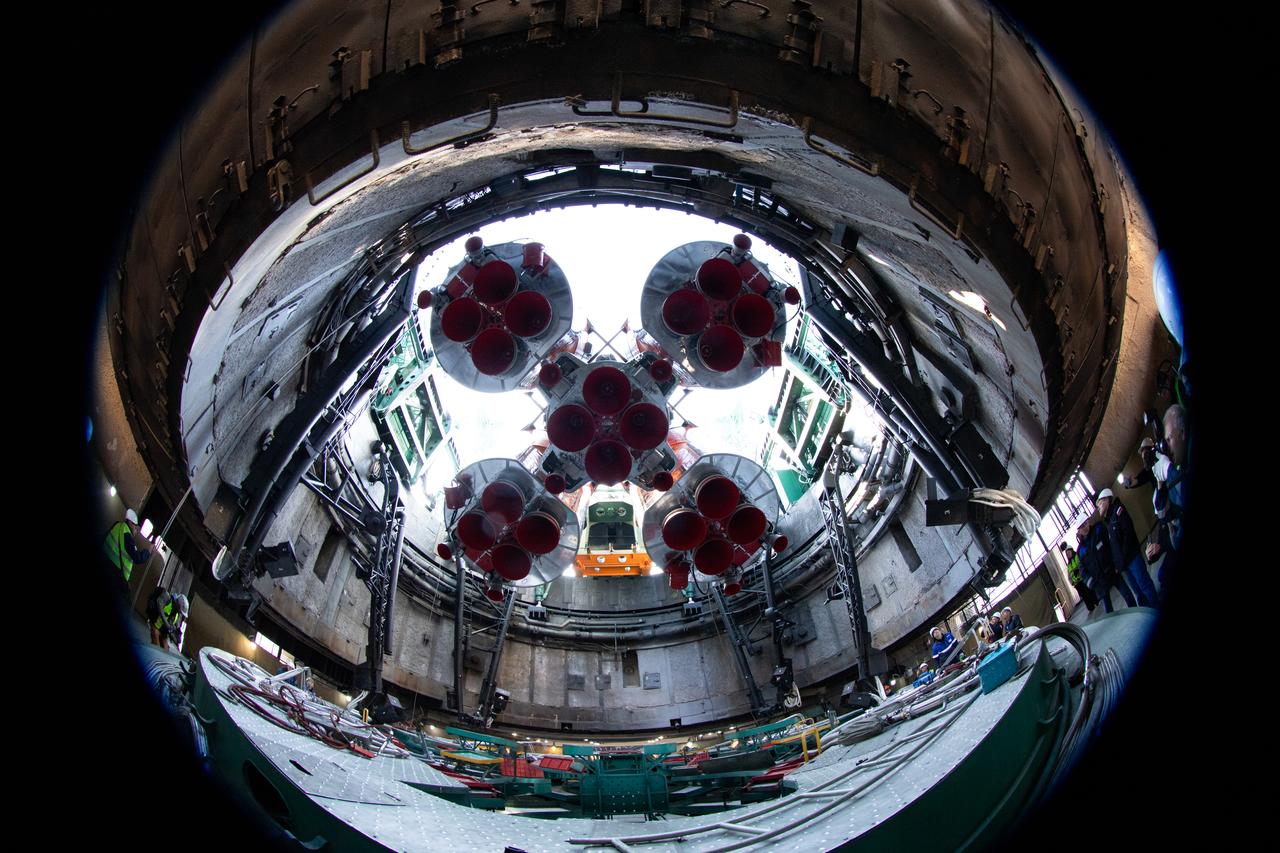
In this image taken with a circular fisheye lens, the Soyuz rocket is seen as it is raised into a vertical position after being rolled out by train to the launch pad at Site 31, Saturday, April 5, 2025, at the Baikonur Cosmodrome in Kazakhstan. Expedition 73 crewmembers: NASA astronaut Jonny Kim, and Roscosmos cosmonauts Sergey Ryzhikov and Alexey Zubritskiy, are scheduled to launch aboard their Soyuz MS-27 spacecraft on April 8. Photo Credit: (NASA/Joel Kowsky)
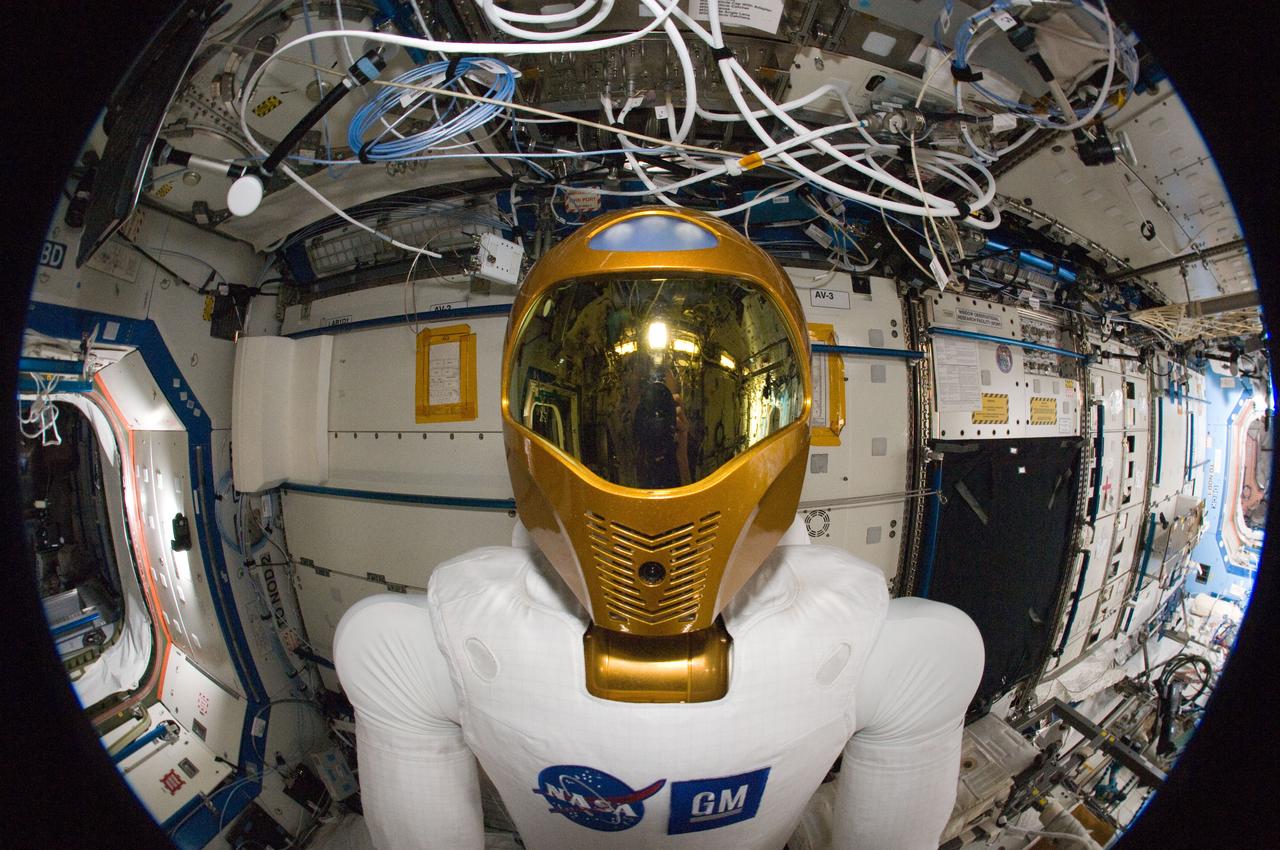
ISS030-E-135140 (13 March 2012) --- A fisheye lens attached to an electronic still camera was used to capture this image of Robonaut 2 humanoid robot during another system checkout in the Destiny laboratory of the International Space Station. Teams on the ground commanded Robonaut through a series of dexterity tests as it spelled out ?Hello world? in sign language.
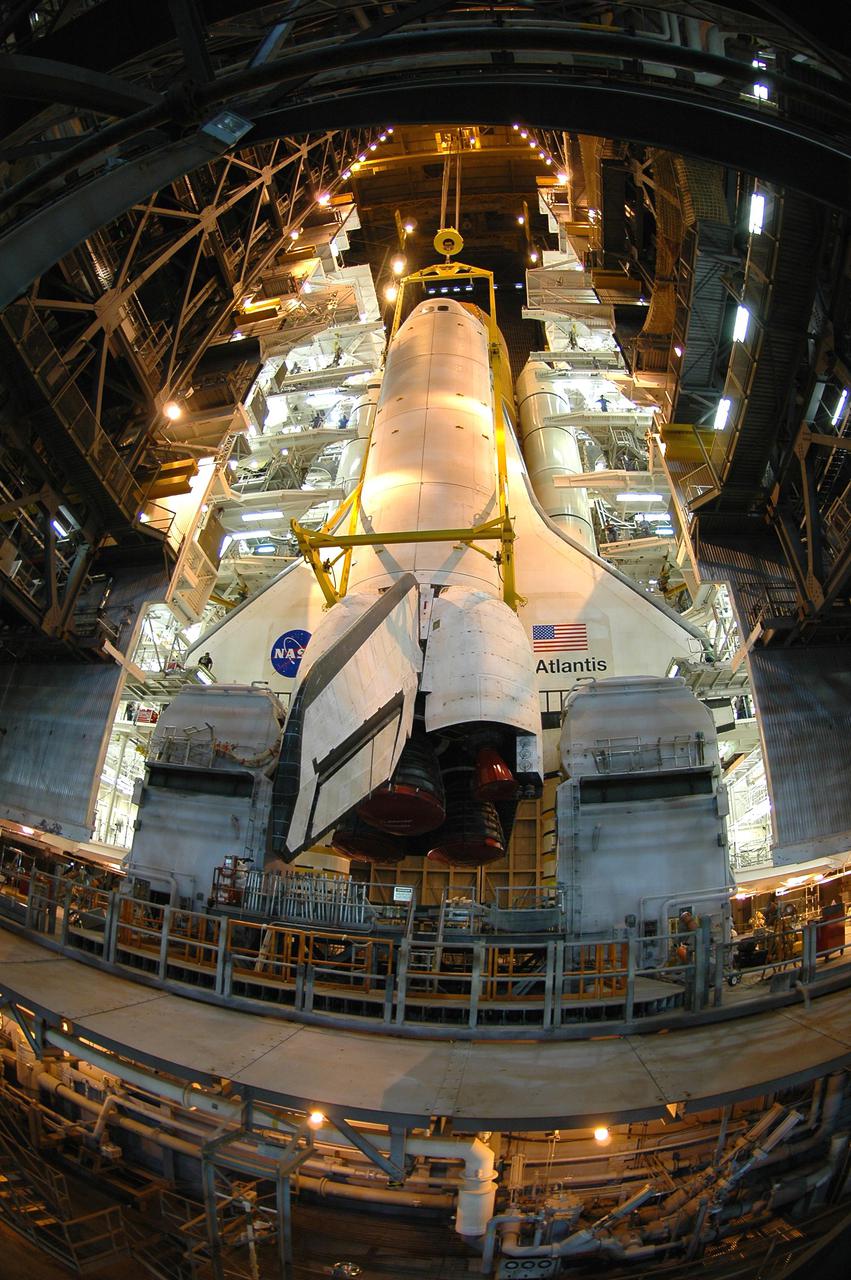
KENNEDY SPACE CENTER, FLA. - In the Vehicle Assembly Building, a fisheye lens captures Space Shuttle Atlantis as it is lifted from its External Tank_Solid Rocket Booster stack. The orbiter will be lowered into the transfer aisle and rolled back to Orbiter Processing Facility (OPF) bay 1. Once in the OPF, processing will begin for mission STS-115, the 19th flight to the International Space Station. The tank, ET-120, is the first redesigned ET to arrive at KSC and will undergo further testing before Return to Flight mission STS-121 next year.
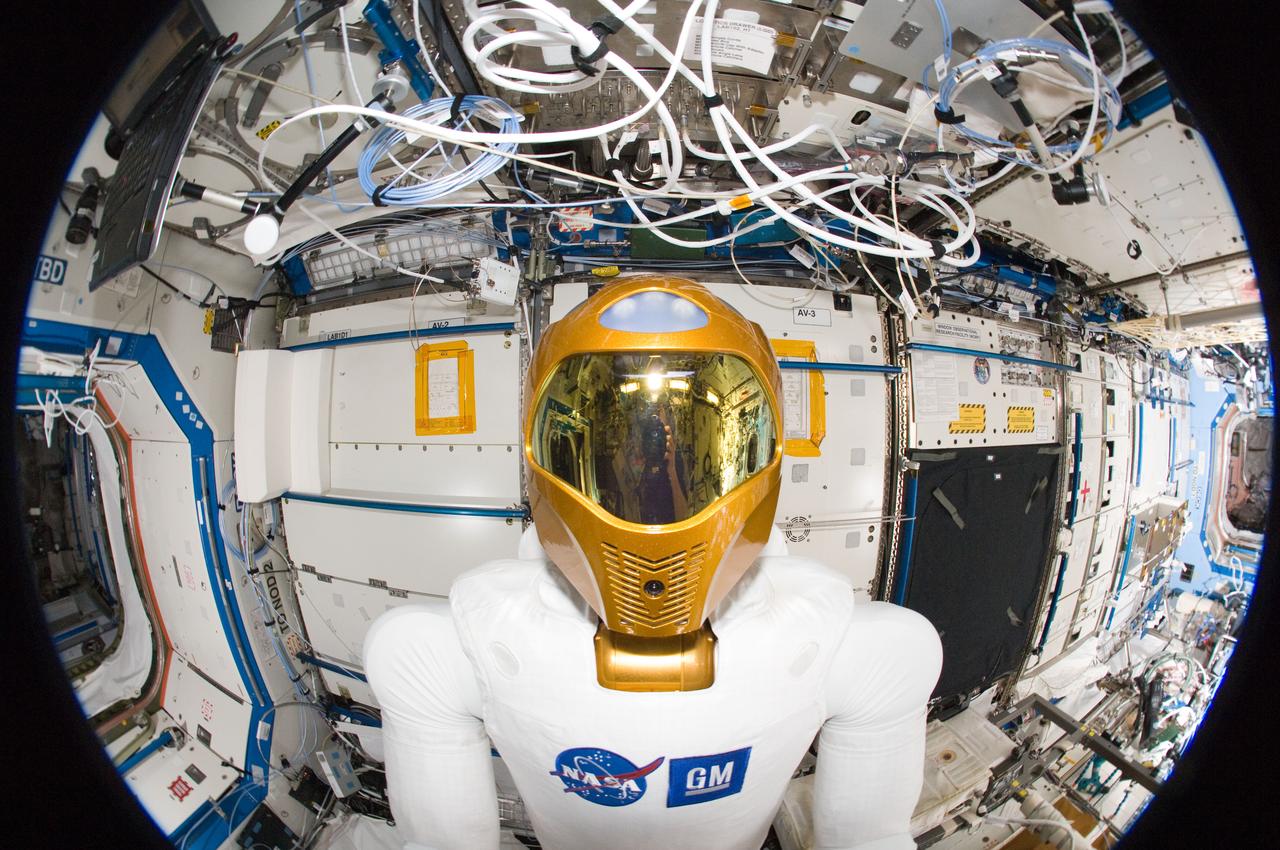
ISS030-E-135163 (13 March 2012) --- A fisheye lens attached to an electronic still camera was used to capture this image of Robonaut 2 humanoid robot during another system checkout in the Destiny laboratory of the International Space Station. Teams on the ground commanded Robonaut through a series of dexterity tests as it spelled out ?Hello world? in sign language.
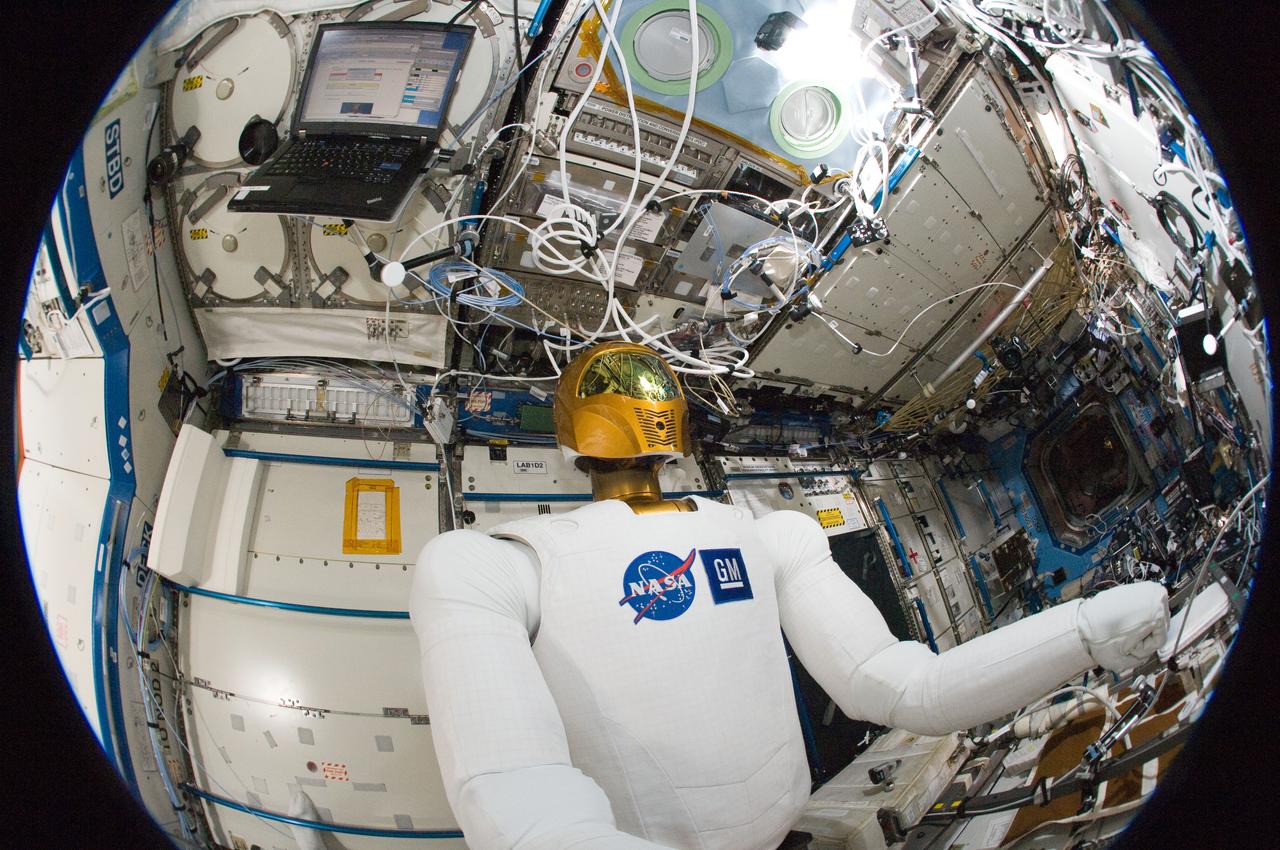
ISS030-E-135135 (13 March 2012) --- A fisheye lens attached to an electronic still camera was used to capture this image of Robonaut 2 humanoid robot during another system checkout in the Destiny laboratory of the International Space Station. Teams on the ground commanded Robonaut through a series of dexterity tests as it spelled out ?Hello world? in sign language.

ISS023-E-048821 (19 May 2010) --- A fish-eye lens attached to an electronic still camera was used to capture this image of STS-132 and Expedition 23 crew members in the Unity node of the International Space Station while space shuttle Atlantis remains docked with the station. Pictured clockwise (from bottom right) are NASA astronauts Ken Ham, STS-132 commander; Garrett Reisman and Steve Bowen, both STS-132 mission specialists; Russian cosmonaut Oleg Kotov, Expedition 23 commander; NASA astronauts Tracy Caldwell Dyson and T.J. Creamer; along with Russian cosmonaut Mikhail Kornienko, all Expedition 23 flight engineers.
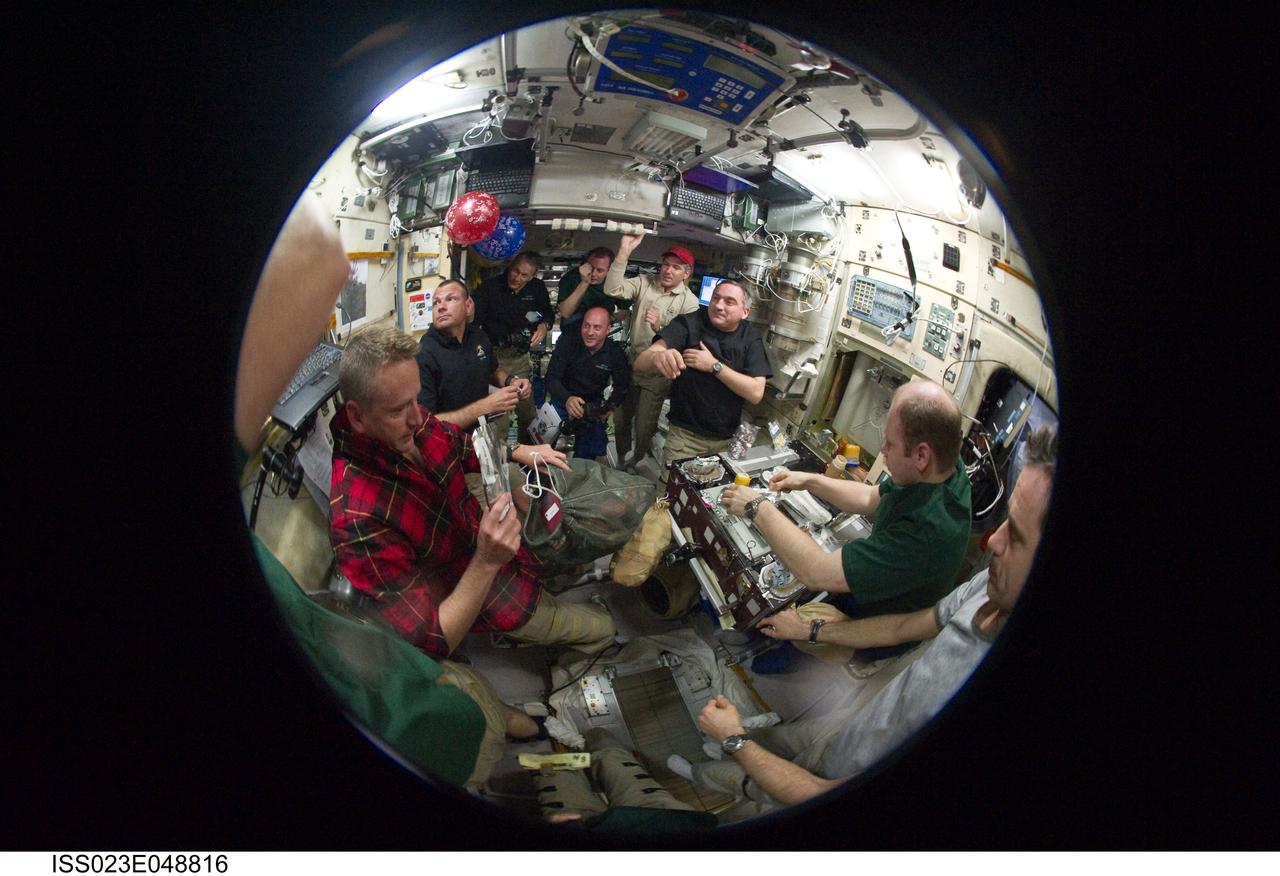
ISS023-E-048816 (19 May 2010) --- A fish-eye lens attached to an electronic still camera was used to capture this image of STS-132 and Expedition 23 crew members as they share a meal in the Zvezda Service Module of the International Space Station while space shuttle Atlantis remains docked with the station. Pictured in the foreground (left to right) are NASA astronaut Ken Ham, STS-132 commander; along with Russian cosmonauts Oleg Kotov, Expedition 23 commander; and Mikhail Kornienko (mostly out of frame), Expedition 23 flight engineer. Pictured in the background are NASA astronauts Tony Antonelli, STS-132 pilot; Piers Sellers, Garrett Reisman and Michael Good, all STS-132 mission specialists; along with NASA astronaut T.J. Creamer and Russian cosmonaut Alexander Skvortsov, both Expedition 23 flight engineers.
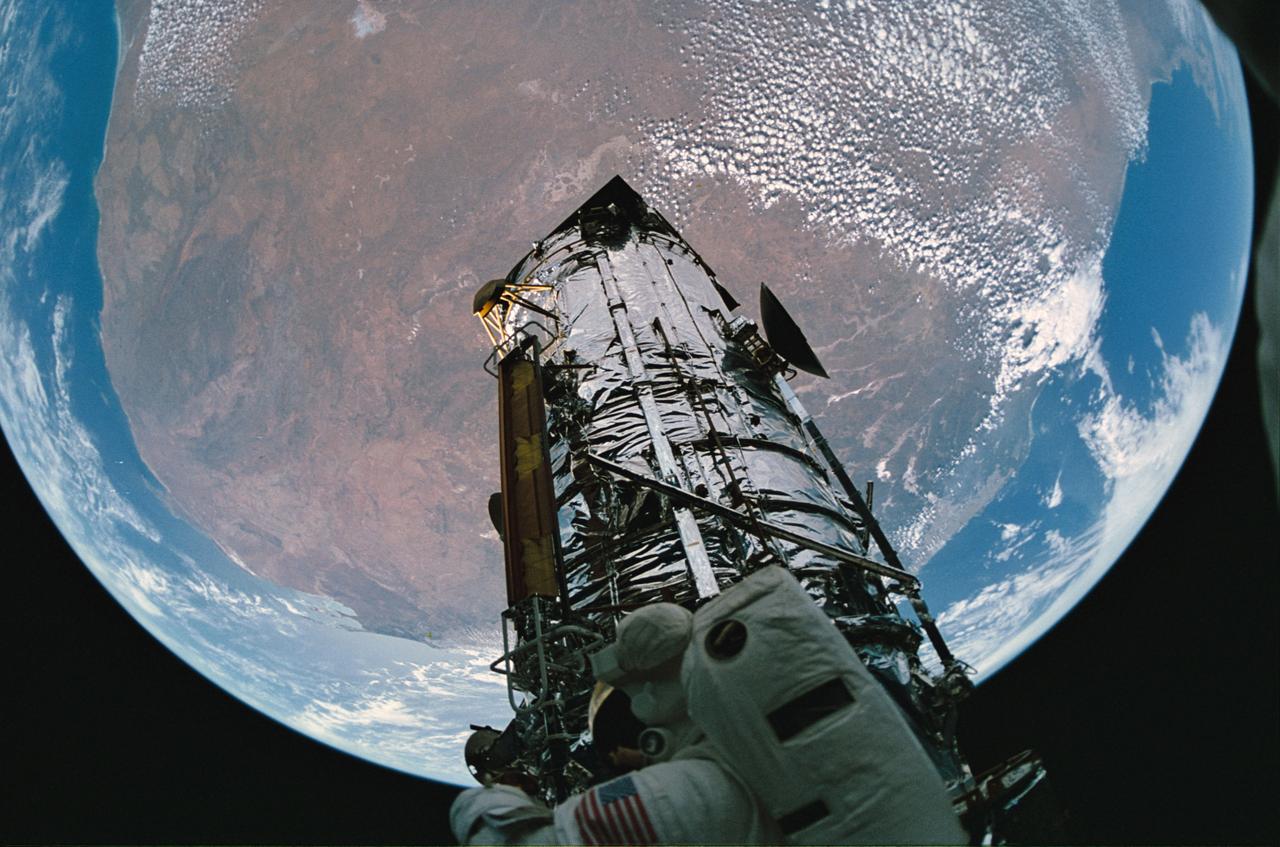
STS061-65-015 (9 Dec 1993) --- A fish-eye lens was used to capture the Hubble Space Telescope (HST), a spherical Earth and Australian landmass with a bit of distortion during the final extravehicular activity (EVA) on the STS-61 HST-servicing mission. Astronaut F. Story Musgrave can be seen at bottom of the frame.
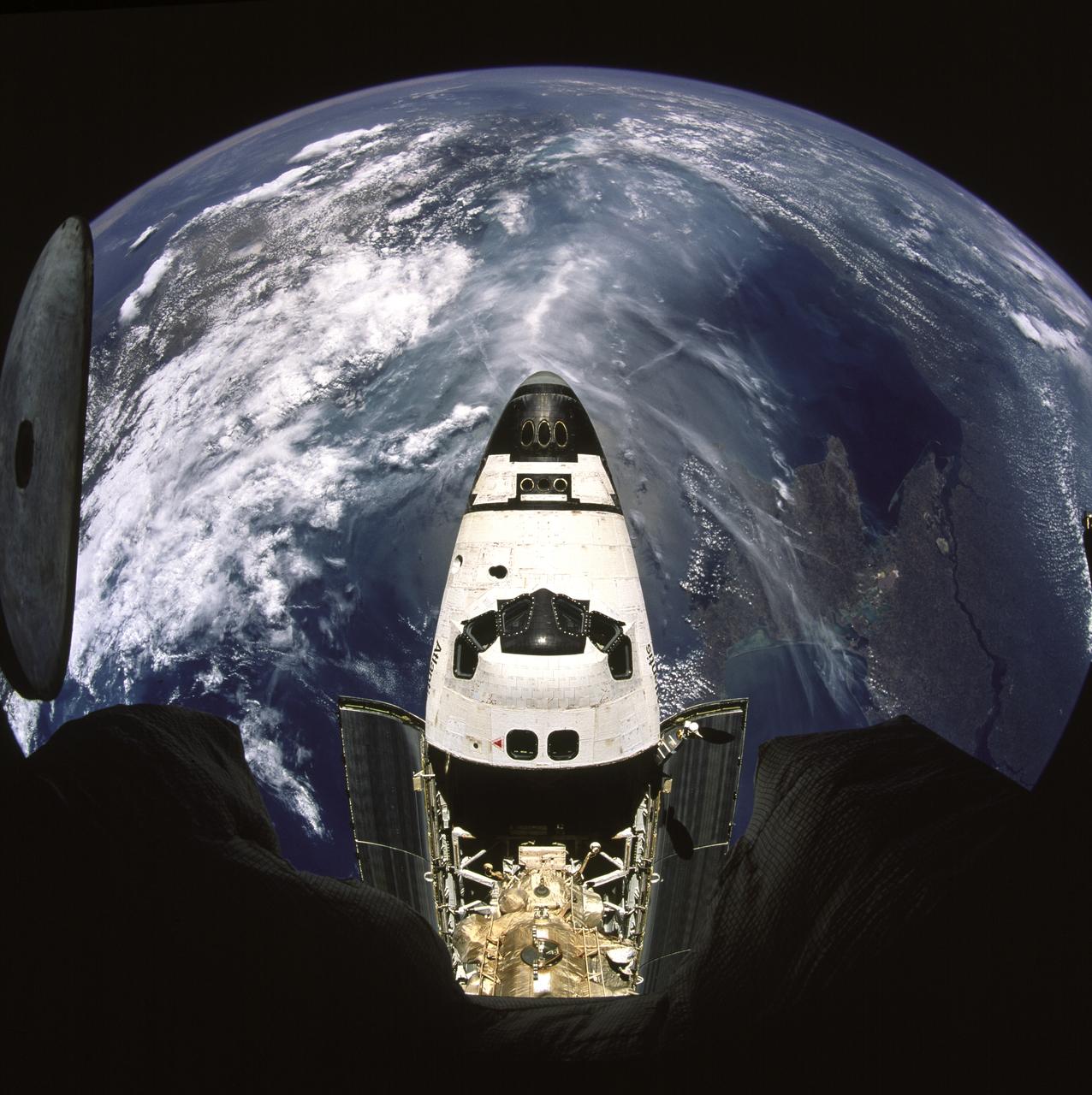
STS071-741-004 (27 June-7 July 1995) --- Docked already with Russia's Mir Space Station and backdropped against a half globe of Earth featuring the Crimean Peninsula, the space shuttle Atlantis is partially visible through a window on the Kvant 2 Module. A 70mm camera, carried into space by the STS-71 crew aboard the space shuttle Atlantis, was used to expose the image. The crew cabin and forward cargo bay of Atlantis are most prominent. Below center can be seen the Androgynous Peripheral Docking System (APDS) and the Kristall Module on Mir. The APDS is connected to a port in a tunnel leading to the Spacelab Science Module in Atlantis' cargo bay. The linkup enabled the seven STS-71 crew members to visit Mir and it allowed the three Mir-18 crew members, in space since March of this year, access to Spacelab. That module was quite busy with tests and data collection involving the three, Mir-18 crew, until Atlantis brought them home on July 7, 1995. The Black Sea lies directly beneath Atlantis, with Ukraine's diamond-shaped Crimean Peninsula immediately to the right of the cockpit. The wide lower course of the Dnepr River can be seen entering the Black Sea at far right. The coast of Romania and Bulgaria lies at a point where the cloud begins at top right. The peninsula of Asia Minor lies across the left of the view, mostly under cloud cover. The Mediterranean Sea is the cloud-free, blue mass beyond. Still further, at about 1,300 miles distance, the north edge of Africa is stretched out as a line across the horizon with its characteristic sandy color. The nose of Atlantis points southwest toward the only outlet of the Black Sea known as the Bosporus.
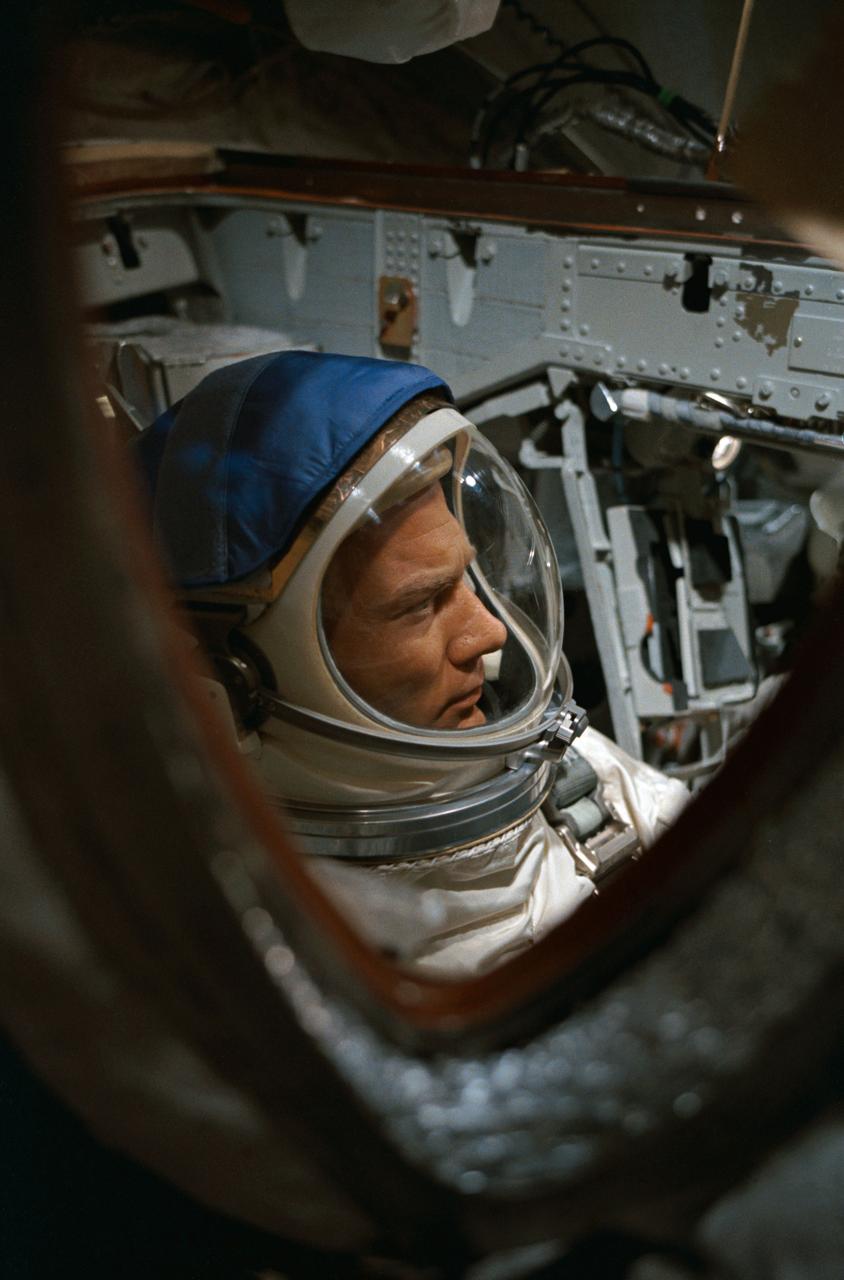
S66-59907 (11 Nov. 1966) --- Astronaut Edwin E. Aldrin Jr., Gemini-12 pilot, is seen in the Gemini-12 spacecraft in the white room atop Pad 19 awaiting the final minutes of the prelaunch countdown. Astronaut James A. Lovell Jr. (out of frame) is the command pilot. The liftoff was at 3:46 p.m. (EST), Nov. 11, 1966. Photo credit: NASA

ISS023-E-048819 (19 May 2010) --- A fish-eye lens attached to an electronic still camera was used to capture this image of STS-132 and Expedition 23 crew members in the Unity node of the International Space Station while space shuttle Atlantis remains docked with the station. Pictured clockwise (from bottom right) are NASA astronauts Ken Ham, STS-132 commander; Garrett Reisman, Piers Sellers (partially out of frame), both STS-132 mission specialists; Russian cosmonaut Oleg Kotov, Expedition 23 commander; and NASA astronaut Steve Bowen, STS-132 mission specialist; along with NASA astronauts Tracy Caldwell Dyson, T.J. Creamer and Russian cosmonaut Mikhail Kornienko, all Expedition 23 flight engineers.

ISS023-E-048820 (19 May 2010) --- A fish-eye lens attached to an electronic still camera was used to capture this image of STS-132 and Expedition 23 crew members in the Unity node of the International Space Station while space shuttle Atlantis remains docked with the station. Pictured in the foreground (from the right) are NASA astronaut Ken Ham, STS-132 commander; Russian cosmonaut Oleg Kotov, Expedition 23 commander; NASA astronauts Garrett Reisman and Piers Sellers, both STS-132 mission specialists. Pictured in the background (from the left) are NASA astronaut Steve Bowen, STS-132 mission specialist; along with NASA astronauts Tracy Caldwell Dyson and T.J. Creamer and Russian cosmonaut Mikhail Kornienko, all Expedition 23 flight engineers.
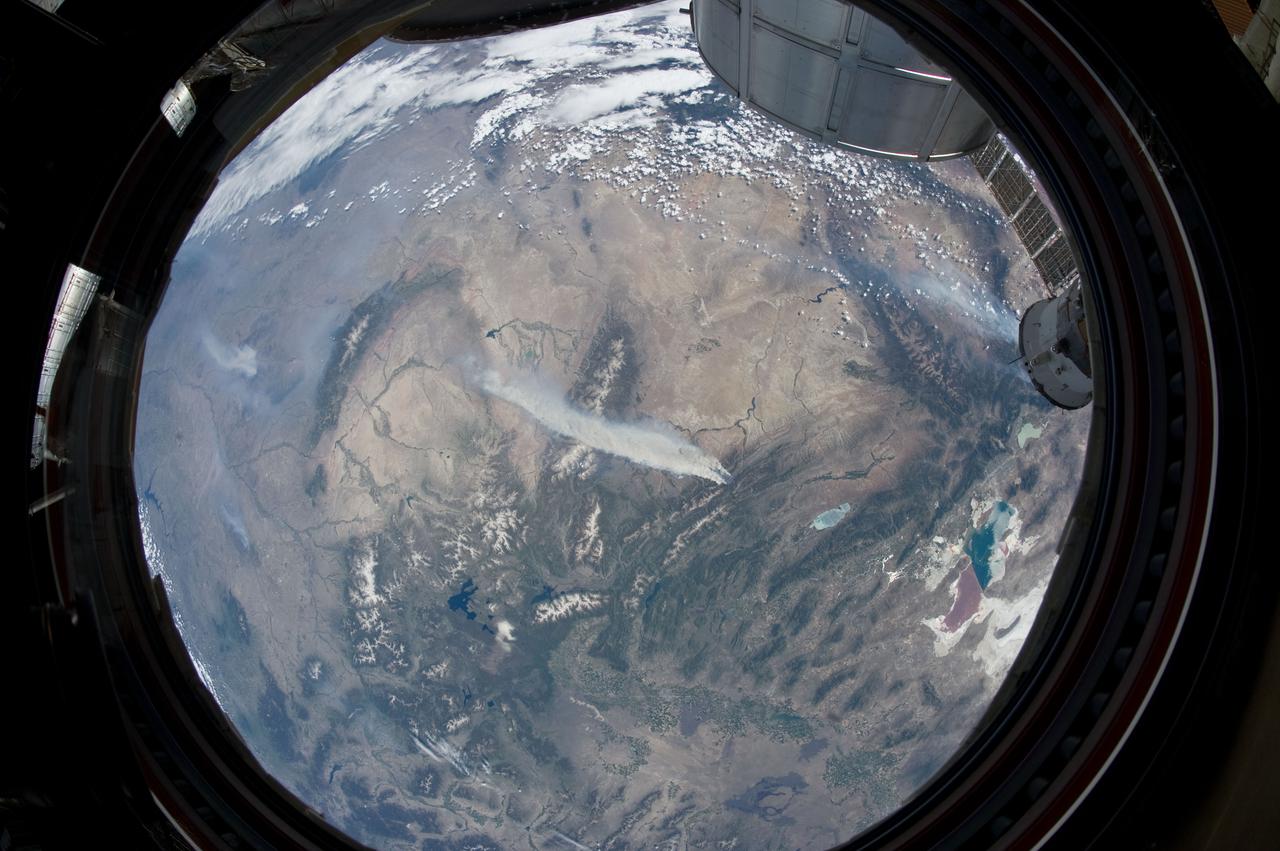
ISS031-E-146344 (27 June 2012) --- An Expedition 31 crew member aboard the International Space Station, flying approximately 240 miles above Earth, recorded a series of images of the current wild fires in the southwestern United States. For this particular image, taken from the station?s Cupola, he used a 16mm lens, which gives this view a ?fisheye? affect. The fires give rise to thick smoke plumes on the southernmost extremity of the Wyoming Range, which occupies the center of the image. Slopes of the central Salt River Range appear at left. Three helicopters and more than 100 personnel are fighting the fire, which is being managed by the Bridger?Teton National Forest.
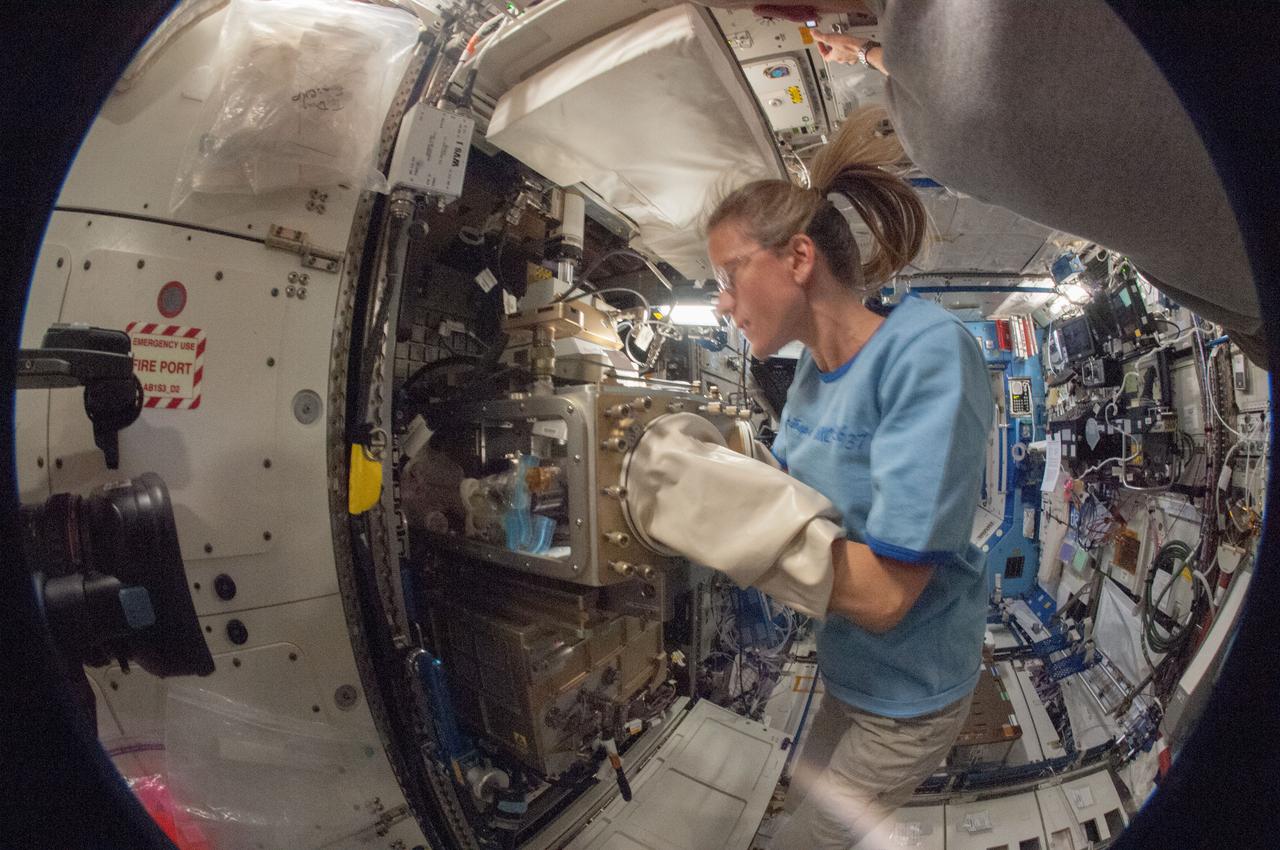
ISS036-E-019783 (24 June 2013) --- In the International Space Station’s Destiny laboratory, a fisheye lens attached to an electronic still camera was used to capture this image of NASA astronaut Karen Nyberg, Expedition 36 flight engineer, as she conducts a session with the Advanced Colloids Experiment (ACE)-1 sample preparation at the Light Microscopy Module (LMM) in the Fluids Integrated Rack / Fluids Combustion Facility (FIR/FCF). ACE-1 is a series of microscopic imaging investigations that uses the microgravity environment to examine flow characteristics and the evolution and ordering effects within a group of colloidal materials.
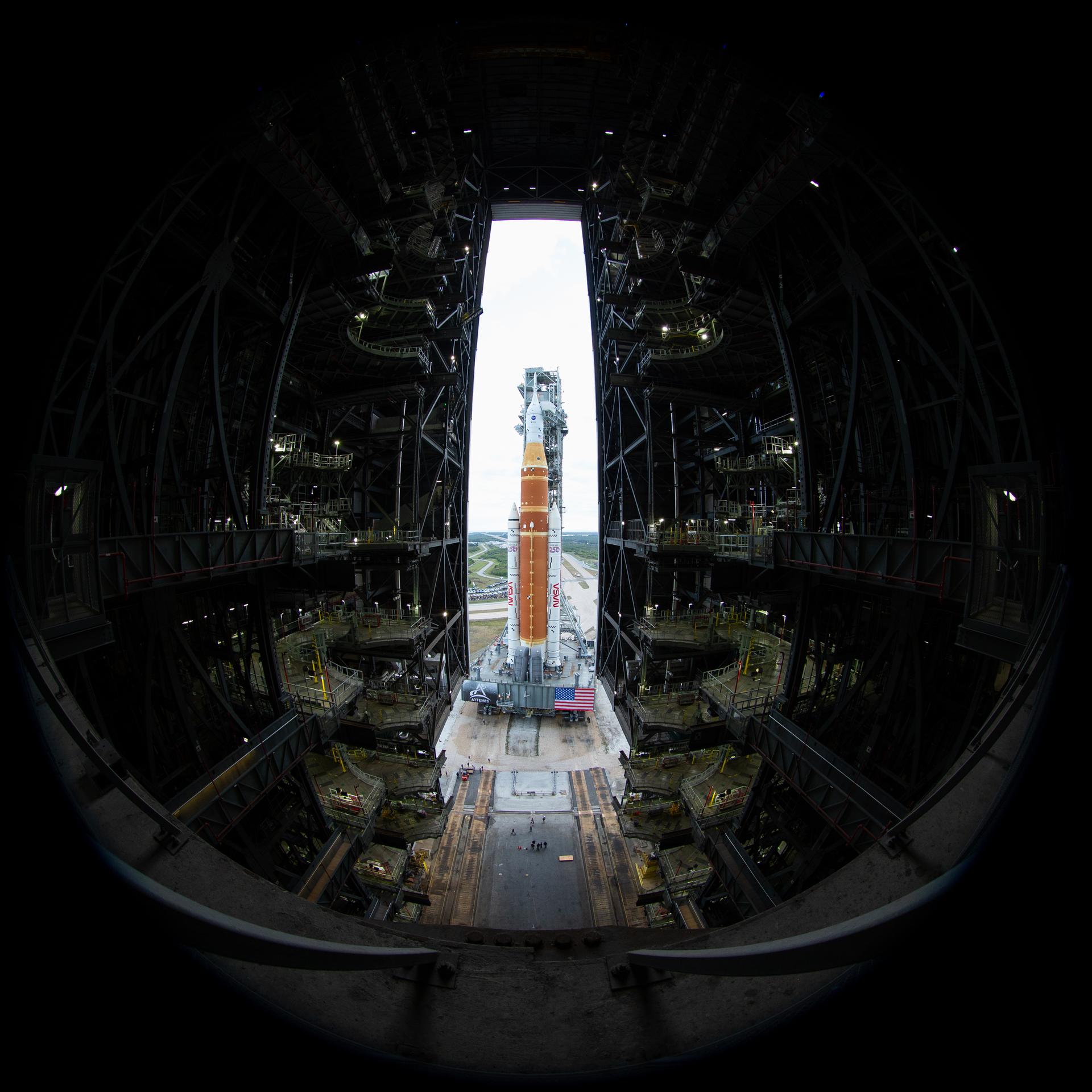
In this image made with a circular fisheye lens, NASA’s Space Launch System (SLS) rocket and Orion spacecraft, secured to the mobile launcher, is seen as it rolls out of the Vehicle Assembly Building to Launch Pad 39B, Saturday, Jan. 17, 2026, at NASA’s Kennedy Space Center in Florida. NASA’s Artemis II test flight will take Commander Reid Wiseman, Pilot Victor Glover, and Mission Specialist Christina Koch from NASA, and Mission Specialist Jeremy Hansen from the CSA (Canadian Space Agency), around the Moon and back to Earth no later than April 2026. Photo Credit: (NASA/Joel Kowsky)
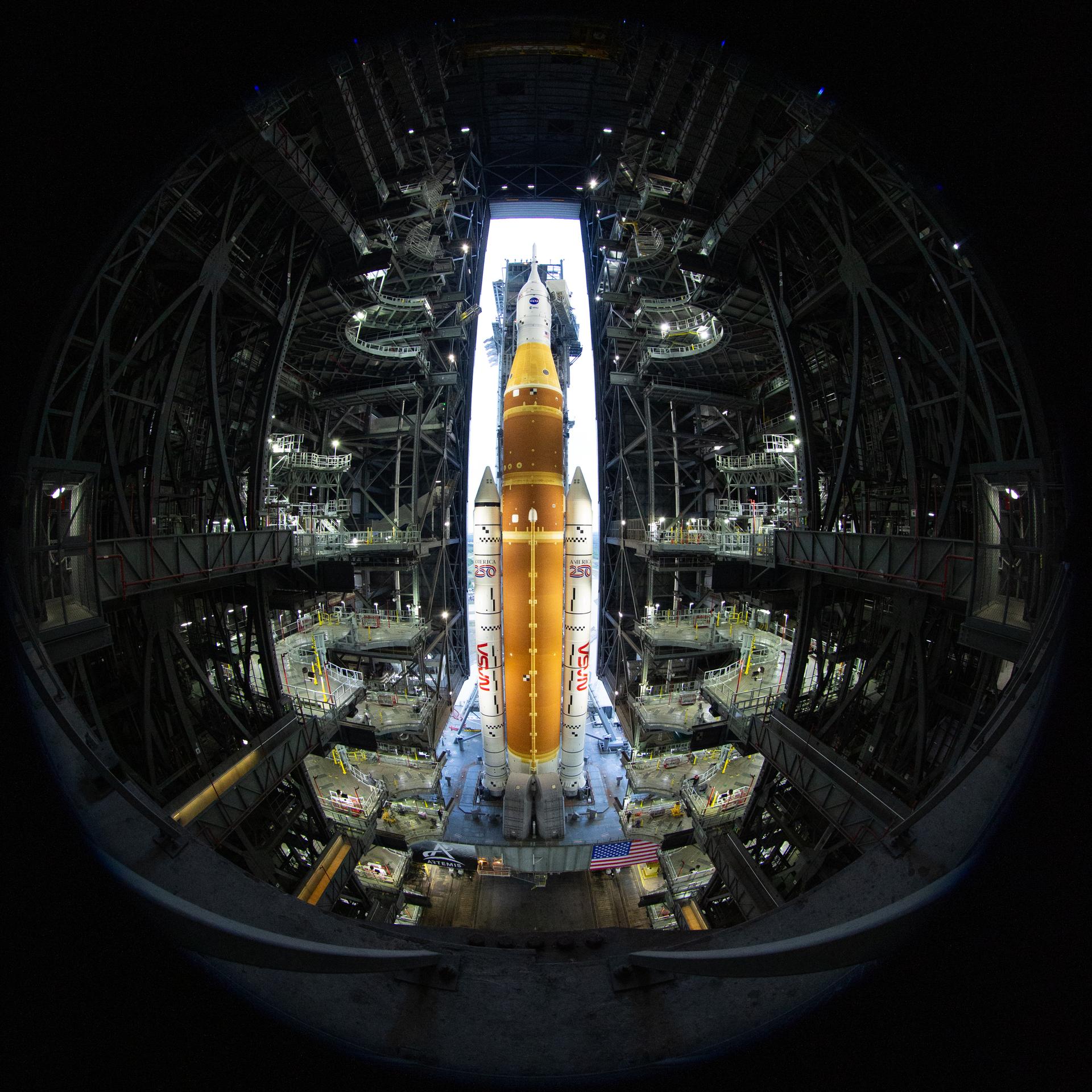
In this image made with a circular fisheye lens, NASA’s Space Launch System (SLS) rocket and Orion spacecraft, secured to the mobile launcher, is seen as it rolls out of the Vehicle Assembly Building to Launch Pad 39B, Saturday, Jan. 17, 2026, at NASA’s Kennedy Space Center in Florida. NASA’s Artemis II test flight will take Commander Reid Wiseman, Pilot Victor Glover, and Mission Specialist Christina Koch from NASA, and Mission Specialist Jeremy Hansen from the CSA (Canadian Space Agency), around the Moon and back to Earth no later than April 2026. Photo Credit: (NASA/Joel Kowsky)
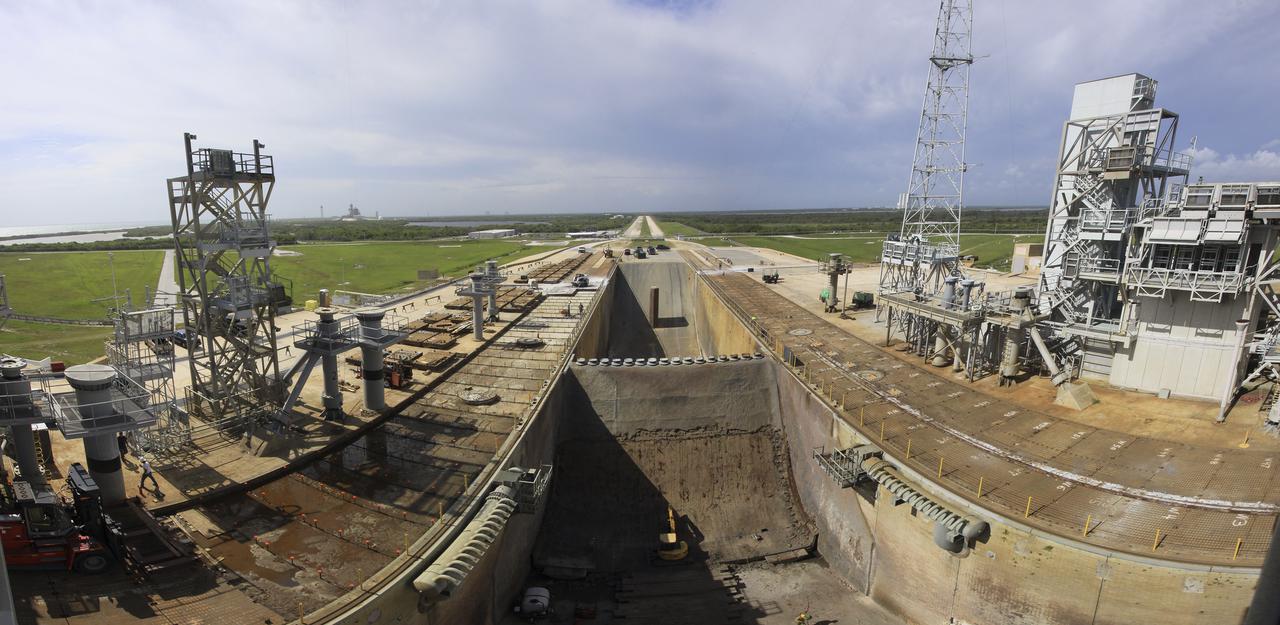
CAPE CANAVERAL, Fla. -- At Launch Pad 39B at NASA’s Kennedy Space Center in Florida, the view from a fisheye lens reveals nearly all of the crawler track panels on the pad’s surface have been removed. The concrete surface beneath the panels and the catacomb roof below will be inspected for water damage and repaired. Work also is underway to remove the flame trench deflector that sits below and between the left and right crawler track panels. There are 176 panels, each weighing about 30,000 pounds that will be removed. Launch Pad 39B is being refurbished to support NASA’s Space Launch System and other launch vehicles. The Ground Systems Development and Operations, or GSDO, Program office at Kennedy is leading the center’s transformation to safely handle a variety of rockets and spacecraft. For more information about GSDO, visit: http:__go.nasa.gov_groundsystems. Photo credit: NASA_Jim Grossman
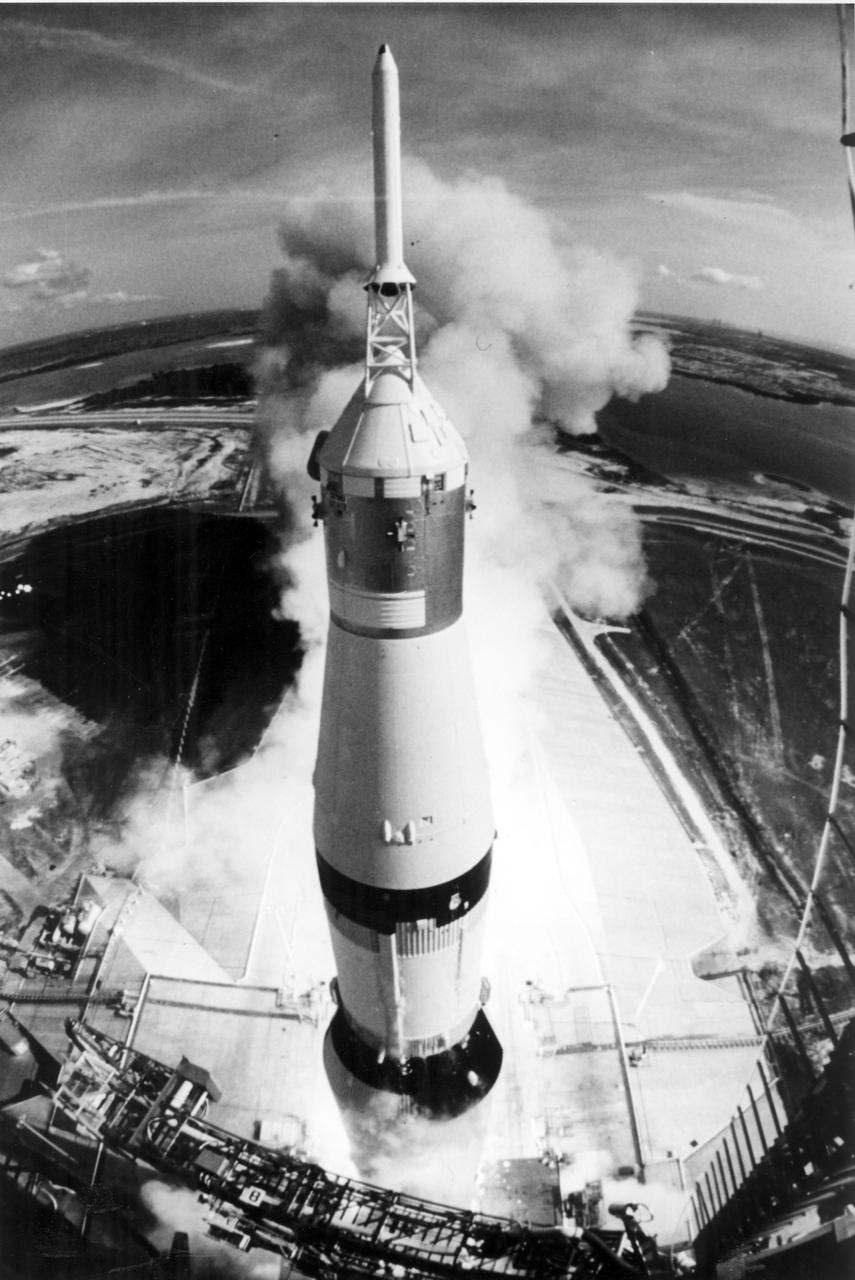
The Apollo 11 mission, the first lunar landing mission, launched from the Kennedy Space Center, Florida via the Marshall Space Flight Center (MSFC) developed Saturn V launch vehicle on July 16, 1969 and safely returned to Earth on July 24, 1969. The Saturn V vehicle produced a holocaust of flames as it rose from its pad at Launch complex 39. The 363 foot tall, 6,400,000 pound rocket hurled the spacecraft into Earth parking orbit and then placed it on the trajectory to the moon for man’s first lunar landing. This high angle view of the launch was provided by a ‘fisheye’ camera mounted on the launch tower. Aboard the space craft were astronauts Neil A. Armstrong, commander; Michael Collins, Command Module pilot; and Edwin E. Aldrin Jr., Lunar Module pilot. With the success of Apollo 11, the national objective to land men on the Moon and return them safely to Earth had been accomplished.
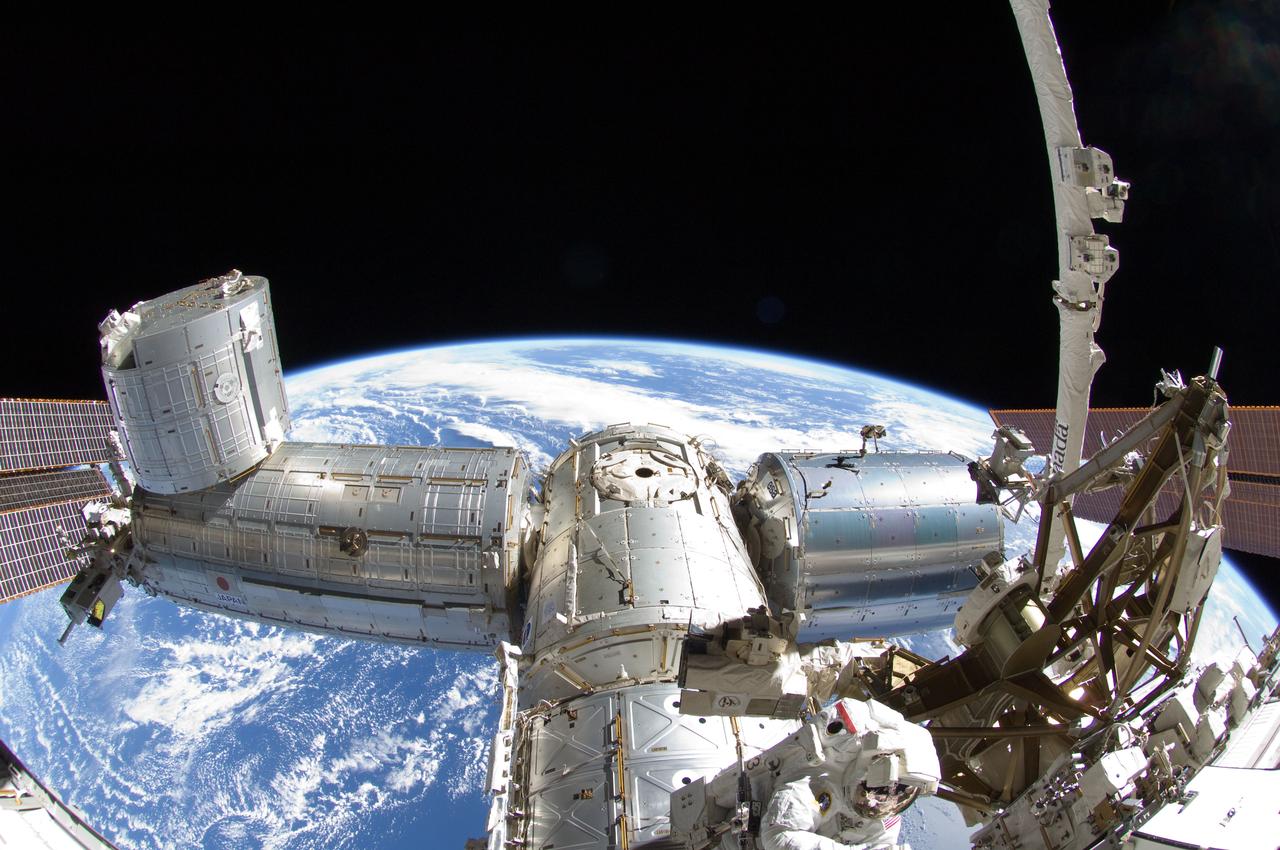
ISS032-E-025255 (5 Sept. 2012) --- A fisheye lens attached to an electronic still camera was used to capture this image of NASA astronaut Sunita Williams, Expedition 32 flight engineer, during the mission?s third session of extravehicular activity (EVA). During the six-hour, 28-minute spacewalk, Williams and Japan Aerospace Exploration Agency astronaut Aki Hoshide (out of frame), flight engineer, completed the installation of a Main Bus Switching Unit (MBSU) that was hampered last week by a possible misalignment and damaged threads where a bolt must be placed. They also installed a camera on the International Space Station?s robotic arm, Canadarm2. A portion of the space station, Earth?s horizon and the blackness of space provide the backdrop for the scene.
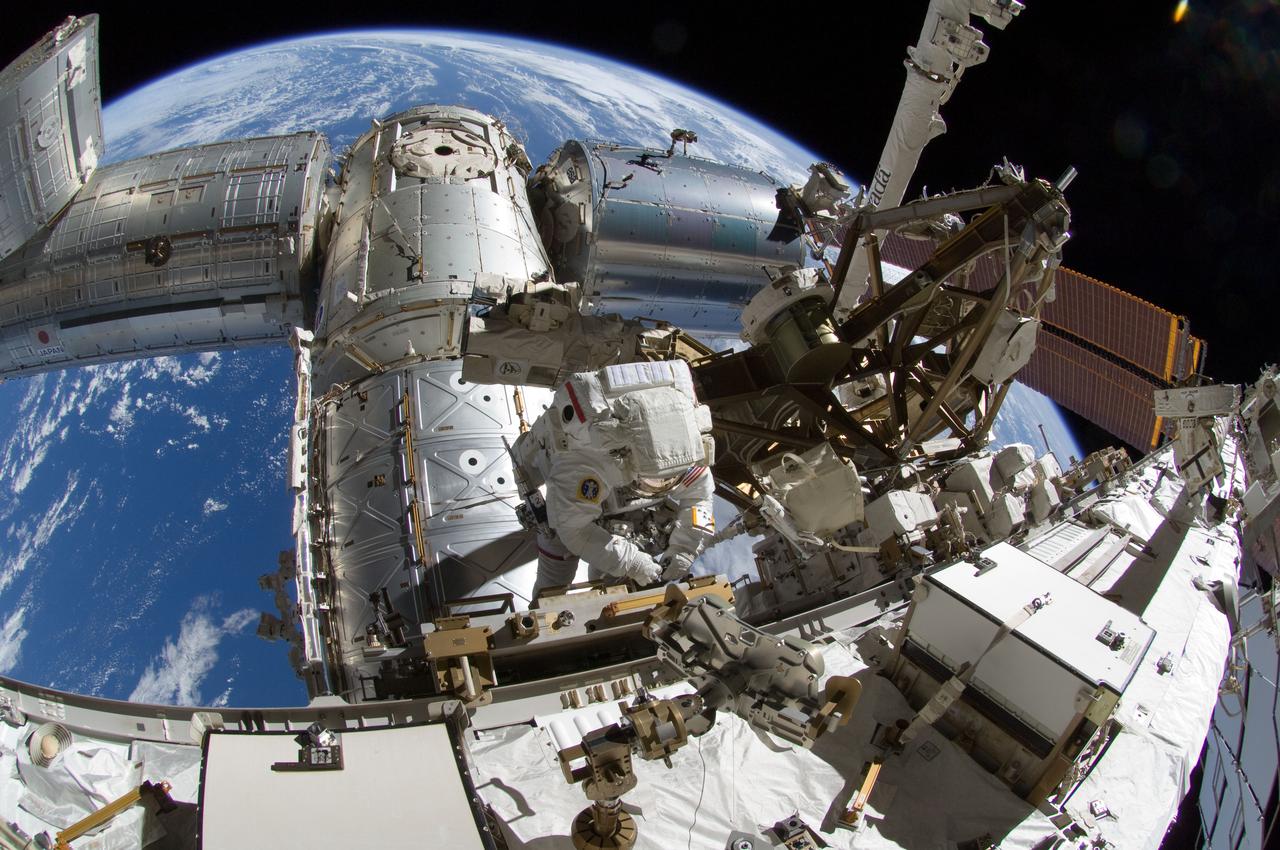
ISS032-E-025249 (5 Sept. 2012) --- A fisheye lens attached to an electronic still camera was used to capture this image of NASA astronaut Sunita Williams, Expedition 32 flight engineer, during the mission?s third session of extravehicular activity (EVA). During the six-hour, 28-minute spacewalk, Williams and Japan Aerospace Exploration Agency astronaut Aki Hoshide (out of frame), flight engineer, completed the installation of a Main Bus Switching Unit (MBSU) that was hampered last week by a possible misalignment and damaged threads where a bolt must be placed. They also installed a camera on the International Space Station?s robotic arm, Canadarm2. A portion of the space station, Earth?s horizon and the blackness of space provide the backdrop for the scene.
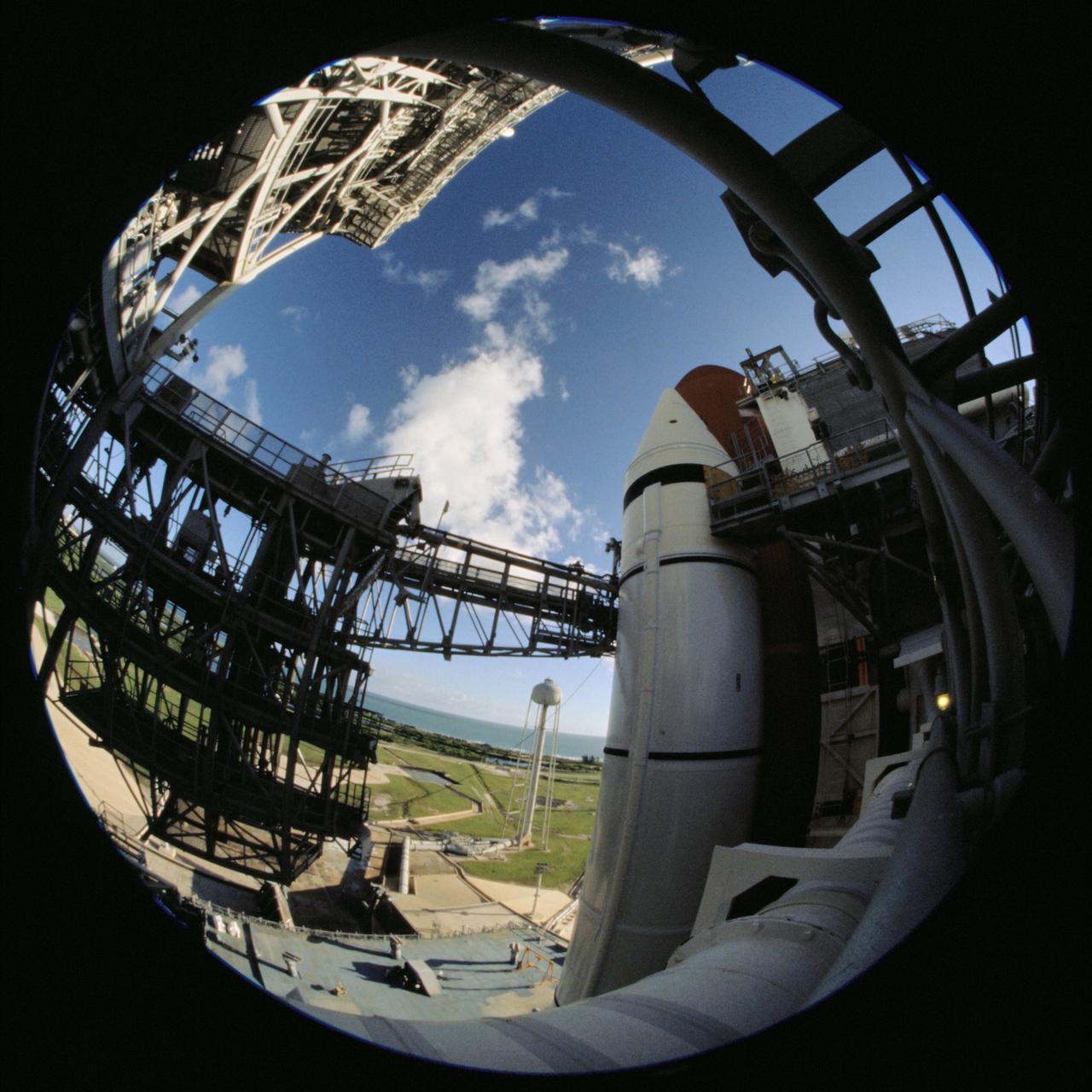
A photographer used a fisheye lens attached to an electronic still camera to record a series of photos of the Space Shuttle Discovery at the launch pad while the STS-120 crew was at Kennedy Space Center for the Terminal Countdown Demonstration Test in October 2007. The STS-120 mission launched from Kennedy Space Center's launch pad 39A at 11:38:19 a.m. (EDT) on October 23, 2007. The crew included Scott E. Parazynski, Douglas H. Wheelock, Stephanie D. Wilson, all mission specialists; George D. Zamka, pilot; Pamela A. Melroy, commander; Daniel M. Tani, Expedition 16 flight engineer; and Paolo A. Nespoli, mission specialist representing the European Space Agency (ESA). Major objectives included the installation of the P6 solar array of the port truss and delivery and installment of Harmony, the Italian-built U.S. Node 2 on the International Space Station (ISS).
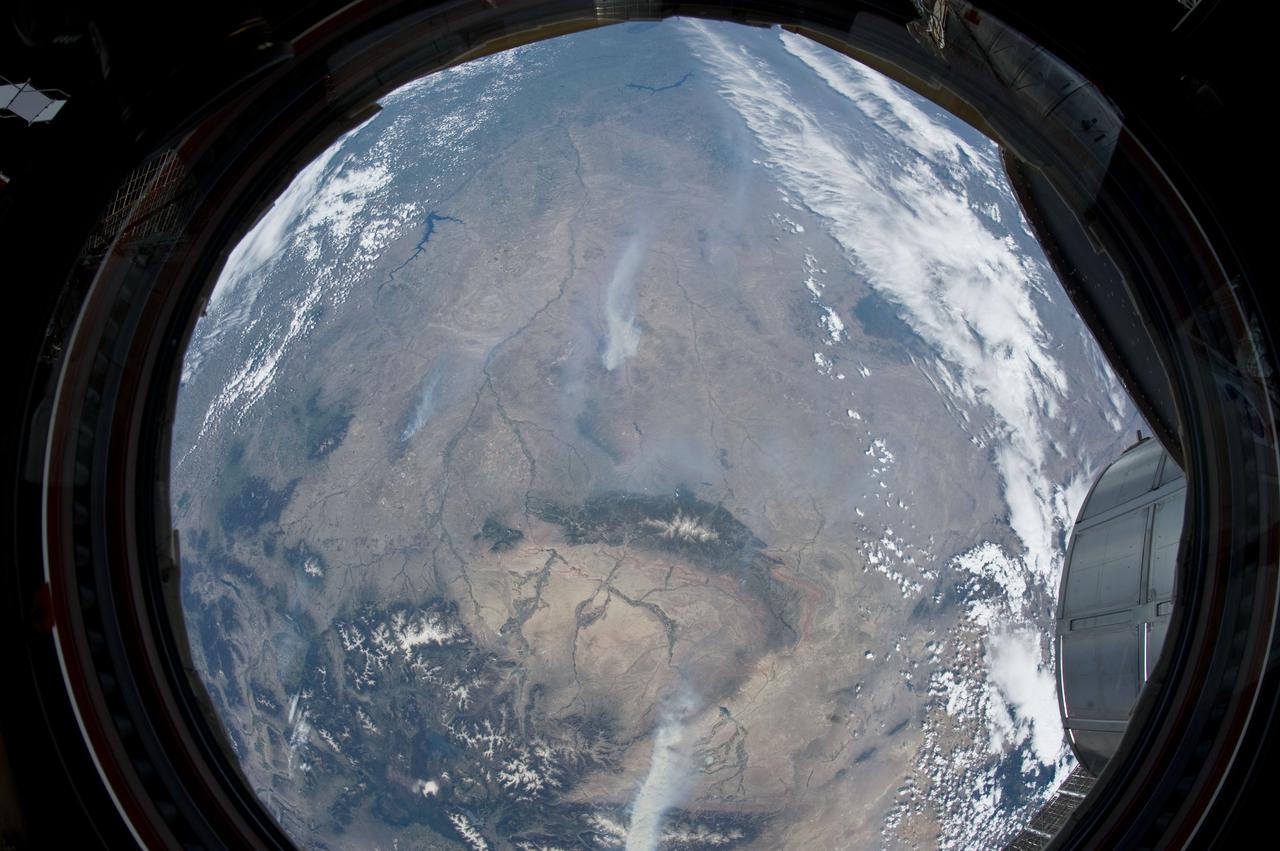
ISS031-E-146343 (27 June 2012) --- An Expedition 31 crew member aboard the International Space Station, flying approximately 240 miles above Earth, recorded a series of images of the current wild fires in the west and southwestern United States. For this particular image, taken from the station?s Cupola, he used a 16mm lens, which gives this view a ?fisheye? affect. The fires give rise to thick smoke plumes on the southernmost extremity of the Wyoming Range, which occupies the bottom left portion of the image. Three helicopters and more than 100 personnel are fighting the fire, which is being managed by the Bridger?Teton National Forest. Part of a docked Russian Soyuz spacecraft and the Multi-Purpose Logistics Module (MPLM) are at lower right.

ISS028-E-016142 (12 July 2011) --- This picture, photographed by NASA astronaut Ron Garan during the spacewalk conducted on July 12, 2011, shows the International Space Station with space shuttle Atlantis docked at the edge of the frame on the far right and a Russian Soyuz docked to Pirs, below the sun. In the foreground is the Alpha Magnetic Spectrometer (AMS) experiment installed during the STS-134 mission. AMS is a state-of-the-art particle physics detector designed to use the unique environment of space to advance knowledge of the universe and lead to the understanding of the universe's origin by searching for antimatter and dark matter, and measuring cosmic rays.
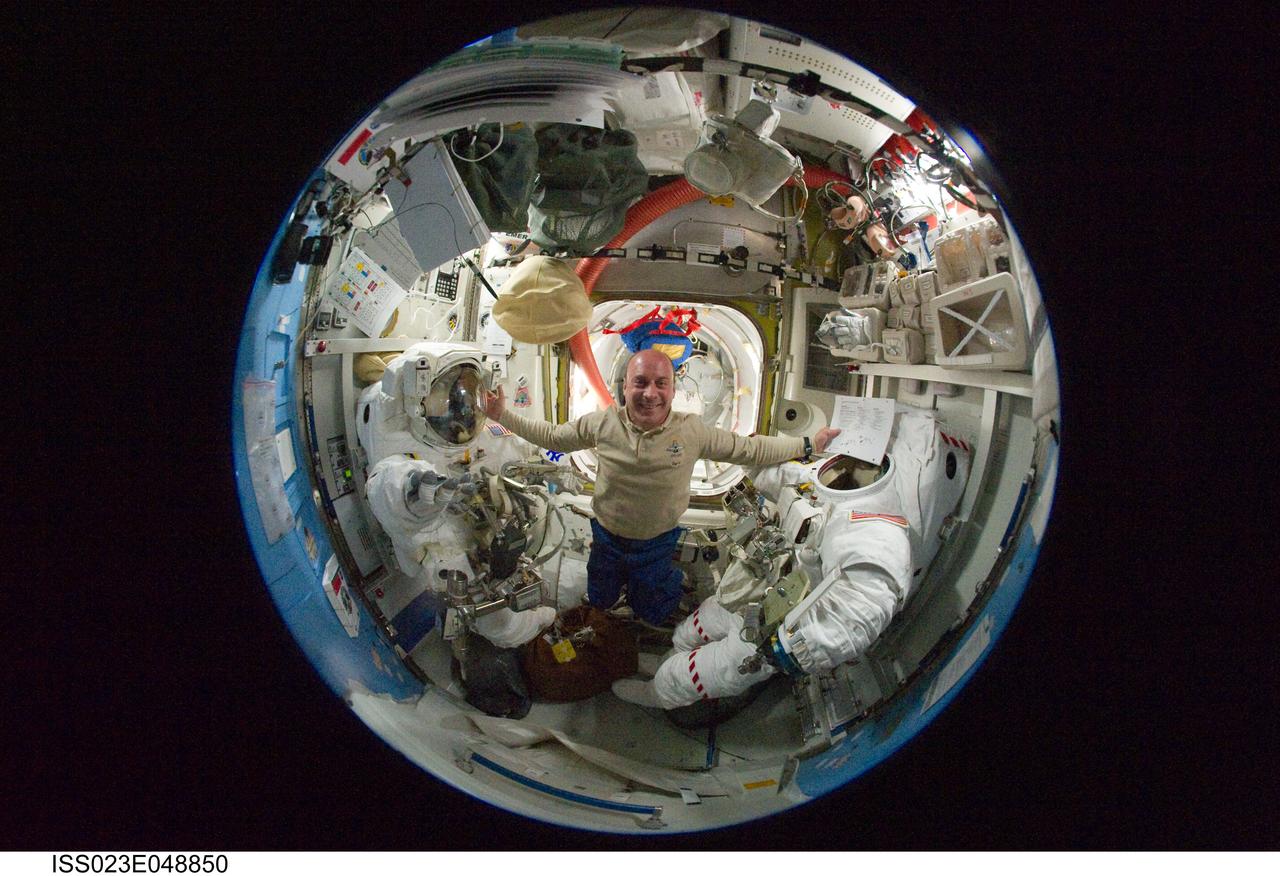
ISS023-E-048850 (20 May 2010) --- A fish-eye lens attached to an electronic still camera was used to capture this image of NASA astronaut Garrett Reisman, STS-132 mission specialist, in the Quest airlock of the International Space Station while space shuttle Atlantis remains docked with the station.
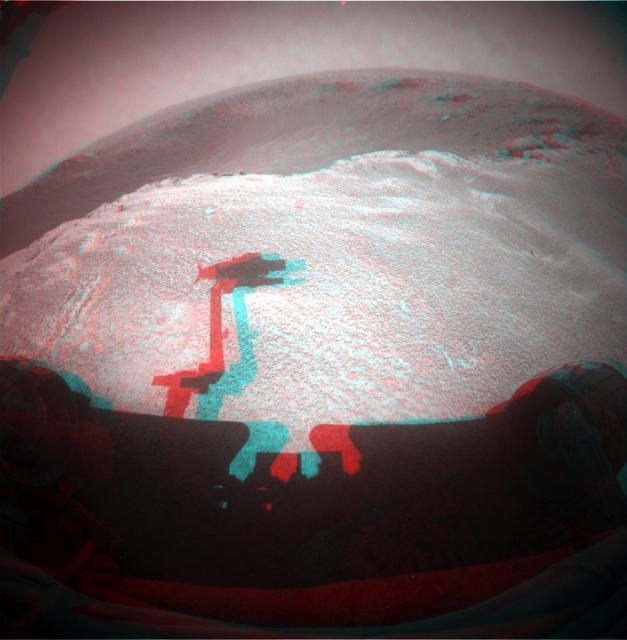
This image from NASA Mars Rover Opportunity is from the edge of a football-field-size crater informally named Santa Maria. The rover upraised robotic arm, itself out of view, casts a dragon-shaped shadow in the foreground. 3D glasses are necessary.

ISS028-E-016138 (12 July 2011) --- This picture, photographed by NASA astronaut Ron Garan during the spacewalk conducted on July 12, 2011, shows the International Space Station with space shuttle Atlantis docked at right and a Russian Soyuz docked to Pirs, below the sun (partially out of frame) at upper left. In the lower right foreground is the Alpha Magnetic Spectrometer (AMS) experiment installed during the STS-134 mission. AMS is a state-of-the-art particle physics detector designed to use the unique environment of space to advance knowledge of the universe and lead to the understanding of the universe's origin by searching for antimatter and dark matter, and measuring cosmic rays.

ISS031-E-062066 (6 May 2012) --- The International Space Station was over the central South Pacific about 240 miles northeast of the Marshall Islands when one of the Expedition 31 crew members positioned on the station's Cupola captured this image of the sun coming up.
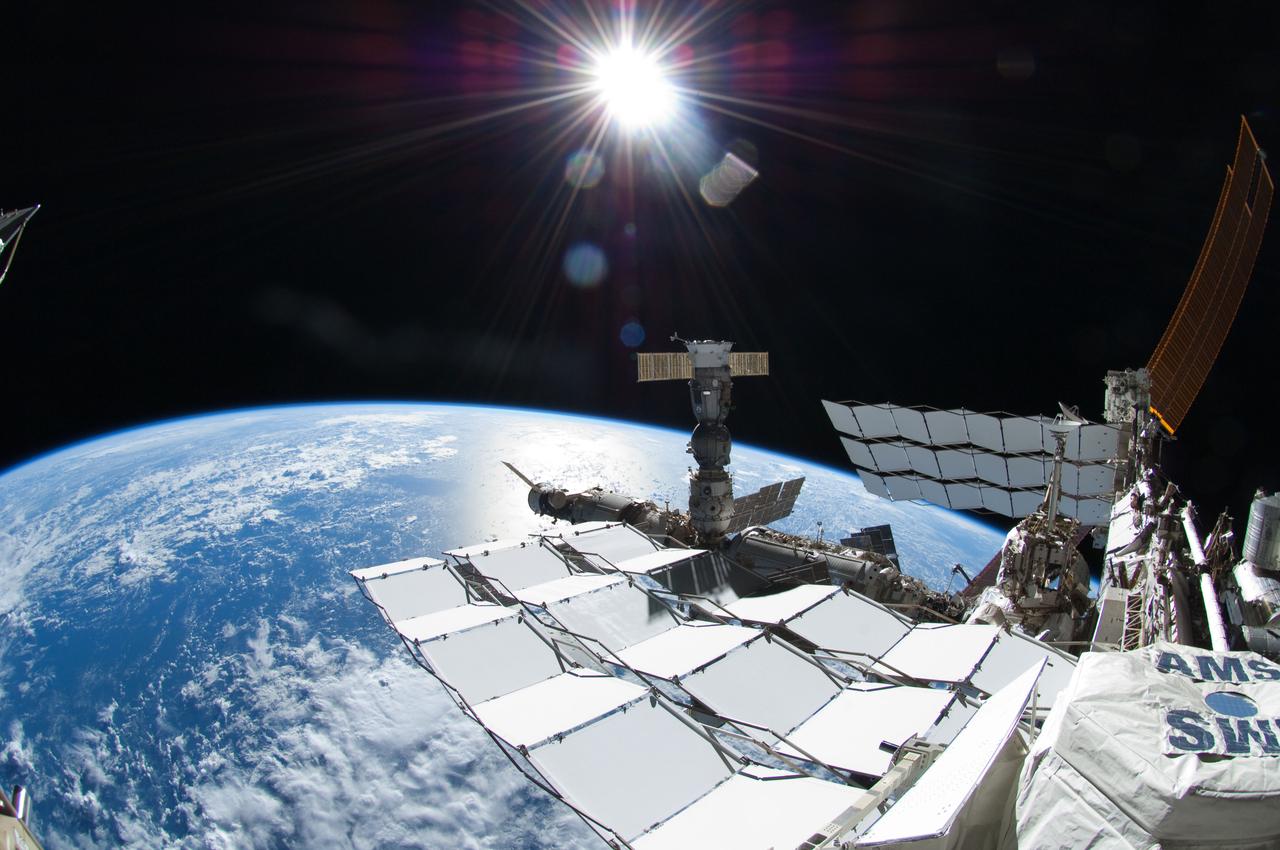
ISS028-E-016140 (12 July 2011) --- This picture, photographed by NASA astronaut Ron Garan during the spacewalk conducted on July 12, 2011, shows the sun and many components of the International Space Station. In this frame the space shuttle Atlantis cannot be seen but is docked just out of frame right and a Russian Soyuz docked to Pirs, below the sun. In the lower right foreground is the Alpha Magnetic Spectrometer (AMS) experiment installed during the STS-134 mission. AMS is a state-of-the-art particle physics detector designed to use the unique environment of space to advance knowledge of the universe and lead to the understanding of the universe's origin by searching for antimatter and dark matter, and measuring cosmic rays.

iss057e000244 (Oct. 6, 2018) --- A image captured from a time-lapse imagery sequence shows north Africa and the Mediterranean Sea as the International Space Station orbited 254 miles above the African continent. Japan's Kounotori H-II Transfer Vehicle-7 (HTV-7) is pictured at left attached to the Harmony module. Portions of the station's solar arrays and radiators are pictured at left.
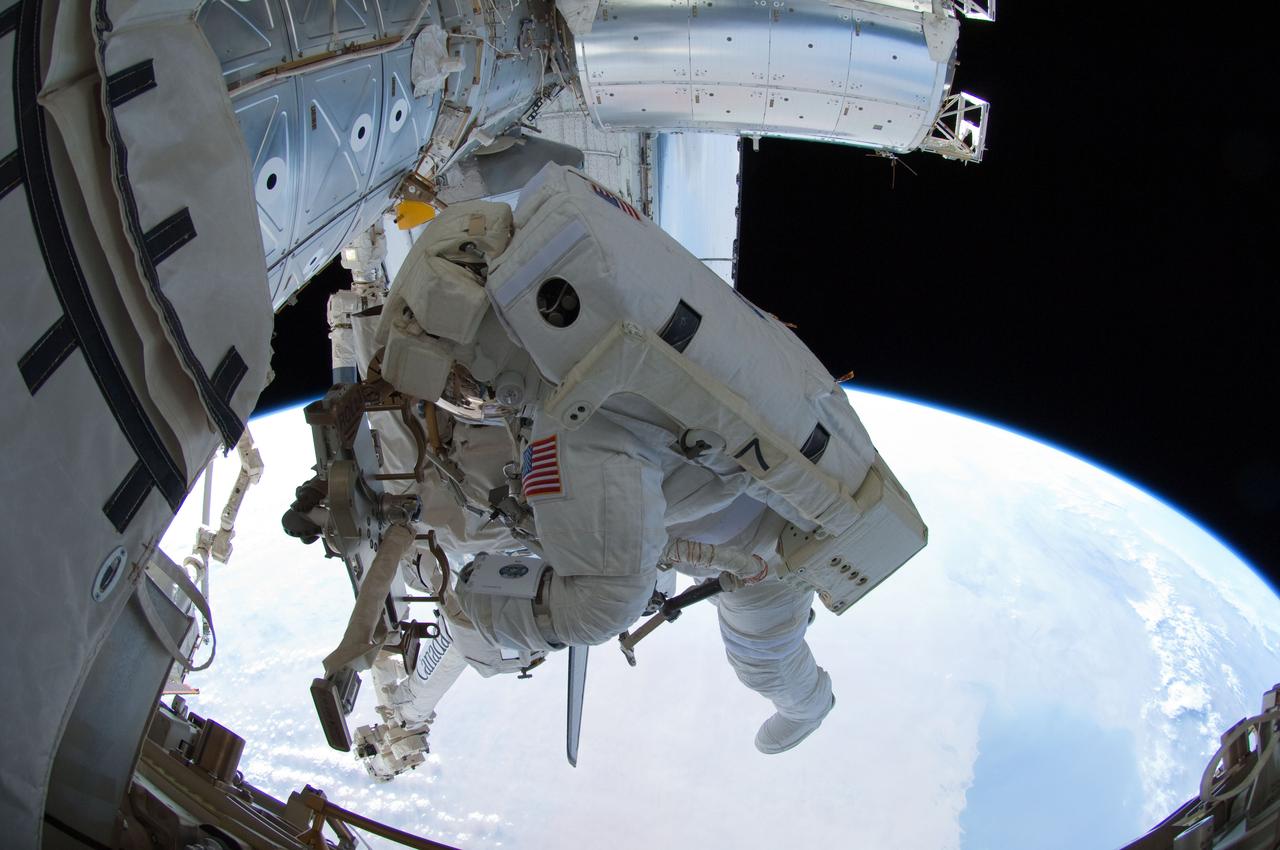
ISS028-E-016121 (12 July 2011) --- NASA astronaut Ron Garan, Expedition 28 flight engineer, uses a tether to secure his position during the July 12 spacewalk he performed outside the docked International Space Station and space shuttle Atlantis with station crewmate Mike Fossum (out of frame). The Persian Gulf can be seen on the Earth below. With support from crewmates inside the station and shuttle, NASA astronauts Garan and Fossum joined forces to complete some needed chores during the six and half hour spacewalk.
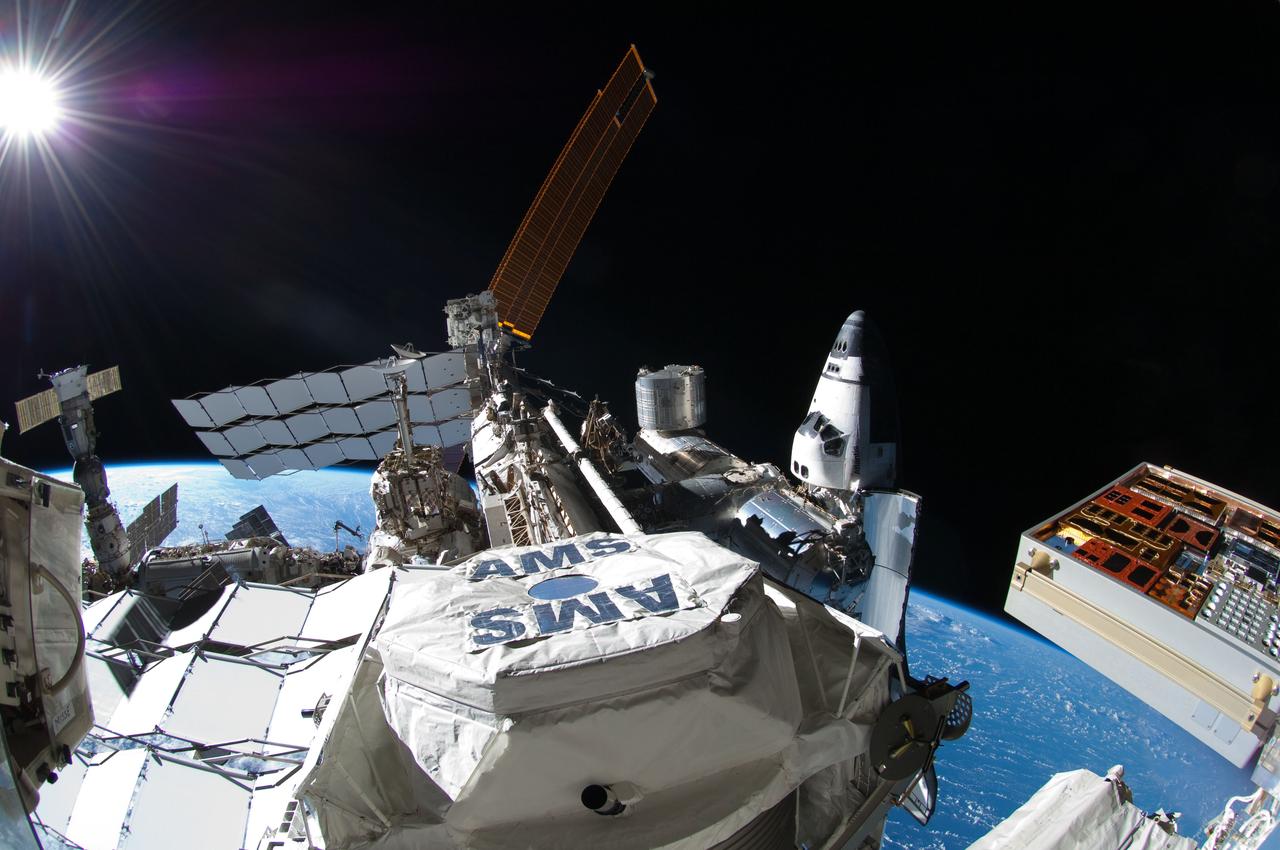
ISS028-E-016131 (12 July 2011) --- This picture, photographed by NASA astronaut Ron Garan during the spacewalk conducted on July 12, 2011, shows the International Space Station with space shuttle Atlantis docked at right and a Russian Soyuz docked to Pirs, below the sun at far left. In the center foreground is the Alpha Magnetic Spectrometer (AMS) experiment installed during the STS-134 mission. AMS is a state-of-the-art particle physics detector designed to use the unique environment of space to advance knowledge of the universe and lead to the understanding of the universe's origin by searching for antimatter and dark matter, and measuring cosmic rays.
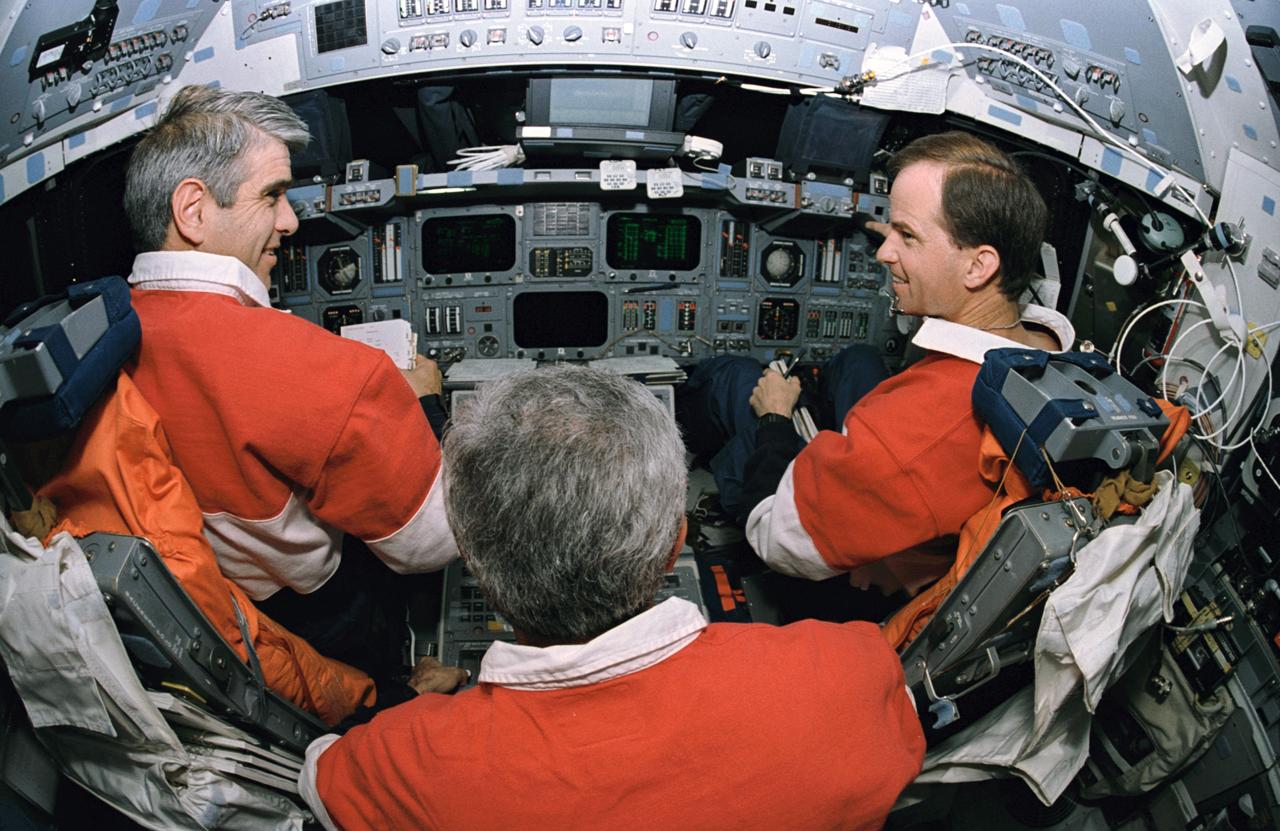
STS059-12-035 (9-20 April 1994) --- A 16mm lens on a 35mm camera provides a "fish-eye" effect for this rare scene on the Space Shuttle Endeavour's flight deck during checkout of the spacecraft's flight control systems. Astronauts Sidney M. Gutierrez (left) and Kevin P. Chilton (right) man the commander and pilot stations, respectively. Astronaut Michael R. (Rich) Clifford, the flight engineer, is seated behind the two. Not pictured are astronauts Linda M. Godwin, payload commander, and Jerome (Jay) Apt and Thomas D. Jones, both mission specialists.
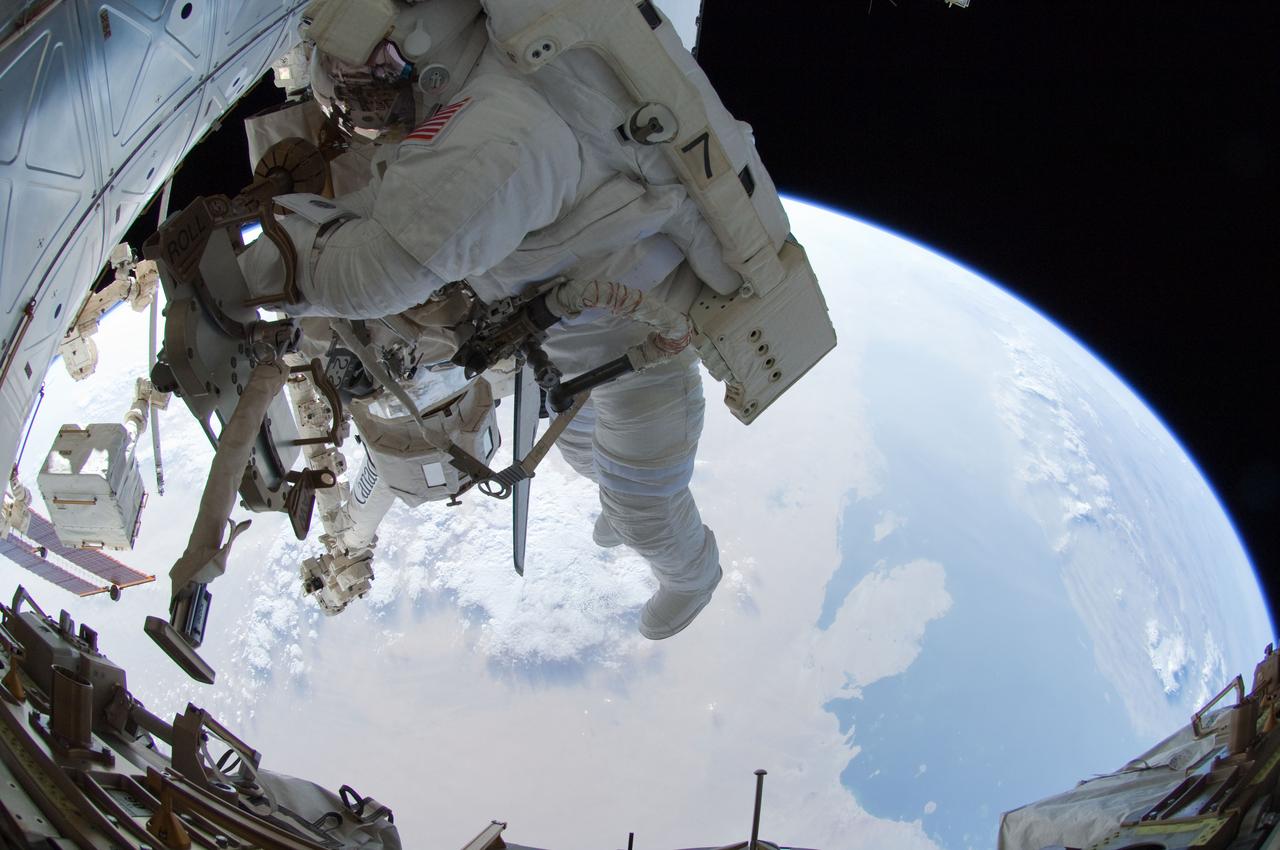
ISS028-E-016122 (12 July 2011) --- NASA astronaut Ron Garan, Expedition 28 flight engineer, uses a tether to secure his position during the July 12 spacewalk he performed outside the docked International Space Station and space shuttle Atlantis with station crewmate Mike Fossum (out of frame). The Persian Gulf can be seen on the Earth below. With support from crewmates inside the station and shuttle, NASA astronauts Garan and Fossum joined forces to complete some needed chores during the six and half hour spacewalk.
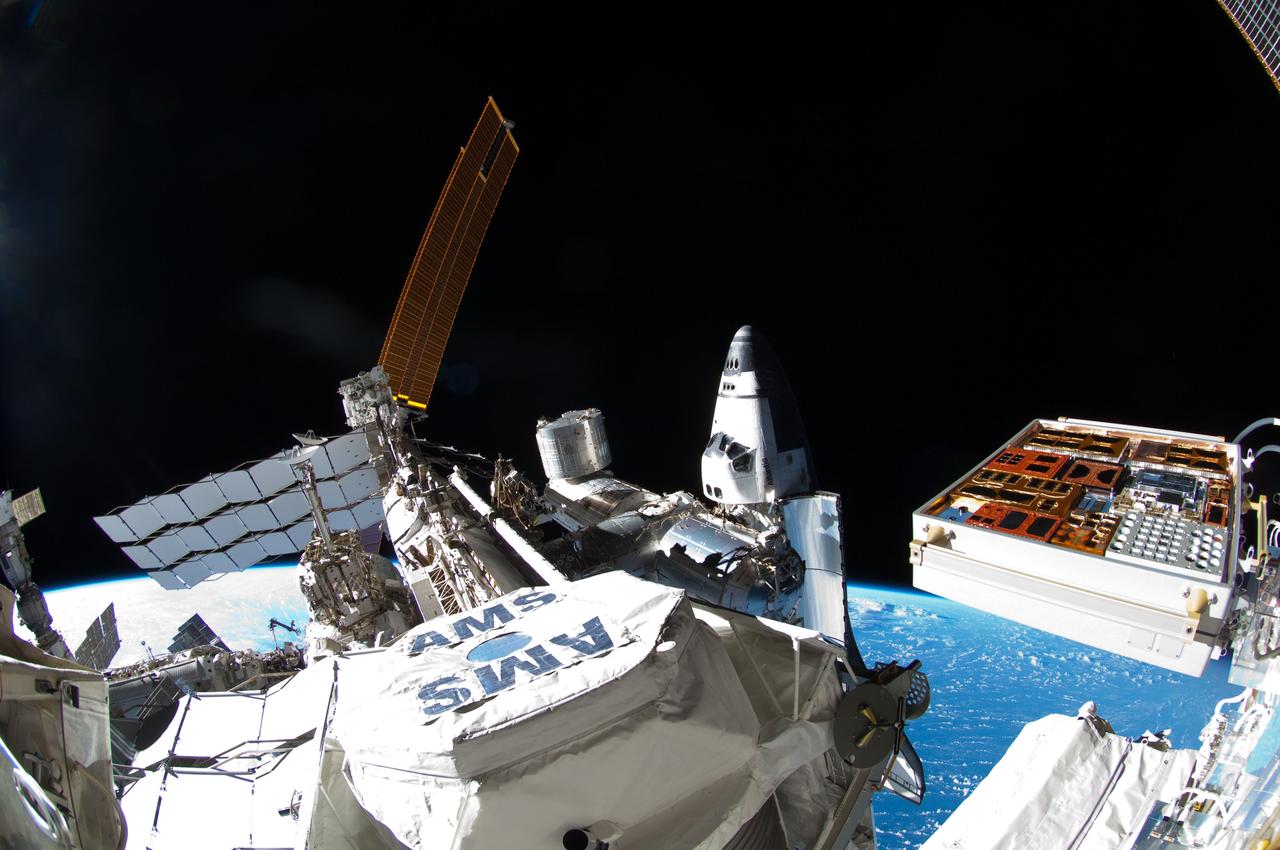
ISS028-E-016128 (12 July 2011) --- This picture, photographed by NASA astronaut Ron Garan during the spacewalk conducted on July 12, 2011, shows the International Space Station with space shuttle Atlantis docked at center frame and a Russian Soyuz docked to Pirs, at left. In the center foreground is the Alpha Magnetic Spectrometer (AMS) experiment installed during the STS-134 mission. AMS is a state-of-the-art particle physics detector designed to use the unique environment of space to advance knowledge of the universe and lead to the understanding of the universe's origin by searching for antimatter and dark matter, and measuring cosmic rays.
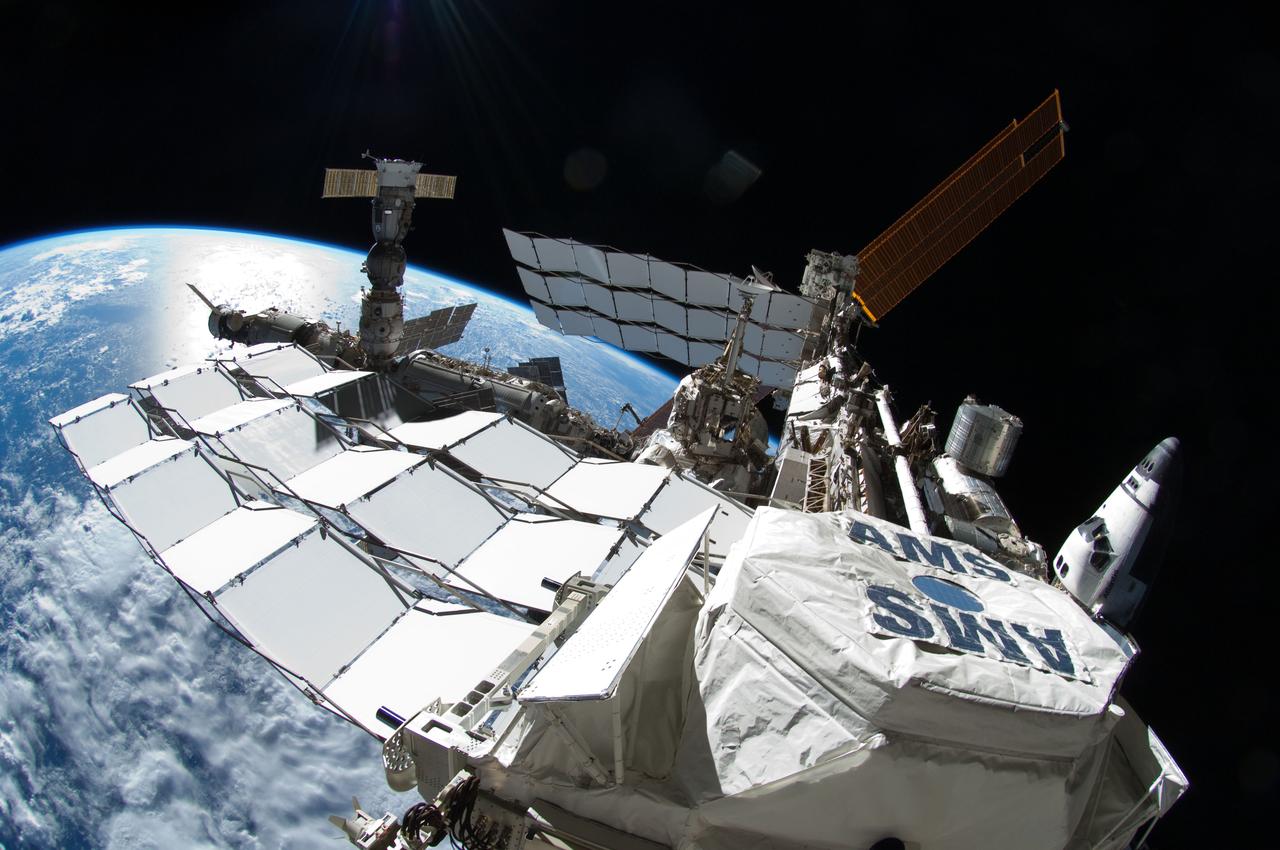
ISS028-E-016137 (12 July 2011) --- This picture, photographed by NASA astronaut Ron Garan during the spacewalk conducted on July 12, 2011, shows the International Space Station with space shuttle Atlantis docked at right and a Russian Soyuz docked to Pirs, at upper left. In the lower right foreground is the Alpha Magnetic Spectrometer (AMS) experiment installed during the STS-134 mission. AMS is a state-of-the-art particle physics detector designed to use the unique environment of space to advance knowledge of the universe and lead to the understanding of the universe's origin by searching for antimatter and dark matter, and measuring cosmic rays.

The Apollo 11 mission, the first manned lunar mission, launched from the Kennedy Space Center, Florida via the Saturn V launch vehicle on July 16, 1969 and safely returned to Earth on July 24, 1969. The Saturn V vehicle produced a holocaust of flames as it rose from its pad at Launch complex 39. The 363 foot tall, 6,400,000 pound rocket hurled the spacecraft into Earth parking orbit and then placed it on the trajectory to the moon. This high angle view of the launch was provided by a ‘fisheye’ camera mounted on the launch tower. The Saturn V was developed by the Marshall Space Flight Center (MSFC) under the direction of Dr. Wernher von Braun. Aboard the spacecraft were astronauts Neil A. Armstrong, commander; Michael Collins, Command Module (CM) pilot; and Edwin E. Aldrin Jr., Lunar Module (LM) pilot. With the success of Apollo 11, the national objective to land men on the Moon and return them safely to Earth had been accomplished.
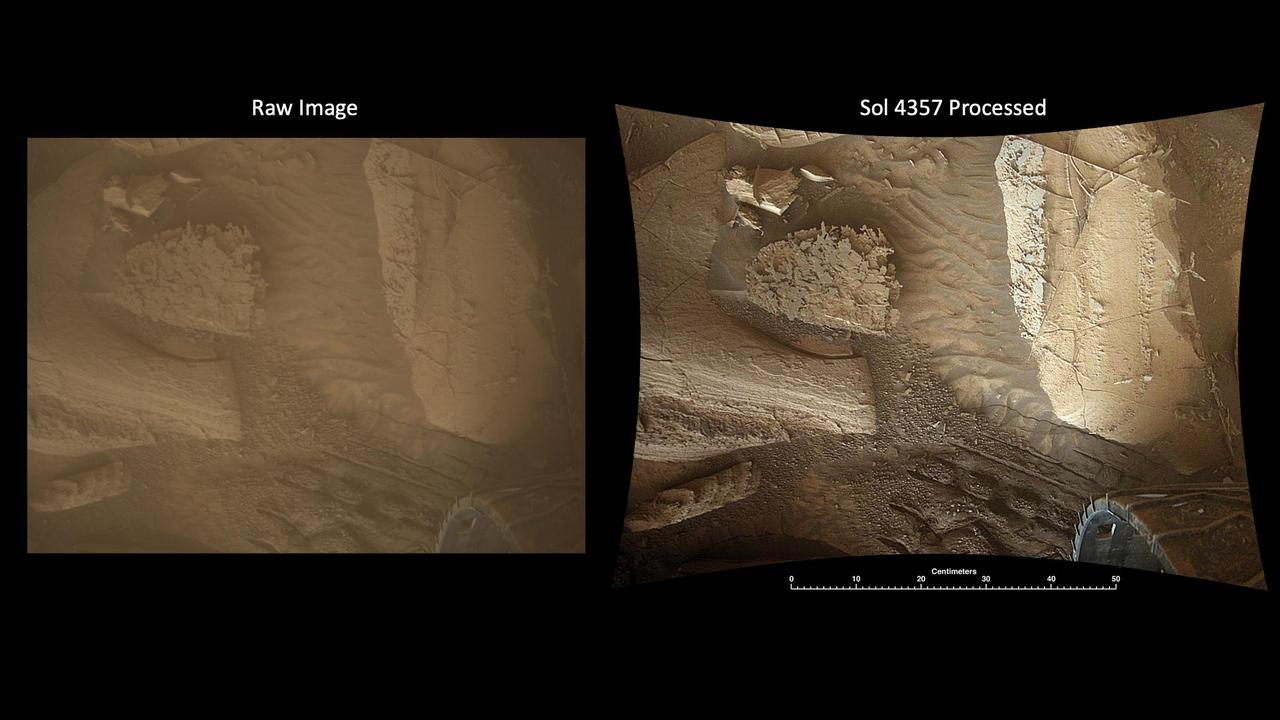
This pair of images shows the Martian surface captured by NASA's Curiosity rover using its Mars Descent Imager (MARDI) camera on Nov. 7, 2024, the 4,357th Martian day, or sol, of the mission. The raw image on the left has not been processed; on the right is the same image after being processed on Earth to reveal additional details in the camera's images, which were taken after sunset, when the lighting is more uniform than the harsh shadows that occur earlier in the day. MARDI was designed to capture images from below the rover as Curiosity descended to the surface on Aug. 5, 2012. (Those images were later assembled together to create the first video of a descent to the Martian surface.) After landing, the mission repurposed MARDI as a surface camera. They use it to take a snapshot at the end of every drive to document the changing terrain and textures the mission has come across during its exploration of Gale Crater and the 3-mile-tall (5-kilometer-tall) mountain within it, Mount Sharp. MARDI views the surface just behind the rover's left front wheel, which is visible in the images. While it is not in sharp focus on the surface (the camera was designed to capture the long-range imaging during descent) but is able to resolve features as small as a few millimeters (0.1 inch). Likewise, because MARDI wasn't intended to be a surface camera, it lacks a dust cover. As a result, its dusty lens mutes colors and details. The first version of the pair of images above was processed onboard the rover into a color image. Once scientists back on Earth receive such images, they perform additional processing to improve contrast and sharpness, and to correct for distortions caused by the camera's fisheye lens (the curved edges of the final image are the result of correcting for those distortions). Because of that additional processing, MARDI has provided a useful way to study rock layering, textures, mineral veins, wheel tracks, and sand ripples – all of which are apparent in the second, processed, image here. Occasionally scientists will take a series of images while Curiosity drives, creating an image strip that documents changes across the surface. When the rover remains stationary (such as when it's collecting and processing a rock sample) a series of images can reveal the movement of windblown sand. https://photojournal.jpl.nasa.gov/catalog/PIA26516