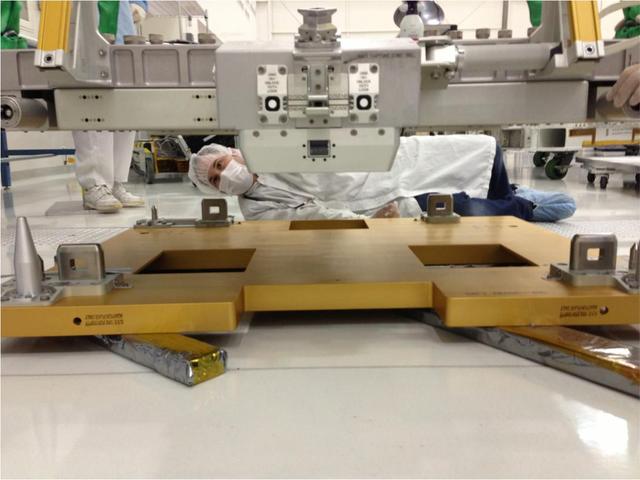
An engineer from NASA Jet Propulsion Laboratory oversees a fit check during the integration & testing of the Optical PAyload for Lasercomm Science OPALS.
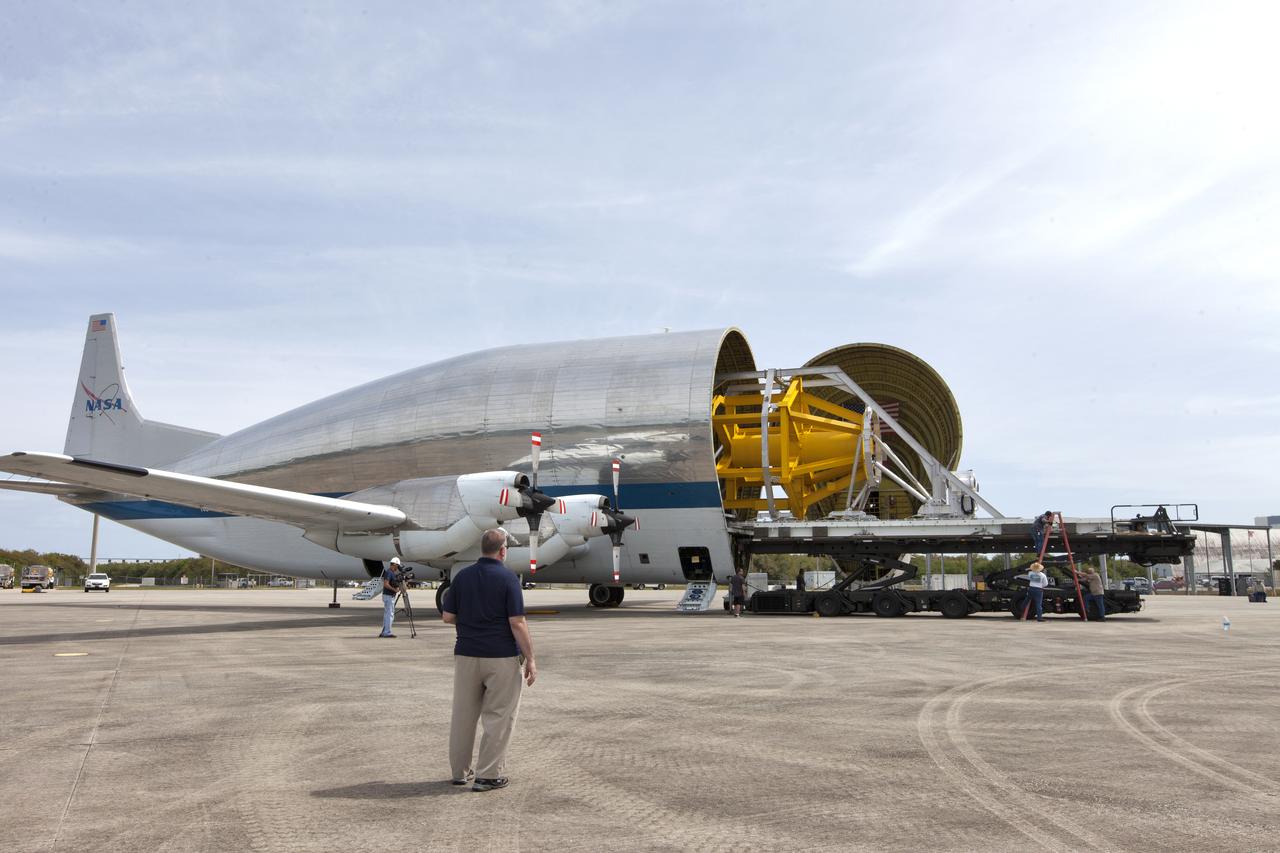
A fit check of the Orion Crew and Service Module Horizontal Transporter (CHT) with NASA's Super Guppy aircraft is underway March 13, 2019, at NASA Kennedy Space Center’s Shuttle Landing Facility in Florida, operated by Space Florida. In this photo, the CHT, secured on the U.S. Air Force aircraft loader, is moved inside the aircraft’s payload bay. The fit check is being performed to confirm loading operations, ensure that the CHT fits inside the Super Guppy and test the electrical interface to aircraft power. The Orion crew and service modules will be readied for a trip to NASA’s Plum Brook Station in Sandusky, Ohio, for full thermal vacuum testing. In this unique facility, the crew and service modules will be put through extensive testing to ensure they can survive the rigors of launch, space travel, re-entry and splashdown. The Orion spacecraft will launch atop the agency's Space Launch System rocket on Exploration Mission-1.
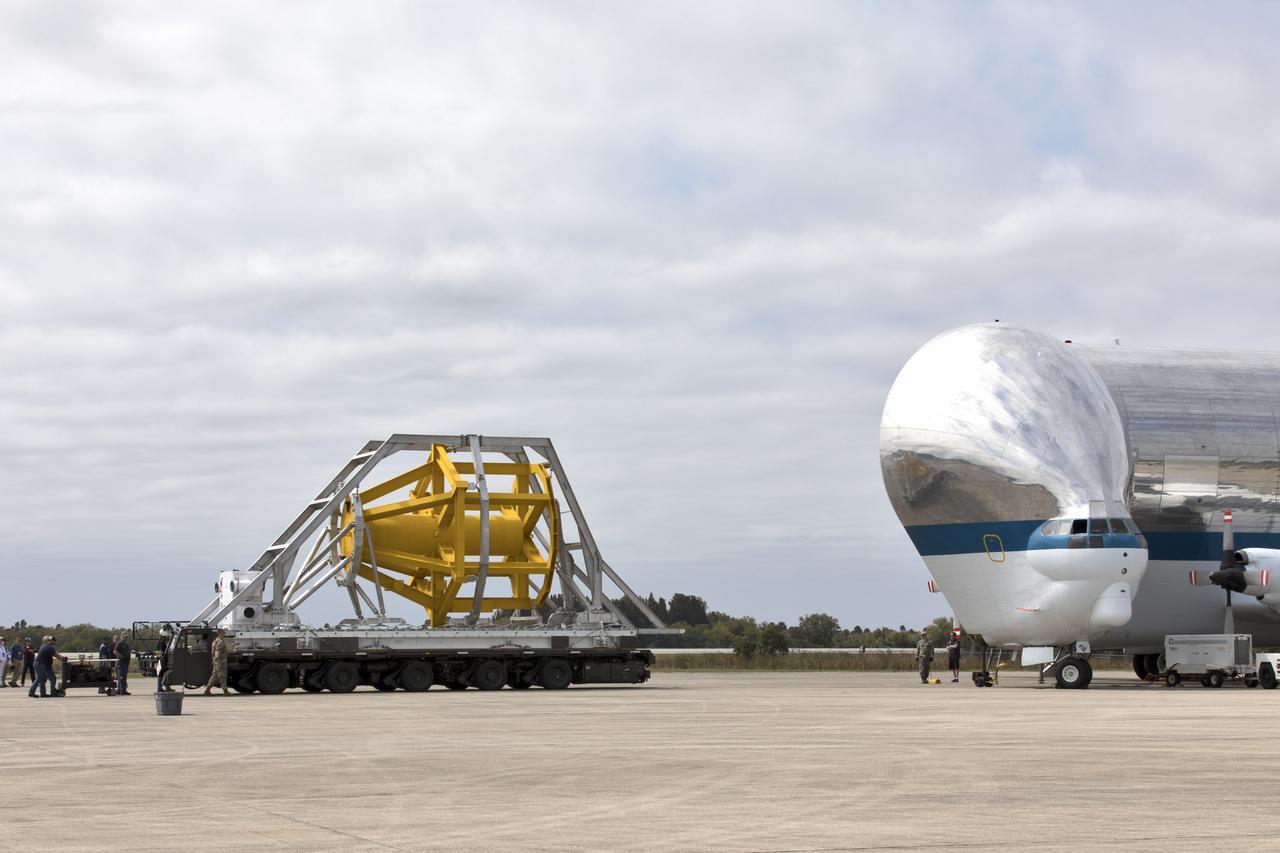
A fit check of the Orion Crew and Service Module Horizontal Transporter (CHT) with NASA's Super Guppy aircraft began March 12, 2019, at NASA Kennedy Space Center’s Shuttle Landing Facility in Florida, operated by Space Florida. In this photo, the U.S. Air Force aircraft loader with the CHT is moved toward the Super Guppy. The fit check is being performed to confirm loading operations, ensure that the CHT fits inside the Super Guppy and test the electrical interface to aircraft power. The Orion crew and service modules will be readied for a trip to NASA’s Plum Brook Station in Sandusky, Ohio, for full thermal vacuum testing. In this unique facility, the crew and service modules will be put through extensive testing to ensure they can survive the rigors of launch, space travel, re-entry and splashdown. The Orion spacecraft will launch atop the agency's Space Launch System rocket on Exploration Mission-1.

A fit check of the Orion Crew and Service Module Horizontal Transporter (CHT) with NASA's Super Guppy aircraft began March 12, 2019, at NASA Kennedy Space Center’s Shuttle Landing Facility in Florida, operated by Space Florida. In this photo, the CHT is secured on the U.S. Air Force aircraft loader. The fit check is being performed to confirm loading operations, ensure that the CHT fits inside the Super Guppy and test the electrical interface to aircraft power. The Orion crew and service modules will be readied for a trip to NASA’s Plum Brook Station in Sandusky, Ohio, for full thermal vacuum testing. In this unique facility, the crew and service modules will be put through extensive testing to ensure they can survive the rigors of launch, space travel, re-entry and splashdown. The Orion spacecraft will launch atop the agency's Space Launch System rocket on Exploration Mission-1.
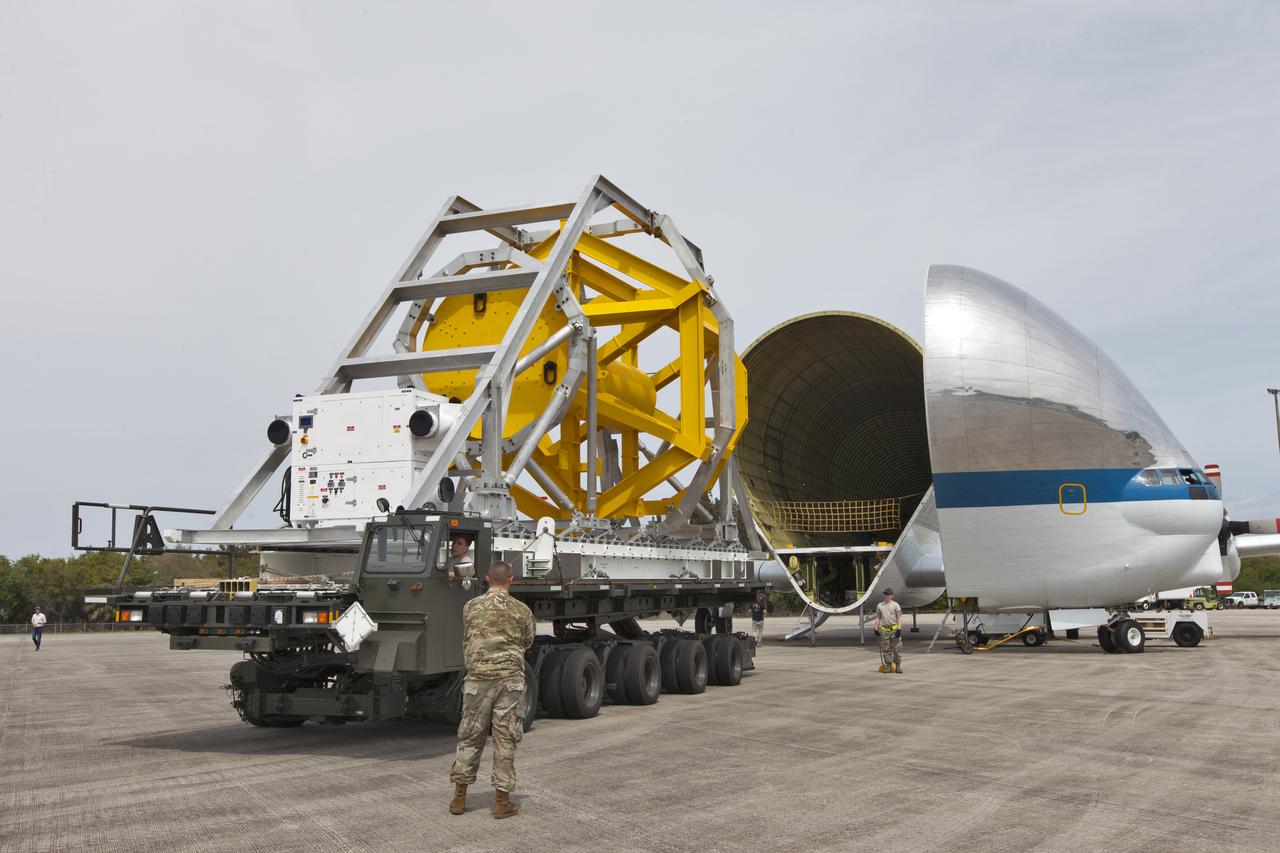
A fit check of the Orion Crew and Service Module Horizontal Transporter (CHT) with NASA's Super Guppy aircraft is underway March 13, 2019, at NASA Kennedy Space Center’s Shuttle Landing Facility in Florida, operated by Space Florida. In this photo, the CHT, secured on the U.S. Air Force aircraft loader, is moved toward the Super Guppy’s open payload bay. The fit check is being performed to confirm loading operations, ensure that the CHT fits inside the Super Guppy and test the electrical interface to aircraft power. The Orion crew and service modules will be readied for a trip to NASA’s Plum Brook Station in Sandusky, Ohio, for full thermal vacuum testing. In this unique facility, the crew and service modules will be put through extensive testing to ensure they can survive the rigors of launch, space travel, re-entry and splashdown. The Orion spacecraft will launch atop the agency's Space Launch System rocket on Exploration Mission-1.
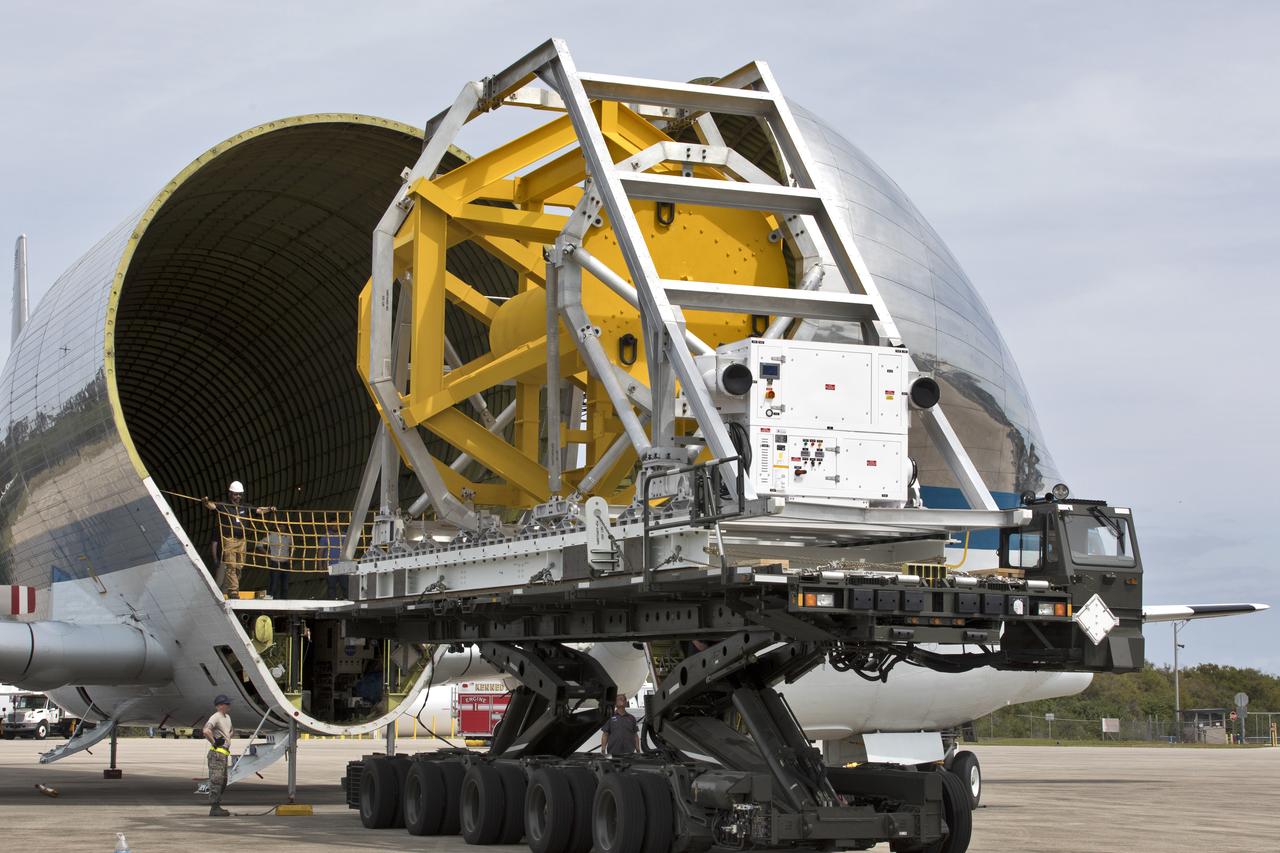
A fit check of the Orion Crew and Service Module Horizontal Transporter (CHT) with NASA's Super Guppy aircraft is underway March 13, 2019, at NASA Kennedy Space Center’s Shuttle Landing Facility in Florida, operated by Space Florida. In this photo, the Super Guppy’s payload bay has been opened and the CHT, secured on the U.S. Air Force aircraft loader, is moved inside the aircraft’s payload bay. The fit check is being performed to confirm loading operations, ensure that the CHT fits inside the Super Guppy and test the electrical interface to aircraft power. The Orion crew and service modules will be readied for a trip to NASA’s Plum Brook Station in Sandusky, Ohio, for full thermal vacuum testing. In this unique facility, the crew and service modules will be put through extensive testing to ensure they can survive the rigors of launch, space travel, re-entry and splashdown. The Orion spacecraft will launch atop the agency's Space Launch System rocket on Exploration Mission-1.
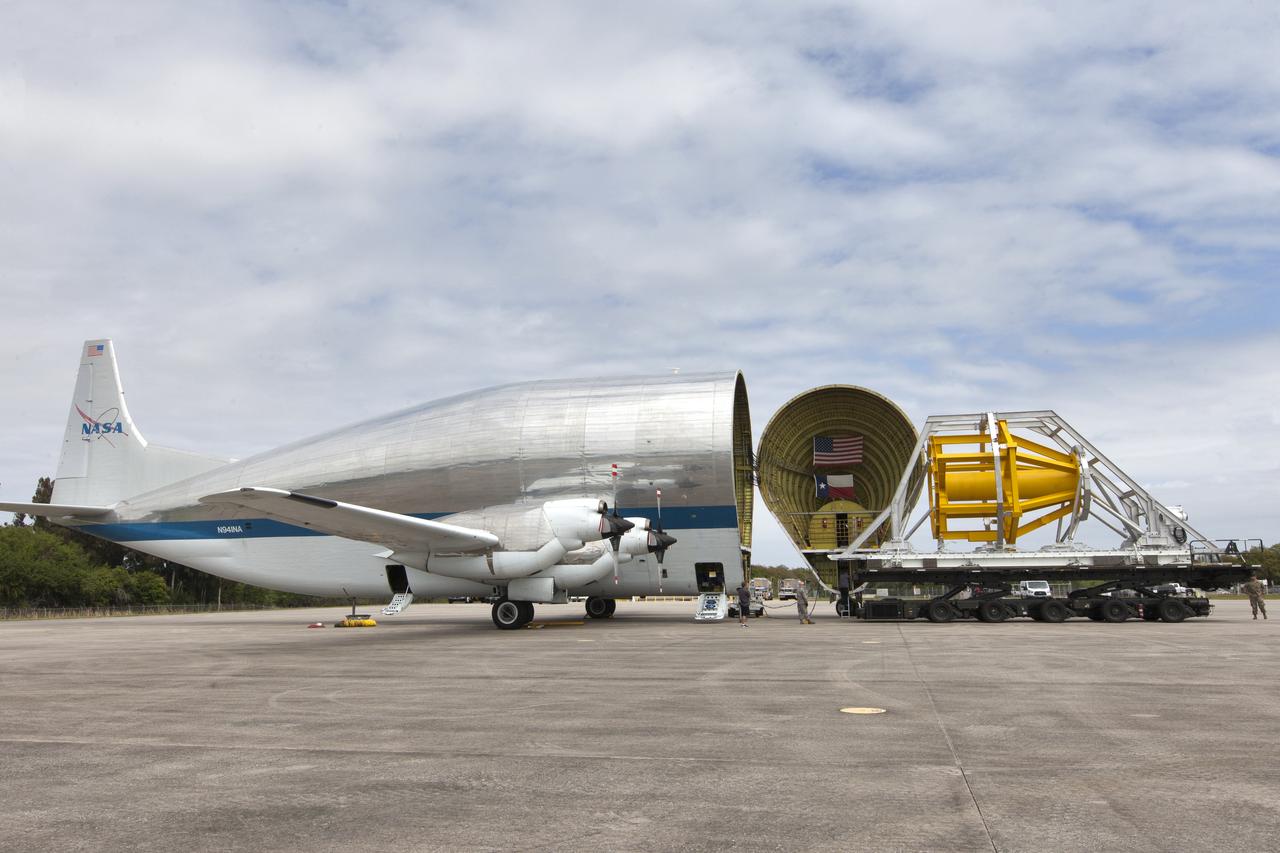
A fit check of the Orion Crew and Service Module Horizontal Transporter (CHT) with NASA's Super Guppy aircraft began March 12, 2019, at NASA Kennedy Space Center’s Shuttle Landing Facility in Florida, operated by Space Florida. In this photo, the Super Guppy’s payload bay is opened as the CHT, secured on the U.S. Air Force aircraft loader, is moved toward the aircraft. The fit check is being performed to confirm loading operations, ensure that the CHT fits inside the Super Guppy and test the electrical interface to aircraft power. The Orion crew and service modules will be readied for a trip to NASA’s Plum Brook Station in Sandusky, Ohio, for full thermal vacuum testing. In this unique facility, the crew and service modules will be put through extensive testing to ensure they can survive the rigors of launch, space travel, re-entry and splashdown. The Orion spacecraft will launch atop the agency's Space Launch System rocket on Exploration Mission-1.
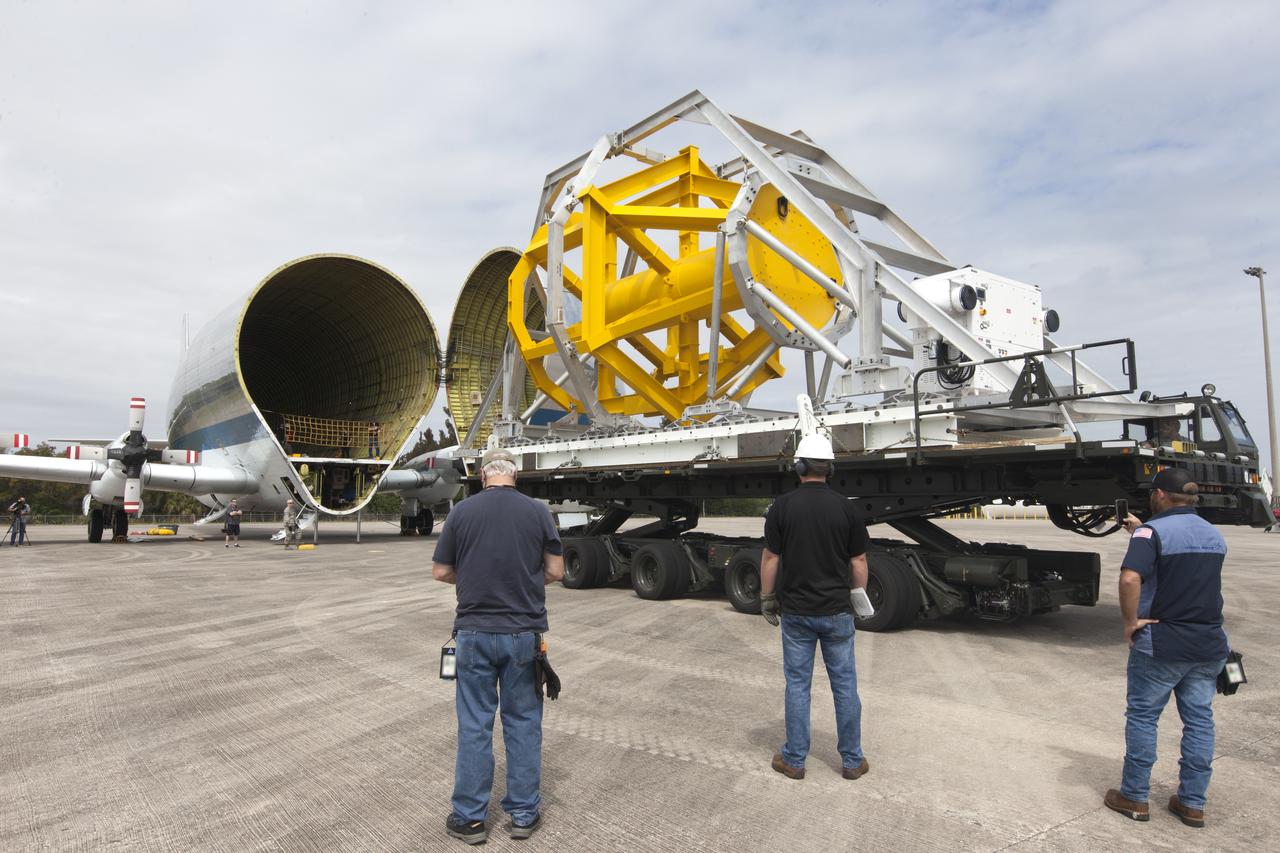
A fit check of the Orion Crew and Service Module Horizontal Transporter (CHT) with NASA's Super Guppy aircraft began March 12, 2019, at NASA Kennedy Space Center’s Shuttle Landing Facility in Florida, operated by Space Florida. In this photo, the Super Guppy’s payload bay is opened as the CHT, secured on the U.S. Air Force aircraft loader, is moved toward the aircraft. The fit check is being performed to confirm loading operations, ensure that the CHT fits inside the Super Guppy and test the electrical interface to aircraft power. The Orion crew and service modules will be readied for a trip to NASA’s Plum Brook Station in Sandusky, Ohio, for full thermal vacuum testing. In this unique facility, the crew and service modules will be put through extensive testing to ensure they can survive the rigors of launch, space travel, re-entry and splashdown. The Orion spacecraft will launch atop the agency's Space Launch System rocket on Exploration Mission-1.

A fit check of the Orion Crew and Service Module Horizontal Transporter (CHT) with NASA's Super Guppy aircraft began March 12, 2019, at NASA Kennedy Space Center’s Shuttle Landing Facility in Florida, operated by Space Florida. In this photo, the Super Guppy’s payload bay is opened as the CHT, secured on the U.S. Air Force aircraft loader, is moved inside the aircraft’s payload bay. The fit check is being performed to confirm loading operations, ensure that the CHT fits inside the Super Guppy and test the electrical interface to aircraft power. The Orion crew and service modules will be readied for a trip to NASA’s Plum Brook Station in Sandusky, Ohio, for full thermal vacuum testing. In this unique facility, the crew and service modules will be put through extensive testing to ensure they can survive the rigors of launch, space travel, re-entry and splashdown. The Orion spacecraft will launch atop the agency's Space Launch System rocket on Exploration Mission-1.

A fit check of the Orion Crew and Service Module Horizontal Transporter (CHT) with NASA's Super Guppy aircraft is underway March 13, 2019, at NASA Kennedy Space Center’s Shuttle Landing Facility in Florida, operated by Space Florida. In this photo, the CHT, secured on the U.S. Air Force aircraft loader, is moved inside the aircraft’s payload bay. The fit check is being performed to confirm loading operations, ensure that the CHT fits inside the Super Guppy and test the electrical interface to aircraft power. The Orion crew and service modules will be readied for a trip to NASA’s Plum Brook Station in Sandusky, Ohio, for full thermal vacuum testing. In this unique facility, the crew and service modules will be put through extensive testing to ensure they can survive the rigors of launch, space travel, re-entry and splashdown. The Orion spacecraft will launch atop the agency's Space Launch System rocket on Exploration Mission-1.
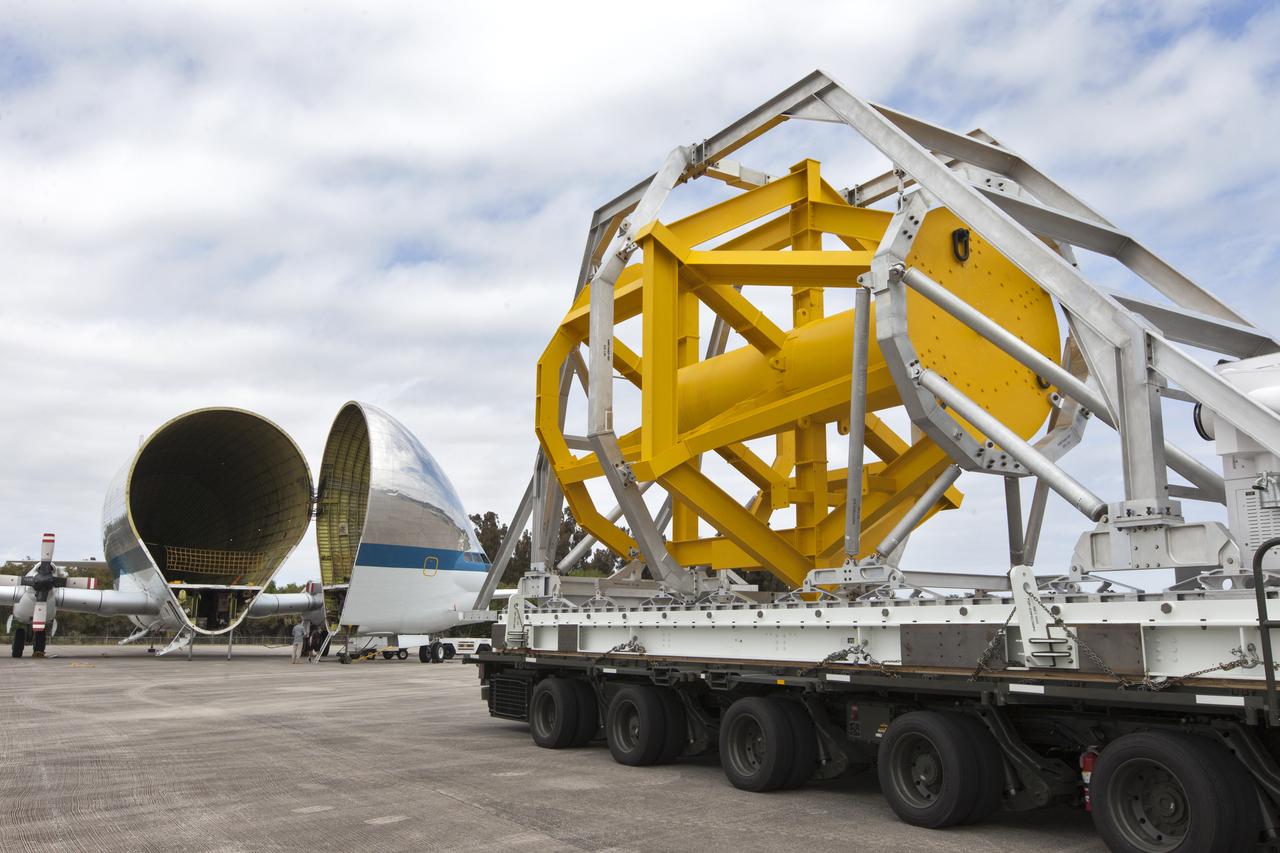
A fit check of the Orion Crew and Service Module Horizontal Transporter (CHT) with NASA's Super Guppy aircraft began March 12, 2019, at NASA Kennedy Space Center’s Shuttle Landing Facility in Florida, operated by Space Florida. In this photo, the Super Guppy’s payload bay is opened as the CHT, secured on the U.S. Air Force aircraft loader, is moved toward the aircraft. The fit check is being performed to confirm loading operations, ensure that the CHT fits inside the Super Guppy and test the electrical interface to aircraft power. The Orion crew and service modules will be readied for a trip to NASA’s Plum Brook Station in Sandusky, Ohio, for full thermal vacuum testing. In this unique facility, the crew and service modules will be put through extensive testing to ensure they can survive the rigors of launch, space travel, re-entry and splashdown. The Orion spacecraft will launch atop the agency's Space Launch System rocket on Exploration Mission-1.
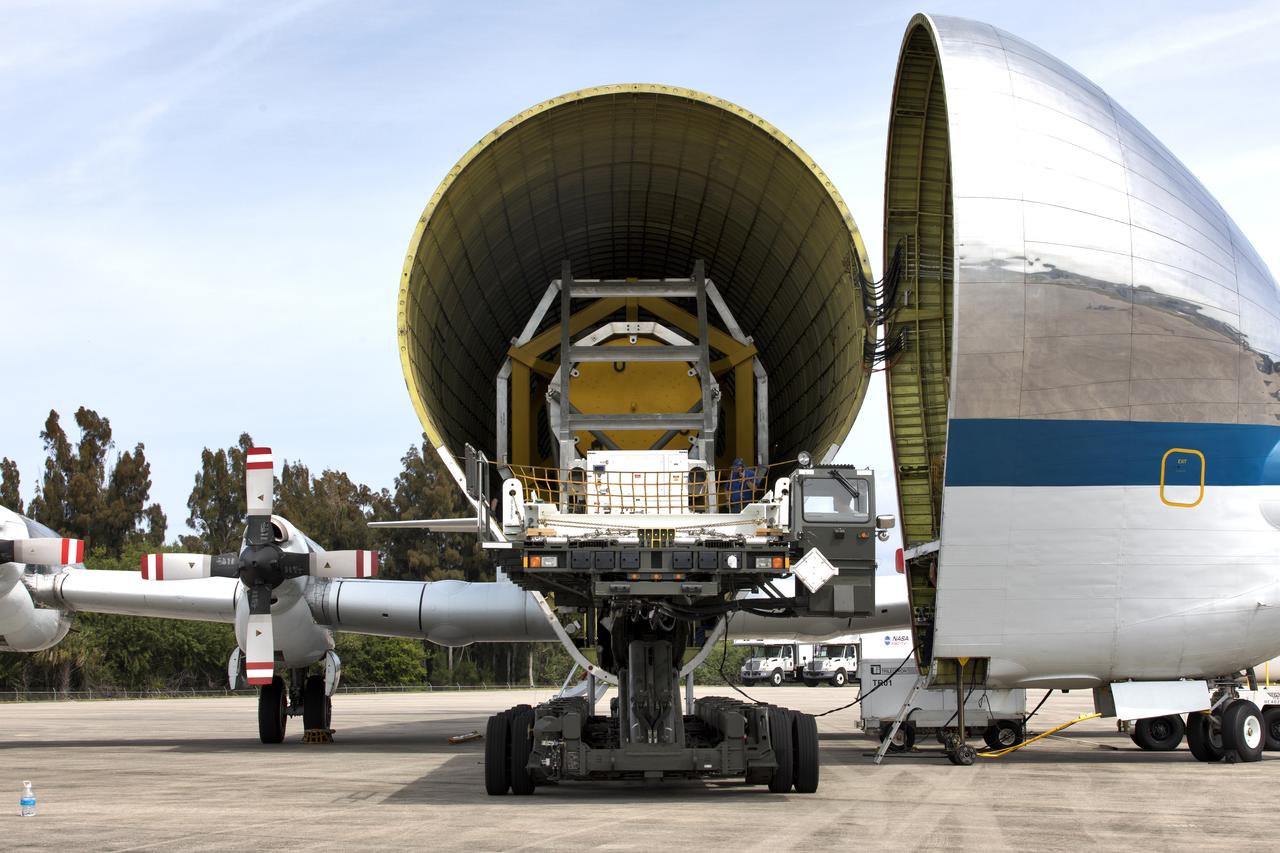
A fit check of the Orion Crew and Service Module Horizontal Transporter (CHT) with NASA's Super Guppy aircraft is underway March 13, 2019, at NASA Kennedy Space Center’s Shuttle Landing Facility in Florida, operated by Space Florida. In this photo, the CHT, secured on the U.S. Air Force aircraft loader, is moved inside the aircraft’s payload bay. The fit check is being performed to confirm loading operations, ensure that the CHT fits inside the Super Guppy and test the electrical interface to aircraft power. The Orion crew and service modules will be readied for a trip to NASA’s Plum Brook Station in Sandusky, Ohio, for full thermal vacuum testing. In this unique facility, the crew and service modules will be put through extensive testing to ensure they can survive the rigors of launch, space travel, re-entry and splashdown. The Orion spacecraft will launch atop the agency's Space Launch System rocket on Exploration Mission-1.
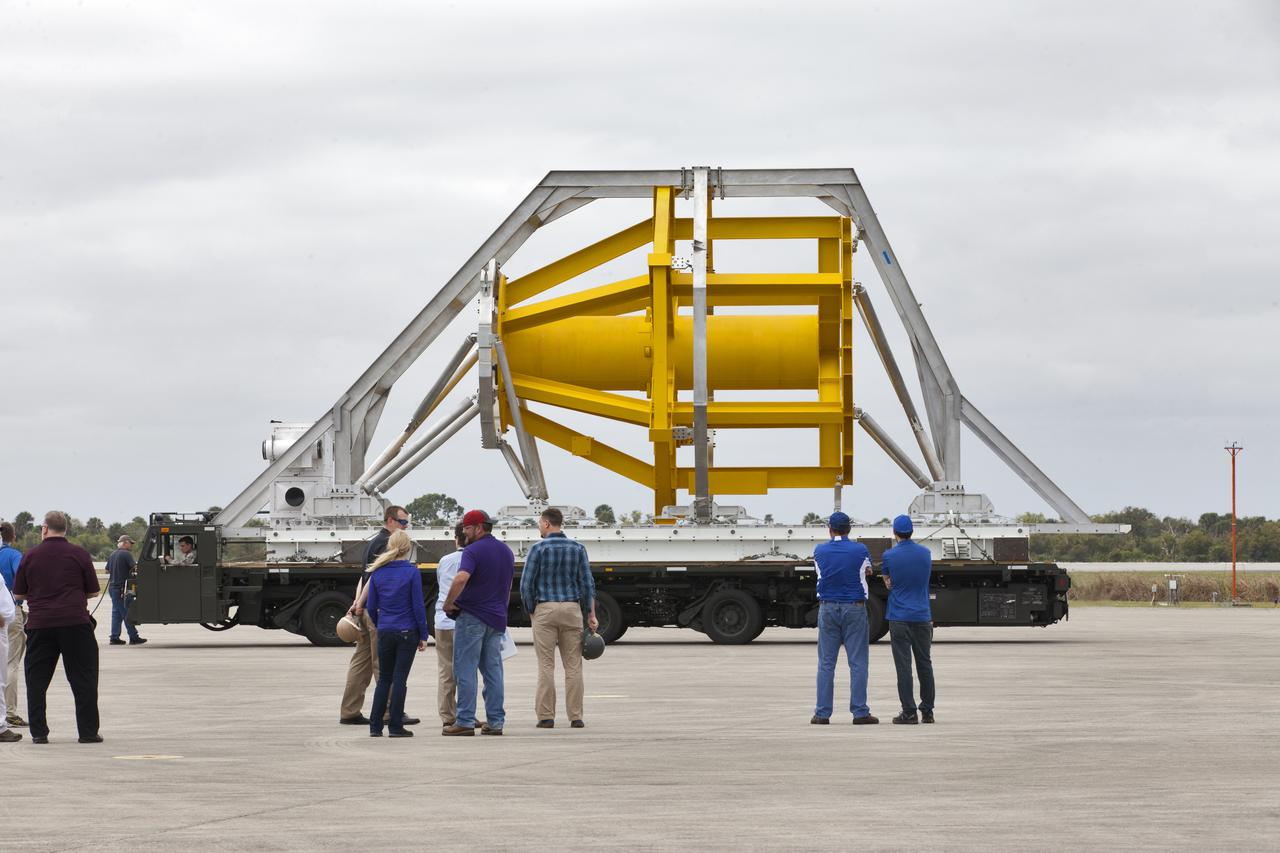
A fit check of the Orion Crew and Service Module Horizontal Transporter (CHT) with NASA's Super Guppy aircraft began March 12, 2019, at NASA Kennedy Space Center’s Shuttle Landing Facility in Florida, operated by Space Florida. In this photo, the CHT is secured on the U.S. Air Force aircraft loader. The fit check is being performed to confirm loading operations, ensure that the CHT fits inside the Super Guppy and test the electrical interface to aircraft power. The Orion crew and service modules will be readied for a trip to NASA’s Plum Brook Station in Sandusky, Ohio, for full thermal vacuum testing. In this unique facility, the crew and service modules will be put through extensive testing to ensure they can survive the rigors of launch, space travel, re-entry and splashdown. The Orion spacecraft will launch atop the agency's Space Launch System rocket on Exploration Mission-1.
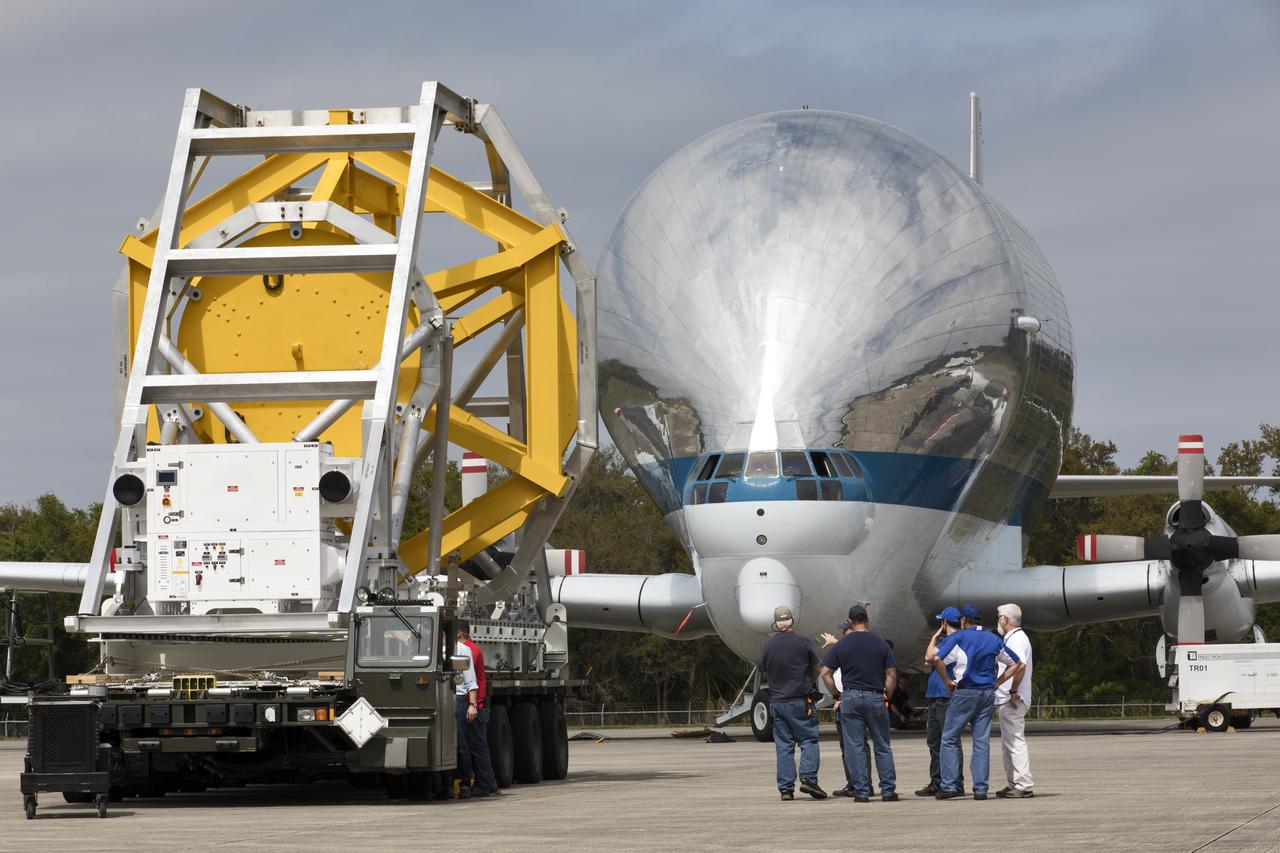
A fit check of the Orion Crew and Service Module Horizontal Transporter (CHT) with NASA's Super Guppy aircraft began March 12, 2019, at NASA Kennedy Space Center’s Shuttle Landing Facility in Florida, operated by Space Florida. In this photo, the CHT is secured on the U.S. Air Force aircraft loader and is moved toward the Super Guppy. The fit check is being performed to confirm loading operations, ensure that the CHT fits inside the Super Guppy and test the electrical interface to aircraft power. The Orion crew and service modules will be readied for a trip to NASA’s Plum Brook Station in Sandusky, Ohio, for full thermal vacuum testing. In this unique facility, the crew and service modules will be put through extensive testing to ensure they can survive the rigors of launch, space travel, re-entry and splashdown. The Orion spacecraft will launch atop the agency's Space Launch System rocket on Exploration Mission-1.
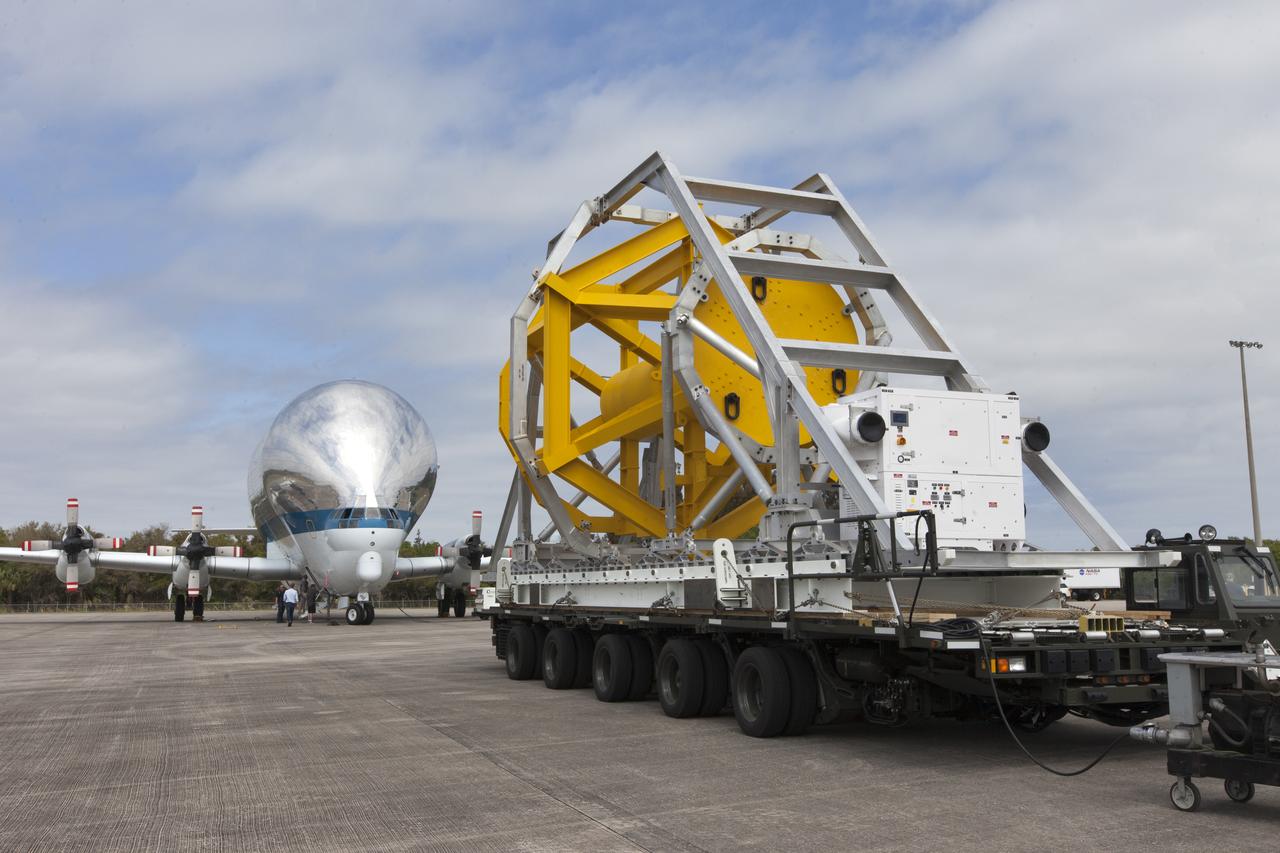
A fit check of the Orion Crew and Service Module Horizontal Transporter (CHT) with NASA's Super Guppy aircraft began March 12, 2019, at NASA Kennedy Space Center’s Shuttle Landing Facility in Florida, operated by Space Florida. In this photo, the CHT is secured on the U.S. Air Force aircraft loader. The fit check is being performed to confirm loading operations, ensure that the CHT fits inside the Super Guppy and test the electrical interface to aircraft power. The Orion crew and service modules will be readied for a trip to NASA’s Plum Brook Station in Sandusky, Ohio, for full thermal vacuum testing. In this unique facility, the crew and service modules will be put through extensive testing to ensure they can survive the rigors of launch, space travel, re-entry and splashdown. The Orion spacecraft will launch atop the agency's Space Launch System rocket on Exploration Mission-1.
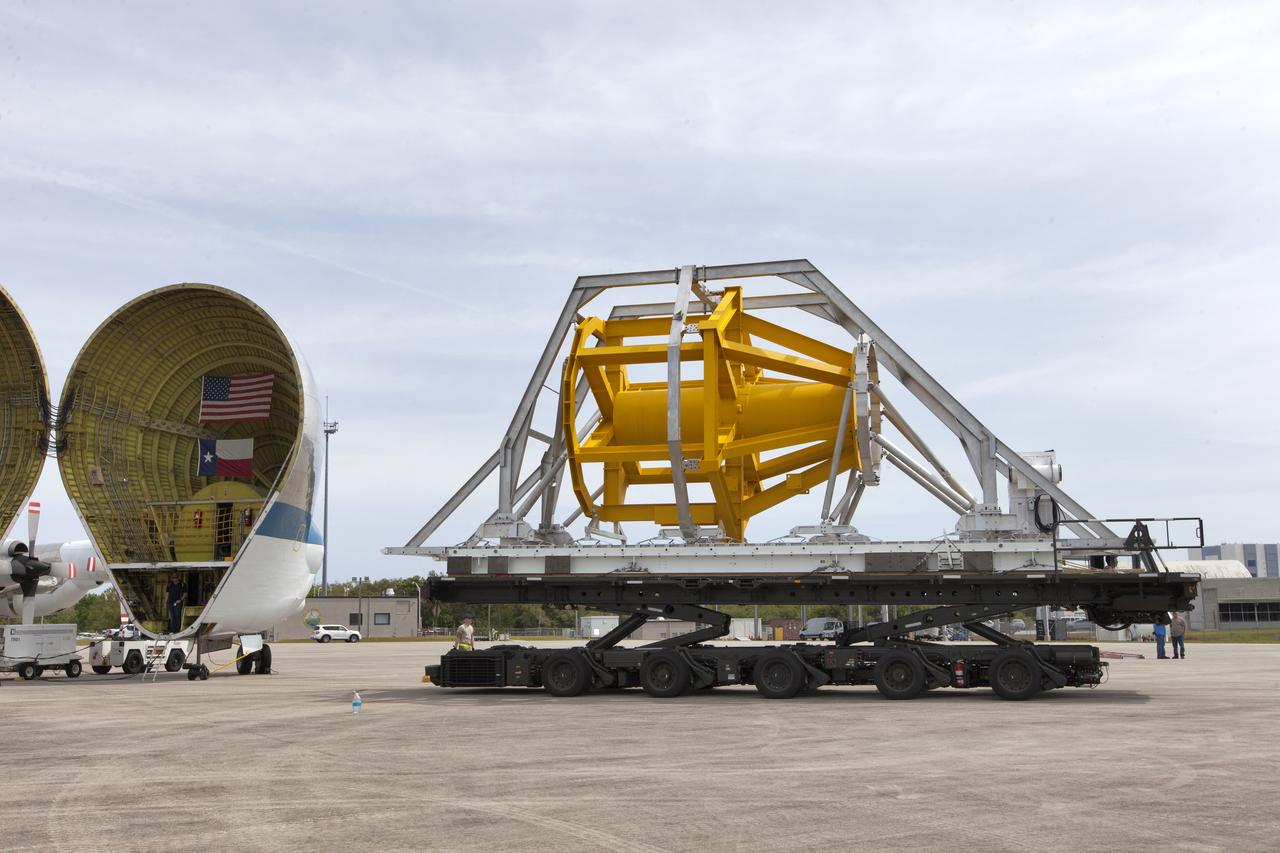
A fit check of the Orion Crew and Service Module Horizontal Transporter (CHT) with NASA's Super Guppy aircraft is underway March 13, 2019, at NASA Kennedy Space Center’s Shuttle Landing Facility in Florida, operated by Space Florida. In this photo, the CHT is secured on the U.S. Air Force aircraft loader and is being moved toward the Super Guppy. The fit check is being performed to confirm loading operations, ensure that the CHT fits inside the Super Guppy and test the electrical interface to aircraft power. The Orion crew and service modules will be readied for a trip to NASA’s Plum Brook Station in Sandusky, Ohio, for full thermal vacuum testing. In this unique facility, the crew and service modules will be put through extensive testing to ensure they can survive the rigors of launch, space travel, re-entry and splashdown. The Orion spacecraft will launch atop the agency's Space Launch System rocket on Exploration Mission-1.
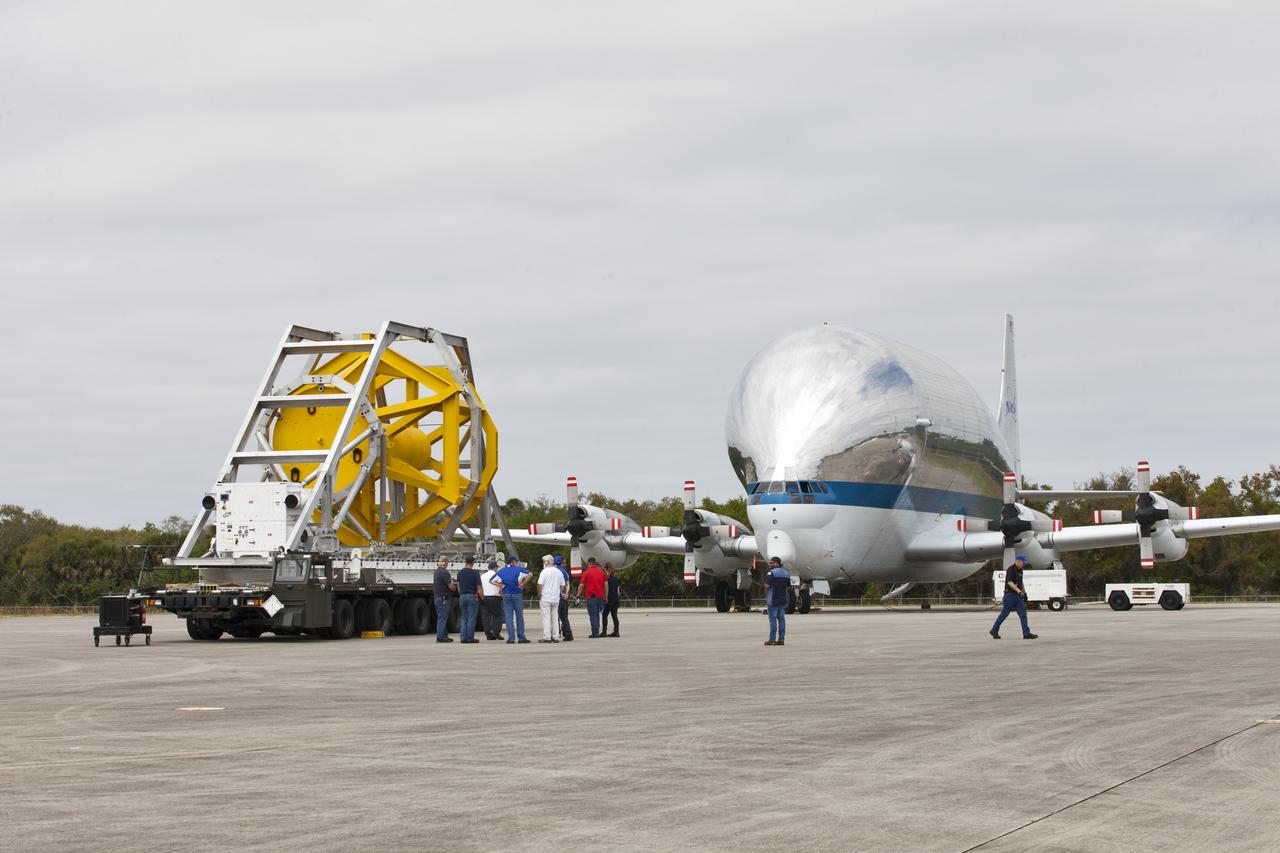
A fit check of the Orion Crew and Service Module Horizontal Transporter (CHT) with NASA's Super Guppy aircraft began March 12, 2019, at NASA Kennedy Space Center’s Shuttle Landing Facility in Florida, operated by Space Florida. In this photo, the CHT is secured on the U.S. Air Force aircraft loader. The fit check is being performed to confirm loading operations, ensure that the CHT fits inside the Super Guppy and test the electrical interface to aircraft power. The Orion crew and service modules will be readied for a trip to NASA’s Plum Brook Station in Sandusky, Ohio, for full thermal vacuum testing. In this unique facility, the crew and service modules will be put through extensive testing to ensure they can survive the rigors of launch, space travel, re-entry and splashdown. The Orion spacecraft will launch atop the agency's Space Launch System rocket on Exploration Mission-1.
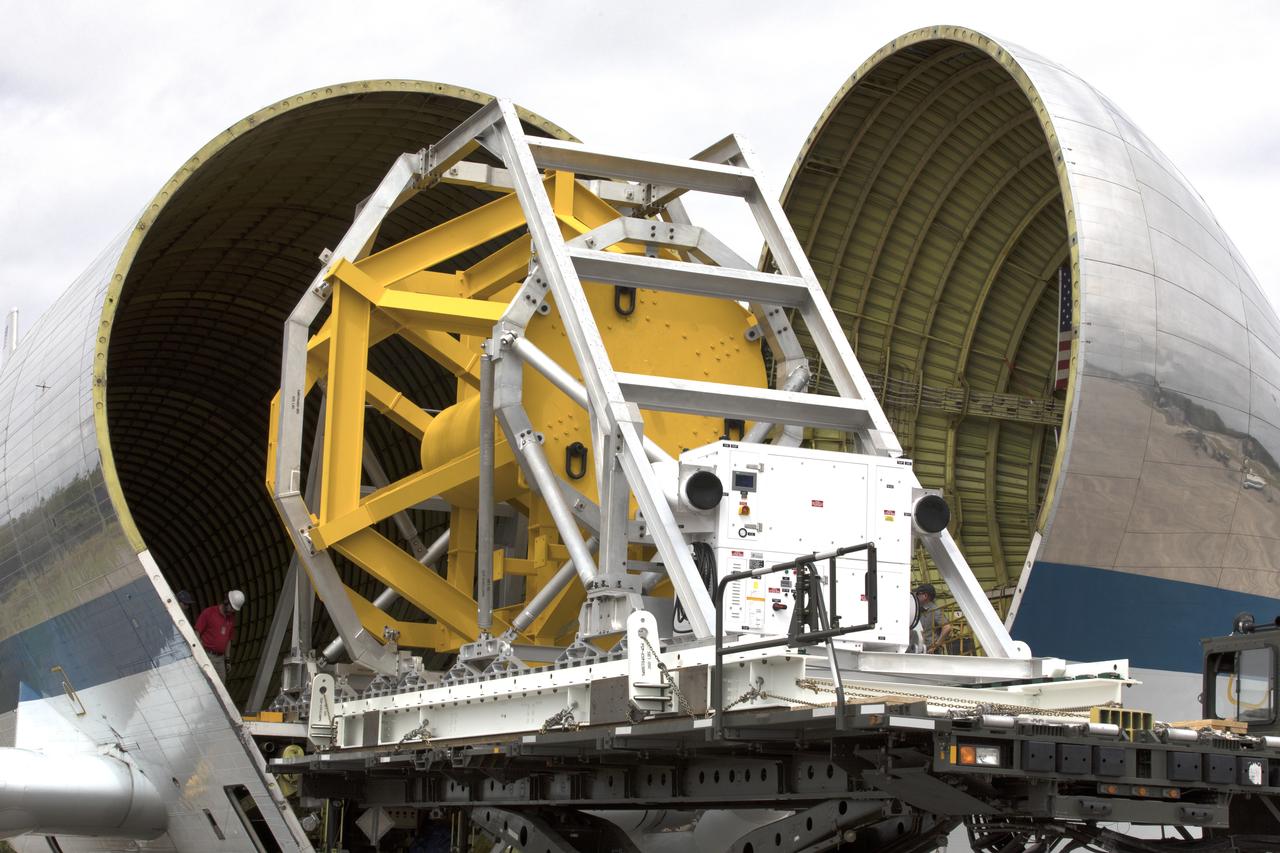
A fit check of the Orion Crew and Service Module Horizontal Transporter (CHT) with NASA's Super Guppy aircraft began March 12, 2019, at NASA Kennedy Space Center’s Shuttle Landing Facility in Florida, operated by Space Florida. In this photo, the Super Guppy’s payload bay is opened as the CHT, secured on the U.S. Air Force aircraft loader, is moved inside the aircraft’s payload bay. The fit check is being performed to confirm loading operations, ensure that the CHT fits inside the Super Guppy and test the electrical interface to aircraft power. The Orion crew and service modules will be readied for a trip to NASA’s Plum Brook Station in Sandusky, Ohio, for full thermal vacuum testing. In this unique facility, the crew and service modules will be put through extensive testing to ensure they can survive the rigors of launch, space travel, re-entry and splashdown. The Orion spacecraft will launch atop the agency's Space Launch System rocket on Exploration Mission-1.
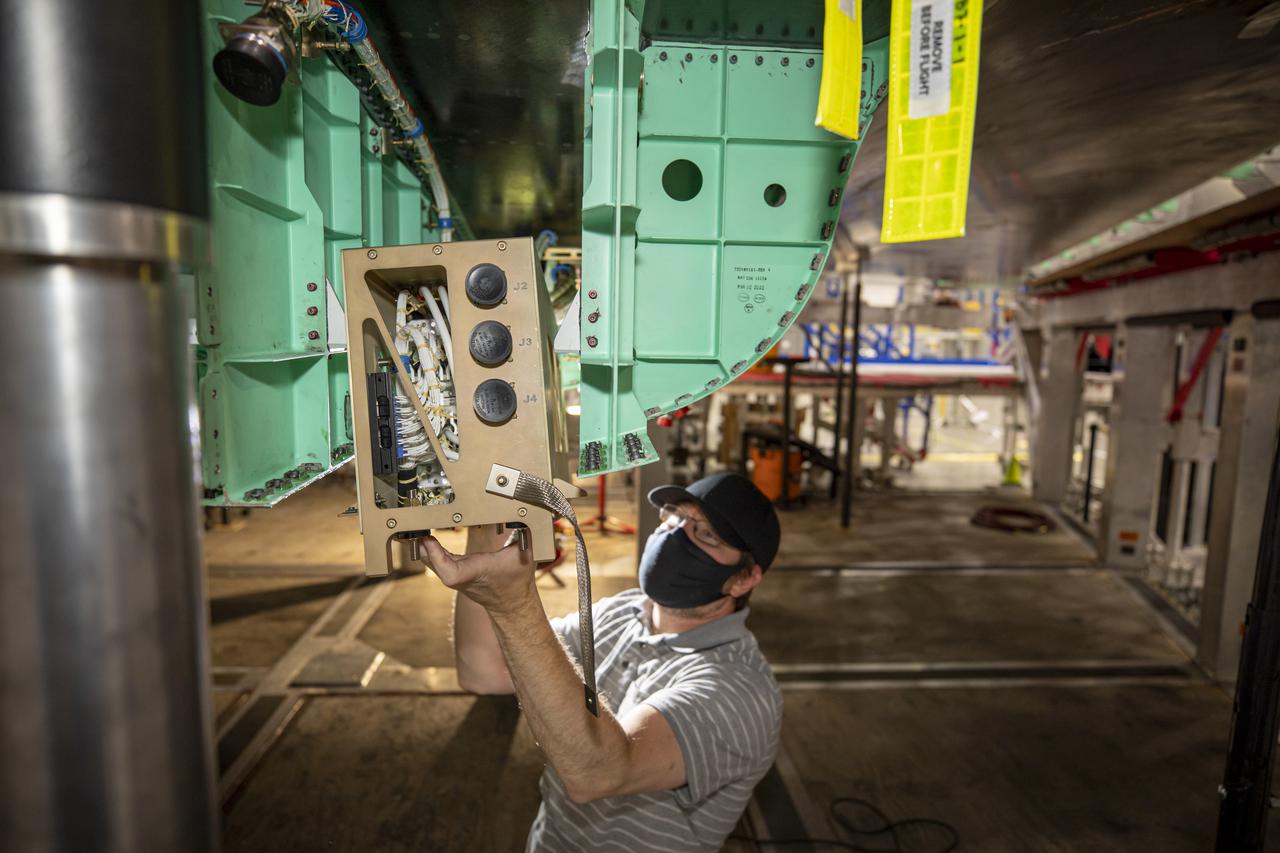
A technician works on the installation of the PDS Pallet (gold colored box that he is holding) on NASA’s X-59 Quiet SuperSonic Technology or QueSST aircraft. Lockheed Martin Photography By Garry Tice 1011 Lockheed Way, Palmdale, Ca. 93599 Event: SEG 450 Mid Bay - PDS Fit Check Date: 5/03/2021
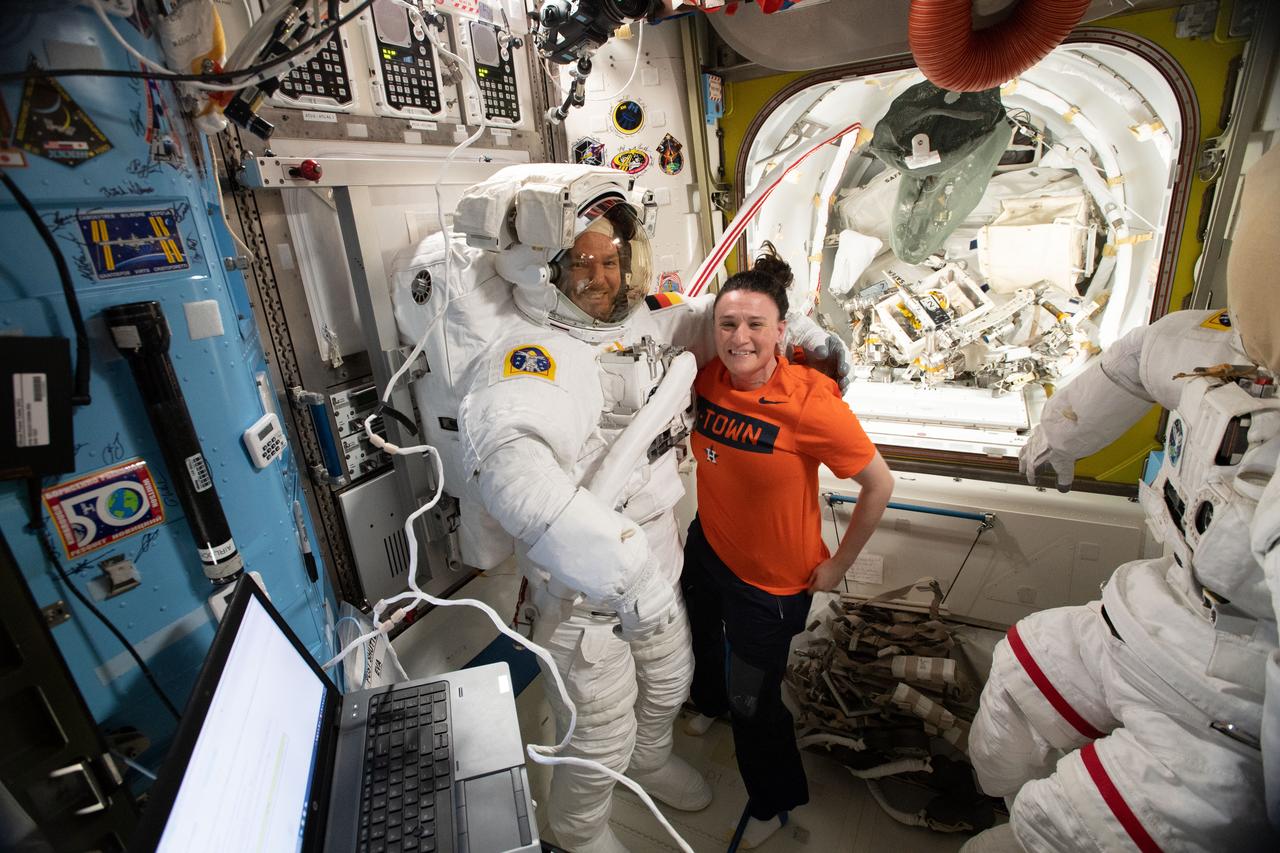
iss056e174070 (Sept. 17, 2018) --- NASA astronaut Serena Auñón-Chancellor assists ESA (European Space Agency) astronaut Alexander Gerst wearing a U.S. spacesuit during a fit check. The two Expedition 56 crew members are at work inside the U.S. Quest airlock where U.S. spacewalk are staged.

iss056e174037 (Sept. 17, 2018) --- ESA (European Space Agency) astronaut Alexander Gerst is pictured wearing a U.S. spacesuit during a fit check inside the U.S. Quest Airlock where U.S. spacewalks are staged. The patch on Gerst's left shoulder represents the flag of his home country of Germany.
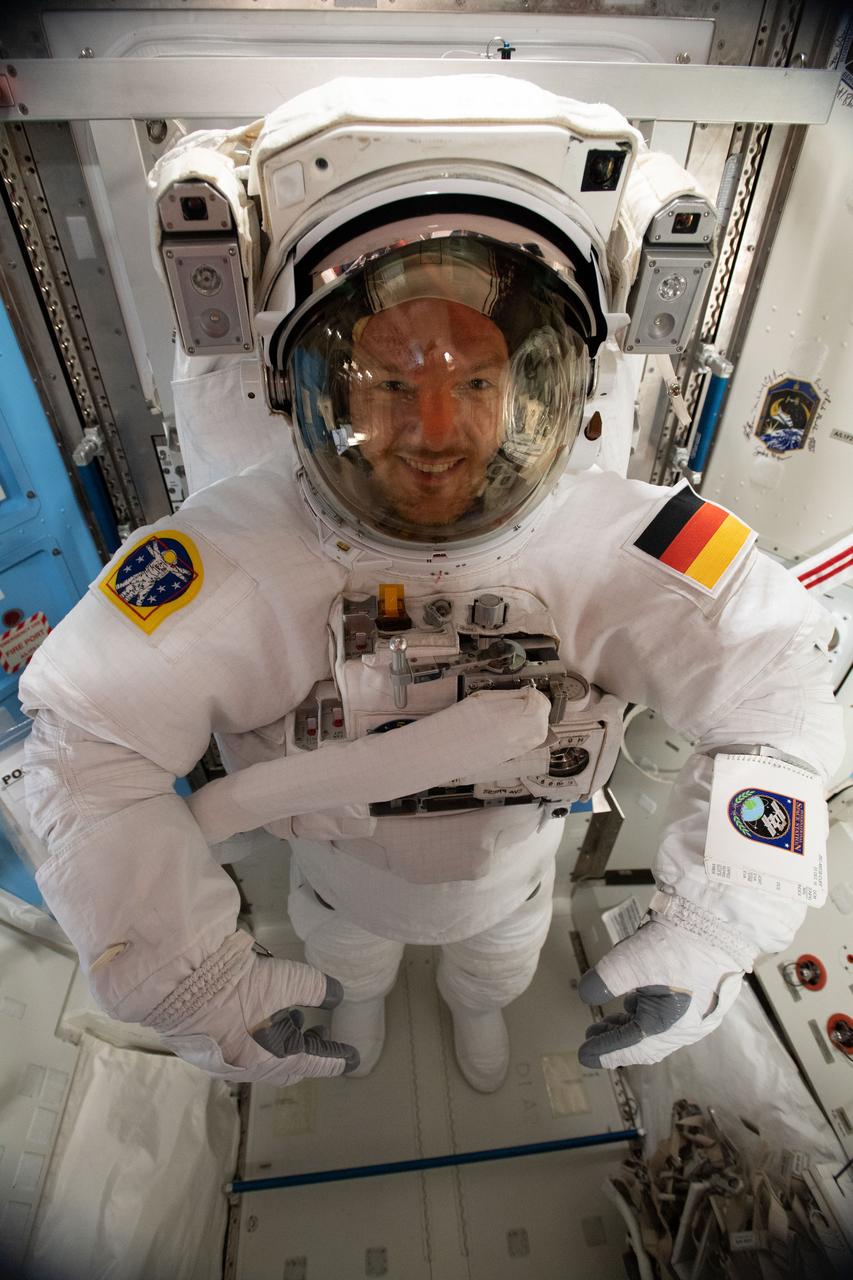
iss056e174066 (Sept. 17, 2018) --- ESA (European Space Agency) astronaut Alexander Gerst is pictured wearing a U.S. spacesuit during a fit check inside the U.S. Quest Airlock where U.S. spacewalks are staged. The patch on Gerst's left shoulder represents the flag of his home country of Germany.
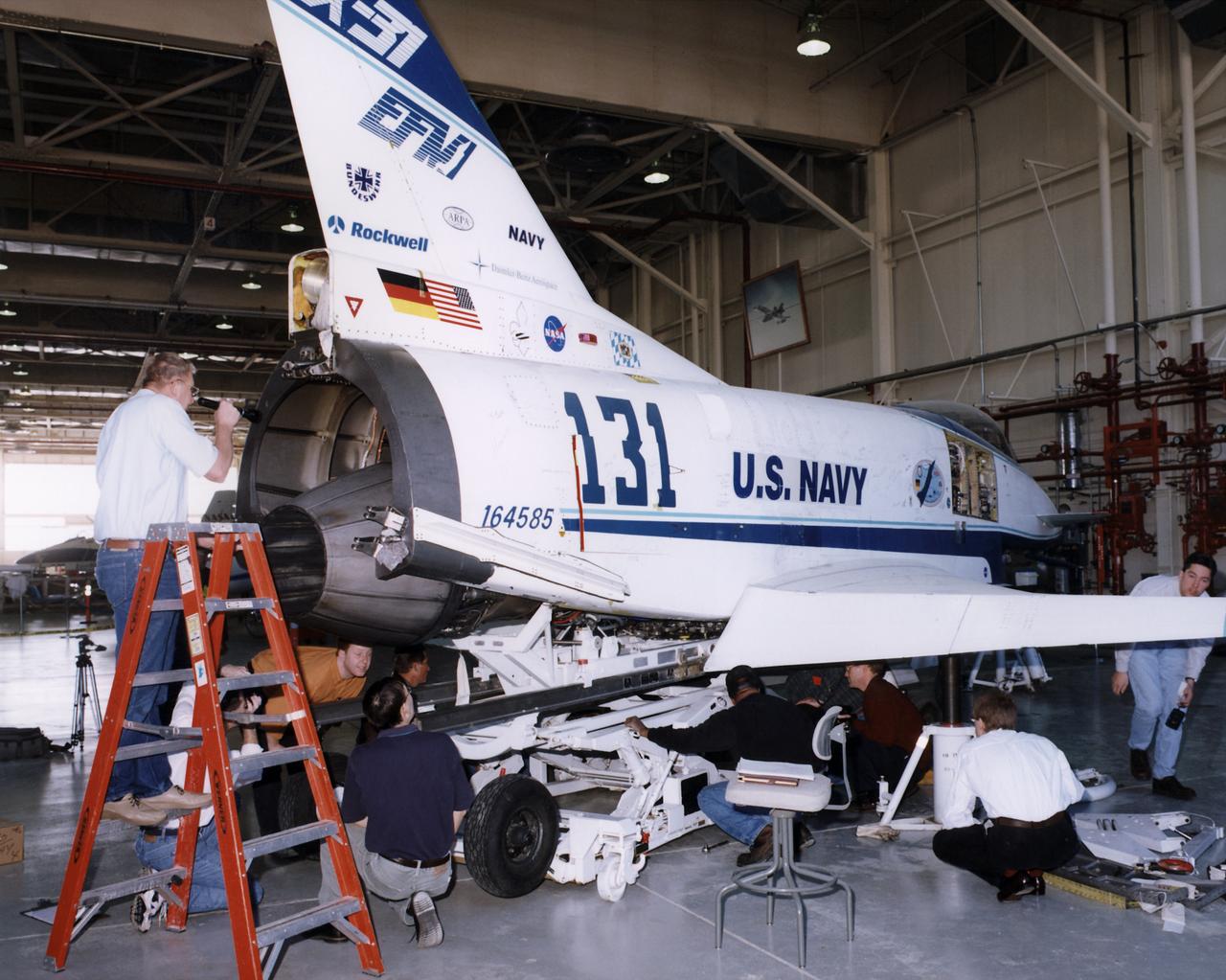
X-31 team members perform an engine fit check on the X-31 Enhanced Fighter Maneuverability demonstrator aircraft in a hangar at the Dryden Flight Research Center, Edwards, California.
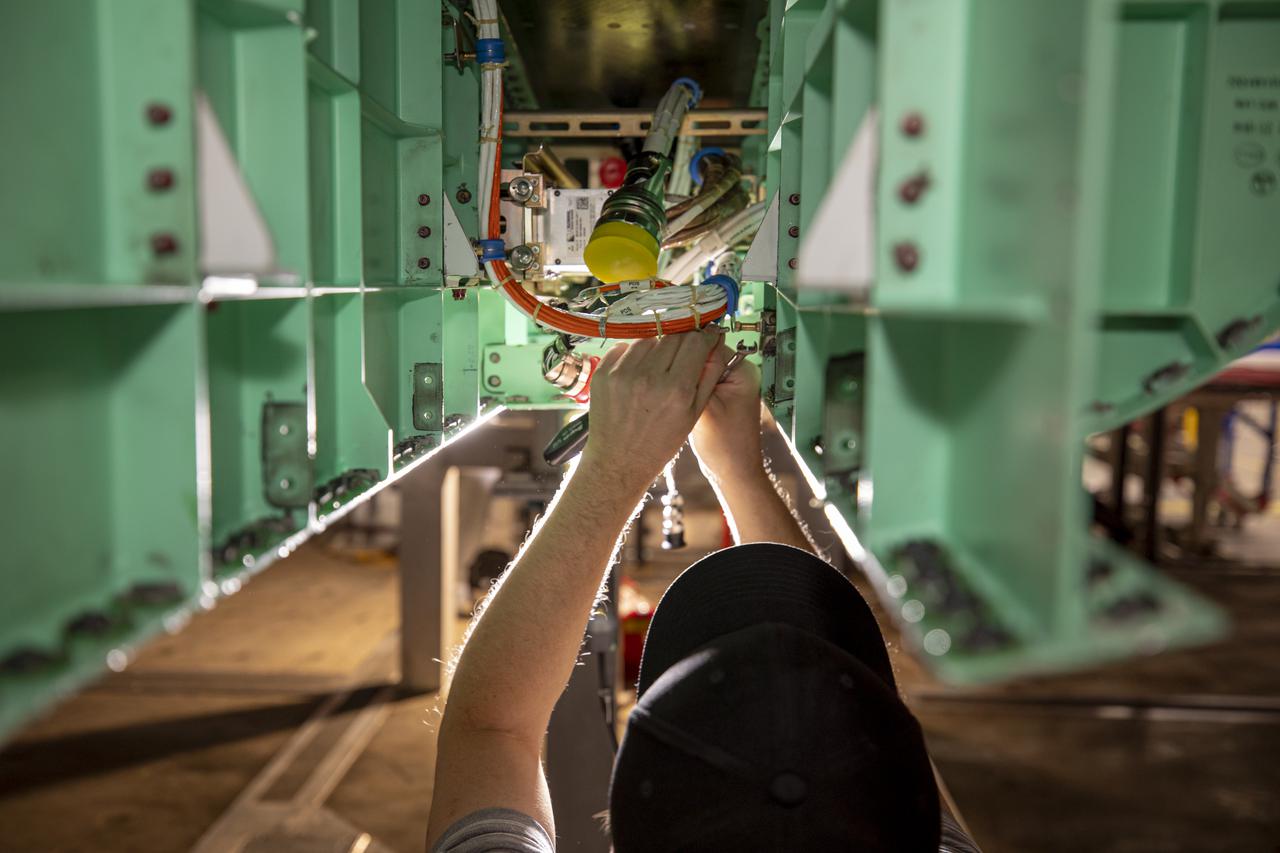
A technician is shown working on the underside of the X-59. The aircraft, under construction at Lockheed Martin Skunk Works in Palmdale, California, will fly to demonstrate the ability to fly supersonic while reducing the loud sonic boom to a quiet sonic thump. Lockheed Martin Photography By Garry Tice 1011 Lockheed Way, Palmdale, Ca. 93599 Event: SEG 450 Mid Bay - PDS Fit Check Date: 5/03/2021
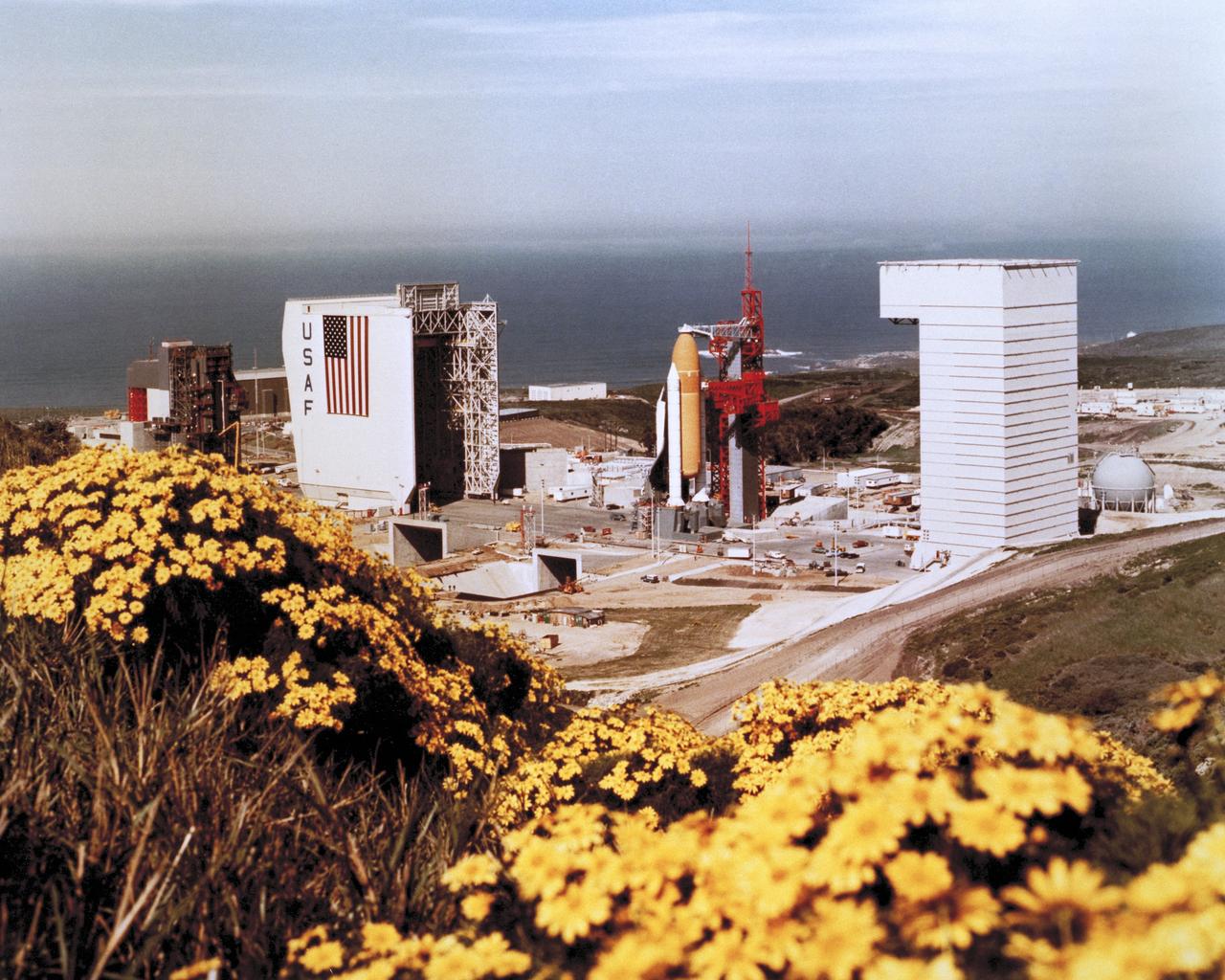
VANDENBERG AIR FORCE BASE, Calif. -- At Vandenberg Air Force Base in the early '80s, the Space Shuttle Enterprise undergoes Pathfinder fit checks at a tower. The Enterprise was built as a test vehicle and was not equipped for spaceflight. Enterprise eventually became the property of the Smithsonian Institution. Vandenberg AFB is located on the Central Coast of California about 150 miles northwest of Los Angeles. The property is comprised of parts of five Mexican land grants and a sixth grant that was transferred virtually intact to the Army. Vandenberg now is operated by the 30th Space Wing, and is the only military installation in the United States from which unmanned government and commercial satellites are launched into polar orbit. It is also the only site from which intercontinental ballistic missiles ICBMs are launched toward the Kwajalein Atoll to verify weapon systems performance. Vandenberg's military service dates back to 1941, when known as Camp Cooke it served as an Army training facility for armored and infantry troops. The main camp closed in June 1946 and was reactivated in August 1950 after the outbreak of the Korean War. The 13th and 20th Armored Divisions and the 40th, 44th, 86th, and 91st Infantry Divisions trained at Cooke. With the advent of the missile age in the 1950s, the Air Force persuaded Secretary of Defense Charles E. Wilson to direct the Army to transfer 64,000 acres of North Camp Cooke to the Air Force for use as a missile launch and training base. In 1958, Camp Cooke was renamed Vandenberg Air Force Base in honor of the late General Hoyt S. Vandenberg, second Air Force Chief of Staff of the United States Air Force and chief architect of today's modern Air Force. Photo Credit: NASA
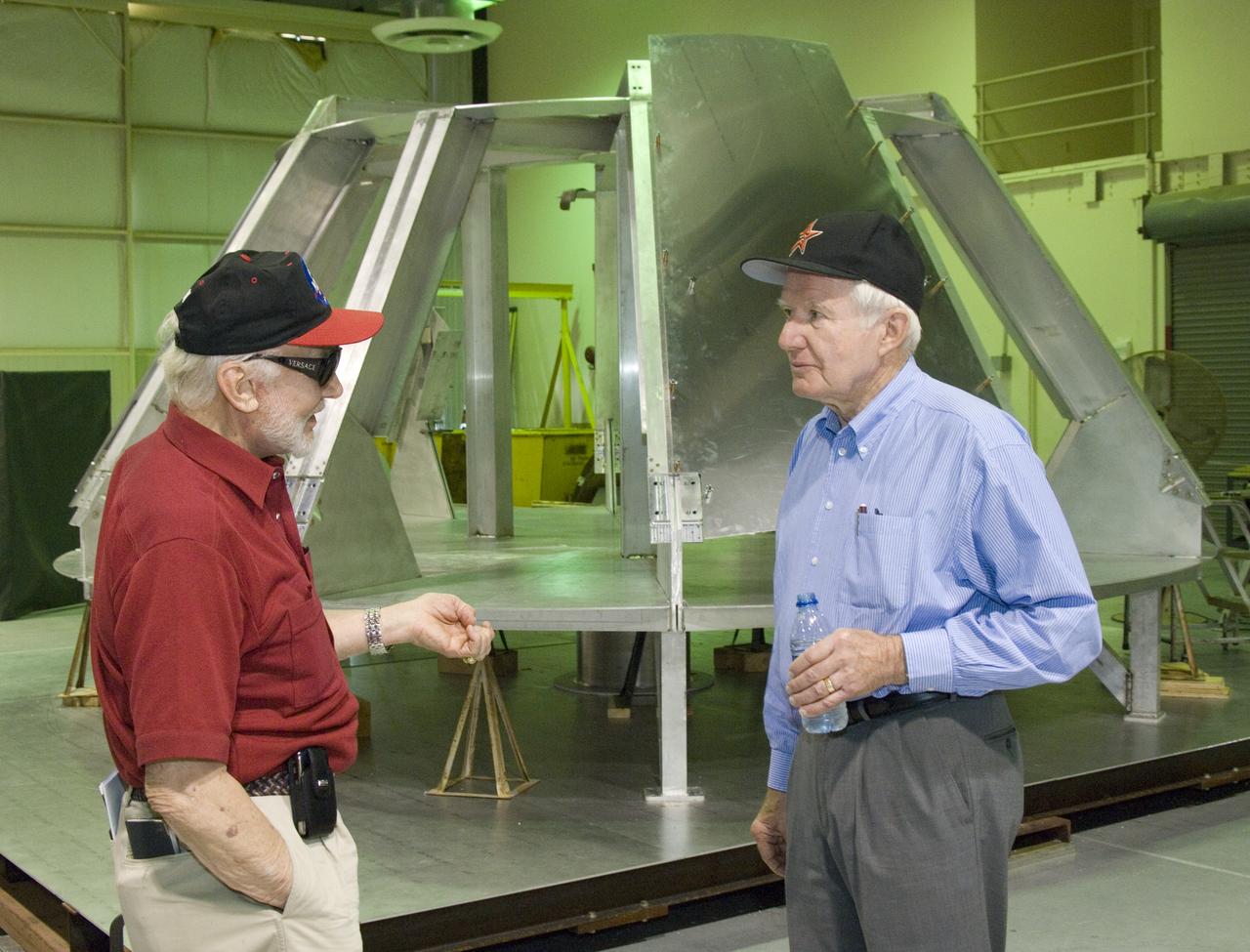
Apollo 11 astronaut Buzz Aldrin (left) and Apollo-Soyuz and space shuttle astronaut Vance Brand discuss Dryden's work on an Orion fit-check crew module mockup.

Here is an image of the X-59’s 13-foot General Electric F414 engine as the team prepares for a fit check. Making sure components, like the aircraft’s hydraulic lines, which help control functions like brakes or landing gear, and wiring of the engine, fit properly is essential to the aircraft’s safety. Once complete, the X-59 aircraft will demonstrate the ability to fly supersonic while reducing the loud sonic boom to a quiet sonic thump and help enable commercial supersonic air travel over land.
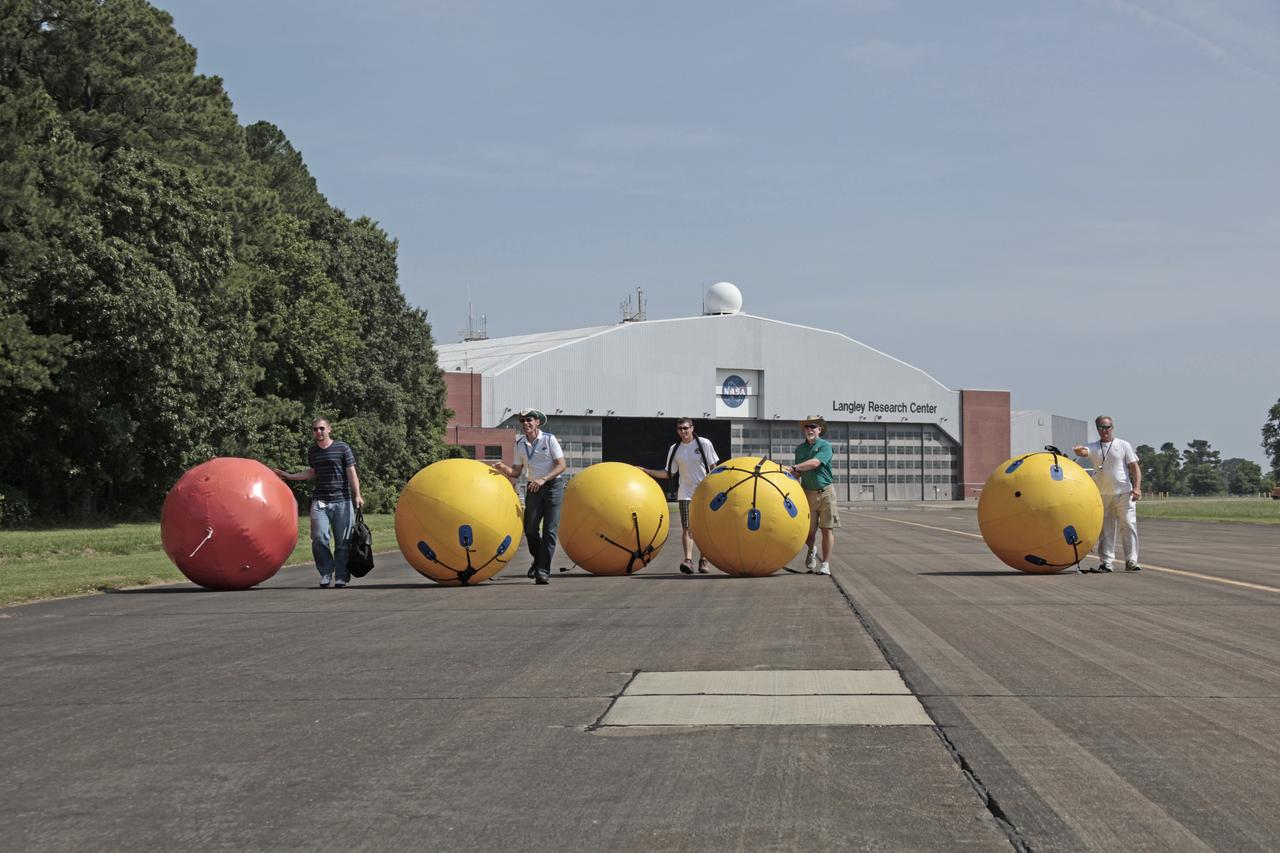
Engineers and technicians from NASA Langley Research Center in Virginia, Kennedy Space Center in Florida and Lockheed Martin in Colorado conduct a fit check on the Orion Crew Module at NASA Langley
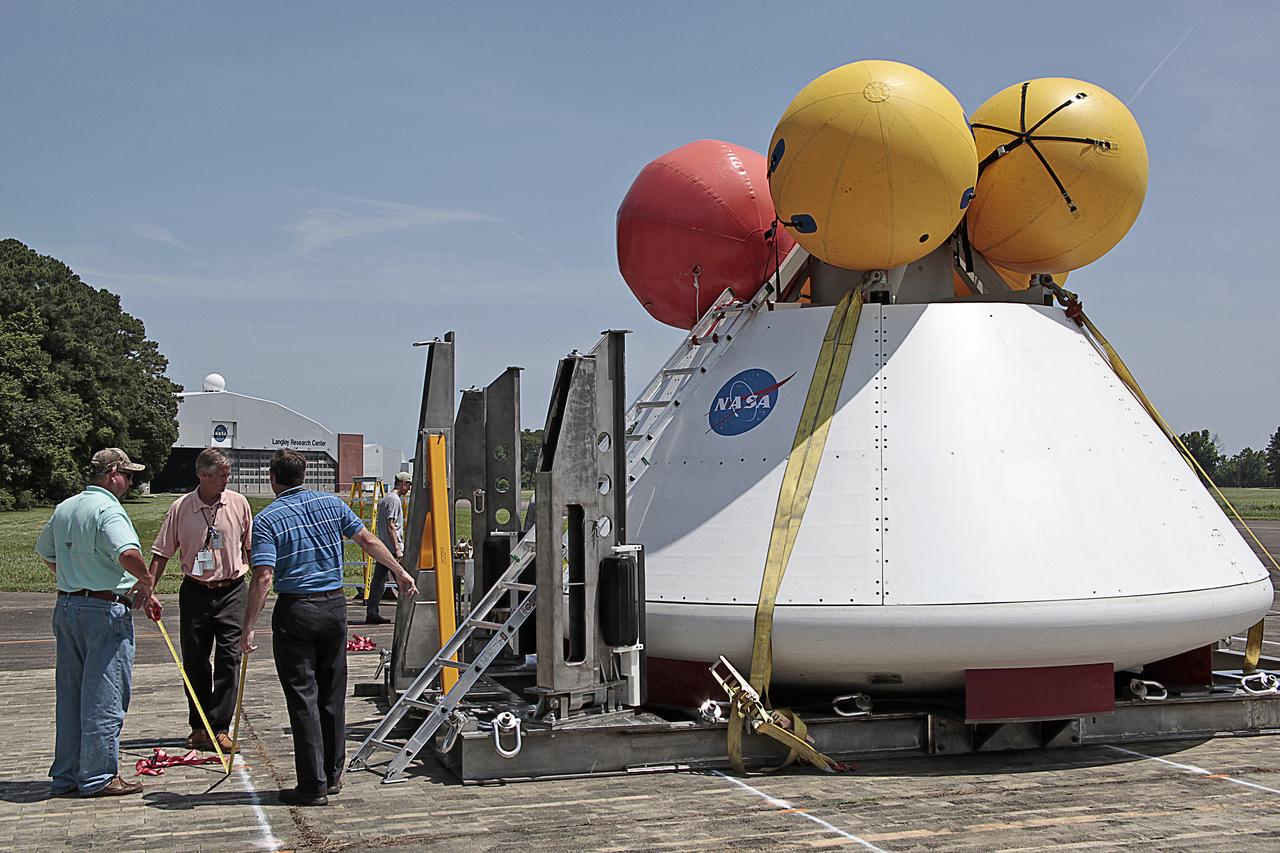
Engineers and technicians from NASA Langley Research Center in Virginia, Kennedy Space Center in Florida and Lockheed Martin in Colorado conduct a fit check on the Orion Crew Module at NASA Langley
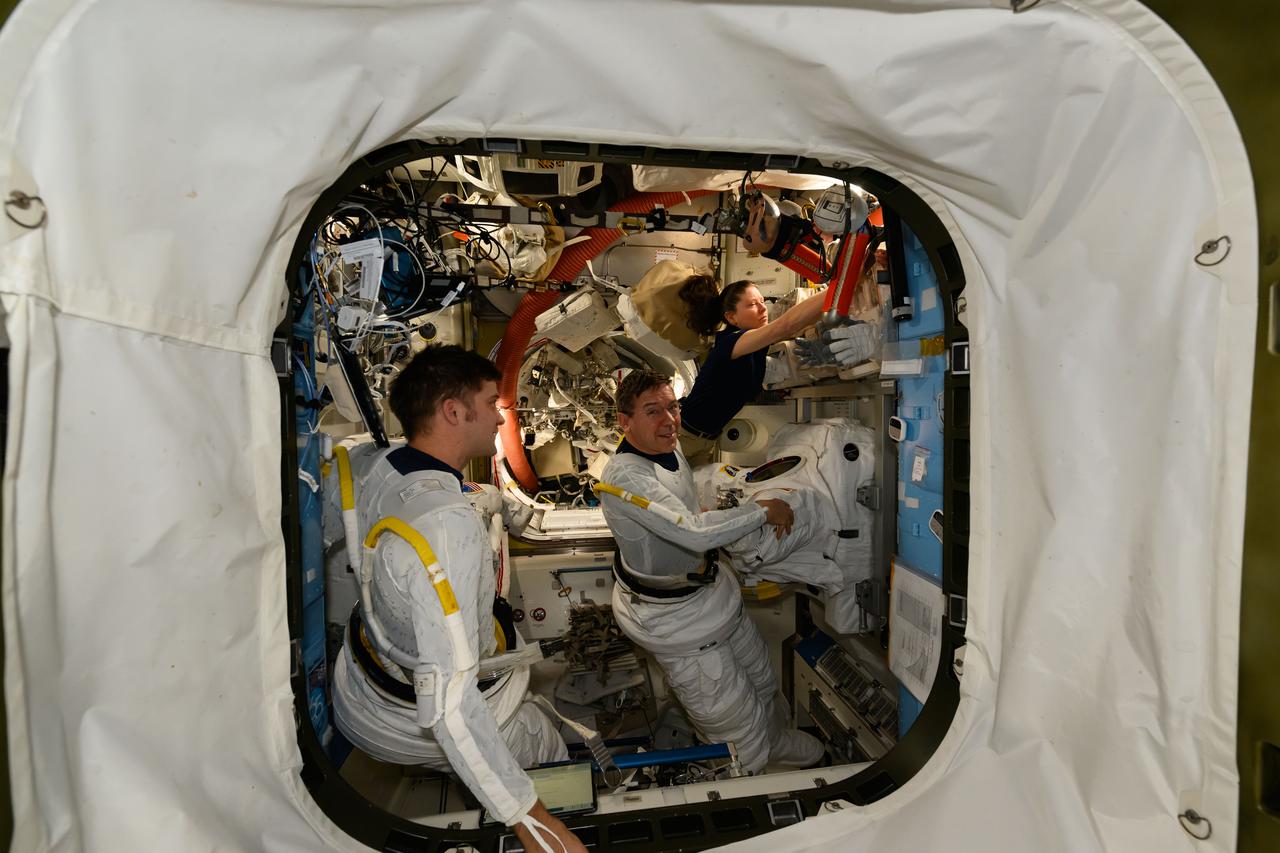
iss071e178108 (June 5, 2024) --- Expedition 71 Flight Engineers Matthew Dominick (left) and Mike Barratt (right), both NASA astronauts, prepare for a spacesuit fit check inside the International Space Station's Quest airlock.
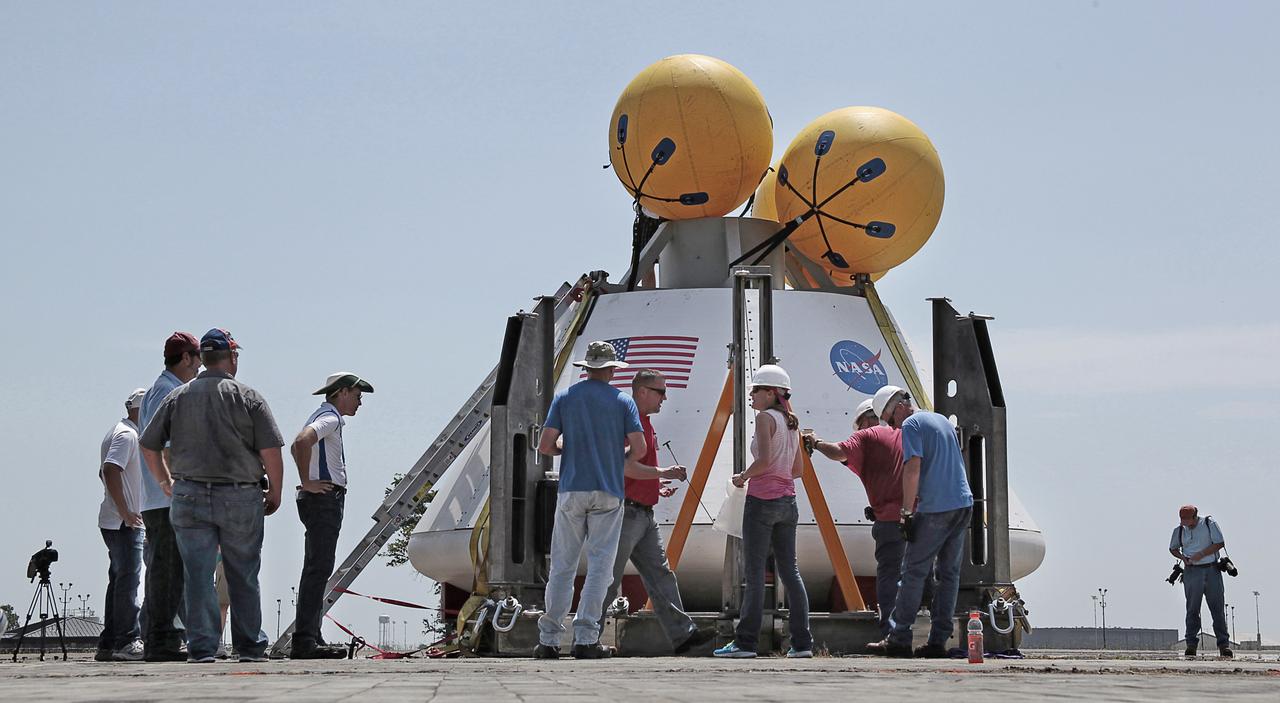
Engineers and technicians from NASA Langley Research Center in Virginia, Kennedy Space Center in Florida and Lockheed Martin in Colorado conduct a fit check on the Orion Crew Module at NASA Langley
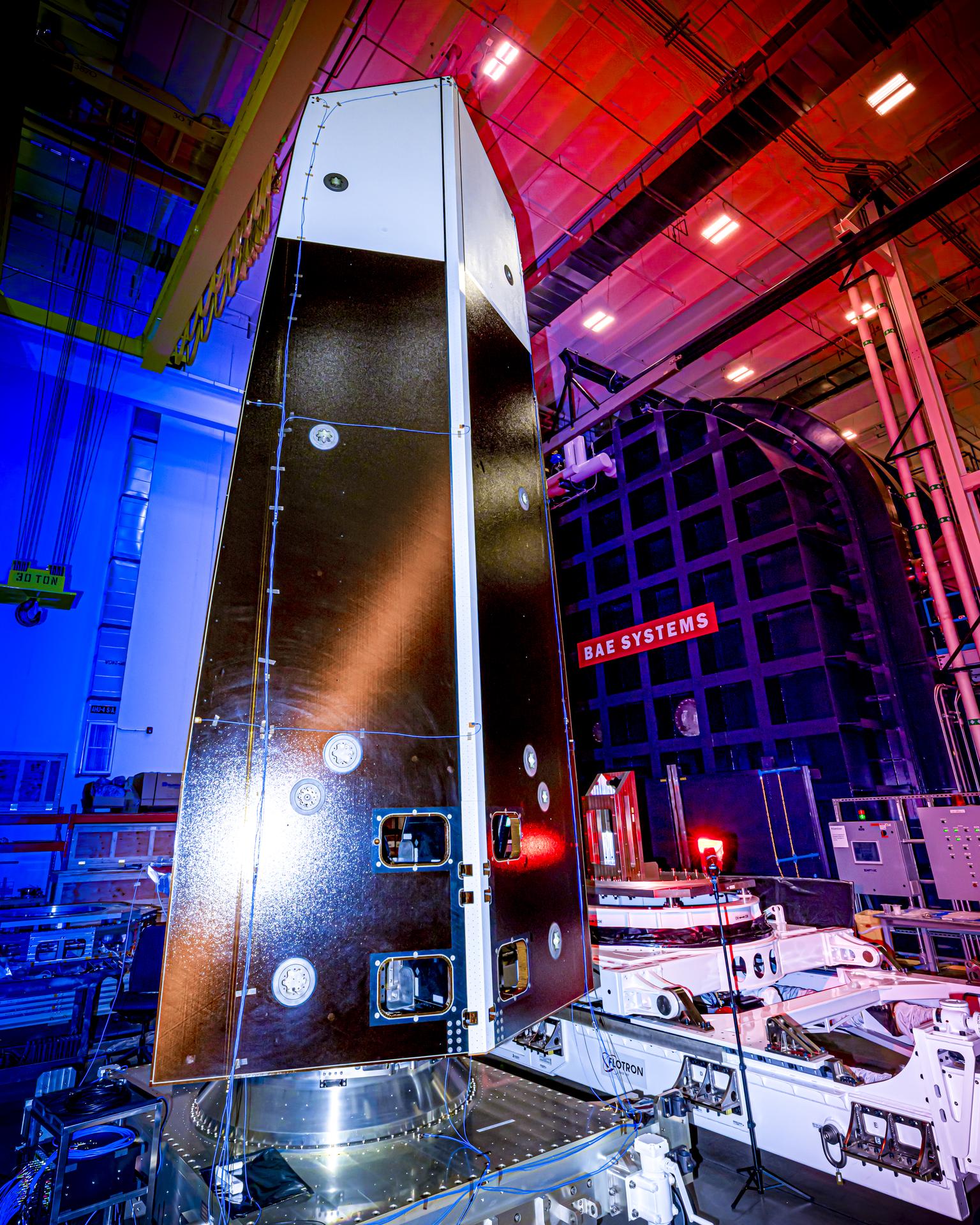
The bus structure for the Near-Earth Object (NEO) Surveyor spacecraft is installed to the sunshade during a “fit check” at BAE Systems Space & Mission Systems in Boulder, Colorado, in September 2025. This was the first time the two components were attached to one another. The sunshade is the largest component of the spacecraft, standing at over 20 feet (6 meters) high. The sunshade’s Sun-facing surface (visible here) will next be fitted with solar cells that will generate power for the spacecraft after launch. The spacecraft’s instrument enclosure, which houses the telescope and sensitive infrared cameras, will be located behind the sunshade, allowing the spacecraft to detect and track near-Earth objects that would otherwise be hidden by the Sun’s glare. Targeting launch in late 2027, the NEO Surveyor mission is led by Professor Amy Mainzer at the University of California, Los Angeles for NASA’s Planetary Defense Coordination Office and is being managed by the agency’s Jet Propulsion Laboratory in Southern California for the Planetary Missions Program Office at NASA’s Marshall Space Flight Center in Huntsville, Alabama. BAE Systems Space & Mission Systems and the Space Dynamics Laboratory in Logan, Utah, and Teledyne are among the companies that were contracted to build the spacecraft and its instrumentation. The Laboratory for Atmospheric and Space Physics at the University of Colorado Boulder will support operations, and IPAC at Caltech in Pasadena, California, is responsible for producing some of the mission’s data products. Caltech manages JPL for NASA. More information about NEO Surveyor is available at: https://science.nasa.gov/mission/neo-surveyor/
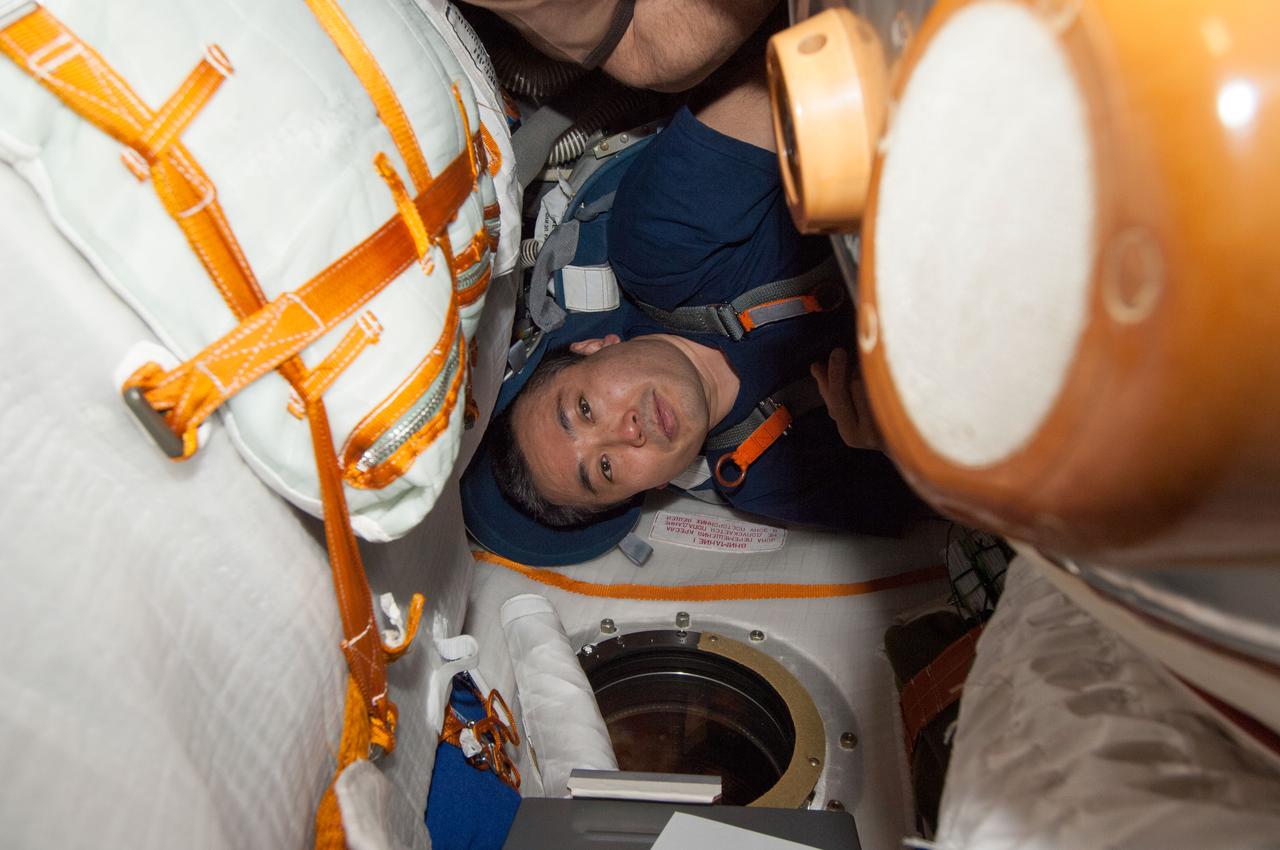
ISS39-E-001422 (14 March 2014) --- Expedition 39 Commander Koichi Wakata of the Japan Aerospace Exploration Agency (JAXA) is photographed during a fit check of the Kazbek couches in the Soyuz TMA-11M spacecraft, which is docked to the International Space Station.
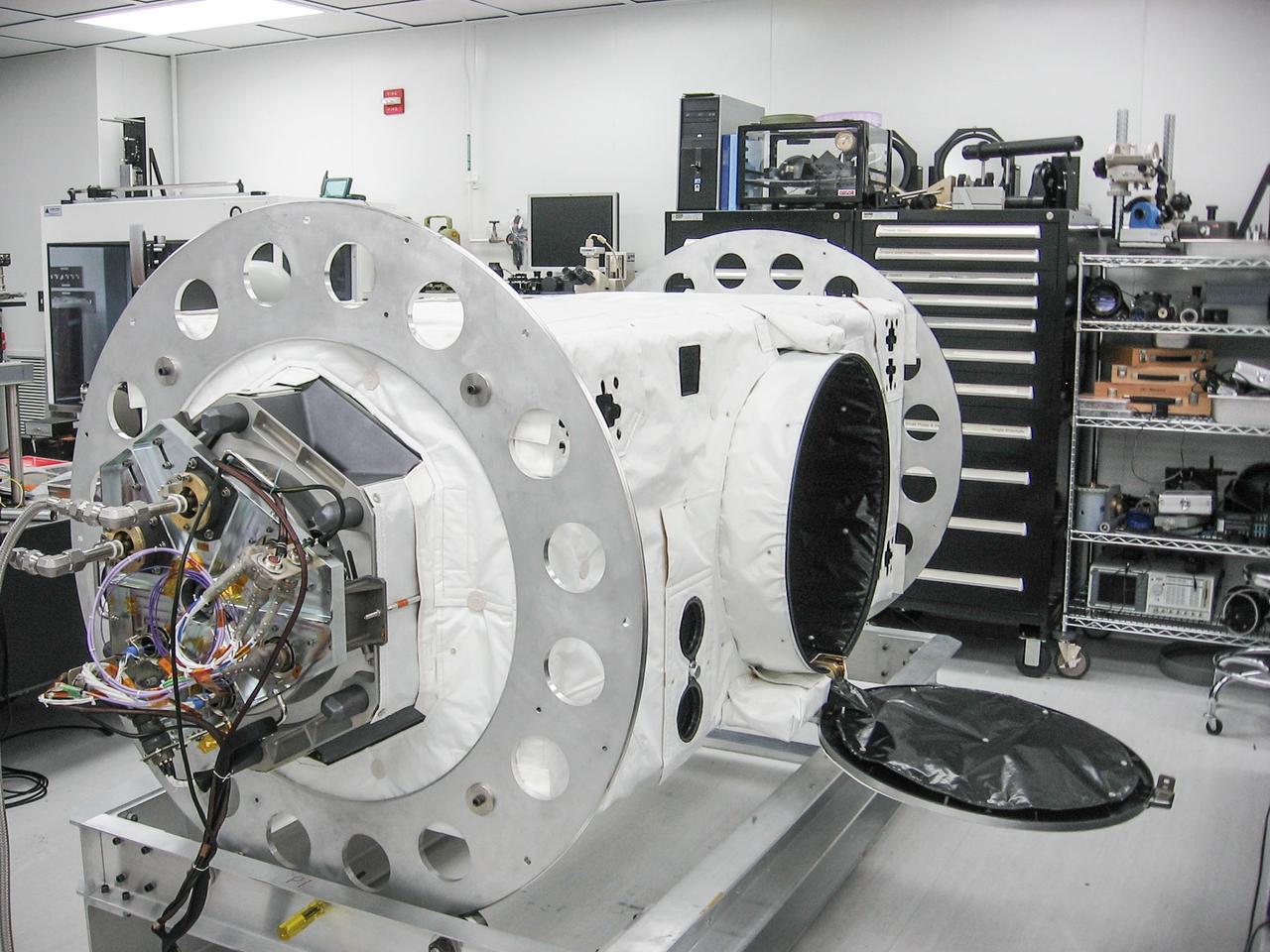
jsc2013e090265 (Sep. 26, 2013) --- Cloud Aerosol Transport System (CATS) at NASA's Johnson Space Center undergoing payload fit-check and Support Equipment Installation (SEI). The CATS investigation uses a light detection and ranging (LiDAR) system to measure the location, composition and distribution of pollution, dust, smoke, aerosols and other particulates in the atmosphere. CATS is used to study the atmospheric constituents that impact global climate. By gaining a better understanding of cloud and aerosol coverage, scientists can create a better model of the Earth's climate feedback processes.
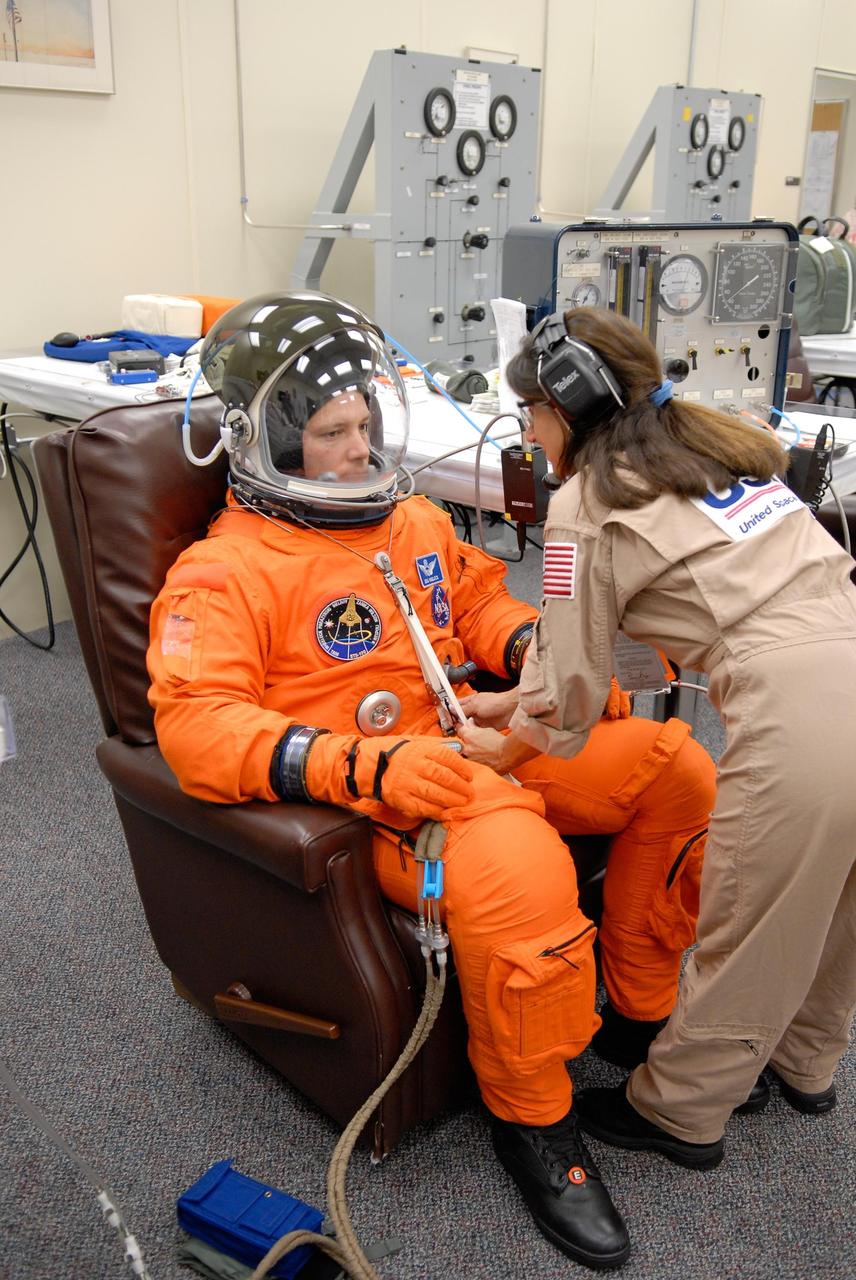
KENNEDY SPACE CENTER, FLA. -- STS-120 Mission Specialist Doug Wheelock has his helmet fitted on his launch and entry suit, preparing for launch. The fitting is part of terminal countdown demonstration test, or TCDT, activities the crew is undertaking at NASA's Kennedy Space Center. The TCDT also includes emergency egress procedures, equipment familiarization and a simulated launch countdown. Mission STS-120, which will carry the Italian-built U.S. Node 2 to the International Space Station, is targeted for launch on Oct. 23. Photo credit: NASA/Kim Shiflett
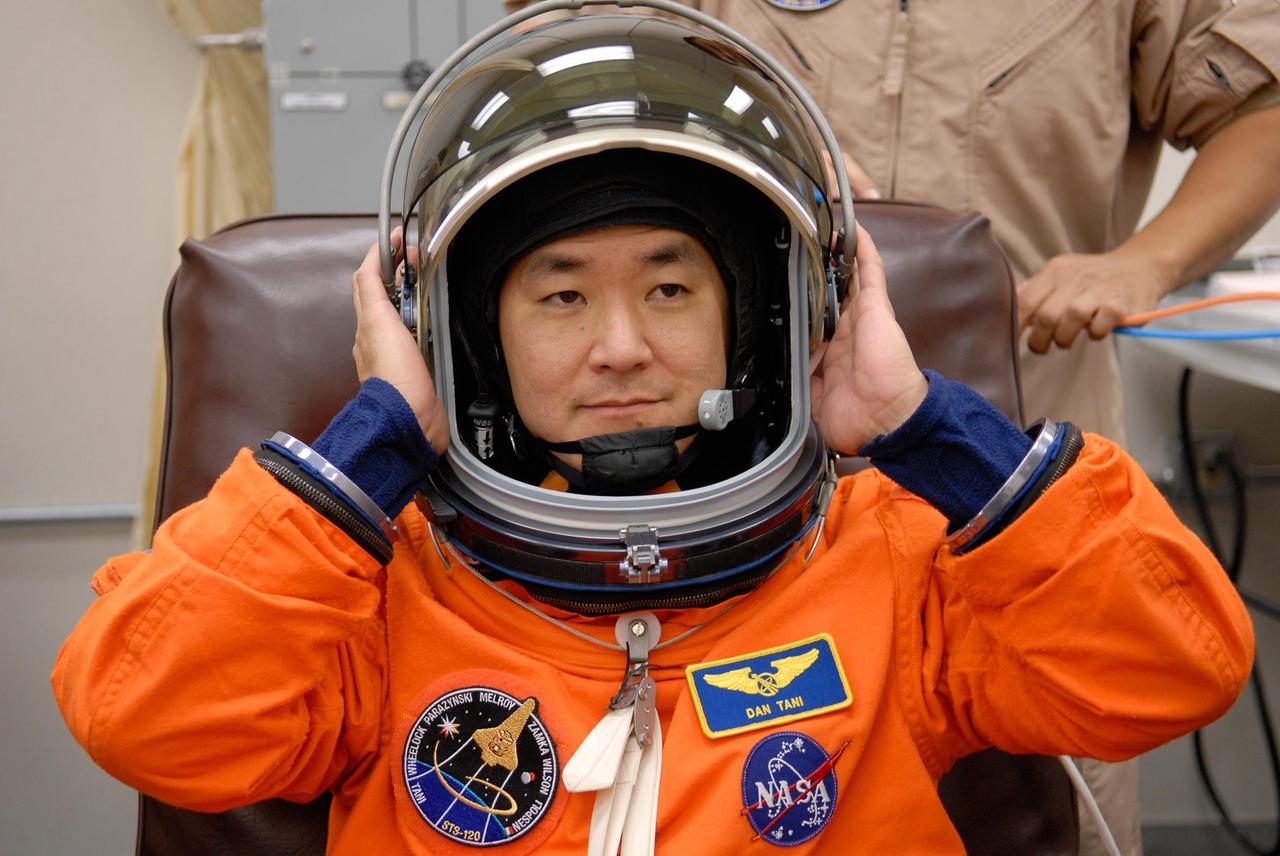
KENNEDY SPACE CENTER, FLA. -- STS-120 Mission Specialist Daniel Tani tries on his helmet with his launch and entry suit, preparing for launch. The fitting is part of terminal countdown demonstration test, or TCDT, activities the crew is undertaking at NASA's Kennedy Space Center. The TCDT also includes emergency egress procedures, equipment familiarization and a simulated launch countdown. Mission STS-120, which will carry the Italian-built U.S. Node 2 to the International Space Station, is targeted for launch on Oct. 23. Photo credit: NASA/Kim Shiflett
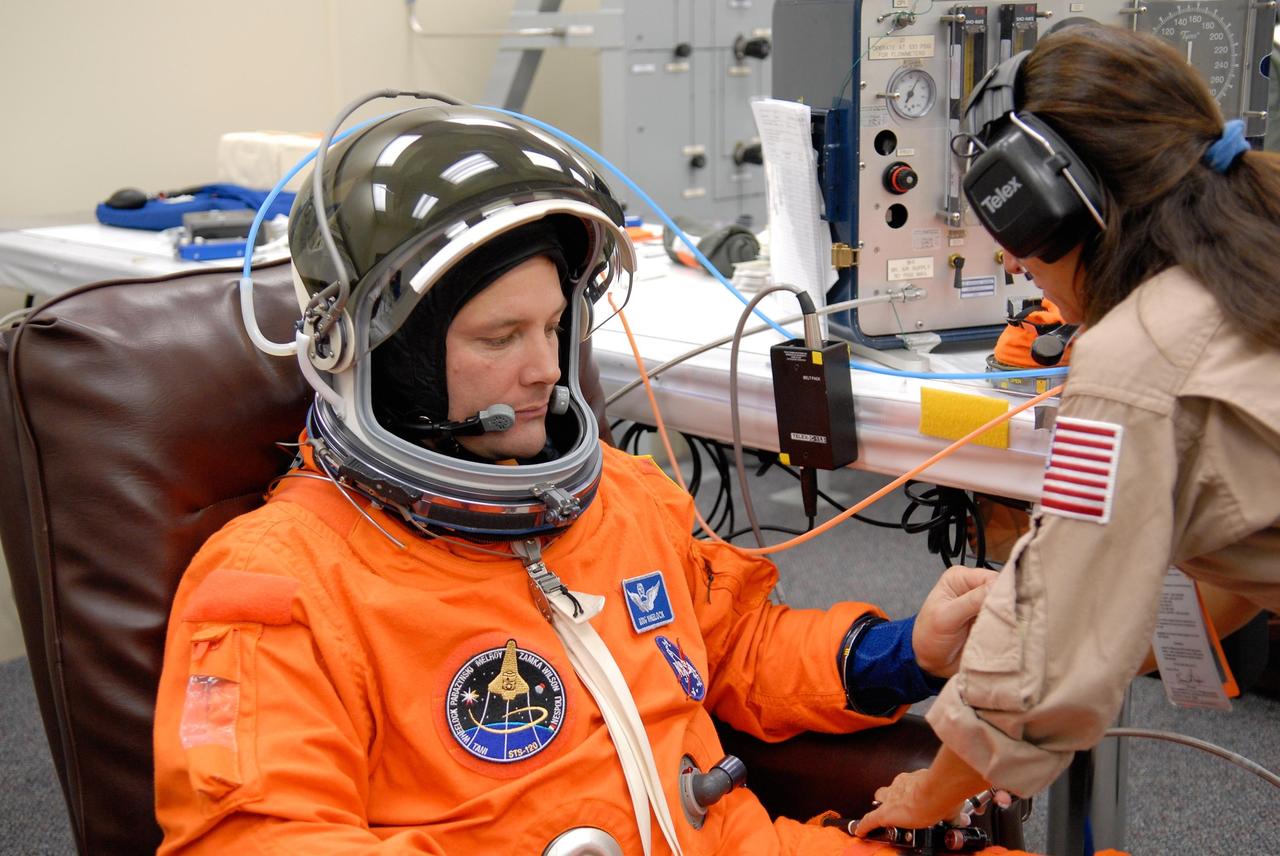
KENNEDY SPACE CENTER, FLA. -- STS-120 Mission Specialist Doug Wheelock tries on his launch and entry suit to prepare for launch. The fitting is part of terminal countdown demonstration test, or TCDT, activities the crew is undertaking at NASA's Kennedy Space Center. The TCDT also includes emergency egress procedures, equipment familiarization and a simulated launch countdown. Mission STS-120, which will carry the Italian-built U.S. Node 2 to the International Space Station, is targeted for launch on Oct. 23. Photo credit: NASA/Kim Shiflett
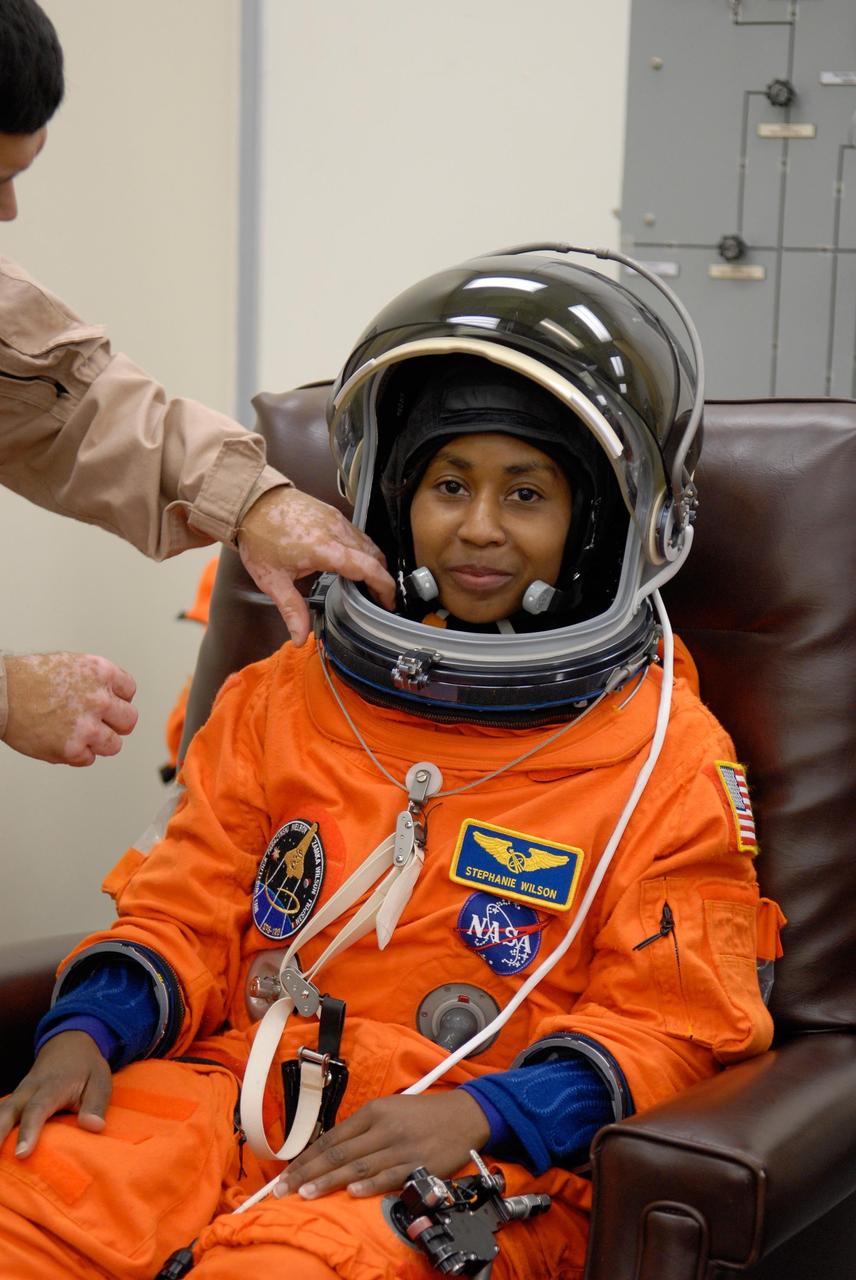
KENNEDY SPACE CENTER, FLA. -- STS-120 Mission Specialist Stephanie Wilson has her helmet adjusted during fitting of her launch and entry suit. The fitting is part of terminal countdown demonstration test, or TCDT, activities the crew is undertaking at NASA's Kennedy Space Center. The TCDT also includes emergency egress procedures, equipment familiarization and a simulated launch countdown. Mission STS-120, which will carry the Italian-built U.S. Node 2 to the International Space Station, is targeted for launch on Oct. 23. Photo credit: NASA/Kim Shiflett
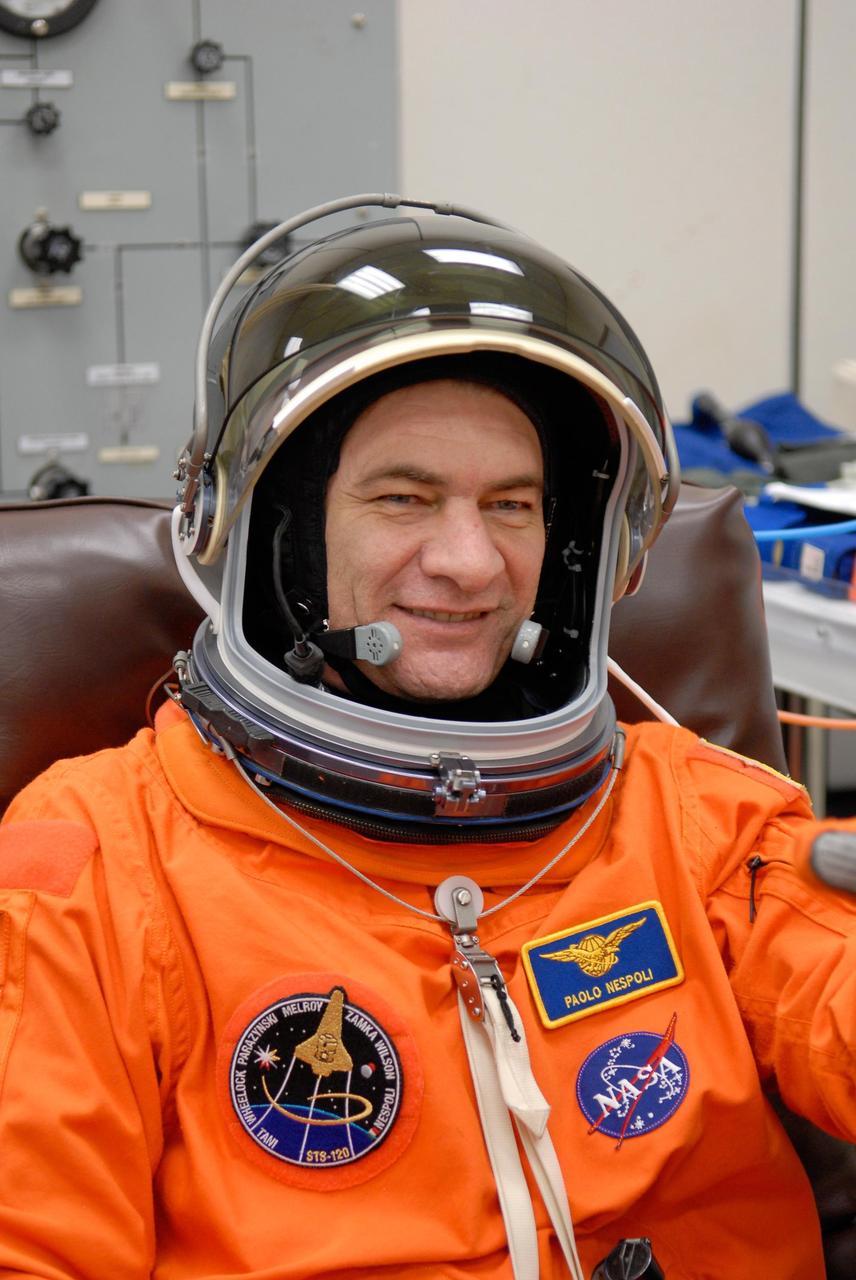
KENNEDY SPACE CENTER, FLA. -- STS-120 Mission Specialist Paolo Nespoli has his helmet fitted on his launch and entry suit, preparing for launch. The fitting is part of terminal countdown demonstration test, or TCDT, activities the crew is undertaking at NASA's Kennedy Space Center. The TCDT also includes emergency egress procedures, equipment familiarization and a simulated launch countdown. Mission STS-120, which will carry the Italian-built U.S. Node 2 to the International Space Station, is targeted for launch on Oct. 23. Photo credit: NASA/Kim Shiflett
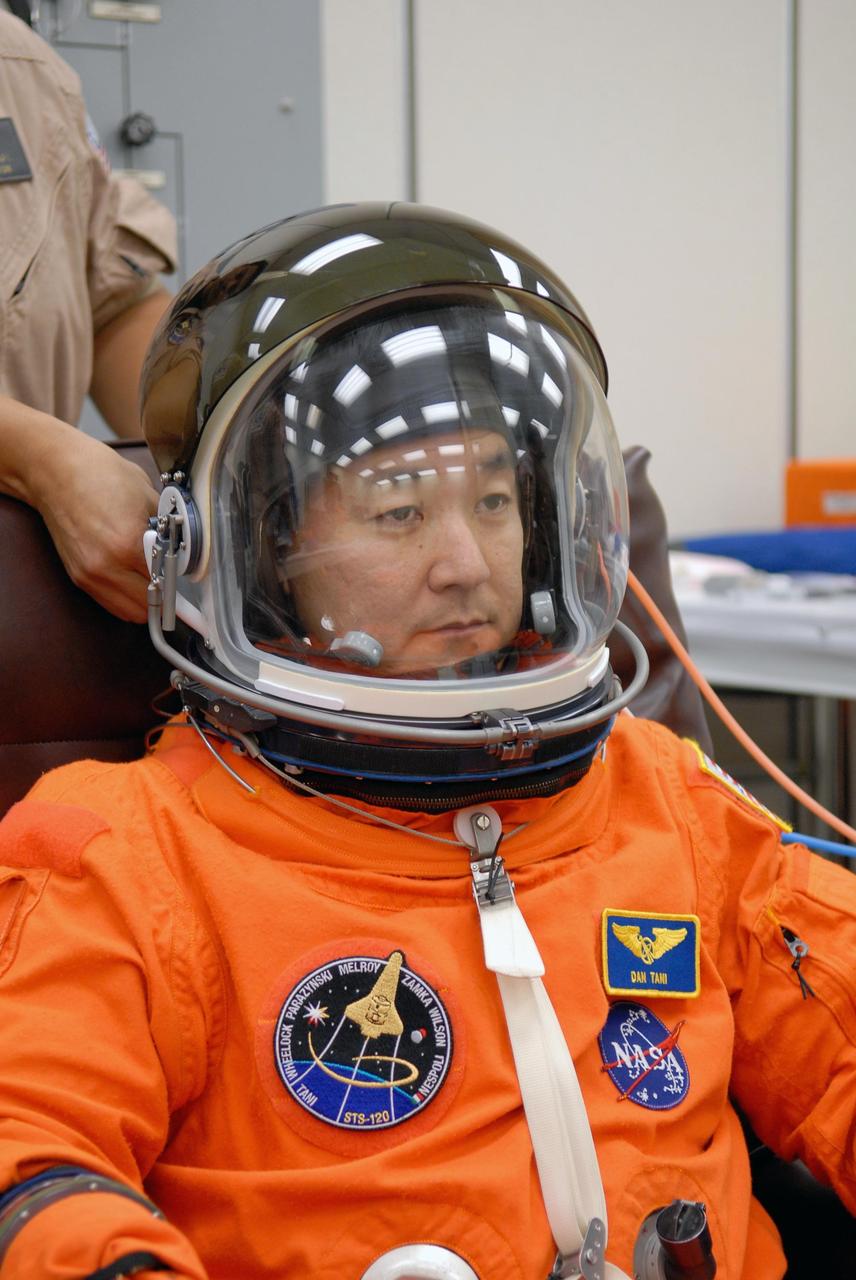
KENNEDY SPACE CENTER, FLA. -- STS-120 Mission Specialist Daniel Tani has his helmet adjusted during fitting of his launch and entry suit. The fitting is part of terminal countdown demonstration test, or TCDT, activities the crew is undertaking at NASA's Kennedy Space Center. The TCDT also includes emergency egress procedures, equipment familiarization and a simulated launch countdown. Mission STS-120, which will carry the Italian-built U.S. Node 2 to the International Space Station, is targeted for launch on Oct. 23. Photo credit: NASA/Kim Shiflett
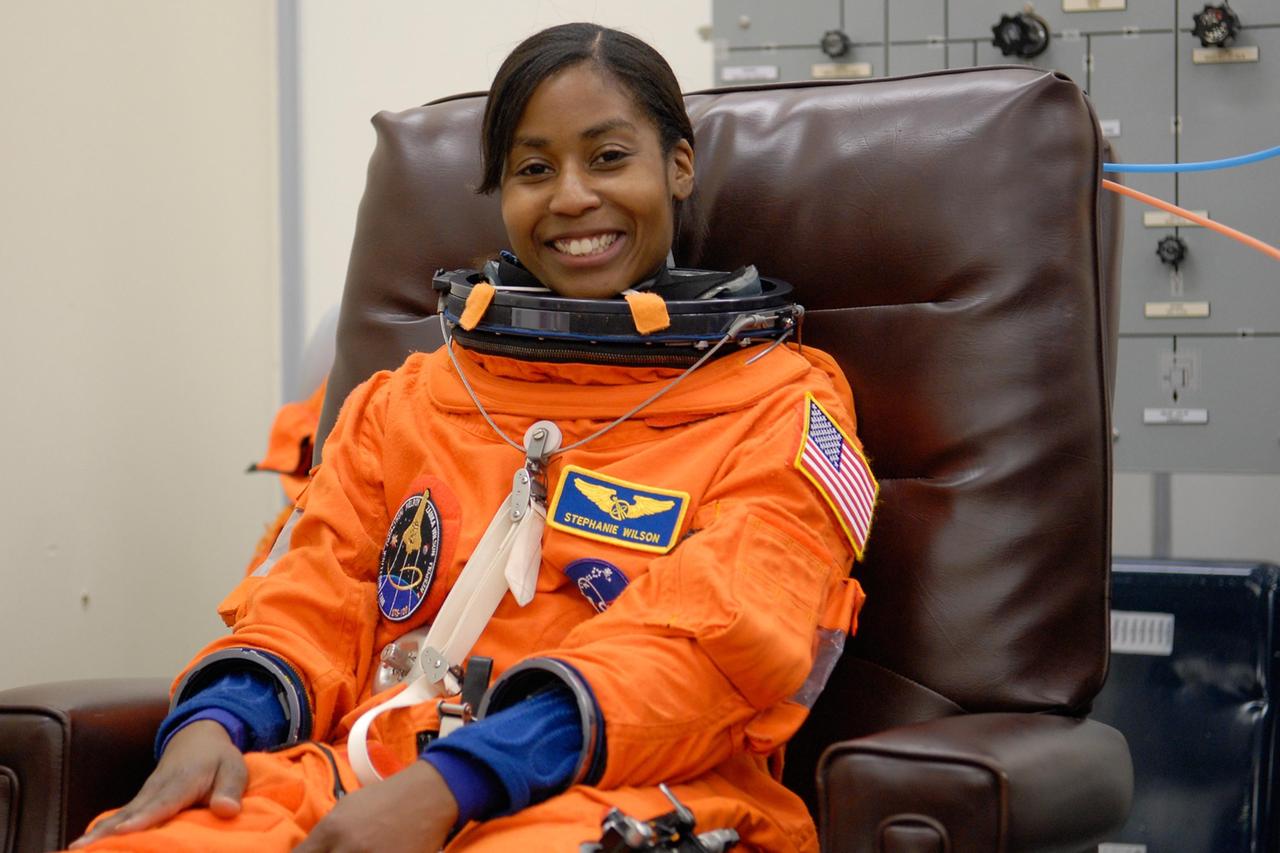
KENNEDY SPACE CENTER, FLA. -- STS-120 Mission Specialist Stephanie Wilson tries on her launch and entry suit, preparing for launch. The fitting is part of terminal countdown demonstration test, or TCDT, activities the crew is undertaking at NASA's Kennedy Space Center. The TCDT also includes emergency egress procedures, equipment familiarization and a simulated launch countdown. Mission STS-120, which will carry the Italian-built U.S. Node 2 to the International Space Station, is targeted for launch on Oct. 23. Photo credit: NASA/Kim Shiflett
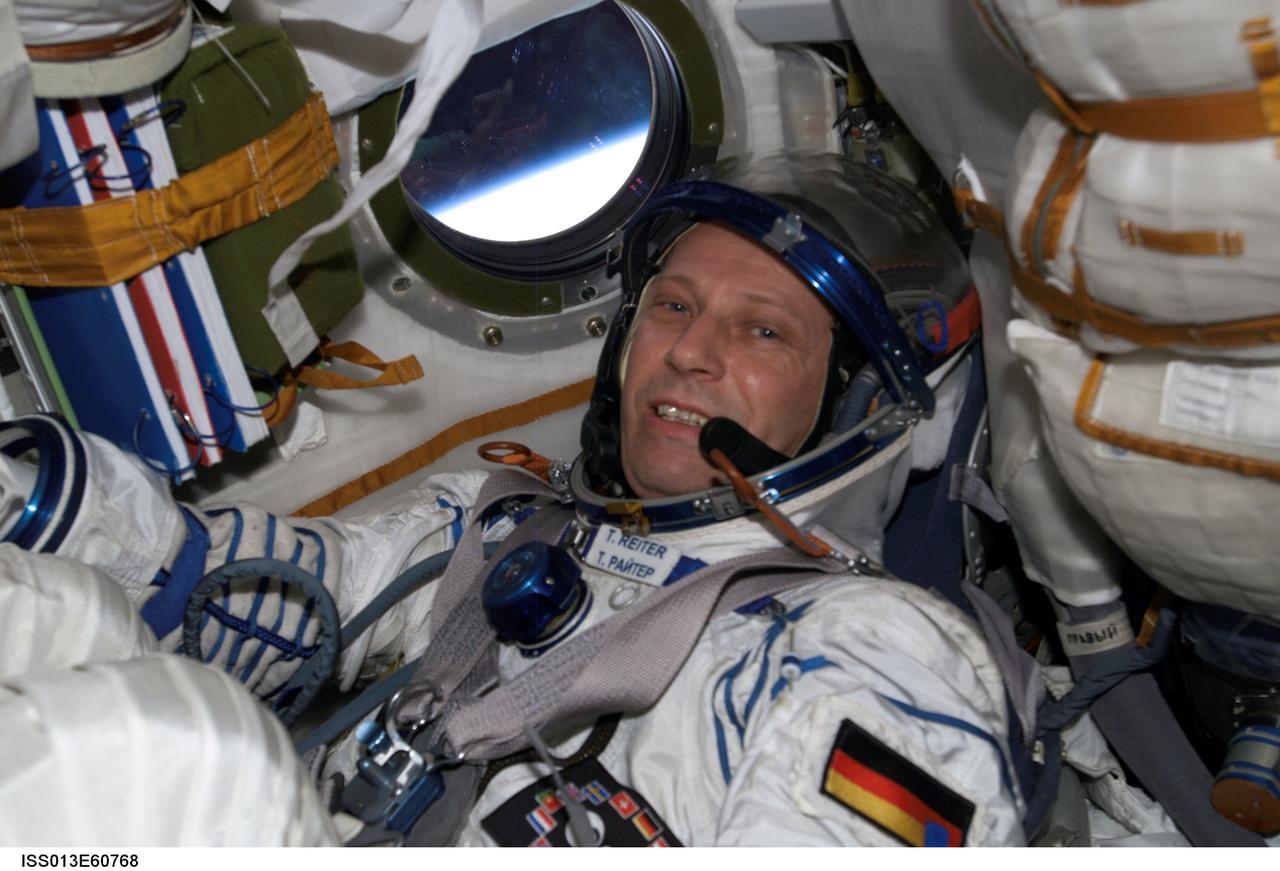
ISS013-E-60768 (26 July 2006) --- Attired in a Russian Sokol launch and entry suit, European Space Agency (ESA) astronaut Thomas Reiter, Expedition 13 flight engineer, participates in a Kazbek couch fit check in the TMA-8 Soyuz spacecraft docked to the International Space Station.
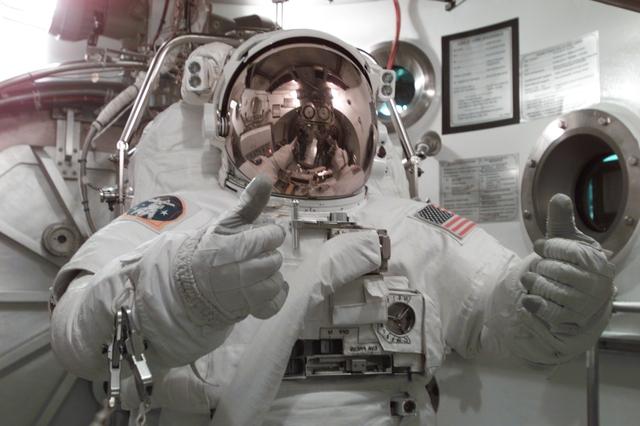
JSC2001-E-11702 (9 April 2001) --- Astronaut James F. Reilly, STS-104 mission specialist, participates in an Extravehicular Mobility Unit (EMU) fit check in one of the chambers in the Crew Systems Laboratory at the Johnson Space Center (JSC). The STS-104 mission to the International Space Station (ISS) represents the Space Shuttle Atlantis' first flight using a new engine and is targeted for a liftoff no earlier than June 14, 2001.
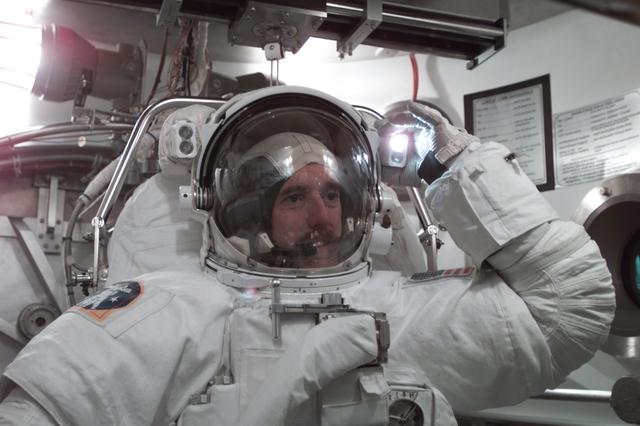
JSC2001-E-11698 (9 April 2001) --- Astronaut James F. Reilly, STS-104 mission specialist, participates in an Extravehicular Mobility Unit (EMU) fit check in one of the chambers in the Crew Systems Laboratory at the Johnson Space Center (JSC). The STS-104 mission to the International Space Station (ISS) represents the Space Shuttle Atlantis' first flight using a new engine and is targeted for a liftoff no earlier than June 14, 2001.
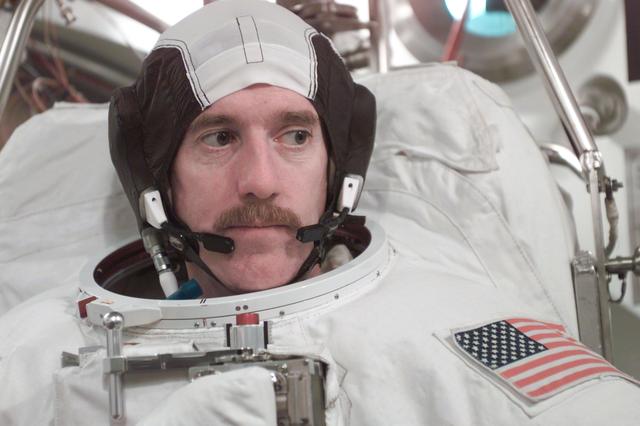
JSC2001-E-11691 (9 April 2001) --- Astronaut James F. Reilly, STS-104 mission specialist, prepares to don his helmet for an Extravehicular Mobility Unit (EMU) fit check in one of the chambers in the Crew Systems Laboratory at the Johnson Space Center (JSC). The STS-104 mission to the International Space Station (ISS) represents the Space Shuttle Atlantis' first flight using a new engine and is targeted for a liftoff no earlier than June 14, 2001.
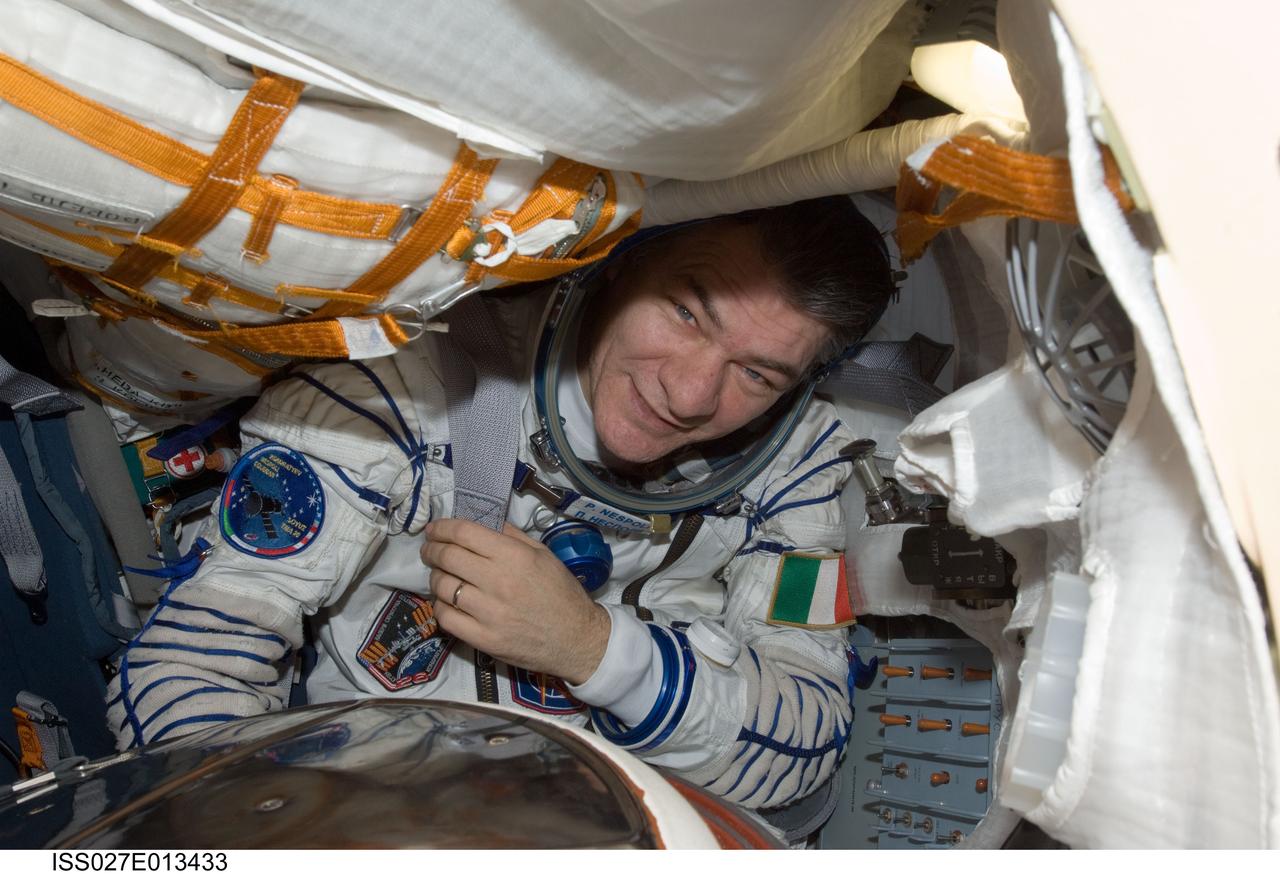
ISS027-E-013433 (13 April 2011) --- European Space Agency astronaut Paolo Nespoli, Expedition 27 flight engineer, attired in a Russian Sokol launch and entry suit, is pictured in the Soyuz TMA-20 spacecraft currently docked to the Rassvet Mini-Research Module 1 (MRM1) of the International Space Station. Nespoli was conducting a fit check of his Kazbek couch in the Soyuz.
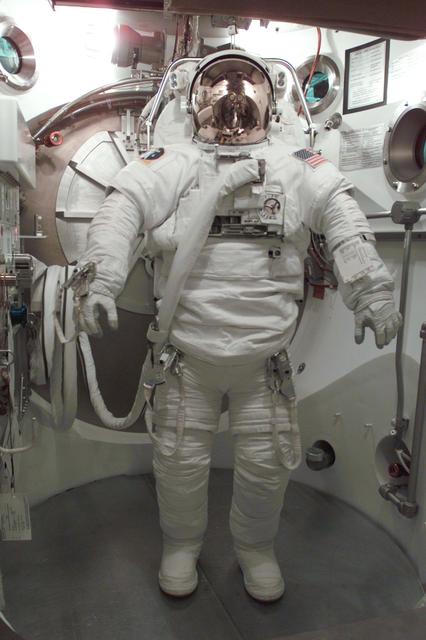
JSC2001-E-11703 (9 April 2001) --- Astronaut James F. Reilly, STS-104 mission specialist, participates in an Extravehicular Mobility Unit (EMU) fit check in one of the chambers in the Crew Systems Laboratory at the Johnson Space Center (JSC). The STS-104 mission to the International Space Station (ISS) represents the Space Shuttle Atlantis' first flight using a new engine and is targeted for a liftoff no earlier than June 14, 2001.
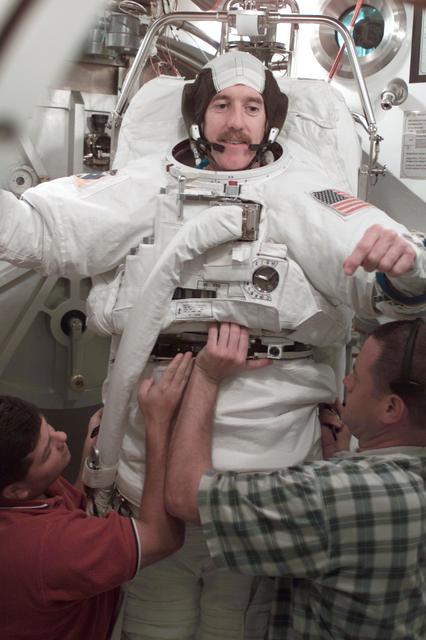
JSC2001-E-11692 (9 April 2001) --- Astronaut James F. Reilly, mission specialist, prepares to don his helmet for an Extravehicular Mobility Unit (EMU) fit check in one of the chambers in the Crew Systems Laboratory at the Johnson Space Center (JSC). The STS-104 mission to the International Space Station (ISS) represents the Space Shuttle Atlantis' first flight using a new engine and is targeted for a liftoff no earlier than June 14, 2001.
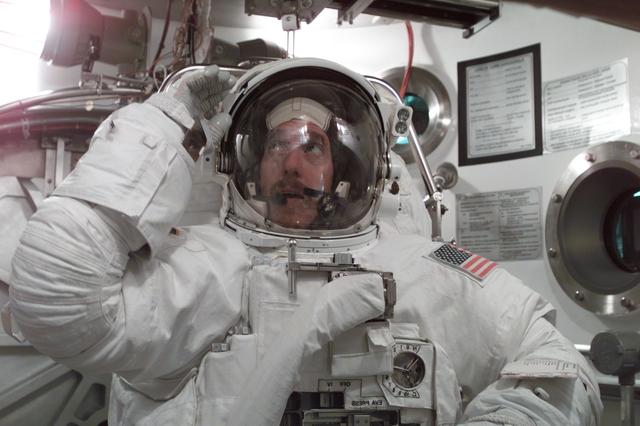
JSC2001-E-11699 (9 April 2001) --- Astronaut James F. Reilly, STS-104 mission specialist, participates in an Extravehicular Mobility Unit (EMU) fit check in one of the chambers in the Crew Systems Laboratory at the Johnson Space Center (JSC). The STS-104 mission to the International Space Station (ISS) represents the Space Shuttle Atlantis' first flight using a new engine and is targeted for a liftoff no earlier than June 14, 2001.
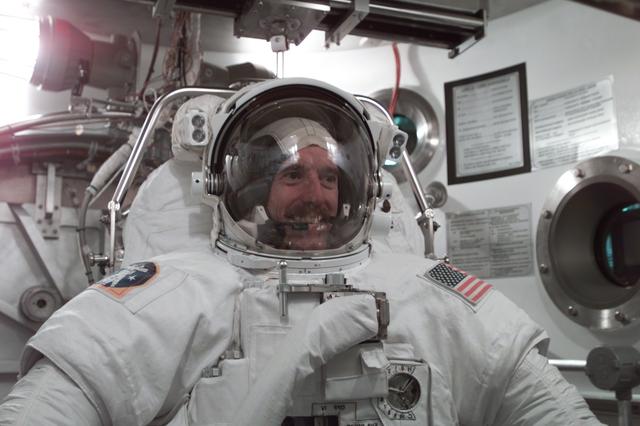
JSC2001-E-11697 (9 April 2001) --- Astronaut James F. Reilly, STS-104 mission specialist, participates in an Extravehicular Mobility Unit (EMU) fit check in one of the chambers in the Crew Systems Laboratory at the Johnson Space Center (JSC). The STS-104 mission to the International Space Station (ISS) represents the Space Shuttle Atlantis' first flight using a new engine and is targeted for a liftoff no earlier than June 14, 2001.
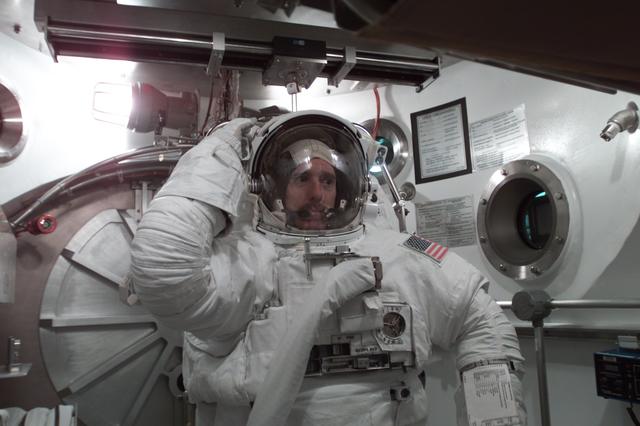
JSC2001-E-11696 (9 April 2001) --- Astronaut James F. Reilly, STS-104 mission specialist, participates in an Extravehicular Mobility Unit (EMU) fit check in one of the chambers in the Crew Systems Laboratory at the Johnson Space Center (JSC). The STS-104 mission to the International Space Station (ISS) represents the Space Shuttle Atlantis' first flight using a new engine and is targeted for a liftoff no earlier than June 14, 2001.
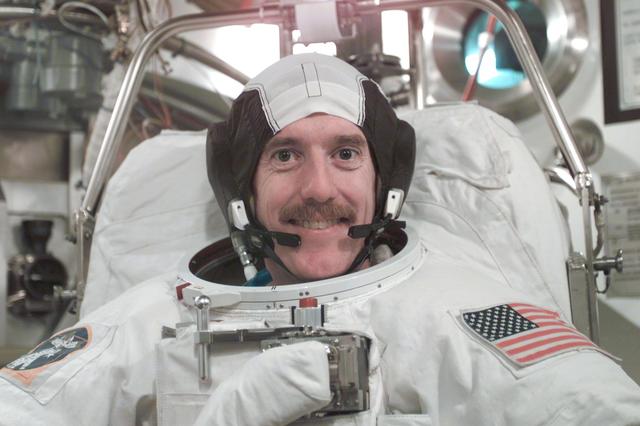
JSC2001-E-11690 (9 April 2001) --- Astronaut James F. Reilly, STS-104 mission specialist, prepares to don his helmet for an Extravehicular Mobility Unit (EMU) fit check in one of the chambers in the Crew Systems Laboratory at the Johnson Space Center (JSC). The STS-104 mission to the International Space Station (ISS) represents the Space Shuttle Atlantis' first flight using a new engine and is targeted for a liftoff no earlier than June 14, 2001.
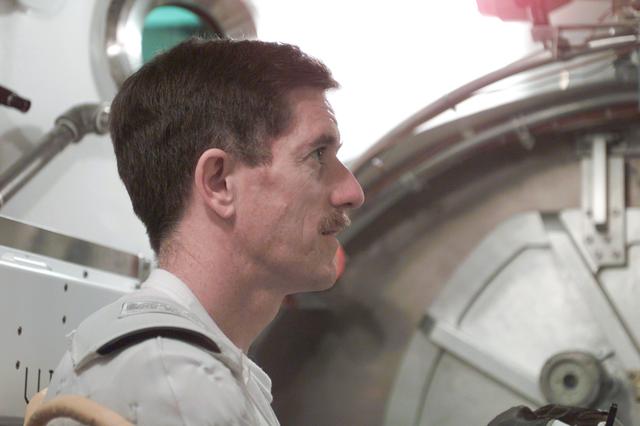
JSC2001-E-11687 (9 April 2001) --- Astronaut James F. Reilly, STS-104 mission specialist, prepares to don his Extravehicular Mobility Unit (EMU) space suit for a fit check in one of the chambers in the Crew Systems Laboratory at the Johnson Space Center (JSC). Reilly is wearing a thermal undergarment over which he will wear the EMU. The STS-104 mission to the International Space Station (ISS) represents the Space Shuttle Atlantis' first flight using a new engine and is targeted for a liftoff no earlier than June 14, 2001.
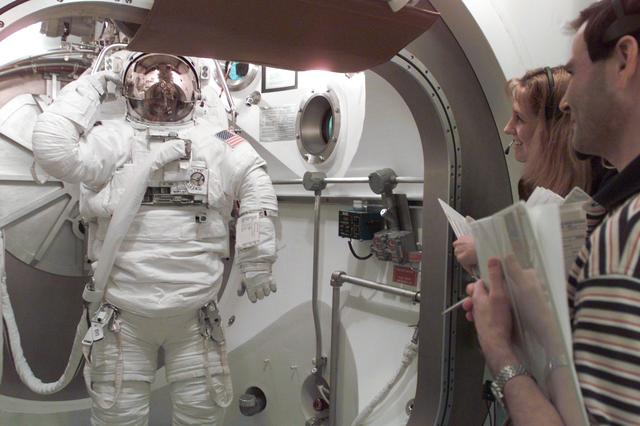
JSC2001-E-11704 (9 April 2001) --- Astronaut James F. Reilly, STS-104 mission specialist, participates in an Extravehicular Mobility Unit (EMU) fit check in one of the chambers in the Crew Systems Laboratory at the Johnson Space Center (JSC). Standing near the doorway are Peggy Berg and Dave Simon, Crew Personnel Representatives (CPR), from the Mission Operations Directorate (MOD) at the Johnson Space Center. The STS-104 mission to the International Space Station (ISS) represents the Space Shuttle Atlantis' first flight using a new engine and is targeted for a liftoff no earlier than June 14, 2001.
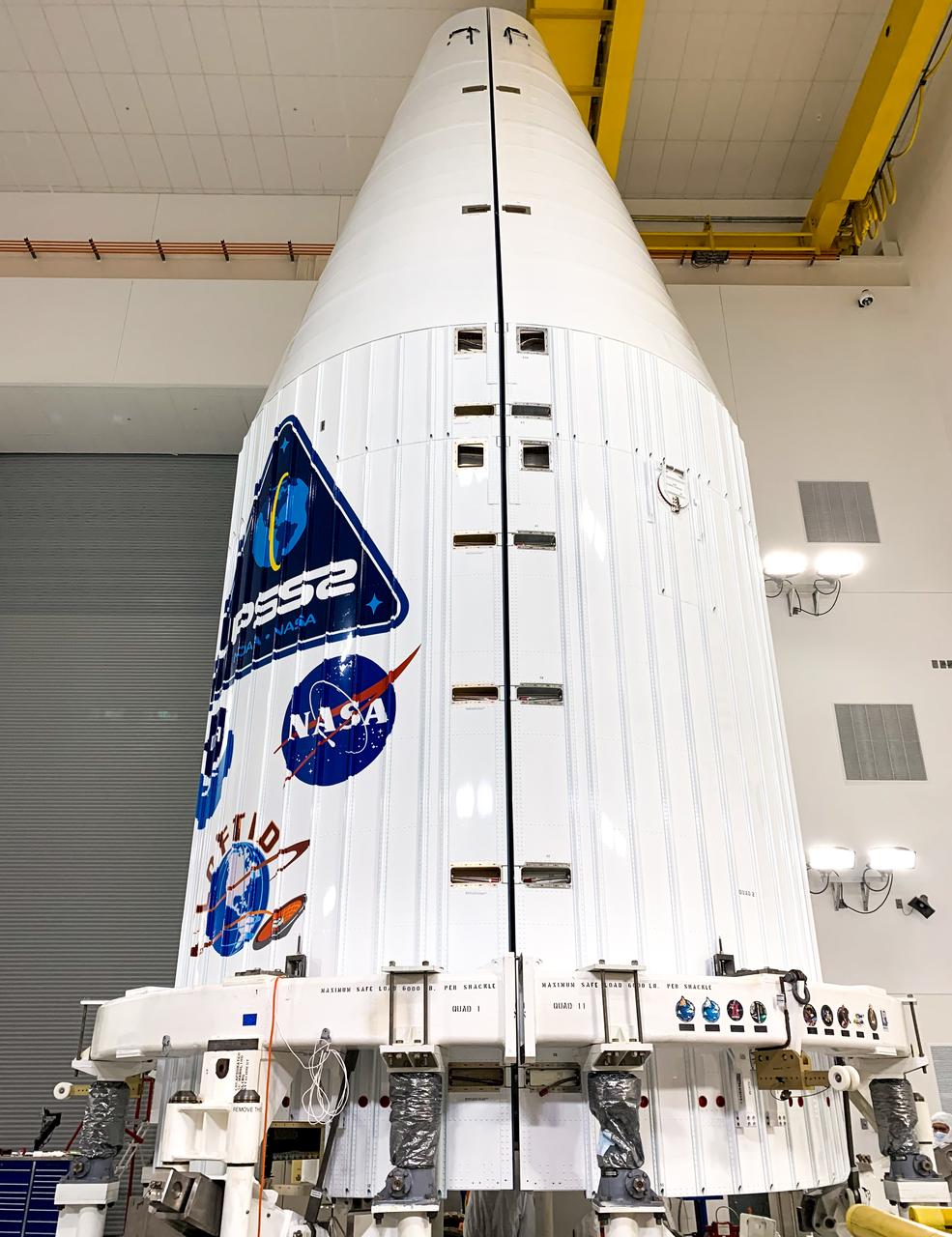
Both halves of the United Launch Alliance (ULA) Atlas V payload fairing are joined together during a fit check at the Astrotech Processing Facility at Vandenberg Space Force Base (VSFB) in California on Aug. 13, 2022, for NASA and the National Oceanic and Atmospheric Administration’s (NOAA) Joint Polar Satellite System-2 (JPSS-2) satellite mission. JPSS-2 is the third satellite in the Joint Polar Satellite System series. It is scheduled to lift off from VSFB on Nov. 1 from Space Launch Complex-3 East. JPSS-2 will scan the globe as it orbits from the North to the South Pole, crossing the equator 14 times a day. From 512 miles above Earth, it will capture data that inform weather forecasts, extreme weather events, and climate change. The Visible Infrared Radiometer Suite instrument will collect imagery for global observations of the land, atmosphere, cryosphere, and oceans. Launching as a secondary payload to JPSS-2 is NASA’s Low-Earth Orbit Flight Test of an Inflatable Decelerator (LOFTID), dedicated to the memory of Bernard Kutter. LOFTID is a demonstration of a hypersonic inflatable aerodynamic decelerator, or aeroshell, technology that could one day help land humans on Mars.

Both halves of the United Launch Alliance (ULA) Atlas V payload fairing are moved into position for a fit check at the Astrotech Processing Facility at Vandenberg Space Force Base (VSFB) in California on Aug. 13, 2022, for NASA and the National Oceanic and Atmospheric Administration’s (NOAA) Joint Polar Satellite System-2 (JPSS-2) satellite mission. JPSS-2 is the third satellite in the Joint Polar Satellite System series. It is scheduled to lift off from VSFB on Nov. 1 from Space Launch Complex-3 East. JPSS-2 will scan the globe as it orbits from the North to the South Pole, crossing the equator 14 times a day. From 512 miles above Earth, it will capture data that inform weather forecasts, extreme weather events, and climate change. The Visible Infrared Radiometer Suite instrument will collect imagery for global observations of the land, atmosphere, cryosphere, and oceans. Launching as a secondary payload to JPSS-2 is NASA’s Low-Earth Orbit Flight Test of an Inflatable Decelerator (LOFTID), dedicated to the memory of Bernard Kutter. LOFTID is a demonstration of a hypersonic inflatable aerodynamic decelerator, or aeroshell, technology that could one day help land humans on Mars.

The first half of the United Launch Alliance (ULA) Atlas V payload fairing is moved into position for a fit check at the Astrotech Processing Facility at Vandenberg Space Force Base (VSFB) in California on Aug. 13, 2022, for NASA and the National Oceanic and Atmospheric Administration’s (NOAA) Joint Polar Satellite System-2 (JPSS-2) satellite mission. JPSS-2 is the third satellite in the Joint Polar Satellite System series. It is scheduled to lift off from VSFB on Nov. 1 from Space Launch Complex-3 East. JPSS-2 will scan the globe as it orbits from the North to the South Pole, crossing the equator 14 times a day. From 512 miles above Earth, it will capture data that inform weather forecasts, extreme weather events, and climate change. The Visible Infrared Radiometer Suite instrument will collect imagery for global observations of the land, atmosphere, cryosphere, and oceans. Launching as a secondary payload to JPSS-2 is NASA’s Low-Earth Orbit Flight Test of an Inflatable Decelerator (LOFTID), dedicated to the memory of Bernard Kutter. LOFTID is a demonstration of a hypersonic inflatable aerodynamic decelerator, or aeroshell, technology that could one day help land humans on Mars.

NASA Dryden aircraft and avionics technicians (from left) Bryan Hookland, Art Cope, Herman Rijfkogel and Jonathan Richards install the nose cone on a Phoenix missile prior to a fit check on the center's F-15B research aircraft.
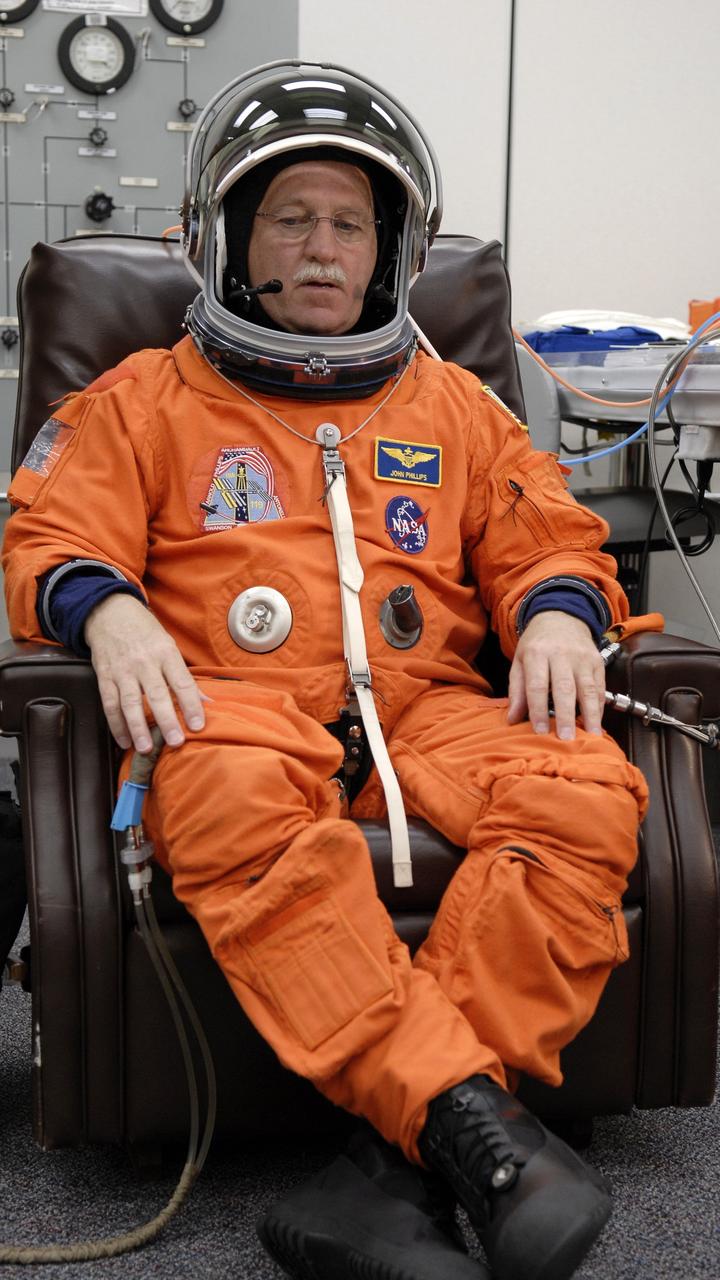
CAPE CANAVERAL, Fla. – In the Operations and Checkout Building at NASA's Kennedy Space Center in Florida, STS-119 Mission Specialist John Phillips has a final fitting of his launch and entry suit and the helmet. Phillips is making his third shuttle flight. The 14-day mission is the 28th to the International Space Station and the 125th space shuttle flight. Discovery will deliver the final pair of power-generating solar array wings and the S6 truss segment. Installation of S6 will signal the station's readiness to house a six-member crew for conducting increased science. Liftoff of Discovery is scheduled for 9:20 p.m. EDT on March 11. Photo credit: NASA/Kim Shiflett
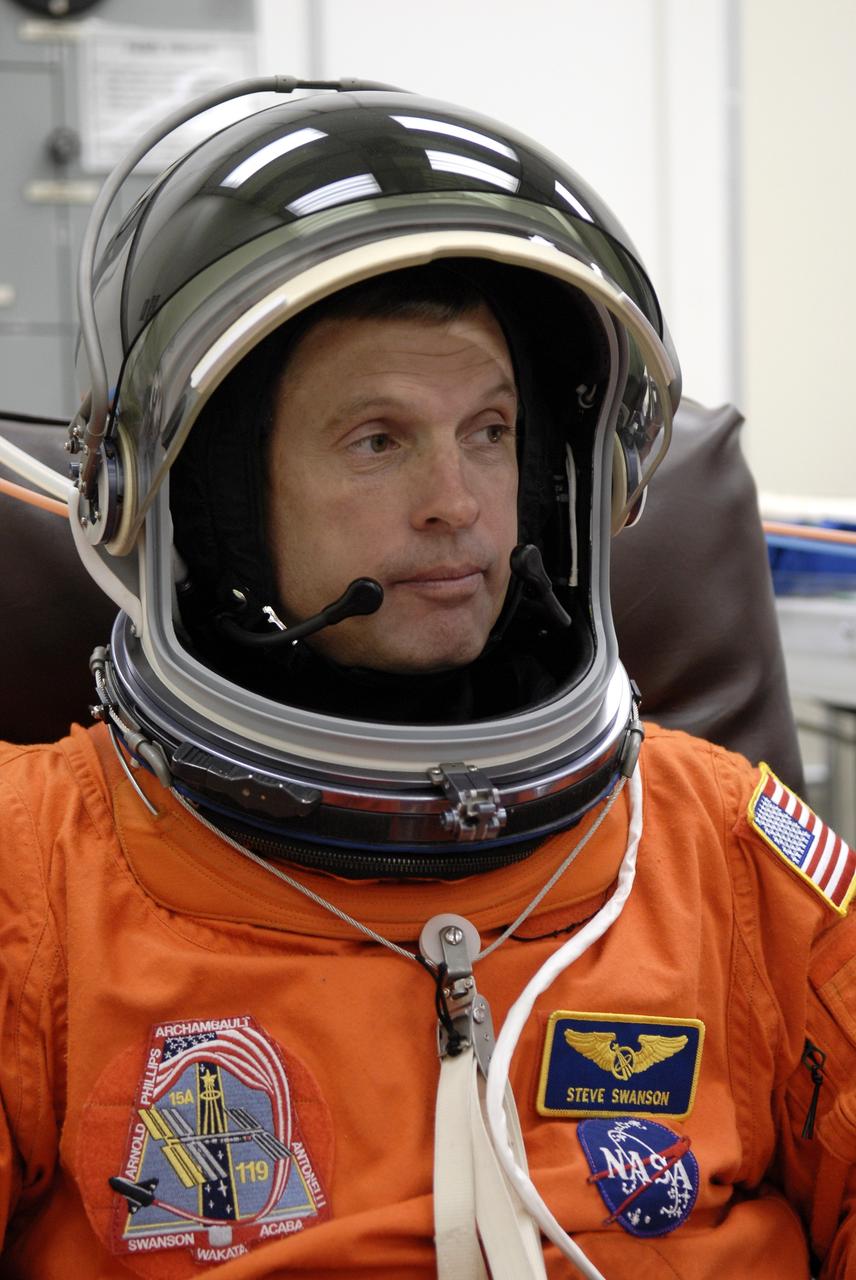
CAPE CANAVERAL, Fla. – In the Operations and Checkout Building at NASA's Kennedy Space Center in Florida, STS-119 Mission Specialist Steve Swanson has the final fitting of his launch and entry suit. Swanson is making his second shuttle flight. The 14-day mission is the 28th to the International Space Station and the 125th space shuttle flight. Discovery will deliver the final pair of power-generating solar array wings and the S6 truss segment. Installation of S6 will signal the station's readiness to house a six-member crew for conducting increased science. Liftoff of Discovery is scheduled for 9:20 p.m. EDT on March 11. Photo credit: NASA/Kim Shiflett
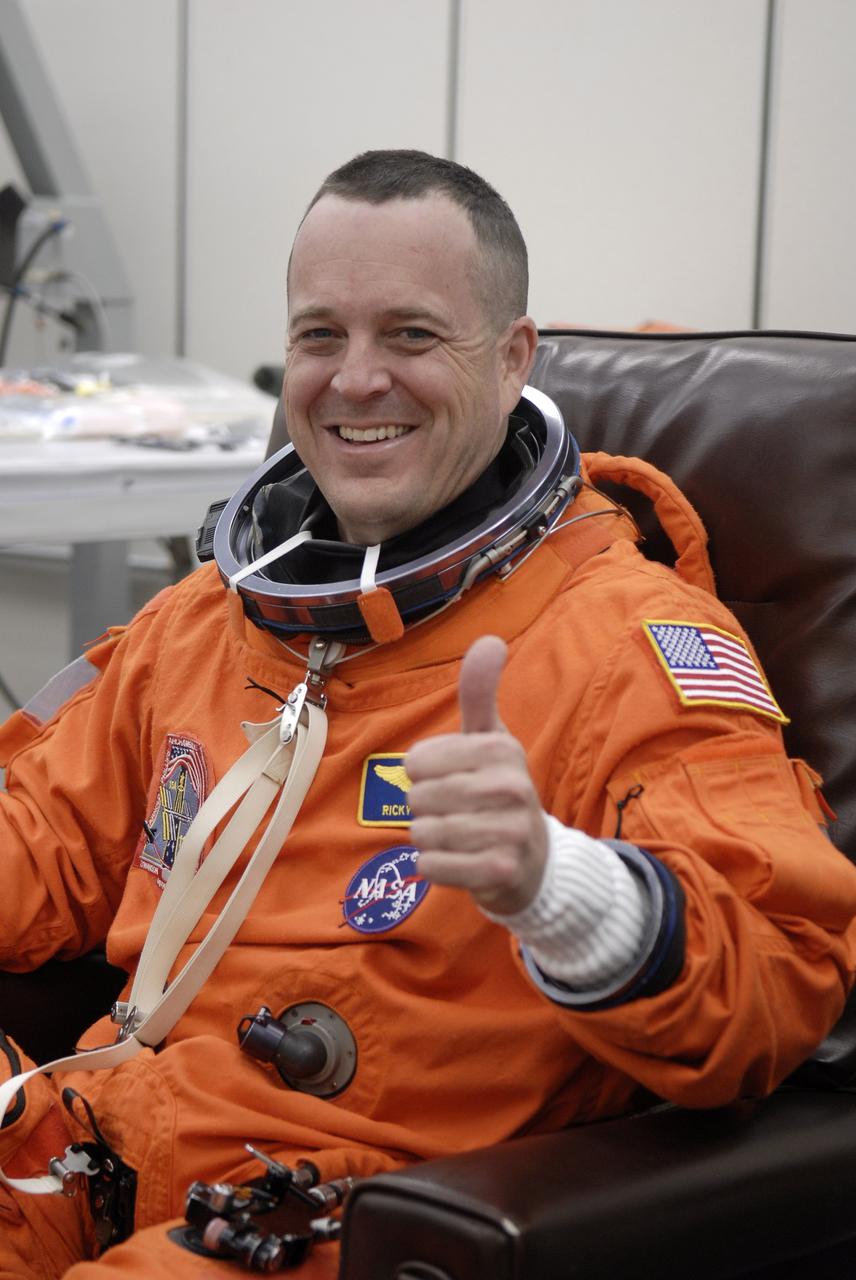
CAPE CANAVERAL, Fla. – In the Operations and Checkout Building at NASA's Kennedy Space Center in Florida, STS-119 Mission Specialist Richard Arnold signals he is ready for launch during the final fitting of his launch and entry suit. Arnold is making his first shuttle flight. The 14-day mission is the 28th to the International Space Station and the 125th space shuttle flight. Discovery will deliver the final pair of power-generating solar array wings and the S6 truss segment. Installation of S6 will signal the station's readiness to house a six-member crew for conducting increased science. Liftoff of Discovery is scheduled for 9:20 p.m. EDT on March 11. Photo credit: NASA/Kim Shiflett
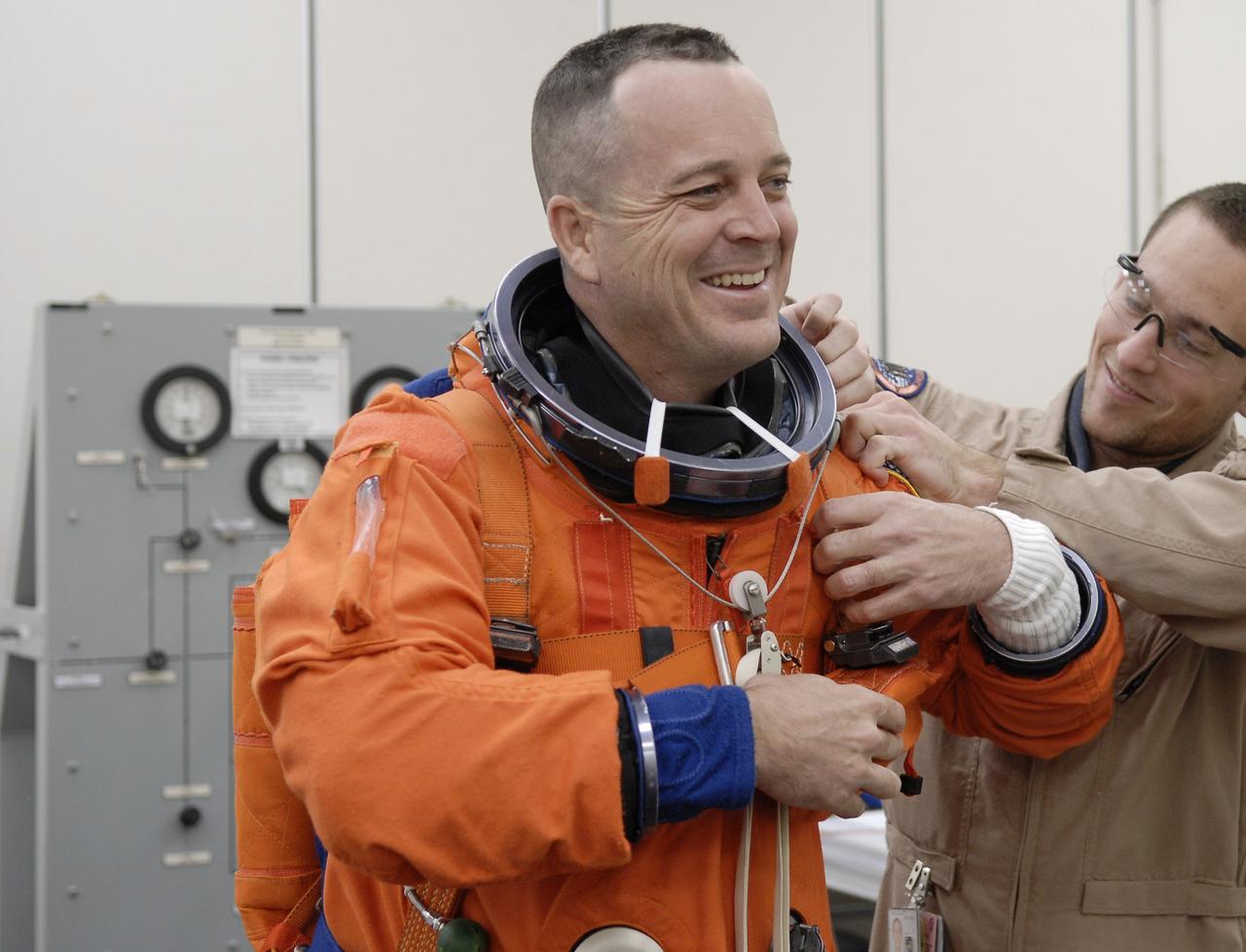
CAPE CANAVERAL, Fla. – In the Operations and Checkout Building at NASA's Kennedy Space Center in Florida, STS-119 Mission Specialist Richard Arnold gets help from a suit technician in the final fitting of his launch and entry suit. Arnold will be making his first shuttle flight. The 14-day mission is the 28th to the International Space Station and the 125th space shuttle flight. Discovery will deliver the final pair of power-generating solar array wings and the S6 truss segment. Installation of S6 will signal the station's readiness to house a six-member crew for conducting increased science. Liftoff of Discovery is scheduled for 9:20 p.m. EDT on March 11. Photo credit: NASA/Kim Shiflett
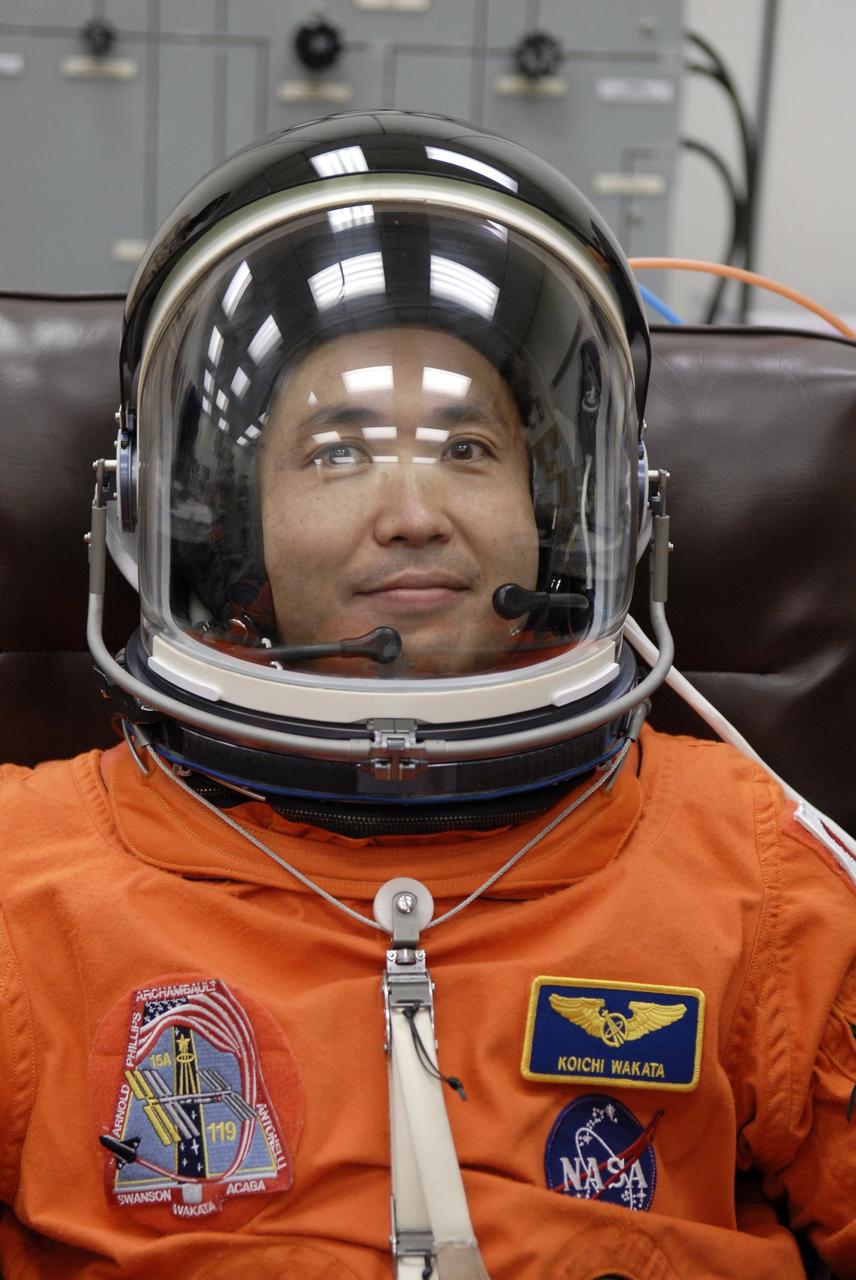
CAPE CANAVERAL, Fla. – In the Operations and Checkout Building at NASA's Kennedy Space Center in Florida, STS-119 Mission Specialist Koichi Wakata puts on his helmet as part of the final fitting of his launch and entry suit. Wakata is making his third shuttle flight. He will remain on the station, replacing Expedition 18 Flight Engineer Sandra Magnus, who returns to Earth with the STS-119 crew. The 14-day mission is the 28th to the International Space Station and the 125th space shuttle flight. Discovery will deliver the final pair of power-generating solar array wings and the S6 truss segment. Installation of S6 will signal the station's readiness to house a six-member crew for conducting increased science. Liftoff of Discovery is scheduled for 9:20 p.m. EDT on March 11. Photo credit: NASA/Kim Shiflett
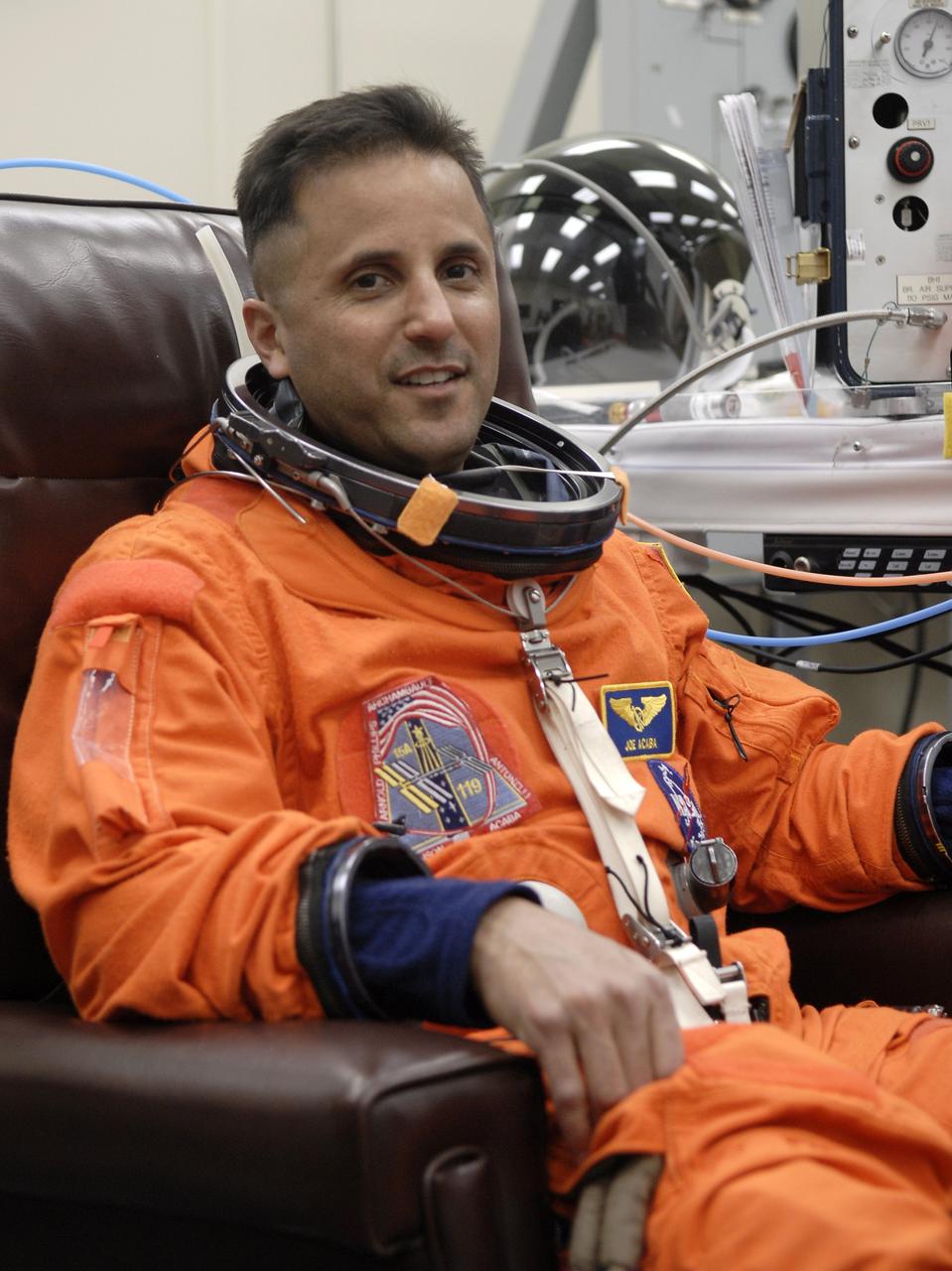
CAPE CANAVERAL, Fla. – – In the Operations and Checkout Building at NASA's Kennedy Space Center in Florida, STS-119 Mission Specialist Joseph Acaba has a final fitting of his launch and entry suit. Acaba is making his first shuttle flight. The 14-day mission is the 28th to the International Space Station and the 125th space shuttle flight. Discovery will deliver the final pair of power-generating solar array wings and the S6 truss segment. Installation of S6 will signal the station's readiness to house a six-member crew for conducting increased science. Liftoff of Discovery is scheduled for 9:20 p.m. EDT on March 11. Photo credit: NASA/Kim Shiflett
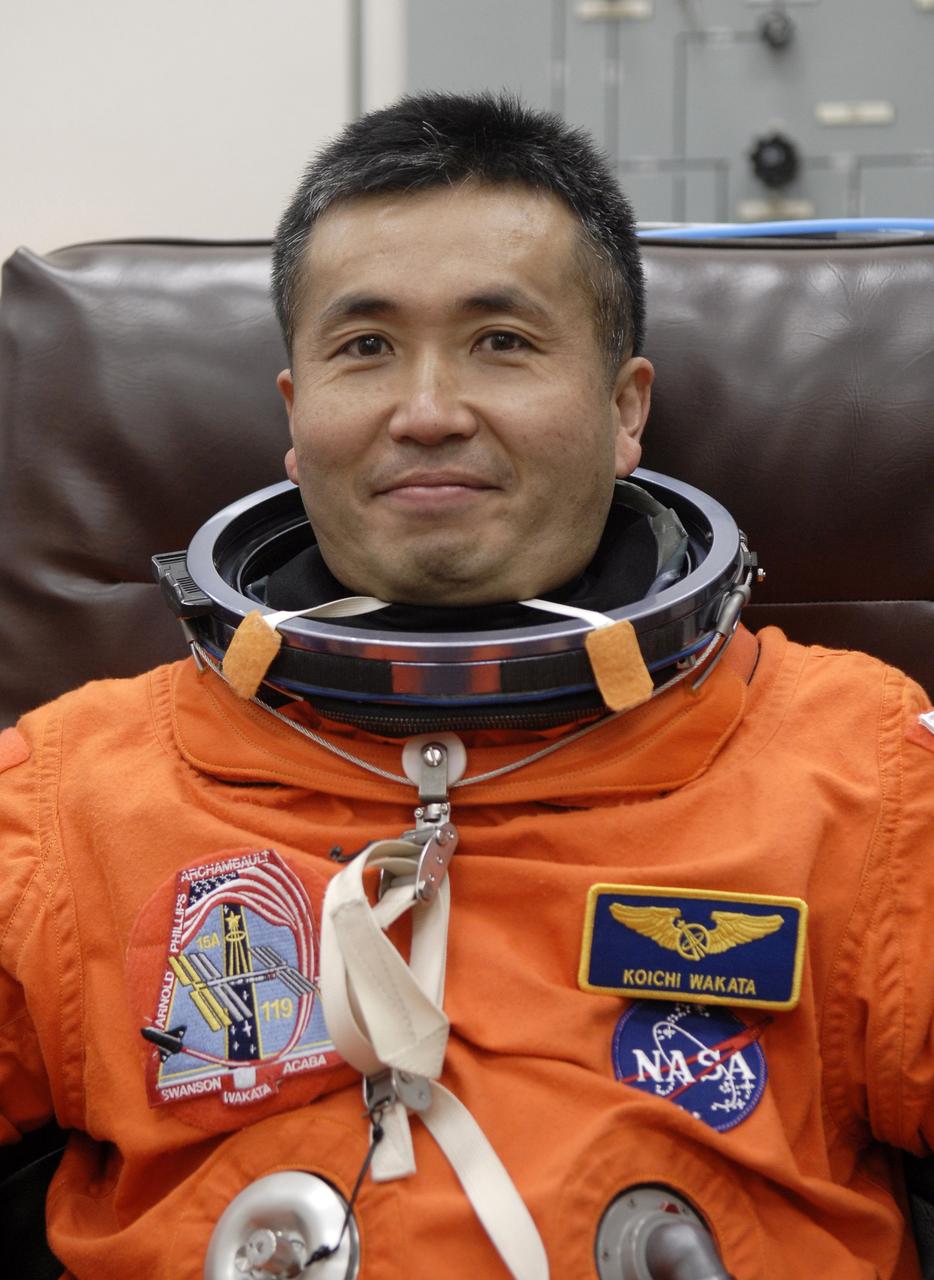
CAPE CANAVERAL, Fla. – In the Operations and Checkout Building at NASA's Kennedy Space Center in Florida, STS-119 Mission Specialist Koichi Wakata has a final fitting of his launch and entry suit. Wakata will remain on the station, replacing Expedition 18 Flight Engineer Sandra Magnus, who returns to Earth with the STS-119 crew. The 14-day mission is the 28th to the International Space Station and the 125th space shuttle flight. Discovery will deliver the final pair of power-generating solar array wings and the S6 truss segment. Installation of S6 will signal the station's readiness to house a six-member crew for conducting increased science. Liftoff of Discovery is scheduled for 9:20 p.m. EDT on March 11. Photo credit: NASA/Kim Shiflett
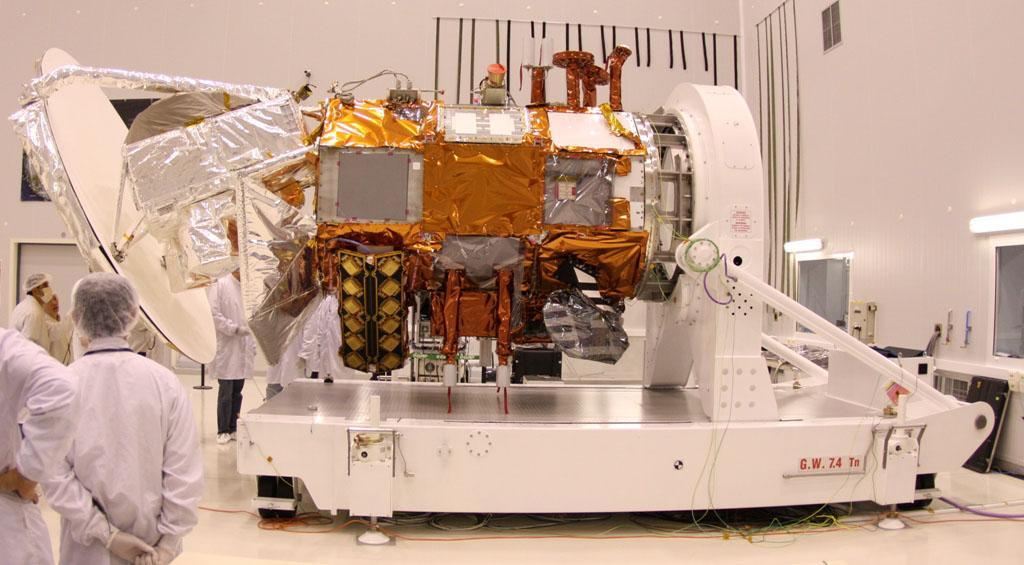
A fit check of half the sunshade is completed to verify the clearance of NASA Aquarius ground lug as well as the blanket interface with the service platform top deck.
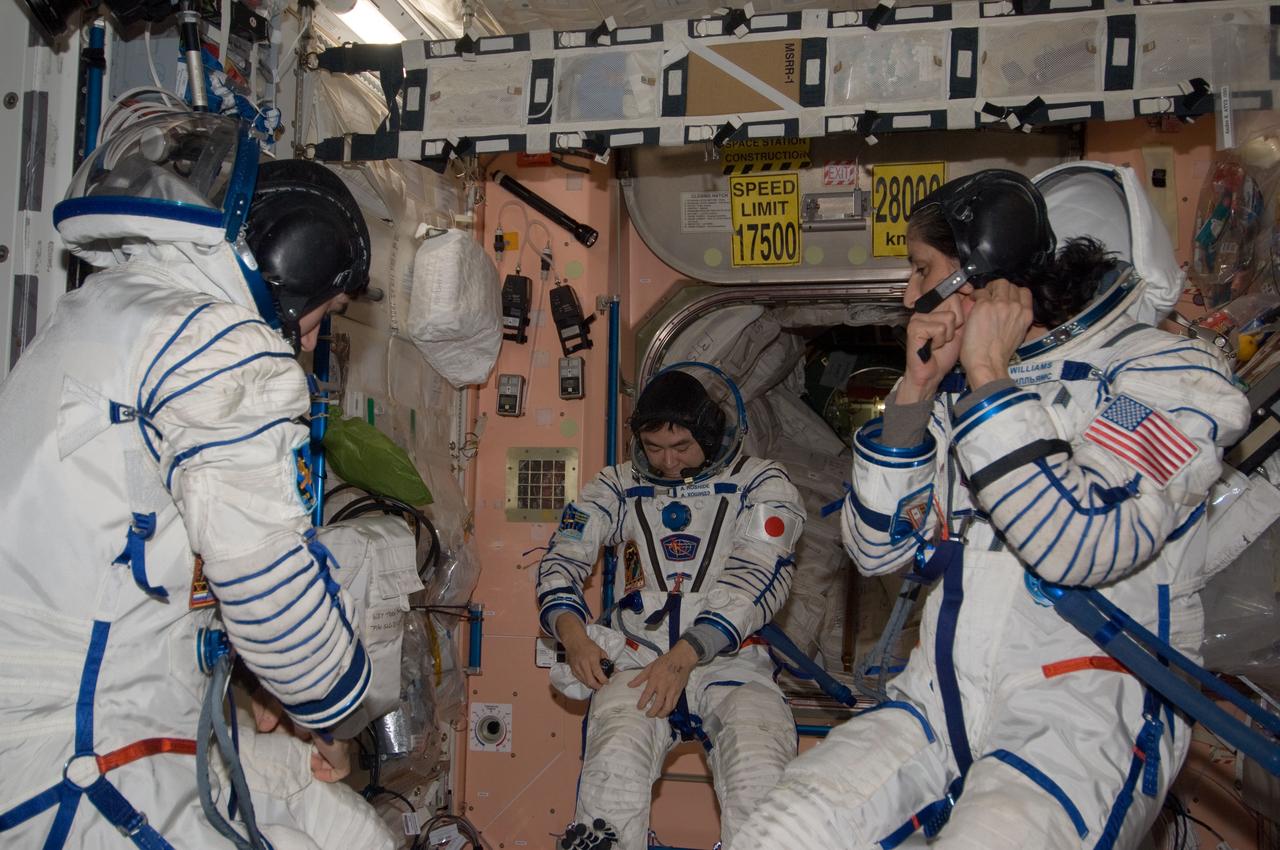
ISS033-E-018486 (7 Nov. 2012) --- In the International Space Station’s Unity node, NASA astronaut Sunita Williams, Expedition 33 commander; along with Japan Aerospace Exploration Agency astronaut Aki Hoshide (center) and Russian cosmonaut Yuri Malenchenko (left), both flight engineers, don their Russian Sokol launch and entry suits to perform the standard leak check in their spacecraft in preparation for their return to Earth on Nov. 18.
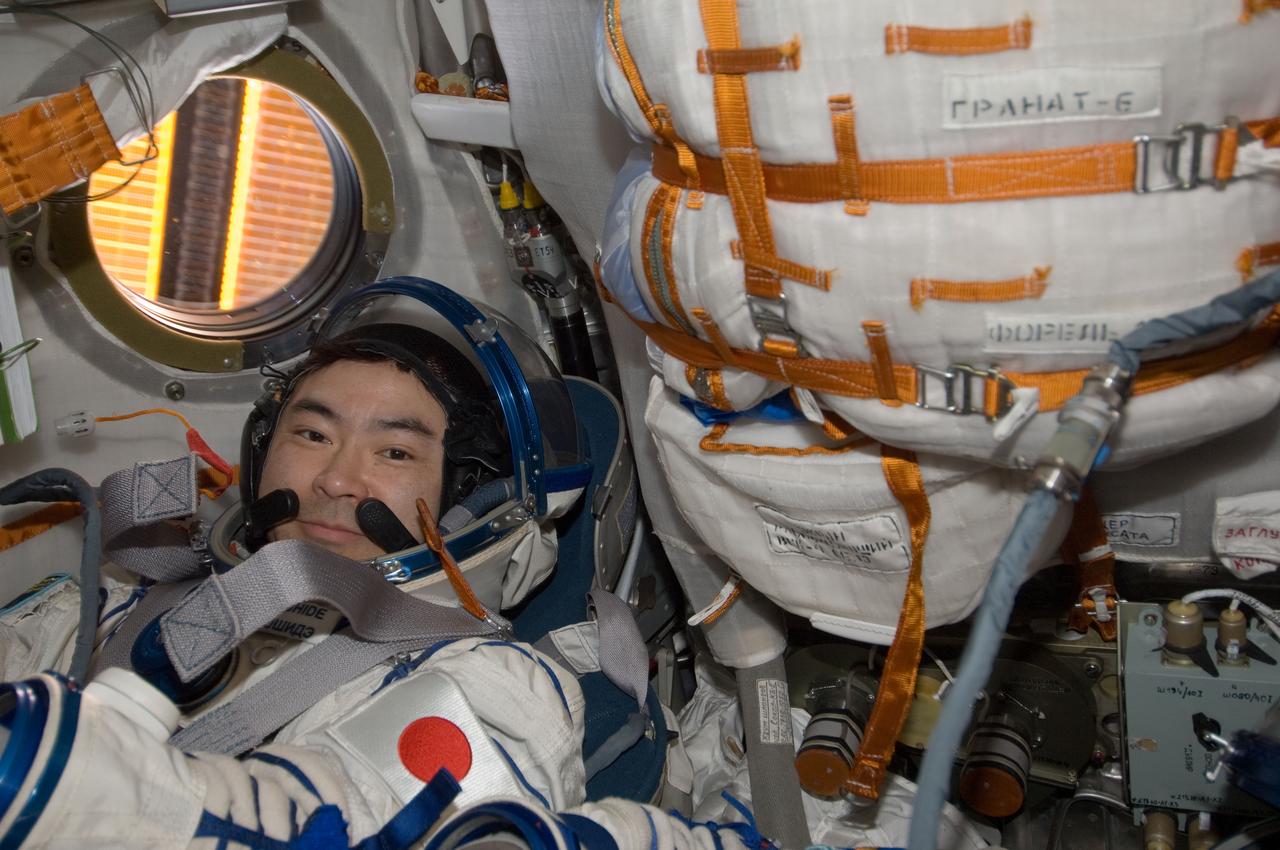
ISS033-E-018499 (7 Nov. 2012) --- Japan Aerospace Exploration Agency astronaut Aki Hoshide, Expedition 33 flight engineer, attired in a Russian Sokol launch and entry suit, conducts a standard suit leak check in the Soyuz TMA-05M spacecraft in preparation for his return to Earth scheduled for Nov. 18, 2012.
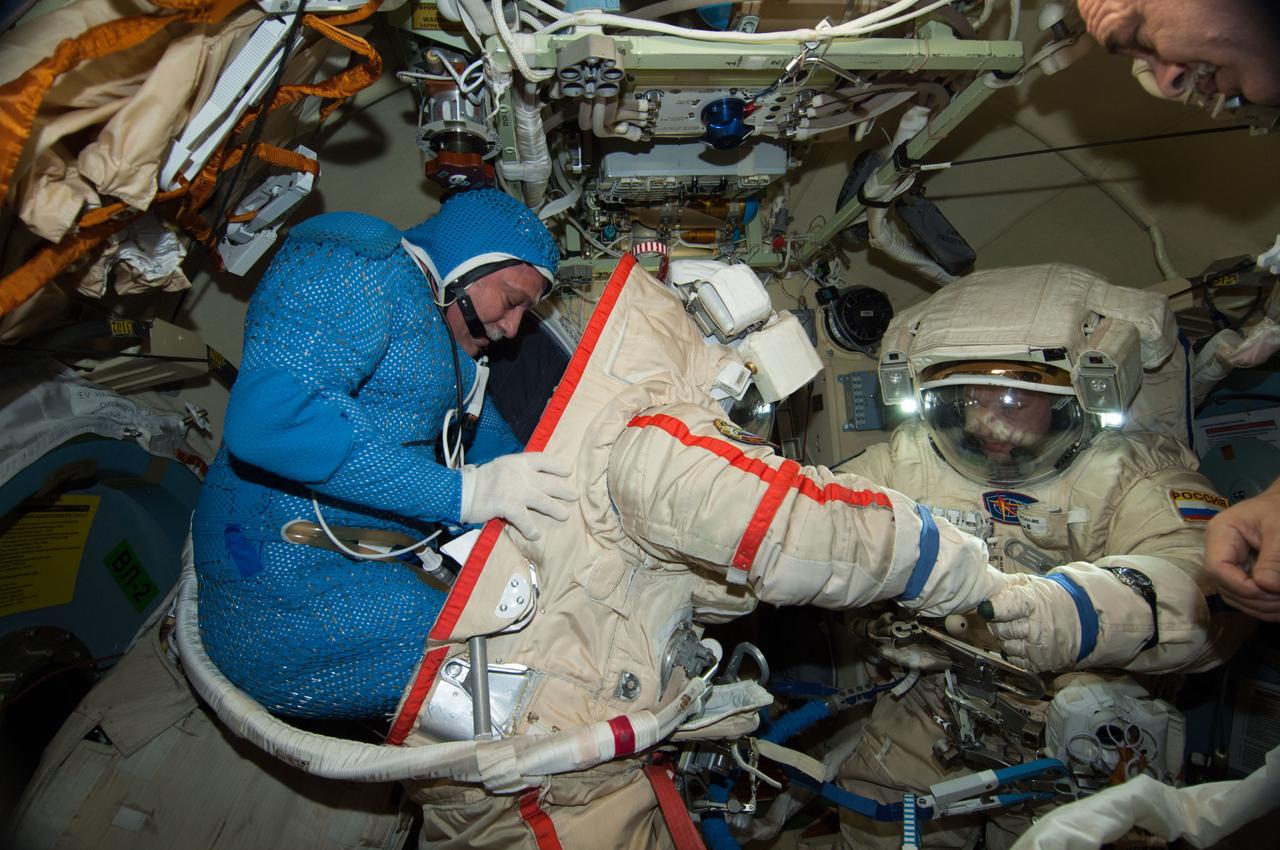
ISS036-E-009793 (21 June 2013) --- Russian cosmonauts Fyodor Yurchikhin (left) and Alexander Misurkin, both Expedition 36 flight engineers, participate in a suited exercise dry run in preparation for a spacewalk in their Russian Orlan spacesuits, which is scheduled for June 24 from the International Space Station’s Pirs docking compartment. Russian cosmonaut Pavel Vinogradov (mostly out of frame at right), Expedition 36 commander, assists Yurchikhin and Misurkin.
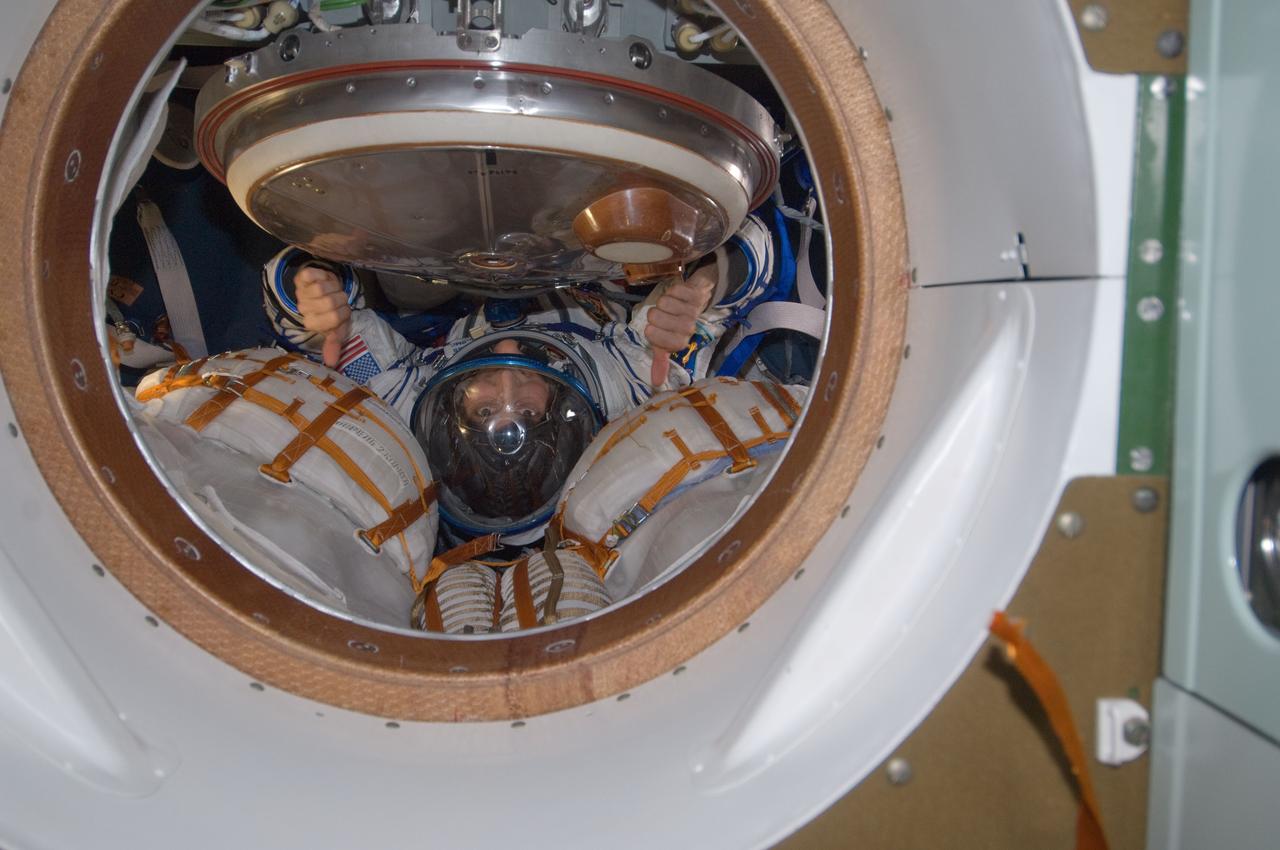
ISS033-E-018515 (7 Nov. 2012) --- NASA astronaut Sunita Williams, Expedition 33 commander, attired in a Russian Sokol launch and entry suit, gives a thumbs-up while conducting a standard suit leak check in the Soyuz TMA-05M spacecraft in preparation for her return to Earth scheduled for Nov. 18, 2012.
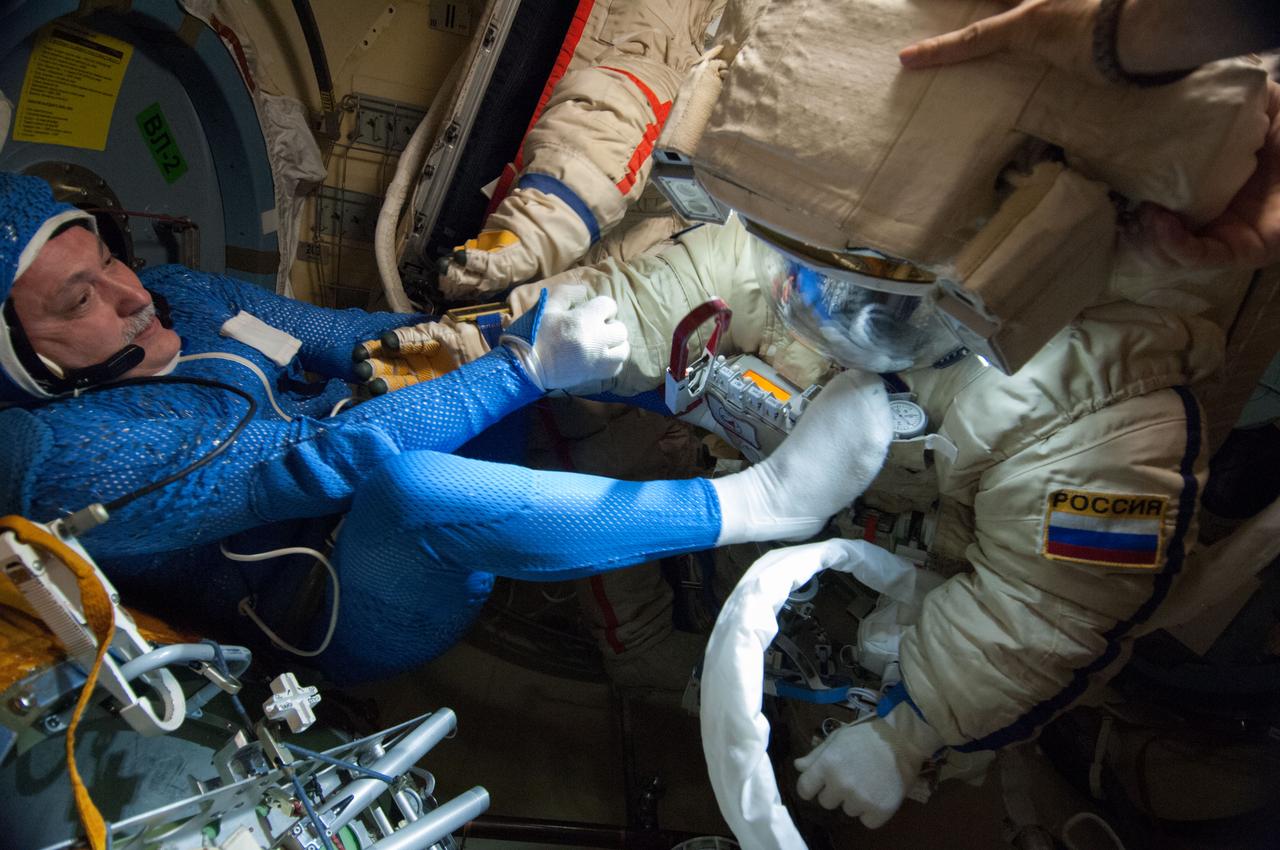
ISS036-E-009797 (21 June 2013) --- Russian cosmonauts Fyodor Yurchikhin (left) and Alexander Misurkin, both Expedition 36 flight engineers, participate in a suited exercise dry run in preparation for a spacewalk in their Russian Orlan spacesuits, which is scheduled for June 24 from the International Space Station’s Pirs docking compartment.
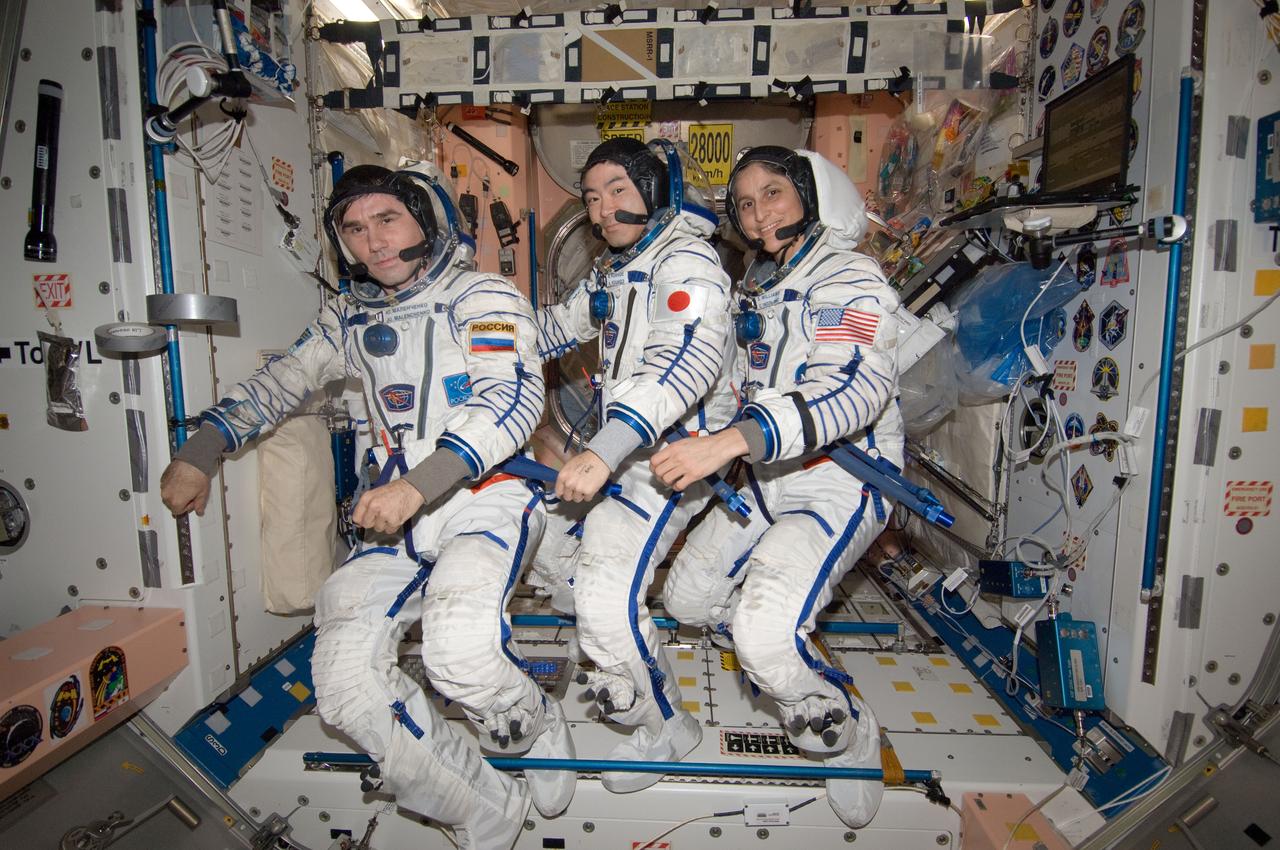
ISS033-E-018493 (7 Nov. 2012) --- In the International Space Station’s Unity node, NASA astronaut Sunita Williams, Expedition 33 commander; along with Japan Aerospace Exploration Agency astronaut Aki Hoshide (center) and Russian cosmonaut Yuri Malenchenko (left), both flight engineers, attired in their Russian Sokol launch and entry suits, take a moment for a photo as they prepare to perform the standard leak check in their spacecraft in preparation for their return to Earth on Nov. 18.
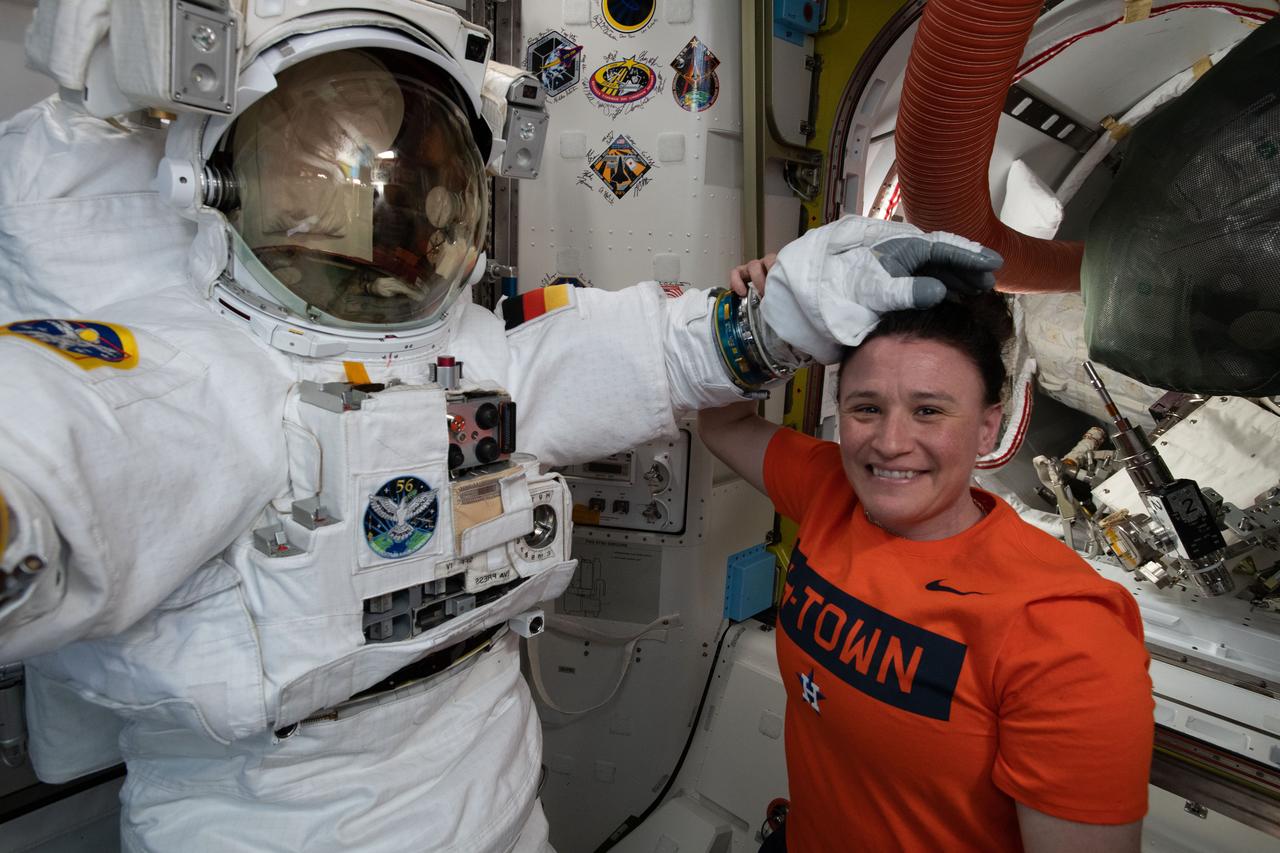
iss056e174105 (Sept. 17, 2018) --- NASA astronaut Serena Auñón-Chancellor poses with a U.S. spacesuit inside the U.S. Quest Airlock. The spacesuit helmet's visor is coated with a thin layer of gold that filters out the sun's harmful rays during spacewalks.
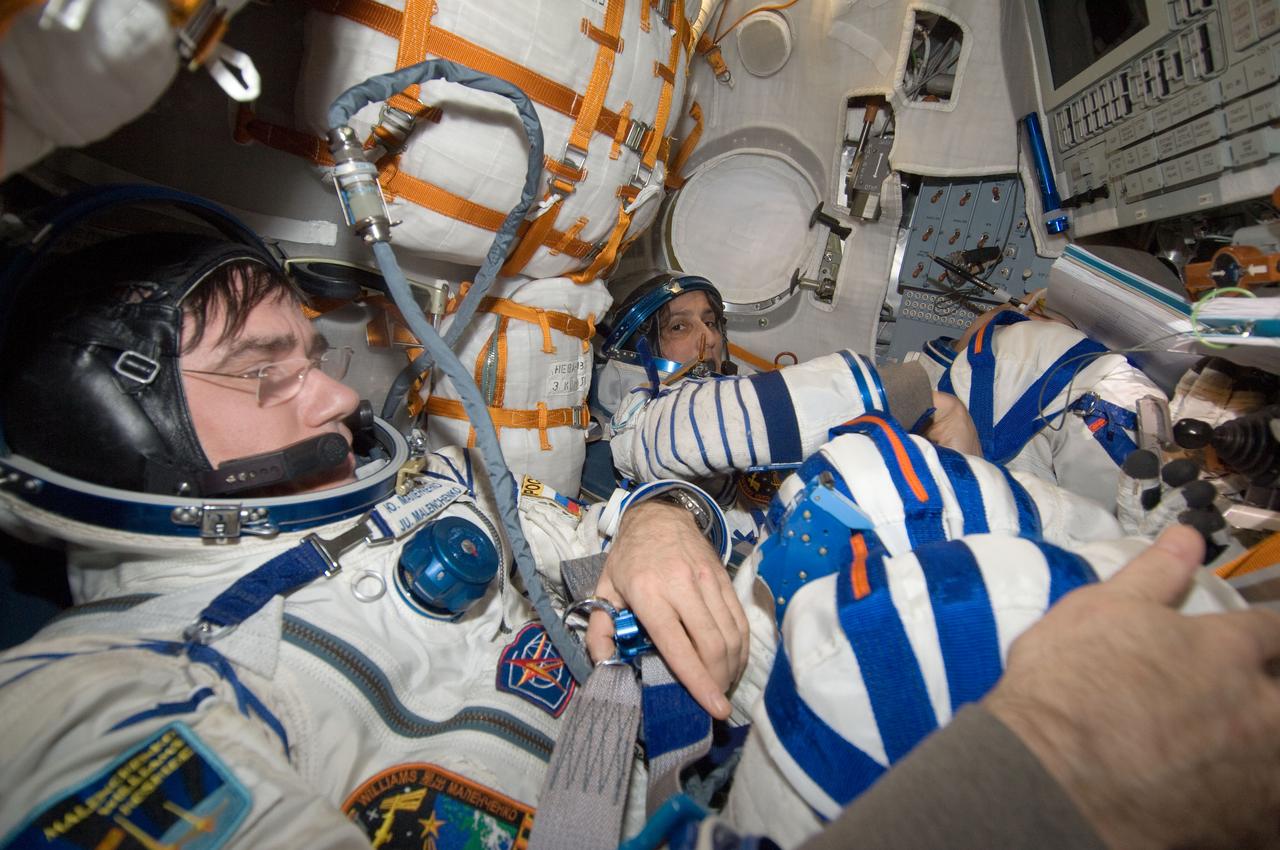
ISS033-E-018495 (7 Nov. 2012) --- Russian cosmonaut Yuri Malenchenko, Soyuz commander and Expedition 33 flight engineer; NASA astronaut Sunita Williams, Expedition 33 commander; and Japan Aerospace Exploration Agency astronaut Aki Hoshide (out of frame), flight engineer, attired in Russian Sokol launch and entry suits, conduct a standard suit leak check in the Soyuz TMA-05M spacecraft in preparation for their return to Earth scheduled for Nov. 18, 2012.
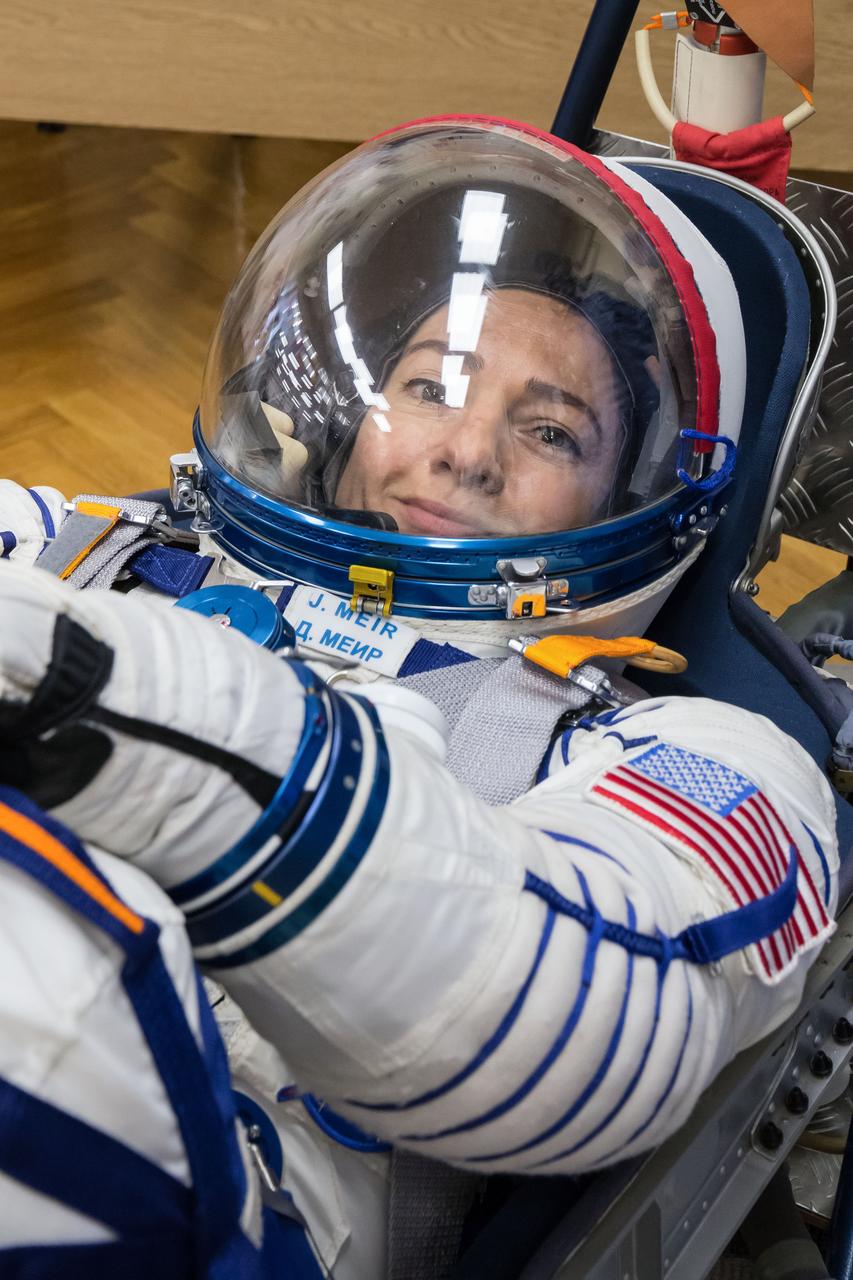
In the Integration Building at the Baikonur Cosmodrome in Kazakhstan, Expedition 61 crewmember Jessica Meir of NASA undergoes a pressure and leak check of her Russian Sokol launch and entry suit Sept. 11 for a fit check aboard the Soyuz MS-15 spacecraft. Meir, Hazzaa Ali Almansoori of the United Arab Emirates and Expedition 61 crewmember Oleg Skripochka of Roscosmos will launch Sept. 25 on the Soyuz MS-15 spacecraft from the Baikonur Cosmodrome for a mission on the International Space Station. NASA/Victor Zelentsov

NASA Dryden technicians take measurements inside a fit-check mockup for prior to systems installation on a boilerplate Orion launch abort test crew capsule. A mockup Orion crew module has been constructed by NASA Dryden Flight Research Center's Fabrication Branch. The mockup is being used to develop integration procedures for avionics and instrumentation in advance of the arrival of the first abort flight test article.
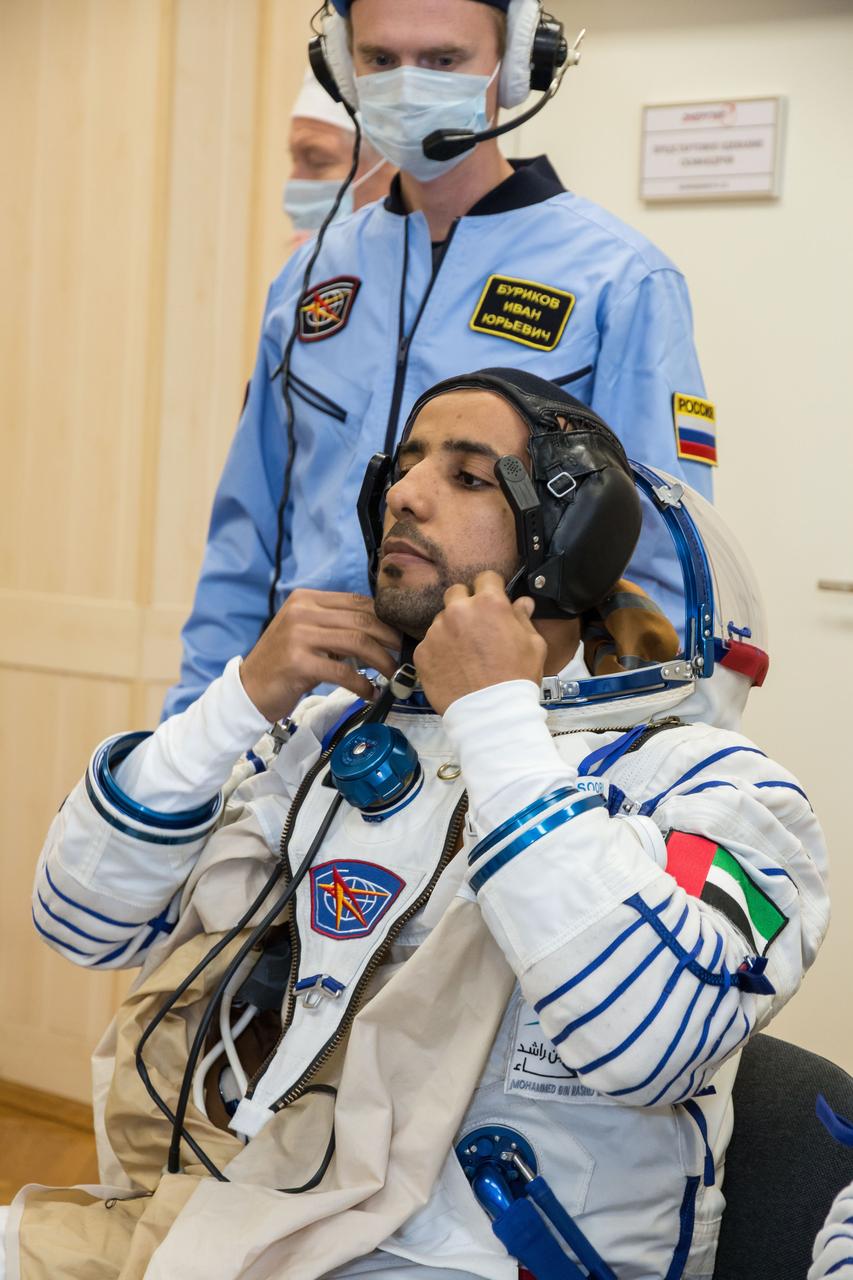
In the Integration Building at the Baikonur Cosmodrome in Kazakhstan, spaceflight participant Hazzaa Ali Almansoori of the United Arab Emirates suits up Sept. 11 for a fit check aboard the Soyuz MS-15 spacecraft. Almansoori, Oleg Skripochka of Roscosmos and Jessica Meir of NASA will launch Sept. 25 on the Soyuz MS-15 spacecraft from the Baikonur Cosmodrome for a mission on the International Space Station. NASA/Victor Zelentsov
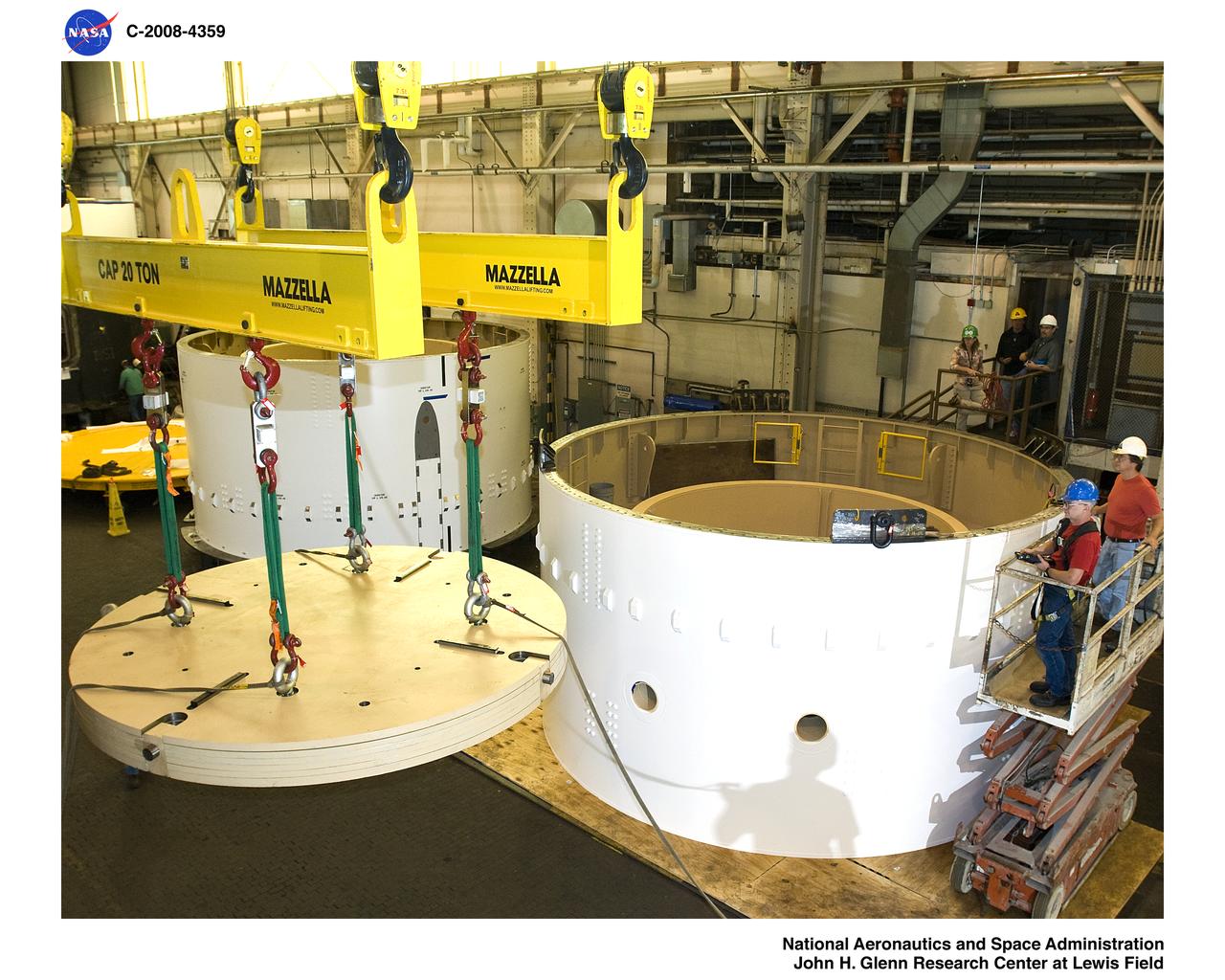
Ares 1-X segment ballast fit check
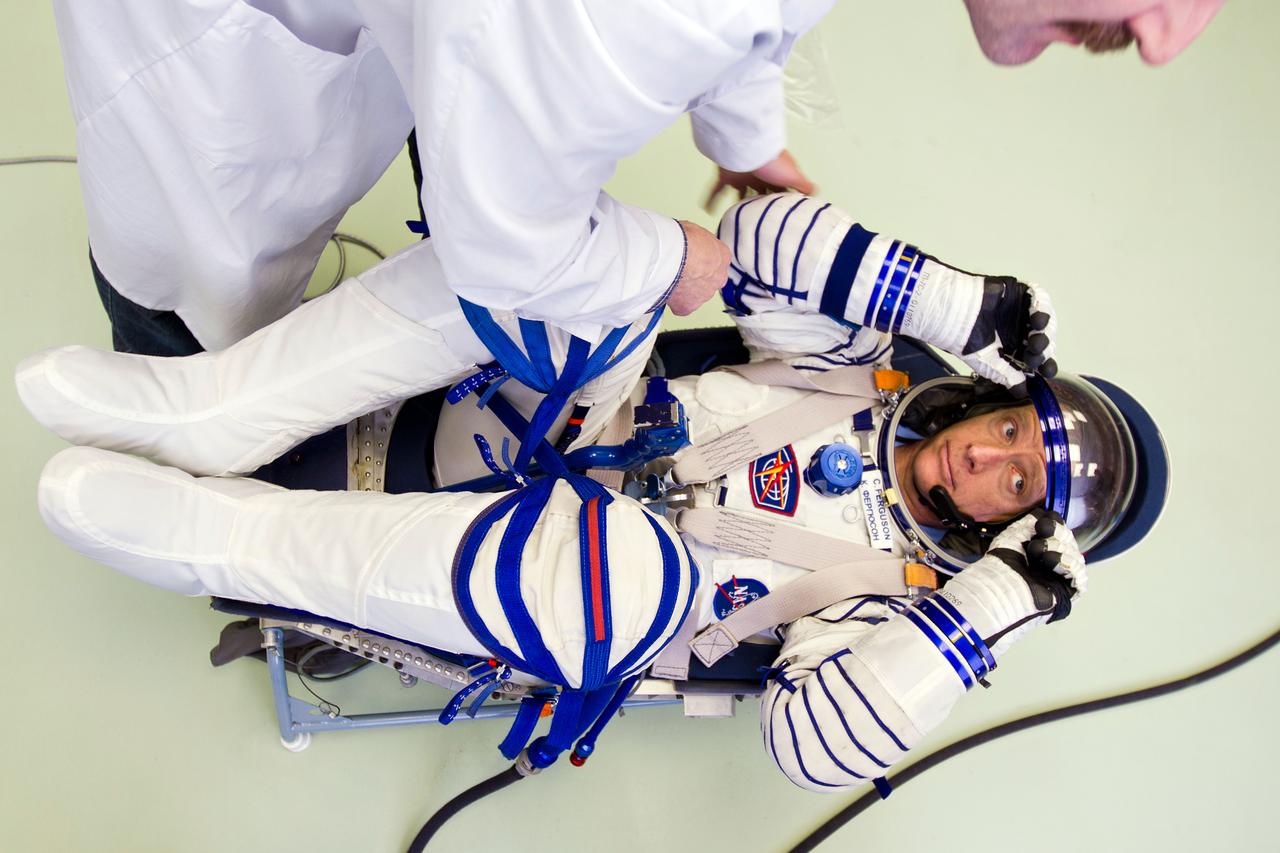
NASA astronaut Chris Ferguson undergoes a fit check of his Sokol space suit at the Zvezda facility on Tuesday, March 29, 2011, in Moscow. The crew of the final shuttle mission traveled to Moscow for a suit fit check of their Russian Soyuz suits that will be required in the event of an emergency. ( NASA Photo / Houston Chronicle, Smiley N. Pool )
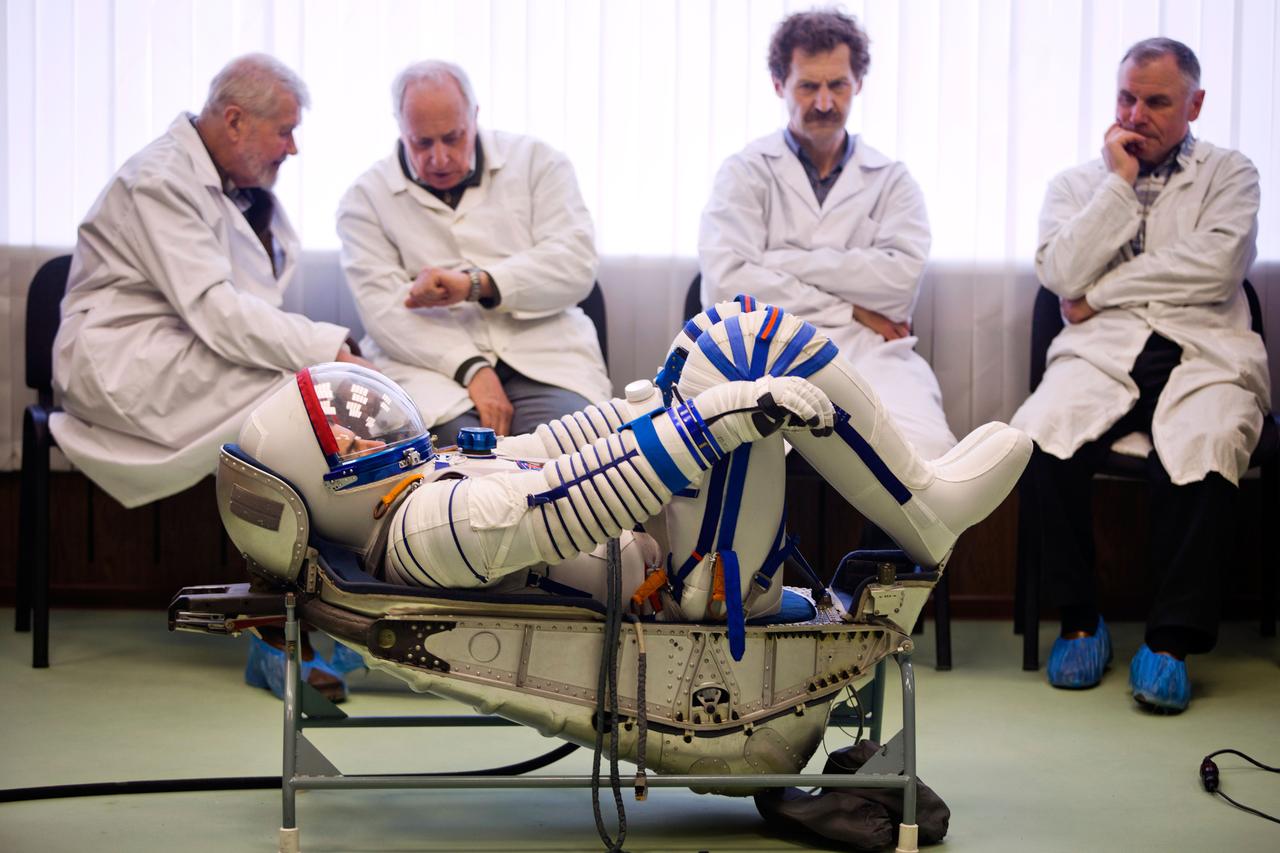
NASA astronaut Rex Walheim undergoes a fit check of his Sokol space suit at the Zvezda facility on Monday, March 28, 2011, in Moscow. The crew of the final shuttle mission traveled to Moscow for a suit fit check of their Russian Soyuz suits that will be required in the event of an emergency. ( NASA Photo / Houston Chronicle, Smiley N. Pool )
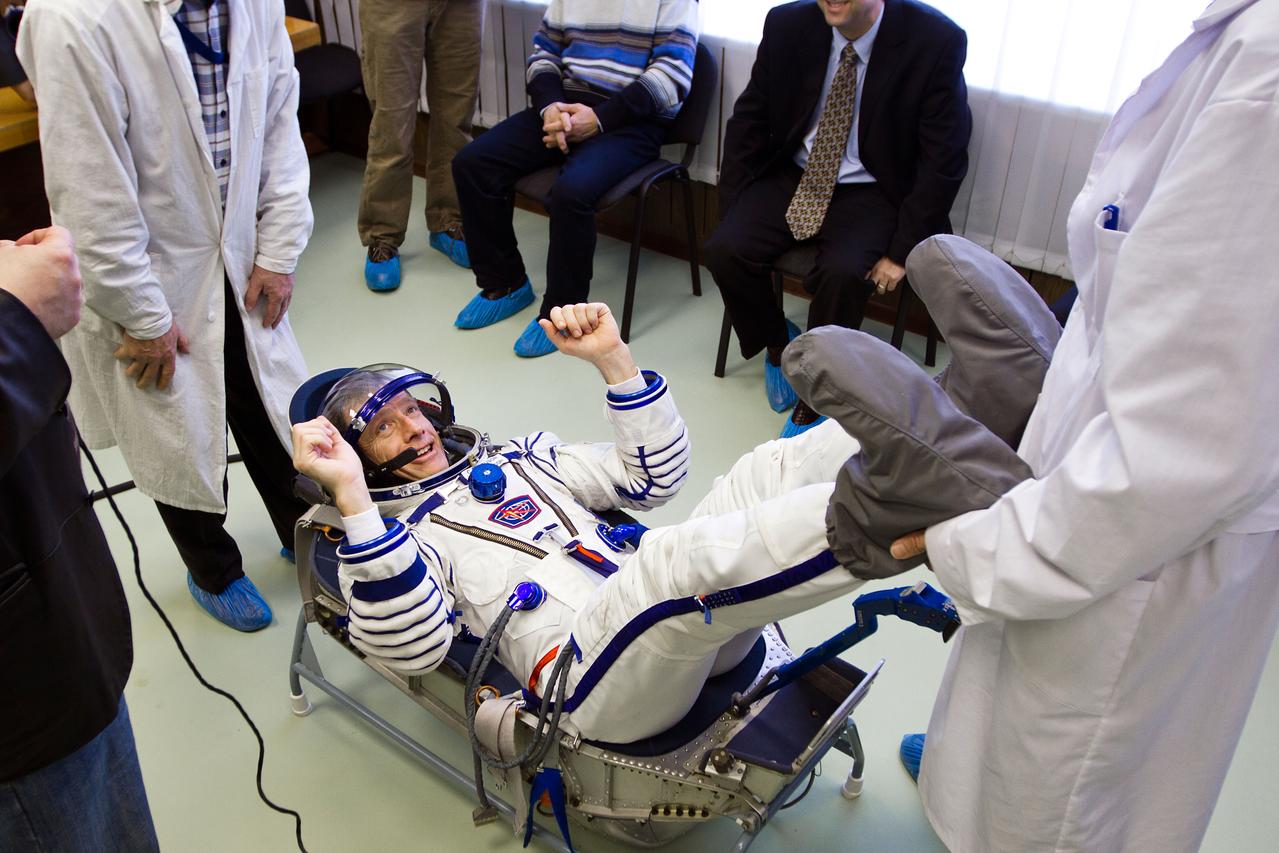
NASA astronaut Chris Ferguson undergoes a fit check of his Sokol space suit at the Zvezda facility on Tuesday, March 29, 2011, in Moscow. The crew of the final shuttle mission traveled to Moscow for a suit fit check of their Russian Soyuz suits that will be required in the event of an emergency. ( NASA Photo / Houston Chronicle, Smiley N. Pool )
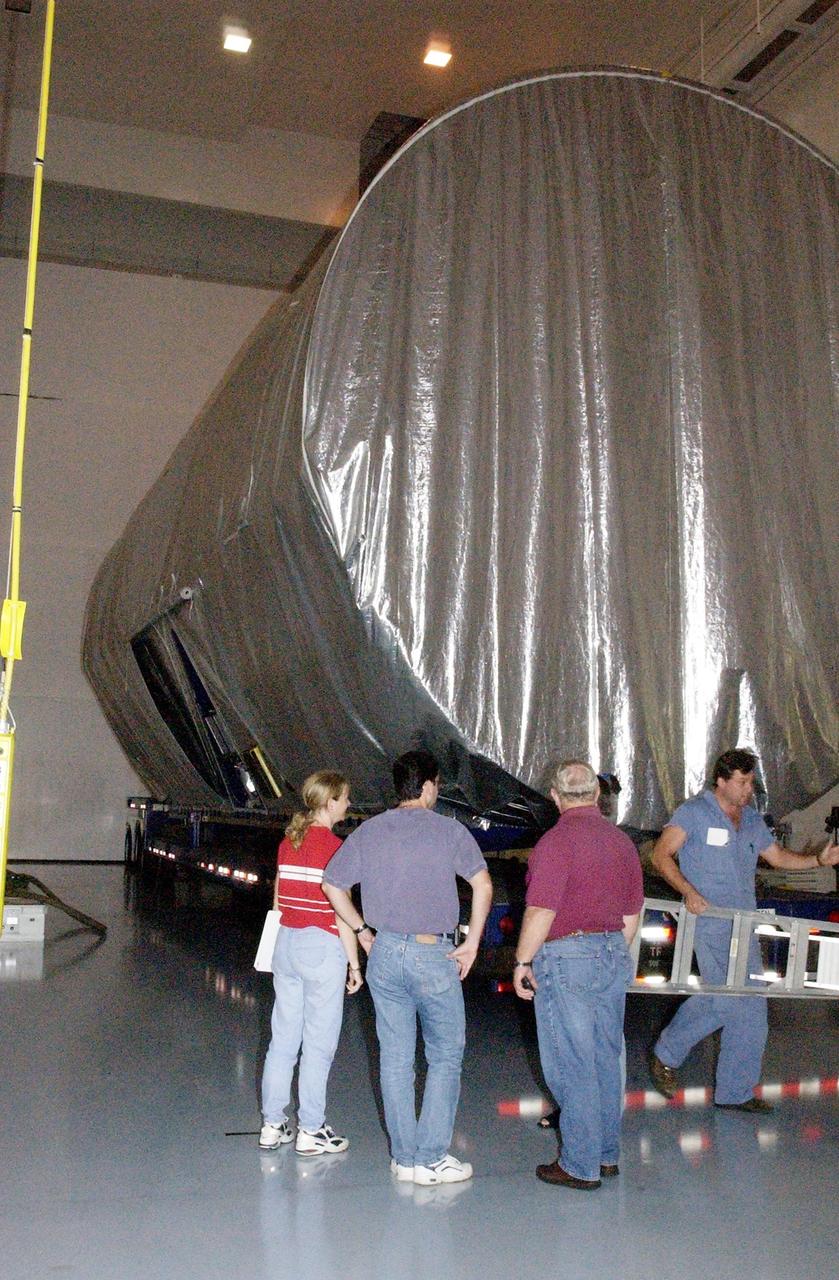
KENNEDY SPACE CENTER, FLA. -- In the Space Station Processing Facility, workers prepare to process the newly arrived S5 truss segment for the International Space Station. It will be fit checked for a Photo-Voltaic Radiator Grapple Fixture and also undergo a fit check to a truss simulator to ensure that it will fit properly with the S4 and S6 truss segments. S5 is scheduled for launch in October 2003 on mission STS-118. It will be the tenth truss assembled in an 11-truss structure
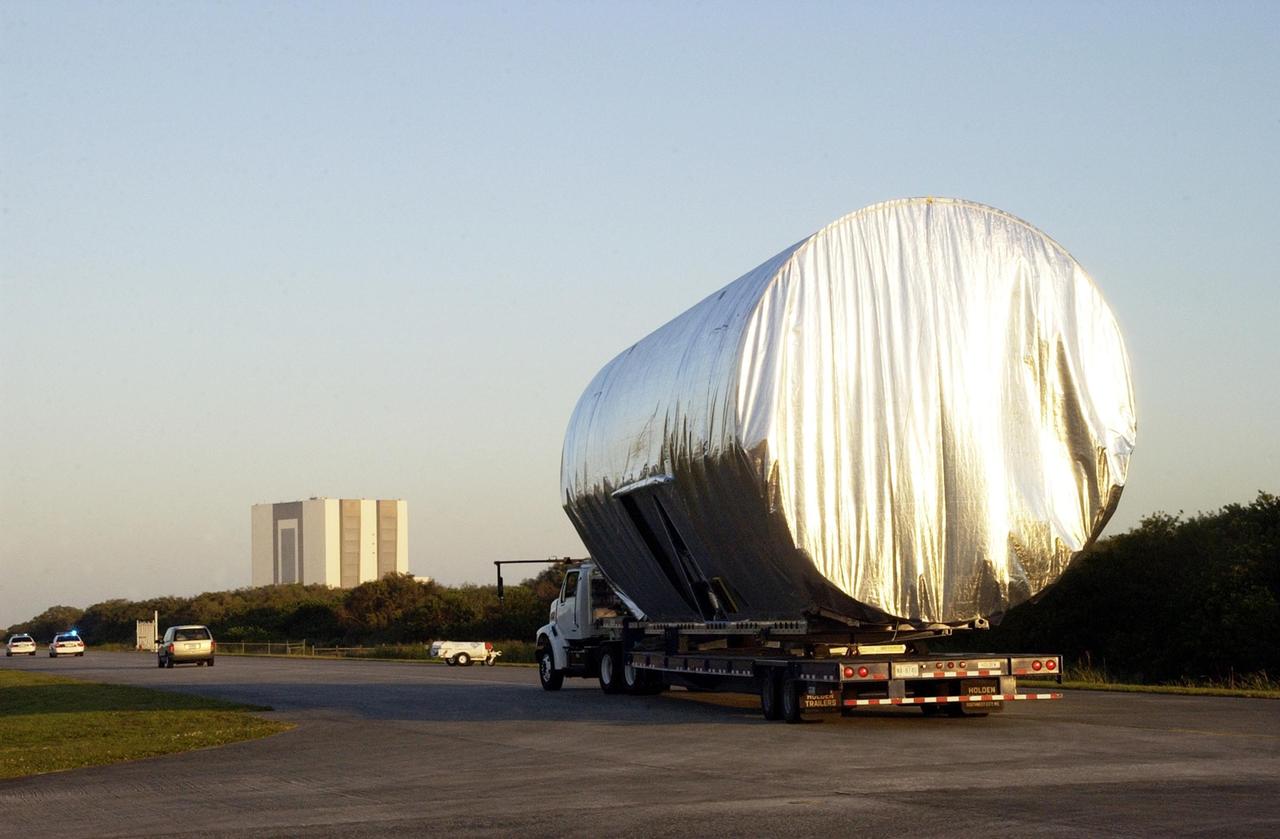
KENNEDY SPACE CENTER, FLA. -- The newly arrived S5 truss segment for the International Space Station passes near the Vehicle Assembly Building on its trek to the Space Station Processing Facility. There it will be fit checked for a Photo-Voltaic Radiator Grapple Fixture. It will also undergo a fit check to a truss simulator to ensure that it will fit properly with the S4 and S6 truss segments. S5 is scheduled for launch in October 2003 on mission STS-118. It will be the tenth truss assembled in an 11-truss structure.
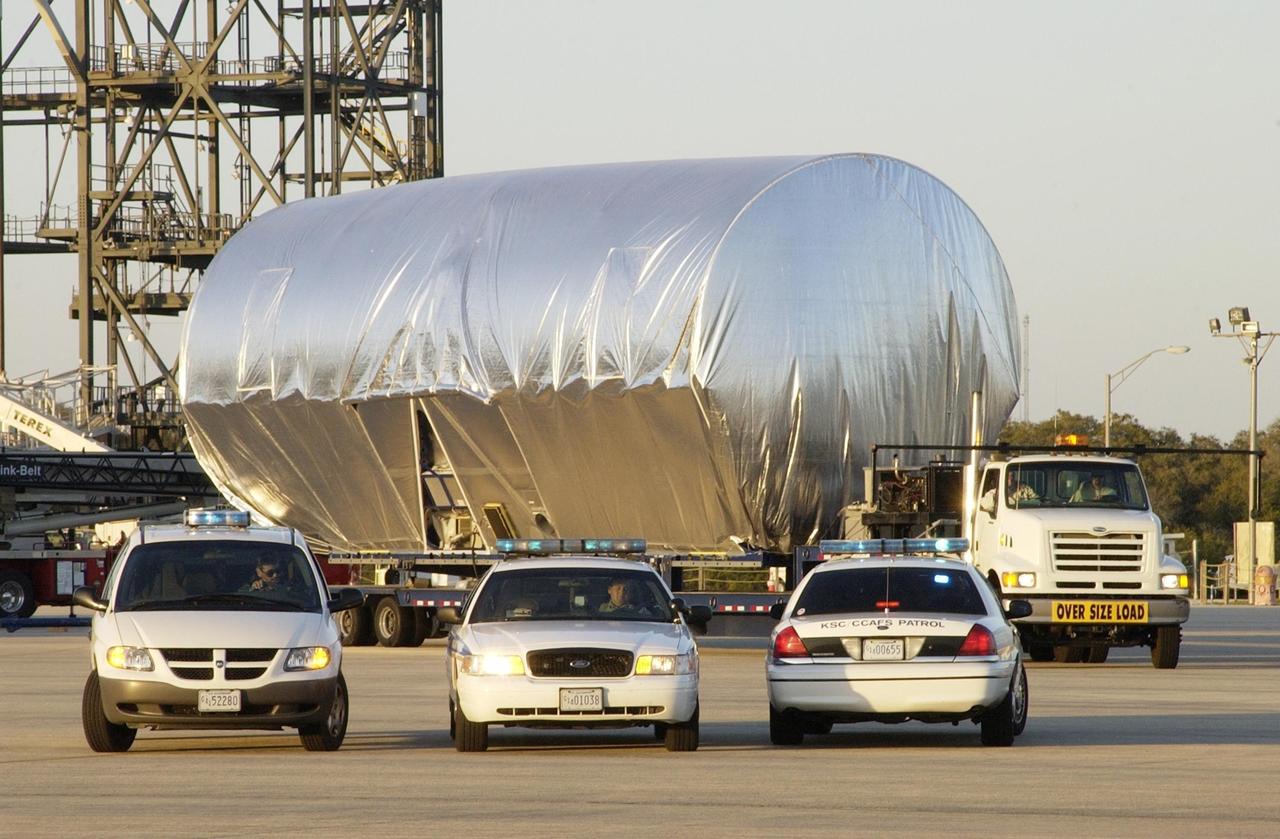
KENNEDY SPACE CENTER, FLA. -- At the Shuttle Landing Facility, the S5 truss segment for the International Space Station passes in front of the mate/demate device as it begins its move to the Space Station Processing Facility. There it will be fit checked for a Photo-Voltaic Radiator Grapple Fixture. It will also undergo a fit check to a truss simulator to ensure that it will fit properly with the S4 and S6 truss segments. S5 is scheduled for launch in October 2003 on mission STS-118. It will be the tenth truss assembled in an 11-truss structure
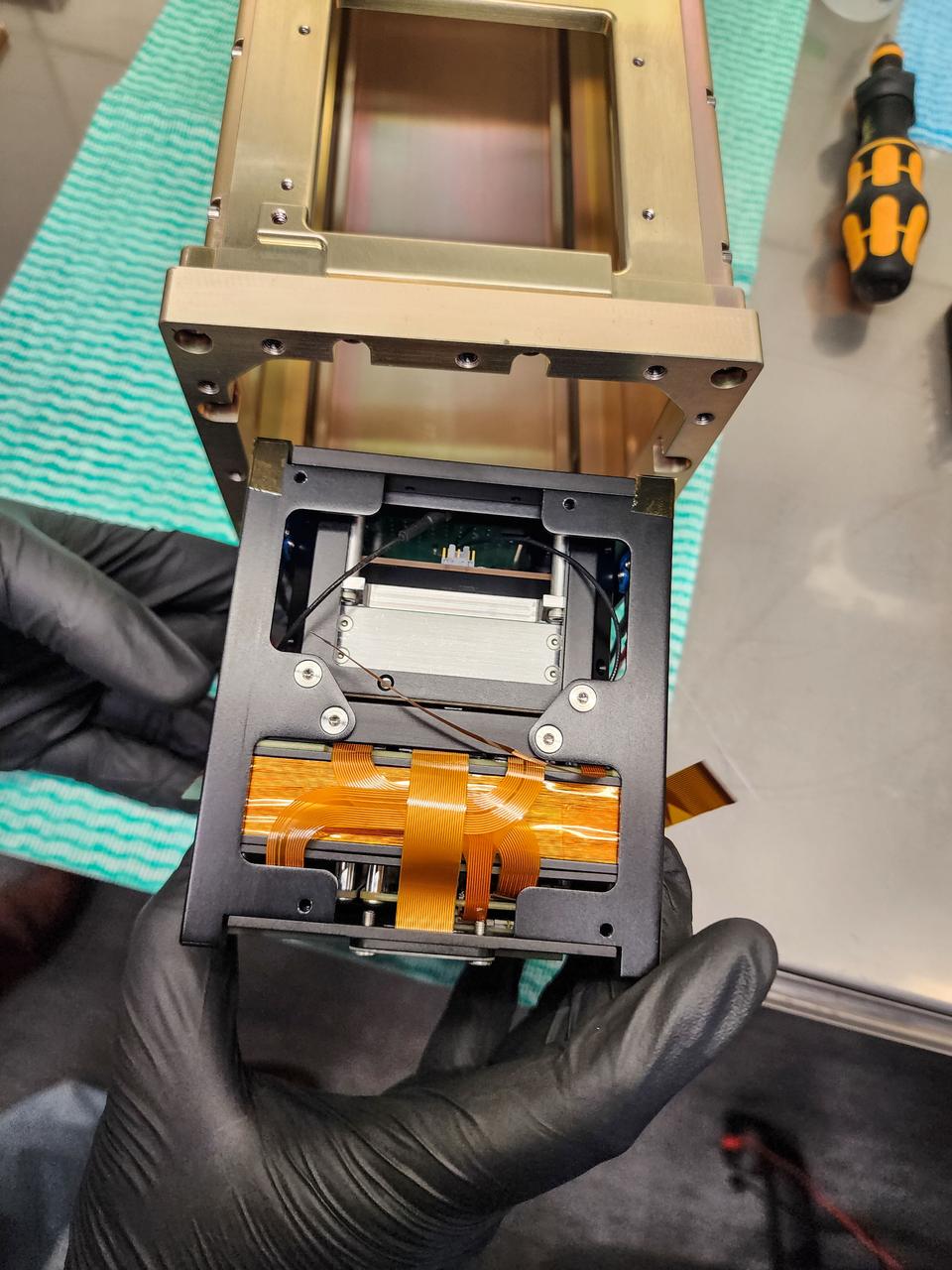
jsc2024e043918 (4/10/2024) ---Binar-2 undergoes deployer fit check testing to ensure all three satellites will be fit for payload integration...Image Credit: Binar Space Program.
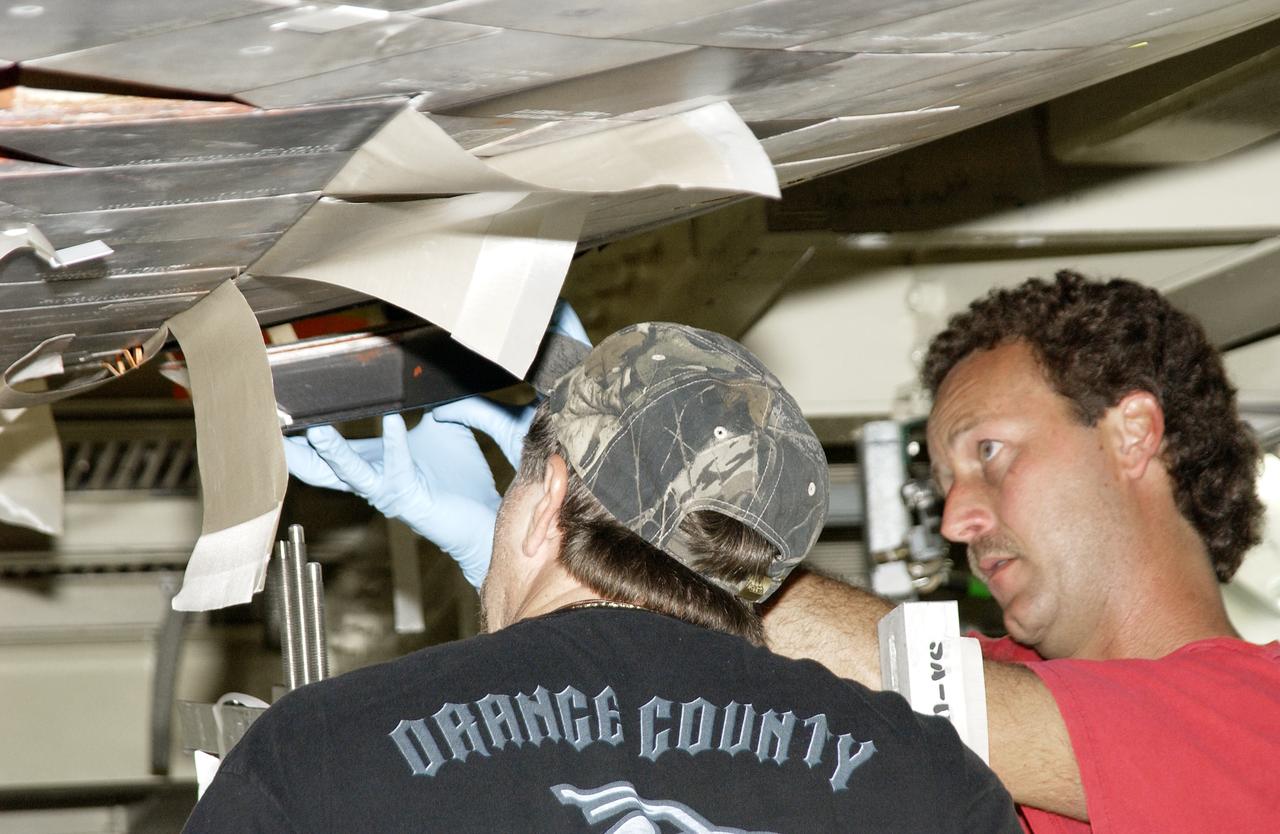
Workers make a tile-fit check on the underside of the orbiter Discovery in the Orbiter Processing Facility. The vehicle has undergone Orbiter Major Modifications in the past year, a process that includes the tile check.
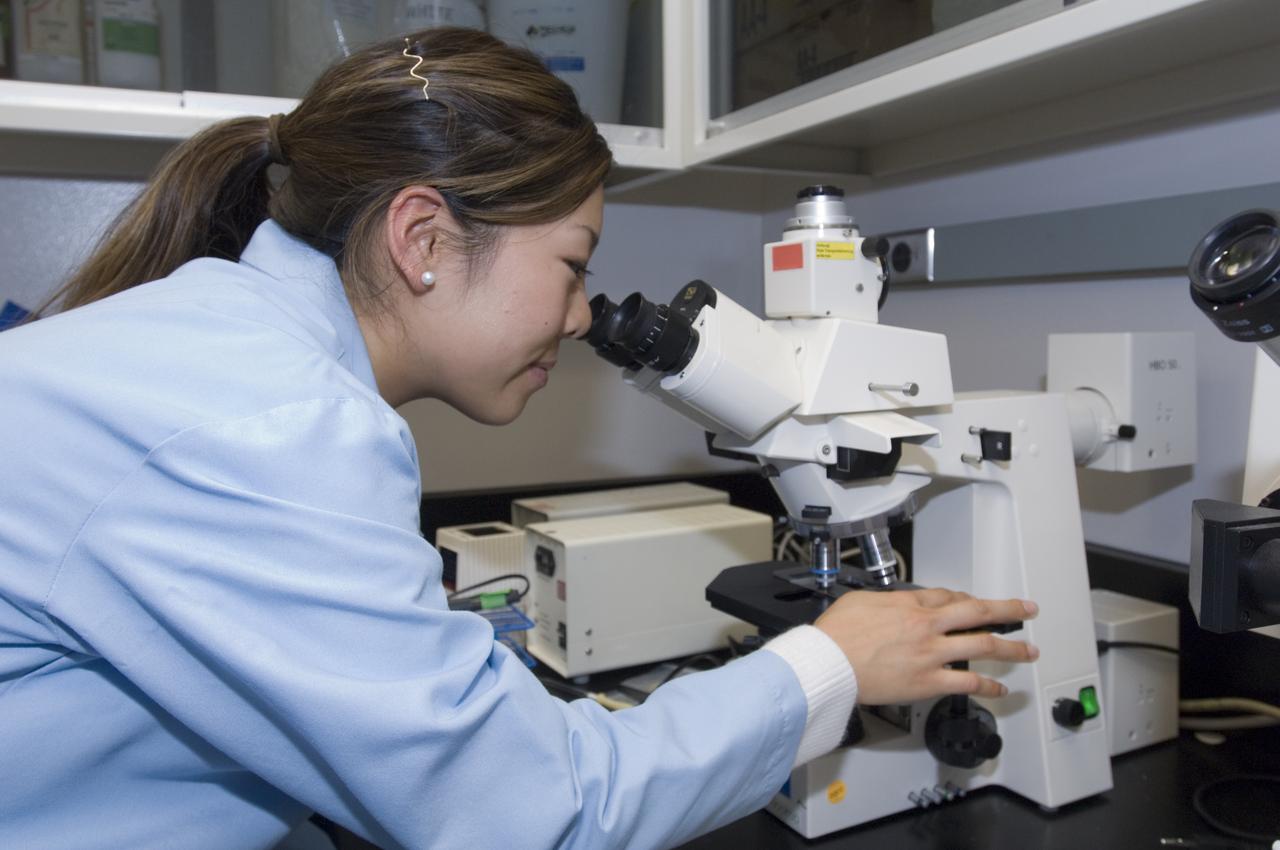
STS-121 PAYLOAD; FIT FRUITFLIES (DORSOPHILA) Post flight with Min Choi checking microscope
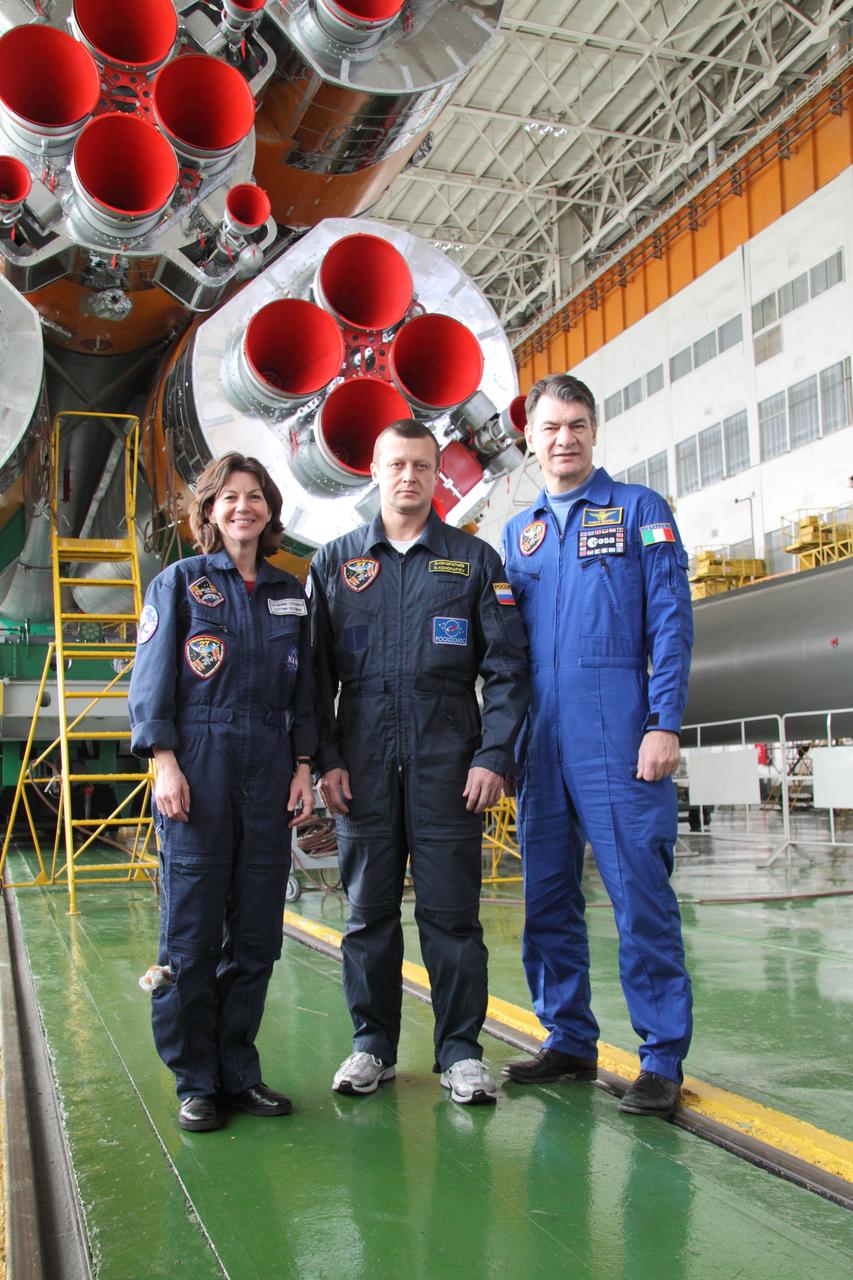
Coleman, Kondratyev and Nespoli depart Integration stand with Soyuz TMA-20 at completion of final fit check. -NASA/Victor Zelentsov
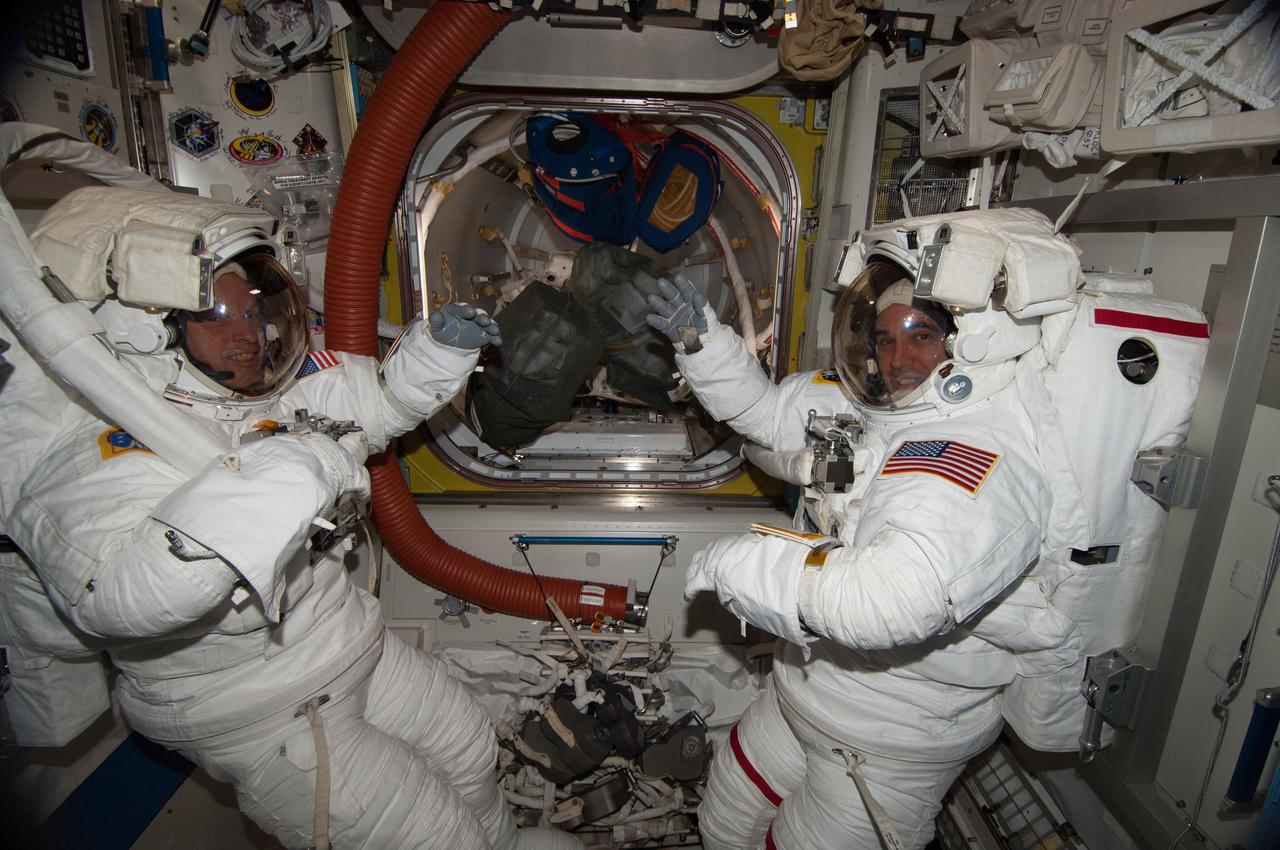
ISS039-E-013152 (17 April 2014) --- Inside the Quest airlock of the International Space Station, NASA astronauts Steve Swanson (left) and Rick Mastracchio, both Expedition 39 flight engineers, participate in a dress rehearsal for an upcoming spacewalk during which they are to replace a failed backup computer relay box in the S0 truss.
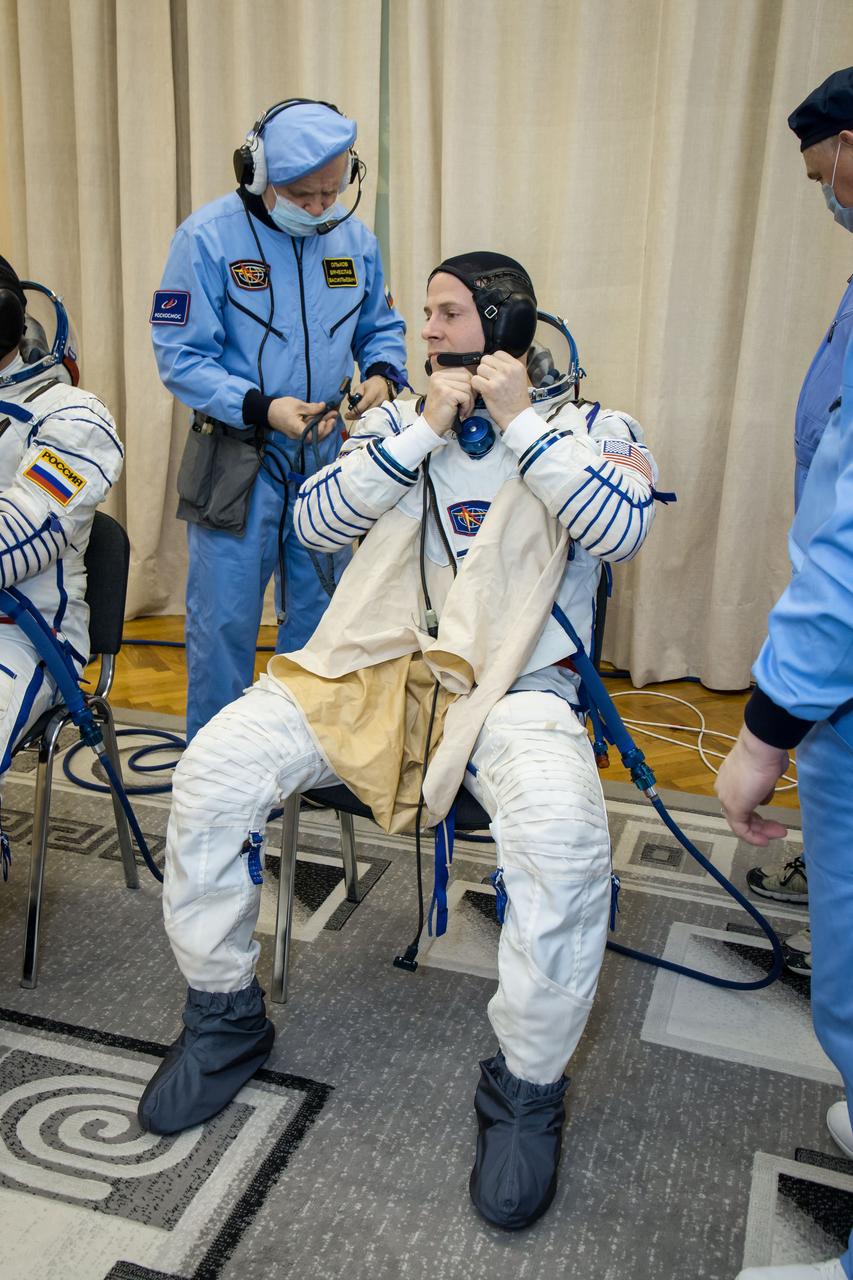
At the Baikonur Cosmodrome in Kazakhstan, Expedition 59 crewmember Nick Hague of NASA suits up for a Soyuz fit check dress rehearsal Feb. 27 during pre-launch training. Hague, Christina Koch of NASA and Alexey Ovchinin of Roscosmos will launch March 14, U.S. time, on the Soyuz MS-12 spacecraft from the Baikonur Cosmodrome in Kazakhstan for a six-and-a-half month mission on the International Space Station. NASA/Victor Zelentsov
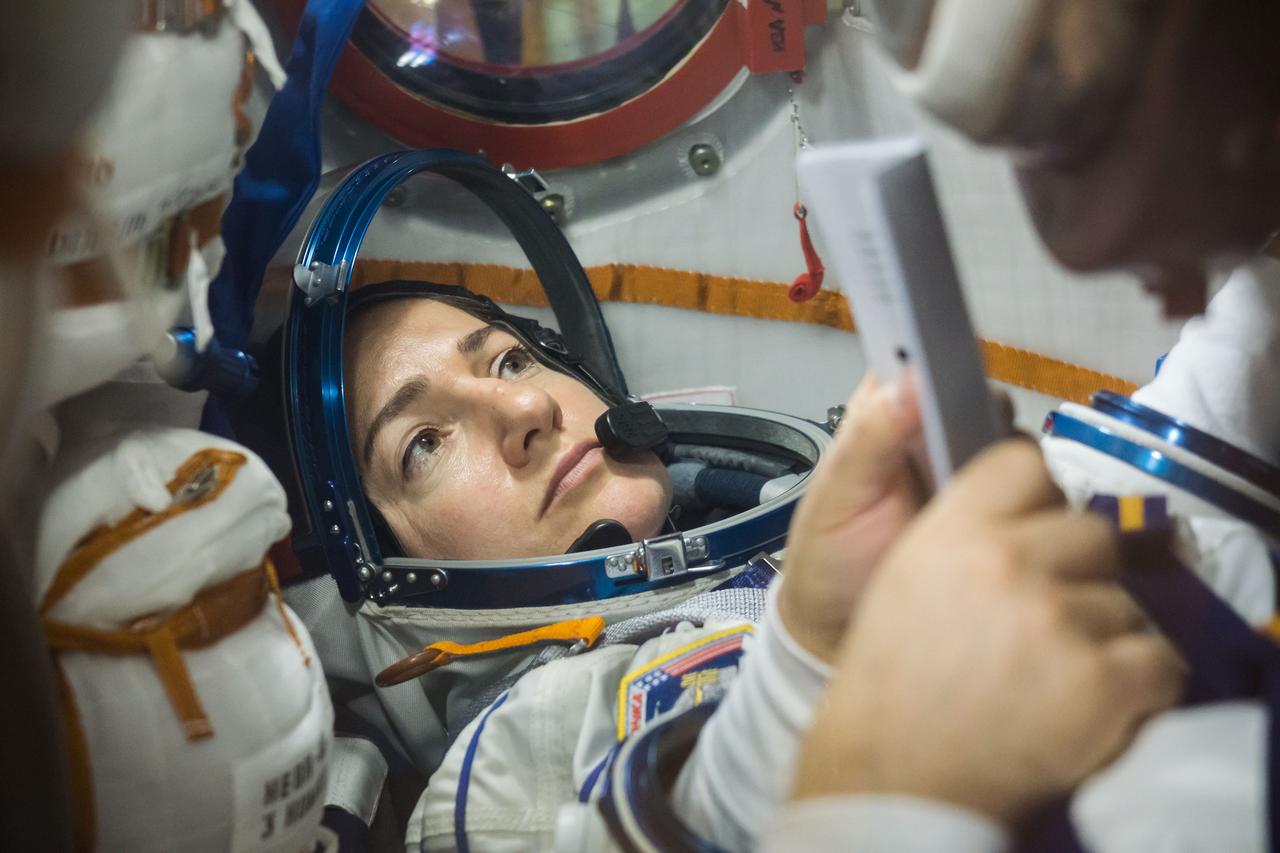
In the Integration Building at the Baikonur Cosmodrome in Kazakhstan, Expedition 61 crewmember Jessica Meir of NASA runs through procedures Sept. 11 aboard the Soyuz MS-15 spacecraft during an initial Soyuz vehicle fit check. Meir, spaceflight participant Hazzaa Ali Almansoori of the United Arab Emirates and Expedition 61 crewmember Oleg Skripochka of Roscosmos will launch Sept. 25 on the Soyuz MS-15 spacecraft from the Baikonur Cosmodrome for a mission on the International Space Station. NASA/Victor Zelentsov
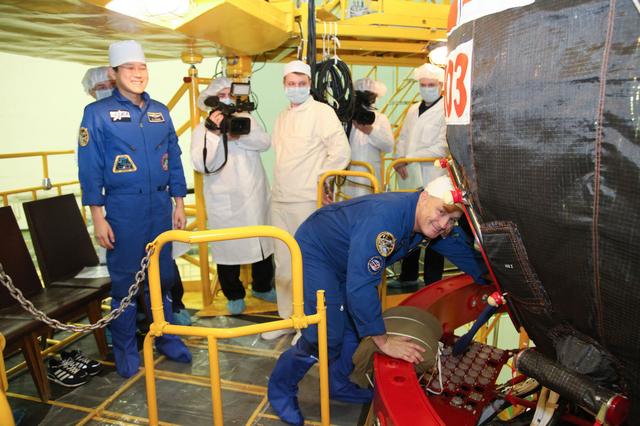
jsc2017e136446 - In the Integration Facility at the Baikonur Cosmodrome in Kazakhstan, Expedition 54-55 crewmember Scott Tingle of NASA (right) boards the Soyuz MS-07 spacecraft Dec. 5 as part of the first fit check dress rehearsal activities while crewmate Norishige Kanai of the Japan Aerospace Exploration Agency (JAXA, left) looks on. Tingle, Kanai and Anton Shkaplerov of the Russian Federal Space Agency (Roscosmos) will launch Dec. 17 in the Soyuz MS-07 vehicle for a five-month mission on the International Space Station...Courtesy of Roscosmos.
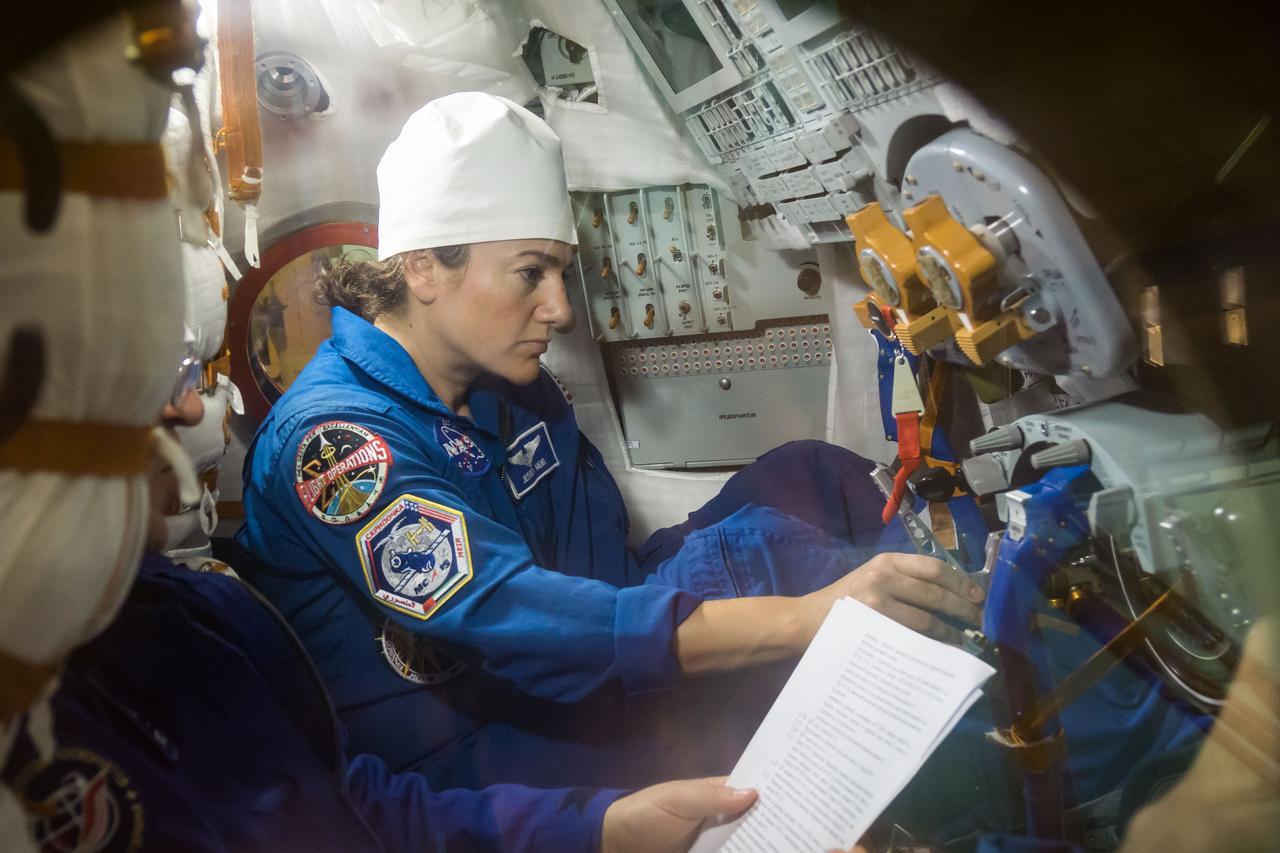
In the Integration Building at the Baikonur Cosmodrome in Kazakhstan, Expedition 61 crewmember Jessica Meir of NASA runs through procedures Sept. 11 aboard the Soyuz MS-15 spacecraft during an initial Soyuz vehicle fit check. Meir, spaceflight participant Hazzaa Ali Almansoori of the United Arab Emirates and Expedition 61 crewmember Oleg Skripochka of Roscosmos will launch Sept. 25 on the Soyuz MS-15 spacecraft from the Baikonur Cosmodrome for a mission on the International Space Station. NASA/Victor Zelentsov
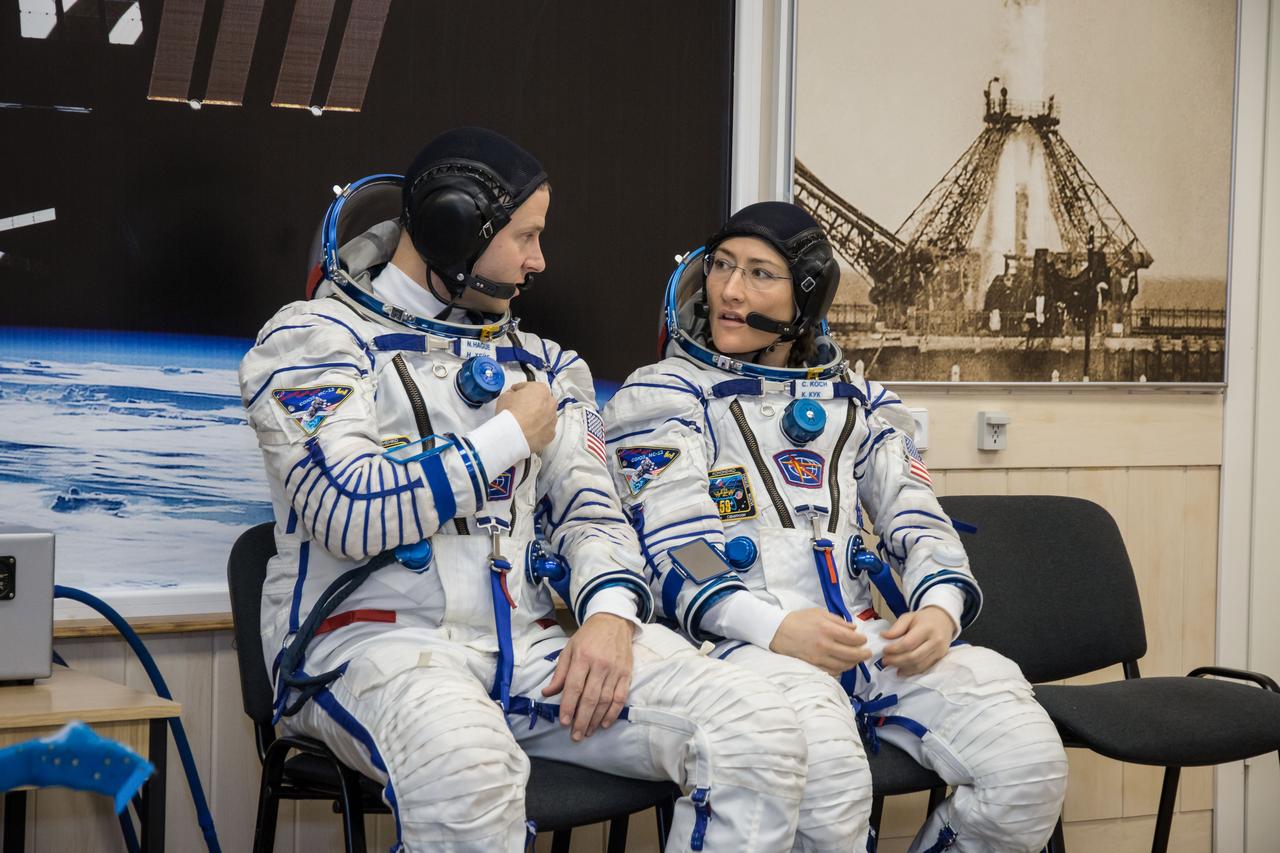
At the Baikonur Cosmodrome in Kazakhstan, Expedition 59 crewmembers Nick Hague (left) and Christina Koch (right) of NASA discuss procedures Feb. 27 during a Soyuz fit check dress rehearsal that is part of pre-launch training. Hague, Koch and Alexey Ovchinin of Roscosmos will launch March 14, U.S. time, on the Soyuz MS-12 spacecraft from the Baikonur Cosmodrome in Kazakhstan for a six-and-a-half month mission on the International Space Station. NASA/Victor Zelentsov
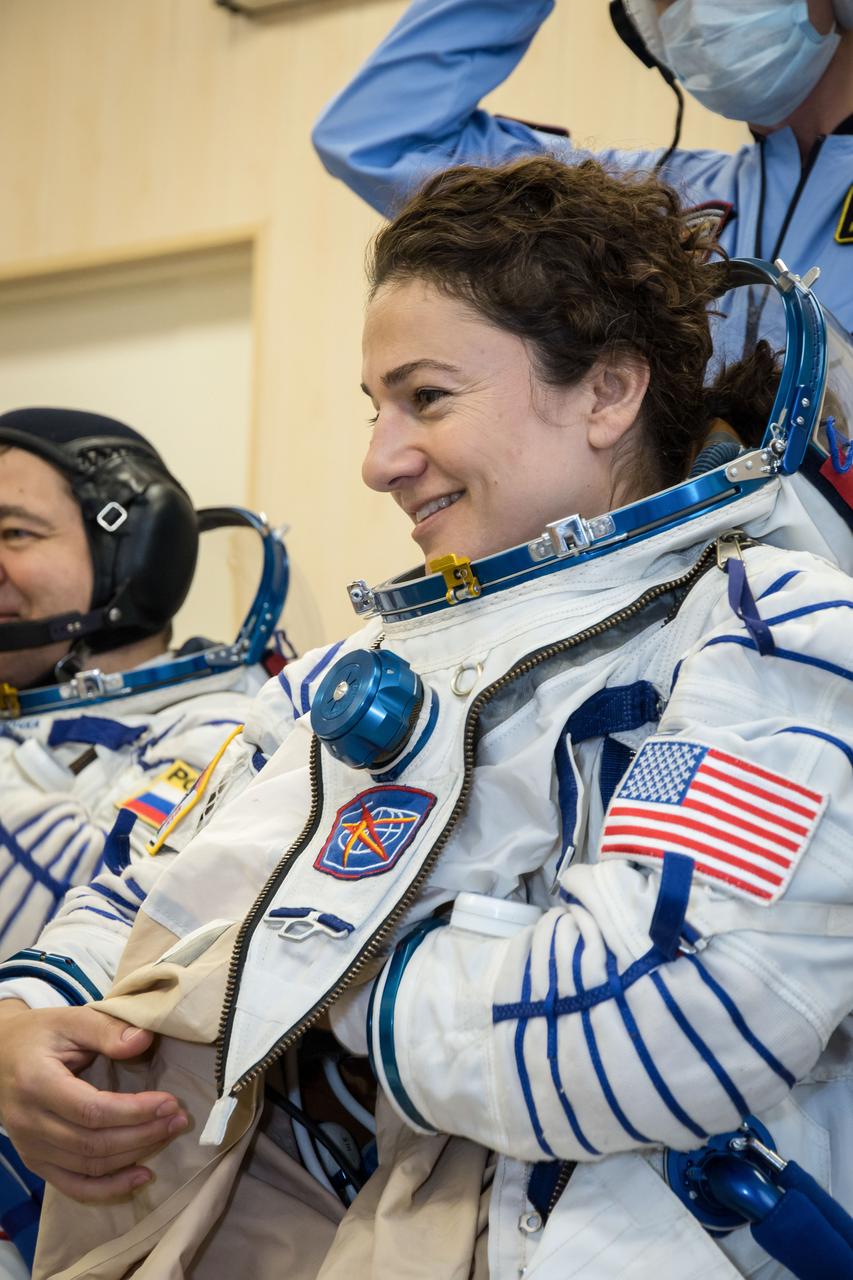
In the Integration Building at the Baikonur Cosmodrome in Kazakhstan, Expedition 61 crewmember Jessica Meir of NASA suits up Sept. 11 for a fit check aboard the Soyuz MS-15 spacecraft. Meir, Hazzaa Ali Almansoori of the United Arab Emirates and Expedition 61 crewmember Oleg Skripochka of Roscosmos will launch Sept. 25 on the Soyuz MS-15 spacecraft from the Baikonur Cosmodrome for a mission on the International Space Station. NASA/Victor Zelentsov
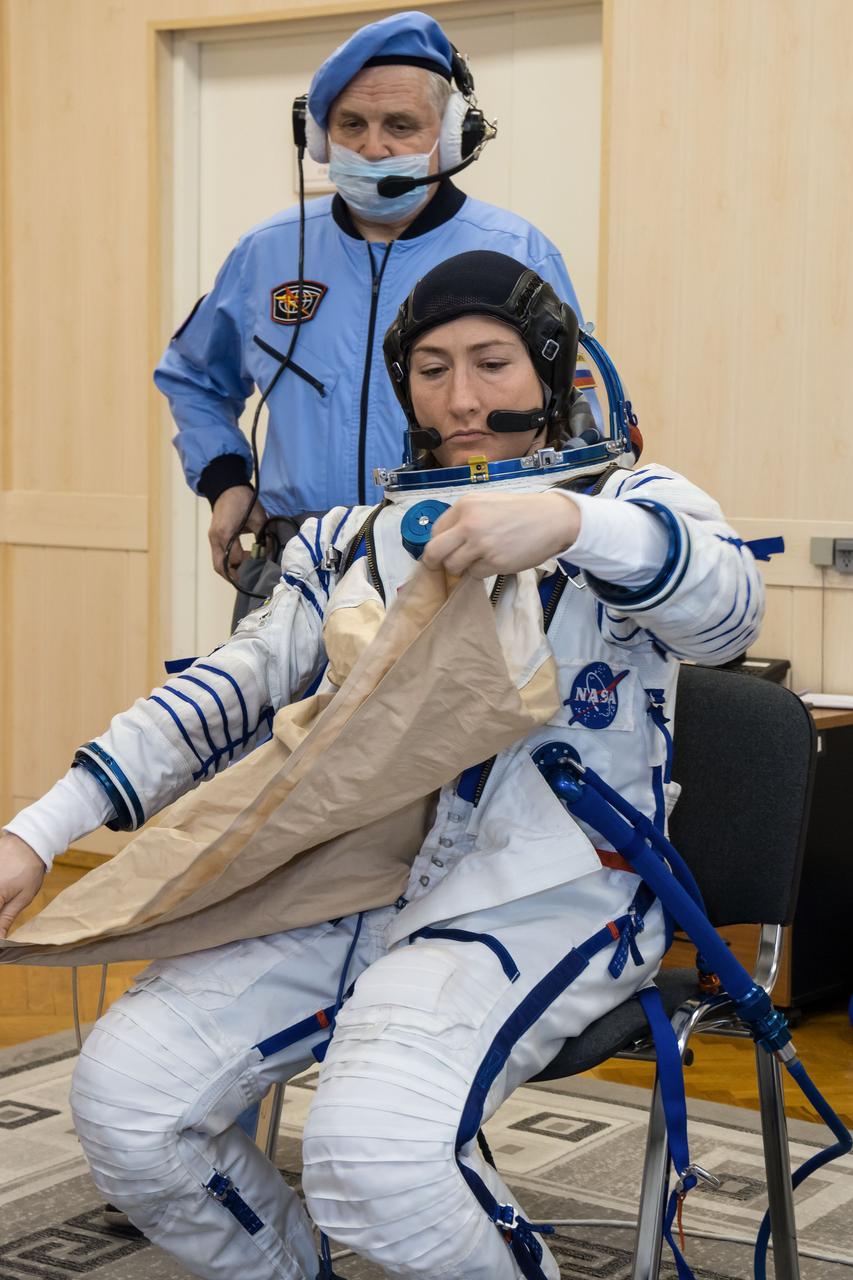
At the Baikonur Cosmodrome in Kazakhstan, Expedition 59 crewmember Christina Koch of NASA suits up for a Soyuz fit check dress rehearsal Feb. 27 during pre-launch training. Koch, Nick Hague of NASA and Alexey Ovchinin of Roscosmos will launch March 14, U.S. time, on the Soyuz MS-12 spacecraft from the Baikonur Cosmodrome in Kazakhstan for a six-and-a-half month mission on the International Space Station. NASA/Victor Zelentsov
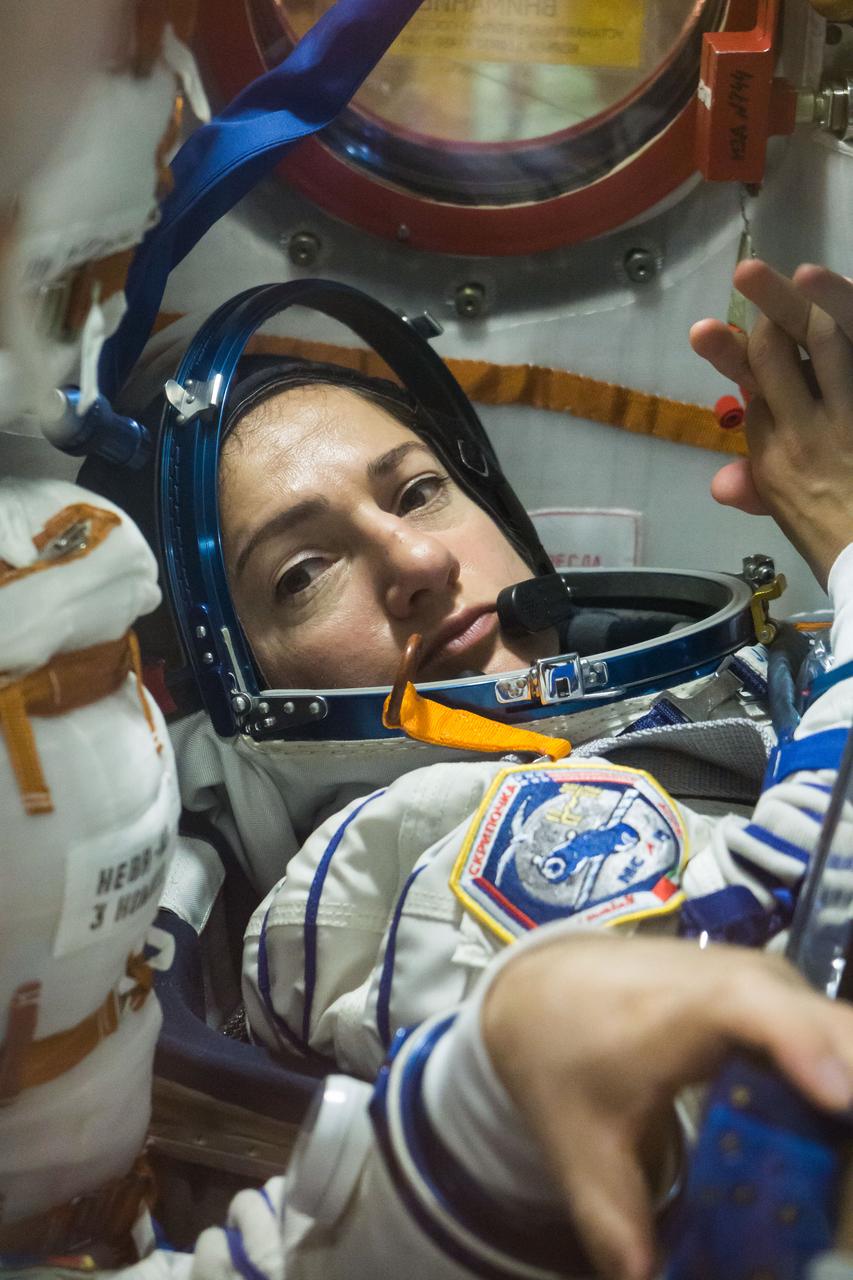
In the Integration Building at the Baikonur Cosmodrome in Kazakhstan, Expedition 61 crewmember Jessica Meir of NASA runs through procedures Sept. 11 aboard the Soyuz MS-15 spacecraft during an initial Soyuz vehicle fit check. Meir, spaceflight participant Hazzaa Ali Almansoori of the United Arab Emirates and Expedition 61 crewmember Oleg Skripochka of Roscosmos will launch Sept. 25 on the Soyuz MS-15 spacecraft from the Baikonur Cosmodrome for a mission on the International Space Station. NASA/Victor Zelentsov
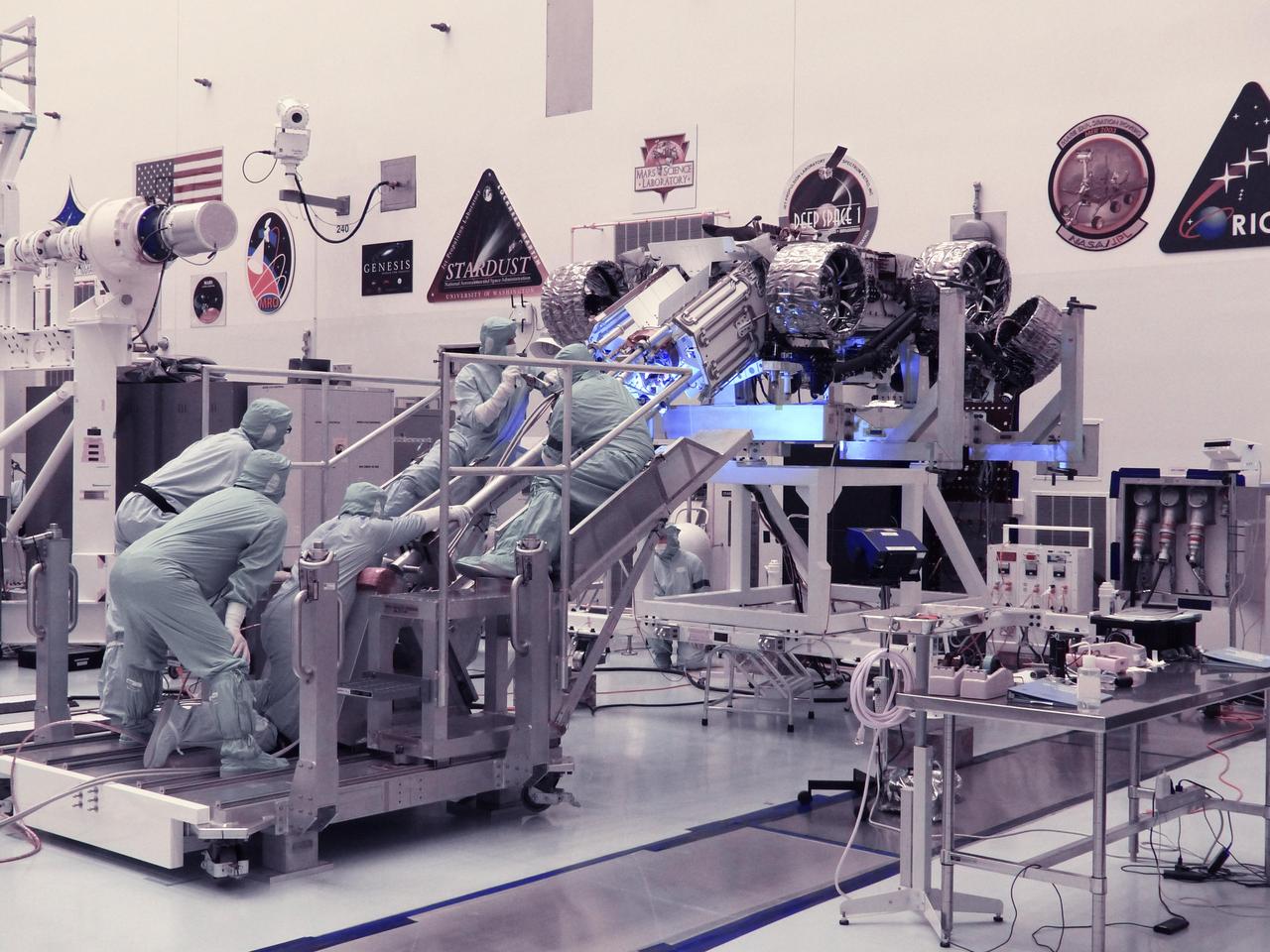
Technicians in the payload processing facility at NASA's Kennedy Space Center in Florida perform a fit check between NASA'S Mars 2020 Perseverance rover and its Multi-Mission Radioisotope Thermoelectric Generator on April 16-17, 2020. The Multi-Mission Radioisotope Thermoelectric Generator is designed and built by the U.S. Department of Energy, and provided to NASA as part of the space agency's Radioisotope Power Systems Program. It arrived at NASA KSC in April 2020 following its final assembly and transport from the Department of Energy's Idaho National Laboratory. The fit check is the first time that the fueled flight generator is connected to the rover. After the successful fit check, the Multi-Mission Radioisotope Thermoelectric Generator was disconnected; it will be connected to the rover for the final time on the launch pad atop the mission's Atlas V launch vehicle in July, before the planned launch of the Mars 2020 mission. The Multi-Mission Radioisotope Thermoelectric Generator is a space nuclear power system that produces about 110 watts of electrical power to run the rover's systems and science instruments, and extra heat to keep them warm during the frigid Martian nights and winter seasons. It converts the heat from the natural radioactive decay of plutonium dioxide into electricity using thermocouples with no moving parts. The choice of a Multi-Mission Radioisotope Thermoelectric Generator as the rover's power system gave mission planners significantly more flexibility in selecting the rover's landing site and in planning its surface operations. https://photojournal.jpl.nasa.gov/catalog/PIA23827
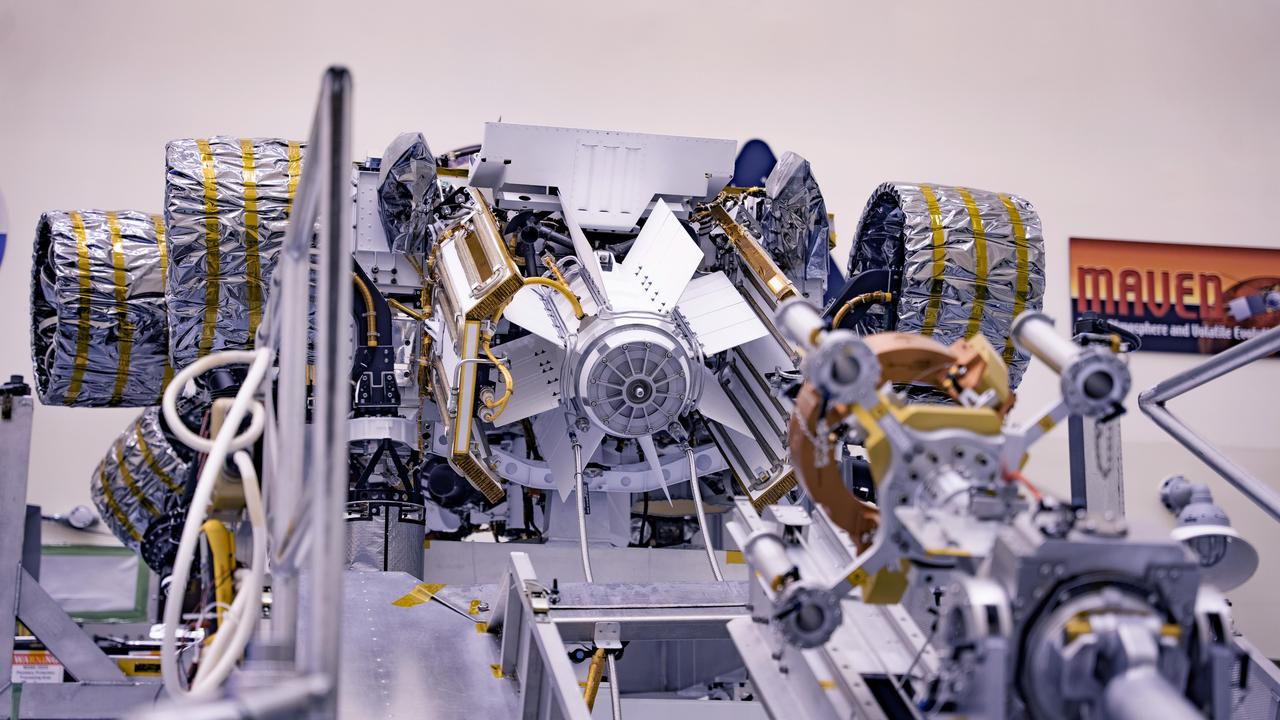
The Multi-Mission Radioisotope Thermoelectric Generator for NASA'S Mars 2020 Perseverance rover is shown during a fit check with the rover in a payload processing facility at NASA's Kennedy Space Center in Florida on April 16-17, 2020. The Multi-Mission Radioisotope Thermoelectric Generator is designed and built by the U.S. Department of Energy, and provided to NASA as part of the space agency's Radioisotope Power Systems Program. It arrived at NASA KSC in April 2020 following its final assembly and transport from the Department of Energy's Idaho National Laboratory. The fit check is the first time that the fueled flight generator is connected to the rover. After the successful fit check, the Multi-Mission Radioisotope Thermoelectric Generator was disconnected; it will be connected to the rover for the final time on the launch pad atop the mission's Atlas V launch vehicle in July, before the planned launch of the Mars 2020 mission. The Multi-Mission Radioisotope Thermoelectric Generator is a space nuclear power system that produces about 110 watts of electrical power to run the rover's systems and science instruments, and extra heat to keep them warm during the frigid Martian nights and winter seasons. It converts the heat from the natural radioactive decay of plutonium dioxide into electricity using thermocouples with no moving parts. The choice of a Multi-Mission Radioisotope Thermoelectric Generator as the rover's power system gave mission planners significantly more flexibility in selecting the rover's landing site and in planning its surface operations. https://photojournal.jpl.nasa.gov/catalog/PIA23981
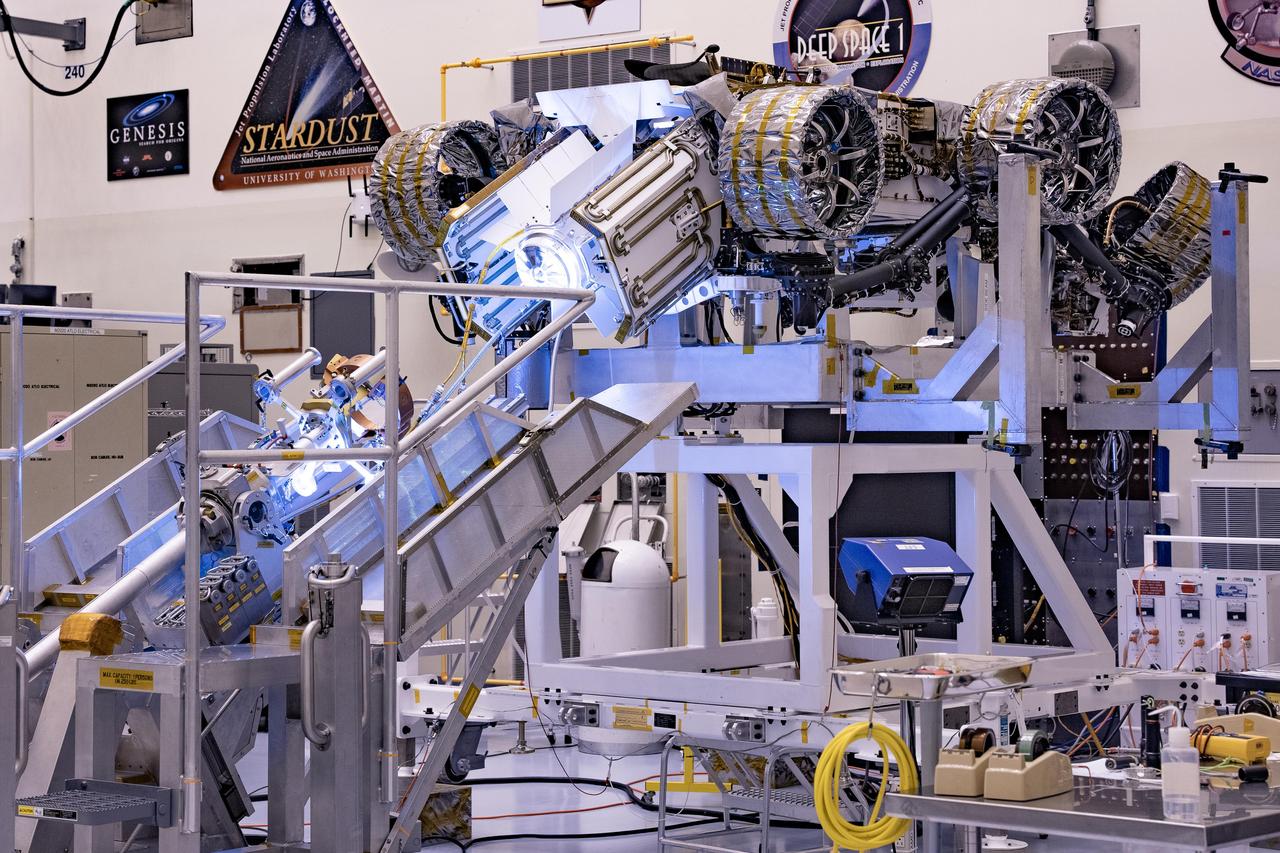
This image shows the Multi-Mission Radioisotope Thermoelectric Generator for NASA'S Mars 2020 Perseverance rover during a fit check with the rover in the payload processing facility at NASA's Kennedy Space Center in Florida on April 16-17, 2020. The Multi-Mission Radioisotope Thermoelectric Generator is designed and built by the U.S. Department of Energy, and provided to NASA as part of the space agency's Radioisotope Power Systems Program. It arrived at NASA KSC in April 2020 following its final assembly and transport from the Department of Energy's Idaho National Laboratory. The fit check is the first time that the fueled flight generator is connected to the rover. After the successful fit check, the Multi-Mission Radioisotope Thermoelectric Generator was disconnected; it will be connected to the rover for the final time on the launch pad atop the mission's Atlas V launch vehicle in July, before the planned launch of the Mars 2020 mission. The Multi-Mission Radioisotope Thermoelectric Generator is a space nuclear power system that produces about 110 watts of electrical power to run the rover's systems and science instruments, and extra heat to keep them warm during the frigid Martian nights and winter seasons. It converts the heat from the natural radioactive decay of plutonium dioxide into electricity using thermocouples with no moving parts. The choice of a Multi-Mission Radioisotope Thermoelectric Generator as the rover's power system gave mission planners significantly more flexibility in selecting the rover's landing site and in planning its surface operations. https://photojournal.jpl.nasa.gov/catalog/PIA23982