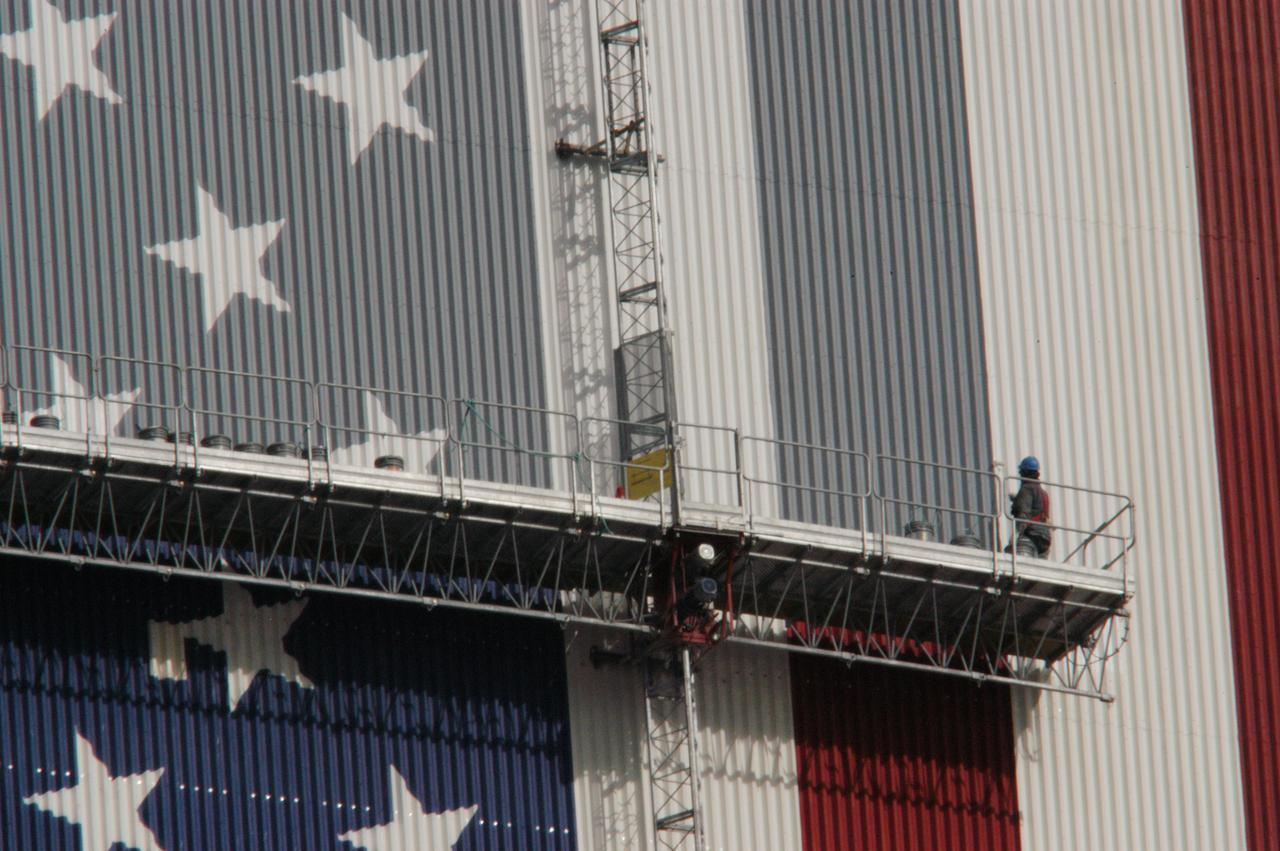
Workers painting the Flag and Meatball on the VAB.
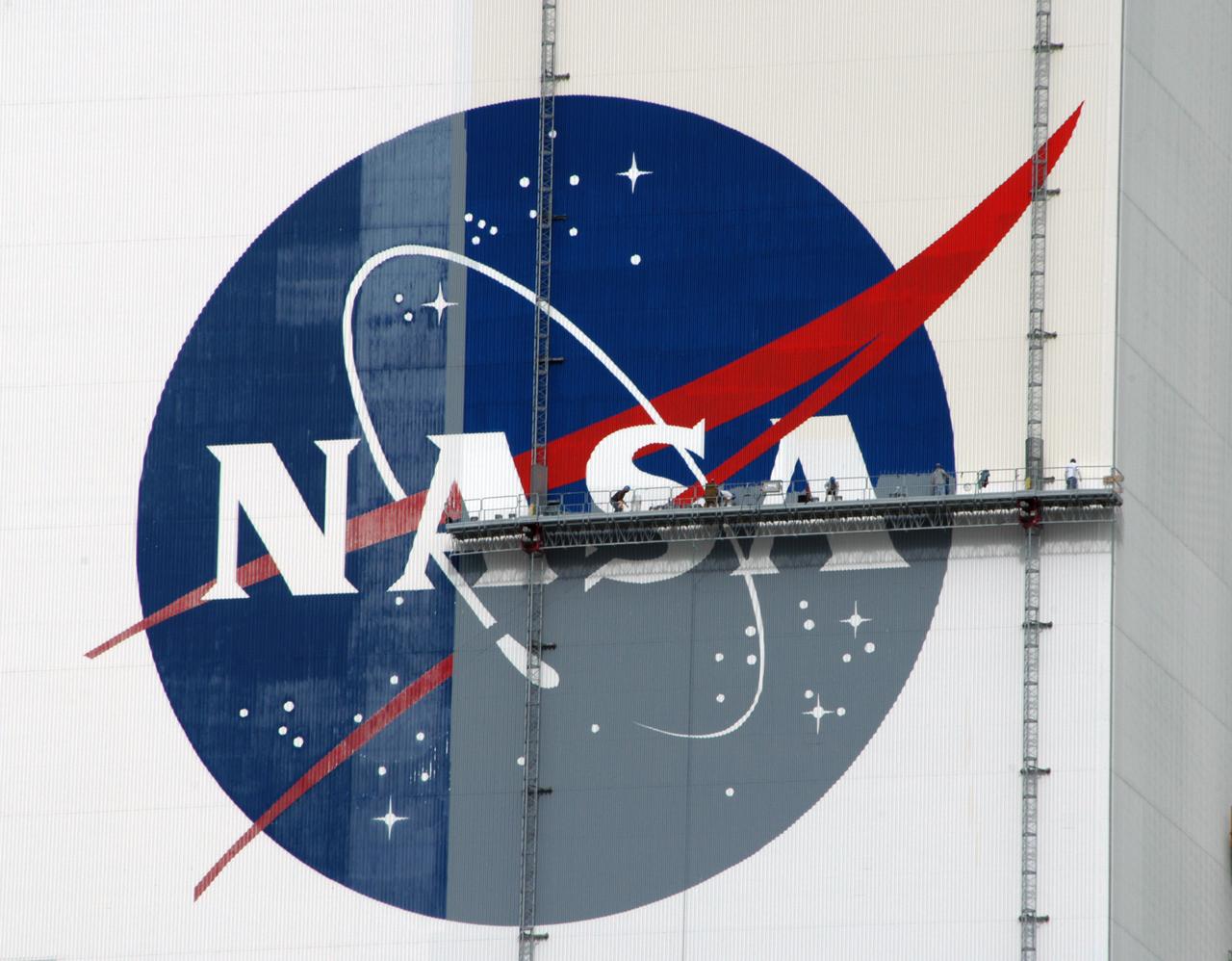
Workers painting the Flag and Meatball on the VAB.
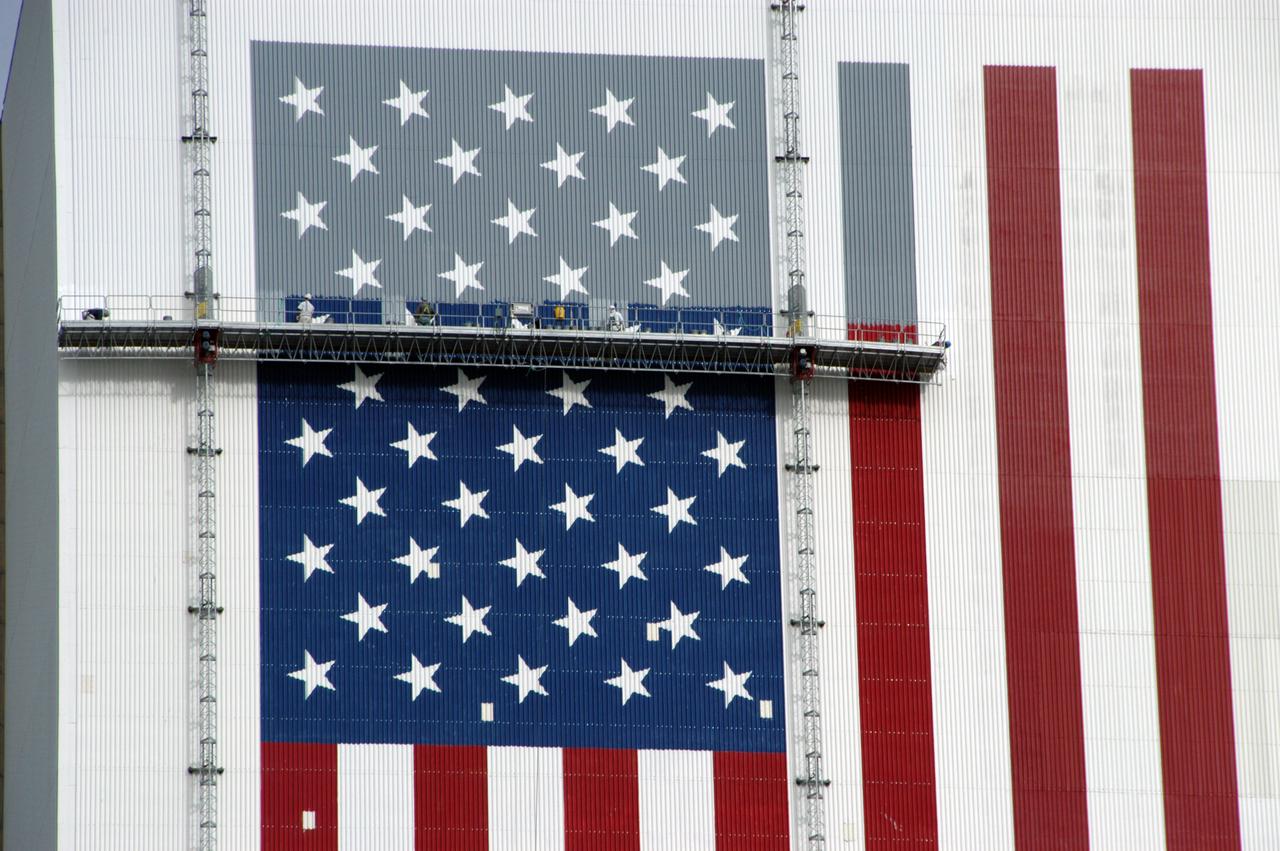
Workers painting the Flag and Meatball on the VAB.
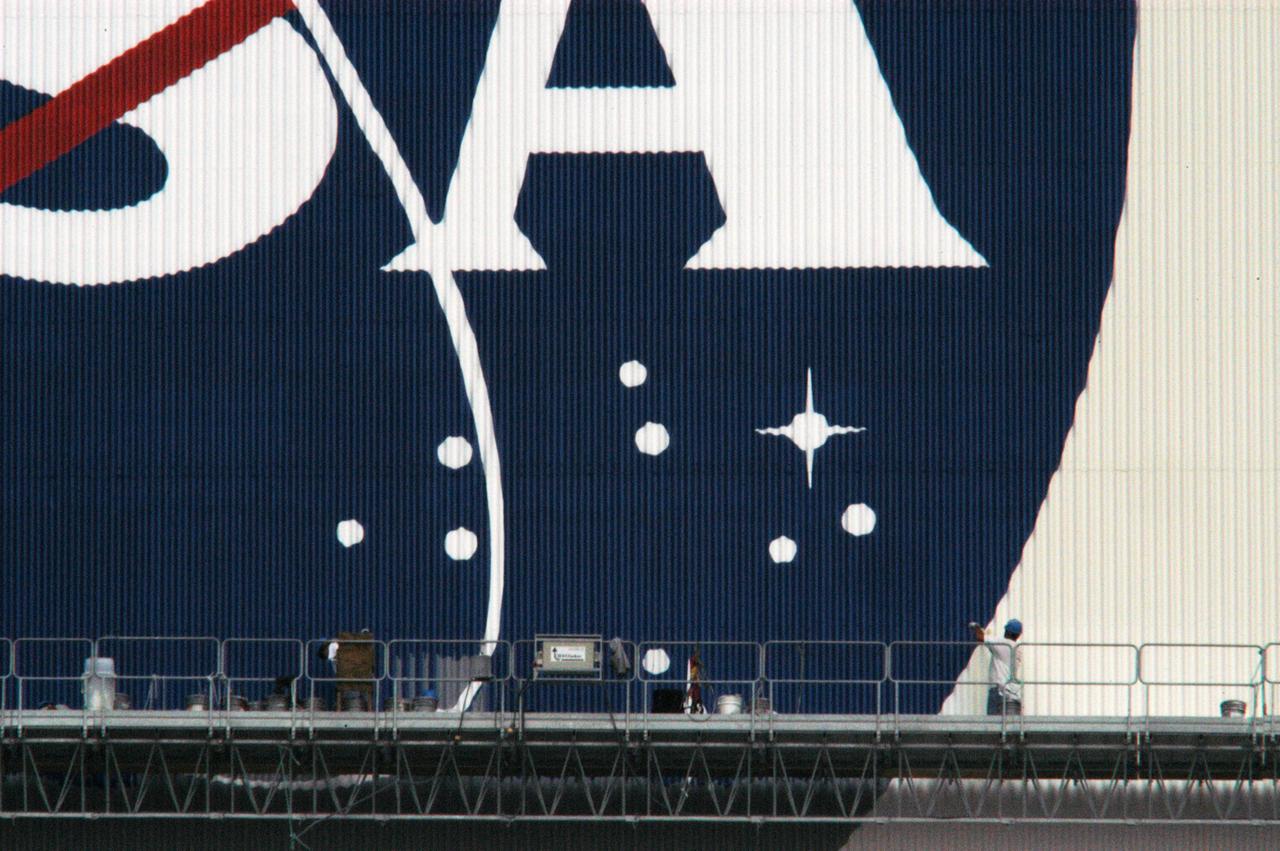
Workers painting the Flag and Meatball on the VAB.

Workers painting the Flag and Meatball on the VAB.
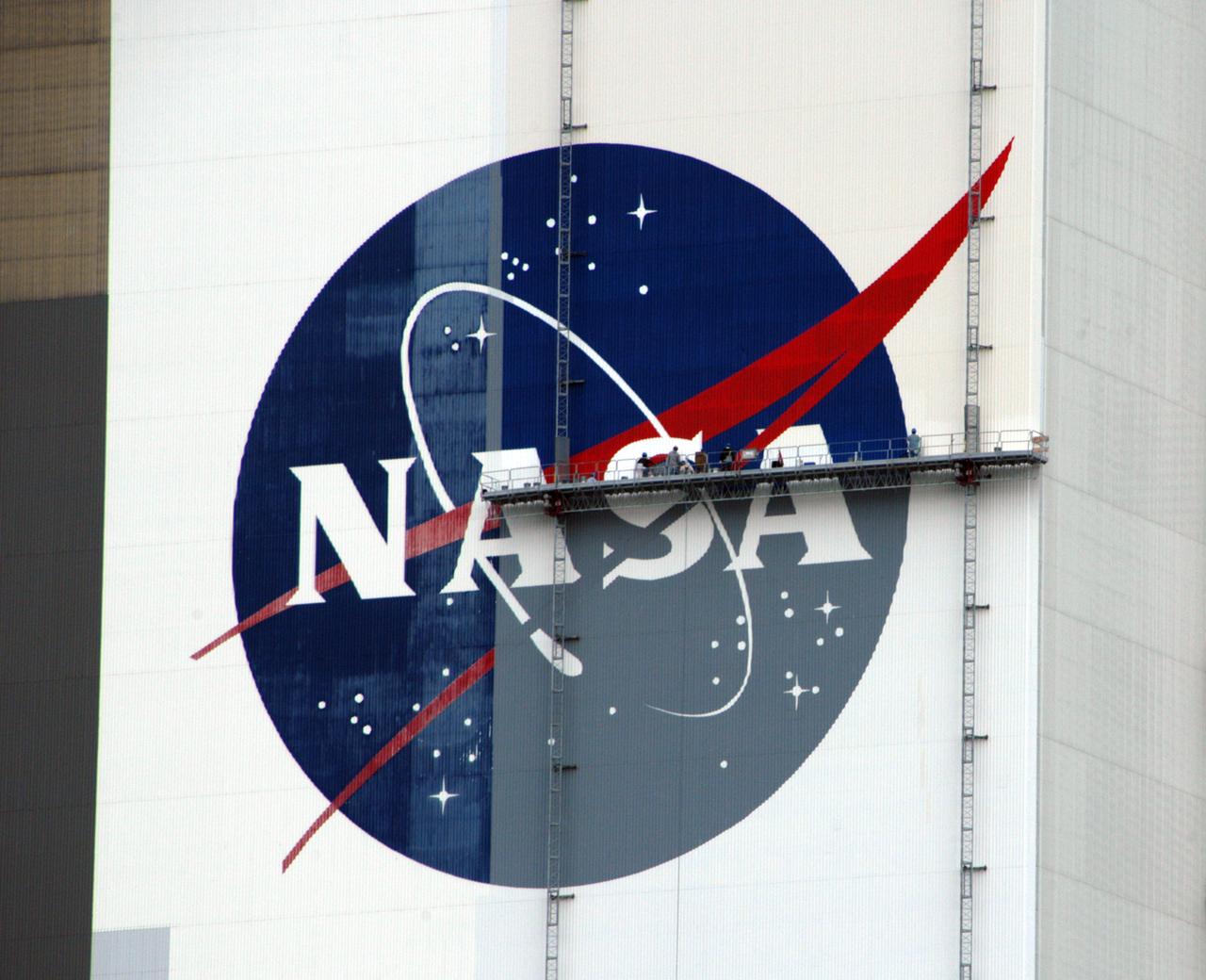
Workers painting the Flag and Meatball on the VAB.
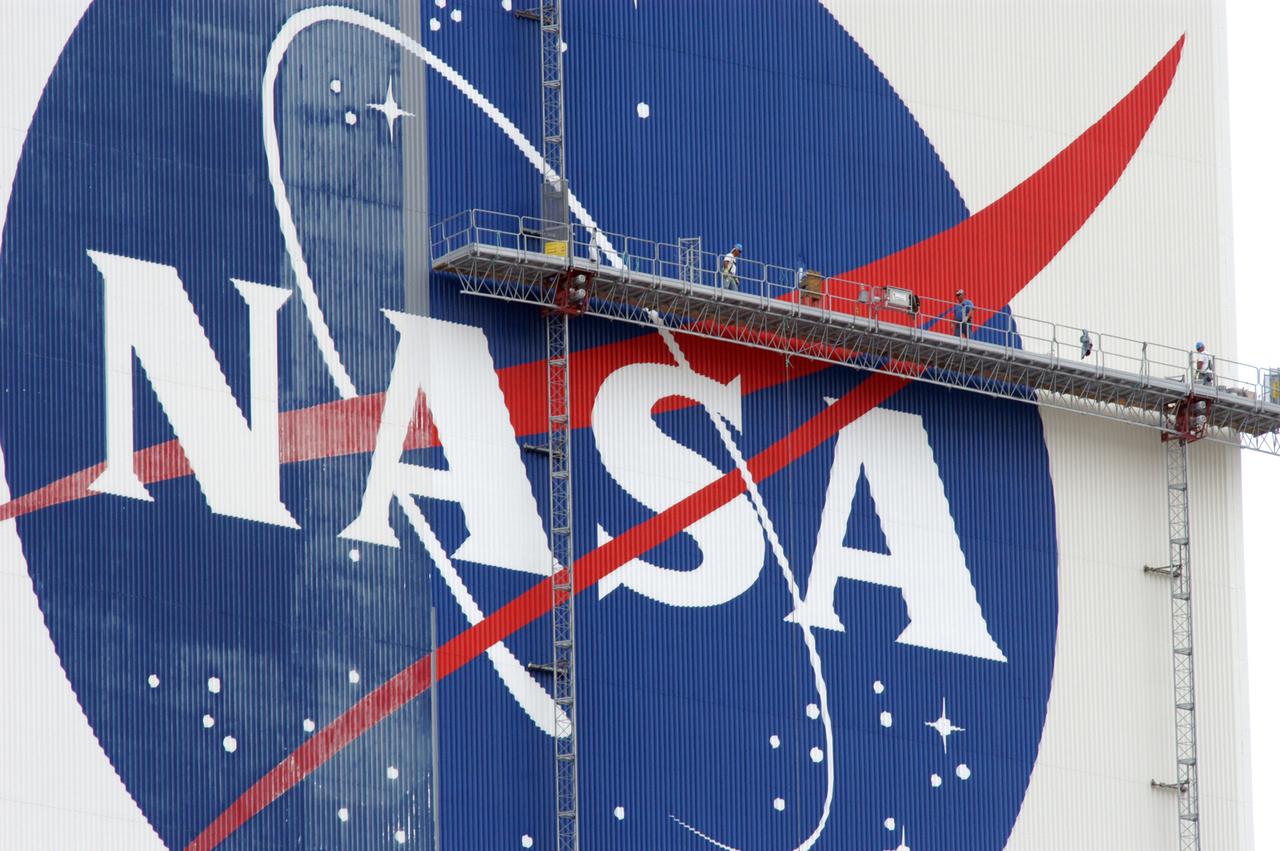
On platforms suspended from the top of the 525-foot-high VAB, workers use rollers and brushes to repaint the U.S. flag on the southwest side of the Vehicle Assembly Building. The flag spans an area 209 feet by 110 feet, or about 23, 437 square feet. Each stripe is 9 feet wide and each star is 6 feet in diameter. The logo is also being painted. Known as the "meatball," the logo measures 110 feet by 132 feet, or about 12,300 square feet. The flag and logo were last painted in 1998, honoring NASA's 40th anniversary.
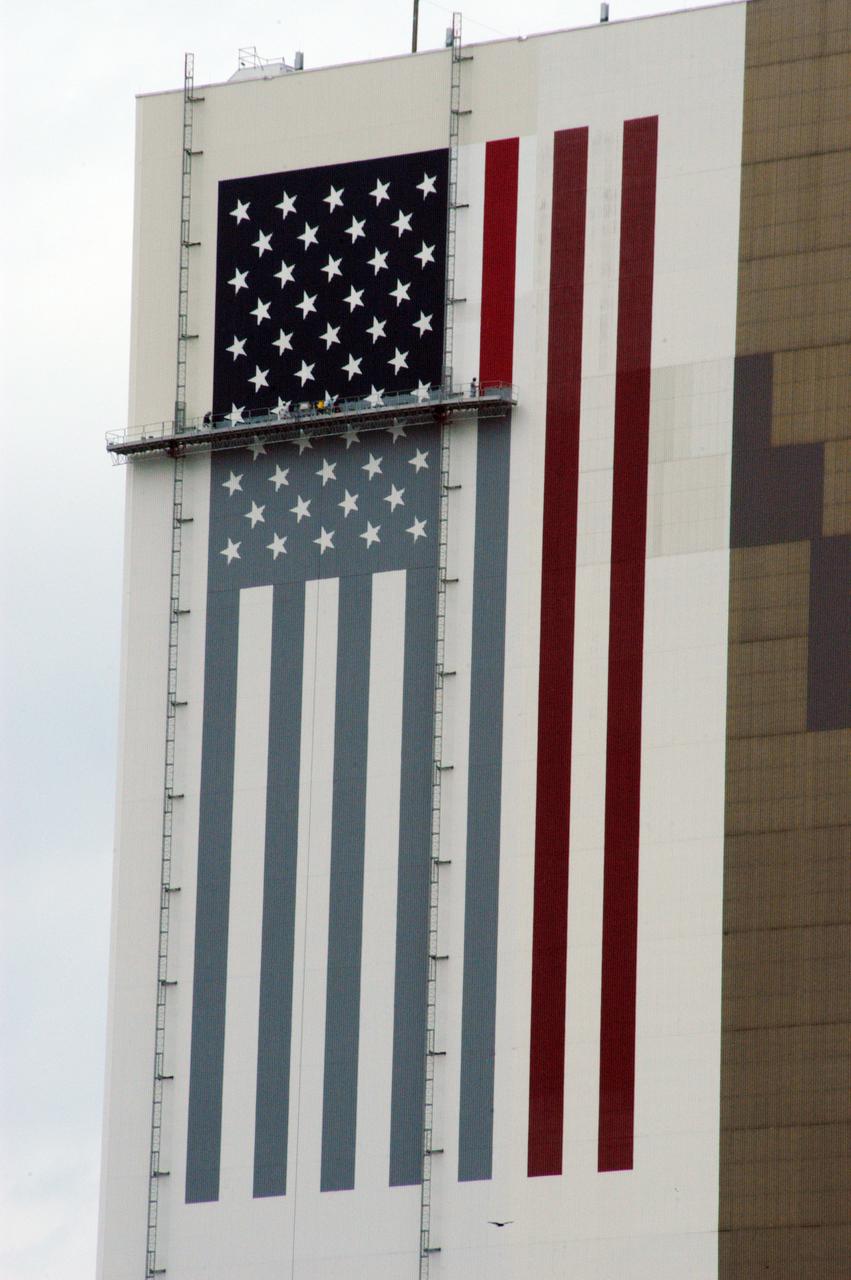
On platforms suspended from the top of the 525-foot-high VAB, workers use rollers and brushes to repaint the U.S. flag on the southwest side of the Vehicle Assembly Building. The flag spans an area 209 feet by 110 feet, or about 23, 437 square feet. Each stripe is 9 feet wide and each star is 6 feet in diameter. The logo is also being painted. Known as the "meatball," the logo measures 110 feet by 132 feet, or about 12,300 square feet. The flag and logo were last painted in 1998, honoring NASA's 40th anniversary.
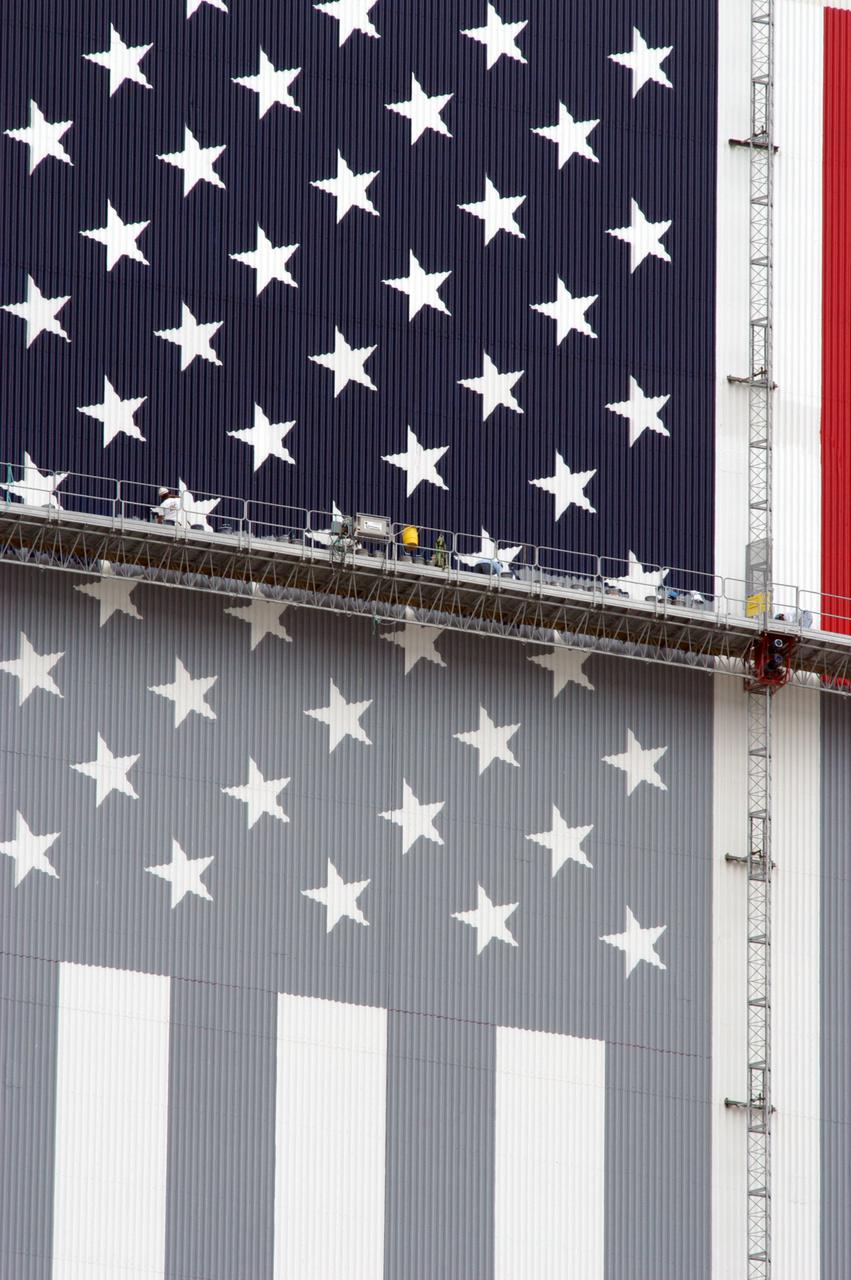
On platforms suspended from the top of the 525-foot-high VAB, workers use rollers and brushes to repaint the U.S. flag on the southwest side of the Vehicle Assembly Building. The flag spans an area 209 feet by 110 feet, or about 23, 437 square feet. Each stripe is 9 feet wide and each star is 6 feet in diameter. The logo is also being painted. Known as the "meatball," the logo measures 110 feet by 132 feet, or about 12,300 square feet. The flag and logo were last painted in 1998, honoring NASA's 40th anniversary.
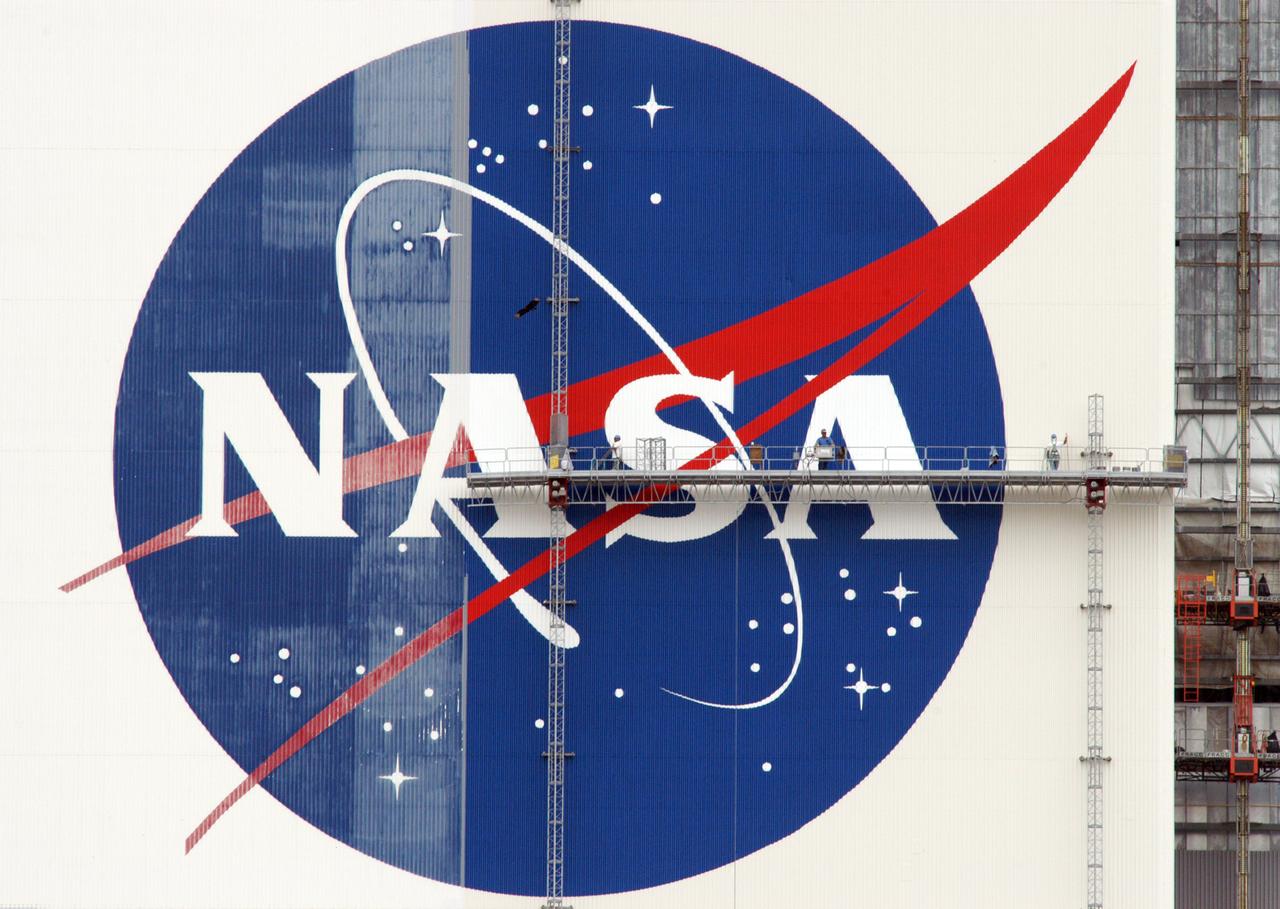
On platforms suspended from the top of the 525-foot-high VAB, workers use rollers and brushes to repaint the NASA logo on the southeast side of the Vehicle Assembly Building. Known as the "meatball," the logo measures 110 feet by 132 feet, or about 12,300 square feet. The U.S. flag is also being repainted. The flag spans an area 209 feet by 110 feet, or about 23, 437 square feet. Each stripe is 9 feet wide and each star is 6 feet in diameter. The flag and logo were last painted in 1998, honoring NASA's 40th anniversary.
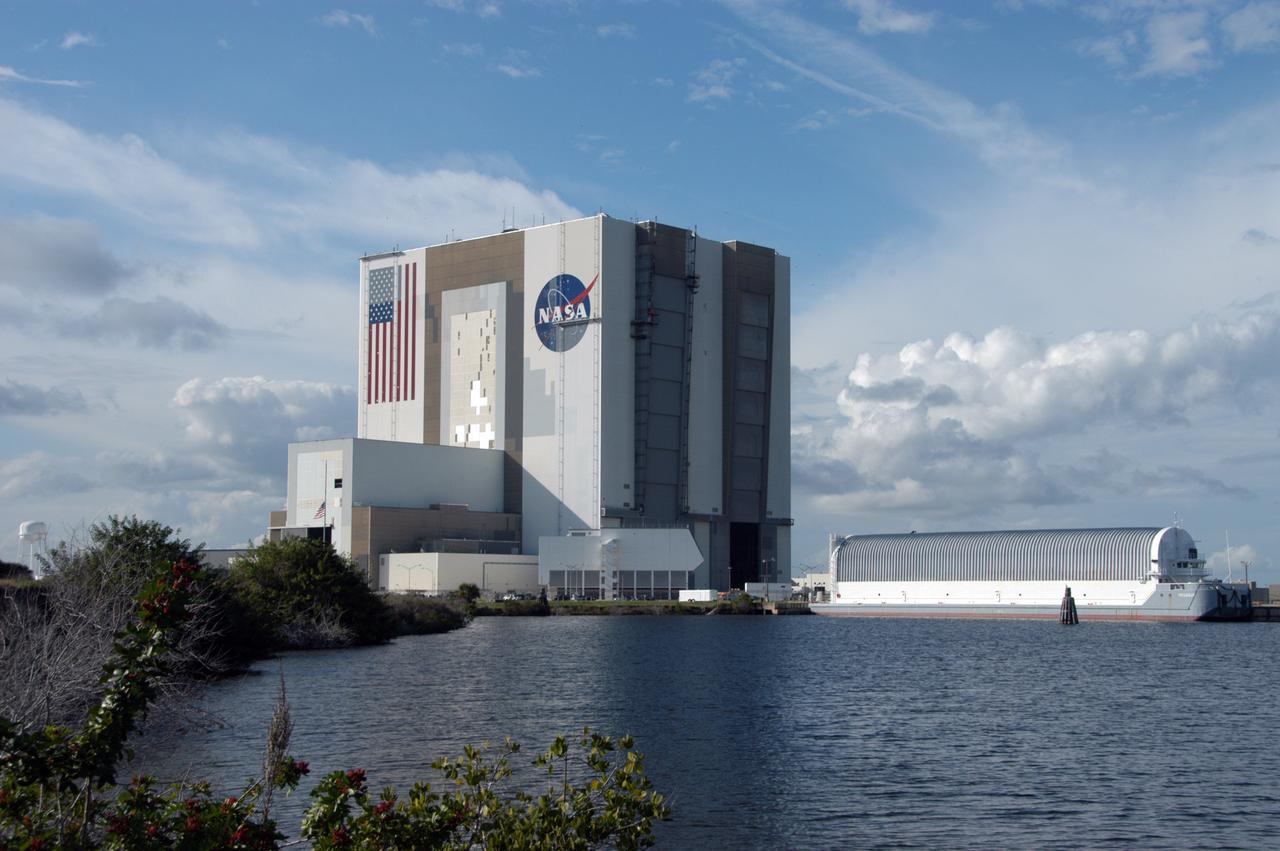
Elevated platforms are seen hanging on the side of Kennedy Space Center's Vehicle Assembly Building in a view looking across from the turn basin. To the right is the large external tank barge. Workers, suspended on the platforms from the top of the 525-foot-high VAB, use rollers and brushes to do the painting. The flag and logo were last painted in 1998, honoring NASA's 40th anniversary. The flag spans an area 209 feet by 110 feet, or about 23, 437 square feet. Each stripe is 9 feet wide and each star is 6 feet in diameter. The logo, also known as the "meatball," measures 110 feet by 132 feet, or about 12,300 square feet.
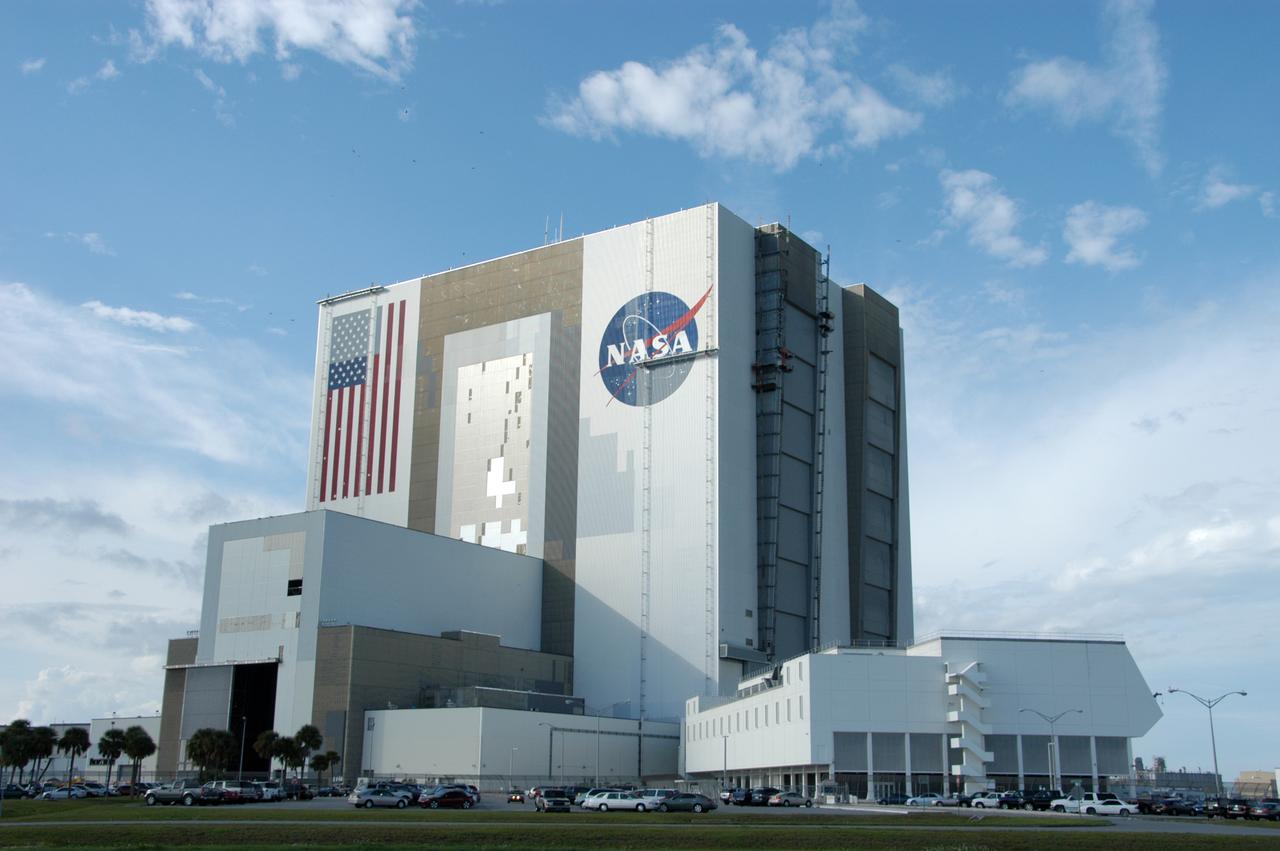
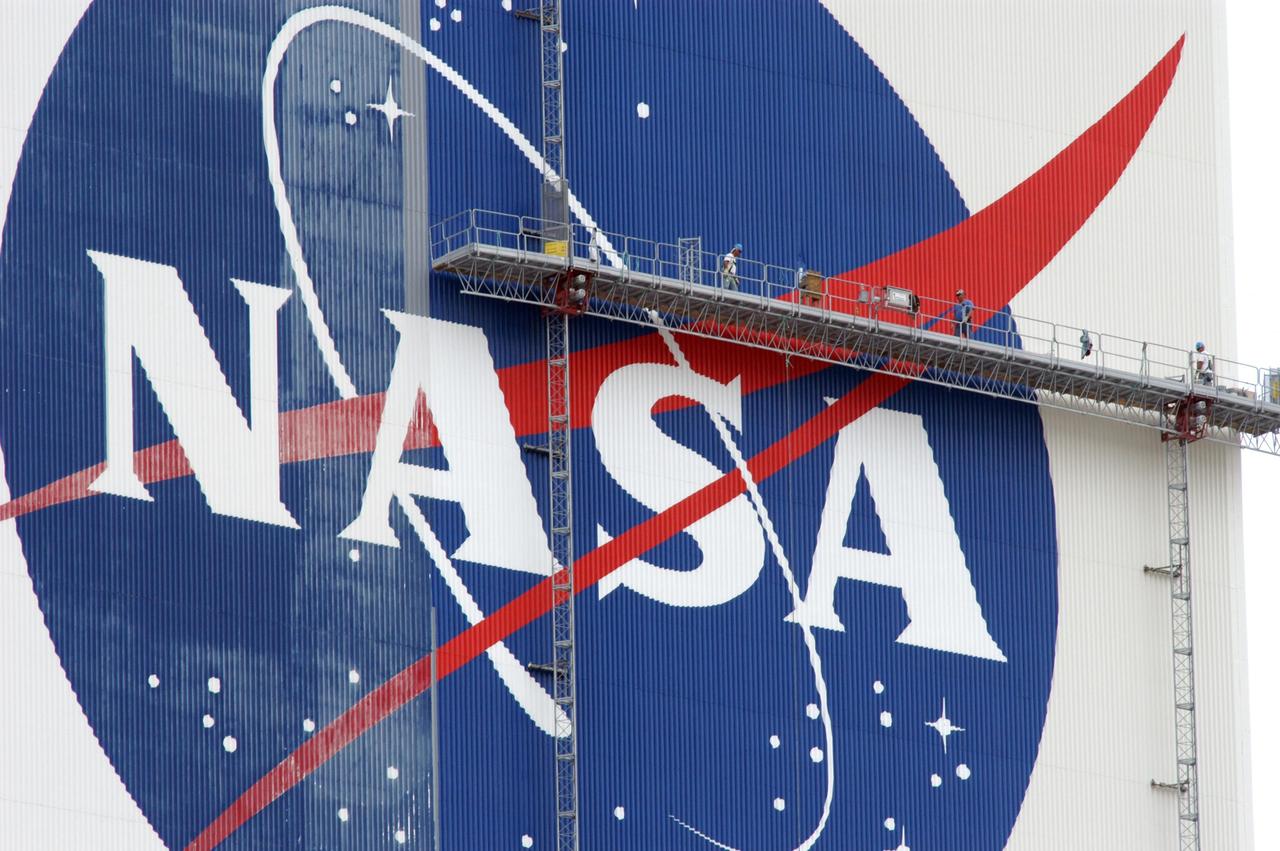
Elevated platforms are seen hanging in front of the NASA Logo on the side of Kennedy Space Center's Vehicle Assembly Building. Also in view on the east side of the building are platforms on the facility's large vertical doors. Workers, suspended on the platforms from the top of the 525-foot-high VAB, use rollers and brushes to do the painting. The flag and logo were last painted in 1998, honoring NASA's 40th anniversary. The flag spans an area 209 feet by 110 feet, or about 23, 437 square feet. Each stripe is 9 feet wide and each star is 6 feet in diameter. The logo, also known as the "meatball," measures 110 feet by 132 feet, or about 12,300 square feet.
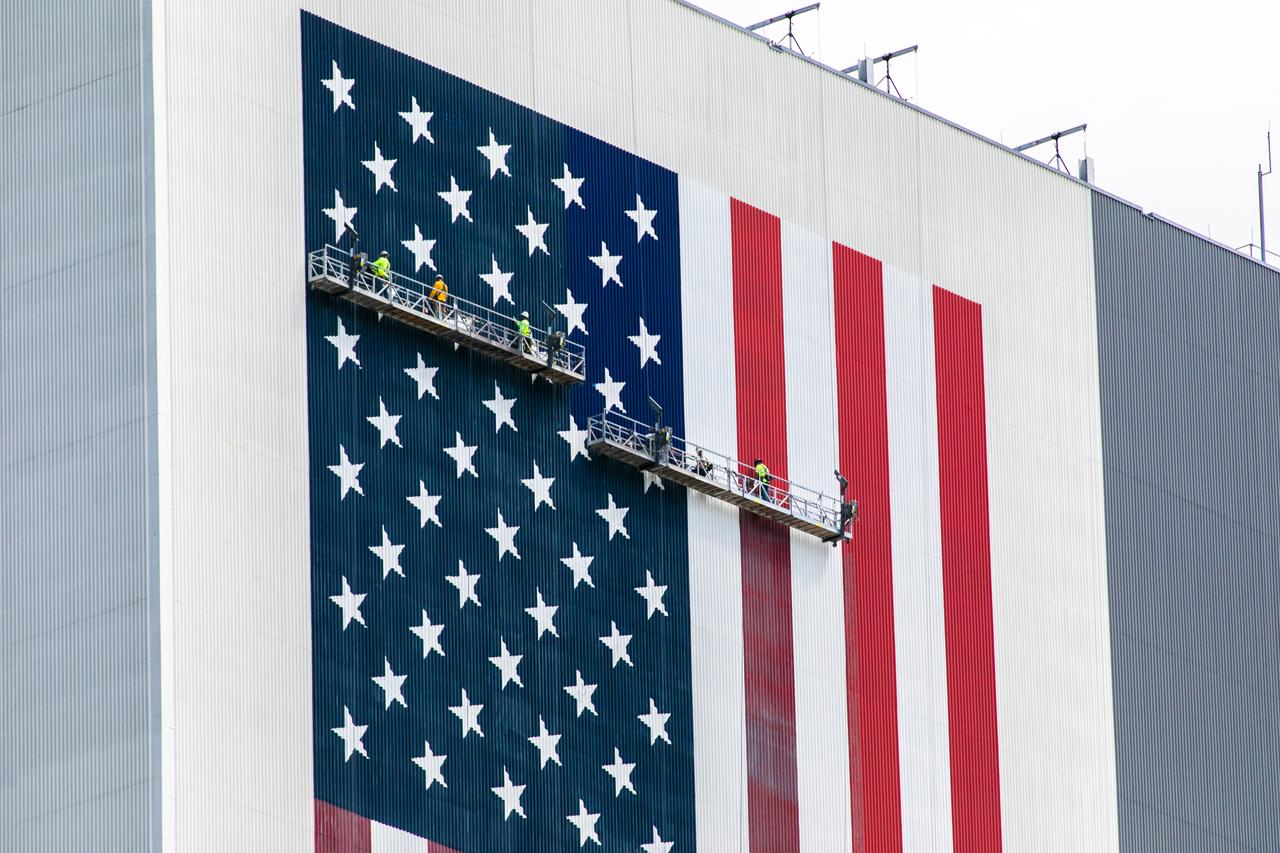
Painting of the U.S. flag continues on the 525-foot-tall Vehicle Assembly Building (VAB) in this close-up view at NASA’s Kennedy Space Center in Florida on Sept. 17, 2020. HM2 and H.I.S. Painting of Titusville, Florida, are repainting the American Flag on the iconic building. The flag is 209 feet long by 110 feet wide. Each star is more than six feet in diameter, and each stripe is nine feet wide. Exploration Ground Systems is overseeing upgrades to the VAB to support the launch of the Space Launch System and Orion for Artemis missions. Under the Artemis program, NASA will send the first woman and next man to the Moon.
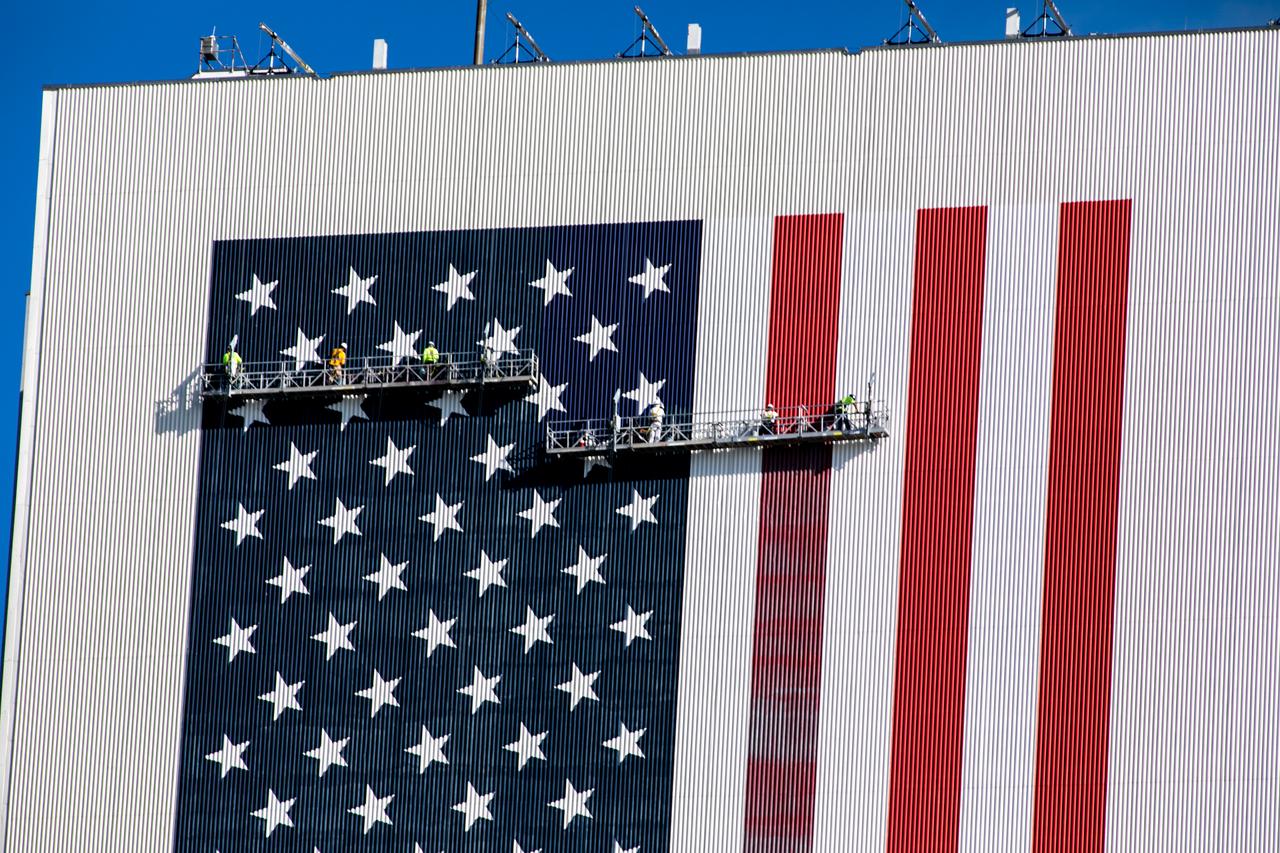
Painting of the U.S. flag continues on the 525-foot-tall Vehicle Assembly Building (VAB) at NASA’s Kennedy Space Center in Florida on Sept. 17, 2020. HM2 and H.I.S. Painting of Titusville, Florida, are repainting the American Flag on the iconic building. The flag is 209 feet long by 110 feet wide. Each star is more than six feet in diameter, and each stripe is nine feet wide. Exploration Ground Systems is overseeing upgrades to the VAB to support the launch of the Space Launch System and Orion for Artemis missions. Under the Artemis program, NASA will send the first woman and next man to the Moon.
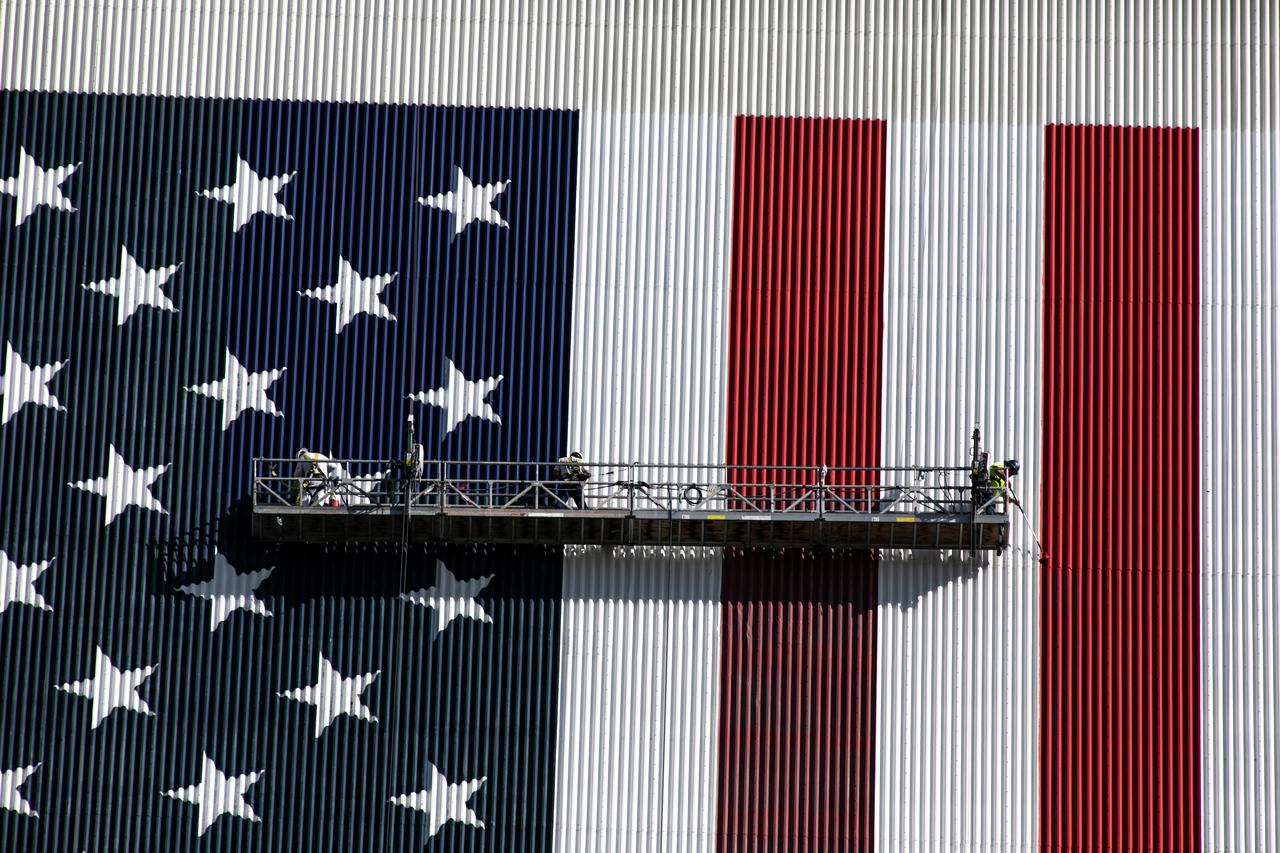
Painting of the U.S. flag continues on the 525-foot-tall Vehicle Assembly Building (VAB) in this close-up view at NASA’s Kennedy Space Center in Florida on Sept. 17, 2020. HM2 and H.I.S. Painting of Titusville, Florida, are repainting the American Flag on the iconic building. The flag is 209 feet long by 110 feet wide. Each star is more than six feet in diameter, and each stripe is nine feet wide. Exploration Ground Systems is overseeing upgrades to the VAB to support the launch of the Space Launch System and Orion for Artemis missions. Under the Artemis program, NASA will send the first woman and next man to the Moon.
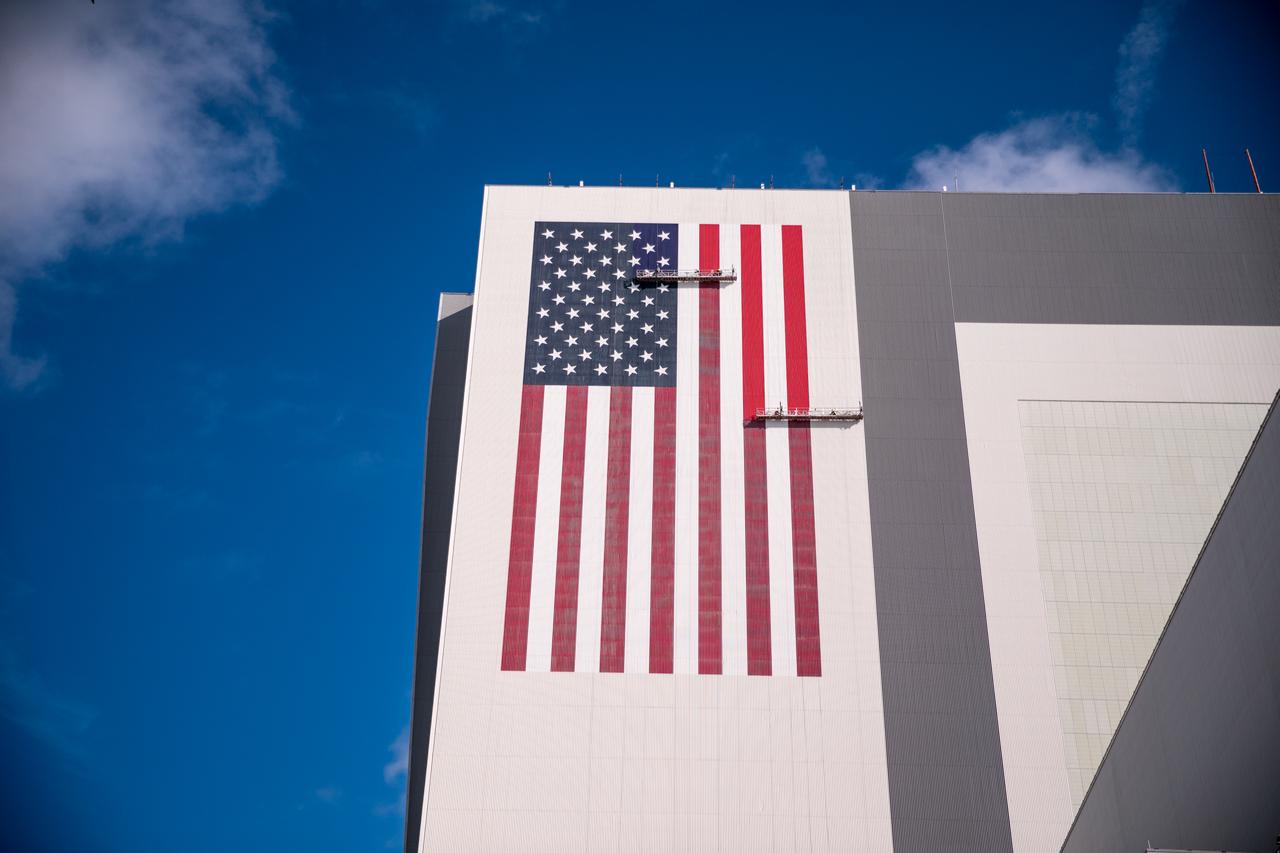
Painting of the U.S. flag continues on the 525-foot-tall Vehicle Assembly Building (VAB) at NASA’s Kennedy Space Center in Florida on Sept. 17, 2020. HM2 and H.I.S. Painting of Titusville, Florida, are repainting the American Flag on the iconic building. The flag is 209 feet long by 110 feet wide. Each star is more than six feet in diameter, and each stripe is nine feet wide. Exploration Ground Systems is overseeing upgrades to the VAB to support the launch of the Space Launch System and Orion for Artemis missions. Under the Artemis program, NASA will send the first woman and next man to the Moon.
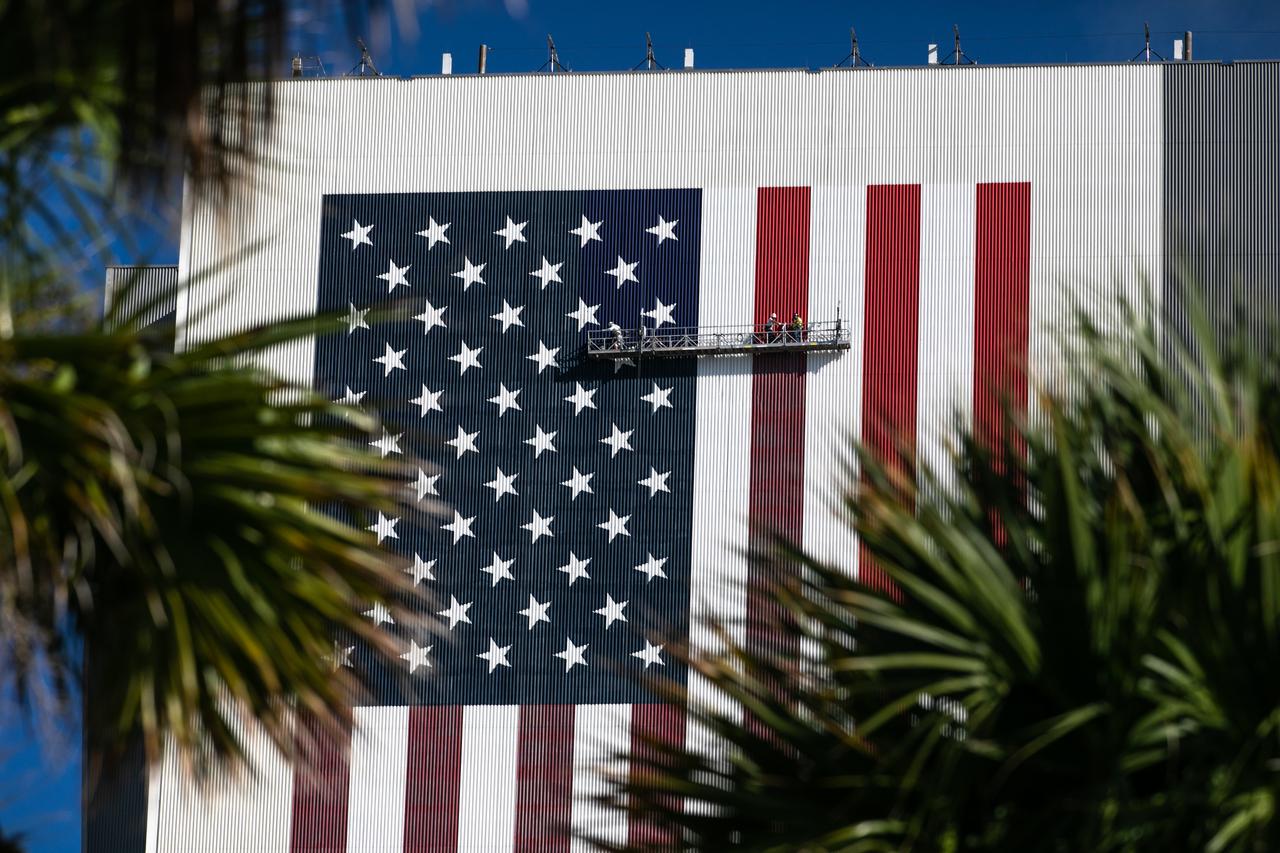
Painting of the U.S. flag continues on the 525-foot-tall Vehicle Assembly Building (VAB) at NASA’s Kennedy Space Center in Florida on Sept. 17, 2020. HM2 and H.I.S. Painting of Titusville, Florida, are repainting the American Flag on the iconic building. The flag is 209 feet long by 110 feet wide. Each star is more than six feet in diameter, and each stripe is nine feet wide. Exploration Ground Systems is overseeing upgrades to the VAB to support the launch of the Space Launch System and Orion for Artemis missions. Under the Artemis program, NASA will send the first woman and next man to the Moon.
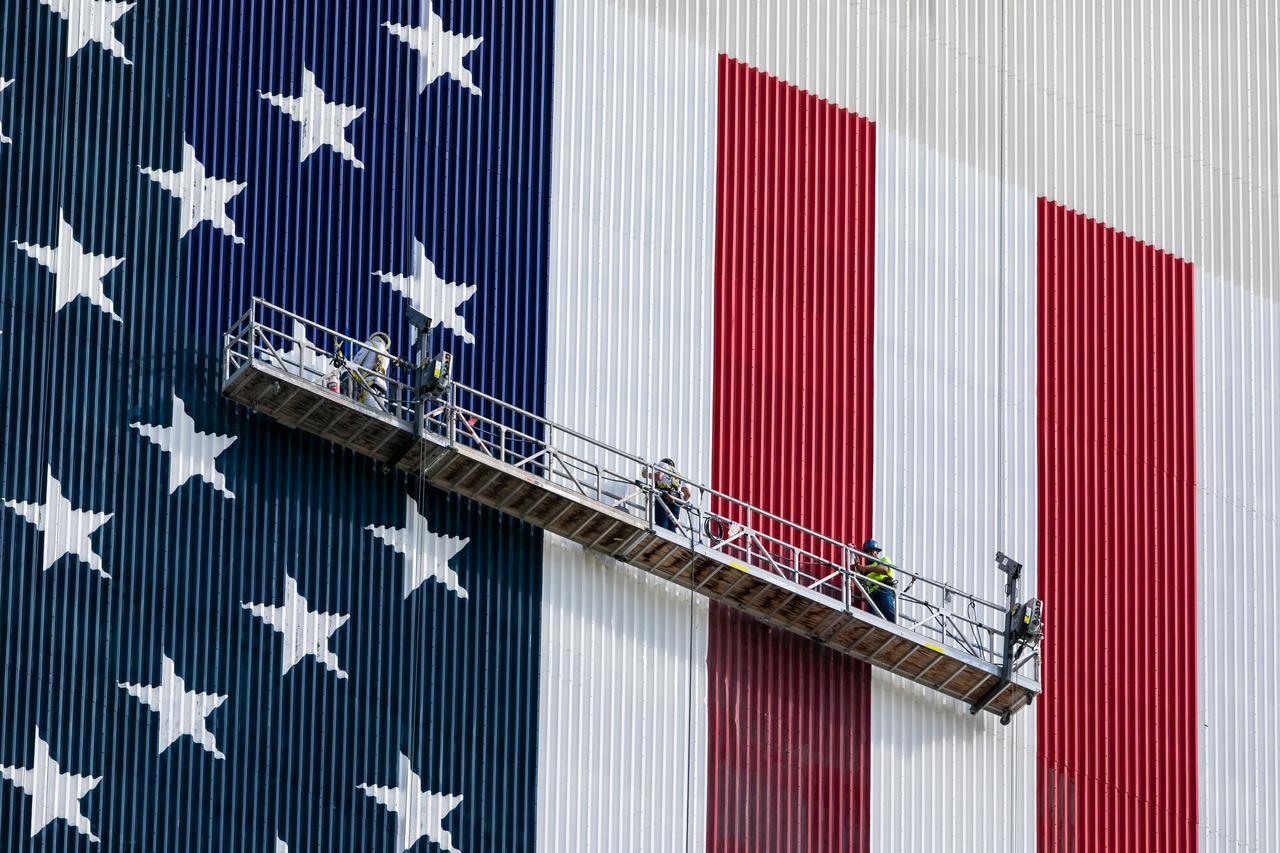
Painting of the U.S. flag continues on the 525-foot-tall Vehicle Assembly Building (VAB) in this close-up view at NASA’s Kennedy Space Center in Florida on Sept. 17, 2020. HM2 and H.I.S. Painting of Titusville, Florida, are repainting the American Flag on the iconic building. The flag is 209 feet long by 110 feet wide. Each star is more than six feet in diameter, and each stripe is nine feet wide. Exploration Ground Systems is overseeing upgrades to the VAB to support the launch of the Space Launch System and Orion for Artemis missions. Under the Artemis program, NASA will send the first woman and next man to the Moon.
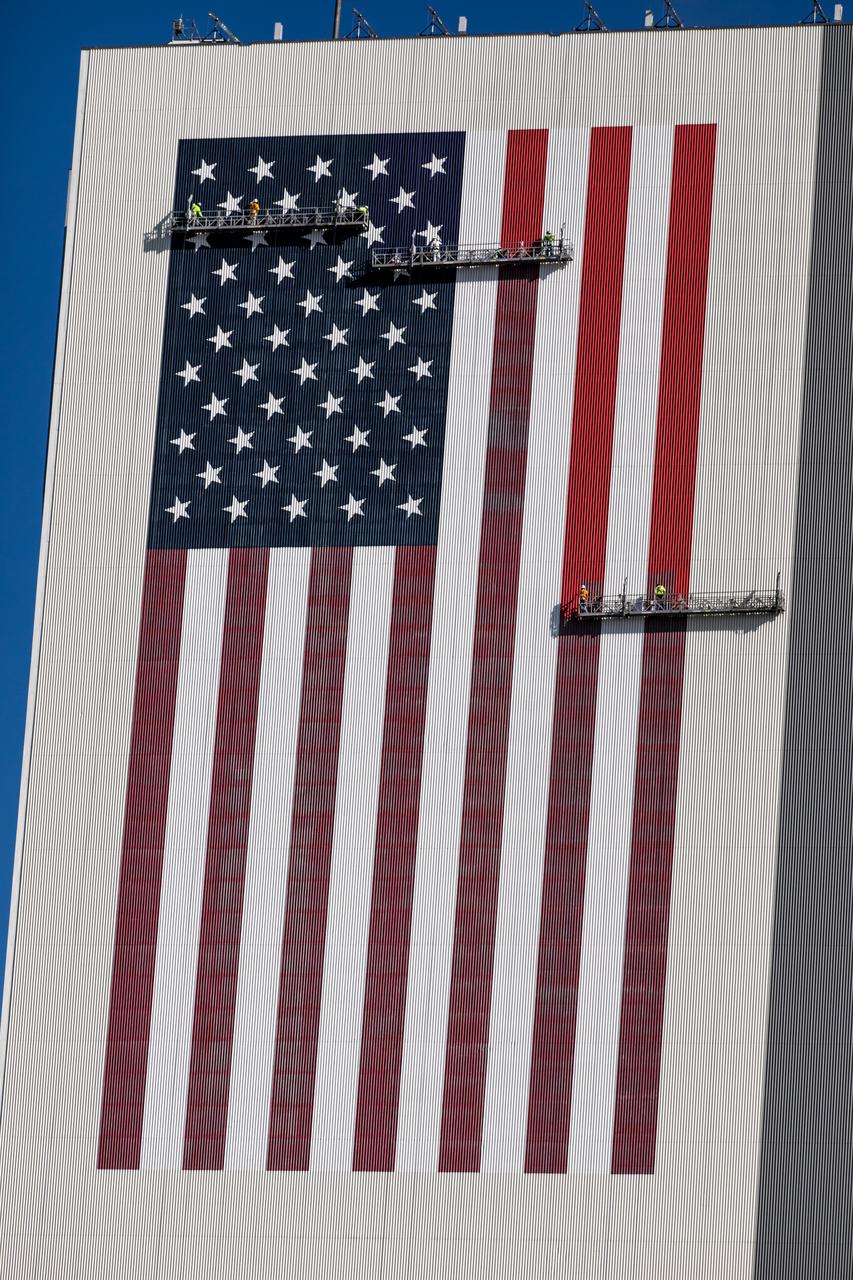
Painting of the U.S. flag continues on the 525-foot-tall Vehicle Assembly Building (VAB) at NASA’s Kennedy Space Center in Florida on Sept. 17, 2020. HM2 and H.I.S. Painting of Titusville, Florida, are repainting the American Flag on the iconic building. The flag is 209 feet long by 110 feet wide. Each star is more than six feet in diameter, and each stripe is nine feet wide. Exploration Ground Systems is overseeing upgrades to the VAB to support the launch of the Space Launch System and Orion for Artemis missions. Under the Artemis program, NASA will send the first woman and next man to the Moon.
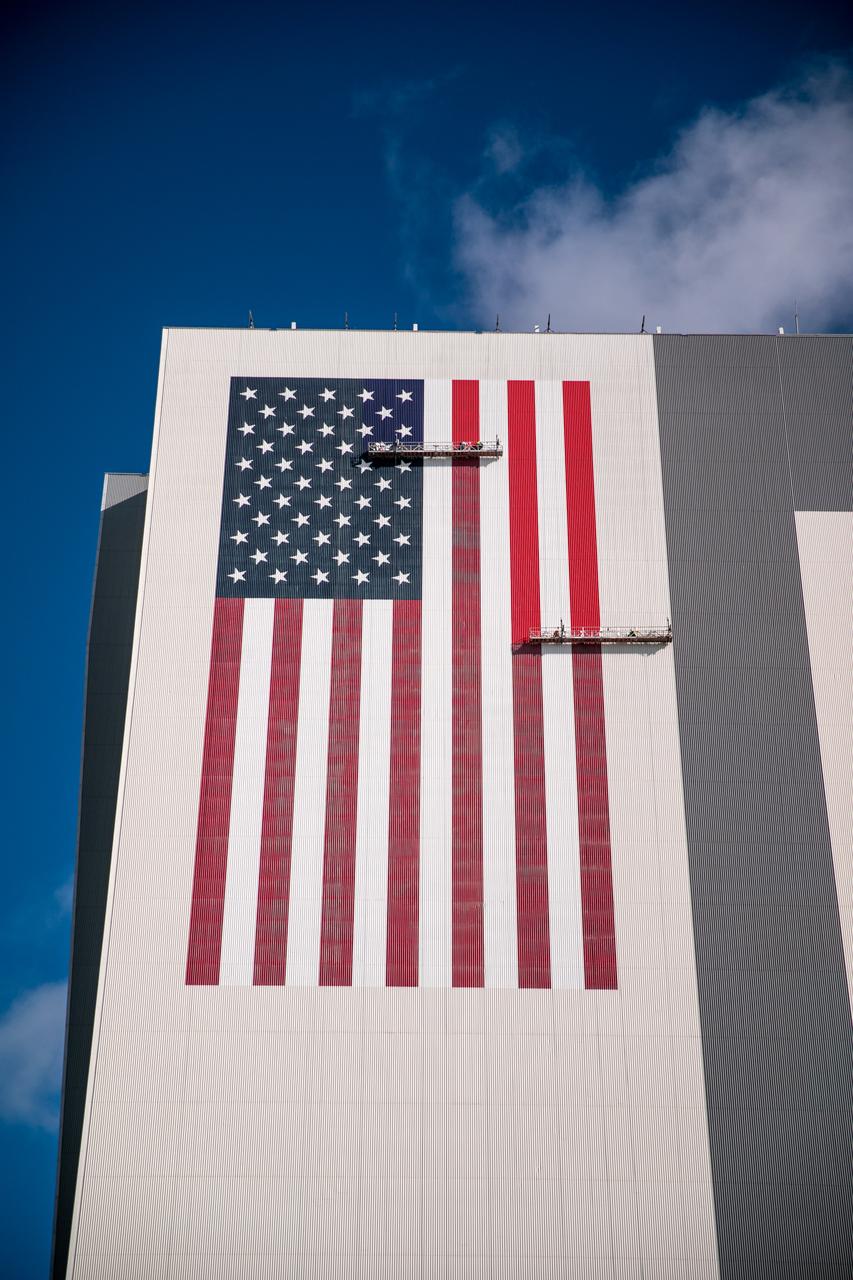
Painting of the U.S. flag continues on the 525-foot-tall Vehicle Assembly Building (VAB) at NASA’s Kennedy Space Center in Florida on Sept. 17, 2020. HM2 and H.I.S. Painting of Titusville, Florida, are repainting the American Flag on the iconic building. The flag is 209 feet long by 110 feet wide. Each star is more than six feet in diameter, and each stripe is nine feet wide. Exploration Ground Systems is overseeing upgrades to the VAB to support the launch of the Space Launch System and Orion for Artemis missions. Under the Artemis program, NASA will send the first woman and next man to the Moon.
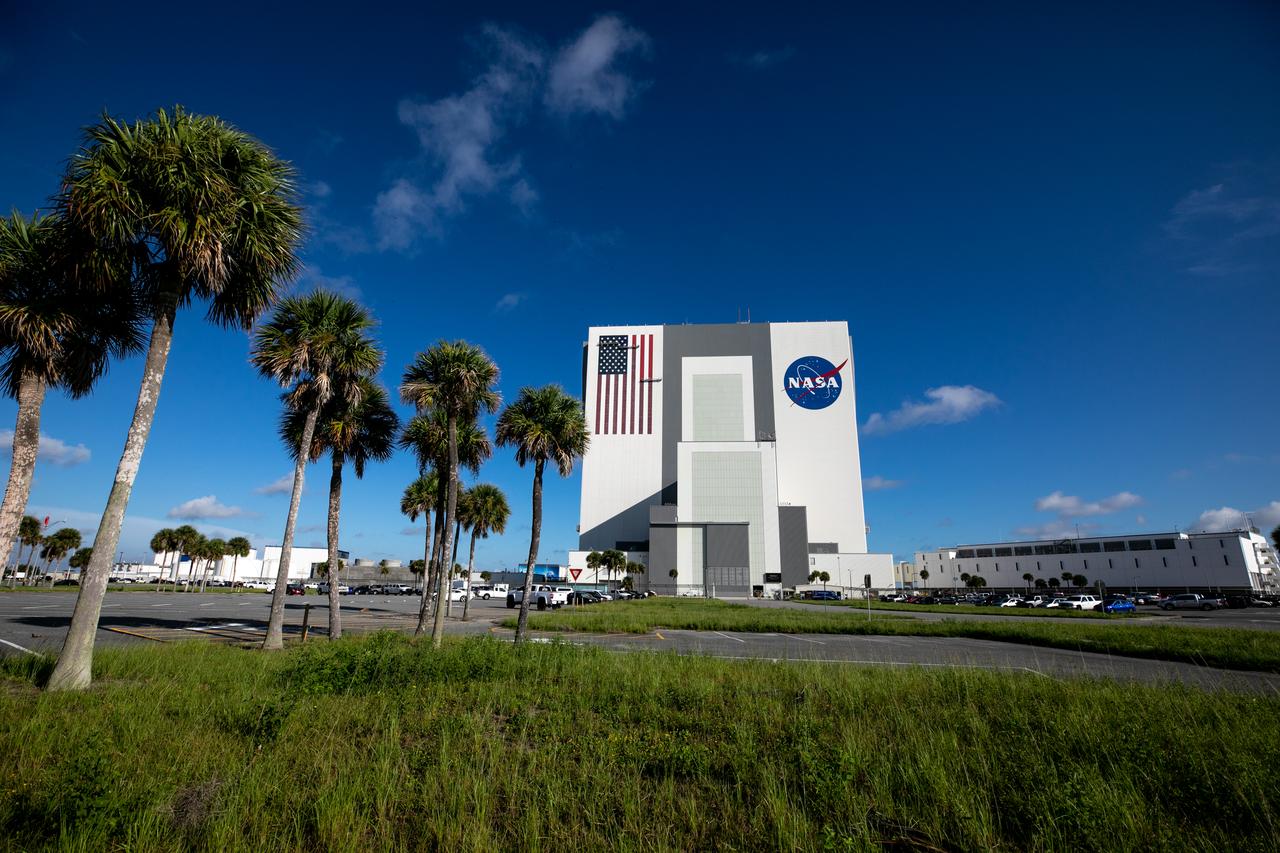
A view of the 525-foot-tall Vehicle Assembly Building (VAB) at NASA’s Kennedy Space Center in Florida, as painting of the U.S. flag continues on the iconic building on Sept. 17, 2020. HM2 and H.I.S. Painting of Titusville, Florida, are repainting the American Flag on the building. The flag is 209 feet long by 110 feet wide. Each star is more than six feet in diameter, and each stripe is nine feet wide. Exploration Ground Systems is overseeing upgrades to the VAB to support the launch of the Space Launch System and Orion for Artemis missions. Under the Artemis program, NASA will send the first woman and next man to the Moon.
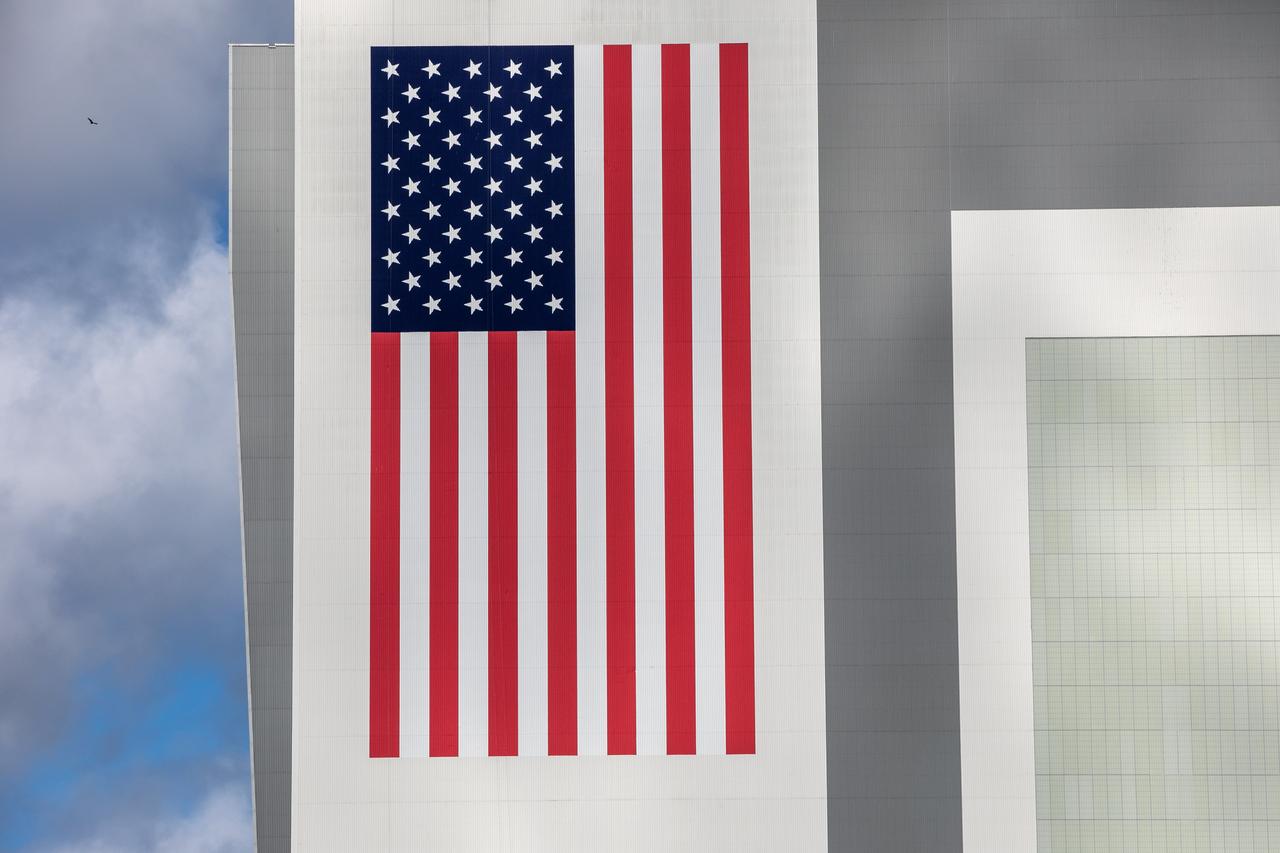
A freshly painted American Flag on the Vehicle Assembly Building (VAB) at NASA’s Kennedy Space Center in Florida is photographed on Oct. 27, 2020. HM2 and H.I.S. Painting of Titusville, Florida, began repainting the NASA logo, referred to as the meatball, and flag on the iconic facility in May. The flag measures 209 feet long by 110 feet wide; each star is more than six feet in diameter, and each stripe is nine feet wide. It took over 500 gallons of paint to repaint the flag and the 110’ X 132’ meatball.

Seen on Oct. 27, 2020, is the Vehicle Assembly Building (VAB) with a vibrant NASA logo, referred to as the meatball, and American Flag at NASA’s Kennedy Space Center in Florida. HM2 and H.I.S. Painting of Titusville, Florida, began repainting the meatball and flag on the iconic facility in May and recently completed the project. The VAB was last painted in 2007, when repairs where completed after Hurricanes Frances and Jeanne tore 845 panels off the building in 2004. It took over 500 gallons of paint to repaint the 209’ X 110’ flag and the 110’ X 132’ meatball.

A view of the Vehicle Assembly Building (VAB) with a vibrant NASA logo, referred to as the meatball, and American Flag at NASA’s Kennedy Space Center in Florida on Oct. 27, 2020. HM2 and H.I.S. Painting of Titusville, Florida, began repainting the meatball and flag on the iconic facility in May and recently completed the project. The VAB was last painted in 2007, when repairs where completed after Hurricanes Frances and Jeanne tore 845 panels off the building in 2004. It took over 500 gallons of paint to repaint the 209’ X 110’ flag and the 110’ X 132’ meatball.

A ground-level view of a vibrant NASA logo, referred to as the meatball, and American Flag on the Vehicle Assembly Building (VAB) at NASA’s Kennedy Space Center in Florida on Oct. 27, 2020. HM2 and H.I.S. Painting of Titusville, Florida, began repainting the meatball and flag on the iconic facility in May and recently completed the project. The VAB was last painted in 2007, when repairs where completed after Hurricanes Frances and Jeanne tore 845 panels off the building in 2004. It took over 500 gallons of paint to repaint the 209’ X 110’ flag and the 110’ X 132’ meatball.

A ground-level view of a vibrant NASA logo, referred to as the meatball, and American Flag on the Vehicle Assembly Building (VAB) at NASA’s Kennedy Space Center in Florida on Oct. 27, 2020. HM2 and H.I.S. Painting of Titusville, Florida, began repainting the meatball and flag on the iconic facility in May and recently completed the project. The VAB was last painted in 2007, when repairs where completed after Hurricanes Frances and Jeanne tore 845 panels off the building in 2004. It took over 500 gallons of paint to repaint the 209’ X 110’ flag and the 110’ X 132’ meatball.

A view of the Vehicle Assembly Building (VAB) with a vibrant NASA logo, referred to as the meatball, and American Flag at NASA’s Kennedy Space Center in Florida on Oct. 27, 2020. HM2 and H.I.S. Painting of Titusville, Florida, began repainting the meatball and flag on the iconic facility in May and recently completed the project. The VAB was last painted in 2007, when repairs where completed after Hurricanes Frances and Jeanne tore 845 panels off the building in 2004. It took over 500 gallons of paint to repaint the 209’ X 110’ flag and the 110’ X 132’ meatball.

Seen on Oct. 27, 2020, is the Vehicle Assembly Building (VAB) with a vibrant NASA logo, referred to as the meatball, and American Flag at NASA’s Kennedy Space Center in Florida. HM2 and H.I.S. Painting of Titusville, Florida, began repainting the meatball and flag on the iconic facility in May and recently completed the project. The VAB was last painted in 2007, when repairs where completed after Hurricanes Frances and Jeanne tore 845 panels off the building in 2004. It took over 500 gallons of paint to repaint the 209’ X 110’ flag and the 110’ X 132’ meatball.
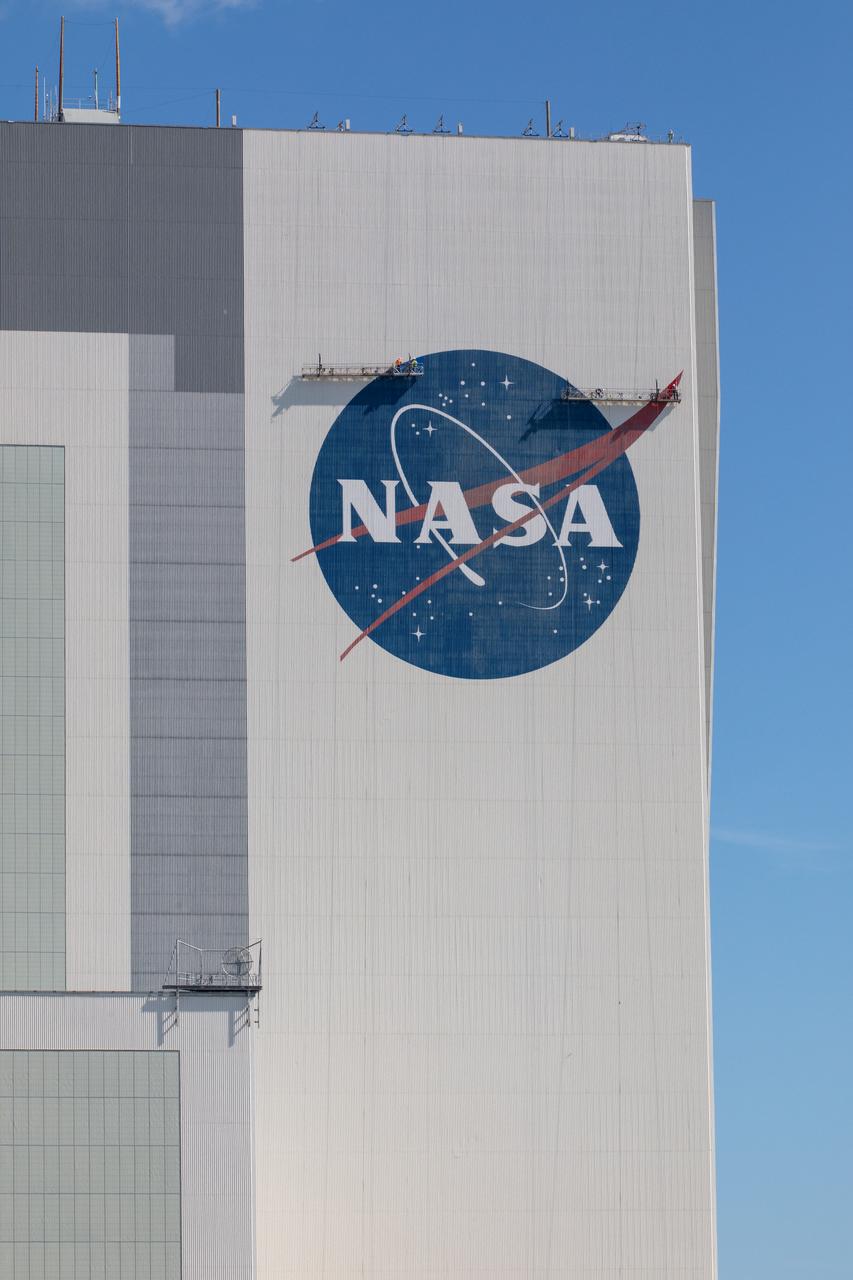
Painting of the NASA logo, also called the meatball, is underway on the 525-foot-tall Vehicle Assembly Building (VAB) at the agency’s Kennedy Space Center in Florida on May 8, 2020. HM2 and H.I.S. Painting of Titusville, Florida, are repainting the meatball and the American Flag on the iconic building. High Bay 3 inside the VAB has been upgraded with 10 new levels of work platforms that will surround and provide access for service and processing of NASA's Space Launch System (SLS) rocket and Orion spacecraft. Exploration Ground Systems is overseeing upgrades to the VAB to support the launch of the SLS and Orion for Artemis missions. Under the Artemis program, NASA will send the first woman and next man to the Moon.
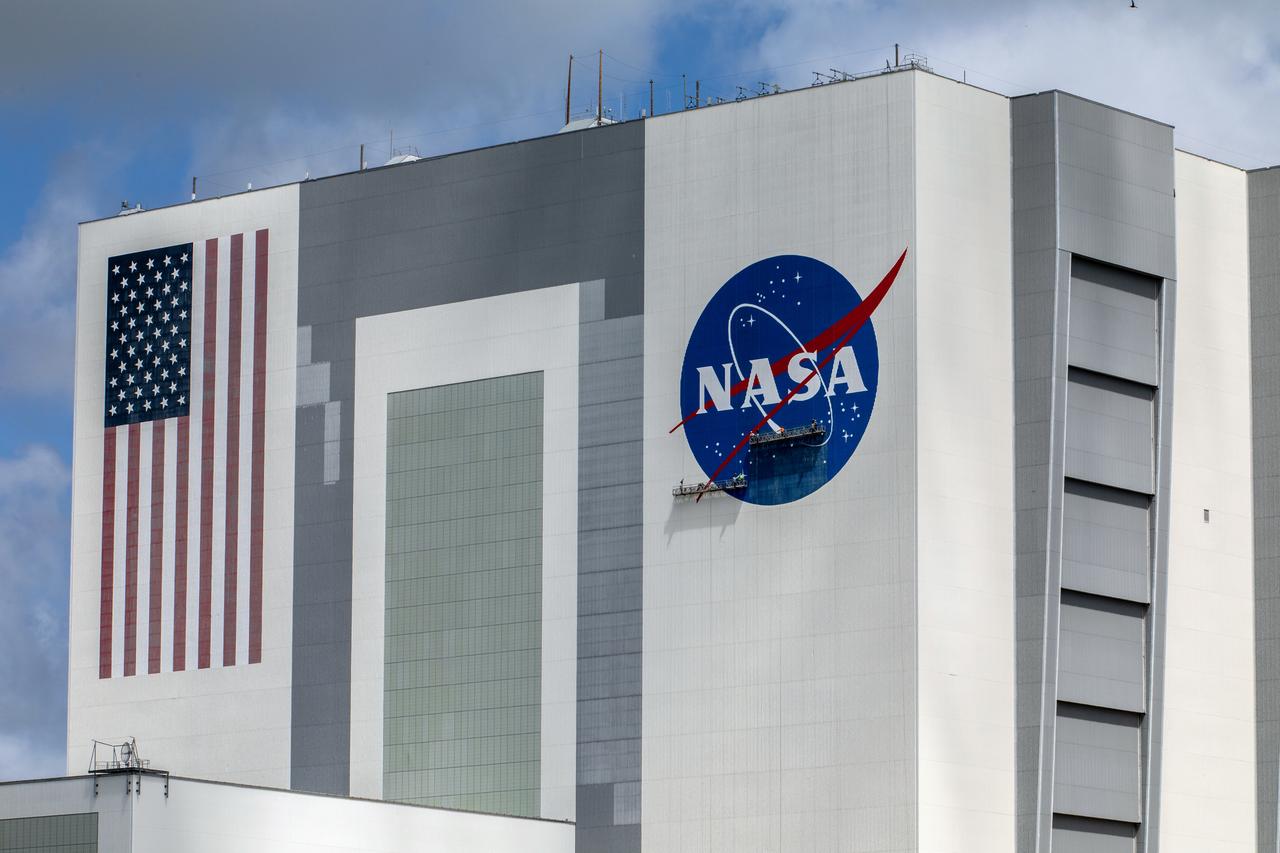
Painting of the NASA logo, also called the meatball, continues on the 525-foot-tall Vehicle Assembly Building (VAB) at the agency’s Kennedy Space Center in Florida on May 29 2020. HM2 and H.I.S. Painting of Titusville, Florida, are repainting the meatball and the American Flag on the iconic building. High Bay 3 inside the VAB has been upgraded with 10 new levels of work platforms that will surround and provide access for service and processing of NASA's Space Launch System (SLS) rocket and Orion spacecraft. Exploration Ground Systems is overseeing upgrades to the VAB to support the launch of the SLS and Orion for Artemis missions. Under the Artemis program, NASA will send the first woman and next man to the Moon.
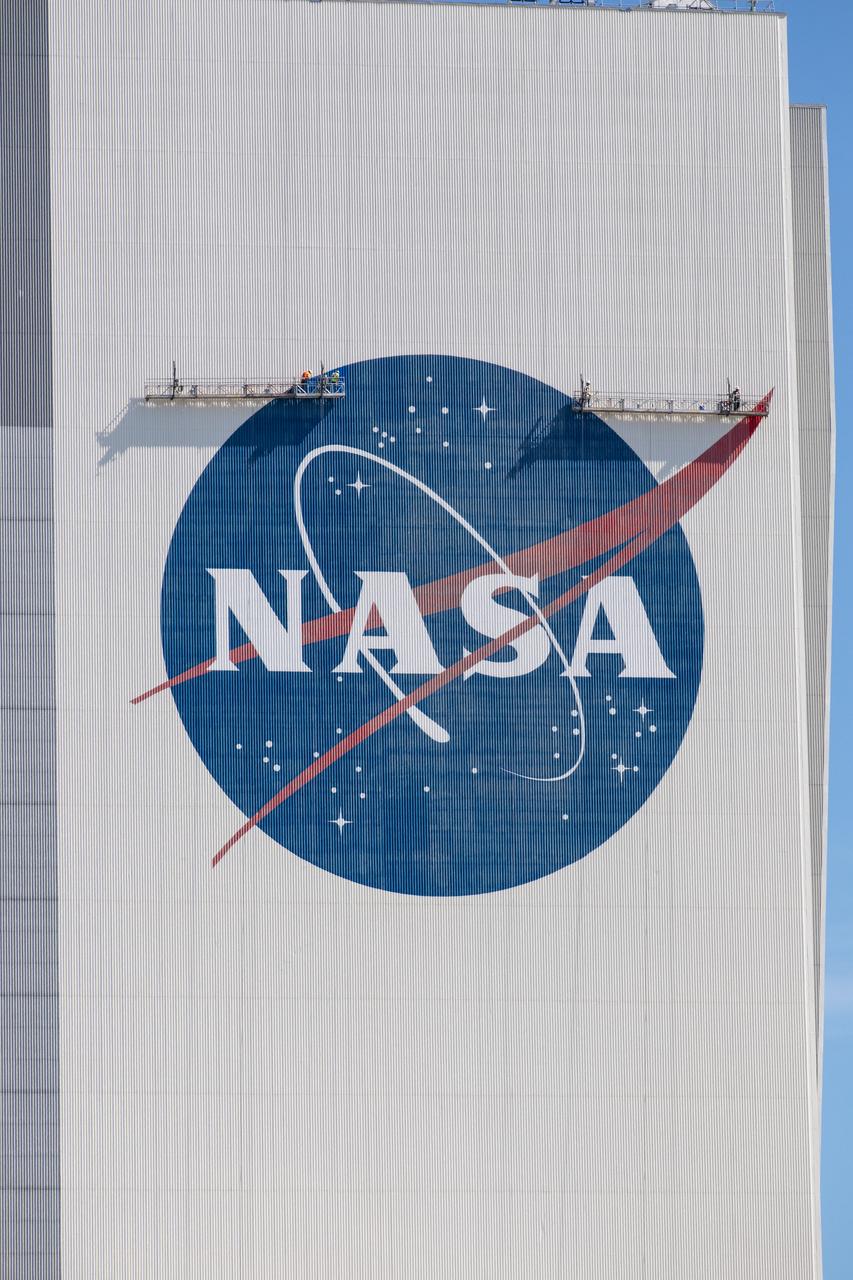
Painting of the NASA logo, also called the meatball, is underway on the 525-foot-tall Vehicle Assembly Building (VAB) at the agency’s Kennedy Space Center in Florida on May 8, 2020. HM2 and H.I.S. Painting of Titusville, Florida, are repainting the meatball and the American Flag on the iconic building. High Bay 3 inside the VAB has been upgraded with 10 new levels of work platforms that will surround and provide access for service and processing of NASA's Space Launch System (SLS) rocket and Orion spacecraft. Exploration Ground Systems is overseeing upgrades to the VAB to support the launch of the SLS and Orion for Artemis missions. Under the Artemis program, NASA will send the first woman and next man to the Moon.
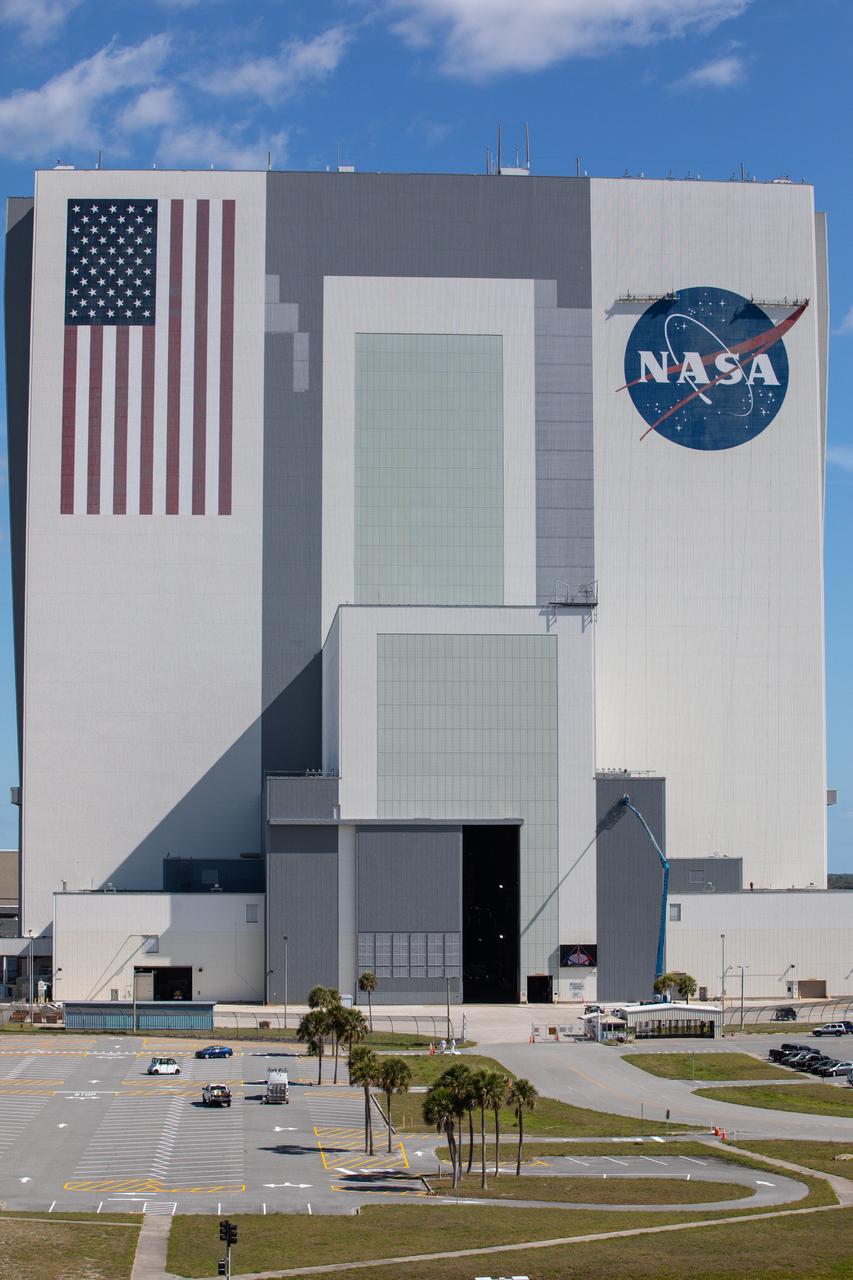
Painting of the NASA logo, also called the meatball, is underway on the 525-foot-tall Vehicle Assembly Building (VAB) at the agency’s Kennedy Space Center in Florida on May 8, 2020. HM2 and H.I.S. Painting of Titusville, Florida, are repainting the meatball and the American Flag on the iconic building. High Bay 3 inside the VAB has been upgraded with 10 new levels of work platforms that will surround and provide access for service and processing of NASA's Space Launch System (SLS) rocket and Orion spacecraft. Exploration Ground Systems is overseeing upgrades to the VAB to support the launch of the SLS and Orion for Artemis missions. Under the Artemis program, NASA will send the first woman and next man to the Moon.
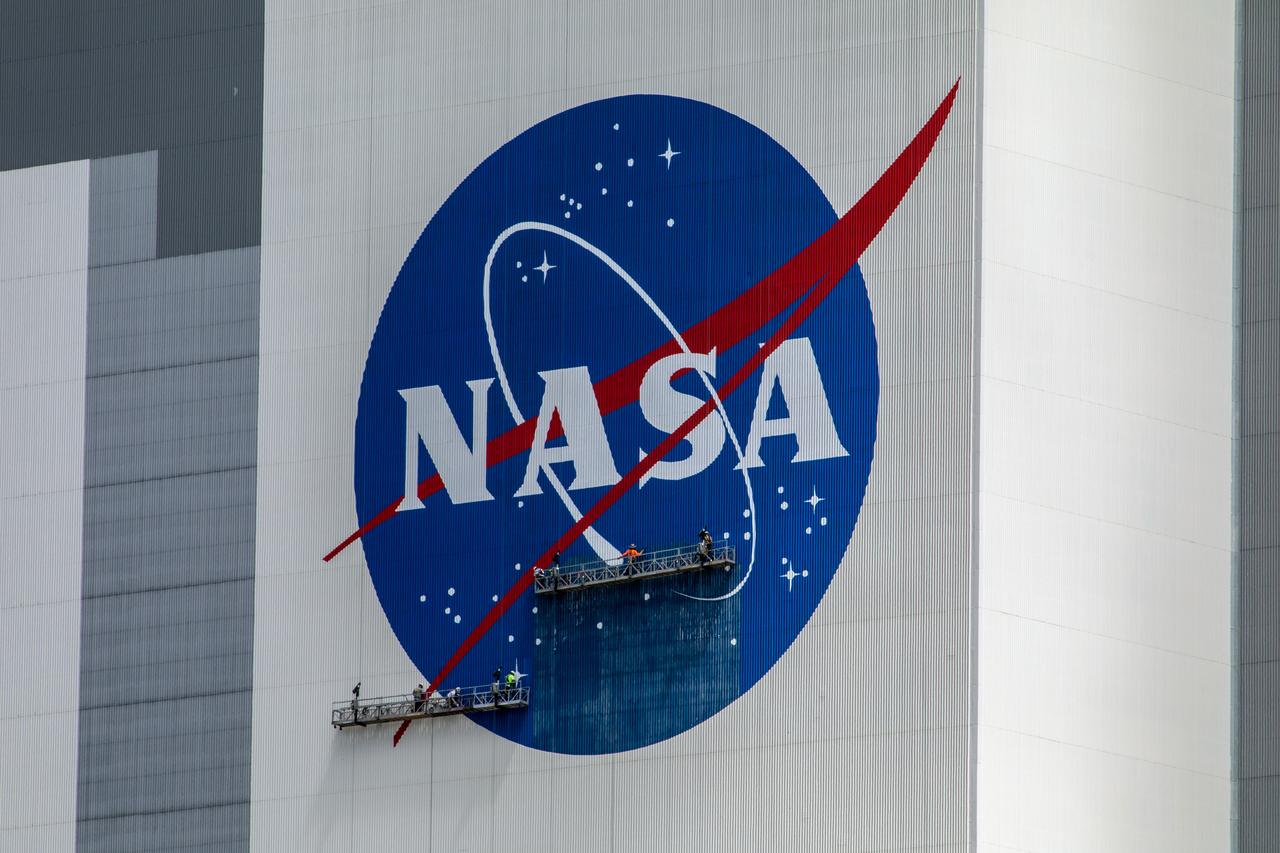
Painting of the NASA logo, also called the meatball, continues on the 525-foot-tall Vehicle Assembly Building (VAB) at the agency’s Kennedy Space Center in Florida on May 29 2020. HM2 and H.I.S. Painting of Titusville, Florida, are repainting the meatball and the American Flag on the iconic building. High Bay 3 inside the VAB has been upgraded with 10 new levels of work platforms that will surround and provide access for service and processing of NASA's Space Launch System (SLS) rocket and Orion spacecraft. Exploration Ground Systems is overseeing upgrades to the VAB to support the launch of the SLS and Orion for Artemis missions. Under the Artemis program, NASA will send the first woman and next man to the Moon.
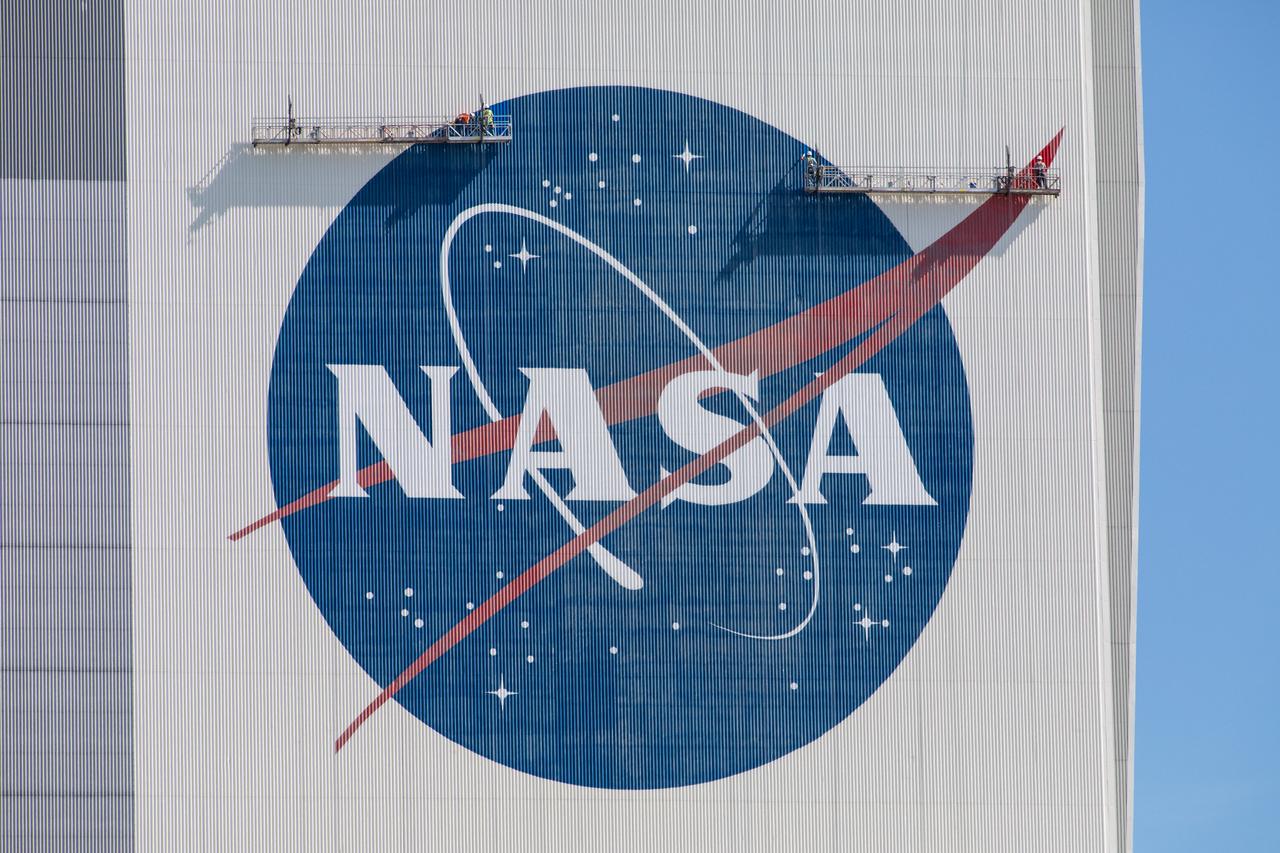
Painting of the NASA logo, also called the meatball, is underway on the 525-foot-tall Vehicle Assembly Building (VAB) at the agency’s Kennedy Space Center in Florida on May 8, 2020. HM2 and H.I.S. Painting of Titusville, Florida, are repainting the meatball and the American Flag on the iconic building. High Bay 3 inside the VAB has been upgraded with 10 new levels of work platforms that will surround and provide access for service and processing of NASA's Space Launch System (SLS) rocket and Orion spacecraft. Exploration Ground Systems is overseeing upgrades to the VAB to support the launch of the SLS and Orion for Artemis missions. Under the Artemis program, NASA will send the first woman and next man to the Moon.

Painting of the NASA logo, also called the meatball, continues on the 525-foot-tall Vehicle Assembly Building (VAB) at the agency’s Kennedy Space Center in Florida on June 23, 2020. HM2 and H.I.S. Painting of Titusville, Florida, are repainting the meatball and the American Flag on the iconic building. The VAB was last painted in 2007 when the repairs were completed after 2004 Hurricanes Frances and Jeanne tore 845 panels off the building. It will take over 500 gallons of paint to paint the 209 X 110-foot flag and the 110’ X 132’ meatball.

Painting of the NASA logo, also called the meatball, continues on the 525-foot-tall Vehicle Assembly Building (VAB) at the agency’s Kennedy Space Center in Florida on June 23, 2020. HM2 and H.I.S. Painting of Titusville, Florida, are repainting the meatball and the American Flag on the iconic building. The VAB was last painted in 2007 when the repairs were completed after 2004 Hurricanes Frances and Jeanne tore 845 panels off the building. It will take over 500 gallons of paint to paint the 209 X 110-foot flag and the 110’ X 132’ meatball.

Painting of the NASA logo, also called the meatball, continues on the 525-foot-tall Vehicle Assembly Building (VAB) at the agency’s Kennedy Space Center in Florida on June 23, 2020. HM2 and H.I.S. Painting of Titusville, Florida, are repainting the meatball and the American Flag on the iconic building. The VAB was last painted in 2007 when the repairs were completed after 2004 Hurricanes Frances and Jeanne tore 845 panels off the building. It will take over 500 gallons of paint to paint the 209 X 110-foot flag and the 110’ X 132’ meatball.

Painting of the NASA logo, also called the meatball, continues on the 525-foot-tall Vehicle Assembly Building (VAB) at the agency’s Kennedy Space Center in Florida on June 23, 2020. HM2 and H.I.S. Painting of Titusville, Florida, are repainting the meatball and the American Flag on the iconic building. The VAB was last painted in 2007 when the repairs were completed after 2004 Hurricanes Frances and Jeanne tore 845 panels off the building. It will take over 500 gallons of paint to paint the 209 X 110-foot flag and the 110’ X 132’ meatball.

Painting of the NASA logo, also called the meatball, continues on the 525-foot-tall Vehicle Assembly Building (VAB) at the agency’s Kennedy Space Center in Florida on June 23, 2020. HM2 and H.I.S. Painting of Titusville, Florida, are repainting the meatball and the American Flag on the iconic building. The VAB was last painted in 2007 when the repairs were completed after 2004 Hurricanes Frances and Jeanne tore 845 panels off the building. It will take over 500 gallons of paint to paint the 209 X 110-foot flag and the 110’ X 132’ meatball.

Painting of the NASA logo, also called the meatball, continues on the 525-foot-tall Vehicle Assembly Building (VAB) at the agency’s Kennedy Space Center in Florida on June 23, 2020. HM2 and H.I.S. Painting of Titusville, Florida, are repainting the meatball and the American Flag on the iconic building. The VAB was last painted in 2007 when the repairs were completed after 2004 Hurricanes Frances and Jeanne tore 845 panels off the building. It will take over 500 gallons of paint to paint the 209 X 110-foot flag and the 110’ X 132’ meatball.
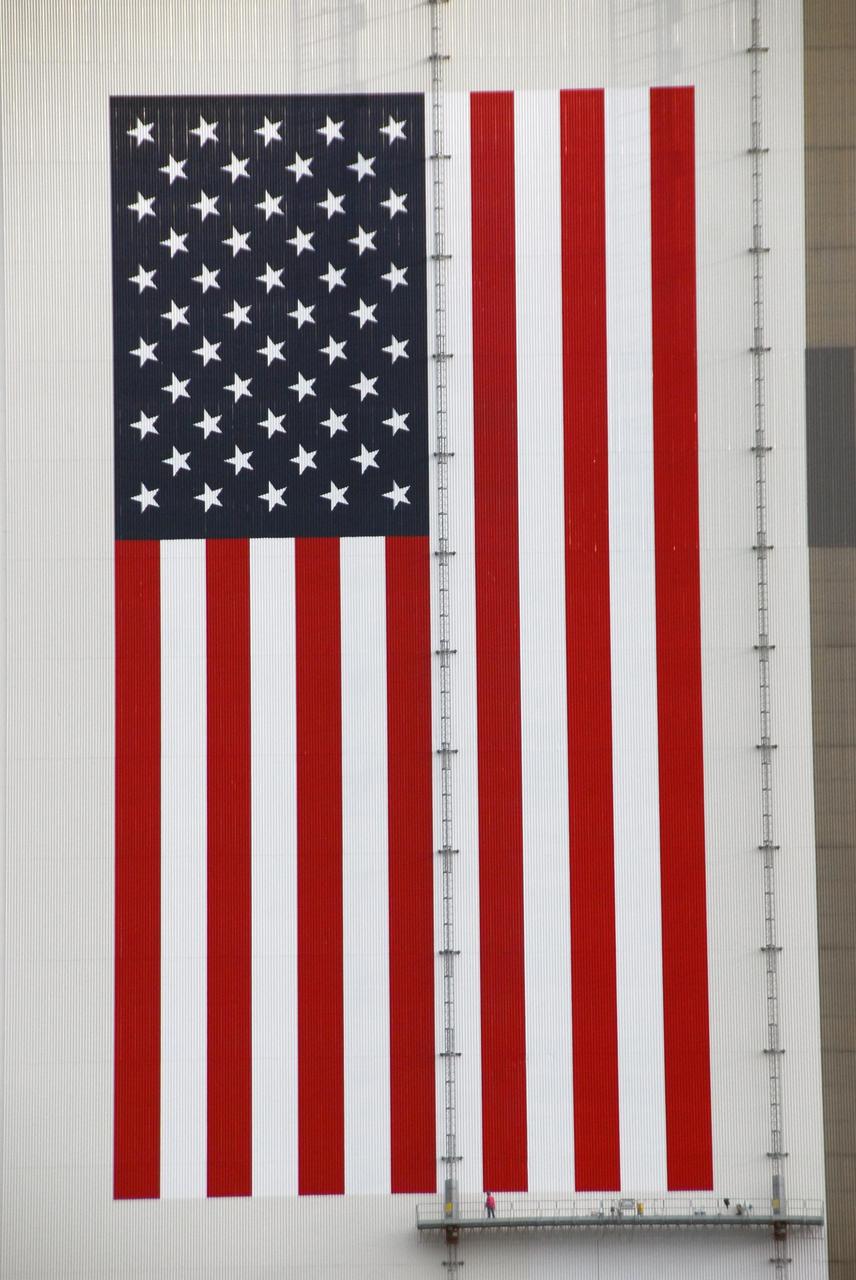
KENNEDY SPACE CENTER, FLA. -- The finishing touches are painted on the American flag that embellishes the southwest side of the Vehicle Assembly Building at NASA's Kennedy Space Center. The flag and the NASA logo, which is on the southeast side, have both been refreshed with new paint. The flag and logo were last painted in 1998, honoring NASA's 40th anniversary. The flag spans an area 209 feet by 110 feet, or about 23, 437 square feet. Each stripe is 9 feet wide and each star is 6 feet in diameter. The logo, which is known as the "meatball," measures 110 feet by 132 feet, or about 12,300 square feet. The building stands 525-feet tall. Photo credit: NASA/George Shelton

Painting of the NASA logo, also called the meatball, continues on the 525-foot-tall Vehicle Assembly Building (VAB) at the agency’s Kennedy Space Center in Florida on June 22, 2020. HM2 and H.I.S. Painting of Titusville, Florida, are repainting the meatball and the American Flag on the iconic building. The VAB was last painted in 2007, when repairs were completed after the 2004 Hurricanes Frances and Jeanne tore 845 panels off the building. It will take over 500 gallons of paint to paint the 209-by-110-foot flag and the 110-by-132-foot meatball. Exploration Ground Systems is overseeing upgrades to the VAB to support the launch of the SLS and Orion for Artemis missions. Under the Artemis program, NASA will send the first woman and next man to the Moon.

A scrub jay perches on a branch near the Vehicle Assembly Building (VAB) at NASA’s Kennedy Space Center in Florida on June 22, 2020. Painting of the NASA logo, also called the meatball, continues on the 525-foot-tall building. HM2 and H.I.S. Painting of Titusville, Florida, are repainting the meatball and the American Flag on the iconic building. The VAB was last painted in 2007, when repairs were completed after the 2004 Hurricanes Frances and Jeanne tore 845 panels off the building. It will take over 500 gallons of paint to paint the 209-by-110-foot flag and the 110-by-132-foot meatball. Exploration Ground Systems is overseeing upgrades to the VAB to support the launch of the SLS and Orion for Artemis missions. Under the Artemis program, NASA will send the first woman and next man to the Moon.

Painting of the NASA logo, also called the meatball, continues on the 525-foot-tall Vehicle Assembly Building (VAB) at the agency’s Kennedy Space Center in Florida on June 22, 2020. HM2 and H.I.S. Painting of Titusville, Florida, are repainting the meatball and the American Flag on the iconic building. The VAB was last painted in 2007, when repairs were completed after the 2004 Hurricanes Frances and Jeanne tore 845 panels off the building. It will take over 500 gallons of paint to paint the 209-by-110-foot flag and the 110-by-132-foot meatball. Exploration Ground Systems is overseeing upgrades to the VAB to support the launch of the SLS and Orion for Artemis missions. Under the Artemis program, NASA will send the first woman and next man to the Moon.

Painting of the NASA logo, also called the meatball, continues on the 525-foot-tall Vehicle Assembly Building (VAB) at the agency’s Kennedy Space Center in Florida on June 22, 2020. HM2 and H.I.S. Painting of Titusville, Florida, are repainting the meatball and the American Flag on the iconic building. The VAB was last painted in 2007, when repairs were completed after the 2004 Hurricanes Frances and Jeanne tore 845 panels off the building. It will take over 500 gallons of paint to paint the 209-by-110-foot flag and the 110-by-132-foot meatball. Exploration Ground Systems is overseeing upgrades to the VAB to support the launch of the SLS and Orion for Artemis missions. Under the Artemis program, NASA will send the first woman and next man to the Moon.

A view of the Vehicle Assembly Building (VAB) at NASA’s Kennedy Space Center in Florida on June 22, 2020. Painting of the NASA logo, also called the meatball, continues on the 525-foot-tall building. HM2 and H.I.S. Painting of Titusville, Florida, are repainting the meatball and the American Flag on the iconic building. The VAB was last painted in 2007, when repairs were completed after the 2004 Hurricanes Frances and Jeanne tore 845 panels off the building. It will take over 500 gallons of paint to paint the 209-by-110-foot flag and the 110-by-132-foot meatball. Exploration Ground Systems is overseeing upgrades to the VAB to support the launch of the SLS and Orion for Artemis missions. Under the Artemis program, NASA will send the first woman and next man to the Moon.

A view of the Vehicle Assembly Building (VAB) and a waterway at NASA’s Kennedy Space Center in Florida on June 22, 2020. Painting of the NASA logo, also called the meatball, continues on the 525-foot-tall building. HM2 and H.I.S. Painting of Titusville, Florida, are repainting the meatball and the American Flag on the iconic building. The VAB was last painted in 2007, when repairs were completed after the 2004 Hurricanes Frances and Jeanne tore 845 panels off the building. It will take over 500 gallons of paint to paint the 209-by-110-foot flag and the 110-by-132-foot meatball. Exploration Ground Systems is overseeing upgrades to the VAB to support the launch of the SLS and Orion for Artemis missions. Under the Artemis program, NASA will send the first woman and next man to the Moon.

A view of the Vehicle Assembly Building (VAB) at NASA’s Kennedy Space Center in Florida on June 22, 2020. Painting of the NASA logo, also called the meatball, continues on the 525-foot-tall building. HM2 and H.I.S. Painting of Titusville, Florida, are repainting the meatball and the American Flag on the iconic building. The VAB was last painted in 2007, when repairs were completed after the 2004 Hurricanes Frances and Jeanne tore 845 panels off the building. It will take over 500 gallons of paint to paint the 209-by-110-foot flag and the 110-by-132-foot meatball. Exploration Ground Systems is overseeing upgrades to the VAB to support the launch of the SLS and Orion for Artemis missions. Under the Artemis program, NASA will send the first woman and next man to the Moon.

Painting of the NASA logo, also called the meatball, continues on the 525-foot-tall Vehicle Assembly Building (VAB) at the agency’s Kennedy Space Center in Florida on June 22, 2020. HM2 and H.I.S. Painting of Titusville, Florida, are repainting the meatball and the American Flag on the iconic building. The VAB was last painted in 2007, when repairs were completed after the 2004 Hurricanes Frances and Jeanne tore 845 panels off the building. It will take over 500 gallons of paint to paint the 209-by-110-foot flag and the 110-by-132-foot meatball. Exploration Ground Systems is overseeing upgrades to the VAB to support the launch of the SLS and Orion for Artemis missions. Under the Artemis program, NASA will send the first woman and next man to the Moon.

A view of the Vehicle Assembly Building (VAB) and a waterway at NASA’s Kennedy Space Center in Florida on June 22, 2020. Painting of the NASA logo, also called the meatball, continues on the 525-foot-tall building. HM2 and H.I.S. Painting of Titusville, Florida, are repainting the meatball and the American Flag on the iconic building. The VAB was last painted in 2007, when repairs were completed after the 2004 Hurricanes Frances and Jeanne tore 845 panels off the building. It will take over 500 gallons of paint to paint the 209-by-110-foot flag and the 110-by-132-foot meatball. Exploration Ground Systems is overseeing upgrades to the VAB to support the launch of the SLS and Orion for Artemis missions. Under the Artemis program, NASA will send the first woman and next man to the Moon.

A close-up view of the Vehicle Assembly Building (VAB) at NASA’s Kennedy Space Center in Florida on June 22, 2020. Painting of the NASA logo, also called the meatball, continues on the 525-foot-tall building. HM2 and H.I.S. Painting of Titusville, Florida, are repainting the meatball and the American Flag on the iconic building. The VAB was last painted in 2007, when repairs were completed after the 2004 Hurricanes Frances and Jeanne tore 845 panels off the building. It will take over 500 gallons of paint to paint the 209-by-110-foot flag and the 110-by-132-foot meatball. Exploration Ground Systems is overseeing upgrades to the VAB to support the launch of the SLS and Orion for Artemis missions. Under the Artemis program, NASA will send the first woman and next man to the Moon.

A view of the Vehicle Assembly Building (VAB) at NASA’s Kennedy Space Center in Florida on June 22, 2020. Painting of the NASA logo, also called the meatball, continues on the 525-foot-tall building. HM2 and H.I.S. Painting of Titusville, Florida, are repainting the meatball and the American Flag on the iconic building. The VAB was last painted in 2007, when repairs were completed after the 2004 Hurricanes Frances and Jeanne tore 845 panels off the building. It will take over 500 gallons of paint to paint the 209-by-110-foot flag and the 110-by-132-foot meatball. Exploration Ground Systems is overseeing upgrades to the VAB to support the launch of the SLS and Orion for Artemis missions. Under the Artemis program, NASA will send the first woman and next man to the Moon.

A view of the Vehicle Assembly Building (VAB) and a waterway at NASA’s Kennedy Space Center in Florida on June 22, 2020. Painting of the NASA logo, also called the meatball, continues on the 525-foot-tall building. HM2 and H.I.S. Painting of Titusville, Florida, are repainting the meatball and the American Flag on the iconic building. The VAB was last painted in 2007, when repairs were completed after the 2004 Hurricanes Frances and Jeanne tore 845 panels off the building. It will take over 500 gallons of paint to paint the 209-by-110-foot flag and the 110-by-132-foot meatball. Exploration Ground Systems is overseeing upgrades to the VAB to support the launch of the SLS and Orion for Artemis missions. Under the Artemis program, NASA will send the first woman and next man to the Moon.
KENNEDY SPACE CENTER, FLA. -- On platforms suspended from the top of the 525-foot-high VAB, workers use rollers and brushes to repaint the U.S. flag on the southwest side of the Vehicle Assembly Building. The flag spans an area 209 feet by 110 feet, or about 23, 437 square feet. Each stripe is 9 feet wide and each star is 6 feet in diameter. The logo is also being painted. Known as the "meatball," the logo measures 110 feet by 132 feet, or about 12,300 square feet. The flag and logo were last painted in 1998, honoring NASA's 40th anniversary. Photo credit: NASA/George Shelton
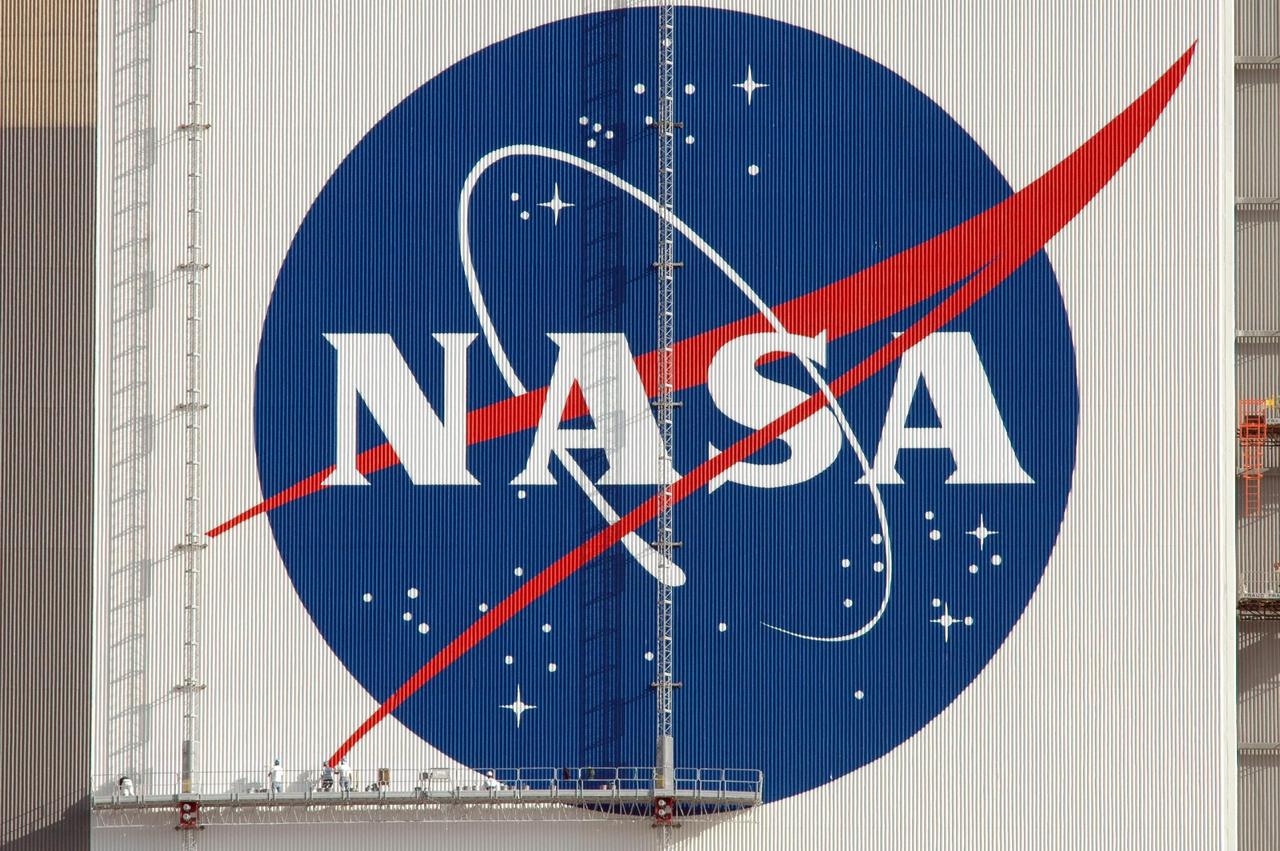
KENNEDY SPACE CENTER, FLA. -- The NASA logo shines in the morning sun on the side of the Vehicle Assembly Building after completion of its repainting. The logo, which is known as the "meatball," measures 110 feet by 132 feet, or about 12,300 square feet. The American flag was also painted on the side of the VAB. The flag spans an area 209 feet by 110 feet, or about 23, 437 square feet. Each stripe is 9 feet wide and each star is 6 feet in diameter. The flag and logo were last painted in 1998, honoring NASA's 40th anniversary. Photo credit: NASA/Jim Grossmann
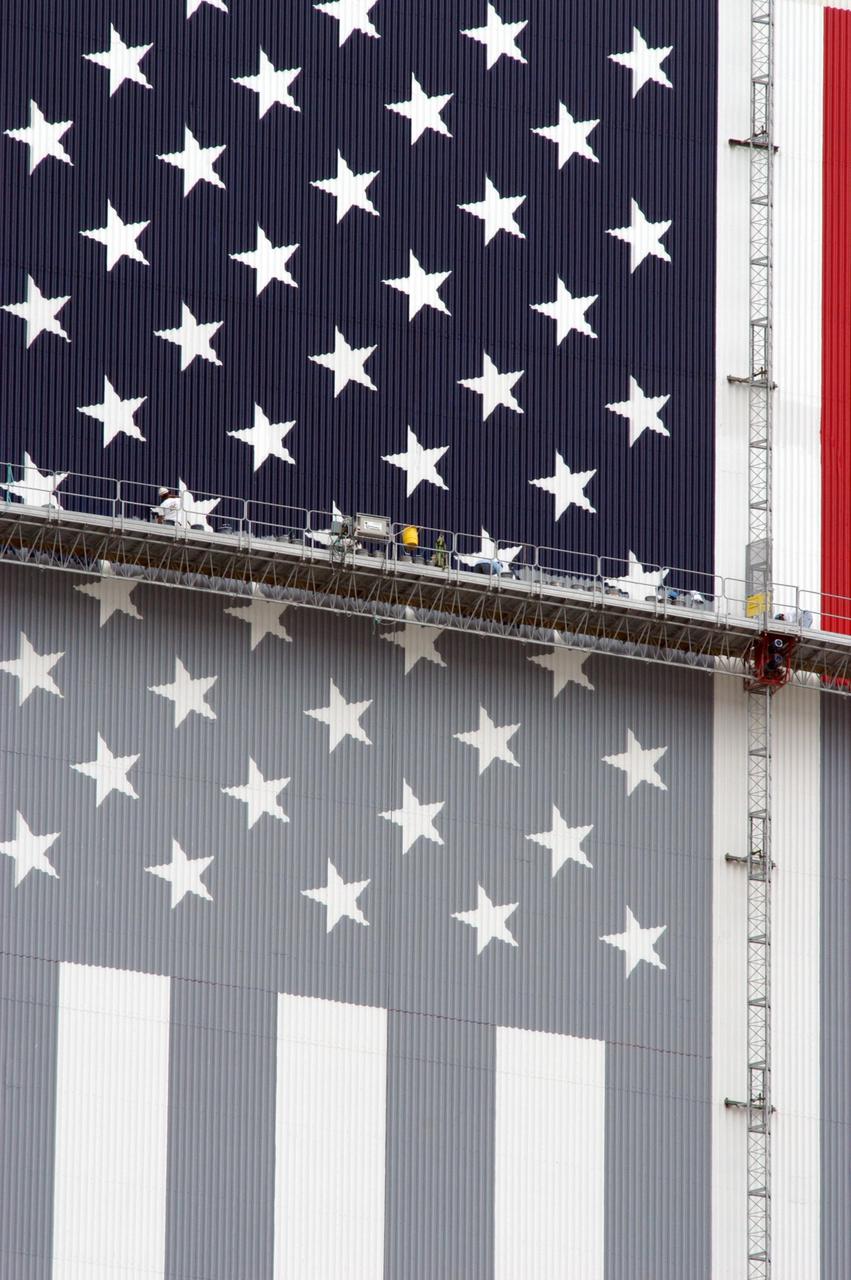
KENNEDY SPACE CENTER, FLA. -- On platforms suspended from the top of the 525-foot-high VAB, workers use rollers and brushes to repaint the U.S. flag on the southwest side of the Vehicle Assembly Building. The flag spans an area 209 feet by 110 feet, or about 23, 437 square feet. Each stripe is 9 feet wide and each star is 6 feet in diameter. The logo is also being painted. Known as the "meatball," the logo measures 110 feet by 132 feet, or about 12,300 square feet. The flag and logo were last painted in 1998, honoring NASA's 40th anniversary. Photo credit: NASA/George Shelton
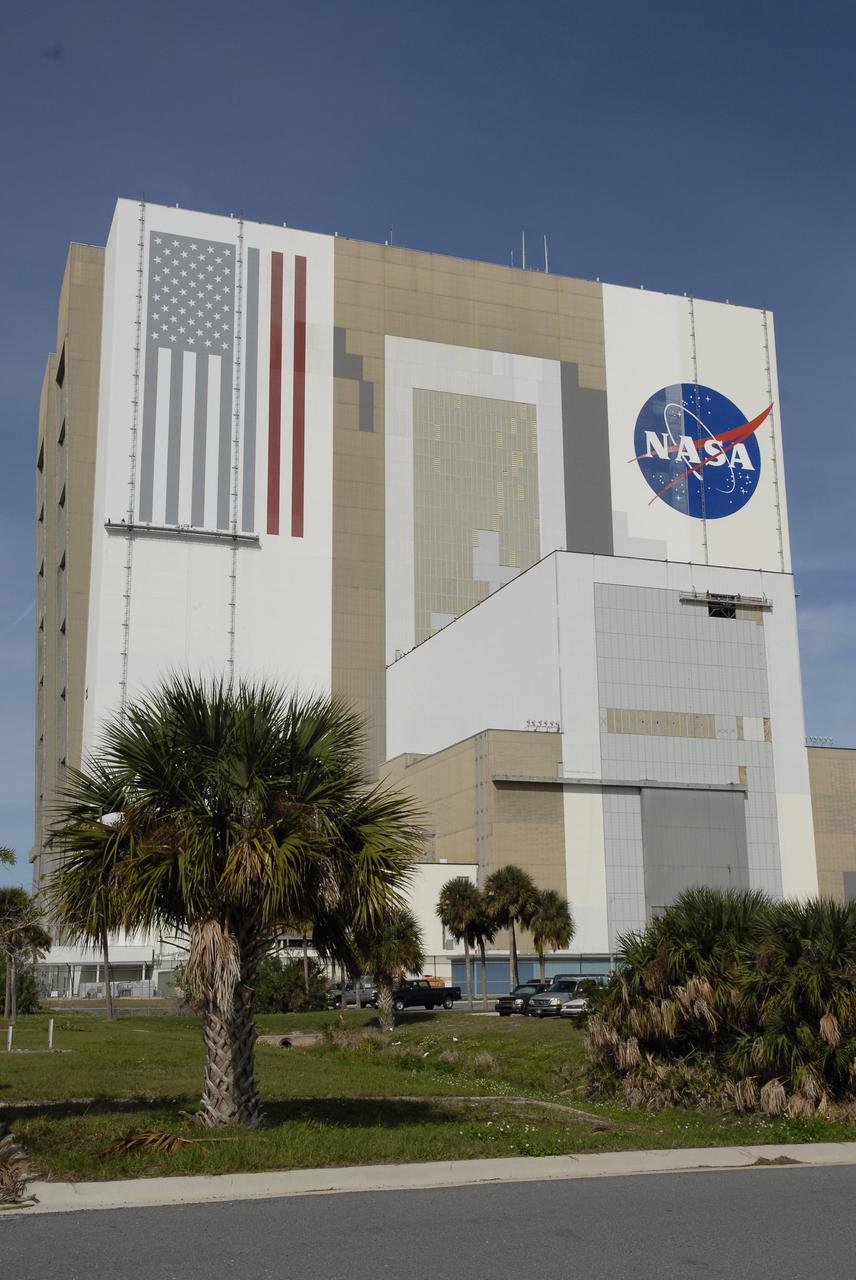
KENNEDY SPACE CENTER, FLA. -- Painters' platforms are seen hanging on the side of Kennedy Space Center's 525-foot-high Vehicle Assembly Building to facilitate the repainting of the American flag and the NASA logo. Workers use rollers and brushes to do the painting. The flag and logo were last painted in 1998, honoring NASA's 40th anniversary. The flag spans an area 209 feet by 110 feet, or about 23,437 square feet. Each stripe is 9 feet wide and each star is 6 feet in diameter. The logo, also known as the "meatball," measures 110 feet by 132 feet, or about 12,300 square feet. Photo credit: NASA/Kim Shiflett
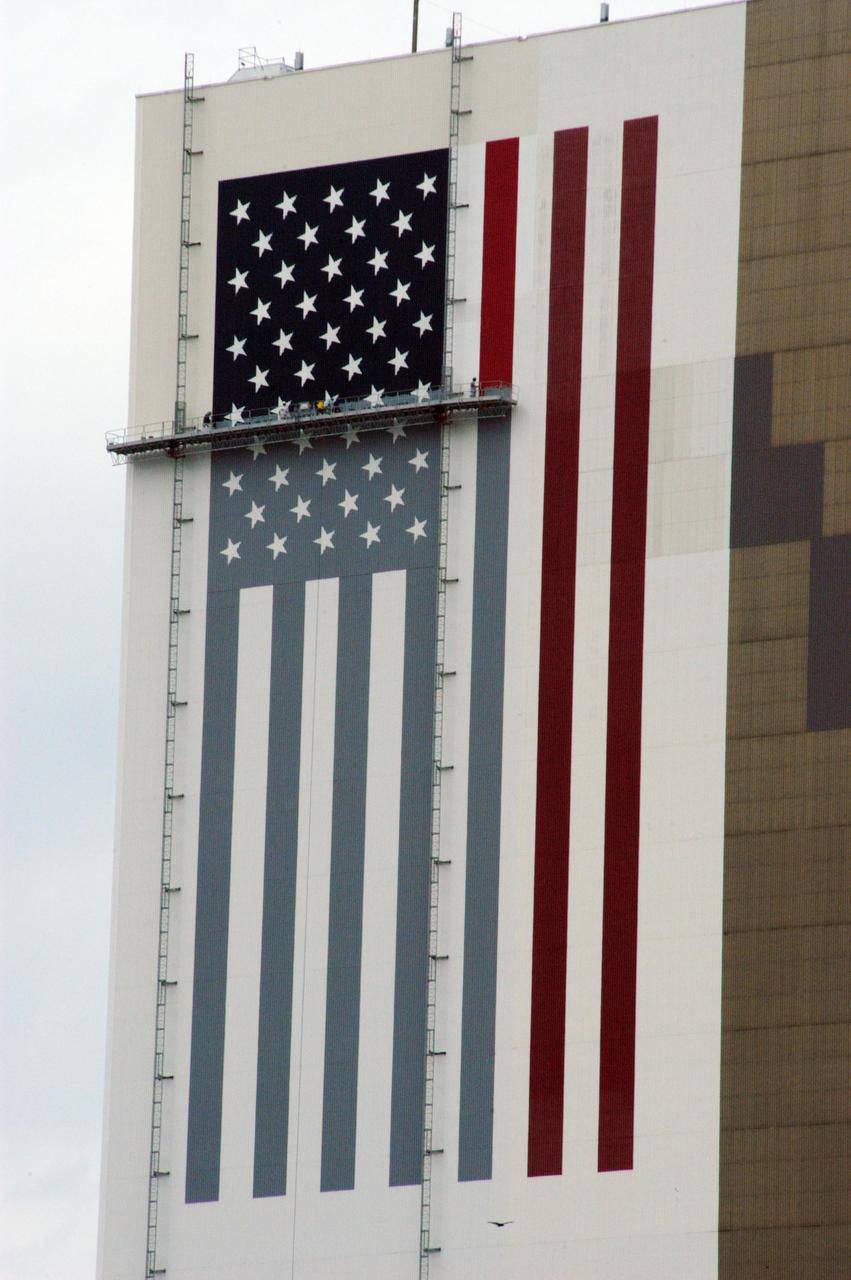
KENNEDY SPACE CENTER, FLA. -- On platforms suspended from the top of the 525-foot-high VAB, workers use rollers and brushes to repaint the U.S. flag on the southwest side of the Vehicle Assembly Building. The flag spans an area 209 feet by 110 feet, or about 23, 437 square feet. Each stripe is 9 feet wide and each star is 6 feet in diameter. The logo is also being painted. Known as the "meatball," the logo measures 110 feet by 132 feet, or about 12,300 square feet. The flag and logo were last painted in 1998, honoring NASA's 40th anniversary. Photo credit: NASA/George Shelton
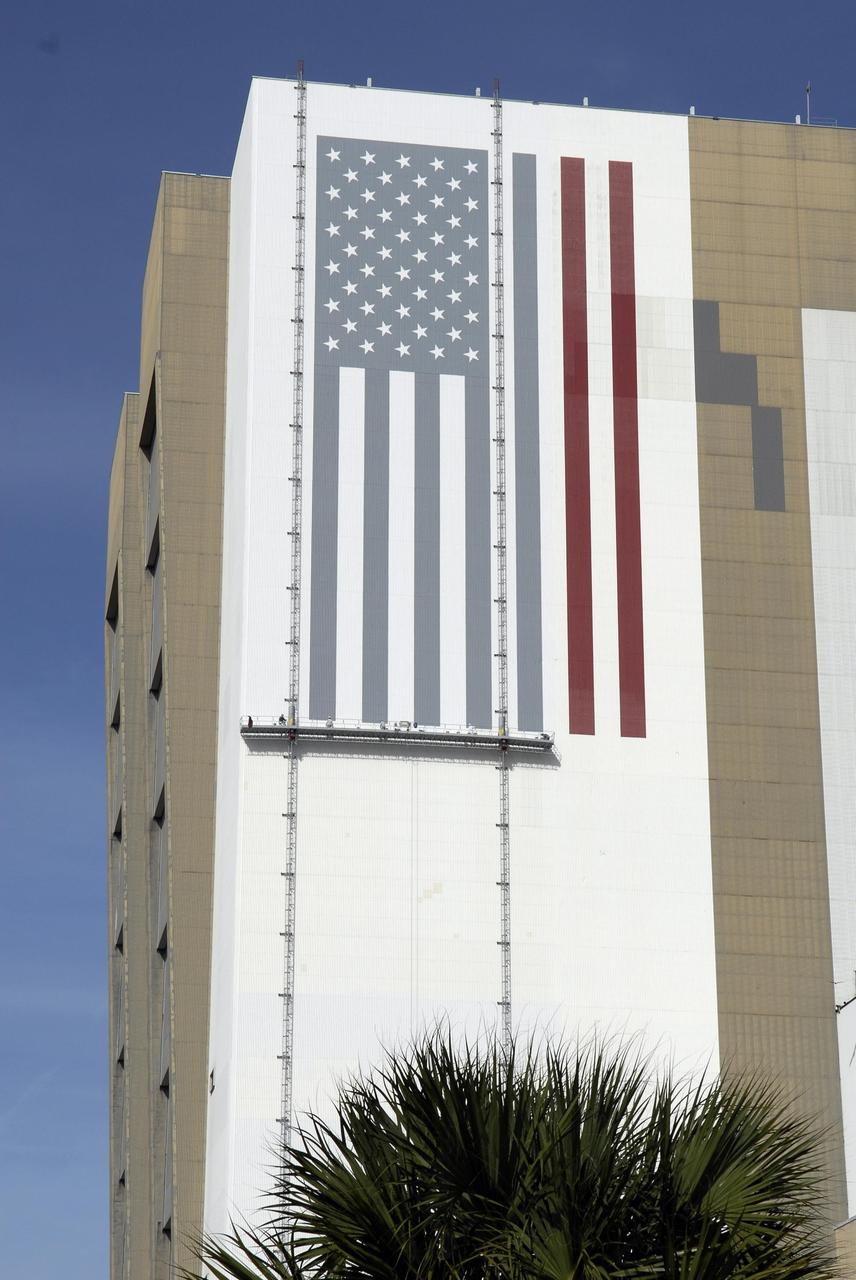
KENNEDY SPACE CENTER, FLA. -- Painters' platforms are seen hanging on the side of Kennedy Space Center's 525-foot-high Vehicle Assembly Building to facilitate the repainting of the American flag. The NASA logo is also being repainted. Workers use rollers and brushes to do the painting. The flag and logo were last painted in 1998, honoring NASA's 40th anniversary. The flag spans an area 209 feet by 110 feet, or about 23,437 square feet. Each stripe is 9 feet wide and each star is 6 feet in diameter. The logo, also known as the "meatball," measures 110 feet by 132 feet, or about 12,300 square feet. Photo credit: NASA/Kim Shiflett
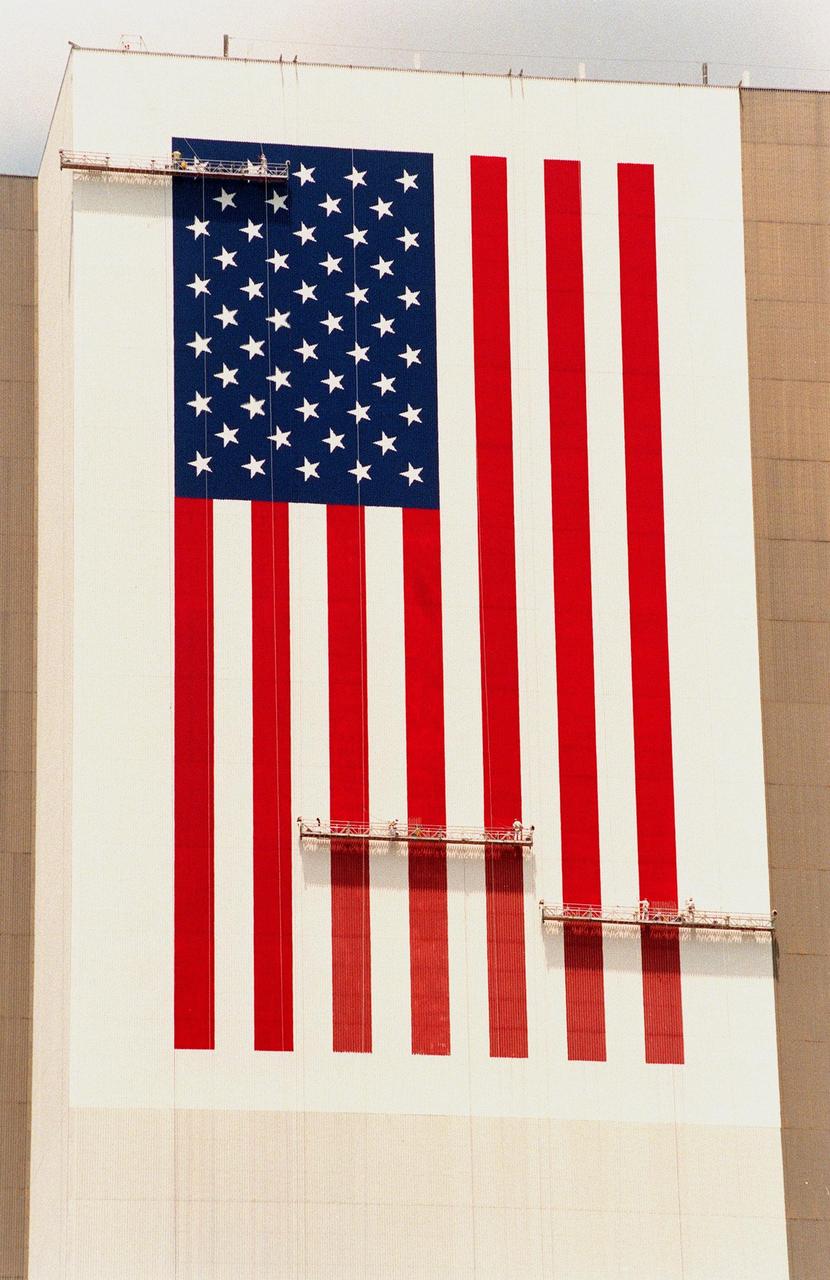
KENNEDY SPACE CENTER, FLA. -- The American flag is being repainted on the side of the Vehicle Assembly Building (VAB). The flag spans an area 209 feet by 110 feet, or about 23, 437 square feet. Each stripe is 9 feet wide and each star is 6 feet in diameter. Workers, suspended on platforms from the top of the 525-foot-high VAB, are using rollers and brushes to do the painting. In addition to the flag, the NASA logo, also known as the "meatball," is being painted on the VAB. When finished, the logo will measure 110 feet by 132 feet, or about 12,300 square feet. The entire fleet of orbiters is also receiving the addition of the NASA logo on their wings and sidewalls. The painting honors NASA’s 40th anniversary on Oct. 1 and is expected to be complete in mid-September
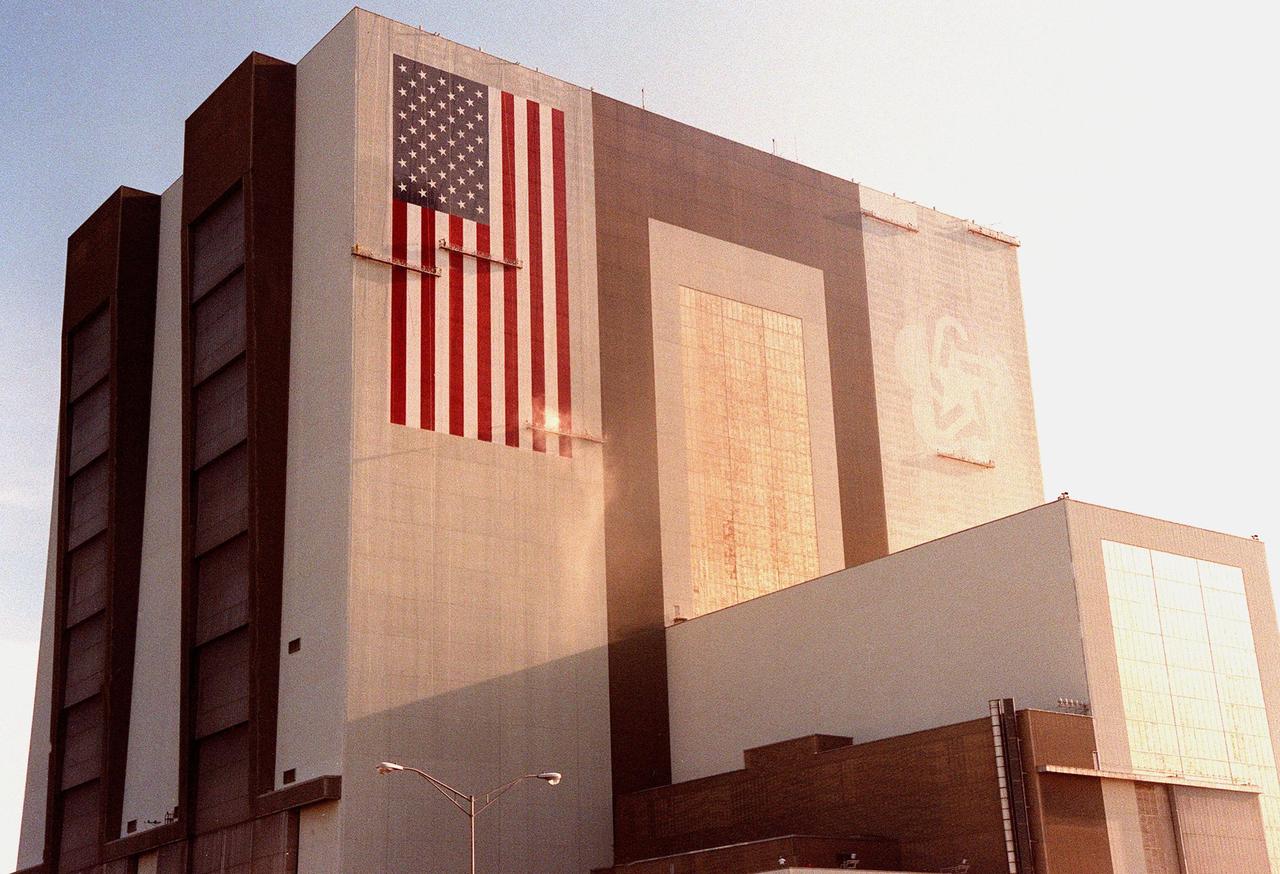
Painters are suspended on platforms from the top of the 525-foot-high Vehicle Assembly Building (VAB) at KSC during repainting of the American flag and NASA logo. The flag spans an area 209 feet by 110 feet and will require 510 gallons of red, white and blue paint. Each stripe of the flag is 9 feet wide and each star is 6 feet in diameter. The previous Bicentennial Emblem on the other side of the VAB doors is being replaced by the NASA logo, honoring NASA’s 40th anniversary (in October). The logo covers an area 110 feet by 132 feet. The painting platforms are operated by two electric motors and travel 35 feet per minute. Work is being done with rollers, with brushes being used for details. The paint was donated by ICI Devoe of Louisville, Ky. Work is expected to be completed in mid-September

KENNEDY SPACE CENTER, FLA. -- Painters are suspended on platforms from the top of the 525-foot-high Vehicle Assembly Building (VAB) at KSC during repainting of the American flag and NASA logo. The flag spans an area 209 feet by 110 feet, or about 23,437 square feet, and will require 510 gallons of red, white and blue paint. Each stripe of the flag is 9 feet wide and each star is 6 feet in diameter. The previous Bicentennial Emblem on the right side of the VAB doors is being replaced by the NASA logo, honoring NASA’s 40th anniversary (in October). The logo will cover an area 110 feet by 132 feet, or about 12,300 square feet. The painting platforms are operated by two electric motors and travel 35 feet per minute. Work is being done with rollers, with brushes being used for details. The paint was donated by ICI Devoe of Louisville, Ky. Work is expected to be completed in mid-September
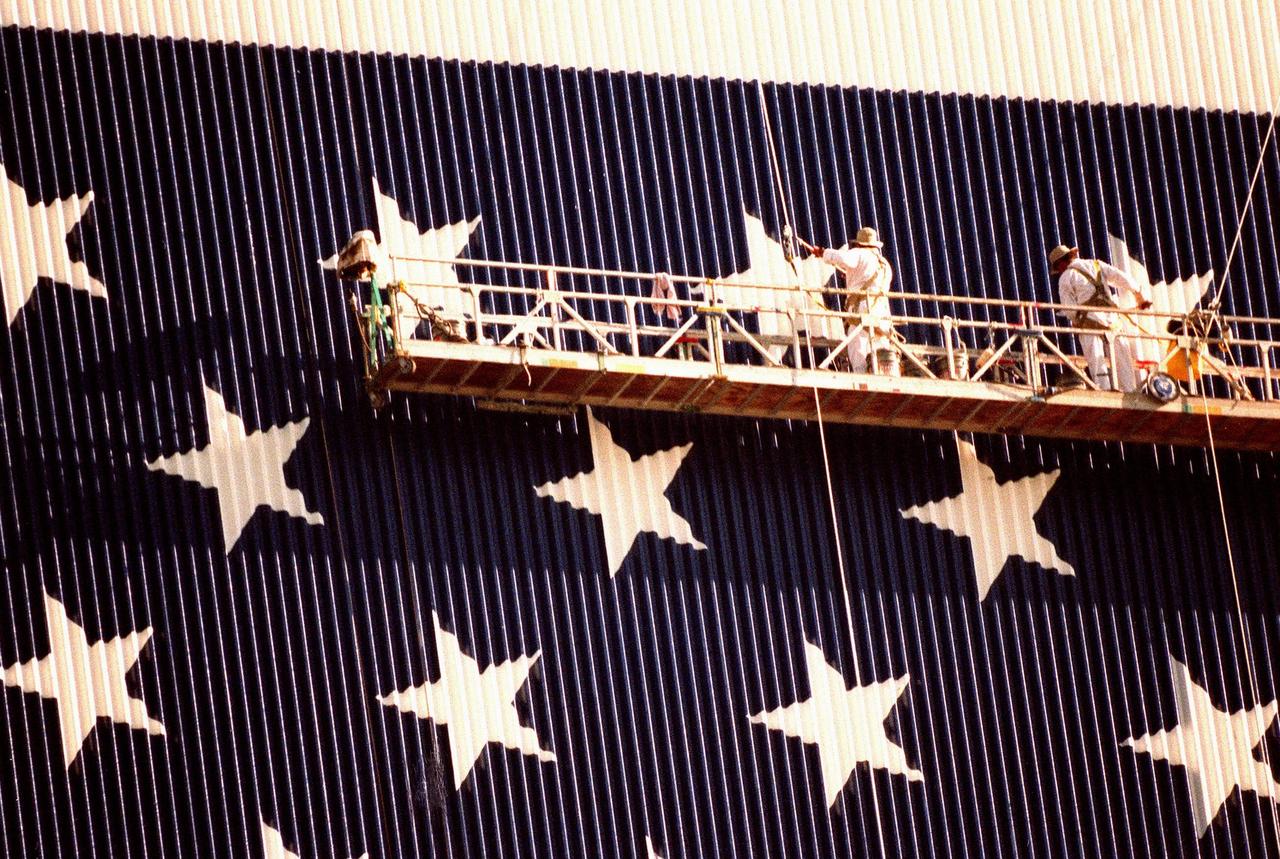
KENNEDY SPACE CENTER, FLA. -- Painters are dwarfed by the six-foot stars in the blue field of the American flag they are repainting on the side of the Vehicle Assembly Building (VAB). The flag spans an area 209 feet by 110 feet, or about 23, 437 square feet. Each stripe is 9 feet wide. Workers, suspended on platforms from the top of the 525-foot-high VAB, are using rollers and brushes to do the painting. In addition to the flag, the NASA logo, also known as the "meatball," is being painted on the VAB. When finished, the logo will measure 110 feet by 132 feet, or about 12,300 square feet. The entire fleet of orbiters is also receiving the addition of the NASA logo on their wings and sidewalls. The painting honors NASA’s 40th anniversary on Oct. 1 and is expected to be complete in mid-September
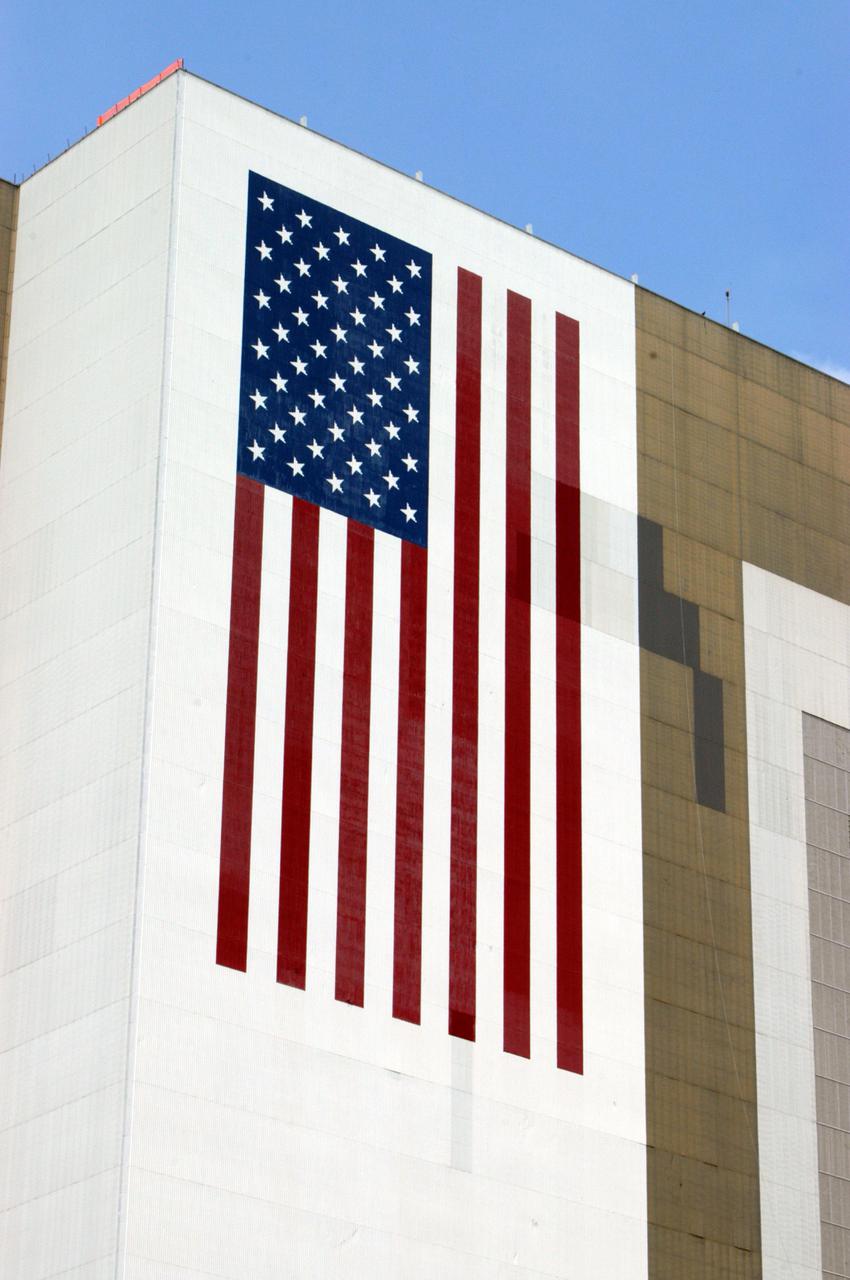
KENNEDY SPACE CENTER, FLA. - The American flag on the side of the Vehicle Assembly Building at NASA’s Kennedy Space Center is newly painted. The flag was damaged in the hurricanes of 2004 that assaulted the east coast of Florida. Winds pulled a number of panels from the side of the 525-foot-high building. The flag is 209 feet by 110 feet. Each star is more than six feet in diameter and each stripe is nine feet wide. The flag sits more than 450 feet above the ground.

KENNEDY SPACE CENTER, FLA. - The American flag on the side of the Vehicle Assembly Building at NASA’s Kennedy Space Center is newly painted. The flag was damaged in the hurricanes of 2004 that assaulted the east coast of Florida. Winds pulled a number of panels from the side of the 525-foot-high building. The flag is 209 feet by 110 feet. Each star is more than six feet in diameter and each stripe is nine feet wide. The flag sits more than 450 feet above the ground.
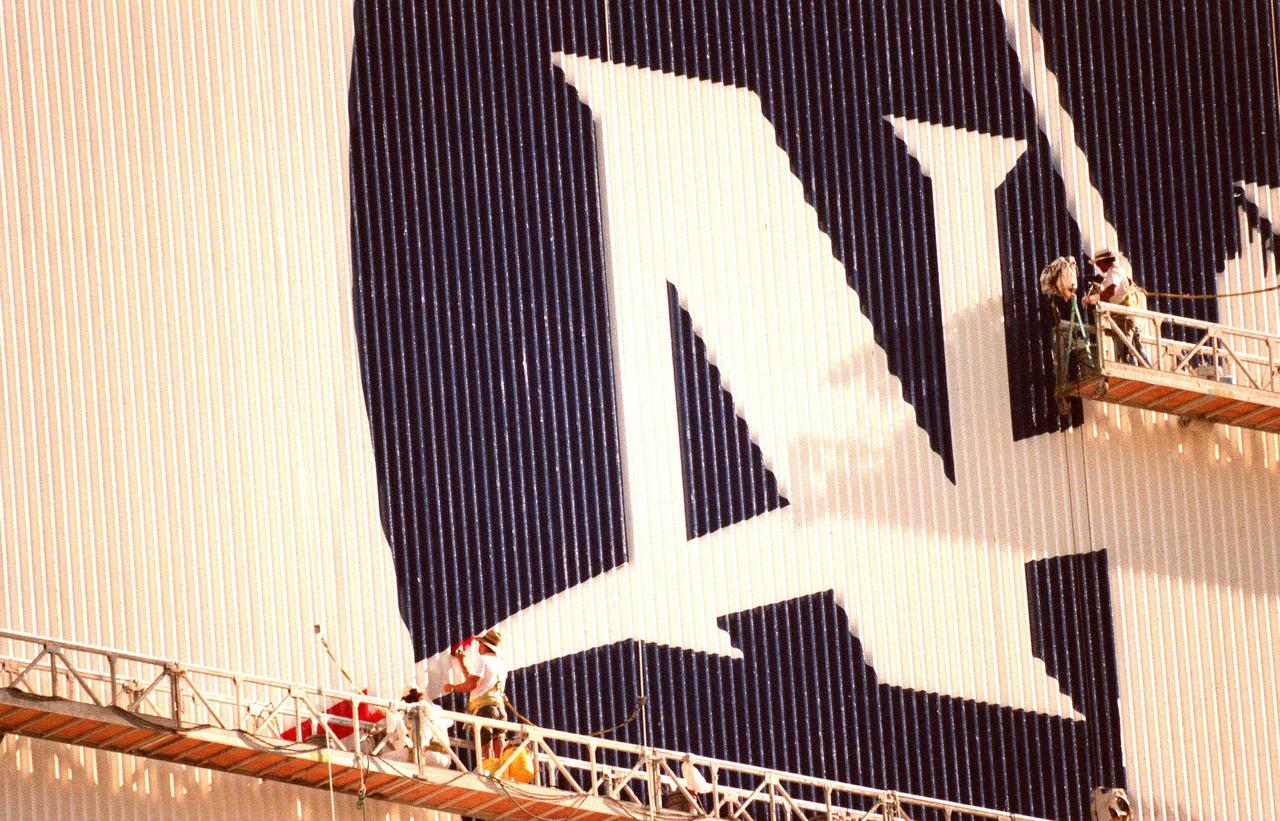
KENNEDY SPACE CENTER, FLA. -- The worker on the lower left applies the red paint to the chevron while the worker on the right fills in the blue field to the NASA logo they are painting on the Vehicle Assembly Building (VAB). When finished, the logo, also known as the "meatball," will measure 110 feet by 132 feet, or about 12,300 square feet. Workers, suspended on platforms from the top of the 525-foot-high VAB, are using rollers and brushes to do the painting. The entire fleet of orbiters is also receiving the addition of the NASA logo on their wings and sidewalls. In addition to the logo, the American flag is being repainted on the other side of the VAB. The flag spans an area 209 feet by 110 feet, or about 23, 437 square feet. Each stripe is 9 feet wide and each star is 6 feet in diameter. The painting honors NASA’s 40th anniversary on Oct. 1 and is expected to be complete in mid-September
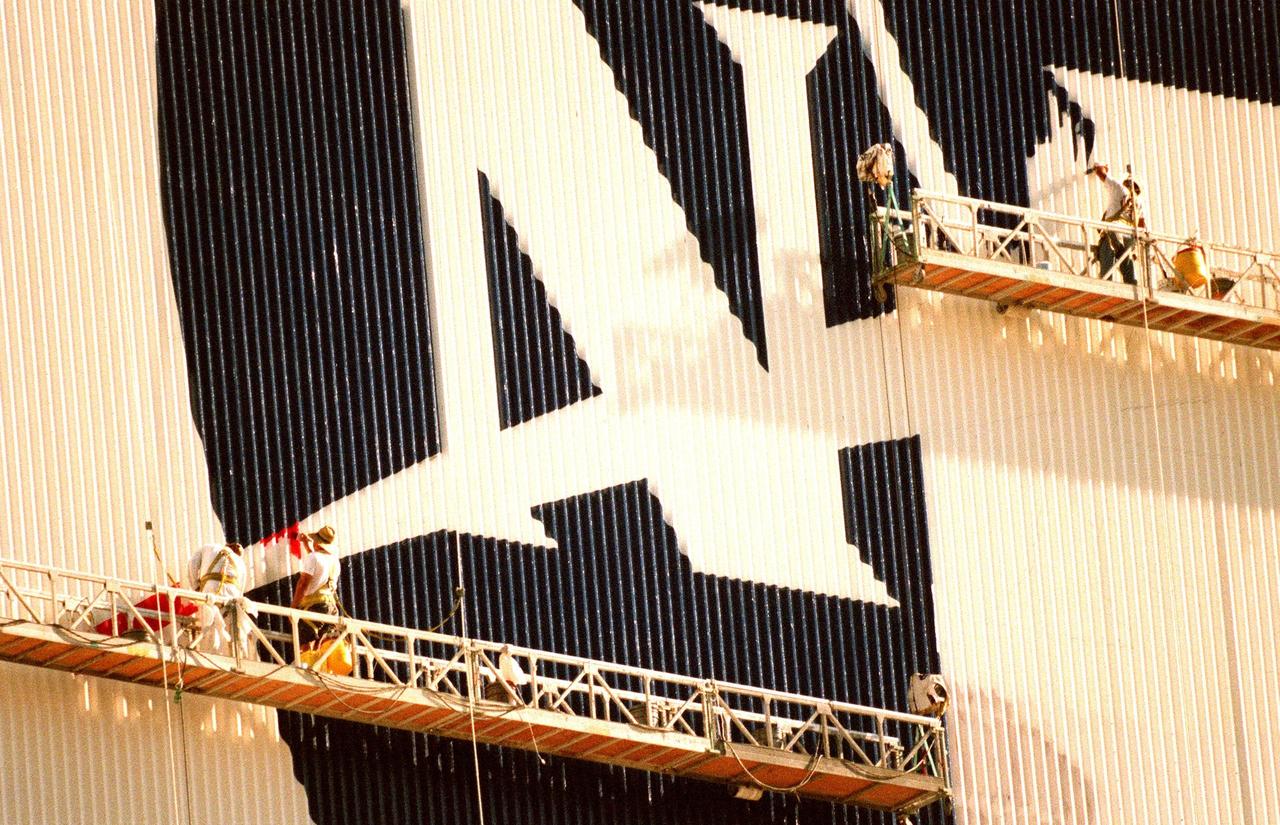
KENNEDY SPACE CENTER, FLA. -- The worker on the lower left applies the red paint to the chevron while the worker on the right fills in the blue field to the NASA logo they are painting on the Vehicle Assembly Building (VAB). When finished, the logo, also known as the "meatball," will measure 110 feet by 132 feet, or about 12,300 square feet. Workers, suspended on platforms from the top of the 525-foot-high VAB, are using rollers and brushes to do the painting. The entire fleet of orbiters is also receiving the addition of the NASA logo on their wings and sidewalls. In addition to the logo, the American flag is being repainted on the other side of the VAB. The flag spans an area 209 feet by 110 feet, or about 23, 437 square feet. Each stripe is 9 feet wide and each star is 6 feet in diameter. The painting honors NASA’s 40th anniversary on Oct. 1 and is expected to be complete in mid-September
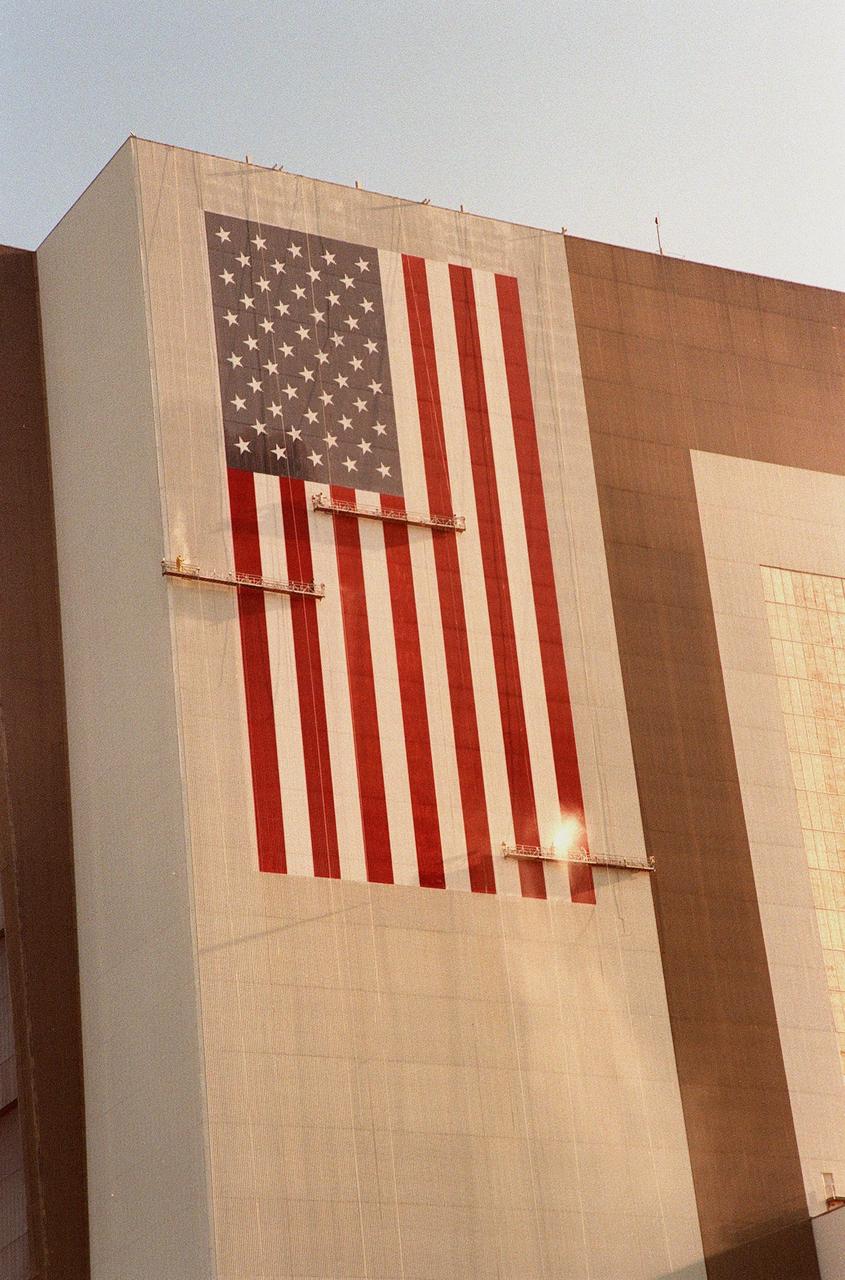
Painters are suspended on platforms from the top of the 525-foot-high Vehicle Assembly Building (VAB) at KSC during repainting of the American flag. The flag spans an area 209 feet by 110 feet and will require 510 gallons of red, white and blue paint. Each stripe of the flag is 9 feet wide and each star is 6 feet in diameter. The platforms are operated by two electric motors and travel 35 feet per minute. Work is being done with rollers, with brushes being used for details. The paint was donated by ICI Devoe of Louisville, Ky. In addition to the flag, the Bicentennial Emblem on the other side of the VAB doors is being replaced by the NASA logo, honoring NASA’s 40th anniversary (in October). The logo covers an area 110 feet by 132 feet. Work is expected to be completed in mid-September
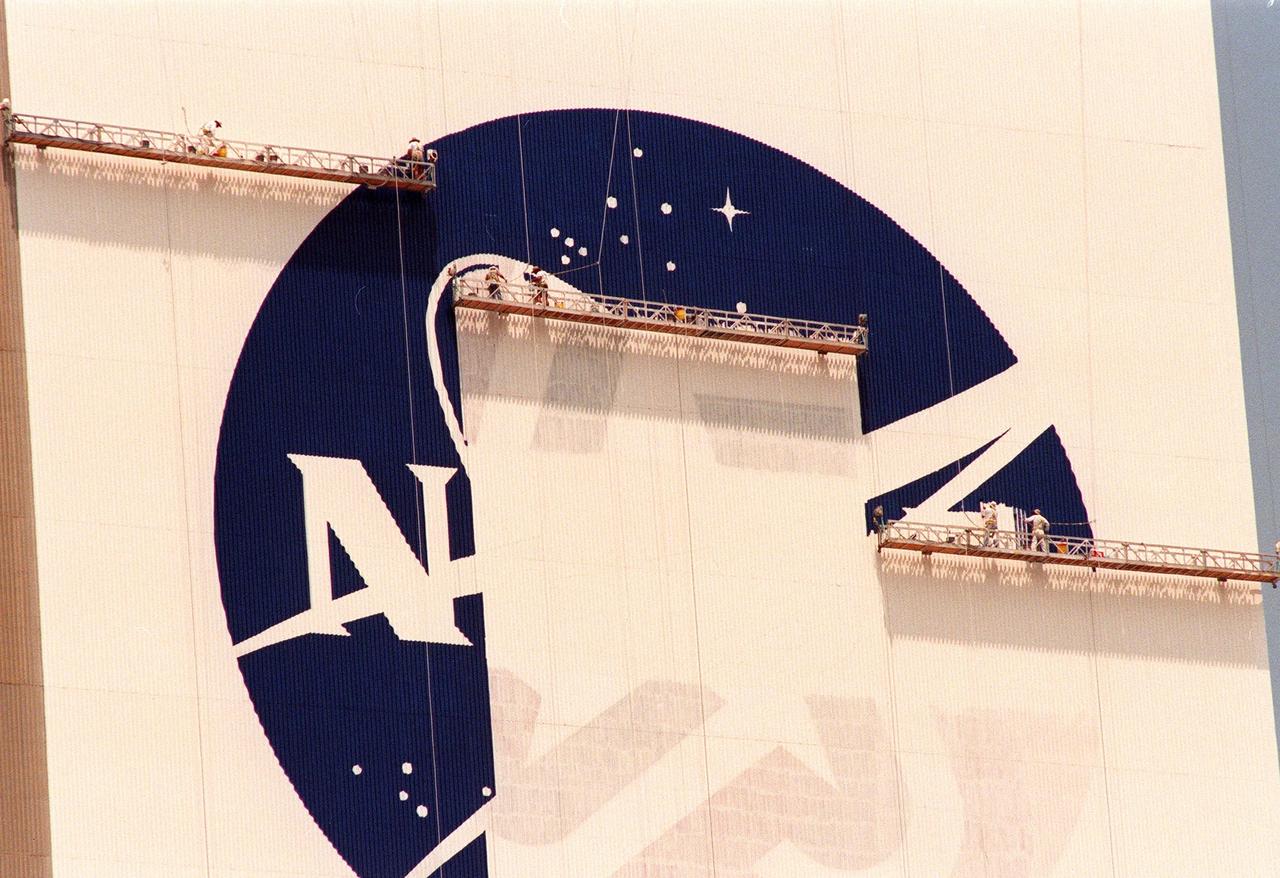
KENNEDY SPACE CENTER, FLA. -- The NASA logo, also known as the "meatball," is painted on the side of the Vehicle Assembly Building (VAB). When finished, the logo will measure 110 feet by 132 feet, or about 12,300 square feet. Workers, suspended on platforms from the top of the 525-foot-high VAB, are using rollers and brushes to do the painting. In addition to the logo, the American flag is also being repainted on the other side of the VAB. The flag spans an area 209 feet by 110 feet, or about 23, 437 square feet. Each stripe is 9 feet wide and each star is 6 feet in diameter. The entire fleet of orbiters is also receiving the addition of the NASA logo on their wings and sidewalls. The painting honors NASA’s 40th anniversary on Oct. 1 and is expected to be complete in mid-September
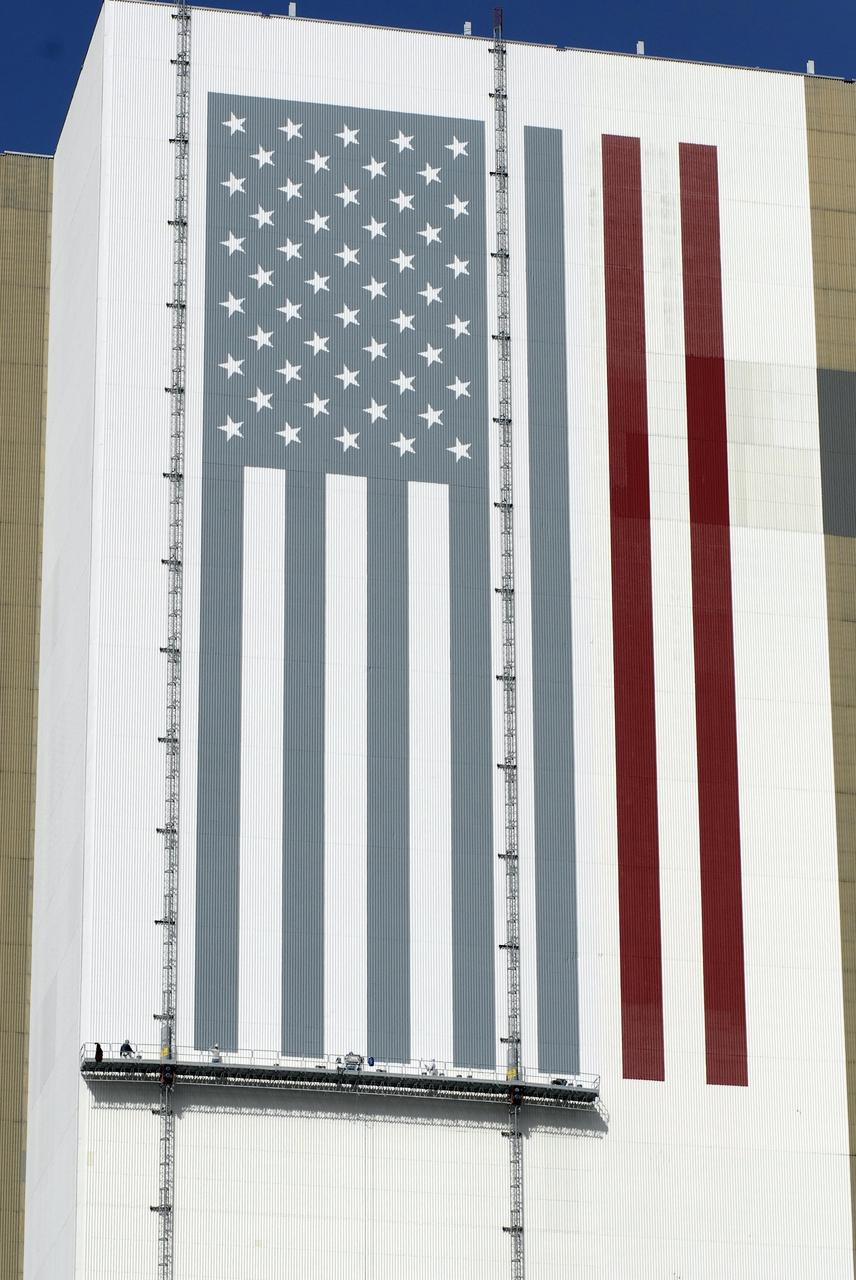
KENNEDY SPACE CENTER, FLA. -- Painters' scaffolding is seen hanging on the side of Kennedy Space Center's Vehicle Assembly Building to facilitate the repainting of the American flag. The NASA logo is also being repainted. Workers, suspended on platforms from the top of the 525-foot-high VAB, use rollers and brushes to do the painting. The flag and logo were last painted in 1998, honoring NASA's 40th anniversary. The flag spans an area 209 feet by 110 feet, or about 23,437 square feet. Each stripe is 9 feet wide and each star is 6 feet in diameter. The logo, also known as the "meatball," measures 110 feet by 132 feet, or about 12,300 square feet. Photo credit: NASA/Kim Shiflett
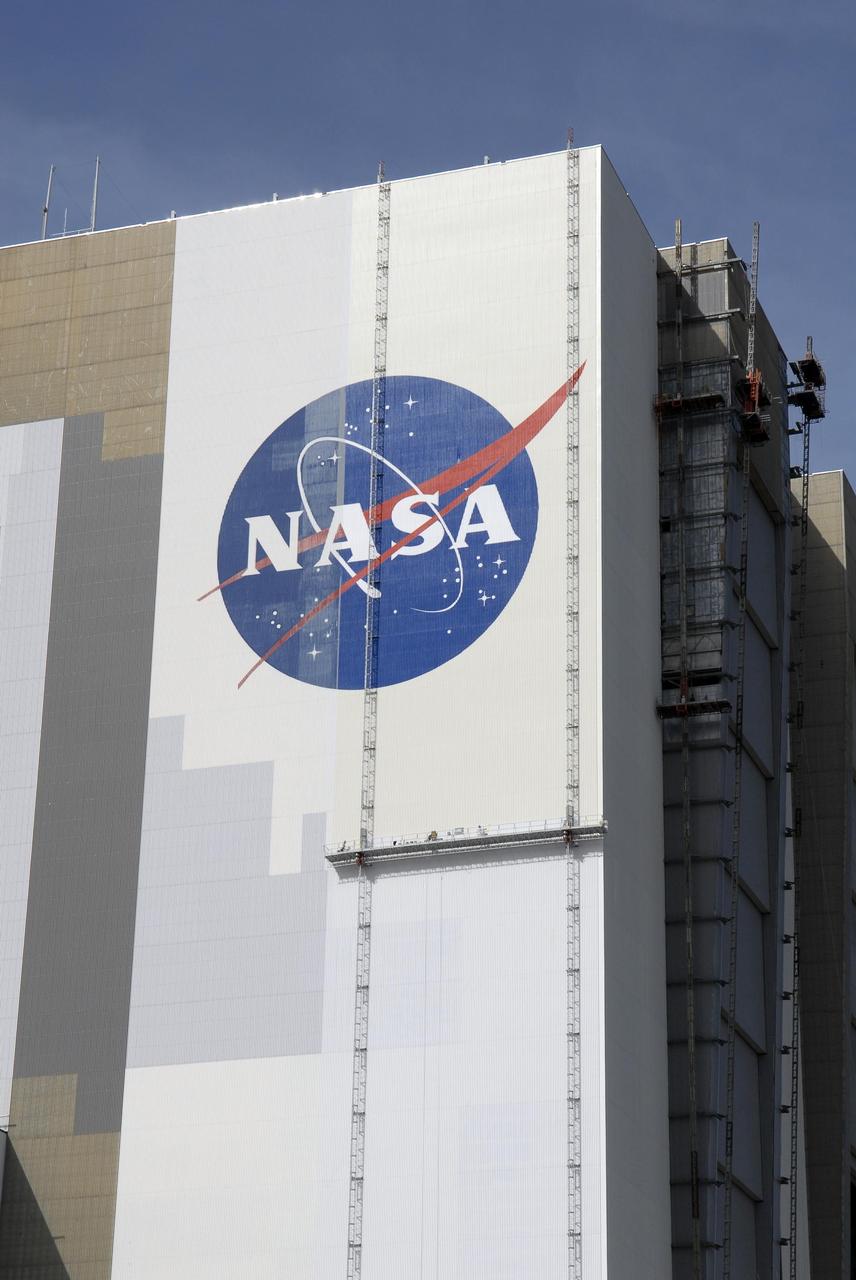
KENNEDY SPACE CENTER, FLA. -- Painters' scaffolding is seen hanging on the side of Kennedy Space Center's Vehicle Assembly Building to facilitate the repainting of the NASA logo. The American flag is also being repainted. Workers, suspended on platforms from the top of the 525-foot-high VAB, use rollers and brushes to do the painting. The flag and logo were last painted in 1998, honoring NASA's 40th anniversary. The flag spans an area 209 feet by 110 feet, or about 23,437 square feet. Each stripe is 9 feet wide and each star is 6 feet in diameter. The logo, also known as the "meatball," measures 110 feet by 132 feet, or about 12,300 square feet. Photo credit: NASA/Kim Shiflett

KENNEDY SPACE CENTER, FLA. -- Painters' scaffolding is seen hanging on the side of Kennedy Space Center's Vehicle Assembly Building to facilitate the repainting of the American flag and the NASA logo. Workers, suspended on platforms from the top of the 525-foot-high VAB, use rollers and brushes to do the painting. The flag and logo were last painted in 1998, honoring NASA's 40th anniversary. The flag spans an area 209 feet by 110 feet, or about 23,437 square feet. Each stripe is 9 feet wide and each star is 6 feet in diameter. The logo, also known as the "meatball," measures 110 feet by 132 feet, or about 12,300 square feet. Photo credit: NASA/Kim Shiflett
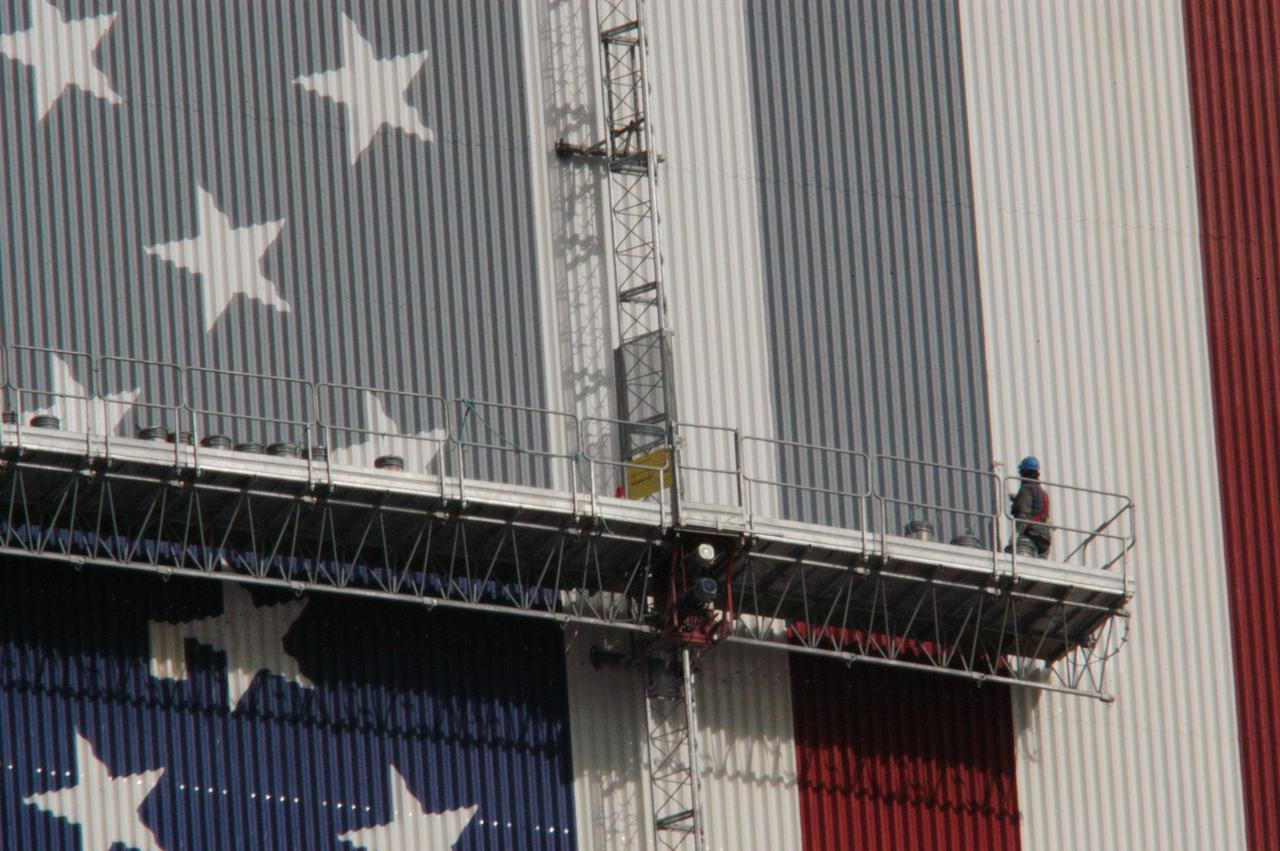
KENNEDY SPACE CENTER, FLA. -- Elevated platforms are seen hanging on the side of Kennedy Space Center's Vehicle Assembly Building to facilitate the repainting of the American flag and NASA logo. Workers, suspended on the platforms from the top of the 525-foot-high VAB, use rollers and brushes to do the painting. The flag and logo were last painted in 1998, honoring NASA's 40th anniversary. The flag spans an area 209 feet by 110 feet, or about 23, 437 square feet. Each stripe is 9 feet wide and each star is 6 feet in diameter. The logo, also known as the "meatball," measures 110 feet by 132 feet, or about 12,300 square feet. Photo credit: NASA/George Shelton
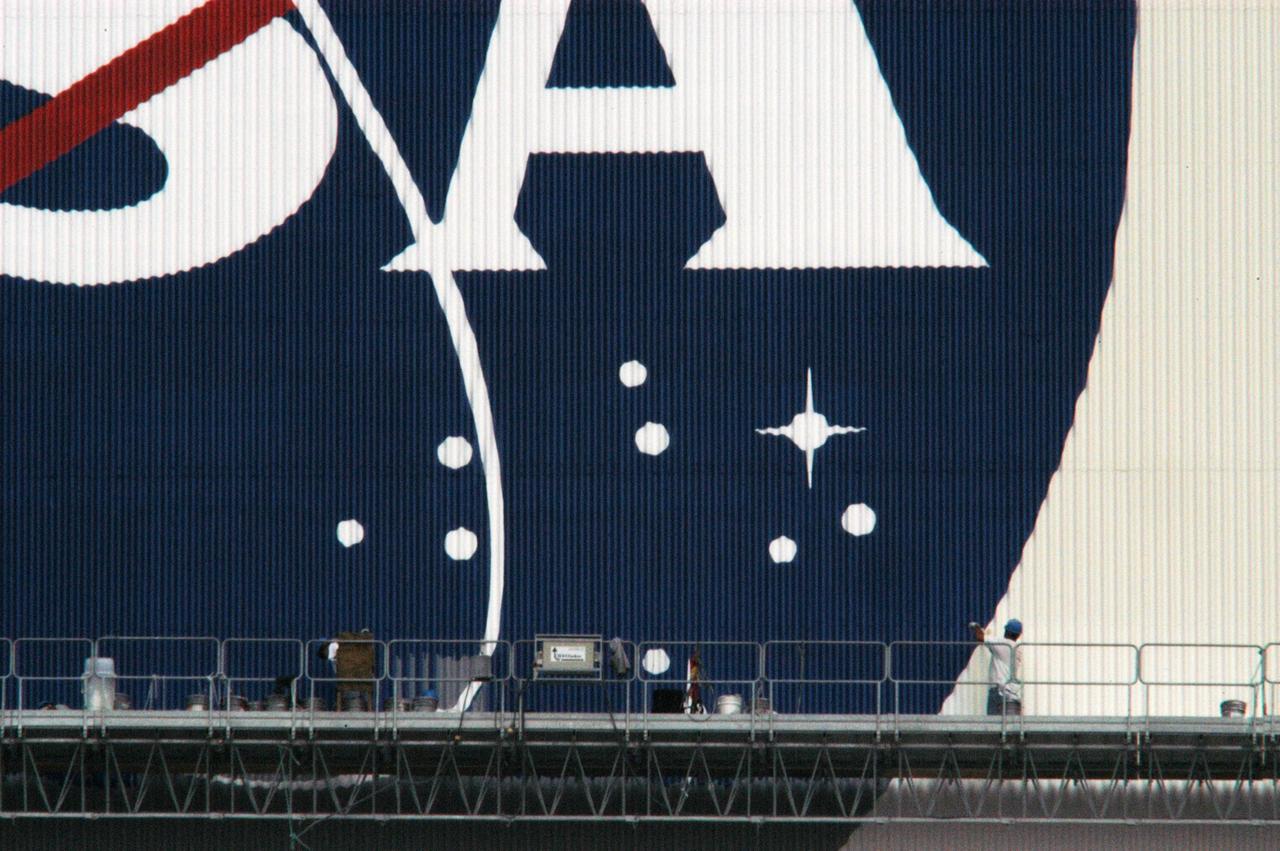
KENNEDY SPACE CENTER, FLA. -- Elevated platforms are seen hanging on the side of Kennedy Space Center's Vehicle Assembly Building to facilitate the repainting of the American flag and NASA logo. Workers, suspended on the platforms from the top of the 525-foot-high VAB, use rollers and brushes to do the painting. The flag and logo were last painted in 1998, honoring NASA's 40th anniversary. The flag spans an area 209 feet by 110 feet, or about 23, 437 square feet. Each stripe is 9 feet wide and each star is 6 feet in diameter. The logo, also known as the "meatball," measures 110 feet by 132 feet, or about 12,300 square feet. Photo credit: NASA/George Shelton
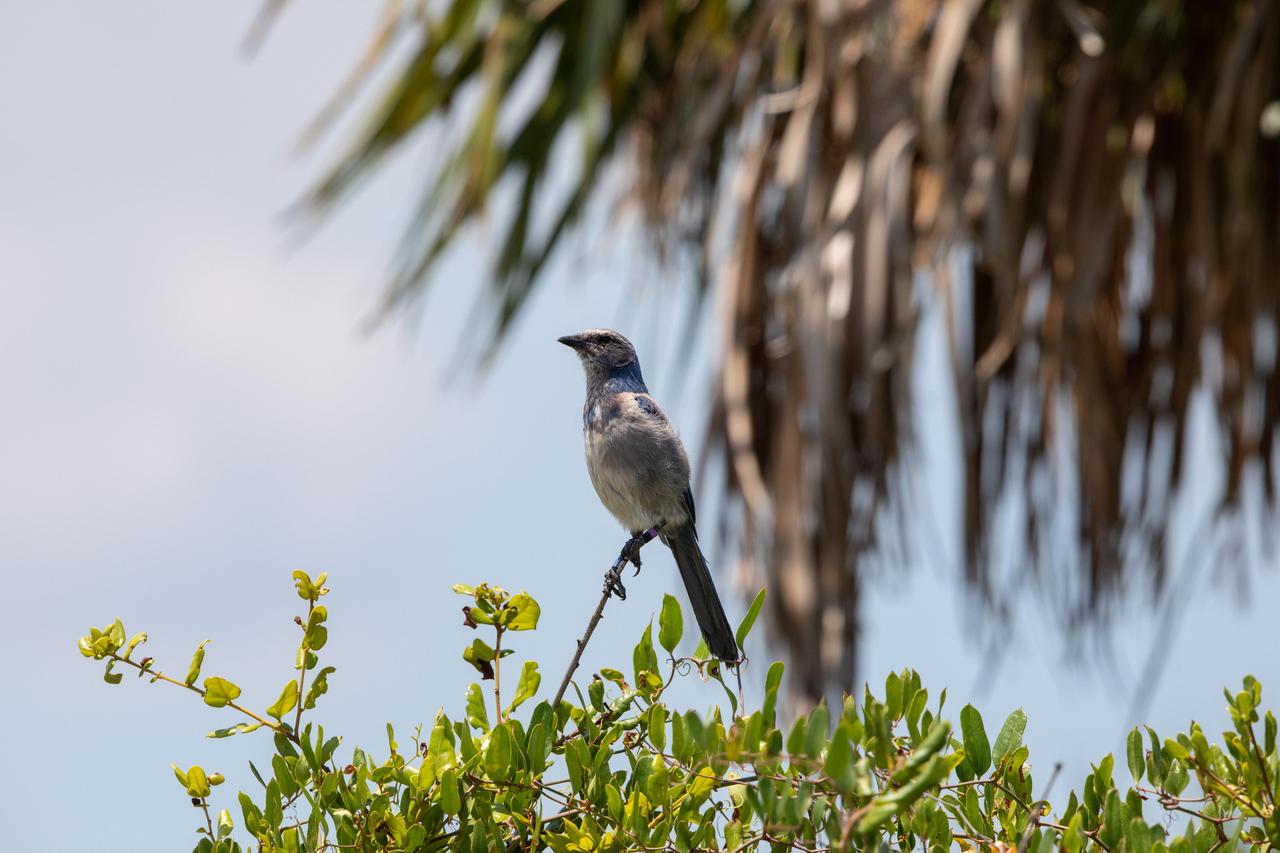
A scrub jay perches on a branch near the Vehicle Assembly Building (VAB) at NASA’s Kennedy Space Center in Florida on June 22, 2020. Painting of the NASA logo, also called the meatball, continues on the 525-foot-tall building. HM2 and H.I.S. Painting of Titusville, Florida, are repainting the meatball and the American Flag on the iconic building. The VAB was last painted in 2007, when repairs were completed after the 2004 Hurricanes Frances and Jeanne tore 845 panels off the building. It will take over 500 gallons of paint to paint the 209-by-110-foot flag and the 110-by-132-foot meatball. High Bay 3 inside the VAB has been upgraded with 10 new levels of work platforms that will surround and provide access for service and processing of NASA's Space Launch System (SLS) rocket and Orion spacecraft. Exploration Ground Systems is overseeing upgrades to the VAB to support the launch of the SLS and Orion for Artemis missions. Under the Artemis program, NASA will send the first woman and next man to the Moon.

Swedish Delegation visited Goddard on May 3, 2017. Center Director Chris Scolese greets His Majesty Carl XVI Gustaf, King of Sweden at Bldg 28. Goddard Child Development Center was on hand with children bearing flags, flowers and a painting of Swedish Linnea flower as a gift.
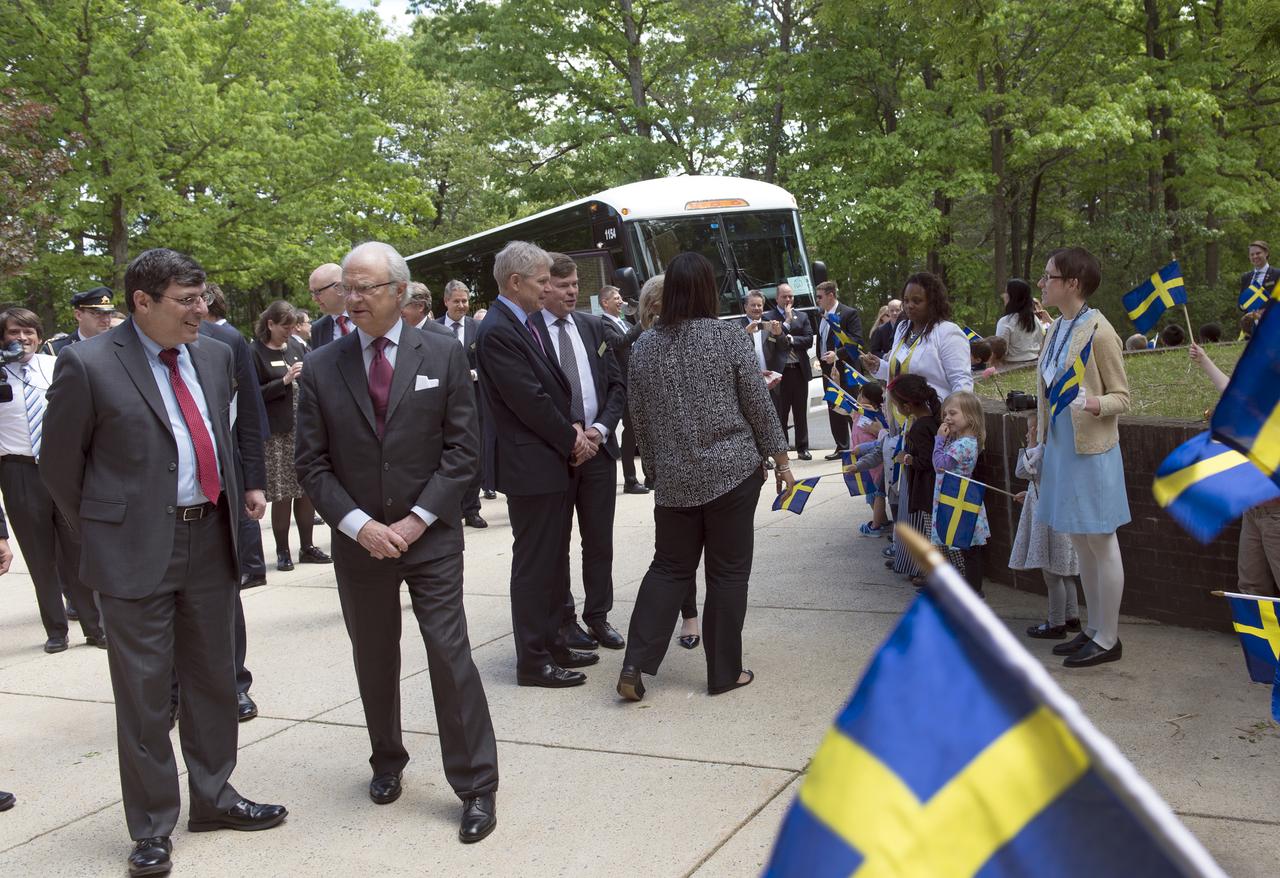
Swedish Delegation visited Goddard on May 3, 2017. Center Director Chris Scolese greets His Majesty Carl XVI Gustaf, King of Sweden at Bldg 28. For arrival children from the Goddard Child Development Center greeted him with flag, flowers and a painting of Swedish Linnea flower as a gift.
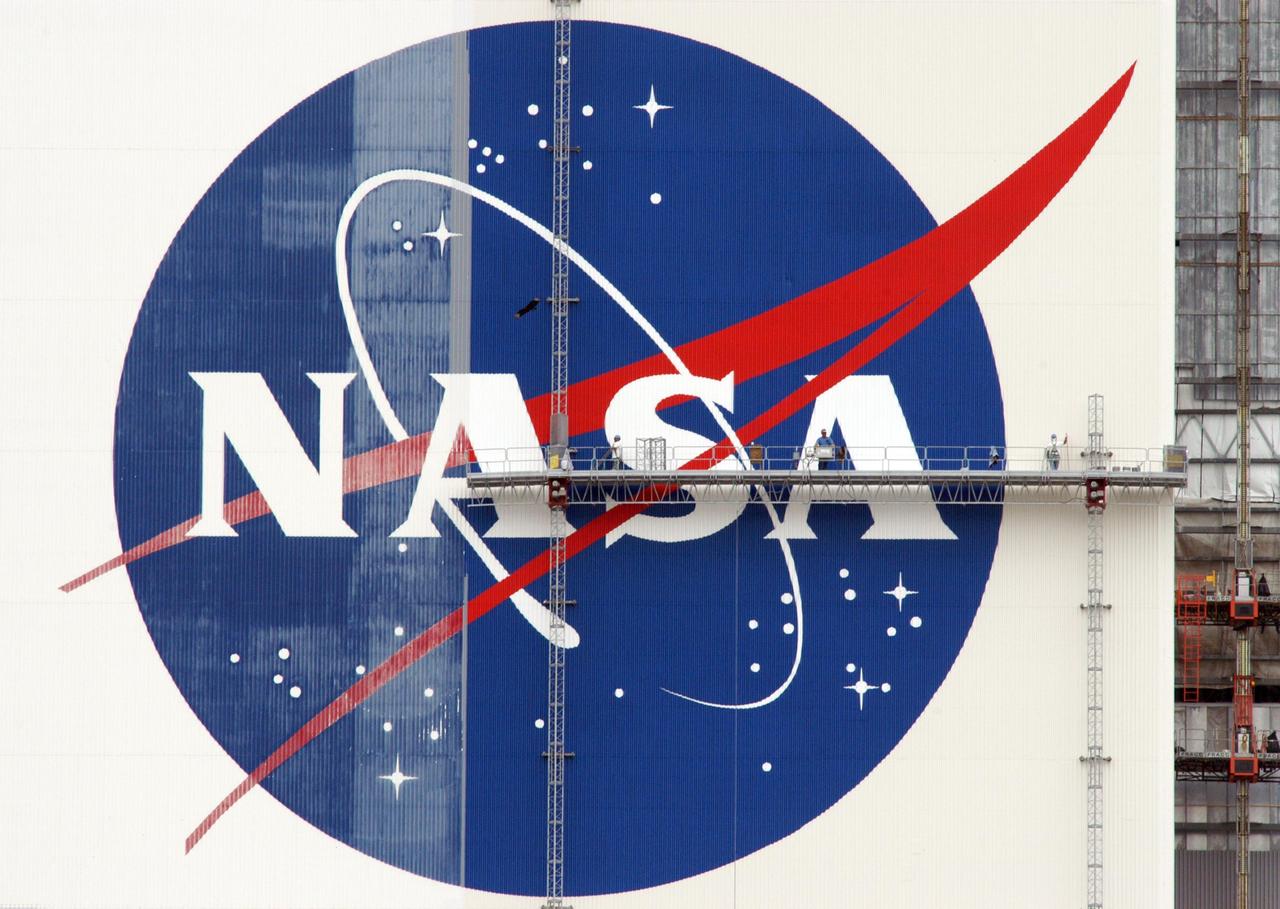
KENNEDY SPACE CENTER, FLA. -- On platforms suspended from the top of the 525-foot-high VAB, workers use rollers and brushes to repaint the NASA logo on the southeast side of the Vehicle Assembly Building. Known as the "meatball," the logo measures 110 feet by 132 feet, or about 12,300 square feet. The U.S. flag is also being repainted. The flag spans an area 209 feet by 110 feet, or about 23, 437 square feet. Each stripe is 9 feet wide and each star is 6 feet in diameter. The flag and logo were last painted in 1998, honoring NASA's 40th anniversary. Photo credit: NASA/George Shelton

KENNEDY SPACE CENTER, FLA. -- The American flag and the NASA logo shine in the morning sun on the side of the Vehicle Assembly Building after completion of their repainting. The flag spans an area 209 feet by 110 feet, or about 23, 437 square feet. Each stripe is 9 feet wide and each star is 6 feet in diameter. The NASA logo, which is known as the "meatball," measures 110 feet by 132 feet, or about 12,300 square feet. The flag and logo were last painted in 1998, honoring NASA's 40th anniversary. Photo credit: NASA/Jim Grossmann
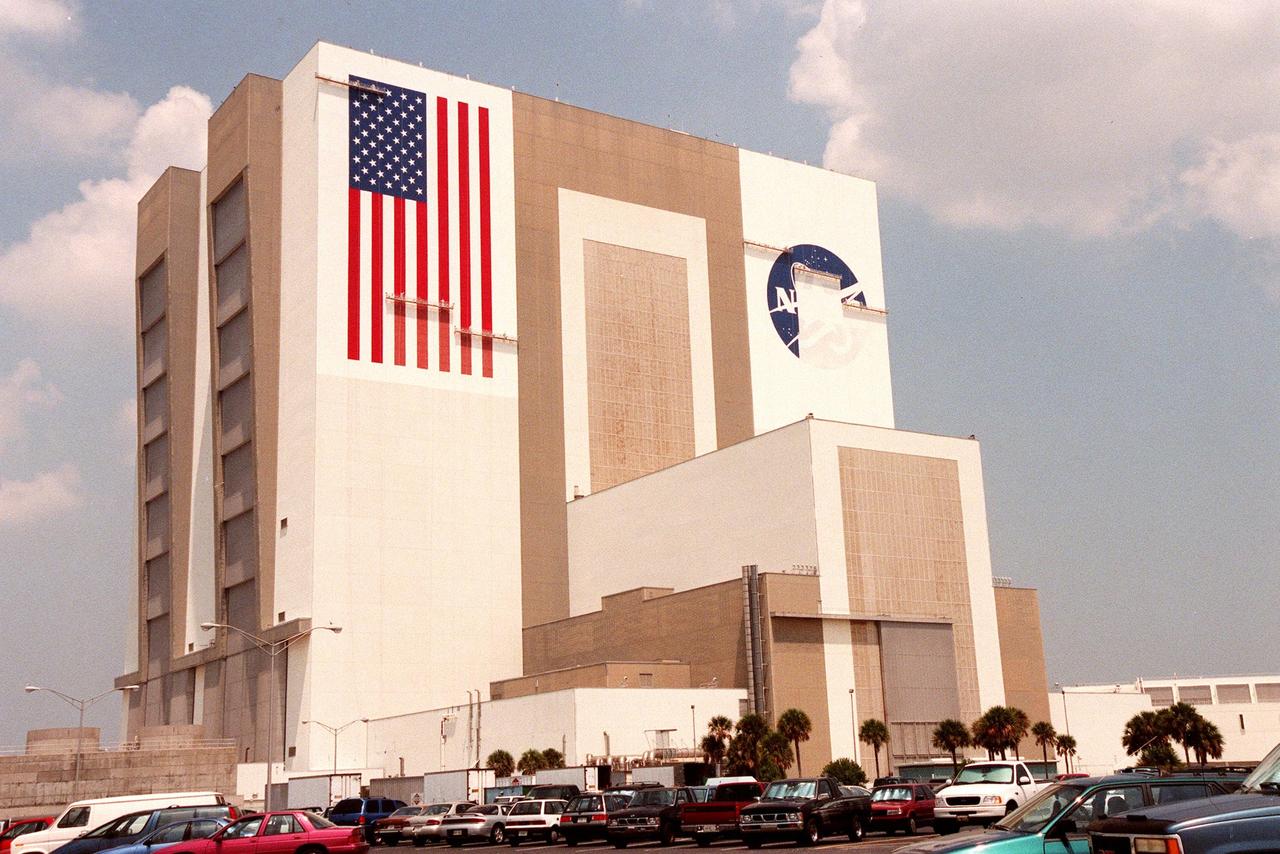
KENNEDY SPACE CENTER, FLA. -- The Vehicle Assembly Building (VAB) gets a facelift with the repainting of the American flag and replacing of the bicentennial emblem with the NASA logo. The painting honors NASA’s 40th anniversary on Oct. 1 and is expected to be complete in mid-September. The flag spans an area 209 feet by 110 feet, or about 23, 437 square feet. Each stripe is 9 feet wide and each star is 6 feet in diameter. The logo, also known as the "meatball," will measure 110 feet by 132 feet, or about 12,300 square feet. Workers, suspended on platforms from the top of the 525-foot-high VAB, are using rollers and brushes to do the painting. The entire fleet of orbiters is also receiving the addition of the NASA logo on their wings and sidewalls
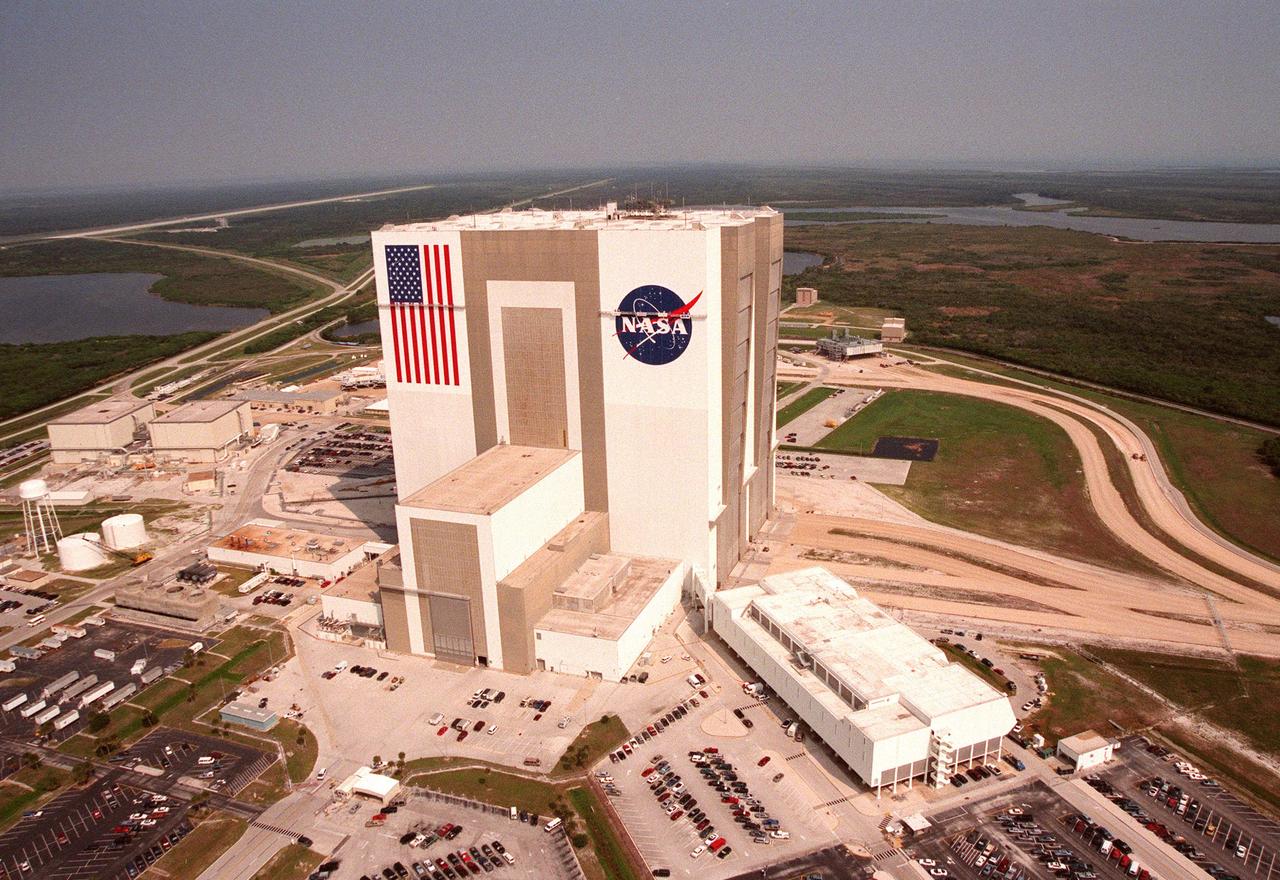
This aerial view shows the Vehicle Assembly Building (VAB) getting a facelift with the repainting of the American flag and replacing of the Bicentennial emblem with the NASA logo. The painting honors NASA's 40th anniversary on Oct. 1 and is expected to be complete in mid-September. The flag spans an area 209 feet by 110 feet, or about 23, 437 square feet. Each stripe is 9 feet wide and each star is 6 feet in diameter. The logo, also known as the 'meatball,' measures 110 feet by 132 feet, or about 12,300 square feet. Workers, suspended on platforms from the top of the 525-foot-high VAB, are using rollers and brushes to do the painting. The entire fleet of orbiters is also receiving the addition of the NASA logo on their wings and sidewalls.
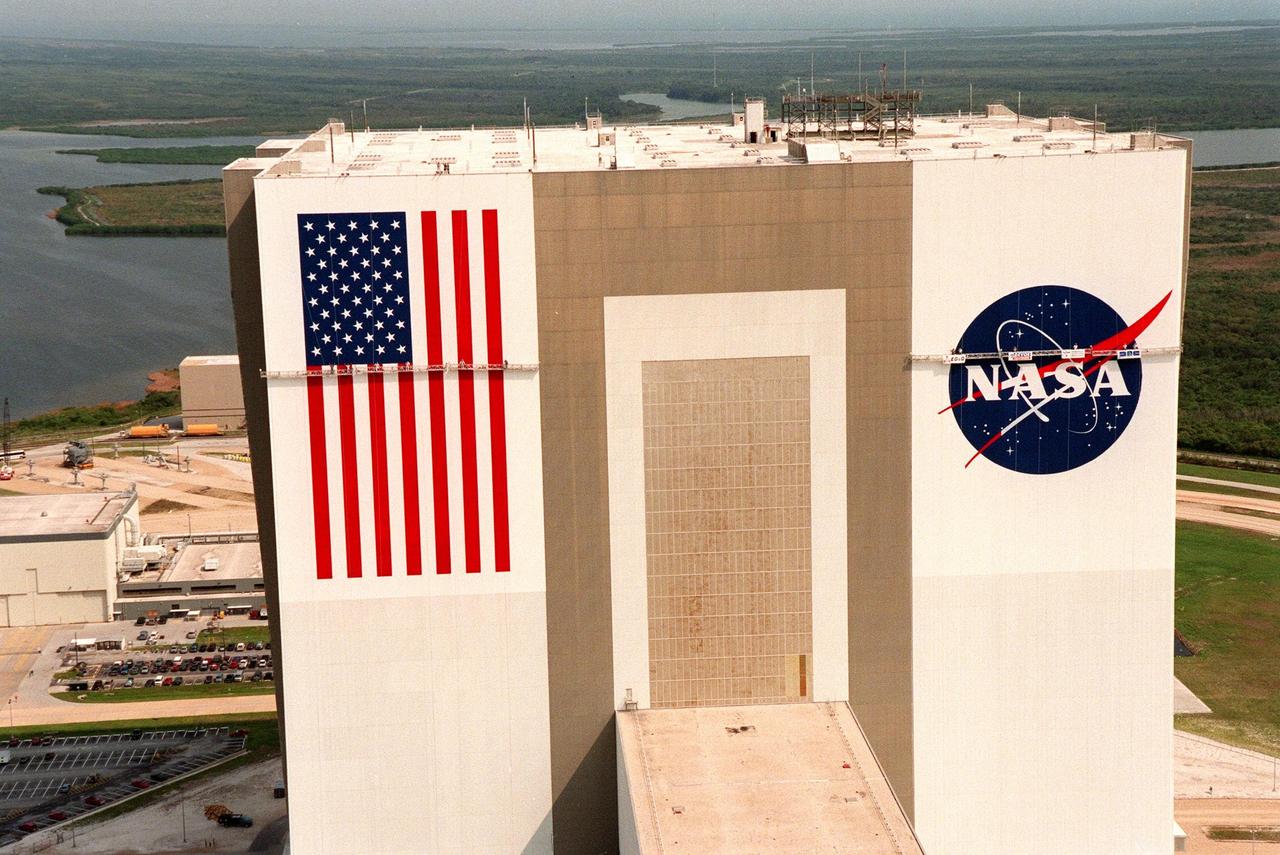
KENNEDY SPACE CENTER, FLA. -- This aerial view shows the Vehicle Assembly Building (VAB) getting a facelift with the repainting of the American flag and replacing of the Bicentennial emblem with the NASA logo. The painting honors NASA's 40th anniversary on Oct. 1 and is expected to be complete in mid-September. The flag spans an area 209 feet by 110 feet, or about 23,437 square feet. Each stripe is 9 feet wide and each star is 6 feet in diameter. The logo, also known as the "meatball," measures 110 feet by 132 feet, or about 12,300 square feet. Workers, suspended on platforms from the top of the 525-foot-high VAB, are using rollers and brushes to do the painting. The entire fleet of orbiters is also receiving the addition of the NASA logo on their wings and sidewalls
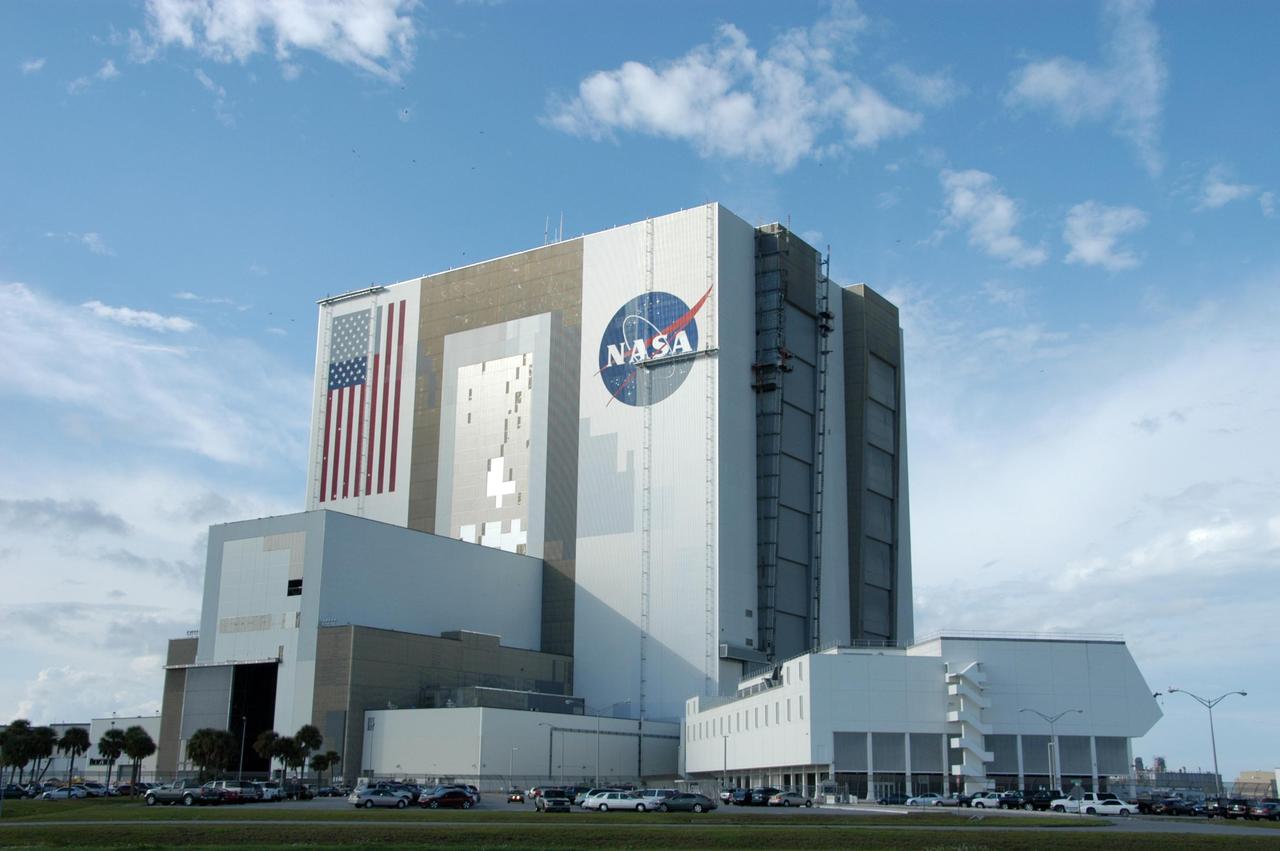
KENNEDY SPACE CENTER, FLA. -- Elevated platforms are seen hanging in front of the NASA Logo on the side of Kennedy Space Center's Vehicle Assembly Building. Also in view on the east side of the building are platforms on the facility's large vertical doors. Workers, suspended on the platforms from the top of the 525-foot-high VAB, use rollers and brushes to do the painting. The flag and logo were last painted in 1998, honoring NASA's 40th anniversary. The flag spans an area 209 feet by 110 feet, or about 23, 437 square feet. Each stripe is 9 feet wide and each star is 6 feet in diameter. The logo, also known as the "meatball," measures 110 feet by 132 feet, or about 12,300 square feet. Photo credit: NASA/George Shelton
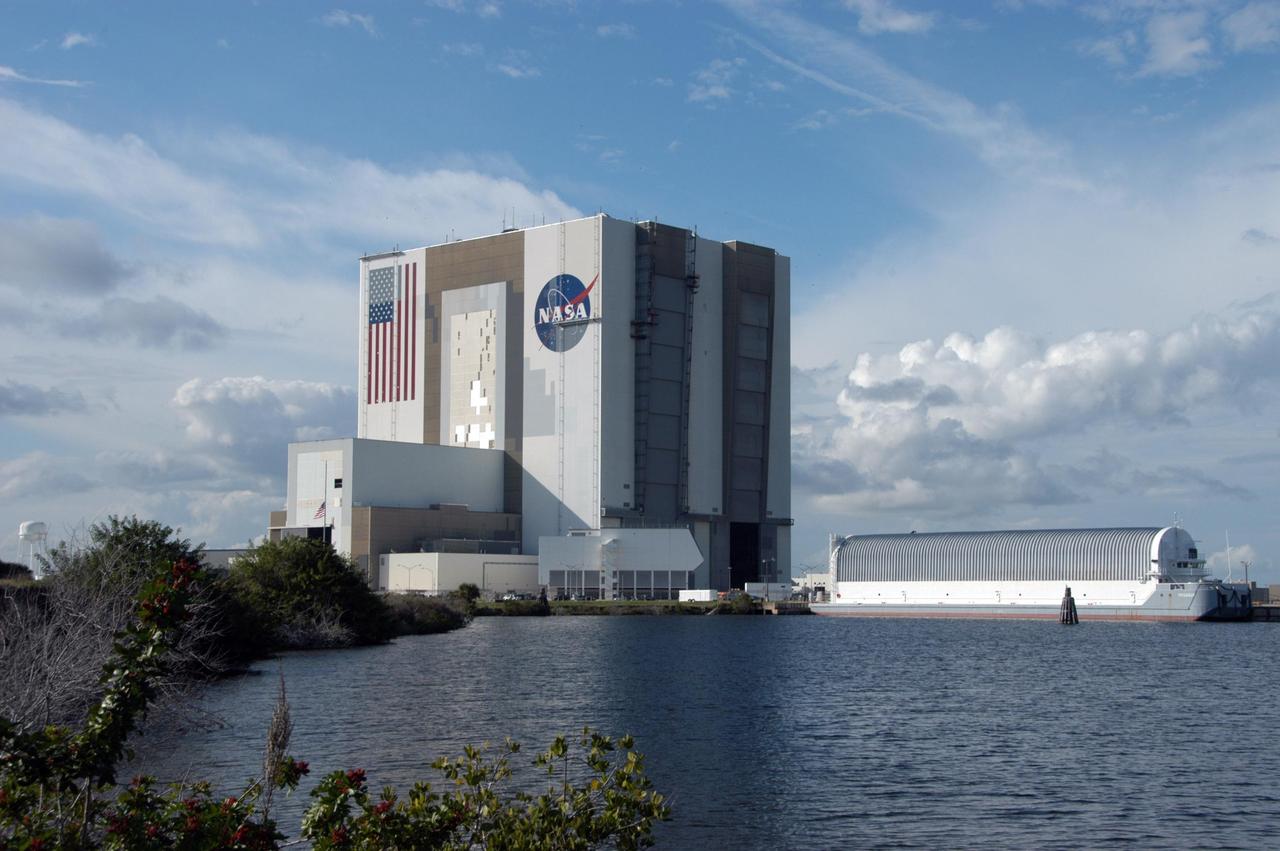
KENNEDY SPACE CENTER, FLA. -- Elevated platforms are seen hanging on the side of Kennedy Space Center's Vehicle Assembly Building in a view looking across from the turn basin. To the right is the large external tank barge. Workers, suspended on the platforms from the top of the 525-foot-high VAB, use rollers and brushes to do the painting. The flag and logo were last painted in 1998, honoring NASA's 40th anniversary. The flag spans an area 209 feet by 110 feet, or about 23, 437 square feet. Each stripe is 9 feet wide and each star is 6 feet in diameter. The logo, also known as the "meatball," measures 110 feet by 132 feet, or about 12,300 square feet. Photo credit: NASA/George Shelton
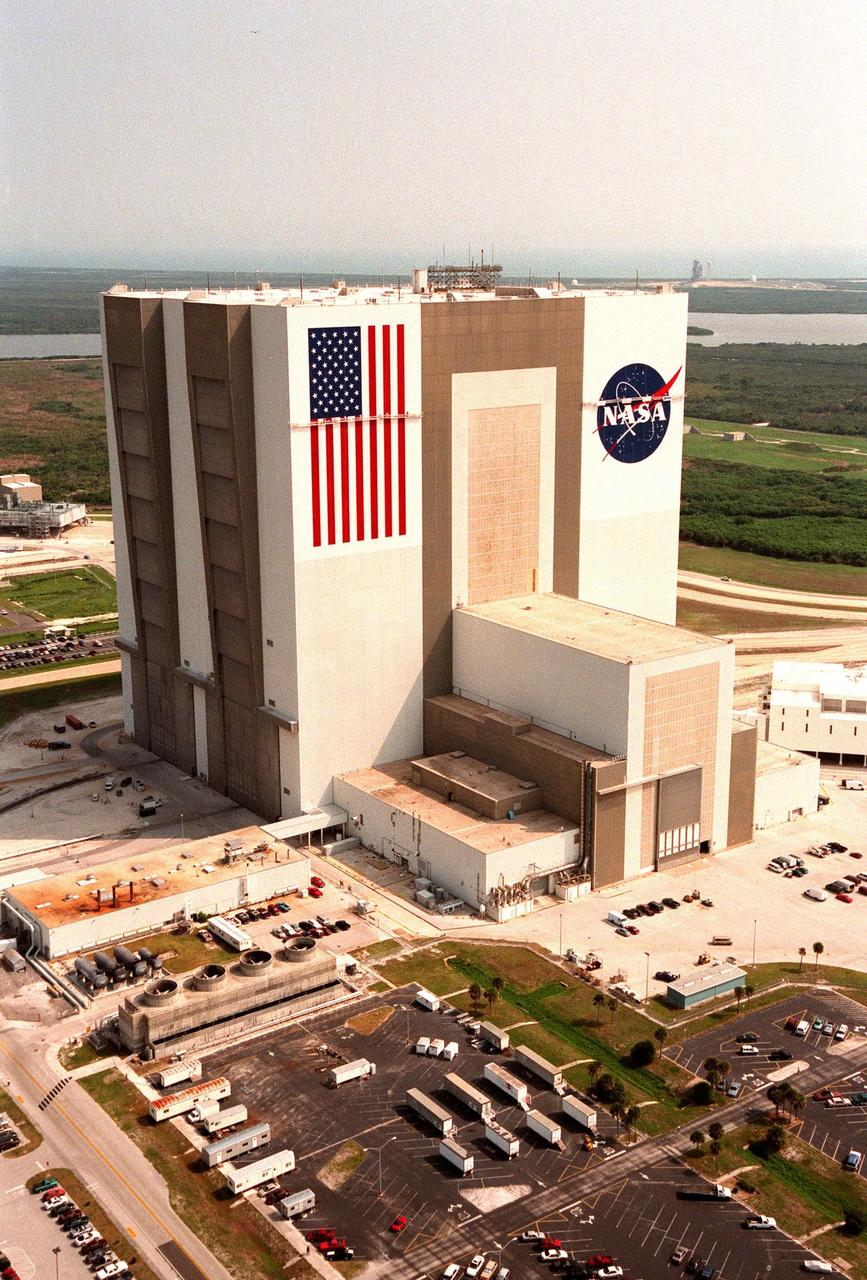
KENNEDY SPACE CENTER, FLA. -- This aerial view shows the Vehicle Assembly Building (VAB) getting a facelift with the repainting of the American flag and replacing of the bicentennial emblem with the NASA logo. The painting honors NASA's 40th anniversary on Oct. 1 and is expected to be complete in mid-September. The flag spans an area 209 feet by 110 feet, or about 23, 437 square feet. Each stripe is 9 feet wide and each star is 6 feet in diameter. The logo, also known as the "meatball," measures 110 feet by 132 feet, or about 12,300 square feet. Workers, suspended on platforms from the top of the 525-foot-high VAB, are using rollers and brushes to do the painting. The entire fleet of orbiters is also receiving the addition of the NASA logo on their wings and sidewalls
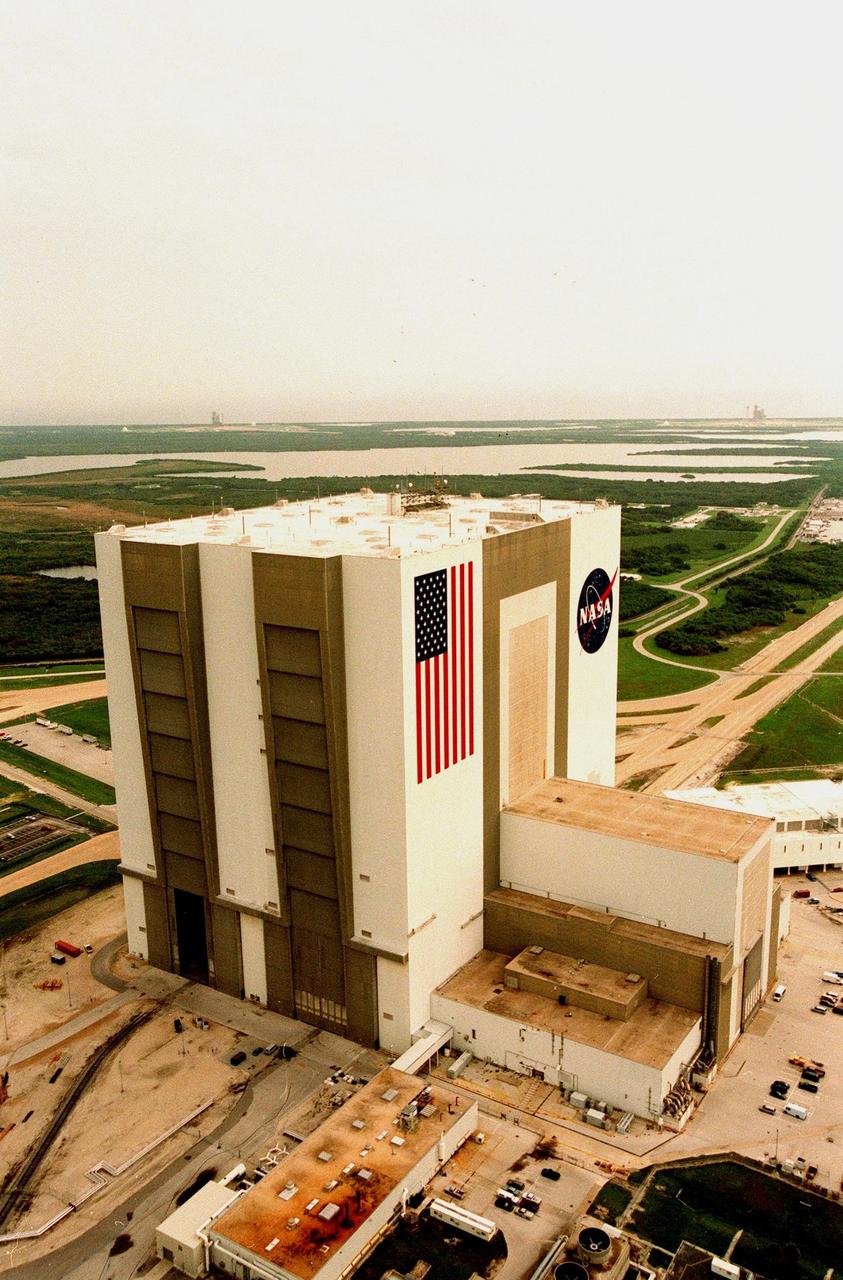
KENNEDY SPACE CENTER, FLA. -- Looking eastward, the Vehicle Assembly Building (VAB) in the Launch Complex 39 area can be seen with its new coat of paint, along with newly painted American flag and NASA logo. The improved look was finished in time to honor NASA's 40th anniversary on Oct. 1. In order to do the job, workers were suspended on platforms from the top of the 525-foot-high VAB. One of the world's largest buildings by volume, the VAB is the last stop for the Shuttle before rollout to the launch pad. Integration and stacking of the complete Space Shuttle vehicle (orbiter, two solid rocket boosters and the external tank) takes place in High Bays 1 or 3. Stretching from the side of the VAB, on the right, is the crawlerway, used to transport the Space Shuttle to the launch pad. Beyond the VAB is Banana Creek
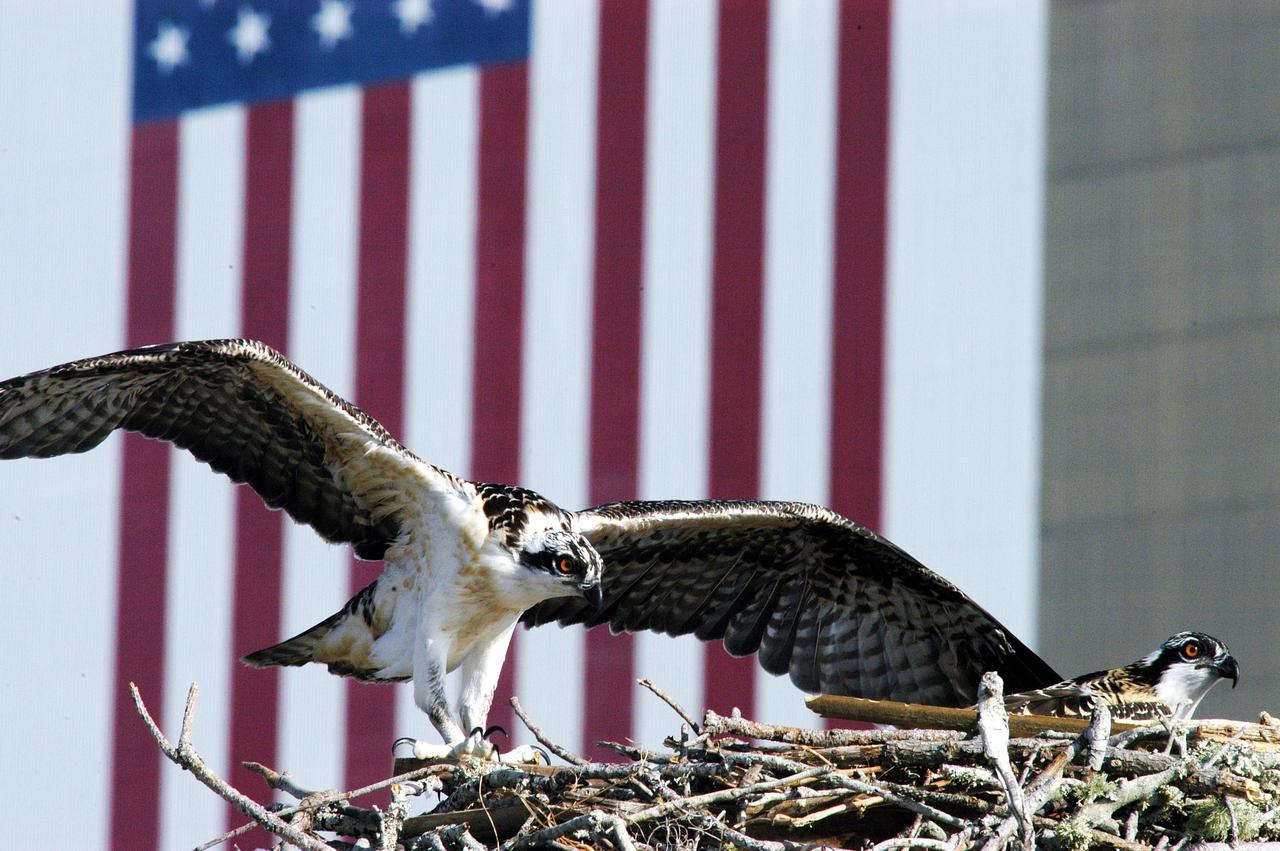
KENNEDY SPACE CENTER, FLA. -- One of three osprey fledglings spreads its wings, anticipating flight. The nest is in the NASA News Center parking lot, across from the Vehicle Assembly Building, with its 209-foot-high American flag painted on the south side. Ospreys select nesting sites of opportunity, from trees and telephone poles to rocks or even flat ground. In the United States they are found from Alaska to Florida and the Gulf Coast. Osprey nests are found throughout the Kennedy Space Center and nearby Merritt Island National Wildlife Refuge. Known as a fish hawk, ospreys often can be seen flying overhead with a fish in their talons.
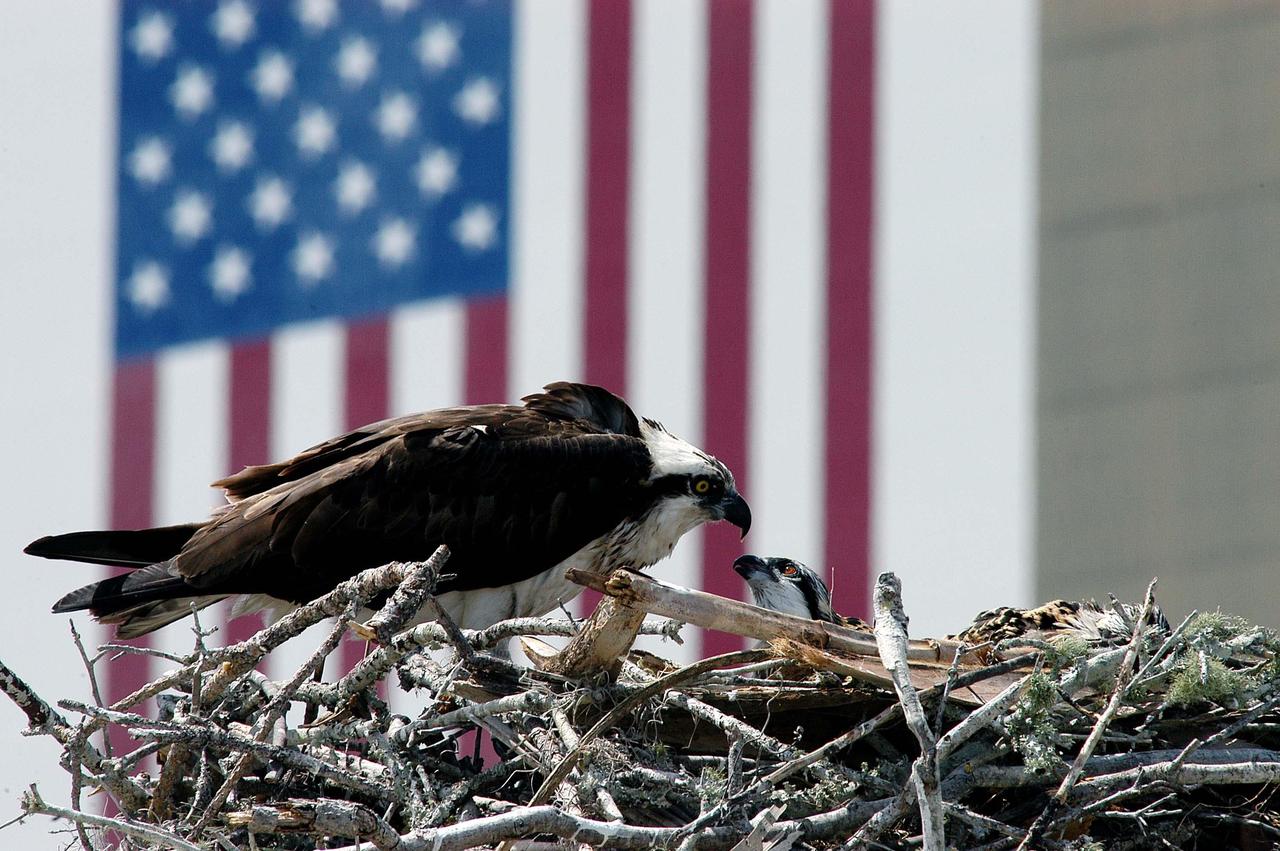
KENNEDY SPACE CENTER, FLA. - Against the backdrop of the American flag, painted on the side of the Vehicle Assembly Building, an osprey checks its fledglings in the nest. The young bird seen is one of three hatched this season. The osprey nest sits atop a speaker in the parking lot of the NASA KSC News Center. Known as a fish hawk, ospreys select sites of opportunity, from trees and telephone poles to rocks or even flat ground. In the United States they are found from Alaska to Florida and the Gulf Coast. Osprey nests are found throughout the Kennedy Space Center and nearby Merritt Island National Wildlife Refuge.
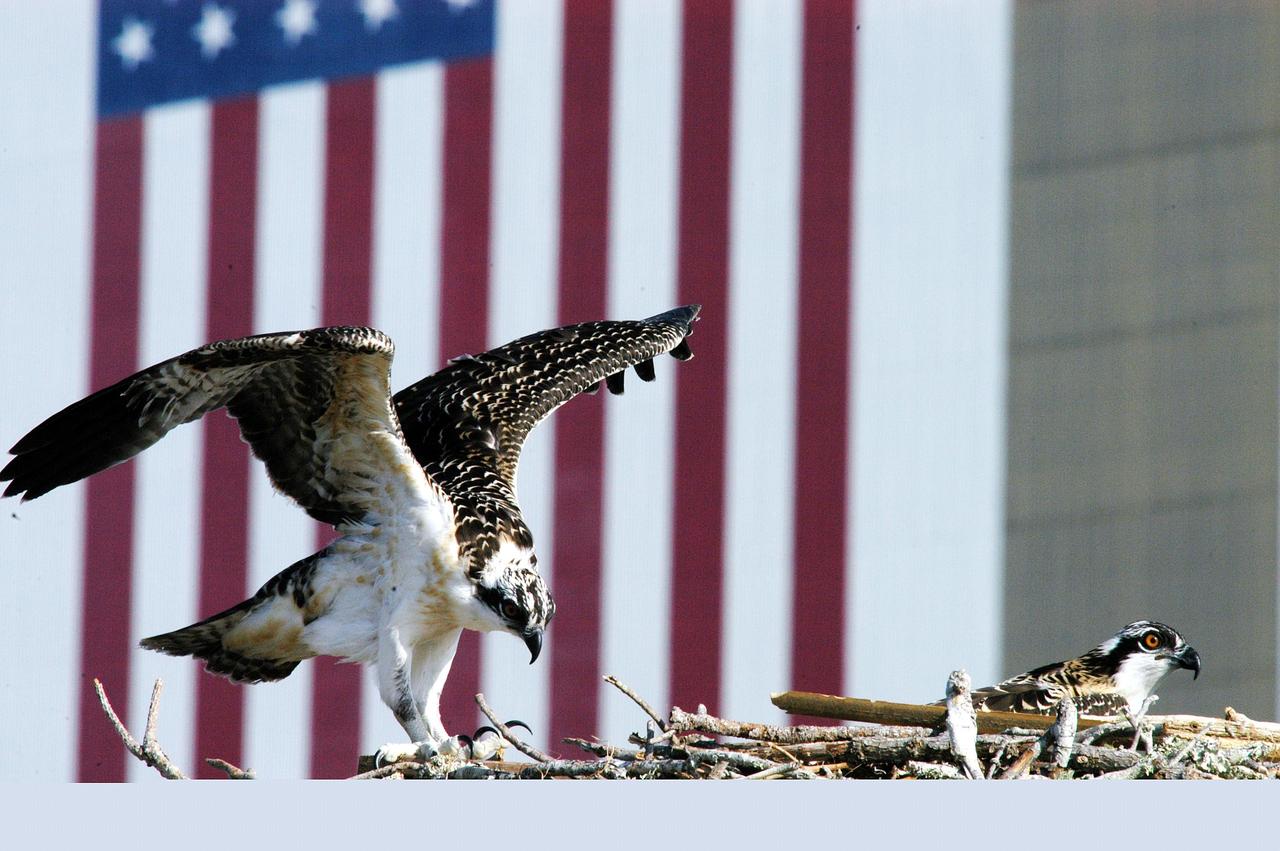
KENNEDY SPACE CENTER, FLA. -- One of three osprey fledglings exercises its wings, anticipating flight. The nest is in the NASA News Center parking lot, across from the Vehicle Assembly Building, with its 209-foot-high American flag painted on the south side. Ospreys select nesting sites of opportunity, from trees and telephone poles to rocks or even flat ground. In the United States they are found from Alaska to Florida and the Gulf Coast. Osprey nests are found throughout the Kennedy Space Center and nearby Merritt Island National Wildlife Refuge. Known as a fish hawk, ospreys often can be seen flying overhead with a fish in their talons.
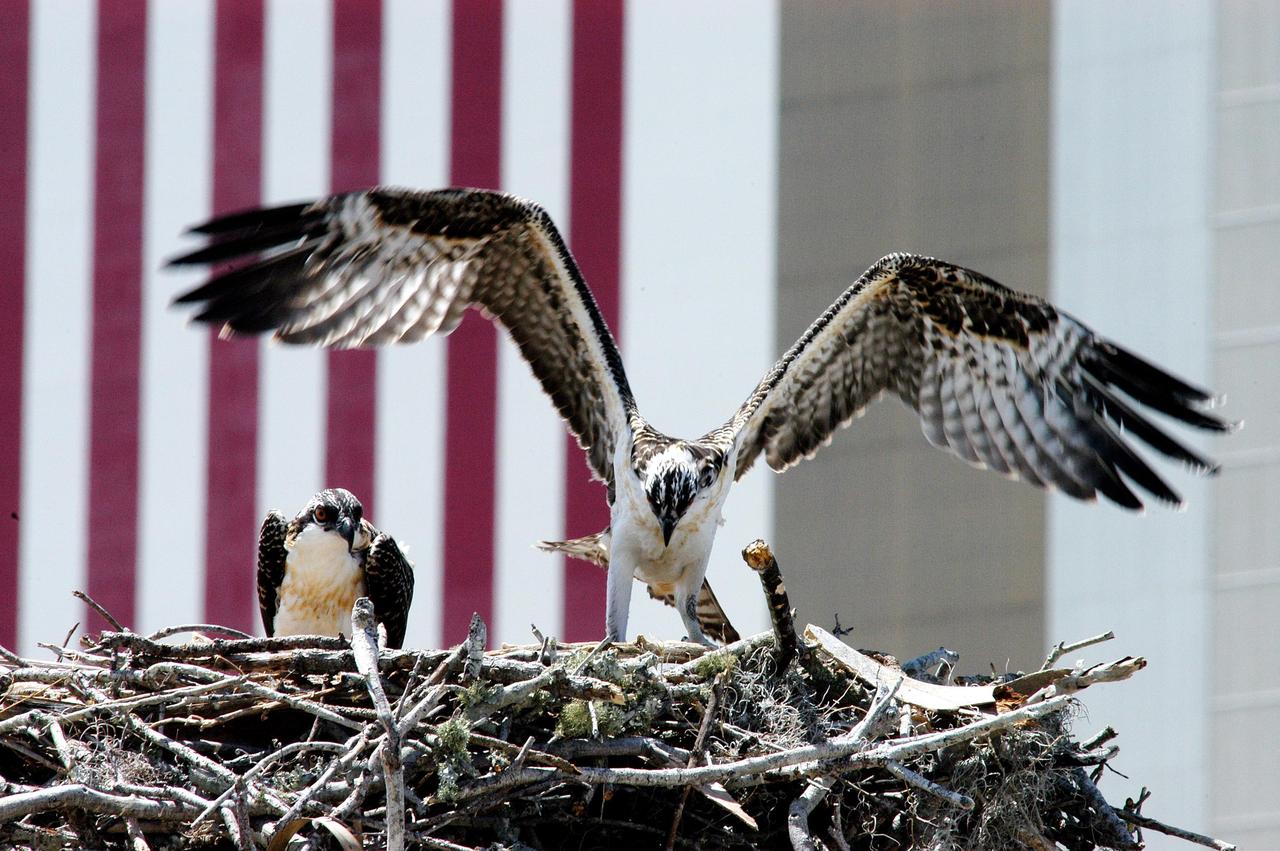
KENNEDY SPACE CENTER, FLA. -- One of three osprey fledglings exercises its wings, anticipating flight. The nest is in the NASA News Center parking lot, across from the Vehicle Assembly Building, with its 209-foot-high American flag painted on the south side. Ospreys select nesting sites of opportunity, from trees and telephone poles to rocks or even flat ground. In the United States they are found from Alaska to Florida and the Gulf Coast. Osprey nests are found throughout the Kennedy Space Center and nearby Merritt Island National Wildlife Refuge. Known as a fish hawk, ospreys often can be seen flying overhead with a fish in their talons.
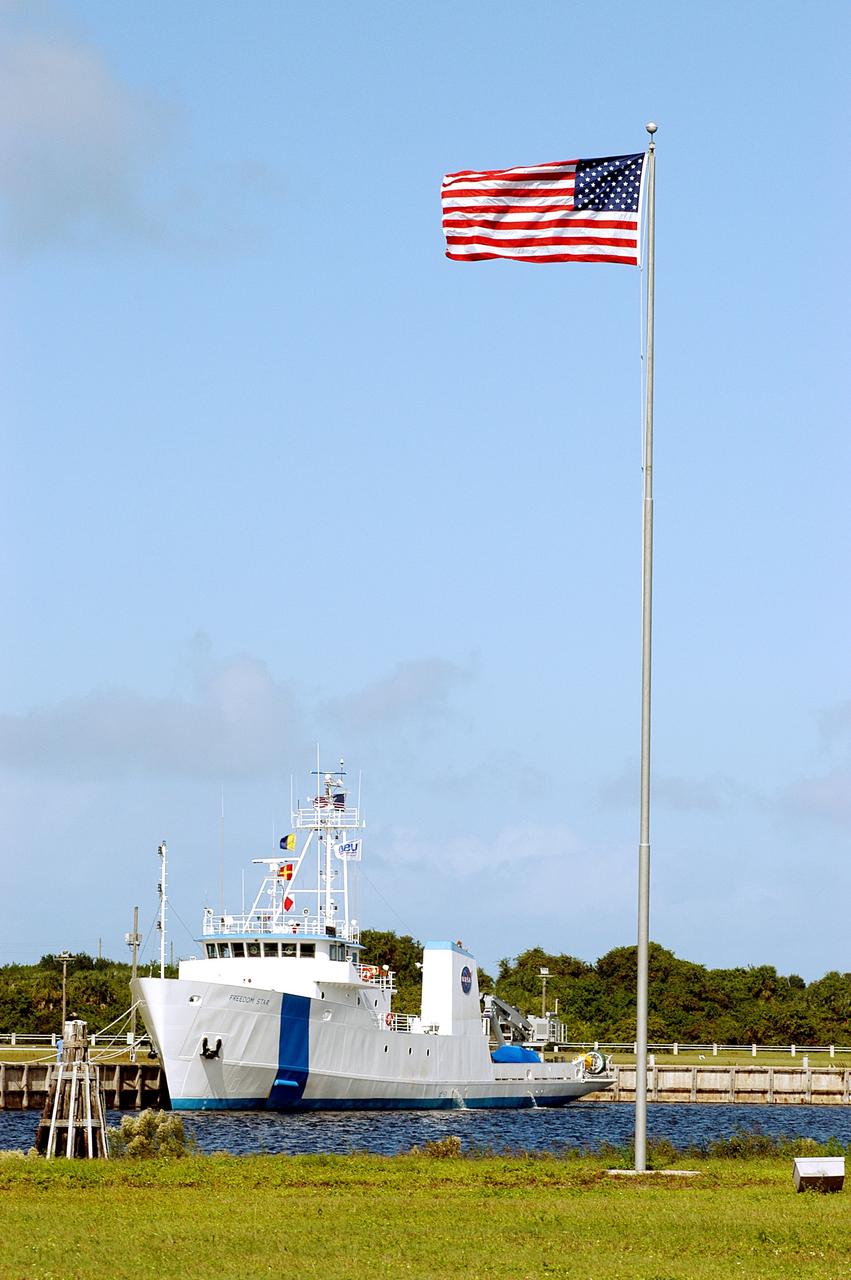
KENNEDY SPACE CENTER, FLA. - The Freedom Star is berthed at the Turn Basin near the Vehicle Assembly Building and NASA-KSC News Center. The flag is near the News Center. The ship has recently returned to KSC after refurbishment at Fort George Island, Fla., including new paint. Freedom Star is one of the solid rocket booster (SRB) retrieval ships built to recover the SRB casings released over the Atlantic Ocean after launch of a Space Shuttle. In addition to the SRBs, the ship recovers the drogue and main parachutes that slow the boosters’ speed before splashdown. The ships also tow the external tanks built at the Michoud Space Systems Assembly Facility near New Orleans to Port Canaveral, Fla. Freedom Star was brought to KSC today for a visit by NATO Parliamentarians.
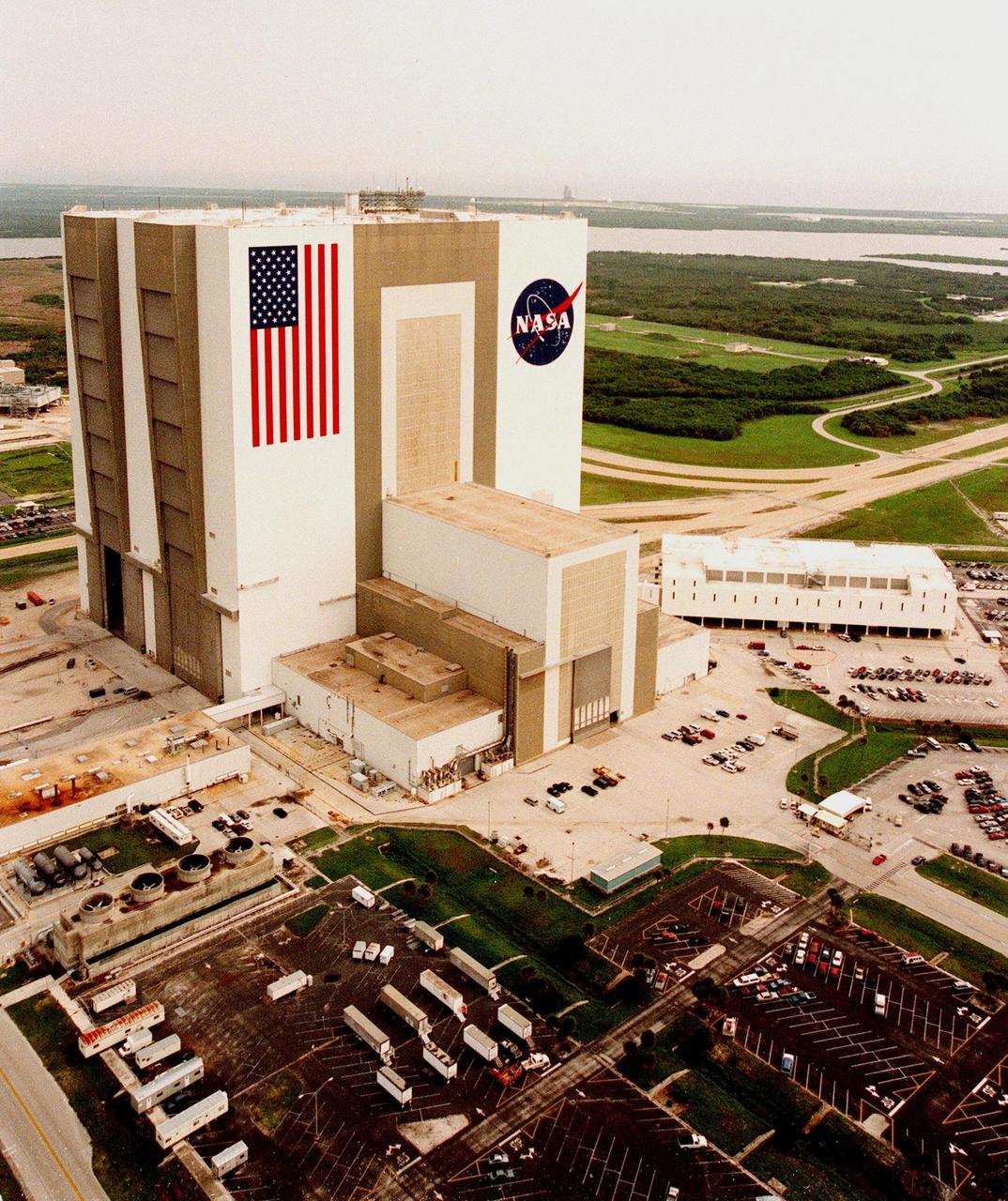
KENNEDY SPACE CENTER, FLA. -- The Vehicle Assembly Building (VAB) in the Launch Complex 39 area wears a new coat of paint, along with newly painted American flag and NASA logo. The improved look was finished in time to honor NASA's 40th anniversary on Oct. 1. In order to do the job, workers were suspended on platforms from the top of the 525-foot-high VAB. One of the world's largest buildings by volume, the VAB is the last stop for the Shuttle before rollout to the launch pad. Integration and stacking of the complete Space Shuttle vehicle (orbiter, two solid rocket boosters and the external tank) takes place in High Bays 1 or 3. To the right of the VAB is the Launch Control Center. Each of its four firing rooms are equipped with automated, computer-controlled Launch Processing System (LPS) for monitoring and controlling Shuttle assembly, checkout and launch operations, as well as work order control and scheduling. Banana Creek is visible behind and to the right of the VAB
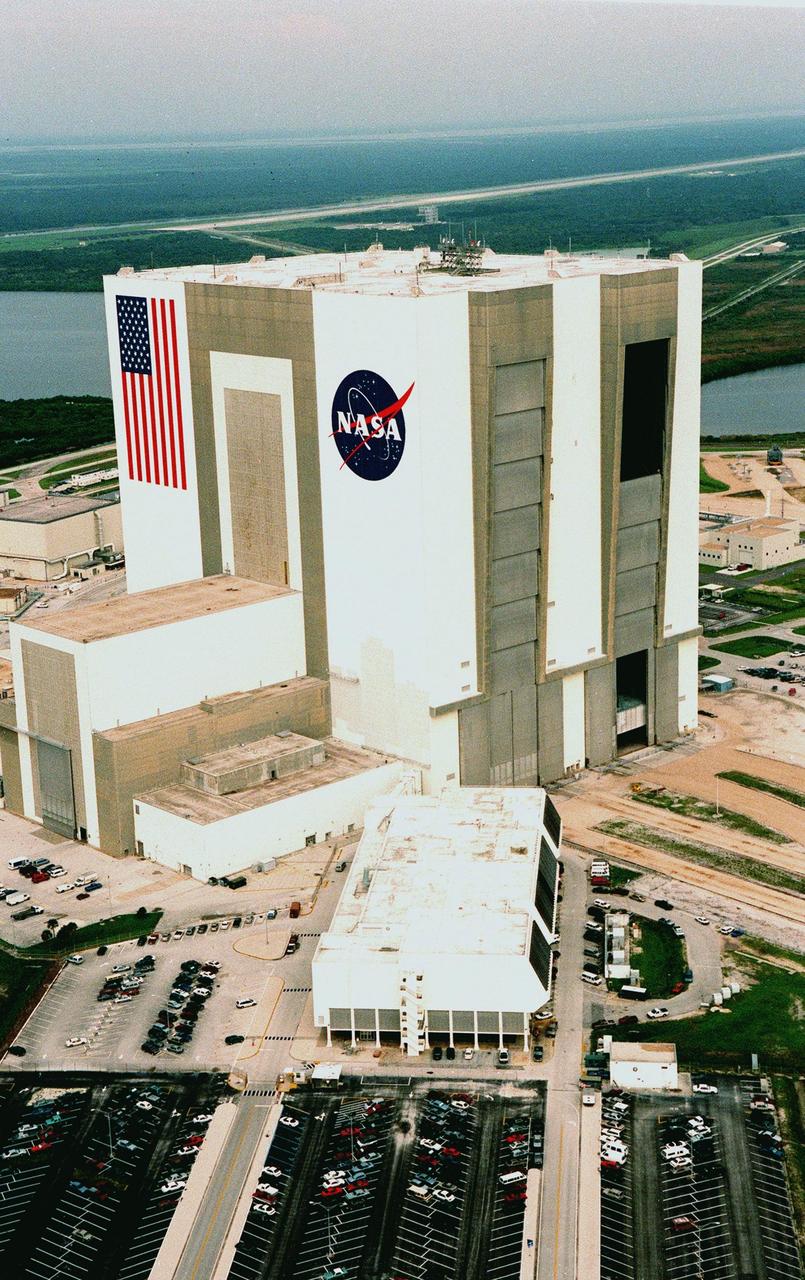
KENNEDY SPACE CENTER, FLA. -- Looking northwest, the Vehicle Assembly Building (VAB) in the Launch Complex 39 area of KSC can be seen with its new coat of paint, along with newly painted American flag and NASA logo. The improved look was finished in time to honor NASA's 40th anniversary on Oct. 1. In order to do the job, workers were suspended on platforms from the top of the 525-foot-high VAB. One of the world's largest buildings by volume, the VAB is the last stop for the Shuttle before rollout to the launch pad. Integration and stacking of the complete Space Shuttle vehicle (orbiter, two solid rocket boosters and the external tank) takes place in High Bays 1 or 3. The High Bay doors (shown partially open), four in all, are 456 feet high. The low-door section, 114 feet high, has four panels that move horizontally. The upper section, 342 feet high, has seven panels that move vertically. It takes about 45 minutes to open all panels. Beyond the VAB is the Shuttle Landing Facility (SLF) and Merritt Island National Wildlife Refuge. The SLF is used for end-of-mission orbiter landings, and also military and civilian cargo carriers, astronauts' T-38 trainers, Shuttle Training Aircraft, and helicopters
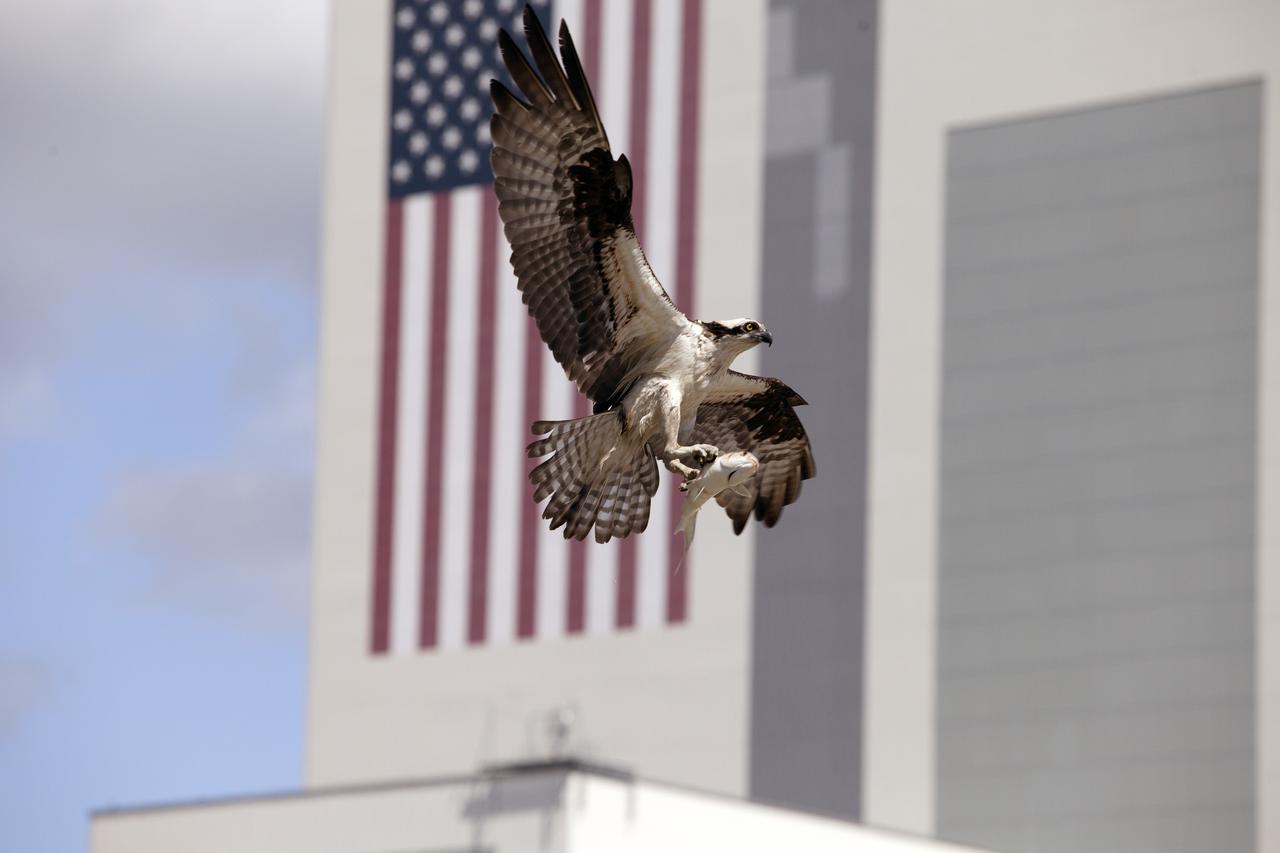
CAPE CANAVERAL, Fla. -- An adult osprey prepares to land in its nest atop a speaker platform in the Press Site parking lot at NASA's Kennedy Space Center in Florida, carrying a fish in its talons. In the background is the 209-foot-tall U.S. flag painted on the side of the 52-story Vehicle Assembly Building VAB. The parking lot borders the water of the Launch Complex 39 turn basin, making it an ideal source of food for the osprey. The undeveloped property on Kennedy Space Center is managed by the U.S. Fish and Wildlife Service through the Merritt Island National Wildlife Refuge. The refuge provides a habitat for a plethora of wildlife, including 330 species of birds. For information on the refuge, visit http://www.fws.gov/merrittisland/Index.html. Photo credit: NASA/Daniel Casper
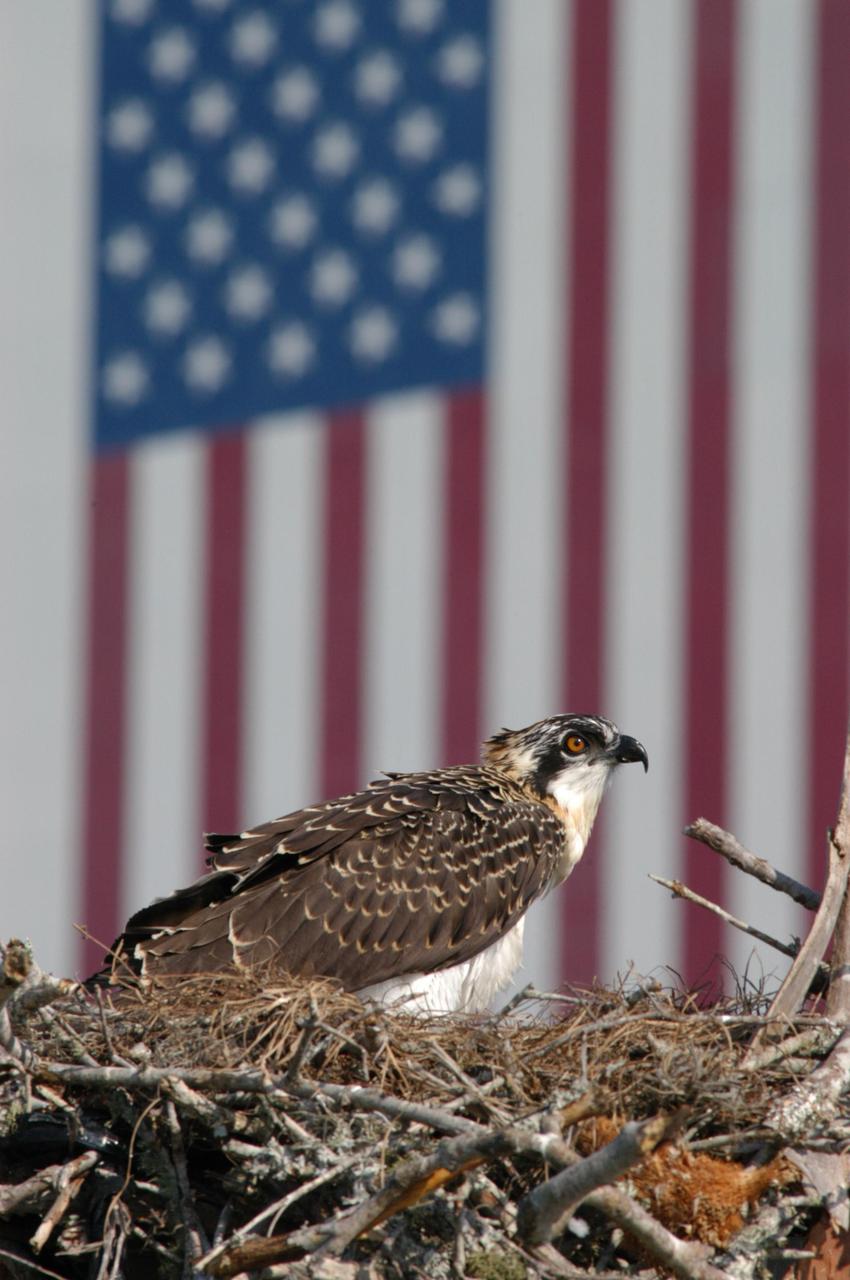
KENNEDY SPACE CENTER, FLA. -- A baby osprey sits on its nest situated at the top of a pole in the parking lot at the NASA News Center at Kennedy Space Center. Behind the nest can be seen the immense flag painted on the side of the Vehicle Assembly Building. This is the third year the ospreys have raised a family at the News Center. Known as a fish hawk, ospreys select sites of opportunity, from trees and telephone poles to rocks or even flat ground. In the United States they are found from Alaska and Newfoundland to Florida and the Gulf Coast. Osprey nests are found throughout the Kennedy Space Center and nearby Merritt Island National Wildlife Refuge, which shares a boundary with the Center. Photo credit: NASA/George Shelton
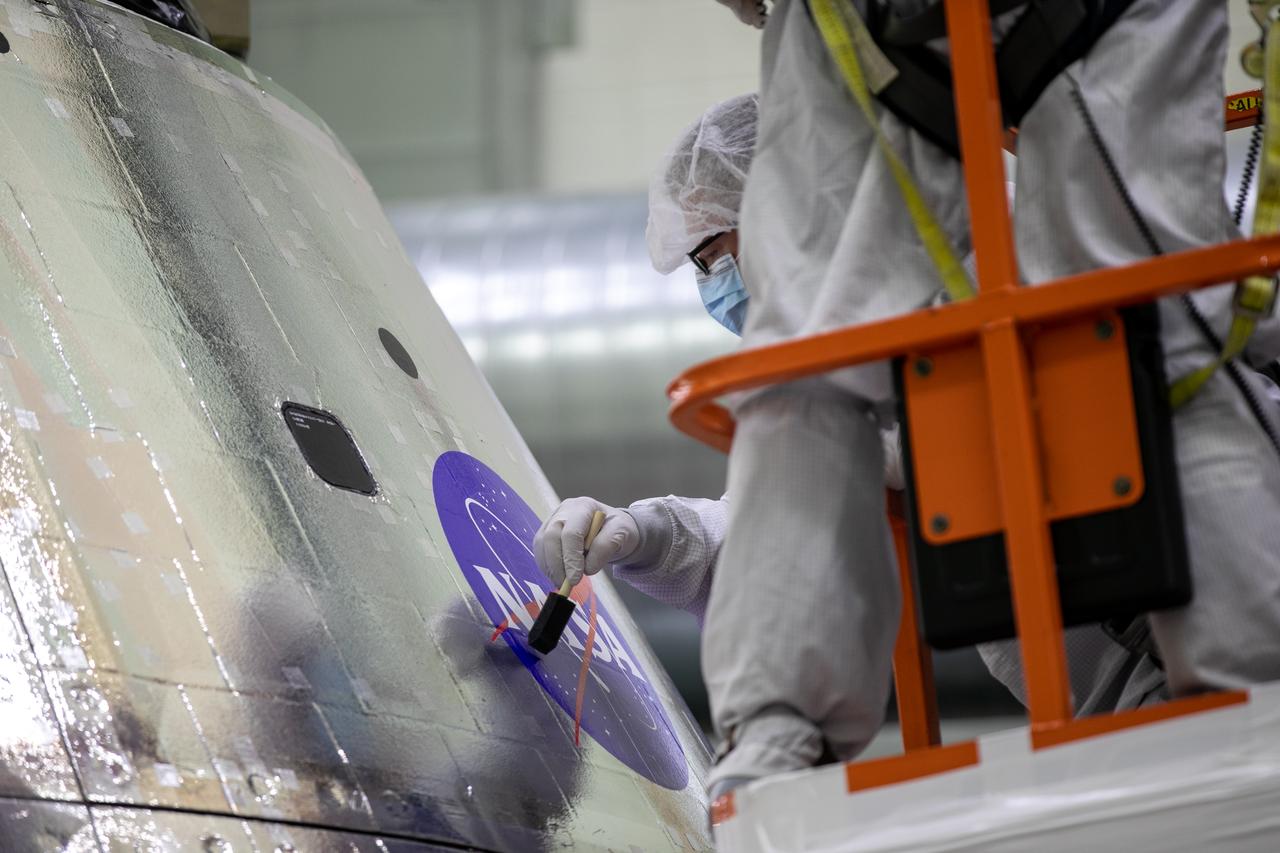
Frank Pelkey, ASRC technician, paints a clear adhesive over the NASA insignia, also called the “meatball,” on the Orion crew module back shell for the Artemis I mission on Oct. 28, 2020, inside the Neil Armstrong Operations and Checkout Building (O&C) at NASA’s Kennedy Space Center in Florida. The American Flag also has been added. Attached below Orion (not in view) are the crew module adapter and the European Service Module (ESM) with spacecraft adapter jettison fairings installed. Recently, teams from across the globe installed the four solar array wings, which are housed inside the protective covering of the fairings. The fairing panels will encapsulate the ESM to protect it from harsh environments such as heat, wind, and acoustics as the spacecraft is propelled out of Earth’s atmosphere atop the Space Launch System rocket during NASA’s Artemis I mission.
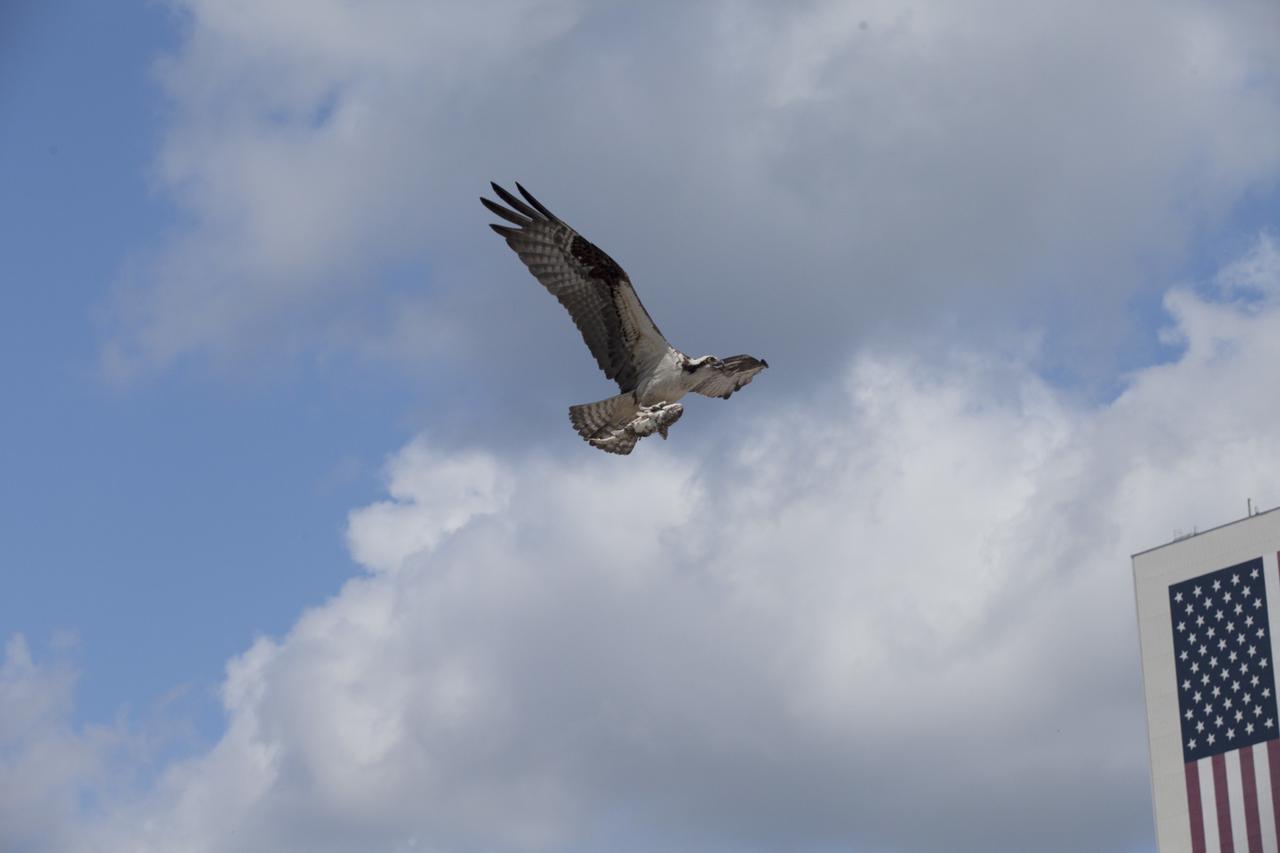
CAPE CANAVERAL, Fla. -- An adult osprey delivers a fish dinner to its family, nesting atop a speaker platform in the Press Site parking lot at NASA's Kennedy Space Center in Florida. In the background is the 209-foot-tall U.S. flag painted on the side of the 52-story Vehicle Assembly Building VAB. The parking lot borders the water of the Launch Complex 39 turn basin, making it an ideal source of food for the osprey. The undeveloped property on Kennedy Space Center is managed by the U.S. Fish and Wildlife Service through the Merritt Island National Wildlife Refuge. The refuge provides a habitat for a plethora of wildlife, including 330 species of birds. For information on the refuge, visit http://www.fws.gov/merrittisland/Index.html. Photo credit: NASA/Daniel Casper
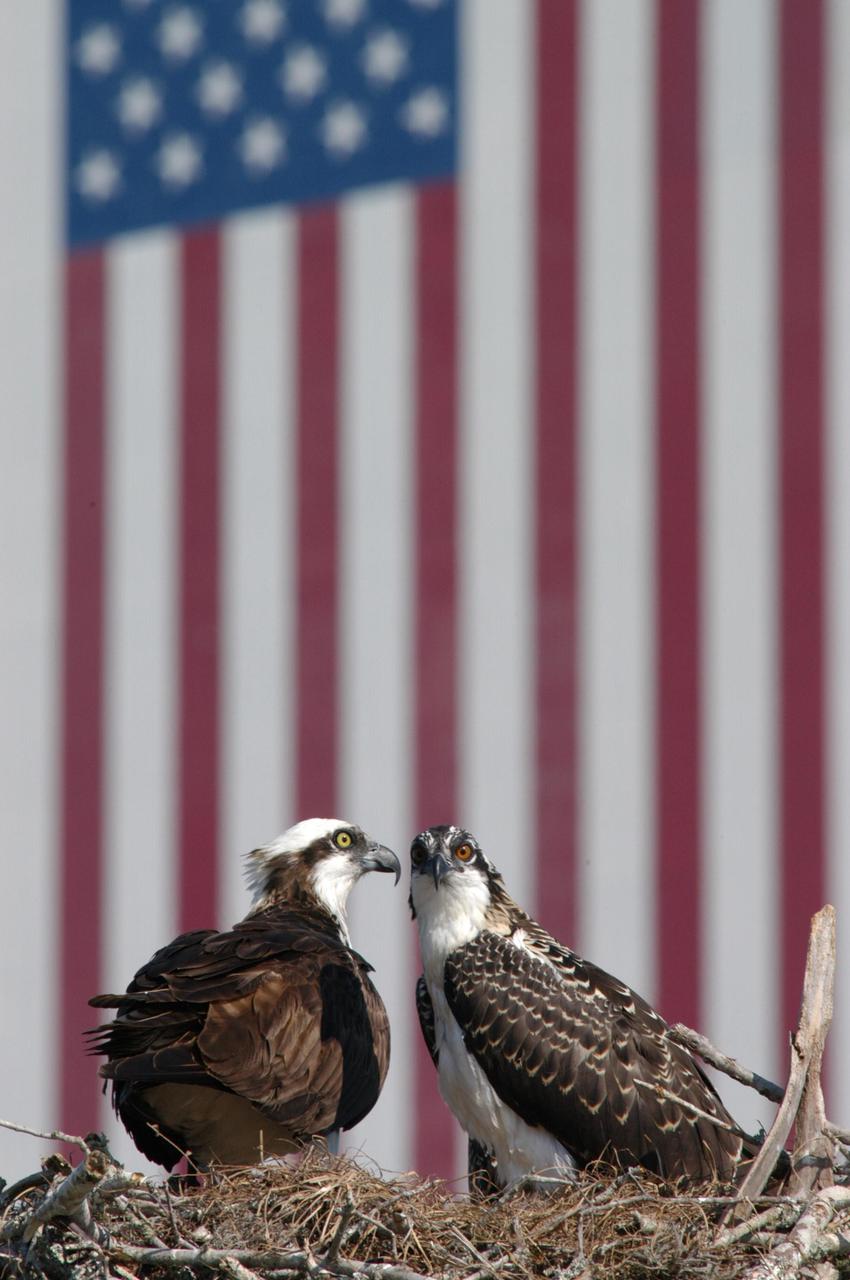
KENNEDY SPACE CENTER, FLA. -- A mother osprey (left) sits protectively next to one of her chicks in the nest situated at the top of a pole in the parking lot at the NASA News Center at Kennedy Space Center. Behind the nest can be seen the immense flag painted on the side of the Vehicle Assembly Building. This is the third year the ospreys have raised a family at the News Center. Known as a fish hawk, ospreys select sites of opportunity, from trees and telephone poles to rocks or even flat ground. In the United States they are found from Alaska and Newfoundland to Florida and the Gulf Coast. Osprey nests are found throughout the Kennedy Space Center and nearby Merritt Island National Wildlife Refuge, which shares a boundary with the Center. Photo credit: NASA/George Shelton
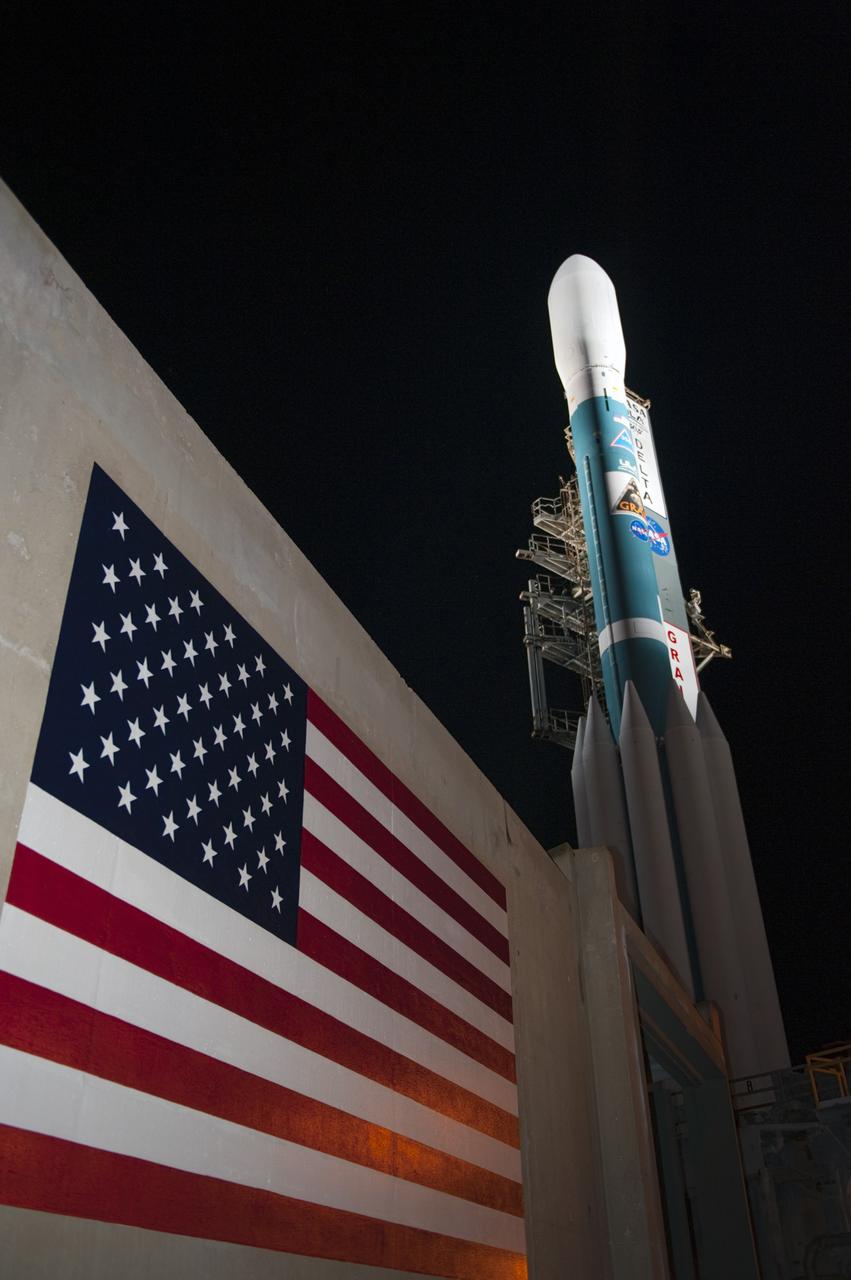
CAPE CANAVERAL, Fla. -- At Space Launch Complex 17B on Cape Canaveral Air Force Station, the United Launch Alliance Delta II rocket that will launch NASA's Gravity Recovery and Interior Laboratory mission towers over the U.S. flag painted on the pad's structure. The mobile service tower has been rolled away from the vehicle for launch. The "rollback" began at about 11:20 p.m. EDT Sept. 7. GRAIL will fly twin spacecraft in tandem around the moon to precisely measure and map variations in the moon's gravitational field. The mission will provide the most accurate global gravity field to date for any planet, including Earth. This detailed information will reveal differences in the density of the moon's crust and mantle and will help answer fundamental questions about the moon's internal structure, thermal evolution, and history of collisions with asteroids. The aim is to map the moon's gravity field so completely that future lunar vehicles can safely navigate anywhere on the moon’s surface. Launch is scheduled for 8:37:06 a.m. EDT Sept. 8. For more information, visit http://www.nasa.gov/grail. Photo credit: NASA/Kim Shiflett
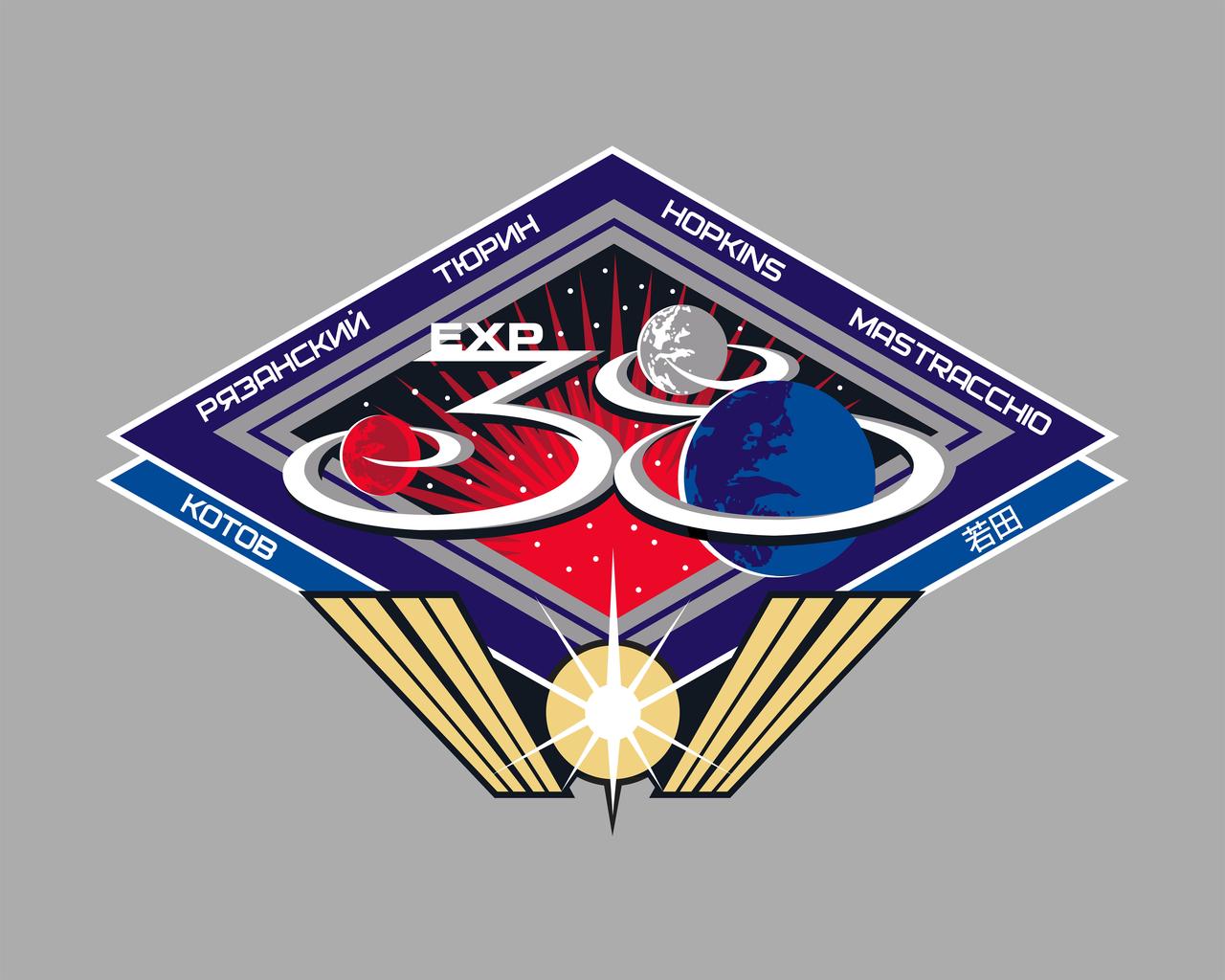
ISS038-S-001 (April 2013) --- As the International Space Station (ISS) has become a stepping stone to future space exploration, the Expedition 38 mission patch design paints a visual roadmap of exploration beyond low Earth orbit, most prominently represented by the design?s flowing Expedition 38 mission numbers that wrap around Earth, the moon and Mars. Just as the sun is a guiding light in the galaxy, the ISS illuminates the bottom of the design as it is a shining beacon of the advancement of science, knowledge, and technology carried out aboard the Space Station. To visually capture the idea of the ISS being a foundation for infinite discovery, the space station?s iconic solar arrays span upwards, providing the number 38 and its exploration roadmap a symbolic pedestal to rest on. Finally, the overall use of red, white, and blue in the design acknowledges the flags of the countries of origin for Expedition 38?s crew ? the United States, Russia, and Japan. The NASA insignia design for space shuttle flights is reserved for use by the astronauts and for other official use as the NASA Administrator may authorize. Public availability has been approved only in the forms of illustrations by the various news media. When and if there is any change in this policy, which is not anticipated, the change will be publicly announced. Photo credit: NASA