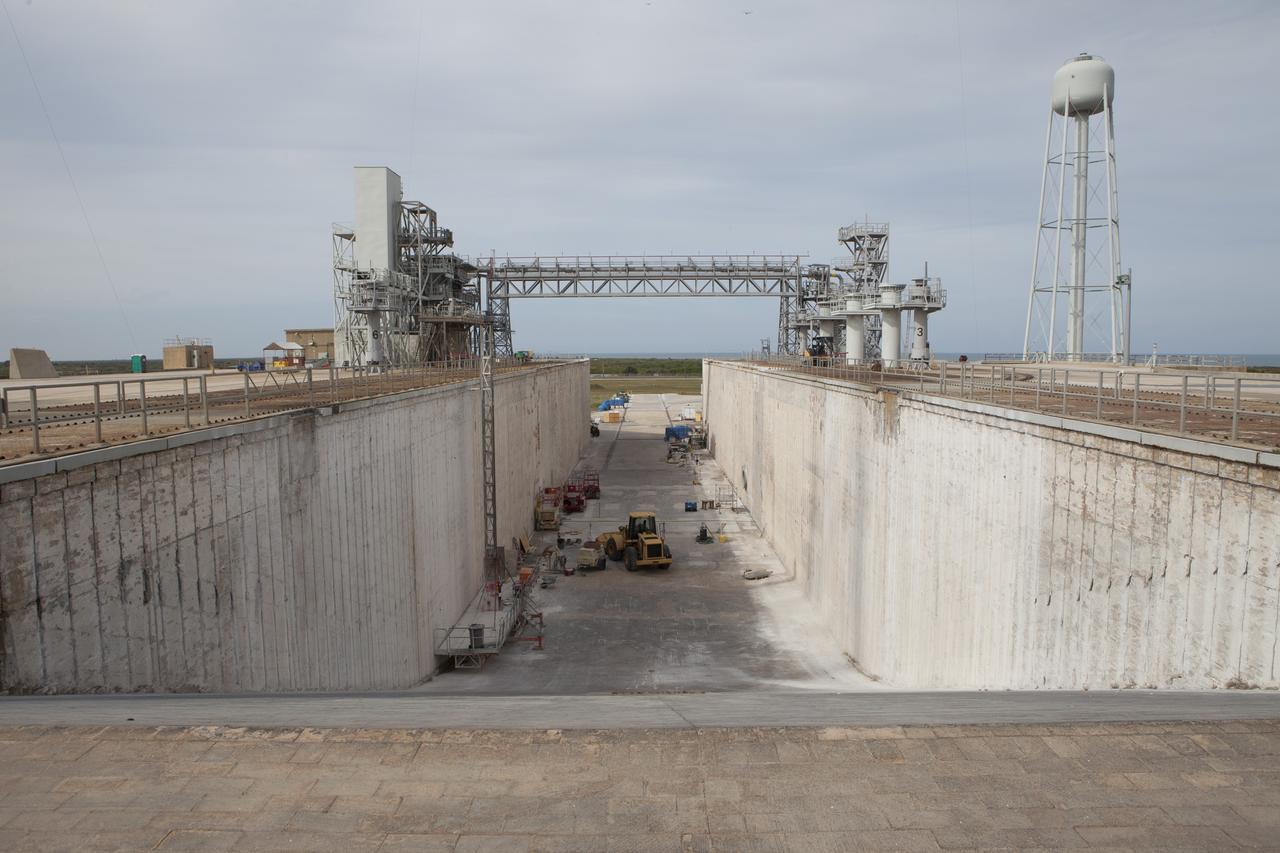
Upgrades and modifications continue to the flame trench at Launch Pad 39B at NASA’s Kennedy Space Center in Florida. Pad B is being refurbished to support the launch of NASA’s Space Launch System rocket. The Ground Systems Development and Operations (GSDO) Program at Kennedy is helping transform the space center into a multi-user spaceport and prepare for Exploration Mission-1, deep-space missions, and the journey to Mars.
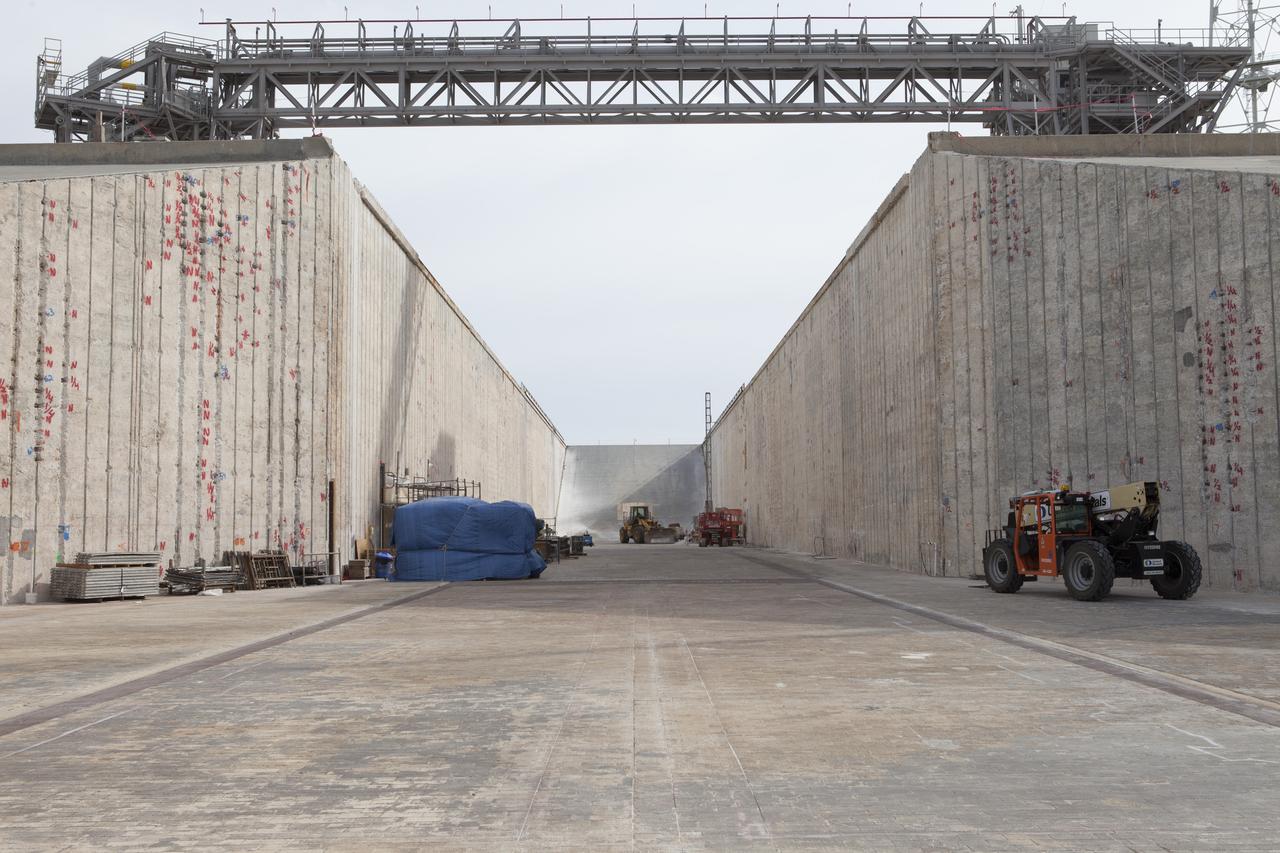
Upgrades and modifications continue to the flame trench at Launch Pad 39B at NASA’s Kennedy Space Center in Florida. Pad B is being refurbished to support the launch of NASA’s Space Launch System rocket. The Ground Systems Development and Operations (GSDO) Program at Kennedy is helping transform the space center into a multi-user spaceport and prepare for Exploration Mission-1, deep-space missions, and the journey to Mars.
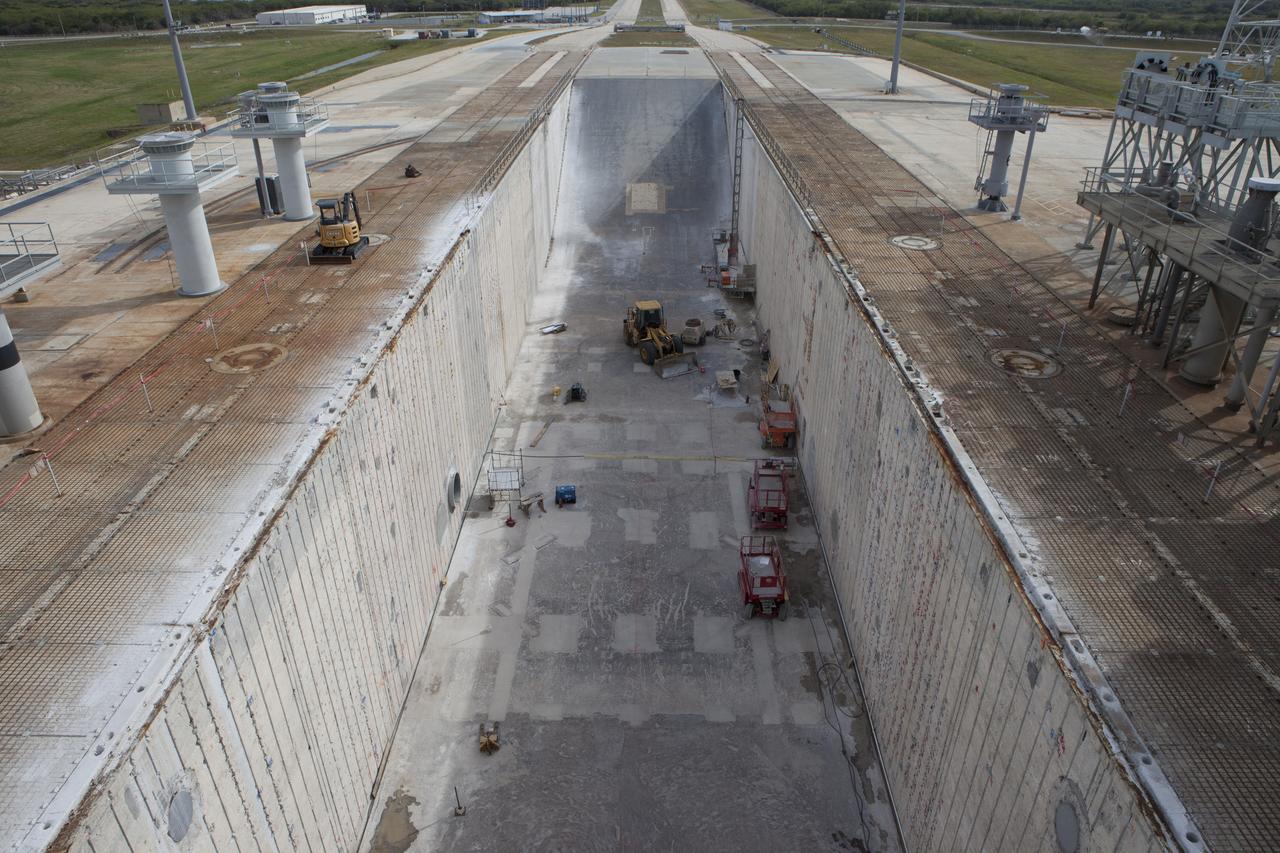
Upgrades and modifications continue to the flame trench at Launch Pad 39B at NASA’s Kennedy Space Center in Florida. Pad B is being refurbished to support the launch of NASA’s Space Launch System rocket. The Ground Systems Development and Operations (GSDO) Program at Kennedy is helping transform the space center into a multi-user spaceport and prepare for Exploration Mission-1, deep-space missions, and the journey to Mars.
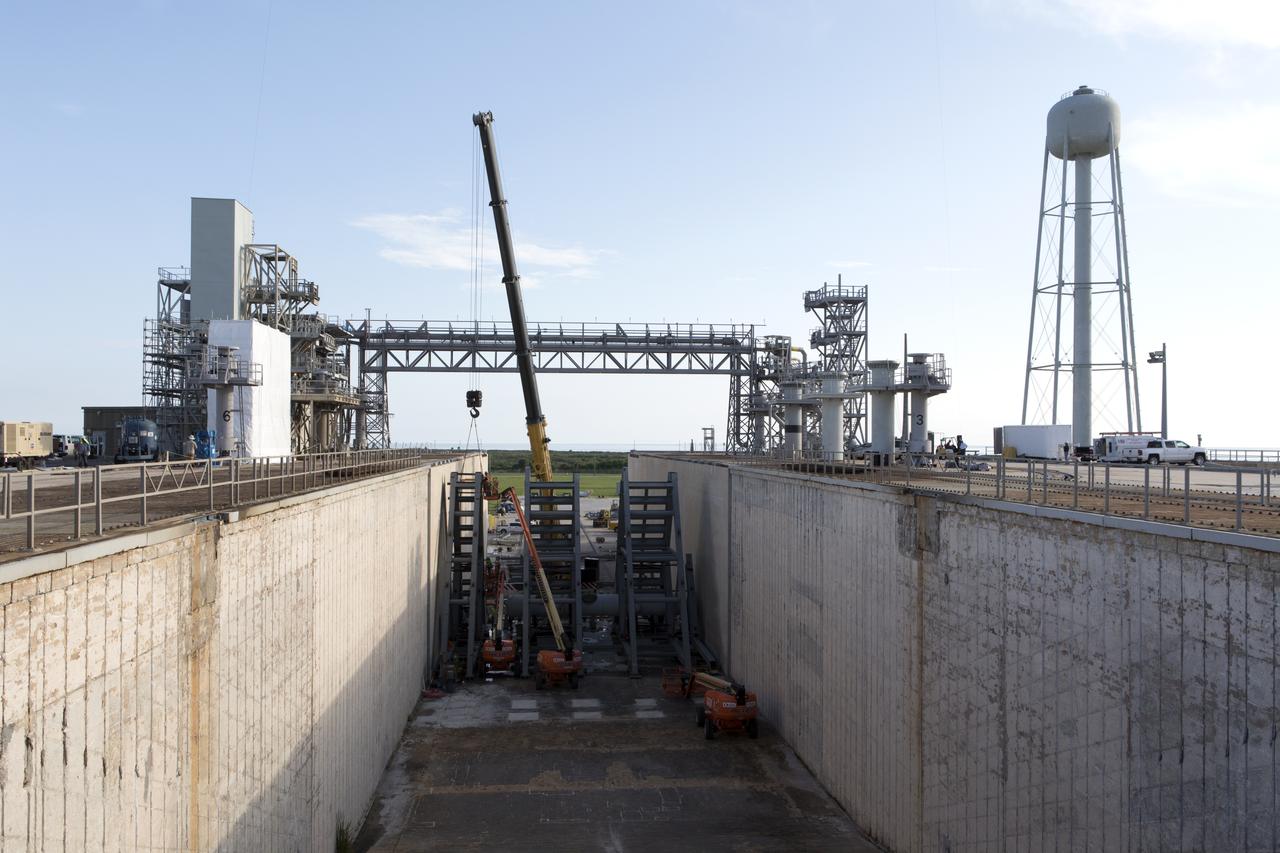
At Launch Pad 39B at NASA's Kennedy Space Center in Florida, cranes lower large segments of the support hardware for a new flame deflector into place in the flame trench. Construction workers weld the structures together. The new flame deflector will be positioned about six feet south of the shuttle-era flame deflector’s position. During liftoff of NASA’s Space Launch System, the rocket’s flame and energy will be diverted to the north side of the flame trench. The north side of the deflector will be protected by a NASA standard coating. The south side of the deflector will not be slanted and will have no lining. The new design will provide easier access for inspection, maintenance and repair. The Ground Systems Development and Operations (GSDO) Program at Kennedy is managing the installation of the flame deflector for Exploration Mission 1, deep space missions, and NASA's Journey to Mars.
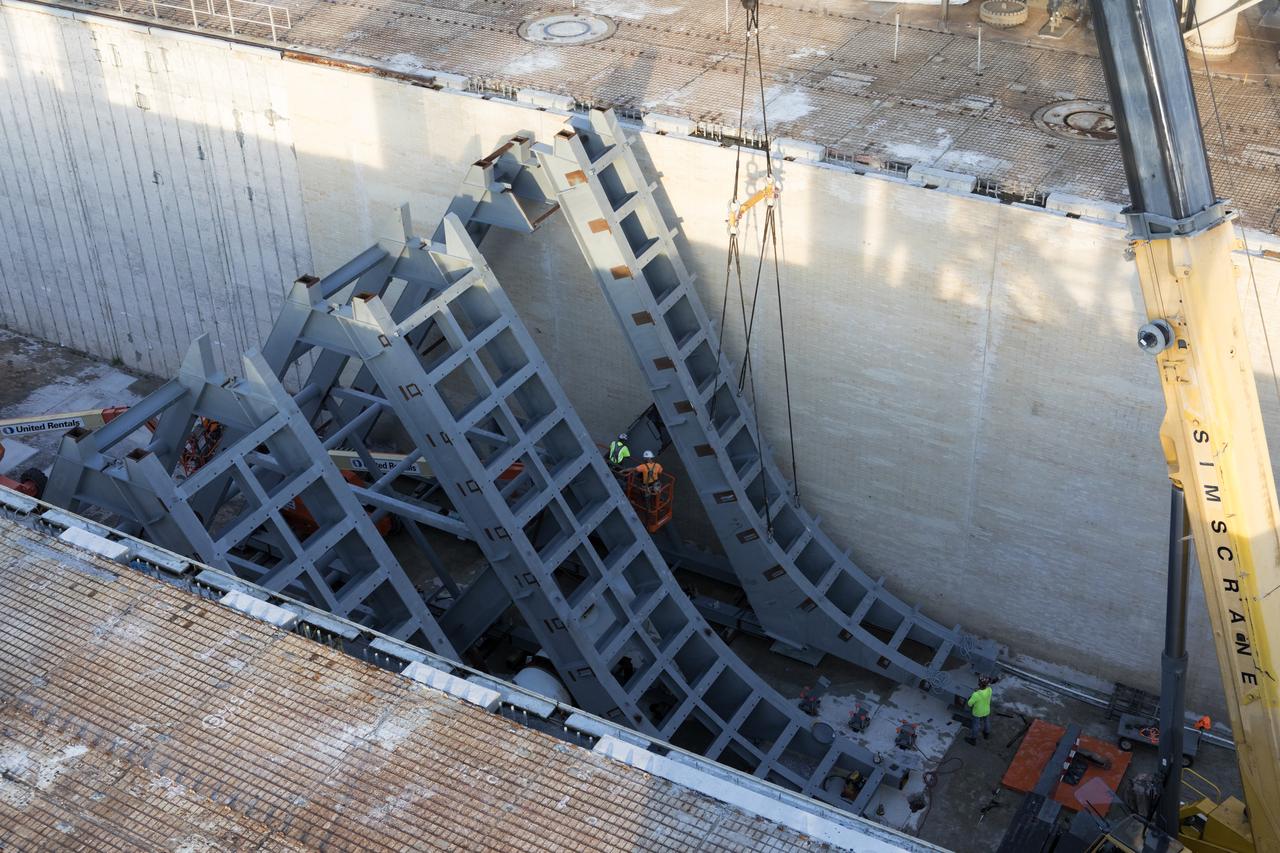
At Launch Pad 39B at NASA's Kennedy Space Center in Florida, large segments of the support hardware for a new flame deflector have been lowered into position in the flame trench. The new flame deflector will be positioned about six feet south of the shuttle-era flame deflector’s position. During liftoff of NASA’s Space Launch System, the rocket’s flame and energy will be diverted to the north side of the flame trench. The north side of the deflector will be protected by a NASA standard coating. The south side of the deflector will not be slanted and will have no lining. The new design will provide easier access for inspection, maintenance and repair. The Ground Systems Development and Operations (GSDO) Program at Kennedy is managing the installation of the flame deflector for Exploration Mission 1, deep space missions, and NASA's Journey to Mars.
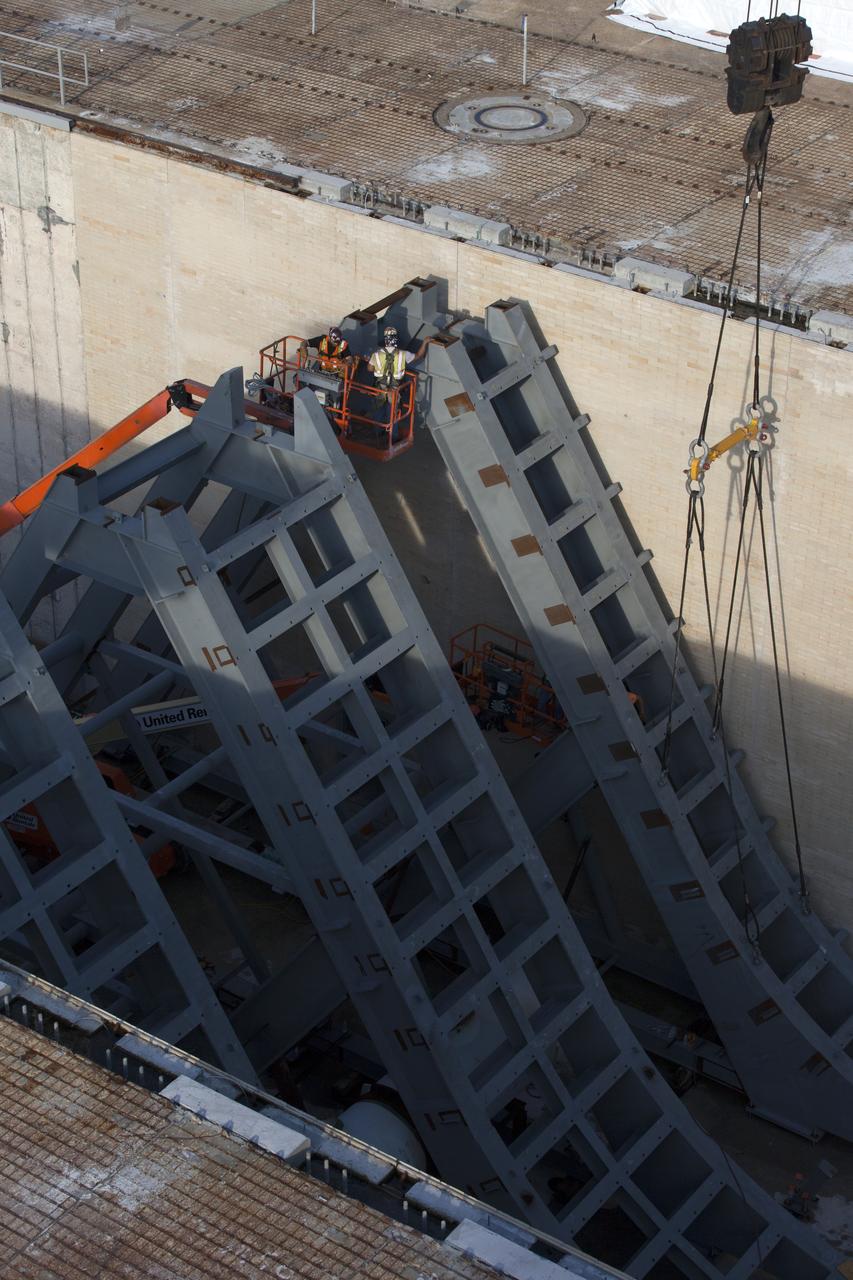
At Launch Pad 39B at NASA's Kennedy Space Center in Florida, construction workers prepare to weld together large segments of the support hardware for a new flame deflector in the flame trench. The new flame deflector will be positioned about six feet south of the shuttle-era flame deflector’s position. During liftoff of NASA’s Space Launch System, the rocket’s flame and energy will be diverted to the north side of the flame trench. The north side of the deflector will be protected by a NASA standard coating. The south side of the deflector will not be slanted and will have no lining. The new design will provide easier access for inspection, maintenance and repair. The Ground Systems Development and Operations (GSDO) Program at Kennedy is managing the installation of the flame deflector for Exploration Mission 1, deep space missions, and NASA's Journey to Mars.

At Launch Pad 39B at NASA's Kennedy Space Center in Florida, cranes lower large segments of the support hardware for a new flame deflector into place in the flame trench. Construction workers weld the structures together. The new flame deflector will be positioned about six feet south of the shuttle-era flame deflector’s position. During liftoff of NASA’s Space Launch System, the rocket’s flame and energy will be diverted to the north side of the flame trench. The north side of the deflector will be protected by a NASA standard coating. The south side of the deflector will not be slanted and will have no lining. The new design will provide easier access for inspection, maintenance and repair. The Ground Systems Development and Operations (GSDO) Program at Kennedy is managing the installation of the flame deflector for Exploration Mission 1, deep space missions, and NASA's Journey to Mars.
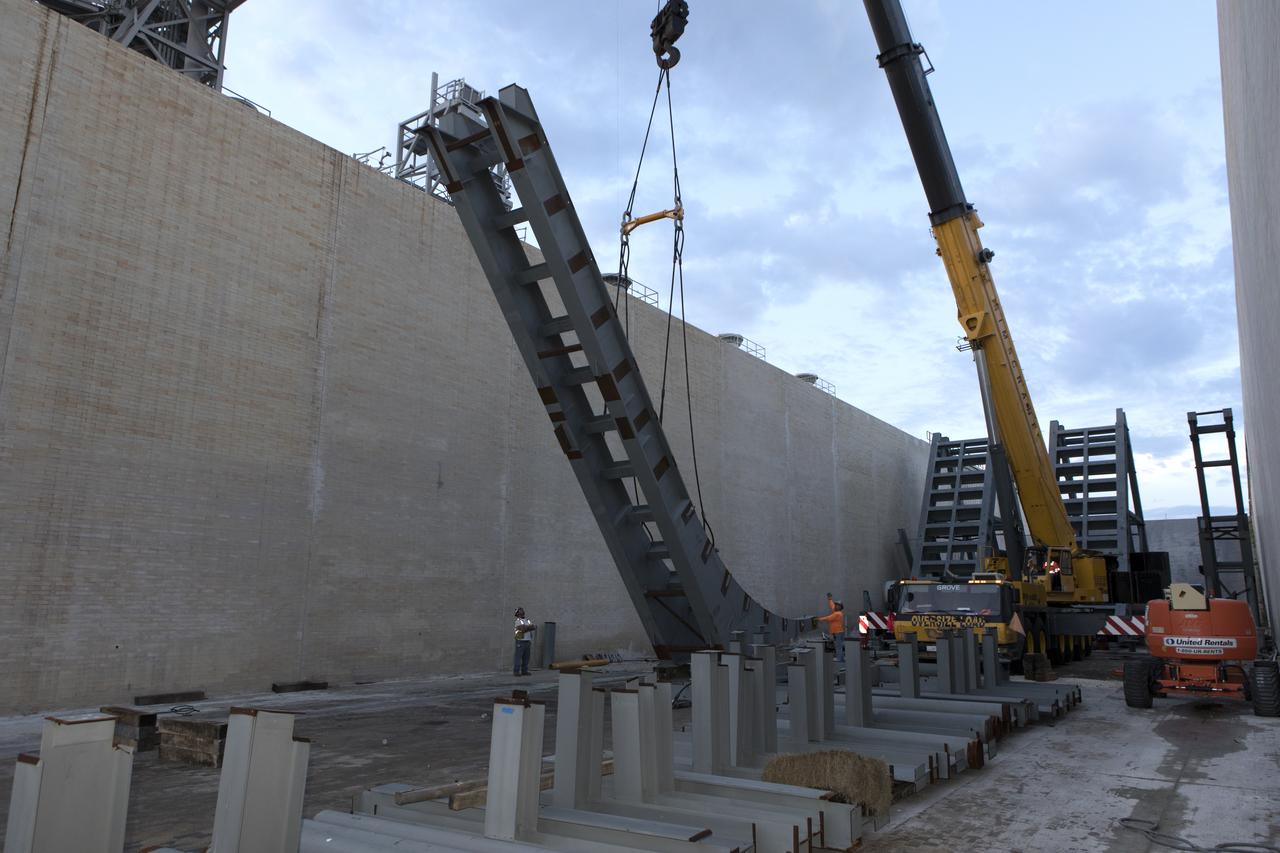
At Launch Pad 39B at NASA's Kennedy Space Center in Florida, a crane is used to move one of the large segments of the support hardware for a new flame deflector and position it in the flame trench. The new flame deflector will be positioned about six feet south of the shuttle-era flame deflector’s position. During liftoff of NASA’s Space Launch System, the rocket’s flame and energy will be diverted to the north side of the flame trench. The north side of the deflector will be protected by a NASA standard coating. The south side of the deflector will not be slanted and will have no lining. The new design will provide easier access for inspection, maintenance and repair. The Ground Systems Development and Operations (GSDO) Program at Kennedy is managing the installation of the flame deflector for Exploration Mission 1, deep space missions, and NASA's Journey to Mars.
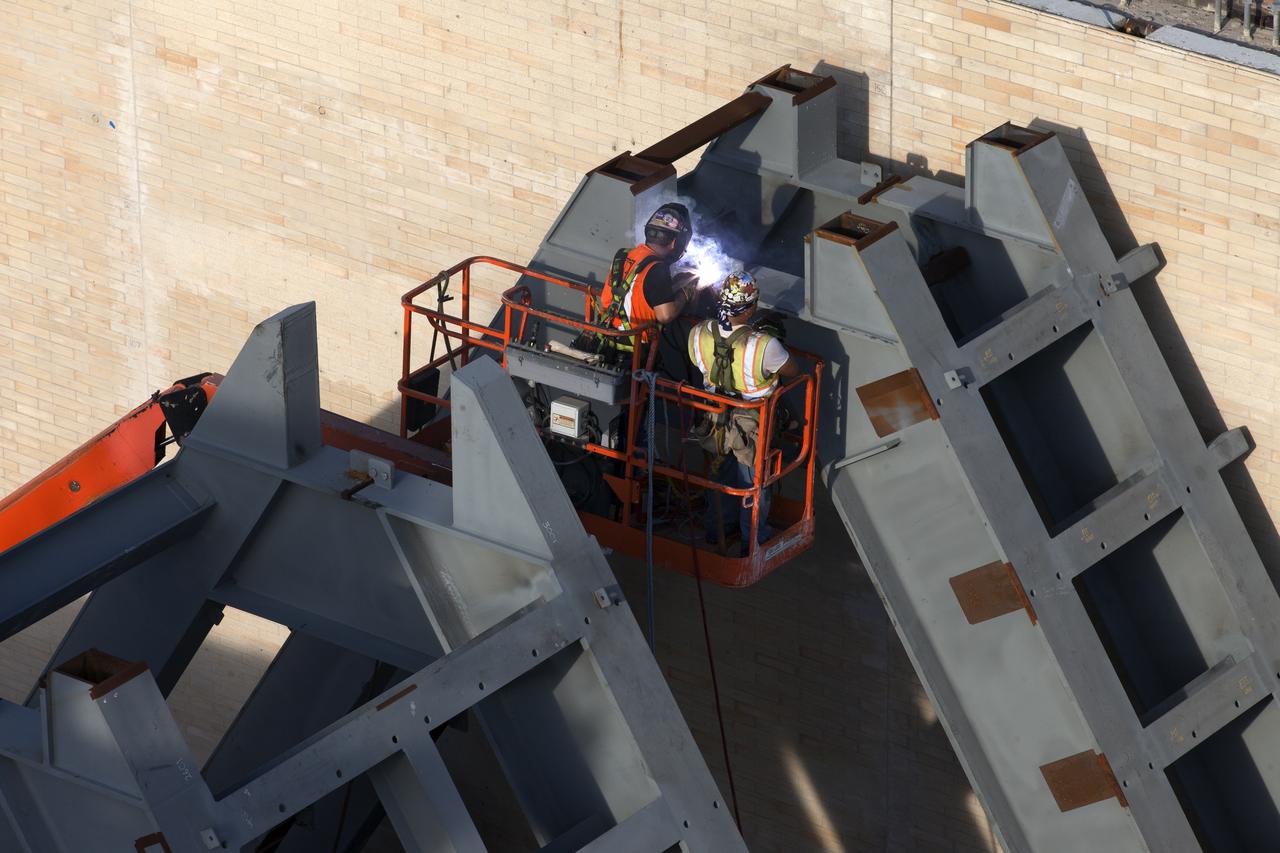
At Launch Pad 39B at NASA's Kennedy Space Center in Florida, construction workers weld together large segments of the support hardware for a new flame deflector in the flame trench. The new flame deflector will be positioned about six feet south of the shuttle-era flame deflector’s position. During liftoff of NASA’s Space Launch System, the rocket’s flame and energy will be diverted to the north side of the flame trench. The north side of the deflector will be protected by a NASA standard coating. The south side of the deflector will not be slanted and will have no lining. The new design will provide easier access for inspection, maintenance and repair. The Ground Systems Development and Operations (GSDO) Program at Kennedy is managing the installation of the flame deflector for Exploration Mission 1, deep space missions, and NASA's Journey to Mars.
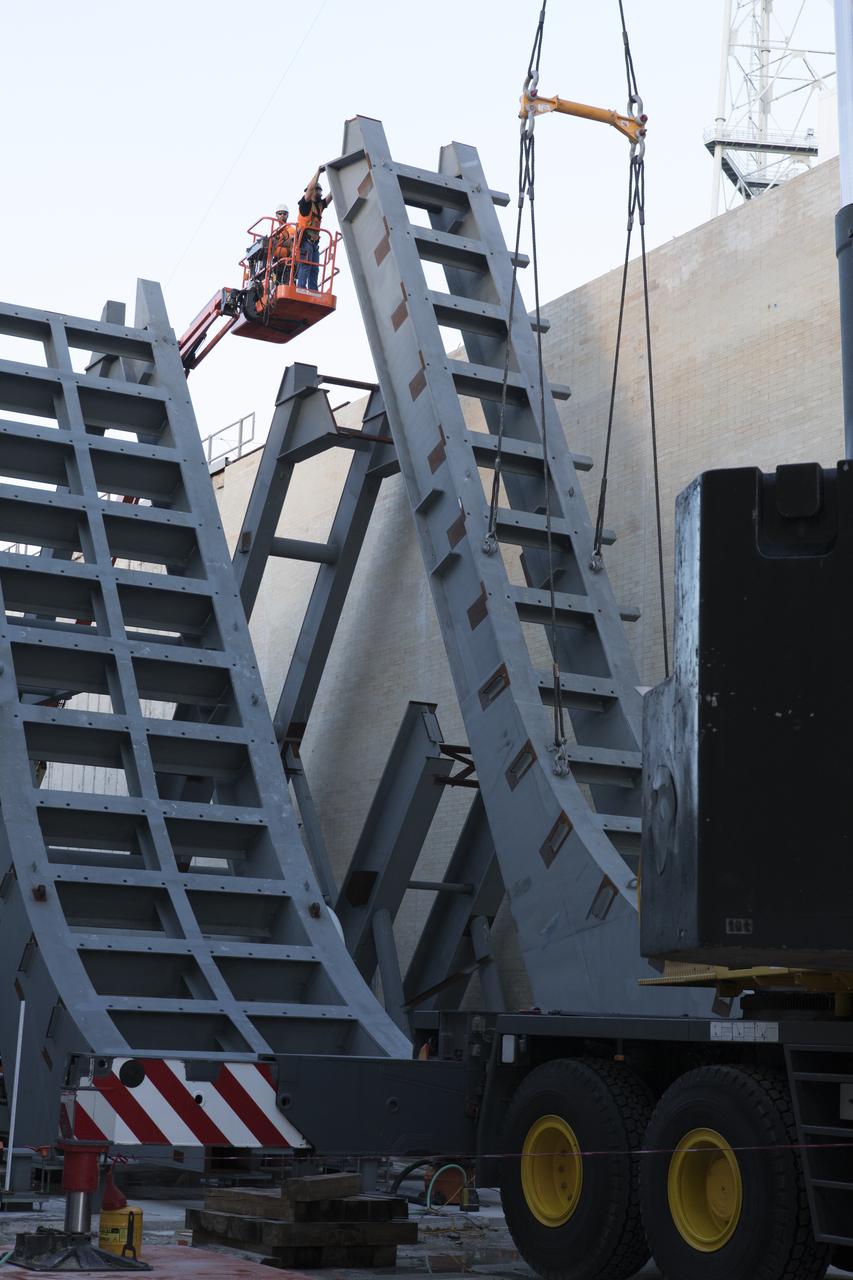
At Launch Pad 39B at NASA's Kennedy Space Center in Florida, construction workers assist as a large segment of the support hardware for a new flame deflector is positioned in the flame trench. The new flame deflector will be positioned about six feet south of the shuttle-era flame deflector’s position. During liftoff of NASA’s Space Launch System, the rocket’s flame and energy will be diverted to the north side of the flame trench. The north side of the deflector will be protected by a NASA standard coating. The south side of the deflector will not be slanted and will have no lining. The new design will provide easier access for inspection, maintenance and repair. The Ground Systems Development and Operations (GSDO) Program at Kennedy is managing the installation of the flame deflector for Exploration Mission 1, deep space missions, and NASA's Journey to Mars.
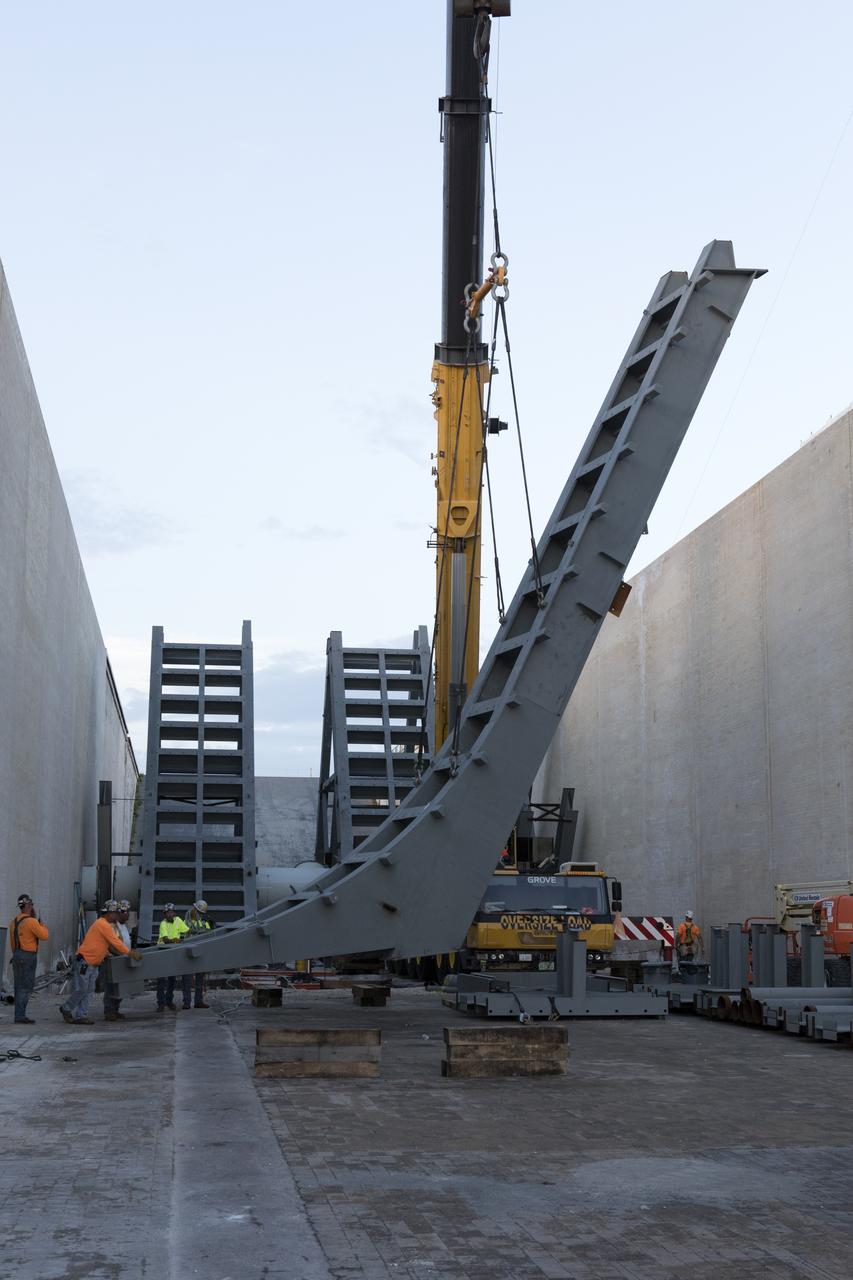
At Launch Pad 39B at NASA's Kennedy Space Center in Florida, a crane is used to move one of the large segments of the support hardware for a new flame deflector and position it in the flame trench. The new flame deflector will be positioned about six feet south of the shuttle-era flame deflector’s position. During liftoff of NASA’s Space Launch System, the rocket’s flame and energy will be diverted to the north side of the flame trench. The north side of the deflector will be protected by a NASA standard coating. The south side of the deflector will not be slanted and will have no lining. The new design will provide easier access for inspection, maintenance and repair. The Ground Systems Development and Operations (GSDO) Program at Kennedy is managing the installation of the flame deflector for Exploration Mission 1, deep space missions, and NASA's Journey to Mars.
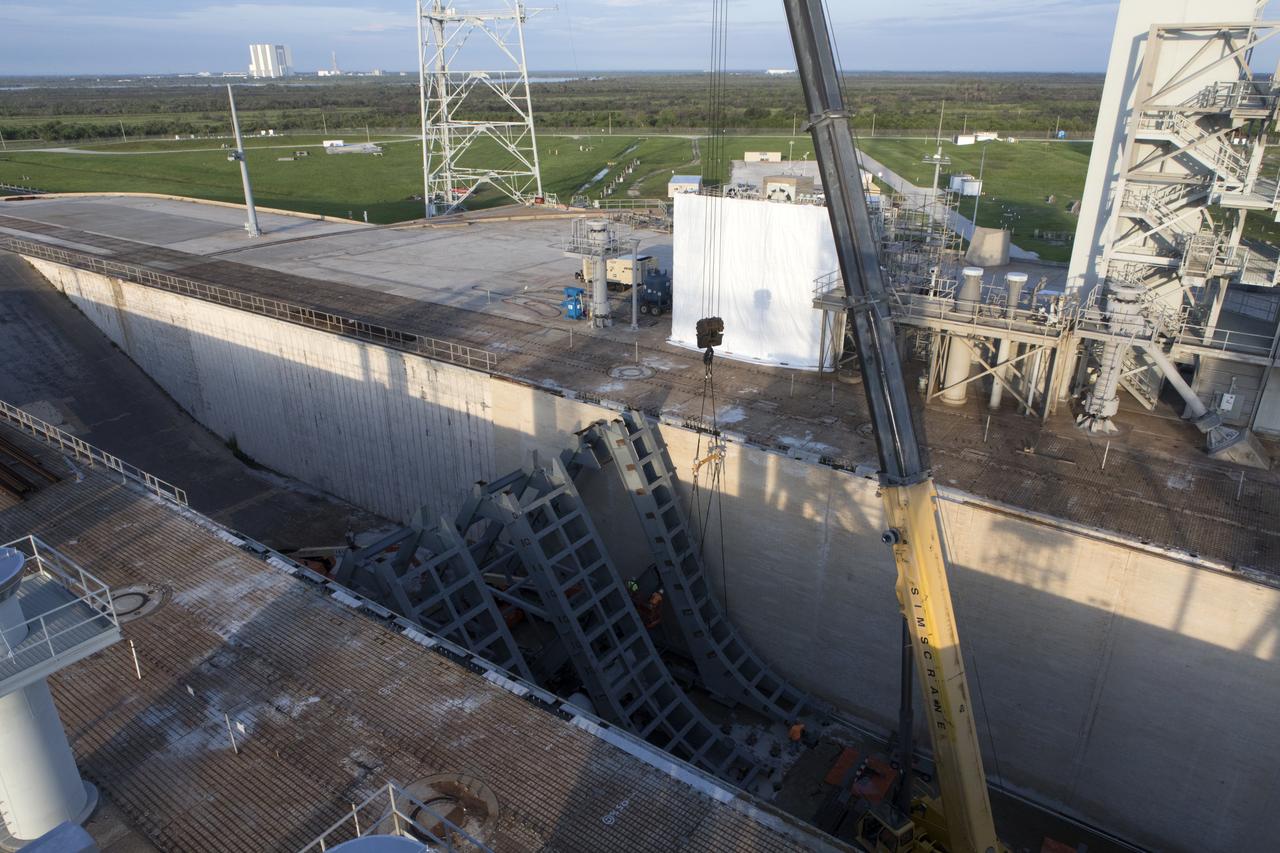
At Launch Pad 39B at NASA's Kennedy Space Center in Florida, large segments of the support hardware for a new flame deflector have been lowered into position in the flame trench. The new flame deflector will be positioned about six feet south of the shuttle-era flame deflector’s position. During liftoff of NASA’s Space Launch System, the rocket’s flame and energy will be diverted to the north side of the flame trench. The north side of the deflector will be protected by a NASA standard coating. The south side of the deflector will not be slanted and will have no lining. The new design will provide easier access for inspection, maintenance and repair. The Ground Systems Development and Operations (GSDO) Program at Kennedy is managing the installation of the flame deflector for Exploration Mission 1, deep space missions, and NASA's Journey to Mars.
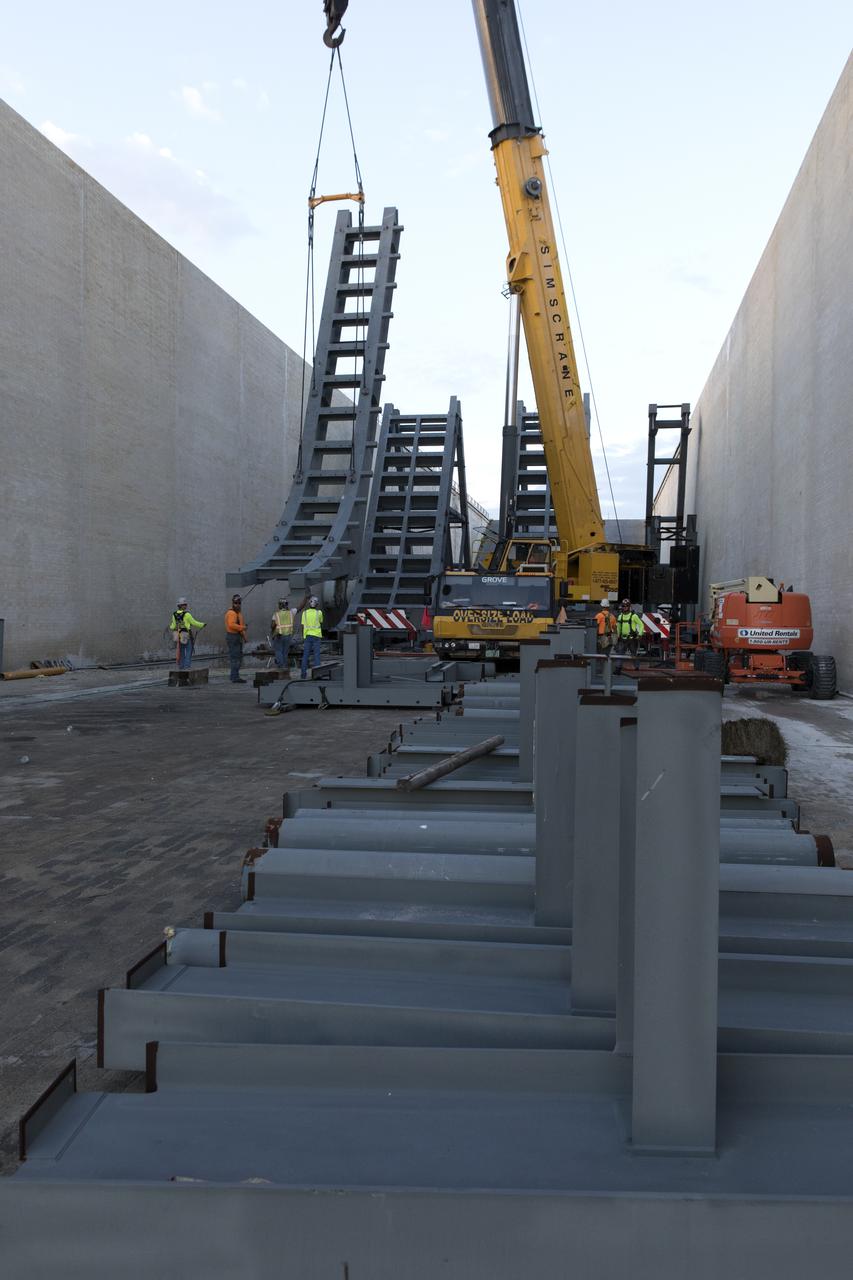
At Launch Pad 39B at NASA's Kennedy Space Center in Florida, a crane is used to move one of the large segments of the support hardware for a new flame deflector and position it in the flame trench. The new flame deflector will be positioned about six feet south of the shuttle-era flame deflector’s position. During liftoff of NASA’s Space Launch System, the rocket’s flame and energy will be diverted to the north side of the flame trench. The north side of the deflector will be protected by a NASA standard coating. The south side of the deflector will not be slanted and will have no lining. The new design will provide easier access for inspection, maintenance and repair. The Ground Systems Development and Operations (GSDO) Program at Kennedy is managing the installation of the flame deflector for Exploration Mission 1, deep space missions, and NASA's Journey to Mars.
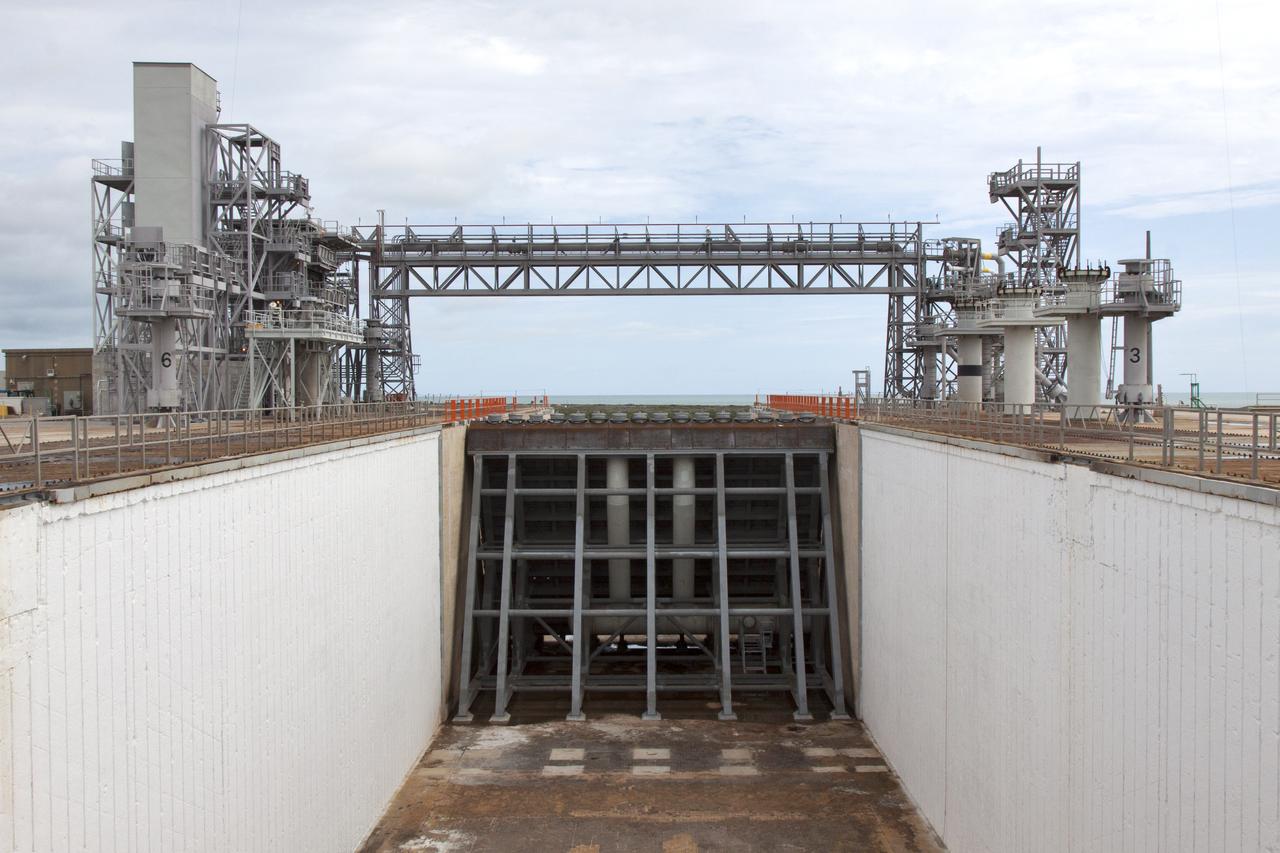
Construction is complete on the main flame deflector in the flame trench at Launch Complex 39B at NASA's Kennedy Space Center in Florida. The flame deflector will safely deflect the plume exhaust from NASA's Space Launch System rocket during launch. It will divert the rocket's exhaust, pressure and intense heat to the north at liftoff. In view is the south side of the main flame deflector. The Exploration Ground Systems Program at Kennedy is refurbishing the pad to support the launch of the SLS rocket and Orion on Exploration Mission-1, and helping to transform the space center into a multi-user spaceport.
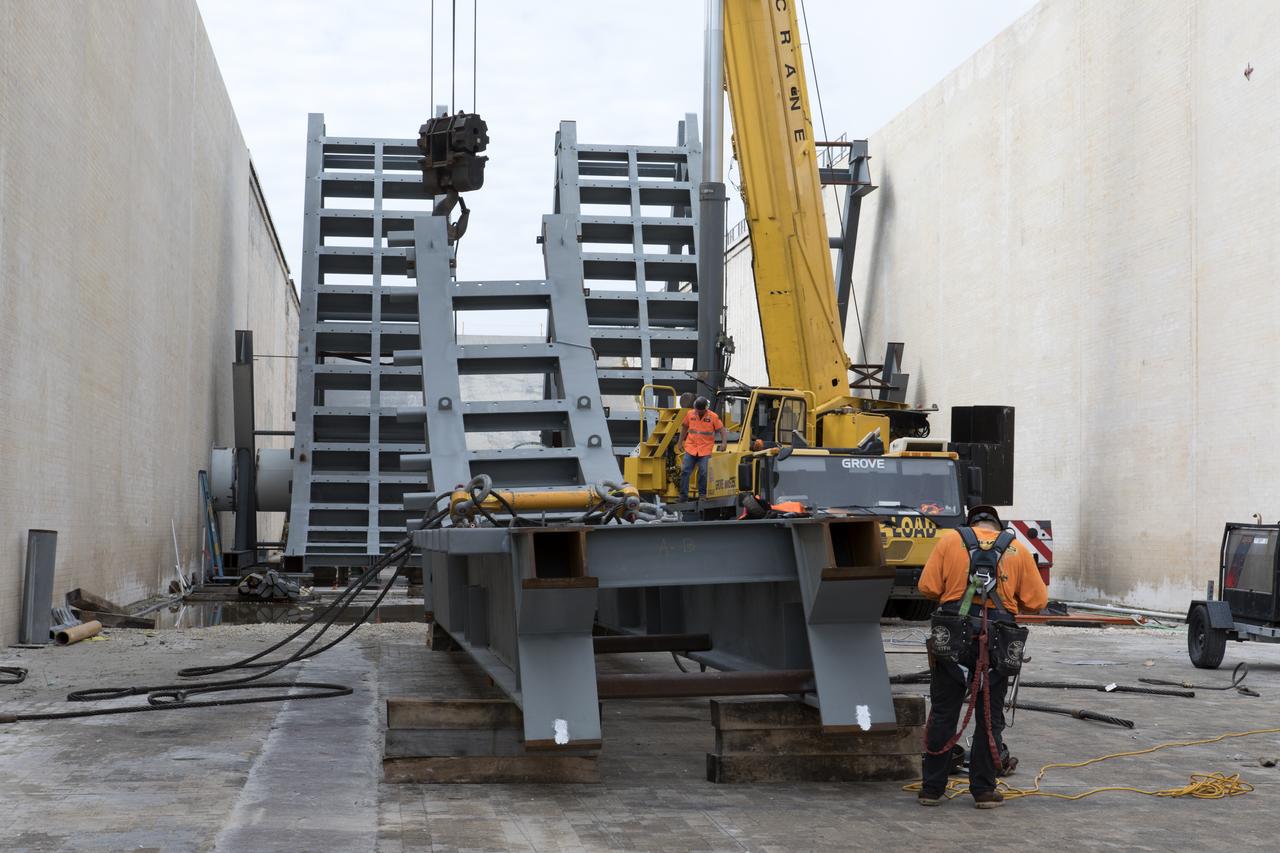
At Launch Pad 39B at NASA's Kennedy Space Center in Florida, construction workers position large segments of the support hardware for a new flame deflector in the flame trench. The new flame deflector will be positioned about six feet south of the shuttle-era flame deflector’s position. During liftoff of NASA’s Space Launch System, the rocket’s flame and energy will be diverted to the north side of the flame trench. The north side of the deflector will be protected by a NASA standard coating. The south side of the deflector will not be slanted and will have no lining. The new design will provide easier access for inspection, maintenance and repair. The Ground Systems Development and Operations (GSDO) Program at Kennedy is managing the installation of the flame deflector for Exploration Mission 1, deep space missions, and NASA's Journey to Mars.

At Launch Pad 39B at NASA's Kennedy Space Center in Florida, construction workers position large segments of the support hardware for a new flame deflector in the flame trench. The new flame deflector will be positioned about six feet south of the shuttle-era flame deflector’s position. During liftoff of NASA’s Space Launch System, the rocket’s flame and energy will be diverted to the north side of the flame trench. The north side of the deflector will be protected by a NASA standard coating. The south side of the deflector will not be slanted and will have no lining. The new design will provide easier access for inspection, maintenance and repair. The Ground Systems Development and Operations (GSDO) Program at Kennedy is managing the installation of the flame deflector for Exploration Mission 1, deep space missions, and NASA's Journey to Mars.
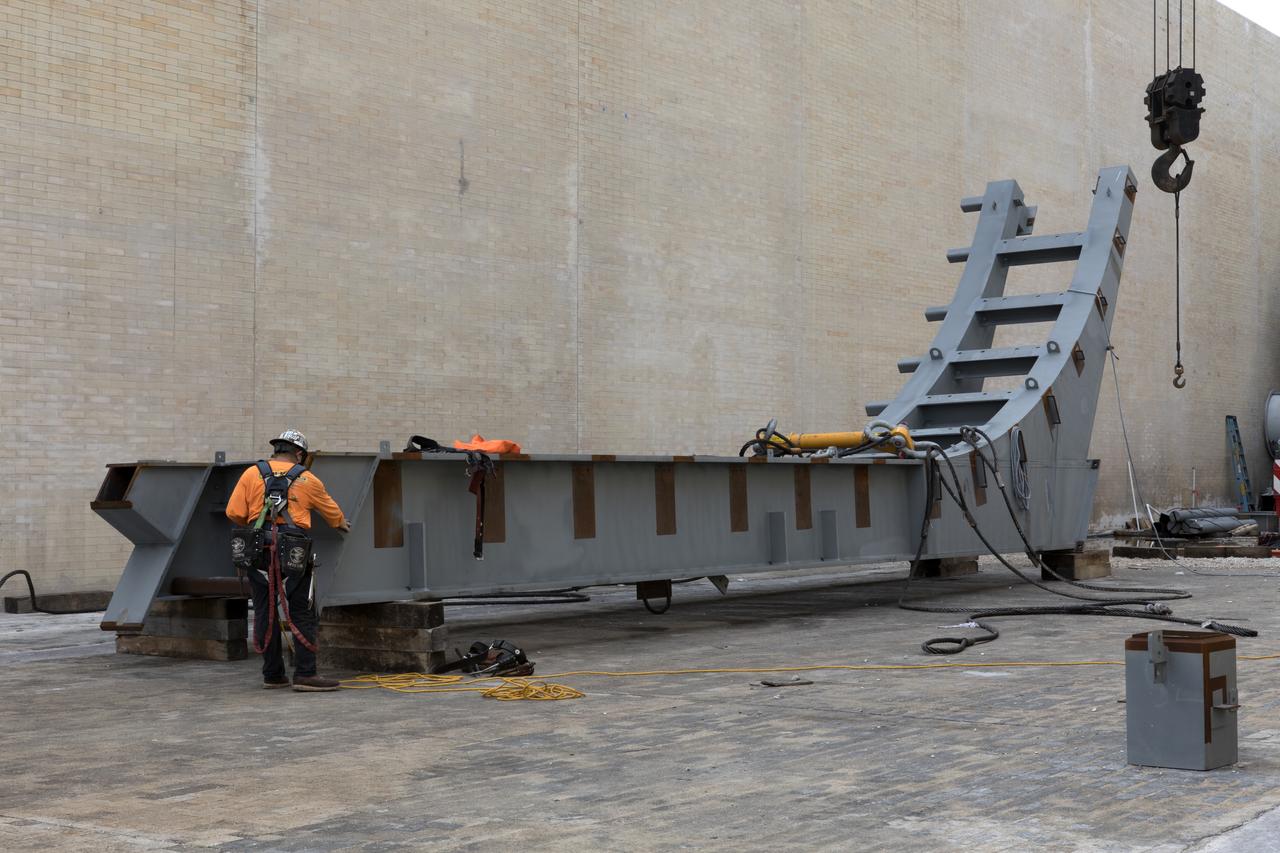
At Launch Pad 39B at NASA's Kennedy Space Center in Florida, a construction worker prepares a large segments of the support hardware for a new flame deflector to be lifted into place in the flame trench. The new flame deflector will be positioned about six feet south of the shuttle-era flame deflector’s position. During liftoff of NASA’s Space Launch System, the rocket’s flame and energy will be diverted to the north side of the flame trench. The north side of the deflector will be protected by a NASA standard coating. The south side of the deflector will not be slanted and will have no lining. The new design will provide easier access for inspection, maintenance and repair. The Ground Systems Development and Operations (GSDO) Program at Kennedy is managing the installation of the flame deflector for Exploration Mission 1, deep space missions, and NASA's Journey to Mars.
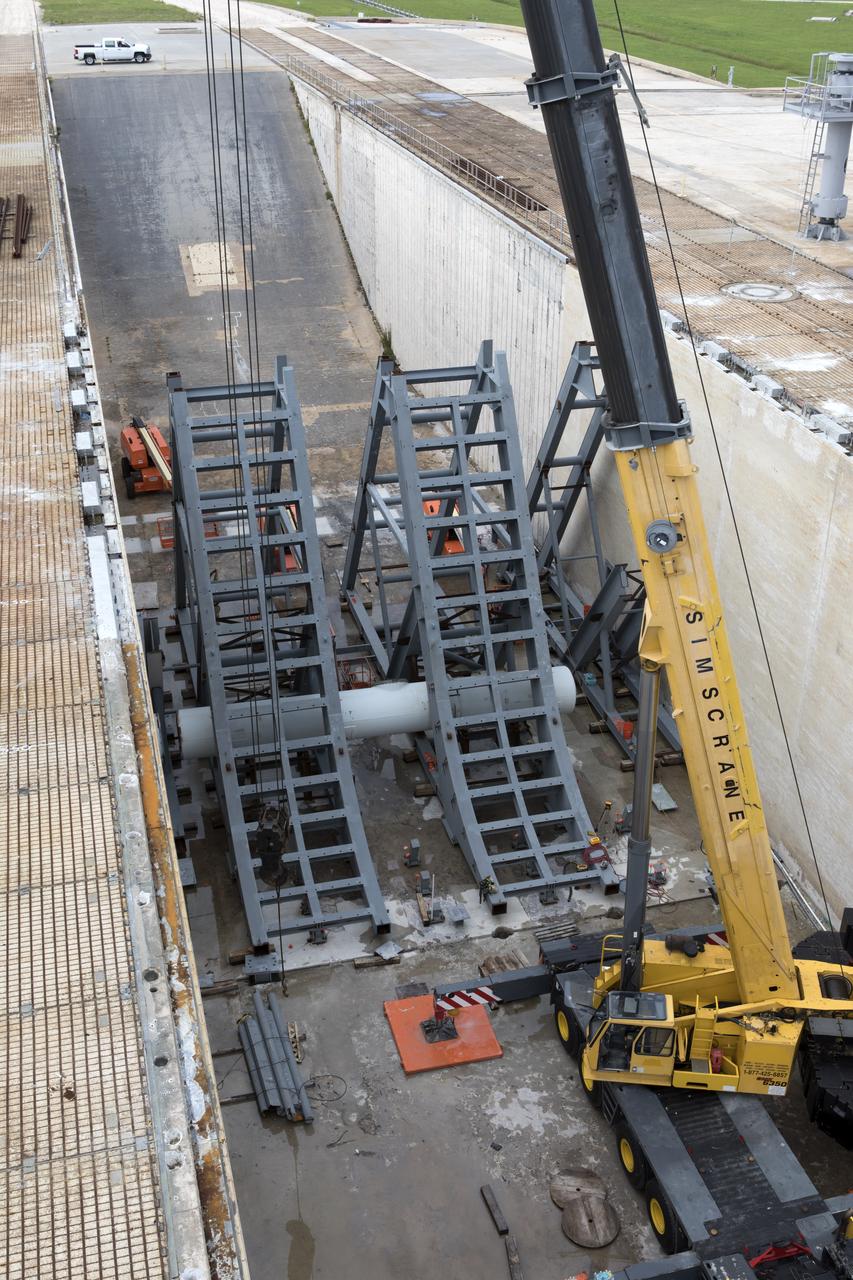
In a view from above at Launch Pad 39B at NASA's Kennedy Space Center in Florida, construction workers position large segments of the support hardware for a new flame deflector in the flame trench. The new flame deflector will be positioned about six feet south of the shuttle-era flame deflector’s position. During liftoff of NASA’s Space Launch System, the rocket’s flame and energy will be diverted to the north side of the flame trench. The north side of the deflector will be protected by a NASA standard coating. The south side of the deflector will not be slanted and will have no lining. The new design will provide easier access for inspection, maintenance and repair. The Ground Systems Development and Operations (GSDO) Program at Kennedy is managing the installation of the flame deflector for Exploration Mission 1, deep space missions, and NASA's Journey to Mars.
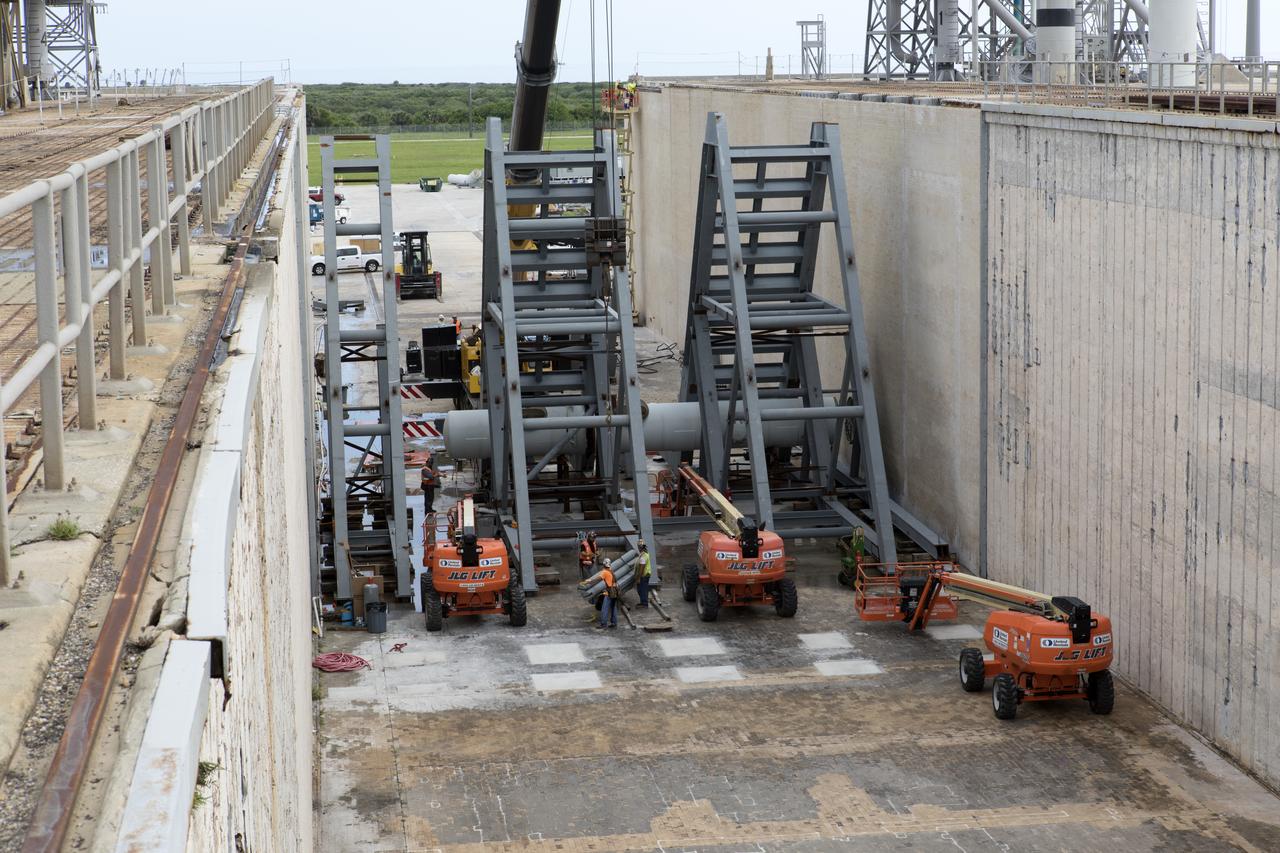
At Launch Pad 39B at NASA's Kennedy Space Center in Florida, construction workers position large segments of the support hardware for a new flame deflector in the flame trench. The new flame deflector will be positioned about six feet south of the shuttle-era flame deflector’s position. During liftoff of NASA’s Space Launch System, the rocket’s flame and energy will be diverted to the north side of the flame trench. The north side of the deflector will be protected by a NASA standard coating. The south side of the deflector will not be slanted and will have no lining. The new design will provide easier access for inspection, maintenance and repair. The Ground Systems Development and Operations (GSDO) Program at Kennedy is managing the installation of the flame deflector for Exploration Mission 1, deep space missions, and NASA's Journey to Mars.
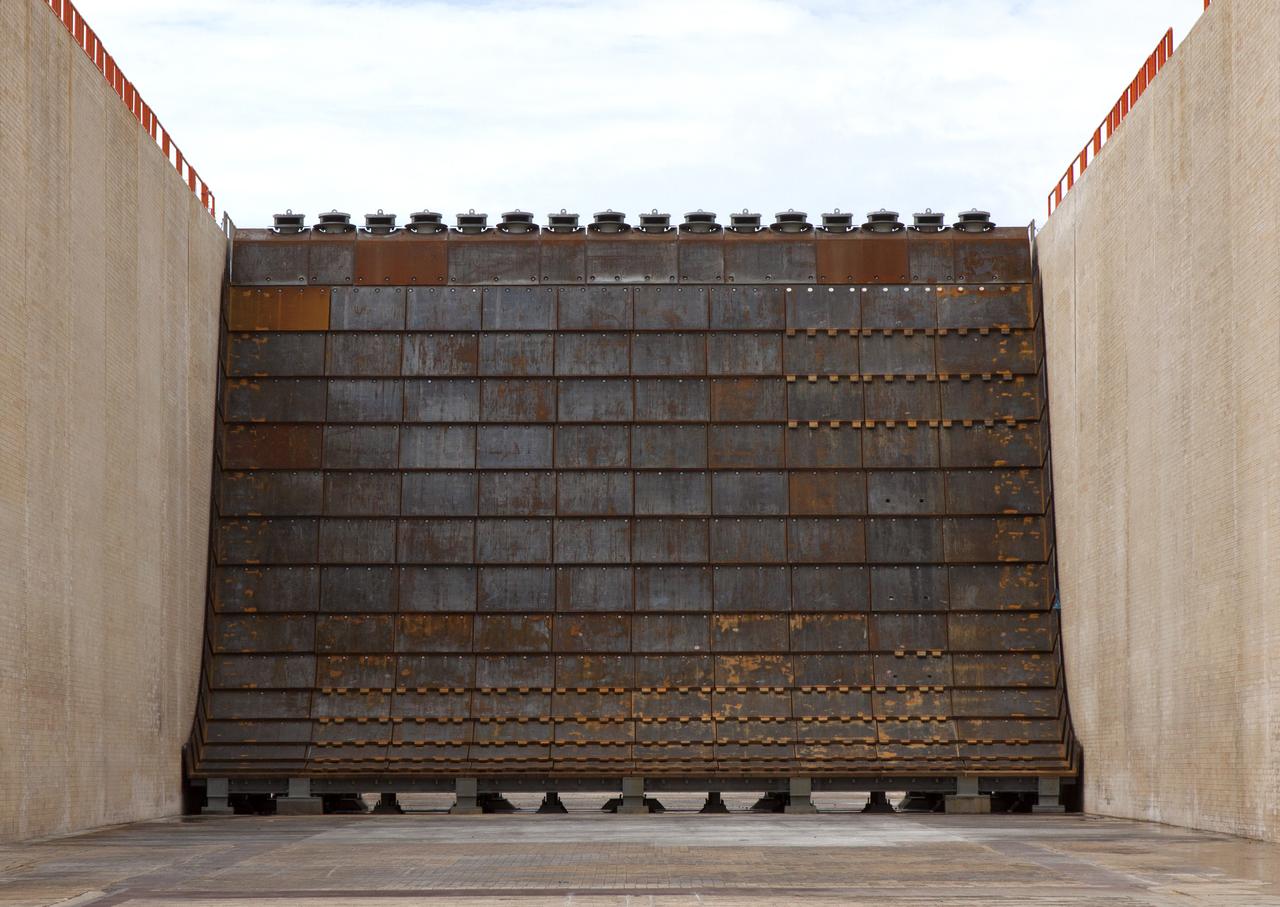
Construction is complete on the main flame deflector in the flame trench at Launch Complex 39B at NASA's Kennedy Space Center in Florida. The flame deflector will safely deflect the plume exhaust from NASA's Space Launch System rocket during launch. It will divert the rocket's exhaust, pressure and intense heat to the north at liftoff. The Exploration Ground Systems Program at Kennedy is refurbishing the pad to support the launch of the SLS rocket and Orion on Exploration Mission-1, and helping to transform the space center into a multi-user spaceport.
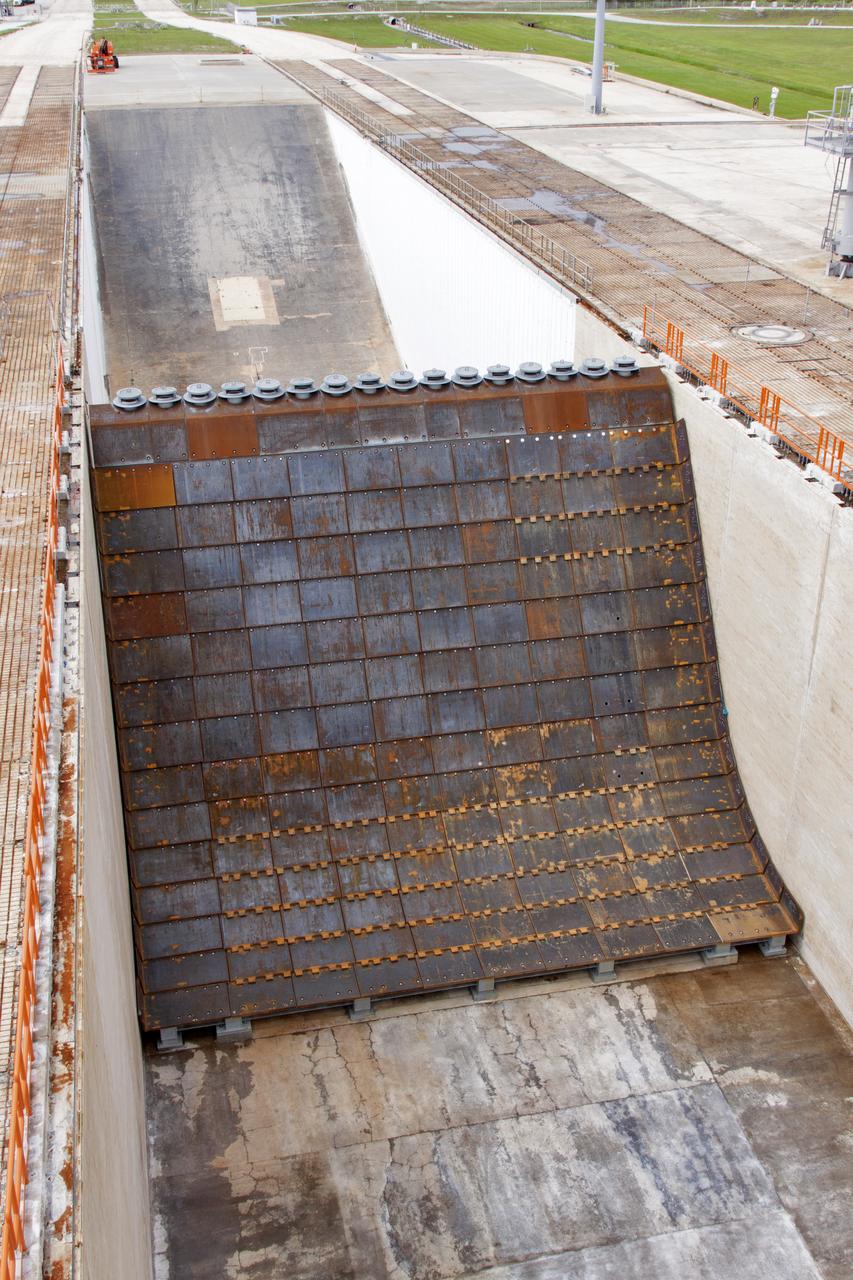
Construction is complete on the main flame deflector in the flame trench at Launch Complex 39B at NASA's Kennedy Space Center in Florida. The flame deflector will safely deflect the plume exhaust from NASA's Space Launch System rocket during launch. It will divert the rocket's exhaust, pressure and intense heat to the north at liftoff. The Exploration Ground Systems Program at Kennedy is refurbishing the pad to support the launch of the SLS rocket and Orion on Exploration Mission-1, and helping to transform the space center into a multi-user spaceport.
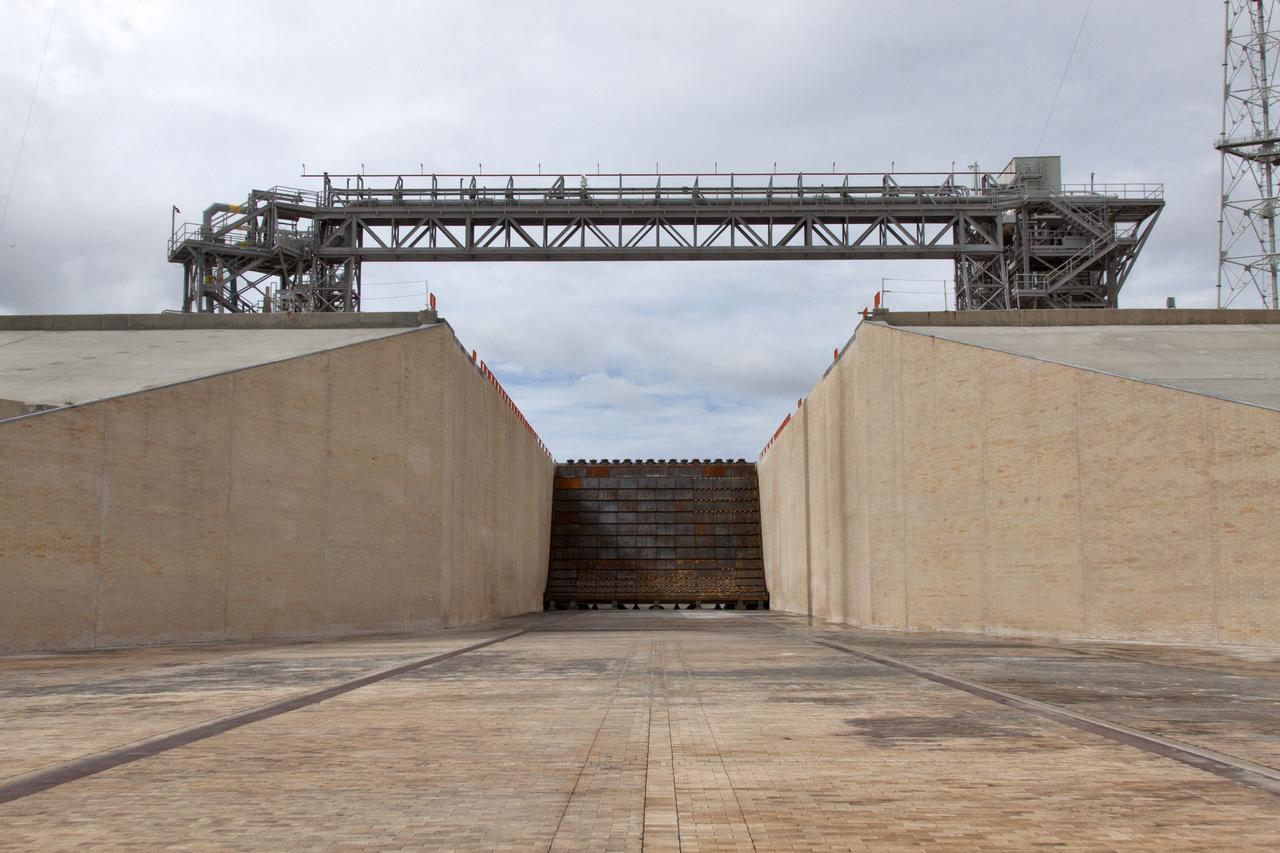
Construction is complete on the main flame deflector in the flame trench at Launch Complex 39B at NASA's Kennedy Space Center in Florida. The flame deflector will safely deflect the plume exhaust from NASA's Space Launch System rocket during launch. It will divert the rocket's exhaust, pressure and intense heat to the north at liftoff. The Exploration Ground Systems Program at Kennedy is refurbishing the pad to support the launch of the SLS rocket and Orion on Exploration Mission-1, and helping to transform the space center into a multi-user spaceport.
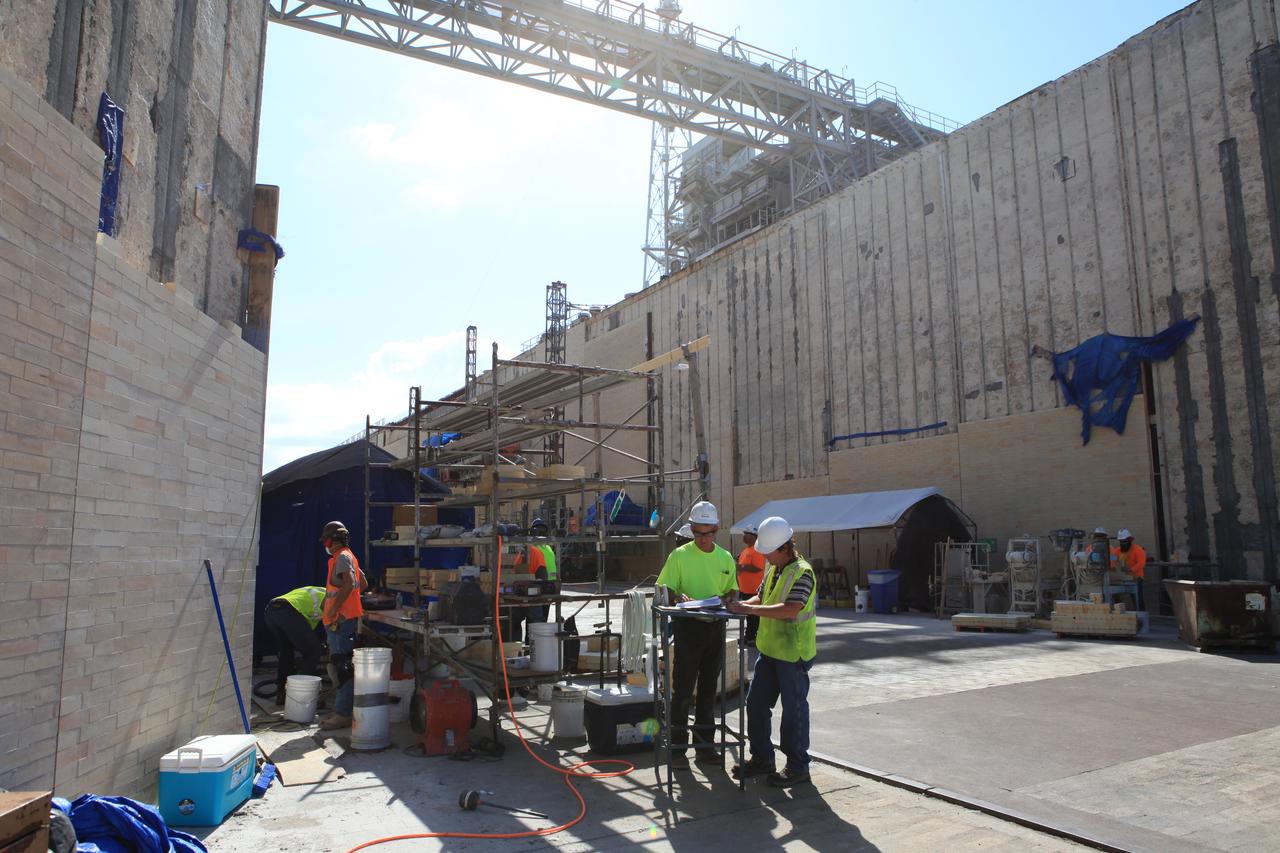
Progress continues on the new flame trench at Launch Pad 39B at NASA's Kennedy Space Center in Florida. Construction workers with J.P. Donovan of Rockledge, Florida, prepare new heat-resistant bricks for installation on the north side of the flame trench. The Pad B flame trench is being refurbished to support the launch of NASA’s Space Launch System rocket. The Ground Systems Development and Operations (GSDO) Program at Kennedy is helping transform the space center into a multi-user spaceport and prepare for Exploration Mission 1, deep space missions, and NASA's Journey to Mars. For more information about GSDO, visit: http://www.nasa.gov/groundsystems.
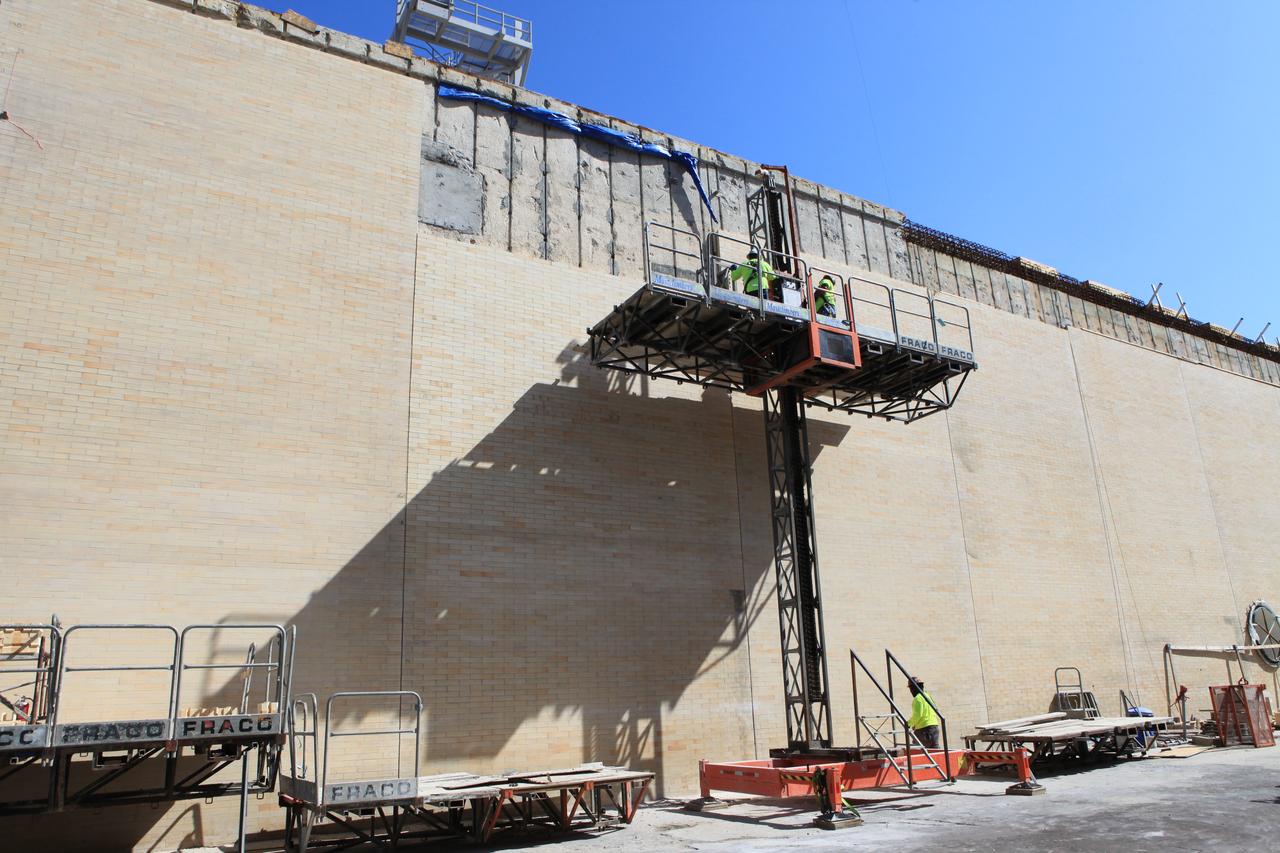
Progress continues on the new flame trench at Launch Pad 39B at NASA's Kennedy Space Center in Florida. Construction workers with J.P. Donovan of Rockledge, Florida, are on an elevated work stand to install new heat-resistant bricks on the north side of the flame trench. The Pad B flame trench is being refurbished to support the launch of NASA’s Space Launch System rocket. The Ground Systems Development and Operations (GSDO) Program at Kennedy is helping transform the space center into a multi-user spaceport and prepare for Exploration Mission 1, deep space missions, and NASA's Journey to Mars. For more information about GSDO, visit: http://www.nasa.gov/groundsystems.
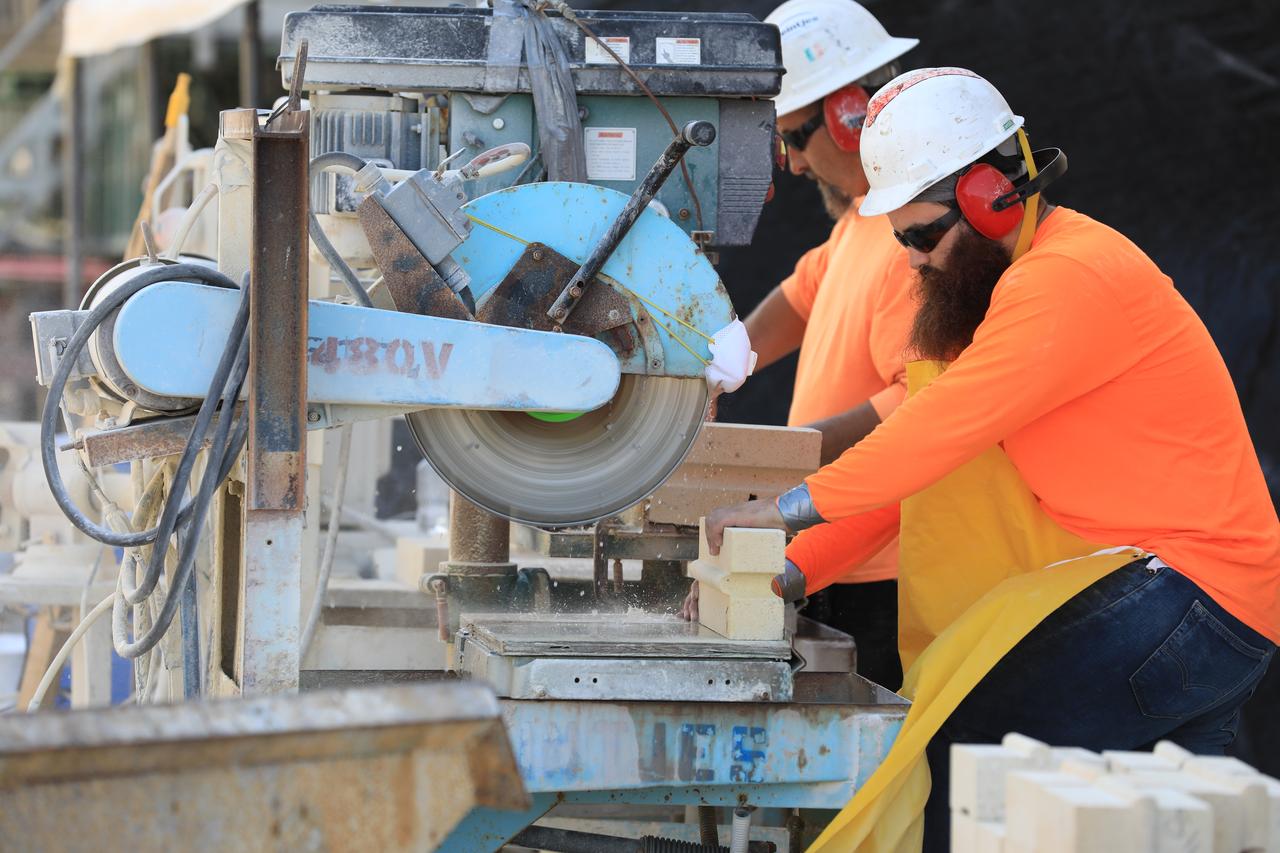
Construction workers with J.P. Donovan of Rockledge, Florida, cut new heat-resistant bricks to size for the concrete walls of the flame trench at Launch Pad 39B at NASA’s Kennedy Space Center in Florida. New heat-resistant bricks are being attached with epoxy mortar to the flame trench walls. The Pad B flame trench is being refurbished to support the launch of NASA’s Space Launch System rocket. The Ground Systems Development and Operations (GSDO) Program at Kennedy is helping transform the space center into a multi-user spaceport and prepare for Exploration Mission 1, deep space missions, and NASA's Journey to Mars. For more information about GSDO, visit: http://www.nasa.gov/groundsystems.
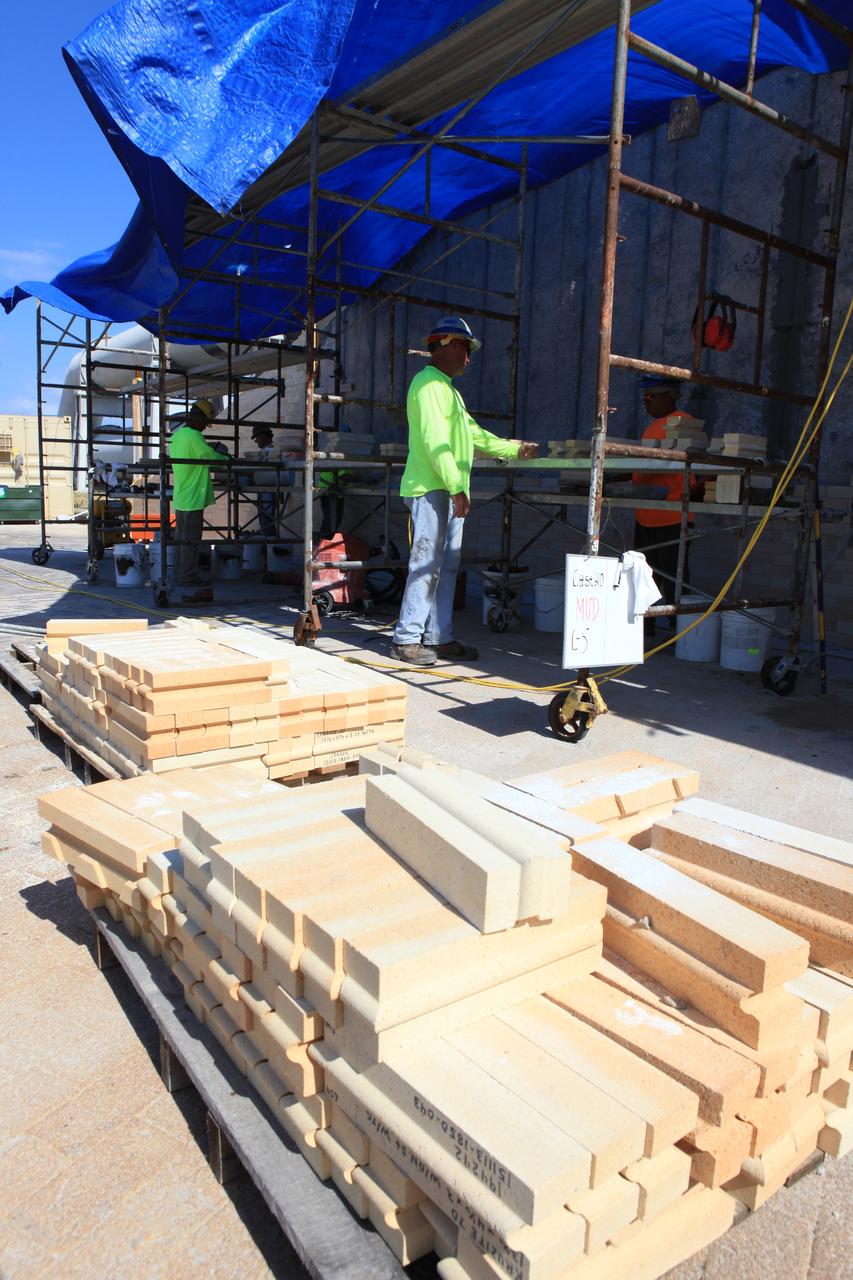
Progress continues on the new flame trench at Launch Pad 39B at NASA's Kennedy Space Center in Florida. Construction workers with J.P. Donovan of Rockledge, Florida, prepare new heat-resistant bricks for installation on the north side of the flame trench. The Pad B flame trench is being refurbished to support the launch of NASA’s Space Launch System rocket. The Ground Systems Development and Operations (GSDO) Program at Kennedy is helping transform the space center into a multi-user spaceport and prepare for Exploration Mission 1, deep space missions, and NASA's Journey to Mars. For more information about GSDO, visit: http://www.nasa.gov/groundsystems.
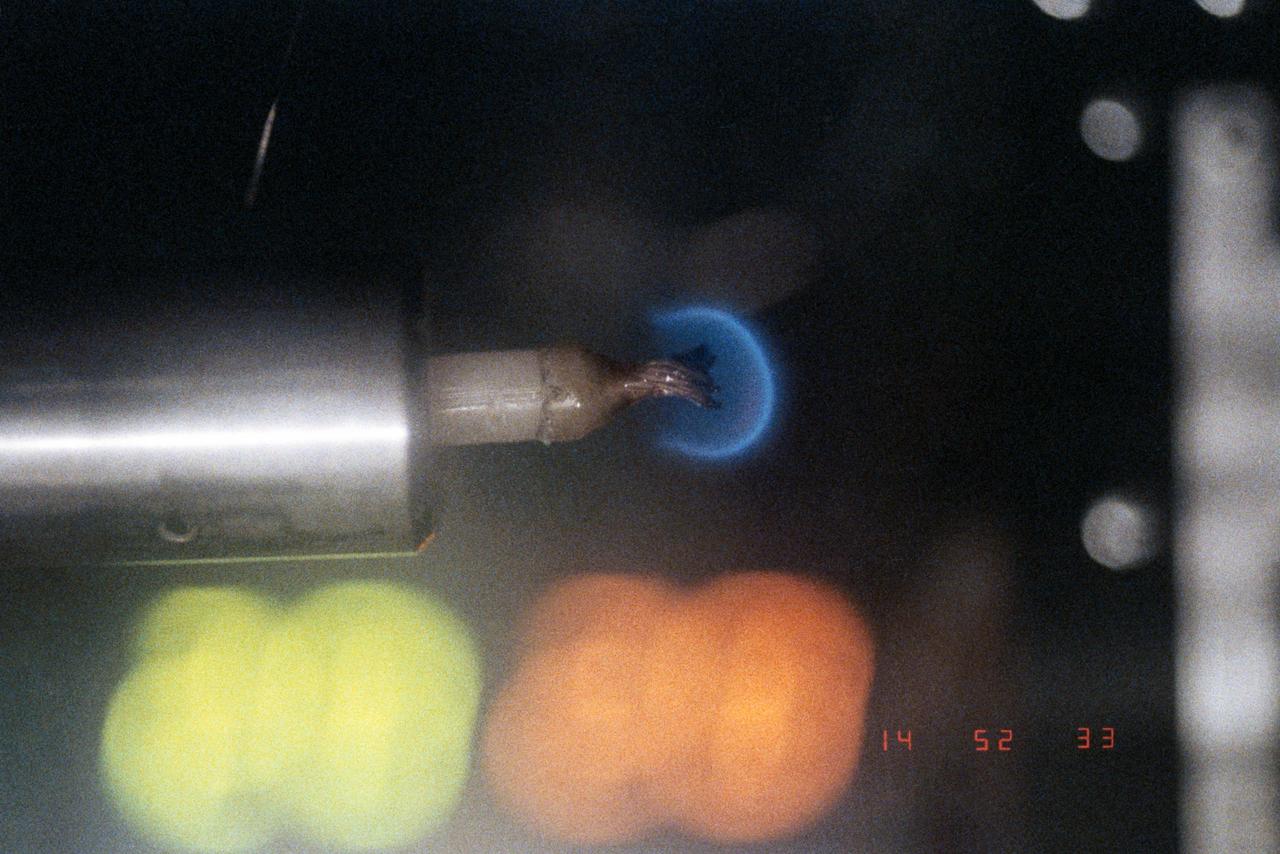
Closeup view inside glovebox showing a candle flame. The Candle Flames in Microgravity experiment is carried onboard Columbia to examine whether candle flames can be sustained in space; to study the interaction and physical properties of diffusion flames. In space, where buoyancy-driven convection is reduced, the role diffusion plays in sustaining candle flames can be isolated. Results have implications for other diffusion flame studies. Diffusion flames are the most common type of flame on Earth.
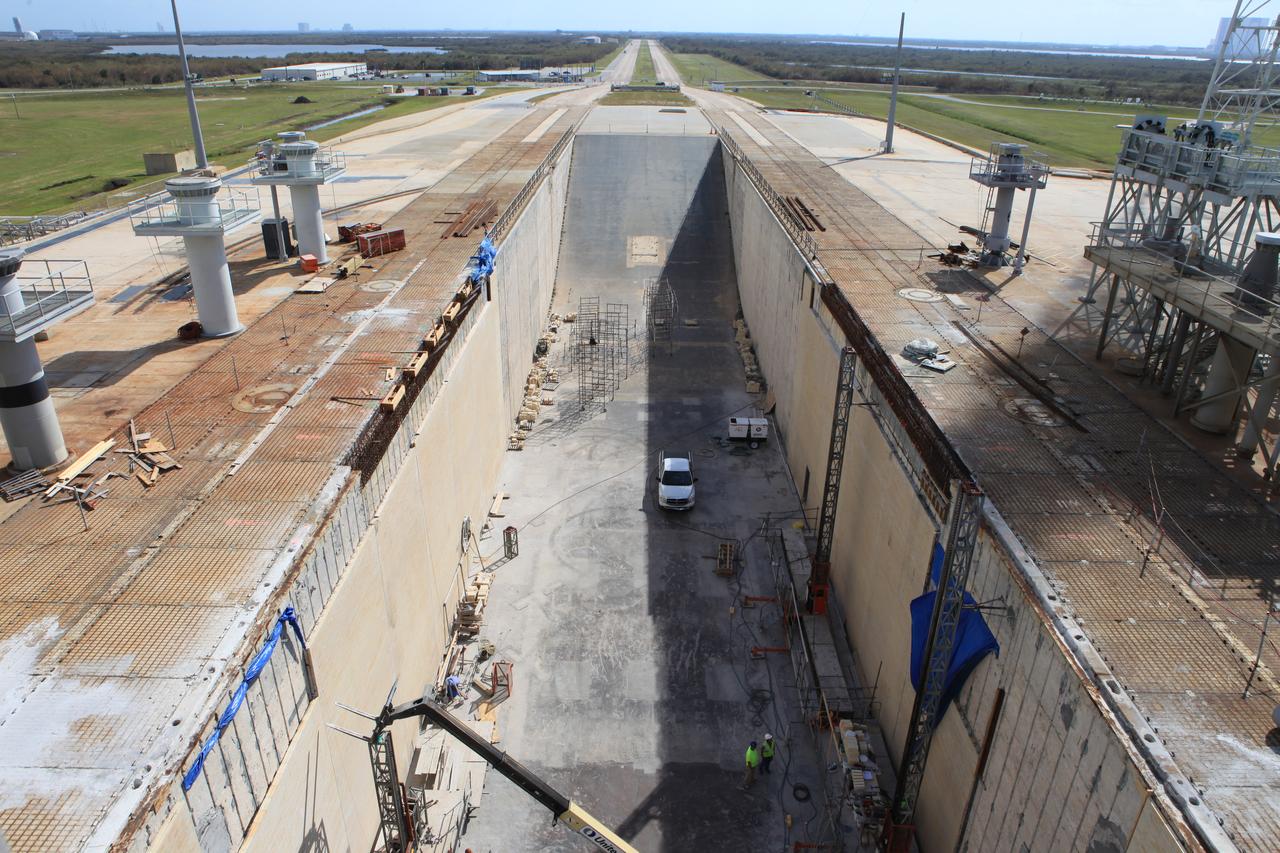
Progress on the new brick walls of the north side of the flame trench at Launch Pad 39B is seen in a view from the top of the pad at NASA’s Kennedy Space Center in Florida. Construction workers with J.P. Donovan of Rockledge, Florida, continue to install new heat-resistant bricks on the concrete walls. The Pad B flame trench is being refurbished to support the launch of NASA’s Space Launch System rocket. The Ground Systems Development and Operations (GSDO) Program at Kennedy is helping transform the space center into a multi-user spaceport and prepare for Exploration Mission 1, deep-space missions, and the journey to Mars. For more information about GSDO, visit: http://www.nasa.gov/groundsystems.
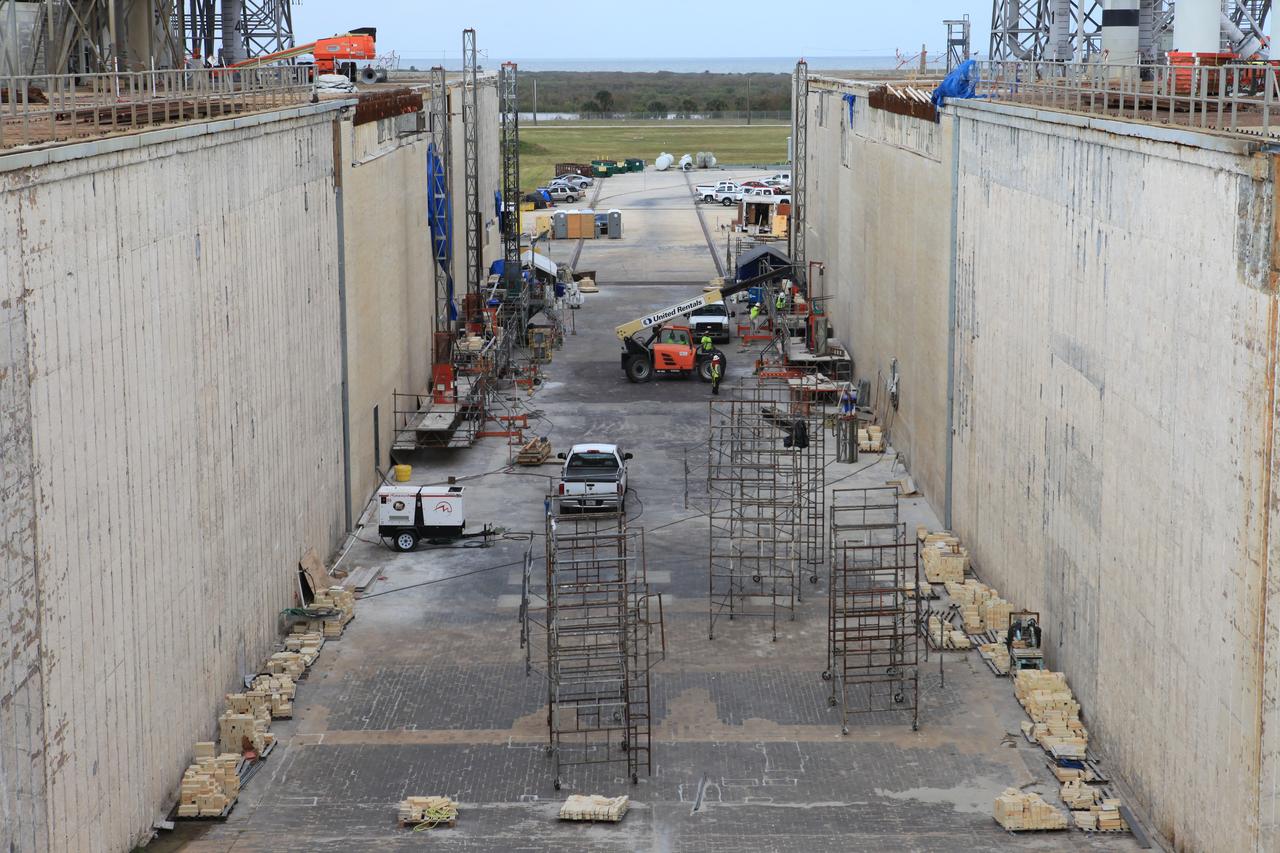
Progress on the new brick walls of the north side of the flame trench at Launch Pad 39B is seen in a view from the top of the pad at NASA’s Kennedy Space Center in Florida. Construction workers with J.P. Donovan of Rockledge, Florida, continue to install new heat-resistant bricks on the concrete walls. The Pad B flame trench is being refurbished to support the launch of NASA’s Space Launch System rocket. The Ground Systems Development and Operations (GSDO) Program at Kennedy is helping transform the space center into a multi-user spaceport and prepare for Exploration Mission 1, deep-space missions, and the journey to Mars. For more information about GSDO, visit: http://www.nasa.gov/groundsystems.
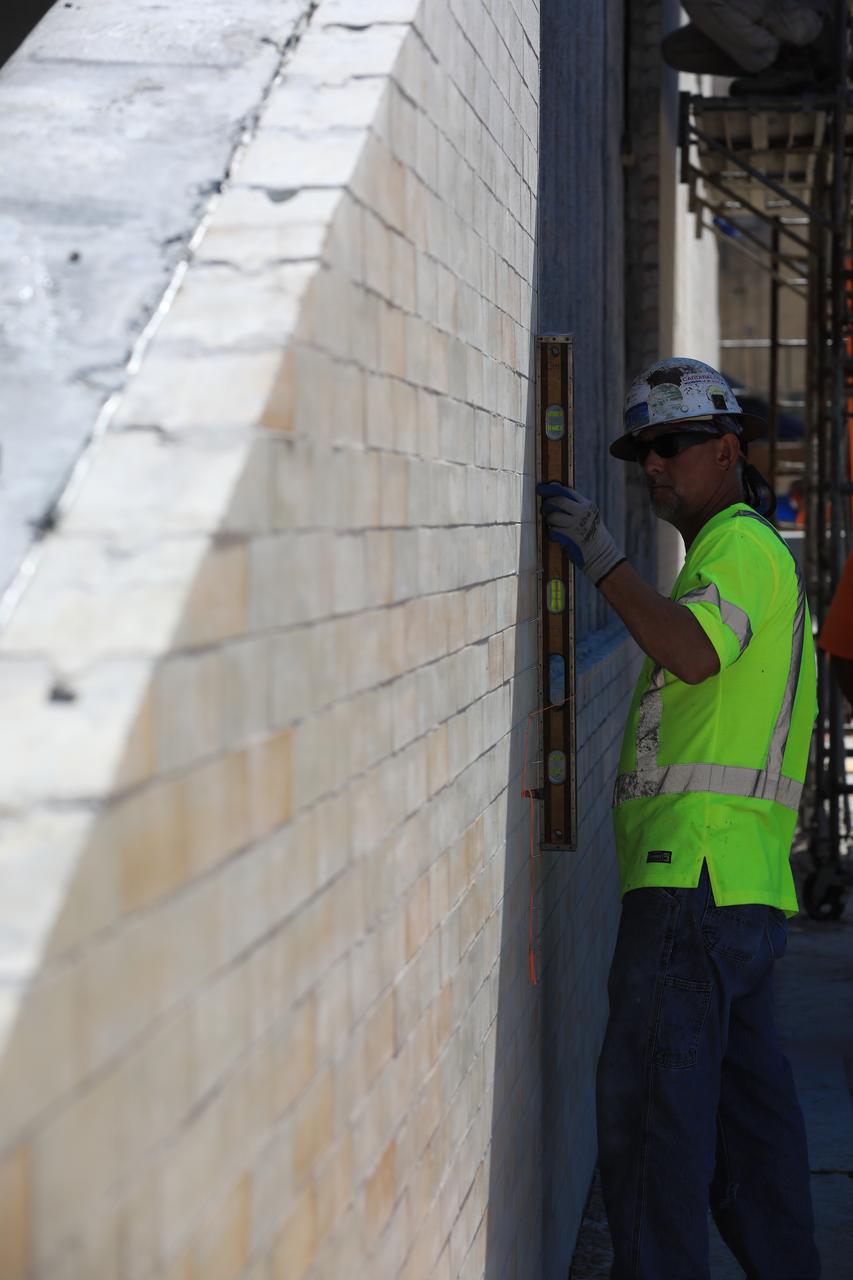
A construction worker with J.P. Donovan of Rockledge, Florida, checks to make sure new heat-resistant bricks attached to the north side of the flame trench are level at Launch Pad 39B at NASA’s Kennedy Space Center in Florida. The Pad B flame trench is being refurbished to support the launch of NASA’s Space Launch System rocket. The Ground Systems Development and Operations (GSDO) Program at Kennedy is helping transform the space center into a multi-user spaceport and prepare for Exploration Mission 1, deep space missions, and NASA's Journey to Mars. For more information about GSDO, visit: http://www.nasa.gov/groundsystems.
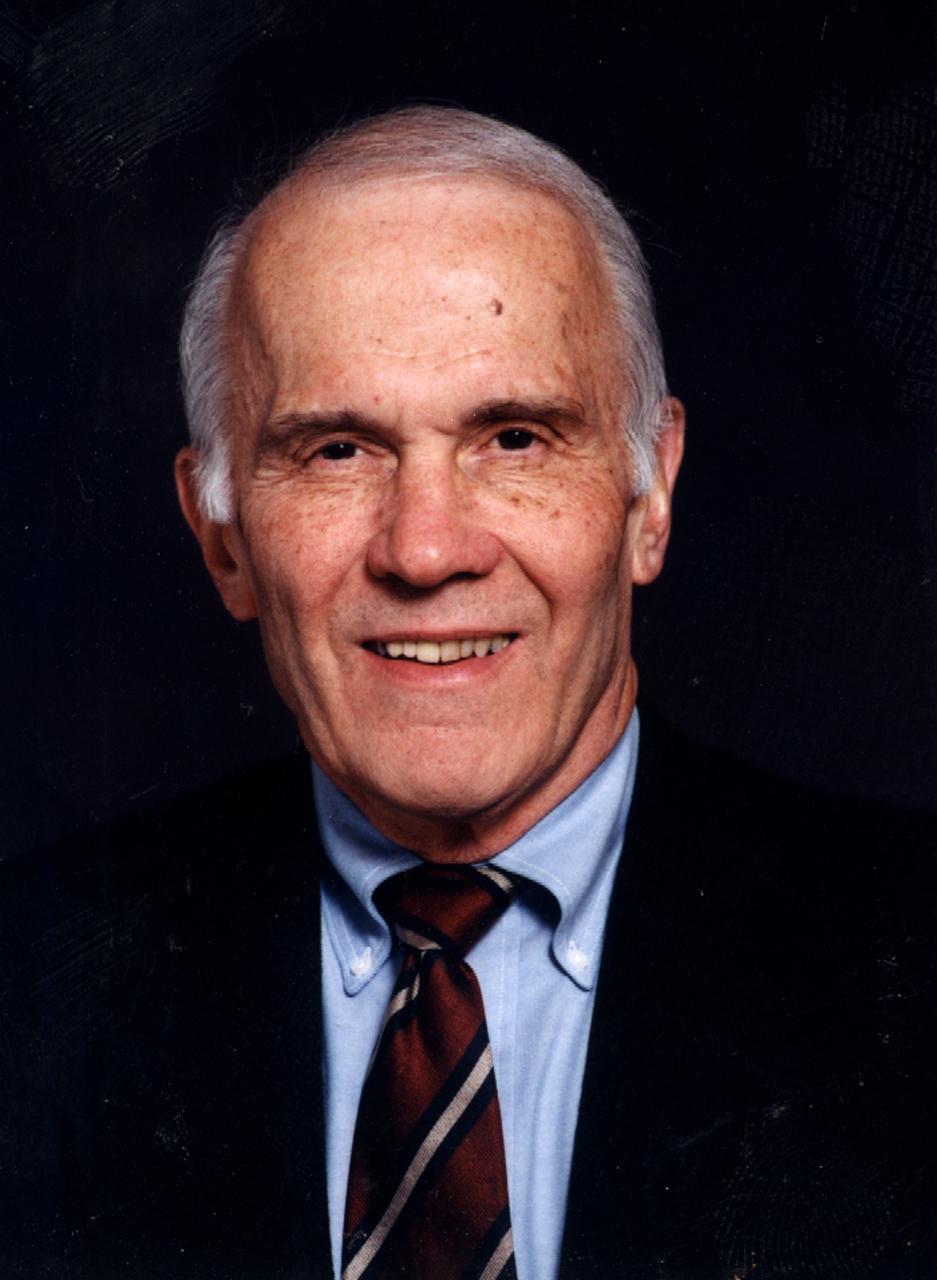
Gerard M. Faeth, University of Michigan, principal investigator in combustion science experiments, including Flow/Soot-Formation in Nonbuoyant Laminar Diffusion Flames, investigation of Laminar Jet Diffusion Flames in Microgravity: A Paradigm for Soot Processes in Turbulent Flames, and Soot Processes in Freely-Propagating Laminar Premixed Flames.
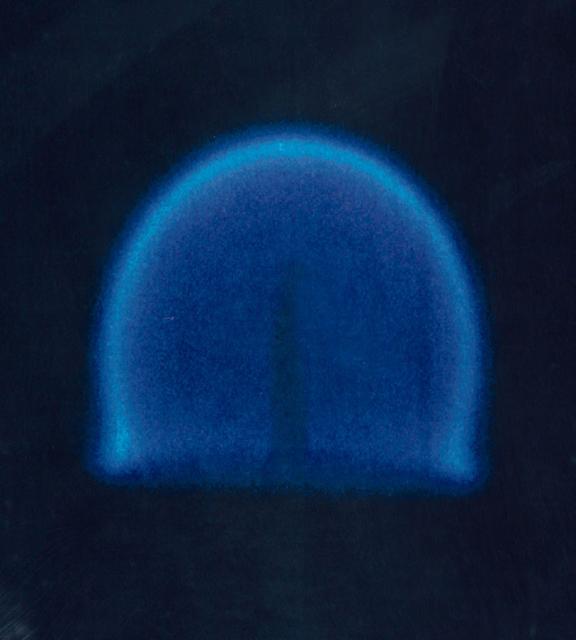
This photograph from CFM is a candle flame burning over time in microgravity, it shows that the candle flame continues to grow and exhibits less soot.

The Flame Nebula sits on the eastern hip of Orion the Hunter, a constellation most easily visible in the northern hemisphere during winter evenings in this view from NASA WISE Telescope.

This mosaic image taken by NASA Wide-field Infrared Survey Explorer, features three nebulae that are part of the giant Orion Molecular Cloud. Included in this view are the Flame nebula, the Horsehead nebula and NGC 2023.

This photograph from CFM shows a candle flame burning over time in microgravity, it shows pieces of wax or soot moving through the flame about 25 seconds after ignition.
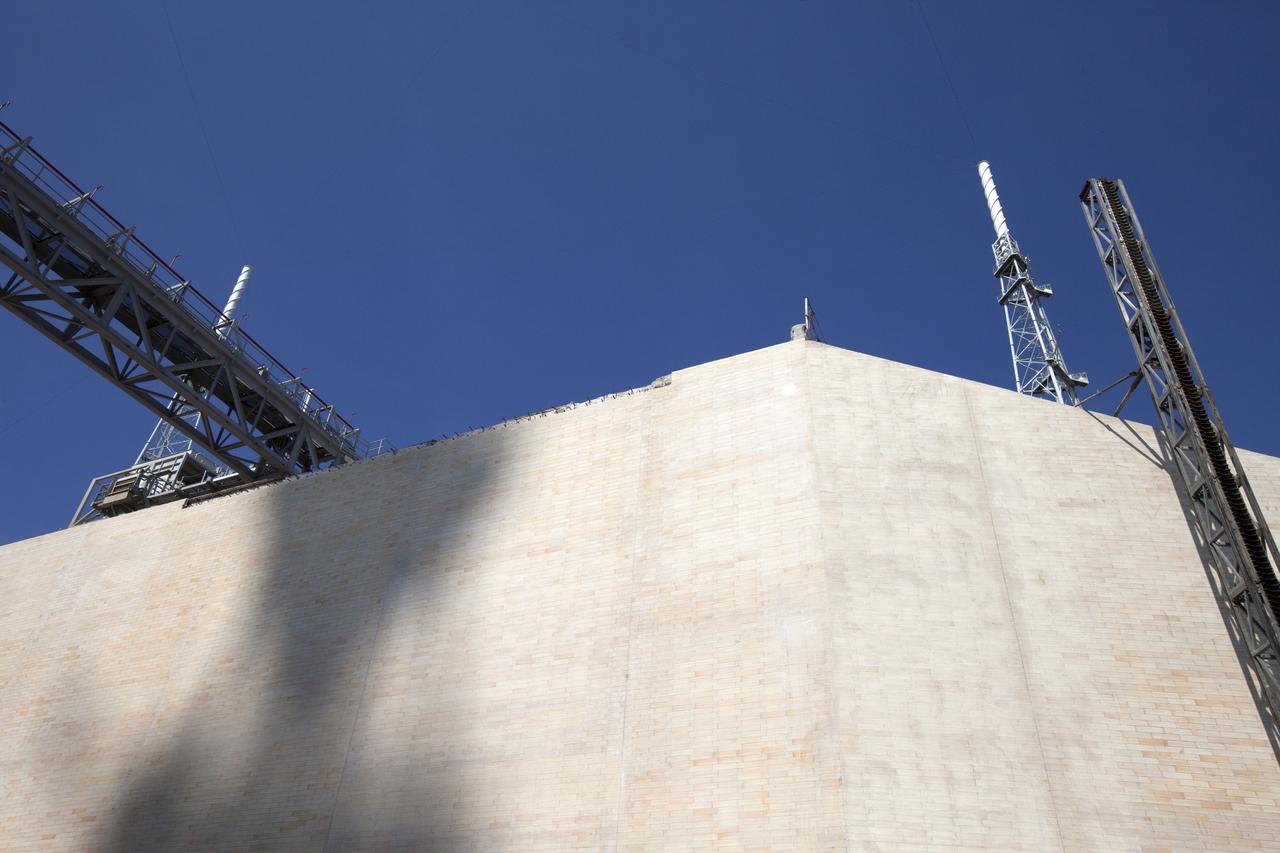
A view looking up from the north side of the flame trench beneath the pad at Launch Complex 39B at NASA's Kennedy Space Center in Florida. The walls of the flame trench are being upgraded to withstand the intense heat and fire at launch of NASA's Space Launch System rocket with Orion atop. About 96,000 heat-resistant bricks, in three different sizes, were secured to the walls using bonding mortar in combination with adhesive anchors. The Ground Systems Development and Operations Program is overseeing upgrades and modifications to Pad 39B to support the launch of the SLS and Orion spacecraft for Exploration Mission-1 and NASA’s journey to Mars.
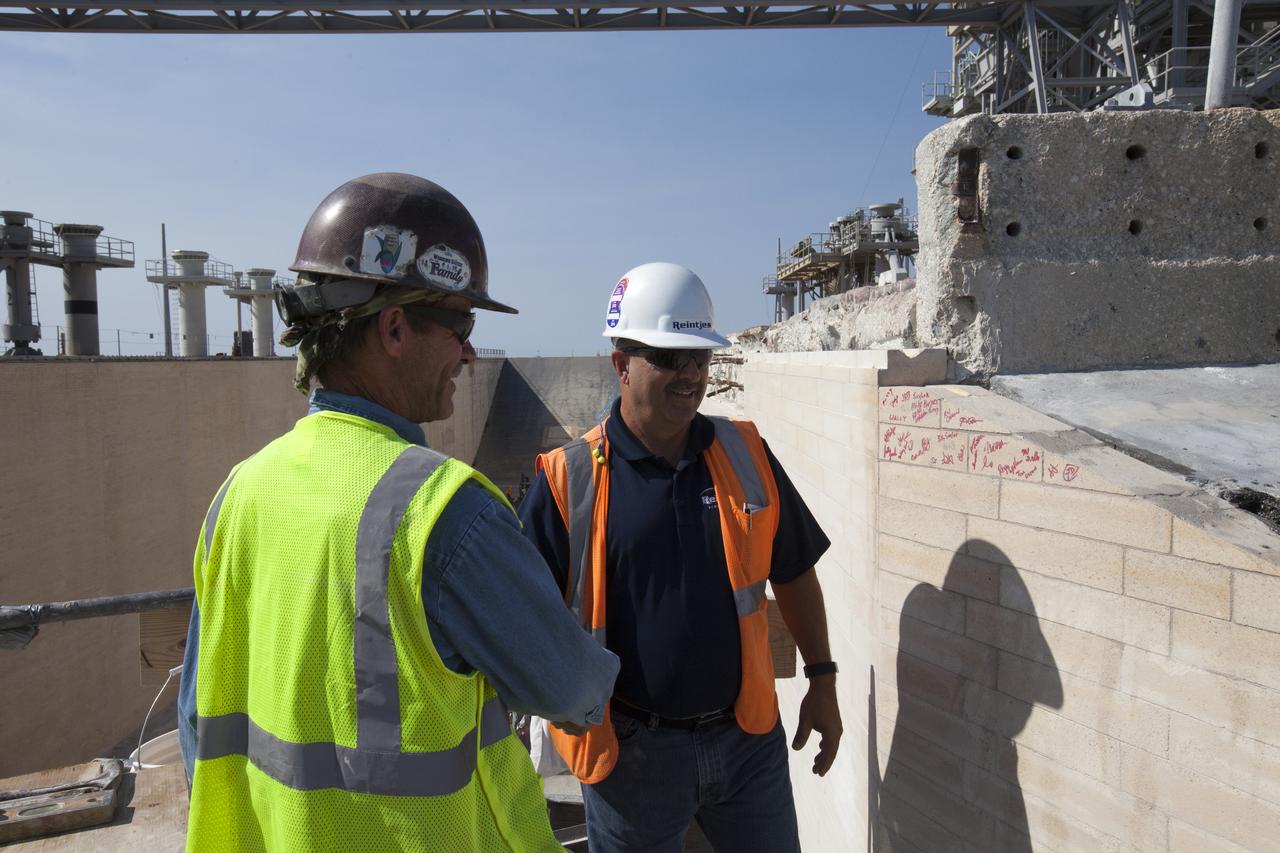
Construction workers sign the final bricks after they were installed on the north side of the flame trench at Launch Complex 39B at NASA’s Kennedy Space Center in Florida. The walls of the flame trench are being upgraded to withstand the intense heat and fire at launch of NASA's Space Launch System rocket with Orion atop. About 96,000 heat-resistant bricks, in three different sizes, were secured to the walls using bonding mortar in combination with adhesive anchors. The Ground Systems Development and Operations Program is overseeing upgrades and modifications to Pad 39B to support the launch of the SLS and Orion spacecraft for Exploration Mission-1 and NASA’s journey to Mars.
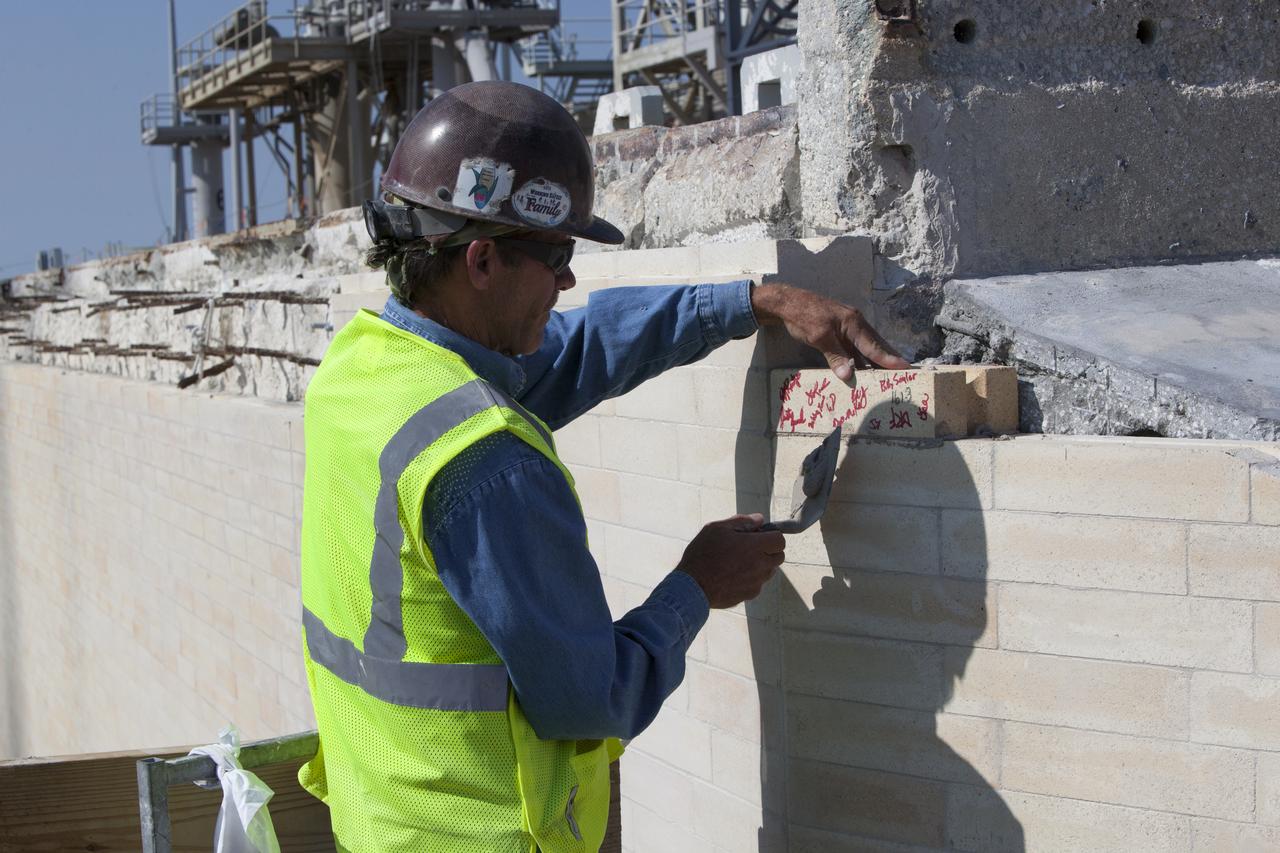
A construction worker installs one of the final bricks on the north side of the flame trench at Launch Complex 39B at NASA's Kennedy Space Center in Florida. The walls of the flame trench are being upgraded to withstand the intense heat and fire at launch of NASA's Space Launch System rocket with Orion atop. About 96,000 heat-resistant bricks, in three different sizes, were secured to the walls using bonding mortar in combination with adhesive anchors. The Ground Systems Development and Operations Program is overseeing upgrades and modifications to Pad 39B to support the launch of the SLS and Orion spacecraft for Exploration Mission-1 and NASA’s journey to Mars.
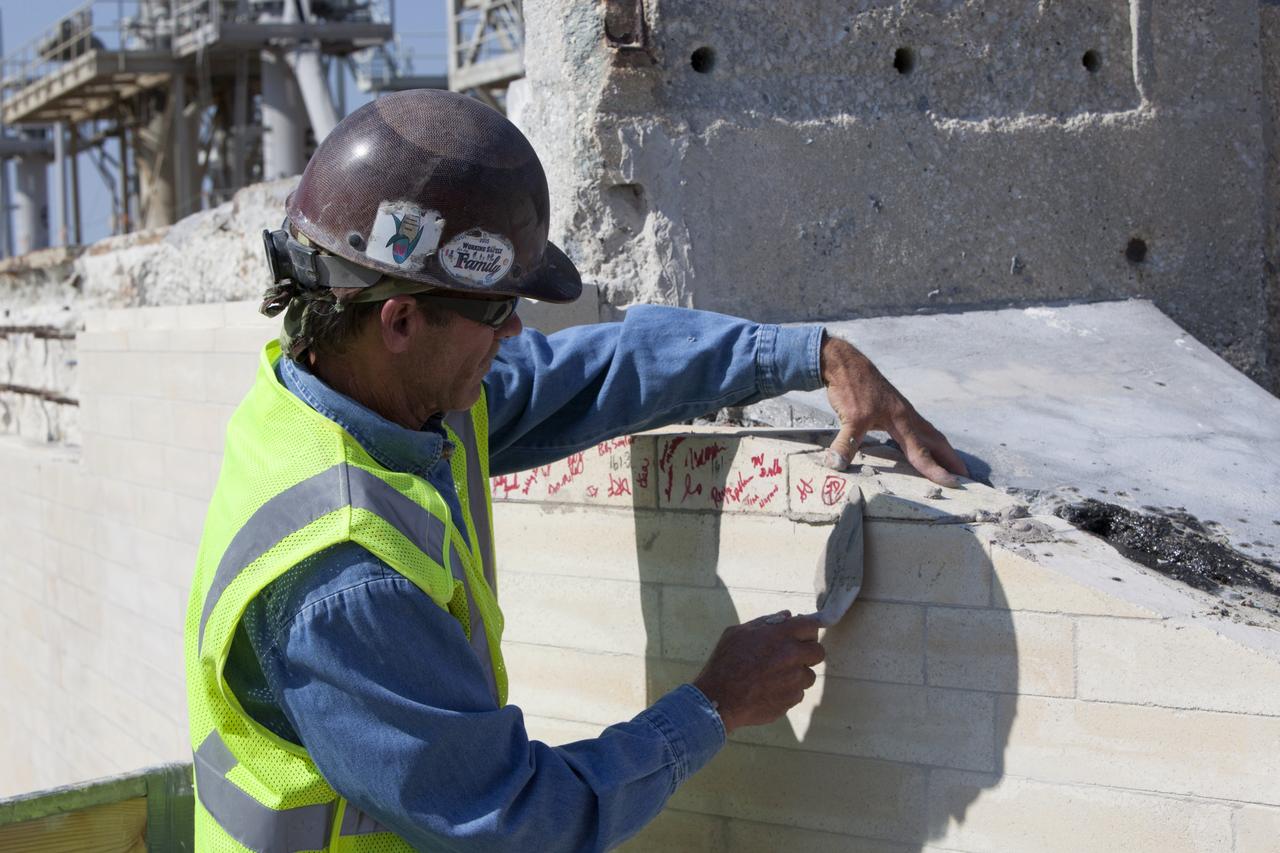
A construction worker installs the final brick on the north side of the flame trench at Launch Complex 39B at NASA's Kennedy Space Center in Florida. The walls of the flame trench are being upgraded to withstand the intense heat and fire at launch of NASA's Space Launch System rocket with Orion atop. About 96,000 heat-resistant bricks, in three different sizes, were secured to the walls using bonding mortar in combination with adhesive anchors. The Ground Systems Development and Operations Program is overseeing upgrades and modifications to Pad 39B to support the launch of the SLS and Orion spacecraft for Exploration Mission-1 and NASA’s journey to Mars.

The final brick was installed on the north side of the flame trench at Launch Complex 39B at NASA’s Kennedy Space Center in Florida. The walls of the flame trench are being upgraded to withstand the intense heat and fire at launch of NASA's Space Launch System rocket with Orion atop. About 96,000 heat-resistant bricks, in three different sizes, were secured to the walls using bonding mortar in combination with adhesive anchors. The Ground Systems Development and Operations Program is overseeing upgrades and modifications to Pad 39B to support the launch of the SLS and Orion spacecraft for Exploration Mission-1 and NASA’s journey to Mars.
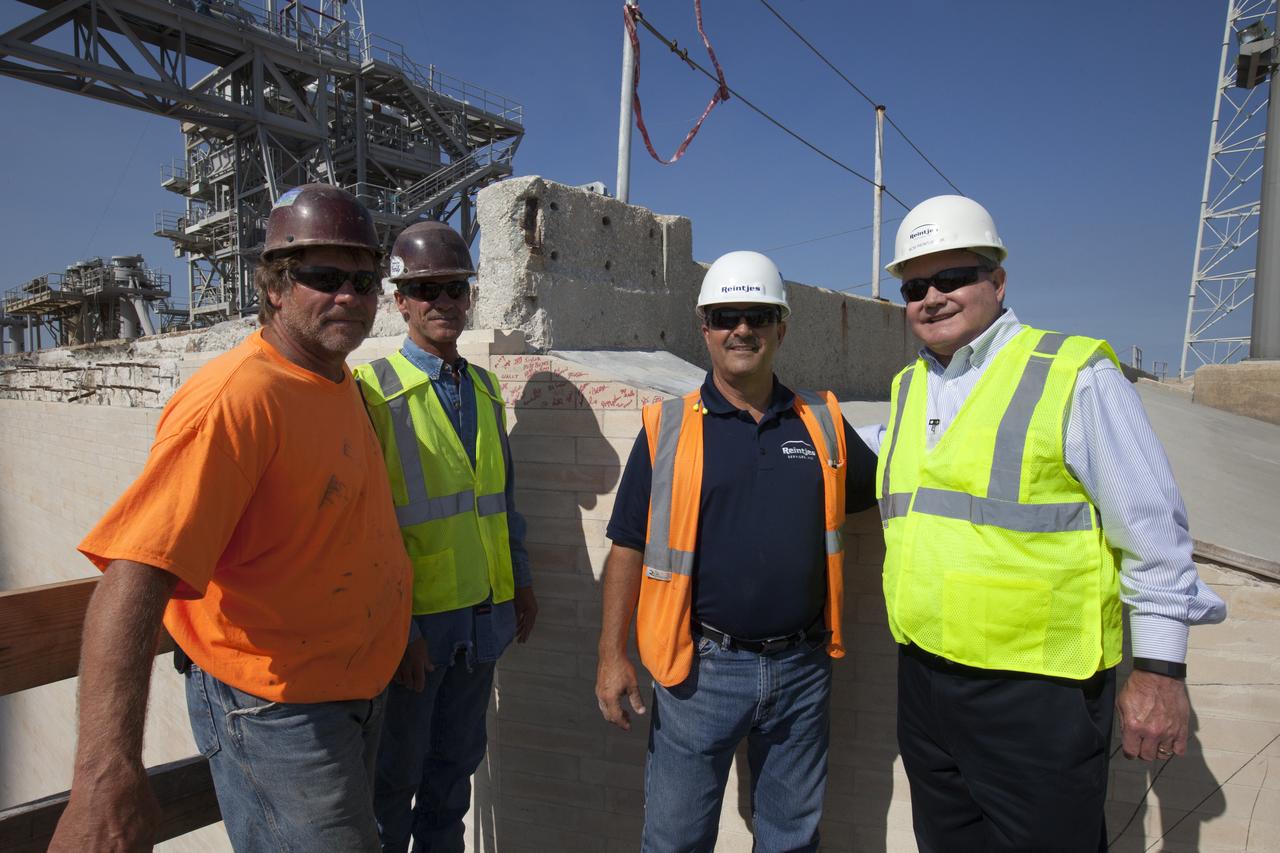
Construction workers sign the final bricks after they were installed on the north side of the flame trench at Launch Complex 39B at NASA’s Kennedy Space Center in Florida. The walls of the flame trench are being upgraded to withstand the intense heat and fire at launch of NASA's Space Launch System rocket with Orion atop. About 96,000 heat-resistant bricks, in three different sizes, were secured to the walls using bonding mortar in combination with adhesive anchors. The Ground Systems Development and Operations Program is overseeing upgrades and modifications to Pad 39B to support the launch of the SLS and Orion spacecraft for Exploration Mission-1 and NASA’s journey to Mars.
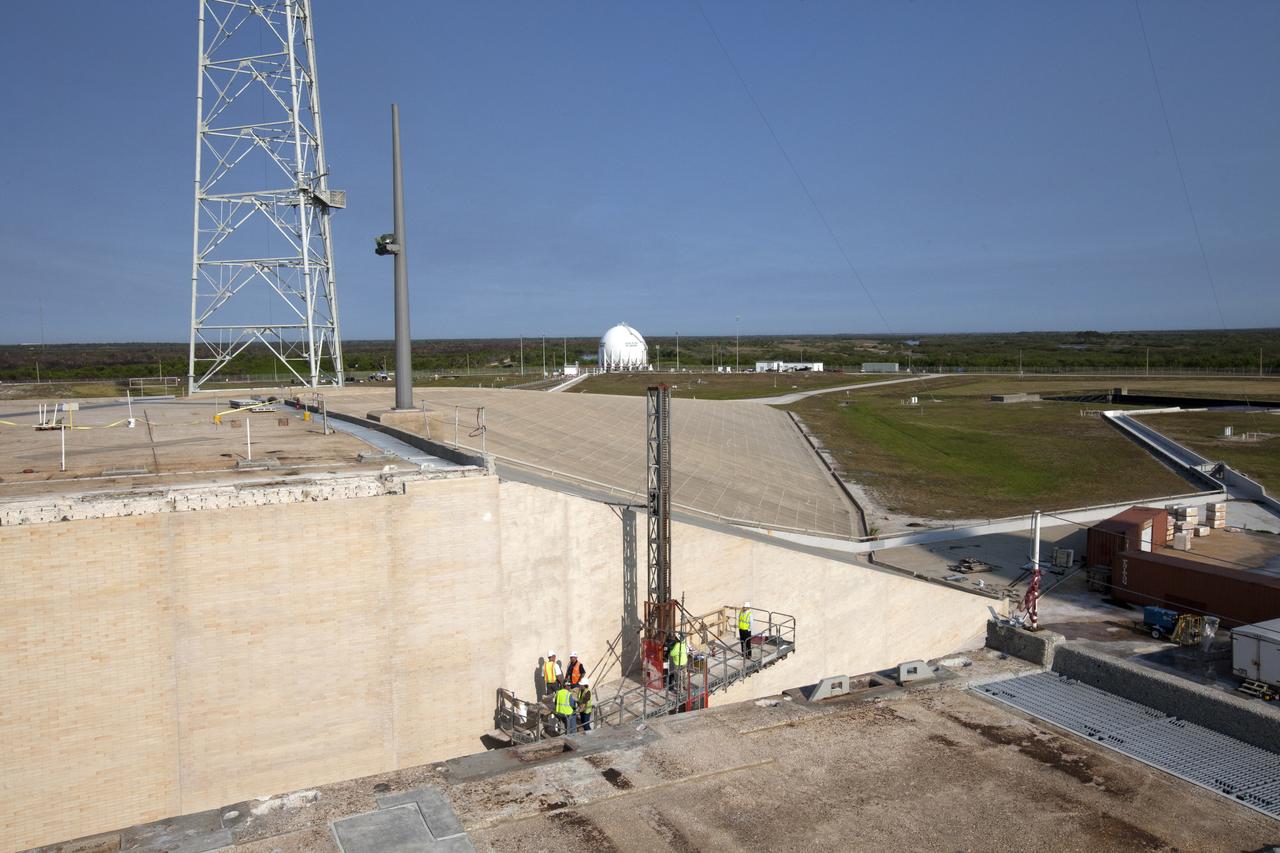
Preparations are underway to install the final brick on the north side of the flame trench at Launch Complex 39B at NASA's Kennedy Space Center in Florida. The walls of the flame trench are being upgraded to withstand the intense heat and fire at launch of NASA's Space Launch System rocket with Orion atop. About 96,000 heat-resistant bricks, in three different sizes, were secured to the walls using bonding mortar in combination with adhesive anchors. The Ground Systems Development and Operations Program is overseeing upgrades and modifications to Pad 39B to support the launch of the SLS and Orion spacecraft for Exploration Mission-1 and NASA’s journey to Mars.
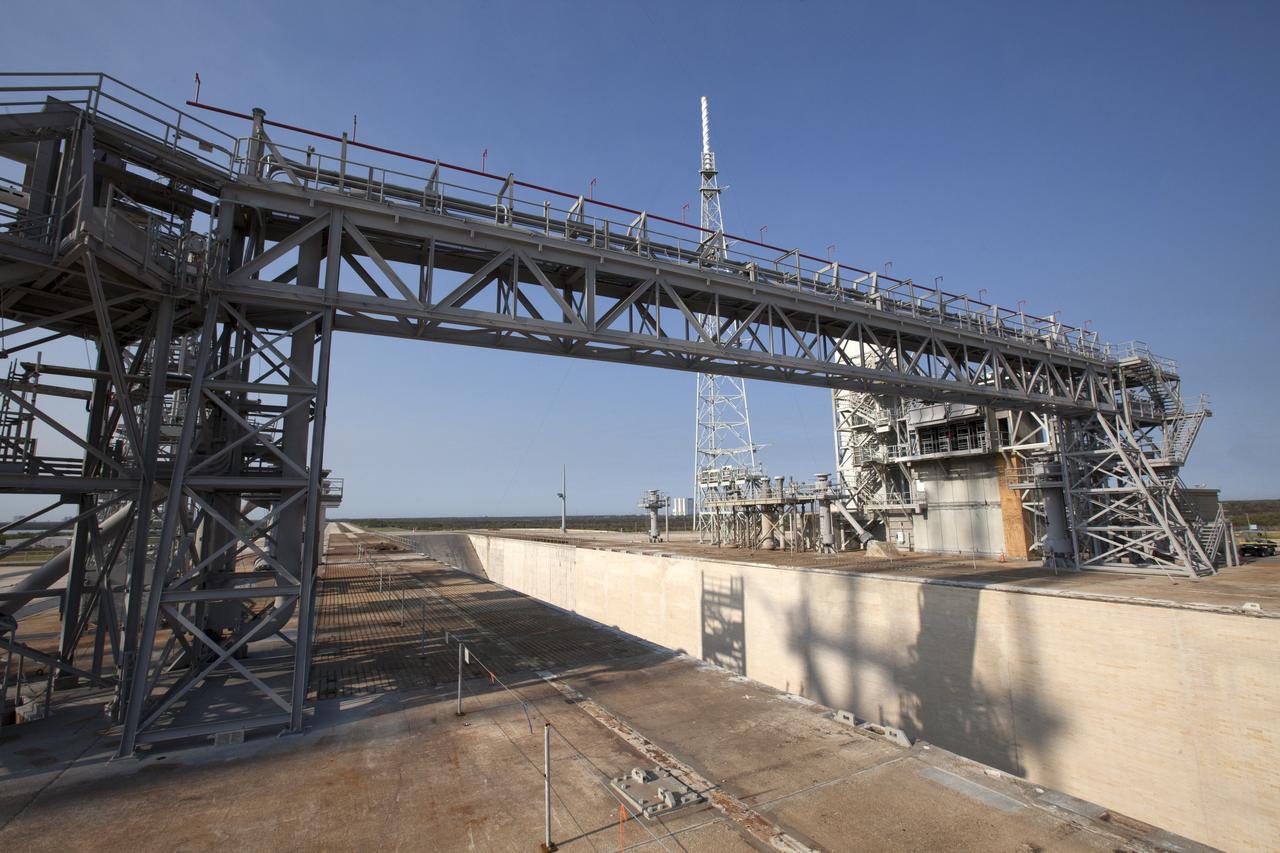
A view of the north side of the flame trench at Launch Complex 39B at NASA's Kennedy Space Center in Florida. The final brick was installed in the flame trench, completing about a year's worth of work to upgrade the walls to withstand the intense heat and fire at launch of NASA's Space Launch System rocket with Orion atop. About 96,000 heat-resistant bricks, in three different sizes, were secured to the walls using bonding mortar in combination with adhesive anchors. The Ground Systems Development and Operations Program is overseeing upgrades and modifications to Pad 39B to support the launch of the SLS and Orion spacecraft for Exploration Mission-1 and NASA’s journey to Mars.
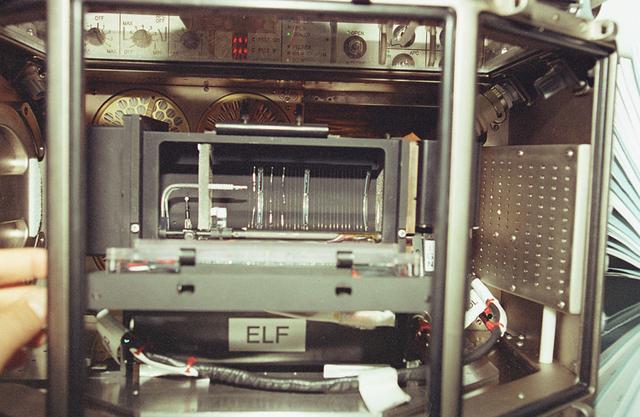
The goal of the ELF investigation is to improve our fundamental understanding of the effects of the flow environment on flame stability. The flame's stability refers to the position of its base and ultimately its continued existence. Combustion research focuses on understanding the important hidden processes of ignitions, flame spreading, and flame extinction. Understanding these processes will directly affect the efficiency of combustion operations in converting chemical energy to heat and will create a more balanced ecology and healthy environment by reducing pollutants emitted during combustion.
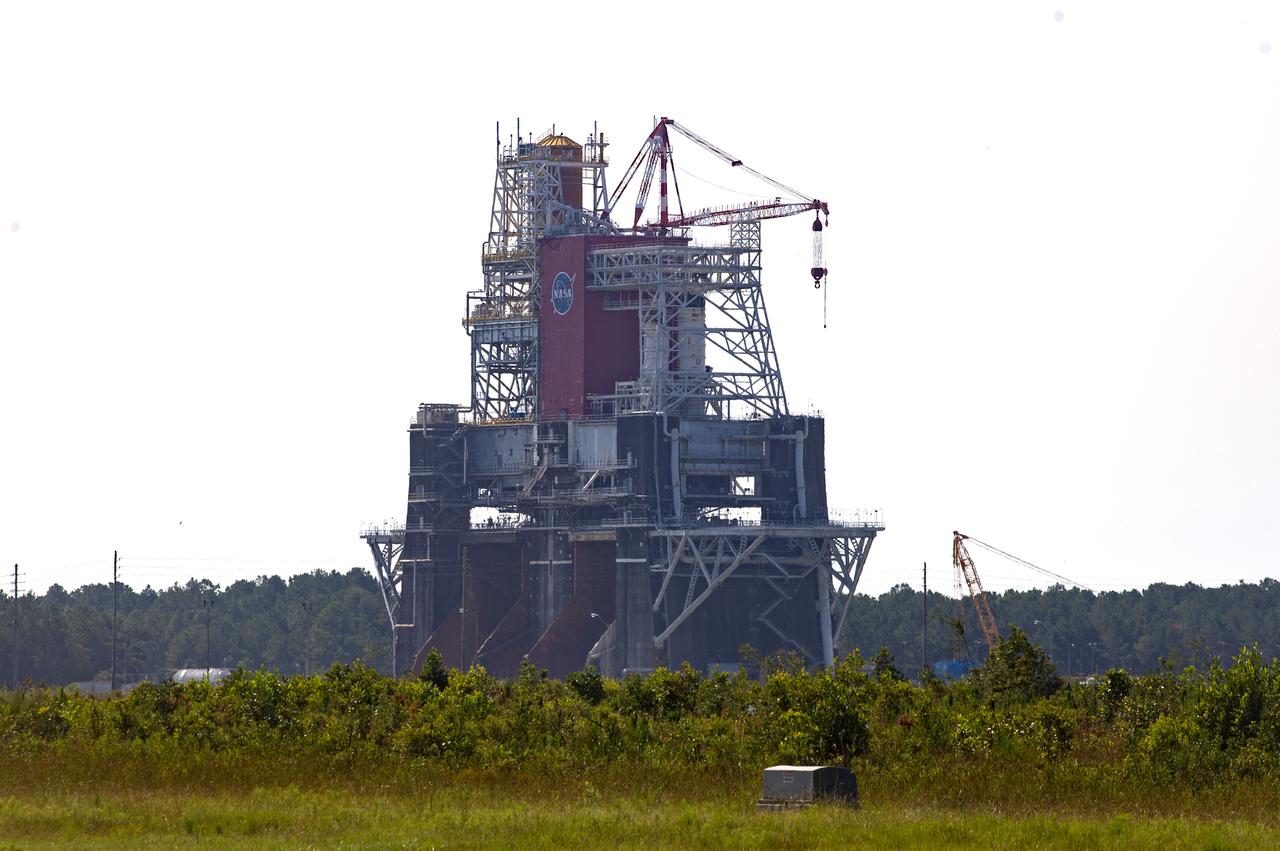
A photo from the north (flame trench) side of the B-2 Test Stand at NASA’s Stennis Space Center shows the first flight core stage for NASA’s new Space Launch System (SLS) rocket installed for Green Run testing. The SLS core stage was transported to Stennis in January to begin Green Run testing prior to its use on the Artemis I mission. NASA is building SLS to return humans, including the first woman, to the Moon as part of the Artemis program and to prepare for eventual missions to Mars. At Stennis, the SLS core stage will undergo a series of tests on its integrated systems, culminating with a hot fire of its four RS-25 engines, just as during an actual launch.
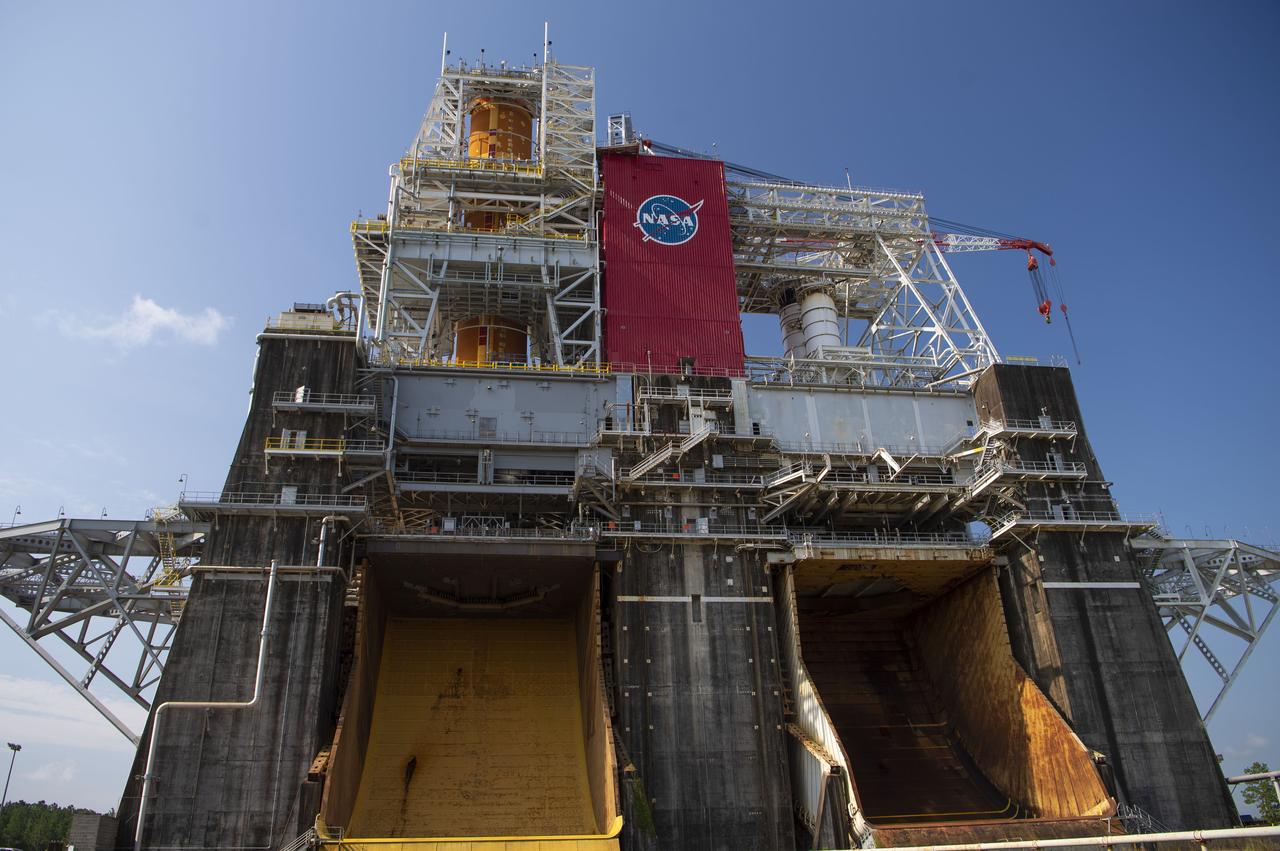
A photo from the north (flame trench) side of the B-2 Test Stand at NASA’s Stennis Space Center shows the first flight core stage for NASA’s new Space Launch System (SLS) rocket installed for Green Run testing. The SLS core stage was transported to Stennis in January to begin Green Run testing prior to its use on the Artemis I mission. NASA is building SLS to return humans, including the first woman, to the Moon as part of the Artemis program and to prepare for eventual missions to Mars. At Stennis, the SLS core stage will undergo a series of tests on its integrated systems, culminating with a hot fire of its four RS-25 engines, just as during an actual launch.
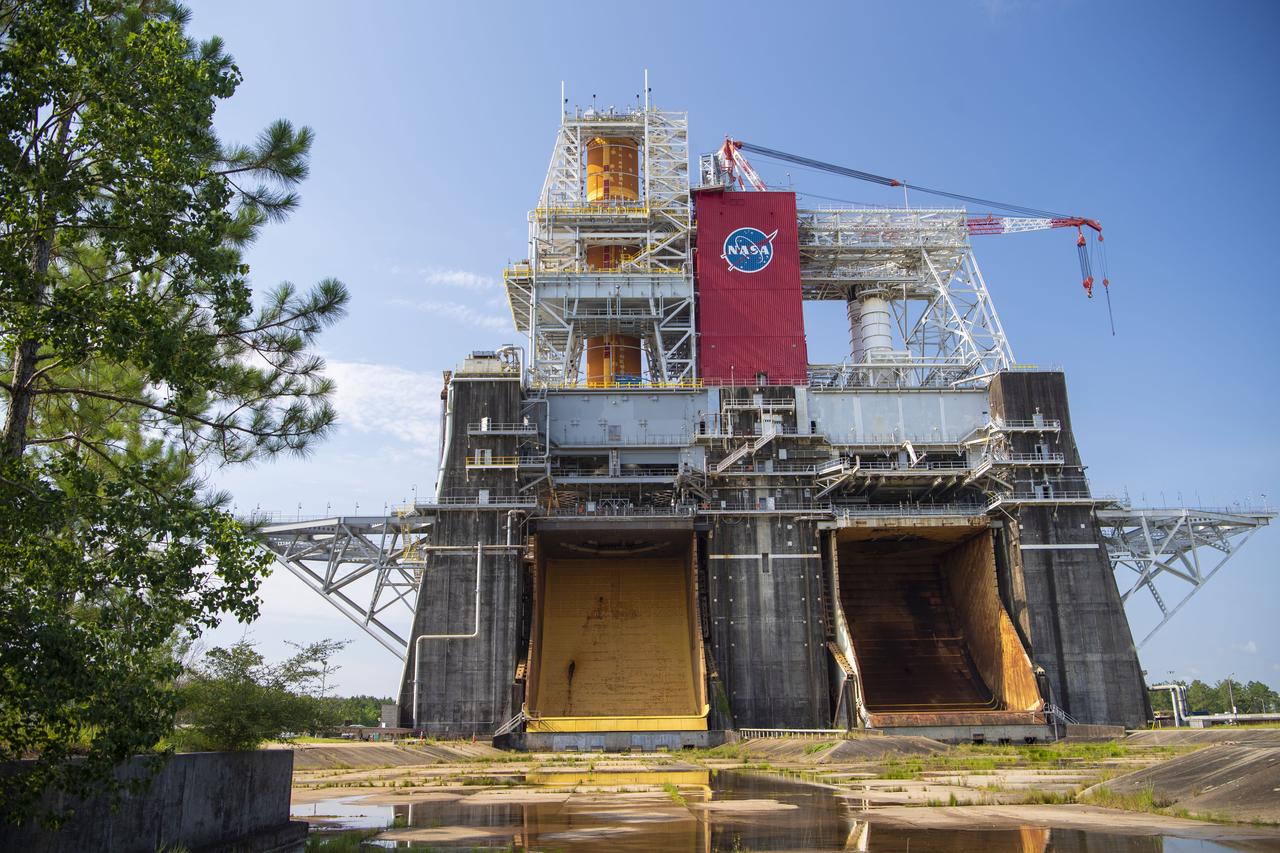
A photo from the north (flame trench) side of the B-2 Test Stand at NASA’s Stennis Space Center shows the first flight core stage for NASA’s new Space Launch System (SLS) rocket installed for Green Run testing. The SLS core stage was transported to Stennis in January to begin Green Run testing prior to its use on the Artemis I mission. NASA is building SLS to return humans, including the first woman, to the Moon as part of the Artemis program and to prepare for eventual missions to Mars. At Stennis, the SLS core stage will undergo a series of tests on its integrated systems, culminating with a hot fire of its four RS-25 engines, just as during an actual launch.
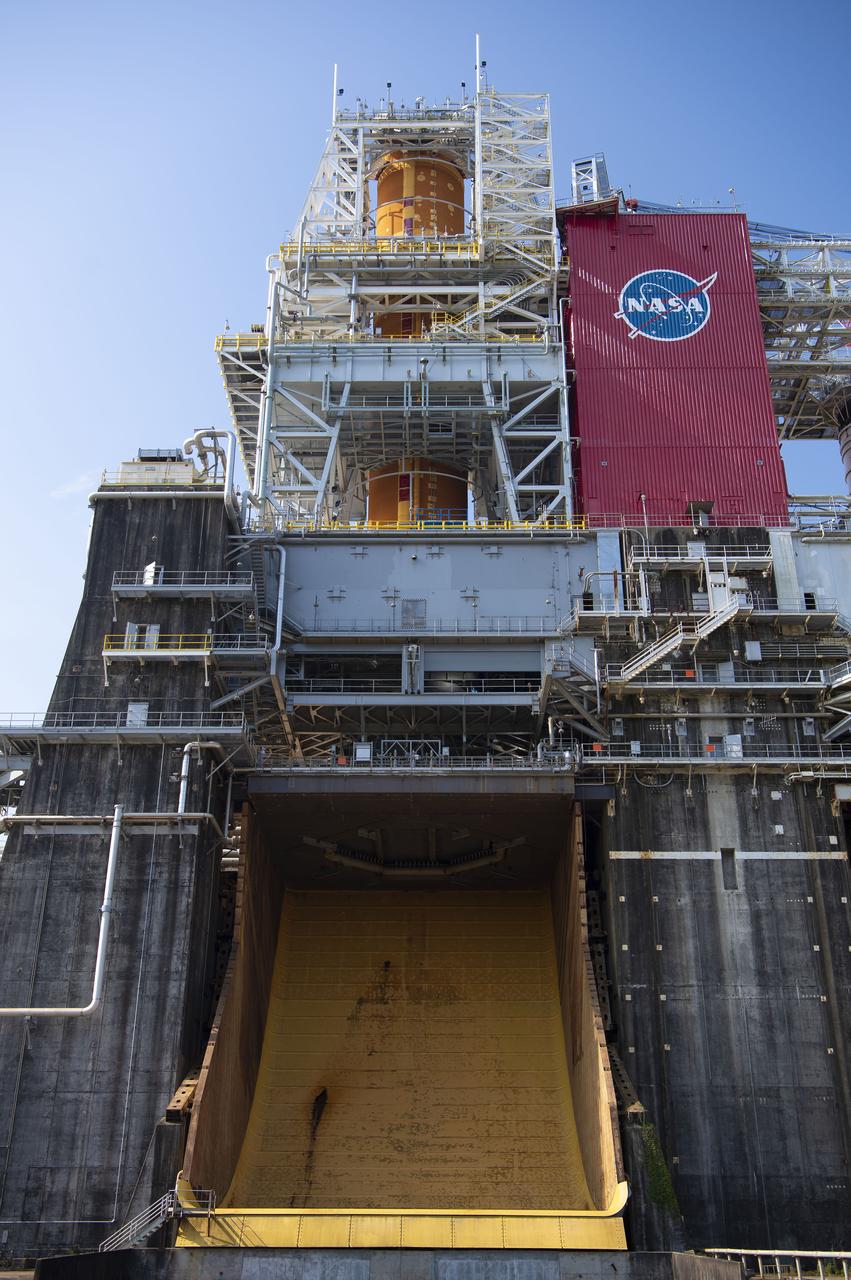
A photo from the north (flame trench) side of the B-2 Test Stand at NASA’s Stennis Space Center shows the first flight core stage for NASA’s new Space Launch System (SLS) rocket installed for Green Run testing. The SLS core stage was transported to Stennis in January to begin Green Run testing prior to its use on the Artemis I mission. NASA is building SLS to return humans, including the first woman, to the Moon as part of the Artemis program and to prepare for eventual missions to Mars. At Stennis, the SLS core stage will undergo a series of tests on its integrated systems, culminating with a hot fire of its four RS-25 engines, just as during an actual launch.
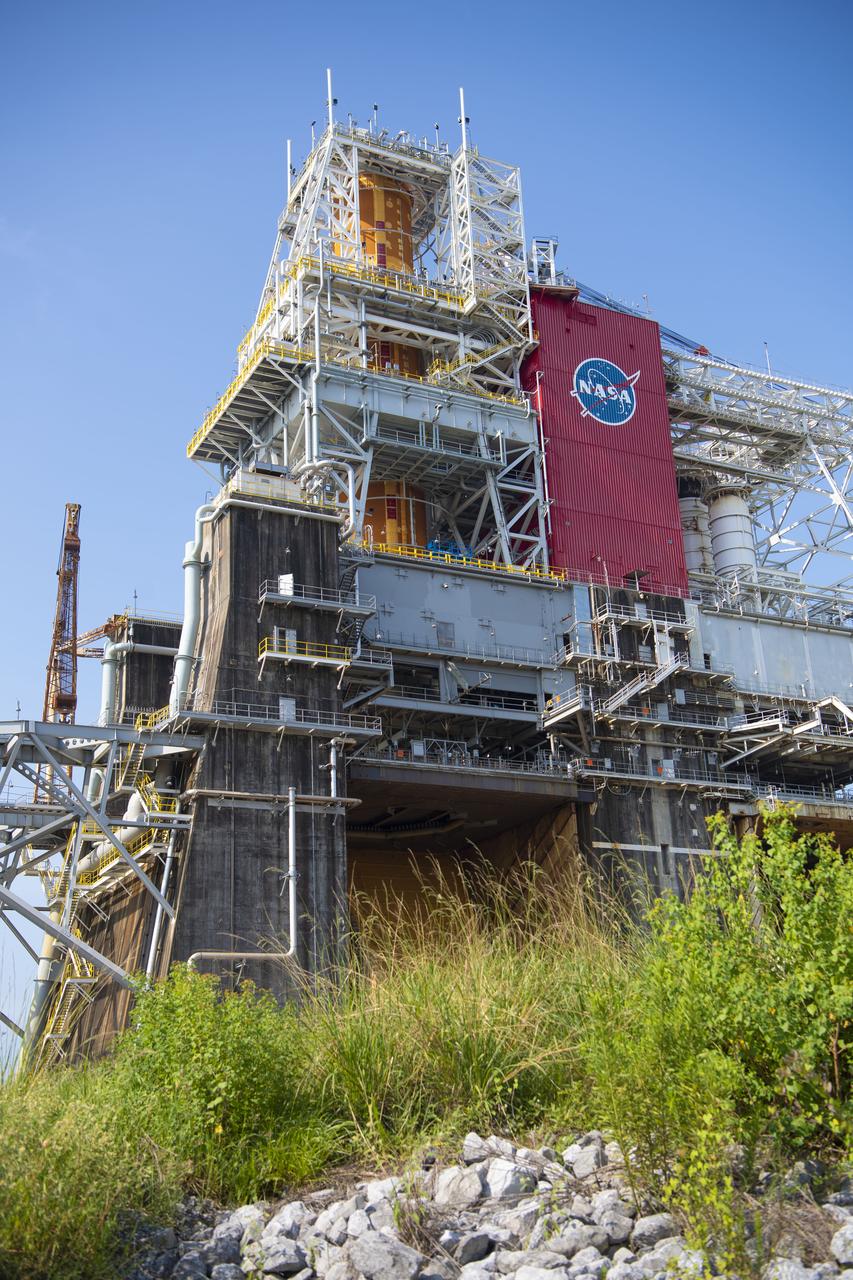
A photo from the north (flame trench) side of the B-2 Test Stand at NASA’s Stennis Space Center shows the first flight core stage for NASA’s new Space Launch System (SLS) rocket installed for Green Run testing. The SLS core stage was transported to Stennis in January to begin Green Run testing prior to its use on the Artemis I mission. NASA is building SLS to return humans, including the first woman, to the Moon as part of the Artemis program and to prepare for eventual missions to Mars. At Stennis, the SLS core stage will undergo a series of tests on its integrated systems, culminating with a hot fire of its four RS-25 engines, just as during an actual launch.
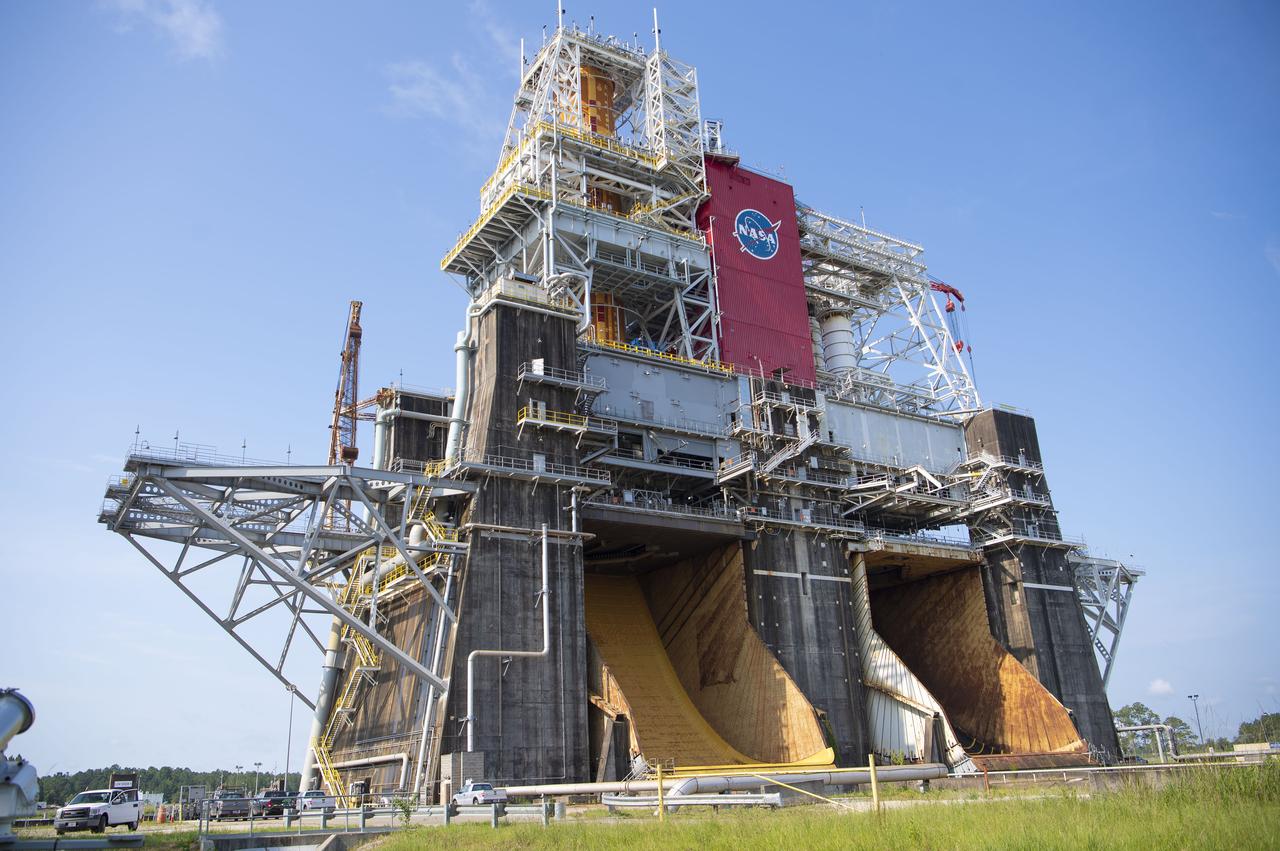
A photo from the north (flame trench) side of the B-2 Test Stand at NASA’s Stennis Space Center shows the first flight core stage for NASA’s new Space Launch System (SLS) rocket installed for Green Run testing. The SLS core stage was transported to Stennis in January to begin Green Run testing prior to its use on the Artemis I mission. NASA is building SLS to return humans, including the first woman, to the Moon as part of the Artemis program and to prepare for eventual missions to Mars. At Stennis, the SLS core stage will undergo a series of tests on its integrated systems, culminating with a hot fire of its four RS-25 engines, just as during an actual launch.
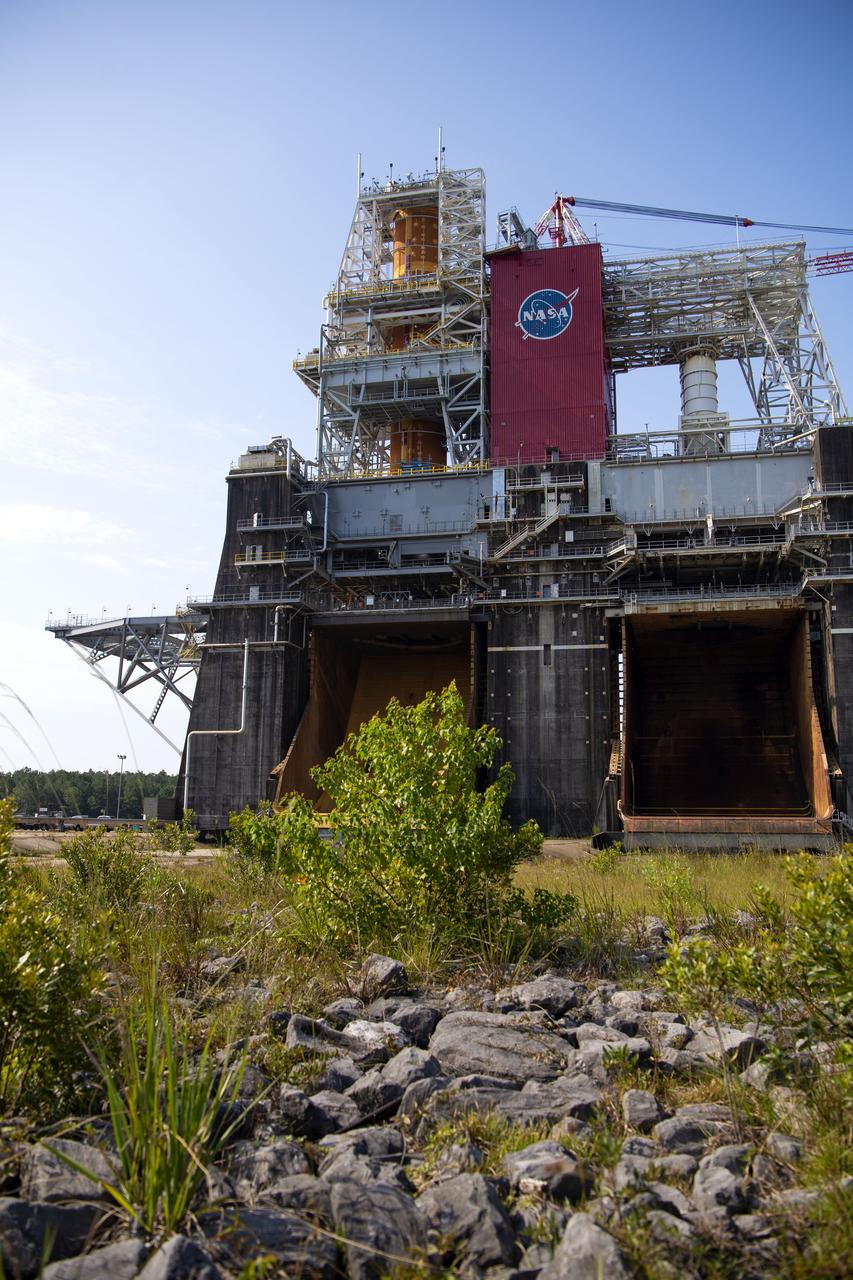
A photo from the north (flame trench) side of the B-2 Test Stand at NASA’s Stennis Space Center shows the first flight core stage for NASA’s new Space Launch System (SLS) rocket installed for Green Run testing. The SLS core stage was transported to Stennis in January to begin Green Run testing prior to its use on the Artemis I mission. NASA is building SLS to return humans, including the first woman, to the Moon as part of the Artemis program and to prepare for eventual missions to Mars. At Stennis, the SLS core stage will undergo a series of tests on its integrated systems, culminating with a hot fire of its four RS-25 engines, just as during an actual launch.
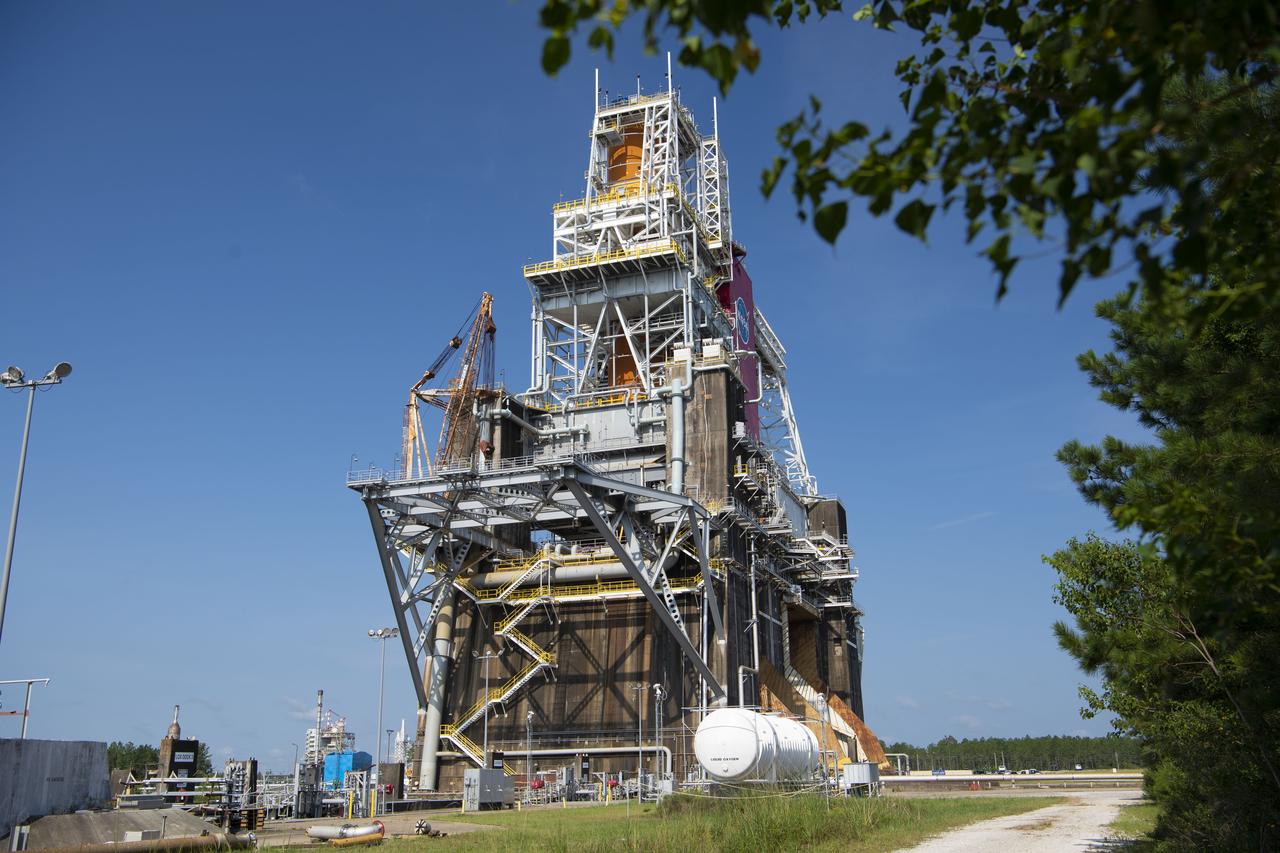
A photo from the north (flame trench) side of the B-2 Test Stand at NASA’s Stennis Space Center shows the first flight core stage for NASA’s new Space Launch System (SLS) rocket installed for Green Run testing. The SLS core stage was transported to Stennis in January to begin Green Run testing prior to its use on the Artemis I mission. NASA is building SLS to return humans, including the first woman, to the Moon as part of the Artemis program and to prepare for eventual missions to Mars. At Stennis, the SLS core stage will undergo a series of tests on its integrated systems, culminating with a hot fire of its four RS-25 engines, just as during an actual launch.
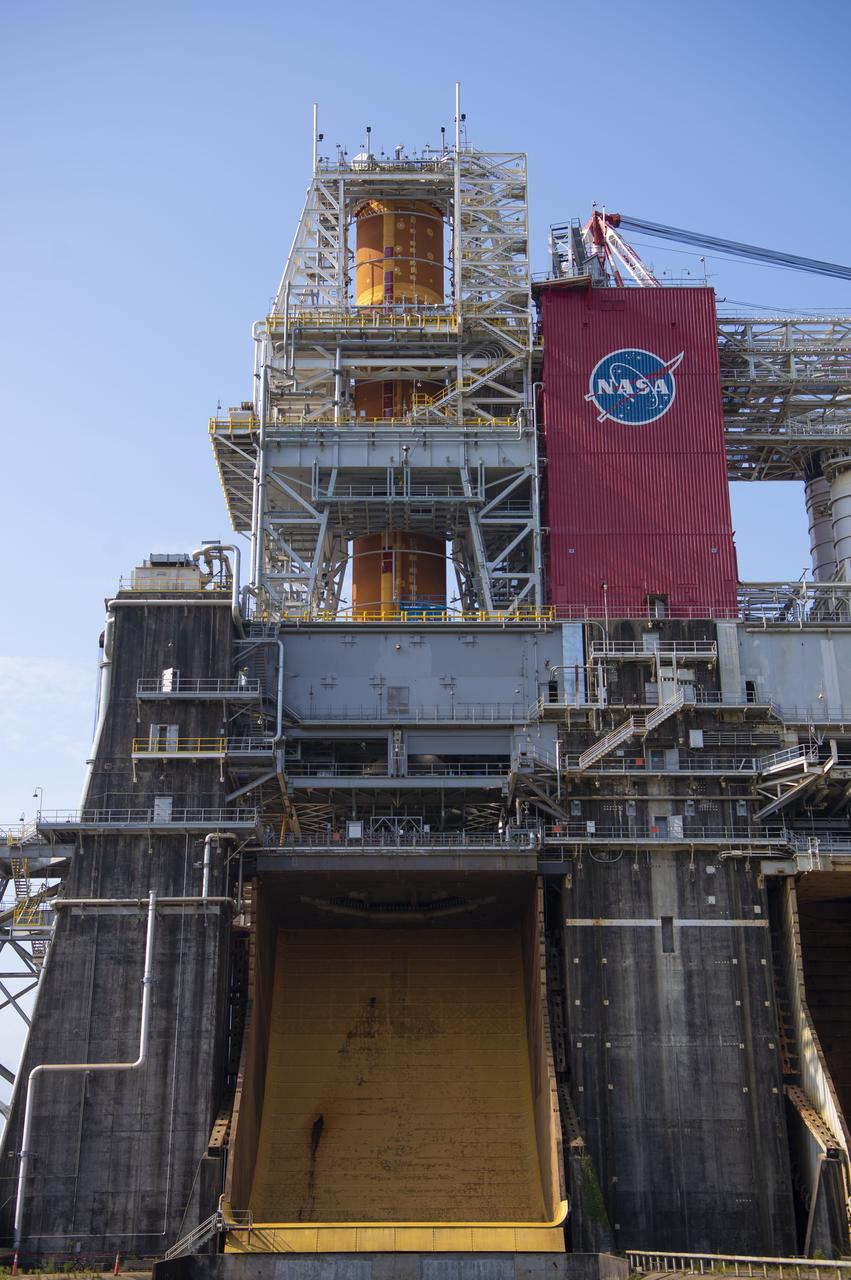
A photo from the north (flame trench) side of the B-2 Test Stand at NASA’s Stennis Space Center shows the first flight core stage for NASA’s new Space Launch System (SLS) rocket installed for Green Run testing. The SLS core stage was transported to Stennis in January to begin Green Run testing prior to its use on the Artemis I mission. NASA is building SLS to return humans, including the first woman, to the Moon as part of the Artemis program and to prepare for eventual missions to Mars. At Stennis, the SLS core stage will undergo a series of tests on its integrated systems, culminating with a hot fire of its four RS-25 engines, just as during an actual launch.
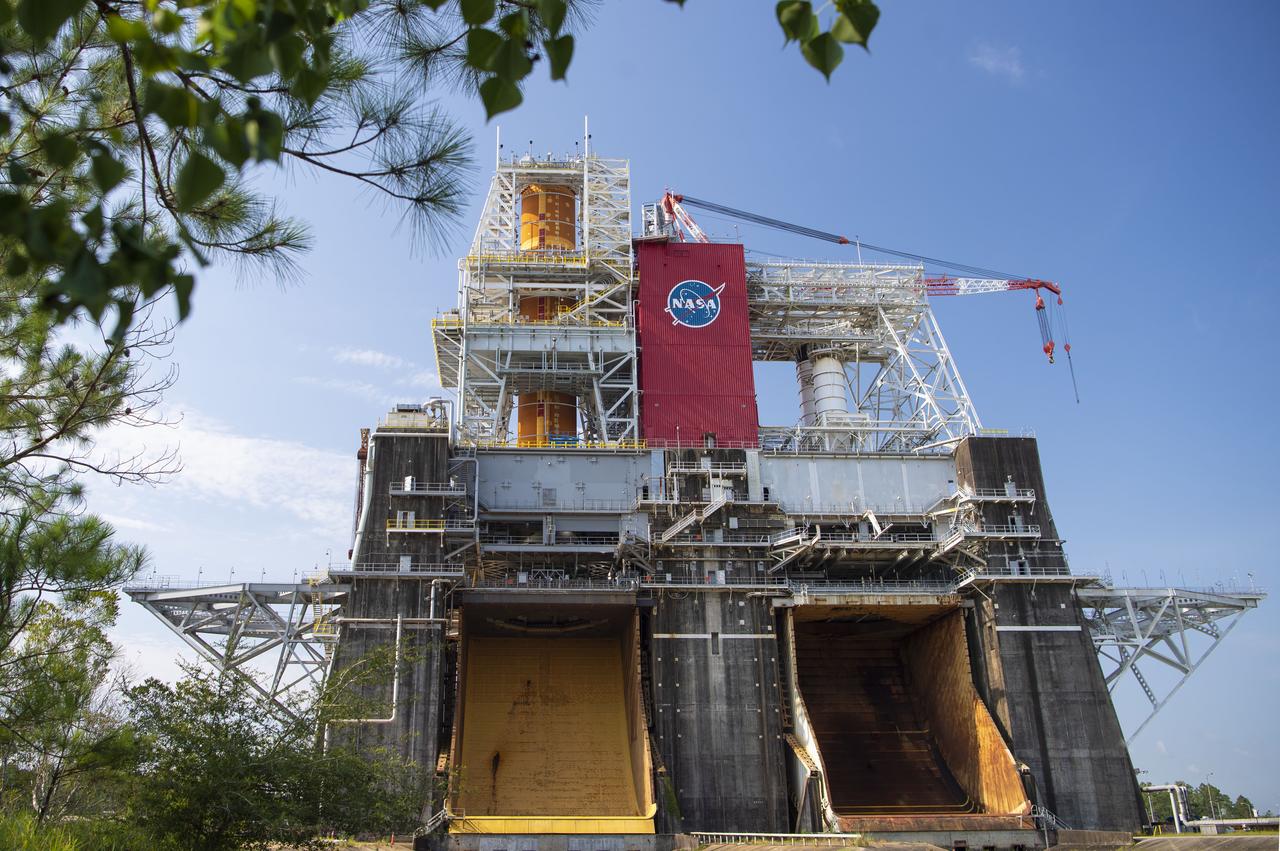
A photo from the north (flame trench) side of the B-2 Test Stand at NASA’s Stennis Space Center shows the first flight core stage for NASA’s new Space Launch System (SLS) rocket installed for Green Run testing. The SLS core stage was transported to Stennis in January to begin Green Run testing prior to its use on the Artemis I mission. NASA is building SLS to return humans, including the first woman, to the Moon as part of the Artemis program and to prepare for eventual missions to Mars. At Stennis, the SLS core stage will undergo a series of tests on its integrated systems, culminating with a hot fire of its four RS-25 engines, just as during an actual launch.
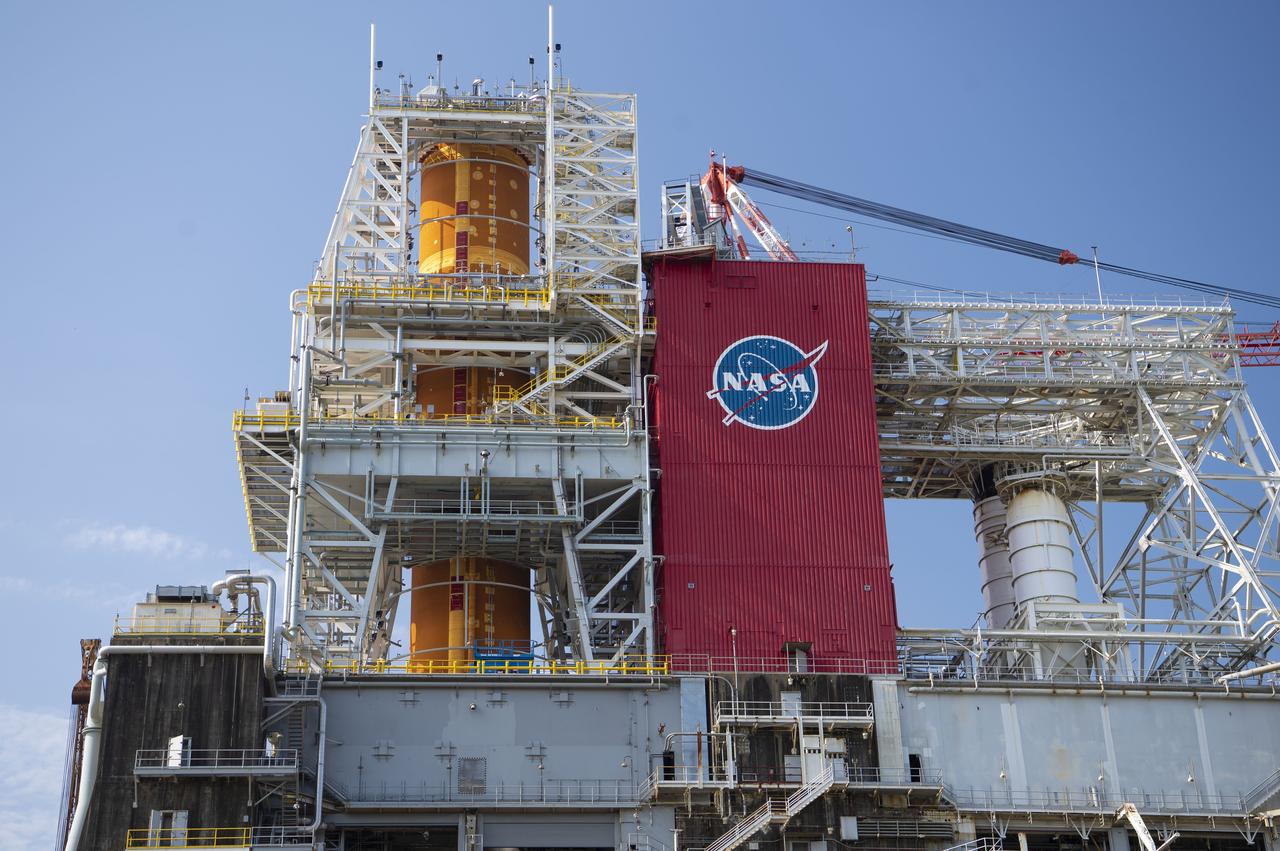
A photo from the north (flame trench) side of the B-2 Test Stand at NASA’s Stennis Space Center shows the first flight core stage for NASA’s new Space Launch System (SLS) rocket installed for Green Run testing. The SLS core stage was transported to Stennis in January to begin Green Run testing prior to its use on the Artemis I mission. NASA is building SLS to return humans, including the first woman, to the Moon as part of the Artemis program and to prepare for eventual missions to Mars. At Stennis, the SLS core stage will undergo a series of tests on its integrated systems, culminating with a hot fire of its four RS-25 engines, just as during an actual launch.
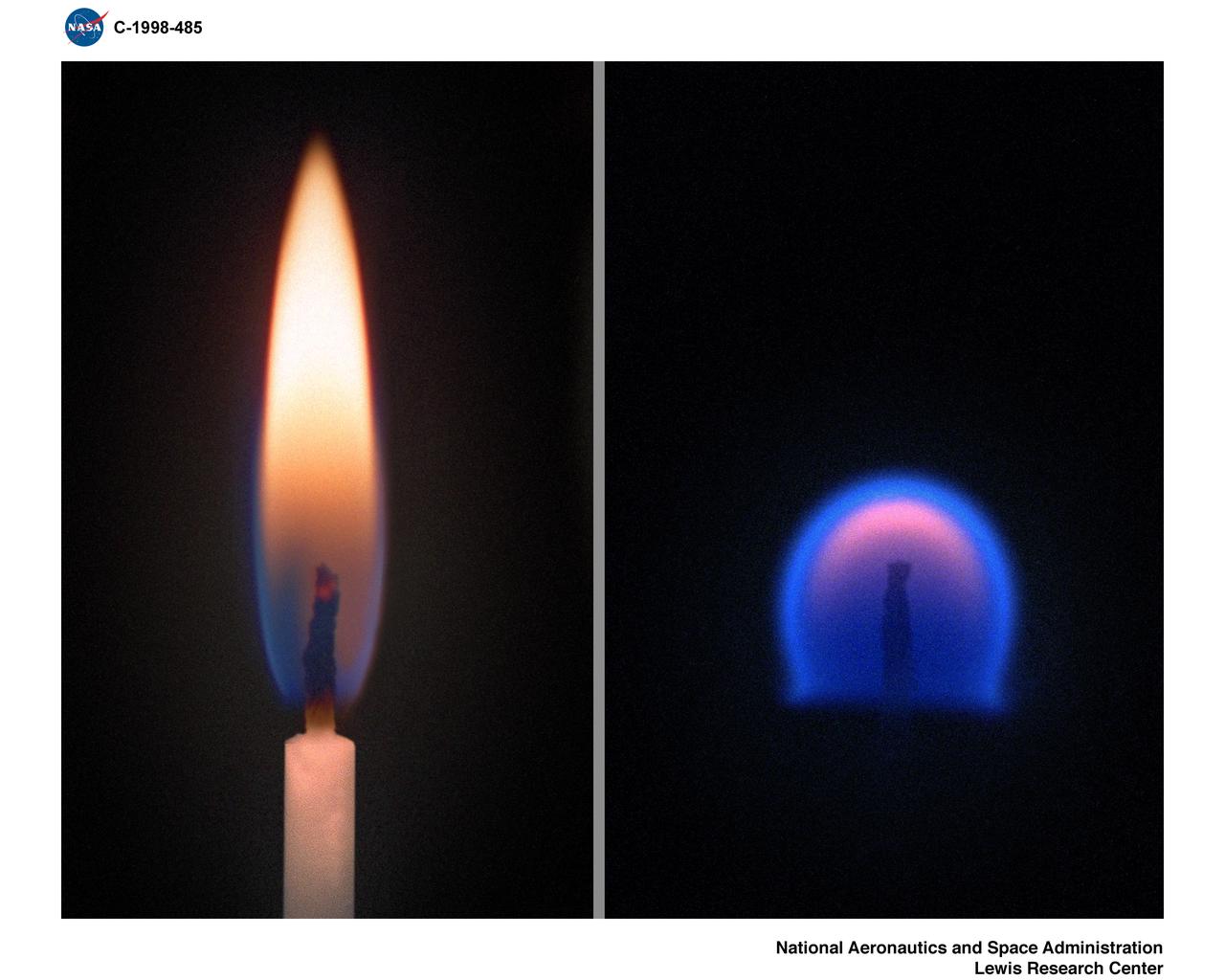
Comparison of a Candle Flame burning in normal gravity or 1-G (left) and a flame burning in Microgravity.
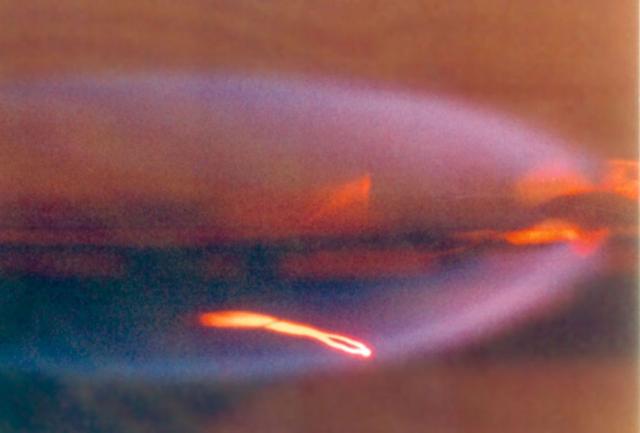
The Forced Flow Flame-Spreading Test was designed to study flame spreading over solid fuels when air is flowing at a low speed in the same direction as the flame spread. Previous research has shown that in low-speed concurrent airflows, some materials are more flammable in microgravity than earth. This image shows a 10-cm flame in microgravity that burns almost entirely blue on both sides of a thin sheet of paper. The glowing thermocouple in the lower half of the flame provides temperature measurements.
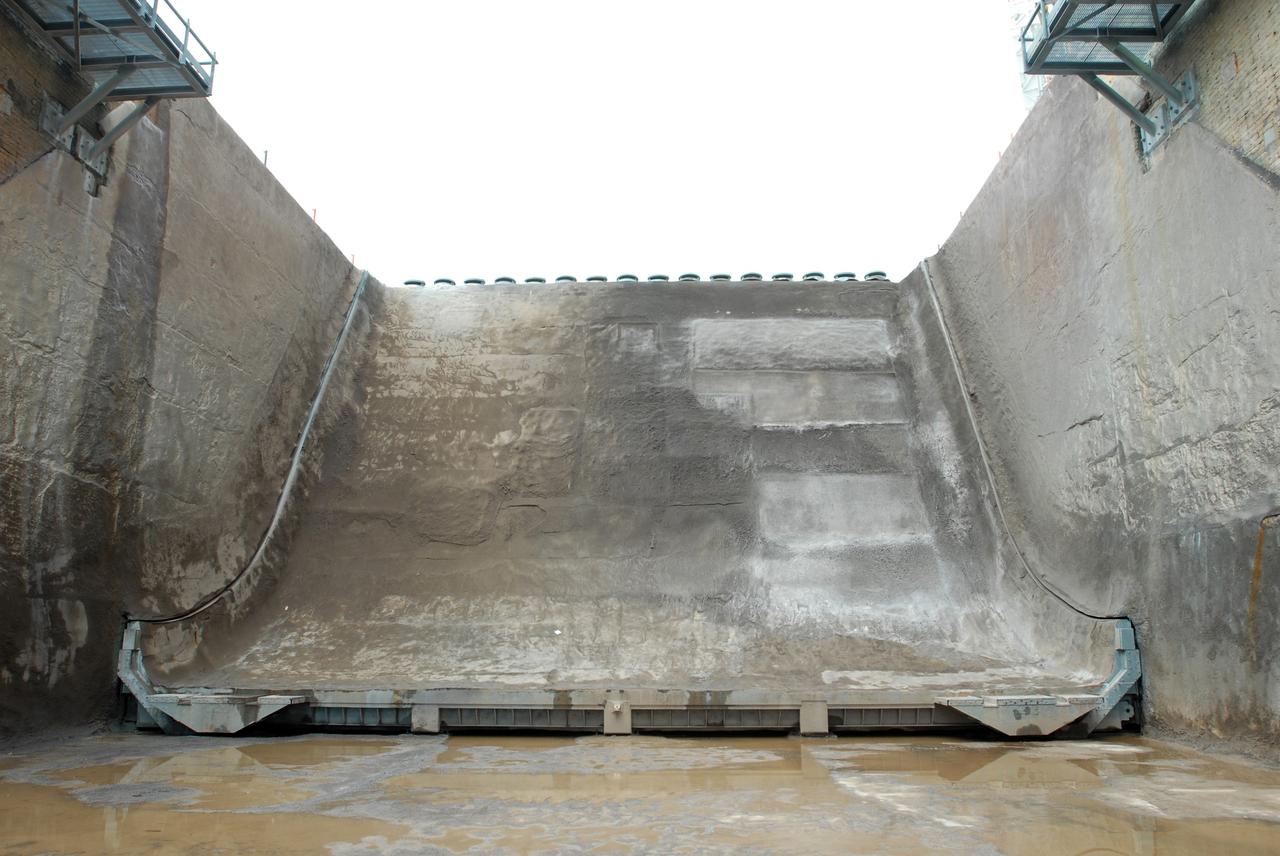
CAPE CANAVERAL, Fla. – A view of the flame trench on Launch Pad 39A at NASA's Kennedy Space Center in Florida where repairs of the Fondue Fyre have been made. After launch of space shuttle Atlantis on the STS-125 mission on May 11, a 25-square-foot area of Fondue Fyre from the north side of the solid rocket booster flame deflector was damaged. Some pneumatic lines (gaseous nitrogen, pressurized air) in the area also were damaged and needed to be repaired. The flame trench channels the flames and smoke exhaust of the shuttle's solid rocket boosters away from the space shuttle during liftoff. Fondue Fyre is a fire-resistant concrete-like material that replaced the original flame trench bricks. It can be sprayed on the surface. Pad 39A will be used for the launch of space shuttle Endeavour on the STS-127 mission targeted for June 13. Photo credit: NASA/Jim Grossmann
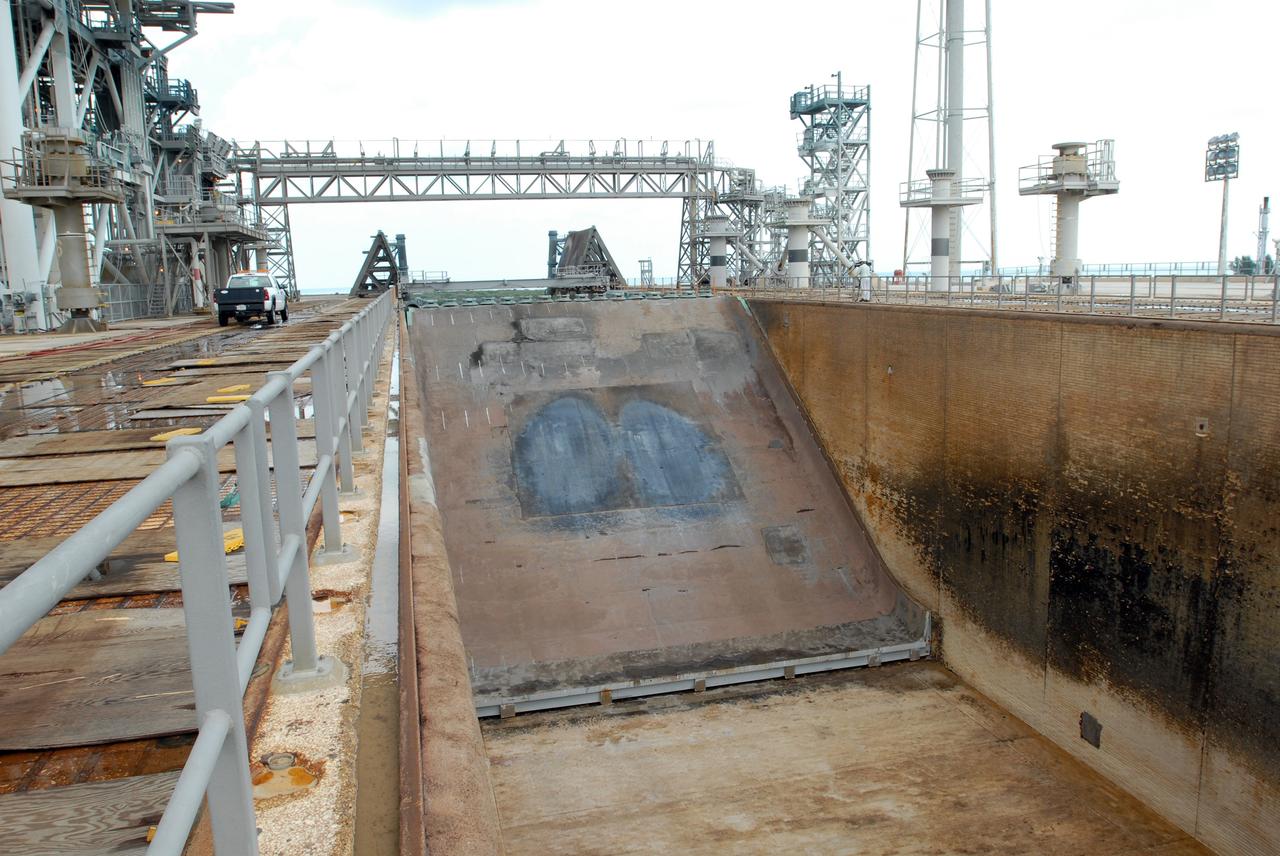
CAPE CANAVERAL, Fla. – A view of the flame trench on Launch Pad 39A at NASA's Kennedy Space Center in Florida where repairs of the Fondue Fyre have been made. After launch of space shuttle Atlantis on the STS-125 mission on May 11, a 25-square-foot area of Fondue Fyre from the north side of the solid rocket booster flame deflector was damaged. Some pneumatic lines (gaseous nitrogen, pressurized air) in the area also were damaged and needed to be repaired. The flame trench channels the flames and smoke exhaust of the shuttle's solid rocket boosters away from the space shuttle during liftoff. Fondue Fyre is a fire-resistant concrete-like material that replaced the original flame trench bricks. It can be sprayed on the surface. Pad 39A will be used for the launch of space shuttle Endeavour on the STS-127 mission targeted for June 13. Photo credit: NASA/Jim Grossmann
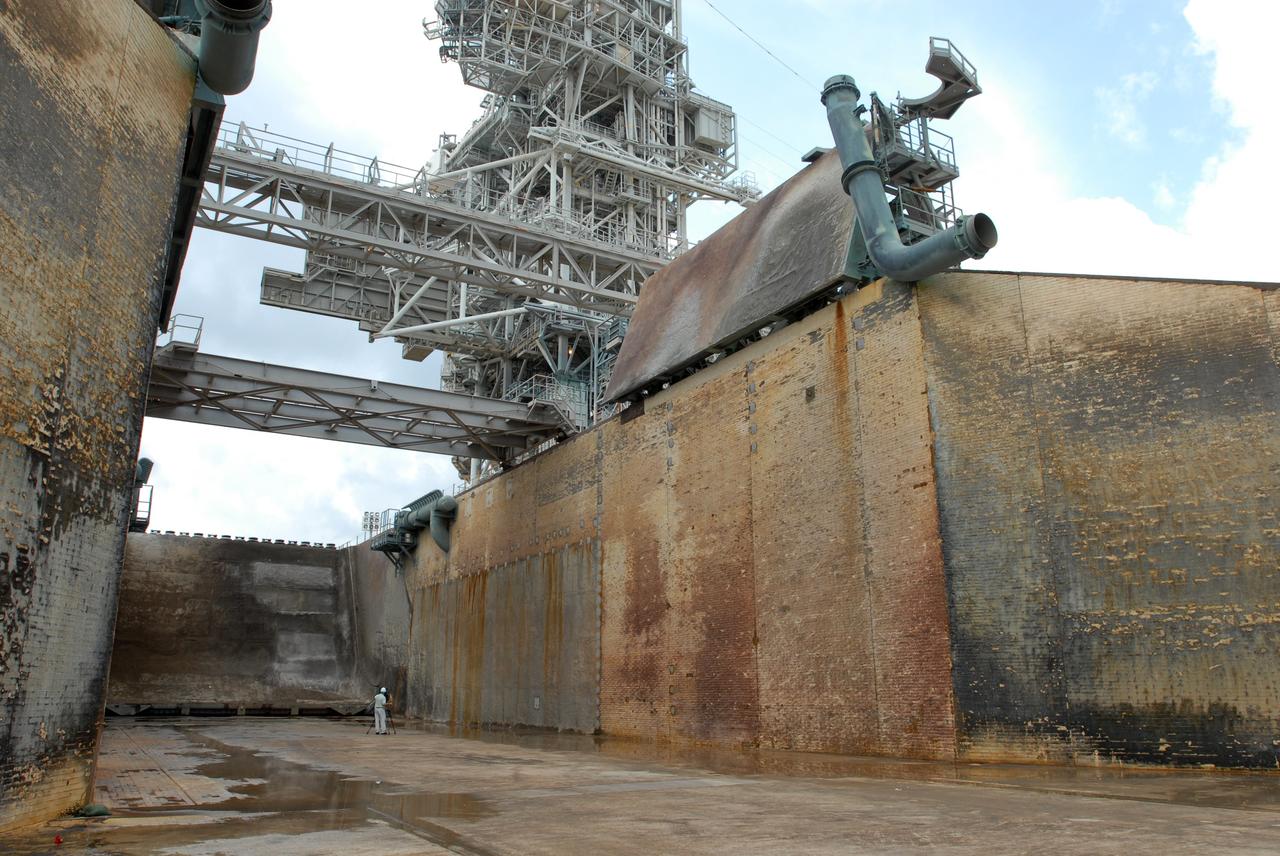
CAPE CANAVERAL, Fla. – A view of the flame trench on Launch Pad 39A at NASA's Kennedy Space Center in Florida where repairs of the Fondue Fyre have been made. After launch of space shuttle Atlantis on the STS-125 mission on May 11, a 25-square-foot area of Fondue Fyre from the north side of the solid rocket booster flame deflector was damaged. Some pneumatic lines (gaseous nitrogen, pressurized air) in the area also were damaged and needed to be repaired. The flame trench channels the flames and smoke exhaust of the shuttle's solid rocket boosters away from the space shuttle during liftoff. Fondue Fyre is a fire-resistant concrete-like material that replaced the original flame trench bricks. It can be sprayed on the surface. Pad 39A will be used for the launch of space shuttle Endeavour on the STS-127 mission targeted for June 13. Photo credit: NASA/Jim Grossmann
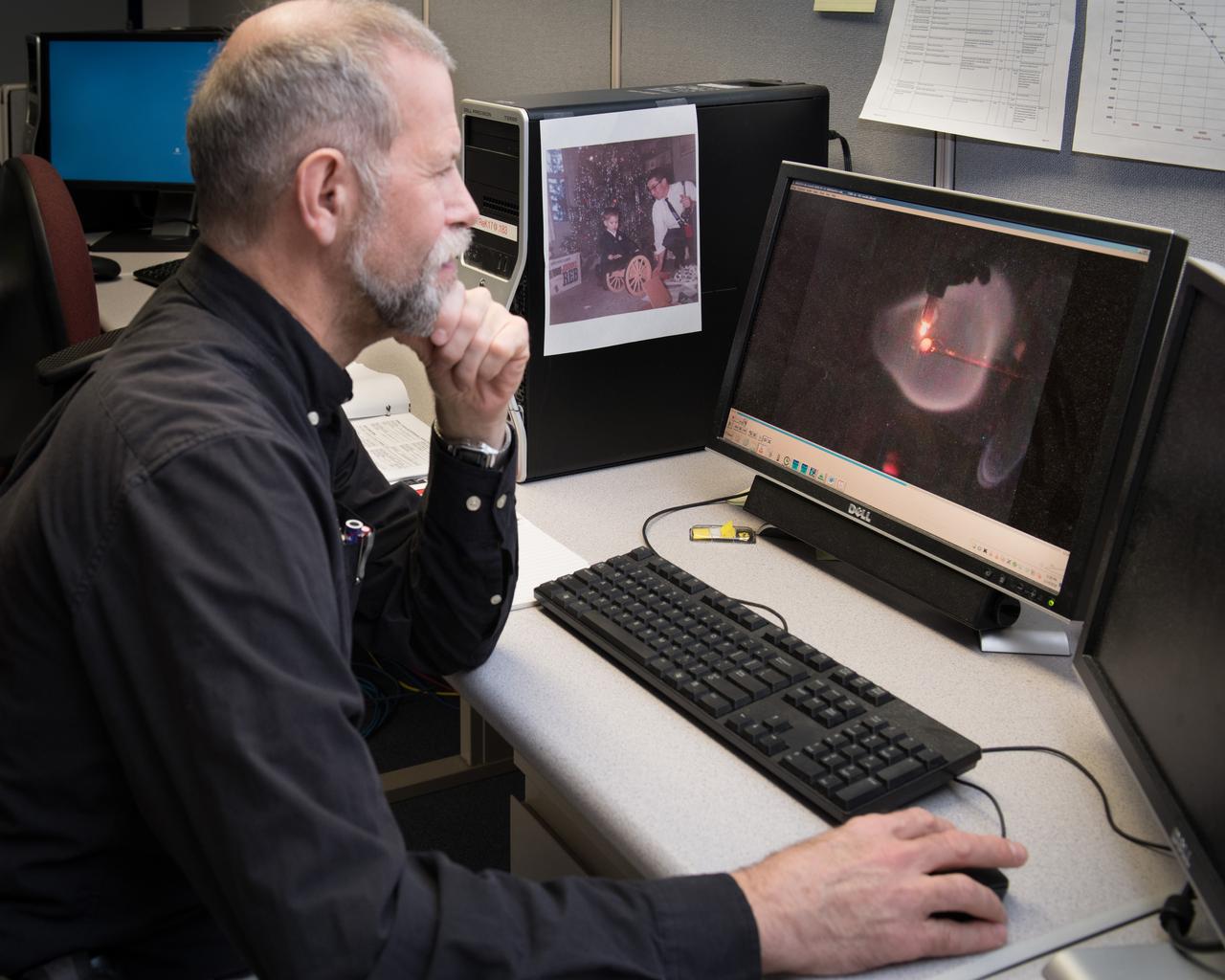
Review of ISS data from the Structure and Response of Spherical Diffusion Flames (s-Flame) experiment - of the Advanced Combustion via Microgravity Experiments. ACME project conducted in the Combustion Integrated Rack, CIR - by ACME Project Scientist Dennis Stocker in the Telescience Support Center,TSC, also known as the Glenn ISS Payload Operations Center, GIPOC

Testing of software with ground hardware for the Structue and Response of Spherical Diffusion Flames, s-Flame, experiment - of the Advanced Combustion via Microgravity Experiments, ACME, project conducted in the ISS Combustion Integrated Rack, CIR - by ACME Software Engineer Jeffrey Eggers, Operations Lead Angela Adams, and Planning Lead Melani Smajdek in the Telescience Support Center, TSC, also known as the Glenn ISS Payload Operations Center, GIPOC

This composite image shows one of the clusters, NGC 2024, which is found in the center of the so-called Flame Nebula about 1,400 light years from Earth. Astronomers have studied two star clusters using NASA Chandra and infrared telescopes.
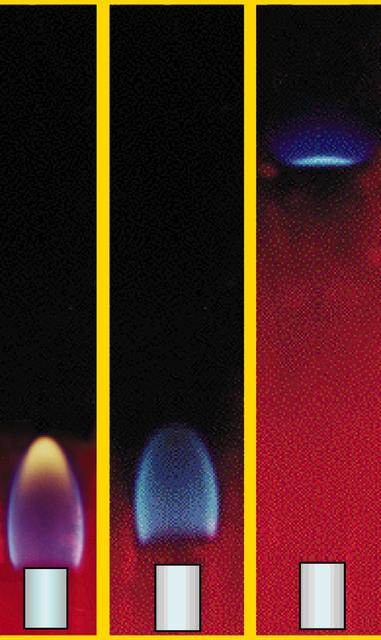
Image taken during a ground based investigation of a methane-fueled laminar flame surrounded by co-flowing air. The flame was enclosed in a chamber, and the pressure reduced. As the pressure decreased, the velocity of the flow increased, causing the flame to change from a stabilized condition to near blow-out or extinction.
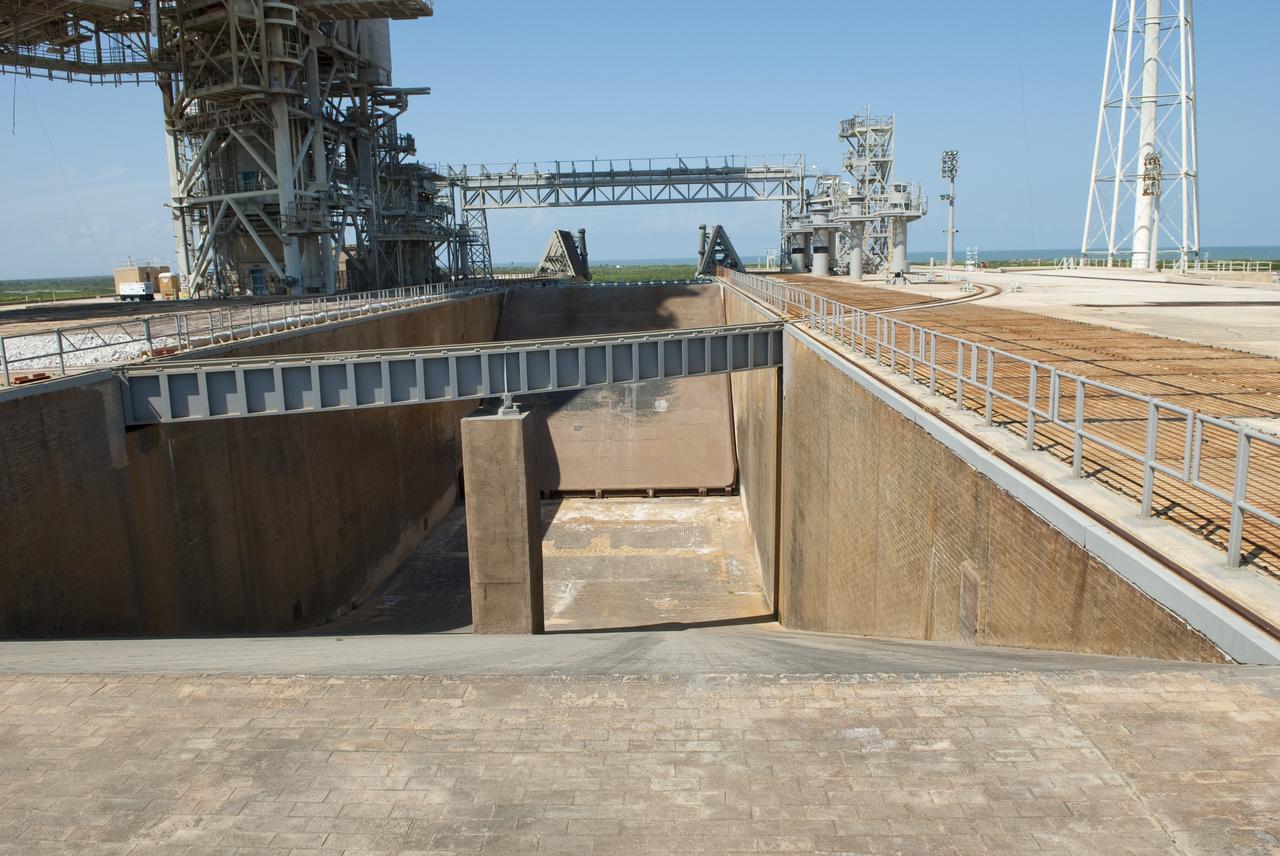
CAPE CANAVERAL, Fla. -- At NASA's Kennedy Space Center in Florida, the flame trench that serviced the launch of many space shuttles is seen cleared of all debris during deconstruction of Launch Pad 39B. The flame trench will remain as part of the new pad design for the future. Starting in 2009, the structure at Pad B was no longer needed for NASA's Space Shuttle Program, so it is being restructured for future use. The new design will feature a "clean pad" for rockets to come with their own launcher, making it more versatile for a number of vehicles. For information on NASA's future plans, visit www.nasa.gov. Photo credit: NASA/Jim Grossmann
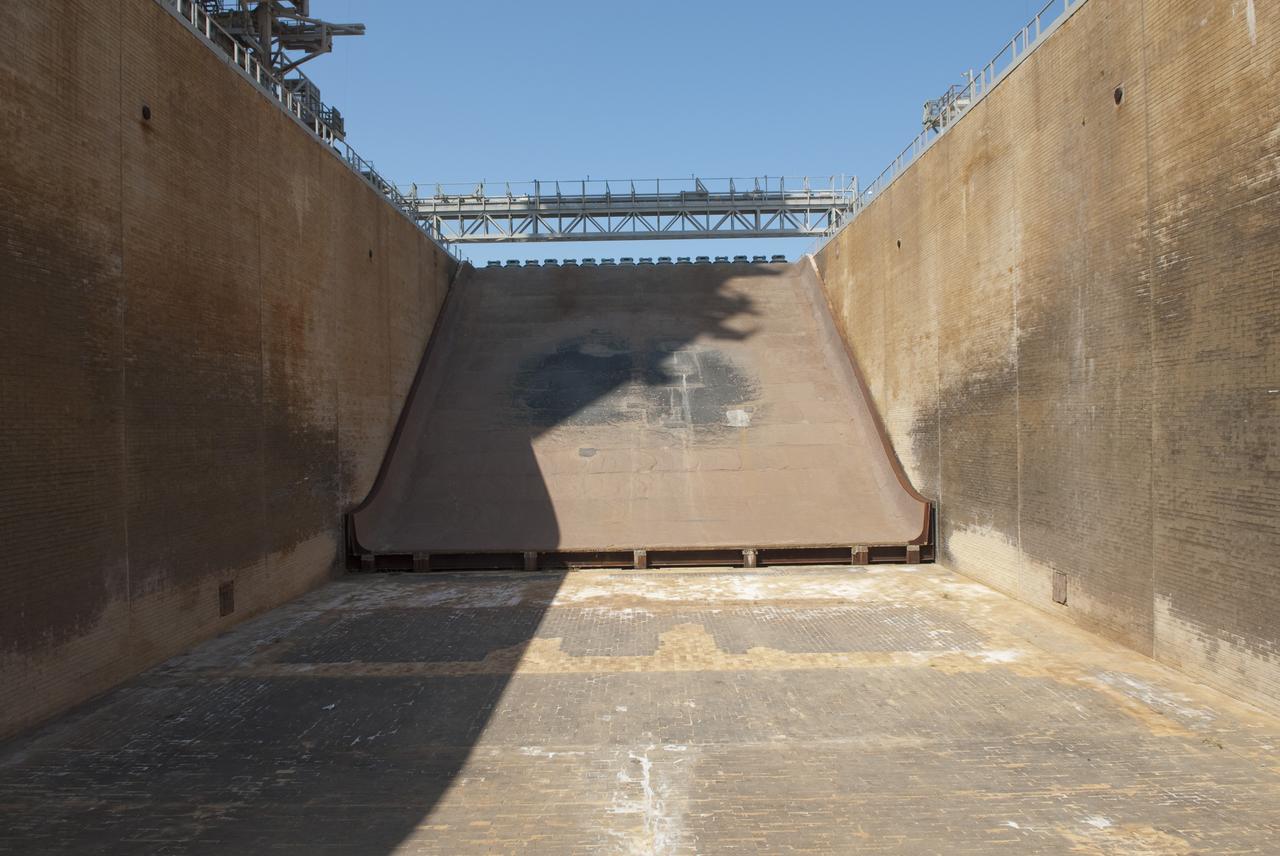
CAPE CANAVERAL, Fla. -- At NASA's Kennedy Space Center in Florida, the flame trench that serviced the launch of many space shuttles is seen from below after being cleared of all debris during deconstruction of Launch Pad 39B. The flame trench will remain as part of the new pad design for the future. Starting in 2009, the structure at Pad B was no longer needed for NASA's Space Shuttle Program, so it is being restructured for future use. The new design will feature a "clean pad" for rockets to come with their own launcher, making it more versatile for a number of vehicles. For information on NASA's future plans, visit www.nasa.gov. Photo credit: NASA/Jim Grossmann
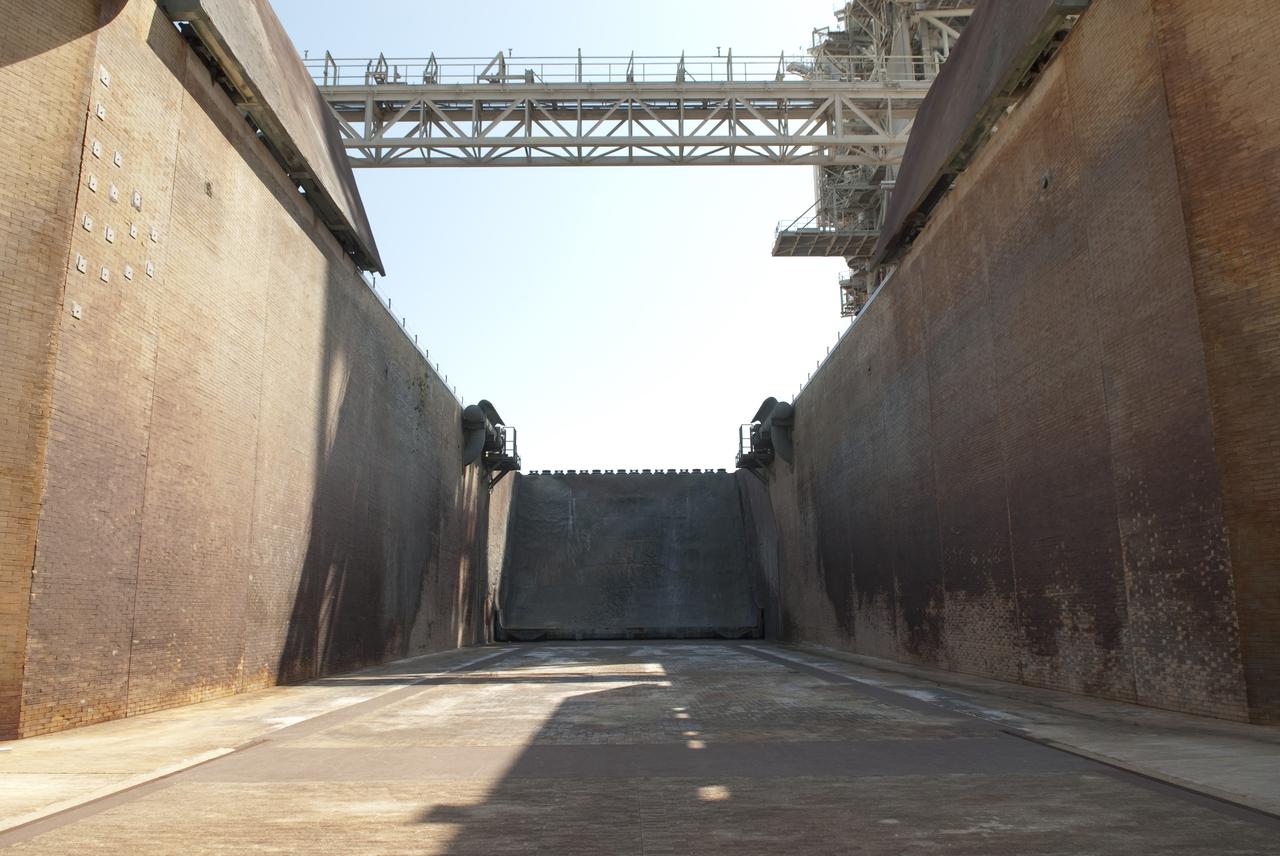
CAPE CANAVERAL, Fla. -- At NASA's Kennedy Space Center in Florida, the flame trench that serviced the launch of many space shuttles is viewed from deep inside after being cleared of all debris during deconstruction of Launch Pad 39B. The flame trench will remain as part of the new pad design for the future. Starting in 2009, the structure at Pad B was no longer needed for NASA's Space Shuttle Program, so it is being restructured for future use. The new design will feature a "clean pad" for rockets to come with their own launcher, making it more versatile for a number of vehicles. For information on NASA's future plans, visit www.nasa.gov. Photo credit: NASA/Jim Grossmann
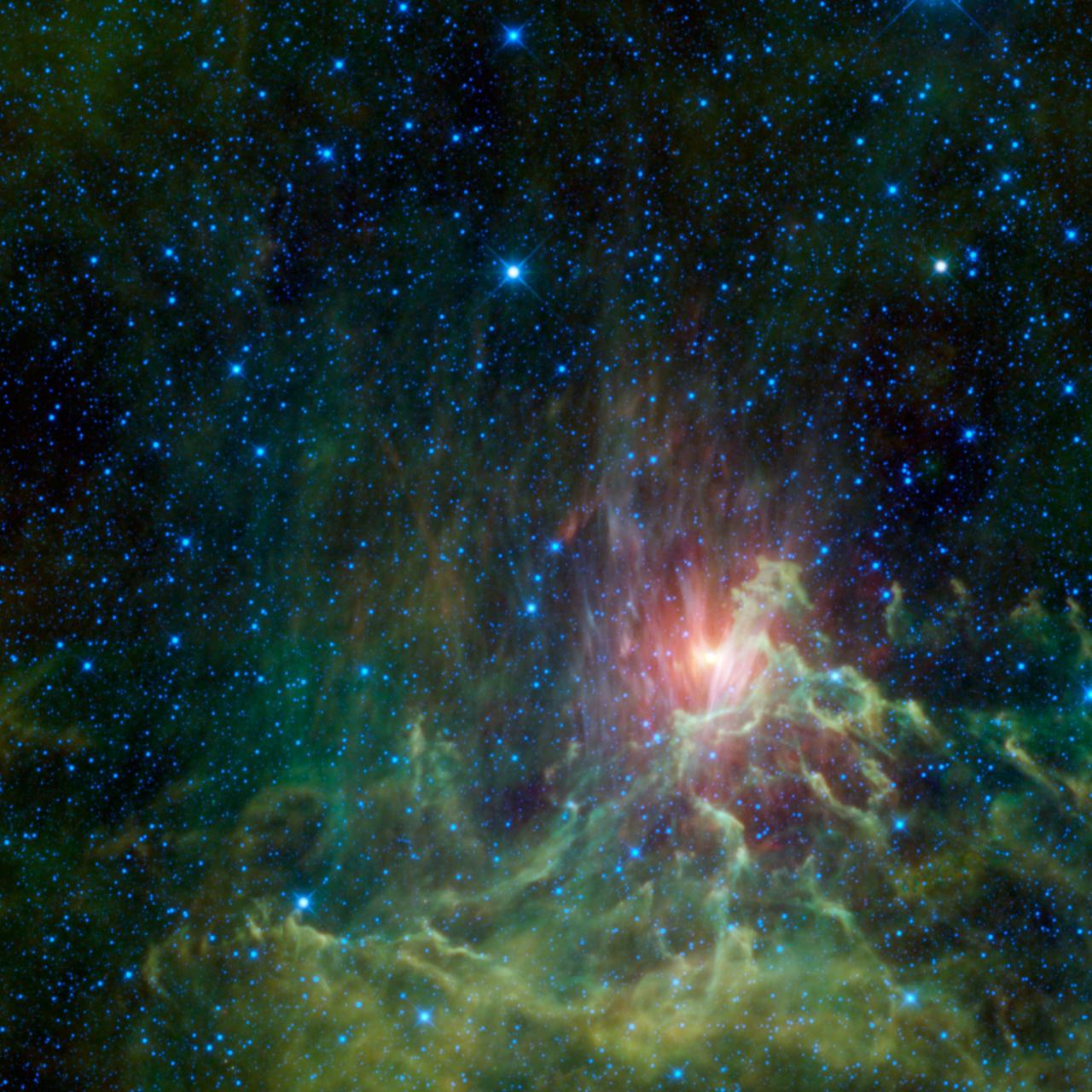
NASA Wide-field Infrared Survey captured this view of a runaway star racing away from its original home. Surrounded by a glowing cloud of gas and dust, the star AE Aurigae appears on fire. Appropriately, the cloud is called the Flaming Star nebula.
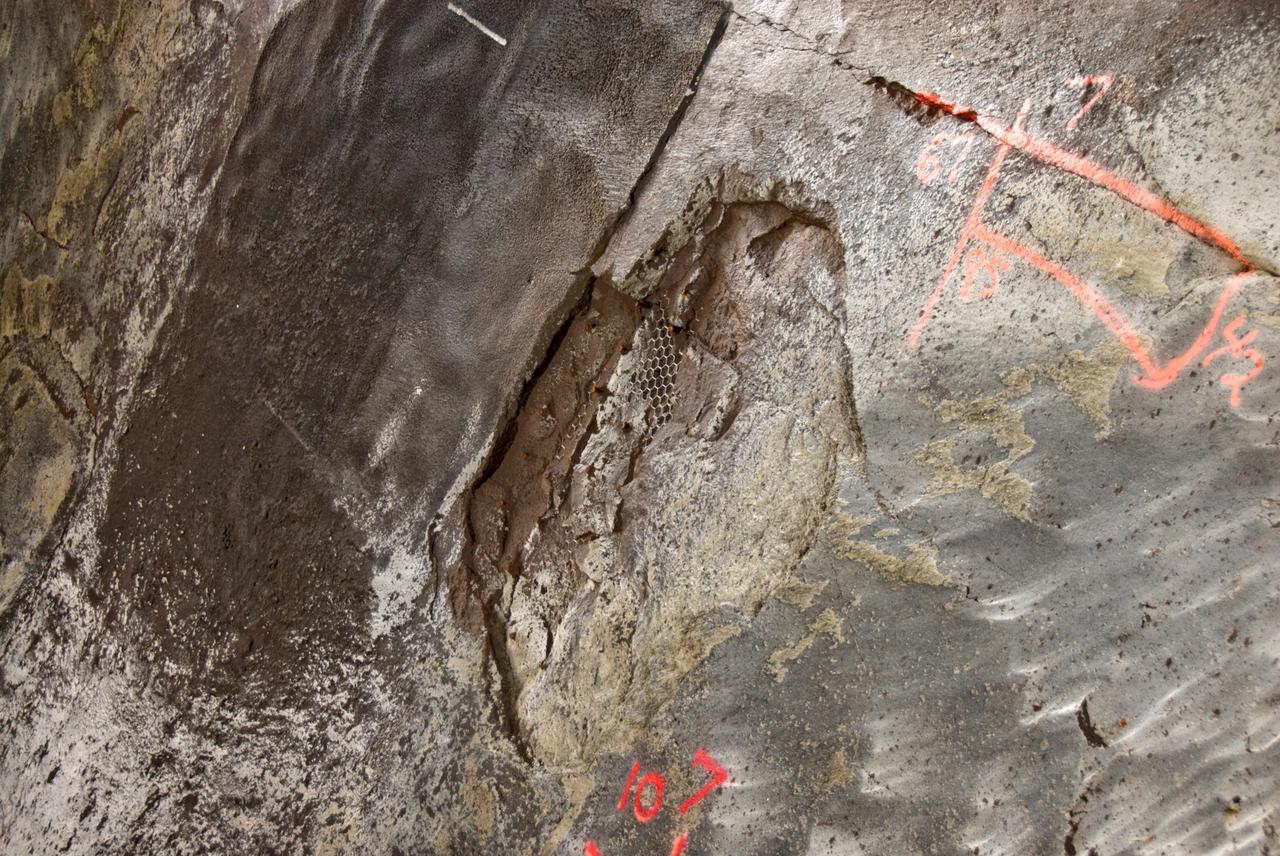
CAPE CANAVERAL, Fla. – A closeup of damage found in the Launch Pad 39A flame trench at NASA's Kennedy Space Center in Florida after launch of space shuttle Atlantis on the STS-125 mission May 11. About 25 square feet of Fondue Fyre broke off from the north side of the solid rocket booster flame deflector. The flame trench channels the flames and smoke exhaust of the shuttle's solid rocket boosters away from the space shuttle. Fondue Fyre is a fire-resistant concrete-like material. Some pneumatic lines (gaseous nitrogen, pressurized air) in the area also were damaged. Preliminary assessments indicated technicians can make repairs to the pad in time to support space shuttle Endeavour's targeted June 13 launch. Photo credit: NASA/Kim Shiflett
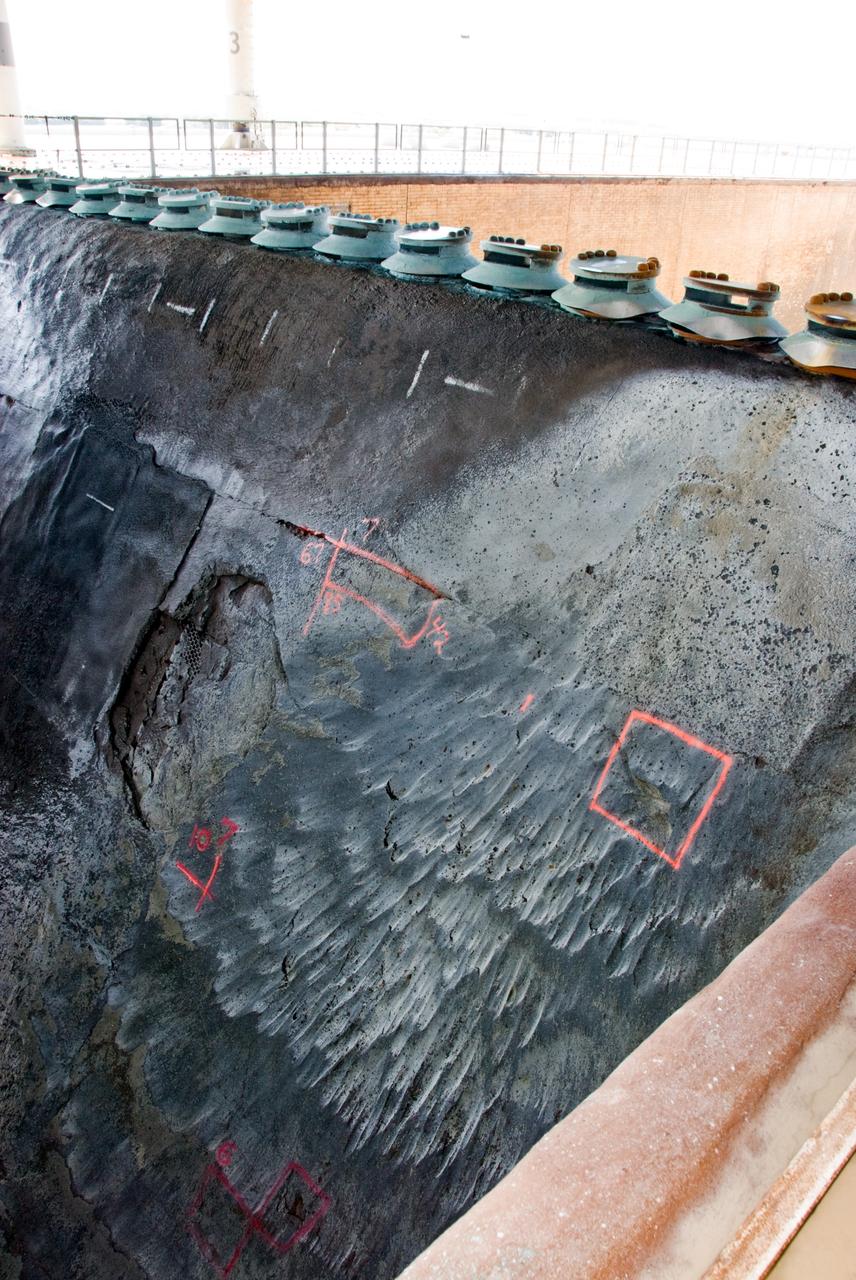
CAPE CANAVERAL, Fla. – A closeup of damage found in the Launch Pad 39A flame trench at NASA's Kennedy Space Center in Florida after launch of space shuttle Atlantis on the STS-125 mission May 11. About 25 square feet of Fondue Fyre broke off from the north side of the solid rocket booster flame deflector. The flame trench channels the flames and smoke exhaust of the shuttle's solid rocket boosters away from the space shuttle. Fondue Fyre is a fire-resistant concrete-like material. Some pneumatic lines (gaseous nitrogen, pressurized air) in the area also were damaged. Preliminary assessments indicated technicians can make repairs to the pad in time to support space shuttle Endeavour's targeted June 13 launch. Photo credit: NASA/Kim Shiflett
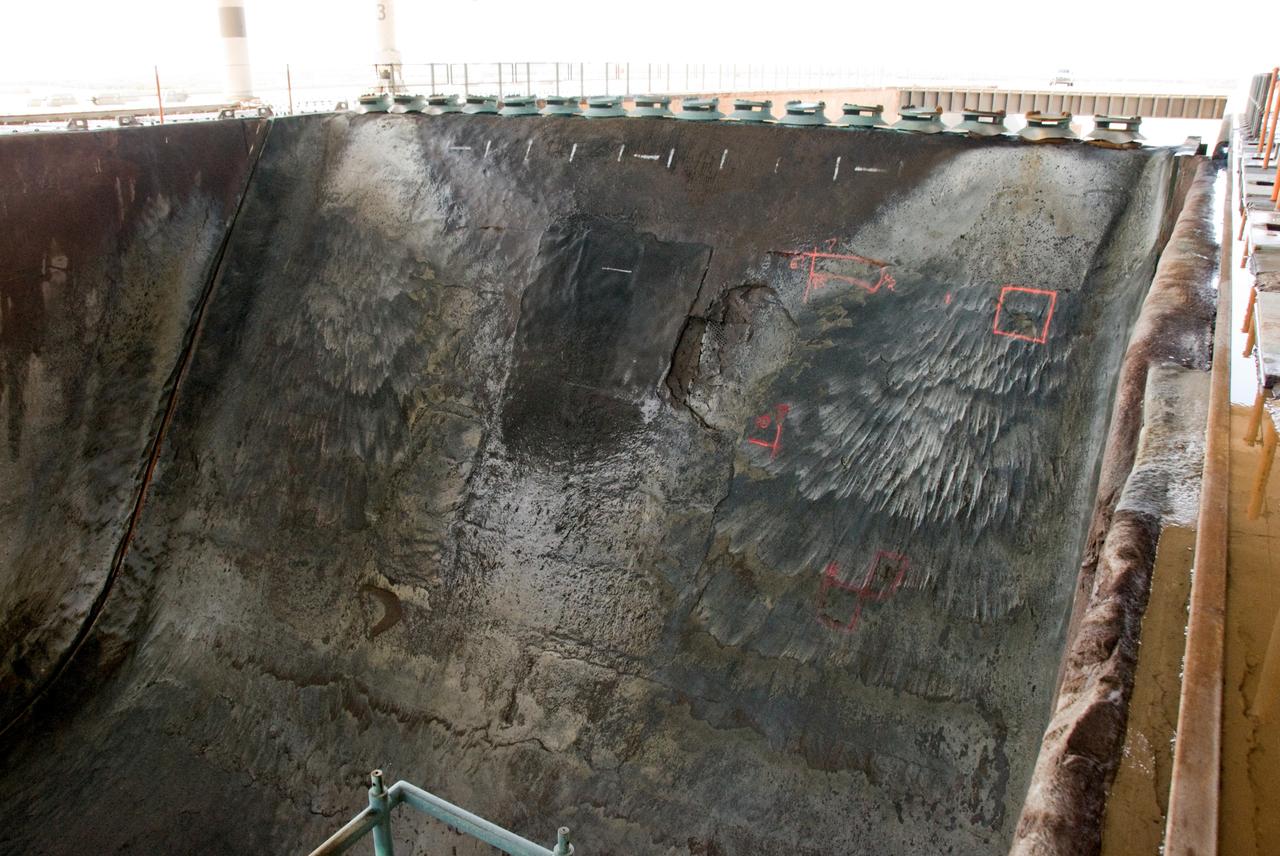
CAPE CANAVERAL, Fla. – A closeup of damage found in the Launch Pad 39A flame trench at NASA's Kennedy Space Center in Florida after launch of space shuttle Atlantis on the STS-125 mission May 11. About 25 square feet of Fondue Fyre broke off from the north side of the solid rocket booster flame deflector. The flame trench channels the flames and smoke exhaust of the shuttle's solid rocket boosters away from the space shuttle. Fondue Fyre is a fire-resistant concrete-like material. Some pneumatic lines (gaseous nitrogen, pressurized air) in the area also were damaged. Preliminary assessments indicated technicians can make repairs to the pad in time to support space shuttle Endeavour's targeted June 13 launch. Photo credit: NASA/Kim Shiflett
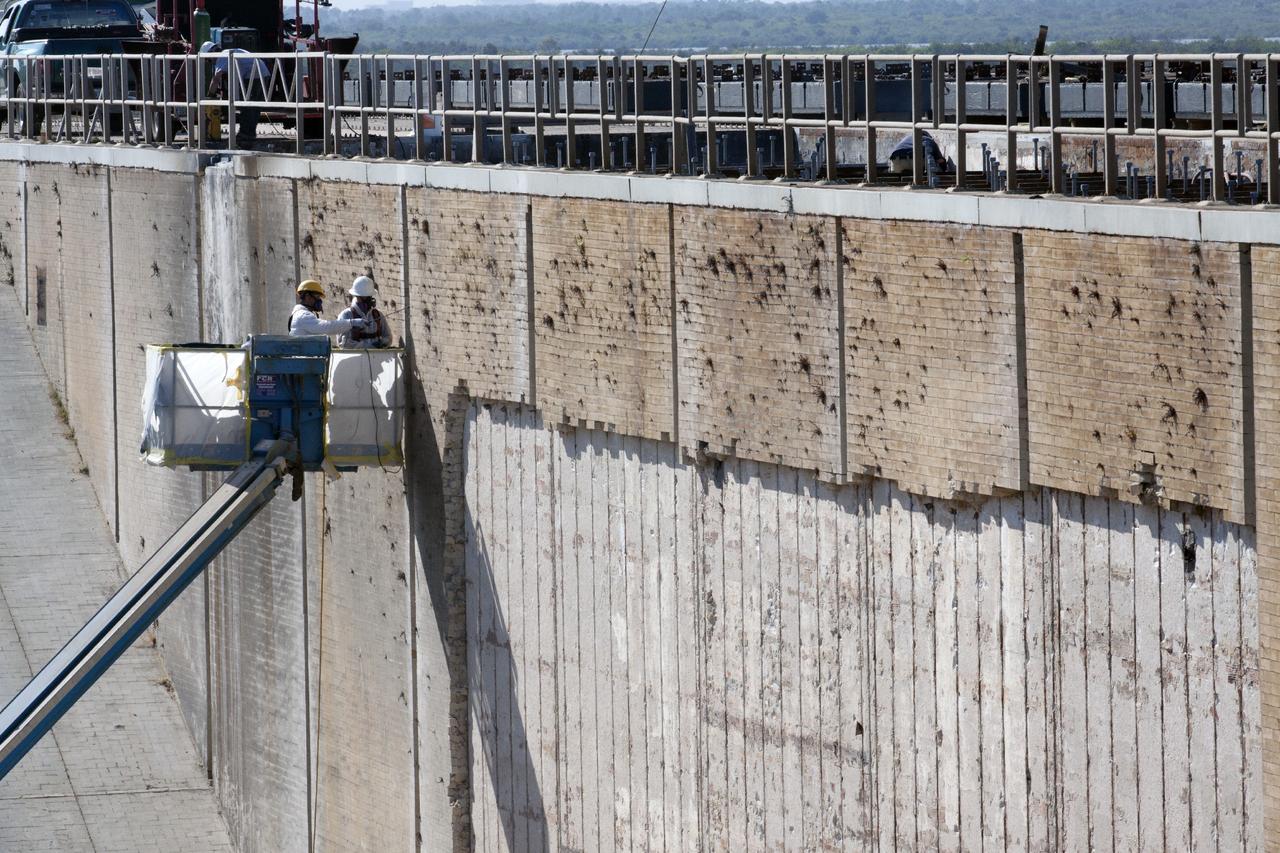
CAPE CANAVERAL, Fla. -- At Launch Pad 39B at NASA’s Kennedy Space Center in Florida, construction workers continue to remove the bricks from the flame trench walls that are below and between the left and right crawlerway tracks. The space shuttle-era flame trench deflector has been completely removed. Launch Pad 39B is being refurbished to support NASA’s Space Launch System and other launch vehicles. The Ground Systems Development and Operations, or GSDO, Program office at Kennedy is leading the center’s transformation to safely handle a variety of rockets and spacecraft. For more information about GSDO, visit: http://go.nasa.gov/groundsystems. Photo credit: NASA/Kim Shiflett

CAPE CANAVERAL, Fla. -- At Launch Pad 39B at NASA’s Kennedy Space Center in Florida, construction workers continue to remove the bricks from the flame trench walls that are below and between the left and right crawlerway tracks. New crawler track panels will be installed. The space shuttle-era flame trench deflector has been completely removed. Launch Pad 39B is being refurbished to support NASA’s Space Launch System and other launch vehicles. The Ground Systems Development and Operations, or GSDO, Program office at Kennedy is leading the center’s transformation to safely handle a variety of rockets and spacecraft. For more information about GSDO, visit: http://go.nasa.gov/groundsystems. Photo credit: NASA/Kim Shiflett
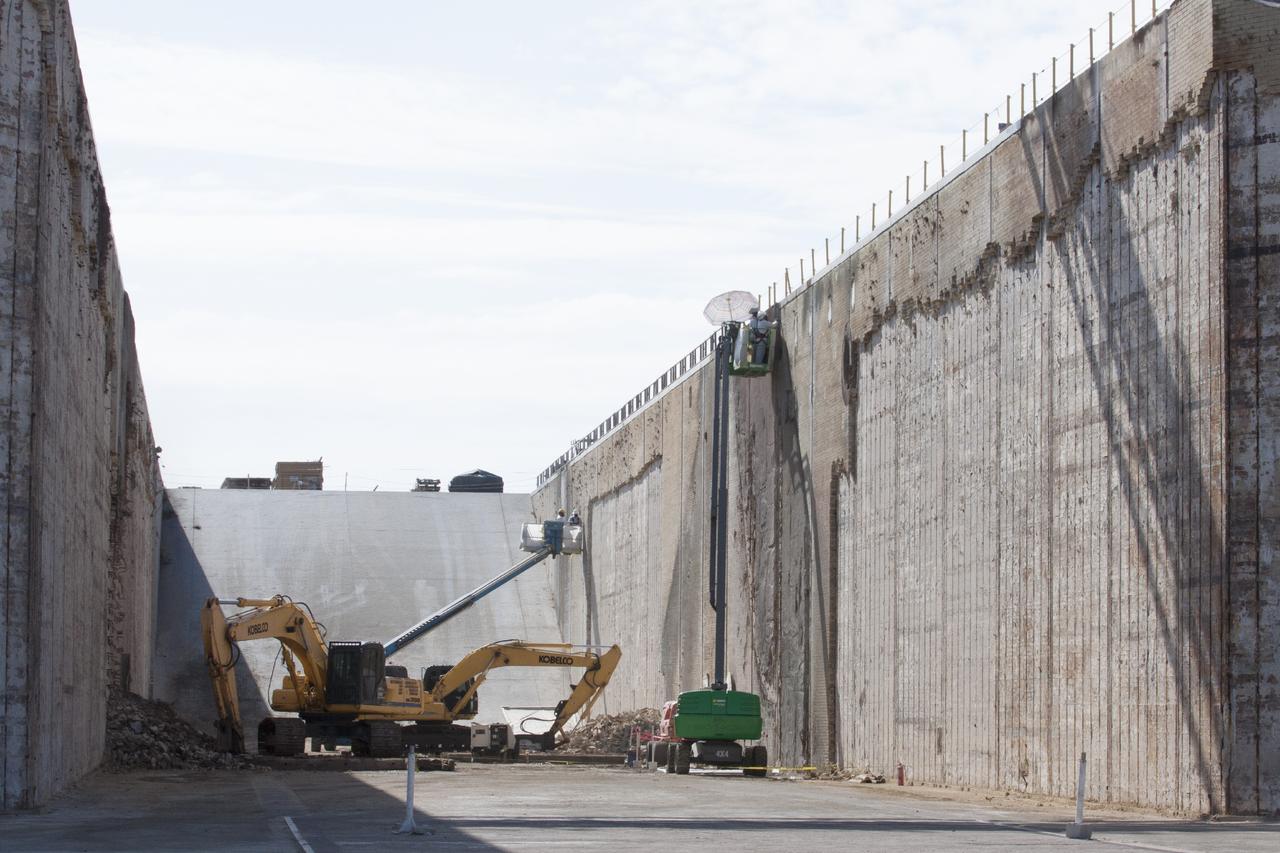
CAPE CANAVERAL, Fla. -- At Launch Pad 39B at NASA’s Kennedy Space Center in Florida, construction workers continue to remove the bricks from the flame trench walls that are below and between the left and right crawlerway tracks. The space shuttle-era flame trench deflector has been completely removed. Launch Pad 39B is being refurbished to support NASA’s Space Launch System and other launch vehicles. The Ground Systems Development and Operations, or GSDO, Program office at Kennedy is leading the center’s transformation to safely handle a variety of rockets and spacecraft. For more information about GSDO, visit: http://go.nasa.gov/groundsystems. Photo credit: NASA/Kim Shiflett
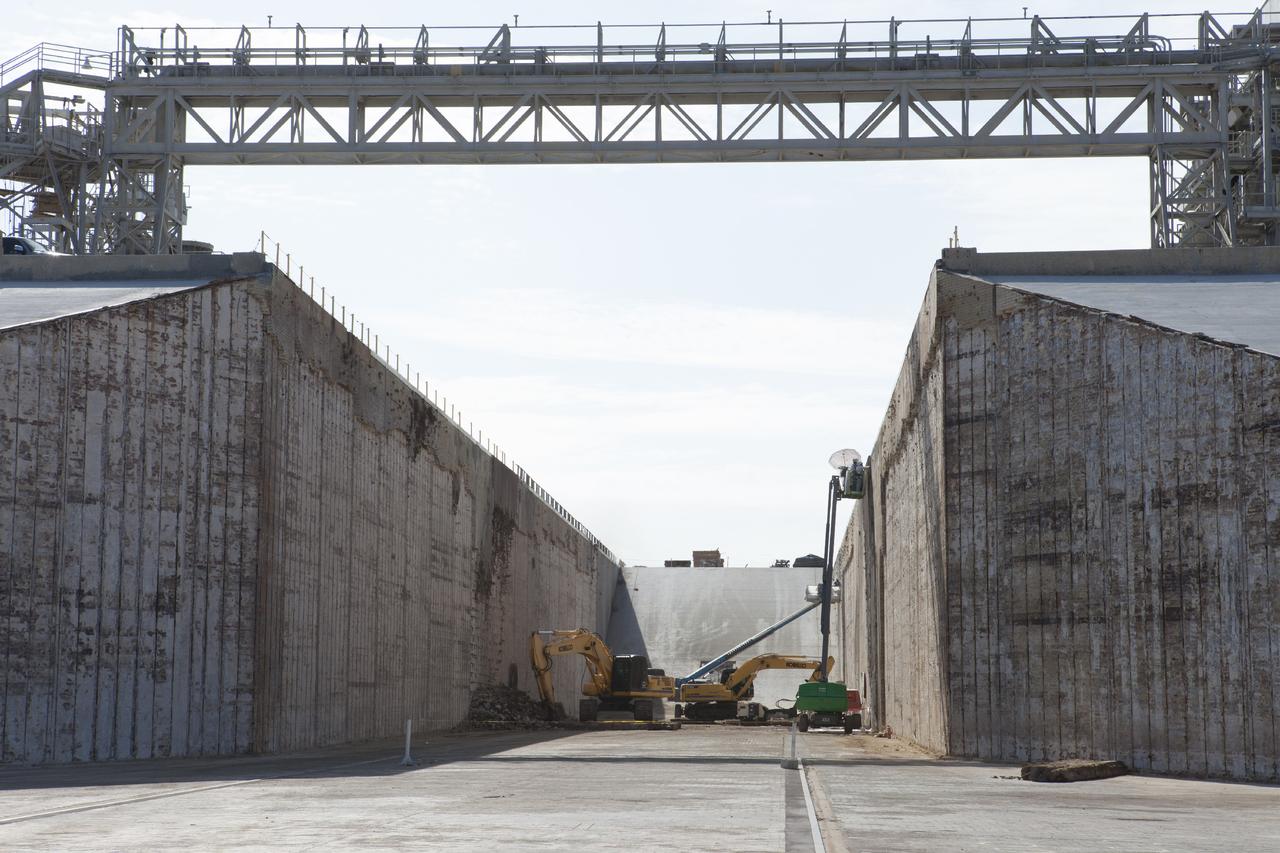
CAPE CANAVERAL, Fla. -- At Launch Pad 39B at NASA’s Kennedy Space Center in Florida, construction workers continue to remove the bricks from the flame trench walls that are below and between the left and right crawlerway tracks. The space shuttle-era flame trench deflector has been completely removed. Launch Pad 39B is being refurbished to support NASA’s Space Launch System and other launch vehicles. The Ground Systems Development and Operations, or GSDO, Program office at Kennedy is leading the center’s transformation to safely handle a variety of rockets and spacecraft. For more information about GSDO, visit: http://go.nasa.gov/groundsystems. Photo credit: NASA/Kim Shiflett
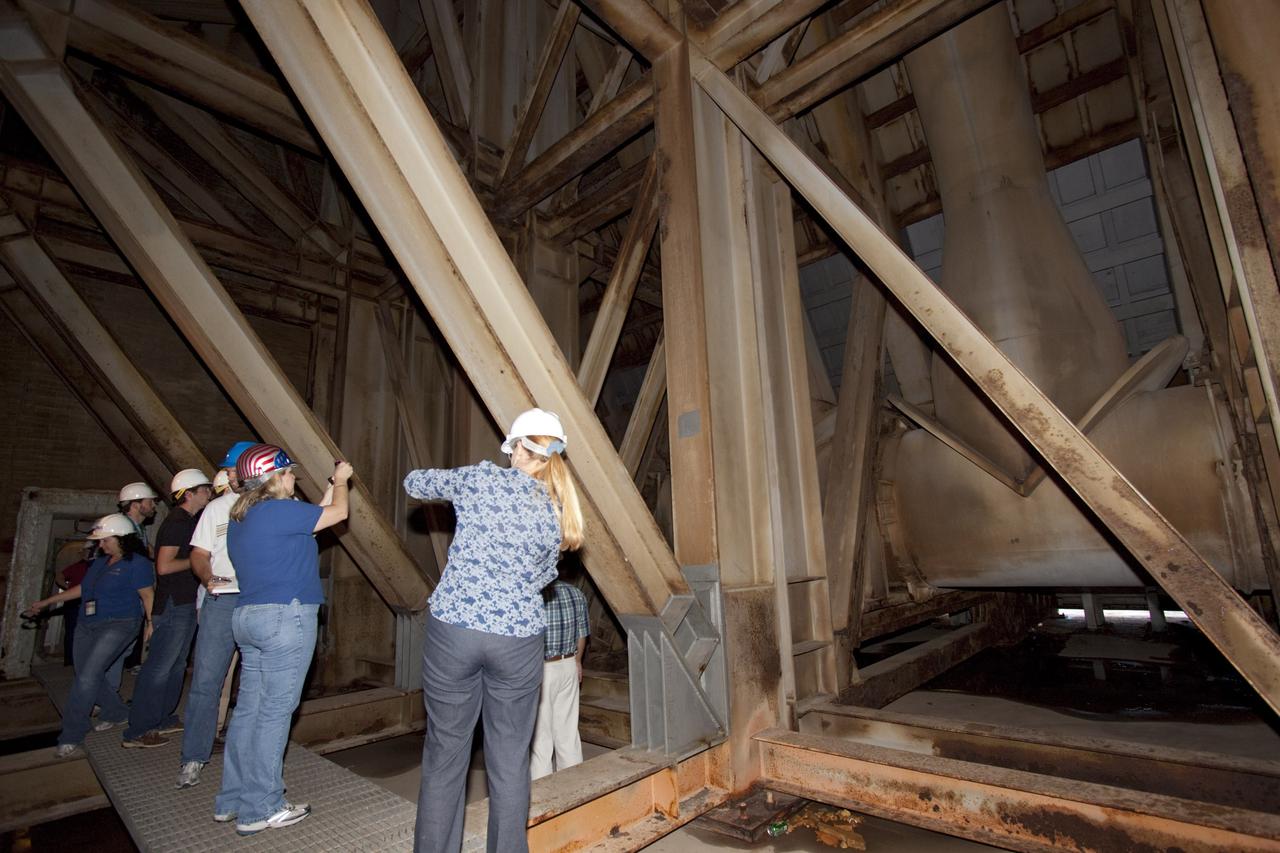
CAPE CANAVERAL, Fla. – Mechanical engineering students from Louisiana State University joined engineers and scientists at Launch Pad 39B at NASA's Kennedy Space Center in Florida as the students toured the facility to have a look at the flame trench. They went inside the pad structure to the area inside the flame deflector which divides the flame trench and funnels exhaust away from a shuttle at liftoff. The flame deflector, which is about 40-feet tall, is essentially hollow inside and braced by steel beams. The students signed up to help designers looking for new, flame and vibration-resistant materials to line the trench. The students are to build a scaled-down version of the flame trench that Kennedy's scientists can use to try out sample materials for the trench. If the samples work in the lab, they can be tried out in the real flame trenches at Launch Pad 39A and 39B. The launch pad has been refurbished extensively and work is continuing to modify the pad to support a variety of launch vehicles in the future. Photo credit: NASA/Jim Grossmann
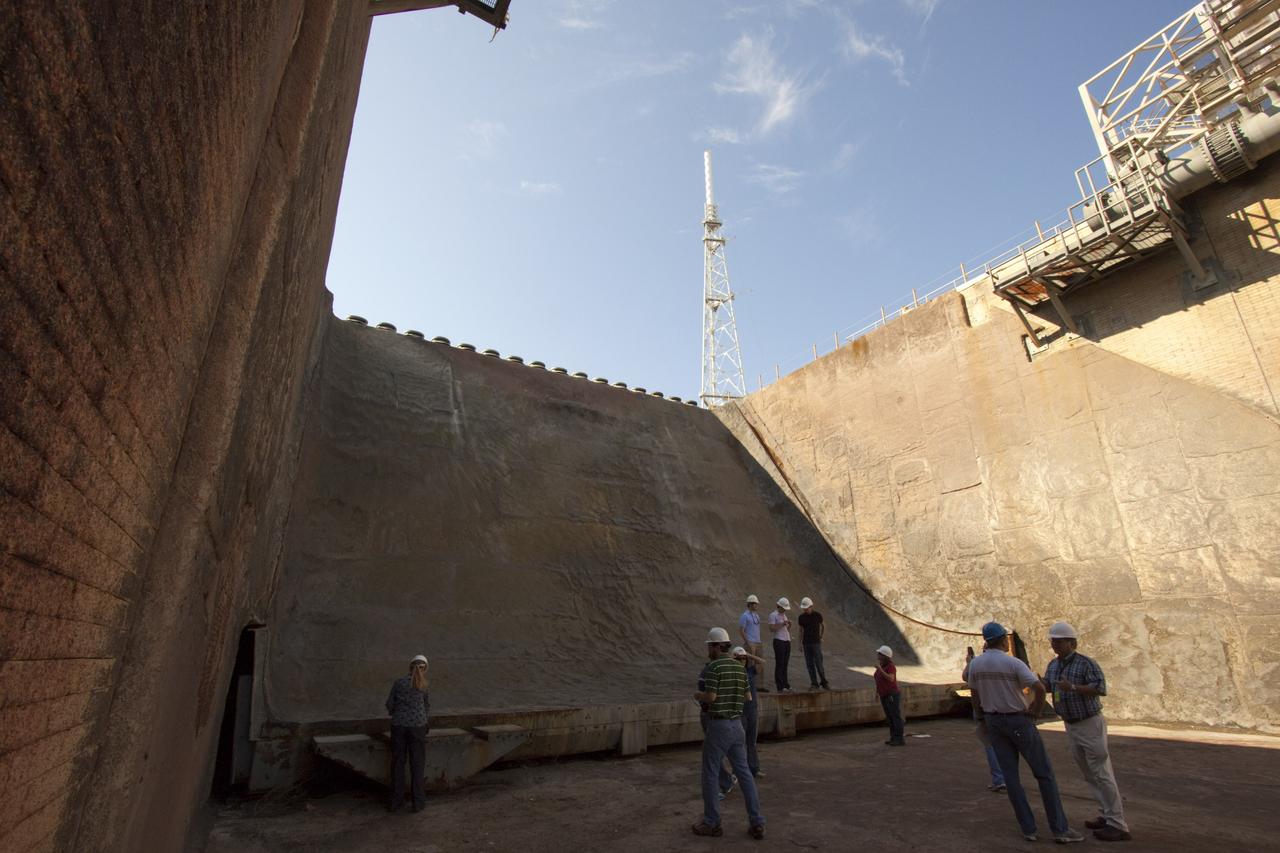
CAPE CANAVERAL, Fla. – Mechanical engineering students from Louisiana State University joined engineers and scientists at Launch Pad 39B at NASA's Kennedy Space Center in Florida as the students toured the facility to have a look at the flame trench. The students, taking pictures of the flame deflector that divides the trench, signed up to help designers looking for new, flame and vibration-resistant materials to line the trench. The students are to build a scaled-down version of the flame trench that Kennedy's scientists can use to try out sample materials for the trench. If the samples work in the lab, they can be tried out in the real flame trenches at Launch Pad 39A and 39B. The launch pad has been refurbished extensively and work is continuing to modify the pad to support a variety of launch vehicles in the future. Photo credit: NASA/Jim Grossmann
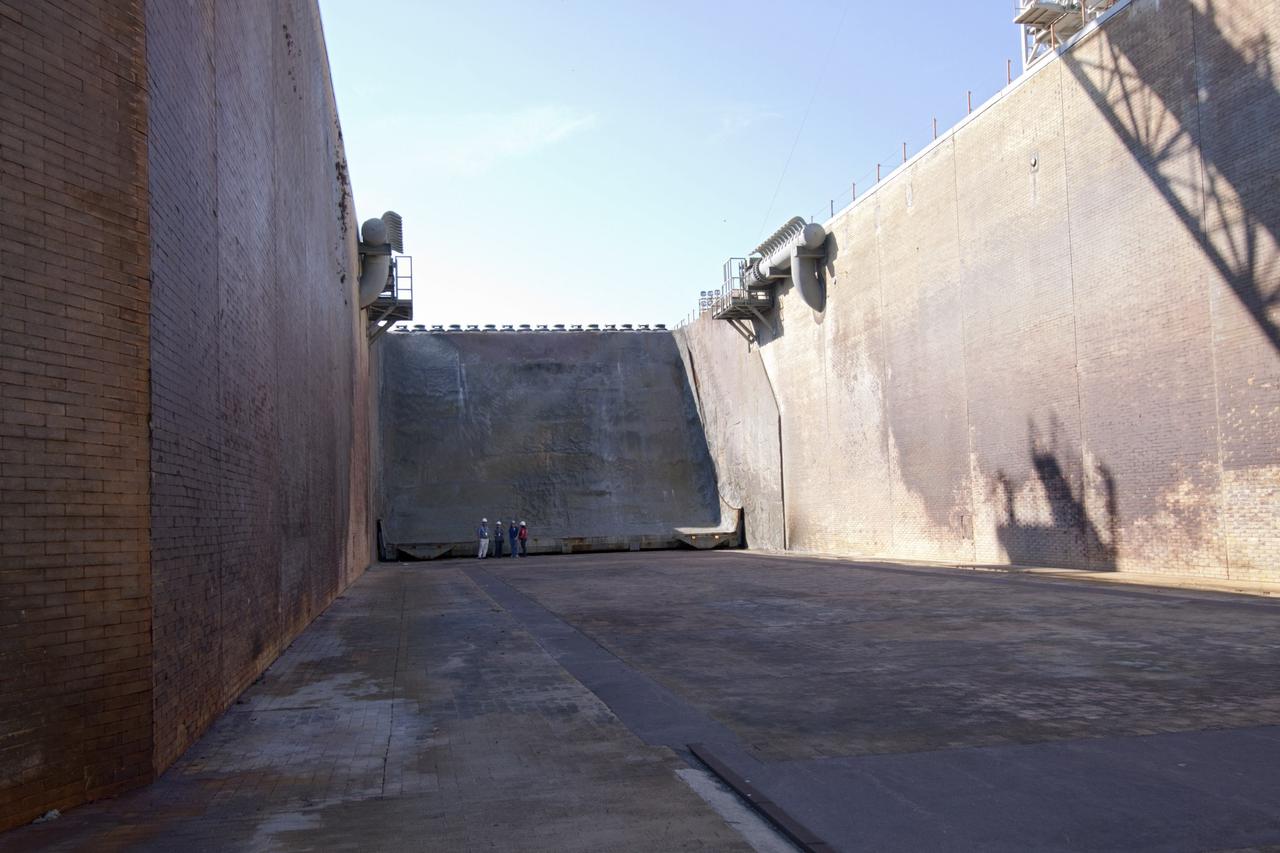
CAPE CANAVERAL, Fla. – The flame trench at Launch Pad 39B at NASA's Kennedy Space Center in Florida endured significant flames, vibrations and other stresses during the space shuttle era. Heading into the future, designers are looking for new, flame and vibration-resistant materials to line the trench. To help in the search, a team of mechanical engineering students at Louisiana State University are to build a scaled-down version of the flame trench that Kennedy's scientists can use to try out sample materials for the trench. If the samples work in the lab, they can be tried out in the real flame trenches at Launch Pad 39A and 39B. The launch pad has been refurbished extensively and work is continuing to modify the pad to support a variety of launch vehicles in the future. Photo credit: NASA/Jim Grossmann

CAPE CANAVERAL, Fla. – The flame trench at Launch Pad 39A at NASA's Kennedy Space Center in Florida endured significant flames, vibrations and other stresses during the space shuttle era. Heading into the future, designers are looking for new, flame and vibration-resistant materials to line the trench. To help in the search, a team of mechanical engineering students at Louisiana State University are to build a scaled-down version of the flame trench that Kennedy's scientists can use to try out sample materials for the trench. If the samples work in the lab, they can be tried out in the real flame trenches at Launch Pad 39A and 39B. The launch pad has been refurbished extensively and work is continuing to modify the pad to support a variety of launch vehicles in the future. Photo credit: NASA/Jim Grossmann
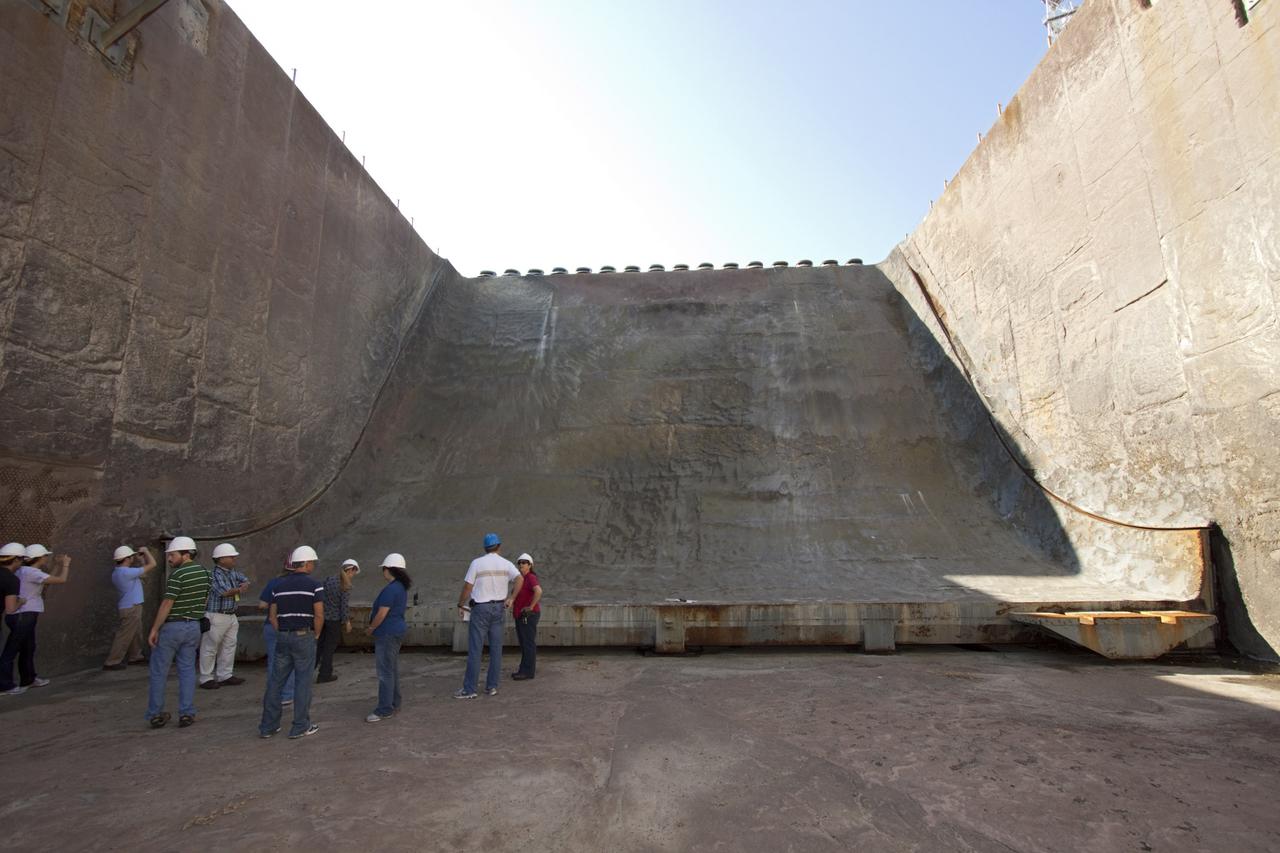
CAPE CANAVERAL, Fla. – Mechanical engineering students from Louisiana State University joined engineers and scientists at Launch Pad 39B at NASA's Kennedy Space Center in Florida as the students toured the facility to have a look at the flame trench. The students, standing on the flame deflector that divides the trench, signed up to help designers looking for new, flame and vibration-resistant materials to line the trench. The students are to build a scaled-down version of the flame trench that Kennedy's scientists can use to try out sample materials for the trench. If the samples work in the lab, they can be tried out in the real flame trenches at Launch Pad 39A and 39B. The launch pad has been refurbished extensively and work is continuing to modify the pad to support a variety of launch vehicles in the future. Photo credit: NASA/Jim Grossmann
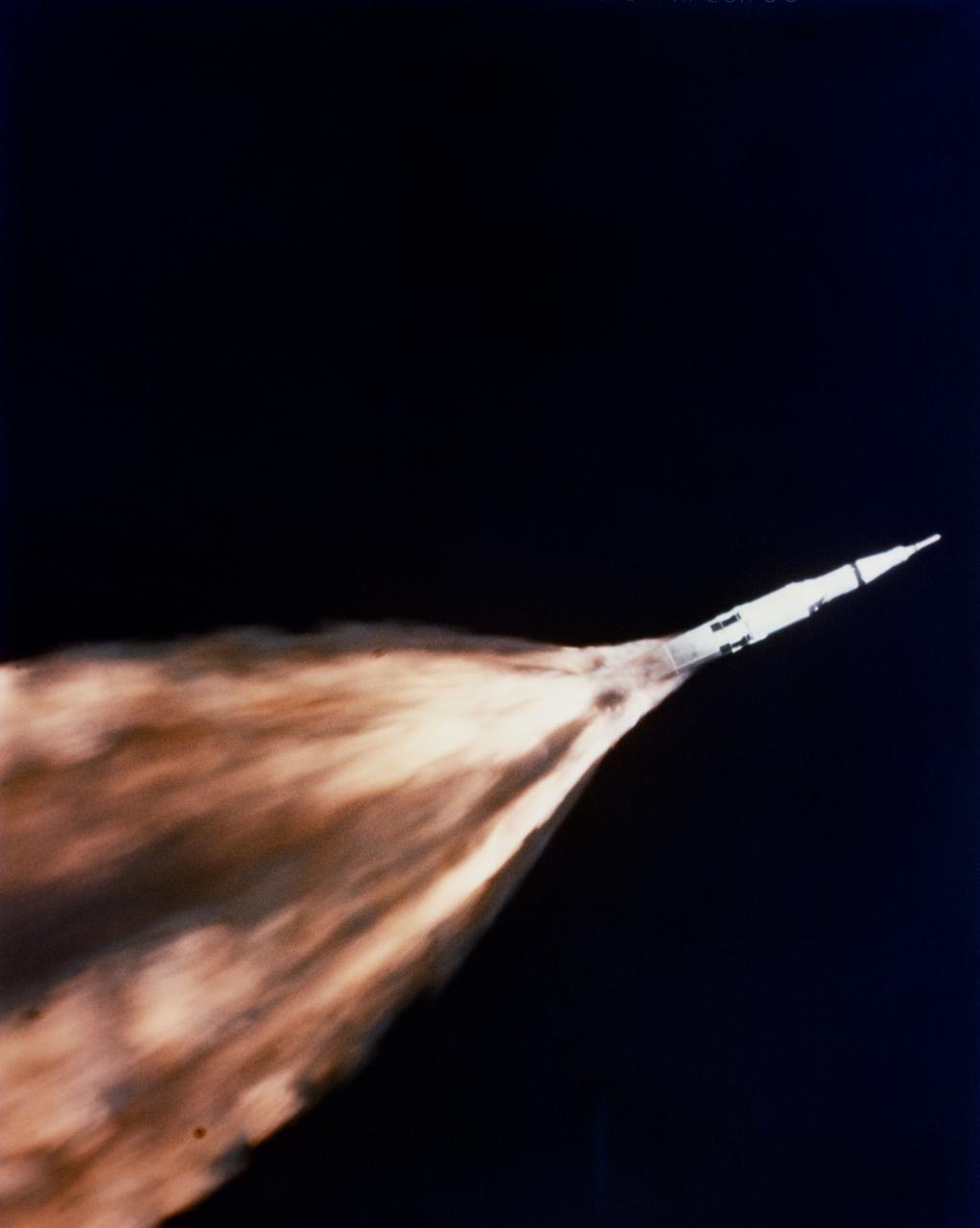
S68-27365 (4 April 1968) --- The five F-1 engines of the huge Apollo/Saturn V space vehicle's first (S-IC) stage leave a gigantic trail of flame in the sky above the Kennedy Space Center seconds after liftoff. The launch of the Apollo 6 (Spacecraft 020/Saturn 502) unmanned space mission occurred at 07:00:01.5 (EST), April 4, 1968. This view of the Apollo 6 launch was taken from a chase plane.
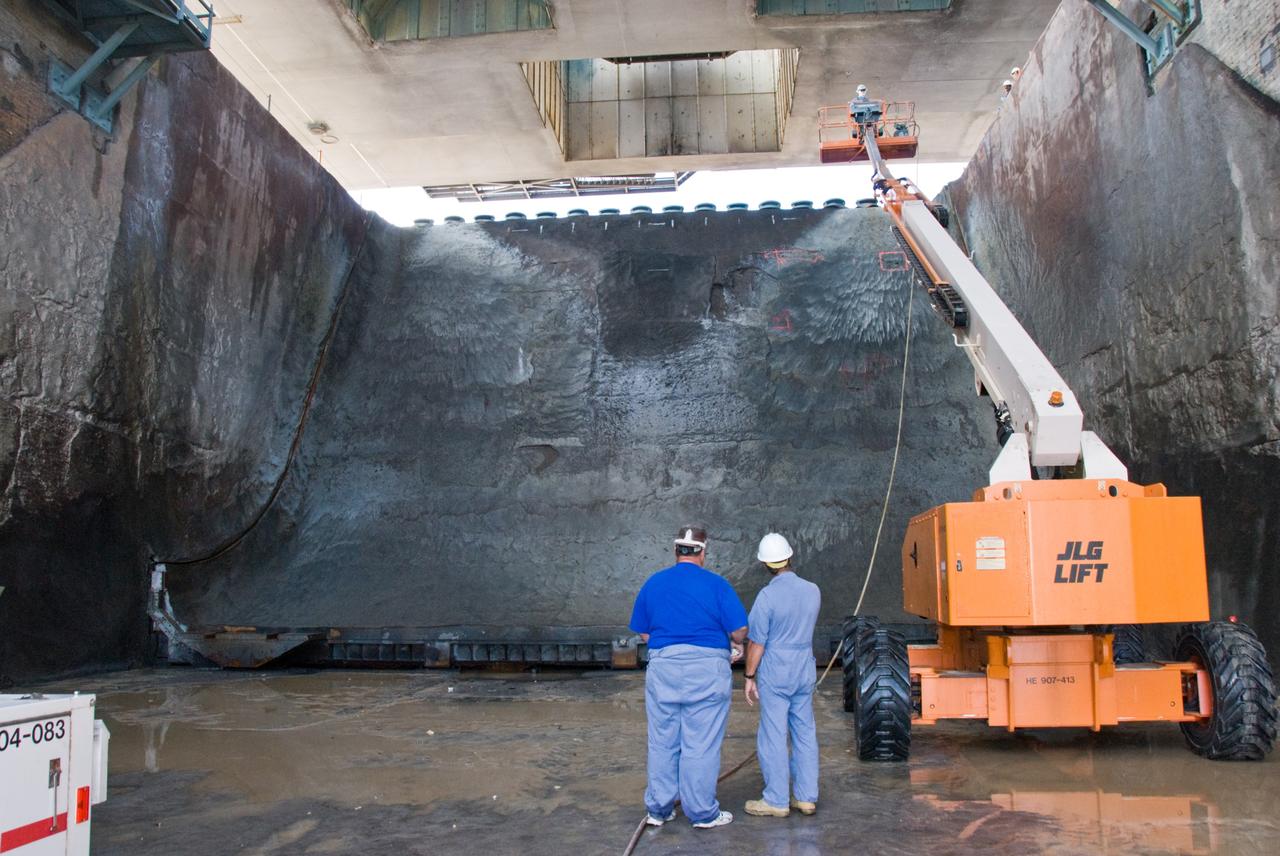
CAPE CANAVERAL, Fla. – In Launch Pad 39A lame trench at NASA's Kennedy Space Center in Florida, workers document damage found after launch of space shuttle Atlantis on the STS-125 mission May 11. About 25 square feet of Fondue Fyre broke off from the north side of the solid rocket booster flame deflector. The flame trench channels the flames and smoke exhaust of the shuttle's solid rocket boosters away from the space shuttle. Fondue Fyre is a fire-resistant concrete-like material. Some pneumatic lines (gaseous nitrogen, pressurized air) in the area also were damaged. Preliminary assessments indicated technicians can make repairs to the pad in time to support space shuttle Endeavour's targeted June 13 launch. Photo credit: NASA/Kim Shiflett
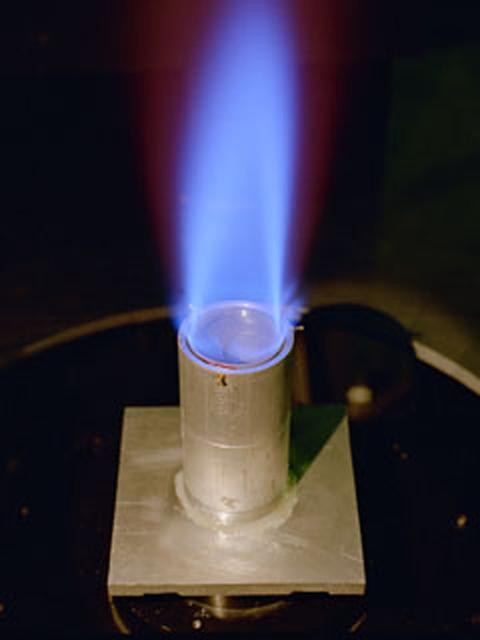
The Ring Flame Stabilizer has been developed in conjunction with Lewis Research Center. This device can lower pollutant emissions (which contribute to smog and air pollution) from natural-gas appliances such as furnaces and water heaters by 90 percent while improving energy efficiency by 2 percent.
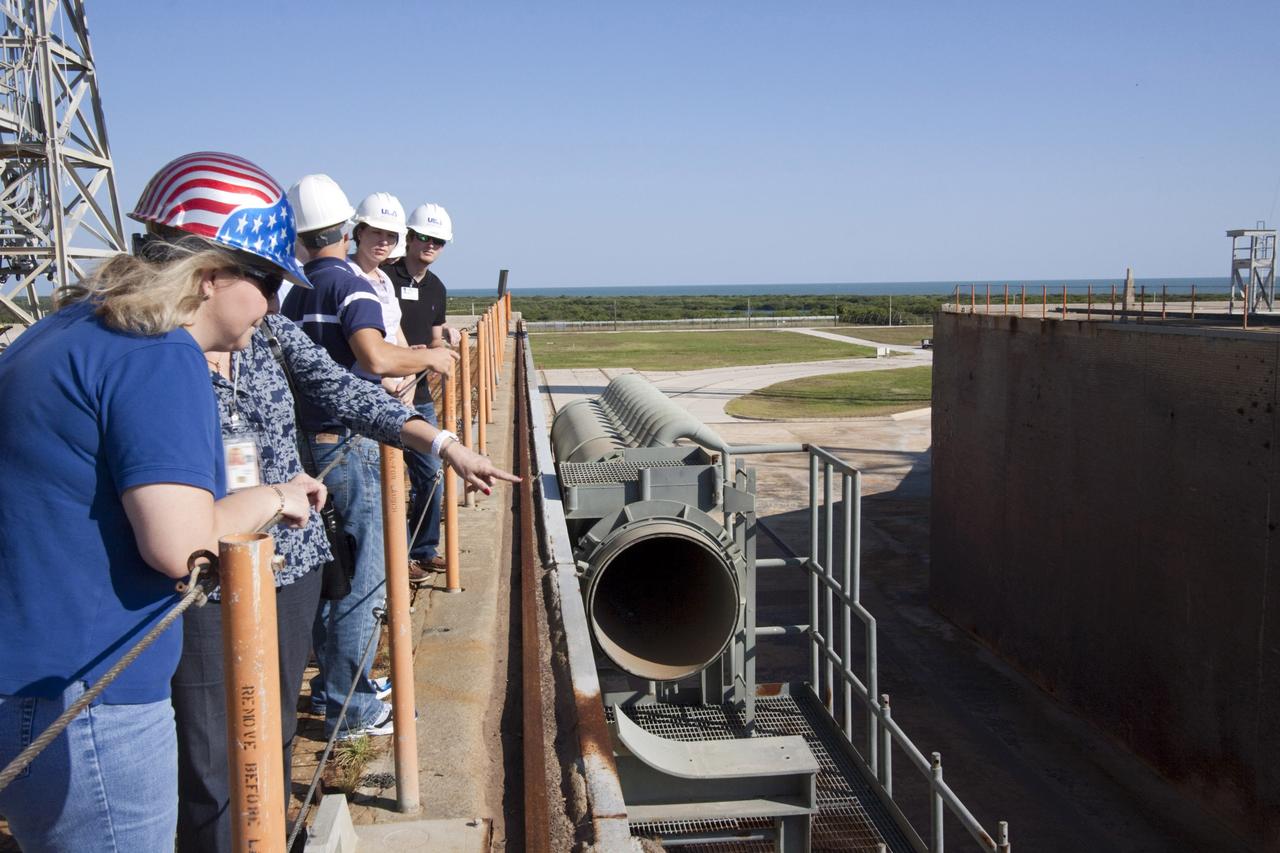
CAPE CANAVERAL, Fla. – Mechanical engineering students from Louisiana State University joined engineers and scientists at Launch Pad 39B at NASA's Kennedy Space Center in Florida as the students toured the facility to have a look at the flame trench. Designers are looking for new, flame and vibration-resistant materials to line the trench. To help in the search, a team of mechanical engineering students at Louisiana State University are to build a scaled-down version of the flame trench that Kennedy's scientists can use to try out sample materials for the trench. If the samples work in the lab, they can be tried out in the real flame trenches at Launch Pad 39A and 39B. The launch pad has been refurbished extensively and work is continuing to modify the pad to support a variety of launch vehicles in the future. Photo credit: NASA/Jim Grossmann
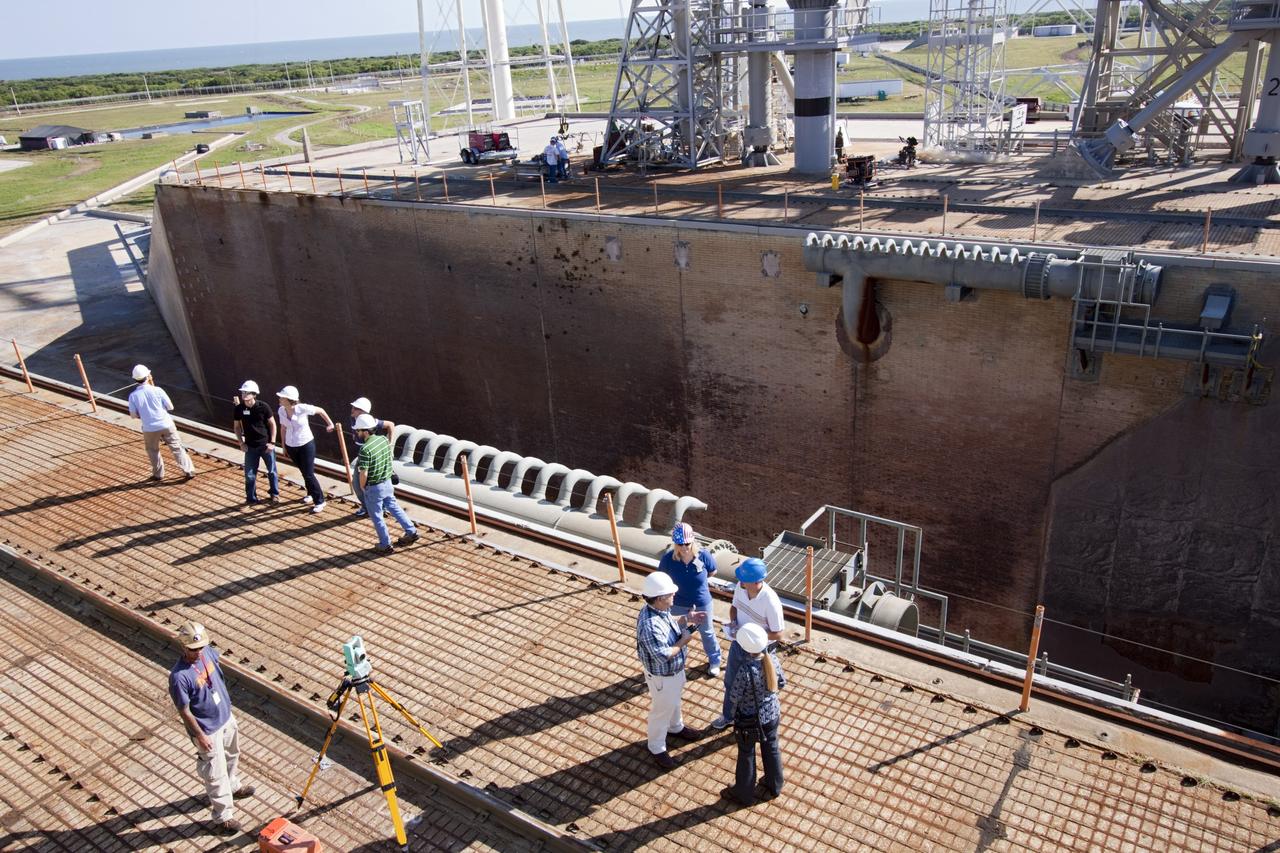
CAPE CANAVERAL, Fla. – Mechanical engineering students from Louisiana State University, the group on the left, joined engineers and scientists at Launch Pad 39B at NASA's Kennedy Space Center in Florida as the students toured the facility to have a look at the flame trench. Designers are looking for new, flame and vibration-resistant materials to line the trench. To help in the search, a team of mechanical engineering students at Louisiana State University are to build a scaled-down version of the flame trench that Kennedy's scientists can use to try out sample materials for the trench. If the samples work in the lab, they can be tried out in the real flame trenches at Launch Pad 39A and 39B. The launch pad has been refurbished extensively and work is continuing to modify the pad to support a variety of launch vehicles in the future. Photo credit: NASA/Jim Grossmann
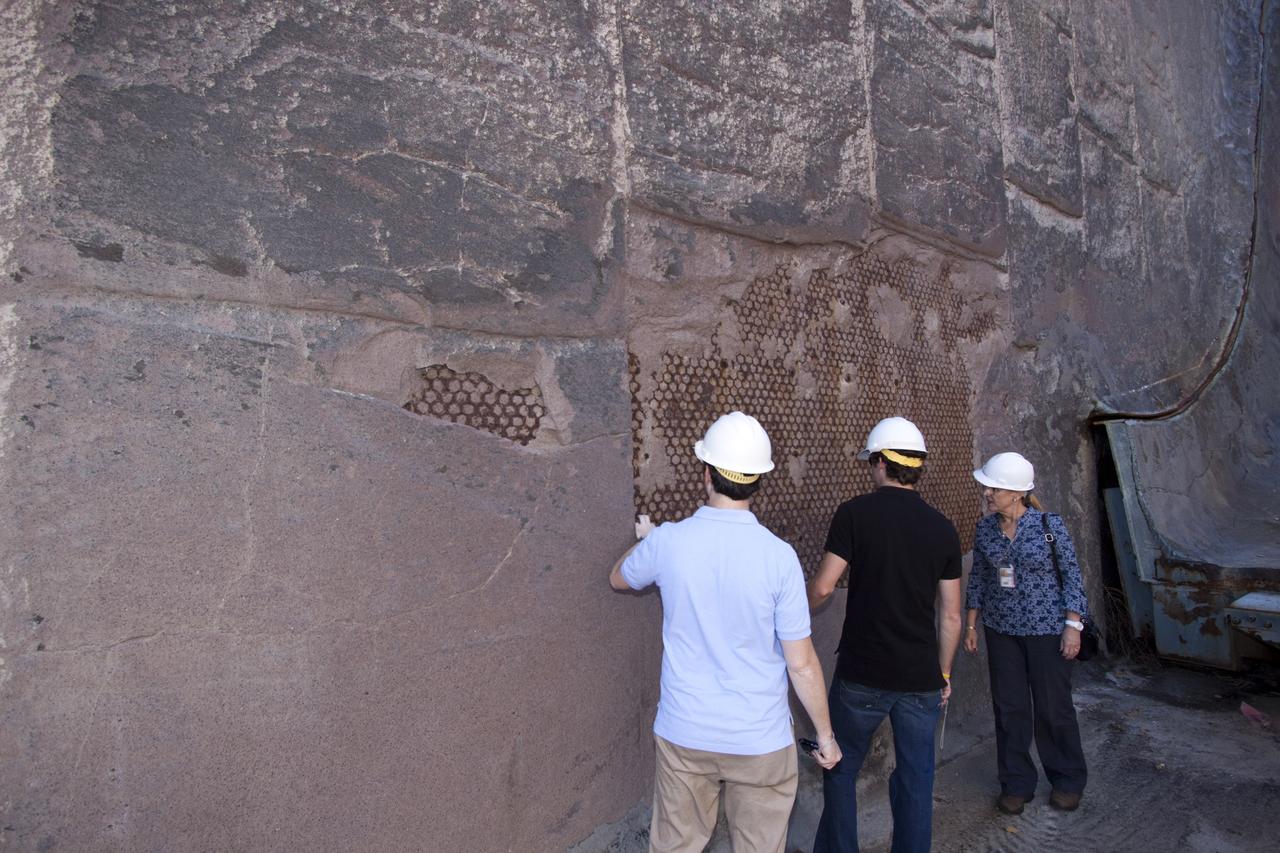
CAPE CANAVERAL, Fla. – Louisiana State University mechanical engineering students Kevin Schenker, from left, and Jacob Koch join Luz Marina Calle, a scientist at NASA's Kennedy Space in Florida, as they examine a portion of the wall of the flame trench at Launch Pad 39B. Designers are looking for new, flame and vibration-resistant materials to line the trench. To help in the search, a team of mechanical engineering students at Louisiana State University are to build a scaled-down version of the flame trench that Kennedy's scientists can use to try out sample materials for the trench. If the samples work in the lab, they can be tried out in the real flame trenches at Launch Pad 39A and 39B. The launch pad has been refurbished extensively and work is continuing to modify the pad to support a variety of launch vehicles in the future. Photo credit: NASA/Jim Grossmann
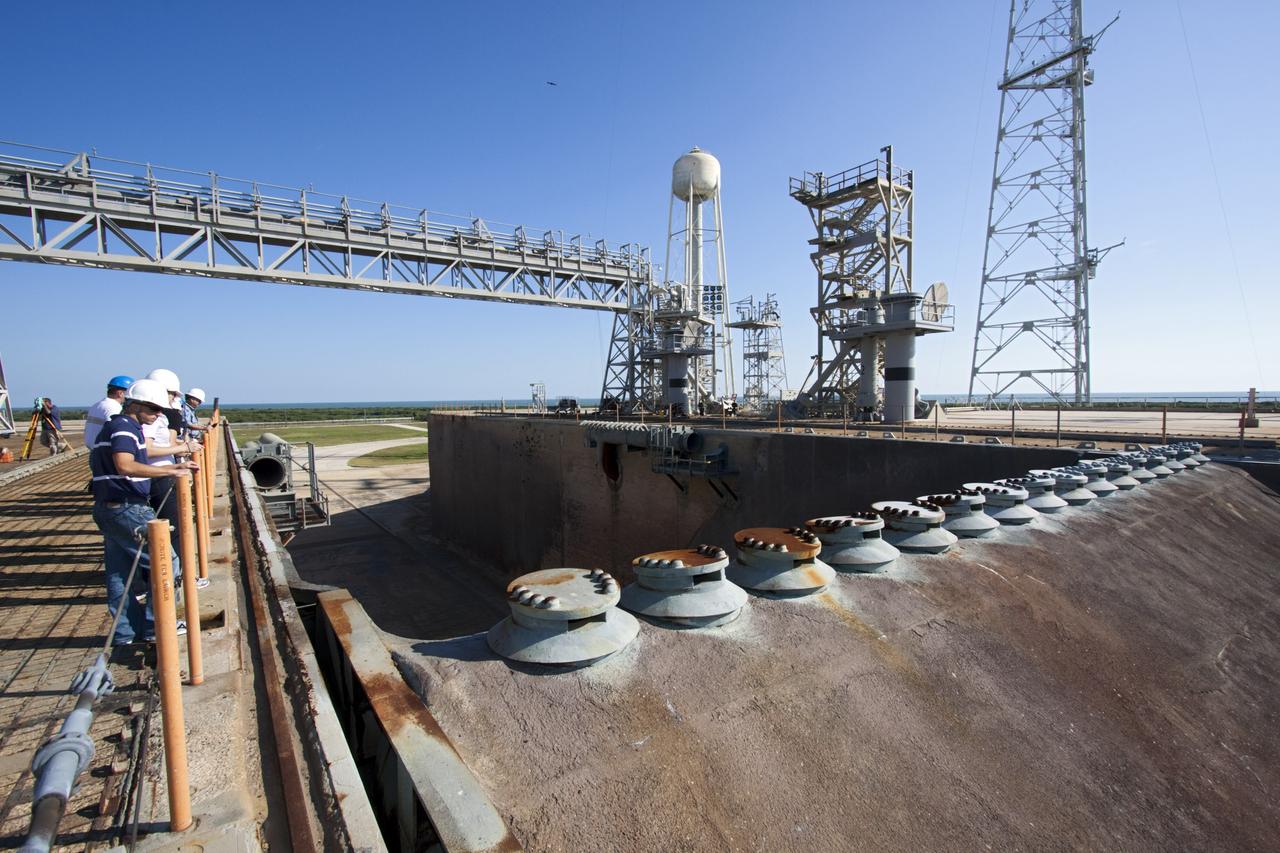
CAPE CANAVERAL, Fla. – Mechanical engineering students from Louisiana State University joined engineers and scientists at Launch Pad 39B at NASA's Kennedy Space Center in Florida as the students toured the facility to have a look at the flame trench. Designers are looking for new, flame and vibration-resistant materials to line the trench. To help in the search, a team of mechanical engineering students at Louisiana State University are to build a scaled-down version of the flame trench that Kennedy's scientists can use to try out sample materials for the trench. If the samples work in the lab, they can be tried out in the real flame trenches at Launch Pad 39A and 39B. The launch pad has been refurbished extensively and work is continuing to modify the pad to support a variety of launch vehicles in the future. Photo credit: NASA/Jim Grossmann
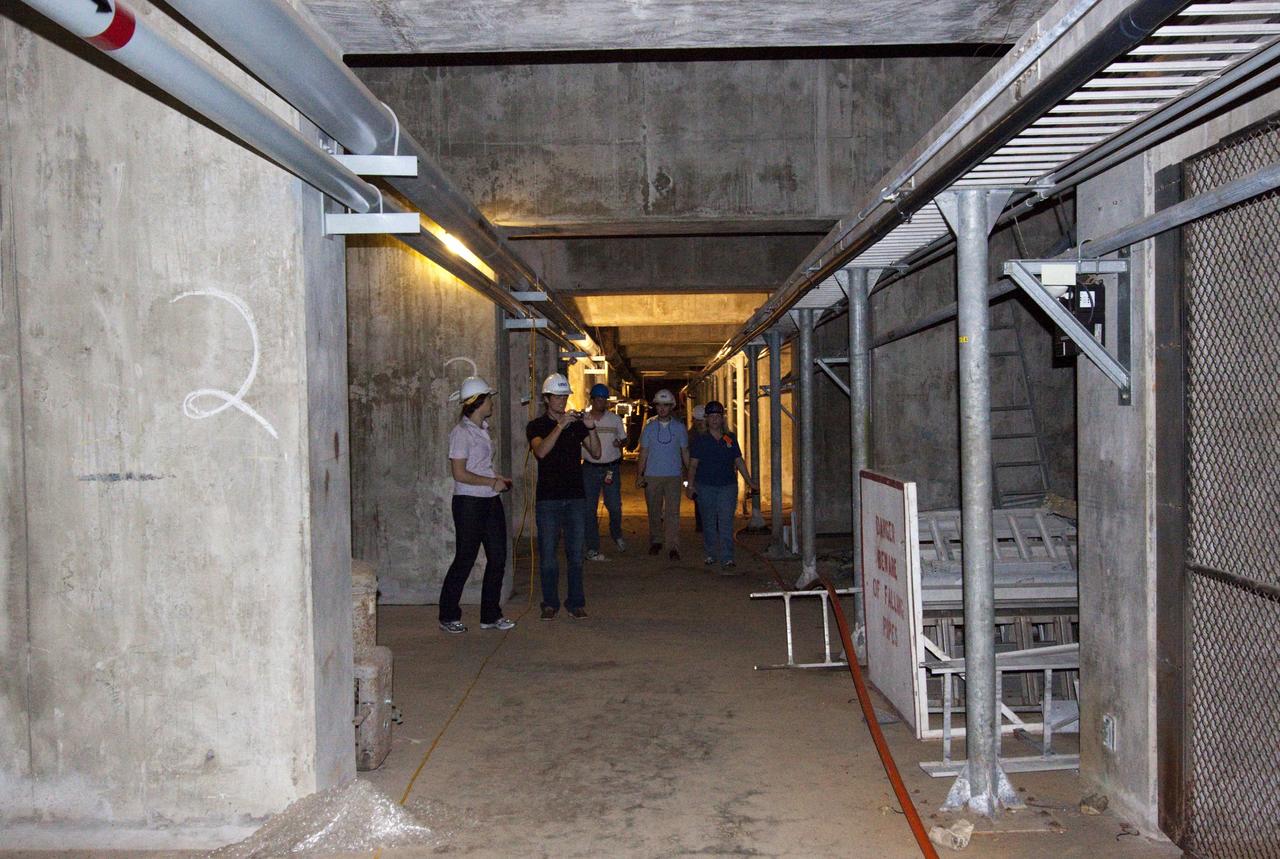
CAPE CANAVERAL, Fla. – Mechanical engineering students from Louisiana State University joined engineers and scientists at Launch Pad 39B at NASA's Kennedy Space Center in Florida as the students toured the facility to have a look at the flame trench. They went inside the pad structure as part of their insight. The students signed up to help designers looking for new, flame and vibration-resistant materials to line the trench. The students are to build a scaled-down version of the flame trench that Kennedy's scientists can use to try out sample materials for the trench. If the samples work in the lab, they can be tried out in the real flame trenches at Launch Pad 39A and 39B. The launch pad has been refurbished extensively and work is continuing to modify the pad to support a variety of launch vehicles in the future. Photo credit: NASA/Jim Grossmann
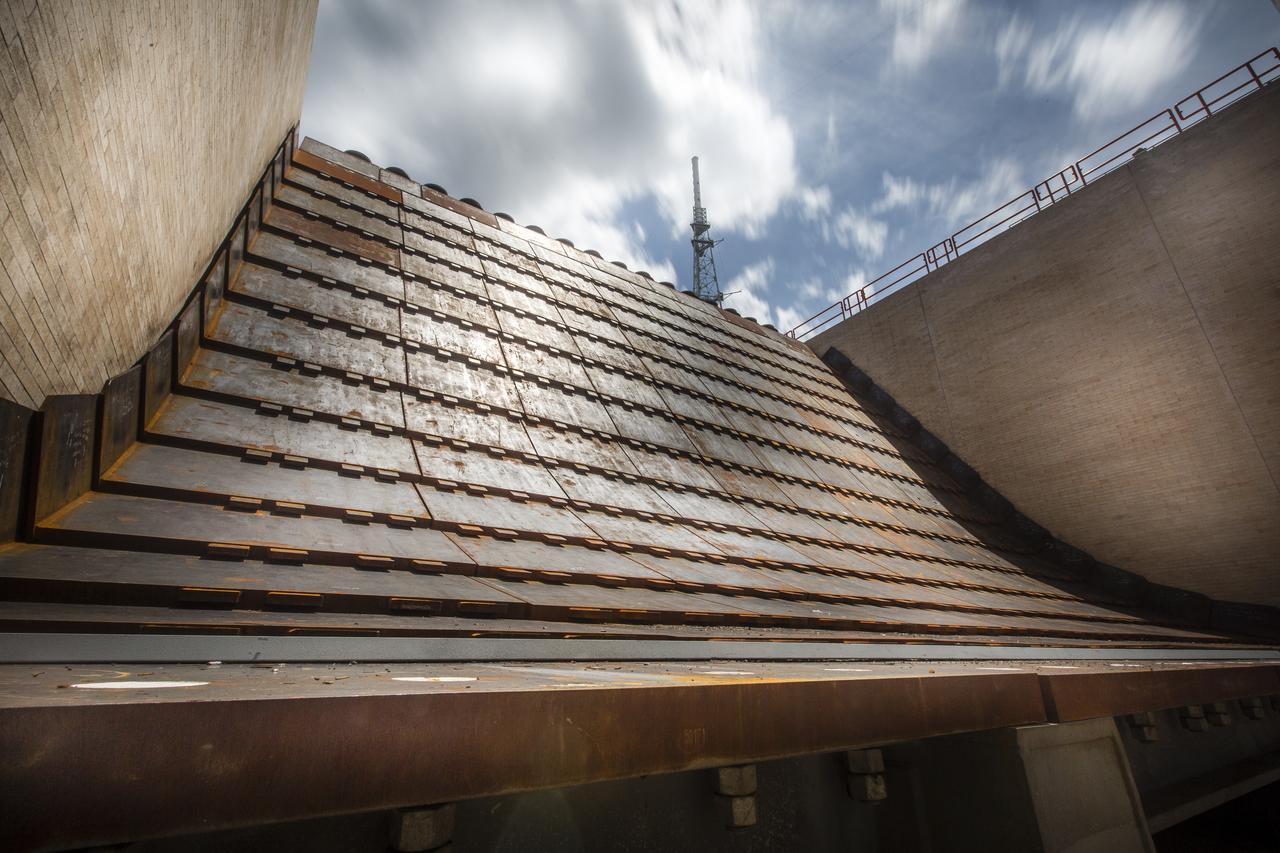
A close-up view of the flame trench and flame deflector at Launch Pad 39B at NASA's Kennedy Space Center in Florida on July 26, 2018. The launch pad has undergone upgrades and modifications to accommodate NASA's Space Launch System and Orion spacecraft for Exploration Mission-1 and other deep space missions. New heat-resistant bricks have been installed on the walls and a new flame deflector is in place. The clean pad concept is designed to support NASA and commercial launch providers at the multi-user spaceport.
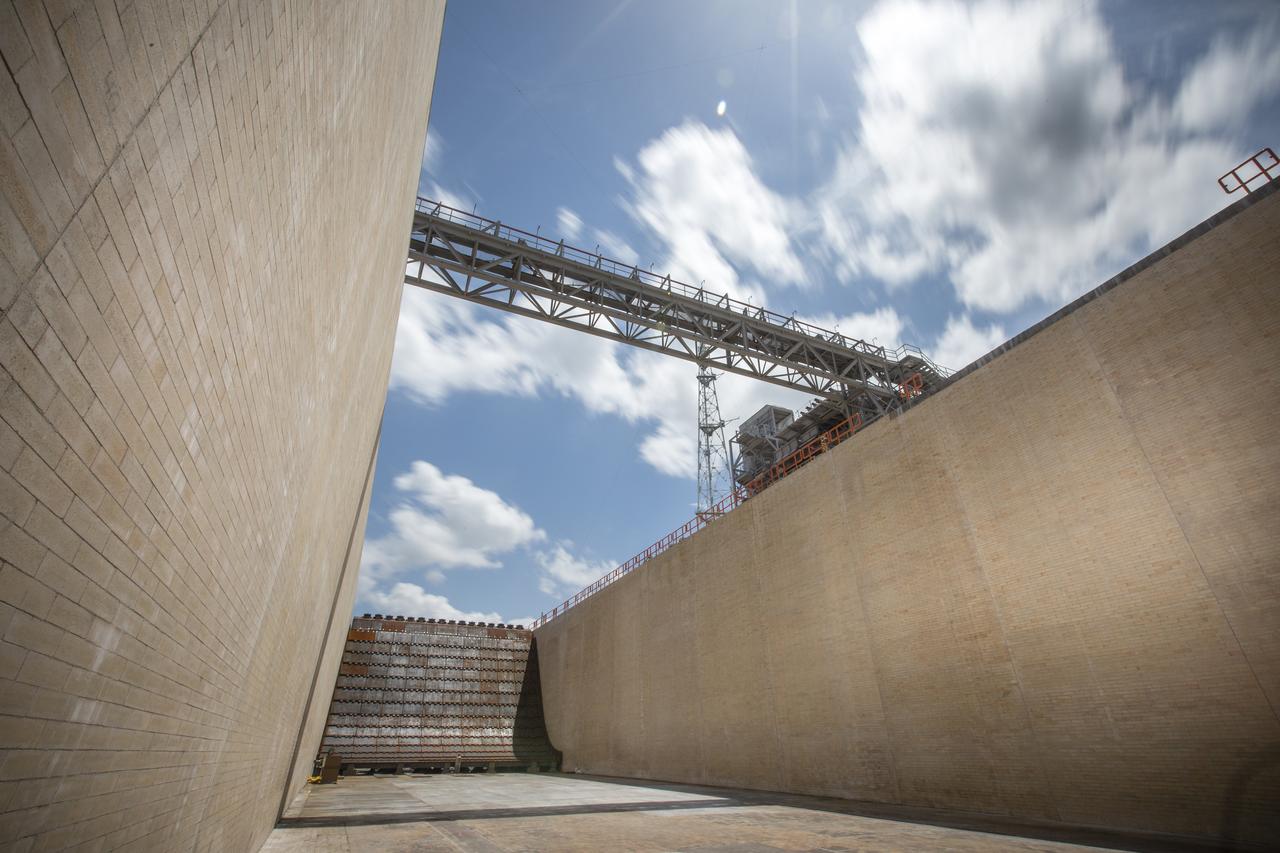
A close-up view of the flame trench and flame deflector at Launch Pad 39B at NASA's Kennedy Space Center in Florida on July 26, 2018. The launch pad has undergone upgrades and modifications to accommodate NASA's Space Launch System and Orion spacecraft for Exploration Mission-1 and other deep space missions. New heat-resistant bricks have been installed on the walls and a new flame deflector is in place. The clean pad concept is designed to support NASA and commercial launch providers at the multi-user spaceport.
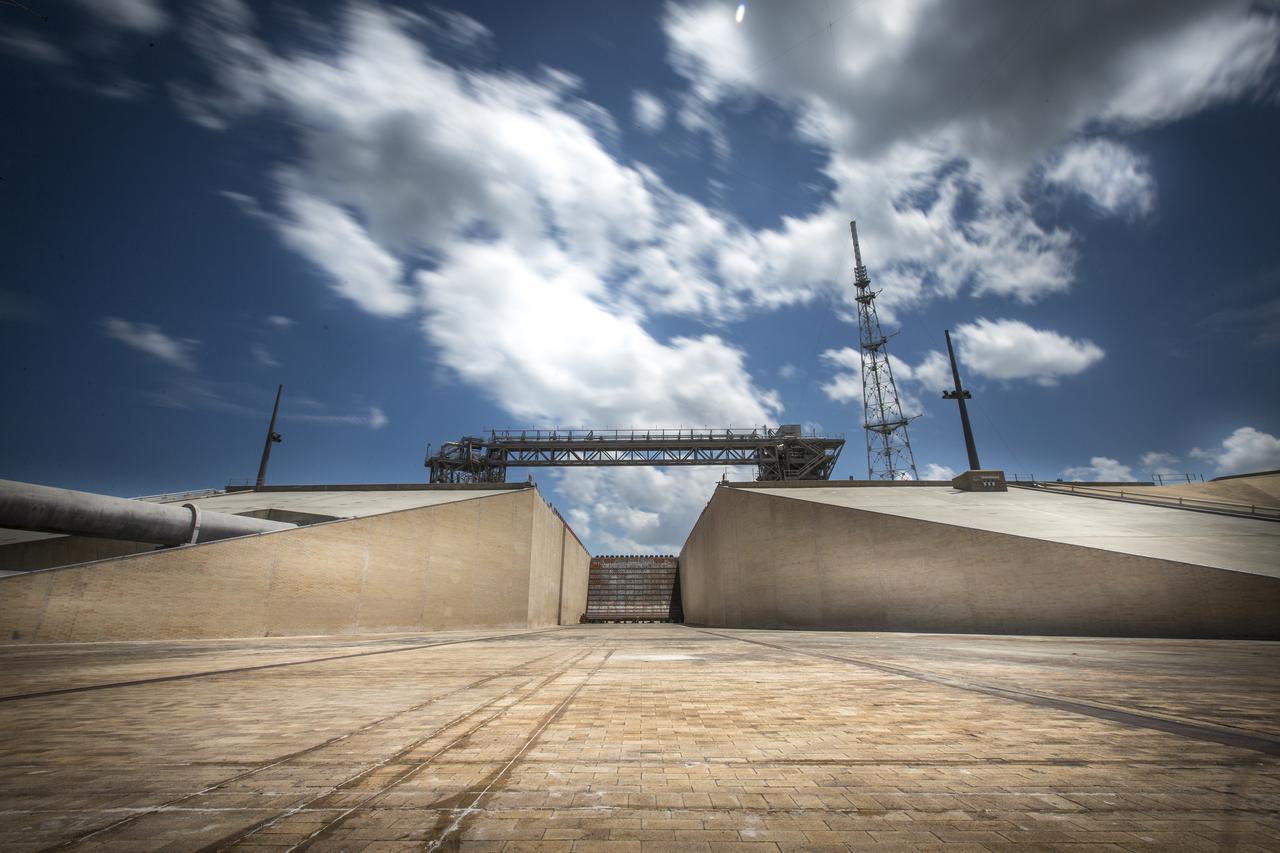
The flame trench and flame deflector are in view at Launch Pad 39B at NASA's Kennedy Space Center in Florida on July 26, 2018. The launch pad has undergone upgrades and modifications to accommodate NASA's Space Launch System and Orion spacecraft for Exploration Mission-1 and other deep space missions. New heat-resistant bricks have been installed on the walls and a new flame deflector is in place. The clean pad concept is designed to support NASA and commercial launch providers at the multi-user spaceport.
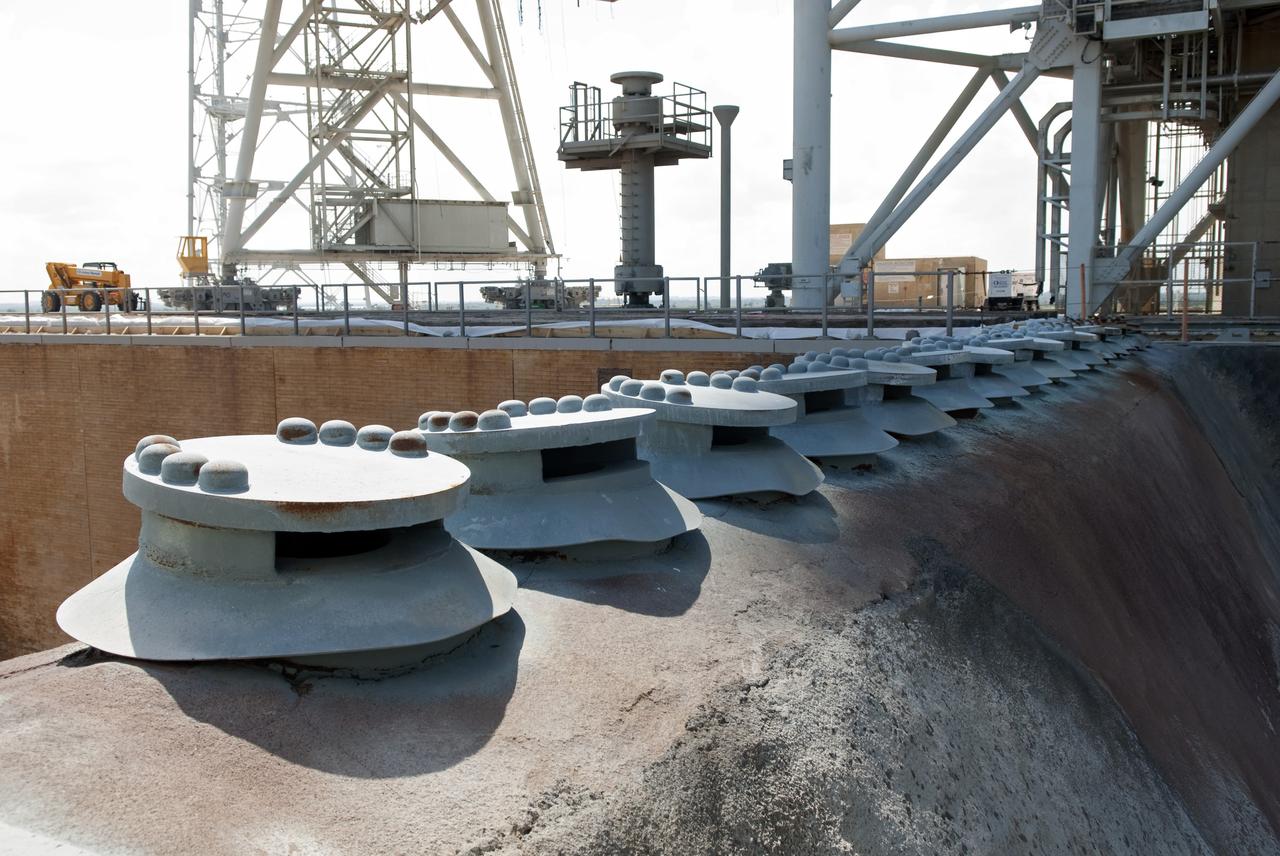
CAPE CANAVERAL, Fla. -- At NASA's Kennedy Space Center in Florida, caps from the fuel tanks that serviced the shuttle's external fuel tank are seen in this image above the flame trench during deconstruction of Launch Pad 39B. Starting in 2009, the structure at Pad B was no longer needed for NASA's Space Shuttle Program, so it is being restructured for future use. The new design will feature a "clean pad" for rockets to come with their own launcher, making it more versatile for a number of vehicles. For information on NASA's future plans, visit www.nasa.gov. Photo credit: NASA/Jim Grossmann
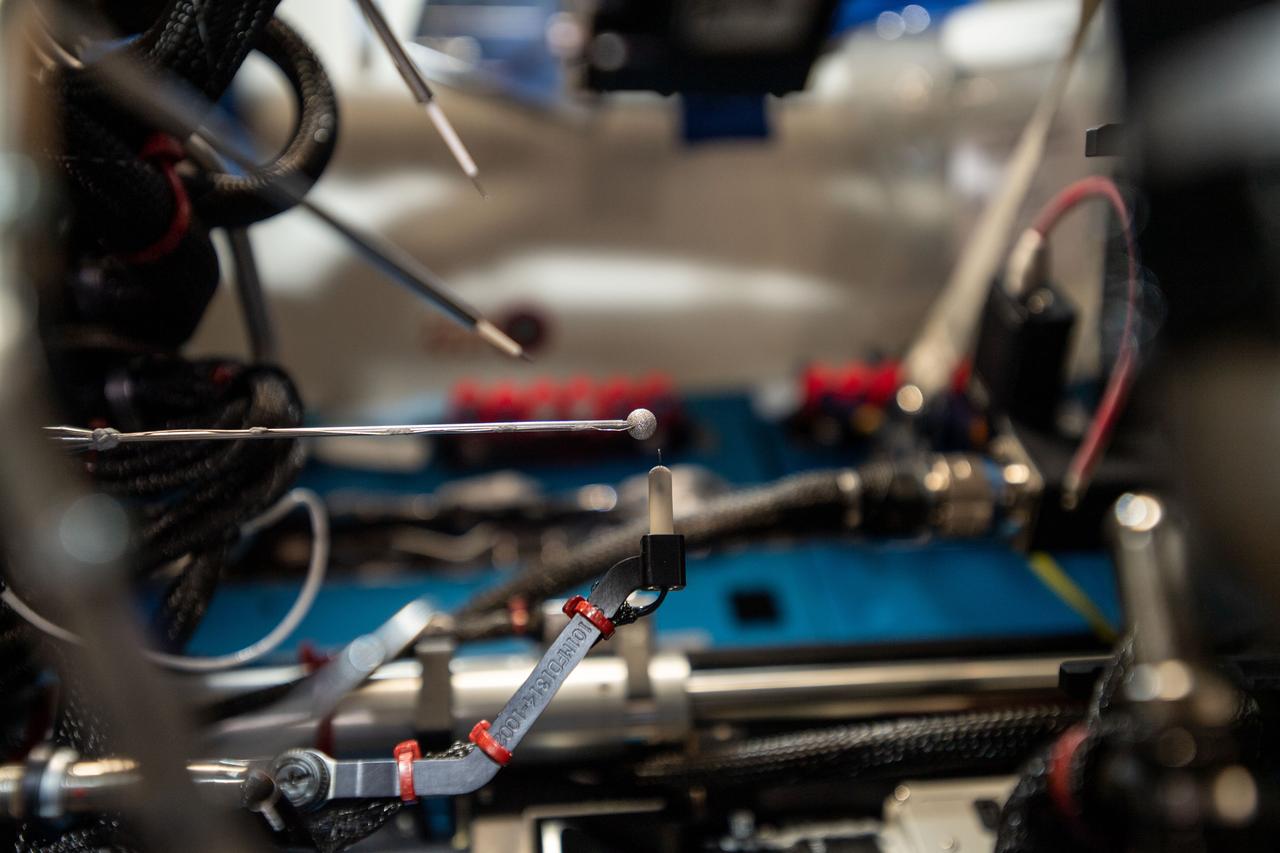
iss059e103188 (6/14/2019) --- Photo documentation taken aboard the International Space Station (ISS) during the Fluids and Combustion Facility (FCF) Combustion Integration Rack (CIR) / Advanced Combustion via Microgravity Experiments (ACME) / Flame Design hardware replacement.

To continue his work, a construction worker secures clamps on a section of metal on the surface of Launch Pad 39B at NASA's Kennedy Space Center in Florida on July 26, 2018. The launch pad has undergone upgrades and modifications to accommodate NASA's Space Launch System and Orion spacecraft for Exploration Mission-1 and subsequent missions. Upgrades include new heat-resistant bricks on the walls of the flame trench and installation of a new flame deflector. All of the upgrades have been managed by Exploration Ground Systems.
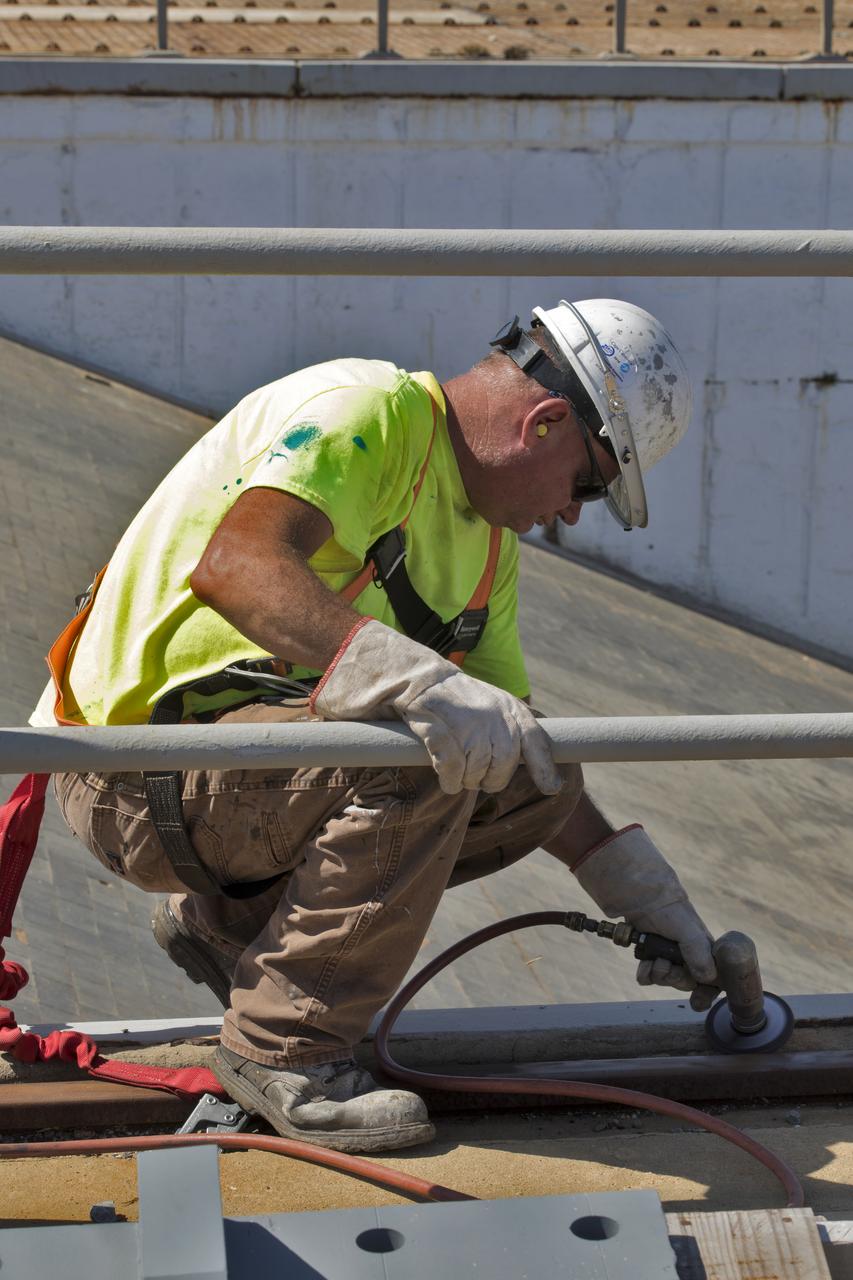
A construction worker sands a section of a wood beam on the surface of Launch Pad 39B at NASA’s Kennedy Space Center in Florida on Feb. 22, 2019. The launch pad has undergone upgrades and modifications to accommodate NASA's Space Launch System and Orion spacecraft for Exploration Mission-1 and subsequent missions. Upgrades include new heat-resistant bricks on the walls of the flame trench and installation of a new flame deflector. All of the upgrades have been managed by Exploration Ground Systems.
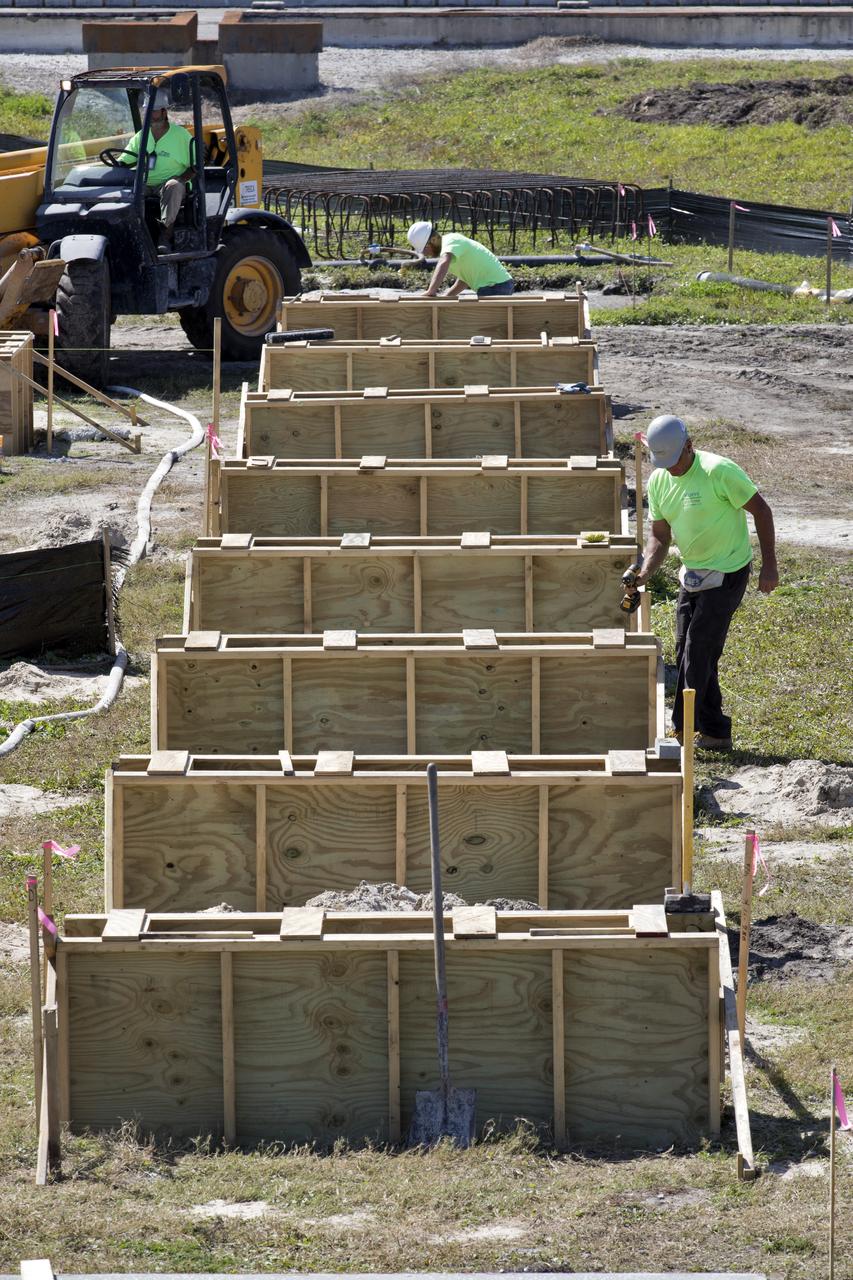
Construction workers stage parts and equipment nearby Launch Pad 39B at NASA’s Kennedy Space Center in Florida on Feb. 22, 2019. The launch pad has undergone upgrades and modifications to accommodate NASA's Space Launch System and Orion spacecraft for Exploration Mission-1 and subsequent missions. Upgrades include new heat-resistant bricks on the walls of the flame trench and installation of a new flame deflector. All of the upgrades have been managed by Exploration Ground Systems.
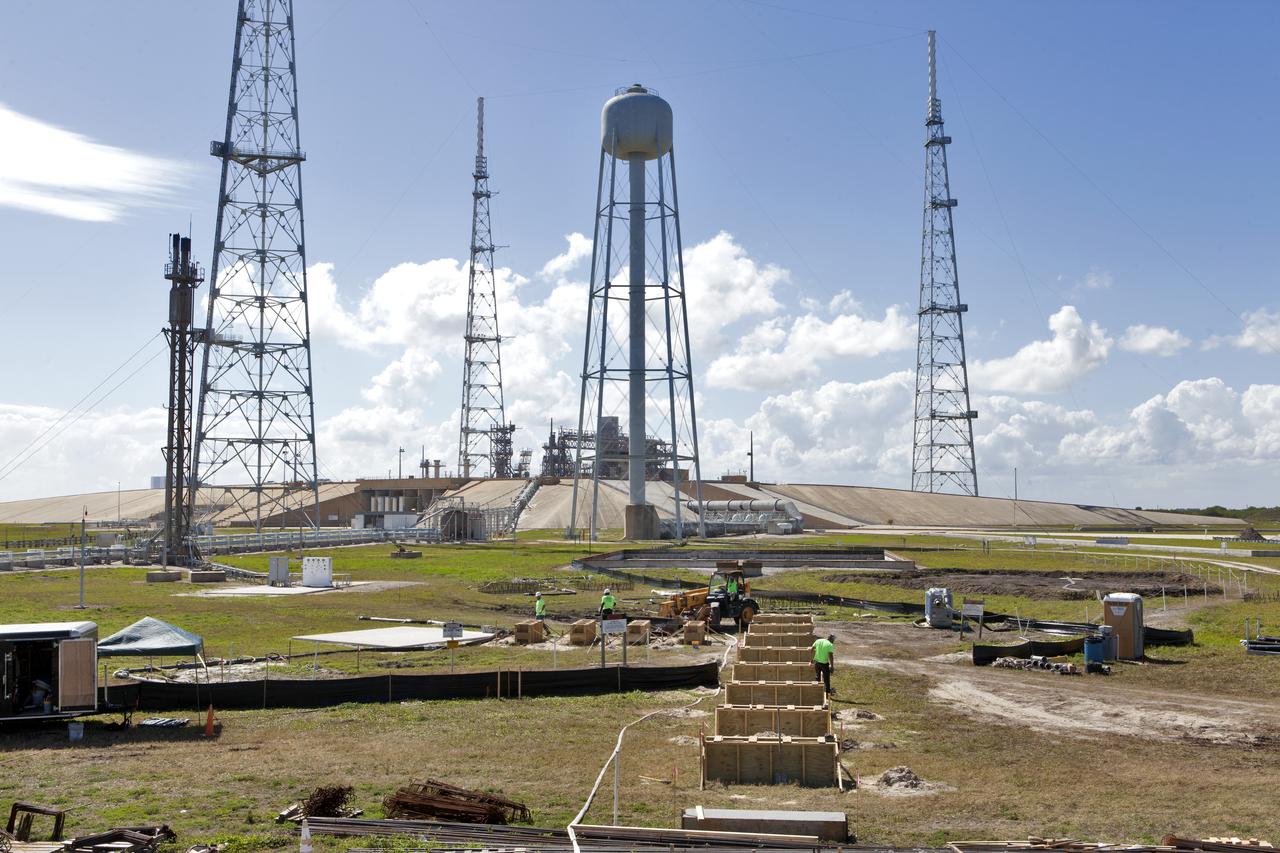
Construction workers stage parts and equipment nearby Launch Pad 39B at NASA’s Kennedy Space Center in Florida on Feb. 22, 2019. The launch pad has undergone upgrades and modifications to accommodate NASA's Space Launch System and Orion spacecraft for Exploration Mission-1 and subsequent missions. Upgrades include new heat-resistant bricks on the walls of the flame trench and installation of a new flame deflector. All of the upgrades have been managed by Exploration Ground Systems.
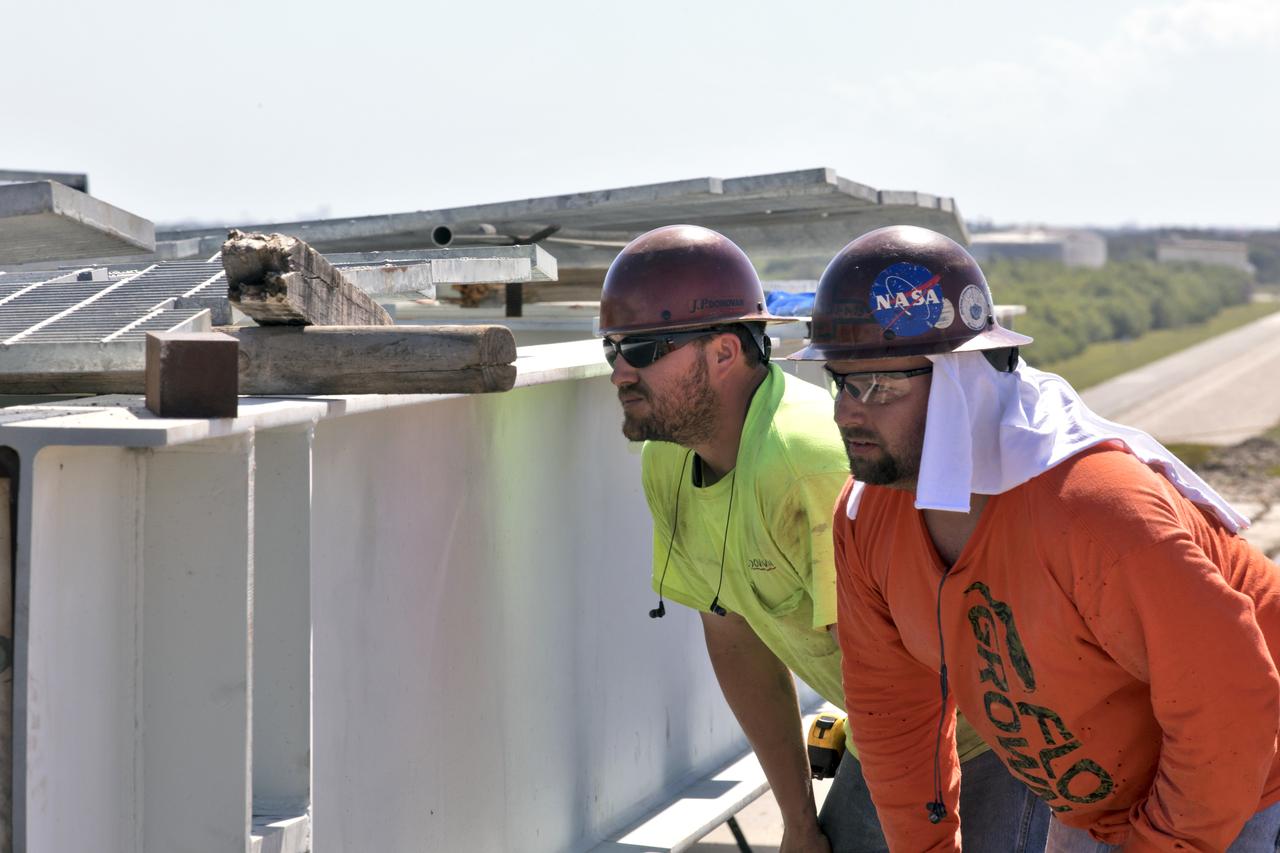
Construction workers assess the repairs needed on the surface of Launch Pad 39B at NASA’s Kennedy Space Center in Florida on Feb. 22, 2019. The launch pad has undergone upgrades and modifications to accommodate NASA's Space Launch System and Orion spacecraft for Exploration Mission-1 and subsequent missions. Upgrades include new heat-resistant bricks on the walls of the flame trench and installation of a new flame deflector. All of the upgrades have been managed by Exploration Ground Systems.
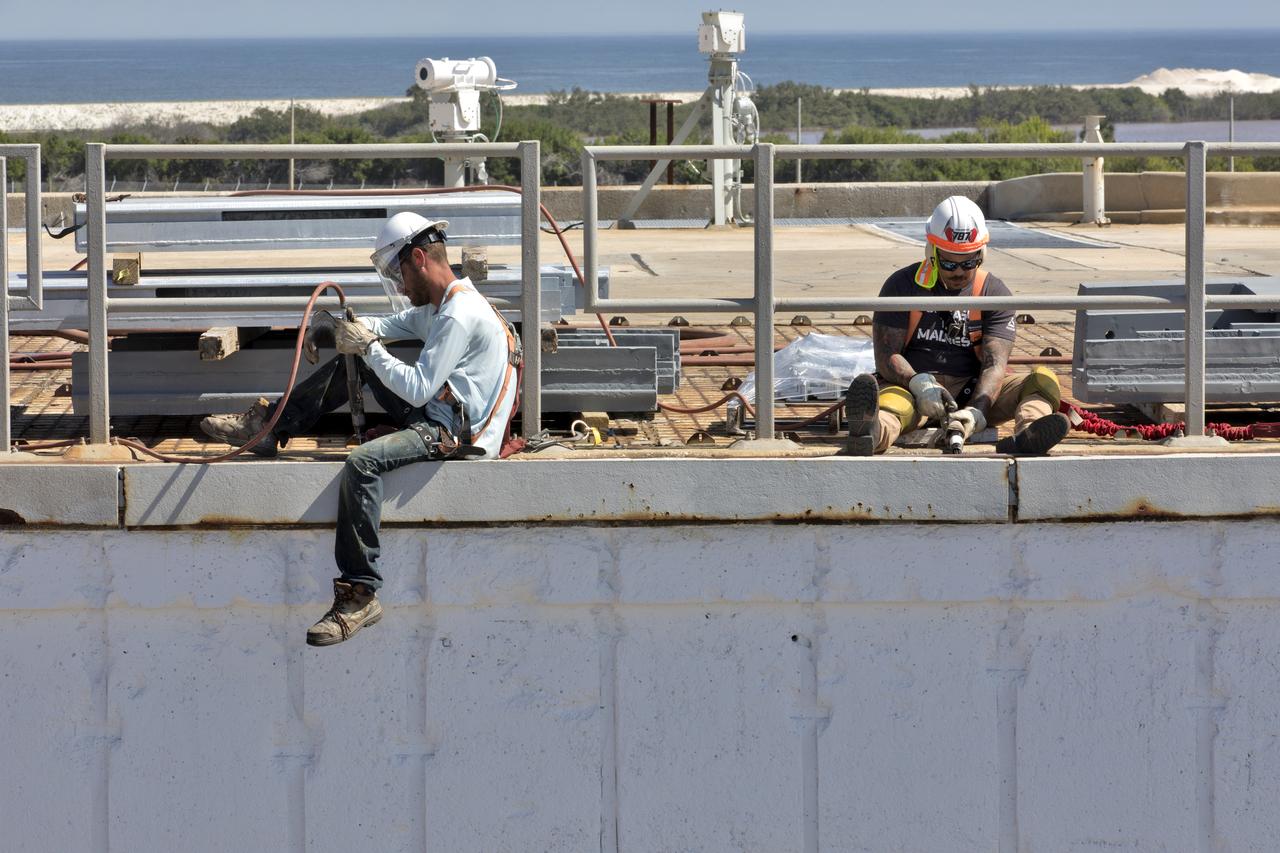
Constructions workers are busy repairing the concrete on the surface of Launch Pad 39B at NASA’s Kennedy Space Center in Florida on Feb. 22, 2019. The launch pad has undergone upgrades and modifications to accommodate NASA's Space Launch System and Orion spacecraft for Exploration Mission-1 and subsequent missions. Upgrades include new heat-resistant bricks on the walls of the flame trench and installation of a new flame deflector. All of the upgrades have been managed by Exploration Ground Systems.
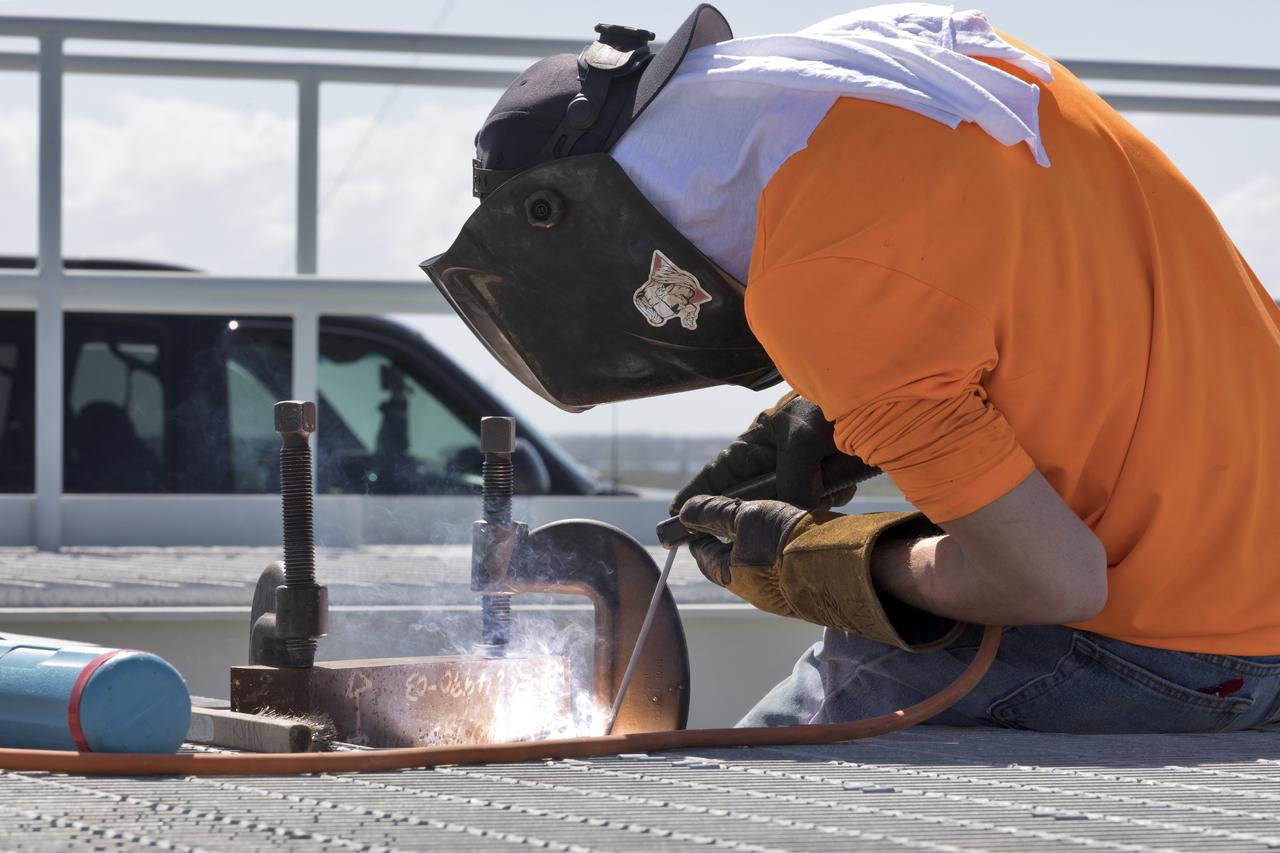
A construction worker welds a section of metal on the surface of Launch Pad 39B at NASA’s Kennedy Space Center in Florida on Feb. 22, 2019. The launch pad has undergone upgrades and modifications to accommodate NASA's Space Launch System and Orion spacecraft for Exploration Mission-1 and subsequent missions. Upgrades include new heat-resistant bricks on the walls of the flame trench and installation of a new flame deflector. All of the upgrades have been managed by Exploration Ground Systems.