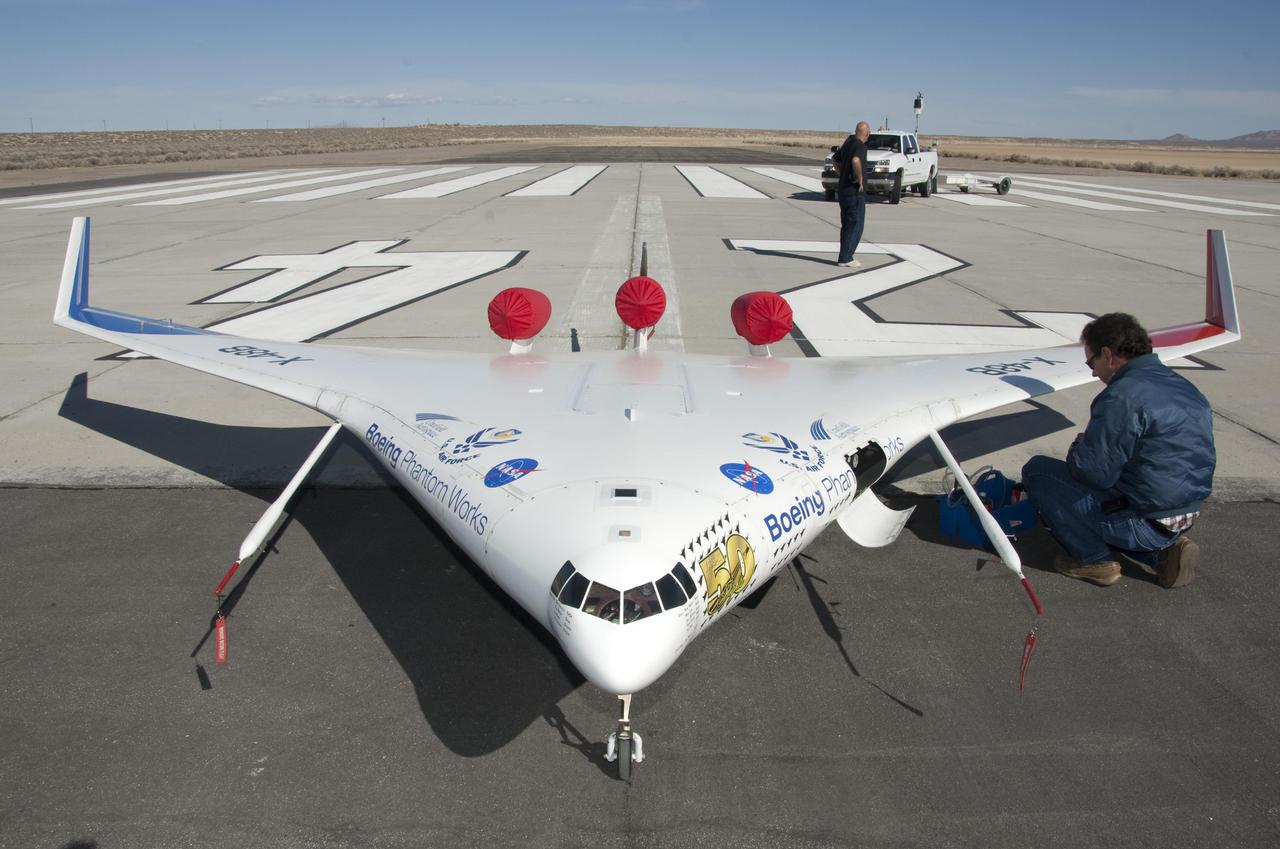
NASA Dryden engineer Gary Cosentino prepares the X-48B for flight.
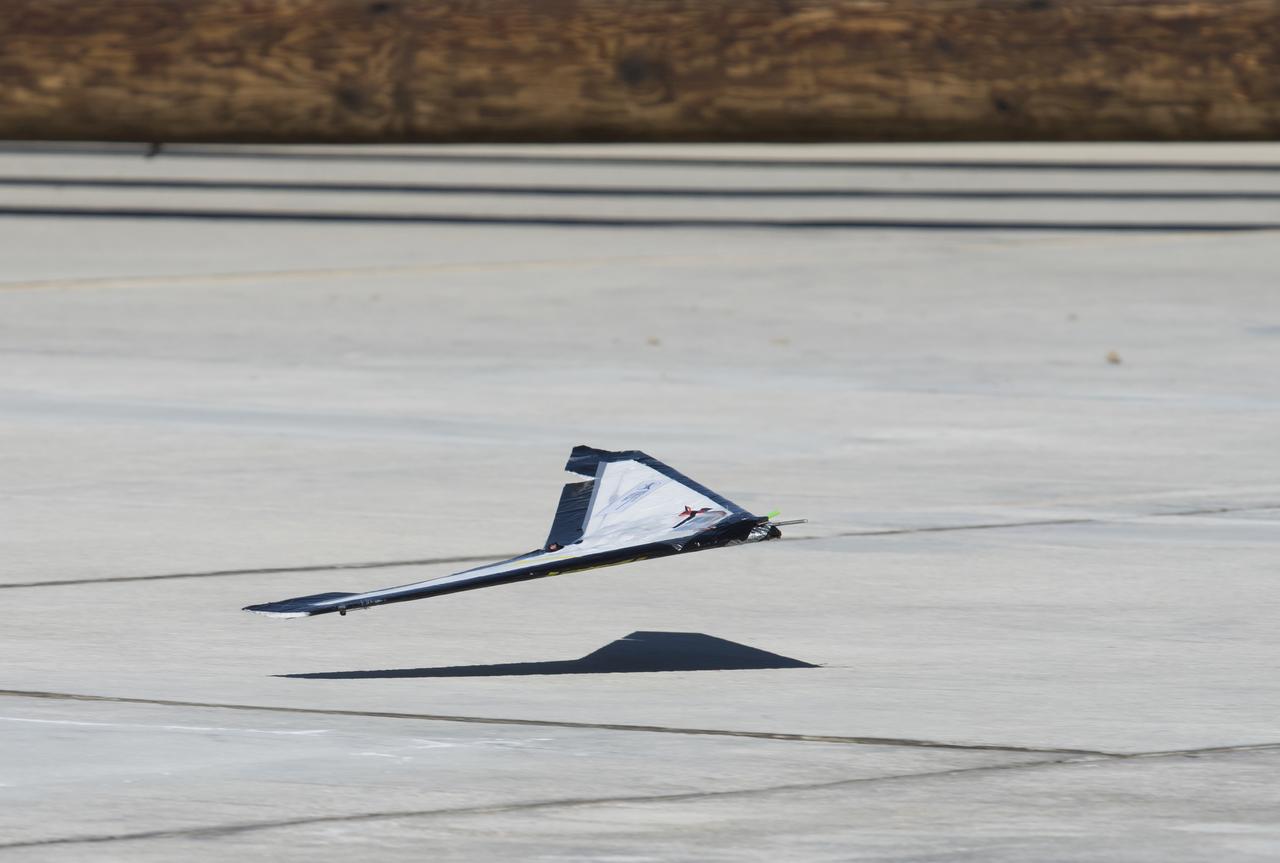
The Prandtl-M completes a successful research flight.
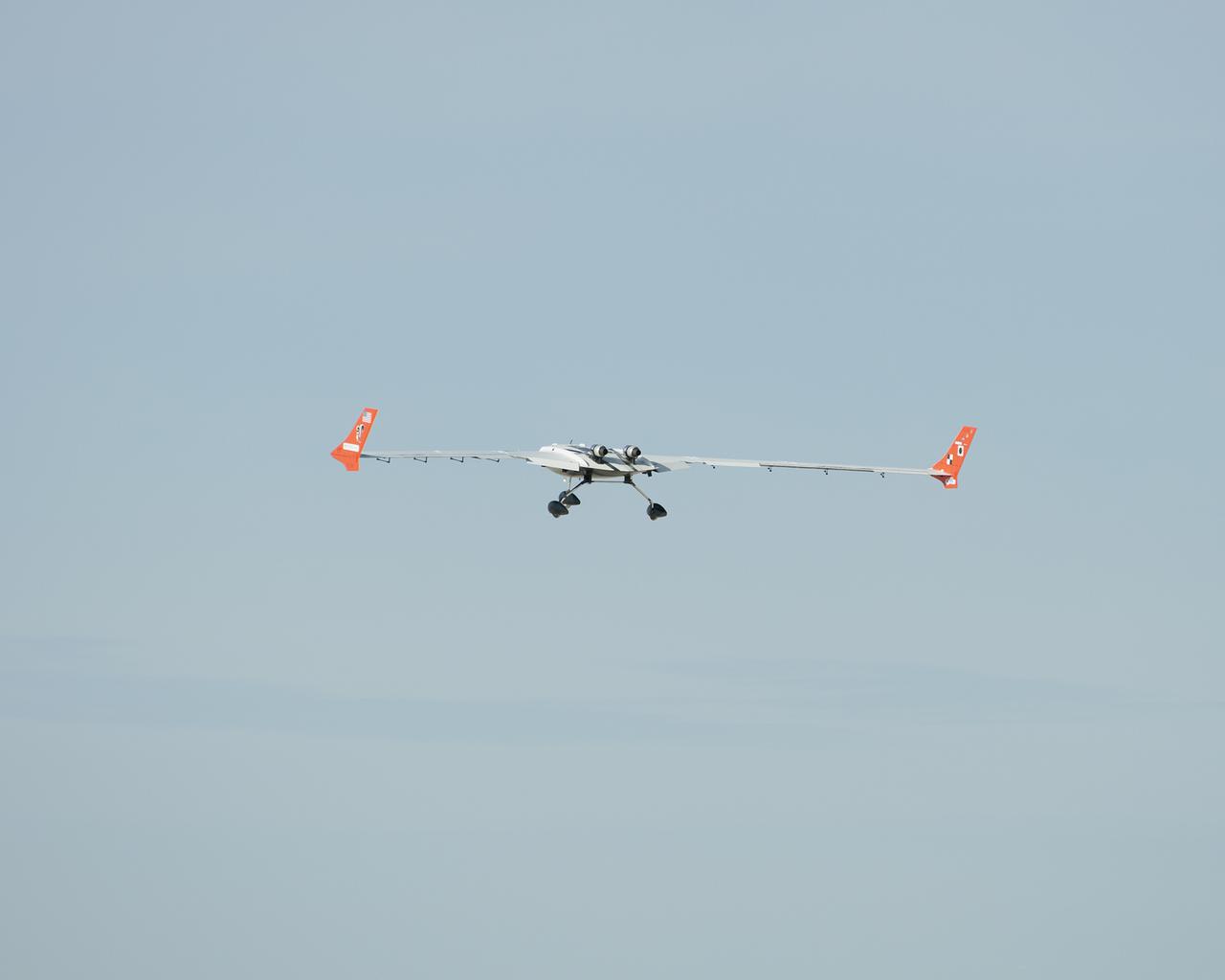
The X-56A takes off on its maiden flight from NASA Armstrong Flight Research Center, Edwards, California.
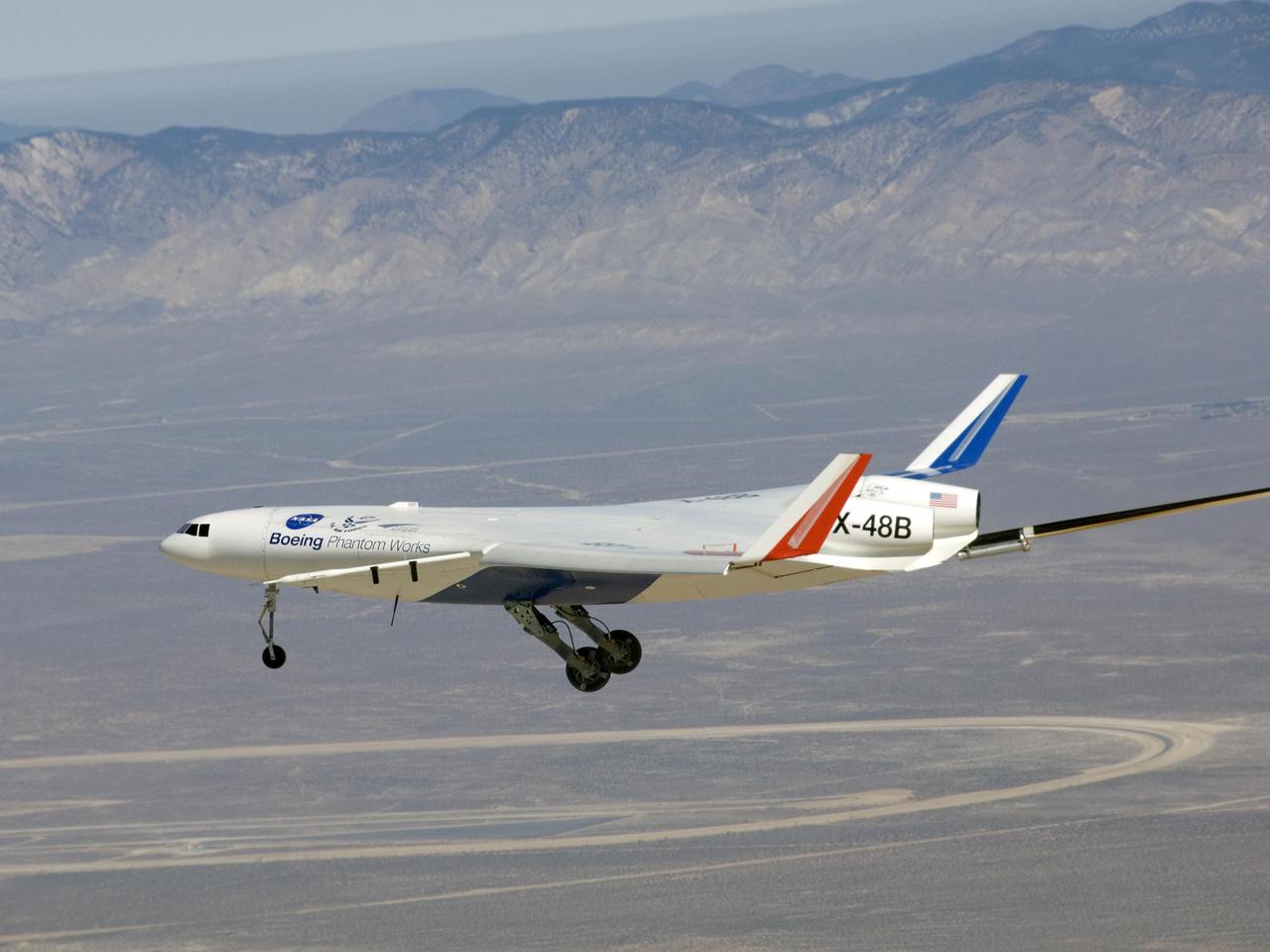
X-48B blended wing body aircraft during first flight on July 20, 2007.
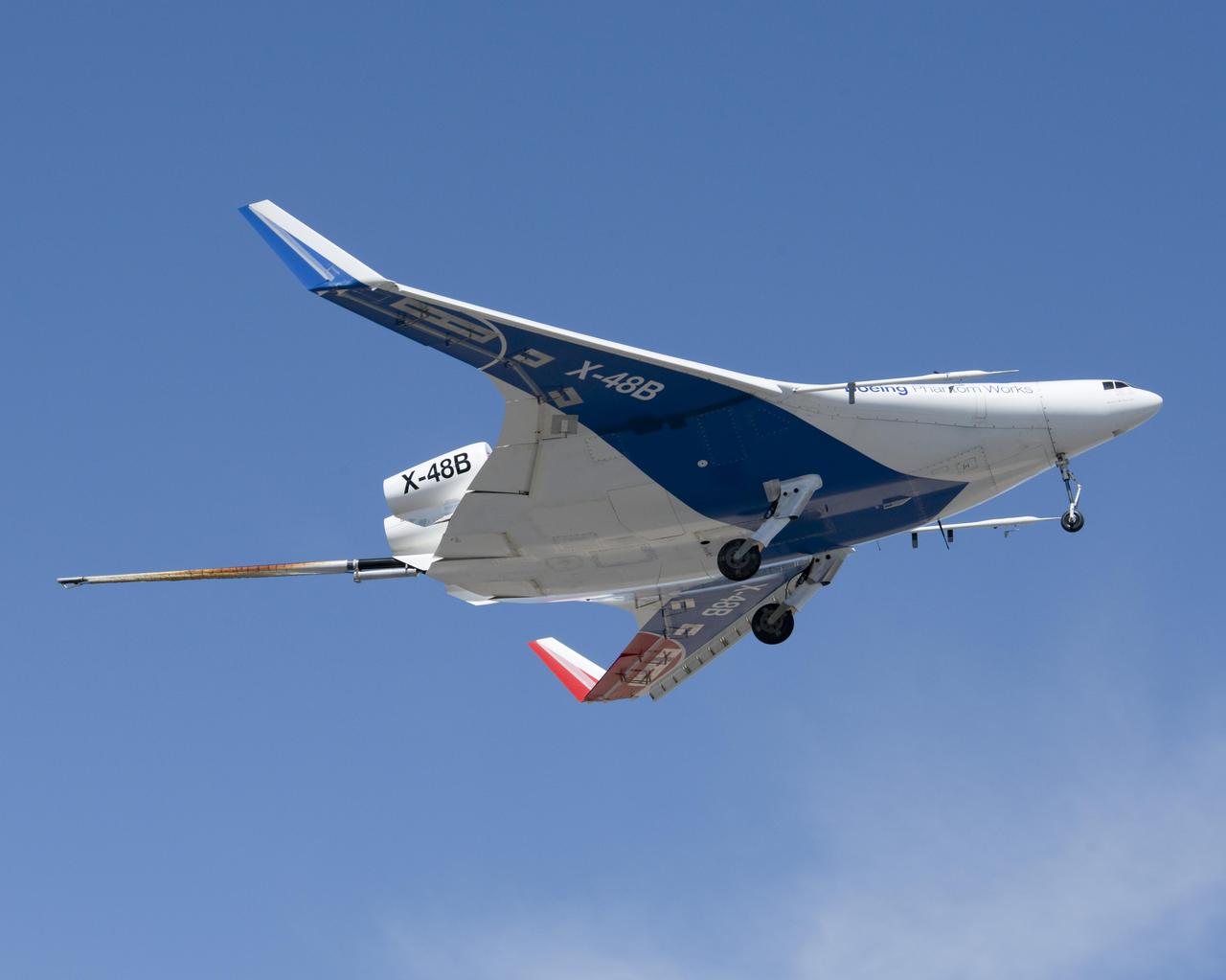
A joint NASA/Boeing team completed the first phase of flight tests on the unique X-48B Blended Wing Body aircraft at NASA's Dryden Flight Research Center at Edwards, CA. The team completed the 80th and last flight of the project's first phase on March 19, 2010.
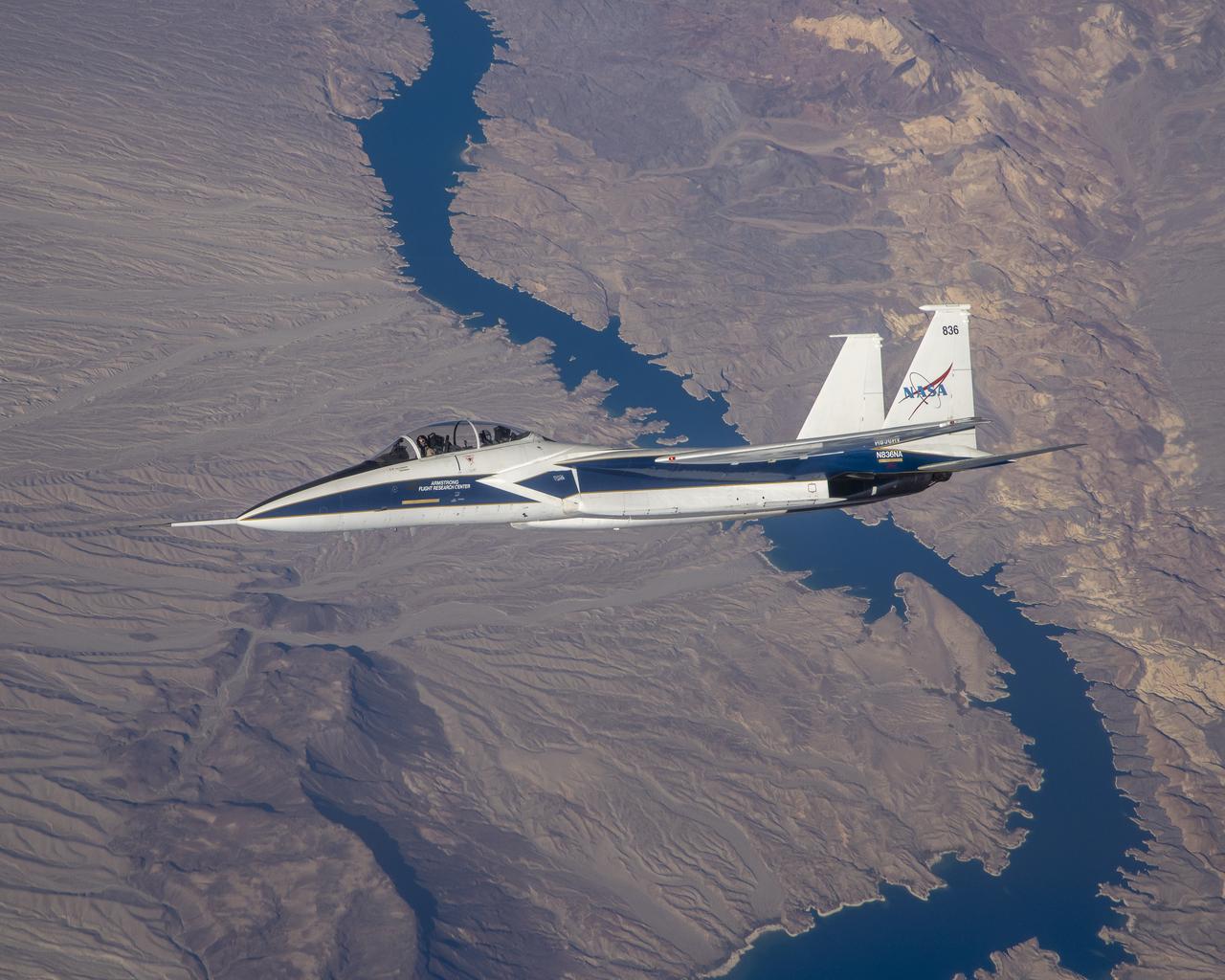
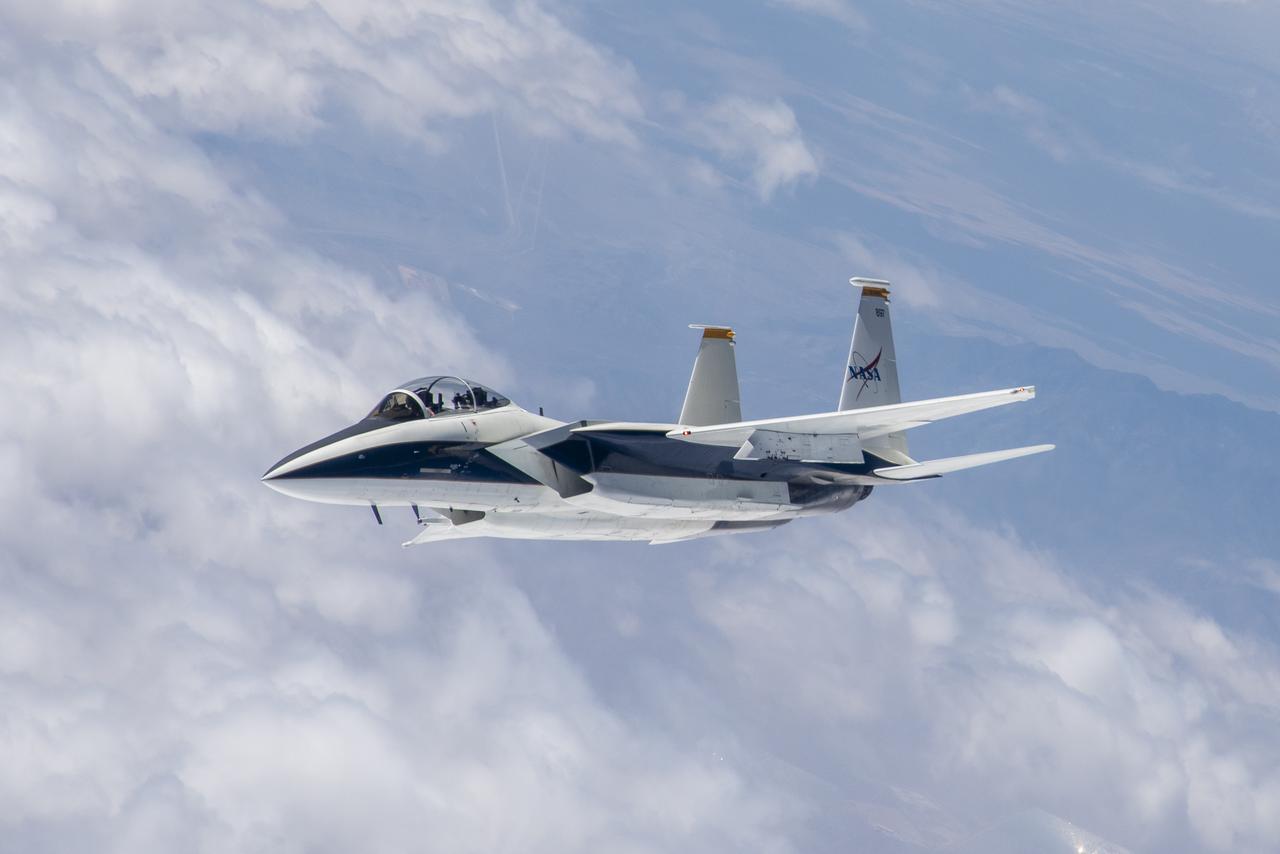
F-15 N836NA with test pilots Nils Larson and Jim Less at the controls flying over the Colorado River during Shock Sensing Probe (SSP) Flight #6.
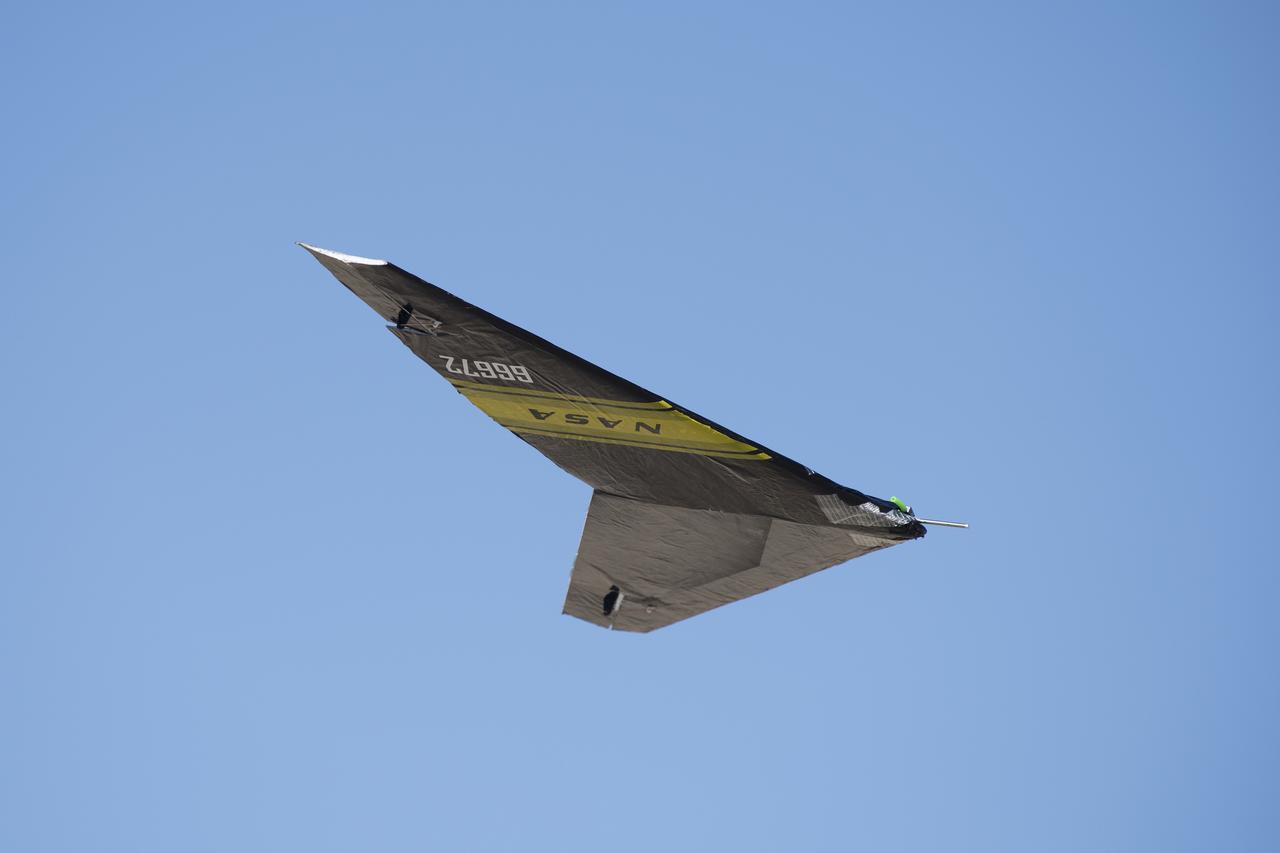
Test flights of the Prandtl-M have resumed. The airframe also is the basis for another aircraft that will collect weather data.
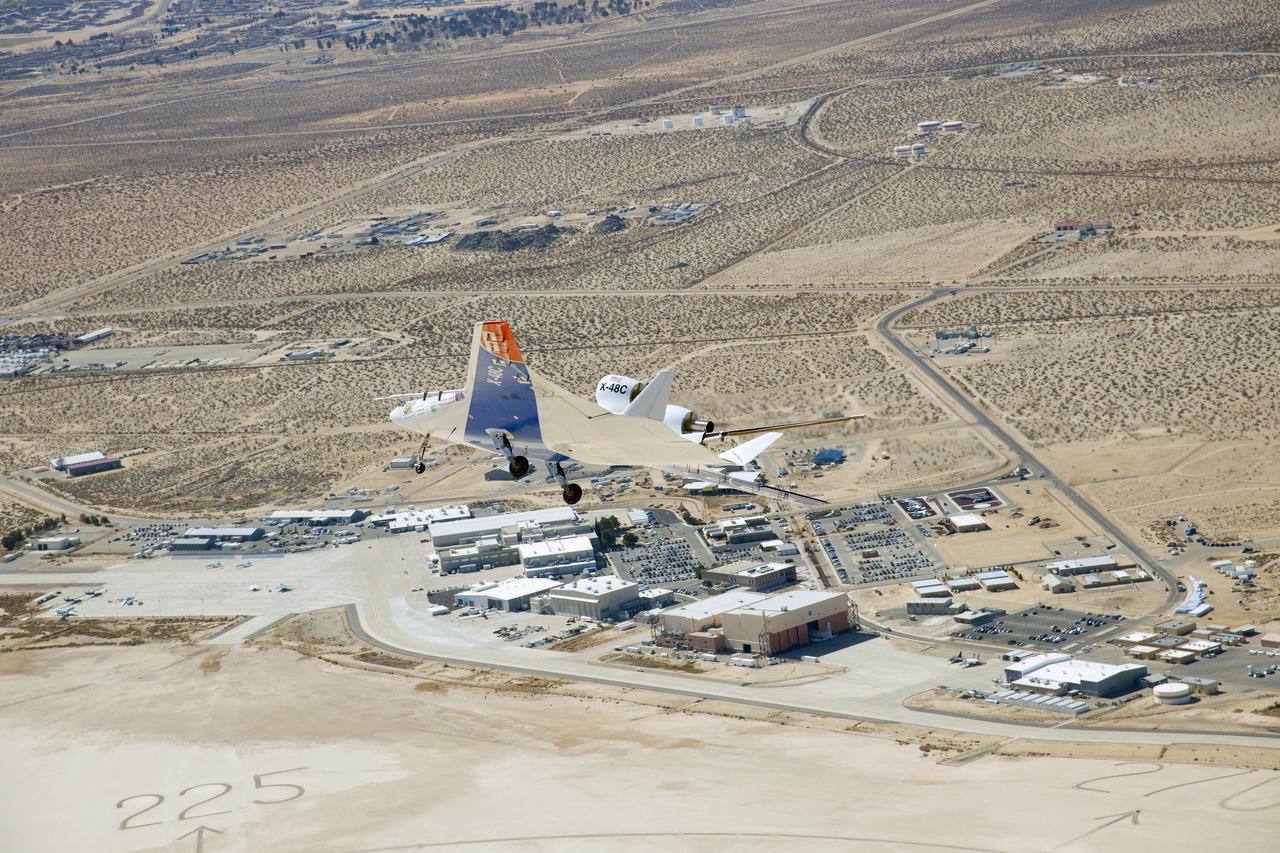
The X-48C Hybrid Wing Body research aircraft banked right over NASA's Dryden Flight Research Center at Edwards, CA during one of the sub-scale aircraft's final test flights on Feb. 28, 2013.
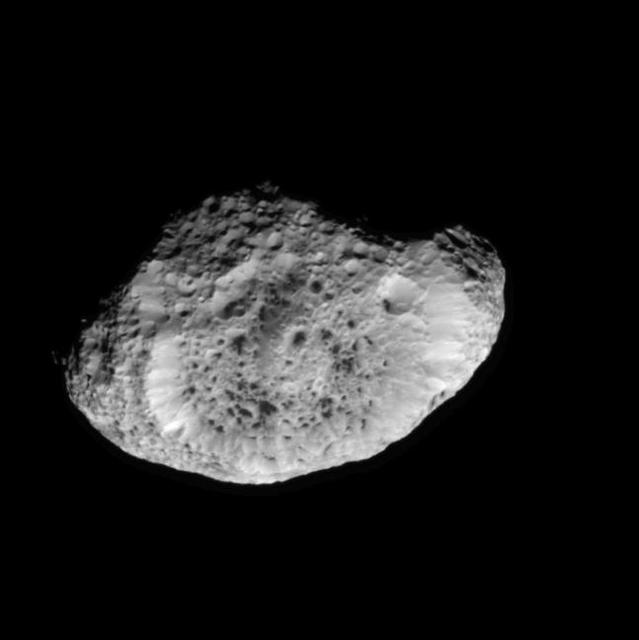
Flight to Hyperion
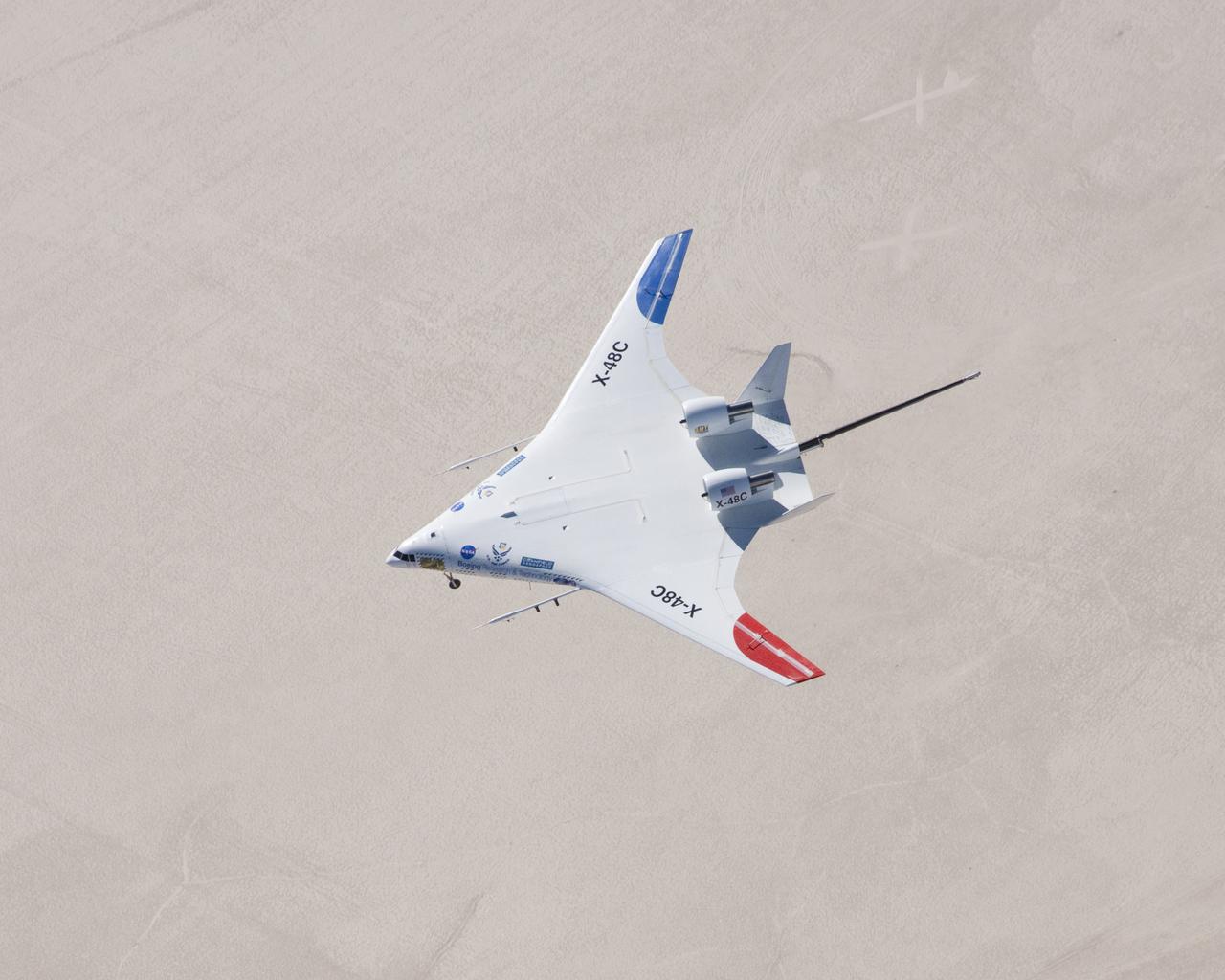
The X-48C Hybrid Wing Body aircraft flew over Rogers Dry Lake on Feb. 28, 2013, from NASA's Dryden Flight Research Center, Edwards, CA. The long boom protruding from between the tails was part of the aircraft's parachute-deployment flight termination system.
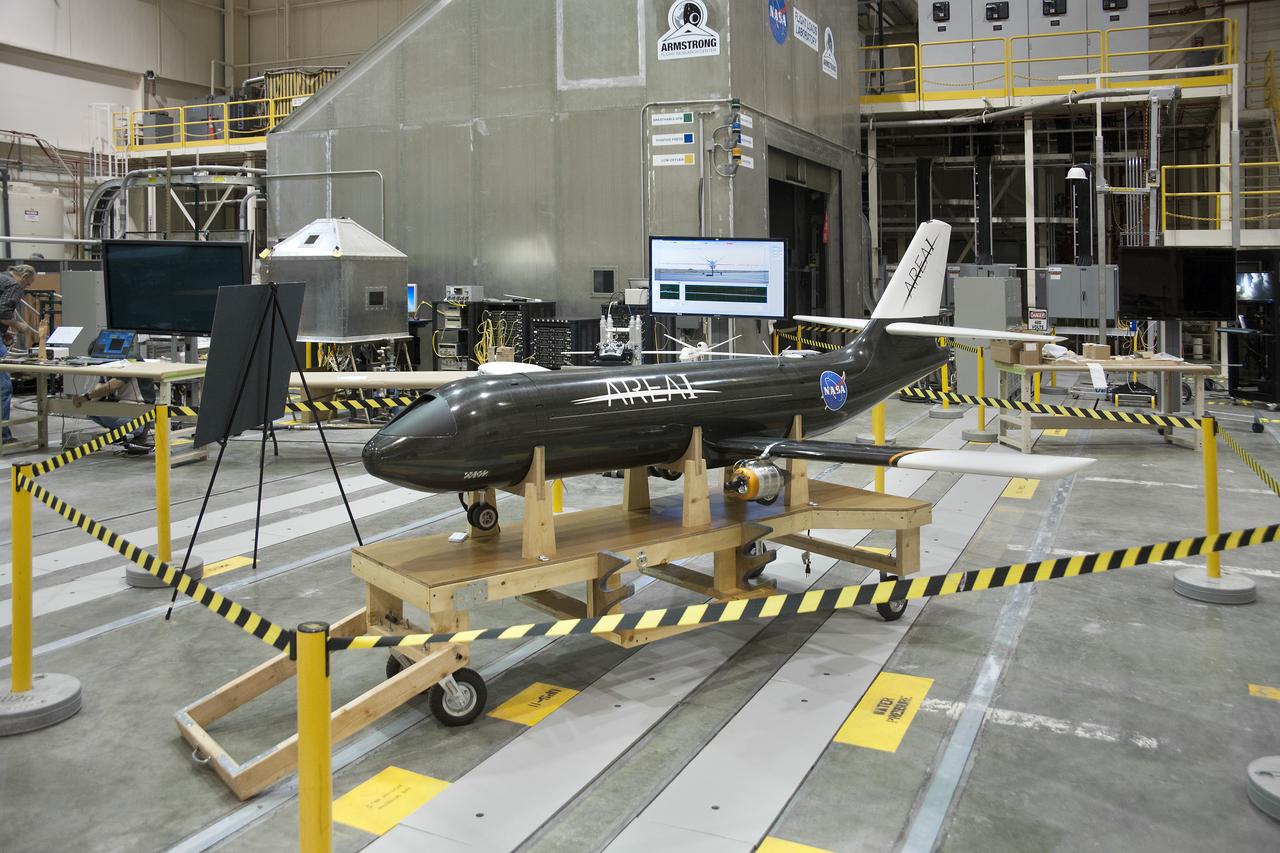
The objectives of testing on PTERA include the development of tools and vetting of system integration, evaluation of vehicle control law, and analysis of SAW airworthiness to examine benefits to in-flight efficiency.
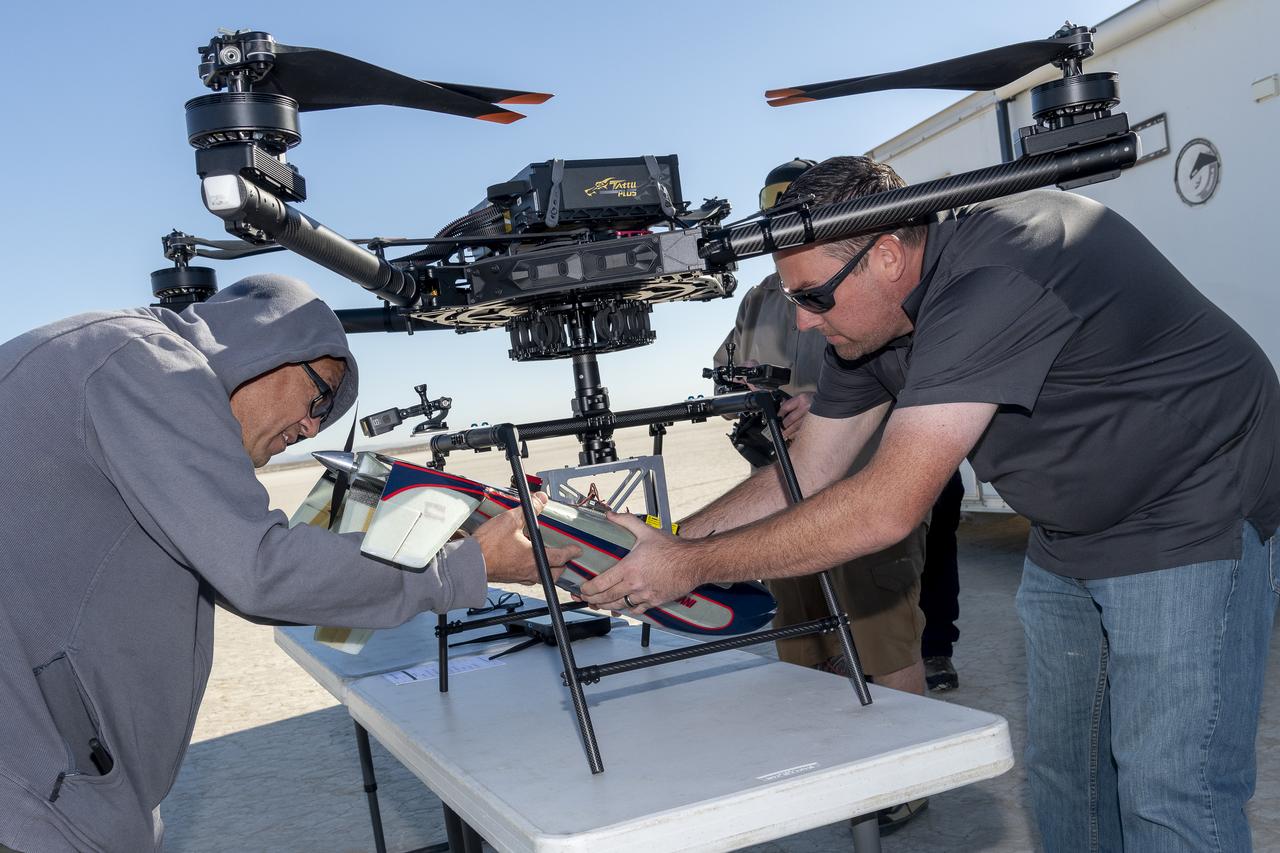
Derek Abramson, left, chief engineer for the Dale Reed Subscale Flight Research Laboratory, and Justin Link, small unmanned aircraft systems pilot, prepare an atmospheric probe model for flight on Oct. 22, 2024. A quad rotor remotely piloted aircraft released the probe above Rogers Dry Lake, a flight area adjacent to NASA’s Armstrong Flight Research Center in Edwards, California. The probe was designed and built at the center.
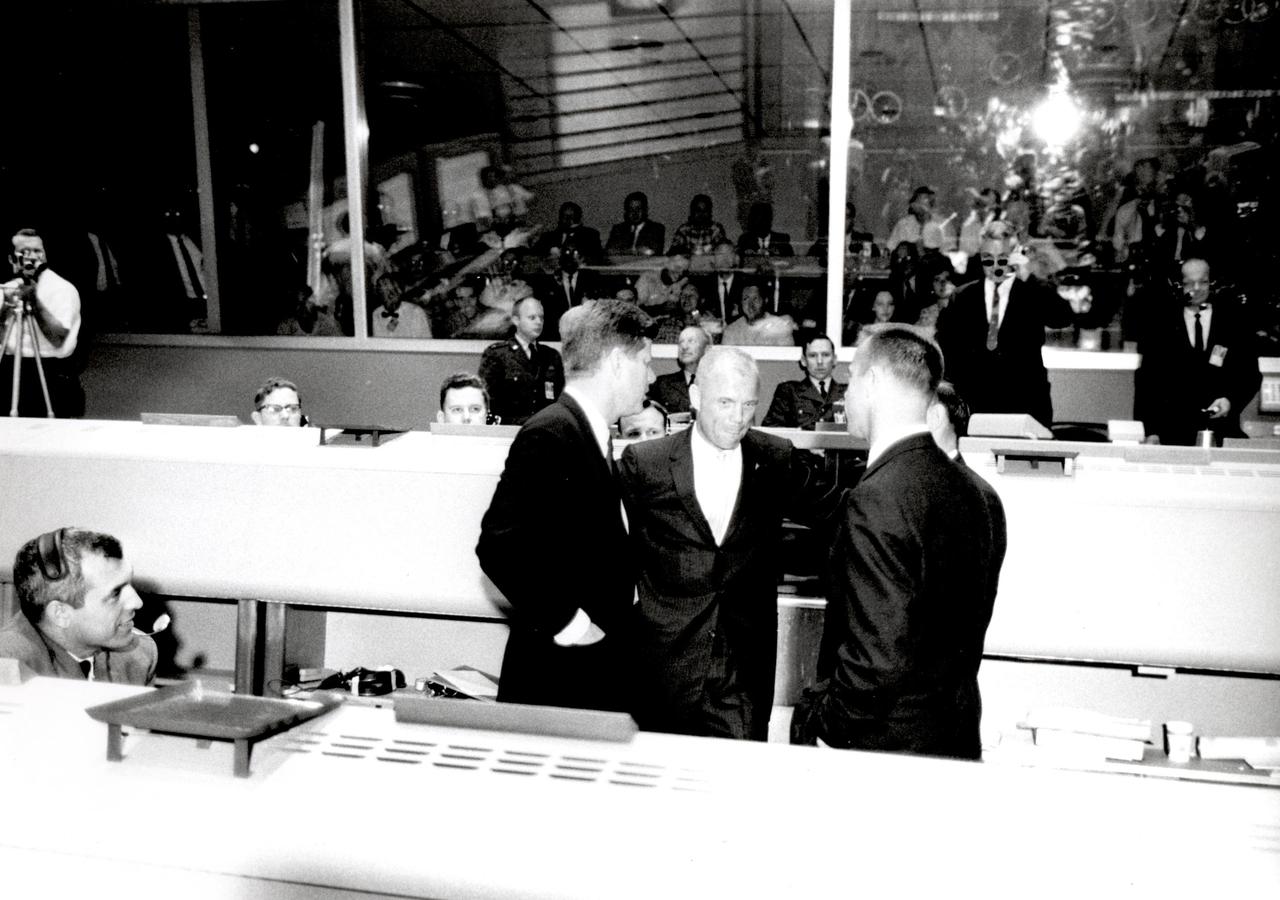
President John F. Kennedy (left) visits Mercury's Flight Control Area a few days after John Glenn's flight in February 1962. To Kennedy's right are Glenn and astronaut Alan Shepard.
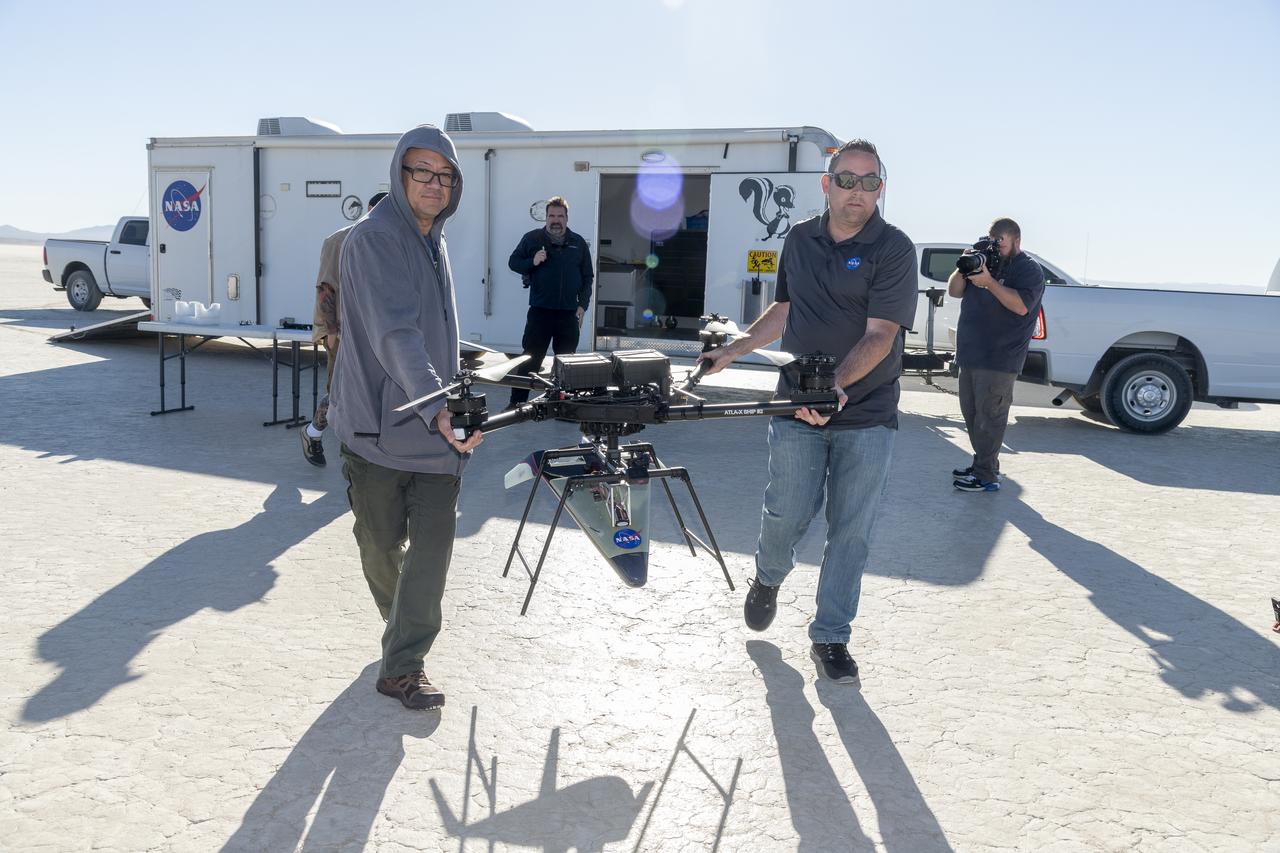
Derek Abramson, left, chief engineer for the Dale Reed Subscale Flight Research Laboratory, and Justin Link, small unmanned aircraft system pilot, carry the atmospheric probe model and a quad rotor remotely piloted aircraft to position it for flight on Oct. 24, 2024. John Bodylski, probe principal investigator, right, and videographer Jacob Shaw watch the preparations. Once at altitude, the quad rotor aircraft released the probe above Rogers Dry Lake, a flight area adjacent to NASA’s Armstrong Flight Research Center in Edwards, California. The probe was designed and built at the center.
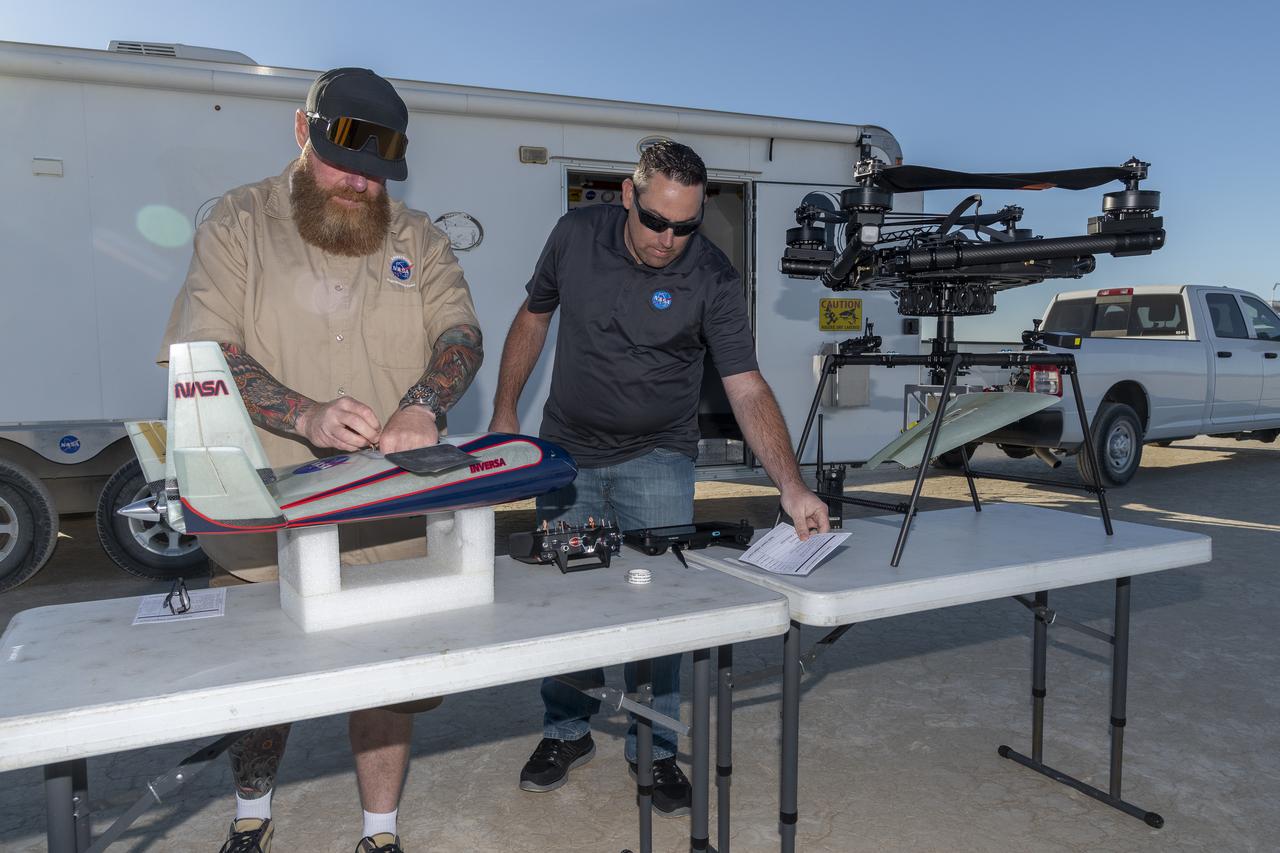
Justin Hall, chief pilot of small unmanned aircraft systems, prepares the atmospheric probe for flight above Rogers Dry Lake, a flight area adjacent NASA’s Armstrong Flight Research Center in Edwards, California. At right, Justin Link, small unmanned aircraft systems pilot, assists. The probe, designed and built at the center, flew after release from a quad rotor remotely piloted aircraft on Oct. 22, 2024.
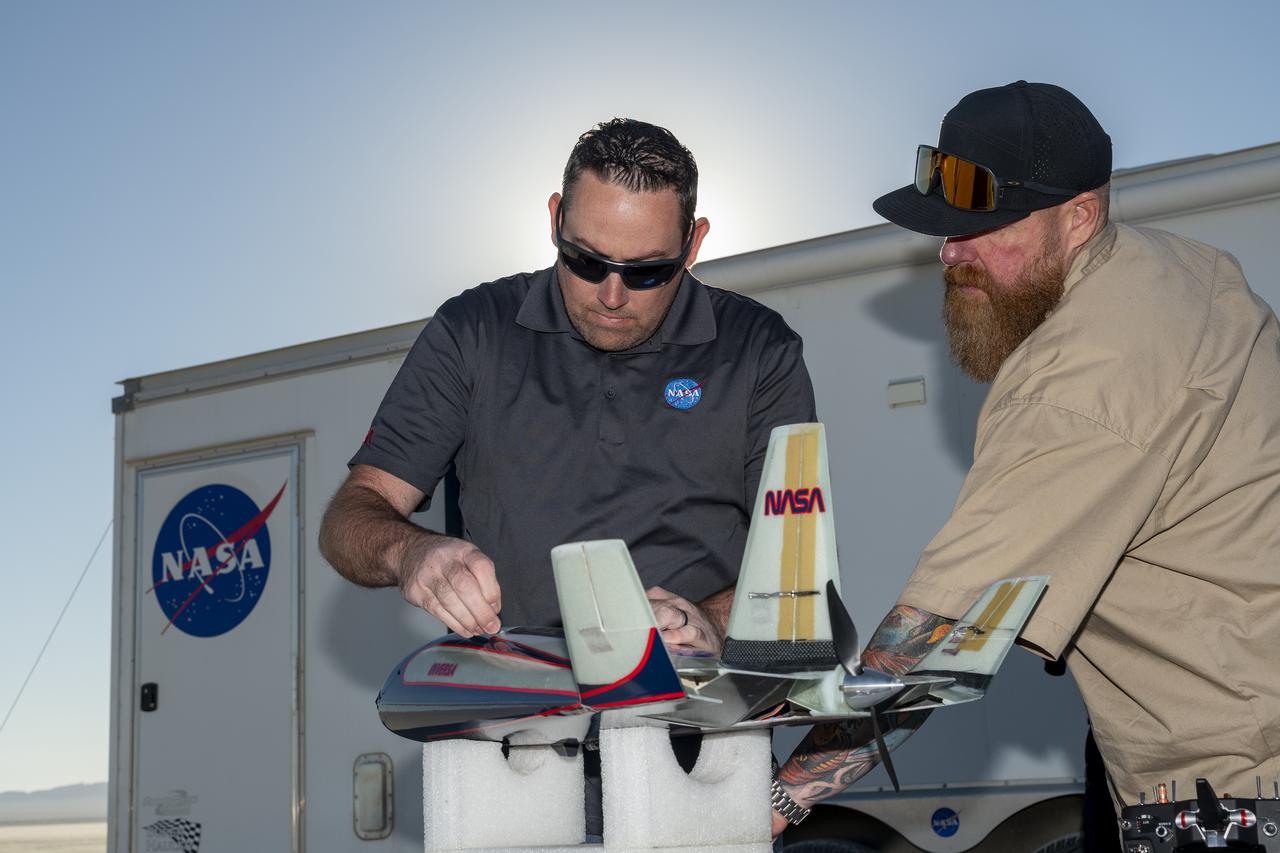
Justin Link, left, small unmanned aircraft systems pilot, and Justin Hall, chief pilot of small unmanned aircraft systems, prepare an atmospheric probe model for flight on Oct. 22, 2024. A quad rotor remotely piloted aircraft released the probe above Rogers Dry Lake, a flight area adjacent NASA’s Armstrong Flight Research Center in Edwards, California. The probe was designed and built at the center.
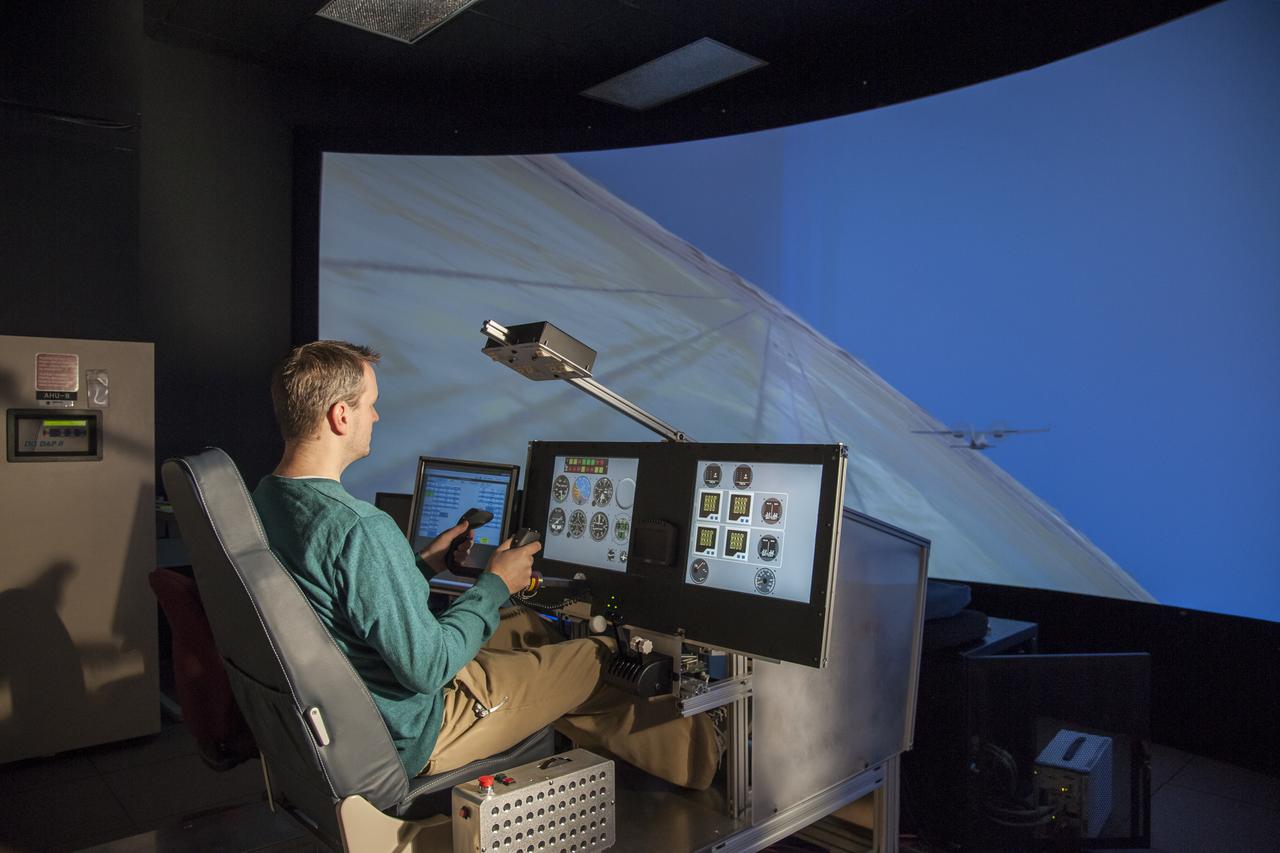
X-57 principal investigator Sean Clarke flies the X-57 simulator at NASA’s Armstrong Flight Research Center, examining ideal maneuvers and reaction times for flight.
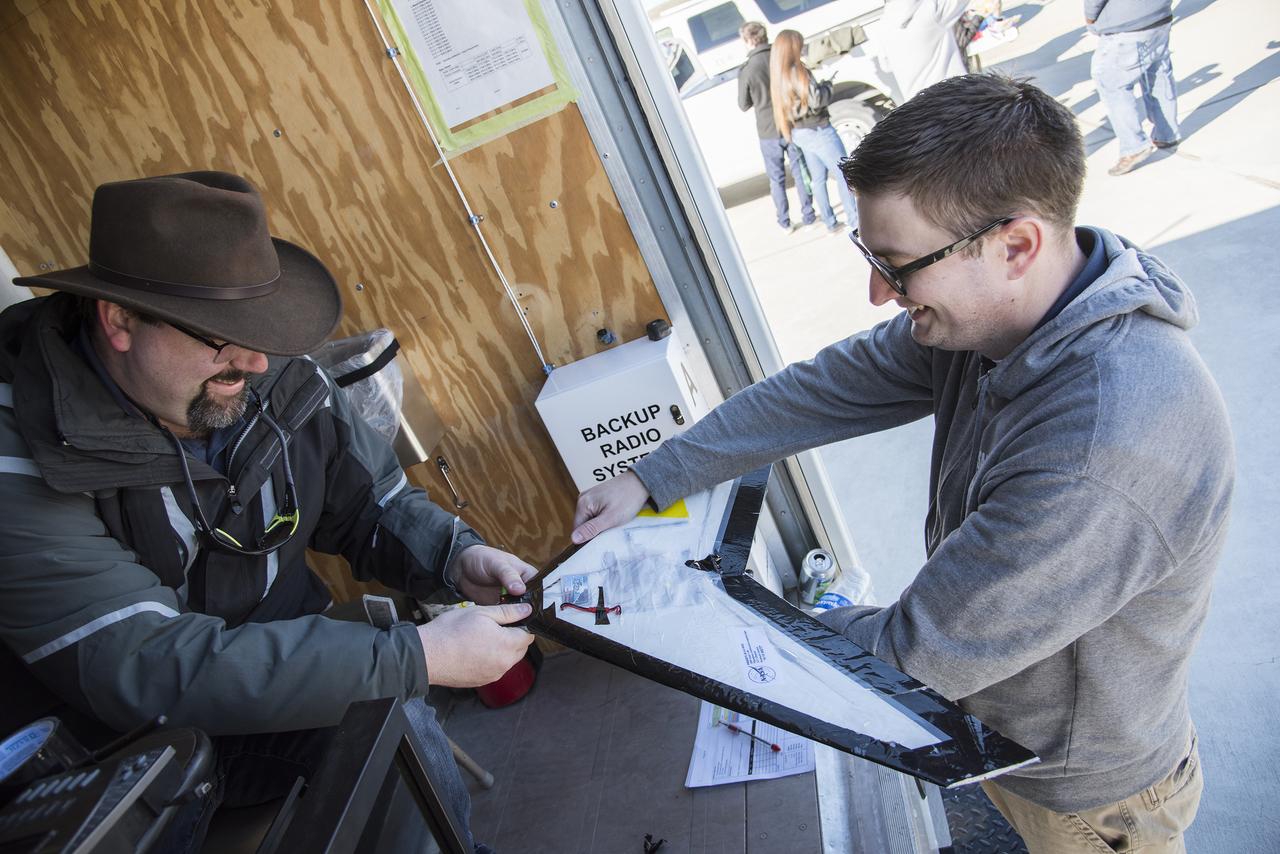
Dave Berger, right, and John Bodylski prepare the Prandtl-M for a test flight.
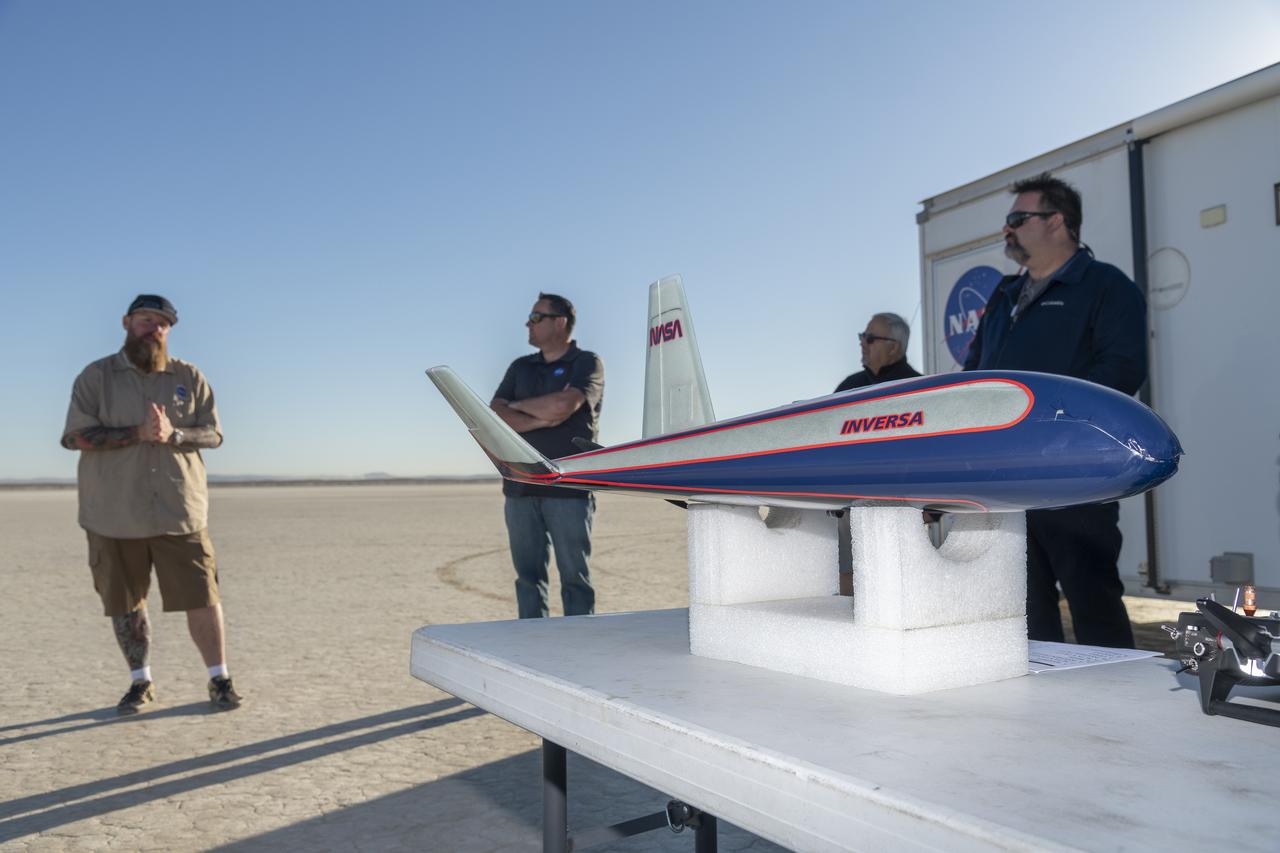
The atmospheric probe model on a stand is prepped for flight and release from a quad rotor remotely piloted aircraft. The probe successfully flew on Oct. 22, 2024, above Rogers Dry Lake, a flight area adjacent to NASA’s Armstrong Flight Research Center in Edwards, California. The probe was designed and built at the center. In the background from left are Justin Hall, chief pilot of small, unmanned aircraft systems; Justin Link, small unmanned aircraft systems pilot; communications writer Jay Levine; and John Bodylski, atmospheric probe principal investigator.
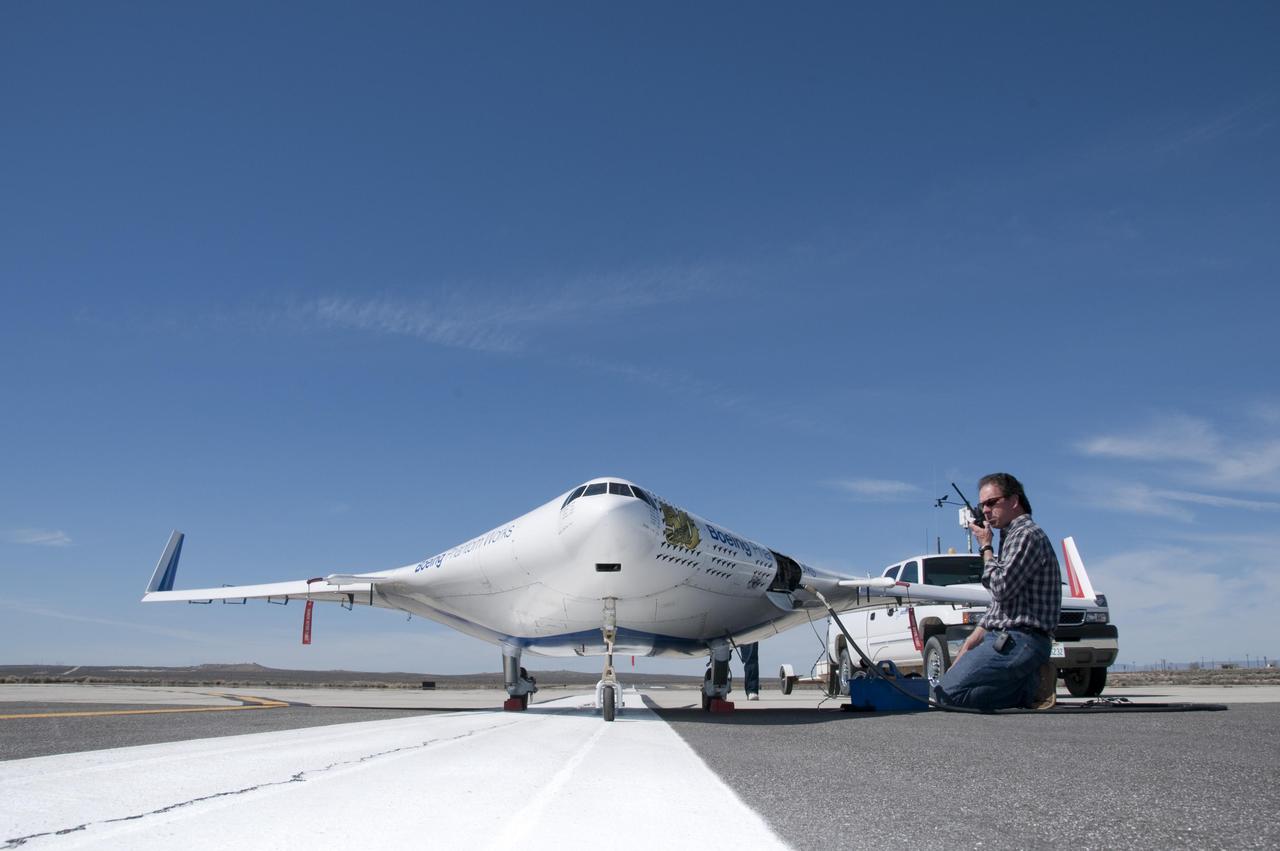
NASA engineer Gary Cosentino communicates with fellow X-48B flight team personnel in preparation for another flight.
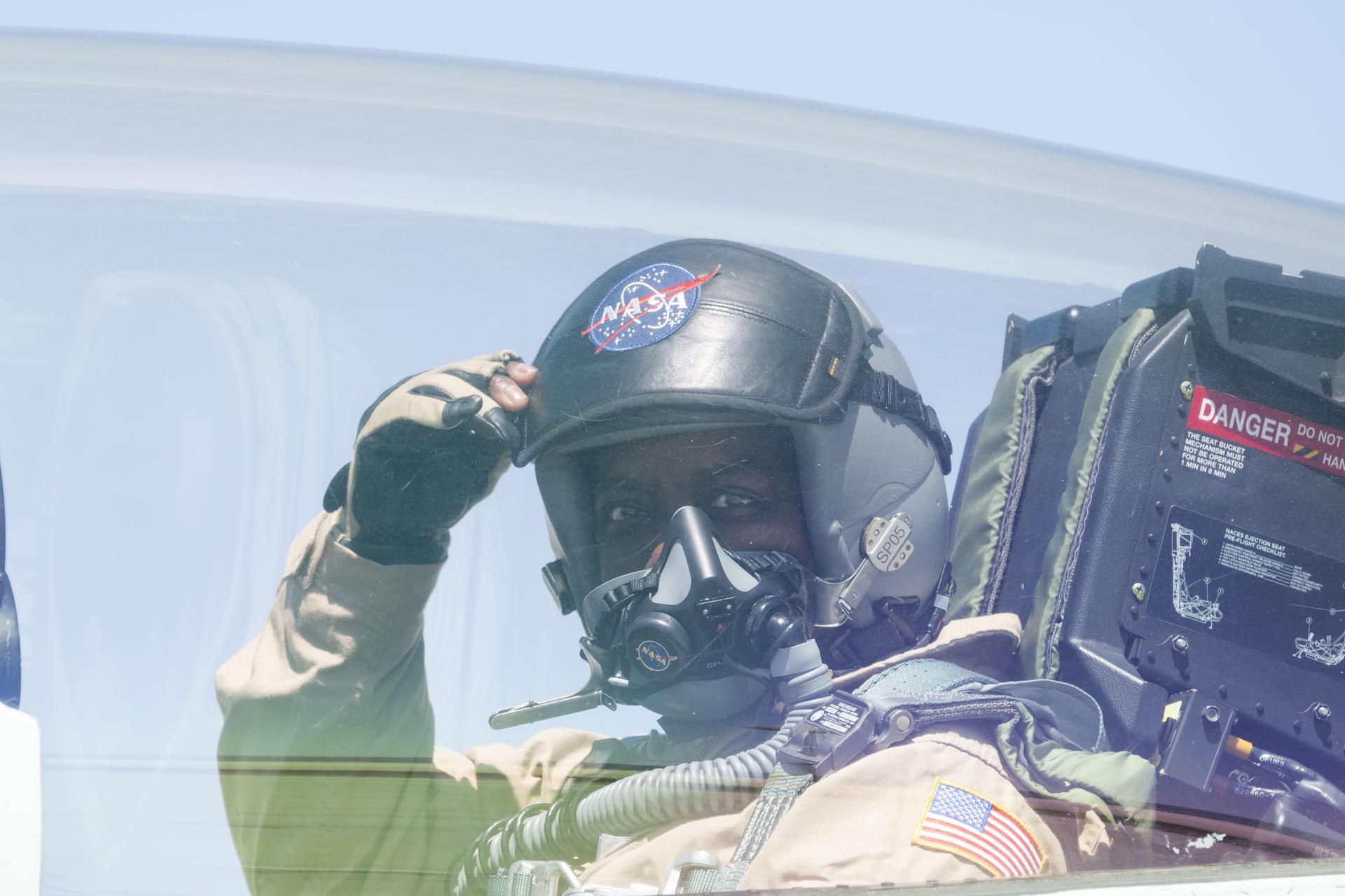
Laurie Grindle, deputy center director, prepares for an employee incentive flight in an F/A-18 aircraft at NASA’s Armstrong Flight Research Center in Edwards, California, on Tuesday, April 14, 2026. NASA Administrator Jared Isaacman established the ride‑along program to recognize and reward workforce members for their dedication to advancing the agency’s priorities.
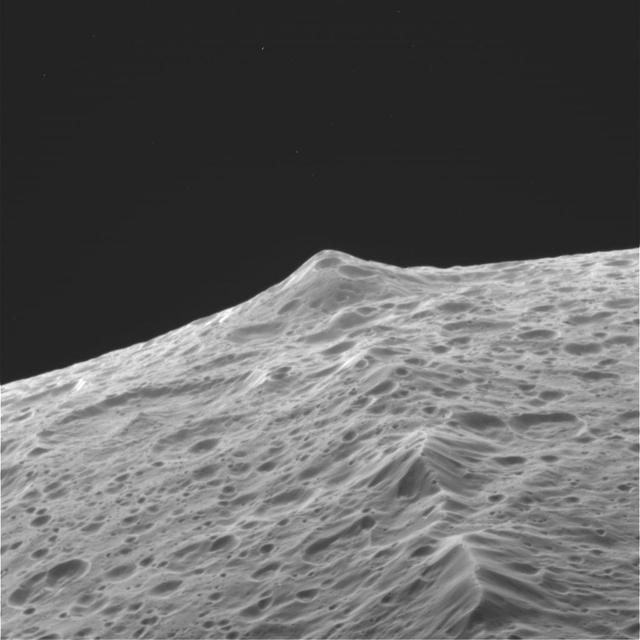
Flight over Iapetus
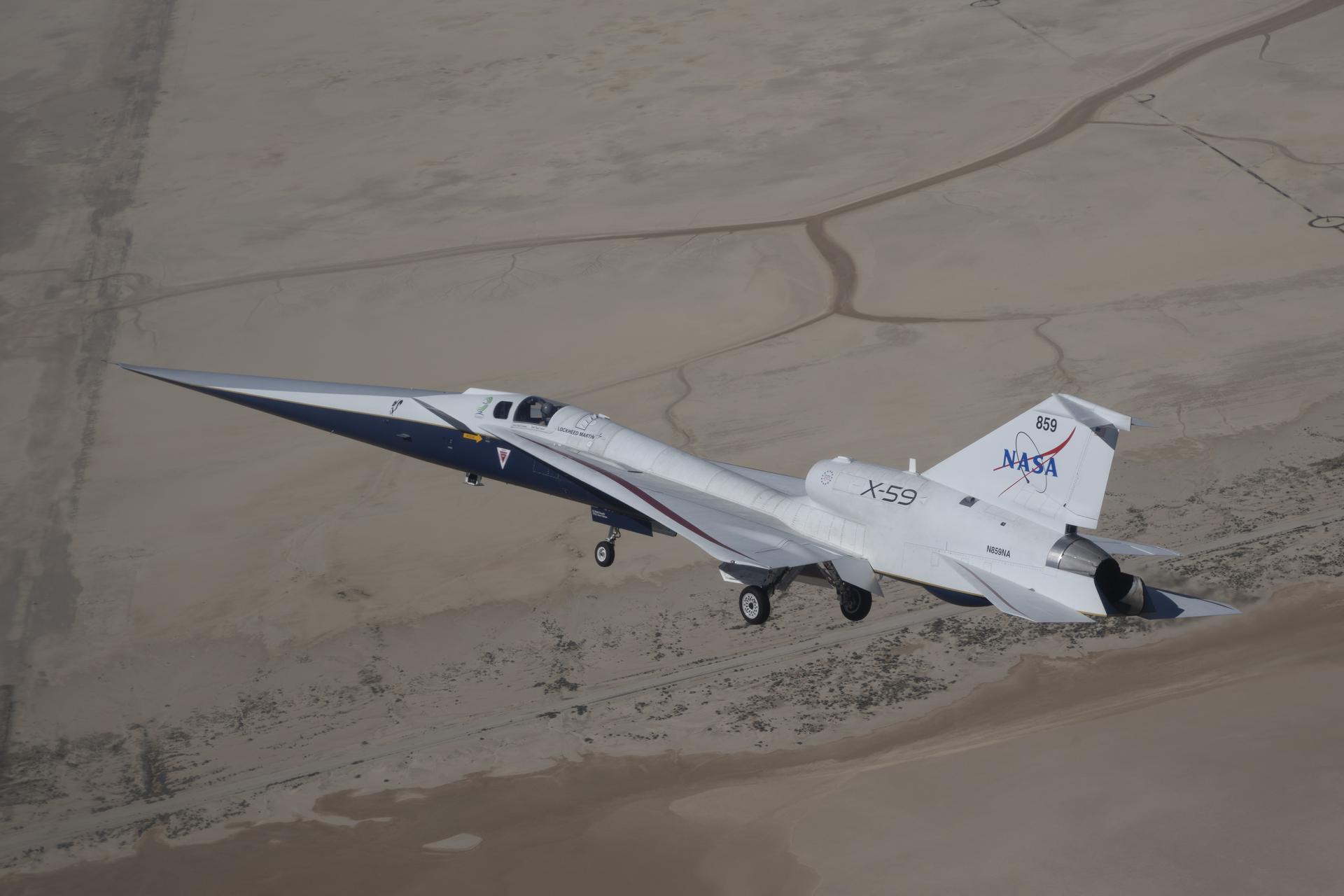
NASA’s X-59 quiet supersonic aircraft flies its second flight Friday, March 20, 2026, near NASA’s Armstrong Flight Research Center in Edwards, California. The X-59 is central to NASA’s Quesst mission, which aims to demonstrate quiet supersonic flight by reducing the loud sonic boom to a softer sonic “thump,” potentially enabling faster commercial air travel over land.
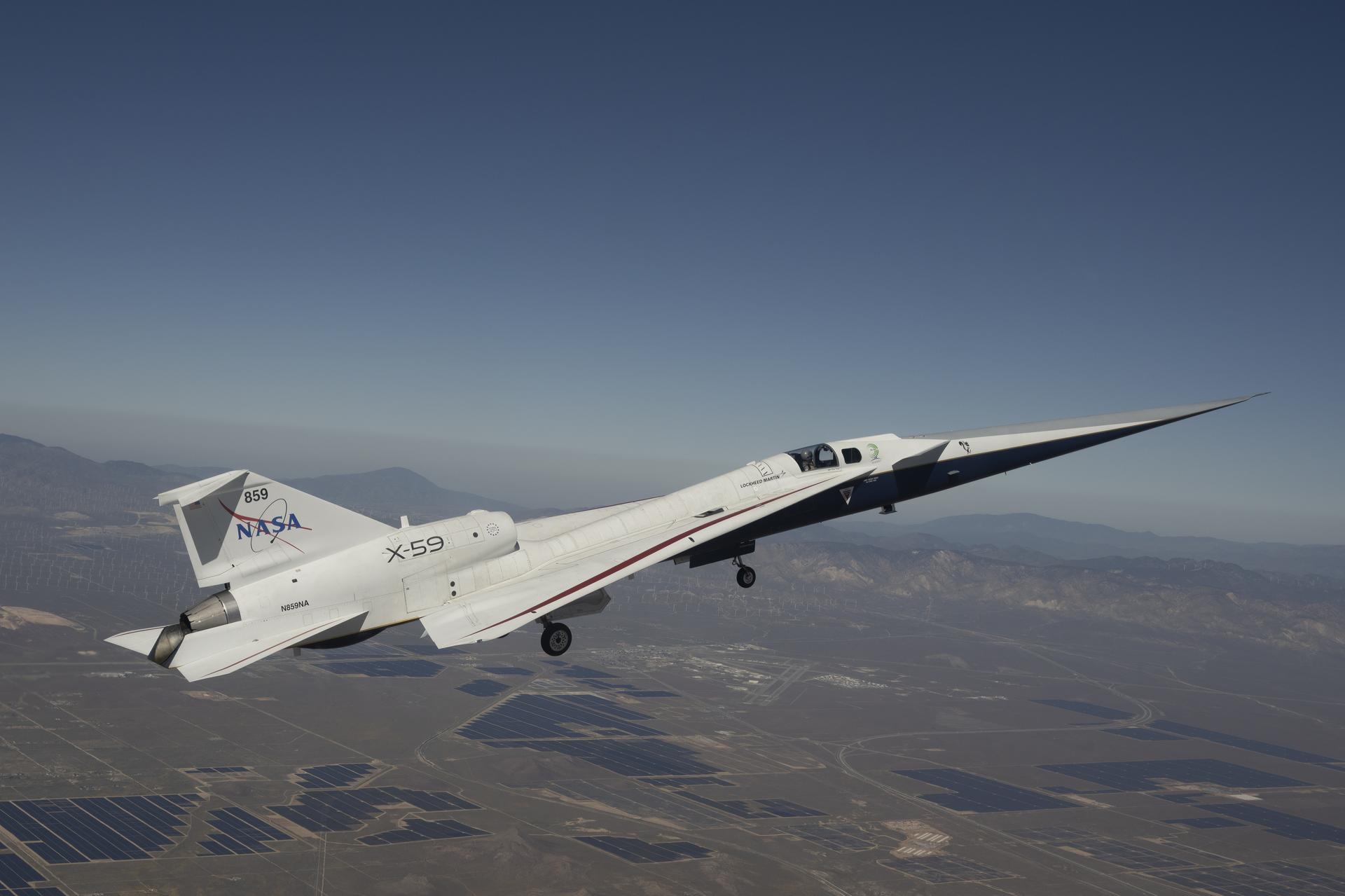
NASA’s X-59 quiet supersonic aircraft flies its second flight Friday, March 20, 2026, near NASA’s Armstrong Flight Research Center in Edwards, California. The X-59 is central to NASA’s Quesst mission, which aims to demonstrate quiet supersonic flight by reducing the loud sonic boom to a softer sonic “thump,” potentially enabling faster commercial air travel over land.
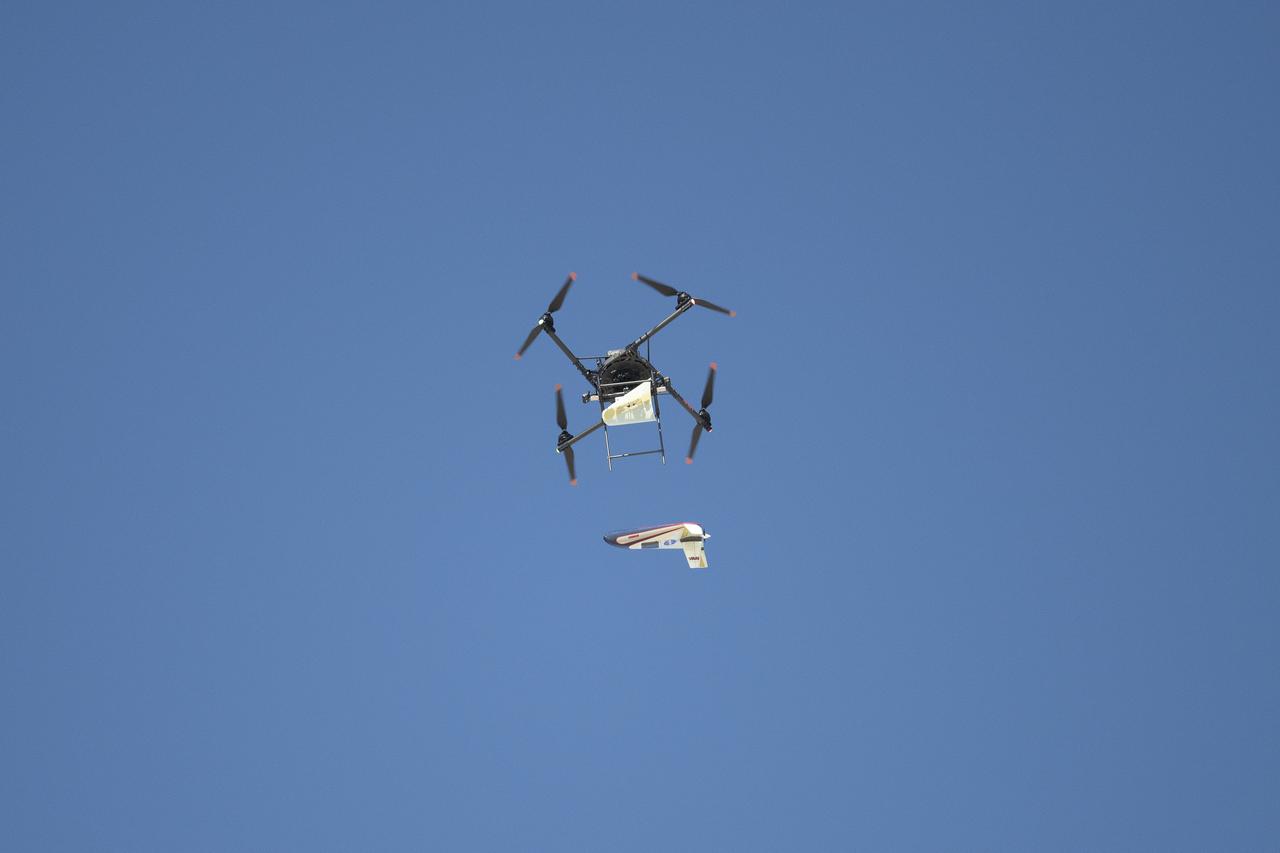
A quad rotor remotely piloted aircraft releases the atmospheric probe model above Rogers Dry Lake, a flight area adjacent NASA’s Armstrong Flight Research Center in Edwards, California, on Oct. 22, 2024. The probe was designed and built at the center.
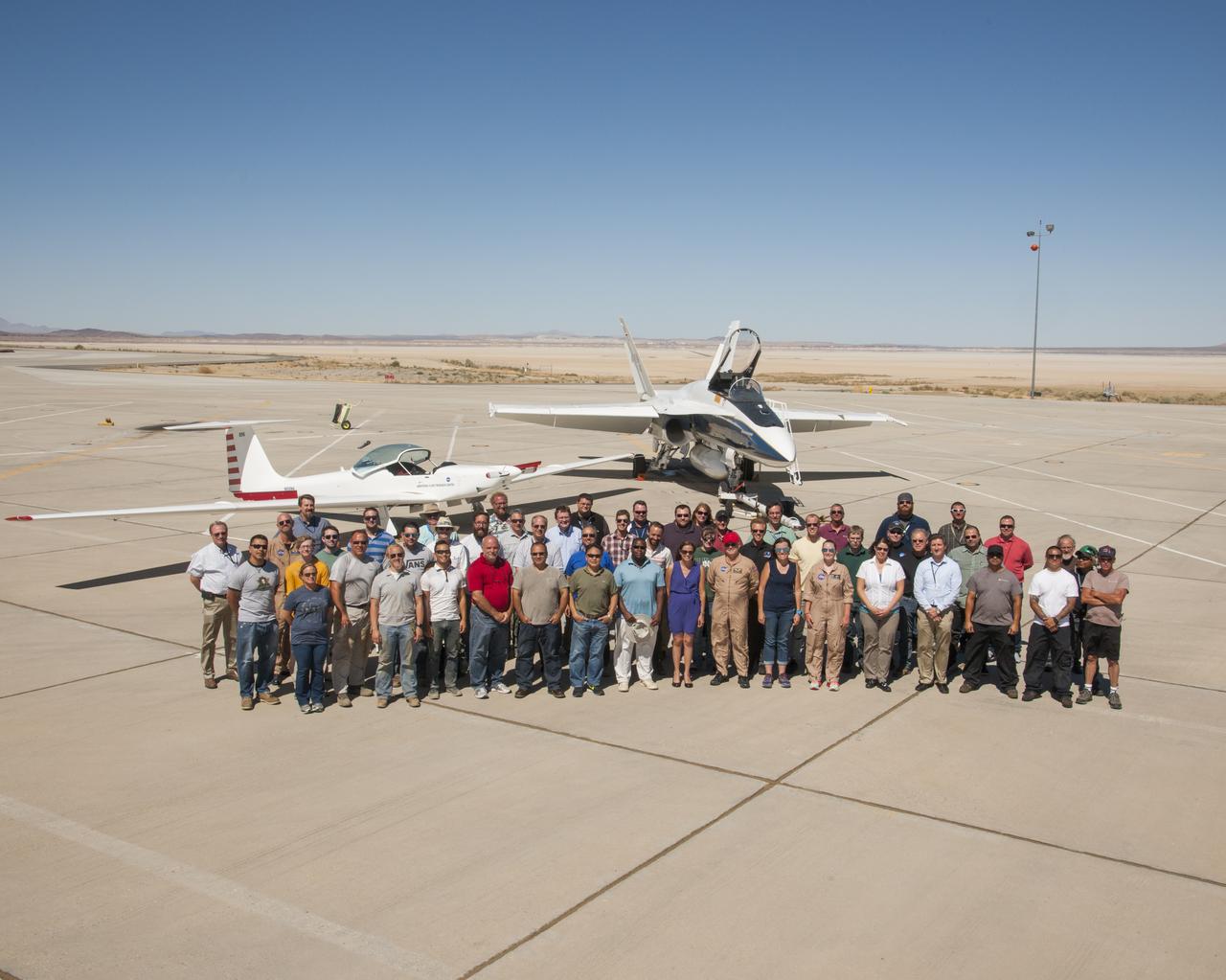
NASA’s SonicBAT team poses in front of the TG-14 motor glider and F/A-18 research aircraft, sitting side-by-side in front of Rogers Dry Lake prior to a SonicBAT flight at Armstrong Flight Research Center on Edwards Air Force Base, California. The TG-14 collected sound signatures of shockwaves created by the F/A-18, to compare with signatures collected on the ground.
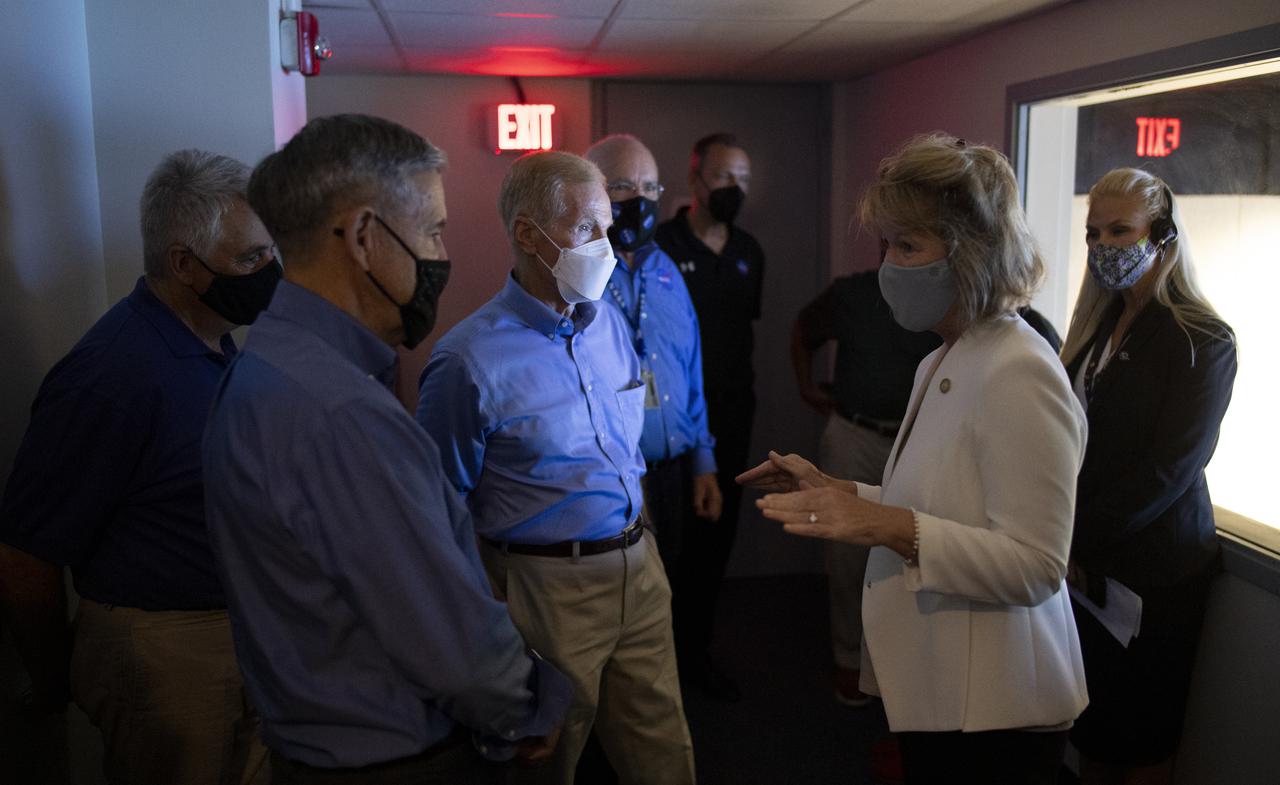
Virginia Secretary of Transportation Shannon Valentine, right, speaks with NASA Administrator Bill Nelson, center, Dennis Andrucyk, director of NASA's Goddard Space Flight Center, Bob Cabana, NASA associate administrator, and Dave Pierce, director of NASA's Wallops Flight Facility, in a viewing area overlooking the Range Control Center ahead of the launch of Northrop Grumman’s 16th resupply mission to the International Space Station, Tuesday, Aug. 10, 2021, at NASA’s Wallops Flight Facility in Virginia. Photo Credit: (NASA/Joel Kowsky)
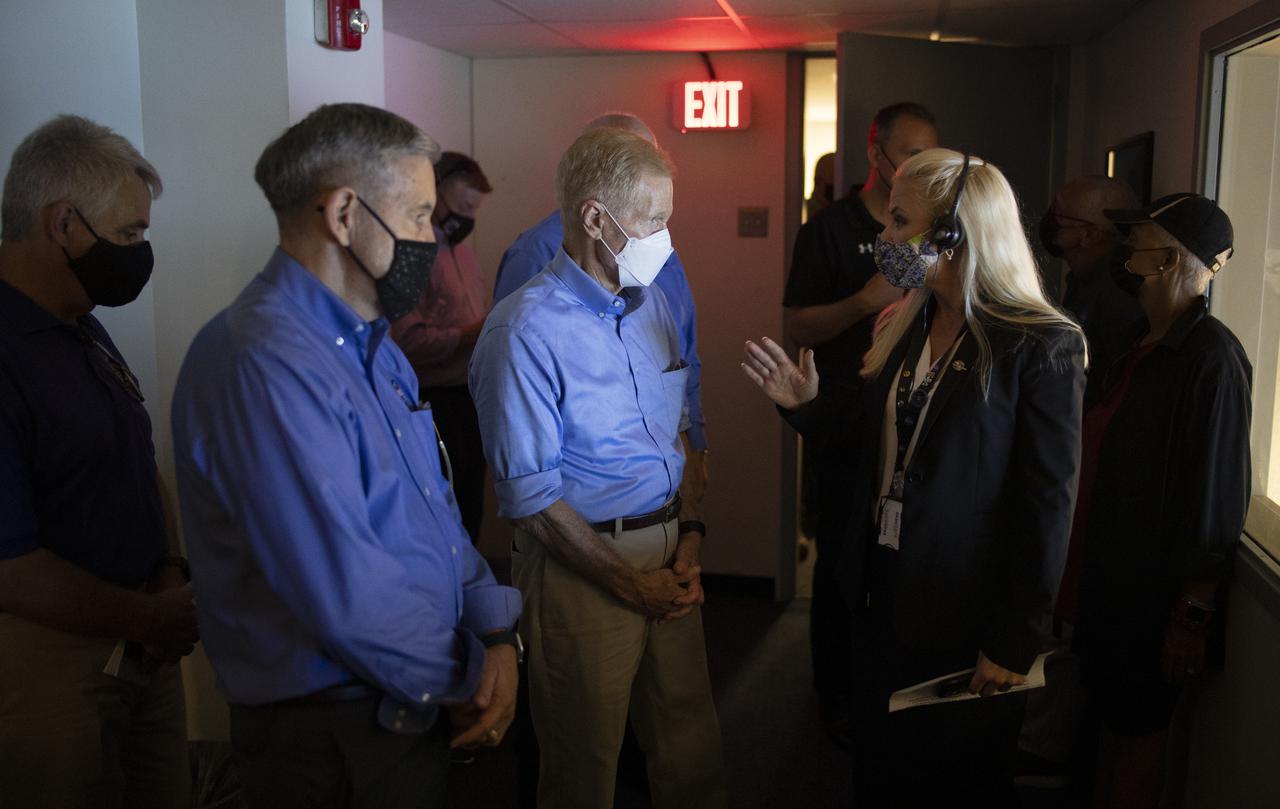
Shannon Fitzpatrick, chief of the Range and Mission Management office at NASA's Wallops Flight Facility, right, speaks about the progress of the countdown of Northrop Grumman’s 16th resupply mission to the International Space Station with NASA Administrator Bill Nelson, center, Bob Cabana, NASA associate administrator, second from left, and Dave Pierce, director of NASA's Wallops Flight Facility, left, in an area overlooking the Range Control Center, Tuesday, Aug. 10, 2021, at NASA’s Wallops Flight Facility in Virginia. Photo Credit: (NASA/Joel Kowsky)
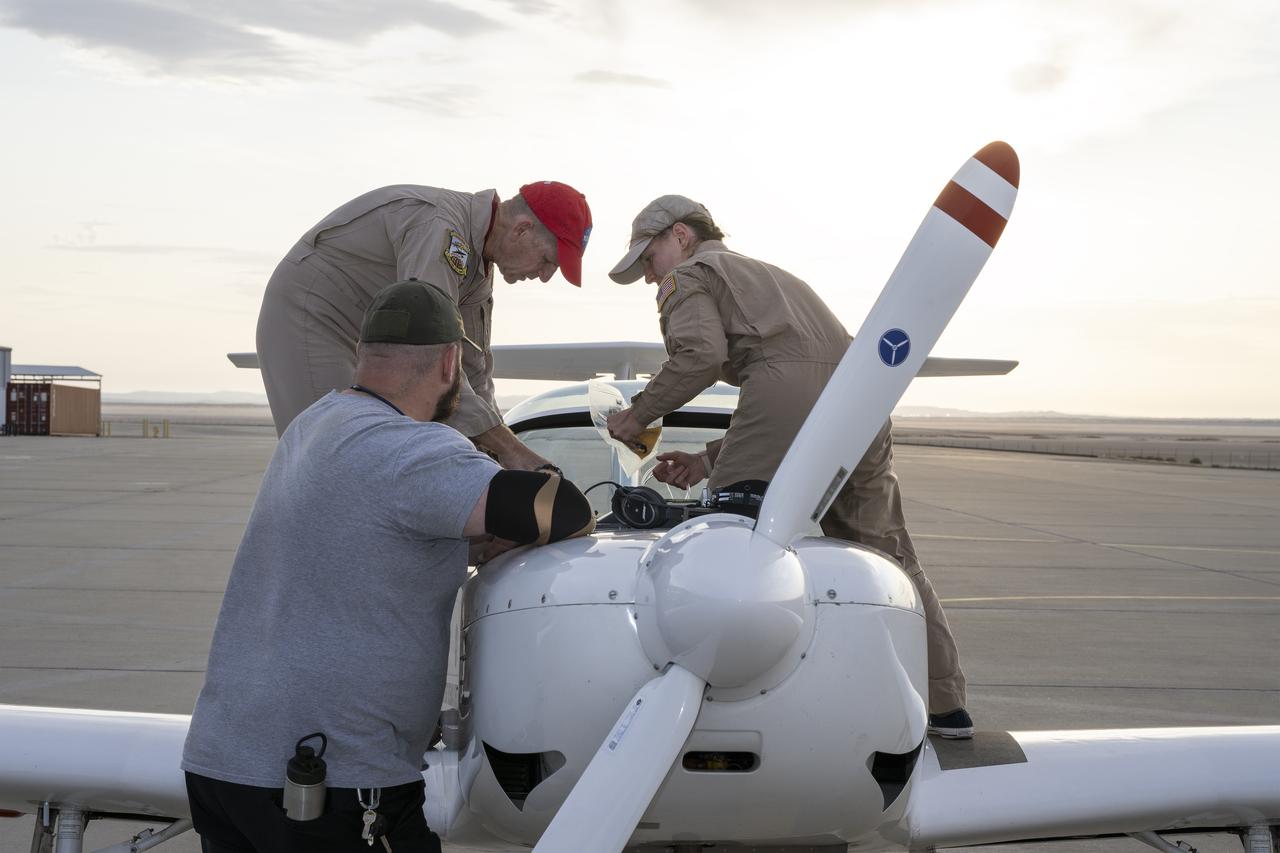
A NASA TG-14 glider aircraft is prepared for flight at NASA’s Armstrong Flight Research Center in Edwards, California, in support of the agency’s Quesst mission. The aircraft is equipped with onboard microphones to capture sonic boom noise generated during rehearsal flights, helping researchers measure the acoustic signature of supersonic aircraft closer to the ground.
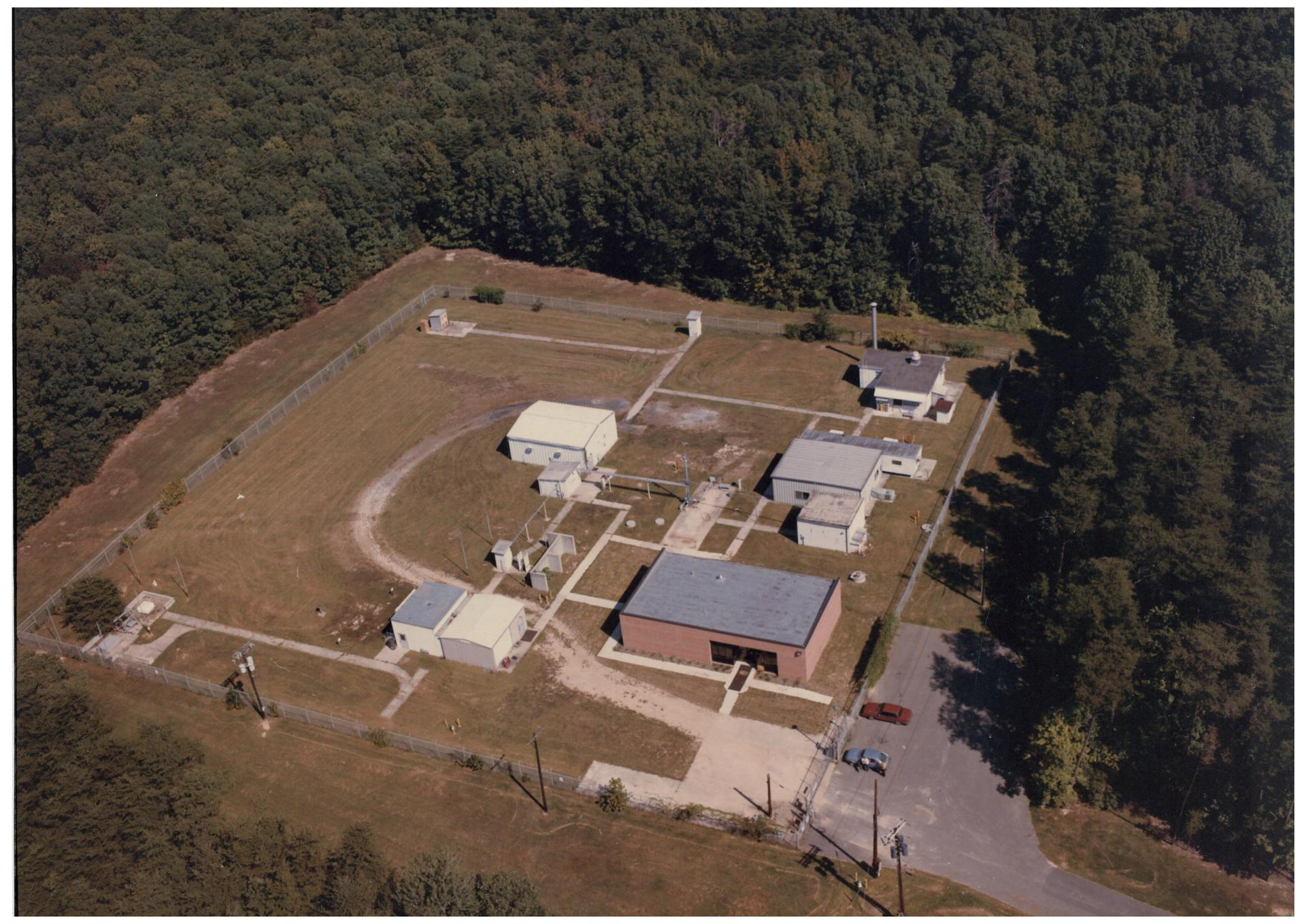
Aerial photograph from 1984 buildings at Area 400, a portion of the campus of NASA's Goddard Space Flight Center in Greenbelt, Md.
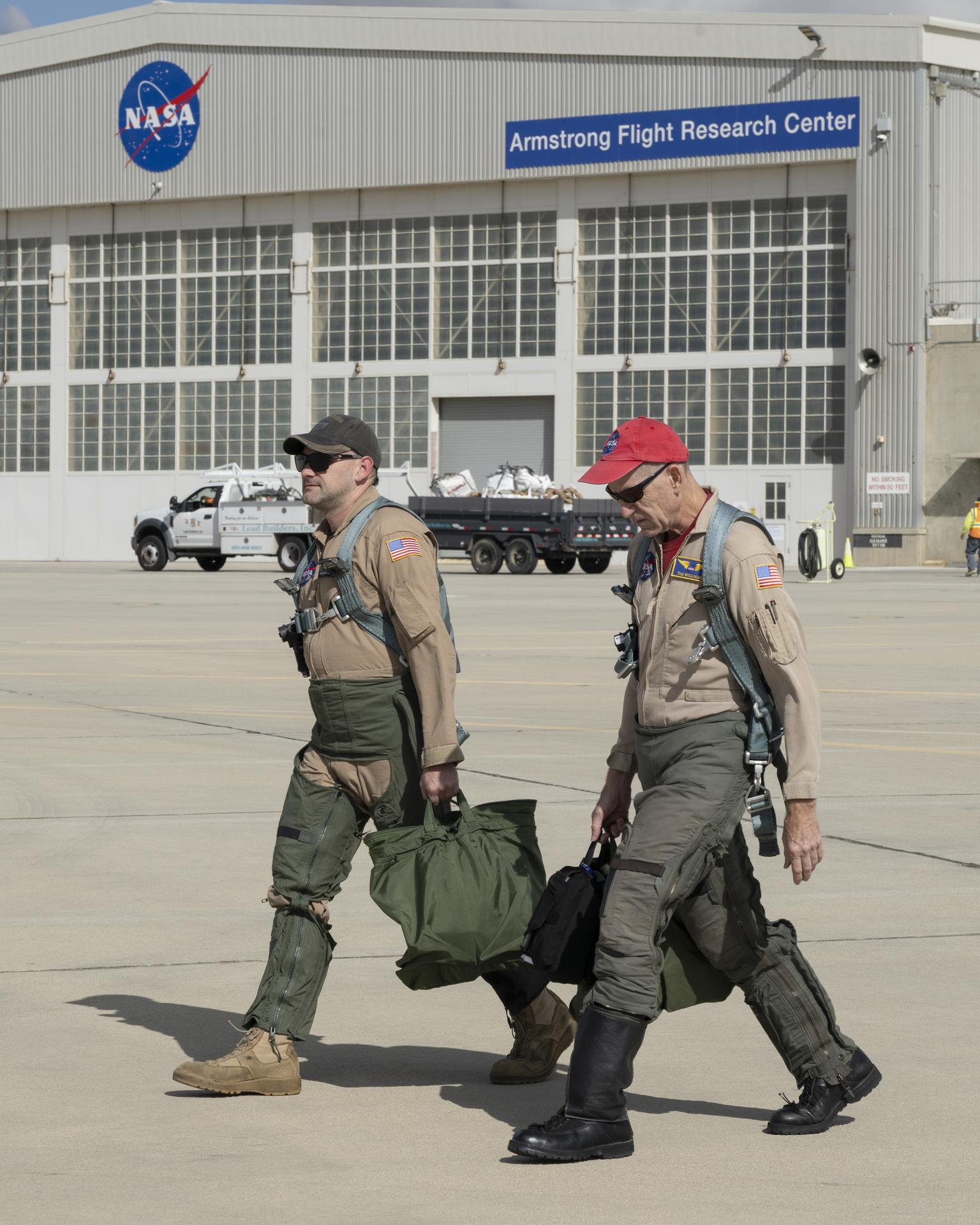
Kelly Jellison, lead avionics technician for NASA’s C-20 and G-V aircraft, and NASA pilot Tim Willaims prepare for an employee incentive flight at NASA’s Armstrong Flight Research Center in Edwards, California, on Wednesday, May 27, 2026. NASA Administrator Jared Isaacman established the ride‑along program to recognize and reward workforce members for their dedication to advancing the agency’s priorities.
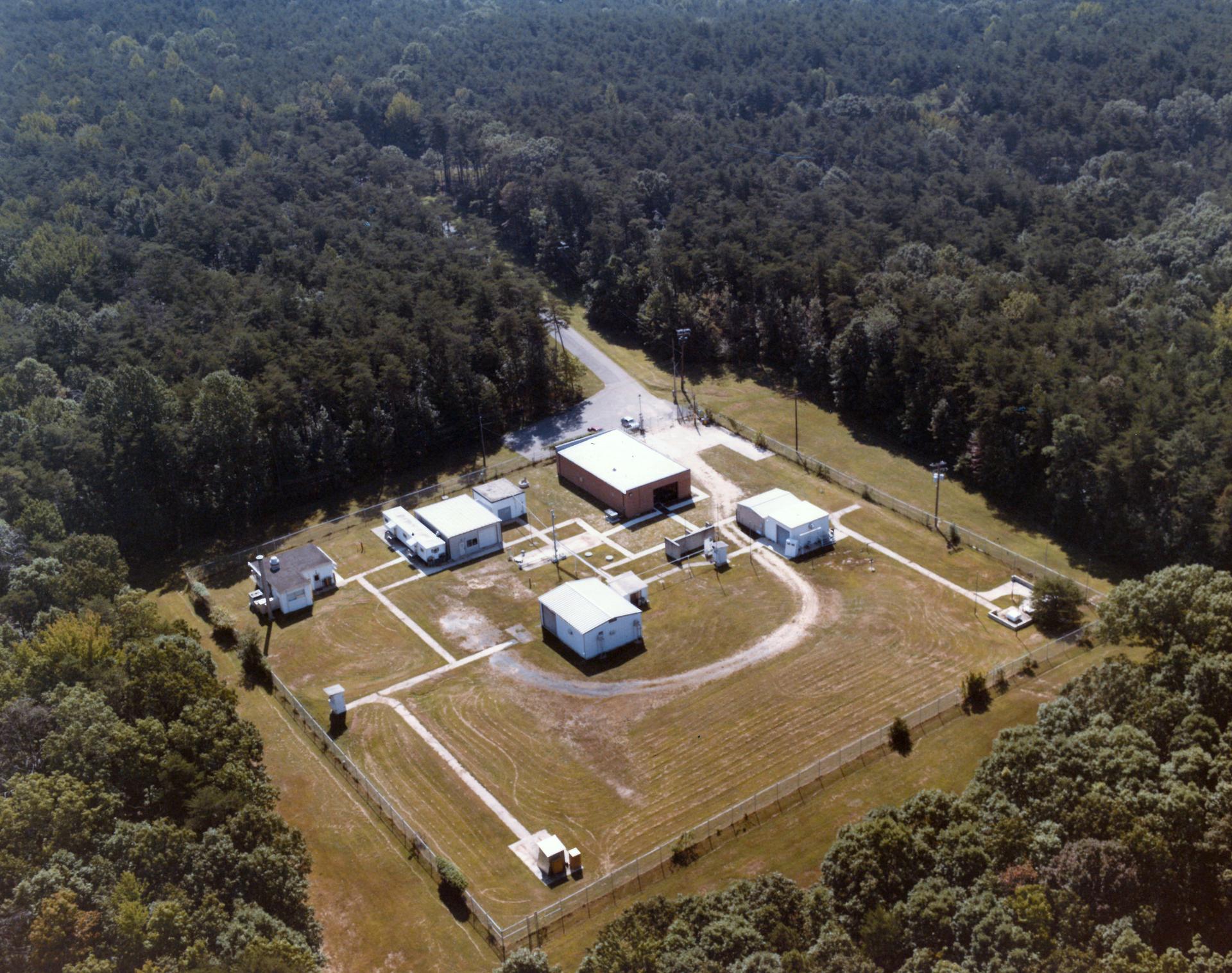
Aerial photograph from 1984 showing buildings at Area 400, a portion of the campus of NASA's Goddard Space Flight Center in Greenbelt, Md.
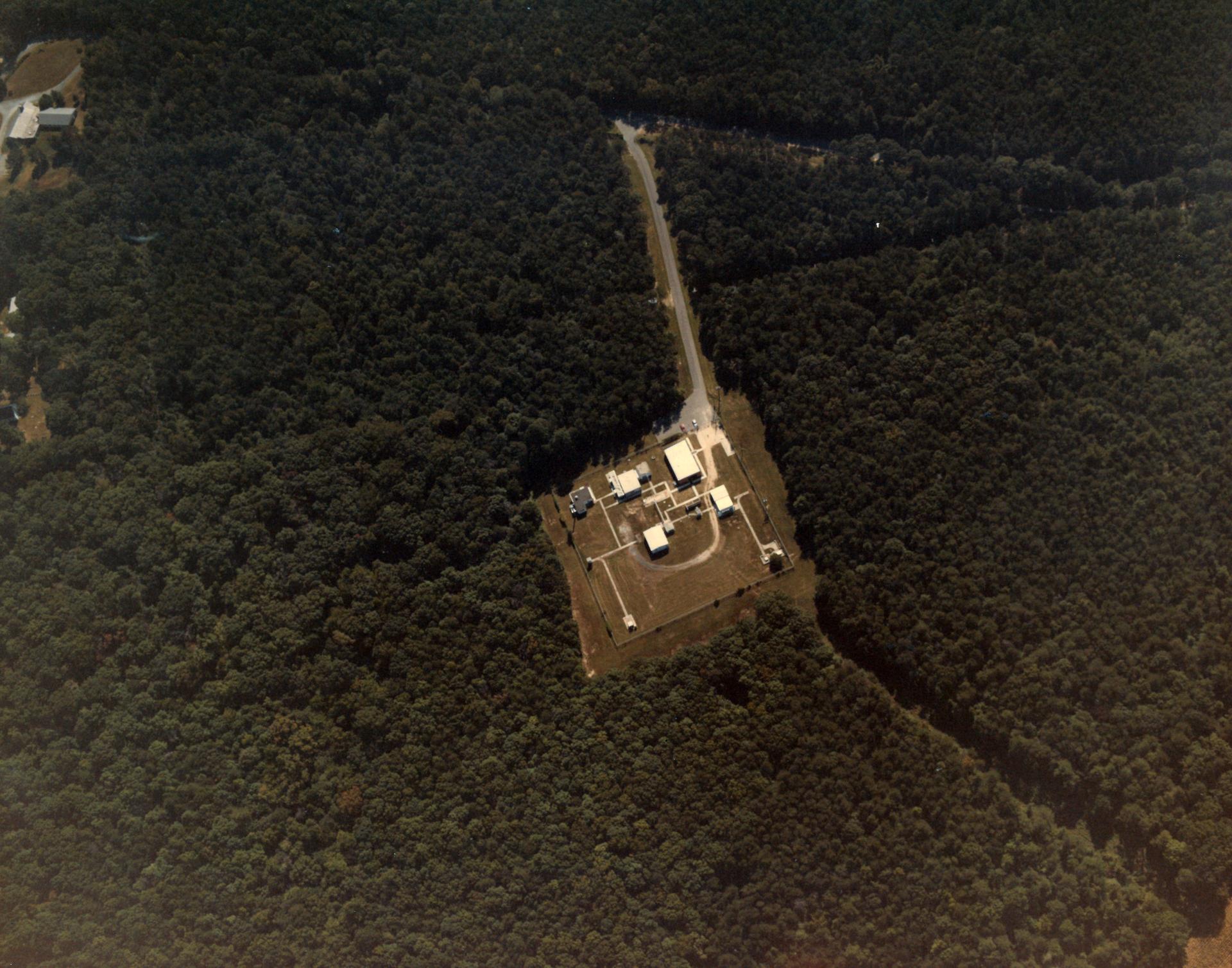
Aerial photograph from 1984 showing buildings at Area 400, a portion of the campus of NASA's Goddard Space Flight Center in Greenbelt, Md.
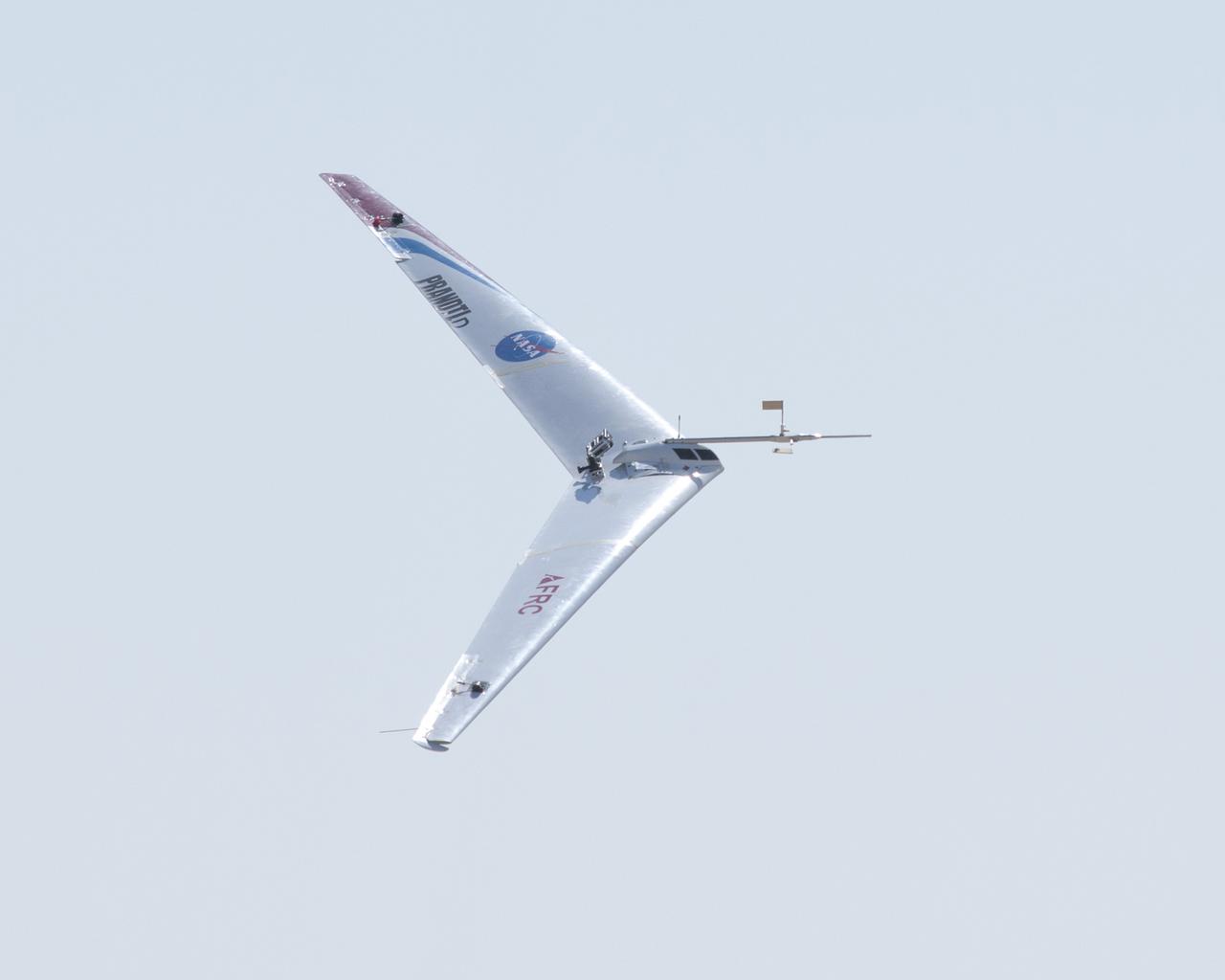
The Prandtl-D makes a test flight in 2014.
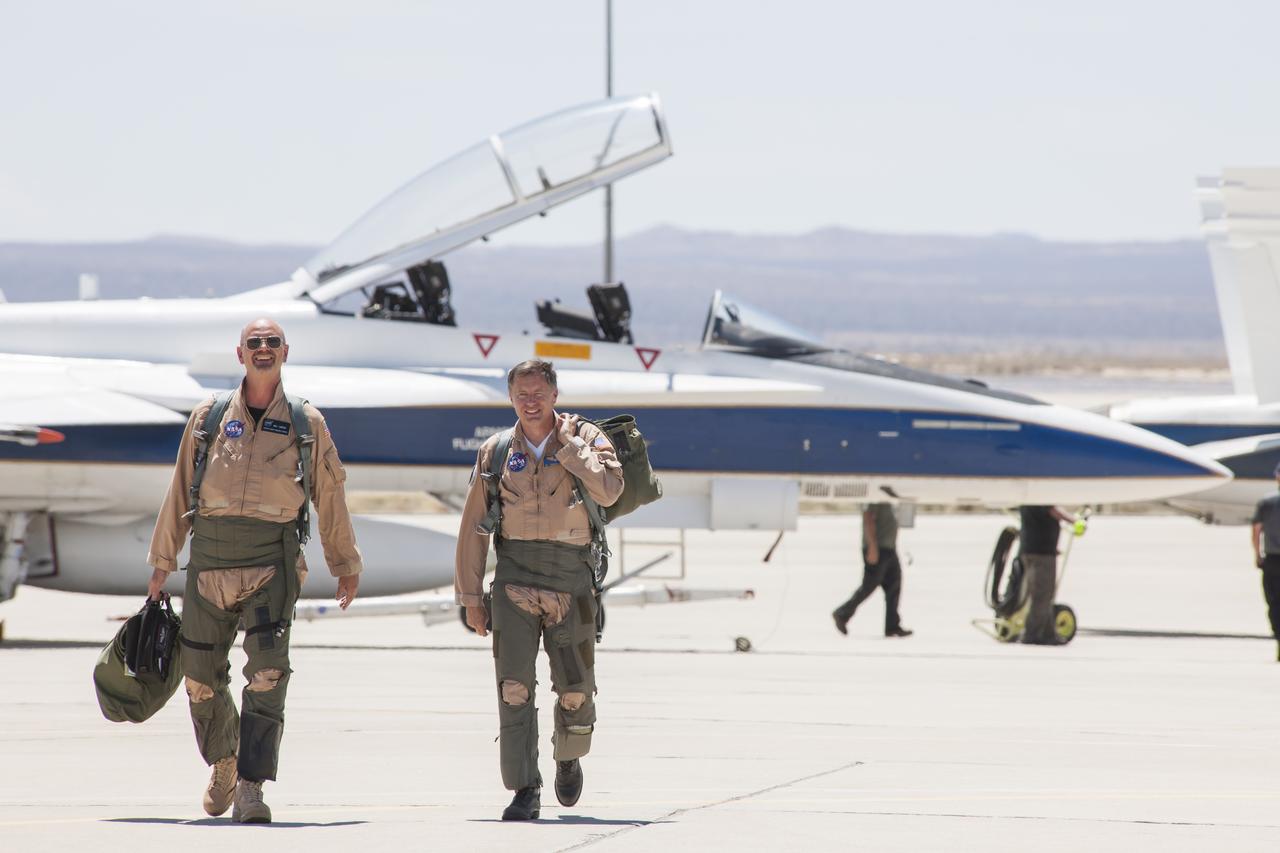
NASA pilot Nils Larson, and flight test engineer and pilot Wayne Ringelberg, head for a mission debrief after flying a NASA F/A-18 at Mach 1.38 to create sonic booms as part of the SonicBAT flight series at NASA’s Armstrong Flight Research Center in California, to study sonic boom signatures with and without the element of atmospheric turbulence.
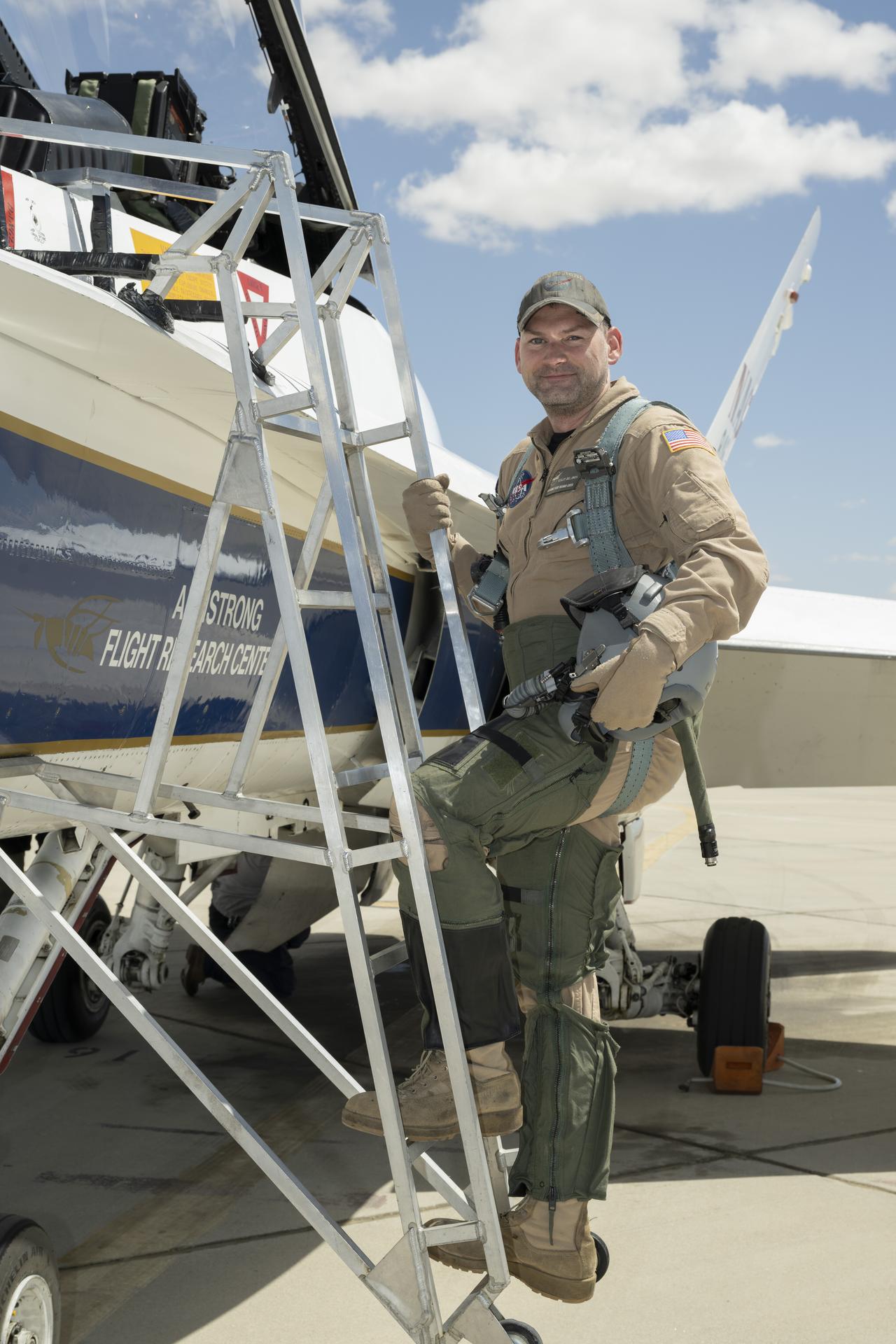
Kelly Jellison, lead avionics technician for NASA’s C-20 and G-V aircraft, concluded an employee incentive flight in an F/A-18 aircraft at NASA’s Armstrong Flight Research Center in Edwards, California, on Wednesday, May 27, 2026. NASA Administrator Jared Isaacman established the ride‑along program to recognize and reward workforce members for their dedication to advancing the agency’s priorities.
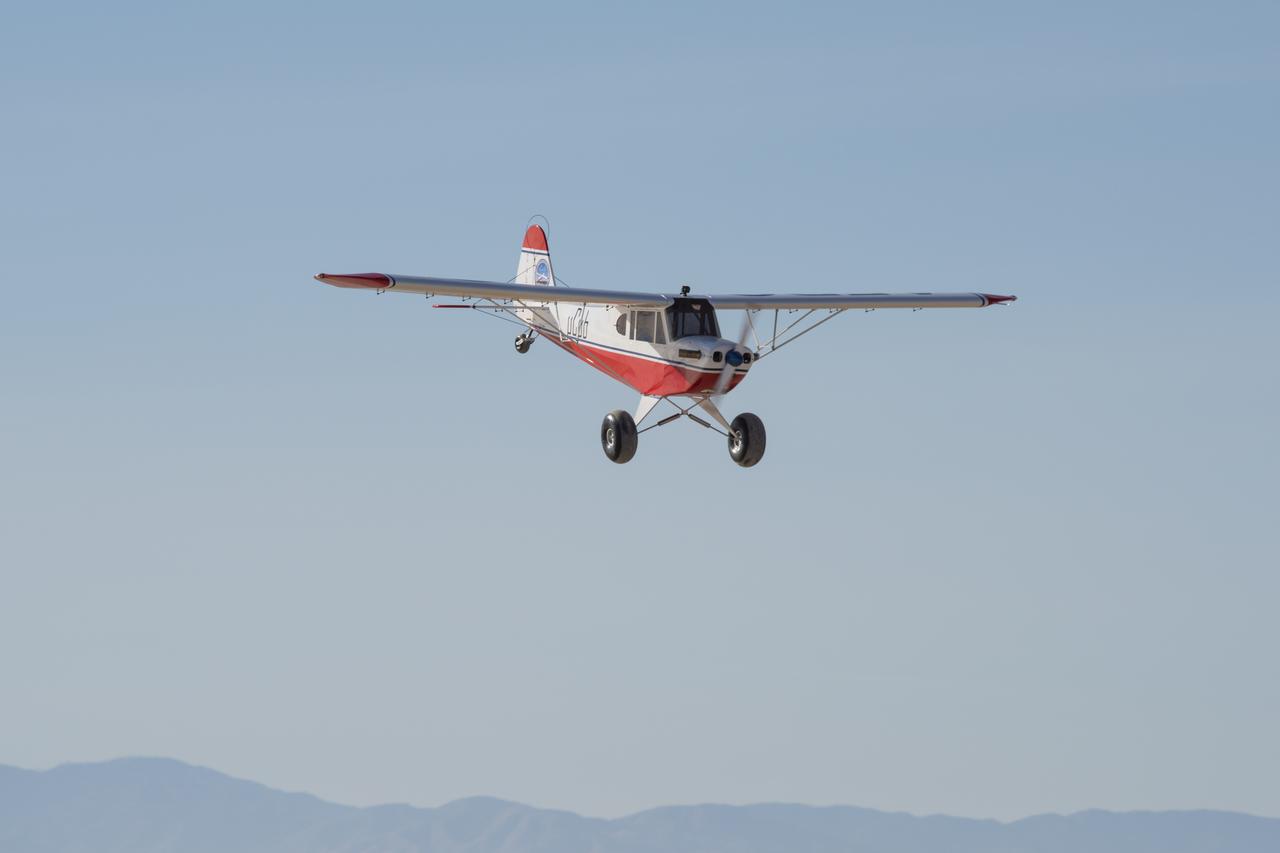
The MicroCub, a modified a Bill Hempel 60-percent-scale super cub, approaches for a landing at NASA's Armstrong Flight Research Center. This was the first flight of the MicroCub in which the crew validated the airworthiness of the aircraft.
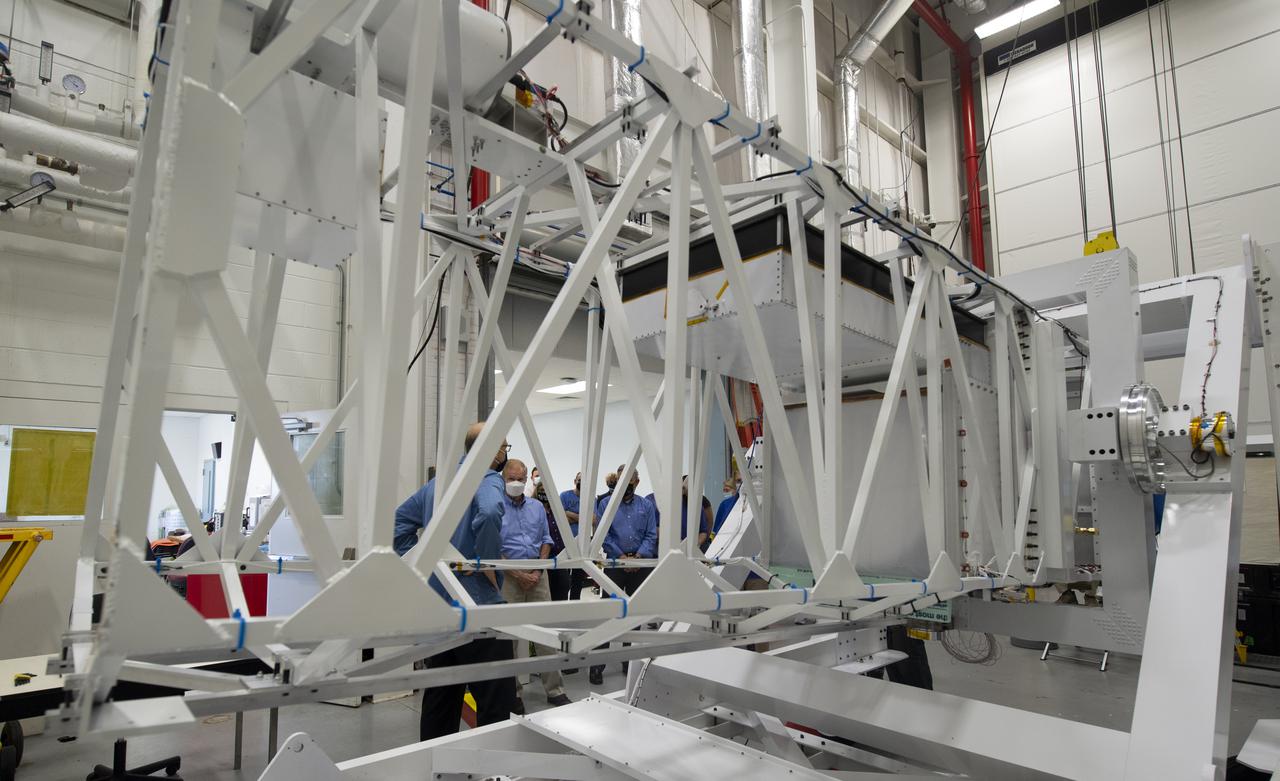
NASA Administrator Bill Nelson is seen through the structure of the Wallops Arc Second Pointer balloon payload being assembled in the Small Satellites, Balloon Research and Development Lab, Tuesday, Aug. 10, 2021, at NASA’s Wallops Flight Facility in Virginia. Photo Credit: (NASA/Joel Kowsky)
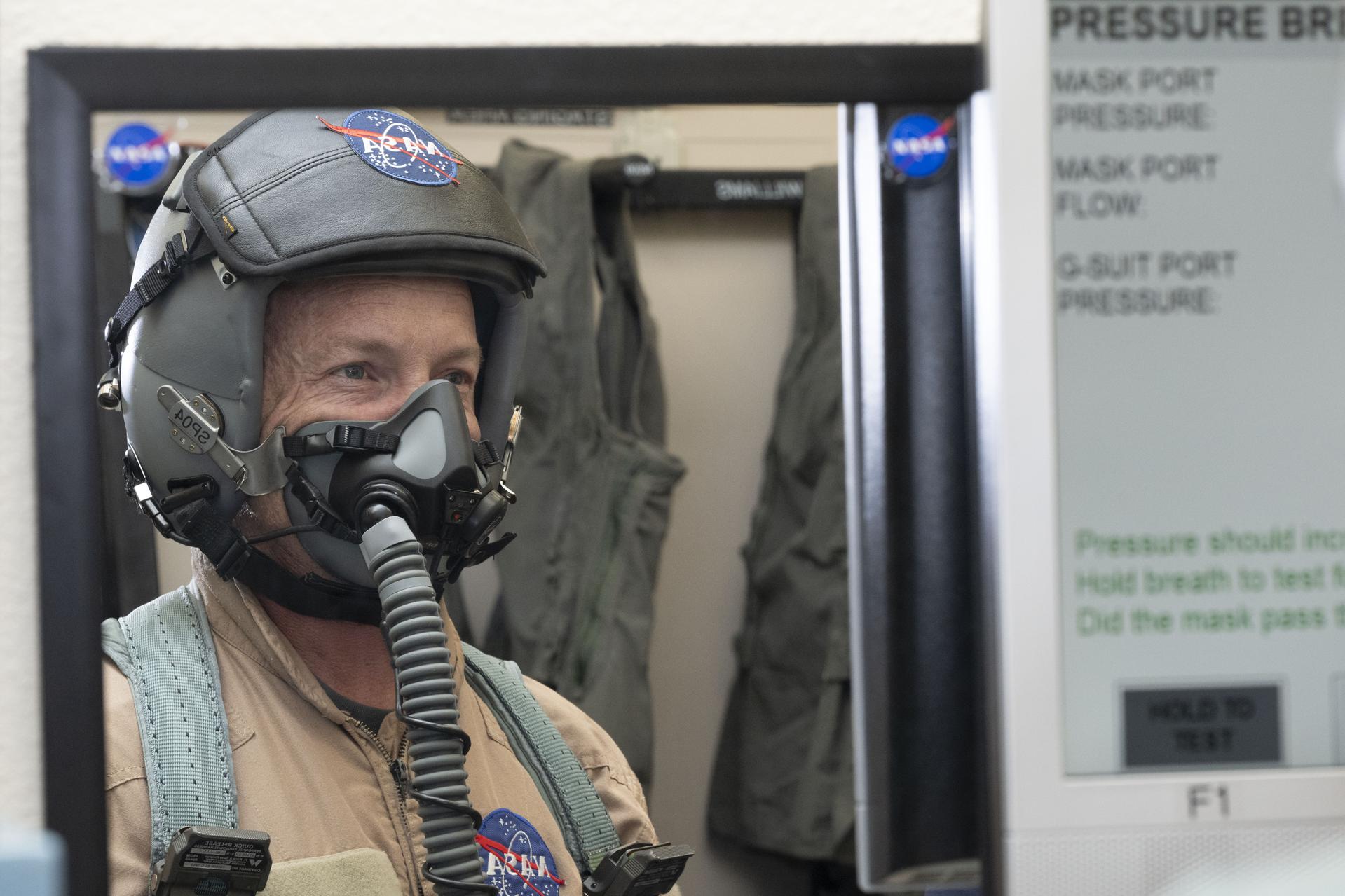
Mike Frederick, aerospace engineer and researcher, prepares for an employee incentive flight in an F/A-18 aircraft at NASA’s Armstrong Flight Research Center in Edwards, California, on Wednesday, April 15, 2026. NASA Administrator Jared Isaacman established the ride‑along program to recognize and reward workforce members for their dedication to advancing the agency’s priorities.
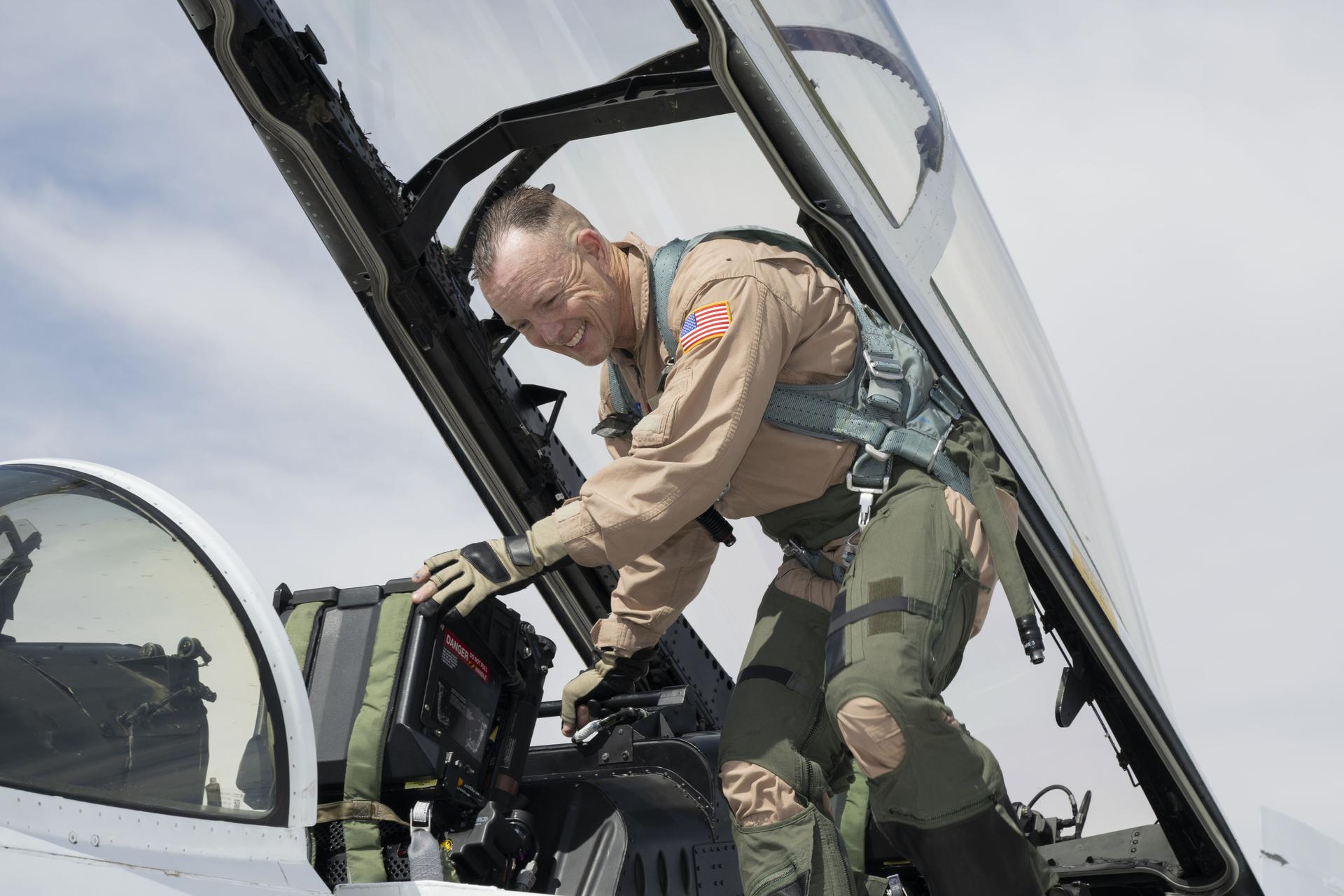
Mike Frederick, aerospace engineer and researcher, prepares for an employee incentive flight in an F/A-18 aircraft at NASA’s Armstrong Flight Research Center in Edwards, California, on Wednesday, April 15, 2026. NASA Administrator Jared Isaacman established the ride‑along program to recognize and reward workforce members for their dedication to advancing the agency’s priorities.
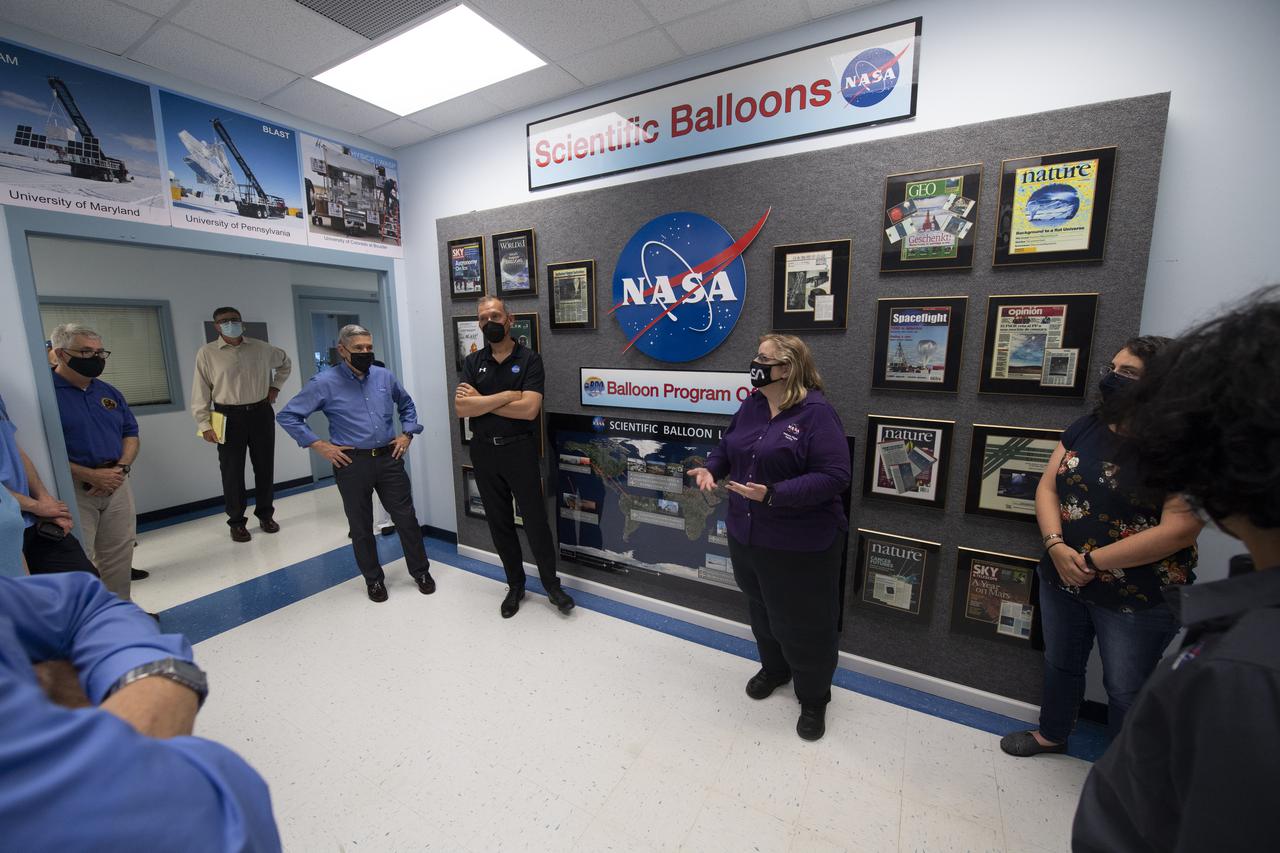
Debbie Fairbrother, chief of the Balloon Program Office at NASA's Wallops Flight Facility, center, speaks with Thomas Zurbuchen, associate administrator for NASA's Science Mission Directorate, Bob Cabana, NASA associate administrator, Dave Pierce, director of NASA's Wallops Flight Facility, NASA Administrator Bill Nelson, NASA Deputy Administrator Pam Melroy, and Dennis Andrucyk, director of NASA's Goddard Space Flight Center during a tour the Small Satellites, Balloon Research and Development Lab, Tuesday, Aug. 10, 2021, NASA’s Wallops Flight Facility in Virginia. Photo Credit: (NASA/Joel Kowsky)
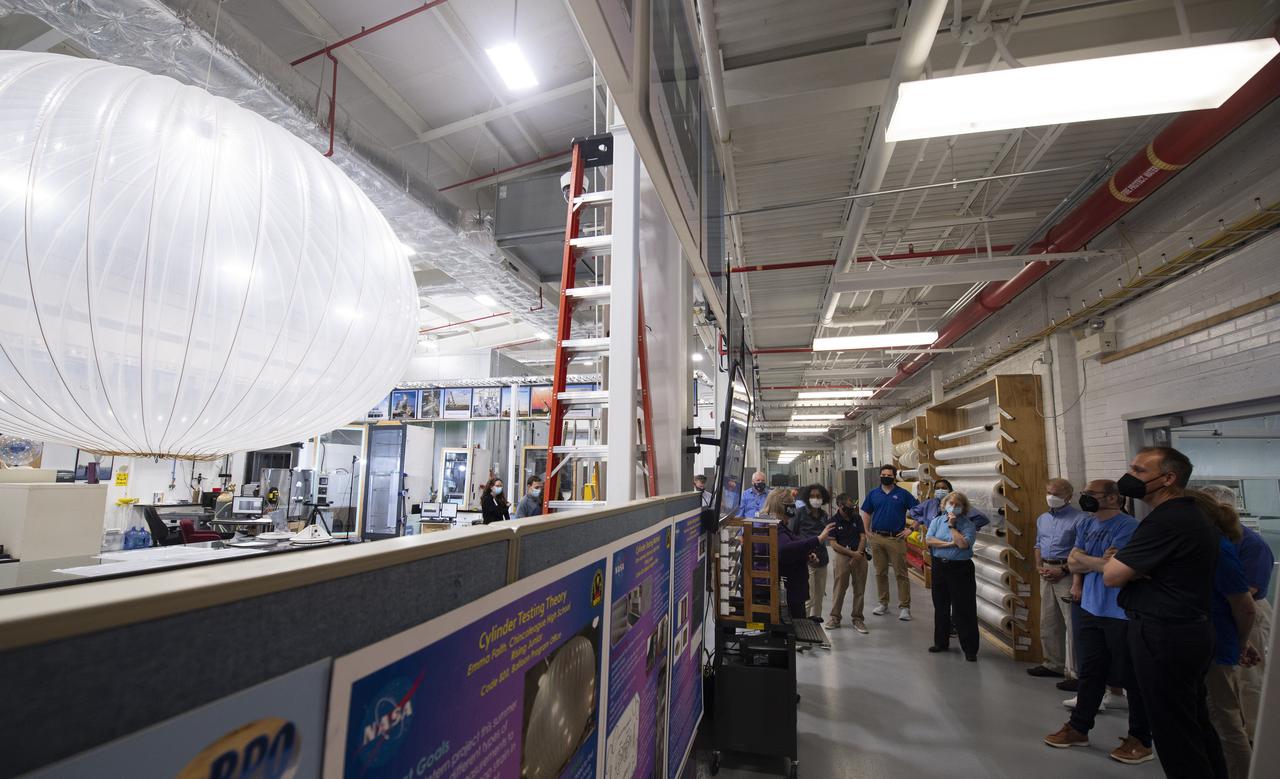
Debbie Fairbrother, chief of the Balloon Program Office at NASA's Wallops Flight Facility, center, speaks with Thomas Zurbuchen, associate administrator for NASA's Science Mission Directorate, Bob Cabana, NASA associate administrator, Dave Pierce, director of NASA's Wallops Flight Facility, NASA Administrator Bill Nelson, NASA Deputy Administrator Pam Melroy, and Dennis Andrucyk, director of NASA's Goddard Space Flight Center during a tour the Small Satellites, Balloon Research and Development Lab, Tuesday, Aug. 10, 2021, at NASA’s Wallops Flight Facility in Virginia. Photo Credit: (NASA/Joel Kowsky)
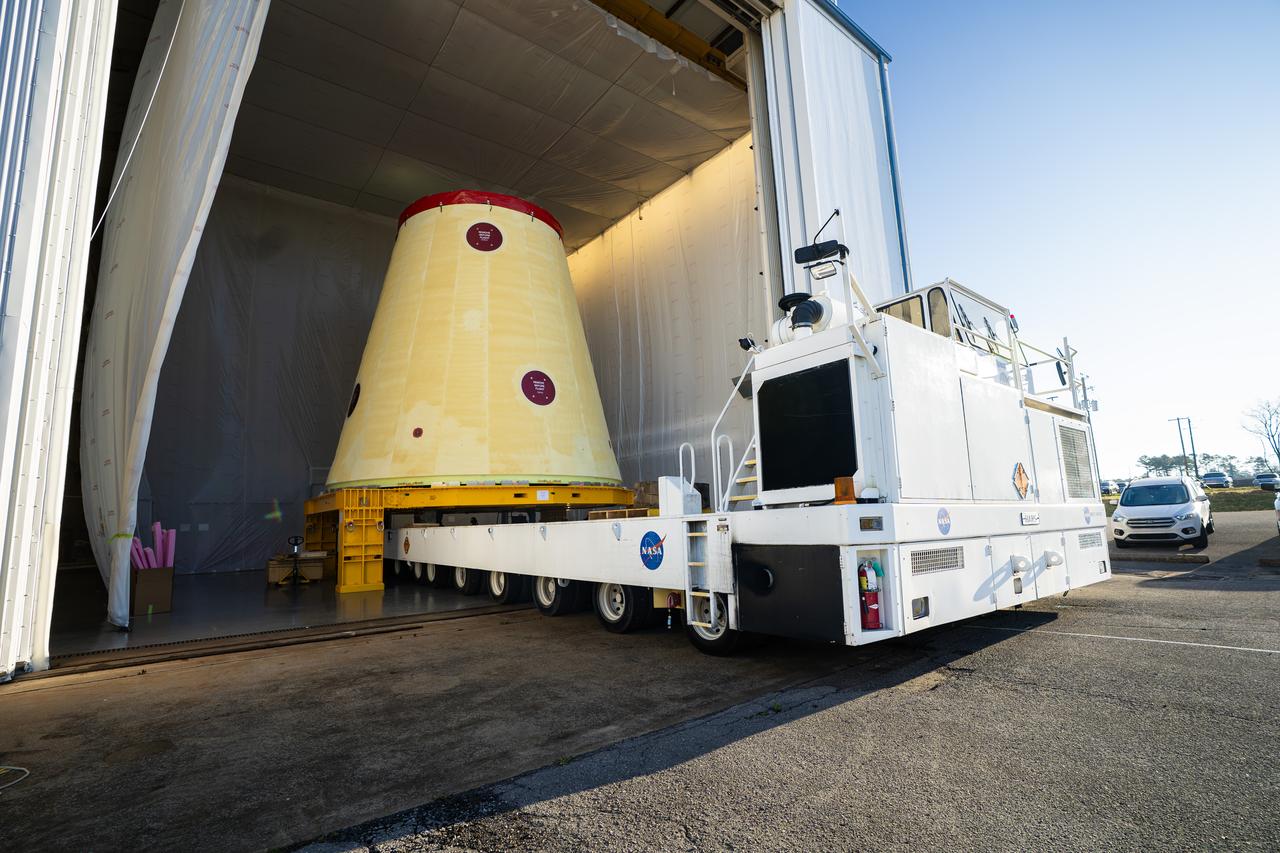
These images and videos show technicians at NASA’s Marshall Space Flight Center in Huntsville, Alabama, March 17, 2025, moving the completed launch vehicle stage adapter for Artemis III from Building 4649 to Building 4708 where it will remain until it is time to ship the hardware to NASA’s Kennedy Space Center in Florida. The cone-shaped hardware connects the SLS (Space Launch System) rocket to the upper stage, the interim cryogenic propulsion stage, and protects the rocket’s flight computers, avionics, and electrical devices during launch and ascent during the Artemis missions.
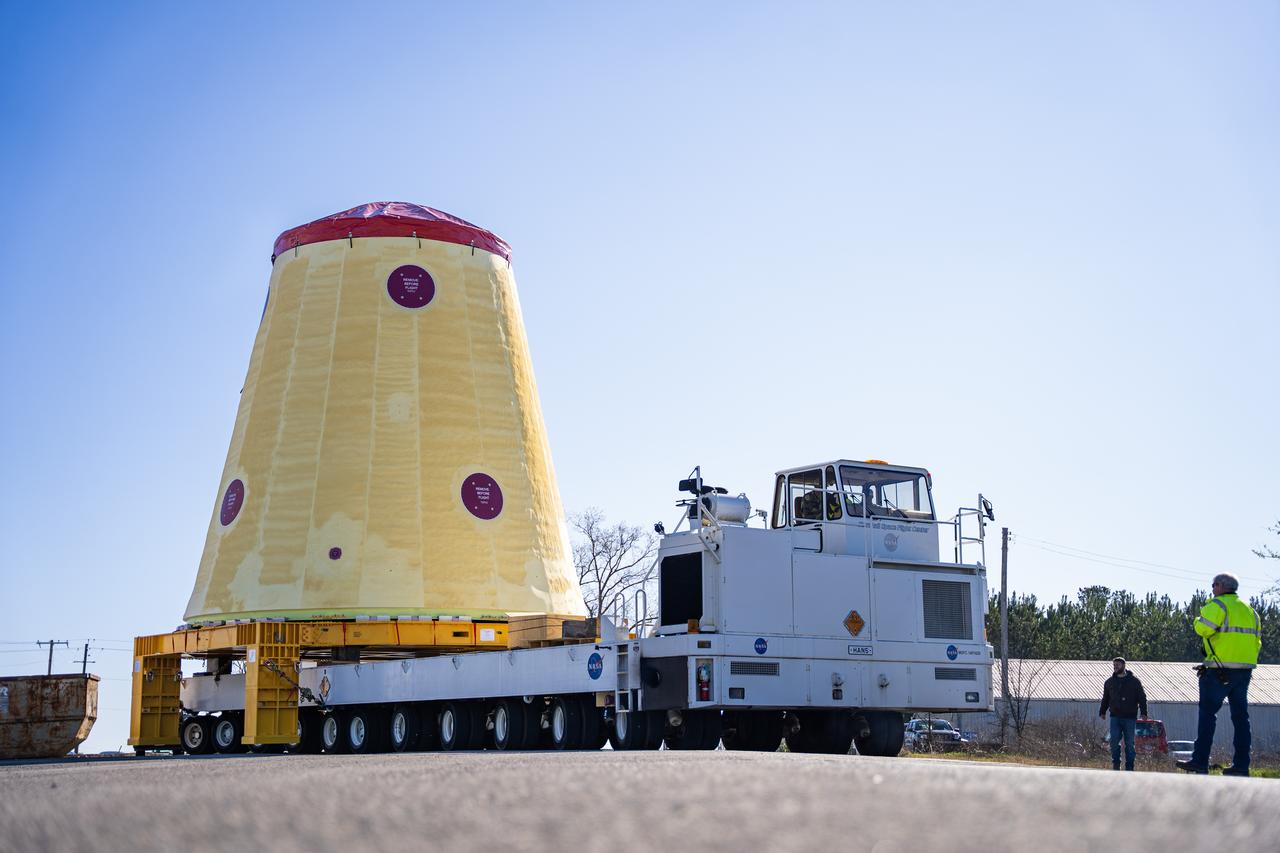
These images and videos show technicians at NASA’s Marshall Space Flight Center in Huntsville, Alabama, March 17, 2025, moving the completed launch vehicle stage adapter for Artemis III from Building 4649 to Building 4708 where it will remain until it is time to ship the hardware to NASA’s Kennedy Space Center in Florida. The cone-shaped hardware connects the SLS (Space Launch System) rocket to the upper stage, the interim cryogenic propulsion stage, and protects the rocket’s flight computers, avionics, and electrical devices during launch and ascent during the Artemis missions.
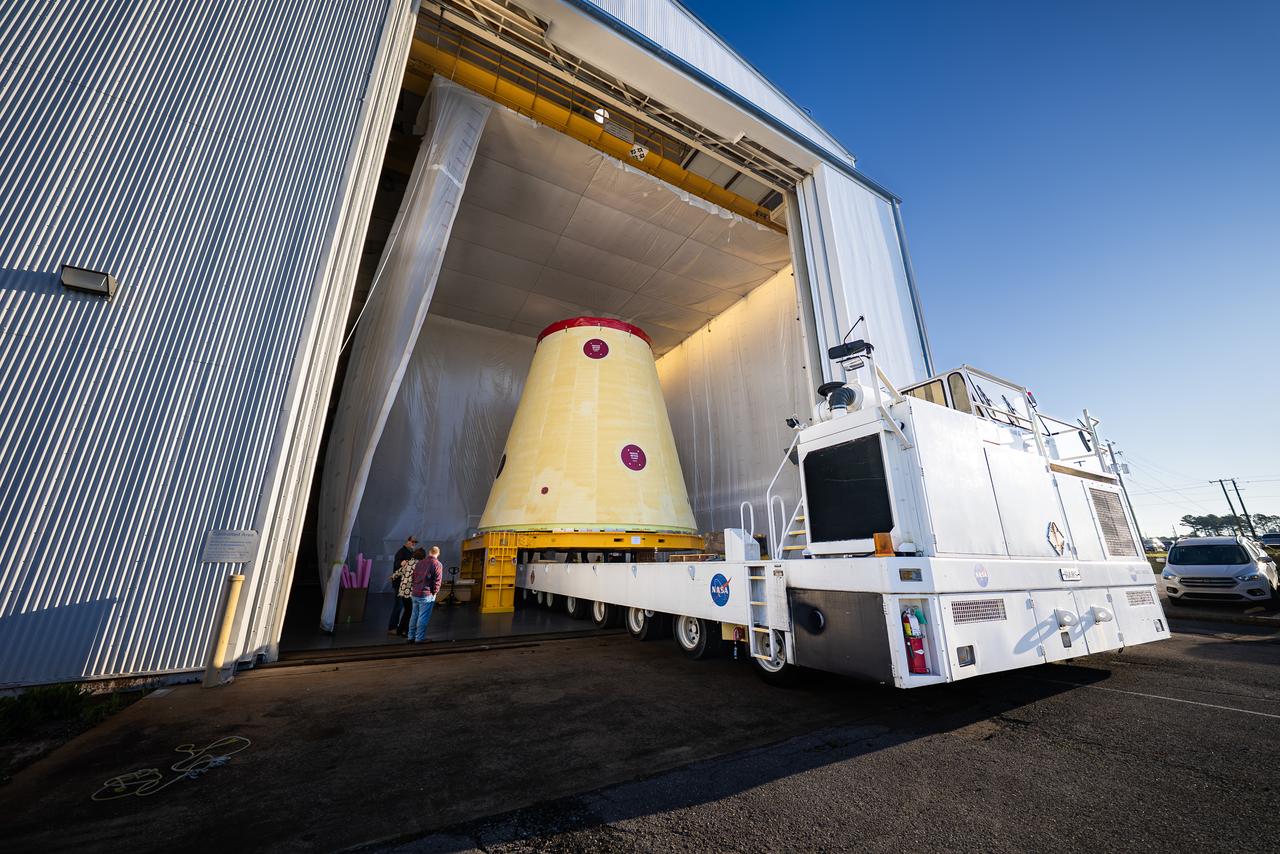
These images and videos show technicians at NASA’s Marshall Space Flight Center in Huntsville, Alabama, March 17, 2025, moving the completed launch vehicle stage adapter for Artemis III from Building 4649 to Building 4708 where it will remain until it is time to ship the hardware to NASA’s Kennedy Space Center in Florida. The cone-shaped hardware connects the SLS (Space Launch System) rocket to the upper stage, the interim cryogenic propulsion stage, and protects the rocket’s flight computers, avionics, and electrical devices during launch and ascent during the Artemis missions.
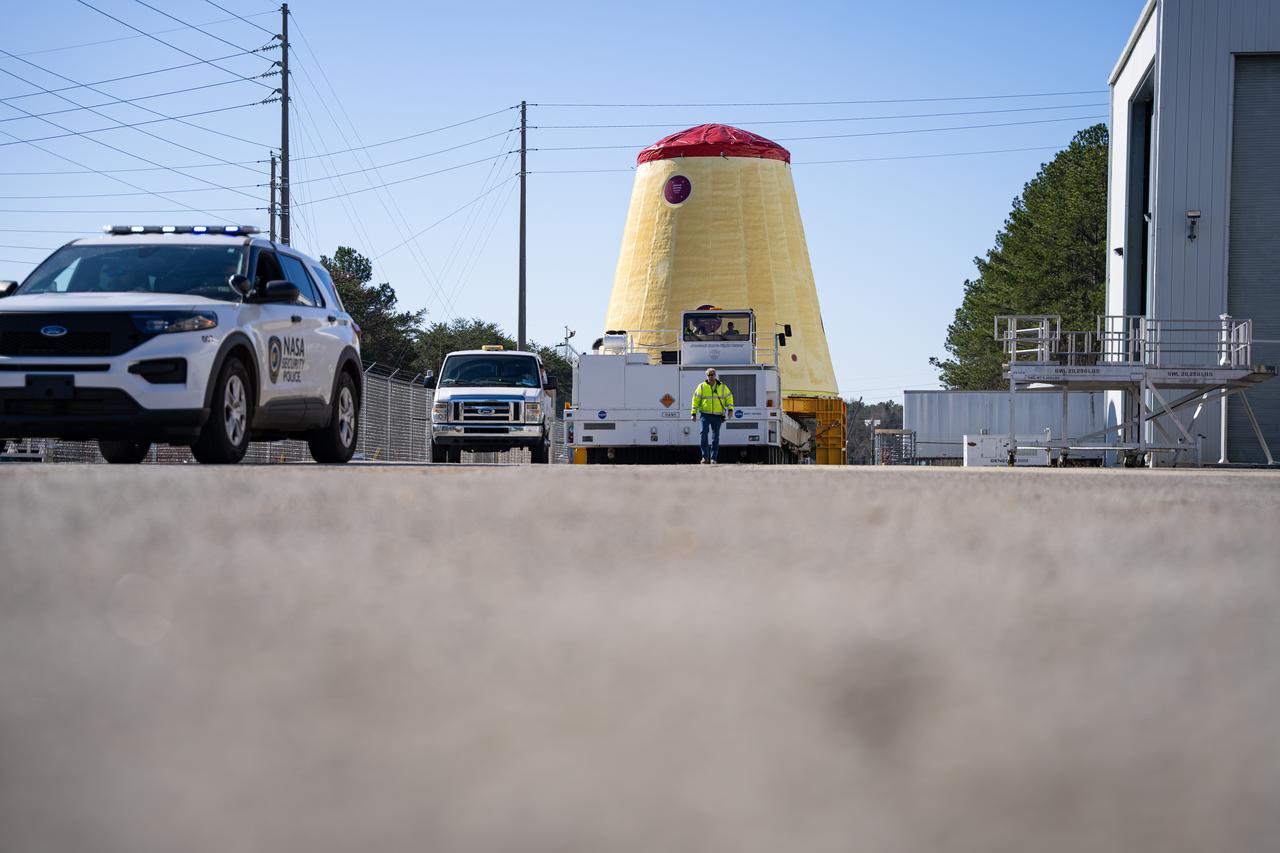
These images and videos show technicians at NASA’s Marshall Space Flight Center in Huntsville, Alabama, March 17, 2025, moving the completed launch vehicle stage adapter for Artemis III from Building 4649 to Building 4708, where it will remain until it is time to ship the hardware to NASA’s Kennedy Space Center in Florida. The cone-shaped hardware connects the SLS (Space Launch System) rocket to the upper stage, the interim cryogenic propulsion stage, and protects the rocket’s flight computers, avionics, and electrical devices during launch and ascent during the Artemis missions.

These images and videos show technicians at NASA’s Marshall Space Flight Center in Huntsville, Alabama, March 17, 2025, moving the completed launch vehicle stage adapter for Artemis III from Building 4649 to Building 4708 where it will remain until it is time to ship the hardware to NASA’s Kennedy Space Center in Florida. The cone-shaped hardware connects the SLS (Space Launch System) rocket to the upper stage, the interim cryogenic propulsion stage, and protects the rocket’s flight computers, avionics, and electrical devices during launch and ascent during the Artemis missions.
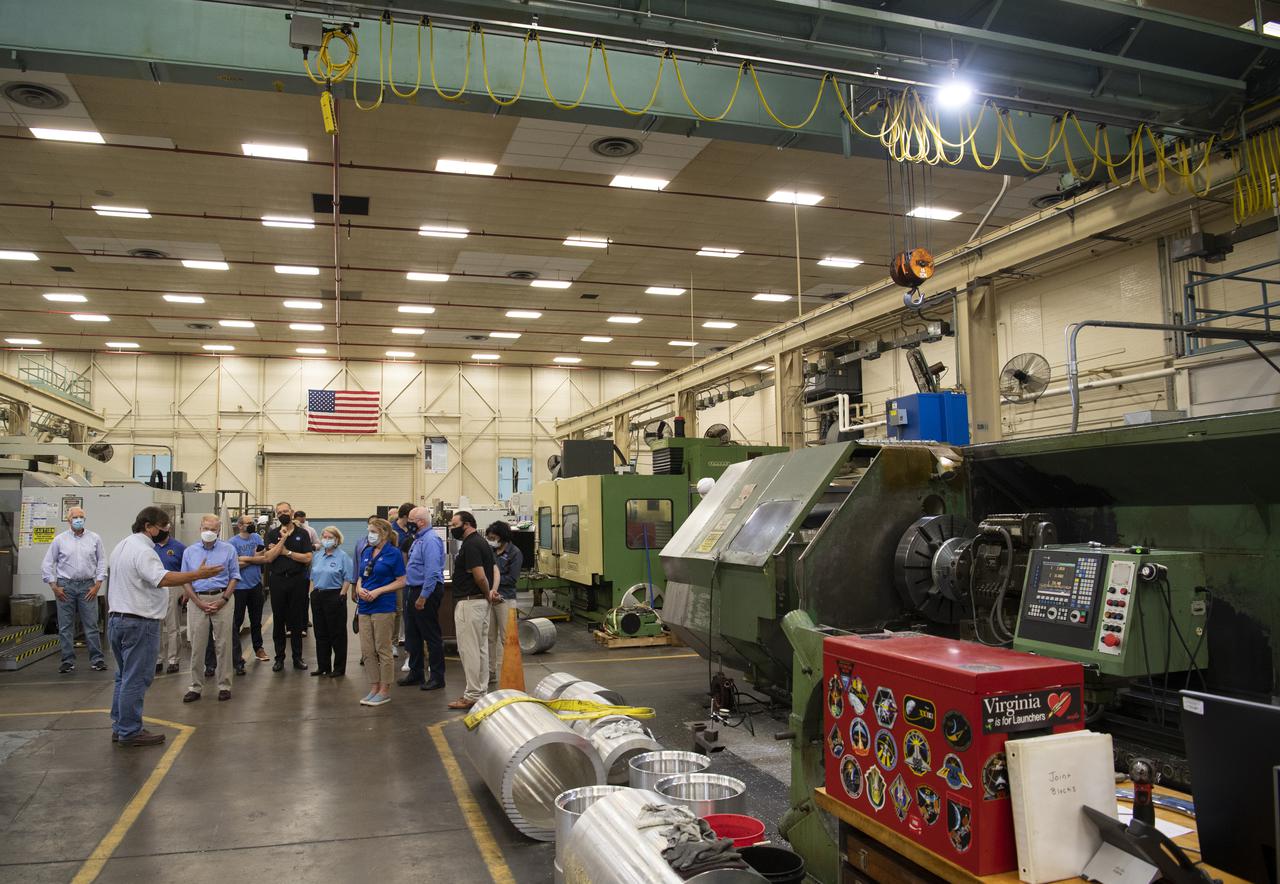
NASA Administrator Bill Nelson, NASA Deputy Administrator Pam Melroy, Thomas Zurbuchen, associate administrator for NASA's Science Mission Directorate, Dave Pierce, director of NASA's Wallops Flight Facility, and Dennis Andrucyk, director of NASA's Goddard Space Flight Center, are seen during a tour of the Sounding Rockets Machine Shop, Test and Evaluation Facility, Tuesday, Aug. 10, 2021, at NASA’s Wallops Flight Facility in Virginia. Photo Credit: (NASA/Joel Kowsky)
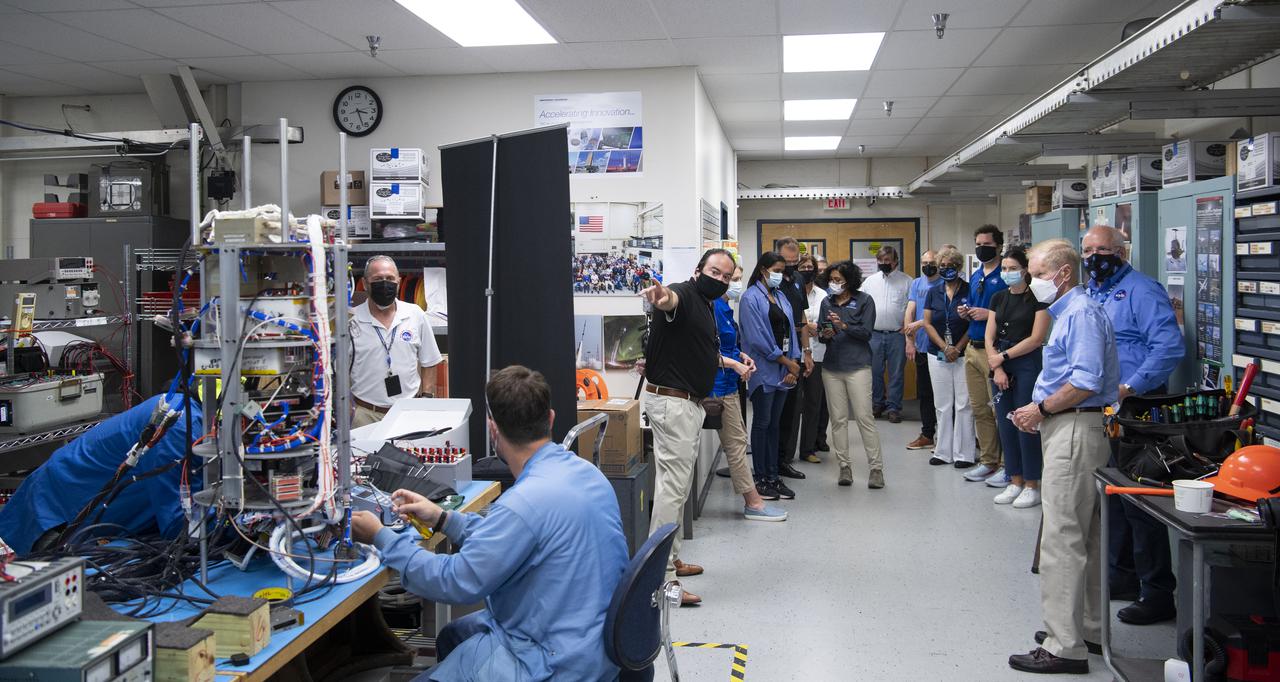
Giovanni Rosanova, chief of the Sounding Rocket Program Office at NASA's Wallops Flight Facility, center, describes work done in the Payload Integration Laboratory of the Sounding Rockets Machine Shop, Test and Evaluation Facility during a tour with NASA Administrator Bill Nelson and Dennis Andrucyk, director of NASA's Goddard Space Flight Center, Tuesday, Aug. 10, 2021, at NASA’s Wallops Flight Facility in Virginia. Photo Credit: (NASA/Joel Kowsky)
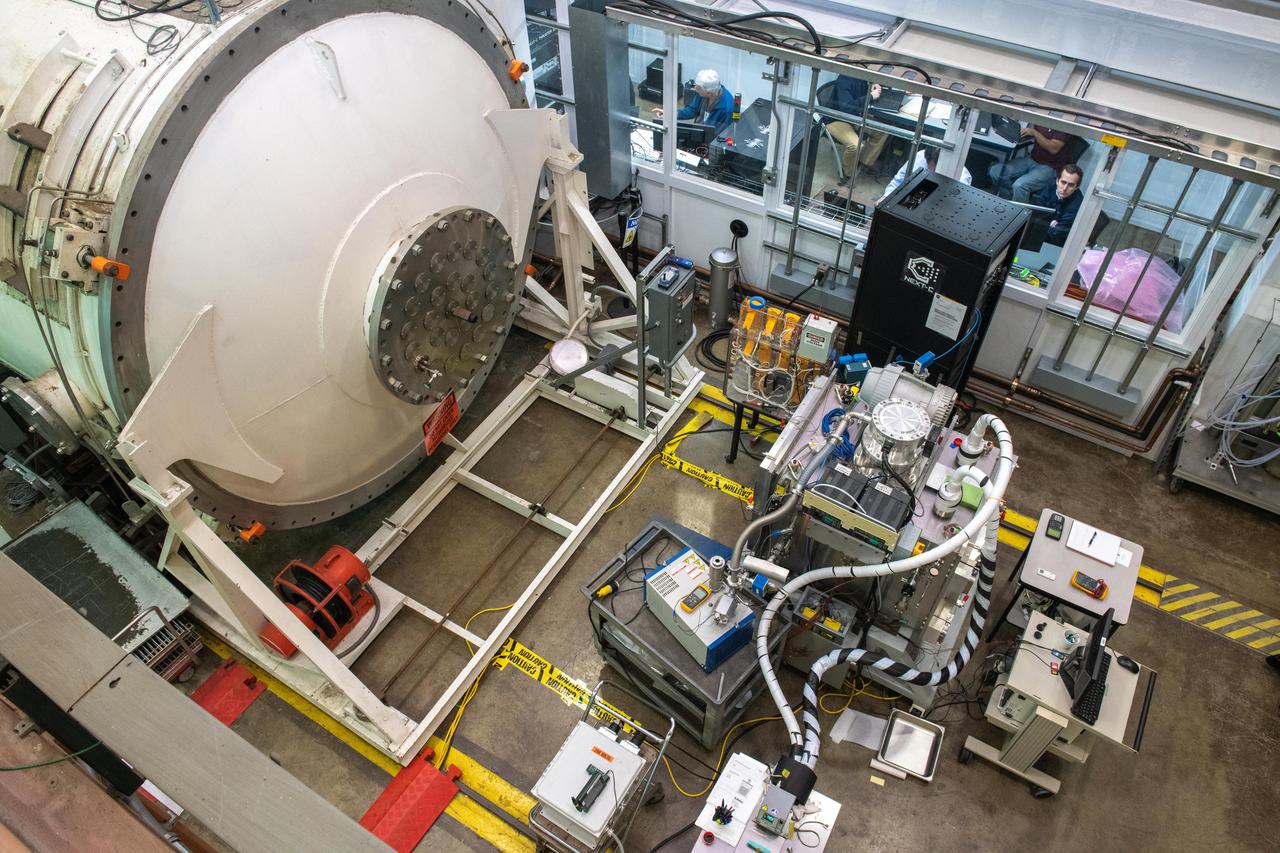
NEXT-C flight PPU
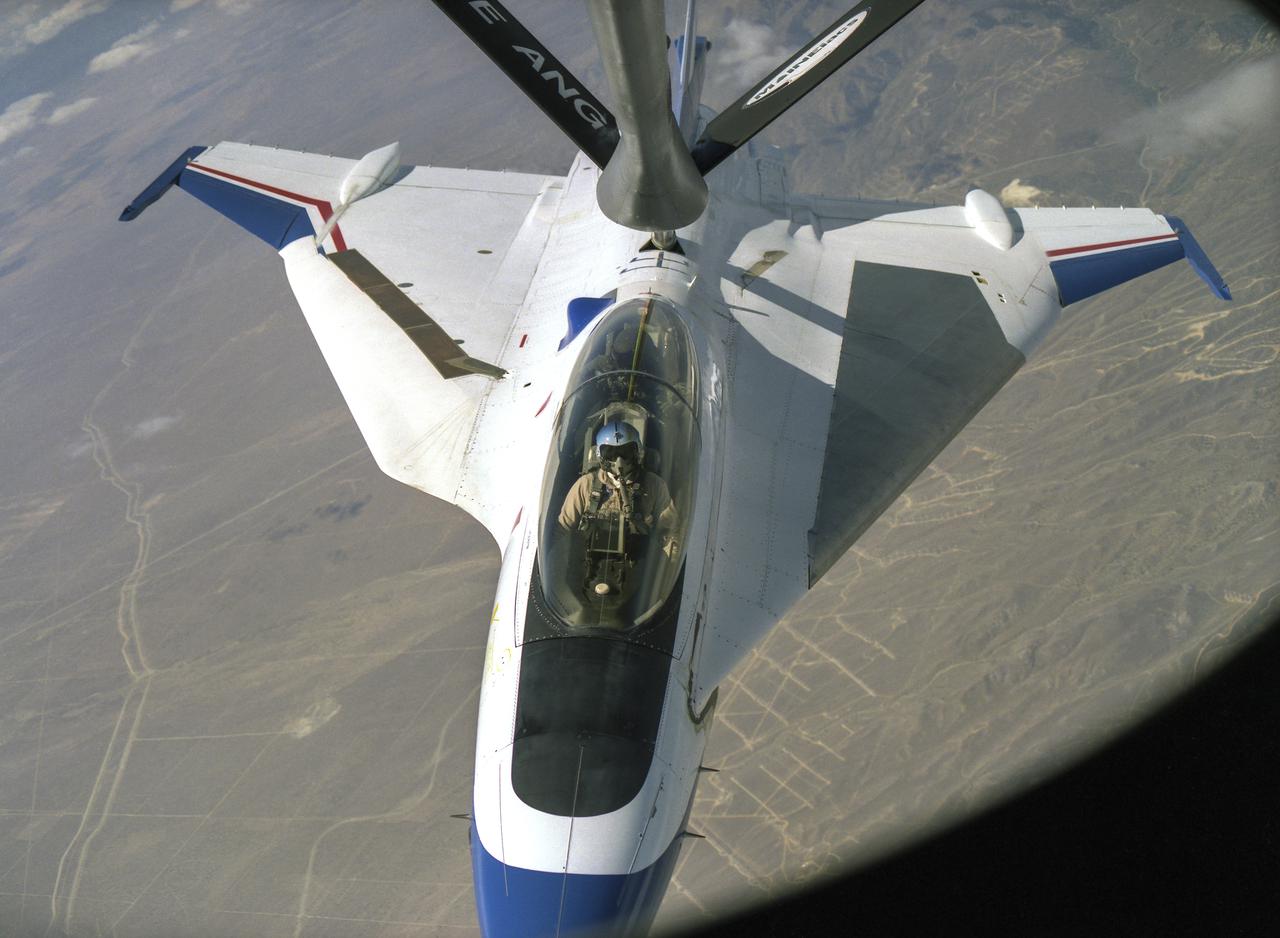
An F-16XL refuels in-flight. Only two XLs were built, and NASA eventually operated both for experimental purposes, including an active supersonic laminar flow experiment.
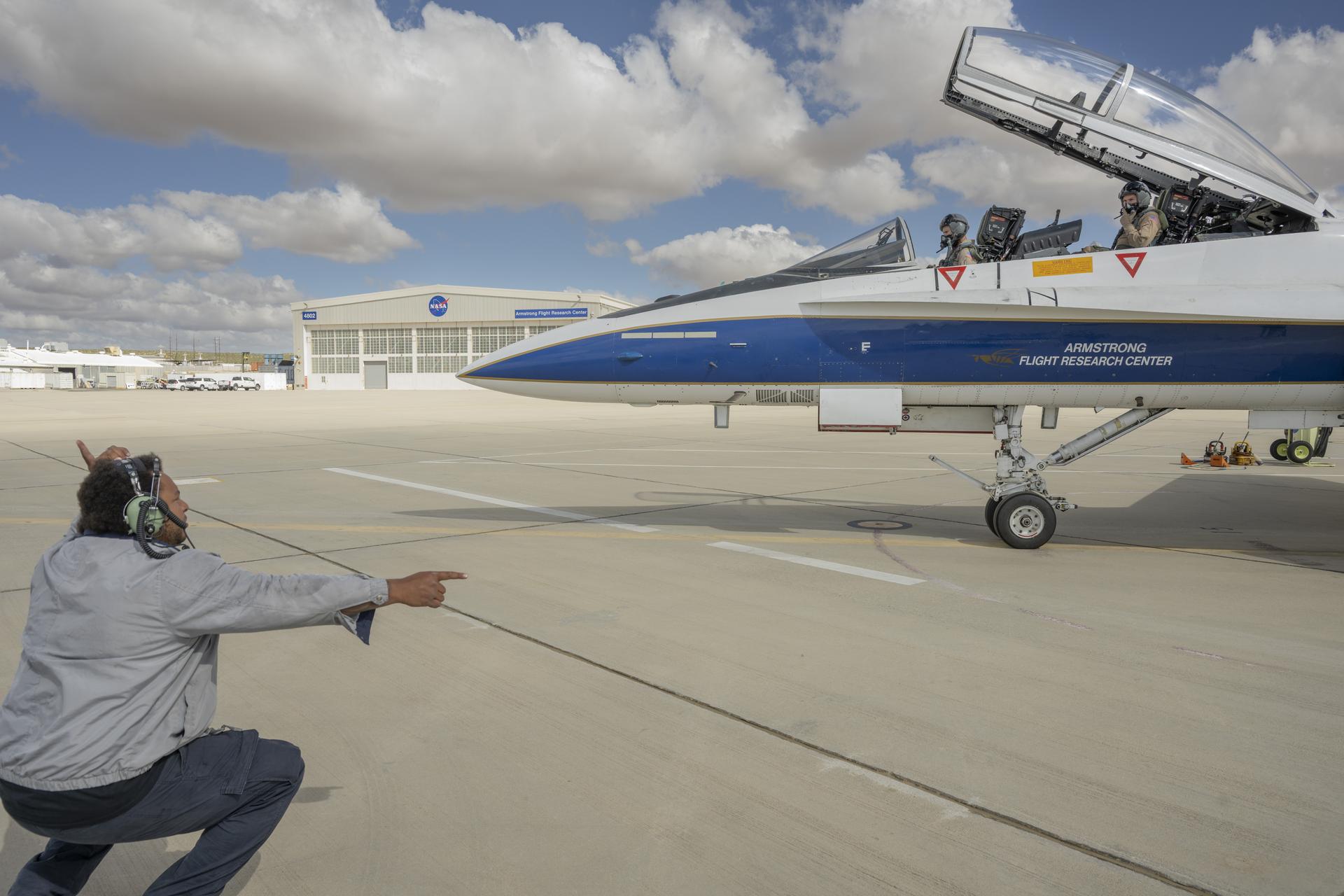
Crew chief, Andric McCartin, prepares NASA pilot Tim Williams and Kelly Jellison, lead avionics technician for NASA’s C-20 and G-V aircraft, for an employee incentive flight in an F/A-18 aircraft at NASA’s Armstrong Flight Research Center in Edwards, California, on Wednesday, May 27, 2026. NASA Administrator Jared Isaacman established the ride‑along program to recognize and reward workforce members for their dedication to advancing the agency’s priorities.
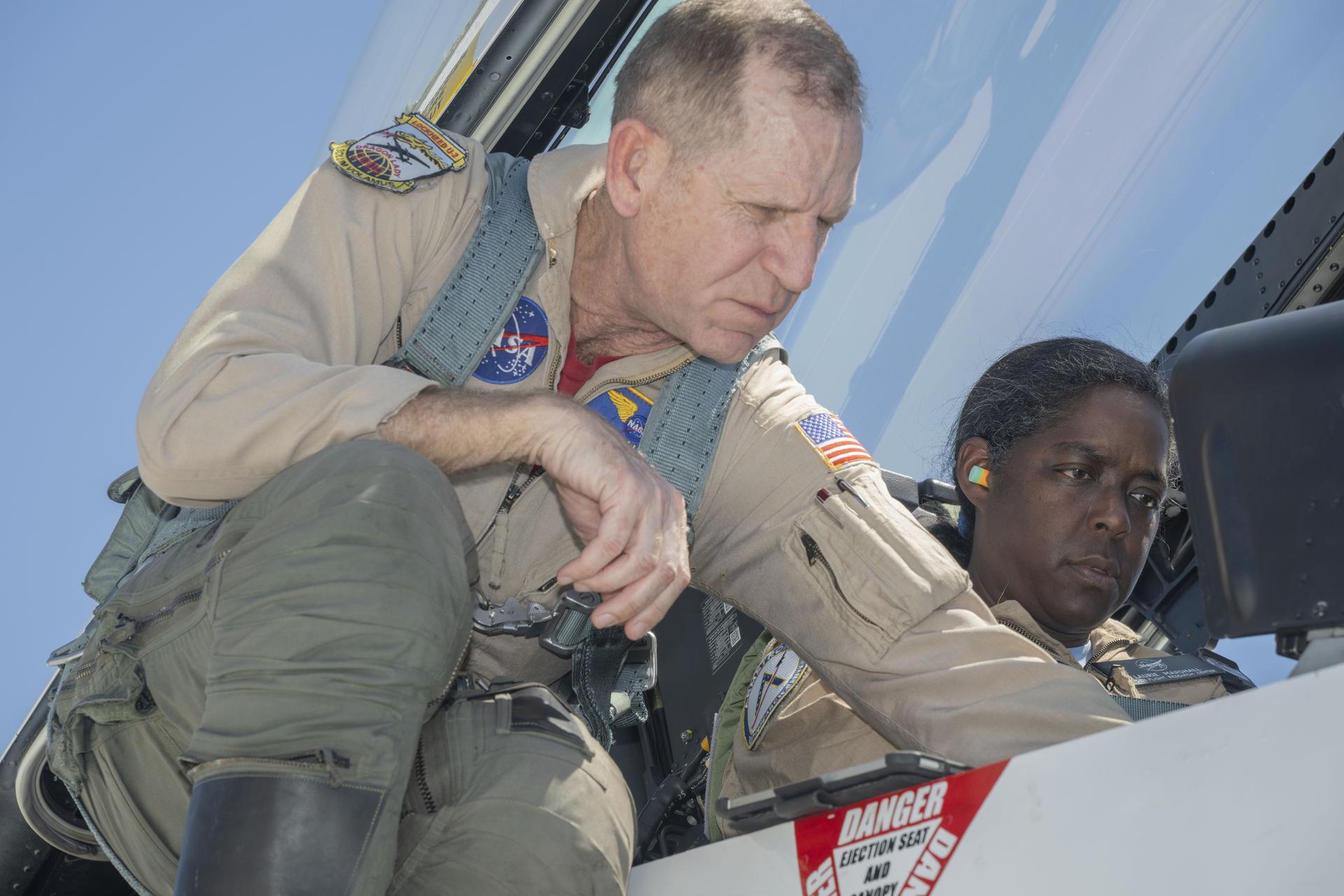
NASA pilot Timothy Williams helps prepare Laurie Grindle, deputy center director, for an employee incentive flight in an F/A-18 aircraft at NASA’s Armstrong Flight Research Center in Edwards, California, on Tuesday, April 14, 2026. NASA Administrator Jared Isaacman established the ride‑along program to recognize and reward workforce members for their dedication to advancing the agency’s priorities.
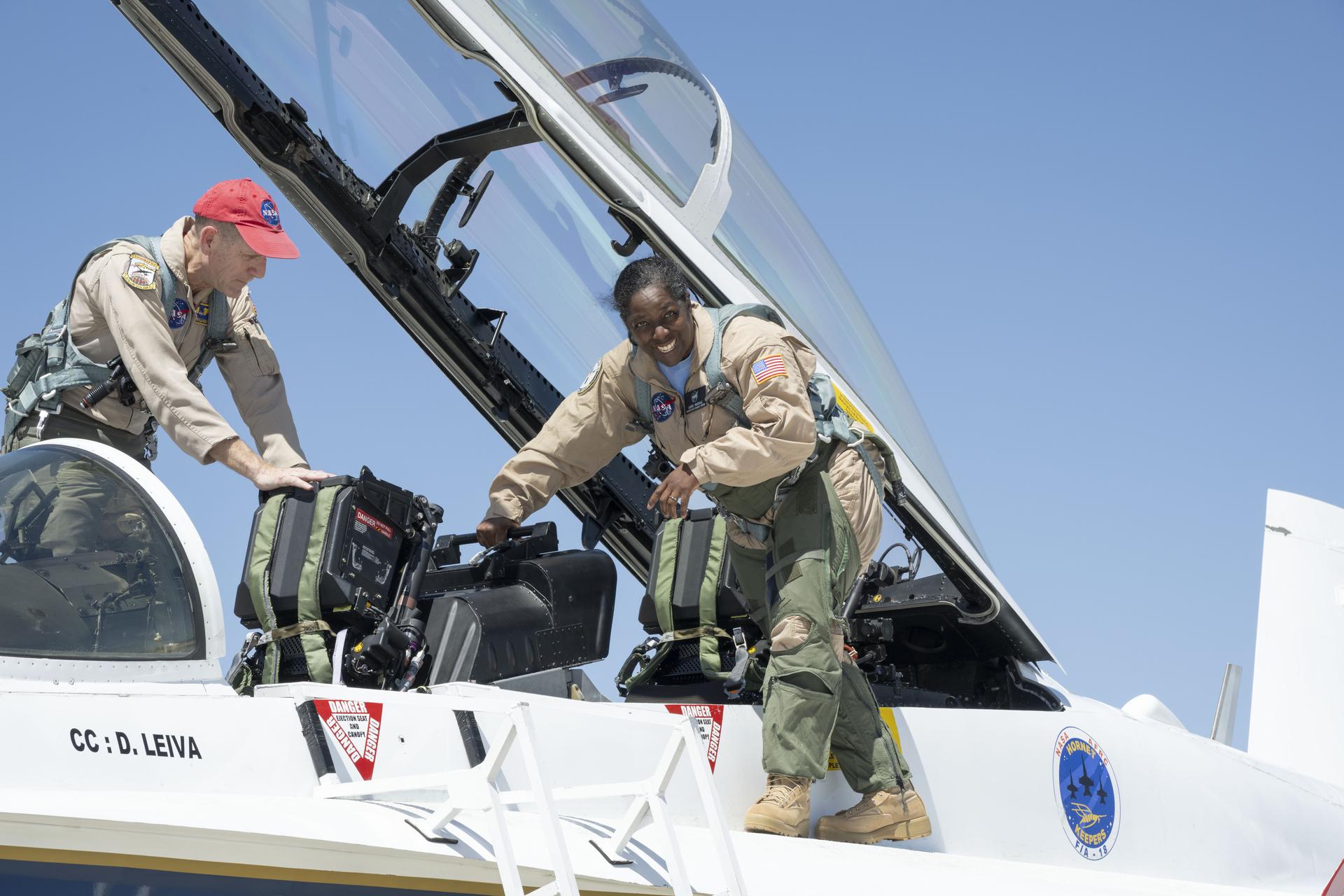
Laurie Grindle, deputy center director, steps out of an F/A-18 aircraft after completing an employee incentive flight at NASA’s Armstrong Flight Research Center in Edwards, California, on Tuesday, April 14, 2026. Timothy Williams, the pilot, secures the F/A-18 cockpit. NASA Administrator Jared Isaacman established the ride‑along program to recognize and reward workforce members for their dedication to advancing the agency’s priorities.
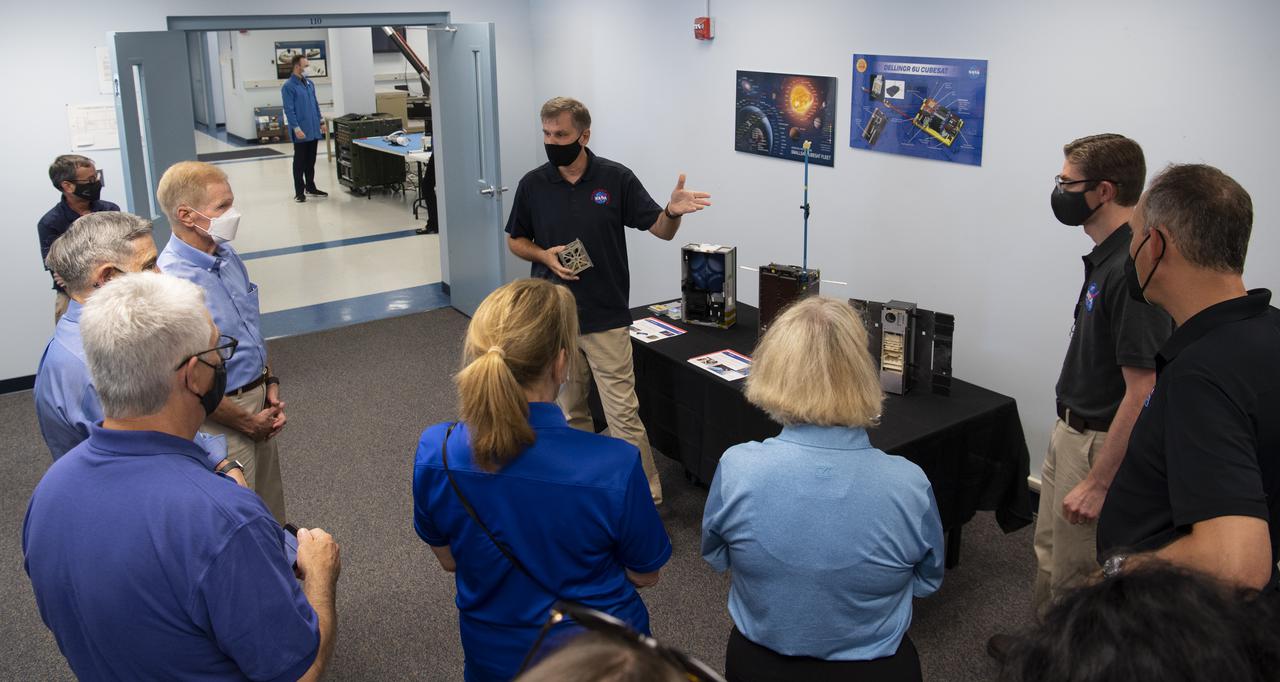
Dave Wilcox, chief of the Small Satellite Project Office at NASA's Wallops Flight Facility, center, speaks about cubesats with NASA Administrator Bill Nelson, Bob Cabana, NASA associate administrator, Dave Pierce, director of NASA's Wallops Flight Facility, NASA Deputy Administrator Pam Melroy, and Thomas Zurbuchen, associate administrator for NASA's Science Mission Directorate during tour of the Small Satellites, Balloon Research and Development Lab, Tuesday, Aug. 10, 2021, at NASA’s Wallops Flight Facility in Virginia. Photo Credit: (NASA/Joel Kowsky)

A joint NASA/Boeing team completed the first phase of flight tests on the unique X-48B Blended Wing Body aircraft at NASA's Dryden Flight Research Center at Edwards, CA. The team completed the 80th and last flight of the project's first phase on March 19, 2010.
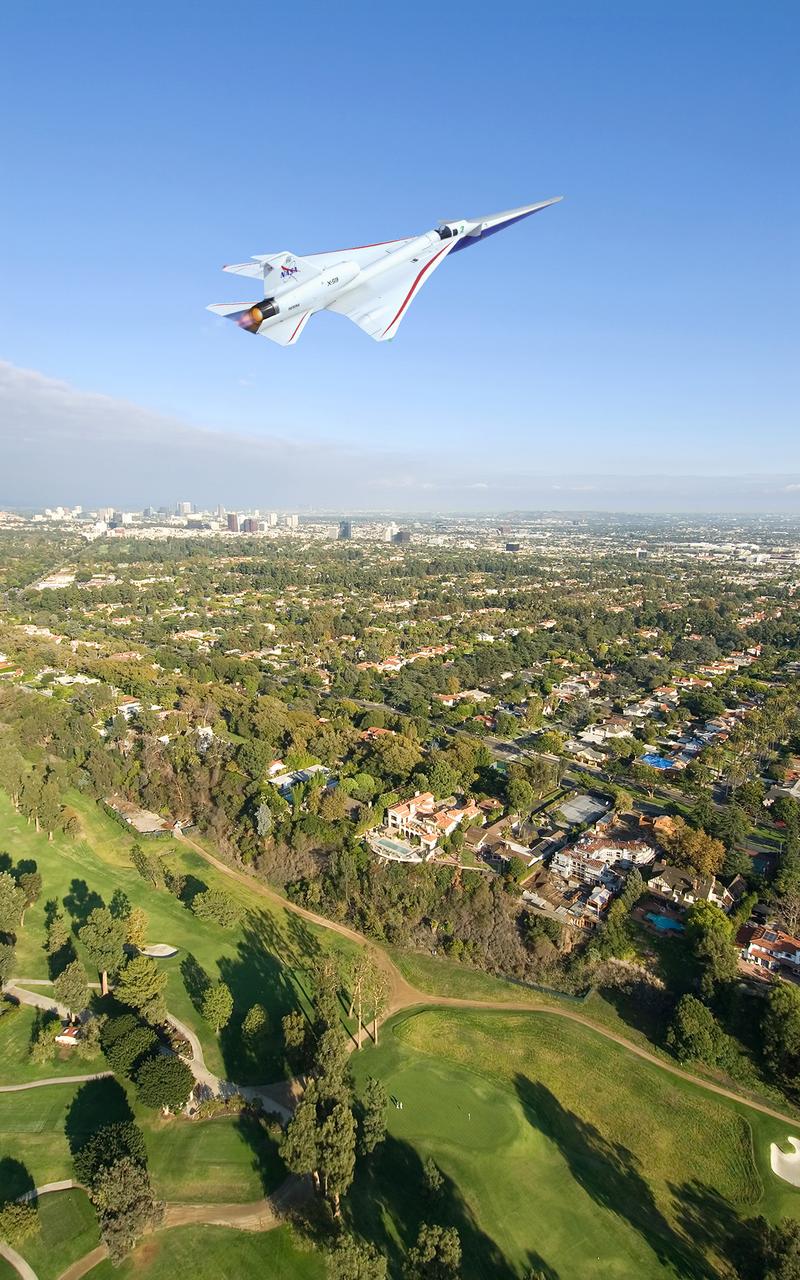
An artist illustration of the Low-Boom Flight Demonstration vehicle flying over a community.
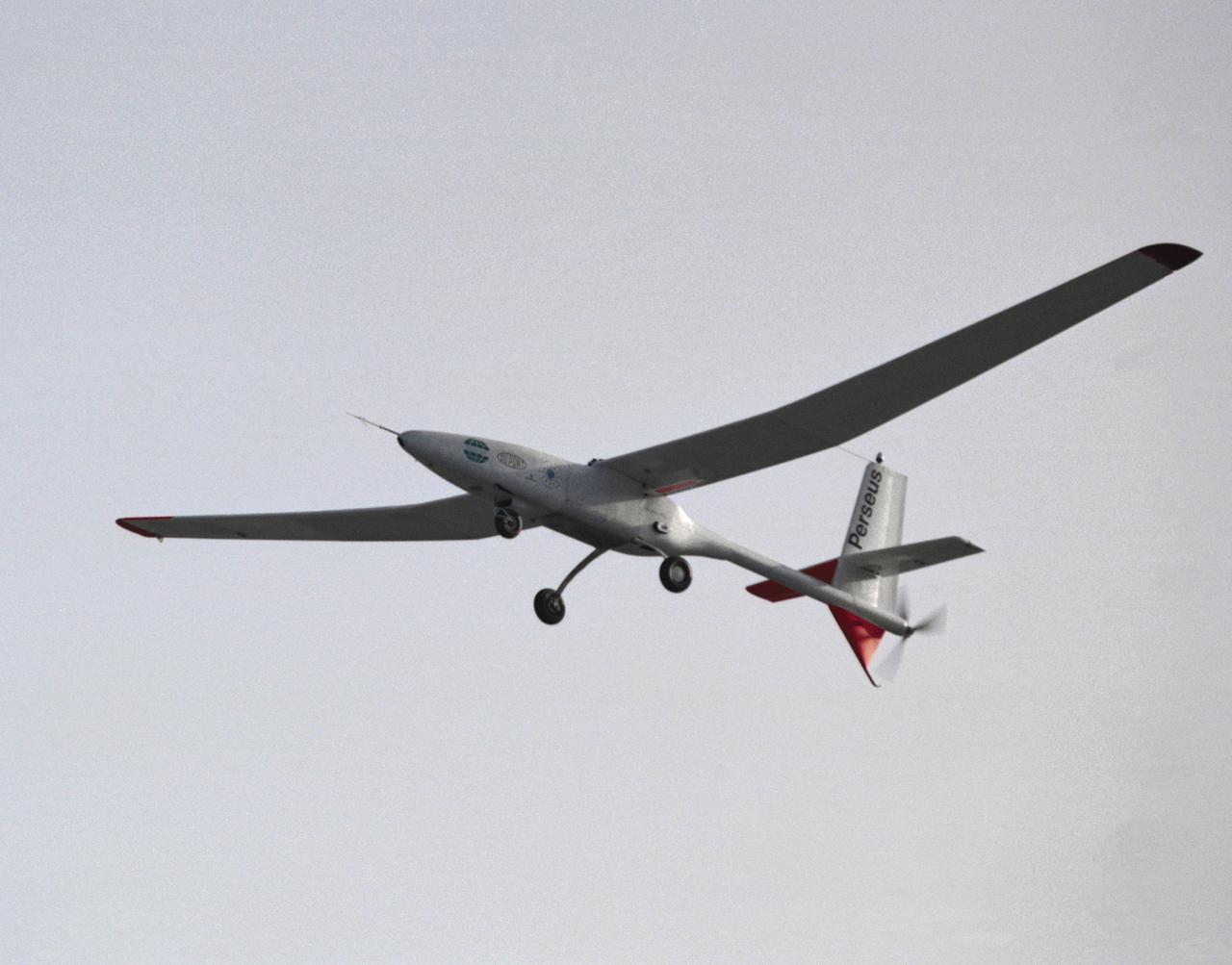
The Perseus proof-of-concept vehicle in flight at the Dryden Flight Research Center, Edwards, California in 1991. Perseus is one of several remotely-piloted aircraft designed for high-altitude, long-endurance scientific sampling missions being evaluated under the ERAST program.

NASA Armstrong’s Mission Control Center, or MCC, is where culmination of all data-gathering occurs. Engineers, flight controllers and researchers monitor flights and missions as they are carried out. Data and video run through the MCC and are recorded, displayed and archived. Data is then processed and prepared for post-flight analysis.
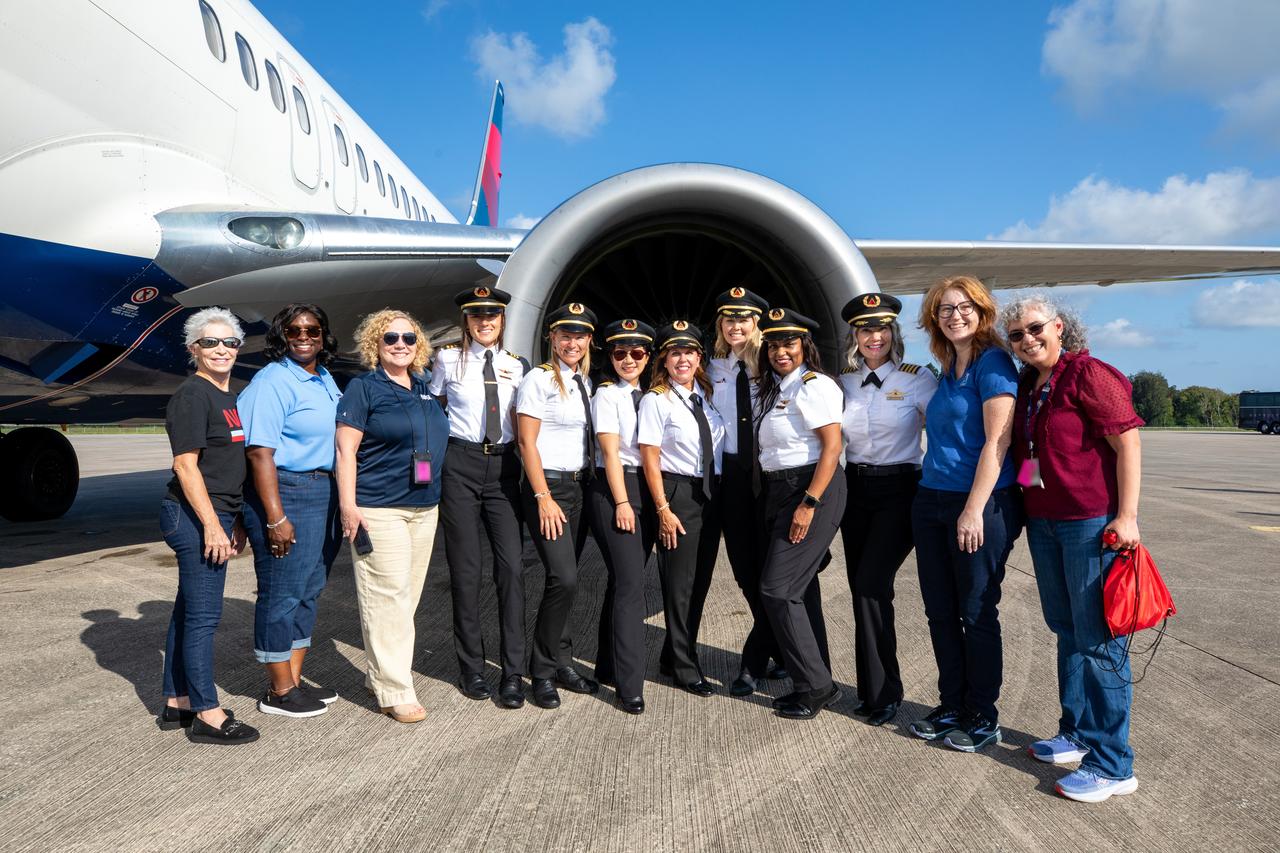
Women with leadership positions at NASA’s Kennedy Space Center pose with members of the all-female crew for Delta Air Lines’ Women Inspiring Our Next Generation (WING) flight after the crew touched down on Friday, Sept. 20, 2024, at the Launch and Landing Facility at the Florida spaceport. The flight brought girls from Atlanta, Georgia, ranging in age from 11 to 18, to view center facilities and hear a panel of women discuss their careers with NASA and Delta Air Lines.
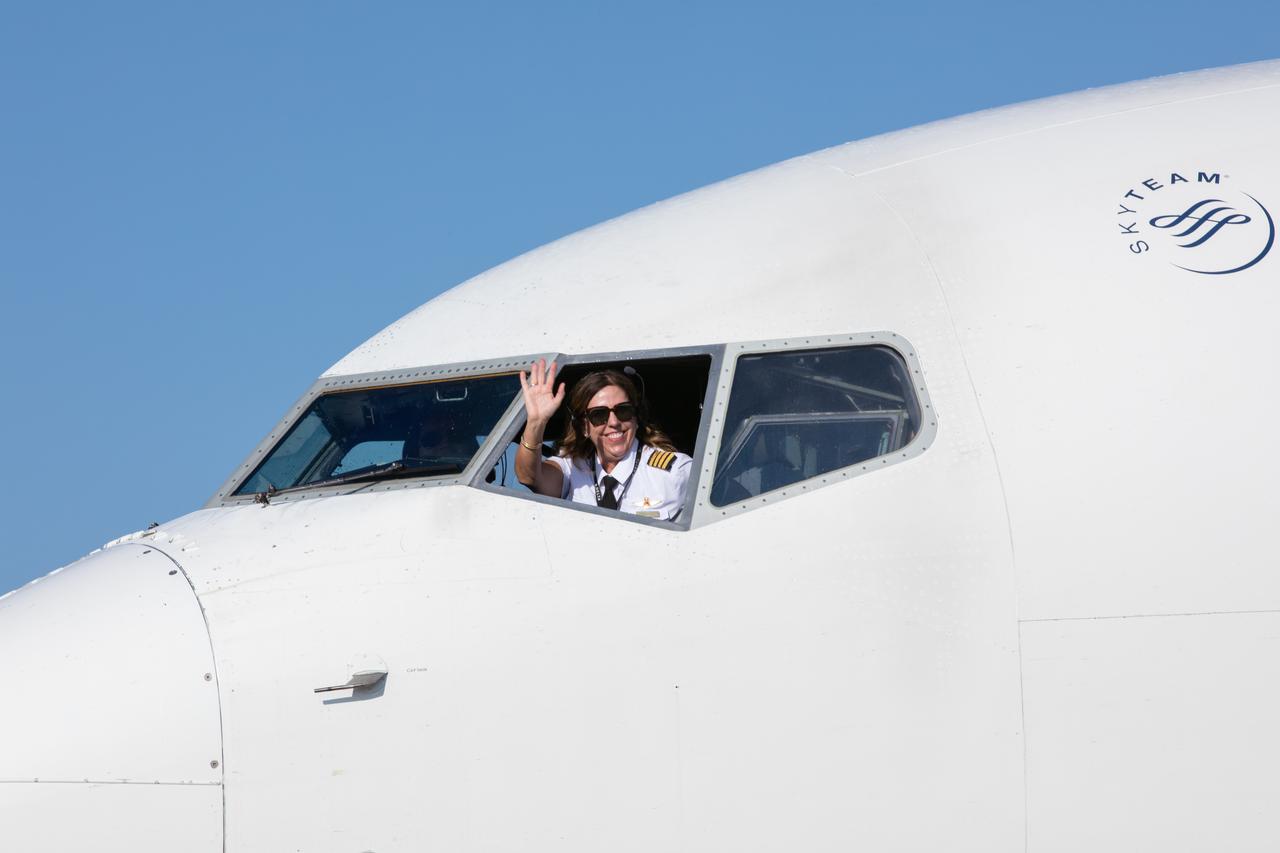
Part of the all-female crew for Delta Air Lines’ Women Inspiring Our Next Generation (WING) flight waves to a crowd on Friday, Sept. 20, 2024, after touching down at the Launch and Landing Facility at NASA’s Kennedy Space Center in Florida. The flight brought young ladies from Atlanta, Georgia, ranging in age from 11 to 18, to learn about the various women-led STEM (science, technology, engineering, and math) careers available at the Florida spaceport.
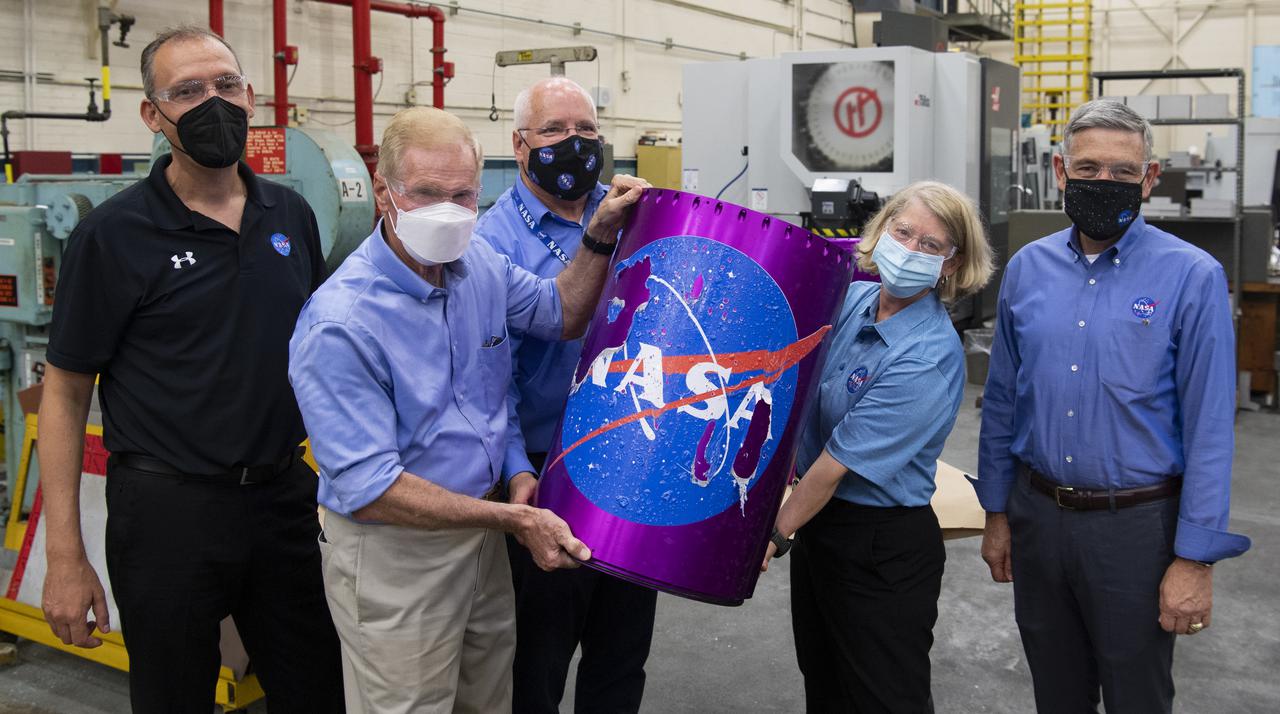
Thomas Zurbuchen, associate administrator for NASA’s Science Mission Directorate, left, NASA Administrator Bill Nelson second from left, Dennis Andrucyk, director of NASA's Goddard Space Flight Center, center, NASA Deputy Administrator Pam Melroy, second from right, and Bob Cabana, NASA associate administrator, right, hold a recovered portion of the Black Brant IX sounding rocket used for the Advanced Supersonic Parachute Inflation Research Experiment (ASPIRE), during a tour of the Sounding Rockets Machine Shop, Test and Evaluation Facility, Tuesday, Aug. 10, 2021, at NASA’s Wallops Flight Facility in Virginia. Photo Credit: (NASA/Joel Kowsky)

The X-59 quiet supersonic research aircraft arrives at NASA’s Armstrong Flight Research Center in Edwards, California, following its first flight Tuesday, Oct. 28, 2025. Ground teams perform final checks on the aircraft at its new home for flight operations. Next, the aircraft will undergo scheduled maintenance followed by a series of additional test flights, gradually building toward its first supersonic flight.

The X-59 quiet supersonic research aircraft arrives at NASA’s Armstrong Flight Research Center in Edwards, California, following its first flight Tuesday, Oct. 28, 2025. Ground teams perform final checks on the aircraft at its new home for flight operations. Next, the aircraft will undergo scheduled maintenance followed by a series of additional test flights, gradually building toward its first supersonic flight.

The X-59 quiet supersonic research aircraft arrives at NASA’s Armstrong Flight Research Center in Edwards, California, following its first flight Tuesday, Oct. 28, 2025. Ground teams perform final checks on the aircraft at its new home for flight operations. Next, the aircraft will undergo scheduled maintenance followed by a series of additional test flights, gradually building toward its first supersonic flight.
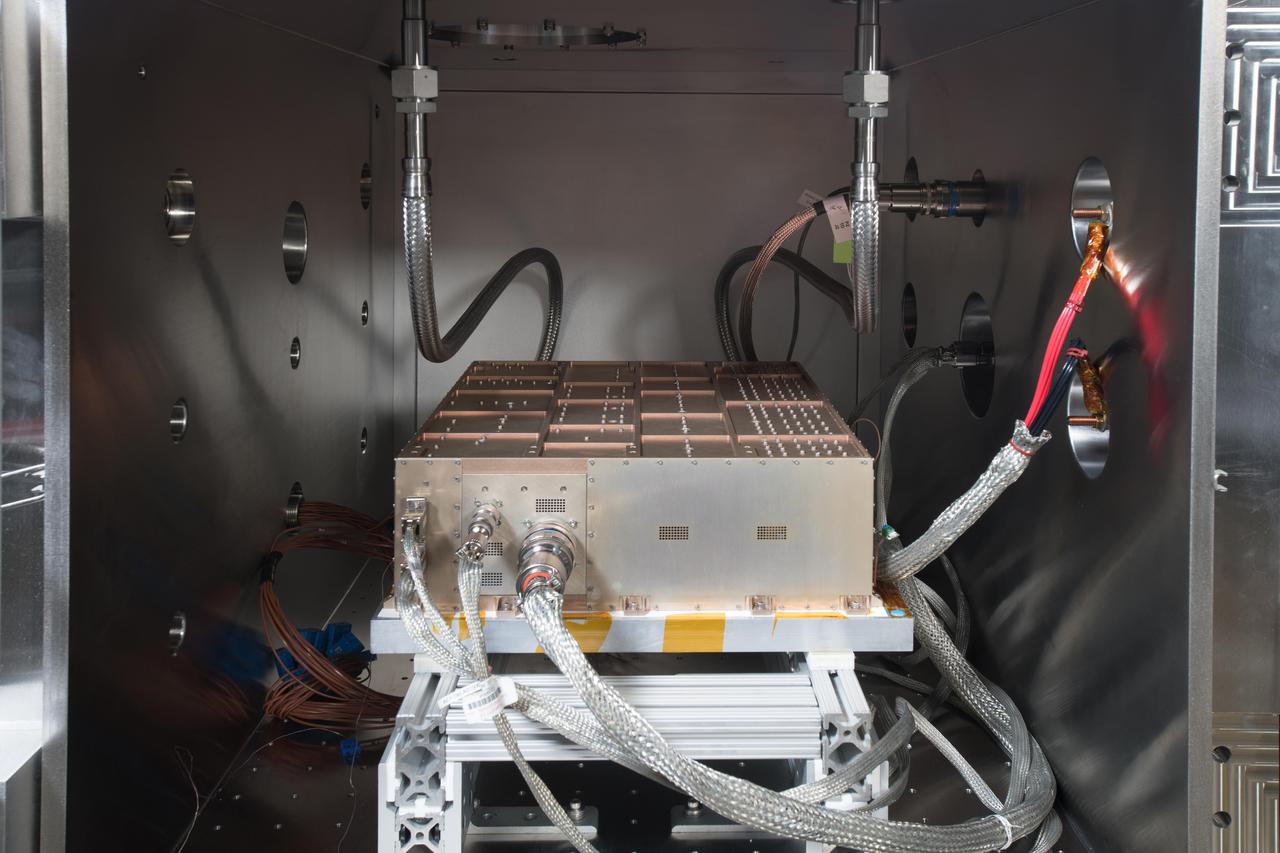
NEXT-C flight PPU
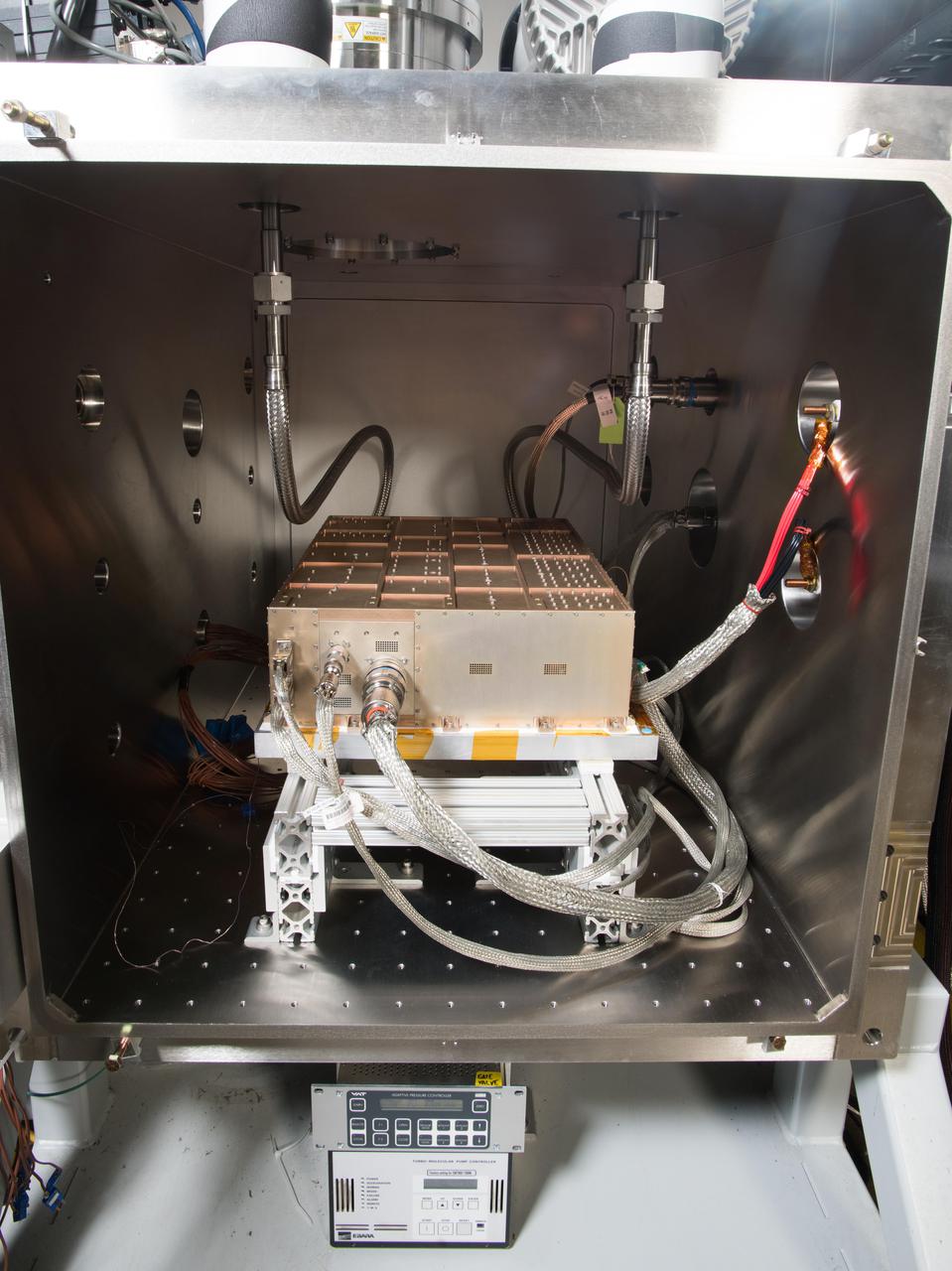
NEXT-C flight PPU
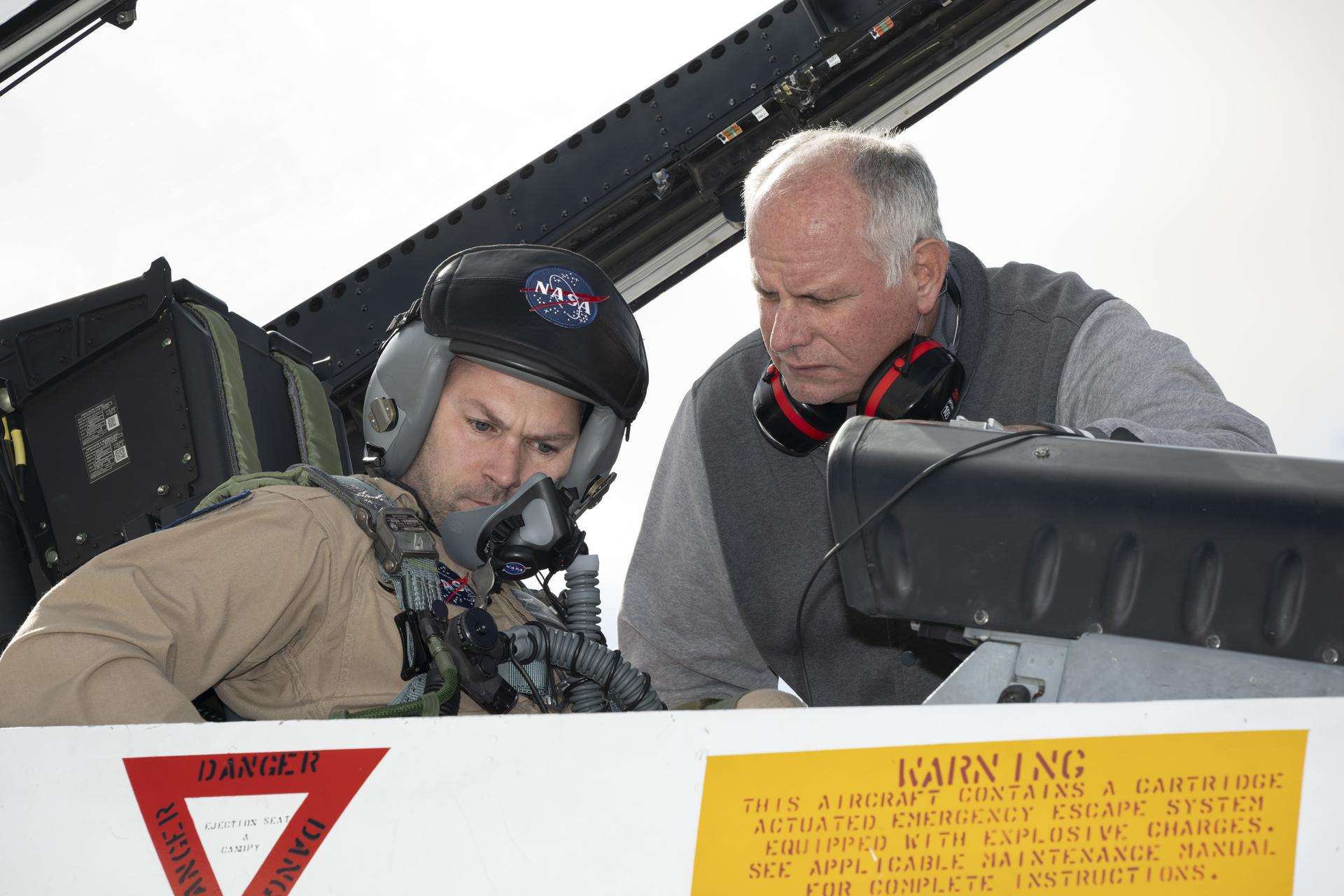
Phil Wellner, aircrew life support technician, help prepare Kelly Jellison, lead avionics technician for NASA’s C-20 and G-V aircraft for an employee incentive flight in an F/A-18 aircraft at NASA’s Armstrong Flight Research Center in Edwards, California, on Wednesday, May 27, 2026. NASA Administrator Jared Isaacman established the ride‑along program to recognize and reward workforce members for their dedication to advancing the agency’s priorities.
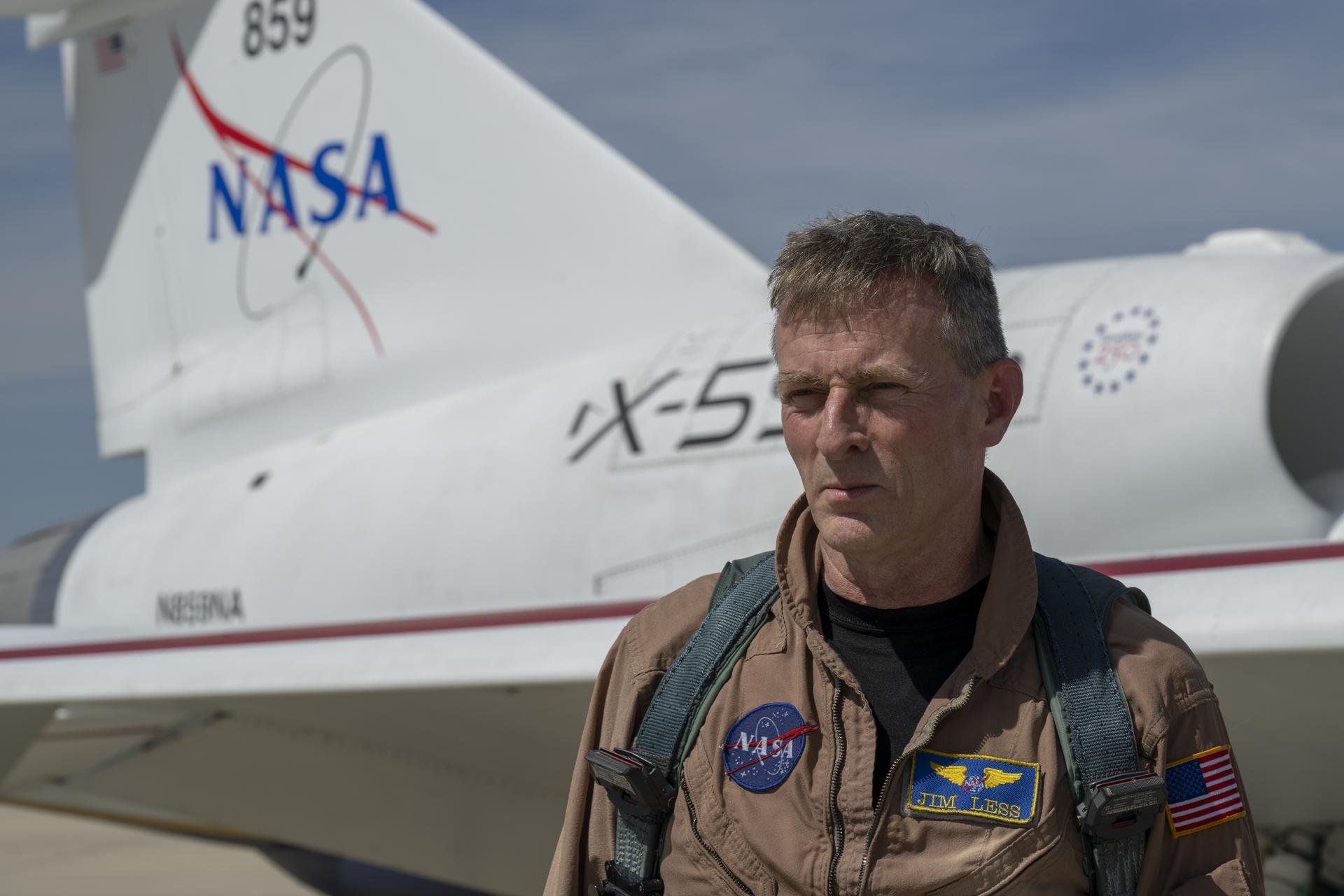
NASA test pilot Jim “Clue” Less is seen after completing his first flight of the X-59 and the aircraft’s second flight overall at Edwards Air Force Base in California on Thursday, March 26, 2026. The flight supports NASA’s Quesst mission to demonstrate supersonic flight that produces a quieter sonic “thump” instead of a loud sonic boom.
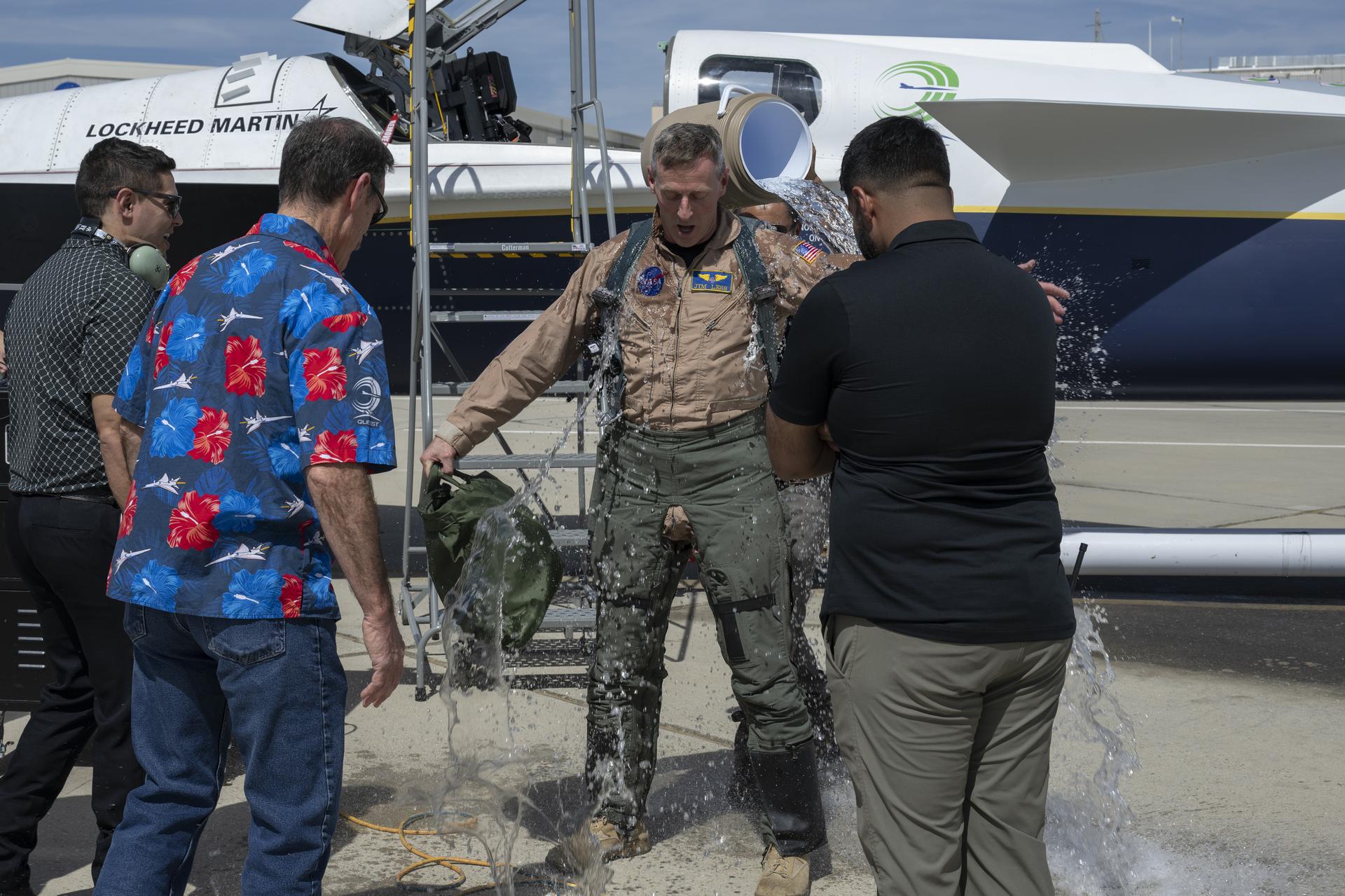
NASA test pilot Jim “Clue” Less is seen after completing his first flight of the X-59 and the aircraft’s second flight overall at Edwards Air Force Base in California on Thursday, March 26, 2026. The flight supports NASA’s Quesst mission to demonstrate supersonic flight that produces a quieter sonic “thump” instead of a loud sonic boom.
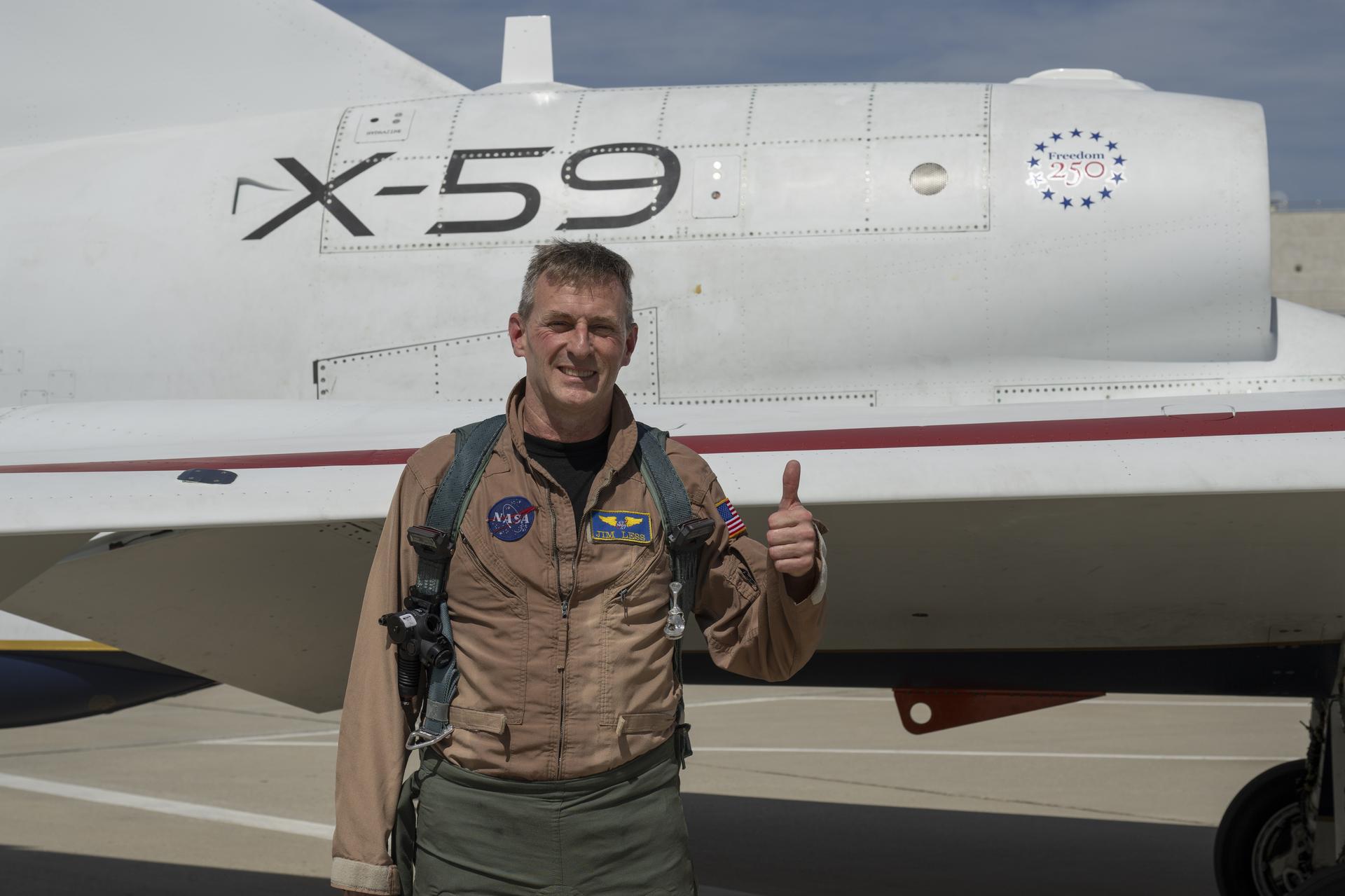
NASA test pilot Jim “Clue” Less is seen after completing his first flight of the X-59 and the aircraft’s second flight overall at Edwards Air Force Base in California on Thursday, March 26, 2026. The flight supports NASA’s Quesst mission to demonstrate supersonic flight that produces a quieter sonic “thump” instead of a loud sonic boom.
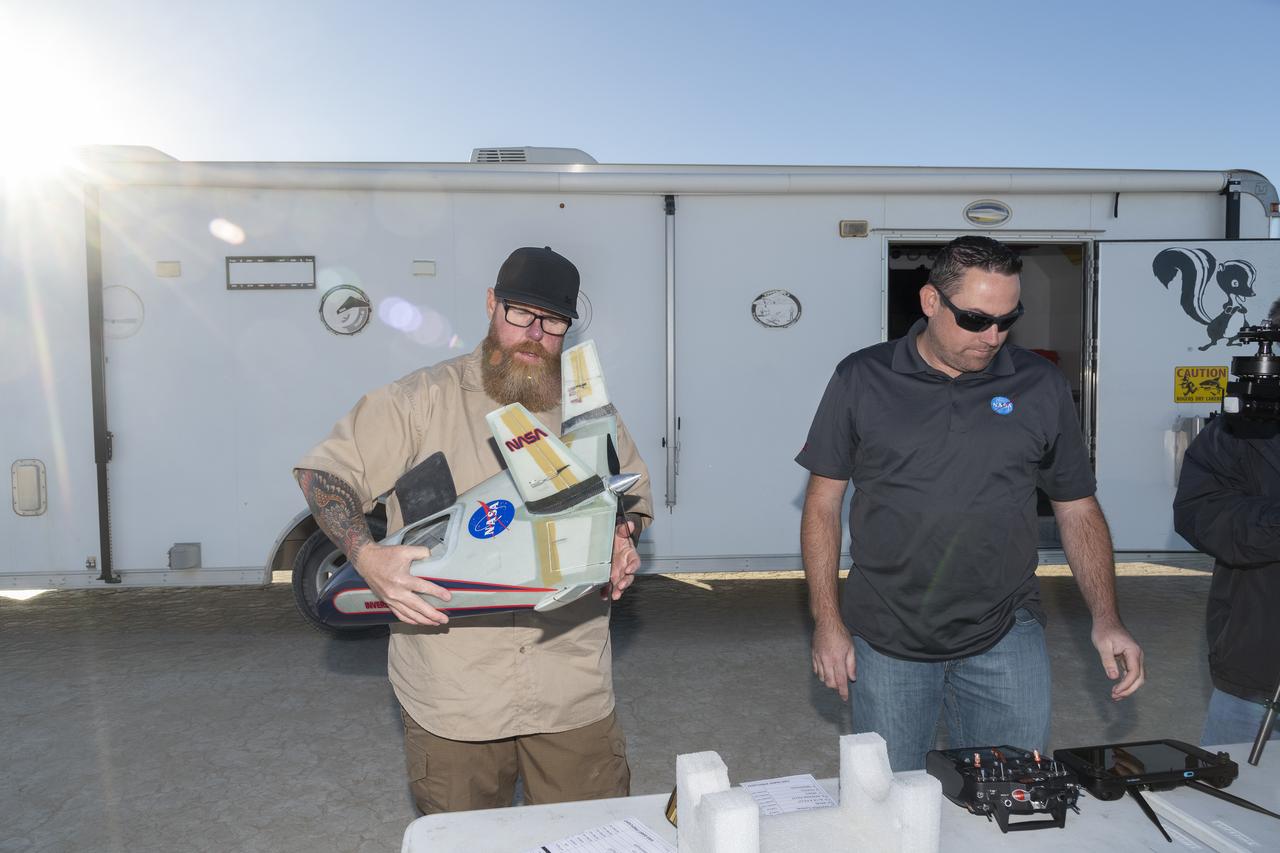
Justin Hall, left, chief pilot of small unmanned aircraft systems, carries the atmospheric probe at NASA’s Armstrong Flight Research Center in Edwards, California. The probe, which was designed and built at the center, flew after release from a quad rotor remotely piloted aircraft on Oct. 22, 2024, above Rogers Dry Lake, a flight area adjacent to the NASA center. At right, Justin Link, unmanned aircraft systems pilot, checks out the controllers for the two aircraft.
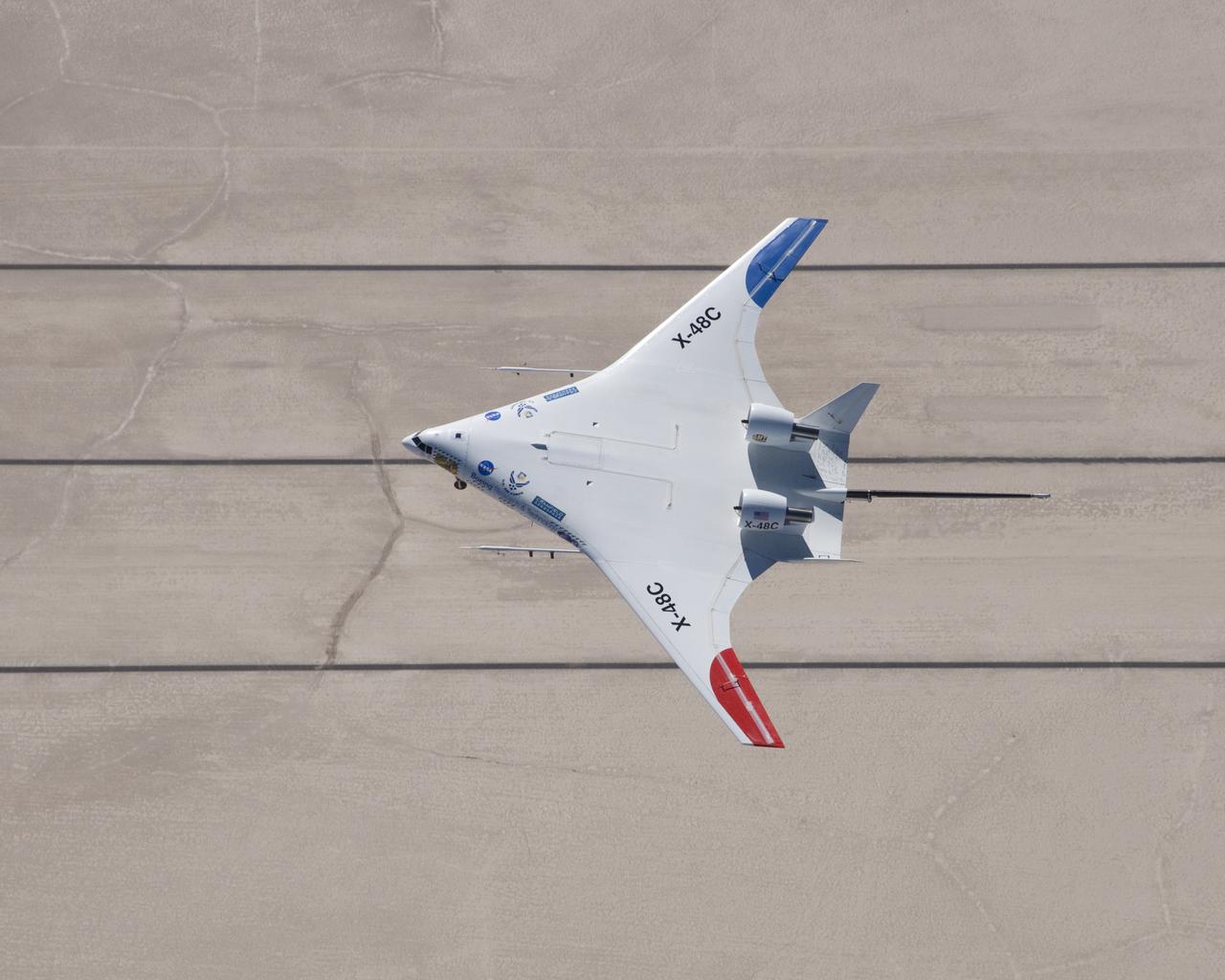
NASA X-48C Hybrid Wing Body aircraft flew over one of the runways laid out on Rogers Dry Lake at Edwards Air Force Base, CA, during a test flight from NASA's Dryden Flight Research Center on Feb. 28, 2013.
Initial flight-testing of the ACTE followed extensive wind tunnel experiments. For the first phase of ACTE flights, the experimental control surfaces were locked at a specified setting. Varied flap settings on subsequent tests are now demonstrating the capability of the flexible surfaces under actual flight conditions.
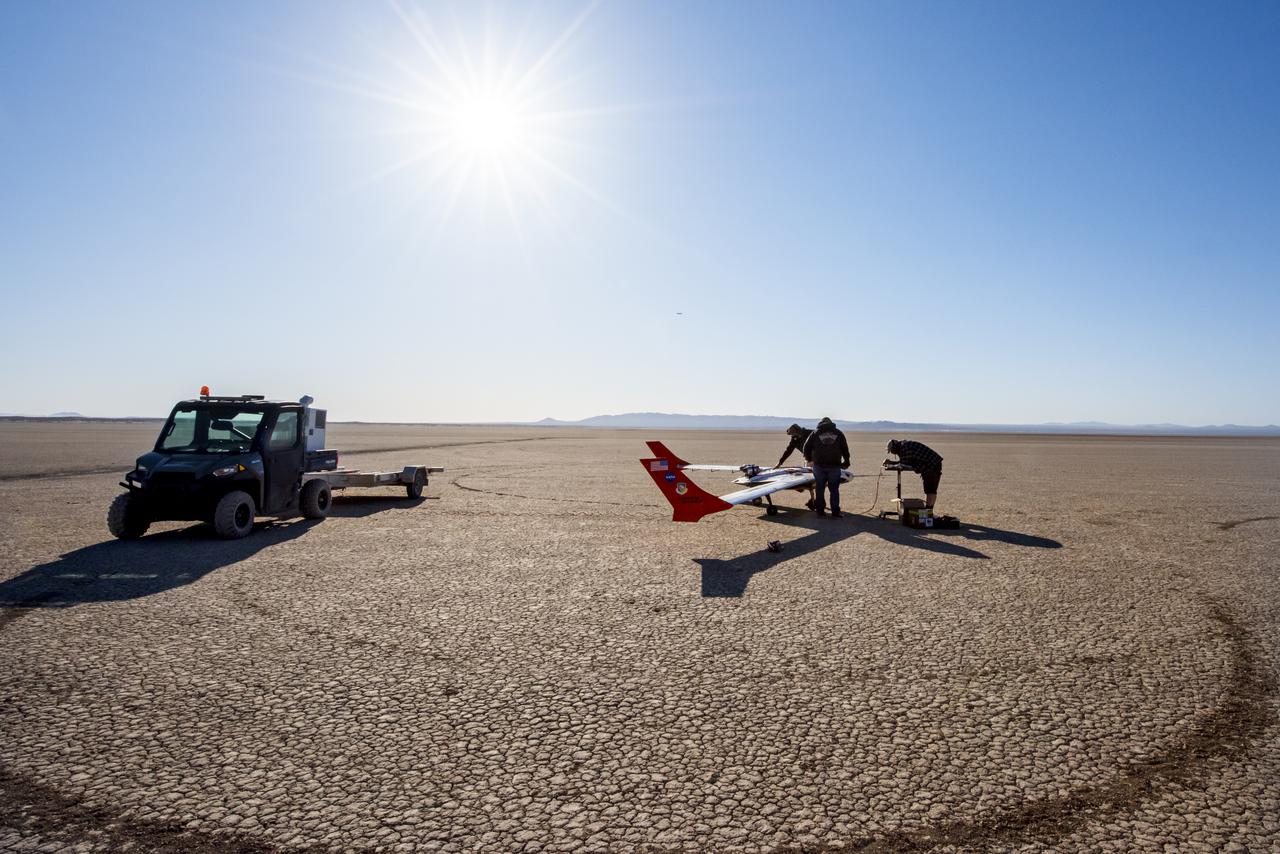
The X-56B remotely piloted aircraft ground crew prepares the aircraft to begin a new flight series. The flight was April 19 at NASA's Armstrong Flight Research Center in Edwards, California, with partner Northrop Grumman.
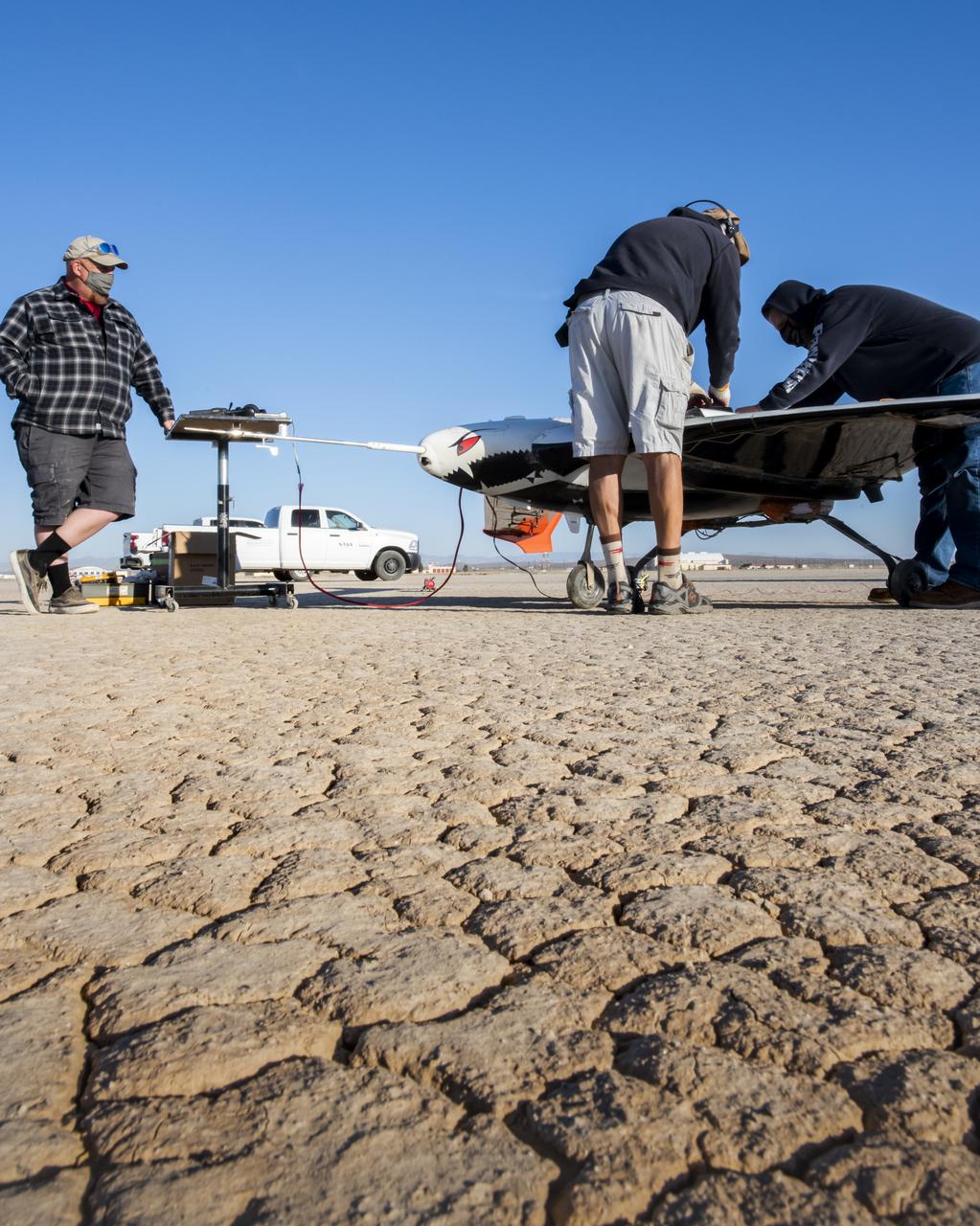
The X-56B remotely piloted aircraft ground crew prepares the aircraft to begin a new flight series. The flight was April 19 at NASA's Armstrong Flight Research Center in Edwards, California, with partner Northrop Grumman.
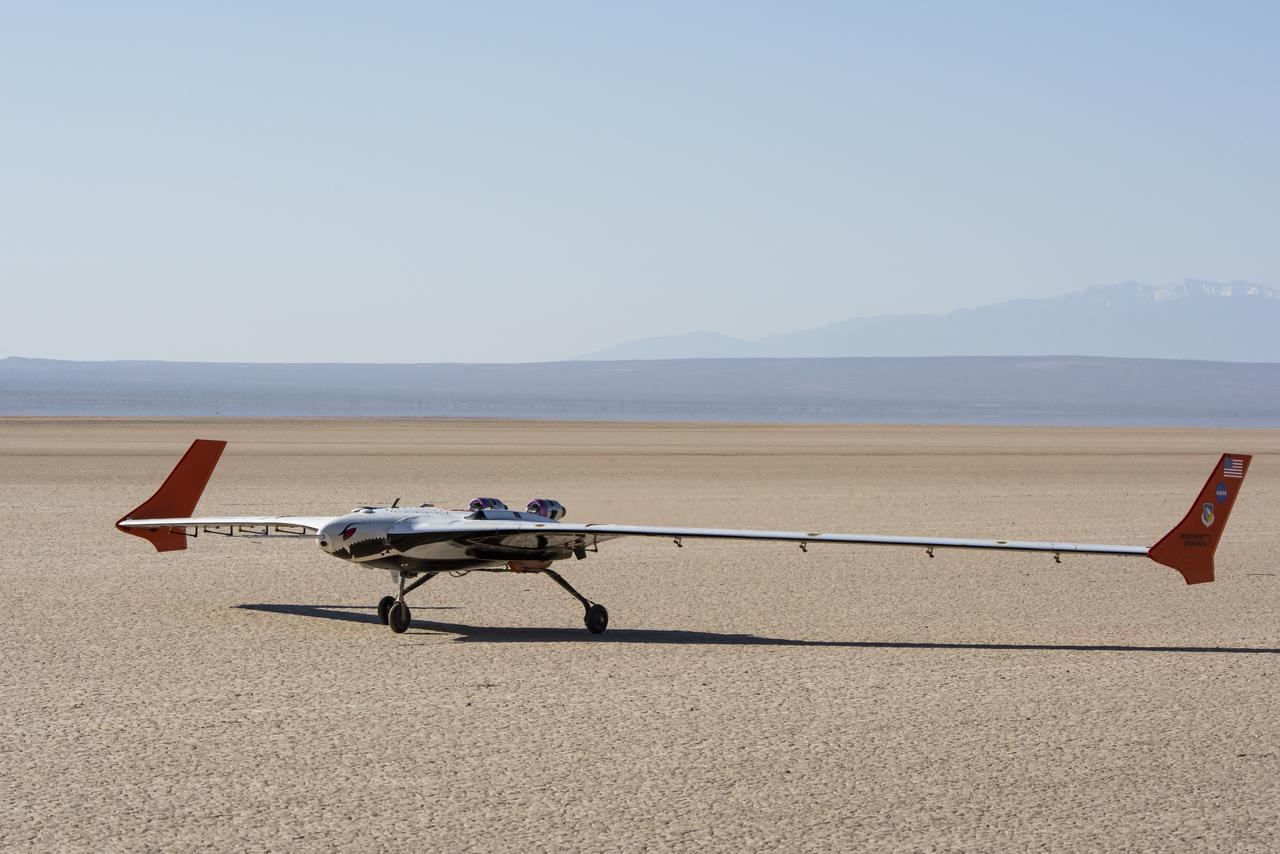
The X-56B remotely piloted aircraft lands following the first of a new flight series. The flight was April 19 at NASA's Armstrong Flight Research Center in Edwards, California, with partner Northrop Grumman.
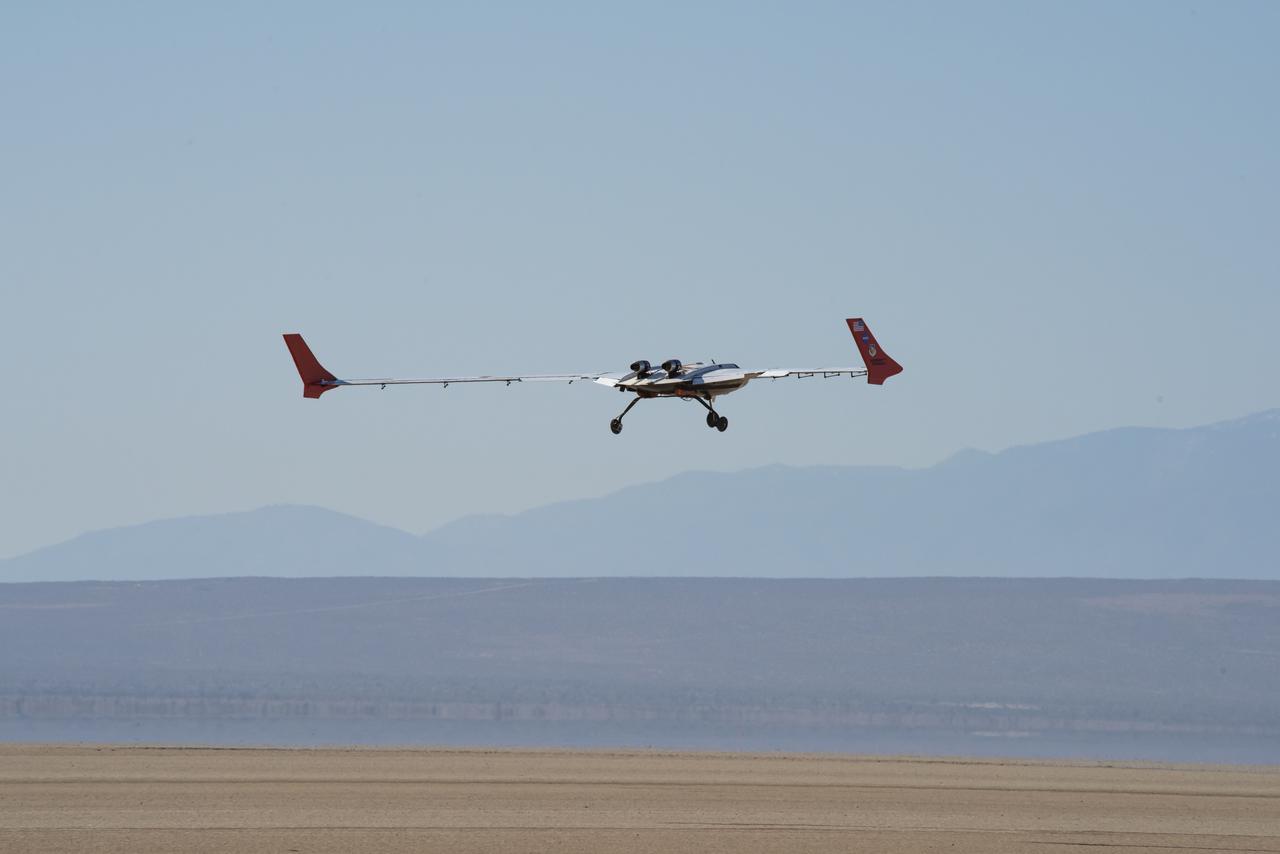
The X-56B remotely piloted aircraft prepares for a landing following the first of a new flight series. The flight was April 19 at NASA’s Armstrong Flight Research Center in Edwards, California, with partner Northrop Grumman.
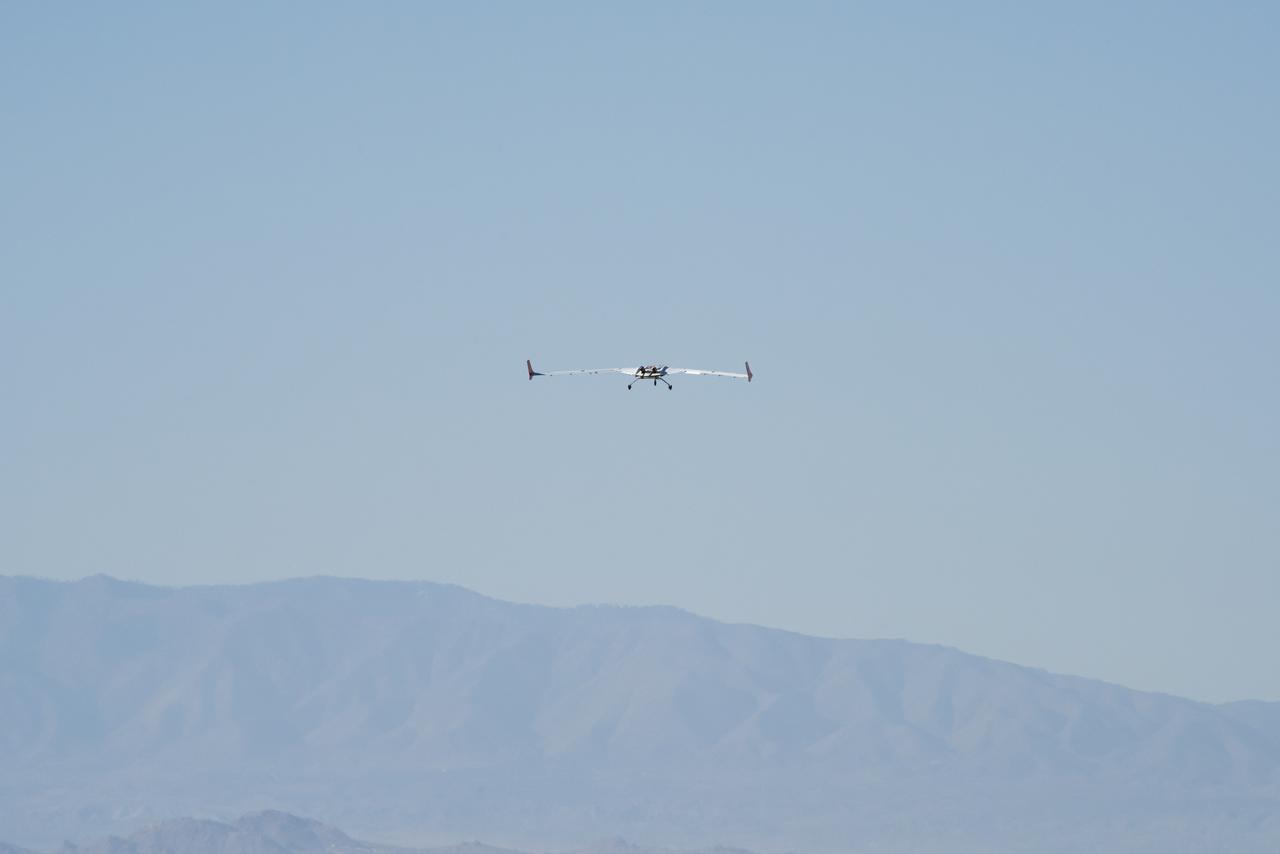
The X-56B remotely piloted aircraft takeoff marks the start of a new flight series. The flight was April 19 at NASA's Armstrong Flight Research Center in Edwards, California, with partner Northrop Grumman.
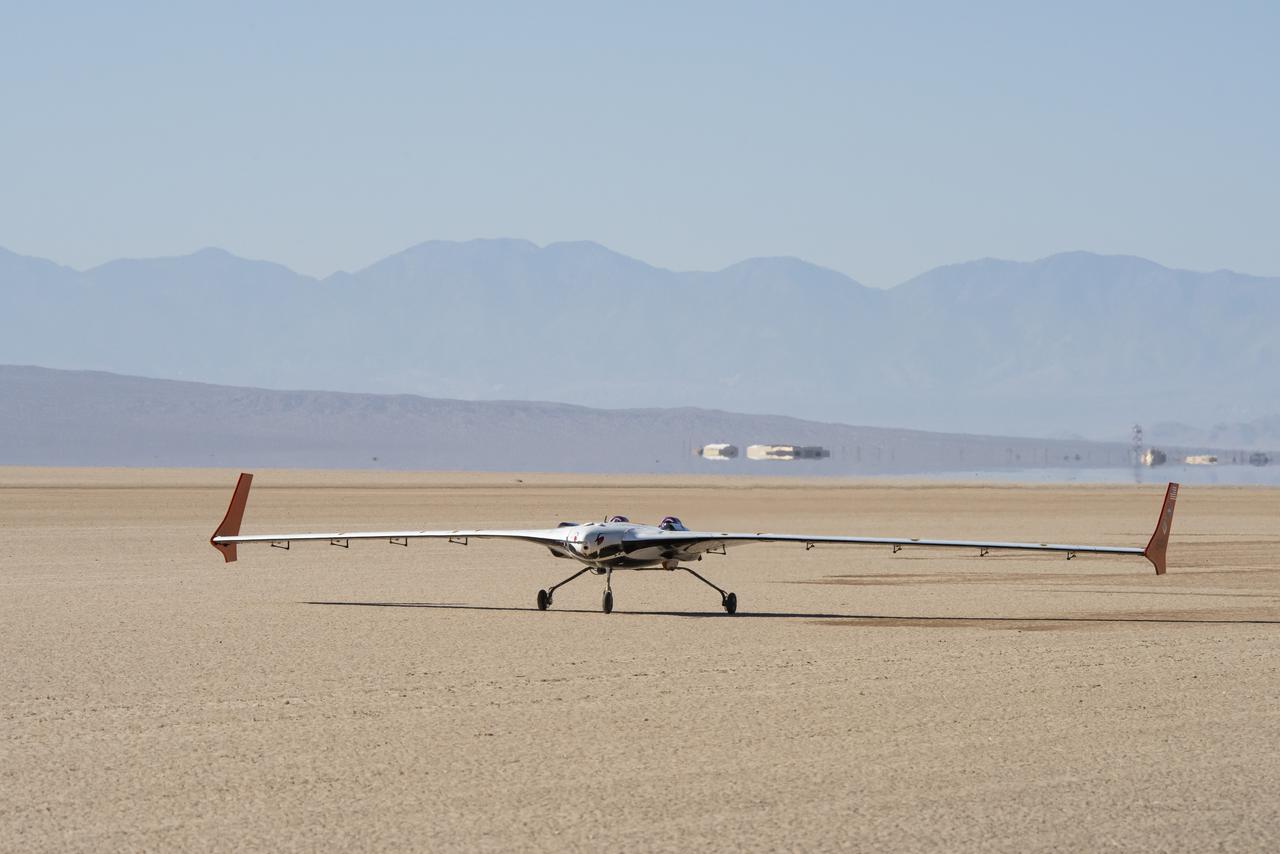
The X-56B remotely piloted aircraft lands following the first of a new flight series. The flight was April 19 at NASA's Armstrong Flight Research Center in Edwards, California, with partner Northrop Grumman.
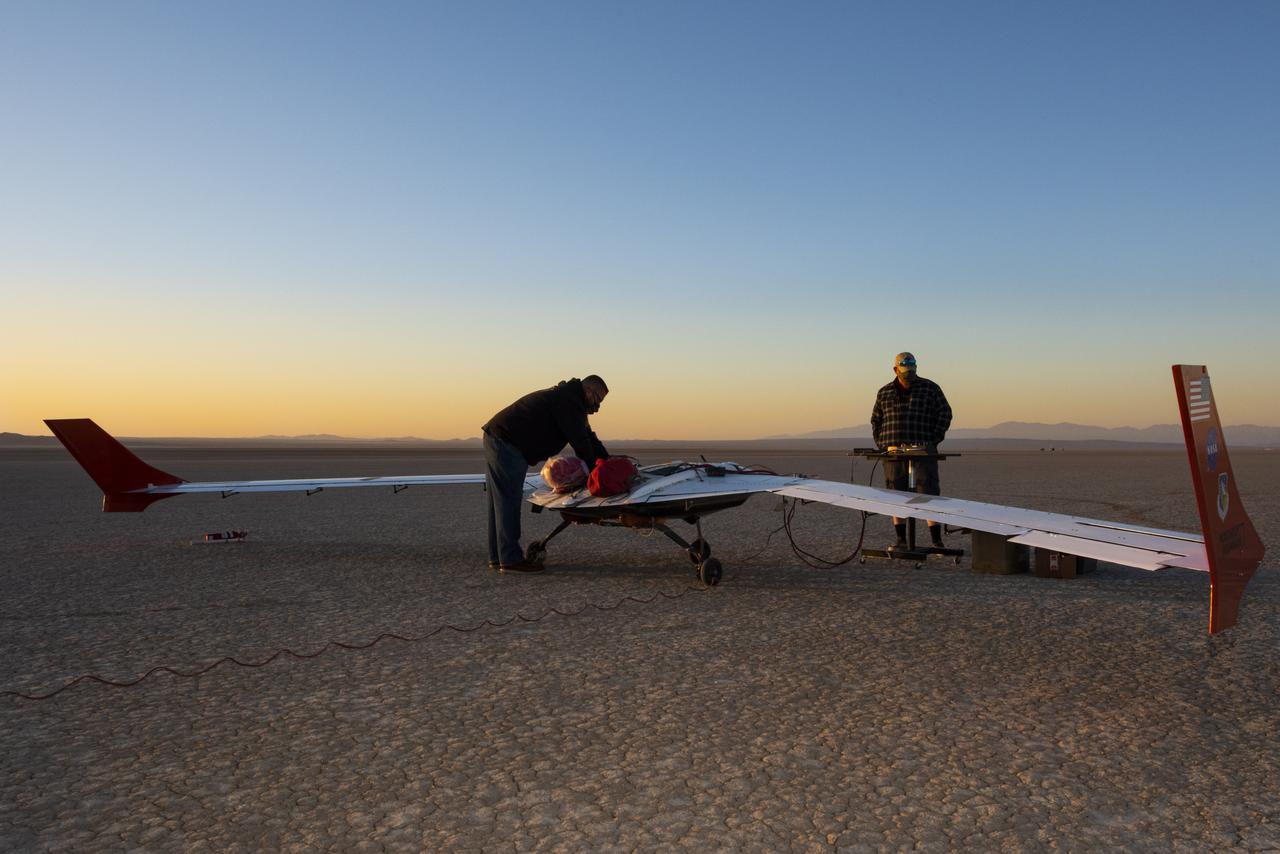
The X-56B remotely piloted aircraft ground crew prepares the aircraft to begin a new flight series. The flight was April 19 at NASA's Armstrong Flight Research Center in Edwards, California, with partner Northrop Grumman.
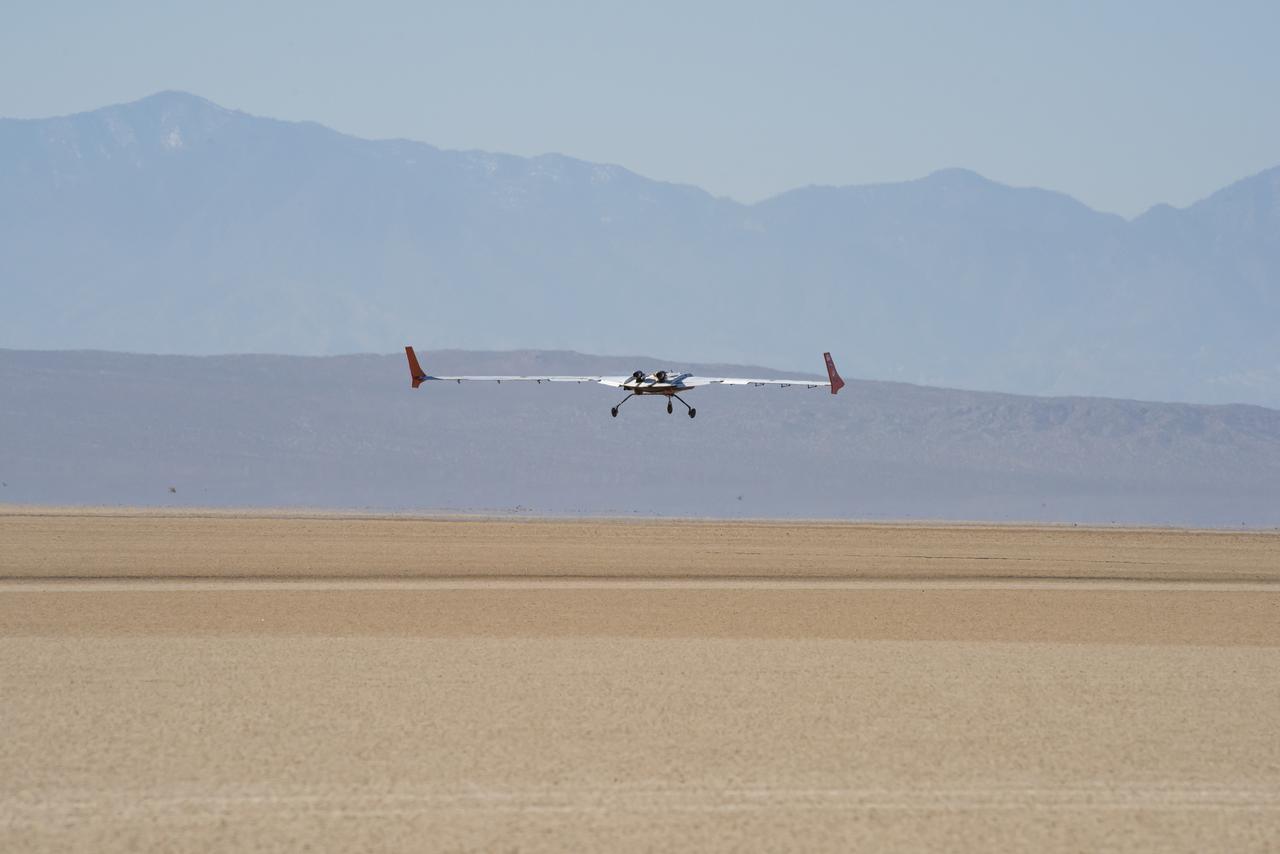
The X-56B remotely piloted aircraft prepares for a landing following the first of a new flight series. The flight was April 19 at NASA's Armstrong Flight Research Center in Edwards, California, with partner Northrop Grumman.
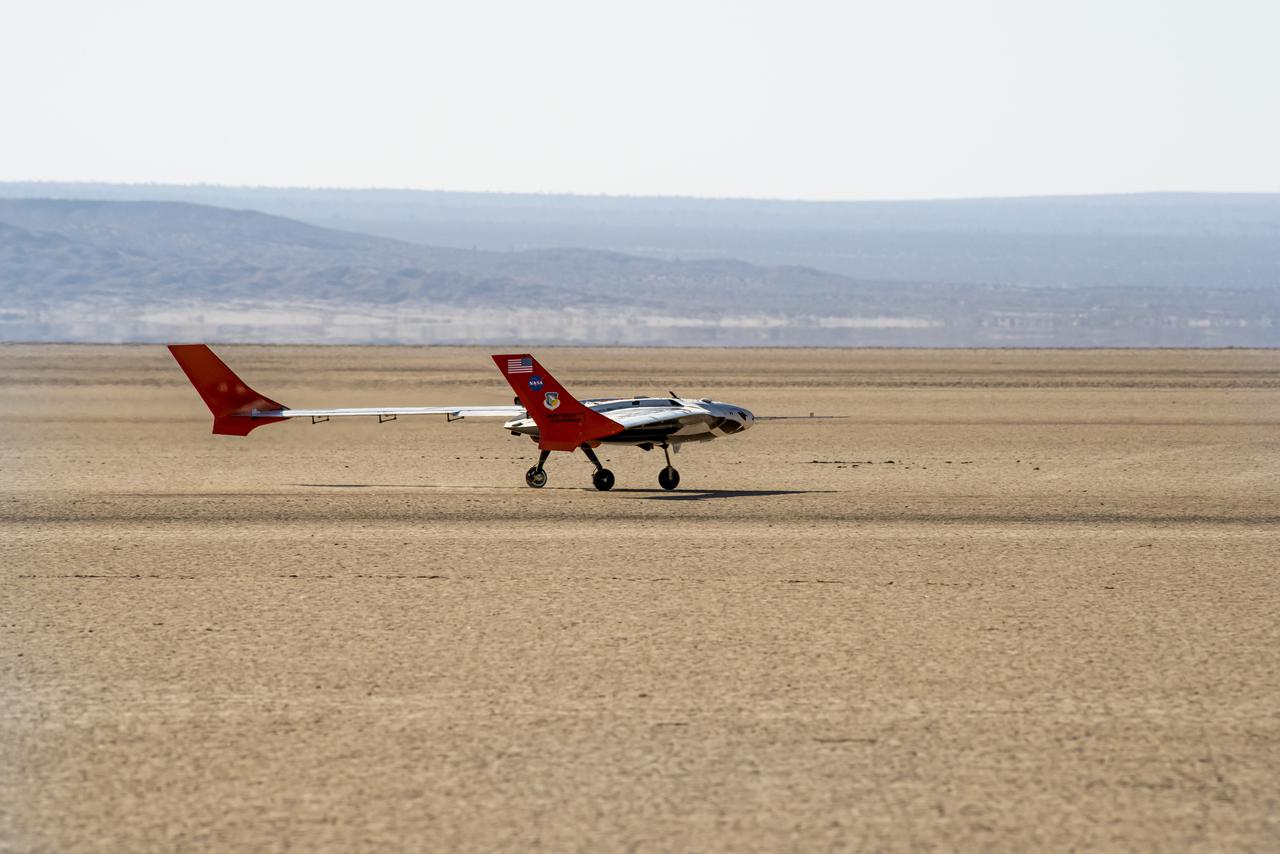
The X-56B remotely piloted aircraft prepares to takeoff to begin a new flight series. The flight was April 19 at NASA's Armstrong Flight Research Center in Edwards, California, with partner Northrop Grumman.
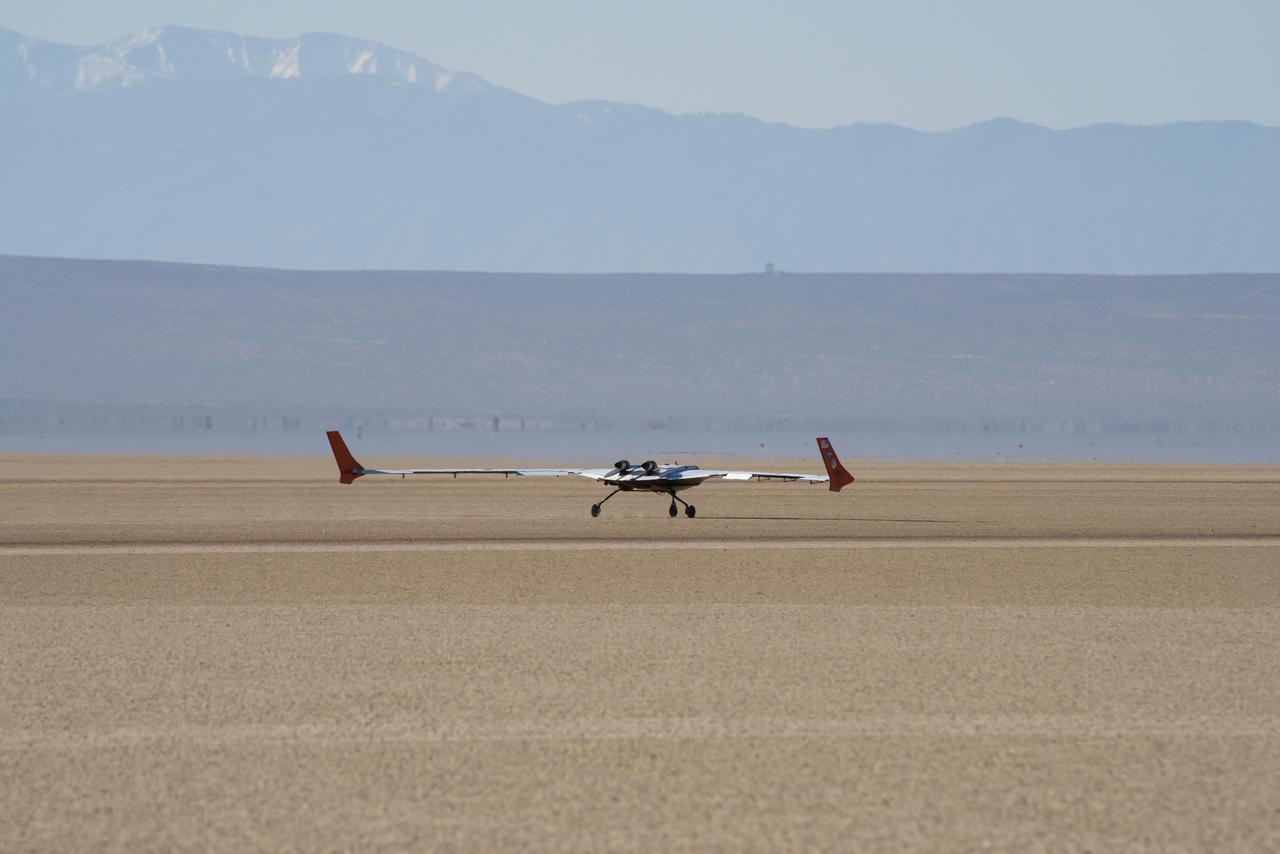
The X-56B remotely piloted aircraft prepares to takeoff to begin a new flight series. The flight was April 19 at NASA's Armstrong Flight Research Center in Edwards, California, with partner Northrop Grumman.
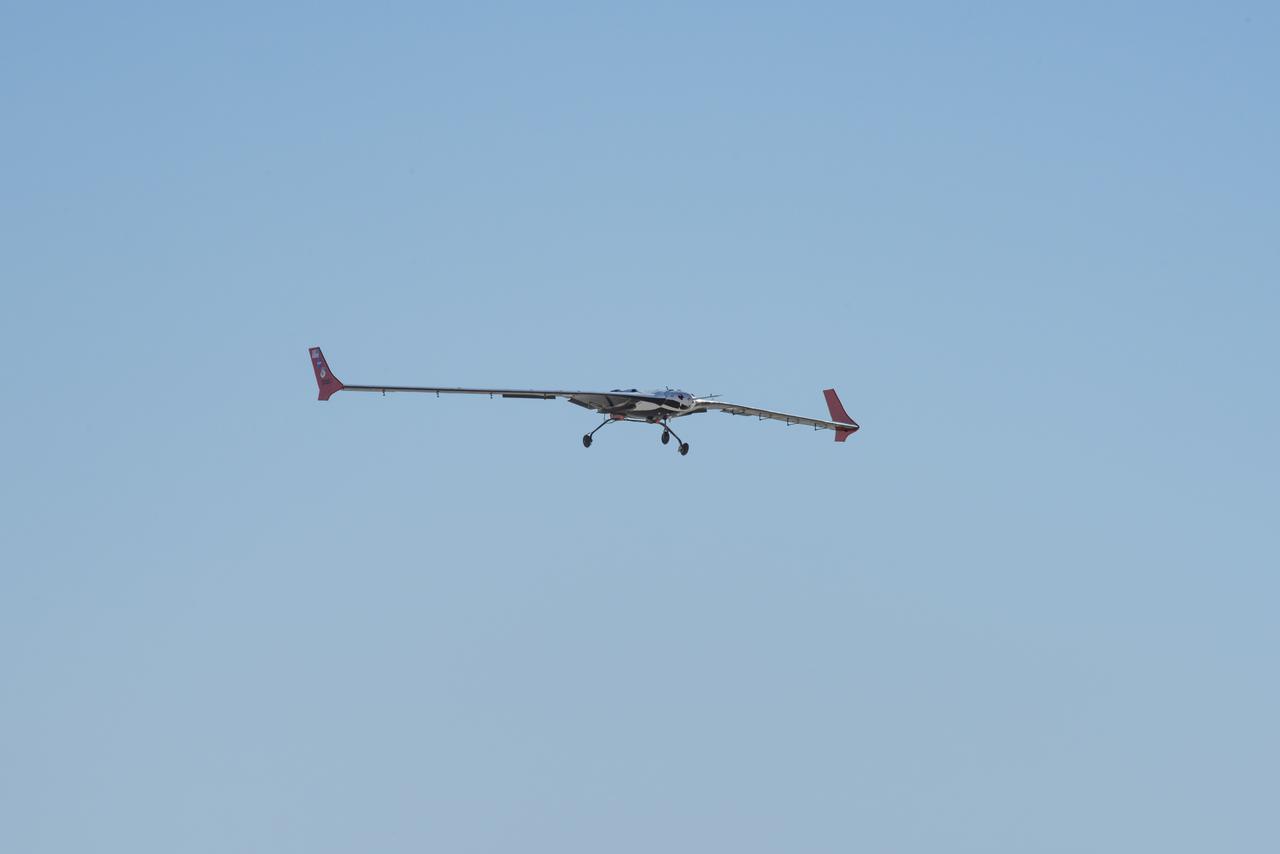
The X-56B remotely piloted aircraft flies the first of a new flight series. The flight was April 19 at NASA's Armstrong Flight Research Center in Edwards, California, with partner Northrop Grumman.
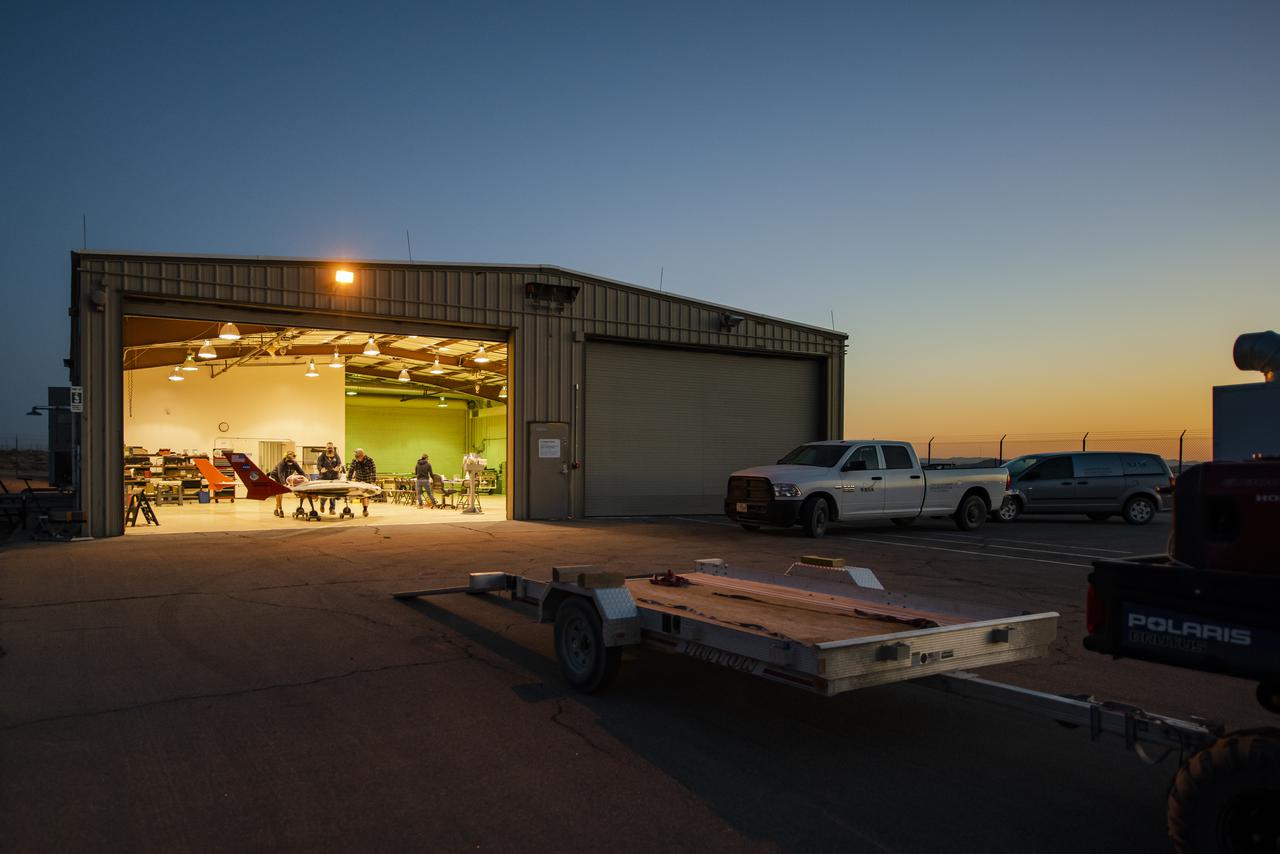
Preparations begin before dawn for the X-56B remotely piloted aircraft for a new flight series. The flight was April 19 at NASA's Armstrong Flight Research Center in Edwards, California, with partner Northrop Grumman.
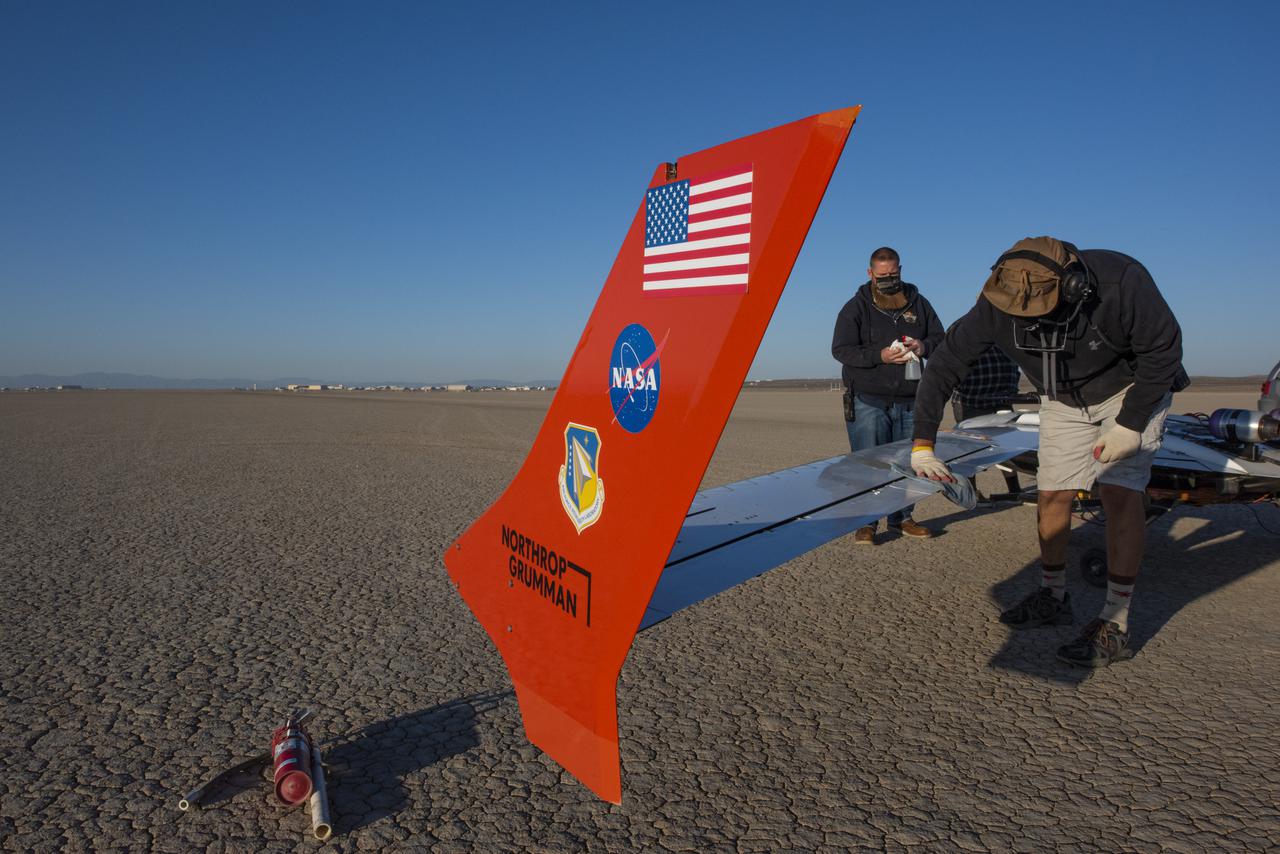
The X-56B remotely piloted aircraft ground crew prepares the aircraft to begin a new flight series. The flight was April 19 at NASA's Armstrong Flight Research Center in Edwards, California, with partner Northrop Grumman.
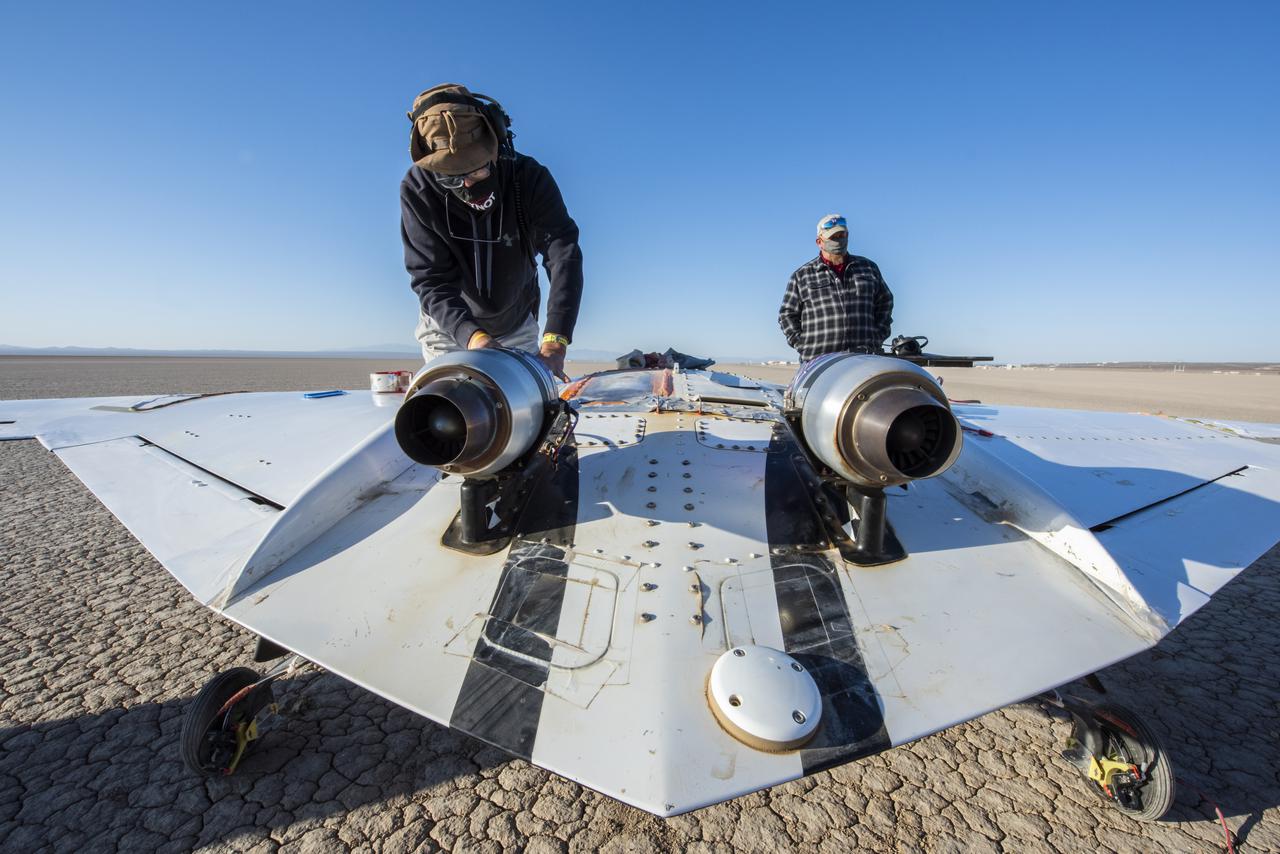
The X-56B remotely piloted aircraft ground crew prepares the aircraft to begin a new flight series. The flight was April 19 at NASA's Armstrong Flight Research Center in Edwards, California, with partner Northrop Grumman.
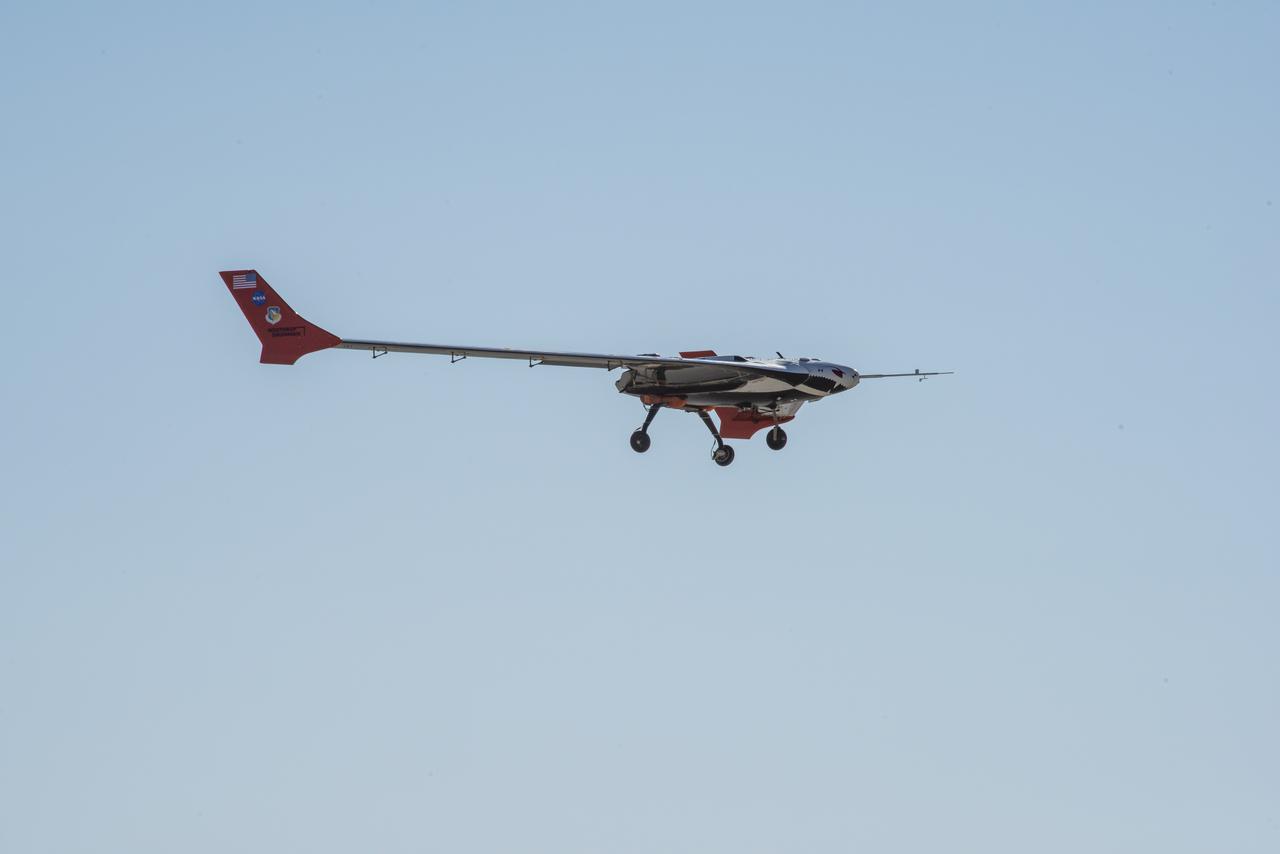
The X-56B remotely piloted aircraft flies the first of a new flight series. The flight was April 19 at NASA's Armstrong Flight Research Center in Edwards, California, with partner Northrop Grumman.
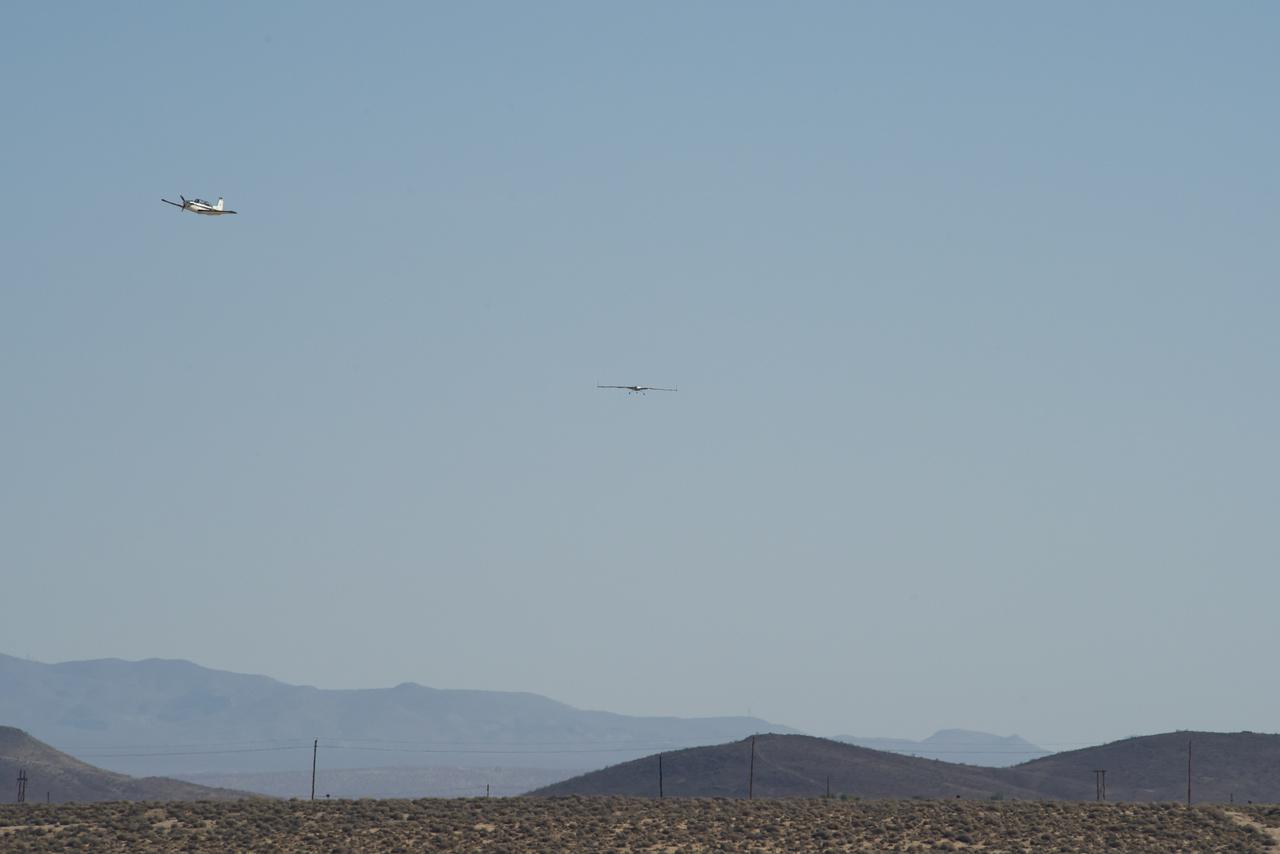
The X-56B remotely piloted aircraft flies the first of a new flight series, as a T-34 observes. The flight was April 19 at NASA's Armstrong Flight Research Center in Edwards, California, with partner Northrop Grumman.
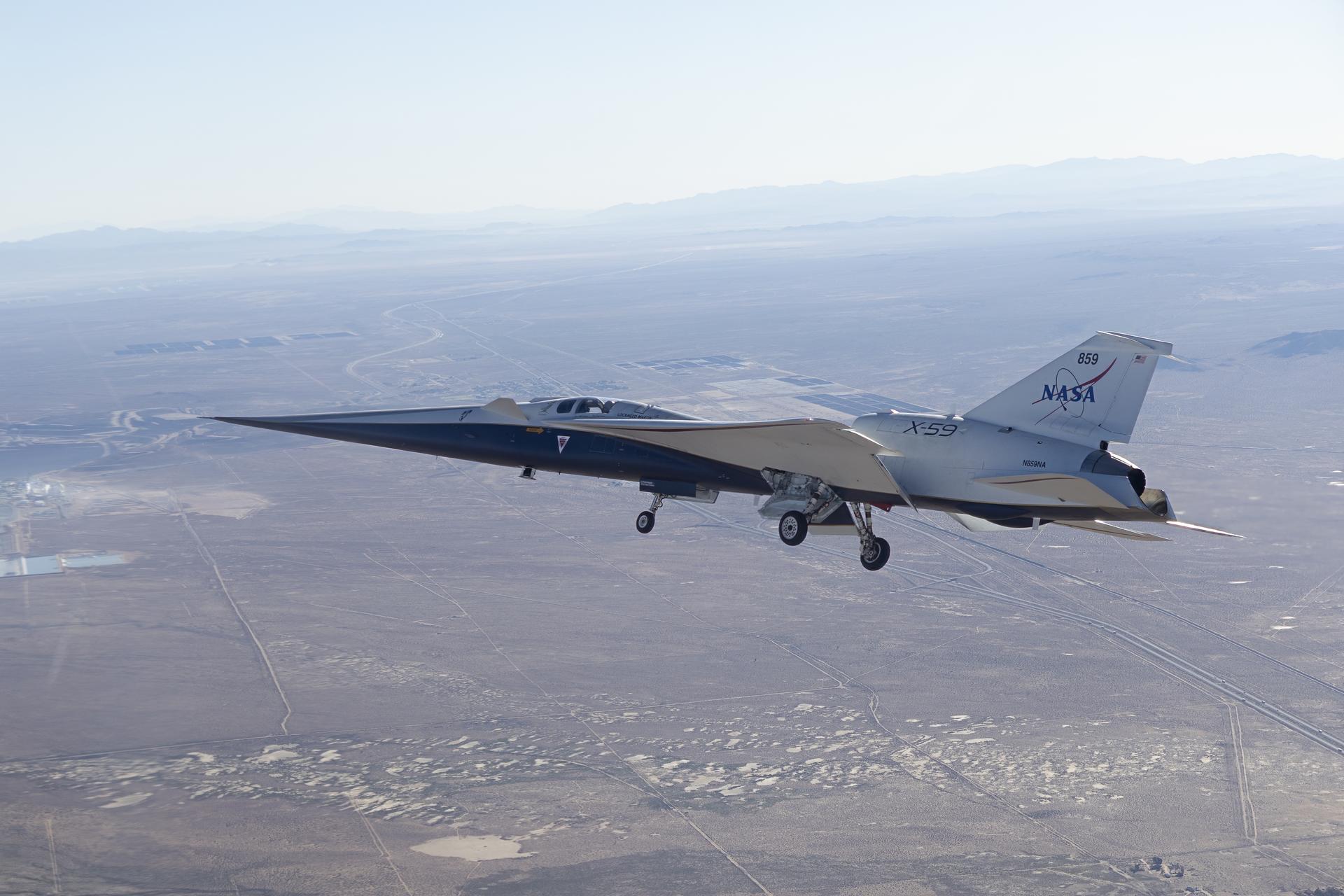
NASA’s X-59 quiet supersonic research aircraft cruises above Palmdale and Edwards, California, during its first flight, Tuesday, Oct. 28, 2025. The aircraft traveled to NASA’s Armstrong Flight Research Center in Edwards, California.
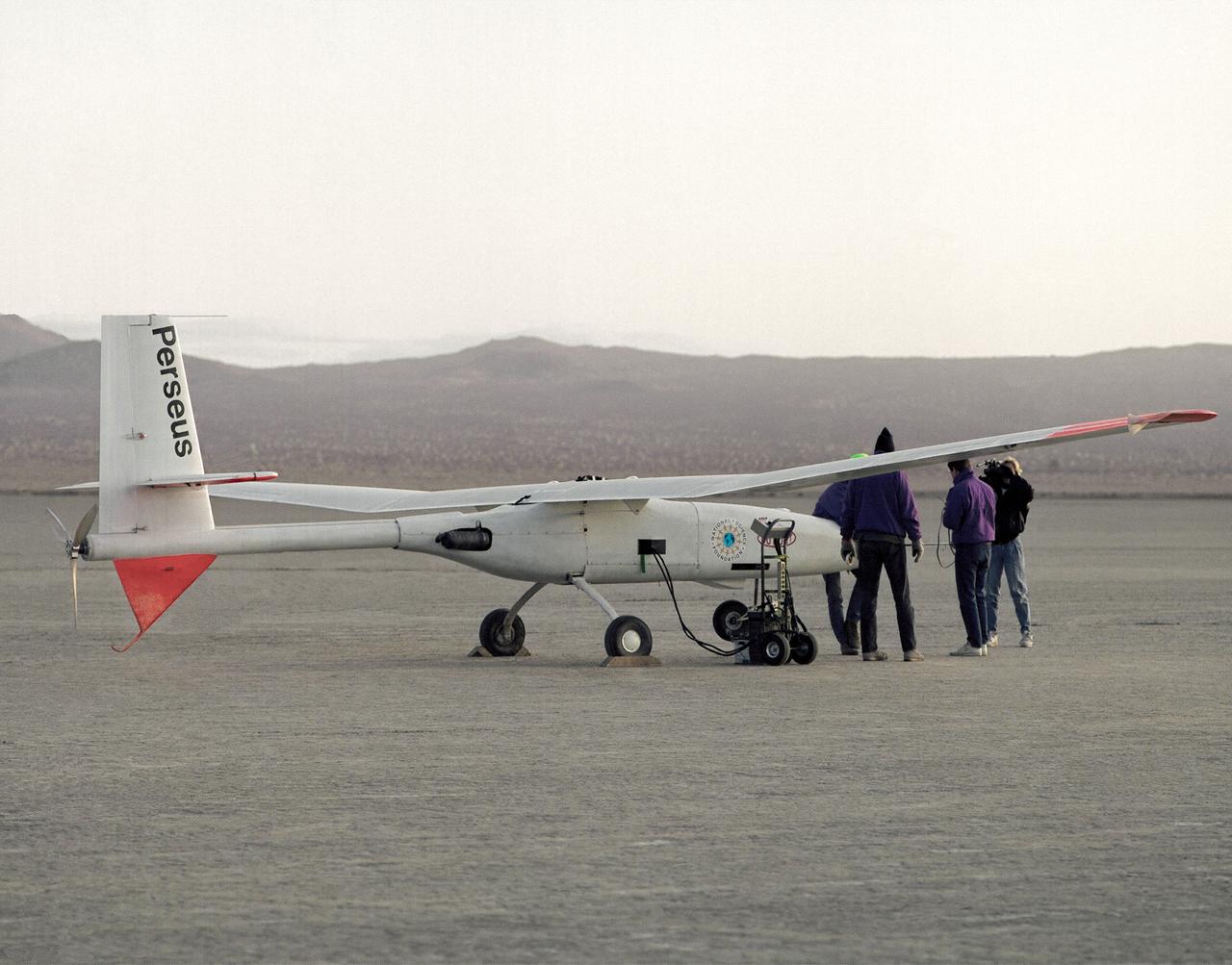
Crew members check out the Perseus proof-of-concept vehicle on Rogers Dry Lake, adjacent to the Dryden Flight Research Center, Edwards, California, after a test flight in 1991.
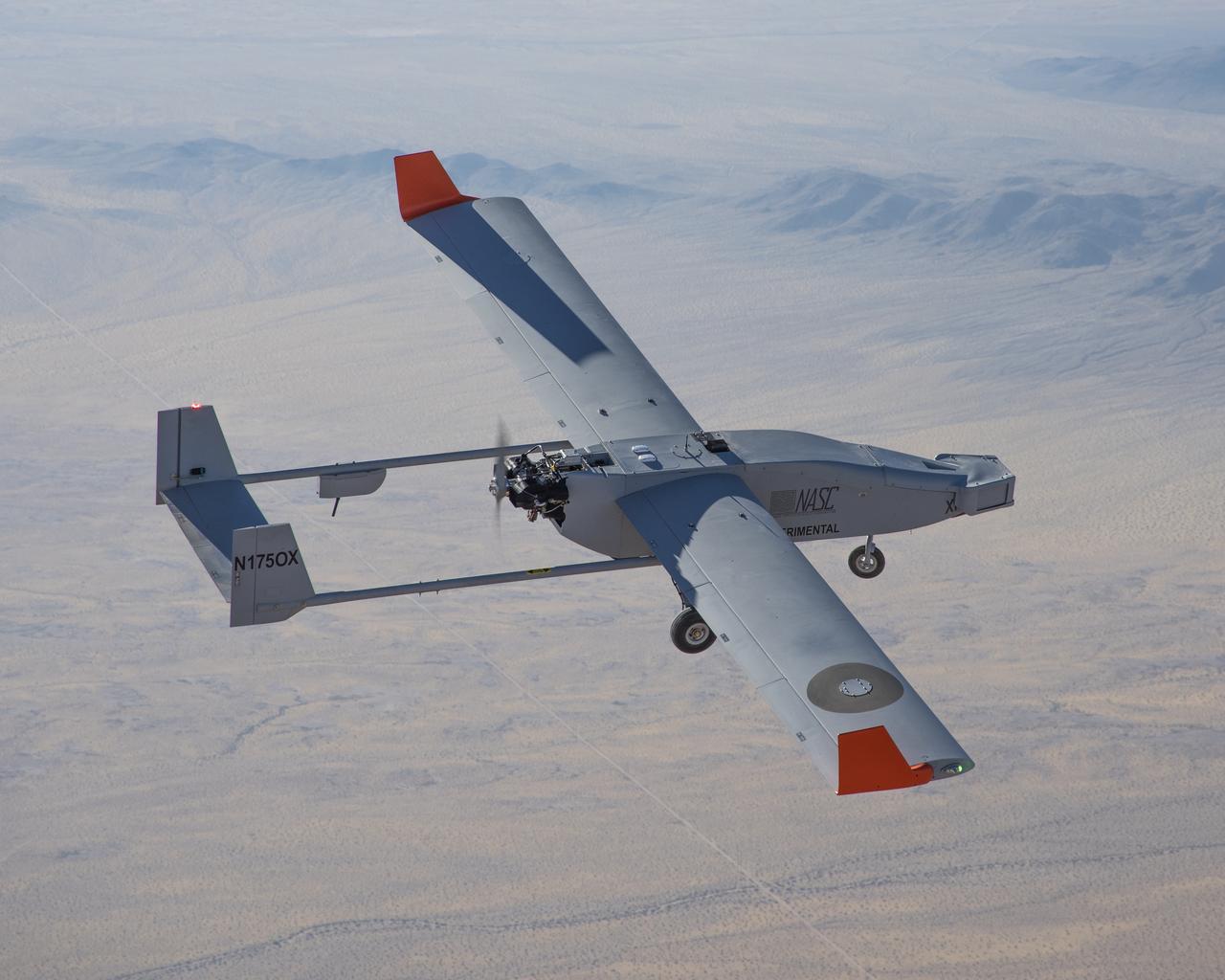
The NAVMAR Applied Sciences Corporation TigerShark, flew over Edwards Air Force Base on July 9, 2019 during a systems checkout flight for Flight Test Six.
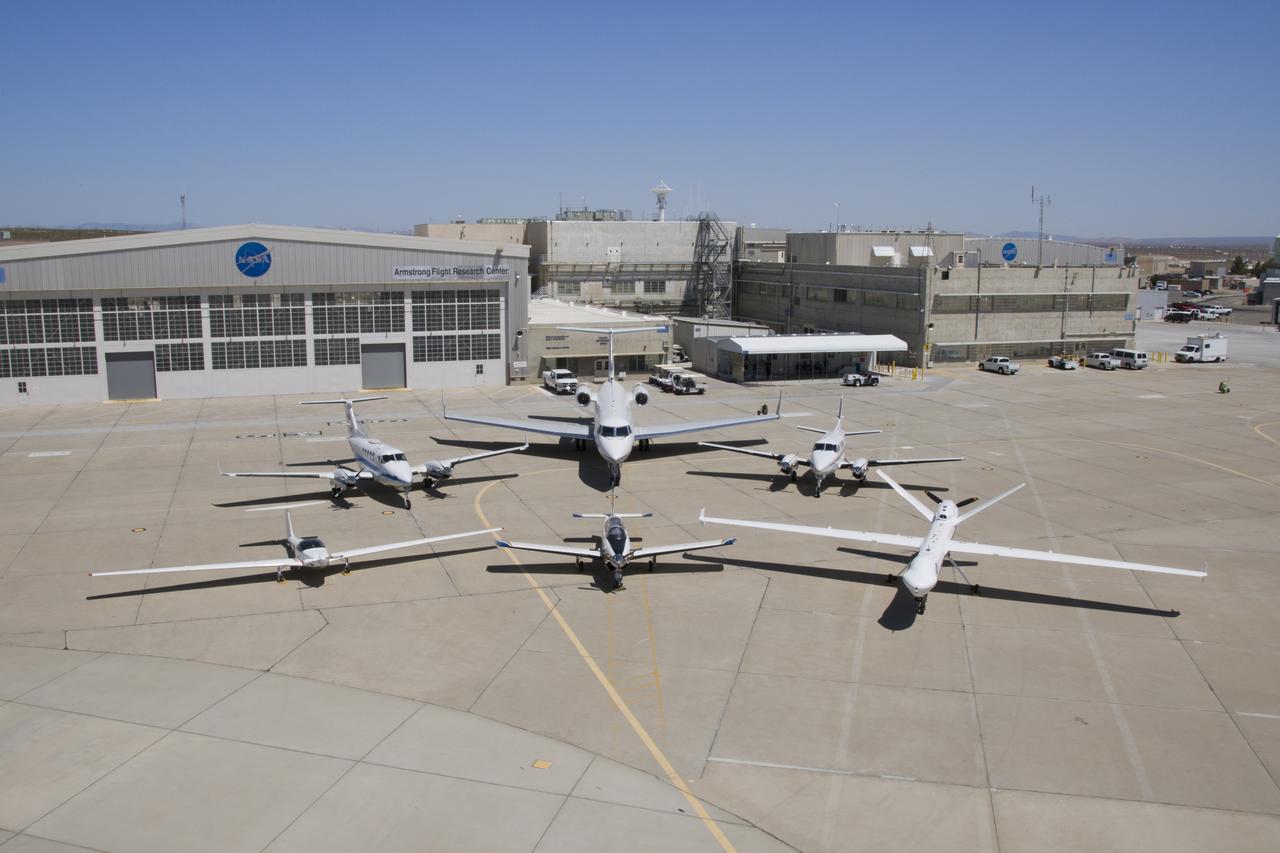
NASA’s Ikhana remotely piloted aircraft (front-right) is situated near NASA Armstrong Flight Research Center’s Hangar 4802 after an Unmanned Aircraft Systems Integration into the National Airspace System Flight Test Series 4 flight, along with five flight “intruders.” These intruders, which include NASA’s TG-14 (front-left), T-34C (front-center), B-200 King Air (back-left), Gulfstream-III (back-center) and a Honeywell C-90 King Air (back-right), fly within a pre-determined distance to Ikhana to test Detect-and-Avoid technology during research flights.
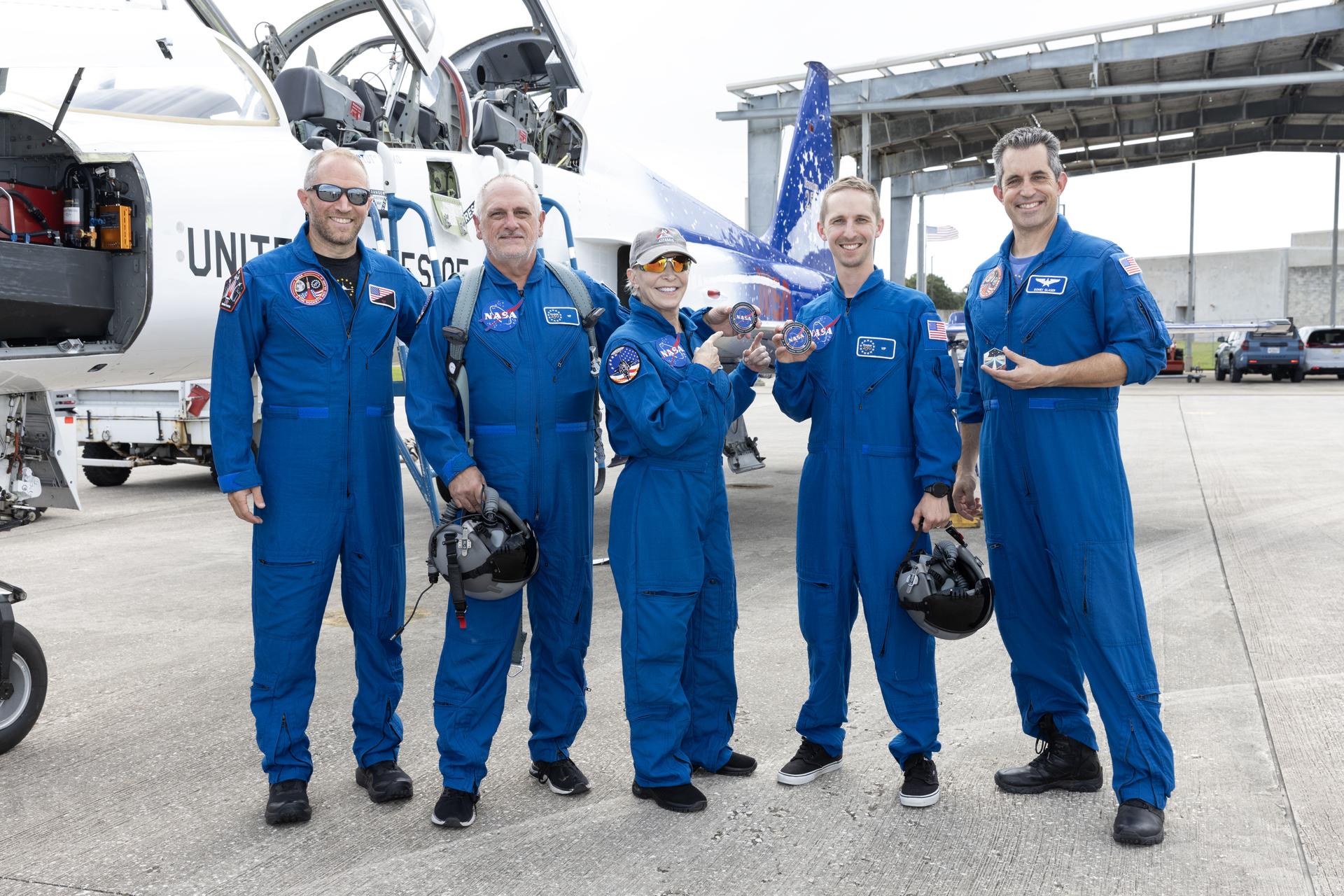
From left, pilot Doug "Tut" Demko, NASA employees Gary O’Neil, Tammy Fenk, Alec Jacobs, and pilot Scott "Gomex" Glaser participate in an employee incentive flying event using NASA Administrator Jared Isaacman's personal F-5 aircraft, Thursday, Sept. 17, 2026, at NASA’s Kennedy Space Center in Florida. As part of the agency’s Flight Experience Award program, the employees donned NASA flight suits, completed preflight briefings, and experienced a unique flight. The ride-along flight experience award program highlights NASA’s commitment to celebrating excellence across the workforce.
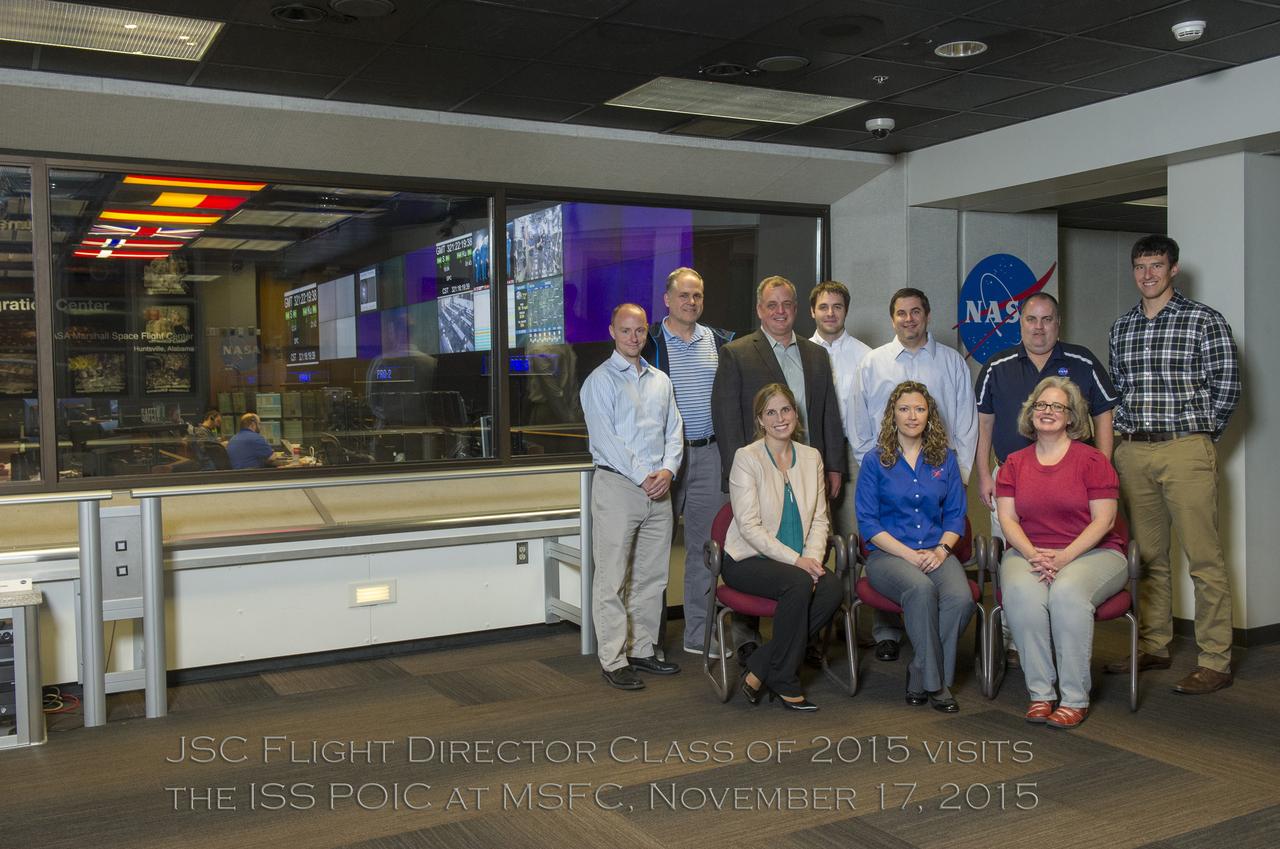
JSC FLIGHT DIRECTOR CLASS OF 2015 VISITS THE INTERNATIONAL SPACE STATION PAYLOAD OPERATION INTEGRATION CENTER AT MSFC, NOVEMBER 17, 2015
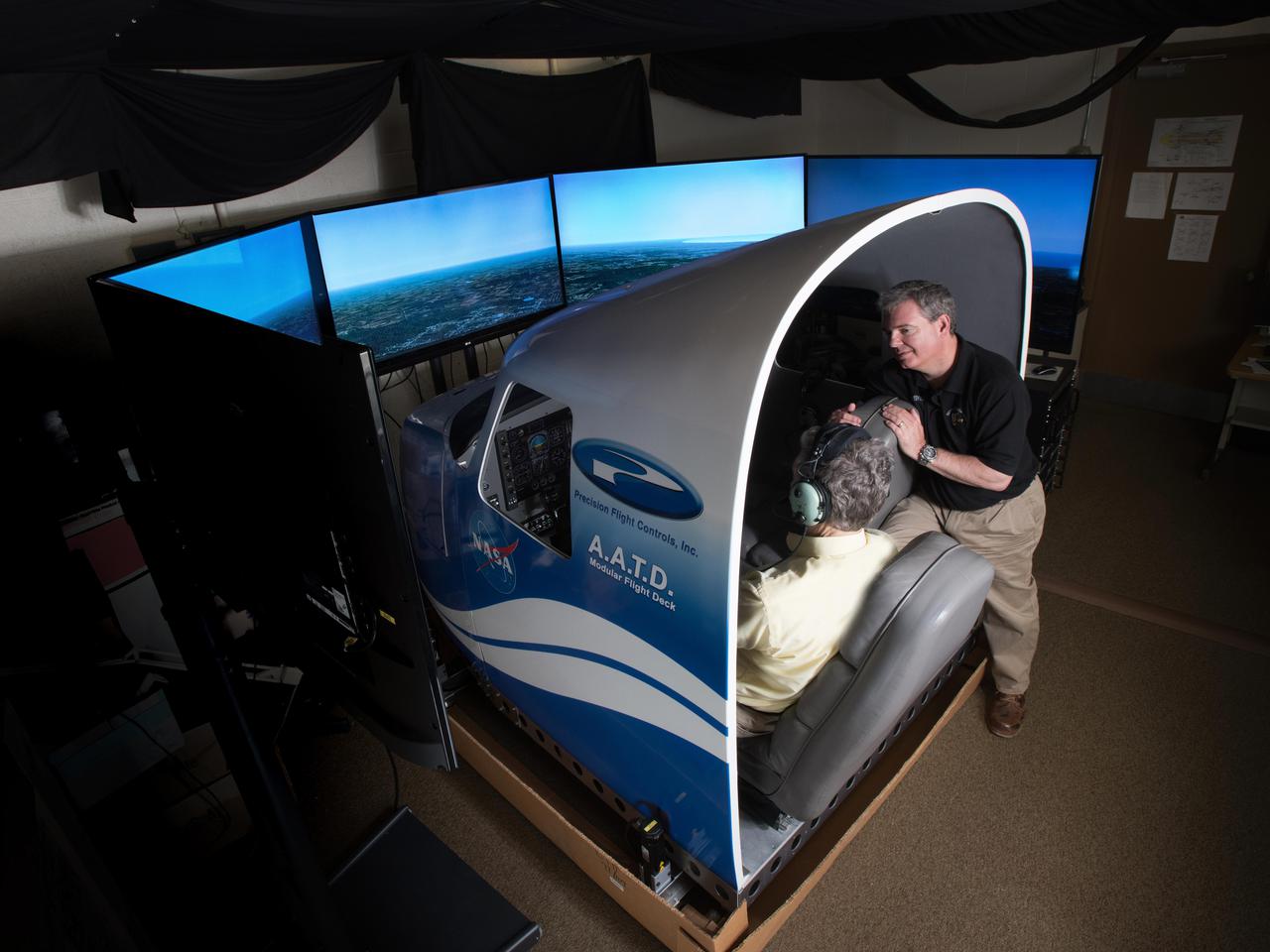
NASA Glenn Flight Simulator Laboratory
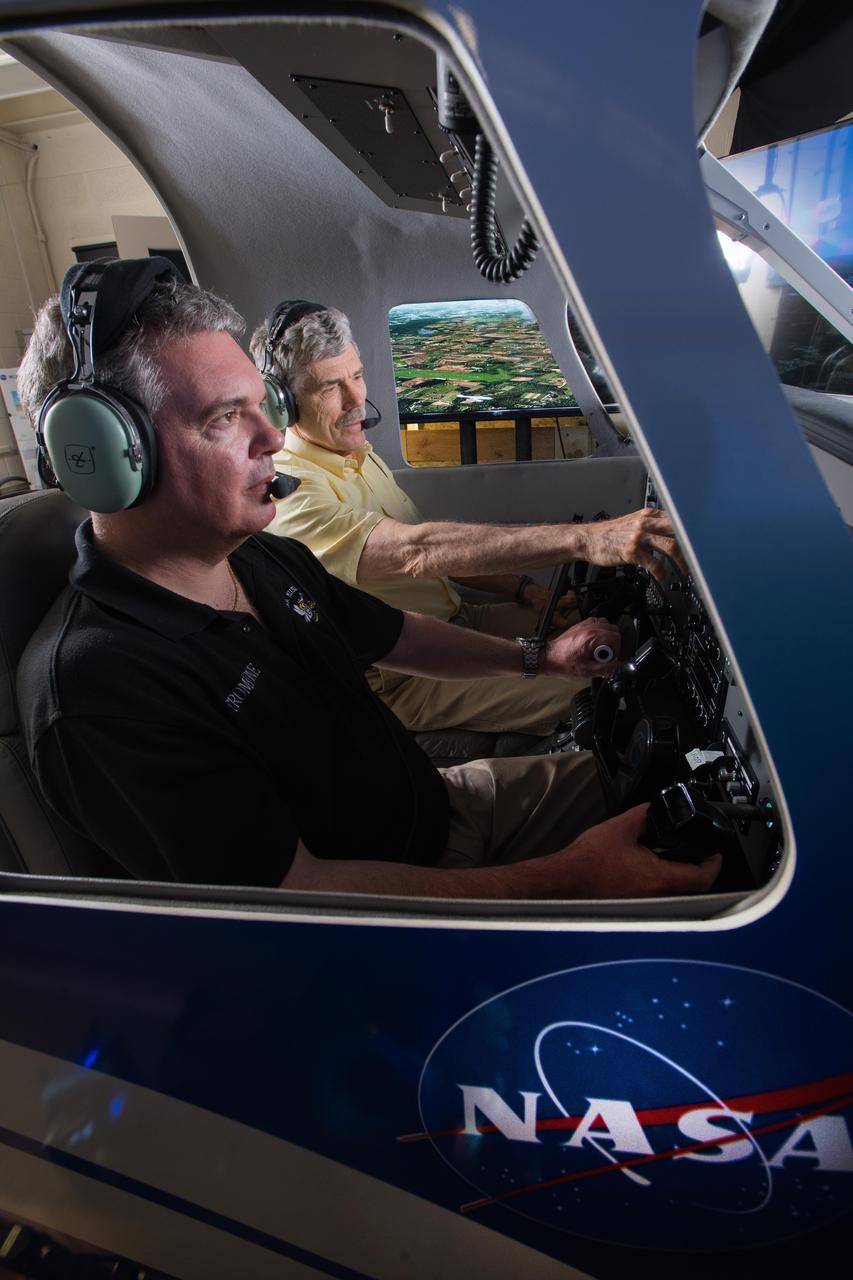
NASA Glenn Flight Simulator Laboratory
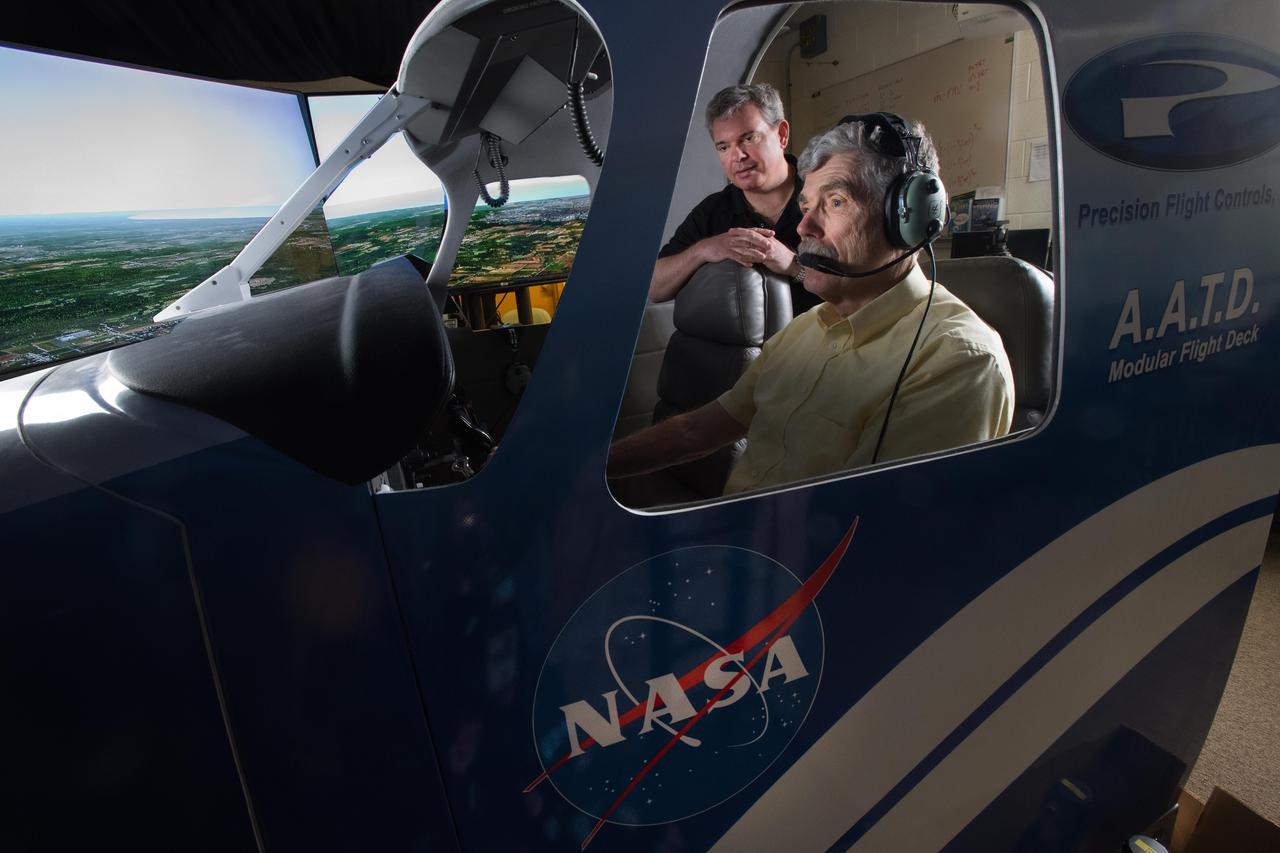
NASA Glenn Flight Simulator Laboratory