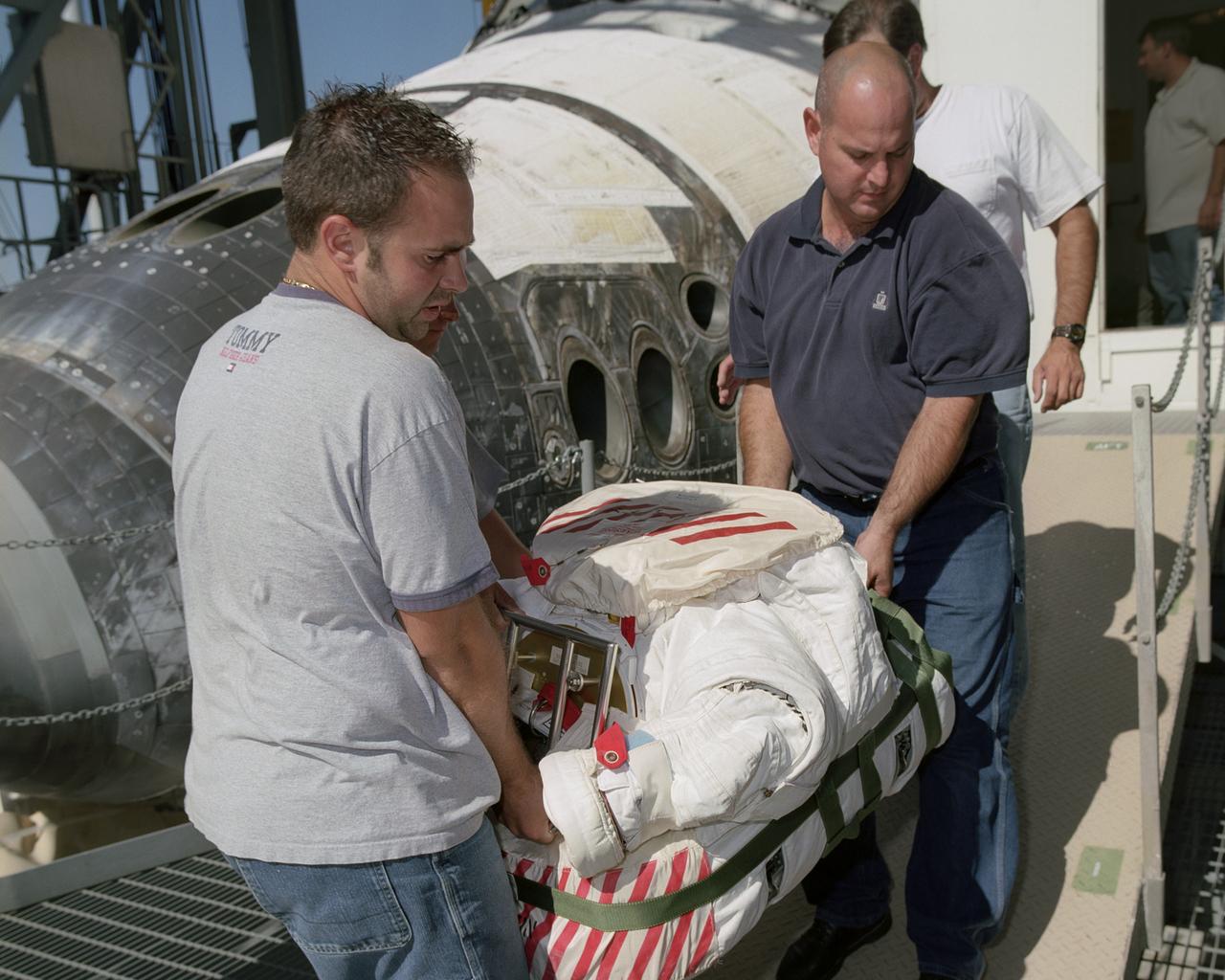
Flight Crew Systems Technicians Ray Smith and Raphael Rodriguez remove one of the Extravehicular Mobility Units, or EMUs, from the Space Shuttle Discovery after it's successful landing at NASA's Dryden Flight Research Center. The Space Shuttles receive post-flight servicing in the Mate-Demate Device (MDD) following landings at NASA's Dryden Flight Research Center, Edwards, California. The gantry-like MDD structure is used for servicing the shuttle orbiters in preparation for their ferry flight back to the Kennedy Space Center in Florida, including mounting the shuttle atop NASA's modified Boeing 747 Shuttle Carrier Aircraft. Space Shuttle Discovery landed safely at NASA's Dryden Flight Research Center at Edwards Air Force Base in California at 5:11:22 a.m. PDT, August 9, 2005, following the very successful 14-day STS-114 return to flight mission. During their two weeks in space, Commander Eileen Collins and her six crewmates tested out new safety procedures and delivered supplies and equipment the International Space Station. Discovery spent two weeks in space, where the crew demonstrated new methods to inspect and repair the Shuttle in orbit. The crew also delivered supplies, outfitted and performed maintenance on the International Space Station. A number of these tasks were conducted during three spacewalks. In an unprecedented event, spacewalkers were called upon to remove protruding gap fillers from the heat shield on Discovery's underbelly. In other spacewalk activities, astronauts installed an external platform onto the Station's Quest Airlock and replaced one of the orbital outpost's Control Moment Gyroscopes. Inside the Station, the STS-114 crew conducted joint operations with the Expedition 11 crew. They unloaded fresh supplies from the Shuttle and the Raffaello Multi-Purpose Logistics Module. Before Discovery undocked, the crews filled Raffeallo with unneeded items and returned to Shuttle payload bay. Discovery launched on July 26 and spent almost 14
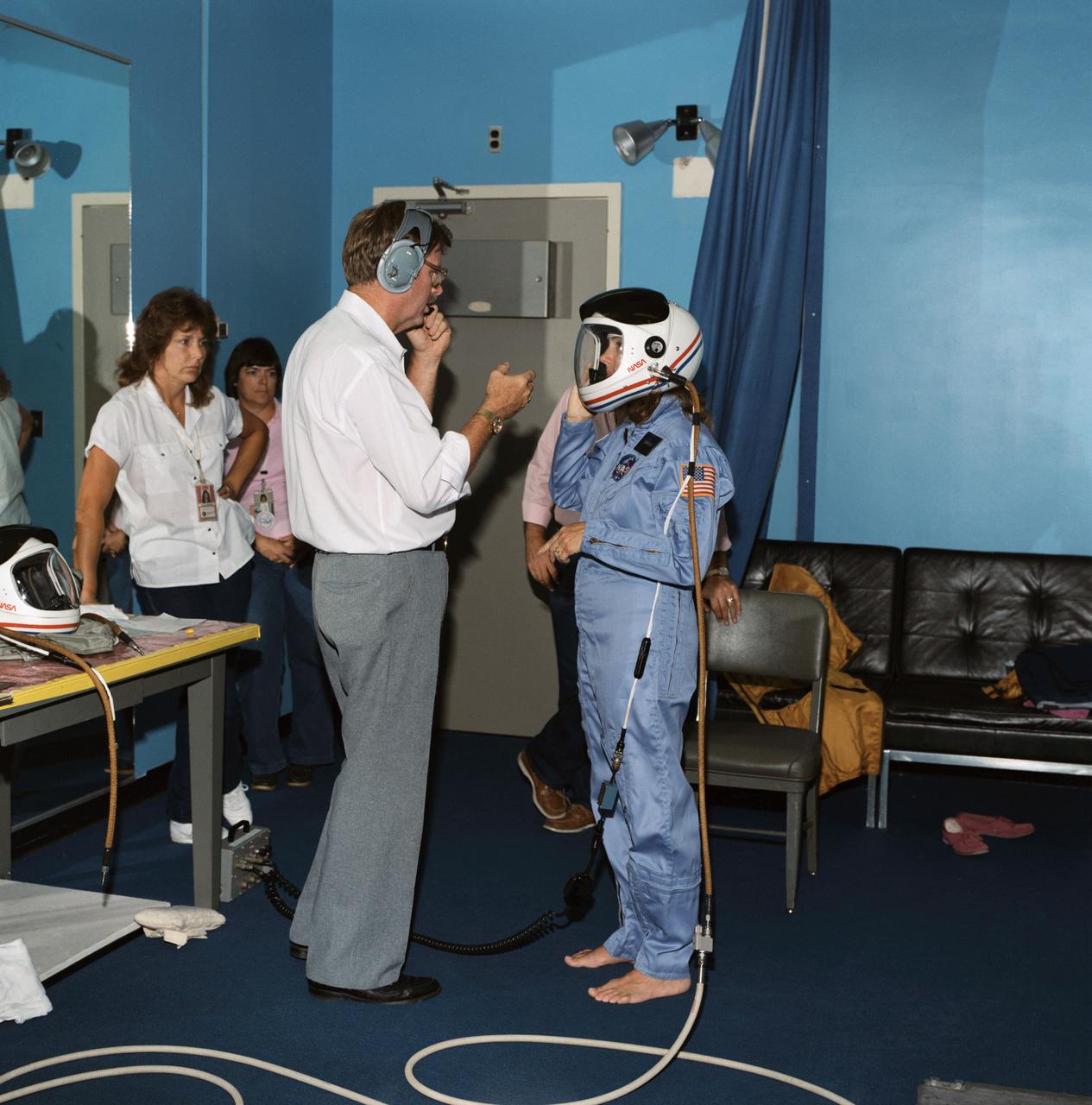
S85-40031 (November 1985) --- Payload specialist Sharon Christa McAuliffe is briefed on launch/entry helmets by crew systems technician Alan M. Rochford in the Johnson Space Center’s crew systems lab. McAuliffe is one of seven crew members in training for STS-51L flight scheduled for January 1986. Photo credit: NASA
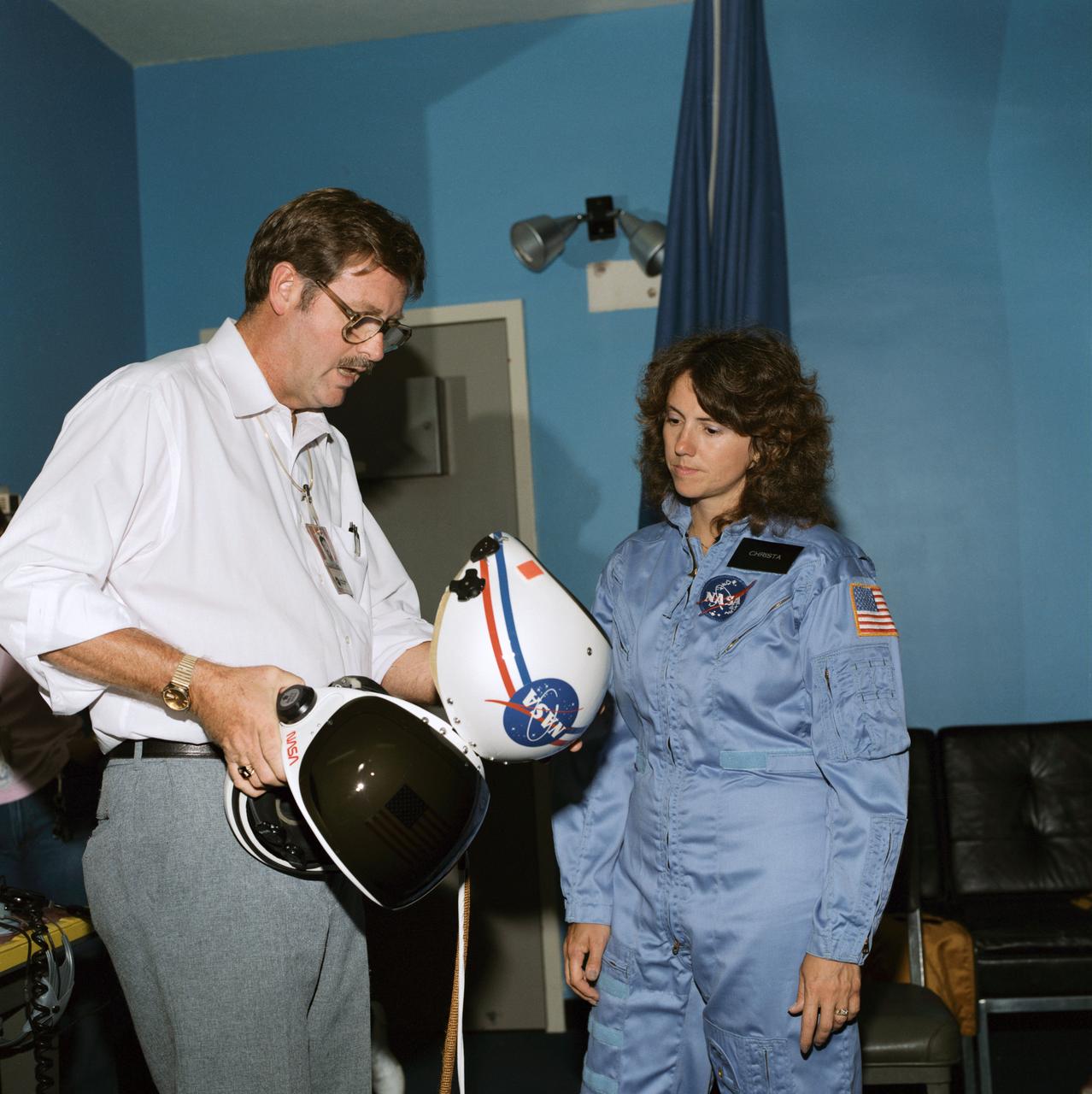
S85-40029 (November 1985) --- Payload specialist Sharon Christa McAuliffe is briefed on launch/entry helmets by crew systems technician Alan M. Rochford in the Johnson Space Center’s crew systems lab. McAuliffe is one of seven crew members in training for STS-51L flight scheduled for January 1986. Photo credit: NASA
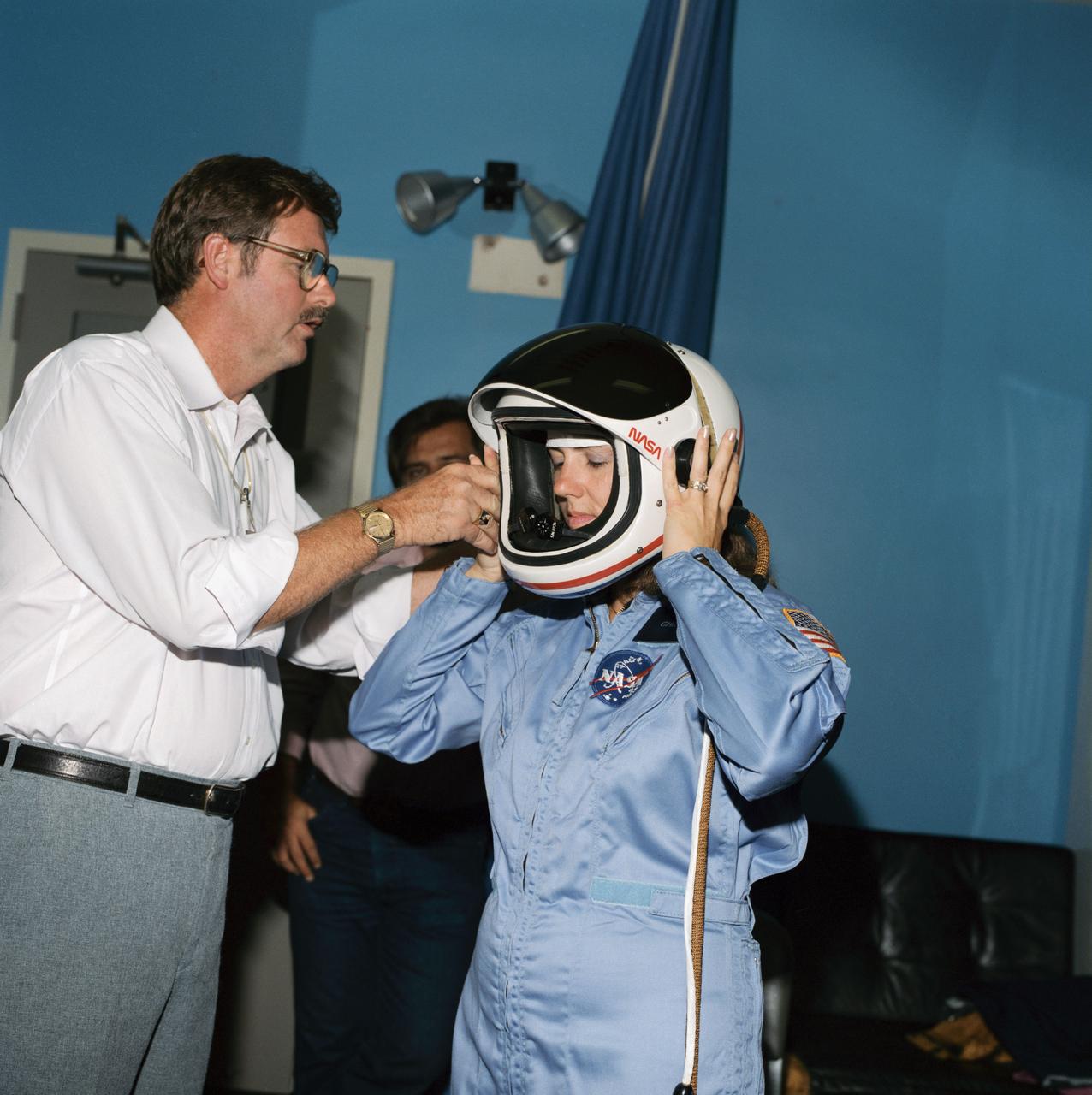
S85-40030 (November 1985) --- Payload specialist Sharon Christa McAuliffe is briefed on launch/entry helmets by crew systems technician Alan M. Rochford in the Johnson Space Center’s crew systems lab. McAuliffe is one of seven crew members in training for STS-51L flight scheduled for January 1986. Photo credit: NASA
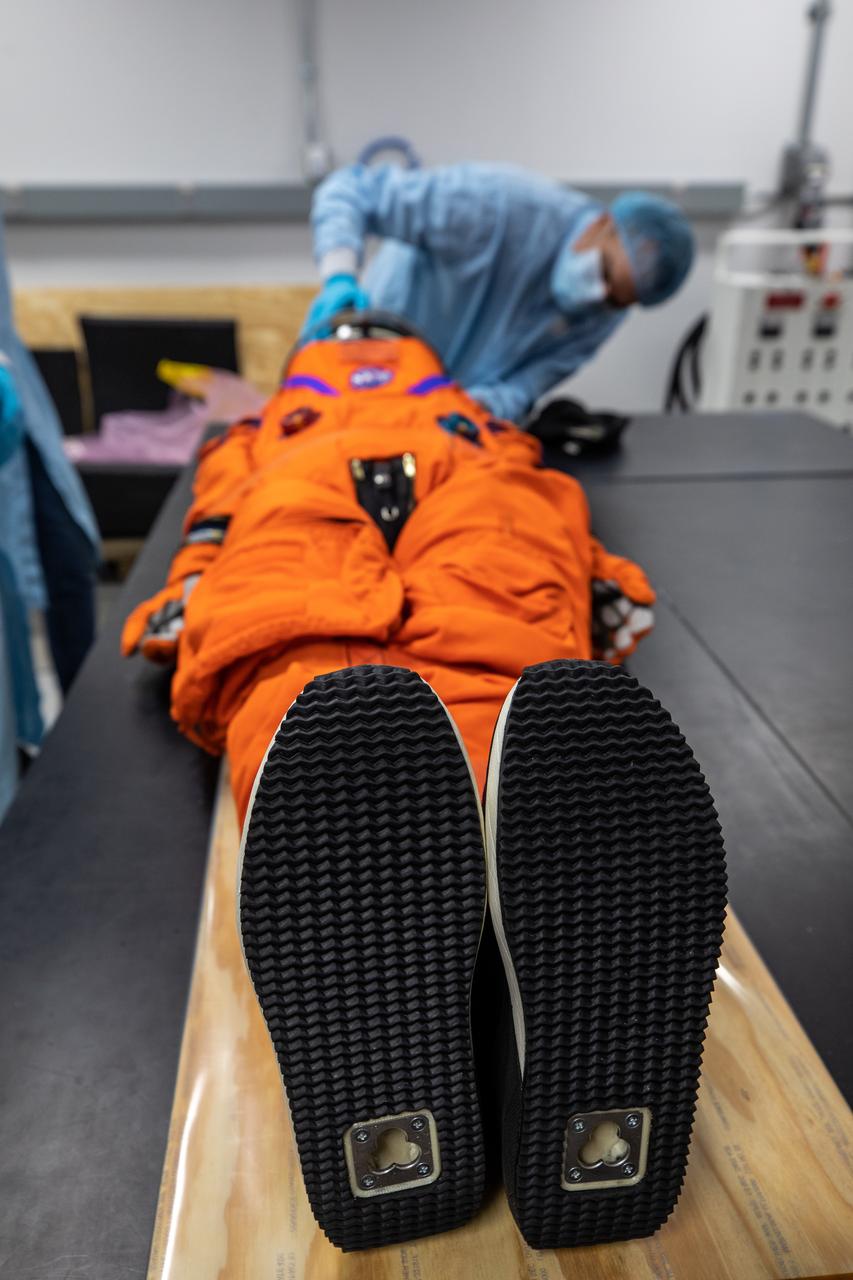
Inside the Space Station Processing Facility at NASA’s Kennedy Space Center in Florida, teams from Johnson Space Center, Exploration Ground Systems, and Jacobs TOSC conduct final inspections of Moonikin “Campos” on Nov. 9, 2021, prior to installation into the Orion crew module. Technicians checked connectivity and performed fit checks on his flight suit to ensure he is ready for flight aboard the Artemis flight test. Artemis I will be an uncrewed test flight of the Orion spacecraft and Space Launch System rocket as an integrated system ahead of crewed flights to the Moon. Under Artemis, NASA aims to land the first woman and first person of color on the Moon and establish sustainable lunar exploration.
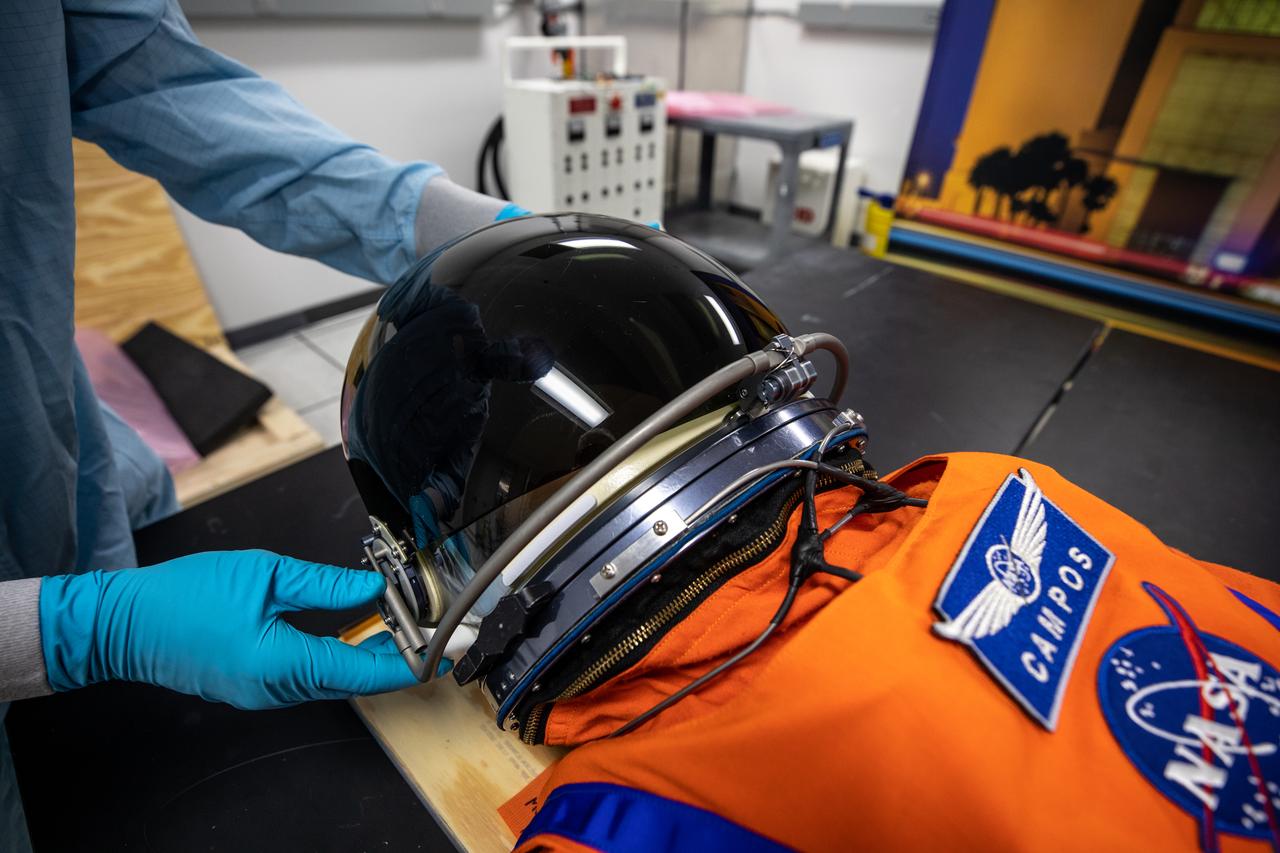
Teams from Johnson Space Center, Exploration Ground Systems, and Jacobs TOSC conduct final inspections of Moonikin “Campos” on Nov. 9, 2021, inside the Space Station Processing Facility at NASA’s Kennedy Space Center in Florida. Moonikin “Campos” will be installed into the Orion crew module. Technicians checked connectivity and performed fit checks on his flight suit to ensure he is ready for flight aboard the Artemis flight test. Artemis I will be an uncrewed test flight of the Orion spacecraft and Space Launch System rocket as an integrated system ahead of crewed flights to the Moon. Under Artemis, NASA aims to land the first woman and first person of color on the Moon and establish sustainable lunar exploration.
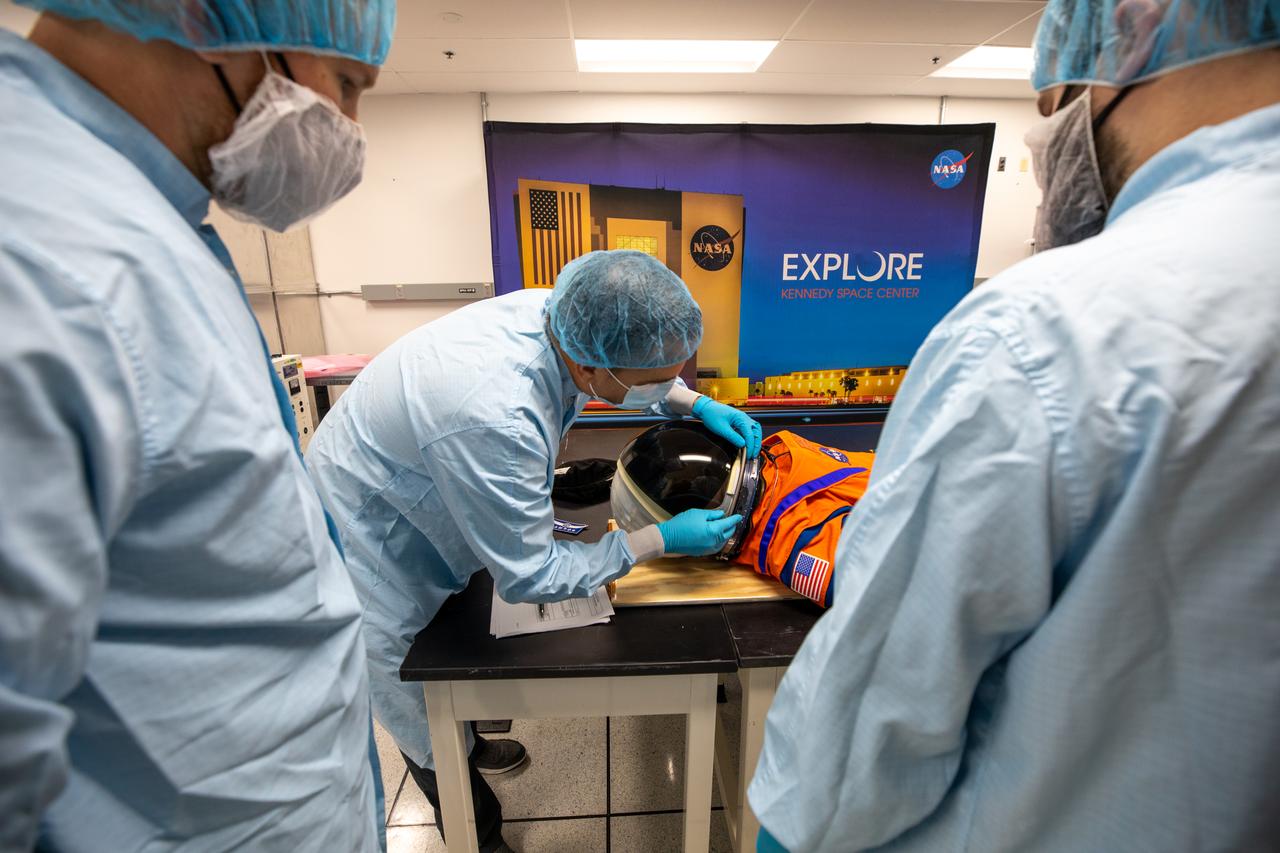
Inside the Space Station Processing Facility at NASA’s Kennedy Space Center in Florida, teams from Johnson Space Center, Exploration Ground Systems, and Jacobs TOSC conduct final inspections of Moonikin “Campos” on Nov. 9, 2021, prior to installation into the Orion crew module. Technicians checked connectivity and performed fit checks on his flight suit to ensure he is ready for flight aboard the Artemis flight test. Artemis I will be an uncrewed test flight of the Orion spacecraft and Space Launch System rocket as an integrated system ahead of crewed flights to the Moon. Under Artemis, NASA aims to land the first woman and first person of color on the Moon and establish sustainable lunar exploration.
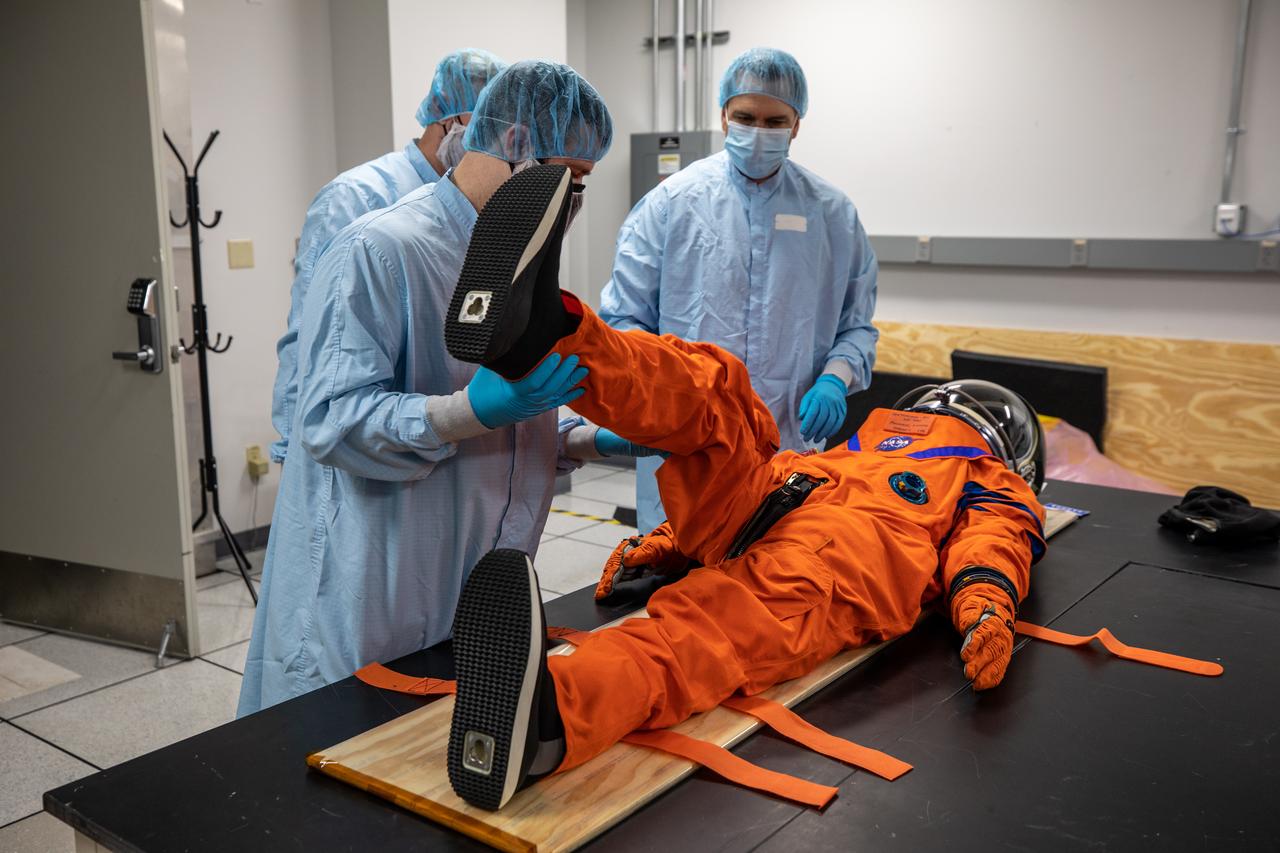
Inside the Space Station Processing Facility at NASA’s Kennedy Space Center in Florida, teams from Johnson Space Center, Exploration Ground Systems, and Jacobs TOSC conduct final inspections of Moonikin “Campos” on Nov. 9, 2021, prior to installation into the Orion crew module. Technicians checked connectivity and performed fit checks on his flight suit to ensure he is ready for flight aboard the Artemis flight test. Artemis I will be an uncrewed test flight of the Orion spacecraft and Space Launch System rocket as an integrated system ahead of crewed flights to the Moon. Under Artemis, NASA aims to land the first woman and first person of color on the Moon and establish sustainable lunar exploration.
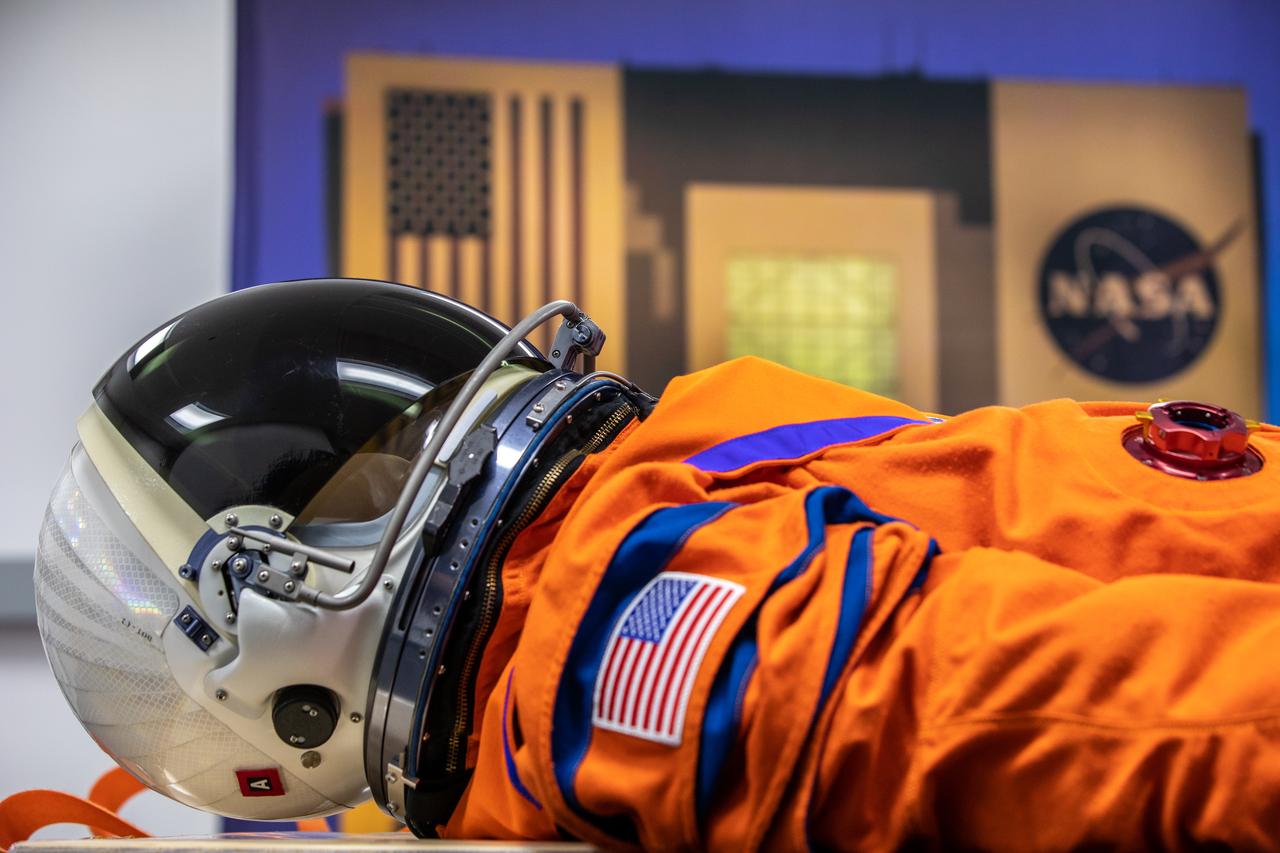
Teams from Johnson Space Center, Exploration Ground Systems, and Jacobs TOSC conduct final inspections of Moonikin “Campos” on Nov. 9, 2021, inside the Space Station Processing Facility at NASA’s Kennedy Space Center in Florida. Moonikin “Campos” will be installed into the Orion crew module. Technicians checked connectivity and performed fit checks on his flight suit to ensure he is ready for flight aboard the Artemis flight test. Artemis I will be an uncrewed test flight of the Orion spacecraft and Space Launch System rocket as an integrated system ahead of crewed flights to the Moon. Under Artemis, NASA aims to land the first woman and first person of color on the Moon and establish sustainable lunar exploration.
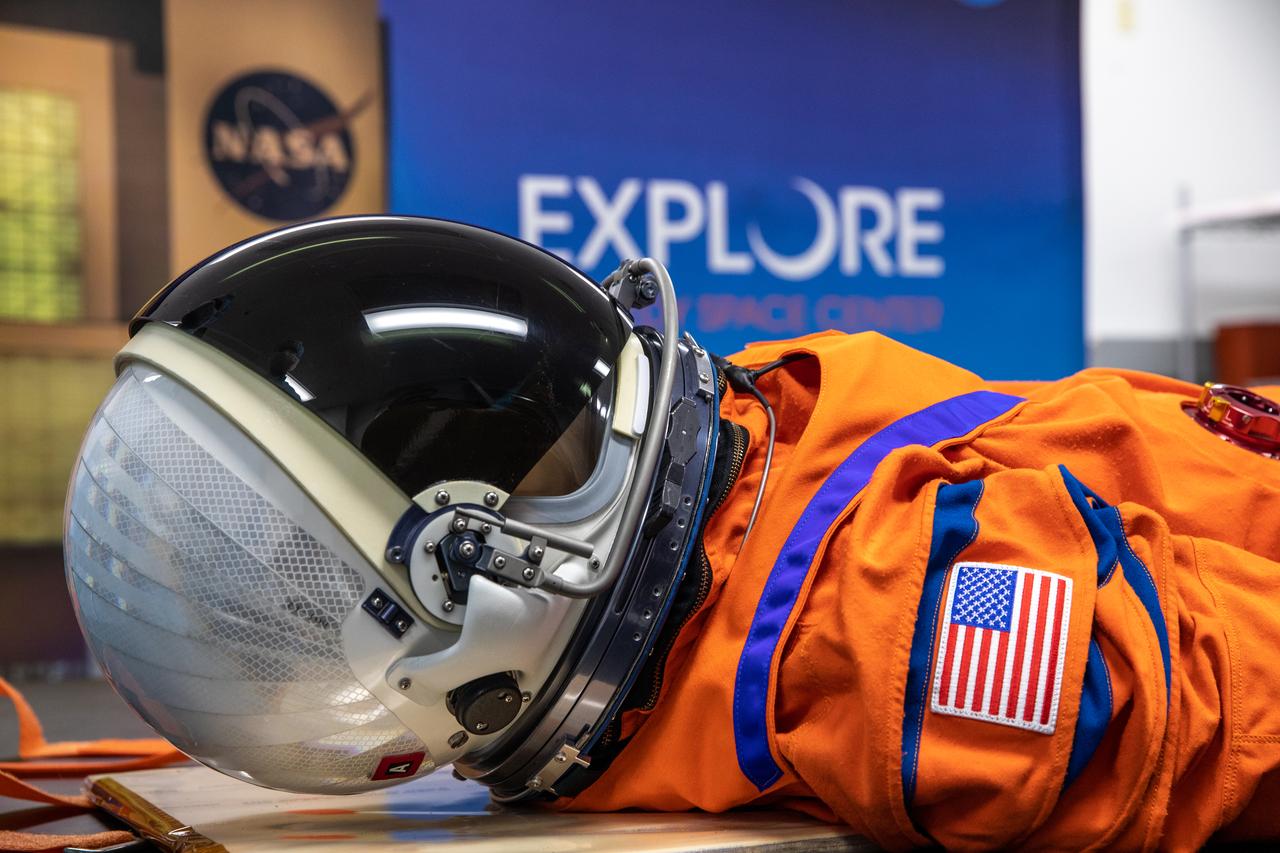
Teams from Johnson Space Center, Exploration Ground Systems, and Jacobs TOSC conduct final inspections of Moonikin “Campos” on Nov. 9, 2021, inside the Space Station Processing Facility at NASA’s Kennedy Space Center in Florida. Moonikin “Campos” will be installed into the Orion crew module. Technicians checked connectivity and performed fit checks on his flight suit to ensure he is ready for flight aboard the Artemis flight test. Artemis I will be an uncrewed test flight of the Orion spacecraft and Space Launch System rocket as an integrated system ahead of crewed flights to the Moon. Under Artemis, NASA aims to land the first woman and first person of color on the Moon and establish sustainable lunar exploration.
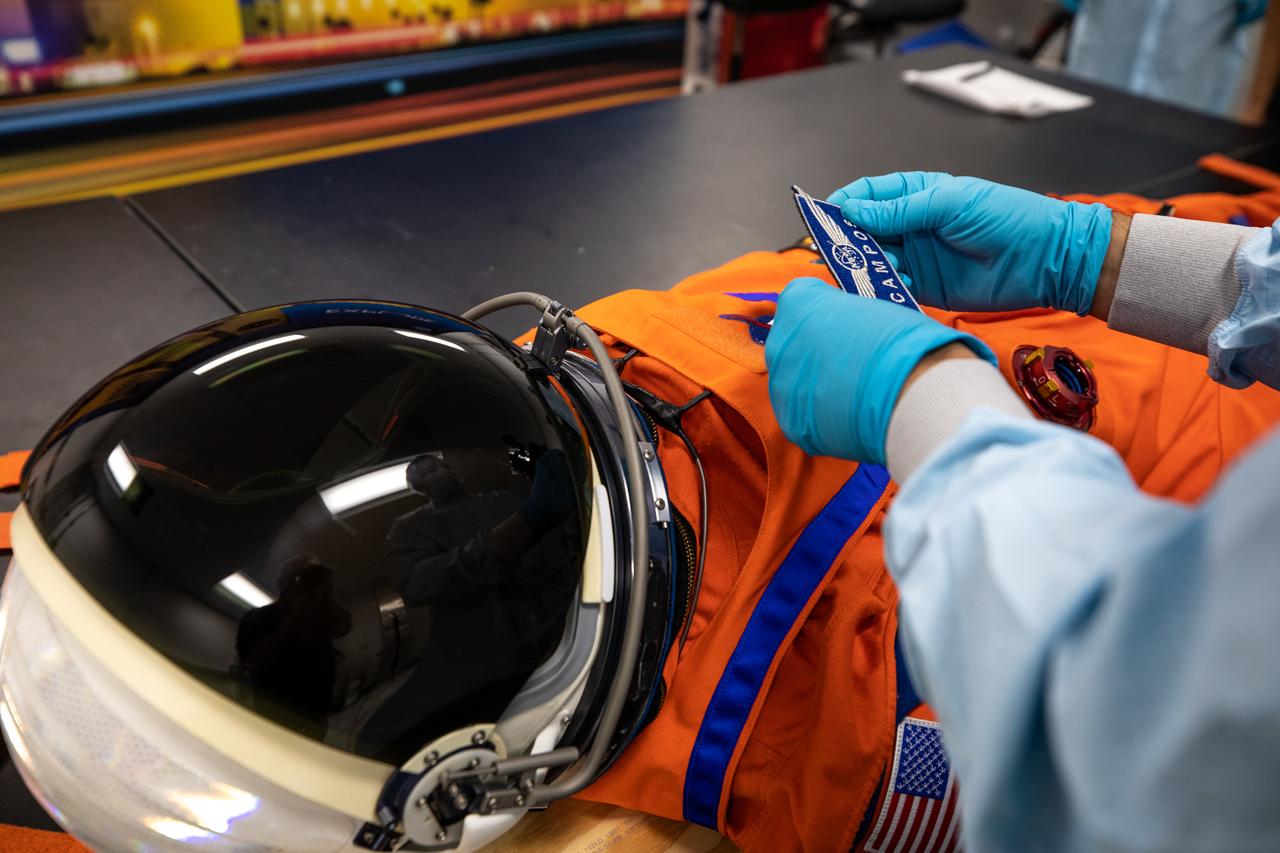
Inside the Space Station Processing Facility at NASA’s Kennedy Space Center in Florida, teams from Johnson Space Center, Exploration Ground Systems, and Jacobs TOSC conduct final inspections of Moonikin “Campos” on Nov. 9, 2021, prior to installation into the Orion crew module. Technicians checked connectivity and performed fit checks on his flight suit to ensure he is ready for flight aboard the Artemis flight test. Artemis I will be an uncrewed test flight of the Orion spacecraft and Space Launch System rocket as an integrated system ahead of crewed flights to the Moon. Under Artemis, NASA aims to land the first woman and first person of color on the Moon and establish sustainable lunar exploration.
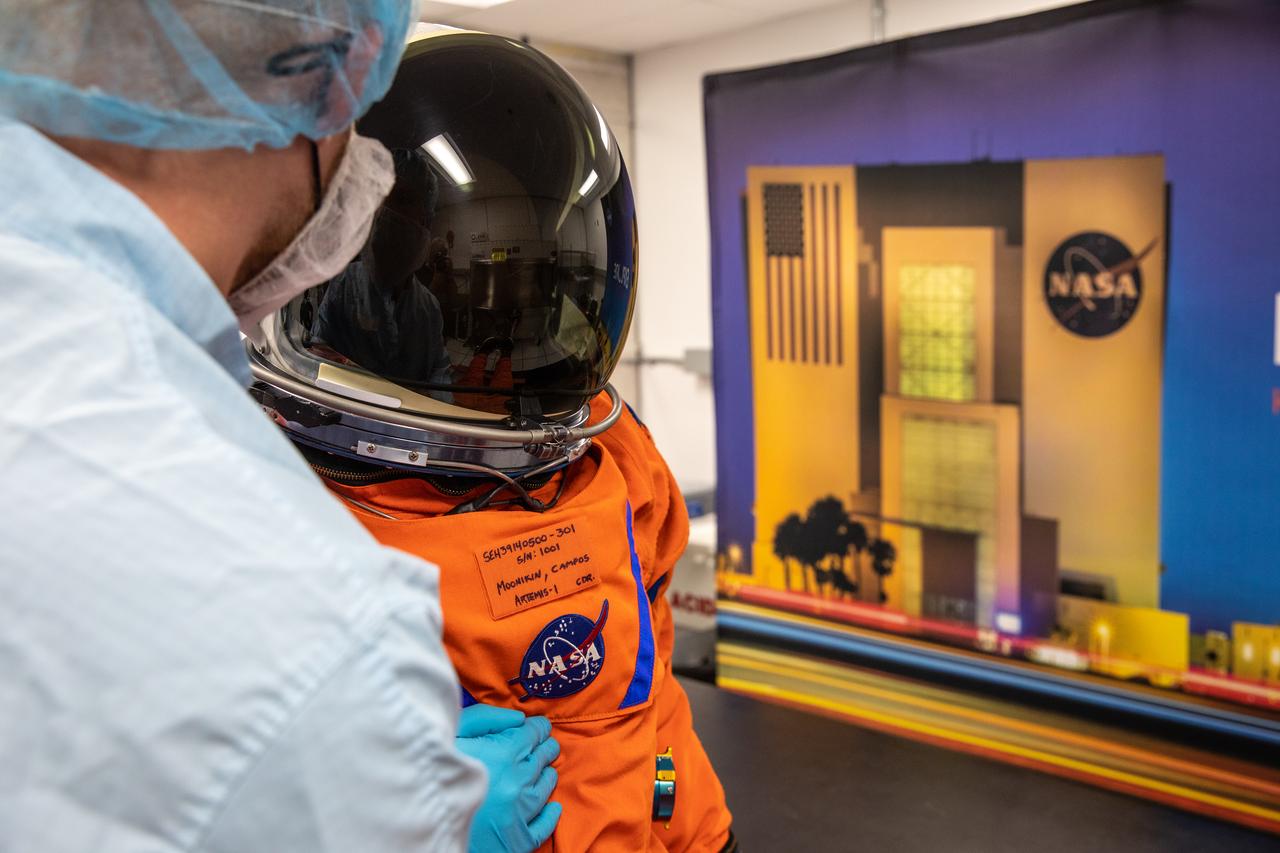
Teams from Johnson Space Center, Exploration Ground Systems, and Jacobs TOSC conduct final inspections of Moonikin “Campos” on Nov. 9, 2021, inside the Space Station Processing Facility at NASA’s Kennedy Space Center in Florida. Moonikin “Campos” will be installed into the Orion crew module. Technicians checked connectivity and performed fit checks on his flight suit to ensure he is ready for flight aboard the Artemis flight test. Artemis I will be an uncrewed test flight of the Orion spacecraft and Space Launch System rocket as an integrated system ahead of crewed flights to the Moon. Under Artemis, NASA aims to land the first woman and first person of color on the Moon and establish sustainable lunar exploration.
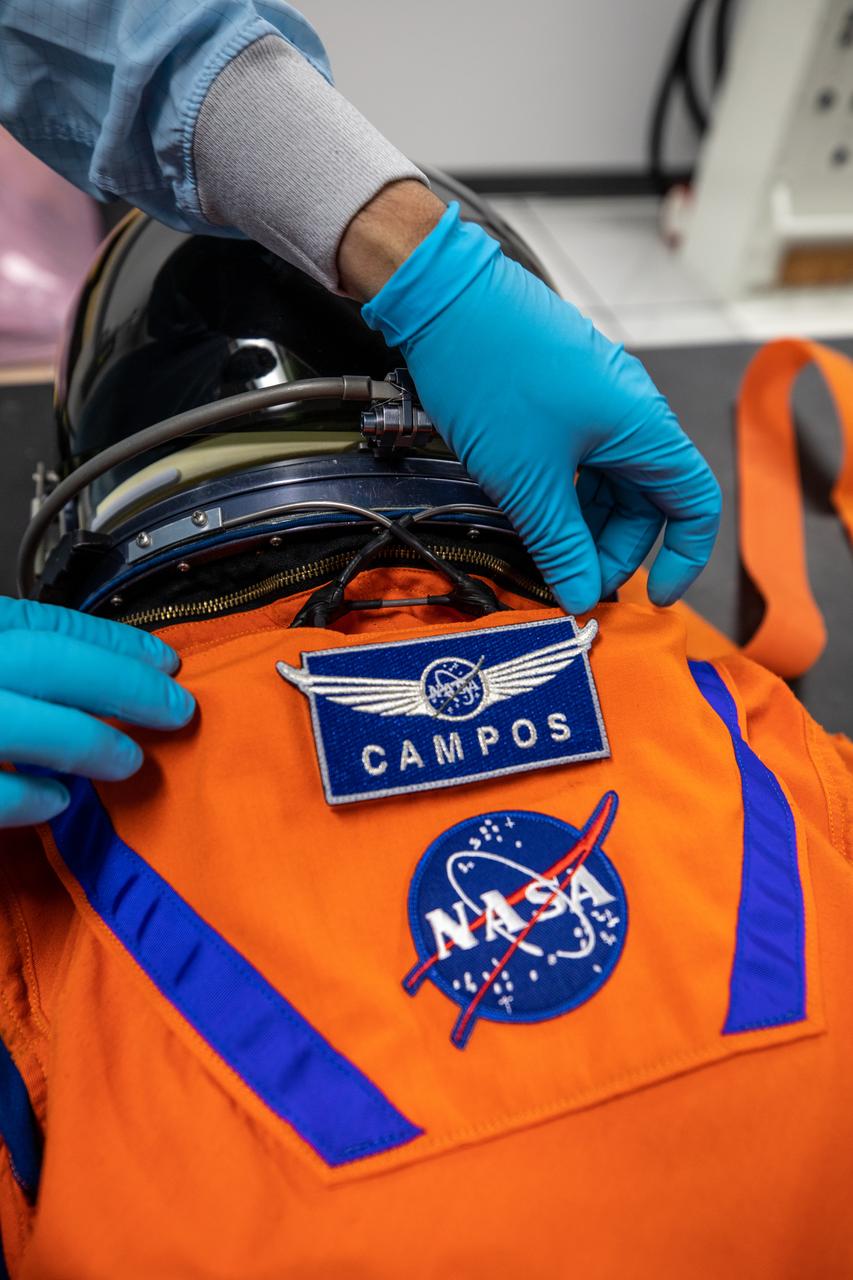
Teams from Johnson Space Center, Exploration Ground Systems, and Jacobs TOSC conduct final inspections of Moonikin “Campos” on Nov. 9, 2021, inside the Space Station Processing Facility at NASA’s Kennedy Space Center in Florida. Moonikin “Campos” will be installed into the Orion crew module. Technicians checked connectivity and performed fit checks on his flight suit to ensure he is ready for flight aboard the Artemis flight test. Artemis I will be an uncrewed test flight of the Orion spacecraft and Space Launch System rocket as an integrated system ahead of crewed flights to the Moon. Under Artemis, NASA aims to land the first woman and first person of color on the Moon and establish sustainable lunar exploration.
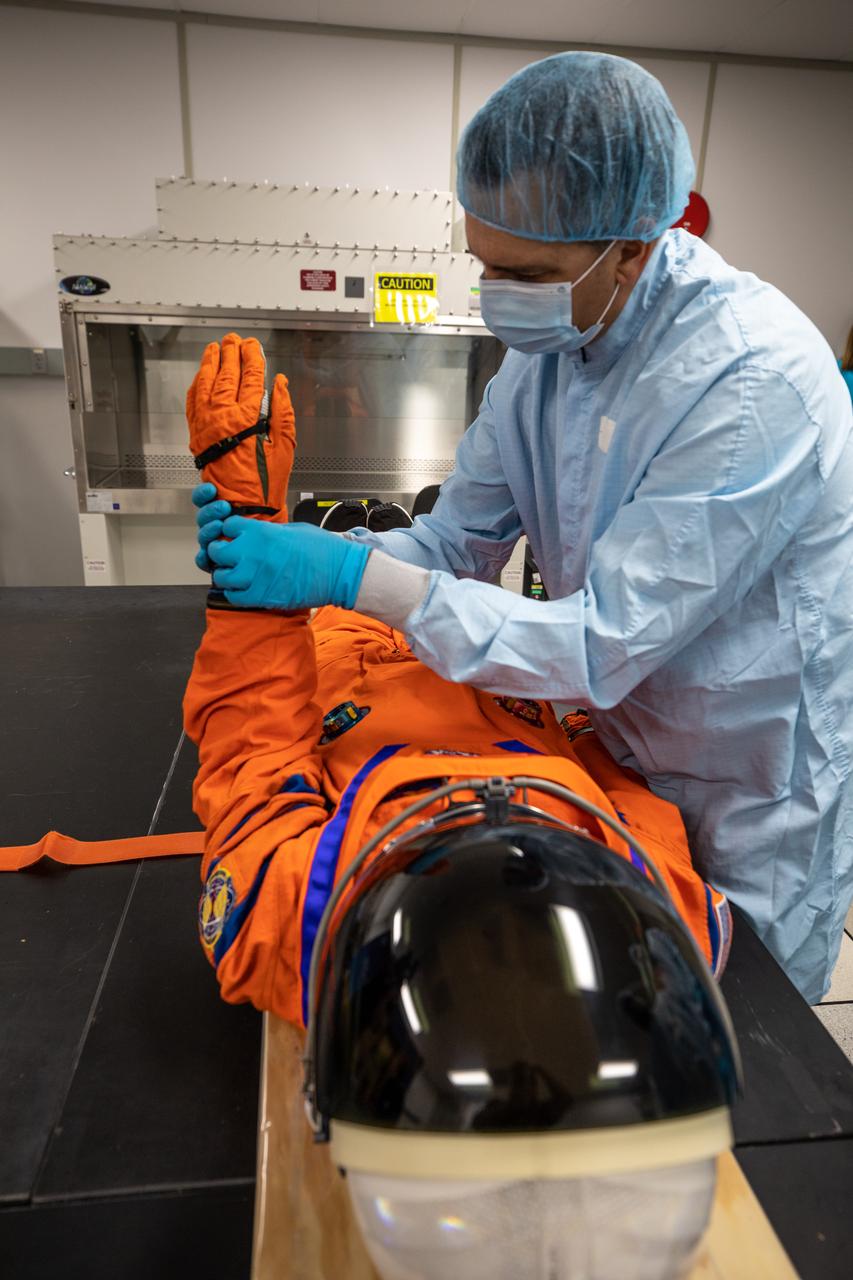
Inside the Space Station Processing Facility at NASA’s Kennedy Space Center in Florida, teams from Johnson Space Center, Exploration Ground Systems, and Jacobs TOSC conduct final inspections of Moonikin “Campos” on Nov. 9, 2021, prior to installation into the Orion crew module. Technicians checked connectivity and performed fit checks on his flight suit to ensure he is ready for flight aboard the Artemis flight test. Artemis I will be an uncrewed test flight of the Orion spacecraft and Space Launch System rocket as an integrated system ahead of crewed flights to the Moon. Under Artemis, NASA aims to land the first woman and first person of color on the Moon and establish sustainable lunar exploration.

Teams from Johnson Space Center, Exploration Ground Systems, and Jacobs TOSC conduct final inspections of Moonikin “Campos” on Nov. 9, 2021, inside the Space Station Processing Facility at NASA’s Kennedy Space Center in Florida. Moonikin “Campos” will be installed into the Orion crew module. Technicians checked connectivity and performed fit checks on his flight suit to ensure he is ready for flight aboard the Artemis flight test. Artemis I will be an uncrewed test flight of the Orion spacecraft and Space Launch System rocket as an integrated system ahead of crewed flights to the Moon. Under Artemis, NASA aims to land the first woman and first person of color on the Moon and establish sustainable lunar exploration.
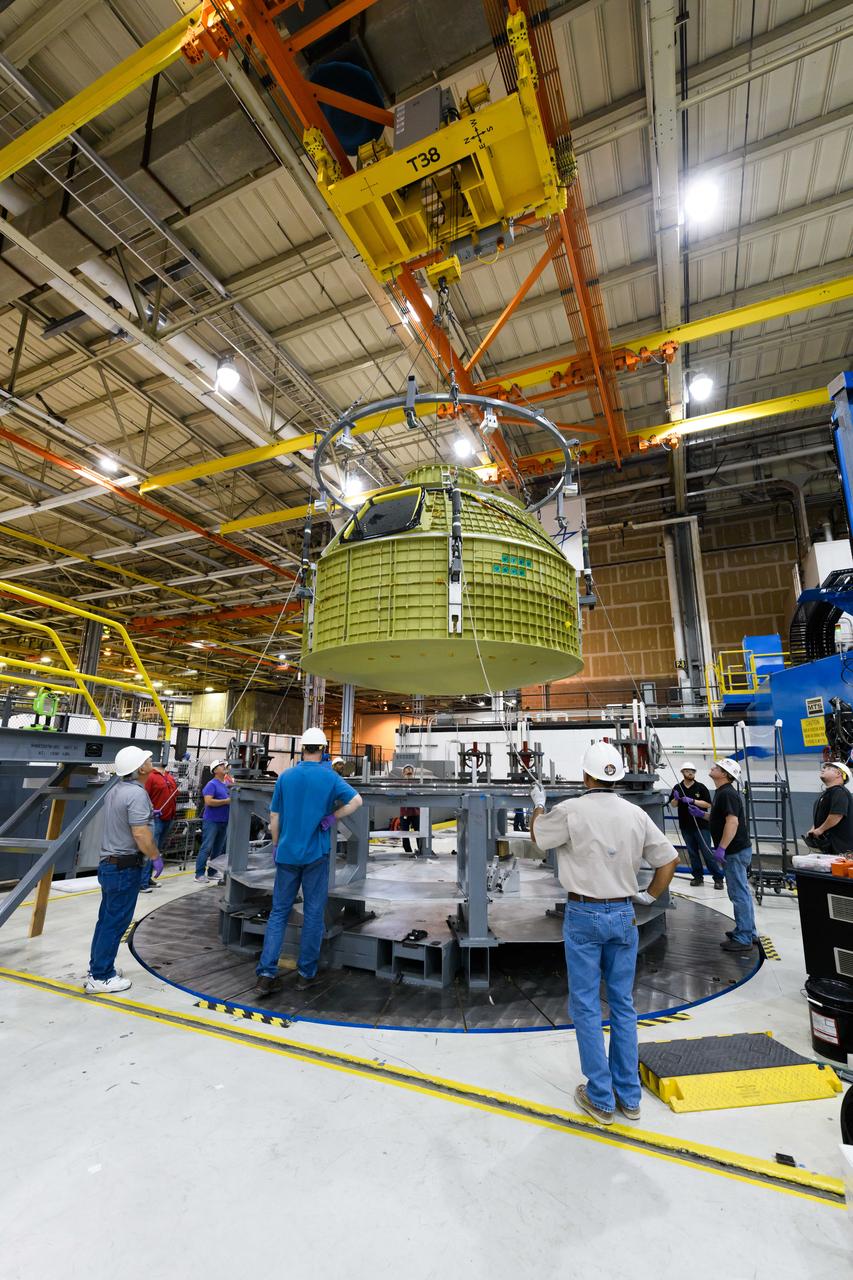
Lockheed Martin technicians at NASA's Michoud Assembly Facility in New Orleans, Louisiana, complete the final weld on the pressure vessel of the Orion crew module for Artemis II on July 24, 2018, the first flight of Orion with astronauts which will carry them farther into the solar system than ever before.
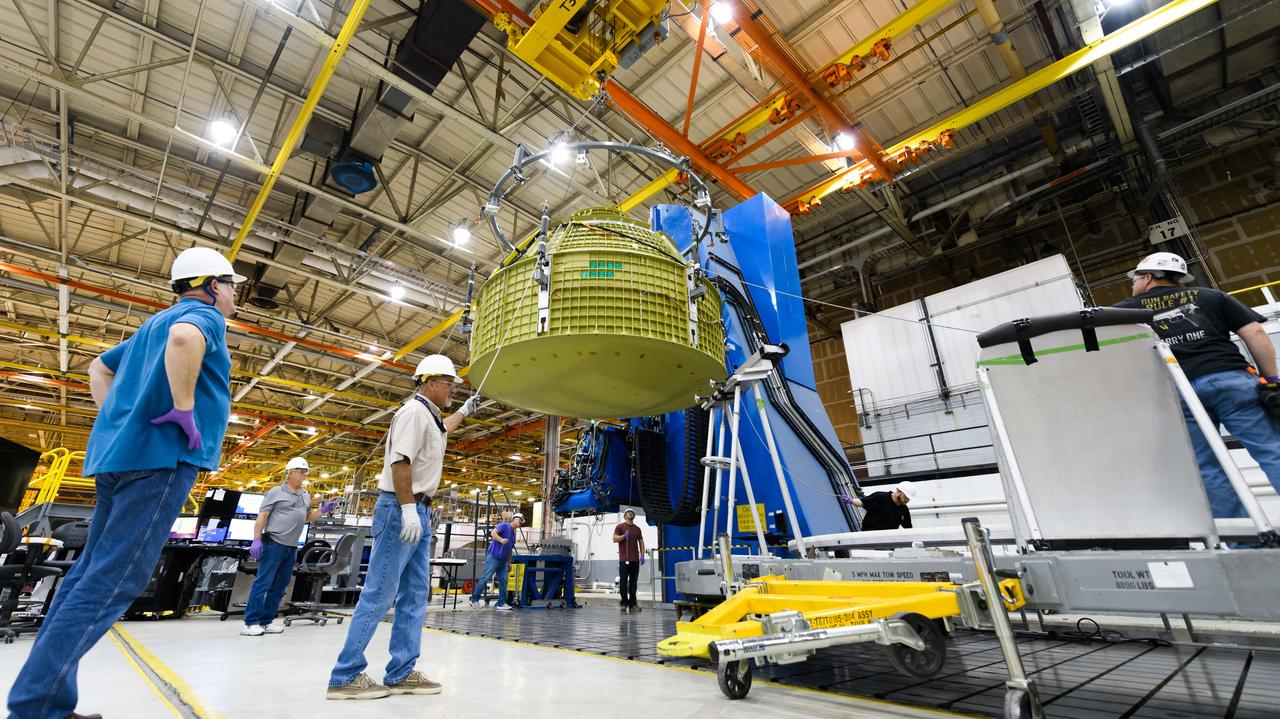
Lockheed Martin technicians at NASA's Michoud Assembly Facility in New Orleans, Louisiana, complete the final weld on the pressure vessel of the Orion crew module for Artemis II on July 24, 2018, the first flight of Orion with astronauts which will carry them farther into the solar system than ever before.
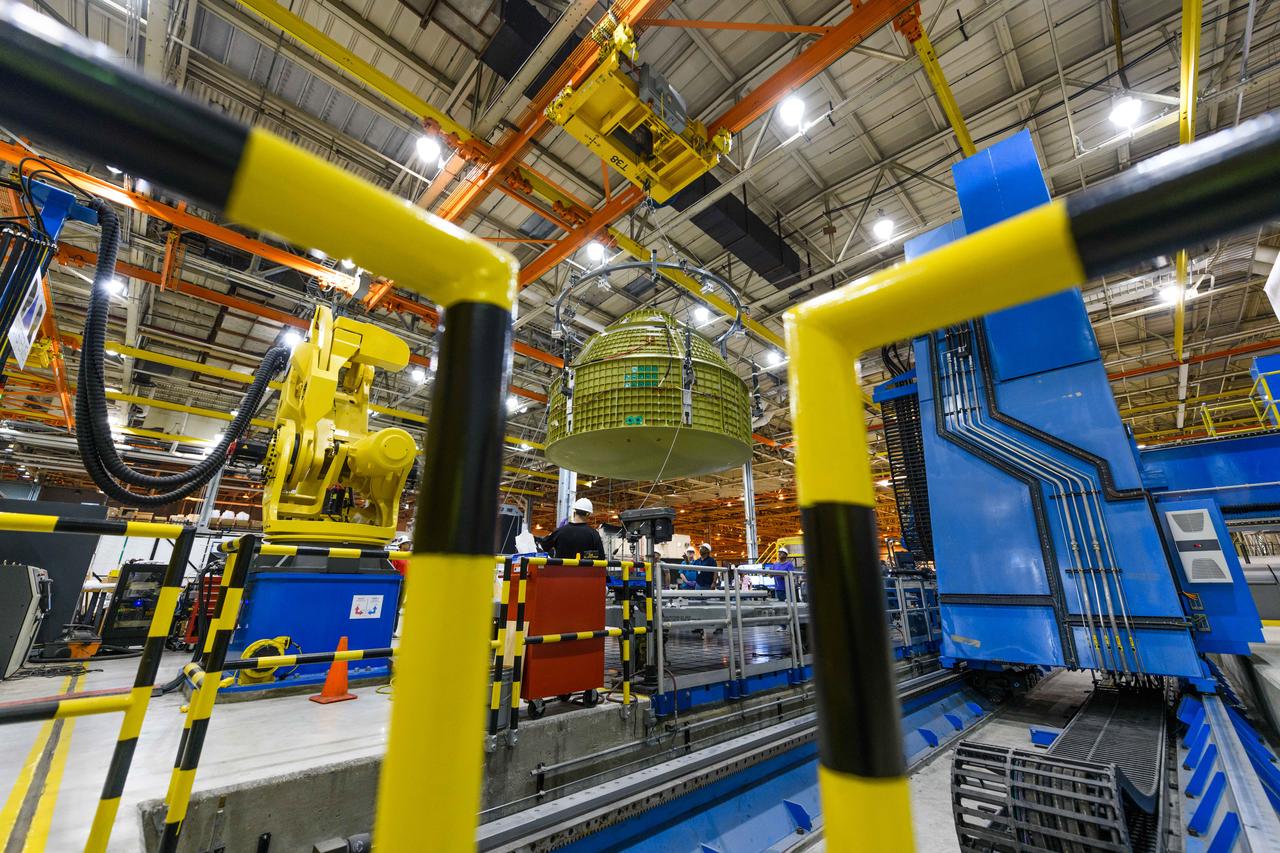
Lockheed Martin technicians at NASA's Michoud Assembly Facility in New Orleans, Louisiana, complete the final weld on the pressure vessel of the Orion crew module for Artemis II on July 24, 2018, the first flight of Orion with astronauts which will carry them farther into the solar system than ever before.
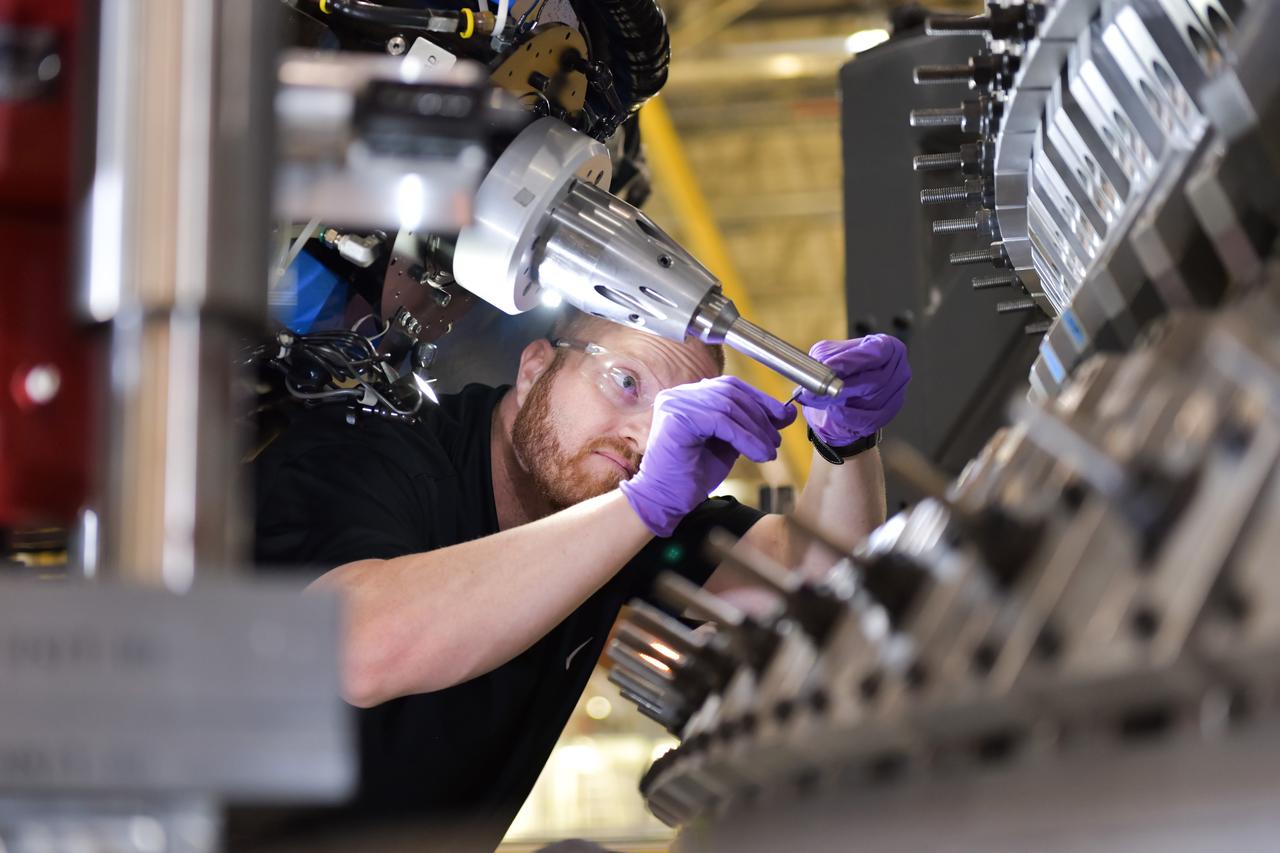
Lockheed Martin technicians at NASA's Michoud Assembly Facility in New Orleans, Louisiana, complete the final weld on the pressure vessel of the Orion crew module for Artemis II on July 24, 2018, the first flight of Orion with astronauts which will carry them farther into the solar system than ever before.
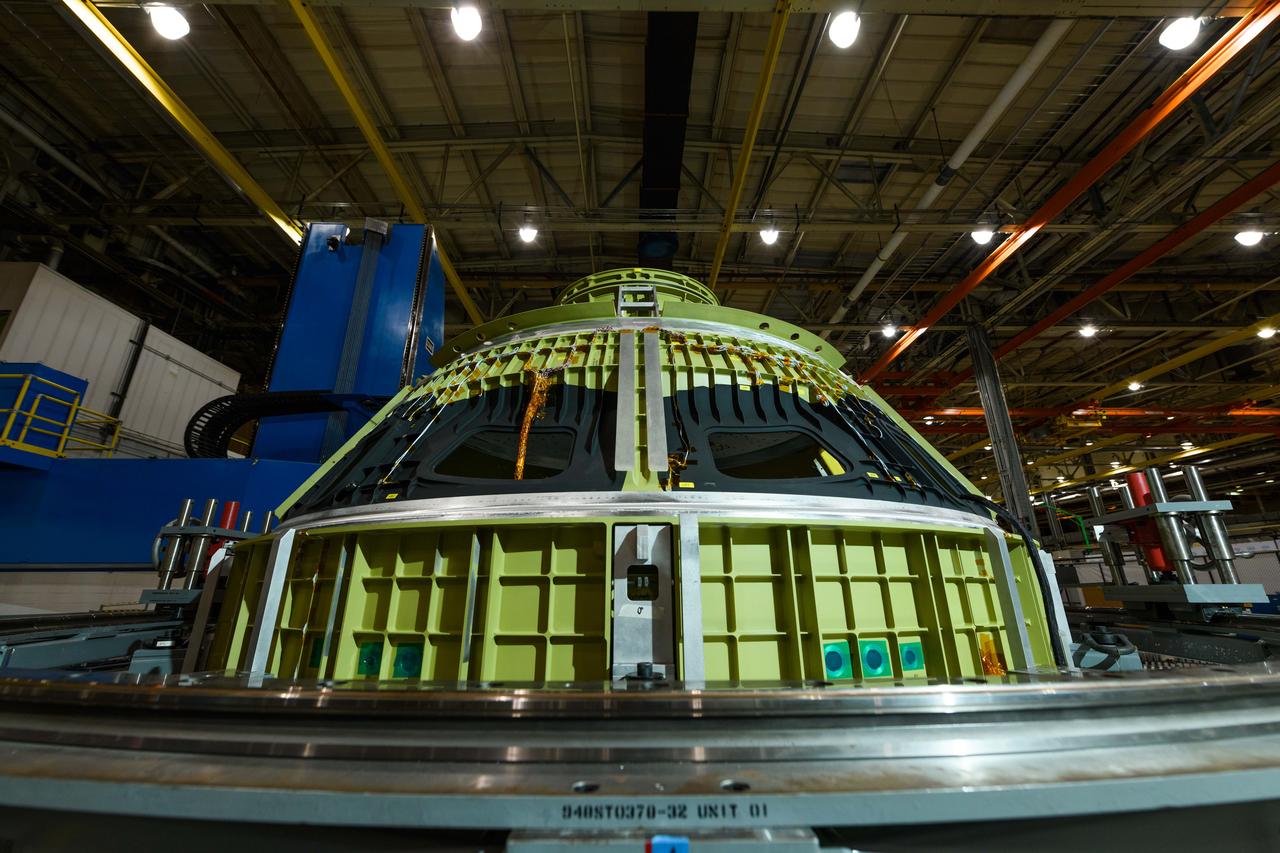
Lockheed Martin technicians at NASA's Michoud Assembly Facility in New Orleans, Louisiana, complete the final weld on the pressure vessel of the Orion crew module for Artemis II on July 24, 2018, the first flight of Orion with astronauts which will carry them farther into the solar system than ever before.
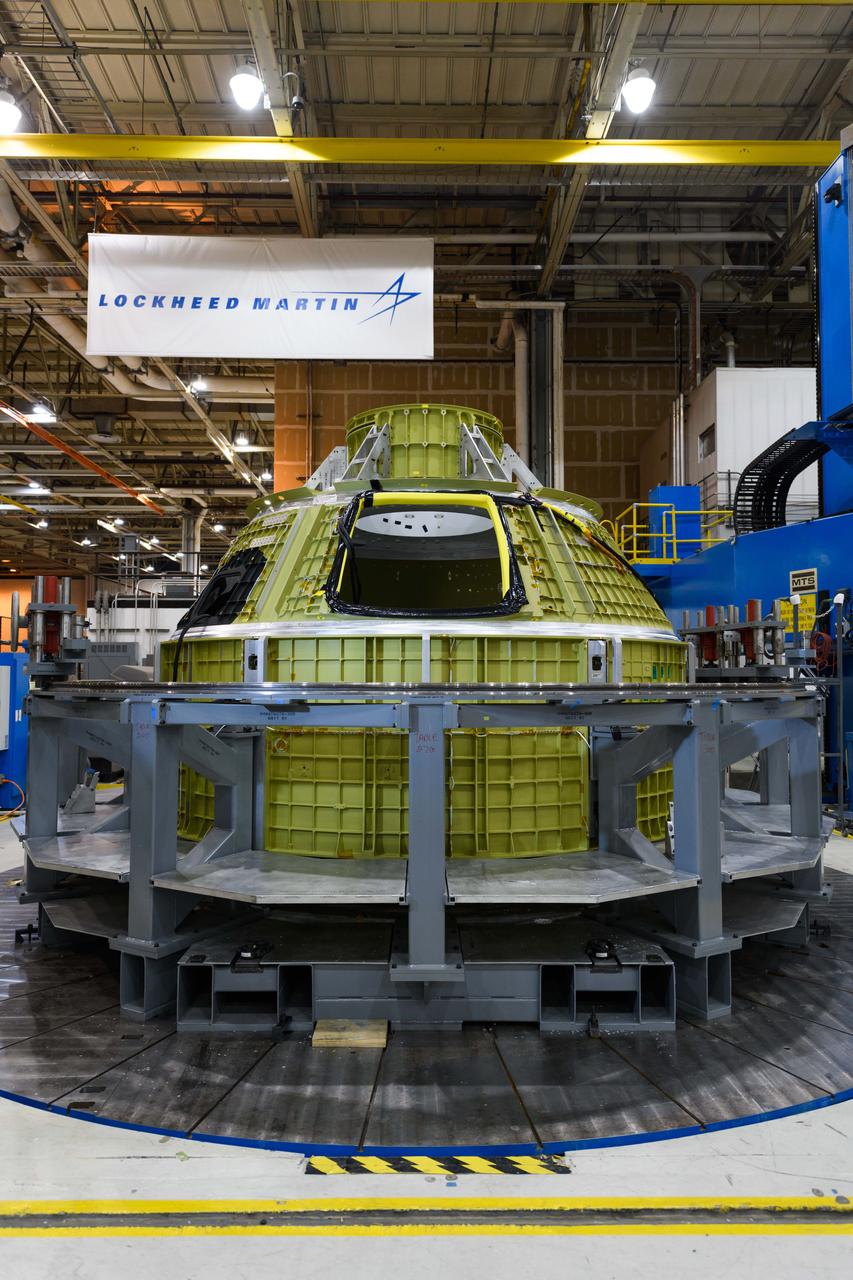
Lockheed Martin technicians at NASA's Michoud Assembly Facility in New Orleans, Louisiana, complete the final weld on the pressure vessel of the Orion crew module for Artemis II on July 24, 2018, the first flight of Orion with astronauts which will carry them farther into the solar system than ever before.
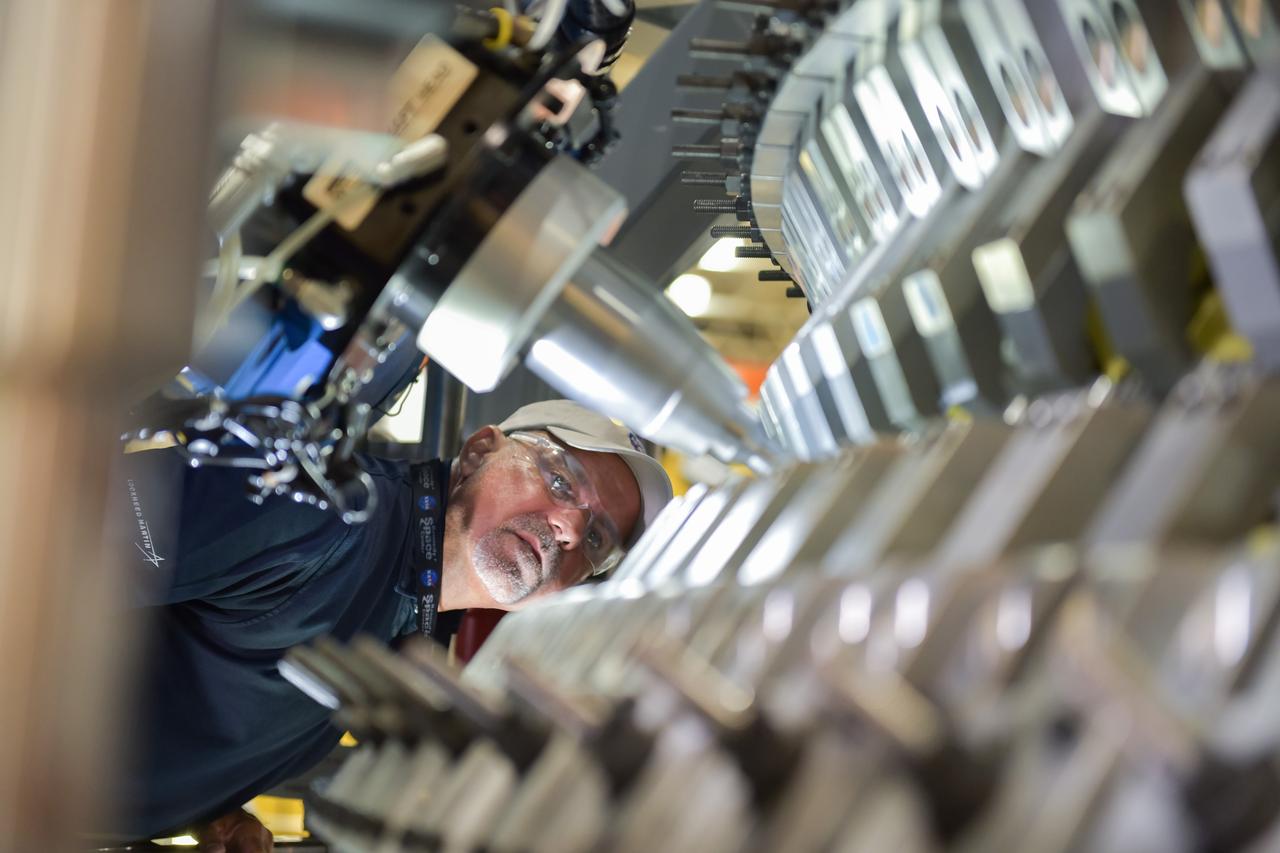
Lockheed Martin technicians at NASA's Michoud Assembly Facility in New Orleans, Louisiana, complete the final weld on the pressure vessel of the Orion crew module for Artemis II on July 24, 2018, the first flight of Orion with astronauts which will carry them farther into the solar system than ever before.
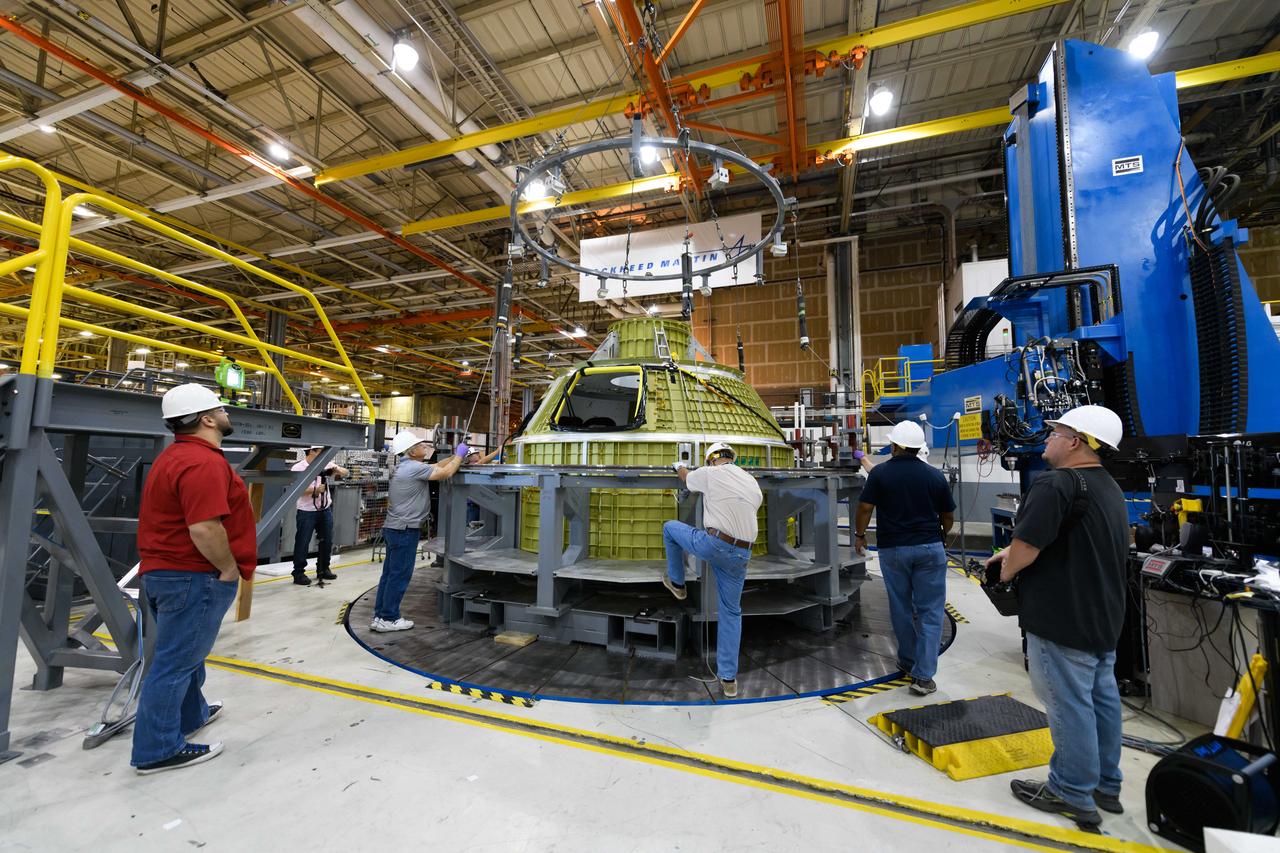
Lockheed Martin technicians at NASA's Michoud Assembly Facility in New Orleans, Louisiana, complete the final weld on the pressure vessel of the Orion crew module for Artemis II on July 24, 2018, the first flight of Orion with astronauts which will carry them farther into the solar system than ever before.
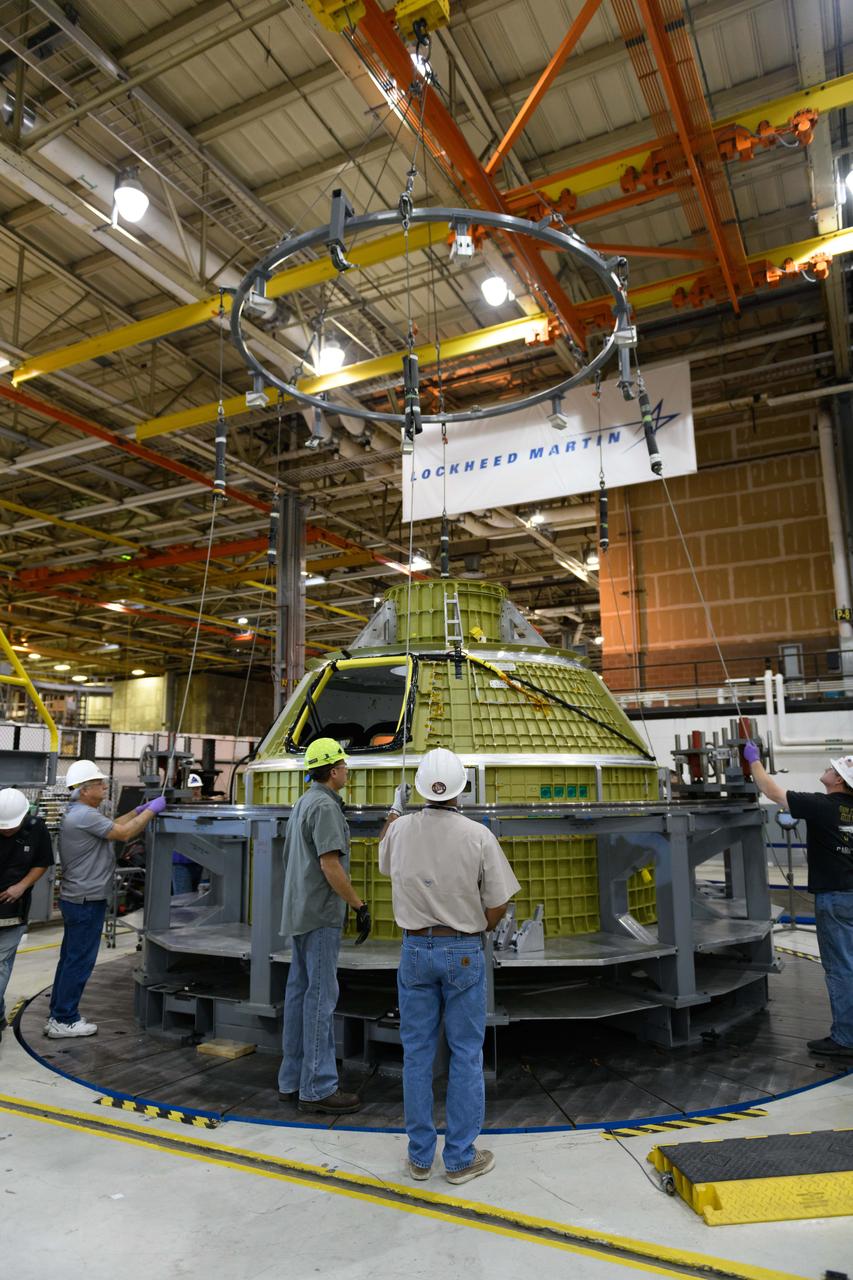
Lockheed Martin technicians at NASA's Michoud Assembly Facility in New Orleans, Louisiana, complete the final weld on the pressure vessel of the Orion crew module for Artemis II on July 24, 2018, the first flight of Orion with astronauts which will carry them farther into the solar system than ever before.
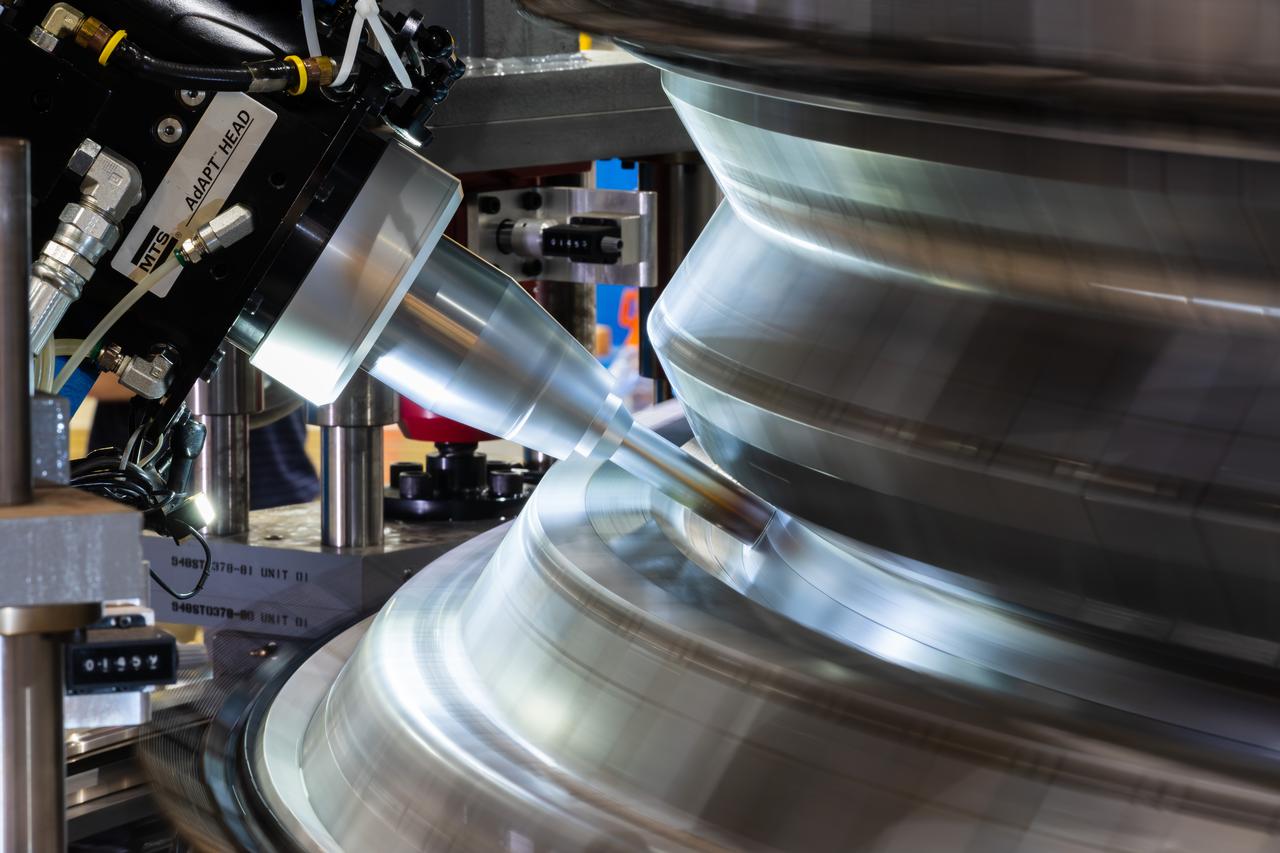
Lockheed Martin technicians at NASA's Michoud Assembly Facility in New Orleans, Louisiana, complete the final weld on the pressure vessel of the Orion crew module for Artemis II on July 24, 2018, the first flight of Orion with astronauts which will carry them farther into the solar system than ever before.
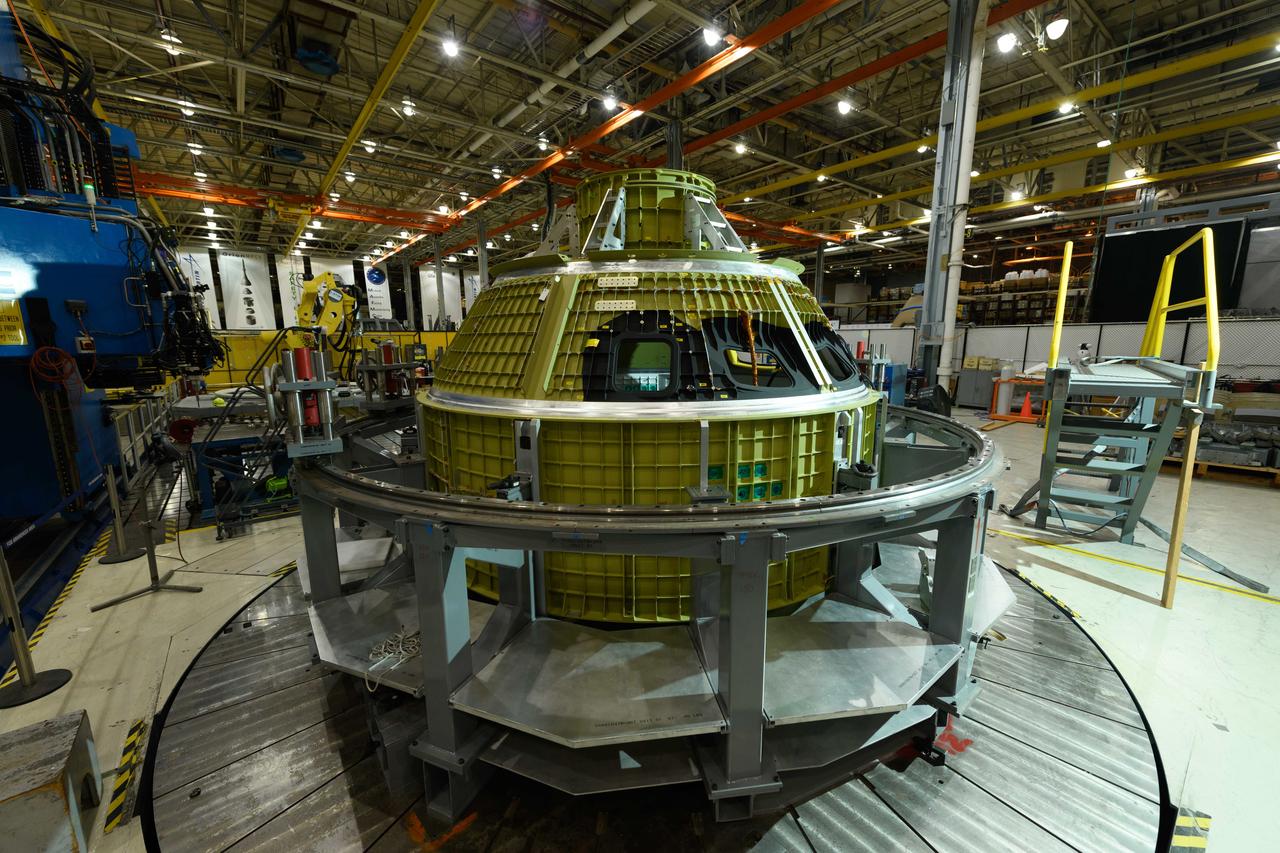
Lockheed Martin technicians at NASA's Michoud Assembly Facility in New Orleans, Louisiana, complete the final weld on the pressure vessel of the Orion crew module for Artemis II on July 24, 2018, the first flight of Orion with astronauts which will carry them farther into the solar system than ever before.
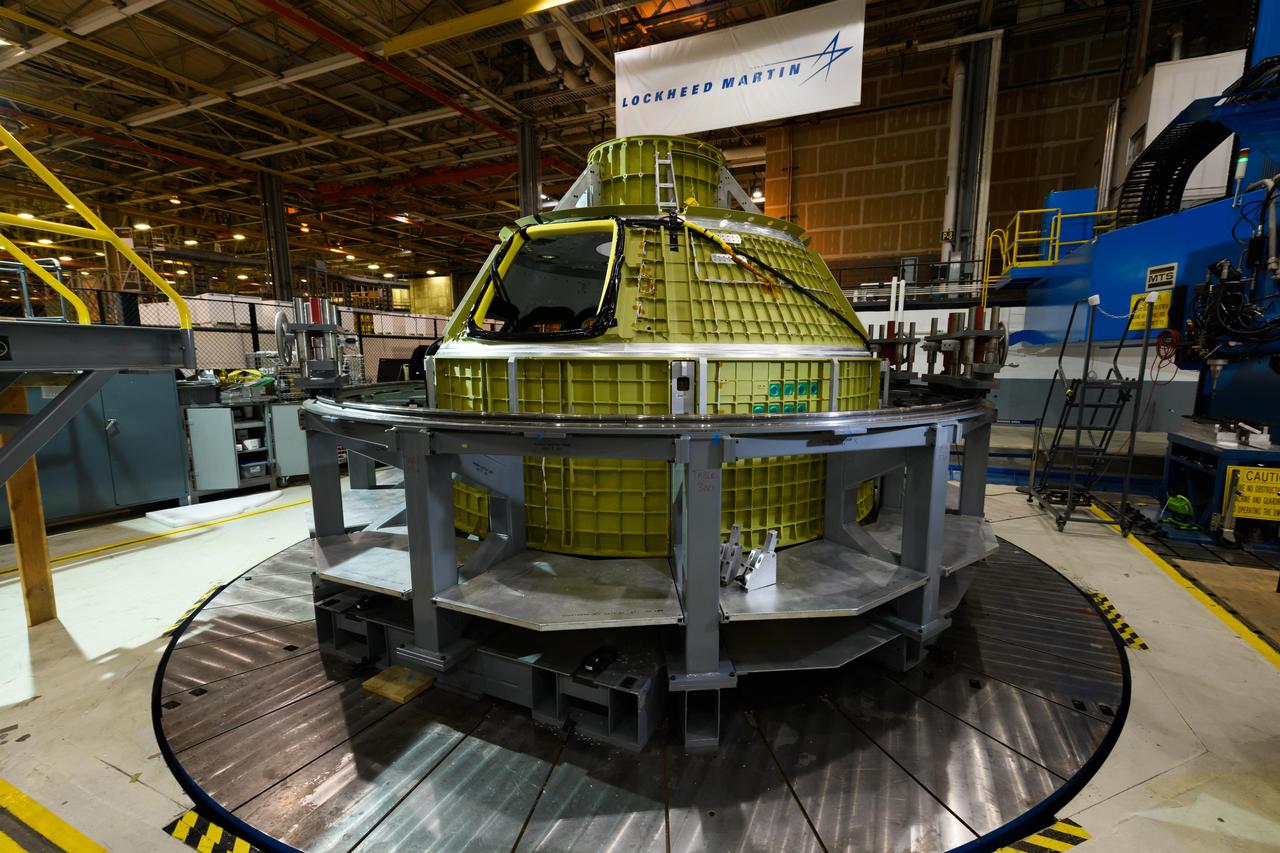
Lockheed Martin technicians at NASA's Michoud Assembly Facility in New Orleans, Louisiana, complete the final weld on the pressure vessel of the Orion crew module for Artemis II on July 24, 2018, the first flight of Orion with astronauts which will carry them farther into the solar system than ever before.
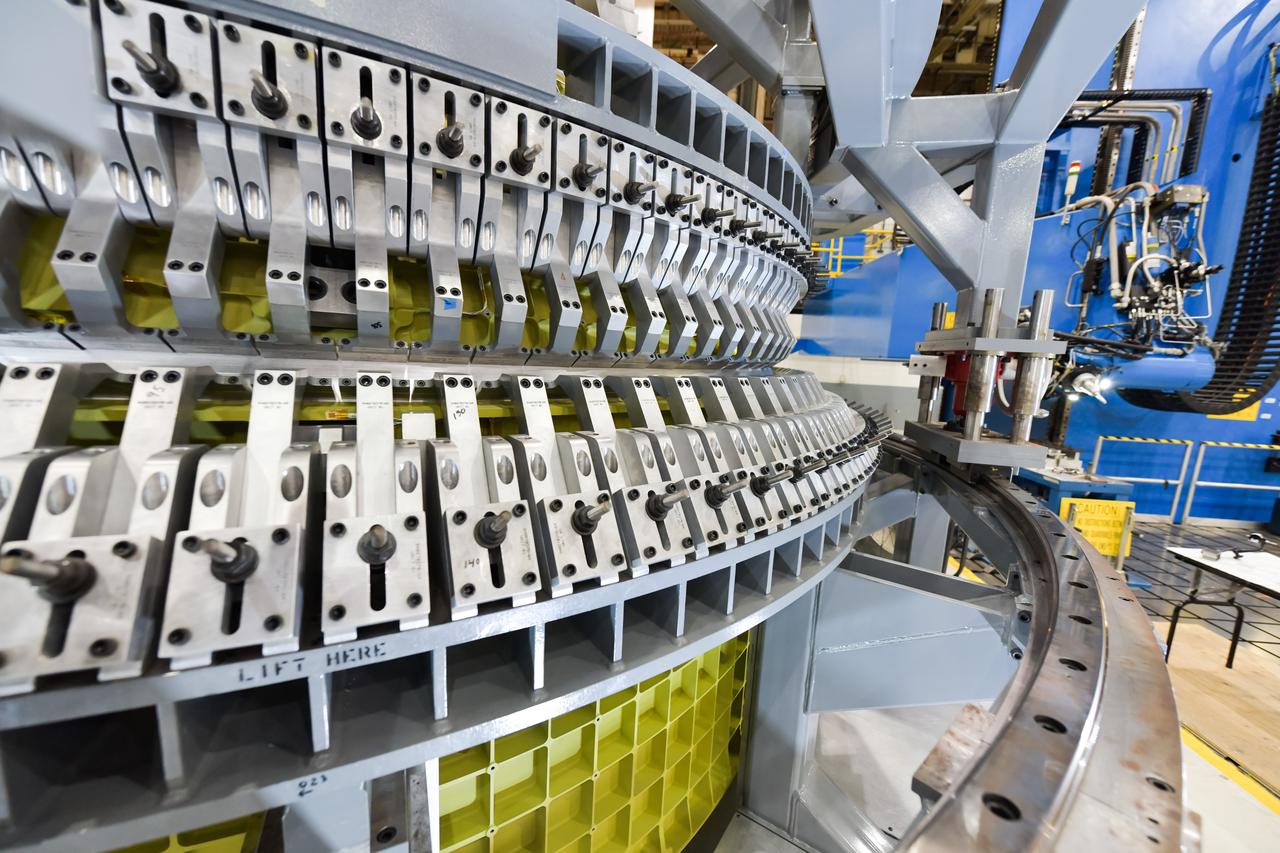
Lockheed Martin technicians at NASA's Michoud Assembly Facility in New Orleans, Louisiana, complete the final weld on the pressure vessel of the Orion crew module for Artemis II on July 24, 2018, the first flight of Orion with astronauts which will carry them farther into the solar system than ever before.
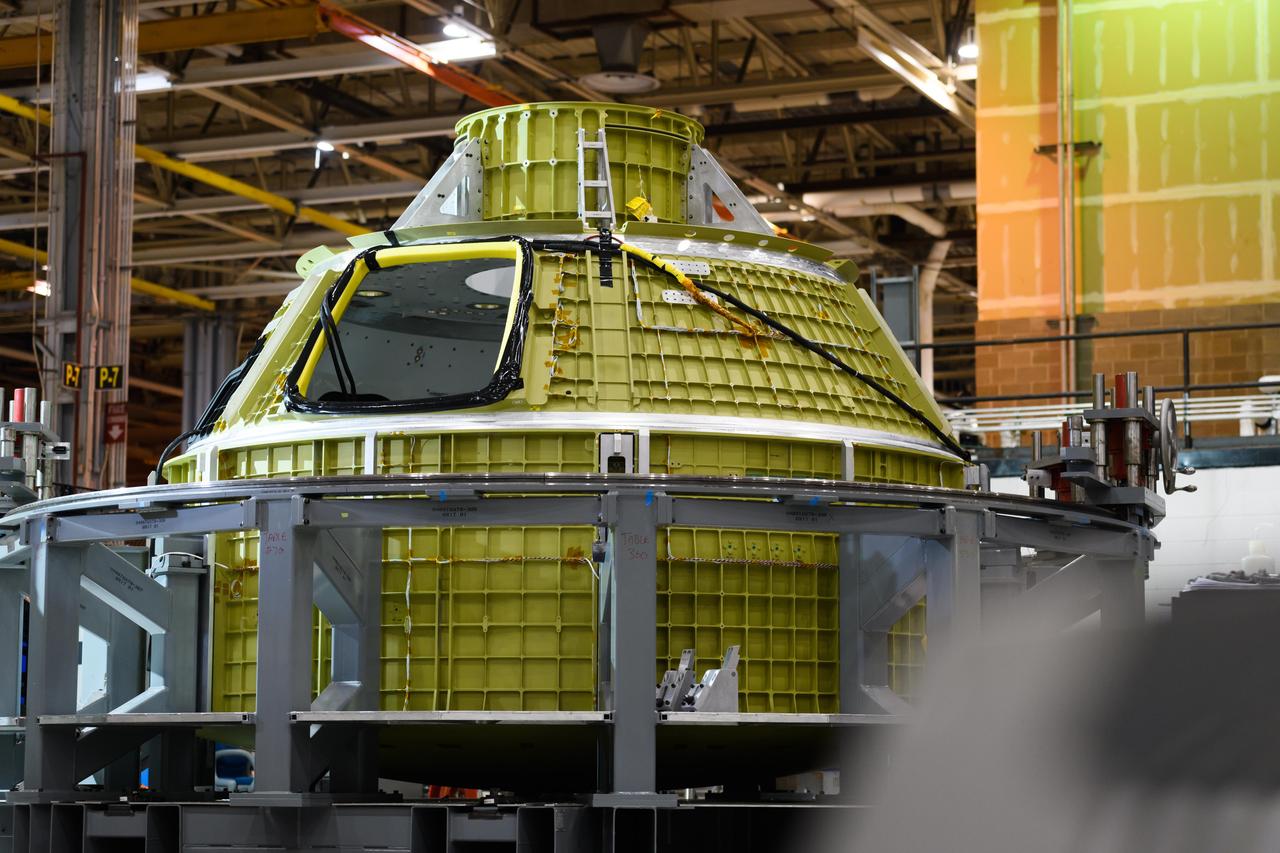
Lockheed Martin technicians at NASA's Michoud Assembly Facility in New Orleans, Louisiana, complete the final weld on the pressure vessel of the Orion crew module for Artemis II on July 24, 2018, the first flight of Orion with astronauts which will carry them farther into the solar system than ever before.
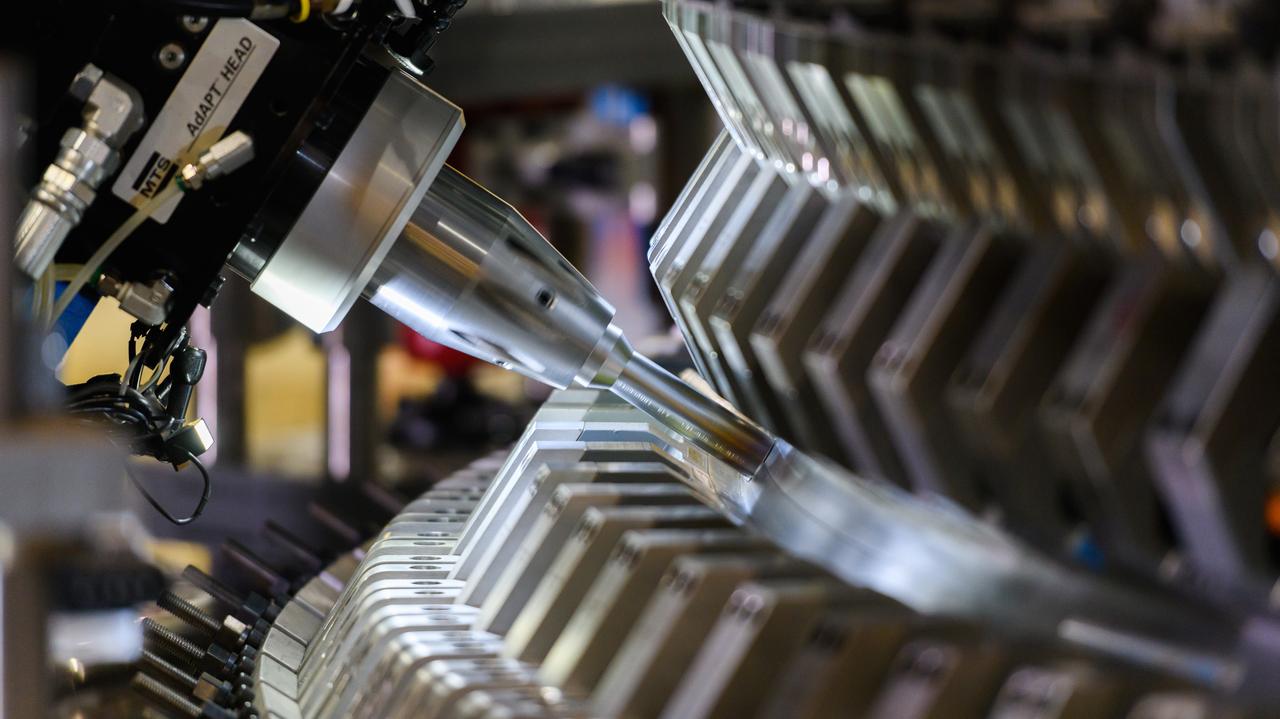
Lockheed Martin technicians at NASA's Michoud Assembly Facility in New Orleans, Louisiana, complete the final weld on the pressure vessel of the Orion crew module for Artemis II on July 24, 2018, the first flight of Orion with astronauts which will carry them farther into the solar system than ever before.
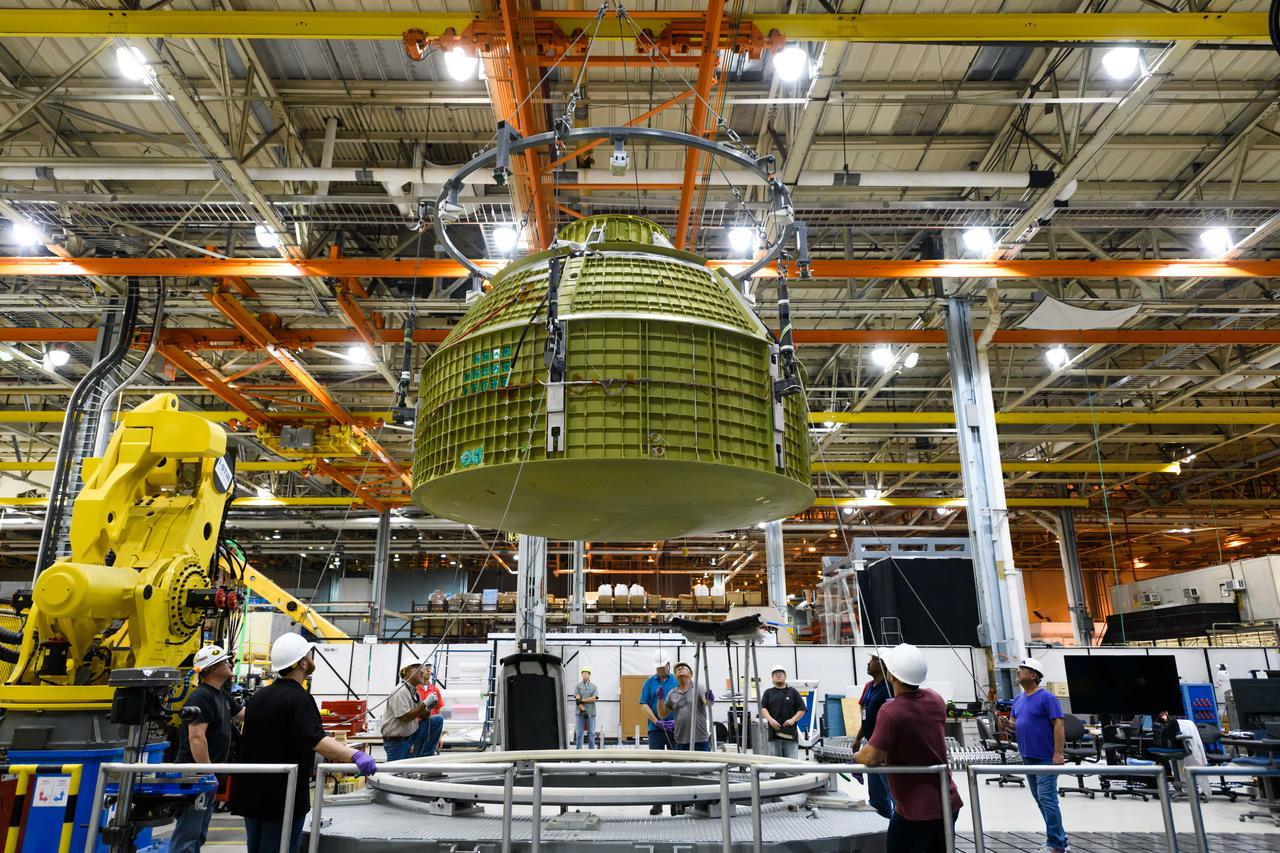
Lockheed Martin technicians at NASA's Michoud Assembly Facility in New Orleans, Louisiana, complete the final weld on the pressure vessel of the Orion crew module for Artemis II on July 24, 2018, the first flight of Orion with astronauts which will carry them farther into the solar system than ever before.
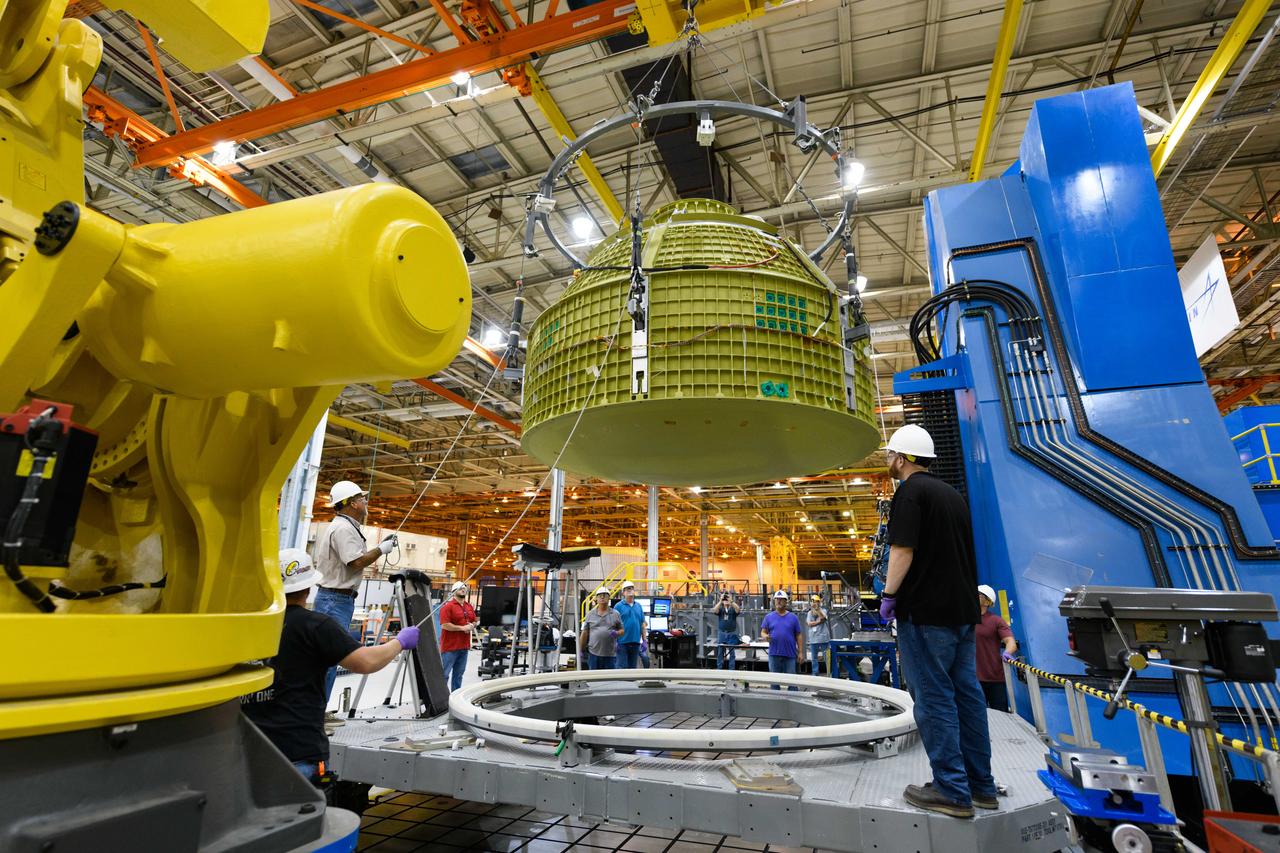
Lockheed Martin technicians at NASA's Michoud Assembly Facility in New Orleans, Louisiana, complete the final weld on the pressure vessel of the Orion crew module for Artemis II on July 24, 2018, the first flight of Orion with astronauts which will carry them farther into the solar system than ever before.
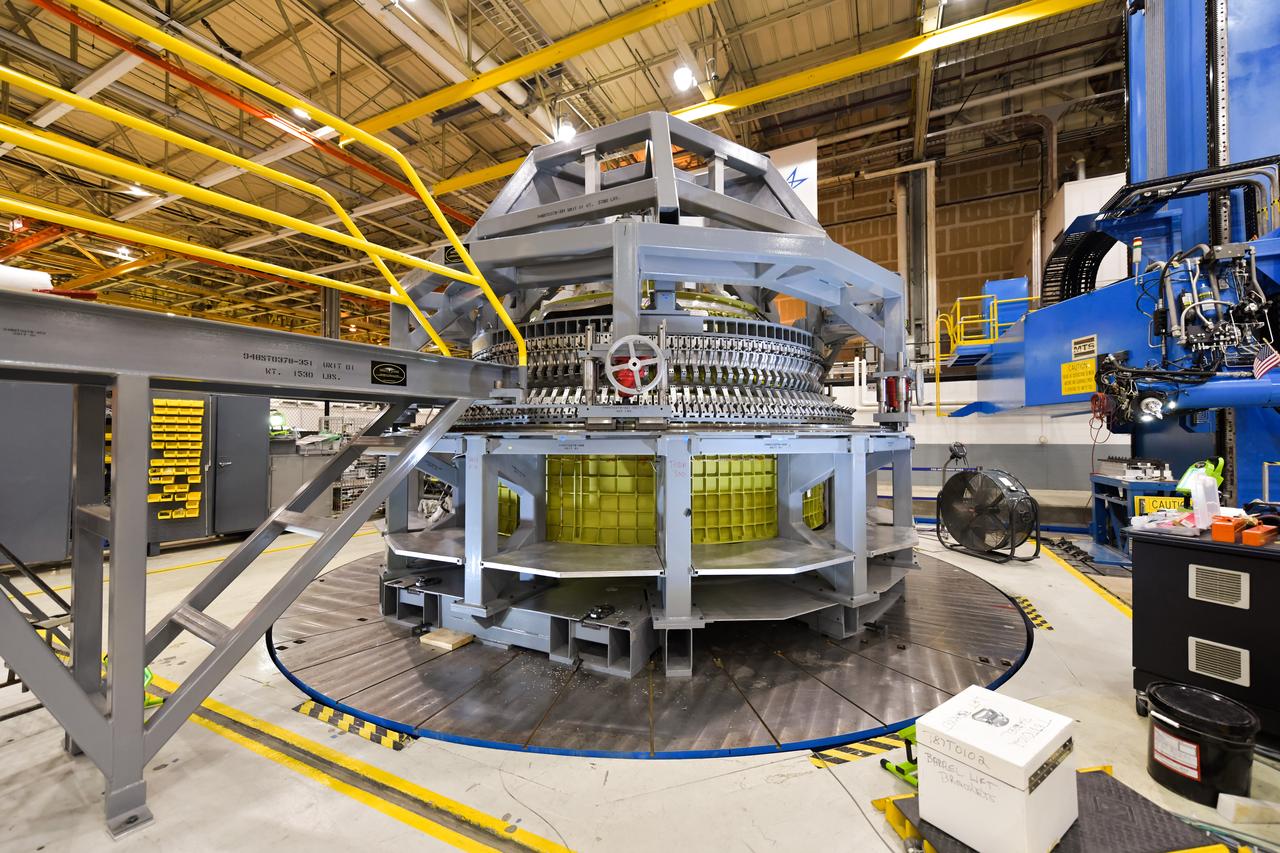
Lockheed Martin technicians at NASA's Michoud Assembly Facility in New Orleans, Louisiana, complete the final weld on the pressure vessel of the Orion crew module for Artemis II on July 24, 2018, the first flight of Orion with astronauts which will carry them farther into the solar system than ever before.
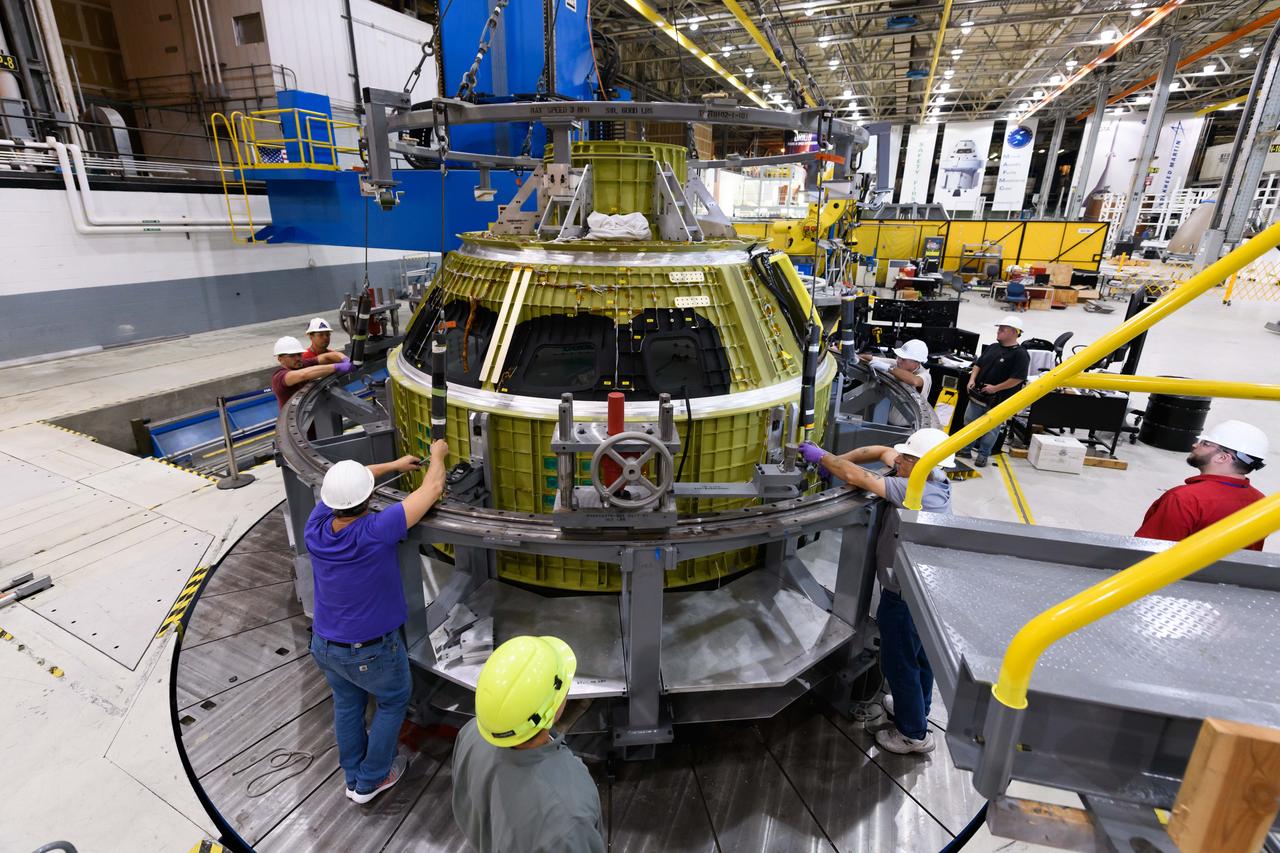
Lockheed Martin technicians at NASA's Michoud Assembly Facility in New Orleans, Louisiana, complete the final weld on the pressure vessel of the Orion crew module for Artemis II on July 24, 2018, the first flight of Orion with astronauts which will carry them farther into the solar system than ever before.
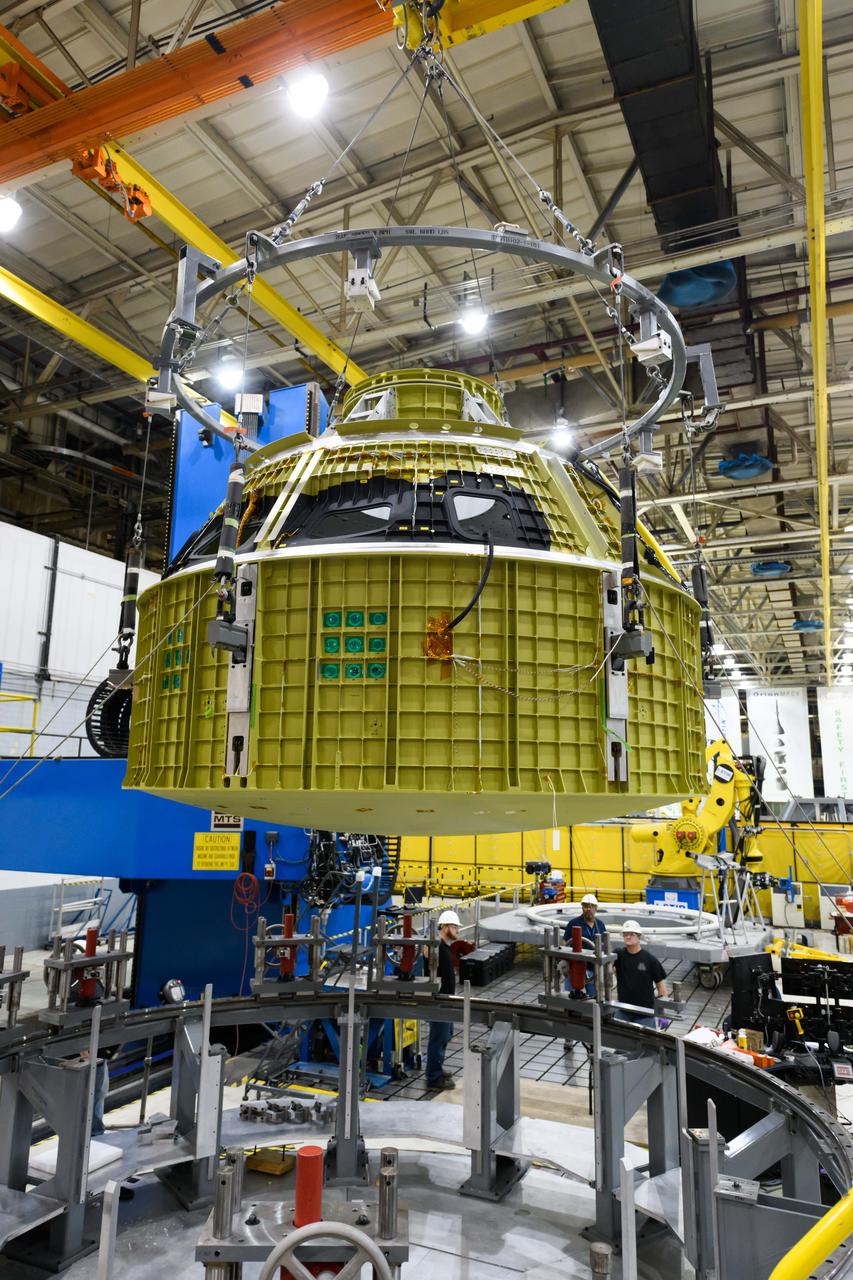
Lockheed Martin technicians at NASA's Michoud Assembly Facility in New Orleans, Louisiana, complete the final weld on the pressure vessel of the Orion crew module for Artemis II on July 24, 2018, the first flight of Orion with astronauts which will carry them farther into the solar system than ever before.
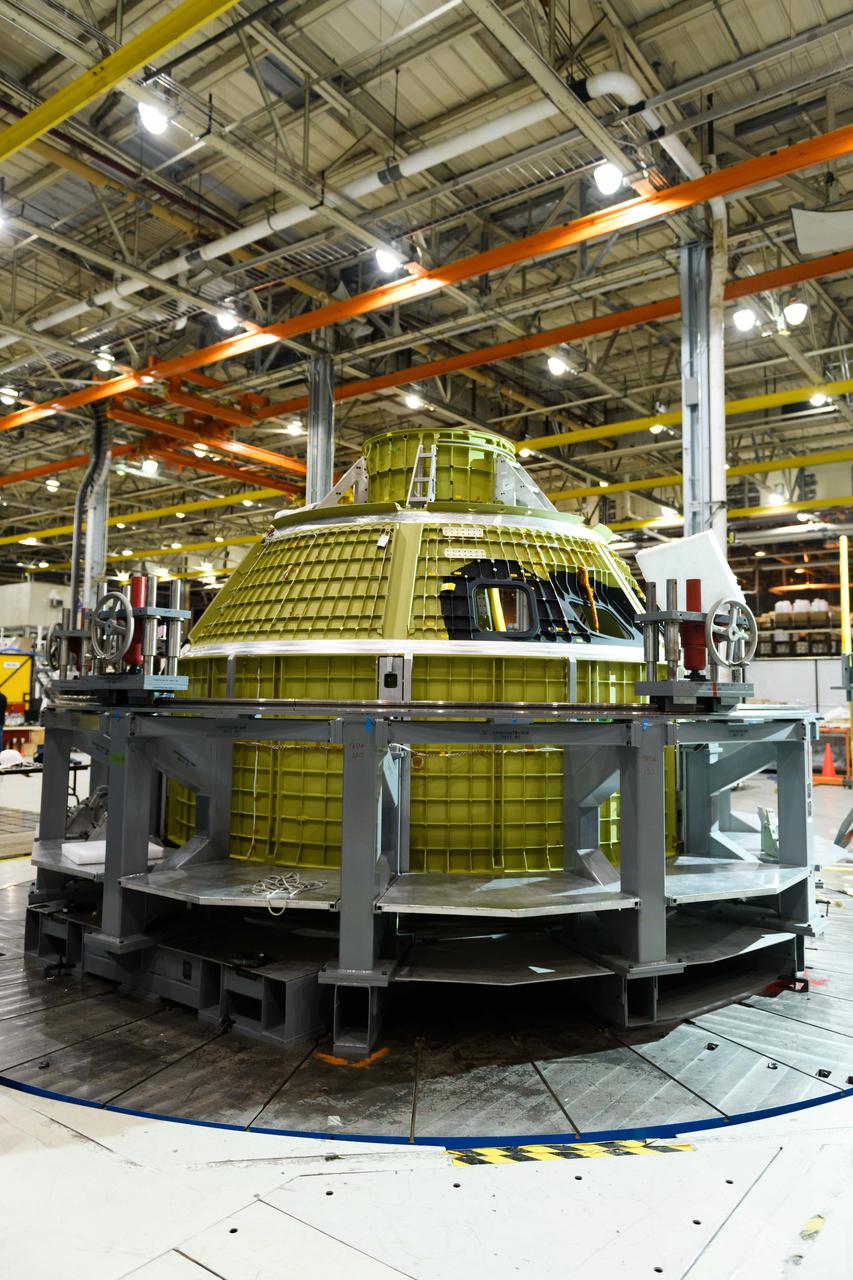
Lockheed Martin technicians at NASA's Michoud Assembly Facility in New Orleans, Louisiana, complete the final weld on the pressure vessel of the Orion crew module for Artemis II on July 24, 2018, the first flight of Orion with astronauts which will carry them farther into the solar system than ever before.
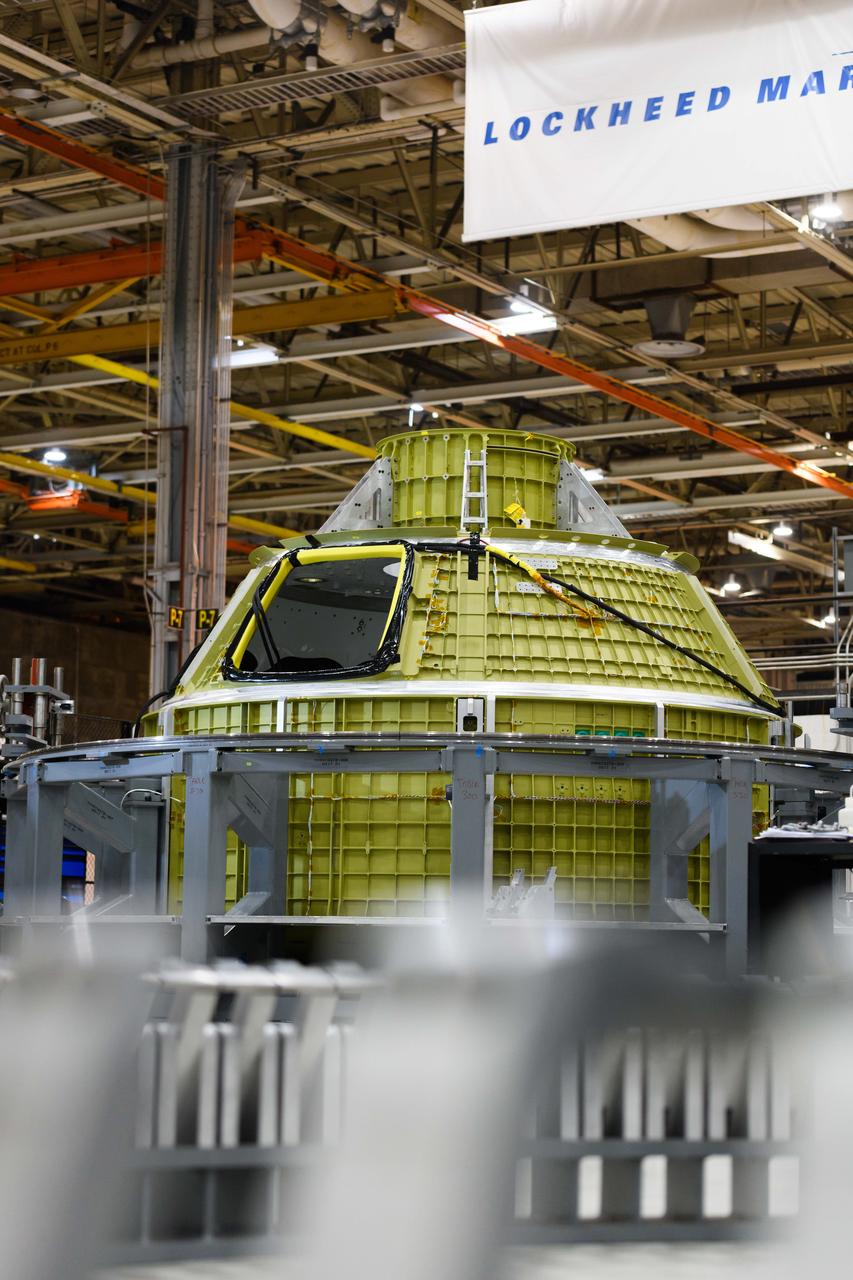
Lockheed Martin technicians at NASA's Michoud Assembly Facility in New Orleans, Louisiana, complete the final weld on the pressure vessel of the Orion crew module for Artemis II on July 24, 2018, the first flight of Orion with astronauts which will carry them farther into the solar system than ever before.
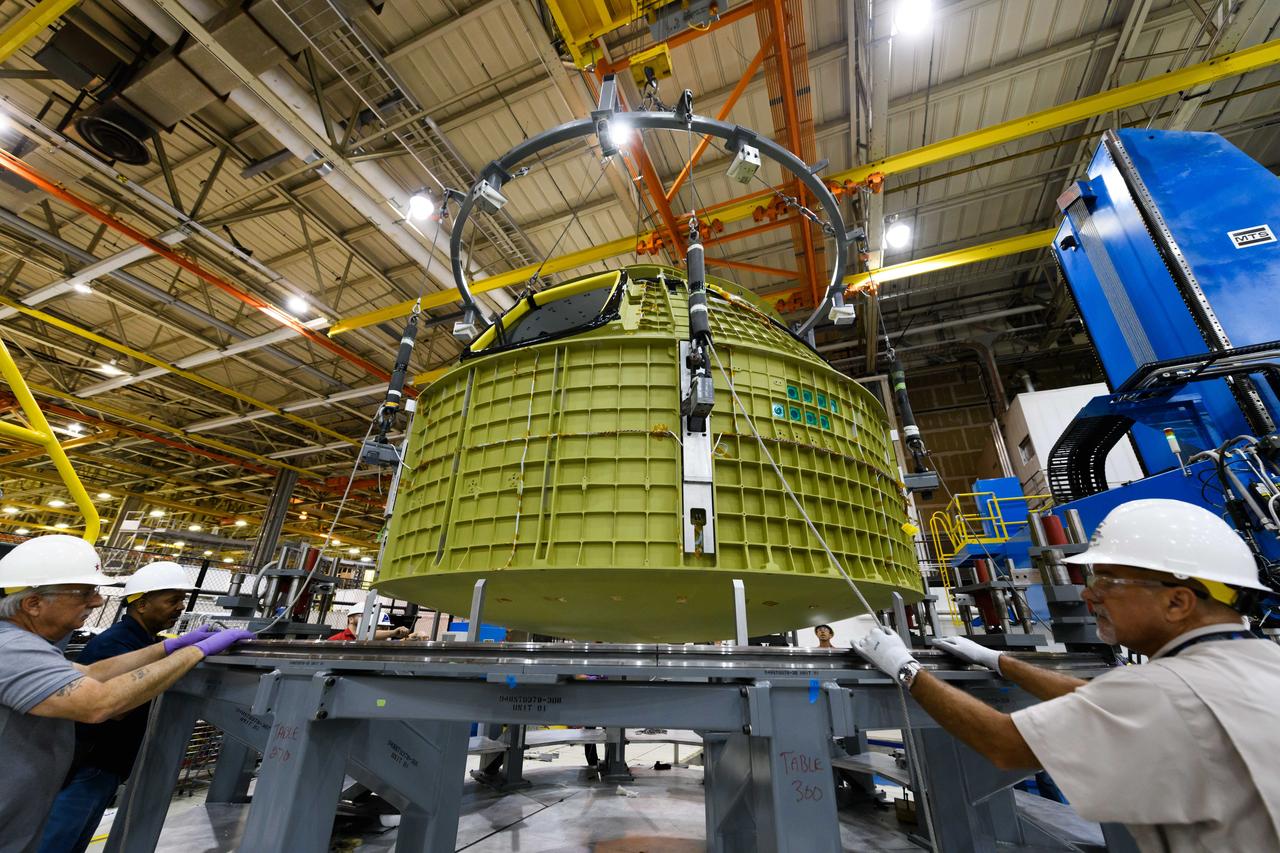
Lockheed Martin technicians at NASA's Michoud Assembly Facility in New Orleans, Louisiana, complete the final weld on the pressure vessel of the Orion crew module for Artemis II on July 24, 2018, the first flight of Orion with astronauts which will carry them farther into the solar system than ever before.

Lockheed Martin technicians at NASA's Michoud Assembly Facility in New Orleans, Louisiana, complete the final weld on the pressure vessel of the Orion crew module for Artemis II on July 24, 2018, the first flight of Orion with astronauts which will carry them farther into the solar system than ever before.
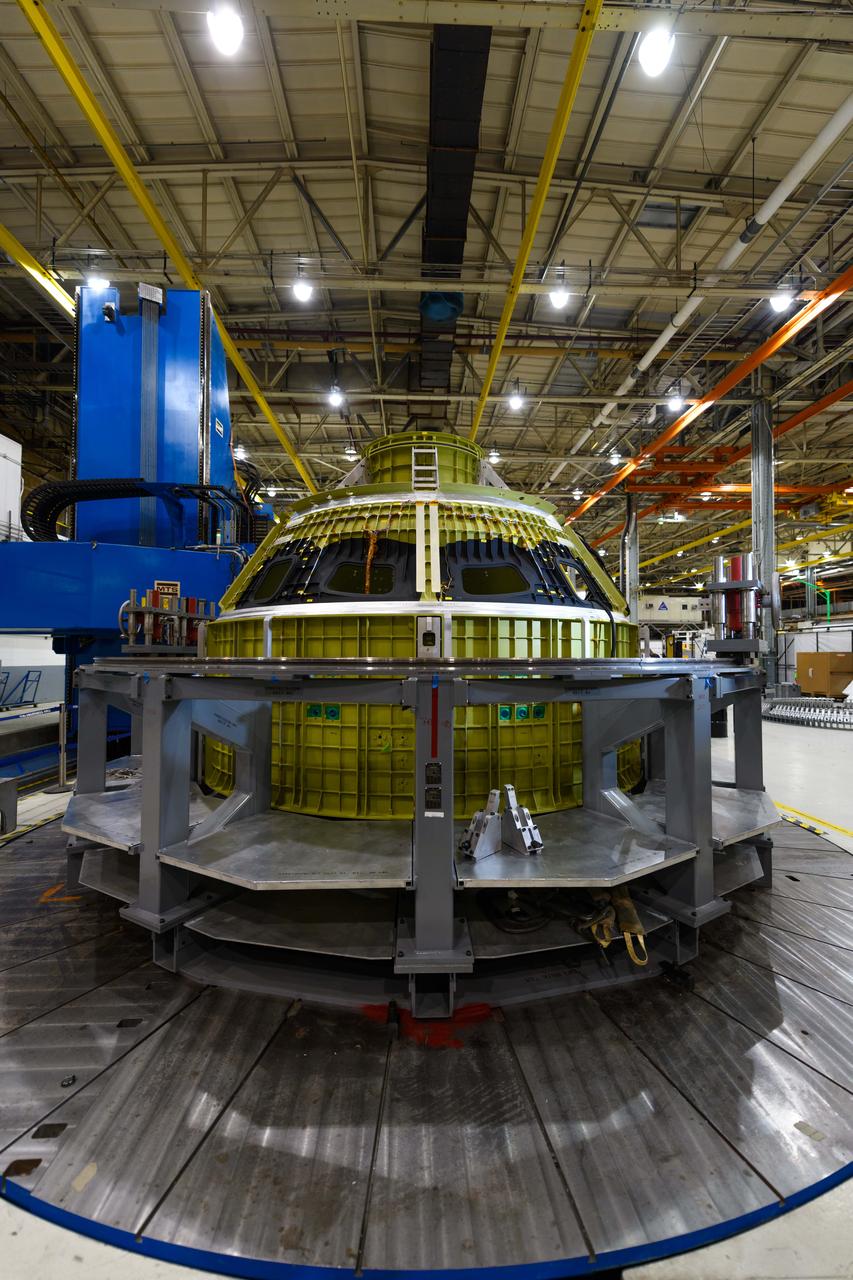
Lockheed Martin technicians at NASA's Michoud Assembly Facility in New Orleans, Louisiana, complete the final weld on the pressure vessel of the Orion crew module for Artemis II on July 24, 2018, the first flight of Orion with astronauts which will carry them farther into the solar system than ever before.
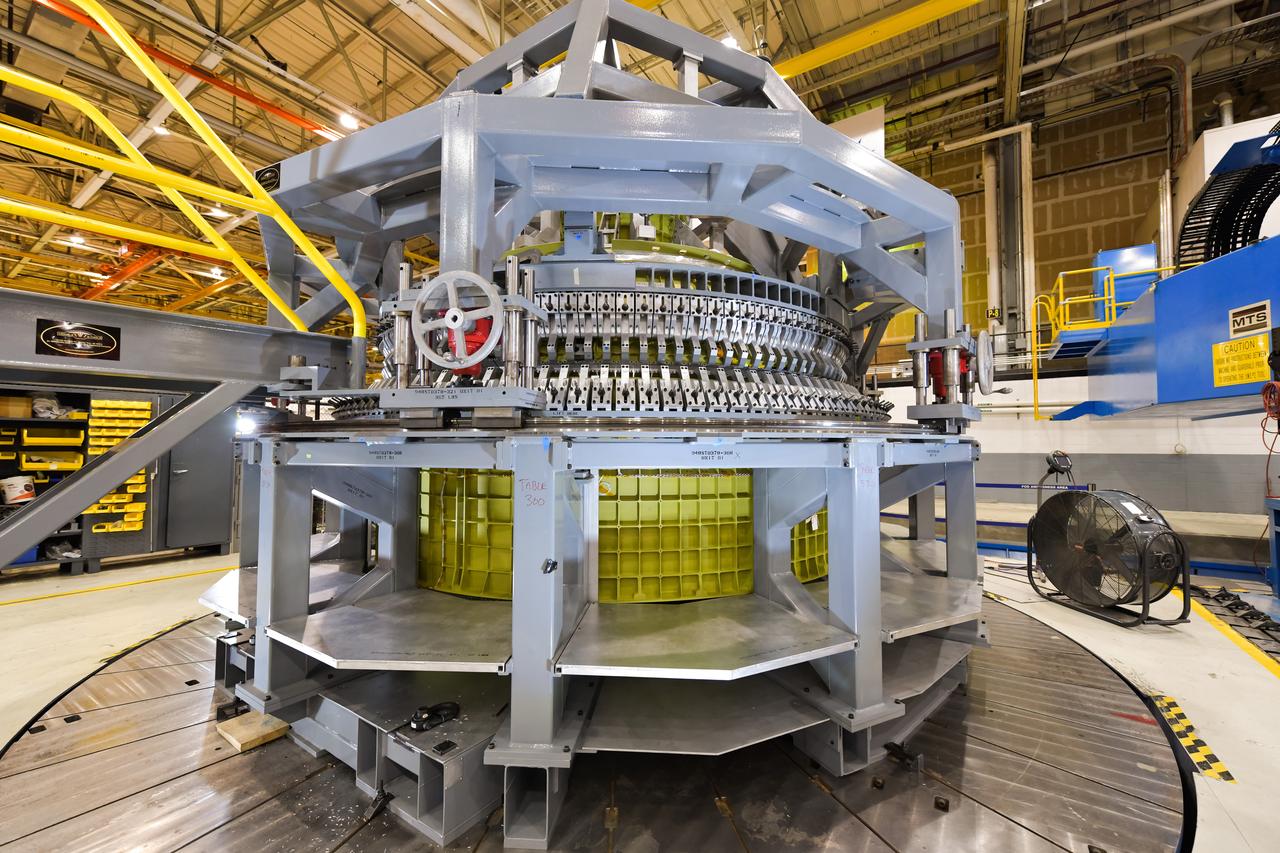
Lockheed Martin technicians at NASA's Michoud Assembly Facility in New Orleans, Louisiana, complete the final weld on the pressure vessel of the Orion crew module for Artemis II on July 24, 2018, the first flight of Orion with astronauts which will carry them farther into the solar system than ever before.
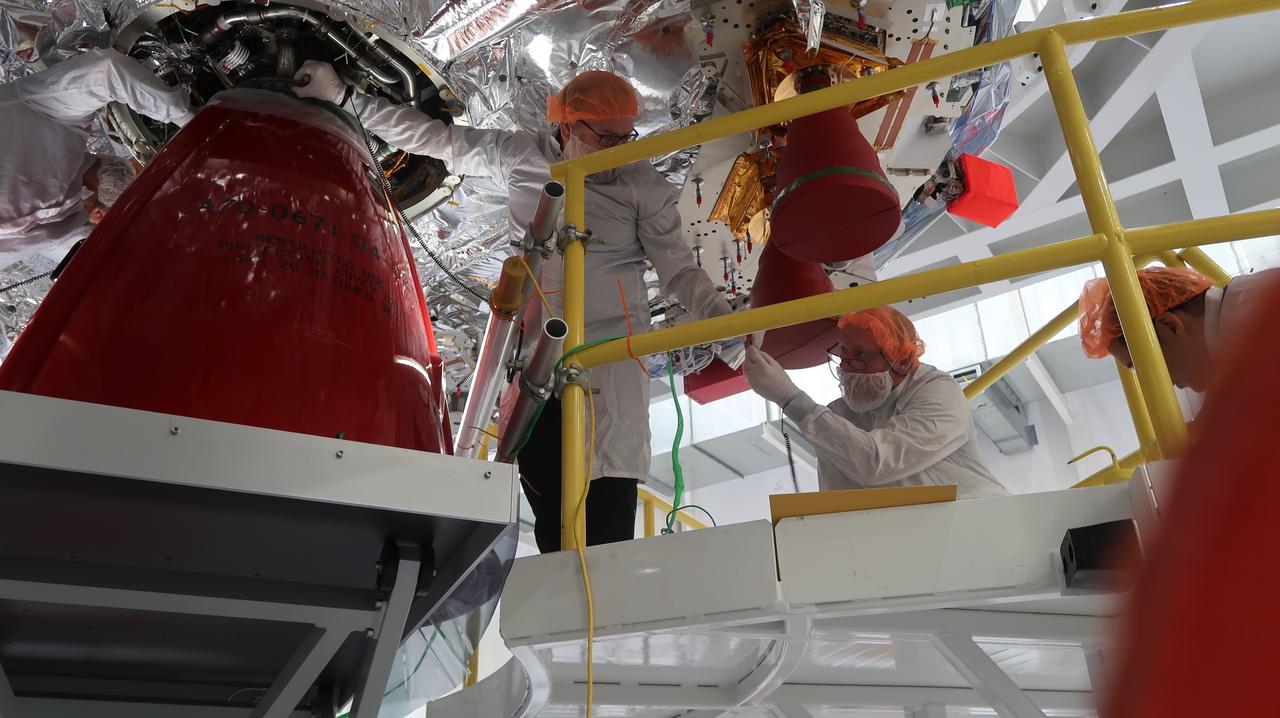
Technicians at NASA’s Kennedy Space Center in Florida install the orbital maneuvering system engine nozzle and heat shield for the Artemis II European Service Module inside the Neil Armstrong Operations and Checkout Building on Jan. 14, 2023. Artemis II will be the first crewed flight test of the Space Launch System rocket and Orion spacecraft. The service module will provide the power necessary to propel Orion on a trip around the Moon, including the in-space maneuvering capability and other commodities necessary to sustain crew for the duration of the mission.
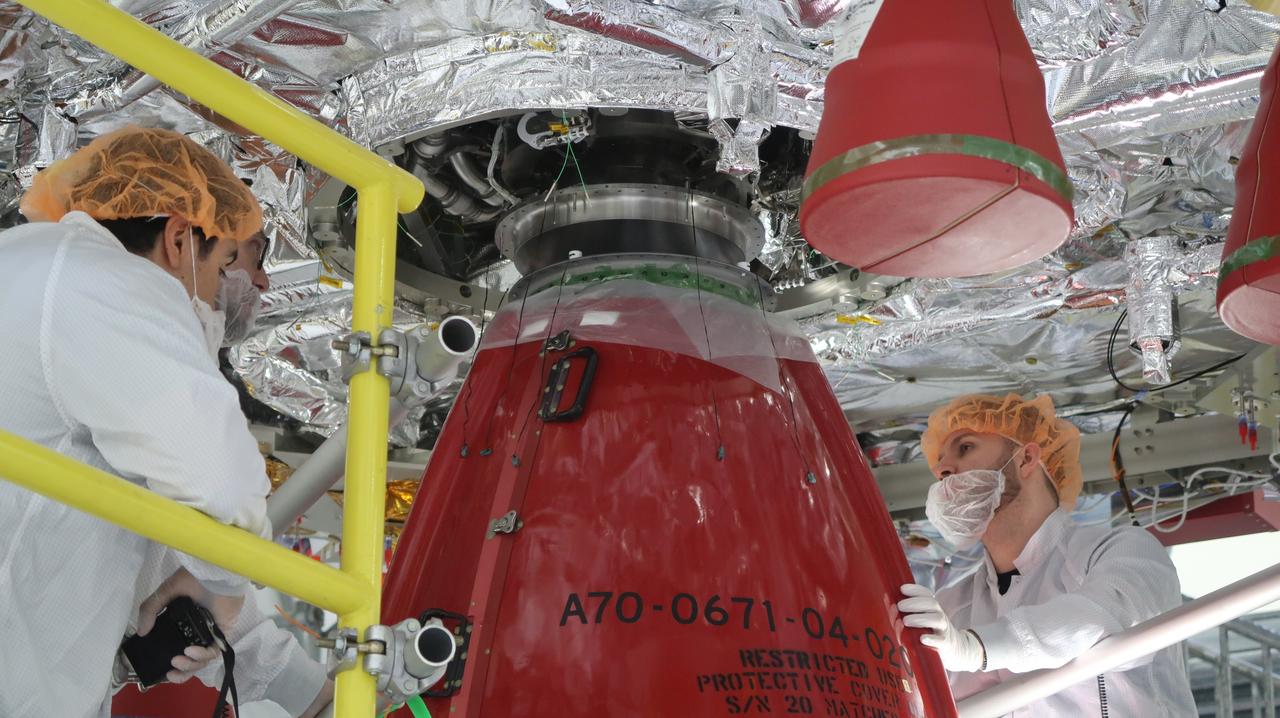
Technicians at NASA’s Kennedy Space Center in Florida install the orbital maneuvering system engine nozzle and heat shield for the Artemis II European Service Module inside the Neil Armstrong Operations and Checkout Building on Jan. 14, 2023. Artemis II will be the first crewed flight test of the Space Launch System rocket and Orion spacecraft. The service module will provide the power necessary to propel Orion on a trip around the Moon, including the in-space maneuvering capability and other commodities necessary to sustain crew for the duration of the mission.

Technicians at NASA’s Kennedy Space Center in Florida begin installing the orbital maneuvering system engine nozzle and heat shield for the Artemis II European Service Module inside the Neil Armstrong Operations and Checkout Building on Jan. 13, 2023. Artemis II will be the first crewed flight test of the Space Launch System rocket and Orion spacecraft. The service module will provide the power necessary to propel Orion on a trip around the Moon, including the in-space maneuvering capability and other commodities necessary to sustain crew for the duration of the mission.
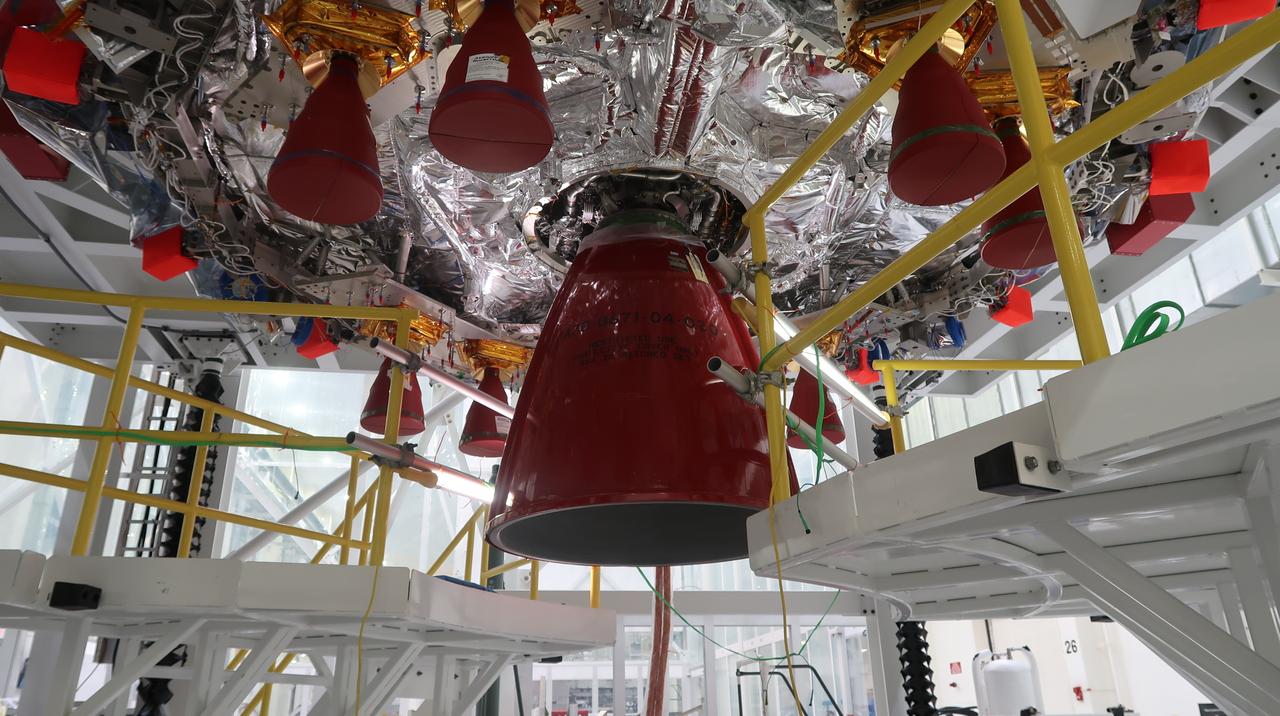
Technicians at NASA’s Kennedy Space Center in Florida finish installing the orbital maneuvering system engine nozzle and heat shield for the Artemis II European Service Module inside the Neil Armstrong Operations and Checkout Building on Jan. 16, 2023. Artemis II will be the first crewed flight test of the Space Launch System rocket and Orion spacecraft. The service module will provide the power necessary to propel Orion on a trip around the Moon, including the in-space maneuvering capability and other commodities necessary to sustain crew for the duration of the mission.
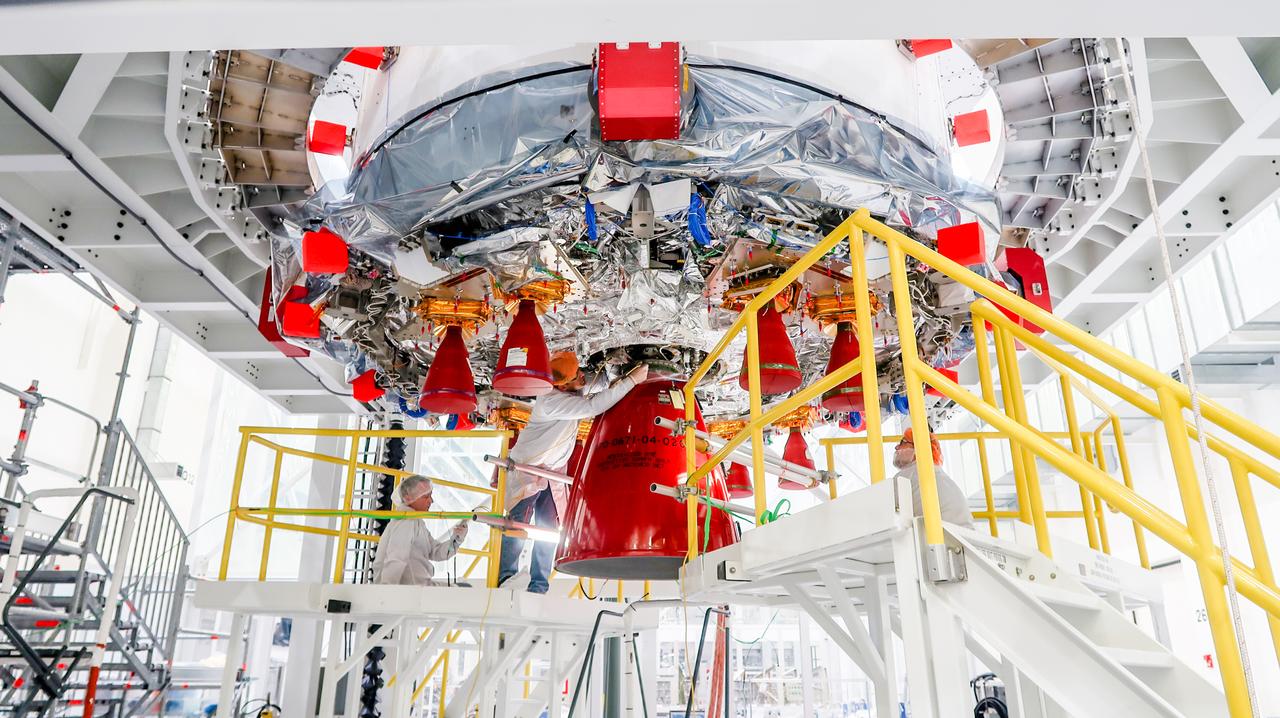
Technicians at NASA’s Kennedy Space Center in Florida finish installing the orbital maneuvering system engine nozzle and heat shield for the Artemis II European Service Module inside the Neil Armstrong Operations and Checkout Building on Jan. 16, 2023. Artemis II will be the first crewed flight test of the Space Launch System rocket and Orion spacecraft. The service module will provide the power necessary to propel Orion on a trip around the Moon, including the in-space maneuvering capability and other commodities necessary to sustain crew for the duration of the mission.
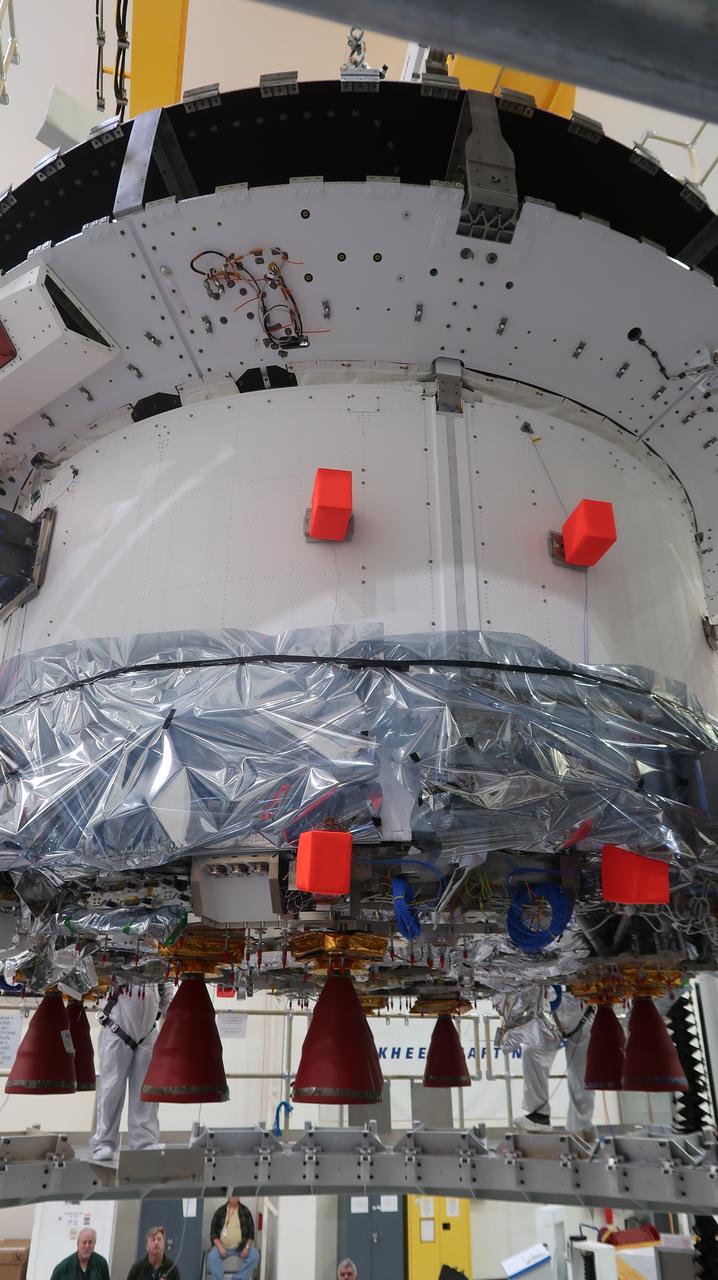
Technicians at NASA’s Kennedy Space Center in Florida begin installing the orbital maneuvering system engine nozzle and heat shield for the Artemis II European Service Module inside the Neil Armstrong Operations and Checkout Building on Jan. 13, 2023. Artemis II will be the first crewed flight test of the Space Launch System rocket and Orion spacecraft. The service module will provide the power necessary to propel Orion on a trip around the Moon, including the in-space maneuvering capability and other commodities necessary to sustain crew for the duration of the mission.

NASA Dryden technicians take measurements inside a fit-check mockup for prior to systems installation on a boilerplate Orion launch abort test crew capsule. A mockup Orion crew module has been constructed by NASA Dryden Flight Research Center's Fabrication Branch. The mockup is being used to develop integration procedures for avionics and instrumentation in advance of the arrival of the first abort flight test article.

CAPE CANAVERAL, Fla. -- In the transfer aisle of the Vehicle Assembly Building at NASA’s Kennedy Space Center in Florida, technicians attach a crane to a full-size mock-up of the Orion spacecraft to prepare it to be lifted into High Bay 4. Crane operators and technicians practice stacking and de-stacking operations in order to keep processing procedures and skills current for the Ground Systems Development and Operations Program. Orion is the exploration spacecraft designed to carry crews to space beyond low Earth orbit. It will provide emergency abort capability, sustain the crew during the space travel and provide safe re-entry from deep space return velocities. Orion’s first unpiloted test flight is scheduled to launch in 2014 atop a Delta IV rocket. A second uncrewed flight test is scheduled for 2017 on NASA’s Space Launch System rocket. For more information, visit http://www.nasa.gov/orion. Photo credit: NASA/Dan Casper
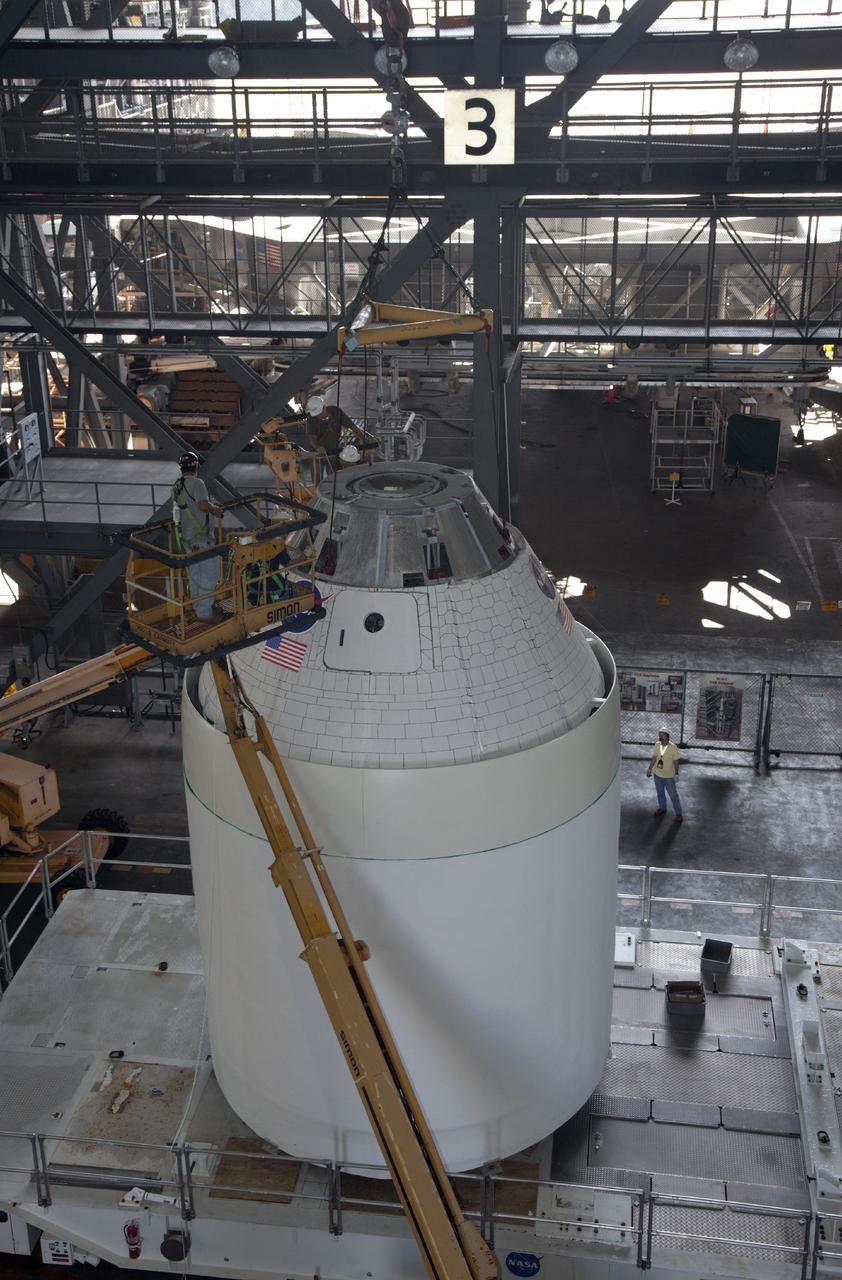
CAPE CANAVERAL, Fla. --In the transfer aisle of the Vehicle Assembly Building at NASA’s Kennedy Space Center in Florida, technicians attach a crane to a full-size mock-up of the Orion spacecraft to prepare it to be lifted into High Bay 4. Crane operators and technicians practice stacking and de-stacking operations in order to keep processing procedures and skills current for the Ground Systems Development and Operations Program. Orion is the exploration spacecraft designed to carry crews to space beyond low Earth orbit. It will provide emergency abort capability, sustain the crew during the space travel and provide safe re-entry from deep space return velocities. Orion’s first unpiloted test flight is scheduled to launch in 2014 atop a Delta IV rocket. A second uncrewed flight test is scheduled for 2017 on NASA’s Space Launch System rocket. For more information, visit http://www.nasa.gov/orion. Photo credit: NASA/Dan Casper

CAPE CANAVERAL, Fla. -- In the Vehicle Assembly Building at NASA’s Kennedy Space Center in Florida, a technician monitors the progress as a crane operator lowers a full-size mock-up of the Orion spacecraft in High Bay 4. Crane operators and technicians practice stacking and de-stacking operations in order to keep processing procedures and skills current for the Ground Systems Development and Operations Program. Orion is the exploration spacecraft designed to carry crews to space beyond low Earth orbit. It will provide emergency abort capability, sustain the crew during the space travel and provide safe re-entry from deep space return velocities. Orion’s first unpiloted test flight is scheduled to launch in 2014 atop a Delta IV rocket. A second uncrewed flight test is scheduled for 2017 on NASA’s Space Launch System rocket. For more information, visit http://www.nasa.gov/orion. Photo credit: NASA/Dan Casper
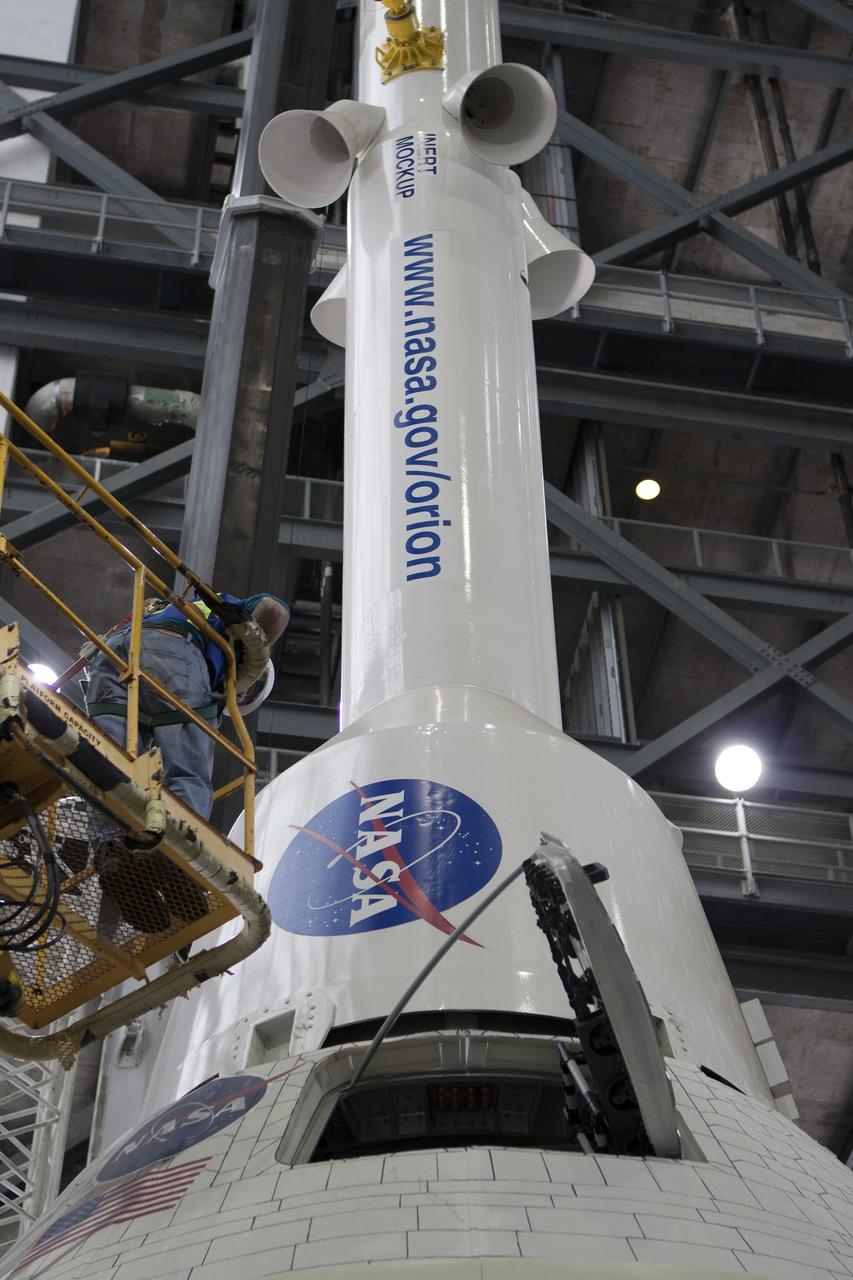
CAPE CANAVERAL, Fla. -- In the transfer aisle of the Vehicle Assembly Building at NASA’s Kennedy Space Center in Florida, a technician monitors de-stacking operations on a full-size mock-up of the Orion spacecraft and launch abort system. Crane operators and technicians practice stacking and de-stacking operations in order to keep processing procedures and skills current. Orion is the exploration spacecraft designed to carry crews to space beyond low Earth orbit. It will provide emergency abort capability, sustain the crew during the space travel and provide safe re-entry from deep space return velocities. Orion’s first unpiloted test flight is scheduled to launch in 2014 atop a Delta IV rocket. A second uncrewed flight test is scheduled for 2017 on NASA’s Space Launch System rocket. For more information, visit http://www.nasa.gov/orion. Photo credit: NASA/Jim Grossmann
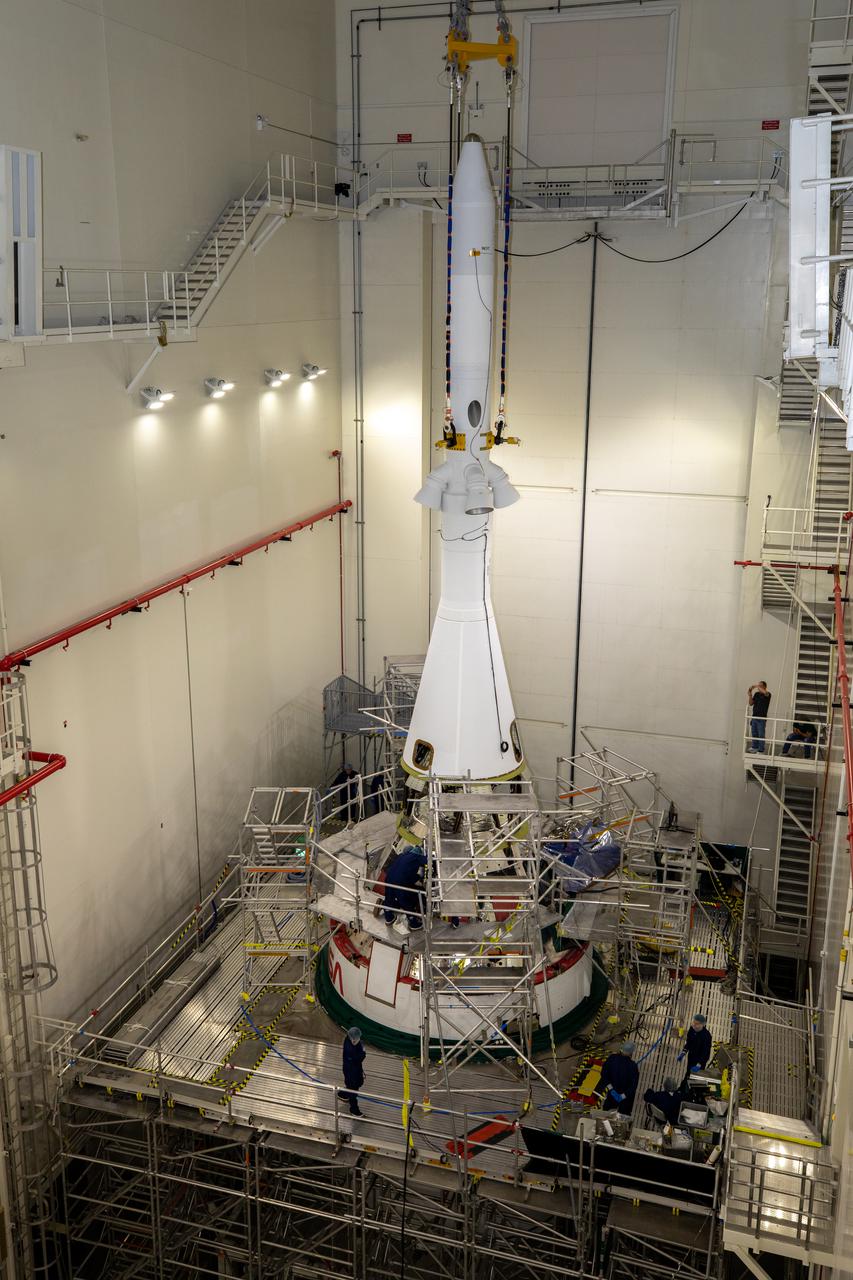
Teams with NASA’s Exploration Ground Systems (EGS) and contractor Jacobs integrated the launch abort system (LAS) with the Orion spacecraft inside the Launch Abort System Facility at NASA’s Kennedy Space Center in Florida on July 23, 2021. Launching later this year, Artemis I will be a test of the Orion spacecraft and Space Launch System rocket as an integrated system ahead of crewed flights to the Moon. Although there will be no crew the Artemis I, the launch abort system will collect flight data during the ascent to space and then jettison from the spacecraft. Next, technicians will install four panels, or ogives, that make up the fairing assembly and protect the spacecraft from heat, air, and acoustic environments during its entry into orbit. Once final checkouts are complete, Orion will join the Space Launch System for integration.
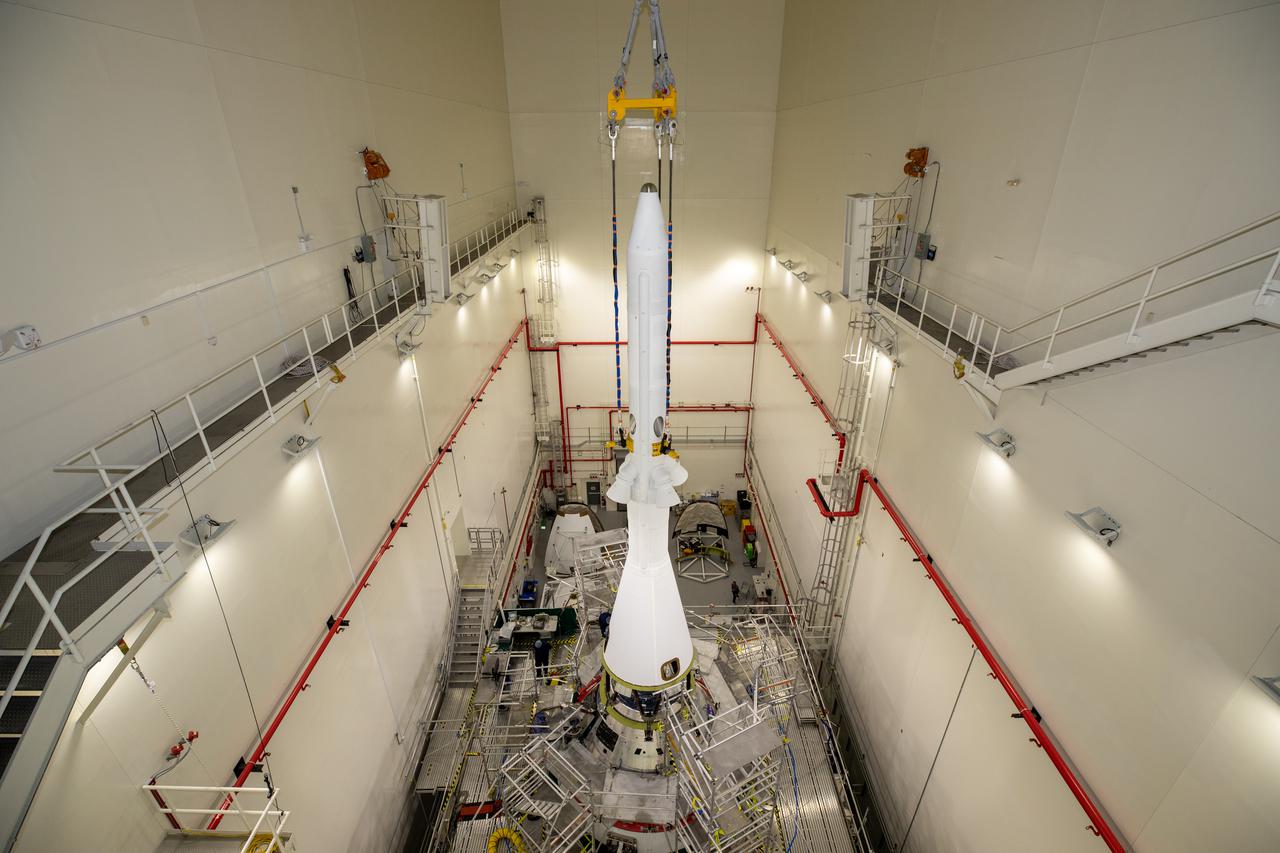
Teams with NASA’s Exploration Ground Systems (EGS) and contractor Jacobs integrated the launch abort system (LAS) with the Orion spacecraft inside the Launch Abort System Facility at NASA’s Kennedy Space Center in Florida on July 23, 2021. Launching later this year, Artemis I will be a test of the Orion spacecraft and Space Launch System rocket as an integrated system ahead of crewed flights to the Moon. Although there will be no crew the Artemis I, the launch abort system will collect flight data during the ascent to space and then jettison from the spacecraft. Next, technicians will install four panels, or ogives, that make up the fairing assembly and protect the spacecraft from heat, air, and acoustic environments during its entry into orbit. Once final checkouts are complete, Orion will join the Space Launch System for integration.
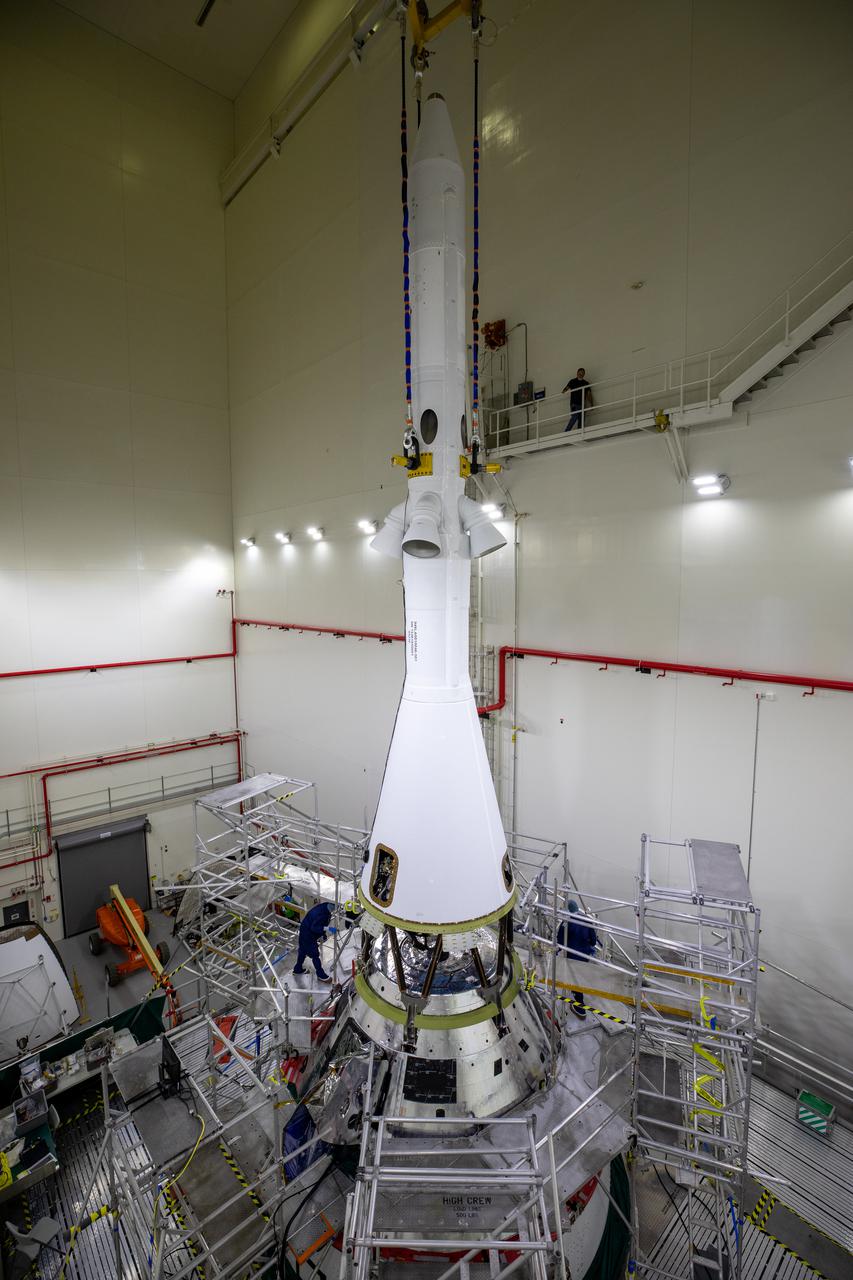
Teams with NASA’s Exploration Ground Systems (EGS) and contractor Jacobs integrated the launch abort system (LAS) with the Orion spacecraft inside the Launch Abort System Facility at NASA’s Kennedy Space Center in Florida on July 23, 2021. Launching later this year, Artemis I will be a test of the Orion spacecraft and Space Launch System rocket as an integrated system ahead of crewed flights to the Moon. Although there will be no crew the Artemis I, the launch abort system will collect flight data during the ascent to space and then jettison from the spacecraft. Next, technicians will install four panels, or ogives, that make up the fairing assembly and protect the spacecraft from heat, air, and acoustic environments during its entry into orbit. Once final checkouts are complete, Orion will join the Space Launch System for integration.
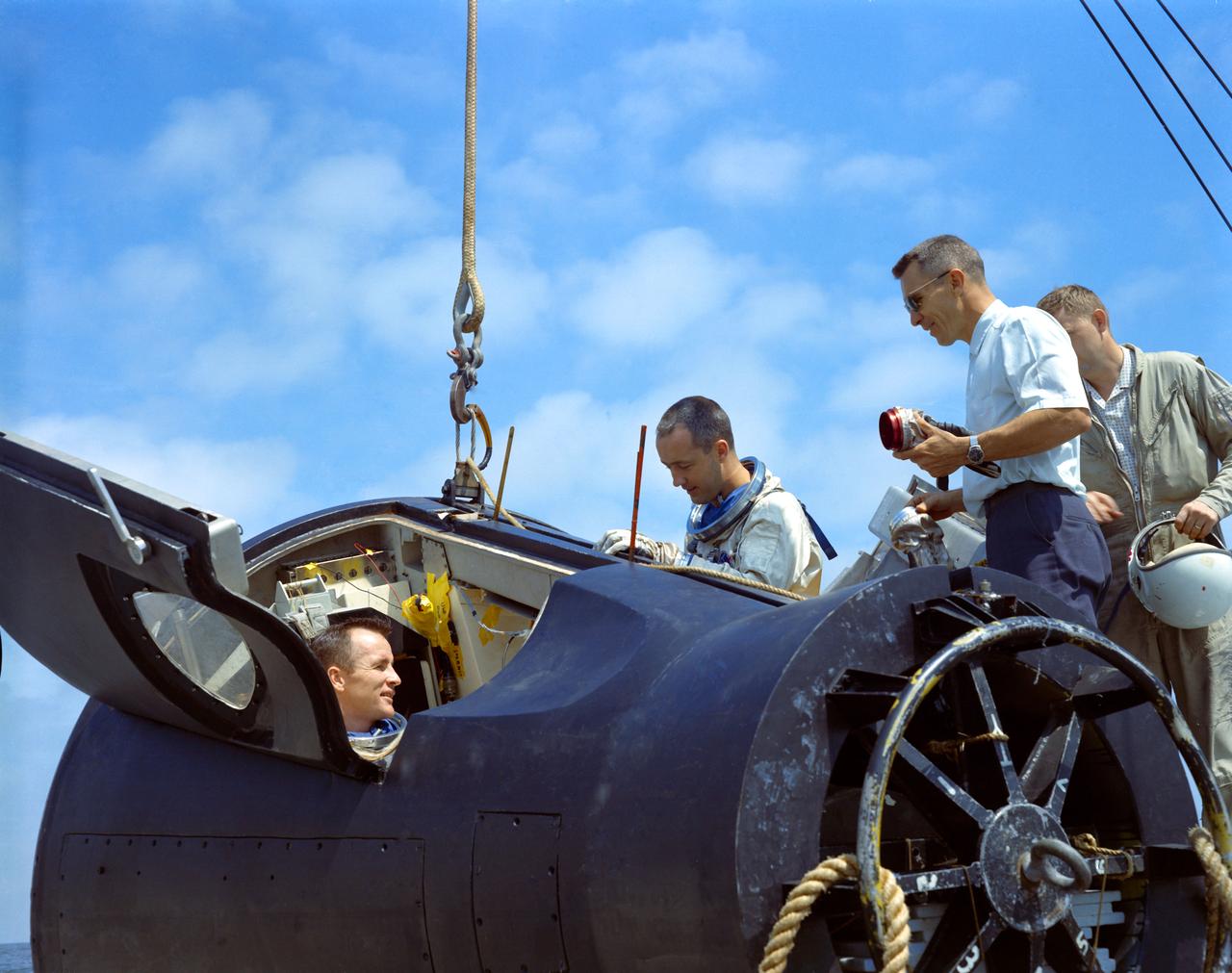
S65-22639 (14 April 1965) --- The Gemini-Titan 4 prime crew, astronauts Edward H. White II (left), pilot; and James A. McDivitt (getting in the spacecraft), command pilot, received instructions from Gordon Harvey, Flight Crew Support Division; and Alan M. Rochford, suit technician, Crew Systems Division, before closing of hatches prior to undergoing water egress training in the Gulf of Mexico.
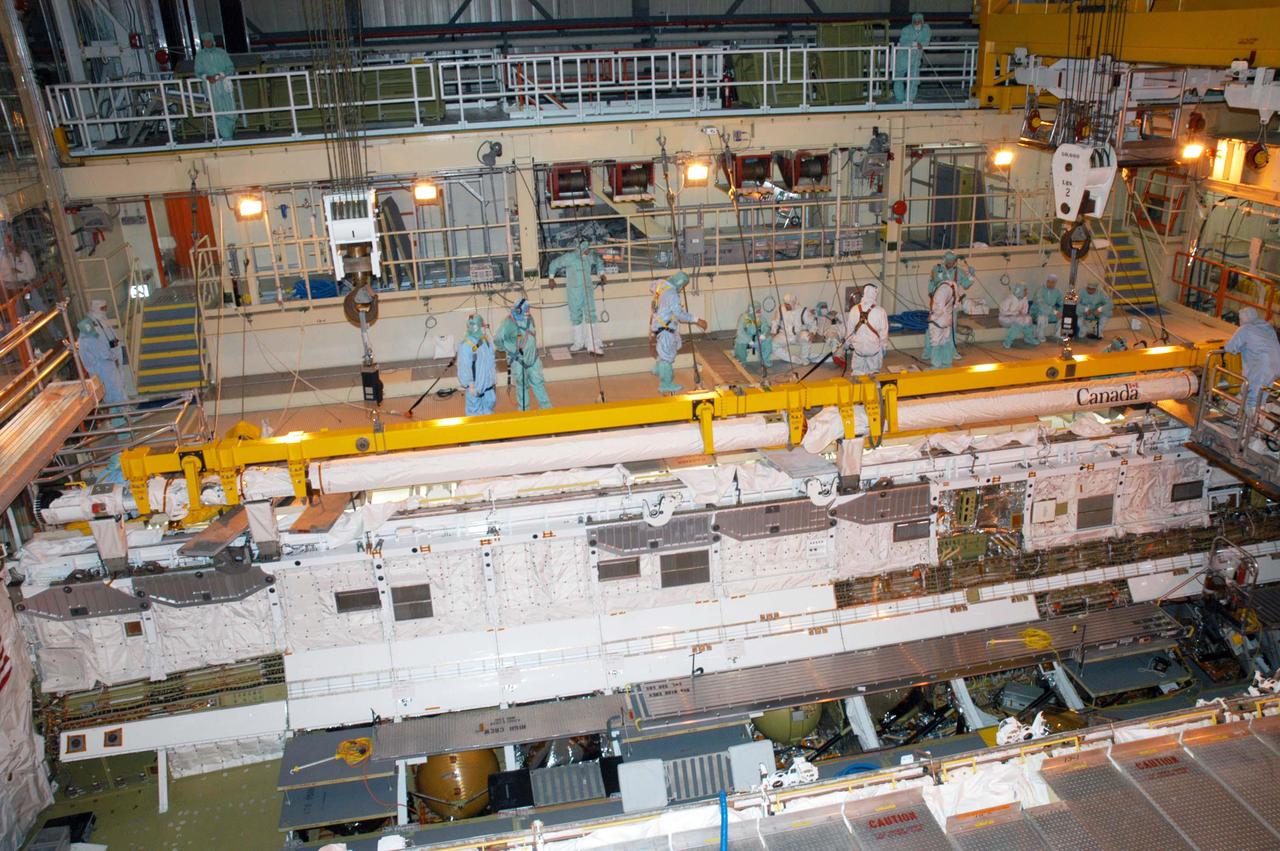
KENNEDY SPACE CENTER, FLA. - Technicians in the Orbiter Processing Facility work to install the Remote Manipulator System (RMS), also known as the Canadian robotic arm, in Discovery’s payload bay. The RMS is used to deploy and retrieve payloads, provide a mobile extension ladder or foot restraints for crew members during extravehicular activities; and to aid the flight crew members in viewing surfaces of the orbiter or payloads through a television camera on the RMS. The arm is also serving as the base for the new Orbiter Boom Sensor System (OBSS), one of the safety measures for Return to Flight, equipping the Shuttle with cameras and laser systems to inspect the Shuttle’s Thermal Protection System while in space. Discovery is scheduled for a launch planning window of May 2005 on Return to Flight mission STS-114.
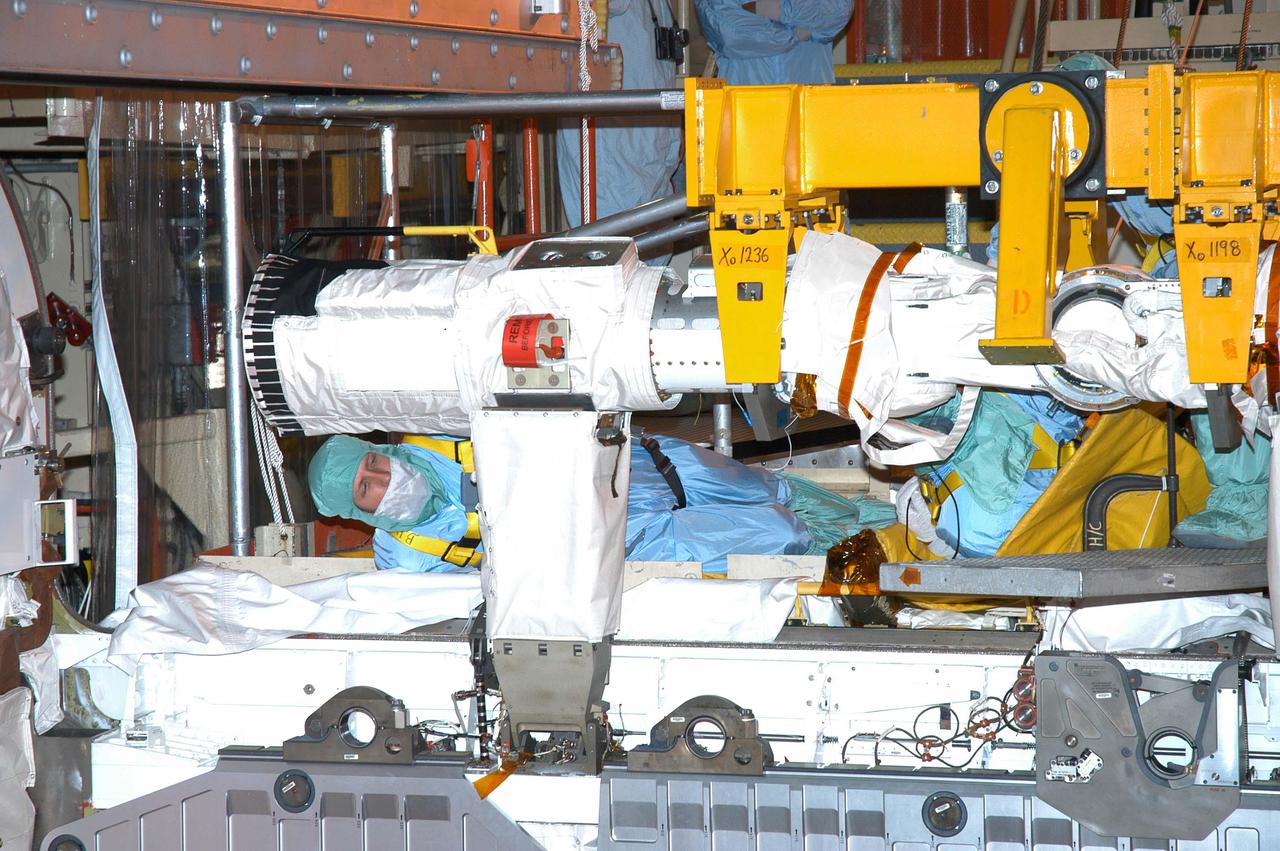
KENNEDY SPACE CENTER, FLA. - Technicians in the Orbiter Processing Facility work to install the Remote Manipulator System (RMS), also known as the Canadian robotic arm, in Discovery’s payload bay. The RMS is used to deploy and retrieve payloads, provide a mobile extension ladder or foot restraints for crew members during extravehicular activities; and to aid the flight crew members in viewing surfaces of the orbiter or payloads through a television camera on the RMS. The arm is also serving as the base for the new Orbiter Boom Sensor System (OBSS), one of the safety measures for Return to Flight, equipping the Shuttle with cameras and laser systems to inspect the Shuttle’s Thermal Protection System while in space. Discovery is scheduled for a launch planning window of May 2005 on Return to Flight mission STS-114.
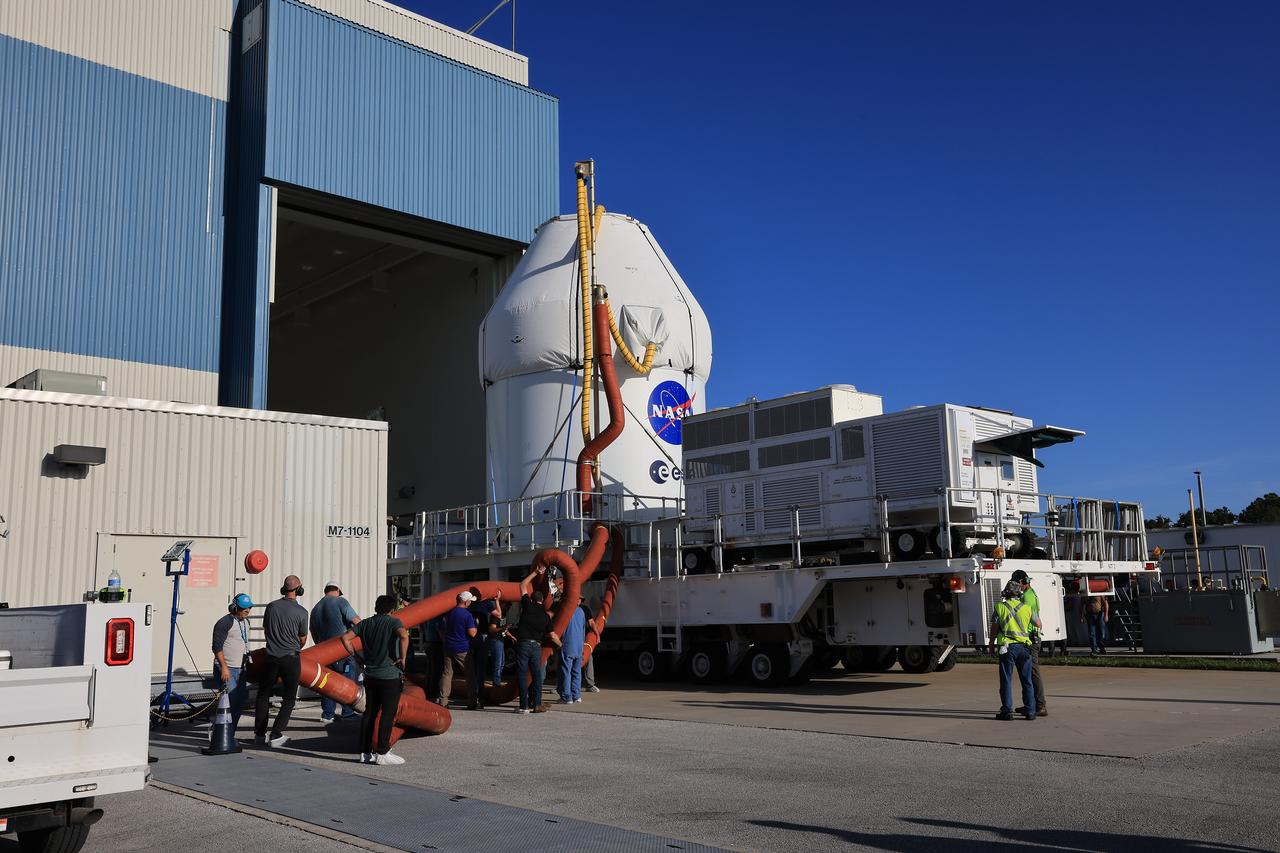
Crews prepare to move NASA’s Artemis II Orion spacecraft from the Multi-Payload Processing Facility to the Launch Abort System Facility at the agency’s Kennedy Space Center in Florida on Saturday, Aug. 9, 2025. Technicians will integrate Orion with its 44-foot-tall launch abort system designed to carry the crew to safety in the event of an emergency during launch or ascent atop the SLS (Space Launch System) rocket. The Artemis II test flight will send NASA astronauts Reid Wiseman, Victor Glover, and Christina Koch, and CSA (Canadian Space Agency) astronaut Jeremy Hansen around the Moon and return them safely back home.
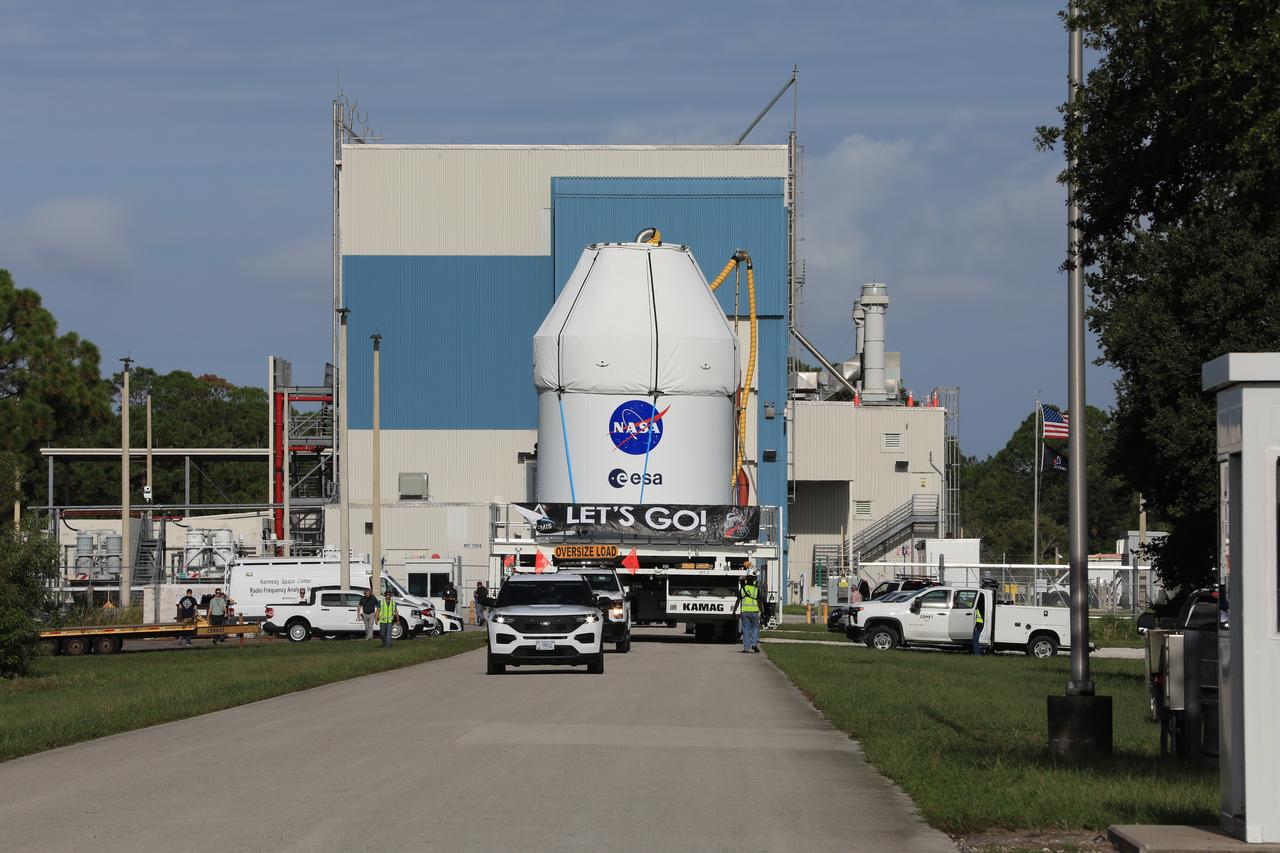
Crews prepare to move NASA’s Artemis II Orion spacecraft from the Multi-Payload Processing Facility to the Launch Abort System Facility at the agency’s Kennedy Space Center in Florida on Sunday, Aug. 10, 2025. Technicians will integrate Orion with its 44-foot-tall launch abort system designed to carry the crew to safety in the event of an emergency during launch or ascent atop the SLS (Space Launch System) rocket. The Artemis II test flight will send NASA astronauts Reid Wiseman, Victor Glover, and Christina Koch, and CSA (Canadian Space Agency) astronaut Jeremy Hansen around the Moon and return them safely back home.
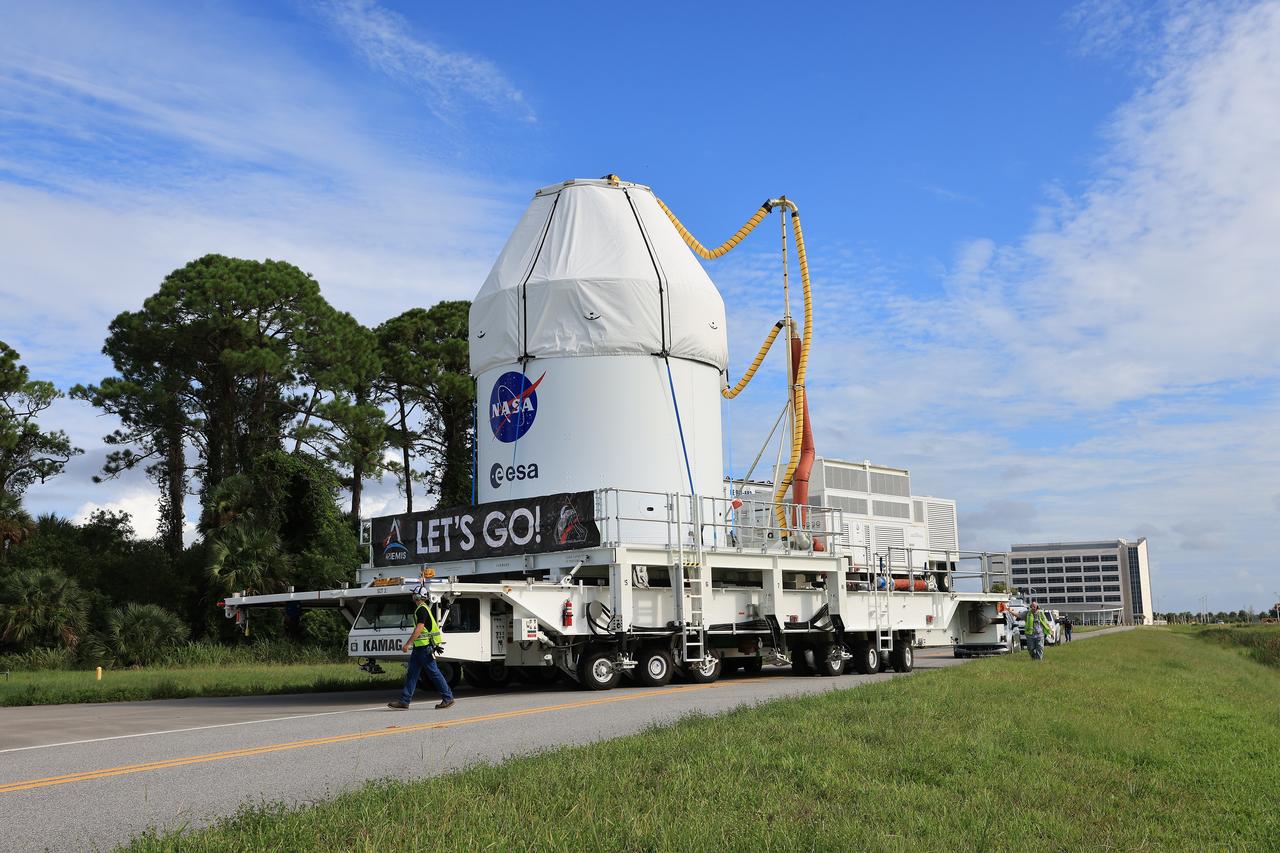
Crews transport NASA’s Artemis II Orion spacecraft from the Multi-Payload Processing Facility to the Launch Abort System Facility at the agency’s Kennedy Space Center in Florida on Sunday, Aug. 10, 2025. Technicians will integrate Orion with its 44-foot-tall launch abort system designed to carry the crew to safety in the event of an emergency during launch or ascent atop the SLS (Space Launch System) rocket. The Artemis II test flight will send NASA astronauts Reid Wiseman, Victor Glover, and Christina Koch, and CSA (Canadian Space Agency) astronaut Jeremy Hansen around the Moon and return them safely back home.
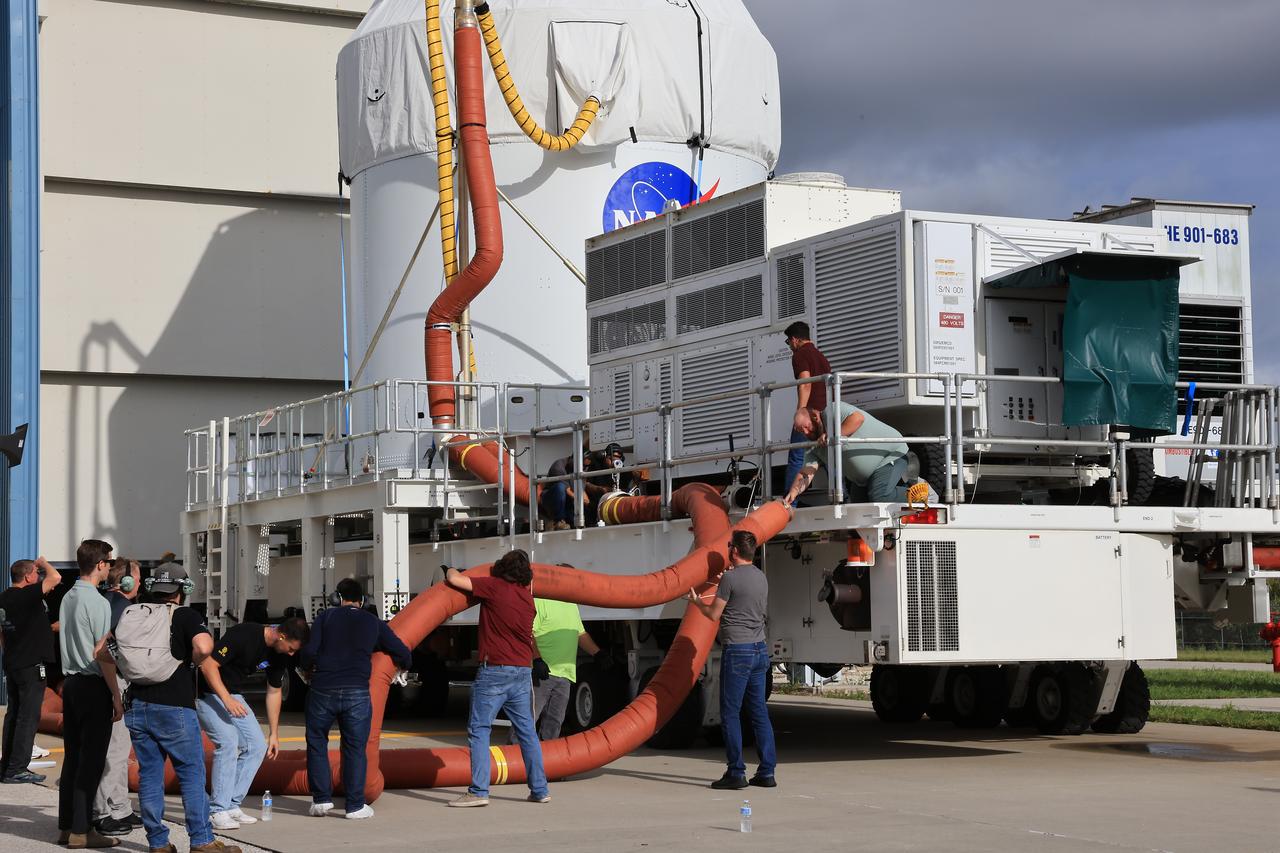
Crews prepare to move NASA’s Artemis II Orion spacecraft from the Multi-Payload Processing Facility to the Launch Abort System Facility at the agency’s Kennedy Space Center in Florida on Sunday, Aug. 10, 2025. Technicians will integrate Orion with its 44-foot-tall launch abort system designed to carry the crew to safety in the event of an emergency during launch or ascent atop the SLS (Space Launch System) rocket. The Artemis II test flight will send NASA astronauts Reid Wiseman, Victor Glover, and Christina Koch, and CSA (Canadian Space Agency) astronaut Jeremy Hansen around the Moon and return them safely back home.
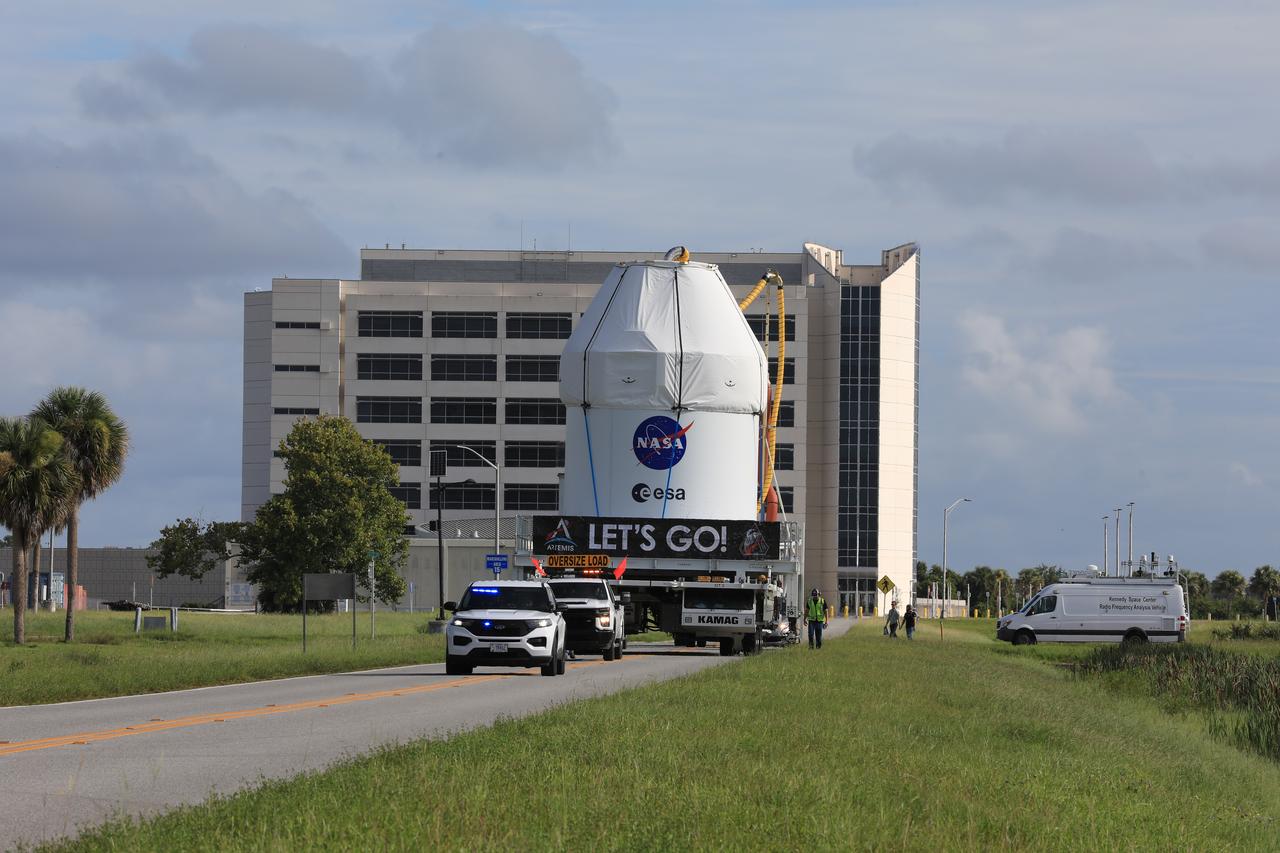
Crews transport NASA’s Artemis II Orion spacecraft from the Multi-Payload Processing Facility to the Launch Abort System Facility at the agency’s Kennedy Space Center in Florida on Sunday, Aug. 10, 2025. Technicians will integrate Orion with its 44-foot-tall launch abort system designed to carry the crew to safety in the event of an emergency during launch or ascent atop the SLS (Space Launch System) rocket. The Artemis II test flight will send NASA astronauts Reid Wiseman, Victor Glover, and Christina Koch, and CSA (Canadian Space Agency) astronaut Jeremy Hansen around the Moon and return them safely back home.
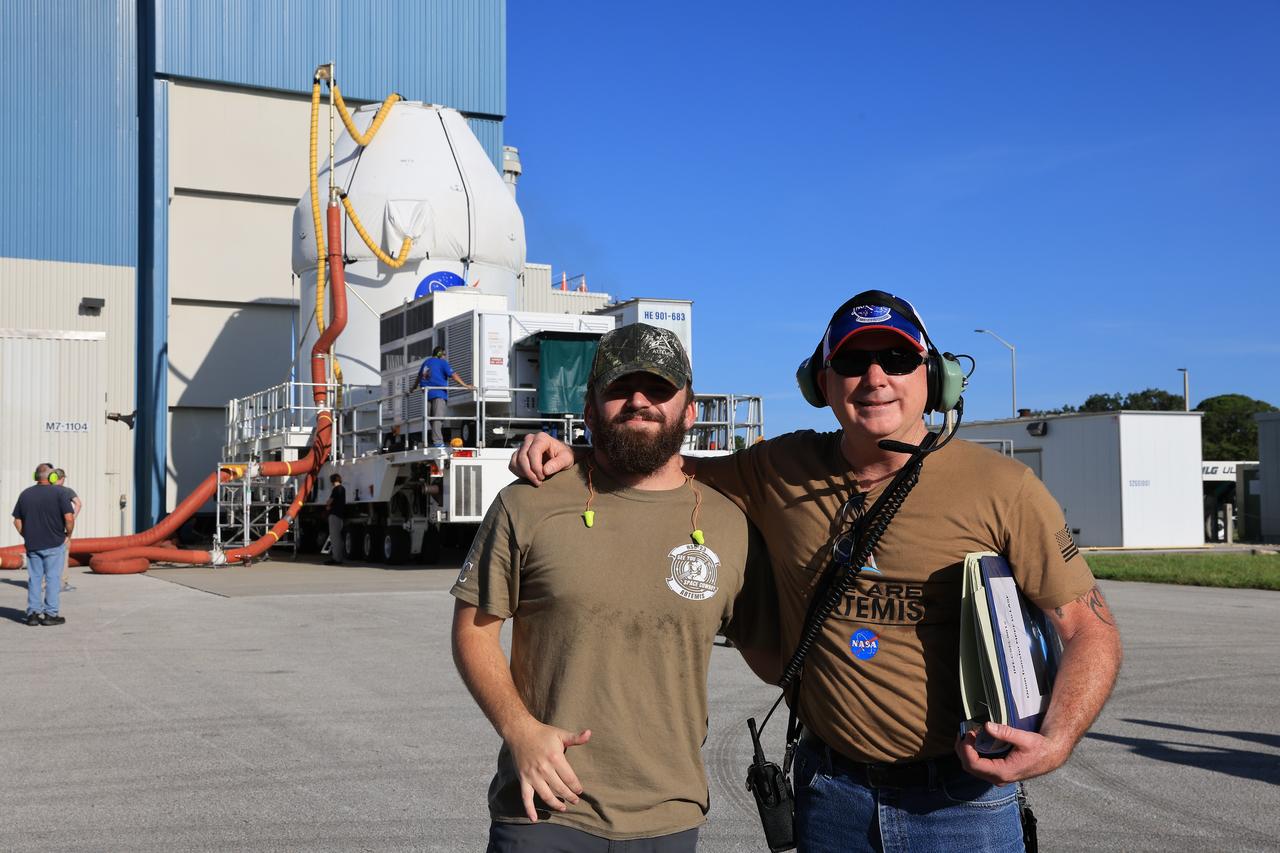
Crews prepare to move NASA’s Artemis II Orion spacecraft from the Multi-Payload Processing Facility to the Launch Abort System Facility at the agency’s Kennedy Space Center in Florida on Saturday, Aug. 9, 2025. Technicians will integrate Orion with its 44-foot-tall launch abort system designed to carry the crew to safety in the event of an emergency during launch or ascent atop the SLS (Space Launch System) rocket. The Artemis II test flight will send NASA astronauts Reid Wiseman, Victor Glover, and Christina Koch, and CSA (Canadian Space Agency) astronaut Jeremy Hansen around the Moon and return them safely back home.
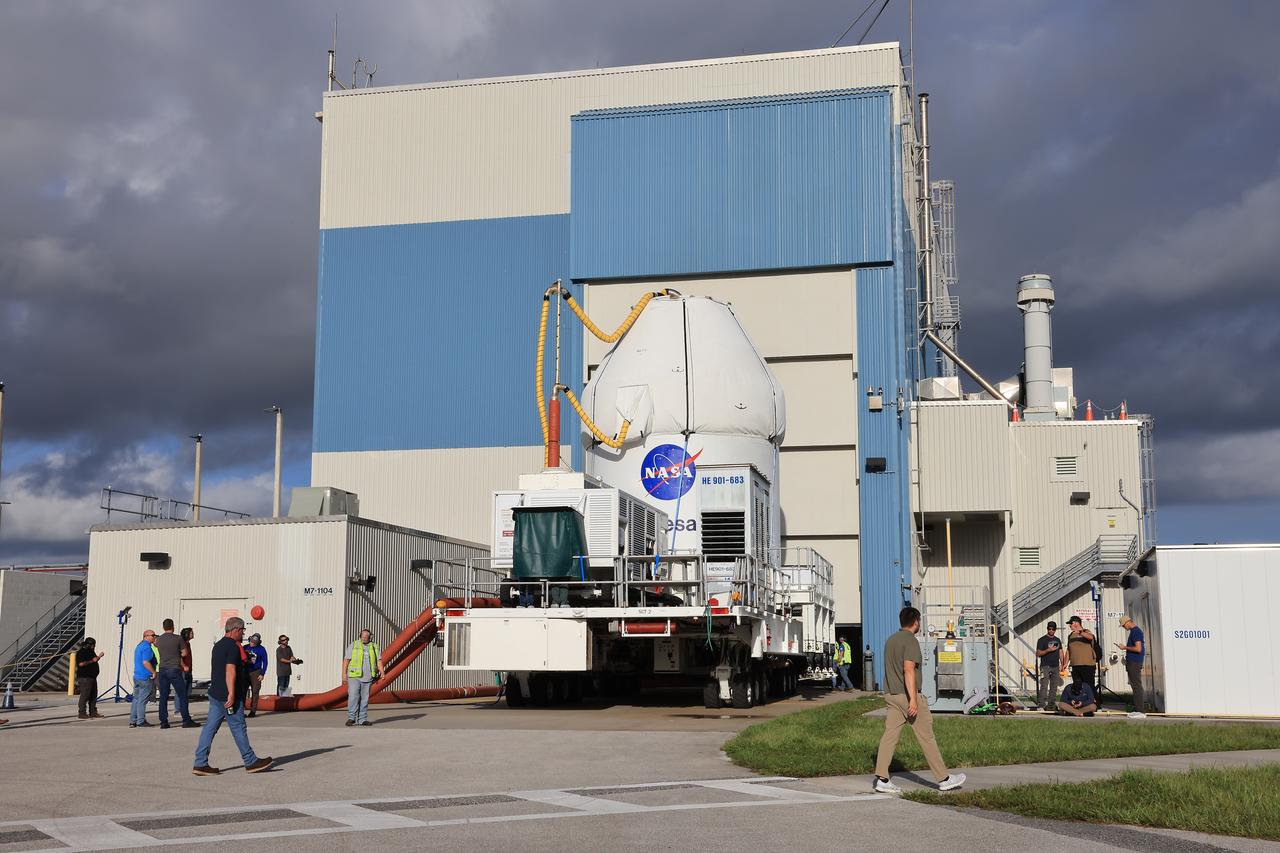
Crews prepare to move NASA’s Artemis II Orion spacecraft from the Multi-Payload Processing Facility to the Launch Abort System Facility at the agency’s Kennedy Space Center in Florida on Sunday, Aug. 10, 2025. Technicians will integrate Orion with its 44-foot-tall launch abort system designed to carry the crew to safety in the event of an emergency during launch or ascent atop the SLS (Space Launch System) rocket. The Artemis II test flight will send NASA astronauts Reid Wiseman, Victor Glover, and Christina Koch, and CSA (Canadian Space Agency) astronaut Jeremy Hansen around the Moon and return them safely back home.
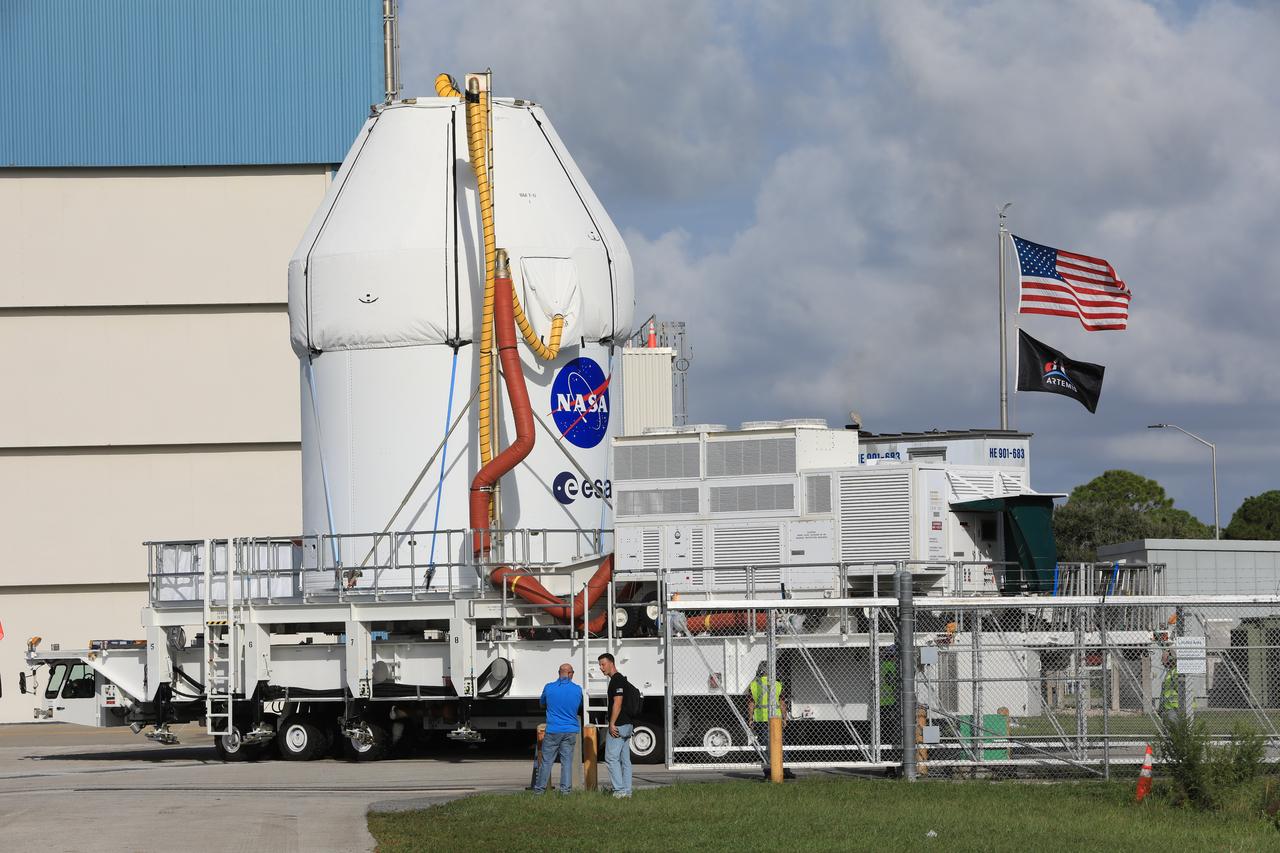
Crews prepare to move NASA’s Artemis II Orion spacecraft from the Multi-Payload Processing Facility to the Launch Abort System Facility at the agency’s Kennedy Space Center in Florida on Sunday, Aug. 10, 2025. Technicians will integrate Orion with its 44-foot-tall launch abort system designed to carry the crew to safety in the event of an emergency during launch or ascent atop the SLS (Space Launch System) rocket. The Artemis II test flight will send NASA astronauts Reid Wiseman, Victor Glover, and Christina Koch, and CSA (Canadian Space Agency) astronaut Jeremy Hansen around the Moon and return them safely back home.
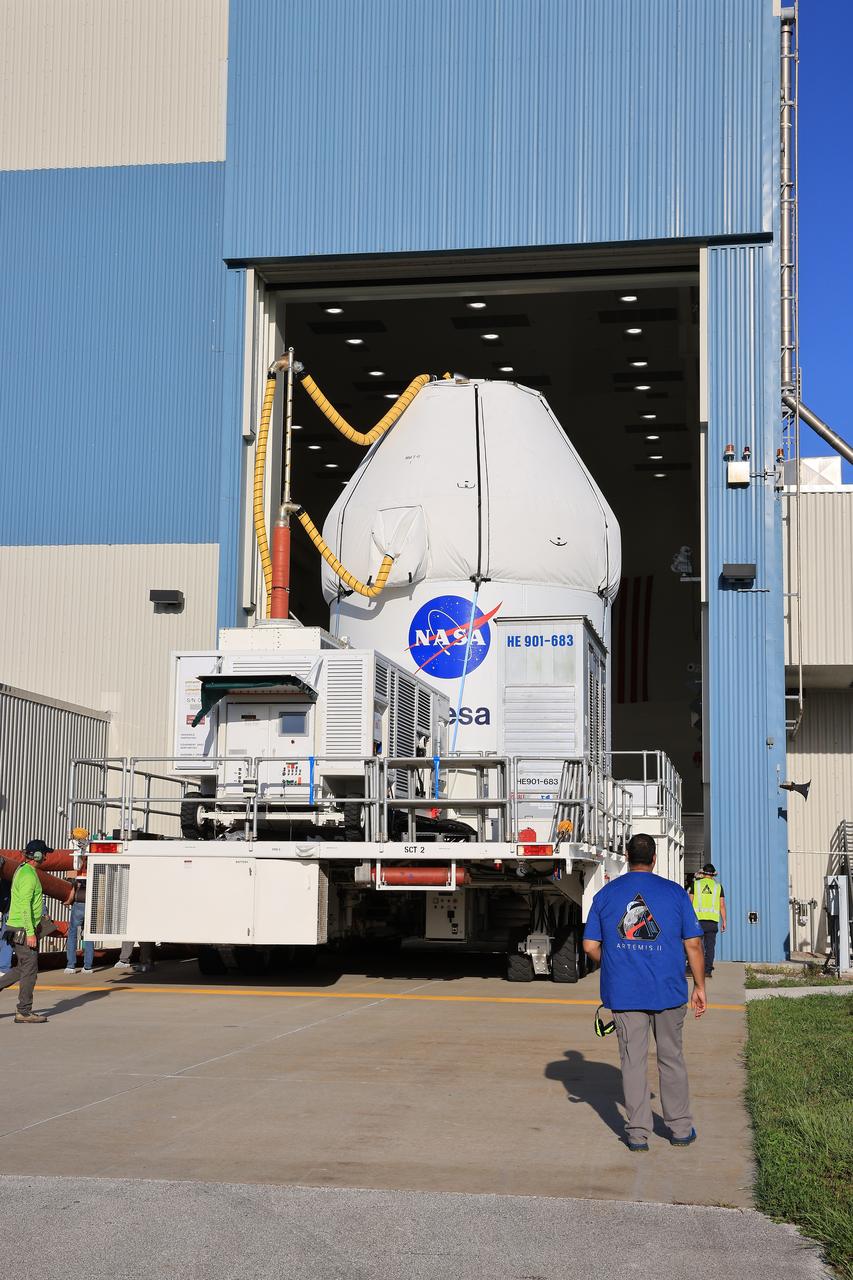
Crews prepare to move NASA’s Artemis II Orion spacecraft from the Multi-Payload Processing Facility to the Launch Abort System Facility at the agency’s Kennedy Space Center in Florida on Saturday, Aug. 9, 2025. Technicians will integrate Orion with its 44-foot-tall launch abort system designed to carry the crew to safety in the event of an emergency during launch or ascent atop the SLS (Space Launch System) rocket. The Artemis II test flight will send NASA astronauts Reid Wiseman, Victor Glover, and Christina Koch, and CSA (Canadian Space Agency) astronaut Jeremy Hansen around the Moon and return them safely back home.
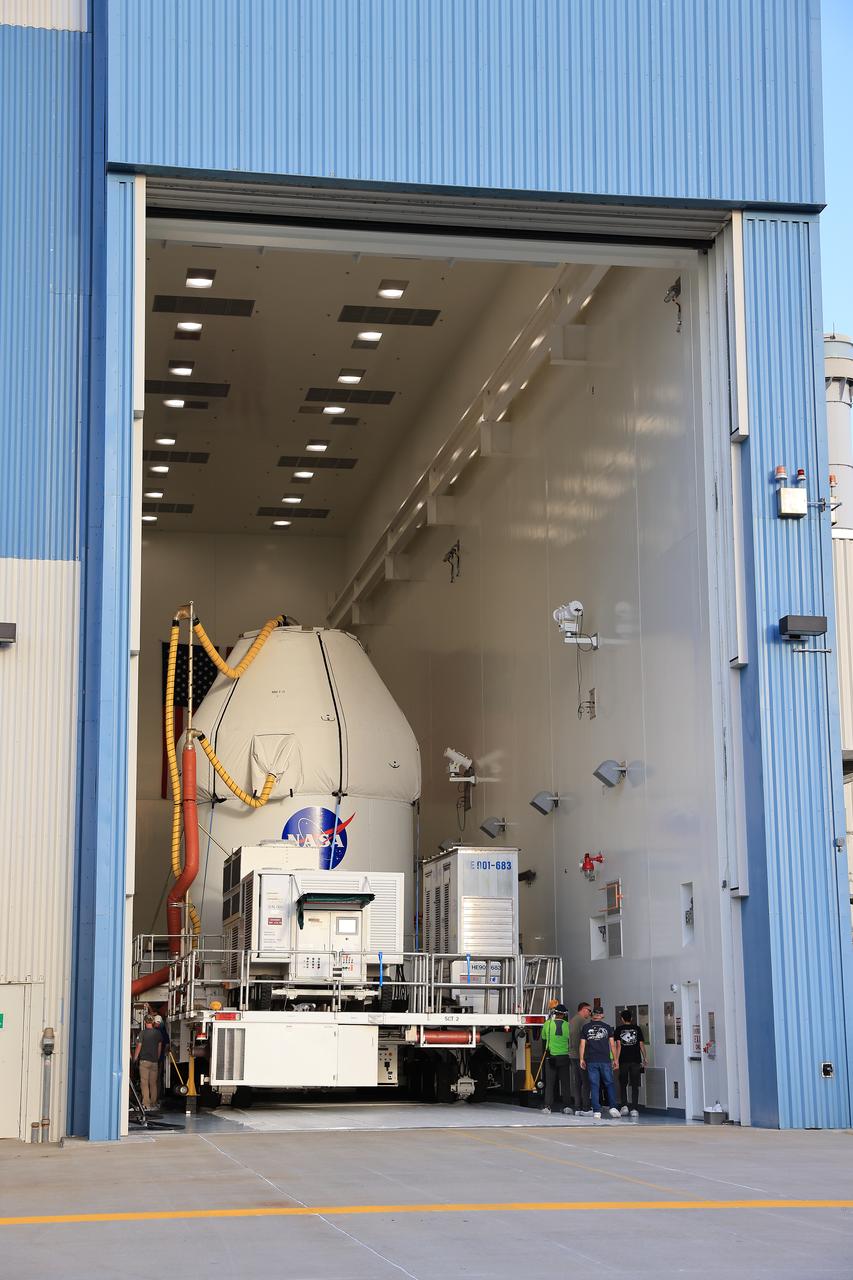
Crews prepare to move NASA’s Artemis II Orion spacecraft from the Multi-Payload Processing Facility to the Launch Abort System Facility at the agency’s Kennedy Space Center in Florida on Saturday, Aug. 9, 2025. Technicians will integrate Orion with its 44-foot-tall launch abort system designed to carry the crew to safety in the event of an emergency during launch or ascent atop the SLS (Space Launch System) rocket. The Artemis II test flight will send NASA astronauts Reid Wiseman, Victor Glover, and Christina Koch, and CSA (Canadian Space Agency) astronaut Jeremy Hansen around the Moon and return them safely back home.
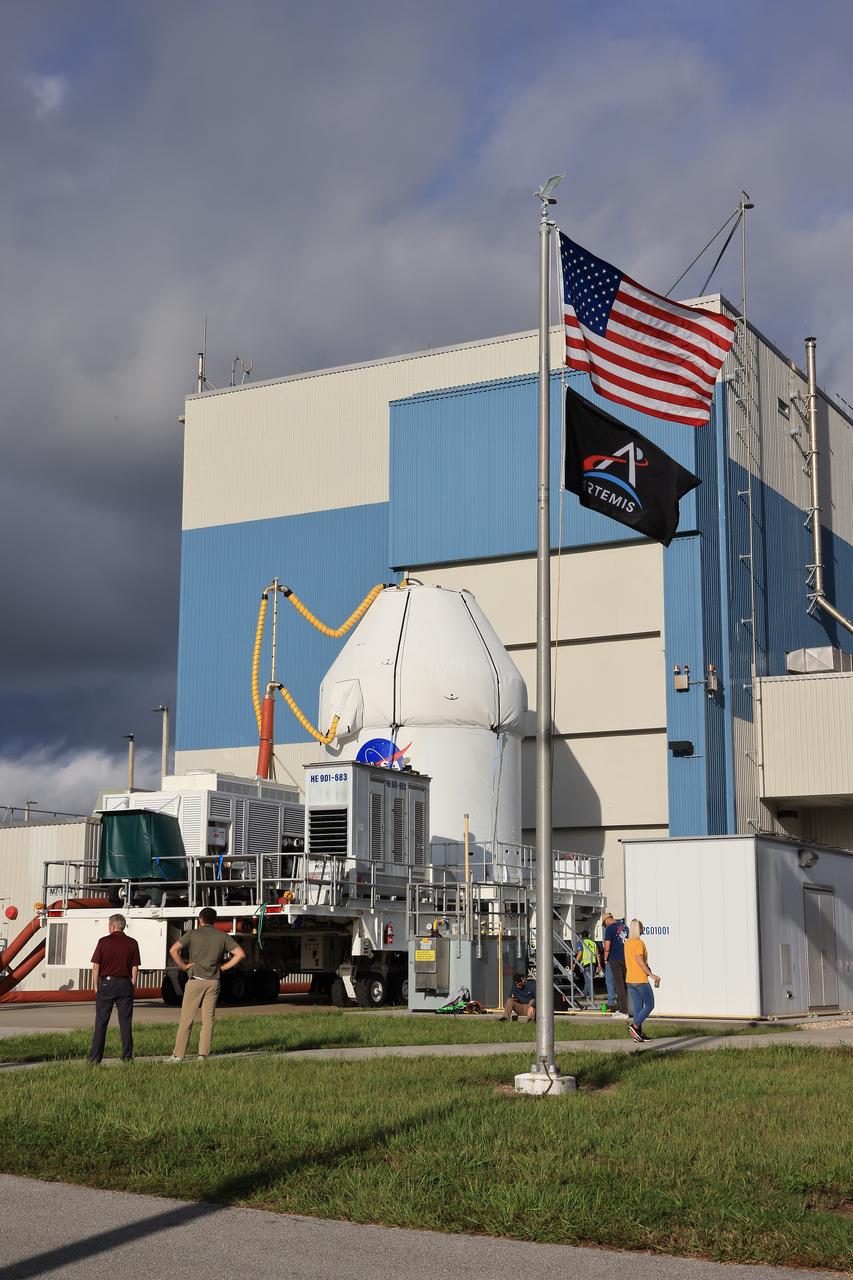
Crews prepare to move NASA’s Artemis II Orion spacecraft from the Multi-Payload Processing Facility to the Launch Abort System Facility at the agency’s Kennedy Space Center in Florida on Sunday, Aug. 10, 2025. Technicians will integrate Orion with its 44-foot-tall launch abort system designed to carry the crew to safety in the event of an emergency during launch or ascent atop the SLS (Space Launch System) rocket. The Artemis II test flight will send NASA astronauts Reid Wiseman, Victor Glover, and Christina Koch, and CSA (Canadian Space Agency) astronaut Jeremy Hansen around the Moon and return them safely back home.
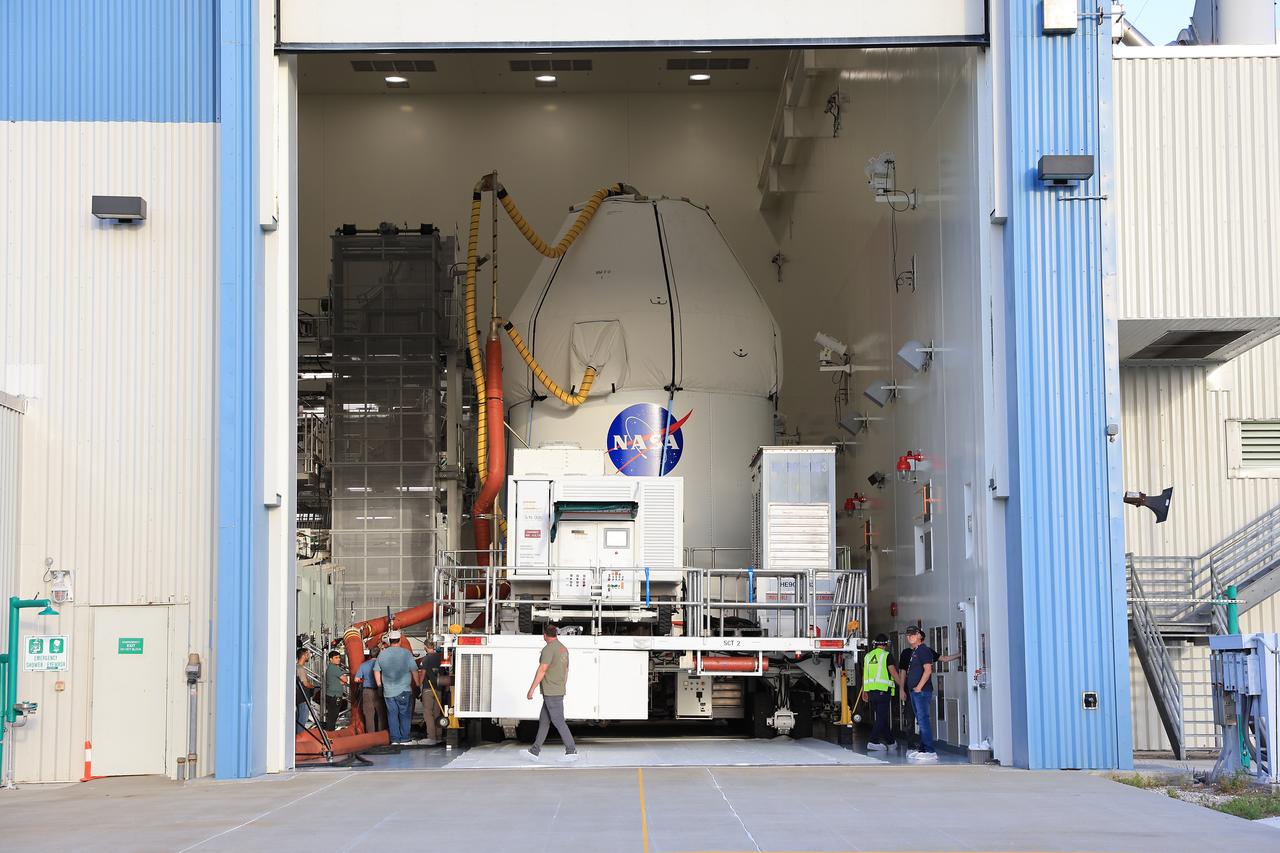
Crews prepare to move NASA’s Artemis II Orion spacecraft from the Multi-Payload Processing Facility to the Launch Abort System Facility at the agency’s Kennedy Space Center in Florida on Saturday, Aug. 9, 2025. Technicians will integrate Orion with its 44-foot-tall launch abort system designed to carry the crew to safety in the event of an emergency during launch or ascent atop the SLS (Space Launch System) rocket. The Artemis II test flight will send NASA astronauts Reid Wiseman, Victor Glover, and Christina Koch, and CSA (Canadian Space Agency) astronaut Jeremy Hansen around the Moon and return them safely back home.
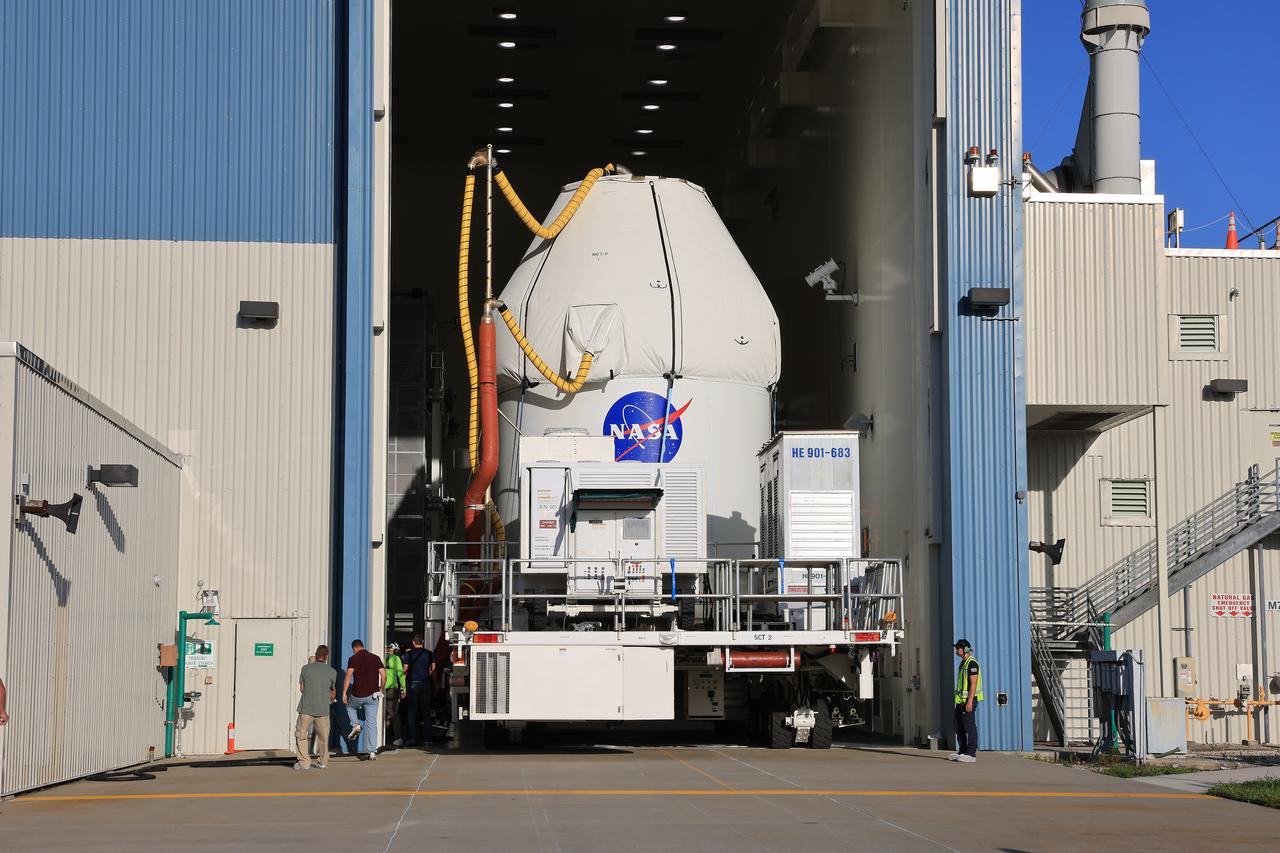
Crews prepare to move NASA’s Artemis II Orion spacecraft from the Multi-Payload Processing Facility to the Launch Abort System Facility at the agency’s Kennedy Space Center in Florida on Saturday, Aug. 9, 2025. Technicians will integrate Orion with its 44-foot-tall launch abort system designed to carry the crew to safety in the event of an emergency during launch or ascent atop the SLS (Space Launch System) rocket. The Artemis II test flight will send NASA astronauts Reid Wiseman, Victor Glover, and Christina Koch, and CSA (Canadian Space Agency) astronaut Jeremy Hansen around the Moon and return them safely back home.
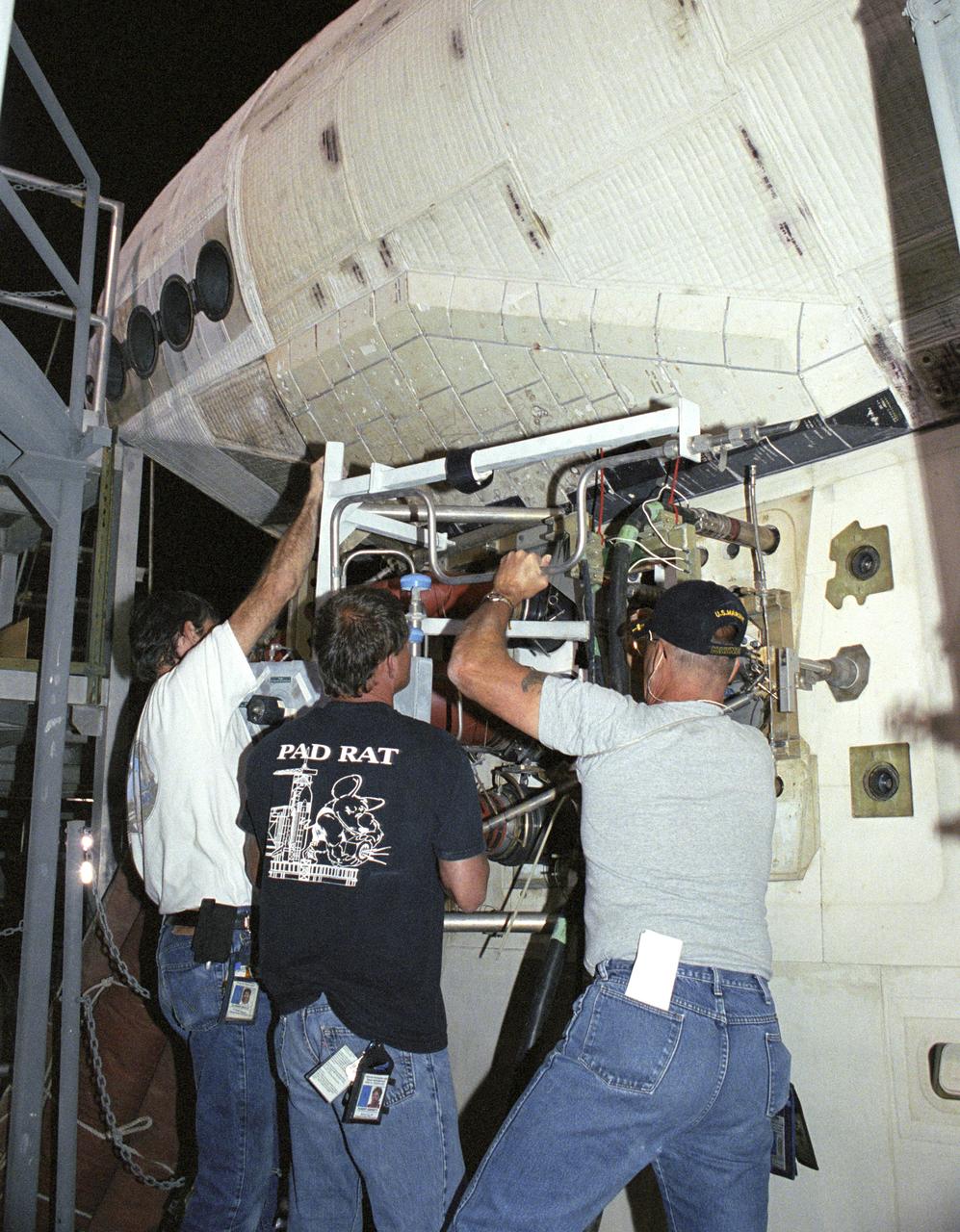
Todd Viddle; APU advanced systems technician, Robert 'Skip' Garrett; main propulsion advanced systems technician, and Dan McGrath; main propulsion systems engineer technician, remove a servicing unit from the Space Shuttle Discovery as part of it's post-flight processing at NASA's Dryden Flight Research Center. The Space Shuttles receive post-flight servicing in the Mate-Demate Device (MDD) following landings at NASA's Dryden Flight Research Center, Edwards, California. The gantry-like MDD structure is used for servicing the shuttle orbiters in preparation for their ferry flight back to the Kennedy Space Center in Florida, including mounting the shuttle atop NASA's modified Boeing 747 Shuttle Carrier Aircraft. Space Shuttle Discovery landed safely at NASA's Dryden Flight Research Center at Edwards Air Force Base in California at 5:11:22 a.m. PDT, August 9, 2005, following the very successful 14-day STS-114 return to flight mission. During their two weeks in space, Commander Eileen Collins and her six crewmates tested out new safety procedures and delivered supplies and equipment the International Space Station. Discovery spent two weeks in space, where the crew demonstrated new methods to inspect and repair the Shuttle in orbit. The crew also delivered supplies, outfitted and performed maintenance on the International Space Station. A number of these tasks were conducted during three spacewalks. In an unprecedented event, spacewalkers were called upon to remove protruding gap fillers from the heat shield on Discovery's underbelly. In other spacewalk activities, astronauts installed an external platform onto the Station's Quest Airlock and replaced one of the orbital outpost's Control Moment Gyroscopes. Inside the Station, the STS-114 crew conducted joint operations with the Expedition 11 crew. They unloaded fresh supplies from the Shuttle and the Raffaello Multi-Purpose Logistics Module. Before Discovery undocked, the crews filled Raffeallo with unneeded items
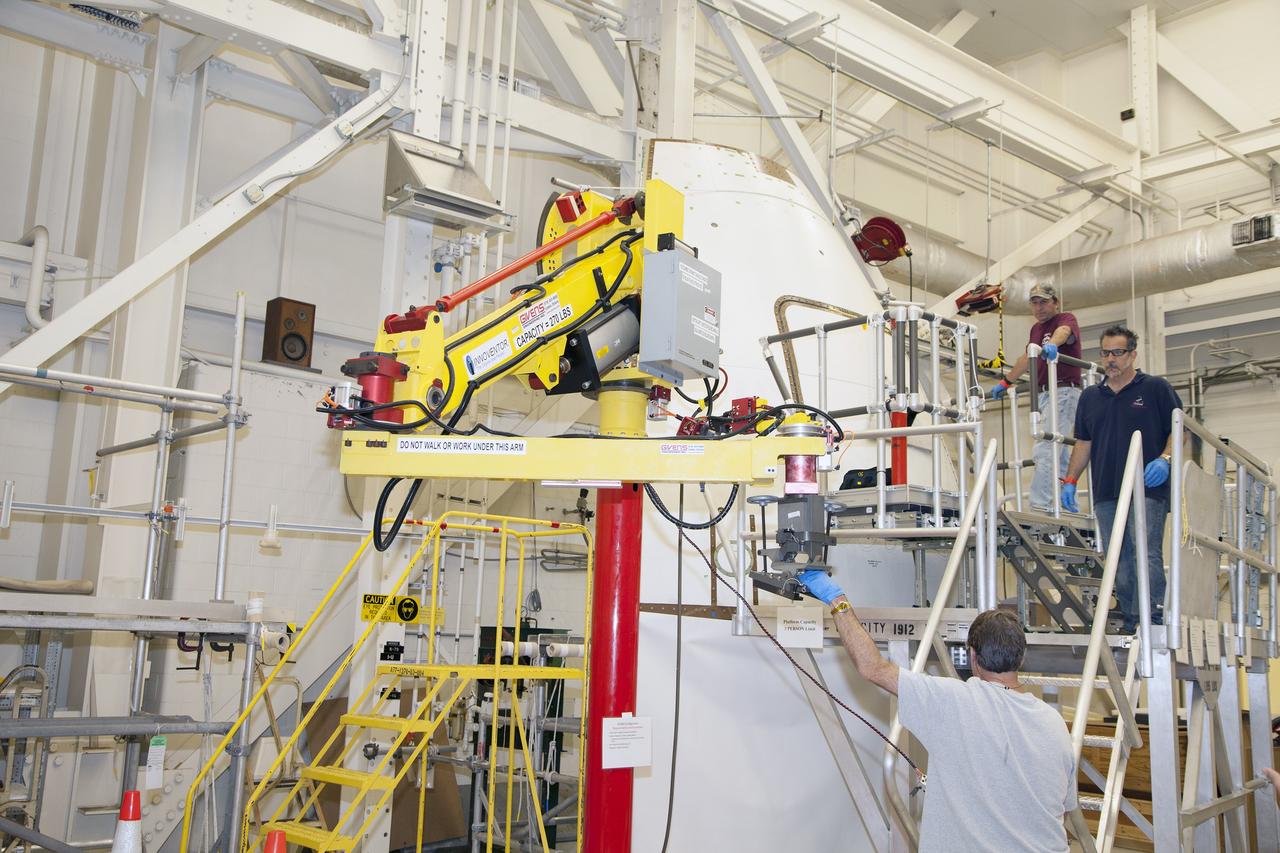
CAPE CANAVERAL, Fla. – Inside the Vehicle Assembly Building at NASA’s Kennedy Space Center in Florida, engineers and technicians prepare the ground test article Launch Abort System, or LAS, ogive panel and an Orion crew module simulator for a GIZMO demonstration test. A technician moves the GIZMO, a pneumatically-balanced manipulator that will be used for installation of the crew module and LAS flight hatches for the uncrewed Exploration Flight Test-1 and Exploration Mission-1, toward the mockup. The Ground Systems Development and Operations Program is running the test to demonstrate that the GIZMO can meet the reach and handling requirements for the task. Orion is the exploration spacecraft designed to carry astronauts to destinations not yet explored by humans, including an asteroid and Mars. It will have emergency abort capability, sustain the crew during space travel and provide safe re-entry from deep space return velocities. The first unpiloted test flight of the Orion is scheduled to launch later this year atop a Delta IV rocket and in 2017 on NASA’s Space Launch System rocket. For more information, visit http://www.nasa.gov/orion. Photo credit: NASA/Daniel Casper
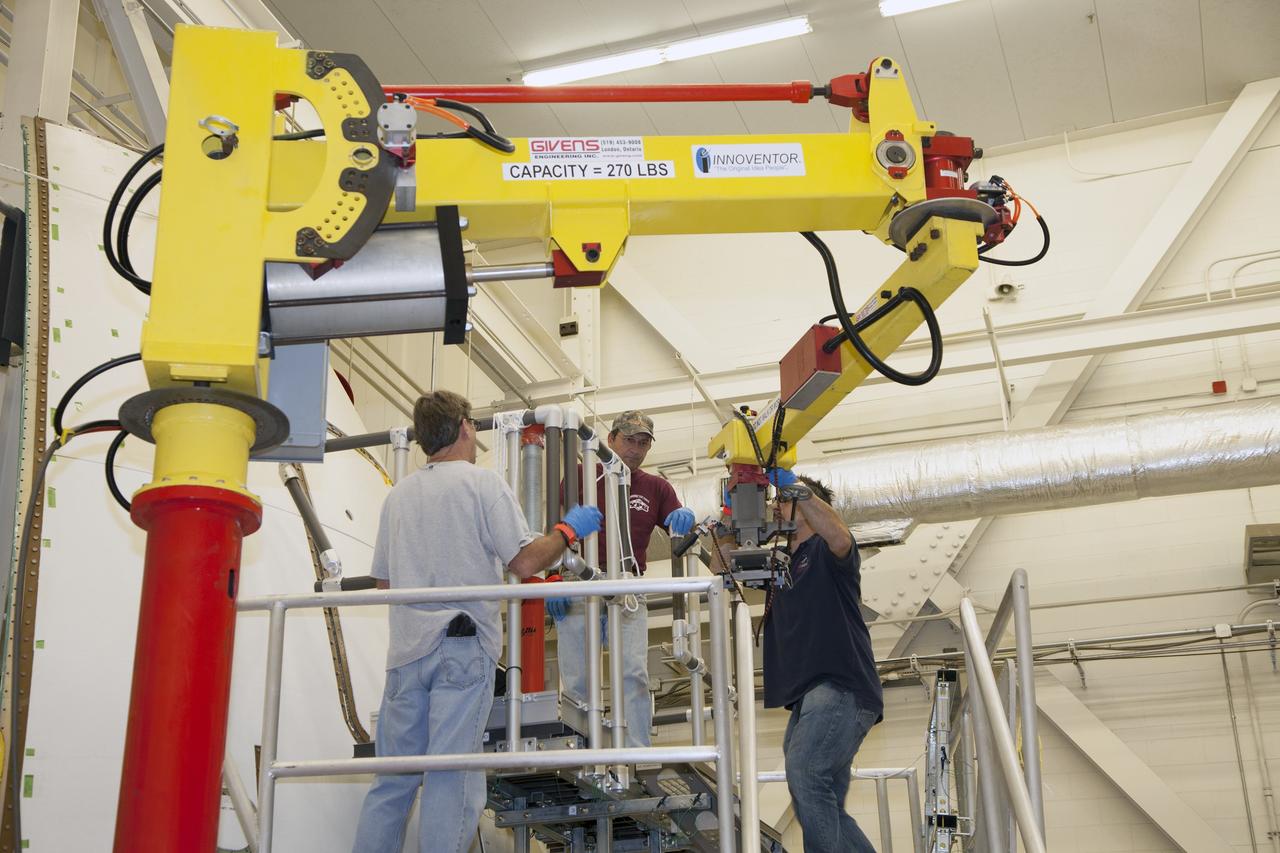
CAPE CANAVERAL, Fla. – Inside the Vehicle Assembly Building at NASA’s Kennedy Space Center in Florida, engineers and technicians have prepared the ground test article Launch Abort System, or LAS, ogive panel and an Orion crew module simulator for a GIZMO demonstration test. A technician moves the GIZMO, a pneumatically-balanced manipulator that will be used for installation of the crew module and LAS flight hatches for the uncrewed Exploration Flight Test-1 and Exploration Mission-1, toward the mockup. The Ground Systems Development and Operations Program is running the test to demonstrate that the GIZMO can meet the reach and handling requirements for the task. Orion is the exploration spacecraft designed to carry astronauts to destinations not yet explored by humans, including an asteroid and Mars. It will have emergency abort capability, sustain the crew during space travel and provide safe re-entry from deep space return velocities. The first unpiloted test flight of the Orion is scheduled to launch later this year atop a Delta IV rocket and in 2017 on NASA’s Space Launch System rocket. For more information, visit http://www.nasa.gov/orion. Photo credit: NASA/Daniel Casper
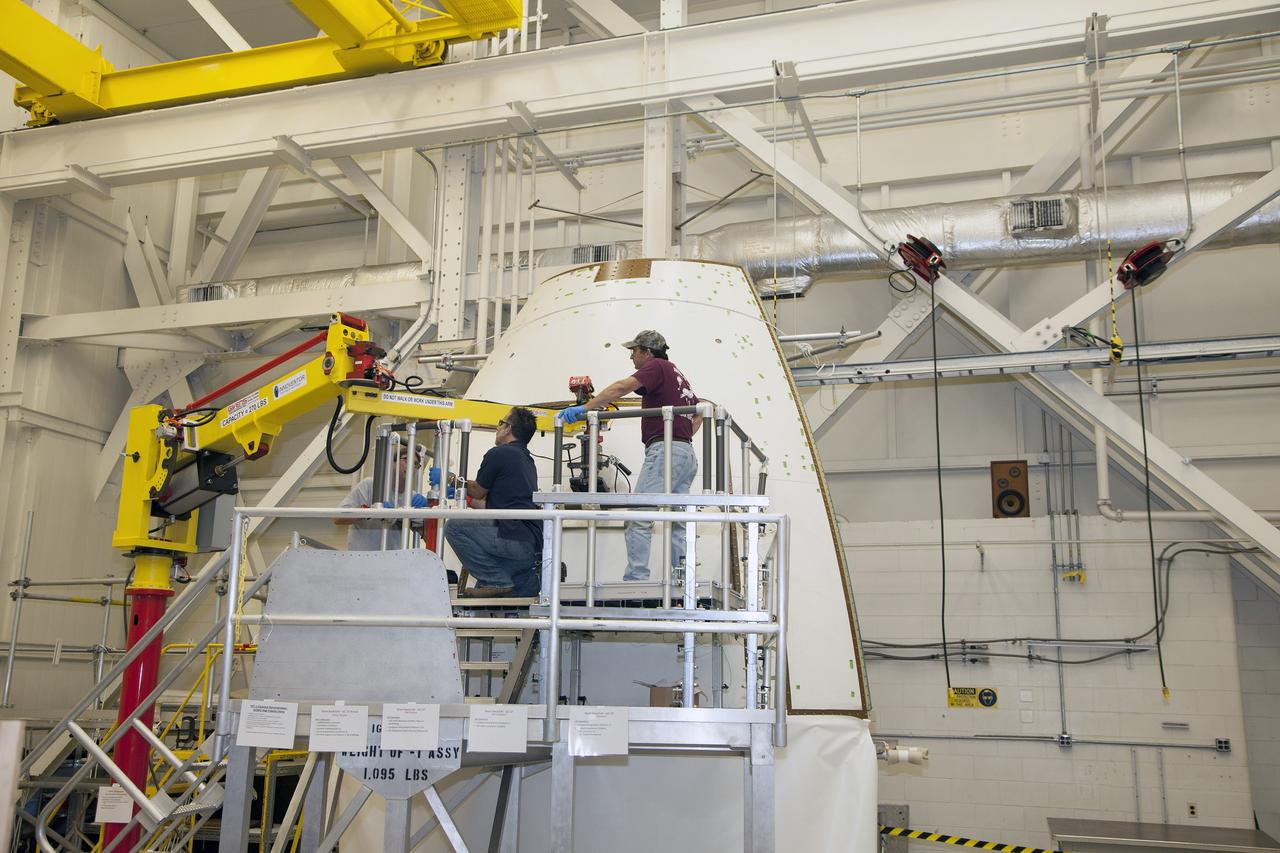
CAPE CANAVERAL, Fla. – Inside the Vehicle Assembly Building at NASA’s Kennedy Space Center in Florida, engineers and technicians have prepared the ground test article Launch Abort System, or LAS, ogive panel and an Orion crew module simulator for a GIZMO demonstration test. A technician moves the GIZMO, a pneumatically-balanced manipulator that will be used for installation of the crew module and LAS flight hatches for the uncrewed Exploration Flight Test-1 and Exploration Mission-1, toward the mockup. The Ground Systems Development and Operations Program is running the test to demonstrate that the GIZMO can meet the reach and handling requirements for the task. Orion is the exploration spacecraft designed to carry astronauts to destinations not yet explored by humans, including an asteroid and Mars. It will have emergency abort capability, sustain the crew during space travel and provide safe re-entry from deep space return velocities. The first unpiloted test flight of the Orion is scheduled to launch later this year atop a Delta IV rocket and in 2017 on NASA’s Space Launch System rocket. For more information, visit http://www.nasa.gov/orion. Photo credit: NASA/Daniel Casper
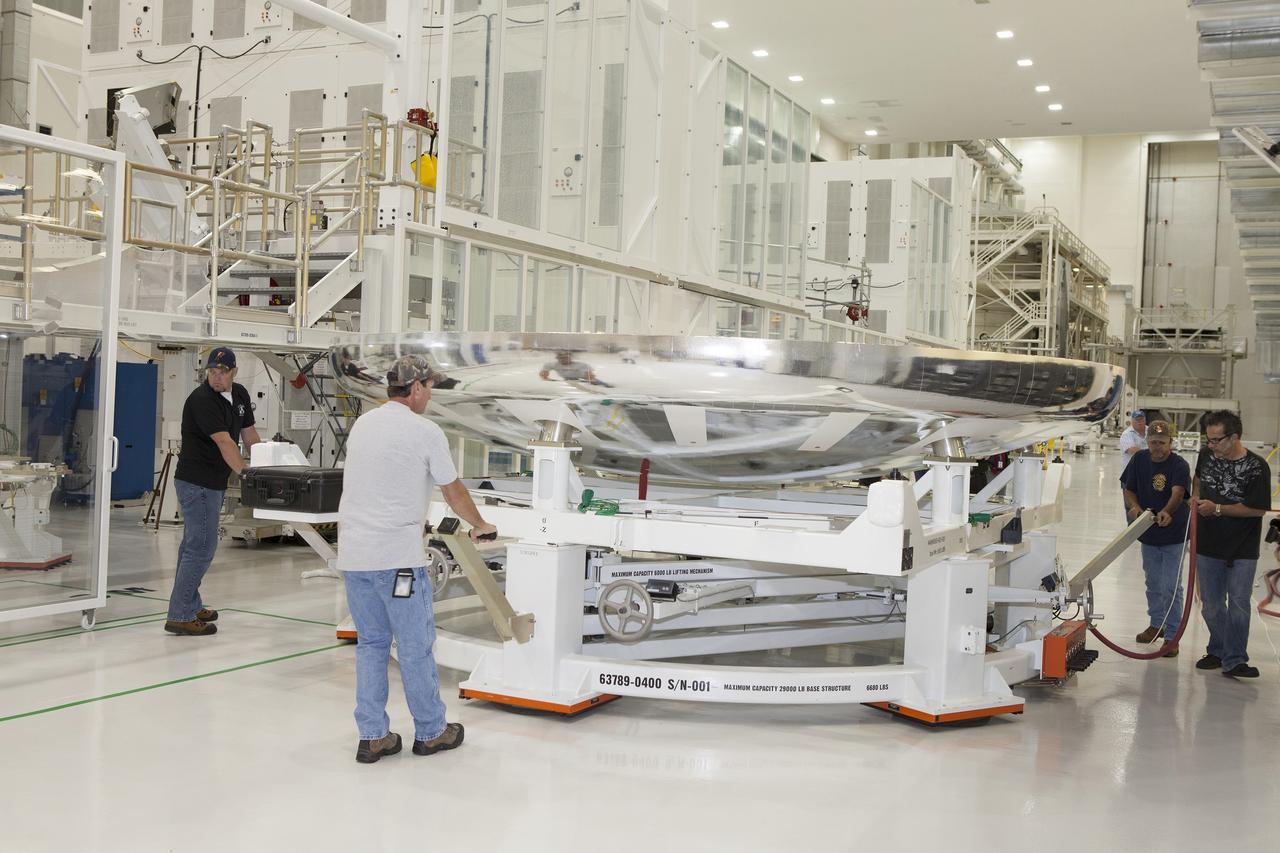
CAPE CANAVERAL, Fla. -- Lockheed Martin technicians and engineers move the heat shield for the Orion crew module down the aisle inside the Operations and Checkout Building high bay at NASA's Kennedy Space Center in Florida. Technicians have installed more than 200 instrumentation sensors on the heat shield and are preparing it for installation on the crew module. Orion is the exploration spacecraft designed to carry astronauts to destinations not yet explored by humans, including an asteroid and Mars. It will have emergency abort capability, sustain the crew during space travel and provide safe re-entry from deep space return velocities. The first unpiloted test flight of the Orion is scheduled to launch later this year atop a Delta IV rocket from Cape Canaveral Air Force Station in Florida to an altitude of 3,600 miles above the Earth's surface. The two-orbit, four-hour flight test will help engineers evaluate the systems critical to crew safety including the heat shield, parachute system and launch abort system. For more information, visit http://www.nasa.gov/orion. Photo credit: NASA/Daniel Casper
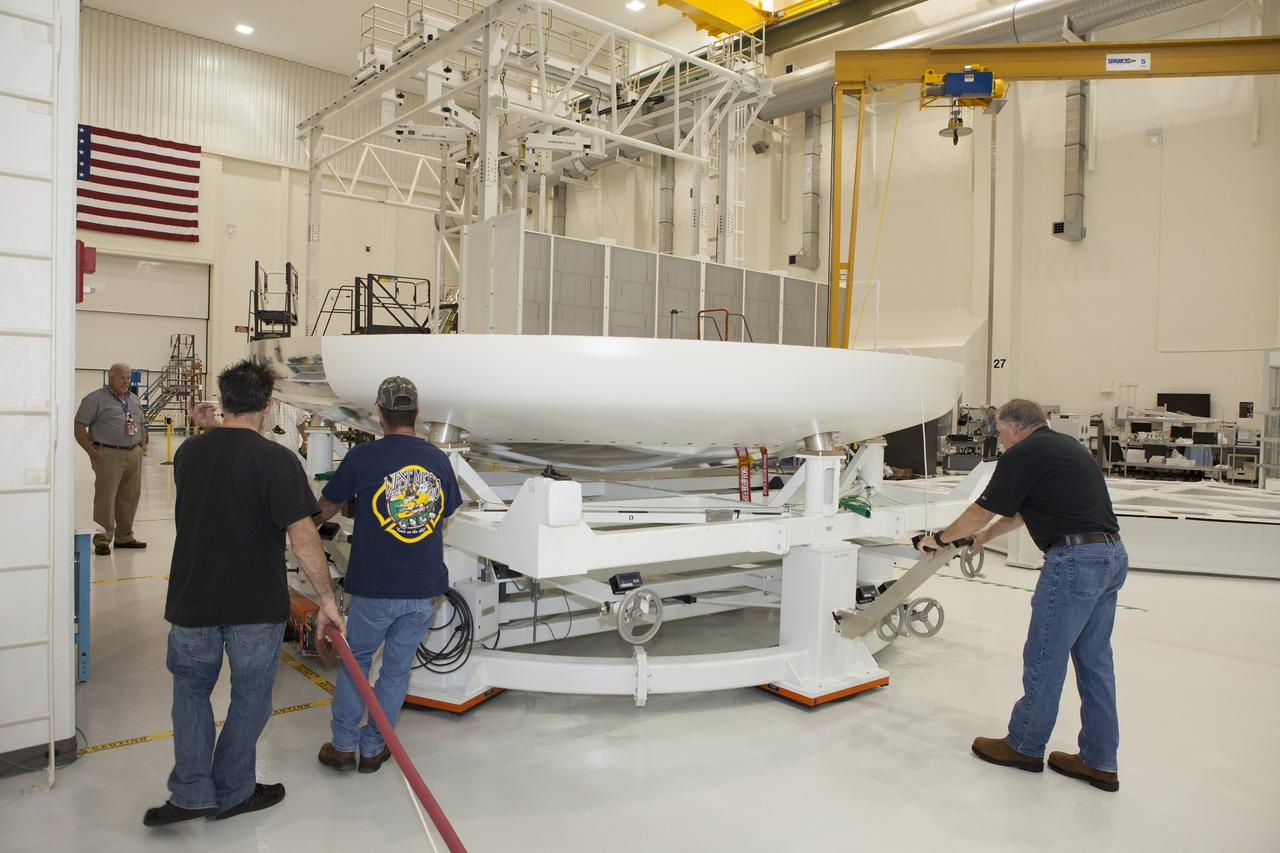
CAPE CANAVERAL, Fla. -- Lockheed Martin technicians and engineers move the heat shield for the Orion crew module down the aisle inside the Operations and Checkout Building high bay at NASA's Kennedy Space Center in Florida. Technicians have installed more than 200 instrumentation sensors on the heat shield and are preparing it for installation on the crew module. Orion is the exploration spacecraft designed to carry astronauts to destinations not yet explored by humans, including an asteroid and Mars. It will have emergency abort capability, sustain the crew during space travel and provide safe re-entry from deep space return velocities. The first unpiloted test flight of the Orion is scheduled to launch later this year atop a Delta IV rocket from Cape Canaveral Air Force Station in Florida to an altitude of 3,600 miles above the Earth's surface. The two-orbit, four-hour flight test will help engineers evaluate the systems critical to crew safety including the heat shield, parachute system and launch abort system. For more information, visit http://www.nasa.gov/orion. Photo credit: NASA/Daniel Casper
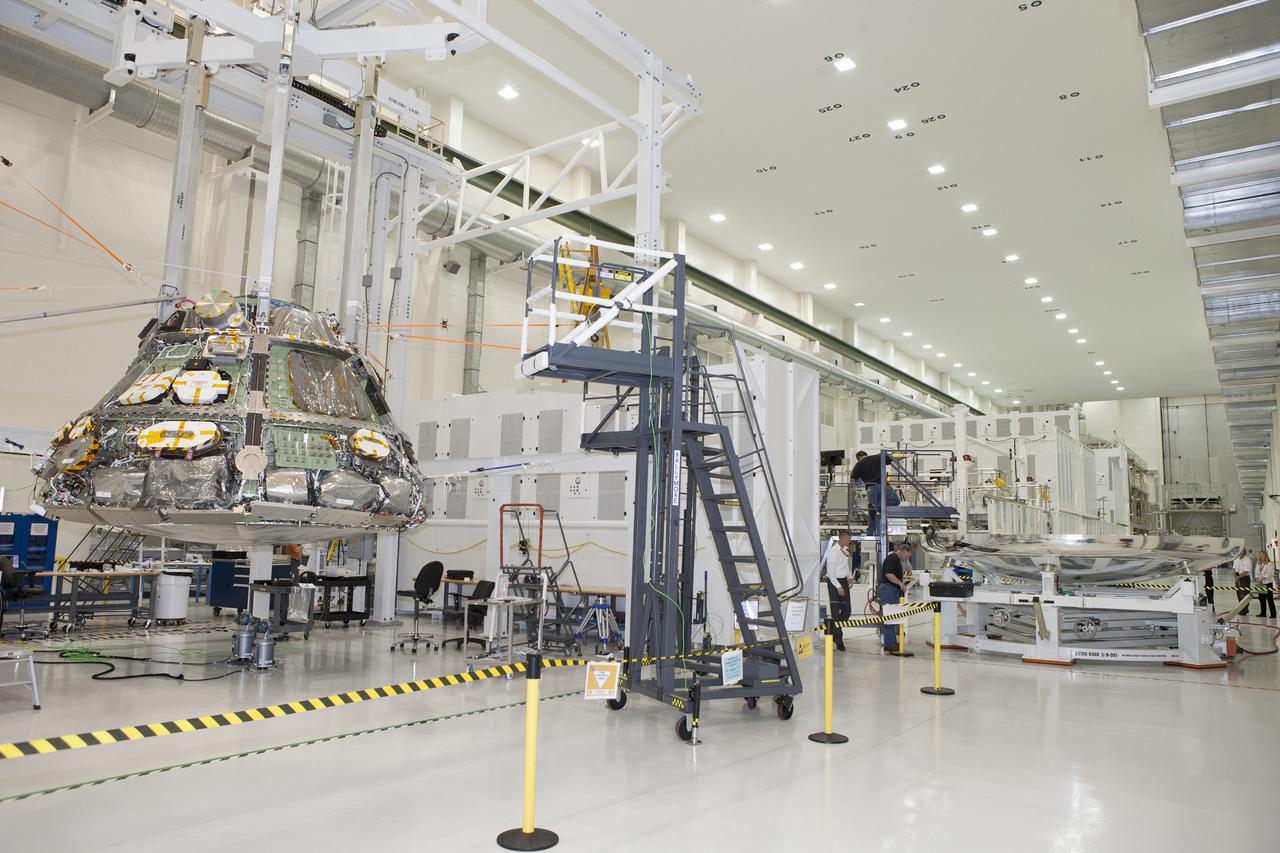
CAPE CANAVERAL, Fla. -- Inside the Operations and Checkout Building high bay at NASA's Kennedy Space Center in Florida, Lockheed Martin technicians and engineers have positioned the heat shield near the Orion crew module. Technicians have installed more than 200 instrumentation sensors on the heat shield and are preparing it for installation on the crew module. Orion is the exploration spacecraft designed to carry astronauts to destinations not yet explored by humans, including an asteroid and Mars. It will have emergency abort capability, sustain the crew during space travel and provide safe re-entry from deep space return velocities. The first unpiloted test flight of the Orion is scheduled to launch later this year atop a Delta IV rocket from Cape Canaveral Air Force Station in Florida to an altitude of 3,600 miles above the Earth's surface. The two-orbit, four-hour flight test will help engineers evaluate the systems critical to crew safety including the heat shield, parachute system and launch abort system. For more information, visit http://www.nasa.gov/orion. Photo credit: NASA/Daniel Casper
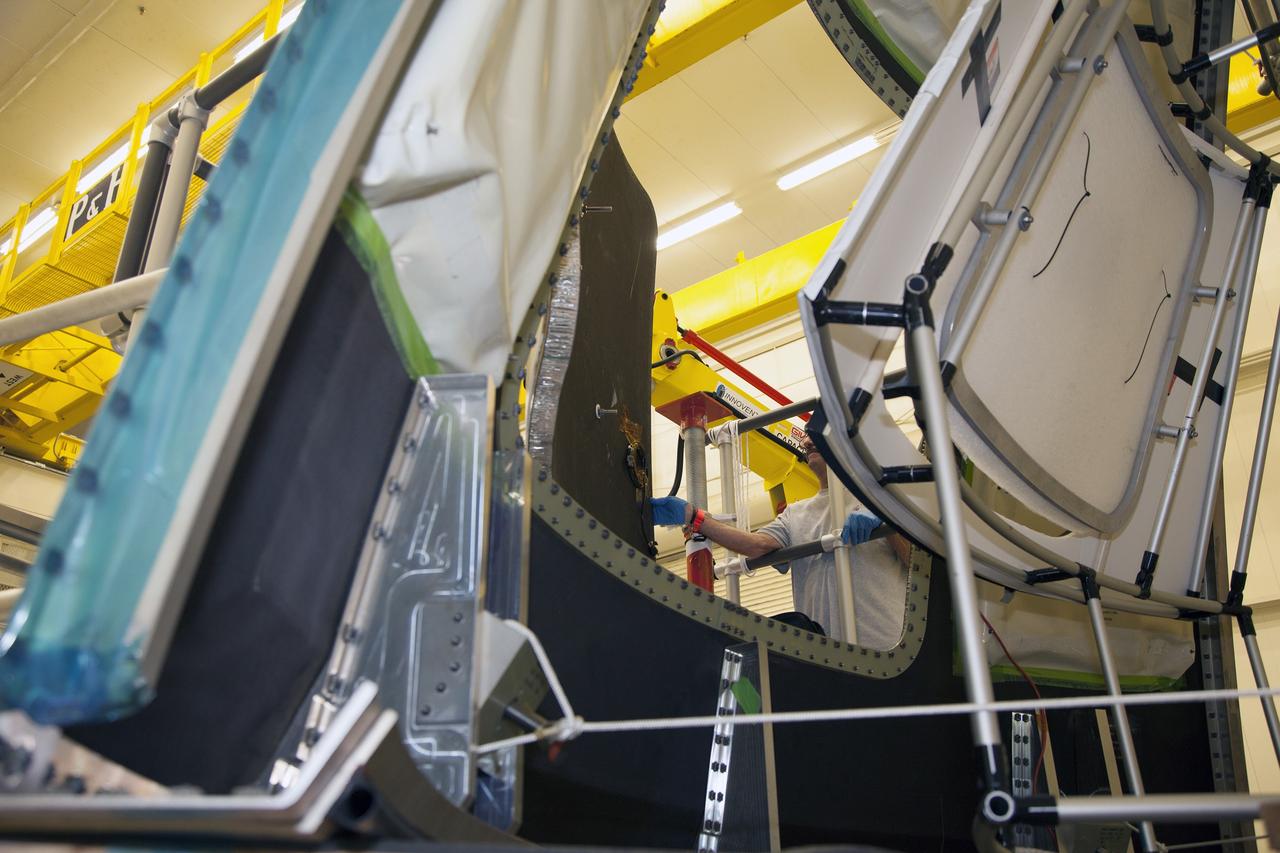
CAPE CANAVERAL, Fla. – Inside the Vehicle Assembly Building at NASA’s Kennedy Space Center in Florida, engineers and technicians are performing a GIZMO demonstration test on the ground test article Launch Abort System, or LAS, ogive panel and an Orion crew module simulator. Technicians attached the GIZMO to remove the outer ogive panel hatch on the Orion crew module simulator. The GIZMO is a pneumatically-balanced manipulator that will be used for installation of the hatches on the crew module and LAS for the uncrewed Exploration Flight Test-1 and Exploration Mission-1. The Ground Systems Development and Operations Program is running the test to demonstrate that the GIZMO can meet the reach and handling requirements for the task. Orion is the exploration spacecraft designed to carry astronauts to destinations not yet explored by humans, including an asteroid and Mars. It will have emergency abort capability, sustain the crew during space travel and provide safe re-entry from deep space return velocities. The first unpiloted test flight of the Orion is scheduled to launch later this year atop a Delta IV rocket and in 2017 on NASA’s Space Launch System rocket. For more information, visit http://www.nasa.gov/orion. Photo credit: NASA/Daniel Casper
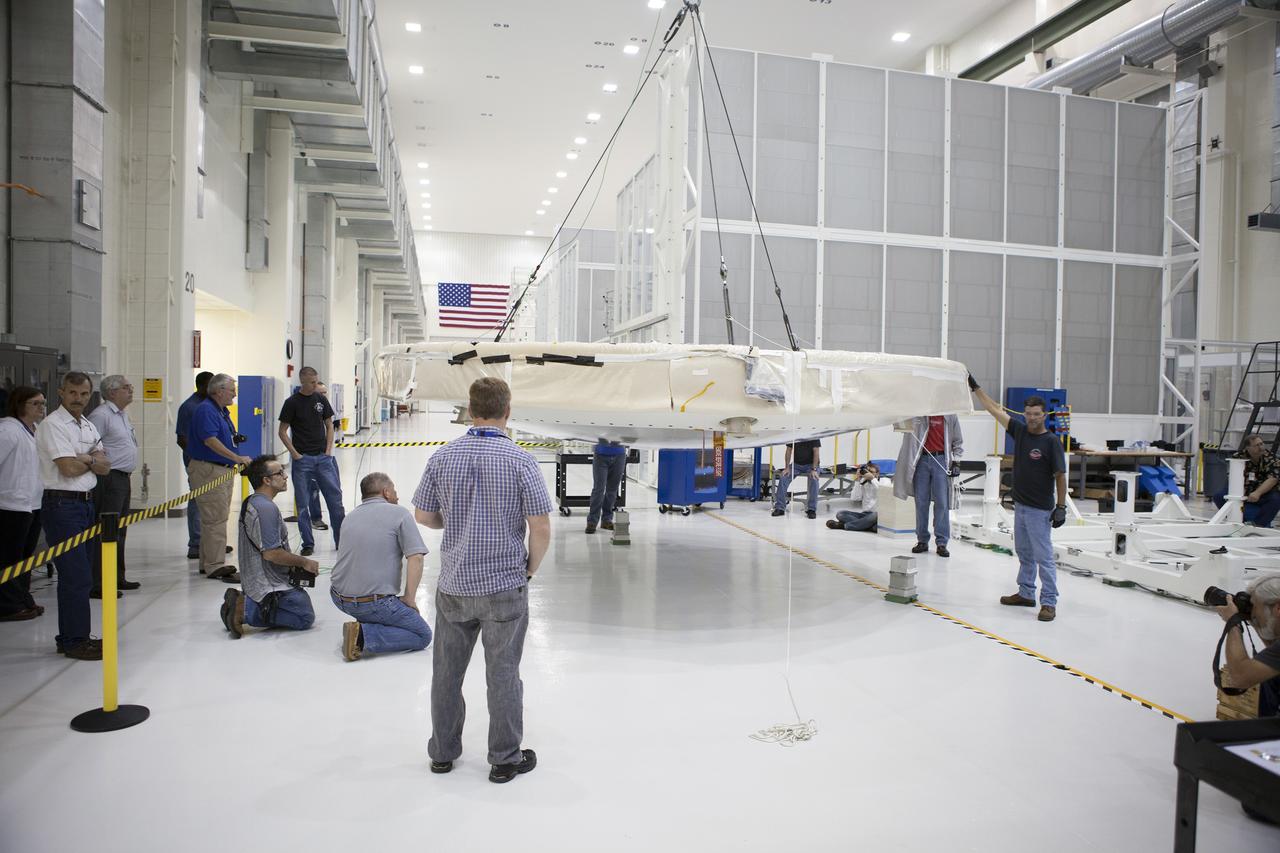
CAPE CANAVERAL, Fla. -- Inside the Operations and Checkout Building high bay at NASA's Kennedy Space Center in Florida, Lockheed Martin technicians and engineers monitor the progress as a crane positions the Orion heat shield near the crew module in the high bay. Technicians have installed more than 200 instrumentation sensors on the heat shield and are preparing it for installation on the Orion crew module. Orion is the exploration spacecraft designed to carry astronauts to destinations not yet explored by humans, including an asteroid and Mars. It will have emergency abort capability, sustain the crew during space travel and provide safe re-entry from deep space return velocities. The first unpiloted test flight of the Orion is scheduled to launch later this year atop a Delta IV rocket from Cape Canaveral Air Force Station in Florida to an altitude of 3,600 miles above the Earth's surface. The two-orbit, four-hour flight test will help engineers evaluate the systems critical to crew safety including the heat shield, parachute system and launch abort system. For more information, visit http://www.nasa.gov/orion. Photo credit: NASA/Frankie Martin
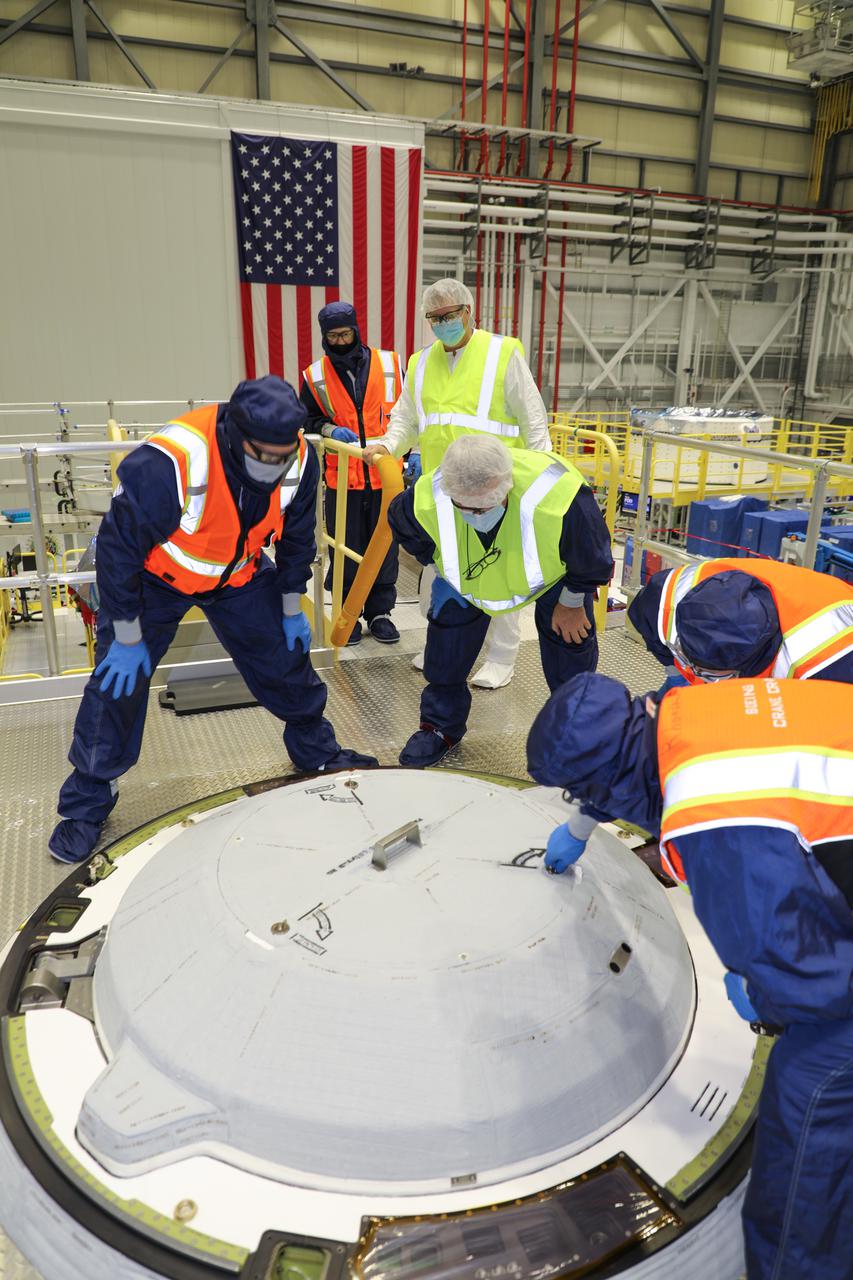
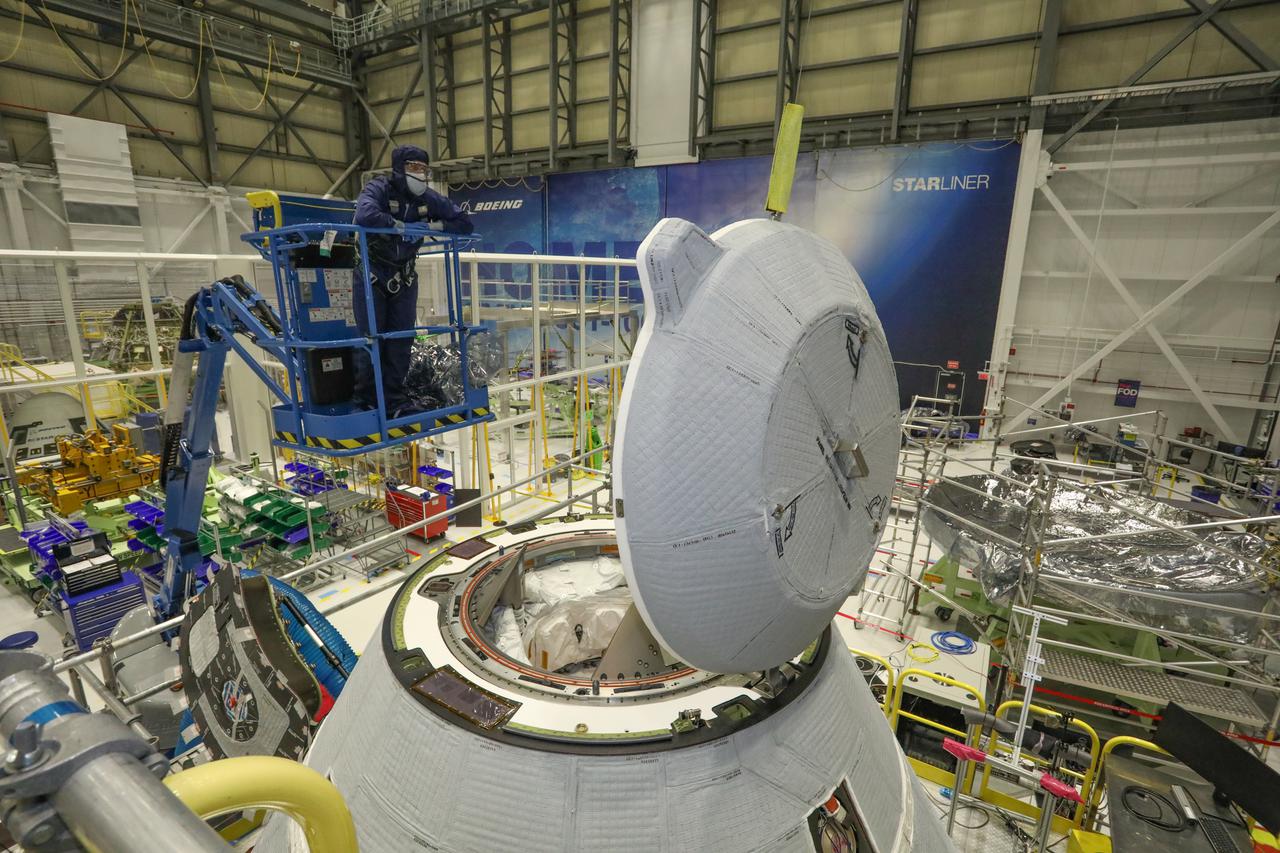
Technicians work on the NASA Docking System (NDS) hatch installation in the Commercial Crew and Cargo Processing Facility at Kennedy Space Center in Florida on Jan. 2, 2021. The NDS cover was installed on Boeing’s Starliner spacecraft in preparation for the company’s second Orbital Flight Test (OFT-2), as part of NASA’s Commercial Crew Program. The cover is designed to protect the components that connect the spacecraft to the International Space Station.
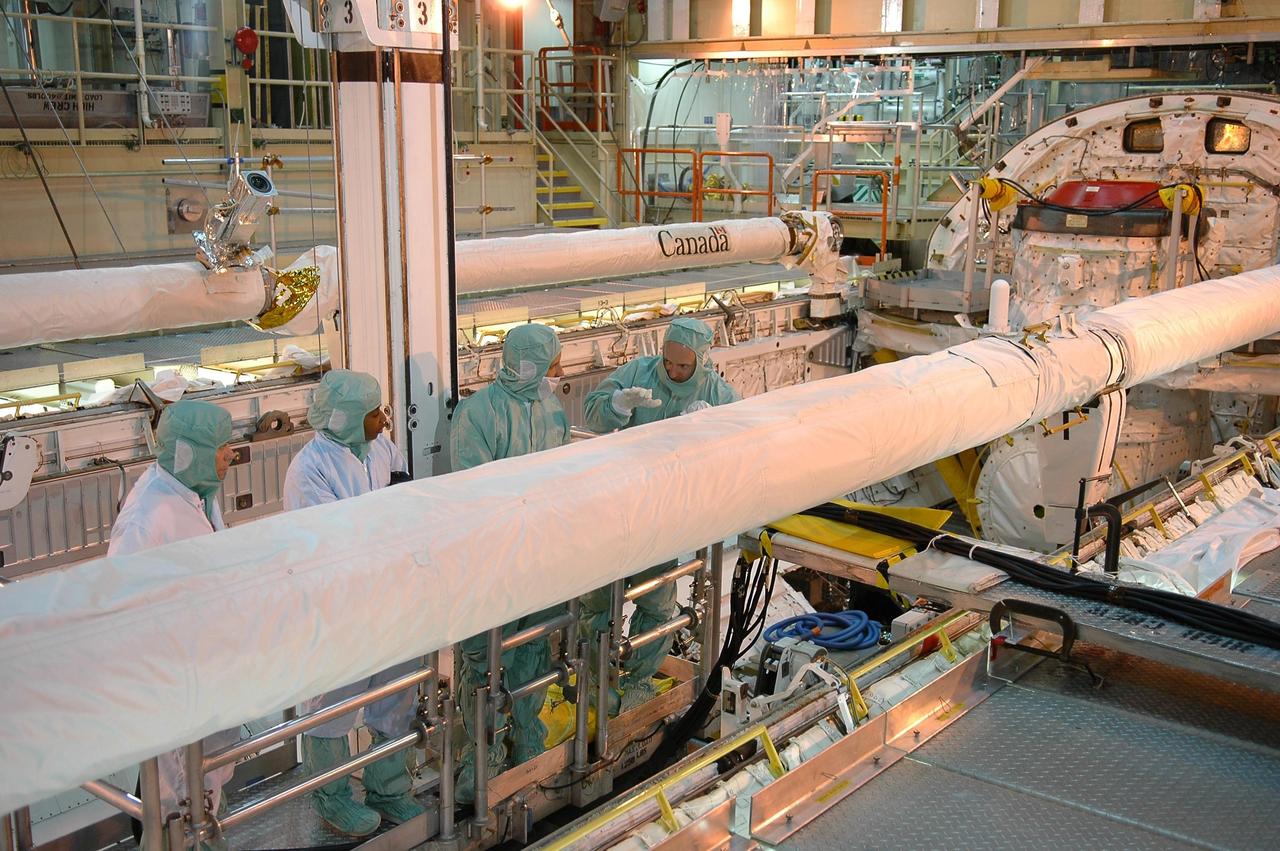
KENNEDY SPACE CENTER, FLA. - In NASA Kennedy Space Center's Orbiter Processing Facility bay 3, STS-121 Pilot Mark Kelly and Mission Specialist Stephanie Wilson are joined by two shuttle technicians as they examine the orbiter boom sensor system in Discovery's payload bay. The crew is at Kennedy to take part in the crew equipment interface test, which provides hands-on experience with equipment to be used on-orbit. Launch of Space Shuttle Discovery on mission STS-121, the second return-to-flight mission, is scheduled no earlier than May.
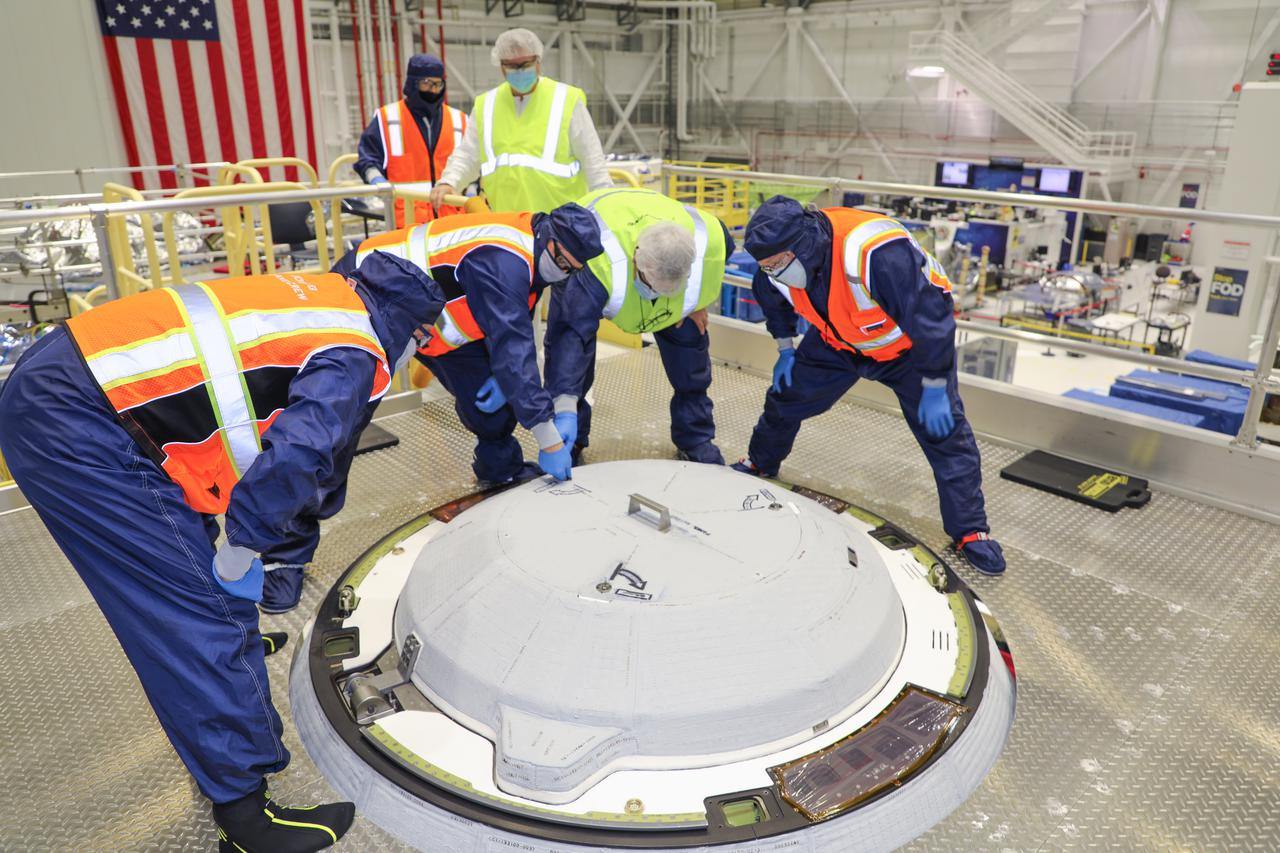
A technician observes the functional test of the NASA Docking System (NDS) cover in the Commercial Crew and Cargo Processing Facility at Kennedy Space Center in Florida on Jan. 2, 2021. The test was conducted in preparation for Boeing’s second Orbital Flight Test (OFT-2), as part of NASA’s Commercial Crew Program. The cover is designed to protect the components that connect the spacecraft to the International Space Station.
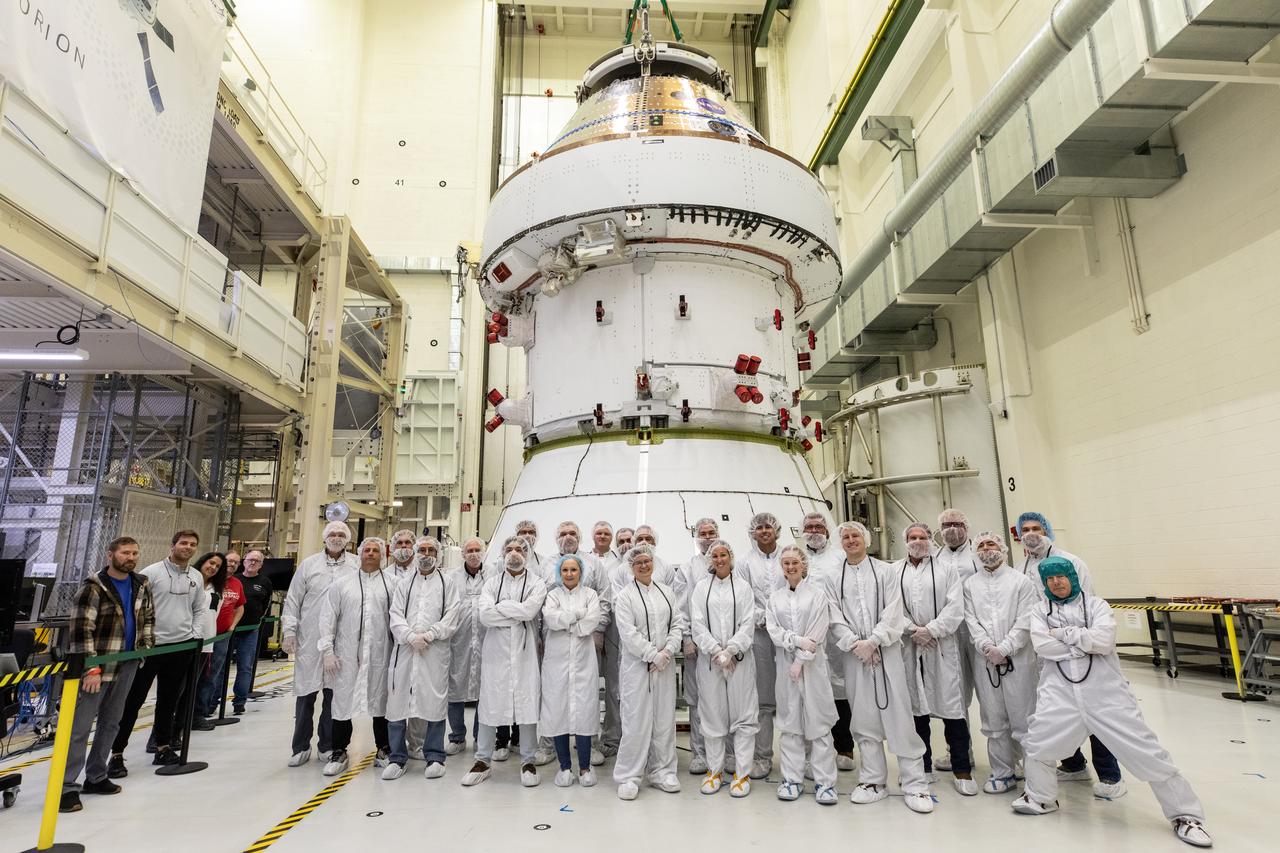
Crews with NASA and Lockheed Martin pose for a photo in front of NASA’s Artemis II Orion spacecraft inside the Neil A. Operations and Checkout Building at NASA’s Kennedy Space Center in Florida on Saturday, Feb. 22, 2025. Technicians operated a 30-ton crane to move the spacecraft from the Final Assembly and System Testing cell to prepare for upcoming installation of four solar array wings and spacecraft adapter jettison fairings for the agency’s first crewed flight test under the Artemis campaign.
Technicians work on the NASA Docking System (NDS) cover hatch installation in the Commercial Crew and Cargo Processing Facility at Kennedy Space Center in Florida on Jan. 2, 2021. The NDS cover was installed on Boeing’s Starliner spacecraft in preparation for the company’s second Orbital Flight Test (OFT-2), as part of NASA’s Commercial Crew Program. The cover is designed to protect the components that connect the spacecraft to the International Space Station.
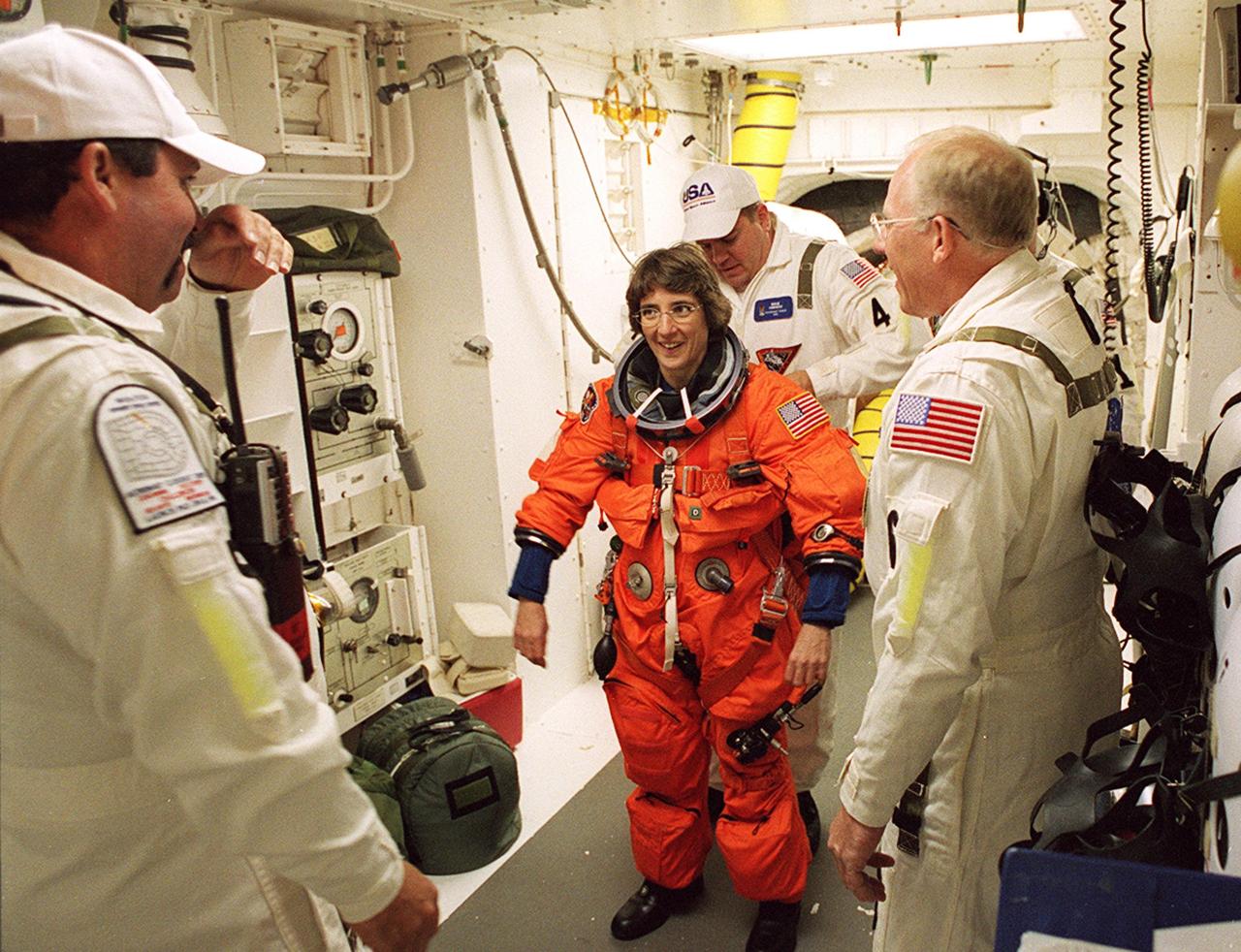
KENNEDY SPACE CENTER, FLA. -- In the White Room, STS-109 Mission Specialist Nancy Jane Currie is helped with her launch and entry suit by closeout crew member Rene Arriens (behind her), USA mechanical technician. At right is Danny Wyatt, NASA quality assurance specialist; in the foreground left is Tim Seymour, USA mechanical technician. On the mission, Columbia will rendezvous with the Hubble Space Telescope for the crew to replace and upgrade key telescope systems through five challenging spacewalks. After an extensive 2-1/2 year modification period during which many systems were replaced and enhanced, Columbia is making its 27th flight in the Shuttle program. After the 11-day mission, Columbia is expected to land at Kennedy Space Center March 12.
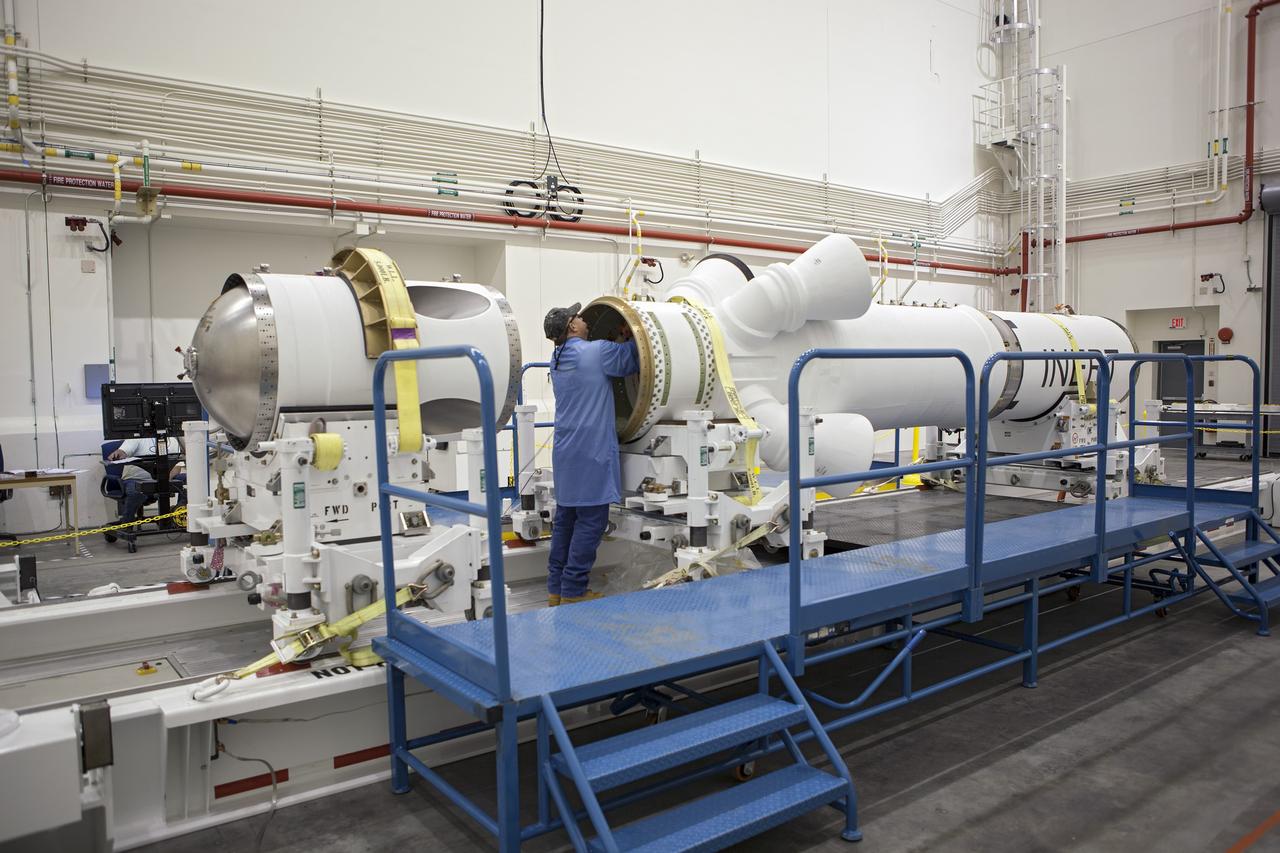
CAPE CANAVERAL, Fla. -- Inside the Launch Abort System Facility at NASA’s Kennedy Space Center in Florida, a technician prepares the launch abort motor for connection to the attitude control motor. Both are segments of Orion’s Launch Abort System, which is designed to safely pull the Orion crew module away from the launch vehicle in the event of an emergency on the launch pad or during the initial ascent of NASA’s Space Launch System, or SLS, rocket. Orion is the exploration spacecraft designed to carry crews to space beyond low Earth orbit. It will provide emergency abort capability, sustain the crew during the space travel and provide safe re-entry from deep space return velocities. Orion’s first unpiloted test flight is scheduled to launch in 2014 atop a Delta IV rocket. A second uncrewed flight test is scheduled for 2017 on the SLS rocket. For more information, visit http://www.nasa.gov/orion. Photo credit: NASA/Dimitri Gerondidakis
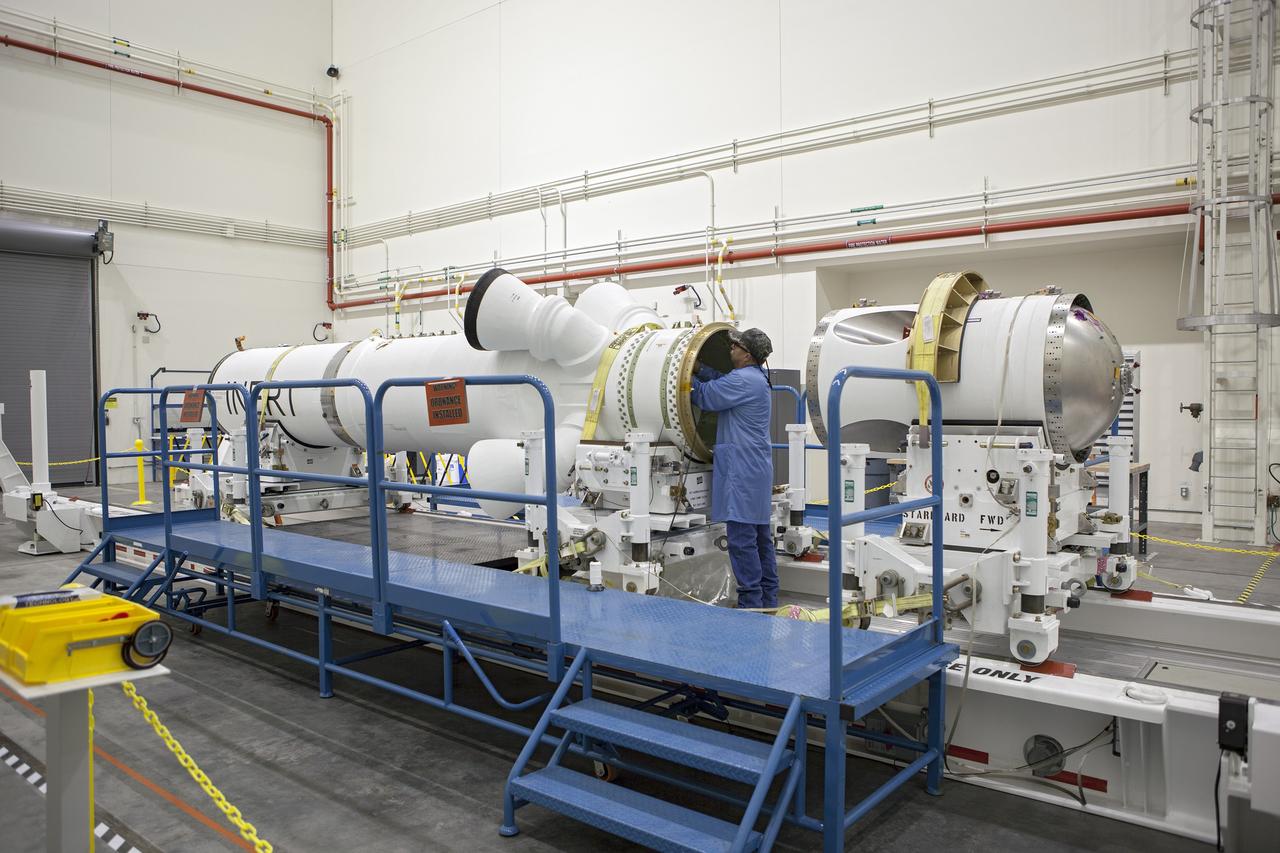
CAPE CANAVERAL, Fla. -- Inside the Launch Abort System Facility at NASA’s Kennedy Space Center in Florida, a technician prepares the launch abort motor for connection to the attitude control motor. Both are segments of Orion’s Launch Abort System, which is designed to safely pull the Orion crew module away from the launch vehicle in the event of an emergency on the launch pad or during the initial ascent of NASA’s Space Launch System, or SLS, rocket. Orion is the exploration spacecraft designed to carry crews to space beyond low Earth orbit. It will provide emergency abort capability, sustain the crew during the space travel and provide safe re-entry from deep space return velocities. Orion’s first unpiloted test flight is scheduled to launch in 2014 atop a Delta IV rocket. A second uncrewed flight test is scheduled for 2017 on the SLS rocket. For more information, visit http://www.nasa.gov/orion. Photo credit: NASA/Dimitri Gerondidakis
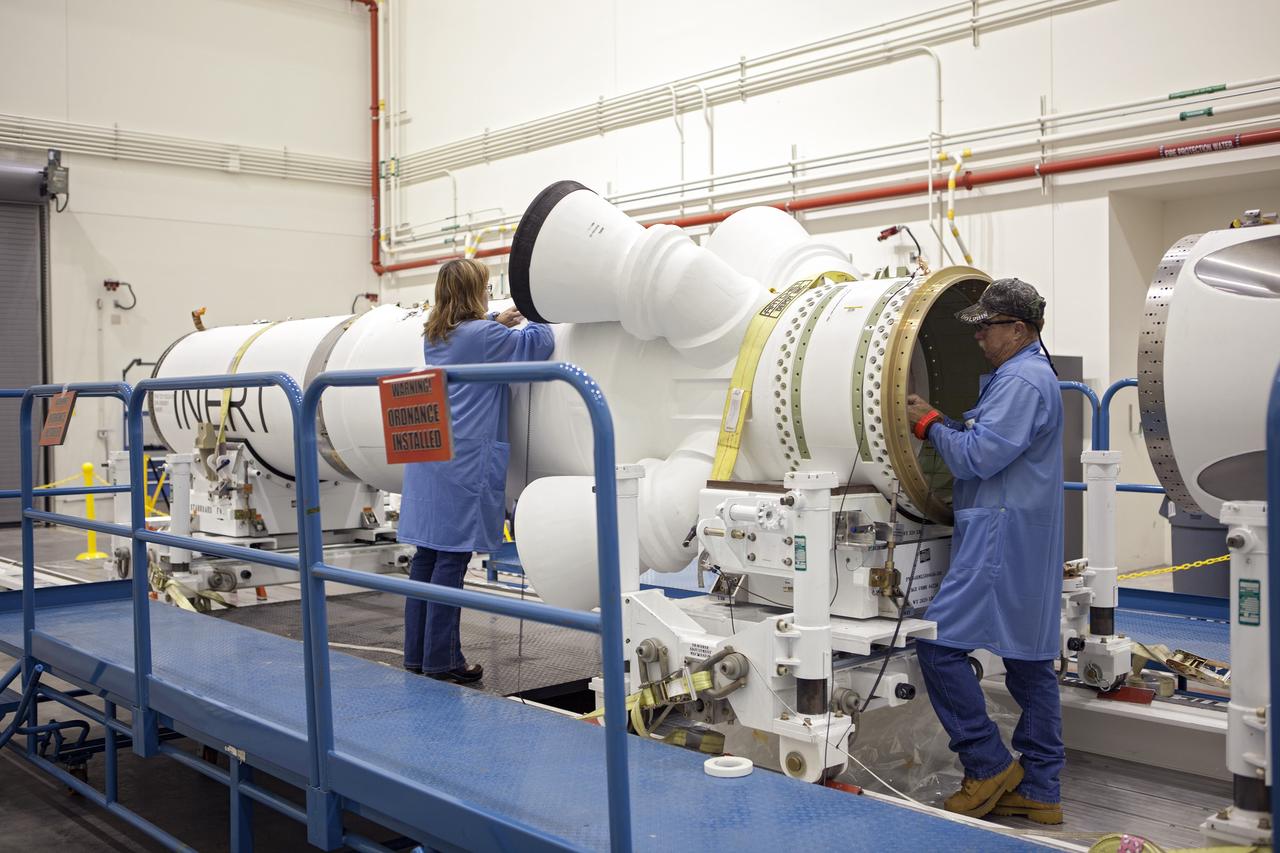
CAPE CANAVERAL, Fla. -- Inside the Launch Abort System Facility at NASA’s Kennedy Space Center in Florida, technicians prepare the launch abort motor for connection to the attitude control motor. Both are segments of Orion’s Launch Abort System, which is designed to safely pull the Orion crew module away from the launch vehicle in the event of an emergency on the launch pad or during the initial ascent of NASA’s Space Launch System, or SLS, rocket. Orion is the exploration spacecraft designed to carry crews to space beyond low Earth orbit. It will provide emergency abort capability, sustain the crew during the space travel and provide safe re-entry from deep space return velocities. Orion’s first unpiloted test flight is scheduled to launch in 2014 atop a Delta IV rocket. A second uncrewed flight test is scheduled for 2017 on the SLS rocket. For more information, visit http://www.nasa.gov/orion. Photo credit: NASA/Dimitri Gerondidakis
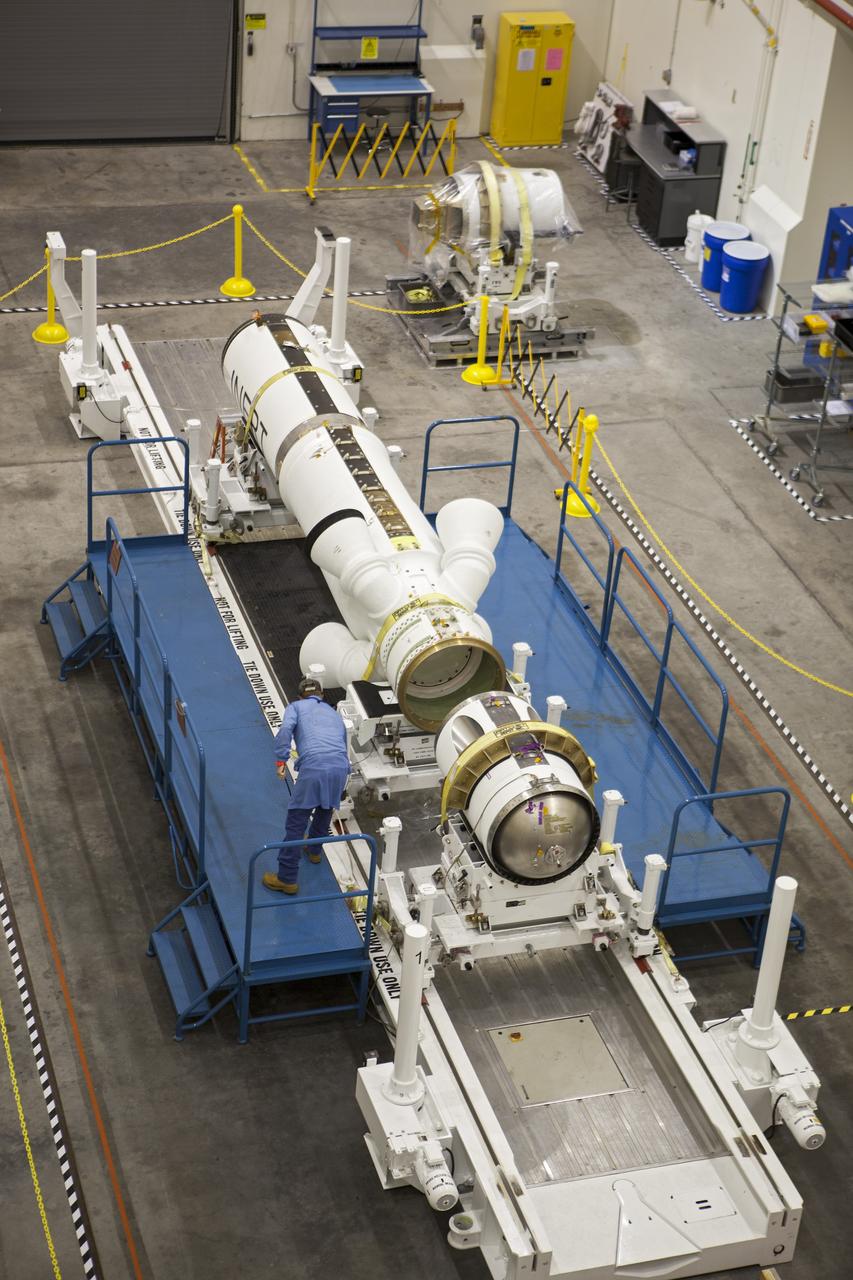
CAPE CANAVERAL, Fla. -- Inside the Launch Abort System Facility at NASA’s Kennedy Space Center in Florida, a technician prepares the launch abort motor for connection to the attitude control motor. Both are segments of Orion’s Launch Abort System, which is designed to safely pull the Orion crew module away from the launch vehicle in the event of an emergency on the launch pad or during the initial ascent of NASA’s Space Launch System, or SLS, rocket. Orion is the exploration spacecraft designed to carry crews to space beyond low Earth orbit. It will provide emergency abort capability, sustain the crew during the space travel and provide safe re-entry from deep space return velocities. Orion’s first unpiloted test flight is scheduled to launch in 2014 atop a Delta IV rocket. A second uncrewed flight test is scheduled for 2017 on the SLS rocket. For more information, visit http://www.nasa.gov/orion. Photo credit: NASA/Dimitri Gerondidakis
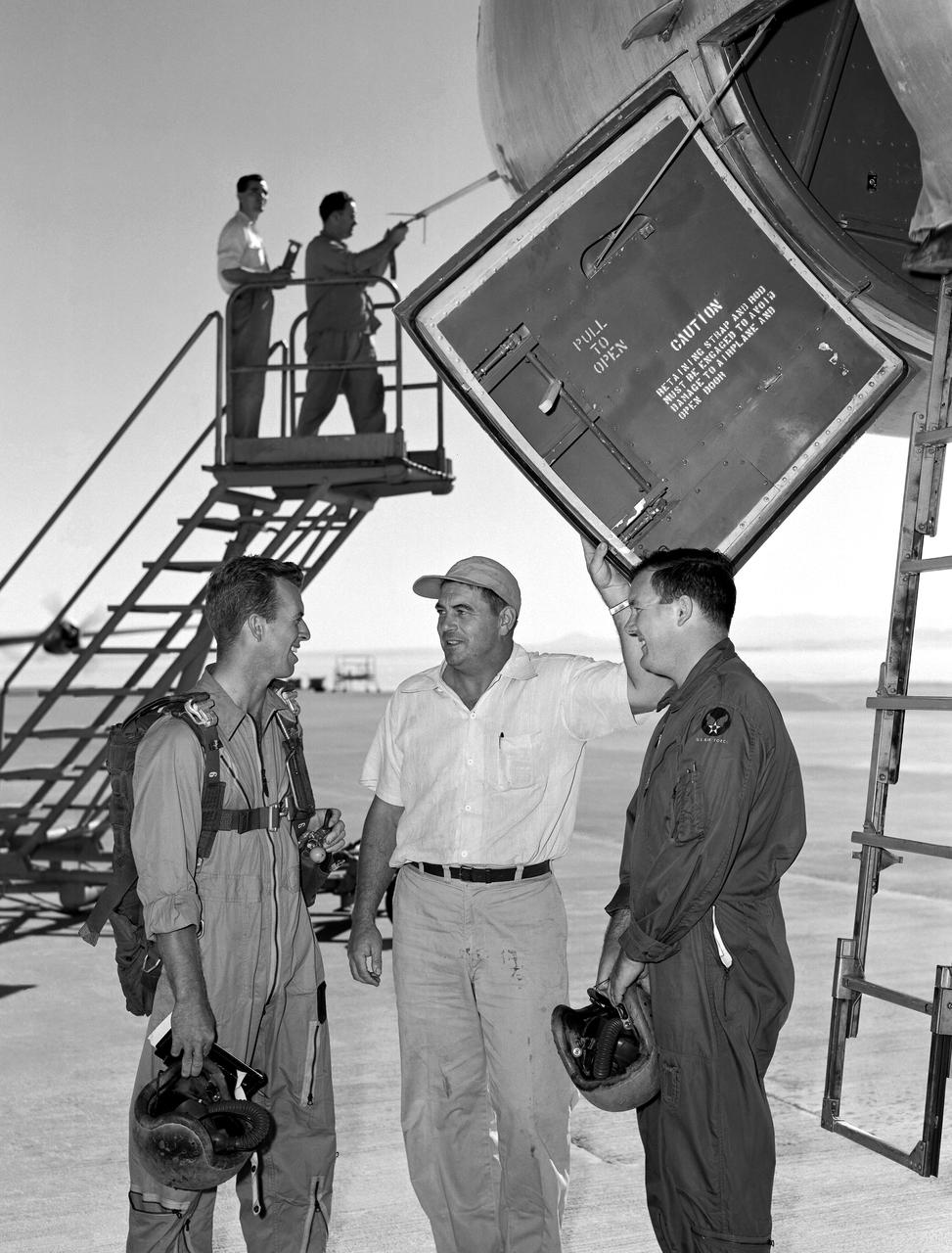
B-47A Stratojet on ramp with pilots and crew. In 1954 after a research flight in the Boeing B-47A Stratojet Crew Chief Wilbur McClenaghan (center) asks of the pilots if there are any "squawks" that should be taken care of before the next flight. Pilots are Joe Walker on the viewer's left and Stanley Butchart on the right. Data system technician Merle Curtis, in coveralls, is busy checking the airdata head mounted on the nose boom with the help of Instrumentation Crew Chief Raymond Langley. The door to the cockpit area is open showing a view of the ladder that folds down to be used by the pilots to enter and leave the area.
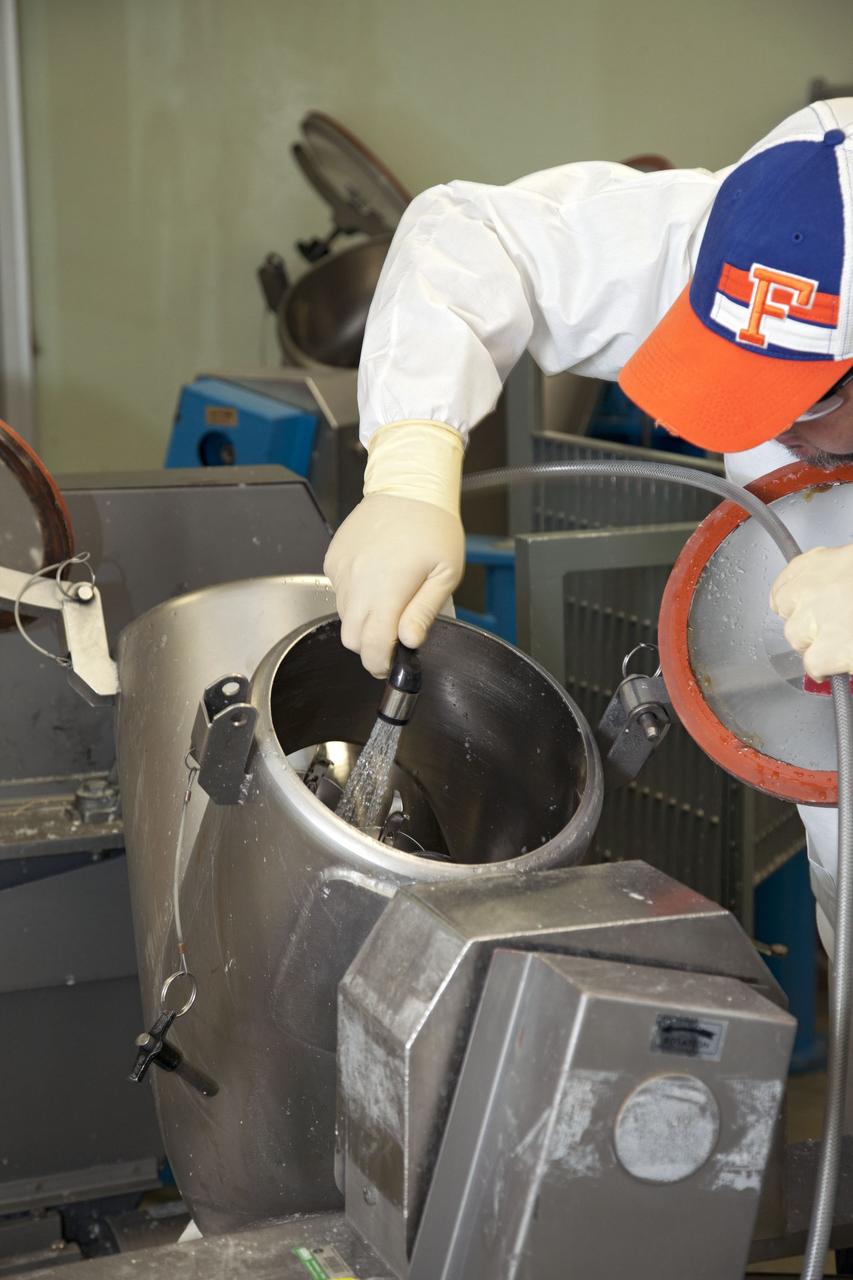
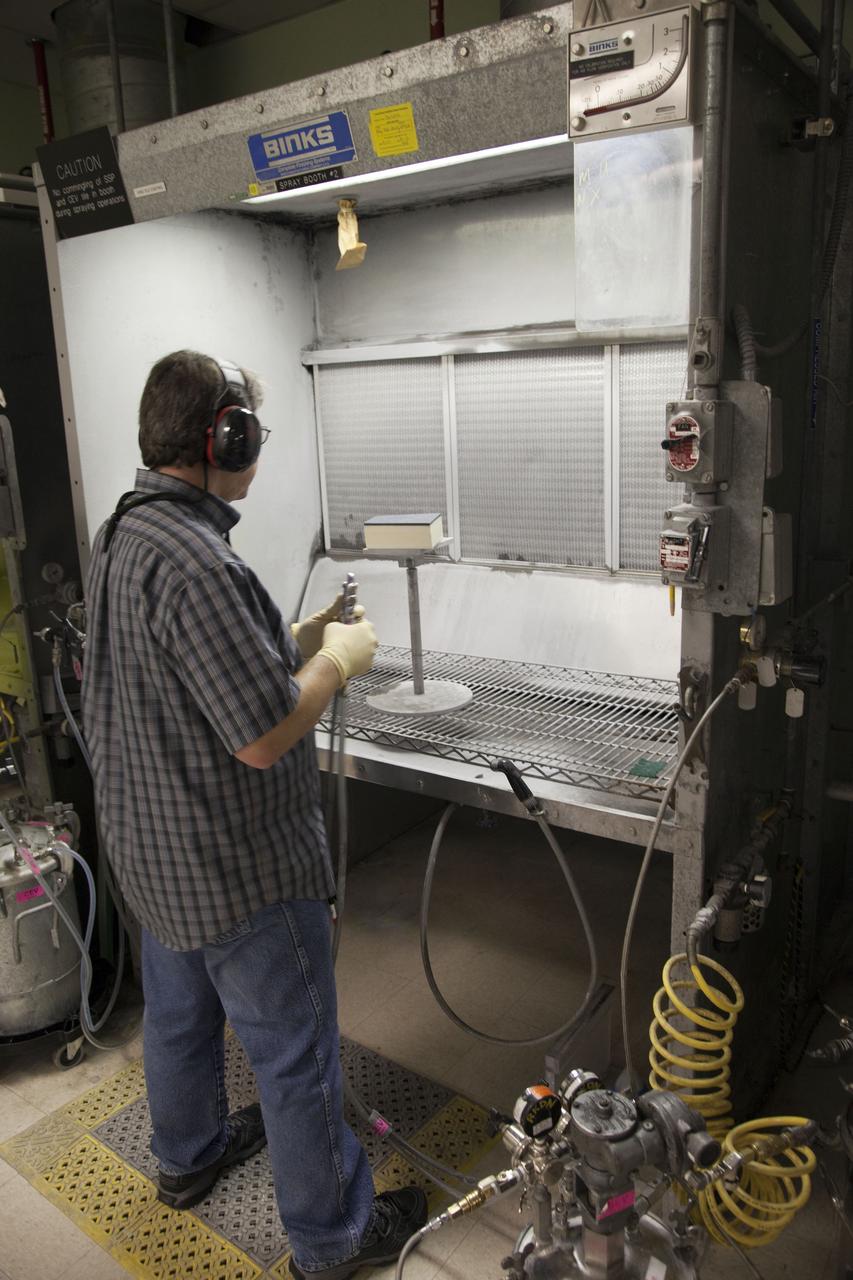
CAPE CANAVERAL, Fla. -- Chris Keeling, a United Space Alliance technician at NASA's Kennedy Space Center in Florida, manufactures the heat shield tiles that will be installed to the backshell of the Orion Multi-Purpose Crew Vehicle's Exploration Flight Test EFT-1 capsule. The work to manufacture and inspect the tiles is taking place in Kennedy's Thermal Protection System Facility. EFT-1 will be used during Orion's first test flight in space. For more information, visit www.nasa.gov/orion. Photo credit: Frankie Martin
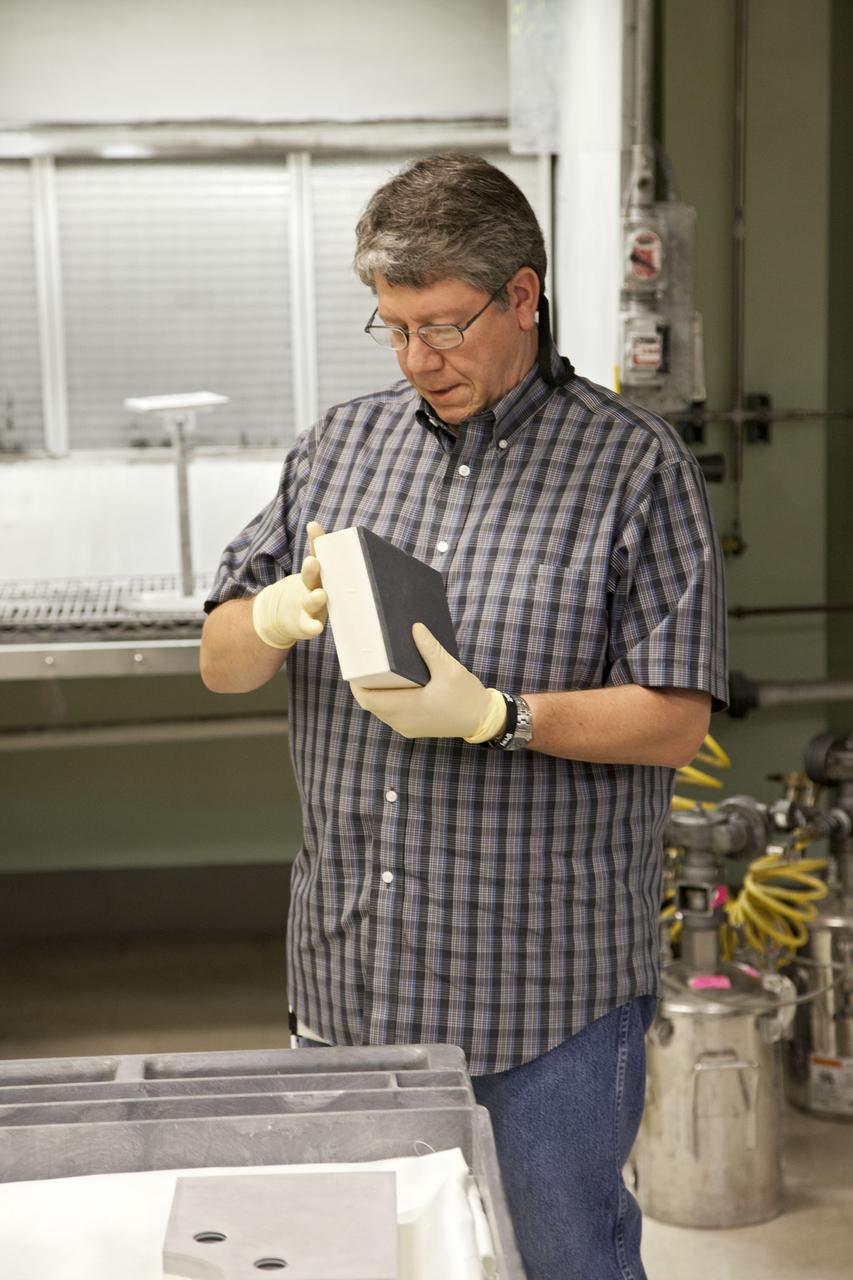
CAPE CANAVERAL, Fla. -- Frank Pelkey, a United Space Alliance technician at NASA's Kennedy Space Center in Florida, inspects a heat shield tile that will be installed to the backshell of the Orion Multi-Purpose Crew Vehicle's Exploration Flight Test EFT-1 capsule. The work to manufacture and inspect the tiles is taking place in Kennedy's Thermal Protection System Facility. EFT-1 will be used during Orion's first test flight in space. For more information, visit www.nasa.gov/orion. Photo credit: Frankie Martin
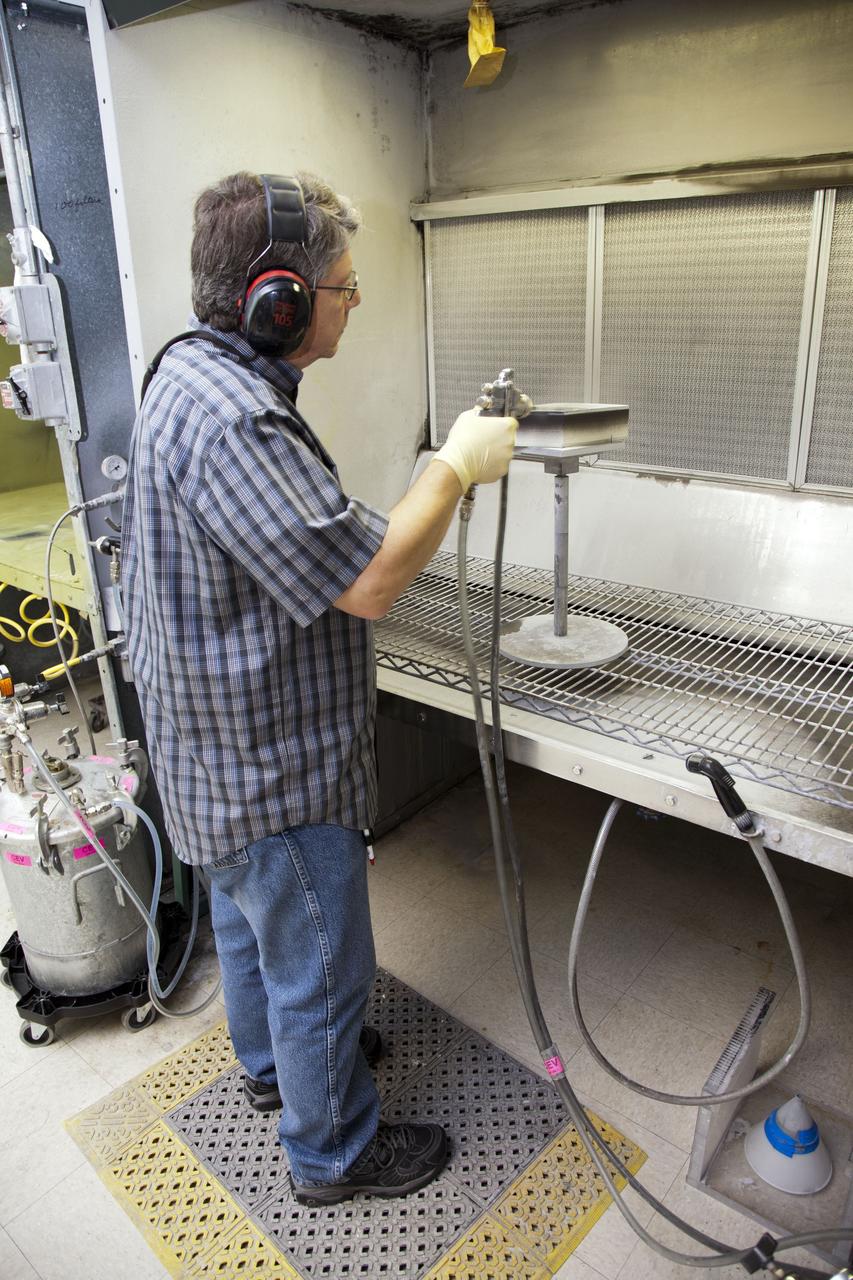
CAPE CANAVERAL, Fla. -- Frank Pelkey, a United Space Alliance technician at NASA's Kennedy Space Center in Florida, inspects a heat shield tile that will be installed to the backshell of the Orion Multi-Purpose Crew Vehicle's Exploration Flight Test EFT-1 capsule. The work to manufacture and inspect the tiles is taking place in Kennedy's Thermal Protection System Facility. EFT-1 will be used during Orion's first test flight in space. For more information, visit www.nasa.gov/orion. Photo credit: Frankie Martin
CAPE CANAVERAL, Fla. -- Frank Pelkey, a United Space Alliance technician at NASA's Kennedy Space Center in Florida, inspects a heat shield tile that will be installed to the backshell of the Orion Multi-Purpose Crew Vehicle's Exploration Flight Test EFT-1 capsule. The work to manufacture and inspect the tiles is taking place in Kennedy's Thermal Protection System Facility. EFT-1 will be used during Orion's first test flight in space. For more information, visit www.nasa.gov/orion. Photo credit: Frankie Martin
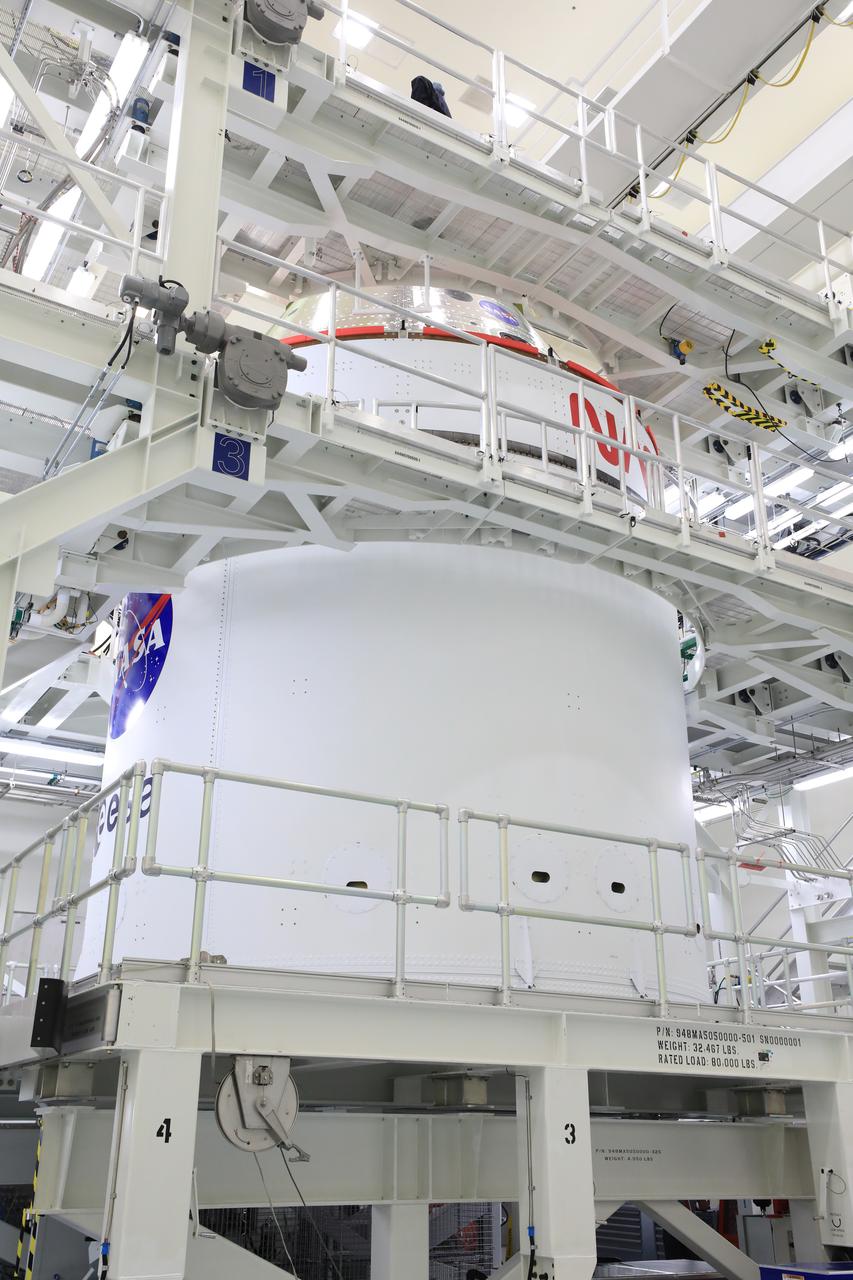
Technicians with NASA’s Exploration Ground Systems Program offload the agency’s Orion spacecraft from the KAMAG transporter to the servicing stand inside the Multi-Payload Processing Facility at Kennedy Space Center in Florida on Sunday, May 4, 2025, to undergo fueling and processing operations for prelaunch operations. The Artemis II test flight is the first crewed flight under NASA’s Artemis campaign and is another step toward missions on the lunar surface and helping the agency prepare for future human missions to Mars.
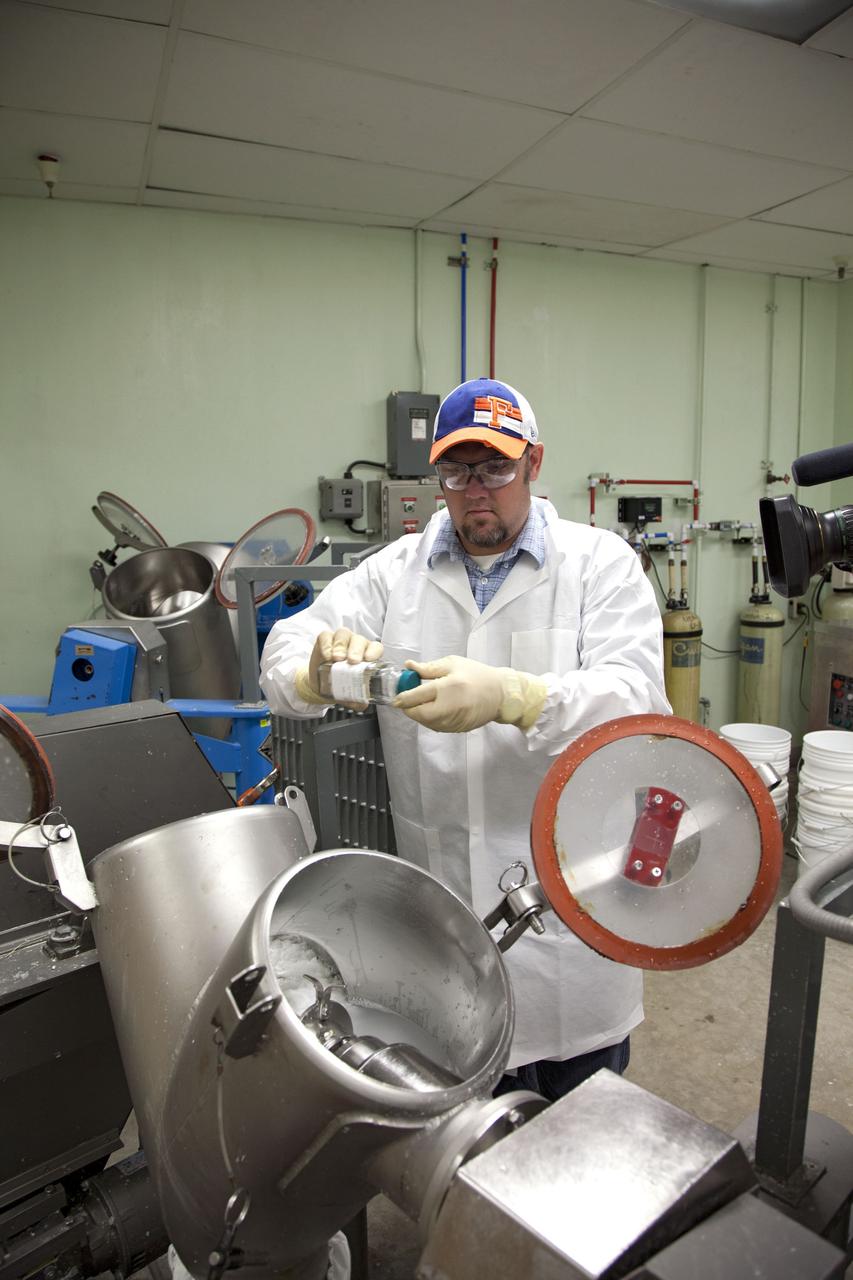
CAPE CANAVERAL, Fla. -- Chris Keeling, a United Space Alliance technician at NASA's Kennedy Space Center in Florida, manufactures the heat shield tiles that will be installed to the backshell of the Orion Multi-Purpose Crew Vehicle's Exploration Flight Test EFT-1 capsule. The work to manufacture and inspect the tiles is taking place in Kennedy's Thermal Protection System Facility. EFT-1 will be used during Orion's first test flight in space. For more information, visit www.nasa.gov/orion. Photo credit: Frankie Martin
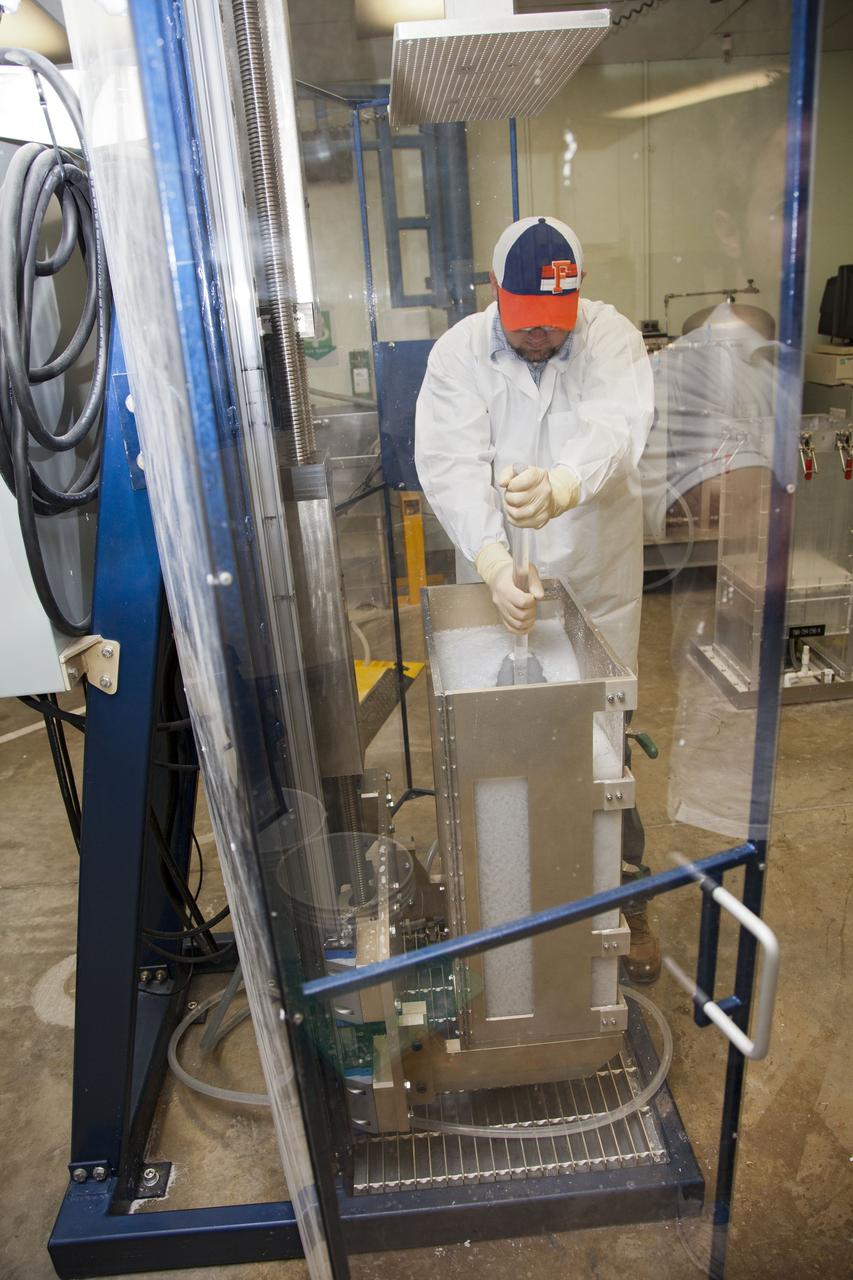
CAPE CANAVERAL, Fla. -- Chris Keeling, a United Space Alliance technician at NASA's Kennedy Space Center in Florida, manufactures the heat shield tiles that will be installed to the backshell of the Orion Multi-Purpose Crew Vehicle's Exploration Flight Test EFT-1 capsule. The work to manufacture and inspect the tiles is taking place in Kennedy's Thermal Protection System Facility. EFT-1 will be used during Orion's first test flight in space. For more information, visit www.nasa.gov/orion. Photo credit: Frankie Martin

CAPE CANAVERAL, Fla. -- Chris Keeling, a United Space Alliance technician at NASA's Kennedy Space Center in Florida, manufactures the heat shield tiles that will be installed to the backshell of the Orion Multi-Purpose Crew Vehicle's Exploration Flight Test EFT-1 capsule. The work to manufacture and inspect the tiles is taking place in Kennedy's Thermal Protection System Facility. EFT-1 will be used during Orion's first test flight in space. For more information, visit www.nasa.gov/orion. Photo credit: Frankie Martin
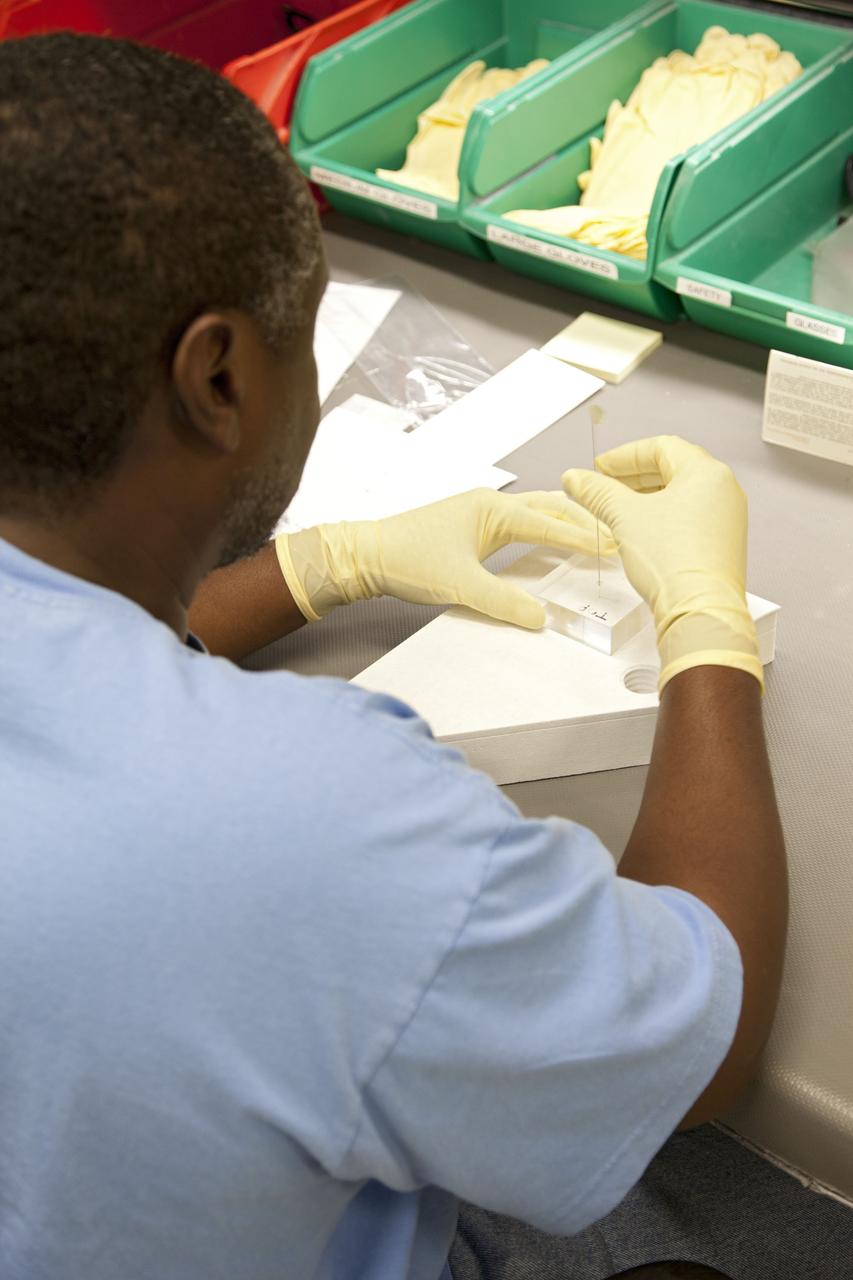
CAPE CANAVERAL, Fla. -- Damon Petty, a United Space Alliance technician at NASA's Kennedy Space Center in Florida, inspects a heat shield tile that will be installed to the backshell of the Orion Multi-Purpose Crew Vehicle's Exploration Flight Test EFT-1 capsule. The work to manufacture and inspect the tiles is taking place in Kennedy's Thermal Protection System Facility. EFT-1 will be used during Orion's first test flight in space. For more information, visit www.nasa.gov/orion. Photo credit: Frankie Martin