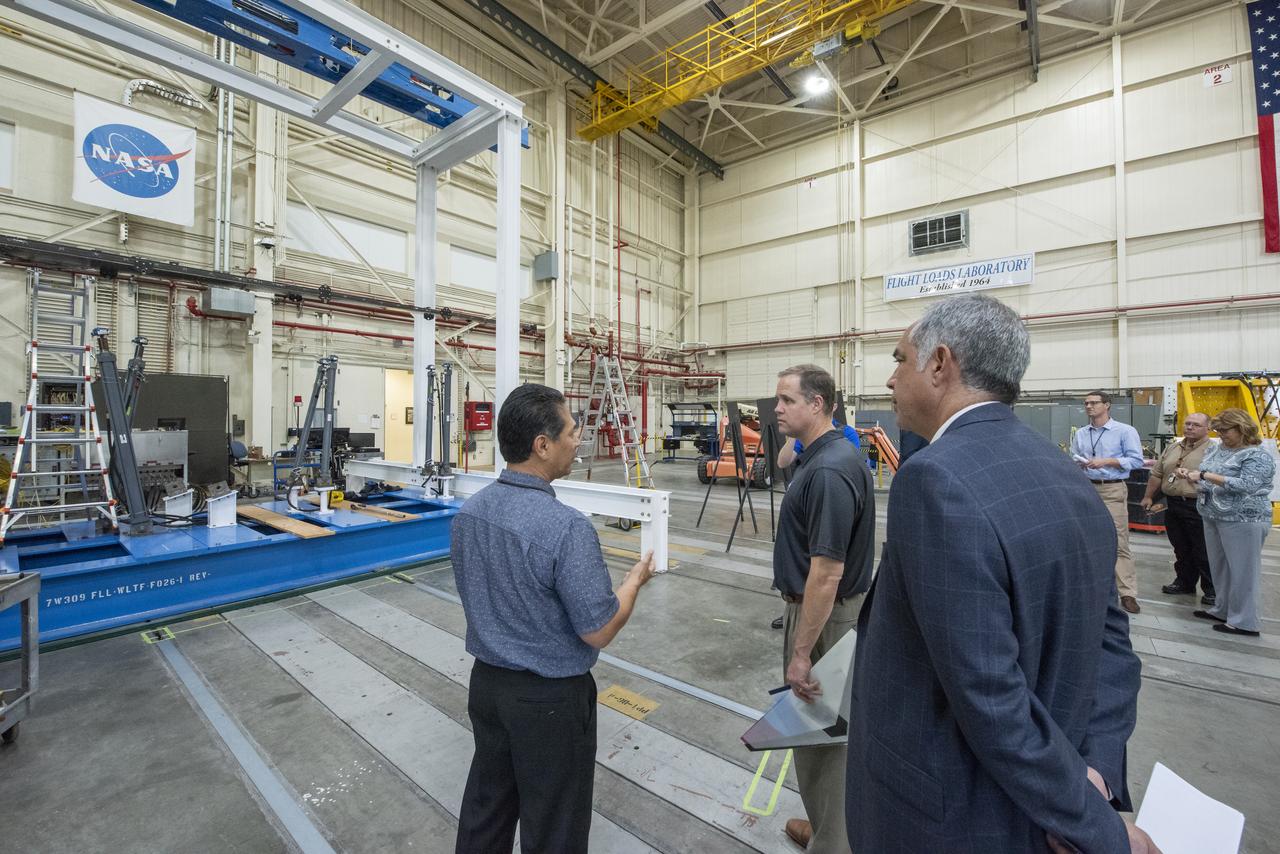
NASA Administrator Bridenstine talks with Armstrong's Larry Hudson about the capabilities of the Flight Loads Lab to conduct mechanical-load and thermal studies of structural components and complete flight vehicles.
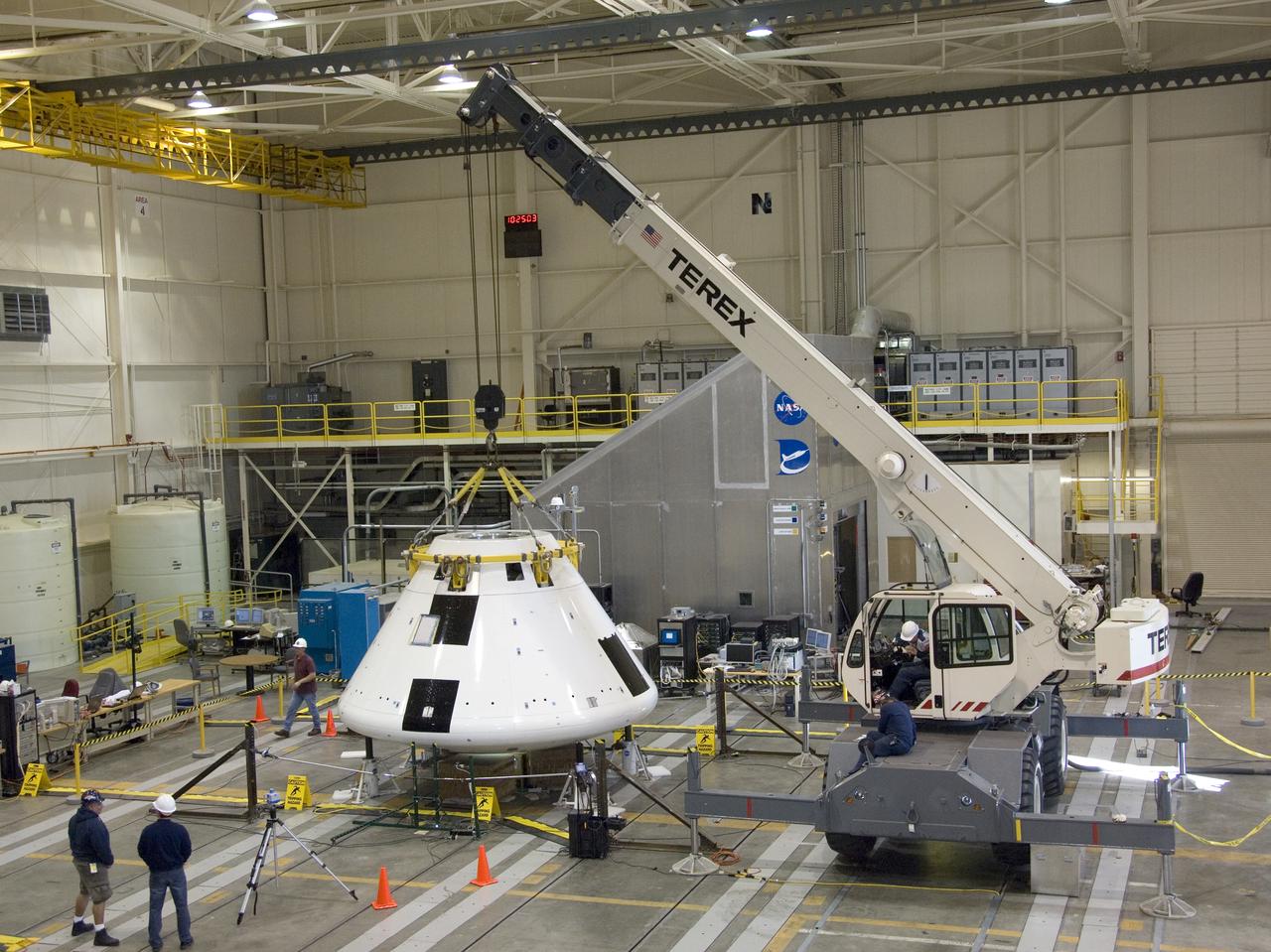
Under the watchful eyes of technicians, a crane positions the Orion PA-1 Abort Flight Test module for mass properties testing in NASA Dryden's Flight Loads Lab.
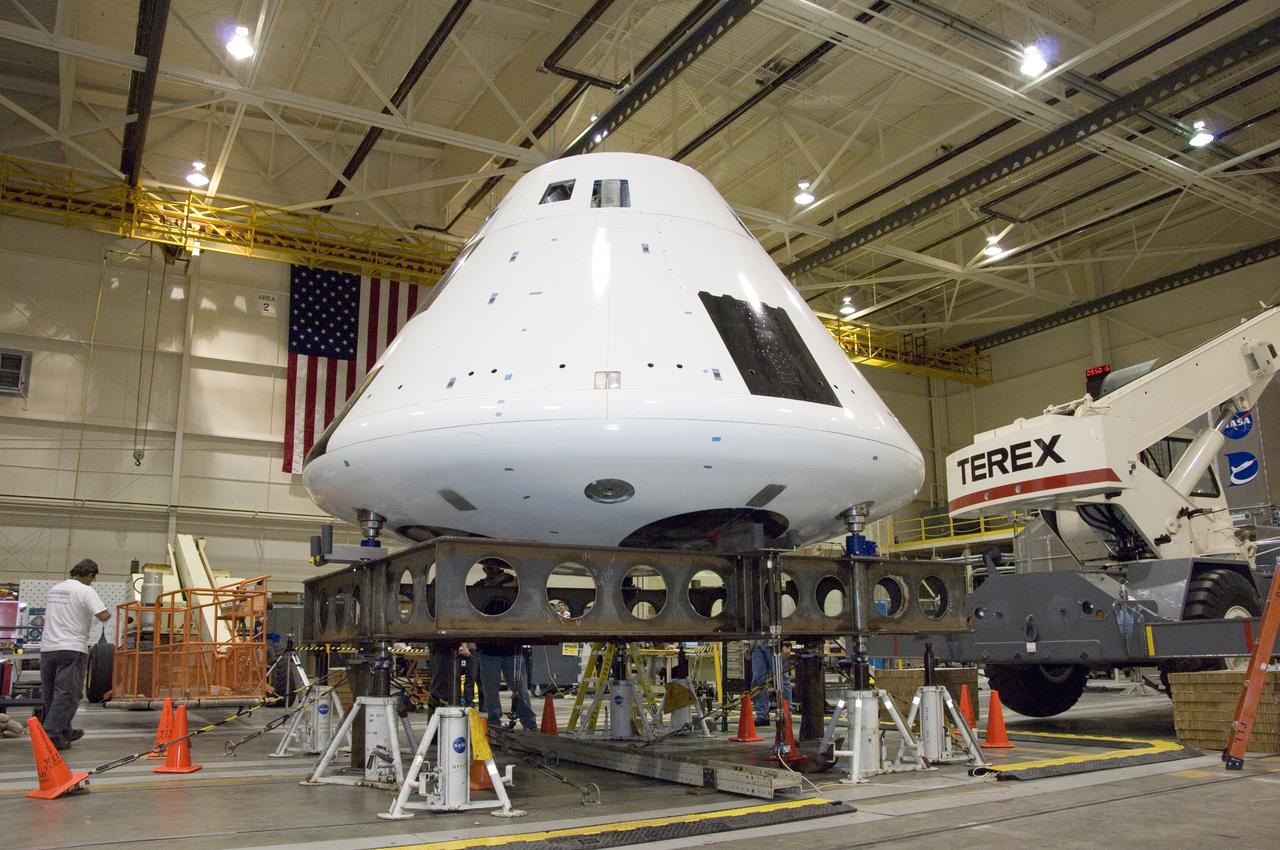
The boilerplate Orion crew module for the Orion Launch Abort System Pad Abort-1 flight test undergoes moment-of-inertia testing at NASA Dryden's Flight Loads Lab.
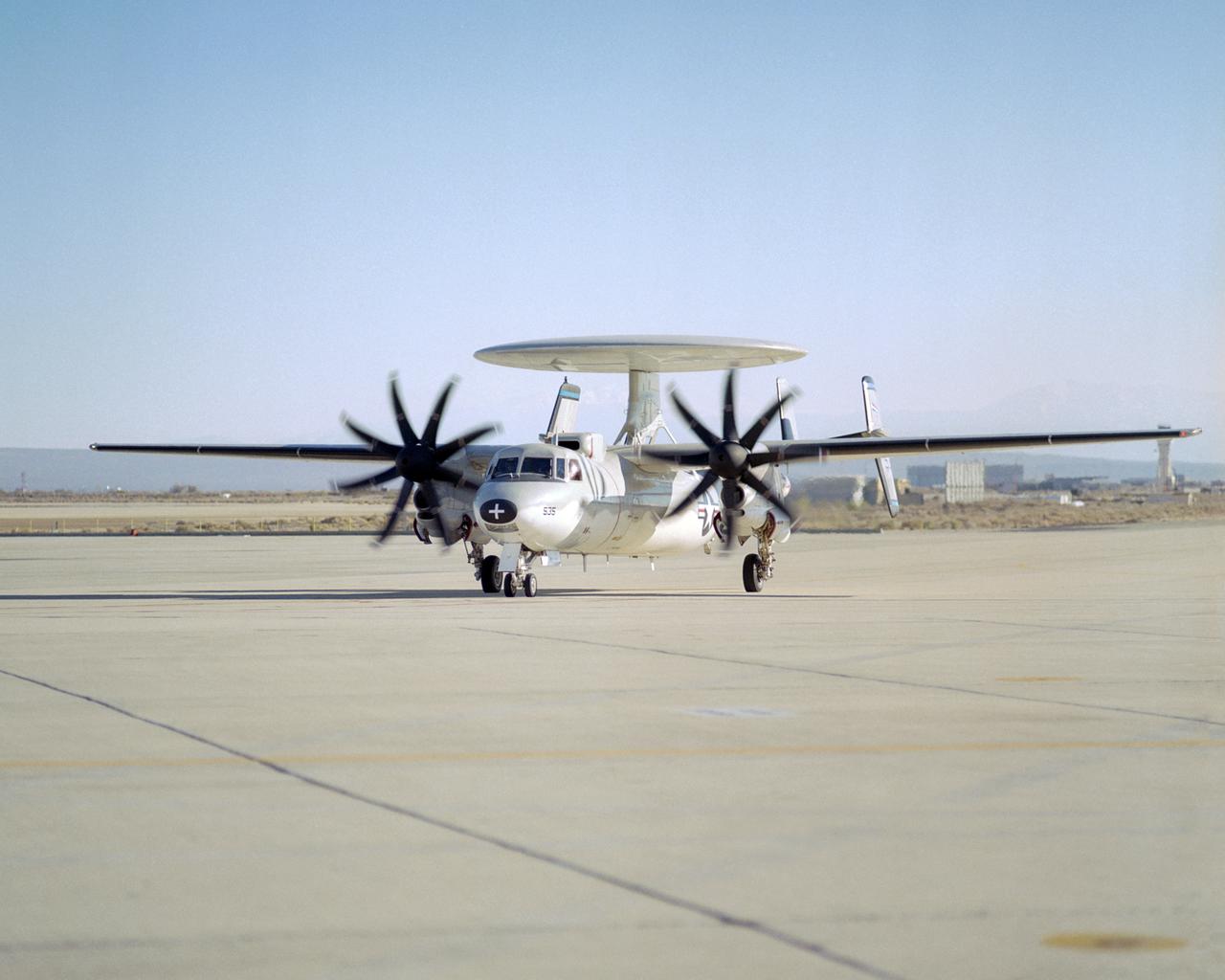
A Navy E-2C Hawkeye early-warning aircraft arrives at NASA's Dryden Flight Research Center for extensive structural loads tests in Dryden's flight loads lab.
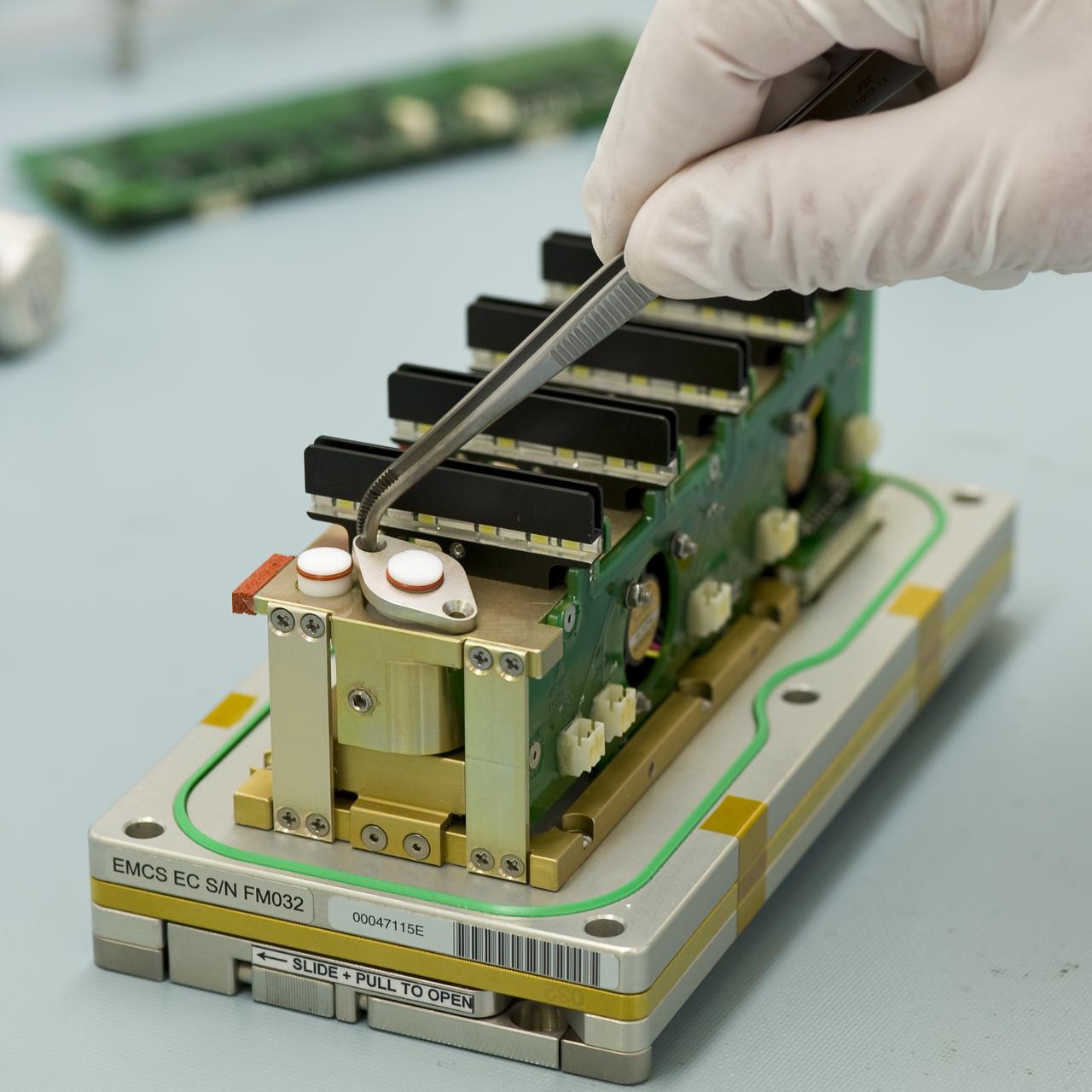
TROPI-2; Assembly of flight hardware with Prepared Experiment Containers loaded with seeds in EMCS (European Modular Cultivation System) Lab, N-236. Flight hardware will be hand carried to KSC for loading on STS-130 Shuttle mission
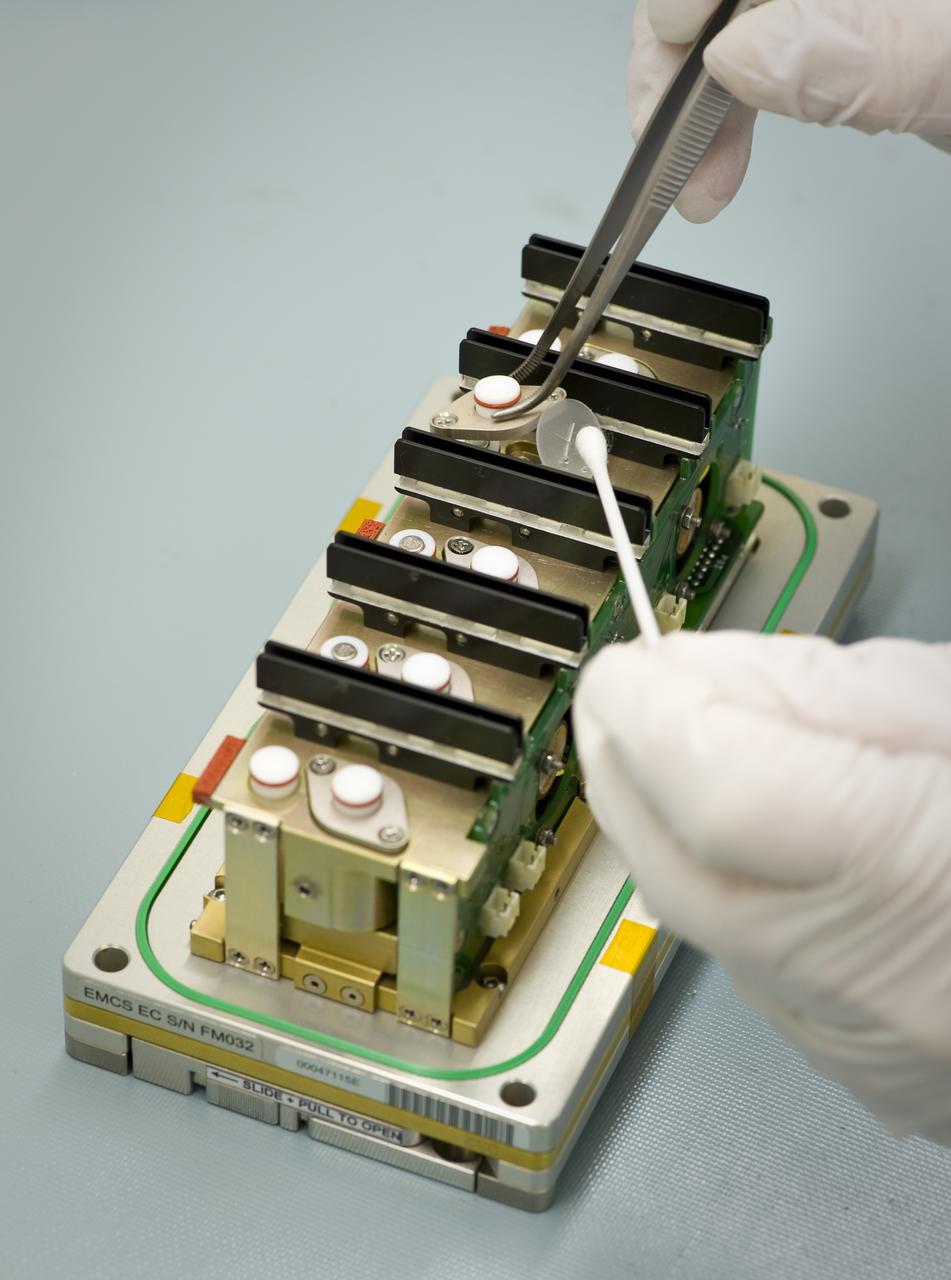
TROPI-2; Assembly of flight hardware with Prepared Experiment Containers loaded with seeds in EMCS (European Modular Cultivation System) Lab, N-236. Flight hardware will be hand carried to KSC for loading on STS-130 Shuttle mission

Engineers Paul Lundstrom and Larry Reardon monitor forces applied by structural loads equipment during tests on a Navy E-2C in NASA Dryden's flight loads lab.
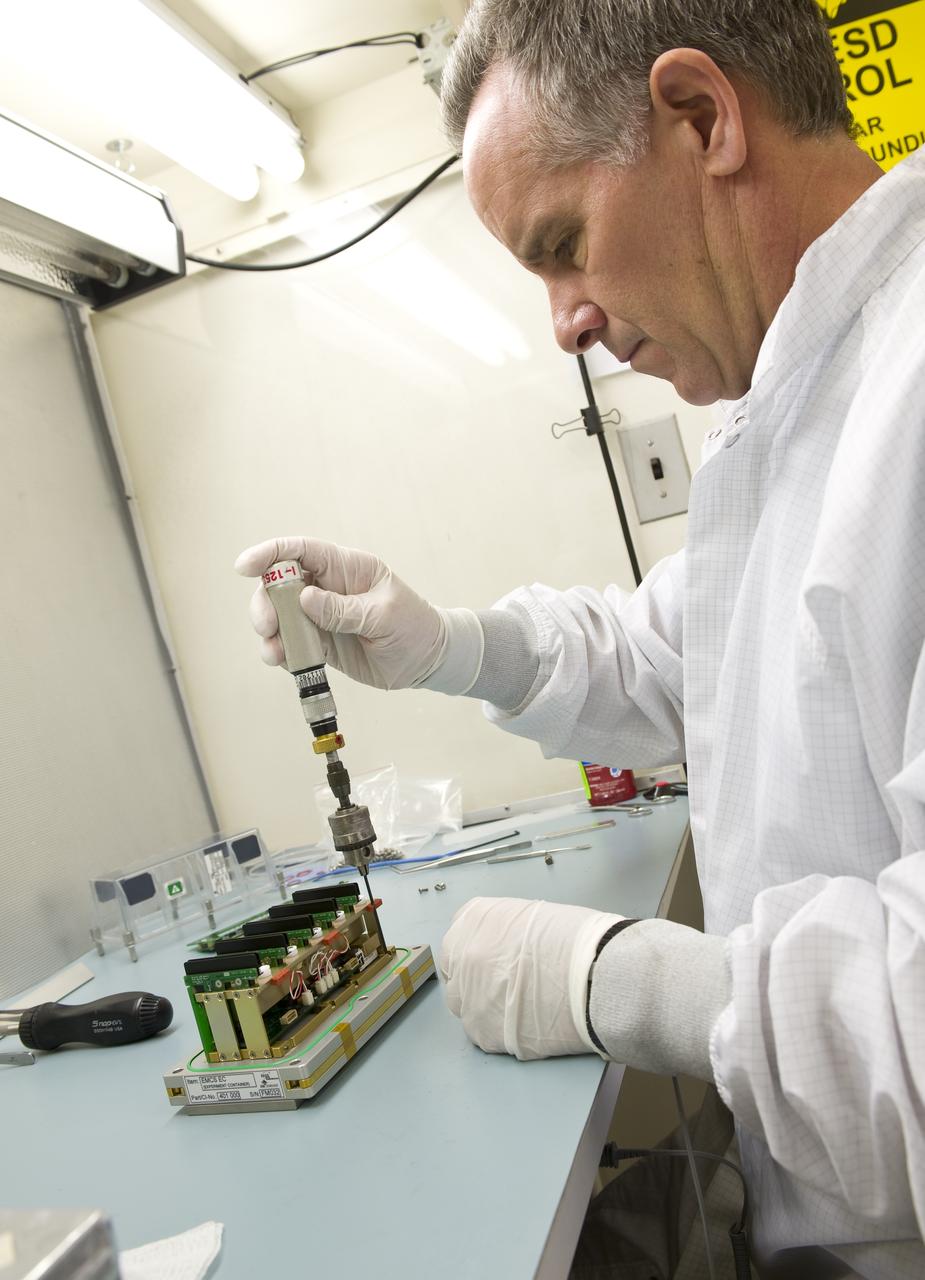
TROPI-2; Assembly of flight hardware with Prepared Experiment Containers loaded with seeds in EMCS (European Modular Cultivation System) Lab, N-236. Flight hardware will be hand carried to KSC for loading on STS-130 Shuttle mission. David Leskovsky works on the assembly.

TROPI-2; Assembly of flight hardware with Prepared Experiment Containers loaded with seeds in EMCS (European Modular Cultivation System) Lab, N-236. Flight hardware will be hand carried to KSC for loading on STS-130 Shuttle mission. Left to right are David Leskovsky and Kris Vogelsong.
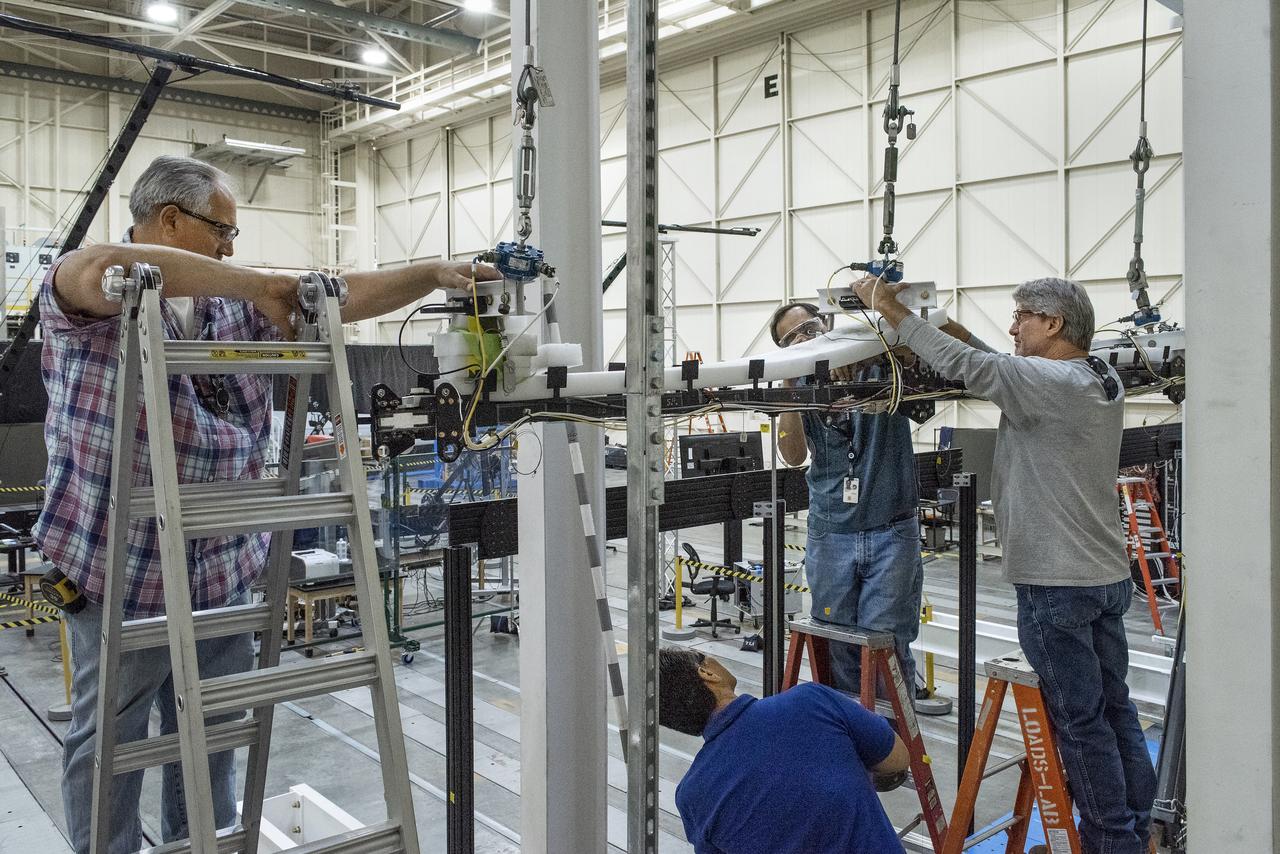
Ted Powers, from left, Larry Hudson, Ron Haraguchi and Walter Hargis make adjustments to the Passive Aeroelastic Tailored (PAT) wing testing apparatus at NASA’s Armstrong Flight Research Center in California.
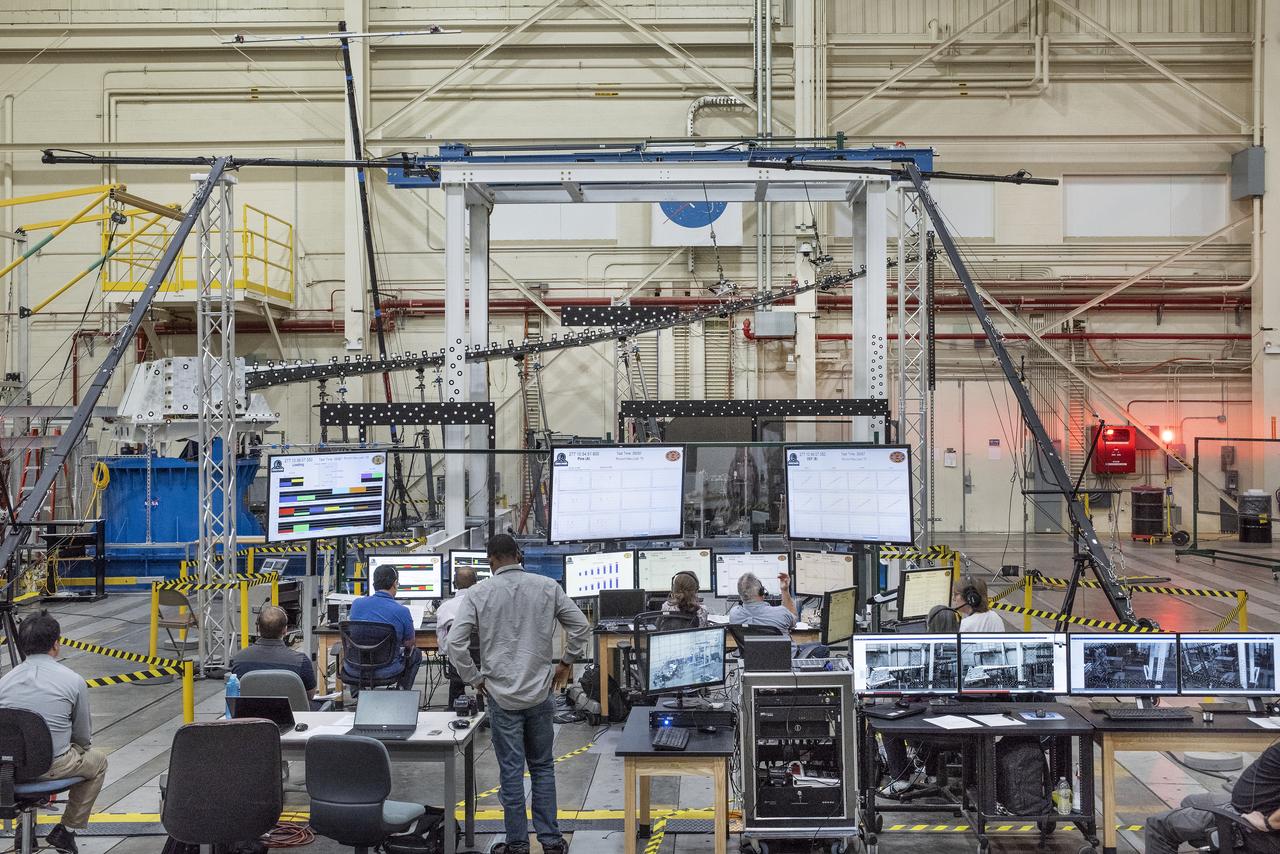
NASA’s Armstrong Flight Research Center and Langley Research Center staff members monitor a test of the Passive Aeroelastic Tailored (PAT) wing at NASA’s Armstrong Flight Research Center in California.
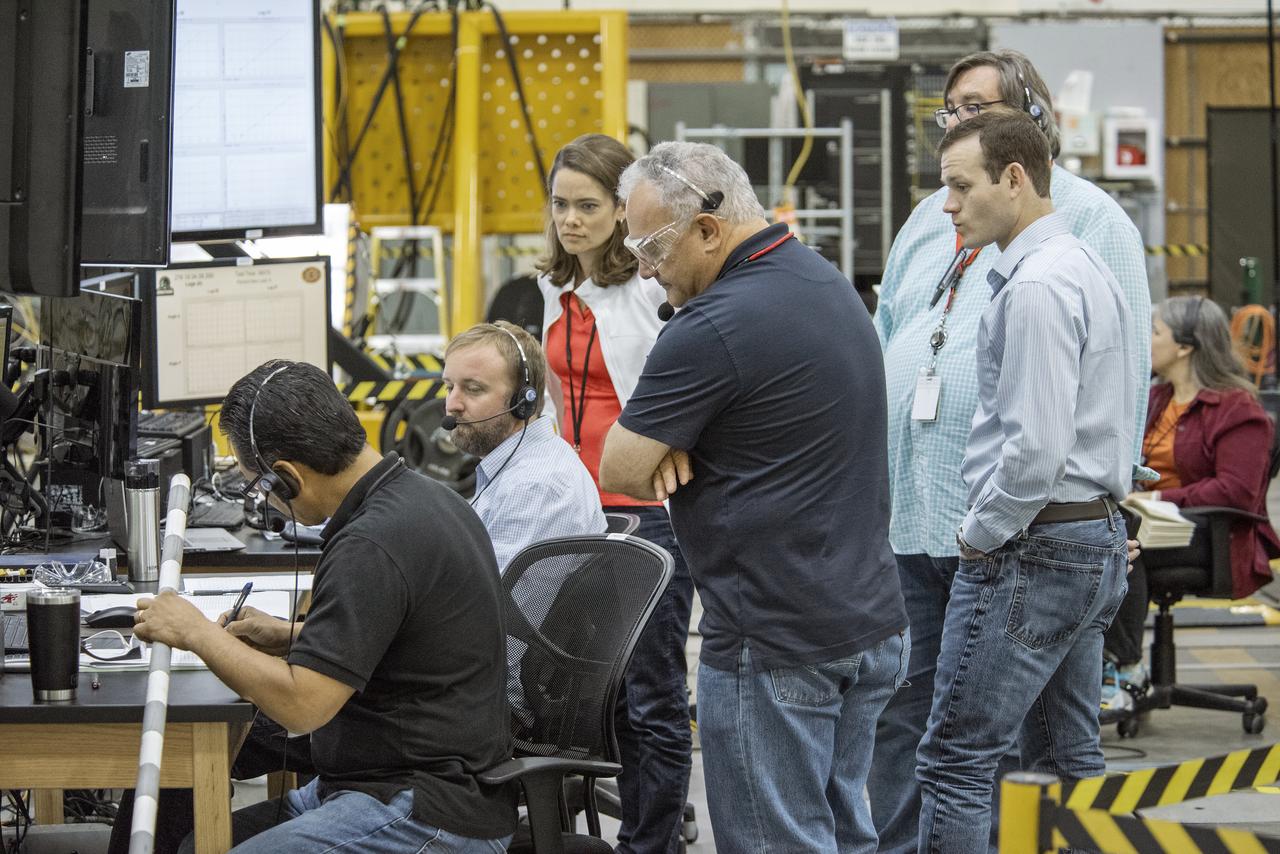
NASA’s Armstrong Flight Research Center and Langley Research Center staff members monitor a test of the Passive Aeroelastic Tailored (PAT) wing at NASA’s Armstrong Flight Research Center in California.
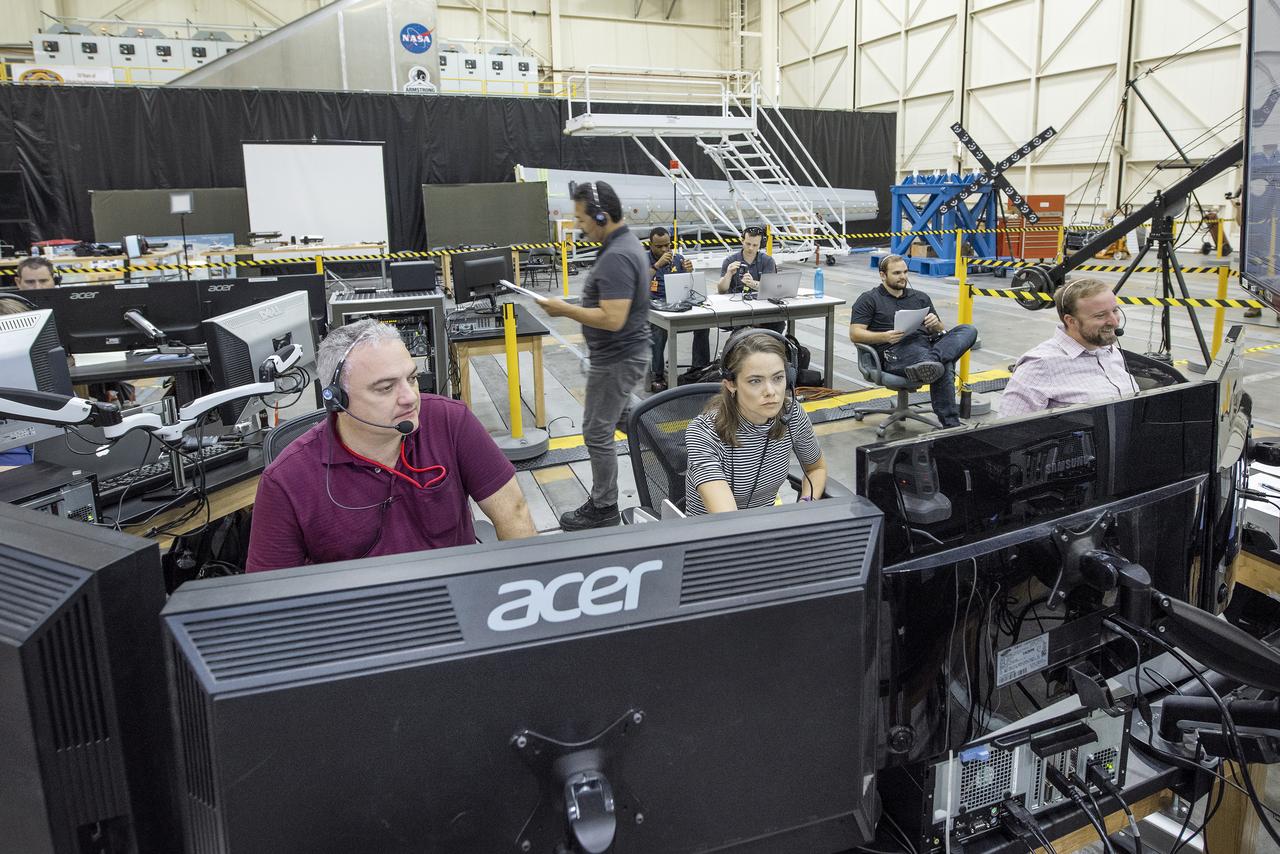
NASA’s Armstrong Flight Research Center and Langley Research Center staff members monitor a test of the Passive Aeroelastic Tailored (PAT) wing at NASA’s Armstrong Flight Research Center in California.
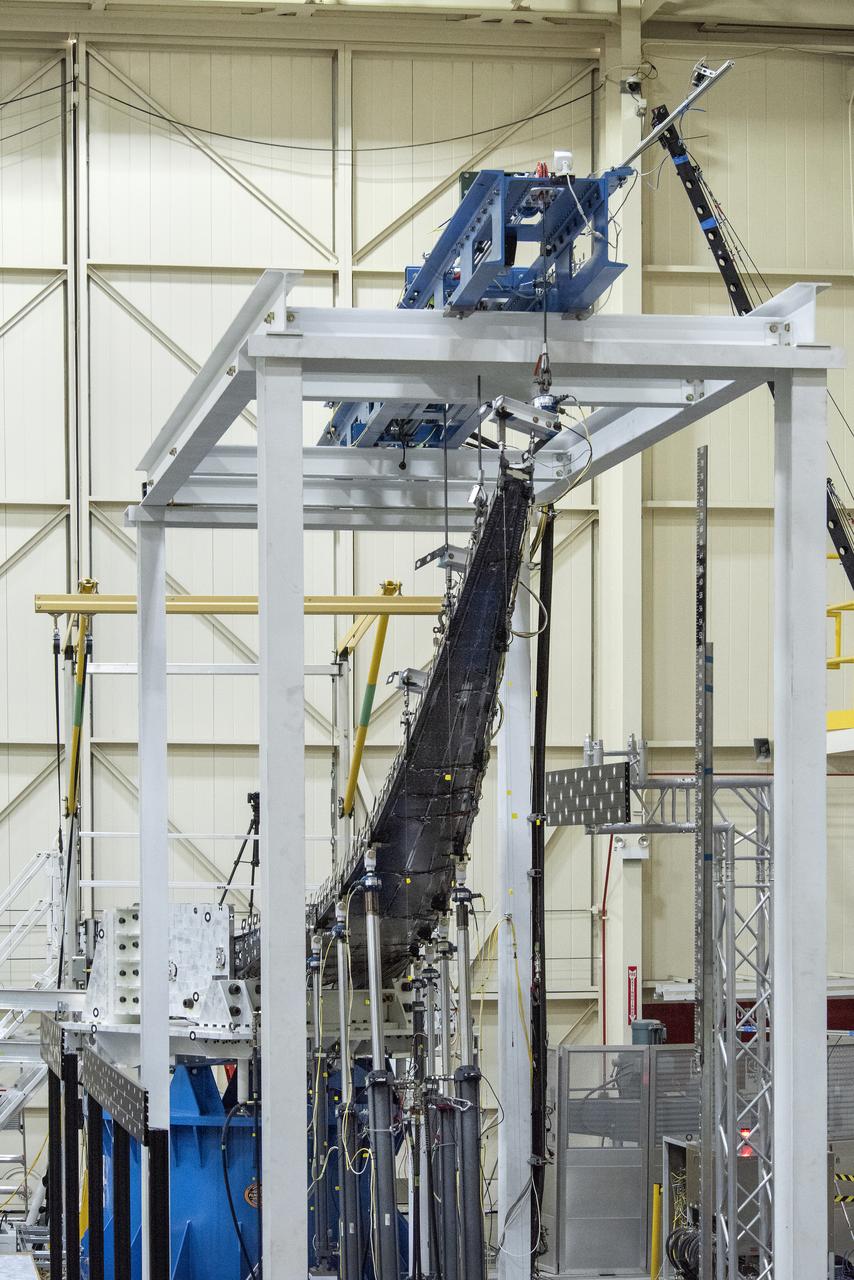
The Passive Aeroelastic Tailored (PAT) wing bends under pressure from the highest loads applied during testing at NASA’s Armstrong Flight Research Center in California.
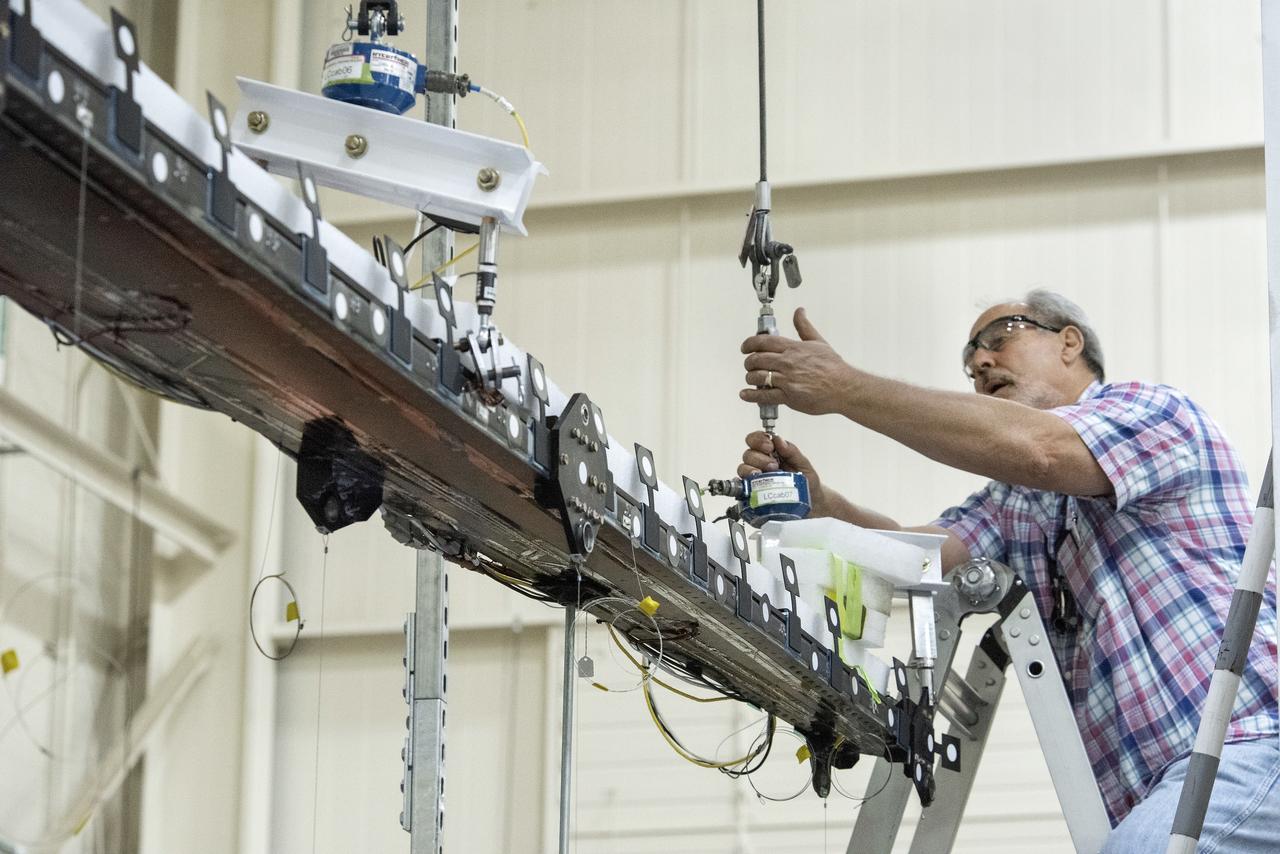
Ted Powers makes an adjustment to the Passive Aeroelastic Tailored (PAT) wing testing apparatus at NASA’s Armstrong Flight Research Center in California.
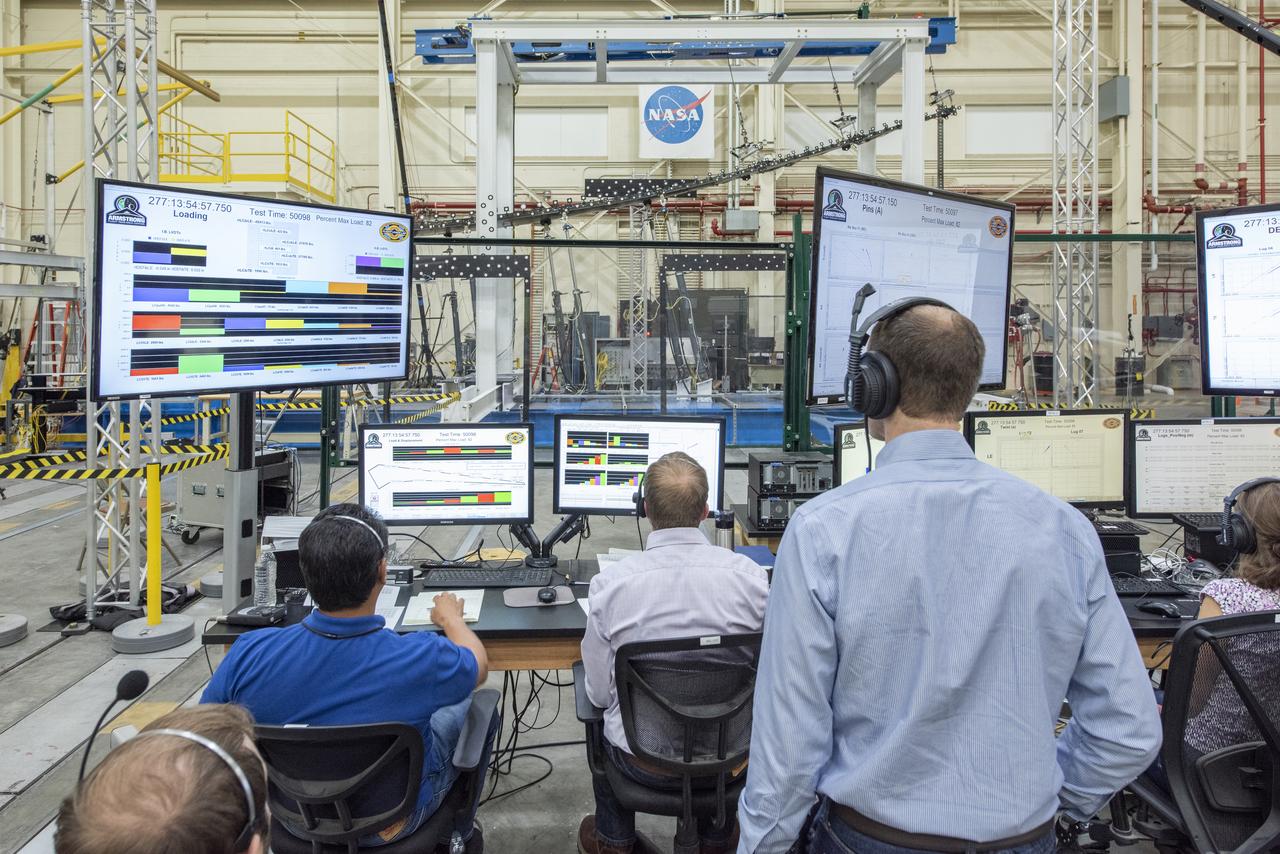
NASA’s Armstrong Flight Research Center and Langley Research Center staff members monitor a test of the Passive Aeroelastic Tailored (PAT) wing at NASA’s Armstrong Flight Research Center in California.
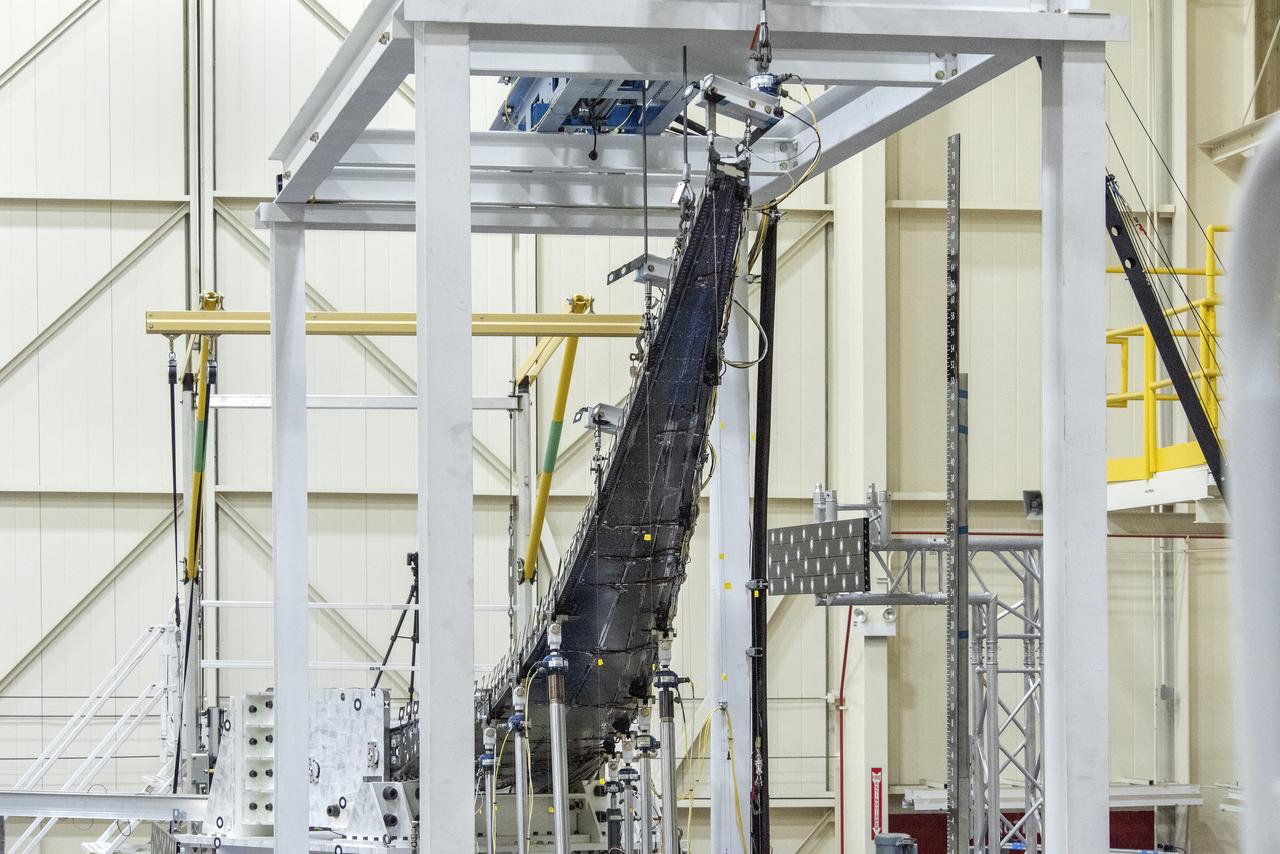
The Passive Aeroelastic Tailored (PAT) wing bends under pressure from the highest loads applied during testing at NASA’s Armstrong Flight Research Center in California.
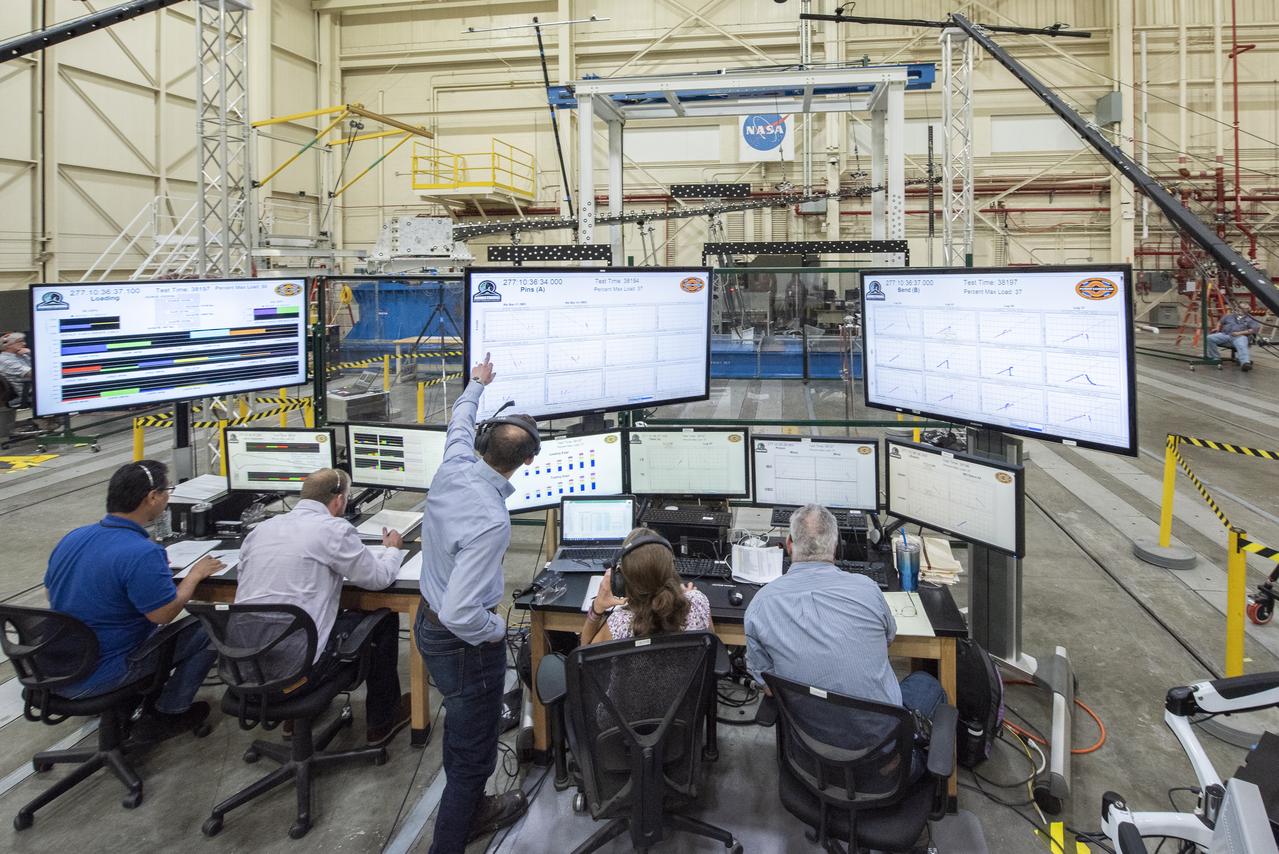
NASA’s Armstrong Flight Research Center and Langley Research Center staff members monitor a test of the Passive Aeroelastic Tailored (PAT) wing at NASA’s Armstrong Flight Research Center in California.
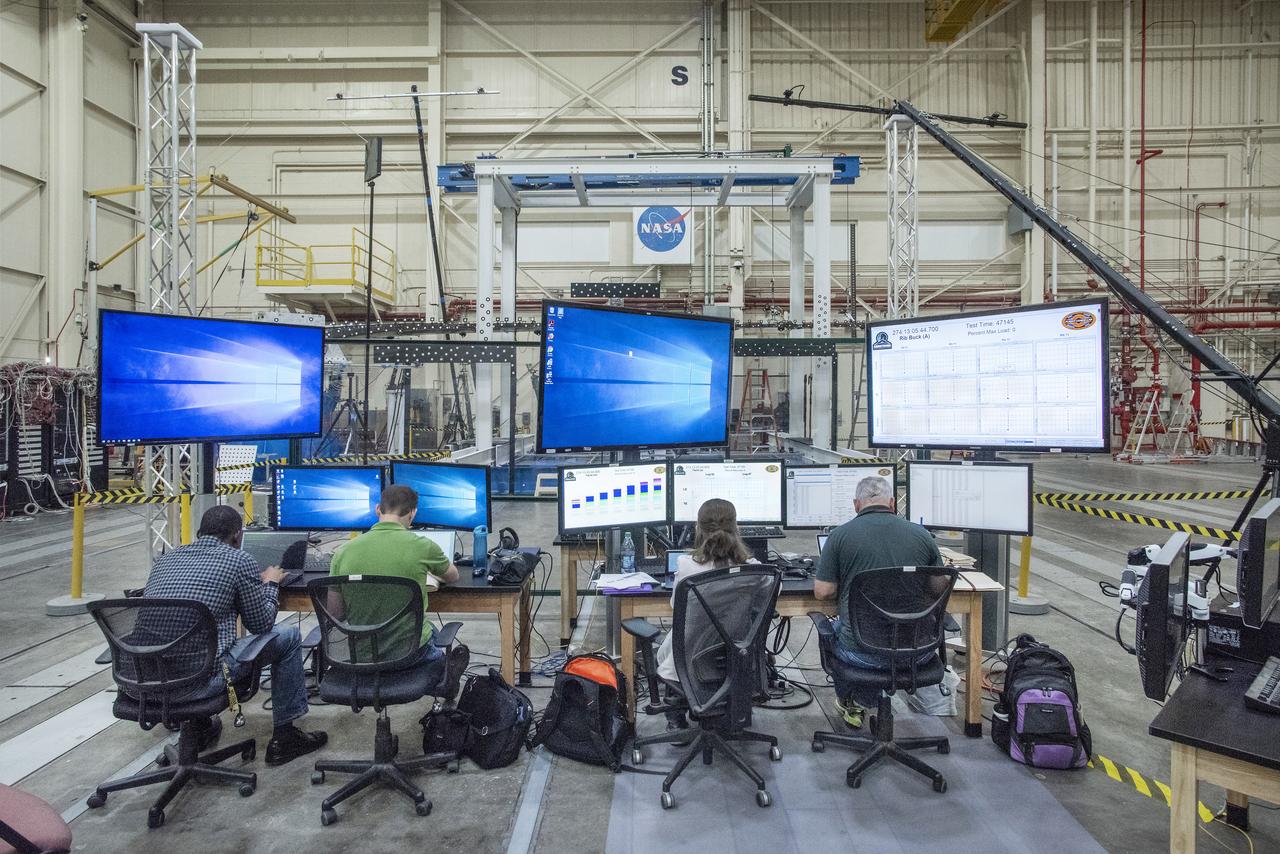
NASA’s Armstrong Flight Research Center and Langley Research Center staff members monitor a test of the Passive Aeroelastic Tailored (PAT) wing at NASA’s Armstrong Flight Research Center in California.
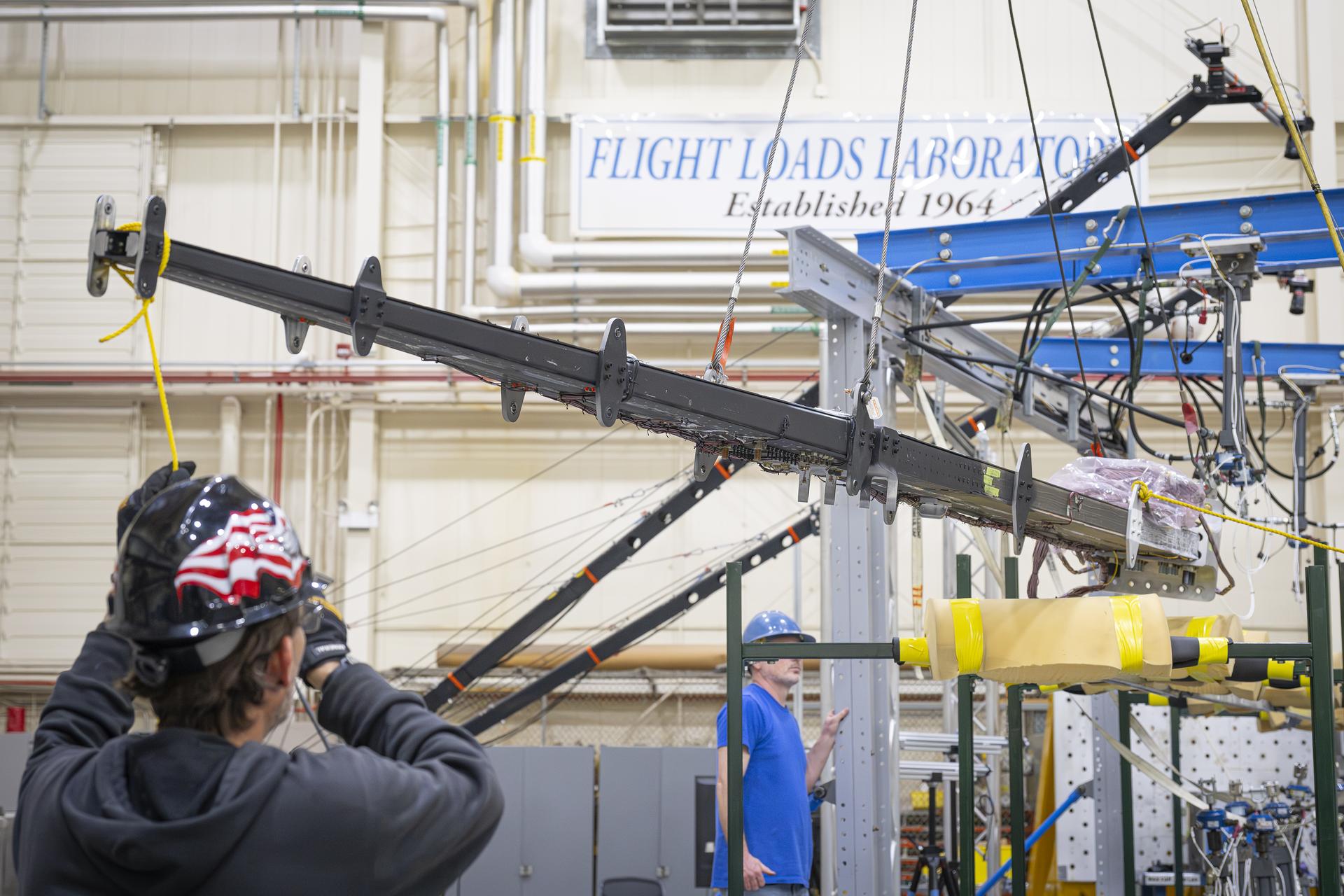
Lab technicians Jeff Howell, left and Chris Mount install the 15-foot Structural Wing Experiment Evaluating Truss-bracing model in the Flight Loads Lab at NASA’s Armstrong Flight Research Center in Edwards, California, Wednesday, February 11, 2026. The model is part of NASA’s research to develop technologies for future ultra-efficient aircraft.

Tour of the Electrified Powertrain Flight Demonstration in the HyPER lab on June 17th, 2024 at Glenn Research Center. NASA’s Electrified Powertrain Flight Demonstration (EPFD) project focuses advancing the future of sustainable aviation by turning hybrid electric flight into a reality. HyPER is a hardware-in-the-loop laboratory that was designed specifically to investigate the dynamic interactions between turbomachinery, the electric power system, and the constantly varying loads of electrified aircraft. It is a small-scale lab capable of rapid reconfiguration through software. This allows the emulation of new engines using simulation models that are easily replaced and then appropriately scaled for power and inertia to the test hardware. Photo Credit: (NASA/Sara Lowthian-Hanna)
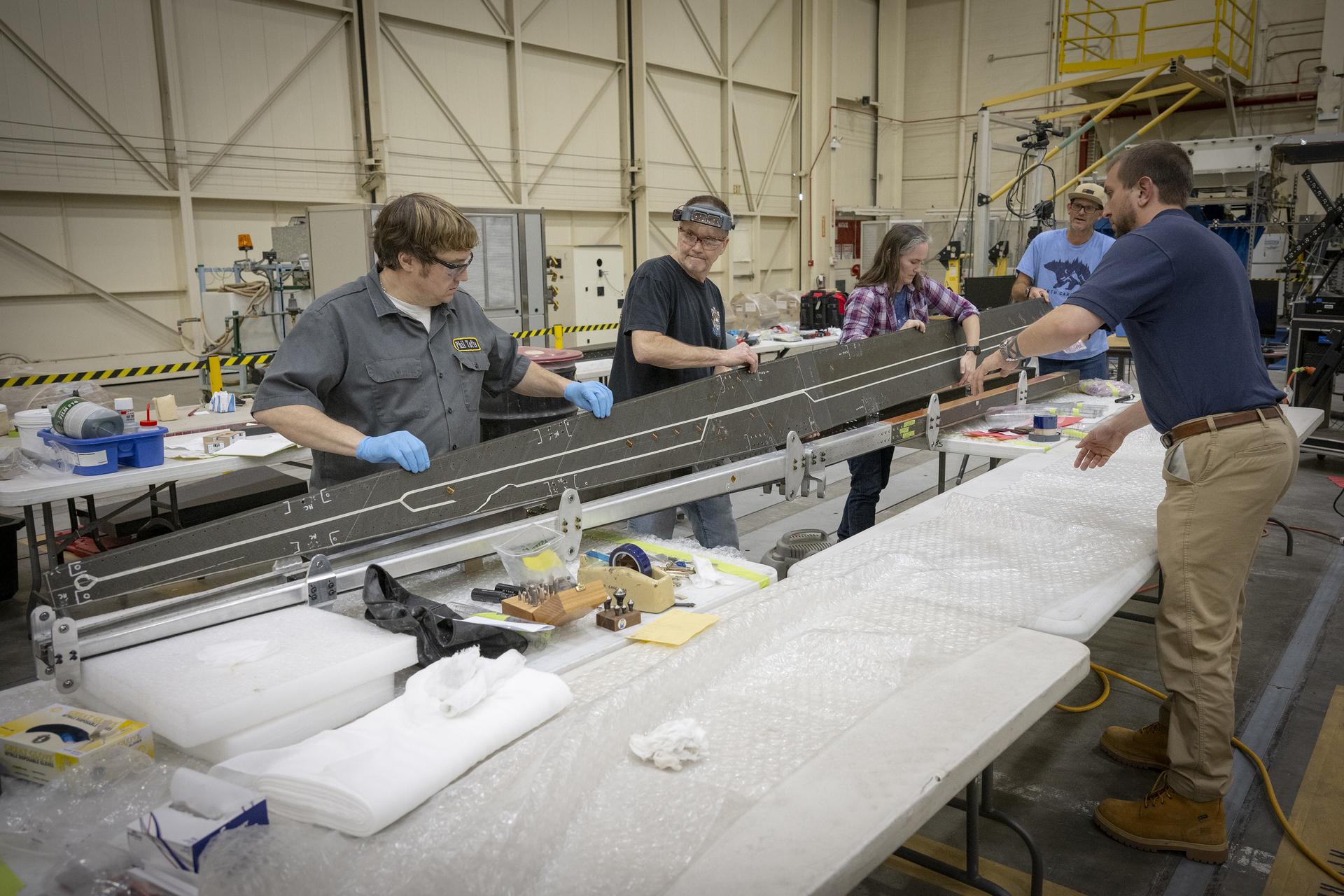
Lab technicians Phil Tofts, Chris McLain, and Jeff Howell and NASA engineers Erin Anderson and Richard Larson prepare the 15-foot Structural Wing Experiment Evaluating Truss-bracing model in the Flight Loads Laboratory at NASA’s Armstrong Flight Research Center in Edwards, California, on Thursday, Dec. 11, 2025. The model is part of NASA’s research to develop technologies for future ultra-efficient aircraft.
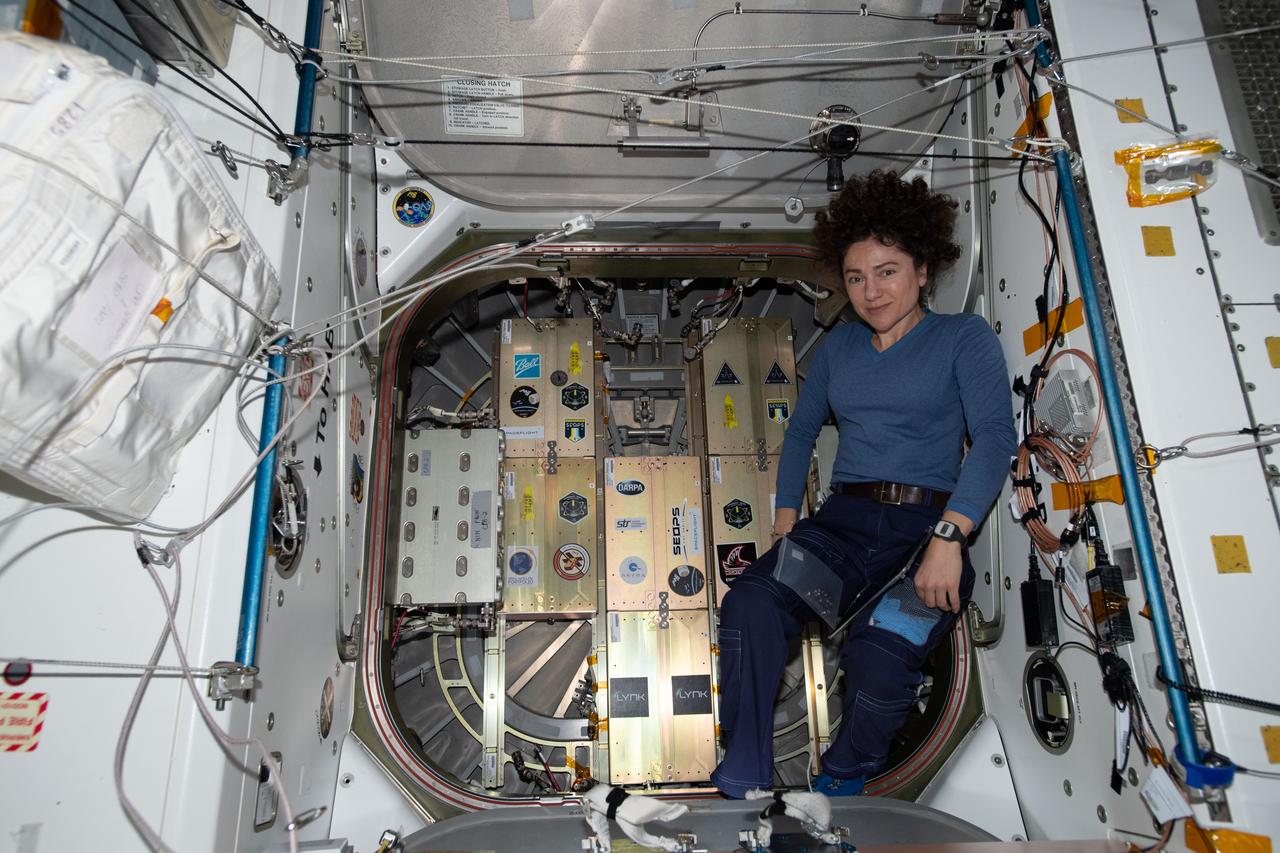
iss061e147761 (Jan. 30, 2020) --- NASA astronaut and Expedition 61 Flight Engineer Jessica Meir poses in front of the closed hatch of the Cygnus space freighter from Northrop Grumman. Attached to the hatch is the SlingShot small satellite deployer loaded with eight CubeSats that were deployed into Earth orbit for communications and atmospheric research several hours after Cygnus departed the orbiting lab on Jan. 31, 2019.
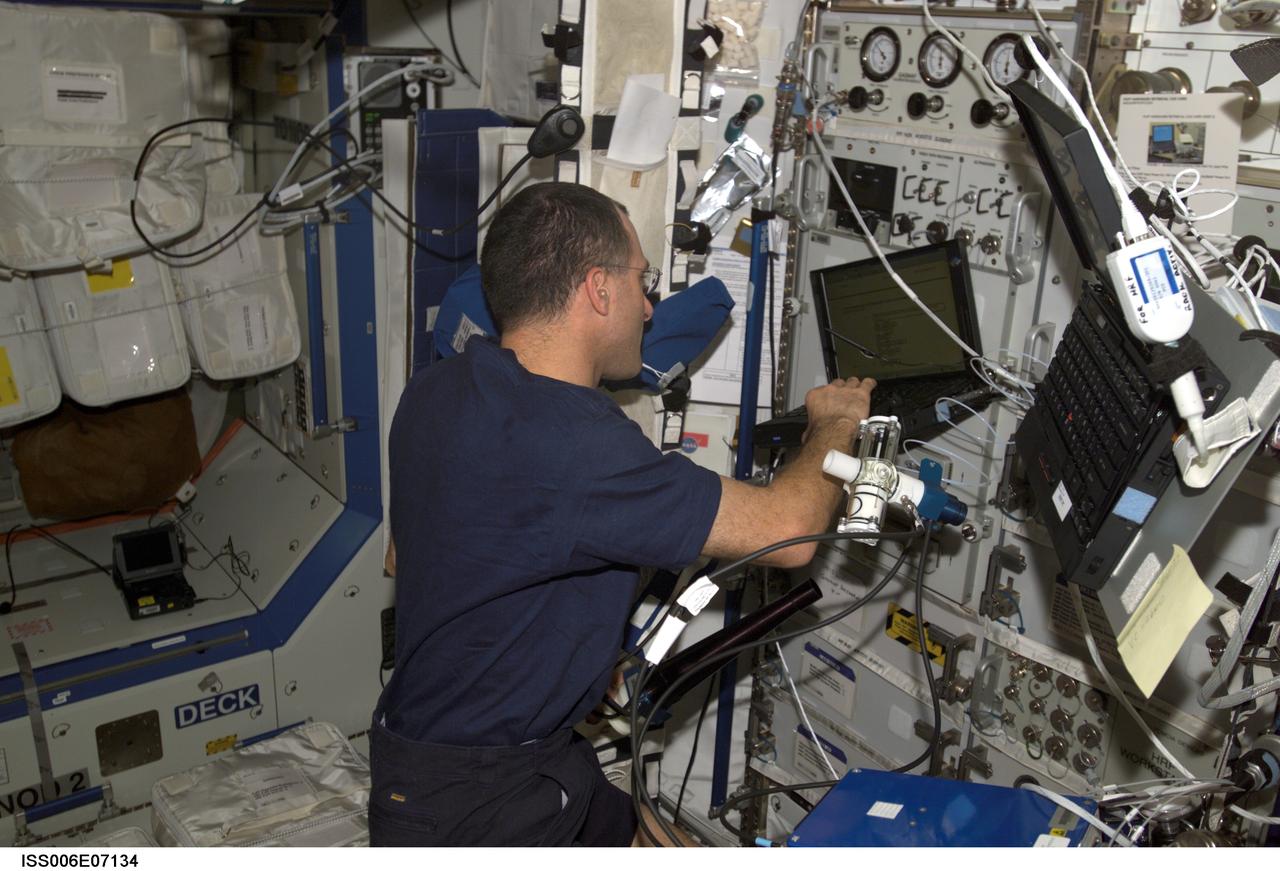
ISS006-E-07134 (9 December 2002) --- Astronaut Donald R. Pettit, Expedition Six NASA ISS science officer, works to set up Pulmonary Function in Flight (PuFF) hardware in preparation for a Human Research Facility (HRF) experiment in the Destiny laboratory on the International Space Station (ISS). Expedition Six is the fourth and final expedition crew to perform the HRF/PuFF Experiment on the ISS.
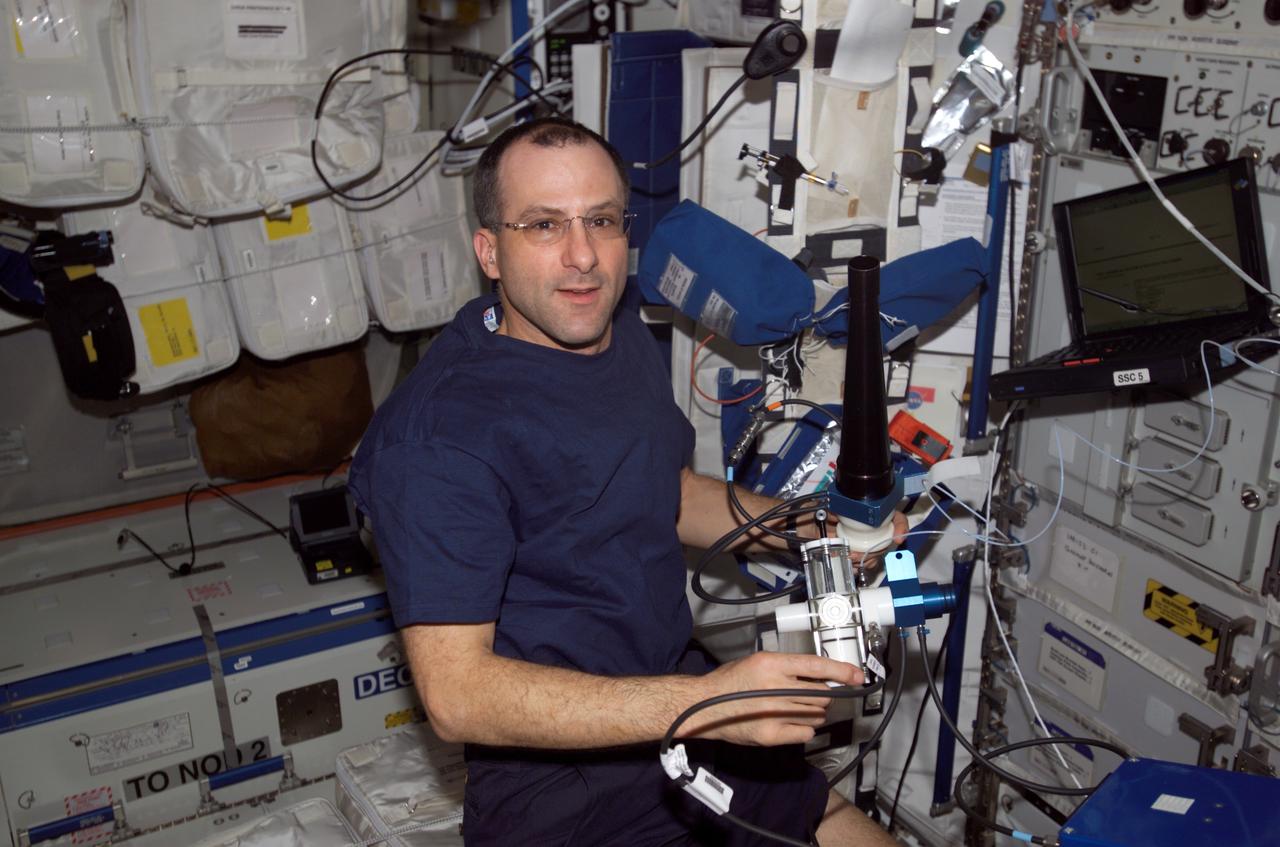
ISS006-E-07133 (9 December 2002) --- Astronaut Donald R. Pettit, Expedition 6 NASA ISS science officer, works to set up Pulmonary Function in Flight (PuFF) hardware in preparation for a Human Research Facility (HRF) experiment in the Destiny laboratory on the International Space Station (ISS). Expedition 6 is the fourth and final expedition crew to perform the HRF/PuFF Experiment on the ISS.
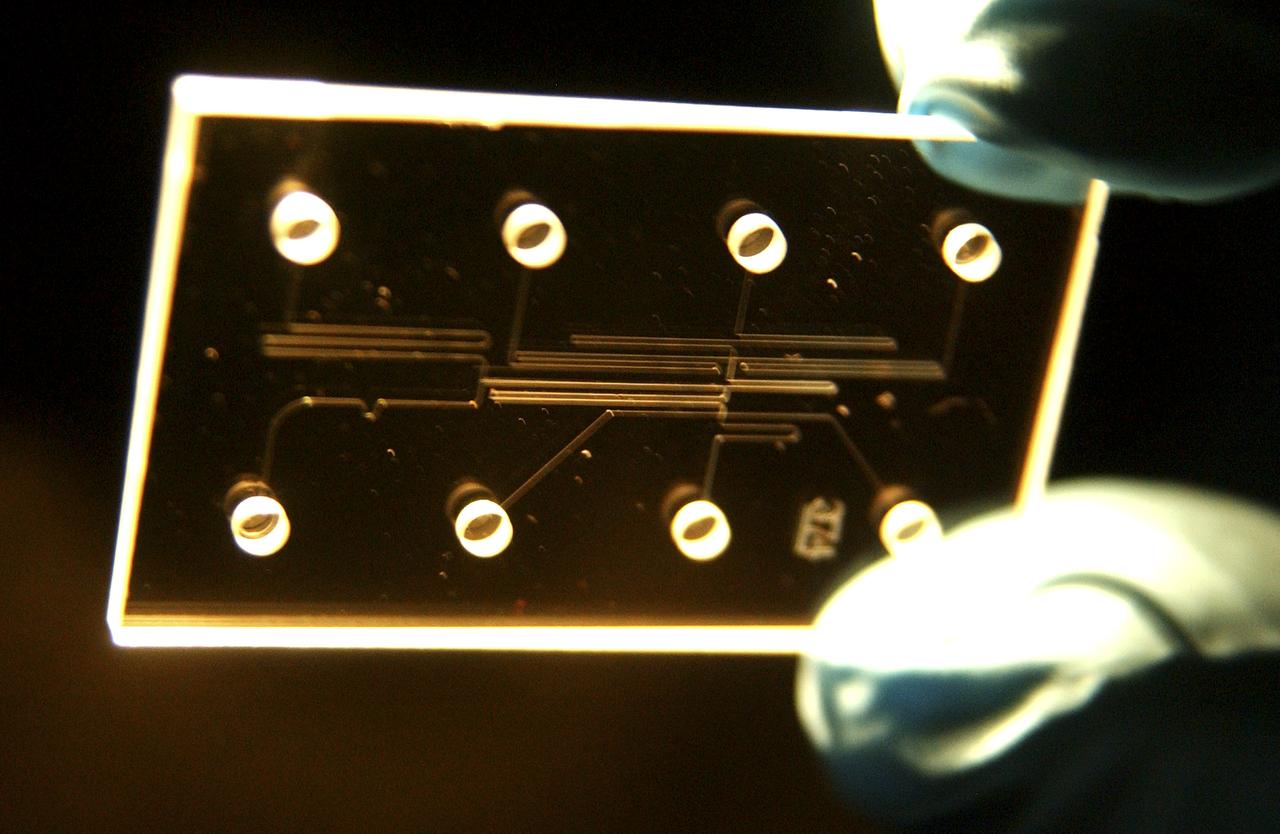
Labs on chips are manufactured in many shapes and sizes and can be used for numerous applications, from medical tests to water quality monitoring to detecting the signatures of life on other planets. The eight holes on this chip are actually ports that can be filled with fluids or chemicals. Tiny valves control the chemical processes by mixing fluids that move in the tiny channels that look like lines, connecting the ports. Scientists at NASA's Marshall Space Flight Center (MSFC) in Huntsville, Alabama designed this chip to grow biological crystals on the International Space Station. Through this research, they discovered that this technology is ideally suited for solving the challenges of the Vision for Space Exploration. For example, thousands of chips the size of dimes could be loaded on a Martian rover looking for biosignatures of past or present life. Other types of chips could be placed in handheld devices used to monitor microbes in water or to quickly conduct medical tests on astronauts. (NASA/MSFC/D.Stoffer)
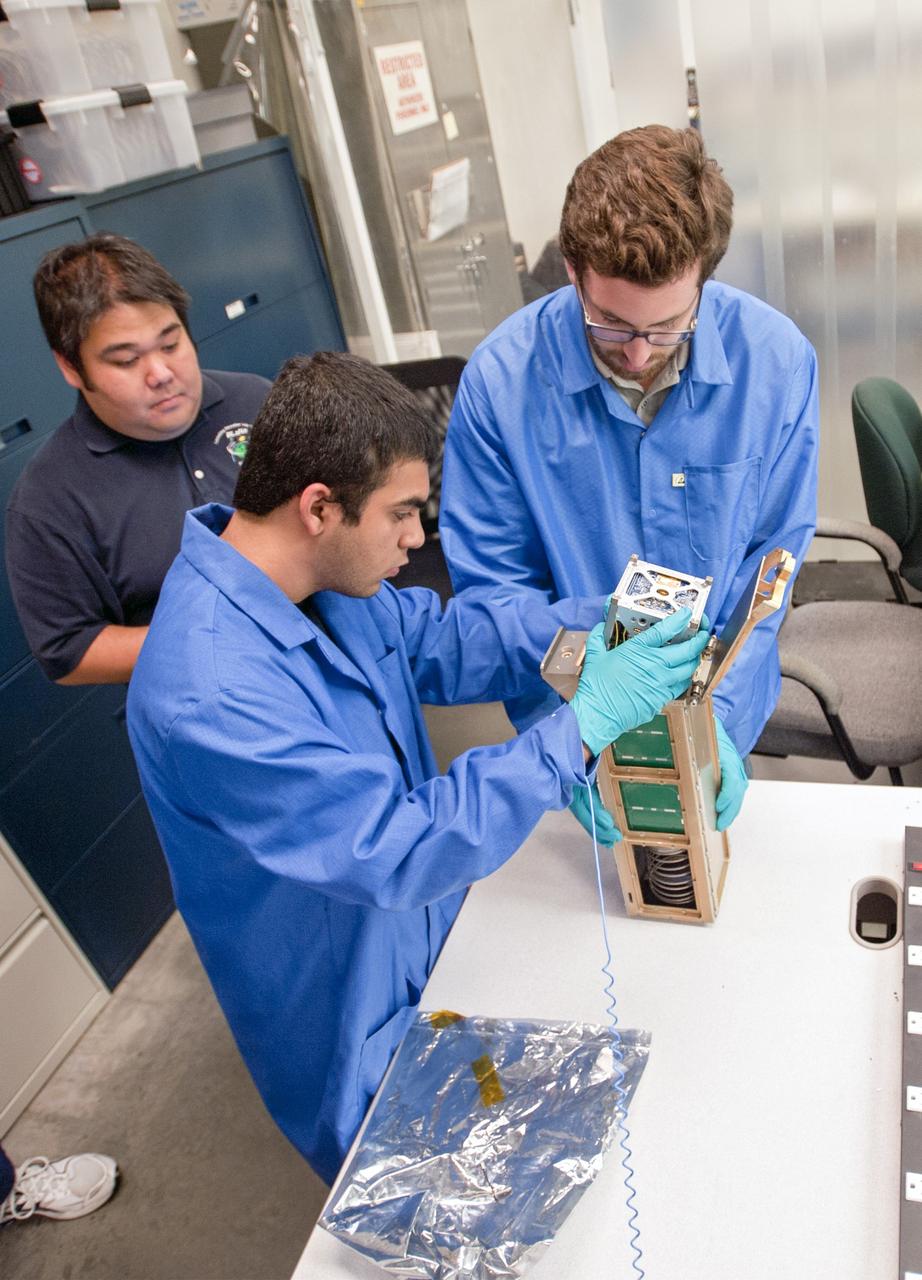
SAN LUIS OBISPO, Calif. – Roland Coelho, third from left, CalPoly program lead, and members of the student launch team load a payload into a Poly Picosatellite Orbital Dispensor, or P-Pod nanolauncher/carrier in the CubeSat lab facility at California Polytechnic Institute, or CalPoly. The payload, which includes sensors and equipment carefully packaged into 4-inch cube sections, will ride in the body of a Garvey Spacecraft Corporation's Prospector P-18D rocket during a June 15 launch on a high-altitude, suborbital flight. Known as a CubeSat, the satellite will record shock, vibrations and heat inside the rocket. It will not be released during the test flight, but the results will be used to prove or strengthen their designs before they are carried into orbit in 2014 on a much larger rocket. Also, a new launcher/carrier of a lightweight design also is being tested for use on future missions to deploy the small spacecraft. The flight also is being watched closely as a model for trying out new or off-the-shelf technologies quickly before putting them in the pipeline for use on NASA's largest launchers. Built by several different organizations, including a university, a NASA field center and a high school, the spacecraft are four-inch cubes designed to fly on their own eventually, but will remain firmly attached to the rocket during the upcoming mission. For more information, visit http://www.nasa.gov/mission_pages/smallsats/elana/cubesatlaunchpreview.html Photo credit: VAFB/Kathi Peoples
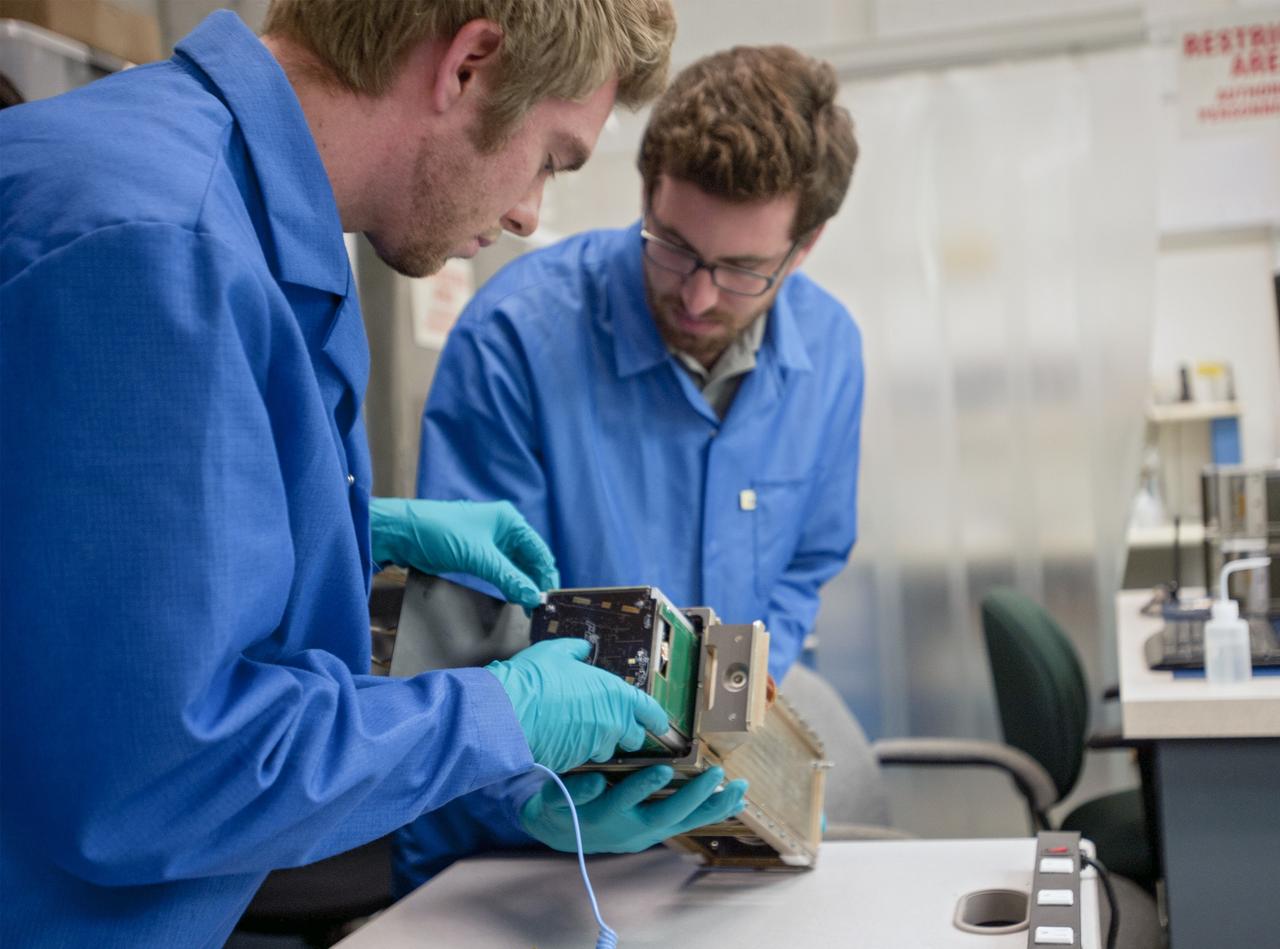
KSC-2013-2721 – SAN LUIS OBISPO, Calif. –Members of the student launch team load a payload into a Poly Picosatellite Orbital Dispensor, or P-Pod nanolauncher/carrier in the CubeSat lab facility at California Polytechnic Institute, or CalPoly. The payload, which includes sensors and equipment carefully packaged into 4-inch cube sections, will ride in the body of a Garvey Spacecraft Corporation's Prospector P-18D rocket during a June 15 launch on a high-altitude, suborbital flight. Known as a CubeSat, the satellite will record shock, vibrations and heat inside the rocket. It will not be released during the test flight, but the results will be used to prove or strengthen their designs before they are carried into orbit in 2014 on a much larger rocket. Also, a new launcher/carrier of a lightweight design also is being tested for use on future missions to deploy the small spacecraft. The flight also is being watched closely as a model for trying out new or off-the-shelf technologies quickly before putting them in the pipeline for use on NASA's largest launchers. Built by several different organizations, including a university, a NASA field center and a high school, the spacecraft are four-inch cubes designed to fly on their own eventually, but will remain firmly attached to the rocket during the upcoming mission. For more information, visit http://www.nasa.gov/mission_pages/smallsats/elana/cubesatlaunchpreview.html Photo credit: VAFB/Kathi Peoples
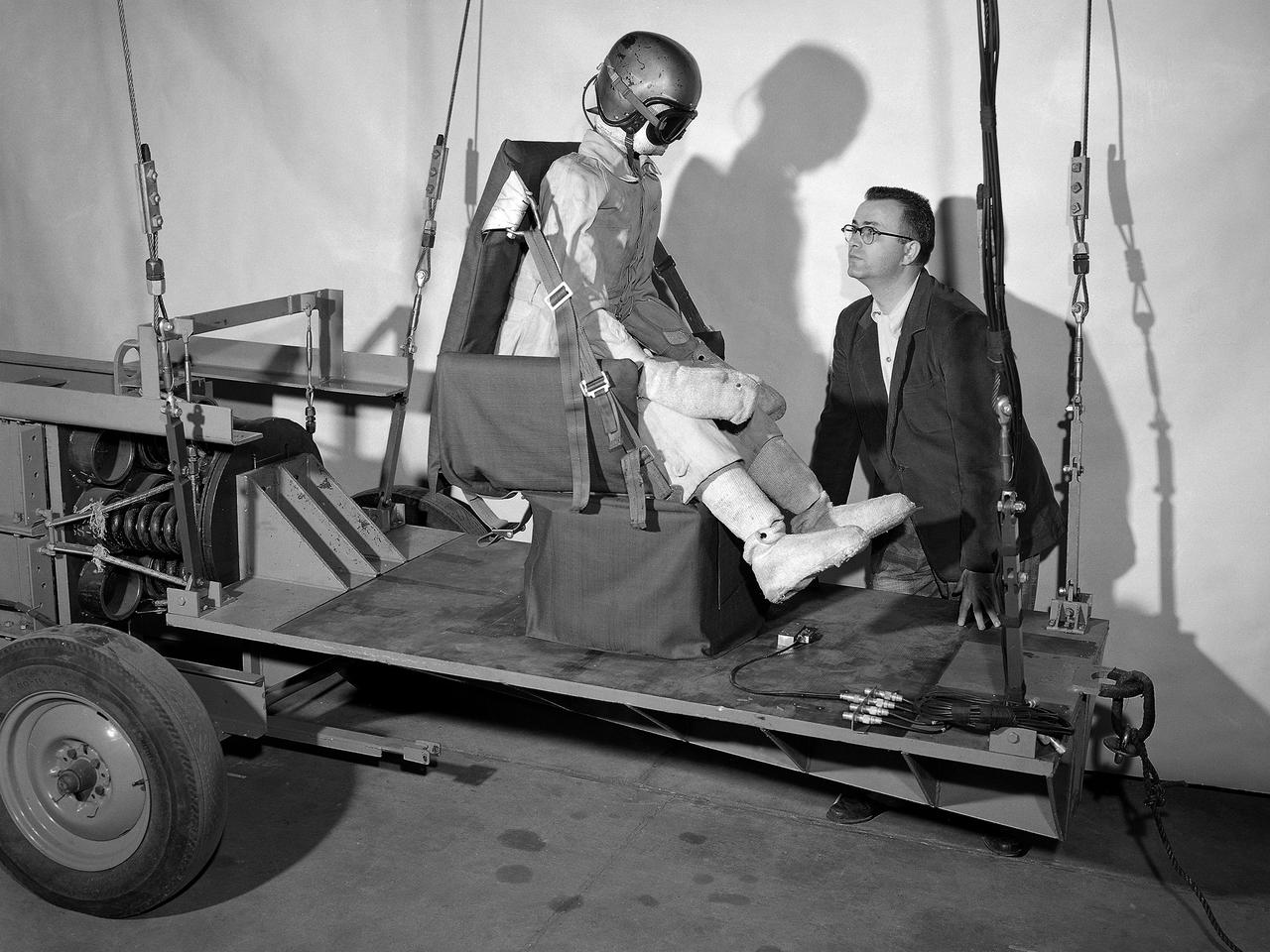
A researcher at the National Advisory Committee for Aeronautics (NACA) Lewis Flight Propulsion Laboratory prepares for a test of an NACA-designed aircraft seat. The laboratory had undertaken a multi-year investigation into the causes and prevention of fires on low altitude aircraft crashes. The program was expanded in the mid-1950s to include the study of impact on passengers, types of seat restraints, and seat design. The crash impact portion of the program began by purposely wrecking surplus Fairchild C-82 Packet and Piper Cub aircraft into barricades at the end of a test runway at the Ravenna Arsenal, located approximately 40 miles south of the Lewis lab in Cleveland. Instrumented dummies and cameras were installed in the pilot and passenger areas. After determining the different loads and their effects on the passengers, the NACA researchers began designing new types of seats and restraints. The result was an elastic seat that flexed upon impact, absorbing 75 percent of the loads before it slowly recoiled. This photograph shows the seats mounted on a pendulum with a large spring behind the platform to provide the jolt that mimicked the forces of a crash. The seat was constructed without any potentially damaging metal parts and included rubber-like material, an inflated back and arms, and a seat cushion. After the pendulum tests, the researchers compared the flexible seats to the rigid seats during a crash of a transport aircraft. They found the passengers in the rigid seats received 66 percent higher g-forces than the NACA-designed seats.
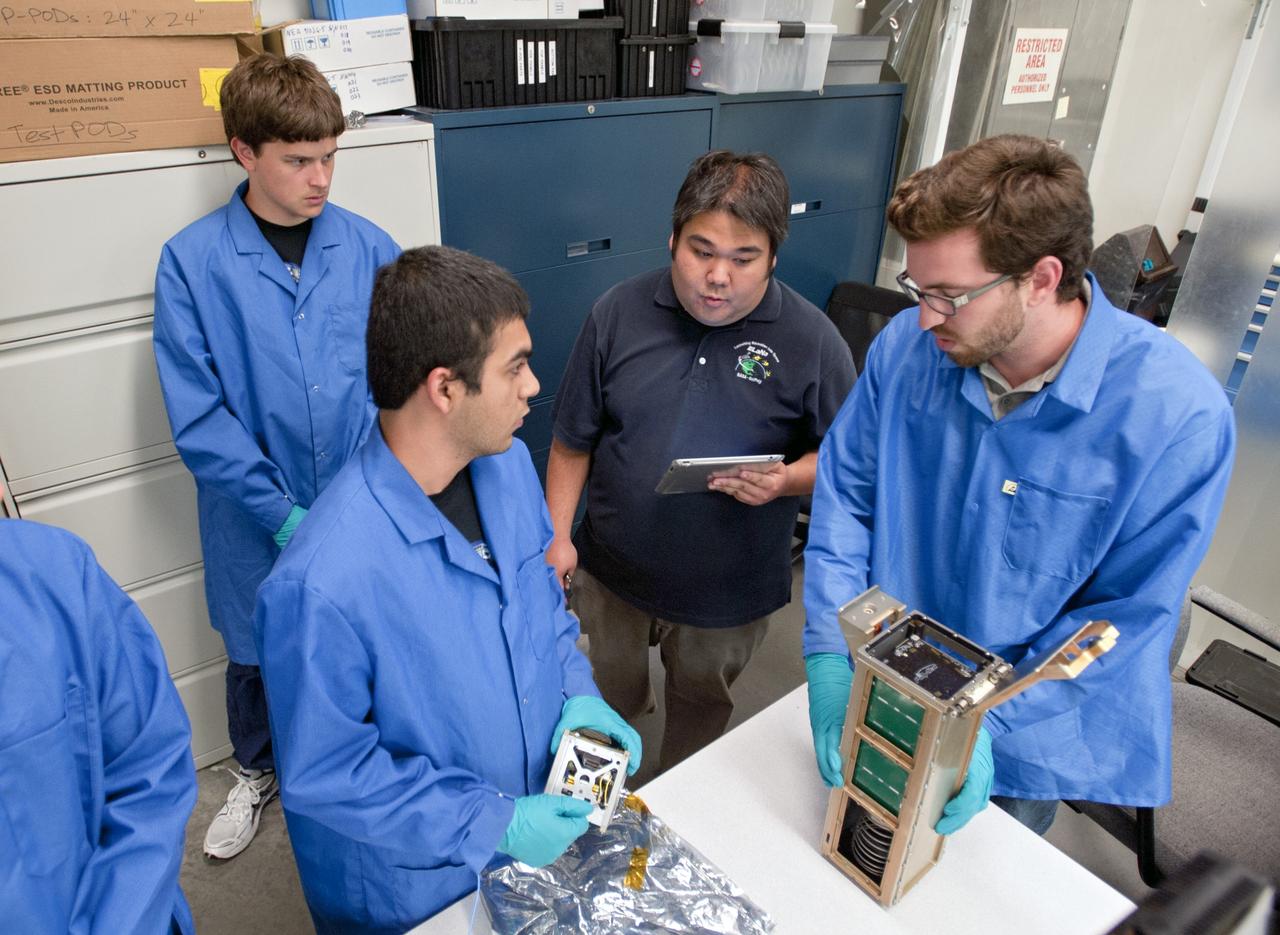
KSC-2013-2721 – SAN LUIS OBISPO, Calif. –Roland Coelho, third from left, CalPoly program lead, and members of the student launch team load a payload into a Poly Picosatellite Orbital Dispensor, or P-Pod nanolauncher/carrier in the CubeSat lab facility at California Polytechnic Institute, or CalPoly. The payload, which includes sensors and equipment carefully packaged into 4-inch cube sections, will ride in the body of a Garvey Spacecraft Corporation's Prospector P-18D rocket during a June 15 launch on a high-altitude, suborbital flight. Known as a CubeSat, the satellite will record shock, vibrations and heat inside the rocket. It will not be released during the test flight, but the results will be used to prove or strengthen their designs before they are carried into orbit in 2014 on a much larger rocket. Also, a new launcher/carrier of a lightweight design also is being tested for use on future missions to deploy the small spacecraft. The flight also is being watched closely as a model for trying out new or off-the-shelf technologies quickly before putting them in the pipeline for use on NASA's largest launchers. Built by several different organizations, including a university, a NASA field center and a high school, the spacecraft are four-inch cubes designed to fly on their own eventually, but will remain firmly attached to the rocket during the upcoming mission. For more information, visit http://www.nasa.gov/mission_pages/smallsats/elana/cubesatlaunchpreview.html Photo credit: VAFB/Kathi Peoples
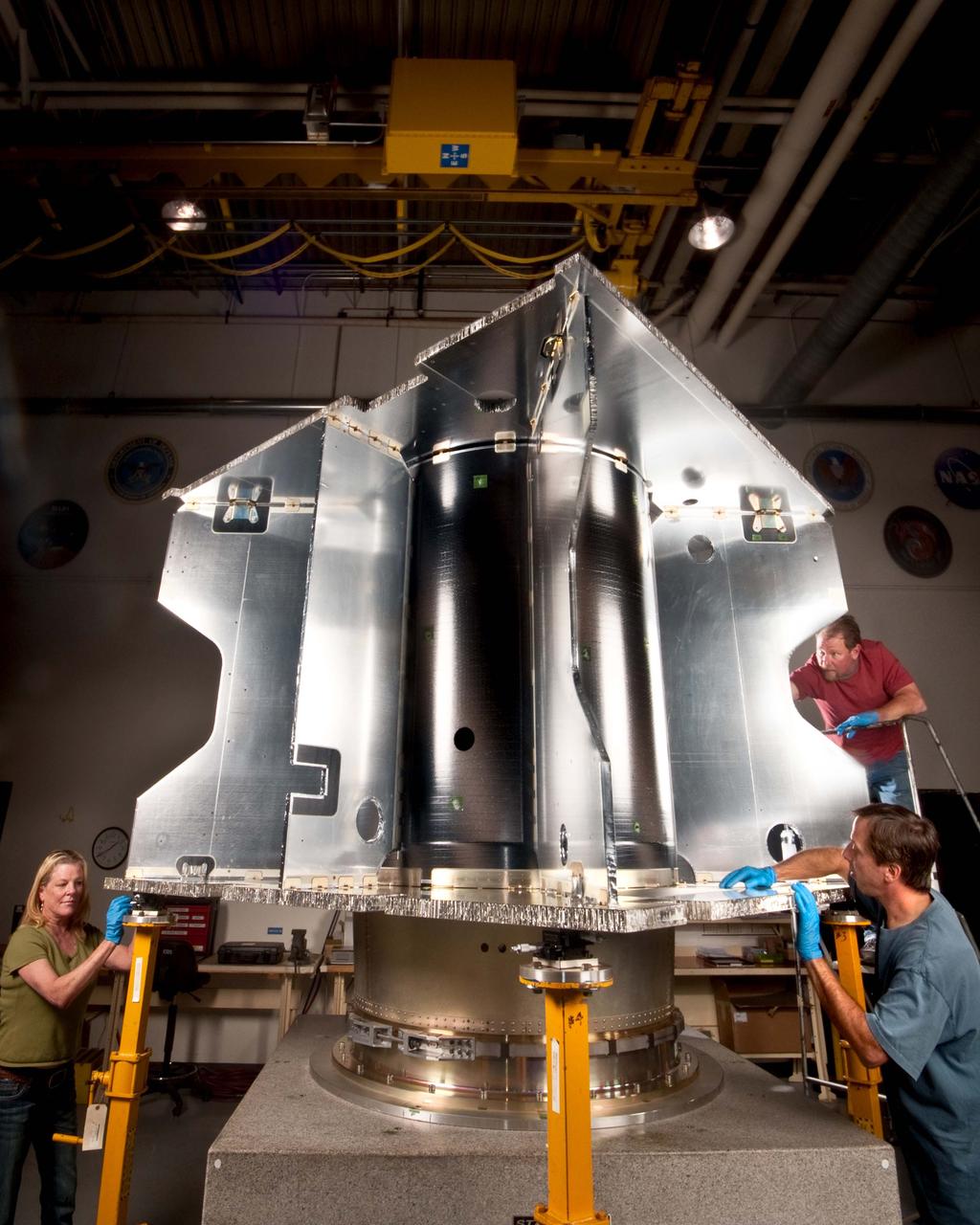
NASA's Mars Atmosphere and Volatile EvolutioN (MAVEN) mission has reached a new milestone. Lockheed Martin has completed building the primary structure of the MAVEN spacecraft at its Space Systems Company facility near Denver. The MAVEN spacecraft is scheduled to launch in November 2013 and will be the first mission devoted to understanding the Martian upper atmosphere. The mission's principal investigator is Bruce Jakosky from the Laboratory for Atmospheric and Space Physics at the University of Colorado. In the photo taken on Sept. 8, technicians from Lockheed Martin are inspecting the MAVEN primary structure following its recent completion at the company’s Composites Lab. The primary structure is cube shaped at 7.5 feet x 7.5 feet x 6.5 feet high (2.3 meters x 2.3 meters x 2 meters high). Built out of composite panels comprised of aluminum honeycomb sandwiched between graphite composite face sheets and attached to one another with metal fittings, the entire structure only weighs 275 pounds (125 kilograms). At the center of the structure is the 4.25 feet (1.3 meters) diameter core cylinder that encloses the hydrazine propellant tank and serves as the primary vertical load-bearing structure. The large tank will hold approximately 3,615 pounds (1640 kilograms) of fuel. To read more go to: <a href="http://www.nasa.gov/mission_pages/maven/news/maven-structure.html" rel="nofollow">www.nasa.gov/mission_pages/maven/news/maven-structure.html</a> Credit: Lockheed Martin <b><a href="http://www.nasa.gov/audience/formedia/features/MP_Photo_Guidelines.html" rel="nofollow">NASA image use policy.</a></b> <b><a href="http://www.nasa.gov/centers/goddard/home/index.html" rel="nofollow">NASA Goddard Space Flight Center</a></b> enables NASA’s mission through four scientific endeavors: Earth Science, Heliophysics, Solar System Exploration, and Astrophysics. Goddard plays a leading role in NASA’s accomplishments by contributing compelling scientific knowledge to advance the Agency’s mission. <b>Follow us on <a href="http://twitter.com/NASA_GoddardPix" rel="nofollow">Twitter</a></b> <b>Like us on <a href="http://www.facebook.com/pages/Greenbelt-MD/NASA-Goddard/395013845897?ref=tsd" rel="nofollow">Facebook</a></b> <b>Find us on <a href="http://instagrid.me/nasagoddard/?vm=grid" rel="nofollow">Instagram</a></b>