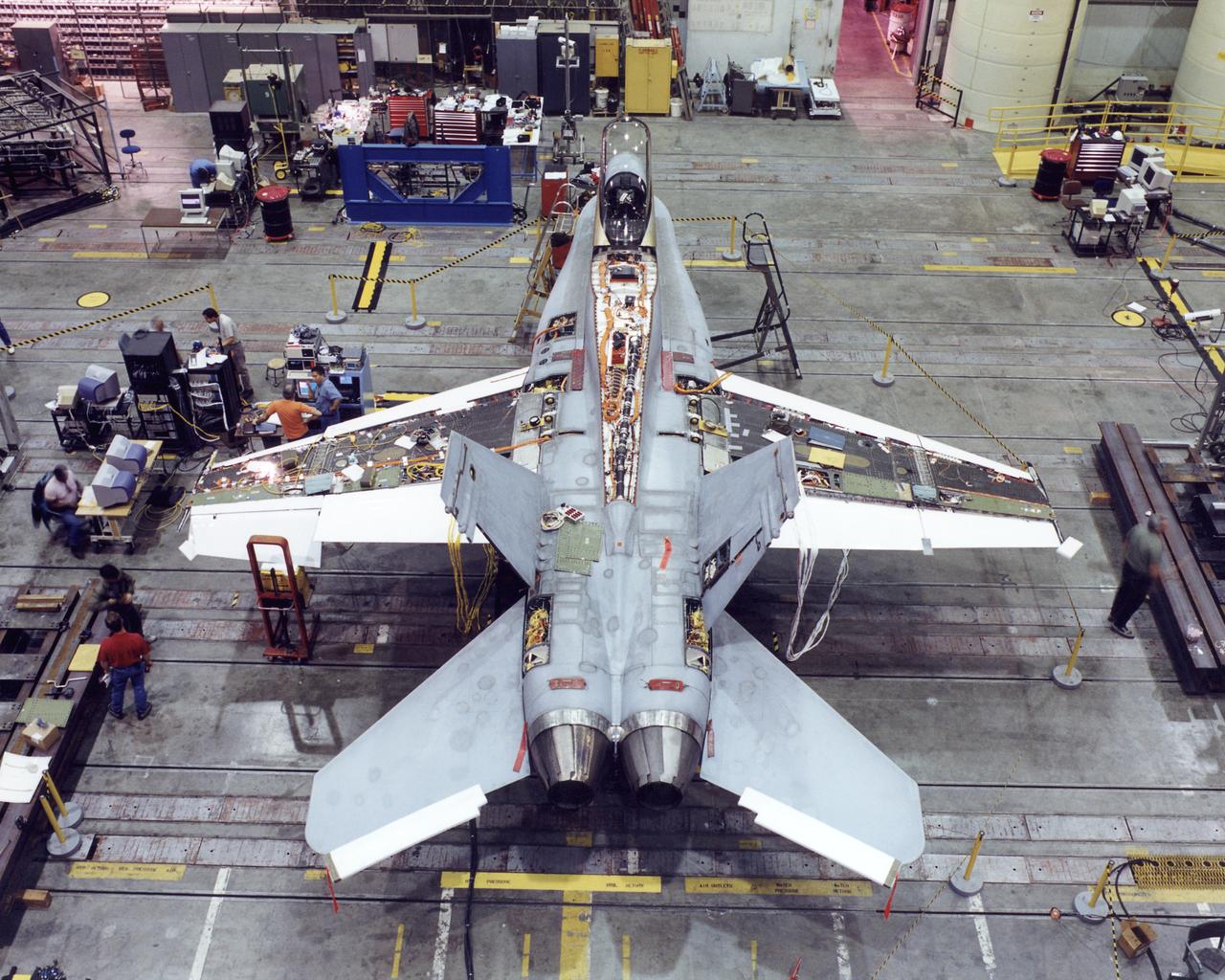
Structural loads testing on the Active Aeroelastic Wing F-18 in the Flight Loads Laboratory at NASA's Dryden flight Research Center, Edwards, California
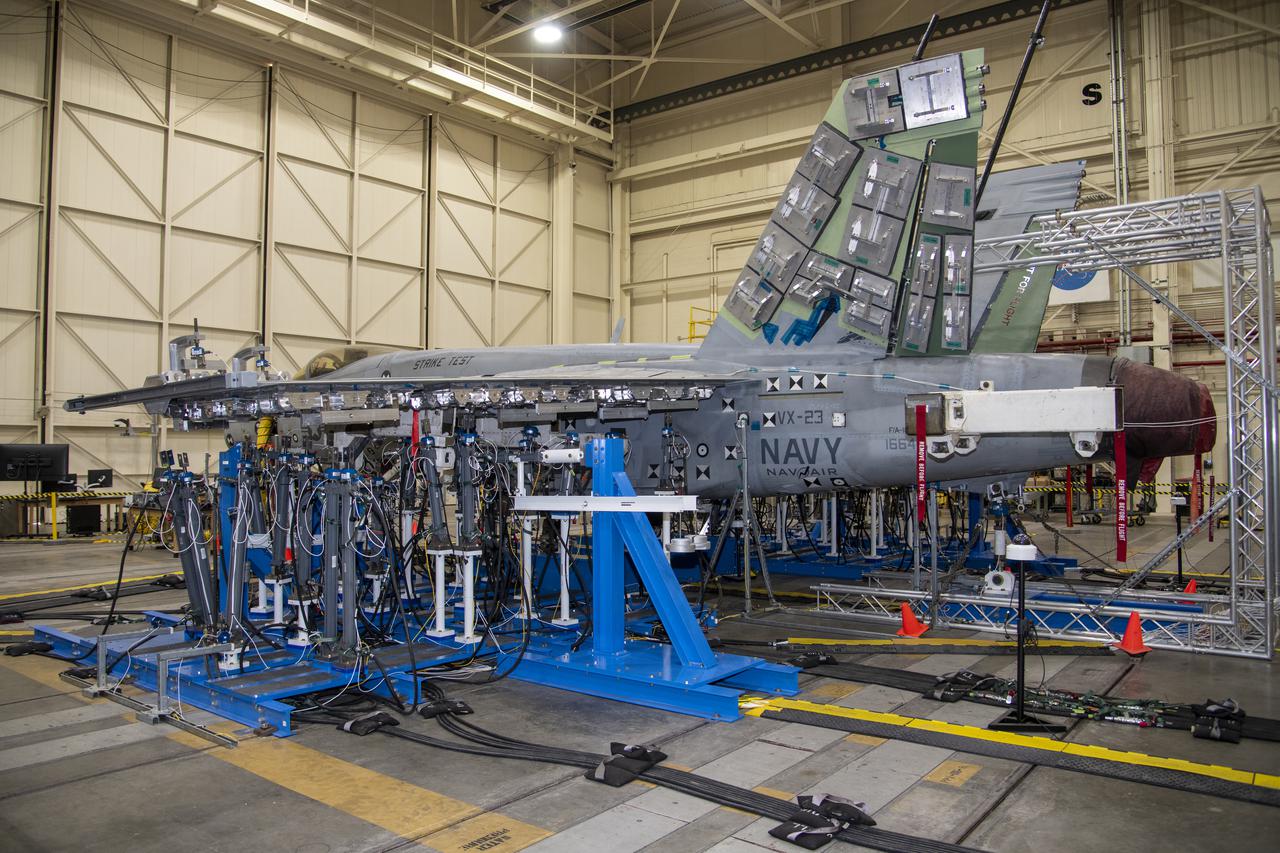
NASA’s Armstrong Flight Research Center Flight Loads Laboratory in Edwards, California, is working on one of its biggest load calibrations tests on an F/A-18E Super Hornet from the Naval Air Systems Command (NAVAIR) in Patuxent River, Maryland. This testing is needed before the aircraft can serve as a test vehicle for determining if it can safely manage maneuvers and proposed upgrades. This is a view of the test setup for the wing loads testing that is set to begin in December 2021.
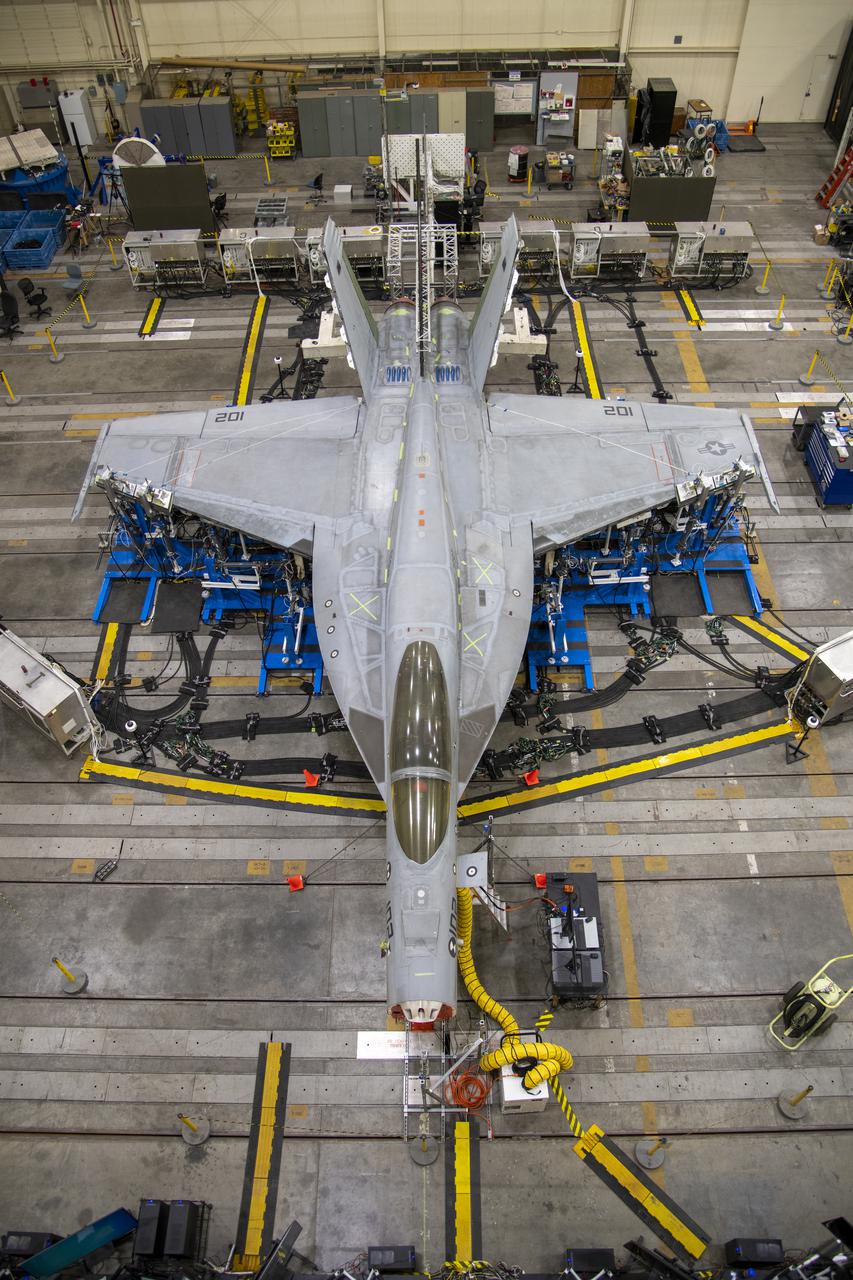
NASA’s Armstrong Flight Research Center Flight Loads Laboratory in Edwards, California, is working on one of its biggest load calibrations tests on an F/A-18E Super Hornet from the Naval Air Systems Command (NAVAIR) in Patuxent River, Maryland. This testing is needed before the aircraft can serve as a test vehicle for determining if it can safely manage maneuvers and proposed upgrades. This is a view of the test setup for the wing loads testing that is set to begin in December 2021.
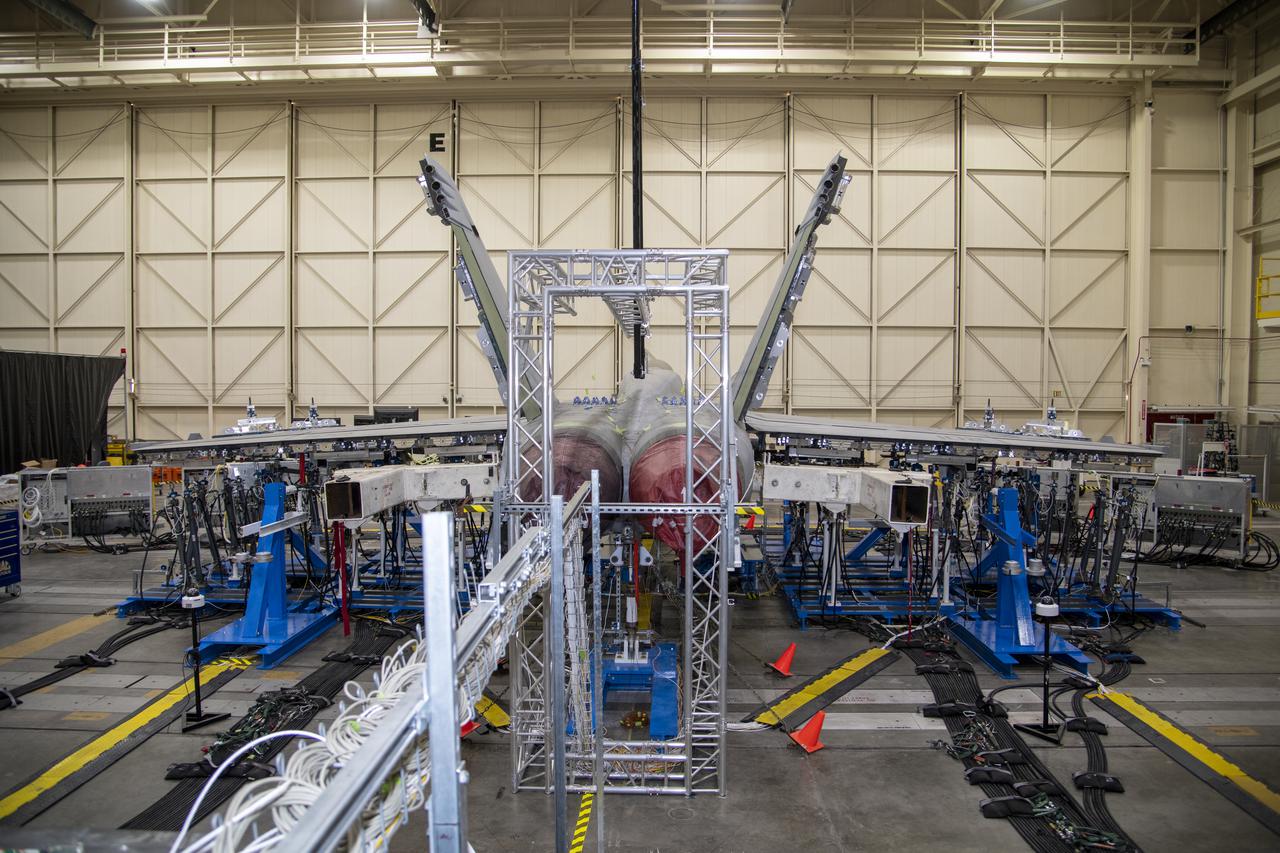
NASA’s Armstrong Flight Research Center Flight Loads Laboratory in Edwards, California, is working on one of its biggest load calibrations tests on an F/A-18E Super Hornet from the Naval Air Systems Command (NAVAIR) in Patuxent River, Maryland. This testing is needed before the aircraft can serve as a test vehicle for determining if it can safely manage maneuvers and proposed upgrades. This is a view of the test setup for the wing loads testing that is set to begin in December 2021.
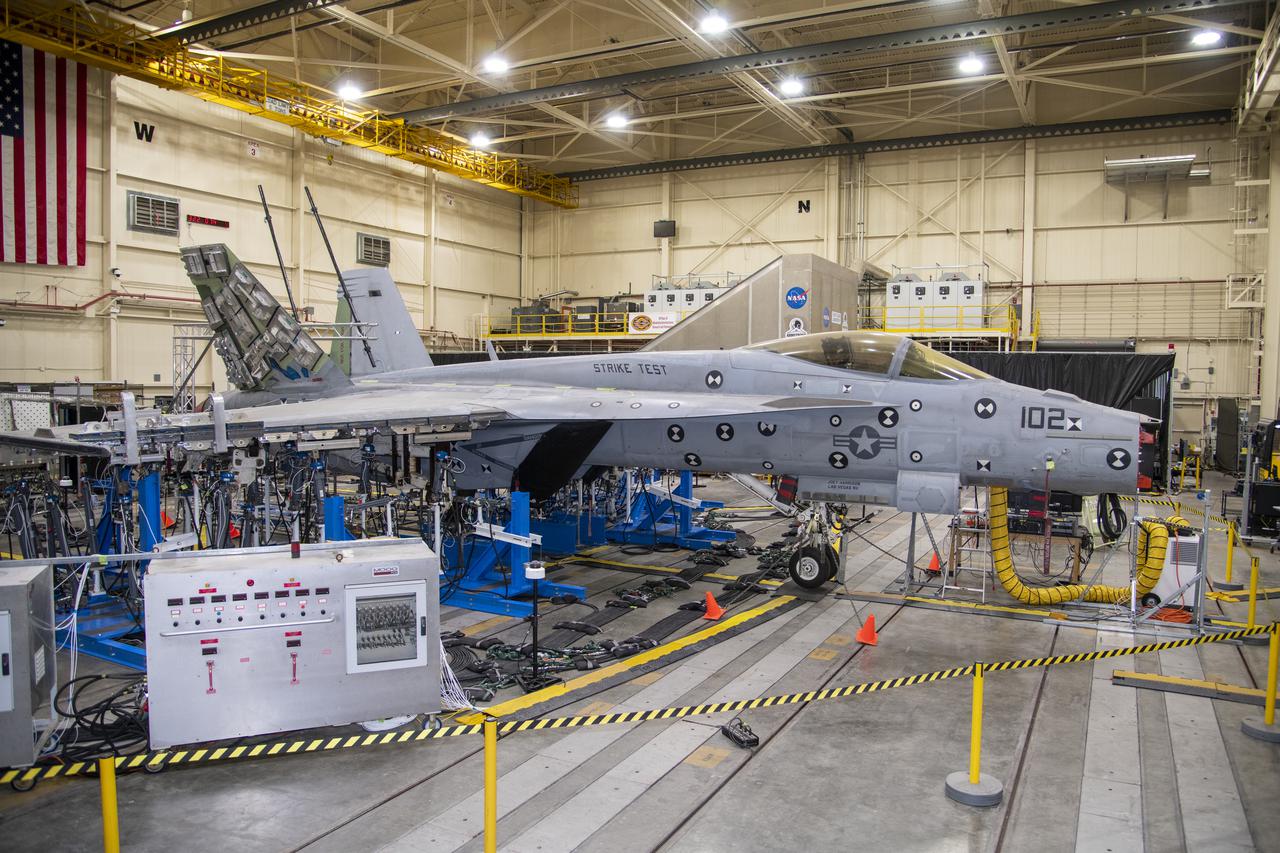
NASA’s Armstrong Flight Research Center Flight Loads Laboratory in Edwards, California, is working on one of its biggest load calibrations tests on an F/A-18E Super Hornet from the Naval Air Systems Command (NAVAIR) in Patuxent River, Maryland. This testing is needed before the aircraft can serve as a test vehicle for determining if it can safely manage maneuvers and proposed upgrades. This is a view of the test setup for the wing loads testing that is set to begin in December 2021.
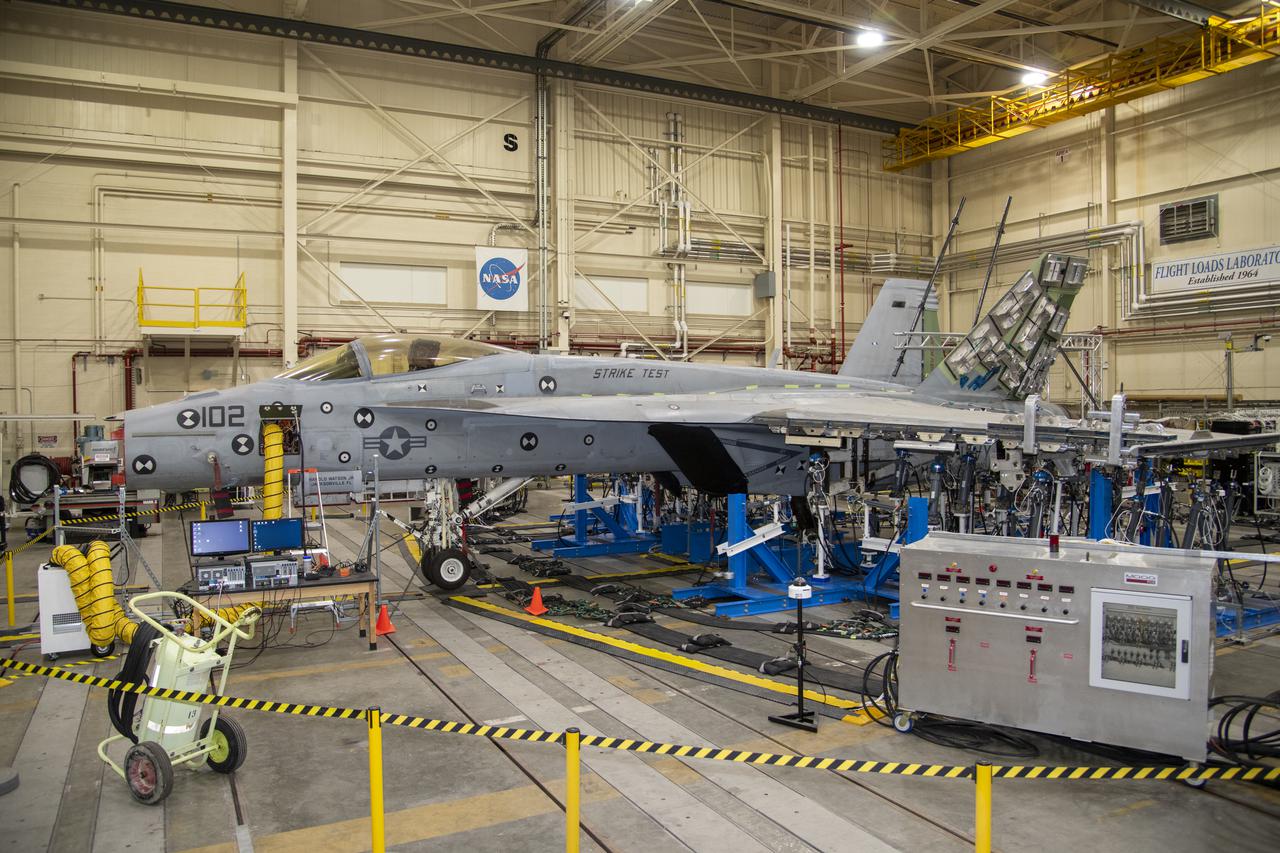
NASA’s Armstrong Flight Research Center Flight Loads Laboratory in Edwards, California, is working on one of its biggest load calibrations tests on an F/A-18E Super Hornet from the Naval Air Systems Command (NAVAIR) in Patuxent River, Maryland. This testing is needed before the aircraft can serve as a test vehicle for determining if it can safely manage maneuvers and proposed upgrades. This is a view of the test setup for the wing loads testing that is set to begin in December 2021.
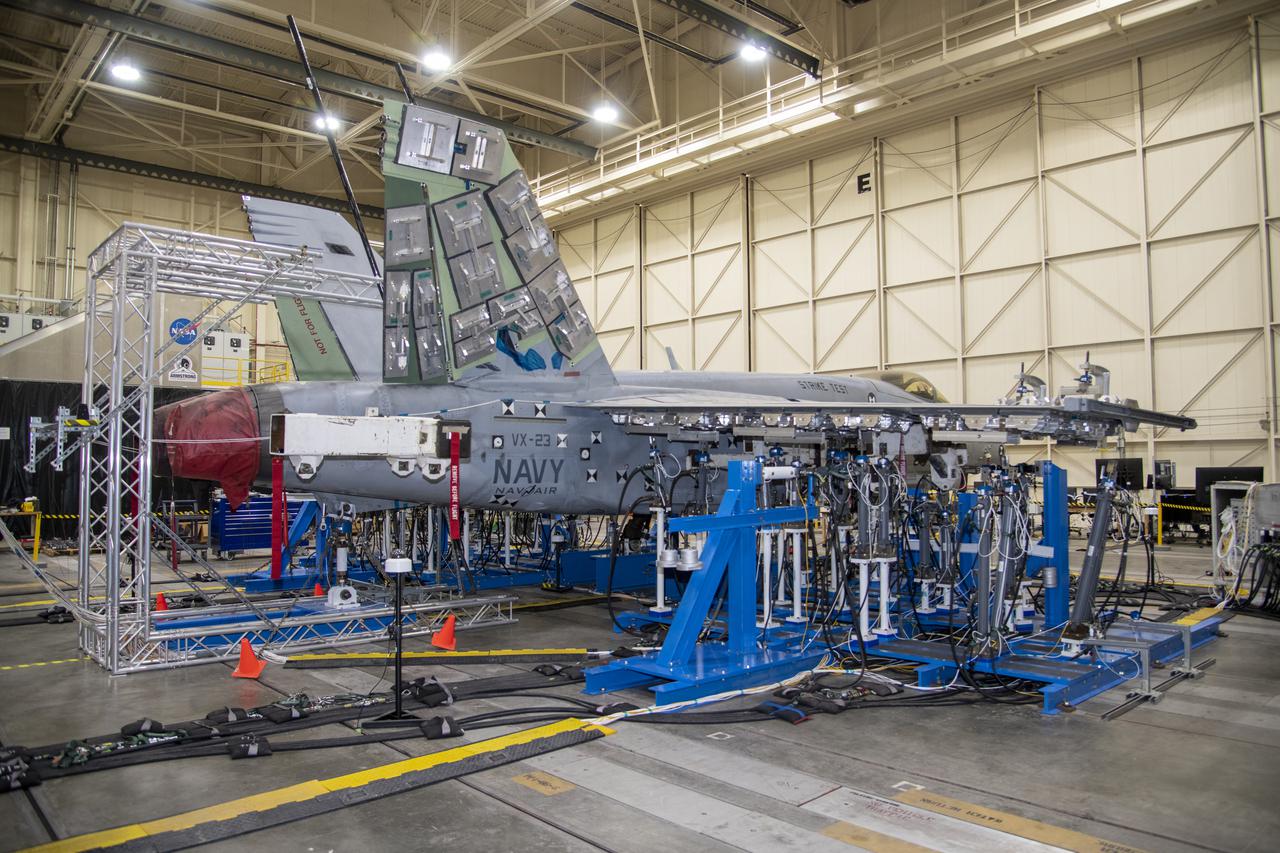
NASA’s Armstrong Flight Research Center Flight Loads Laboratory in Edwards, California, is working on one of its biggest load calibrations tests on an F/A-18E Super Hornet from the Naval Air Systems Command (NAVAIR) in Patuxent River, Maryland. This testing is needed before the aircraft can serve as a test vehicle for determining if it can safely manage maneuvers and proposed upgrades. This is a view of the test setup for the wing loads testing that is set to begin in December 2021.
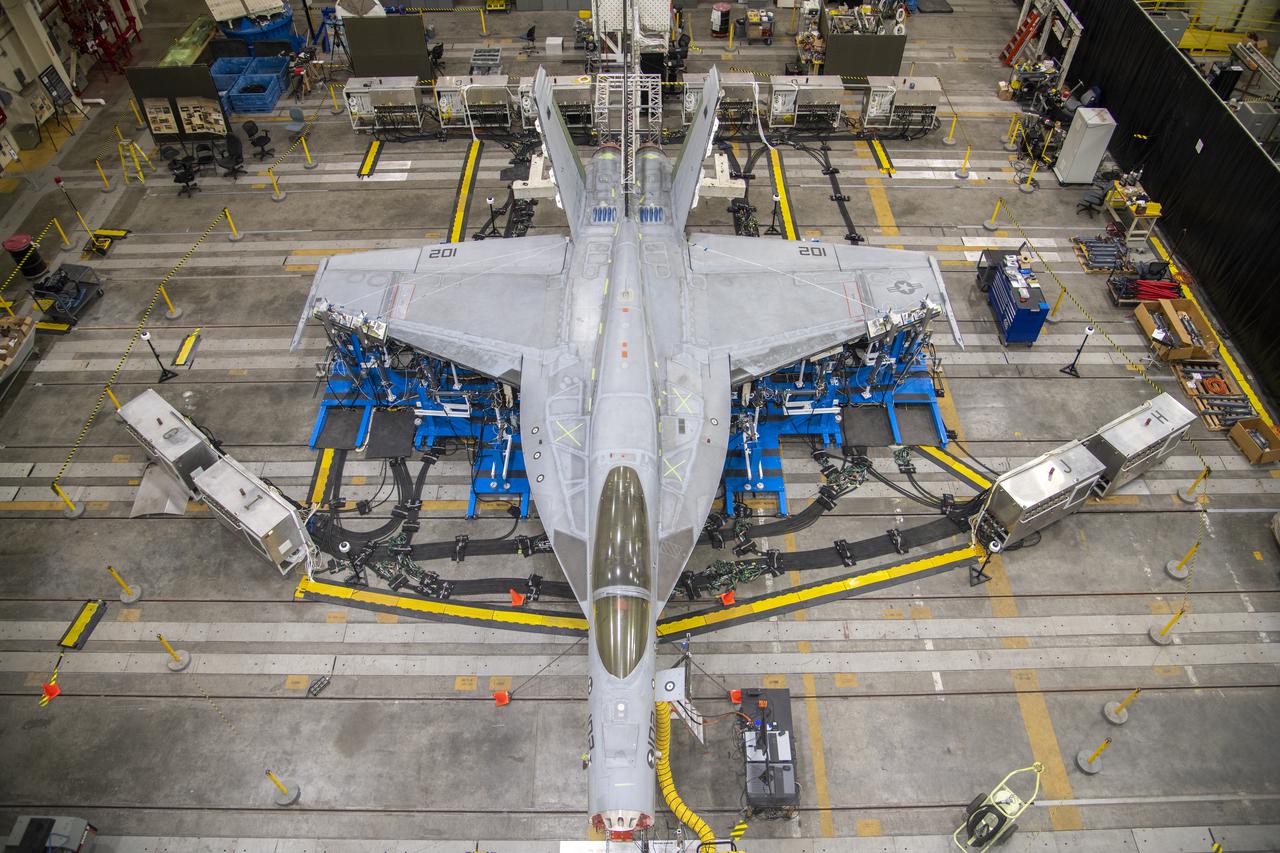
NASA’s Armstrong Flight Research Center Flight Loads Laboratory in Edwards, California, is working on one of its biggest load calibrations tests on an F/A-18E Super Hornet from the Naval Air Systems Command (NAVAIR) in Patuxent River, Maryland. This testing is needed before the aircraft can serve as a test vehicle for determining if it can safely manage maneuvers and proposed upgrades. This is a view of the test setup for the wing loads testing that is set to begin in December 2021.

NASA’s Armstrong Flight Research Center Flight Loads Laboratory in Edwards, California, is working on one of its biggest load calibrations tests on an F/A-18E Super Hornet from the Naval Air Systems Command (NAVAIR) in Patuxent River, Maryland. This testing is needed before the aircraft can serve as a test vehicle for determining if it can safely manage maneuvers and proposed upgrades. This is a view of the test setup for the wing loads testing that is set to begin in December 2021.
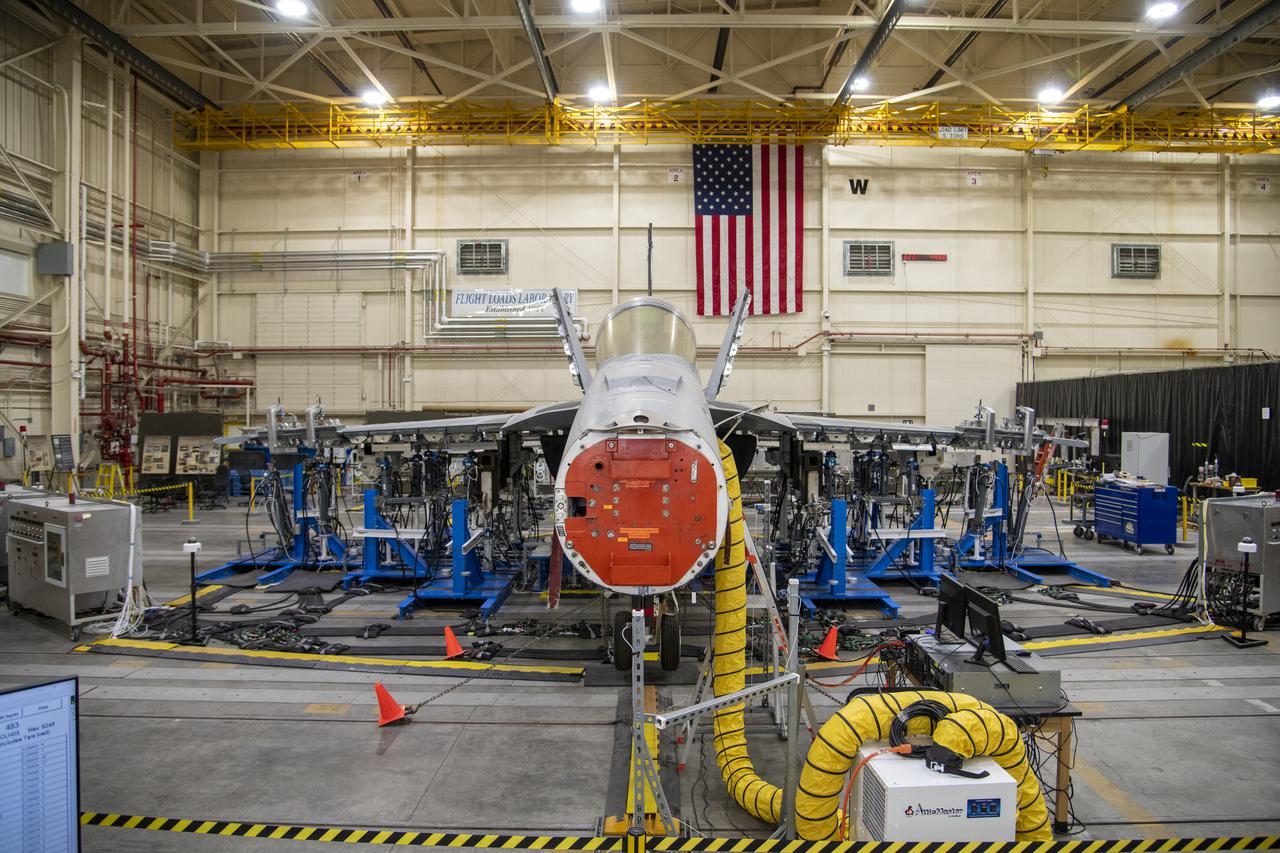
NASA’s Armstrong Flight Research Center Flight Loads Laboratory in Edwards, California, is working on one of its biggest load calibrations tests on an F/A-18E Super Hornet from the Naval Air Systems Command (NAVAIR) in Patuxent River, Maryland. This testing is needed before the aircraft can serve as a test vehicle for determining if it can safely manage maneuvers and proposed upgrades. This is a view of the test setup for the wing loads testing that is set to begin in December 2021.
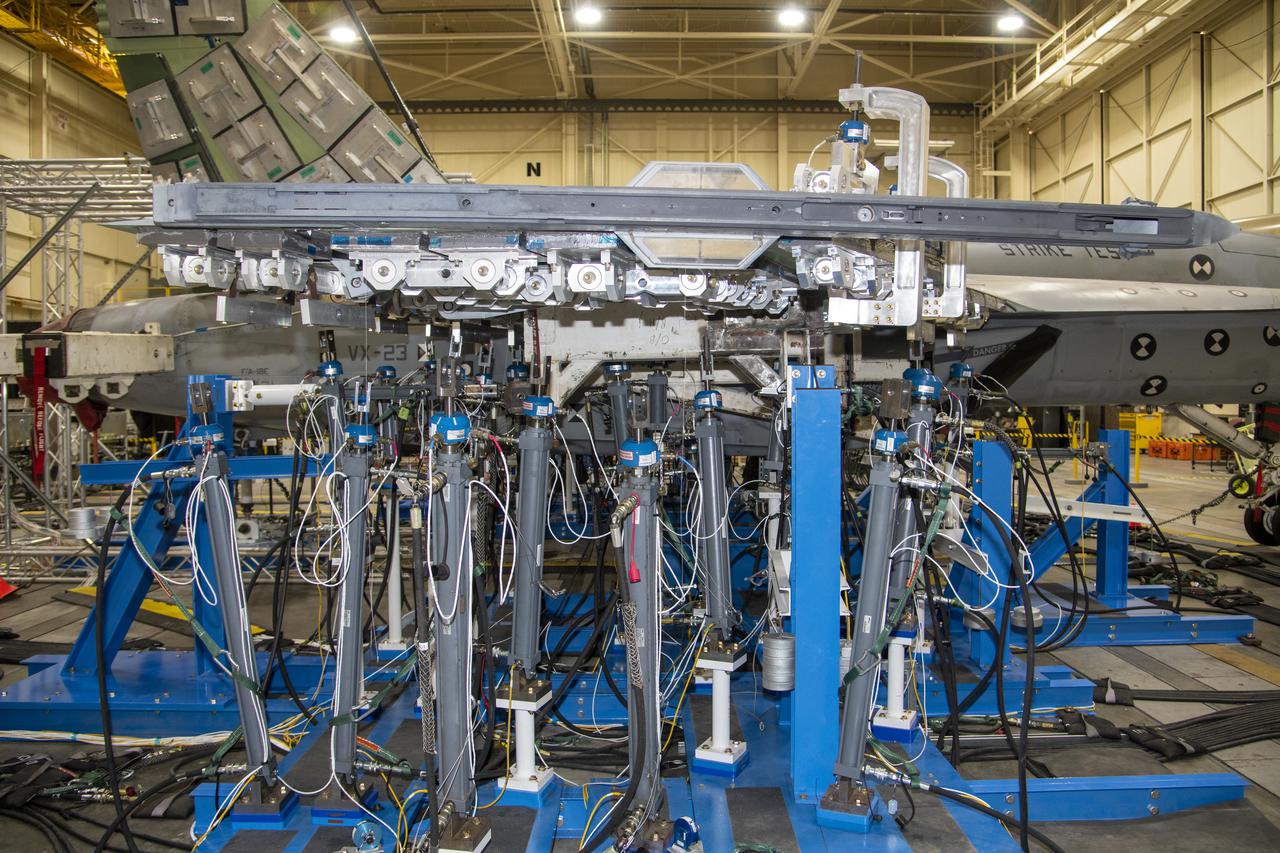
NASA’s Armstrong Flight Research Center Flight Loads Laboratory in Edwards, California, is working on one of its biggest load calibrations tests on an F/A-18E Super Hornet from the Naval Air Systems Command (NAVAIR) in Patuxent River, Maryland. This testing is needed before the aircraft can serve as a test vehicle for determining if it can safely manage maneuvers and proposed upgrades. The horizontal tail spindle testing, the first of three phases, wrapped up in October 2021. The next phase focuses on wing loads testing that is set to begin in December 2021.
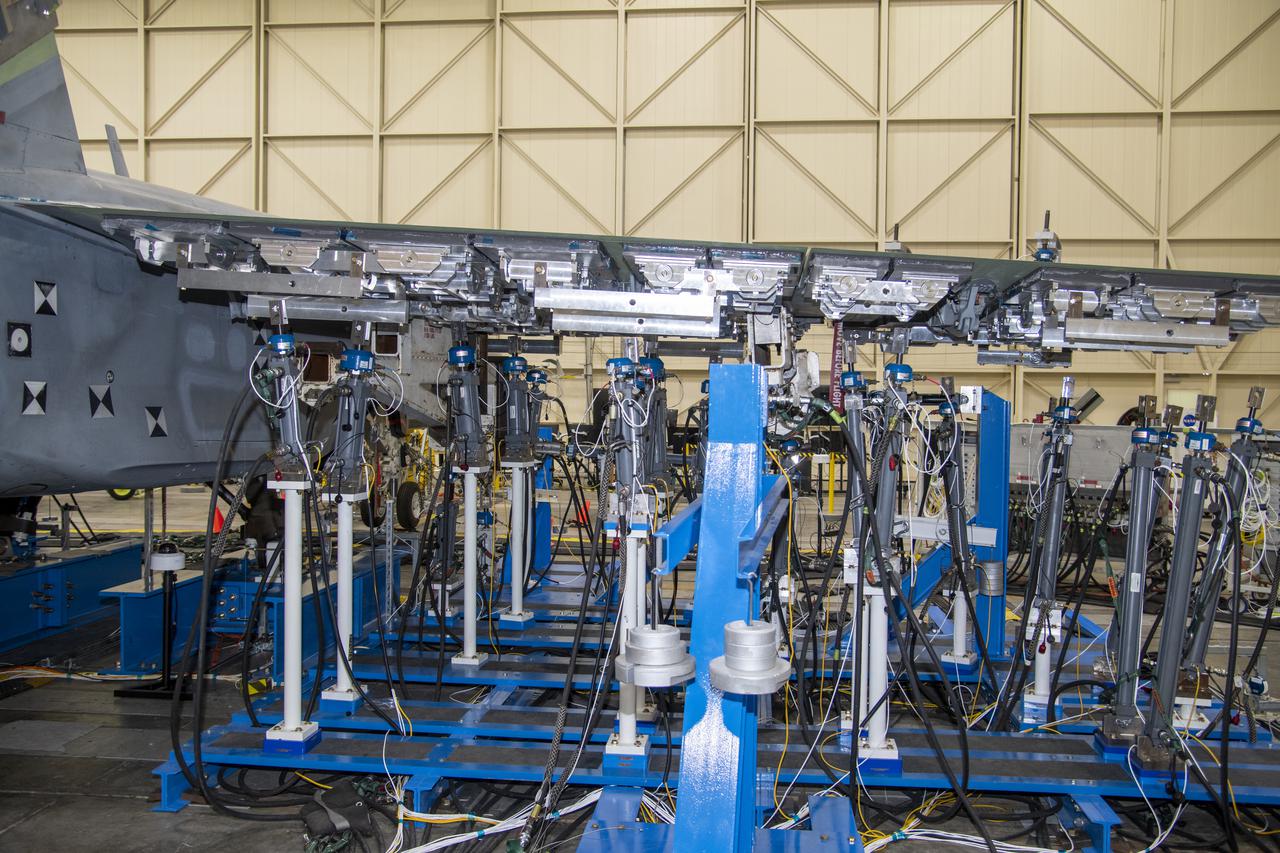
NASA’s Armstrong Flight Research Center Flight Loads Laboratory in Edwards, California, is working on one of its biggest load calibrations tests on an F/A-18E Super Hornet from the Naval Air Systems Command (NAVAIR) in Patuxent River, Maryland. This testing is needed before the aircraft can serve as a test vehicle for determining if it can safely manage maneuvers and proposed upgrades. The horizontal tail spindle testing, the first of three phases, wrapped up in October 2021. The next phase focuses on wing loads testing that is set to begin in December 2021.

NASA’s Armstrong Flight Research Center Flight Loads Laboratory in Edwards, California, is working on one of its biggest load calibrations tests on an F/A-18E Super Hornet from the Naval Air Systems Command (NAVAIR) in Patuxent River, Maryland. This testing is needed before the aircraft can serve as a test vehicle for determining if it can safely manage maneuvers and proposed upgrades. The horizontal tail spindle testing, the first of three phases, wrapped up in October 2021. The next phase focuses on wing loads testing that is set to begin in December 2021.
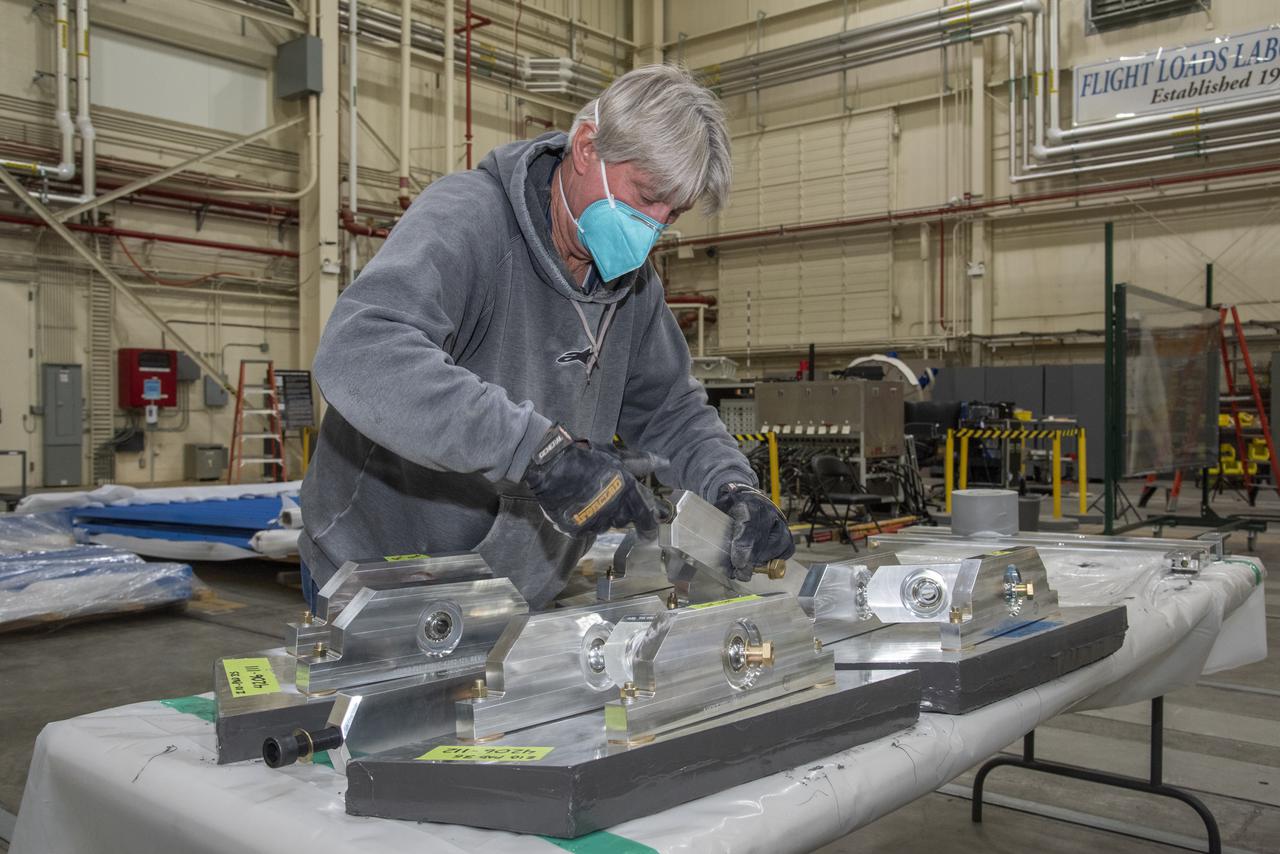
Assembled test structures called whiffle trees, which are needed to distribute prescribed hydraulic actuator loads, are attached to load pads to test the F/A-18E from the Naval Air Systems Command (NAVAIR) in Patuxent River, Maryland. The aircraft is in NASA’s Armstrong Flight Research Center Flight Loads Laboratory in Edwards, California, for the center’s biggest load calibrations tests. This testing is needed before the aircraft can serve as a test vehicle for determining if it can safely manage maneuvers and proposed upgrades.
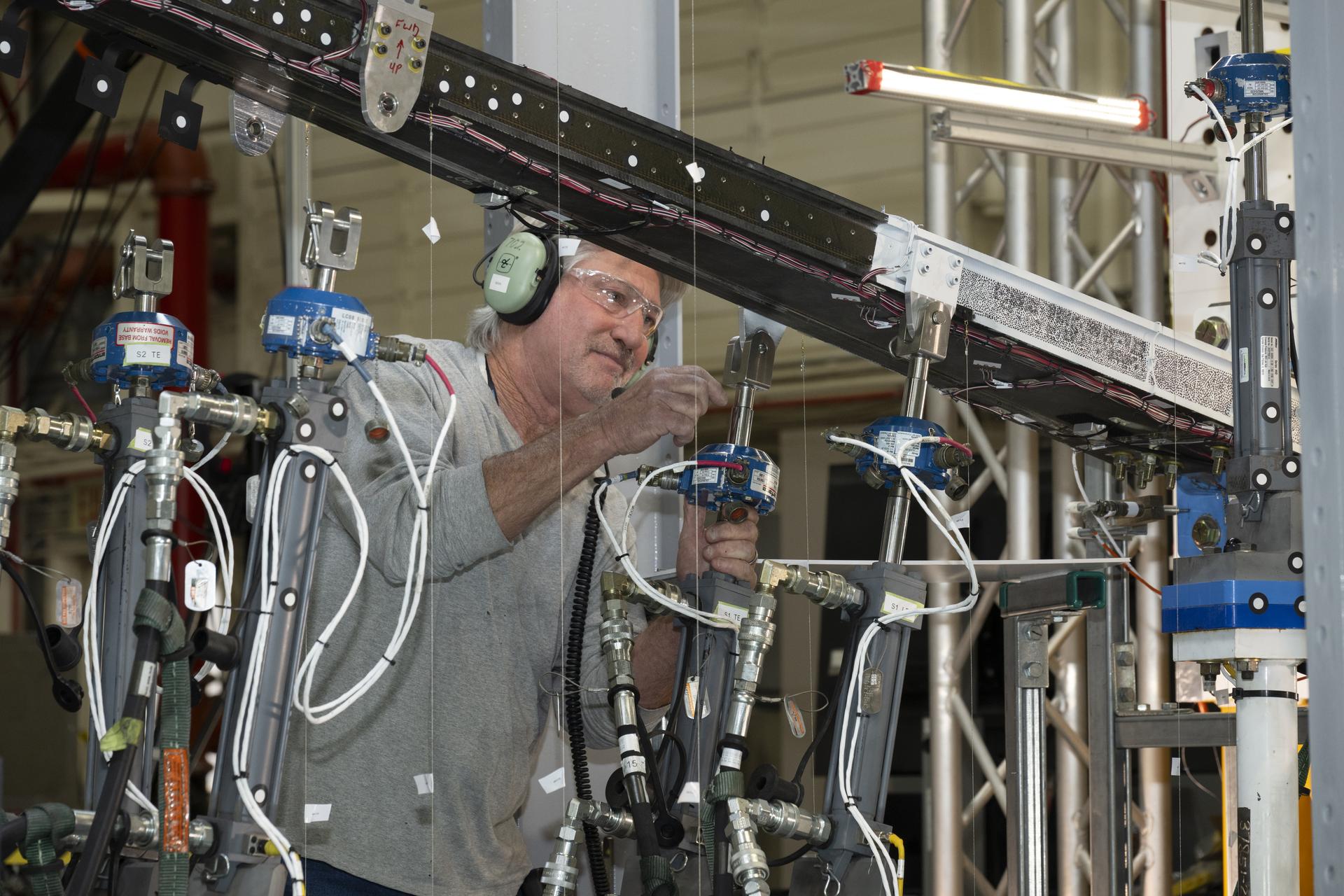
NASA research engineer Walter Hargis regulates the 15-foot Structural Wing Experiment Evaluating Truss-bracing model in the Flight Loads Laboratory at NASA’s Armstrong Flight Research Center in Edwards, California, on Tuesday, March 31, 2026. The model is part of NASA’s research to develop technologies for future ultra-efficient aircraft.
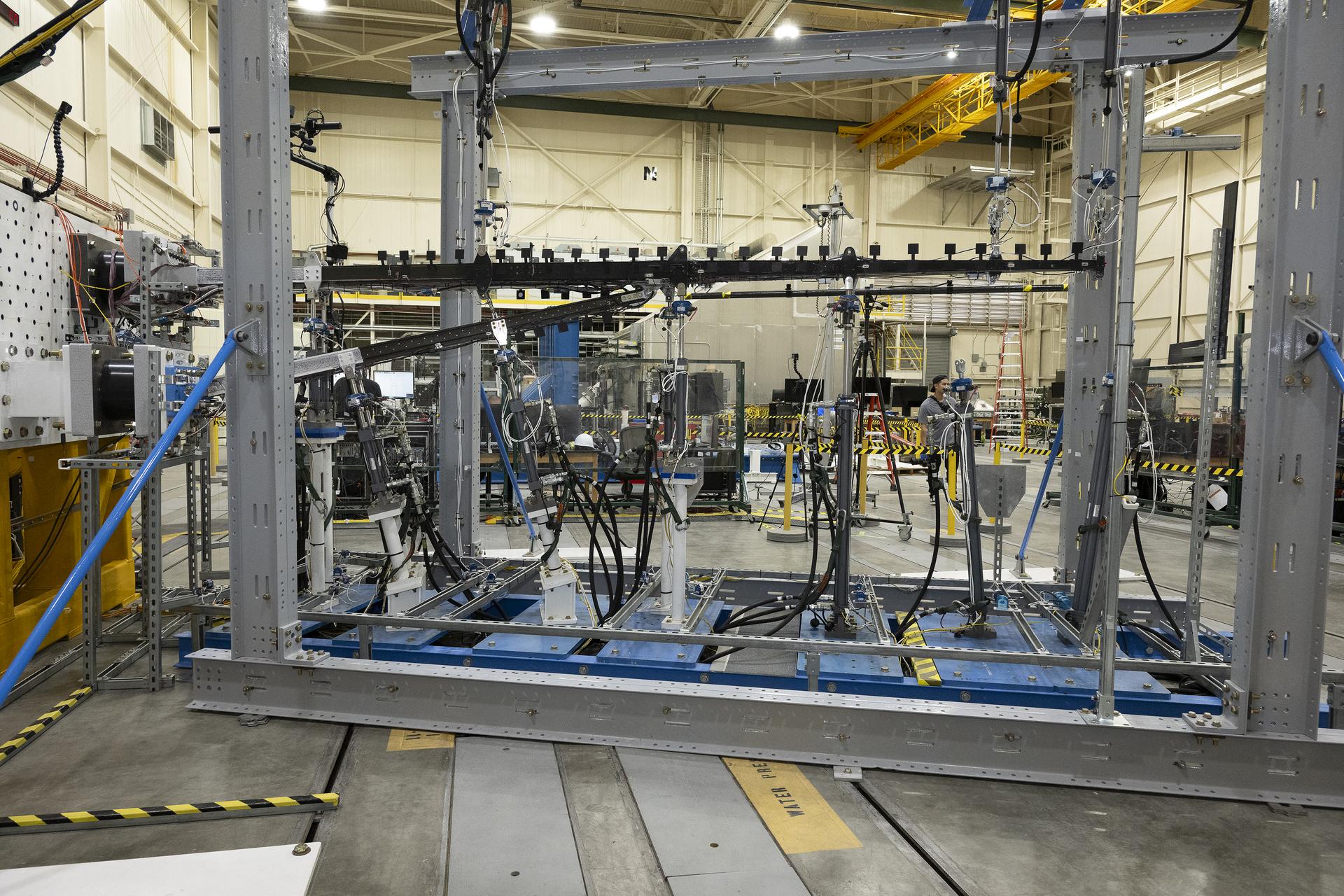
The 15-foot Structural Wing Experiment Evaluating Truss-bracing test article is fully installed in the Flight Loads Laboratory at NASA’s Armstrong Flight Research Center in Edwards, California, on Wednesday, May 20, 2026. The model is part of NASA’s research to develop technologies for future ultra-efficient aircraft.
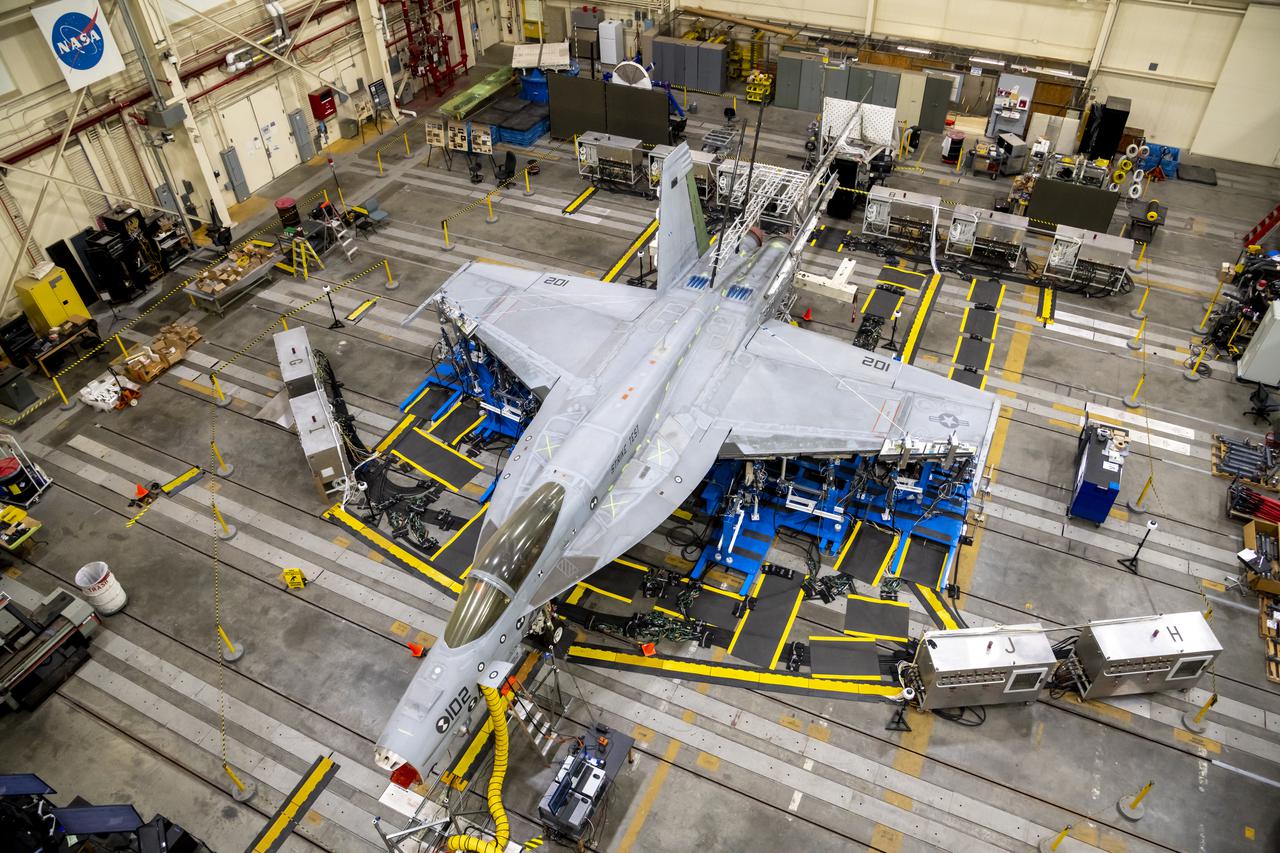
A top view shows the wing loading test configuration of a F/A-18E from the Naval Air Systems Command (NAVAIR) in Patuxent River, Maryland. The aircraft is in NASA’s Armstrong Flight Research Center Flight Loads Laboratory in Edwards, California, for the center’s biggest load calibrations tests. This testing is needed before the aircraft can serve as a test vehicle for determining if it can safely manage maneuvers and proposed upgrades.
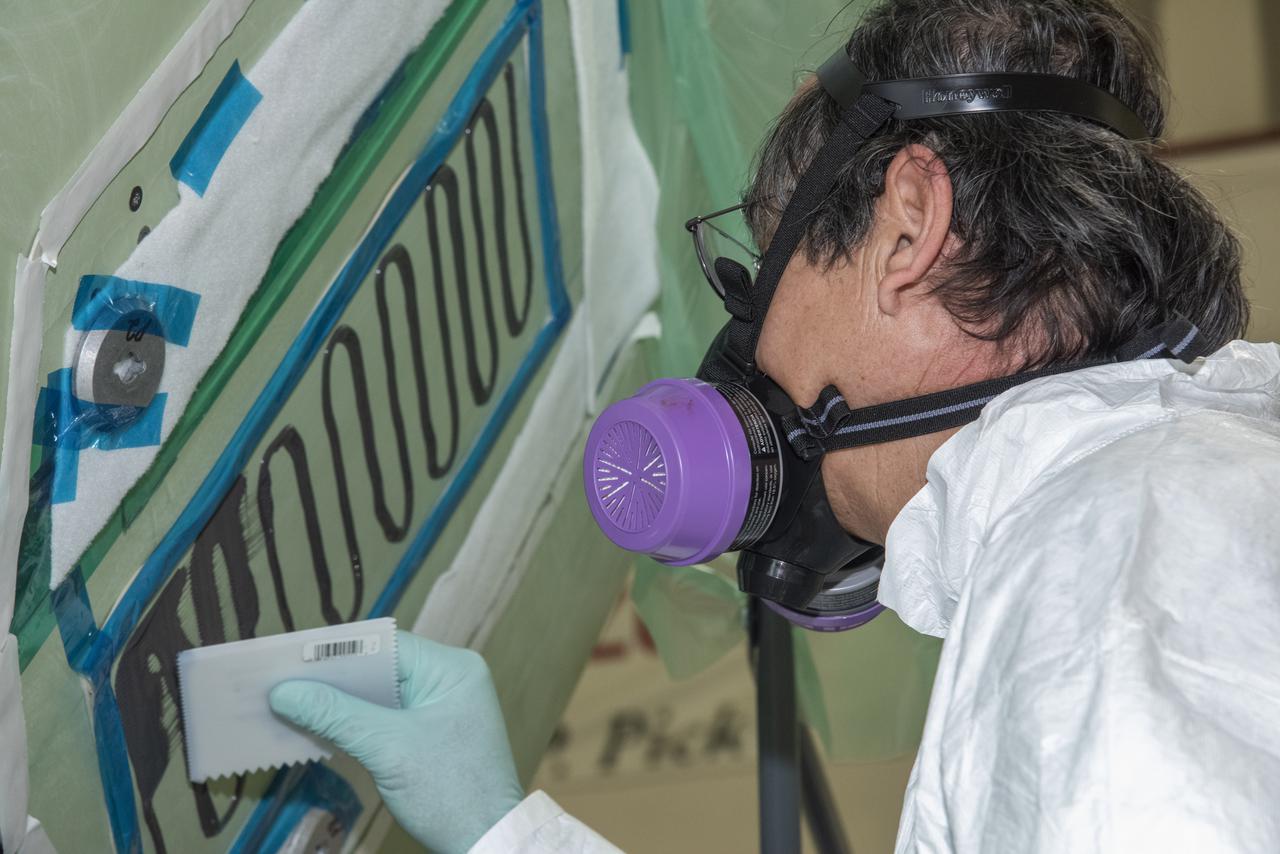
The load pad bonding process for the vertical tails was a preliminary step in the process to test the F/A-18E from the Naval Air Systems Command (NAVAIR) in Patuxent River, Maryland. The aircraft is in NASA’s Armstrong Flight Research Center Flight Loads Laboratory in Edwards, California, for the center’s biggest load calibrations tests. This testing is needed before the aircraft can serve as a test vehicle for determining if it can safely manage maneuvers and proposed upgrades.
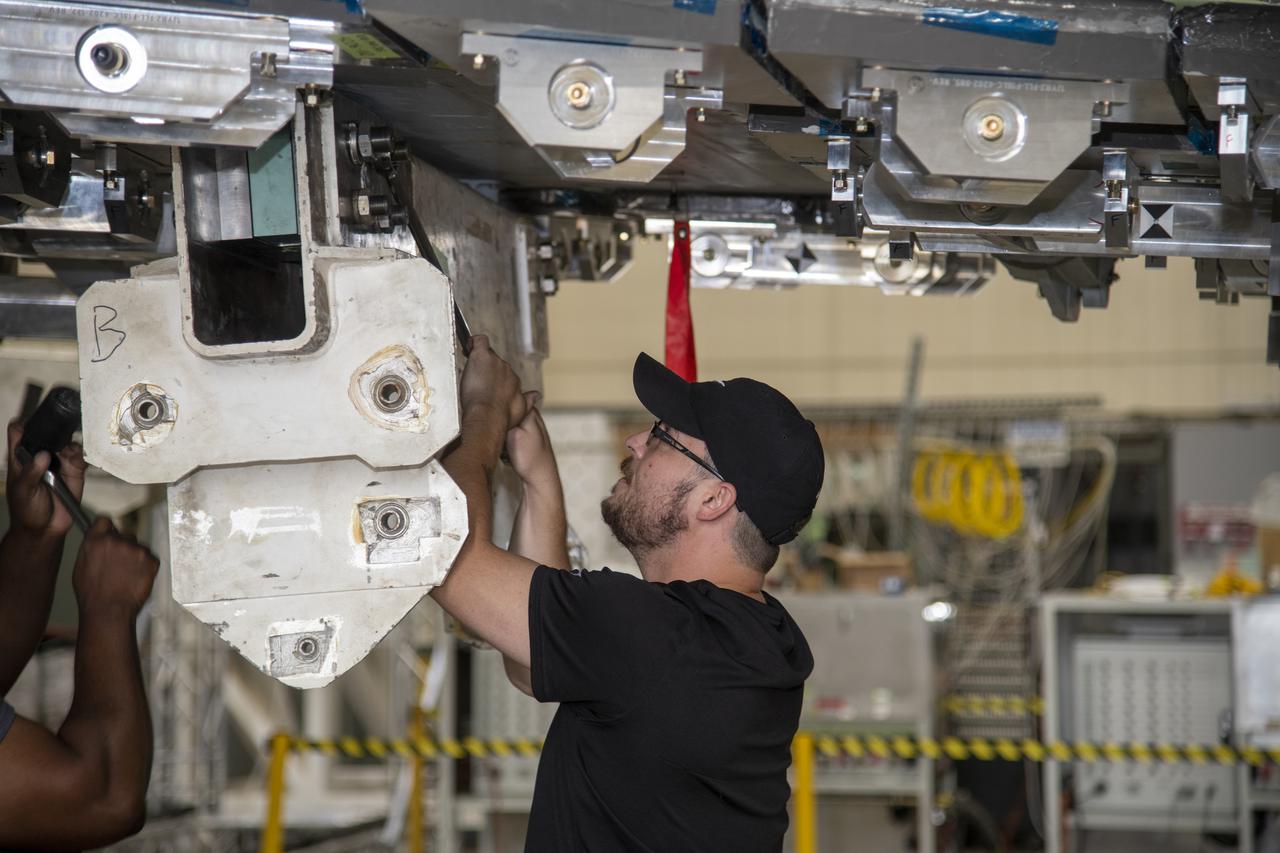
The outboard pylon load fixture is secured for the F/A-18E from the Naval Air Systems Command (NAVAIR) in Patuxent River, Maryland. The aircraft is in NASA’s Armstrong Flight Research Center Flight Loads Laboratory in Edwards, California, for the center’s biggest load calibrations tests. This testing is needed before the aircraft can serve as a test vehicle for determining if it can safely manage maneuvers and proposed upgrades.
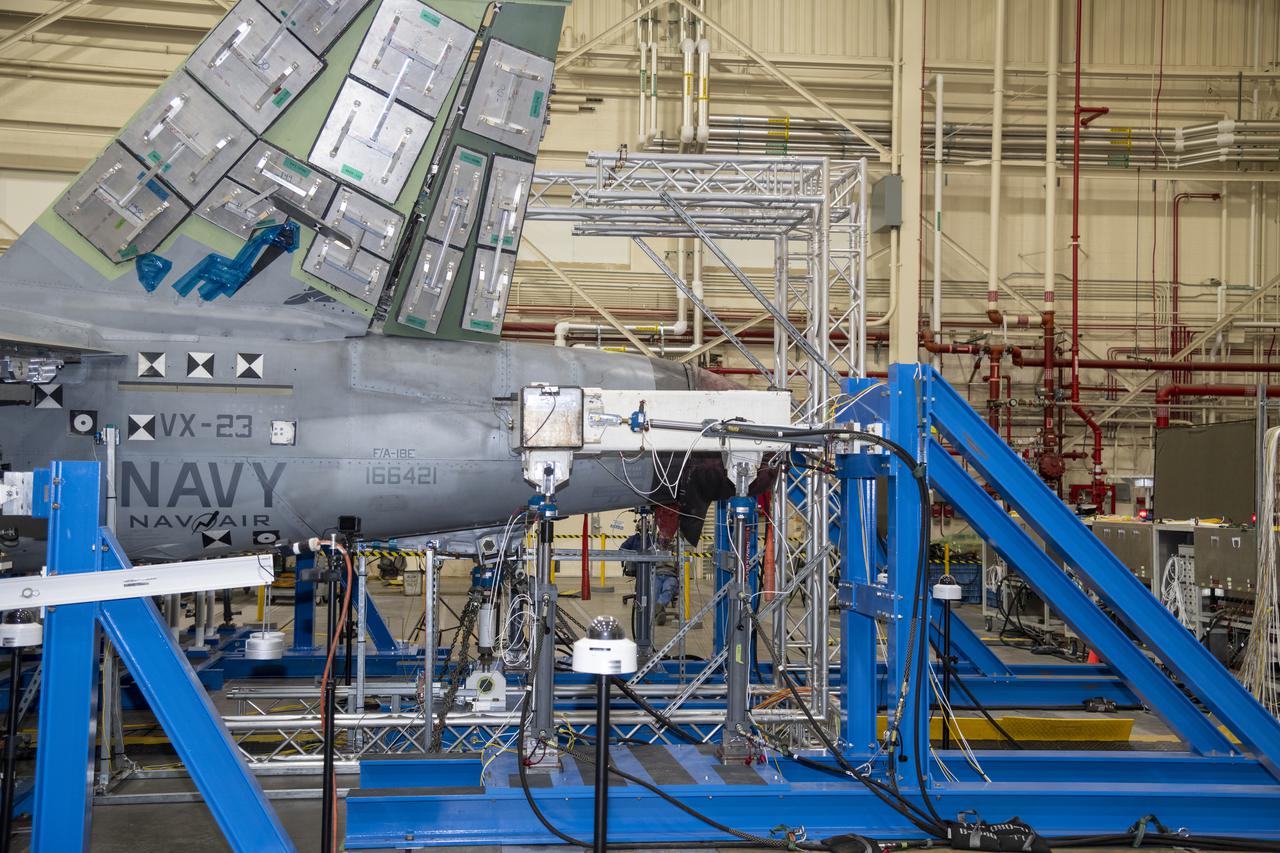
The horizontal tail is under test load on a F/A-18E from the Naval Air Systems Command (NAVAIR) in Patuxent River, Maryland. The aircraft is in NASA’s Armstrong Flight Research Center Flight Loads Laboratory in Edwards, California, for the center’s biggest load calibrations tests. This testing is needed before the aircraft can serve as a test vehicle for determining if it can safely manage maneuvers and proposed upgrades.
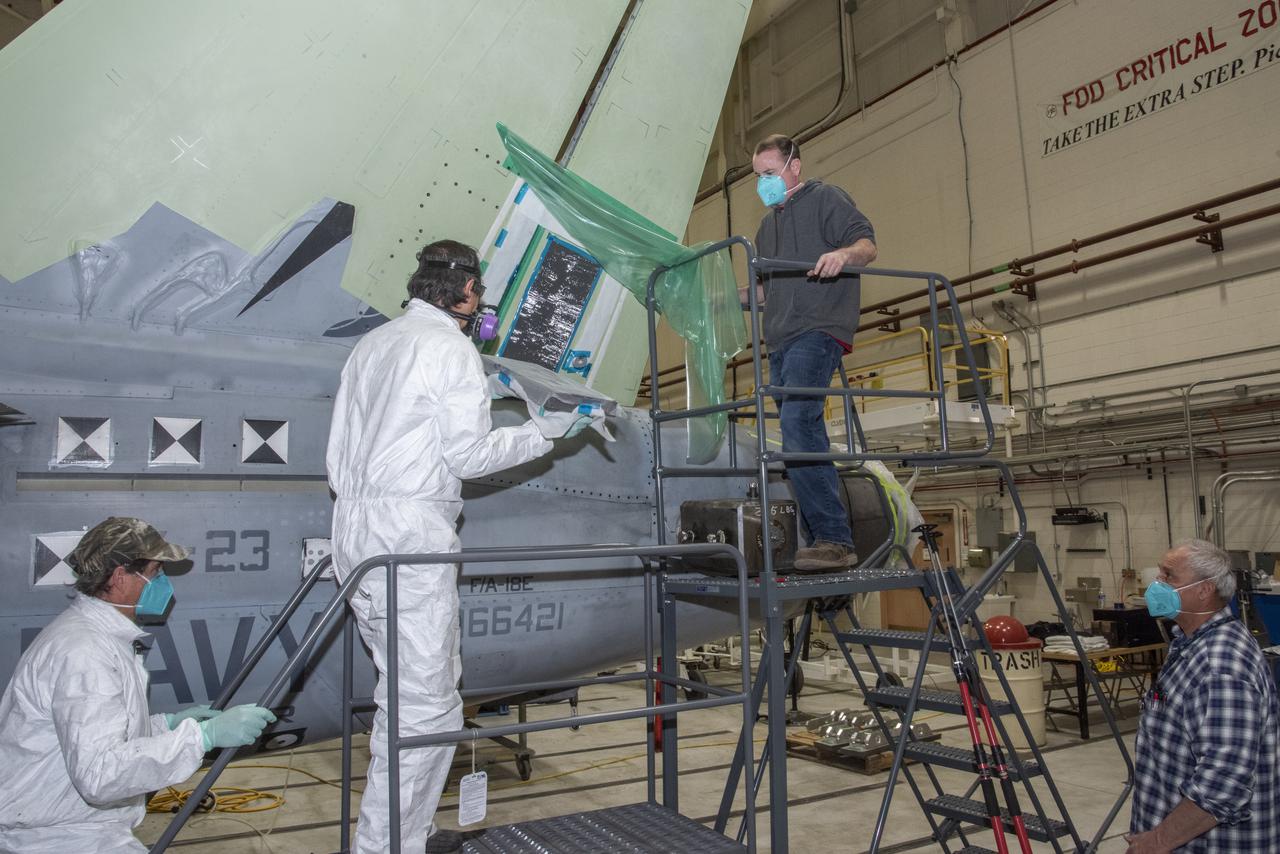
The load pad bonding process for the vertical tails was a preliminary step in the process to test the F/A-18E from the Naval Air Systems Command (NAVAIR) in Patuxent River, Maryland. The aircraft is in NASA’s Armstrong Flight Research Center Flight Loads Laboratory in Edwards, California, for the center’s biggest load calibrations tests. This testing is needed before the aircraft can serve as a test vehicle for determining if it can safely manage maneuvers and proposed upgrades.
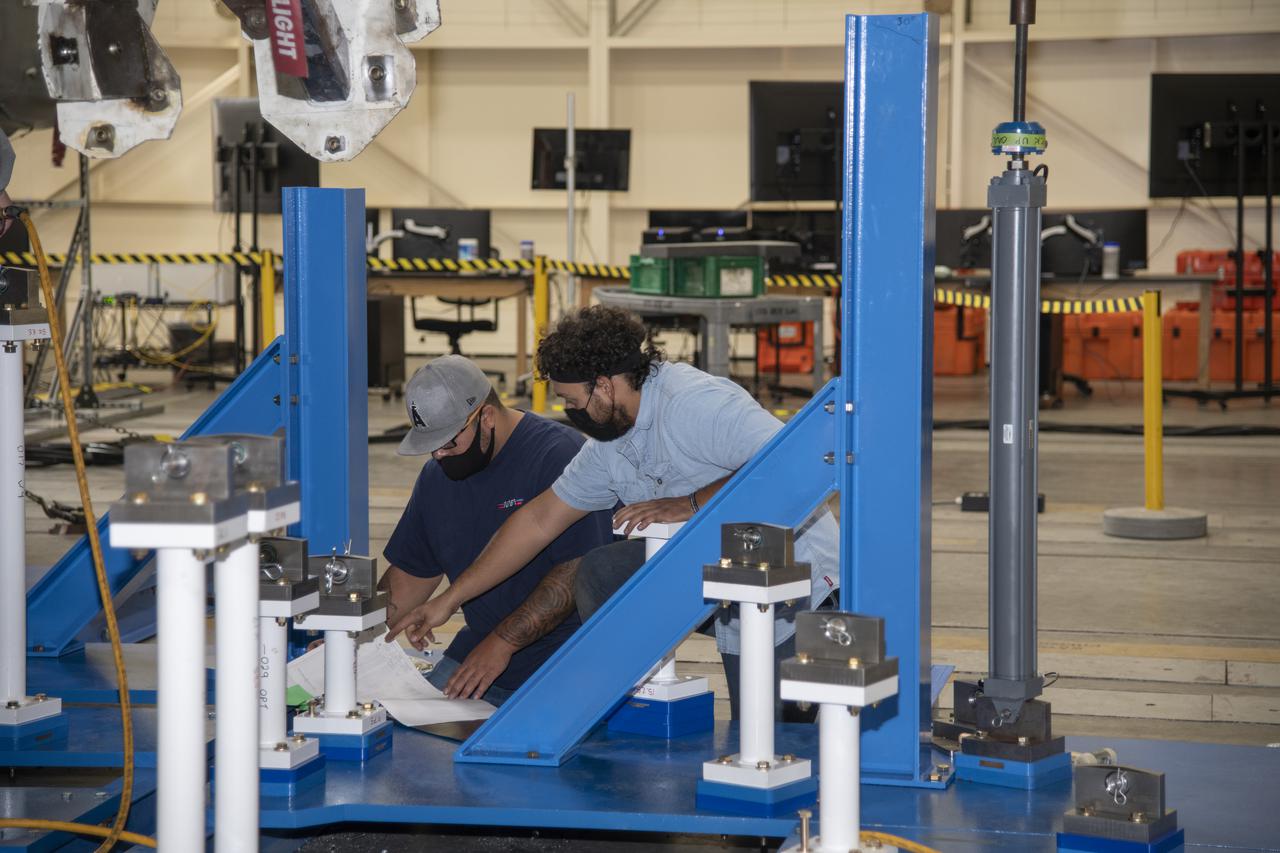
From left, Dominic Barela and Lucas Oramas review a drawing for installing the wing load test fixturing on a F/A-18E from the Naval Air Systems Command (NAVAIR) in Patuxent River, Maryland. The aircraft is in NASA’s Armstrong Flight Research Center Flight Loads Laboratory in Edwards, California, for the center’s biggest load calibrations tests. This testing is needed before the aircraft can serve as a test vehicle for determining if it can safely manage maneuvers and proposed upgrades.
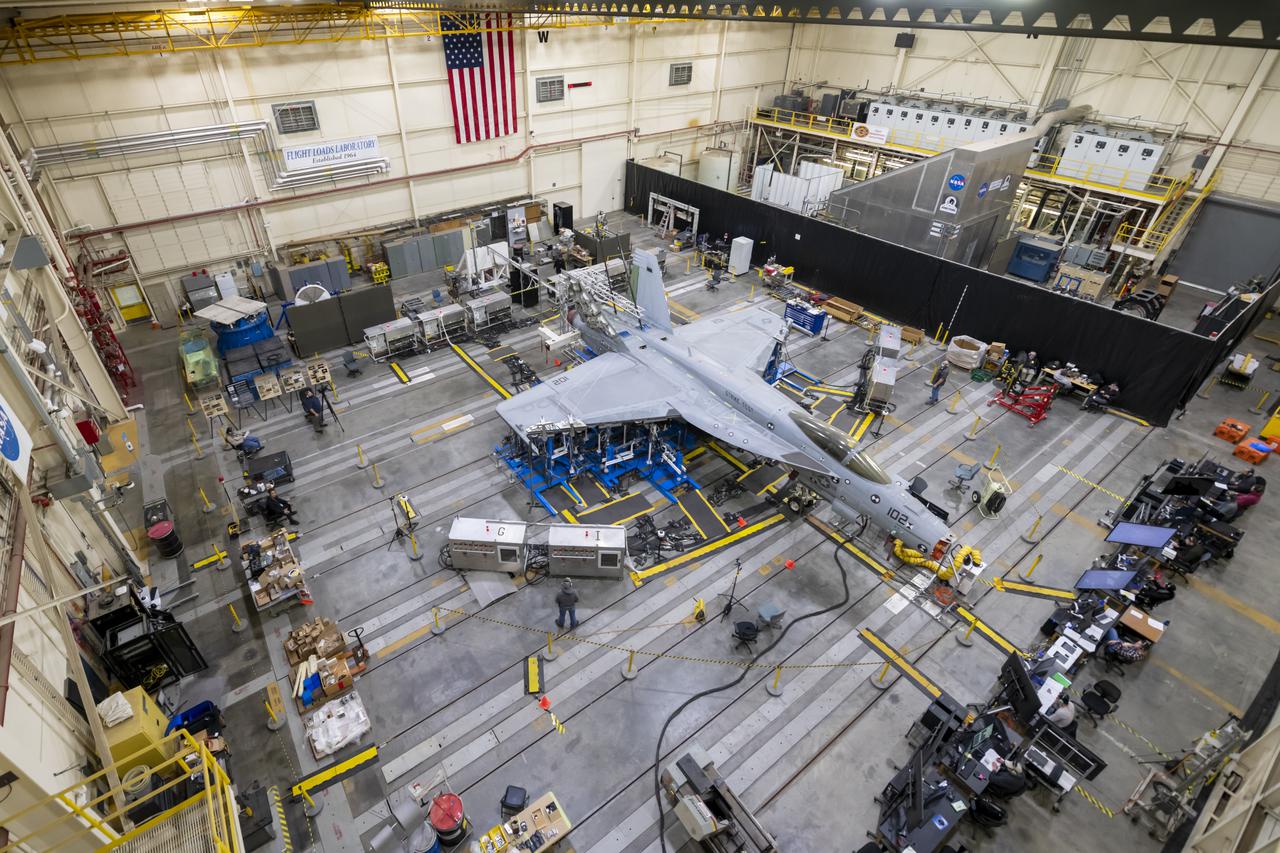
A top view shows the wing loading test configuration and testing area of an F/A-18E from the Naval Air Systems Command (NAVAIR) in Patuxent River; Maryland. The aircraft is in NASA's Armstrong Flight Research Center Flight Loads Laboratory in Edwards; California; for the center's biggest load calibrations tests. This testing is needed before the aircraft can serve as a test vehicle for determining if it can safely manage maneuvers and proposed upgrades.
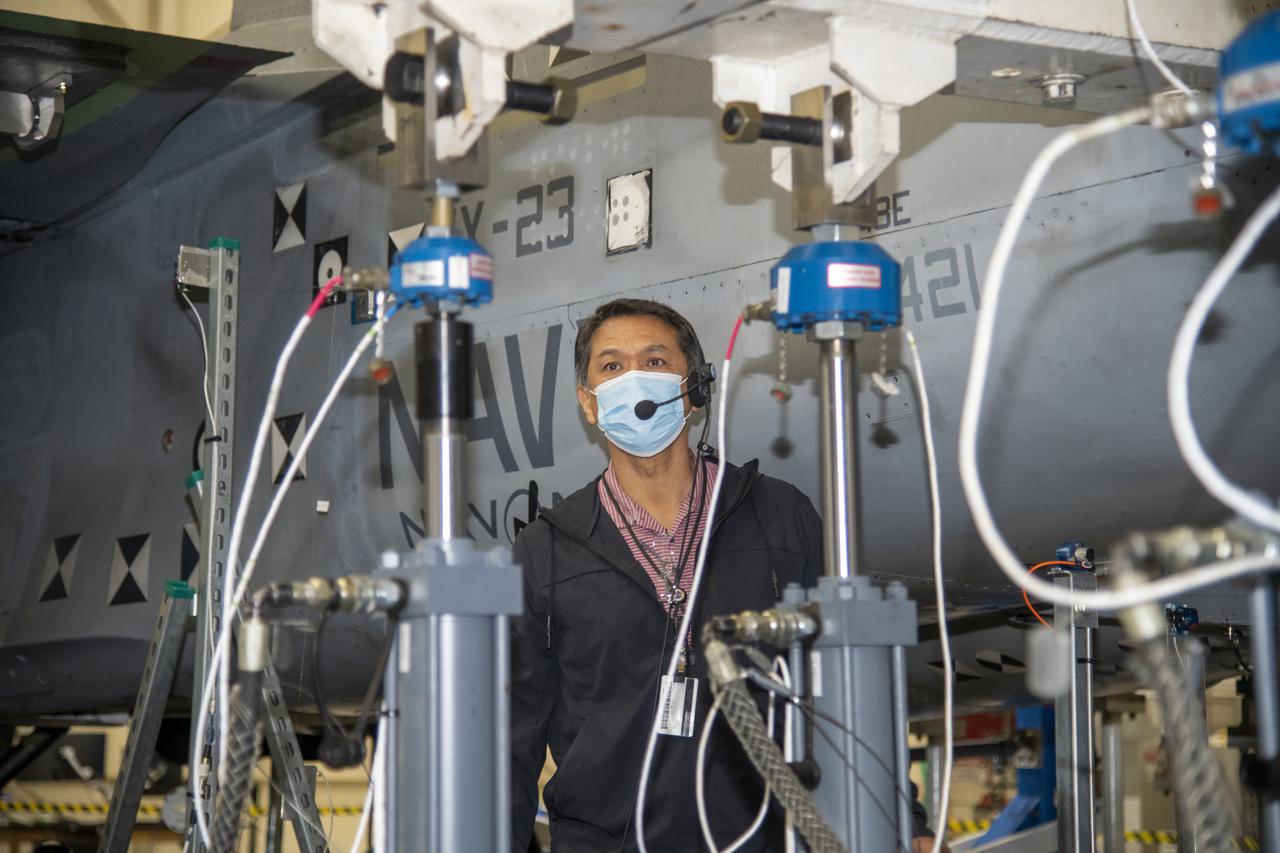
Larry Hudson does an inspection after the actuator on the F/A-18E from the Naval Air Systems Command (NAVAIR) in Patuxent River, Maryland, is pinned to the horizontal tail load test fixture. The aircraft is in NASA’s Armstrong Flight Research Center Flight Loads Laboratory in Edwards, California, for the center’s biggest load calibrations tests. This testing is needed before the aircraft can serve as a test vehicle for determining if it can safely manage maneuvers and proposed upgrades.
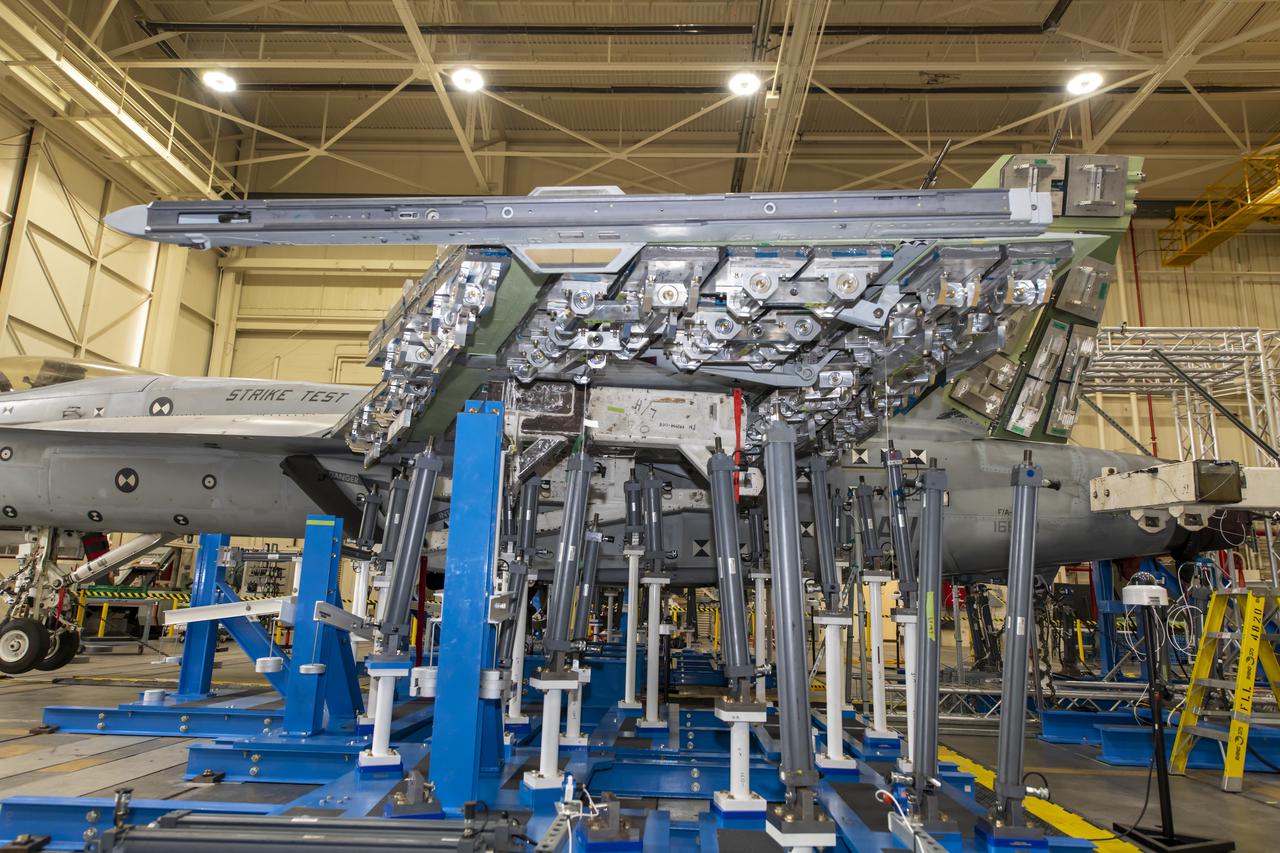
– Installation of wing load test hardware is installed under the wing of a F/A-18E from the Naval Air Systems Command (NAVAIR) in Patuxent River, Maryland. The aircraft is in NASA’s Armstrong Flight Research Center Flight Loads Laboratory in Edwards, California, for the center’s biggest load calibrations tests. This testing is needed before the aircraft can serve as a test vehicle for determining if it can safely manage maneuvers and proposed upgrades.

From left, Ray Sadler, Ted Powers, and Walter Hargis align load pads on the aircraft surface of a F/A-18E from the Naval Air Systems Command (NAVAIR) in Patuxent River, Maryland. The aircraft is in NASA’s Armstrong Flight Research Center Flight Loads Laboratory in Edwards, California, for the center’s biggest load calibrations tests. This testing is needed before the aircraft can serve as a test vehicle for determining if it can safely manage maneuvers and proposed upgrades.
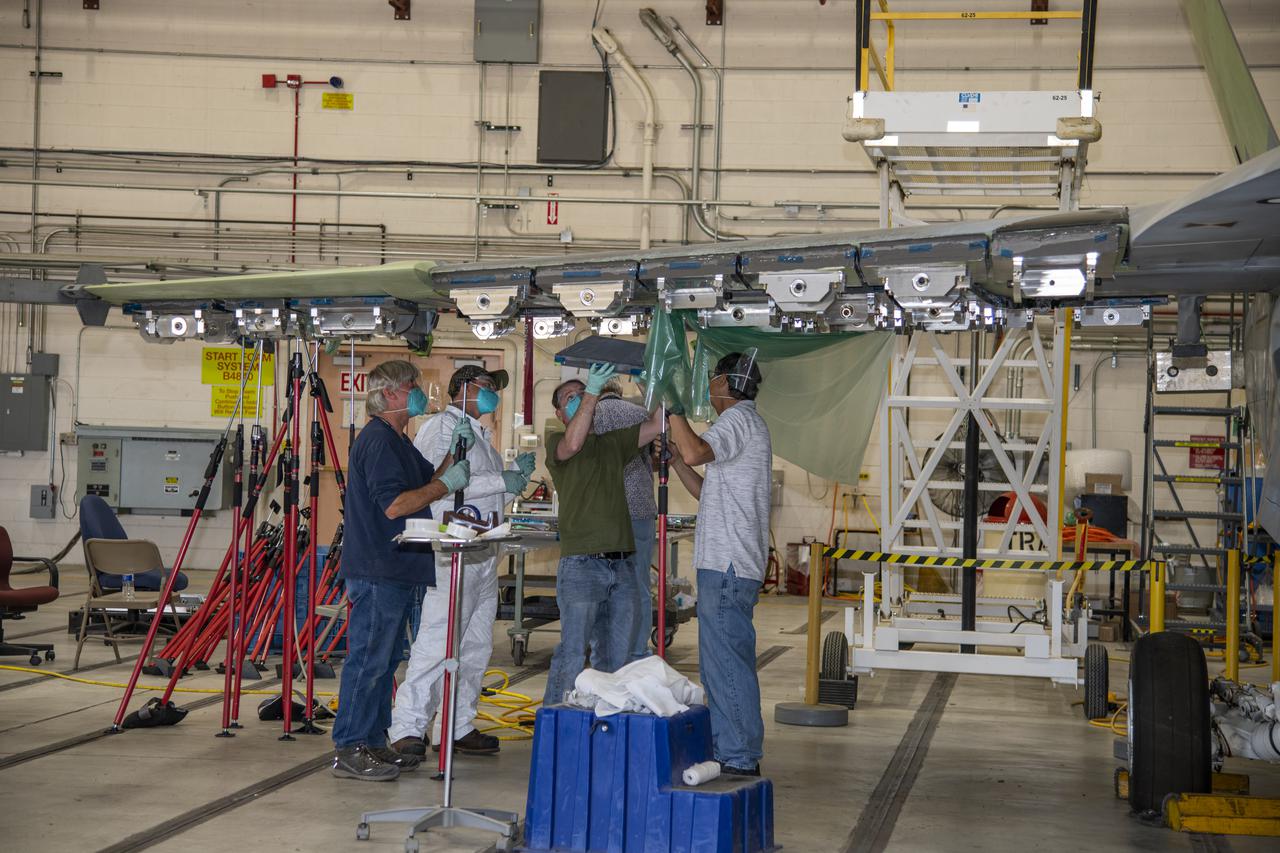
From left, Wally Hargis, Ray Sadler, Chris Mount, and Ronnie Haraguchi place a load pad on the aircraft surface of a F/A-18E from the Naval Air Systems Command (NAVAIR) in Patuxent River, Maryland. The aircraft is in NASA’s Armstrong Flight Research Center Flight Loads Laboratory in Edwards, California, for the center’s biggest load calibrations tests. This testing is needed before the aircraft can serve as a test vehicle for determining if it can safely manage maneuvers and proposed upgrades.

The load pad bonding process for the vertical tails was a preliminary step in the process to test the F/A-18E from the Naval Air Systems Command (NAVAIR) in Patuxent River, Maryland. The aircraft is in NASA’s Armstrong Flight Research Center Flight Loads Laboratory in Edwards, California, for the center’s biggest load calibrations tests. This testing is needed before the aircraft can serve as a test vehicle for determining if it can safely manage maneuvers and proposed upgrades.
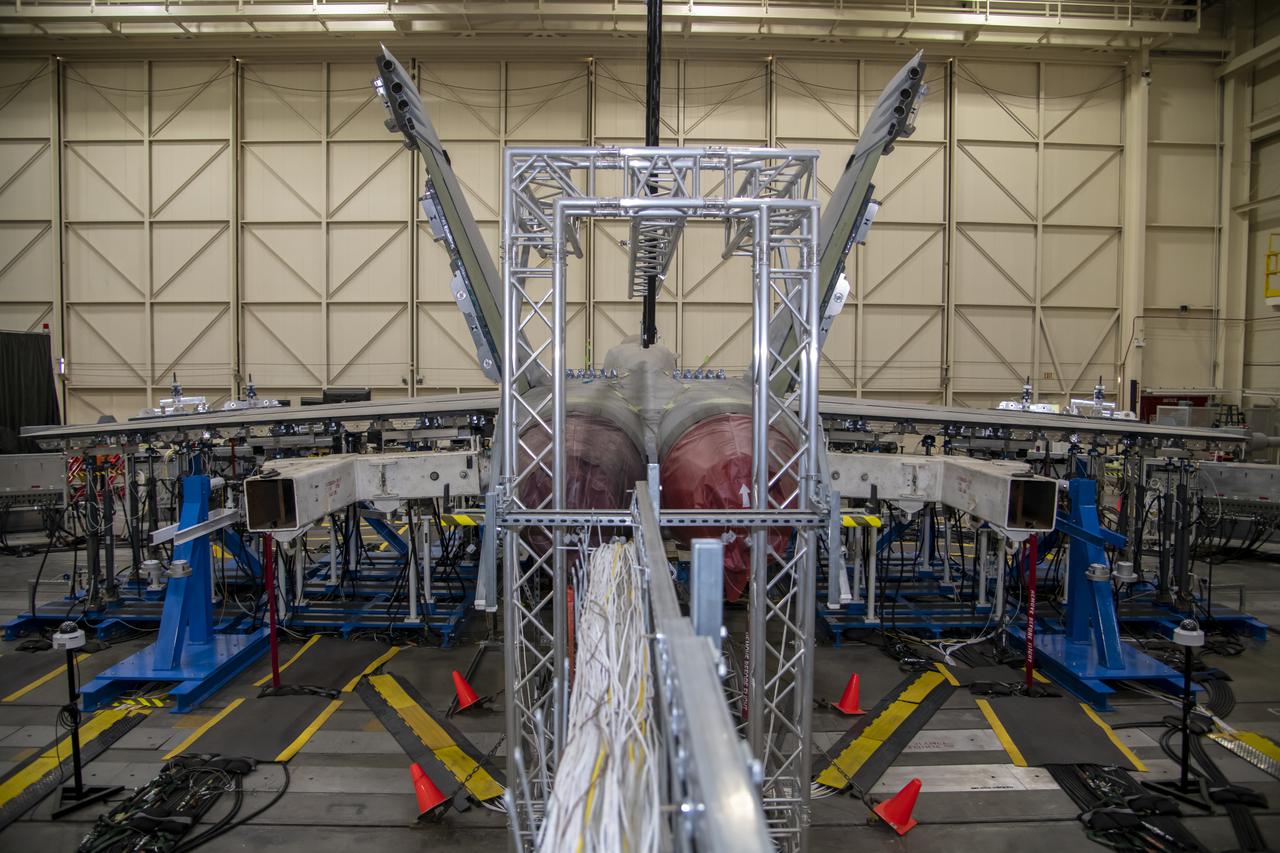
This rear view shows the wing loading test configuration and testing area of an F/A-18E from the Naval Air Systems Command (NAVAIR) in Patuxent River, Maryland. The aircraft is in NASA's Armstrong Flight Research Center Flight Loads Laboratory in Edwards, California, for the center's biggest load calibrations tests. This testing is needed before the aircraft can serve as a test vehicle for determining if it can safely manage maneuvers and proposed upgrades
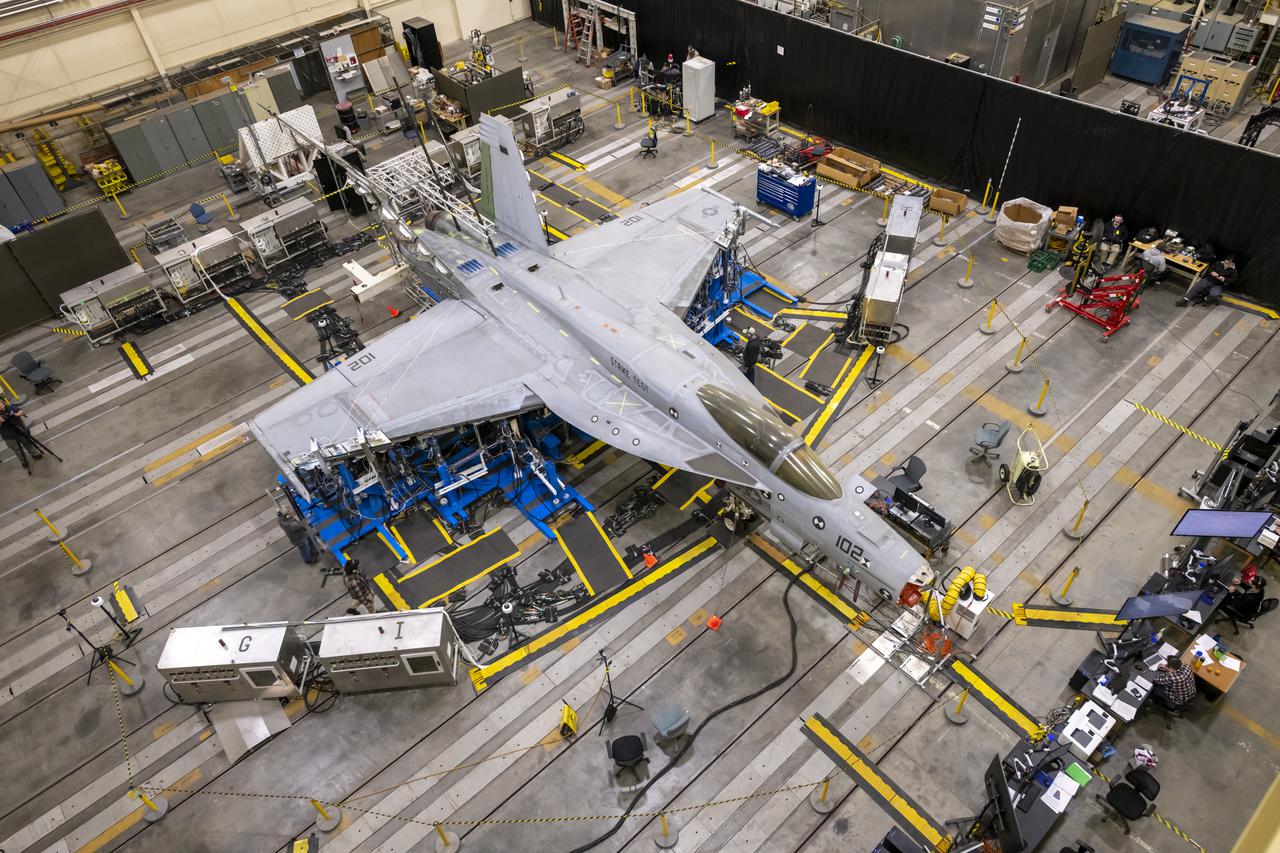
A top view shows the wing loading test configuration of an F/A-18E from the Naval Air Systems Command (NAVAIR) in Patuxent River; Maryland. The aircraft is in NASA's Armstrong Flight Research Center Flight Loads Laboratory in Edwards; California; for the center's biggest load calibrations tests. This testing is needed before the aircraft can serve as a test vehicle for determining if it can safely manage maneuvers and proposed upgrades.
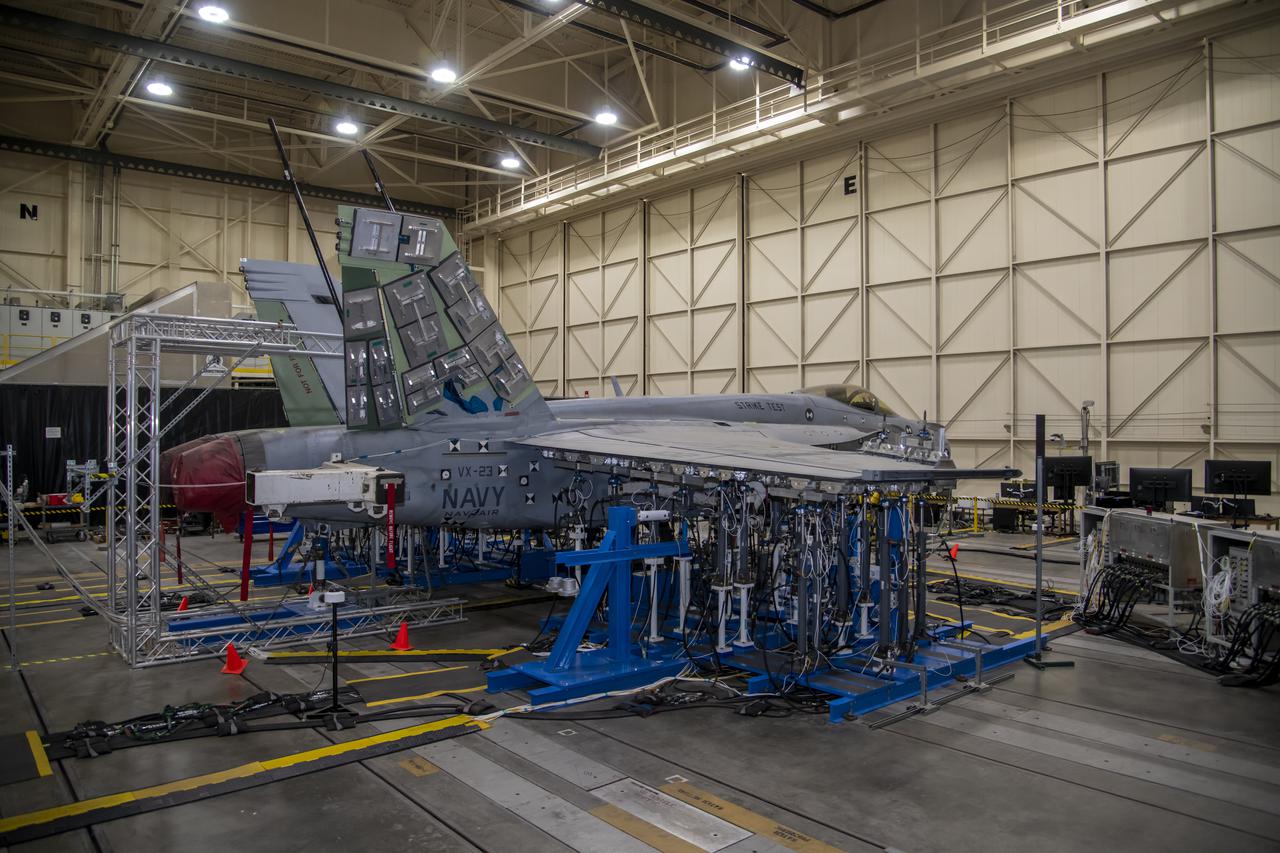
This rear view of the right wing load hardware shows the setup for testing a F/A-18E from the Naval Air Systems Command (NAVAIR) in Patuxent River, Maryland. The aircraft is in NASA's Armstrong Flight Research Center Flight Loads Laboratory in Edwards, California, for the center's biggest load calibrations tests. This testing is needed before the aircraft can serve as a test vehicle for determining if it can safely manage maneuvers and proposed upgrades.
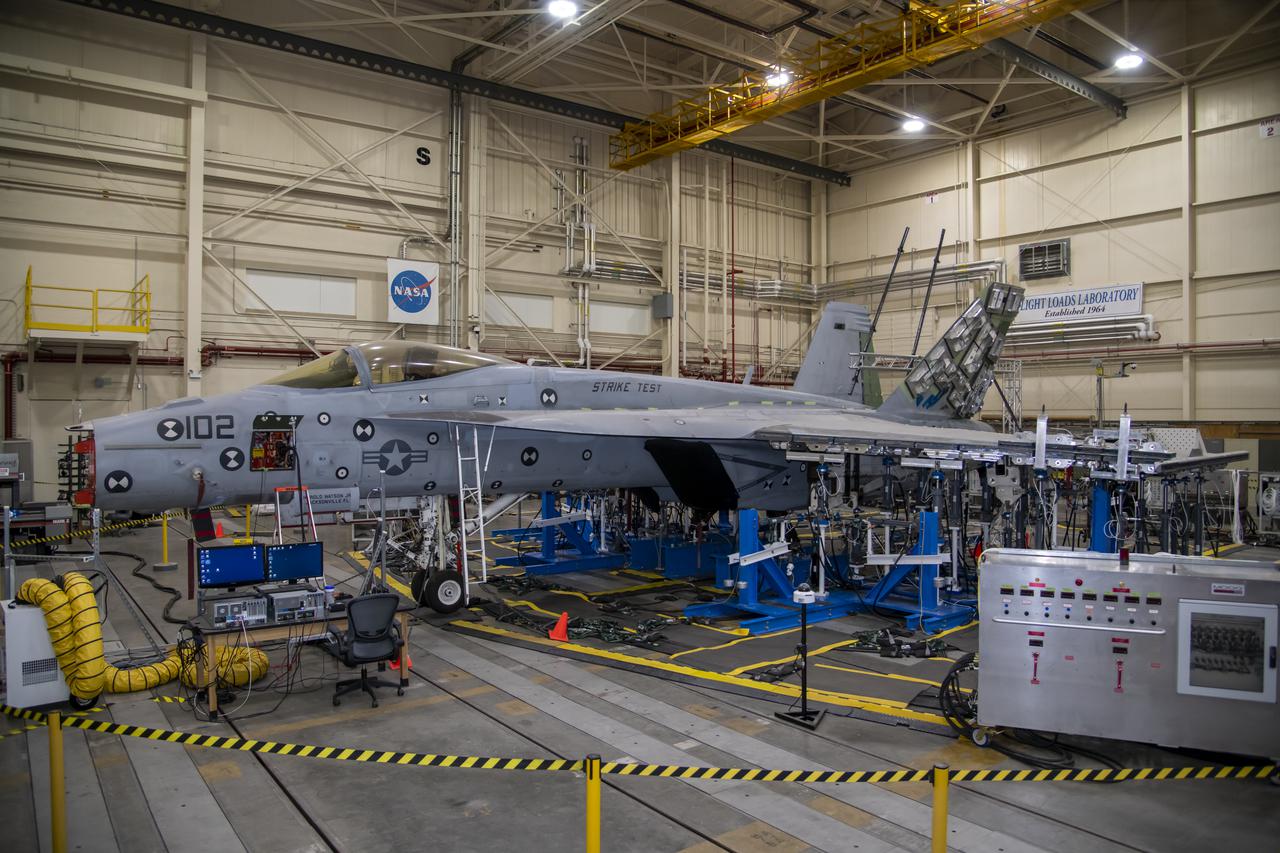
This view shows the left wing loading test configuration and testing area of an F/A-18E from the Naval Air Systems Command (NAVAIR) in Patuxent River, Maryland. The aircraft is in NASA's Armstrong Flight Research Center Flight Loads Laboratory in Edwards, California, for the center's biggest load calibrations tests. This testing is needed before the aircraft can serve as a test vehicle for determining if it can safely manage maneuvers and proposed upgrades.
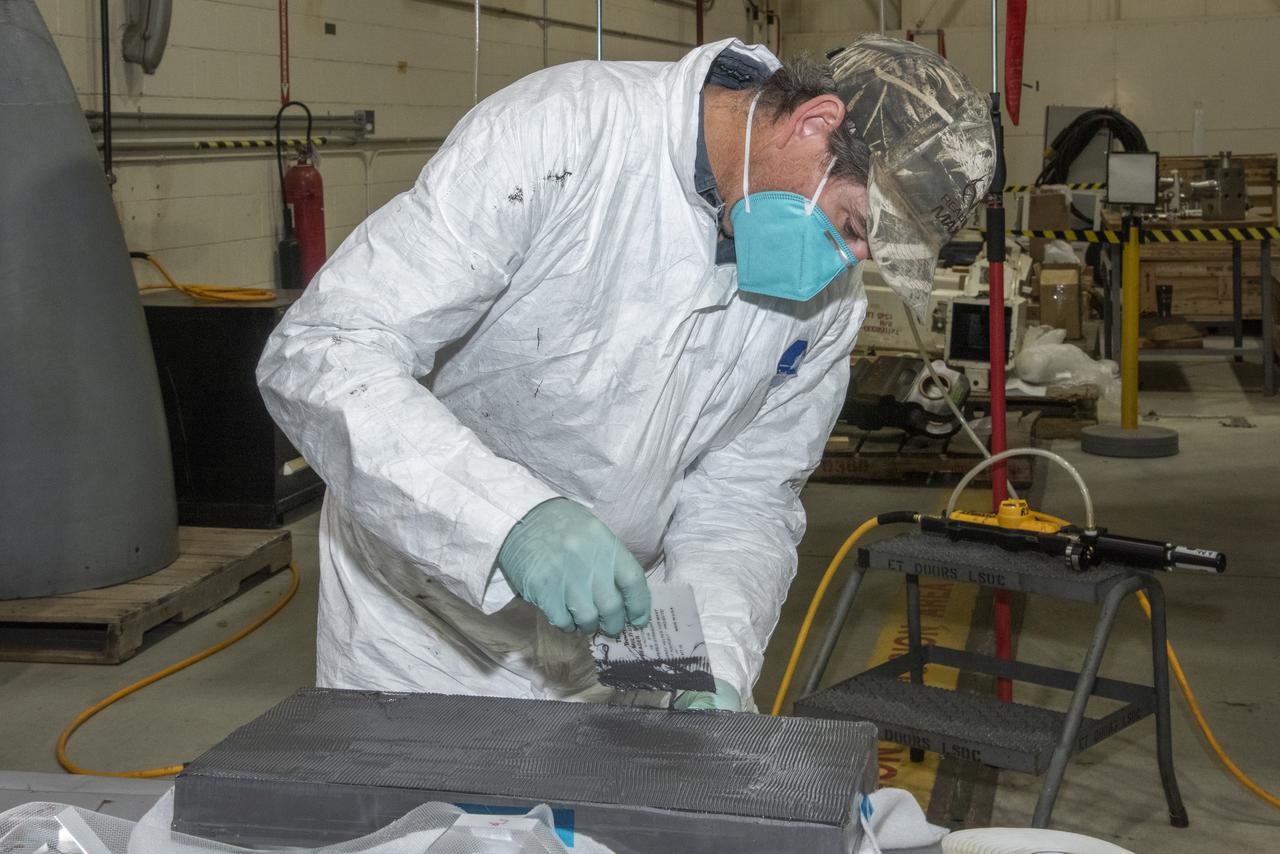
The load pad bonding process for the vertical tails was a preliminary step in the process to test the F/A-18E from the Naval Air Systems Command (NAVAIR) in Patuxent River, Maryland. The aircraft is in NASA’s Armstrong Flight Research Center Flight Loads Laboratory in Edwards, California, for the center’s biggest load calibrations tests. This testing is needed before the aircraft can serve as a test vehicle for determining if it can safely manage maneuvers and proposed upgrades.
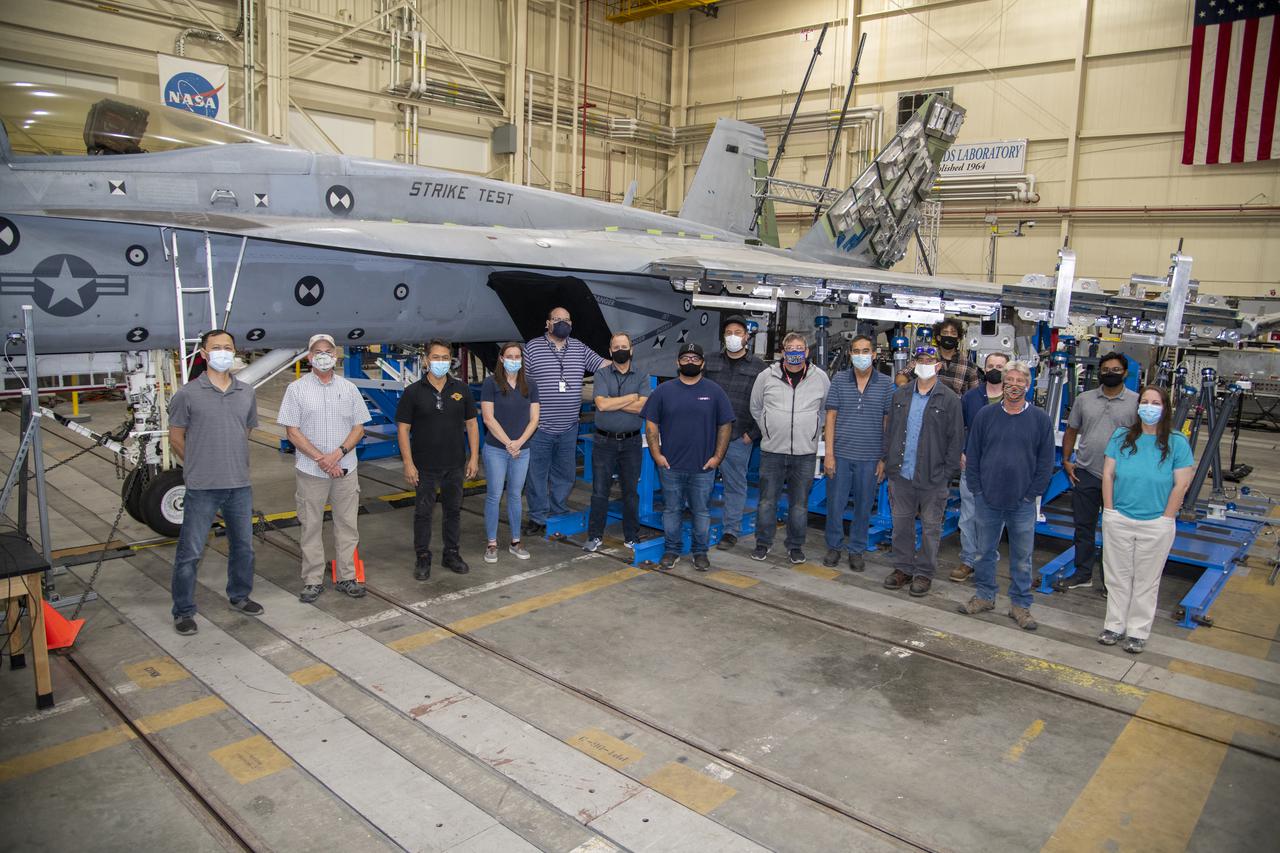
The team who worked on the load testing of the horizontal tails stands by the F/A-18E from the Naval Air Systems Command (NAVAIR) in Patuxent River, Maryland. The aircraft is in NASA’s Armstrong Flight Research Center Flight Loads Laboratory in Edwards, California, for the center’s biggest load calibrations tests. This testing is needed before the aircraft can serve as a test vehicle for determining if it can safely manage maneuvers and proposed upgrades.
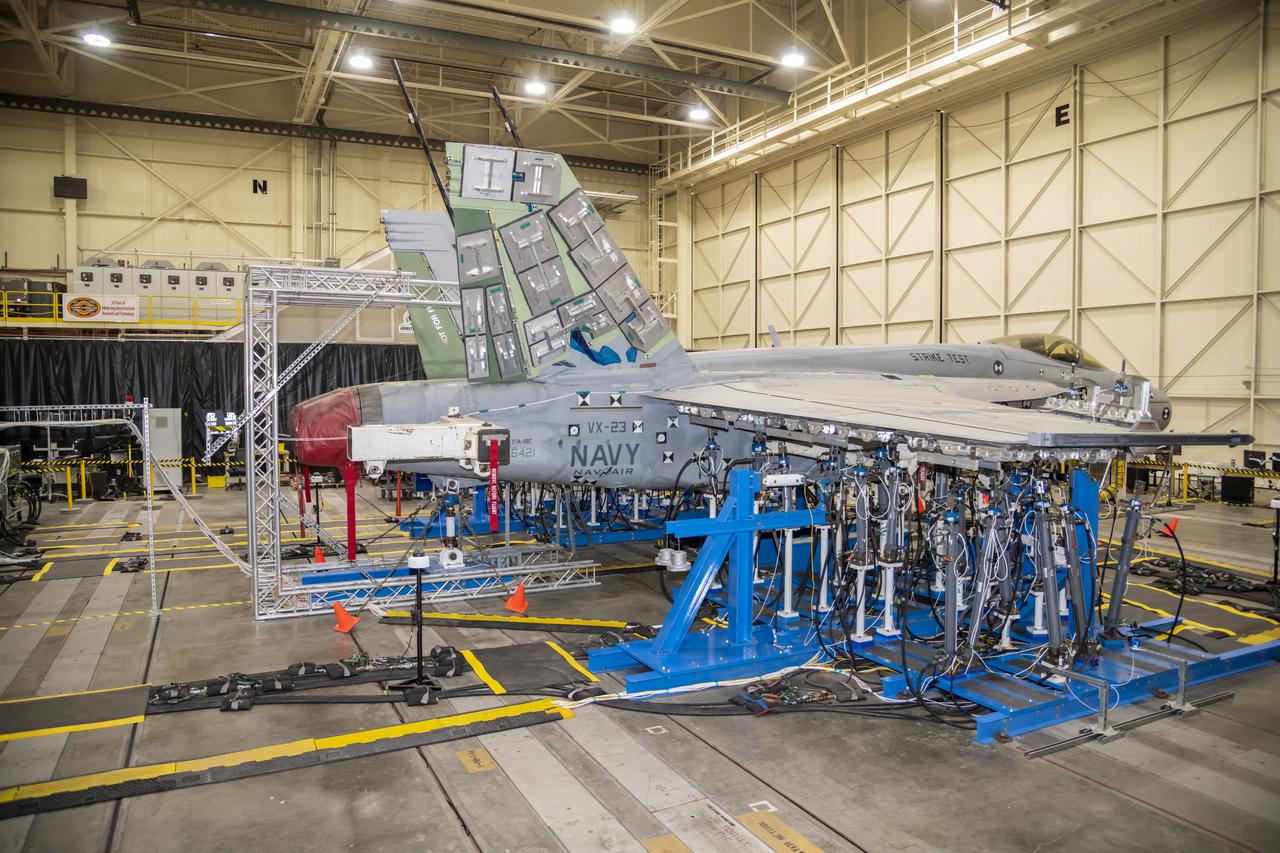
Wing load test hardware is setup under wing of a F/A-18E from the Naval Air Systems Command (NAVAIR) in Patuxent River, Maryland. The aircraft is in NASA’s Armstrong Flight Research Center Flight Loads Laboratory in Edwards, California, for the center’s biggest load calibrations tests. This testing is needed before the aircraft can serve as a test vehicle for determining if it can safely manage maneuvers and proposed upgrades.
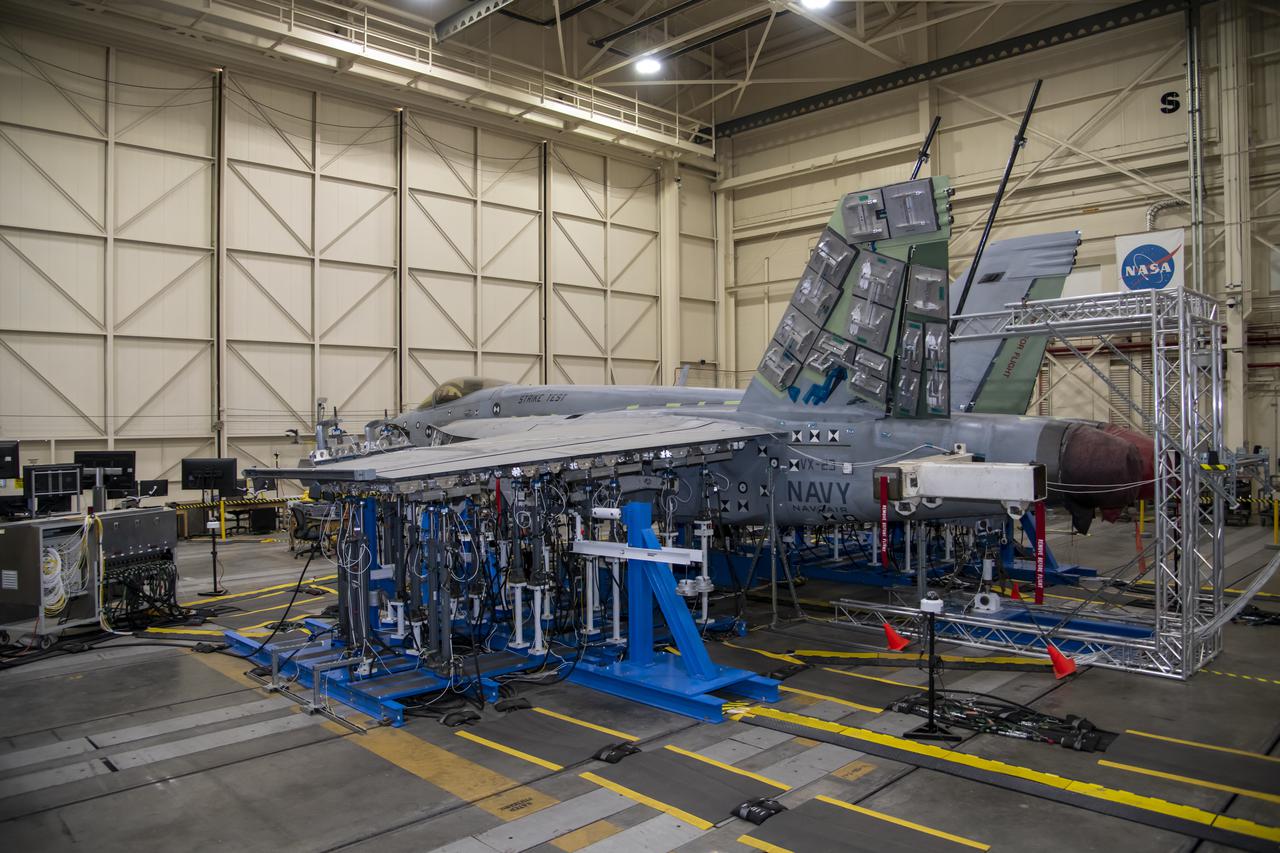
This rear view of the left wing load hardware shows the setup for testing a F/A-18E from the Naval Air Systems Command (NAVAIR) in Patuxent River, Maryland. The aircraft is in NASA's Armstrong Flight Research Center Flight Loads Laboratory in Edwards, California, for the center's biggest load calibrations tests. This testing is needed before the aircraft can serve as a test vehicle for determining if it can safely manage maneuvers and proposed upgrades.Â
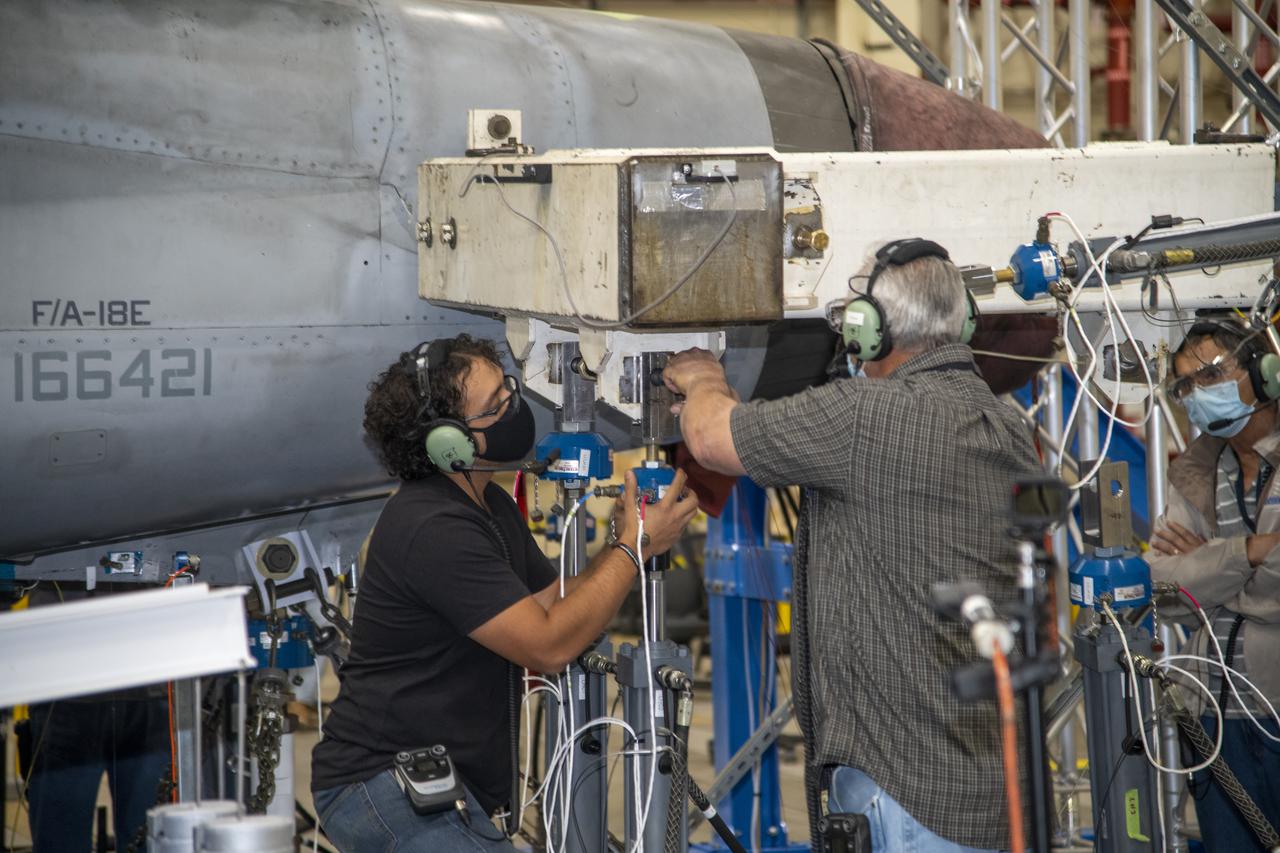
The actuator on the F/A-18E from the Naval Air Systems Command (NAVAIR) in Patuxent River, Maryland, is pinned to the horizontal tail load test fixture. The aircraft is in NASA’s Armstrong Flight Research Center Flight Loads Laboratory in Edwards, California, for the center’s biggest load calibrations tests. This testing is needed before the aircraft can serve as a test vehicle for determining if it can safely manage maneuvers and proposed upgrades.
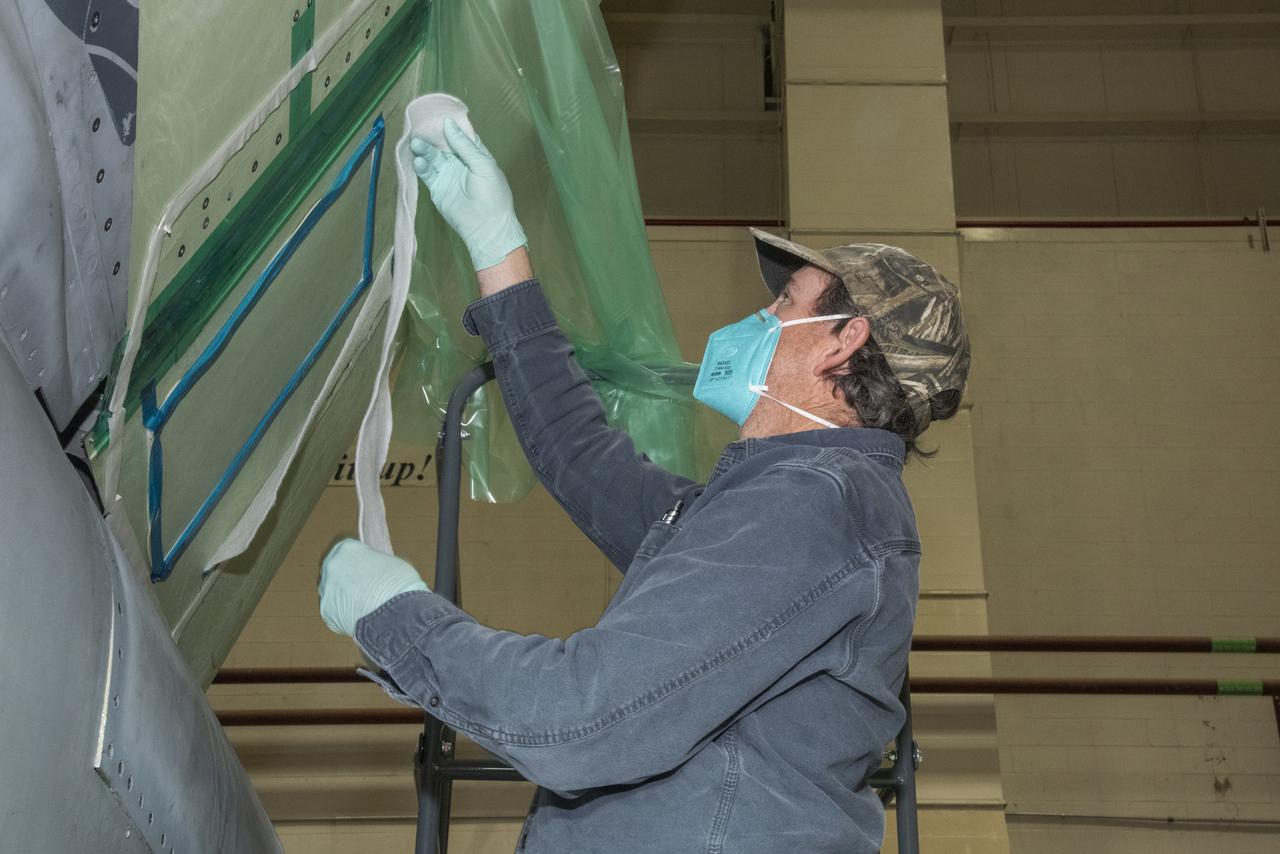
The load pad bonding process for the vertical tails was a preliminary step in the process to test the F/A-18E from the Naval Air Systems Command (NAVAIR) in Patuxent River, Maryland. The aircraft is in NASA’s Armstrong Flight Research Center Flight Loads Laboratory in Edwards, California, for the center’s biggest load calibrations tests. This testing is needed before the aircraft can serve as a test vehicle for determining if it can safely manage maneuvers and proposed upgrades.
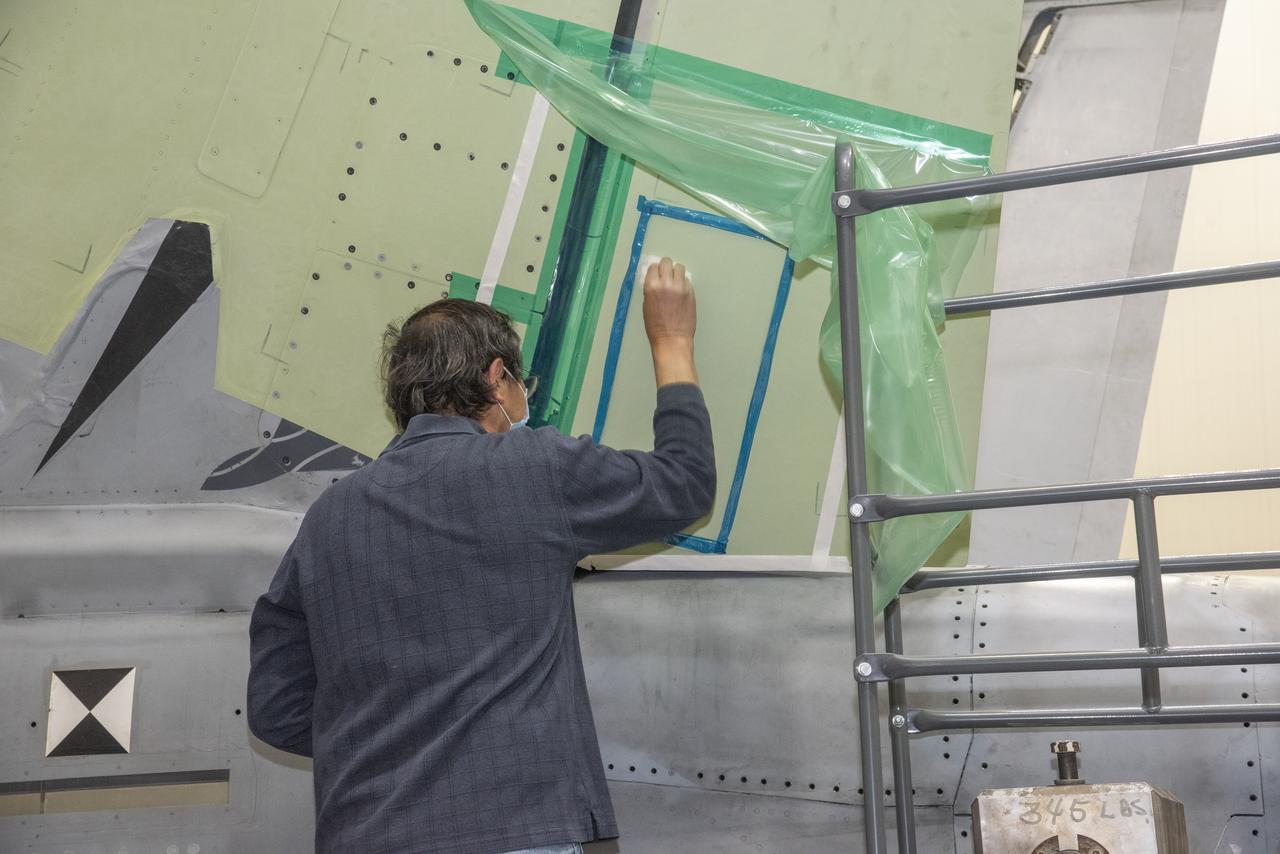
The load pad bonding process for the vertical tails was a preliminary step in the process to test the F/A-18E from the Naval Air Systems Command (NAVAIR) in Patuxent River, Maryland. The aircraft is in NASA’s Armstrong Flight Research Center Flight Loads Laboratory in Edwards, California, for the center’s biggest load calibrations tests. This testing is needed before the aircraft can serve as a test vehicle for determining if it can safely manage maneuvers and proposed upgrades.
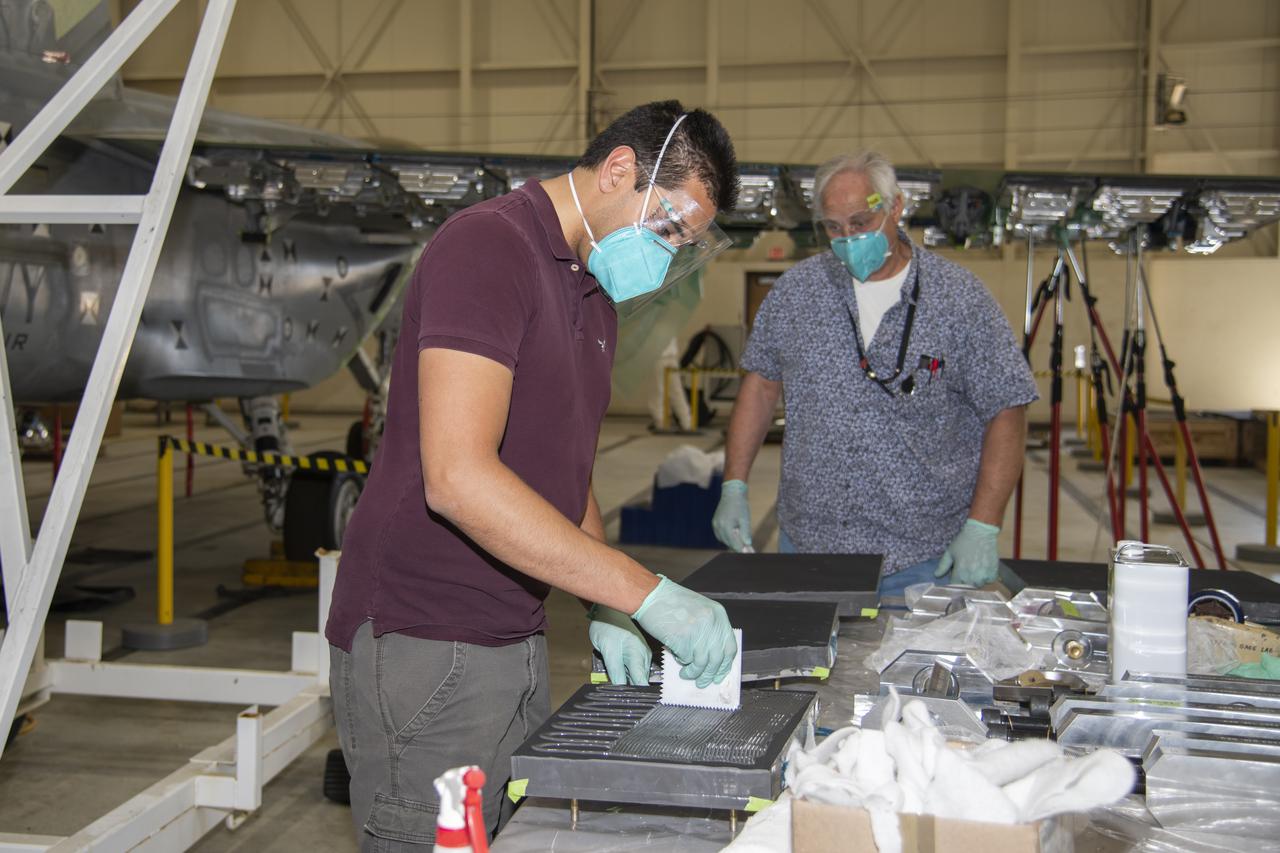
Jeremy Woellner, from left, and Ted Powers spread tank sealant on rubber load pads, a step in the process to test a F/A-18E from the Naval Air Systems Command (NAVAIR) in Patuxent River, Maryland. The aircraft is in NASA’s Armstrong Flight Research Center Flight Loads Laboratory in Edwards, California, for the center’s biggest load calibrations tests. This testing is needed before the aircraft can serve as a test vehicle for determining if it can safely manage maneuvers and proposed upgrades.
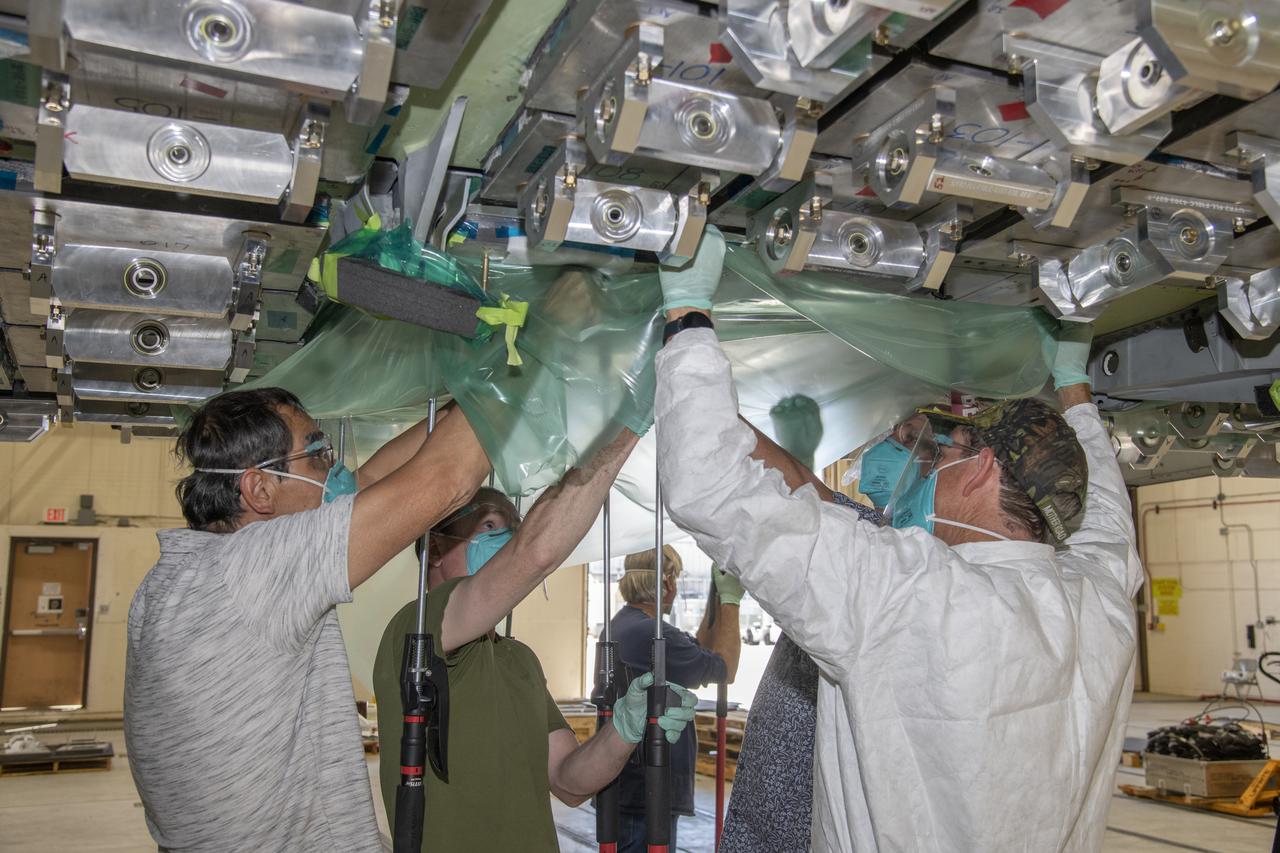
From left, Ronnie Haraguchi, Chris Mount, and Ray Sadler vacuum bag load pads on the aircraft surface of a F/A-18E from the Naval Air Systems Command (NAVAIR) in Patuxent River, Maryland. The aircraft is in NASA's Armstrong Flight Research Center Flight Loads Laboratory in Edwards, California, for the center's biggest load calibrations tests. This testing is needed before the aircraft can serve as a test vehicle for determining if it can safely manage maneuvers and proposed upgrades.
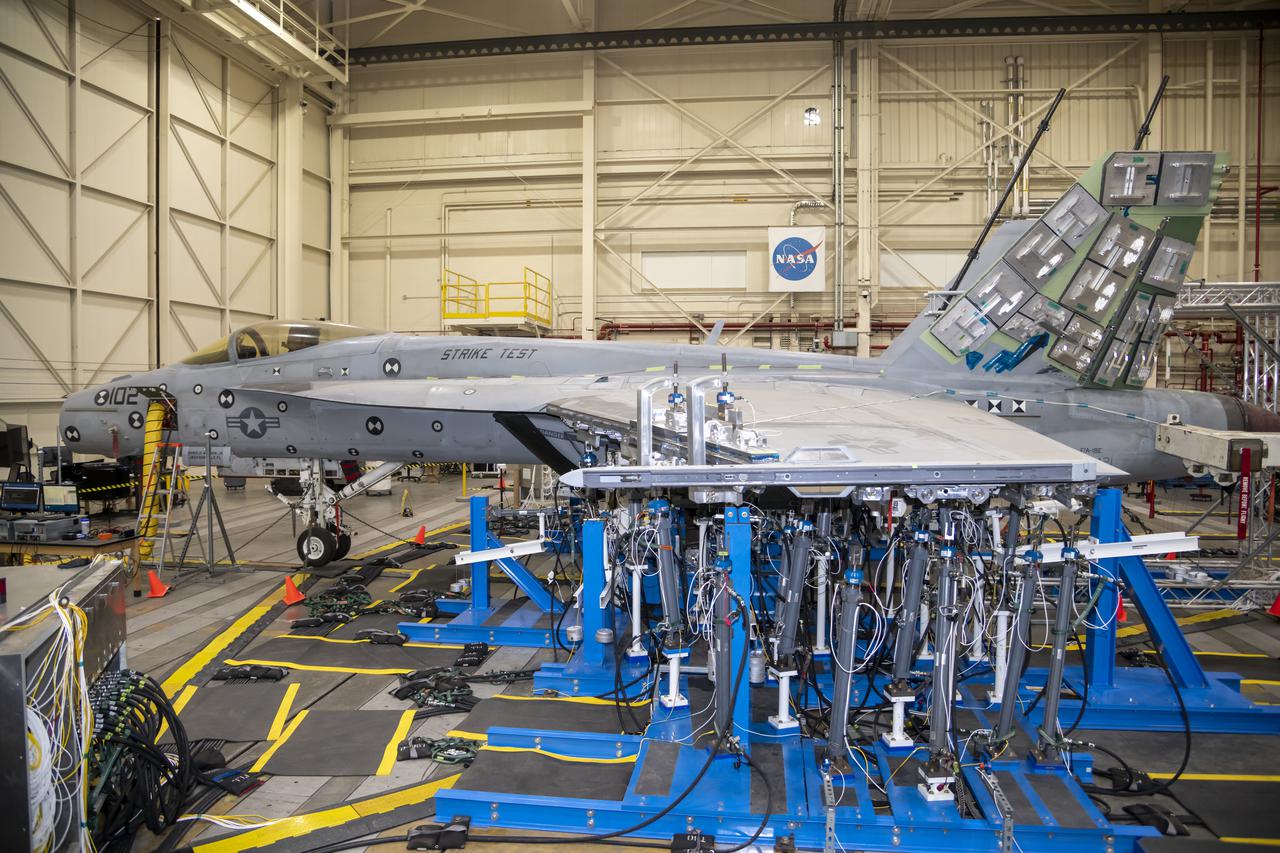
Left wing load hardware is setup for testing a F/A-18E from the Naval Air Systems Command (NAVAIR) in Patuxent River, Maryland. The aircraft is in NASA's Armstrong Flight Research Center Flight Loads Laboratory in Edwards, California, for the center's biggest load calibrations tests. This testing is needed before the aircraft can serve as a test vehicle for determining if it can safely manage maneuvers and proposed upgrades.
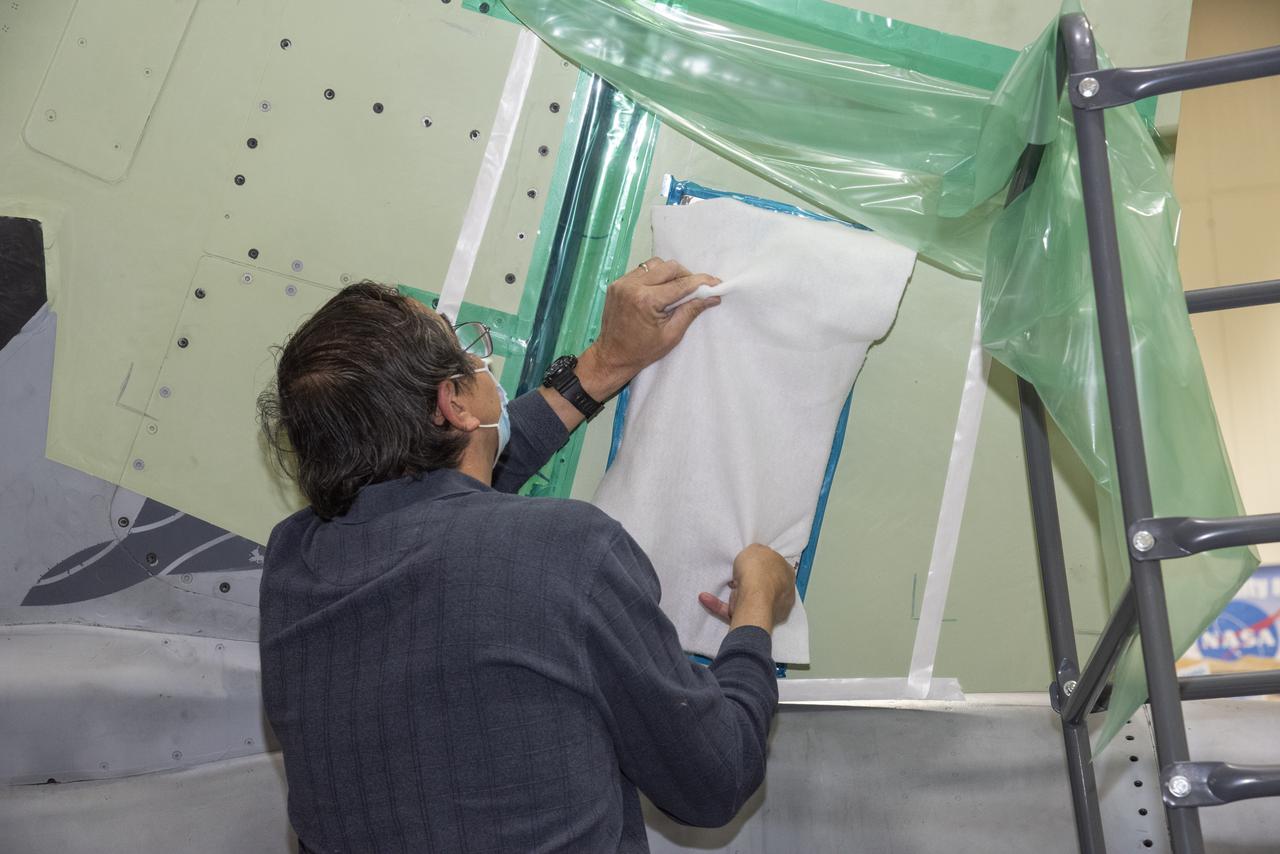
The load pad bonding process for the vertical tails was a preliminary step in the process to test the F/A-18E from the Naval Air Systems Command (NAVAIR) in Patuxent River, Maryland. The aircraft is in NASA’s Armstrong Flight Research Center Flight Loads Laboratory in Edwards, California, for the center’s biggest load calibrations tests. This testing is needed before the aircraft can serve as a test vehicle for determining if it can safely manage maneuvers and proposed upgrades.
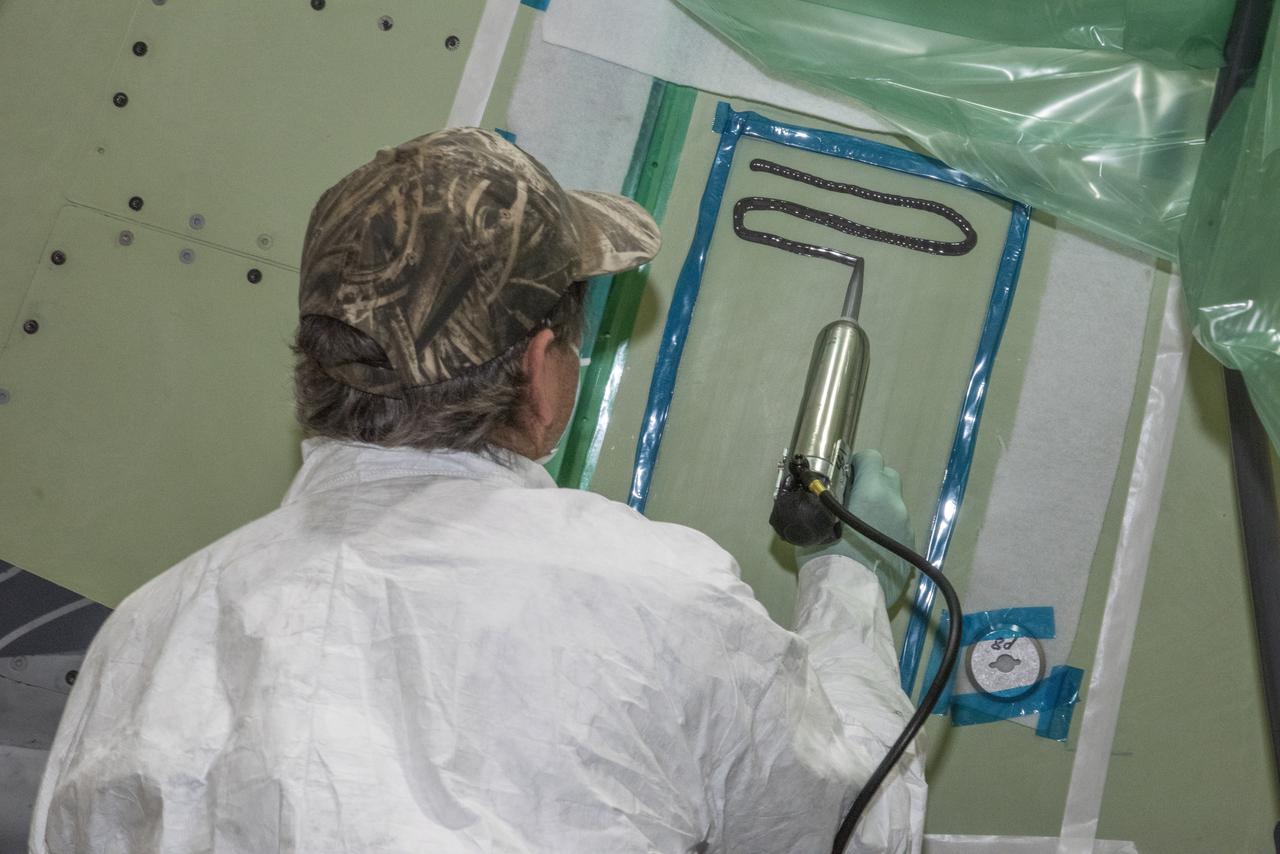
The load pad bonding process for the vertical tails was a preliminary step in the process to test the F/A-18E from the Naval Air Systems Command (NAVAIR) in Patuxent River, Maryland. The aircraft is in NASA’s Armstrong Flight Research Center Flight Loads Laboratory in Edwards, California, for the center’s biggest load calibrations tests. This testing is needed before the aircraft can serve as a test vehicle for determining if it can safely manage maneuvers and proposed upgrades.

Load pads are bonded to the aircraft surface of a F/A-18E from the Naval Air Systems Command (NAVAIR) in Patuxent River, Maryland, while under pressure. The aircraft is in NASA’s Armstrong Flight Research Center Flight Loads Laboratory in Edwards, California, for the center’s biggest load calibrations tests. This testing is needed before the aircraft can serve as a test vehicle for determining if it can safely manage maneuvers and proposed upgrades
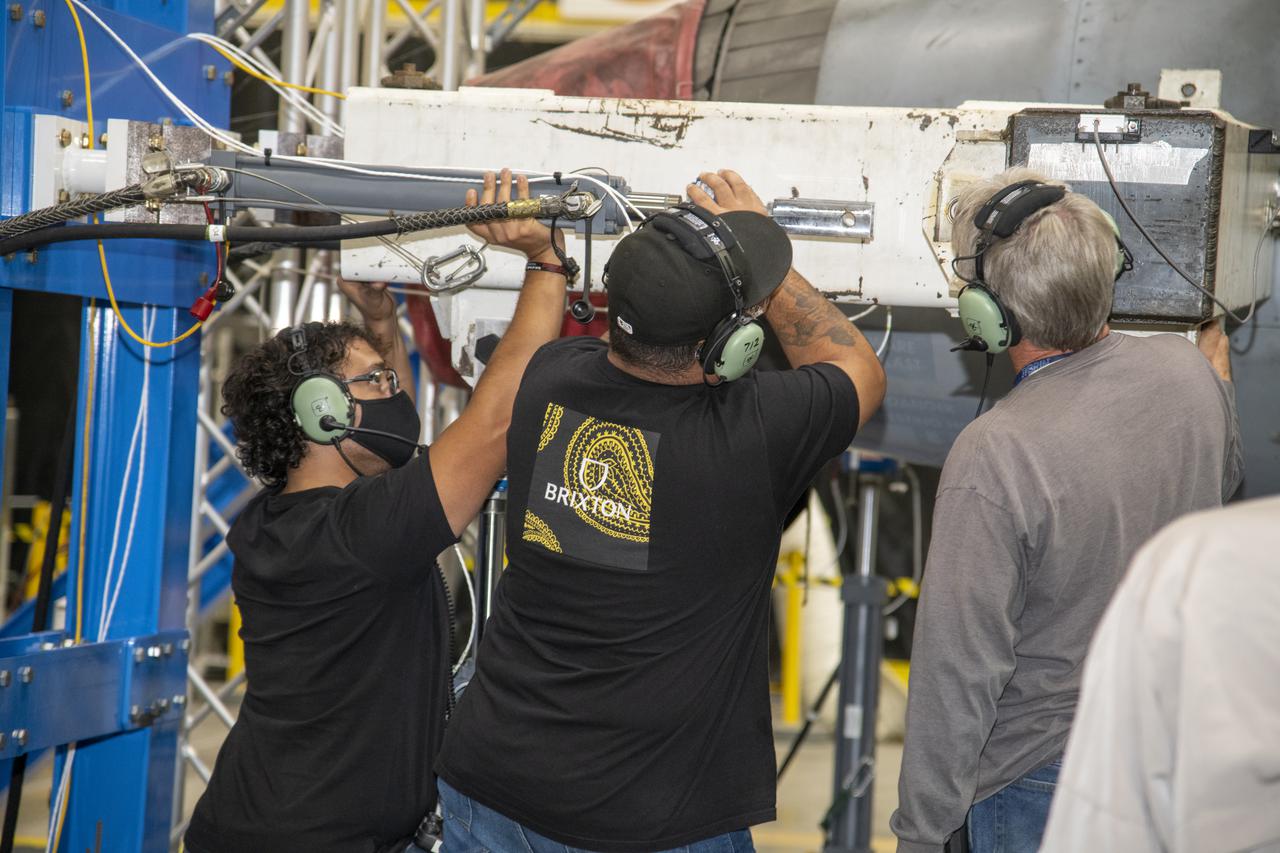
The actuator on the F/A-18E from the Naval Air Systems Command (NAVAIR) in Patuxent River, Maryland, is positioned for pinning to the horizontal tail load test fixture. The aircraft is in NASA’s Armstrong Flight Research Center Flight Loads Laboratory in Edwards, California, for the center’s biggest load calibrations tests. This testing is needed before the aircraft can serve as a test vehicle for determining if it can safely manage maneuvers and proposed upgrades.
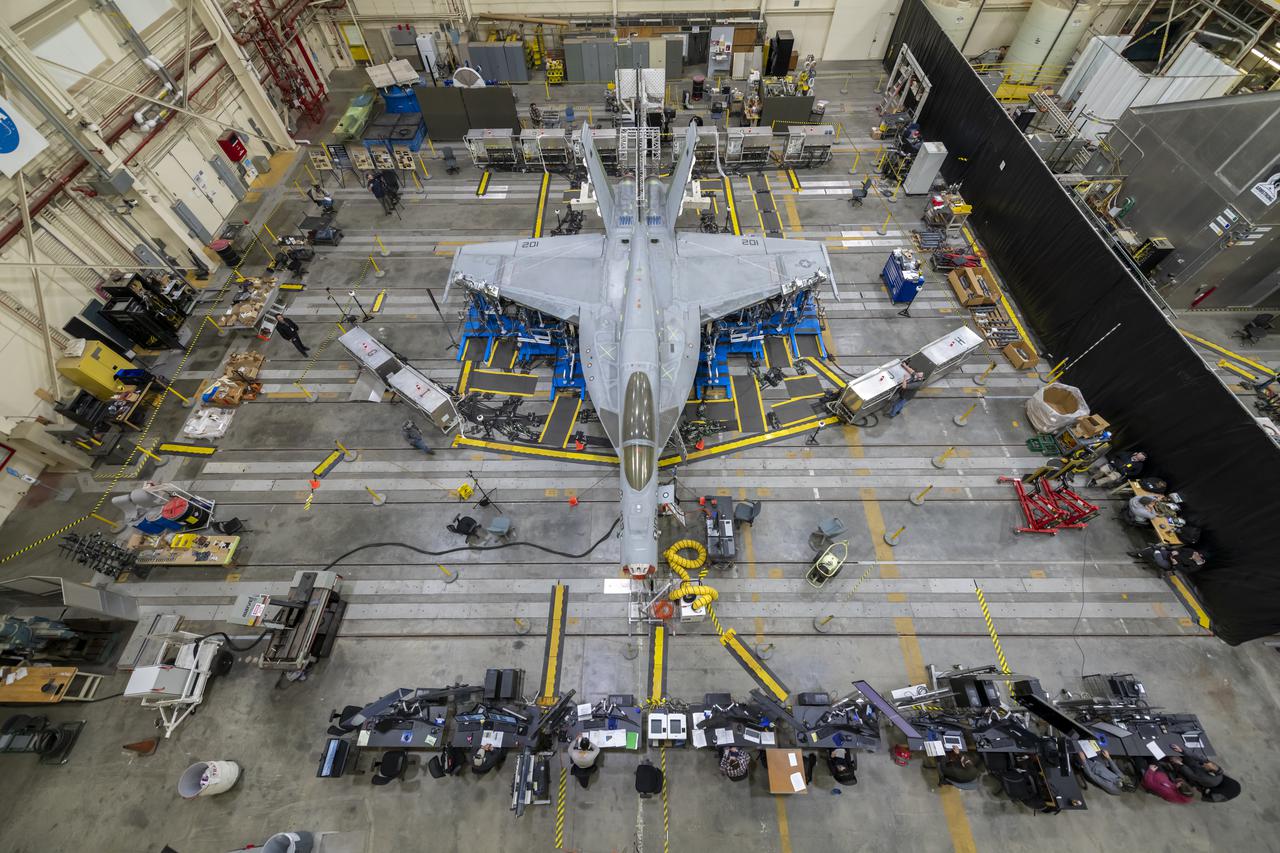
A center top view shows the wing loading test configuration and testing area of an F/A-18E from the Naval Air Systems Command (NAVAIR) in Patuxent River; Maryland. The aircraft is in NASA's Armstrong Flight Research Center Flight Loads Laboratory in Edwards; California; for the center's biggest load calibrations tests. This testing is needed before the aircraft can serve as a test vehicle for determining if it can safely manage maneuvers and proposed upgrades.
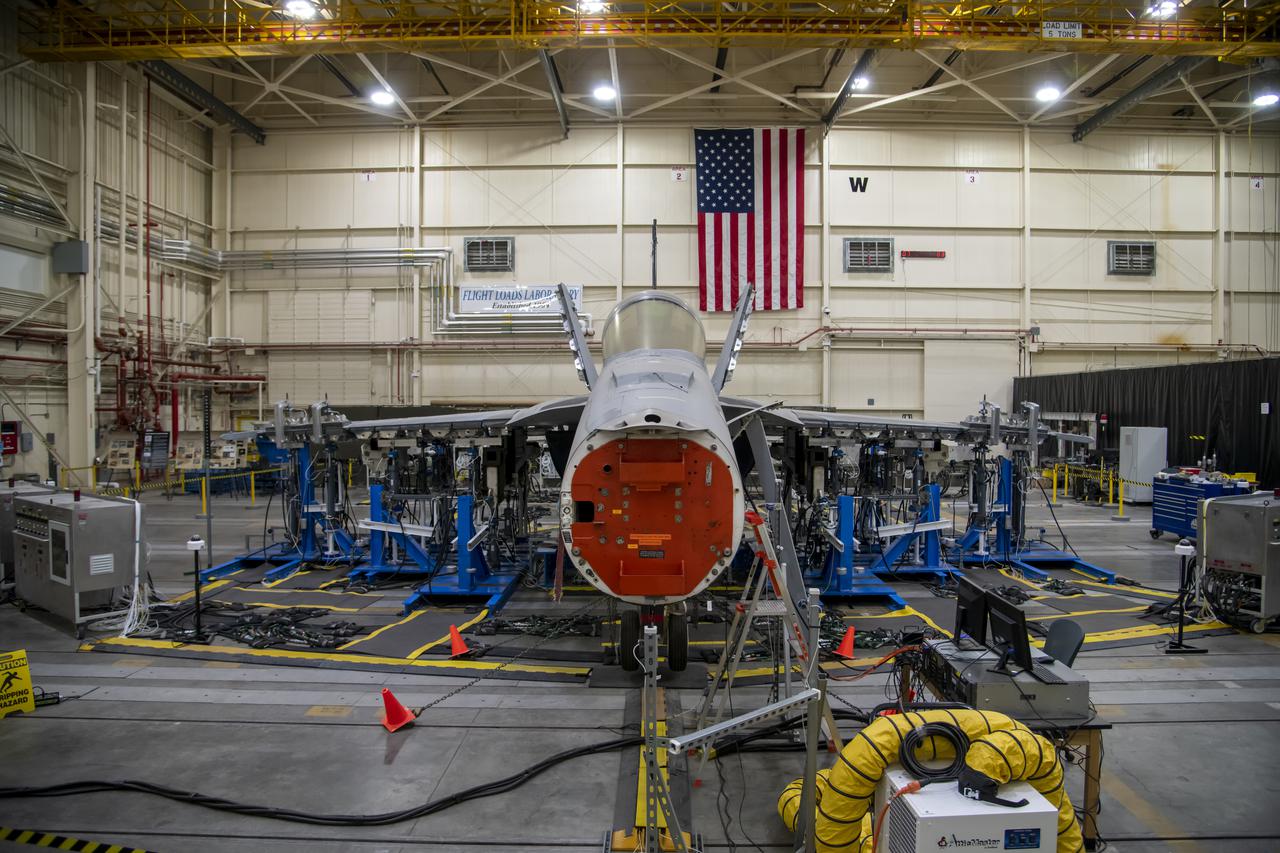
This front view shows the wing loading test configuration and testing area of an F/A-18E from the Naval Air Systems Command (NAVAIR) in Patuxent River, Maryland. The aircraft is in NASA's Armstrong Flight Research Center Flight Loads Laboratory in Edwards, California, for the center's biggest load calibrations tests. This testing is needed before the aircraft can serve as a test vehicle for determining if it can safely manage maneuvers and proposed upgrades.
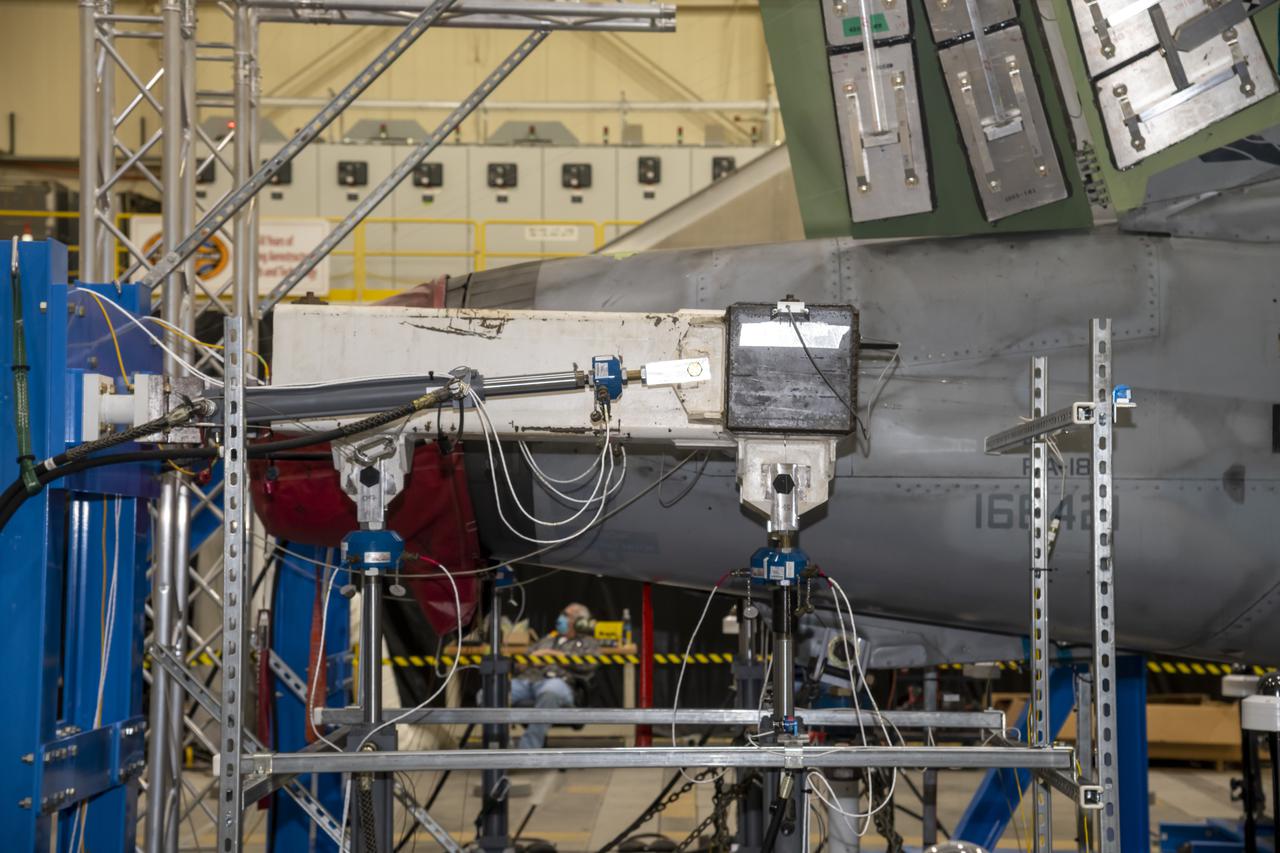
The horizontal tail is under test load on a F/A-18E from the Naval Air Systems Command (NAVAIR) in Patuxent River, Maryland. The aircraft is in NASA’s Armstrong Flight Research Center Flight Loads Laboratory in Edwards, California, for the center’s biggest load calibrations tests. This testing is needed before the aircraft can serve as a test vehicle for determining if it can safely manage maneuvers and proposed upgrades.
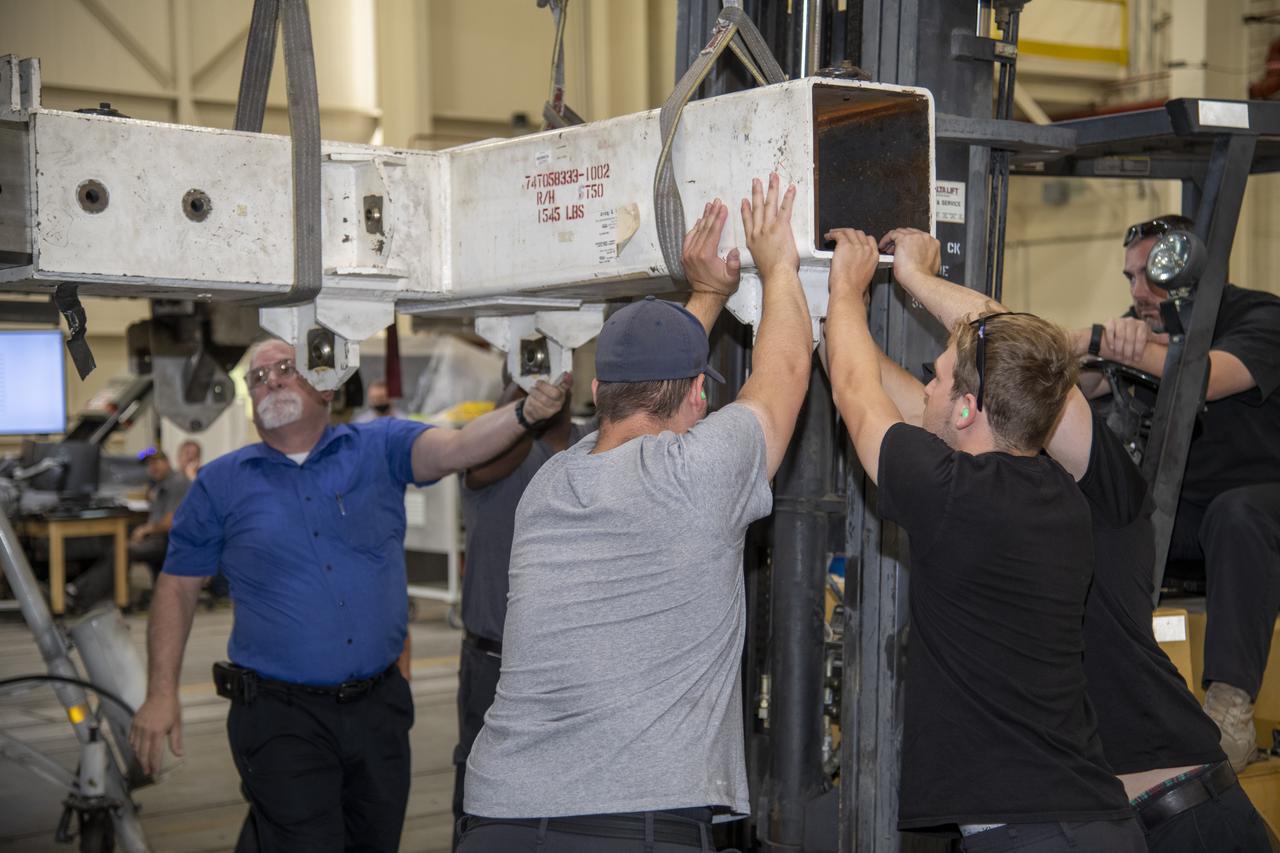
The horizontal tail and load fixture is moved into position for testing the F/A-18E from the Naval Air Systems Command (NAVAIR) in Patuxent River, Maryland. The aircraft is in NASA’s Armstrong Flight Research Center Flight Loads Laboratory in Edwards, California, for the center’s biggest load calibrations tests. This testing is needed before the aircraft can serve as a test vehicle for determining if it can safely manage maneuvers and proposed upgrades.
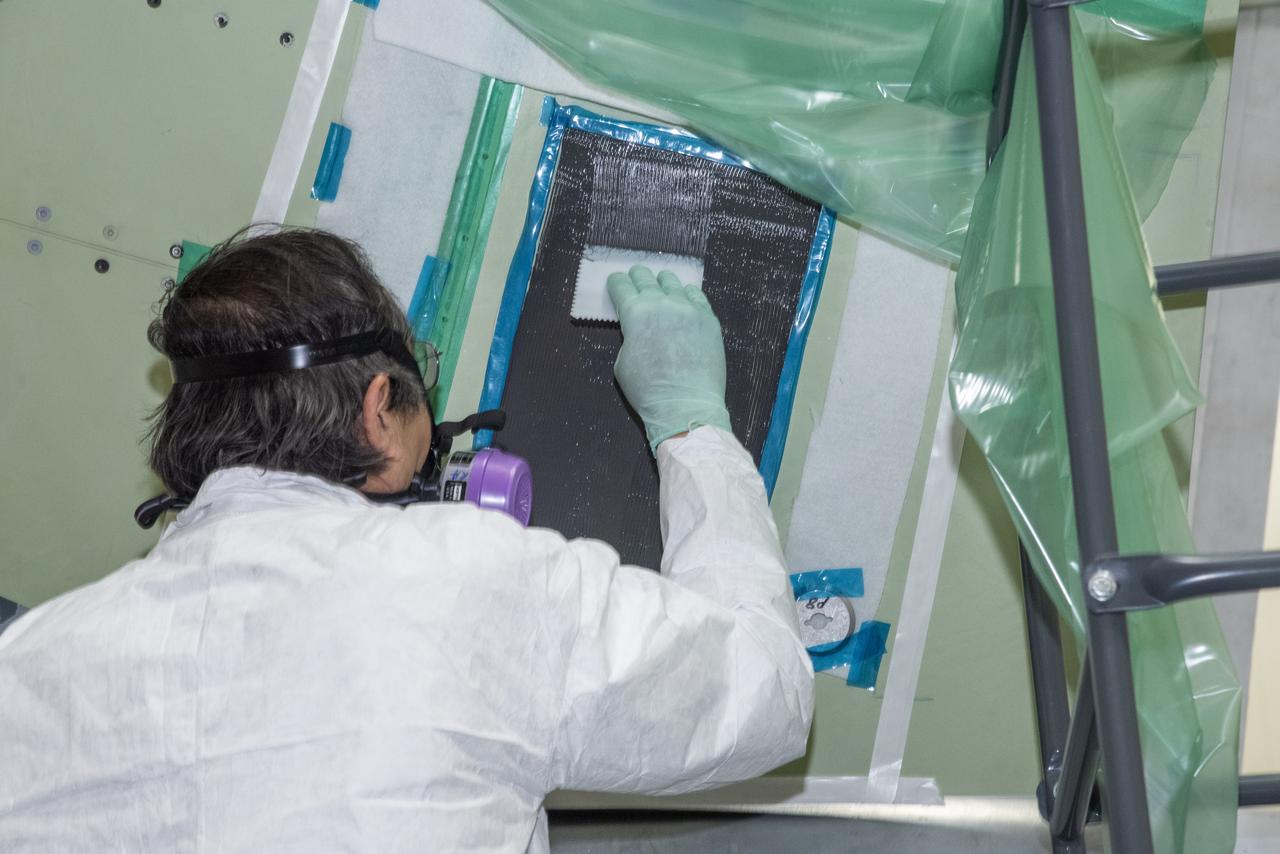
The load pad bonding process for the vertical tails was a preliminary step in the process to test the F/A-18E from the Naval Air Systems Command (NAVAIR) in Patuxent River, Maryland. The aircraft is in NASA’s Armstrong Flight Research Center Flight Loads Laboratory in Edwards, California, for the center’s biggest load calibrations tests. This testing is needed before the aircraft can serve as a test vehicle for determining if it can safely manage maneuvers and proposed upgrades.
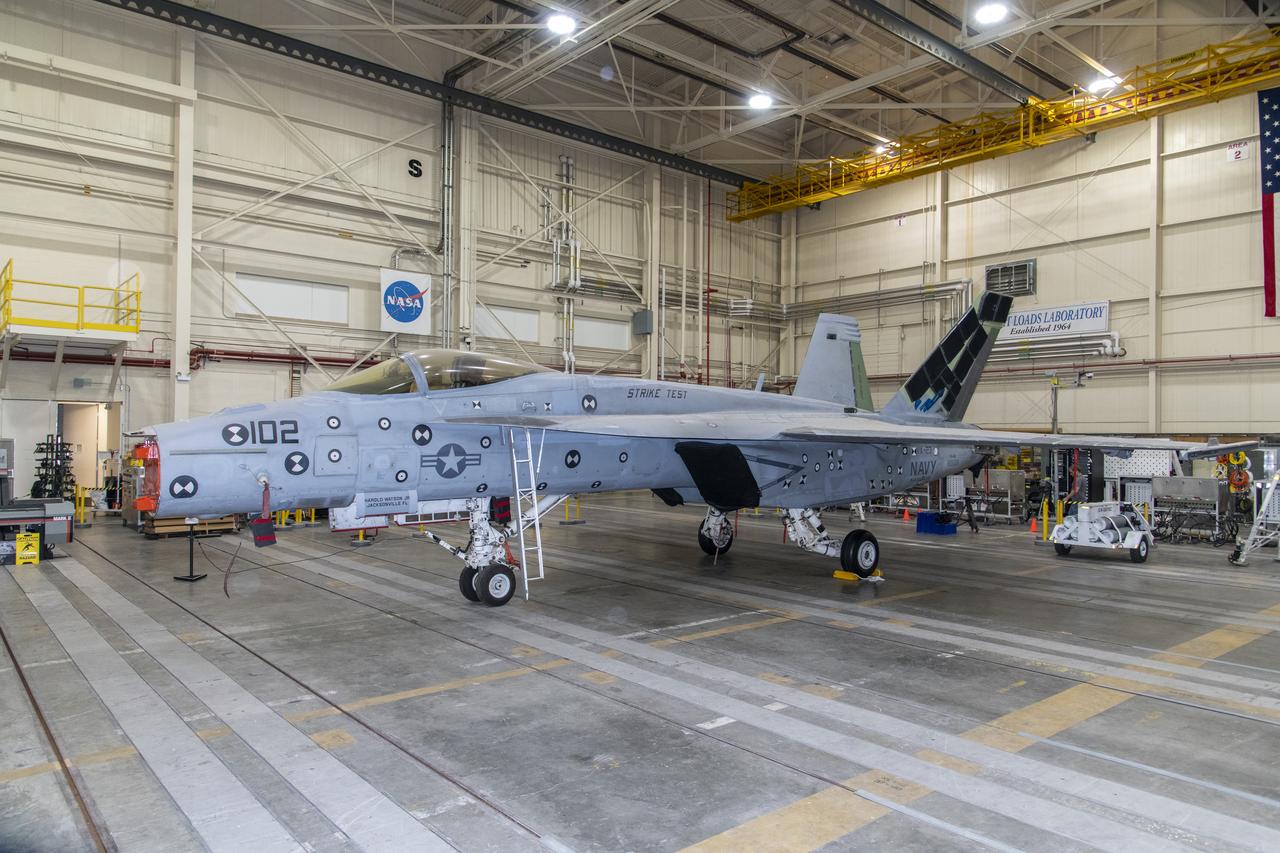
This right-side view shows an F/A-18E from the Naval Air Systems Command (NAVAIR) in Patuxent River, Maryland. The aircraft is in NASA’s Armstrong Flight Research Center Flight Loads Laboratory in Edwards, California, where it underwent the center’s biggest load calibrations tests. This testing will permit the aircraft to serve as a test vehicle for determining if it can safely manage maneuvers and proposed upgrades.
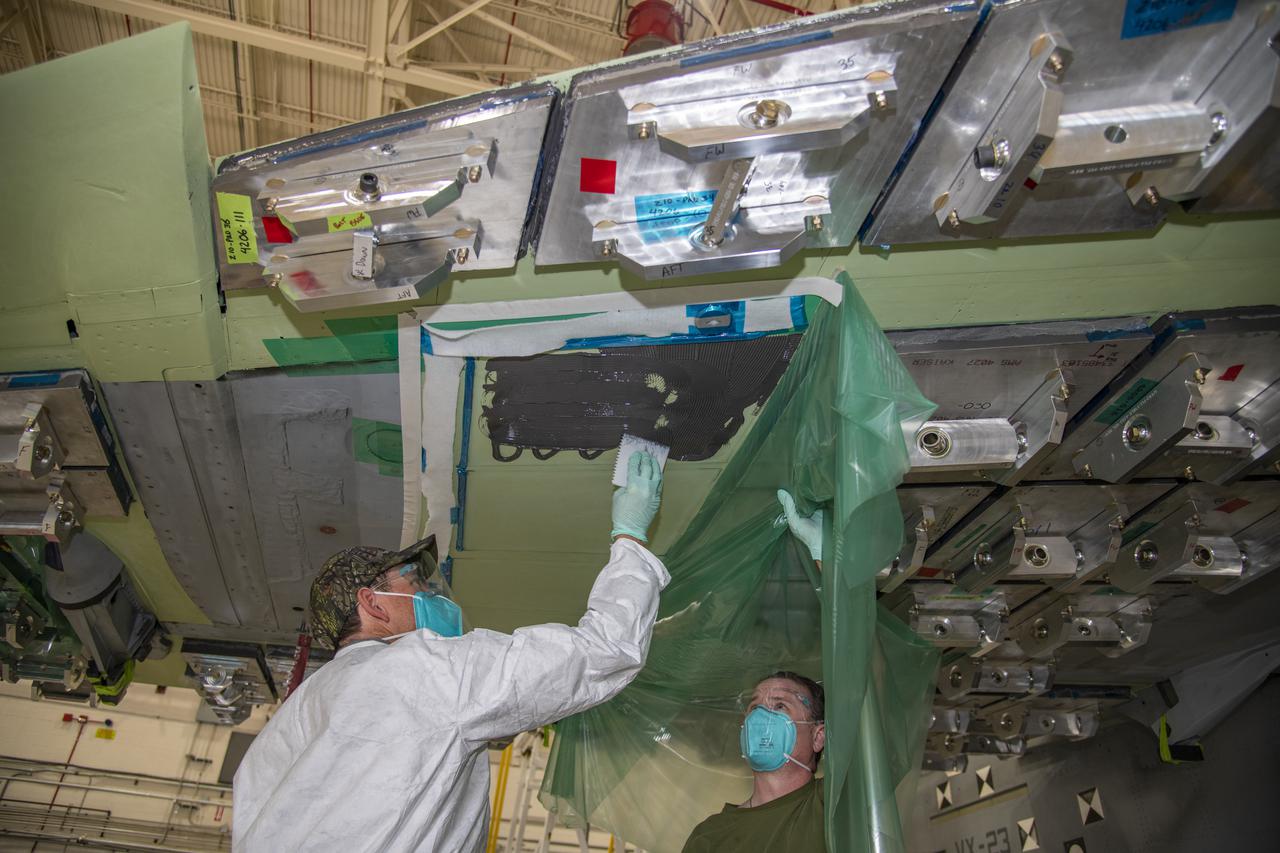
Ray Sadler, left, and Chris Mount spread tank sealant on the aircraft surface of a F/A-18E from the Naval Air Systems Command (NAVAIR) in Patuxent River, Maryland. The aircraft is in NASA’s Armstrong Flight Research Center Flight Loads Laboratory in Edwards, California, for the center’s biggest load calibrations tests. This testing is needed before the aircraft can serve as a test vehicle for determining if it can safely manage maneuvers and proposed upgrades.
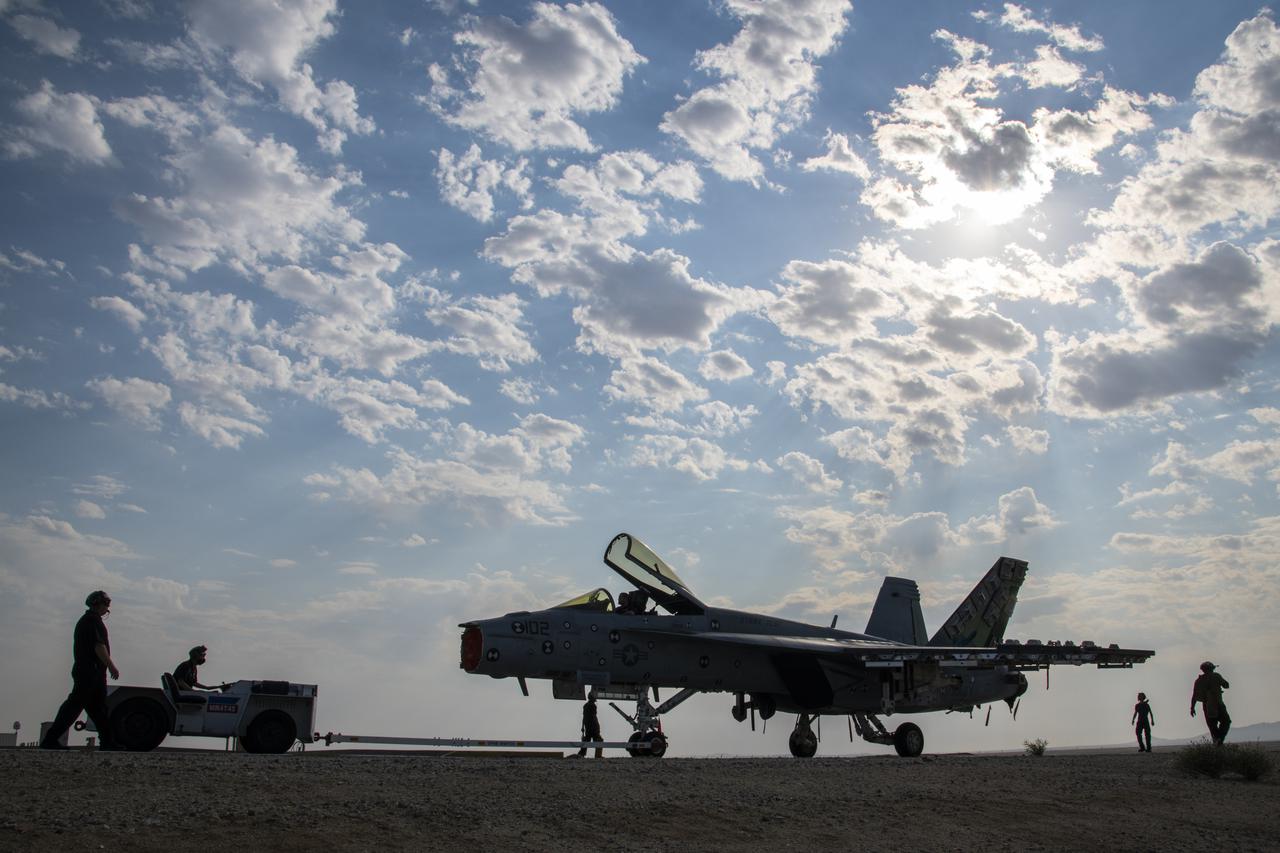
The Naval Air Systems Command (NAVAIR) in Patuxent River, Maryland F/A-18E is moved to NASA’s Armstrong Flight Research Center Flight Loads Laboratory in Edwards, California. NASA Armstrong is working on its biggest load calibrations tests on an F/A-18E Super Hornet. This testing is needed before the aircraft can serve as a test vehicle for determining if it can safely manage maneuvers and proposed upgrades.
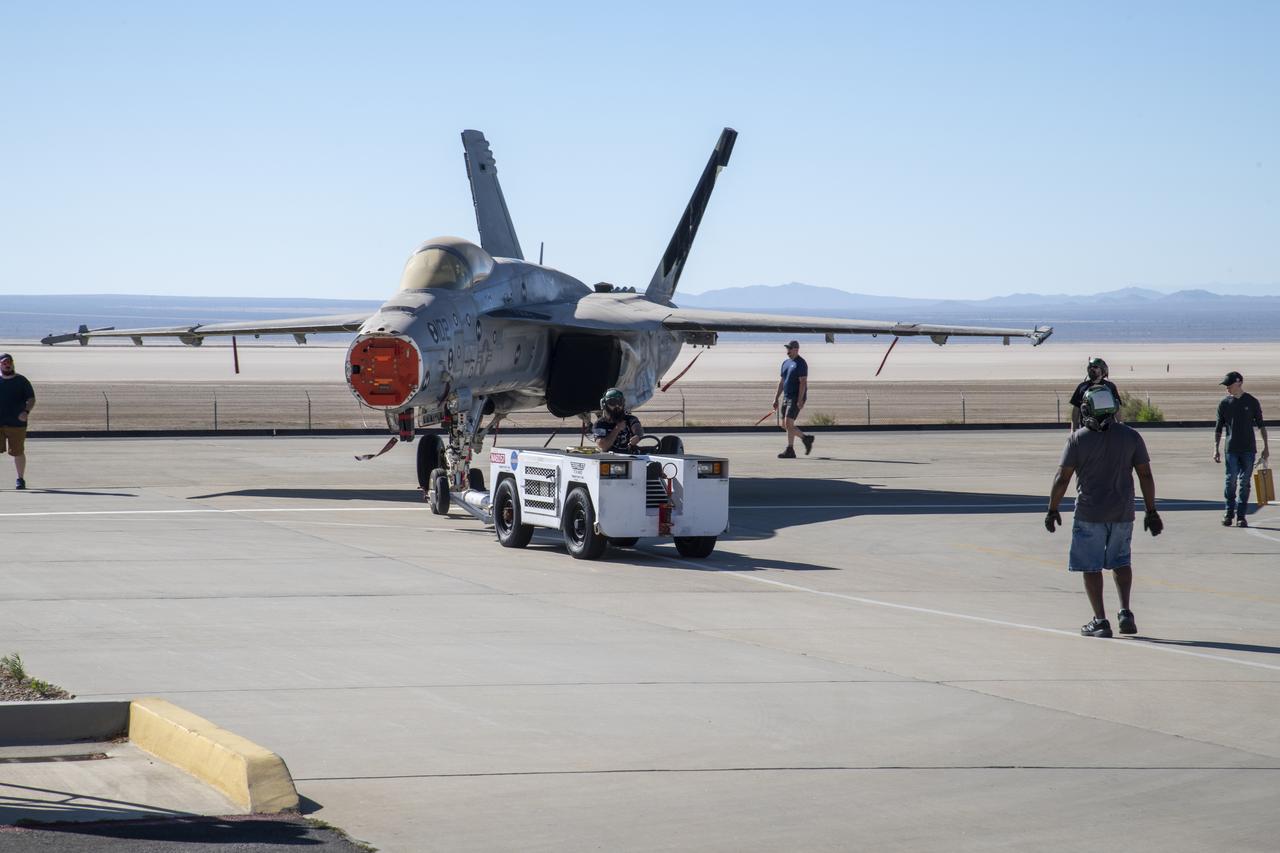
An F/A-18E from the Naval Air Systems Command (NAVAIR) in Patuxent River, Maryland, is moved from NASA’s Armstrong Flight Research Center Flight Loads Laboratory in Edwards, California, to a hangar where it will undergo final preparations to return to its squadron. The aircraft underwent the center’s biggest load calibrations tests. The testing will permit the aircraft to serve as a test vehicle to determine if it can safely manage maneuvers and proposed upgrades.
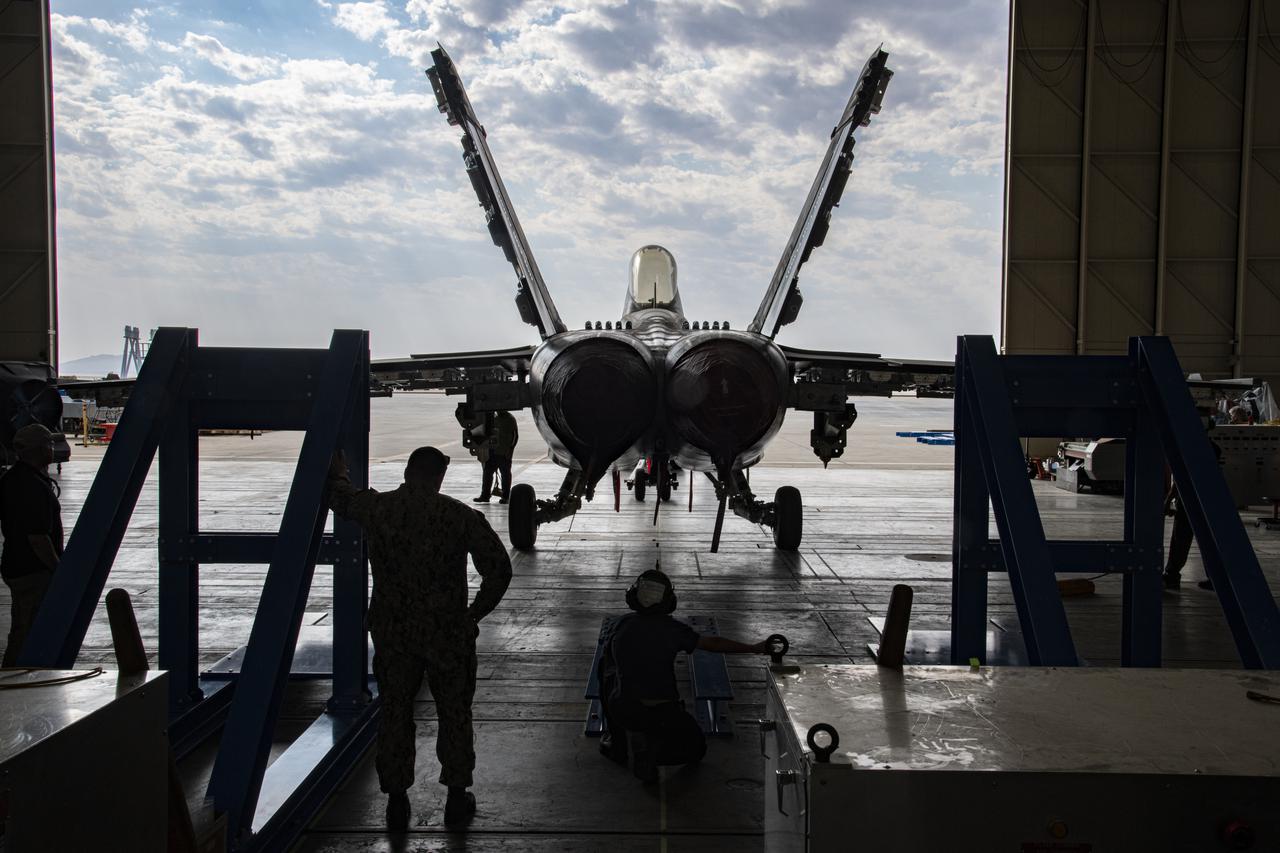
The Naval Air Systems Command (NAVAIR) in Patuxent River, Maryland F/A-18E is moved to NASA’s Armstrong Flight Research Center Flight Loads Laboratory in Edwards, California. NASA Armstrong is working on its biggest load calibrations tests on an F/A-18E Super Hornet. This testing is needed before the aircraft can serve as a test vehicle for determining if it can safely manage maneuvers and proposed upgrades.
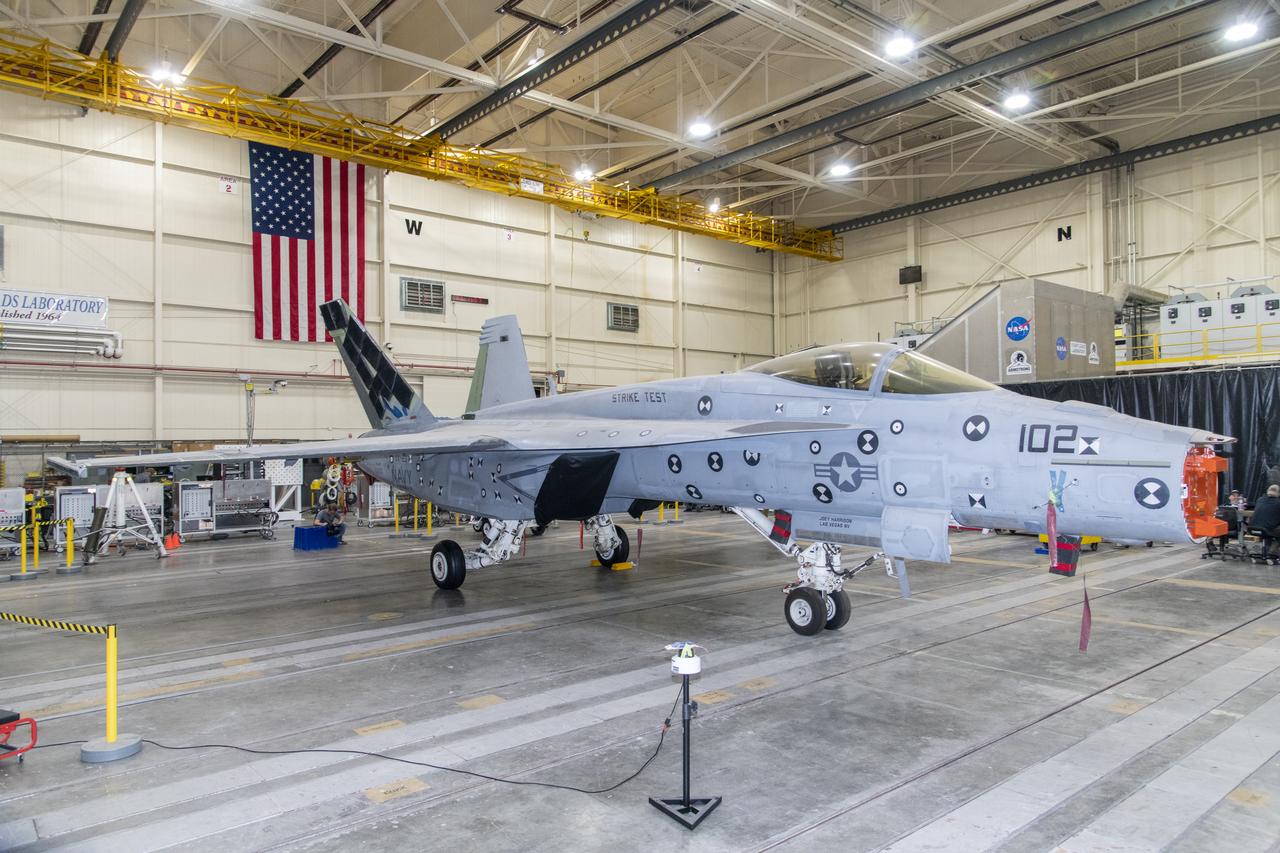
This left-side view shows an F/A-18E from the Naval Air Systems Command (NAVAIR) in Patuxent River, Maryland. The aircraft is in NASA’s Armstrong Flight Research Center Flight Loads Laboratory in Edwards, California, where it underwent the center’s biggest load calibrations tests. This testing will permit the aircraft to serve as a test vehicle to determine if it can safely manage maneuvers and proposed upgrades.
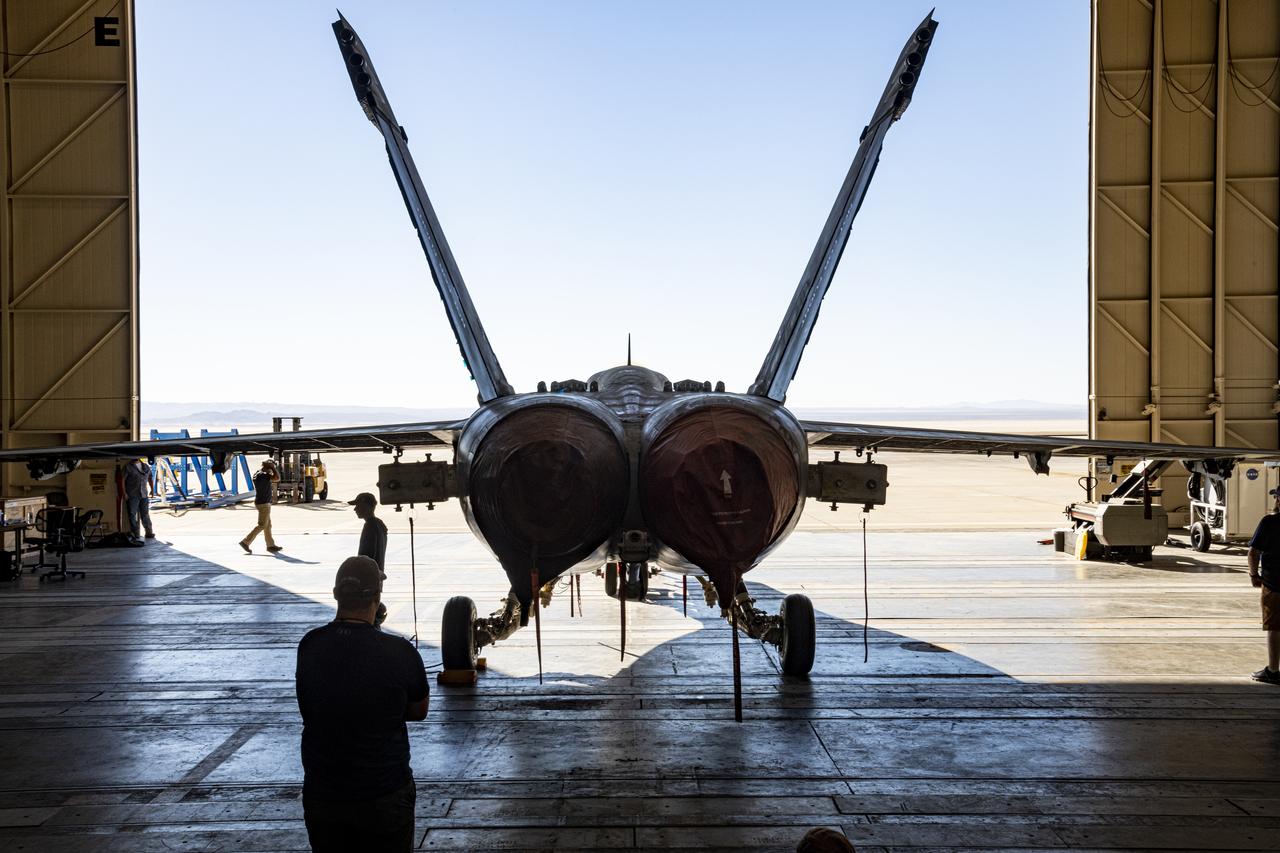
This rear view shows an F/A-18E from the Naval Air Systems Command (NAVAIR) in Patuxent River, Maryland. The aircraft is in NASA’s Armstrong Flight Research Center Flight Loads Laboratory in Edwards, California, where it underwent the center’s biggest load calibrations tests. This testing will permit the aircraft to serve as a test vehicle to determine if it can safely manage maneuvers and proposed upgrades.
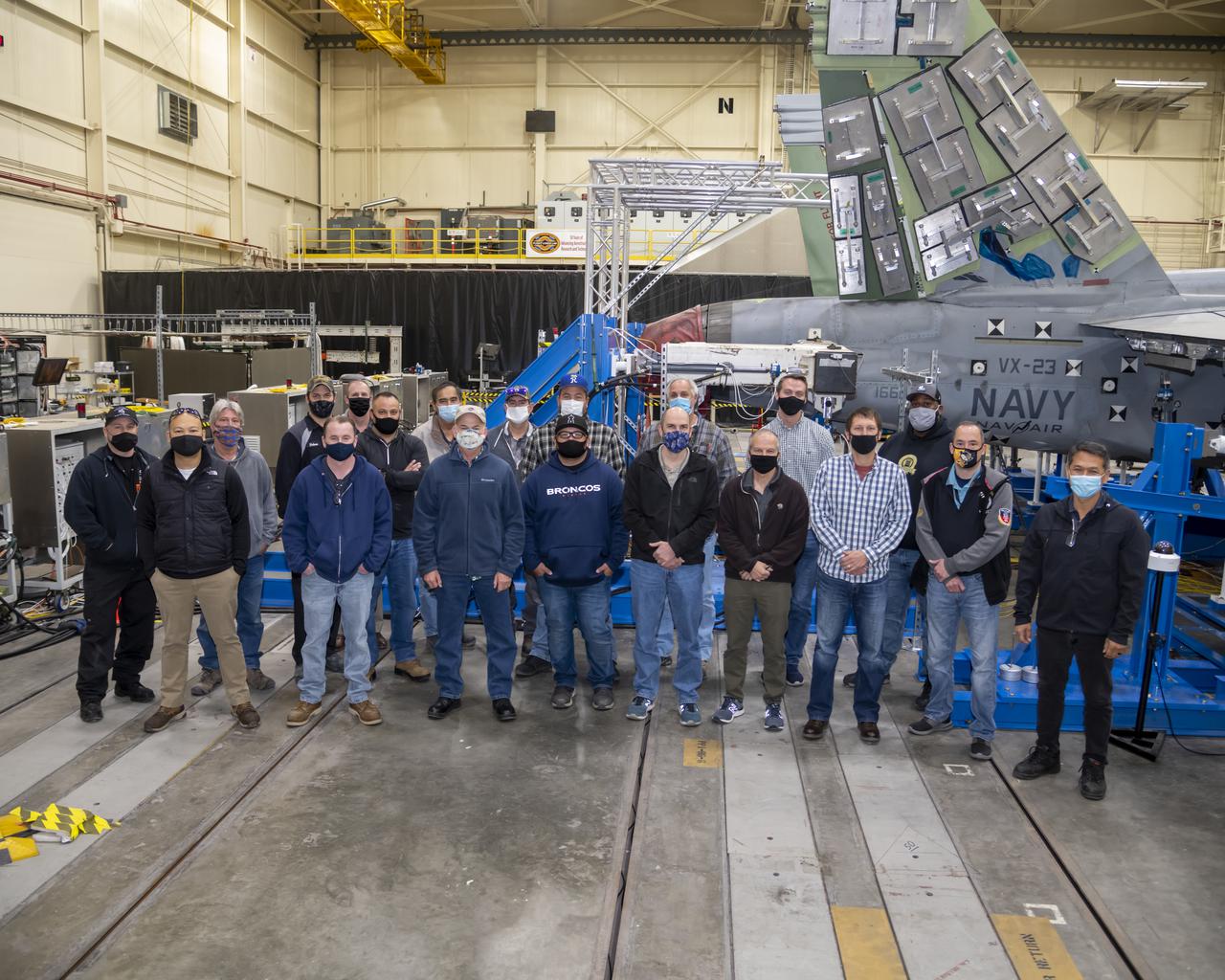
– A team working on tests on a F/A-18E from the Naval Air Systems Command (NAVAIR) in Patuxent River, Maryland, stand by the aircraft. The F/A-18E is in NASA’s Armstrong Flight Research Center Flight Loads Laboratory in Edwards, California, for the center’s biggest load calibrations tests. This testing is needed before the aircraft can serve as a test vehicle for determining if it can safely manage maneuvers and proposed upgrades.
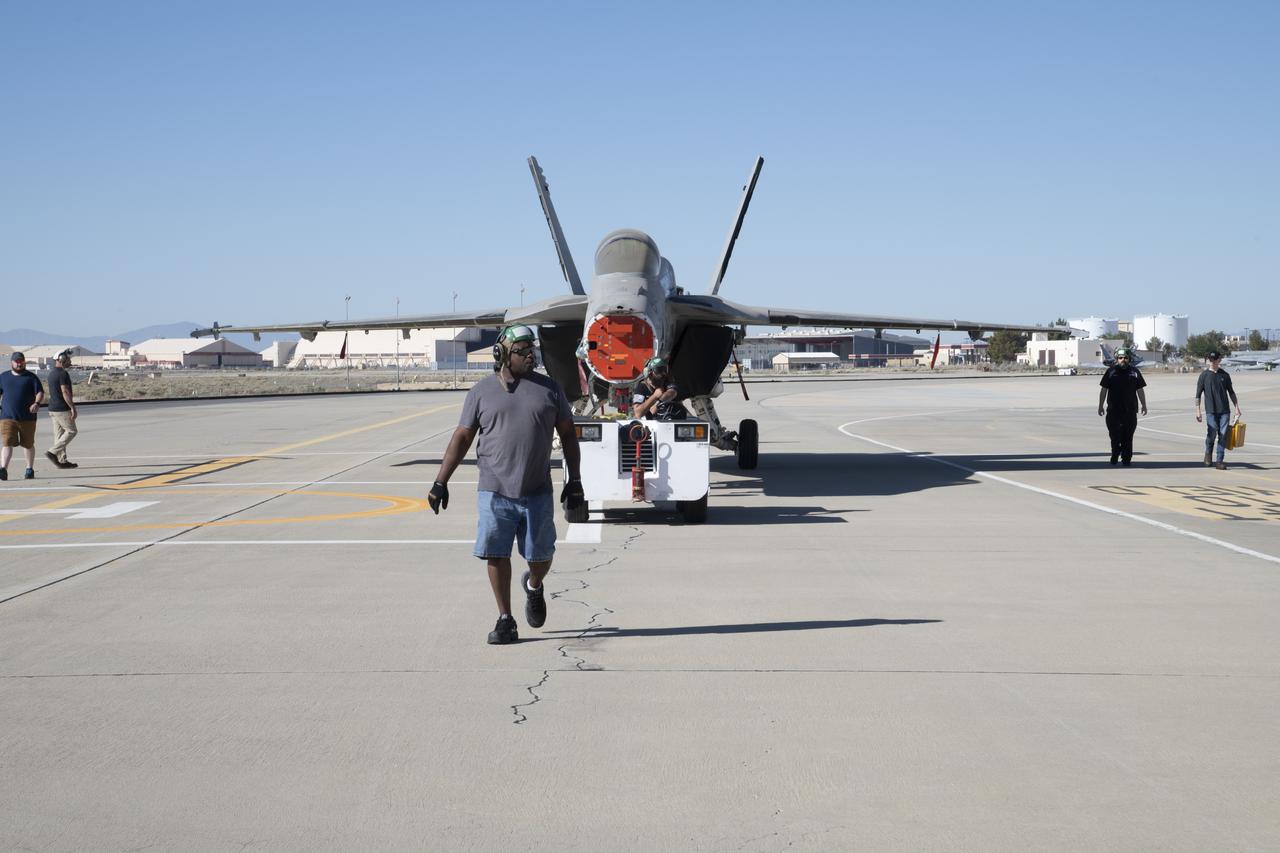
An F/A-18E from the Naval Air Systems Command (NAVAIR) in Patuxent River, Maryland, is moved from NASA’s Armstrong Flight Research Center Flight Loads Laboratory in Edwards, California, to a hangar where it will undergo final preparations to return to its squadron. The aircraft underwent the center’s biggest load calibrations tests. The testing will permit the aircraft to serve as a test vehicle to determine if it can safely manage maneuvers and proposed upgrades.

The jacks are lowered to remove them from under the F/A-18E from the Naval Air Systems Command (NAVAIR) in Patuxent River, Maryland. The aircraft is in NASA’s Armstrong Flight Research Center Flight Loads Laboratory in Edwards, California, for the center’s biggest load calibrations tests. This testing is needed before the aircraft can serve as a test vehicle for determining if it can safely manage maneuvers and proposed upgrades.
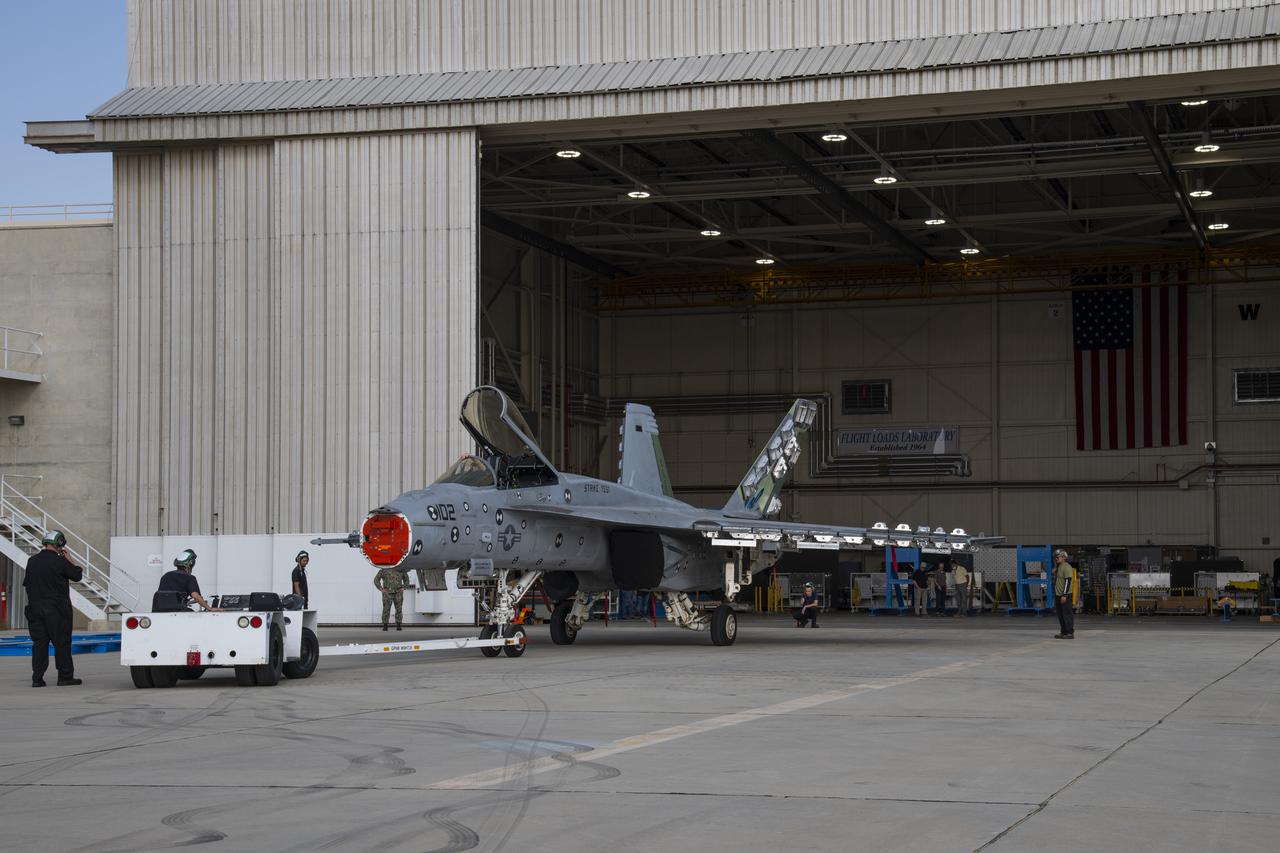
The Naval Air Systems Command (NAVAIR) in Patuxent River, Maryland F/A-18E is moved to NASA’s Armstrong Flight Research Center Flight Loads Laboratory in Edwards, California. NASA Armstrong is working on its biggest load calibrations tests on an F/A-18E Super Hornet. This testing is needed before the aircraft can serve as a test vehicle for determining if it can safely manage maneuvers and proposed upgrades.
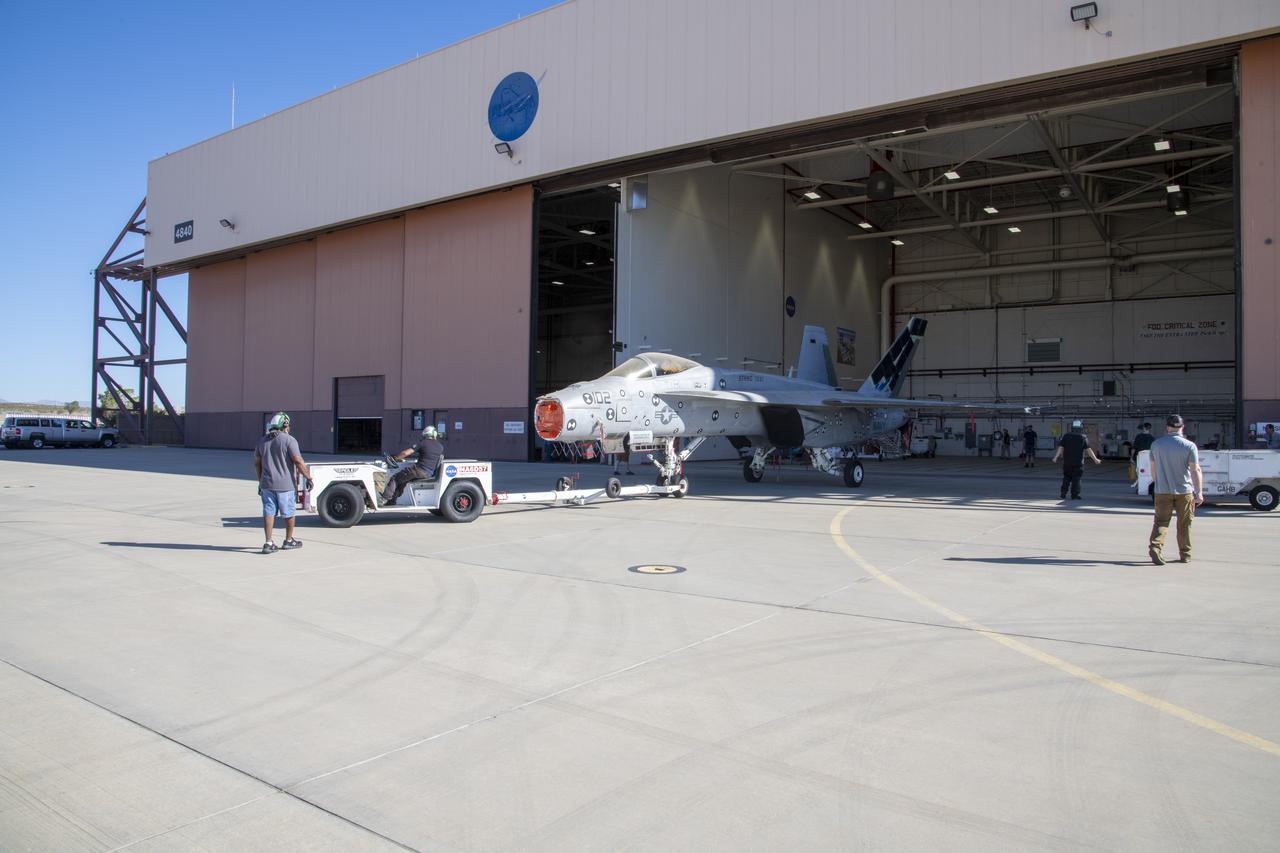
An F/A-18E from the Naval Air Systems Command (NAVAIR) in Patuxent River, Maryland, is moved from NASA’s Armstrong Flight Research Center Flight Loads Laboratory in Edwards, California, to a hangar where it will undergo final preparations to return to its squadron. The aircraft underwent the center’s biggest load calibrations tests. The testing will permit the aircraft to serve as a test vehicle to determine if it can safely manage maneuvers and proposed upgrades.
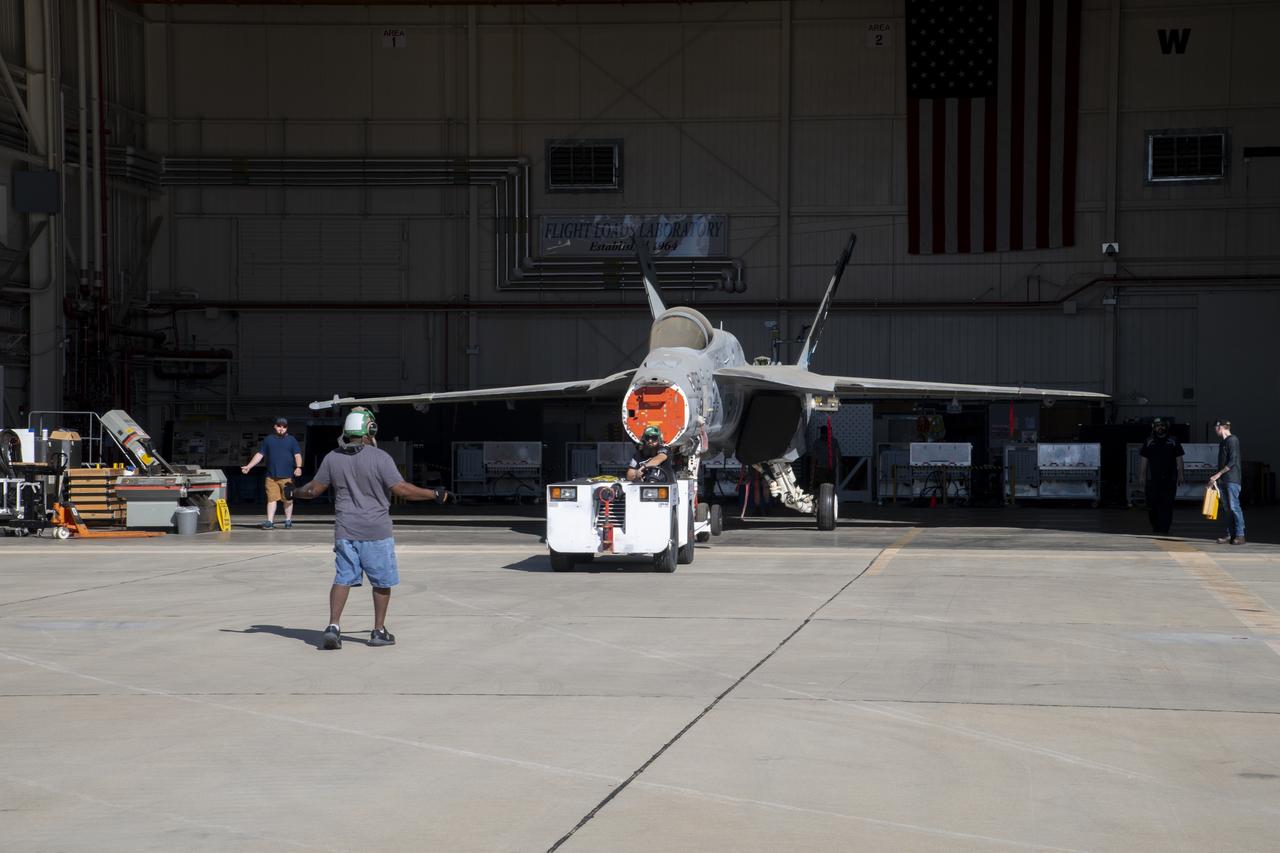
An F/A-18E from the Naval Air Systems Command (NAVAIR) in Patuxent River, Maryland, is moved from NASA’s Armstrong Flight Research Center Flight Loads Laboratory in Edwards, California, to a hangar where it will undergo final preparations to return to its squadron. The aircraft underwent the center’s biggest load calibrations tests. The testing will permit the aircraft to serve as a test vehicle to determine if it can safely manage maneuvers and proposed upgrades.
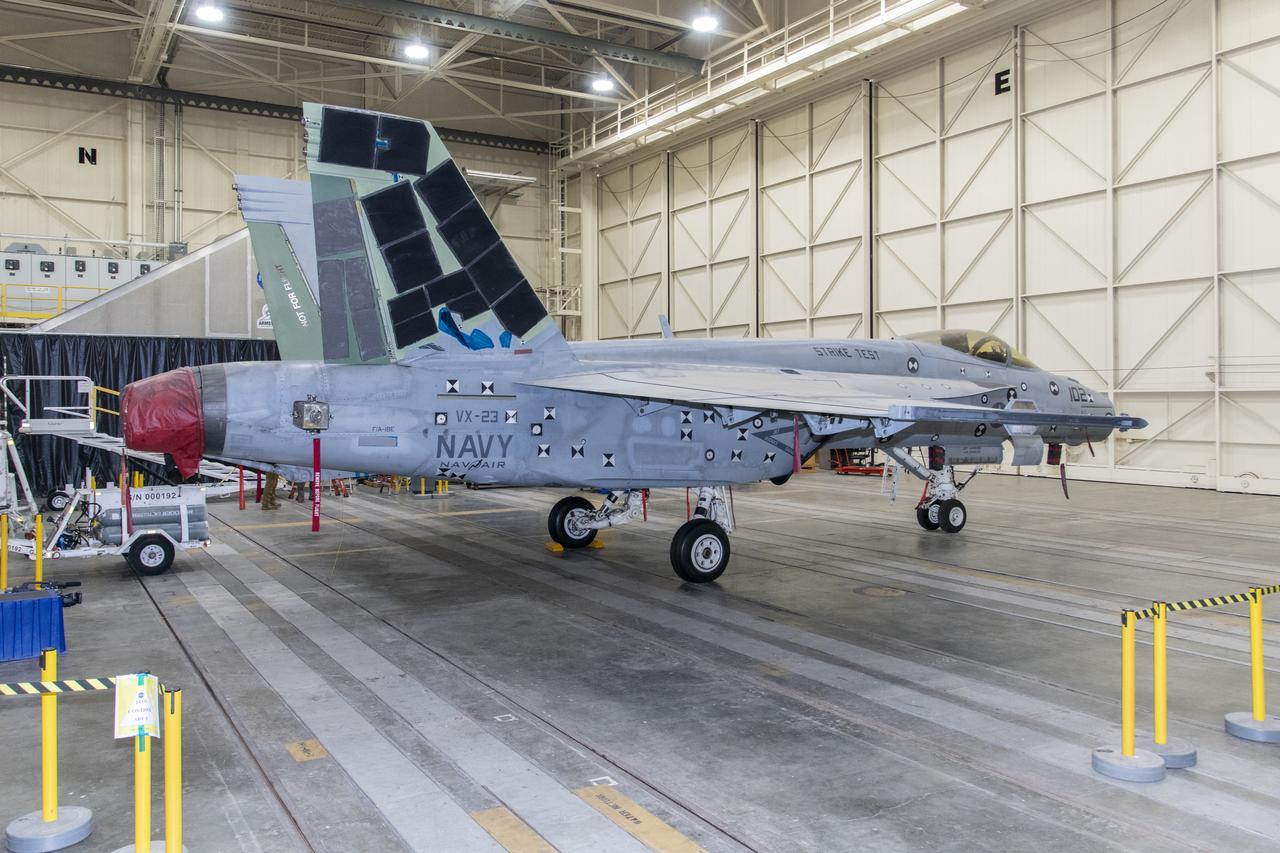
This left-side view shows an F/A-18E from the Naval Air Systems Command (NAVAIR) in Patuxent River, Maryland. The aircraft is in NASA’s Armstrong Flight Research Center Flight Loads Laboratory in Edwards, California, where it underwent the center’s biggest load calibrations tests. This testing will permit the aircraft to serve as a test vehicle to determine if it can safely manage maneuvers and proposed upgrades.
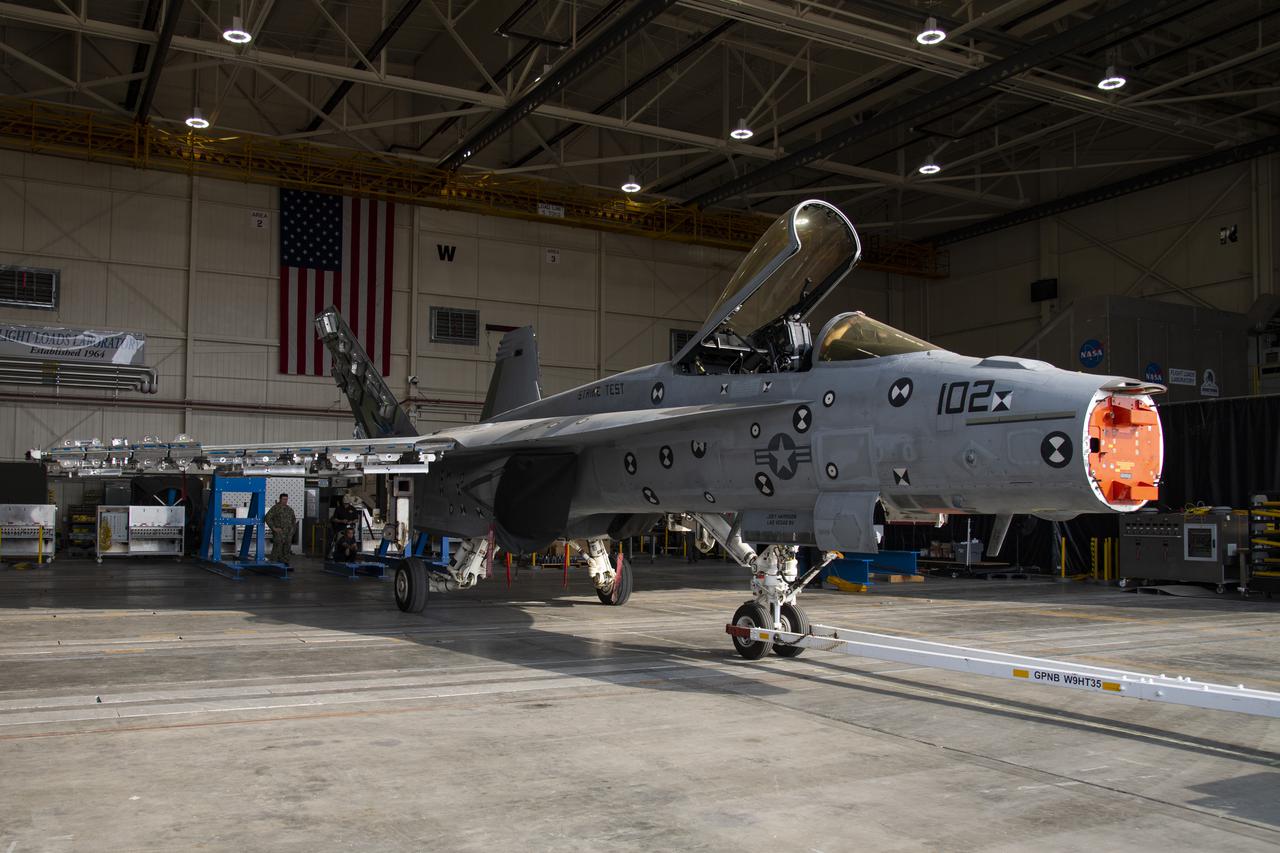
The Naval Air Systems Command (NAVAIR) in Patuxent River, Maryland F/A-18E is moved to NASA’s Armstrong Flight Research Center Flight Loads Laboratory in Edwards, California. NASA Armstrong is working on its biggest load calibrations tests on an F/A-18E Super Hornet. This testing is needed before the aircraft can serve as a test vehicle for determining if it can safely manage maneuvers and proposed upgrades.
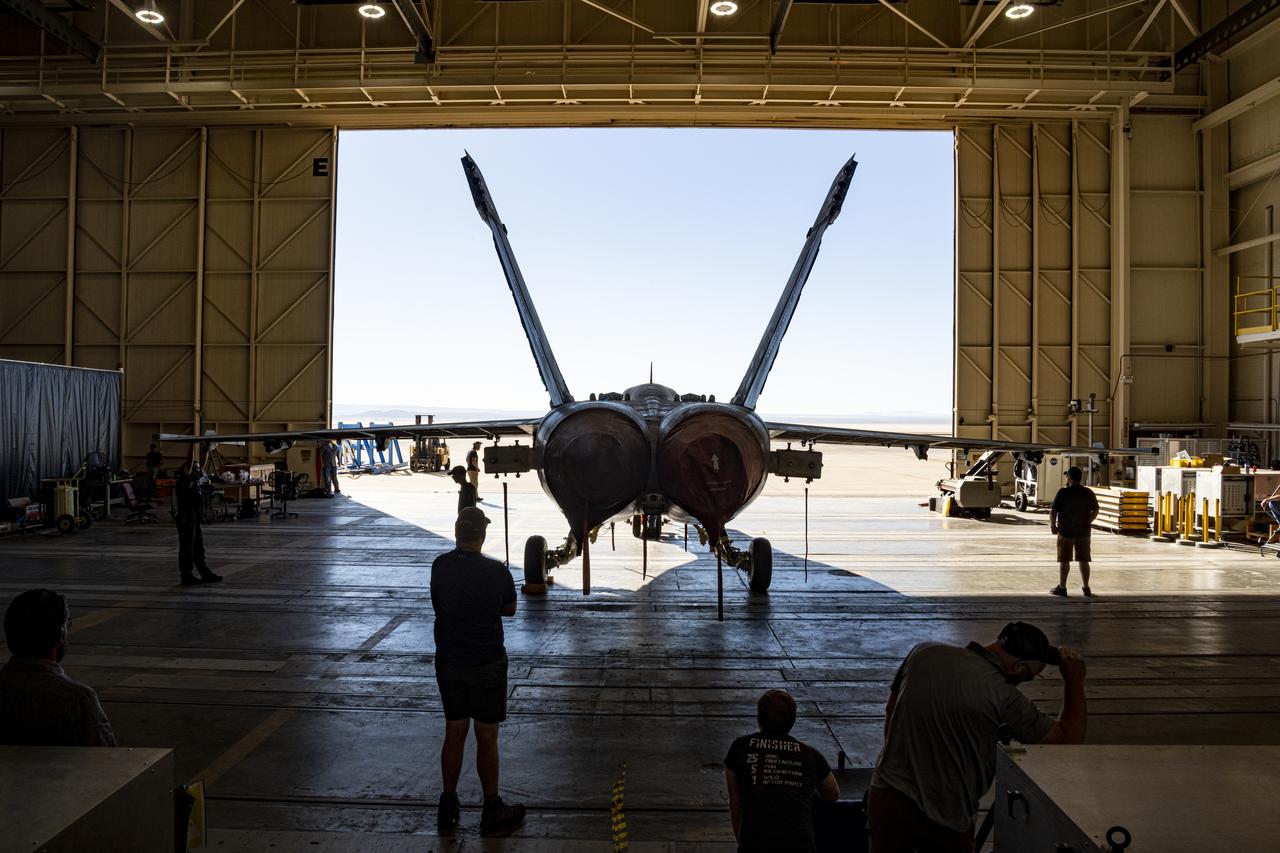
This rear view shows an F/A-18E from the Naval Air Systems Command (NAVAIR) in Patuxent River, Maryland. The aircraft is in NASA’s Armstrong Flight Research Center Flight Loads Laboratory in Edwards, California, where it underwent the center’s biggest load calibrations tests. This testing will permit the aircraft to serve as a test vehicle to determine if it can safely manage maneuvers and proposed upgrades.
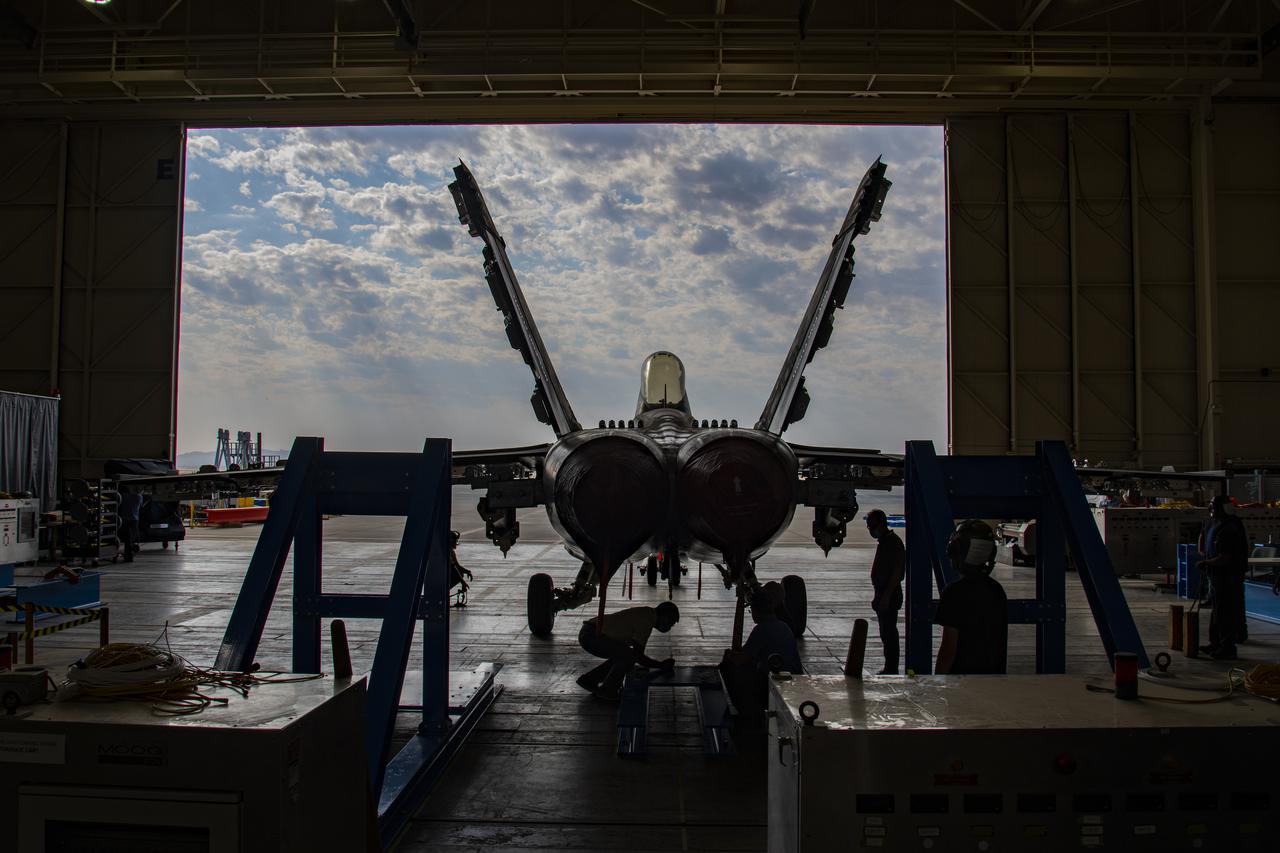
The Naval Air Systems Command (NAVAIR) in Patuxent River, Maryland F/A-18E is moved to NASA’s Armstrong Flight Research Center Flight Loads Laboratory in Edwards, California. NASA Armstrong is working on its biggest load calibrations tests on an F/A-18E Super Hornet. This testing is needed before the aircraft can serve as a test vehicle for determining if it can safely manage maneuvers and proposed upgrades.

Walter Hargis, left, and Chris Mount apply tank sealant on the aircraft surface of a F/A-18E from the Naval Air Systems Command (NAVAIR) in Patuxent River, Maryland. The aircraft is in NASA’s Armstrong Flight Research Center Flight Loads Laboratory in Edwards, California, for the center’s biggest load calibrations tests. This testing is needed before the aircraft can serve as a test vehicle for determining if it can safely manage maneuvers and proposed upgrades.
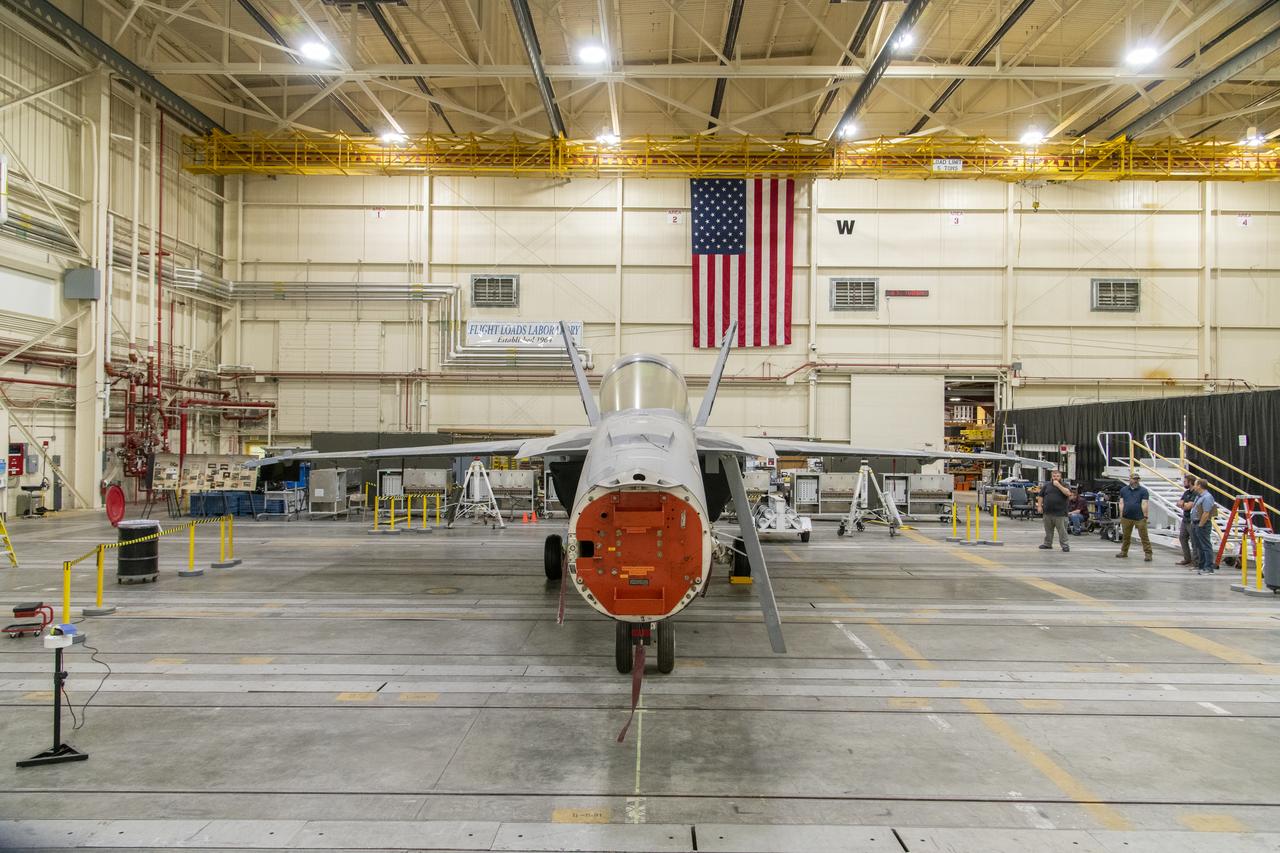
This front view shows an F/A-18E from the Naval Air Systems Command (NAVAIR) in Patuxent River, Maryland. The aircraft is in NASA’s Armstrong Flight Research Center Flight Loads Laboratory in Edwards, California, where it underwent the center’s biggest load calibrations tests. This testing will permit the aircraft to serve as a test vehicle to determine if it can safely manage maneuvers and proposed upgrades.

An F/A-18E from the Naval Air Systems Command (NAVAIR) in Patuxent River, Maryland, is moved from NASA’s Armstrong Flight Research Center Flight Loads Laboratory in Edwards, California, to a hangar where it will undergo final preparations to return to its squadron. The aircraft underwent the center’s biggest load calibrations tests. The testing will permit the aircraft to serve as a test vehicle to determine if it can safely manage maneuvers and proposed upgrades.
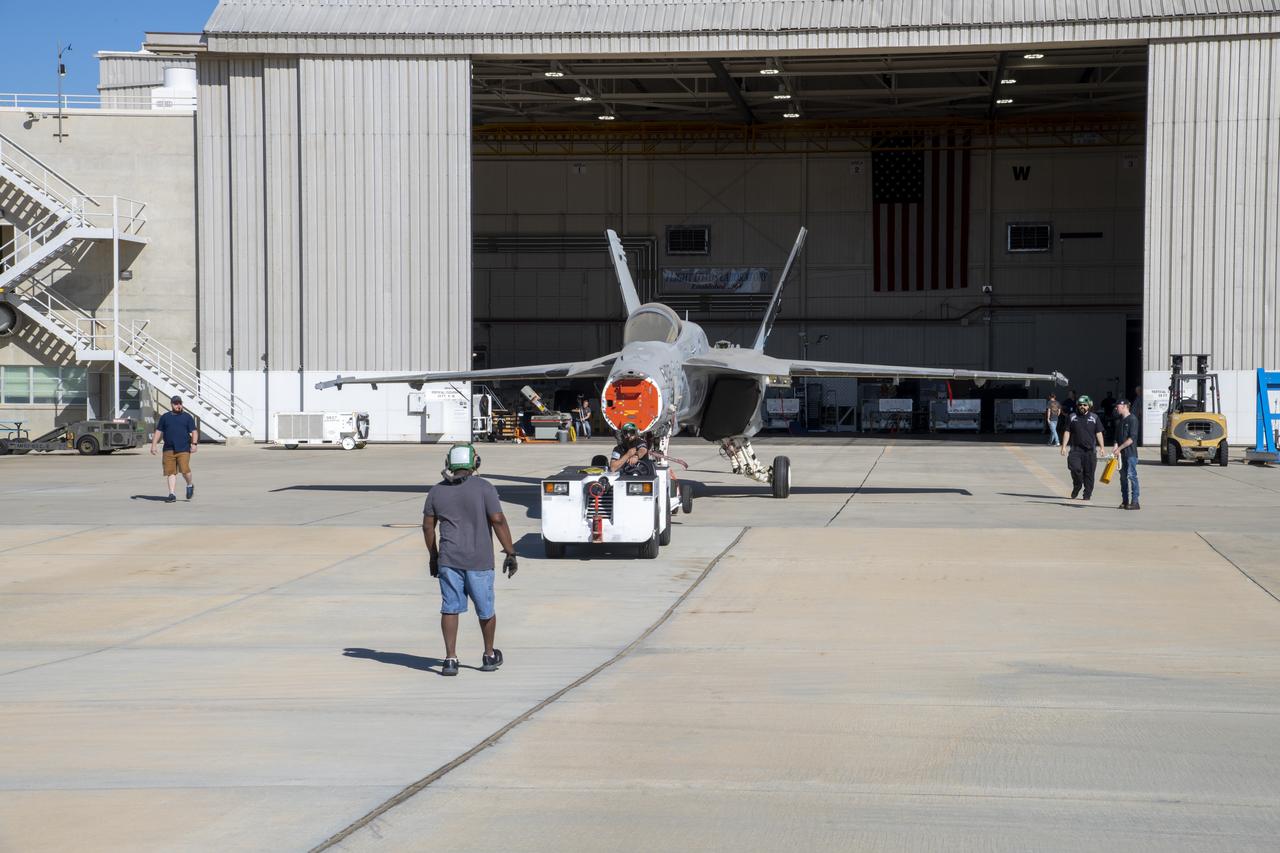
An F/A-18E from the Naval Air Systems Command (NAVAIR) in Patuxent River, Maryland, is moved from NASA’s Armstrong Flight Research Center Flight Loads Laboratory in Edwards, California, to a hangar where it will undergo final preparations to return to its squadron. The aircraft underwent the center’s biggest load calibrations tests. The testing will permit the aircraft to serve as a test vehicle to determine if it can safely manage maneuvers and proposed upgrades.
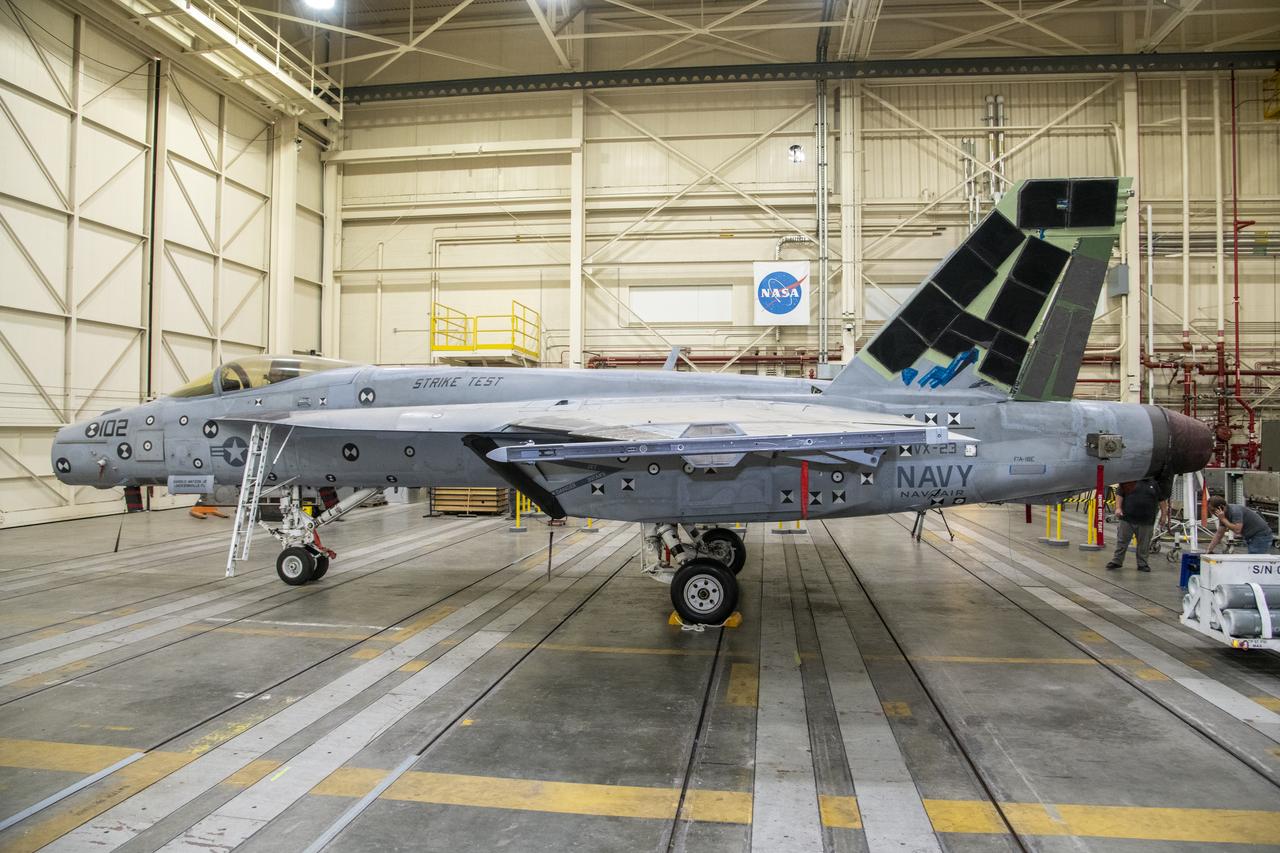
This right-side view shows an F/A-18E from the Naval Air Systems Command (NAVAIR) in Patuxent River, Maryland. The aircraft is in NASA’s Armstrong Flight Research Center Flight Loads Laboratory in Edwards, California, where it underwent the center’s biggest load calibrations tests. This testing will permit the aircraft to serve as a test vehicle to determine if it can safely manage maneuvers and proposed upgrades.
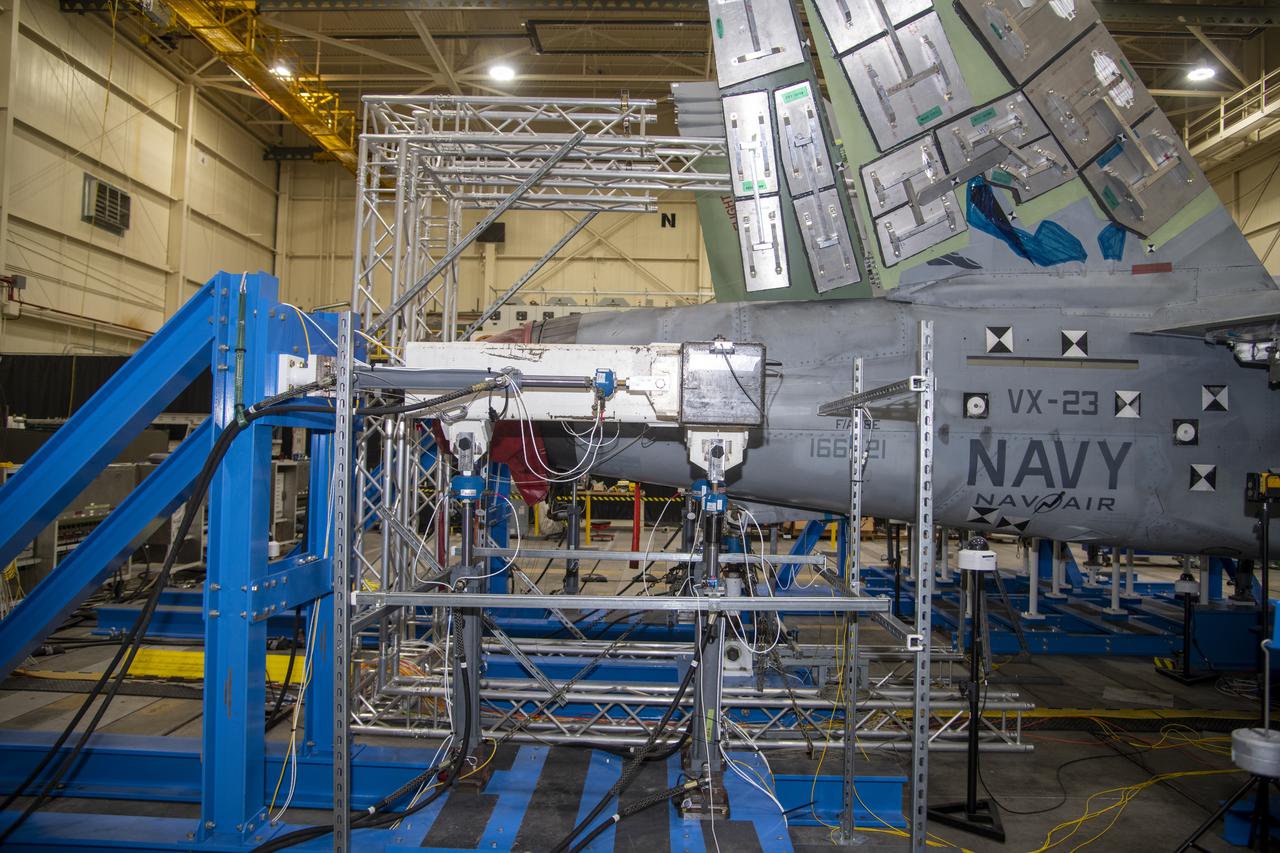
– Hydraulic actuators are pinned to horizontal tail test fixture for testing a F/A-18E from the Naval Air Systems Command (NAVAIR) in Patuxent River, Maryland. The aircraft is in NASA’s Armstrong Flight Research Center Flight Loads Laboratory in Edwards, California, for the center’s biggest load calibrations tests. This testing is needed before the aircraft can serve as a test vehicle for determining if it can safely manage maneuvers and proposed upgrades.
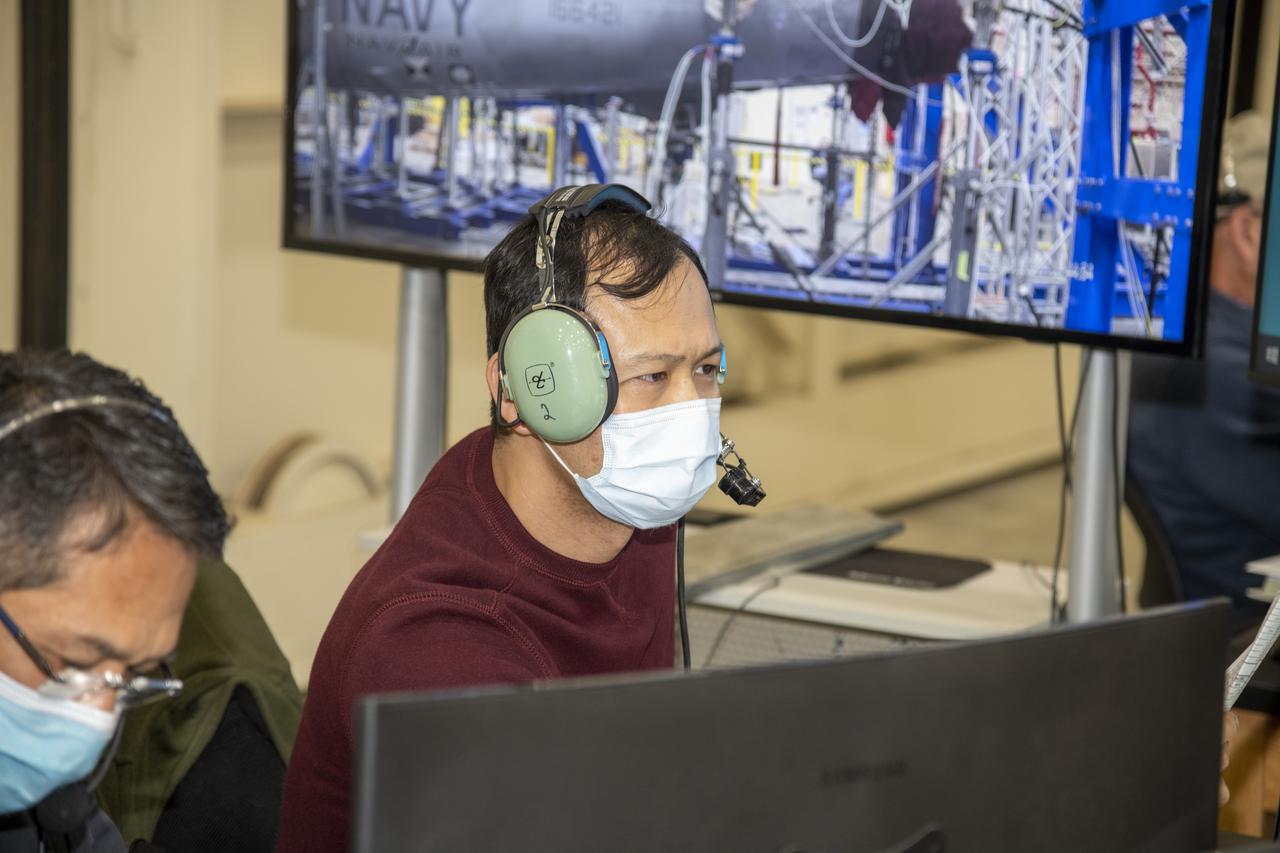
Larry Hudson and Tony Chen inspect test data during horizontal tail testing on a F/A-18E from the Naval Air Systems Command (NAVAIR) in Patuxent River, Maryland. The aircraft is in NASA's Armstrong Flight Research Center Flight Loads Laboratory in Edwards, California, for the center's biggest load calibrations tests. This testing is needed before the aircraft can serve as a test vehicle for determining if it can safely manage maneuvers and proposed upgrades.
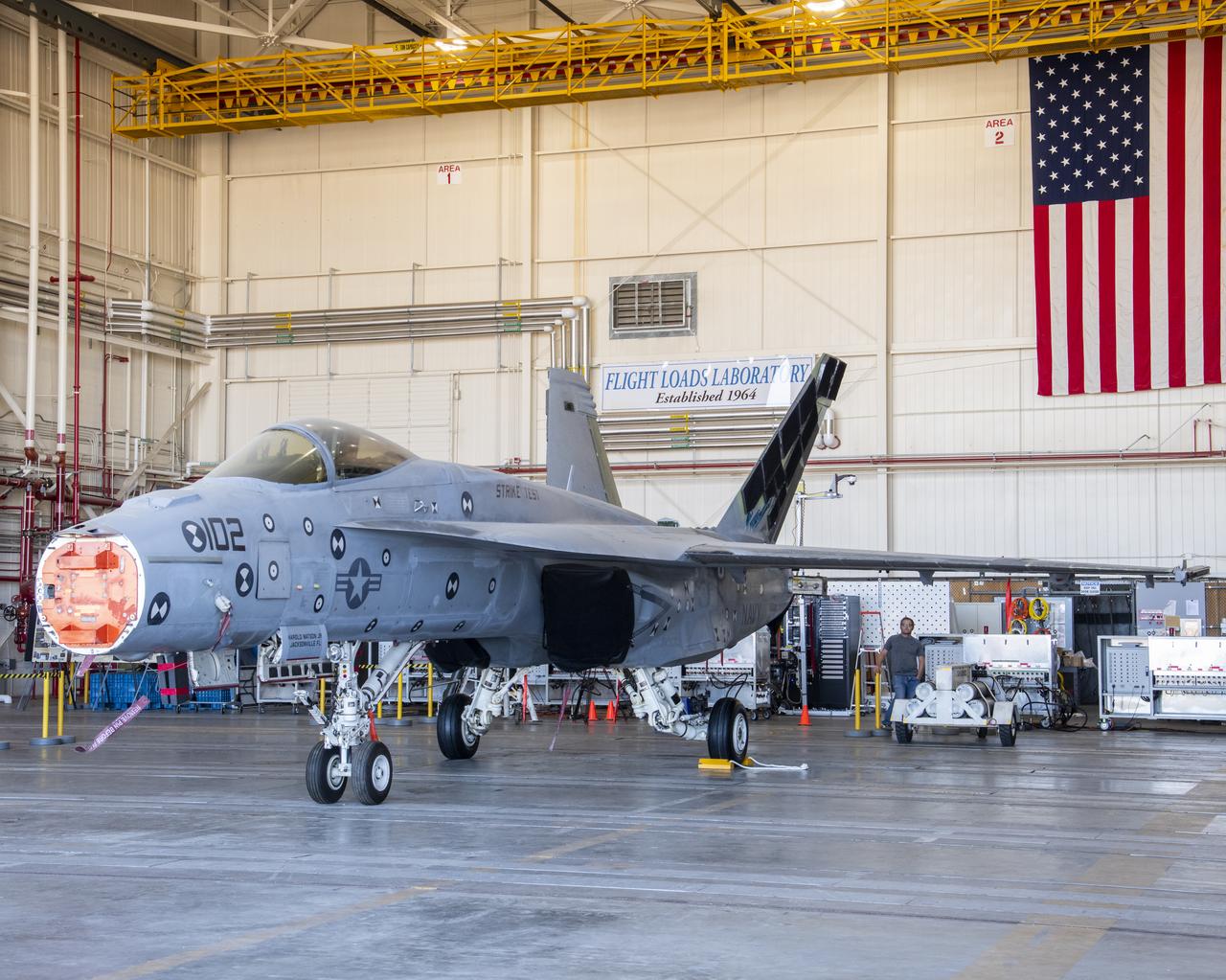
This front view shows an F/A-18E from the Naval Air Systems Command (NAVAIR) in Patuxent River, Maryland. The aircraft is in NASA’s Armstrong Flight Research Center Flight Loads Laboratory in Edwards, California, where it underwent the center’s biggest load calibrations tests. This testing will permit the aircraft to serve as a test vehicle to determine if it can safely manage maneuvers and proposed upgrades.
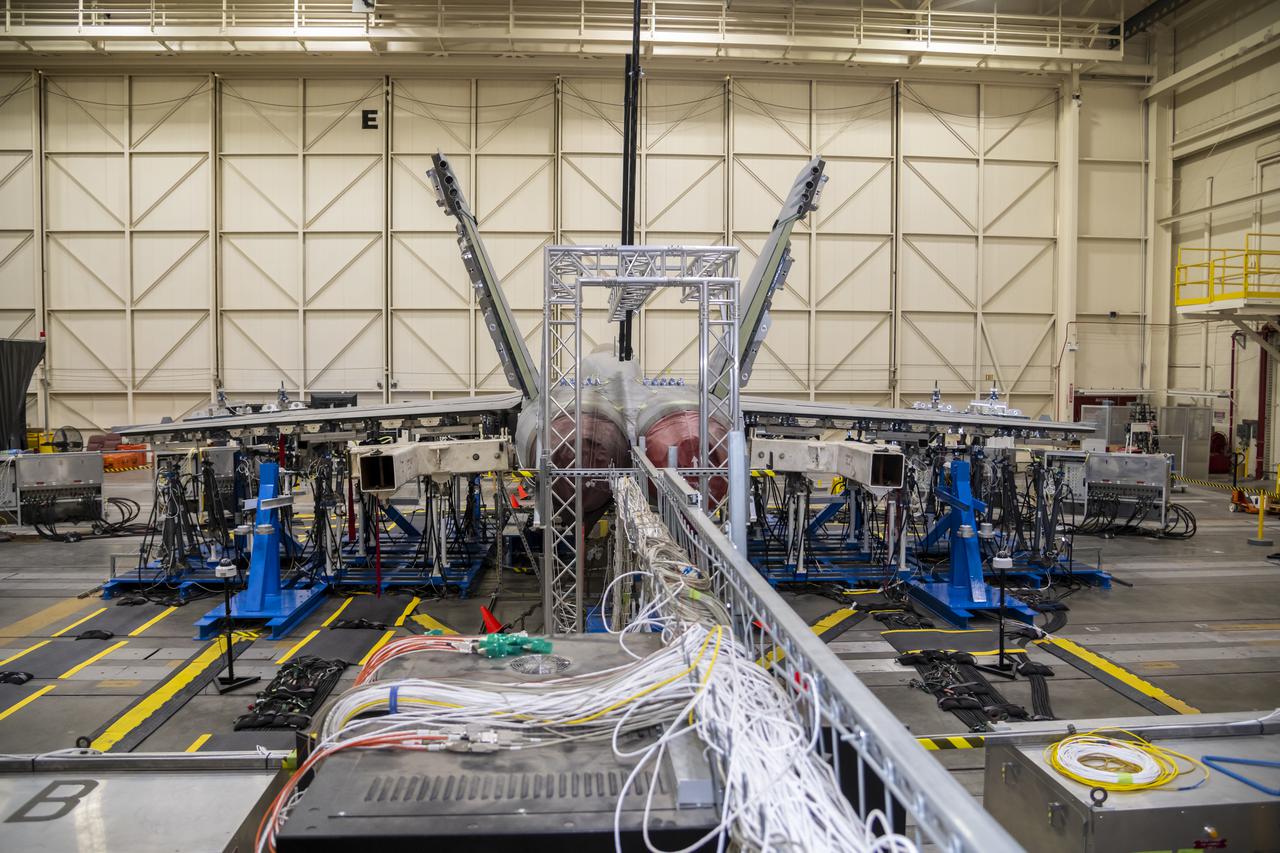
Instrumentation wire extends from the aft end of a F/A-18E from the Naval Air Systems Command (NAVAIR) in Patuxent River, Maryland. The aircraft is in NASA’s Armstrong Flight Research Center Flight Loads Laboratory in Edwards, California, for the center’s biggest load calibrations tests. This testing is needed before the aircraft can serve as a test vehicle for determining if it can safely manage maneuvers and proposed upgrades.
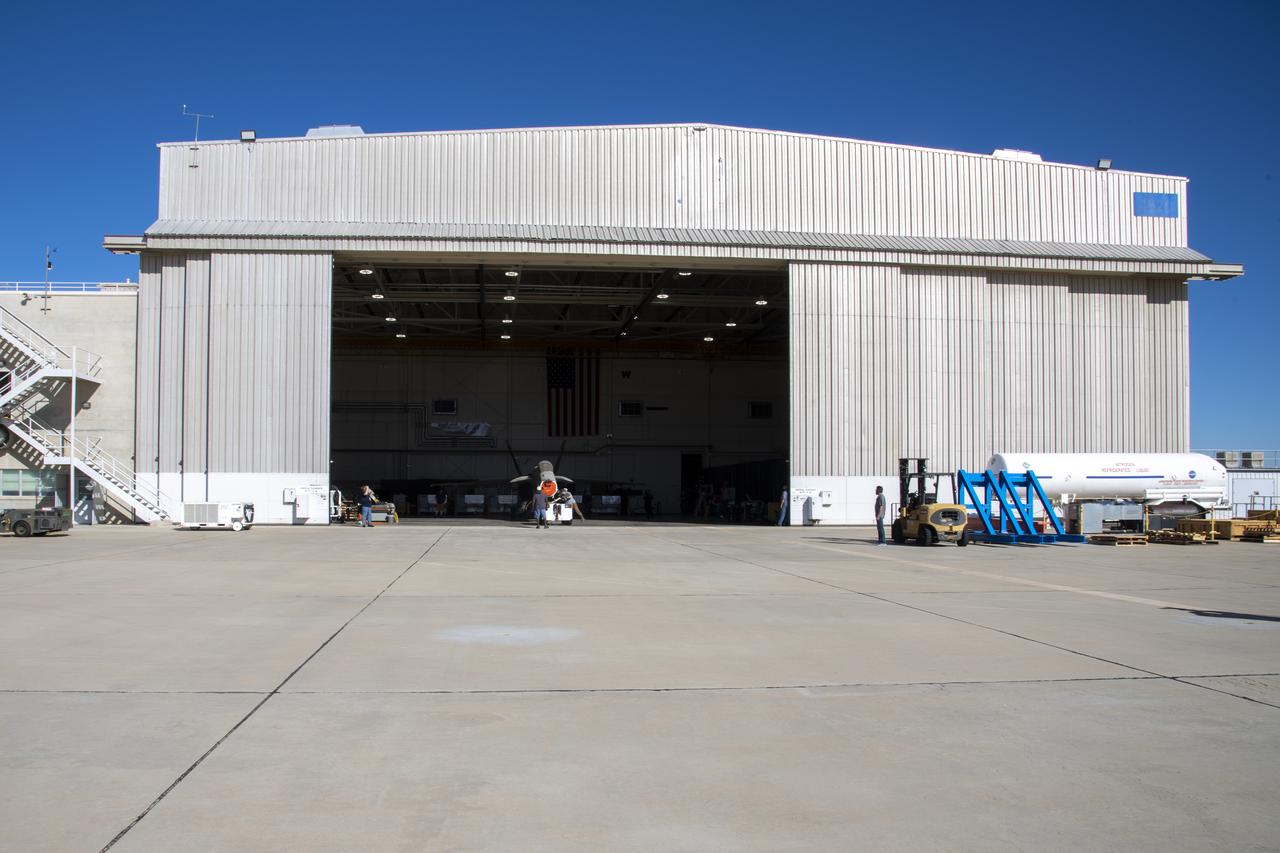
An F/A-18E from the Naval Air Systems Command (NAVAIR) in Patuxent River, Maryland, is moved from NASA’s Armstrong Flight Research Center Flight Loads Laboratory in Edwards, California, to a hangar where it will undergo final preparations to return to its squadron. The aircraft underwent the center’s biggest load calibrations tests. The testing will permit the aircraft to serve as a test vehicle to determine if it can safely manage maneuvers and proposed upgrades.
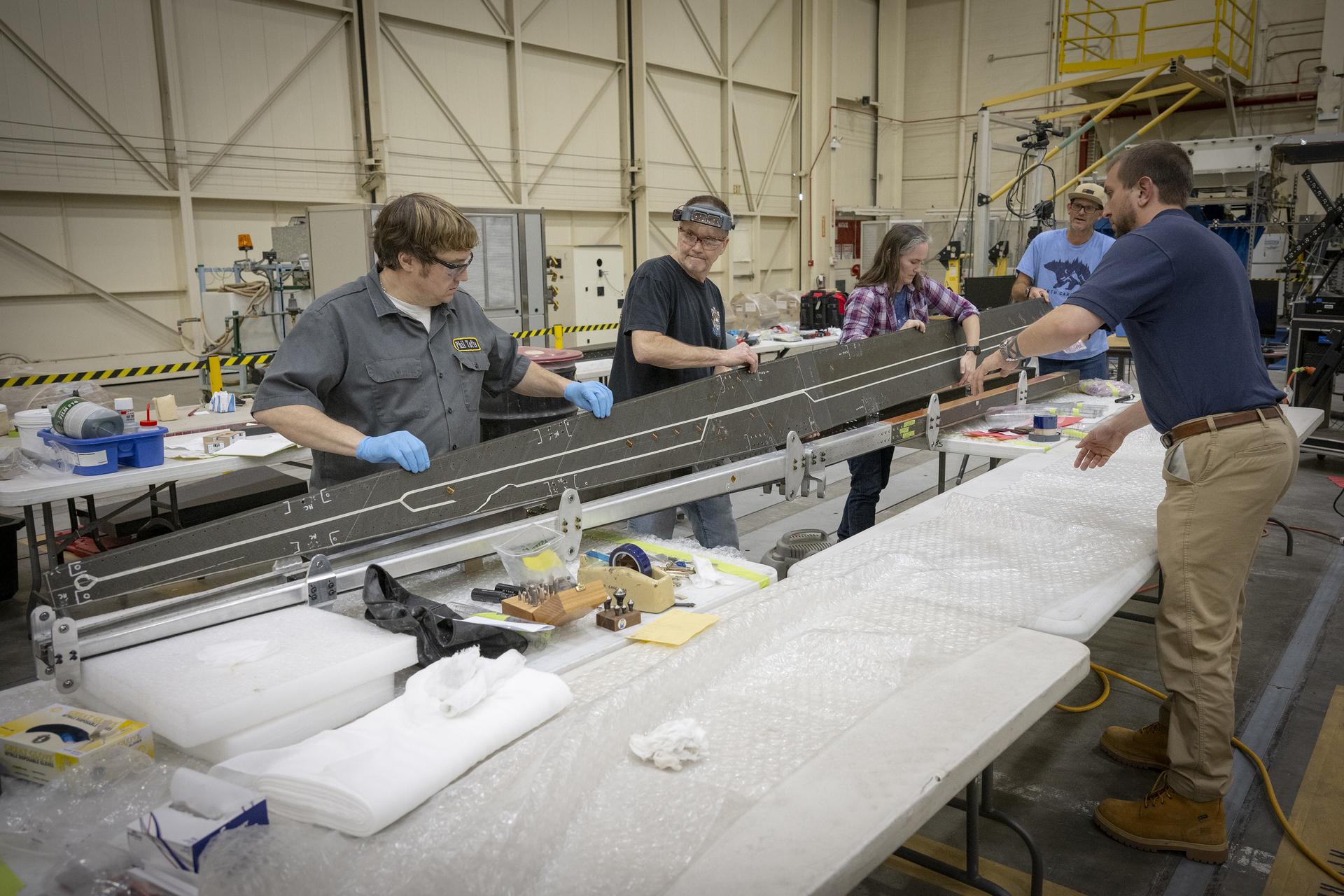
Lab technicians Phil Tofts, Chris McLain, and Jeff Howell and NASA engineers Erin Anderson and Richard Larson prepare the 15-foot Structural Wing Experiment Evaluating Truss-bracing model in the Flight Loads Laboratory at NASA’s Armstrong Flight Research Center in Edwards, California, on Thursday, Dec. 11, 2025. The model is part of NASA’s research to develop technologies for future ultra-efficient aircraft.
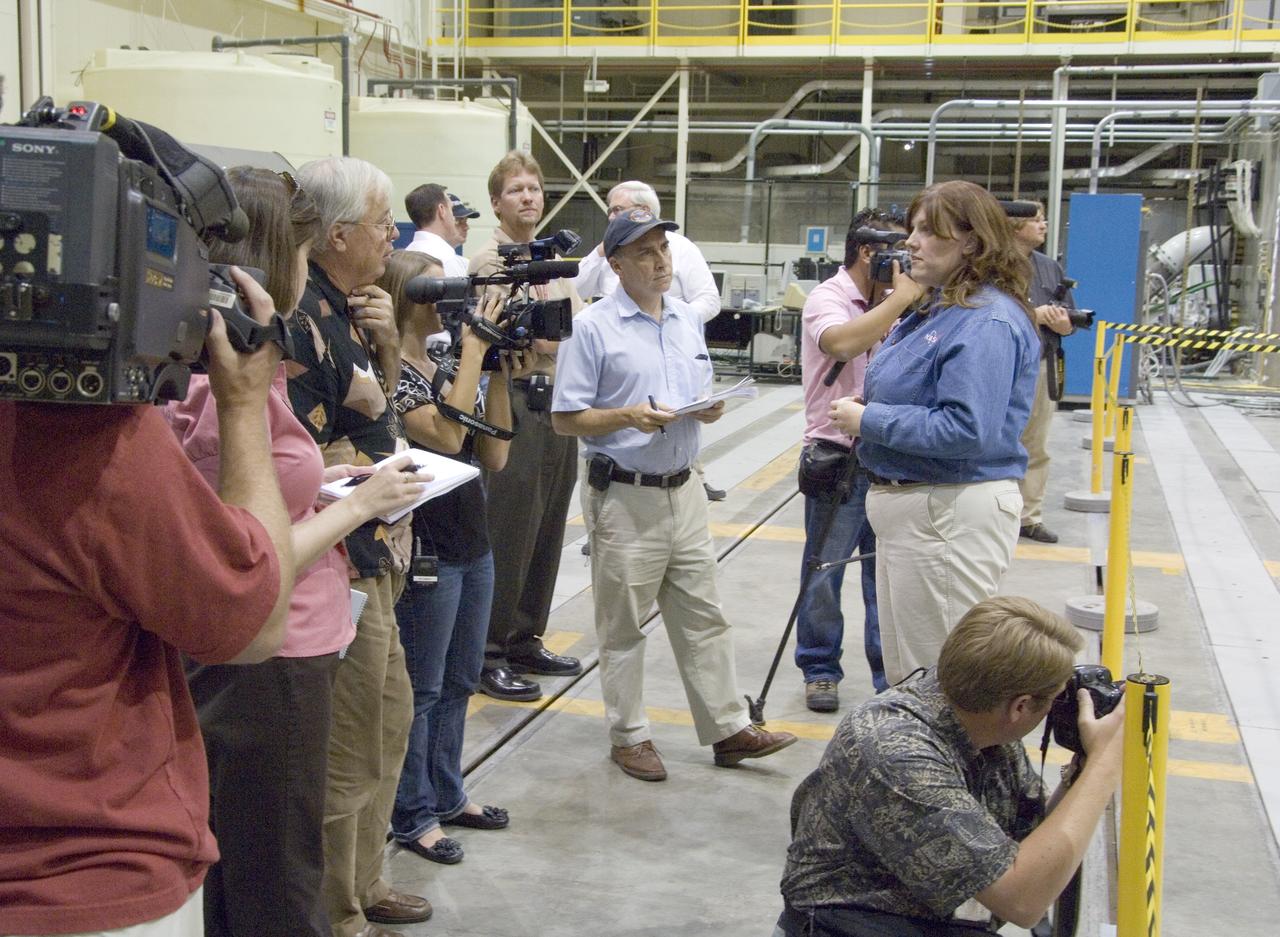
Cathy Bahm, Orion Abort Flight Test integration deputy project manager, briefs news media on the progress of testing in NASA Dryden's Flight Loads Laboratory.
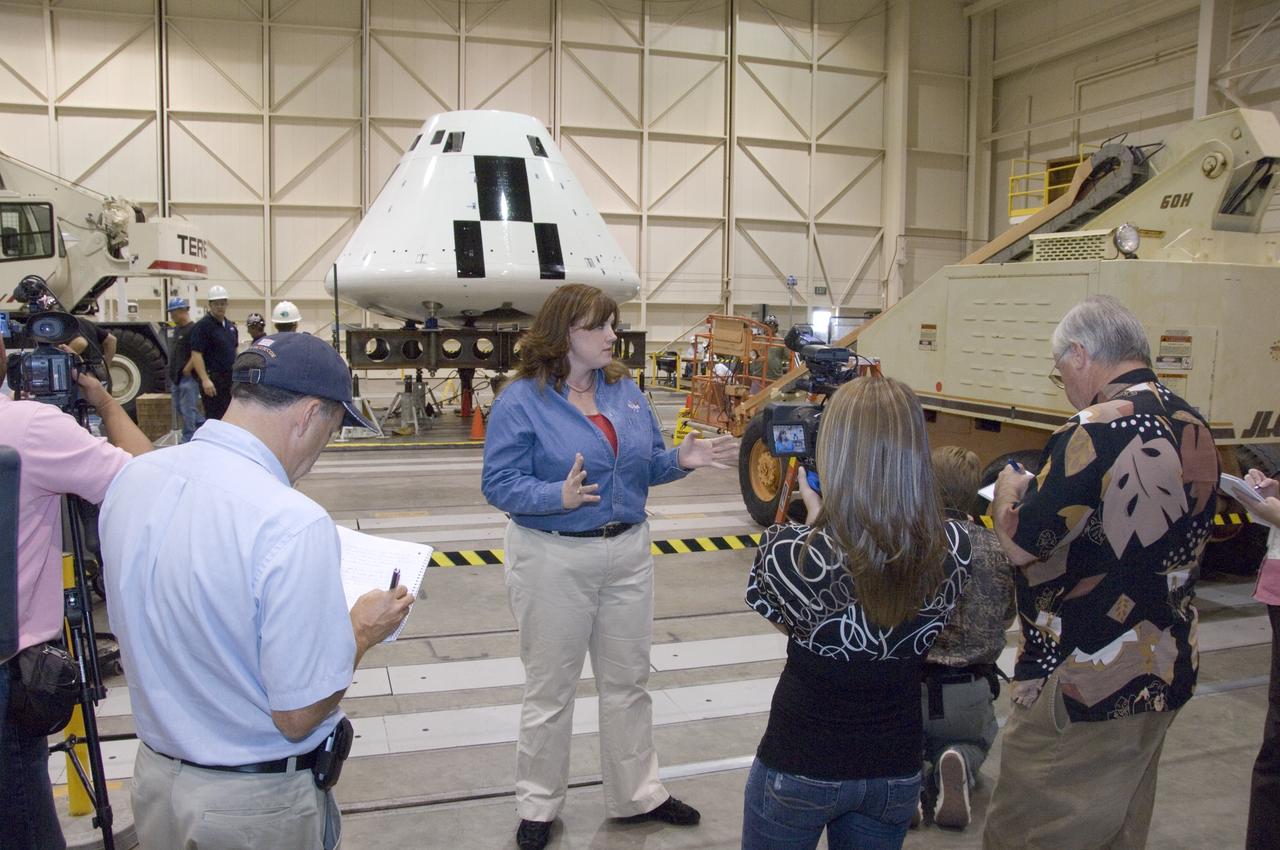
Cathy Bahm, Orion Abort Flight Test integration deputy project manager, briefs news media on the progress of testing in NASA Dryden's Flight Loads Laboratory.
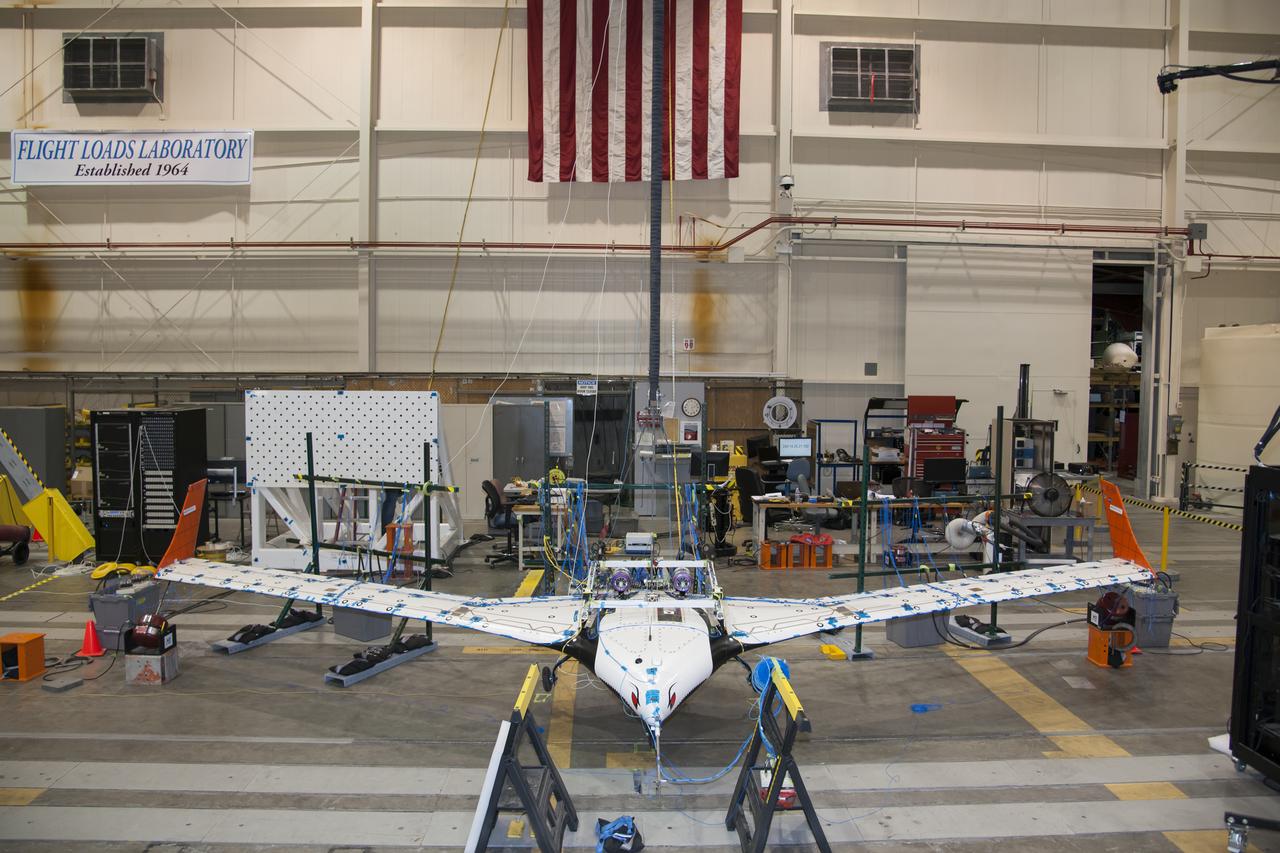
The X-56 Multi-Utility Technology Testbed (MUTT) undergoes ground vibration tests in Armstrong's Flight Loads Laboratory.
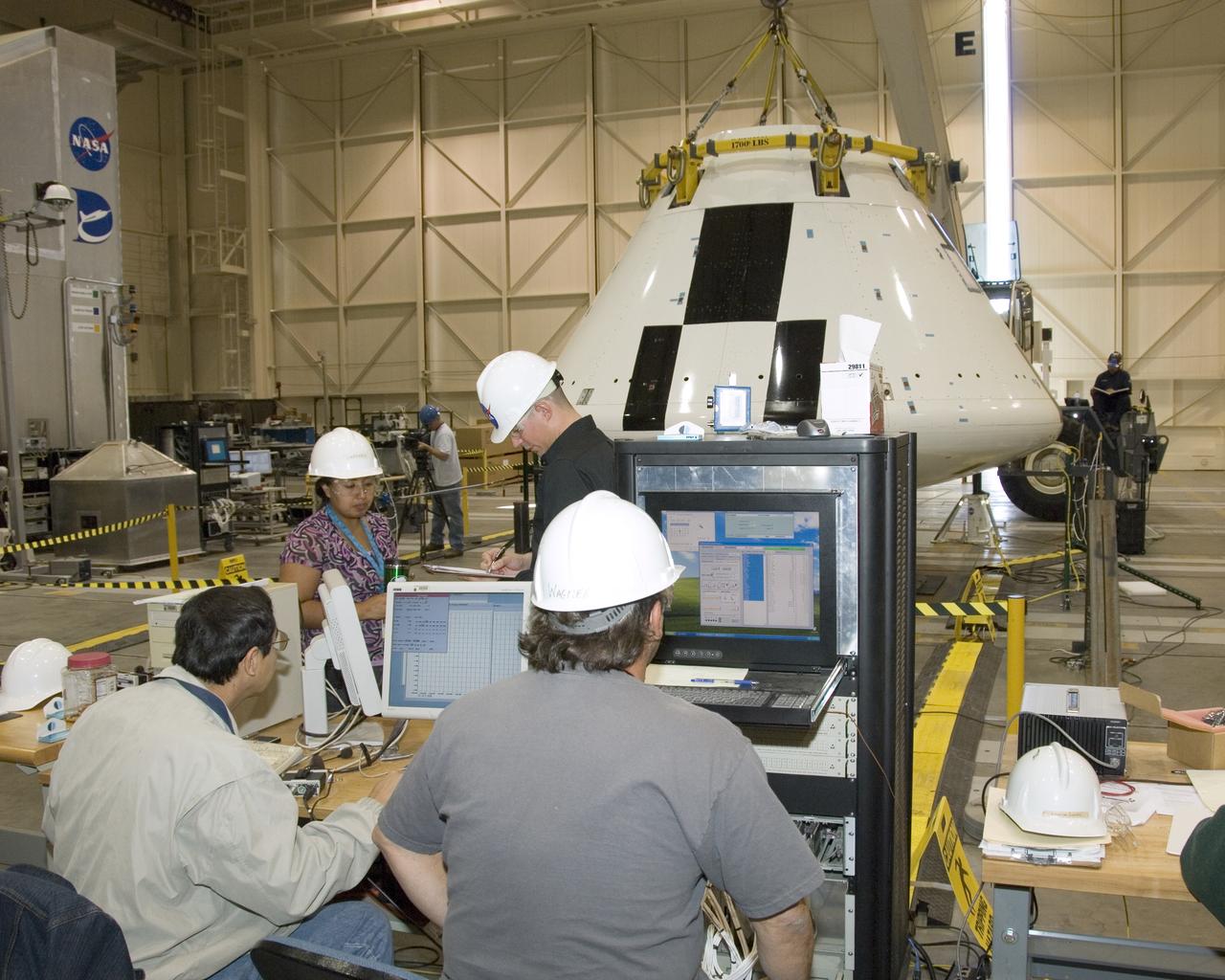
Engineers and technicians pore over data during moment-of-inertia testing on the Orion PA-1 Abort Flight Test module in the NASA Dryden Flight Loads Laboratory.
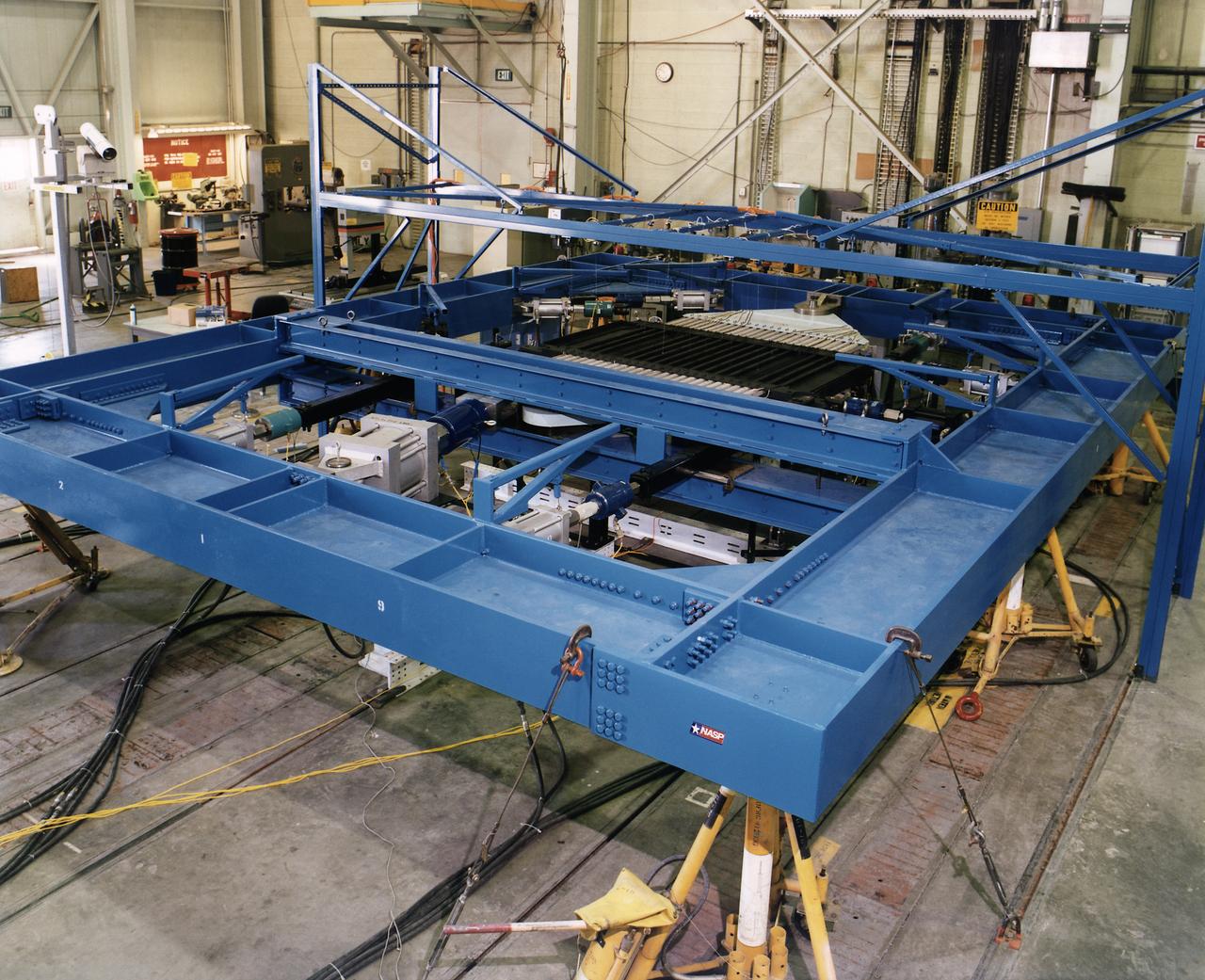
Combined Loads Test Fixture with NASP test article installed
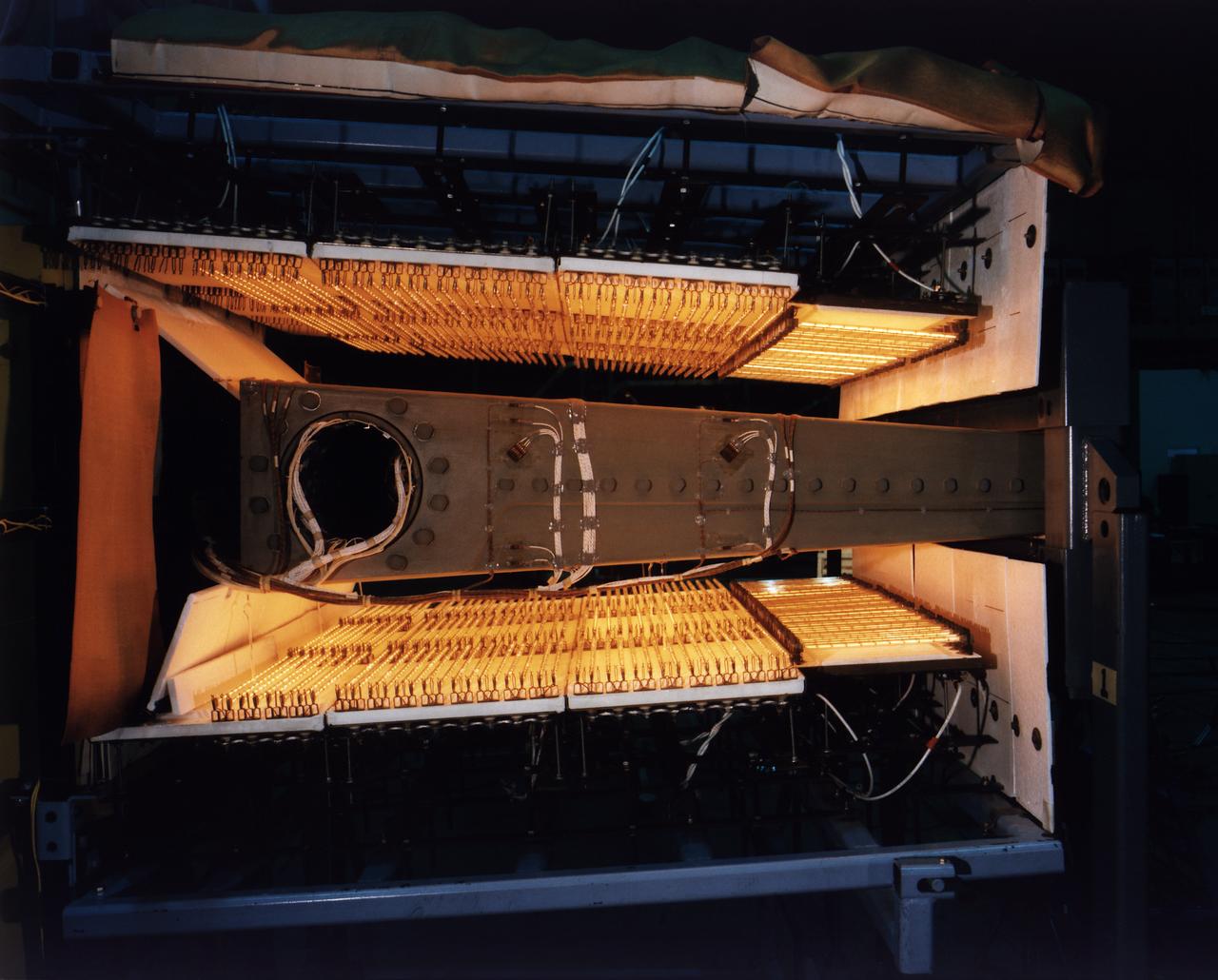
Carbon-Carbon Control Surface in heating and loading test configuration
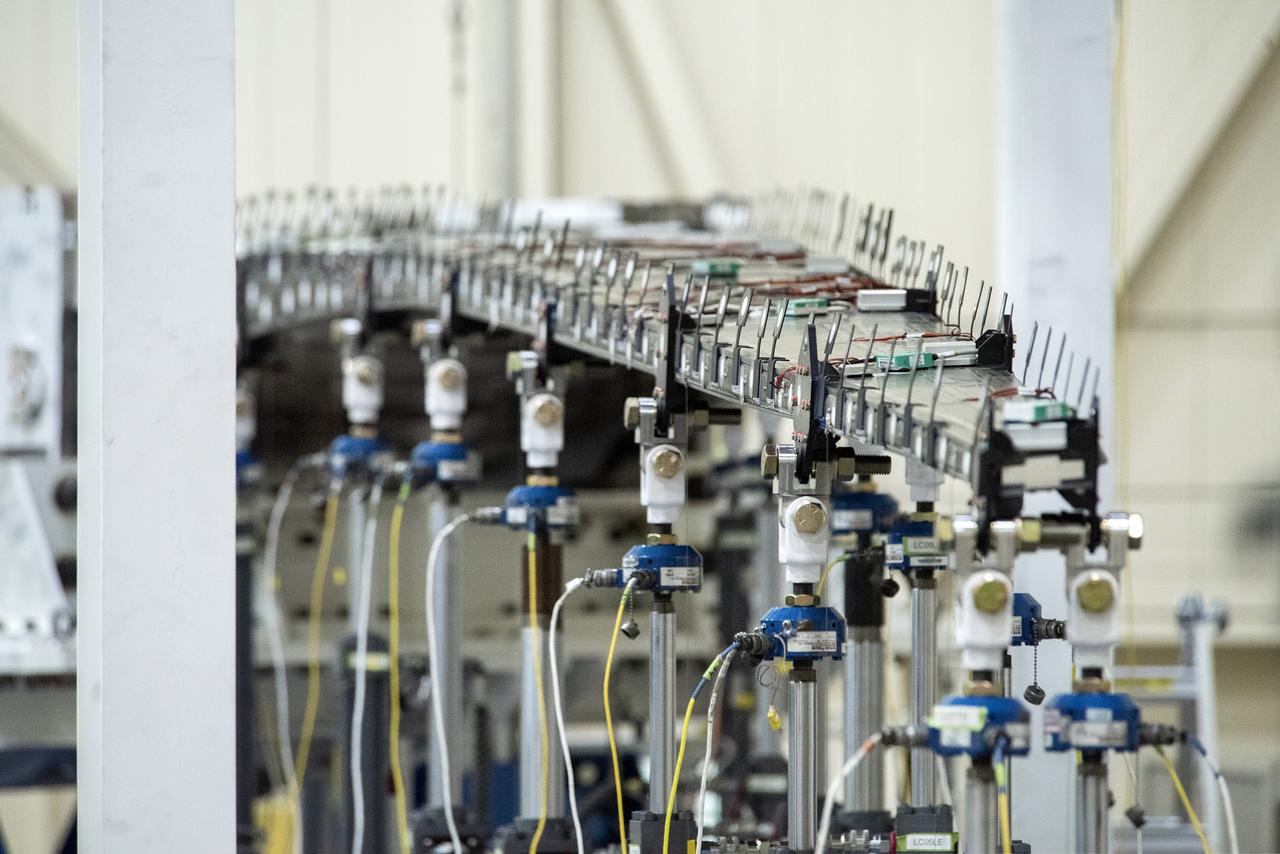
The Passive Aeroelastic Tailored wing is tested in a fixture at the NASA Armstrong Flight Test Center’s Flight Loads Laboratory in California.
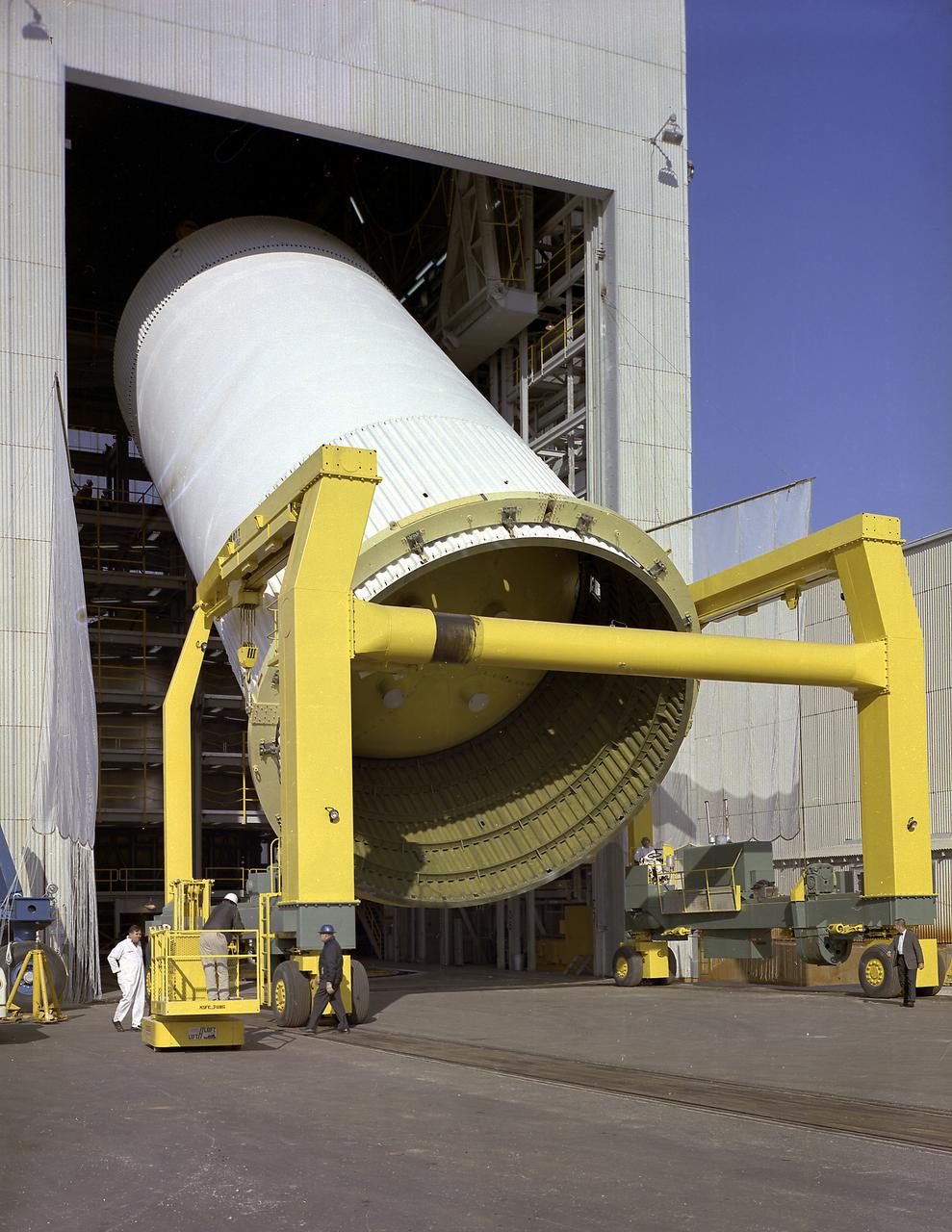
This photograph depicts engineers and technicians moving the Saturn V S-IC (First) stage liquid oxygen (LOX) tank from the Manufacturing Engineering Laboratory for load testing under simulated firing loads at the Propulsion and Vehicle Engineering Laboratory at the Marshall Space Flight Center.
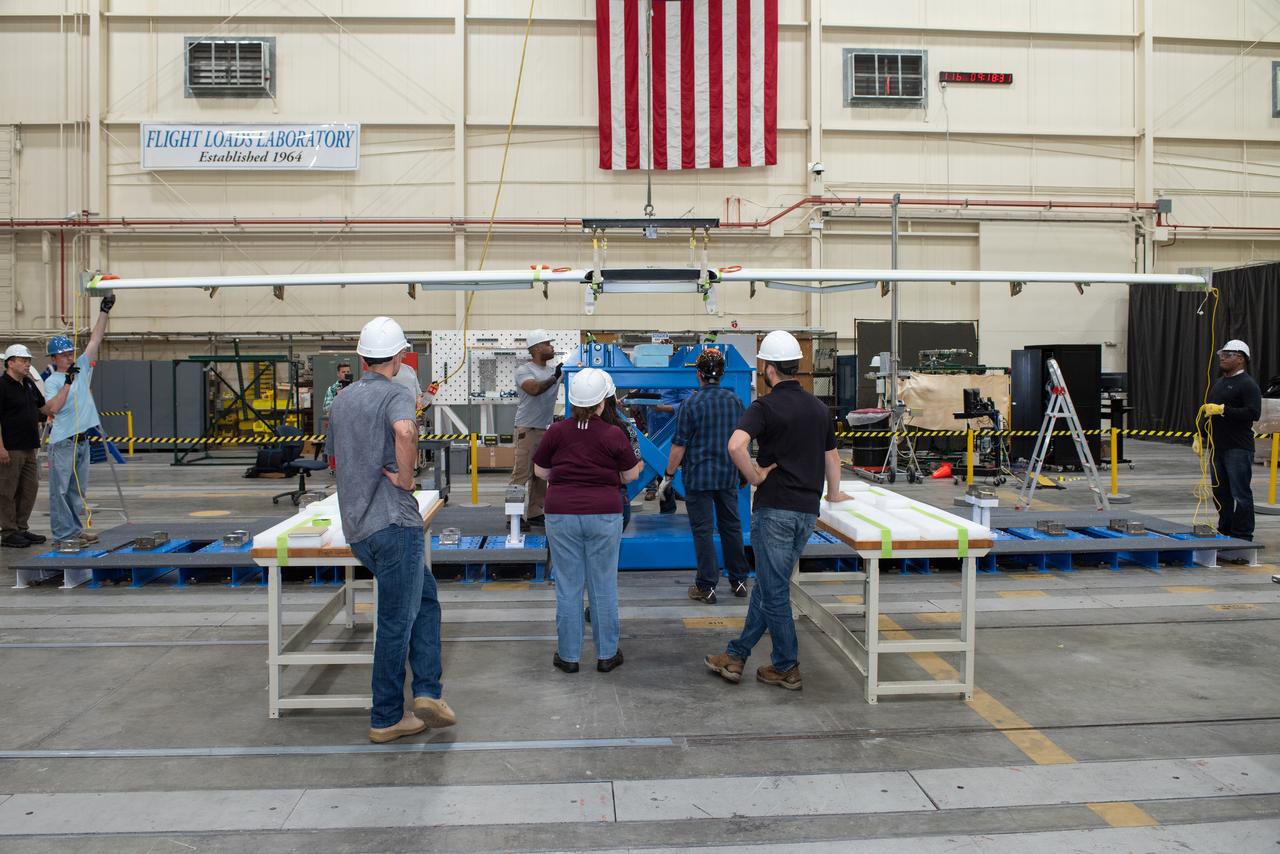
Engineers and specialists prepare X-57s Mod III wing for testing in the Flight Loads Laboratory at NASA’s Armstrong Flight Research Center in Edwards, California. Here, the wing began preparation for several tests, including weight and balance measurement, ground vibration testing, and wing loading tests.
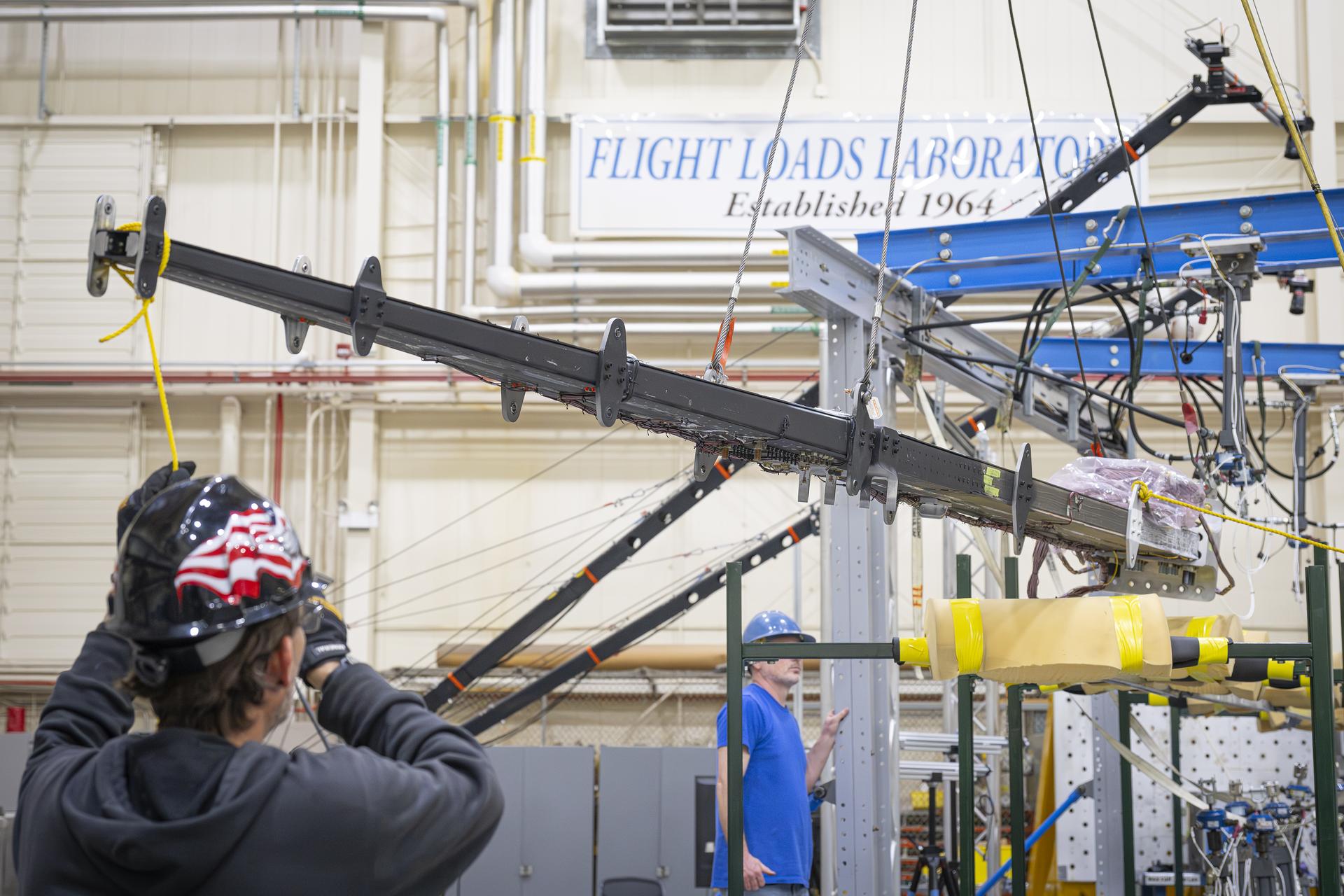
Lab technicians Jeff Howell, left and Chris Mount install the 15-foot Structural Wing Experiment Evaluating Truss-bracing model in the Flight Loads Lab at NASA’s Armstrong Flight Research Center in Edwards, California, Wednesday, February 11, 2026. The model is part of NASA’s research to develop technologies for future ultra-efficient aircraft.
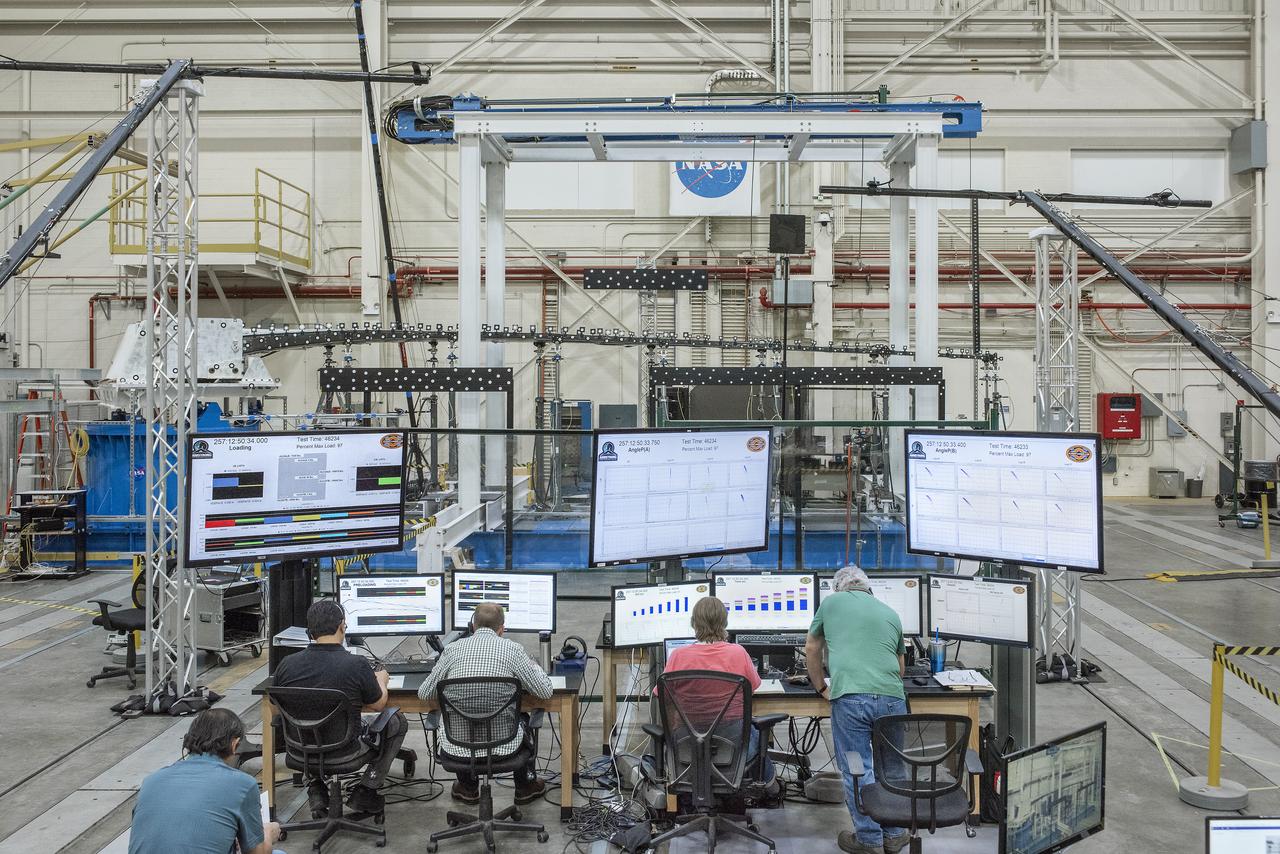
This broad view of the Flight Loads Laboratory at NASA’s Armstrong Flight Research Center in California shows the test set up for the high-aspect ratio Passive Aeroelastic Tailored wing.
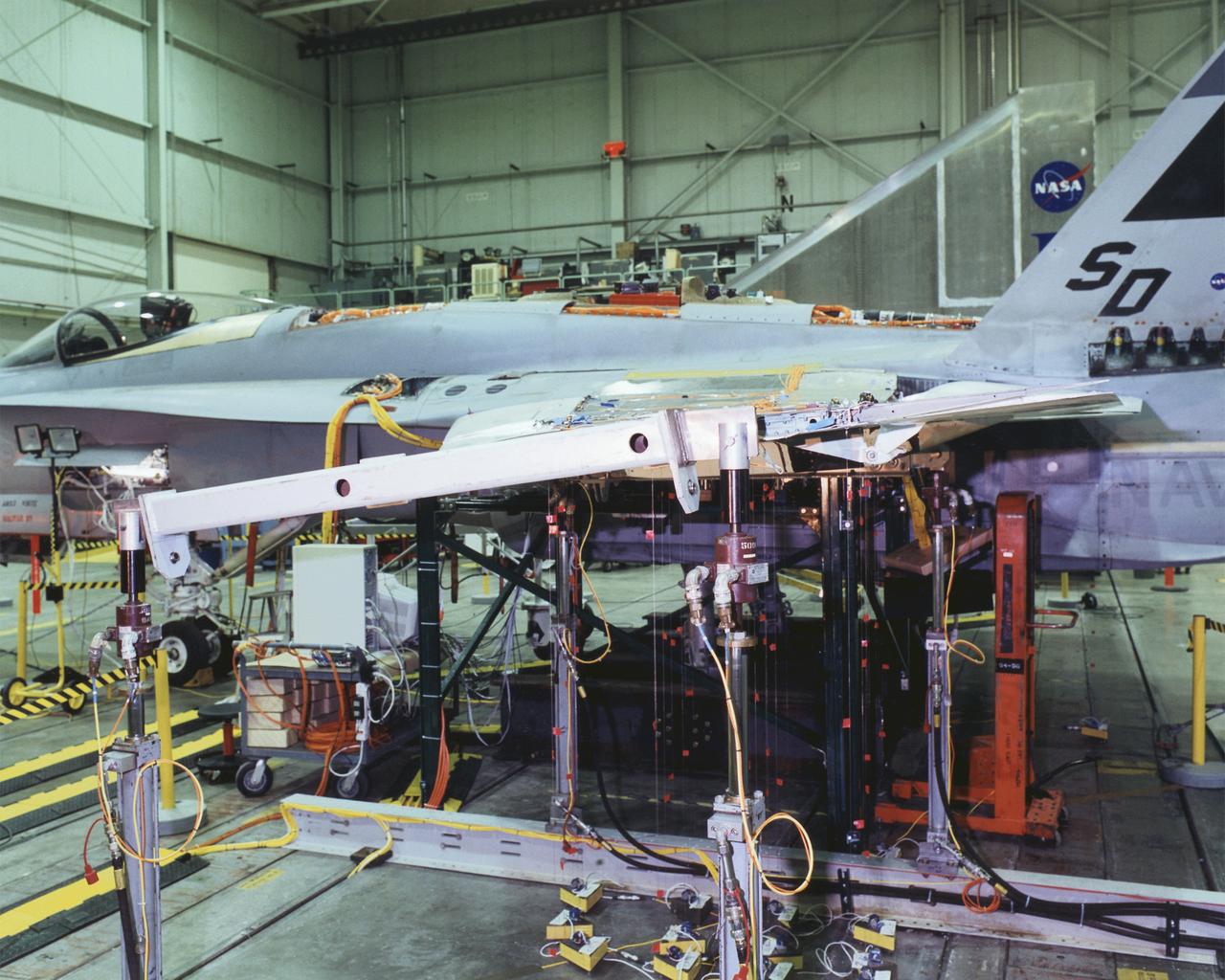
A modified F/A-18A undergoes wing torsion testing in the Flight Dynamics Laboratory at NASA's Dryden Flight Research Center, Edwards, California
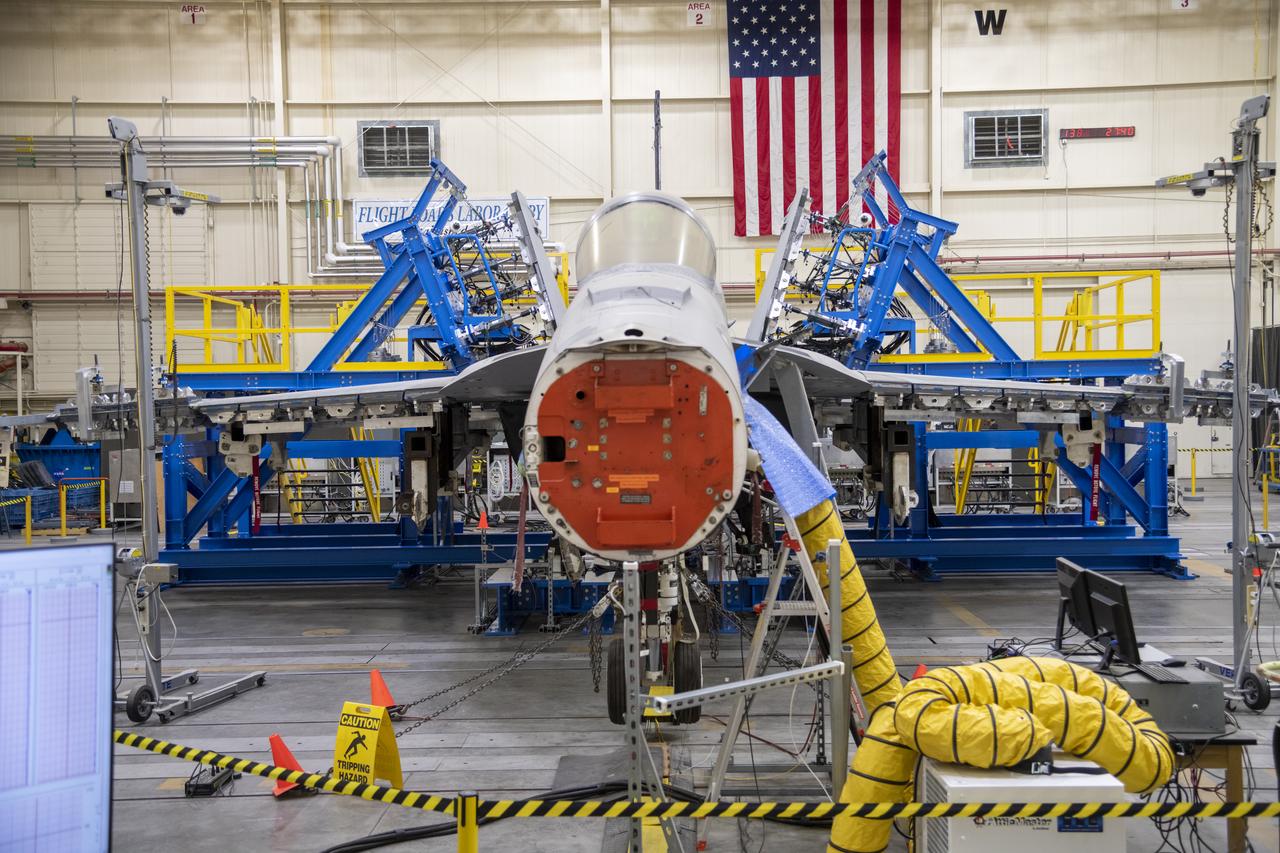
This is a front view of the vertical tail loads testing on a Navy F/A-18E that concluded in May, wrapping up the third phase of research at NASA’s Armstrong Flight Research Center in Edwards, California. The first two phases included loads calibration testing focused on the aircraft’s horizontal tails and wings. The aircraft is from the Naval Air Systems Command (NAVAIR) in Patuxent River, Maryland. NAVAIR retired its previous loads test aircraft and NASA Armstrong staff are assisting to prepare the new aircraft for its role to help safely manage flight maneuvers and determine how the F/A-18E fleet will perform if proposed upgrades are incorporated.
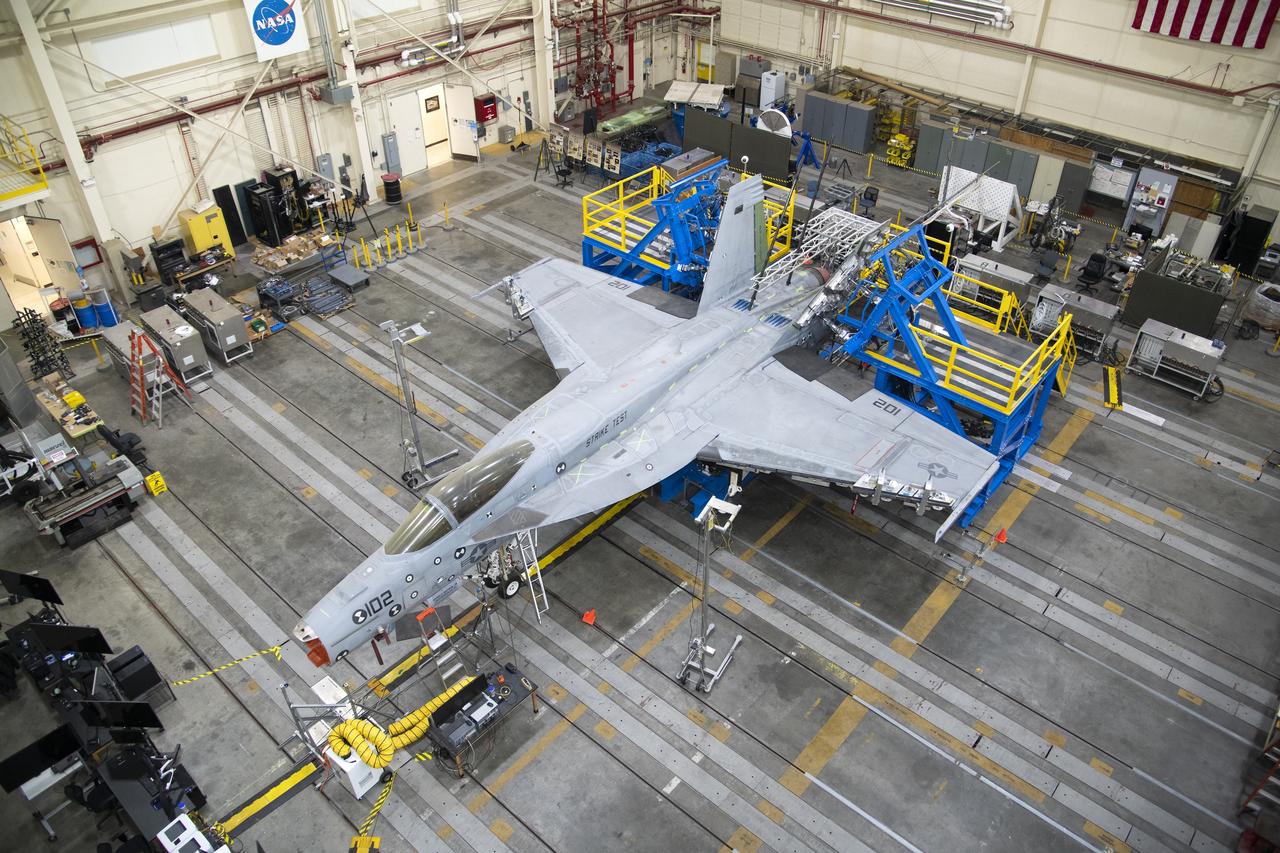
This view from above shows the vertical tail loads testing on a Navy F/A-18E that concluded in May, wrapping up the third phase of research at NASA’s Armstrong Flight Research Center in Edwards, California. The first two phases included loads calibration testing focused on the aircraft’s horizontal tails and wings. The aircraft is from the Naval Air Systems Command (NAVAIR) in Patuxent River, Maryland. NAVAIR retired its previous loads test aircraft and NASA Armstrong staff are assisting to prepare the new aircraft for its role to help safely manage flight maneuvers and determine how the F/A-18E fleet will perform if proposed upgrades are incorporated.
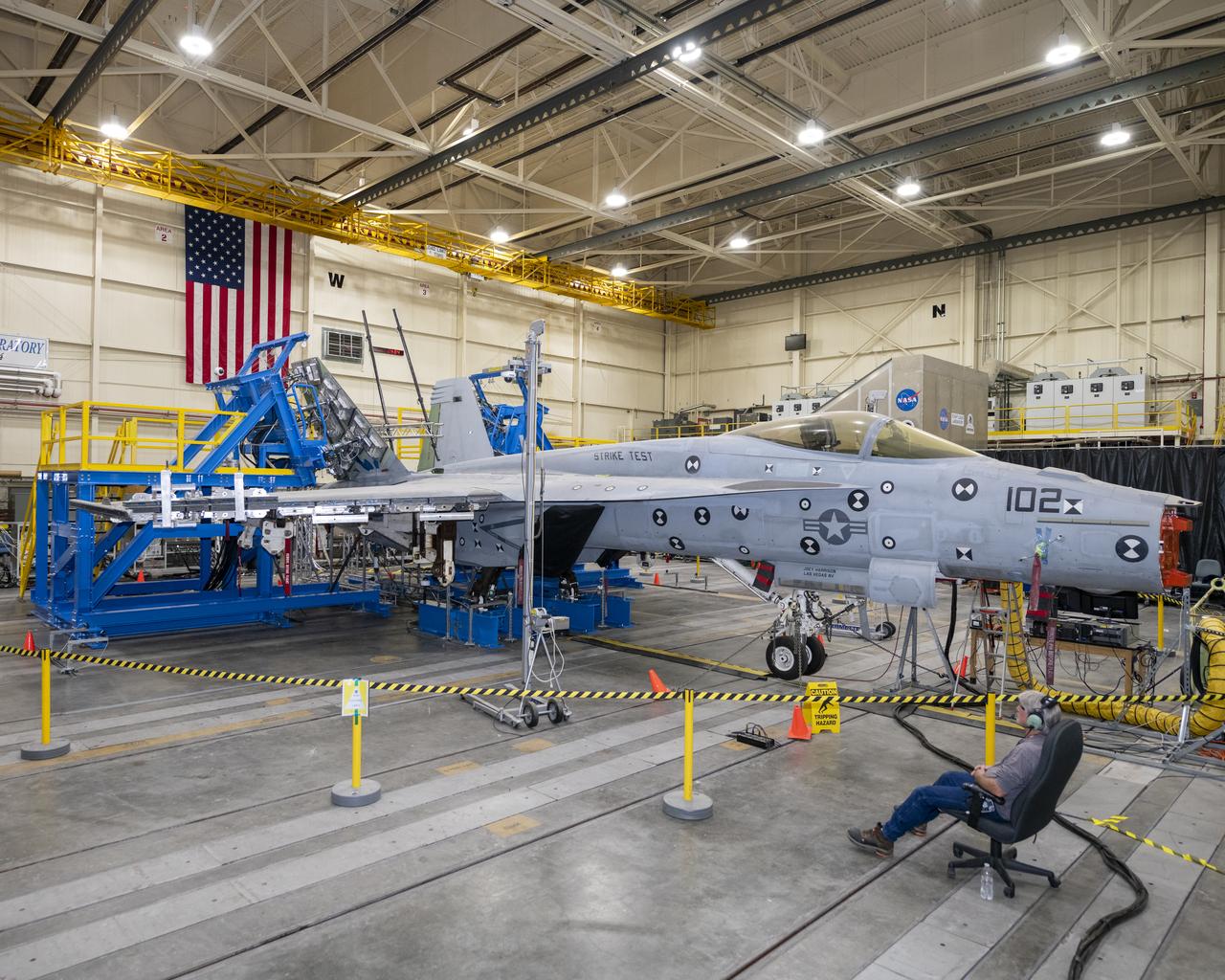
Here is another view of the vertical tail loads testing on a Navy F/A-18E that concluded in May, wrapping up the third phase of research at NASA’s Armstrong Flight Research Center in Edwards, California. The first two phases included loads calibration testing focused on the aircraft’s horizontal tails and wings. The aircraft is from the Naval Air Systems Command (NAVAIR) in Patuxent River, Maryland. NAVAIR retired its previous loads test aircraft and NASA Armstrong staff are assisting to prepare the new aircraft for its role to help safely manage flight maneuvers and determine how the F/A-18E fleet will perform if proposed upgrades are incorporated.
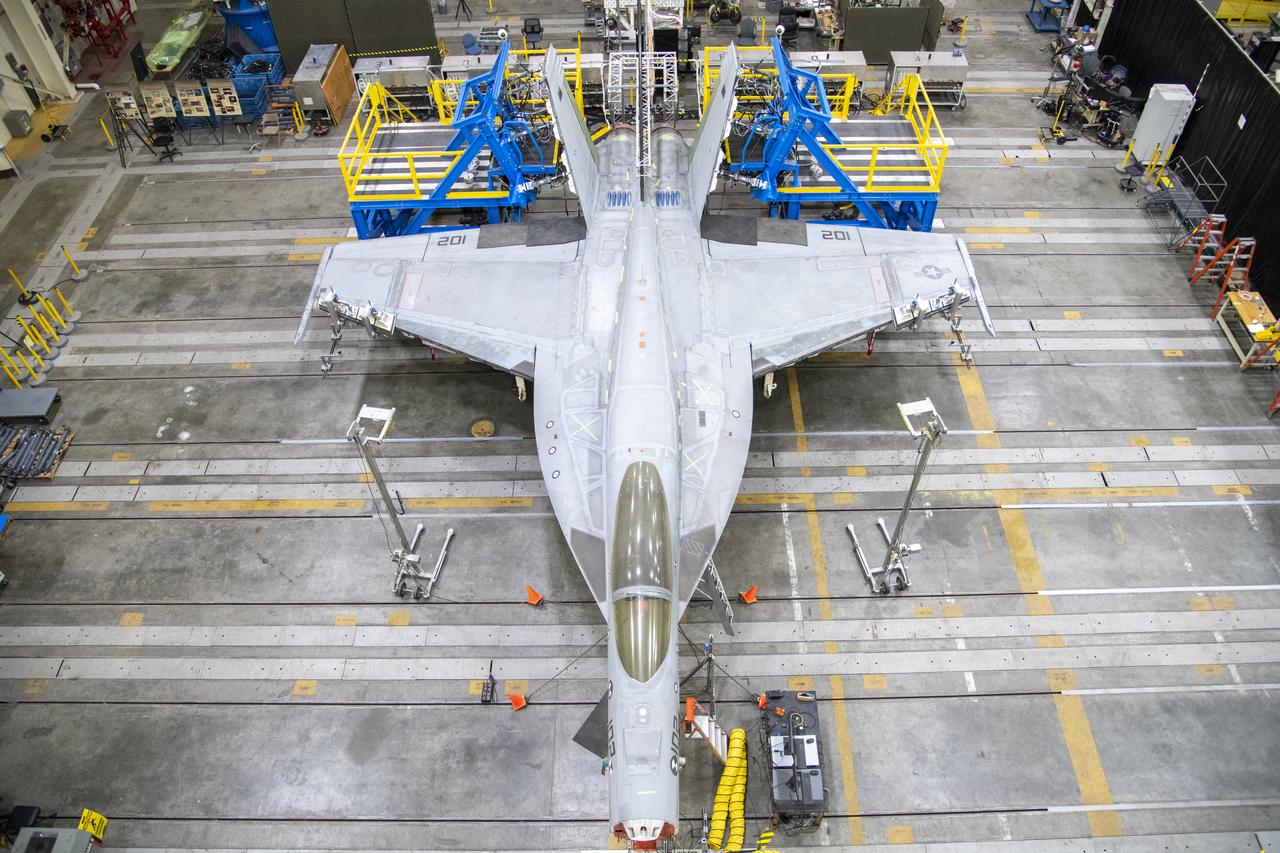
This view from above shows the vertical tail loads testing on a Navy F/A-18E that concluded in May, wrapping up the third phase of research at NASA’s Armstrong Flight Research Center in Edwards, California. The first two phases included loads calibration testing focused on the aircraft’s horizontal tails and wings. The aircraft is from the Naval Air Systems Command (NAVAIR) in Patuxent River, Maryland. NAVAIR retired its previous loads test aircraft and NASA Armstrong staff are assisting to prepare the new aircraft for its role to help safely manage flight maneuvers and determine how the F/A-18E fleet will perform if proposed upgrades are incorporated.
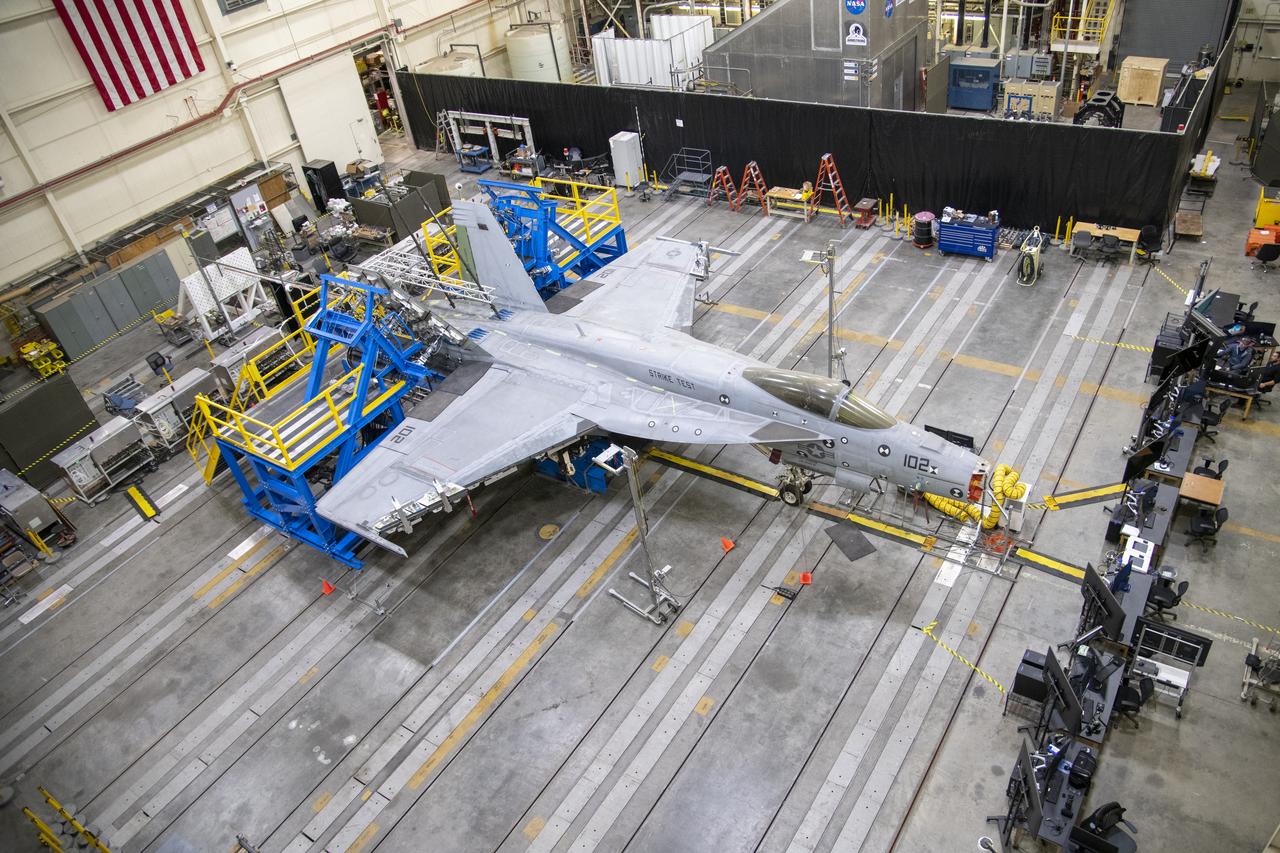
This view from above shows the vertical tail loads testing on a Navy F/A-18E that concluded in May, wrapping up the third phase of research at NASA’s Armstrong Flight Research Center in Edwards, California. The first two phases included loads calibration testing focused on the aircraft’s horizontal tails and wings. The aircraft is from the Naval Air Systems Command (NAVAIR) in Patuxent River, Maryland. NAVAIR retired its previous loads test aircraft and NASA Armstrong staff are assisting to prepare the new aircraft for its role to help safely manage flight maneuvers and determine how the F/A-18E fleet will perform if proposed upgrades are incorporated.
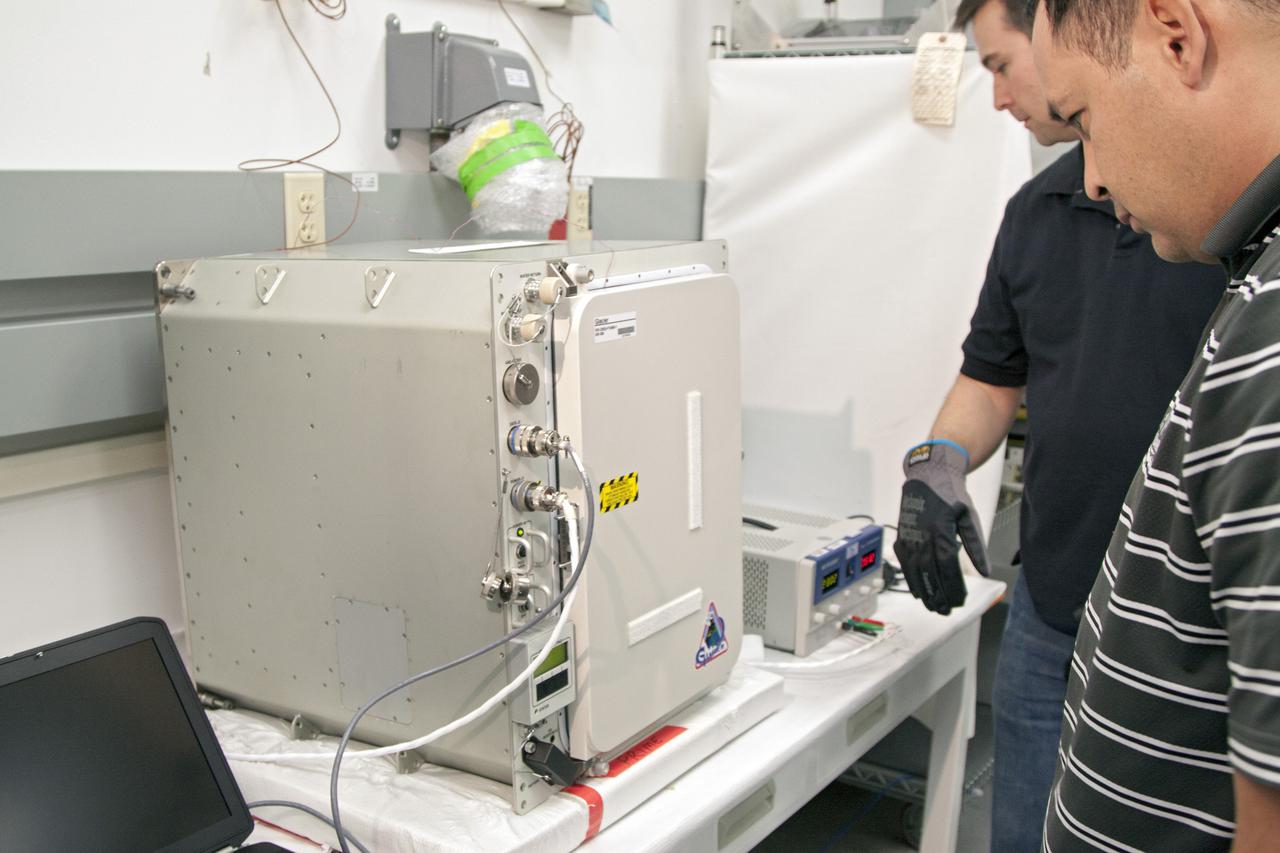
CAPE CANAVERAL, Fla. - In the Space Station Processing Facility at NASA's Kennedy Space Center in Florida, engineers load experiments requiring low temperatures into the General Laboratory Active Cryogenic International Space Station ISS Experiment Refrigerator, or GLACIER. The samples will then be transported to Space Launch Complex-40 on Cape Canaveral Air Force Station where the GLACIER will be loaded aboard the SpaceX Dragon capsule. Scheduled for launch on March 1 atop a Falcon 9 rocket, Dragon will be marking its third trip to the space station. The mission is the second of 12 SpaceX flights contracted by NASA to resupply the orbiting laboratory. For more information, visit http:__www.nasa.gov_mission_pages_station_structure_launch_spacex2-feature.html Photo credit: NASA_Kim Shiflett
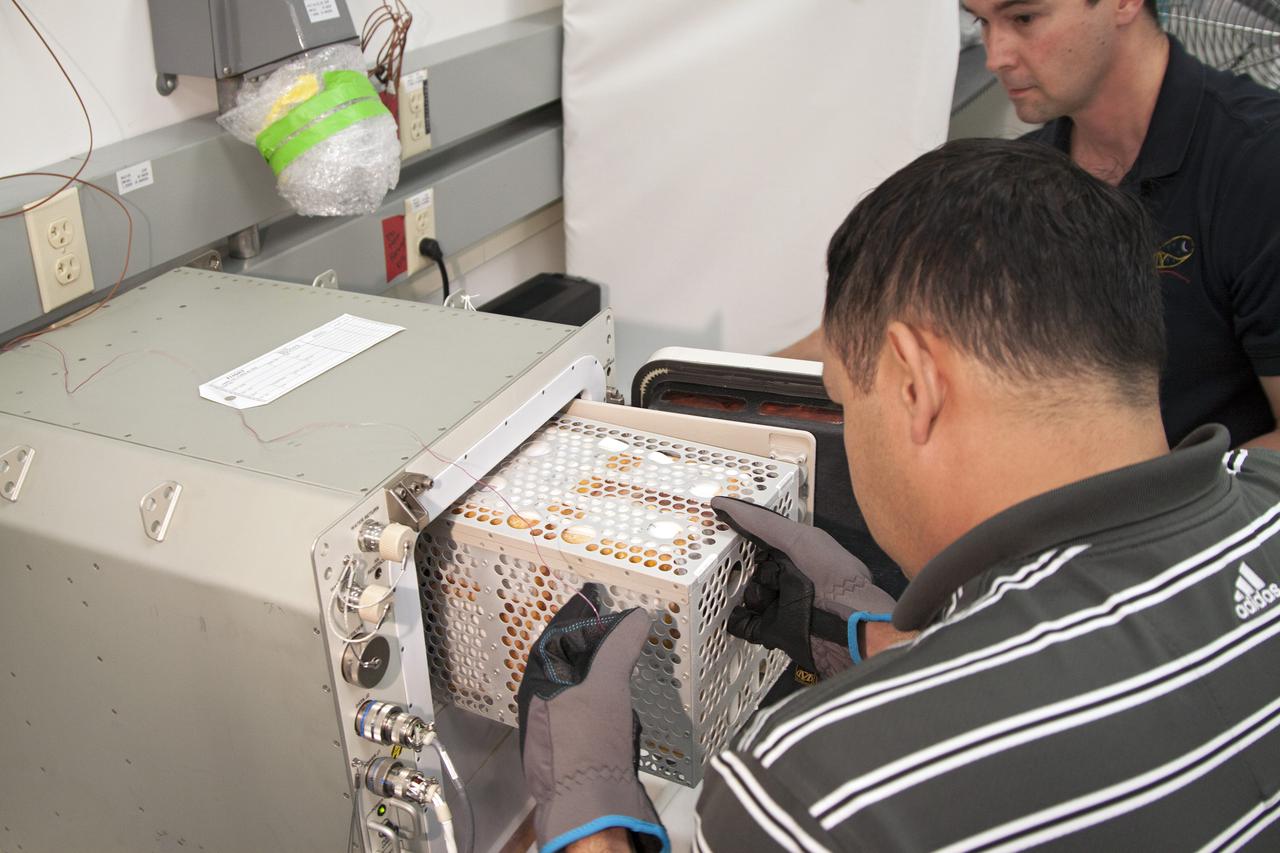
CAPE CANAVERAL, Fla. - In the Space Station Processing Facility at NASA's Kennedy Space Center in Florida, engineers load experiments requiring low temperatures into the General Laboratory Active Cryogenic International Space Station ISS Experiment Refrigerator, or GLACIER. The samples will then be transported to Space Launch Complex-40 on Cape Canaveral Air Force Station where the GLACIER will be loaded aboard the SpaceX Dragon capsule. Scheduled for launch on March 1 atop a Falcon 9 rocket, Dragon will be marking its third trip to the space station. The mission is the second of 12 SpaceX flights contracted by NASA to resupply the orbiting laboratory. For more information, visit http:__www.nasa.gov_mission_pages_station_structure_launch_spacex2-feature.html Photo credit: NASA_Kim Shiflett
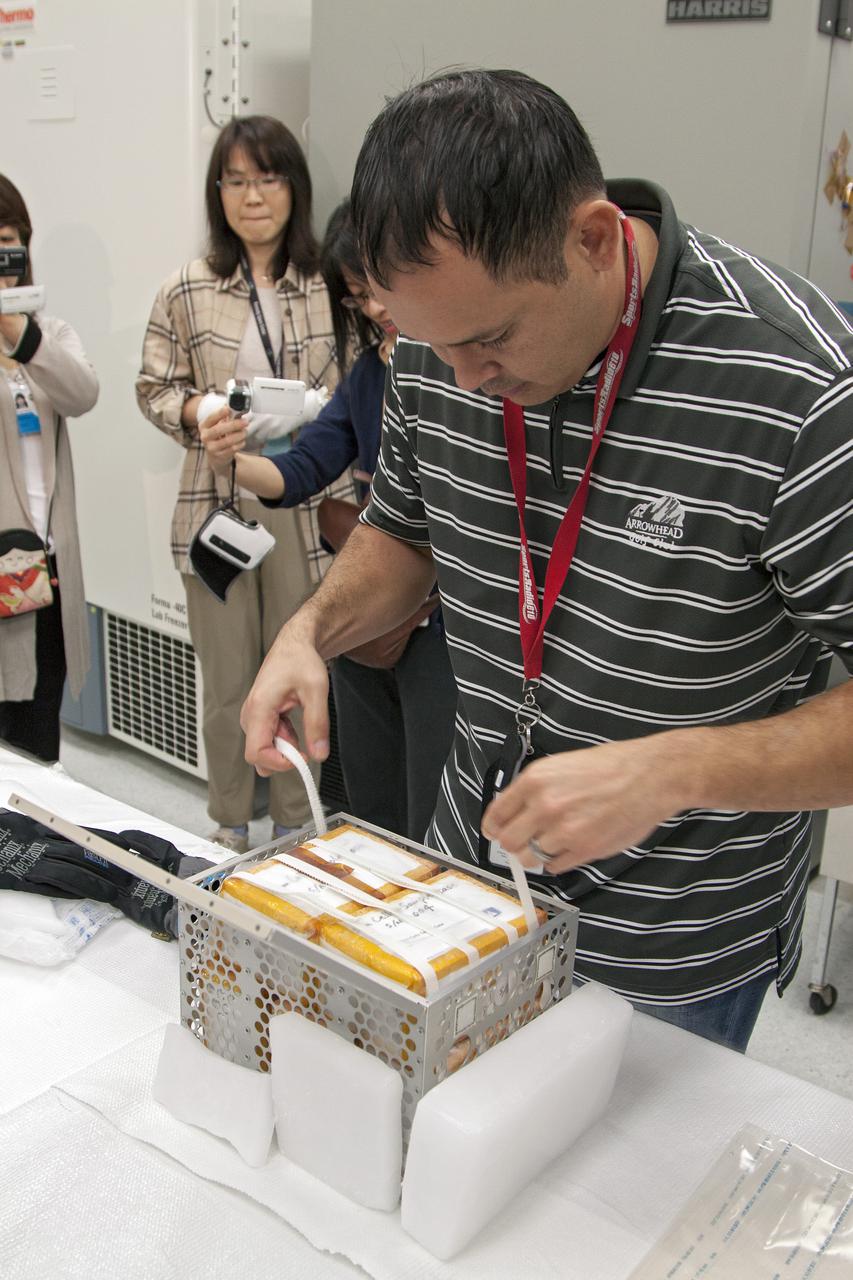
CAPE CANAVERAL, Fla. - In the Space Station Processing Facility at NASA's Kennedy Space Center in Florida, engineers prepare to load experiments requiring low temperatures into the General Laboratory Active Cryogenic International Space Station ISS Experiment Refrigerator, or GLACIER. The samples will then be transported to Space Launch Complex-40 on Cape Canaveral Air Force Station where the GLACIER will be loaded aboard the SpaceX Dragon capsule. Scheduled for launch on March 1 atop a Falcon 9 rocket, Dragon will be marking its third trip to the space station. The mission is the second of 12 SpaceX flights contracted by NASA to resupply the orbiting laboratory. For more information, visit http:__www.nasa.gov_mission_pages_station_structure_launch_spacex2-feature.html Photo credit: NASA_Kim Shiflett
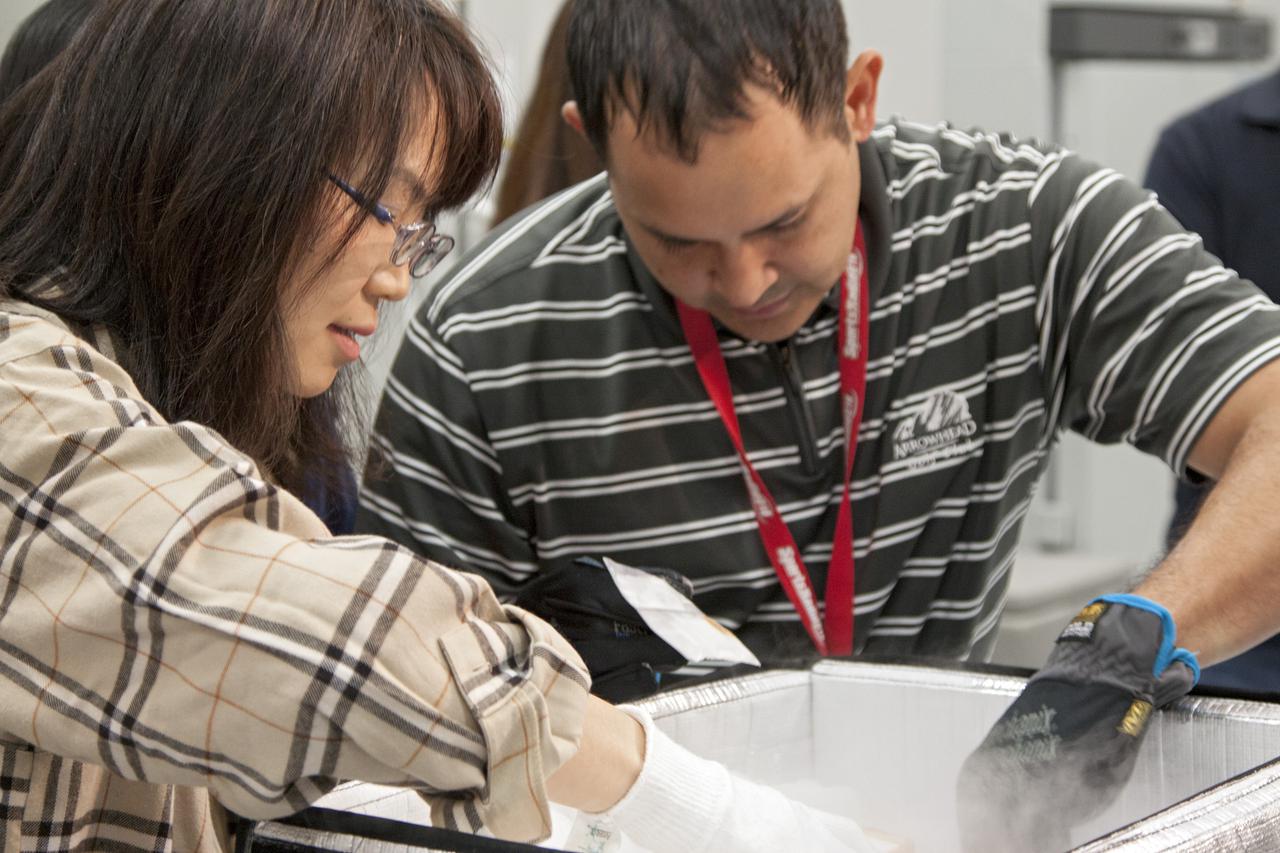
CAPE CANAVERAL, Fla. - In the Space Station Processing Facility at NASA's Kennedy Space Center in Florida, engineers prepare to load experiments requiring low temperatures into the General Laboratory Active Cryogenic International Space Station ISS Experiment Refrigerator, or GLACIER. The samples will then be transported to Space Launch Complex-40 on Cape Canaveral Air Force Station where the GLACIER will be loaded aboard the SpaceX Dragon capsule. Scheduled for launch on March 1 atop a Falcon 9 rocket, Dragon will be marking its third trip to the space station. The mission is the second of 12 SpaceX flights contracted by NASA to resupply the orbiting laboratory. For more information, visit http:__www.nasa.gov_mission_pages_station_structure_launch_spacex2-feature.html Photo credit: NASA_Kim Shiflett