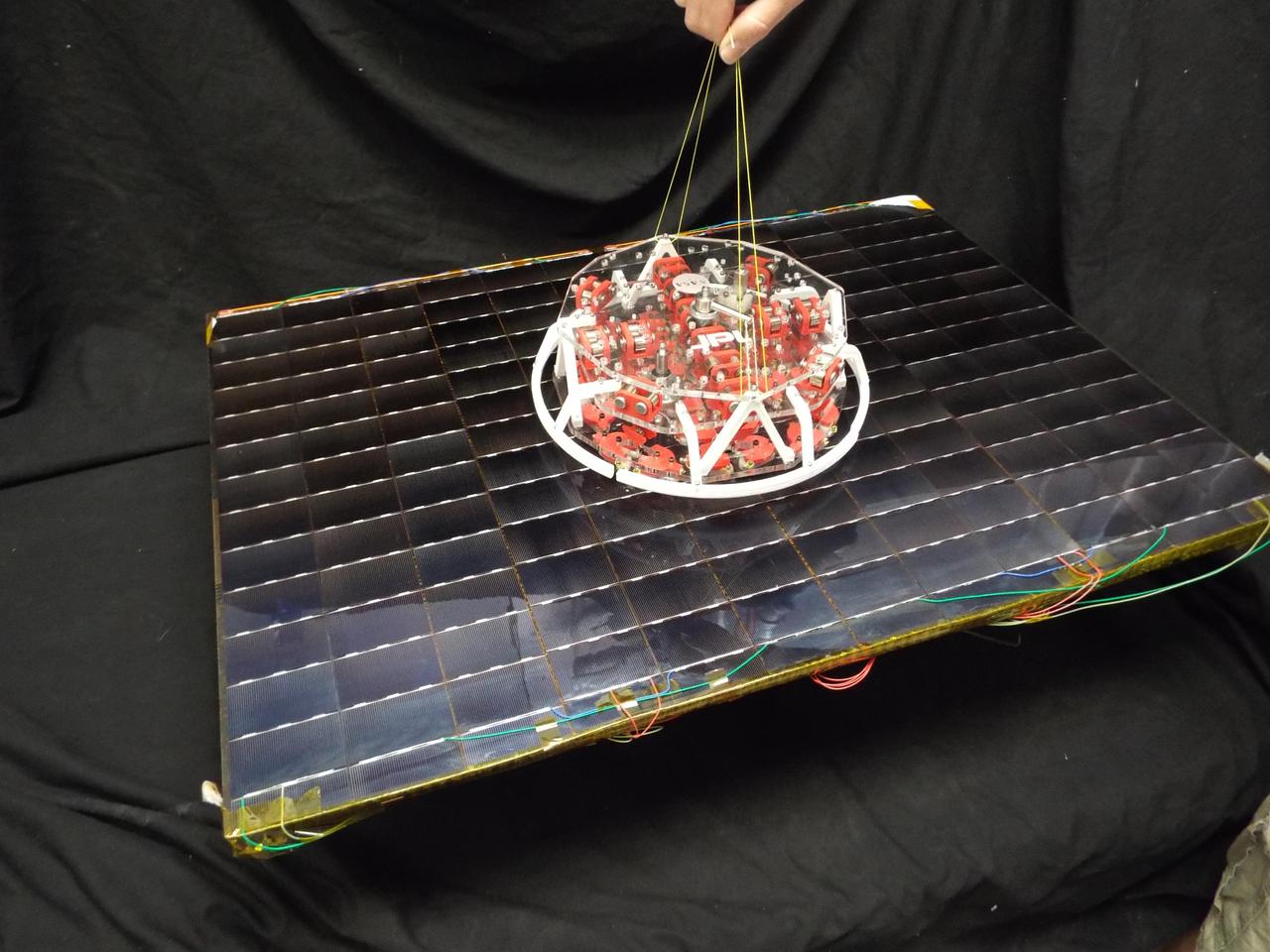
Scientists at NASA Jet Propulsion Laboratory have developed a tool for grappling non-cooperative objects that incorporates gecko-like adhesives. The adhesives are reusable and can be turned on and off.
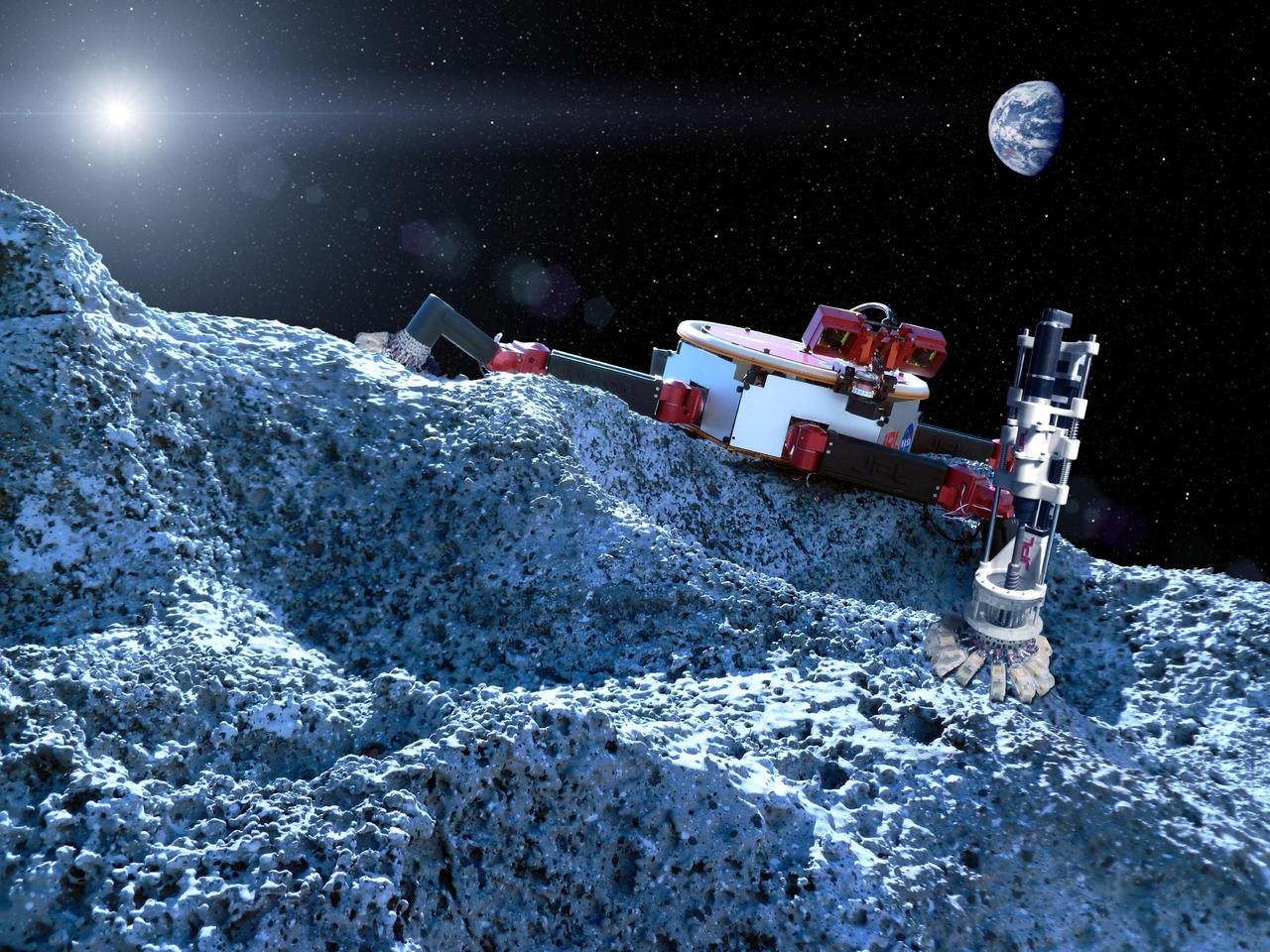
This artist concept shows a robot with legs that have microspine grippers, which could potentially explore a rocky surface, such as an asteroid, in microgravity.
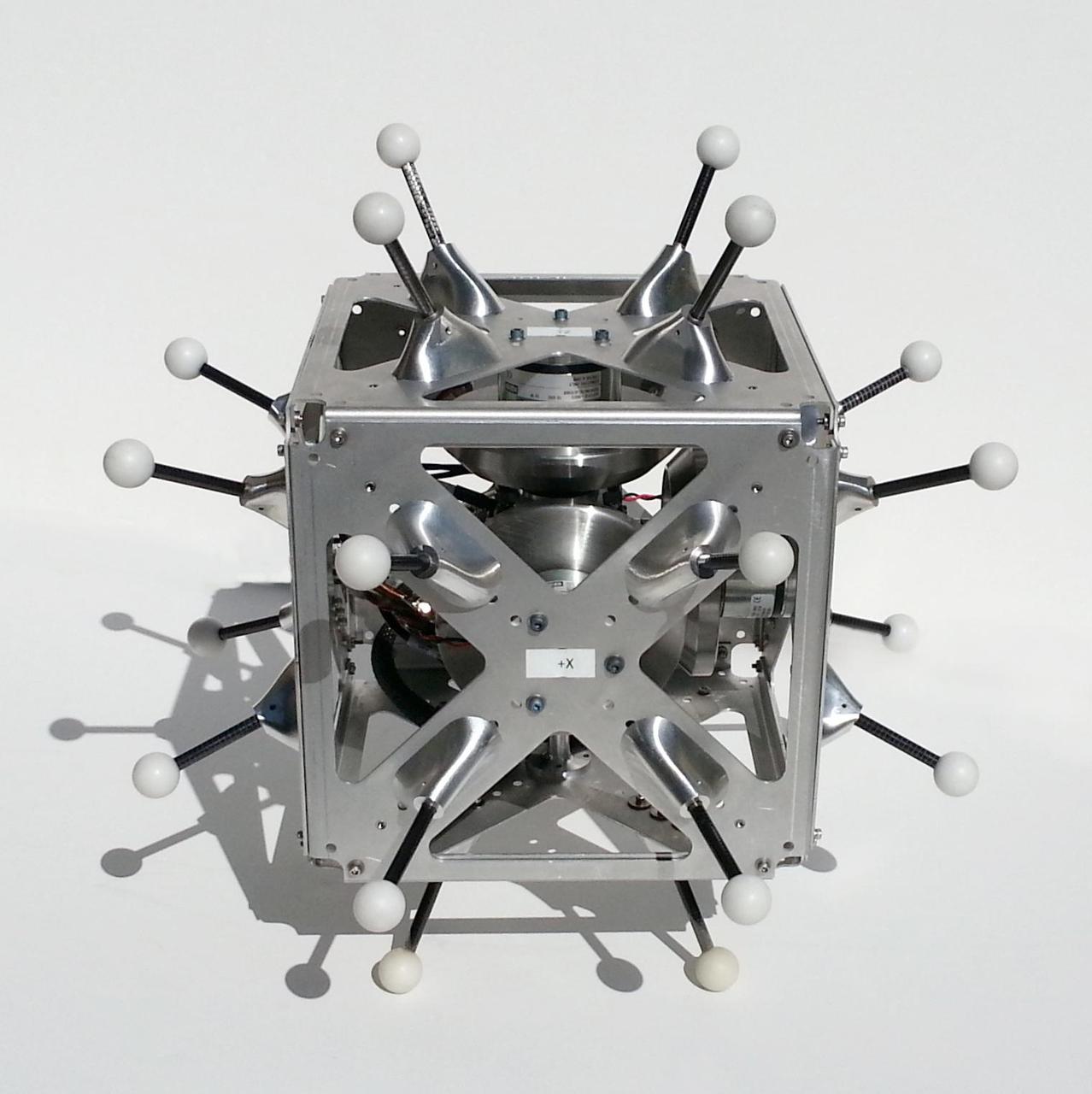
This is a hopping/tumbling robot called Hedgehog that scientists at NASA Jet Propulsion Laboratory will test on a parabolic aircraft flight.
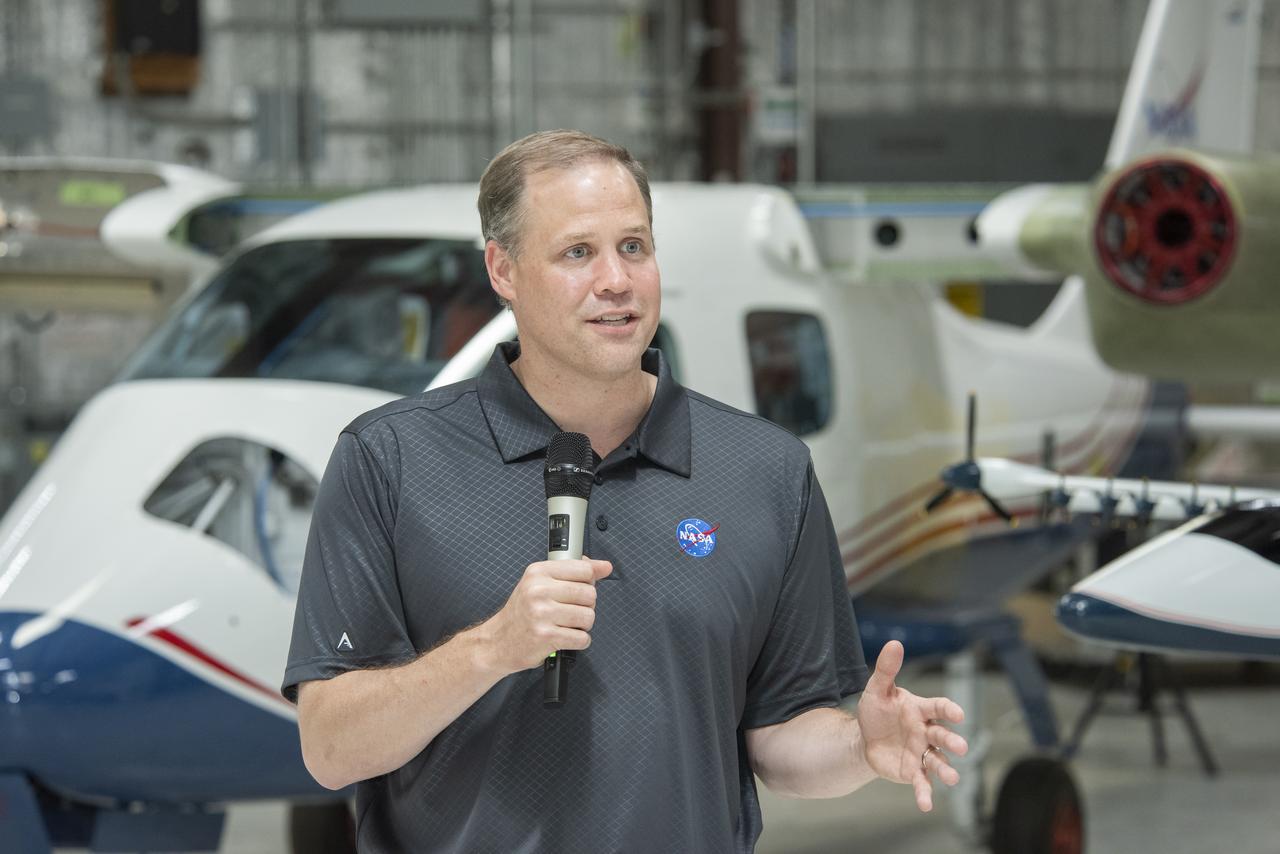
NASA Administrator Bridenstine talks to press at Scaled Composites hangar at Mojave Air & Space Port in California. He talks about X-planes and their future and the Flight Opportunities program as well as commercial space partnerships with the agency.
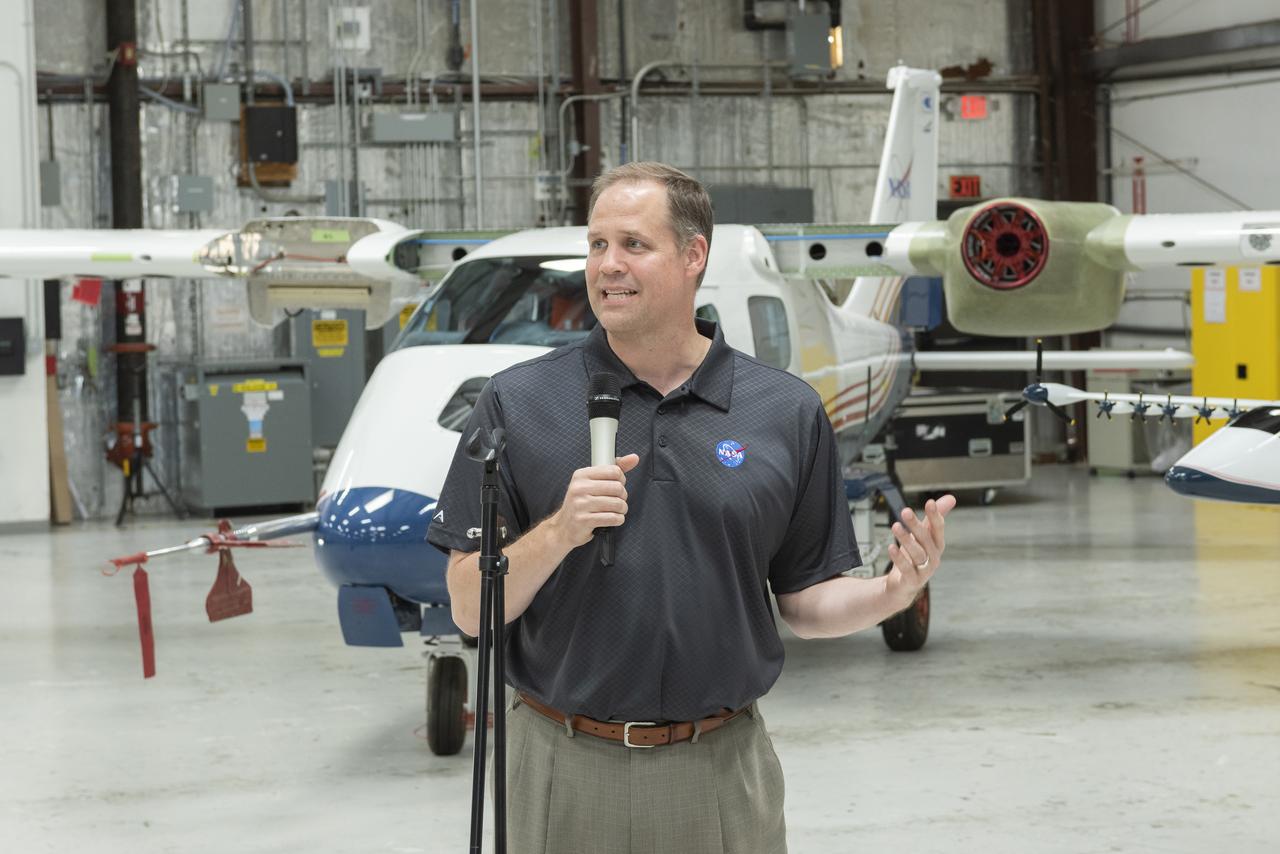
NASA Administrator Bridenstine talks to press at Scaled Composites hangar at Mojave Air & Space Port in California. He talks about X-planes and their future and the Flight Opportunities program as well as commercial space partnerships with the agency.
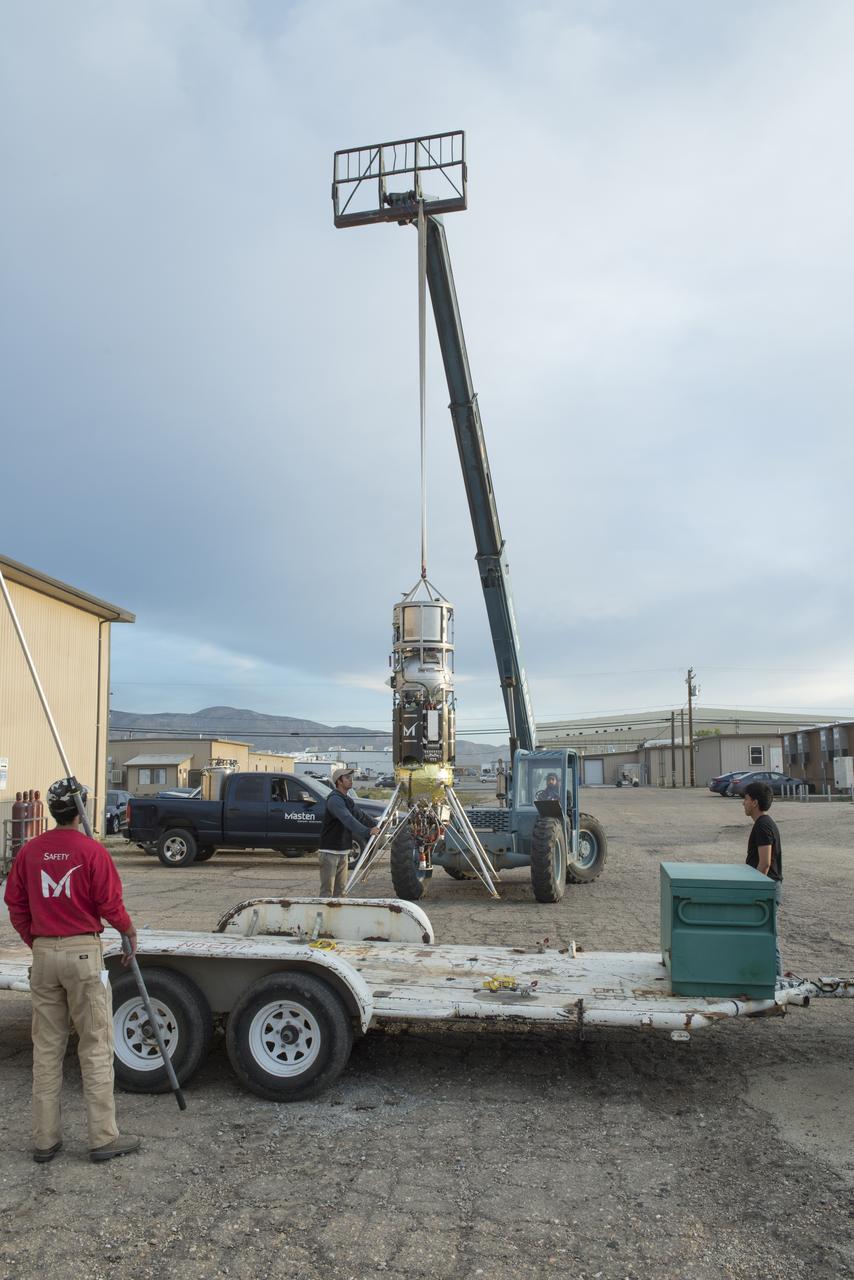
Masten Space Systems’ technician making adjustments to NASA’s autonomous landing technologies payload on Masten’s Xodiac rocket.
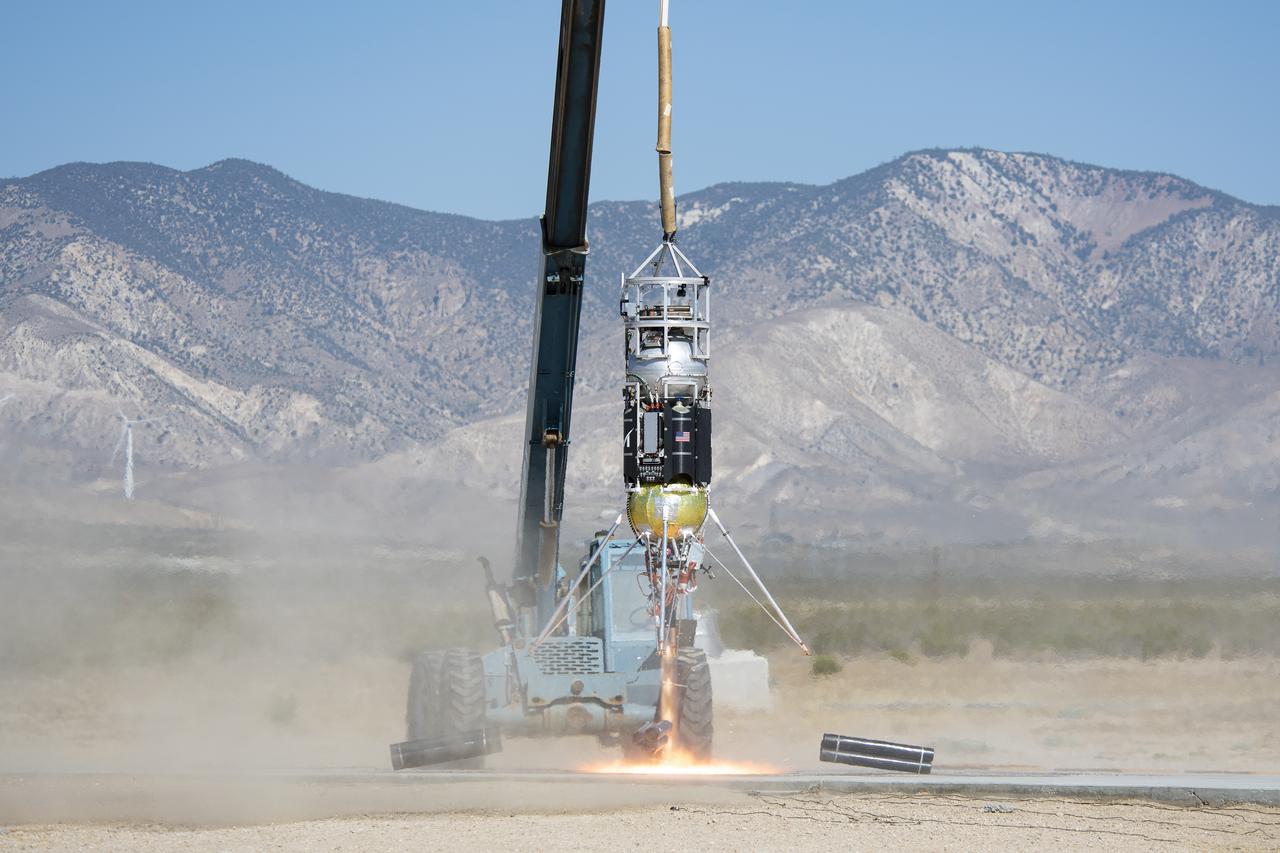
Masten Space Systems’ Xodiac lander completes a tethered flight test at the Mojave Air & Space Port. Xodiac is one of several suborbital vehicles used to flight test NASA-sponsored technologies supported by the agency’s Flight Opportunities program.
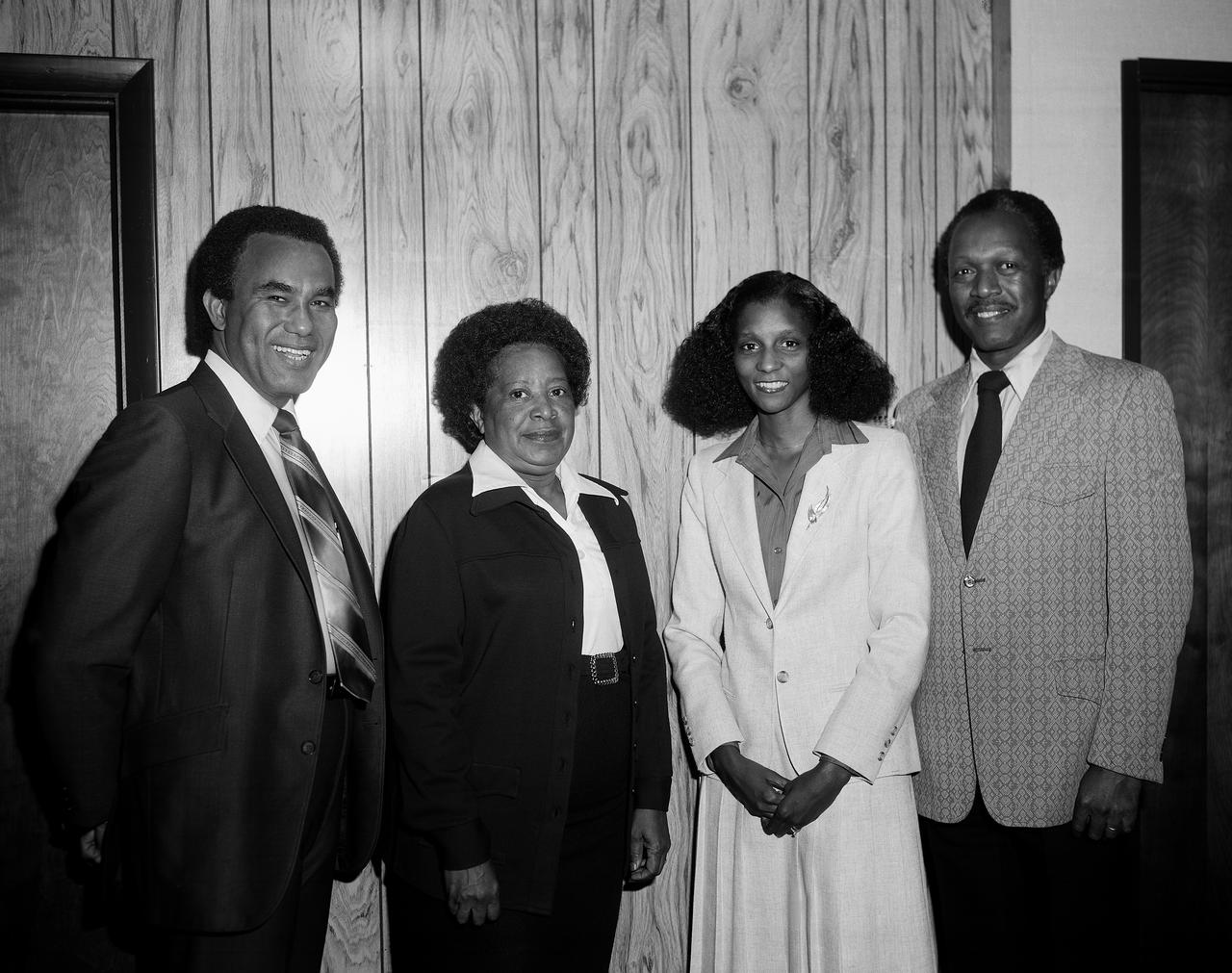
Samuel J. Scott, Administrative Operations Specialist, Acquisition Division; Mary W. Jackson, Federal Women's Program Manager, Office of Equal Opportunity Programs; Fabiola C. Martin, Contract Specialist, Acquisition Division; and Gilbert A. Haynes, Head of the Experimental Avionics Section, Flight Electronics Division, represented Langley recently at the annual National Football League Players' Association Youth Camp in Culpepper, Va. The camp offered four two-week sessions with approximately 60 youngsters attending each session. Serving as role models to minority youth from the Washington, D.C. area, the Langley employees each attended a session for one day discussing their careers and providing information on opportunities at Langley, as part of the community outreach effort of the Office of Equal Opportunity Programs. This was the first year that Langley participated in the camp's activities. Published in the Langley Researcher, August, 28, 1981 page 2.
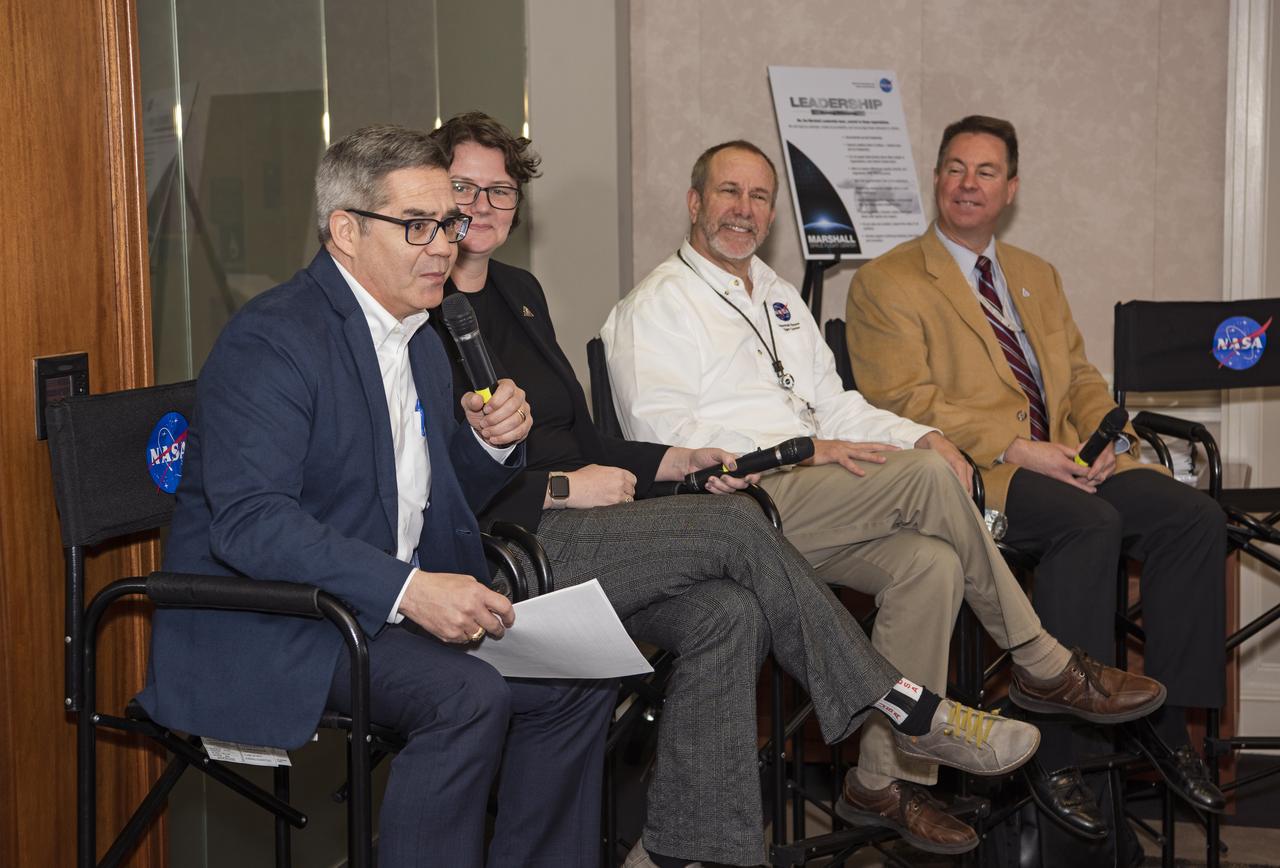
Sam Ortega, left, manager of the Partnerships Office at NASA’s Marshall Space Flight Center, moderates an Artemis Program panel featuring, second from left, Renee Weber, Marshall chief scientist; David Beaman, manager of Marshall’s Systems Engineering & Integration Office; and Don Krupp, associate program manager for the Human Landing System Program, during Universities of the Tennessee Valley Corridor activities Feb. 27 at Marshall. Leadership staff from eight universities and 10 junior colleges in Alabama, Tennessee and Kentucky also heard presentations on Office of STEM Engagement opportunities, partnership opportunities, Marshall’s Technology Transfer Office, the NASA software catalog and Marshall’s Advanced Concepts Office. The group toured several Marshall facilities to learn more about center capabilities.
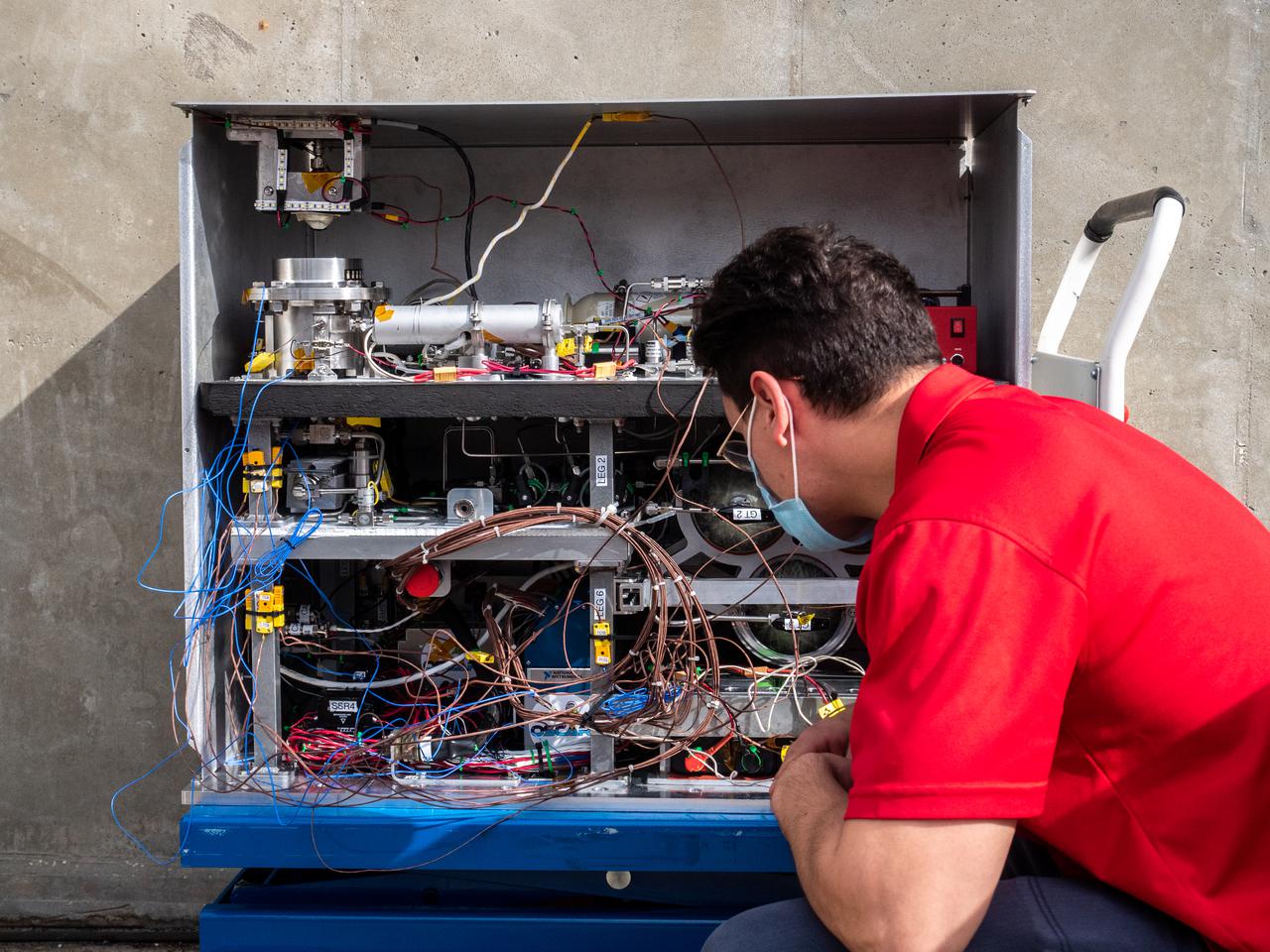
Ray Pitts, co-principal investigator for OSCAR, prepares the Orbital Syngas Commodity Augmentation Reactor (OSCAR) for thermal testing Jan. 26, 2021, at NASA’s Kennedy Space Center in Florida. The tests are in preparation for a scheduled suborbital flight test later this year facilitated by NASA’s Flight Opportunities program. The testing ensures the thermal environment of the payload won’t create additional hazards during flight and that OSCAR can successfully operate within the temperature range it may encounter as it performs tests in microgravity.
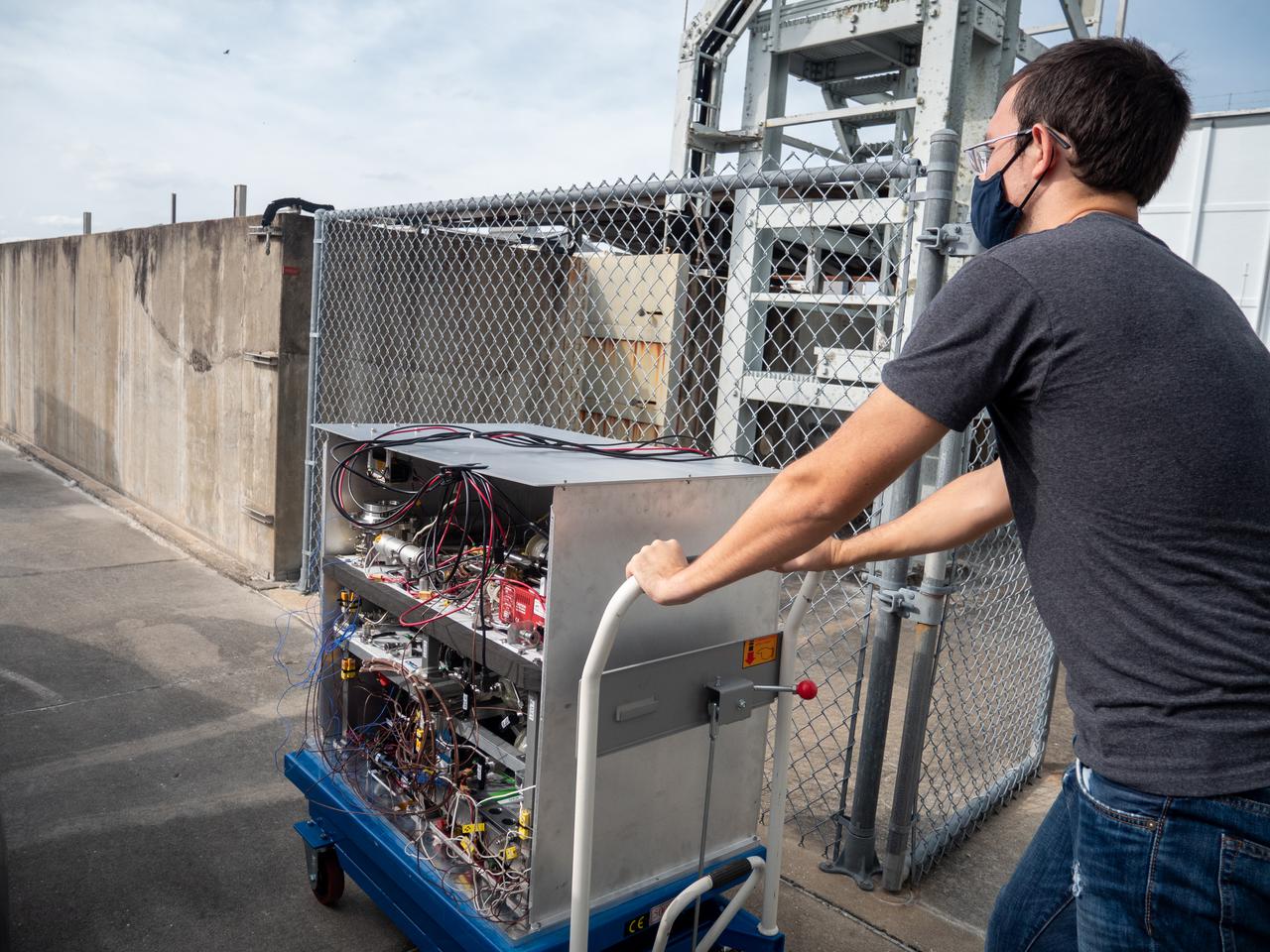
Chemical Engineer David Rinderknecht prepares the Orbital Syngas Commodity Augmentation Reactor (OSCAR) for thermal testing Jan. 26, 2021, at NASA’s Kennedy Space Center in Florida. The tests are in preparation for a scheduled suborbital flight test later this year facilitated by NASA’s Flight Opportunities program. The testing ensures the thermal environment of the payload won’t create additional hazards during flight and that OSCAR can successfully operate within the temperature range it may encounter as it performs tests in microgravity.
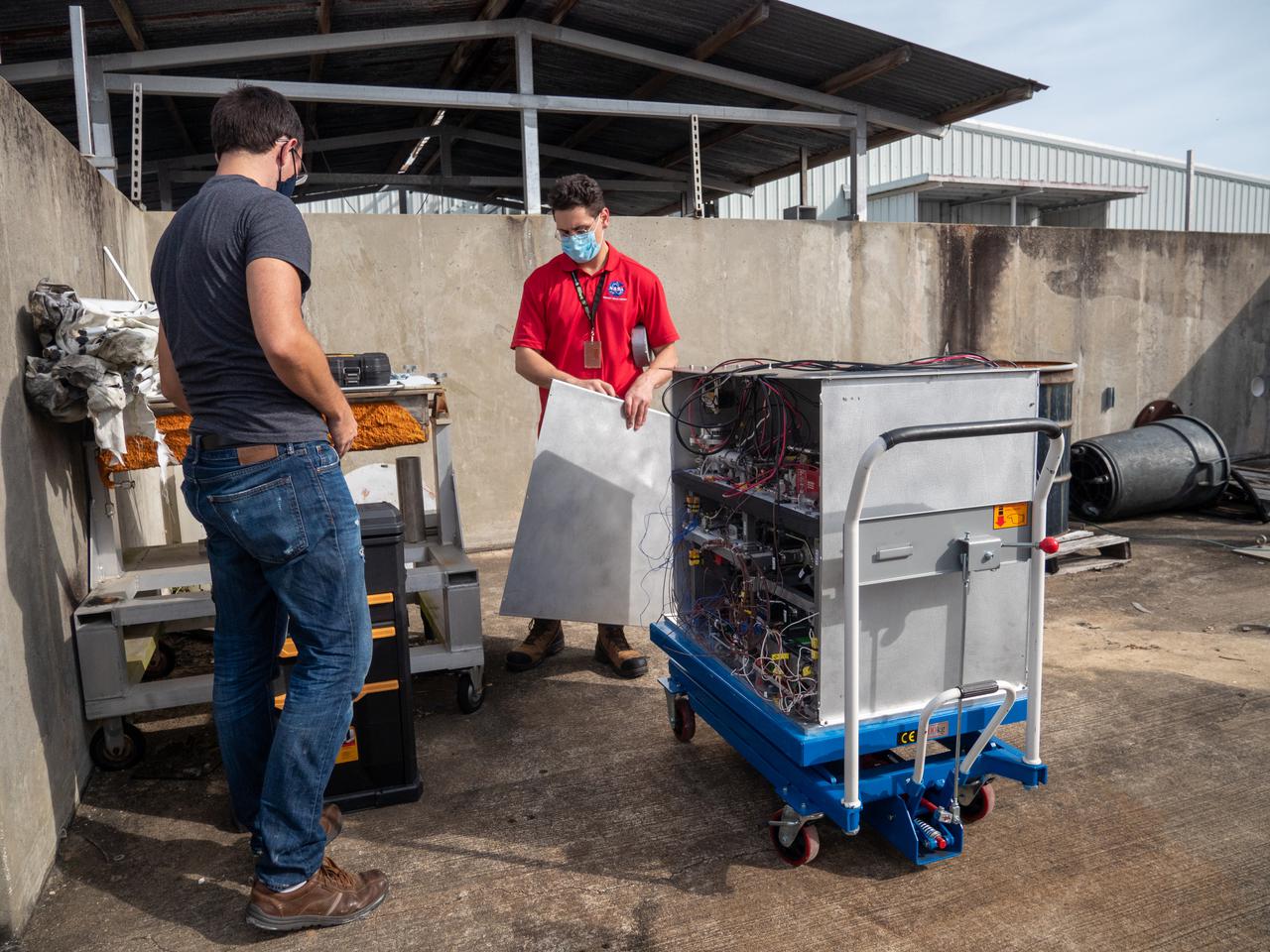
Chemical Engineer David Rinderknecht, left, and Ray Pitts, co-principal investigator for the Orbital Syngas Commodity Augmentation Reactor (OSCAR), prepare OSCAR for thermal testing Jan. 26, 2021, at NASA’s Kennedy Space Center in Florida. The tests are in preparation for a scheduled suborbital flight test later this year facilitated by NASA’s Flight Opportunities program. The testing ensures the thermal environment of the payload won’t create additional hazards during flight and that OSCAR can successfully operate within the temperature range it may encounter as it performs tests in microgravity.
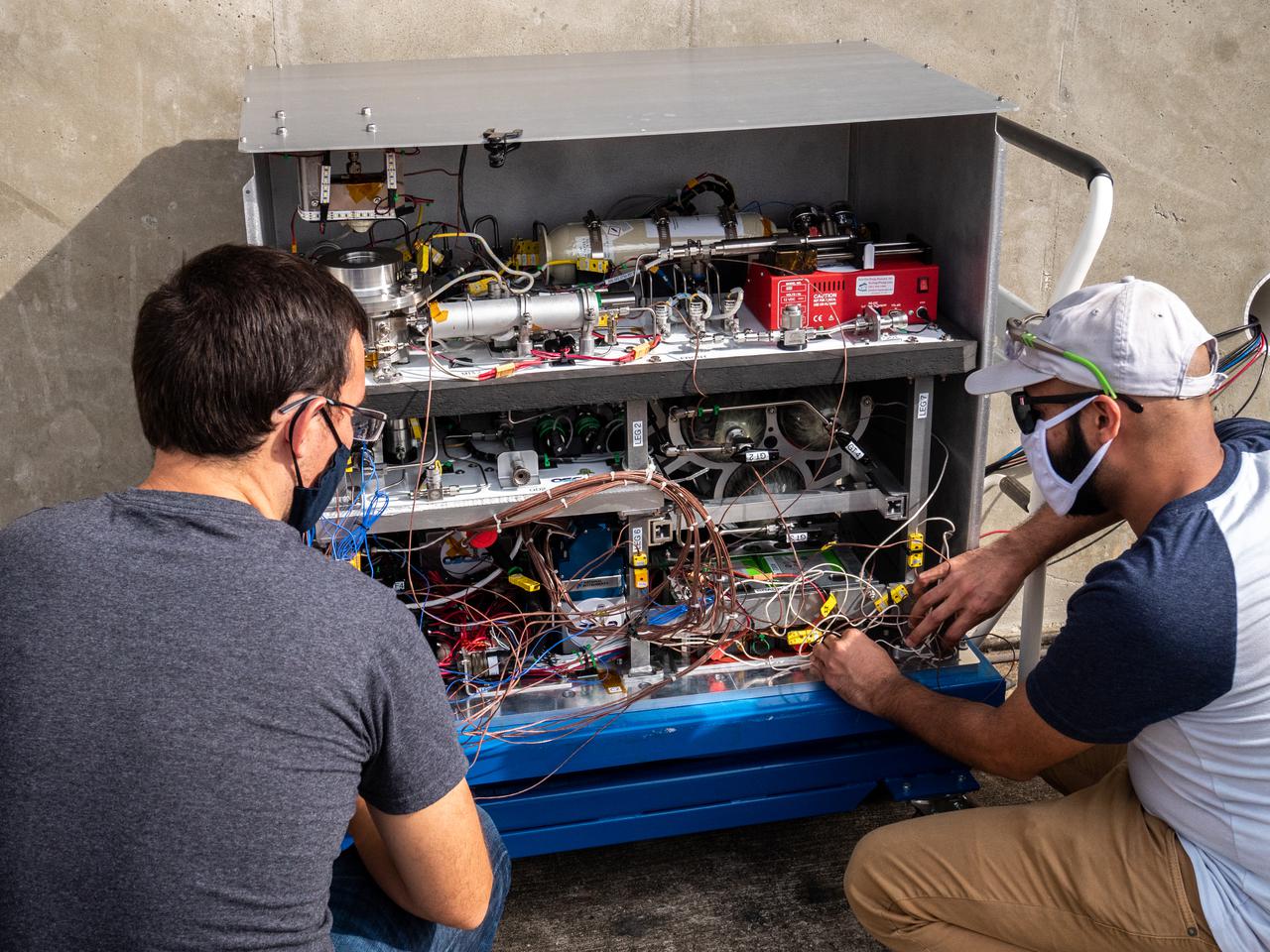
Chemical Engineer David Rinderknecht, left, and Thermal/Fluid Analysis Engineer Malay Shah prepare the Orbital Syngas Commodity Augmentation Reactor (OSCAR) for thermal testing Jan. 26, 2021, at NASA’s Kennedy Space Center in Florida. The tests are in preparation for a scheduled suborbital flight test later this year facilitated by NASA’s Flight Opportunities program. The testing ensures the thermal environment of the payload won’t create additional hazards during flight and that OSCAR can successfully operate within the temperature range it may encounter as it performs tests in microgravity.
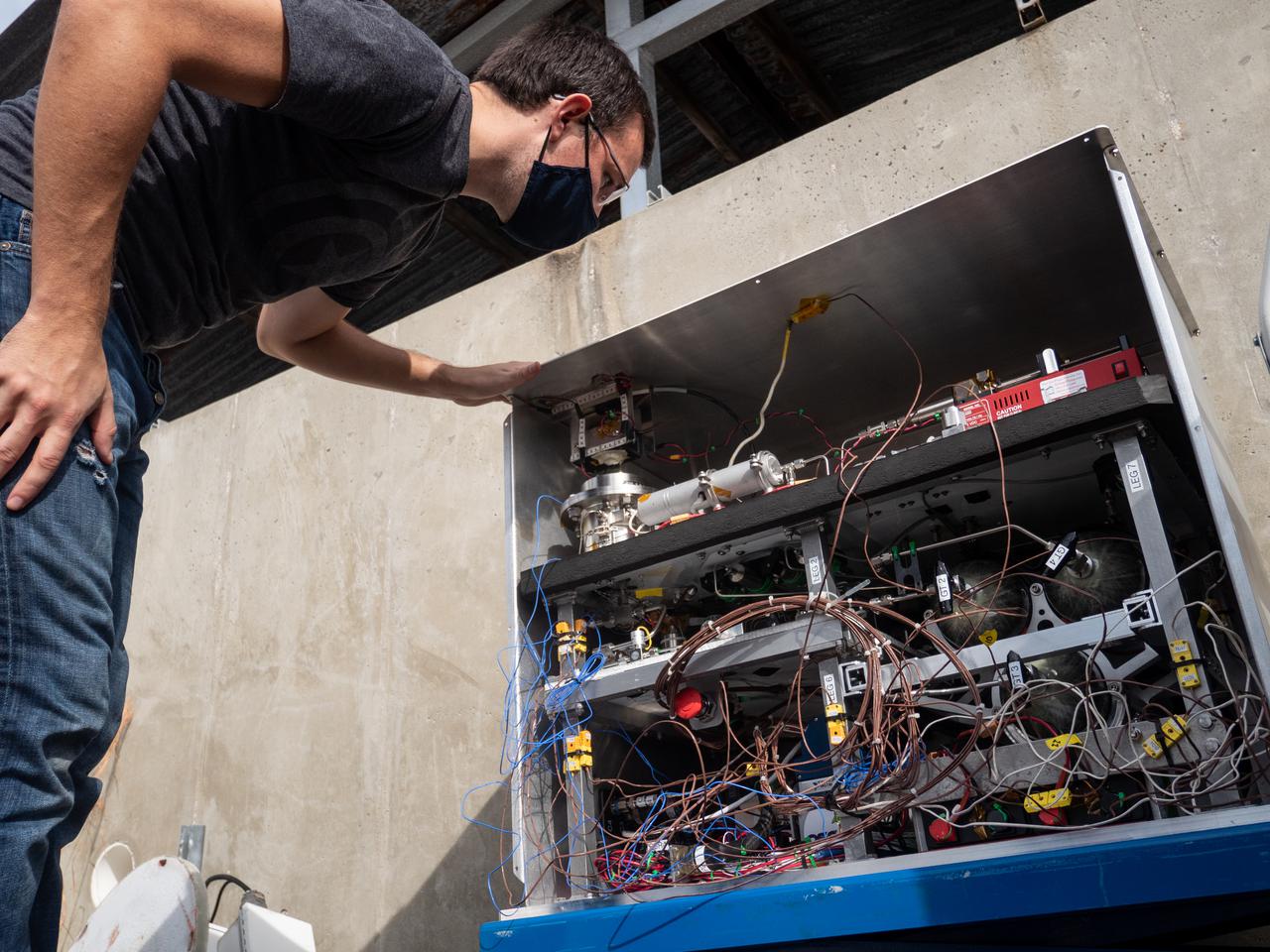
Chemical Engineer David Rinderknecht prepares the Orbital Syngas Commodity Augmentation Reactor (OSCAR) for thermal testing Jan. 26, 2021, at NASA’s Kennedy Space Center in Florida. The tests are in preparation for a scheduled suborbital flight test later this year facilitated by NASA’s Flight Opportunities program. The testing ensures the thermal environment of the payload won’t create additional hazards during flight and that OSCAR can successfully operate within the temperature range it may encounter as it performs tests in microgravity.
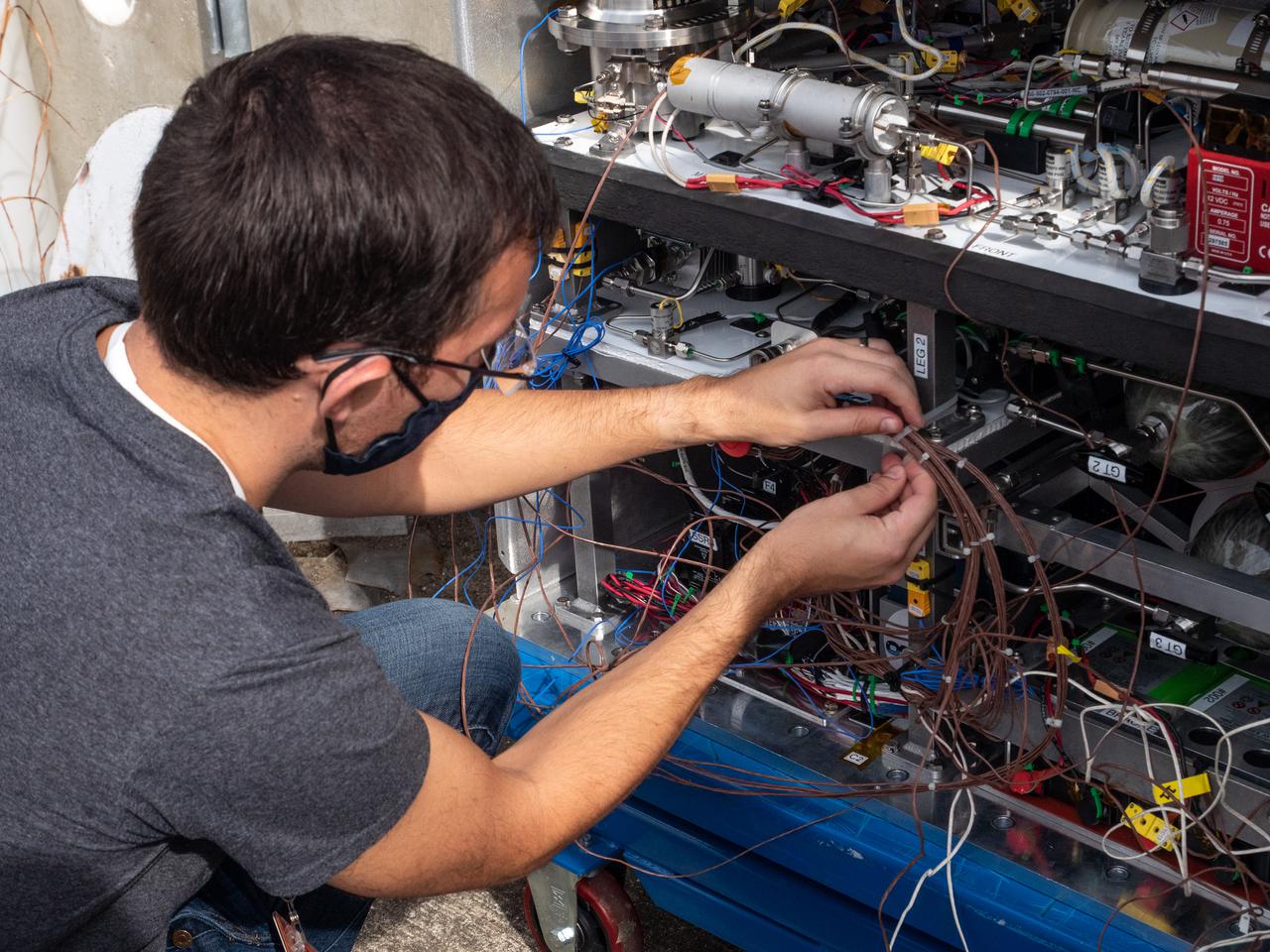
Chemical Engineer David Rinderknecht prepares the Orbital Syngas Commodity Augmentation Reactor (OSCAR) for thermal testing Jan. 26, 2021, at NASA’s Kennedy Space Center in Florida. The tests are in preparation for a scheduled suborbital flight test later this year facilitated by NASA’s Flight Opportunities program. The testing ensures the thermal environment of the payload won’t create additional hazards during flight and that OSCAR can successfully operate within the temperature range it may encounter as it performs tests in microgravity.
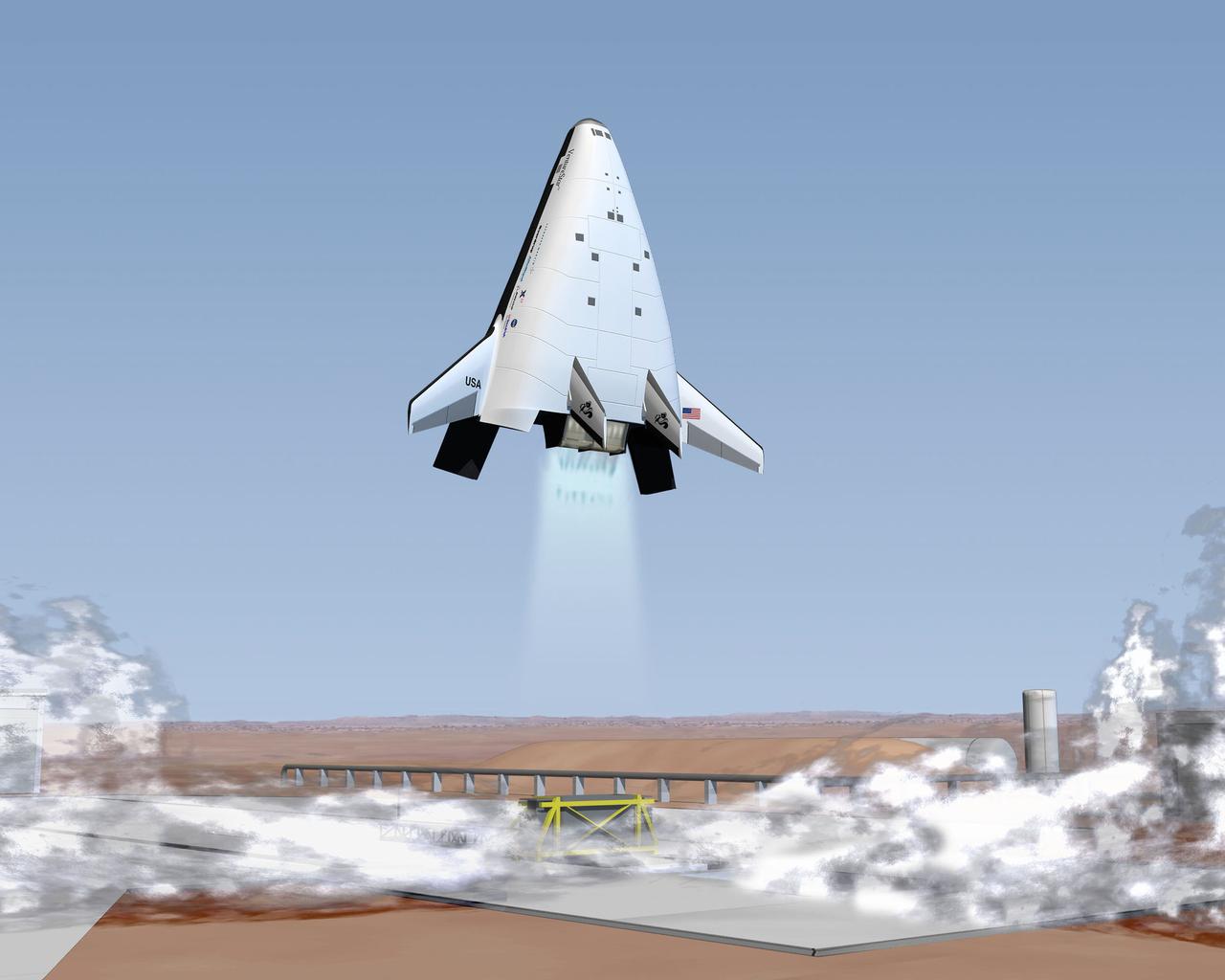
The wedge-shaped X-33 was a sub-scale technology demonstration prototype of a Reusable Launch Vehicle (RLV). Through demonstration flights and ground research, NASA's X-33 program was to provide the information needed for industry representatives such as Lockheed Martin (builder of the X-33 Venture Star) to decide by the year 2000 whether to proceed with the development of a full-scale, commercial RLV program. This program would dramatically increase reliability and lower the costs of putting a payload into space. This would in turn create new opportunities for space access and significantly improve U.S. economic competitiveness in the worldwide launch marketplace. NASA would be a customer, not the operator in the commercial RLV. The X-33 program was cancelled in 2001.

With the theme of “Mission, People, Partners,” NASA’s Marshall Space Flight Center Director Jody Singer outlined how the center’s priorities align with the agency’s strategic plan in the first Marshall Association luncheon of the year March 14 in the Activities Building. The Marshall Association offers opportunities to network and share ideas with colleagues and members of the Marshall community. The Marshall Association offers opportunities to network and share ideas with colleagues and members of the Marshall community. Membership is open to NASA employees, retirees, contractors and community members. Membership dues support the annual scholarship program and other events throughout the year.
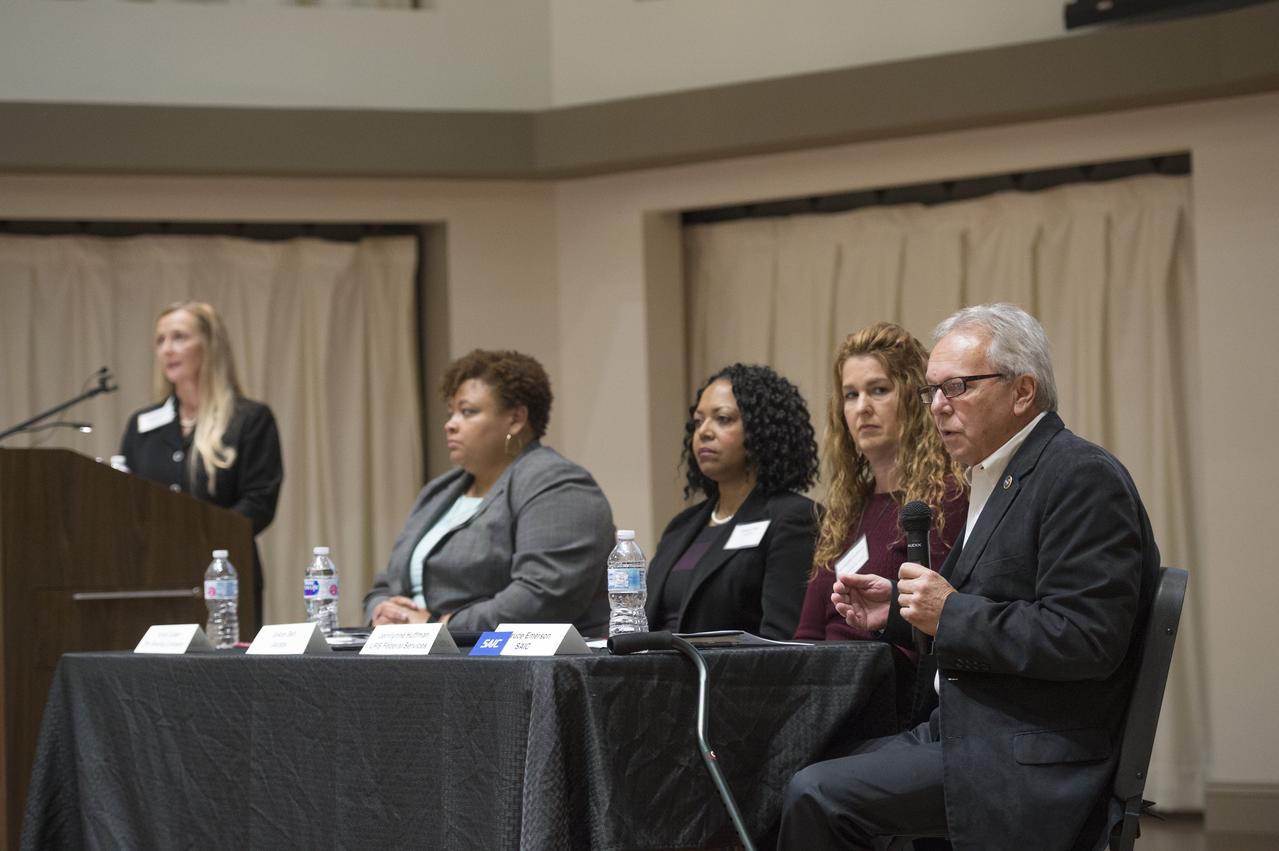
The Morgan County Economic Development Association and the City of Decatur, in Partnership with the NASA/Marshall Space Flight Center (MSFC), hosted a business forum on, How to Launch Your Business with NASA, Wednesday, October 18, 2017, at the Alabama Center for the Arts in downtown Decatur, AL. The event was open to all businesses allowed them to connect with Senior NASA representatives and their prime contractors. The program guided businesses through the process of working with NASA as a supplier, subcontractor, and/or a service provider. The Marshall Space Flight Center’s projected procurement budget in FY 2018 is approximately $2.2 billion and numerous procurement opportunities are available for small business participation each fiscal year. The program included Todd May, Director of Marshall Space Flight Center; Johnny Stephenson, Director of Marshall Space Flight Center’s Office of Strategic Analysis and Communication; David Brock, Small Business Specialist with Marshall Space Flight Center; and Lynn Garrison, Small Business Specialist Technical Advisor with Marshall Space Flight Center. Additionally, there was a prime contractor panel consisting of representatives from five NASA prime contractors. The event included a dedicated networking session with those prime contractors. The “Launch Your Business With NASA” event provides those in attendance the opportunity to network with key Marshall Space Flight Center procurement and technical personnel, and representatives of several major Marshall Space Flight Center prime contractors.Arts.
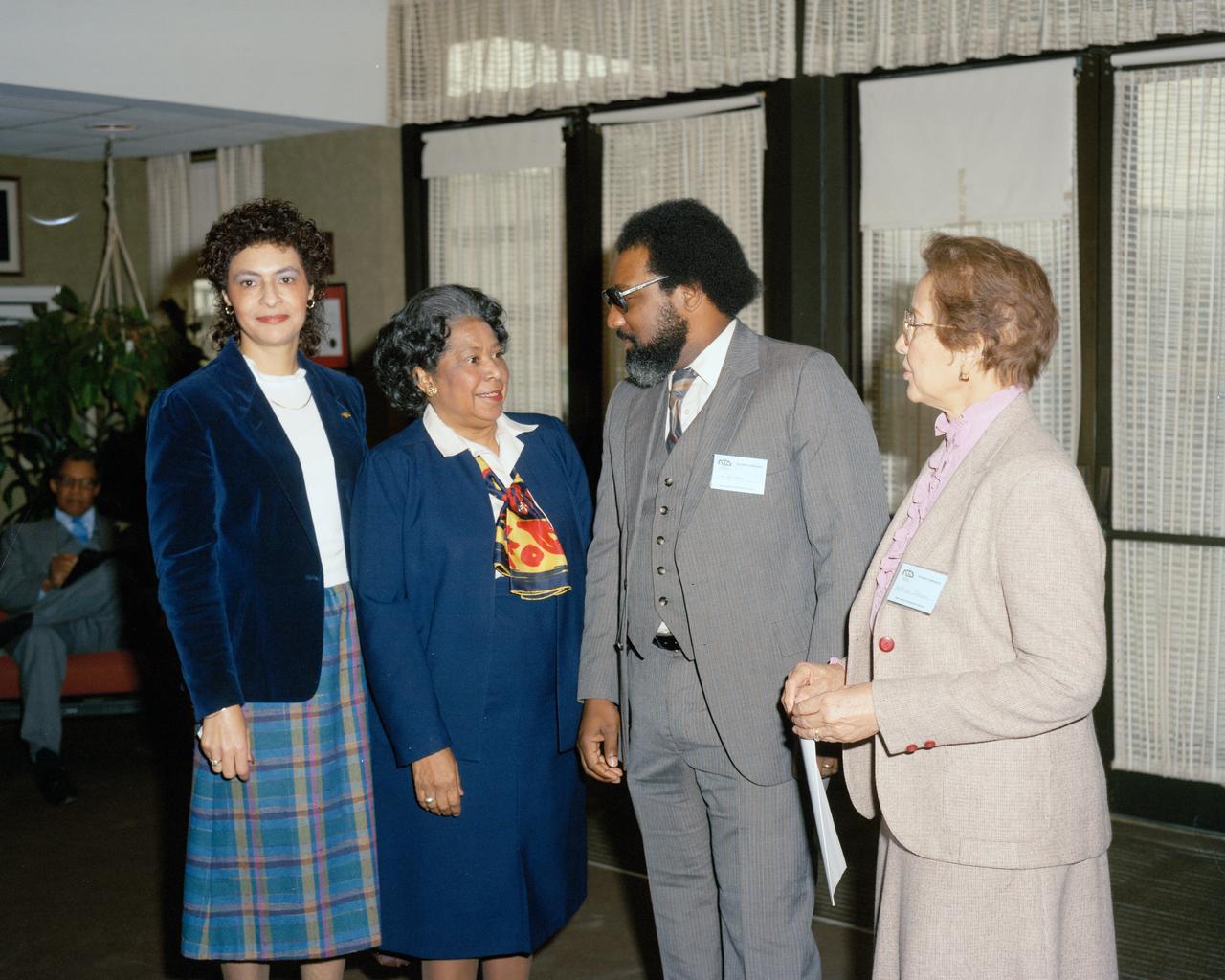
Photograph taken November 8,1984. Student Symposium Meeting Left to right Vivian Merritt, Office of Equal Opportunity Programs, Mary Jackson, Manger, Federal Woman’s Program, guest speaker Mr. James Jennings, and Katherine Johnson, Flight Dynamics and Control Division. Jennings’ career has included management and analyst positions at the Marshall Space Flight Center and NASA Headquarters. He is known for his ability to work with people and get things done. Jennings is a member of numerous professional and community organizations. He has served as Chairman of the KSC Combined Federal Campaign and Savings Bond Drive. Jennings has received numerous awards during his NASA career including an Equal Employment Opportunity Award in 1975, an Exceptional Service Medal in 1988, the Equal Employment Opportunity Medal in 1989, and an Outstanding Leadership Medal in 1994. Jennings also received the Distinguished Service Award in 1989 and the President's Award in 1999 from the Space Coast Chapter of the Federally Employed Women. He was conferred the rank of Meritorious Executive in 1997, and received the 1999 Presidential Distinguished Rank Award.
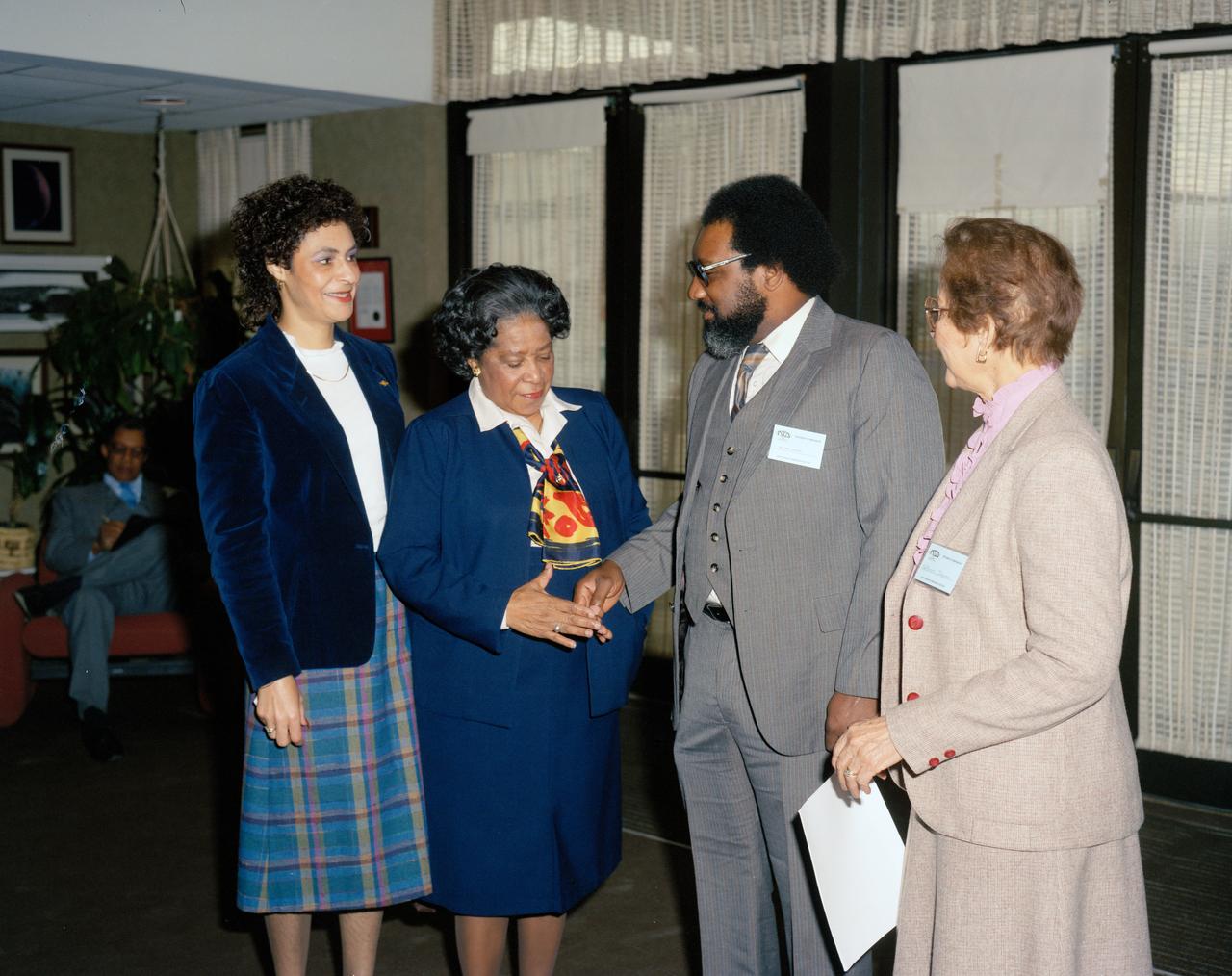
Photograph taken November 8,1984. Student Symposium Meeting Left to right Vivian Merritt, Office of Equal Opportunity Programs, Mary Jackson, Manger, Federal Woman’s Program, guest speaker Mr. James Jennings, and Katherine Johnson, Flight Dynamics and Control Division. Jennings’ career has included management and analyst positions at the Marshall Space Flight Center and NASA Headquarters. He is known for his ability to work with people and get things done. Jennings is a member of numerous professional and community organizations. He has served as Chairman of the KSC Combined Federal Campaign and Savings Bond Drive. Jennings has received numerous awards during his NASA career including an Equal Employment Opportunity Award in 1975, an Exceptional Service Medal in 1988, the Equal Employment Opportunity Medal in 1989, and an Outstanding Leadership Medal in 1994. Jennings also received the Distinguished Service Award in 1989 and the President's Award in 1999 from the Space Coast Chapter of the Federally Employed Women. He was conferred the rank of Meritorious Executive in 1997, and received the 1999 Presidential Distinguished Rank Award.
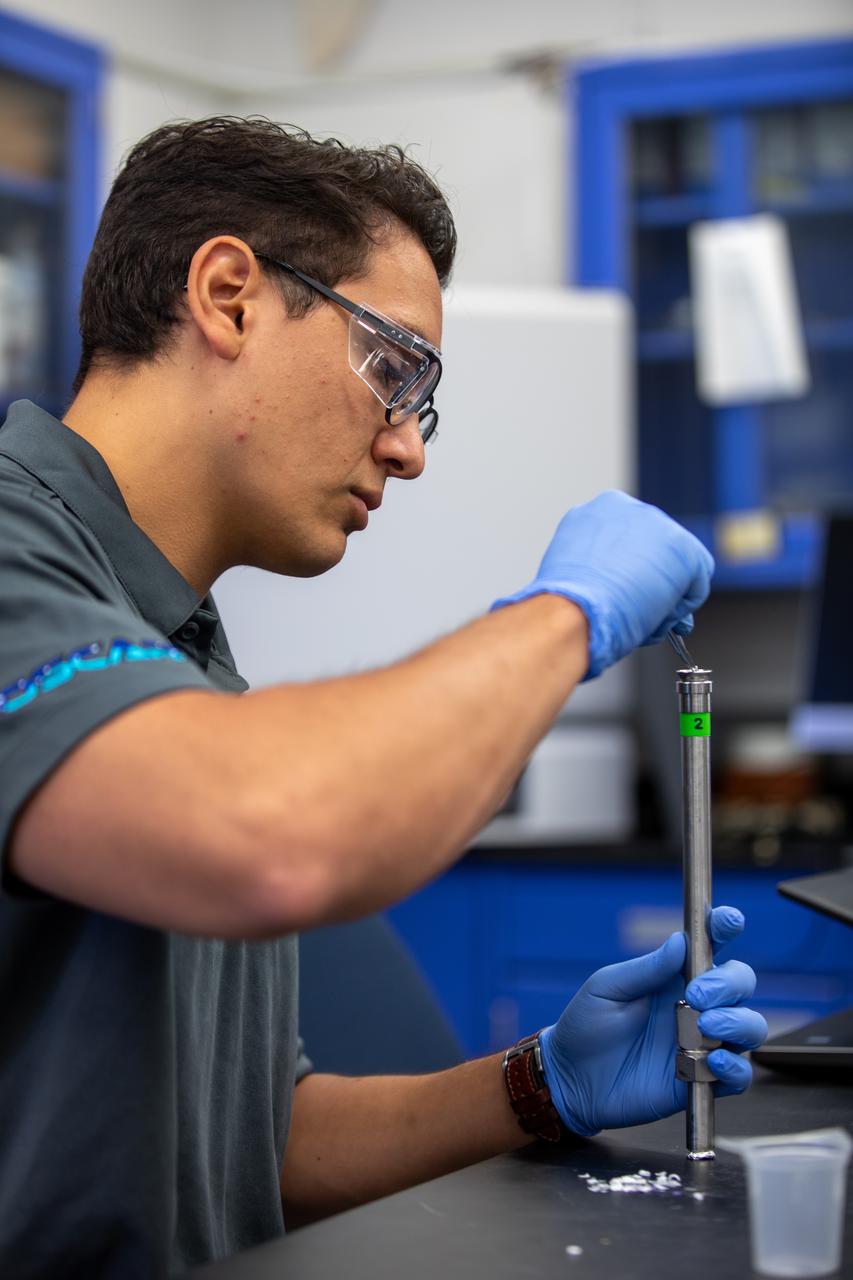
Ray Pitts, co-principal investigator for the Orbital Syngas Commodity Augmentation Reactor (OSCAR), performs ground testing at NASA’s Kennedy Space Center in Florida. The tests are in preparation for a scheduled suborbital flight test later this year, facilitated by NASA’s Flight Opportunities program. Begun as an Early Career Initiative project, OSCAR evaluates technology to make use of trash and human waste generated during long-duration spaceflight.
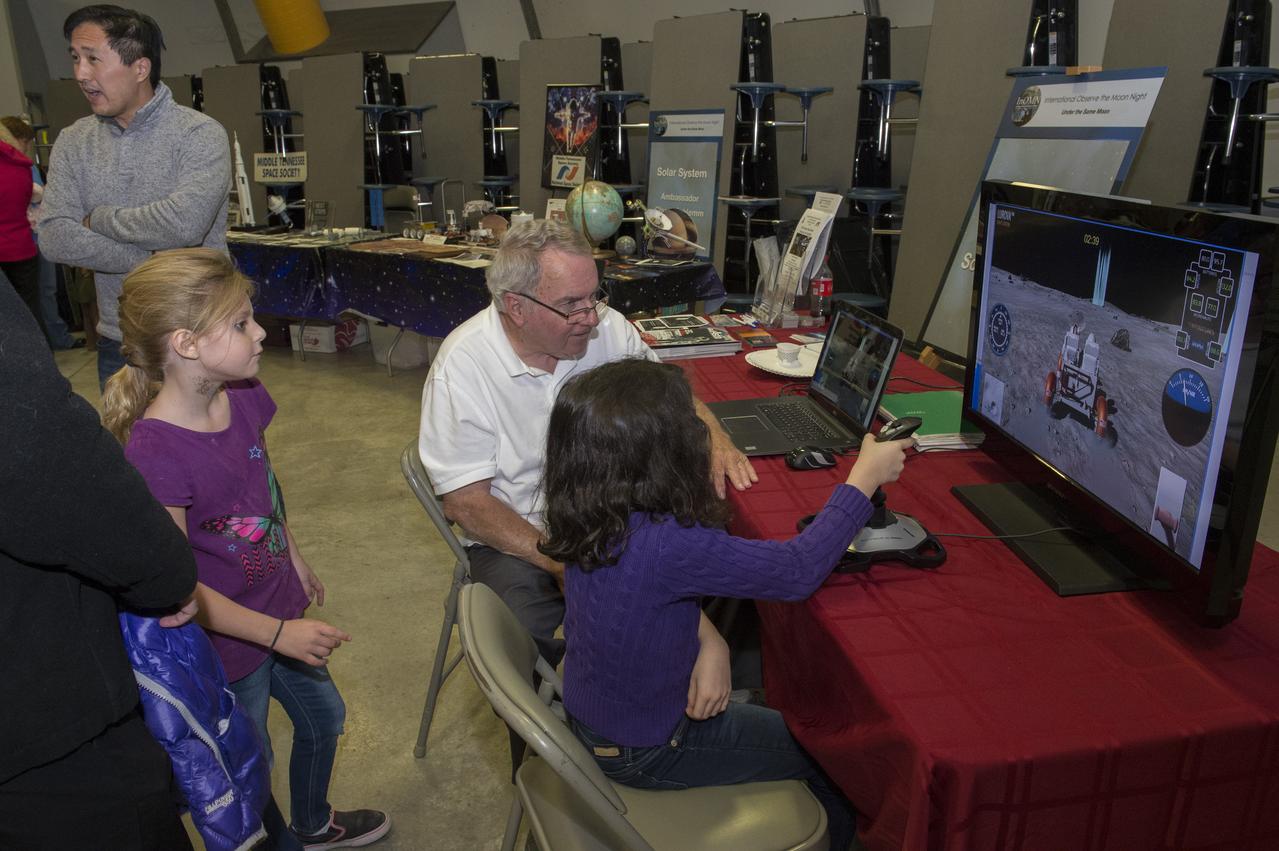
Marshall Space Flight Center retiree Ron Creel with young participant at LUROVA exhibit. The event, hosted by the Planetary Missions Program at NASA's Marshall Space Flight Center, encourages observation and appreciation of the Moon and its connection to NASA planetary science and exploration, as well as our cultural and personal connections to it. Children attending the event had the opportunity to participate in planetary, science-based, hands-on activities
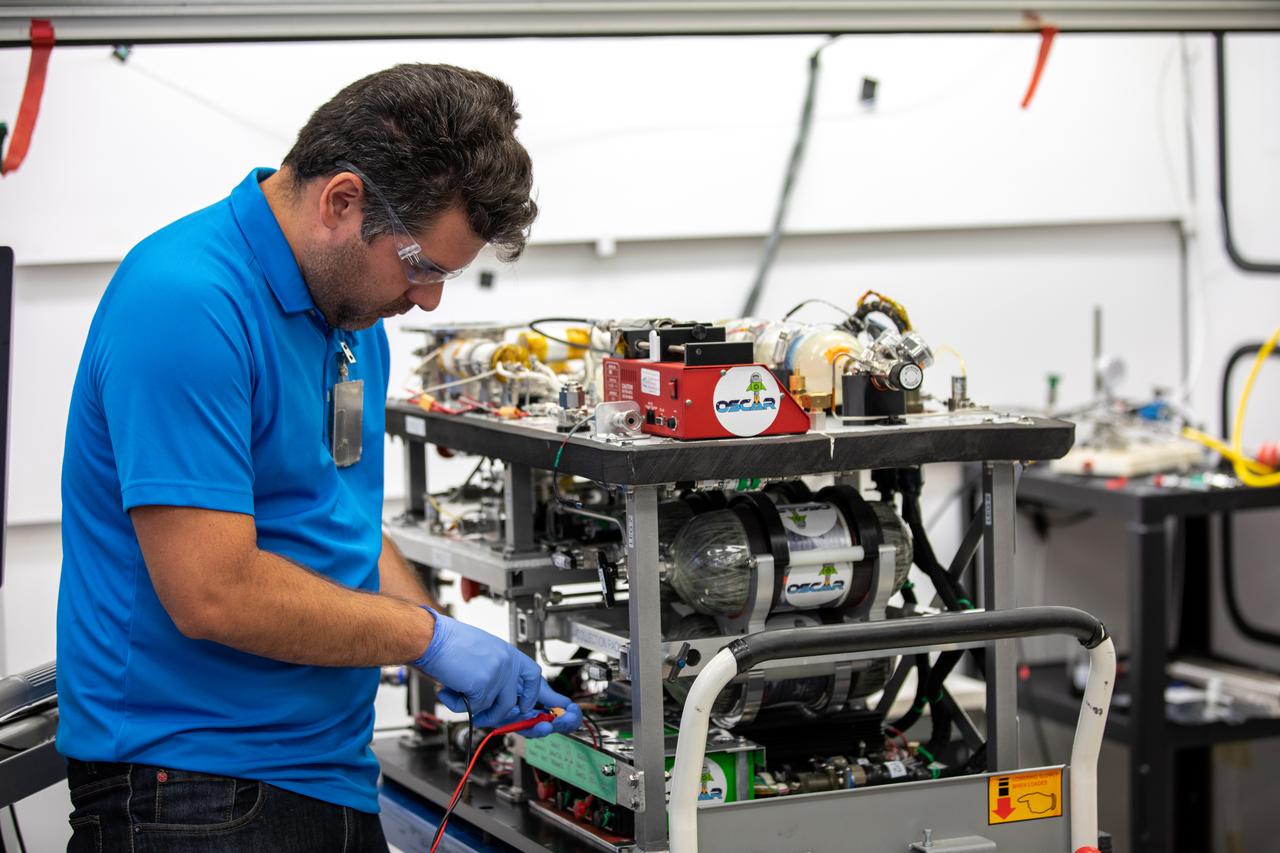
Jaime Toro, an aerospace/mechanical engineer and member of the Orbital Syngas Commodity Augmentation Reactor (OSCAR) team, performs ground testing at NASA’s Kennedy Space Center in Florida. The tests are in preparation for a scheduled suborbital flight test later this year, facilitated by NASA’s Flight Opportunities program. Begun as an Early Career Initiative project, OSCAR evaluates technology to make use of trash and human waste generated during long-duration spaceflight.
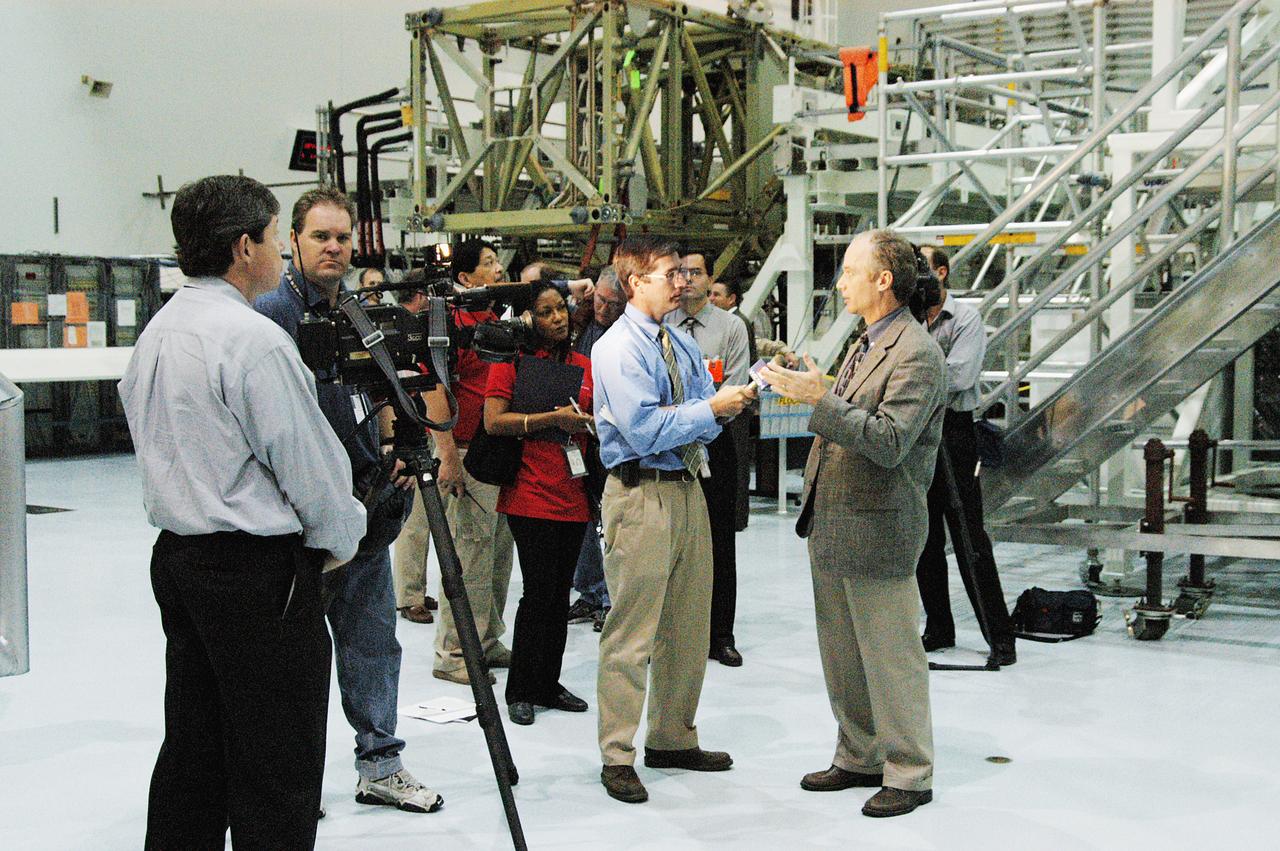
In the Space Station Processing Facility (SSPF), Charles J. Precourt, deputy manager of NASA's International Space Station Program, is interviewed by a reporter from a local television station. Representatives from the media were invited to commemorate the fifth anniversary of the launch of the first element of the Station with a tour of the facility and had the opportunity to see Space Station hardware that is being processed for deployment once the Space Shuttles return to flight. NASA and Boeing mission managers were on hand to talk about the various hardware elements currently being processed for flight.
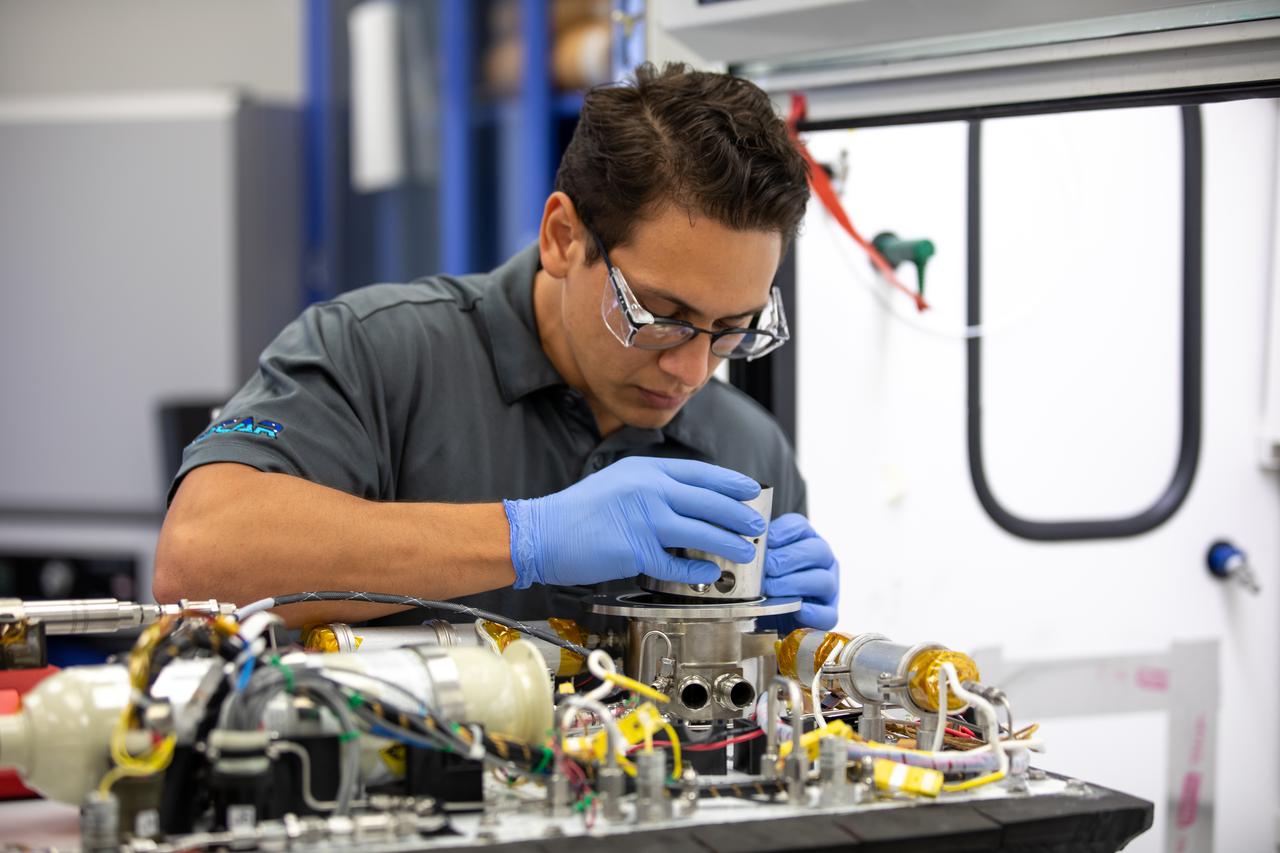
Ray Pitts, co-principal investigator for the Orbital Syngas Commodity Augmentation Reactor (OSCAR), performs ground testing at NASA’s Kennedy Space Center in Florida. The tests are in preparation for a scheduled suborbital flight test later this year, facilitated by NASA’s Flight Opportunities program. Begun as an Early Career Initiative project, OSCAR evaluates technology to make use of trash and human waste generated during long-duration spaceflight.
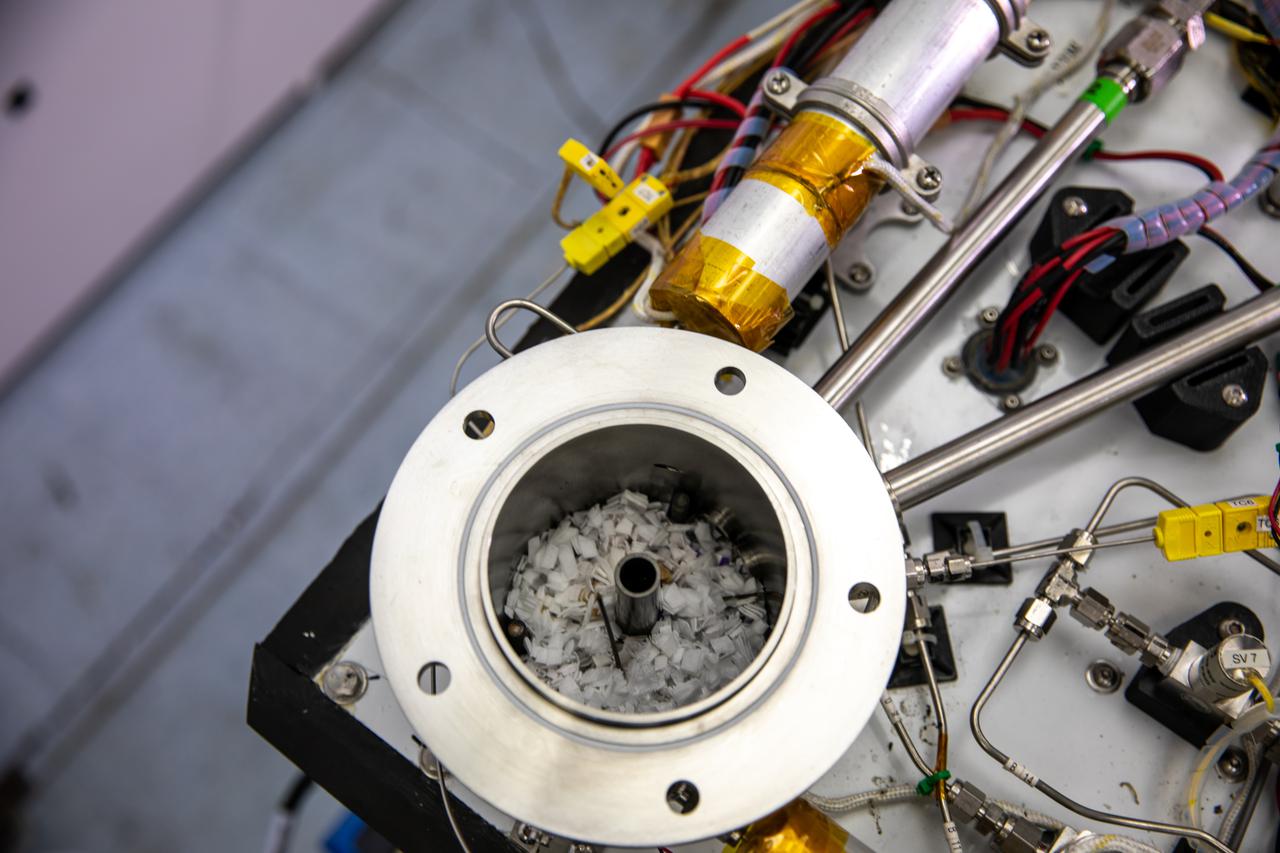
A member of the Orbital Syngas Commodity Augmentation Reactor (OSCAR) team performs ground testing at NASA’s Kennedy Space Center in Florida. The tests are in preparation for a scheduled suborbital flight test later this year, facilitated by NASA’s Flight Opportunities program. Begun as an Early Career Initiative project, OSCAR evaluates technology to make use of trash and human waste generated during long-duration spaceflight.
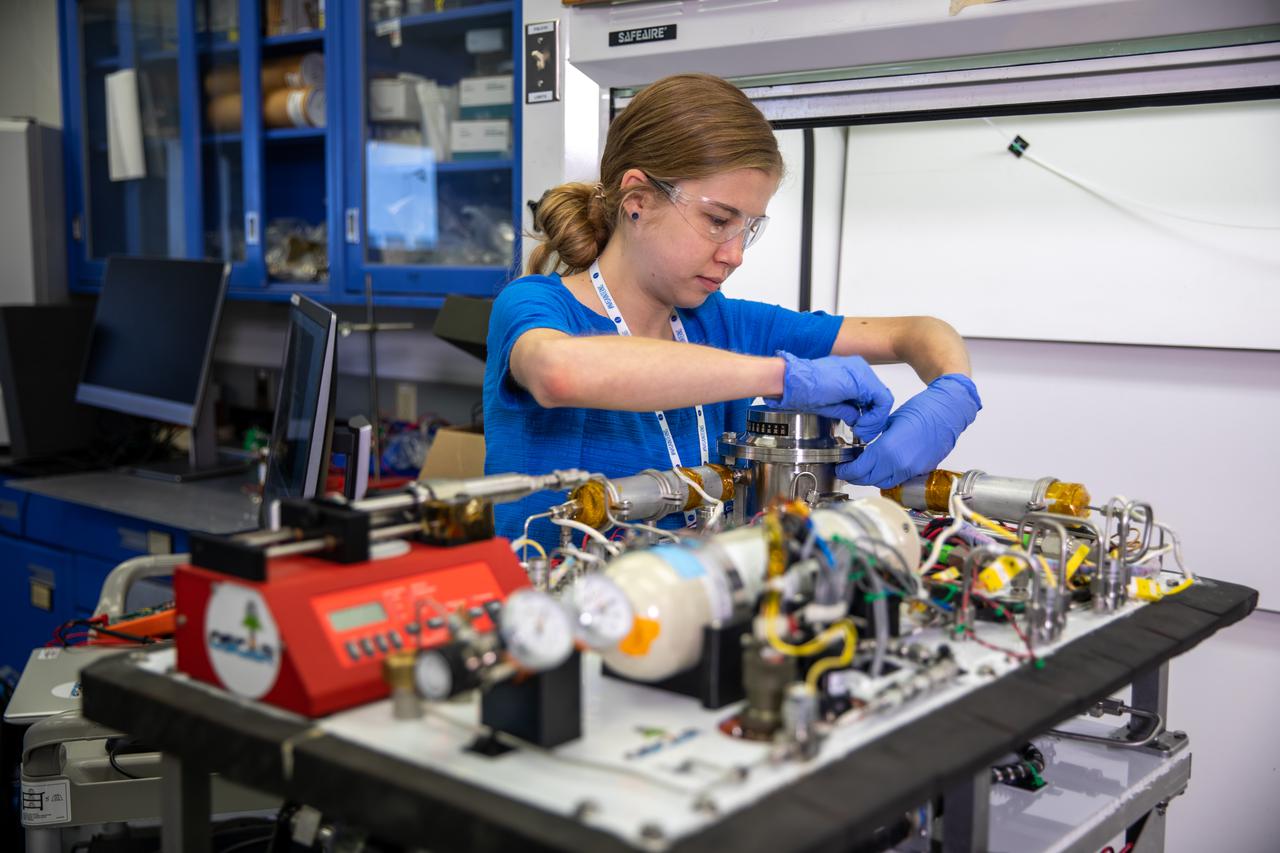
A member of the Orbital Syngas Commodity Augmentation Reactor (OSCAR) team performs ground testing at NASA’s Kennedy Space Center in Florida. The tests are in preparation for a scheduled suborbital flight test later this year, facilitated by NASA’s Flight Opportunities program. Begun as an Early Career Initiative project, OSCAR evaluates technology to make use of trash and human waste generated during long-duration spaceflight.
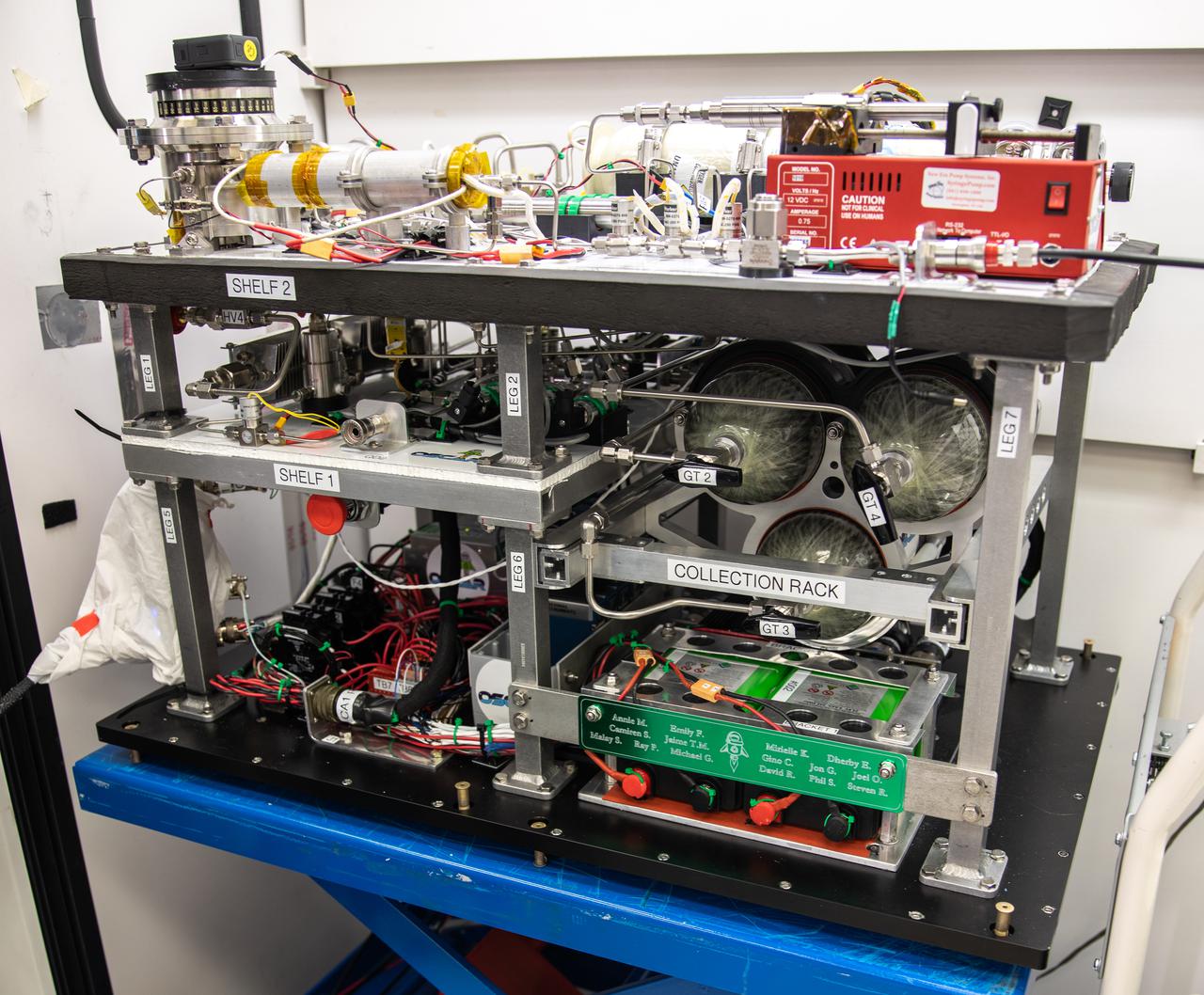
Members of the Orbital Syngas Commodity Augmentation Reactor (OSCAR) team perform ground testing at NASA’s Kennedy Space Center in Florida. The tests are in preparation for a scheduled suborbital flight test later this year, facilitated by NASA’s Flight Opportunities program. Begun as an Early Career Initiative project, OSCAR evaluates technology to make use of trash and human waste generated during long-duration spaceflight.
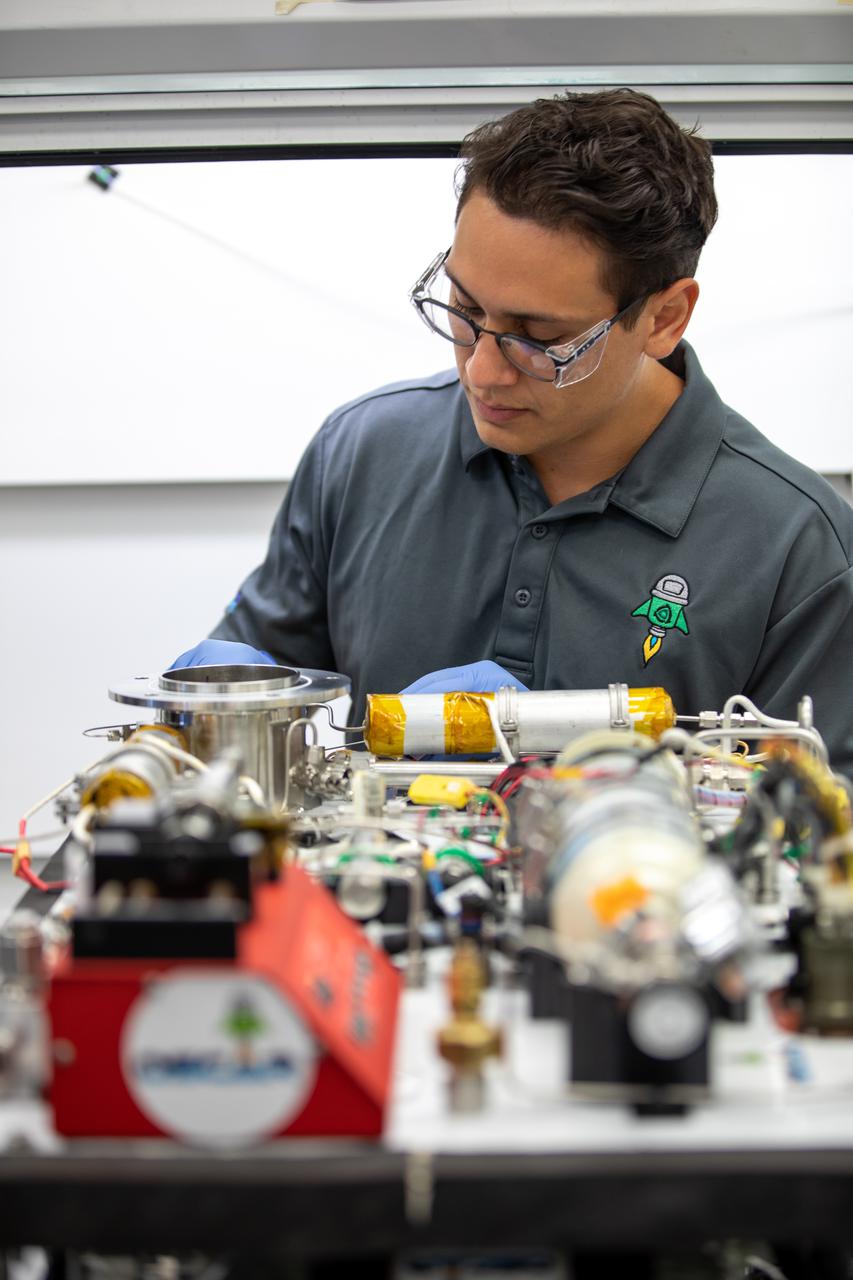
Ray Pitts, co-principal investigator for the Orbital Syngas Commodity Augmentation Reactor (OSCAR), performs ground testing at NASA’s Kennedy Space Center in Florida. The tests are in preparation for a scheduled suborbital flight test later this year, facilitated by NASA’s Flight Opportunities program. Begun as an Early Career Initiative project, OSCAR evaluates technology to make use of trash and human waste generated during long-duration spaceflight.
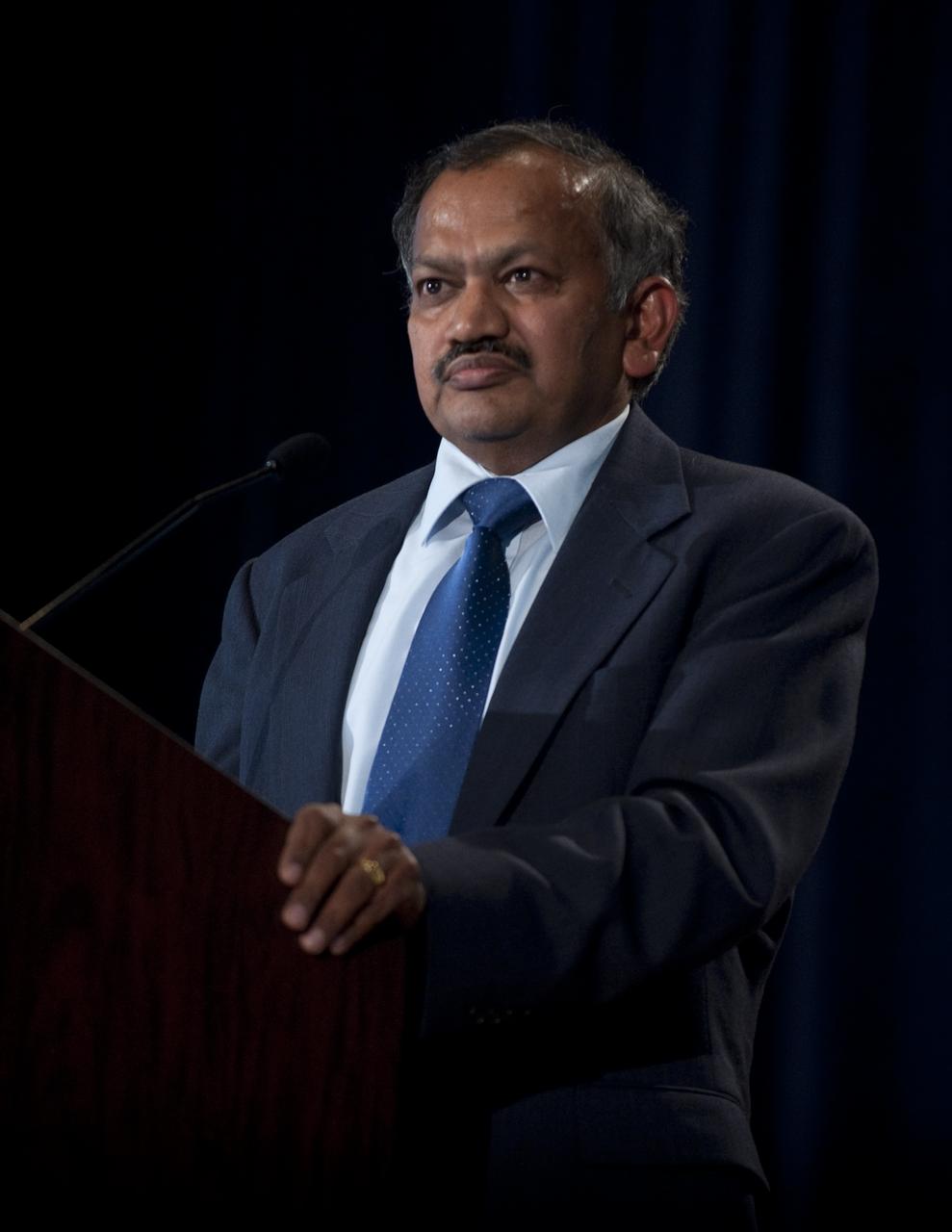
NASA's Program Executive for Flight Opportunities Program L.K. Kubendran speaks during the NASA New Space Technology Industry Forum being held at the University of Maryland in College Park on Tuesday, July 13, 2010. During the two-day event, speakers are focusing on the president's fiscal year 2011 budget request for NASA's new Space Technology Program. Representatives from industry, academia and the federal government are in attendance to discuss strategy, development and implementation of NASA's proposed new technology-enabled exploration. Photo Credit: (NASA/Bill Ingalls)
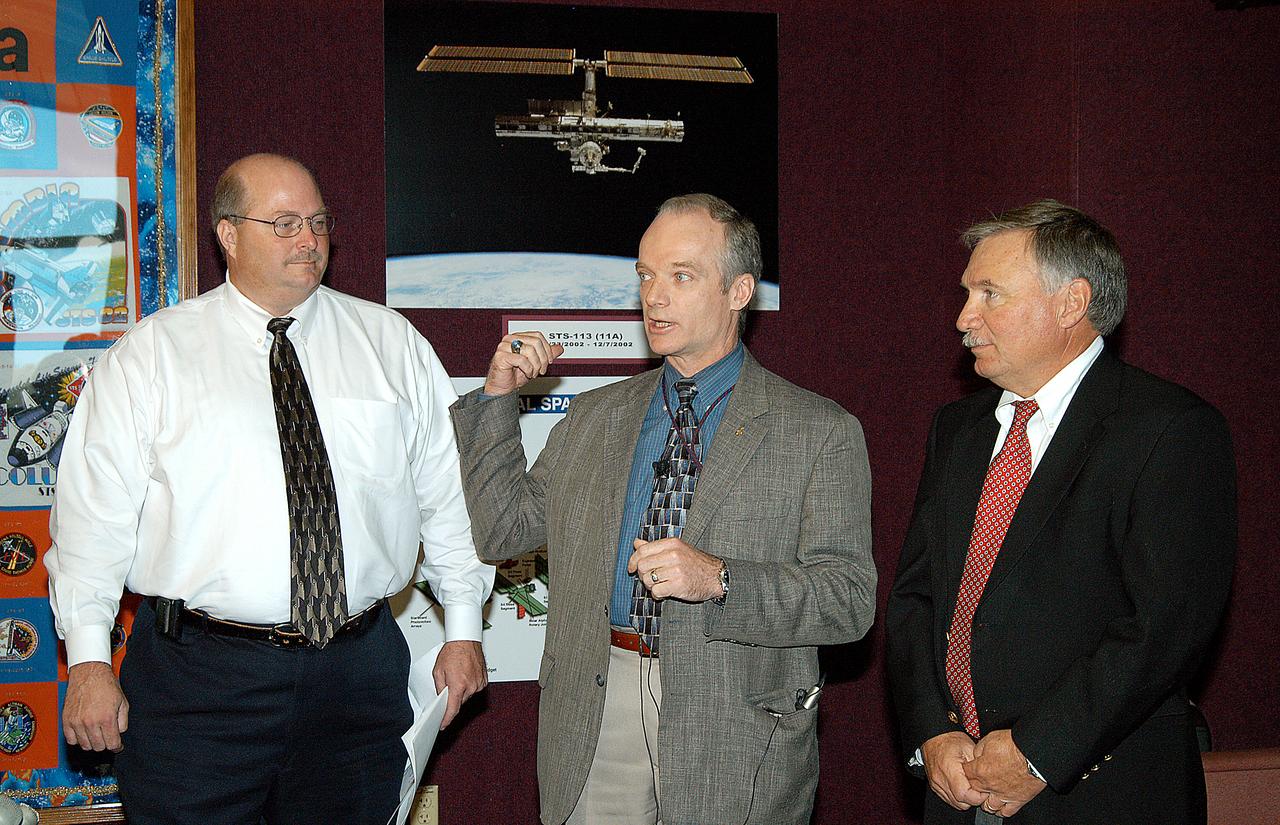
In the Space Station Processing Facility, (from left) David Bethay, Boeing/ISS Florida Operations; Charlie Precourt, deputy manager of the International Space Station Program; and Tip Talone, director of Space Station and Payload Processing, give an overview of Space Station processing for the media. Members of the media were invited to commemorate the fifth anniversary of the launch of the first element of the International Space Station by touring the Space Station Processing Facility (SSPF) at KSC. Reporters also had the opportunity to see Space Station hardware that is being processed for deployment once the Space Shuttles return to flight. The facility tour also included an opportunity for reporters to talk with NASA and Boeing mission managers about the various hardware elements currently being processed for flight.
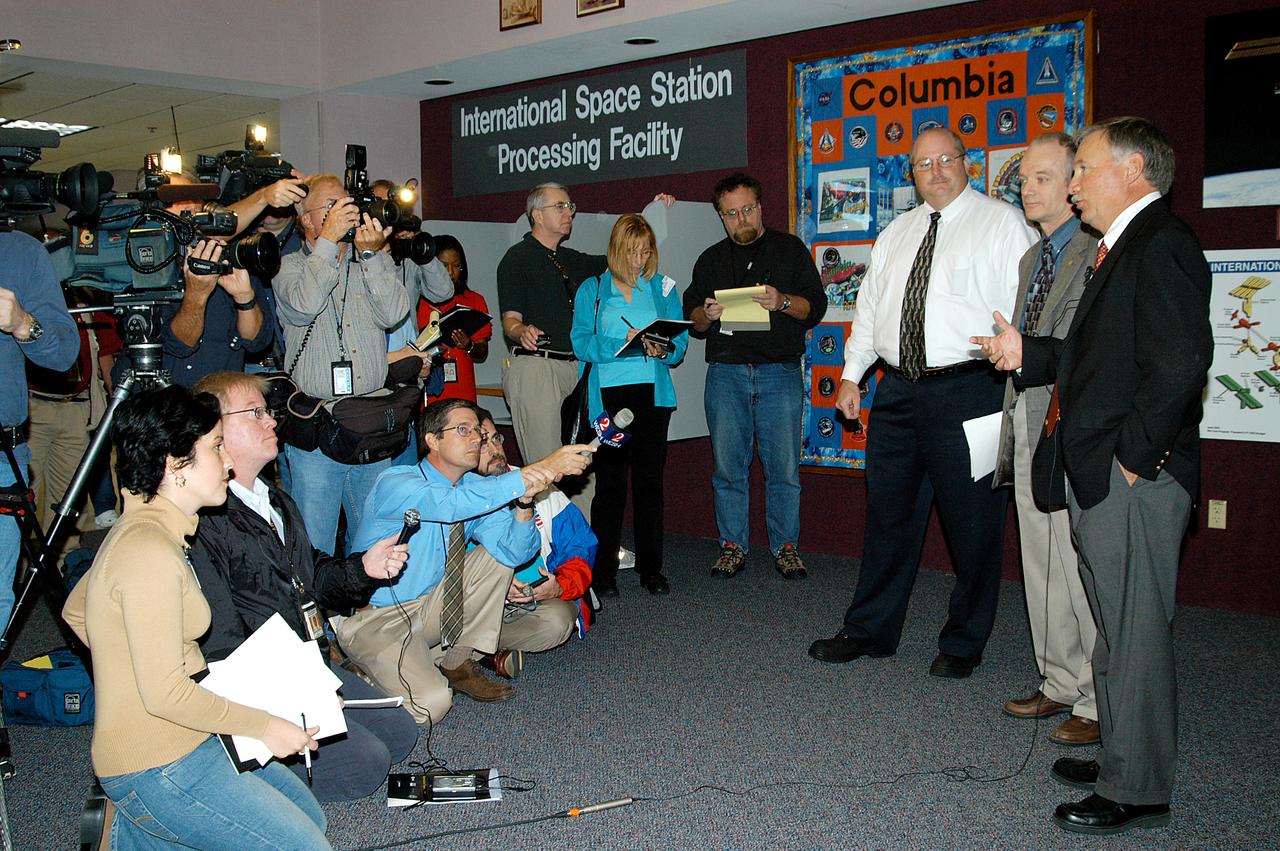
Members of the media (at left) were invited to commemorate the fifth anniversary of the launch of the first element of the International Space Station by touring the Space Station Processing Facility (SSPF) at KSC. Giving an overview of Space Station processing are, at right, David Bethay (white shirt), Boeing/ISS Florida Operations; Charlie Precourt, deputy manager of the International Space Station Program; and Tip Talone, director of Space Station and Payload Processing at KSC. Reporters also had the opportunity to see Space Station hardware that is being processed for deployment once the Space Shuttles return to flight. The facility tour also included an opportunity for reporters to talk with NASA and Boeing mission managers about the various hardware elements currently being processed for flight.
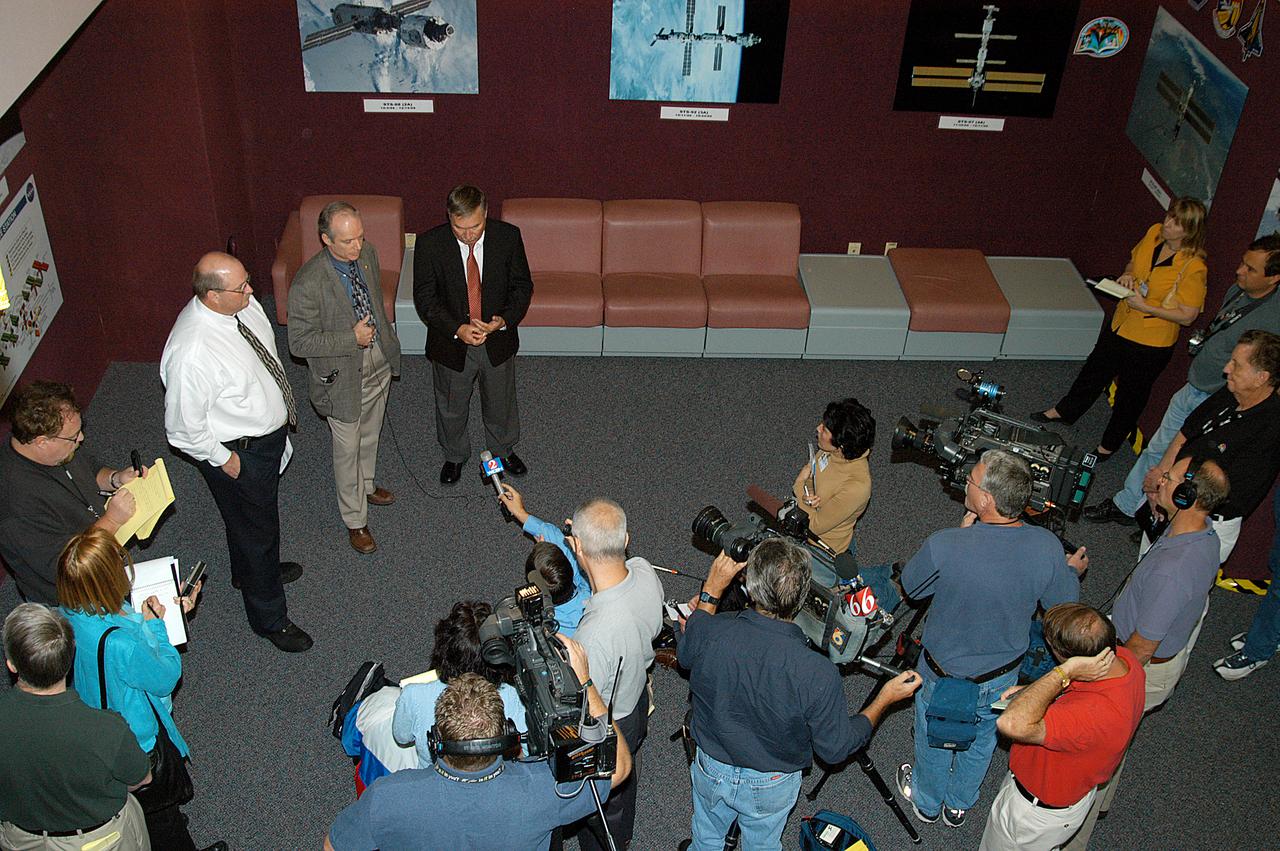
Members of the media (at right) were invited to commemorate the fifth anniversary of the launch of the International Space Station by touring the Space Station Processing Facility (SSPF) at KSC. Giving an overview of Space Station processing are, at left, David Bethay (white shirt), Boeing/ISS Florida Operations; Charlie Precourt, deputy manager of the International Space Station Program; and Tip Talone, director of Space Station and Payload Processing at KSC. Reporters also had the opportunity to see Space Station hardware that is being processed for deployment once the Space Shuttles return to flight. The facility tour also included an opportunity for reporters to talk with NASA and Boeing mission managers about the various hardware elements currently being processed for flight.

iss074e0556775 (May 7, 2026) --- NASA astronaut and Expedition 74 flight engineer Chris Williams speaks to students on the ground using the International Space Station's ham radio. The ARISS, or Amateur Radio on the International Space Station, program gives students around the world the opportunity to talk directly with crew members aboard the orbital outpost, inspiring them to pursue careers in science, technology, engineering, and math. Credit: NASA/Chris Williams
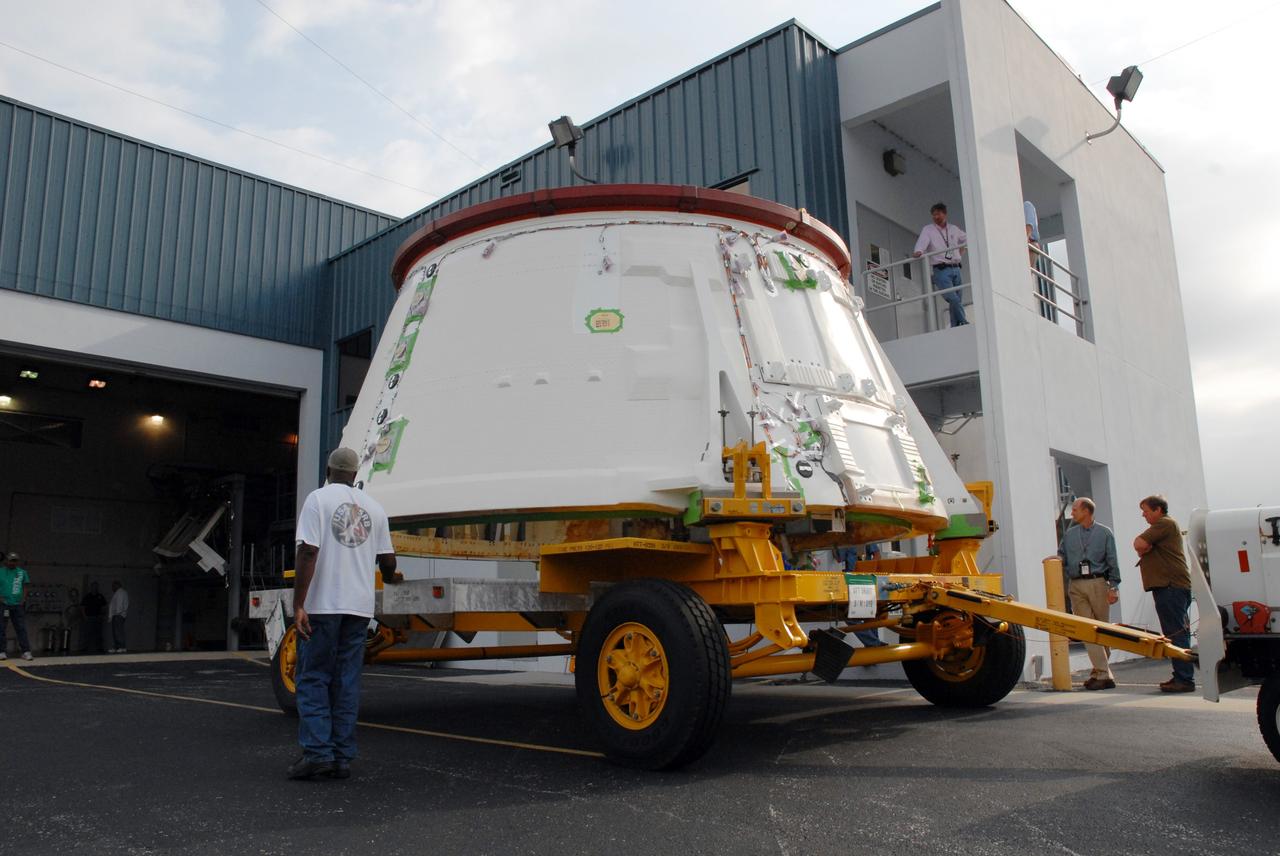
CAPE CANAVERAL, Fla. – – The Ares I-X aft skirt is moved into the aft skirt test facility behind the Assembly and Refurbishment Facility at NASA's Kennedy Space Center in Florida. The I-X flight will provide NASA an early opportunity to test and prove hardware, facilities and ground operations associated with Ares I, part of the Constellation Program to return men to the moon and beyond. Photo credit: NASA/Troy Cryder
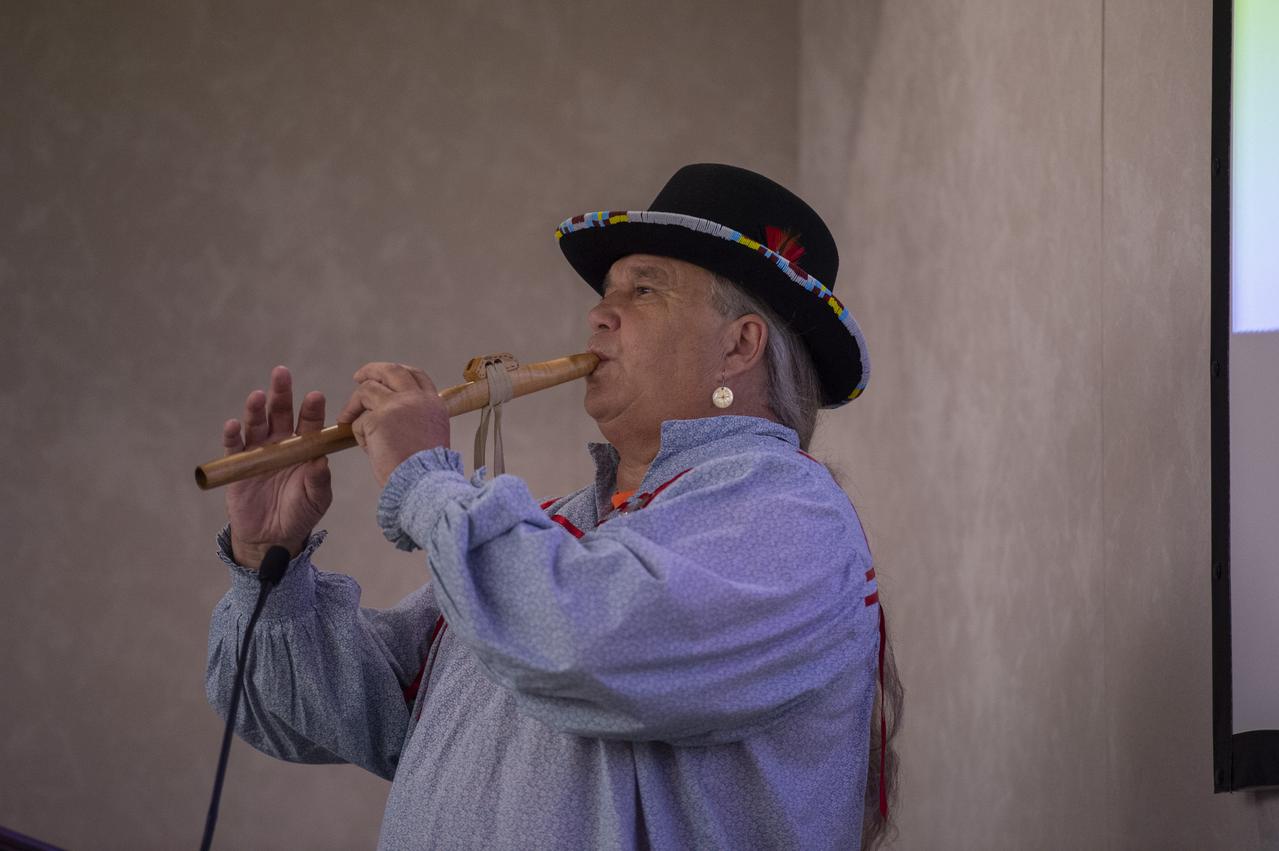
JIMMY YELLOWHORSE, FROM DECATUR, ALABAMA, PLAYS A HAND-CARVED FLUTE DURING THE NATIVE AMERICAN HERITAGE MONTH PROGRAM NOV. 13 AT NASA’S MARSHALL SPACE FLIGHT CENTER. YELLOWHORSE CRAFTED THE FLUTE HIMSELF FROM CEDAR, WALNUT AND MAHOGANY, USING TRADITIONAL CHEROKEE TECHNIQUES. THE ANNUAL OBSERVANCE, COORDINATED BY MARSHALL'S OFFICE OF DIVERSITY AND EQUAL OPPORTUNITY, HONORS THE CULTURE AND CONTRIBUTIONS OF NATIVE AMERICANS THROUGH STORYTELLING AND ETHNIC FOOD SAMPLINGS.
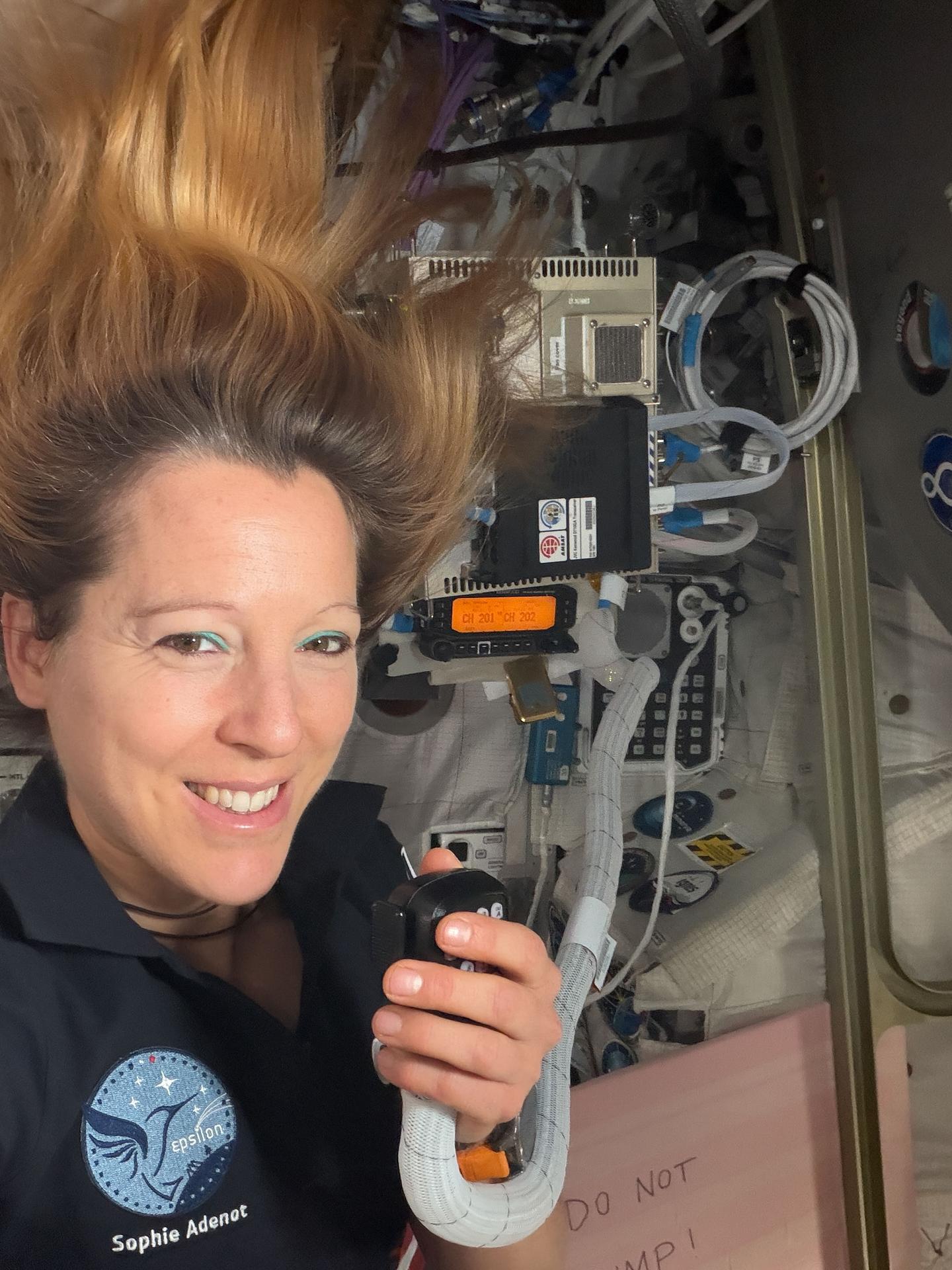
iss074e0545538 (April 18, 2026) --- ESA (European Space Agency) astronaut and Expedition 74 flight engineer Sophie Adenot speaks to students on the ground using the International Space Station's ham radio. The ARISS, or Amateur Radio on the International Space Station, program gives students around the world the opportunity to talk directly with crew members aboard the orbital outpost, inspiring them to pursue careers in science, technology, engineering, and math. Credit: ESA/Sophie Adenot
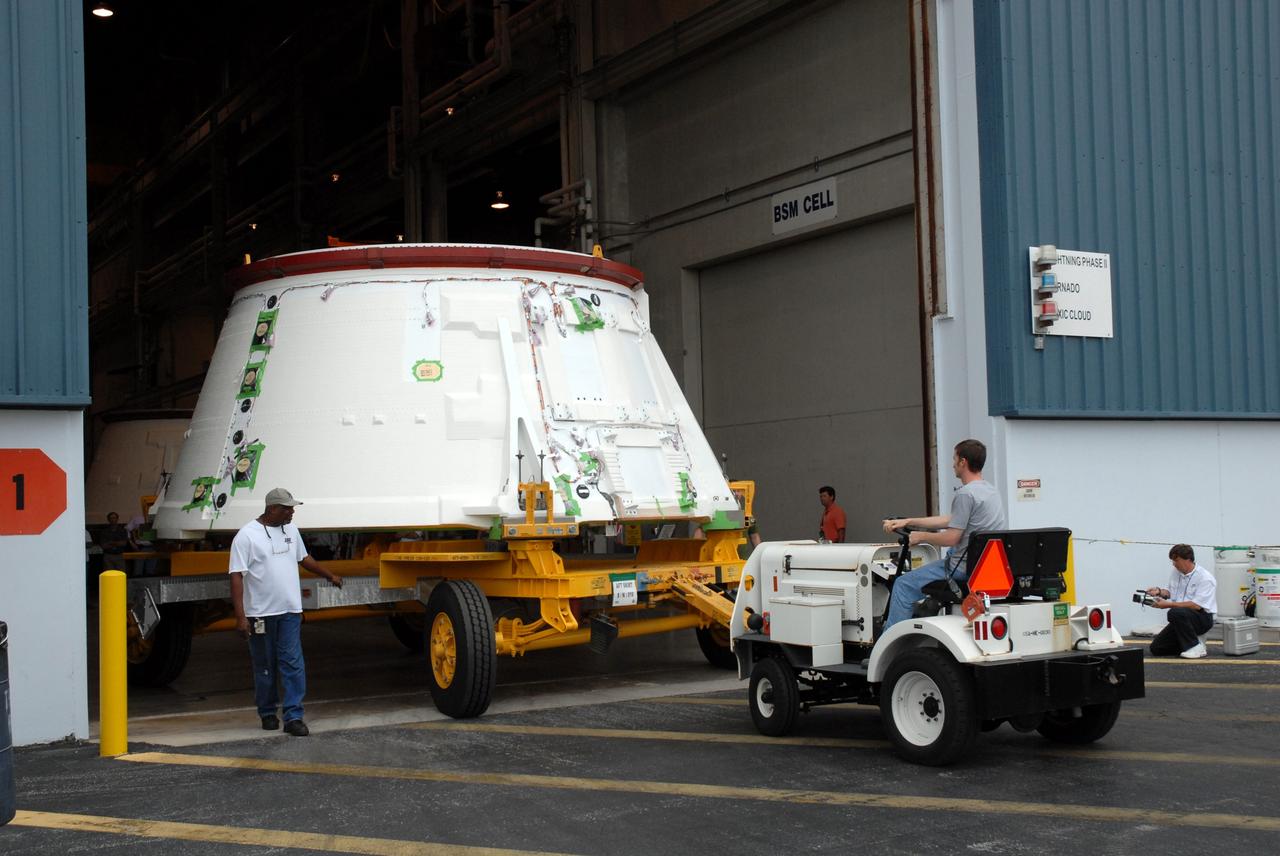
CAPE CANAVERAL, Fla. – The Ares I-X aft skirt is moved to the aft skirt test facility behind in the Assembly and Refurbishment Facility at NASA's Kennedy Space Center in Florida. The I-X flight will provide NASA an early opportunity to test and prove hardware, facilities and ground operations associated with Ares I, part of the Constellation Program to return men to the moon and beyond. Photo credit: NASA/Troy Cryder
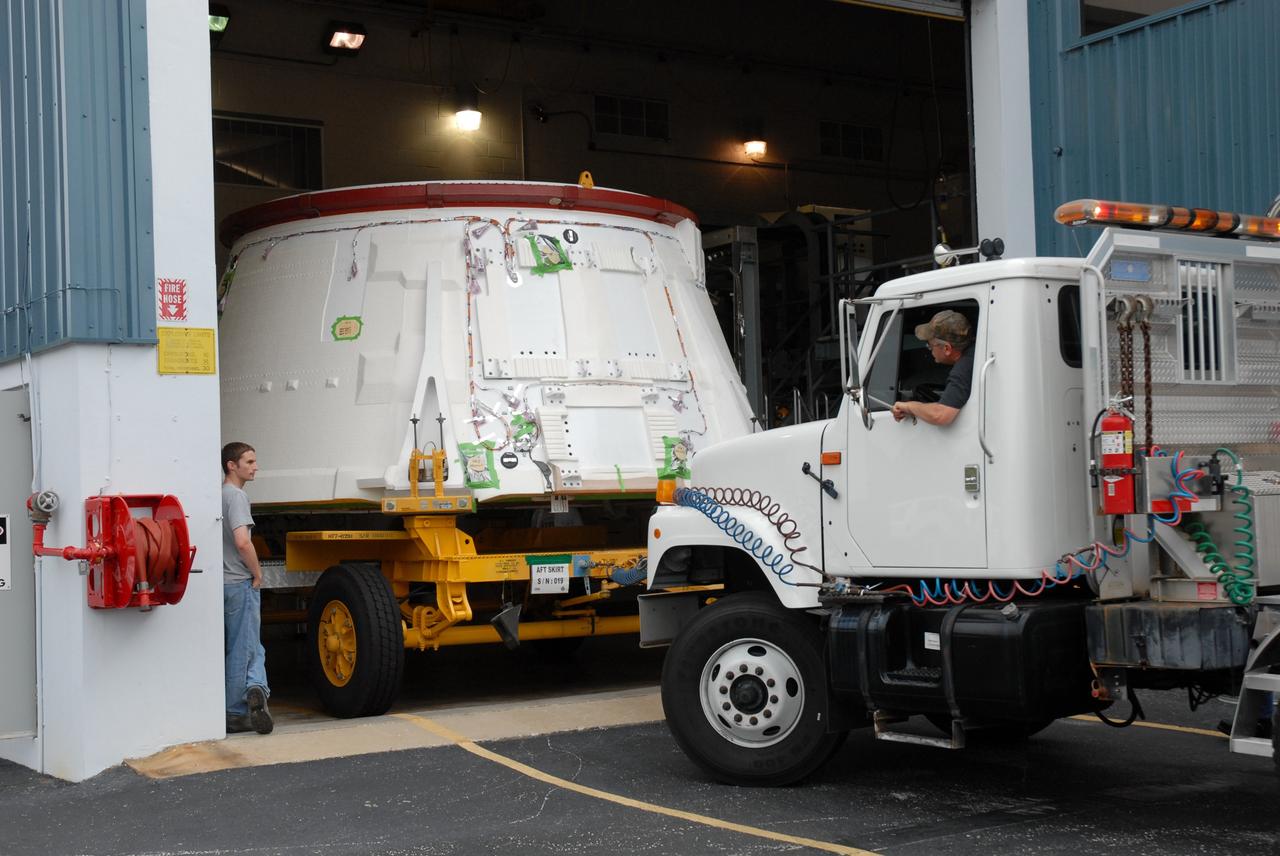
CAPE CANAVERAL, Fla. – The Ares I-X aft skirt is moved into the aft skirt test facility behind the Assembly and Refurbishment Facility at NASA's Kennedy Space Center in Florida. The I-X flight will provide NASA an early opportunity to test and prove hardware, facilities and ground operations associated with Ares I, part of the Constellation Program to return men to the moon and beyond. Photo credit: NASA/Troy Cryder
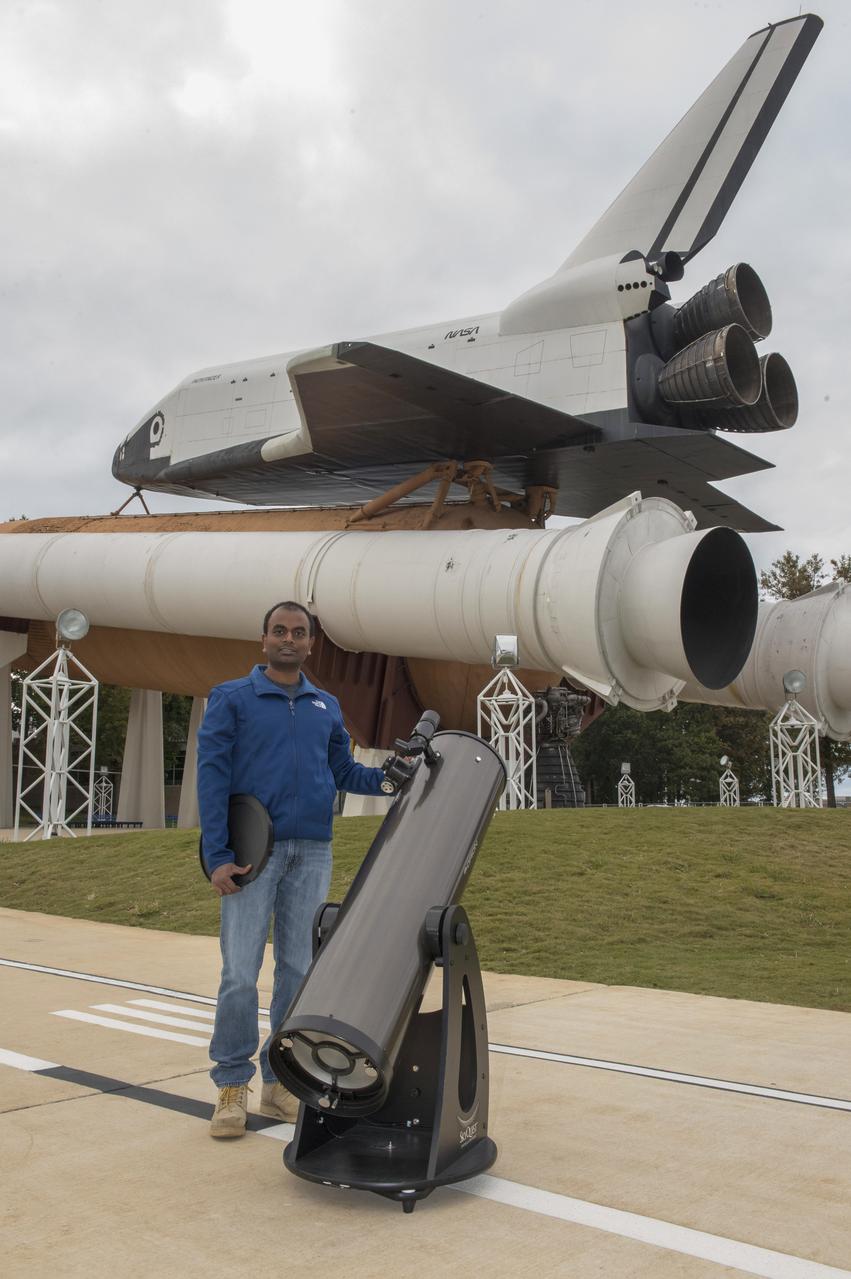
Marshall engineer Naveen Vetcha with his telescope. The event, hosted by the Planetary Missions Program at NASA's Marshall Space Flight Center, encourages observation and appreciation of the Moon and its connection to NASA planetary science and exploration, as well as our cultural and personal connections to it. Children attending the event had the opportunity to participate in planetary, science-based, hands-on activities
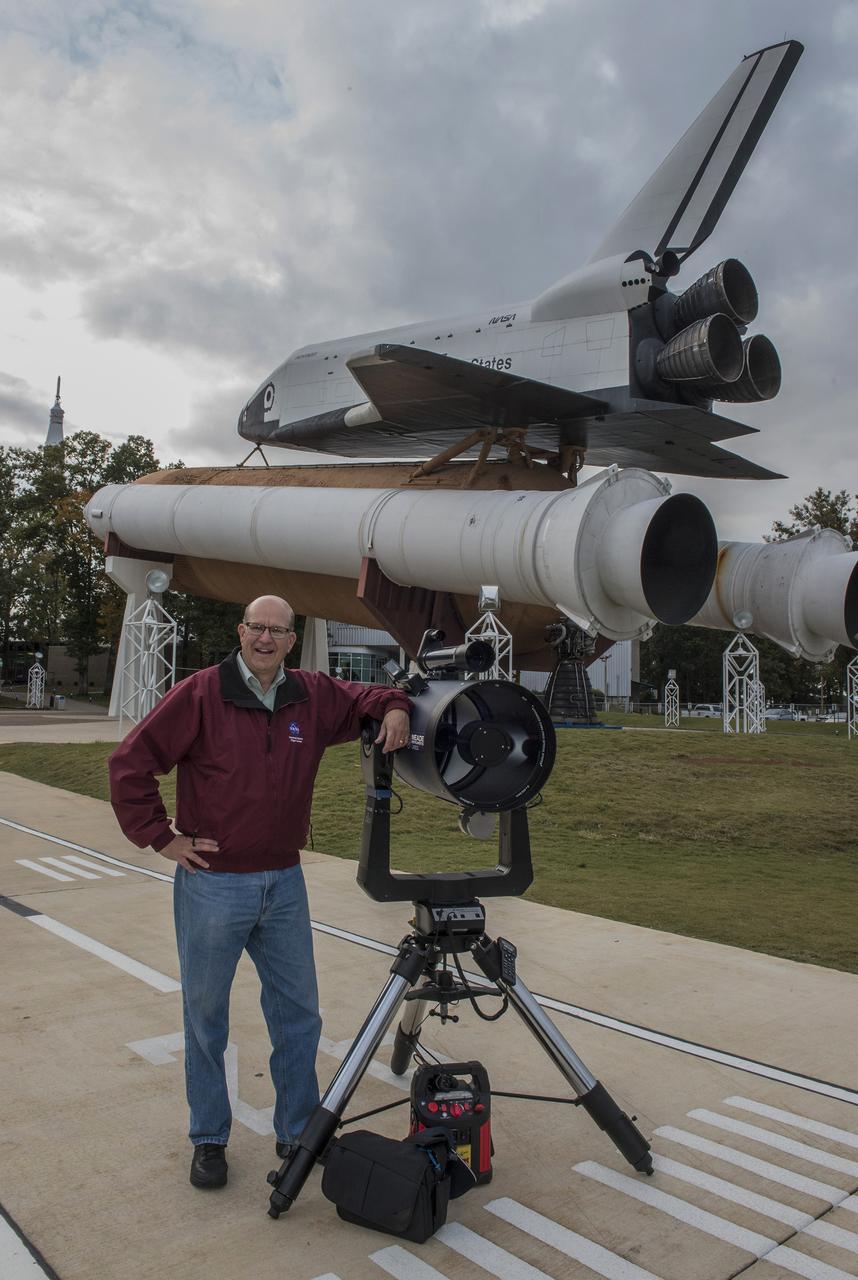
Volunteer Billy Hix with his telescope at International Observe the Moon Night. The event, hosted by the Planetary Missions Program at NASA's Marshall Space Flight Center, encourages observation and appreciation of the Moon and its connection to NASA planetary science and exploration, as well as our cultural and personal connections to it. Children attending the event had the opportunity to participate in planetary, science-based, hands-on activities
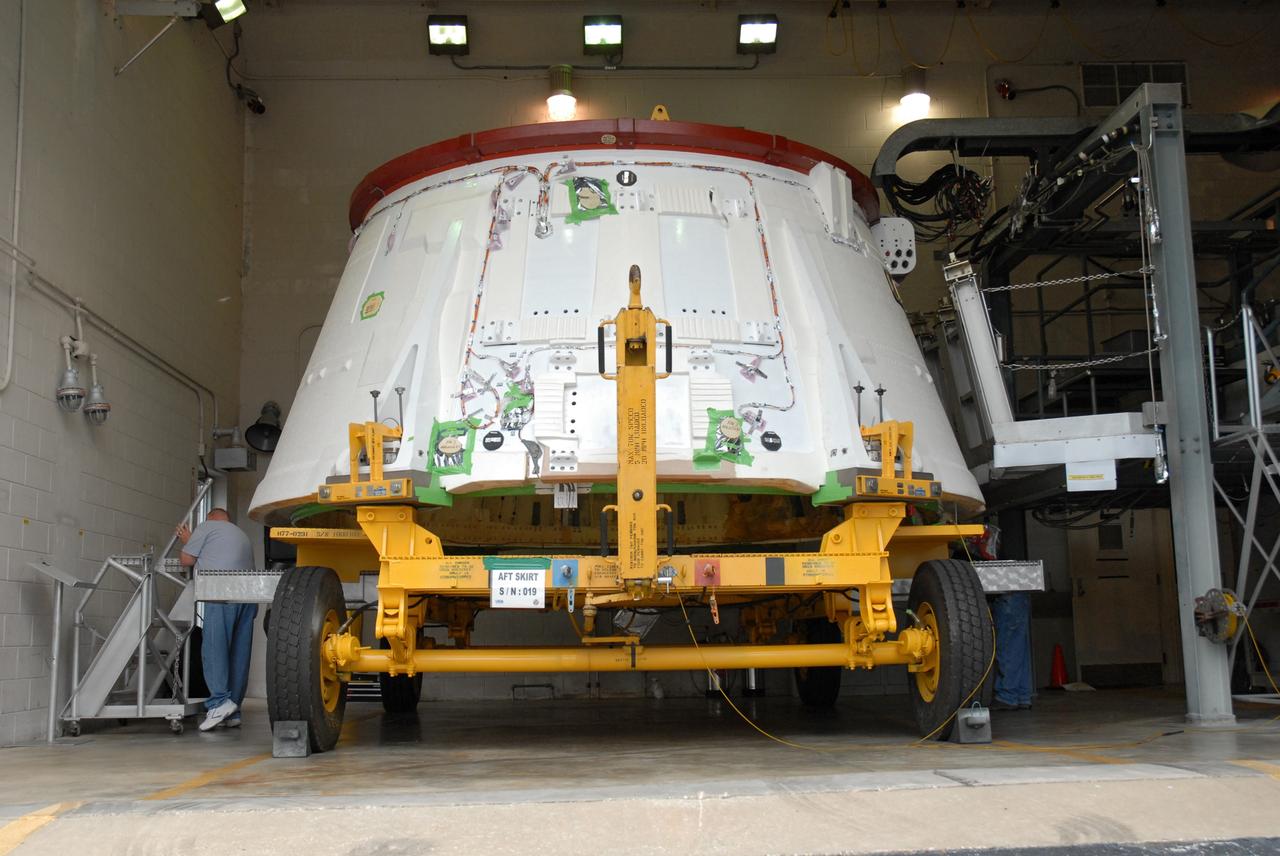
CAPE CANAVERAL, Fla. – The Ares I-X aft skirt is moved into the aft skirt test facility behind the Assembly and Refurbishment Facility at NASA's Kennedy Space Center in Florida. The I-X flight will provide NASA an early opportunity to test and prove hardware, facilities and ground operations associated with Ares I, part of the Constellation Program to return men to the moon and beyond. Photo credit: NASA/Troy Cryder
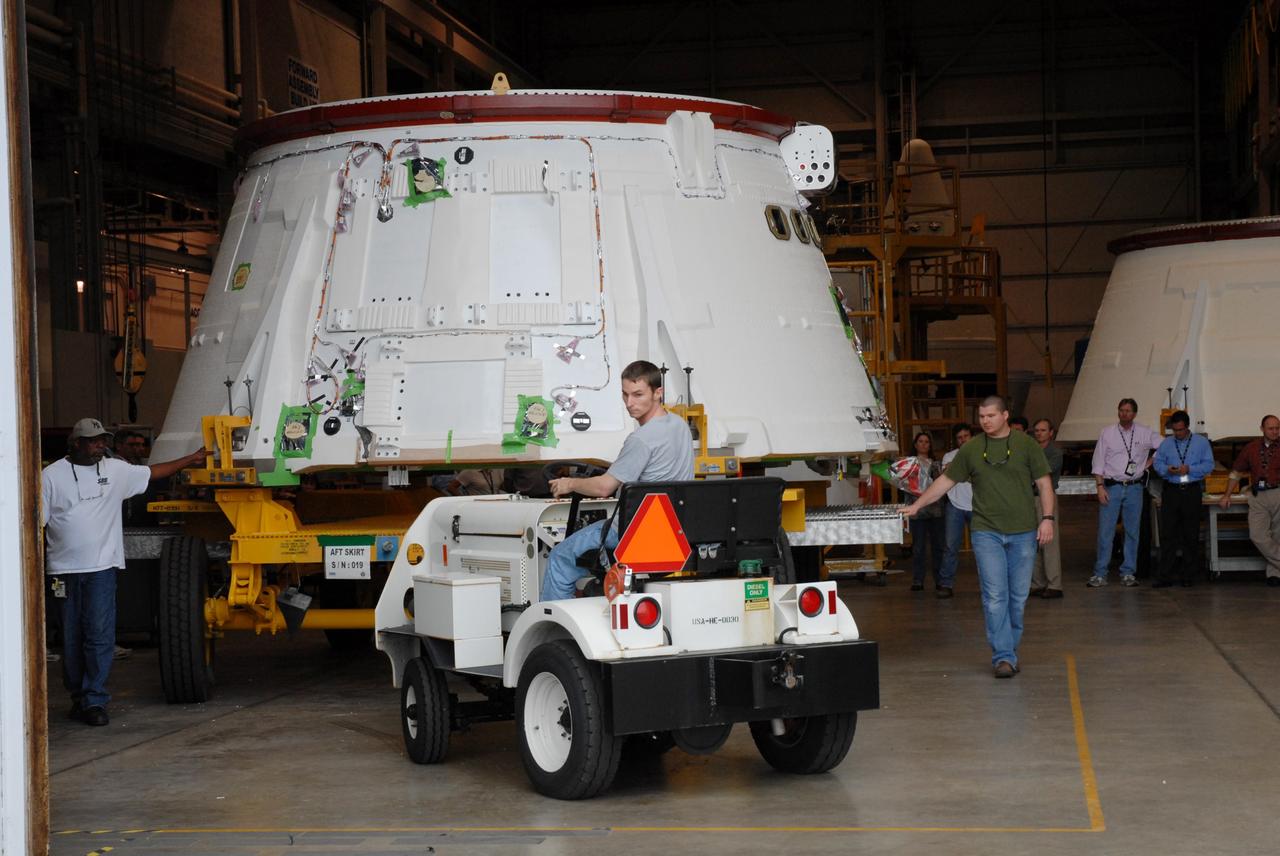
CAPE CANAVERAL, Fla. – The Ares I-X aft skirt is moved out of the Assembly and Refurbishment Facility to the test building nearby at NASA's Kennedy Space Center in Florida for testing. The I-X flight will provide NASA an early opportunity to test and prove hardware, facilities and ground operations associated with Ares I, part of the Constellation Program to return men to the moon and beyond. Photo credit: NASA/Troy Cryder
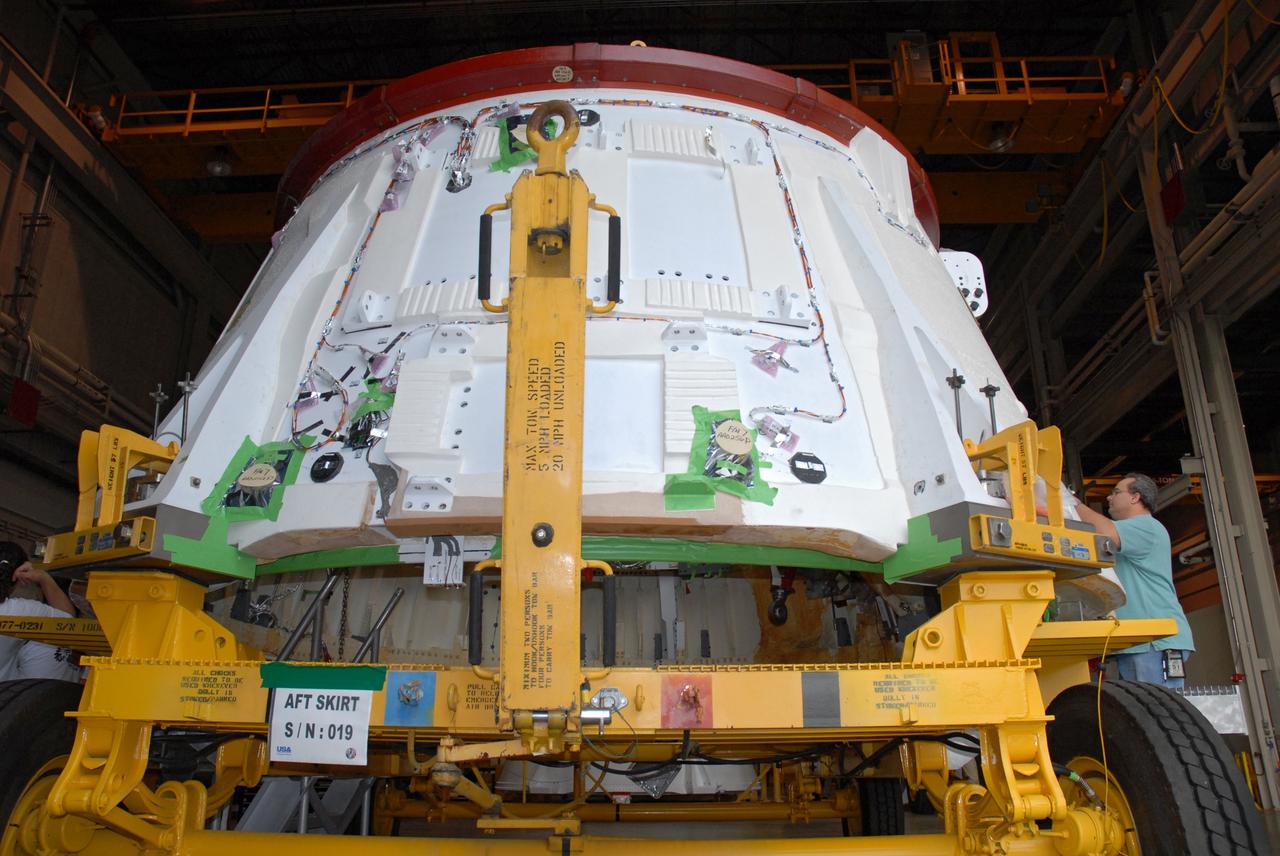
CAPE CANAVERAL, Fla. – The Ares I-X aft skirt is prepared for a move to the aft skirt test facility behind the Assembly and Refurbishment Facility at NASA's Kennedy Space Center in Florida. The I-X flight will provide NASA an early opportunity to test and prove hardware, facilities and ground operations associated with Ares I, part of the Constellation Program to return men to the moon and beyond. Photo credit: NASA/Troy Cryder
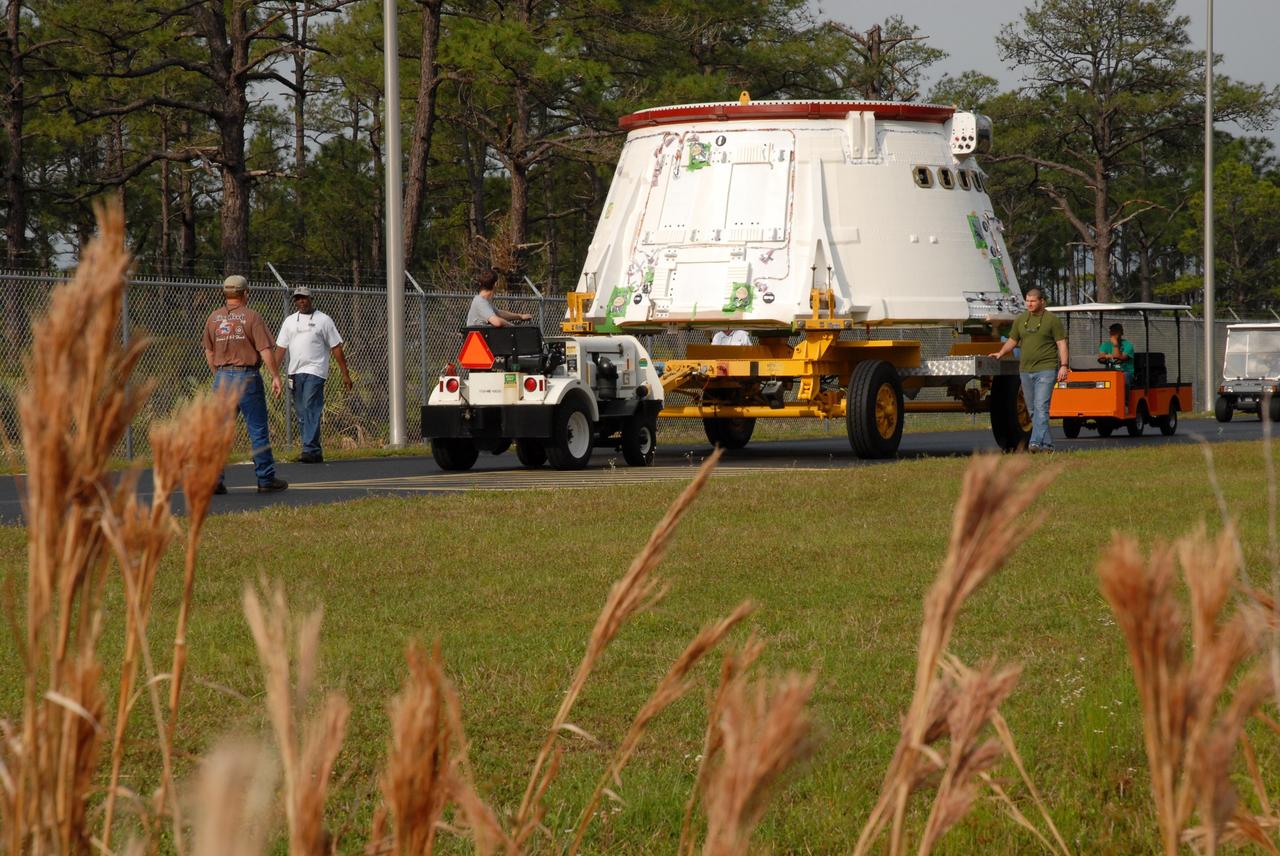
CAPE CANAVERAL, Fla. – The Ares I-X aft skirt is moved to the aft skirt test facility behind the Assembly and Refurbishment Facility. The I-X flight will provide NASA an early opportunity to test and prove hardware, facilities and ground operations associated with Ares I, part of the Constellation Program to return men to the moon and beyond. Photo credit: NASA/Troy Cryder
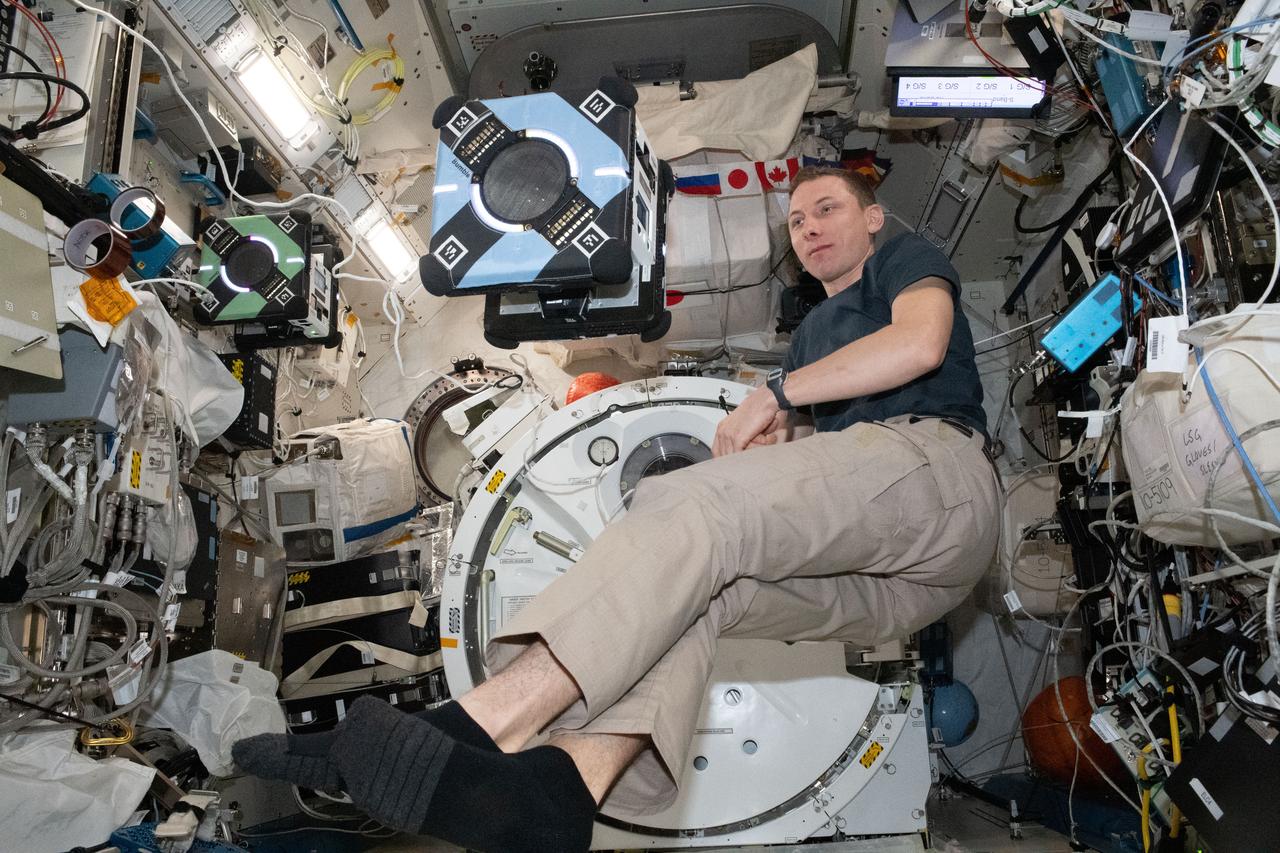
iss069e008378 (May 2, 2023) --- NASA astronaut and Expedition 69 Flight Engineer Woody Hoburg tests one of the space station’s Astrobee robots for Zero Robotics, a student competition to write software to control the free-flying robots. The program promotes teamwork and awareness of space career opportunities and students learn about artificial intelligence, systems engineering, and human-robot collaboration.
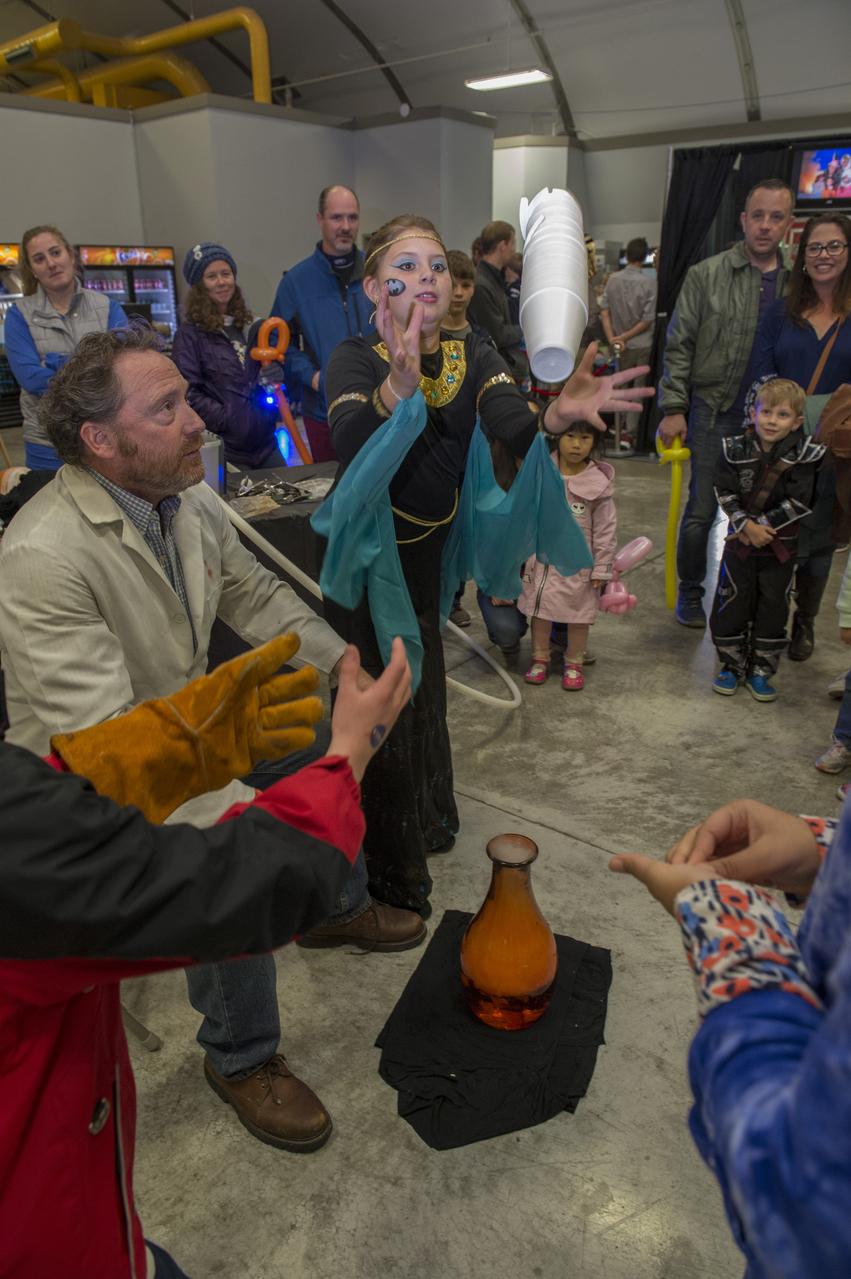
A volunteer assists an eager participant at International Observe the Moon Night Oct. 28 at the U.S. Space & Rocket Center. The event, hosted by the Planetary Missions Program at NASA's Marshall Space Flight Center, encourages observation and appreciation of the Moon and its connection to NASA planetary science and exploration, as well as our cultural and personal connections to it. Children attending the event had the opportunity to participate in planetary, science-based, hands-on activities
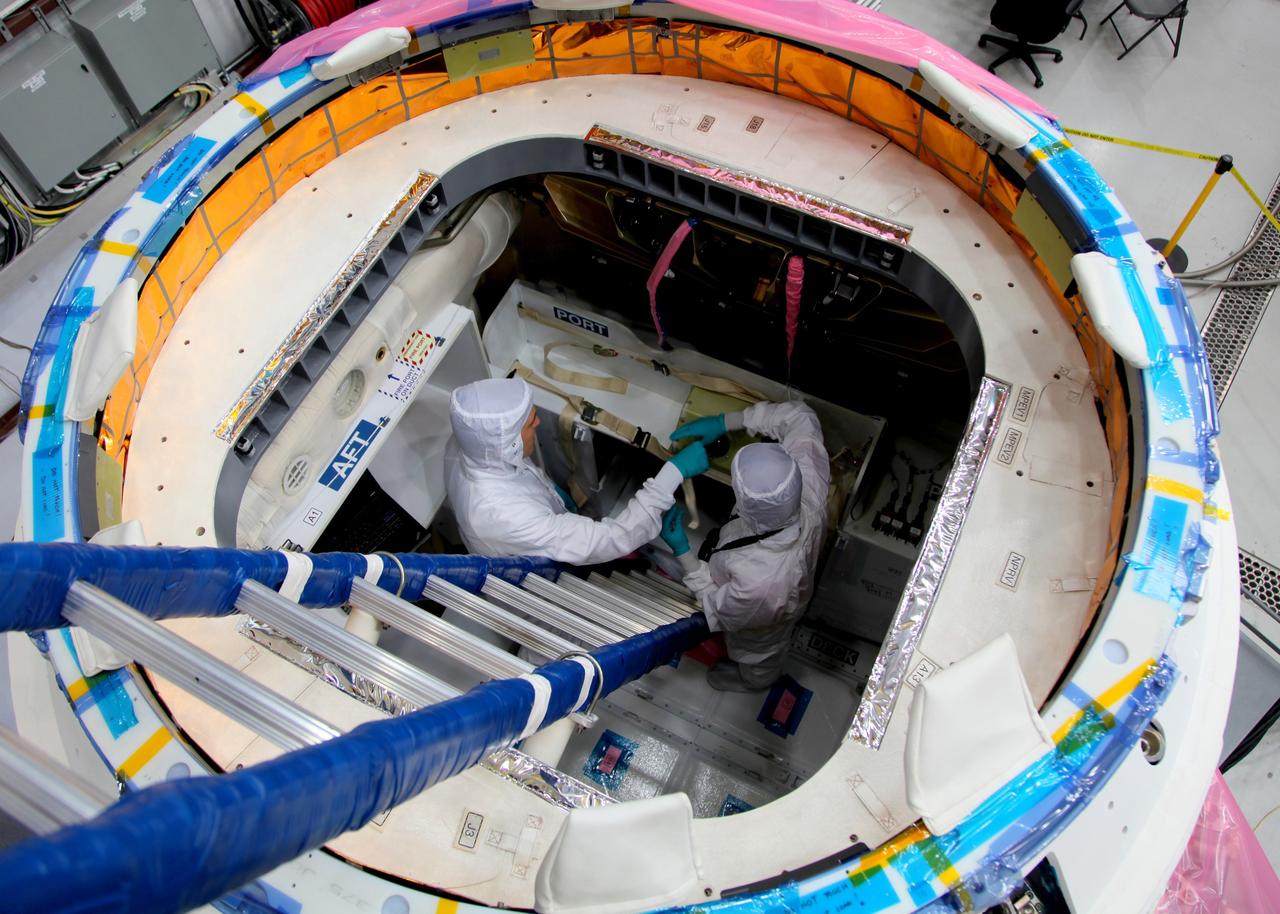
CAPE CANAVERAL, Fla. -- NASA astronaut Megan McArthur, right, takes part in a crew equipment interface test CEIT in order to become familiar with the Space Exploration Technologies Corp. SpaceX Dragon capsule prior to its scheduled April 30 liftoff. The interface test inside a processing hangar at Cape Canaveral Air Force Station's Space Launch Complex-40 was part of prelaunch preparations for the company's next demonstration test flight for NASA's Commercial Orbital Transportation Services COTS program. Under COTS, NASA has partnered with two private companies to launch cargo safely to the International Space Station. Jason Tenenbaum, with SpaceX Mission Operations, left, also takes part in the test. CEIT is an activity that dates back to NASA's Space Shuttle Program, providing astronauts on Earth an opportunity to work with the actual hardware they would use in space. This exercise gave astronauts and engineers the opportunity to assess the compatibility of the equipment and systems aboard Dragon with the procedures to be used by the flight crew and flight controllers once the capsule is berthed at the space station. For more information, visit www.nasa.gov/exploration/commercial/cargo/spacex_index.html. Image courtesy: SpaceX/Paul Bonness
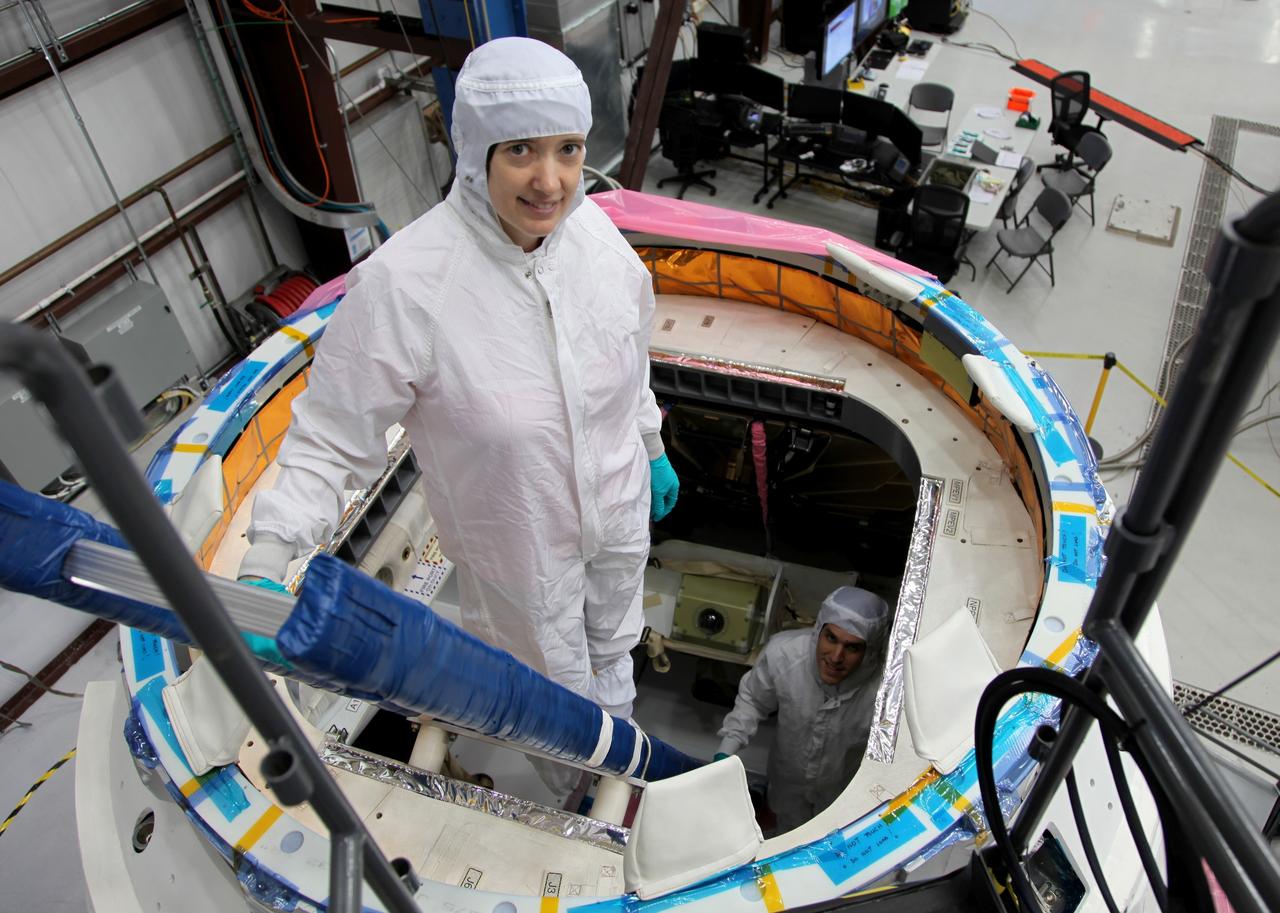
CAPE CANAVERAL, Fla. -- NASA astronaut Megan McArthur, foreground, takes part in a crew equipment interface test CEIT in order to become familiar with the Space Exploration Technologies Corp. SpaceX Dragon capsule prior to its scheduled April 30 liftoff. The interface test inside a processing hangar at Cape Canaveral Air Force Station's Space Launch Complex-40 was part of prelaunch preparations for the company's next demonstration test flight for NASA's Commercial Orbital Transportation Services COTS program. Under COTS, NASA has partnered with two private companies to launch cargo safely to the International Space Station. Jason Tenenbaum, with SpaceX Mission Operations, background, also takes part in the test. CEIT is an activity that dates back to NASA's Space Shuttle Program, providing astronauts on Earth an opportunity to work with the actual hardware they would use in space. This exercise gave astronauts and engineers the opportunity to assess the compatibility of the equipment and systems aboard Dragon with the procedures to be used by the flight crew and flight controllers once the capsule is berthed at the space station. For more information, visit www.nasa.gov/exploration/commercial/cargo/spacex_index.html. Image courtesy: SpaceX/Paul Bonness
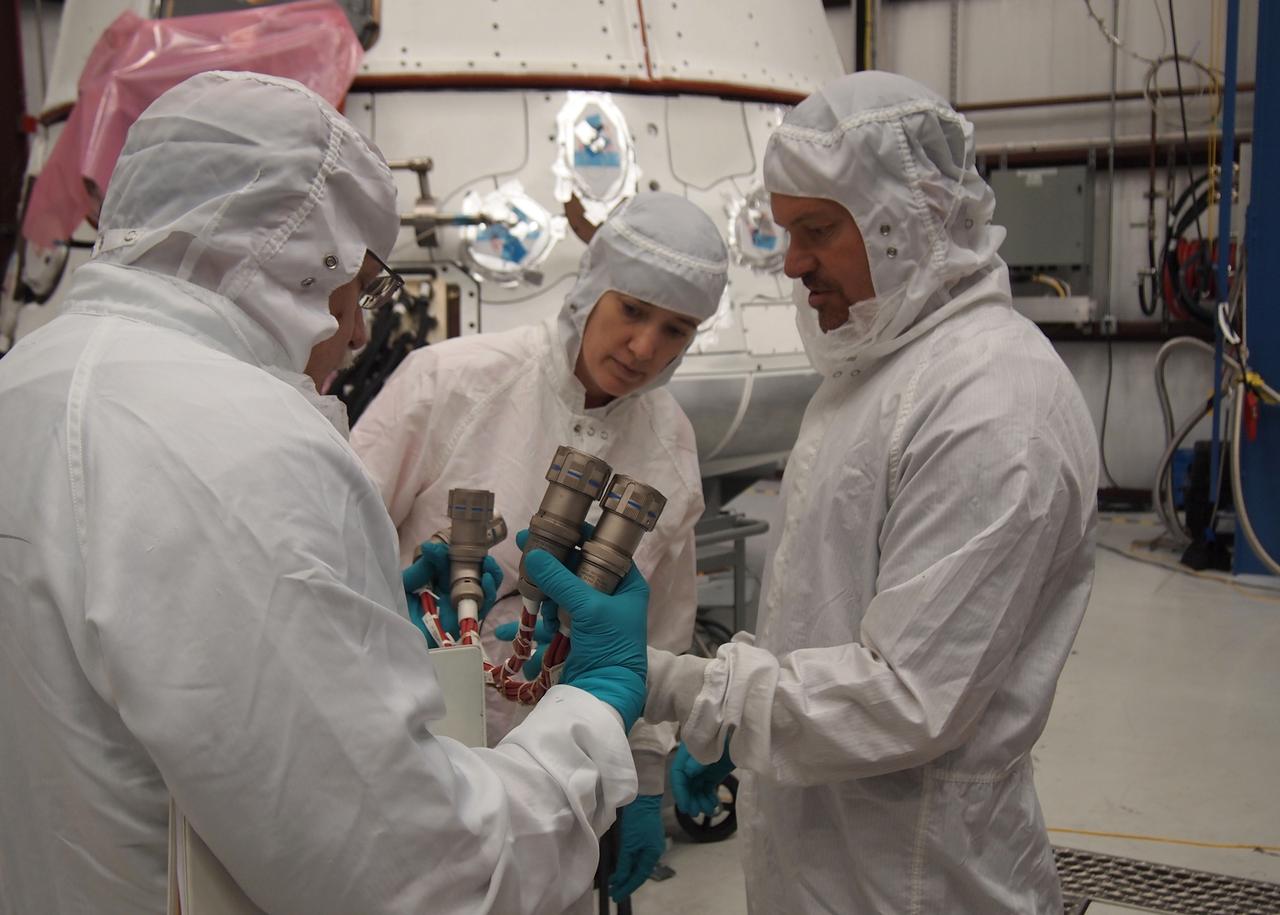
CAPE CANAVERAL, Fla. -- NASA astronaut Megan McArthur, center, takes part in a crew equipment interface test CEIT in order to become familiar with the Space Exploration Technologies Corp. SpaceX Dragon capsule prior to its scheduled April 30 liftoff. The interface test inside a processing hangar at Cape Canaveral Air Force Station's Space Launch Complex-40 was part of prelaunch preparations for the company's next demonstration test flight for NASA's Commercial Orbital Transportation Services COTS program. Under COTS, NASA has partnered with two private companies to launch cargo safely to the International Space Station. United Space Alliance technicians, Dan Nelson, left, and Chris Hardcastle, right, show McArthur two power connectors that are similar to the ones astronauts will use to provide power to Dragon once at the station. CEIT is an activity that dates back to NASA's Space Shuttle Program, providing astronauts on Earth an opportunity to work with the actual hardware they would use in space. This exercise gave astronauts and engineers the opportunity to assess the compatibility of the equipment and systems aboard Dragon with the procedures to be used by the flight crew and flight controllers once the capsule is berthed at the space station. For more information, visit www.nasa.gov/exploration/commercial/cargo/spacex_index.html. Image courtesy: SpaceX/Paul Bonness
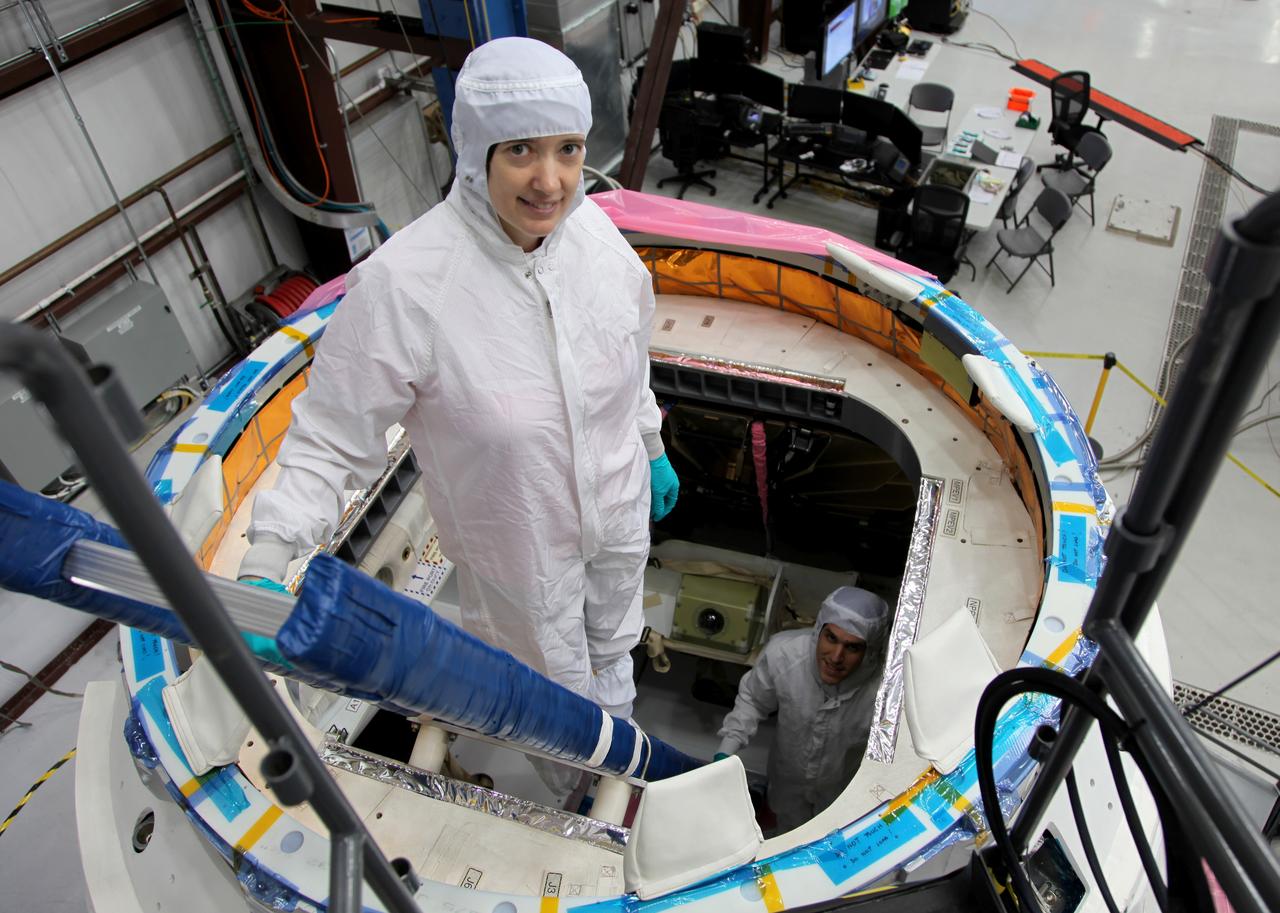
CAPE CANAVERAL, Fla. -- NASA astronaut Megan McArthur, foreground, takes part in a crew equipment interface test CEIT in order to become familiar with the Space Exploration Technologies Corp. SpaceX Dragon capsule prior to its scheduled April 30 liftoff. The interface test inside a processing hangar at Cape Canaveral Air Force Station's Space Launch Complex-40 was part of prelaunch preparations for the company's next demonstration test flight for NASA's Commercial Orbital Transportation Services COTS program. Under COTS, NASA has partnered with two private companies to launch cargo safely to the International Space Station. Jason Tenenbaum, with SpaceX Mission Operations, background, also takes part in the test. CEIT is an activity that dates back to NASA's Space Shuttle Program, providing astronauts on Earth an opportunity to work with the actual hardware they would use in space. This exercise gave astronauts and engineers the opportunity to assess the compatibility of the equipment and systems aboard Dragon with the procedures to be used by the flight crew and flight controllers once the capsule is berthed at the space station. For more information, visit www.nasa.gov/exploration/commercial/cargo/spacex_index.html. Image courtesy: SpaceX/Paul Bonness
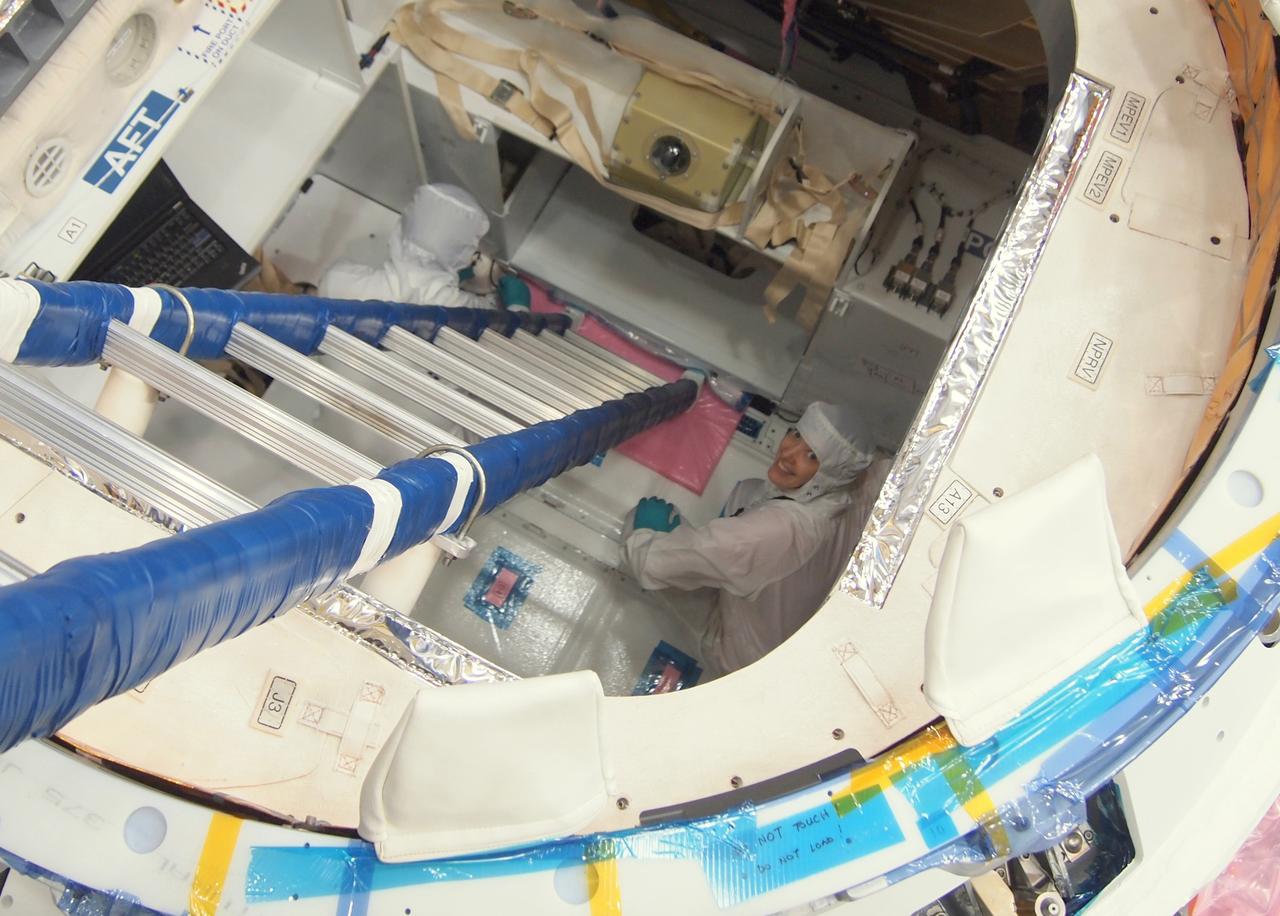
CAPE CANAVERAL, Fla. -- NASA astronaut Megan McArthur, right, takes part in a crew equipment interface test CEIT in order to become familiar with the Space Exploration Technologies Corp. SpaceX Dragon capsule prior to its scheduled April 30 liftoff. The interface test inside a processing hangar at Cape Canaveral Air Force Station's Space Launch Complex-40 was part of prelaunch preparations for the company's next demonstration test flight for NASA's Commercial Orbital Transportation Services COTS program. Under COTS, NASA has partnered with two private companies to launch cargo safely to the International Space Station. Jason Tenenbaum, with SpaceX Mission Operations, left, also takes part in the test. CEIT is an activity that dates back to NASA's Space Shuttle Program, providing astronauts on Earth an opportunity to work with the actual hardware they would use in space. This exercise gave astronauts and engineers the opportunity to assess the compatibility of the equipment and systems aboard Dragon with the procedures to be used by the flight crew and flight controllers once the capsule is berthed at the space station. For more information, visit www.nasa.gov/exploration/commercial/cargo/spacex_index.html. Image courtesy: SpaceX/Paul Bonness
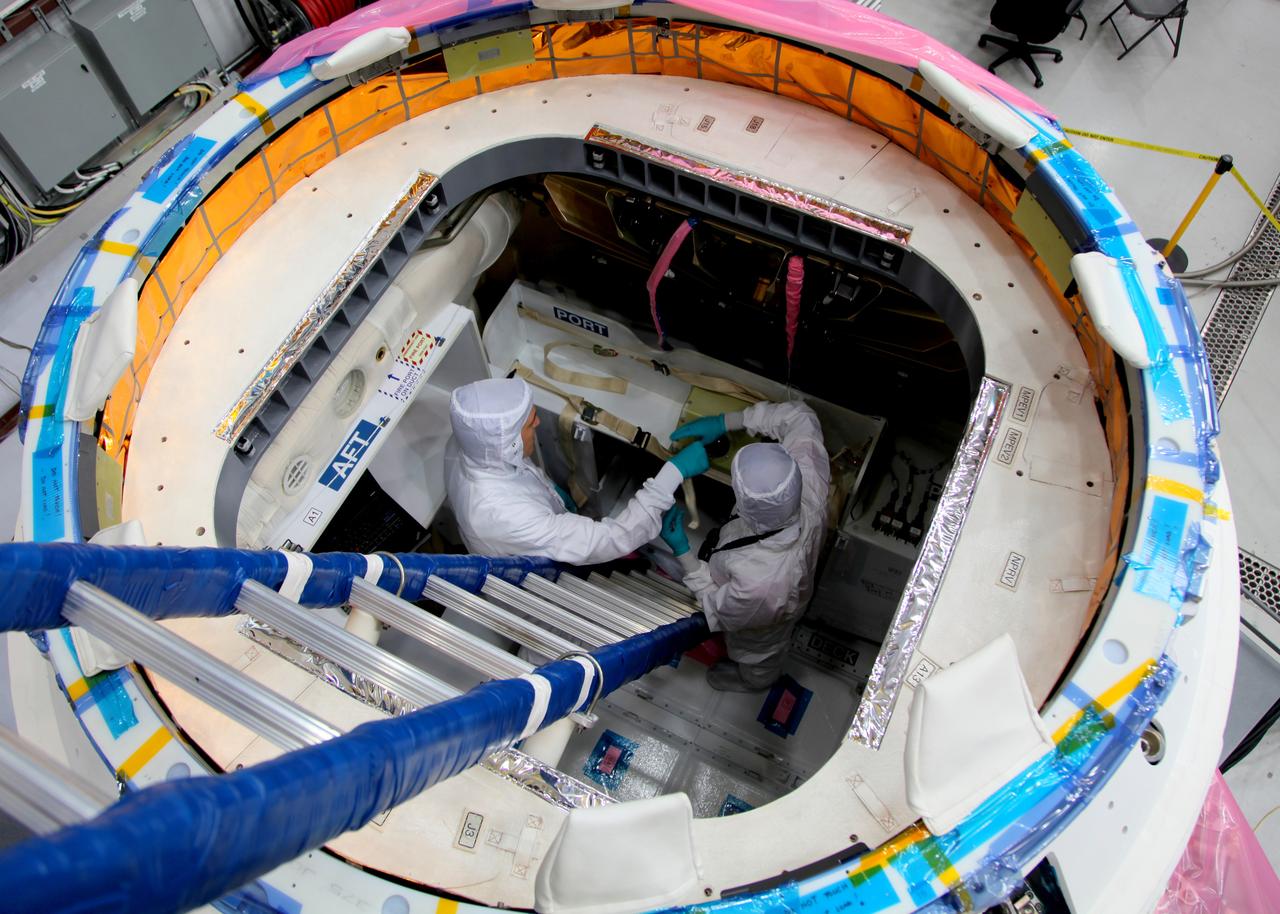
CAPE CANAVERAL, Fla. -- NASA astronaut Megan McArthur, right, takes part in a crew equipment interface test CEIT in order to become familiar with the Space Exploration Technologies Corp. SpaceX Dragon capsule prior to its scheduled April 30 liftoff. The interface test inside a processing hangar at Cape Canaveral Air Force Station's Space Launch Complex-40 was part of prelaunch preparations for the company's next demonstration test flight for NASA's Commercial Orbital Transportation Services COTS program. Under COTS, NASA has partnered with two private companies to launch cargo safely to the International Space Station. Jason Tenenbaum, with SpaceX Mission Operations, left, also takes part in the test. CEIT is an activity that dates back to NASA's Space Shuttle Program, providing astronauts on Earth an opportunity to work with the actual hardware they would use in space. This exercise gave astronauts and engineers the opportunity to assess the compatibility of the equipment and systems aboard Dragon with the procedures to be used by the flight crew and flight controllers once the capsule is berthed at the space station. For more information, visit www.nasa.gov/exploration/commercial/cargo/spacex_index.html. Image courtesy: SpaceX/Paul Bonness
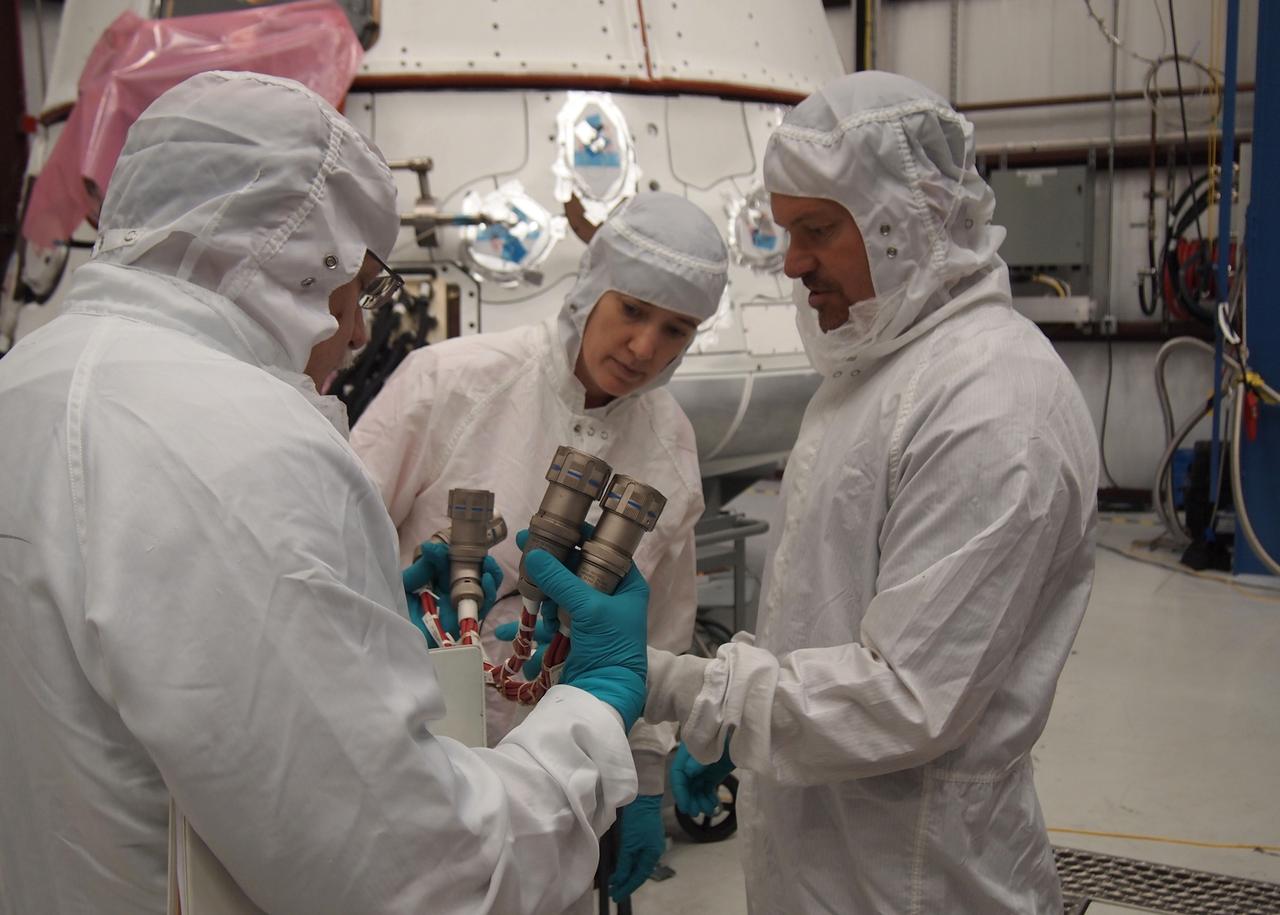
CAPE CANAVERAL, Fla. -- NASA astronaut Megan McArthur, center, takes part in a crew equipment interface test CEIT in order to become familiar with the Space Exploration Technologies Corp. SpaceX Dragon capsule prior to its scheduled April 30 liftoff. The interface test inside a processing hangar at Cape Canaveral Air Force Station's Space Launch Complex-40 was part of prelaunch preparations for the company's next demonstration test flight for NASA's Commercial Orbital Transportation Services COTS program. Under COTS, NASA has partnered with two private companies to launch cargo safely to the International Space Station. United Space Alliance technicians, Dan Nelson, left, and Chris Hardcastle, right, show McArthur two power connectors that are similar to the ones astronauts will use to provide power to Dragon once at the station. CEIT is an activity that dates back to NASA's Space Shuttle Program, providing astronauts on Earth an opportunity to work with the actual hardware they would use in space. This exercise gave astronauts and engineers the opportunity to assess the compatibility of the equipment and systems aboard Dragon with the procedures to be used by the flight crew and flight controllers once the capsule is berthed at the space station. For more information, visit www.nasa.gov/exploration/commercial/cargo/spacex_index.html. Image courtesy: SpaceX/Paul Bonness
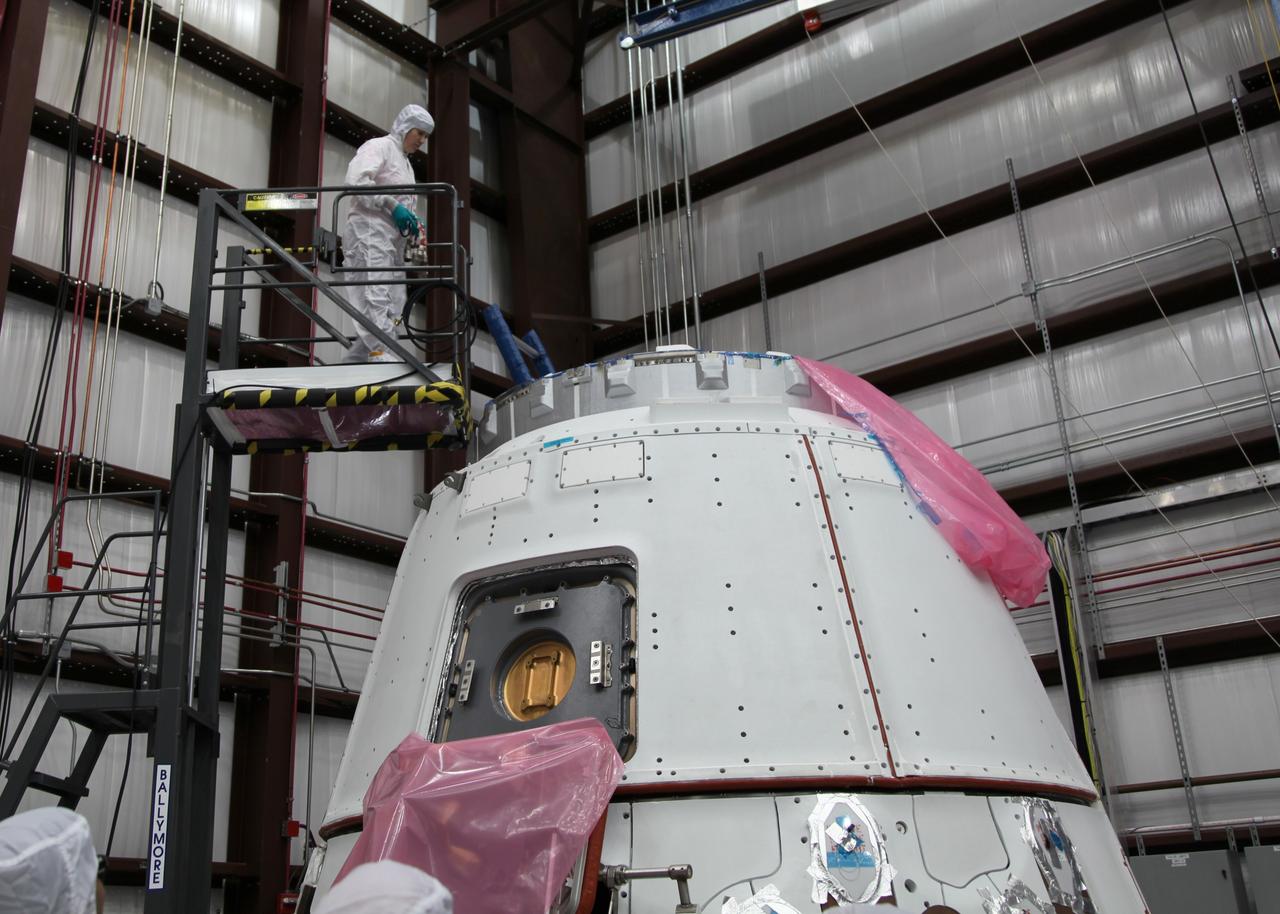
CAPE CANAVERAL, Fla. -- NASA astronaut Megan McArthur takes part in a crew equipment interface test CEIT in order to become familiar with the Space Exploration Technologies Corp. SpaceX Dragon capsule prior to its scheduled April 30 liftoff. The interface test inside a processing hangar at Cape Canaveral Air Force Station's Space Launch Complex-40 was part of prelaunch preparations for the company's next demonstration test flight for NASA's Commercial Orbital Transportation Services COTS program. Under COTS, NASA has partnered with two private companies to launch cargo safely to the International Space Station. CEIT is an activity that dates back to NASA's Space Shuttle Program, providing astronauts on Earth an opportunity to work with the actual hardware they would use in space. This exercise gave astronauts and engineers the opportunity to assess the compatibility of the equipment and systems aboard Dragon with the procedures to be used by the flight crew and flight controllers once the capsule is berthed at the space station. For more information, visit www.nasa.gov/exploration/commercial/cargo/spacex_index.html. Image courtesy: SpaceX/Paul Bonness
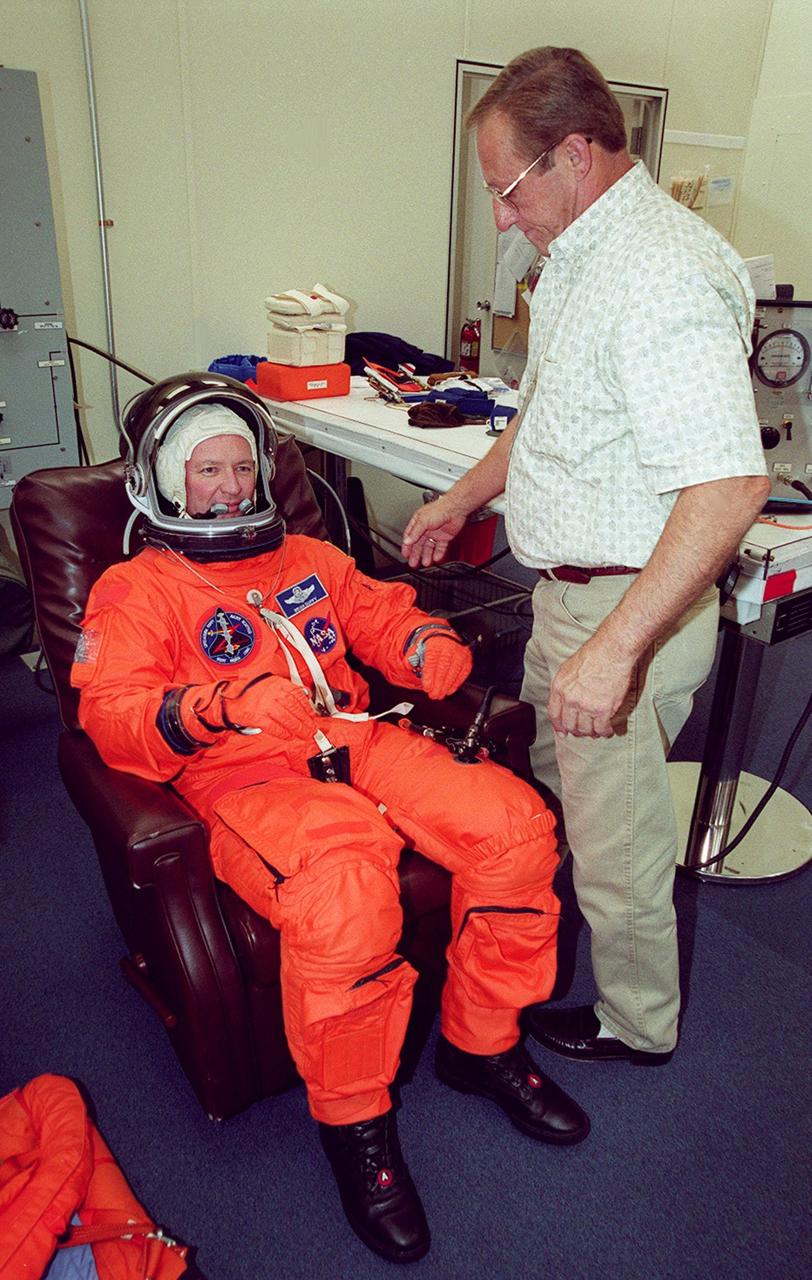
During pre-pack and fit check, STS-92 Commander Brian Duffy tests his launch and entry suit for comfort and ease while sitting. This mission will be Duffy’s fourth Shuttle flight. He and the rest of the crew are at KSC for Terminal Countdown Demonstration Test activities. The TCDT provides emergency egress training, simulated countdown exercises and opportunities to inspect the mission payload. STS-92 is scheduled to launch Oct. 5 at 9:38 p.m. EDT from Launch Pad 39A on the fifth flight to the International Space Station. It will carry two elements of the Space Station, the Integrated Truss Structure Z1 and the third Pressurized Mating Adapter. The mission is also the 100th flight in the Shuttle program
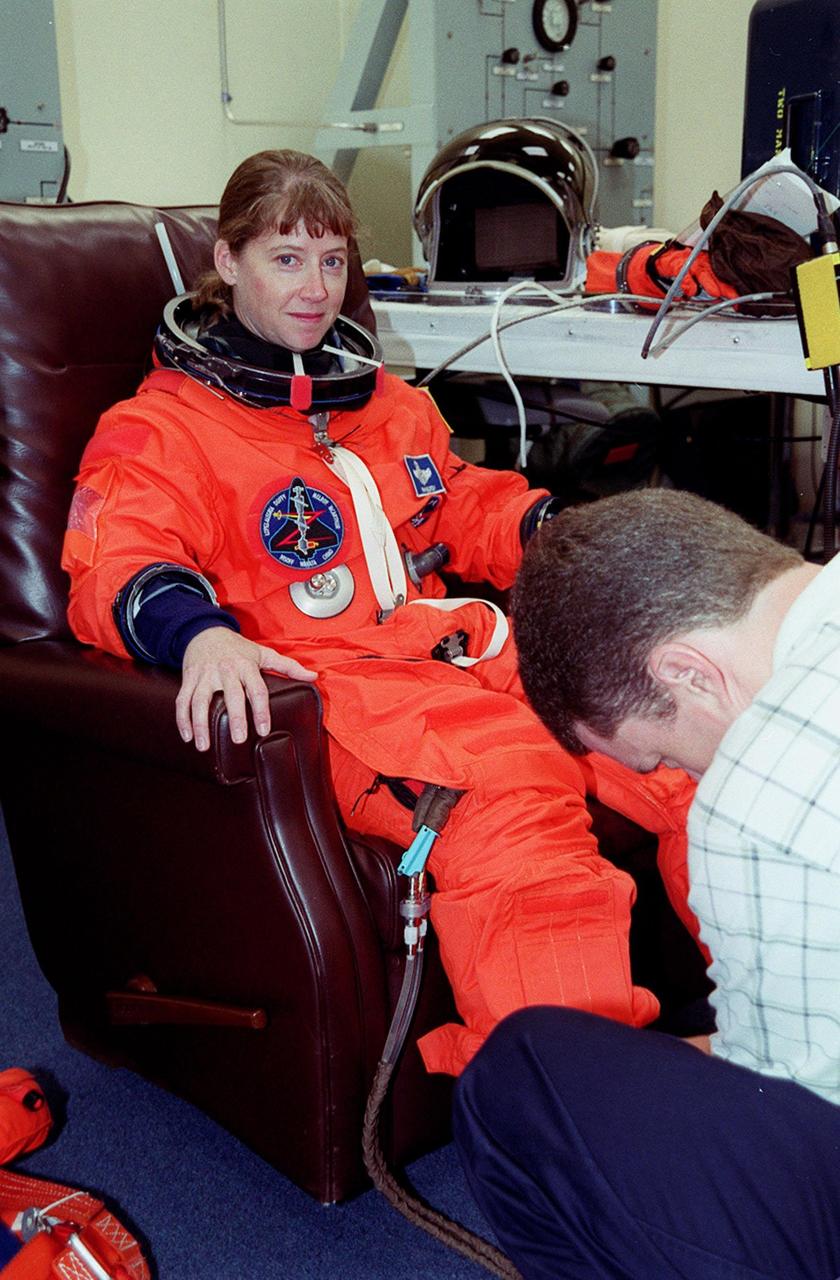
In the Operations and Checkout Building, STS-92 Pilot Pamela Ann Melroy has her new launch and entry suit adjusted during fit check. Melroy and the rest of the crew are at KSC for Terminal Countdown Demonstration Test activities. The TCDT provides emergency egress training, simulated countdown exercises and opportunities to inspect the mission payload. This mission will be Melroy’s first Shuttle flight. STS-92 is scheduled to launch Oct. 5 at 9:38 p.m. EDT from Launch Pad 39A on the fifth flight to the International Space Station. It will carry two elements of the Space Station, the Integrated Truss Structure Z1 and the third Pressurized Mating Adapter. The mission is also the 100th flight in the Shuttle program
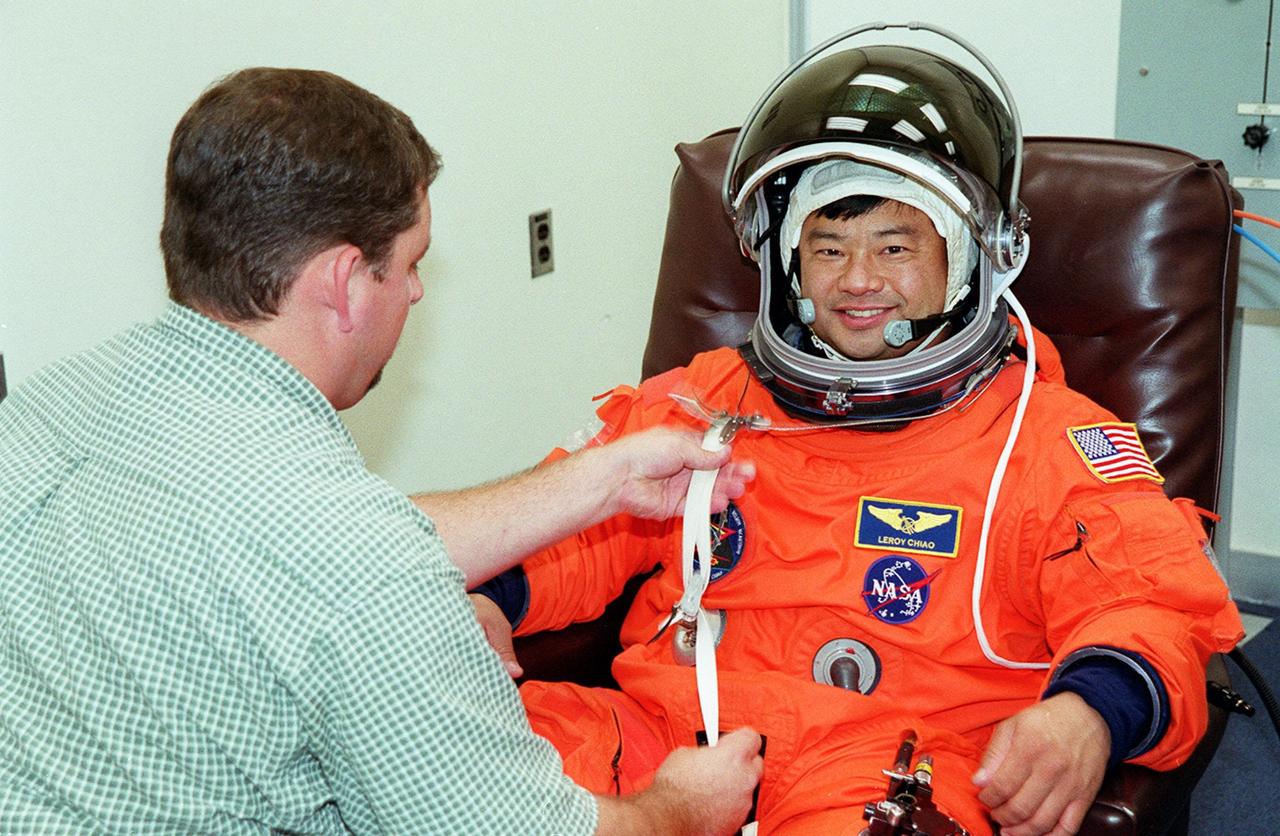
In the Operations and Checkout Building, STS-92 Mission Specialist Leroy Chiao has his launch and entry suit adjusted during fit check. Chiao and the rest of the crew are at KSC for Terminal Countdown Demonstration Test activities. The TCDT provides emergency egress training, simulated countdown exercises and opportunities to inspect the mission payload. This mission will be Chiao’s third Shuttle flight. STS-92 is scheduled to launch Oct. 5 at 9:38 p.m. EDT from Launch Pad 39A on the fifth flight to the International Space Station. It will carry two elements of the Space Station, the Integrated Truss Structure Z1 and the third Pressurized Mating Adapter. The mission is also the 100th flight in the Shuttle program

During pre-pack and fit check on his launch and entry suit, STS-92 Commander Brian Duffy adjusts his helmet. Duffy and the rest of the crew are at KSC for Terminal Countdown Demonstration Test activities. The TCDT provides emergency egress training, simulated countdown exercises and opportunities to inspect the mission payload. This mission will be Duffy’s fourth Shuttle flight. STS-92 is scheduled to launch Oct. 5 at 9:38 p.m. EDT from Launch Pad 39A on the fifth flight to the International Space Station. It will carry two elements of the Space Station, the Integrated Truss Structure Z1 and the third Pressurized Mating Adapter. The mission is also the 100th flight in the Shuttle program
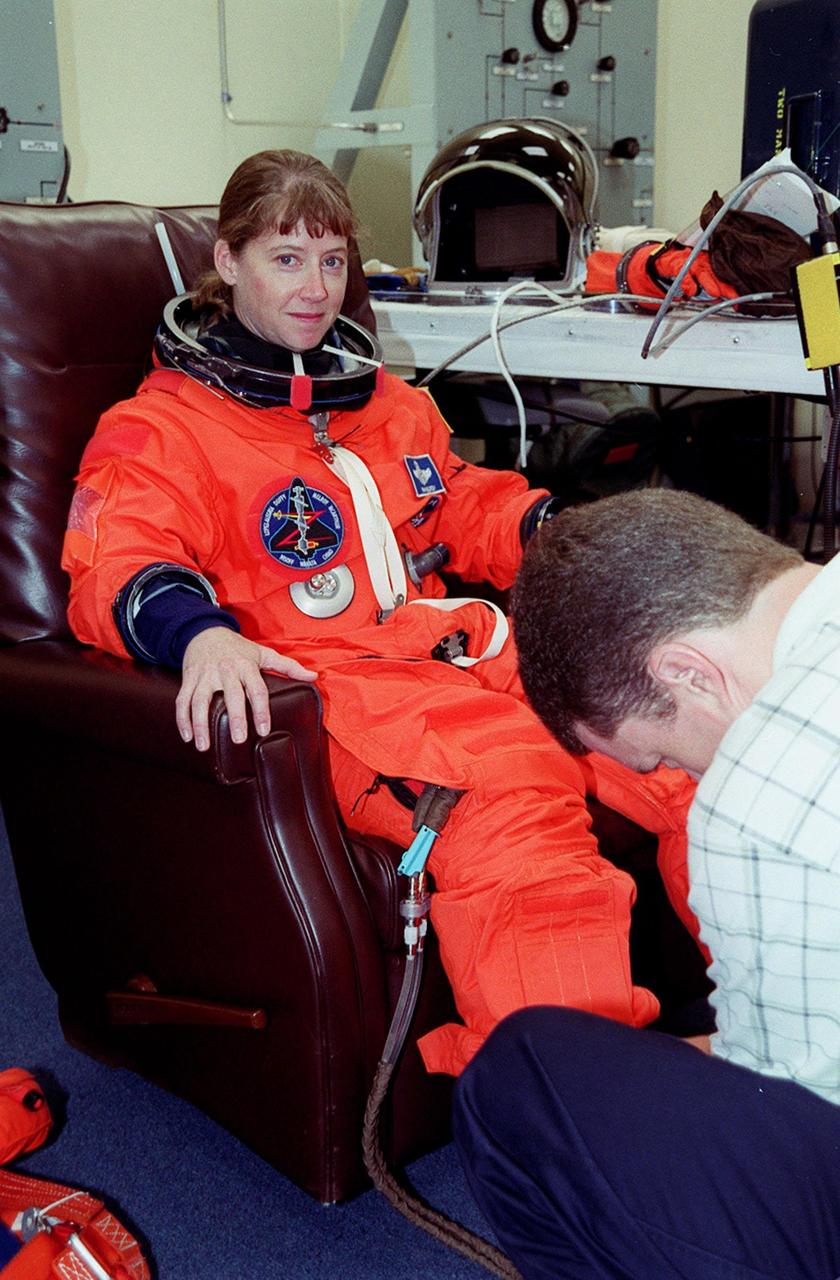
In the Operations and Checkout Building, STS-92 Pilot Pamela Ann Melroy has her new launch and entry suit adjusted during fit check. Melroy and the rest of the crew are at KSC for Terminal Countdown Demonstration Test activities. The TCDT provides emergency egress training, simulated countdown exercises and opportunities to inspect the mission payload. This mission will be Melroy’s first Shuttle flight. STS-92 is scheduled to launch Oct. 5 at 9:38 p.m. EDT from Launch Pad 39A on the fifth flight to the International Space Station. It will carry two elements of the Space Station, the Integrated Truss Structure Z1 and the third Pressurized Mating Adapter. The mission is also the 100th flight in the Shuttle program
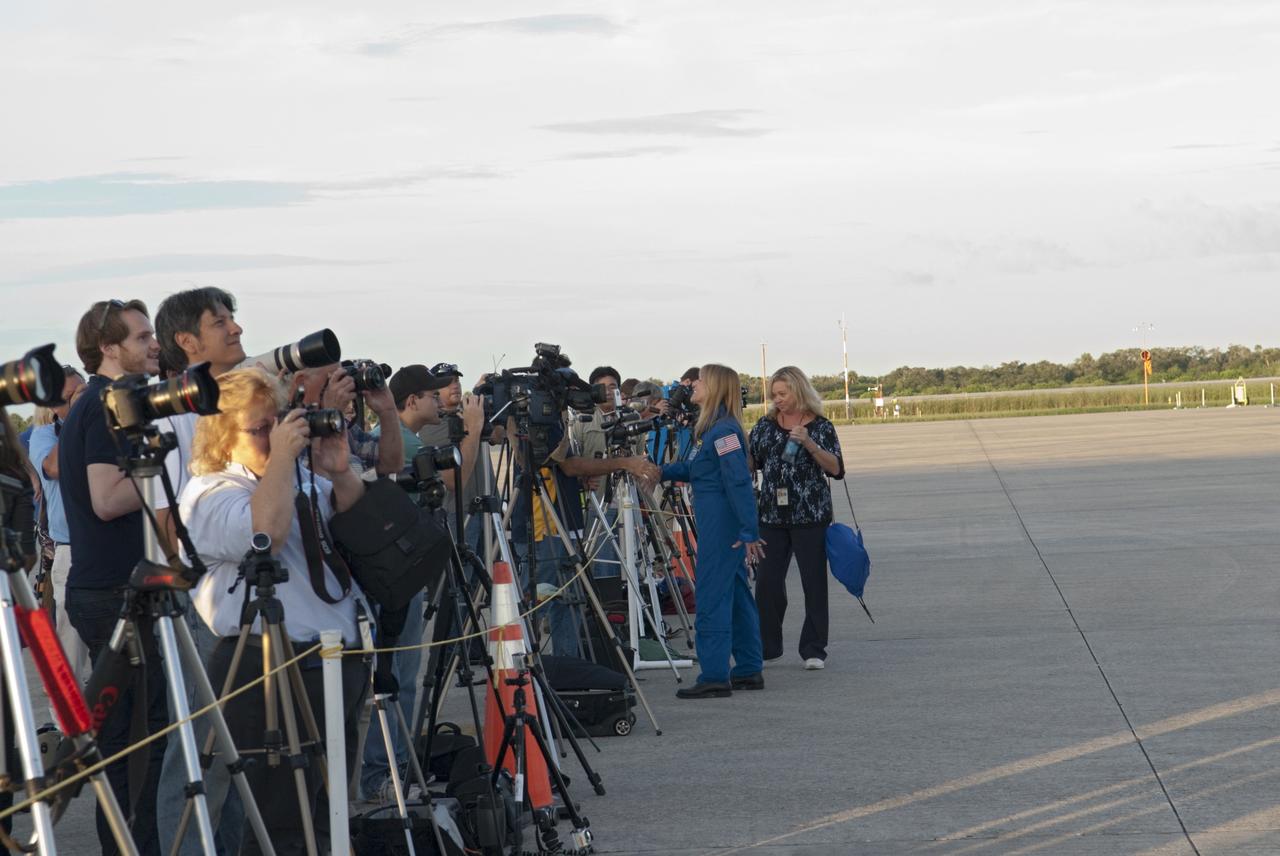
CAPE CANAVERAL, Fla. – Media representatives are given the opportunity to photograph and interview astronaut Kay Hire, in the blue flight suit, at the Shuttle Landing Facility at NASA's Kennedy Space Center in Florida. Preparations are under way for space shuttle Endeavour's upcoming ferry flight atop NASA's Shuttle Carrier Aircraft, or SCA. The SCA, a modified 747 jetliner, will fly Endeavour to Los Angeles where it will be placed on public display at the California Science Center. This is the final ferry flight scheduled in the Space Shuttle Program era. For more information on the shuttles' transition and retirement, visit http://www.nasa.gov/transition. Photo credit: NASA/Charisse Nahser
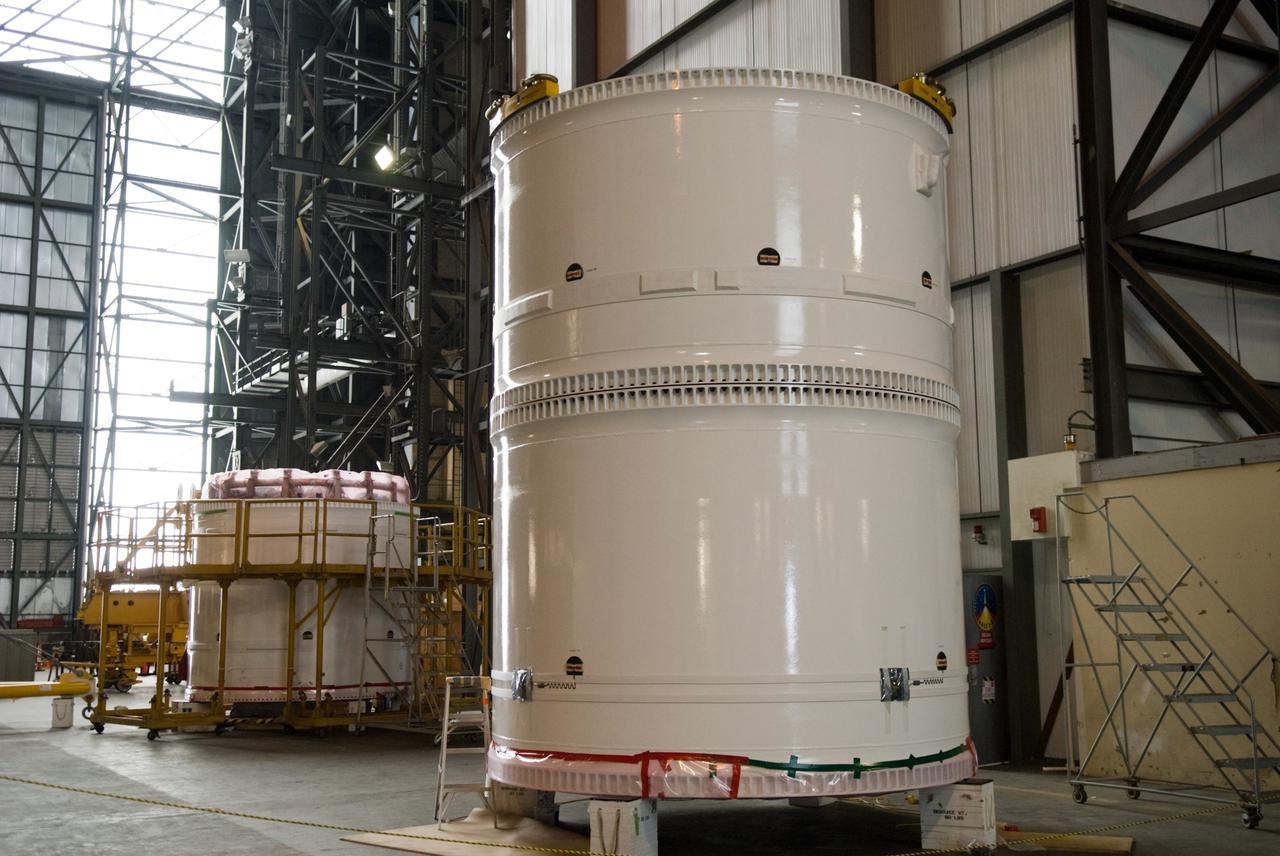
CAPE CANAVERAL, Fla. –– The fifth segment simulator segments of the Ares I-X rocket have been moved to the transfer aisle of the Vehicle Assembly Building at NASA's Kennedy Space Center in Florida. The stacking operations with other segments in the VAB in June. Ares I-X is the flight test for the Ares I. The I-X flight will provide NASA an early opportunity to test and prove hardware, facilities and ground operations associated with Ares I, which is part of the Constellation Program to return men to the moon and beyond. Launch of the Ares I-X flight test is targeted for August 2009. Photo credit: NASA/Jack Pfaller
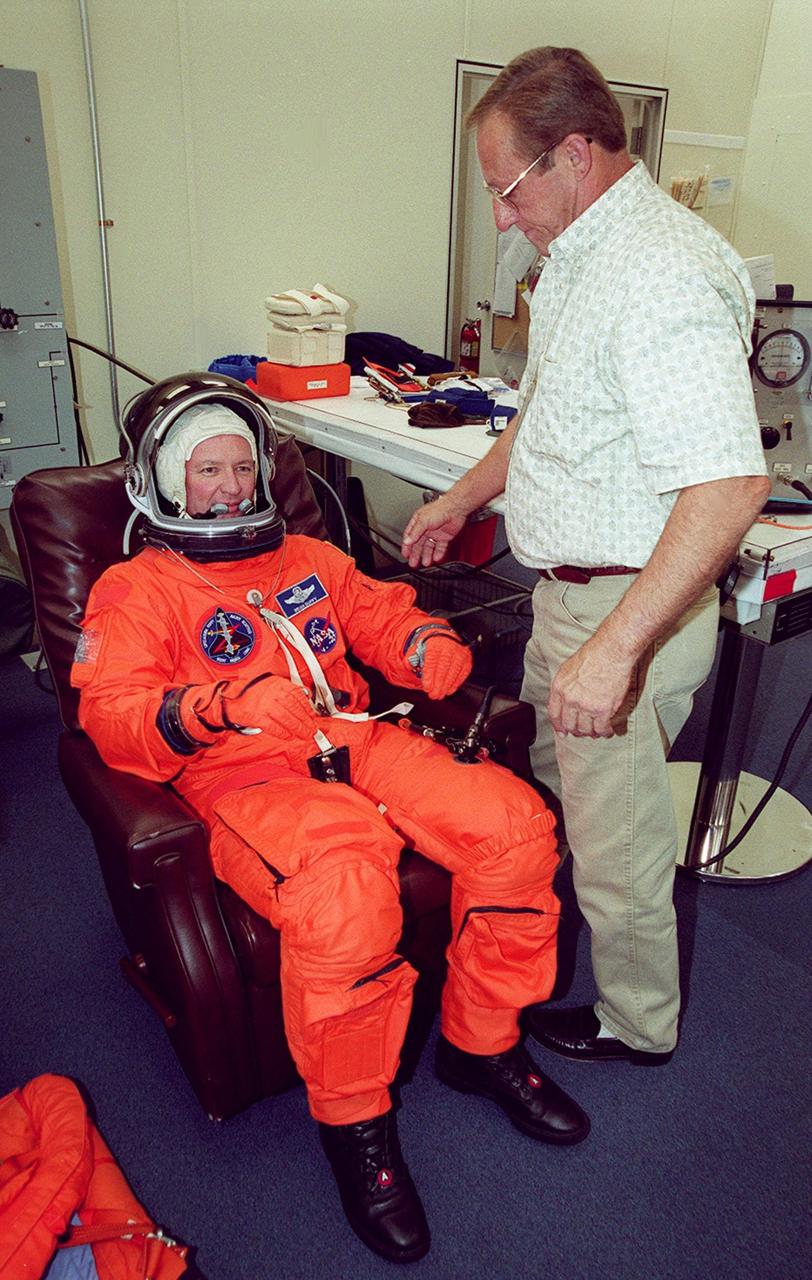
During pre-pack and fit check, STS-92 Commander Brian Duffy tests his launch and entry suit for comfort and ease while sitting. This mission will be Duffy’s fourth Shuttle flight. He and the rest of the crew are at KSC for Terminal Countdown Demonstration Test activities. The TCDT provides emergency egress training, simulated countdown exercises and opportunities to inspect the mission payload. STS-92 is scheduled to launch Oct. 5 at 9:38 p.m. EDT from Launch Pad 39A on the fifth flight to the International Space Station. It will carry two elements of the Space Station, the Integrated Truss Structure Z1 and the third Pressurized Mating Adapter. The mission is also the 100th flight in the Shuttle program
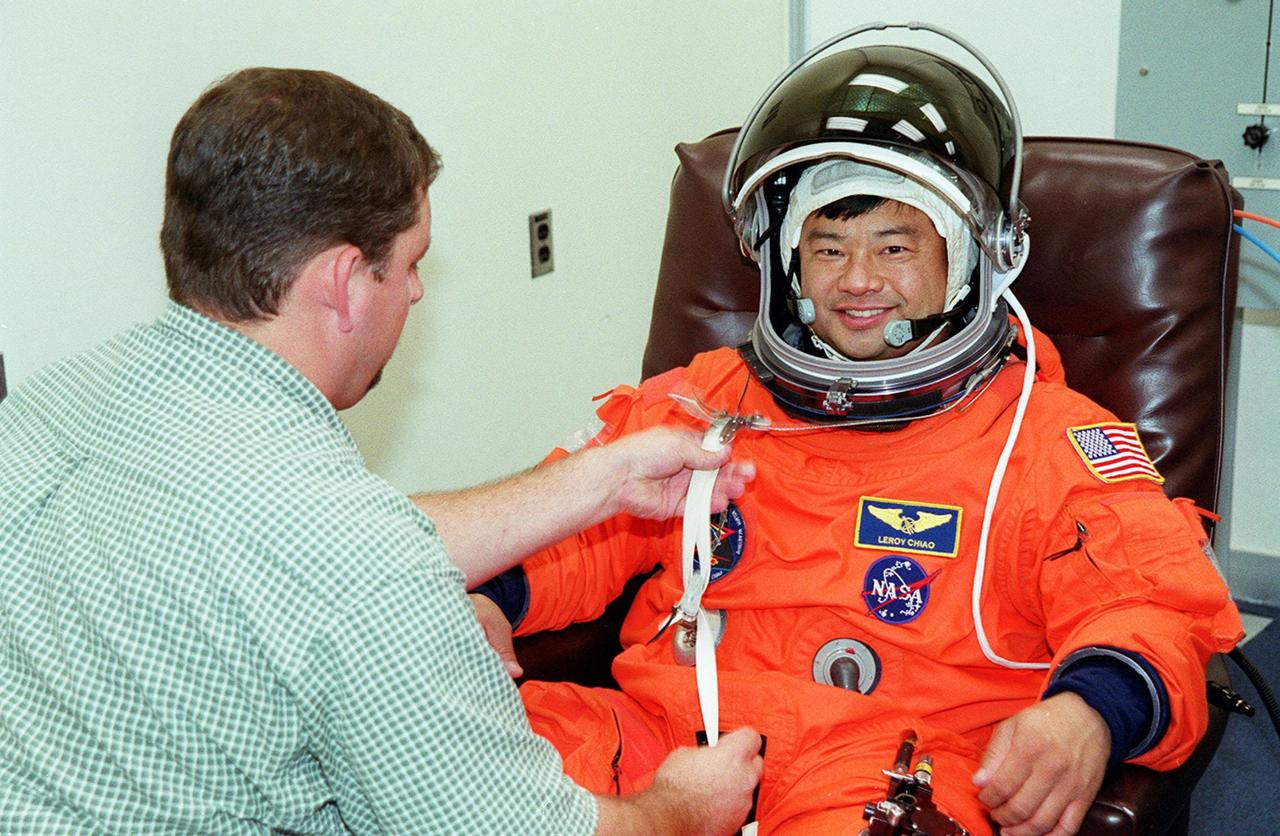
In the Operations and Checkout Building, STS-92 Mission Specialist Leroy Chiao has his launch and entry suit adjusted during fit check. Chiao and the rest of the crew are at KSC for Terminal Countdown Demonstration Test activities. The TCDT provides emergency egress training, simulated countdown exercises and opportunities to inspect the mission payload. This mission will be Chiao’s third Shuttle flight. STS-92 is scheduled to launch Oct. 5 at 9:38 p.m. EDT from Launch Pad 39A on the fifth flight to the International Space Station. It will carry two elements of the Space Station, the Integrated Truss Structure Z1 and the third Pressurized Mating Adapter. The mission is also the 100th flight in the Shuttle program
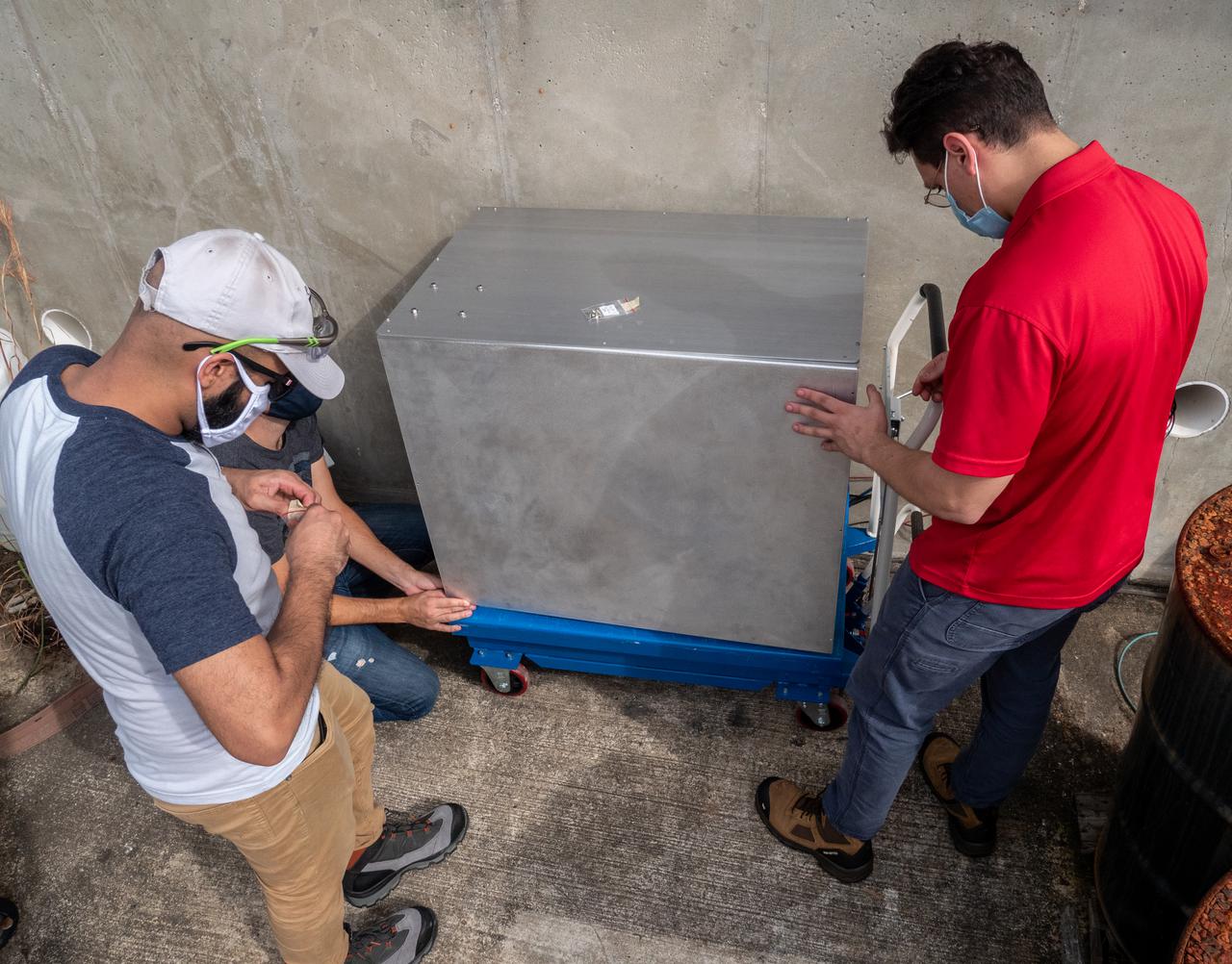
Thermal/Fluid Analysis Engineer Malay Shah, left, and Ray Pitts, co-principal investigator for the Orbital Syngas Commodity Augmentation Reactor (OSCAR), prepare OSCAR for thermal testing Jan. 26, 2021, at NASA’s Kennedy Space Center in Florida. The tests are in preparation for a scheduled suborbital flight test later this year facilitated by NASA’s Flight Opportunities program. The testing ensures the thermal environment of the payload won’t create additional hazards during flight and that OSCAR can successfully operate within the temperature range it may encounter as it performs tests in microgravity.
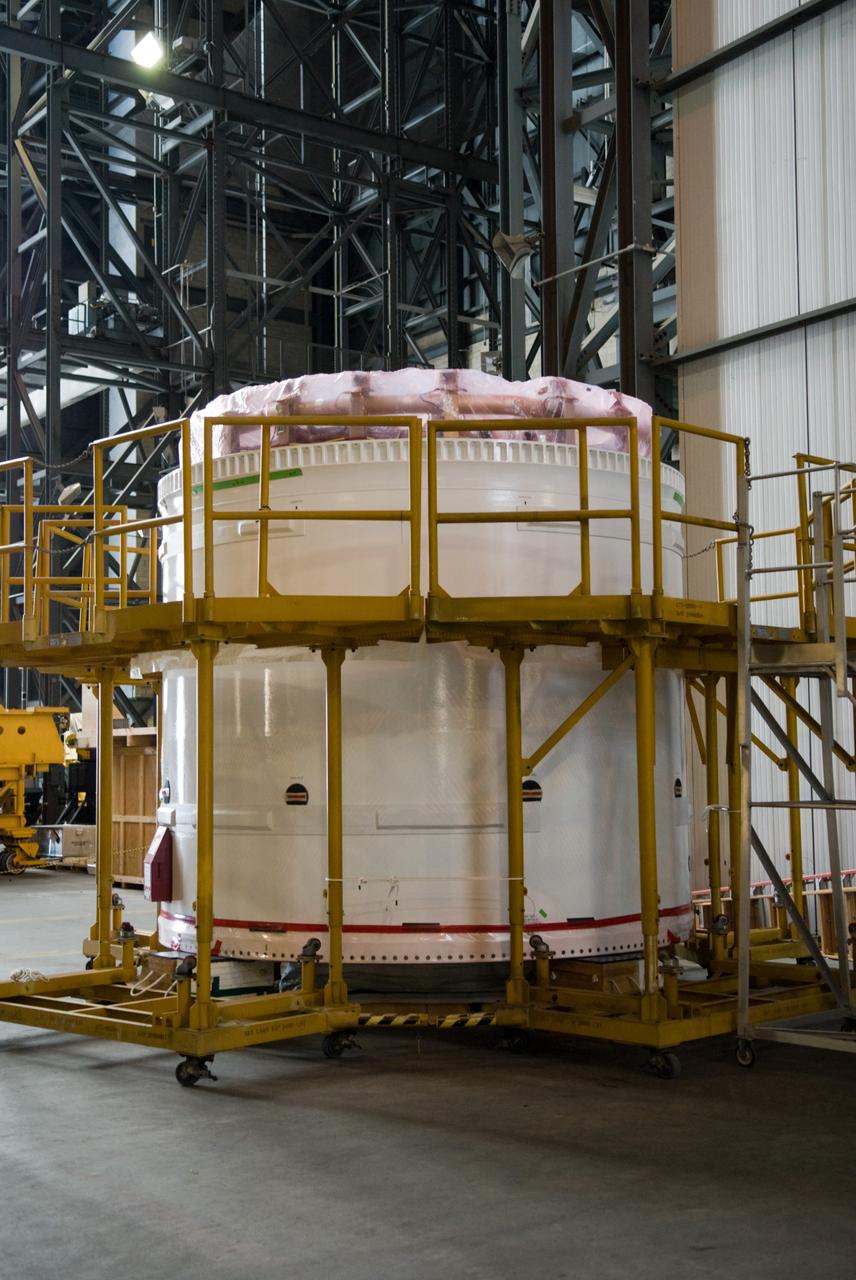
CAPE CANAVERAL, Fla. –– The fifth segment simulator segments of the Ares I-X rocket have been moved to the transfer aisle of the Vehicle Assembly Building at NASA's Kennedy Space Center in Florida. The stacking operations with other segments in the VAB in June. Ares I-X is the flight test for the Ares I. The I-X flight will provide NASA an early opportunity to test and prove hardware, facilities and ground operations associated with Ares I, which is part of the Constellation Program to return men to the moon and beyond. Launch of the Ares I-X flight test is targeted for August 2009. Photo credit: NASA/Jack Pfaller
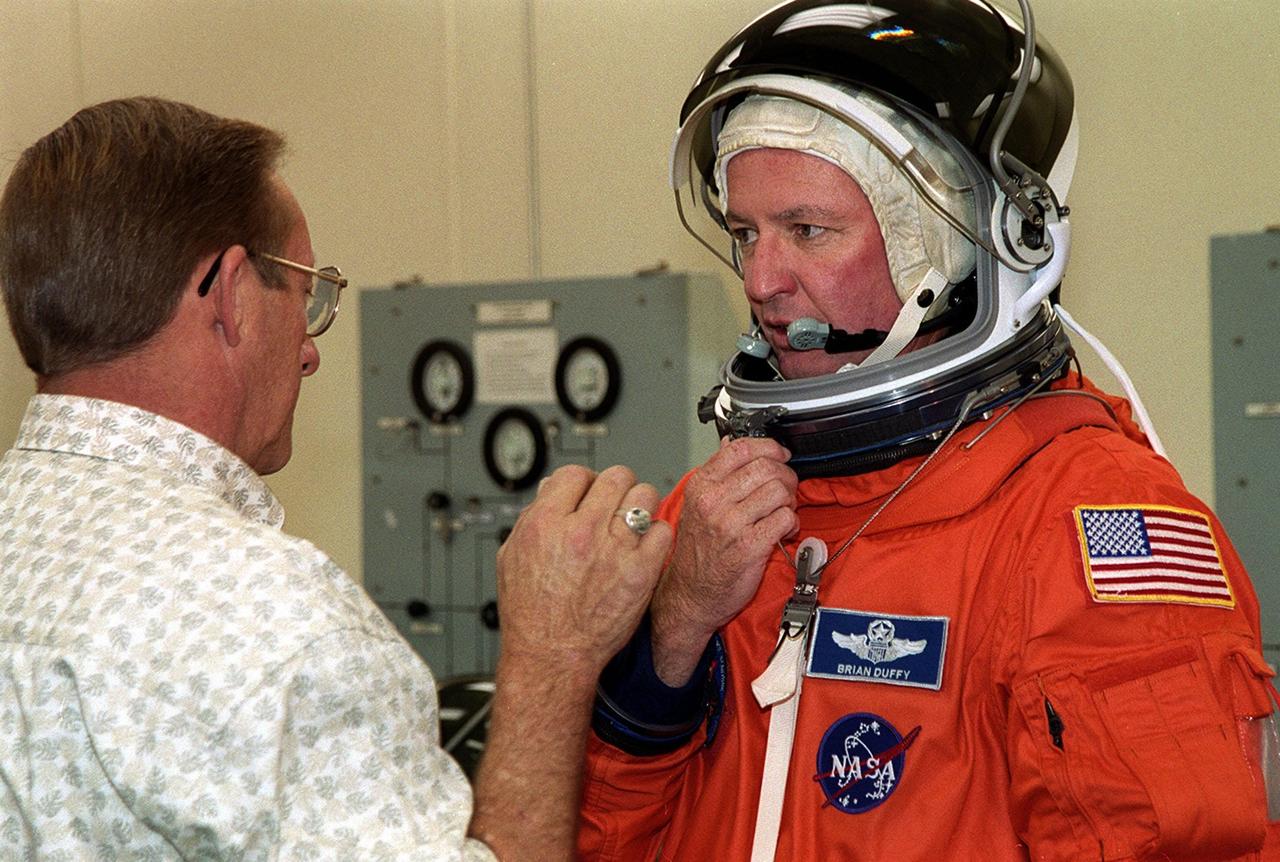
During pre-pack and fit check on his launch and entry suit, STS-92 Commander Brian Duffy adjusts his helmet. Duffy and the rest of the crew are at KSC for Terminal Countdown Demonstration Test activities. The TCDT provides emergency egress training, simulated countdown exercises and opportunities to inspect the mission payload. This mission will be Duffy’s fourth Shuttle flight. STS-92 is scheduled to launch Oct. 5 at 9:38 p.m. EDT from Launch Pad 39A on the fifth flight to the International Space Station. It will carry two elements of the Space Station, the Integrated Truss Structure Z1 and the third Pressurized Mating Adapter. The mission is also the 100th flight in the Shuttle program

NASA’s Kennedy Space Center senior managers (on right, front to back) Janet Sellars, director of Human Resources; Kimberlyn B. Carter, associate program manager for Exploration Ground Systems; Barbara L. Brown, director of Exploration Research and Technology Programs; and Hortense Blackwell, director of Center Engagement and Business Integration Services, pose with members of the all-female flight crew for Delta Air Lines’ Women Inspiring Our Next Generation (WING) flight after the crew touched down at the Launch and Landing Facility at NASA’s Kennedy Space Center on Friday, Sept. 22, 2023. The flight brought girls from Atlanta, Georgia, ranging in age from 12 to 18, to learn about the various careers available at the Florida spaceport. While at Kennedy, the group had the opportunity to view center facilities, hear from a panel of women with a combination of careers from Kennedy and Delta, and tour the visitor complex.

In the skies above NASA Armstrong in Southern California, Generation Orbit’s hypersonic pod is flight tested on agency C-20A.

NASA’s C-20A with Generation Orbit’s hypersonic pod attached undergoes flight test overs skies of Armstrong Flight Research Center.

NASA’s C-20A with Generation Orbit’s hypersonic testbed attached is chased by the agency’s F-18 jet for safety and photography.
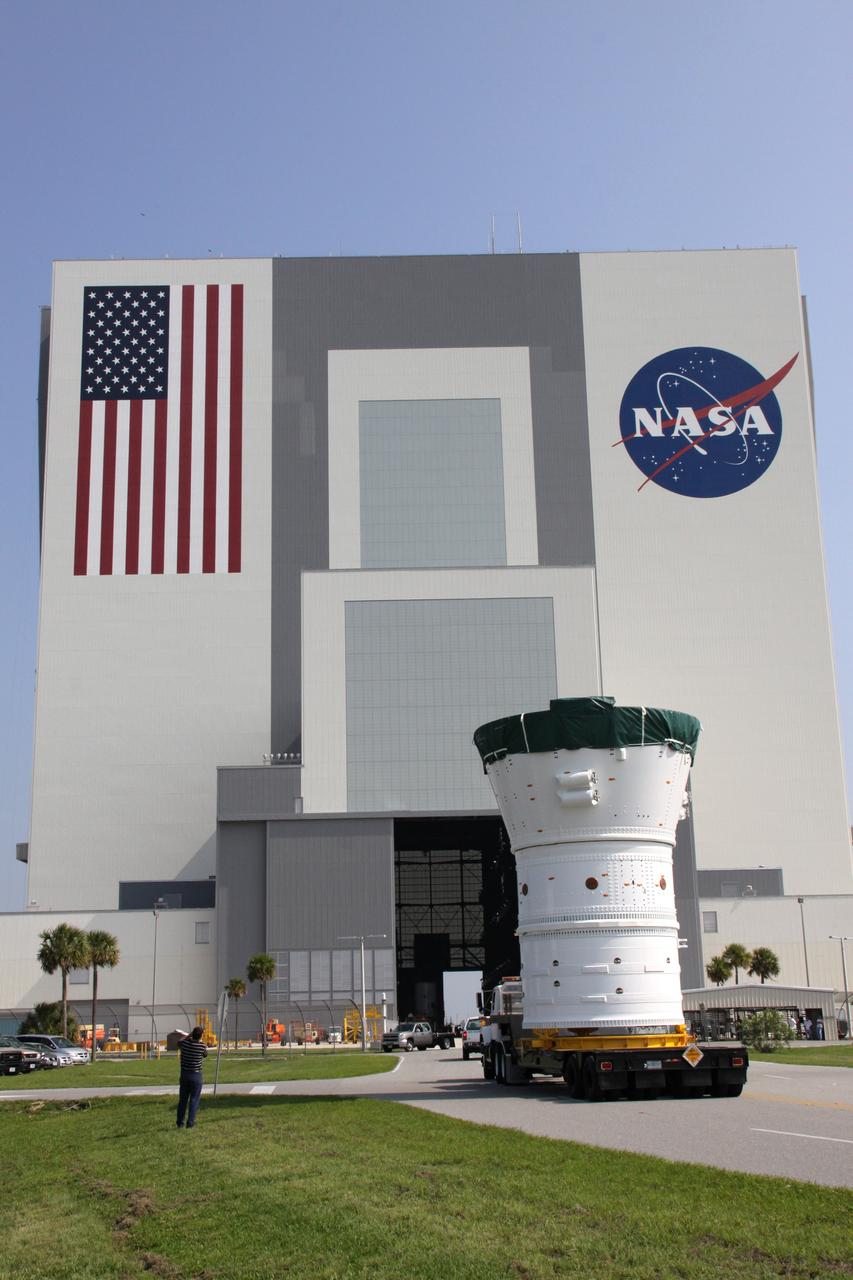
CAPE CANAVERAL, Fla. – At NASA's Kennedy Space Center in Florida, the Ares I-X forward assembly comprising the frustum, forward skirt extension and forward skirt heads for the Vehicle Assembly Building, in the background. In the VAB's High Bay 4, the forward assembly will undergo processing and stacking to the upper stage. Ares I-X is the flight test for the Ares I which will provide NASA an early opportunity to test and prove hardware, facilities and ground operations associated with Ares I, which is part of the Constellation Program to return men to the moon and beyond. Launch of the Ares I-X flight test is targeted for August 2009. Photo credit: NASA/Jack Pfaller
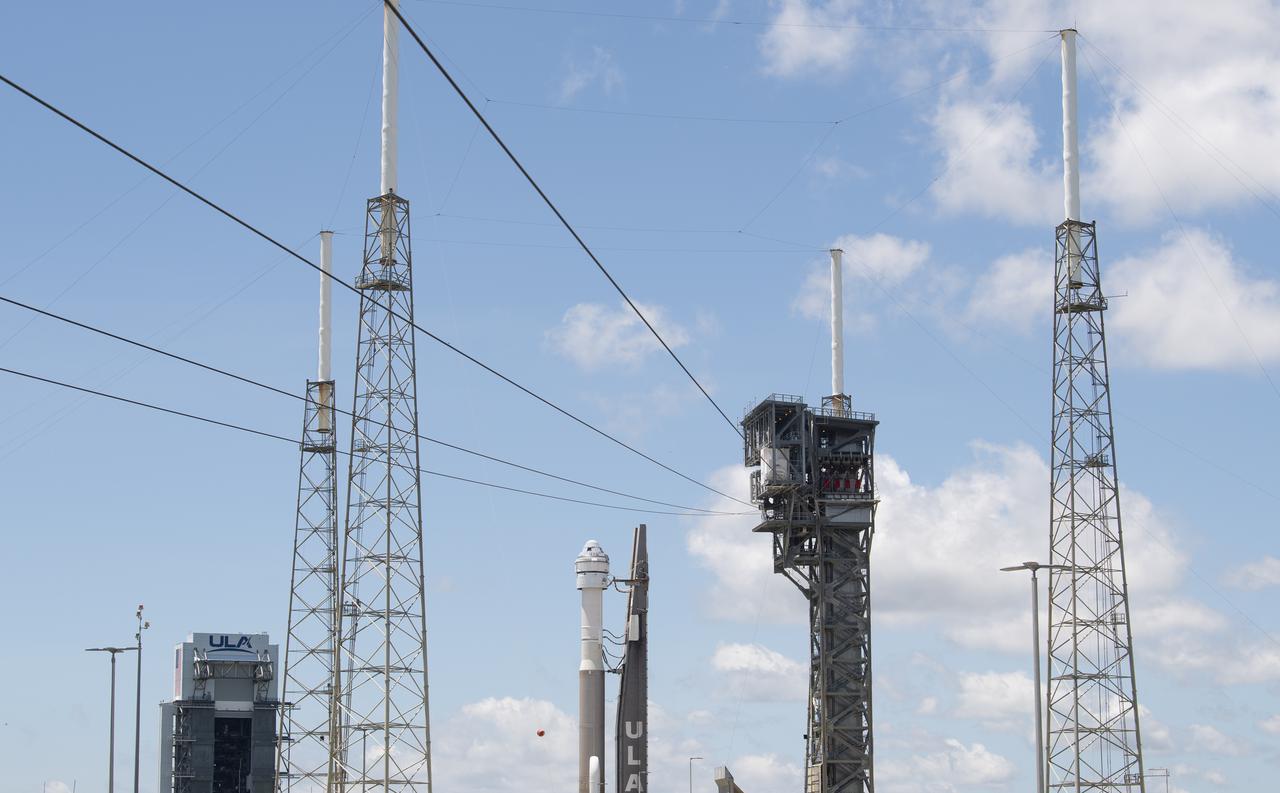
A United Launch Alliance Atlas V rocket with Boeing’s CST-100 Starliner spacecraft aboard is seen as it is rolled back to the Vertical Integration Facility from the launch pad at Space Launch Complex 41 to avoid inclement weather, Friday, July 30, 2021 at Cape Canaveral Space Force Station in Florida. Boeing’s Orbital Flight Test-2 will be Starliner’s second uncrewed flight test and will dock to the International Space Station as part of NASA's Commercial Crew Program. The earliest available launch opportunity is Tuesday, Aug. 3 at 1:20pm ET. Photo Credit: (NASA/Joel Kowsky)
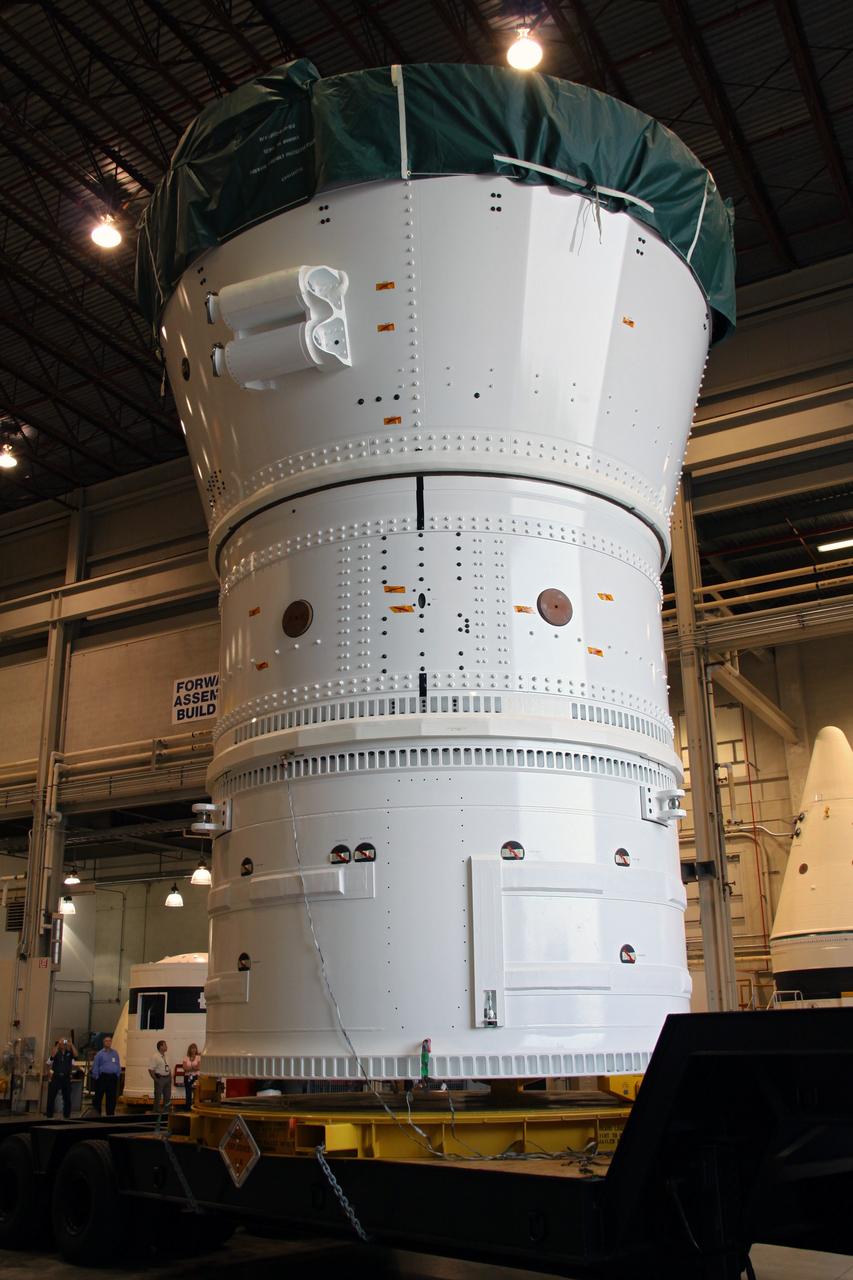
CAPE CANAVERAL, Fla. – In the Assembly and Refurbishment Facility at NASA's Kennedy Space Center in Florida, the Ares I-X forward assembly (comprising the frustum, forward skirt extension and forward skirt) is ready to be moved to the Vehicle Assembly Building for stacking operations with other segments. Ares I-X is the flight test for the Ares I which will provide NASA an early opportunity to test and prove hardware, facilities and ground operations associated with Ares I, which is part of the Constellation Program to return men to the moon and beyond. Launch of the Ares I-X flight test is targeted for August 2009. Photo credit: NASA/Jack Pfaller
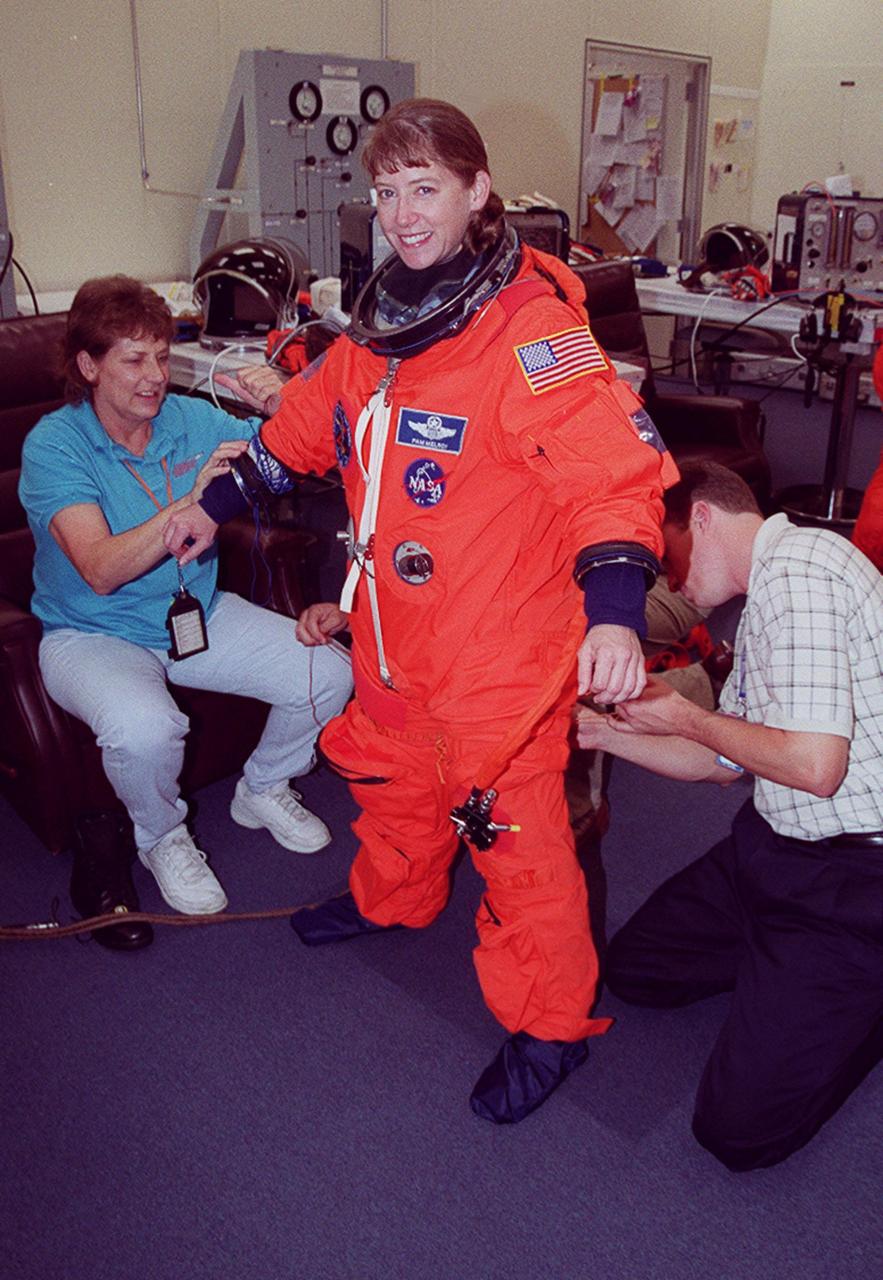
The “rookie” on the STS-92 mission, Pilot Pamela Ann Melroy has her new launch and entry suit adjusted during pre-pack and fit check in the Operations and Checkout Building. Melroy and the rest of the crew are at KSC for Terminal Countdown Demonstration Test activities. The TCDT provides emergency egress training, simulated countdown exercises and opportunities to inspect the mission payload. STS-92 is scheduled to launch Oct. 5 at 9:38 p.m. EDT from Launch Pad 39A on the fifth flight to the International Space Station. It will carry two elements of the Space Station, the Integrated Truss Structure Z1 and the third Pressurized Mating Adapter. The mission is also the 100th flight in the Shuttle program

A United Launch Alliance Atlas V rocket with Boeing’s CST-100 Starliner spacecraft aboard is seen as it is rolled back to the Vertical Integration Facility from the launch pad at Space Launch Complex 41 to avoid inclement weather, Friday, July 30, 2021 at Cape Canaveral Space Force Station in Florida. Boeing’s Orbital Flight Test-2 will be Starliner’s second uncrewed flight test and will dock to the International Space Station as part of NASA's Commercial Crew Program. The earliest available launch opportunity is Tuesday, Aug. 3 at 1:20pm ET. Photo Credit: (NASA/Joel Kowsky)
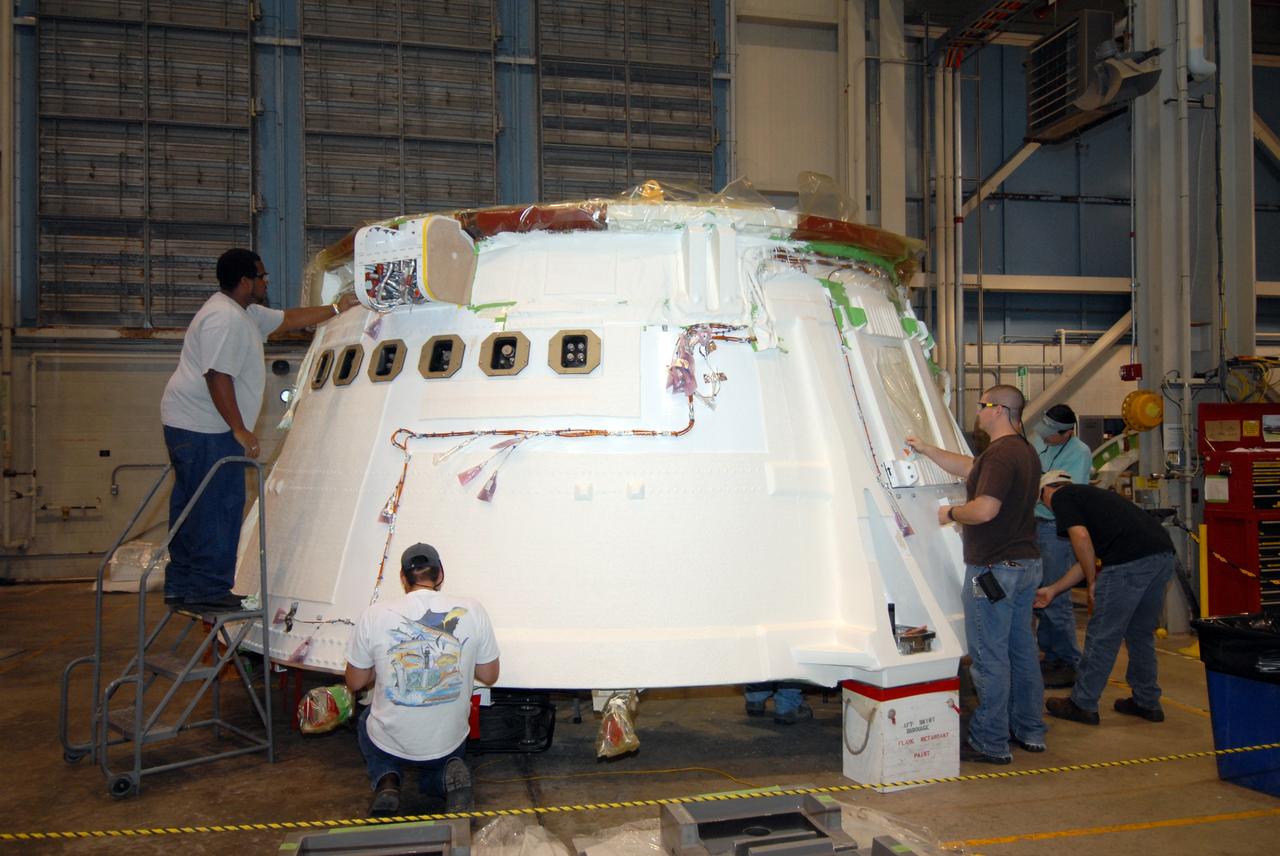
CAPE CANAVERAL, Fla. – In the Assembly and Refurbishment Facility at NASA's Kennedy Space Center in Florida, the aft skirt for the Ares I-X flight test is displayed for the media. The I-X flight will provide NASA an early opportunity to test and prove hardware, facilities and ground operations associated with Ares I, part of the Constellation Program to return men to the moon and beyond. Ares I is the essential core of a safe, reliable, cost-effective space transportation system that eventually will carry crewed missions back to the moon, on to Mars and out into the solar system. Photo credit: NASA/Jack Pfaller
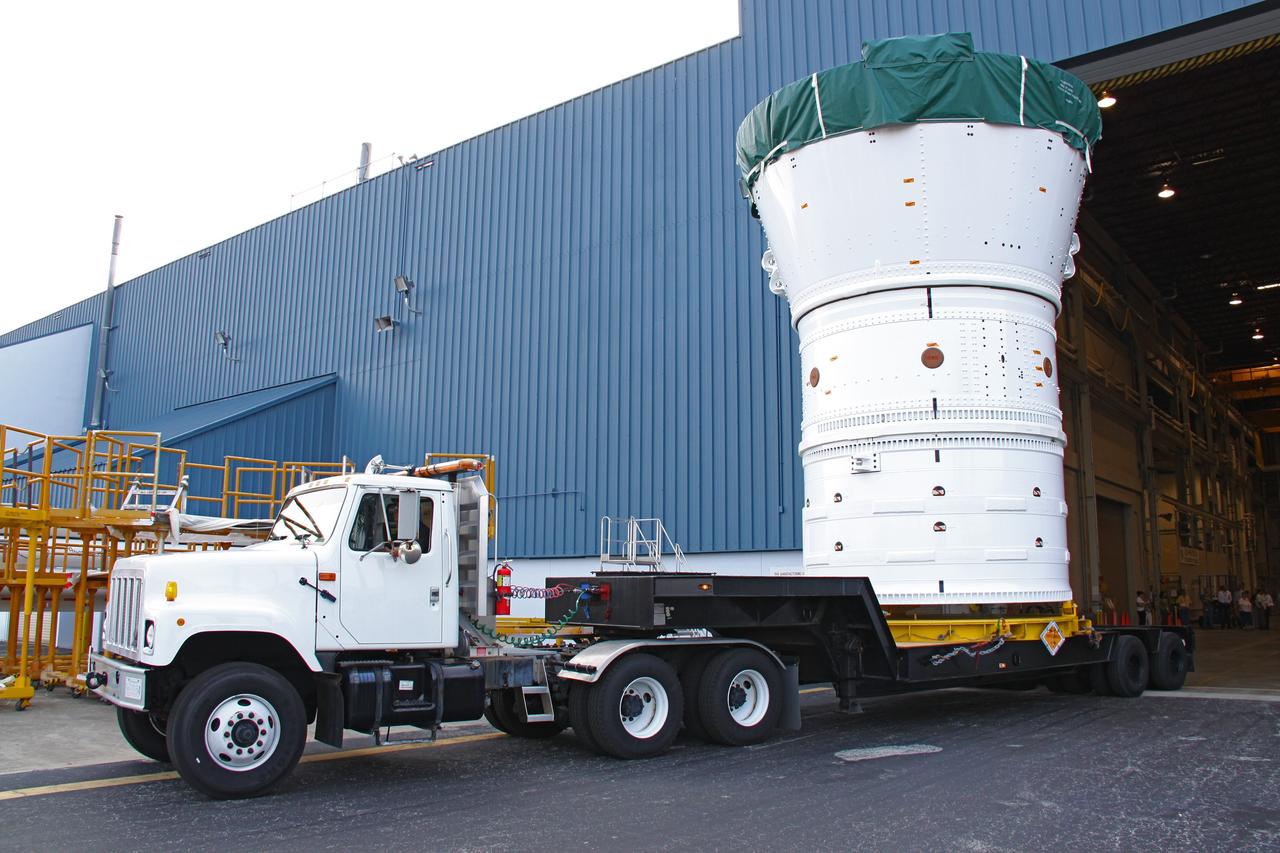
CAPE CANAVERAL, Fla. – At NASA's Kennedy Space Center in Florida, the Ares I-X forward assembly (comprising the frustum, forward skirt extension and forward skirt) moves out of the Assembly and Refurbishment Facility. It is being transferred to the Vehicle Assembly Building's High Bay 4 for processing and stacking to the upper stage. Ares I-X is the flight test for the Ares I which will provide NASA an early opportunity to test and prove hardware, facilities and ground operations associated with Ares I, which is part of the Constellation Program to return men to the moon and beyond. Launch of the Ares I-X flight test is targeted for August 2009. Photo credit: NASA/Jack Pfaller
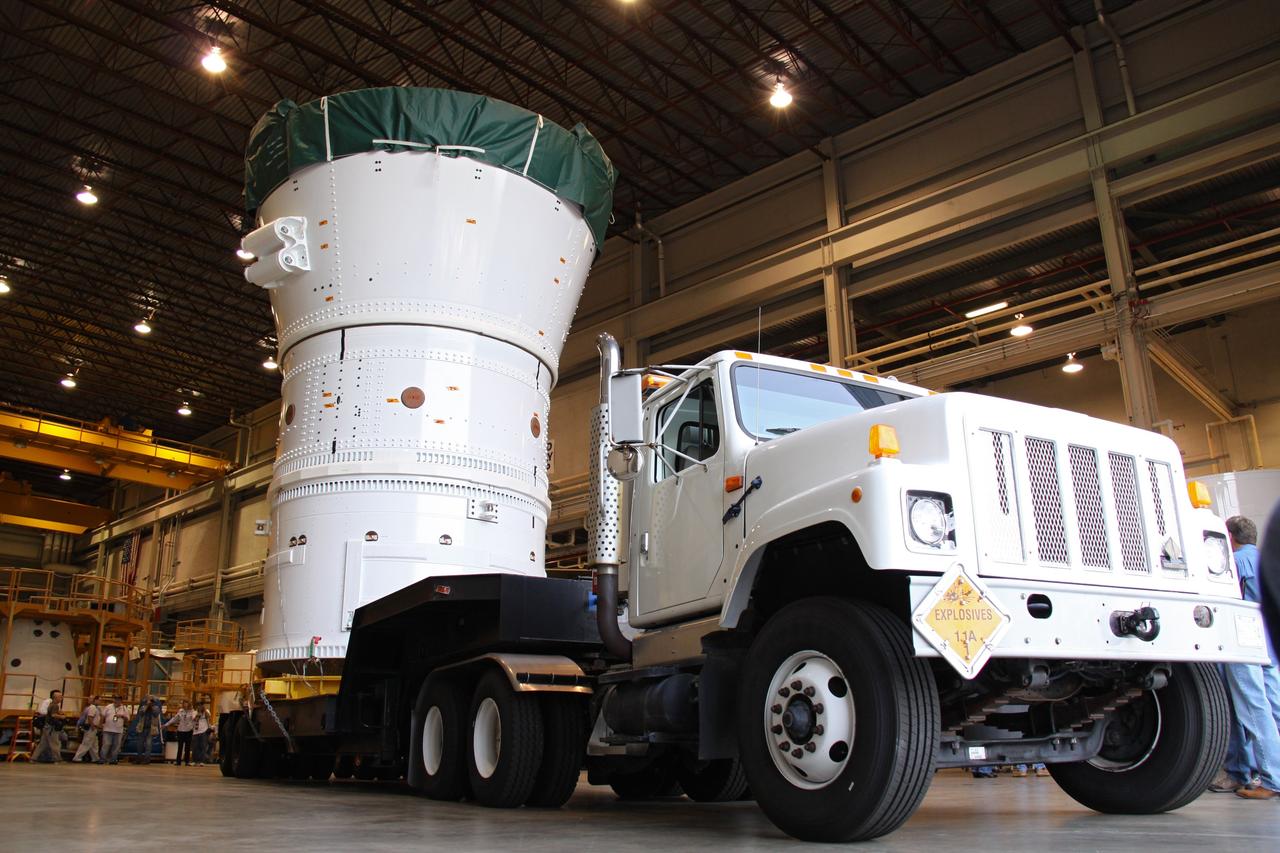
CAPE CANAVERAL, Fla. – At NASA's Kennedy Space Center in Florida, the Ares I-X forward assembly (comprising the frustum, forward skirt extension and forward skirt) begins to move out of the Assembly and Refurbishment Facility. It is being transferred to the Vehicle Assembly Building for stacking operations with other segments. Ares I-X is the flight test for the Ares I which will provide NASA an early opportunity to test and prove hardware, facilities and ground operations associated with Ares I, which is part of the Constellation Program to return men to the moon and beyond. Launch of the Ares I-X flight test is targeted for August 2009. Photo credit: NASA/Jack Pfaller
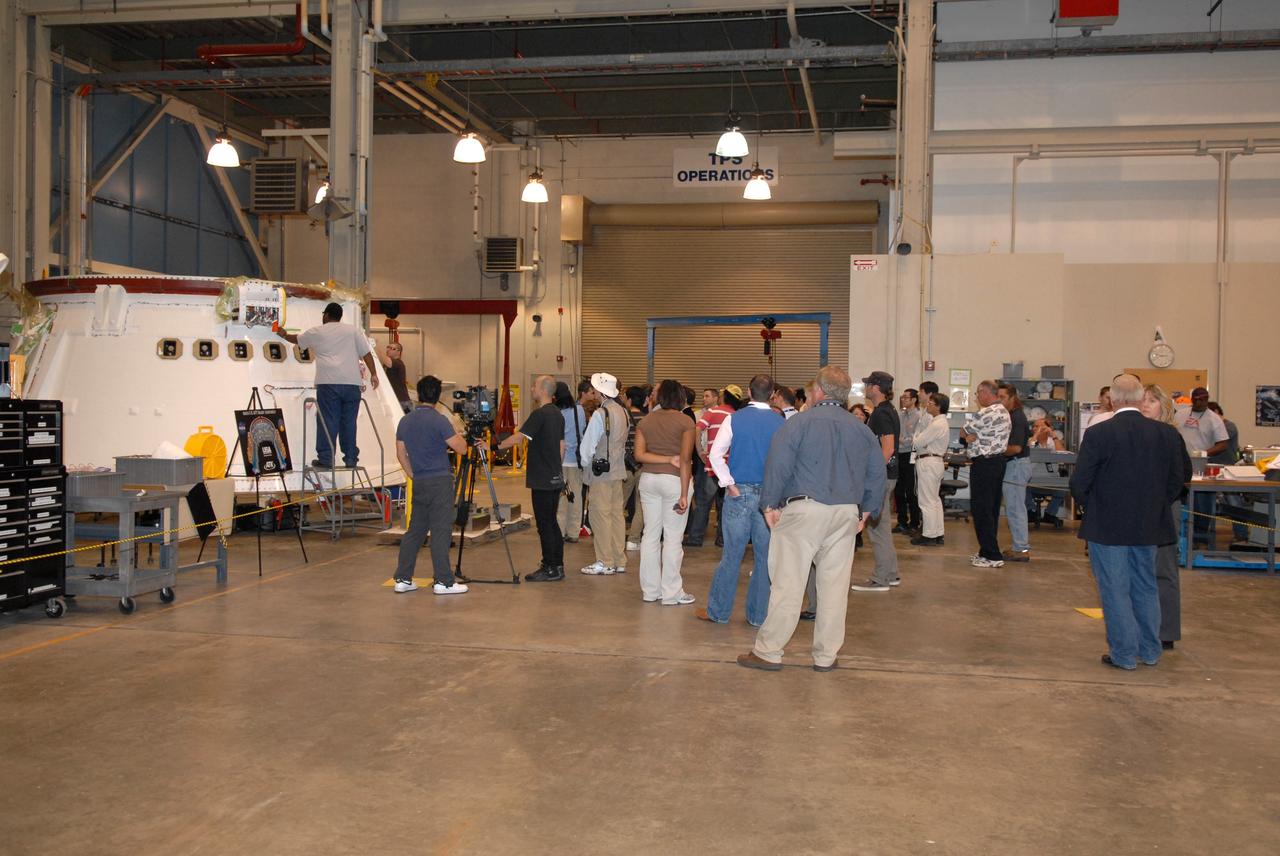
CAPE CANAVERAL, Fla. – Media gather in the Assembly and Refurbishment Facility at NASA's Kennedy Space Center in Florida to see the aft skirt for the Ares I-X flight test, targeted for launch in July 2009. The I-X flight will provide NASA an early opportunity to test and prove hardware, facilities and ground operations associated with Ares I, part of the Constellation Program to return men to the moon and beyond. Ares I is the essential core of a safe, reliable, cost-effective space transportation system that eventually will carry crewed missions back to the moon, on to Mars and out into the solar system. Photo credit: NASA/Jack Pfaller
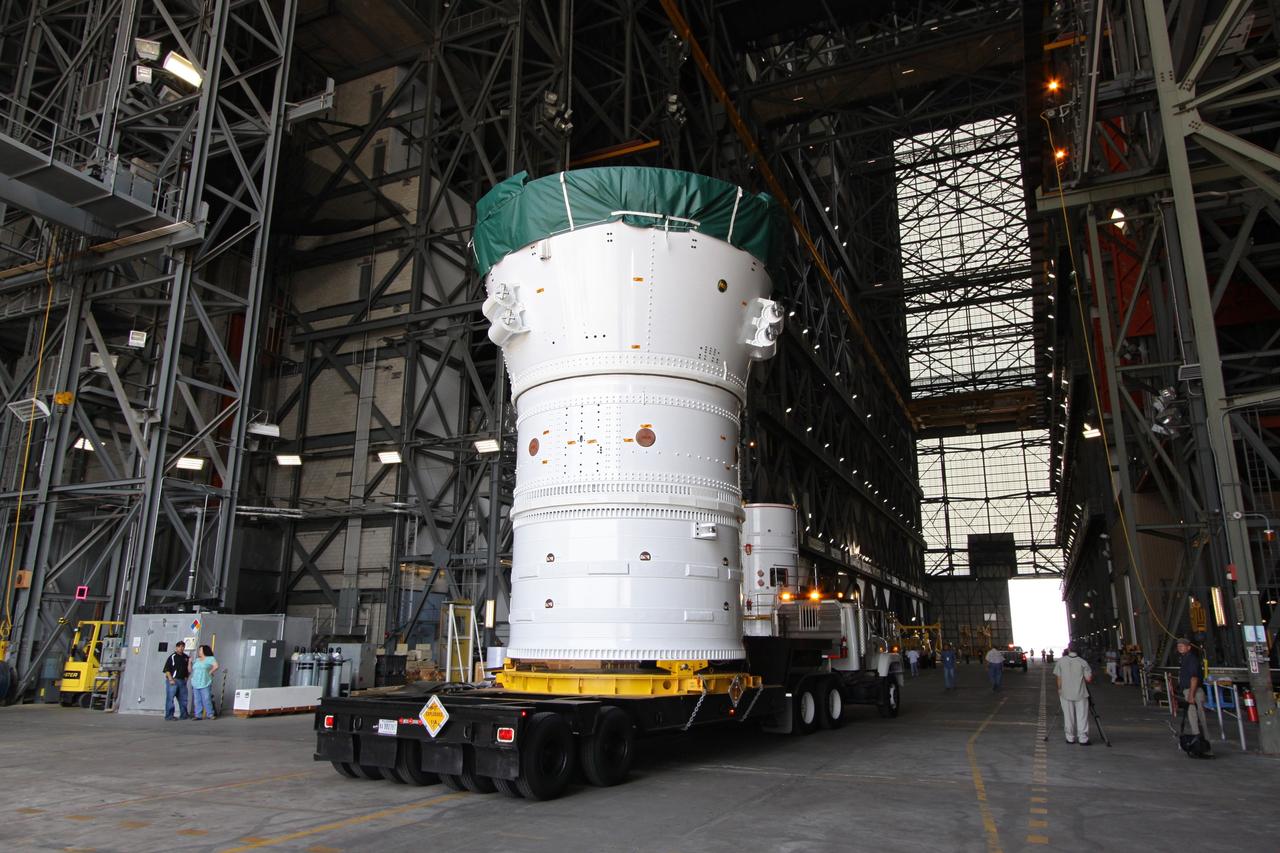
CAPE CANAVERAL, Fla. – At NASA's Kennedy Space Center in Florida, the Ares I-X forward assembly comprising the frustum, forward skirt extension and forward skirt moves into the transfer aisle of the Vehicle Assembly Building. The assembly will be placed in the VAB's High Bay 4 where it will undergo processing and stacking to the upper stage. Ares I-X is the flight test for the Ares I which will provide NASA an early opportunity to test and prove hardware, facilities and ground operations associated with Ares I, which is part of the Constellation Program to return men to the moon and beyond. Launch of the Ares I-X flight test is targeted for August 2009. Photo credit: NASA/Jack Pfaller
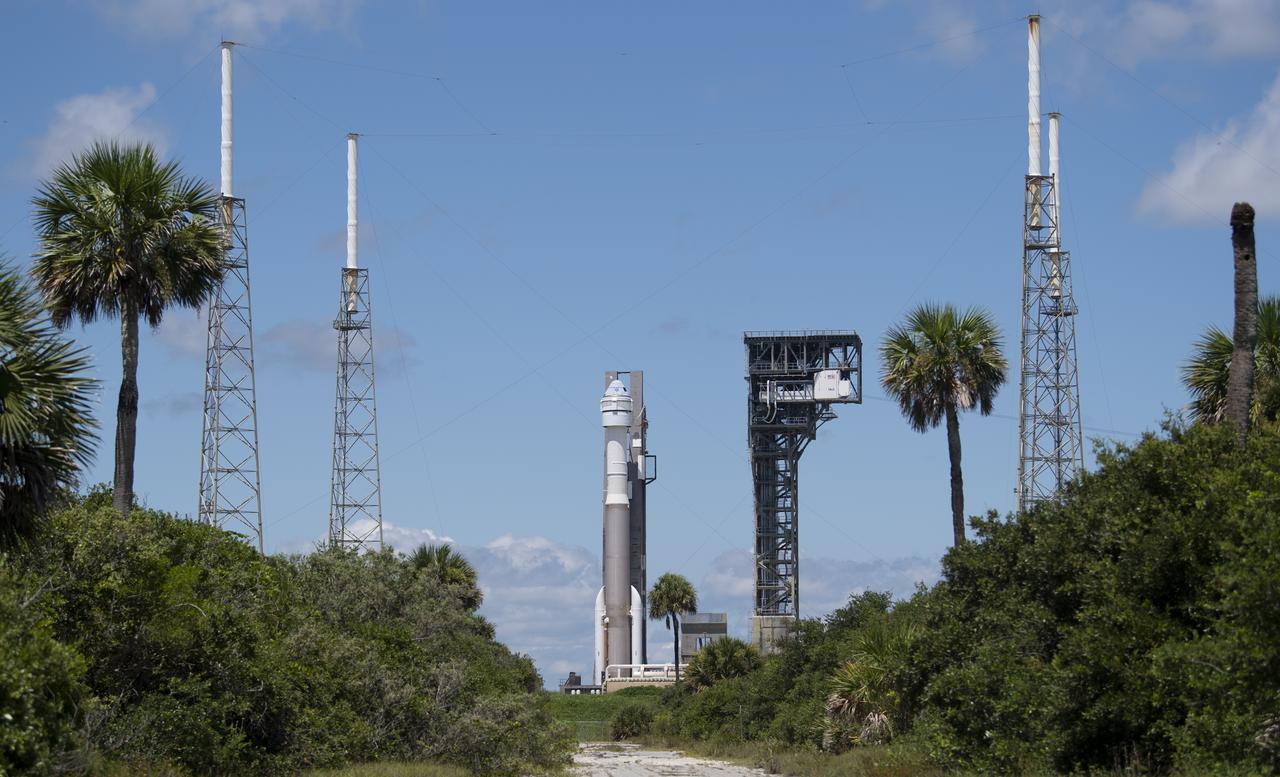
A United Launch Alliance Atlas V rocket with Boeing’s CST-100 Starliner spacecraft aboard is seen as it is rolled back to the Vertical Integration Facility from the launch pad at Space Launch Complex 41 to avoid inclement weather, Friday, July 30, 2021 at Cape Canaveral Space Force Station in Florida. Boeing’s Orbital Flight Test-2 will be Starliner’s second uncrewed flight test and will dock to the International Space Station as part of NASA's Commercial Crew Program. The earliest available launch opportunity is Tuesday, Aug. 3 at 1:20pm ET. Photo Credit: (NASA/Joel Kowsky)
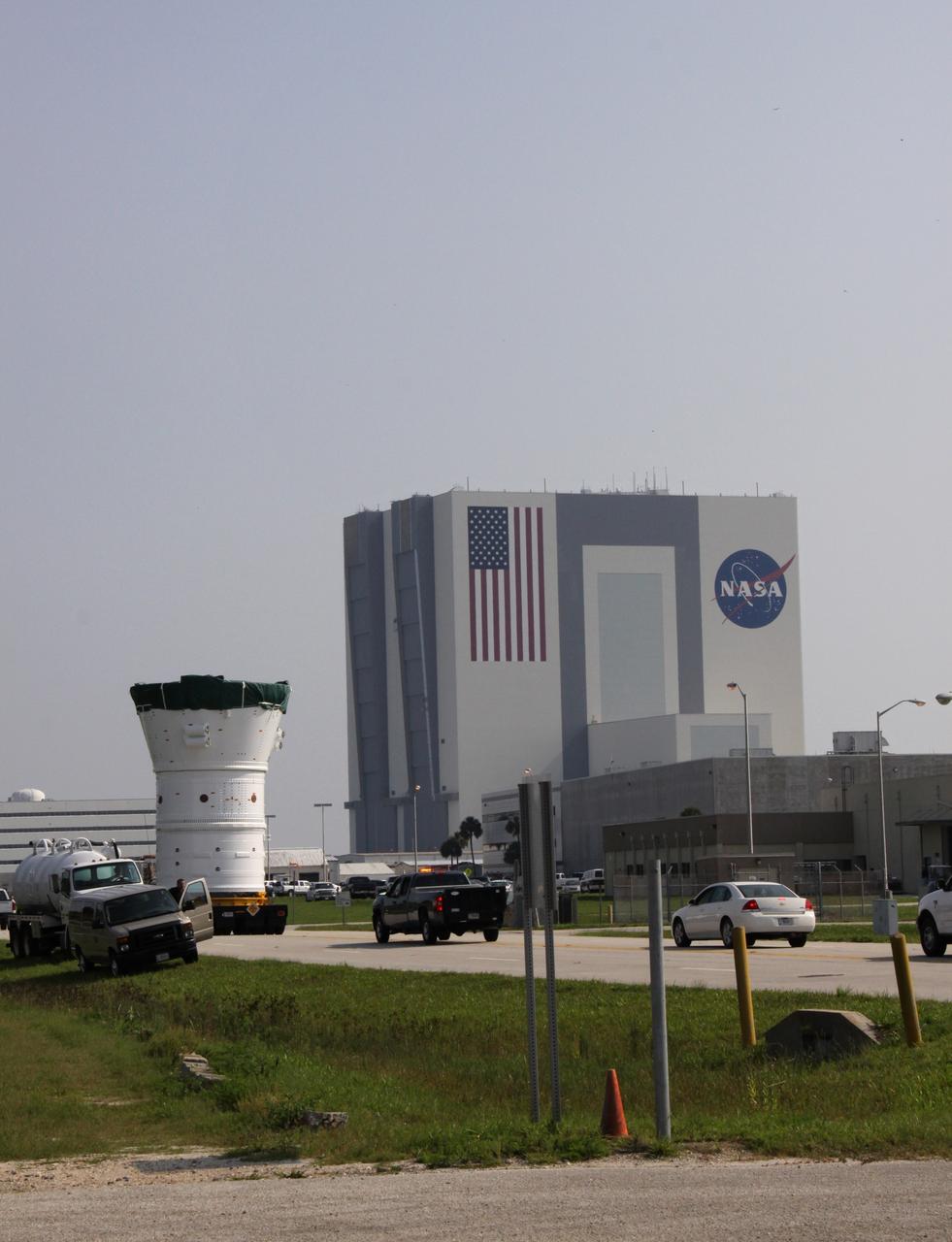
CAPE CANAVERAL, Fla. – At NASA's Kennedy Space Center in Florida, the Ares I-X forward assembly comprising the frustum, forward skirt extension and forward skirt , at left, moves toward the Vehicle Assembly Building, in the background. In the VAB's High Bay 4, the forward assembly will undergo processing and stacking to the upper stage. Ares I-X is the flight test for the Ares I which will provide NASA an early opportunity to test and prove hardware, facilities and ground operations associated with Ares I, which is part of the Constellation Program to return men to the moon and beyond. Launch of the Ares I-X flight test is targeted for August 2009. Photo credit: NASA/Jack Pfaller
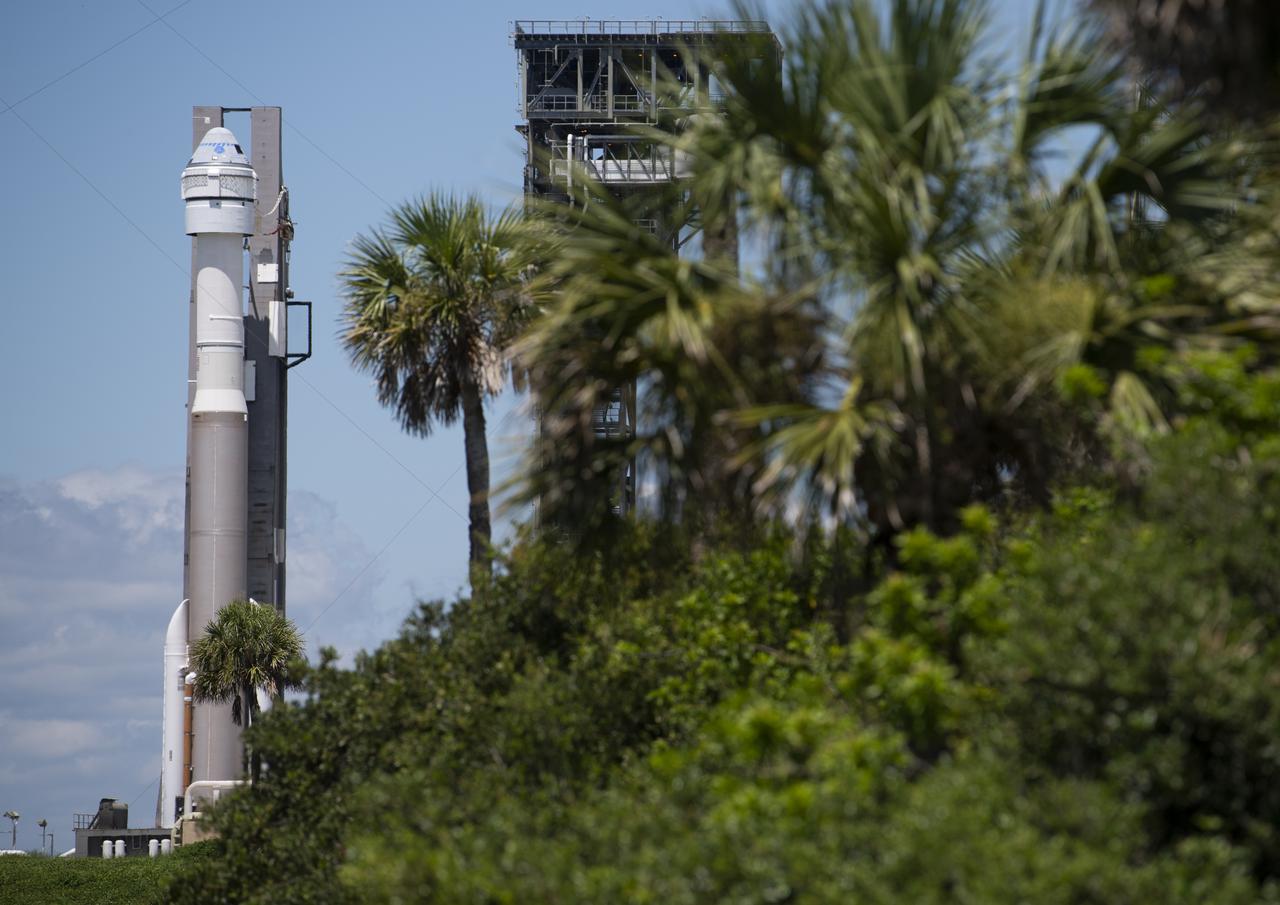
A United Launch Alliance Atlas V rocket with Boeing’s CST-100 Starliner spacecraft aboard is seen as it is rolled back to the Vertical Integration Facility from the launch pad at Space Launch Complex 41 to avoid inclement weather, Friday, July 30, 2021 at Cape Canaveral Space Force Station in Florida. Boeing’s Orbital Flight Test-2 will be Starliner’s second uncrewed flight test and will dock to the International Space Station as part of NASA's Commercial Crew Program. The earliest available launch opportunity is Tuesday, Aug. 3 at 1:20pm ET. Photo Credit: (NASA/Joel Kowsky)
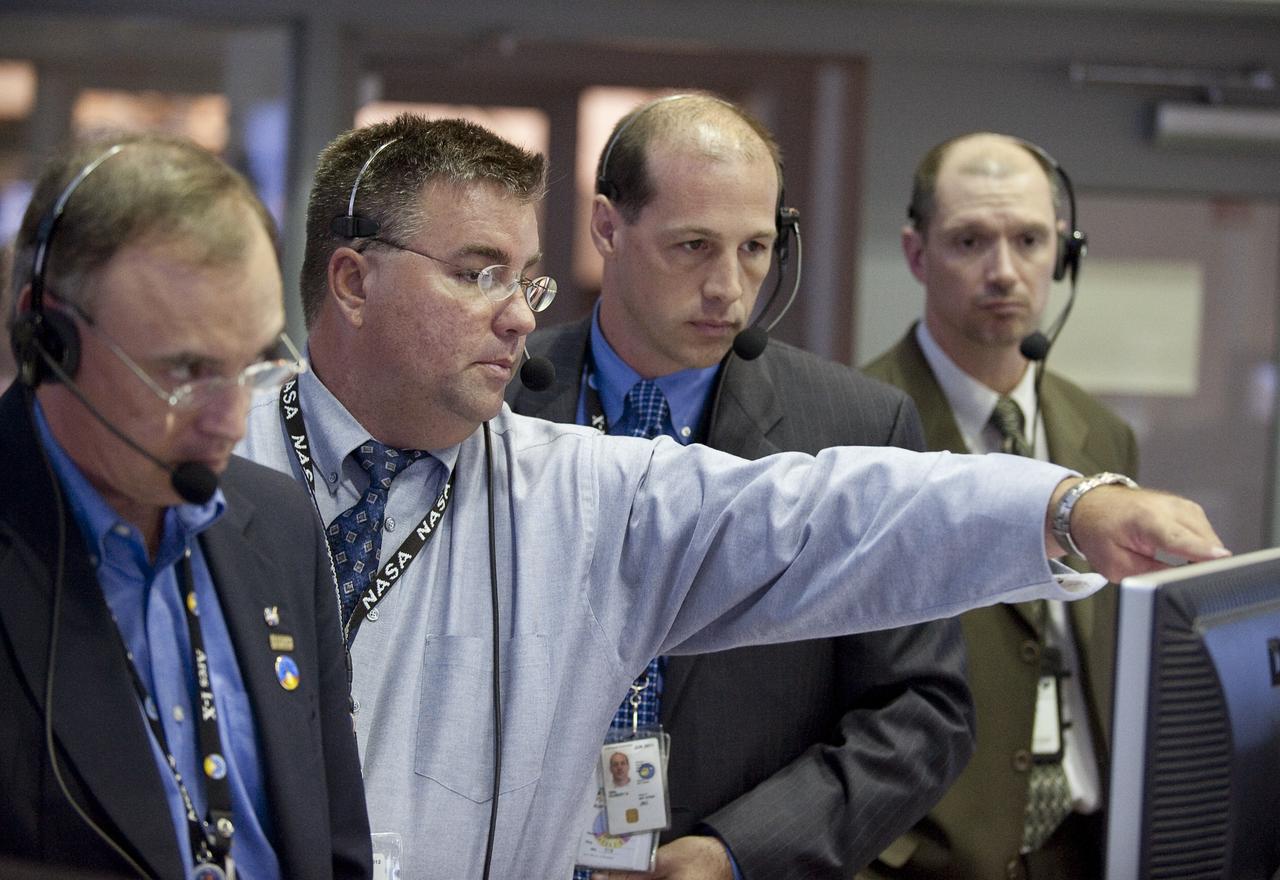
Mission managers, from left, NASA Constellation Program manager Jeff Hanley, Ares I-X Launch Director Ed Mango, Ares I-X mission manager Bob Ess, Ground Operations Manager Philip "Pepper" Phillips, review the latest data in Firing Room One of the Launch Control Center (LCC) at the Kennedy Space Center during the launch countdown of the Ares I-X rocket in Cape Canaveral, Fla., Tuesday, Oct. 27, 2009. The flight test of Ares I-X will provide NASA with an early opportunity to test and prove flight characteristics, hardware, facilities and ground operations associated with the Ares I. Photo Credit: (NASA/Bill Ingalls)
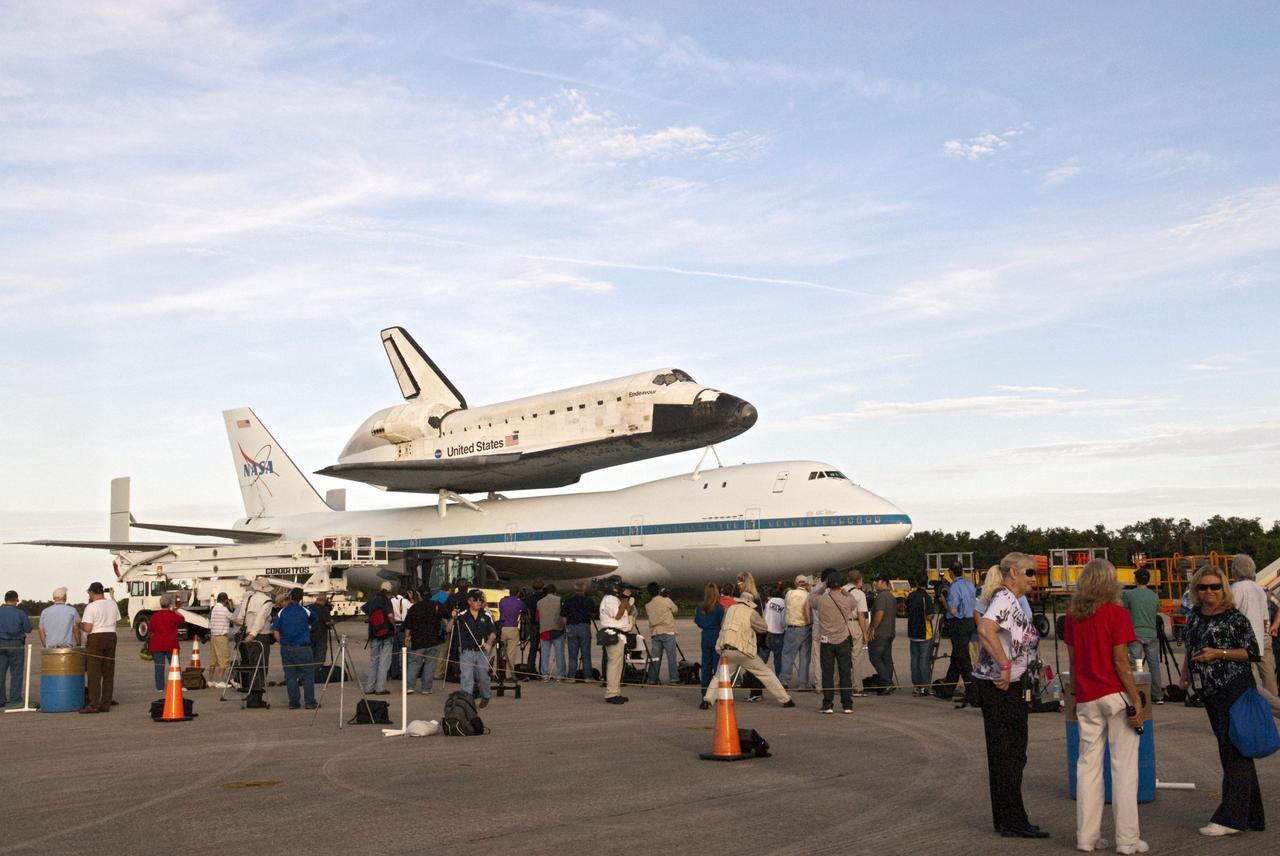
CAPE CANAVERAL, Fla. – Media representatives are given the opportunity to photograph space shuttle Endeavour, secured atop NASA's Shuttle Carrier Aircraft or SCA, at the Shuttle Landing Facility at NASA's Kennedy Space Center in Florida. Preparations are under way for Endeavour's upcoming ferry flight. The SCA, a modified 747 jetliner, will fly Endeavour to Los Angeles where it will be placed on public display at the California Science Center. This is the final ferry flight scheduled in the Space Shuttle Program era. For more information on the shuttles' transition and retirement, visit http://www.nasa.gov/transition. Photo credit: NASA/Charisse Nahser
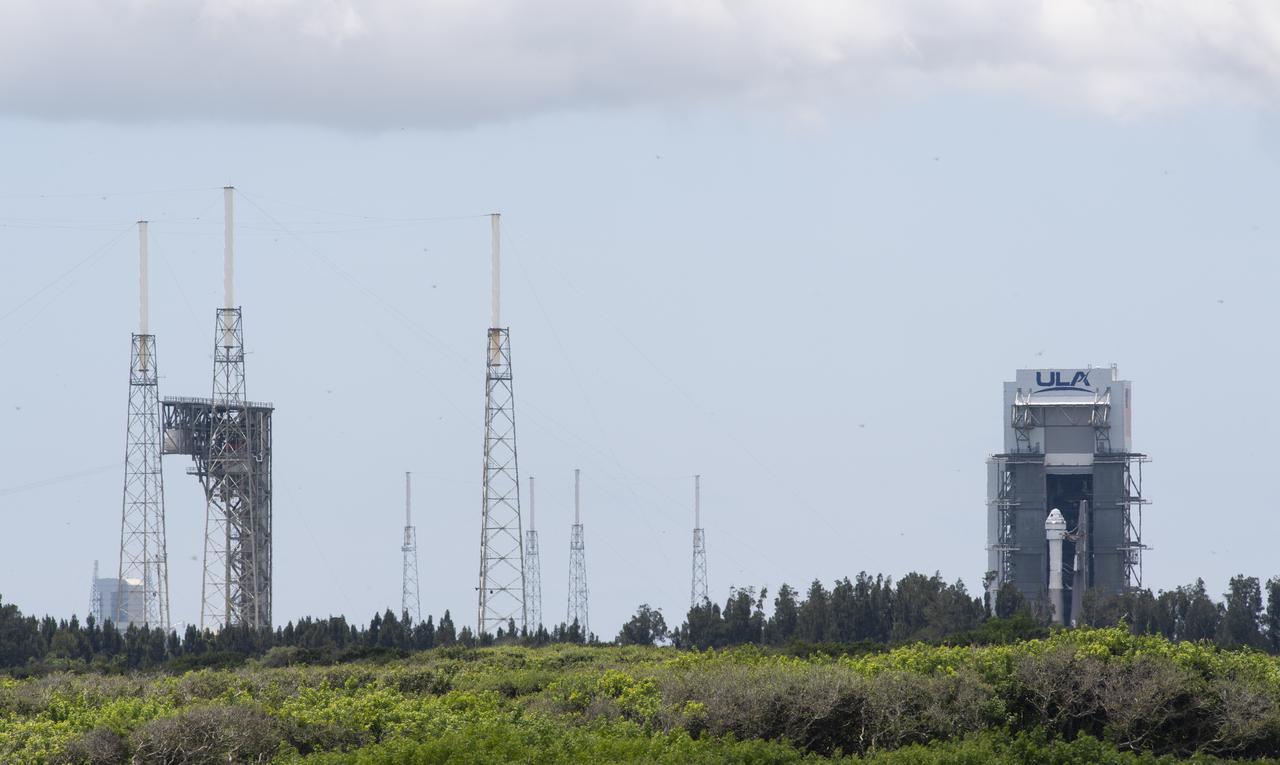
A United Launch Alliance Atlas V rocket with Boeing’s CST-100 Starliner spacecraft aboard is seen as it is rolled back to the Vertical Integration Facility from the launch pad at Space Launch Complex 41 to avoid inclement weather, Friday, July 30, 2021 at Cape Canaveral Space Force Station in Florida. Boeing’s Orbital Flight Test-2 will be Starliner’s second uncrewed flight test and will dock to the International Space Station as part of NASA's Commercial Crew Program. The earliest available launch opportunity is Tuesday, Aug. 3 at 1:20pm ET. Photo Credit: (NASA/Joel Kowsky)

The “rookie” on the STS-92 mission, Pilot Pamela Ann Melroy has her new launch and entry suit adjusted during pre-pack and fit check in the Operations and Checkout Building. Melroy and the rest of the crew are at KSC for Terminal Countdown Demonstration Test activities. The TCDT provides emergency egress training, simulated countdown exercises and opportunities to inspect the mission payload. STS-92 is scheduled to launch Oct. 5 at 9:38 p.m. EDT from Launch Pad 39A on the fifth flight to the International Space Station. It will carry two elements of the Space Station, the Integrated Truss Structure Z1 and the third Pressurized Mating Adapter. The mission is also the 100th flight in the Shuttle program
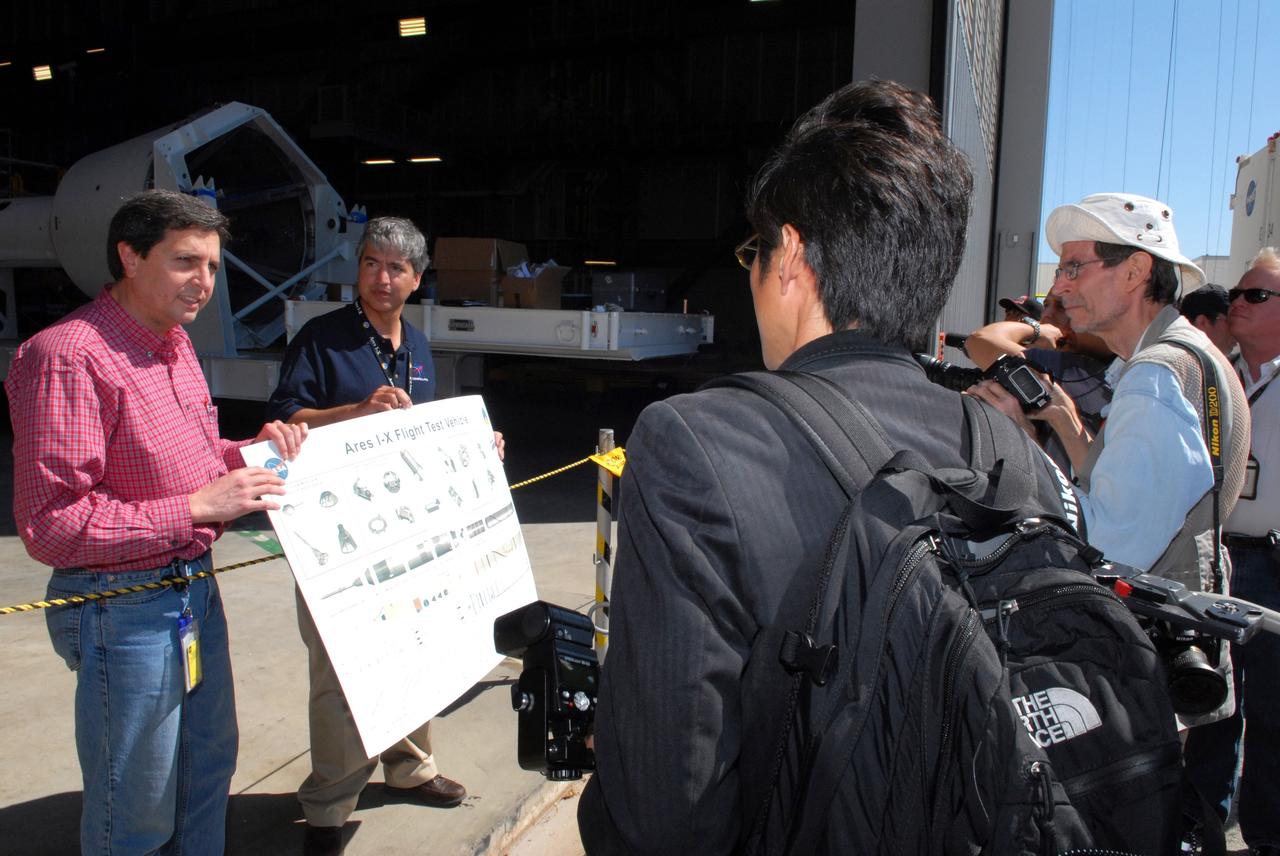
CAPE CANAVERAL, Fla. – Media, at right, gather outside the Vehicle Assembly Building at NASA's Kennedy Space Center in Florida to get more details about the Ares I-X flight test system. The I-X flight will provide NASA an early opportunity to test and prove hardware, facilities and ground operations associated with Ares I, part of the Constellation Program to return men to the moon and beyond. Ares I is the essential core of a safe, reliable, cost-effective space transportation system that eventually will carry crewed missions back to the moon, on to Mars and out into the solar system. Photo credit: NASA/Jack Pfaller
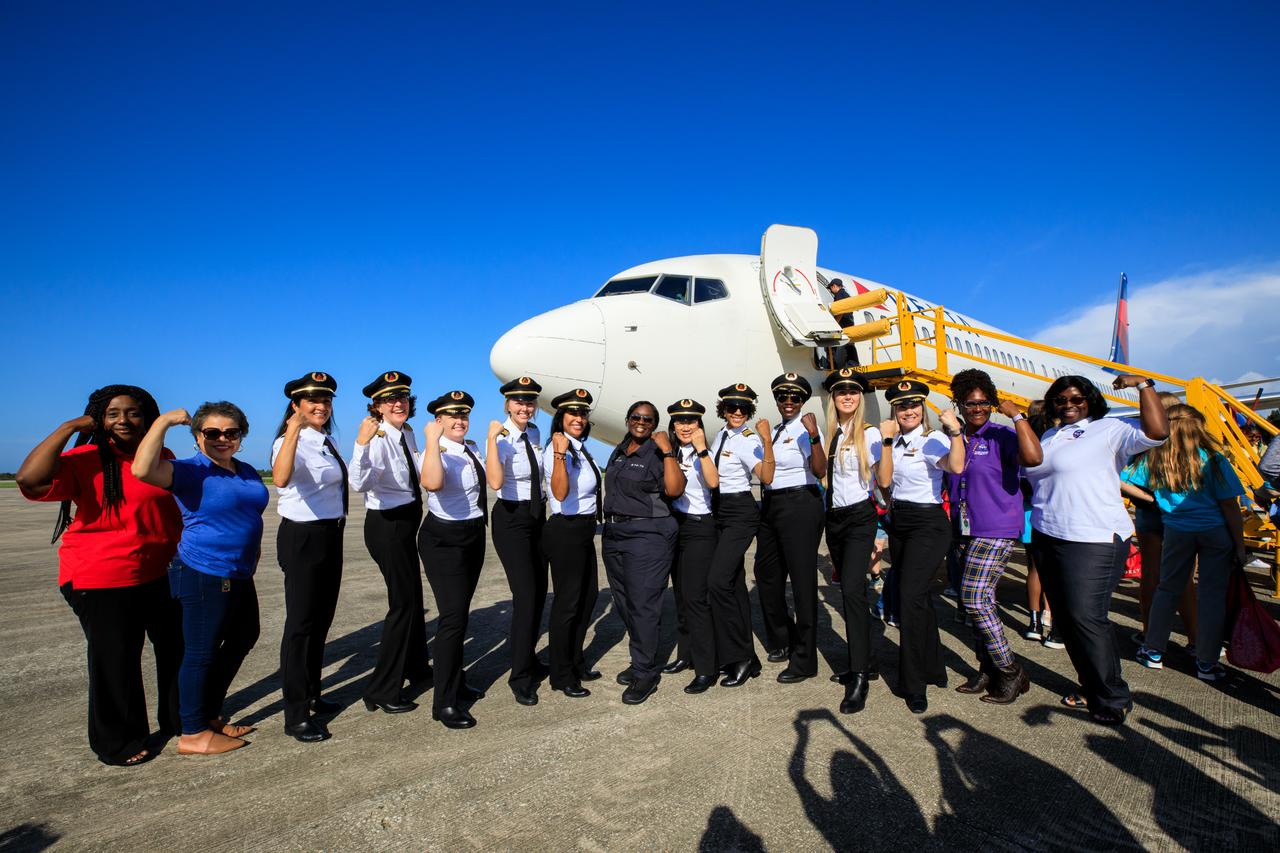
From left, NASA’s Kennedy Space Center senior managers Barbara L. Brown, director of Exploration Research and Technology Programs; Janet Sellars, director of Human Resources; Hortense Blackwell, director of Center Engagement and Business Integration Services; and Kimberlyn B. Carter, associate program manager for Exploration Ground Systems pose with members of the all-female crew for Delta Air Lines’ Women Inspiring Our Next Generation (WING) flight after the crew touched down at the Launch and Landing Facility at Kennedy on Friday, Sept. 22, 2023. The flight brought girls from Atlanta, Georgia, ranging in age from 12 to 18, to learn about the various careers available at the Florida spaceport. While at Kennedy, the group had the opportunity to view center facilities, hear from a panel of women with a combination of careers from Kennedy and Delta, and tour the visitor complex.
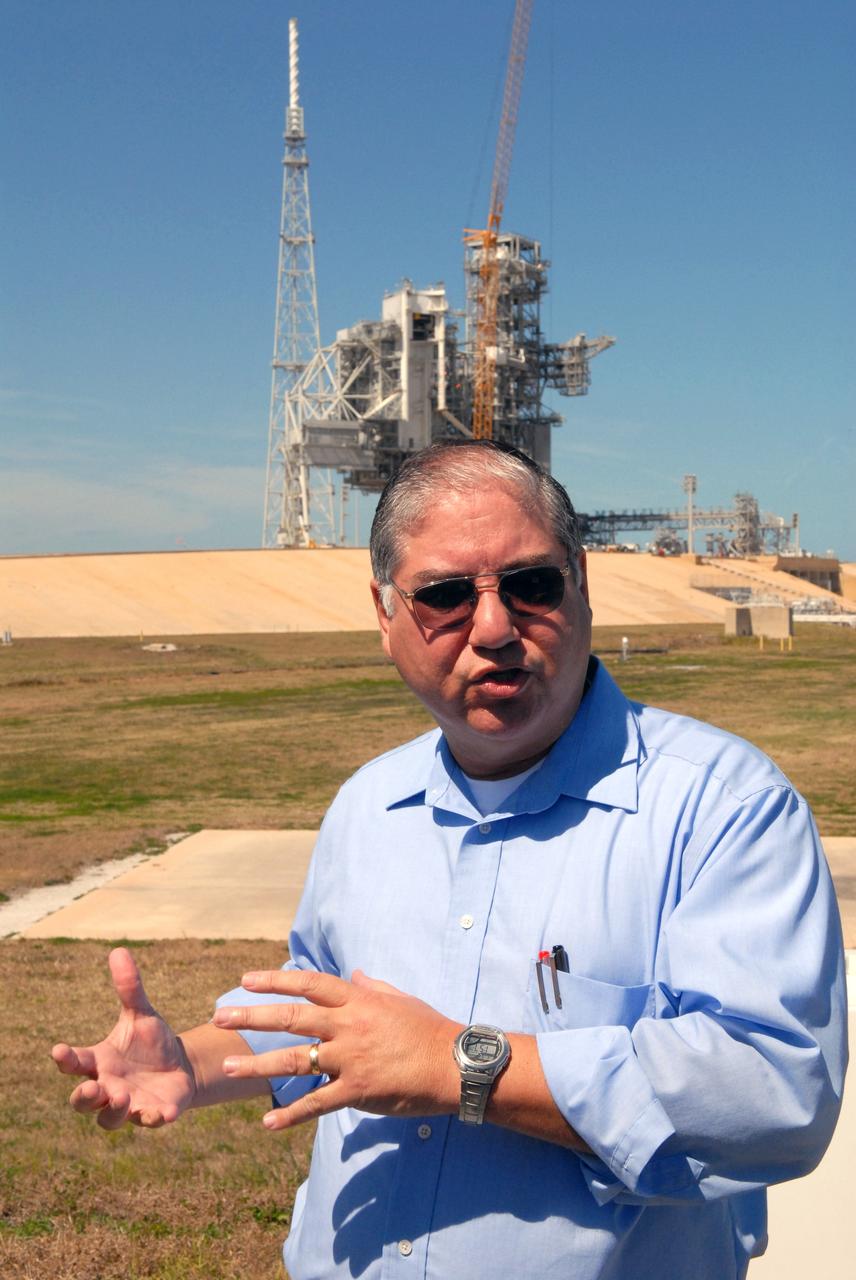
CAPE CANAVERAL, Fla. – Near Launch Pad 39B at NASA's Kennedy Space Center in Florida, Jose Perez-Morales explains use of the launch pad for the Ares rockets in the Constellation Program. Perez-Morales is Constellation senior pad project manager. Pad 39B will be used for the Ares I-X flight test, targeted for July 2009. The I-X flight will provide NASA an early opportunity to test and prove hardware, facilities and ground operations associated with Ares I, part of the Constellation Program to return men to the moon and beyond. Ares I is the essential core of a safe, reliable, cost-effective space transportation system that eventually will carry crewed missions back to the moon, on to Mars and out into the solar system. Photo credit: NASA/Jack Pfaller
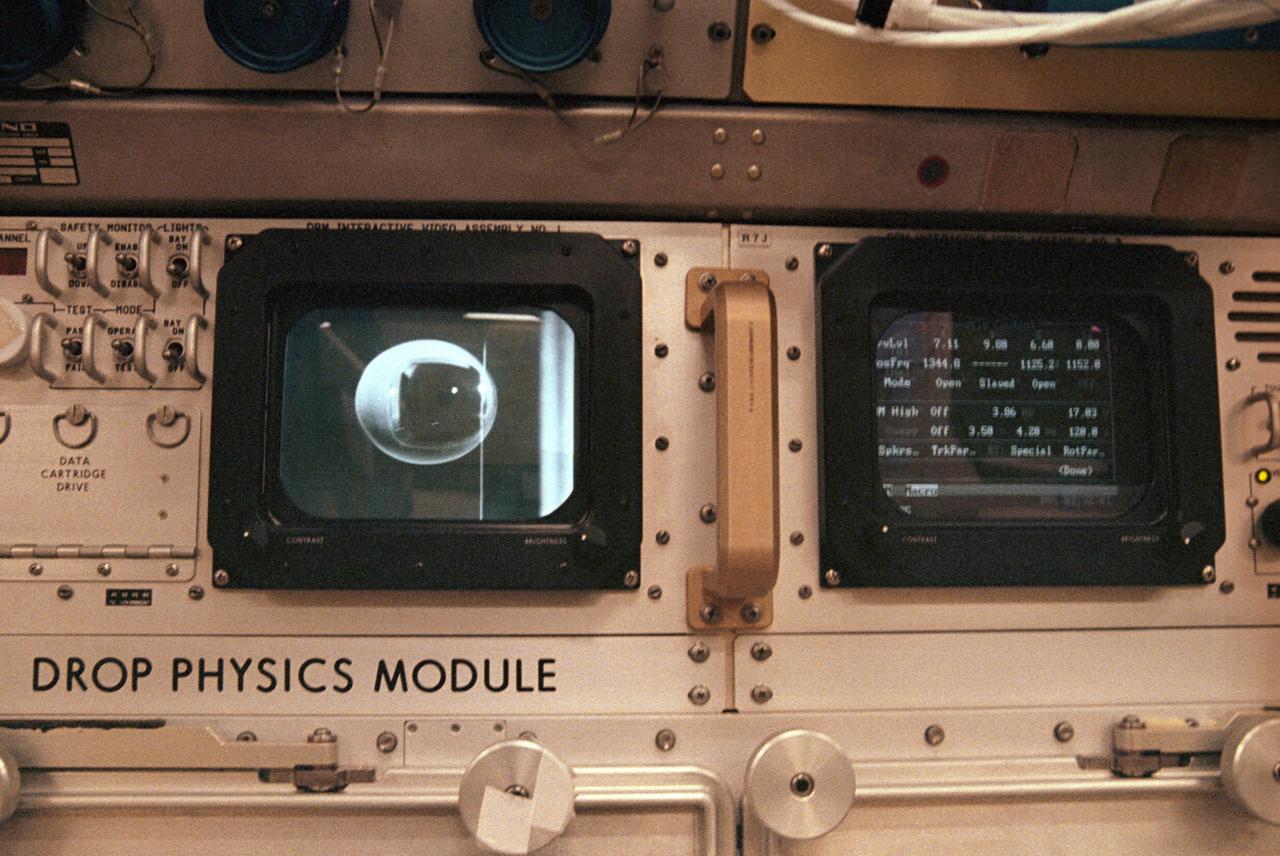
The first United States Microgravity Laboratory (USML-1) was one of NASA's science and technology programs that provided scientists an opportunity to research various scientific investigations in a weightlessness environment inside the Spacelab module. It also provided demonstrations of new equipment to help prepare for advanced microgravity research and processing aboard the Space Station. The USML-1 flew in orbit for extended periods, providing greater opportunities for research in materials science, fluid dynamics, biotechnology (crystal growth), and combustion science. This is a close-up view of the Drop Physics Module (DPM) in the USML science laboratory. The DPM was dedicated to the detailed study of the dynamics of fluid drops in microgravity: their equilibrium shapes, the dynamics of their flows, and their stable and chaotic behaviors. It also demonstrated a technique known as containerless processing. The DPM and microgravity combine to remove the effects of the container, such as chemical contamination and shape, on the sample being studied. Sound waves, generating acoustic forces, were used to suspend a sample in microgravity and to hold a sample of free drops away from the walls of the experiment chamber, which isolated the sample from potentially harmful external influences. The DPM gave scientists the opportunity to test theories of classical fluid physics, which have not been confirmed by experiments conducted on Earth. This image is a close-up view of the DPM. The USML-1 flew aboard the STS-50 mission on June 1992, and was managed by the Marshall Space Flight Center.
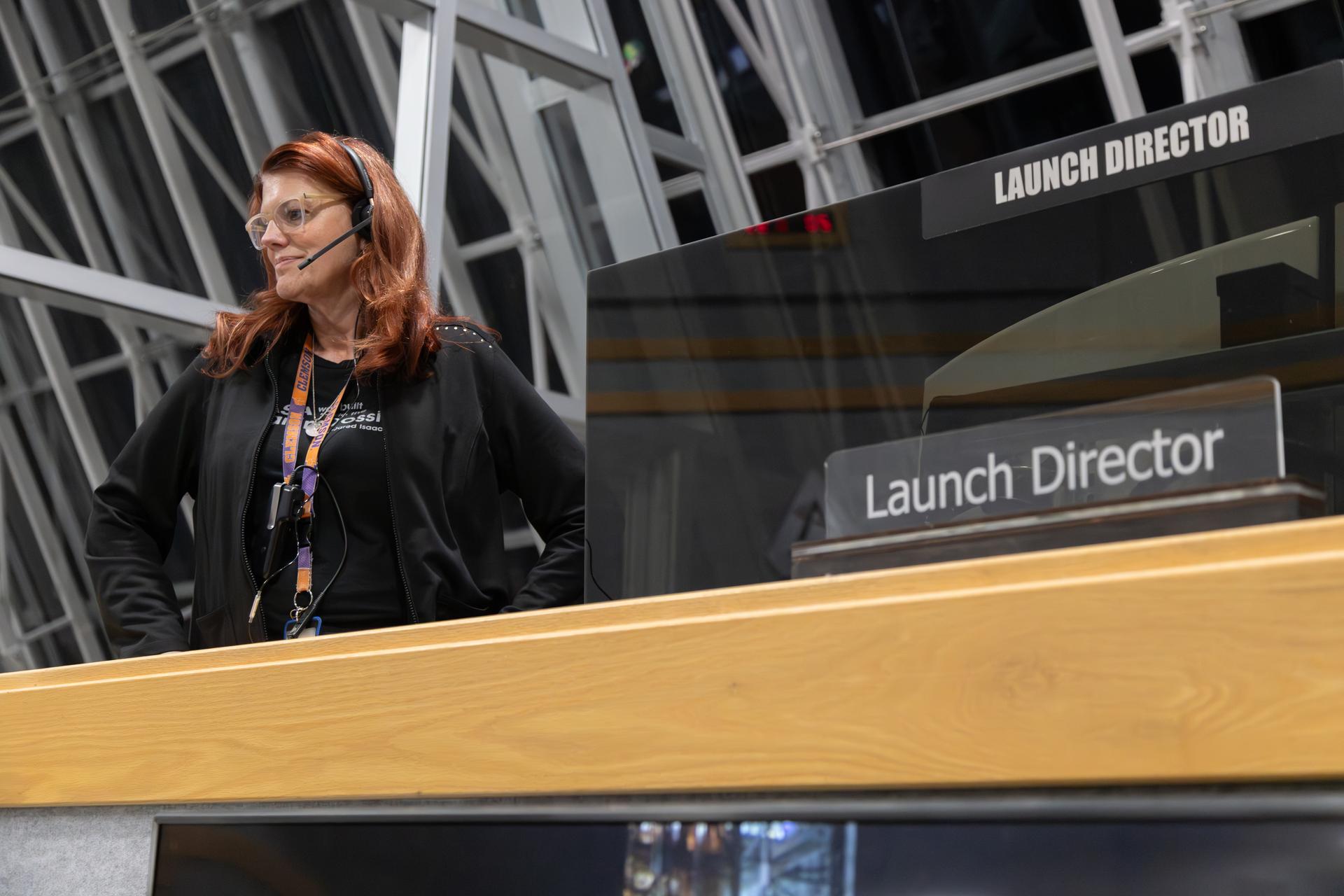
Charlie Blackwell-Thompson, Artemis launch director, NASA’s Exploration Ground Systems Program, is seen inside Firing Room 1 of the Rocco A. Petrone Launch Control Center during the Artemis II rollout of the SLS (Space Launch System) rocket and Orion spacecraft from the Vehicle Assembly Building to Launch Complex 39B at NASA’s Kennedy Space Center in Florida on Friday,. March 20, 2026. The Artemis II test flight will take Commander Reid Wiseman, Pilot Victor Glover, and Mission Specialist Christina Koch from NASA, and Mission Specialist Jeremy Hansen from the CSA (Canadian Space Agency), around the Moon and back to Earth with launch opportunities beginning in April 2026.
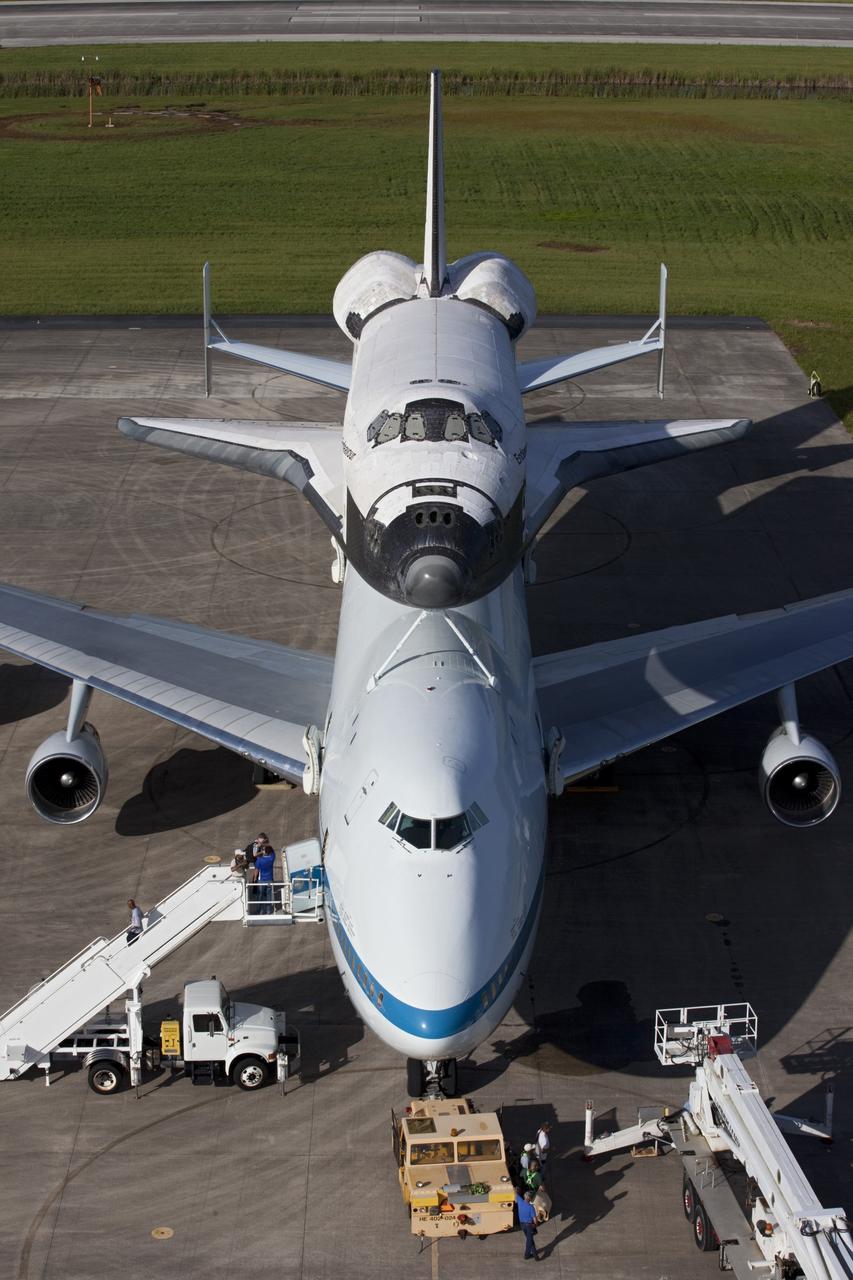
CAPE CANAVERAL, Fla. – Preparations are under way to uncover the cockpit windows on space shuttle Endeavour for an employee photo opportunity at the Shuttle Landing Facility at NASA's Kennedy Space Center in Florida. Endeavour is balanced and secured atop NASA's Shuttle Carrier Aircraft, or SCA. The SCA, a modified 747 jetliner, will fly Endeavour to Los Angeles where it will be placed on public display at the California Science Center. This is the final ferry flight scheduled in the Space Shuttle Program era. For more information on the shuttles' transition and retirement, visit http://www.nasa.gov/transition. Photo credit: NASA/Kim Shiflett
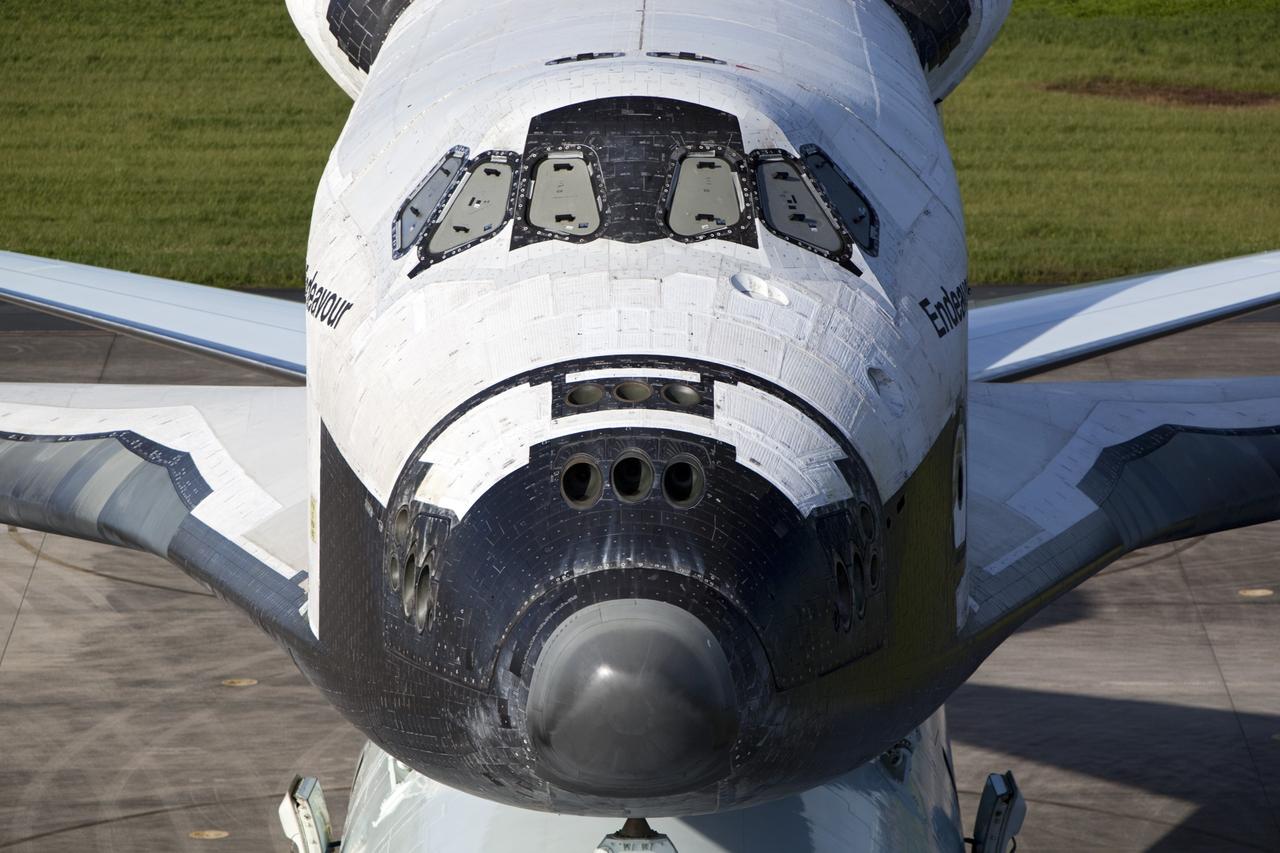
CAPE CANAVERAL, Fla. – Preparations are under way to uncover the cockpit windows on space shuttle Endeavour for an employee photo opportunity at the Shuttle Landing Facility at NASA's Kennedy Space Center in Florida. Endeavour is balanced and secured atop NASA's Shuttle Carrier Aircraft, or SCA. The SCA, a modified 747 jetliner, will fly Endeavour to Los Angeles where it will be placed on public display at the California Science Center. This is the final ferry flight scheduled in the Space Shuttle Program era. For more information on the shuttles' transition and retirement, visit http://www.nasa.gov/transition. Photo credit: NASA/Dimitri Gerondidakis
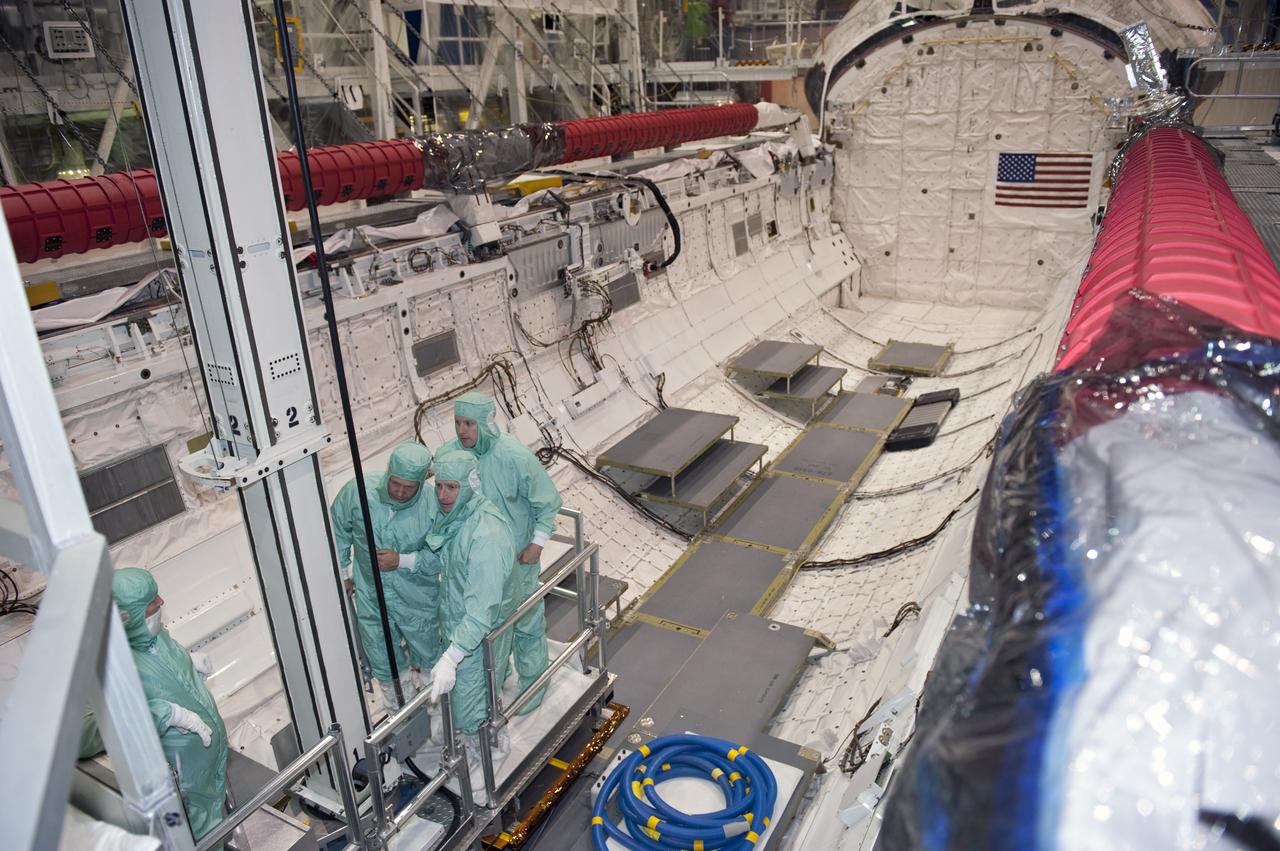
CAPE CANAVERAL, Fla. -- In Orbiter Processing Facility-1 at NASA's Kennedy Space Center in Florida, the STS-135 crew inspects shuttle Atlantis' payload bay. The four-member crew is at Kennedy to participate in the Crew Equipment Interface Test (CEIT), which gives them an opportunity for hands-on training with the tools and equipment they'll use in space and familiarization of the payload they'll deliver to the International Space Station. Atlantis is being prepared for the STS-135 mission, which will deliver Raffaello multi-purpose logistics module packed with supplies and spare parts to the station. Atlantis is targeted to launch June 28, and will be the last shuttle flight for the Space Shuttle Program. Photo credit: NASA/Kim Shiflett
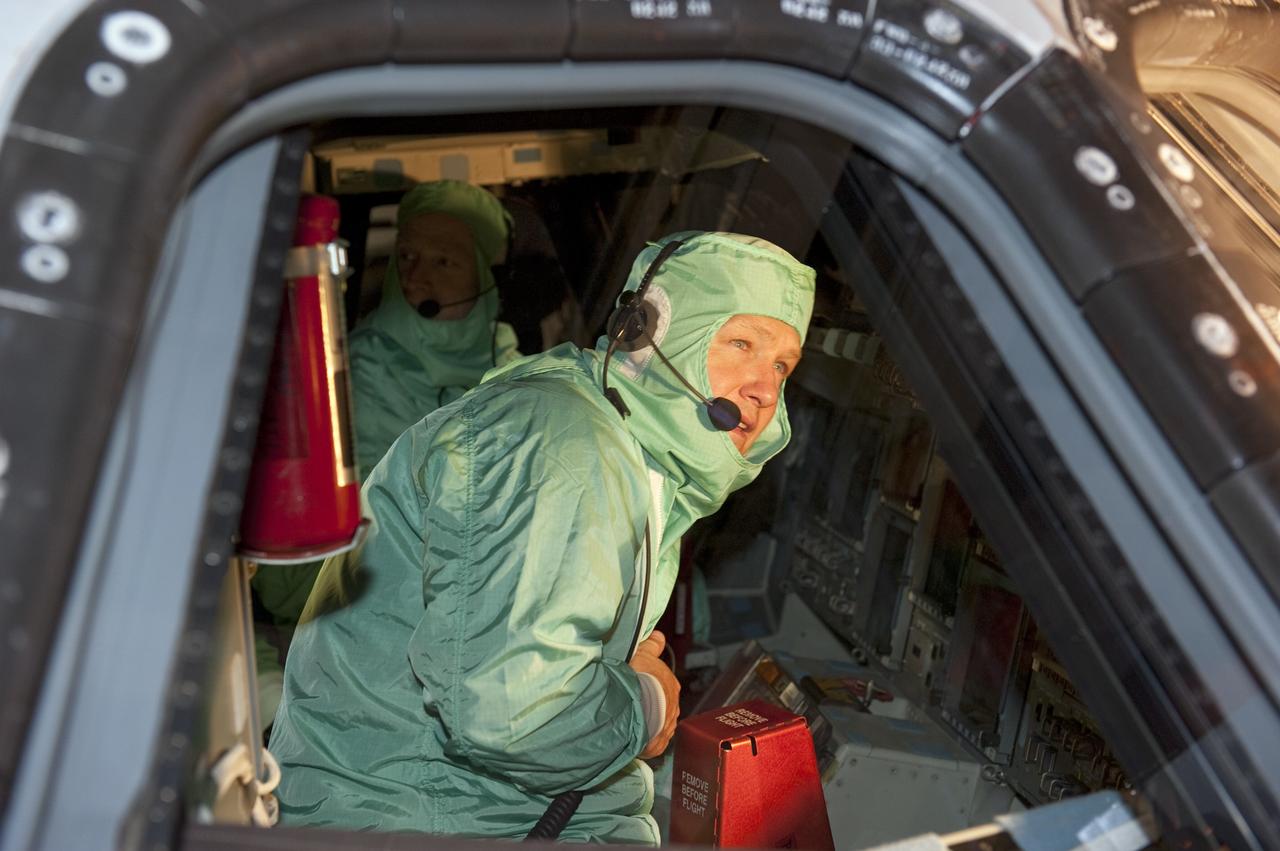
CAPE CANAVERAL, Fla. -- In Orbiter Processing Facility-1 at NASA's Kennedy Space Center in Florida, STS-135 Pilot Doug Hurley checks out shuttle Atlantis' cockpit. The four-member crew is at Kennedy to participate in the Crew Equipment Interface Test (CEIT), which gives them an opportunity for hands-on training with the tools and equipment they'll use and familiarization of the payload they'll deliver to the International Space Station. Atlantis is being prepared for the STS-135 mission, which will deliver Raffaello multi-purpose logistics module packed with supplies and spare parts to the station. Atlantis is targeted to launch June 28, and will be the last shuttle flight for the Space Shuttle Program. Photo credit: NASA/Kim Shiflett
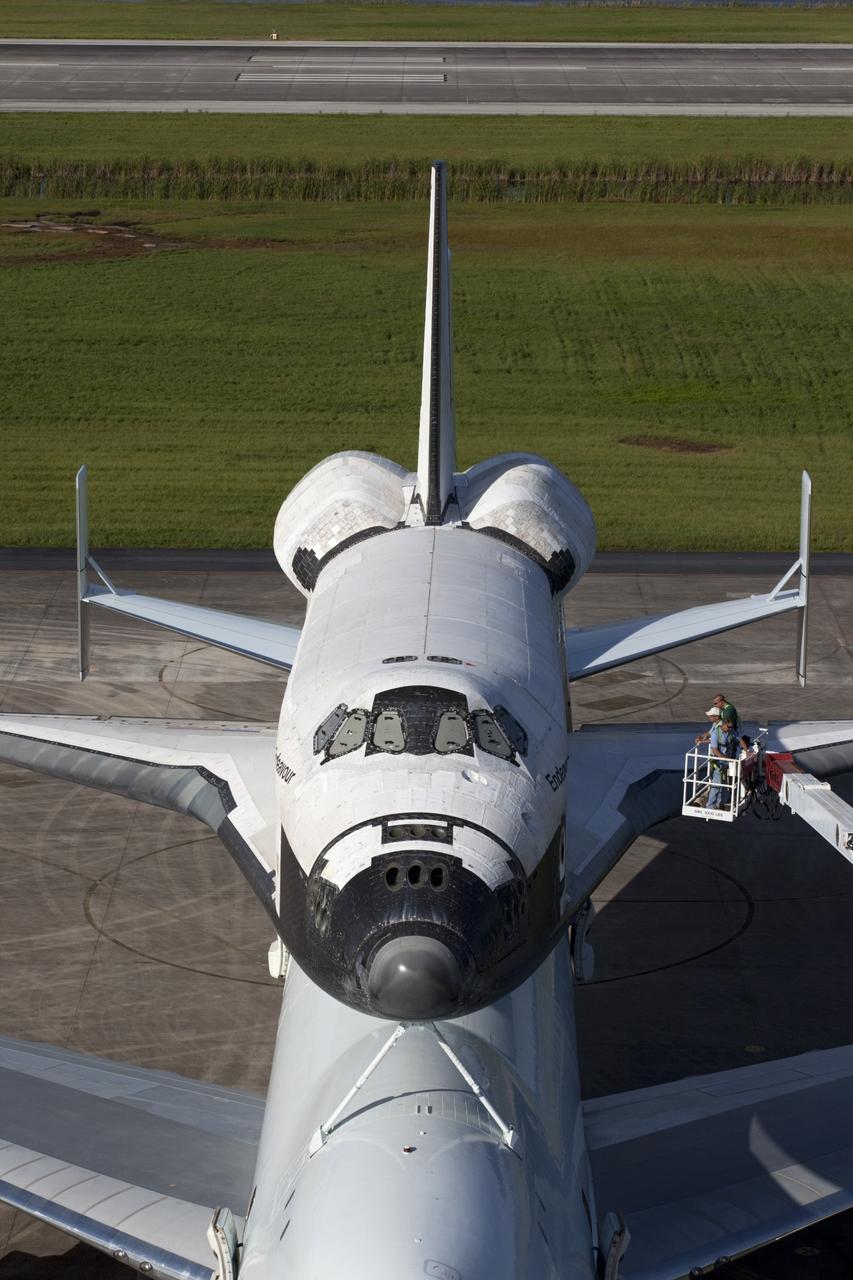
CAPE CANAVERAL, Fla. – United Space Alliance technicians prepare to uncover the cockpit windows on space shuttle Endeavour for an employee photo opportunity at the Shuttle Landing Facility at NASA's Kennedy Space Center in Florida. Endeavour is balanced and secured atop NASA's Shuttle Carrier Aircraft, or SCA. The SCA, a modified 747 jetliner, will fly Endeavour to Los Angeles where it will be placed on public display at the California Science Center. This is the final ferry flight scheduled in the Space Shuttle Program era. For more information on the shuttles' transition and retirement, visit http://www.nasa.gov/transition. Photo credit: NASA/Kim Shiflett
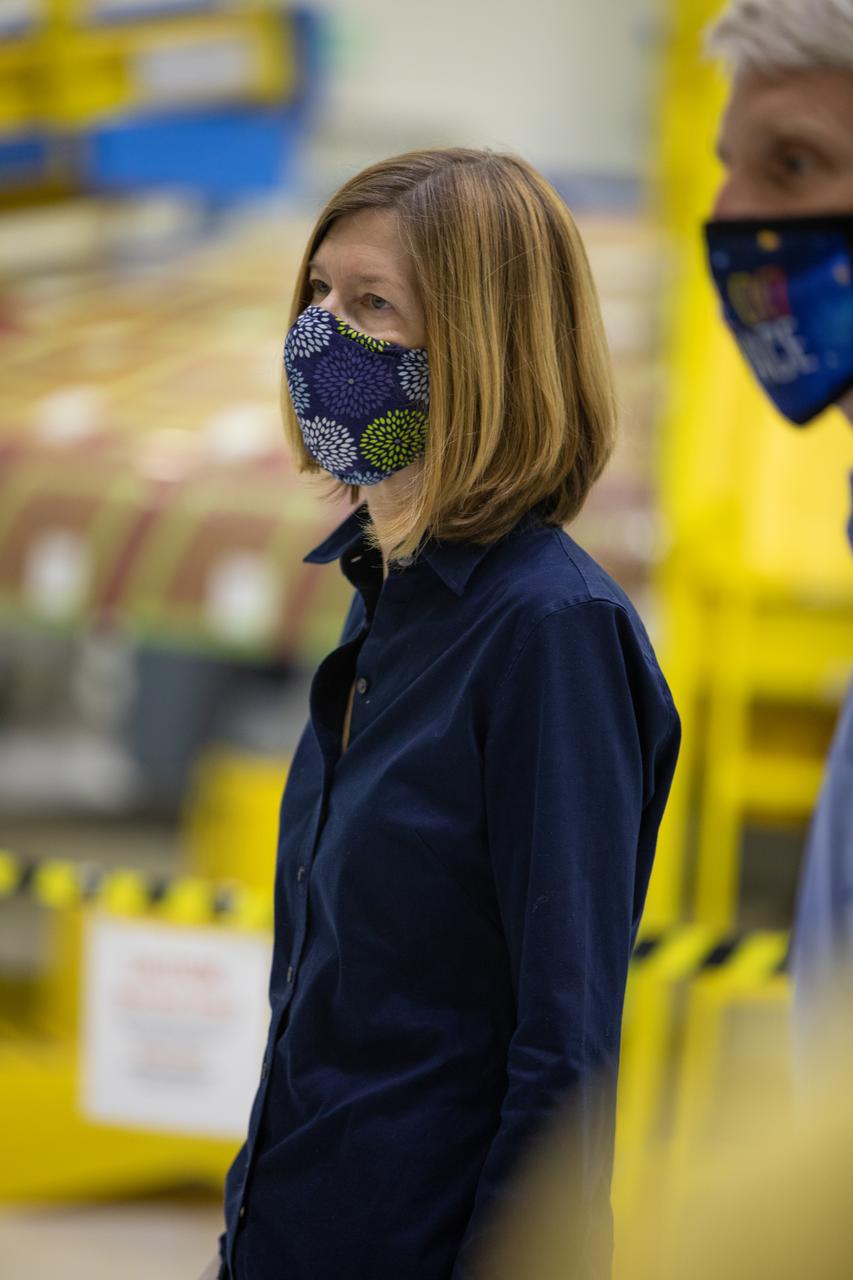
Kathy Lueders, associate administrator of NASA’s Human Exploration and Operations Mission Directorate, visits the Neil Armstrong Operations and Checkout (O&C) Building high bay at the agency’s Kennedy Space Center in Florida on Nov. 5, 2020. While at the O&C, Lueders and senior managers of Orion and Lockheed Martin had the opportunity to view the Artemis I and II spacecraft. In the background is the heat shield for Artemis II. The first in a series of increasingly complex missions, Artemis I will test the Space Launch System rocket and Orion spacecraft as an integrated system prior to crewed flights to the Moon. Under the Artemis program, NASA is planning to land the first woman and the next man on the lunar surface by 2024.
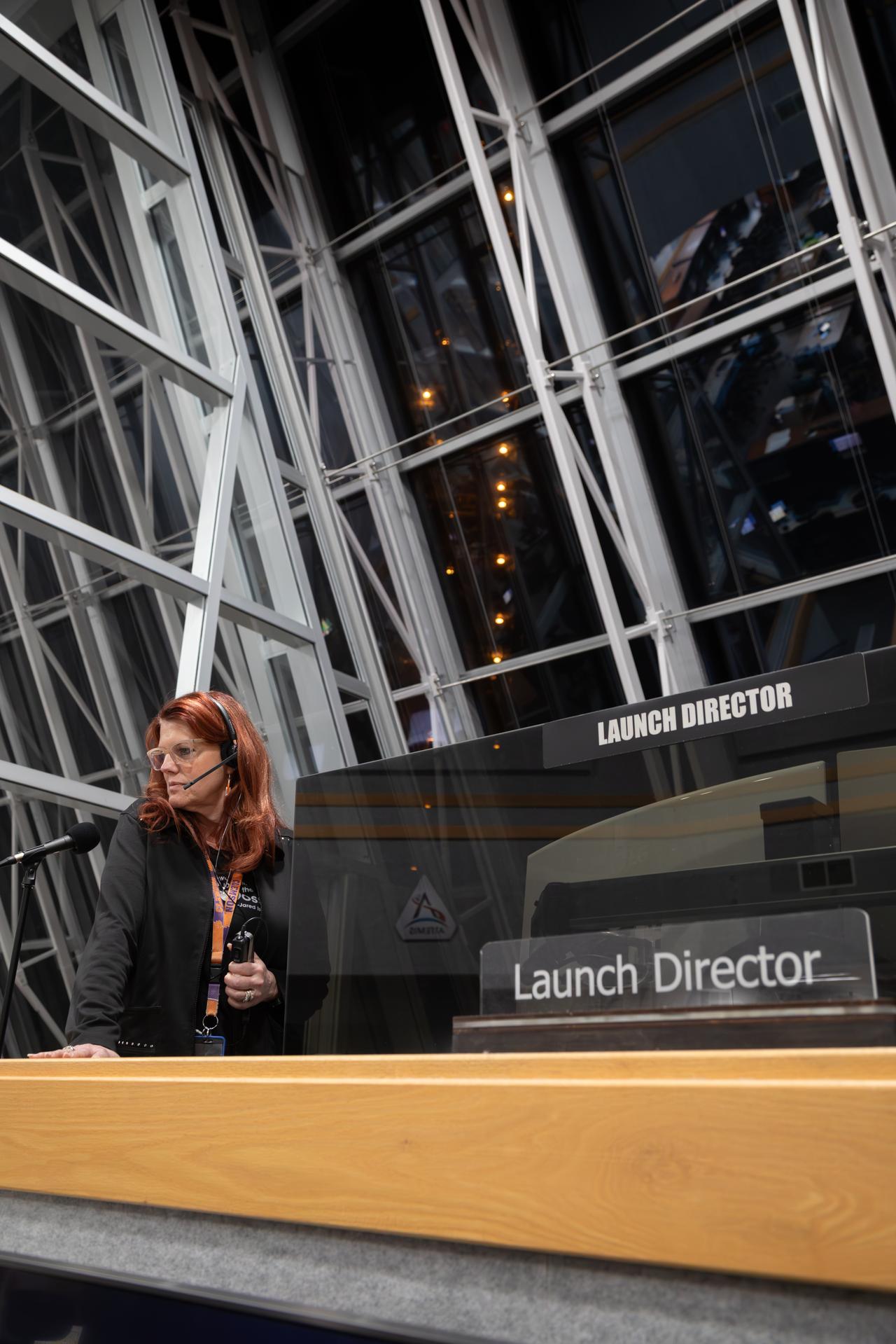
Charlie Blackwell-Thompson, Artemis launch director, NASA’s Exploration Ground Systems Program, is seen inside Firing Room 1 of the Rocco A. Petrone Launch Control Center during the Artemis II rollout of the SLS (Space Launch System) rocket and Orion spacecraft from the Vehicle Assembly Building to Launch Complex 39B at NASA’s Kennedy Space Center in Florida on Friday, March 20, 2026. The Artemis II test flight will take Commander Reid Wiseman, Pilot Victor Glover, and Mission Specialist Christina Koch from NASA, and Mission Specialist Jeremy Hansen from the CSA (Canadian Space Agency), around the Moon and back to Earth with launch opportunities beginning in April 2026.