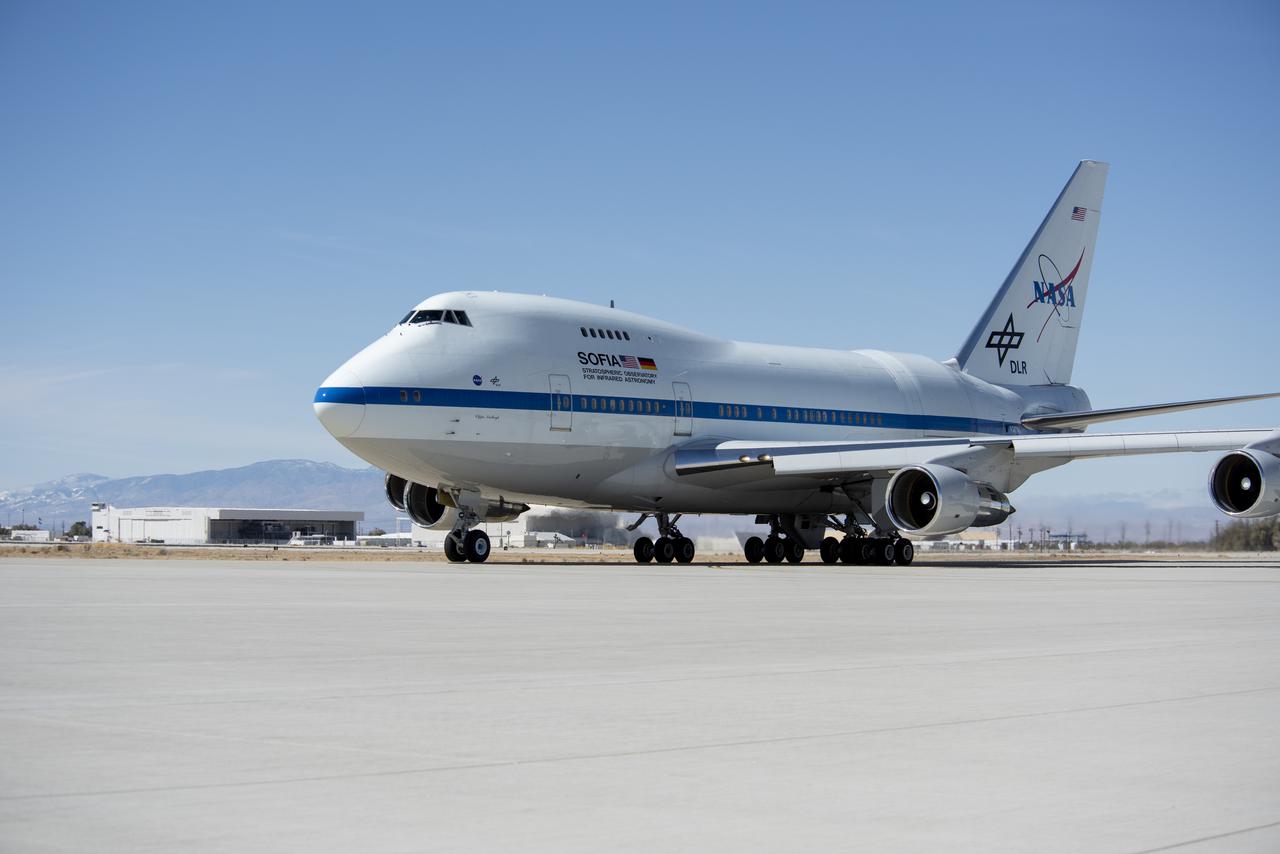
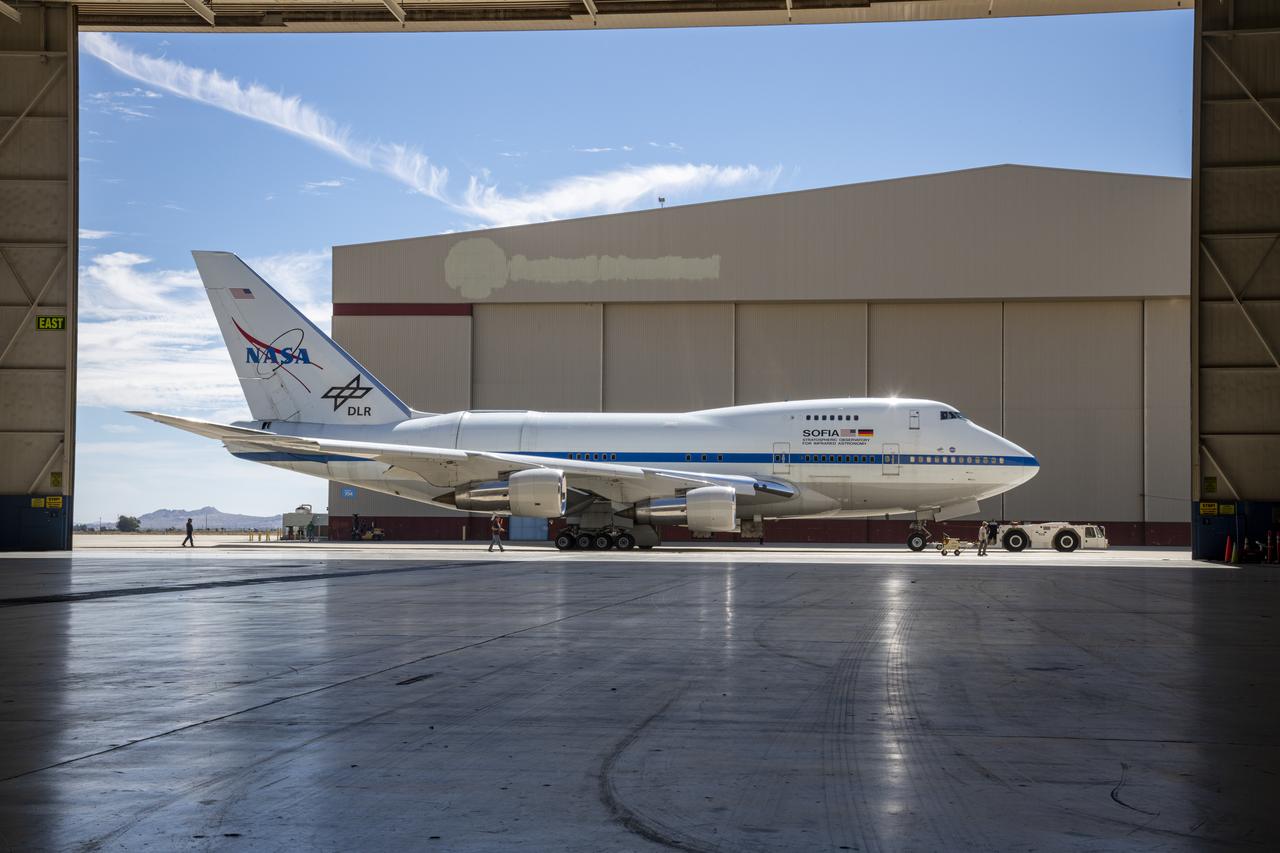
SOFIA Returns to NASA's Armstrong Flight Research Center Building 703 Caption: SOFIA returns to NASA's Armstrong Flight Research Center building 703 in Palmdale, California on March 16, 2021 after spending six months in Germany conducting science observations.
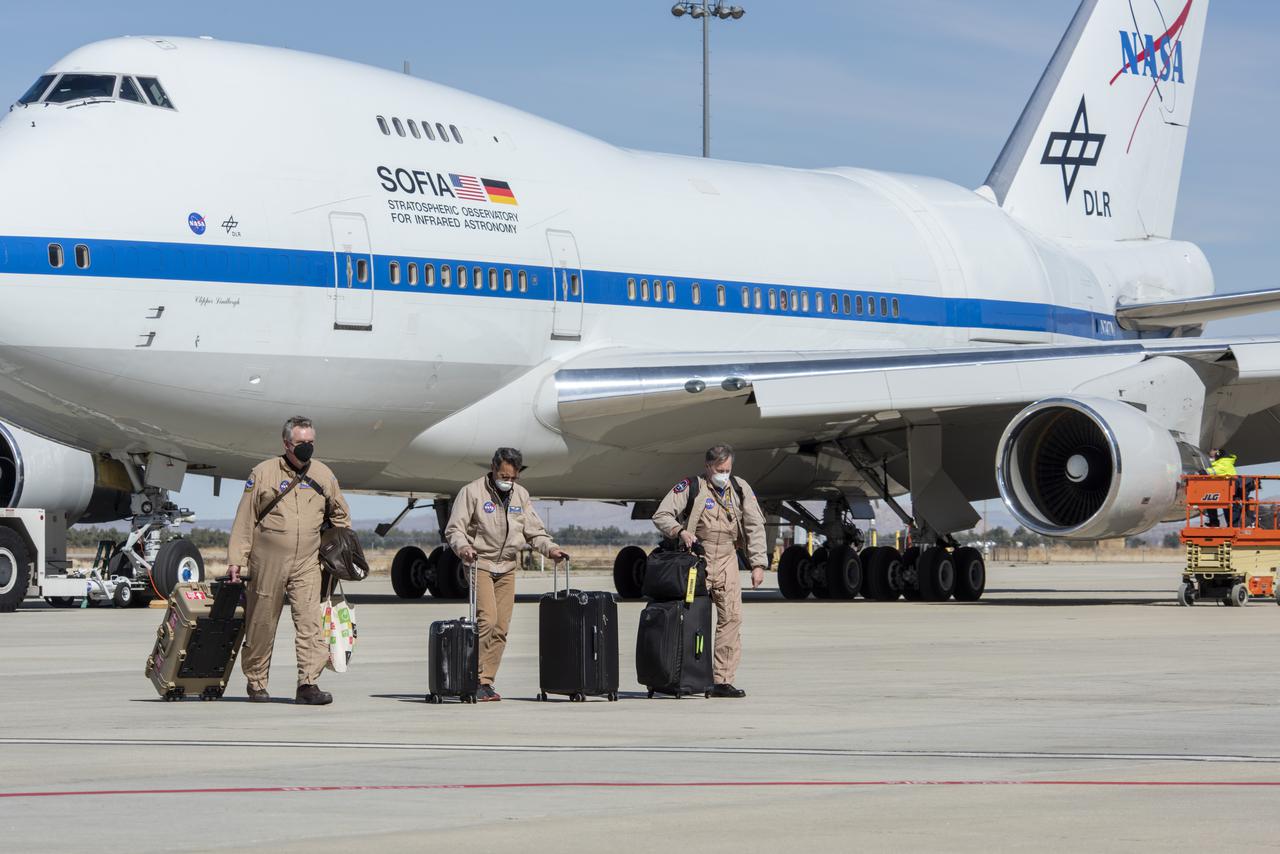
SOFIA Returns to NASA’s Armstrong Flight Research Center Building 703 Caption: SOFIA pilots are welcomed home to NASA’s Armstrong Flight Research Center Building 703 in Palmdale, California on March 16, 2021. From left to right: Tracy Phelps, Jeff Borton and Wayne Ringelberg
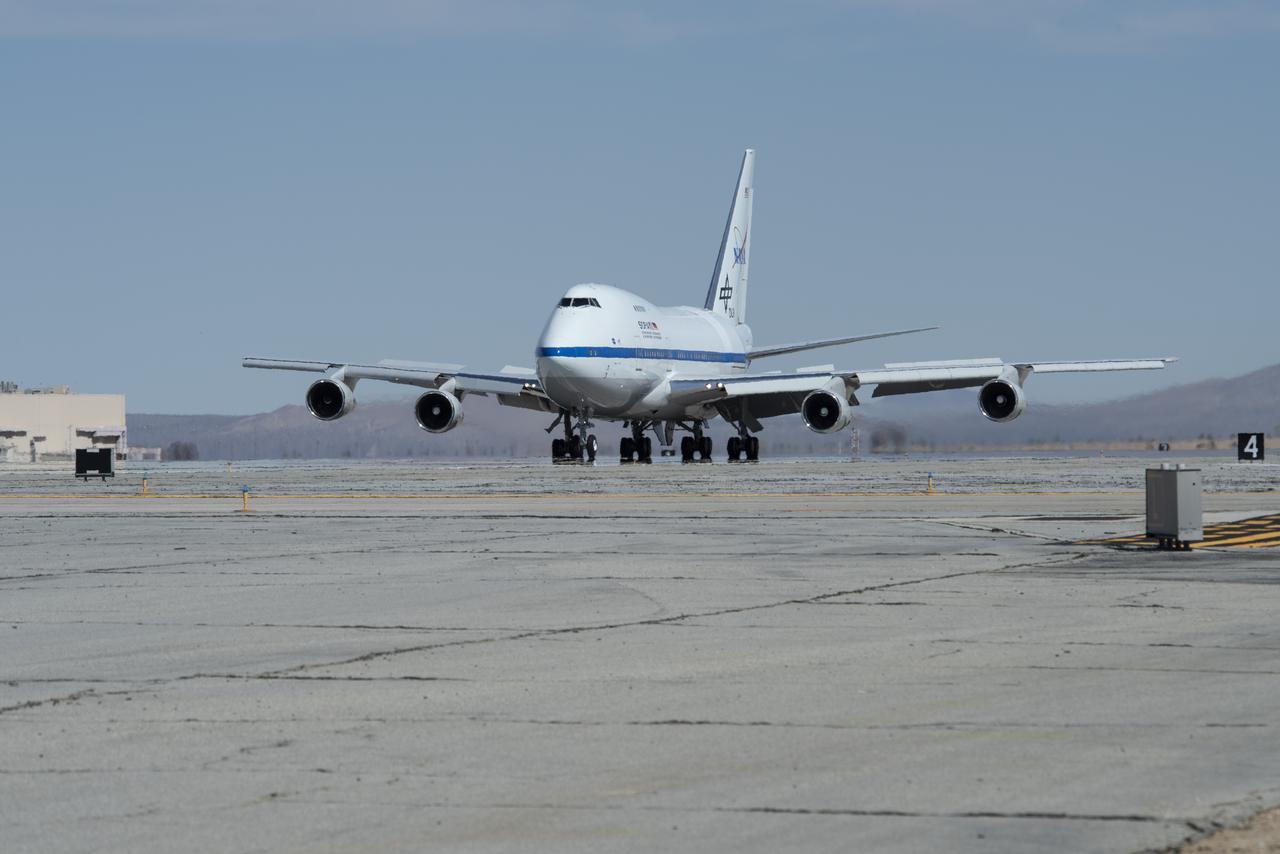
SOFIA Returns to NASA's Armstrong Flight Research Center Building 703 Caption: SOFIA returns to NASA's Armstrong Flight Research Center Building 703 in Palmdale, California on March 16, 2021 after spending six months in Germany conducting science observations.
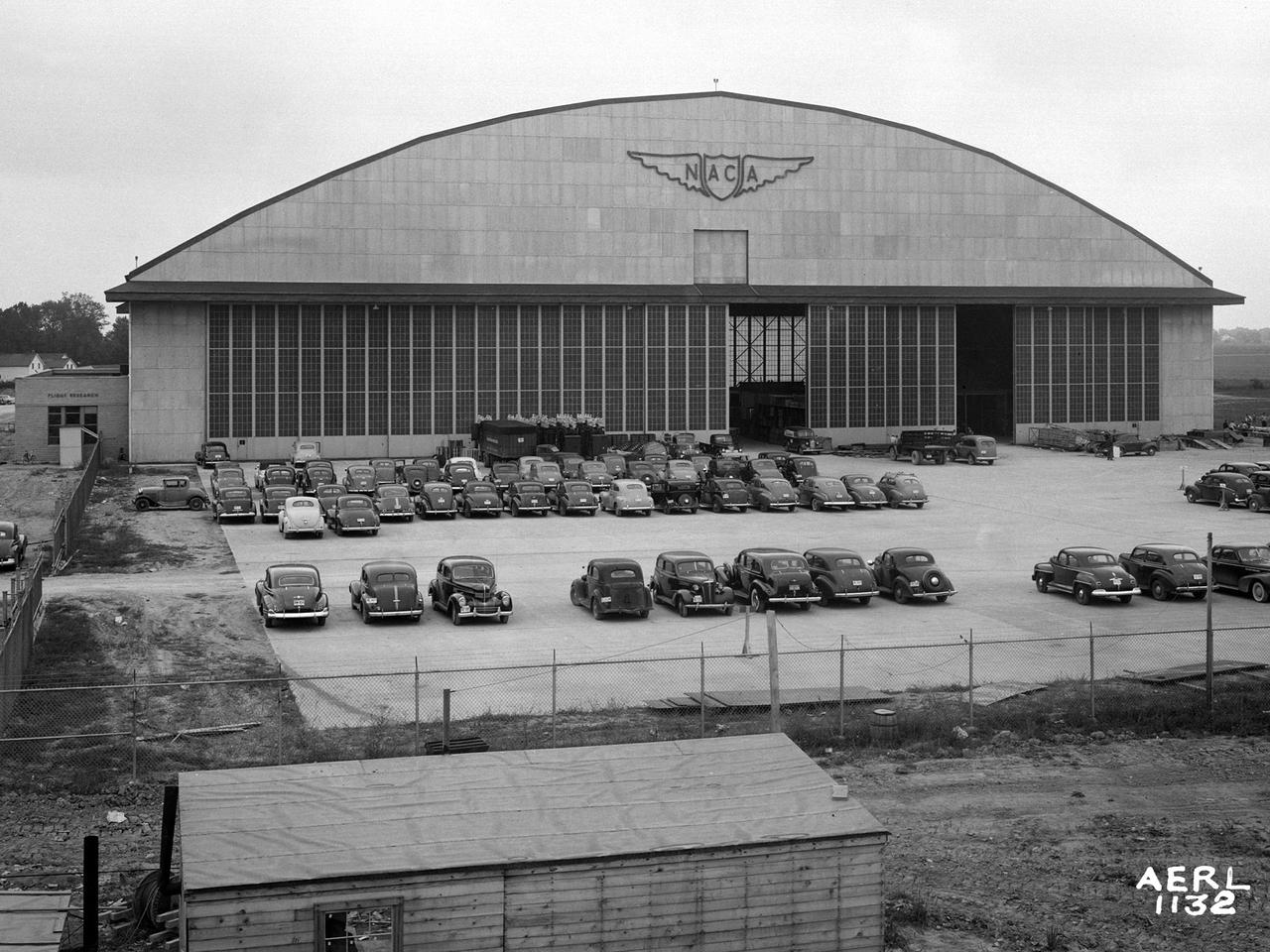
The Flight Research Building at the National Advisory Committee for Aeronautics (NACA) Aircraft Engine Research Laboratory is a 272- by 150-foot hangar with an internal height up to 90 feet. The hangar’s massive 37.5-foot-tall and 250-foot-long doors can be opened in sections to suit different size aircraft. The hangar has sheltered a diverse fleet of aircraft over the decades. These have ranged from World War II bombers to Cessna trainers and from supersonic fighter jets to a DC–9 airliner. At the time of this September 1942 photograph, however, the hangar was being used as an office building during the construction of the laboratory. In December of 1941, the Flight Research Building became the lab’s first functional building. Temporary offices were built inside the structure to house the staff while the other buildings were completed. The hangar offices were used for an entire year before being removed in early 1943. It was only then that the laboratory acquired its first aircraft, pilots and flight mechanics. The temporary one-story offices can be seen in this photograph inside the large sliding doors. Also note the vertical lift gate below the NACA logo. The gate was installed so that the tails of larger aircraft could pass into the hangar. The white Farm House that served as the Administration Building during construction can be seen in the distance to the left of the hangar.
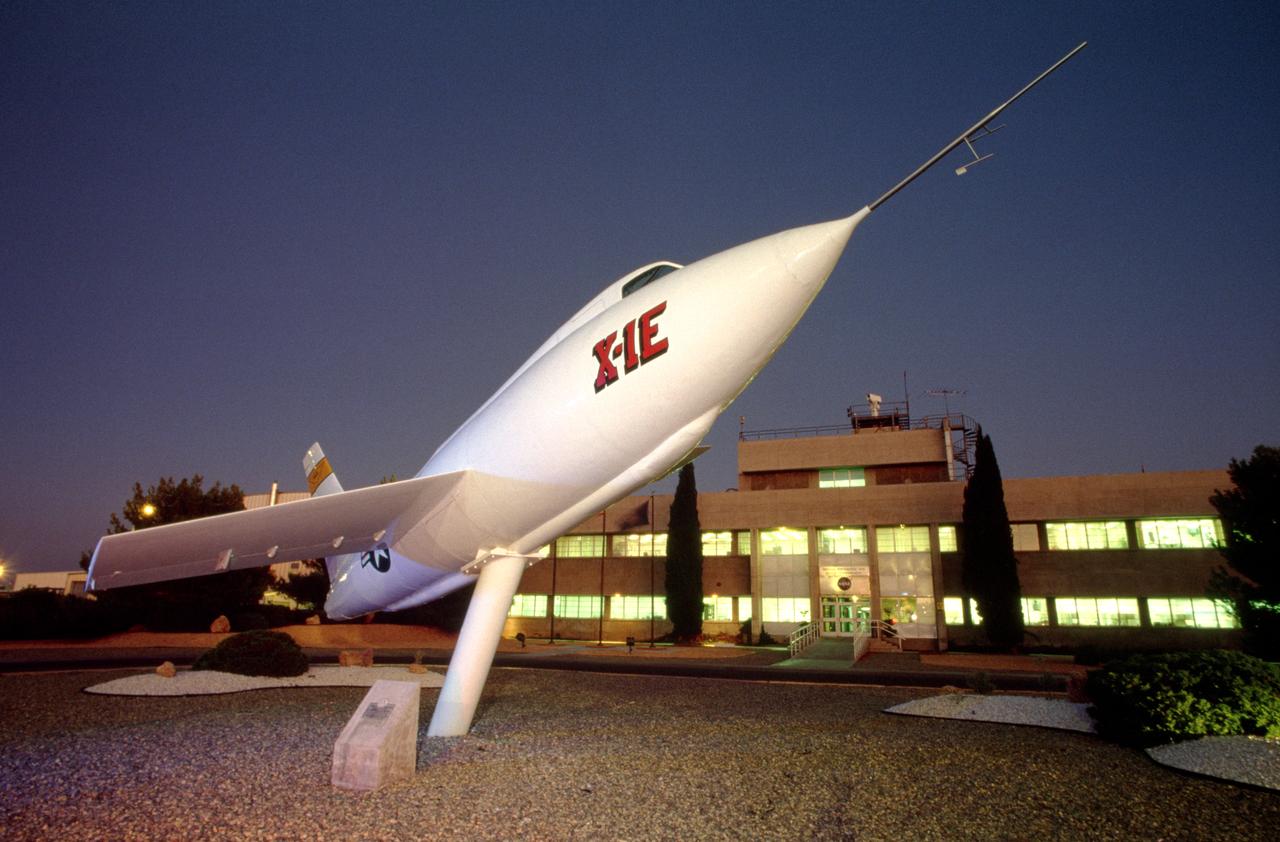
The X-1E guards NASA Dryden Flight Research Center's main building.
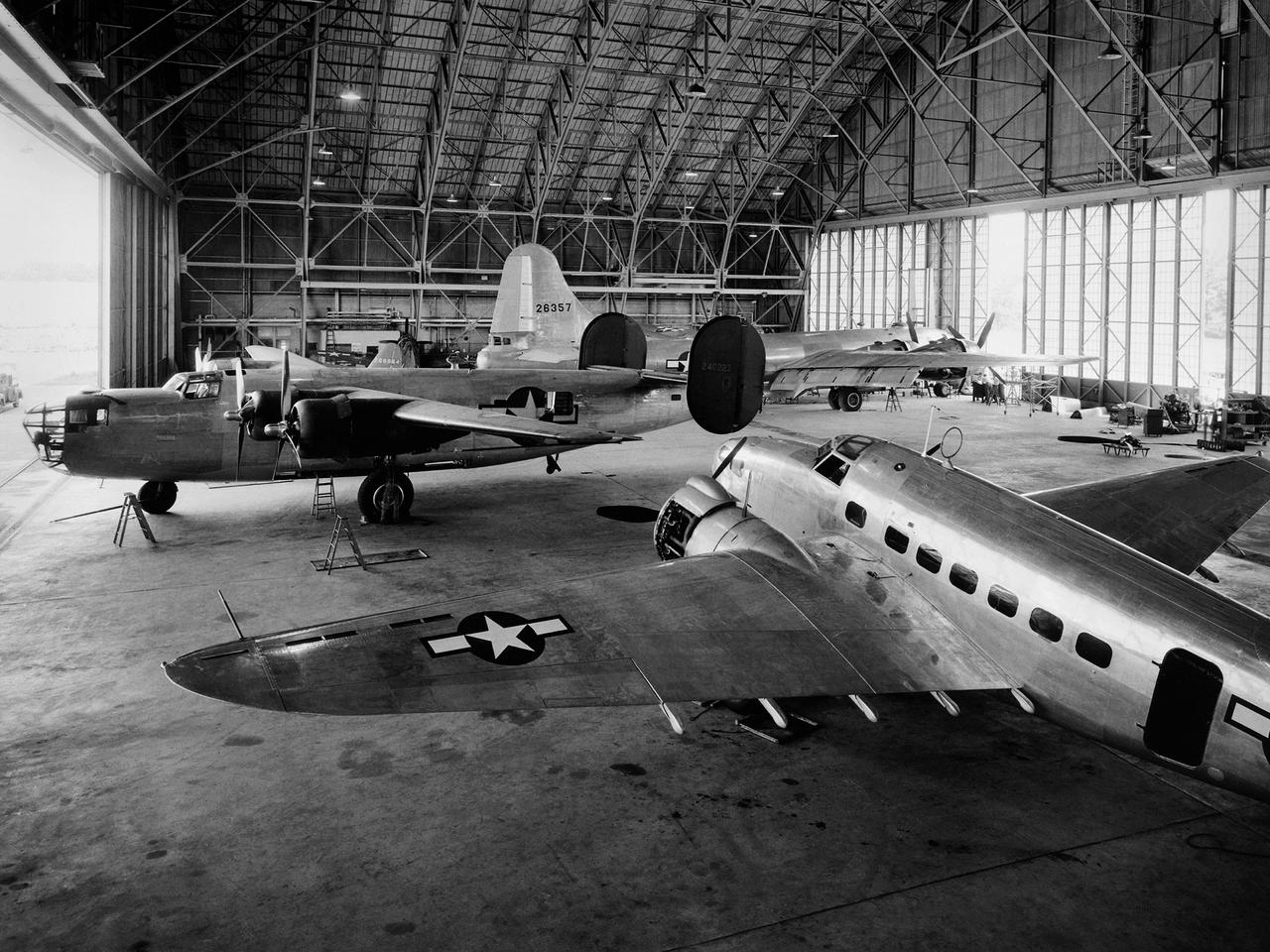
A Consolidated B–24D Liberator (left), Boeing B–29 Superfortress (background), and Lockheed RA–29 Hudson (foreground) parked inside the Flight Research Building at the National Advisory Committee for Aeronautics (NACA) Aircraft Engine Research Laboratory in Cleveland, Ohio. A P–47G Thunderbolt and P–63A King Cobra are visible in the background. The laboratory utilized 15 different aircraft during the final 2.5 years of World War II. This starkly contrasts with the limited-quantity, but long-duration aircraft of the NASA’s modern fleet. The Flight Research Building is a 272- by 150-foot hangar with an internal height ranging from 40 feet at the sides to 90 feet at its apex. The steel support trusses were pin-connected at the top with tension members extending along the corrugated transite walls down to the floor. The 37.5-foot-tall and 250-foot-long doors on either side can be opened in sections. The hangar included a shop area and stock room along the far wall, and a single-story office wing with nine offices, behind the camera. The offices were later expanded. The hangar has been in continual use since its completion in December 1942. Nearly 70 different aircraft have been sheltered here over the years. Temporary offices were twice constructed over half of the floor area when office space was at a premium.
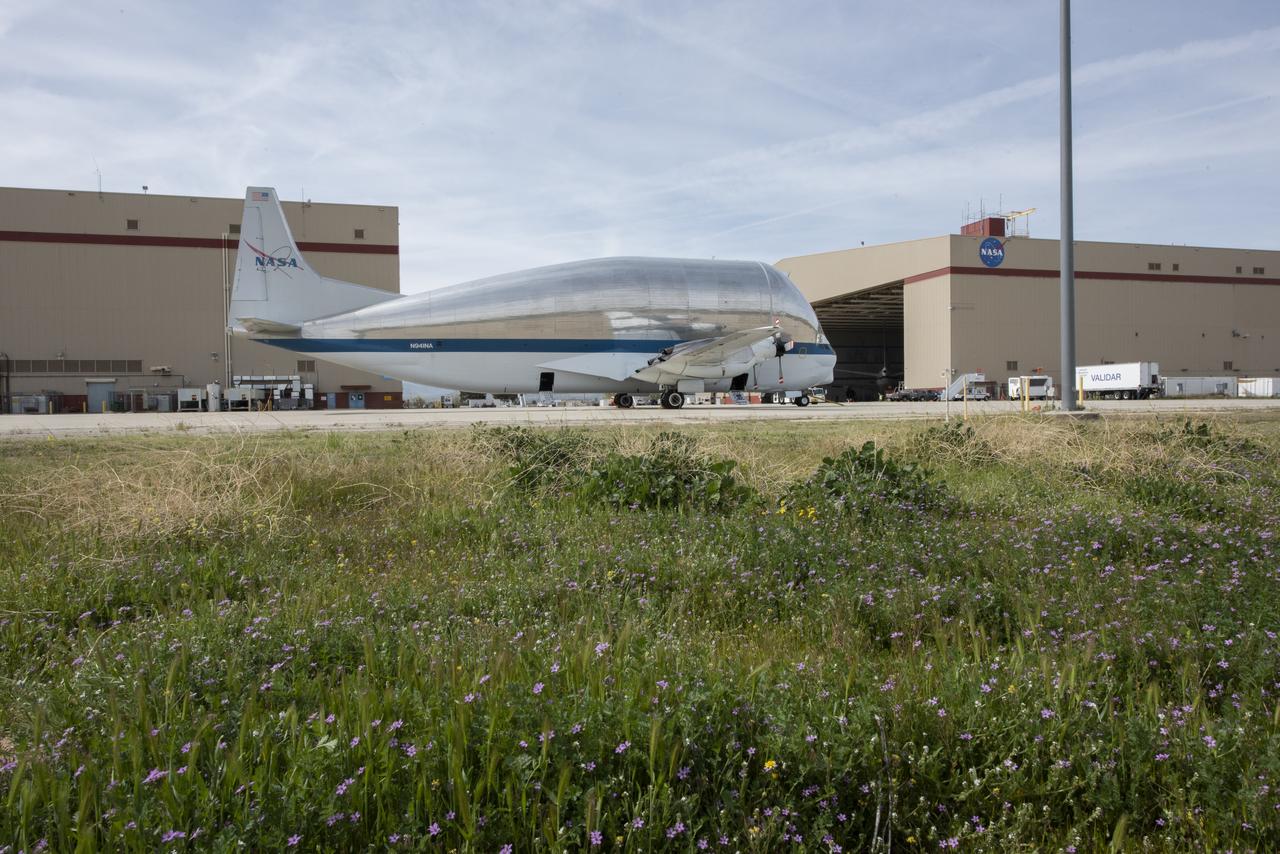
NASA’s Super Guppy cargo transport aircraft parked on the ramp in front of NASA’s Armstrong Flight Research Center Building 703.
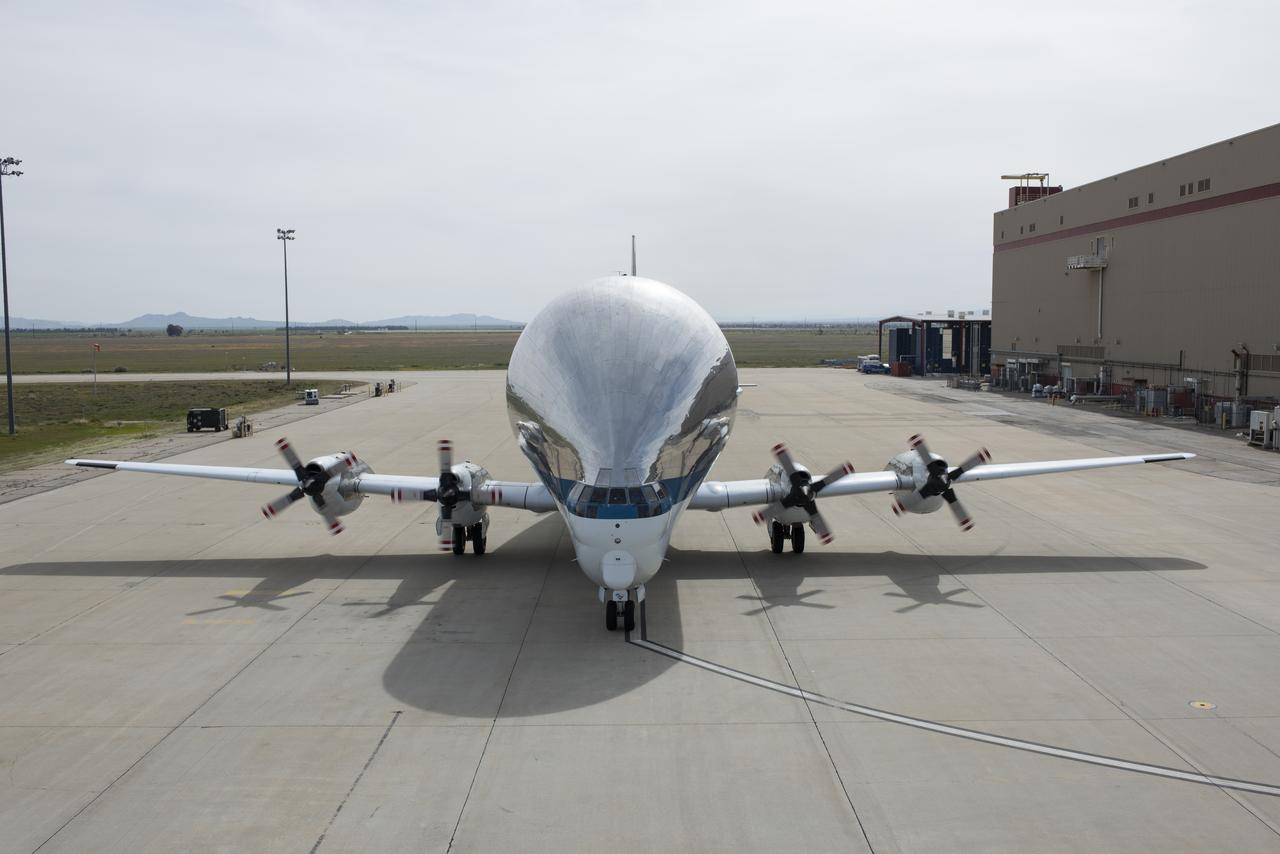
Front view of NASA’s Super Guppy cargo transport aircraft as it taxis in at NASA’s Armstrong Flight Research Center Building 703 ramp.
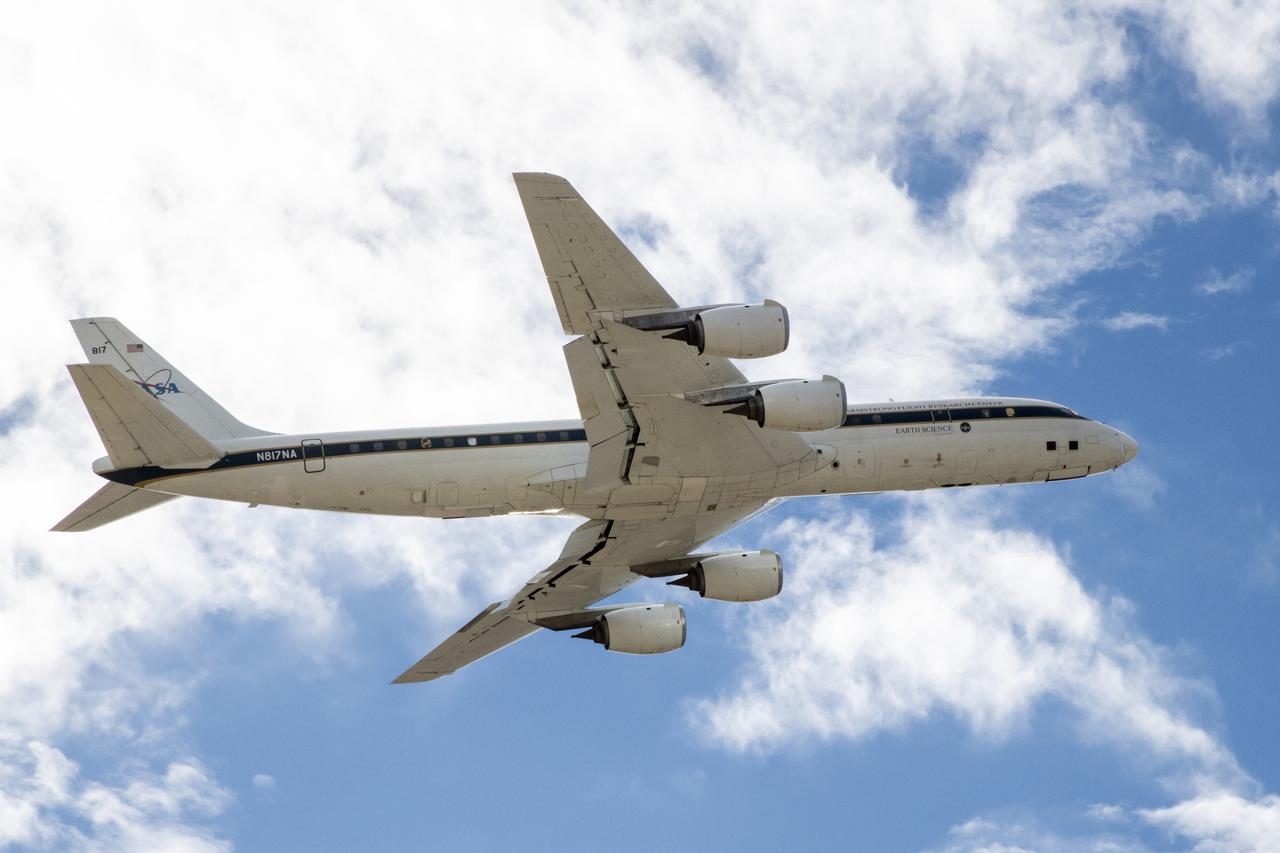
NASA’s Armstrong Flight Research Center DC-8 taking off from Building 703 in Palmdale, CA for the Student Airborne Research Program flights on December 7, 2021.
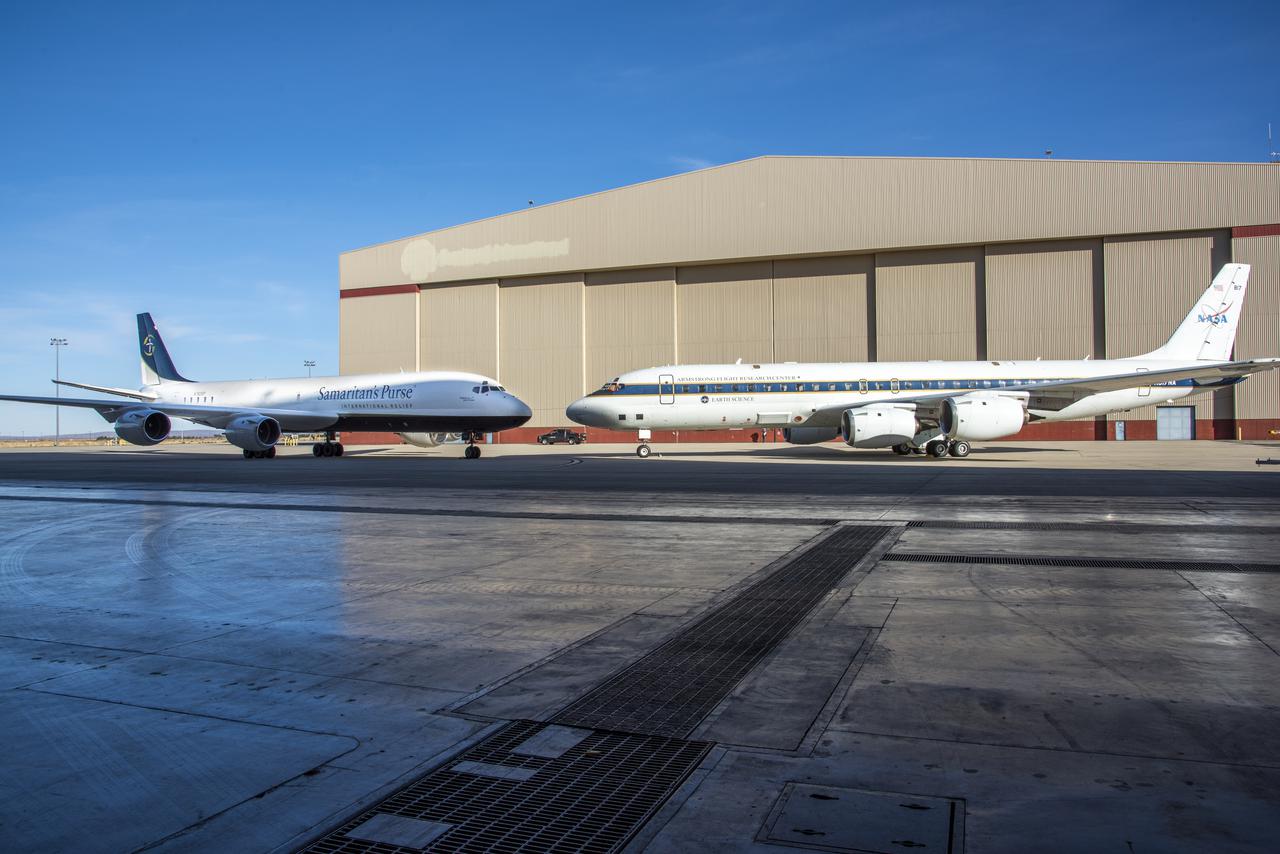
NASA and Samaritan's Purse DC-8 aircrafts met on the ramp in front of NASA's Armstrong Flight Research Center Building 703.
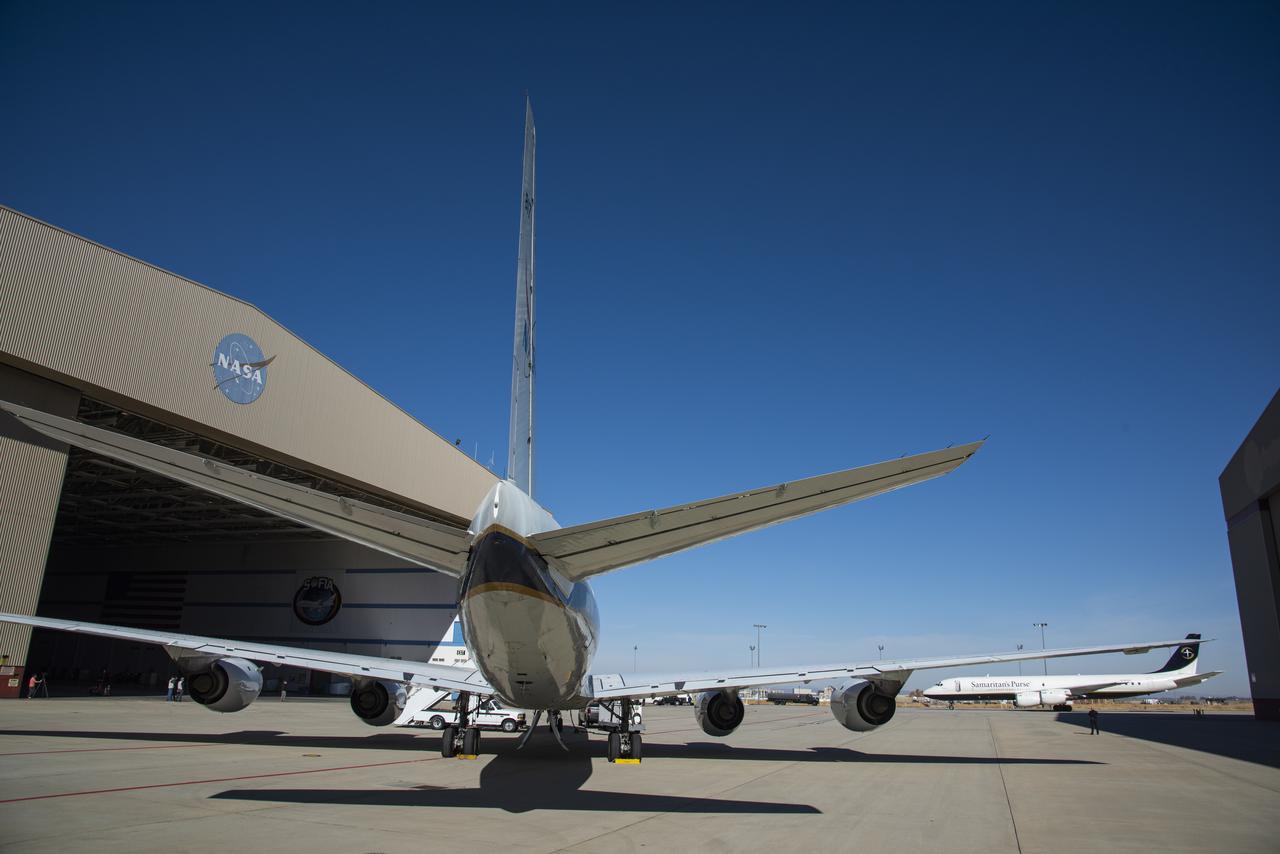
NASA and Samaritan's Purse DC-8 aircrafts met on the ramp in front of NASA's Armstrong Flight Research Center Building 703.
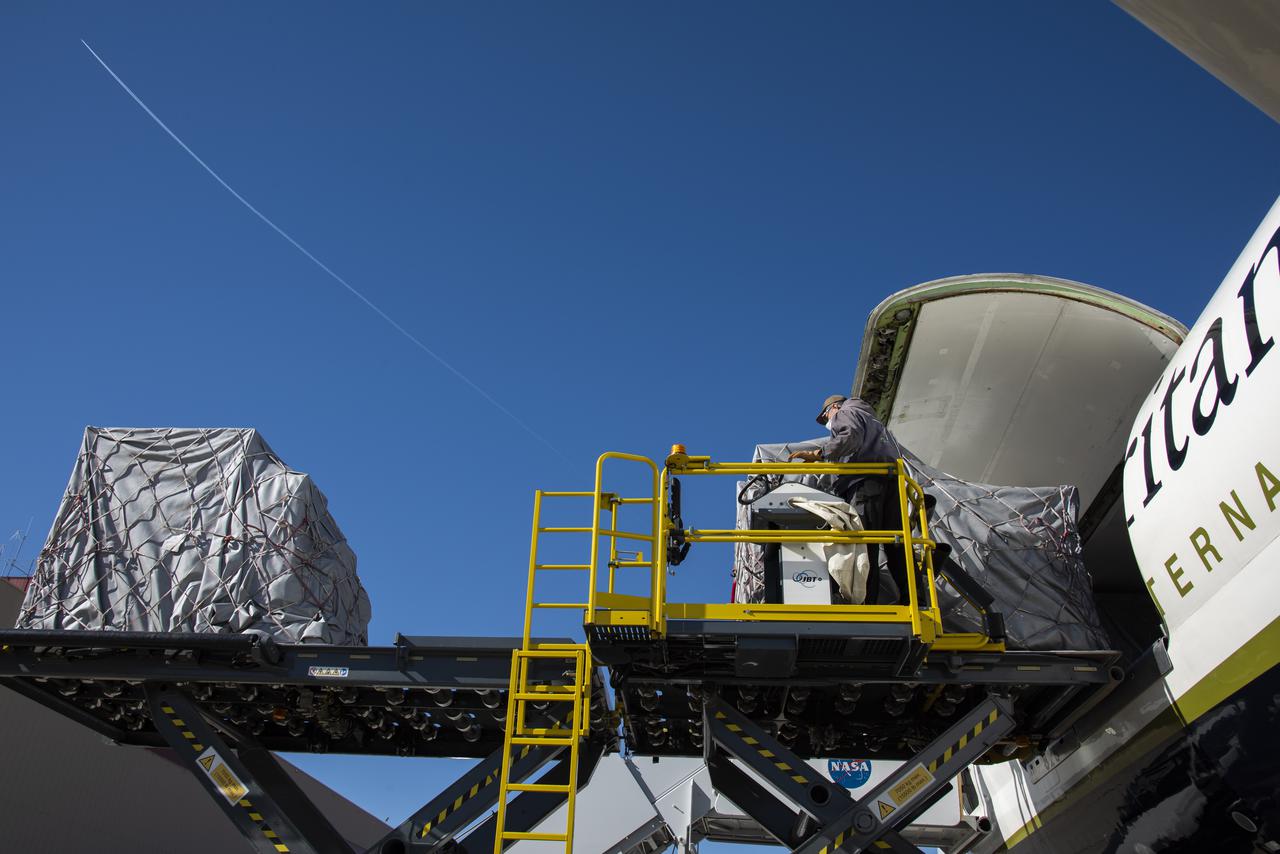
NASA and Samaritan's Purse DC-8 aircrafts met on the ramp in front of NASA's Armstrong Flight Research Center Building 703.
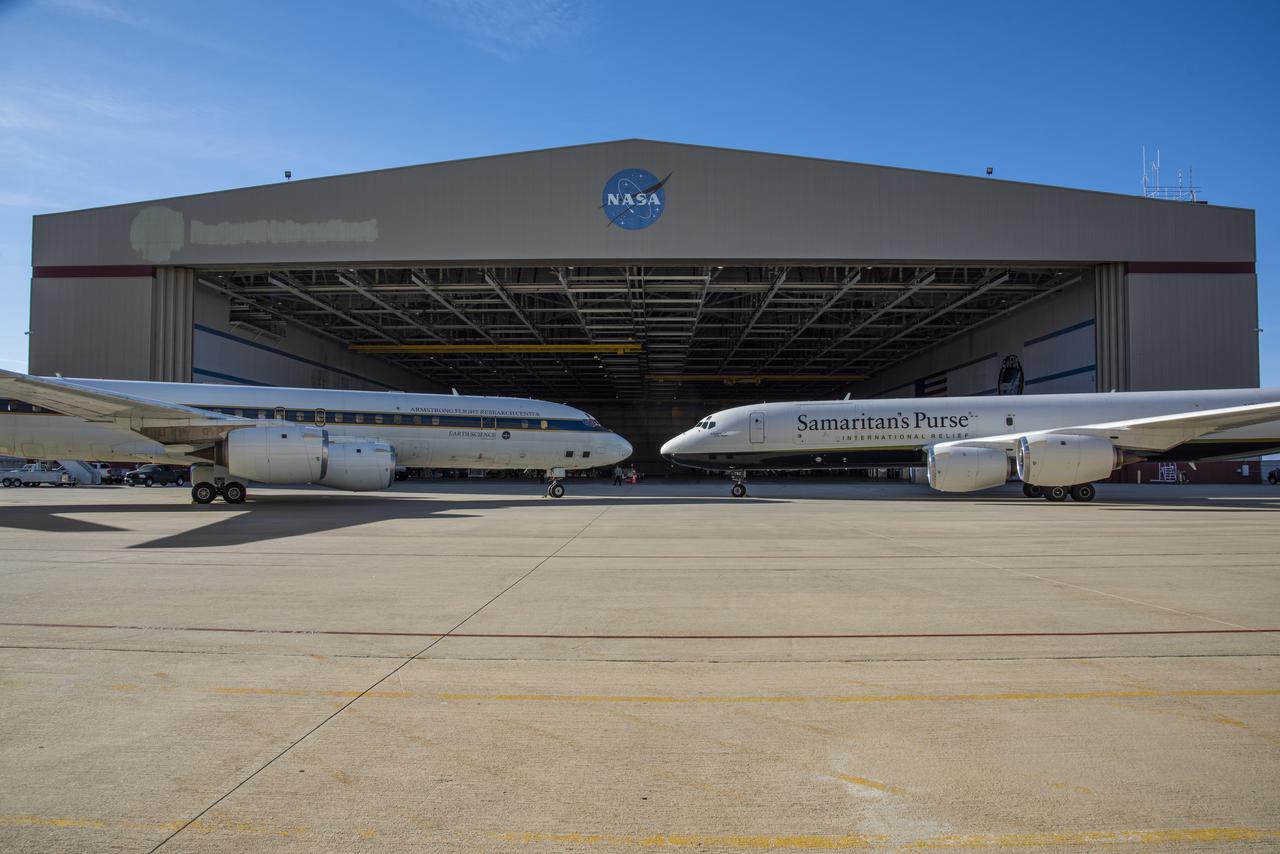
NASA and Samaritan’s Purse DC-8 aircrafts met on the ramp in front of NASA’s Armstrong Flight Research Center Building 703.
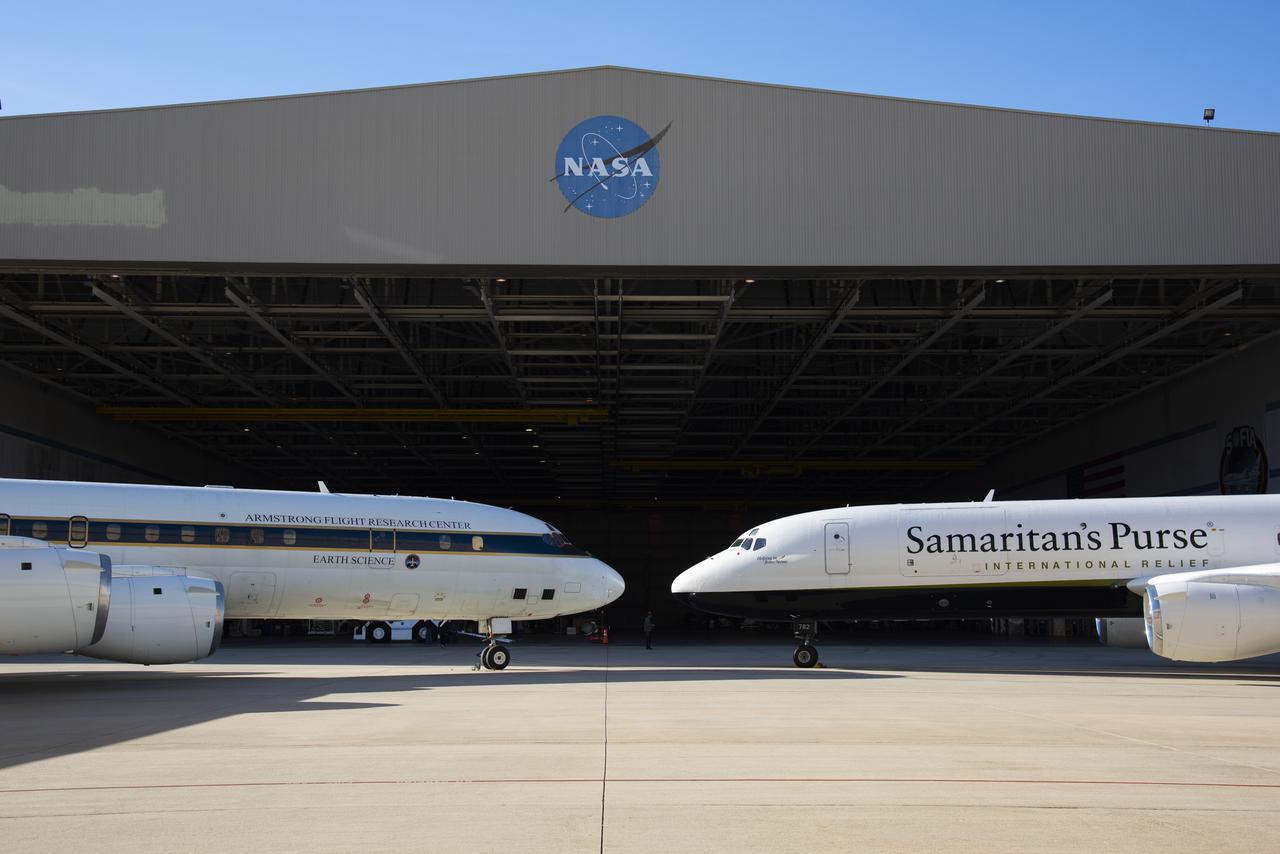
NASA and Samaritan's Purse DC-8 aircrafts met on the ramp in front of NASA's Armstrong Flight Research Center Building 703.
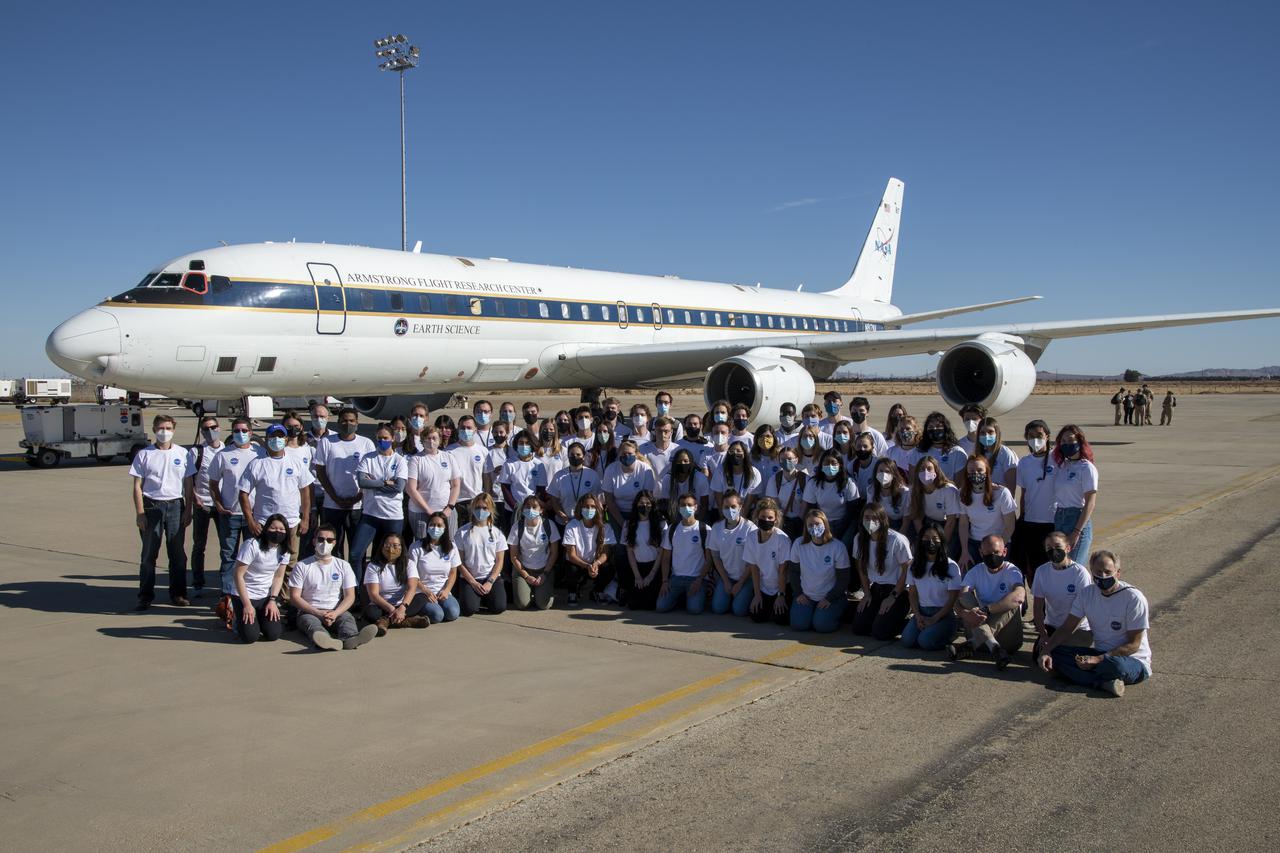
NASA Student Airborne Research Program students, mentors and faculty pose in front of NASA's DC-8 on December 7, 2021 at Armstrong Flight Research Center Building 703.
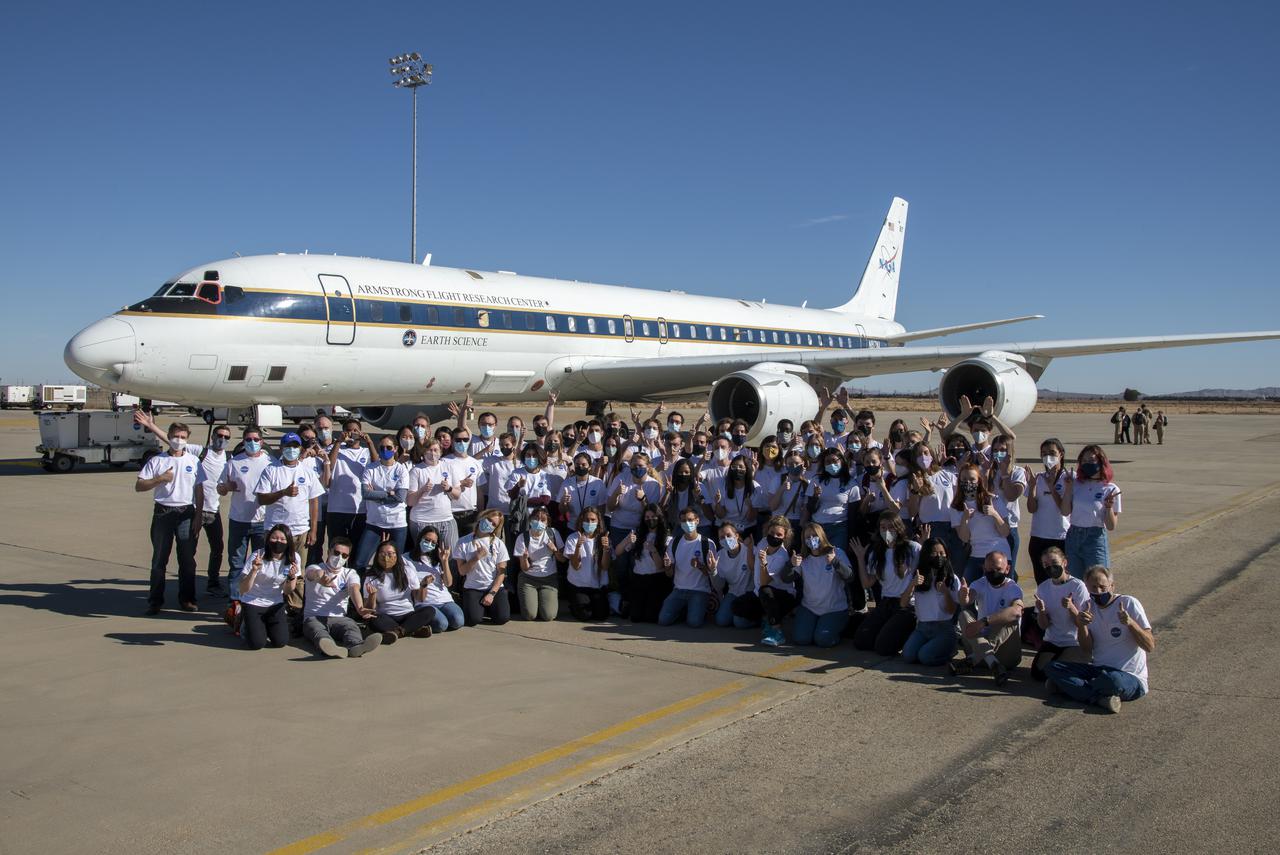
NASA Student Airborne Research Program students, mentors and faculty pose in front of NASA’s DC-8 on December 7, 2021 at Armstrong Flight Research Center Building 703.

NASA's Super Guppy cargo transport aircraft taxis in from the Plant 42 runway to NASA"s Armstrong Flight Research Center Building 703 ramp. The aircraft is being stored in the hangar during its phase maintenance check.
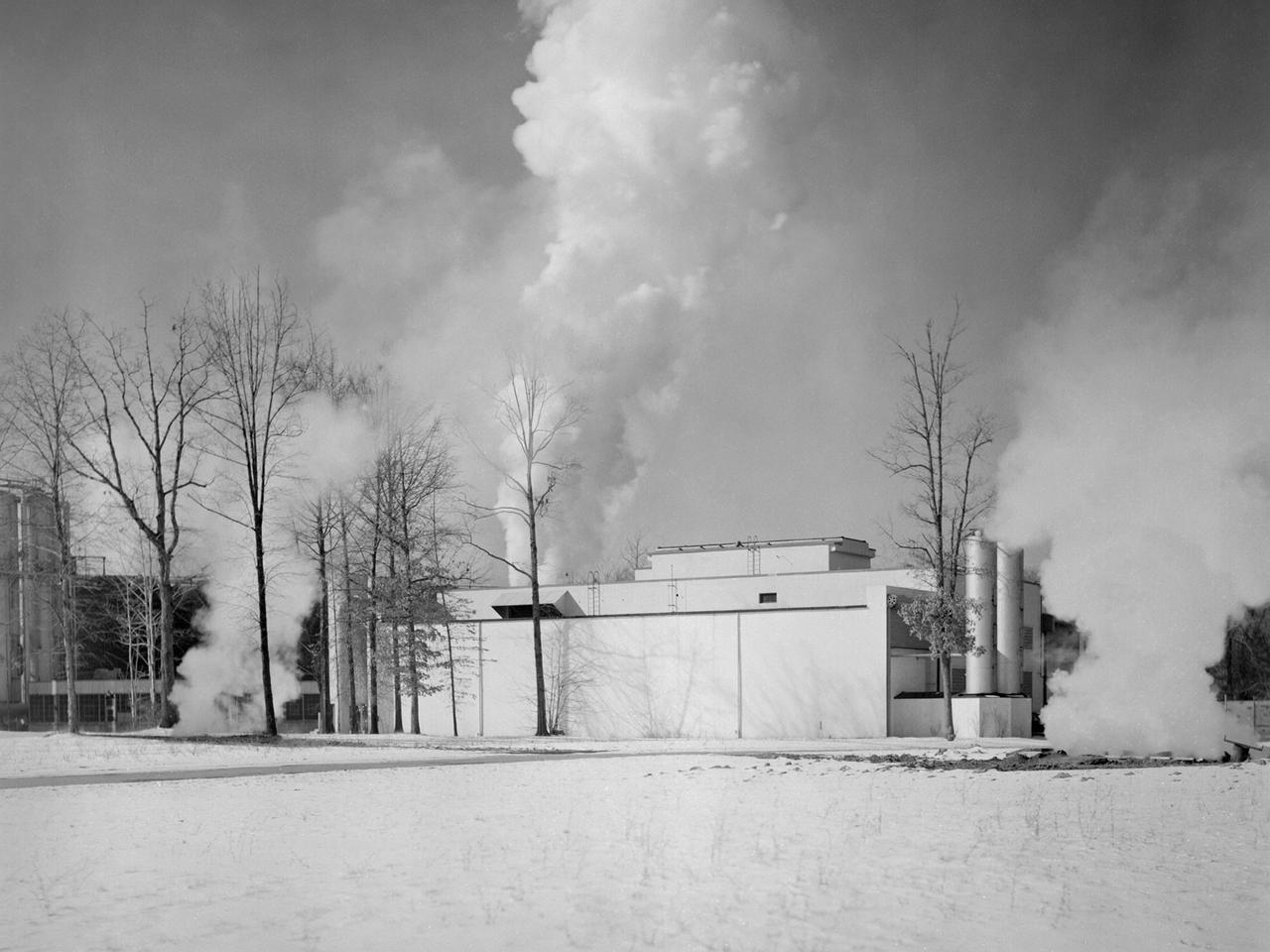
The Engine Propeller Research Building, referred to as the Prop House, emits steam from its acoustic silencers at the National Advisory Committee for Aeronautics (NACA) Lewis Flight Propulsion Laboratory. In 1942 the Prop House became the first completed test facility at the new NACA laboratory in Cleveland, Ohio. It contained four test cells designed to study large reciprocating engines. After World War II, the facility was modified to study turbojet engines. Two of the test cells were divided into smaller test chambers, resulting in a total of six engine stands. During this period the NACA Lewis Materials and Thermodynamics Division used four of the test cells to investigate jet engines constructed with alloys and other high temperature materials. The researchers operated the engines at higher temperatures to study stress, fatigue, rupture, and thermal shock. The Compressor and Turbine Division utilized another test cell to study a NACA-designed compressor installed on a full-scale engine. This design sought to increase engine thrust by increasing its airflow capacity. The higher stage pressure ratio resulted in a reduction of the number of required compressor stages. The last test cell was used at the time by the Engine Research Division to study the effect of high inlet densities on a jet engine. Within a couple years of this photograph the Prop House was significantly altered again. By 1960 the facility was renamed the Electric Propulsion Research Building to better describe its new role in electric propulsion.

The X-1E research aircraft provides a striking view at the entrance of NASA's Dryden Flight Research Center, Edwards, California. The X-1E, one of the three original X-1 aircraft modified with a raised cockpit canopy and an ejection seat, was flown at the facility between 1953 and 1958 to investigate speeds at twice that of sound, and also to evaluate a thin wing designed for high-speed flight. The Dryden complex was originally established in 1946 as a small high-speed flight station to support the X-1 program. The X-1 was the first aircraft to fly at supersonic speeds. The main administrative building is to the rear of the X-1E and is the center of a research installation that has grown to more than 450 government employees and nearly 400 civilian contractors. Located on the northwest "shore" of Rogers Dry Lake, the Dryden Center was built around the original administrative-hangar building constructed in 1954 at a cost of $3.8 million. Since then many additional support and operational facilities have been built including a number of unique test facilities such as the Thermalstructures Research Facility, Flow Visualization Facility, and the newest addition, the Integrated Test Facility.
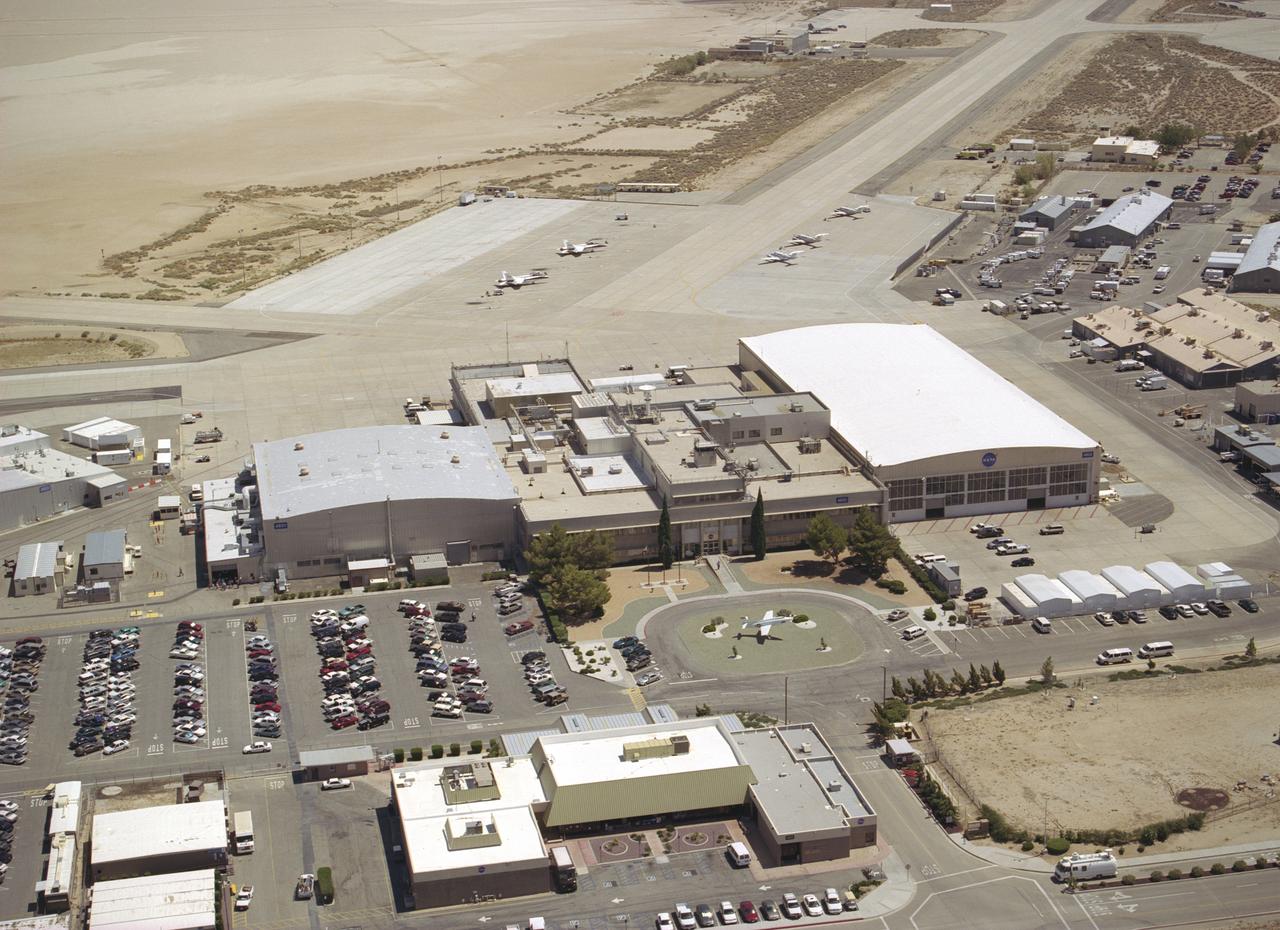
Since the 1940s the Dryden Flight Research Center, Edwards, California, has developed a unique and highly specialized capability for conducting flight research programs. The organization, made up of pilots, scientists, engineers, technicians, and mechanics, has been and will continue to be leaders in the field of advanced aeronautics. Located on the northwest "shore" of Rogers Dry Lake, the complex was built around the original administrative-hangar building constructed in 1954. Since then many additional support and operational facilities have been built including a number of unique test facilities such as the Thermalstructures Research Facility, Flow Visualization Facility, and the Integrated Test Facility. One of the most prominent structures is the space shuttle program's Mate-Demate Device and hangar in Area A to the north of the main complex. On the lakebed surface is a Compass Rose that gives pilots an instant compass heading. The Dryden complex originated at Edwards Air Force Base in support of the X-1 supersonic flight program. As other high-speed aircraft entered research programs, the facility became permanent and grew from a staff of five engineers in 1947 to a population in 2006 of nearly 1100 full-time government and contractor employees.
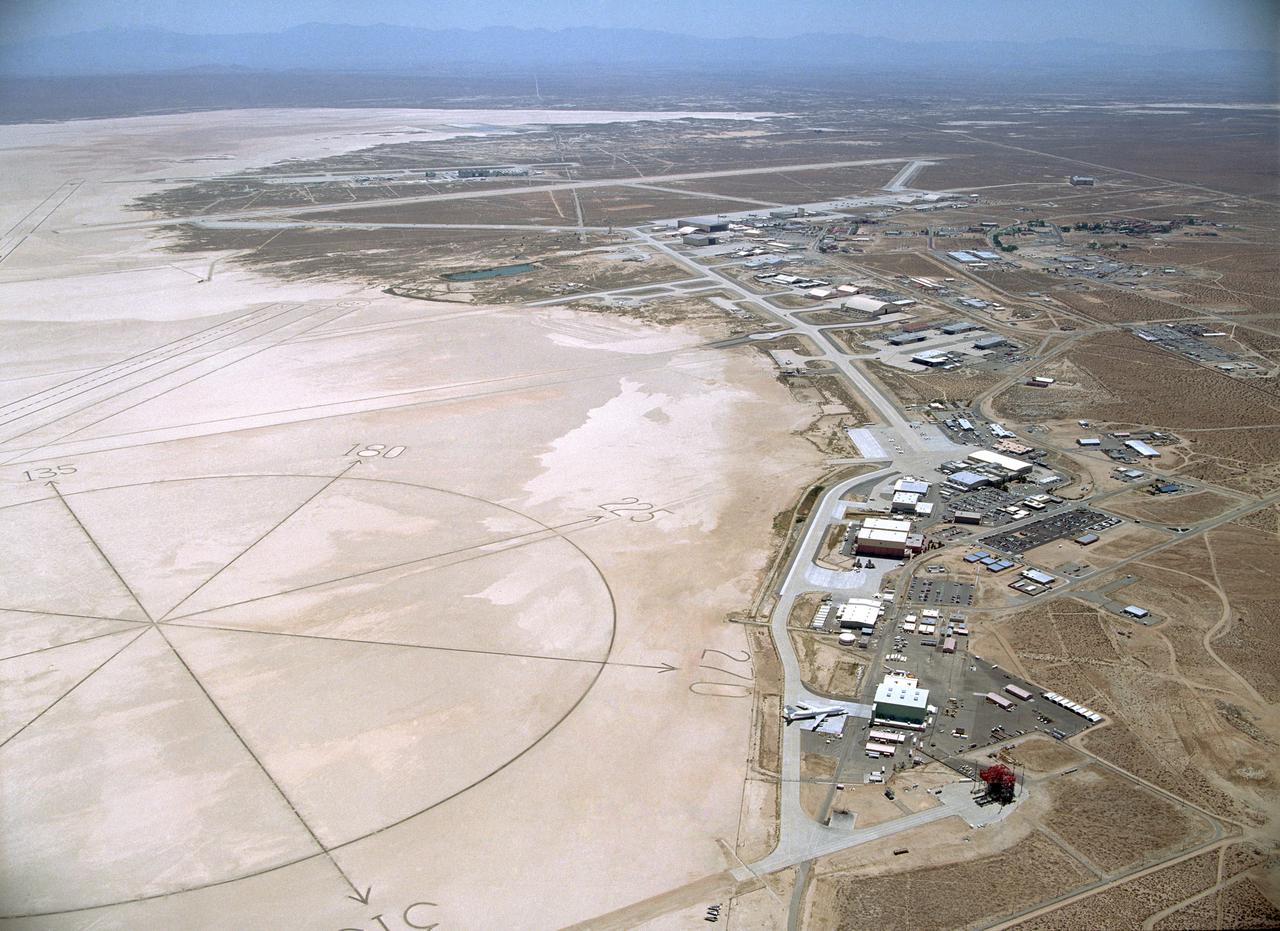
Since the 1940s the Dryden Flight Research Center, Edwards, California, has developed a unique and highly specialized capability for conducting flight research programs. The organization, made up of pilots, scientists, engineers, technicians, and mechanics, has been and will continue to be leaders in the field of advanced aeronautics. Located on the northwest "shore" of Rogers Dry Lake, the complex was built around the original administrative-hangar building constructed in 1954. Since then many additional support and operational facilities have been built including a number of unique test facilities such as the Thermalstructures Research Facility, Flow Visualization Facility, and the Integrated Test Facility. One of the most prominent structures is the space shuttle program's Mate-Demate Device and hangar in Area A to the north of the main complex. On the lakebed surface is a Compass Rose that gives pilots an instant compass heading. The Dryden complex originated at Edwards Air Force Base in support of the X-1 supersonic flight program. As other high-speed aircraft entered research programs, the facility became permanent and grew from a staff of five engineers in 1947 to a population in 2006 of nearly 1100 full-time government and contractor employees.
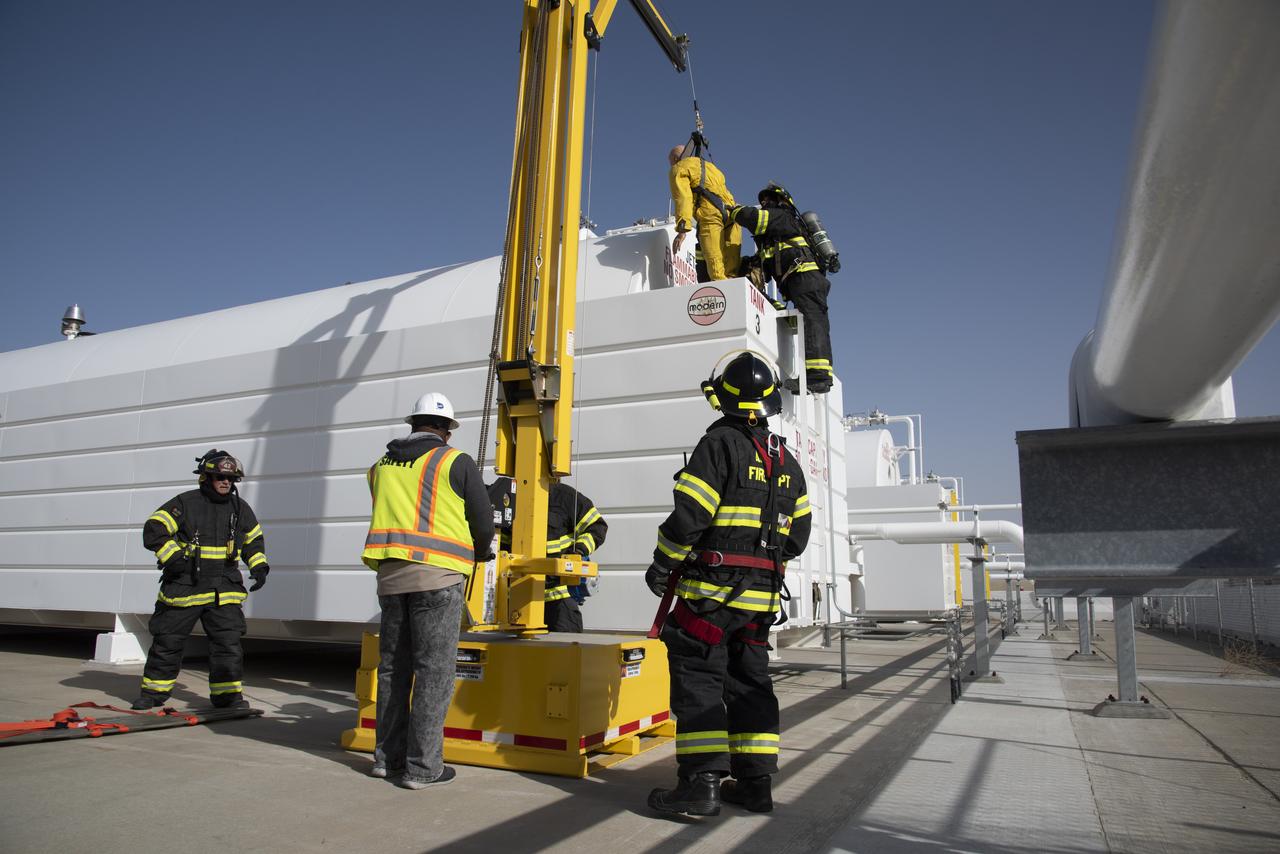
Syd Myers, a NASA Armstrong Flight Research Center confined space supervisor for a drill at NASA Armstrong Flight Research Center’s Building 703 in Palmdale, California, observes U.S. Air Force Plan 42 Fire Department responders extract a mannequin from a confined space as part of an emergency exercise.

Syd Myers, a NASA Armstrong Flight Research Center confined space supervisor for a drill at NASA Armstrong Flight Research Center’s Building 703 in Palmdale, California, called 9-1-1 to begin the exercise. Myers continued to update responders how the situation was evolving until help arrived.
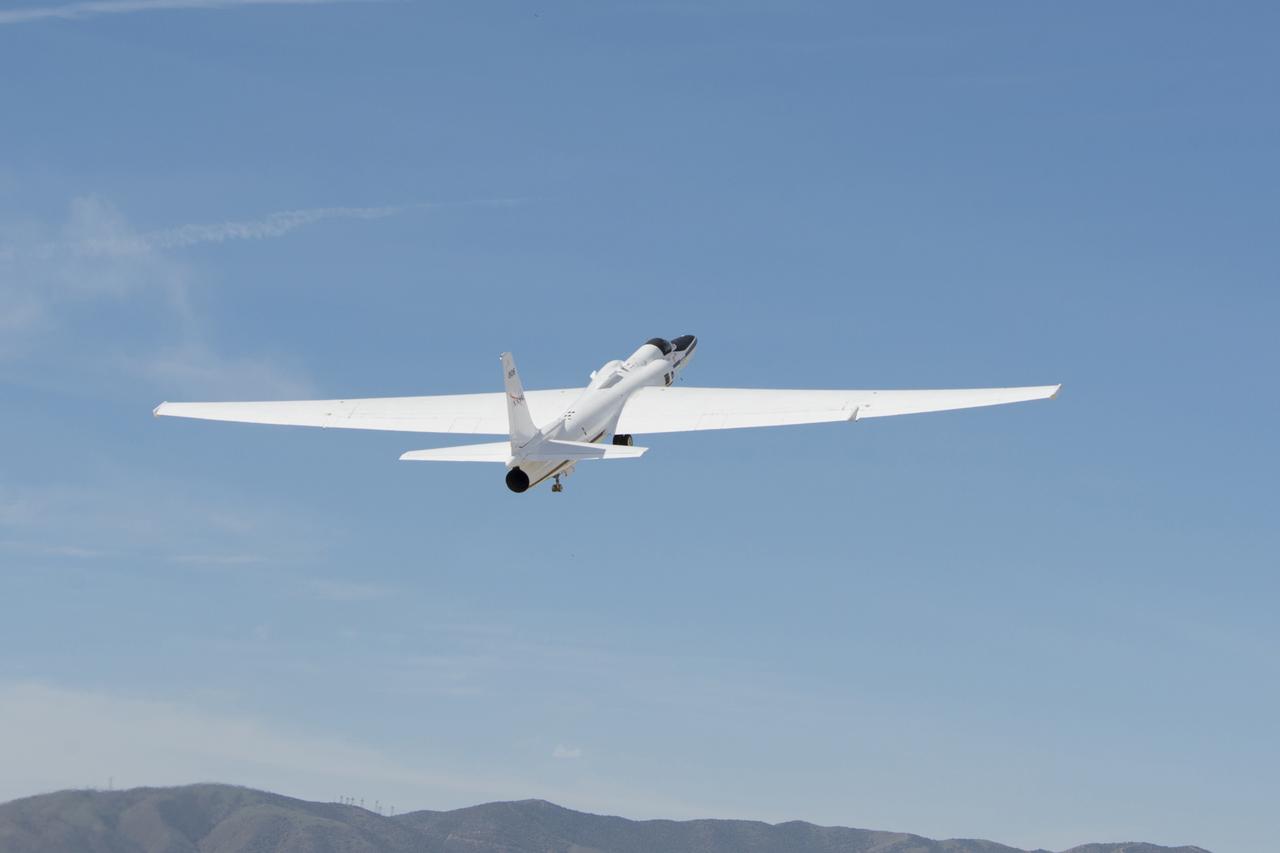
NASA’s ER-2 takes off from its base of operations at NASA’s Armstrong Flight Research Center Building 703 in Palmdale, California to test instruments that will support upcoming science flights for the Geostationary Operational Environmental Satellite-R-series.
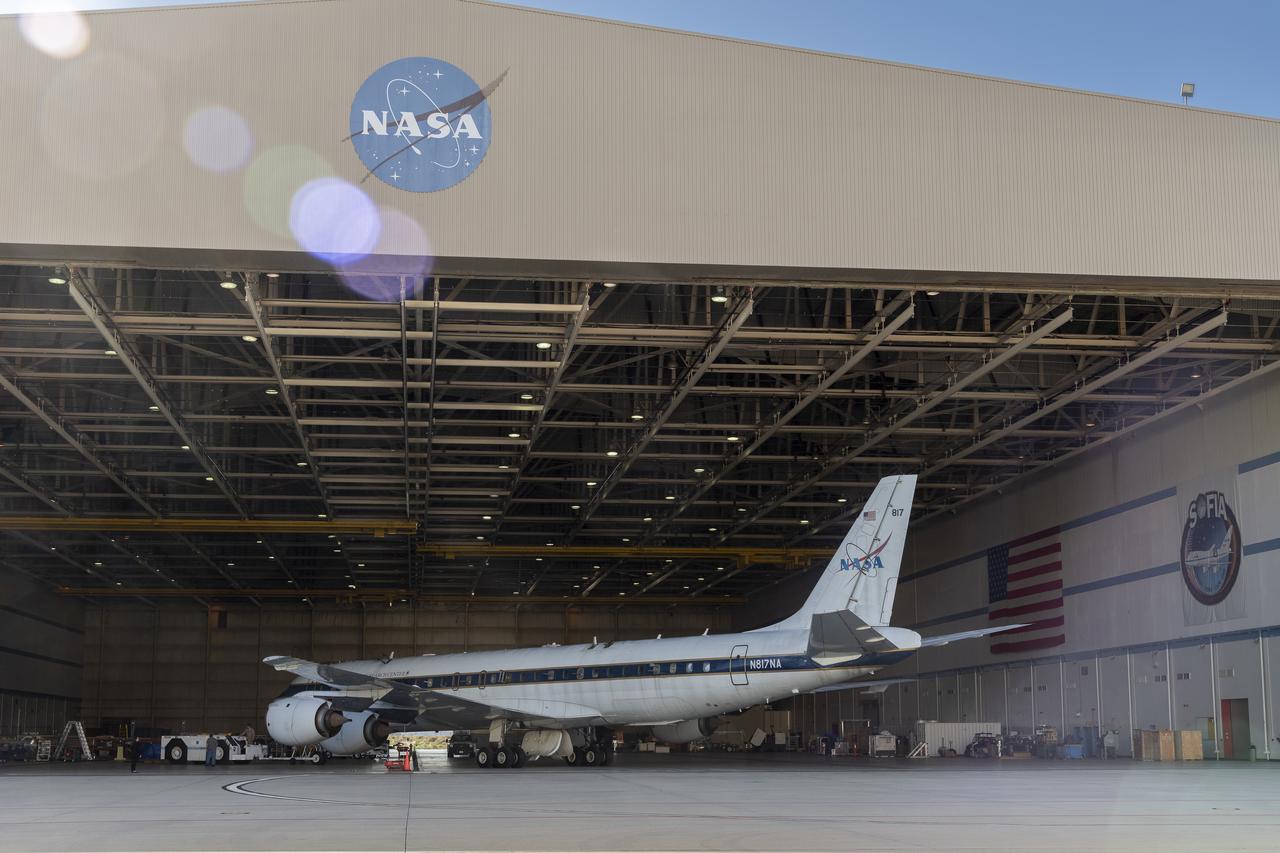
The DC-8 aircraft returns to the hangar at NASA’s Armstrong Flight Research Center Building 703 in Palmdale, California, on April 1, 2024, after completing its final mission supporting Airborne and Satellite Investigation of Asian Air Quality (ASIA-AQ).
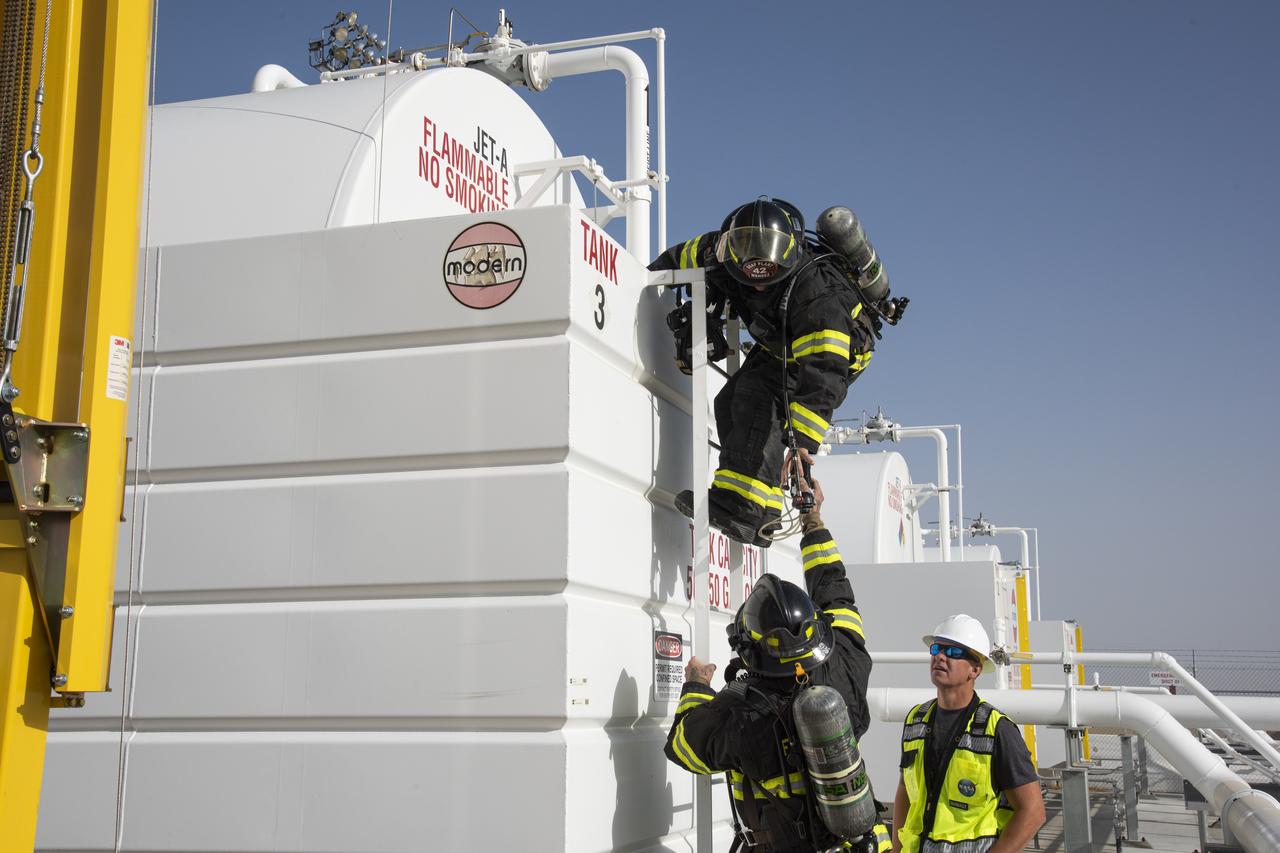
Air Force Plant 42 Fire Department responder Alfonzo Ortega, bottom, hands Doug Mendez a gas meter to test the air in a confined space during an exercise at NASA Armstrong Flight Research Center's Building 703 in Palmdale, California. Dale McCoy, Armstrong confined space co-program manager, observers.
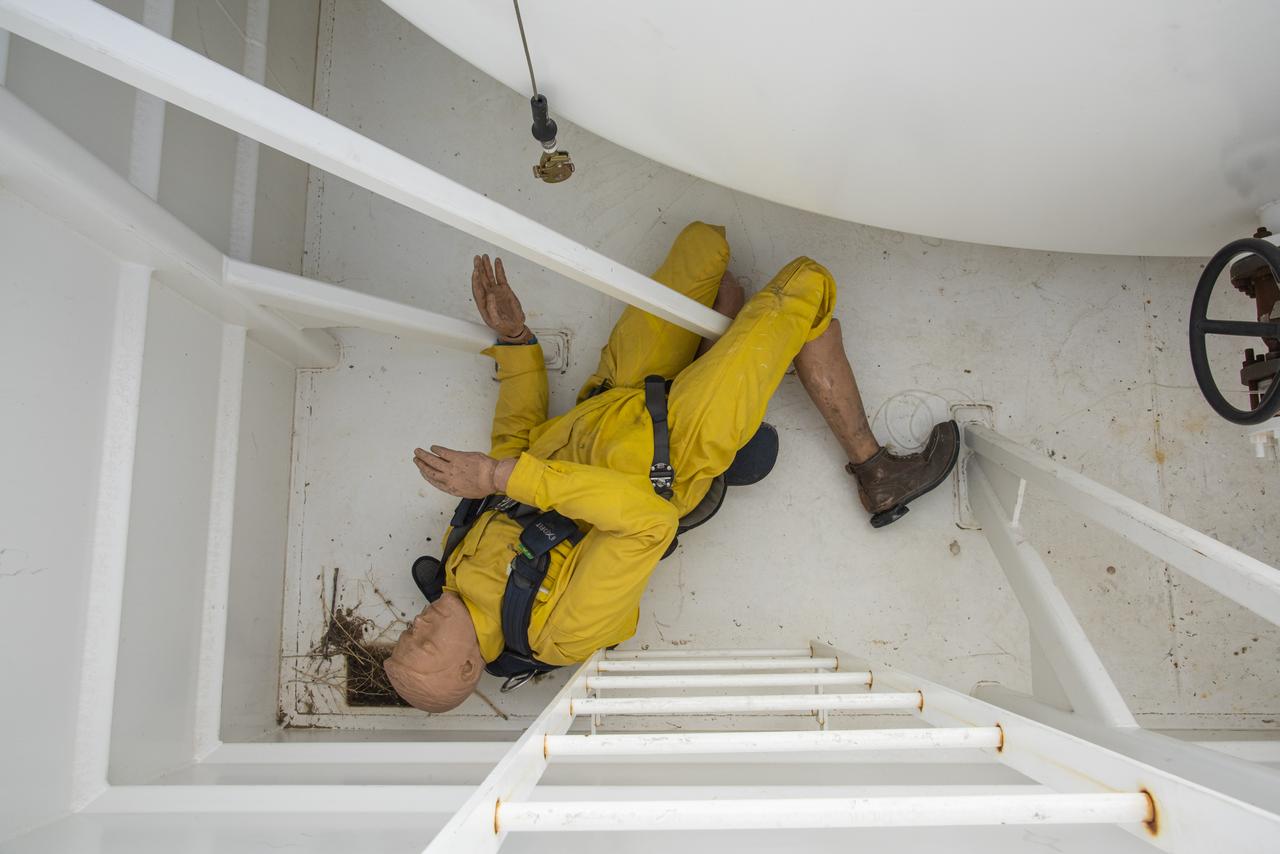
A mannequin is used to simulate a worker who has collapsed and come free from a harness intended to extricate the worker in case of emergency as part of a confined spaces training at NASA Armstrong Flight Research Center’s Building 703 in Palmdale, California.
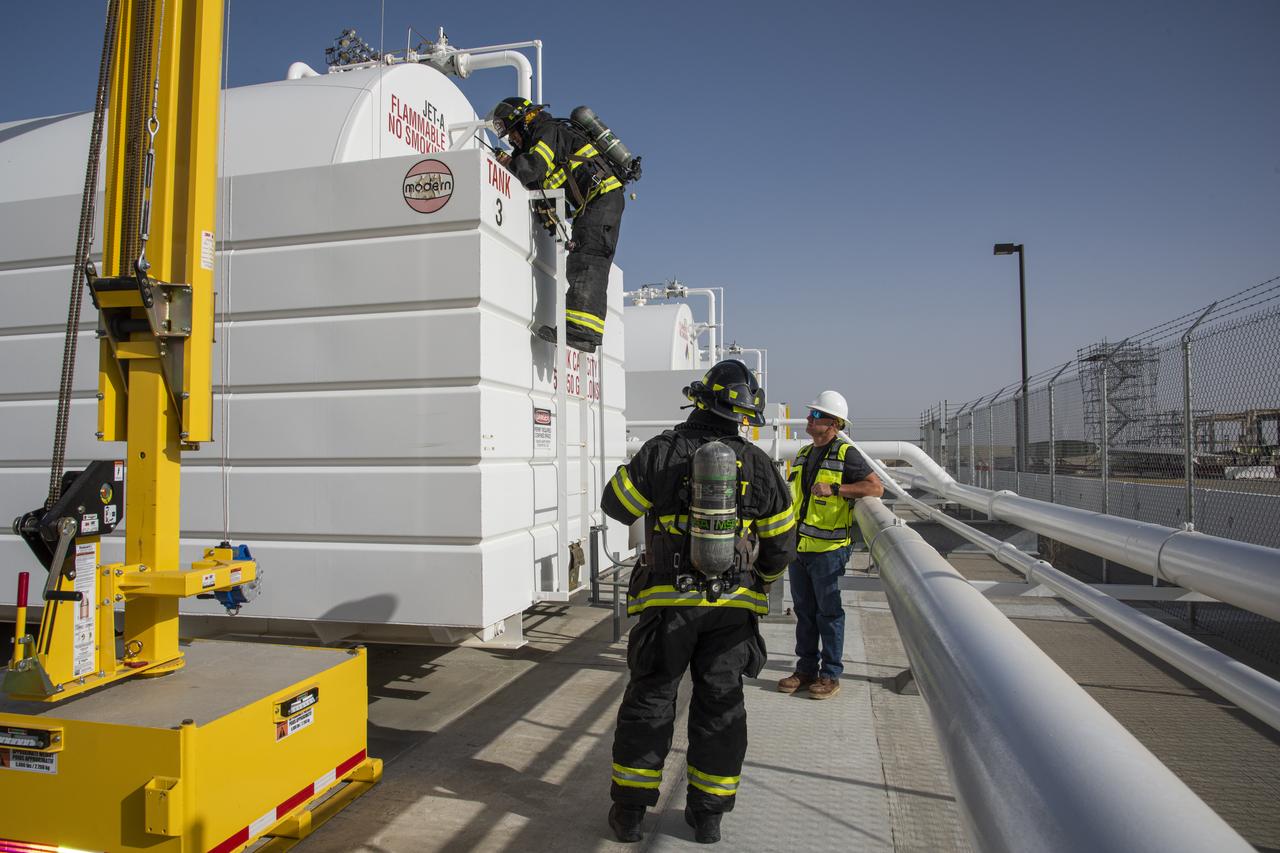
Air Force Plant 42 Fire Department responders Doug Mendez and Alfonzo Ortega test the air in a confined space with a gas meter during an exercise at NASA Armstrong Flight Research Center's Building 703 in Palmdale, California. Dale McCoy, Armstrong confined space co-program manager, observers.
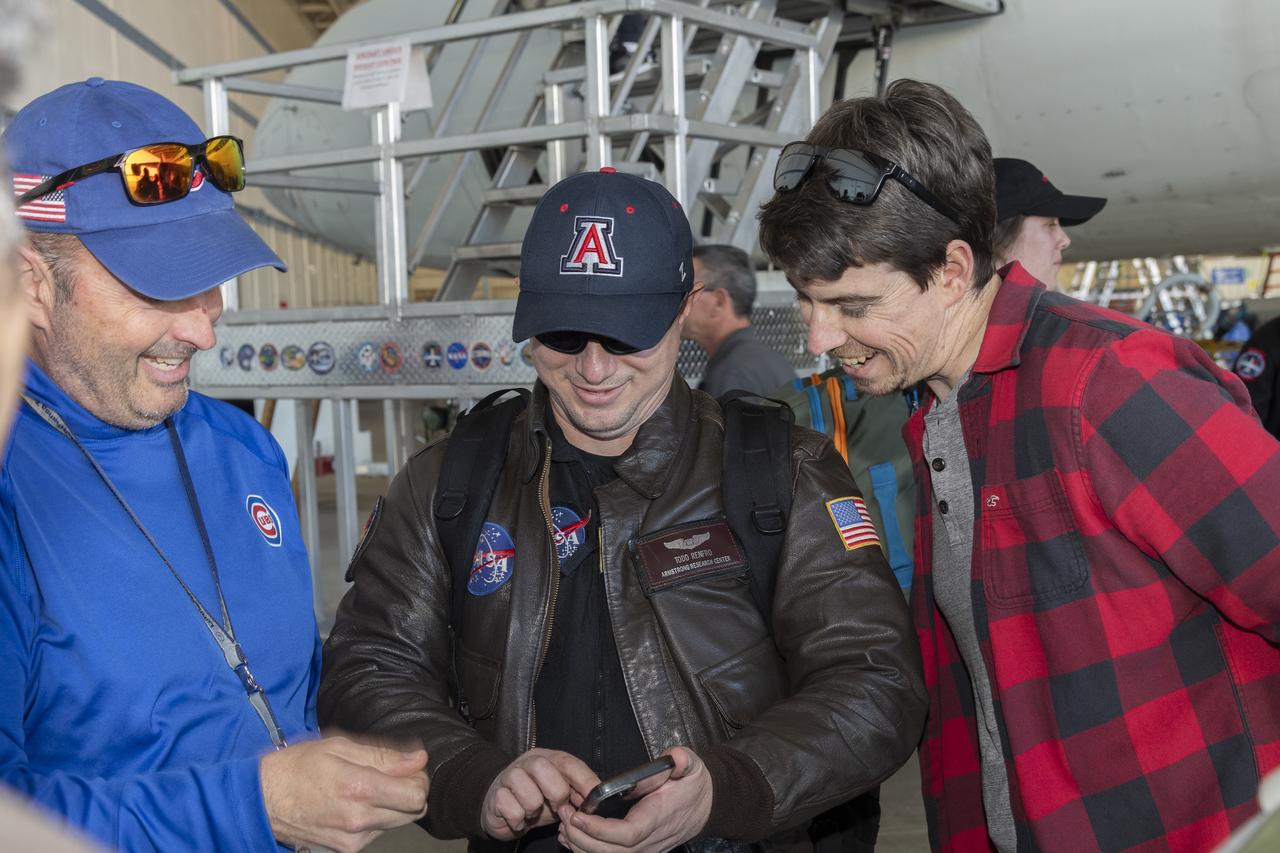
From left, Andy Barry, DC-8 pilot; Todd Renfro, flight navigator; and Adam Devalon, flight engineer, share smiles after the DC-8 aircraft and crew return to NASA’s Armstrong Flight Research Center Building 703 in Palmdale, California, on April 1, 2024, following the aircraft’s final mission in support of the Airborne and Satellite Investigation of Asian Air Quality (ASIA-AQ).
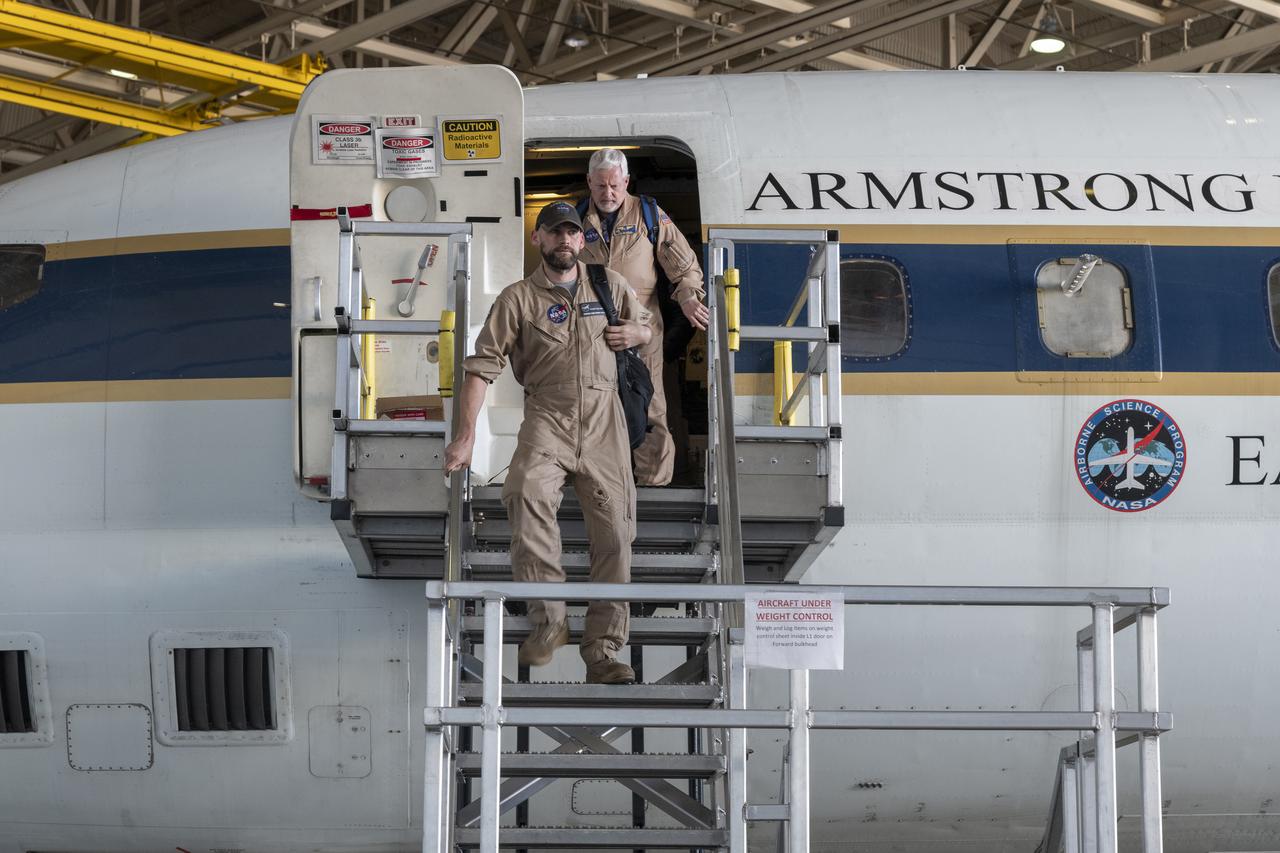
Kelly Jellison, avionics lead, and Tim Sandon, flight engineer, exit the DC-8 aircraft cabin and are welcomed with applause from a supportive team after the DC-8 aircraft and crew return to NASA’s Armstrong Flight Research Center Building 703 in Palmdale, California, on April 1, 2024, following the aircraft’s final mission in support of the Airborne and Satellite Investigation of Asian Air Quality (ASIA-AQ).

NASA’s Armstrong Flight Research Center Director Brad Flick smiles as members of the DC-8 team gather and exchange congratulations after the aircraft and crew return to NASA Armstrong’s Building 703 in Palmdale, California, on April 1, 2024, following the aircraft’s final mission in support of the Airborne and Satellite Investigation of Asian Air Quality (ASIA-AQ).
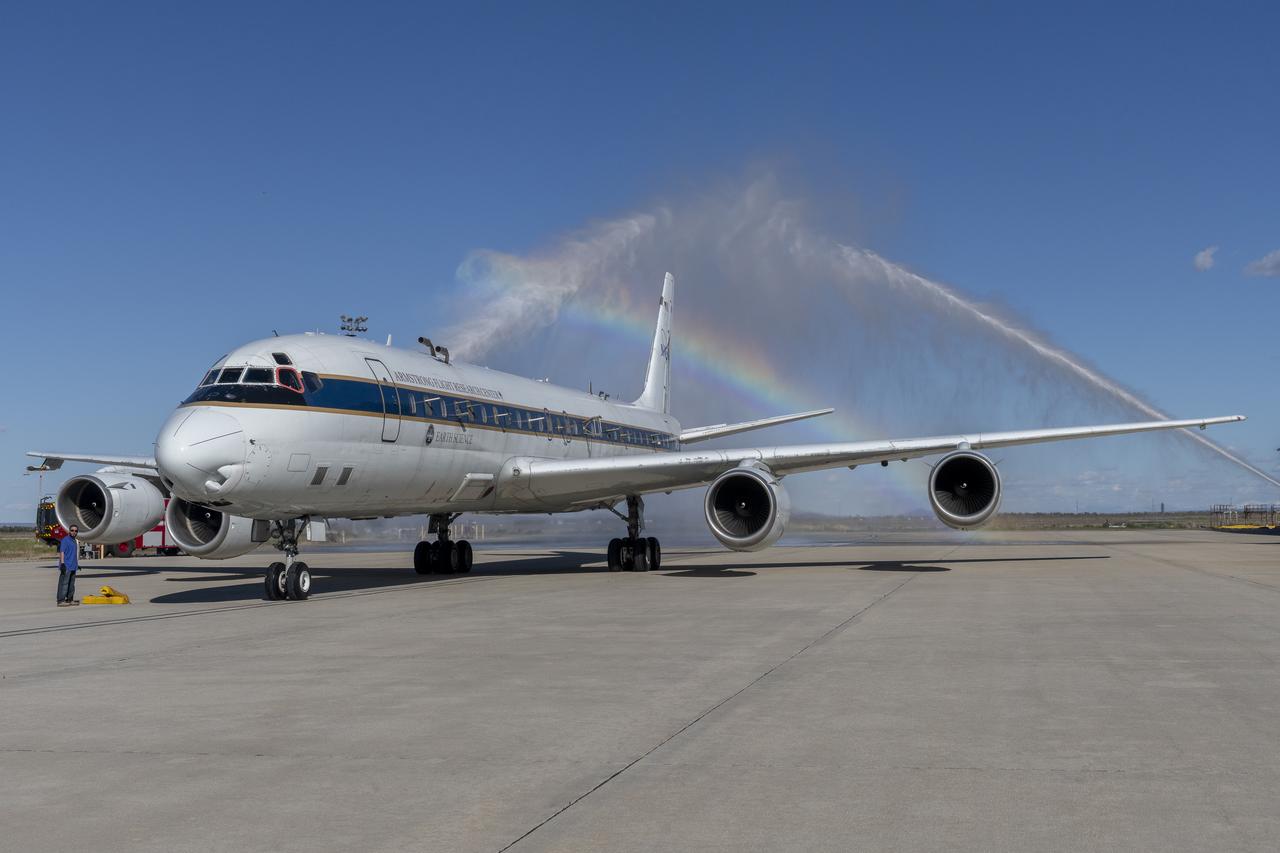
The DC-8 aircraft returned to NASA’s Armstrong Flight Research Center Building 703 in Palmdale, California, on April 1, 2024, after completing its final mission supporting Airborne and Satellite Investigation of Asian Air Quality (ASIA-AQ). The aircraft and crew were welcomed back with a celebratory water salute by the U.S. Air Force Plant 42 Fire Department.

From left, Wayne Ringelberg, chief pilot at NASA’s Armstrong Flight Research Center in Edwards, California, is welcomed by Michael Thomson, director of NASA Armstrong’s Science Mission Directorate, and Kirsten Boogaard, NASA’s DC-8 project manager, after the DC-8 aircraft and crew return to NASA Armstrong’s Building 703 in Palmdale, California, on April 1, 2024, following the aircraft’s final mission in support of the Airborne and Satellite Investigation of Asian Air Quality (ASIA-AQ).
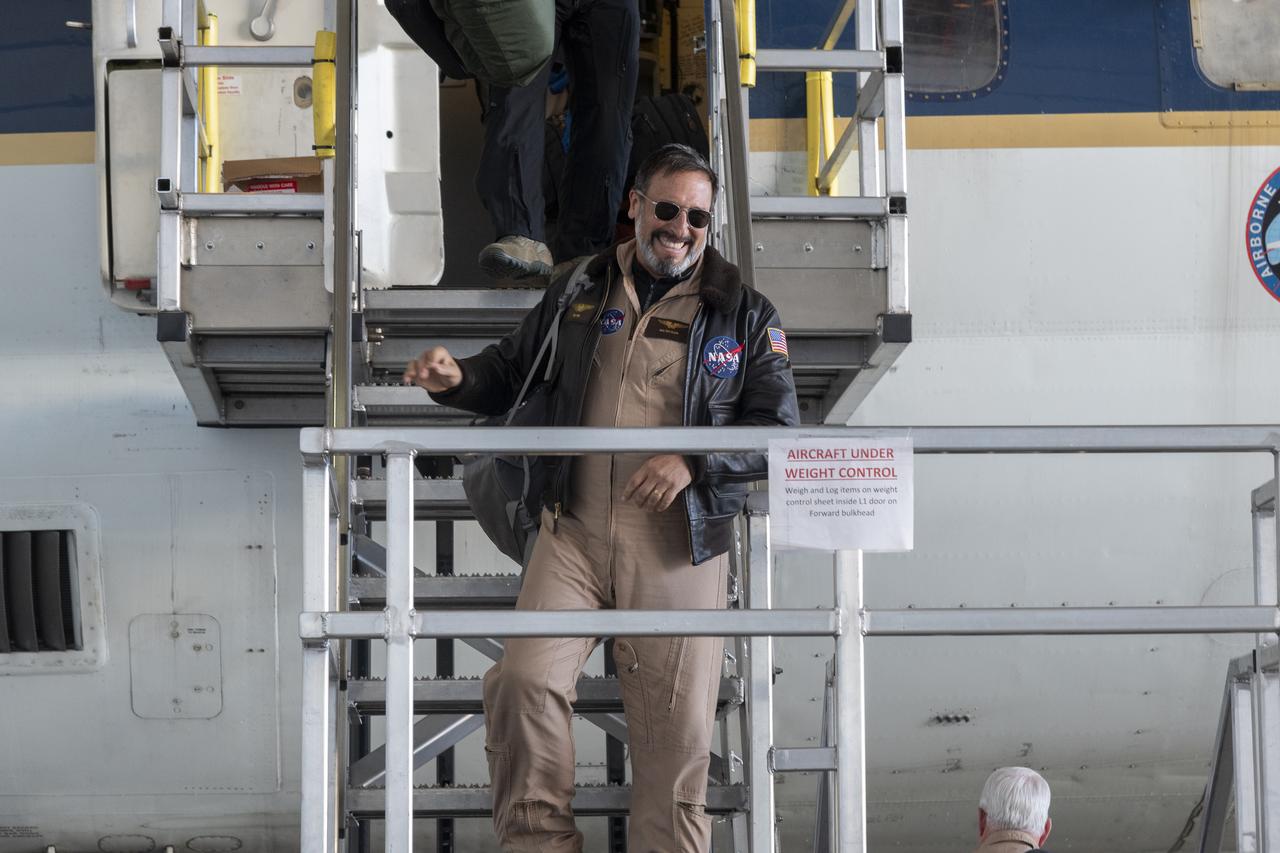
Walter Klein, DC-8 navigator, exits the aircraft cabin and is welcomed with applause from a supportive team after the DC-8 aircraft and crew return to NASA’s Armstrong Flight Research Center Building 703 in Palmdale, California, on April 1, 2024, following the aircraft’s final mission in support of the Airborne and Satellite Investigation of Asian Air Quality (ASIA-AQ).
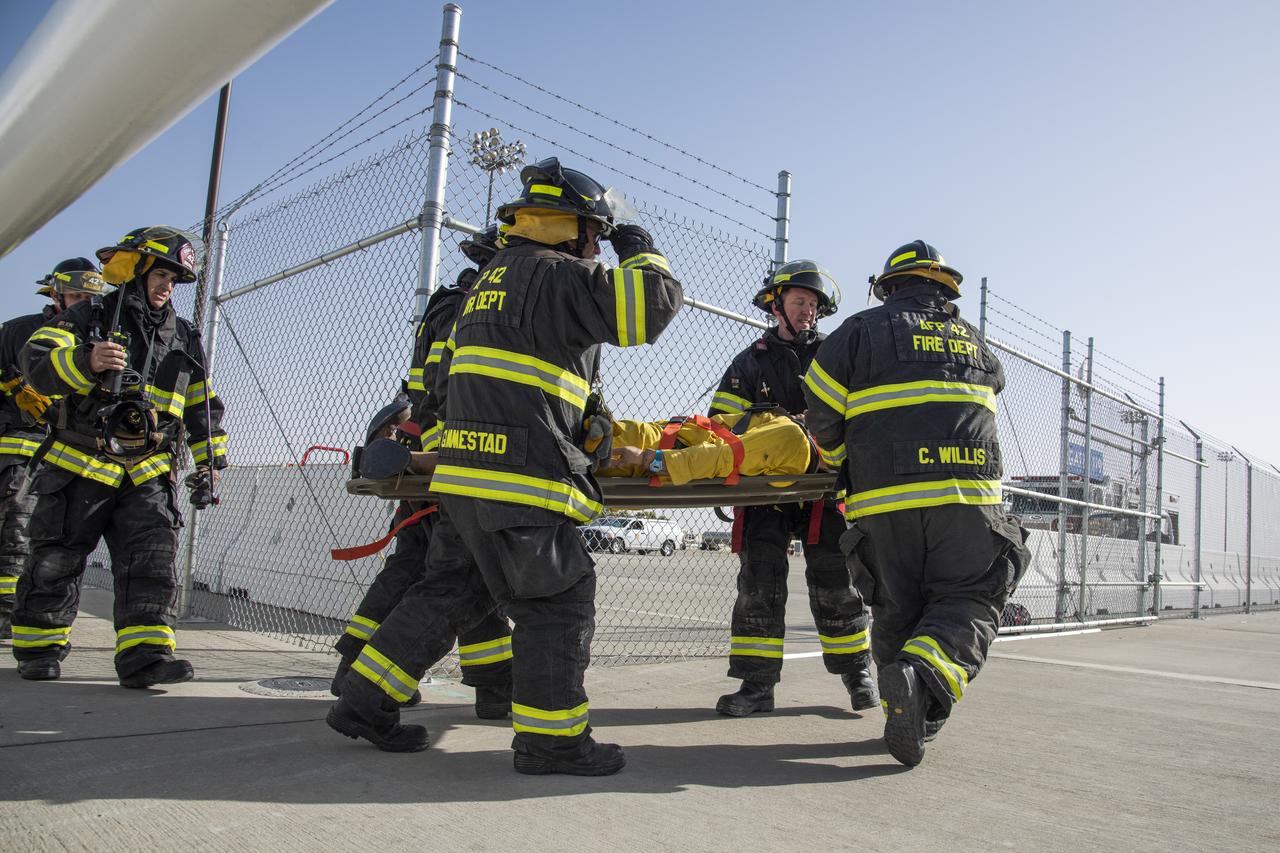
U.S. Air Force Plant 42 Fire Department responders carry out the mannequin to an emergency vehicle during an emergency exercise at NASA Armstrong Flight Research Center's Building 703 in Palmdale, California. Responders included, from left, Kent Courter, Doug Mendez, Alfonzo Ortega, Cedric Willis, Tyler Lippens and Ricky Gimmestad.
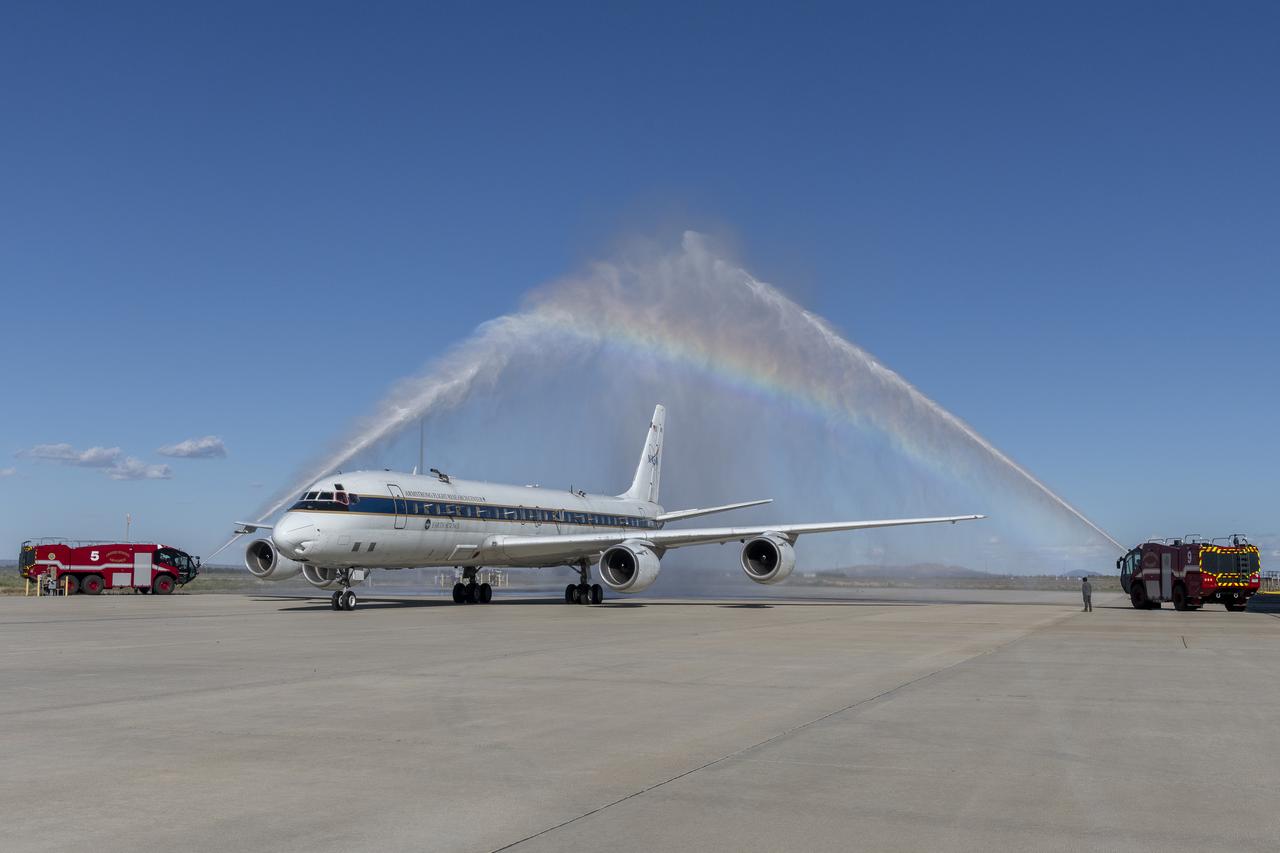
The DC-8 aircraft returned to NASA’s Armstrong Flight Research Center Building 703 in Palmdale, California, on April 1, 2024, after completing its final mission supporting Airborne and Satellite Investigation of Asian Air Quality (ASIA-AQ). The aircraft and crew were welcomed back with a celebratory water salute by the U.S. Air Force Plant 42 Fire Department.

Army Air Photo Flight Research Building construction looking North East
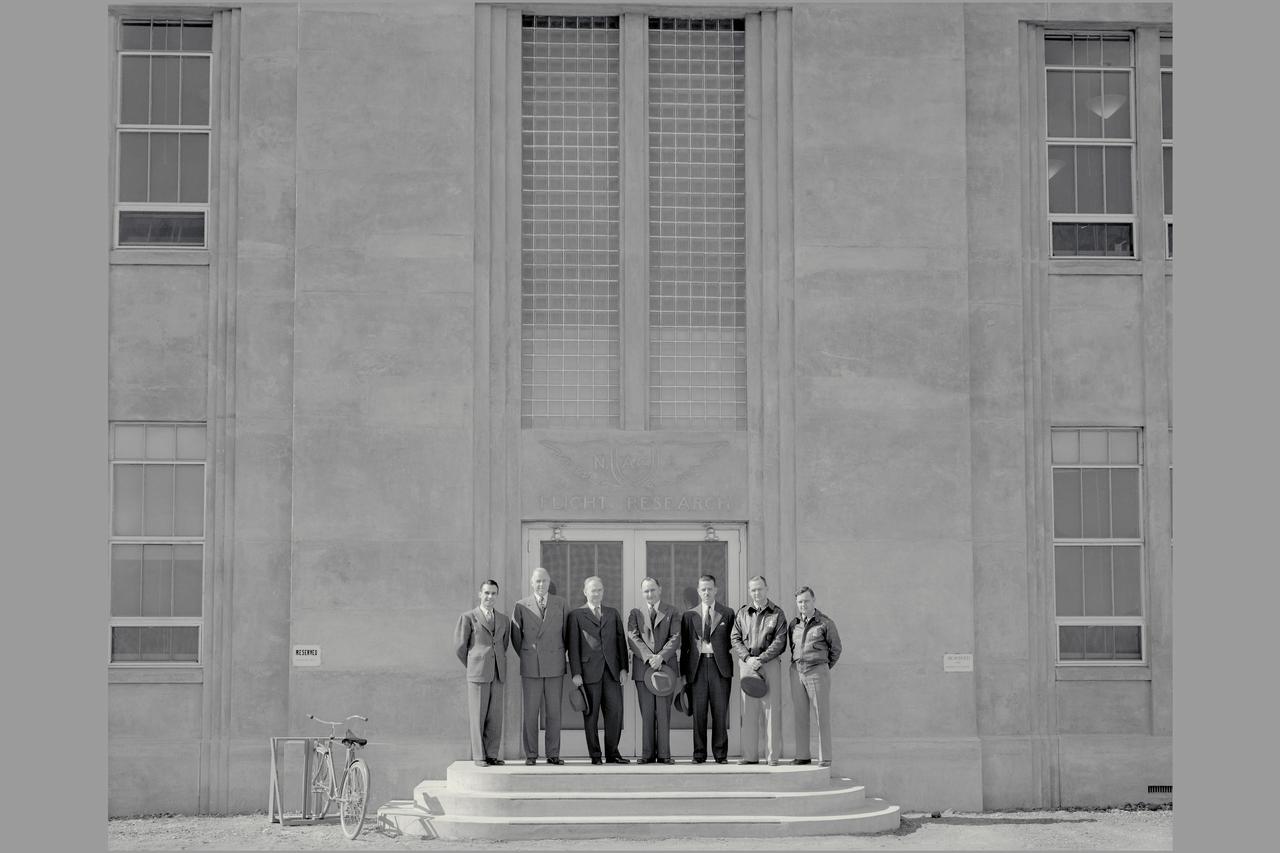
Dr Mead and Members of staff in front of Flight Research Lab building
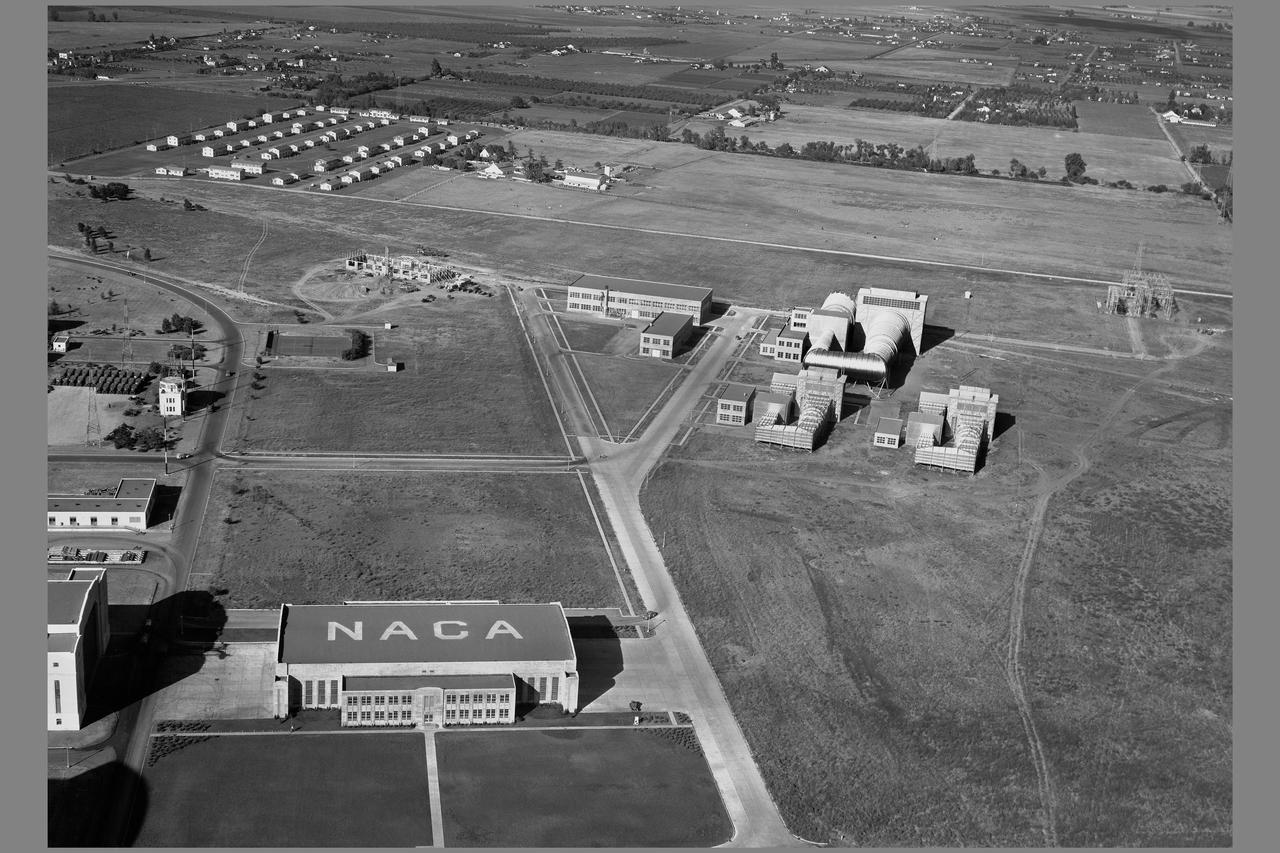
Ames Aeronautical Research Laboratory aerial shows original flight research hangar in foreground, the two 7x10ft w.t. the 16ft w.t. and Admin buildings NOTE: printed in NASA Ames Publications: Adventures in Research - SP-4320; Searching the Horizon - SP 4304; 57 Years - Flight Research at AMES - NASA SP-1998-3300
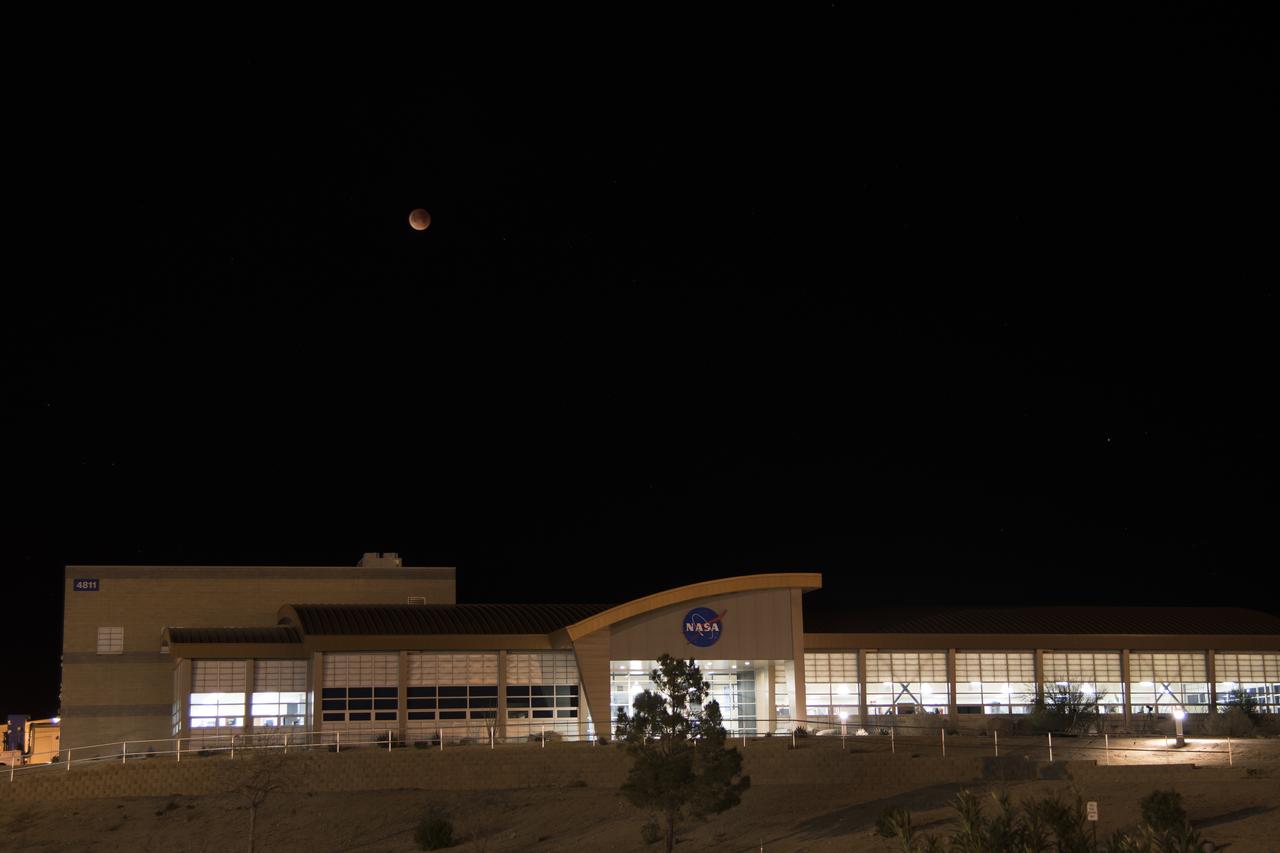
California's NASA Armstrong Flight Research Center photographer Carla Thomas takes photos on January 31 of the rare opportunity to capture a supermoon, a blue moon and a lunar eclipse at the same time. A supermoon occurs when the Moon is closer to Earth in its orbit and appearing 14 percent brighter than usual. As the second full moon of the month, this moon is also commonly known as a blue moon, though it will not be blue in appearance. The super blue moon passed through Earth's shadow and took on a reddish tint, known as a blood moon. This total lunar eclipse occurs when the Sun, Earth, and a full moon form a near-perfect lineup in space. The Moon passes directly behind the Earth into its umbra (shadow).
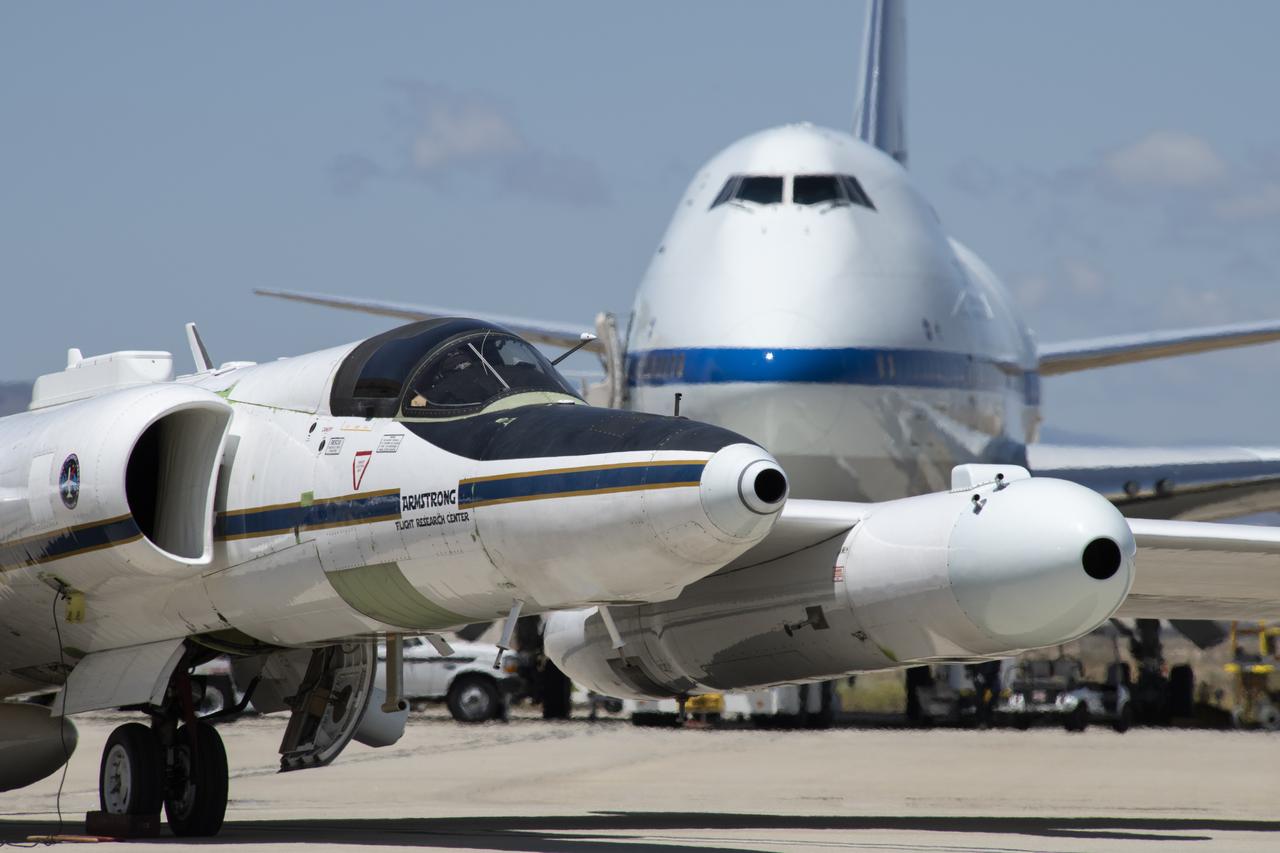
NASA's ER-2 and SOFIA at Armstrong Flight Research Center Building 703 in Palmdale, California.
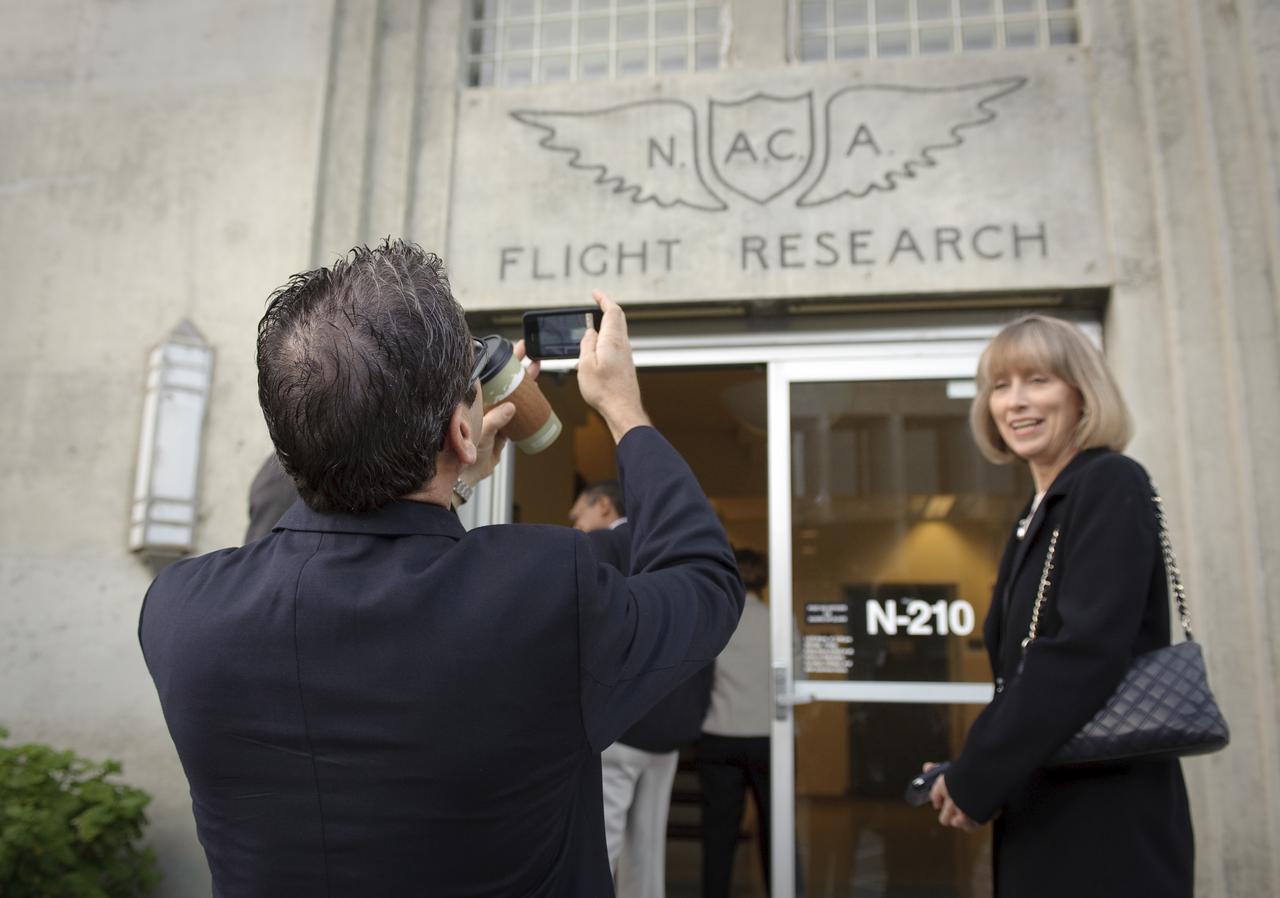
NASA Advisory Council Meeting at NASA Ames Research Center NRP Conference Center. Diane Rausch, Executive Director NASA Advisory Council, NASA HQ in front of Ames Flight Research Building N-210
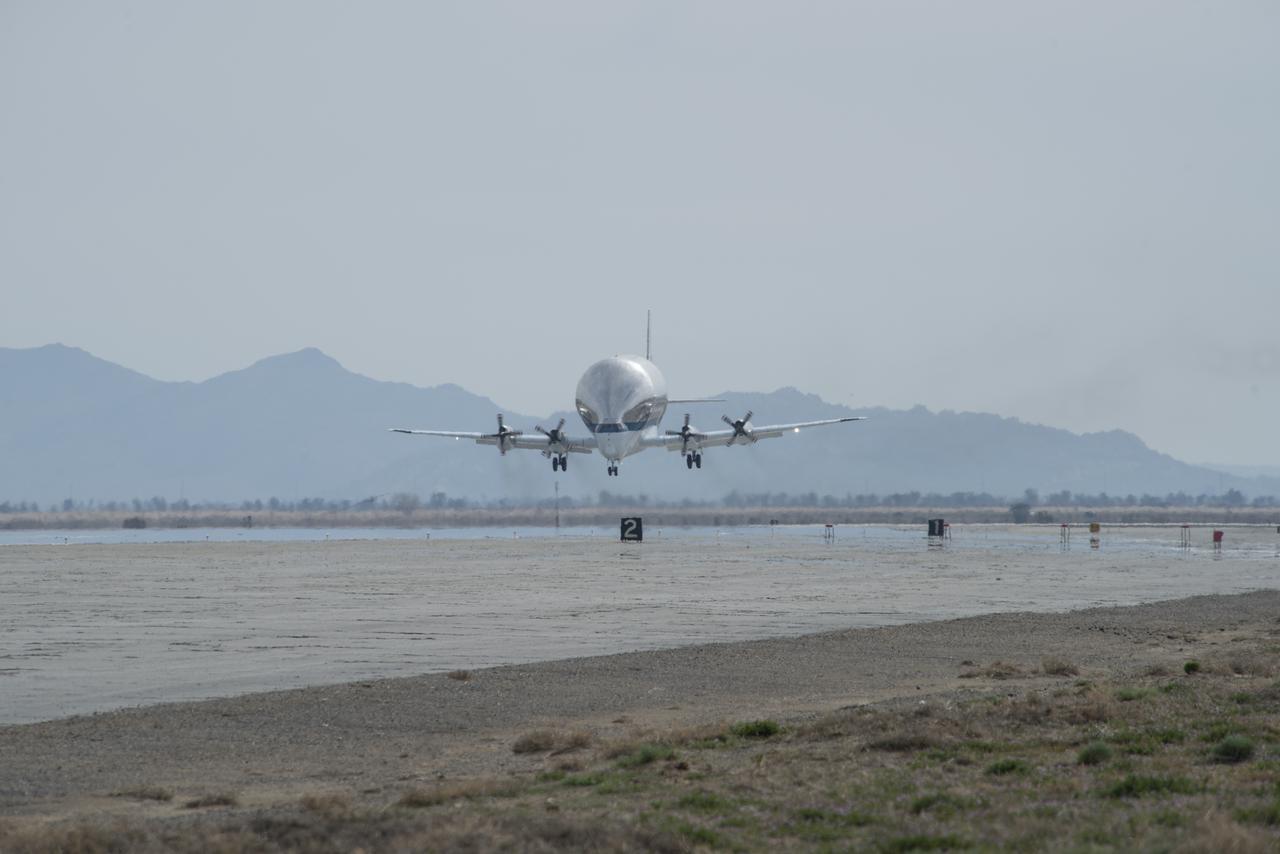
NASA's Super Guppy cargo transport aircraft coming in for landing at Plant 42 in Palmdale, California on April 1, 2019.
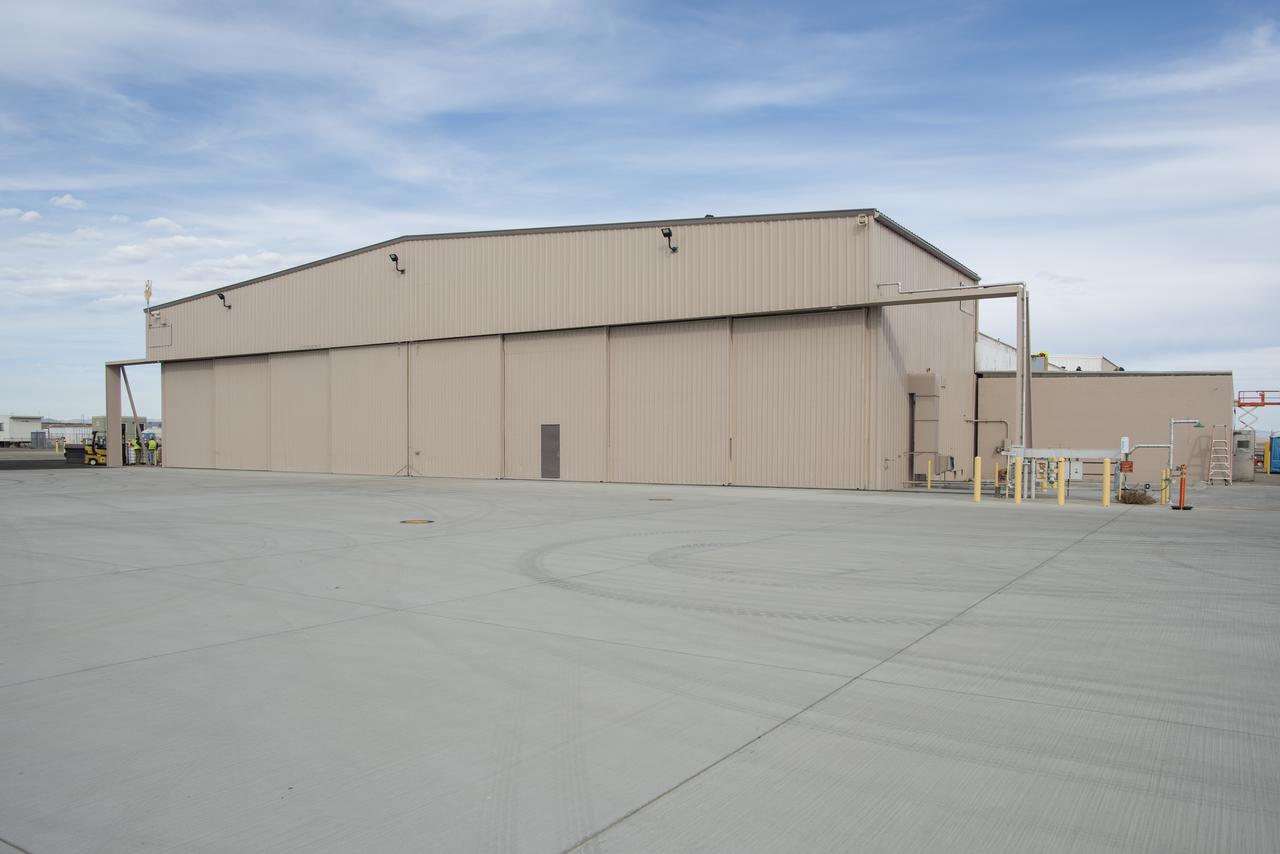
This is how Building 4826, the future home of the X-59 Quiet SuperSonic Technology aircraft, at NASA's Armstrong Flight Research Center in Edwards, California, looks as the building's renovations continue.
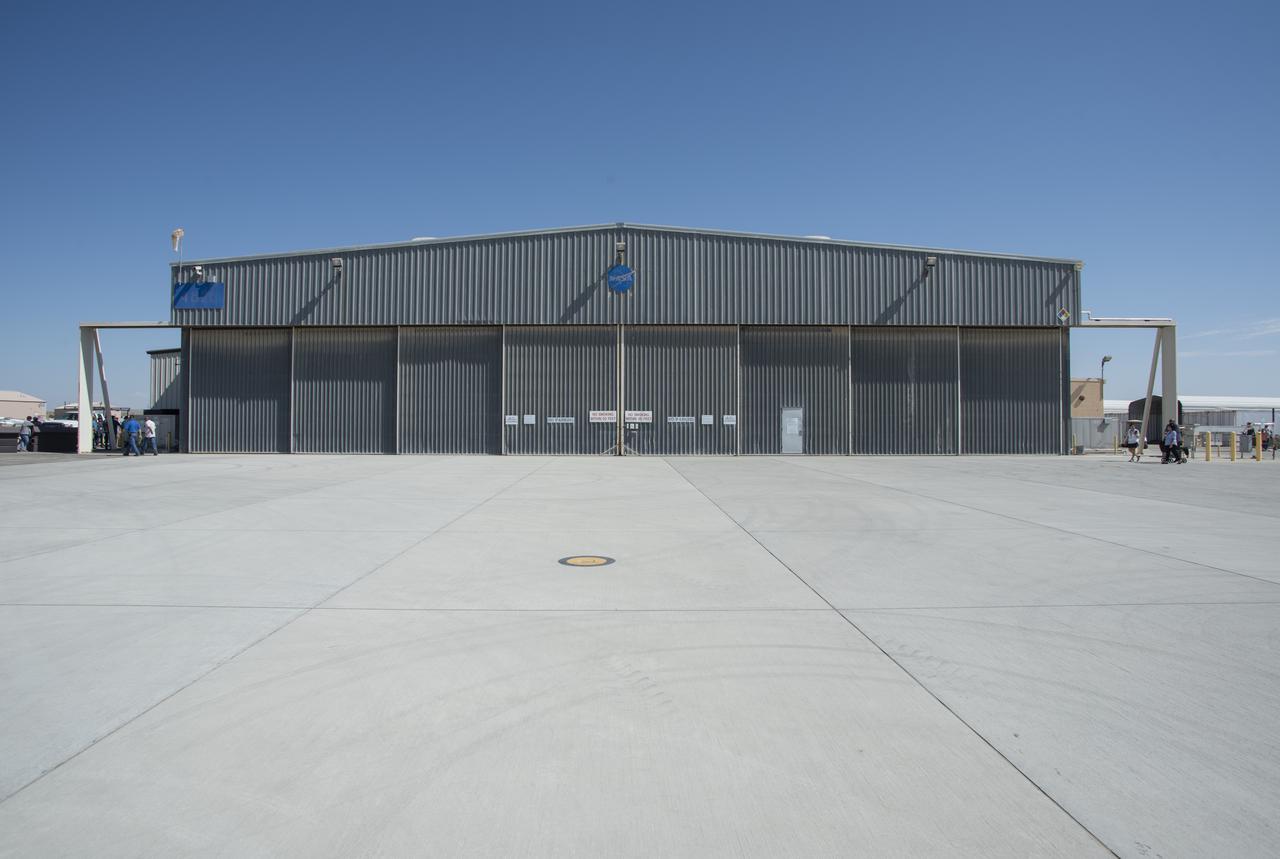
This is how Building 4826, the future home of the X-59 Quiet SuperSonic Technology aircraft, at NASA's Armstrong Flight Research Center in Edwards, California, looked prior to the building's renovations.
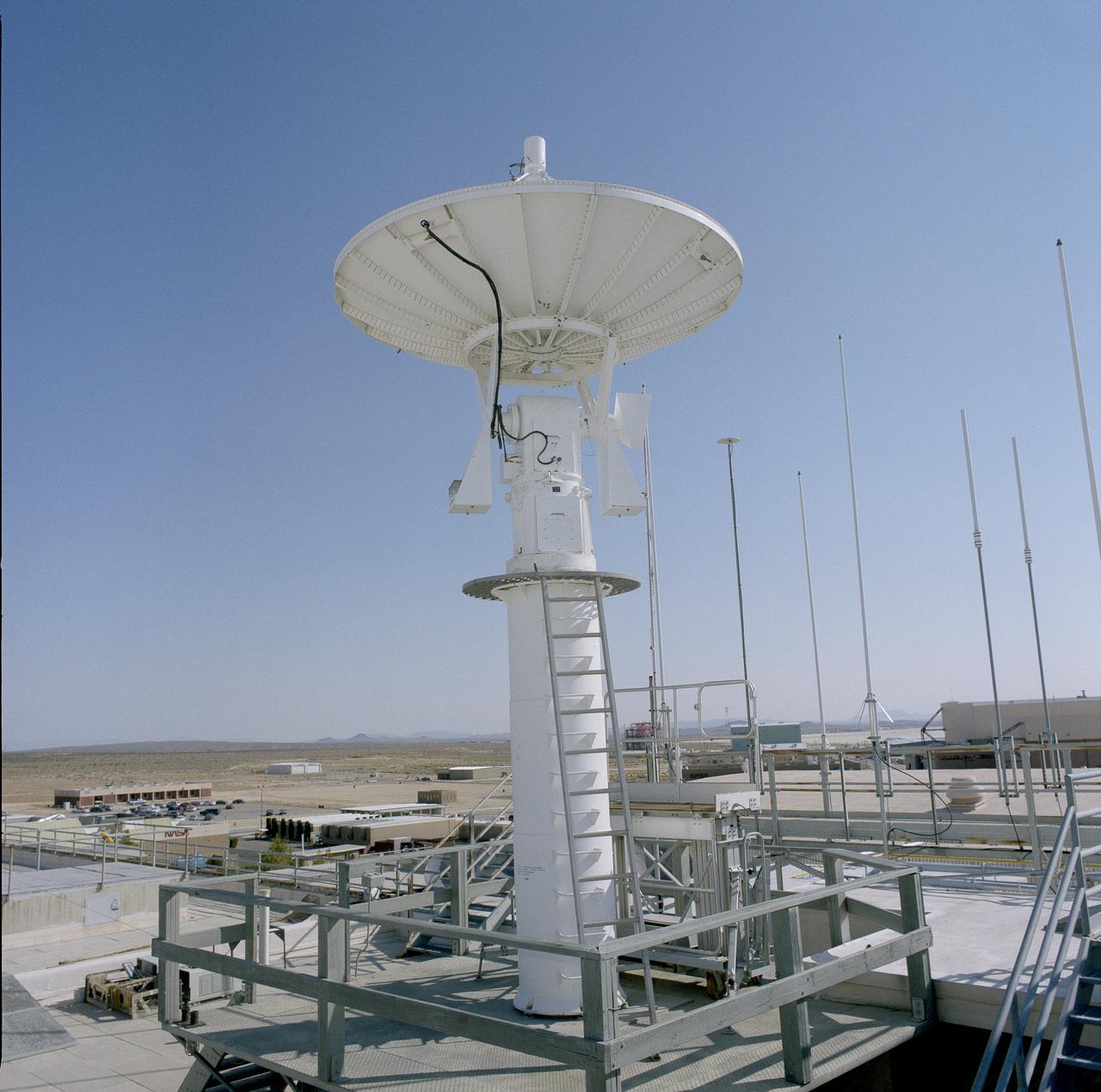
A rooftop pedestal and telemetry dish gathered information from research aircraft at Building 4800 at NASA’s Armstrong Flight Research Center in Edwards, California. The pedestal was used since the 1950s to 2015 to house different dishes to collect data from research aircraft. On Oct. 4, 2024, a helicopter was used to remove the pedestal from the roof.
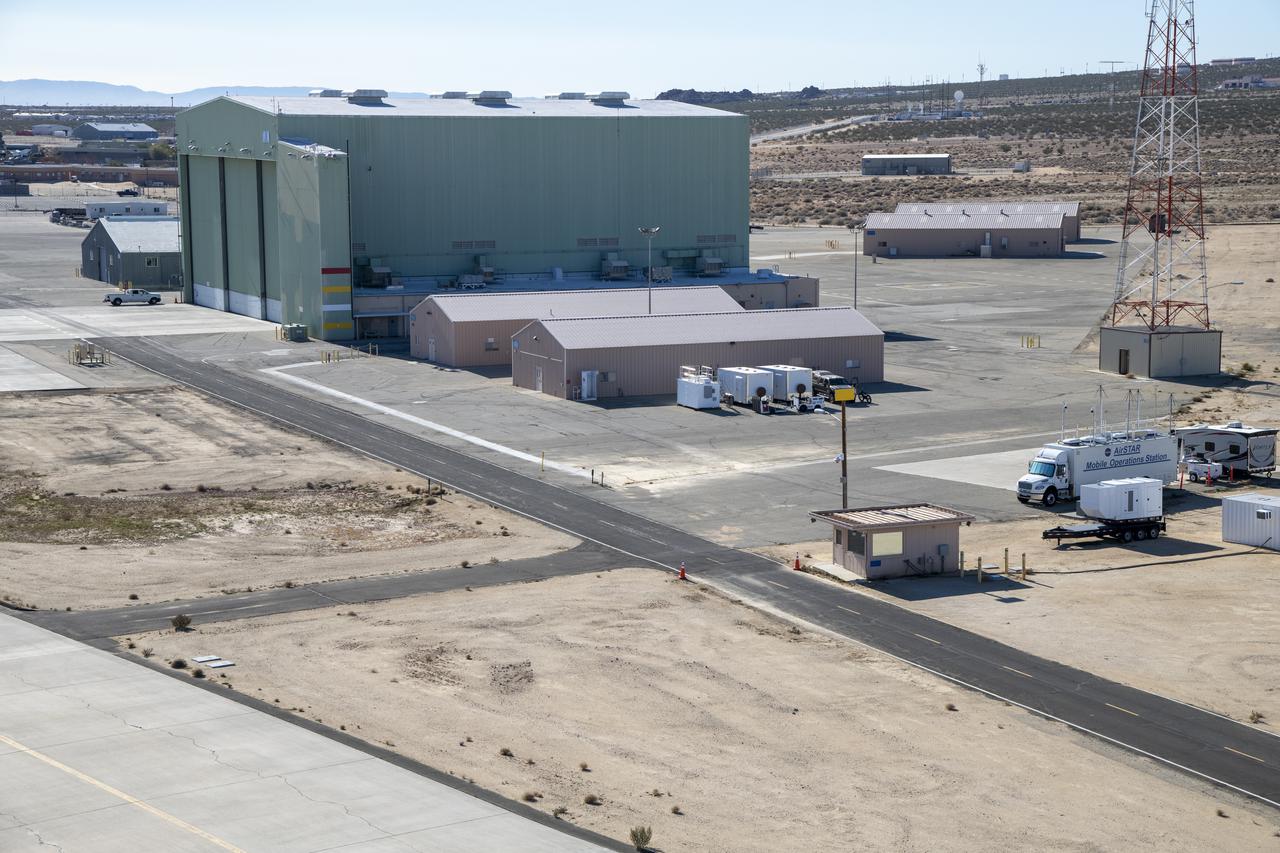
An aerial image taken by one of NASA’s photographers during recent helicopter flights shows a view of the building 4833 structure and the mobile operating facility at NASA’s Armstrong Flight Research Center in Edwards, California. NASA’s Advanced Air Mobility National Campaign uses the mobile operations facility vehicle shown in the lower right corner during test operations. The red, yellow, and white building markings applied to building 4833 are used to provide visual aids to the pilot during handling qualities testing used to research advanced air mobility flight requirements.
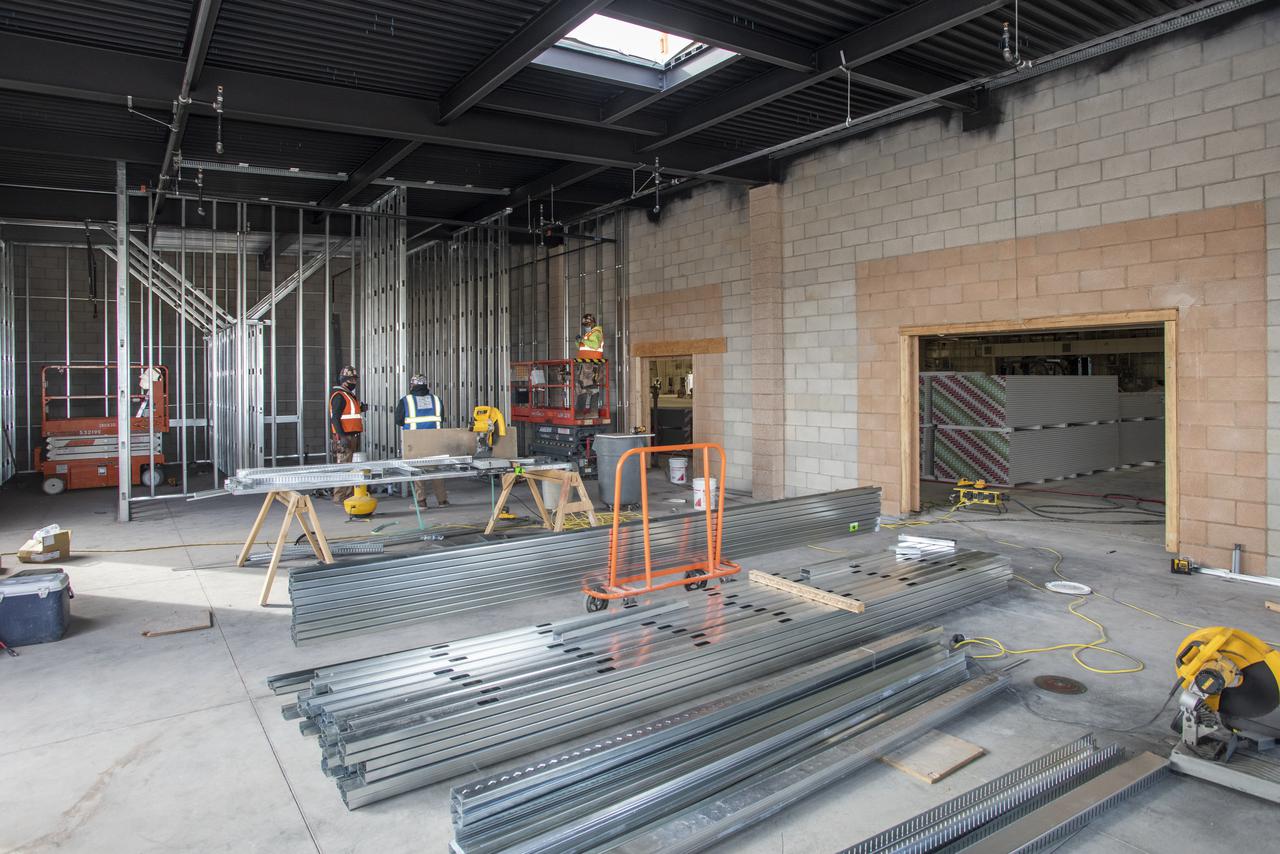
Work continues at Building 4826, the future home of the X-59 Quiet SuperSonic Technology aircraft, at NASA's Armstrong Flight Research Center in Edwards, California.
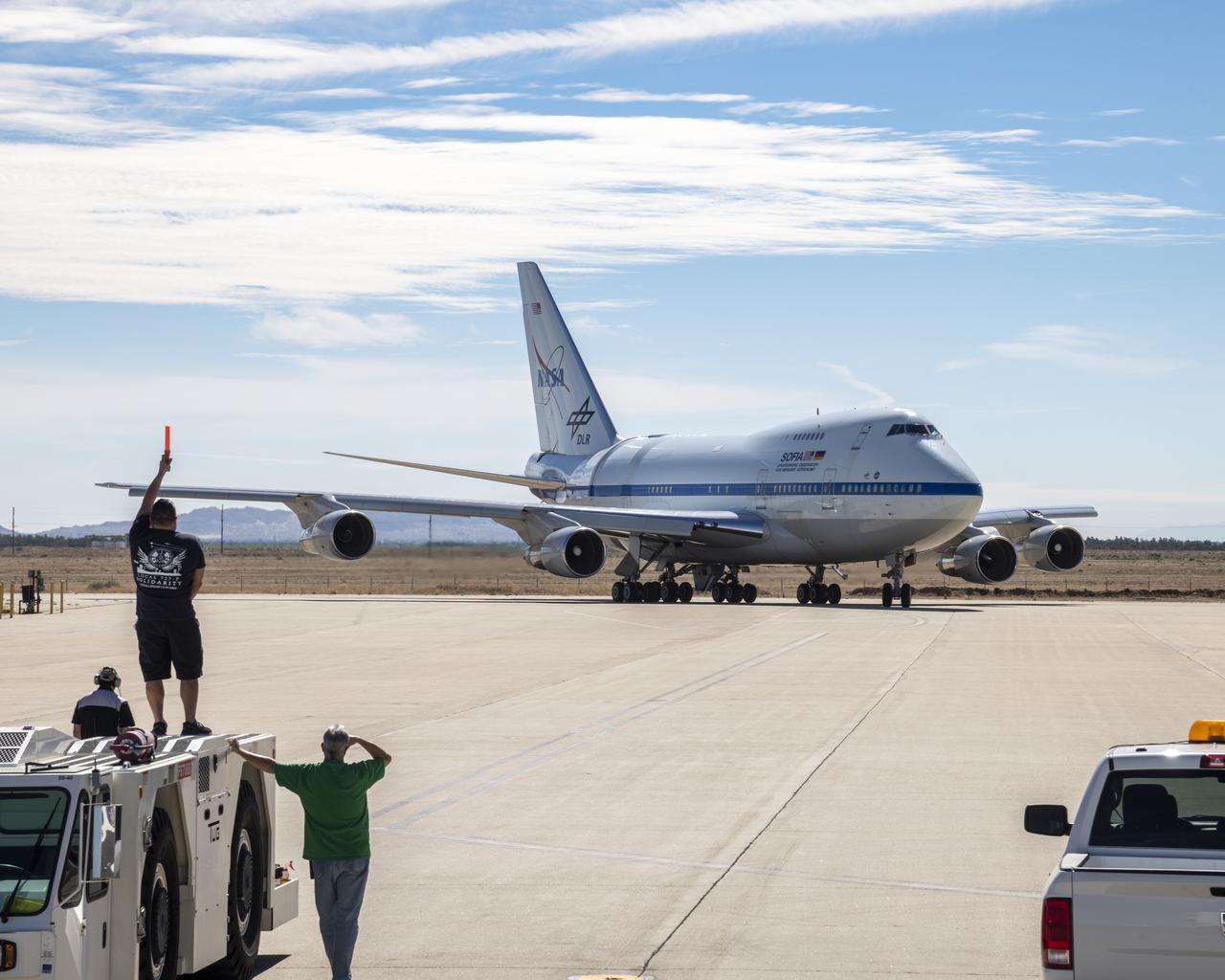
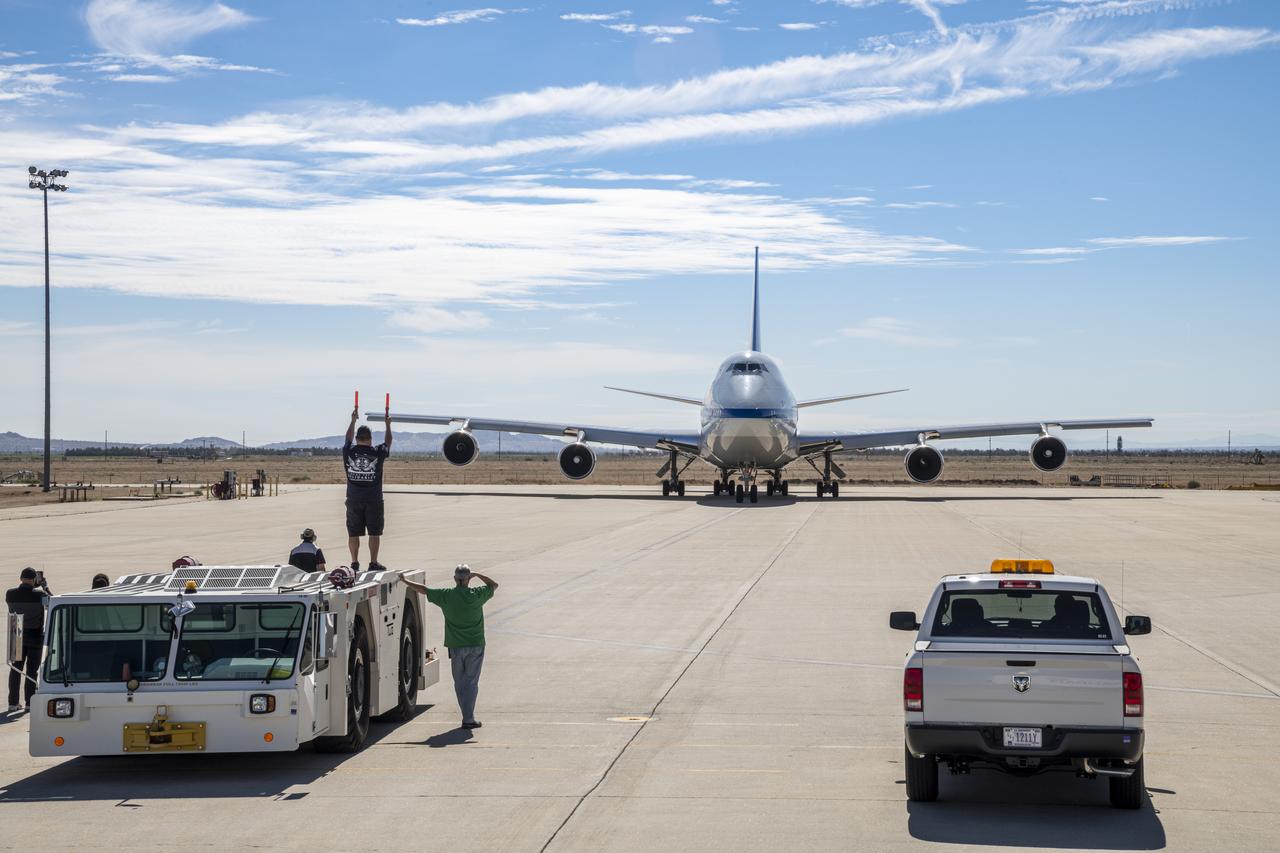
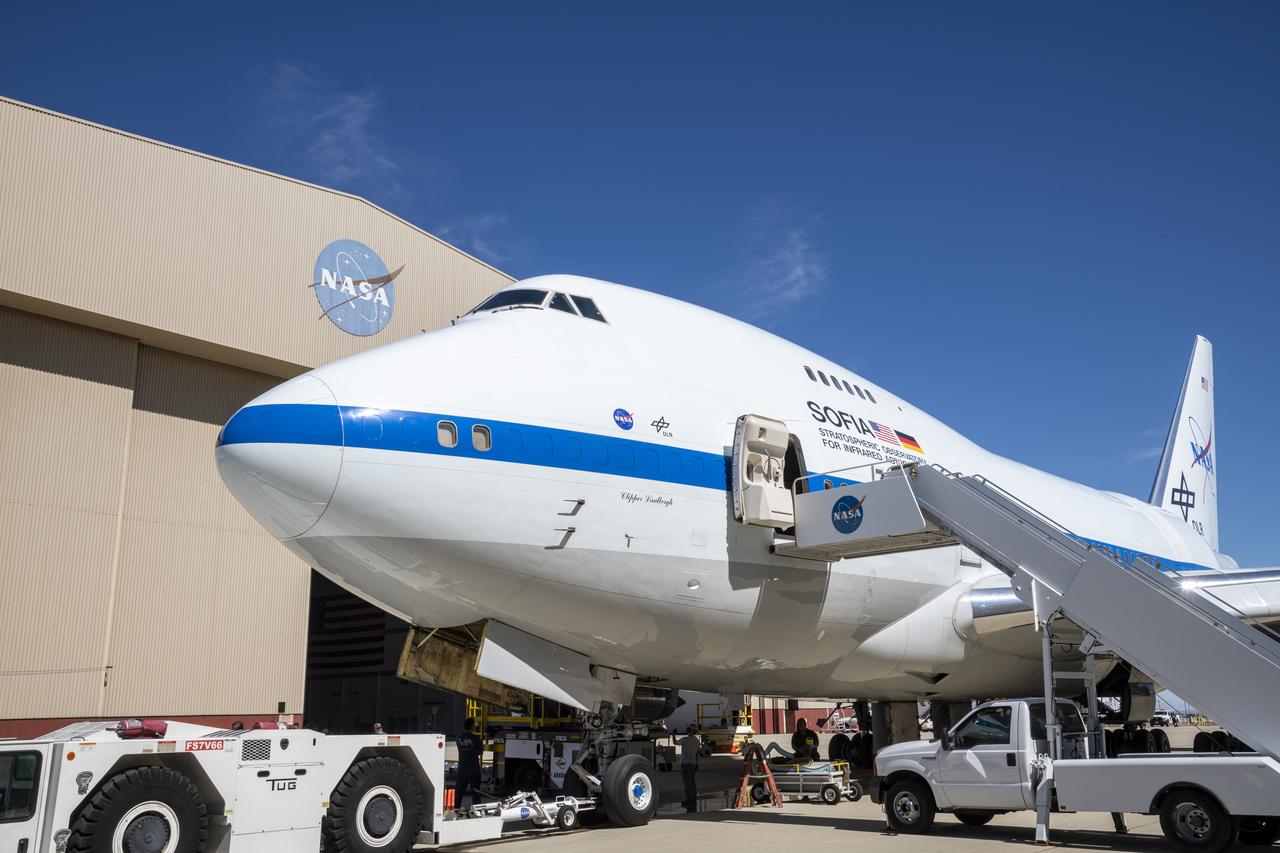
The Stratospheric Observatory for Infrared Astronomy (SOFIA) returns to NASA’s Armstrong Flight Research Center Building 703 on Aug. 11 after a productive month of science flights out of Christchurch International Airport in New Zealand.
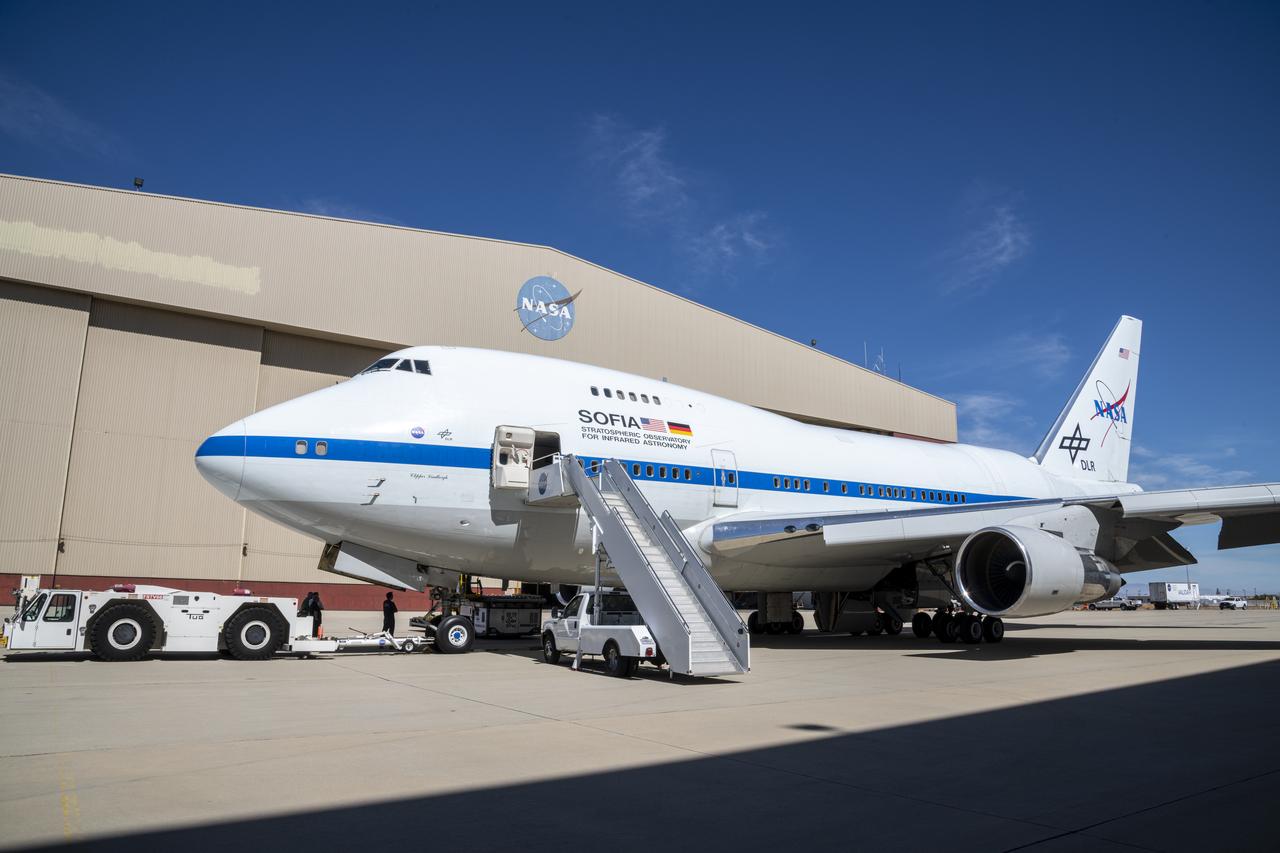
The Stratospheric Observatory for Infrared Astronomy (SOFIA) returns to NASA’s Armstrong Flight Research Center Building 703 on Aug. 11 after a productive month of science flights out of Christchurch International Airport in New Zealand.
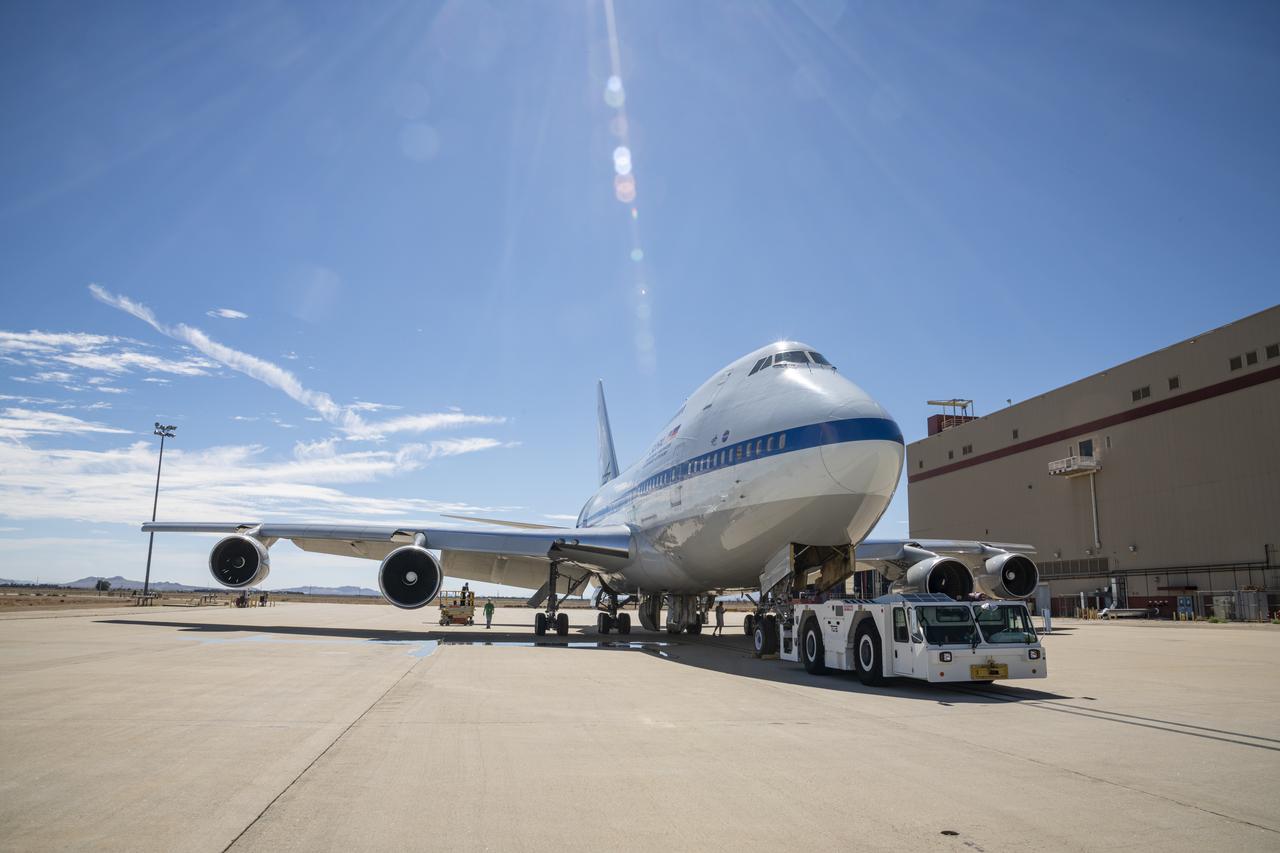
The Stratospheric Observatory for Infrared Astronomy (SOFIA) returns to NASA’s Armstrong Flight Research Center Building 703 on Aug. 11 after a productive month of science flights out of Christchurch International Airport in New Zealand.
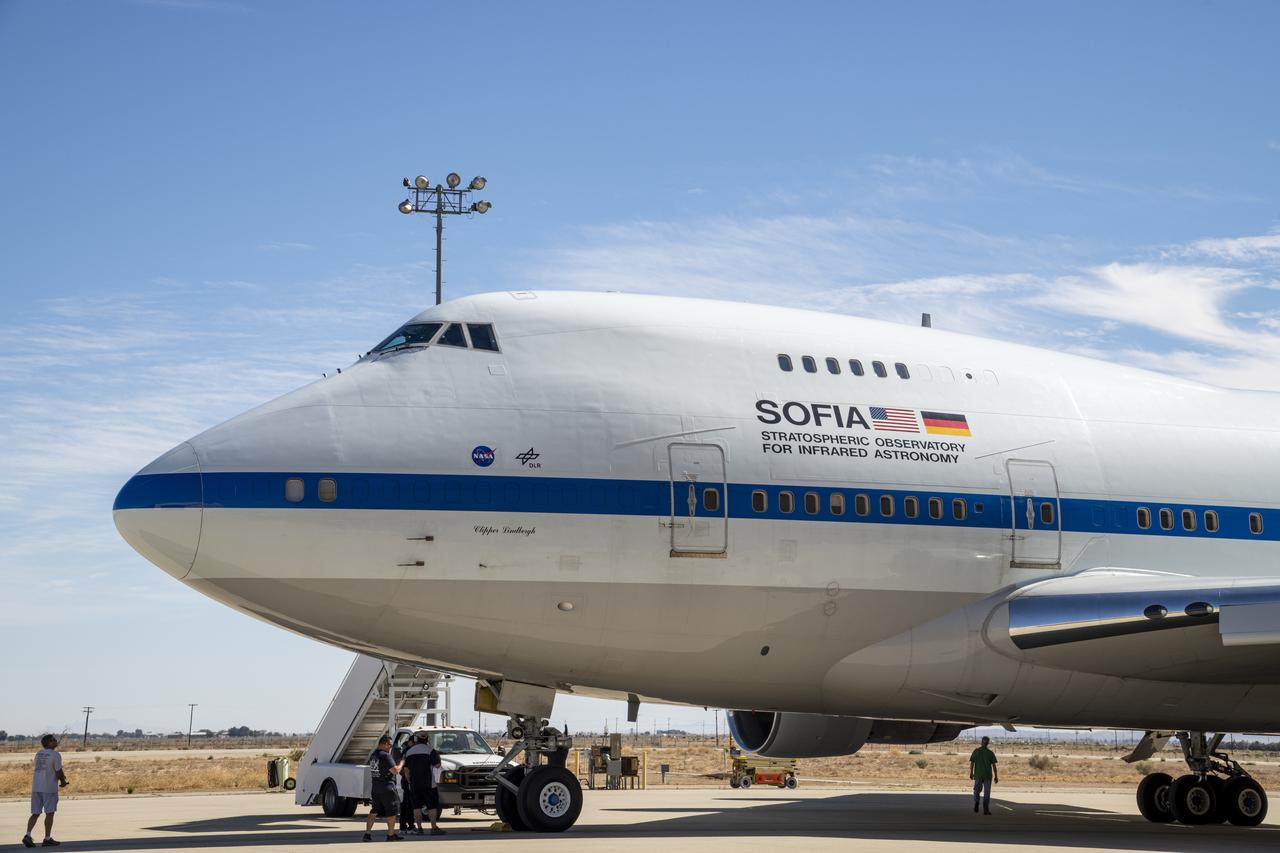
The Stratospheric Observatory for Infrared Astronomy (SOFIA) returns to NASA’s Armstrong Flight Research Center Building 703 on Aug. 11 after a productive month of science flights out of Christchurch International Airport in New Zealand.
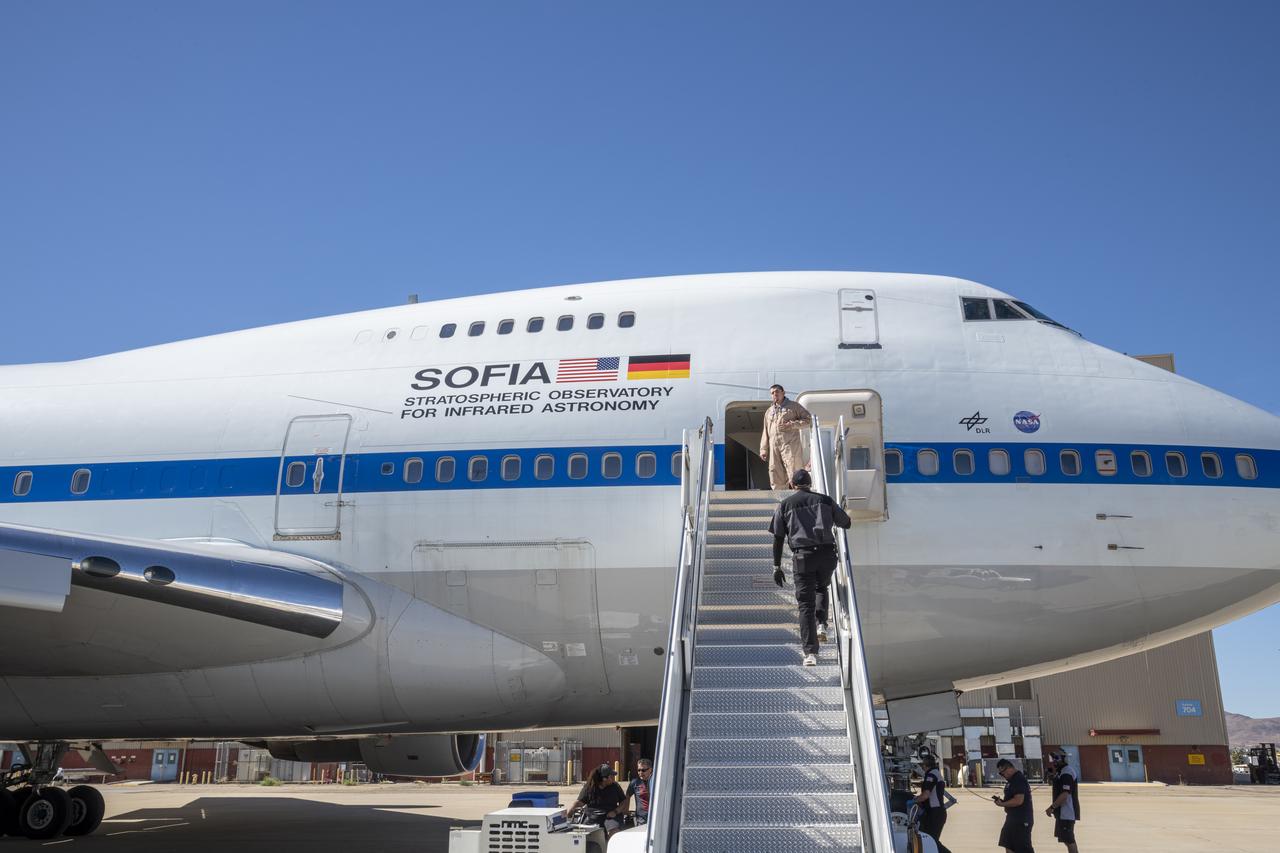
The Stratospheric Observatory for Infrared Astronomy (SOFIA) returns to NASA’s Armstrong Flight Research Center Building 703 on Aug. 11 after a productive month of science flights out of Christchurch International Airport in New Zealand.
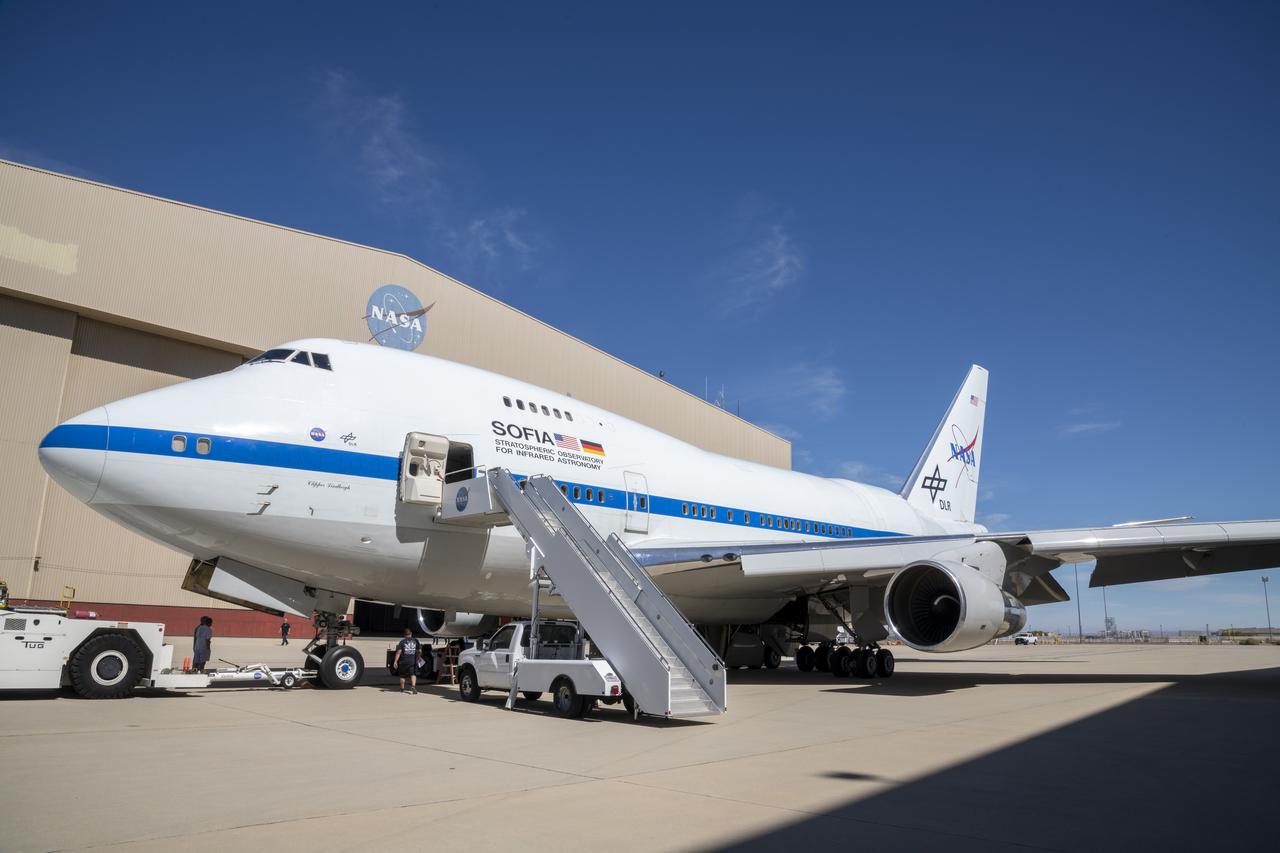
The Stratospheric Observatory for Infrared Astronomy (SOFIA) returns to NASA’s Armstrong Flight Research Center Building 703 on Aug. 11 after a productive month of science flights out of Christchurch International Airport in New Zealand.
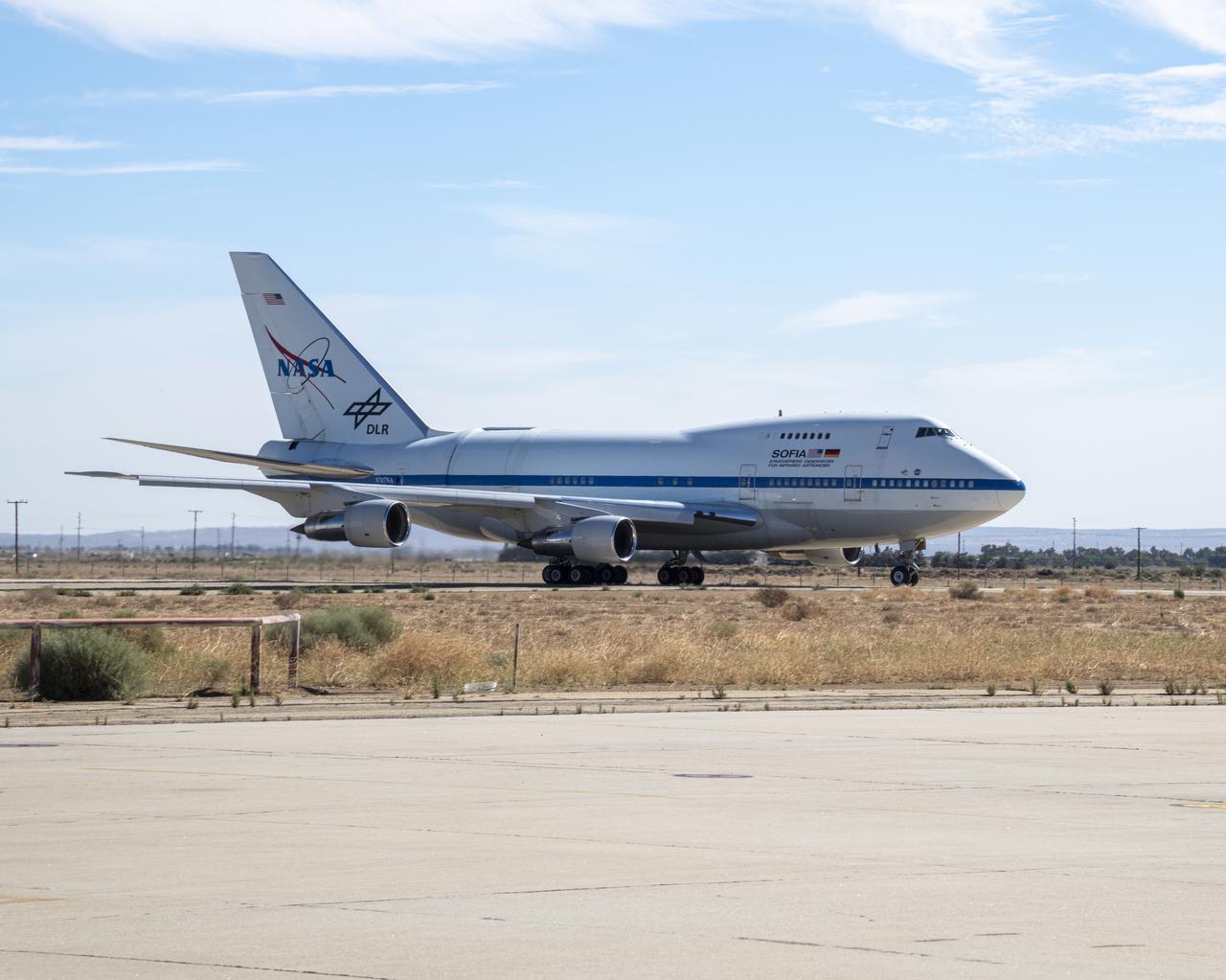
The Stratospheric Observatory for Infrared Astronomy (SOFIA) returns to NASA’s Armstrong Flight Research Center Building 703 on Aug. 11 after a productive month of science flights out of Christchurch International Airport in New Zealand.
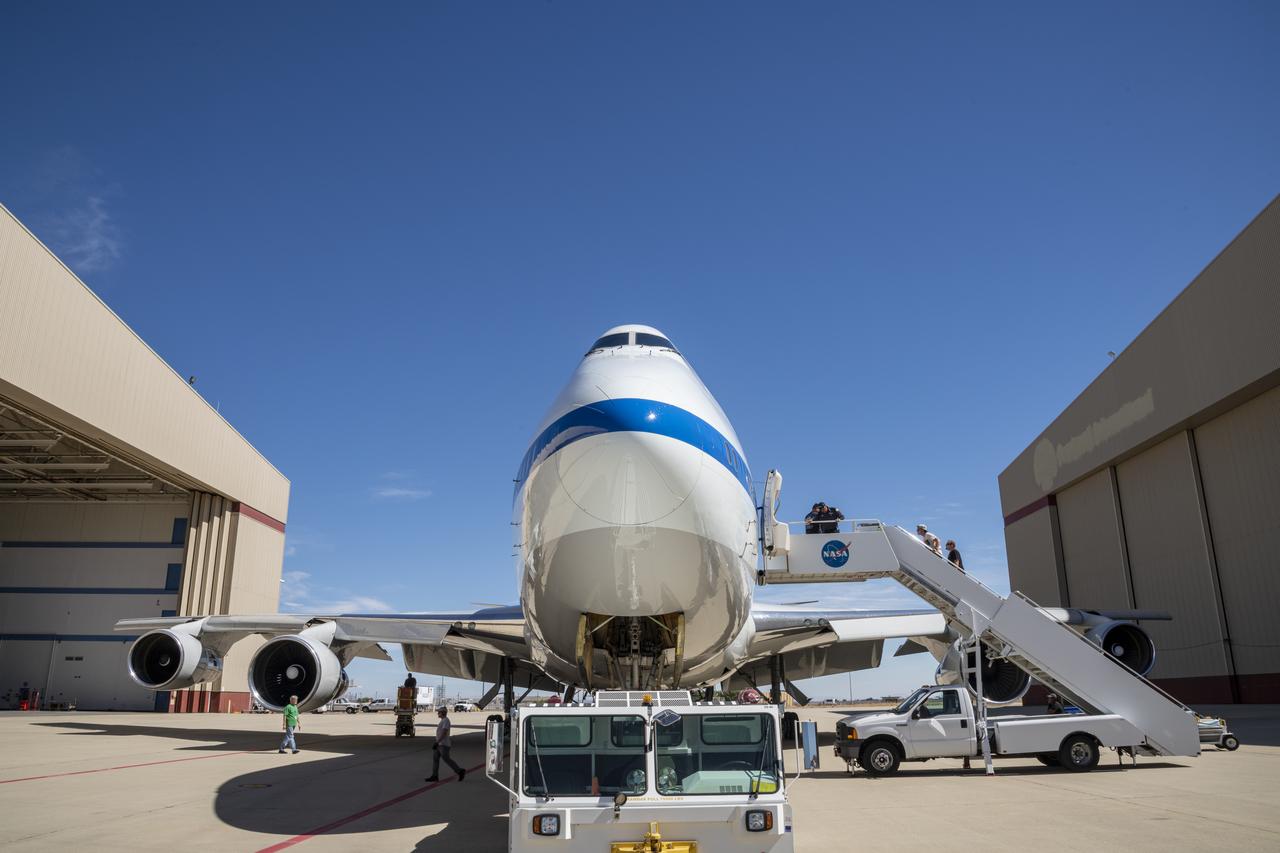
The Stratospheric Observatory for Infrared Astronomy (SOFIA) returns to NASA’s Armstrong Flight Research Center Building 703 on Aug. 11 after a productive month of science flights out of Christchurch International Airport in New Zealand.
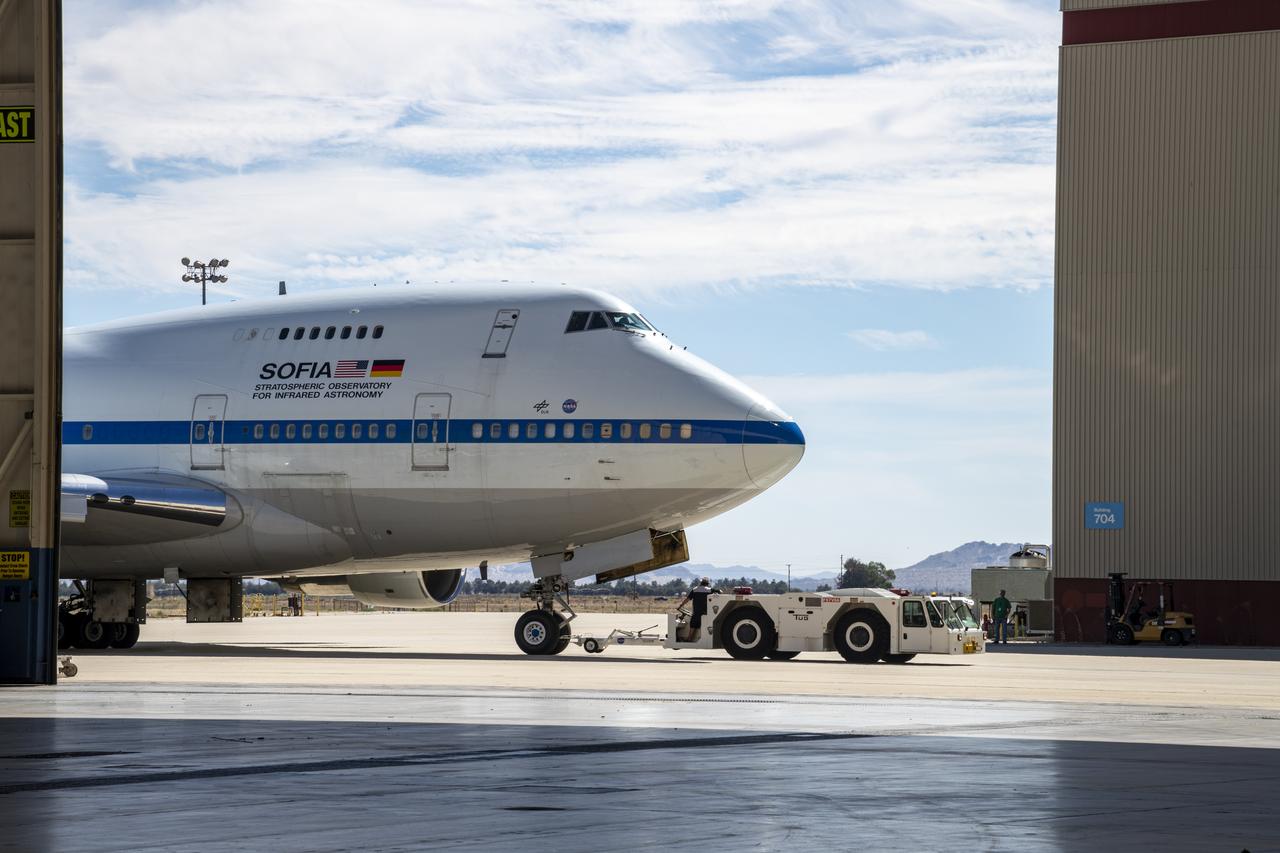
The Stratospheric Observatory for Infrared Astronomy (SOFIA) returns to NASA’s Armstrong Flight Research Center Building 703 on Aug. 11 after a productive month of science flights out of Christchurch International Airport in New Zealand.
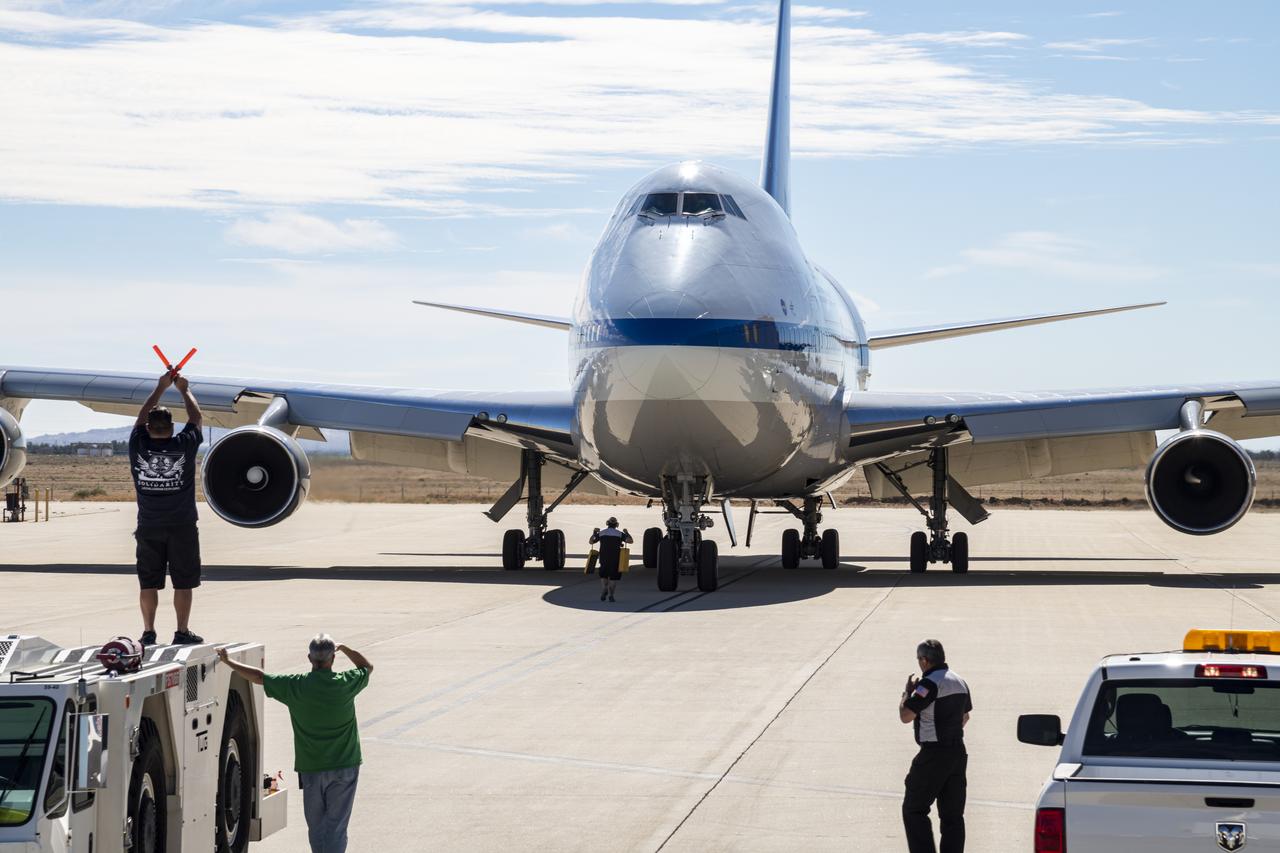
The Stratospheric Observatory for Infrared Astronomy (SOFIA) returns to NASA’s Armstrong Flight Research Center Building 703 on Aug. 11 after a productive month of science flights out of Christchurch International Airport in New Zealand.
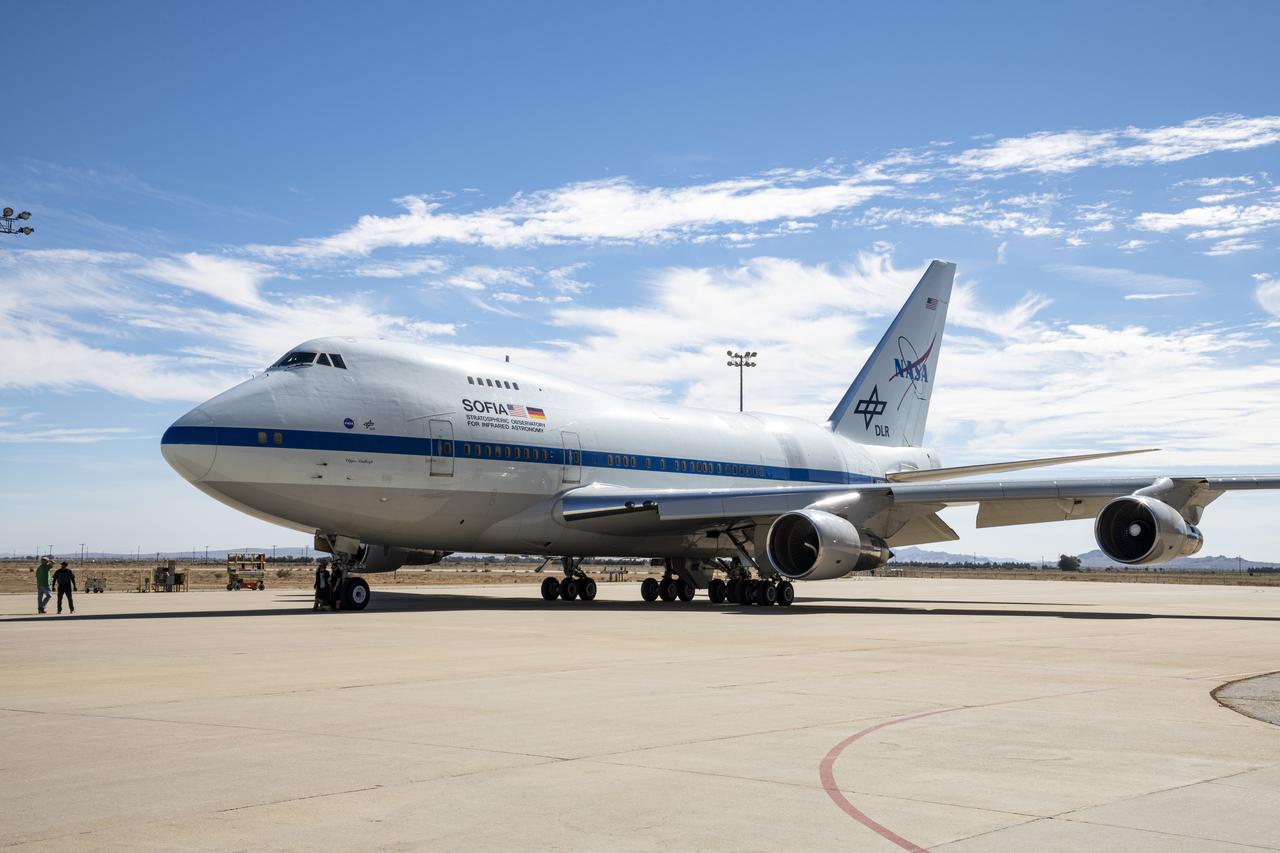
The Stratospheric Observatory for Infrared Astronomy (SOFIA) returns to NASA’s Armstrong Flight Research Center Building 703 on Aug. 11 after a productive month of science flights out of Christchurch International Airport in New Zealand.
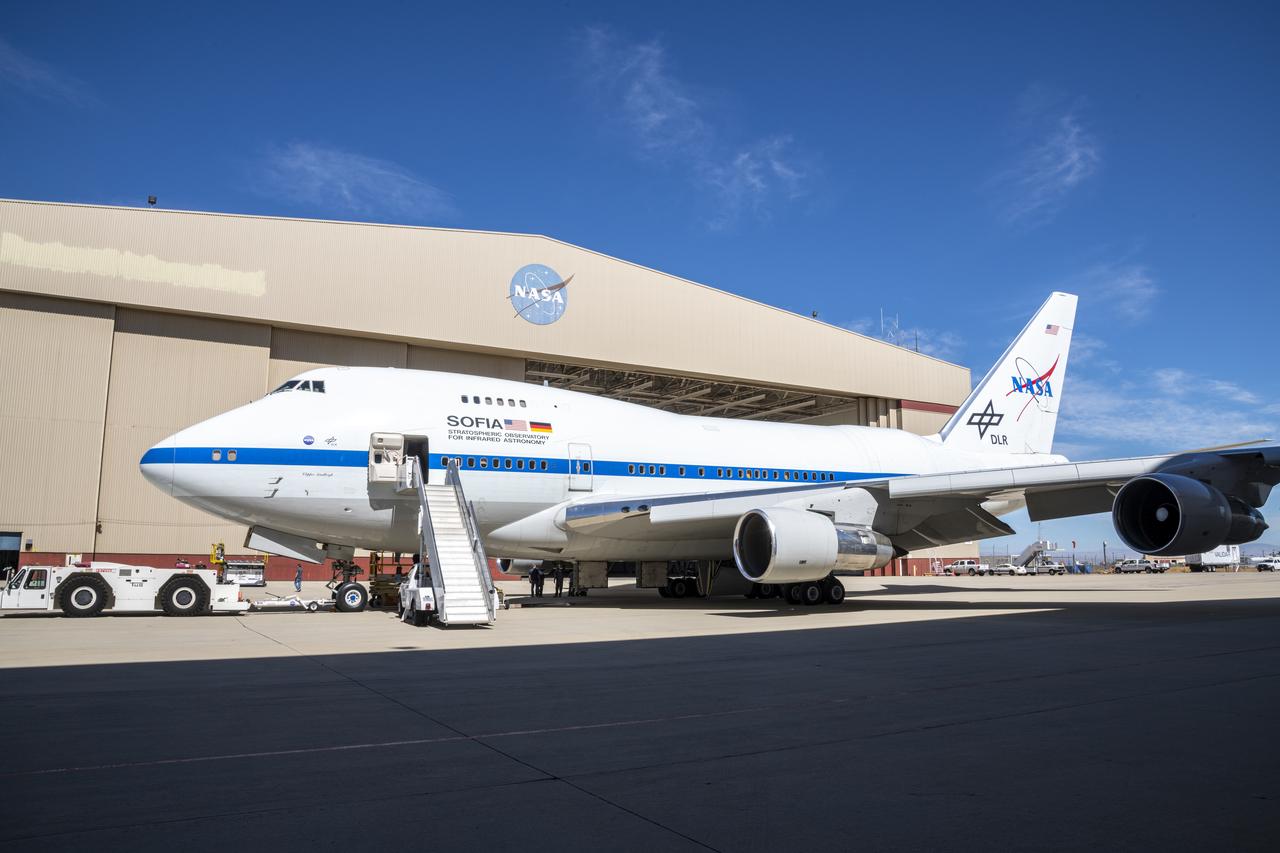
The Stratospheric Observatory for Infrared Astronomy (SOFIA) returns to NASA’s Armstrong Flight Research Center Building 703 on Aug. 11 after a productive month of science flights out of Christchurch International Airport in New Zealand.
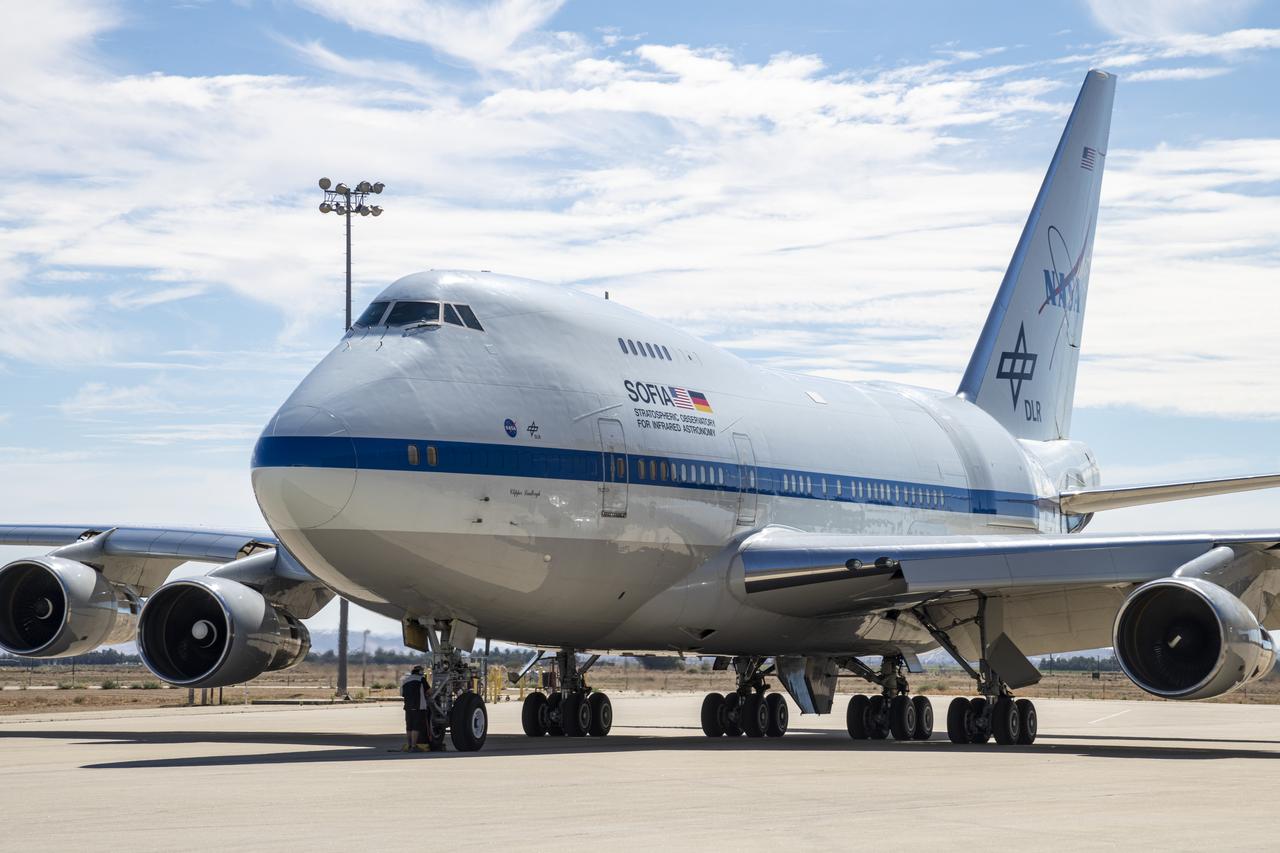
The Stratospheric Observatory for Infrared Astronomy (SOFIA) returns to NASA’s Armstrong Flight Research Center Building 703 on Aug. 11 after a productive month of science flights out of Christchurch International Airport in New Zealand.
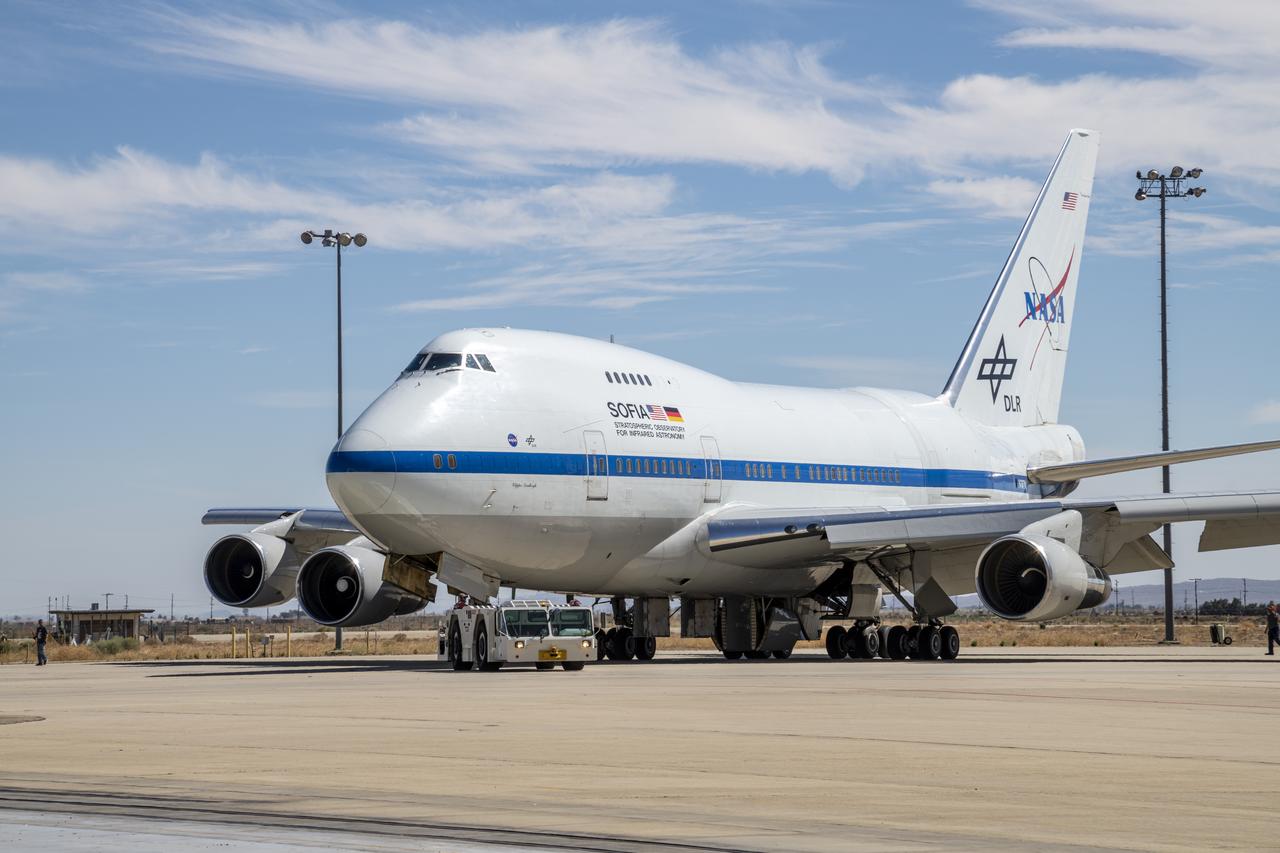
The Stratospheric Observatory for Infrared Astronomy (SOFIA) returns to NASA’s Armstrong Flight Research Center Building 703 on Aug. 11 after a productive month of science flights out of Christchurch International Airport in New Zealand.
The Stratospheric Observatory for Infrared Astronomy (SOFIA) returns to NASA’s Armstrong Flight Research Center Building 703 on Aug. 11 after a productive month of science flights out of Christchurch International Airport in New Zealand.
The Stratospheric Observatory for Infrared Astronomy (SOFIA) returns to NASA’s Armstrong Flight Research Center Building 703 on Aug. 11 after a productive month of science flights out of Christchurch International Airport in New Zealand.

The Stratospheric Observatory for Infrared Astronomy (SOFIA) returns to NASA’s Armstrong Flight Research Center Building 703 on Aug. 11 after a productive month of science flights out of Christchurch International Airport in New Zealand.
The Stratospheric Observatory for Infrared Astronomy (SOFIA) returns to NASA’s Armstrong Flight Research Center Building 703 on Aug. 11 after a productive month of science flights out of Christchurch International Airport in New Zealand.
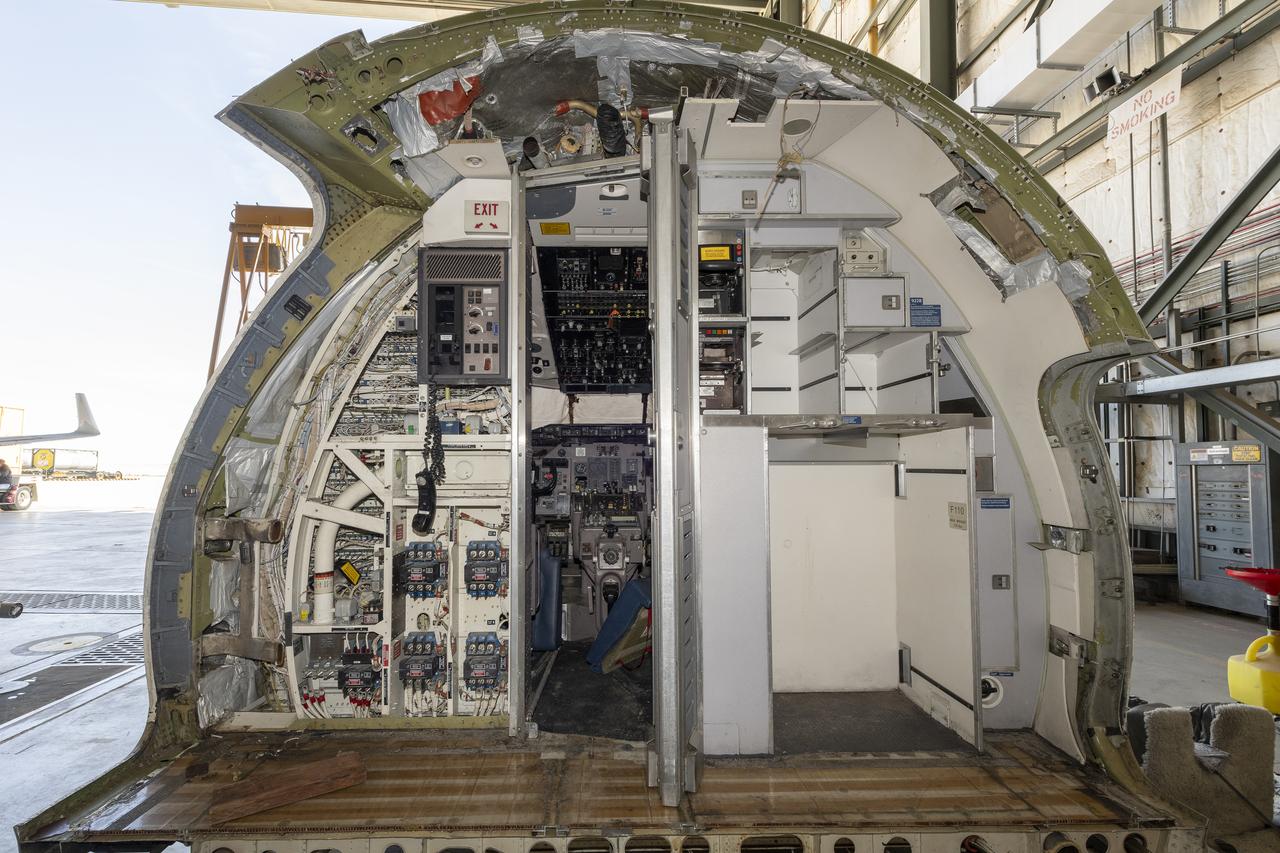
The cockpit of an old MD-90 aircraft arrived at NASA’s Armstrong Flight Research Center in Edwards, California, in March 2024. Parts will be used to build a simulator for NASA’s X-66, the demonstration aircraft for the Sustainable Flight Demonstrator project.
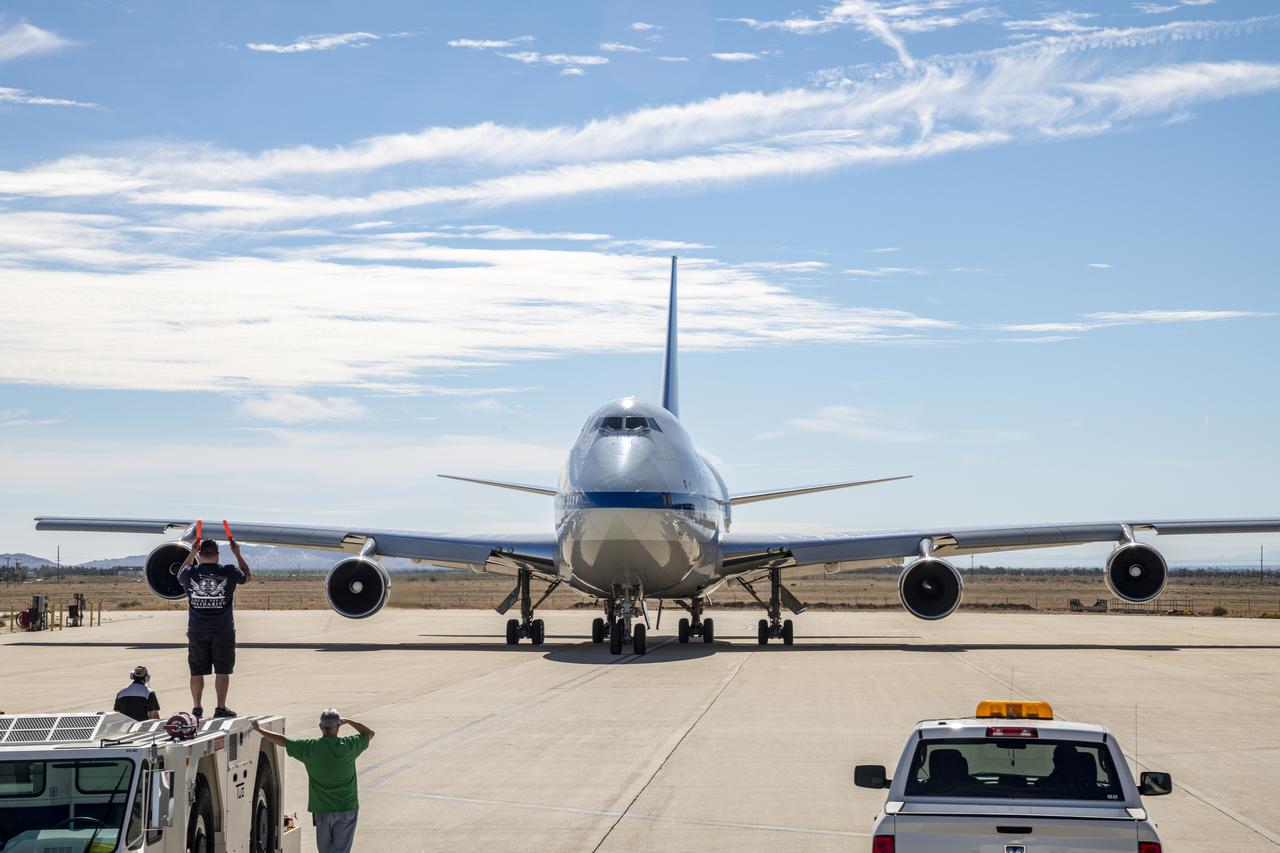
The Stratospheric Observatory for Infrared Astronomy (SOFIA) returns to NASA’s Armstrong Flight Research Center Building 703 on Aug. 11 after a productive month of science flights out of Christchurch International Airport in New Zealand.
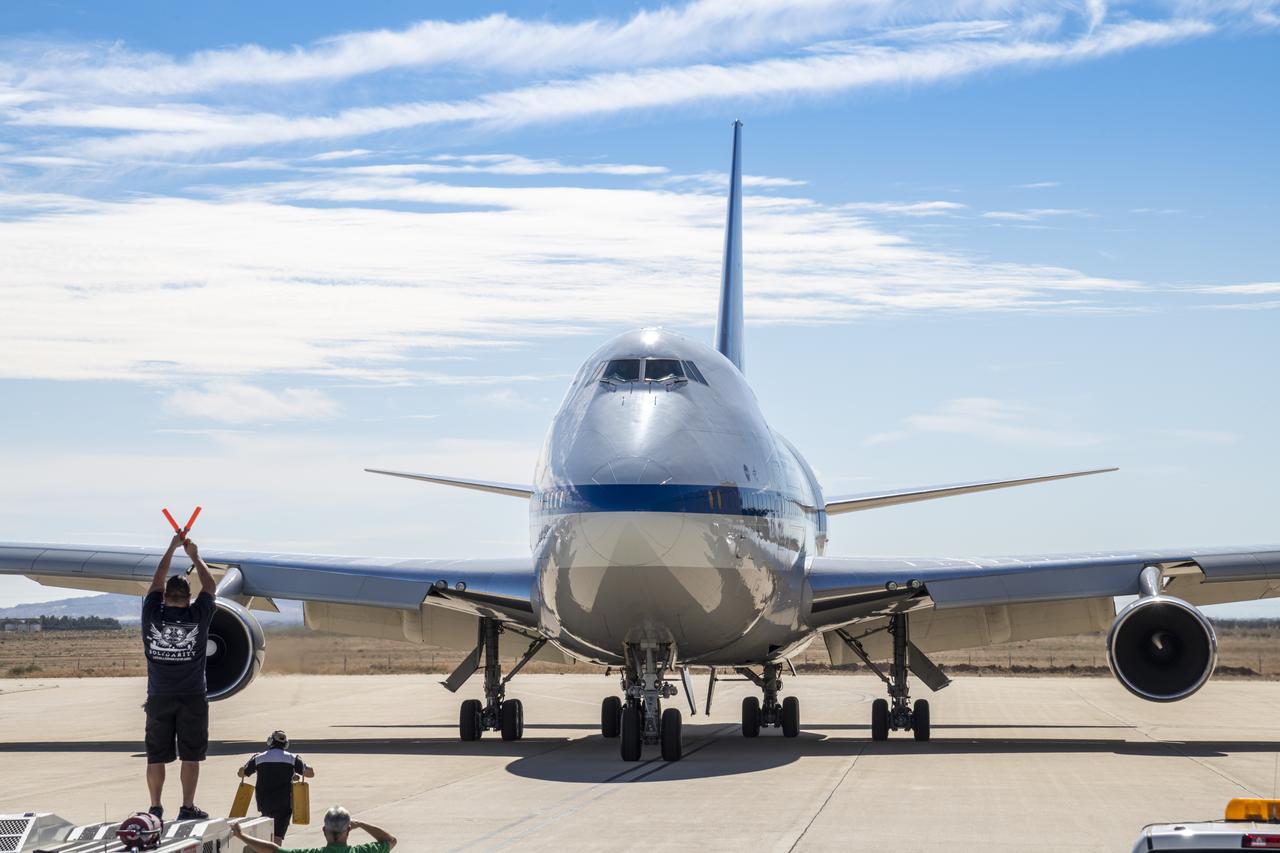
The Stratospheric Observatory for Infrared Astronomy (SOFIA) returns to NASA’s Armstrong Flight Research Center Building 703 on Aug. 11 after a productive month of science flights out of Christchurch International Airport in New Zealand.

The cockpit of an old MD-90 aircraft arrived at NASA’s Armstrong Flight Research Center in Edwards, California, in March 2024. Parts will be used to build a simulator for NASA’s X-66, the demonstration aircraft for the Sustainable Flight Demonstrator project.
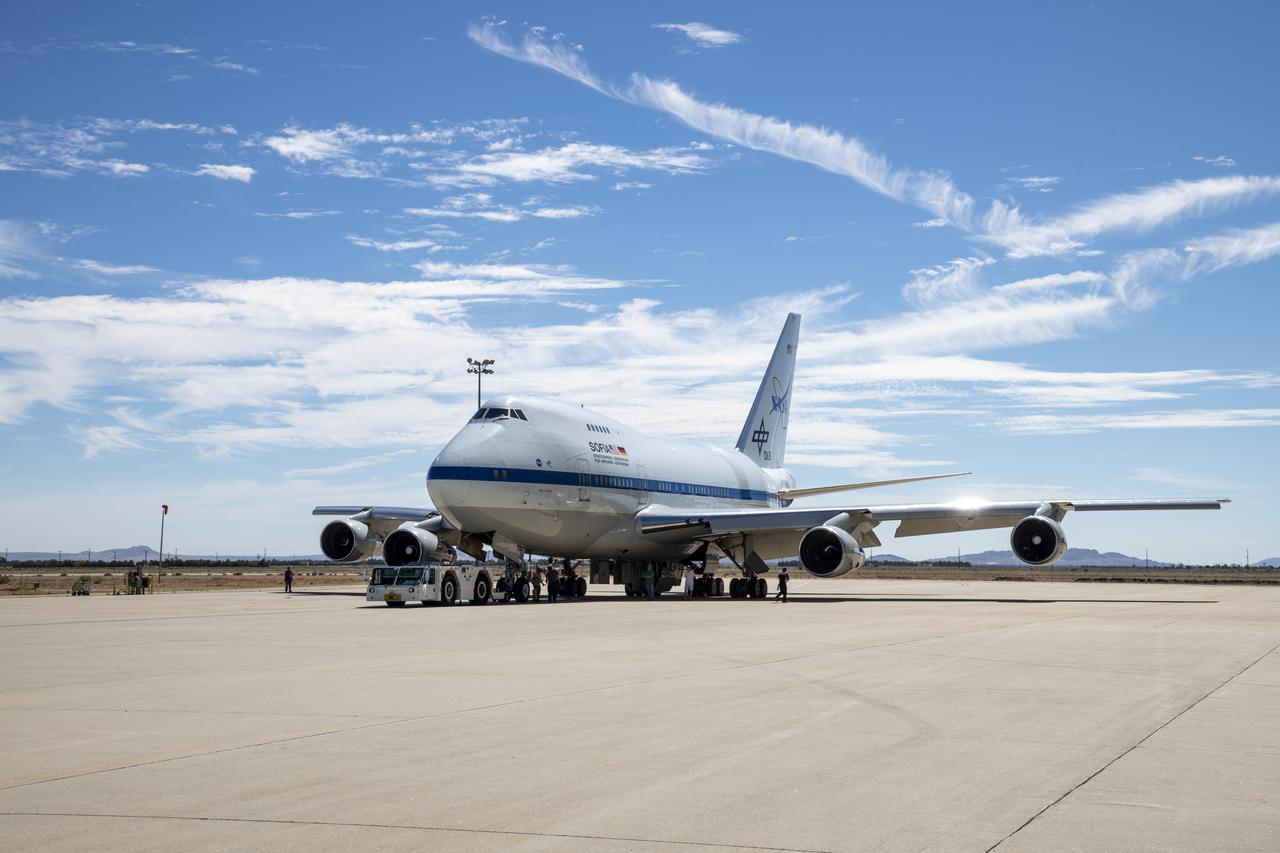
The Stratospheric Observatory for Infrared Astronomy (SOFIA) returns to NASA’s Armstrong Flight Research Center Building 703 on Aug. 11 after a productive month of science flights out of Christchurch International Airport in New Zealand.
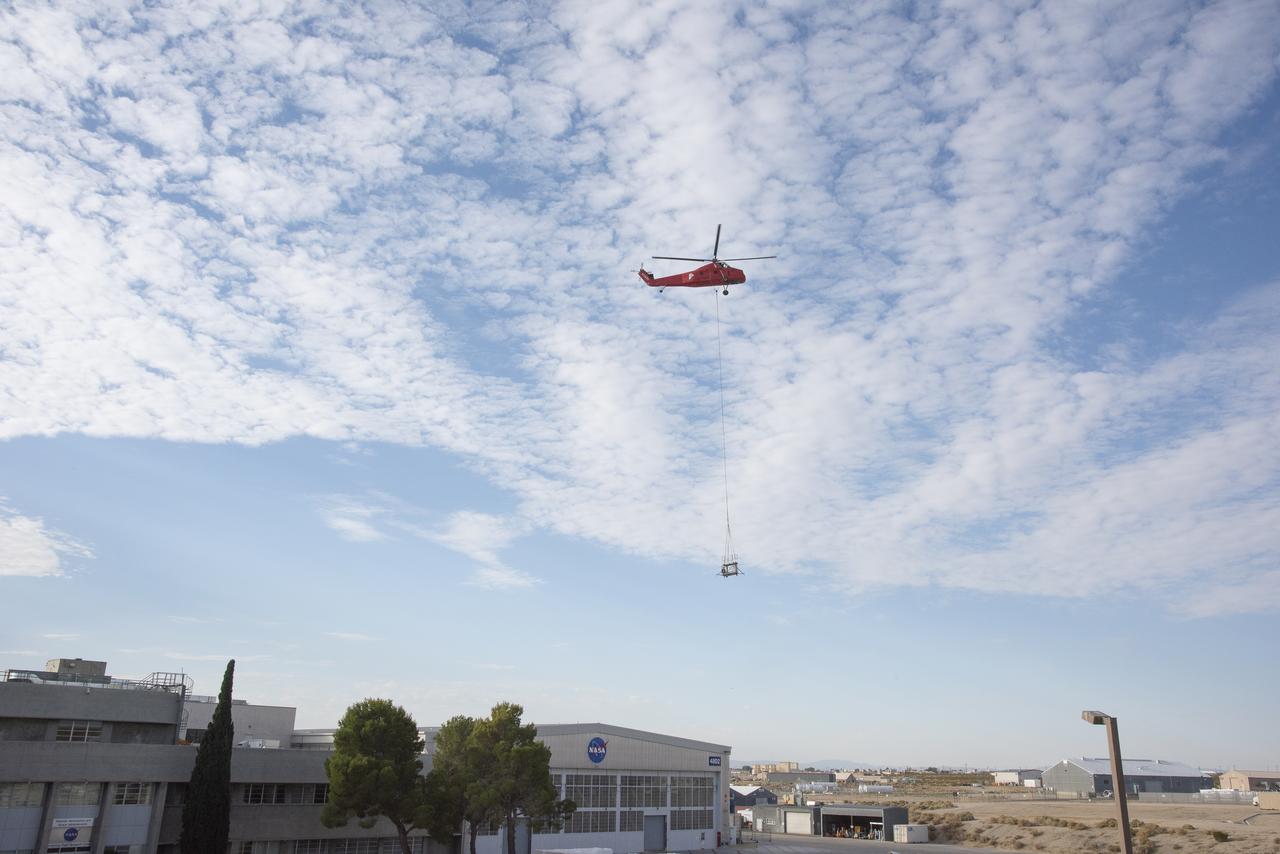
A helicopter carries a rooftop pedestal it removed from Building 4800 at NASA’s Armstrong Flight Research Center in Edwards, California, on Oct. 4, 2024. The pedestal was used since the 1950s to 2015 to house different telemetry dishes to collect data from research aircraft.
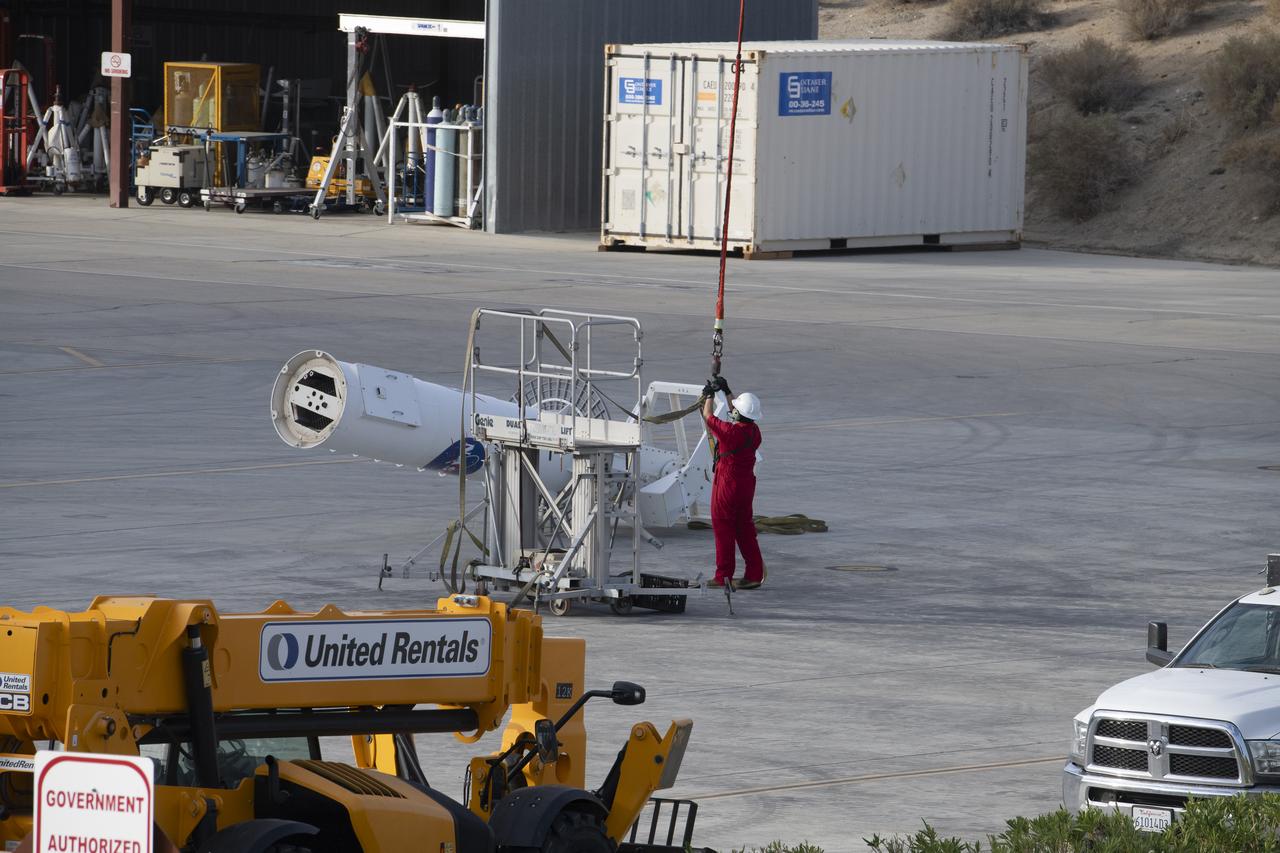
A pedestal carried by a helicopter is positioned for a gentle placement on the ground. The helicopter removed the pedestal from the rooftop of Building 4800 at NASA’s Armstrong Flight Research Center in Edwards, California, on Oct. 4, 2024. The pedestal was used since the 1950s to 2015 to house different telemetry dishes to collect data from research aircraft.
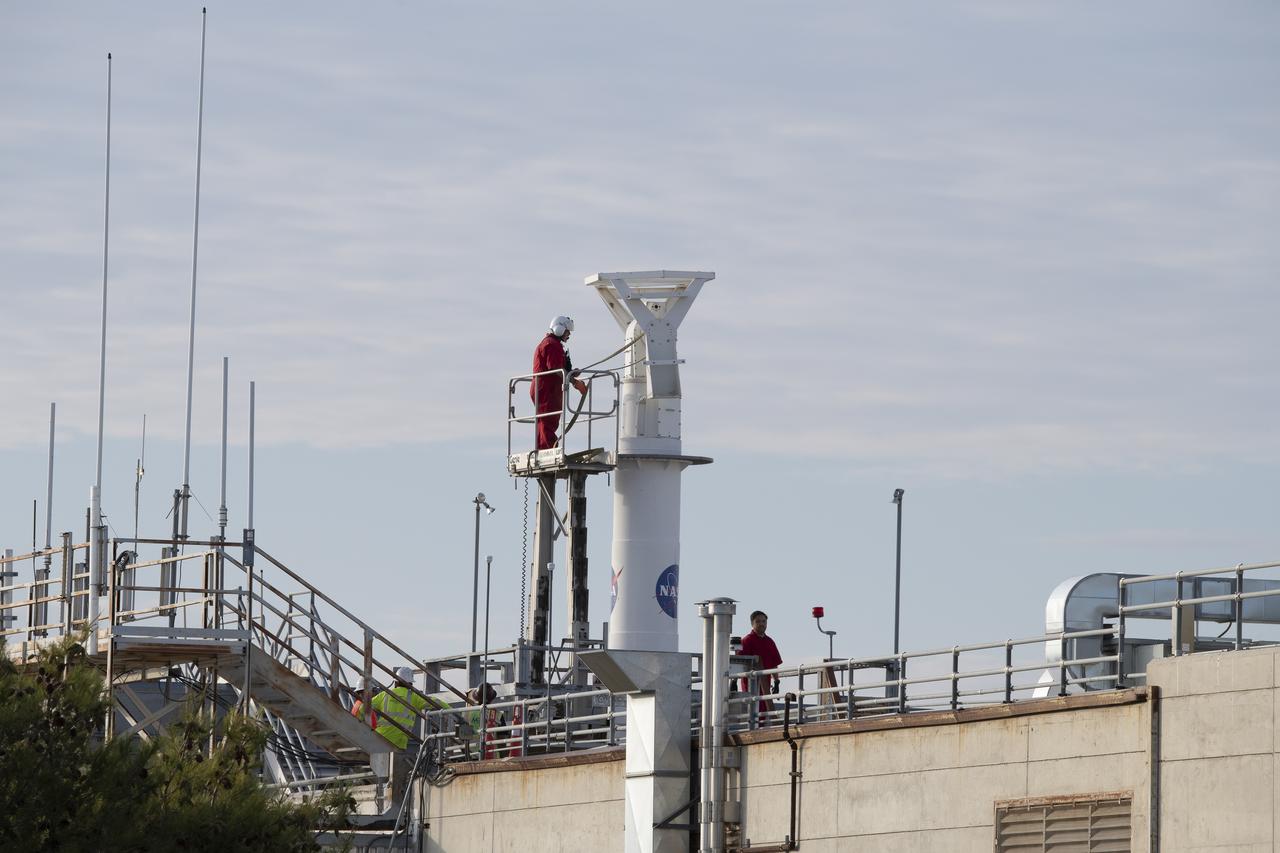
A cable is secured on a rooftop pedestal located on Building 4800 at NASA’s Armstrong Flight Research Center in Edwards, California, on Oct. 4, 2024. The pedestal, which was prepared for a helicopter lift to remove it from the roof, was used since the 1950s until 2015 to enable different telemetry dishes to collect data from research aircraft.
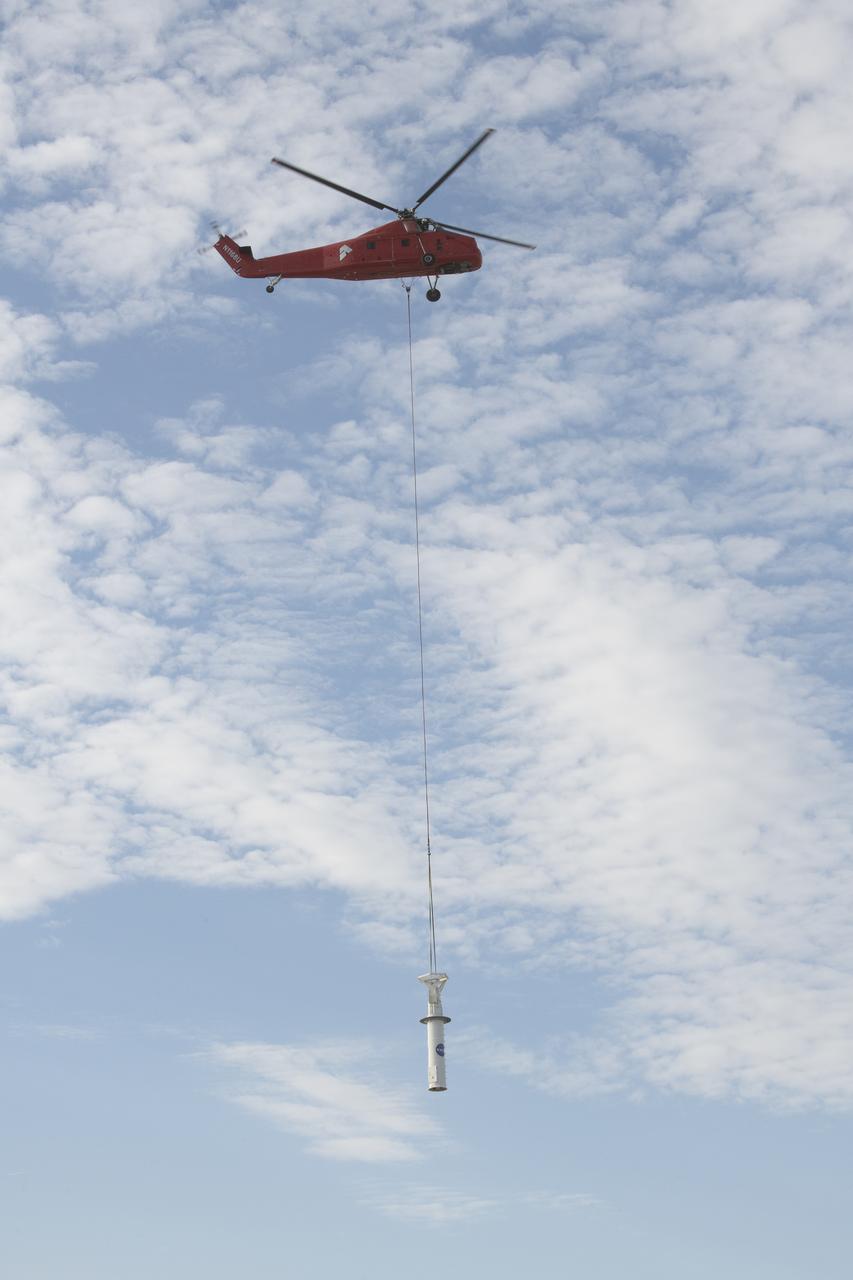
A helicopter carries a rooftop pedestal it removed from Building 4800 at NASA’s Armstrong Flight Research Center in Edwards, California, on Oct. 4, 2024. The pedestal was used since the 1950s to 2015 to house different telemetry dishes to collect data from research aircraft.
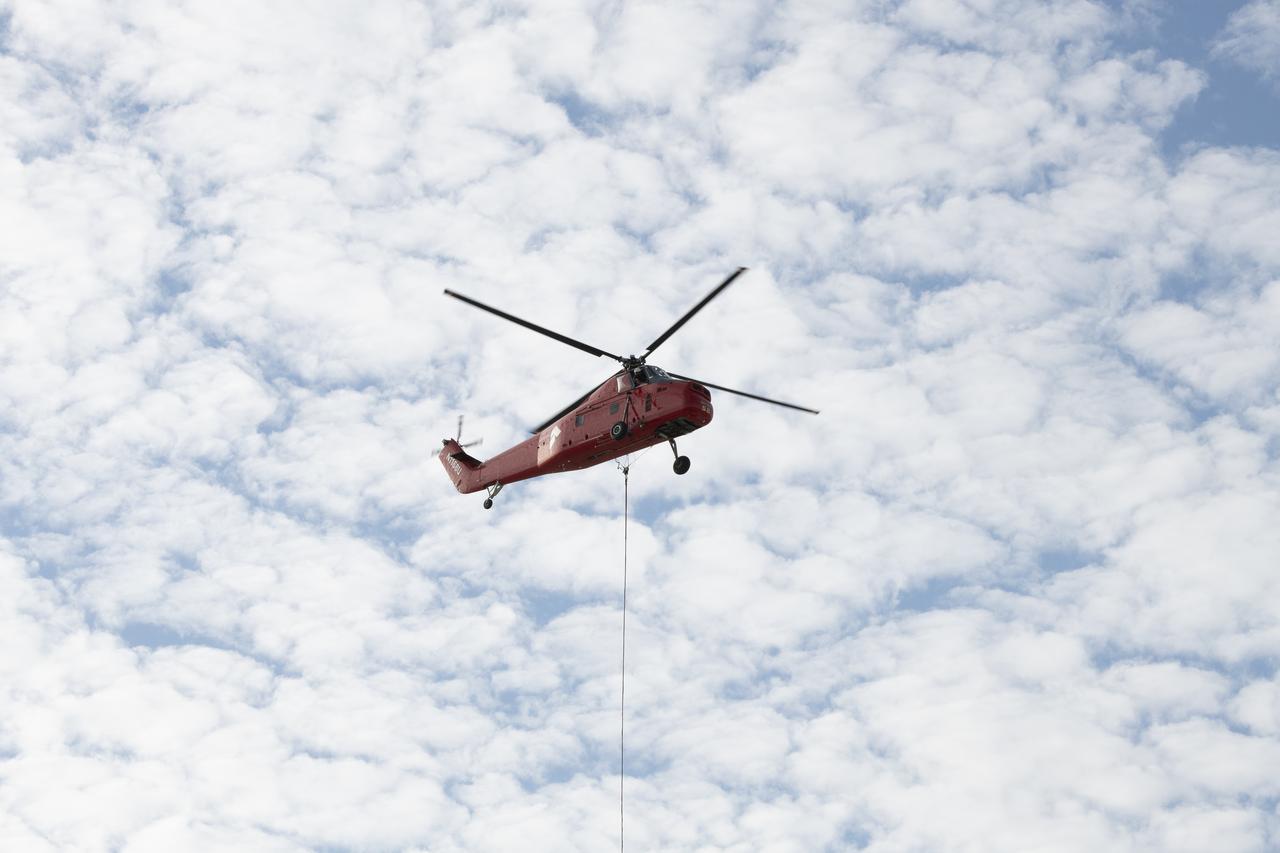
A helicopter is positioned to remove a rooftop pedestal from Building 4800 at NASA’s Armstrong Flight Research Center in Edwards, California, on Oct. 4, 2024. The pedestal was used since the 1950s to 2015 to house different telemetry dishes to collect data from research aircraft.
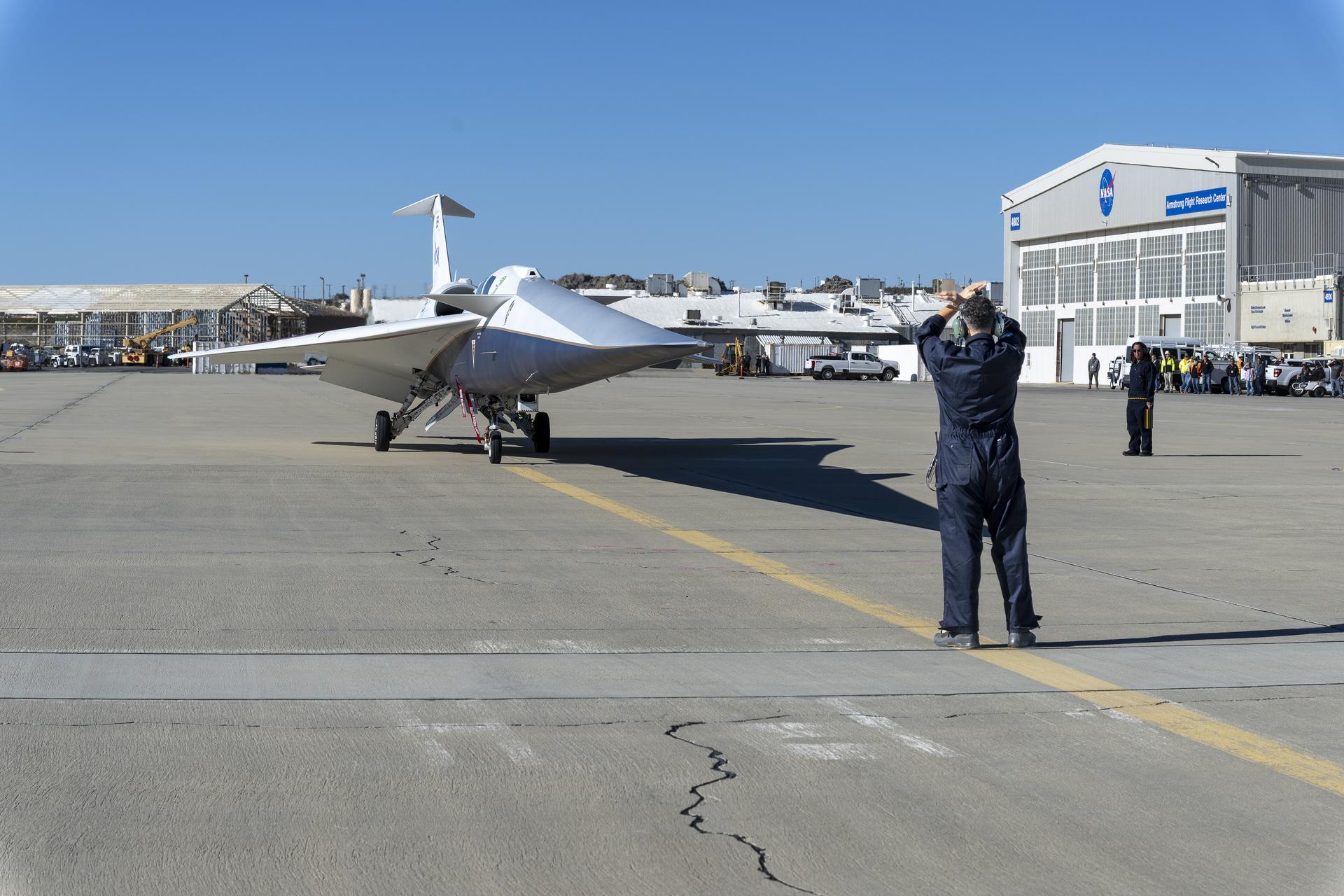
The X-59 quiet supersonic research aircraft arrives at NASA’s Armstrong Flight Research Center in Edwards, California, following its first flight Tuesday, Oct. 28, 2025. The arrival marks the aircraft’s transition from ground testing to flight operations. Next, the aircraft will undergo scheduled maintenance followed by a series of additional test flights, gradually building toward its first supersonic flight.

The X-59 quiet supersonic research aircraft arrives at NASA’s Armstrong Flight Research Center in Edwards, California, following its first flight Tuesday, Oct. 28, 2025. Ground teams perform final checks on the aircraft at its new home for flight operations. Next, the aircraft will undergo scheduled maintenance followed by a series of additional test flights, gradually building toward its first supersonic flight.

The X-59 quiet supersonic research aircraft arrives at NASA’s Armstrong Flight Research Center in Edwards, California, following its first flight Tuesday, Oct. 28, 2025. Ground teams perform final checks on the aircraft at its new home for flight operations. Next, the aircraft will undergo scheduled maintenance followed by a series of additional test flights, gradually building toward its first supersonic flight.

The X-59 quiet supersonic research aircraft arrives at NASA’s Armstrong Flight Research Center in Edwards, California, following its first flight Tuesday, Oct. 28, 2025. Ground teams perform final checks on the aircraft at its new home for flight operations. Next, the aircraft will undergo scheduled maintenance followed by a series of additional test flights, gradually building toward its first supersonic flight.

Flight Research Inc.’s Bell OH-58C Kiowa helicopter lands on a helipad at NASA’s Armstrong Flight Research Center in California in March 2021 at the completion of an urban air mobility scenario. The Advanced Air Mobility National Campaign project conducted a second phase of research called build II. This helicopter was used as a surrogate urban air mobility vehicle to study aspects of a future air taxi mission.
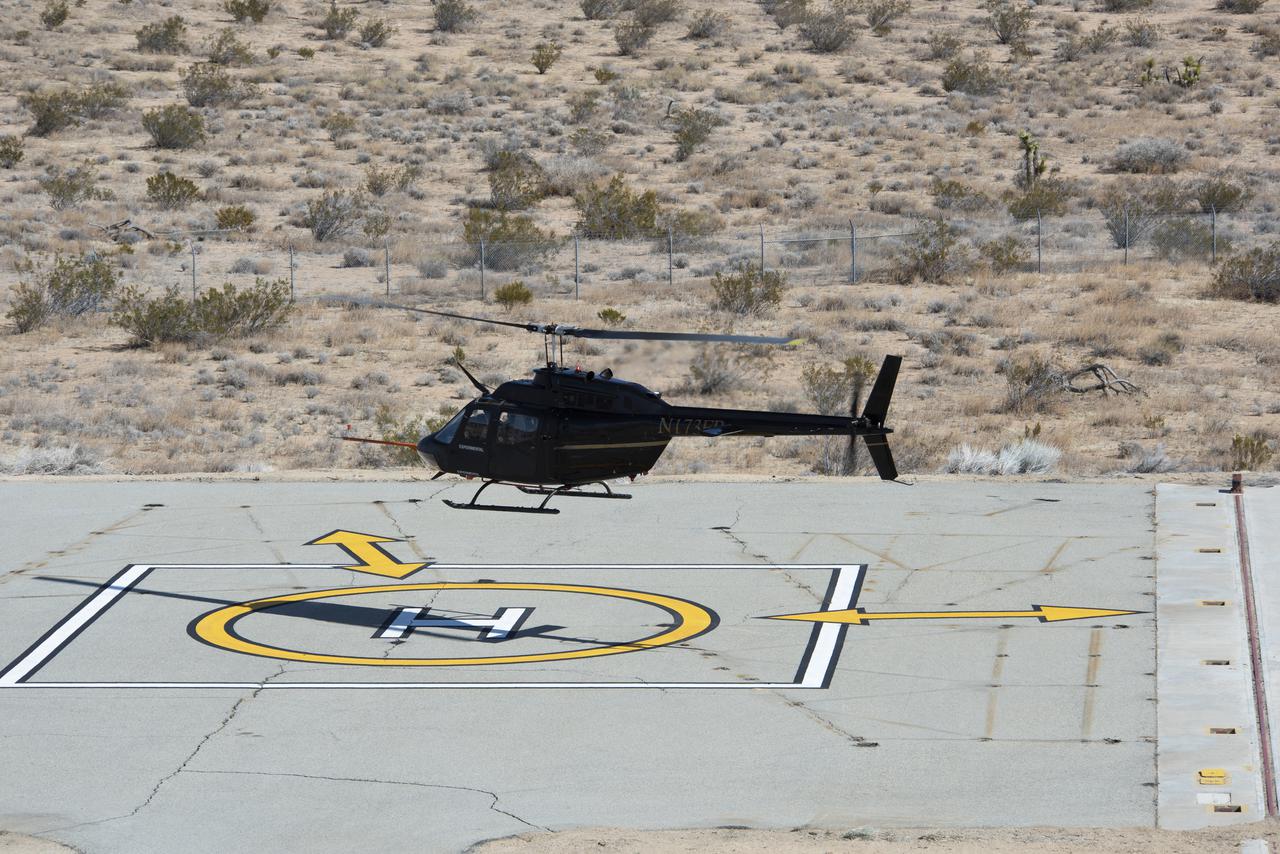
Flight Research Inc.’s Bell OH-58C Kiowa helicopter takes off from a research helipad at NASA’s Armstrong Flight Research Center in California in March 2021. The Advanced Air Mobility National Campaign project utilized several heliports and vertiports to study airspace management evolutions that could enable future urban air mobility operations. Tests were conducted during build II where this helicopter was used as a surrogate urban air mobility or air taxi vehicle.

NASA Administrator Bill Nelson and NASA Deputy Administrator Pam Melroy listen to NASA Armstrong Flight Research Center Director David McBride, at left, tell them about Building 703 in Palmdale, California. The building houses many of NASA's science aircraft. NASA Armstrong's main campus is in nearby Edwards, California.
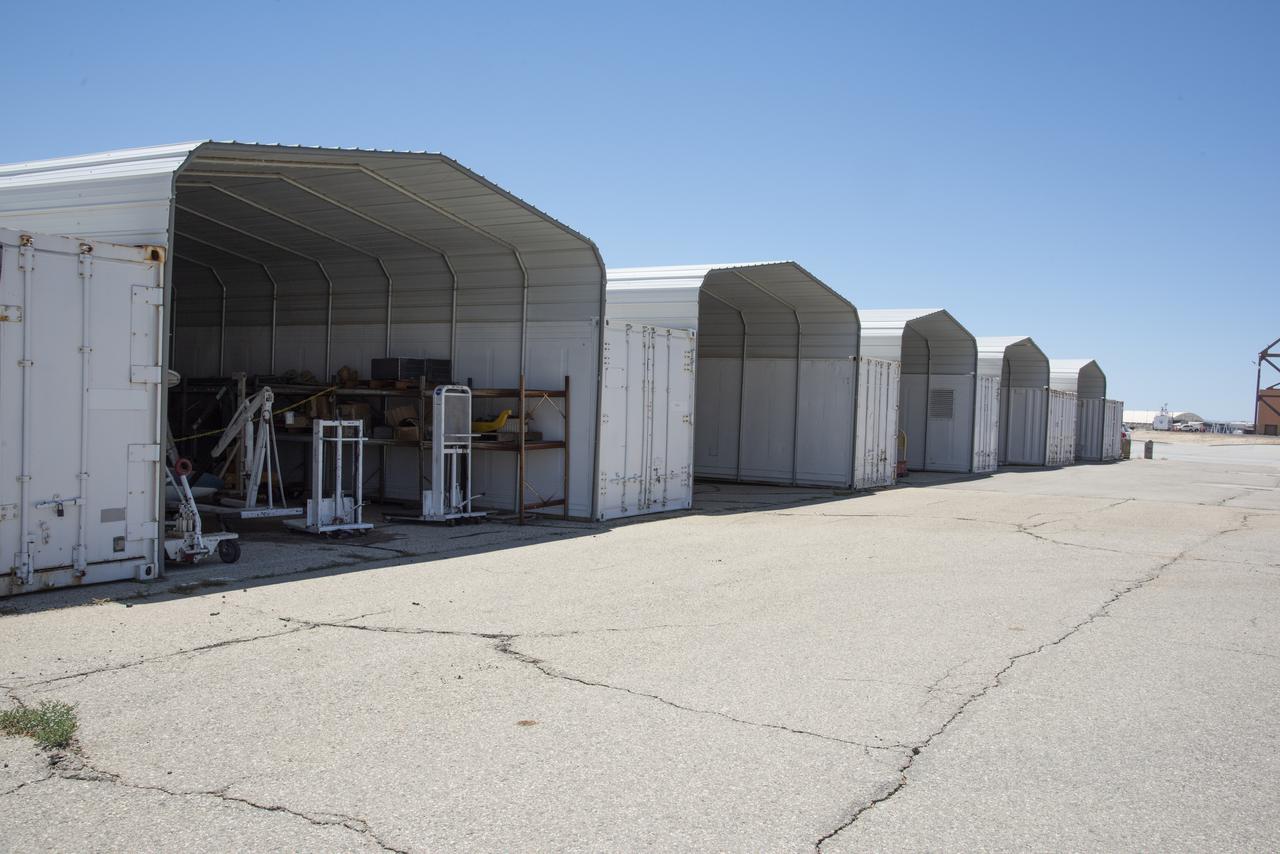
This 8,800-square-foot canopy area was demolished during the refurbishment of the east side of Building 4826, the future home of the X-59 Quiet SuperSonic Technology aircraft, at NASA's Armstrong Flight Research Center in Edwards, California.
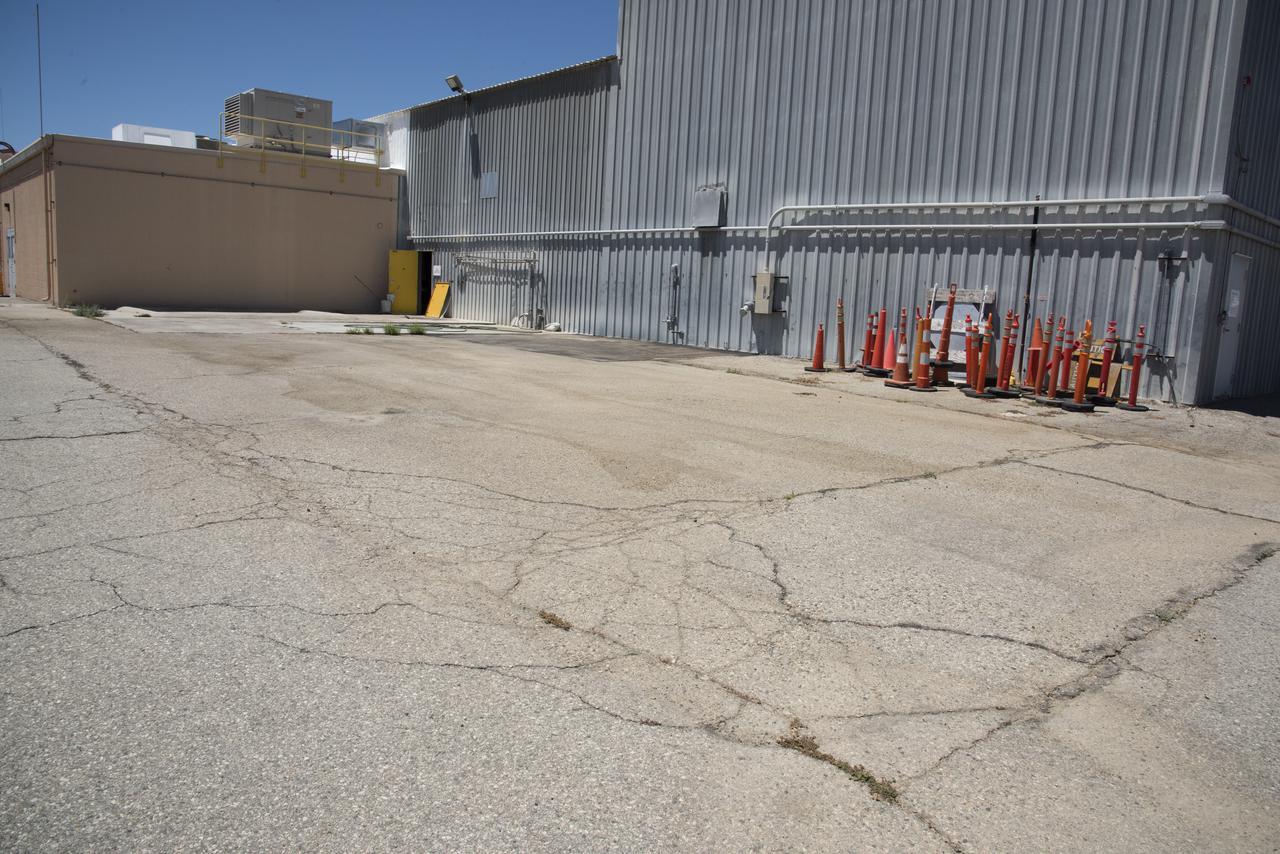
On the east side of Building 4826, the future home of the X-59 Quiet SuperSonic Technology aircraft, a conference room, offices, restrooms and a communications room are under construction at NASA's Armstrong Flight Research Center in Edwards, California.
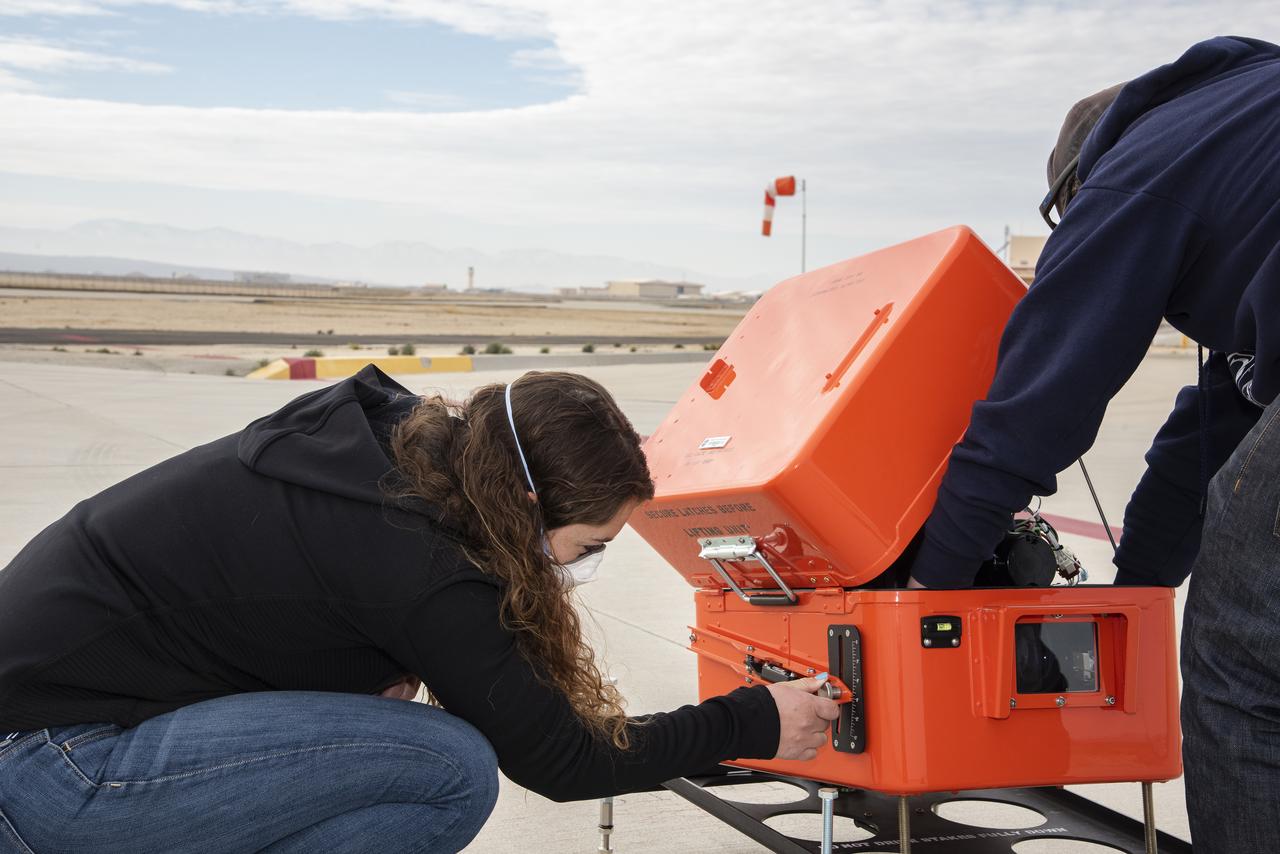
NASA’s flight systems engineer, Kassidy Mclaughlin adjusts a visual approach aid for aircraft called Pulse Light Approach Slope Indicator (PLASI). Dry run build-up test flights were conducted in 2021 at NASA’s Armstrong Flight Research Center in Edwards, California.

NASA’s Stratospheric Observatory for Infrared Astronomy, SOFIA, takes off from its base of operations at NASA’s Armstrong Flight Research Center’s Building 703 in Palmdale, California. The aircraft is on its way to Fa’a’ā, French Polynesia where it will be on a mission from July 19 to Sept. 12 to observe parts of the sky that are not visible from the Northern Hemisphere. NASA’s Stratospheric Observatory for Infrared Astronomy, SOFIA, takes off from its base of operations at NASA’s Armstrong Flight Research Center’s Building 703 in Palmdale, California. The aircraft is on its way to Fa’a’ā, French Polynesia where it will be on a mission from July 19 to Sept. 12 to observe parts of the sky that are not visible from the Northern Hemisphere.
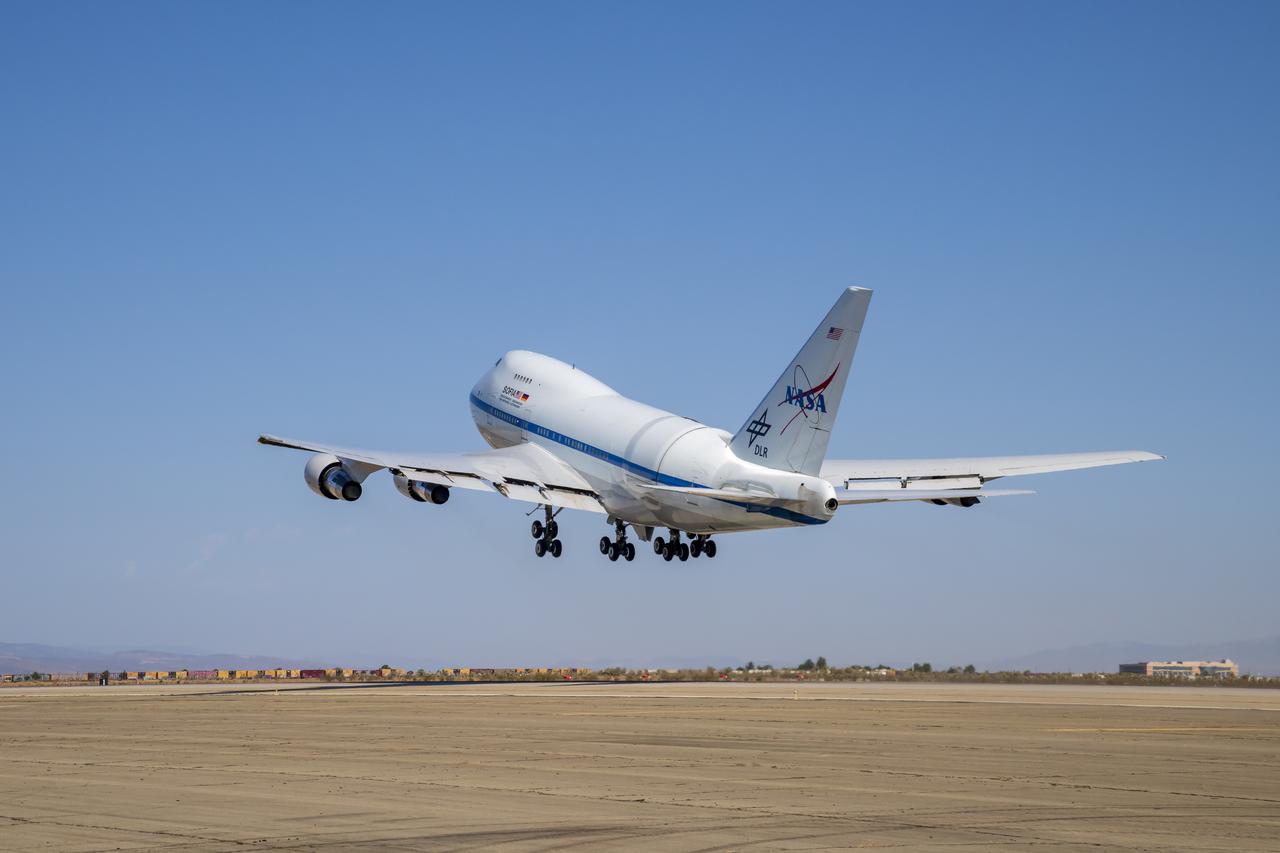
NASA’s Stratospheric Observatory for Infrared Astronomy, SOFIA, takes off from its base of operations at NASA’s Armstrong Flight Research Center’s Building 703 in Palmdale, California. The aircraft is on its way to Fa’a’ā, French Polynesia where it will be on a mission from July 19 to Sept. 12 to observe parts of the sky that are not visible from the Northern Hemisphere. NASA’s Stratospheric Observatory for Infrared Astronomy, SOFIA, takes off from its base of operations at NASA’s Armstrong Flight Research Center’s Building 703 in Palmdale, California. The aircraft is on its way to Fa’a’ā, French Polynesia where it will be on a mission from July 19 to Sept. 12 to observe parts of the sky that are not visible from the Northern Hemisphere.
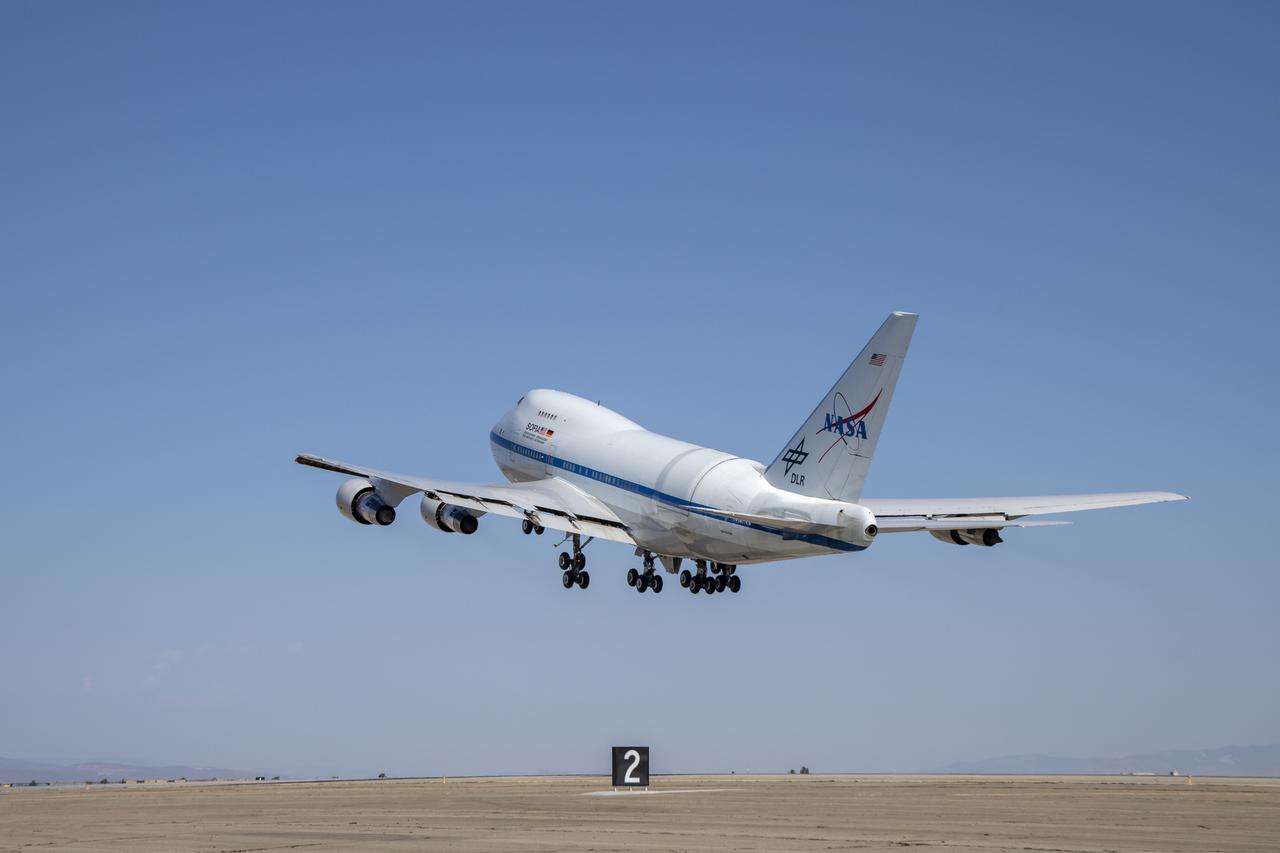
NASA’s Stratospheric Observatory for Infrared Astronomy, SOFIA, takes off from its base of operations at NASA’s Armstrong Flight Research Center’s Building 703 in Palmdale, California. The aircraft is on its way to Fa’a’ā, French Polynesia where it will be on a mission from July 19 to Sept. 12 to observe parts of the sky that are not visible from the Northern Hemisphere. NASA’s Stratospheric Observatory for Infrared Astronomy, SOFIA, takes off from its base of operations at NASA’s Armstrong Flight Research Center’s Building 703 in Palmdale, California. The aircraft is on its way to Fa’a’ā, French Polynesia where it will be on a mission from July 19 to Sept. 12 to observe parts of the sky that are not visible from the Northern Hemisphere.

NASA’s Stratospheric Observatory for Infrared Astronomy, SOFIA, takes off from its base of operations at NASA’s Armstrong Flight Research Center’s Building 703 in Palmdale, California. The aircraft is on its way to Fa’a’ā, French Polynesia where it will be on a mission from July 19 to Sept. 12 to observe parts of the sky that are not visible from the Northern Hemisphere. NASA’s Stratospheric Observatory for Infrared Astronomy, SOFIA, takes off from its base of operations at NASA’s Armstrong Flight Research Center’s Building 703 in Palmdale, California. The aircraft is on its way to Fa’a’ā, French Polynesia where it will be on a mission from July 19 to Sept. 12 to observe parts of the sky that are not visible from the Northern Hemisphere.
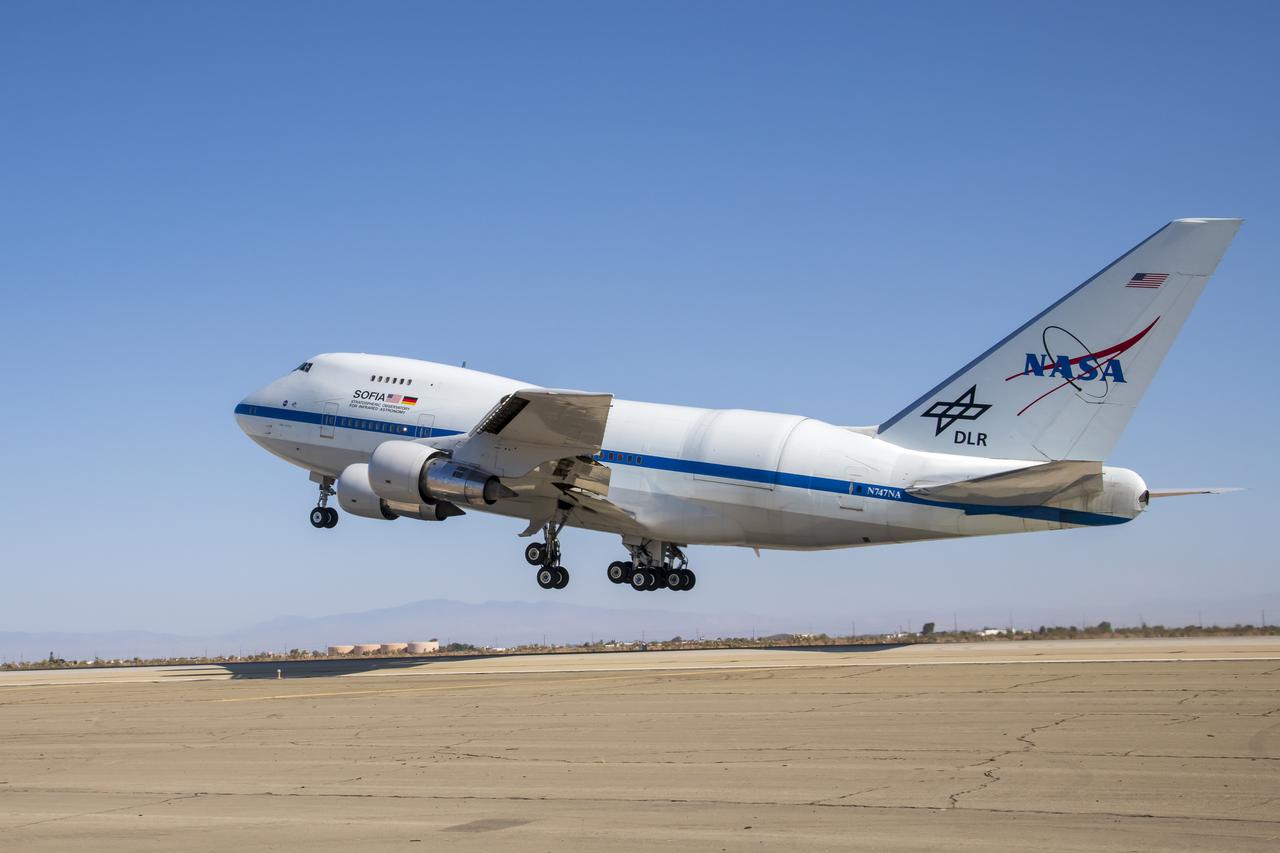
NASA’s Stratospheric Observatory for Infrared Astronomy, SOFIA, takes off from its base of operations at NASA’s Armstrong Flight Research Center’s Building 703 in Palmdale, California. The aircraft is on its way to Fa’a’ā, French Polynesia where it will be on a mission from July 19 to Sept. 12 to observe parts of the sky that are not visible from the Northern Hemisphere. NASA’s Stratospheric Observatory for Infrared Astronomy, SOFIA, takes off from its base of operations at NASA’s Armstrong Flight Research Center’s Building 703 in Palmdale, California. The aircraft is on its way to Fa’a’ā, French Polynesia where it will be on a mission from July 19 to Sept. 12 to observe parts of the sky that are not visible from the Northern Hemisphere.
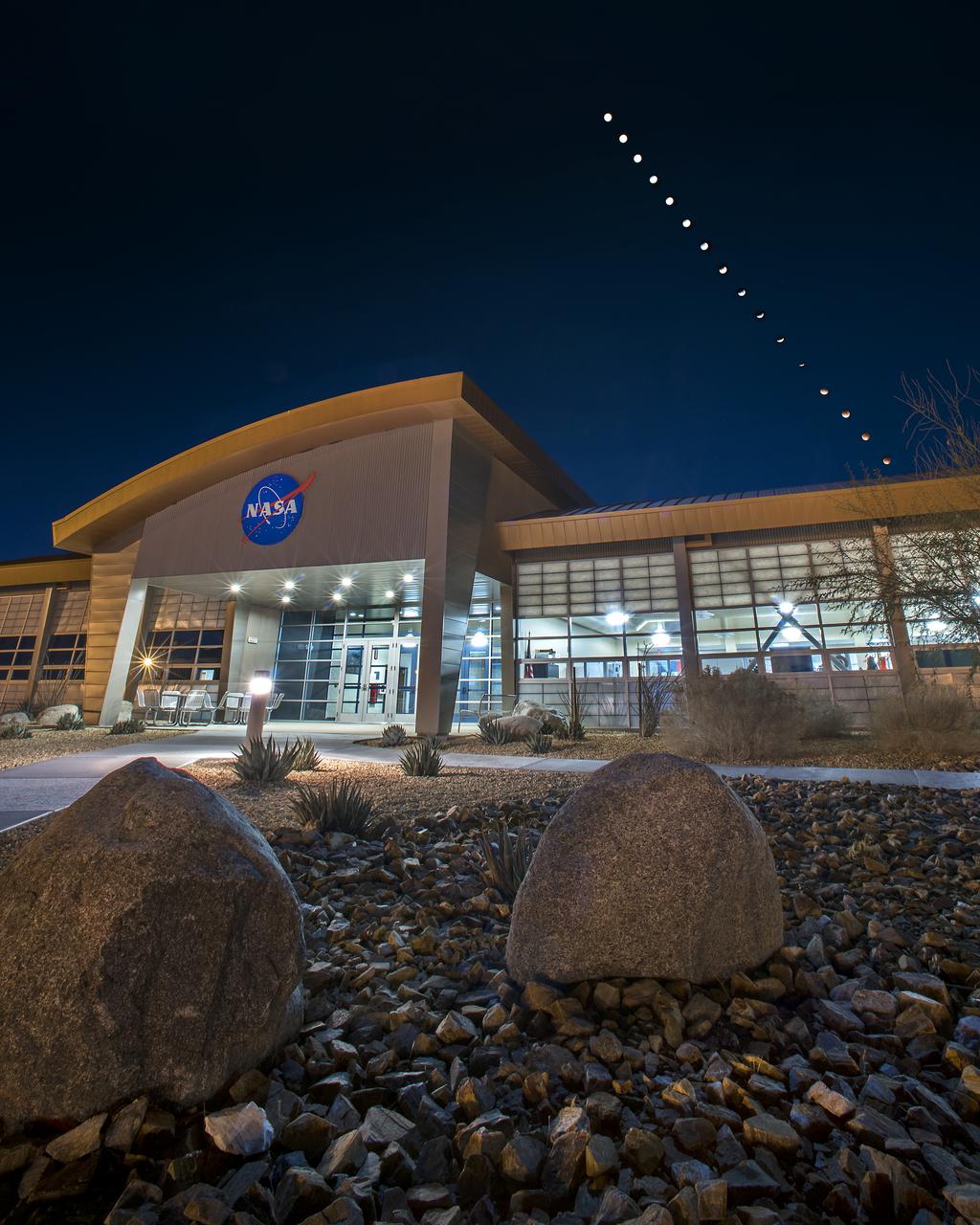
California’s NASA Armstrong Flight Research Center photographer Ken Ulbrich takes photos of Super Blue Blood Moon eclipse making a time-lapse composition of the event on January 31. The total lunar eclipse provided a rare opportunity to capture a supermoon, a blue moon and a lunar eclipse at the same time. A supermoon occurs when the Moon is closer to Earth in its orbit and appearing 14 percent brighter than usual. As the second full moon of the month, this moon is also commonly known as a blue moon, though it will not be blue in appearance. The super blue moon passed through Earth’s shadow and took on a reddish tint, known as a blood moon. This total lunar eclipse occurs when the Sun, Earth, and a full moon form a near-perfect lineup in space. The Moon passes directly behind the Earth into its umbra (shadow).
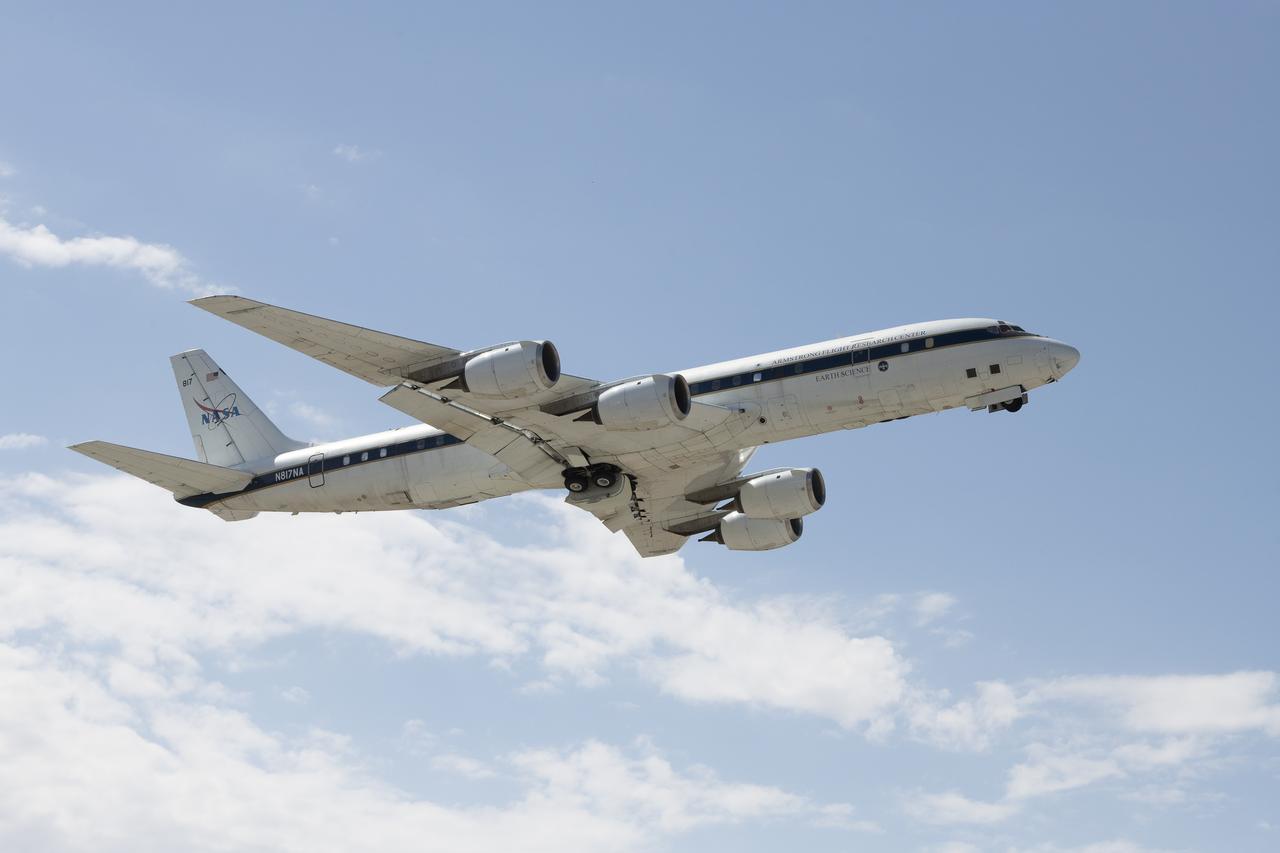
The DC-8 ascents during its final flight before it is retired from NASA’s Armstrong Flight Research Center Building 703 in Palmdale, California, to Idaho State University in Pocatello, Idaho. The DC-8 will provide real-world experience to train future aircraft technicians at the college’s Aircraft Maintenance Technology Program.
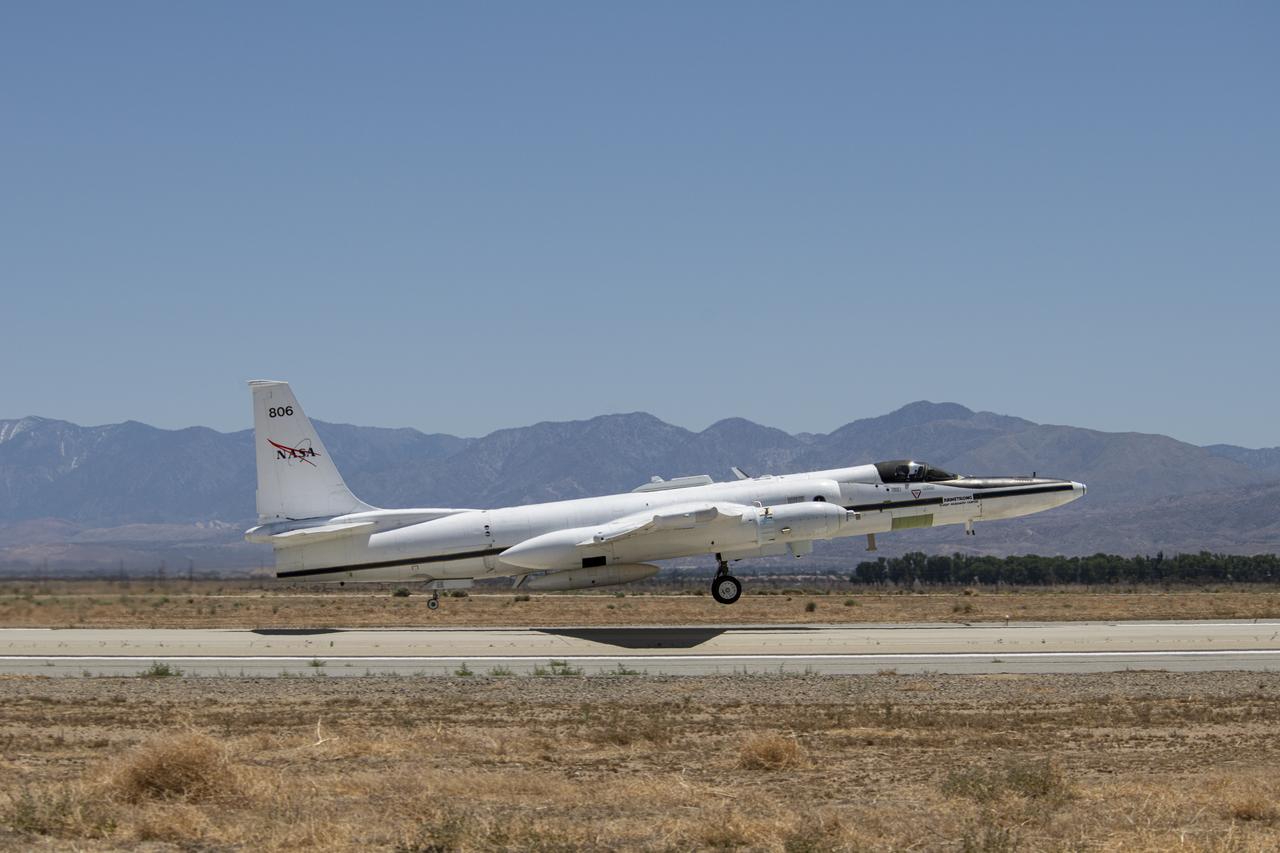
NASA's ER-2 high altitude aircraft takes off from Armstrong Flight Research Center Building 703 in Palmdale, California to perform a check flight for the the Dynamics and Chemistry of the Summer Stratosphere, or DCOTSS, 2022 campaign on May 13, 2022.
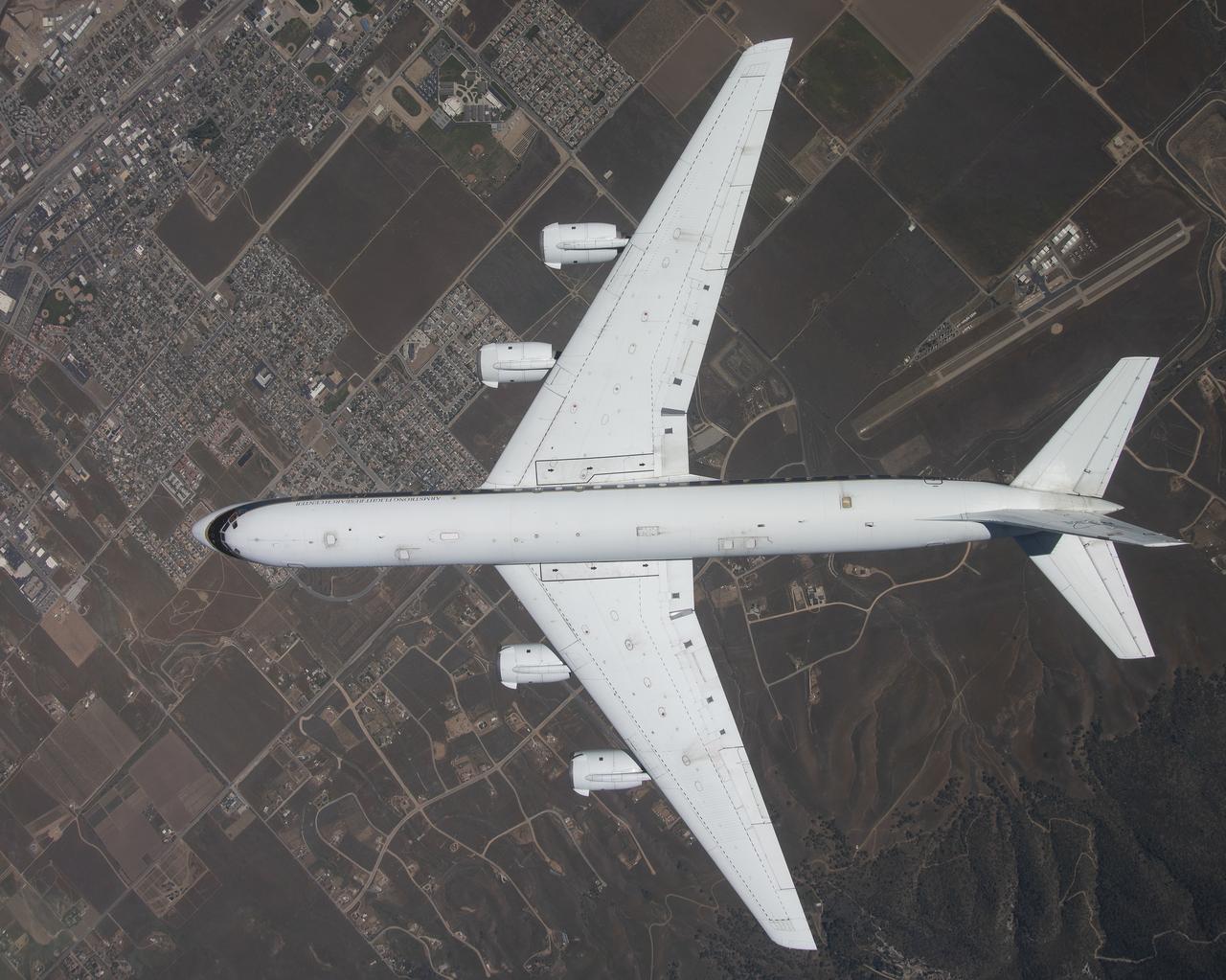
The DC-8 is shown overhead during its final flight from NASA’s Armstrong Flight Research Center Building 703 in Palmdale, California, before it retires to Idaho State University in Pocatello, Idaho. The DC-8 will provide real-world experience to train future aircraft technicians at the college’s Aircraft Maintenance Technology Program.
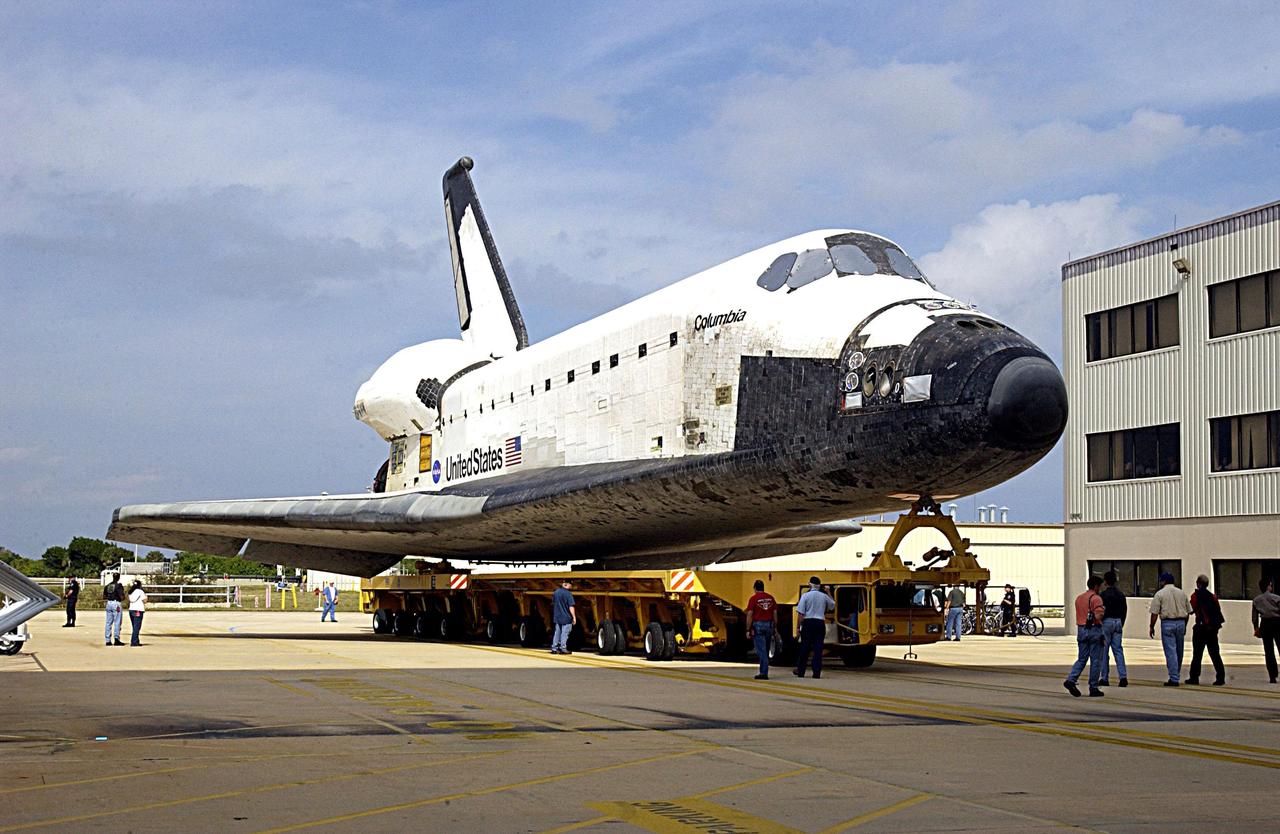
KENNEDY SPACE CENTER, FLA. -- Space Shuttle Columbia is being moved to the Vehicle Assembly Building where processing will continue for the flight of mission STS-107. Launch is now targeted for no earlier than Jan. 16, 2003. The STS-107 mission will be dedicated to microgravity research. The payloads include the Hitchhiker Bridge, a carrier for the Fast Reaction Experiments Enabling Science, Technology, Applications and Research (FREESTAR) incorporating eight high priority secondary attached Shuttle experiments, and the SHI Research Double Module (SHI/RDM), also known as SPACEHAB.
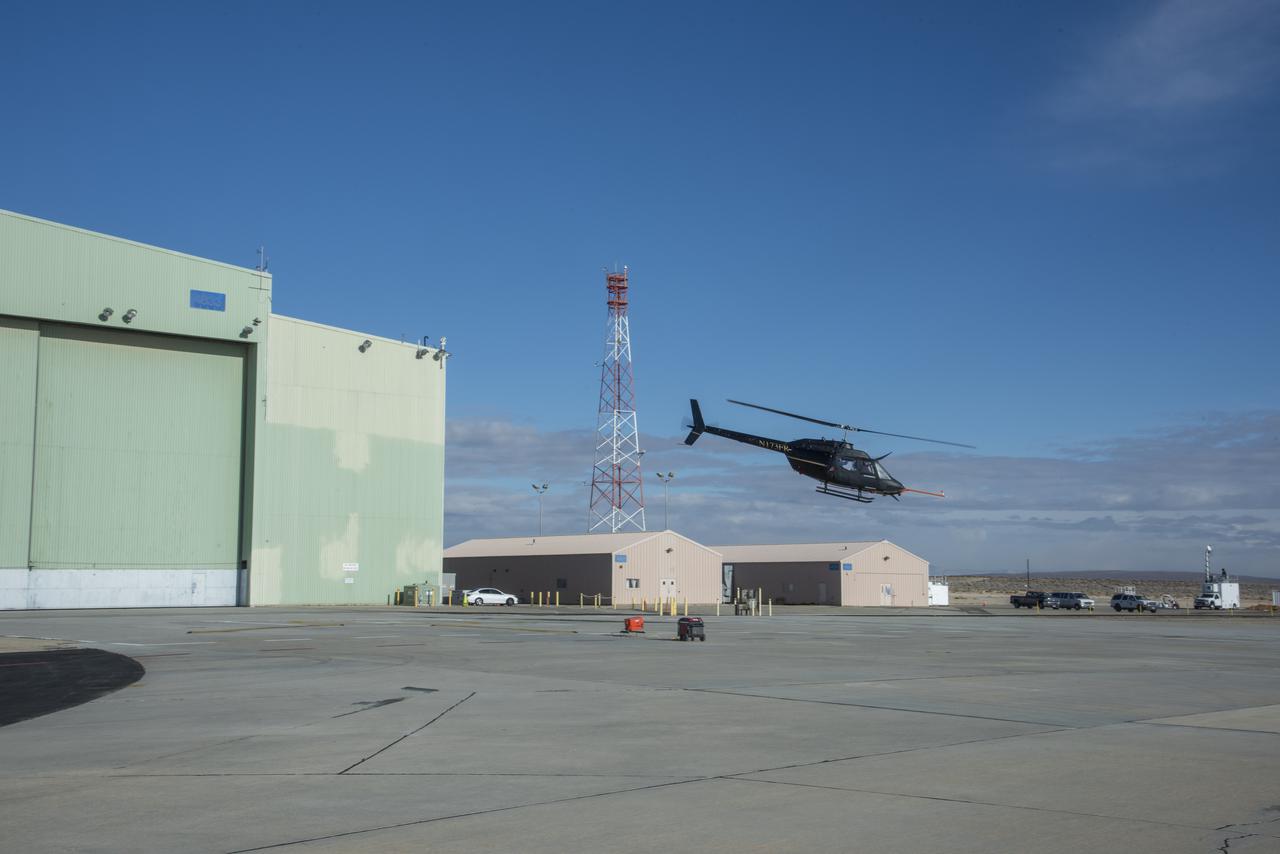
Flight Research Inc.'s Bell OH-58C Kiowa helicopter departs the leeward heliport at NASA's Armstrong Flight Research Center in California in March 2021. The Advanced Air Mobility National Campaign project studied wind and structure interactions as part of a second phase of testing called build II. This helicopter was used as a surrogate urban air mobility or air taxi vehicle.
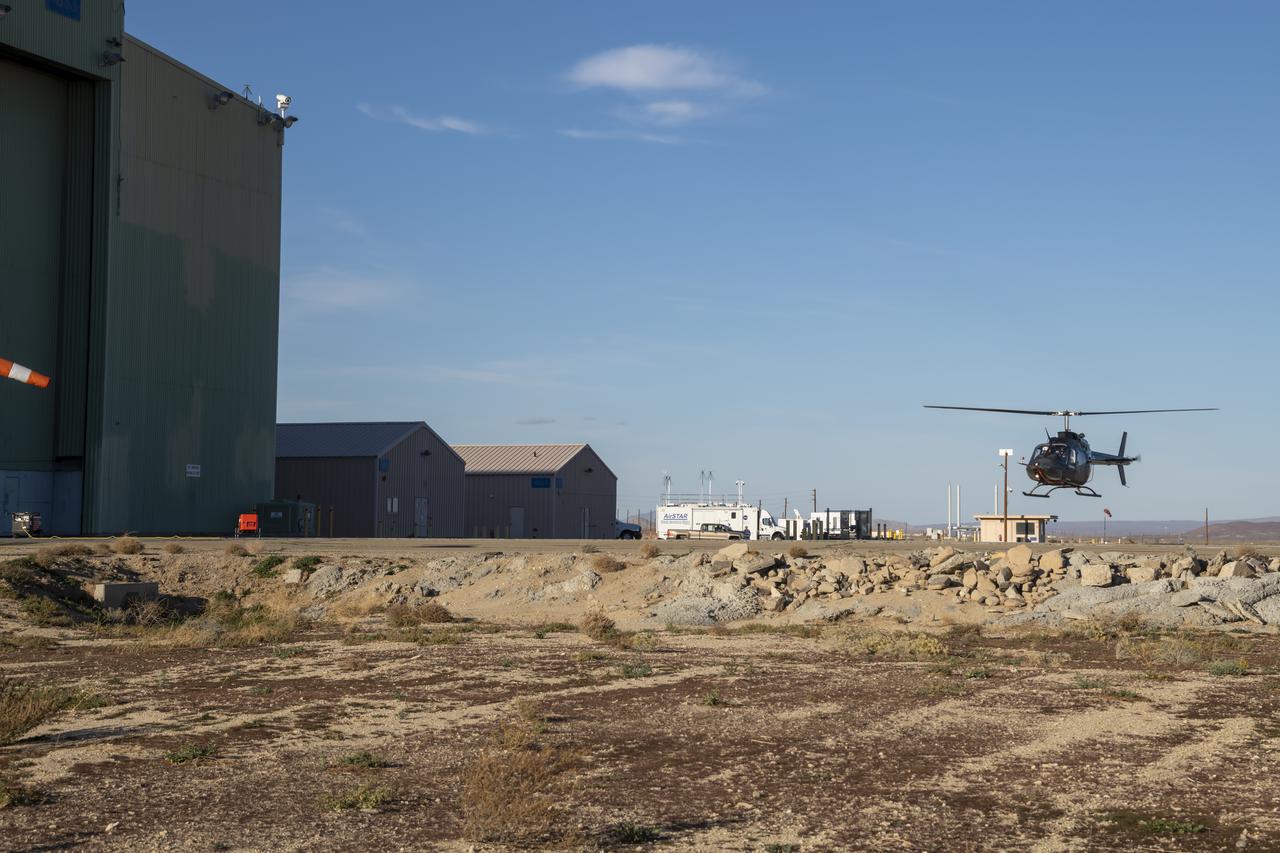
NASA’s Advanced Air Mobility National Campaign flies maneuvers at NASA’s Armstrong Flight Research Center in Edwards, California, Dec. 6, and 8-10. During this testing, the helicopter is used to study controllability characteristics when operating near buildings during heavy wind conditions. The Bell OH-58 Kiowa helicopter provided by Flight Research Inc. was used to study urban air mobility vehicle performance and flying qualities requirements.
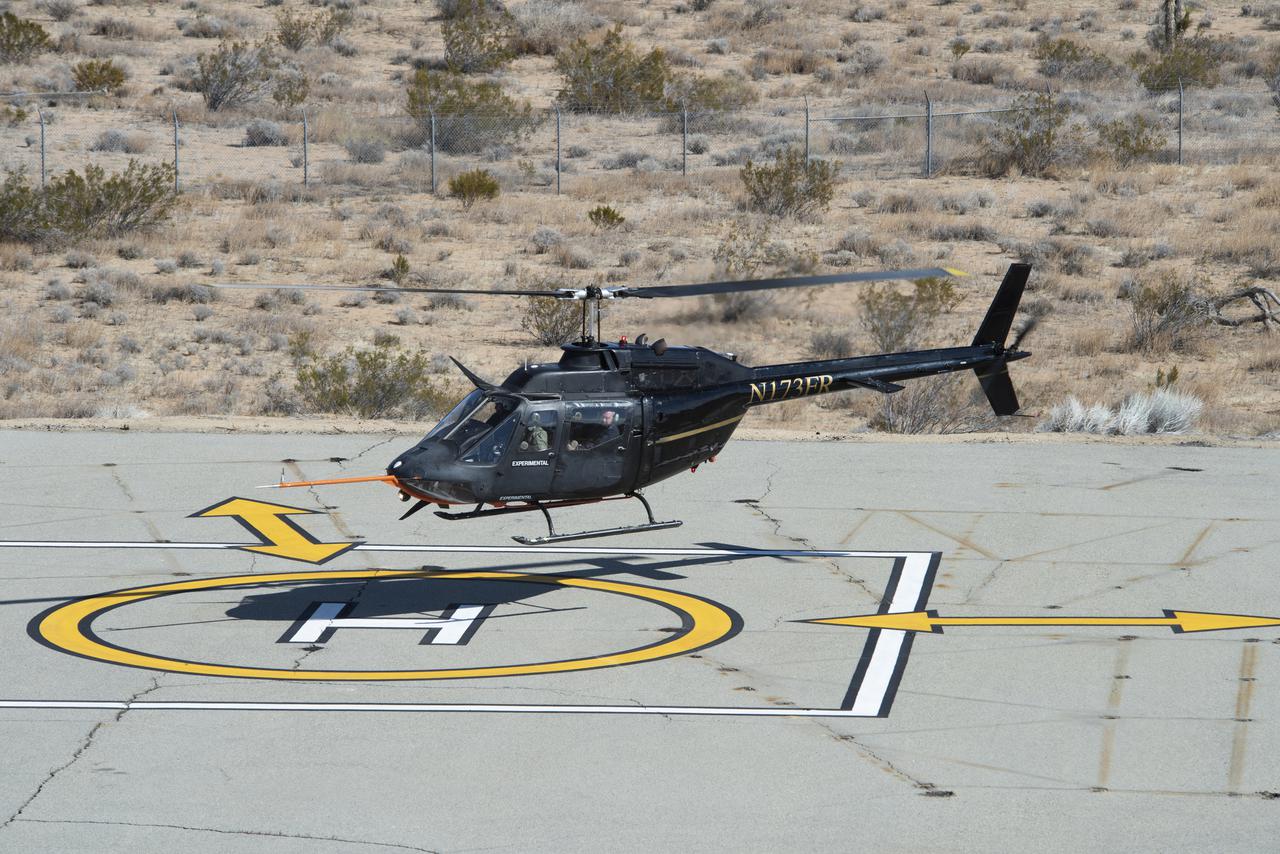
Flight Research Inc.’s Bell OH-58C Kiowa helicopter hovers over a helipad after completing an urban air mobility approach at NASA’s Armstrong Flight Research Center in California in March 2021. The Advanced Air Mobility National Campaign studied the viability of various urban air mobility approach options during a second phase called build II. This helicopter was used as a surrogate urban air mobility or air taxi vehicle.
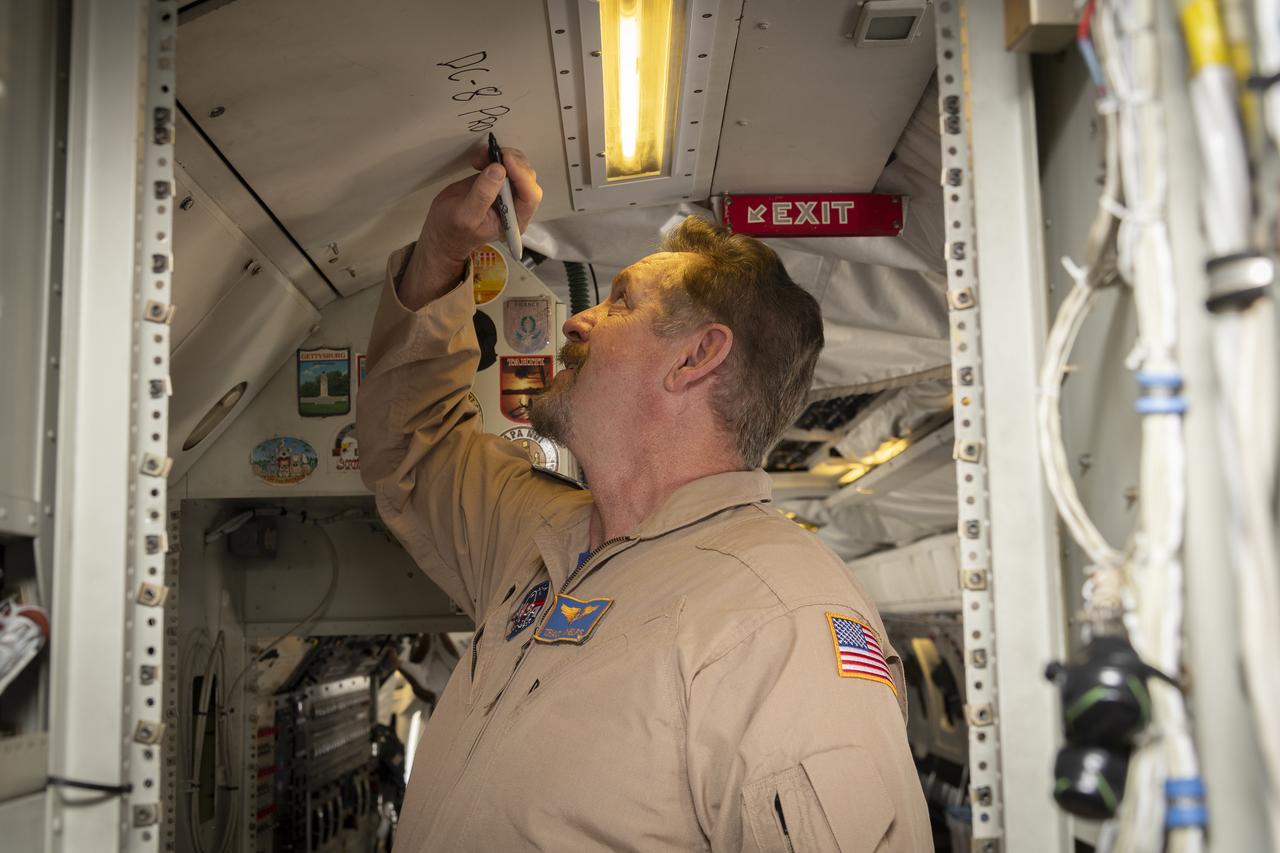
Aerospace engineer and research pilot Tracy Phelps signs the ceiling inside the DC-8 aircraft. Phelps piloted the aircraft’s final flight before it is retired from NASA’s Armstrong Flight Research Center Building 703 in Palmdale, California, to Idaho State University in Pocatello, Idaho. The DC-8 will provide real-world experience to train future aircraft technicians at the college’s Aircraft Maintenance Technology Program.