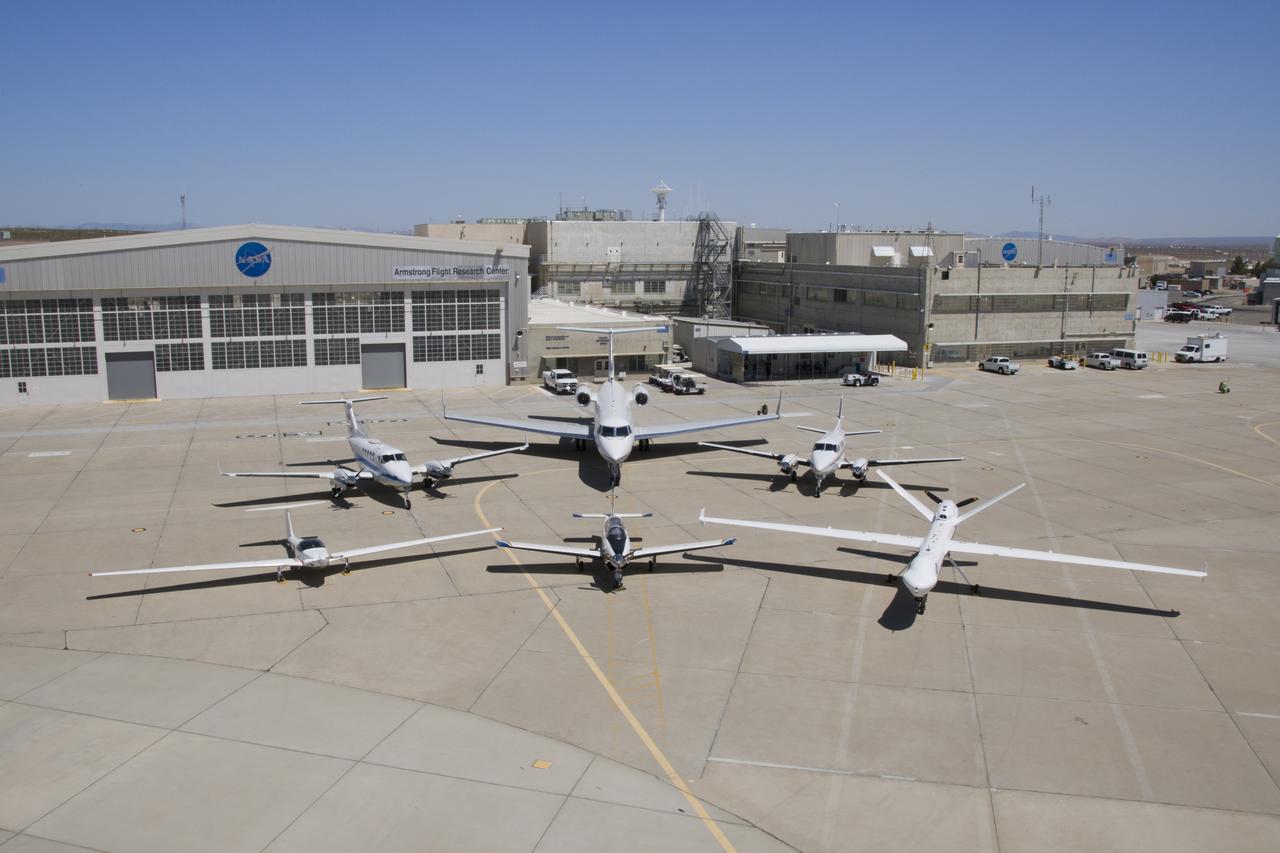
NASA’s Ikhana remotely piloted aircraft (front-right) is situated near NASA Armstrong Flight Research Center’s Hangar 4802 after an Unmanned Aircraft Systems Integration into the National Airspace System Flight Test Series 4 flight, along with five flight “intruders.” These intruders, which include NASA’s TG-14 (front-left), T-34C (front-center), B-200 King Air (back-left), Gulfstream-III (back-center) and a Honeywell C-90 King Air (back-right), fly within a pre-determined distance to Ikhana to test Detect-and-Avoid technology during research flights.
AFRC2016-0138-01
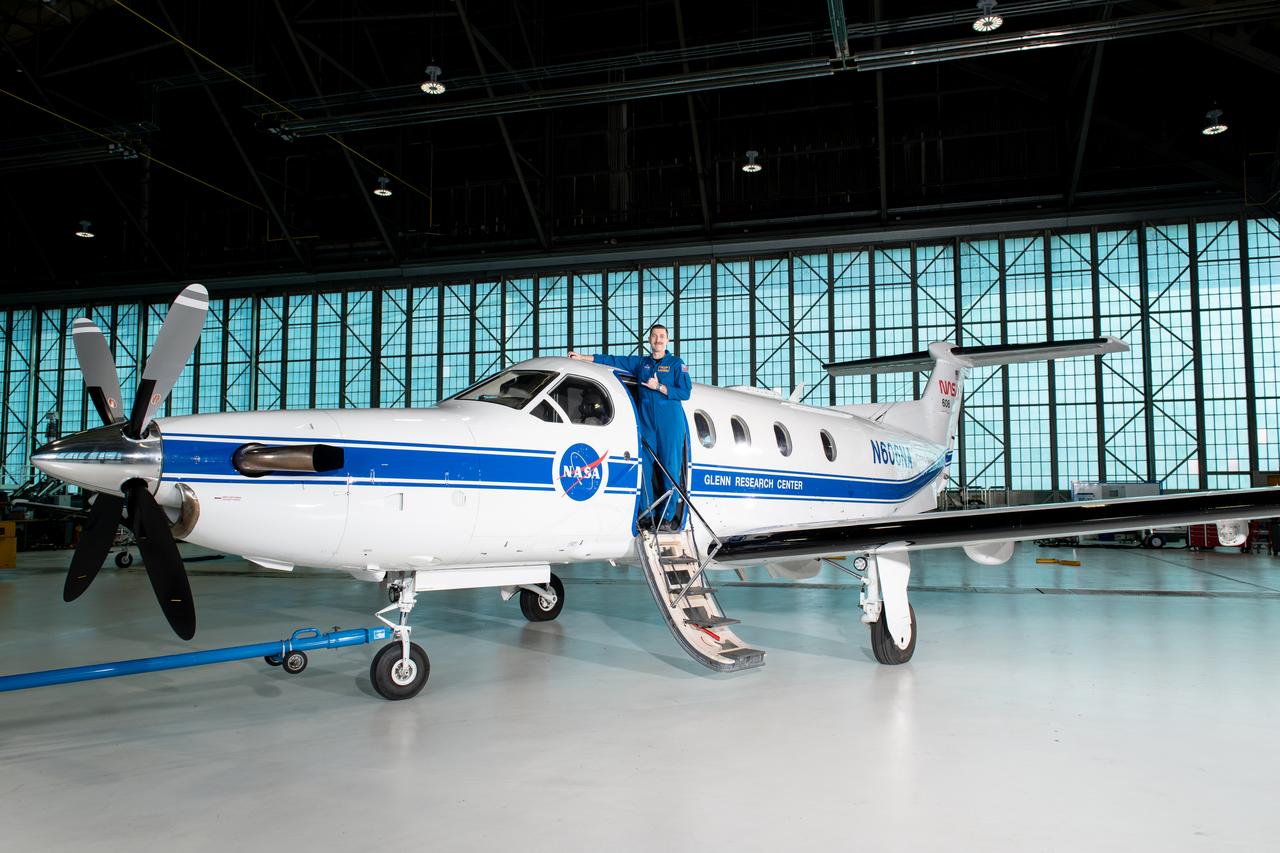
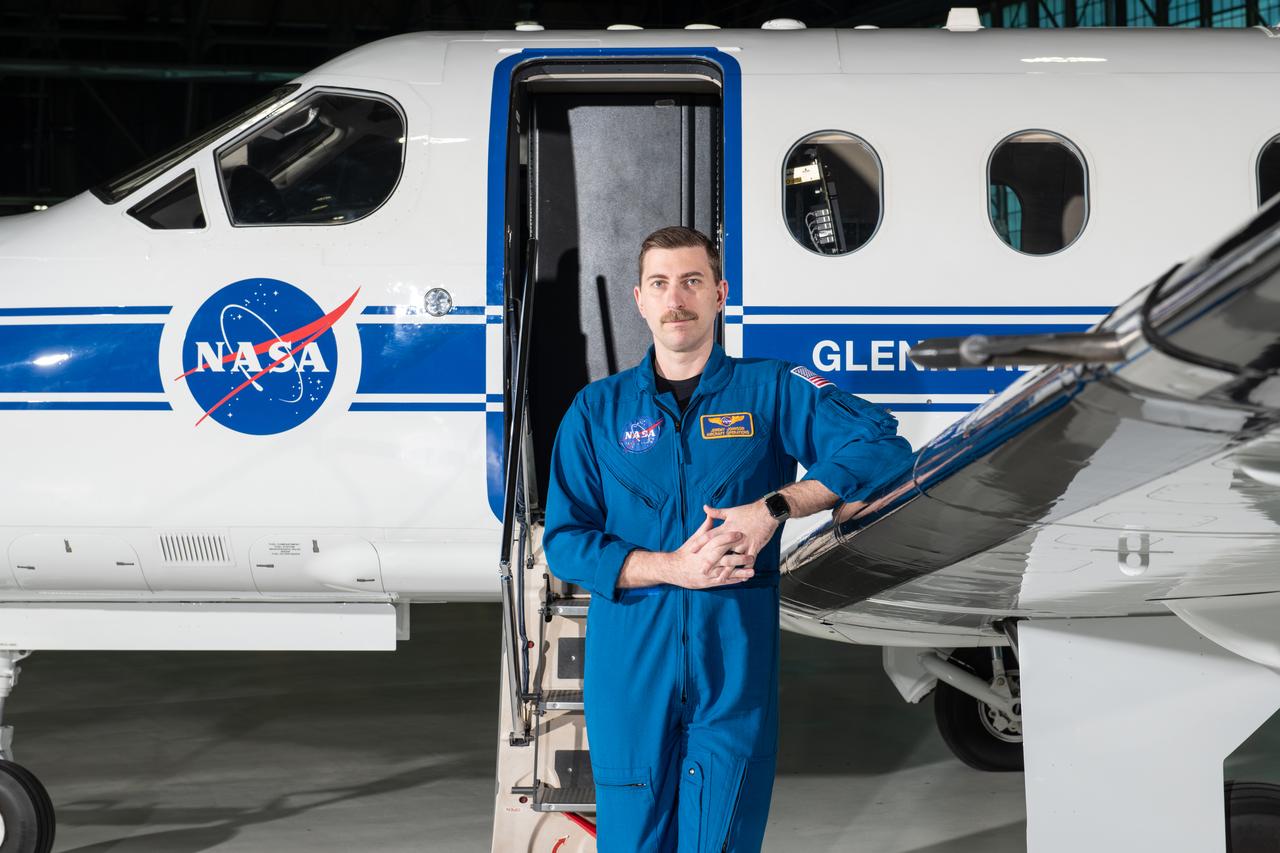
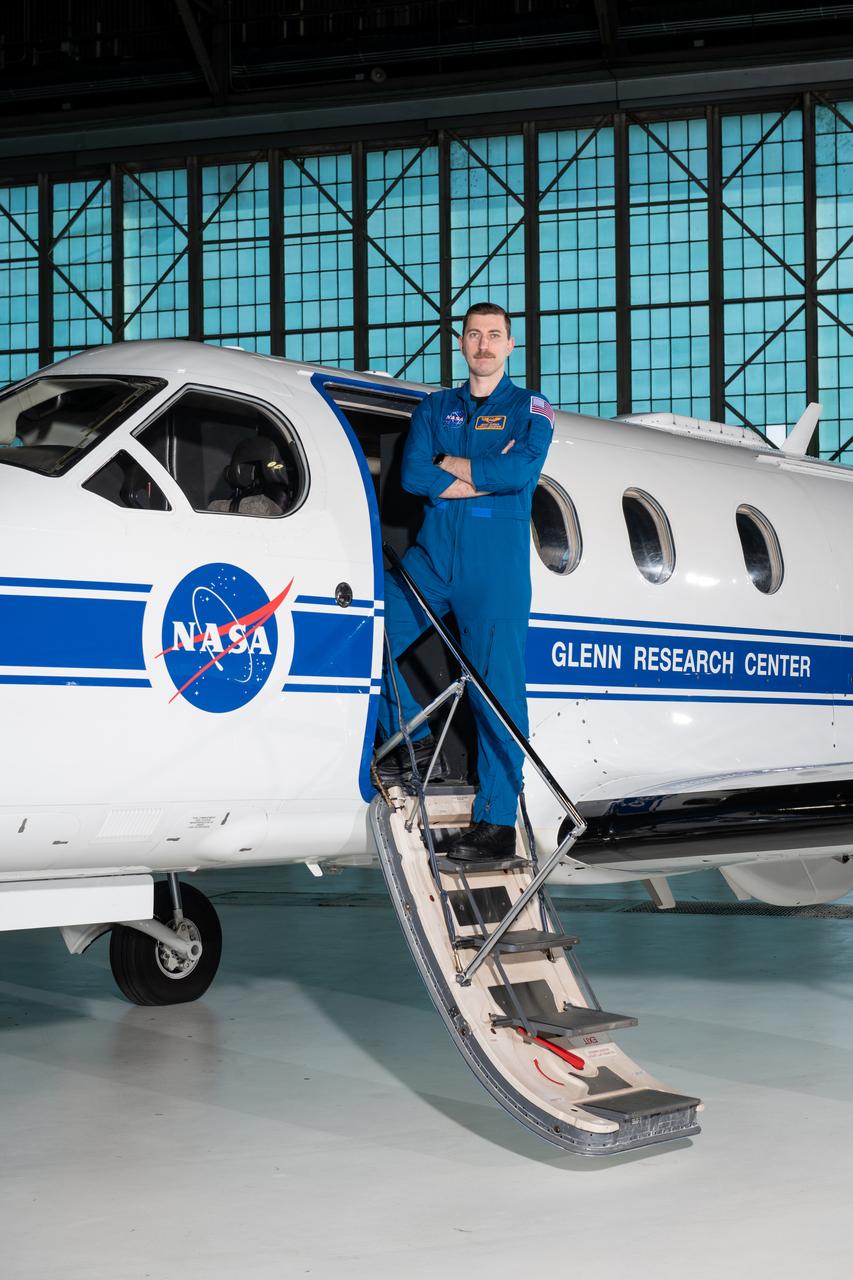
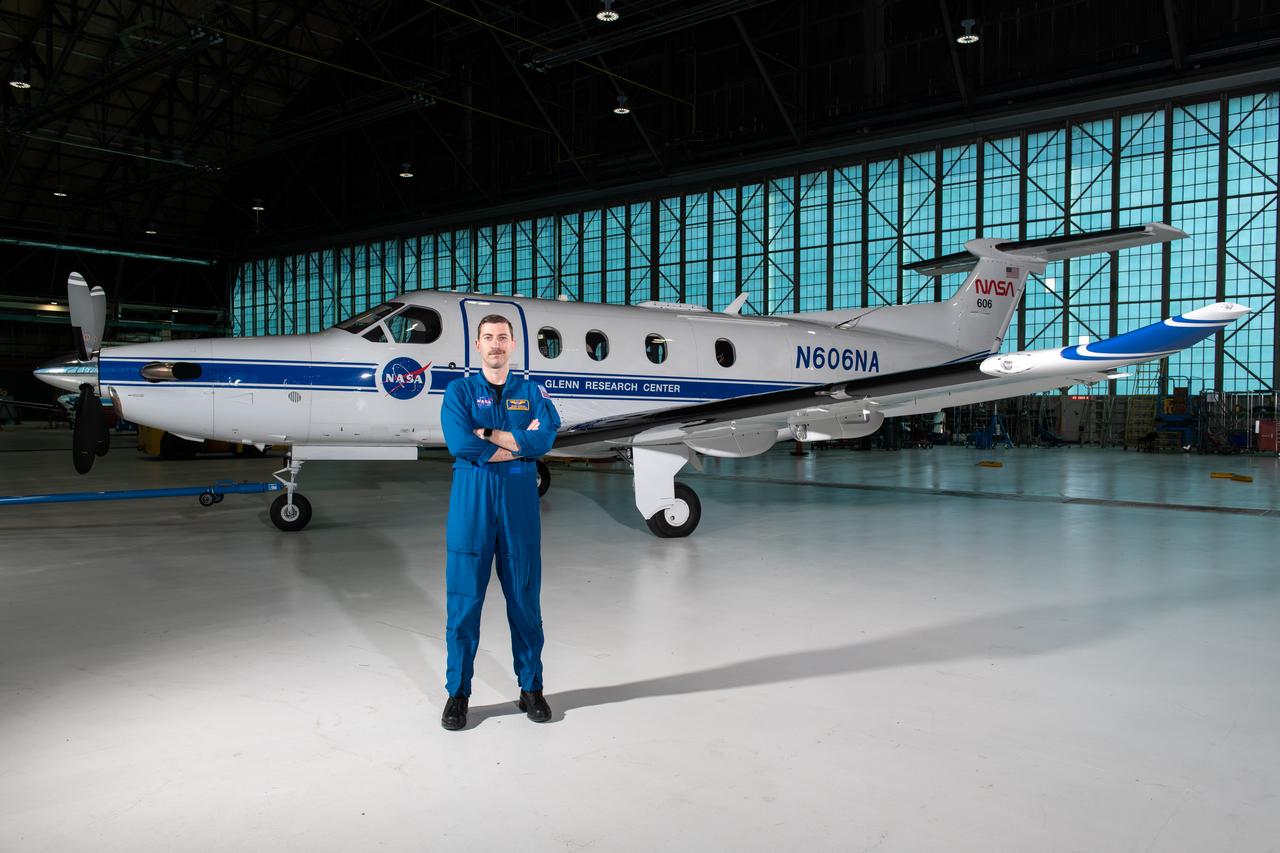
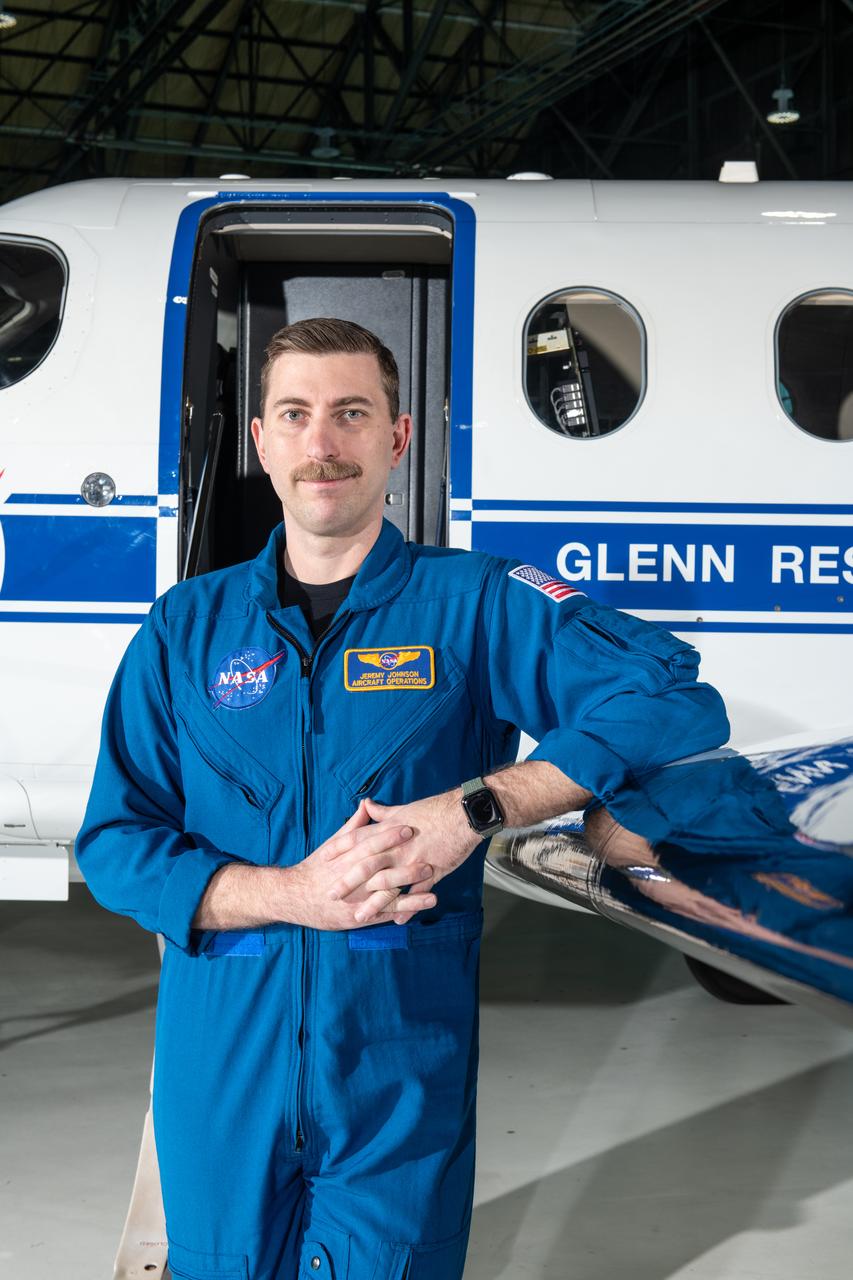
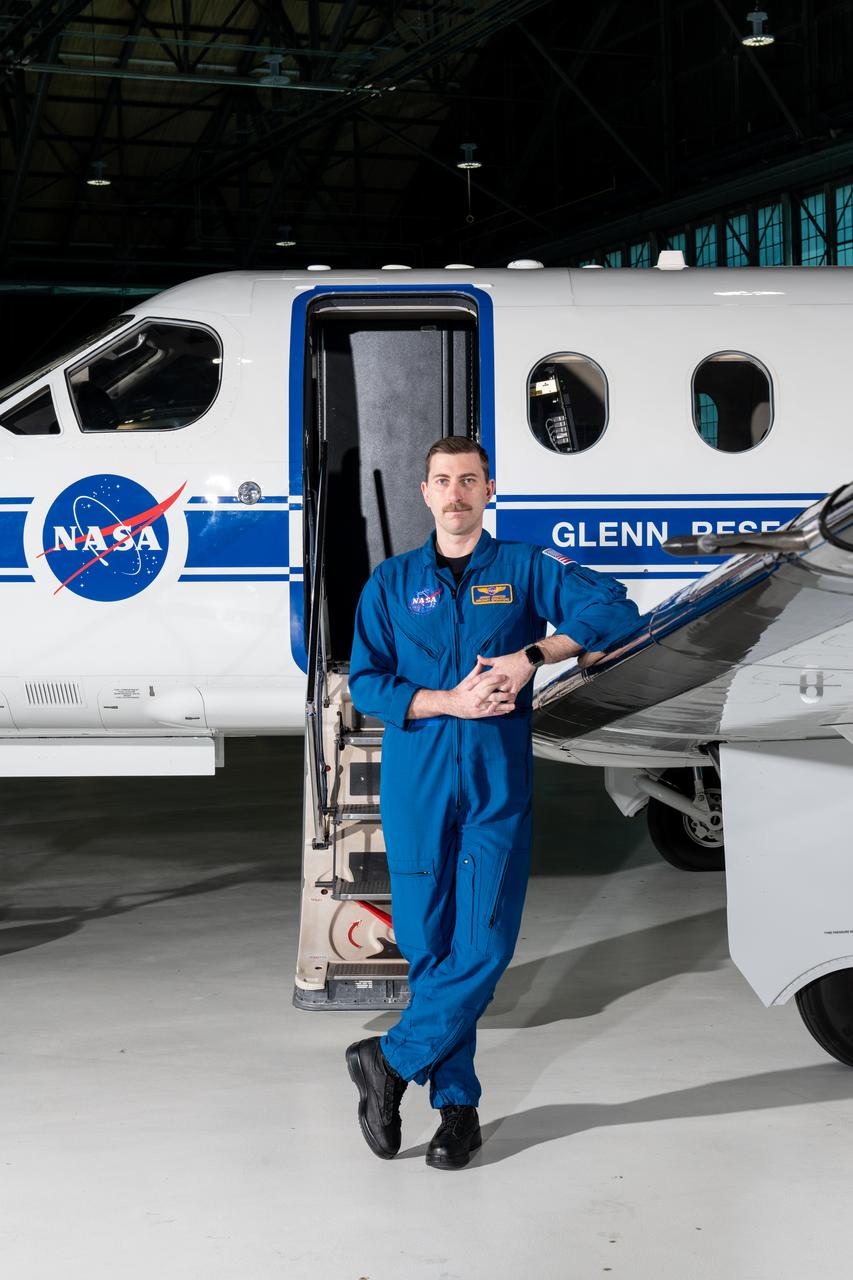
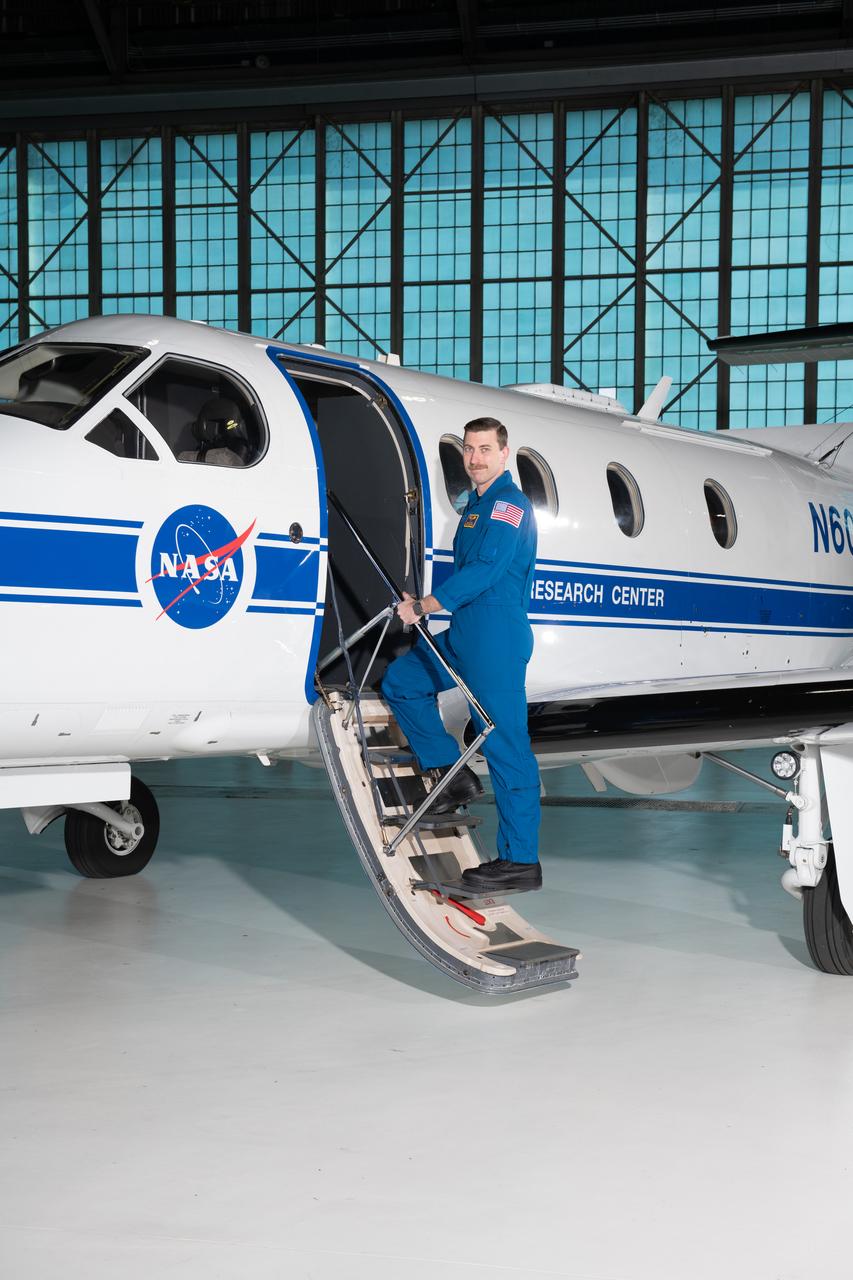
Jeremy Johnson, a research pilot and aviation safety officer, poses in front of a PC-12 aircraft inside the hangar at NASA’s Glenn Research Center in Cleveland on Thursday, April 17, 2025. Johnson flies NASA planes to support important scientific research and testing, working with researchers to plan and carry out flights that will get them the data they need while ensuring safety.
NASA SkillBridge Research Pilot and Aviation Safety Officer Jeremy Johnson
Jeremy Johnson, a research pilot and aviation safety officer, poses in front of a PC-12 aircraft inside the hangar at NASA’s Glenn Research Center in Cleveland on Thursday, April 17, 2025. Johnson flies NASA planes to support important scientific research and testing, working with researchers to plan and carry out flights that will get them the data they need while ensuring safety.
NASA SkillBridge Research Pilot and Aviation Safety Officer Jeremy Johnson
Jeremy Johnson, a research pilot and aviation safety officer, poses in front of a PC-12 aircraft inside the hangar at NASA’s Glenn Research Center in Cleveland on Thursday, April 17, 2025. Johnson flies NASA planes to support important scientific research and testing, working with researchers to plan and carry out flights that will get them the data they need while ensuring safety.
NASA SkillBridge Research Pilot and Aviation Safety Officer Jeremy Johnson
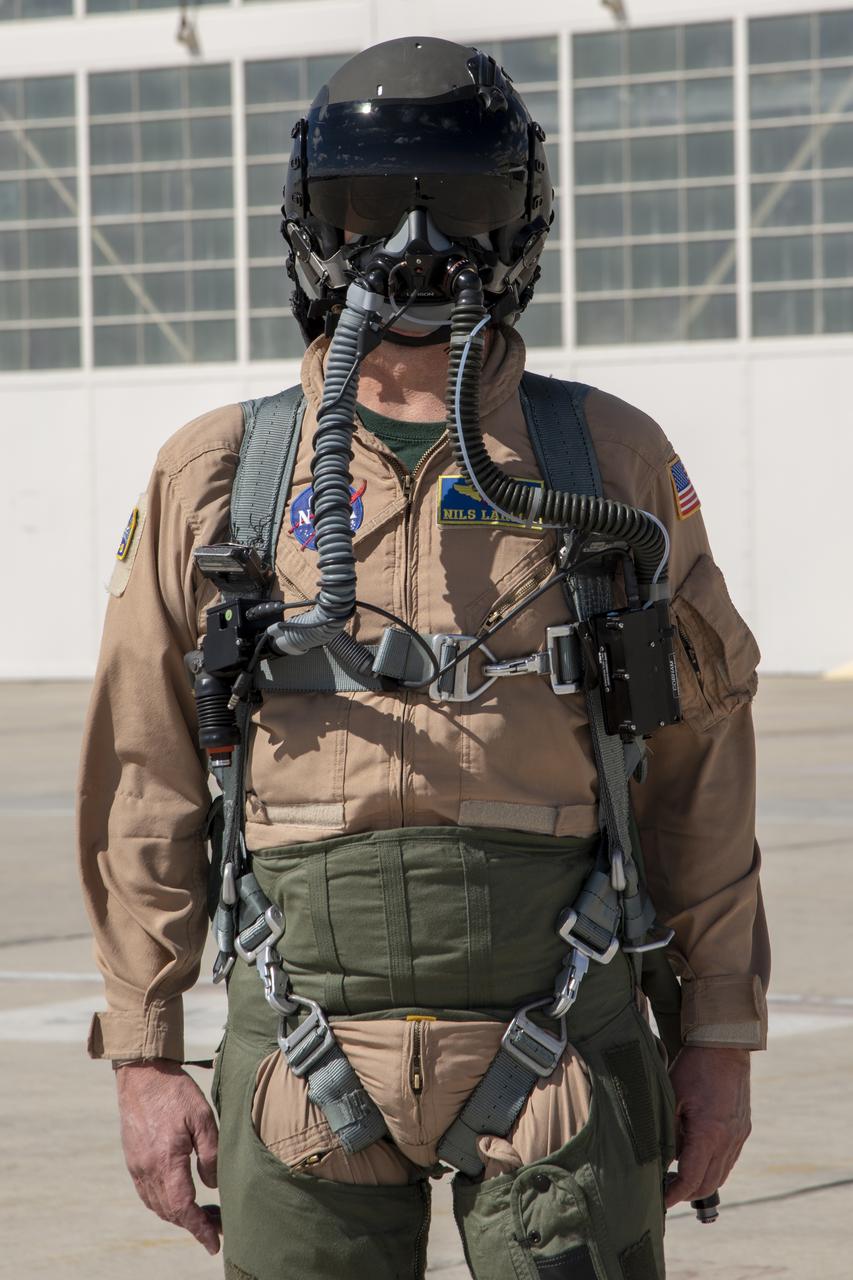
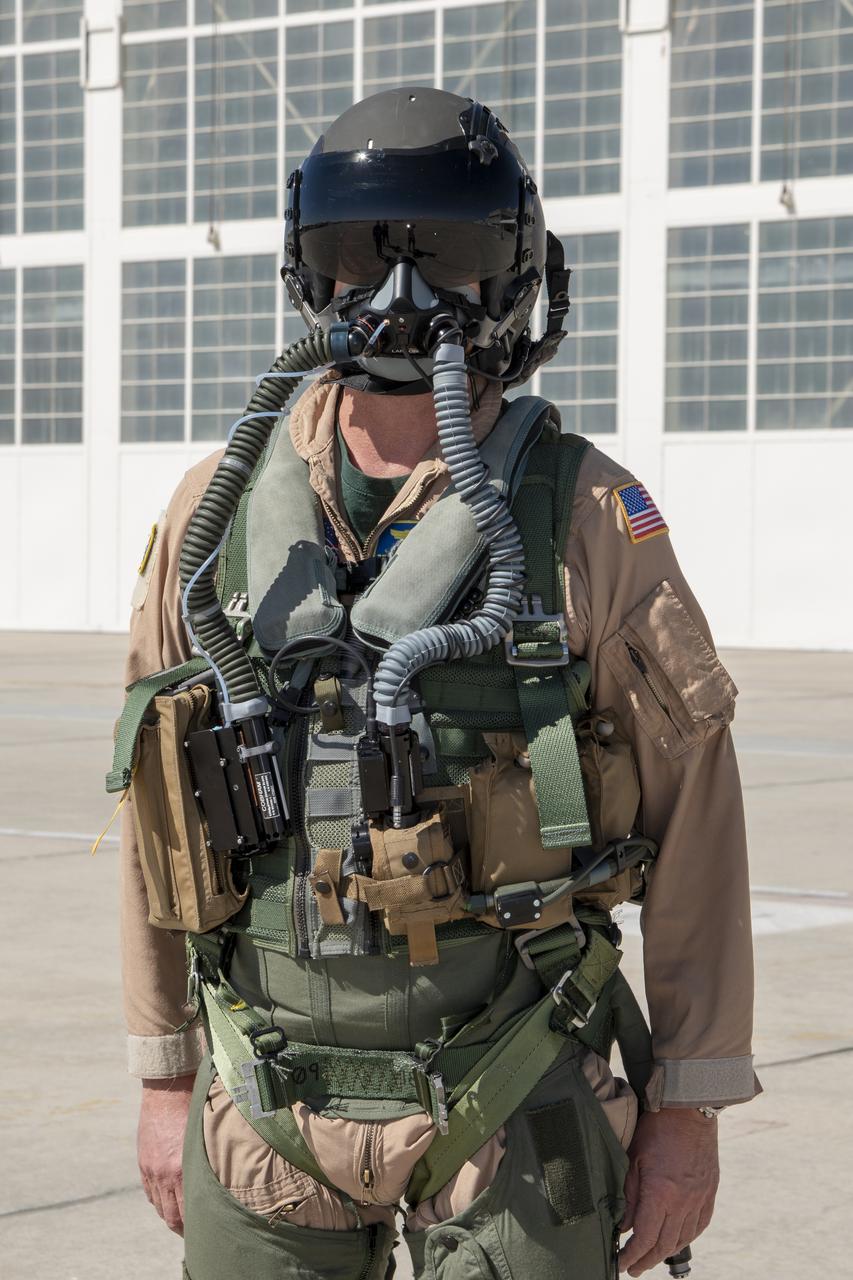
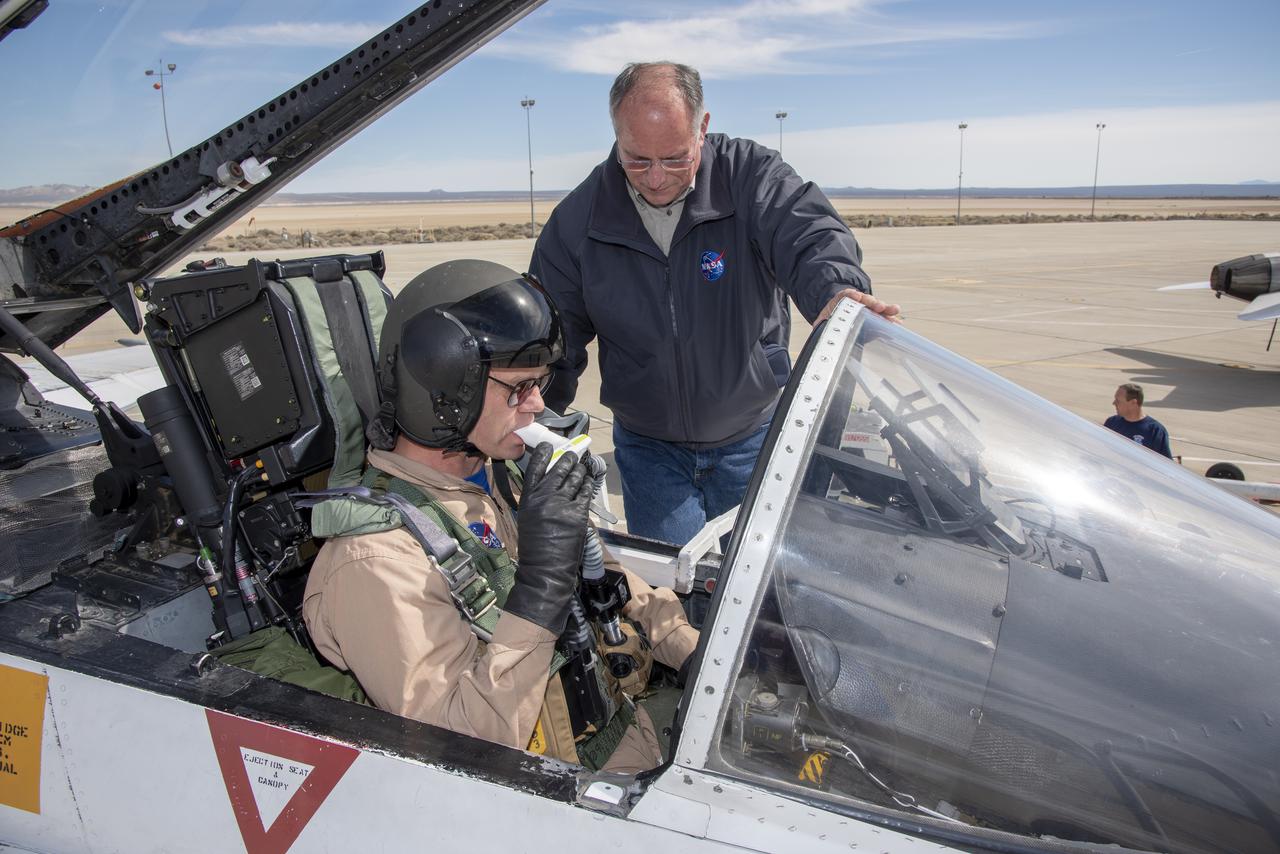
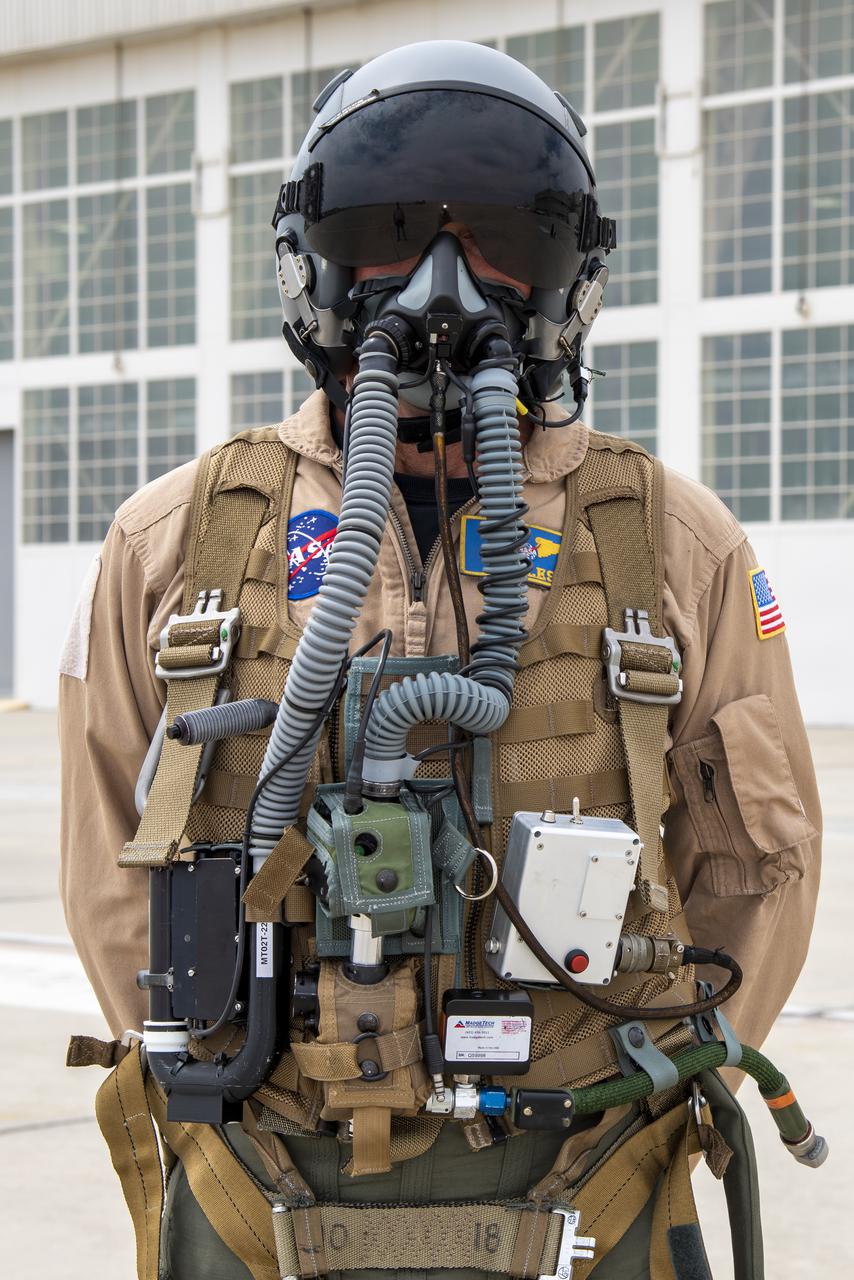
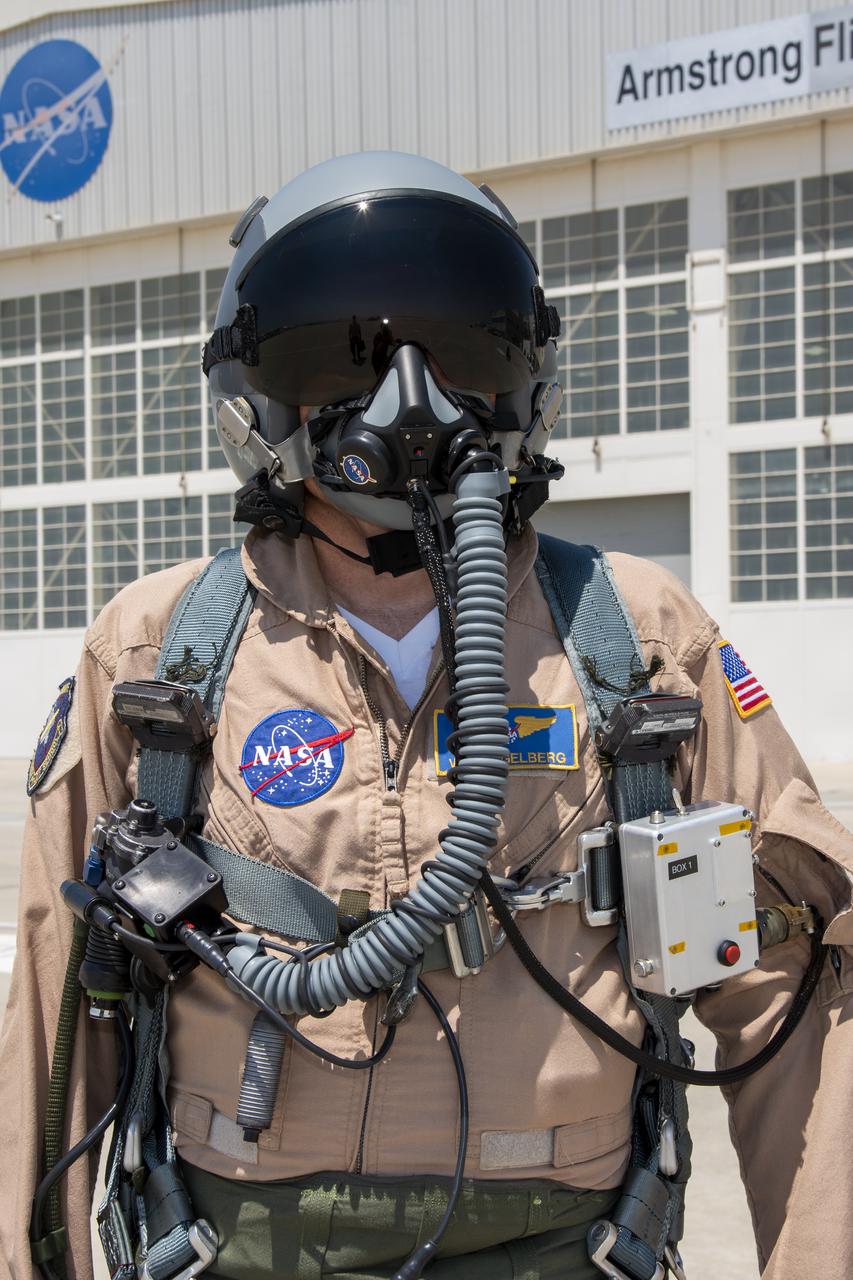
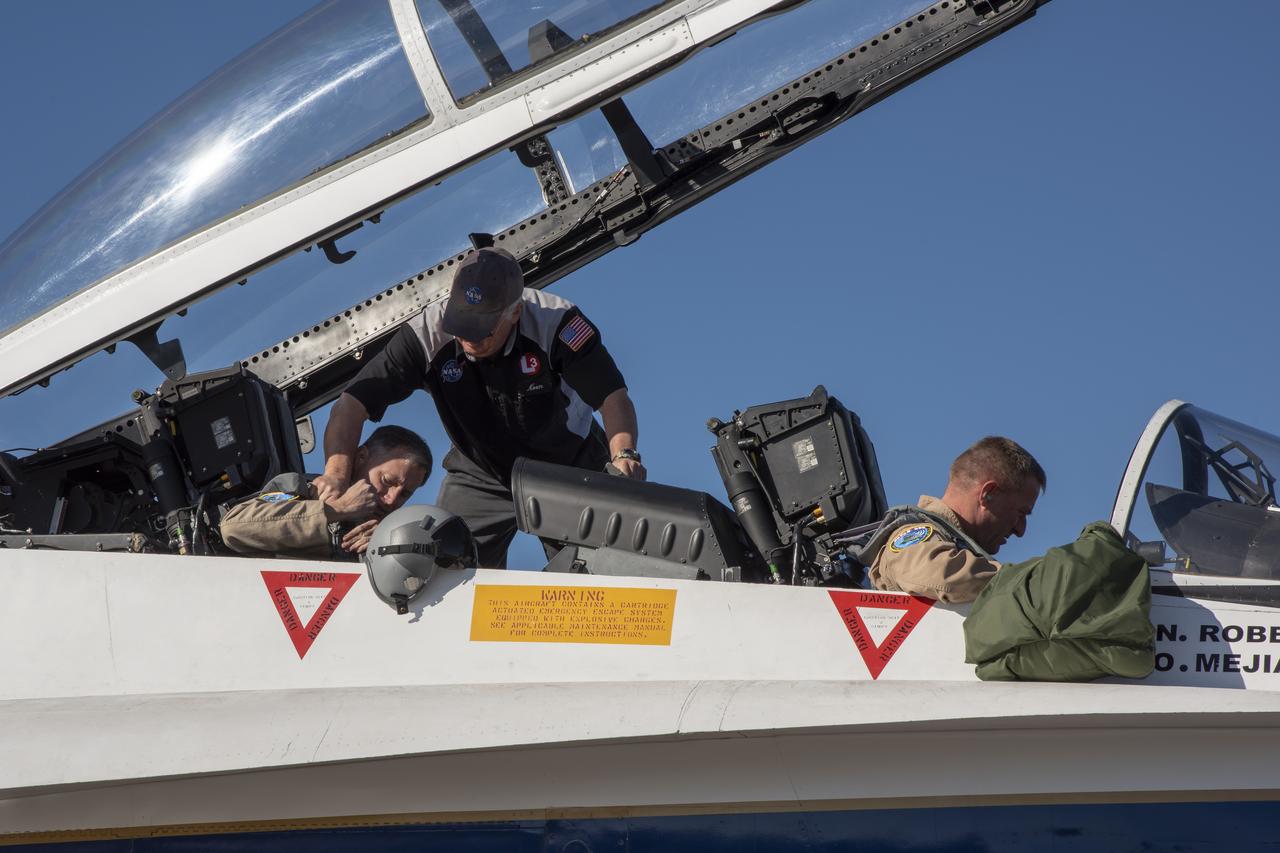
NASA Pilot Nils Larson wears a U.S. Air Force harness configuration with a helmet and an oxygen mask that is being used in the Pilot Breathing Assessment program at NASA's Armstrong Flight Research Center in California.
U.S. Air Force Harness Configuration
NASA Pilot Nils Larson wears a U.S. Navy harness configuration to show the integrated parachute harness and the built-in survival vest. The Navy configuration is bulkier and weighs more than the U.S. Air Force harness. Both configurations are being used in the Pilot Breathing Assessment program at NASA’s Armstrong Flight Research Center in California.
U.S. Navy Harness Configuration
Jeremy Johnson, a research pilot and aviation safety officer, poses in front of a PC-12 aircraft inside the hangar at NASA’s Glenn Research Center in Cleveland on Thursday, April 17, 2025. Johnson flies NASA planes to support important scientific research and testing, working with researchers to plan and carry out flights that will get them the data they need while ensuring safety.
NASA SkillBridge Research Pilot and Aviation Safety Officer Jeremy Johnson
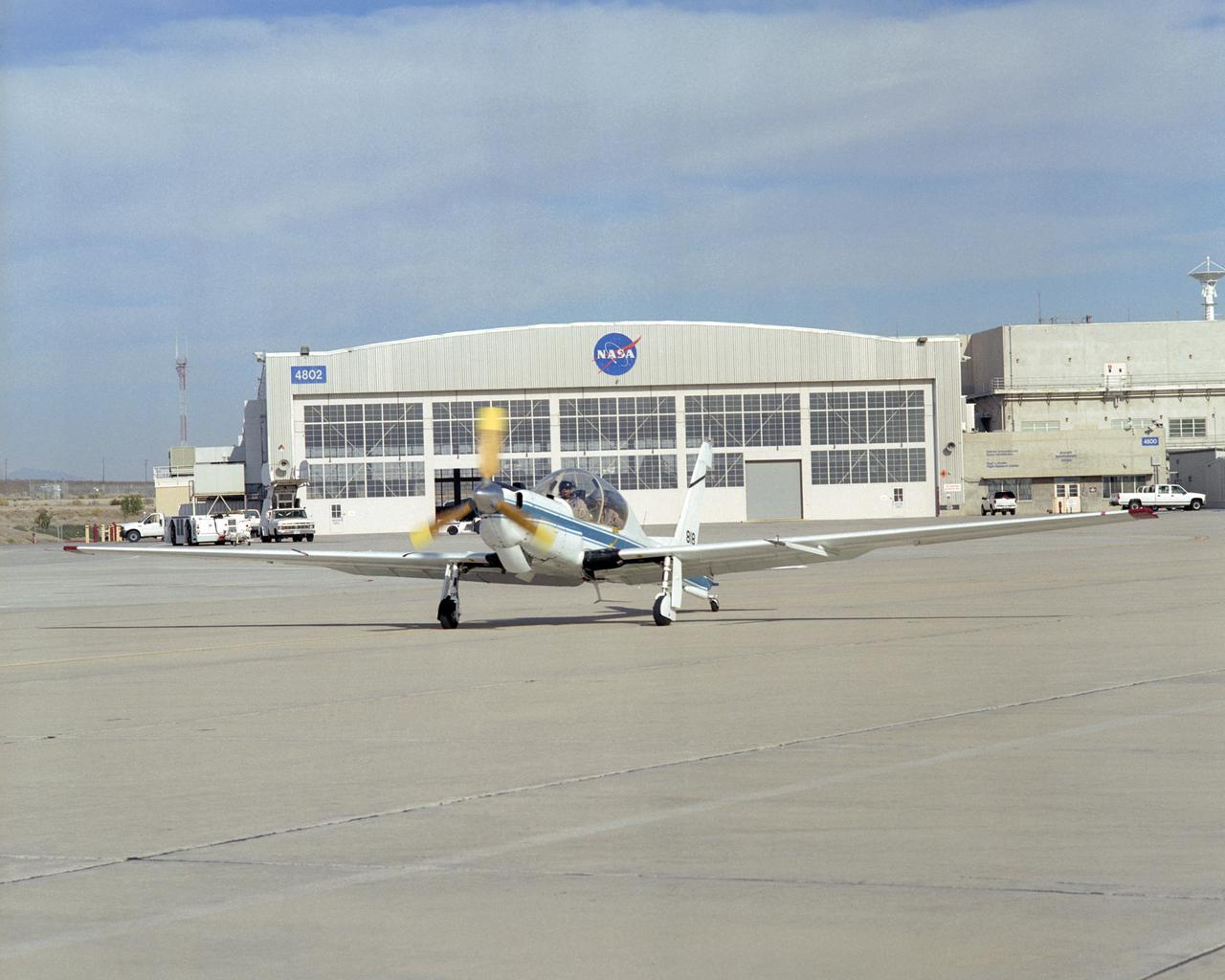
NASA's ultra-quiet YO-3A acoustics research aircraft taxis out from the ramp at the Dryden Flight Research Center before a pilot checkout flight.
NASA's ultra-quiet YO-3A acoustics research aircraft taxis out from the ramp at the Dryden Flight Research Center before a pilot checkout flight
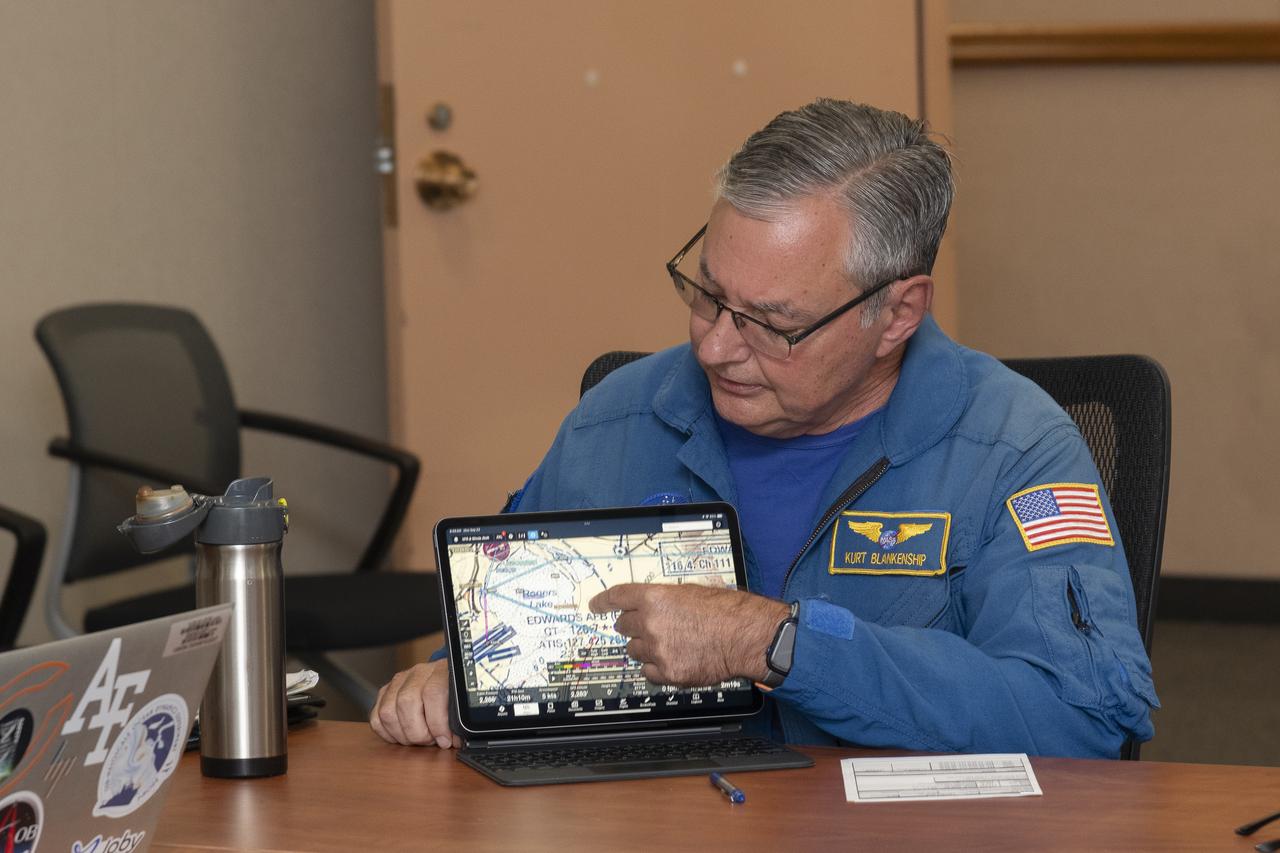
NASA pilot Kurt Blankenship maps out flight plans during a pre-flight brief. Pilots, crew, and researchers from NASA’s Armstrong Flight Research Center in Edwards, California and NASA’s Glenn Research Center in Cleveland are briefed on the flight plan to gather Automatic Dependent Surveillance-Broadcast signal data between the aircraft and ping-Stations on the ground at NASA Armstrong. These flights are the first cross-center research activity with the Pilatus-PC-12 at NASA Armstrong.
NASA pilot Kurt Blankenship reviews flight plans during the pre-flight brief to gather Automatic Dependent Surveillance-Broadcast data using NASA’s Pilatus PC-12 at NASA’s Armstrong Flight Research Center in Edwards, California on Sept. 23, 2024.
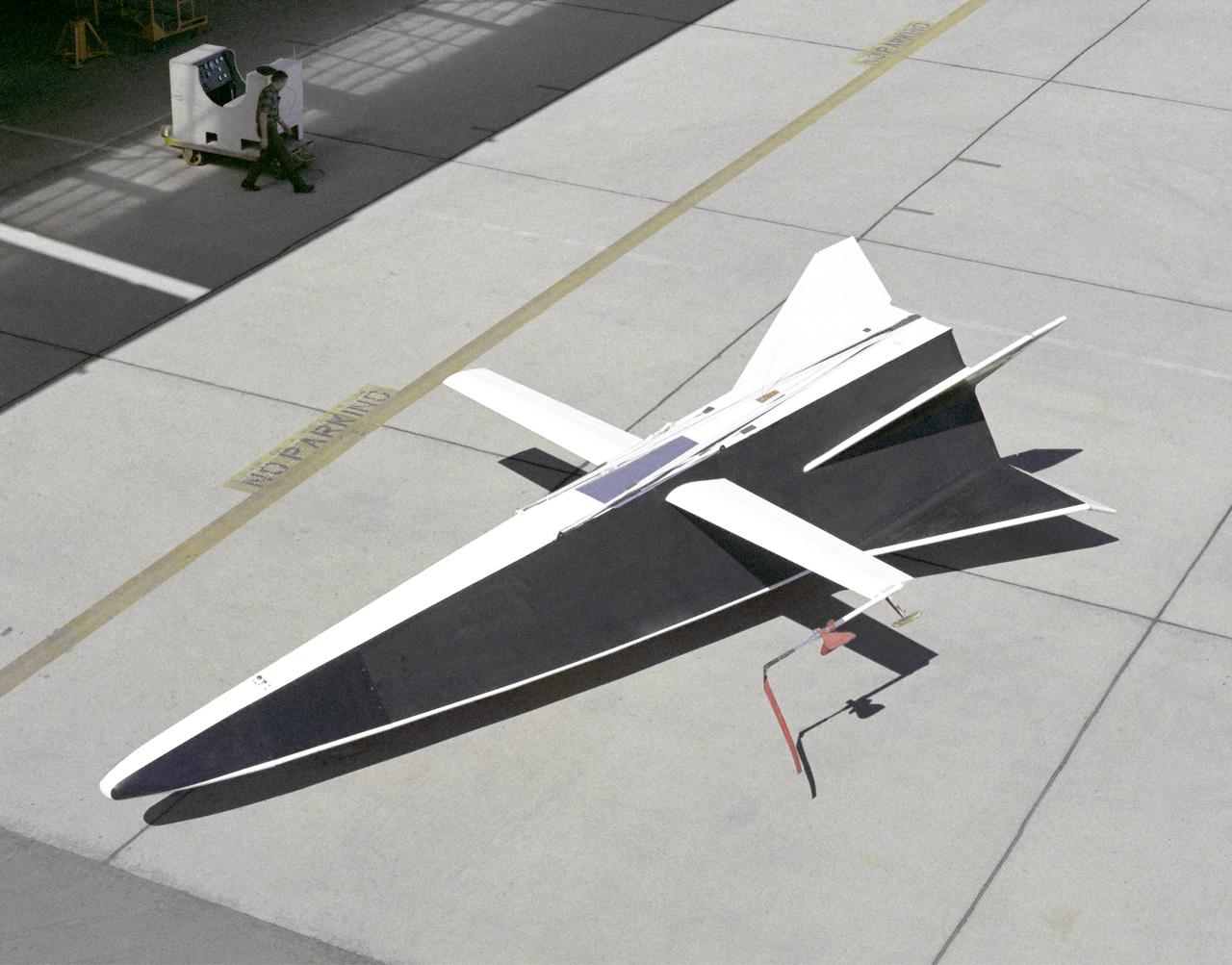
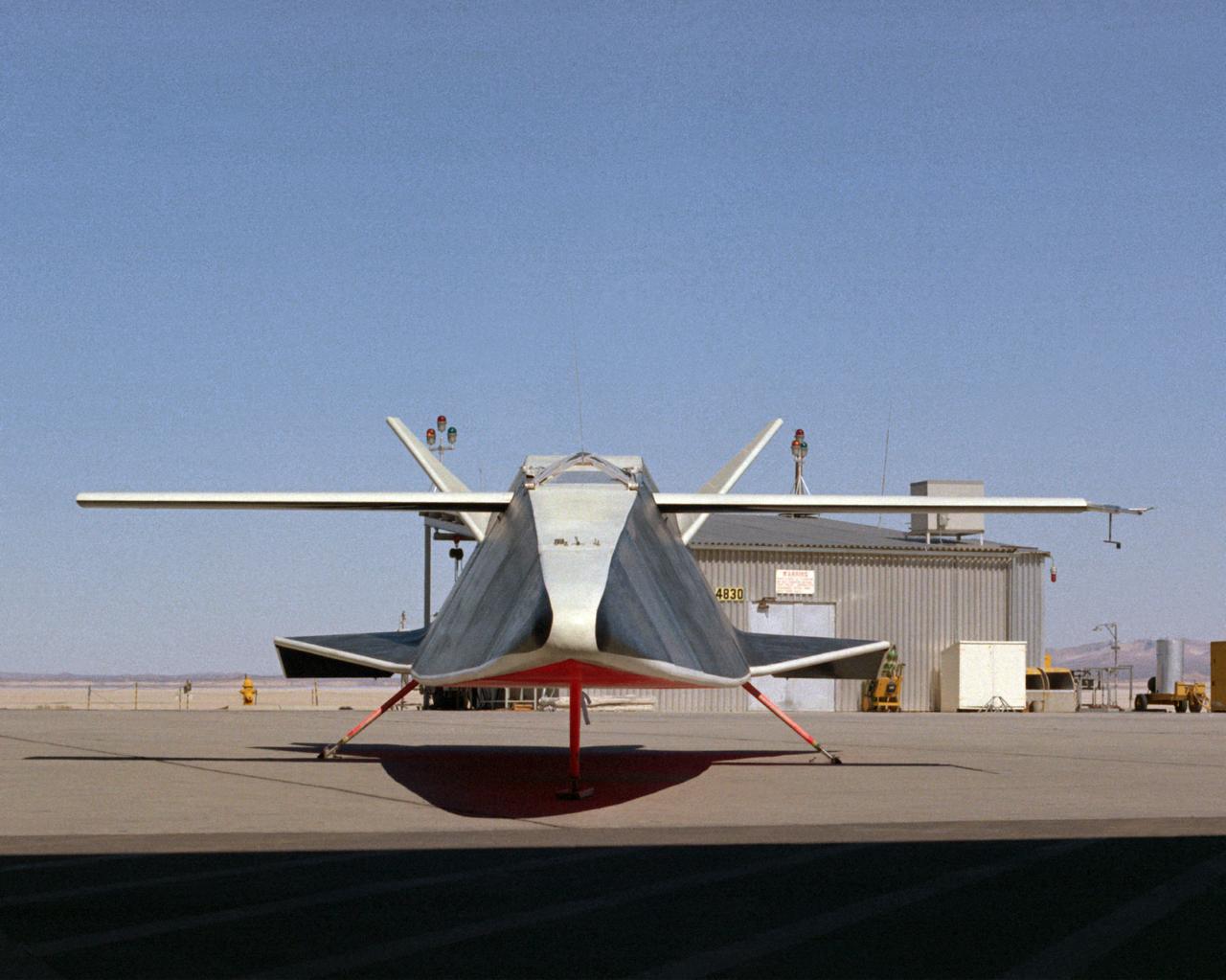
The Hyper III was a full-scale lifting-body remotely piloted research vehicle (RPRV) built at what was then the NASA Flight Research Center located at Edwards Air Force Base in Southern California.
ECN-2304
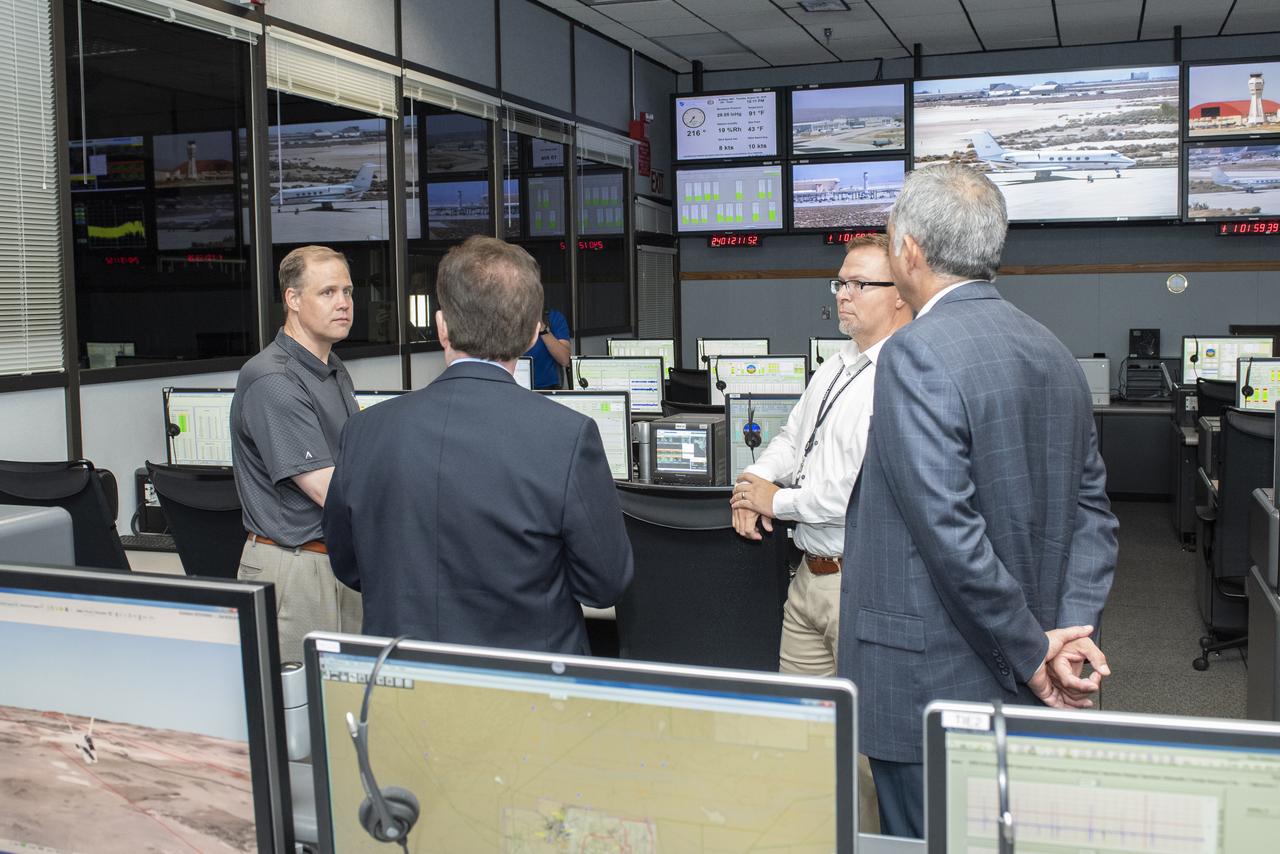
NASA Administrator Bridenstine learns about the many uses for mission control rooms for flight research projects such as monitoring the flights for safety, gathering data and talking to the pilot and project researcher.
Bridenstine stands by AFRC center director David McBride in one of Armstrong's mission control rooms that monitor flights, talk with pilots and gather data to project analysis.
Phillip Wellner from Life Support conducts a spirometry test on NASA Pilot Nils Larson before a Pilot Breathing Assessment flight at NASA’s Armstrong Flight Research Center in California. 
NASA Pilot Nils Larson Does a Spirometry Test
Jeremy Johnson, a research pilot and aviation safety officer, poses in front of a PC-12 aircraft inside the hangar at NASA’s Glenn Research Center in Cleveland on Thursday, April 17, 2025. Johnson flies NASA planes to support important scientific research and testing, working with researchers to plan and carry out flights that will get them the data they need while ensuring safety.
NASA SkillBridge Research Pilot and Aviation Safety Officer Jeremy Johnson
Pilot Stu Broce is pre-breathing 100% oxygen prior to take off for an Air-LUSI flight at NASA’s Armstrong Flight Research Center.
Air-LUSI Project - ER-2 Science Mission
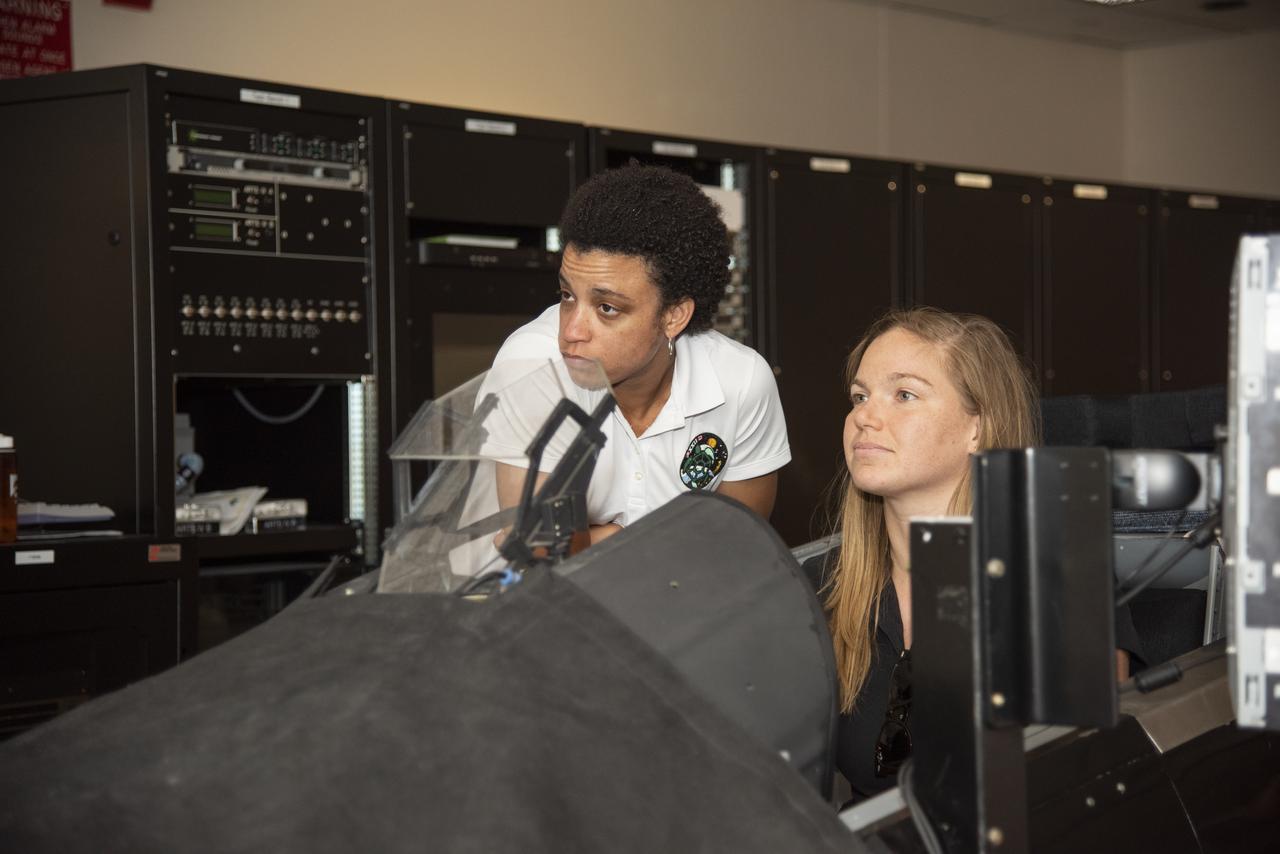
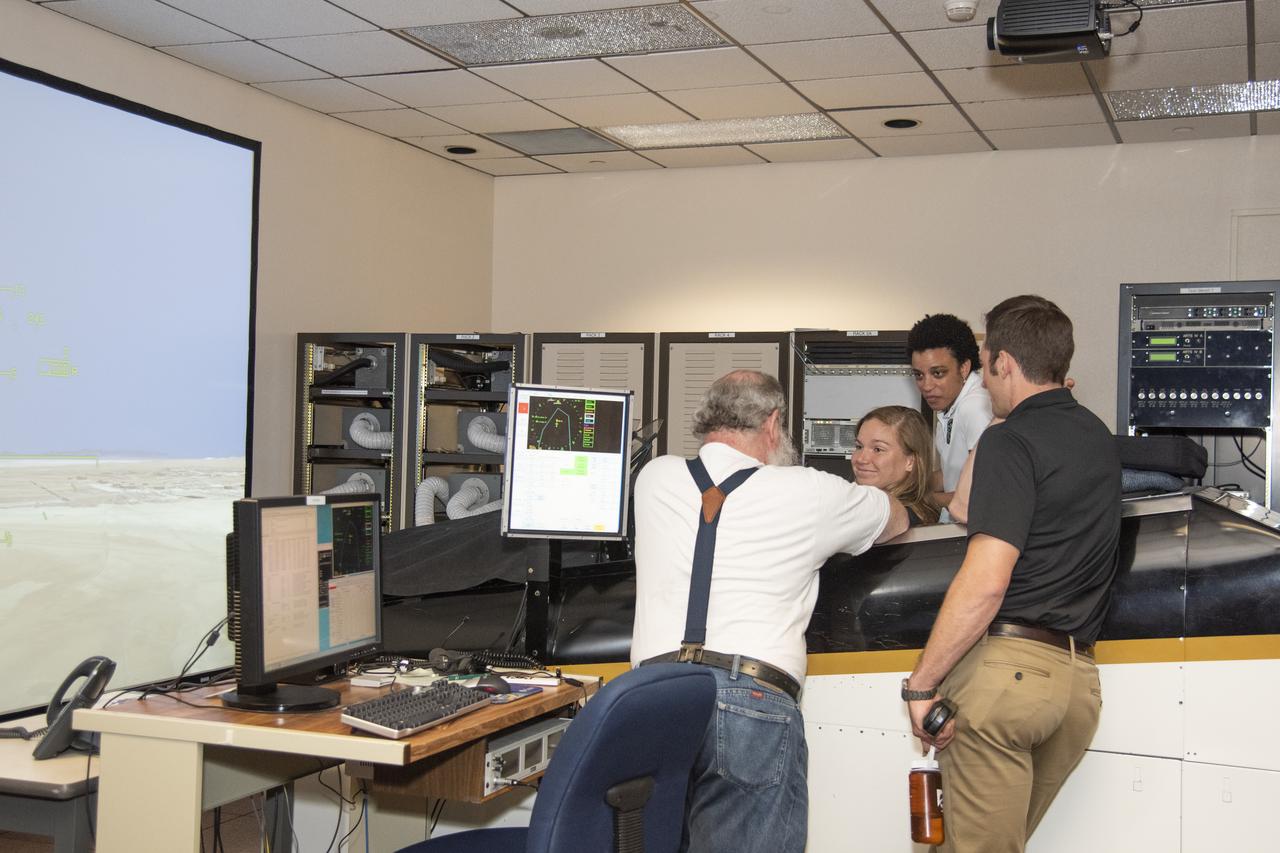
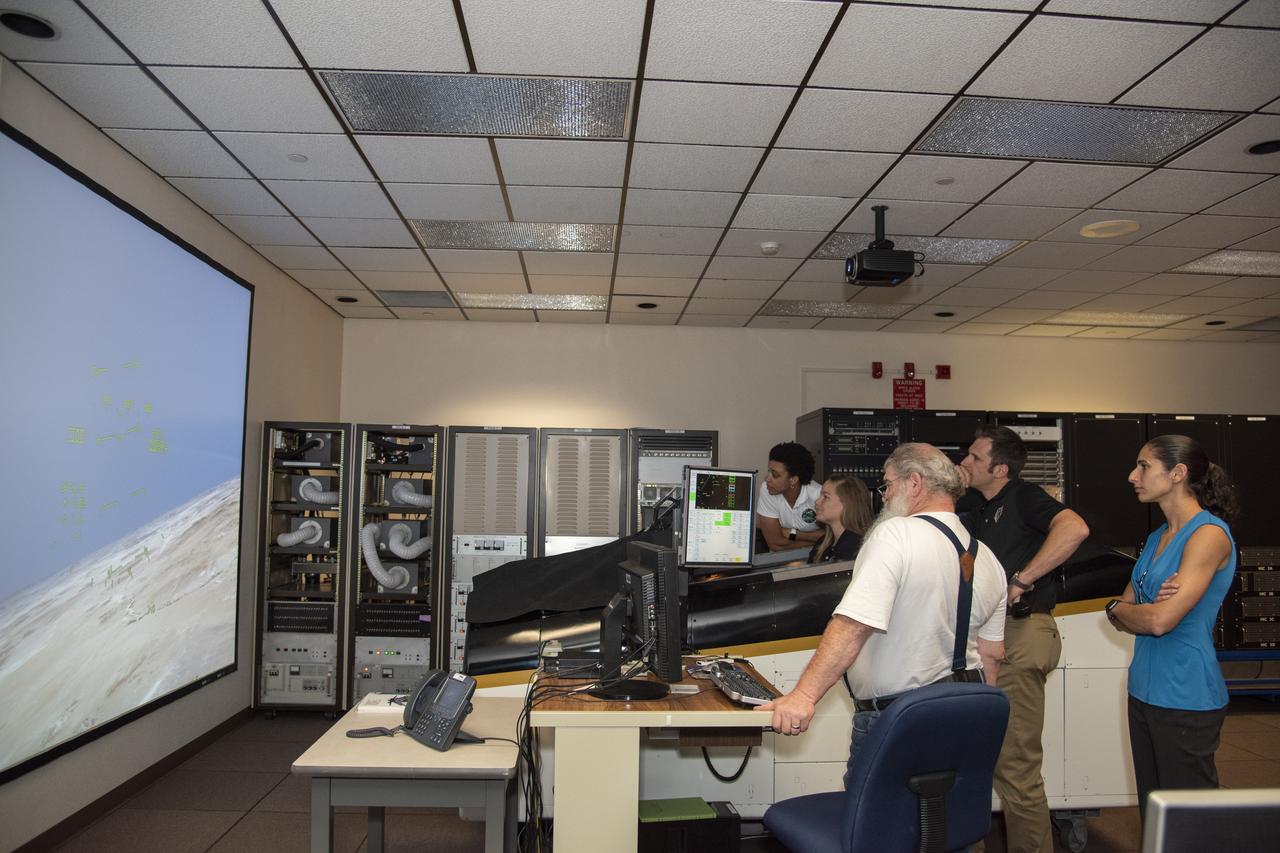
NASA's 2017 astronaut candidates (L to R) Jenni Sidey-Gibbons, Jessica Watkins and Joshua Kutryk practice flying in an F-18 aircraft cockpit simulator at Armstrong Flight Research Center, in Southern California. The F-18's are flown for research support and pilot proficiency. Currently, the F-18 is conducting supersonic research in support of the X-59 QueSST overall mission.
Astronauts Pilot F-18 Simulator at Armstrong Flight Research Center
NASA's 2017 astronaut candidates (L to R) Jessica Watkins and Jenni Sidey-Gibbons practice flying in an F-18 aircraft cockpit simulator at Armstrong Flight Research Center, in Southern California. The F-18's are flown for research support and pilot proficiency. Currently, the F-18's are being used to conduct supersonic research in support of the X-59 QueSST overall mission.
Astronauts Pilot F-18 Simulator at Armstrong Flight Research Center
NASA’s 2017 astronaut candidates (L to R) Jessica Watkins, Jenni Sidey-Gibbons, Joshua Kutryk, and Jasmin Moghbeli practice flying in an F-18 aircraft cockpit simulator at Armstrong Flight Research Center, in Southern California. The F-18’s are flown for research support and pilot proficiency. Currently, the F-18’s are being used to conduct supersonic research in support of the X-59 QueSST overall mission.
Astronauts Pilot F-18 Simulator at Armstrong Flight Research Center
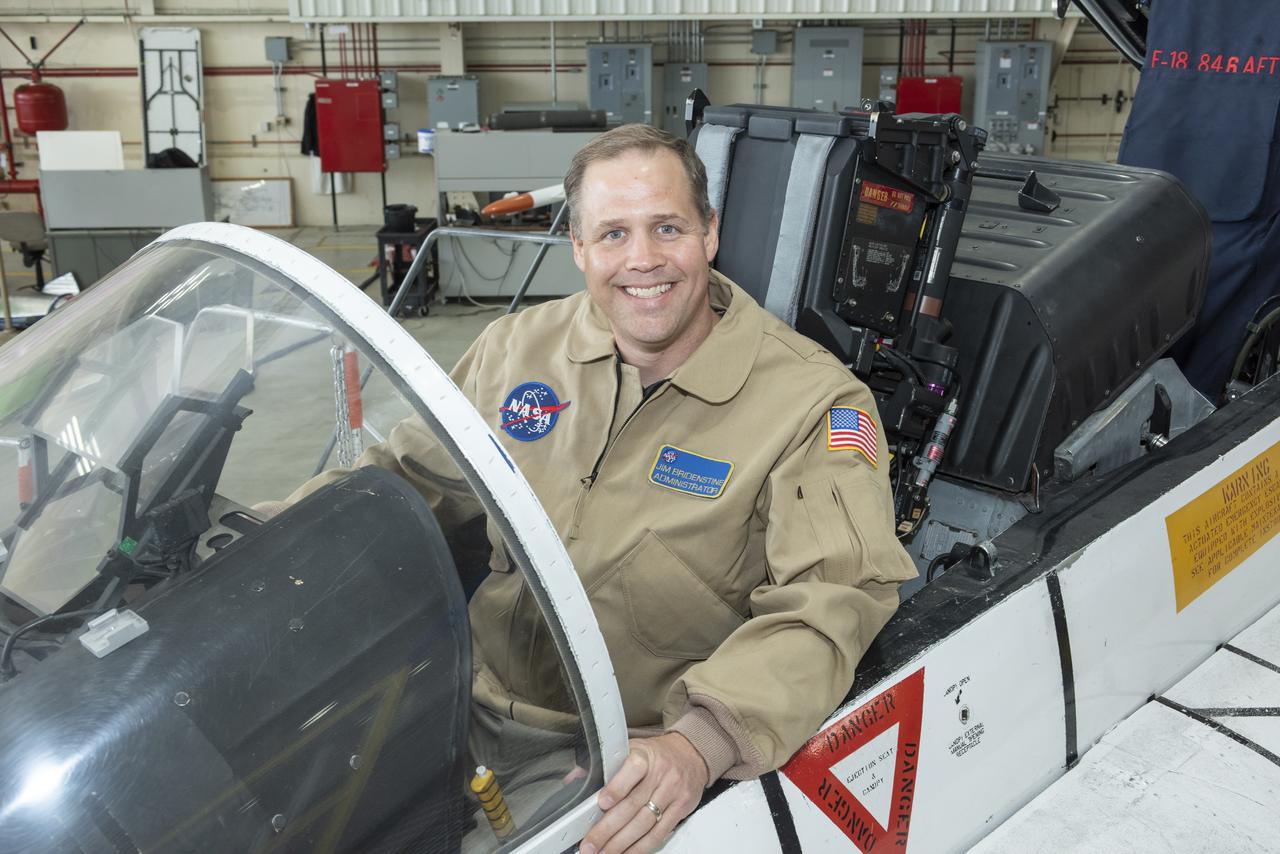
NASA Administrator Bridenstine, former navy pilot, sits comfortably back in F-18 jet cockpit at Armstrong Flight Research Center.
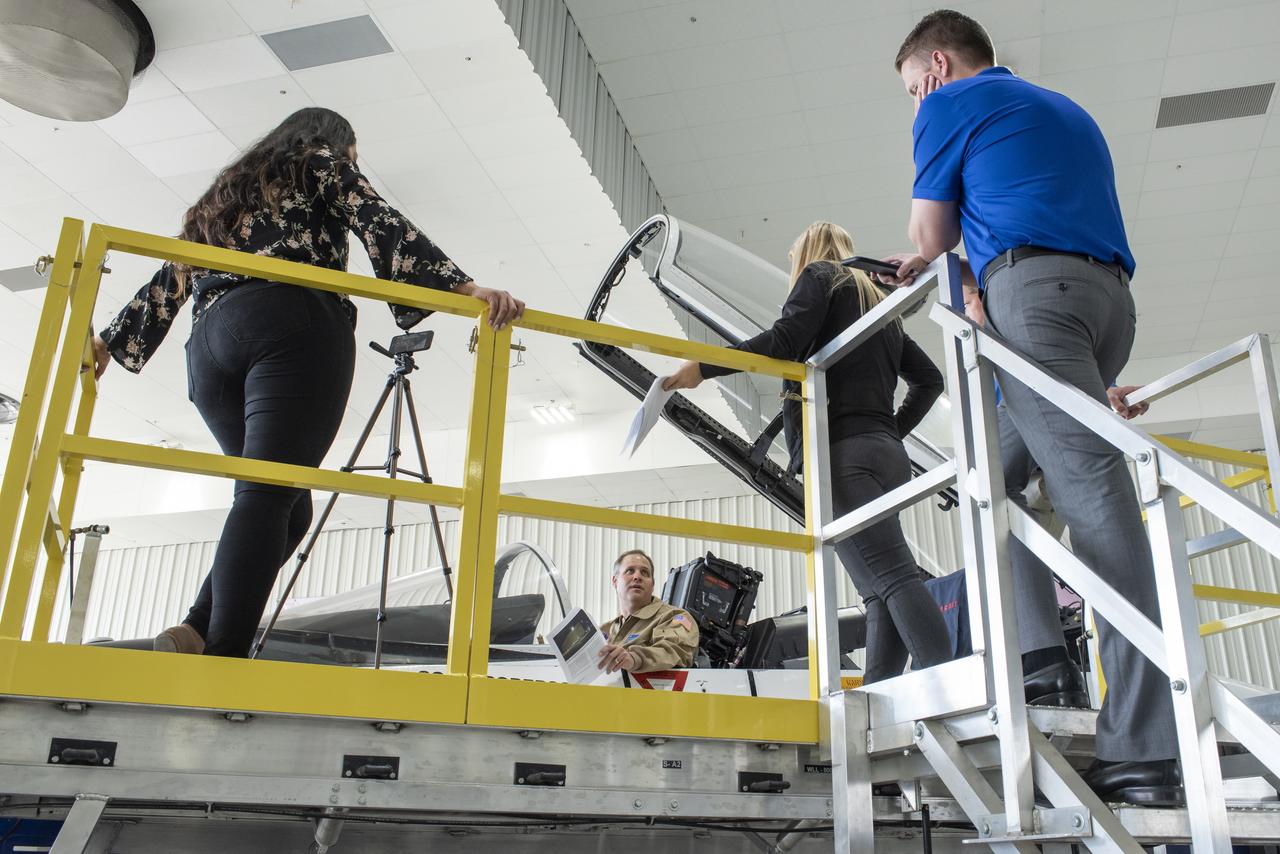
NASA Administrator Bridenstine sits in F-18 jet cockpit in NASA Armstrong Flight Research Center hangar in California where he did a Facebook Live event.
NASA Administrator Bridenstine, former navy pilot, sits comfortably back in F-18 jet cockpit at Armstrong Flight Research Center.
NASA Administrator Bridenstine sits in F-18 jet cockpit in NASA Armstrong Flight Research Center hangar in California where he did a Facebook Live event.
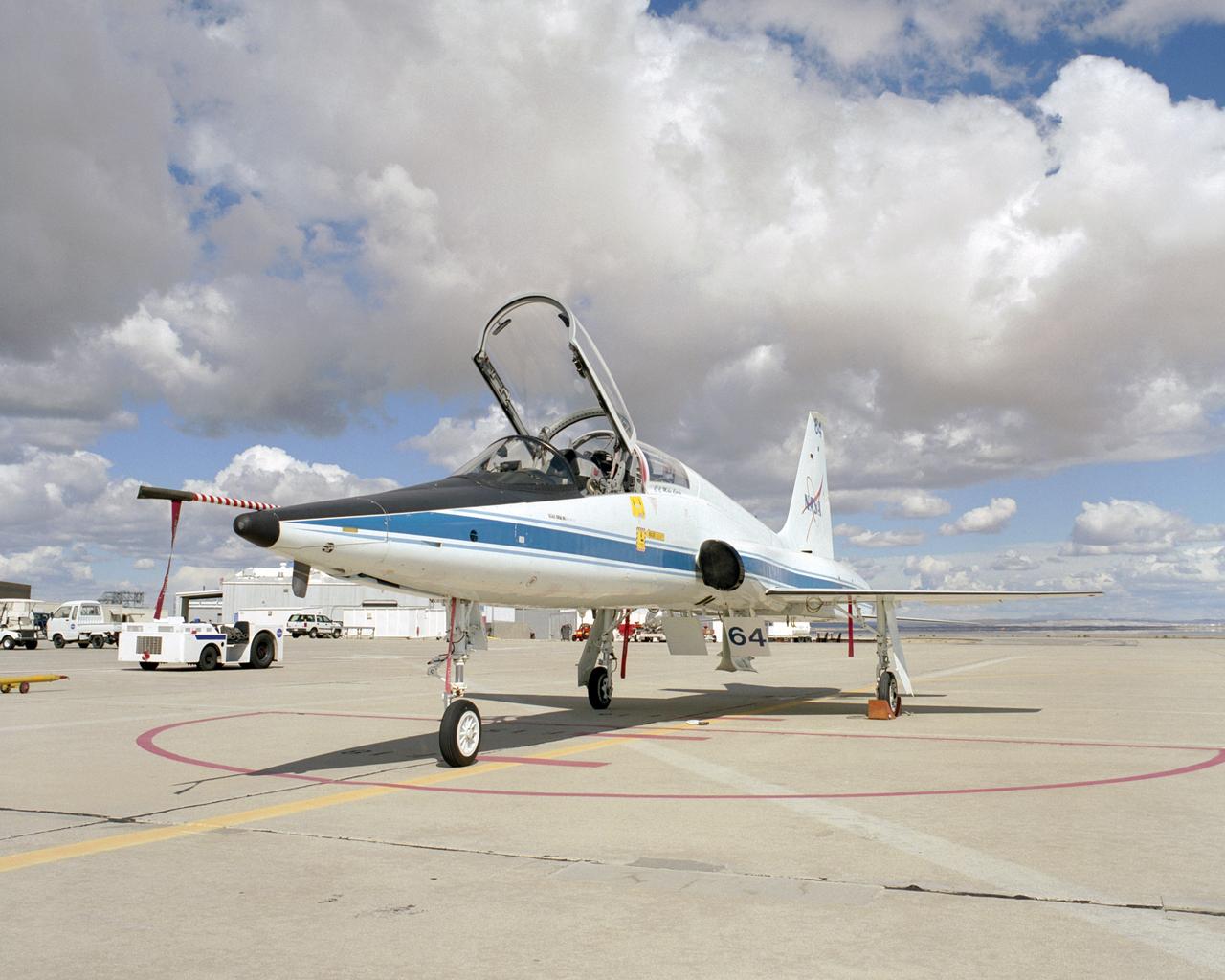
Formerly at NASA's Langley Research Center, this Northrop T-38 Talon is now used for mission support and pilot proficiency at the Dryden Flight Research Center.
Formerly at NASA's Langley Research Center, this Northrop T-38 Talon is now used for mission support and pilot proficiency at the Dryden Flight Research Center
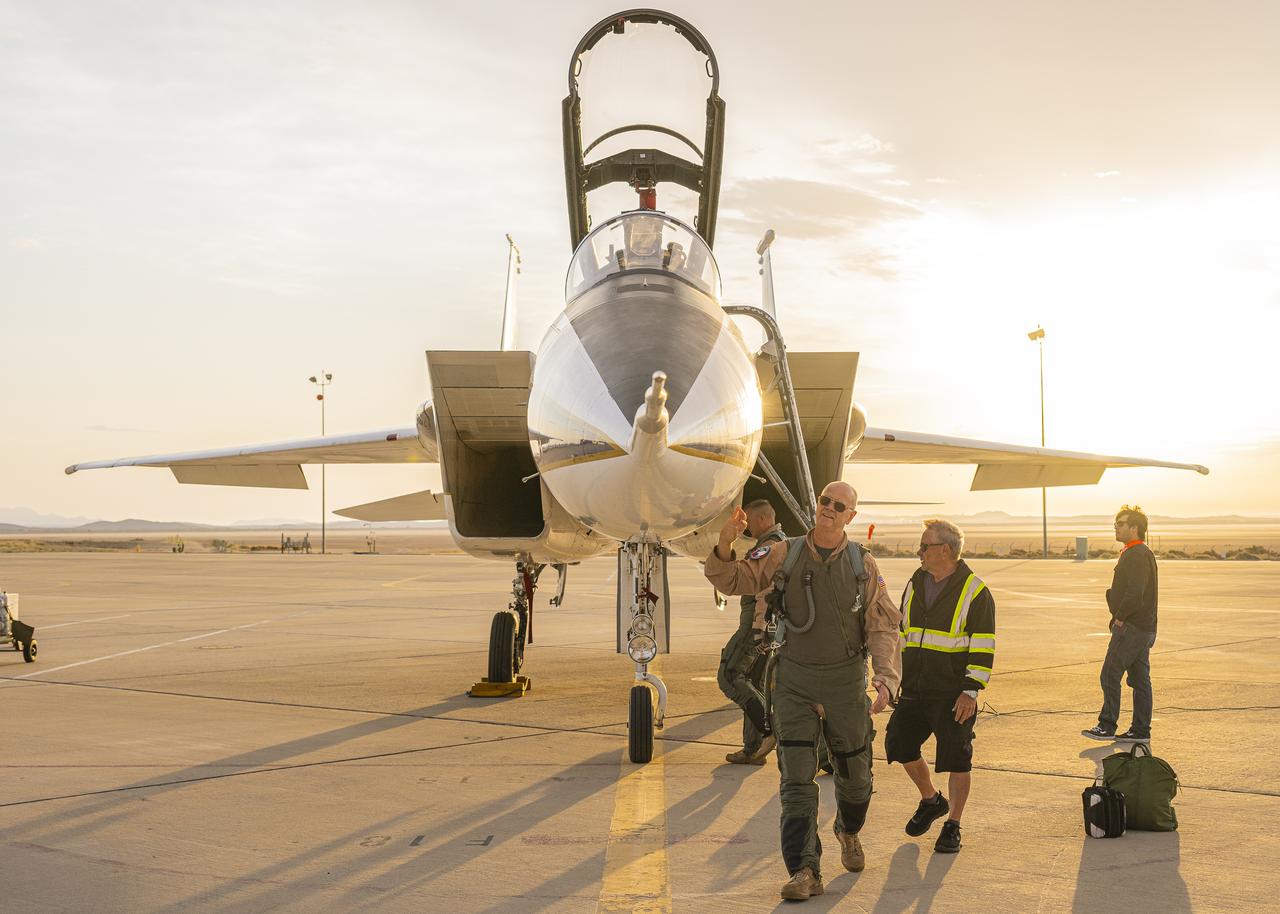
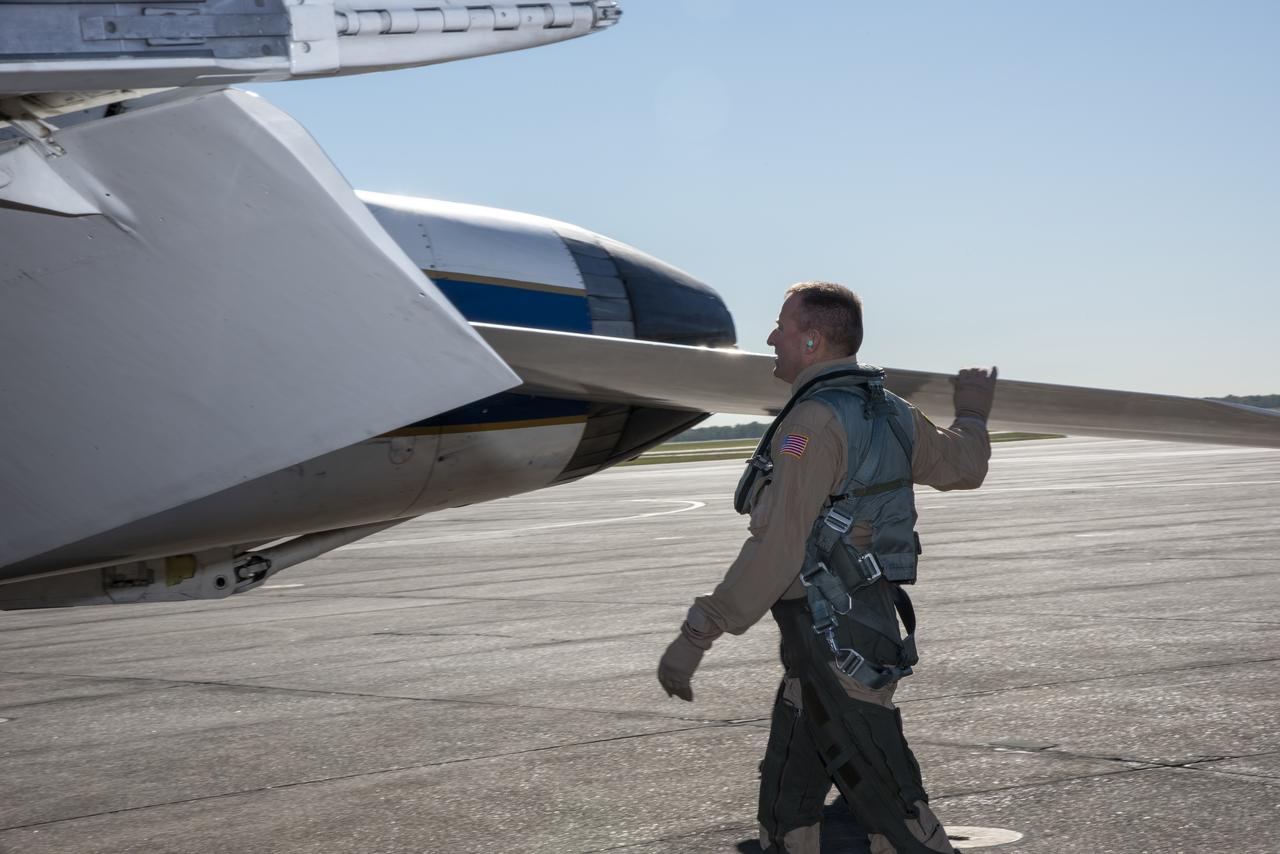
NASA test pilot Nils Larson walks around an F-15B research aircraft for a rehearsal flight supporting the agency’s Quesst mission at NASA’s Armstrong Flight Research Center in Edwards, California. The flight was part of a full-scale dress rehearsal for Phase 2 of the mission, which will eventually measure quiet sonic thumps generated by the X-59. The flight series helped NASA teams refine procedures and practice data collection ahead of future X-59 flights.
NASA Test Pilot Prepares for Rehearsal Flight
NASA pilot Ed Lewis (rear) briefs NASA test pilot Dick Ewers on the flight instruments of NASA's YO-3A acoustics research aircraft prior to a checkout flight.
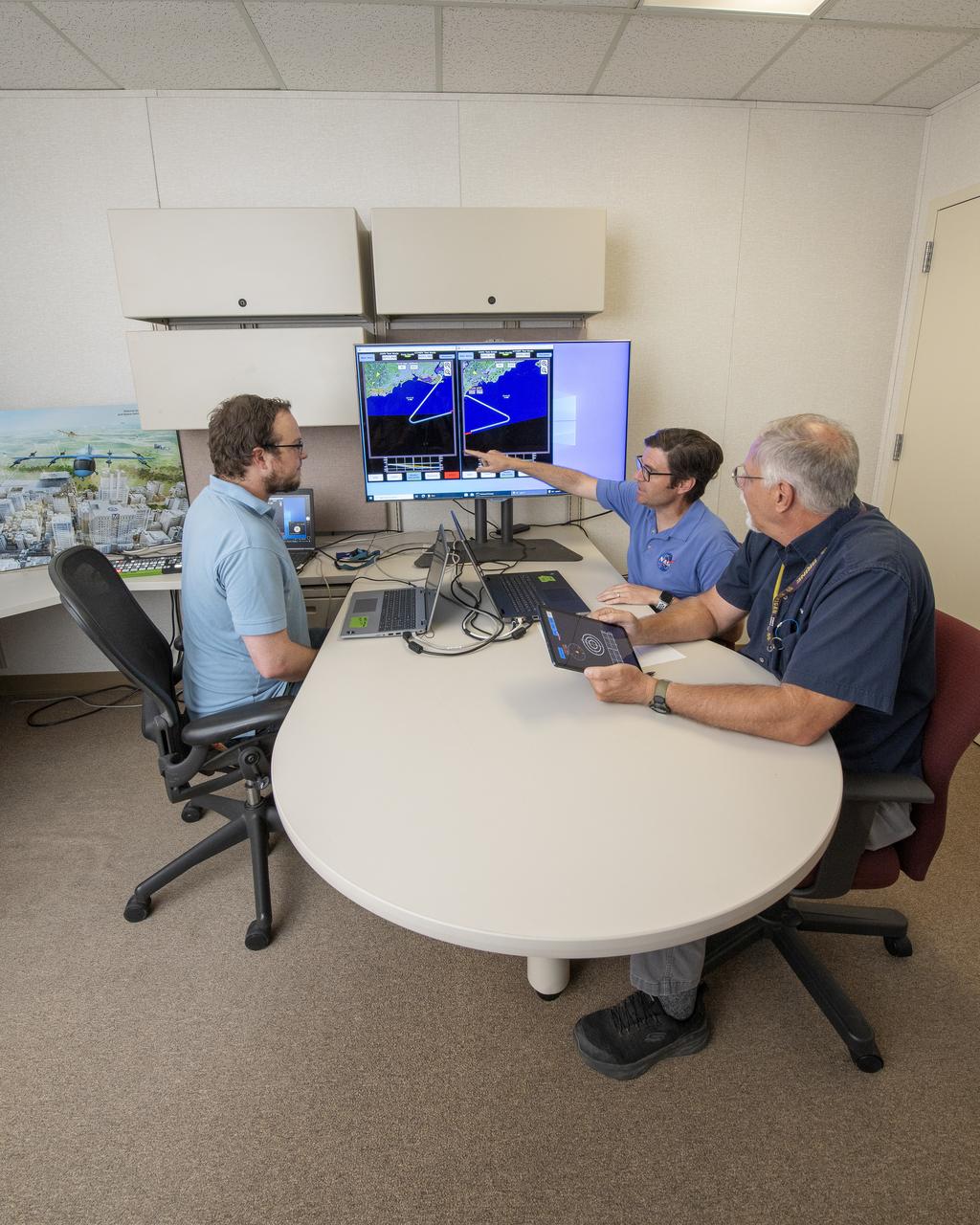
NASA software developer, Ethan Williams, left, pilot Scott Howe, and operations test consultant Jan Scofield run a flight path management software simulation at NASA’s Armstrong Flight Research Center in Edwards, California in May 2023. This simulation research supports the integration of automated systems for the advanced air mobility mission.
Advanced Air Mobility National Campaign Integration of Automated Systems Simulation Test
Jeremy Johnson, a research pilot and aviation safety officer, poses in front of a PC-12 aircraft inside the hangar at NASA’s Glenn Research Center in Cleveland on Thursday, April 17, 2025. Johnson flies NASA planes to support important scientific research and testing, working with researchers to plan and carry out flights that will get them the data they need while ensuring safety.
NASA SkillBridge Research Pilot and Aviation Safety Officer Jeremy Johnson
Jeremy Johnson, a research pilot and aviation safety officer, poses in front of a PC-12 aircraft inside the hangar at NASA’s Glenn Research Center in Cleveland on Thursday, April 17, 2025. Johnson flies NASA planes to support important scientific research and testing, working with researchers to plan and carry out flights that will get them the data they need while ensuring safety.
NASA SkillBridge Research Pilot and Aviation Safety Officer Jeremy Johnson
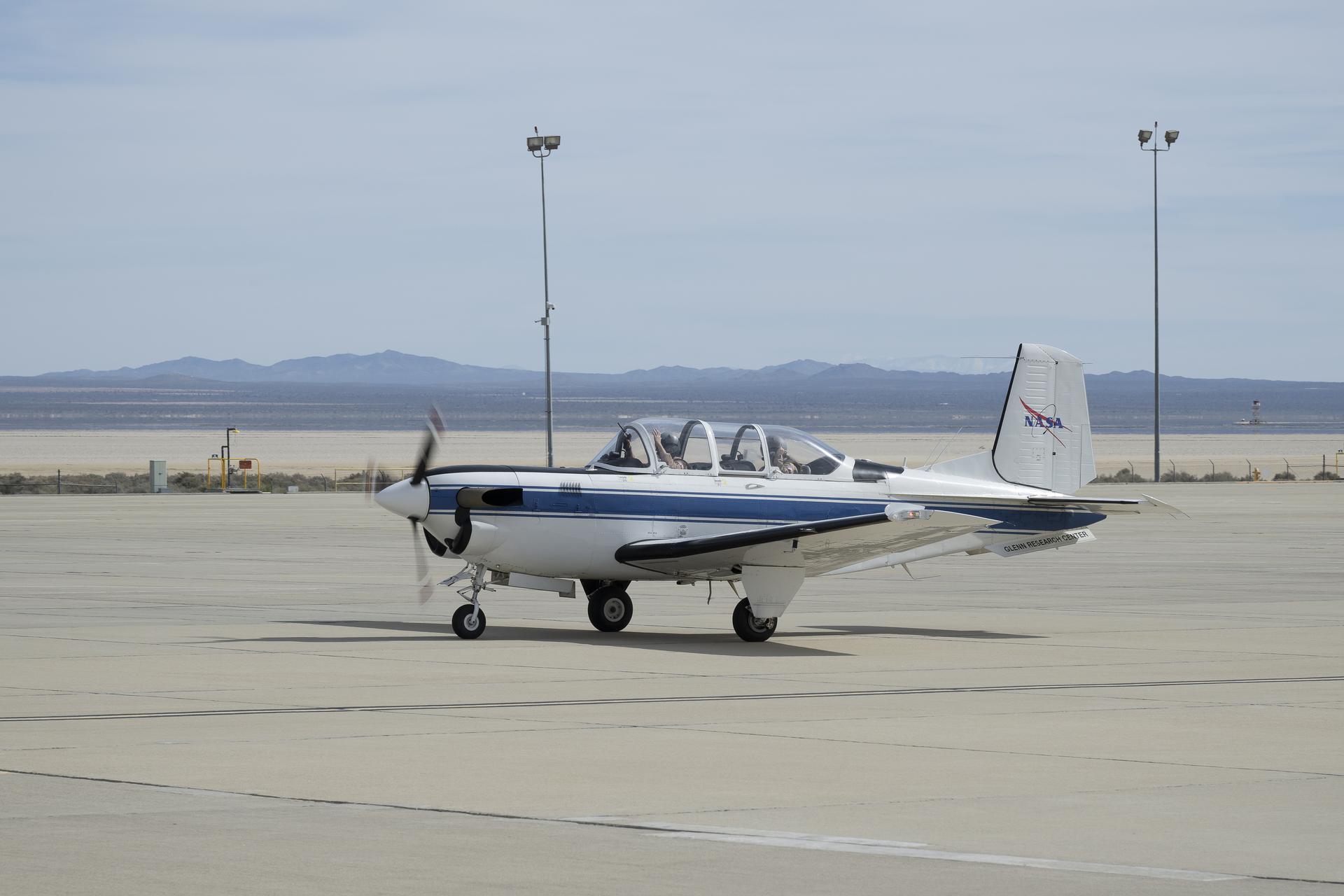
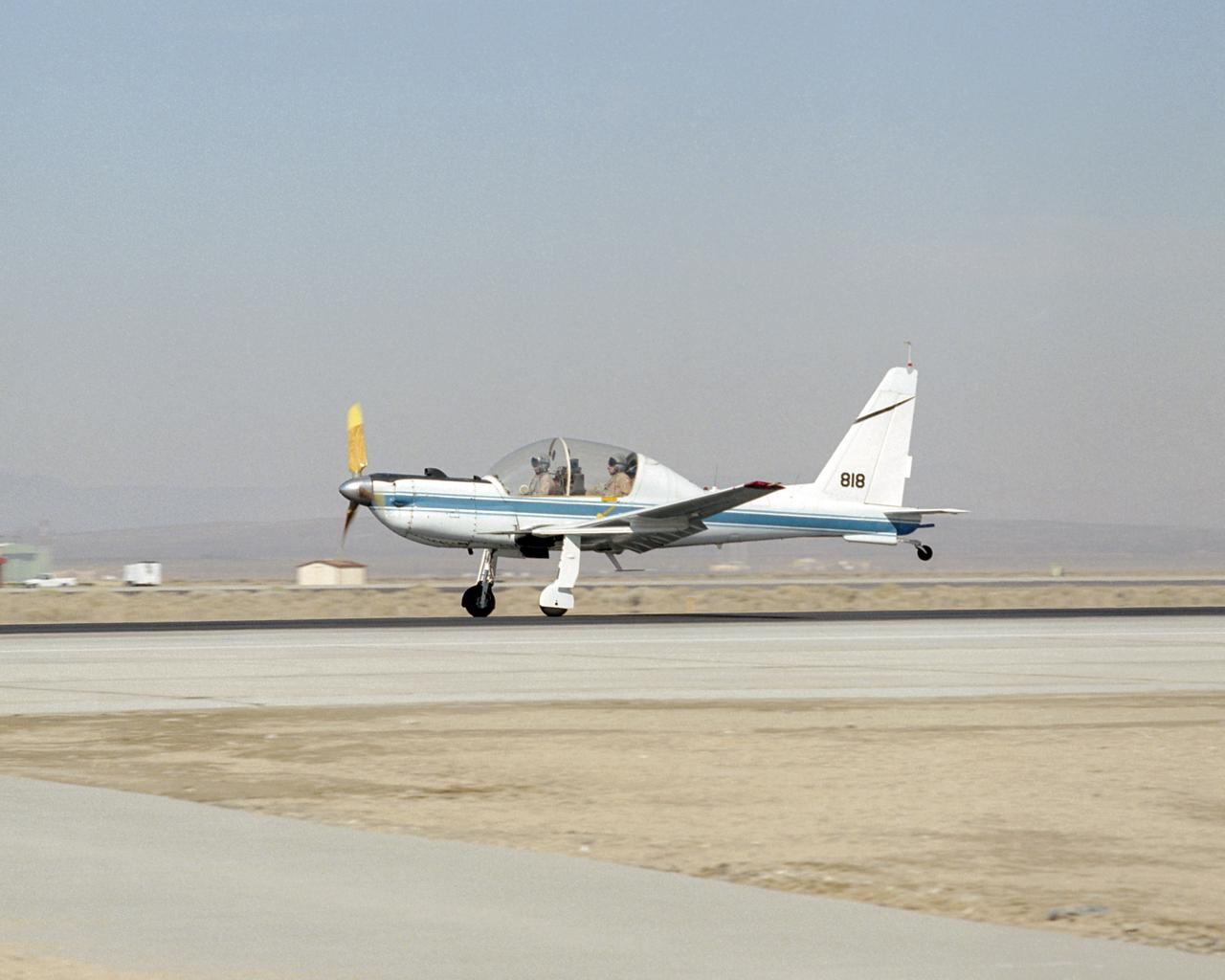
This turboprop-powered Beech T-34C is flown by NASA's Dryden Flight Research Center for mission support and pilot proficiency.
This turboprop-powered Beech T-34C is flown by NASA's Dryden Flight Research Center for mission support and pilot proficiency
Pilot Earle Boyer and researcher Henry Brandhorst prepare for a solar cell calibration flight in a Martin B-57B Canberra at the National Aeronautics and Space Administration (NASA) Lewis Research Center.  Lewis was in the early stages of decades-long energy conversion and space power research effort.   Brandhorst, a member of the Chemistry and Energy Conversion Division, led a team of Lewis researchers in a quest to develop new power sources to sustain spacecraft in orbit. Solar cells proved to be an important source of energy, but researchers discovered that their behavior varied at different atmospheric levels. Their standardization and calibration were critical.  Brandhorst initiated a standardized way to calibrate solar cells in the early 1960s using the B-57B aircraft. The pilots would take the aircraft up into the troposphere and open the solar cell to the sunlight. The aircraft would steadily descend while instruments recorded how much energy was being captured by the solar cell. From this data, Brandhorst could determine the estimated power for a particular solar cell at any altitude.    Pilot Earle Boyer joined NASA Lewis in October 1962. He had flown Convair F-102 Delta Dagger fighters in the Air Force and served briefly in the National Guard before joining the Langley Research Center. Boyer was only at Langley a few months before he transferred to Cleveland. He flew the B-57B, a Convair F-106 Delta Dart, Gulfstream G-1 with an experimental turboprop, Learjet and many other aircraft over the next 32 years at Lewis.
NASA Pilot and Researcher Prepare for a Solar Cell Calibration Flight
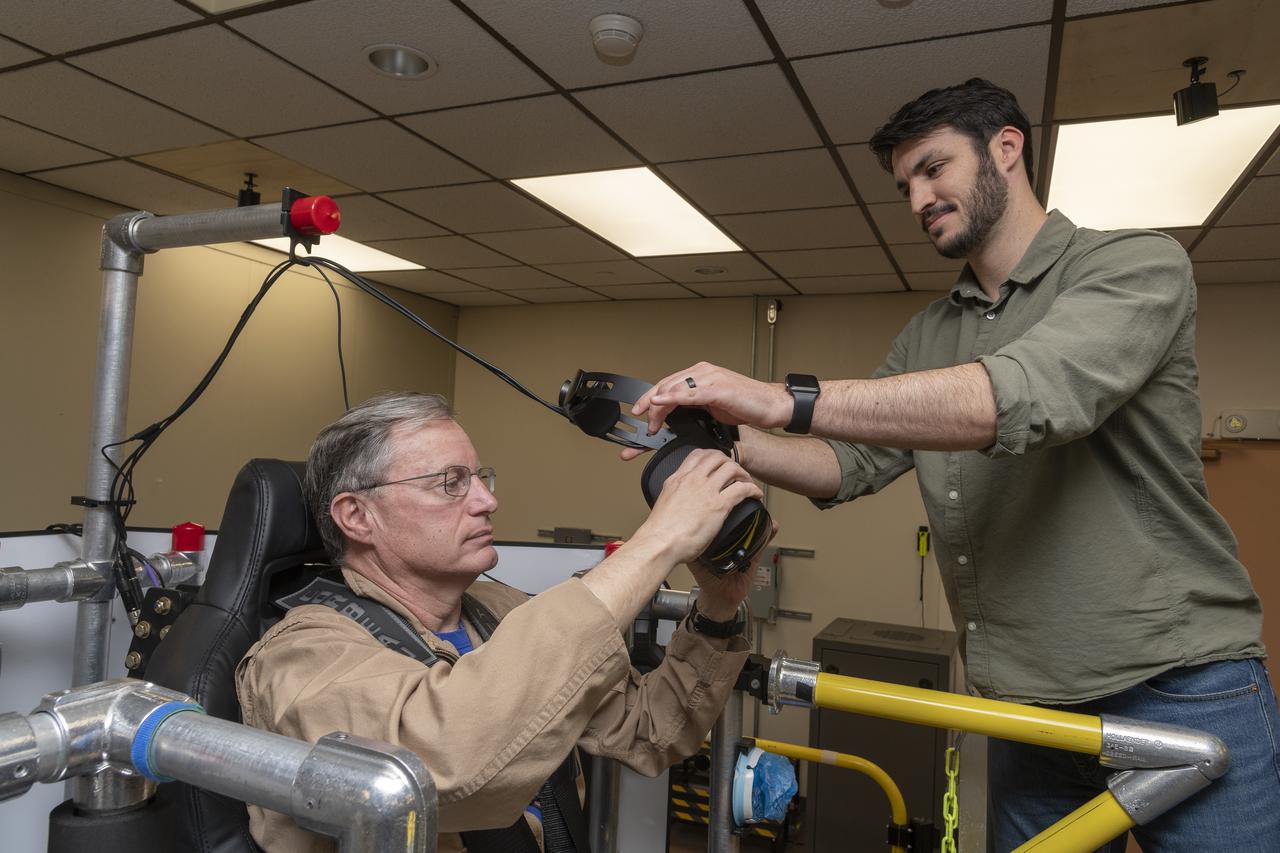
NASA test pilot Wayne Ringelberg and NASA researcher Kyle Barnes prepare for Ringelberg’s ride in the air taxi virtual reality flight simulator during a test at NASA’s Armstrong Flight Research Center in Edwards, California in March 2024.
Air Taxi Passenger Comfort Simulator at NASA’s Armstrong Flight Research Center with Pilot
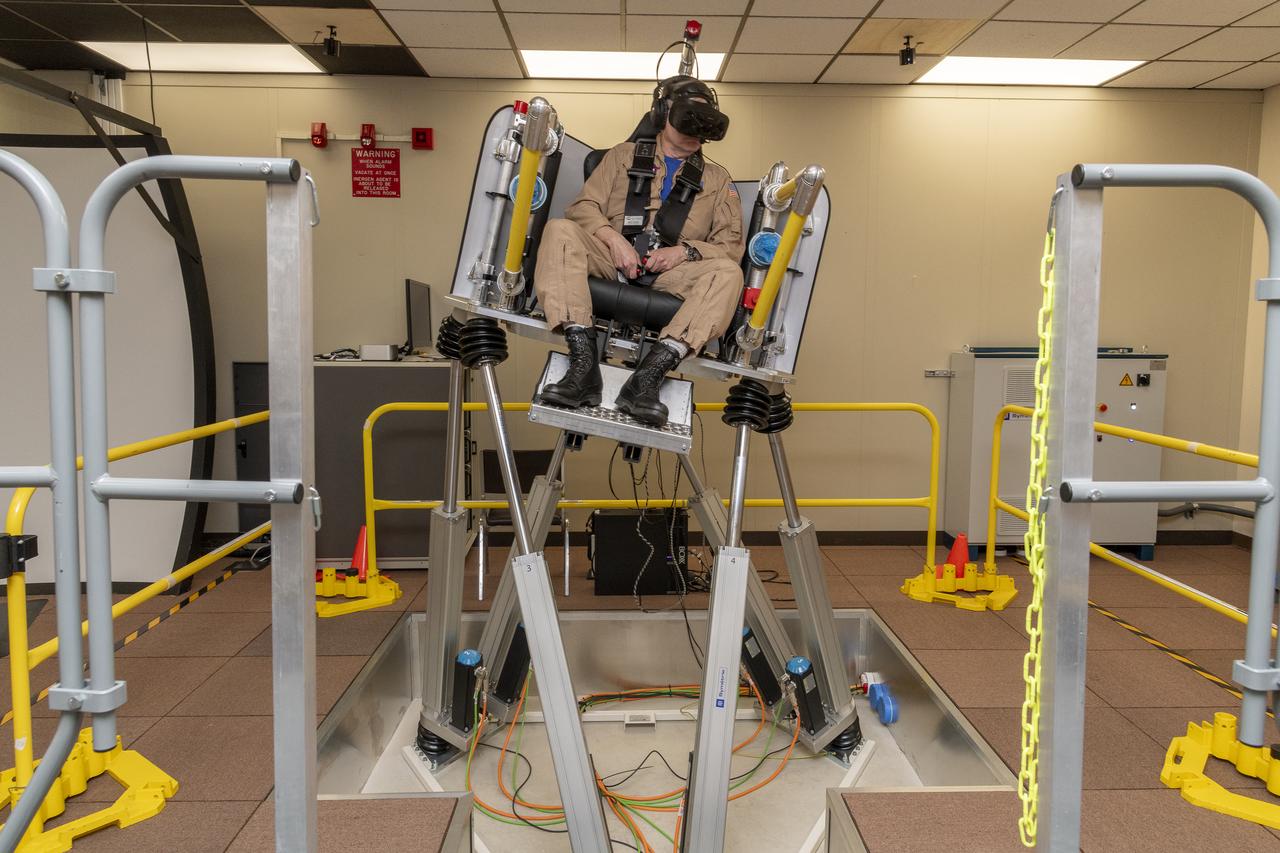
NASA test pilot Wayne Ringelberg sits in the air taxi virtual reality flight simulator during a test at NASA’s Armstrong Flight Research Center in Edwards, California in March 2024.
Air Taxi Passenger Comfort Simulator at NASA’s Armstrong Flight Research Center with Pilot
NASA research pilot Jim Less wears a U.S. Navy harness configuration with the NASA Jet Propulsion Laboratory in California prototype mask, which uses laser sensors to determine levels of carbon dioxide and water exhaled inside the mask. This prototype was tested in conjunction with the current VigilOX system, which measures the pilot’s oxygen concentration, breathing pressures and flow rates. This and the U.S. Air Force configuration was used in the Pilot Breathing Assessment program at NASA’s Armstrong Flight Research Center in California.
Pilot Breathing Assessment Program Prototype JPL Mask with U.S. Navy Configuration
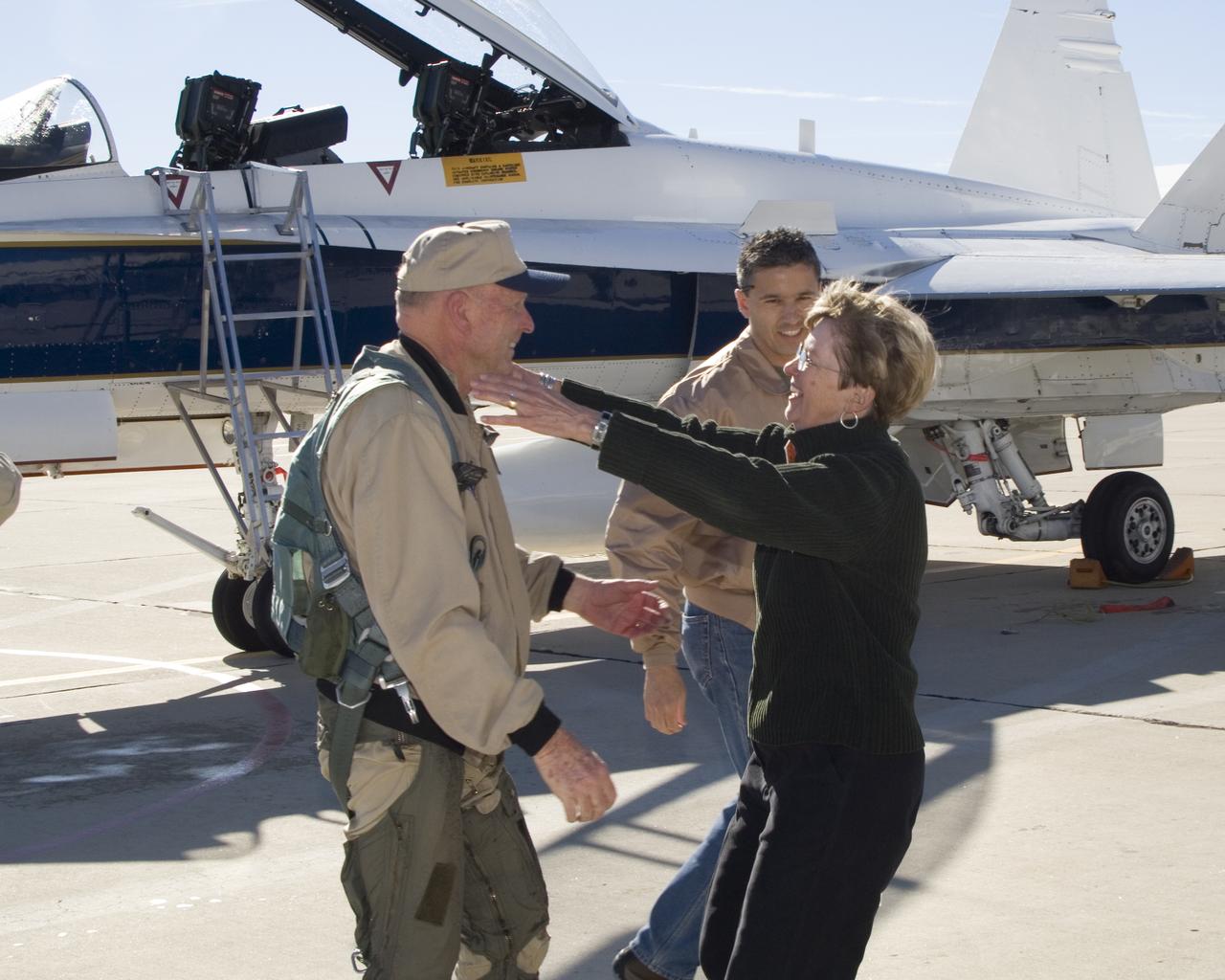
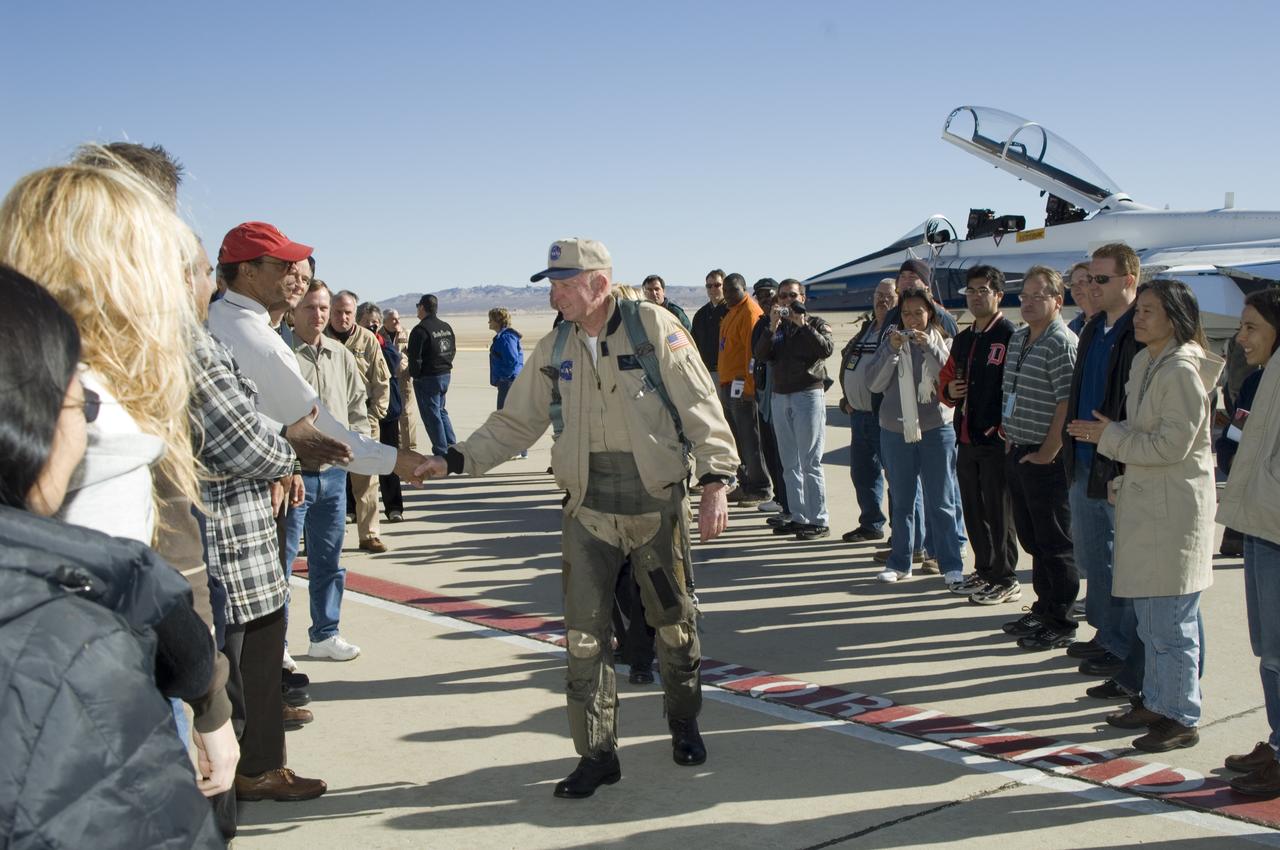
Long-time NASA Dryden research pilot and former astronaut C. Gordon Fullerton capped an almost 50-year flying career, including more than 38 years with NASA, with a final flight in a NASA F/A-18 on Dec. 21, 2007. Fullerton and Dryden research pilot Jim Smolka flew a 90-minute pilot proficiency formation aerobatics flight with another Dryden F/A-18 and a Dryden T-38 before concluding with two low-level formation flyovers of Dryden before landing. Fullerton was honored with a water-cannon spray arch provided by two fire trucks from the Edwards Air Force Base fire department as he taxied the F/A-18 up to the Dryden ramp, and was then greeted by his wife Marie and several hundred Dryden staff after his final flight.  Fullerton began his flying career with the U.S. Air Force in 1958 after earning bachelor's and master's degrees in mechanical engineering from the California Institute of Technology. Initially trained as a fighter pilot, he later transitioned to multi-engine bombers and became a bomber operations test pilot after attending the Air Force Aerospace Research Pilot School at Edwards Air Force Base, Calif. He then was assigned to the flight crew for the planned Air Force Manned Orbital Laboratory in 1966.  Upon cancellation of that program, the Air Force assigned Fullerton to NASA's astronaut corps in 1969. He served on the support crews for the Apollo 14, 15, 16 and 17 lunar missions, and was later assigned to one of the two flight crews that piloted the space shuttle prototype Enterprise during the Approach and Landing Test program at Dryden. He then logged some 382 hours in space when he flew on two early space shuttle missions, STS-3 on Columbia in 1982 and STS-51F on Challenger in 1985. He joined the flight crew branch at NASA Dryden after leaving the astronaut corps in 1986.  During his 21 years at Dryden, Fullerton was project pilot on a number of high-profile research efforts, including the Propulsion Controlled Aircraft, the high-speed landing tests of
Retired NASA research pilot and former astronaut Gordon Fullerton was greeted by scores of NASA Dryden staff who bid him farewell after his final NASA flight.
Long-time NASA Dryden research pilot and former astronaut C. Gordon Fullerton capped an almost 50-year flying career, including more than 38 years with NASA, with a final flight in a NASA F/A-18 on Dec. 21, 2007. Fullerton and Dryden research pilot Jim Smolka flew a 90-minute pilot proficiency formation aerobatics flight with another Dryden F/A-18 and a Dryden T-38 before concluding with two low-level formation flyovers of Dryden before landing. Fullerton was honored with a water-cannon spray arch provided by two fire trucks from the Edwards Air Force Base fire department as he taxied the F/A-18 up to the Dryden ramp, and was then greeted by his wife Marie and several hundred Dryden staff after his final flight.  Fullerton began his flying career with the U.S. Air Force in 1958 after earning bachelor's and master's degrees in mechanical engineering from the California Institute of Technology. Initially trained as a fighter pilot, he later transitioned to multi-engine bombers and became a bomber operations test pilot after attending the Air Force Aerospace Research Pilot School at Edwards Air Force Base, Calif. He then was assigned to the flight crew for the planned Air Force Manned Orbital Laboratory in 1966. Upon cancellation of that program, the Air Force assigned Fullerton to NASA's astronaut corps in 1969.  He served on the support crews for the Apollo 14, 15, 16 and 17 lunar missions, and was later assigned to one of the two flight crews that piloted the space shuttle prototype Enterprise during the Approach and Landing Test program at Dryden. He then logged some 382 hours in space when he flew on two early space shuttle missions, STS-3 on Columbia in 1982 and STS-51F on Challenger in 1985. He joined the flight crew branch at NASA Dryden after leaving the astronaut corps in 1986.  During his 21 years at Dryden, Fullerton was project pilot on a number of high-profile research efforts, including the Propulsion Controlled Aircraft, the high-speed landing tests of
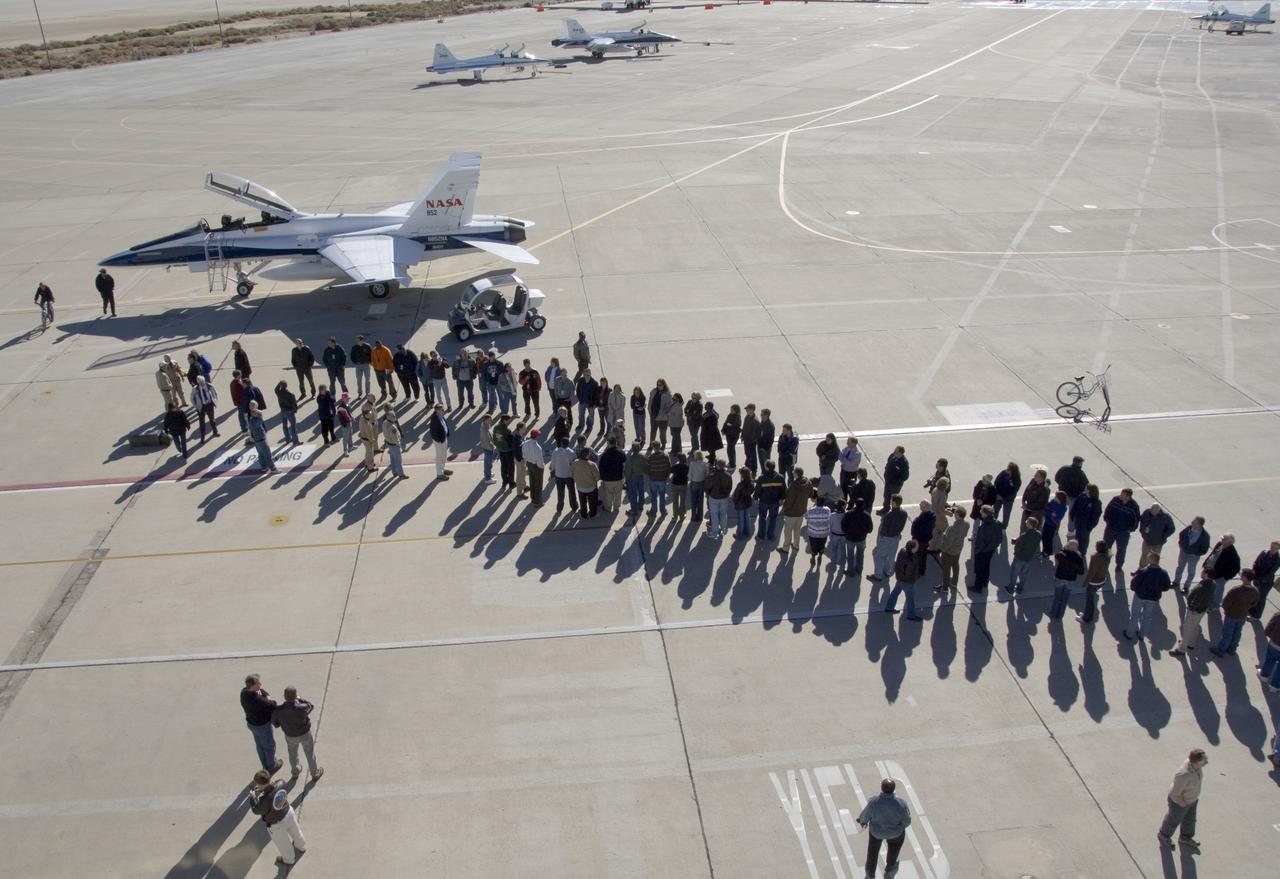
More than 200 Dryden staff formed two long lines on the Dryden ramp to greet retired research pilot Gordon Fullerton after his final flight in a NASA F/A-18.
NASA Dryden research pilot Gordon Fullerton is greeted by his wife Marie on the Dryden ramp after his final flight in a NASA F/A-18 on Dec. 21, 2007.
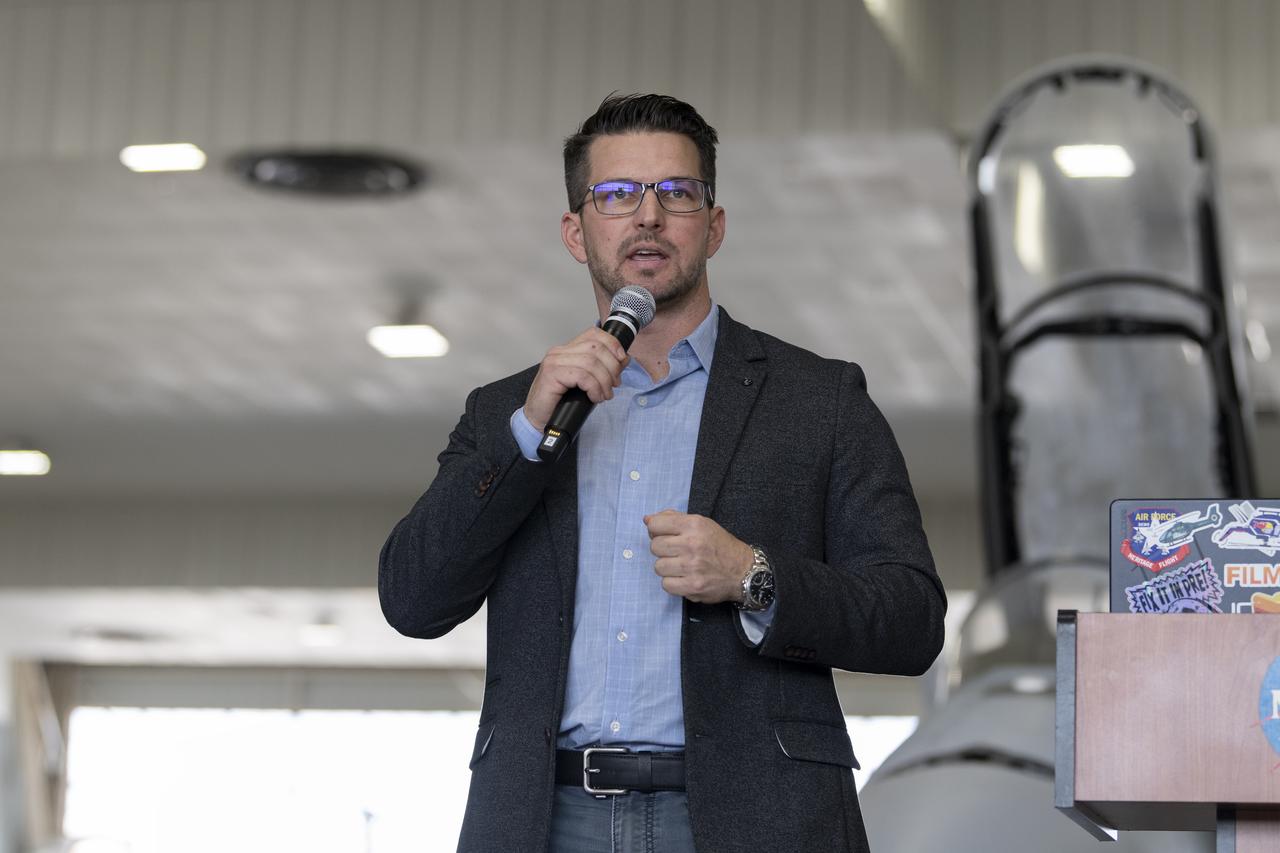
Aerial coordinator and test pilot Kevin LaRosa II describes what it takes to safely plan and document breathtaking footage of aircraft at a presentation at NASA’s Armstrong Flight Research Center in Edwards, California. He has a long list of film credits, including “Ironman”; “Avengers”; “Transformer 5”; “Top Gun: Maverick”; and “Devotion”.
LaRosa II Focuses on Flight Safety
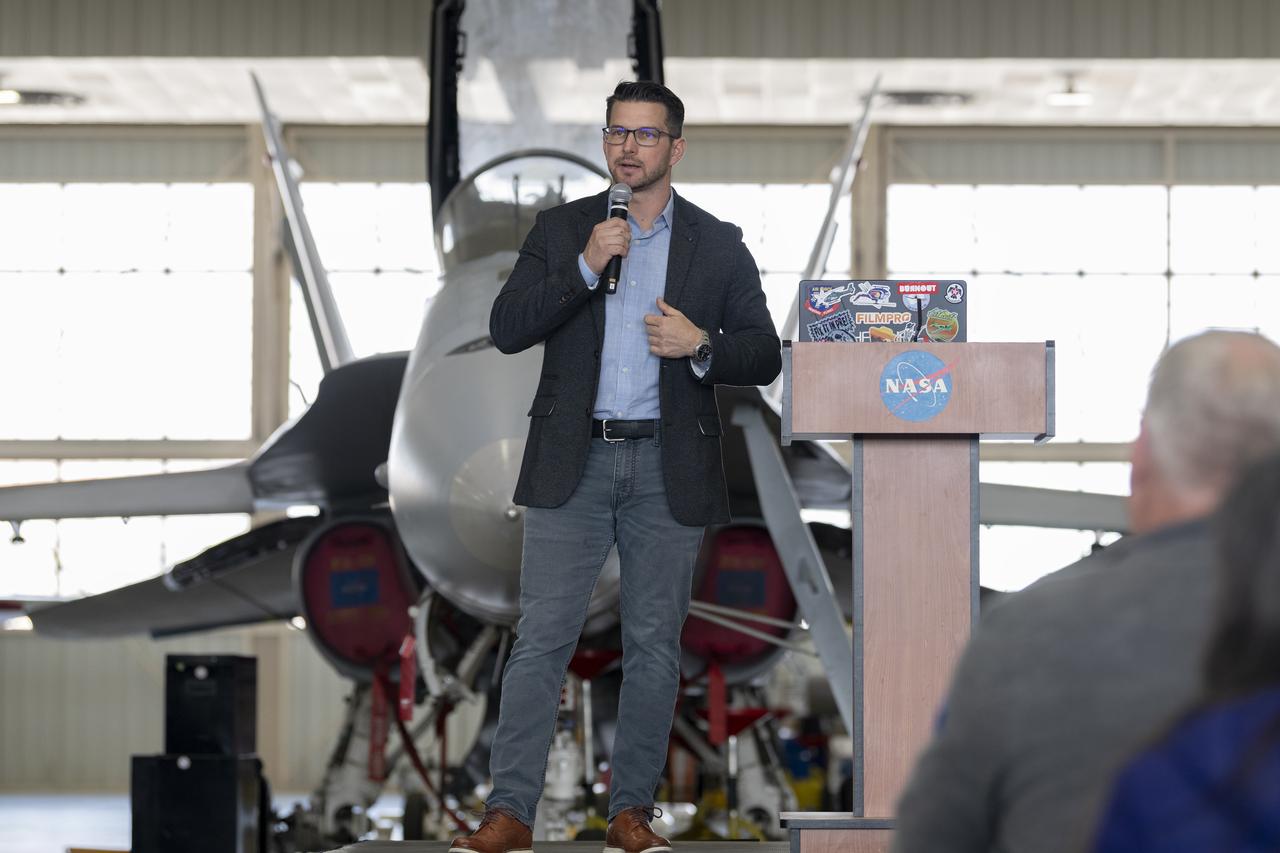
Aerial coordinator and test pilot Kevin LaRosa II describes what it takes to safely plan and document breathtaking footage of aircraft at a presentation at NASA’s Armstrong Flight Research Center in Edwards, California. He has a long list of film credits, including “Ironman”; “Avengers”; “Transformer 5”; “Top Gun: Maverick”; and “Devotion”.
LaRosa II Focuses on Flight Safety
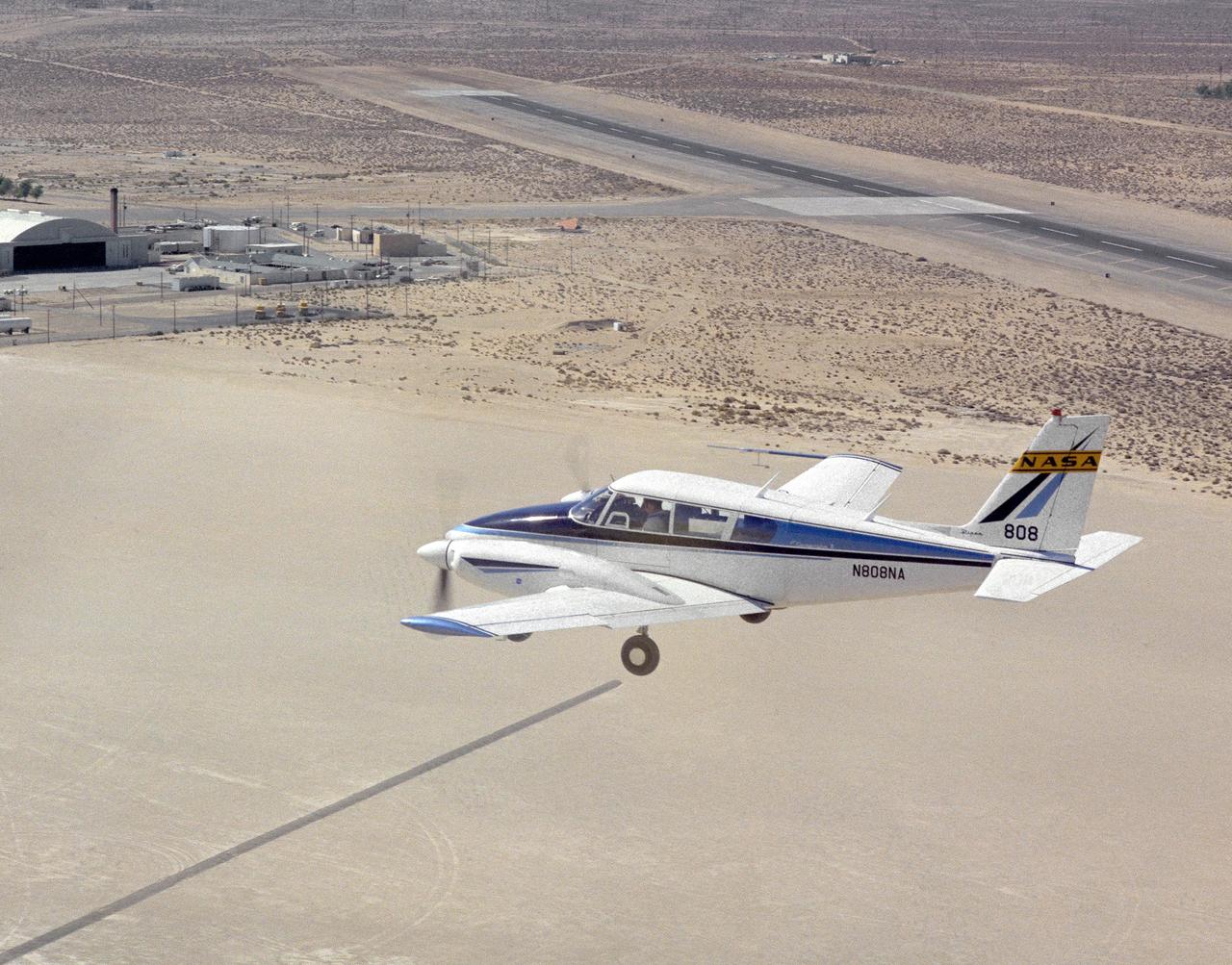
Dryden Flight Research Center's Piper PA-30 Twin Commanche, which helped validate the RPRV concept, descends to a remotely controlled landing on Rogers Dry Lake, unassisted by the onboard pilot. A Piper PA-30 Twin Commanche, known as NASA 808, was used at the NASA Dryden Flight Research Center as a rugged workhorse in a variety of research projects associated with both general aviation and military projects.  In the early 1970s, the PA-30, serial number 301498, was used to test a flight technique used to fly Remotely Piloted Research Vehicles (RPRV's). The technique was first tested with the cockpit windows of the light aircraft blacked out while the pilot flew the aircraft utilizing a television monitor which gave him a "pilot's eye" view ahead of the aircraft. Later pilots flew the aircraft from a ground cockpit, a procedure used with all RPRV's. TV and two-way telemetry allow the pilot to be in constant control of the aircraft. The apparatus mounted over the cockpit is a special fish eye lens camera, used to obtain images that are transmitted to the ground based cockpit. This project paved the way for sophisticated, highly successful research programs involving high risk spin, stall, and flight control conditions, such as the HiMAT and the subscale F-15 remotely piloted vehicles.  Over the years, NASA 808 has also been used for spin and stall research related to general aviation aircraft and also research to alleviate wake vortices behind large jetliners.
PA-30 Twin Comanche - NASA 808 in flight
The Hyper III was a low-cost test vehicle for an advanced lifting-body shape. Like the earlier M2-F1, it was a "homebuilt" research aircraft, i.e., built at the Flight Research Center (FRC), later redesignated the Dryden Flight Research Center. It had a steel-tube frame covered with Dacron, a fiberglass nose, sheet aluminum fins, and a wing from an HP-11 sailplane. Construction was by volunteers at the FRC. Although the Hyper III was to be flown remotely in its initial tests, it was fitted with a cockpit for a pilot. On the Hyper III's only flight, it was towed aloft attached to a Navy SH-3 helicopter by a 400-foot cable. NASA research pilot Bruce Peterson flew the SH-3. After he released the Hyper III from the cable, NASA research pilot Milt Thompson flew the vehicle by radio control until the final approach when Dick Fischer took over control using a model-airplane radio-control box. The Hyper III flared, then landed and slid to a stop on Rogers Dry Lakebed.
ECN-2301
NASA research pilot Wayne Ringelberg wears a U.S. Air Force configuration of the NASA Jet Propulsion Laboratory in California prototype mask, which uses laser sensors to determine levels of carbon dioxide and water exhaled inside the mask. This prototype was tested in conjunction with the current VigilOX system, which measures the pilot’s oxygen concentration, breathing pressures and flow rates. This and the U.S. Navy configuration was used in the Pilot Breathing Assessment program at NASA’s Armstrong Flight Research Center in California.
Pilot Breathing Assessment Program Prototype JPL Mask with U.S. Air Force Configuration 
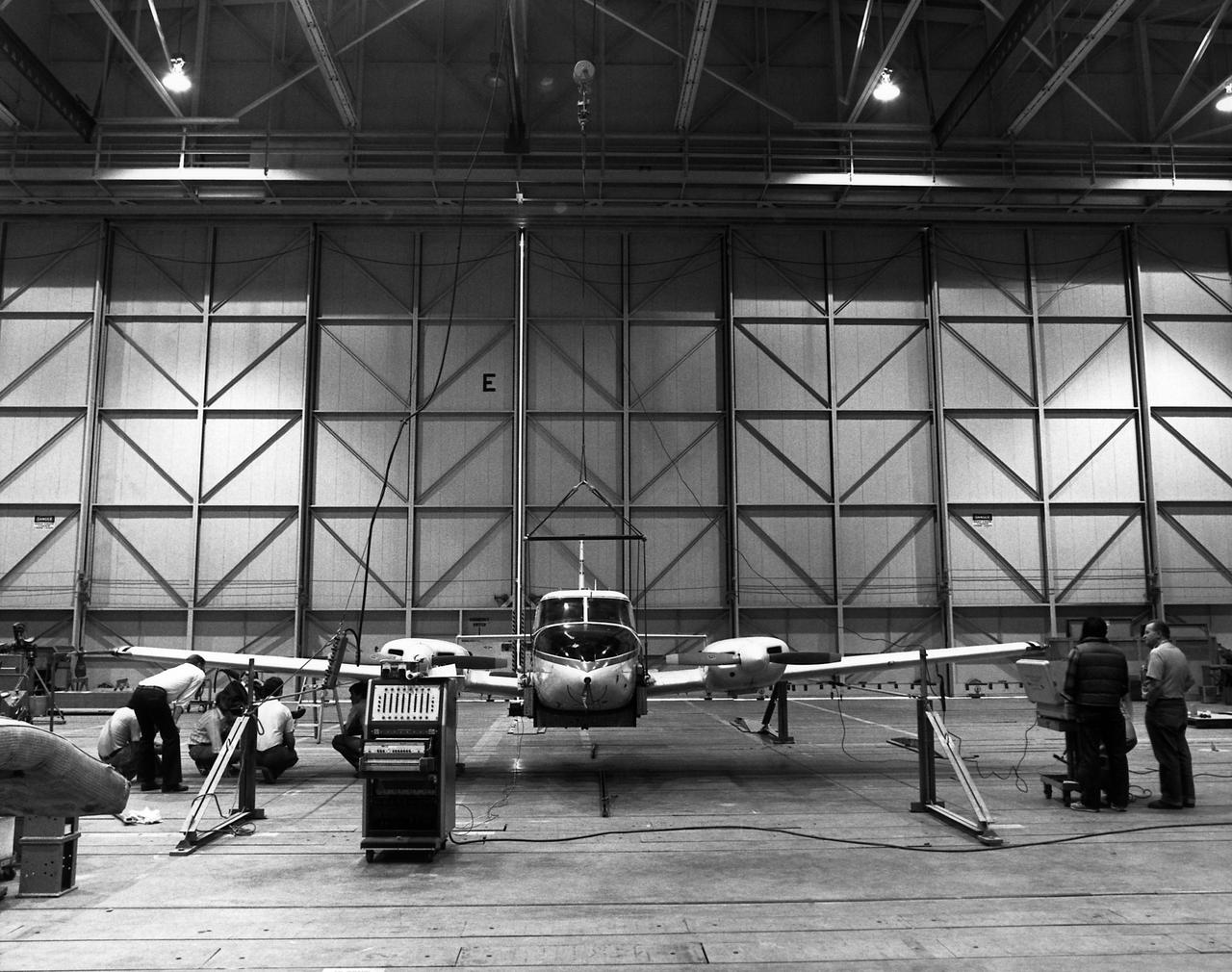
Technicians check instrumentation and systems on NASA 808, a PA-30 aircraft, prior to a research flight. The aircraft was used as the testbed in development of control systems for remotely piloted vehicles that were "flown" from the ground. The concept led to highly successful programs such as the HiMAT and the subscale F-15 remotely piloted vehicles. Over the years, NASA 808 has also been used for spin and stall research related to general aviation aircraft and also research to alleviate wake vortices behind large jetliners.  This 1980 photograph taken inside a hangar shows technicians measuring moment of inertia.
PA-30 Twin Comanche - NASA 808 in hangar
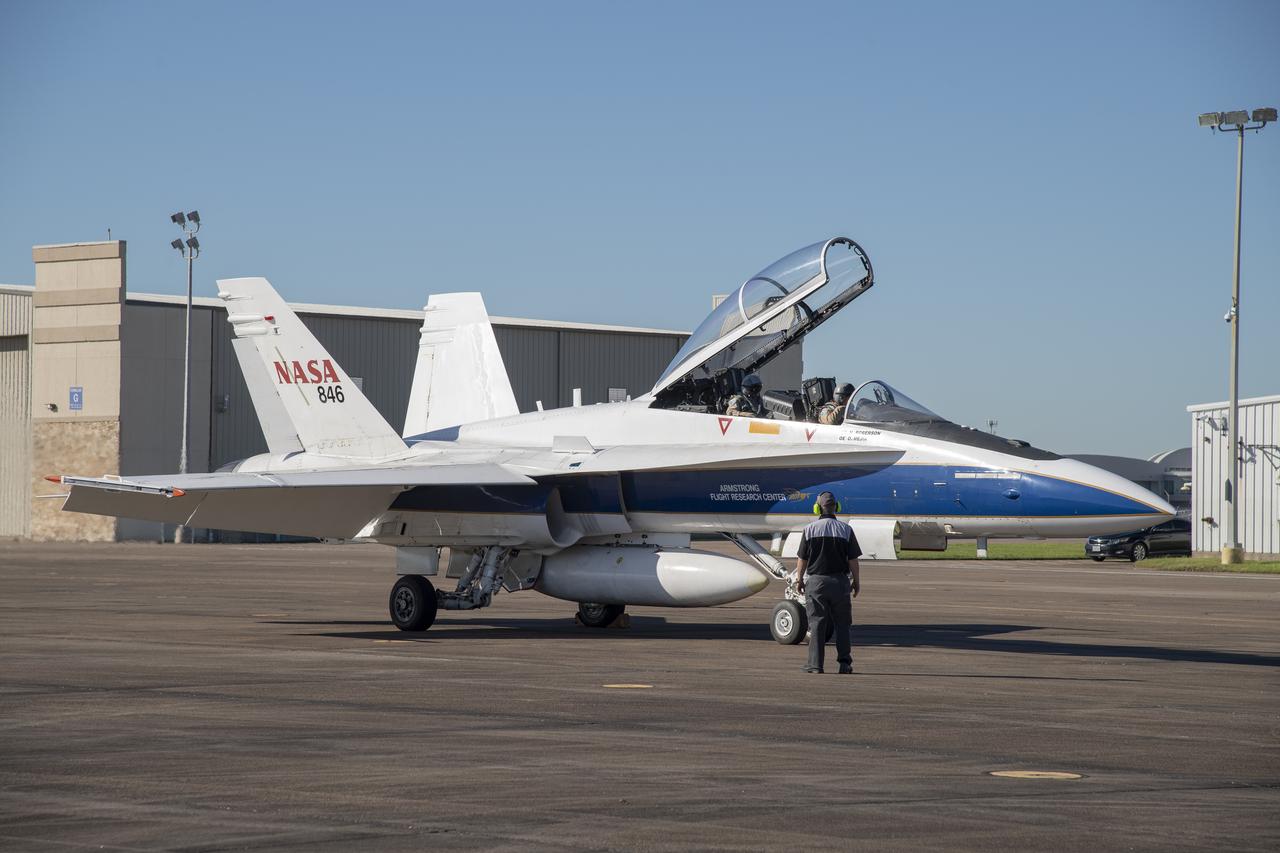
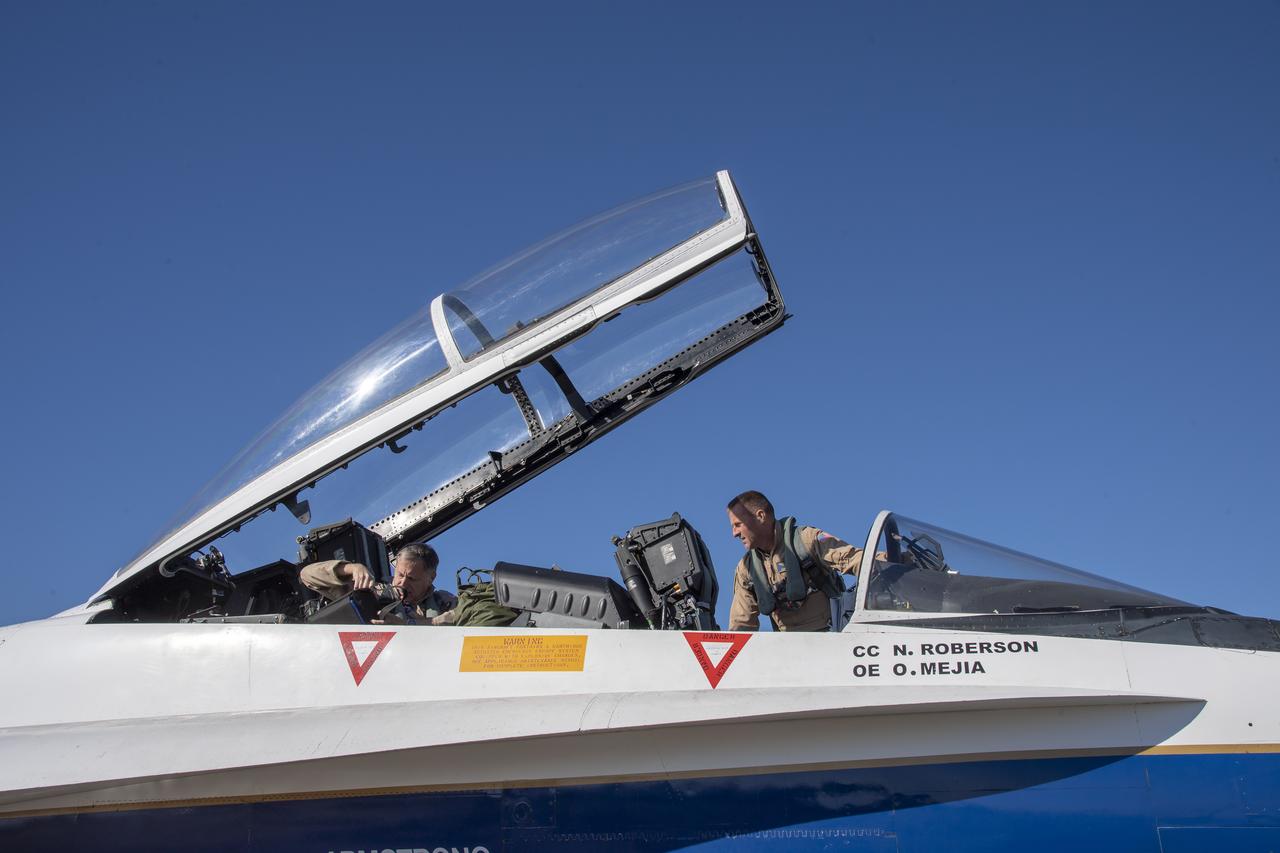
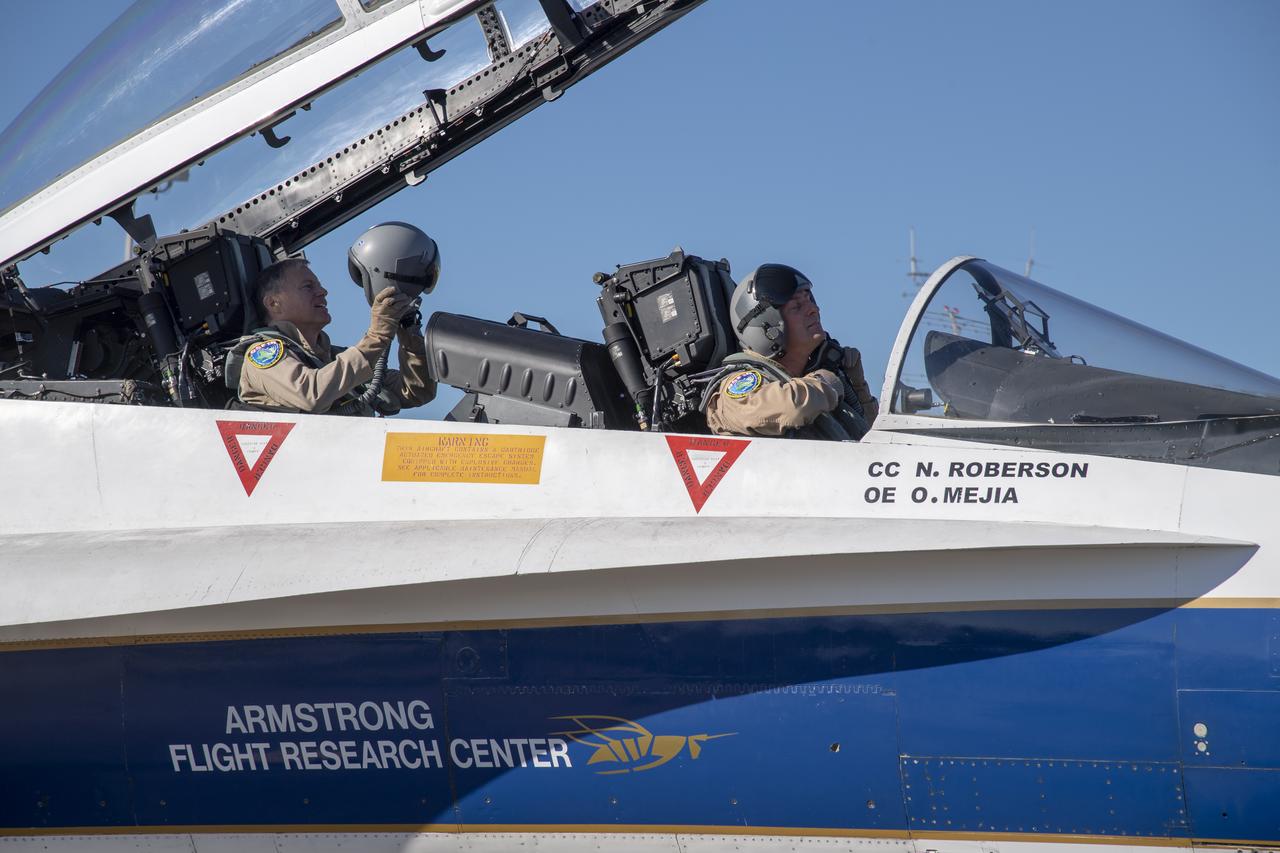
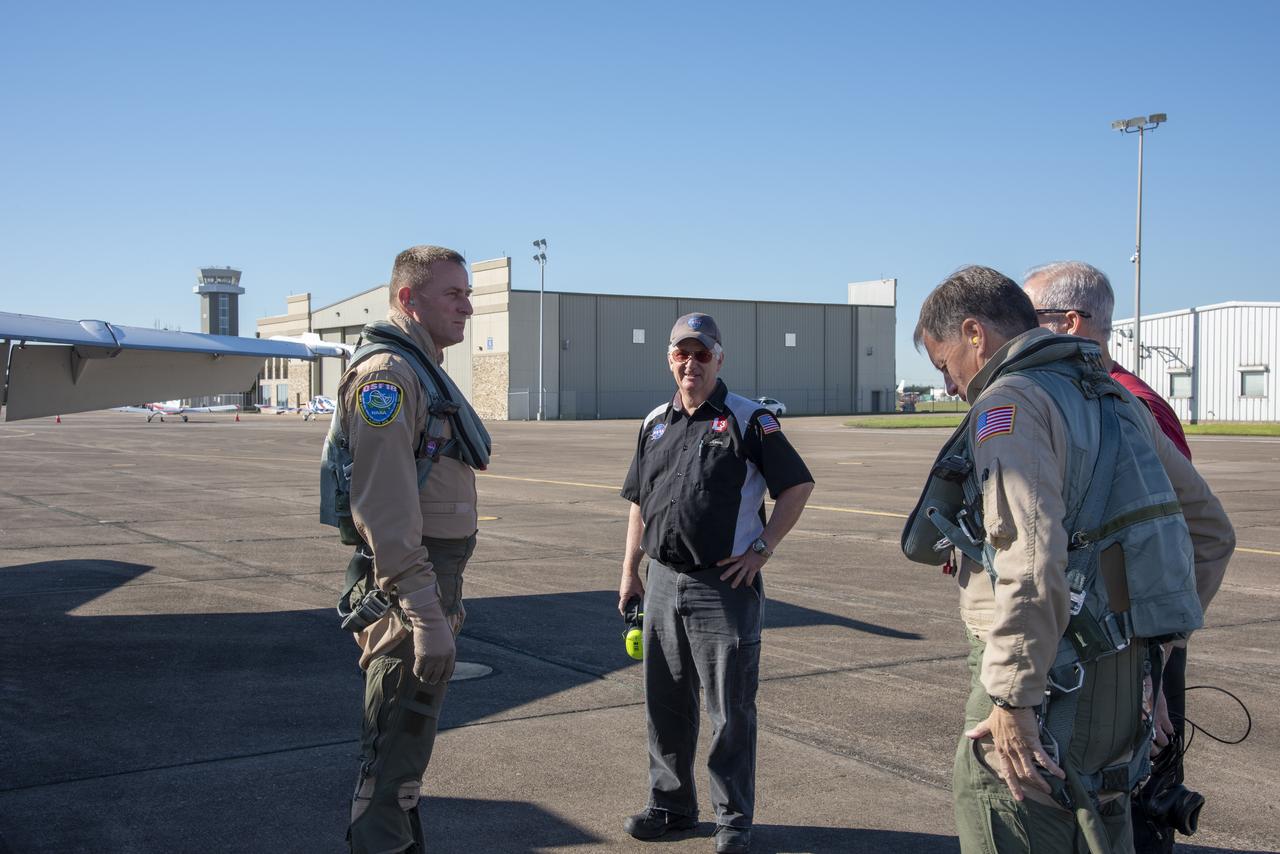
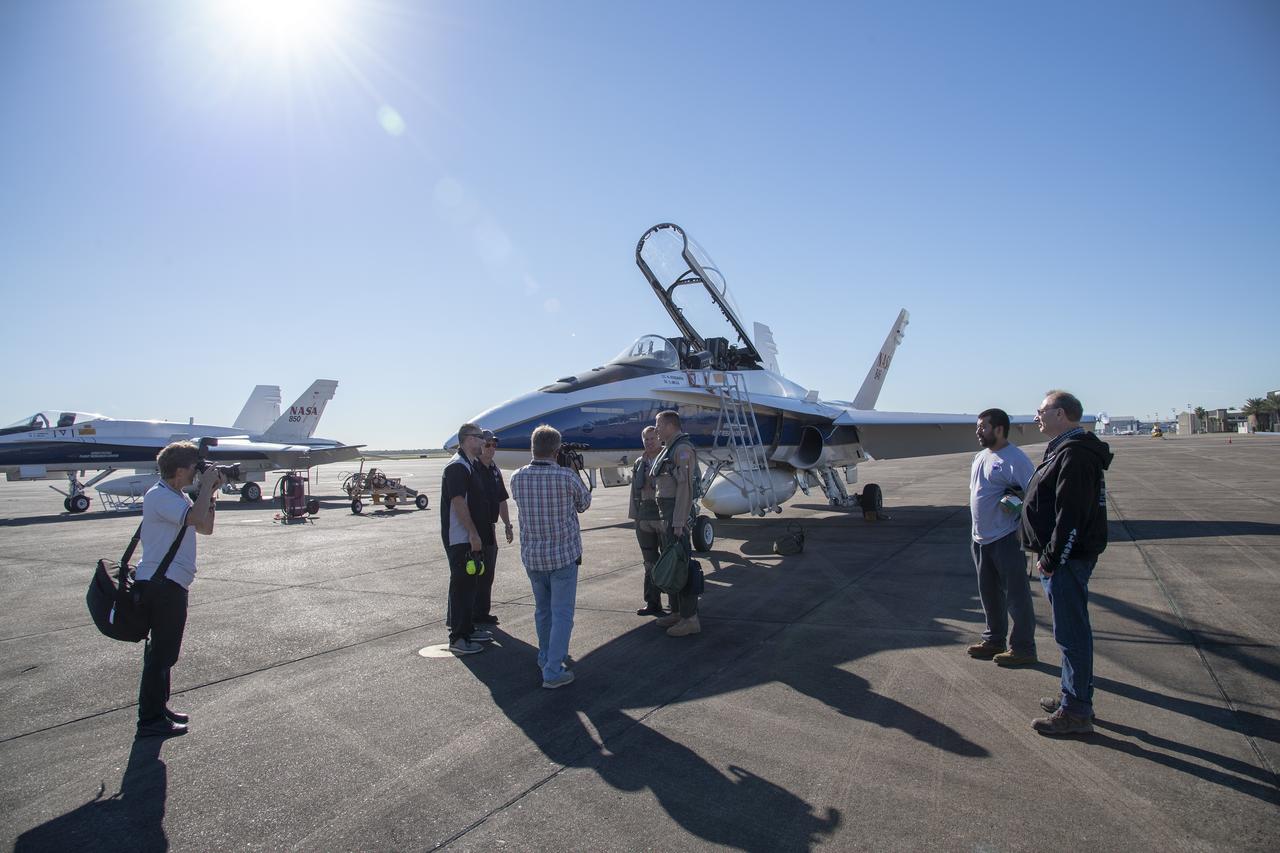
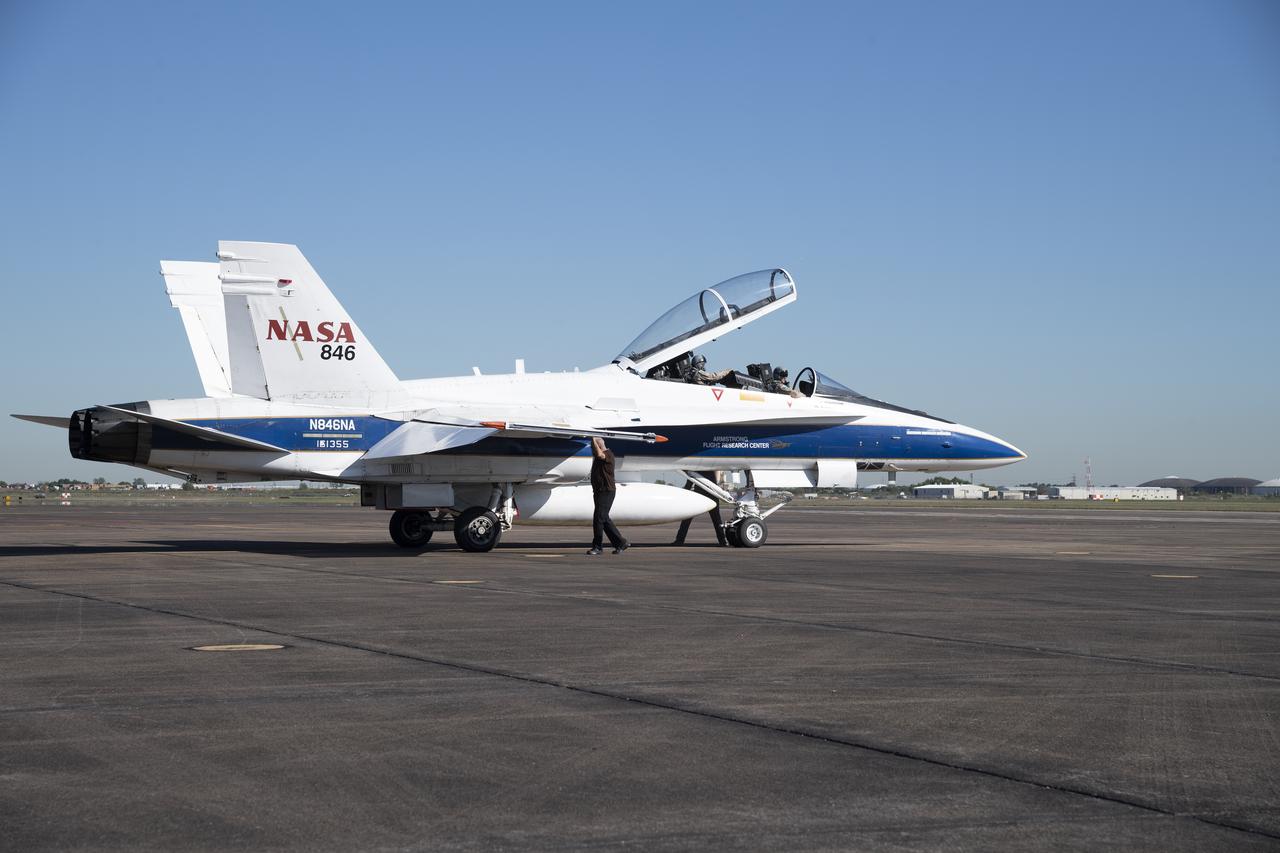
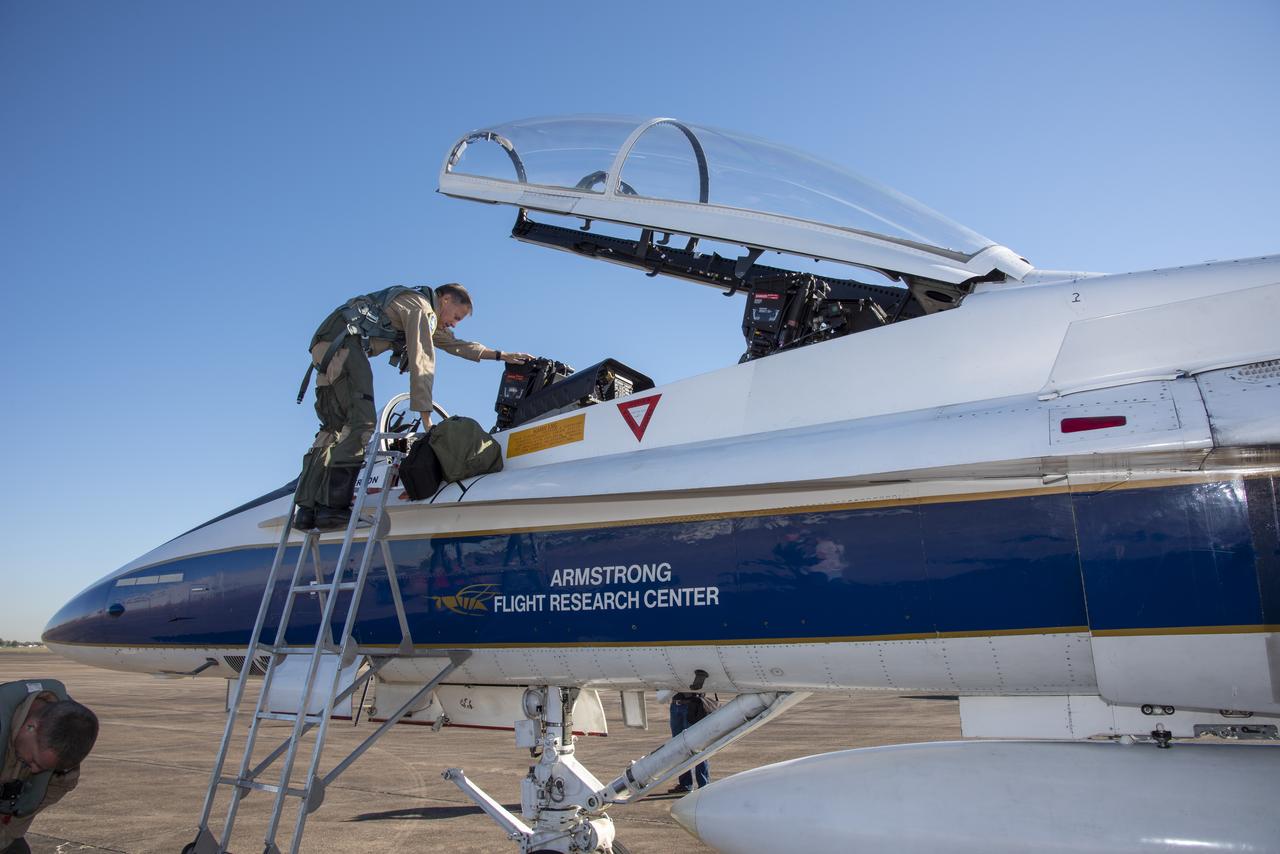
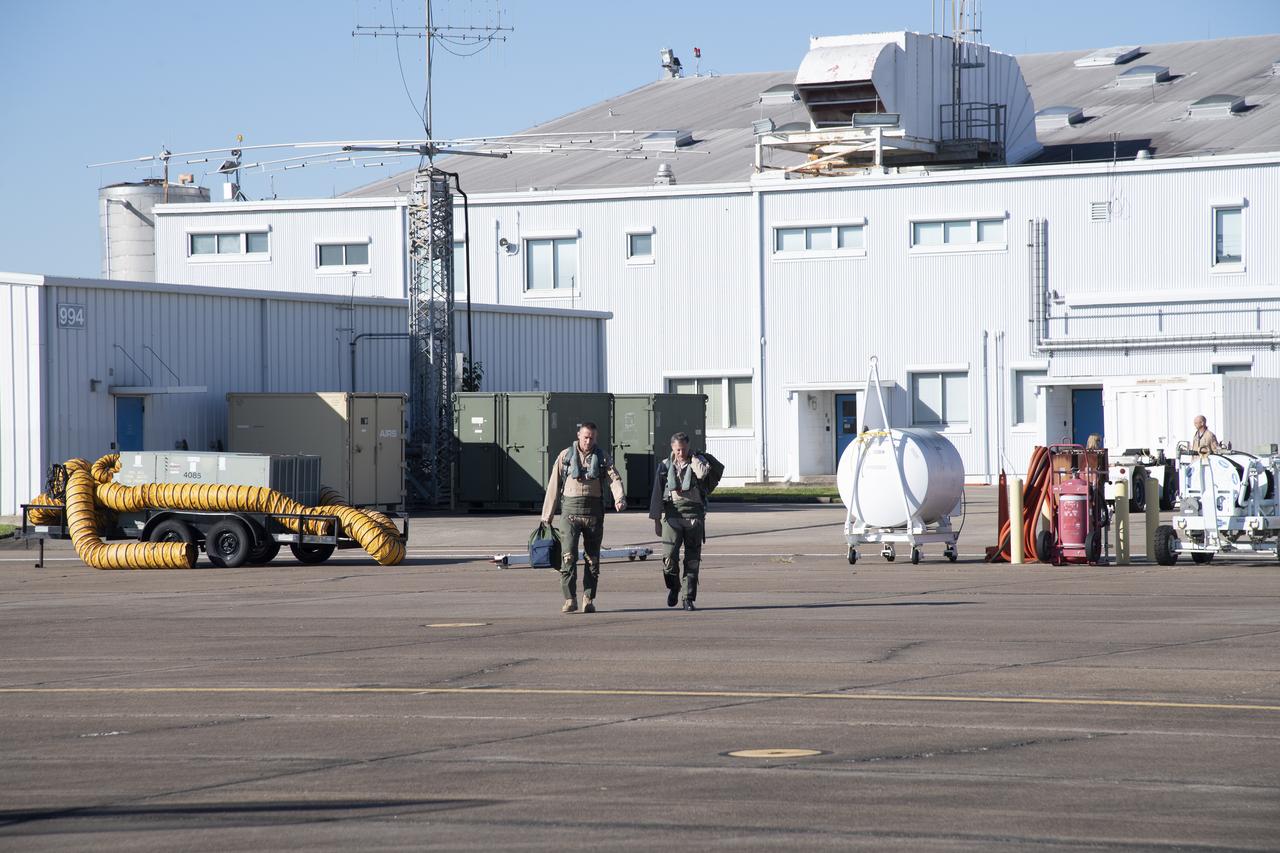
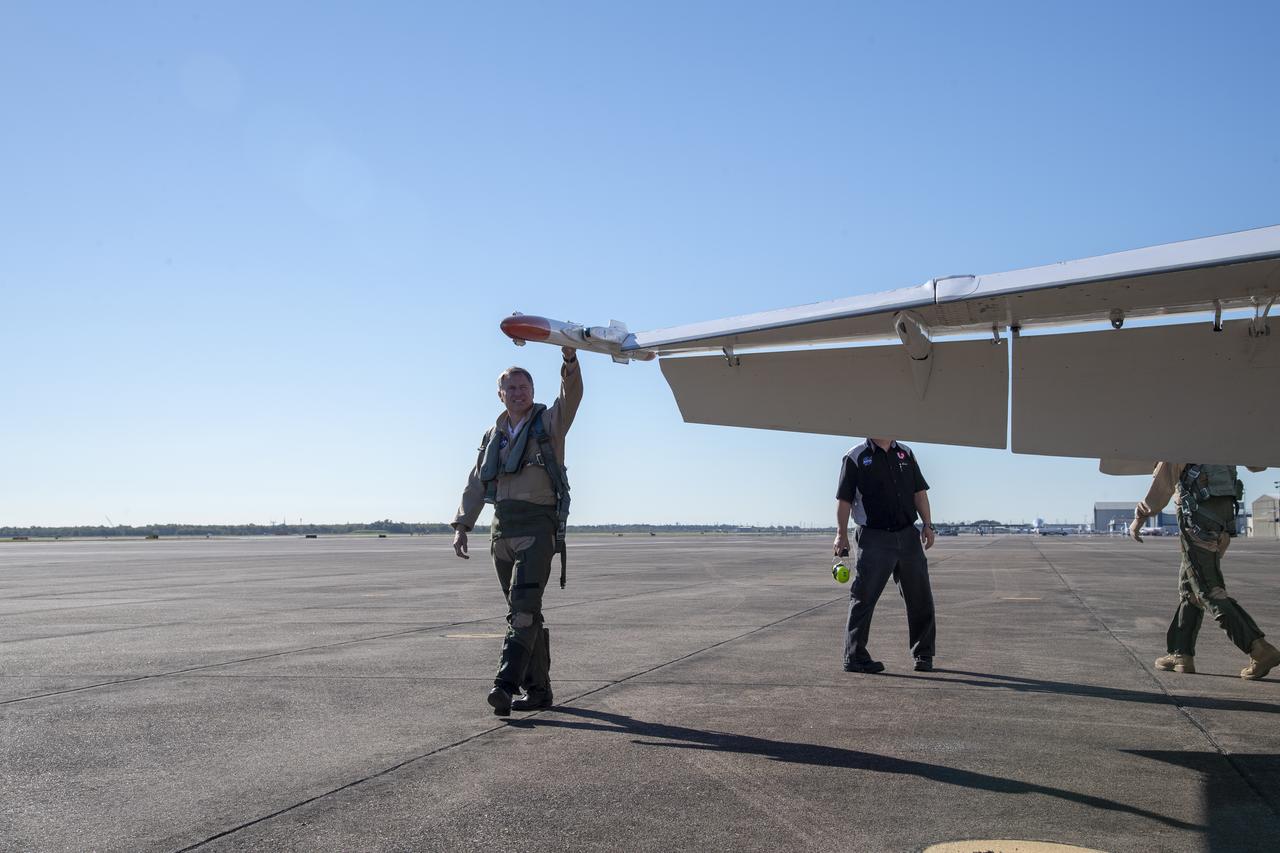
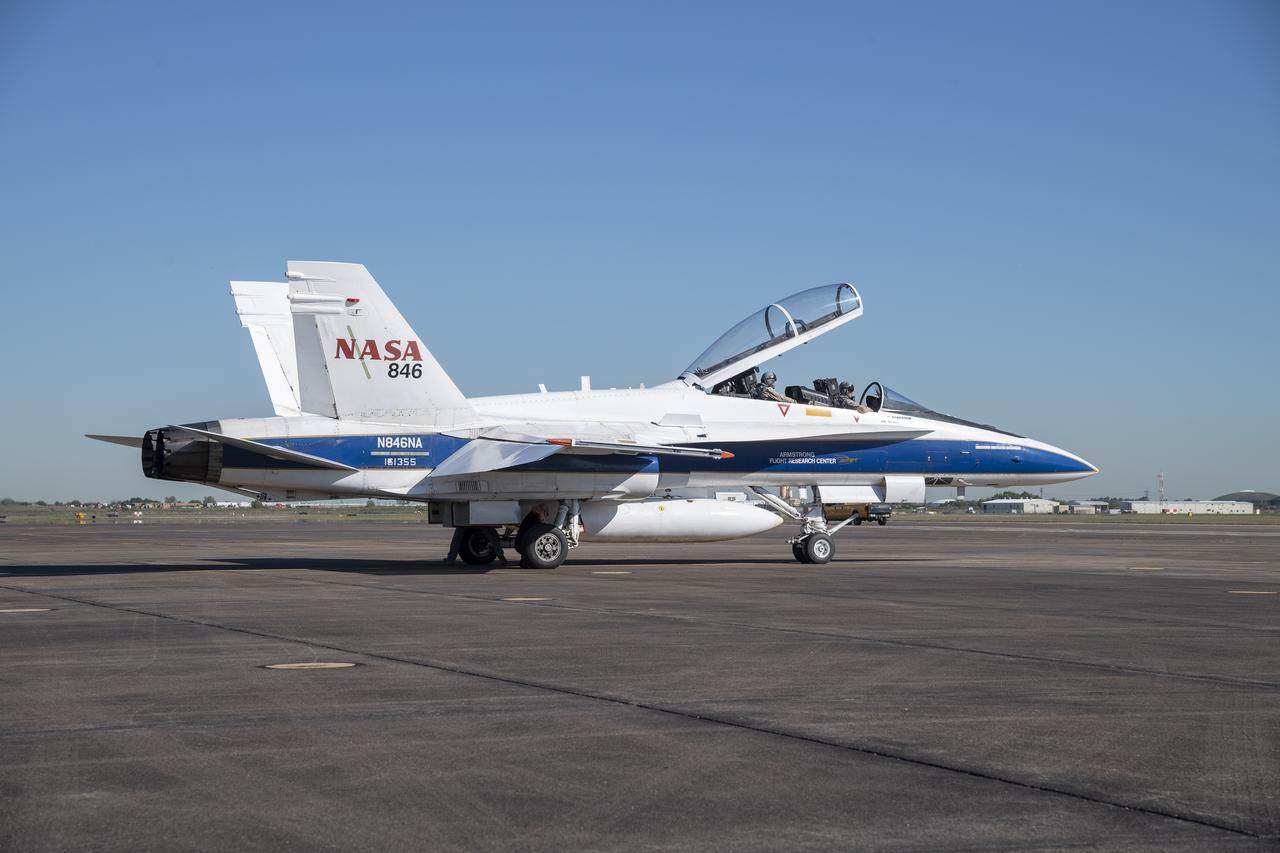
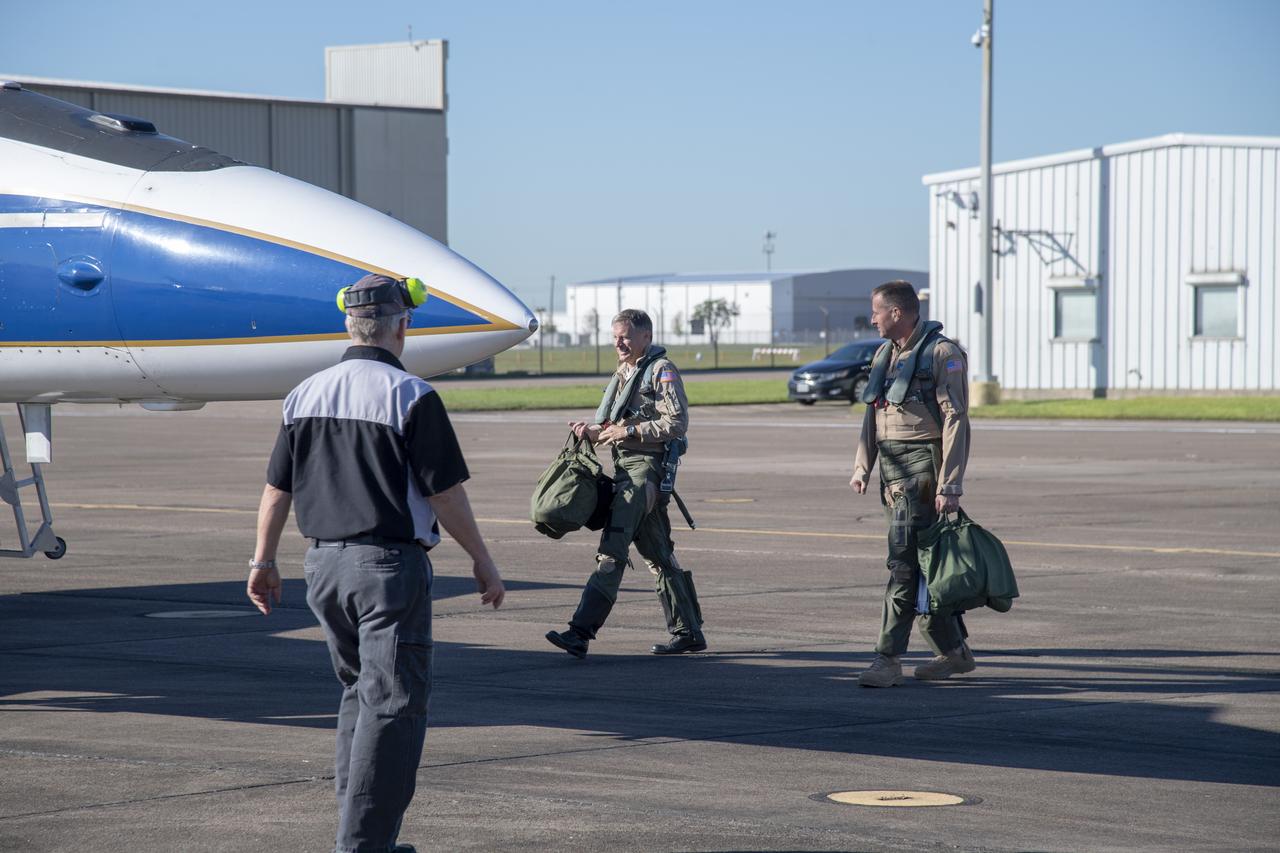
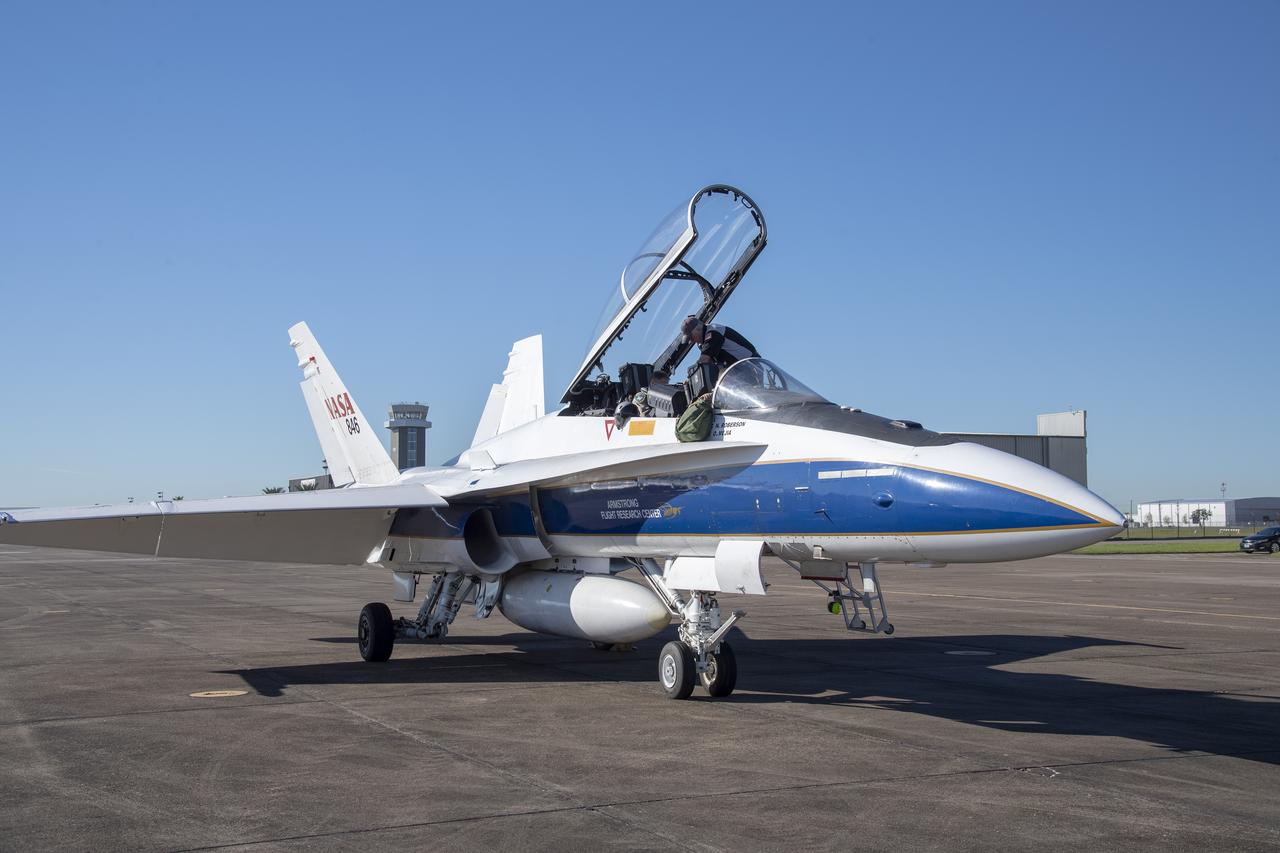
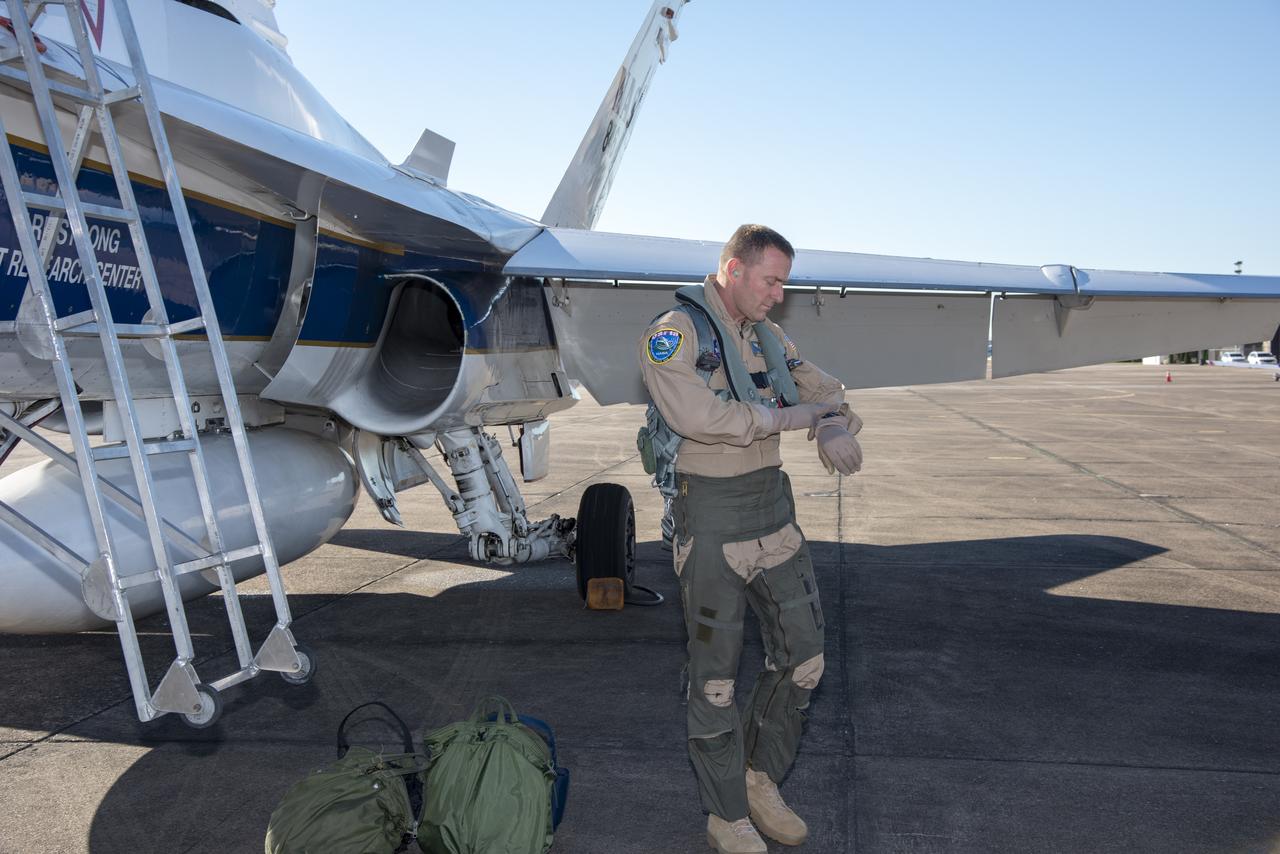
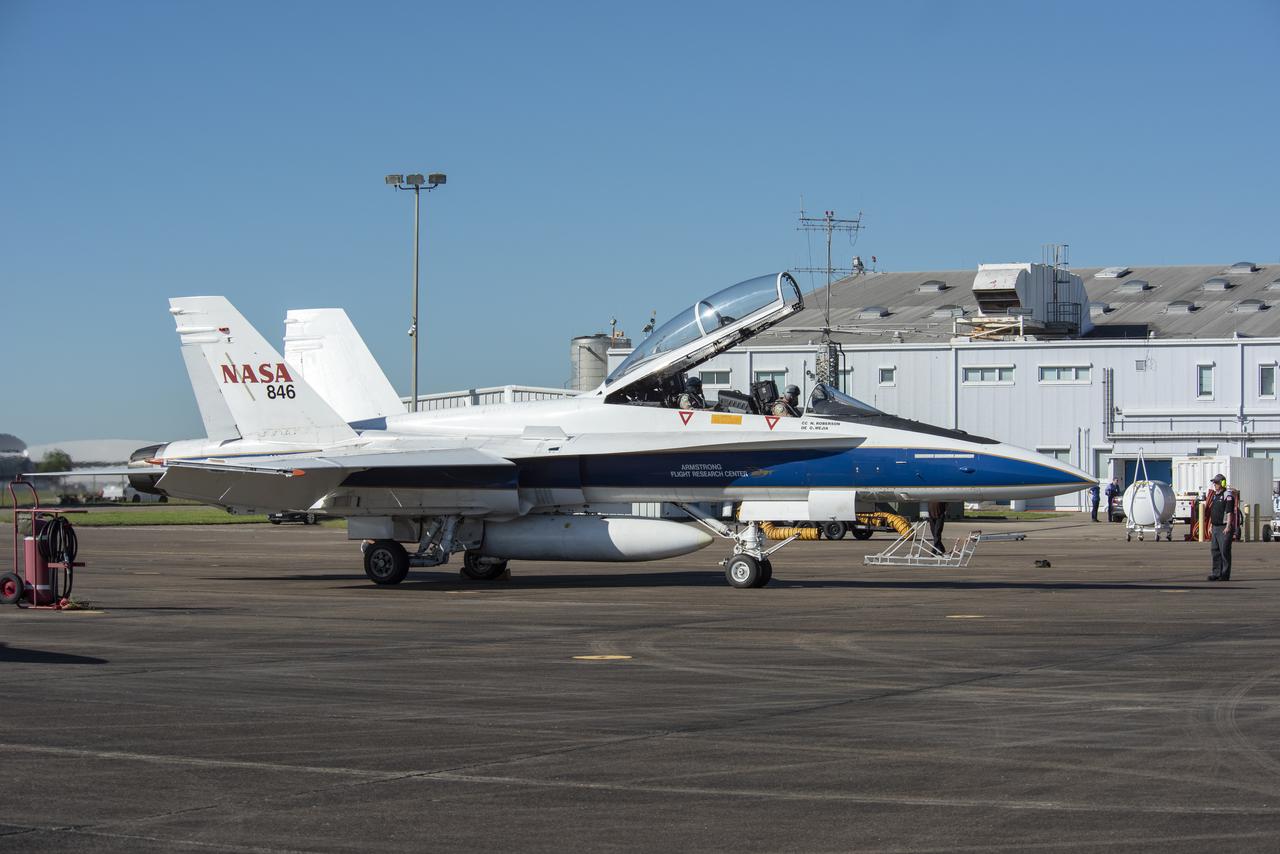
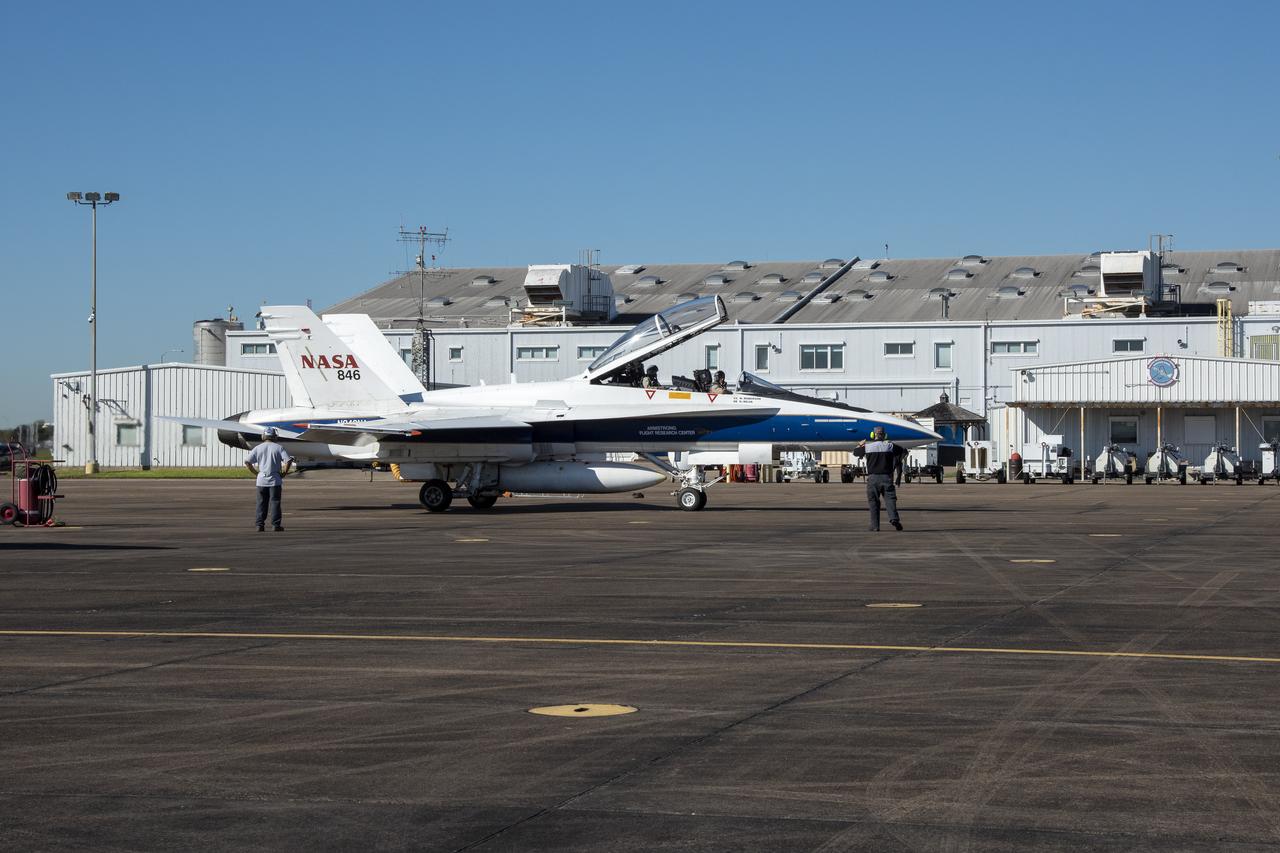
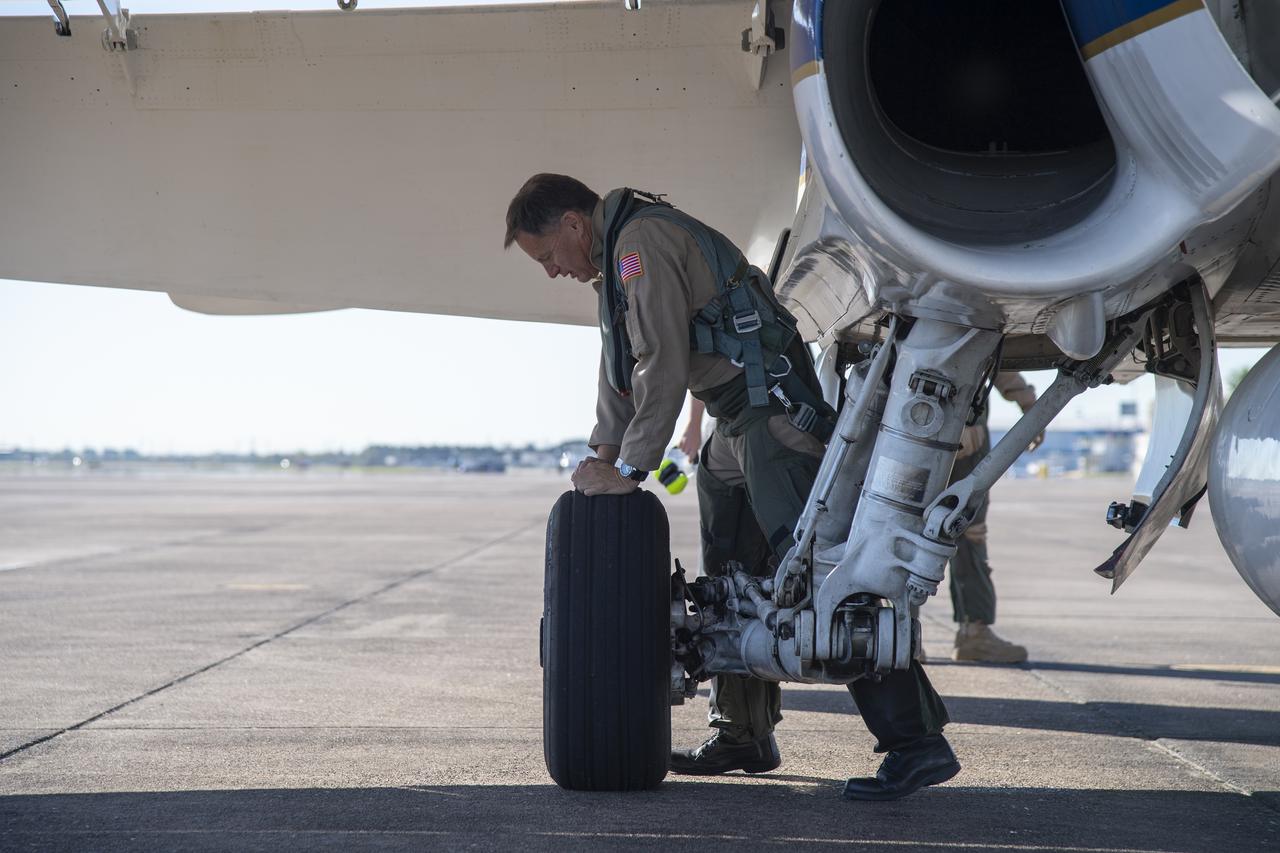
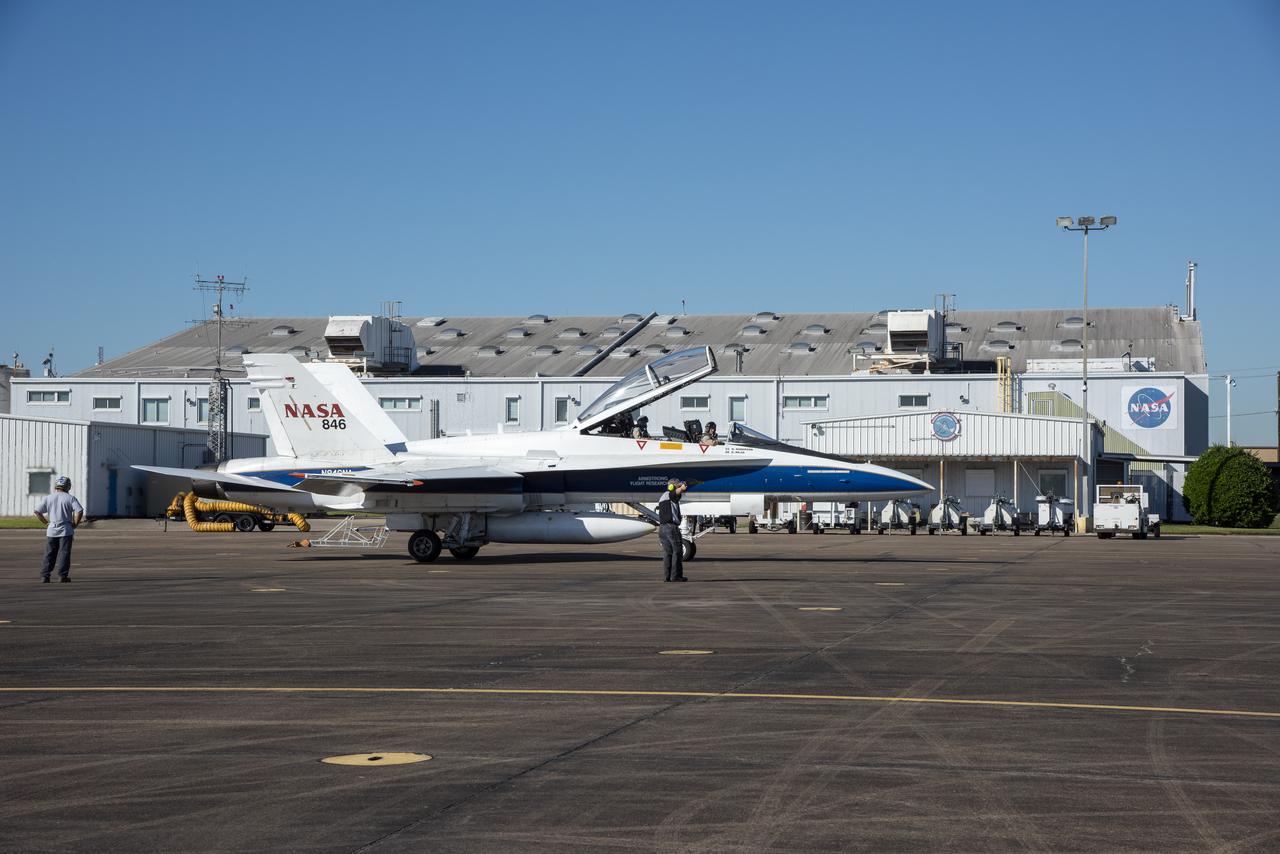
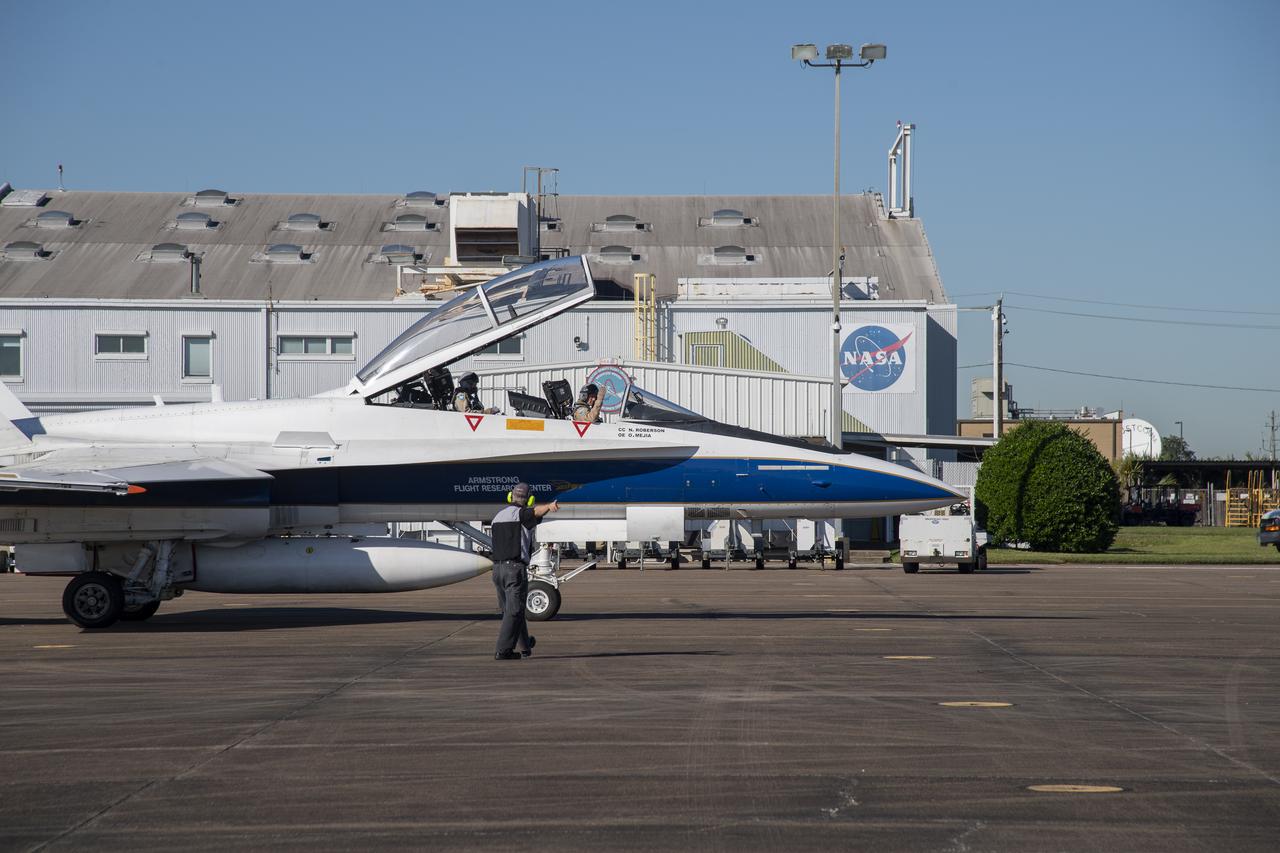
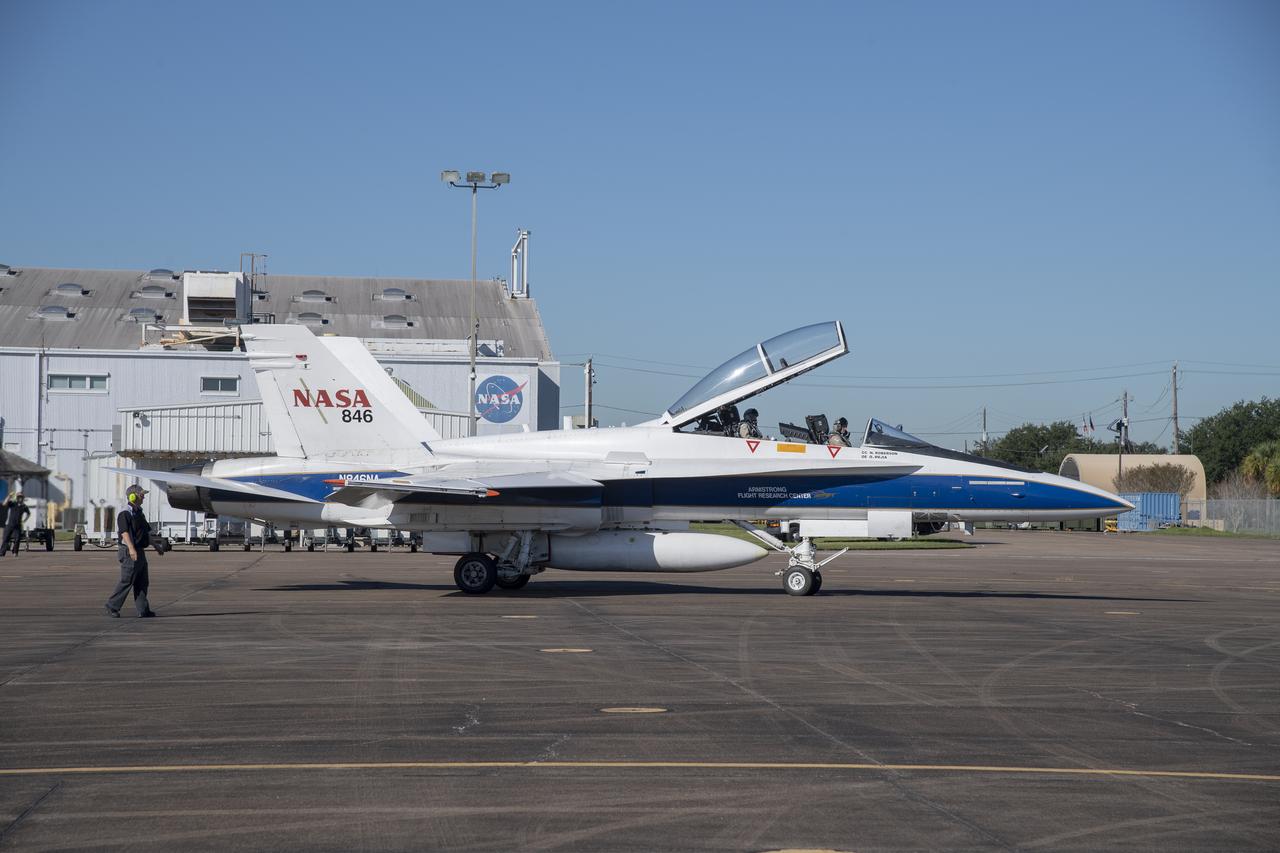
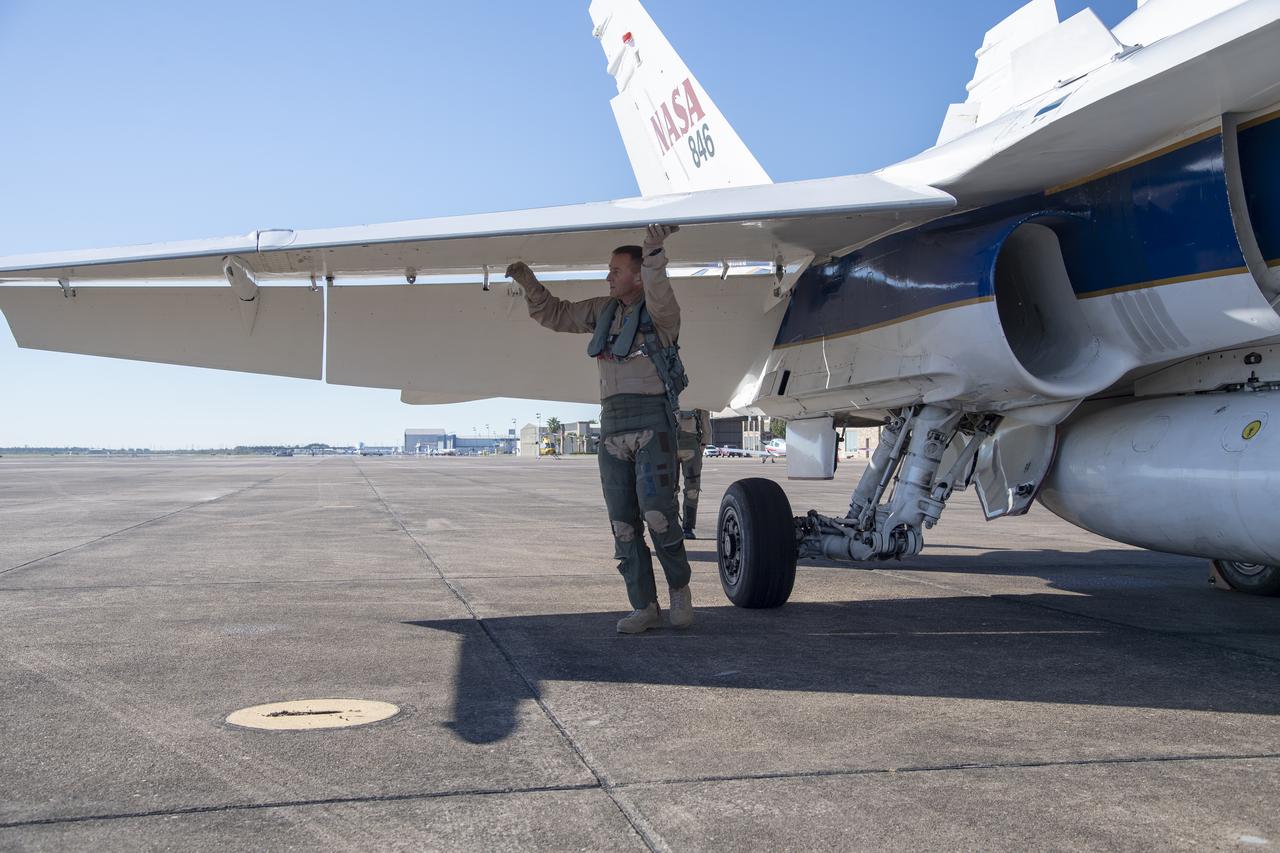
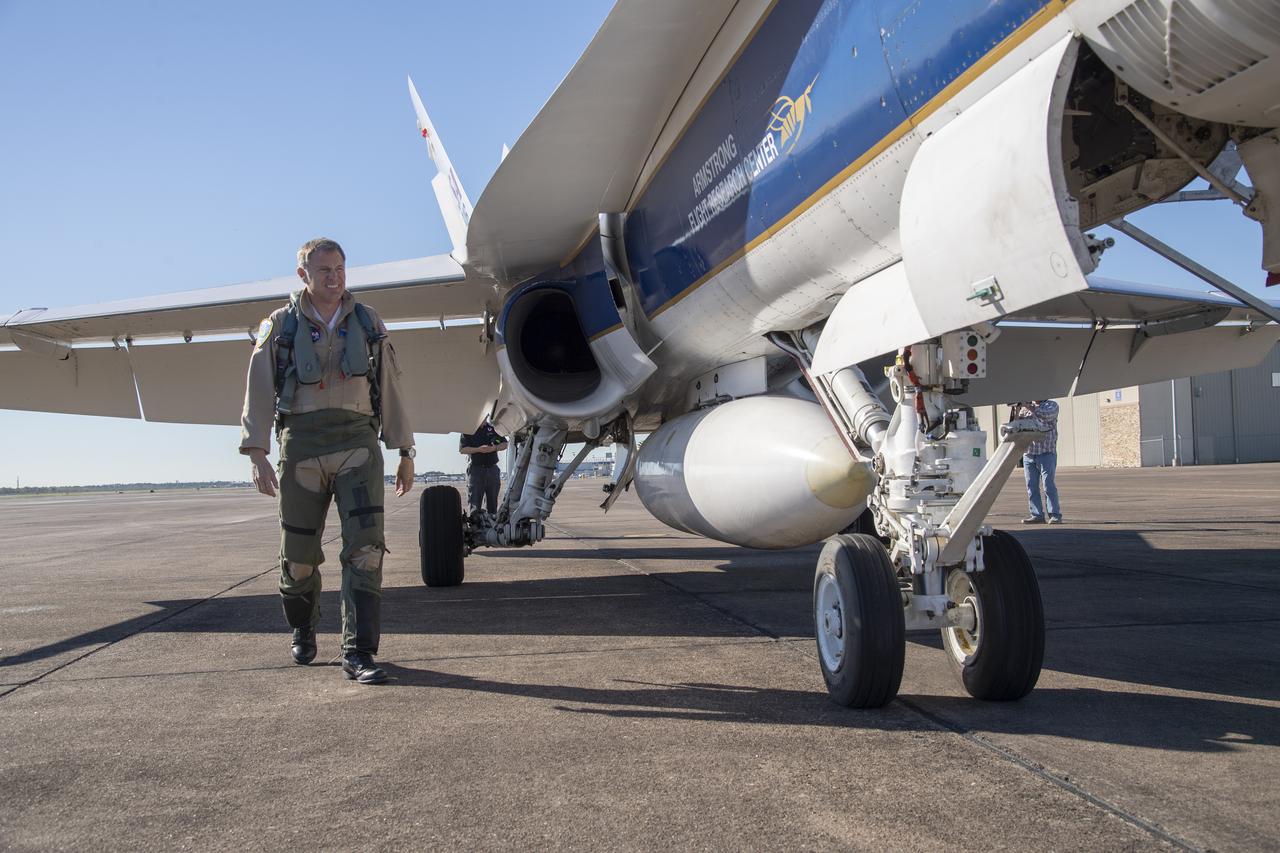
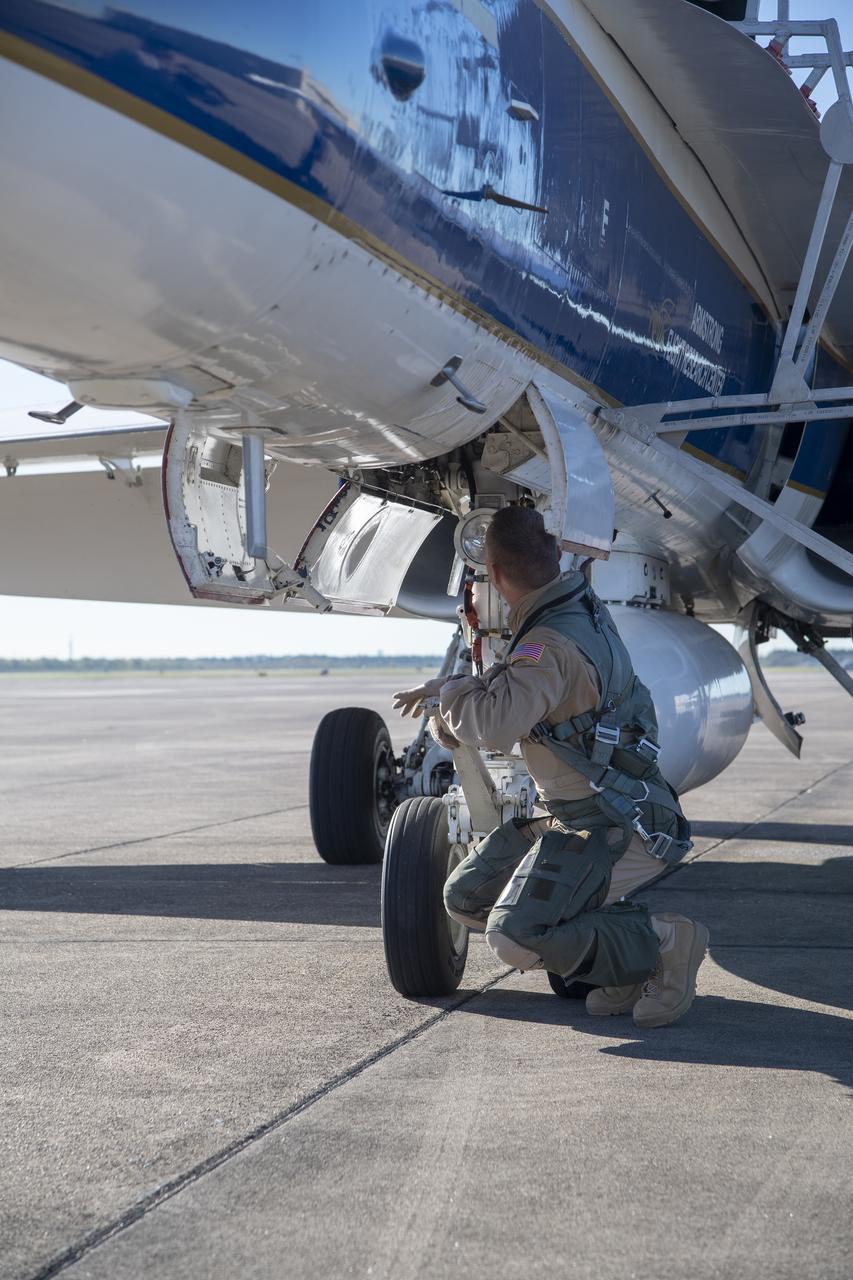
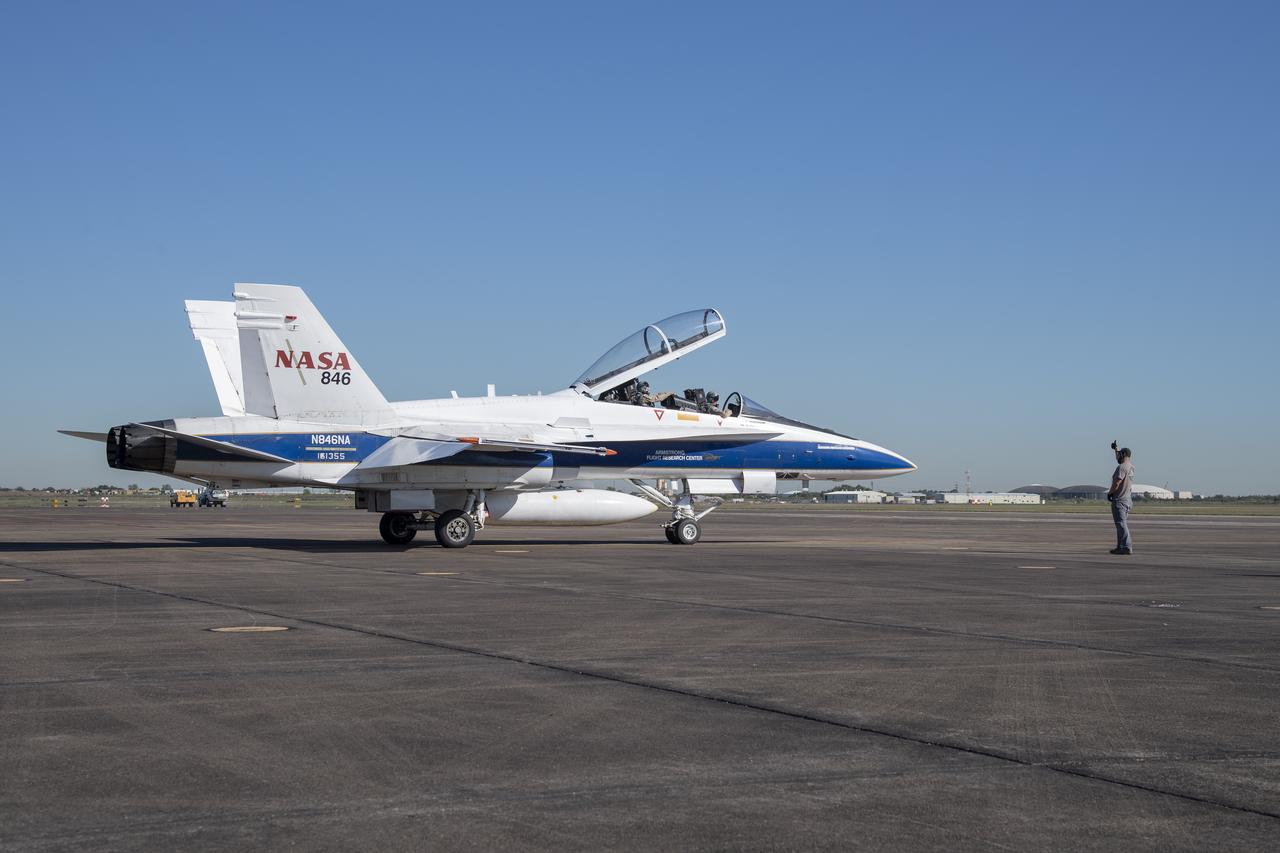
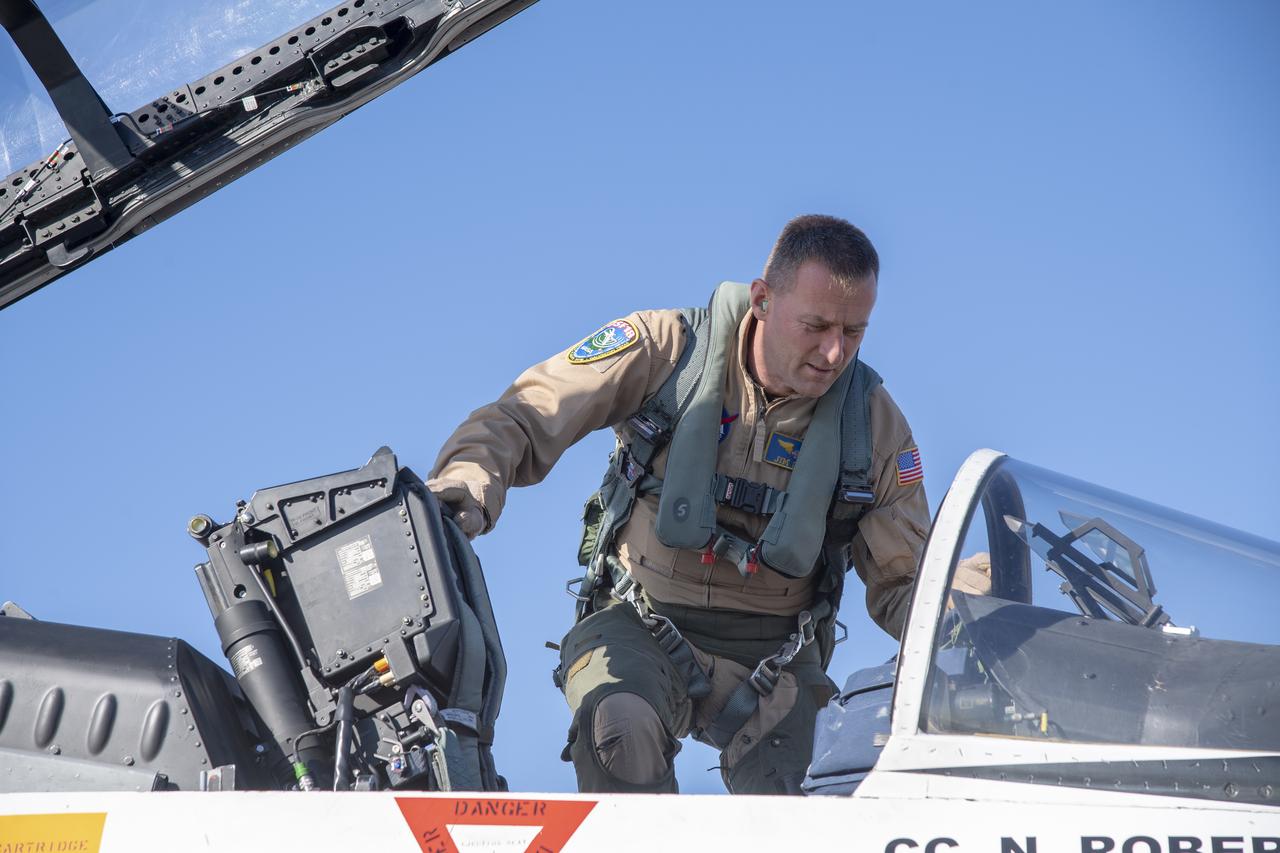
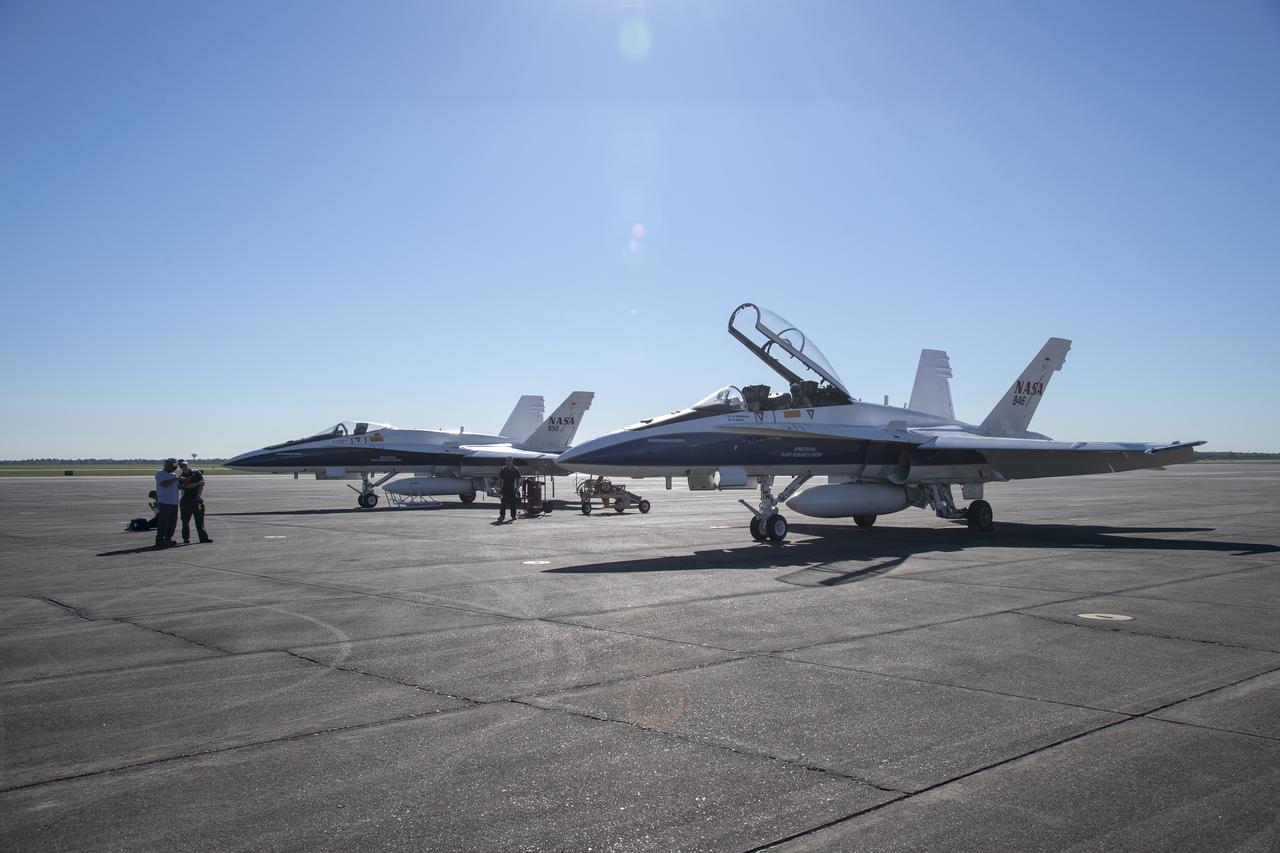
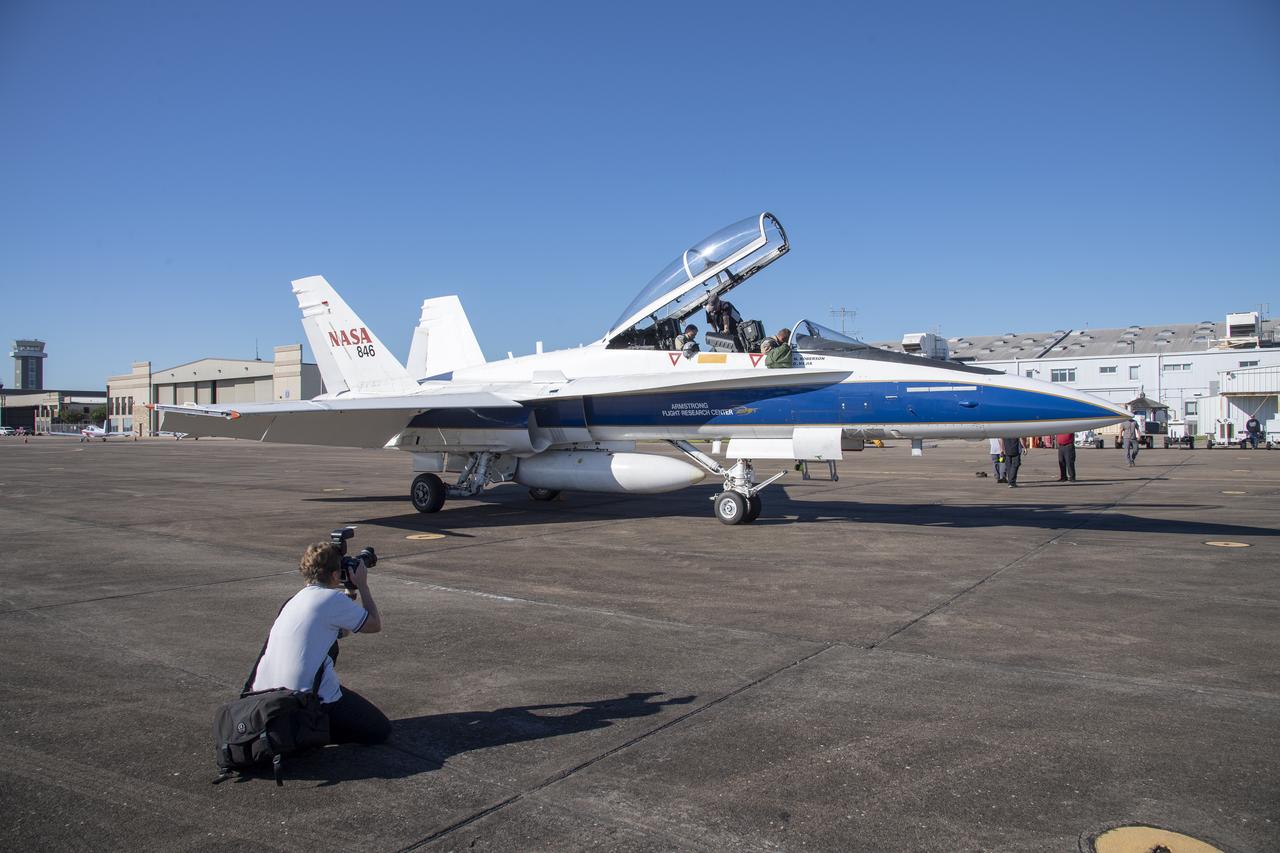
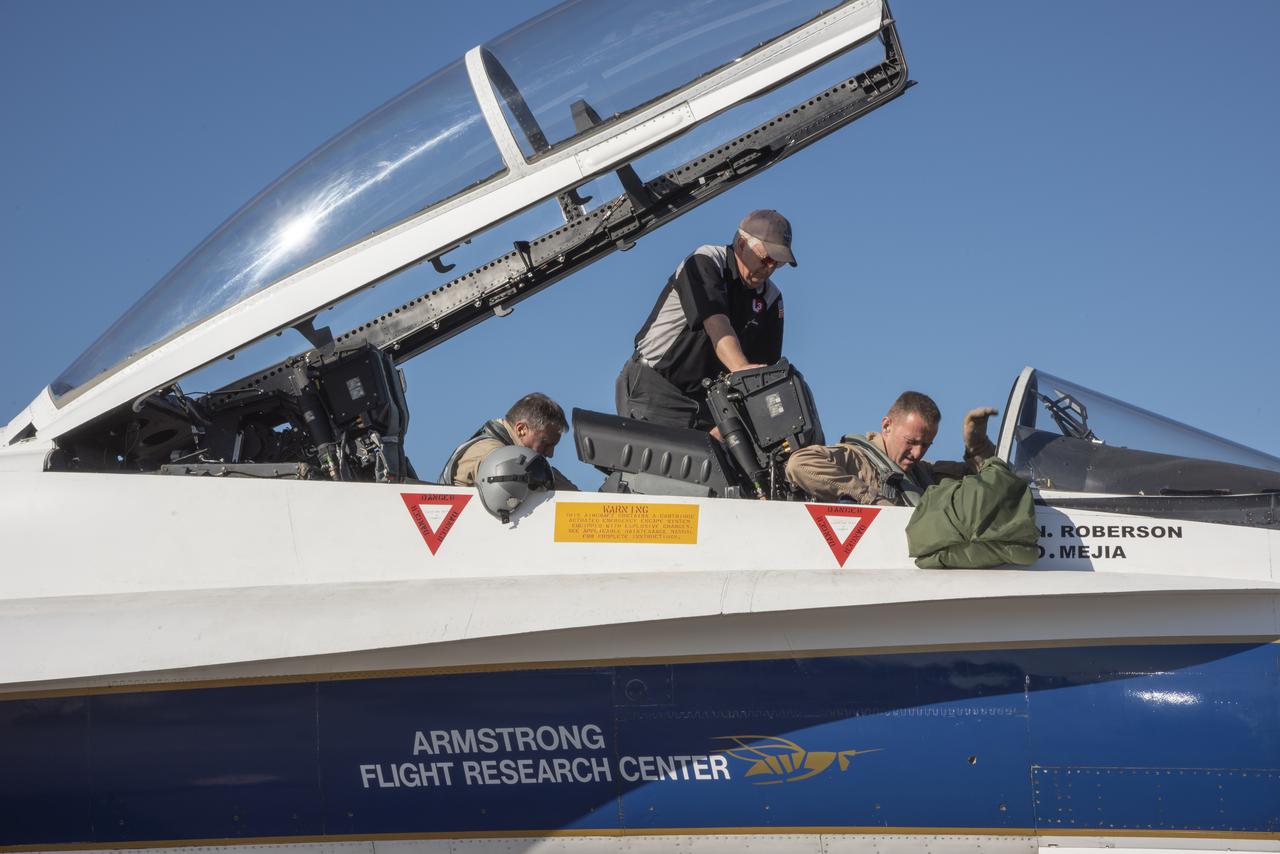
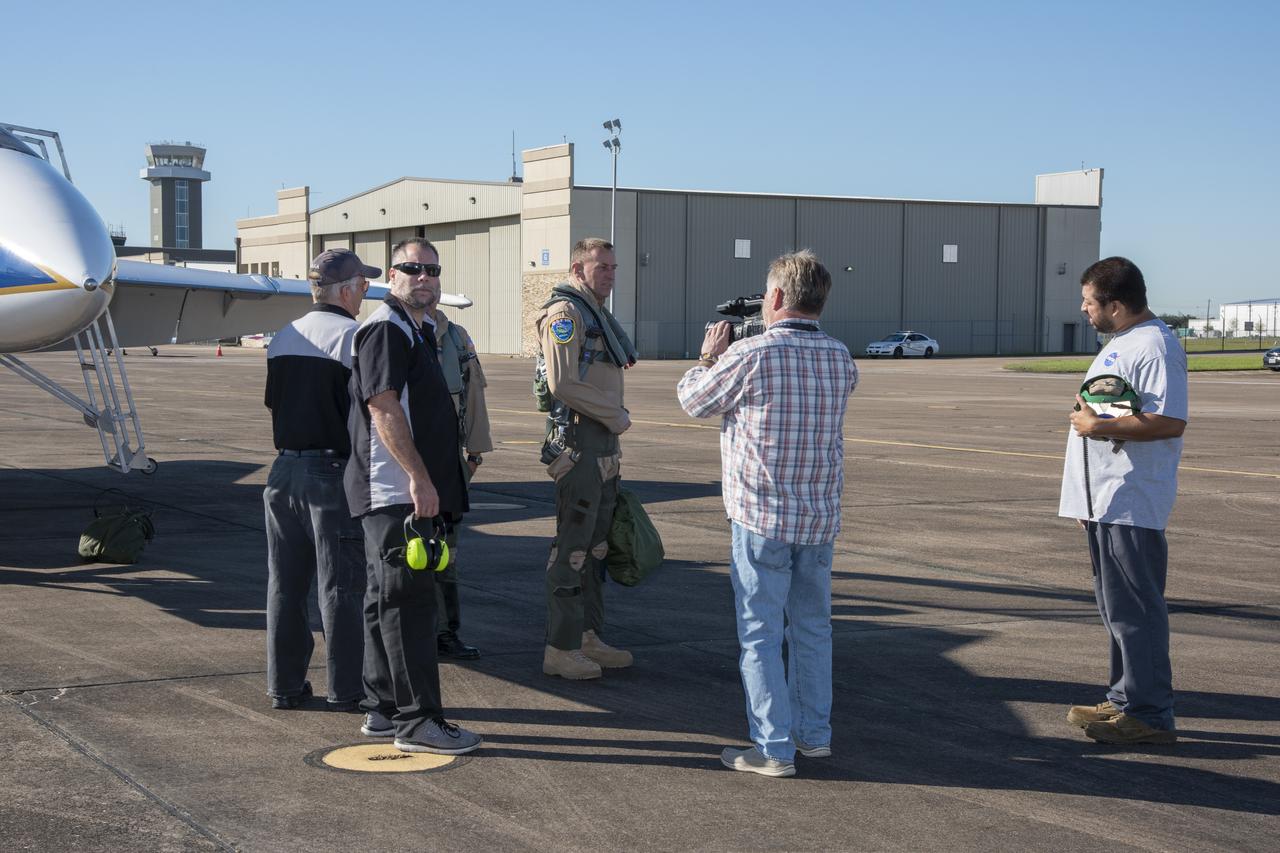
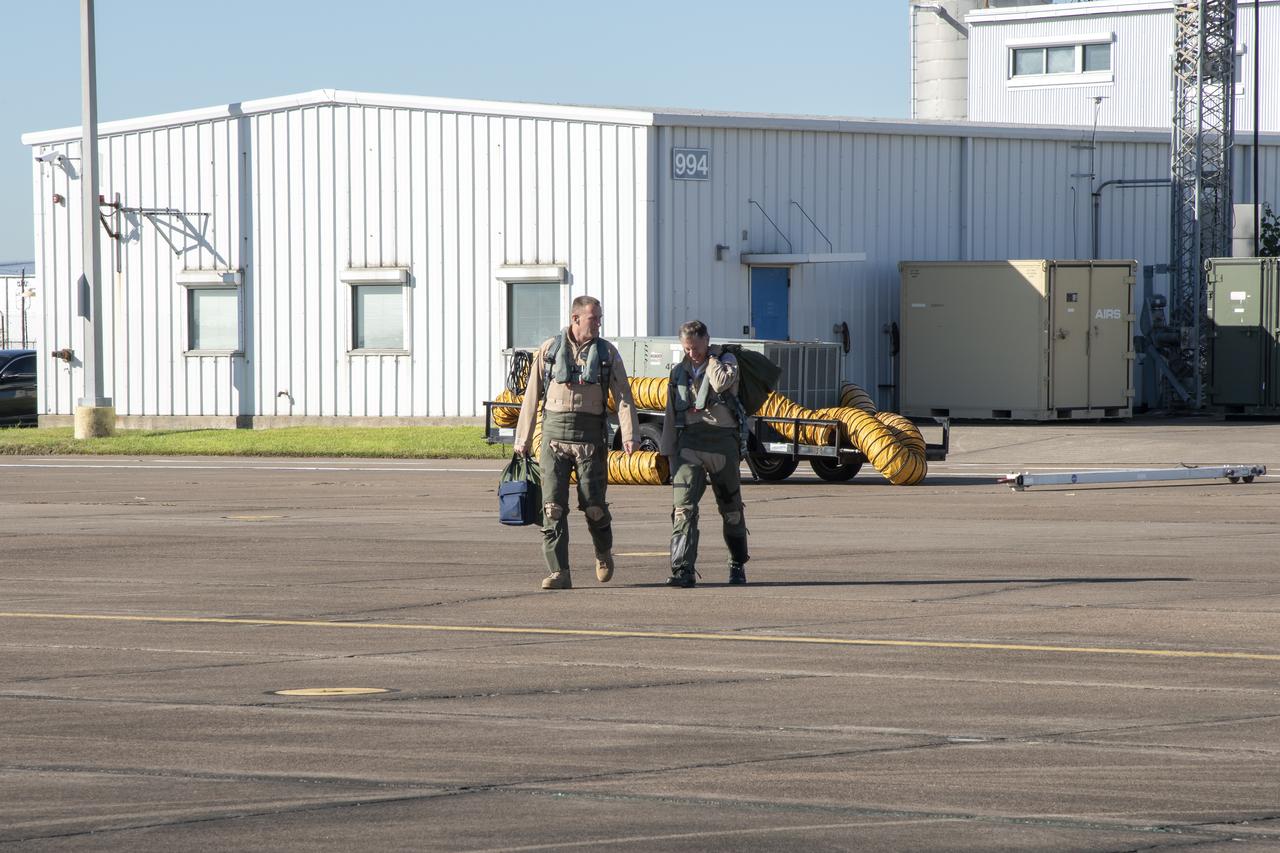
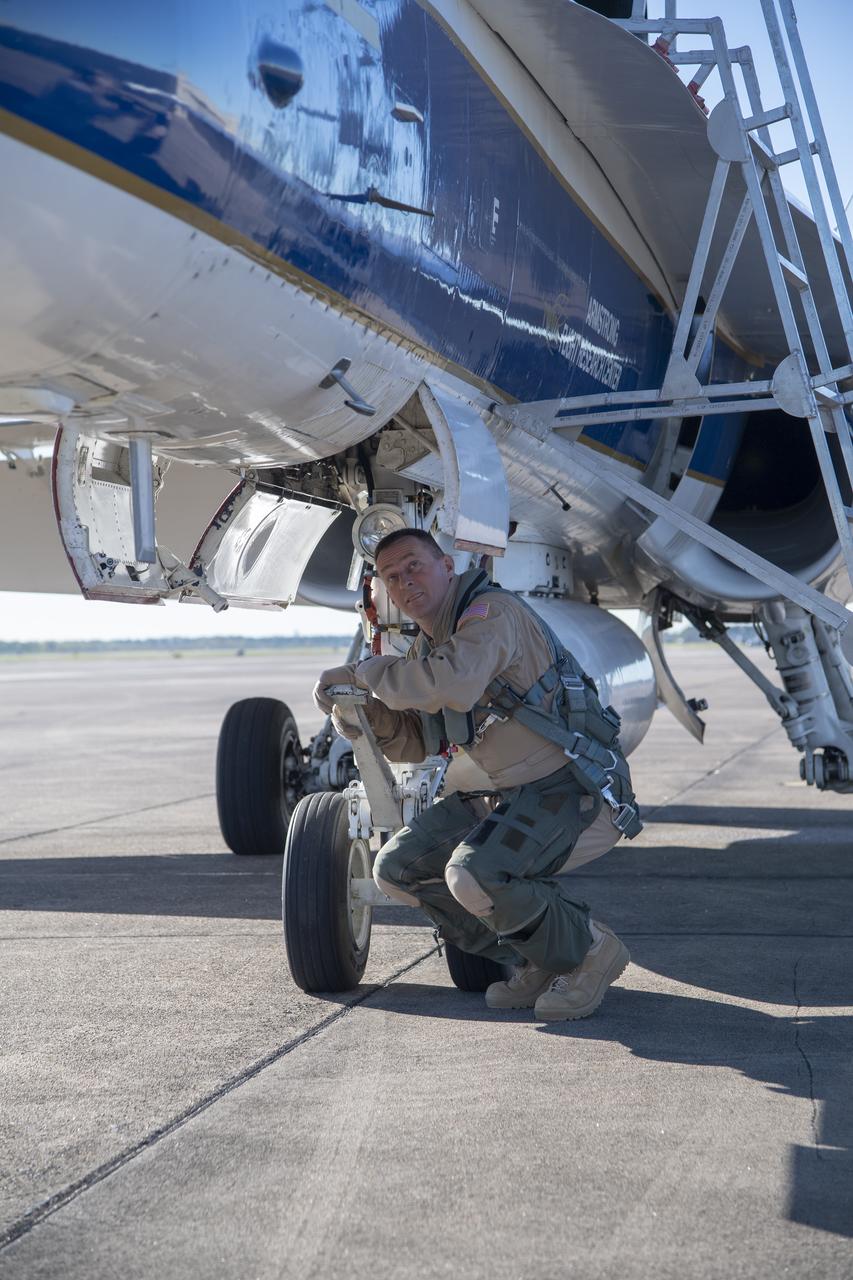
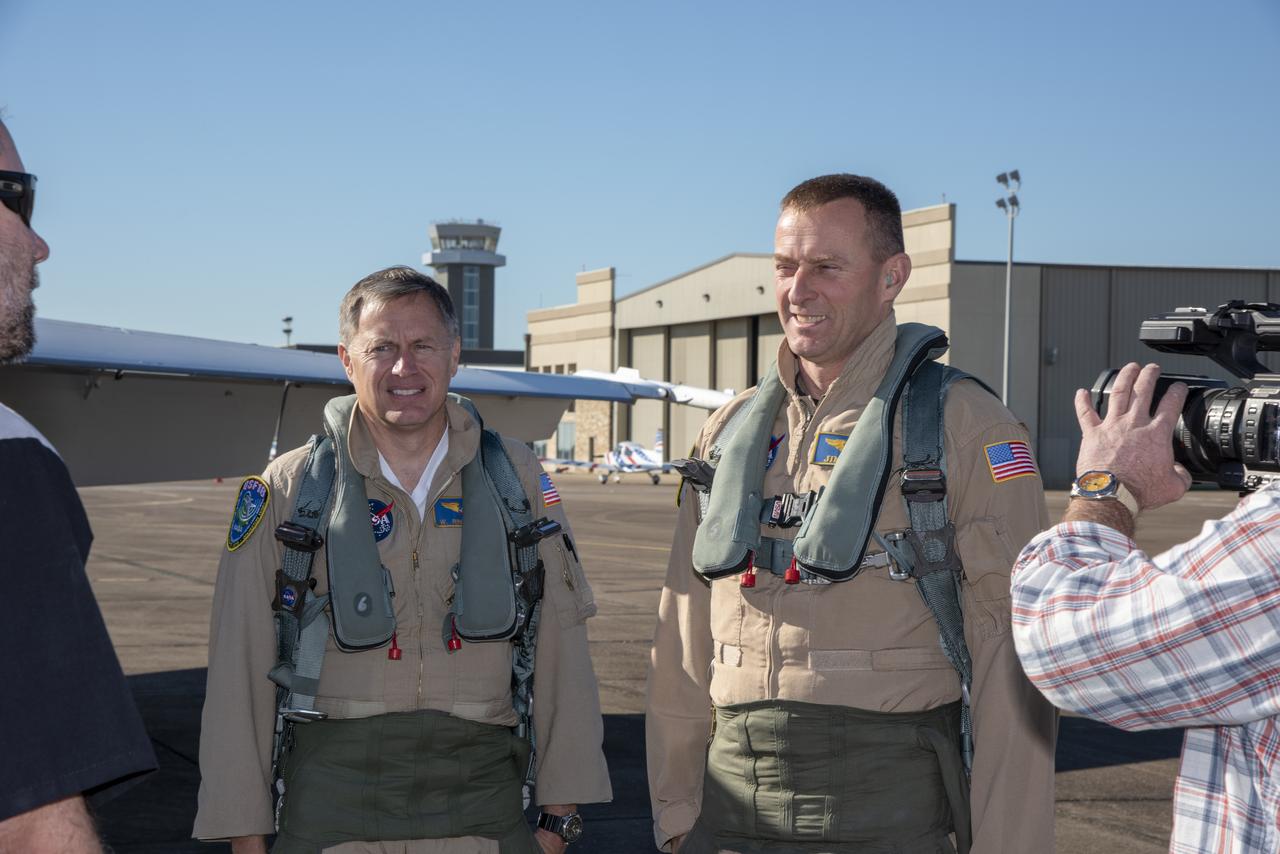
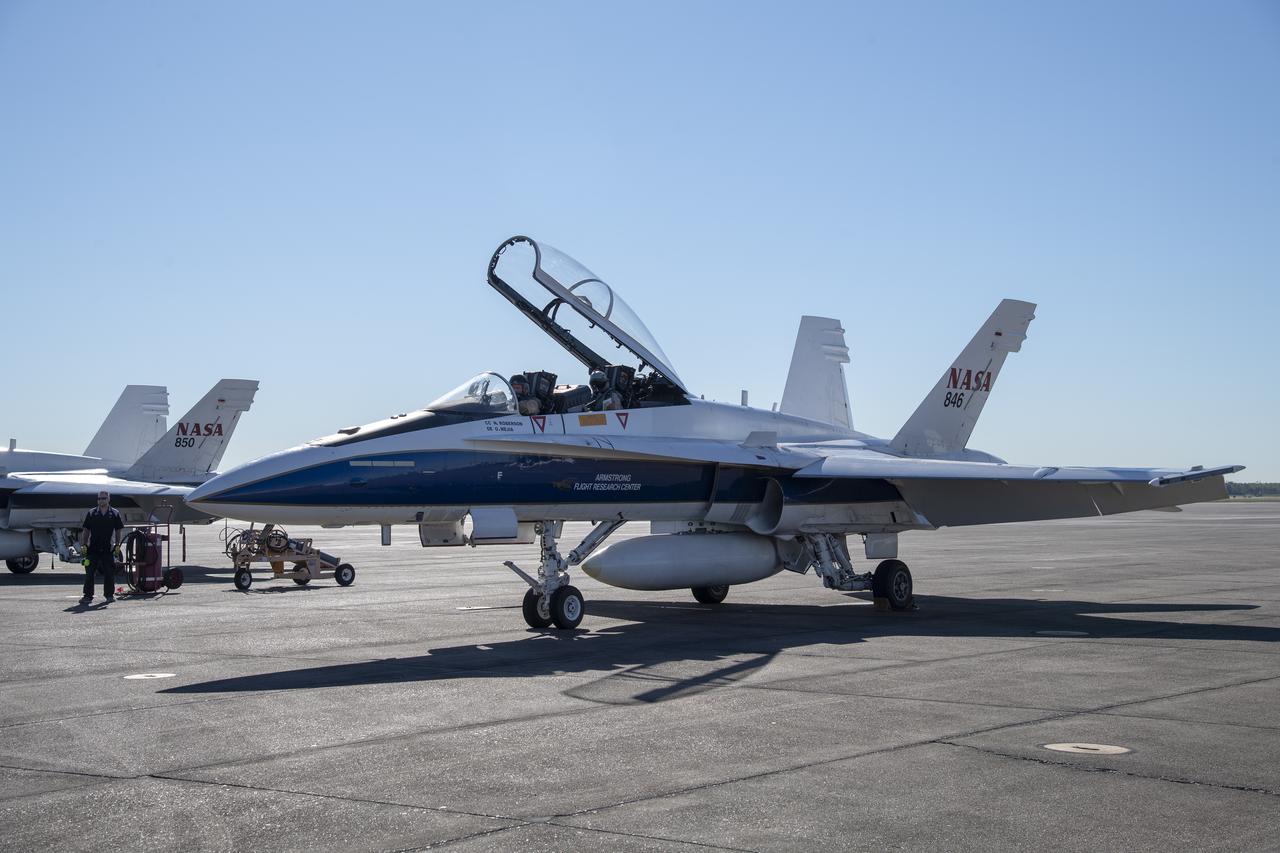
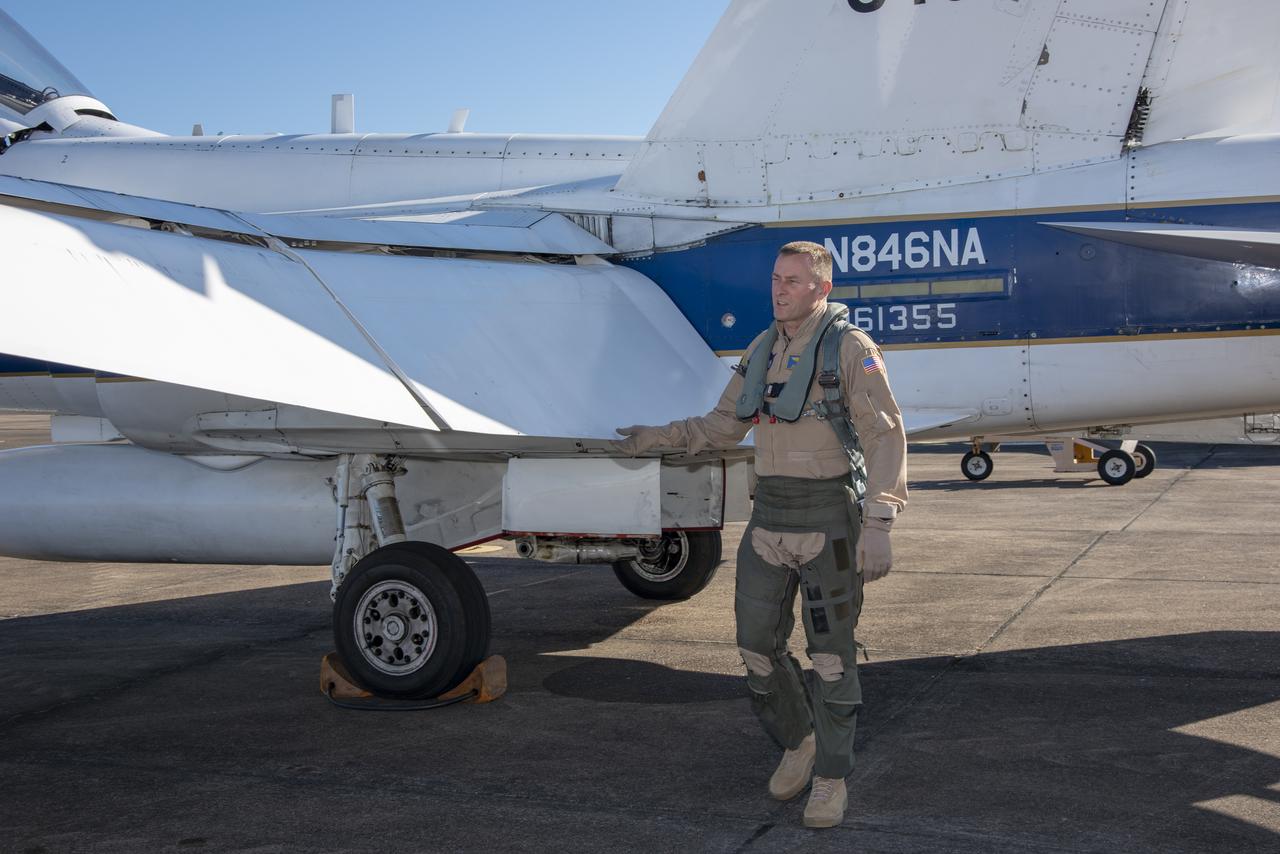
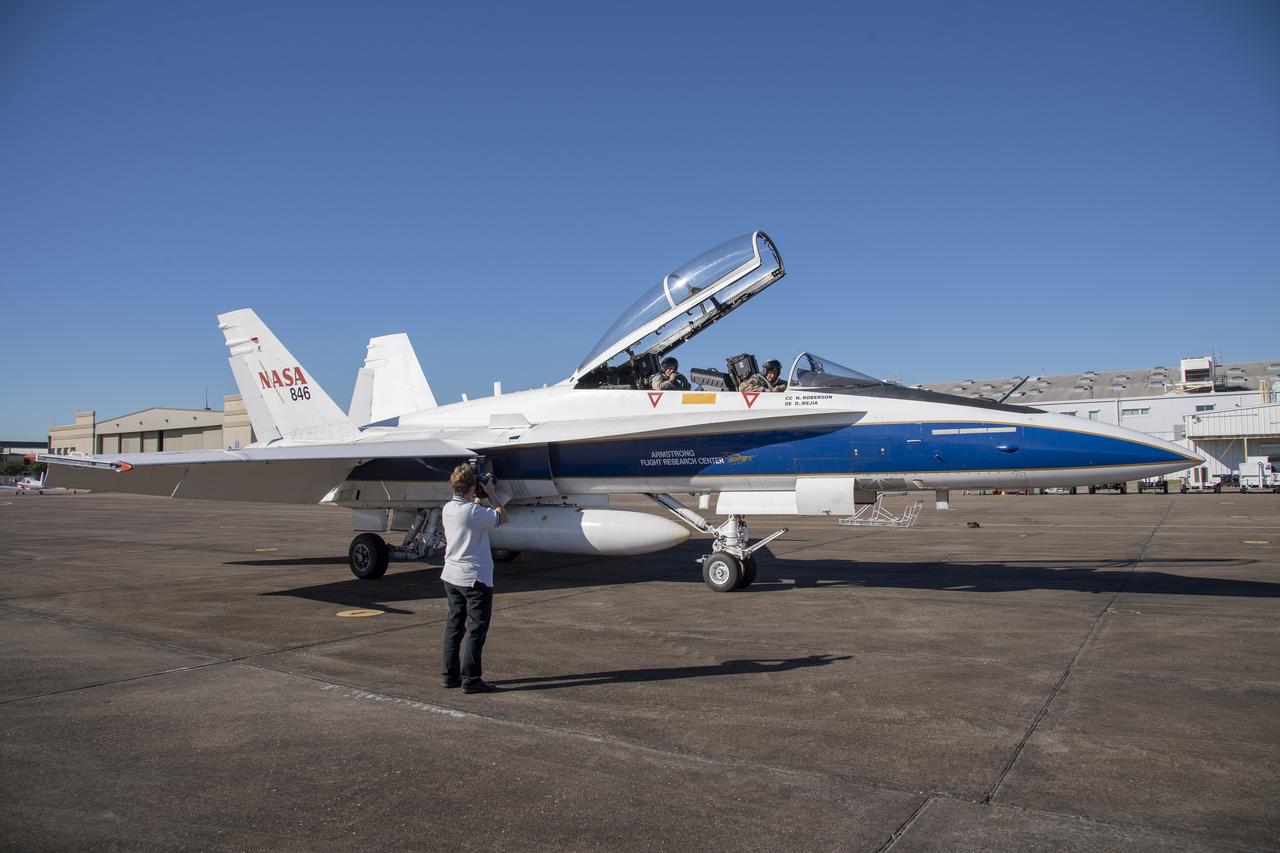
NASA test pilots Jim “Clue” Less and Wayne “Ringo” Ringelberg step to the F/A-18 research aircraft at Ellington Field and conduct pre-flight safety checks on the aircraft prior to a supersonic research flight for the QSF18 series.
NASA Pilots Prepare for QSF18 Flight
NASA test pilots Jim “Clue” Less and Wayne “Ringo” Ringelberg step to the F/A-18 research aircraft at Ellington Field and conduct pre-flight safety checks on the aircraft prior to a supersonic research flight for the QSF18 series.
NASA Pilots Prepare for QSF18 Flight
NASA test pilots Jim "Clue" Less and Wayne "Ringo" Ringelberg step to the F/A-18 research aircraft at Ellington Field and conduct pre-flight safety checks on the aircraft prior to a supersonic research flight for the QSF18 series.
NASA Pilots Prepare for QSF18 Flight
NASA test pilots Jim “Clue” Less and Wayne “Ringo” Ringelberg step to the F/A-18 research aircraft at Ellington Field and conduct pre-flight safety checks on the aircraft prior to a supersonic research flight for the QSF18 series.
NASA Pilots Prepare for QSF18 Flight
NASA test pilots Jim “Clue” Less and Wayne “Ringo” Ringelberg step to the F/A-18 research aircraft at Ellington Field and conduct pre-flight safety checks on the aircraft prior to a supersonic research flight for the QSF18 series.
NASA Pilots Prepare for QSF18 Flight
NASA test pilots Jim “Clue” Less and Wayne “Ringo” Ringelberg step to the F/A-18 research aircraft at Ellington Field and conduct pre-flight safety checks on the aircraft prior to a supersonic research flight for the QSF18 series.
NASA Pilots Prepare for QSF18 Flight
NASA test pilots Jim “Clue” Less and Wayne “Ringo” Ringelberg step to the F/A-18 research aircraft at Ellington Field and conduct pre-flight safety checks on the aircraft prior to a supersonic research flight for the QSF18 series.
NASA Pilots Prepare for QSF18 Flight
NASA test pilots Jim “Clue” Less and Wayne “Ringo” Ringelberg step to the F/A-18 research aircraft at Ellington Field and conduct pre-flight safety checks on the aircraft prior to a supersonic research flight for the QSF18 series.
NASA Pilots Prepare for QSF18 Flight
NASA test pilots Jim “Clue” Less and Wayne “Ringo” Ringelberg step to the F/A-18 research aircraft at Ellington Field and conduct pre-flight safety checks on the aircraft prior to a supersonic research flight for the QSF18 series.
NASA Pilots Prepare for QSF18 Flight
NASA test pilots Jim "Clue" Less and Wayne "Ringo" Ringelberg step to the F/A-18 research aircraft at Ellington Field and conduct pre-flight safety checks on the aircraft prior to a supersonic research flight for the QSF18 series.
NASA Pilots Prepare for QSF18 Flight
NASA test pilots Jim “Clue” Less and Wayne “Ringo” Ringelberg step to the F/A-18 research aircraft at Ellington Field and conduct pre-flight safety checks on the aircraft prior to a supersonic research flight for the QSF18 series.
NASA Pilots Prepare for QSF18 Flight
NASA test pilots Jim “Clue” Less and Wayne “Ringo” Ringelberg step to the F/A-18 research aircraft at Ellington Field and conduct pre-flight safety checks on the aircraft prior to a supersonic research flight for the QSF18 series.
NASA Pilots Prepare for QSF18 Flight
NASA test pilots Jim “Clue” Less and Wayne “Ringo” Ringelberg step to the F/A-18 research aircraft at Ellington Field and conduct pre-flight safety checks on the aircraft prior to a supersonic research flight for the QSF18 series.
NASA Pilots Prepare for QSF18 Flight
NASA test pilots Jim “Clue” Less and Wayne “Ringo” Ringelberg step to the F/A-18 research aircraft at Ellington Field and conduct pre-flight safety checks on the aircraft prior to a supersonic research flight for the QSF18 series.
NASA Pilots Prepare for QSF18 Flight
NASA test pilots Jim “Clue” Less and Wayne “Ringo” Ringelberg step to the F/A-18 research aircraft at Ellington Field and conduct pre-flight safety checks on the aircraft prior to a supersonic research flight for the QSF18 series.
NASA Pilots Prepare for QSF18 Flight
NASA test pilots Jim “Clue” Less and Wayne “Ringo” Ringelberg step to the F/A-18 research aircraft at Ellington Field and conduct pre-flight safety checks on the aircraft prior to a supersonic research flight for the QSF18 series.
NASA Pilots Prepare for QSF18 Flight
NASA test pilots Jim “Clue” Less and Wayne “Ringo” Ringelberg step to the F/A-18 research aircraft at Ellington Field and conduct pre-flight safety checks on the aircraft prior to a supersonic research flight for the QSF18 series.
NASA Pilots Prepare for QSF18 Flight
NASA test pilots Jim "Clue" Less and Wayne "Ringo"Ringelberg step to the F/A-18 research aircraft at Ellington Field and conduct pre-flight safety checks on the aircraft prior to a supersonic research flight for the QSF18 series.
NASA Pilots Prepare for QSF18 Flight
NASA test pilots Jim "Clue" Less and Wayne "Ringo" Ringelberg step to the F/A-18 research aircraft at Ellington Field and conduct pre-flight safety checks on the aircraft prior to a supersonic research flight for the QSF18 series.
NASA Pilots Prepare for QSF18 Flight
NASA test pilots Jim “Clue” Less and Wayne “Ringo” Ringelberg step to the F/A-18 research aircraft at Ellington Field and conduct pre-flight safety checks on the aircraft prior to a supersonic research flight for the QSF18 series.
NASA Pilots Prepare for QSF18 Flight
NASA test pilots Jim “Clue” Less and Wayne “Ringo” Ringelberg step to the F/A-18 research aircraft at Ellington Field and conduct pre-flight safety checks on the aircraft prior to a supersonic research flight for the QSF18 series.
NASA Pilots Prepare for QSF18 Flight
NASA test pilots Jim "Clue" Less and Wayne "Ringo" Ringelberg step to the F/A-18 research aircraft at Ellington Field and conduct pre-flight safety checks on the aircraft prior to a supersonic research flight for the QSF18 series.
NASA Pilots Prepare for QSF18 Flight
NASA test pilots Jim “Clue” Less and Wayne “Ringo” Ringelberg step to the F/A-18 research aircraft at Ellington Field and conduct pre-flight safety checks on the aircraft prior to a supersonic research flight for the QSF18 series.
NASA Pilots Prepare for QSF18 Flight
NASA test pilots Jim "Clue" Less and Wayne "Ringo" Ringelberg step to the F/A-18 research aircraft at Ellington Field and conduct pre-flight safety checks on the aircraft prior to a supersonic research flight for the QSF18 series.
NASA Pilots Prepare for QSF18 Flight
NASA test pilots Jim “Clue” Less and Wayne “Ringo” Ringelberg step to the F/A-18 research aircraft at Ellington Field and conduct pre-flight safety checks on the aircraft prior to a supersonic research flight for the QSF18 series.
NASA Pilots Prepare for QSF18 Flight
NASA test pilots Jim "Clue" Less and Wayne "Ringo" Ringelberg step to the F/A-18 research aircraft at Ellington Field and conduct pre-flight safety checks on the aircraft prior to a supersonic research flight for the QSF18 series.
NASA Pilots Prepare for QSF18 Flight
NASA test pilots Jim “Clue” Less and Wayne “Ringo” Ringelberg step to the F/A-18 research aircraft at Ellington Field and conduct pre-flight safety checks on the aircraft prior to a supersonic research flight for the QSF18 series.
NASA Pilots Prepare for QSF18 Flight
NASA test pilots Jim "Clue"Less and Wayne "Ringo" Ringelberg step to the F/A-18 research aircraft at Ellington Field and conduct pre-flight safety checks on the aircraft prior to a supersonic research flight for the QSF18 series.
NASA Pilots Prepare for QSF18 Flight
NASA test pilots Jim “Clue” Less and Wayne “Ringo” Ringelberg step to the F/A-18 research aircraft at Ellington Field and conduct pre-flight safety checks on the aircraft prior to a supersonic research flight for the QSF18 series.
NASA Pilots Prepare for QSF18 Flight
NASA test pilots Jim "Clue" Less and Wayne "Ringo" Ringelberg step to the F/A-18 research aircraft at Ellington Field and conduct pre-flight safety checks on the aircraft prior to a supersonic research flight for the QSF18 series.
NASA Pilots Prepare for QSF18 Flight
NASA test pilots Jim “Clue” Less and Wayne “Ringo” Ringelberg step to the F/A-18 research aircraft at Ellington Field and conduct pre-flight safety checks on the aircraft prior to a supersonic research flight for the QSF18 series.
NASA Pilots Prepare for QSF18 Flight
NASA test pilots Jim "Clue" Less and Wayne "Ringo"Ringelberg step to the F/A-18 research aircraft at Ellington Field and conduct pre-flight safety checks on the aircraft prior to a supersonic research flight for the QSF18 series.
NASA Pilots Prepare for QSF18 Flight
NASA test pilots Jim “Clue” Less and Wayne “Ringo” Ringelberg step to the F/A-18 research aircraft at Ellington Field and conduct pre-flight safety checks on the aircraft prior to a supersonic research flight for the QSF18 series.
NASA Pilots Prepare for QSF18 Flight
NASA test pilots Jim "Clue" Less and Wayne "Ringo" Ringelberg step to the F/A-18 research aircraft at Ellington Field and conduct pre-flight safety checks on the aircraft prior to a supersonic research flight for the QSF18 series.
NASA Pilots Prepare for QSF18 Flight
NASA test pilots Jim “Clue” Less and Wayne “Ringo” Ringelberg step to the F/A-18 research aircraft at Ellington Field and conduct pre-flight safety checks on the aircraft prior to a supersonic research flight for the QSF18 series.
NASA Pilots Prepare for QSF18 Flight
NASA test pilots Jim “Clue” Less and Wayne “Ringo” Ringelberg step to the F/A-18 research aircraft at Ellington Field and conduct pre-flight safety checks on the aircraft prior to a supersonic research flight for the QSF18 series.
NASA Pilots Prepare for QSF18 Flight
NASA test pilots Jim "Clue" Less and Wayne "Ringo" Ringelberg step to the F/A-18 research aircraft at Ellington Field and conduct pre-flight safety checks on the aircraft prior to a supersonic research flight for the QSF18 series.
NASA Pilots Prepare for QSF18 Flight
NASA test pilots Jim "Clue" Less and Wayne "Ringo" Ringelberg step to the F/A-18 research aircraft at Ellington Field and conduct pre-flight safety checks on the aircraft prior to a supersonic research flight for the QSF18 series.
NASA Pilots Prepare for QSF18 Flight
NASA test pilots Jim "Clue" Less and Wayne "Ringo" Ringelberg step to the F/A-18 research aircraft at Ellington Field and conduct pre-flight safety checks on the aircraft prior to a supersonic research flight for the QSF18 series.
NASA Pilots Prepare for QSF18 Flight
NASA test pilots Jim "Clue" Less and Wayne "Ringo" Ringelberg step to the F/A-18 research aircraft at Ellington Field and conduct pre-flight safety checks on the aircraft prior to a supersonic research flight for the QSF18 series.
NASA Pilots Prepare for QSF18 Flight
NASA test pilots Jim “Clue” Less and Wayne “Ringo” Ringelberg step to the F/A-18 research aircraft at Ellington Field and conduct pre-flight safety checks on the aircraft prior to a supersonic research flight for the QSF18 series.
NASA Pilots Prepare for QSF18 Flight
NASA test pilots Jim “Clue” Less and Wayne “Ringo” Ringelberg step to the F/A-18 research aircraft at Ellington Field and conduct pre-flight safety checks on the aircraft prior to a supersonic research flight for the QSF18 series.
NASA Pilots Prepare for QSF18 Flight
NASA test pilots Jim “Clue” Less and Wayne “Ringo” Ringelberg step to the F/A-18 research aircraft at Ellington Field and conduct pre-flight safety checks on the aircraft prior to a supersonic research flight for the QSF18 series.
NASA Pilots Prepare for QSF18 Flight
NASA test pilots Jim "Clue" Less and Wayne "Ringo" Ringelberg step to the F/A-18 research aircraft at Ellington Field and conduct pre-flight safety checks on the aircraft prior to a supersonic research flight for the QSF18 series.
NASA Pilots Prepare for QSF18 Flight
NASA test pilots Jim “Clue” Less and Wayne “Ringo” Ringelberg step to the F/A-18 research aircraft at Ellington Field and conduct pre-flight safety checks on the aircraft prior to a supersonic research flight for the QSF18 series.
NASA Pilots Prepare for QSF18 Flight
NASA test pilots Jim "Clue" Less and Wayne "Ringo" Ringelberg step to the F/A-18 research aircraft at Ellington Field and conduct pre-flight safety checks on the aircraft prior to a supersonic research flight for the QSF18 series.
NASA Pilots Prepare for QSF18 Flight
NASA test pilots Jim "Clue" Less and Wayne "Ringo" Ringelberg step to the F/A-18 research aircraft at Ellington Field and conduct pre-flight safety checks on the aircraft prior to a supersonic research flight for the QSF18 series.
NASA Pilots Prepare for QSF18 Flight
NASA test pilots Jim "Clue" Less and Wayne "Ringo" Ringelberg step to the F/A-18 research aircraft at Ellington Field and conduct pre-flight safety checks on the aircraft prior to a supersonic research flight for the QSF18 series.
NASA Pilots Prepare for QSF18 Flight
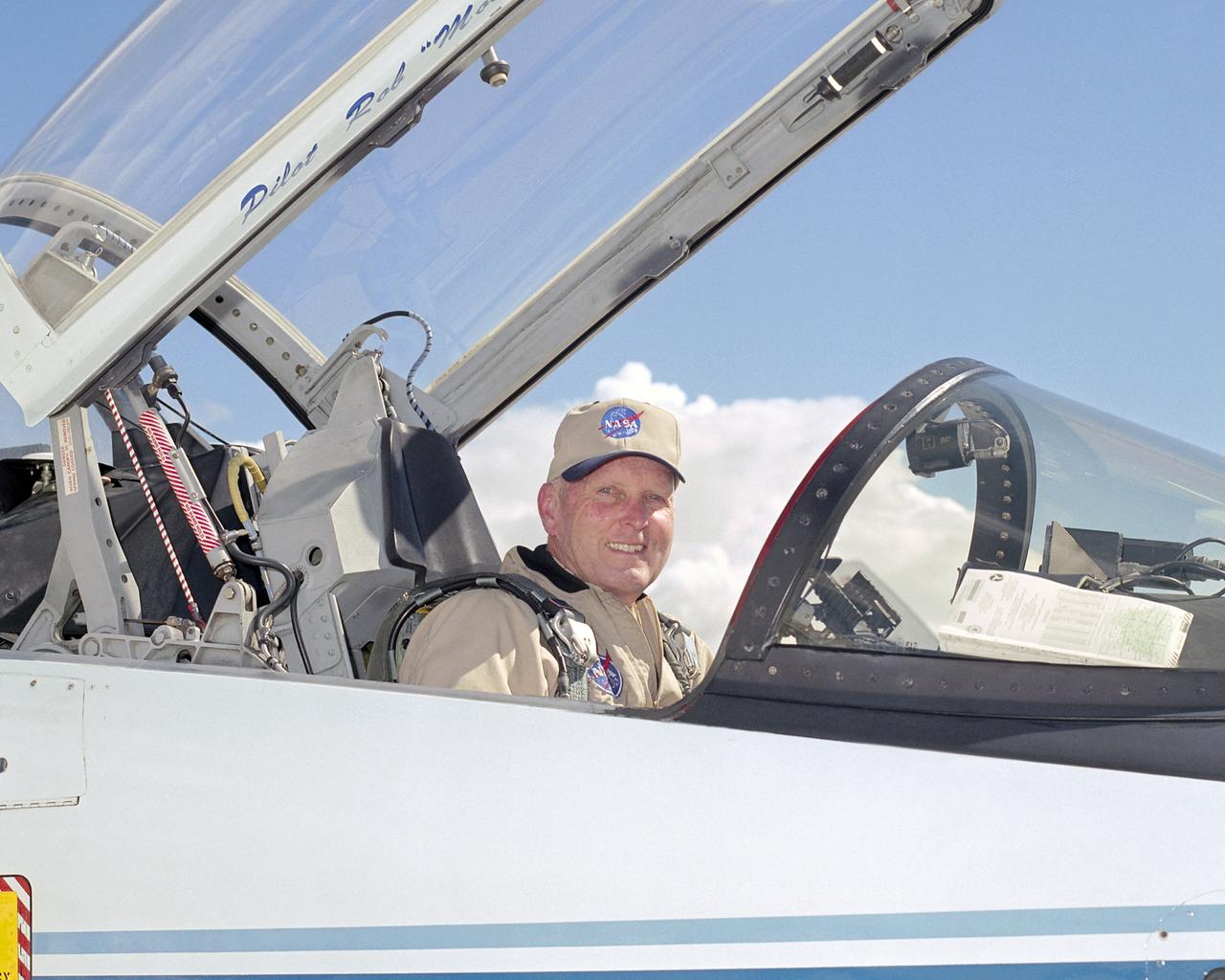
NASA Dryden Flight Research Center's chief pilot Gordon Fullerton in the cockpit of the center's T-38 Talon mission support aircraft.
NASA's converted YO-3A observation plane, now used for acoustics research, touches down at Edwards Air Force Base following a pilot checkout flight.
NASA's converted YO-3A observation plane, now used for acoustics research, touches down at Edwards Air Force Base following a pilot checkout flight
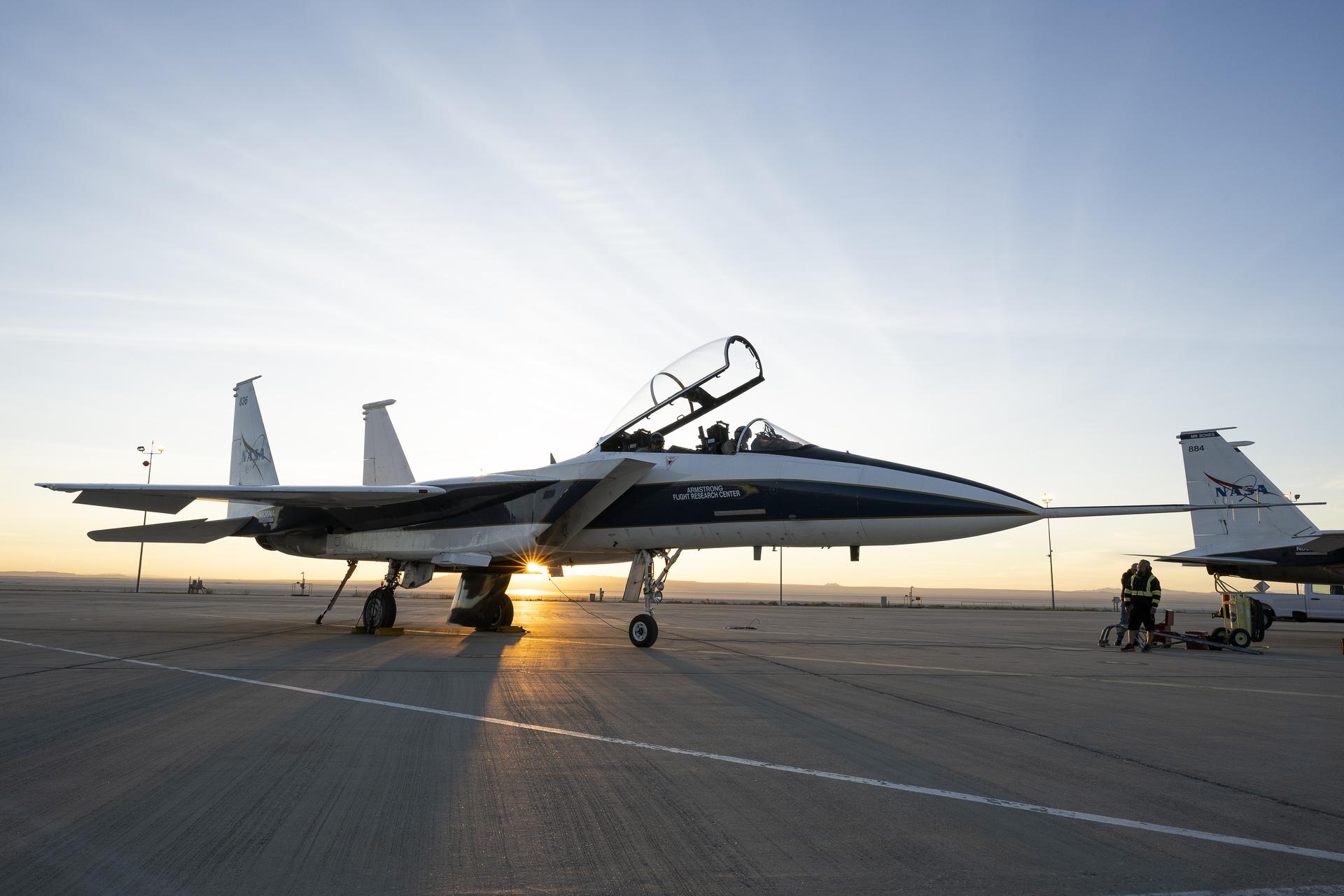
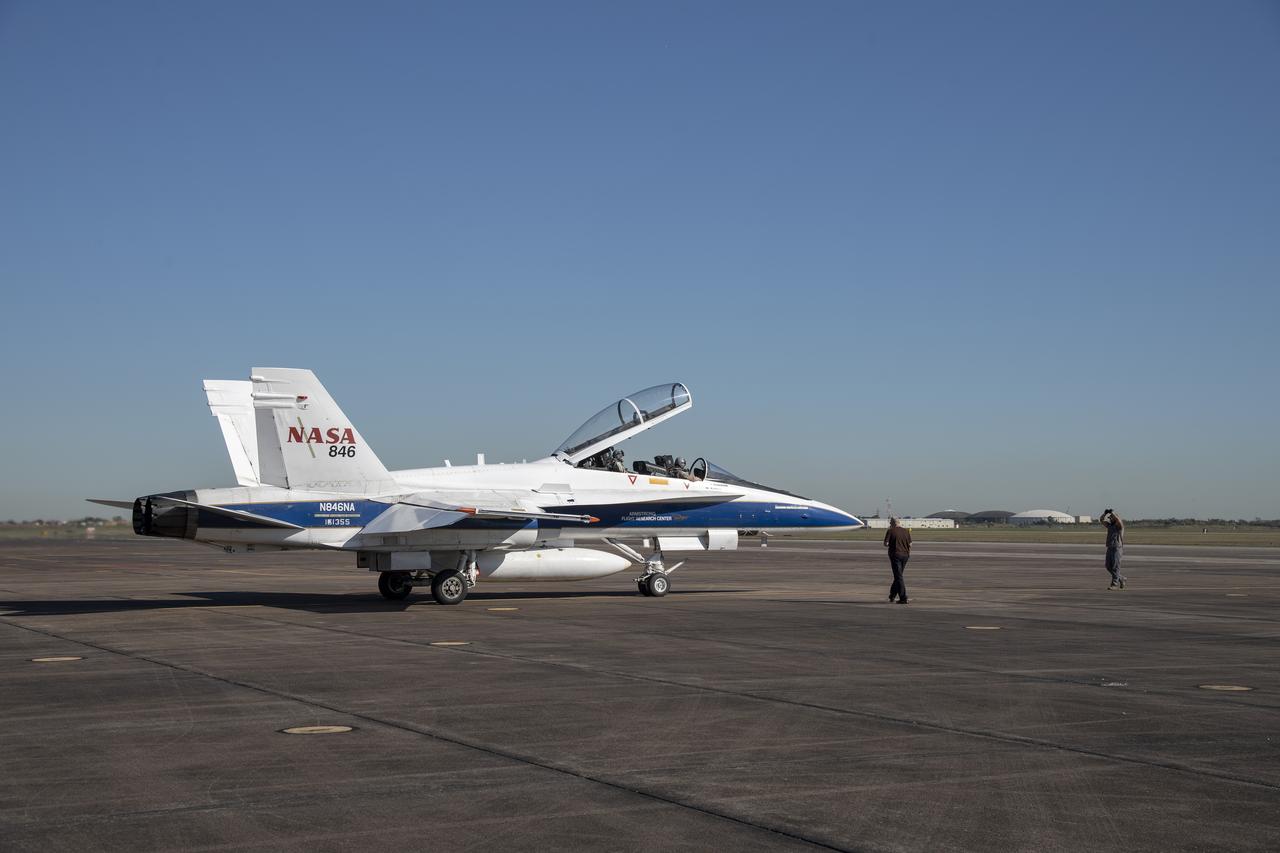
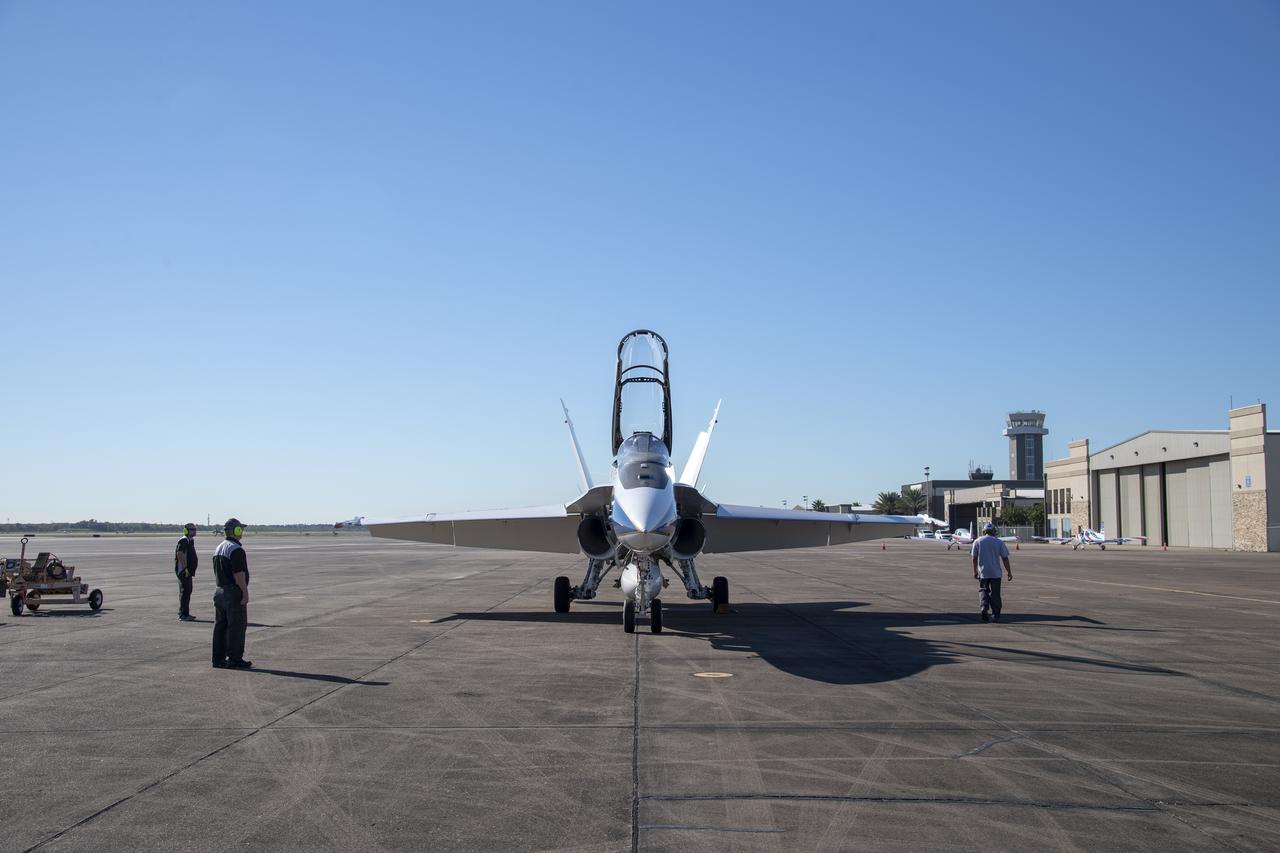
A NASA F/A-18 is towed to the apron at NASA's Armstrong Flight Research Center in Edwards, California during sunrise over Rogers Dry Lake. The F/A-18 was used to test a transmitter for an air navigation system, called the Airborne Location Integrating Geospatial Navigation System, or ALIGNS. This system, designed to allow pilots to position their aircraft at precise distances to each other, will be critical for acoustic validation efforts of NASA's next supersonic X-plane, the X-59 Quiet SuperSonic Technology.
NASA F/A-18 Towed At Sunrise for Flight
NASA test pilots Jim “Clue” Less and Wayne “Ringo” Ringelberg step to the F/A-18 research aircraft at Ellington Field and conduct pre-flight safety checks on the aircraft prior to a supersonic research flight for the QSF18 series.
NASA Pilots Prepare for QSF18 Flight
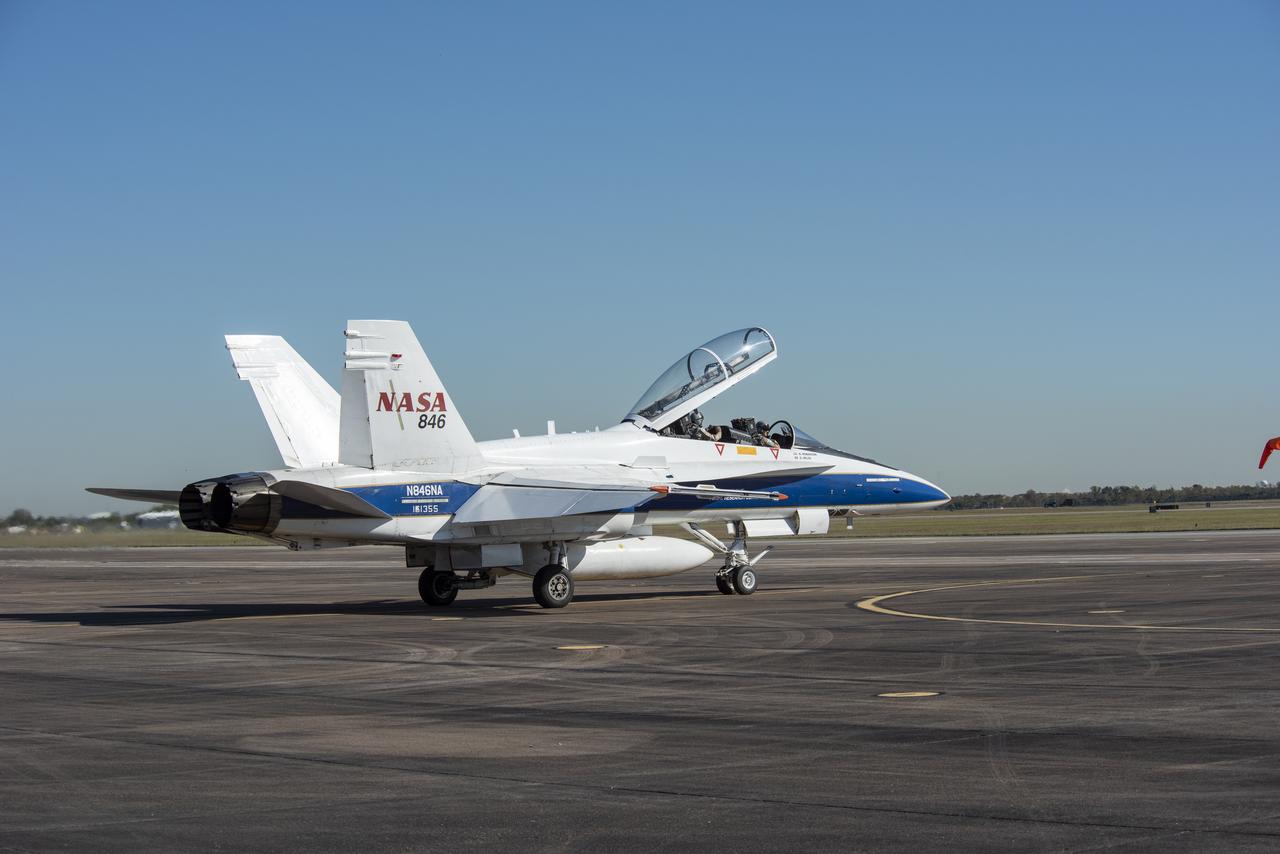
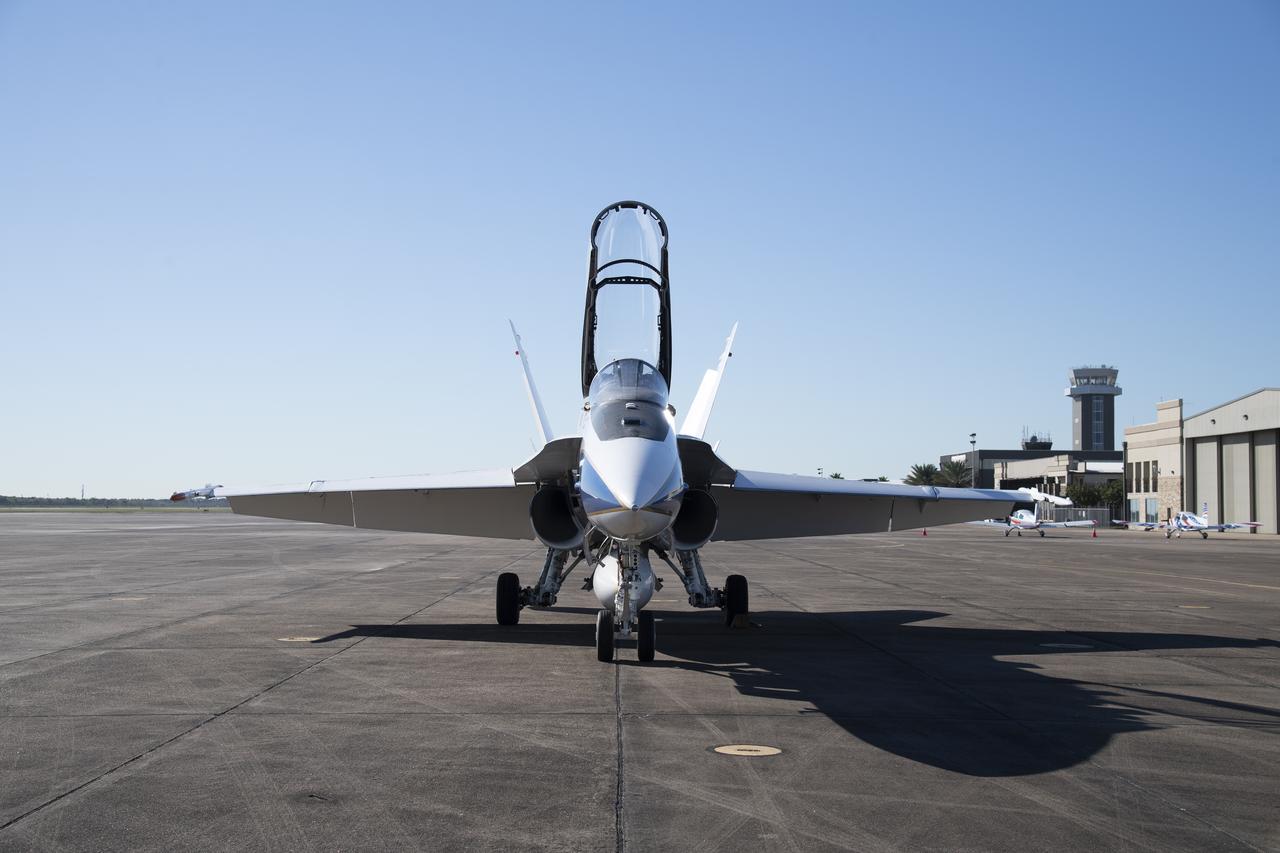
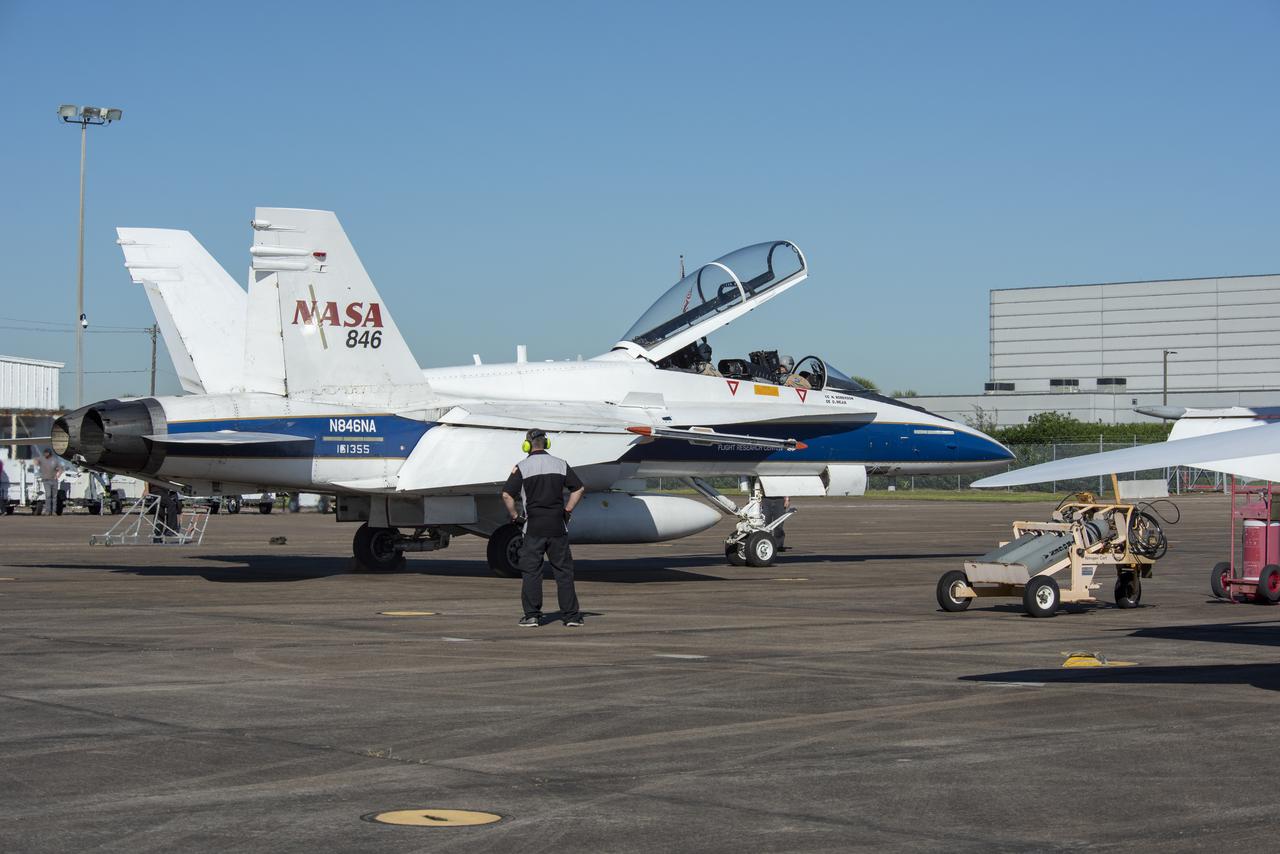
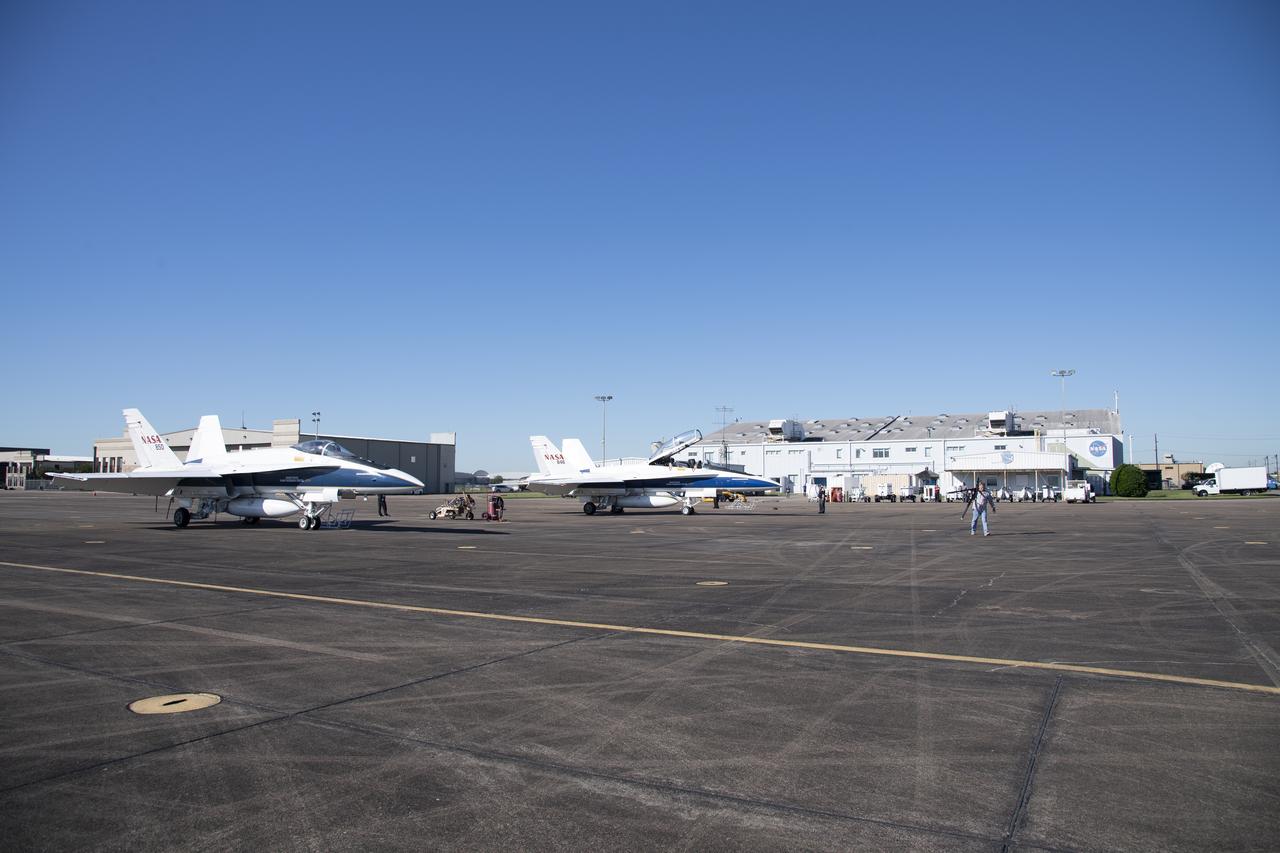
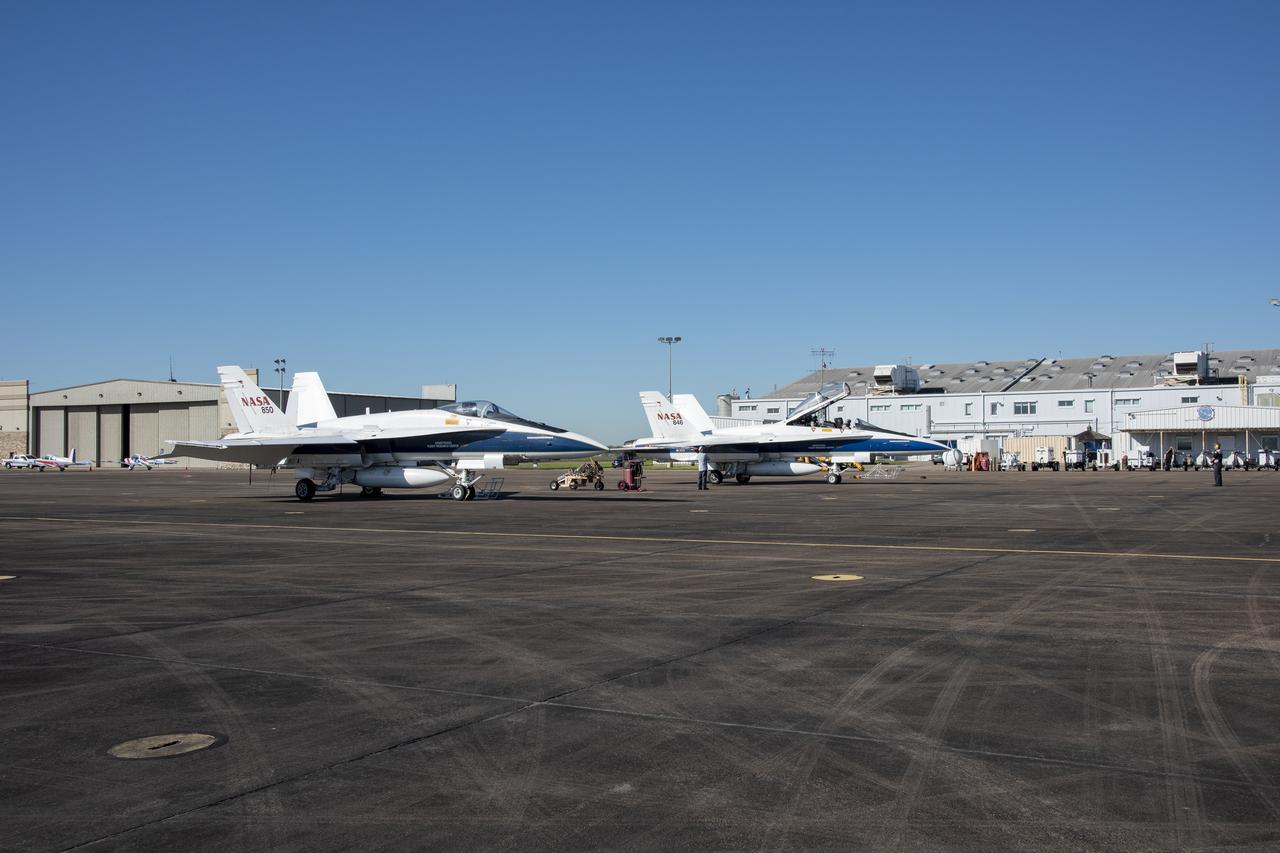
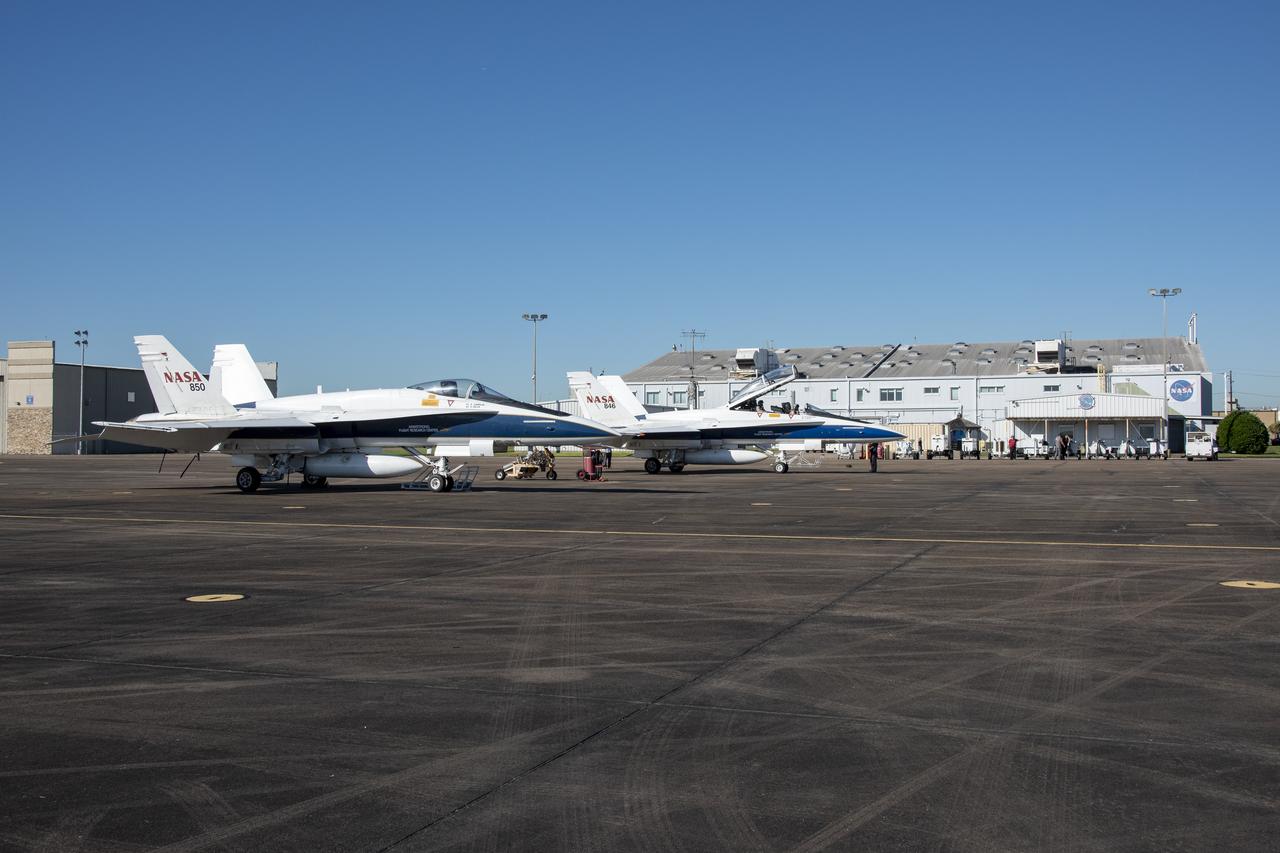
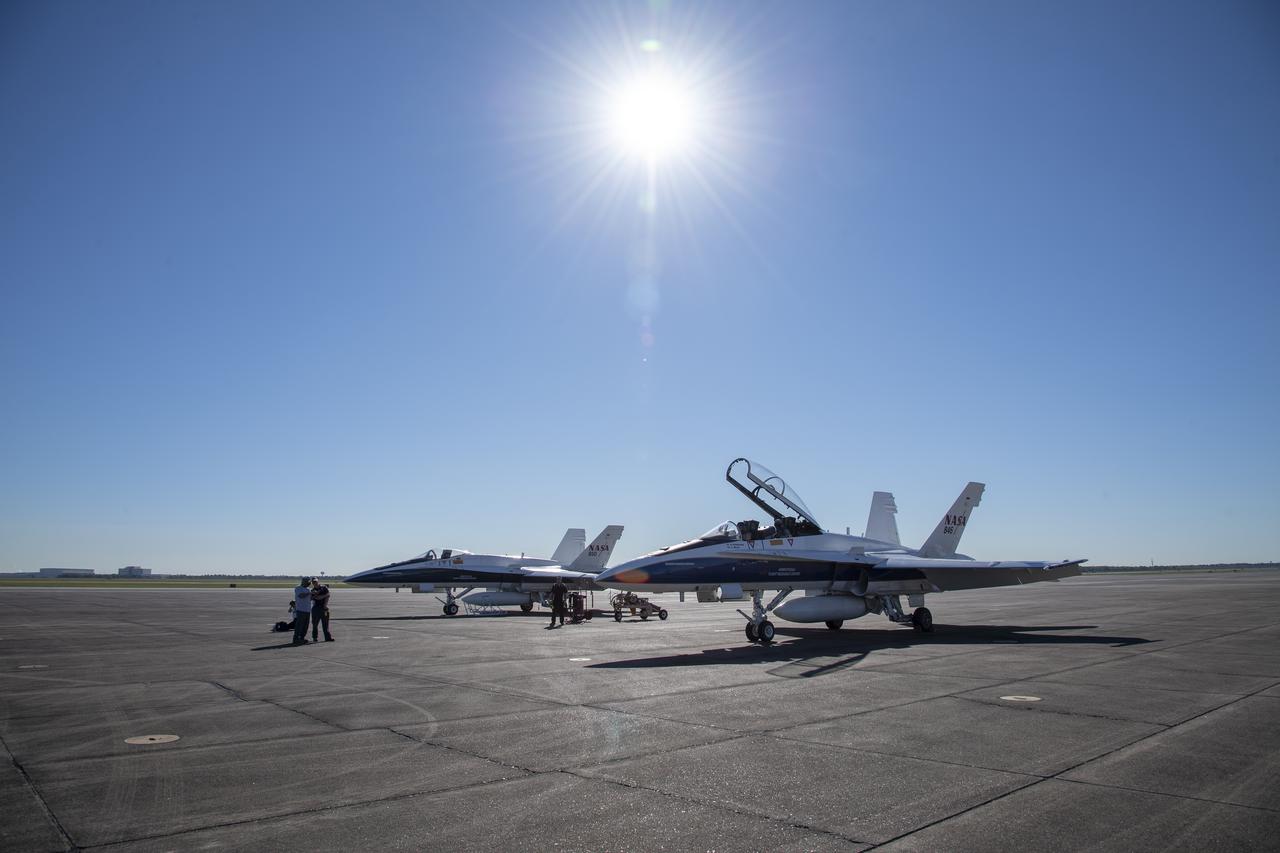
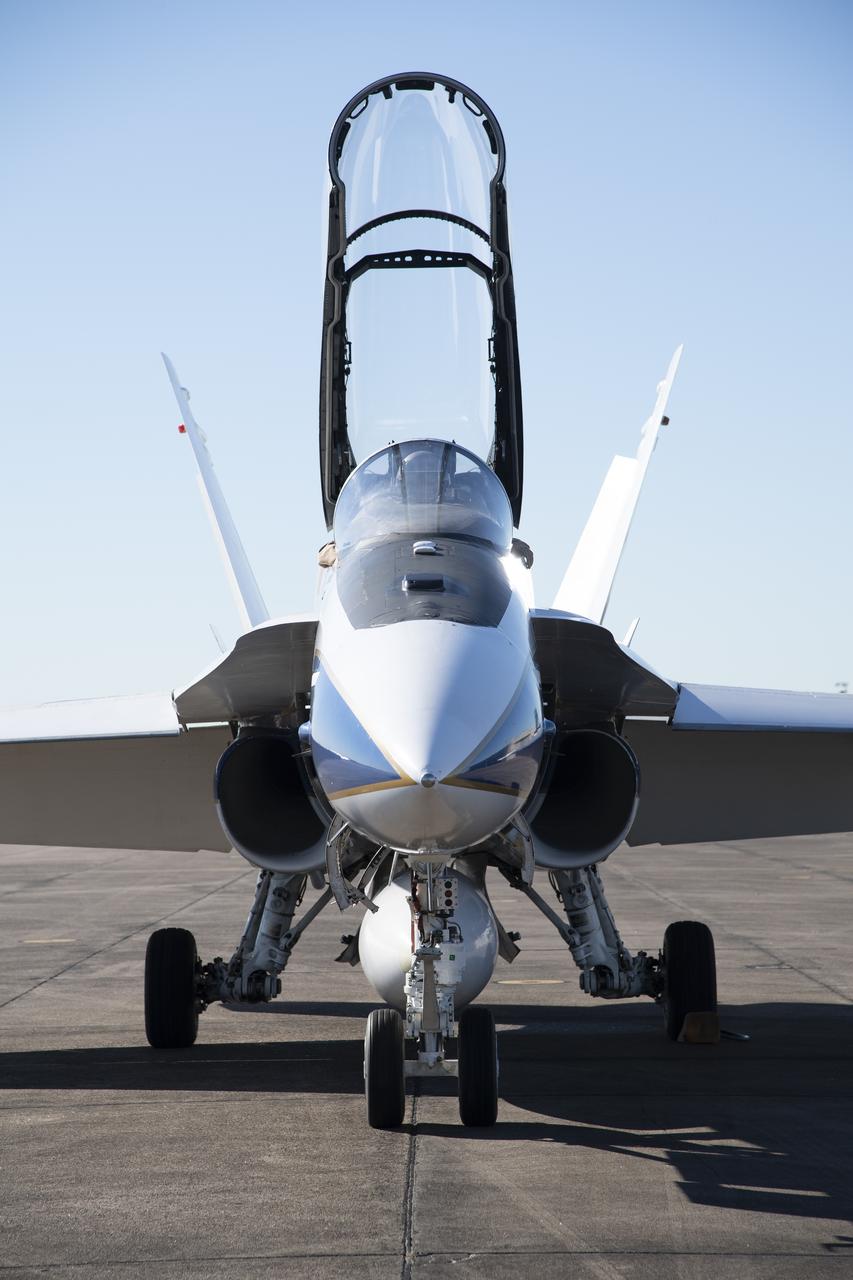
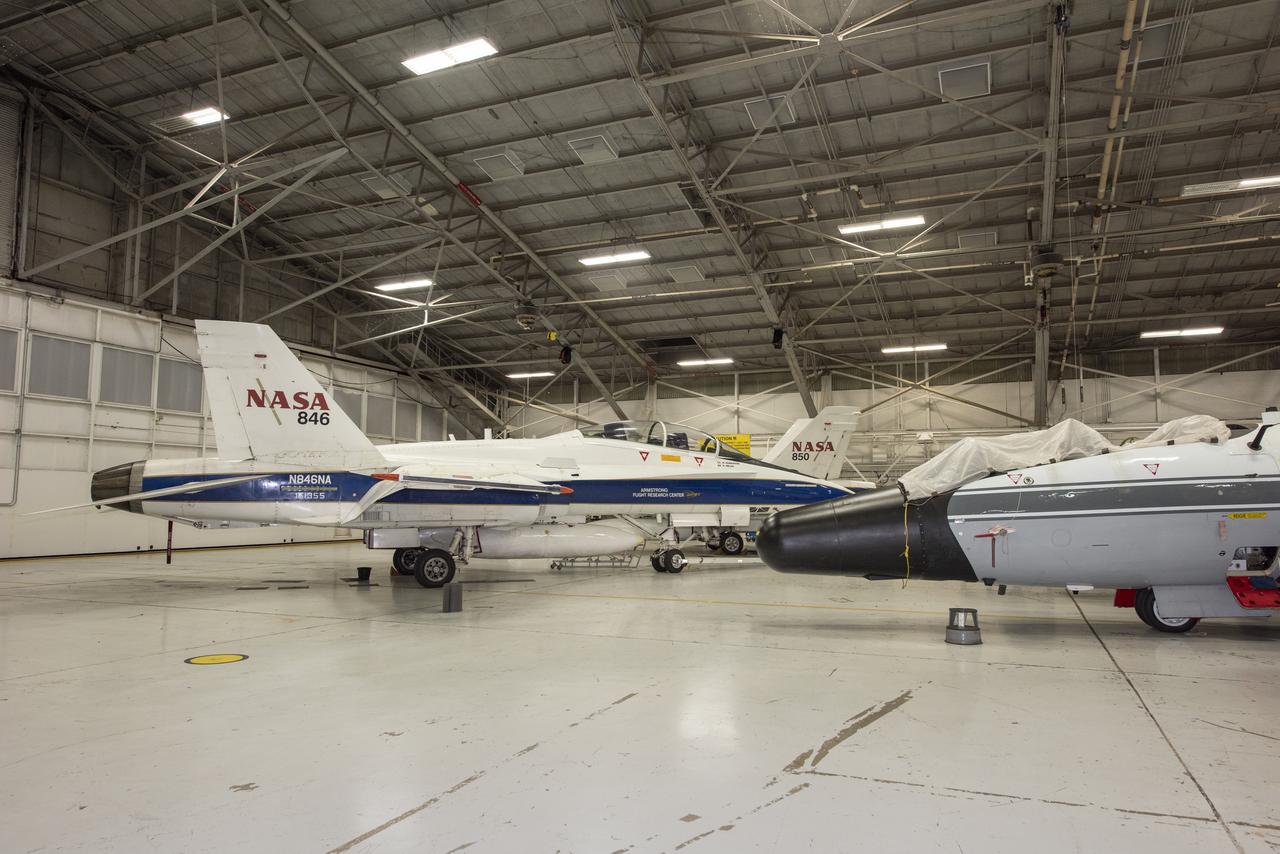
NASA deployed two F/A-18 research aircraft from NASA’s Armstrong Flight Research Center in California to fly the Quiet Supersonic Flights 2018 campaign, or QSF18. Having more than one aircraft allows pilots to conduct quick turnarounds with different aircrews between flights, fitting in as many targeted research flights as necessary.
NASA F/A-18 Aircraft Sit in Hangar
NASA deployed two F/A-18 research aircraft from NASA’s Armstrong Flight Research Center in California to fly the Quiet Supersonic Flights 2018 campaign, or QSF18. Having more than one aircraft allows pilots to conduct quick turnarounds with different aircrews between flights, fitting in as many targeted research flights as necessary.
NASA F/A-18 Aircraft Sit in Hangar
NASA deployed two F/A-18 research aircraft from NASA’s Armstrong Flight Research Center in California to fly the Quiet Supersonic Flights 2018 campaign, or QSF18. Having more than one aircraft allows pilots to conduct quick turnarounds with different aircrews between flights, fitting in as many targeted research flights as necessary.
NASA F/A-18 Aircraft Sit in Hangar
NASA deployed two F/A-18 research aircraft from NASA’s Armstrong Flight Research Center in California to fly the Quiet Supersonic Flights 2018 campaign, or QSF18. Having more than one aircraft allows pilots to conduct quick turnarounds with different aircrews between flights, fitting in as many targeted research flights as necessary.
NASA F/A-18 Aircraft Sit in Hangar
NASA deployed two F/A-18 research aircraft from NASA’s Armstrong Flight Research Center in California to fly the Quiet Supersonic Flights 2018 campaign, or QSF18. Having more than one aircraft allows pilots to conduct quick turnarounds with different aircrews between flights, fitting in as many targeted research flights as necessary.
NASA F/A-18 Aircraft Sit in Hangar
NASA deployed two F/A-18 research aircraft from NASA’s Armstrong Flight Research Center in California to fly the Quiet Supersonic Flights 2018 campaign, or QSF18. Having more than one aircraft allows pilots to conduct quick turnarounds with different aircrews between flights, fitting in as many targeted research flights as necessary.
NASA F/A-18 Aircraft Sit in Hangar
NASA Administrator Bridenstine tests the X-57 "Maxwell" simulator at NASA's Armstrong Flight Research Center. The simulator is designed to provide feedback to NASA test pilots based on the aircraft's unique design and distributed electric propulsion system.
Bridenstine practices flight in X-57 Simulator for NASA's Experimental All-Electric Aircraft
NASA Administrator Bridenstine tests the X-57 "Maxwell" simulator at NASA's Armstrong Flight Research Center. The simulator is designed to provide feedback to NASA test pilots based on the aircraft's unique design and distributed electric propulsion system.
Bridenstine practices flight in X-57 Simulator for NASA's Experimental All-Electric Aircraft
The HL-10 was one of five heavyweight lifting-body designs flown at NASA's Flight Research Center (FRC--later Dryden Flight Research Center), Edwards, California, from July 1966 to November 1975 to study and validate the concept of safely maneuvering and landing a low lift-over-drag vehicle designed for reentry from space. Northrop Corporation built the HL-10 and M2-F2, the first two of the fleet of "heavy" lifting bodies flown by the NASA Flight Research Center. The contract for construction of the HL-10 and the M2-F2 was $1.8 million. "HL" stands for horizontal landing, and "10" refers to the tenth design studied by engineers at NASA's Langley Research Center, Hampton, Va. After delivery to NASA in January 1966, the HL-10 made its first flight on Dec. 22, 1966, with research pilot Bruce Peterson in the cockpit. Although an XLR-11 rocket engine was installed in the vehicle, the first 11 drop flights from the B-52 launch aircraft were powerless glide flights to assess handling qualities, stability, and control. In the end, the HL-10 was judged to be the best handling of the three original heavy-weight lifting bodies (M2-F2/F3, HL-10, X-24A). The HL-10 was flown 37 times during the lifting body research program and logged the highest altitude and fastest speed in the Lifting Body program. On Feb. 18, 1970, Air Force test pilot Peter Hoag piloted the HL-10 to Mach 1.86 (1,228 mph). Nine days later, NASA pilot Bill Dana flew the vehicle to 90,030 feet, which became the highest altitude reached in the program.  Some new and different lessons were learned through the successful flight testing of the HL-10. These lessons, when combined with information from it's sister ship, the M2-F2/F3, provided an excellent starting point for designers of future entry vehicles, including the Space Shuttle.
NASA research pilot Bill Dana takes a moment to watch NASA's NB-52B cruise overhead after a research flight in the HL-10. On the left, John Reeves can be seen at the cockpit of the lifting body