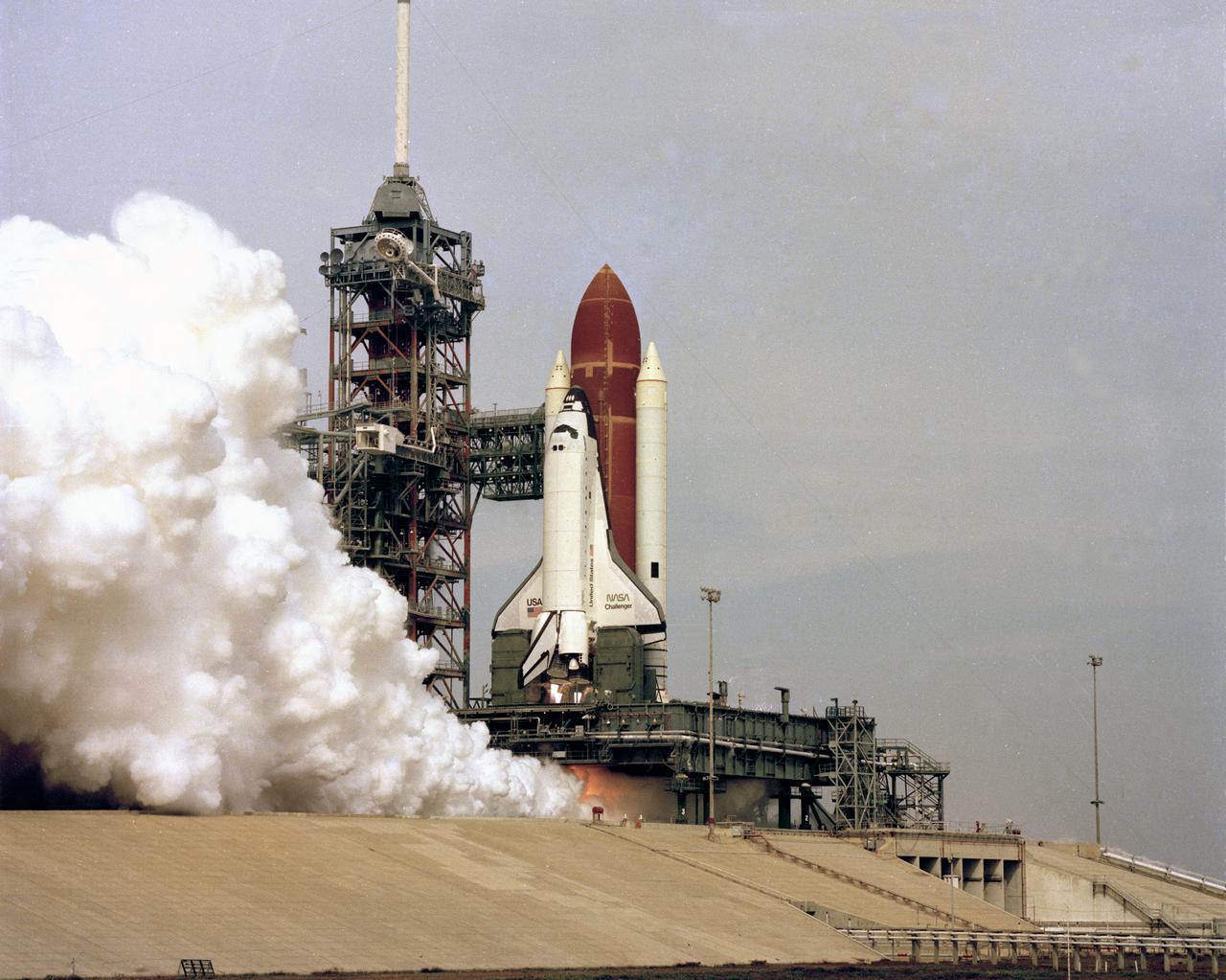
CAPE CANAVERAL, Fla. -- STS-6 second Flight Readiness Firing test, Launch Complex 39. Photo credit: NASA
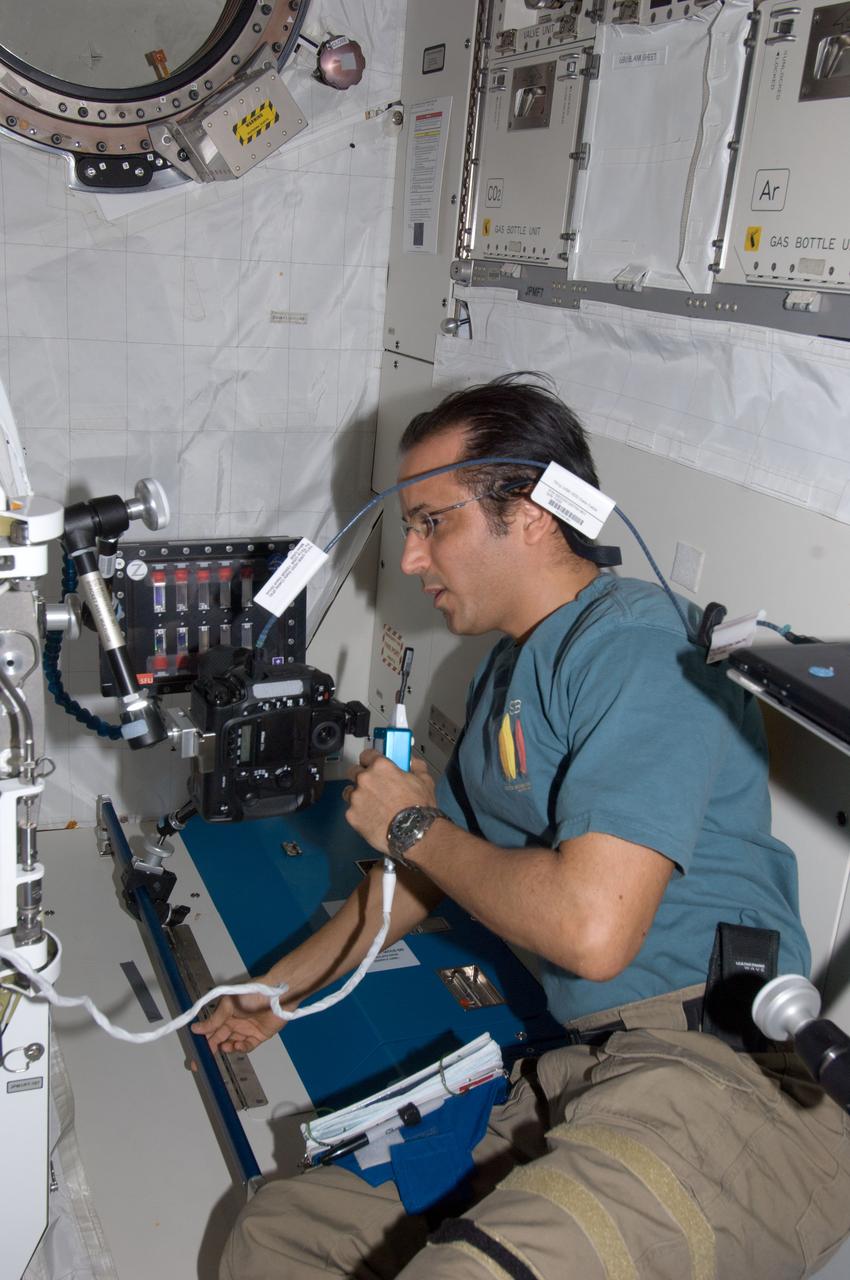
ISS032-E-014593 (6 Aug. 2012) --- NASA astronaut Joe Acaba, Expedition 32 flight engineer, conducts a session with the Binary Colloidal Alloy Test-6 (BCAT-6) experiment in the Kibo laboratory of the International Space Station.
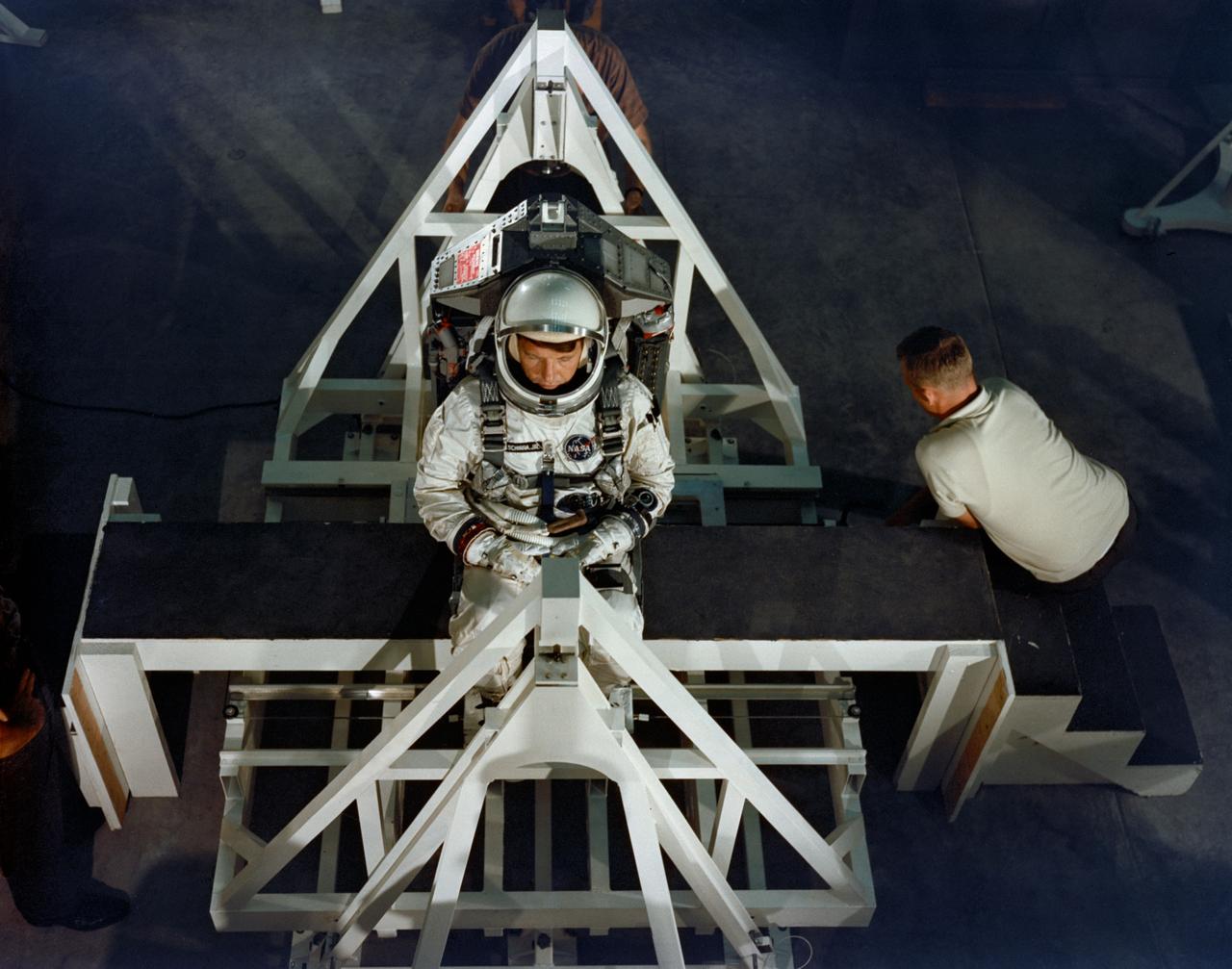
S65-54319 (22 Sept. 1965) --- Astronaut Walter M. Schirra Jr., command pilot of the Gemini-6 prime crew, undergoes weight and balance tests in the Pyrotechnic Installation Building, Merritt Island, Kennedy Space Center, Florida. Photo credit: NASA or National Aeronautics and Space Administration

The Delta IV Heavy for Exploration Flight Test-1 (EFT-1) is being loaded on the Delta Mariner for transfer to the Kennedy Space Center on March 6, 2014.
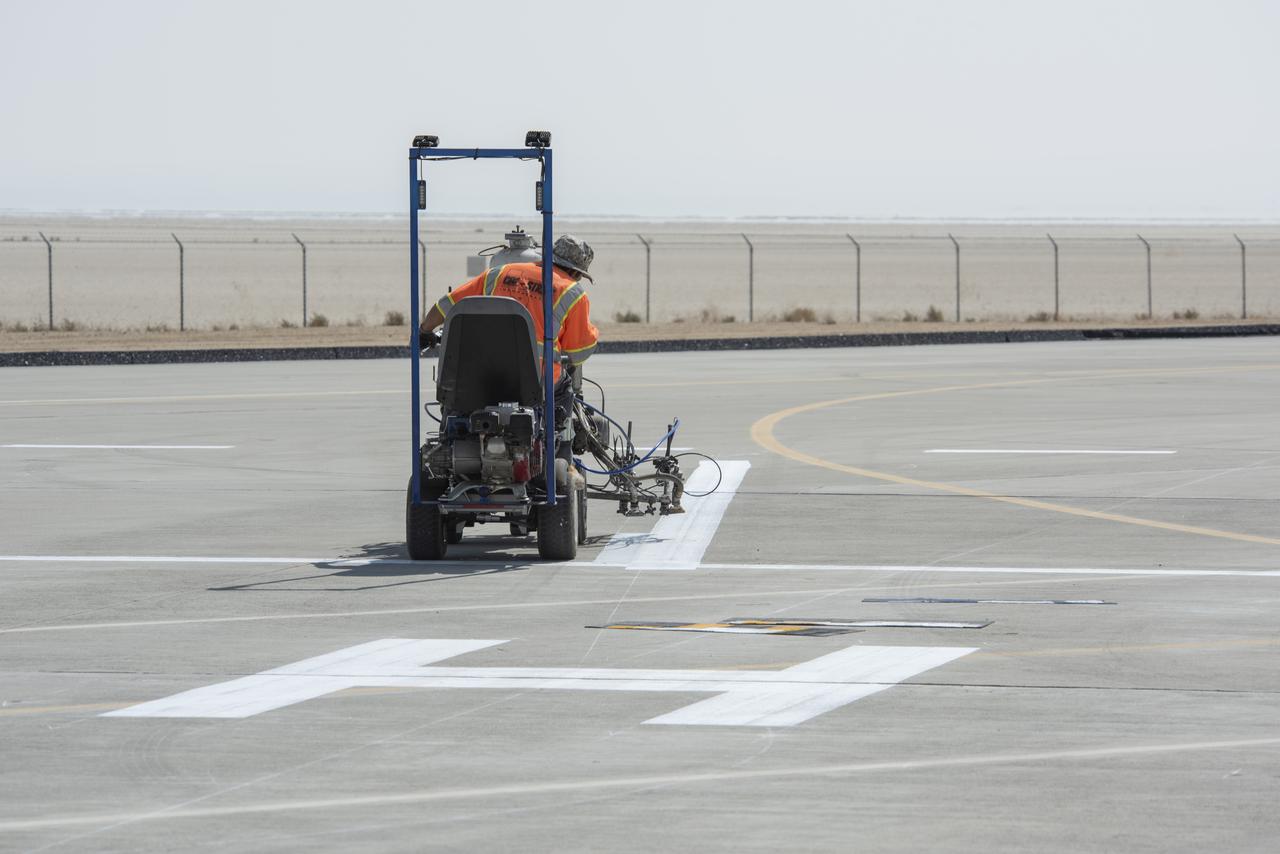
A worker painted vertiports and helipads at NASA's Armstrong Flight Research Center Oct. 6-14, 2020. The Advanced Air Mobility project's National Campaign will use these areas for future flight testing.

Vertiports and helipads were painted Oct. 6-14, 2020 at NASA’s Armstrong Flight Research Center to support future flight testing for the Advanced Air Mobility project’s National Campaign.
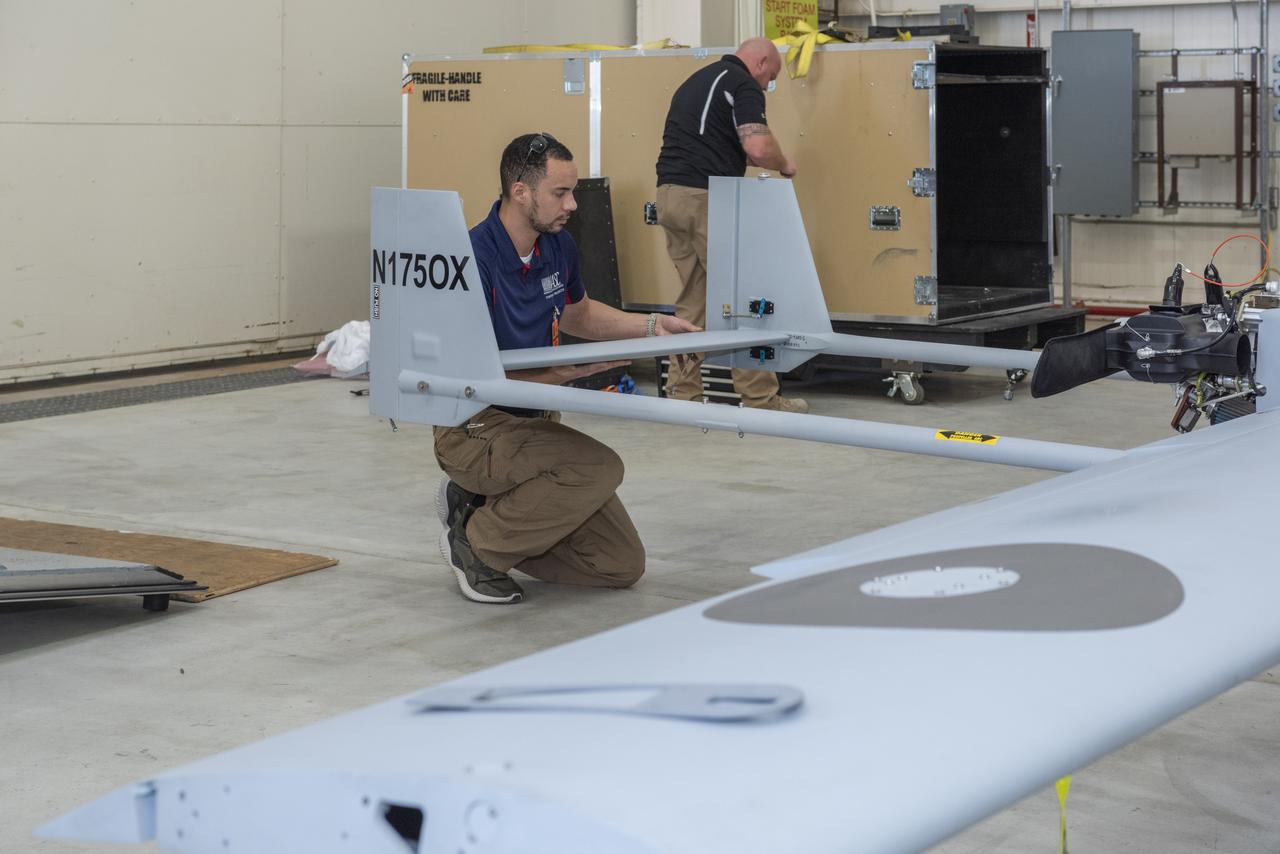
Daryl Ferguson attaches the TigerShark’s tail at NASA’s Armstrong Flight Research Center in California.

NASA's Daryl Ferguson, mission commander and pilot, Steve Hamilton and Brad Petty unload the TigerShark at NASA's Armstrong Flight Research Center in California.
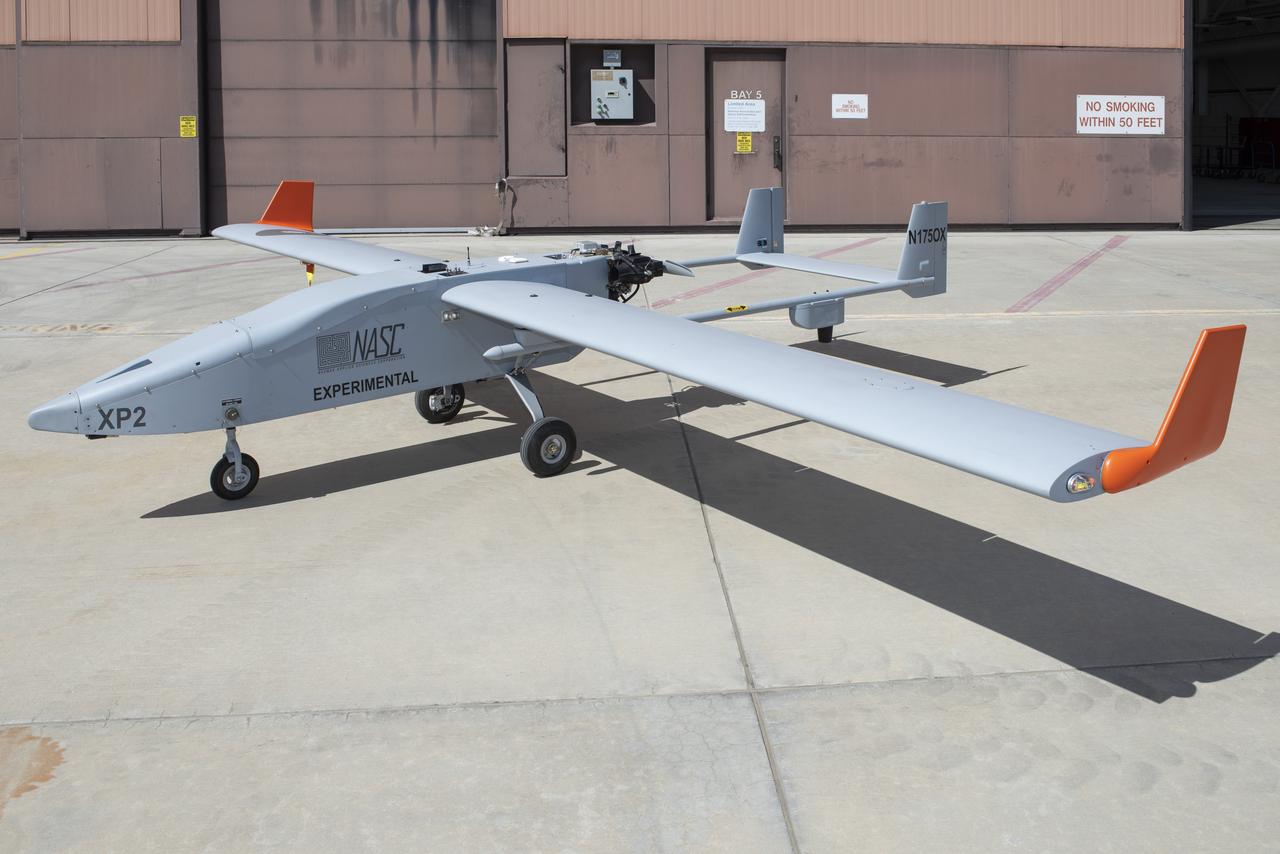
The fully assembled TigerShark unmanned aircraft system, seen here near a hangar at NASA’s Armstrong Flight Research Center in California, is expected to soon be flying missions.
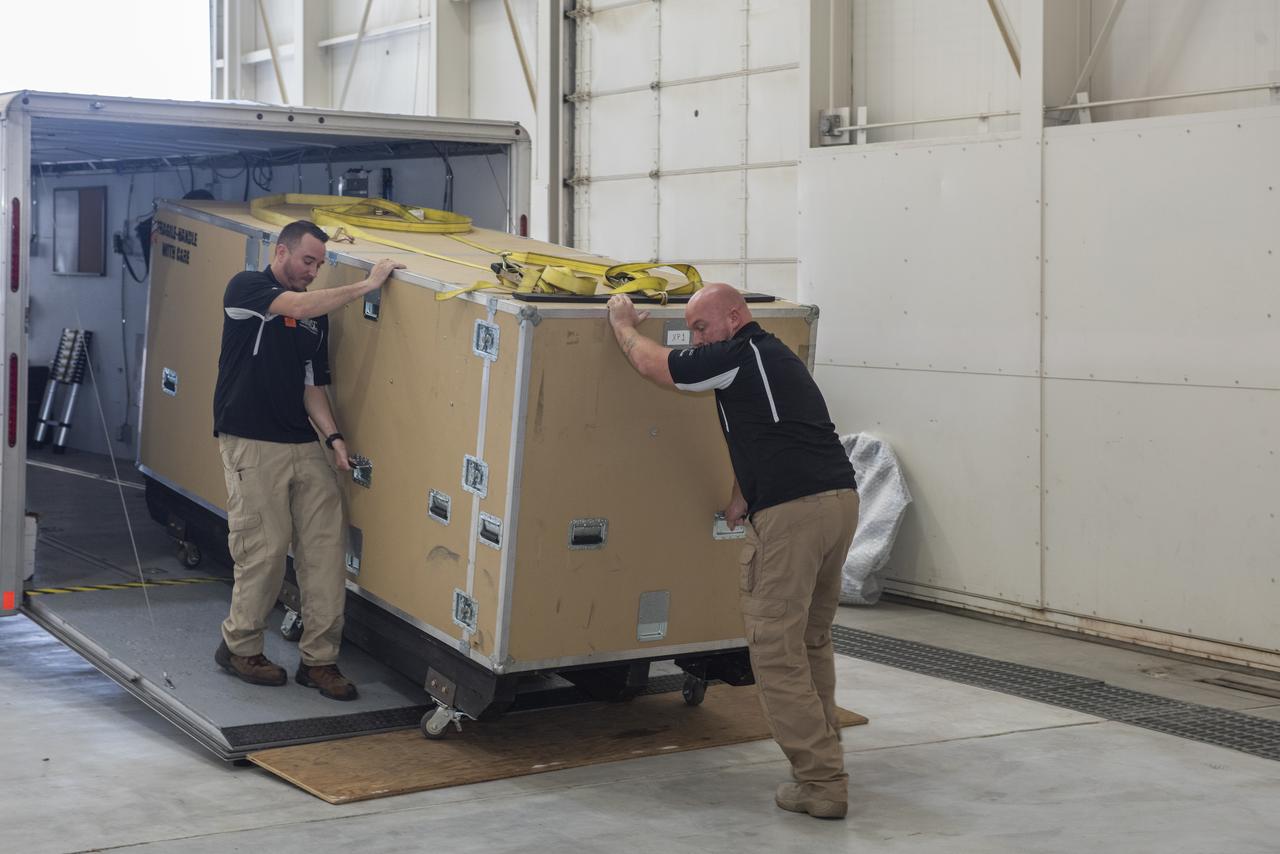
Navmar Applied Sciences Corporation's Steve Hamilton, lead TigerShark pilot, and Brad Petty, mission commander and pilot, unload the crate containing the TigerShark at NASA's Armstrong Flight Research Center in California.
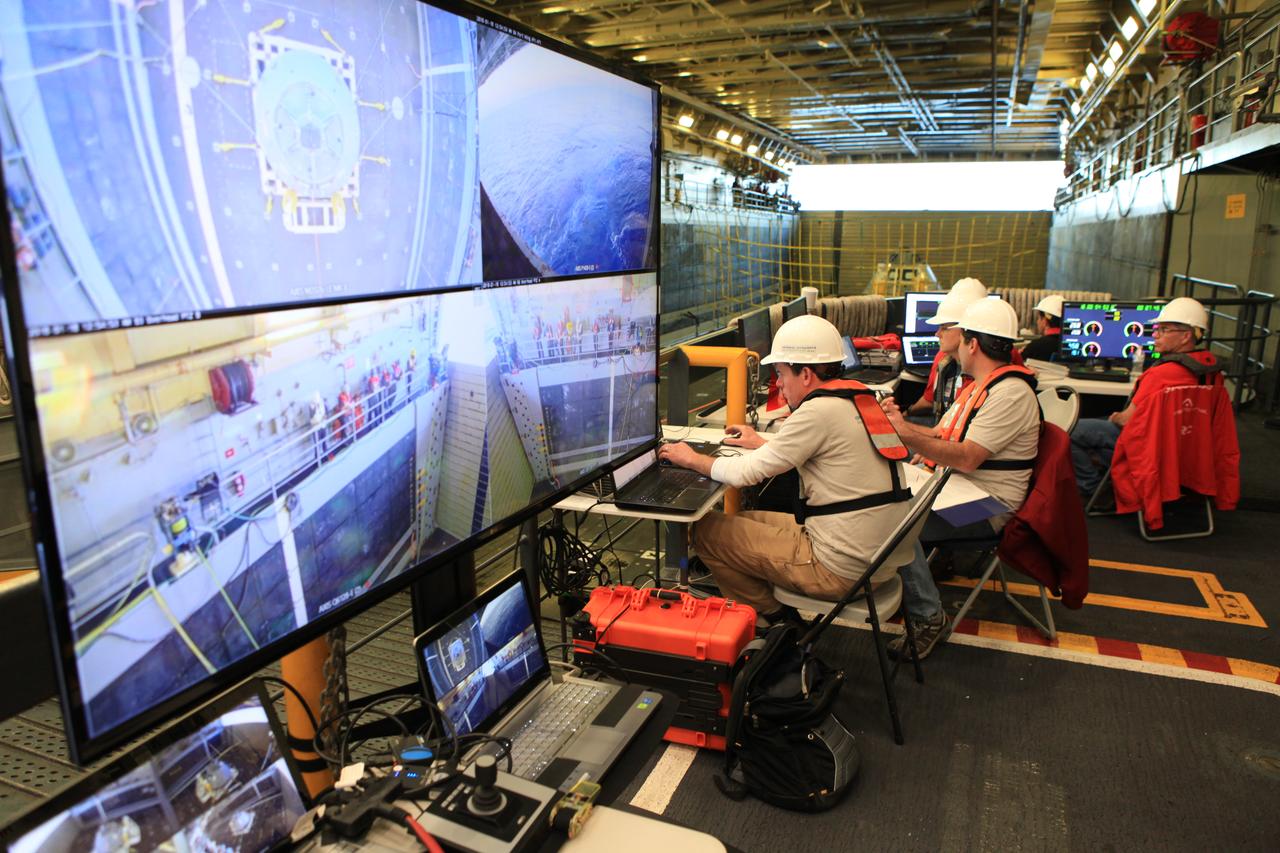
Members of the Wave Monitoring System check their data during the Underway Recovery Test 6, or URT-6, aboard the USS Anchorage. The testing with Kennedy Space Center’s NASA Recovery Team and the U.S. Navy will provide important data that is being used to improve recovery procedures and hardware ahead of Orion’s next flight, Exploration Mission-1, when it splashes down in the Pacific Ocean.

NASA's F-15B Aeronautics Research Test Bed performs a calibration flight of the shock-sensing probe over Edwards, California, on Aug. 6, 2024. The probe will measure shock waves from NASA's X-59.
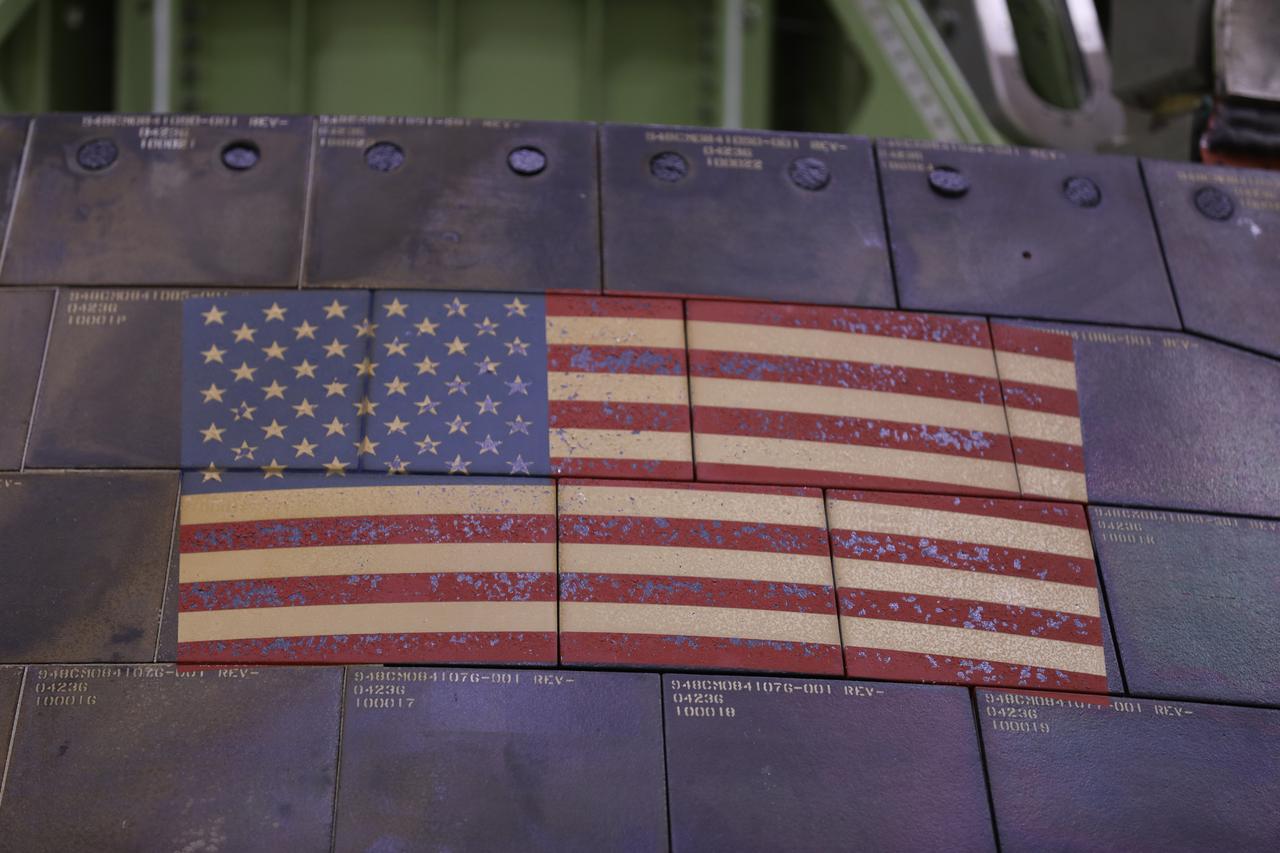
The Exploration Flight Test-1 (EFT-1) Crew Module undergoes preparations to move from the Operations and Checkout Building at Kennedy Space Center to the KSC Visitor Complex on April 6, 2017.

The Exploration Flight Test-1 (EFT-1) Crew Module undergoes preparations to move from the Operations and Checkout Building at Kennedy Space Center to the KSC Visitor Complex on April 6, 2017.
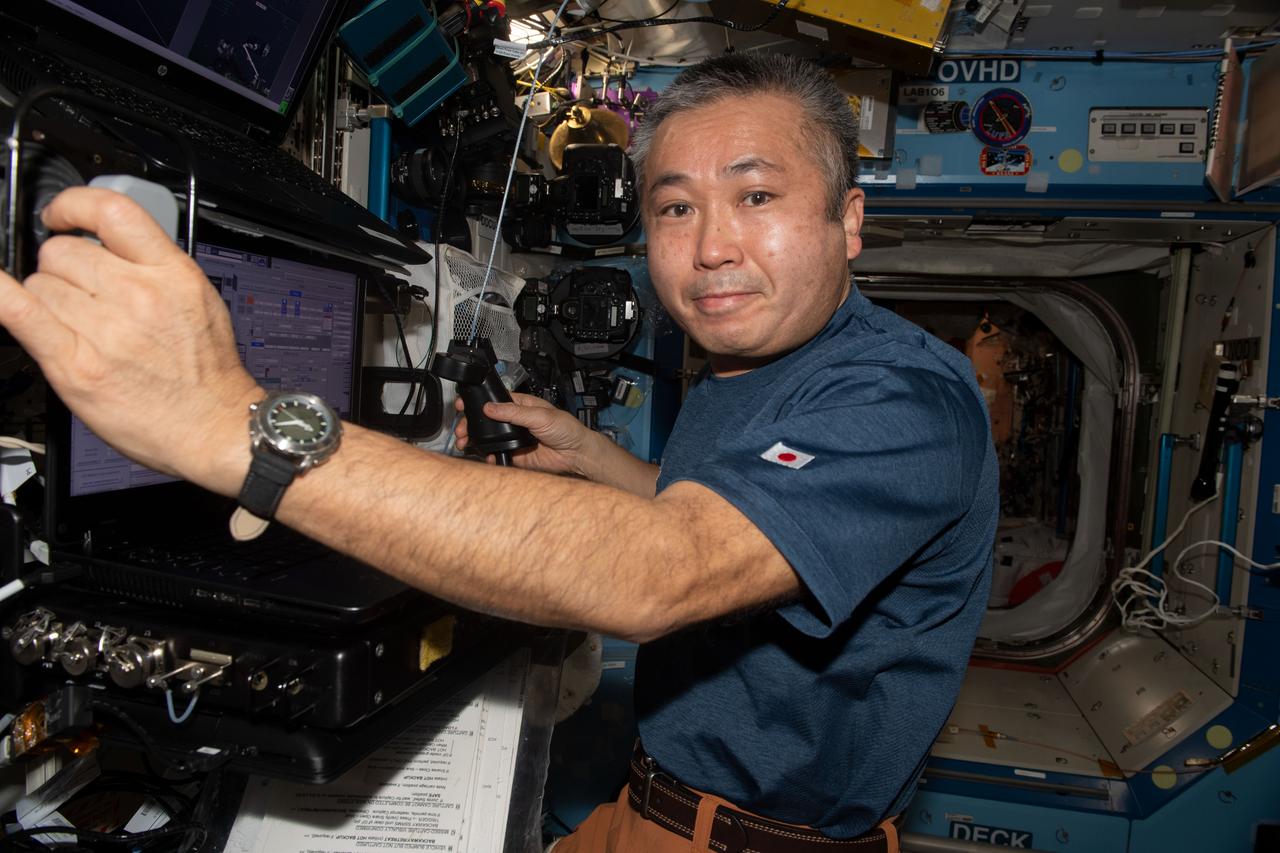
iss068e027600 (Dec. 6, 2022) --- Expedition 68 Flight Engineer Koichi Wakata of the Japan Aerospace Exploration Agency (JAXA) participates in a robotics test for the Behavioral Core Measures study that measures crew performance in microgravity.
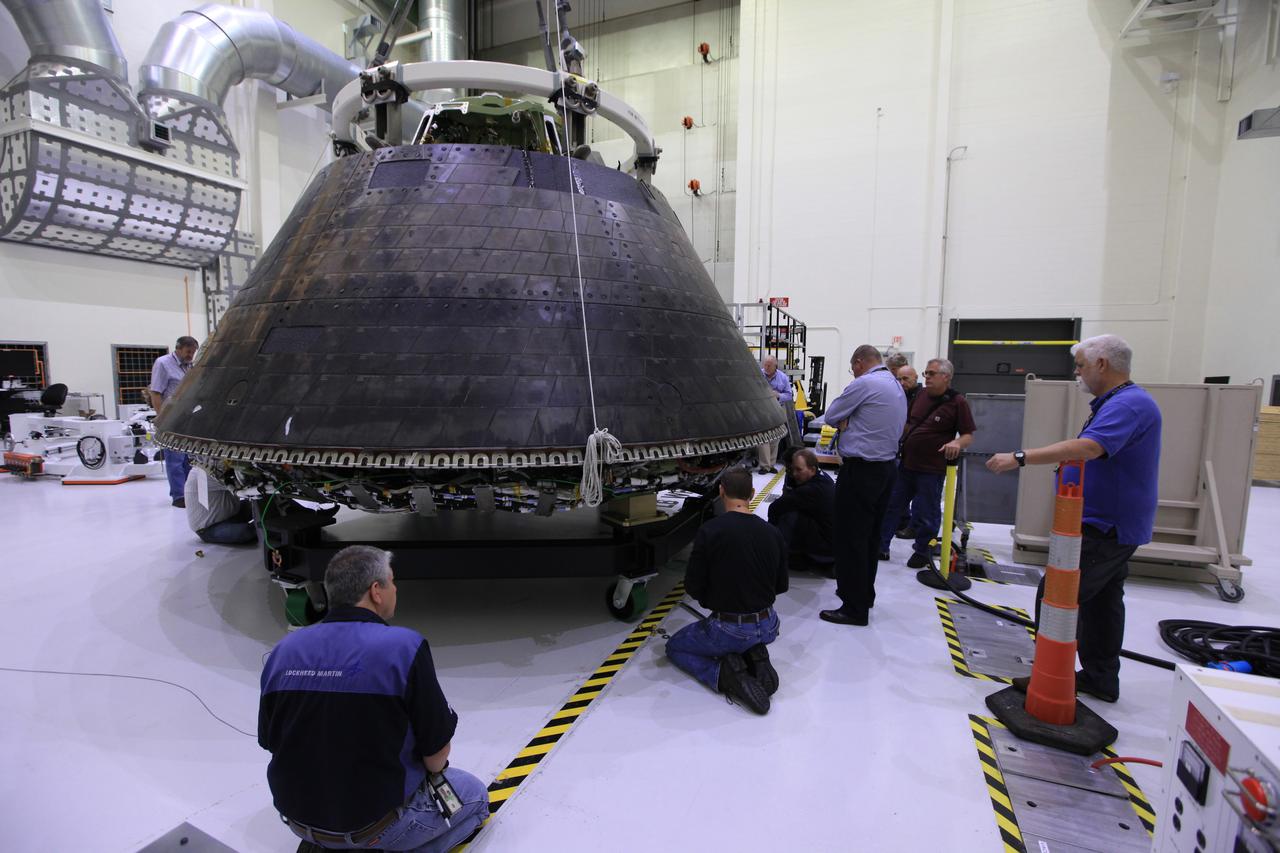
The Exploration Flight Test-1 (EFT-1) Crew Module undergoes preparations to move from the Operations and Checkout Building at Kennedy Space Center to the KSC Visitor Complex on April 6, 2017.
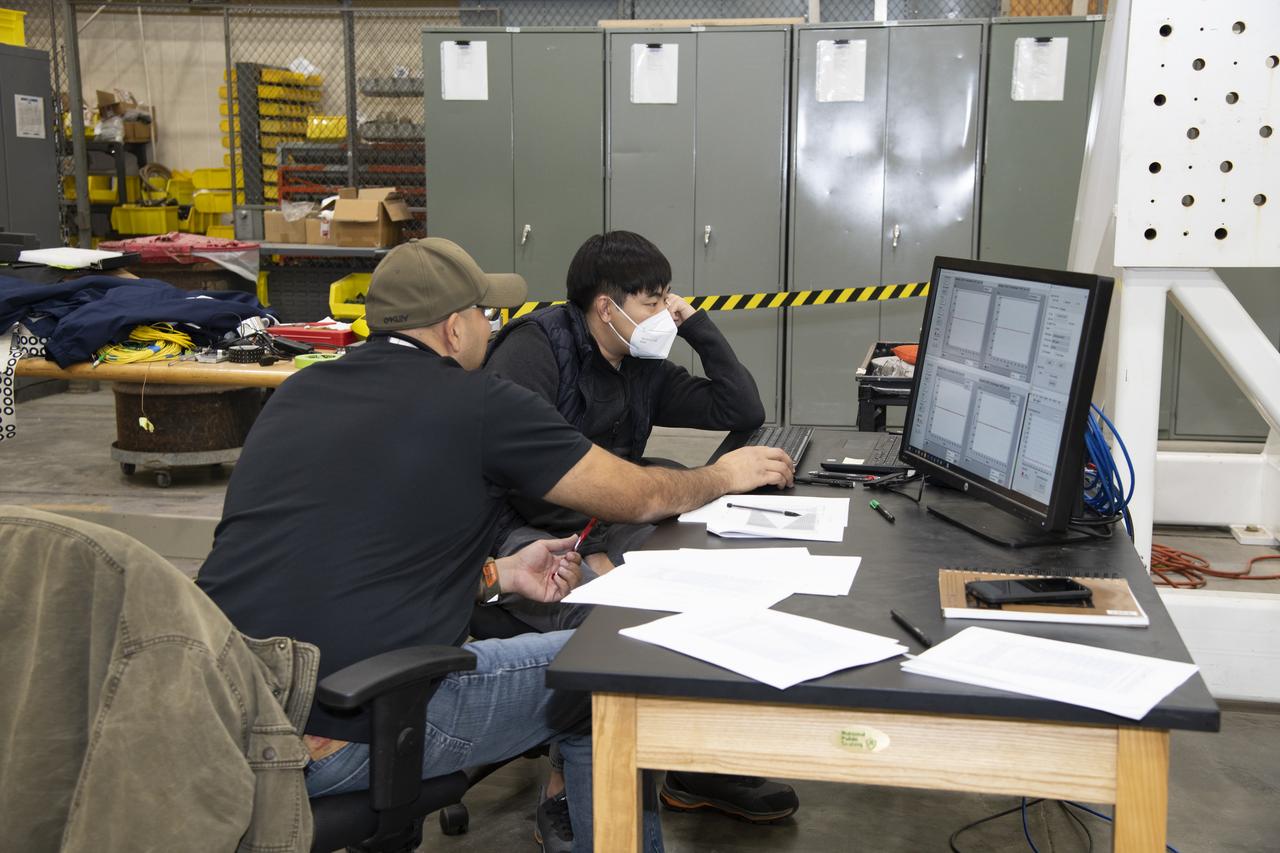
Frank Pena and Benjamin Park watch as data streams in from tests on a 6-foot model of the Transonic Truss-Braced Wing at NASA’s Armstrong Flight Research Center, in Edwards, California.

sc2023e031072 99/11/2022) --- Maya-5 and Maya-6 Flight Model Assembly inside the Clean Booth at the Center for Nanosatellite Testing, Kyushu Institute of Technology. Image courtesy of Dr. Mark Purio.

NASA's F-15B Aeronautics Research Test Bed performs a calibration flight of the shock-sensing probe over Edwards, California, on Aug. 6, 2024. The probe will measure shock waves from NASA's X-59.
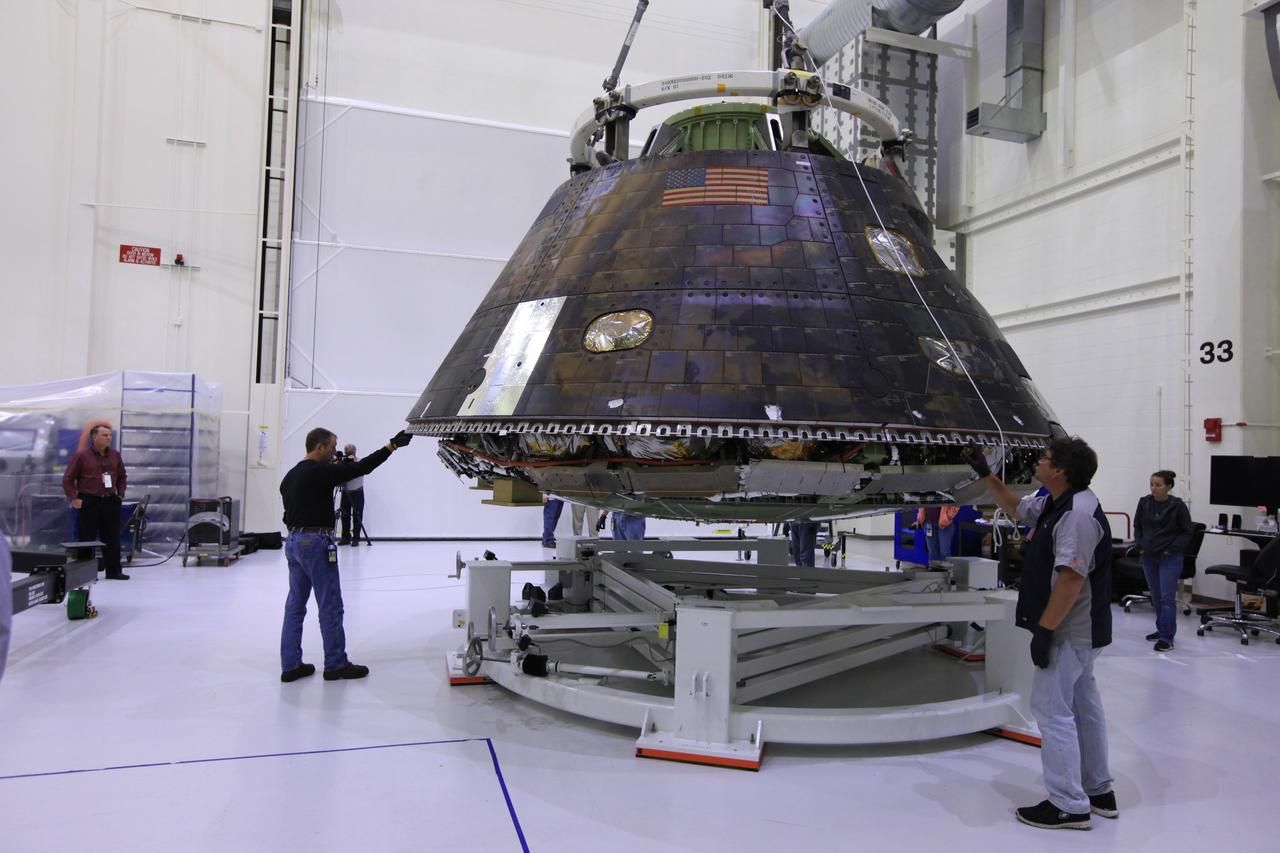
The Exploration Flight Test-1 (EFT-1) Crew Module undergoes preparations to move from the Operations and Checkout Building at Kennedy Space Center to the KSC Visitor Complex on April 6, 2017.
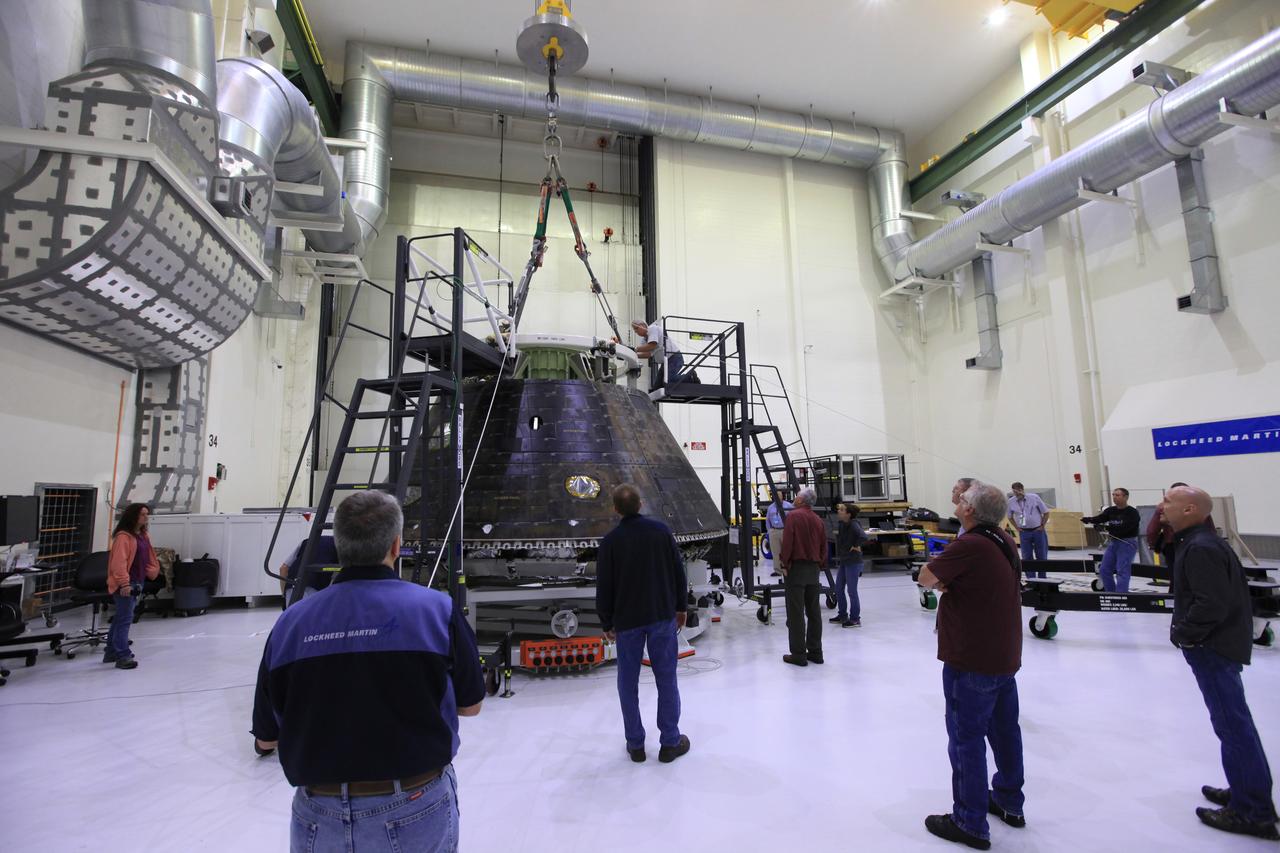
The Exploration Flight Test-1 (EFT-1) Crew Module undergoes preparations to move from the Operations and Checkout Building at Kennedy Space Center to the KSC Visitor Complex on April 6, 2017.
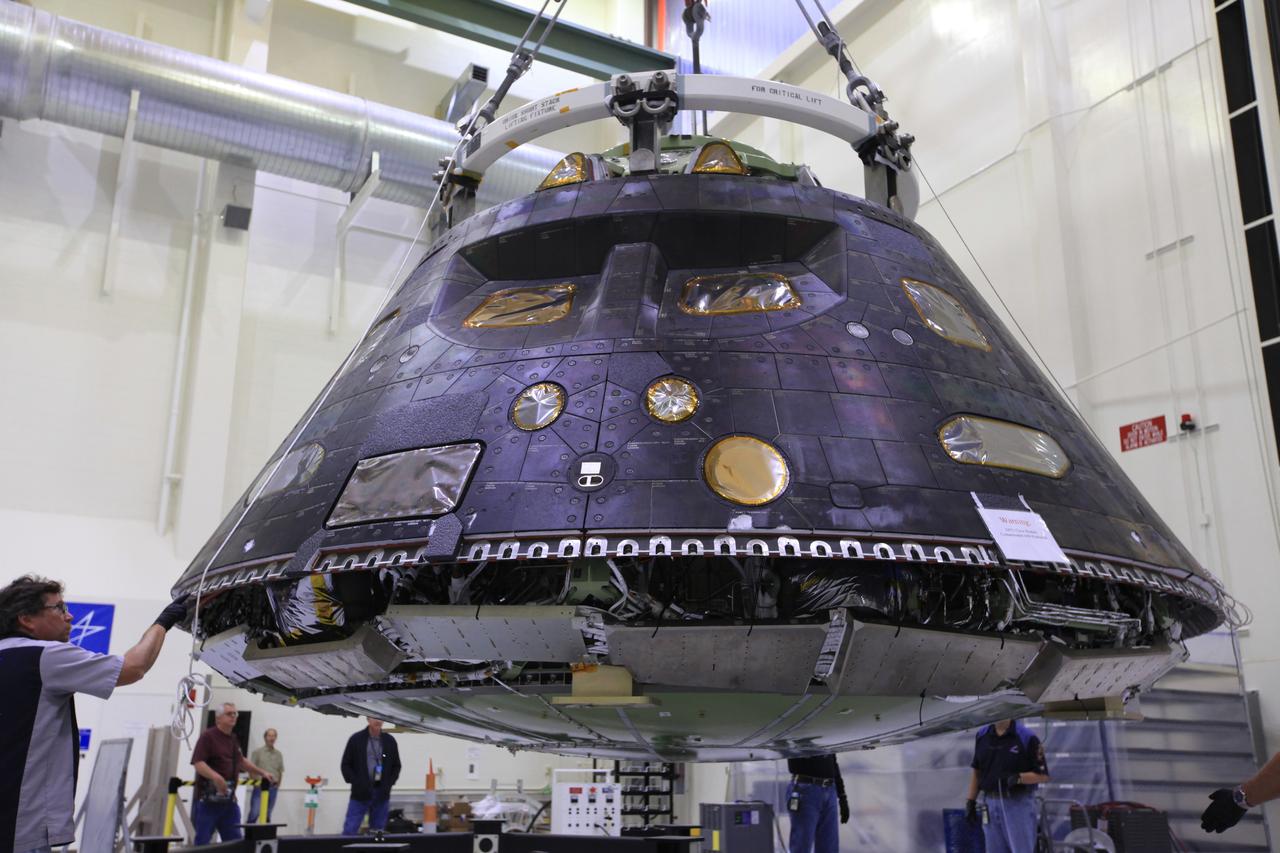
The Exploration Flight Test-1 (EFT-1) Crew Module undergoes preparations to move from the Operations and Checkout Building at Kennedy Space Center to the KSC Visitor Complex on April 6, 2017.

NASA's F-15B Aeronautics Research Test Bed performs a calibration flight of the shock-sensing probe over Edwards, California, on Aug. 6, 2024. The probe will measure shock waves from NASA's X-59.
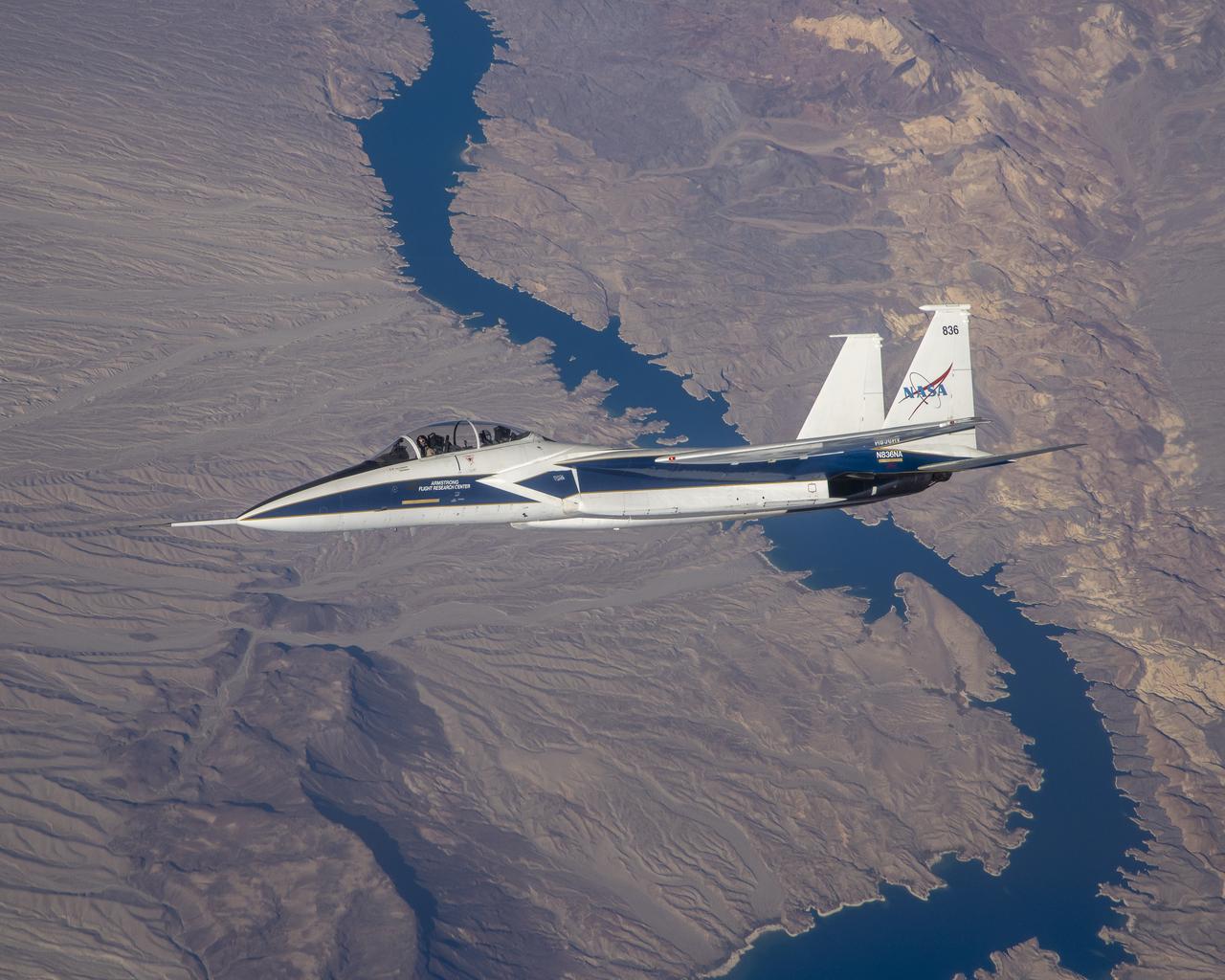
F-15 N836NA with test pilots Nils Larson and Jim Less at the controls flying over the Colorado River during Shock Sensing Probe (SSP) Flight #6.
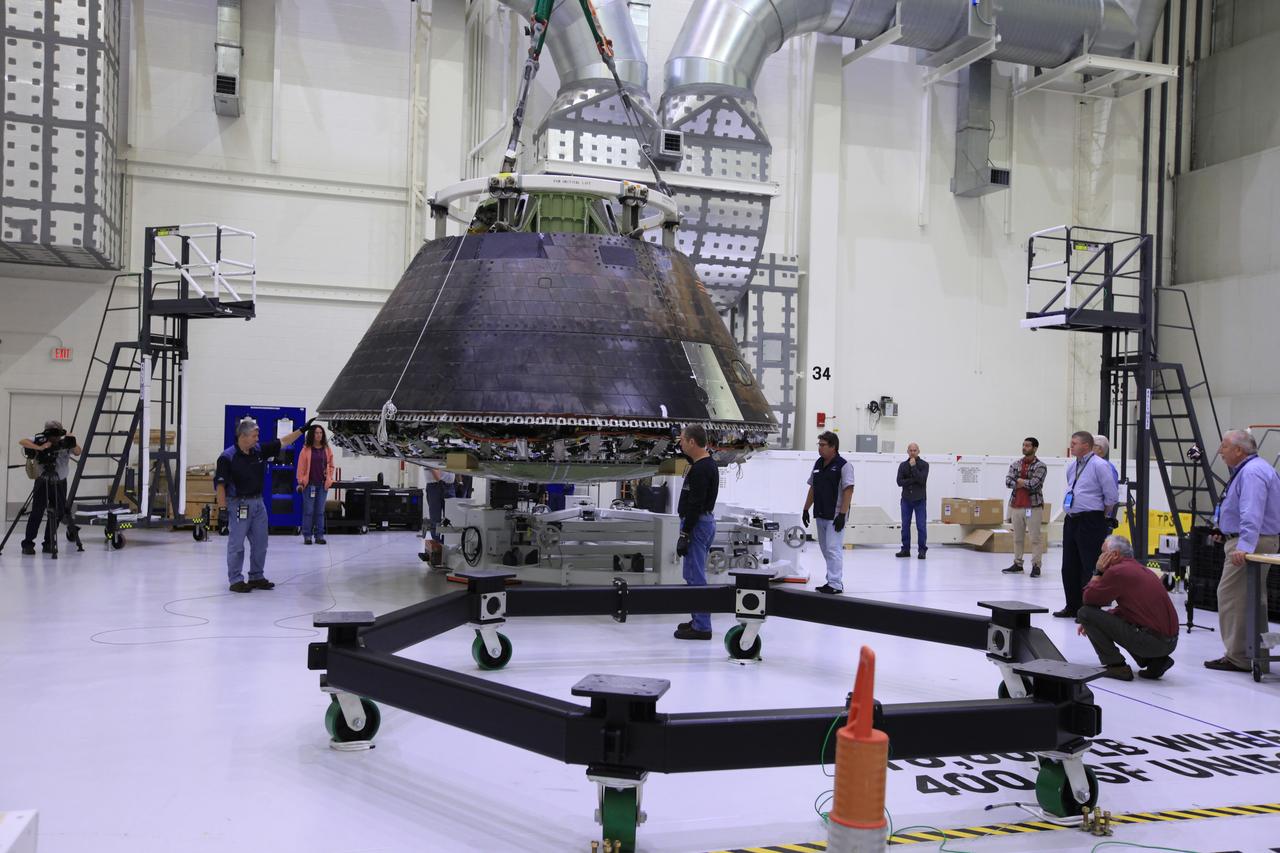
The Exploration Flight Test-1 (EFT-1) Crew Module undergoes preparations to move from the Operations and Checkout Building at Kennedy Space Center to the KSC Visitor Complex on April 6, 2017.
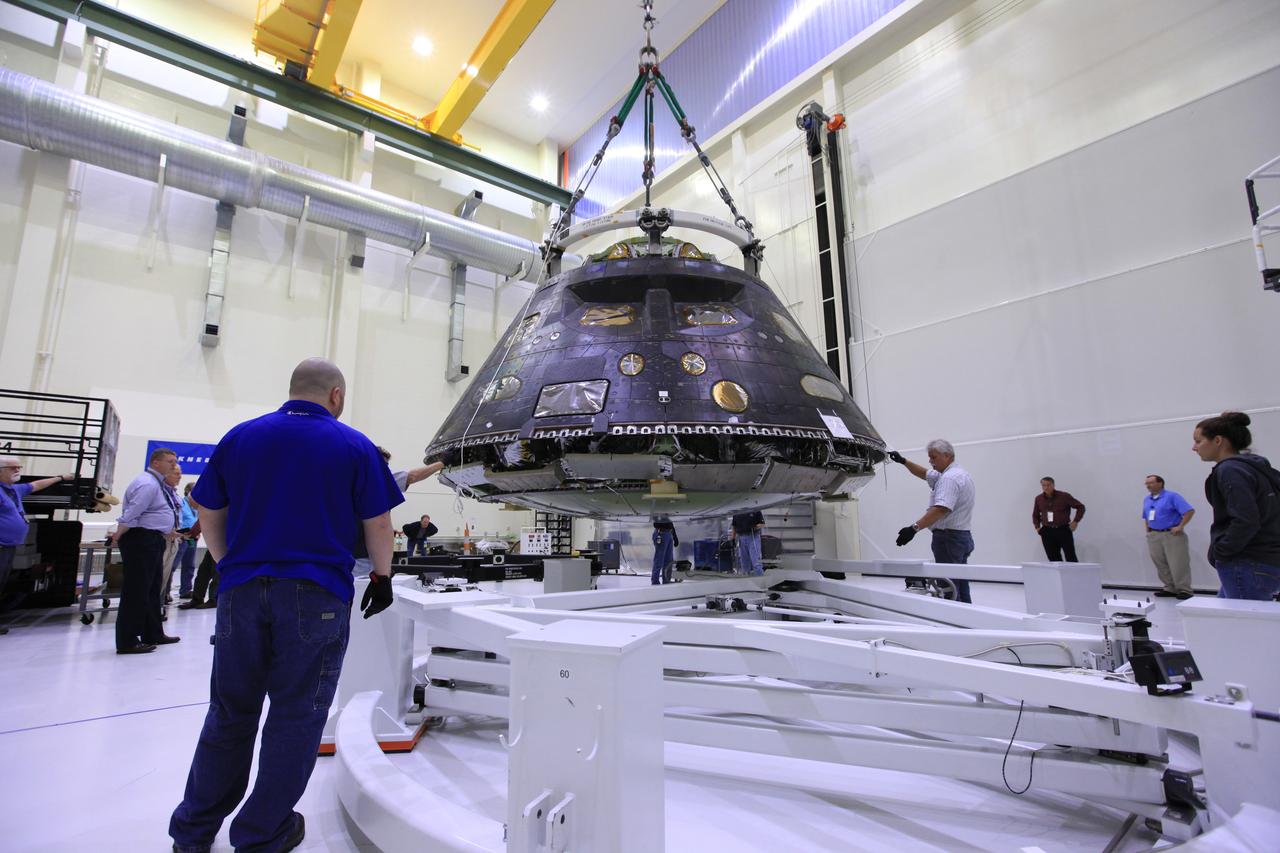
The Exploration Flight Test-1 (EFT-1) Crew Module undergoes preparations to move from the Operations and Checkout Building at Kennedy Space Center to the KSC Visitor Complex on April 6, 2017.

NASA's F-15B Aeronautics Research Test Bed performs a calibration flight of the shock-sensing probe over Edwards, California, on Aug. 6, 2024. The probe will measure shock waves from NASA's X-59.
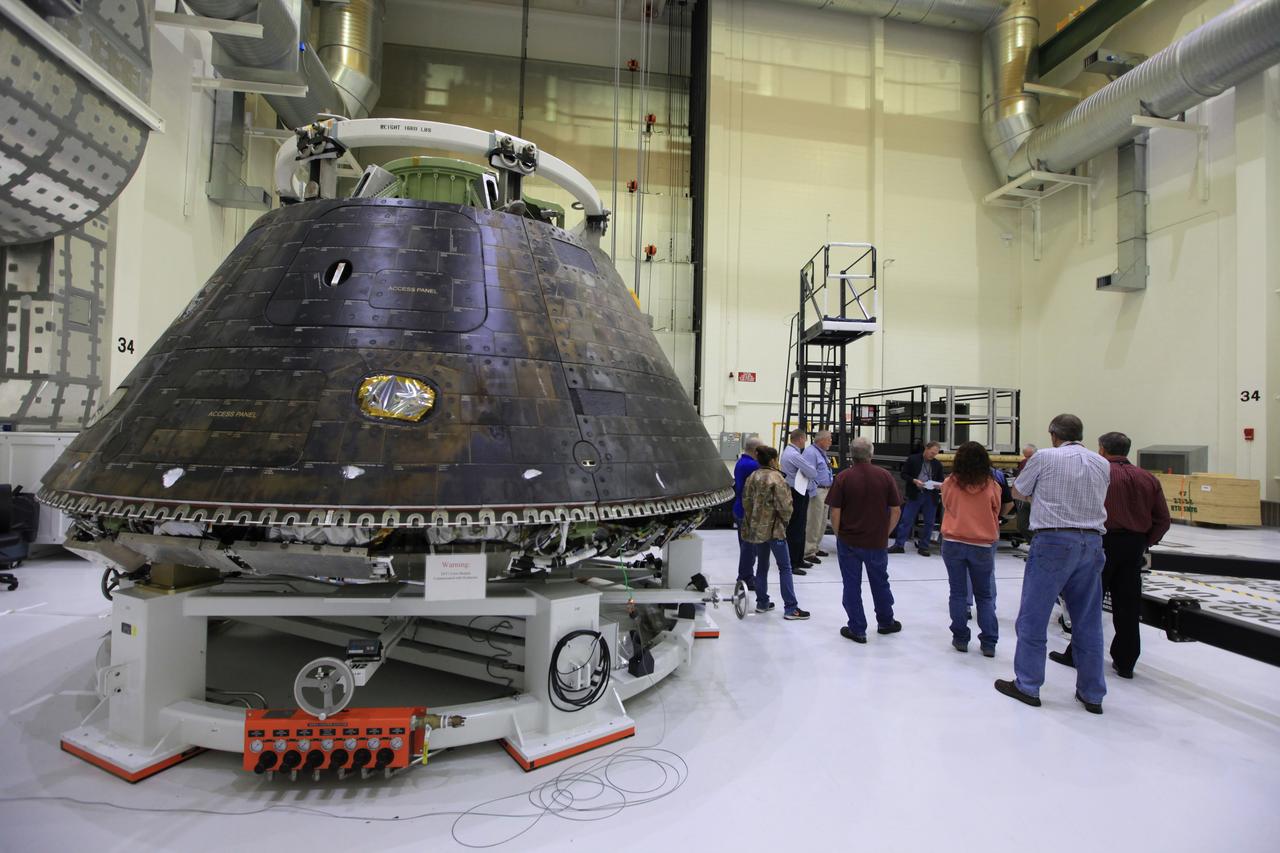
The Exploration Flight Test-1 (EFT-1) Crew Module undergoes preparations to move from the Operations and Checkout Building at Kennedy Space Center to the KSC Visitor Complex on April 6, 2017.
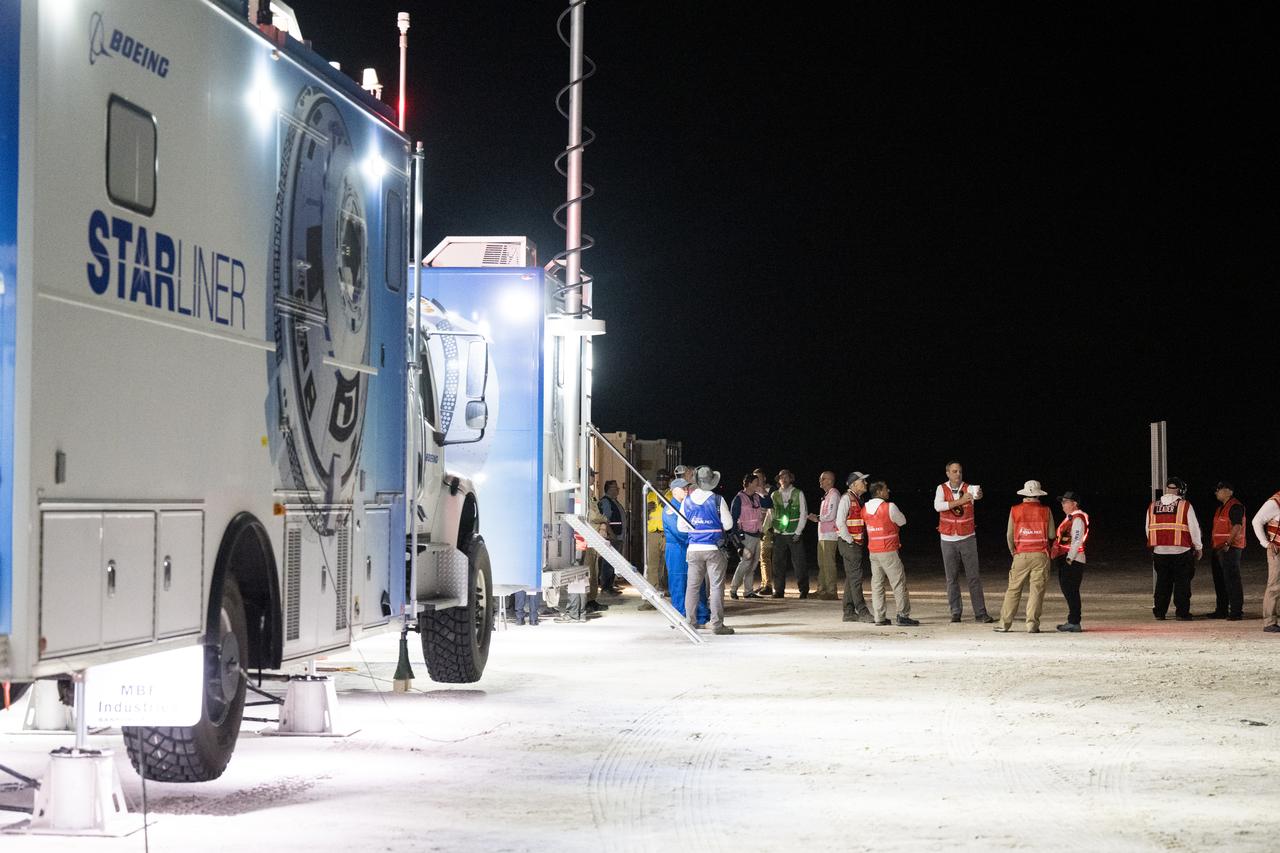
Boeing and NASA teams are seen before NASA's Boeing Crew Flight Test Starliner spacecraft lands uncrewed, Friday, Sept. 6, 2024 Mountain Time at White Sands, New Mexico. This approach allows NASA and Boeing to continue gathering testing data on the spacecraft. Photo Credit: (NASA/Aubrey Gemignani)
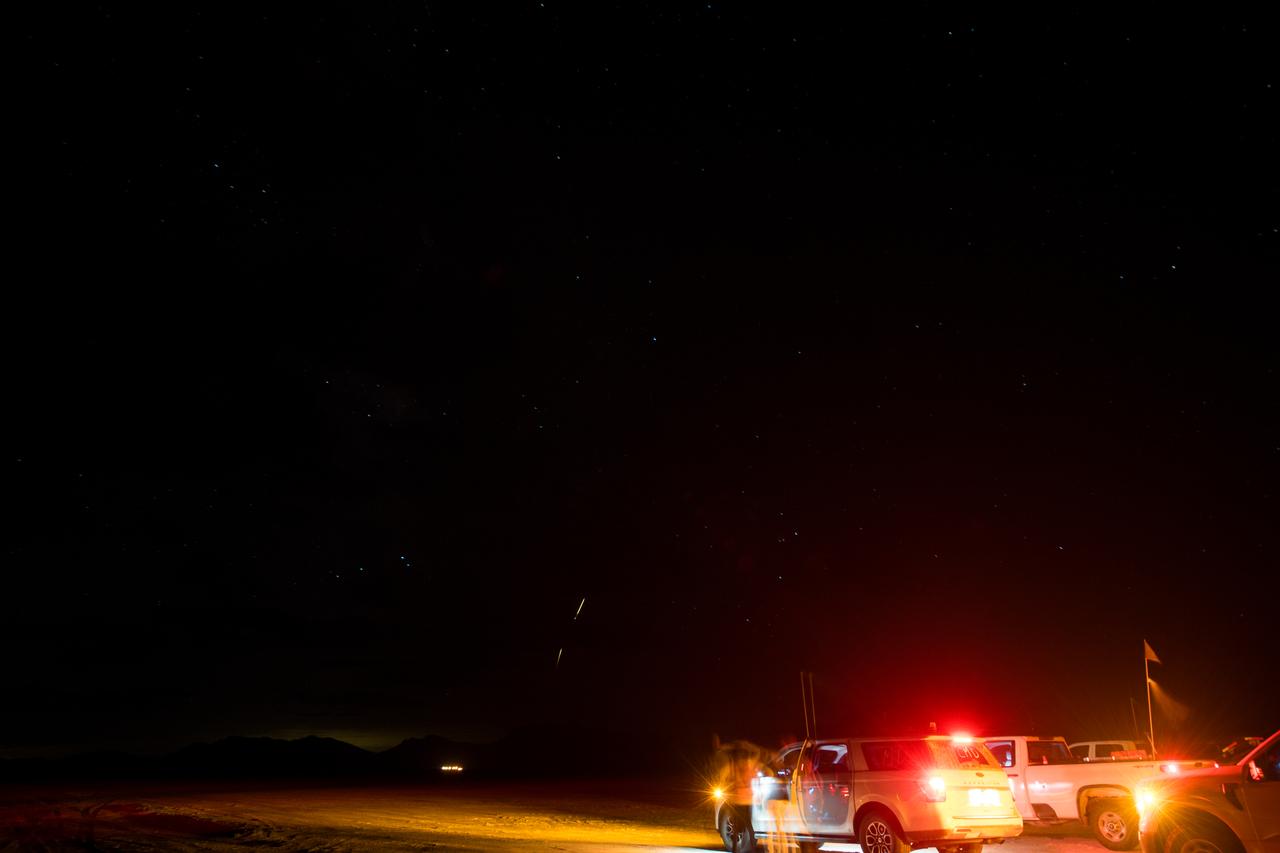
In this 30-second exposure, NASA's Boeing Crew Flight Test Starliner spacecraft lands uncrewed, Friday, Sept. 6, 2024 Mountain Time, at White Sands, New Mexico. This approach allows NASA and Boeing to continue gathering testing data on the spacecraft. Photo Credit: (NASA/Aubrey Gemignani)
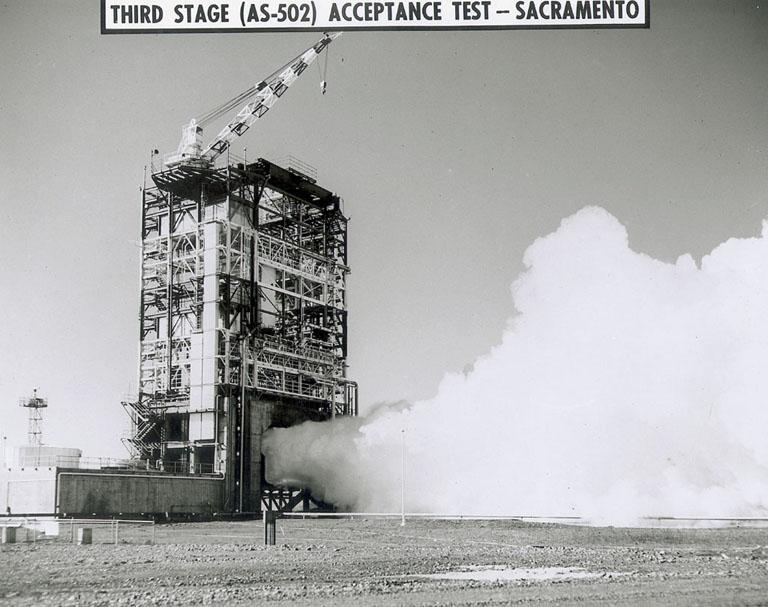
The J-2 engine for Saturn V S-IVB (third) stage blasted from the test stand at Douglas Aircraft Co., Sacramento Test Operation (SACTO) facility in California. This third stage was used on the unmarned Saturn V flight of Apollo 6 in April 1968.
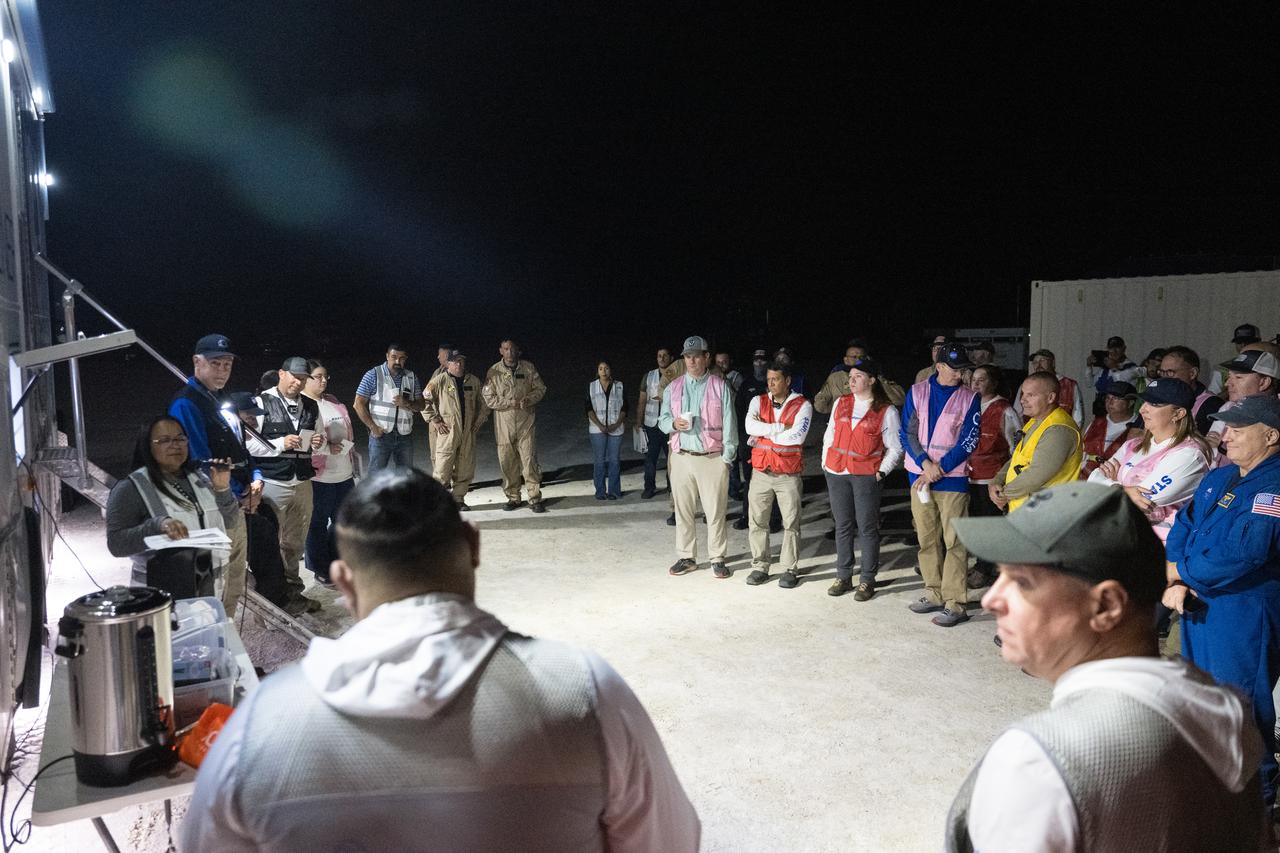
Boeing and NASA teams meet before NASA's Boeing Crew Flight Test Starliner spacecraft lands uncrewed, Friday, Sept. 6, 2024 Mountain Time at White Sands, New Mexico. This approach allows NASA and Boeing to continue gathering testing data on the spacecraft. Photo Credit: (NASA/Aubrey Gemignani)
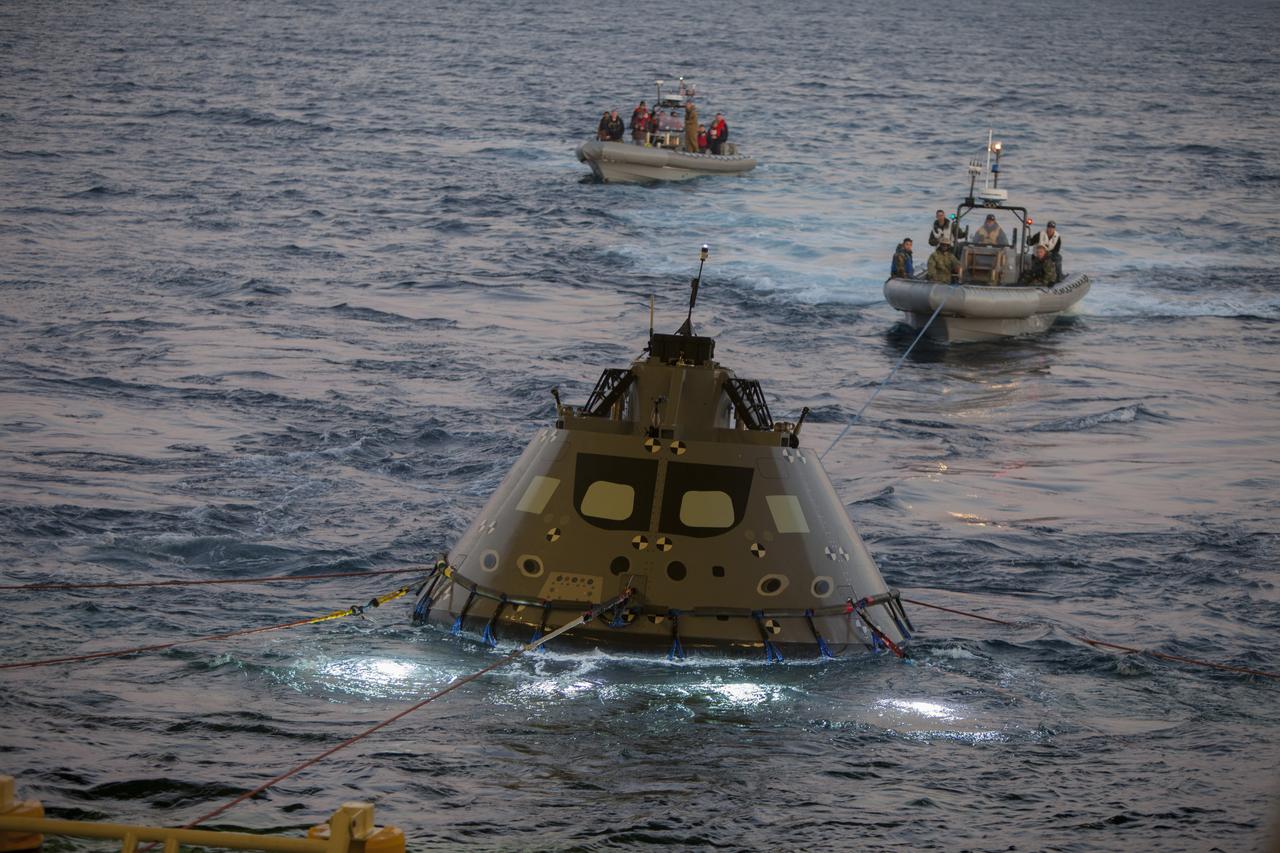
During Underway Recovery Test 6, Kennedy Space Center's NASA Recovery Team spent a week aboard the USS Anchorage where they and the U.S. Navy tested procedures and ground support equipment to improve recovery procedures and hardware ahead of Orion's next flight, Exploration Mission-1, when it splashes down in the Pacific Ocean.
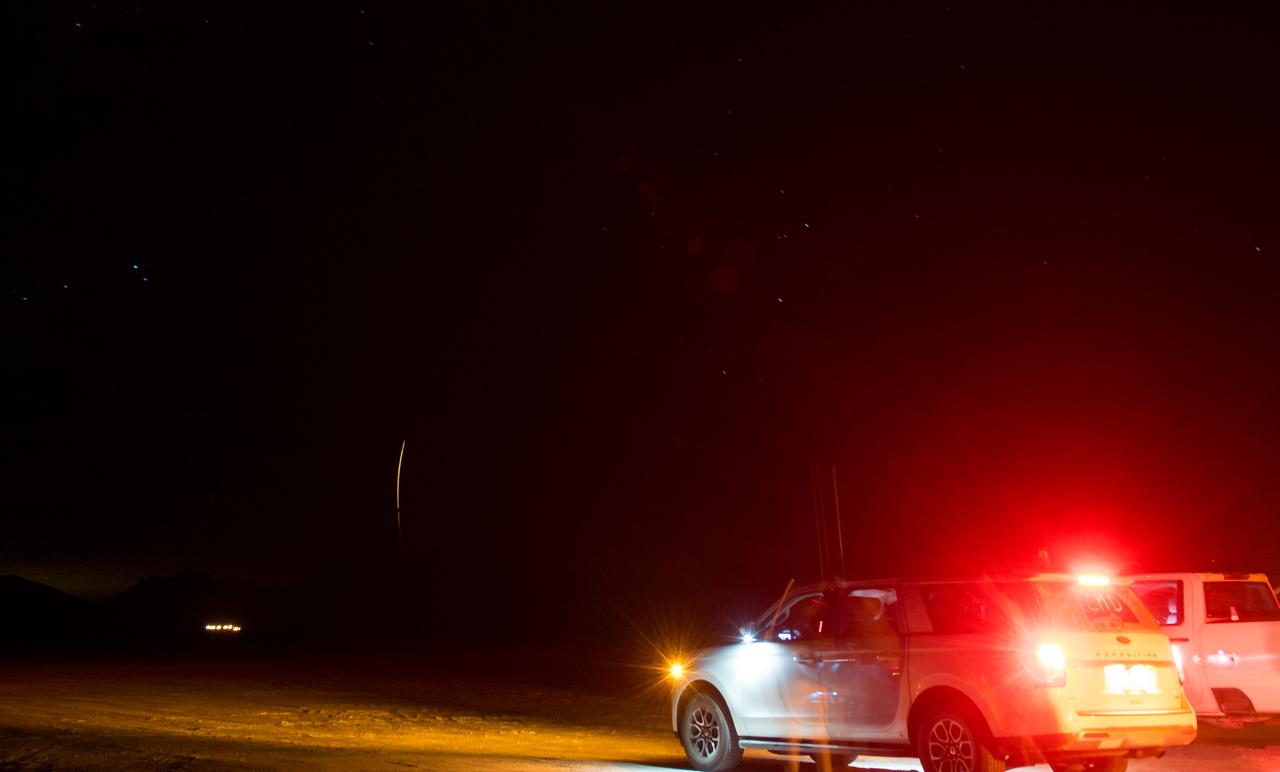
In this 30-second exposure, NASA's Boeing Crew Flight Test Starliner spacecraft lands uncrewed, Friday, Sept. 6, 2024, at White Sands, New Mexico. This approach allows NASA and Boeing to continue gathering testing data on the spacecraft. Photo Credit: (NASA/Aubrey Gemignani)
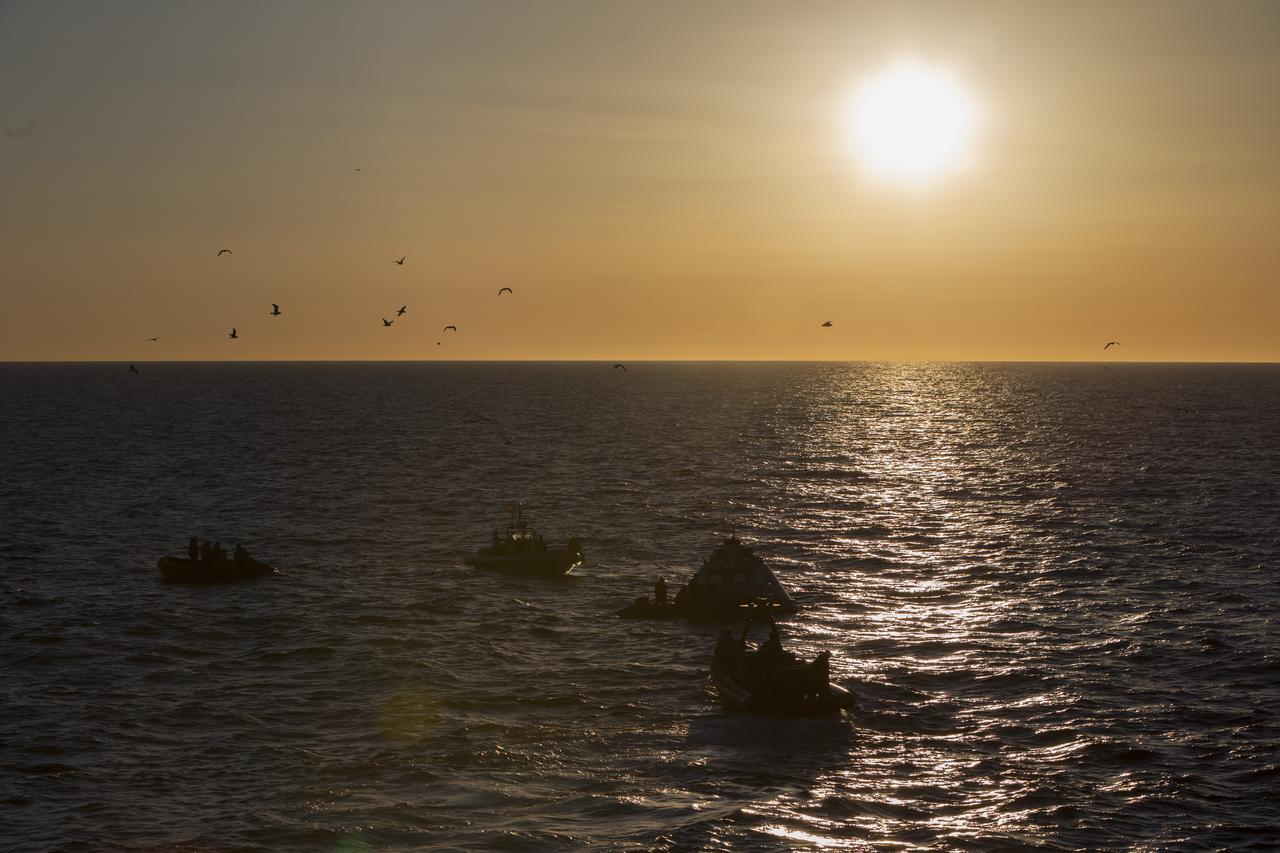
During Underway Recovery Test 6, Kennedy Space Center's NASA Recovery Team spent a week aboard the USS Anchorage where they and the U.S. Navy tested procedures and ground support equipment to improve recovery procedures and hardware ahead of Orion's next flight, Exploration Mission-1, when it splashes down in the Pacific Ocean.
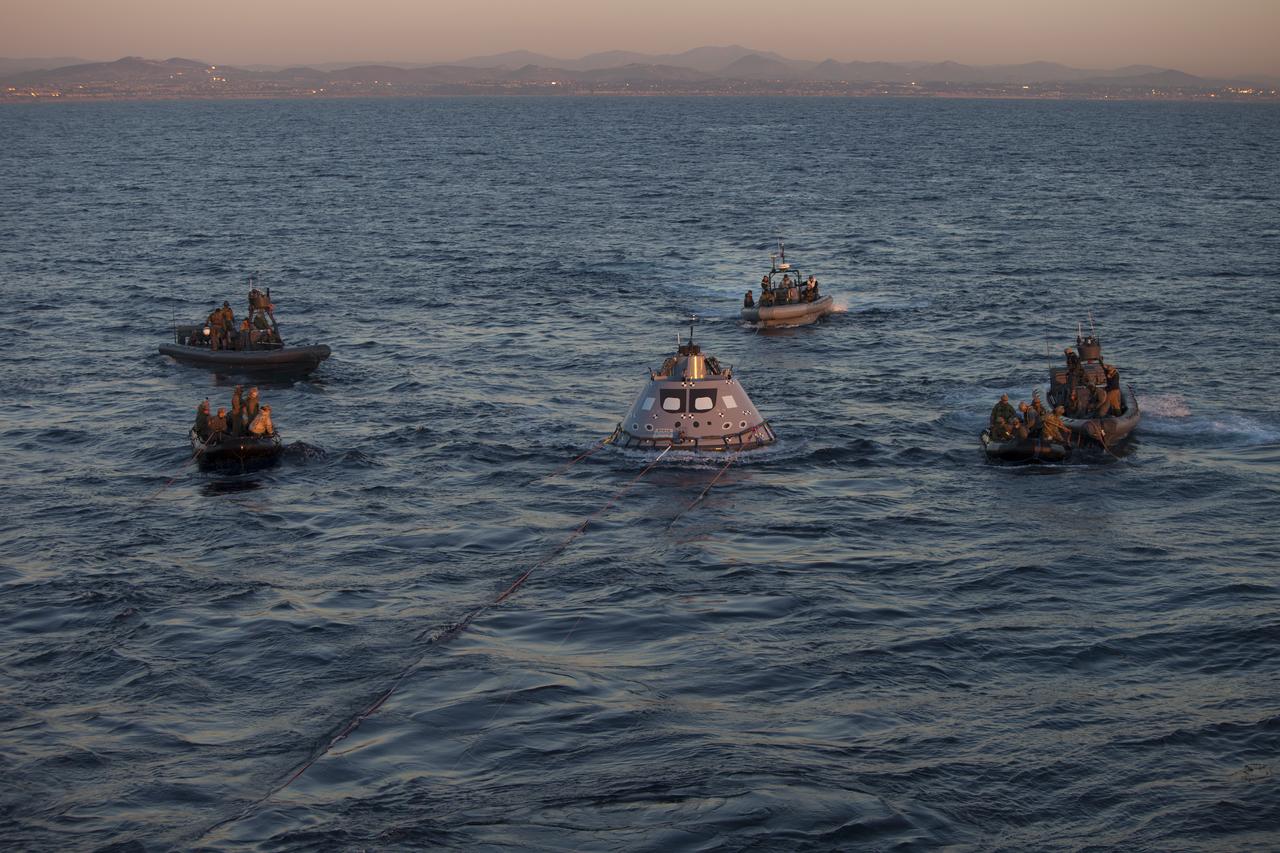
During Underway Recovery Test 6, Kennedy Space Center's NASA Recovery Team spent a week aboard the USS Anchorage where they and the U.S. Navy tested procedures and ground support equipment to improve recovery procedures and hardware ahead of Orion's next flight, Exploration Mission-1, when it splashes down in the Pacific Ocean.
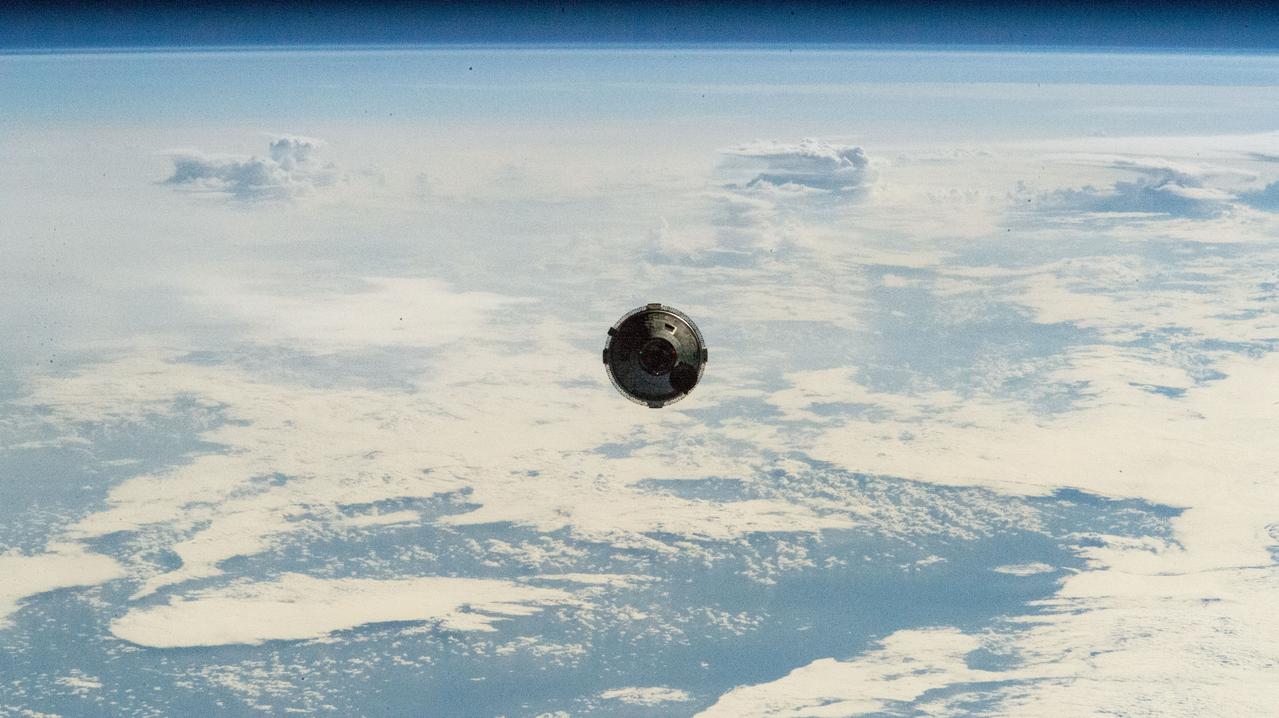
iss071e170979 (June 6, 2024) -- Boeing's Starliner spacecraft is pictured approaching the International Space Station for an autonomous docking on June 6, 2024 as the spacecraft and orbiting laboratory soared 257 miles above the South Pacific Ocean. Starliner launched on June 5, with NASA astronauts Butch Wilmore and Suni Williams aboard, as part of NASA's Boeing Crew Flight Test. This first crewed flight of Starliner aims to certify the spacecraft for rotational missions to the space station.
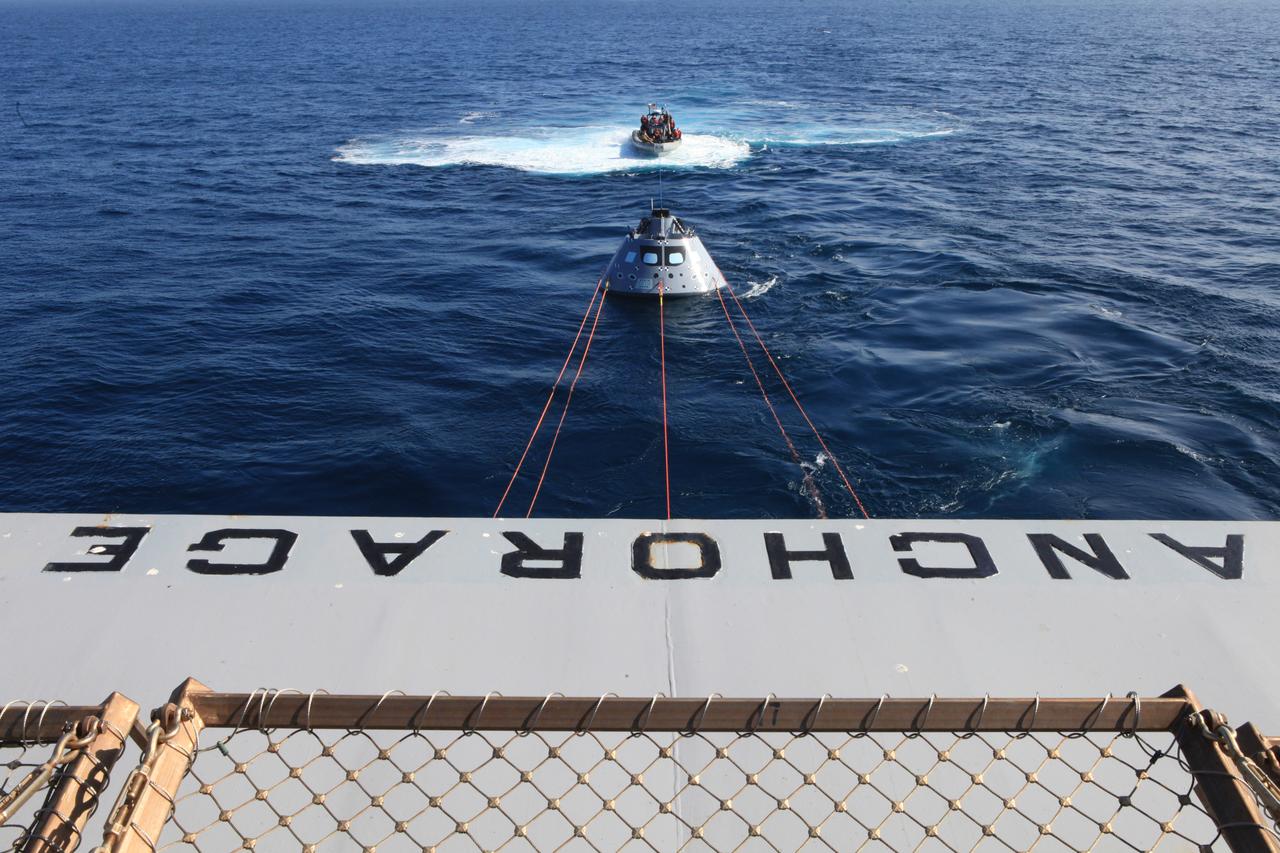
Off the rear of the USS Anchorage, the Orion test article is pulled in by a winch line at the rear of the USS Anchorage’s well deck that brings the capsule into the ship, along with four manned LLAMAs (Line Load Attenuation Mechanism Assembly) that control the capsule’s side-to-side movement and a tending line attached to a rigid hull inflatable boat for controlling Orion’s movement behind the ship. The Underway Recovery Test 6 (URT-6) is spearheaded by Kennedy Space Center's NASA Recovery Team. In partnership with the U.S. Navy, the testing will provide important data that is being used to improve recovery procedures and hardware ahead of Orion's next flight, Exploration Mission-1, when it splashes down in the Pacific Ocean.

VANDENBERG AFB, CALIF. - In the spacecraft processing facility on North Vandenberg Air Force Base, the Gravity Probe B experiment sits on an assembly and test stand where it has been subject to various prelaunch testing. The Gravity Probe B will launch a payload of four gyroscopes into low-Earth polar orbit to test two extraordinary predictions of Albert Einstein’s general theory of relativity: the geodetic effect (how space and time are warped by the presence of the Earth) and frame dragging (how Earth’s rotation drags space and time around with it). Once in orbit, for 18 months each gyroscope’s spin axis will be monitored as it travels through local spacetime, observing and measuring these effects. The experiment was developed by Stanford University, Lockheed Martin and NASA’s Marshall Space Flight Center. The targeted launch date is Dec. 6, 2003.
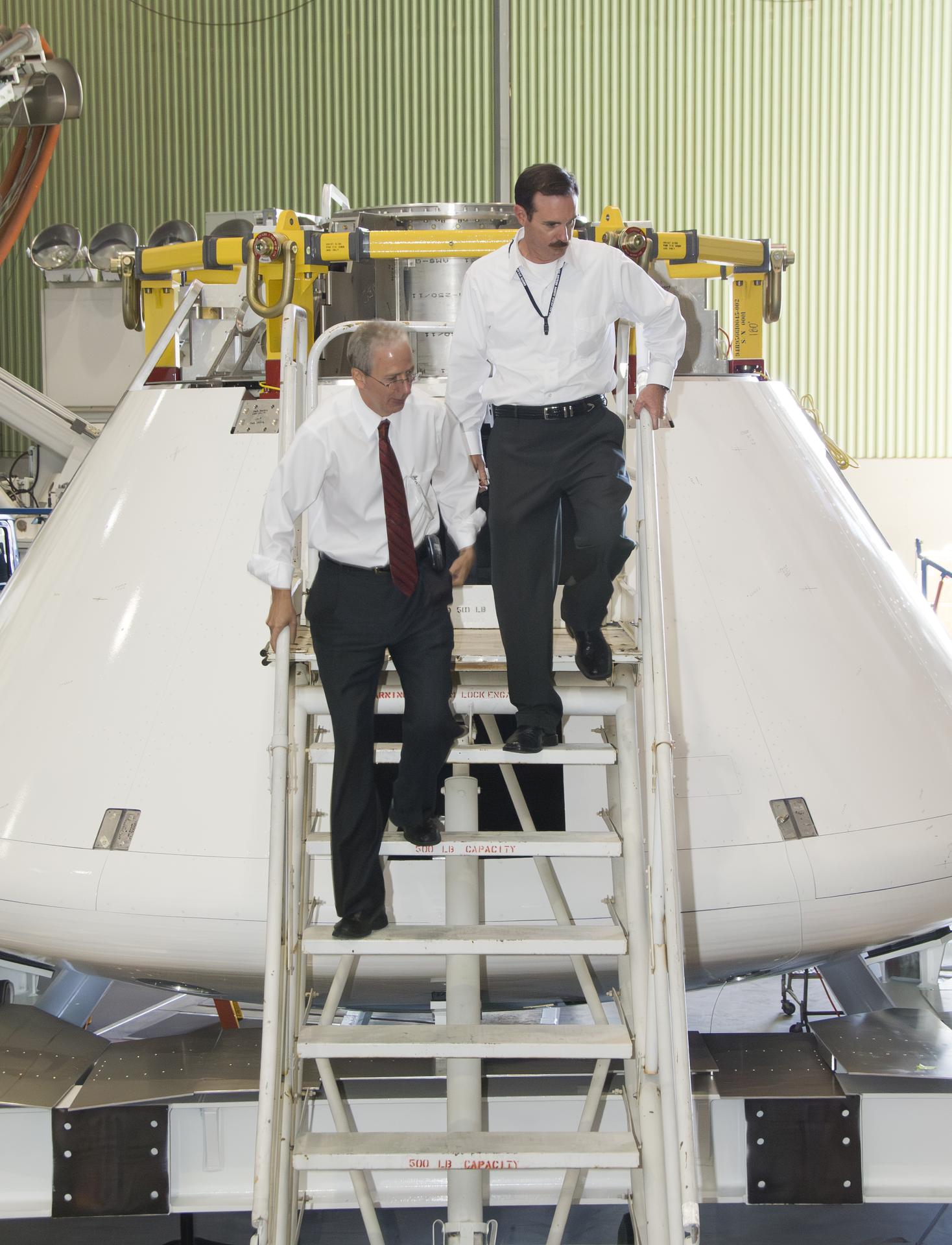
Mark Geyer, NASA’s Orion manager, visited NASA’s Armstrong Flight Research Center in Edwards, California, on April 9, 2008, to see the Pad Abort-1 test article, developed to demonstrate the Orion capsule’s emergency escape system during launch. Dave McAllister, NASA Armstrong Abort Flight Test operations lead, right, shows Geyer the Orion capsule mockup. Pad Abort-1 was later tested at the U.S. Army’s White Sands Missile Range in New Mexico, on May 6, 2010.
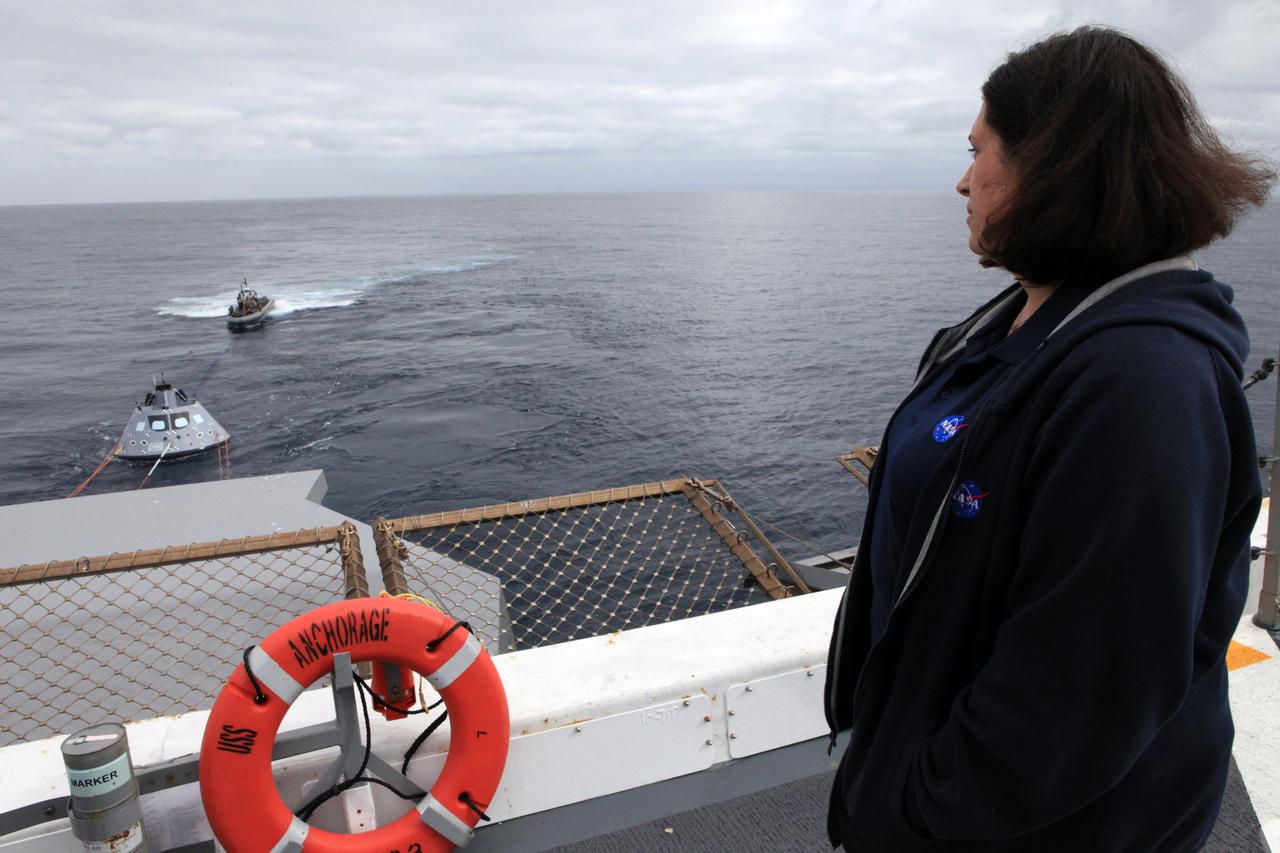
NASA Recovery Director Melissa Jones watches part of Underway Recovery Test 6, from the flight deck of the USS Anchorage. During this portion, the Orion test article is intentionally subjected to an increased sea state as the NASA Recovery Team works hard to keep control of the spacecraft. The testing with Kennedy Space Center's NASA Recovery Team and the U.S. Navy will provide important data that is being used to improve recovery procedures and hardware ahead of Orion's next flight, Exploration Mission-1, when it splashes down in the Pacific Ocean.
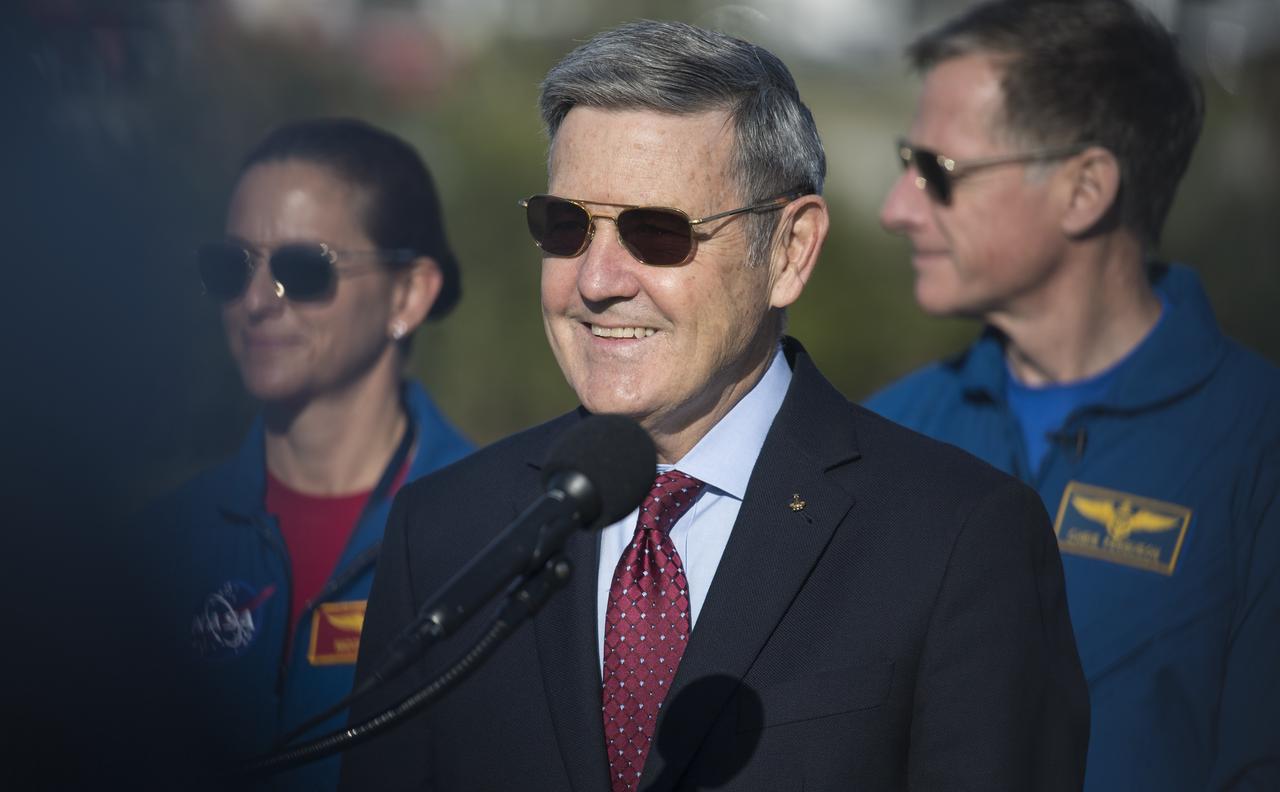
Kennedy Space Center Director Bob Cabana delivers opening remarks at a press conference ahead of the Boeing Orbital Flight Test mission, Thursday, Dec. 19, 2019, at NASA’s Kennedy Space Center in Florida. The uncrewed Orbital Flight Test will be Starliner’s maiden mission to the International Space Station for NASA's Commercial Crew Program. The mission, currently targeted for a 6:36 a.m. EST launch on Dec. 20, will serve as an end-to-end test of the system's capabilities. Photo Credit: (NASA/Joel Kowsky)
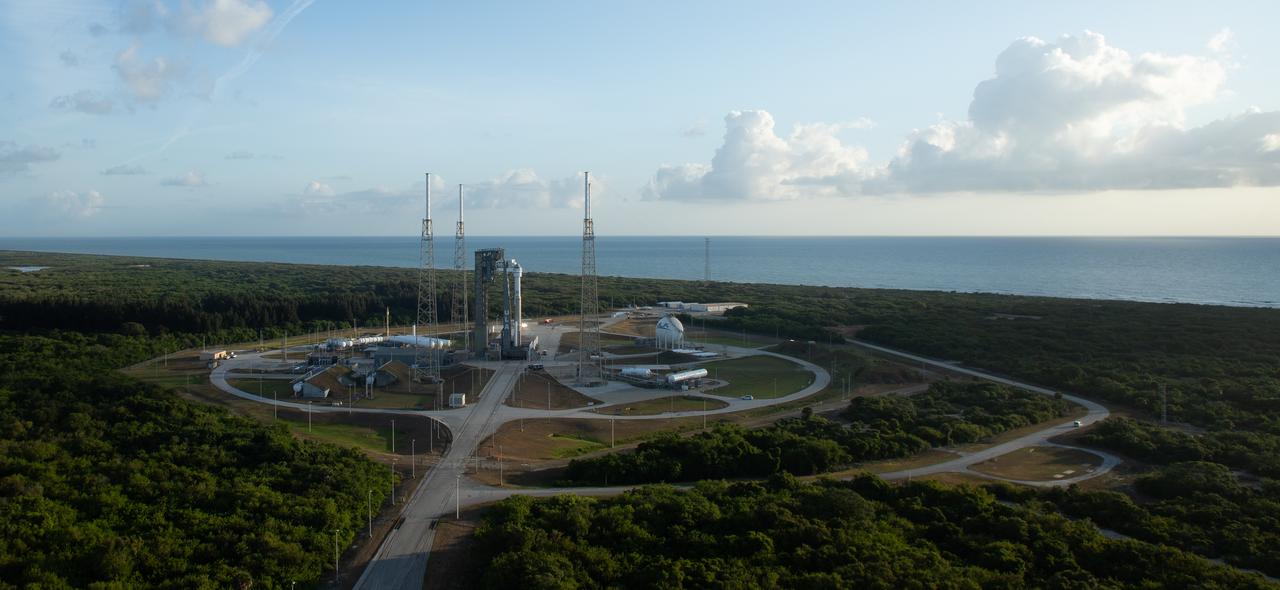
A United Launch Alliance Atlas V rocket with Boeing’s CST-100 Starliner spacecraft aboard is seen on the launch pad at Space Launch Complex 41 ahead of the NASA’s Boeing Crew Flight Test, Monday, May 6, 2024 at Cape Canaveral Space Force Station in Florida. NASA’s Boeing Crew Flight Test is the first launch with astronauts of the Boeing CFT-100 spacecraft and United Launch Alliance Atlas V rocket to the International Space Station as part of the agency’s Commercial Crew Program. The flight test, targeted for launch at 10:34 p.m. EDT on Monday, May 6, serves as an end-to-end demonstration of Boeing’s crew transportation system and will carry NASA astronauts Butch Wilmore and Suni Williams to and from the orbiting laboratory. Photo Credit: (NASA/Joel Kowsky)
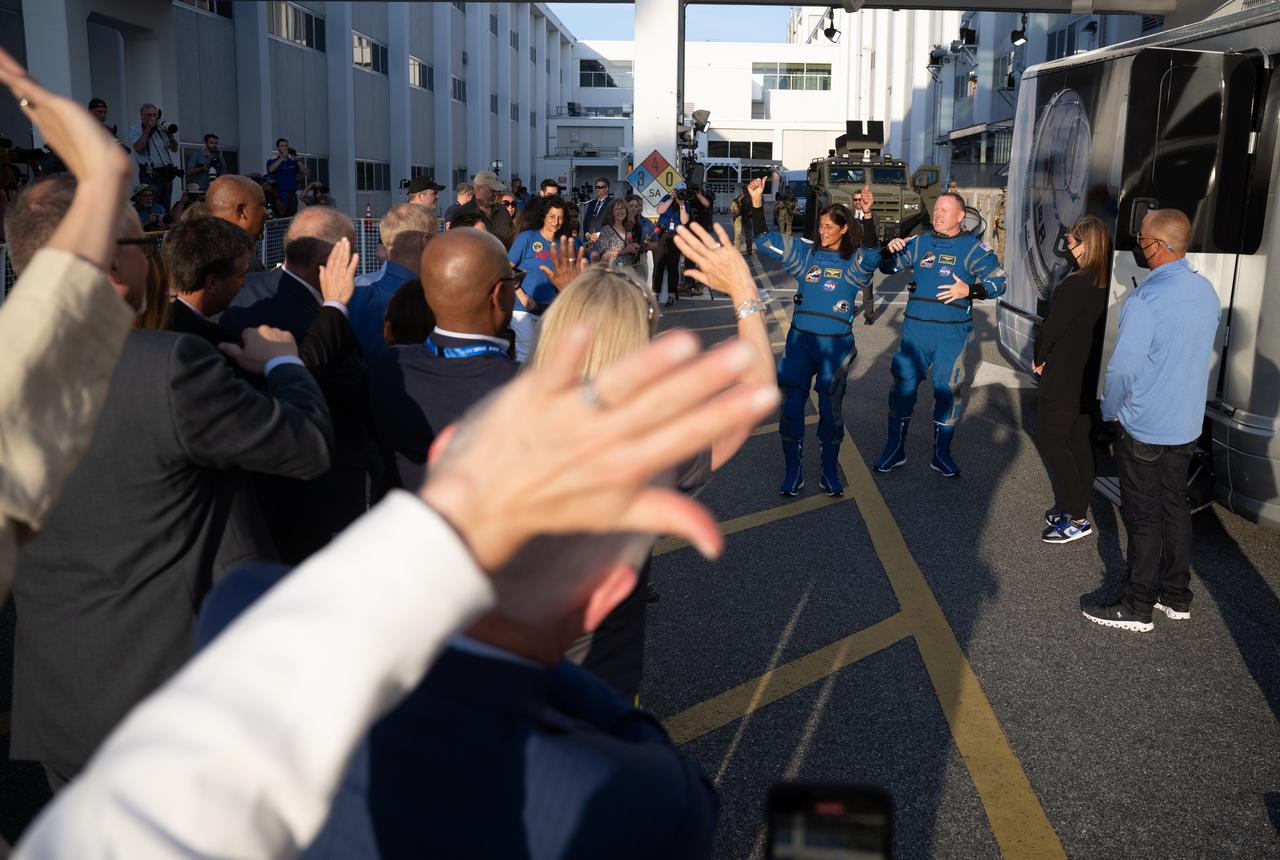
NASA astronauts Suni Williams, left, and Butch Wilmore, wearing Boeing spacesuits, wave as they prepare to depart the Neil A. Armstrong Operations and Checkout Building for Launch Complex 41 on Cape Canaveral Space Force Station to board the Boeing CST-100 Starliner spacecraft for the Crew Flight Test launch, Monday, May 6, 2024, at NASA’s Kennedy Space Center in Florida. NASA’s Boeing Crew Flight Test is the first launch with astronauts of the Boeing CFT-100 spacecraft and United Launch Alliance Atlas V rocket to the International Space Station as part of the agency’s Commercial Crew Program. The flight test, targeted for launch at 10:34 p.m. EDT on Monday, May 6, serves as an end-to-end demonstration of Boeing’s crew transportation system and will carry NASA astronauts Butch Wilmore and Suni Williams to and from the orbiting laboratory. Photo Credit: (NASA/Joel Kowsky)
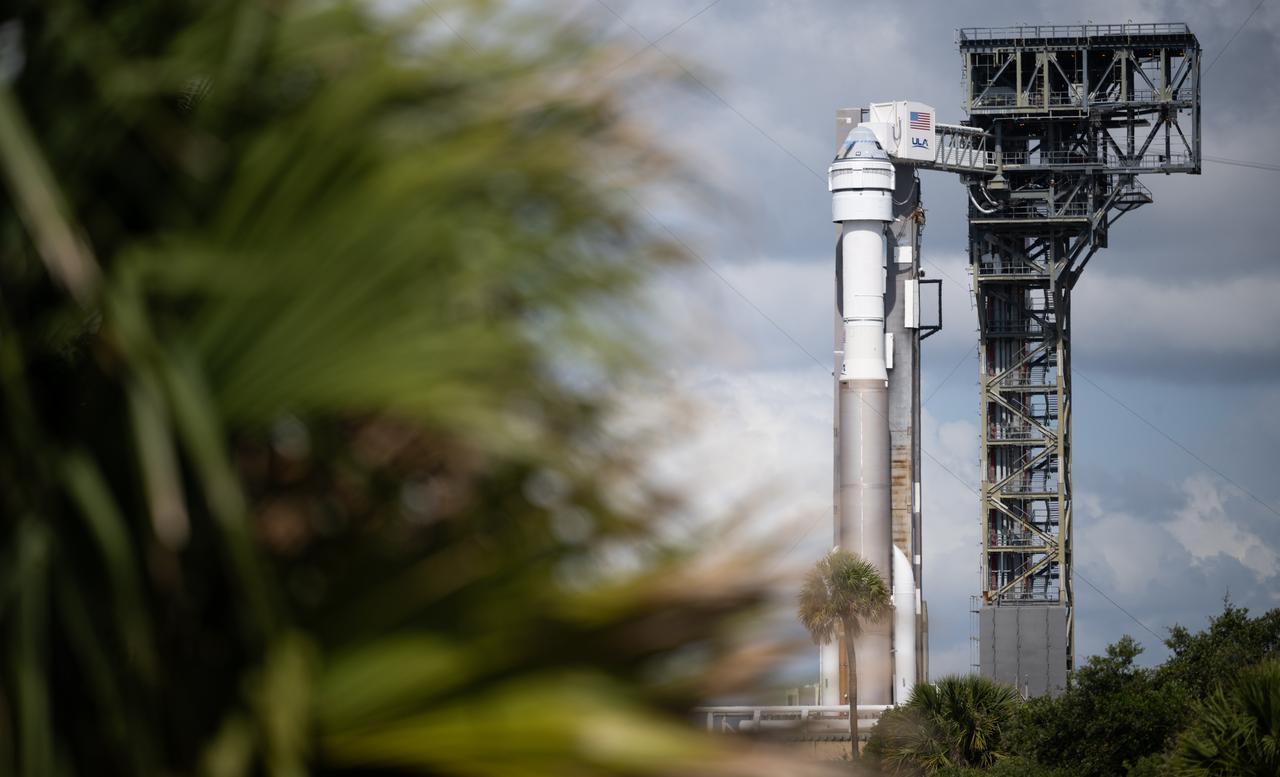
A United Launch Alliance Atlas V rocket with Boeing’s CST-100 Starliner spacecraft aboard is seen on the launch pad at Space Launch Complex 41 ahead of the NASA’s Boeing Crew Flight Test, Monday, May 6, 2024 at Cape Canaveral Space Force Station in Florida. NASA’s Boeing Crew Flight Test is the first launch with astronauts of the Boeing CFT-100 spacecraft and United Launch Alliance Atlas V rocket to the International Space Station as part of the agency’s Commercial Crew Program. The flight test, targeted for launch at 10:34 p.m. EDT on Monday, May 6, serves as an end-to-end demonstration of Boeing’s crew transportation system and will carry NASA astronauts Butch Wilmore and Suni Williams to and from the orbiting laboratory. Photo Credit: (NASA/Joel Kowsky)
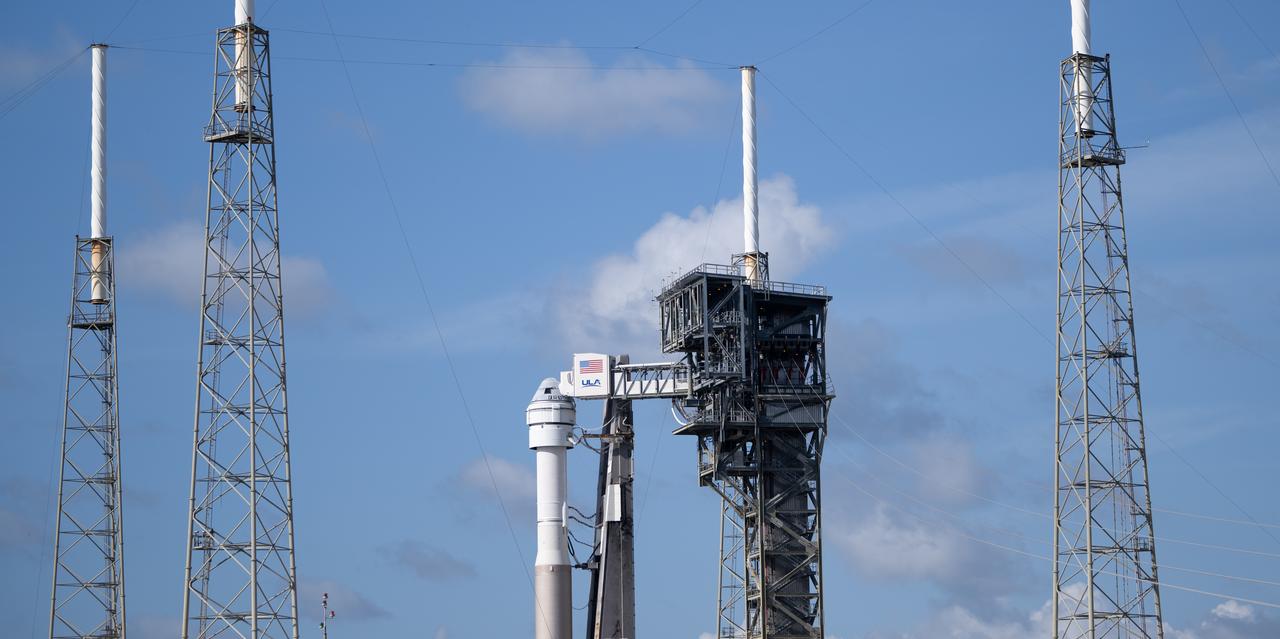
A United Launch Alliance Atlas V rocket with Boeing’s CST-100 Starliner spacecraft aboard is seen on the launch pad at Space Launch Complex 41 ahead of the NASA’s Boeing Crew Flight Test, Monday, May 6, 2024 at Cape Canaveral Space Force Station in Florida. NASA’s Boeing Crew Flight Test is the first launch with astronauts of the Boeing CFT-100 spacecraft and United Launch Alliance Atlas V rocket to the International Space Station as part of the agency’s Commercial Crew Program. The flight test, targeted for launch at 10:34 p.m. EDT on Monday, May 6, serves as an end-to-end demonstration of Boeing’s crew transportation system and will carry NASA astronauts Butch Wilmore and Suni Williams to and from the orbiting laboratory. Photo Credit: (NASA/Joel Kowsky)
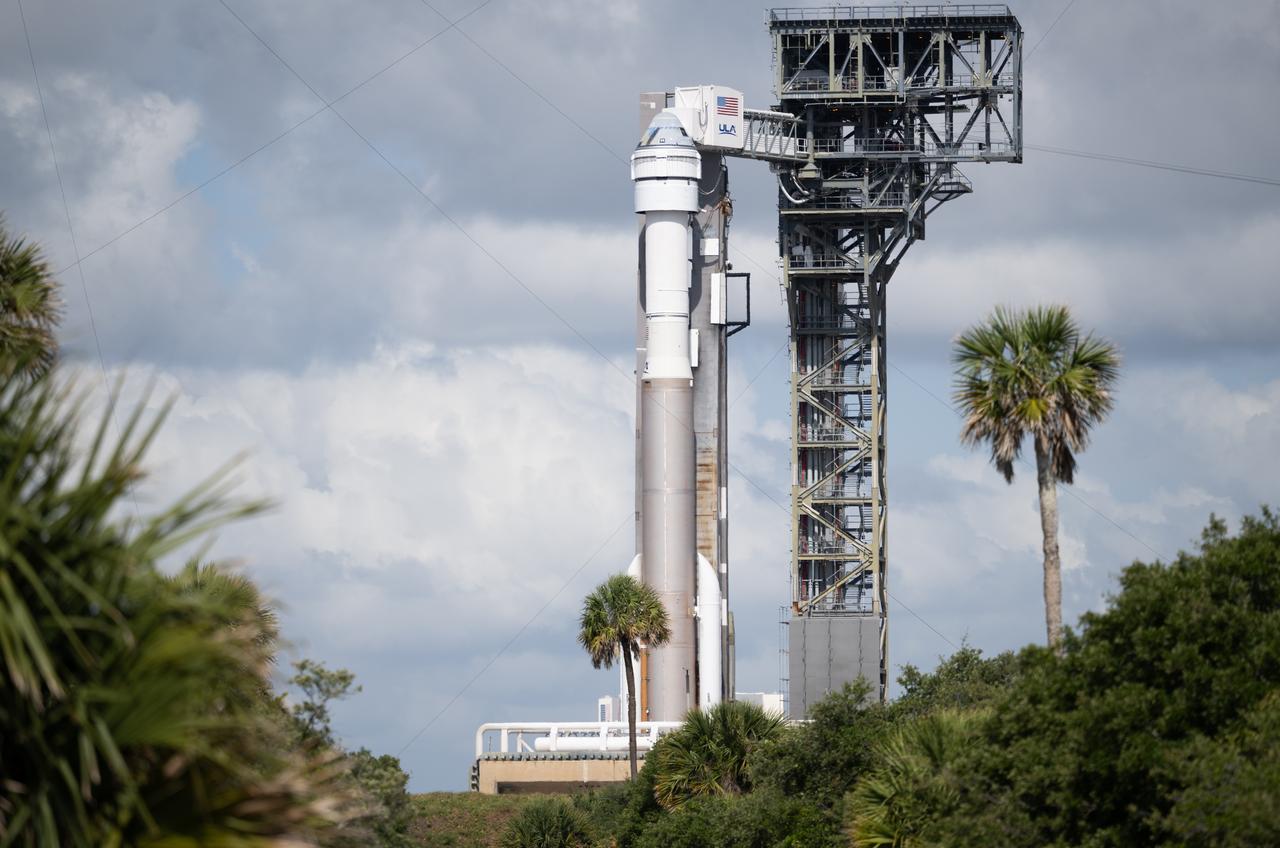
A United Launch Alliance Atlas V rocket with Boeing’s CST-100 Starliner spacecraft aboard is seen on the launch pad at Space Launch Complex 41 ahead of the NASA’s Boeing Crew Flight Test, Monday, May 6, 2024 at Cape Canaveral Space Force Station in Florida. NASA’s Boeing Crew Flight Test is the first launch with astronauts of the Boeing CFT-100 spacecraft and United Launch Alliance Atlas V rocket to the International Space Station as part of the agency’s Commercial Crew Program. The flight test, targeted for launch at 10:34 p.m. EDT on Monday, May 6, serves as an end-to-end demonstration of Boeing’s crew transportation system and will carry NASA astronauts Butch Wilmore and Suni Williams to and from the orbiting laboratory. Photo Credit: (NASA/Joel Kowsky)
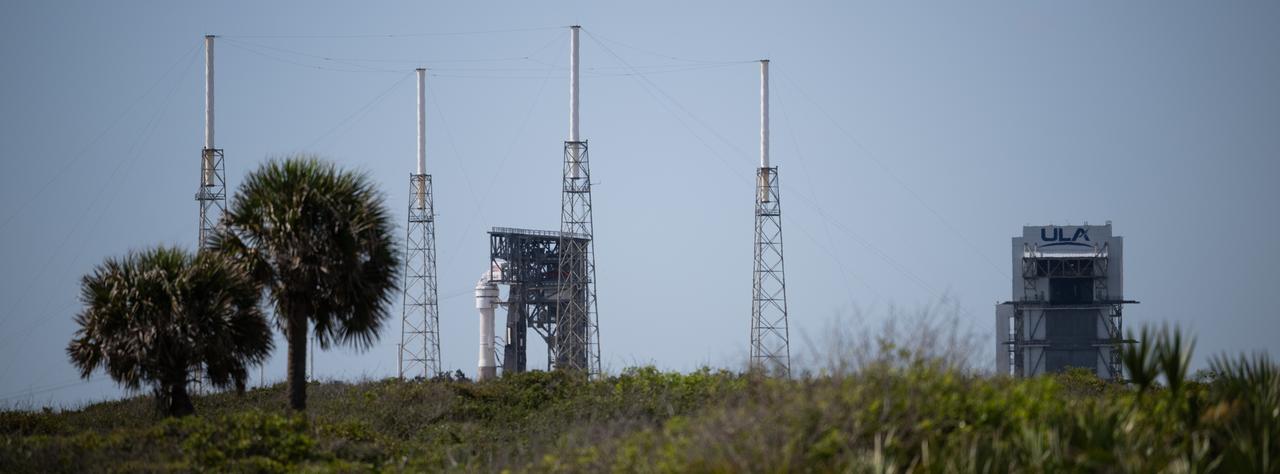
A United Launch Alliance Atlas V rocket with Boeing’s CST-100 Starliner spacecraft aboard is seen on the launch pad at Space Launch Complex 41 ahead of the NASA’s Boeing Crew Flight Test, Monday, May 6, 2024 at Cape Canaveral Space Force Station in Florida. NASA’s Boeing Crew Flight Test is the first launch with astronauts of the Boeing CFT-100 spacecraft and United Launch Alliance Atlas V rocket to the International Space Station as part of the agency’s Commercial Crew Program. The flight test, targeted for launch at 10:34 p.m. EDT on Monday, May 6, serves as an end-to-end demonstration of Boeing’s crew transportation system and will carry NASA astronauts Butch Wilmore and Suni Williams to and from the orbiting laboratory. Photo Credit: (NASA/Joel Kowsky)
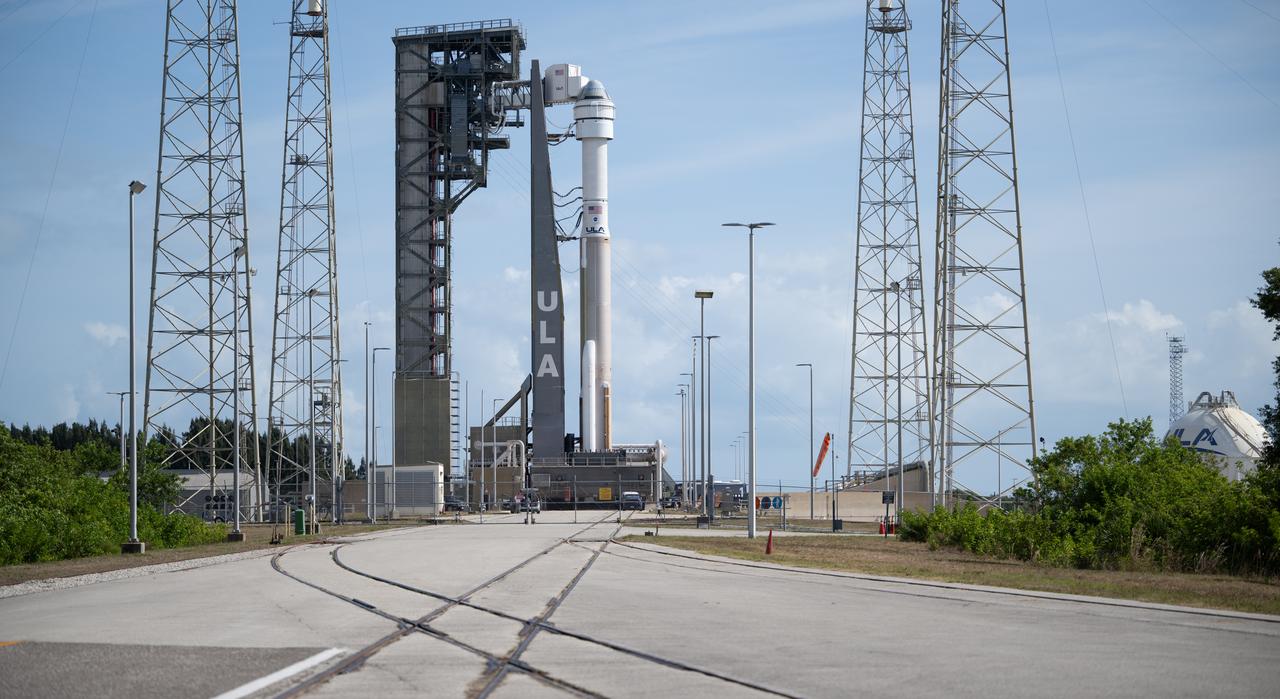
A United Launch Alliance Atlas V rocket with Boeing’s CST-100 Starliner spacecraft aboard is seen on the launch pad at Space Launch Complex 41 ahead of the NASA’s Boeing Crew Flight Test, Monday, May 6, 2024 at Cape Canaveral Space Force Station in Florida. NASA’s Boeing Crew Flight Test is the first launch with astronauts of the Boeing CFT-100 spacecraft and United Launch Alliance Atlas V rocket to the International Space Station as part of the agency’s Commercial Crew Program. The flight test, targeted for launch at 10:34 p.m. EDT on Monday, May 6, serves as an end-to-end demonstration of Boeing’s crew transportation system and will carry NASA astronauts Butch Wilmore and Suni Williams to and from the orbiting laboratory. Photo Credit: (NASA/Joel Kowsky)

NASA astronaut Nicole Mann listens during a briefing at the agency’s Kennedy Space Center in Florida following launch of Boeing’s Orbital Flight Test, Dec. 20, 2019. Boeing’s CST-100 Starliner spacecraft launched atop a United Launch Alliance Atlas V rocket from Space Launch Complex 41 at Cape Canaveral Air Force Station at 6:36 a.m. EST. The uncrewed Orbital Flight Test is the Starliner’s first flight for NASA’s Commercial Crew Program.
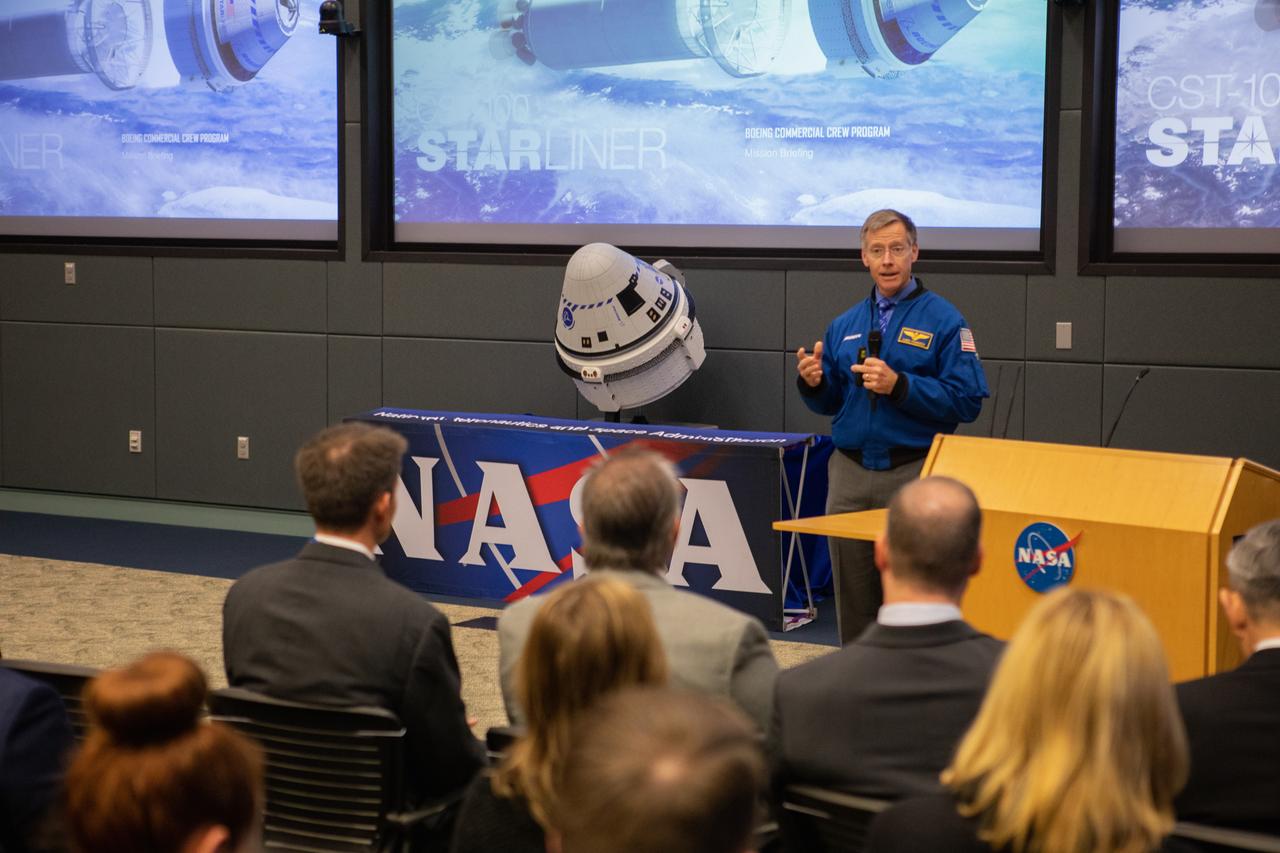
Boeing astronaut Chris Ferguson speaks to invited guests at NASA’s Kennedy Space Center in Florida during a prelaunch briefing for Boeing’s uncrewed Orbital Flight Test, Dec. 20, 2019. A United Launch Alliance Atlas V rocket carrying Boeing’s CST-100 Starliner spacecraft launched at 6:36 a.m. EST from Space Launch Complex 41 at Florida’s Cape Canaveral Air Force Station. The Orbital Flight Test is the Starliner’s first flight for NASA’s Commercial Crew Program.
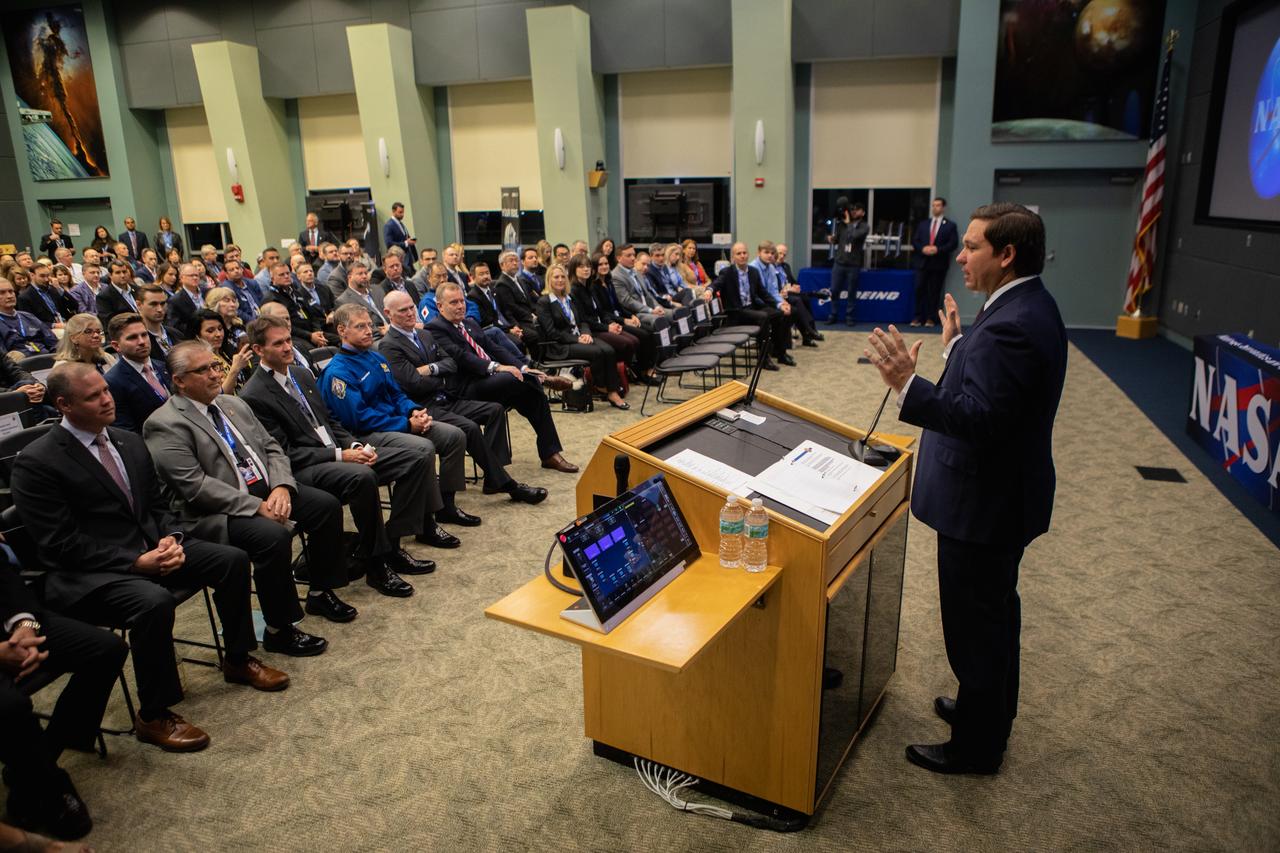
Florida Governor Ron DeSantis speaks to invited guests at NASA’s Kennedy Space Center in Florida during a prelaunch briefing for Boeing’s uncrewed Orbital Flight Test, Dec. 20, 2019. A United Launch Alliance Atlas V rocket carrying Boeing’s CST-100 Starliner spacecraft launched at 6:36 a.m. EST from Space Launch Complex 41 at Florida’s Cape Canaveral Air Force Station. The Orbital Flight Test is the Starliner’s first flight for NASA’s Commercial Crew Program.
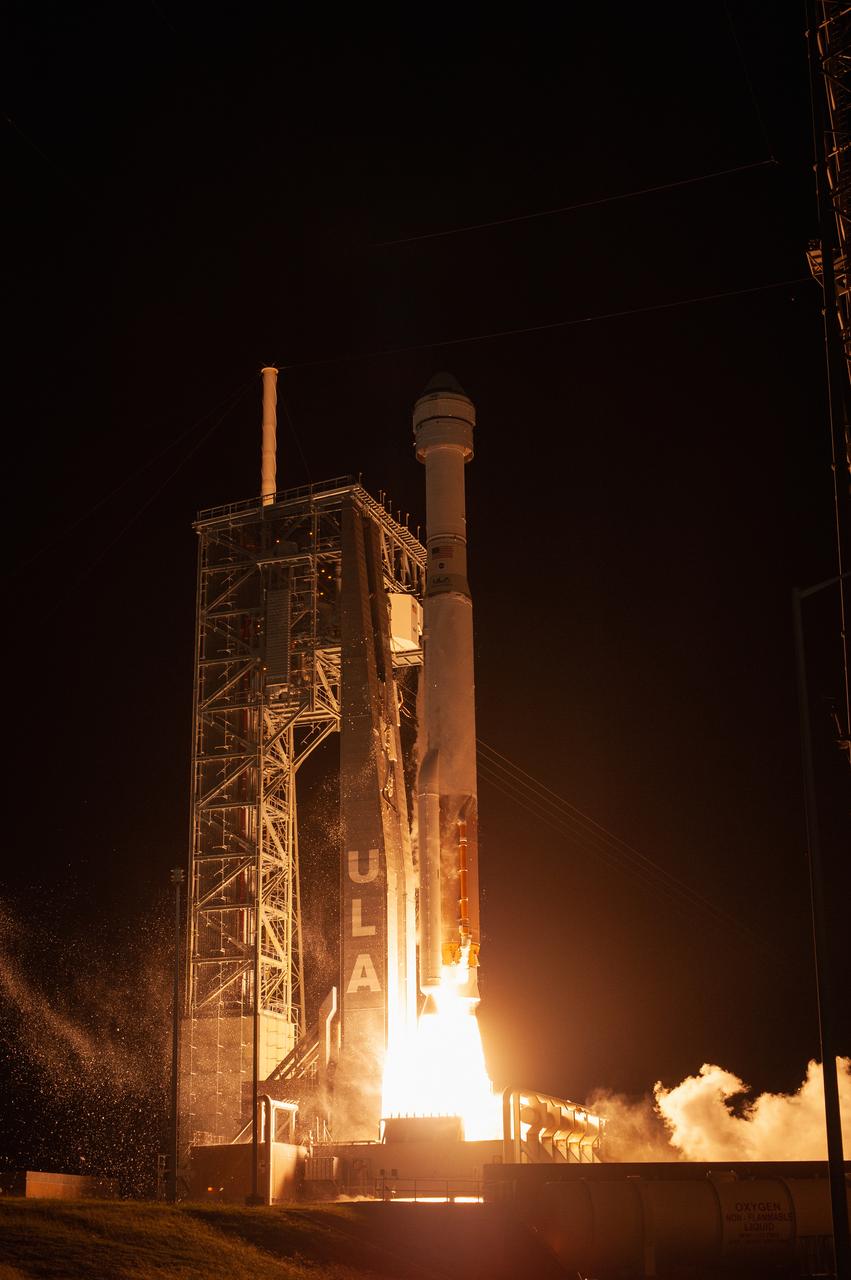
A two-stage United Launch Alliance Atlas V rocket lifts off from Space Launch Complex 41 at Cape Canaveral Air Force Station in Florida for Boeing’s Orbital Flight Test, Dec. 20, 2019. Liftoff occurred at 6:36 a.m. EST. The uncrewed Orbital Flight Test is the Starliner’s first flight for NASA’s Commercial Crew Program.
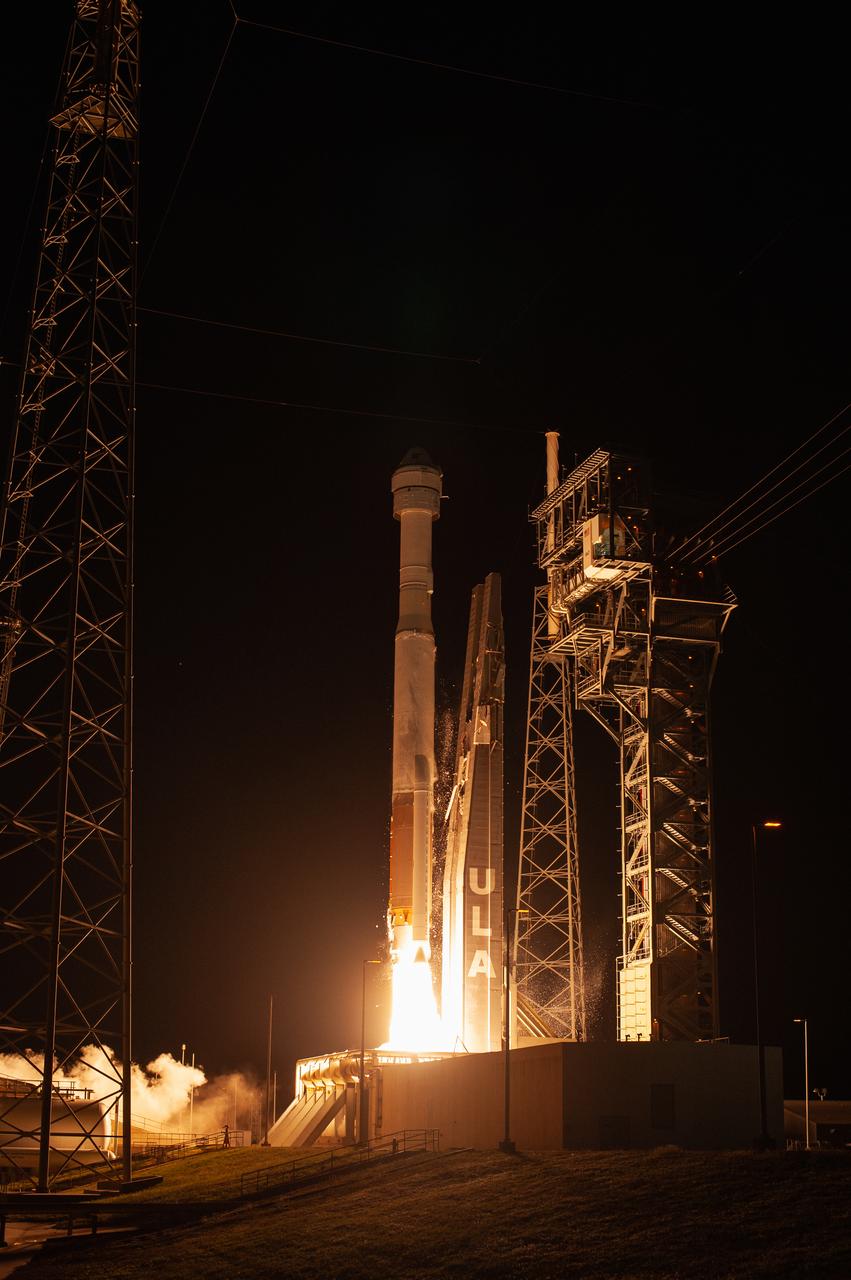
A two-stage United Launch Alliance Atlas V rocket lifts off from Space Launch Complex 41 at Cape Canaveral Air Force Station in Florida for Boeing’s Orbital Flight Test, Dec. 20, 2019. Liftoff occurred at 6:36 a.m. EST. The uncrewed Orbital Flight Test is the Starliner’s first flight for NASA’s Commercial Crew Program.
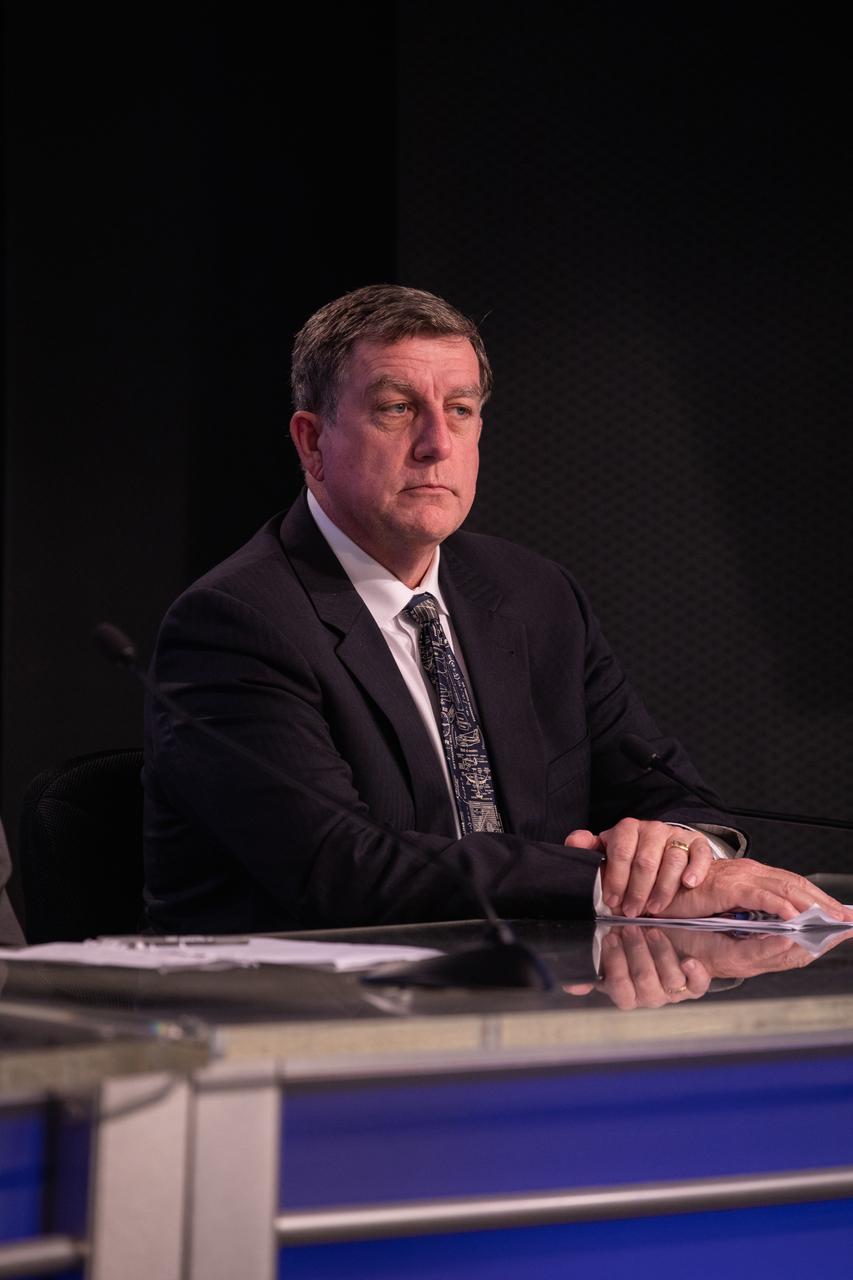
Kirk Shireman, manager of NASA’s International Space Station Program, listens during a briefing at the agency’s Kennedy Space Center in Florida following launch of Boeing’s Orbital Flight Test, Dec. 20, 2019. Boeing’s CST-100 Starliner spacecraft launched atop a United Launch Alliance Atlas V rocket from Space Launch Complex 41 at Cape Canaveral Air Force Station at 6:36 a.m. EST. The uncrewed Orbital Flight Test is the Starliner’s first flight for NASA’s Commercial Crew Program.
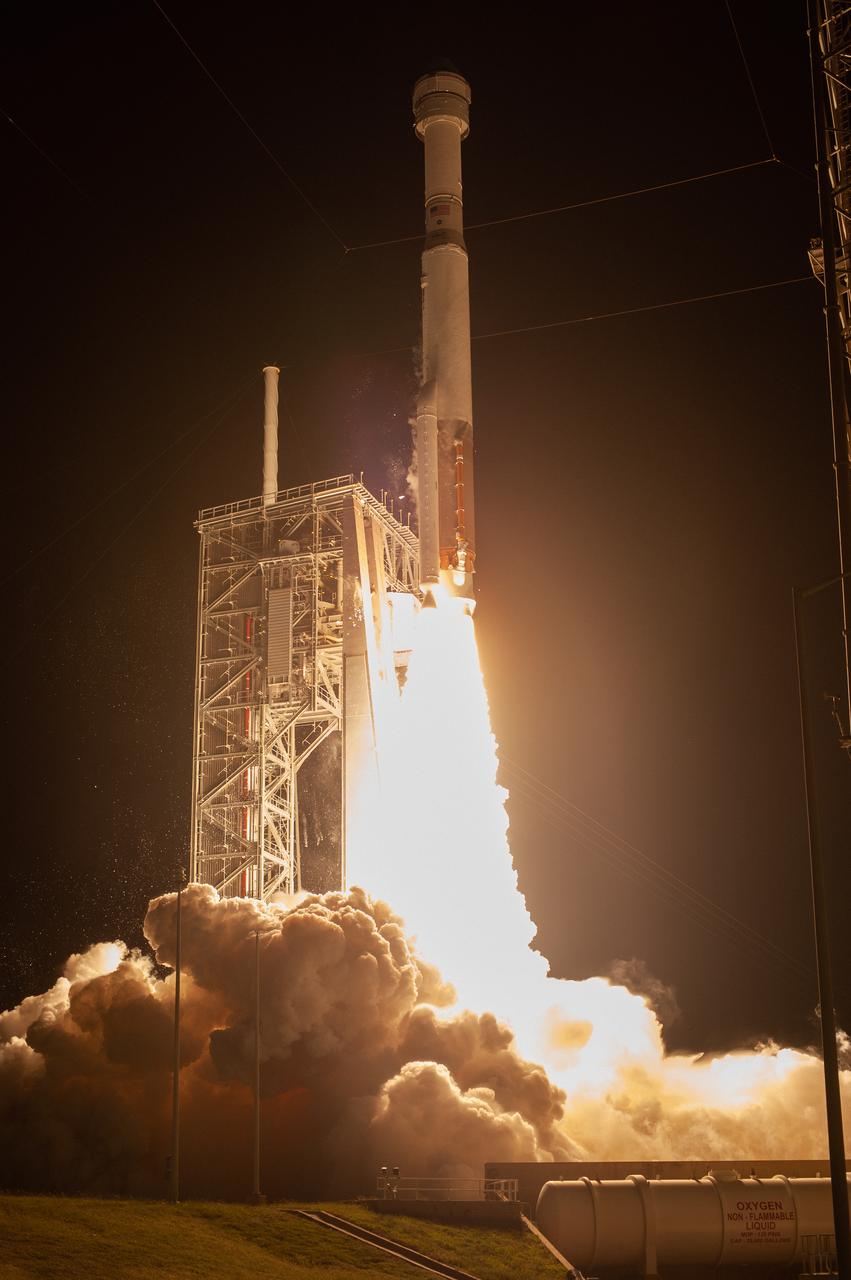
A two-stage United Launch Alliance Atlas V rocket lifts off from Space Launch Complex 41 at Cape Canaveral Air Force Station in Florida for Boeing’s Orbital Flight Test, Dec. 20, 2019. Liftoff occurred at 6:36 a.m. EST. The uncrewed Orbital Flight Test is the Starliner’s first flight for NASA’s Commercial Crew Program.
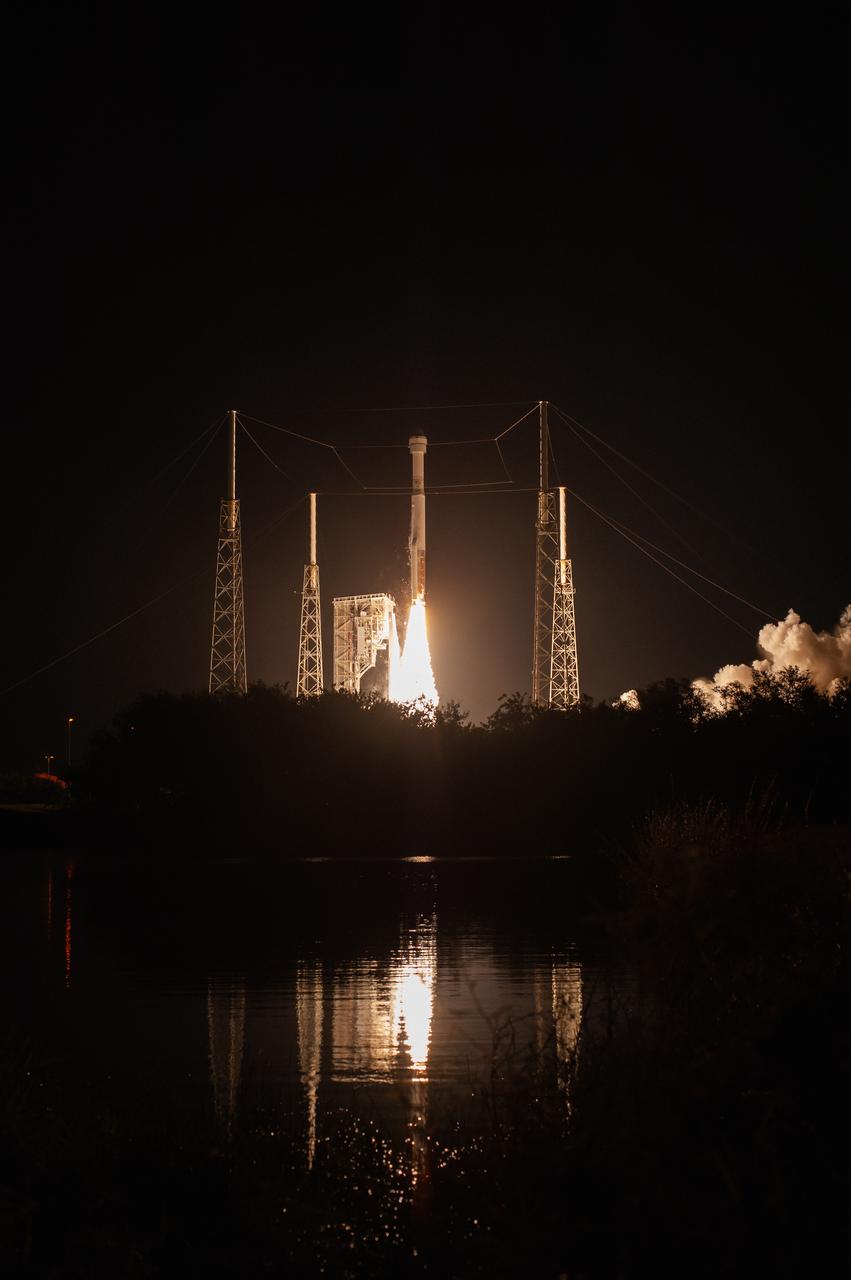
A two-stage United Launch Alliance Atlas V rocket lifts off from Space Launch Complex 41 at Cape Canaveral Air Force Station in Florida for Boeing’s Orbital Flight Test, Dec. 20, 2019. Liftoff occurred at 6:36 a.m. EST. The uncrewed Orbital Flight Test is the Starliner’s first flight for NASA’s Commercial Crew Program.
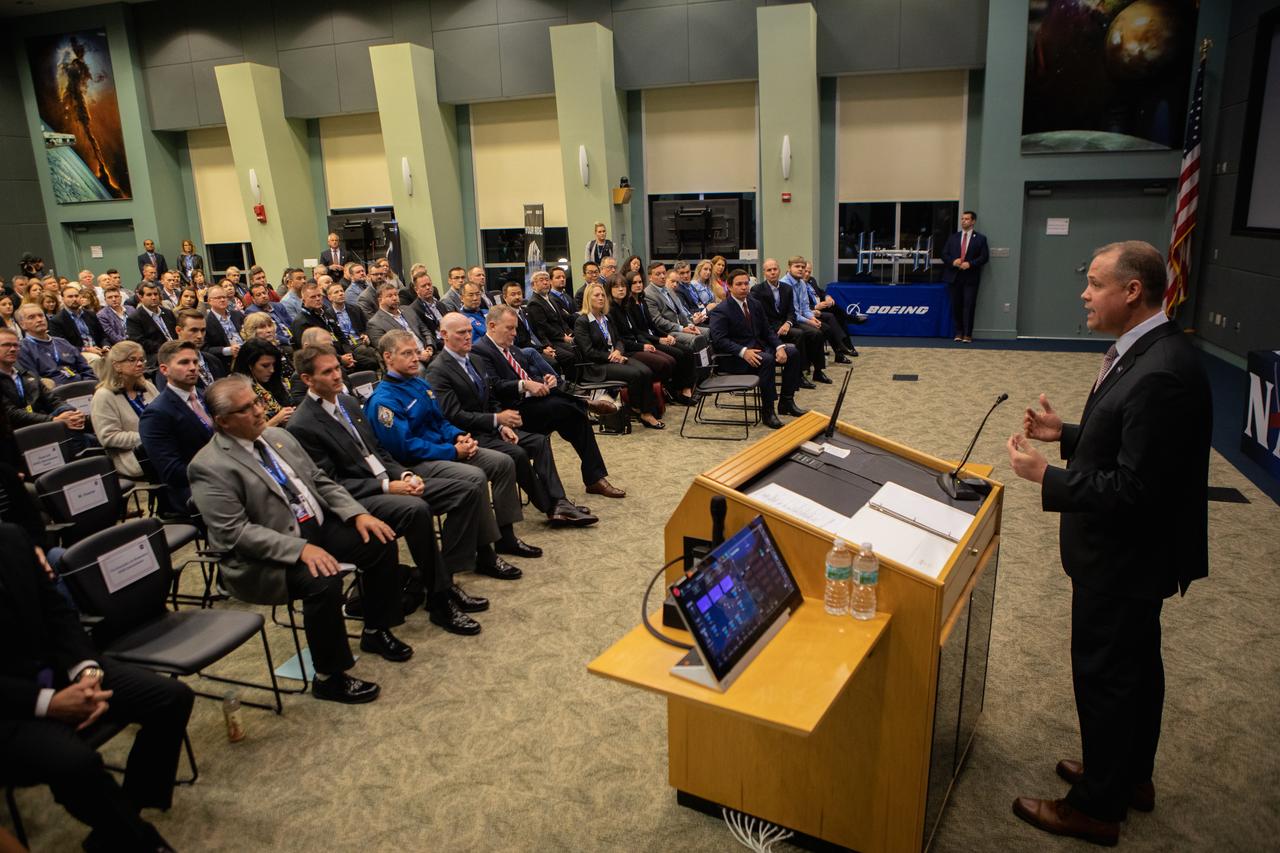
NASA Administrator Jim Bridenstine speaks to invited guests at NASA’s Kennedy Space Center in Florida during a prelaunch briefing for Boeing’s uncrewed Orbital Flight Test, Dec. 20, 2019. A United Launch Alliance Atlas V rocket carrying Boeing’s CST-100 Starliner spacecraft launched at 6:36 a.m. EST from Space Launch Complex 41 at Florida’s Cape Canaveral Air Force Station. The Orbital Flight Test is the Starliner’s first flight for NASA’s Commercial Crew Program.
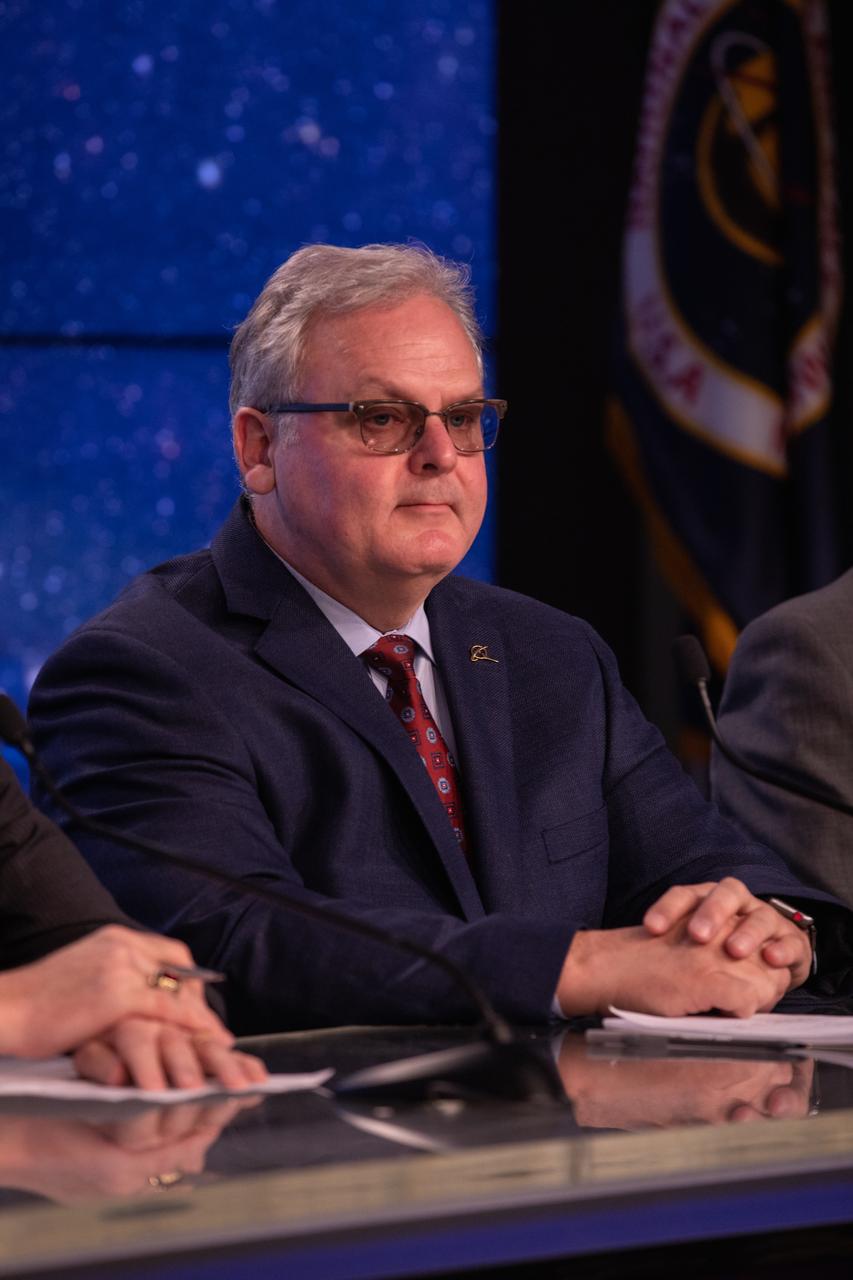
Jim Chilton, Boeing senior vice president, Space and Launch Division, listens during a briefing at NASA’s Kennedy Space Center in Florida following launch of Boeing’s Orbital Flight Test, Dec. 20, 2019. Boeing’s CST-100 Starliner spacecraft launched atop a United Launch Alliance Atlas V rocket from Space Launch Complex 41 at Cape Canaveral Air Force Station at 6:36 a.m. EST. The uncrewed Orbital Flight Test is the Starliner’s first flight for NASA’s Commercial Crew Program.
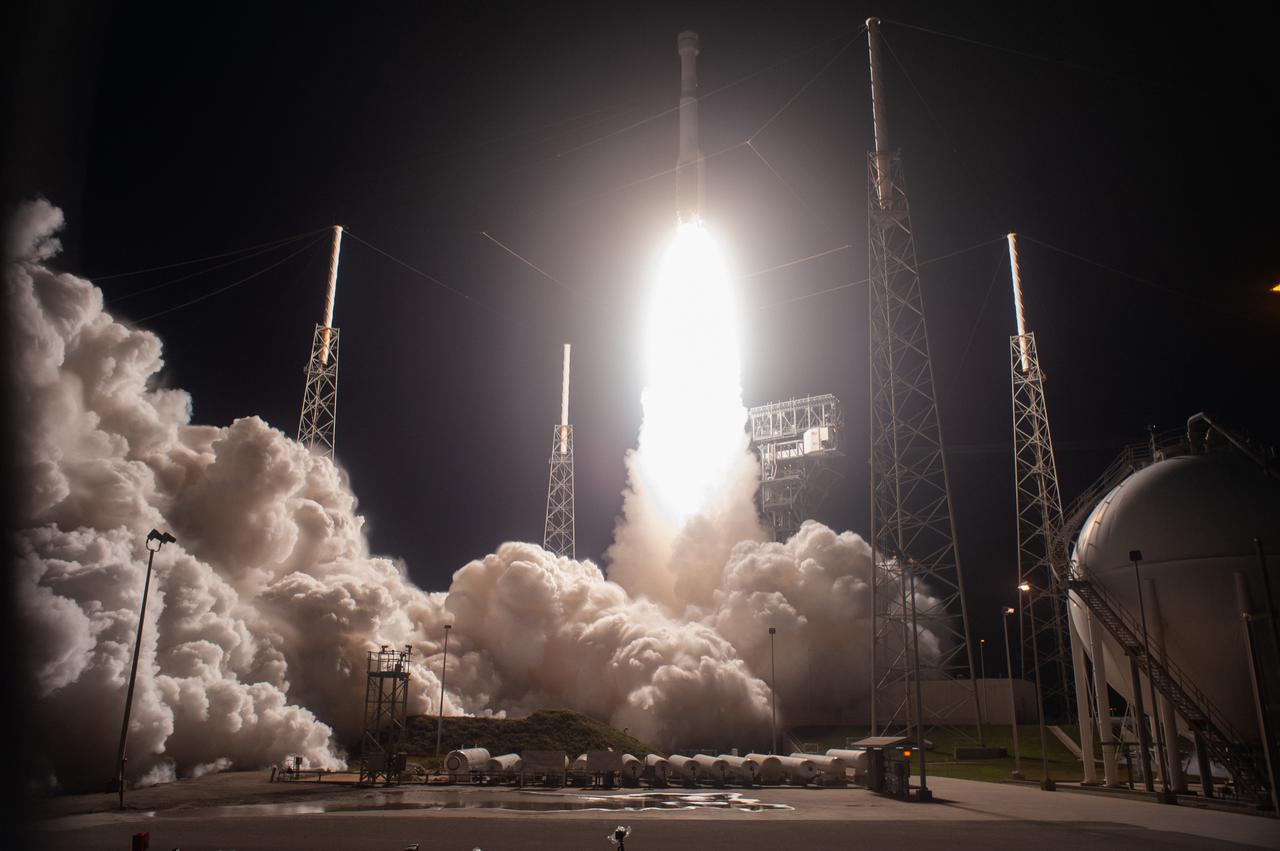
A two-stage United Launch Alliance Atlas V rocket lifts off from Space Launch Complex 41 at Cape Canaveral Air Force Station in Florida for Boeing’s Orbital Flight Test, Dec. 20, 2019. Liftoff occurred at 6:36 a.m. EST. The uncrewed Orbital Flight Test is the Starliner’s first flight for NASA’s Commercial Crew Program.
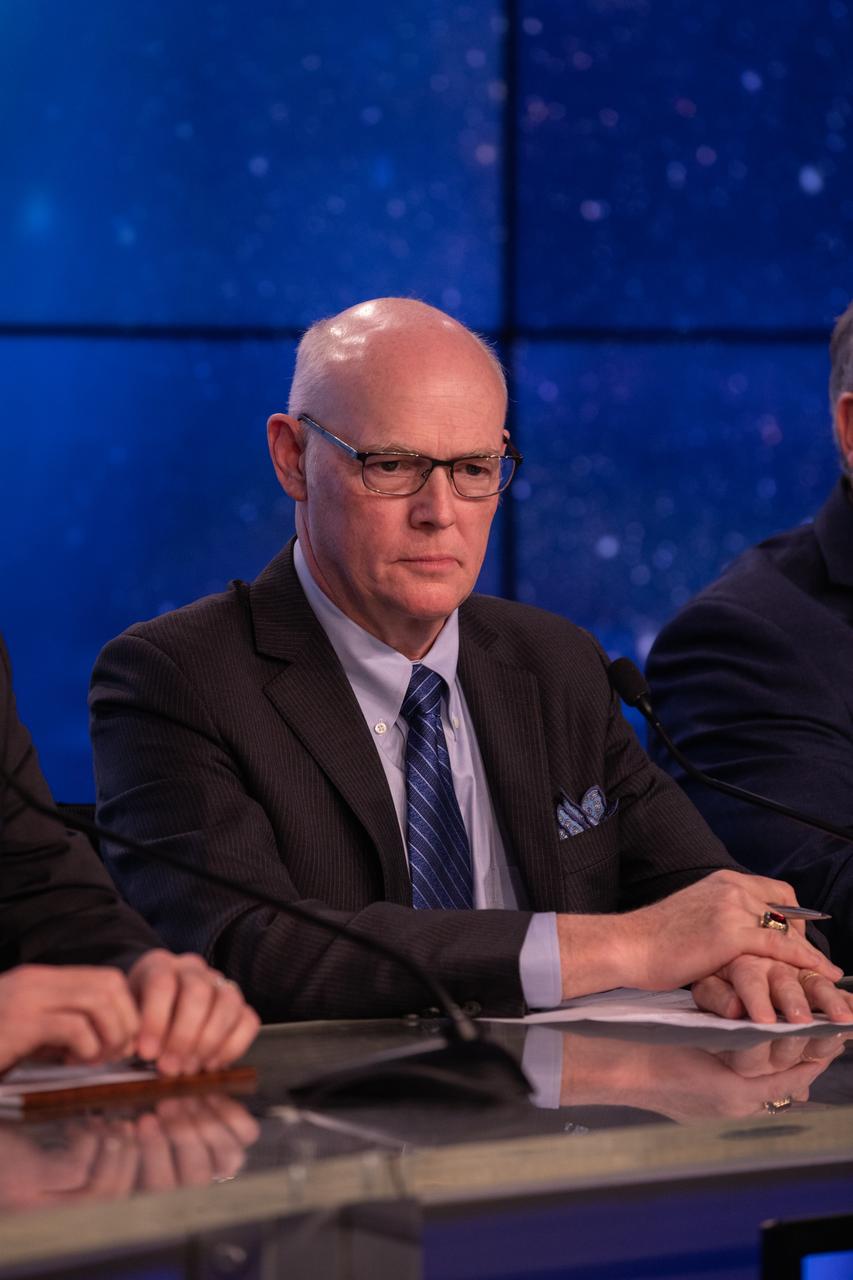
Tory Bruno, president and CEO of United Launch Alliance, listens during a briefing at NASA’s Kennedy Space Center in Florida following launch of Boeing’s Orbital Flight Test, Dec. 20, 2019. Boeing’s CST-100 Starliner spacecraft launched atop a United Launch Alliance Atlas V rocket from Space Launch Complex 41 at Cape Canaveral Air Force Station at 6:36 a.m. EST. The uncrewed Orbital Flight Test is the Starliner’s first flight for NASA’s Commercial Crew Program.
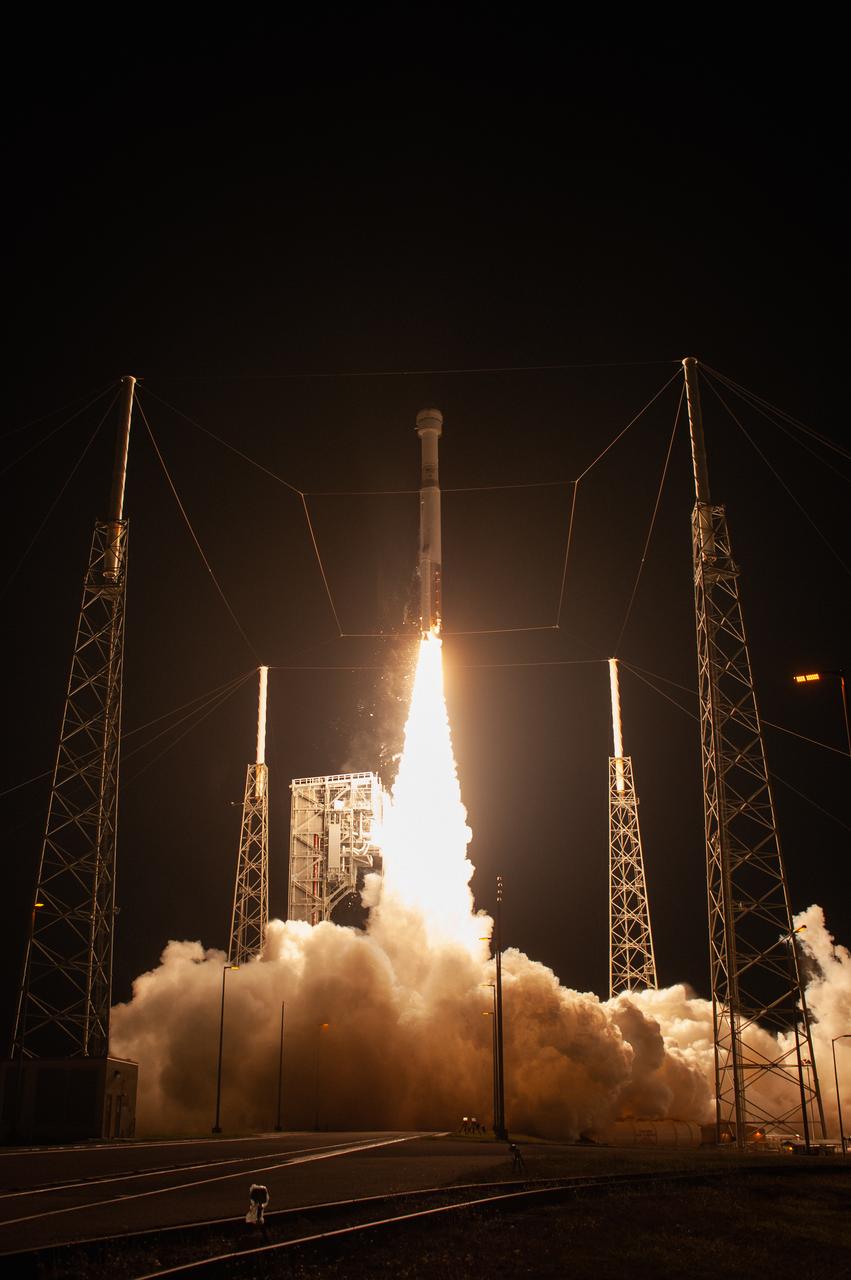
A two-stage United Launch Alliance Atlas V rocket lifts off from Space Launch Complex 41 at Cape Canaveral Air Force Station in Florida for Boeing’s Orbital Flight Test, Dec. 20, 2019. Liftoff occurred at 6:36 a.m. EST. The uncrewed Orbital Flight Test is the Starliner’s first flight for NASA’s Commercial Crew Program.
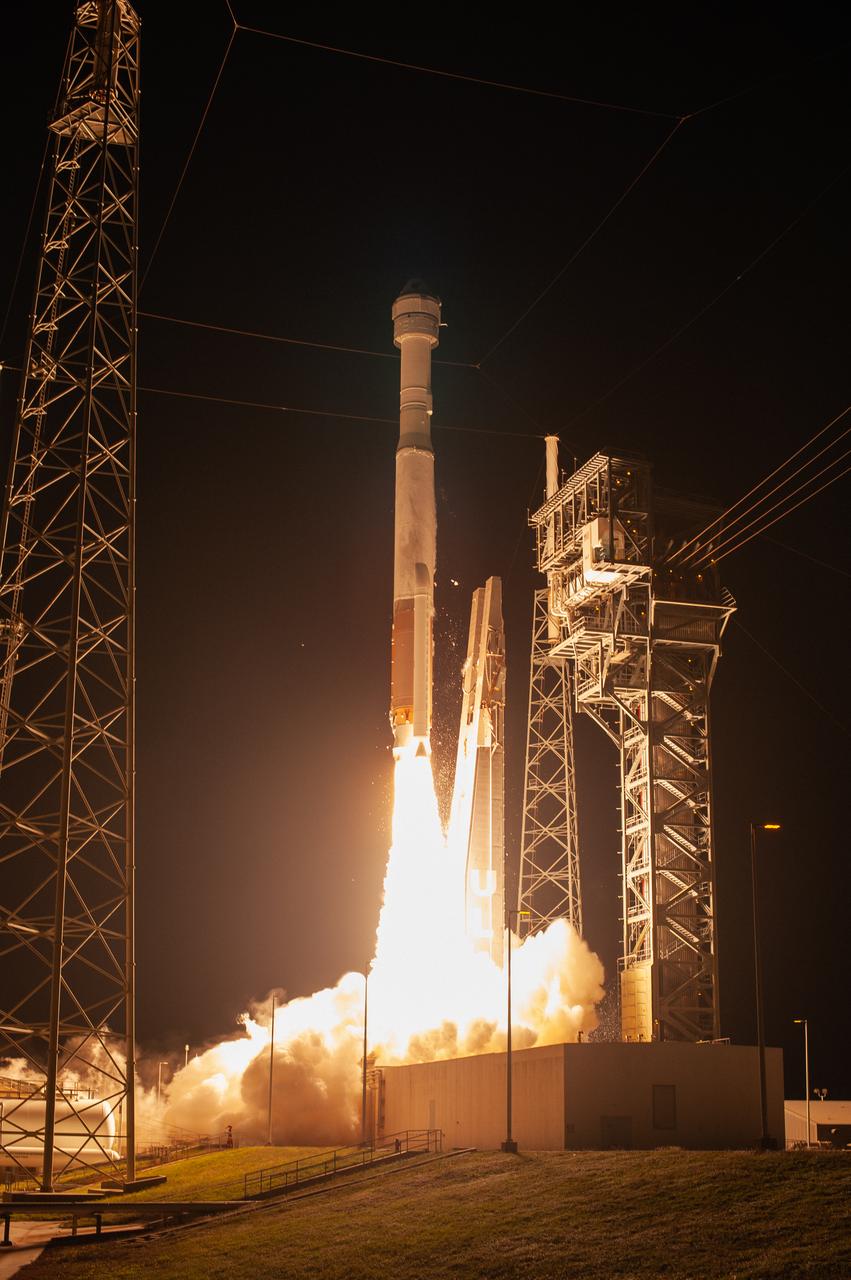
A two-stage United Launch Alliance Atlas V rocket lifts off from Space Launch Complex 41 at Cape Canaveral Air Force Station in Florida for Boeing’s Orbital Flight Test, Dec. 20, 2019. Liftoff occurred at 6:36 a.m. EST. The uncrewed Orbital Flight Test is the Starliner’s first flight for NASA’s Commercial Crew Program.
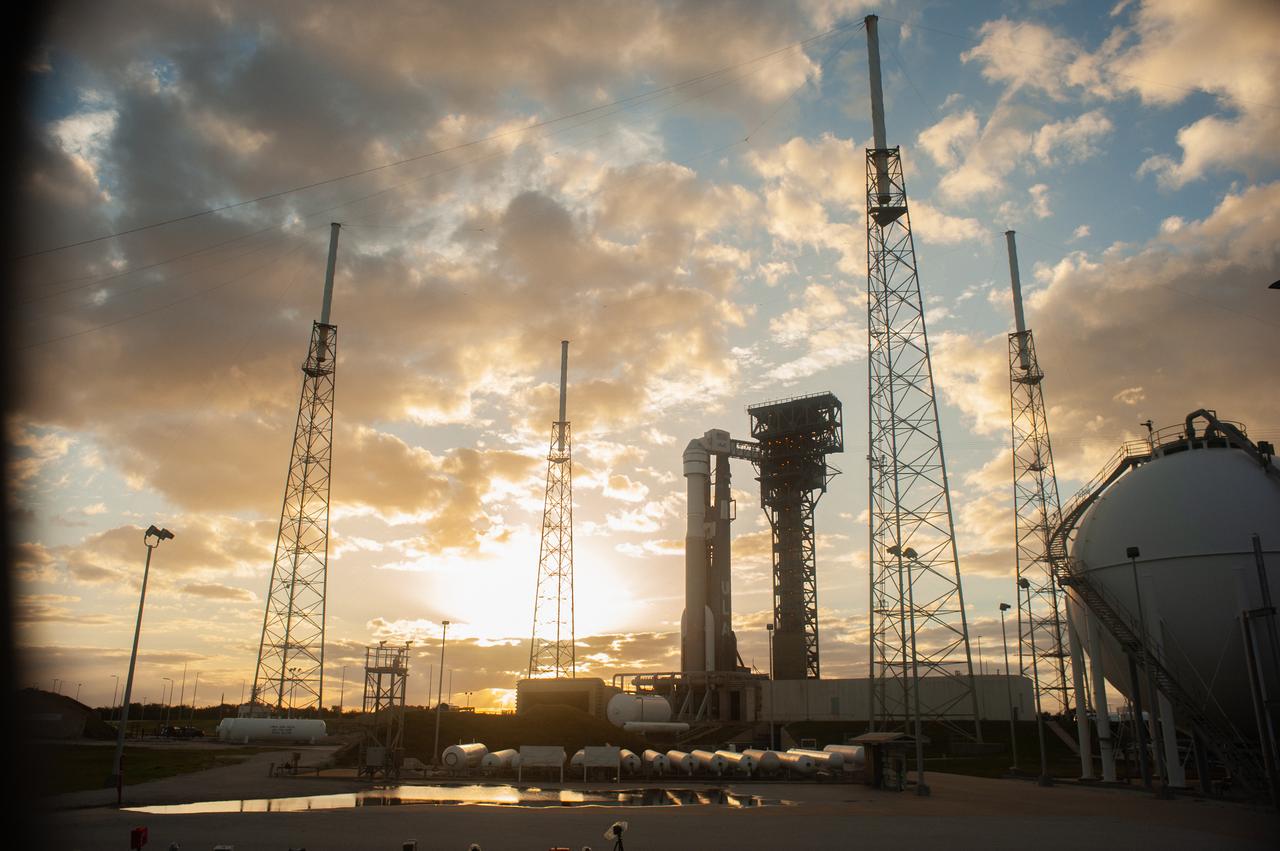
A two-stage United Launch Alliance Atlas V rocket lifts off from Space Launch Complex 41 at Cape Canaveral Air Force Station in Florida for Boeing’s Orbital Flight Test, Dec. 20, 2019. Liftoff occurred at 6:36 a.m. EST. The uncrewed Orbital Flight Test is the Starliner’s first flight for NASA’s Commercial Crew Program.
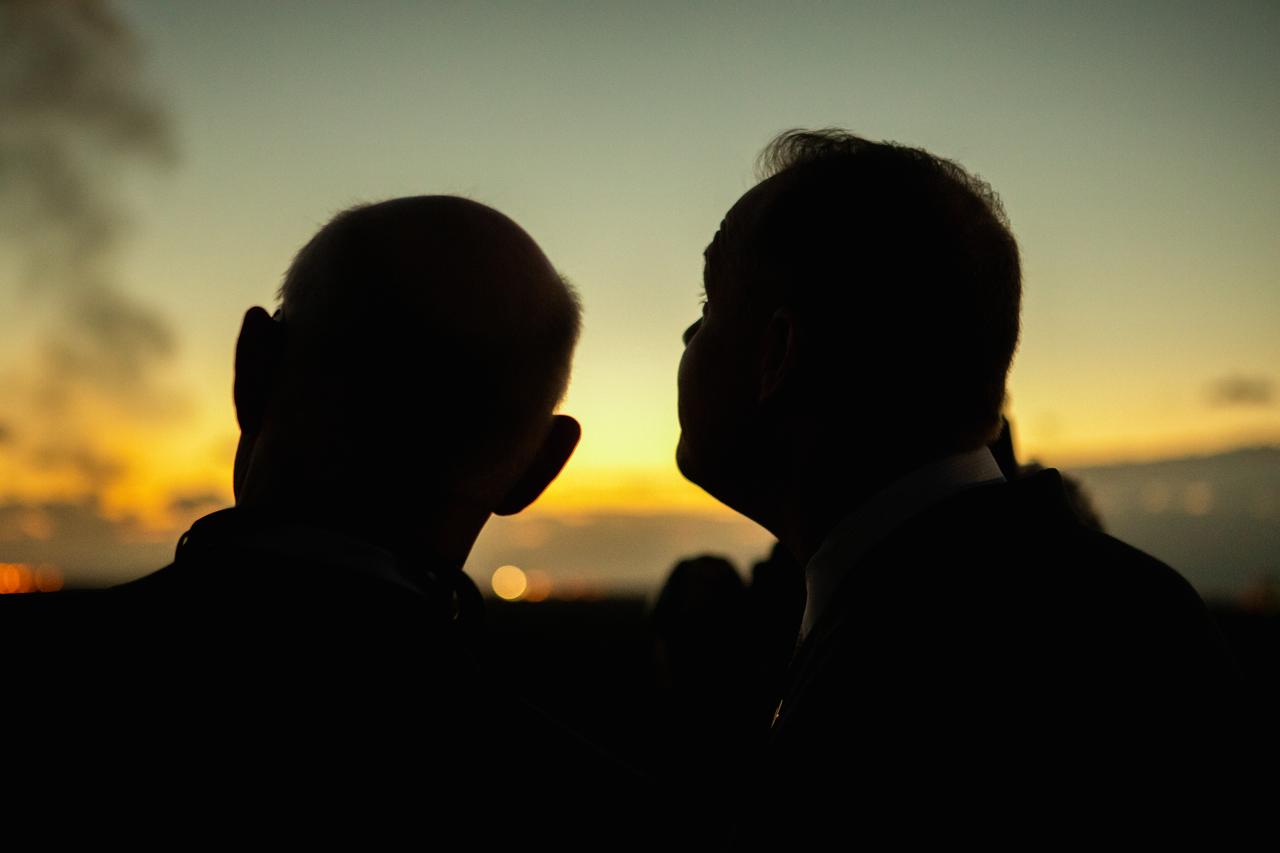
Tory Bruno, president and chief executive officer of United Launch Alliance, left, and NASA Administrator Jim Bridenstine watch the launch of a United Launch Alliance Atlas V rocket carrying Boeing’s CST-100 Starliner spacecraft for Boeing’s Orbital Flight Test, Dec. 20, 2019. Liftoff occurred at 6:36 a.m. EST from Space Launch Complex 41 at Florida’s Cape Canaveral Air Force Station. The uncrewed Orbital Flight Test is the Starliner’s first flight for NASA’s Commercial Crew Program.
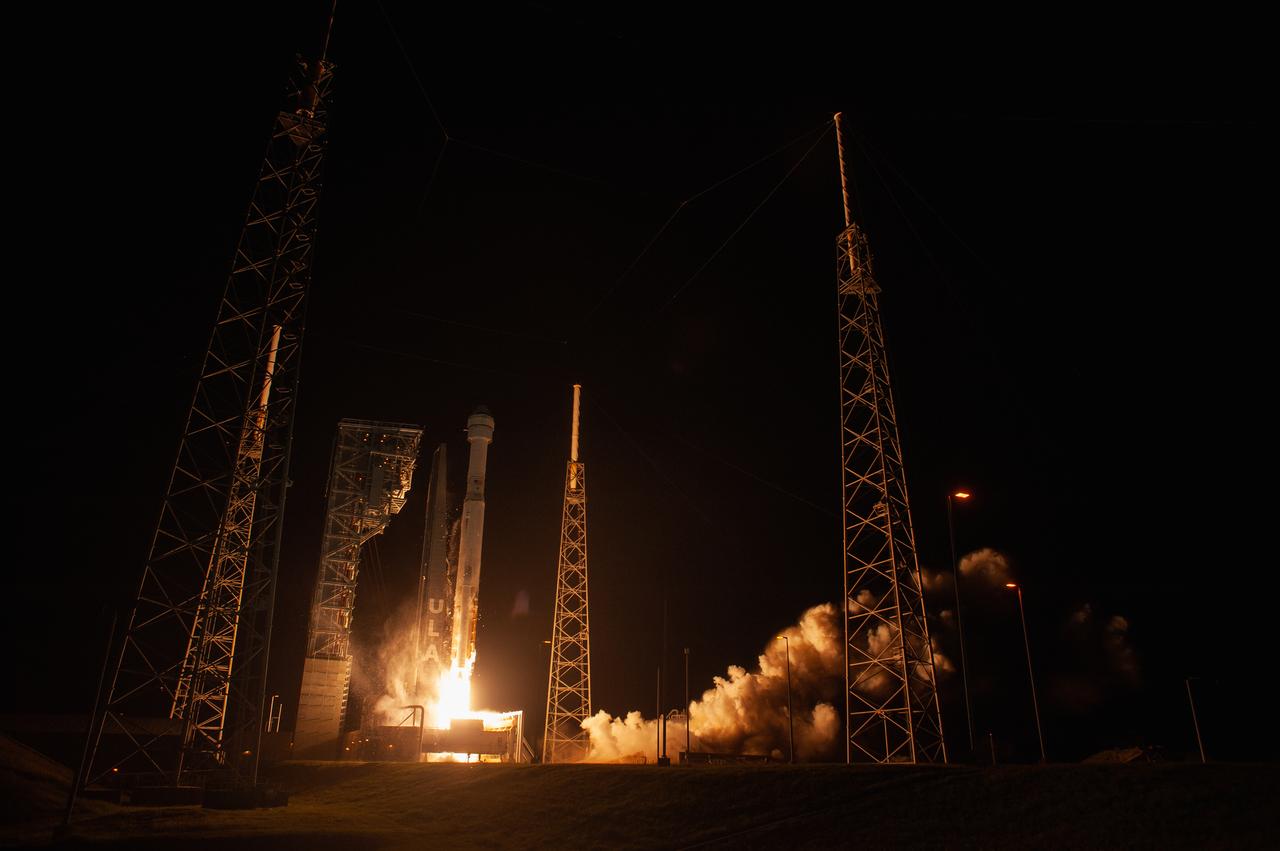
A two-stage United Launch Alliance Atlas V rocket lifts off from Space Launch Complex 41 at Cape Canaveral Air Force Station in Florida for Boeing’s Orbital Flight Test, Dec. 20, 2019. Liftoff occurred at 6:36 a.m. EST. The uncrewed Orbital Flight Test is the Starliner’s first flight for NASA’s Commercial Crew Program.
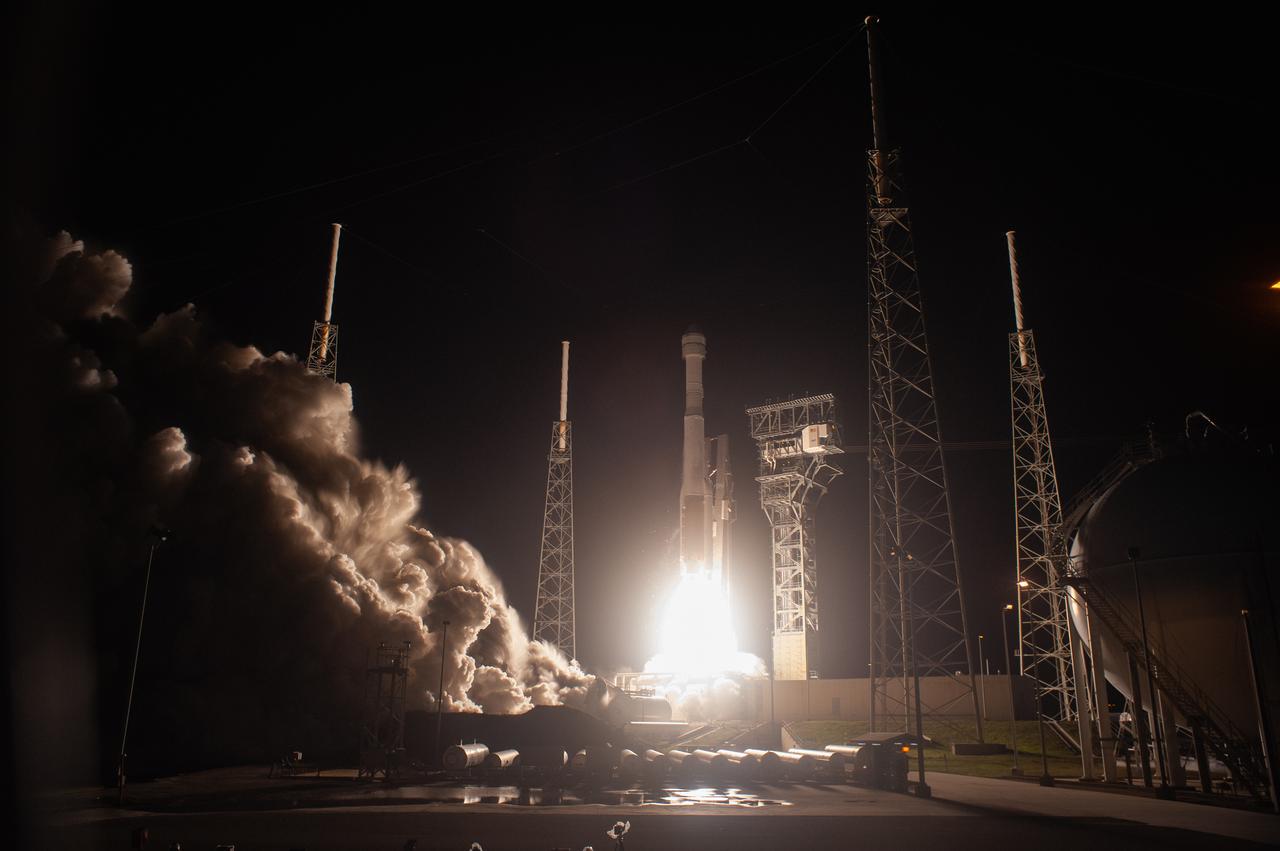
A two-stage United Launch Alliance Atlas V rocket lifts off from Space Launch Complex 41 at Cape Canaveral Air Force Station in Florida for Boeing’s Orbital Flight Test, Dec. 20, 2019. Liftoff occurred at 6:36 a.m. EST. The uncrewed Orbital Flight Test is the Starliner’s first flight for NASA’s Commercial Crew Program.
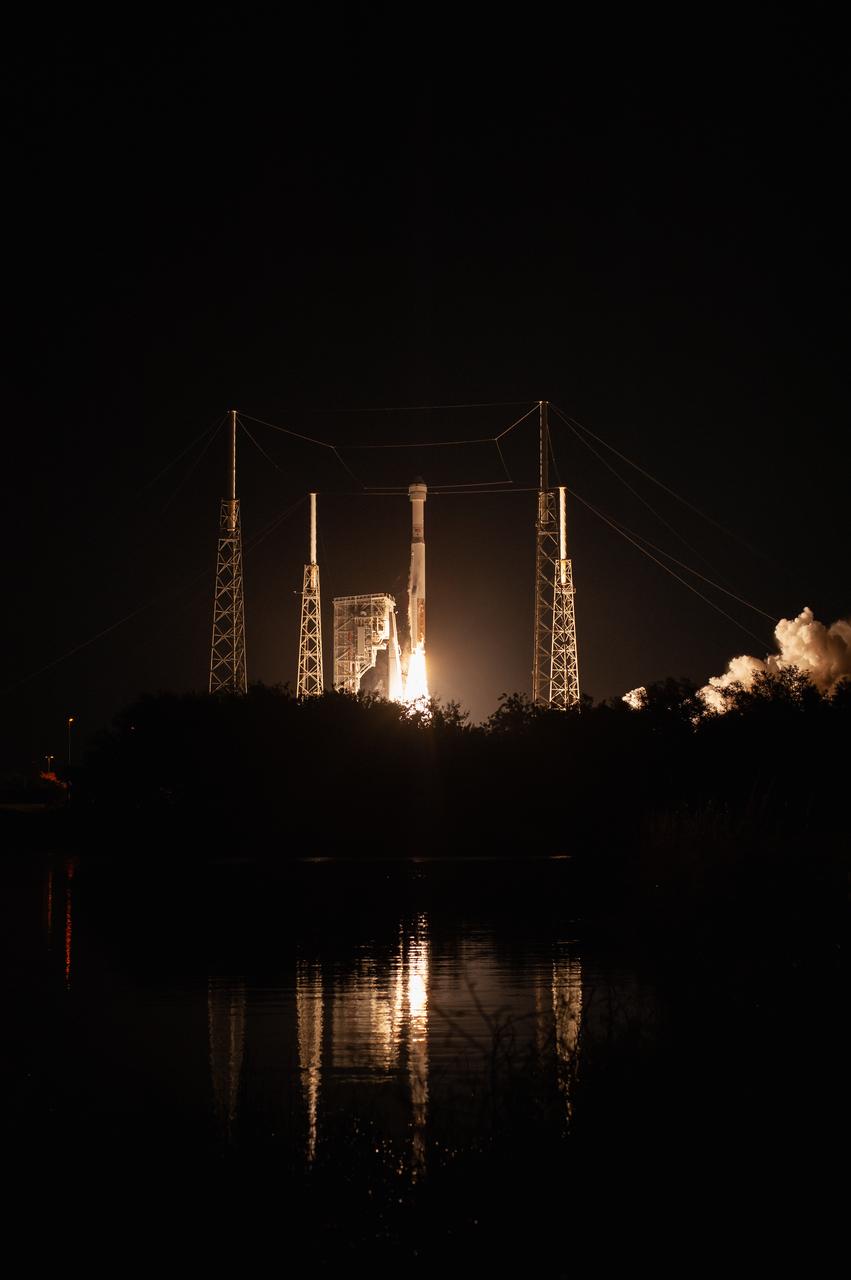
A two-stage United Launch Alliance Atlas V rocket lifts off from Space Launch Complex 41 at Cape Canaveral Air Force Station in Florida for Boeing’s Orbital Flight Test, Dec. 20, 2019. Liftoff occurred at 6:36 a.m. EST. The uncrewed Orbital Flight Test is the Starliner’s first flight for NASA’s Commercial Crew Program.
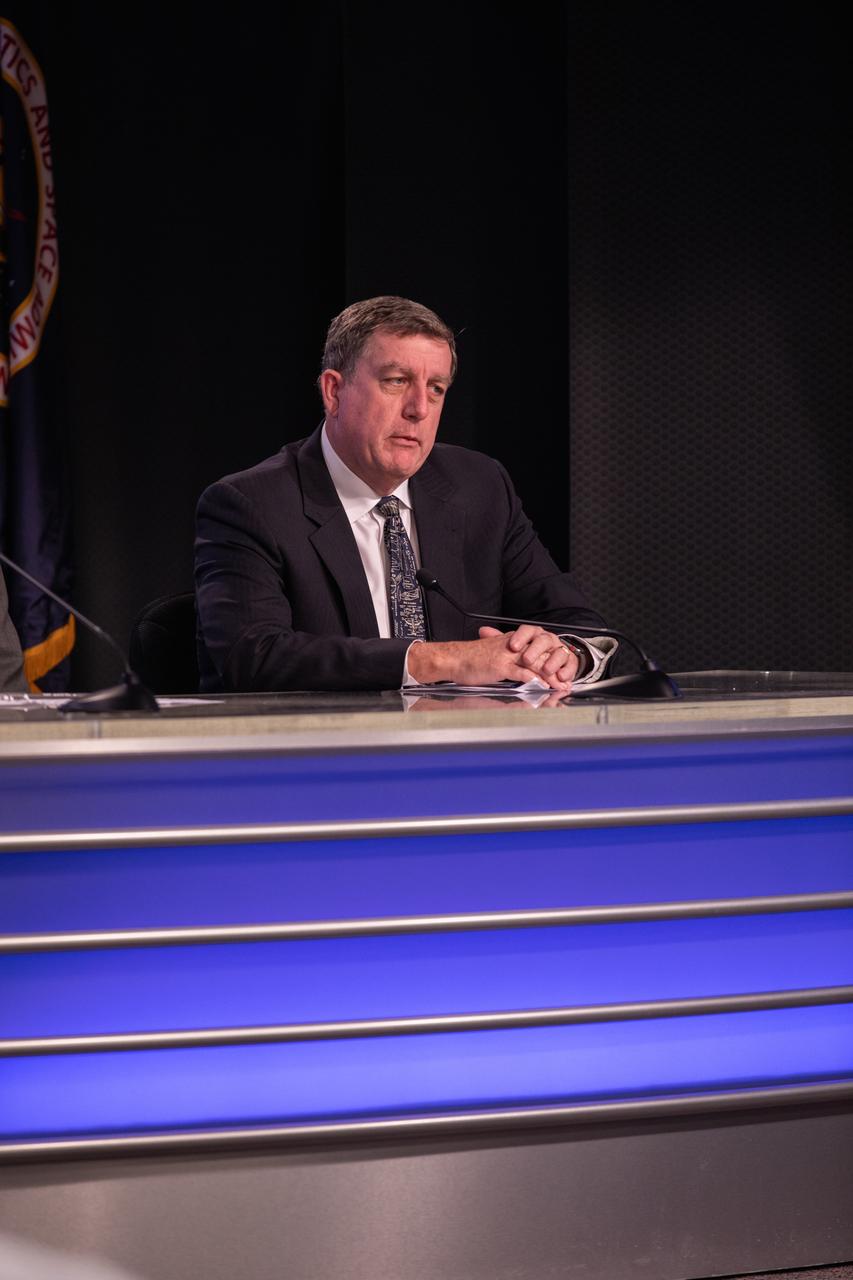
Kirk Shireman, manager of NASA’s International Space Station Program, speaks during a briefing at the agency’s Kennedy Space Center in Florida following launch of Boeing’s Orbital Flight Test, Dec. 20, 2019. Boeing’s CST-100 Starliner spacecraft launched atop a United Launch Alliance Atlas V rocket from Space Launch Complex 41 at Cape Canaveral Air Force Station at 6:36 a.m. EST. The uncrewed Orbital Flight Test is the Starliner’s first flight for NASA’s Commercial Crew Program.
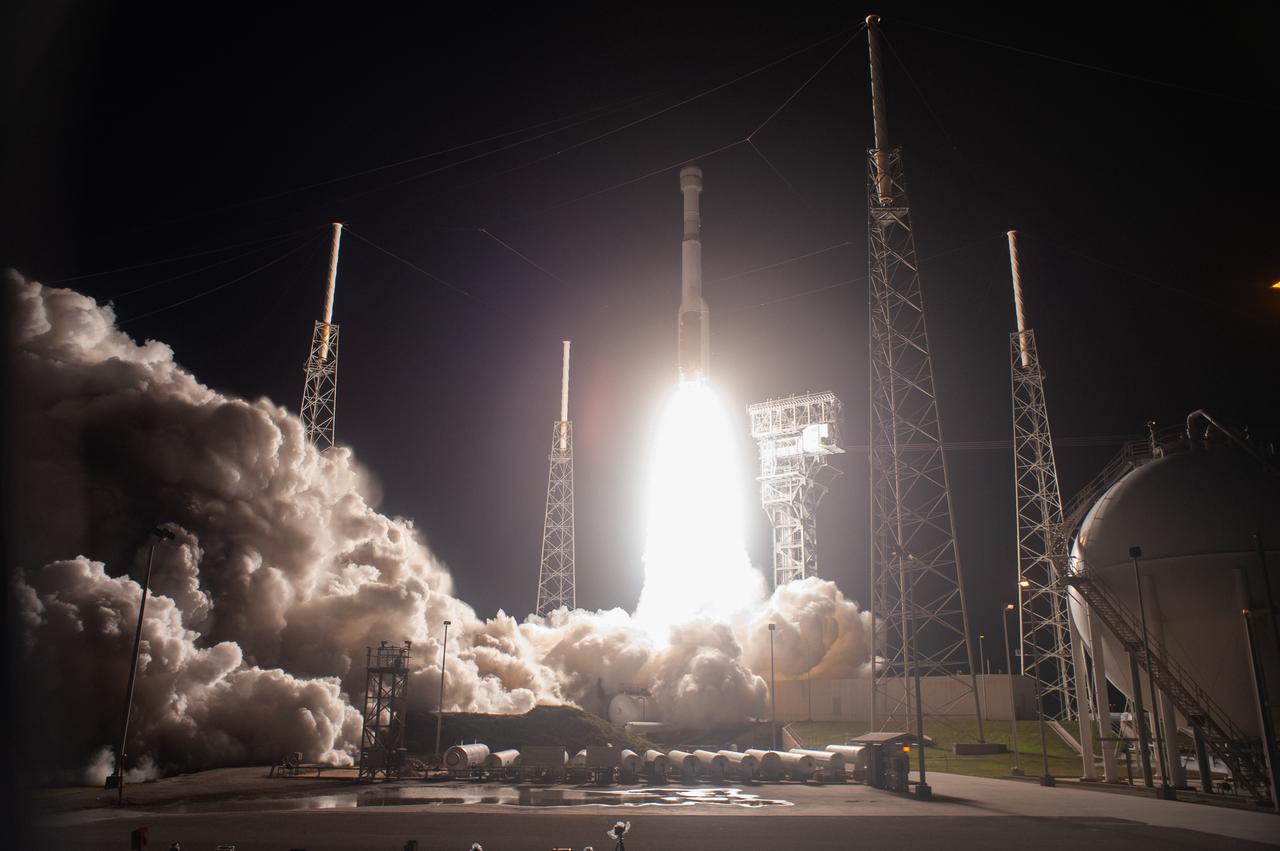
A two-stage United Launch Alliance Atlas V rocket lifts off from Space Launch Complex 41 at Cape Canaveral Air Force Station in Florida for Boeing’s Orbital Flight Test, Dec. 20, 2019. Liftoff occurred at 6:36 a.m. EST. The uncrewed Orbital Flight Test is the Starliner’s first flight for NASA’s Commercial Crew Program.
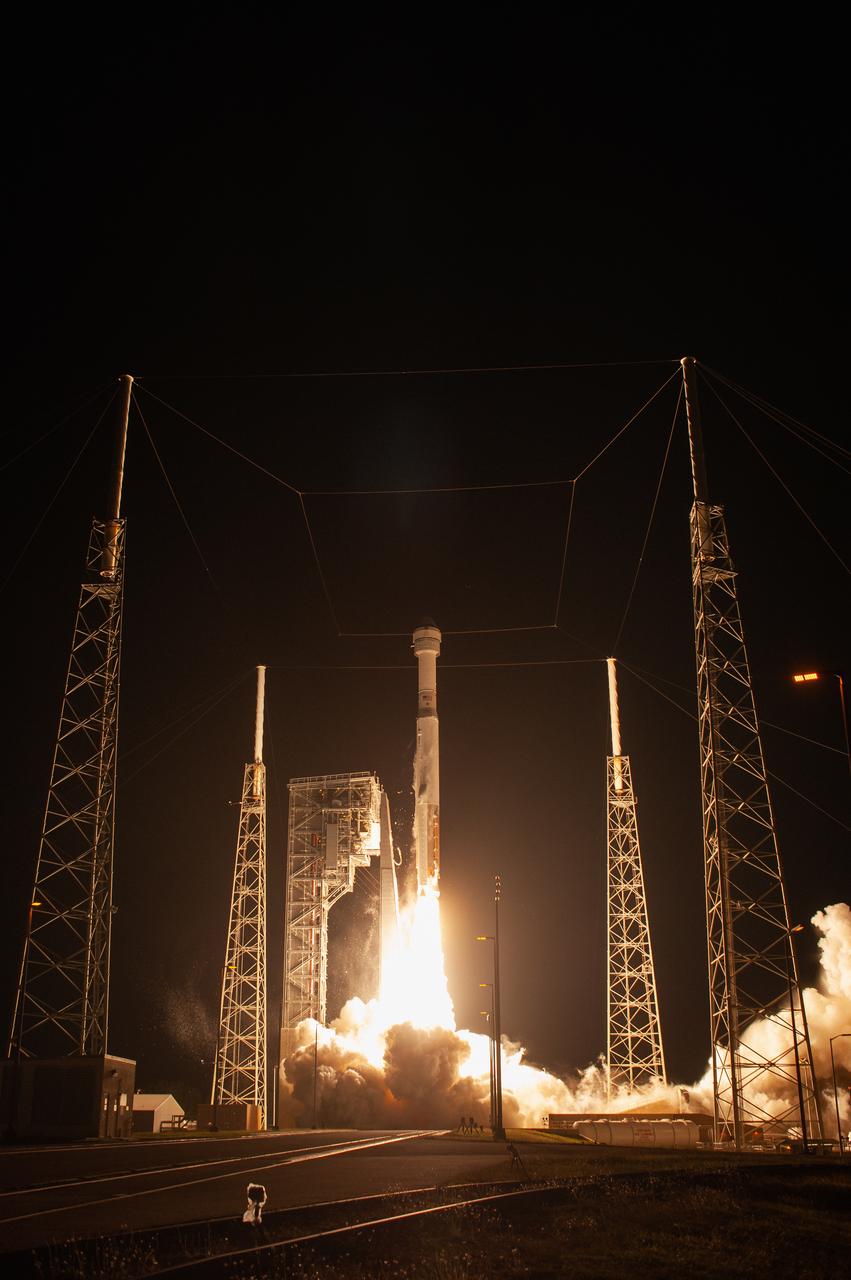
A two-stage United Launch Alliance Atlas V rocket lifts off from Space Launch Complex 41 at Cape Canaveral Air Force Station in Florida for Boeing’s Orbital Flight Test, Dec. 20, 2019. Liftoff occurred at 6:36 a.m. EST. The uncrewed Orbital Flight Test is the Starliner’s first flight for NASA’s Commercial Crew Program.

NASA Administrator Jim Bridenstine speaks during a briefing at the agency’s Kennedy Space Center in Florida following launch of Boeing’s Orbital Flight Test, Dec. 20, 2019. Boeing’s CST-100 Starliner spacecraft launched atop a United Launch Alliance Atlas V rocket from Space Launch Complex 41 at Cape Canaveral Air Force Station at 6:36 a.m. EST. The uncrewed Orbital Flight Test is the Starliner’s first flight for NASA’s Commercial Crew Program.
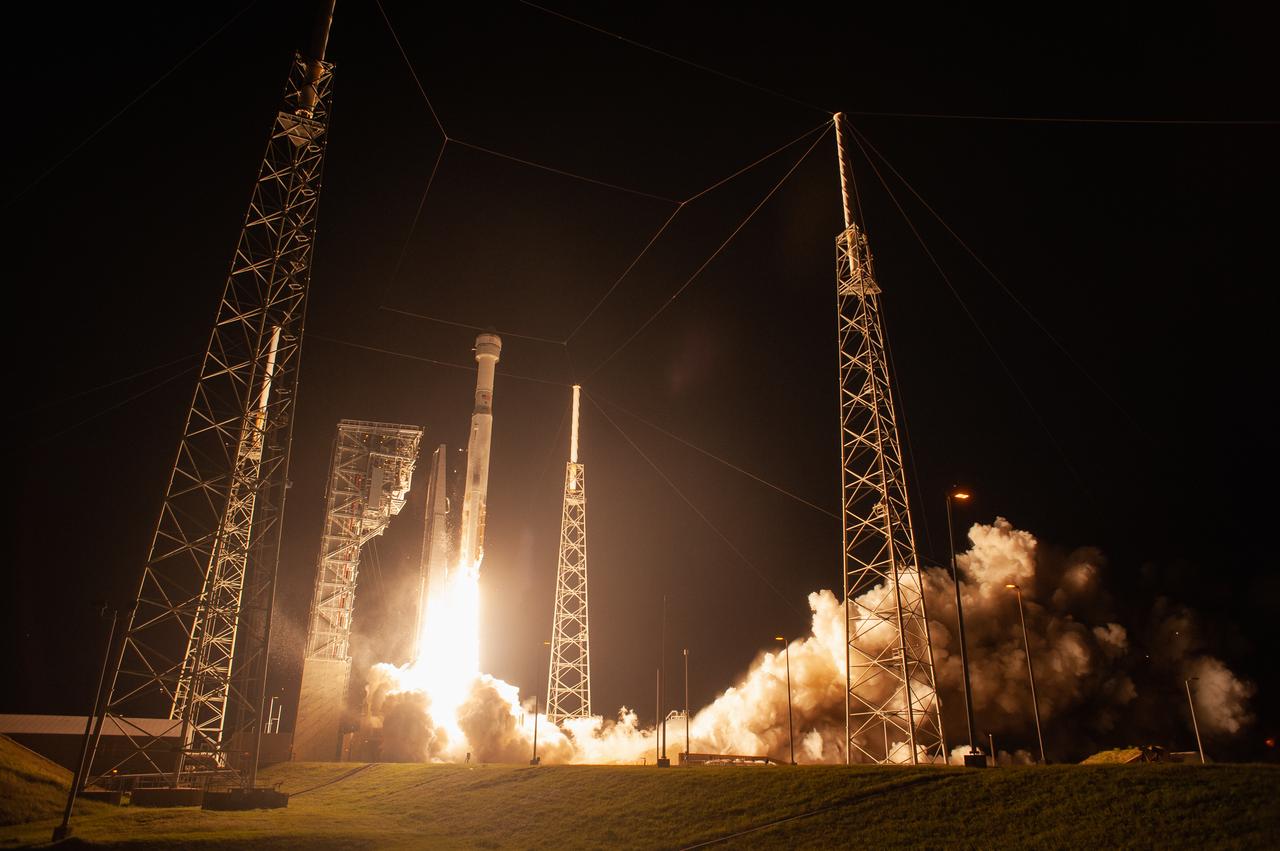
A two-stage United Launch Alliance Atlas V rocket lifts off from Space Launch Complex 41 at Cape Canaveral Air Force Station in Florida for Boeing’s Orbital Flight Test, Dec. 20, 2019. Liftoff occurred at 6:36 a.m. EST. The uncrewed Orbital Flight Test is the Starliner’s first flight for NASA’s Commercial Crew Program.

NASA astronaut Mike Fincke listens during a briefing at the agency’s Kennedy Space Center in Florida following launch of Boeing’s Orbital Flight Test, Dec. 20, 2019. Boeing’s CST-100 Starliner spacecraft launched atop a United Launch Alliance Atlas V rocket from Space Launch Complex 41 at Cape Canaveral Air Force Station at 6:36 a.m. EST. The uncrewed Orbital Flight Test is the Starliner’s first flight for NASA’s Commercial Crew Program.
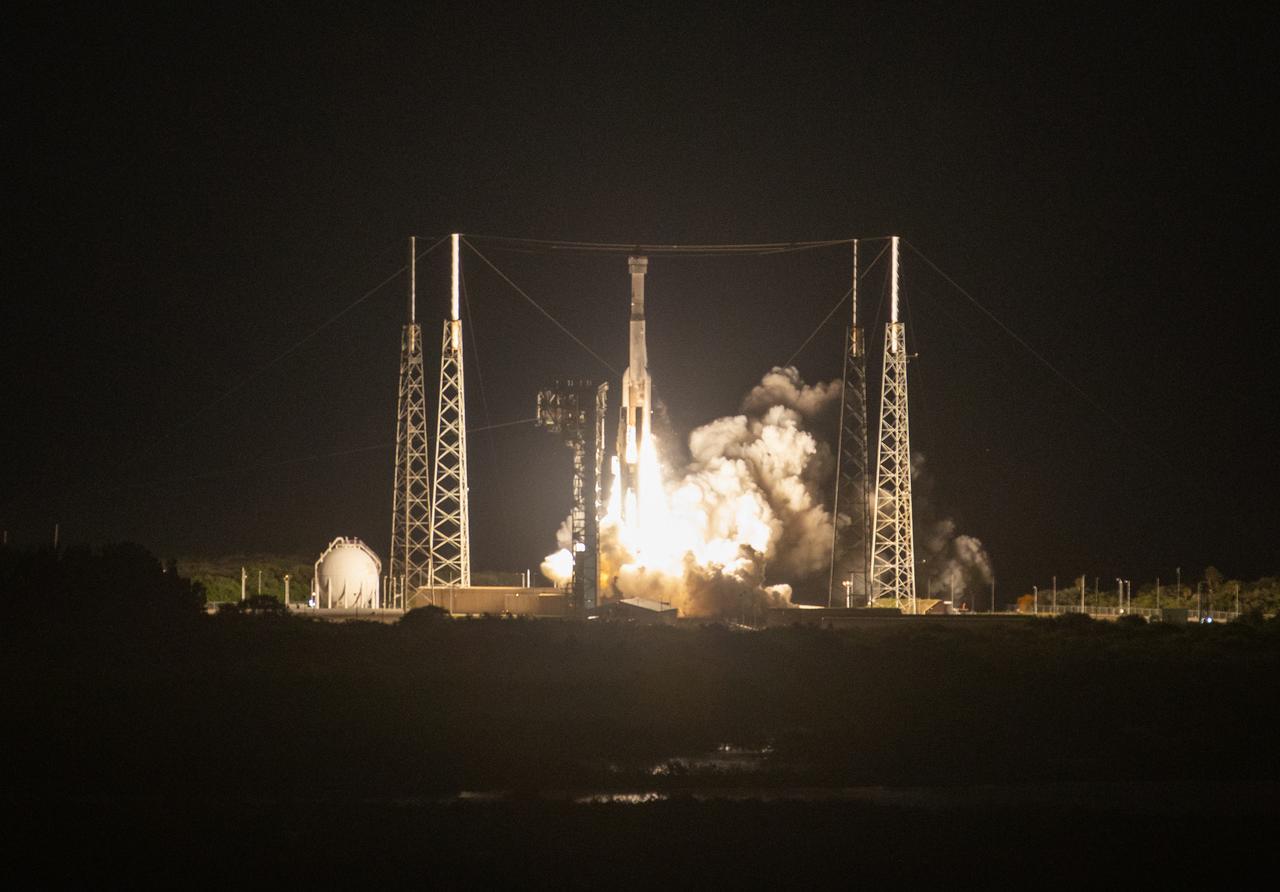
A two-stage United Launch Alliance Atlas V rocket lifts off from Space Launch Complex 41 at Cape Canaveral Air Force Station in Florida for Boeing’s Orbital Flight Test, Dec. 20, 2019. Liftoff occurred at 6:36 a.m. EST. The uncrewed Orbital Flight Test is the Starliner’s first flight to the International Space Station for NASA’s Commercial Crew Program.
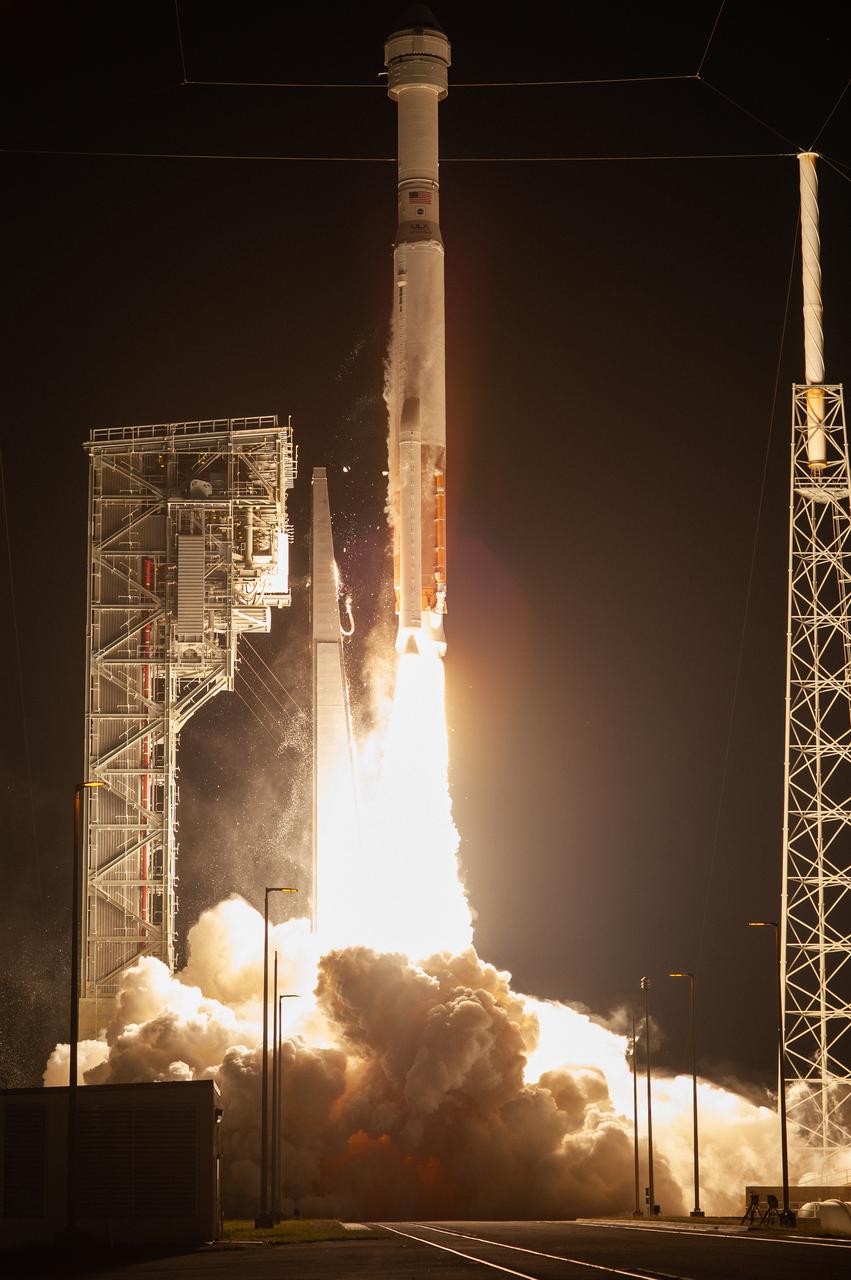
A two-stage United Launch Alliance Atlas V rocket lifts off from Space Launch Complex 41 at Cape Canaveral Air Force Station in Florida for Boeing’s Orbital Flight Test, Dec. 20, 2019. Liftoff occurred at 6:36 a.m. EST. The uncrewed Orbital Flight Test is the Starliner’s first flight for NASA’s Commercial Crew Program.
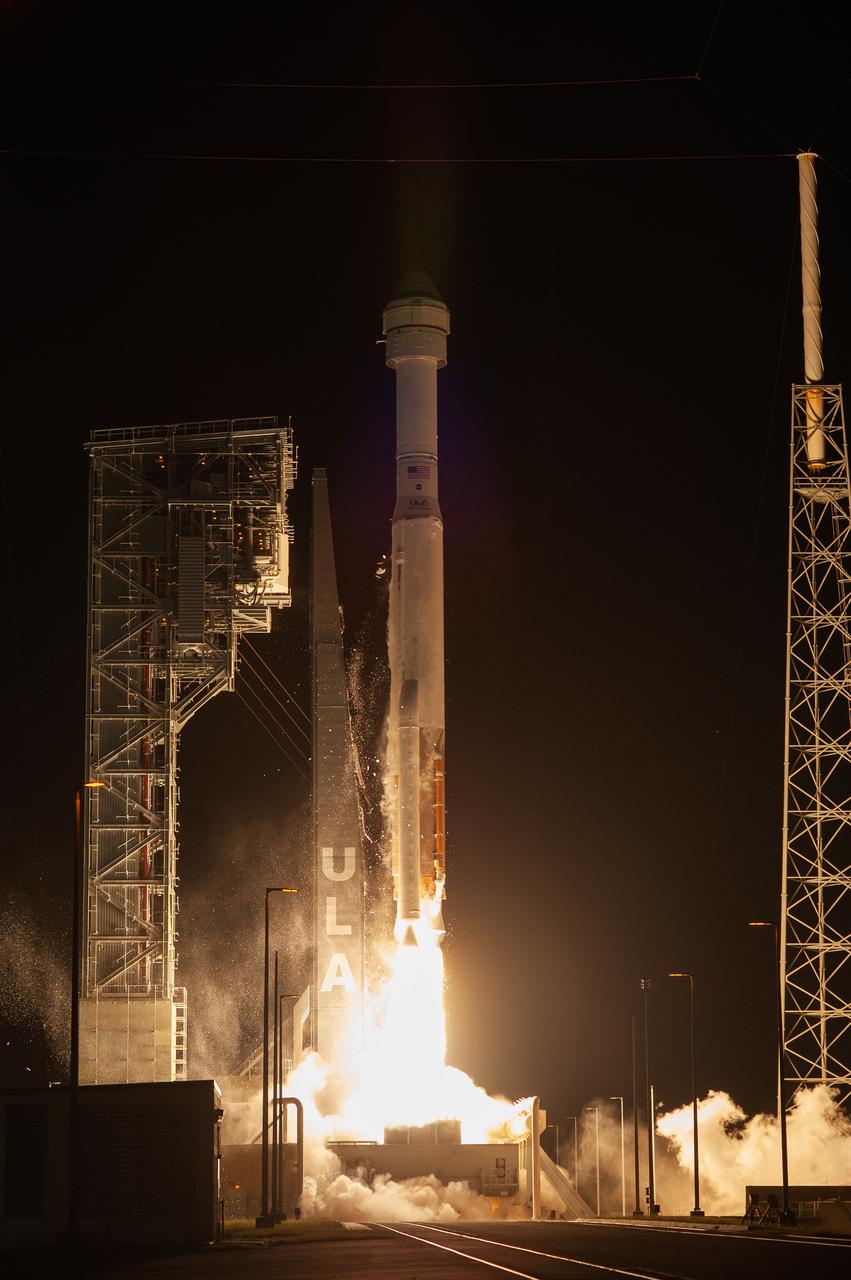
A two-stage United Launch Alliance Atlas V rocket lifts off from Space Launch Complex 41 at Cape Canaveral Air Force Station in Florida for Boeing’s Orbital Flight Test, Dec. 20, 2019. Liftoff occurred at 6:36 a.m. EST. The uncrewed Orbital Flight Test is the Starliner’s first flight for NASA’s Commercial Crew Program.
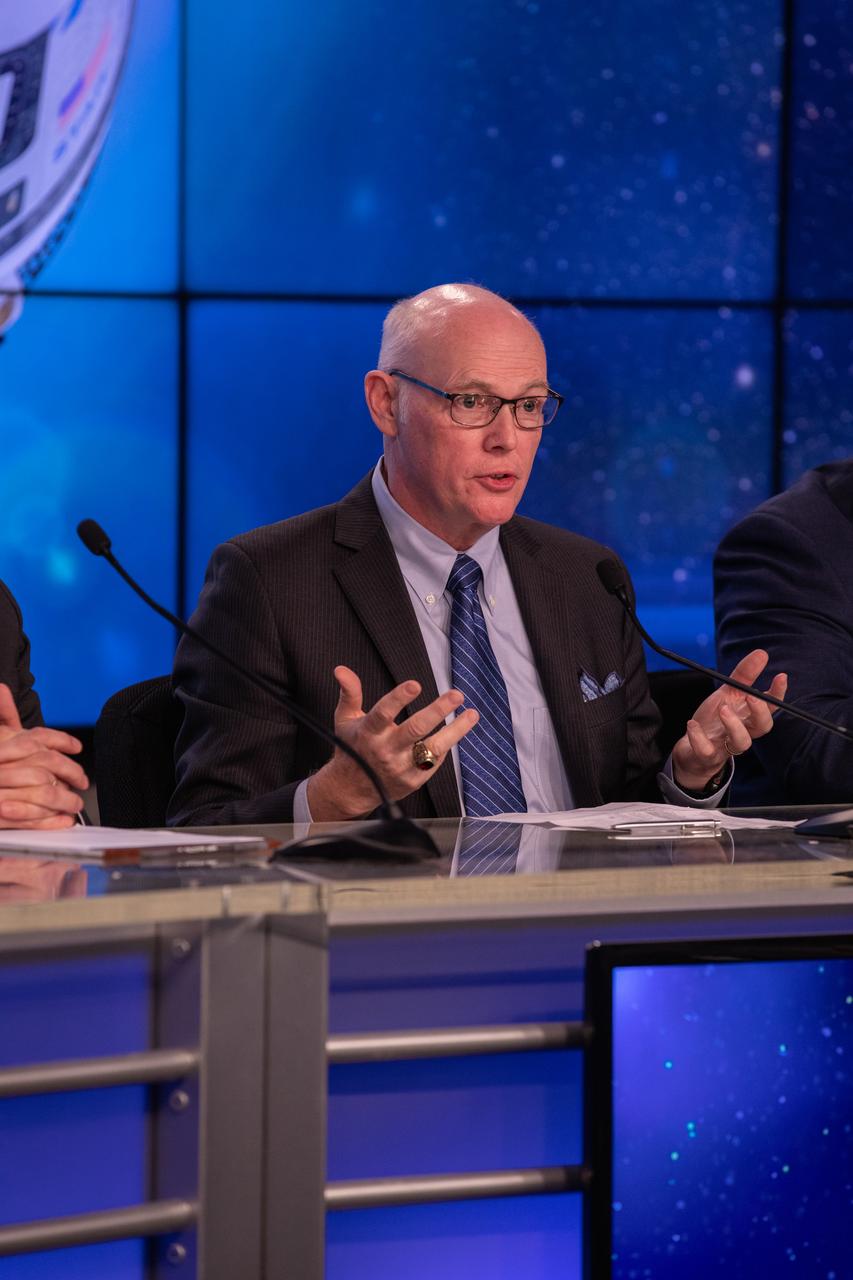
Tory Bruno, president and CEO of United Launch Alliance, speaks during a briefing at NASA’s Kennedy Space Center in Florida following launch of Boeing’s Orbital Flight Test, Dec. 20, 2019. Boeing’s CST-100 Starliner spacecraft launched atop a United Launch Alliance Atlas V rocket from Space Launch Complex 41 at Cape Canaveral Air Force Station at 6:36 a.m. EST. The uncrewed Orbital Flight Test is the Starliner’s first flight for NASA’s Commercial Crew Program.
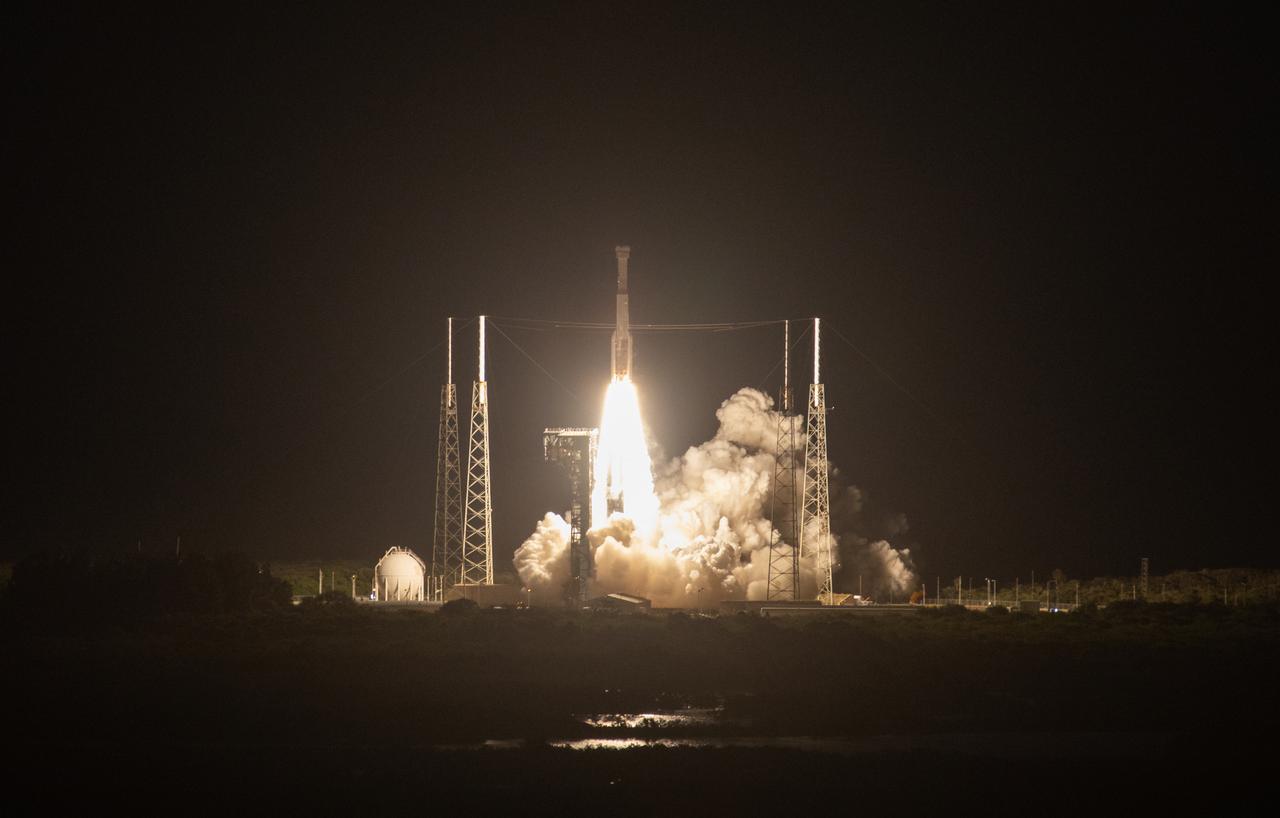
A two-stage United Launch Alliance Atlas V rocket lifts off from Space Launch Complex 41 at Cape Canaveral Air Force Station in Florida for Boeing’s Orbital Flight Test, Dec. 20, 2019. Liftoff occurred at 6:36 a.m. EST. The uncrewed Orbital Flight Test is the Starliner’s first flight for NASA’s Commercial Crew Program.
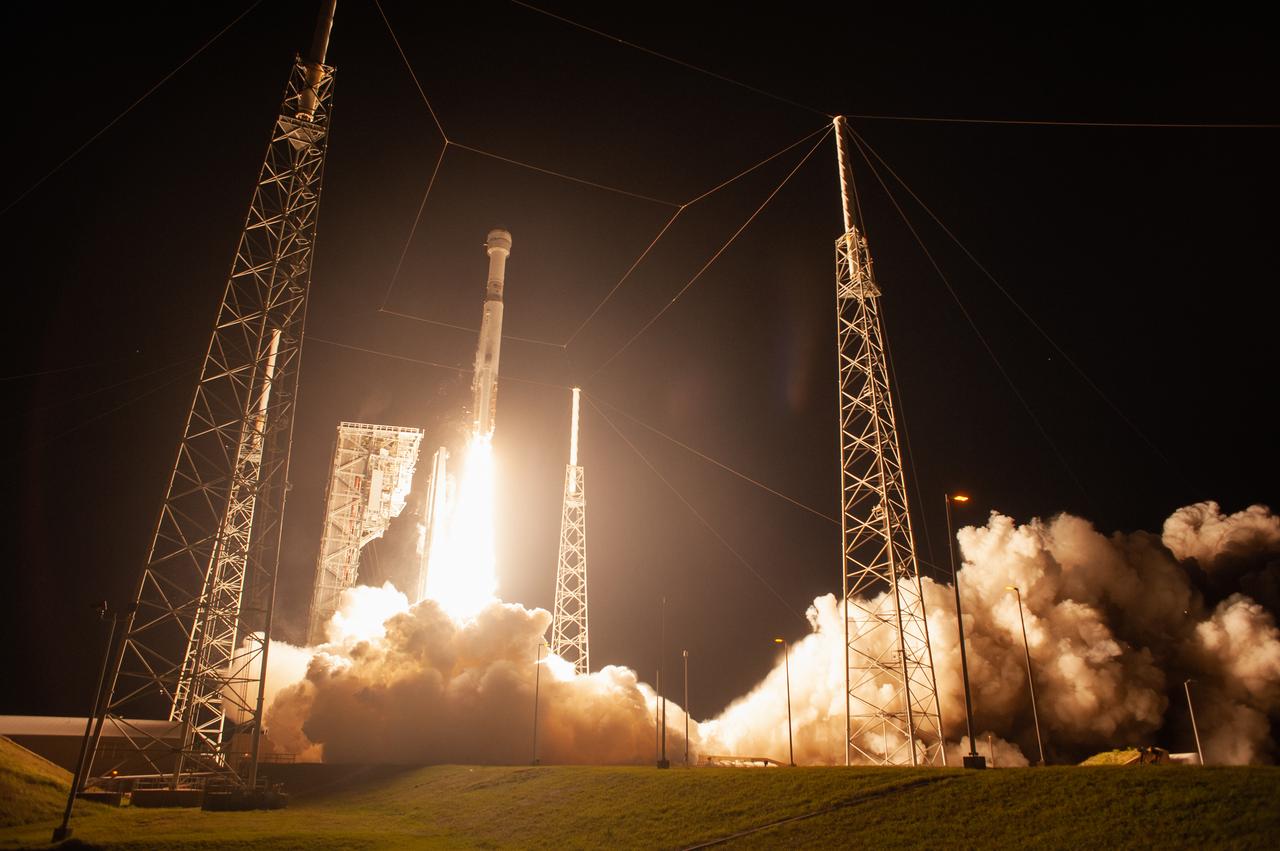
A two-stage United Launch Alliance Atlas V rocket lifts off from Space Launch Complex 41 at Cape Canaveral Air Force Station in Florida for Boeing’s Orbital Flight Test, Dec. 20, 2019. Liftoff occurred at 6:36 a.m. EST. The uncrewed Orbital Flight Test is the Starliner’s first flight for NASA’s Commercial Crew Program.
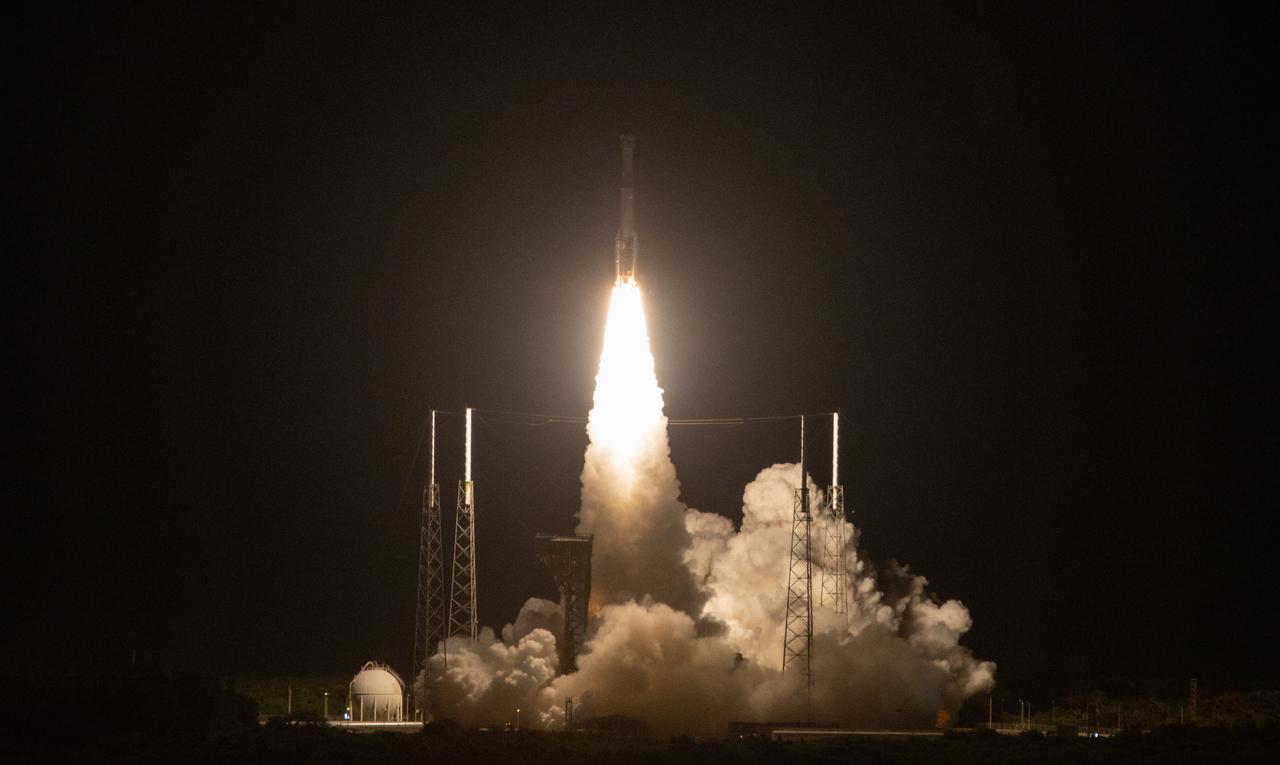
A two-stage United Launch Alliance Atlas V rocket lifts off from Space Launch Complex 41 at Cape Canaveral Air Force Station in Florida for Boeing’s Orbital Flight Test, Dec. 20, 2019. Liftoff occurred at 6:36 a.m. EST. The uncrewed Orbital Flight Test is the Starliner’s first flight for NASA’s Commercial Crew Program.
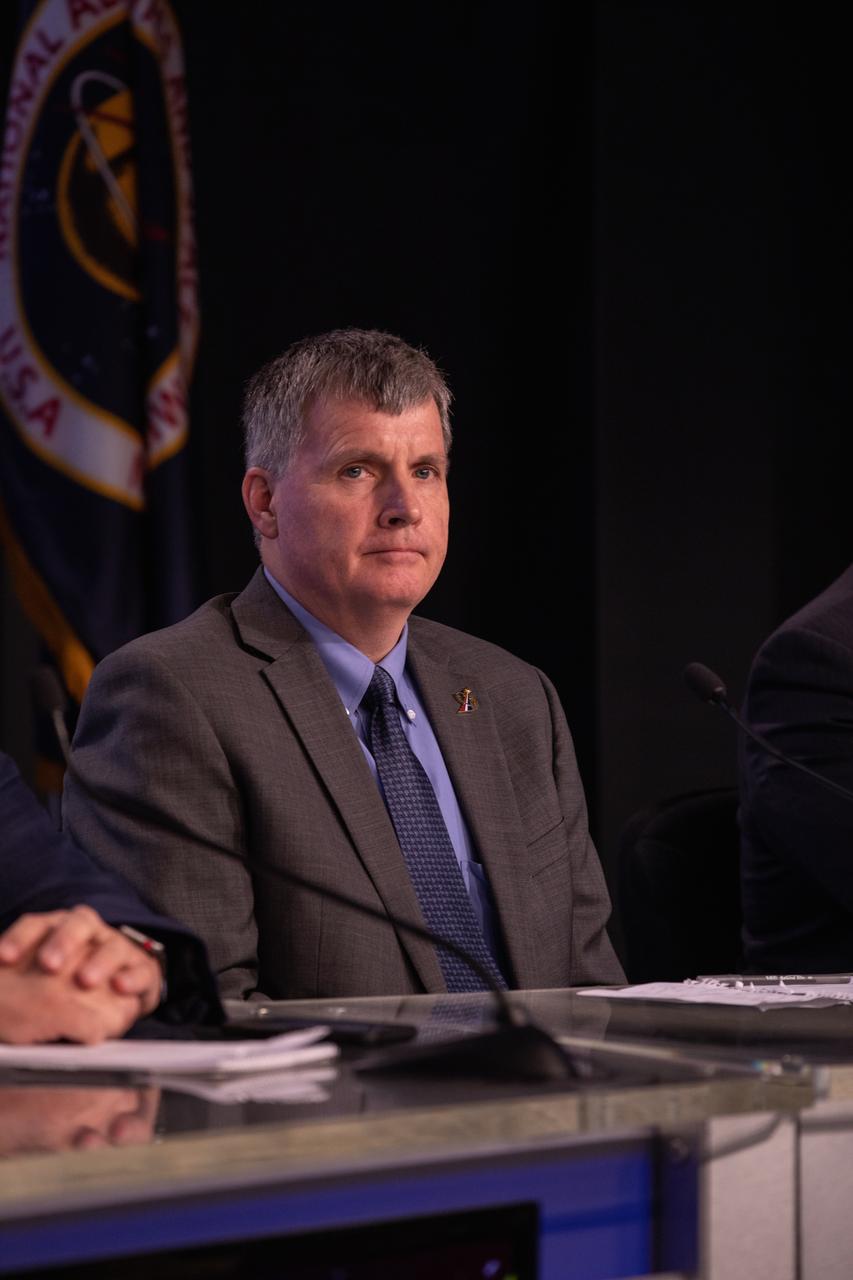
Steve Stich, deputy manager, NASA Commercial Crew Program, listens during a briefing at the agency’s Kennedy Space Center in Florida following launch of Boeing’s Orbital Flight Test, Dec. 20, 2019. Boeing’s CST-100 Starliner spacecraft launched atop a United Launch Alliance Atlas V rocket from Space Launch Complex 41 at Cape Canaveral Air Force Station at 6:36 a.m. EST. The uncrewed Orbital Flight Test is the Starliner’s first flight for NASA’s Commercial Crew Program.

News media cover a briefing at the agency’s Kennedy Space Center in Florida following launch of Boeing’s Orbital Flight Test, Dec. 20, 2019. Boeing’s CST-100 Starliner spacecraft launched atop a United Launch Alliance Atlas V rocket from Space Launch Complex 41 at Cape Canaveral Air Force Station at 6:36 a.m. EST. The uncrewed Orbital Flight Test is the Starliner’s first flight for NASA’s Commercial Crew Program.
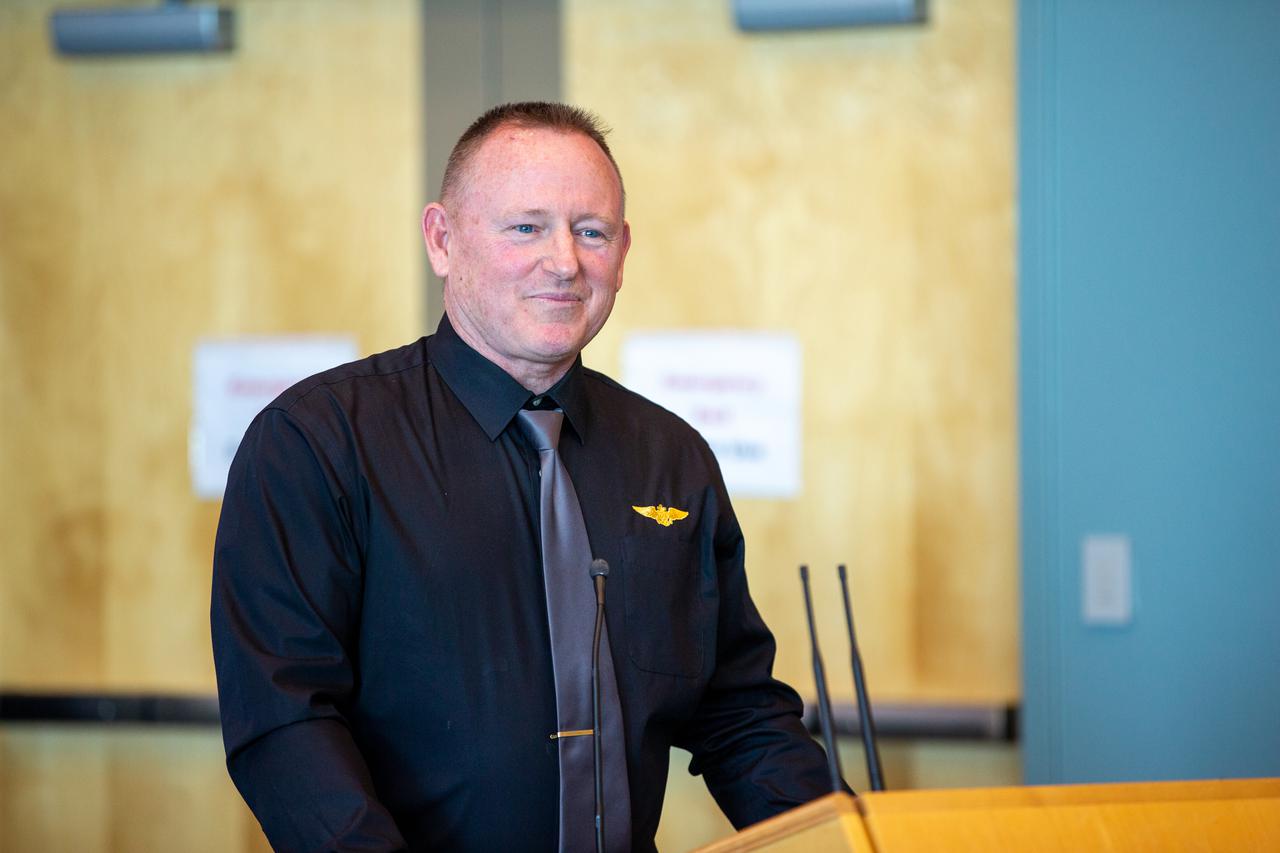
As part of the Flight Readiness Review for NASA’s Boeing Orbital Flight Test-2 (OFT-2), NASA astronaut and commander of Boeing’s Crew Flight Test, Barry “Butch” Wilmore addresses NASA and Boeing managers inside the Operations Support Building II at NASA's Kennedy Space Center in Florida, May 11, 2022. Boeing's CST-100 Starliner spacecraft will launch atop a United Launch Alliance Atlas V rocket from Space Launch Complex-41 at Cape Canaveral Space Force Station at 6:54 p.m. EDT on Thursday, May 19. The uncrewed flight test will be Starliner’s second flight for NASA’s Commercial Crew Program.
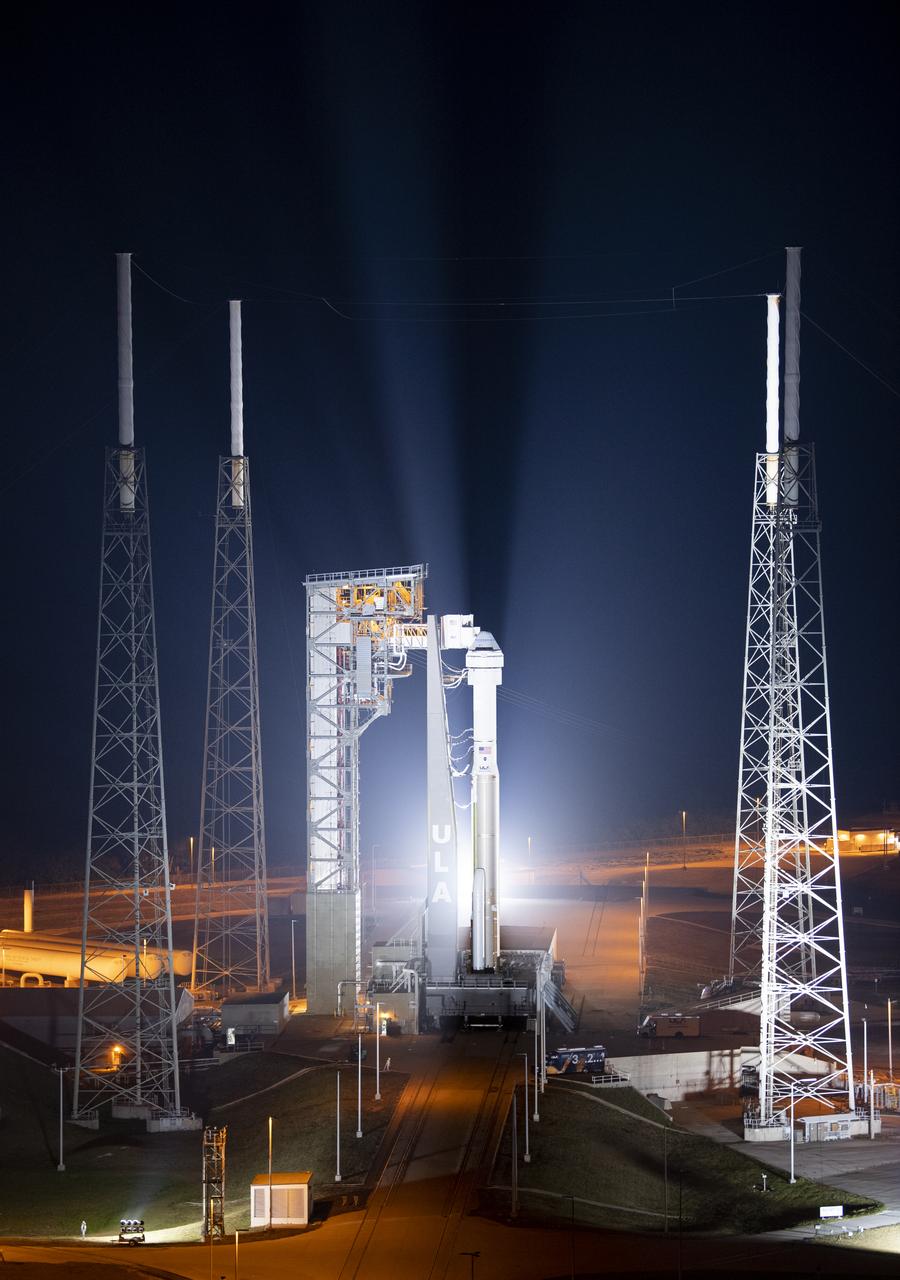
A United Launch Alliance Atlas V rocket with Boeing’s CST-100 Starliner spacecraft aboard is seen illuminated by spotlights on the launch pad at Space Launch Complex 41 ahead of the Orbital Flight Test-2 mission, Wednesday, May 18, 2022 at Cape Canaveral Space Force Station in Florida. Boeing’s Orbital Flight Test-2 will be Starliner’s second uncrewed flight test and will dock to the International Space Station as part of NASA's Commercial Crew Program. The mission, currently targeted for launch on 6:54 p.m. ET on May 19, will serve as an end-to-end test of the system's capabilities. Photo Credit: (NASA/Joel Kowsky)
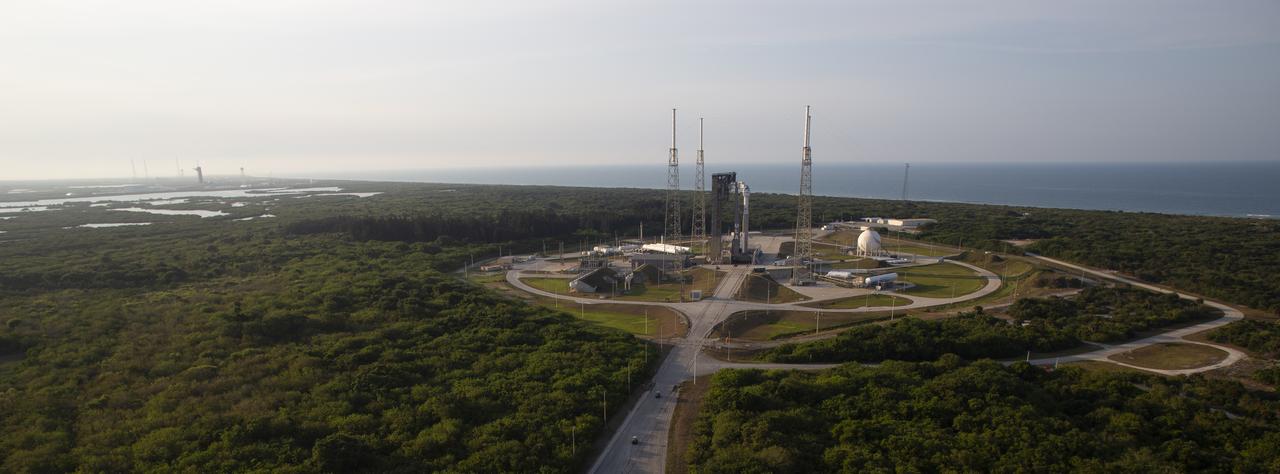
A United Launch Alliance Atlas V rocket with Boeing’s CST-100 Starliner spacecraft aboard is seen on the launch pad at Space Launch Complex 41 ahead of the Orbital Flight Test-2 mission, Wednesday, May 18, 2022 at Cape Canaveral Space Force Station in Florida. Boeing’s Orbital Flight Test-2 will be Starliner’s second uncrewed flight test and will dock to the International Space Station as part of NASA's Commercial Crew Program. The mission, currently targeted for launch on 6:54 p.m. ET on May 19, will serve as an end-to-end test of the system's capabilities. Photo Credit: (NASA/Joel Kowsky)
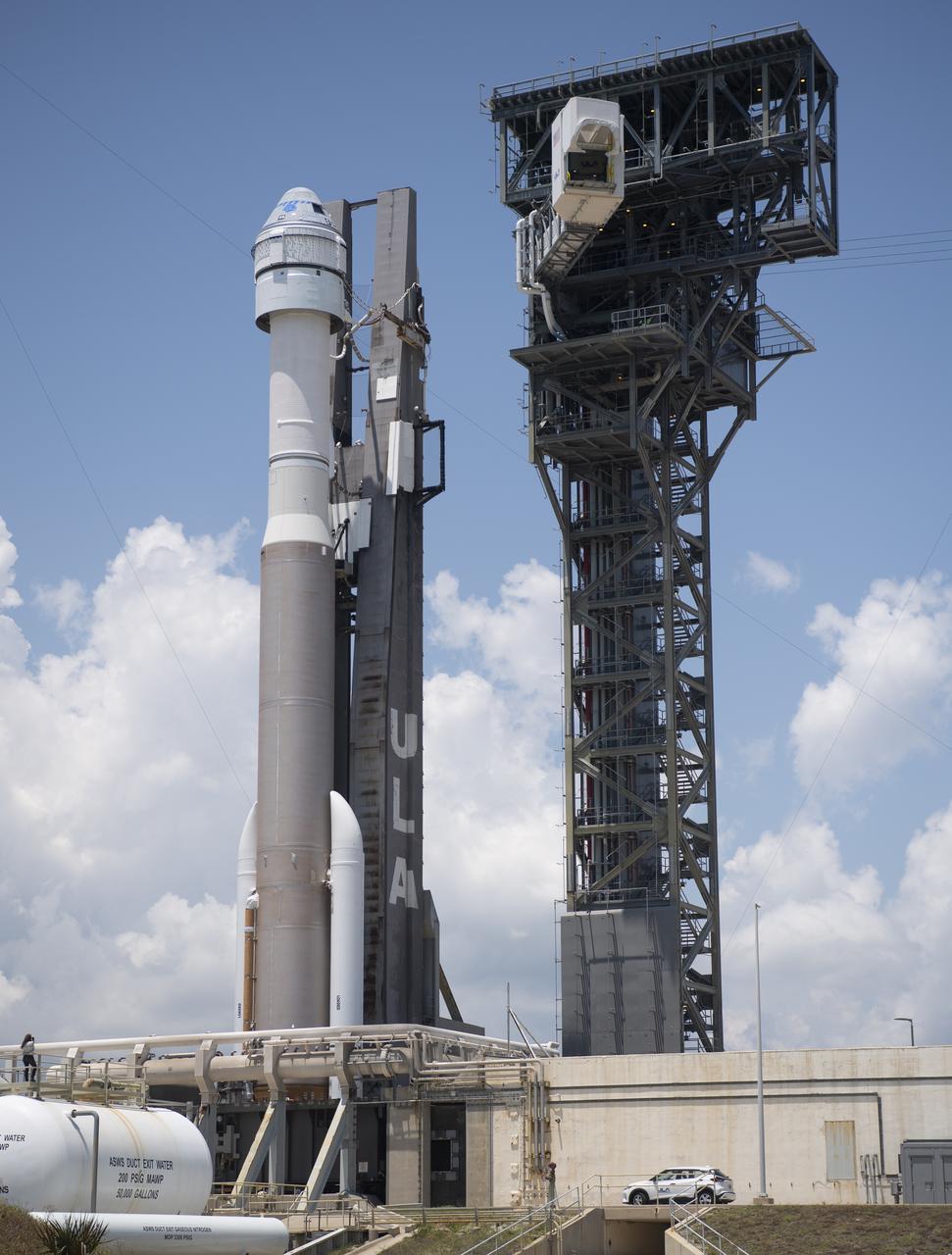
The crew access arm is seen as it swings into position for Boeing’s CST-100 Starliner spacecraft atop a United Launch Alliance Atlas V rocket at the launch pad at Space Launch Complex 41 ahead of the Orbital Flight Test-2 mission, Wednesday, May 18, 2022 at Cape Canaveral Space Force Station in Florida. Boeing’s Orbital Flight Test-2 will be Starliner’s second uncrewed flight test and will dock to the International Space Station as part of NASA's Commercial Crew Program. The mission, currently targeted for launch on 6:54 p.m. ET on May 19, will serve as an end-to-end test of the system's capabilities. Photo Credit: (NASA/Joel Kowsky)
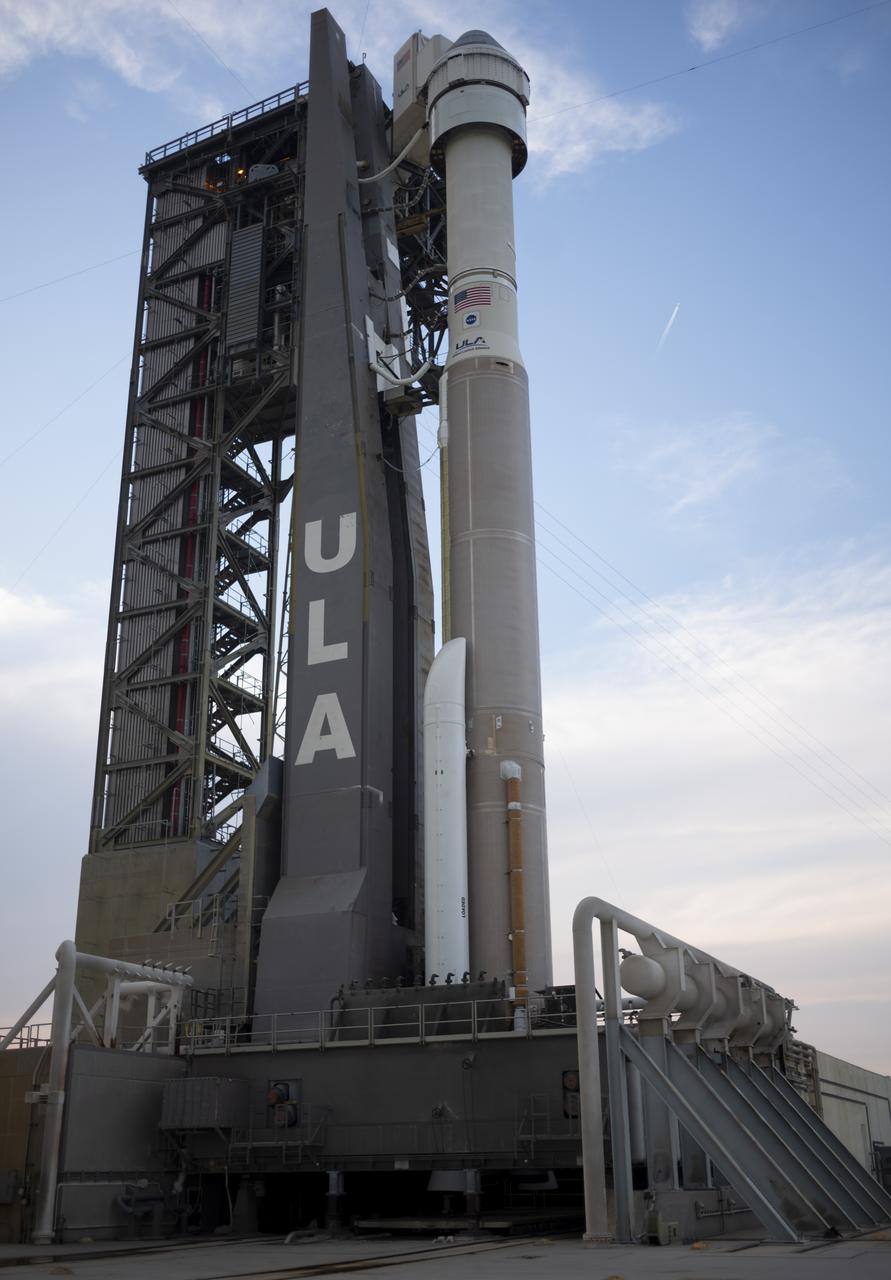
A United Launch Alliance Atlas V rocket with Boeing’s CST-100 Starliner spacecraft aboard is seen on the launch pad at Space Launch Complex 41 ahead of the Orbital Flight Test-2 mission, Wednesday, May 18, 2022 at Cape Canaveral Space Force Station in Florida. Boeing’s Orbital Flight Test-2 will be Starliner’s second uncrewed flight test and will dock to the International Space Station as part of NASA's Commercial Crew Program. The mission, currently targeted for launch on 6:54 p.m. ET on May 19, will serve as an end-to-end test of the system's capabilities. Photo Credit: (NASA/Joel Kowsky)
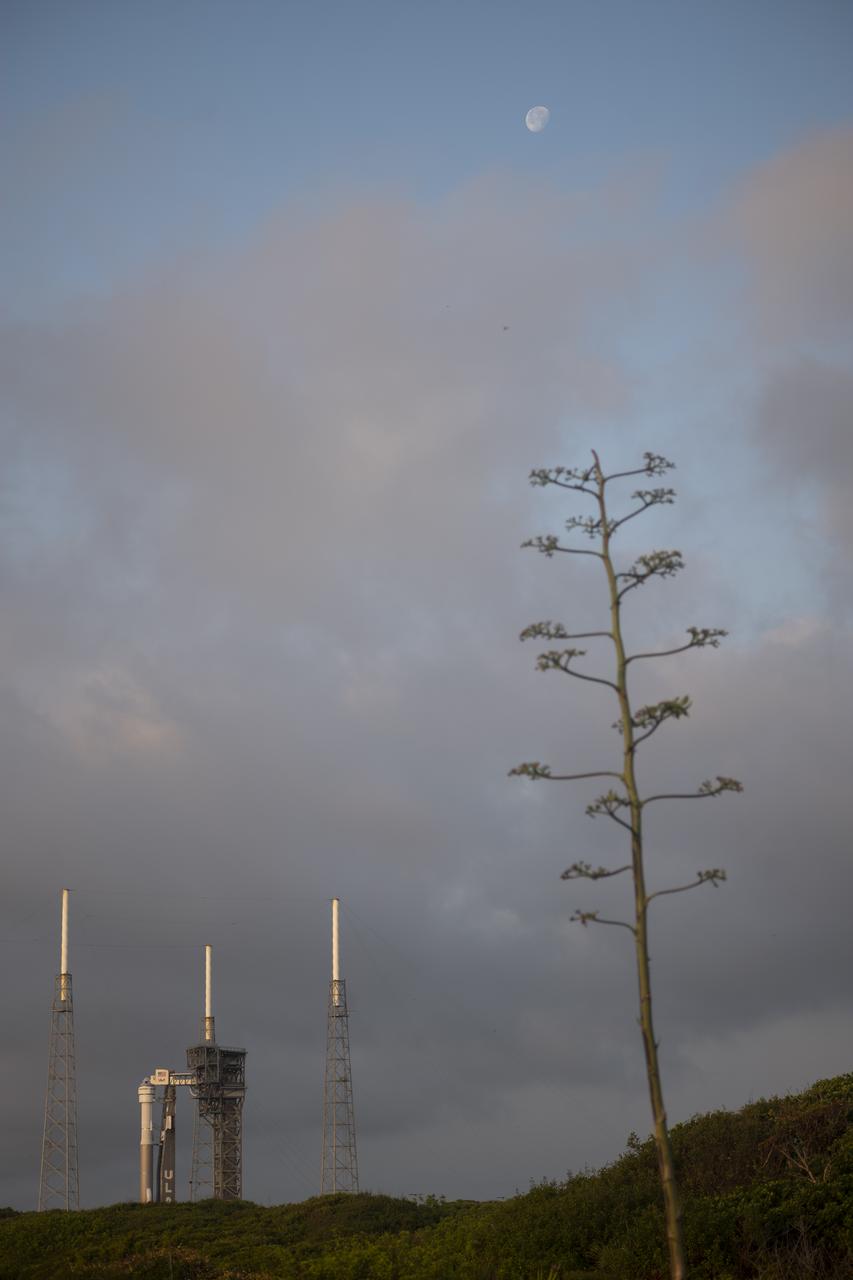
A United Launch Alliance Atlas V rocket with Boeing’s CST-100 Starliner spacecraft aboard is seen on the launch pad at Space Launch Complex 41 ahead of the Orbital Flight Test-2 mission, Thursday, May 19, 2022 at Cape Canaveral Space Force Station in Florida. Boeing’s Orbital Flight Test-2 will be Starliner’s second uncrewed flight test and will dock to the International Space Station as part of NASA's Commercial Crew Program. The mission, currently targeted for launch at 6:54 p.m. ET, will serve as an end-to-end test of the system's capabilities. Photo Credit: (NASA/Joel Kowsky)
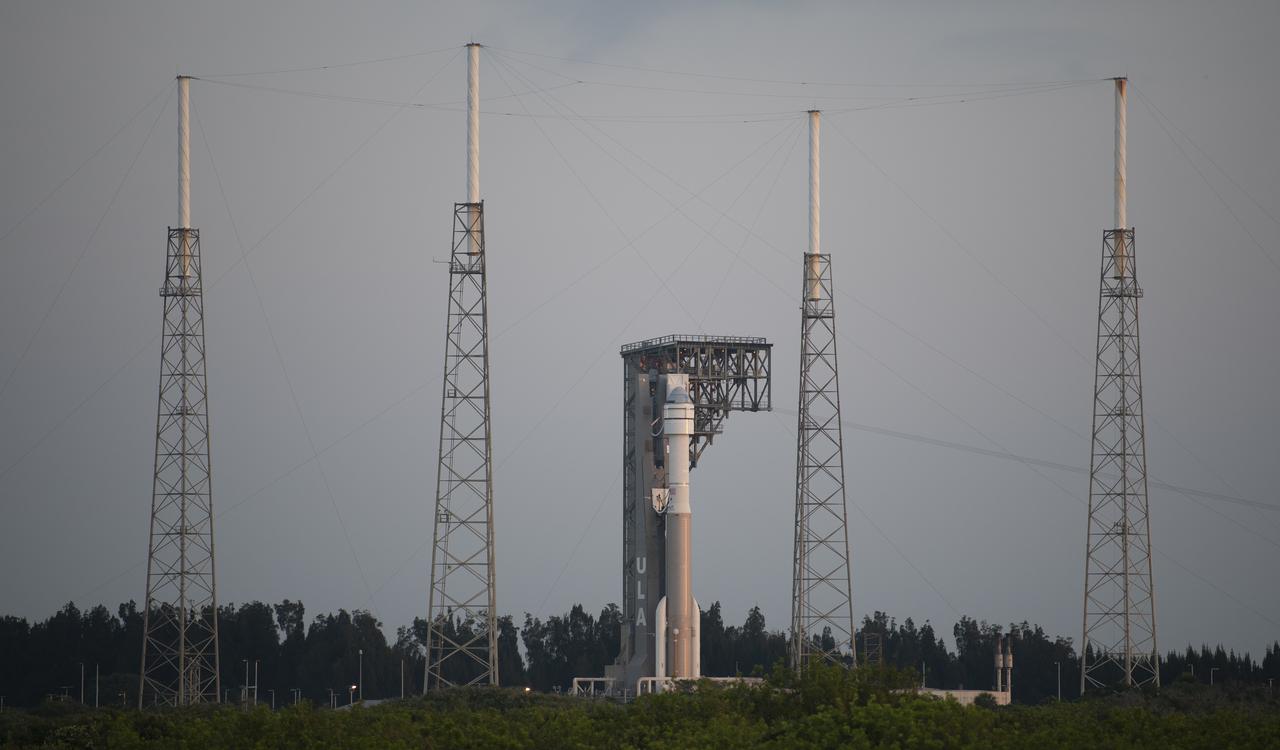
A United Launch Alliance Atlas V rocket with Boeing’s CST-100 Starliner spacecraft aboard is seen on the launch pad at Space Launch Complex 41 ahead of the Orbital Flight Test-2 mission, Thursday, May 19, 2022 at Cape Canaveral Space Force Station in Florida. Boeing’s Orbital Flight Test-2 will be Starliner’s second uncrewed flight test and will dock to the International Space Station as part of NASA's Commercial Crew Program. The mission, currently targeted for launch at 6:54 p.m. ET will serve as an end-to-end test of the system's capabilities. Photo Credit: (NASA/Joel Kowsky)
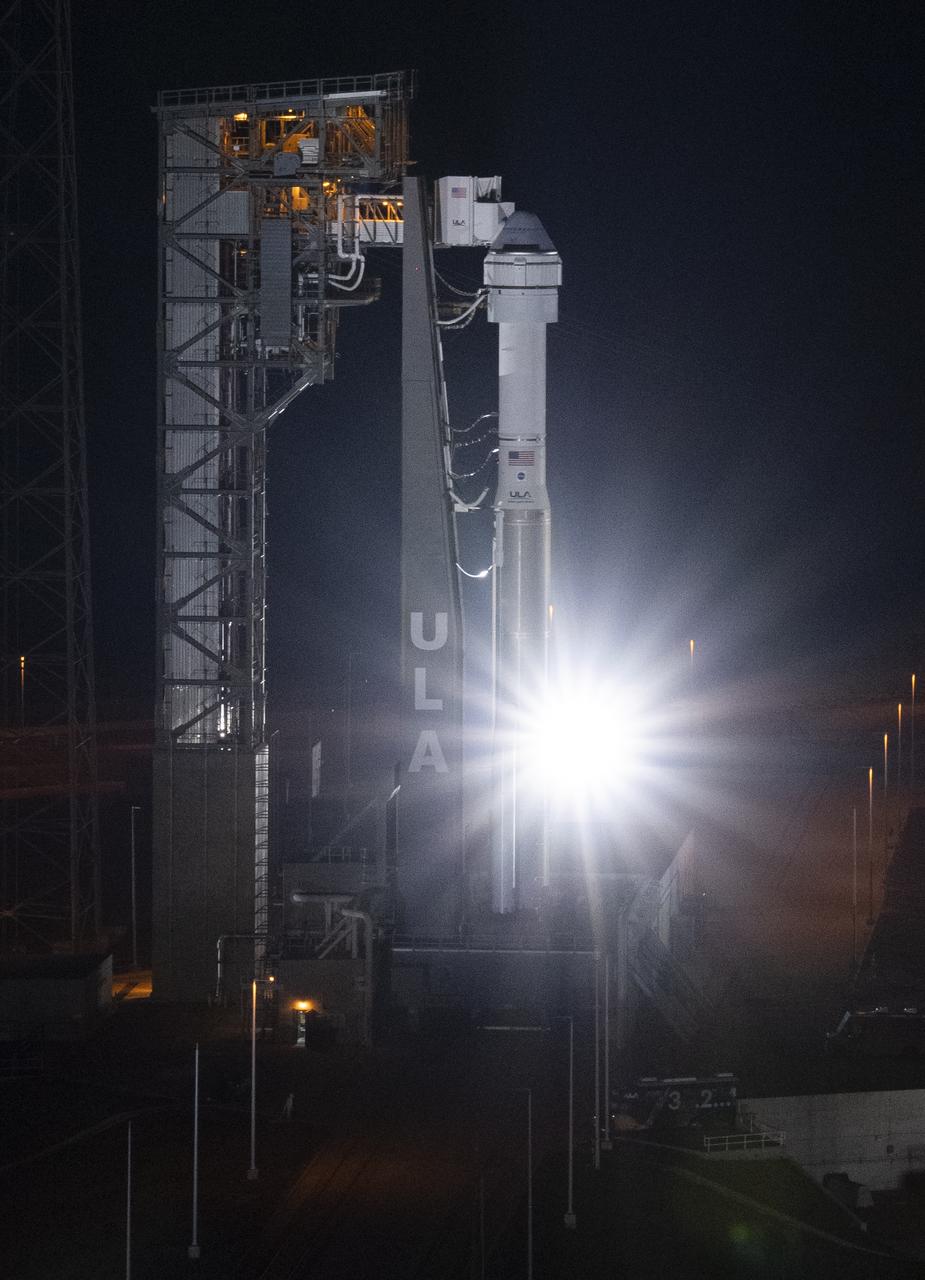
A United Launch Alliance Atlas V rocket with Boeing’s CST-100 Starliner spacecraft aboard is seen illuminated by spotlights on the launch pad at Space Launch Complex 41 ahead of the Orbital Flight Test-2 mission, Wednesday, May 18, 2022 at Cape Canaveral Space Force Station in Florida. Boeing’s Orbital Flight Test-2 will be Starliner’s second uncrewed flight test and will dock to the International Space Station as part of NASA's Commercial Crew Program. The mission, currently targeted for launch on 6:54 p.m. ET on May 19, will serve as an end-to-end test of the system's capabilities. Photo Credit: (NASA/Joel Kowsky)
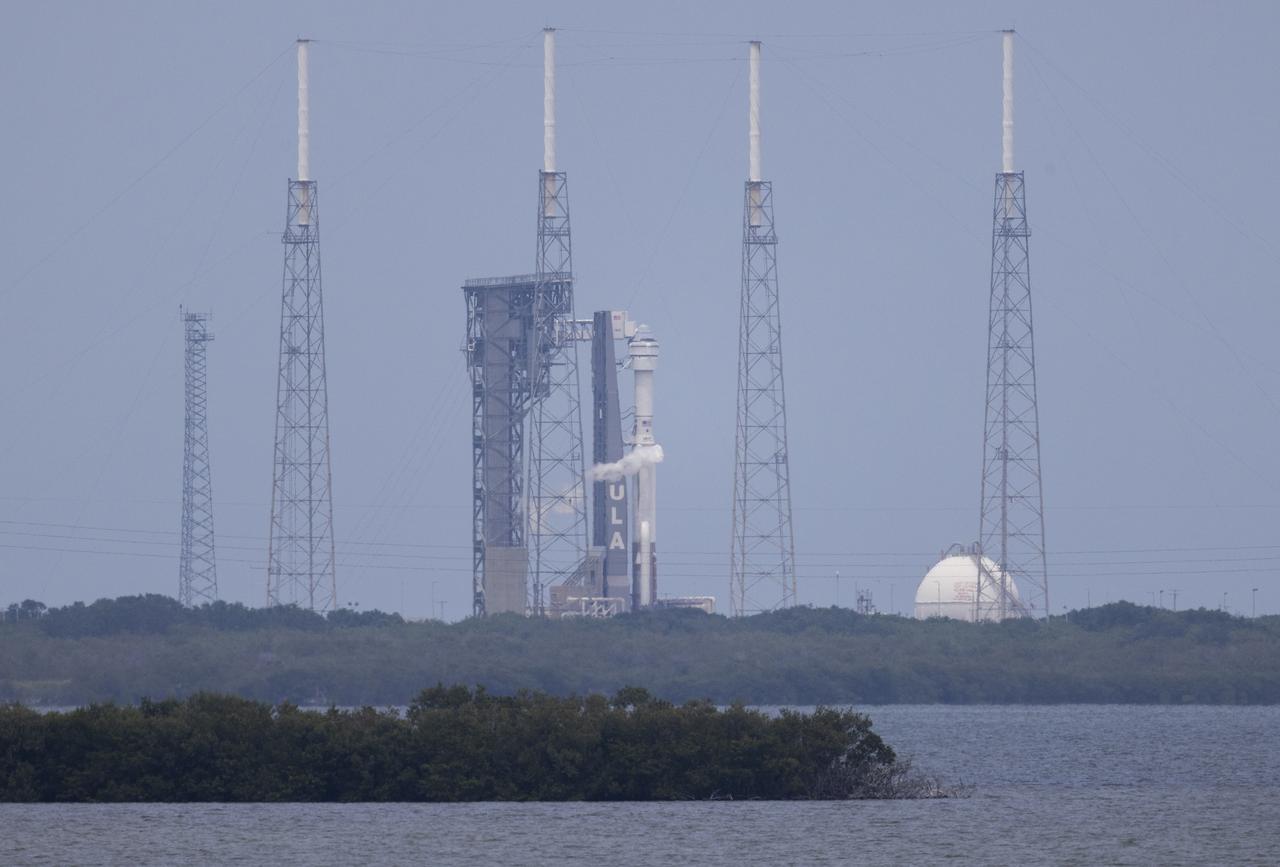
A United Launch Alliance Atlas V rocket with Boeing’s CST-100 Starliner spacecraft aboard is seen on the launch pad at Space Launch Complex 41 as the countdown progresses for the launch of the Orbital Flight Test-2 mission, Thursday, May 19, 2022 at Cape Canaveral Space Force Station in Florida. Boeing’s Orbital Flight Test-2 will be Starliner’s second uncrewed flight test and will dock to the International Space Station as part of NASA's Commercial Crew Program. The mission, currently targeted for launch at 6:54 p.m. ET, will serve as an end-to-end test of the system's capabilities. Photo Credit: (NASA/Joel Kowsky)
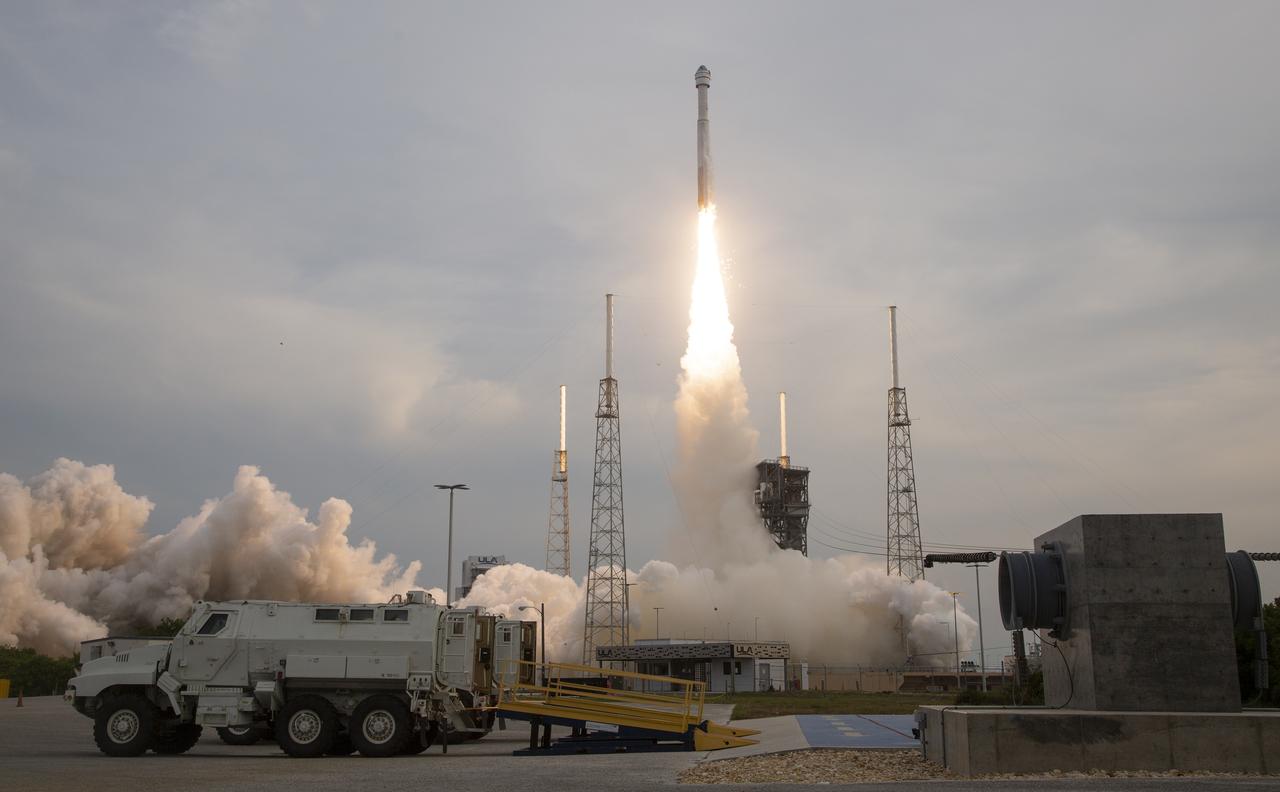
Two emergency egress vehicles are seen positioned at the slidewire termination area at Space Launch Complex 41 as a United Launch Alliance Atlas V rocket with Boeing’s CST-100 Starliner spacecraft aboard launches on the Orbital Flight Test-2 mission, Thursday, May 19, 2022, at Cape Canaveral Space Force Station in Florida. Boeing’s Orbital Flight Test-2 (OFT-2) is Starliner’s second uncrewed flight test and will dock to the International Space Station as part of NASA's Commercial Crew Program. OFT-2 launched at 6:54 p.m. ET, and will serve as an end-to-end test of the system's capabilities. Photo Credit: (NASA/Joel Kowsky)
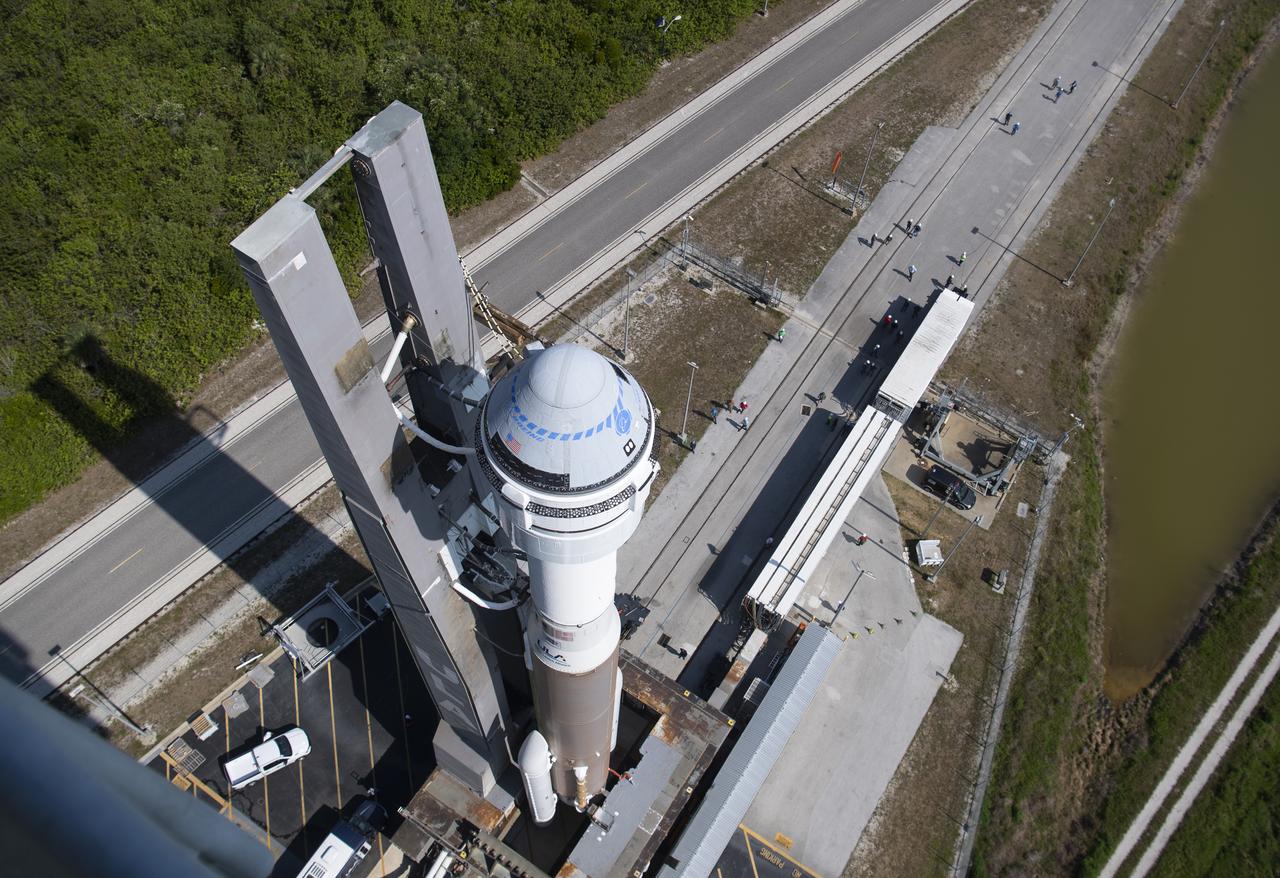
A United Launch Alliance Atlas V rocket with Boeing’s CST-100 Starliner spacecraft aboard is seen as it is rolled out of the Vertical Integration Facility to the launch pad at Space Launch Complex 41 ahead of the Orbital Flight Test-2 (OFT-2) mission, Wednesday, May 18, 2022 at Cape Canaveral Space Force Station in Florida. Boeing’s Orbital Flight Test-2 will be Starliner’s second uncrewed flight test and will dock to the International Space Station as part of NASA's Commercial Crew Program. The mission, currently targeted for launch at 6:54 p.m. ET on May 19, will serve as an end-to-end test of the system's capabilities. Photo Credit: (NASA/Joel Kowsky)
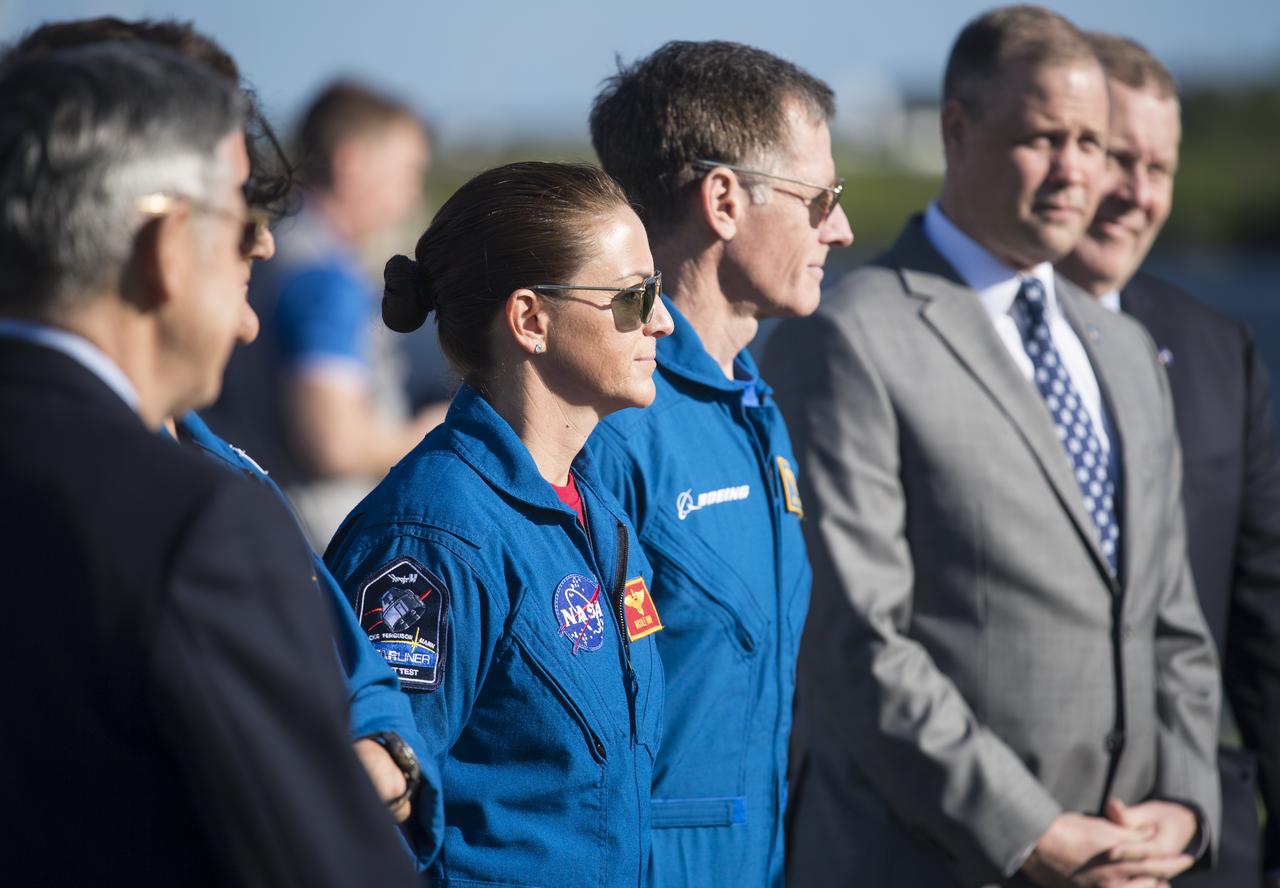
NASA astronaut Nicole Mann and Boeing astronaut Chris Ferguson are seen during a press conference ahead of the Boeing Orbital Flight Test mission, Thursday, Dec. 19, 2019, at NASA’s Kennedy Space Center in Florida. Mann, Ferguson, and NASA astronaut Michale Fincke are assigned to fly Boeing’s Crew Flight Test. The uncrewed Orbital Flight Test will be Starliner’s maiden mission to the International Space Station for NASA's Commercial Crew Program. The mission, currently targeted for a 6:36 a.m. EST launch on Dec. 20, will serve as an end-to-end test of the system's capabilities. Photo Credit: (NASA/Joel Kowsky)
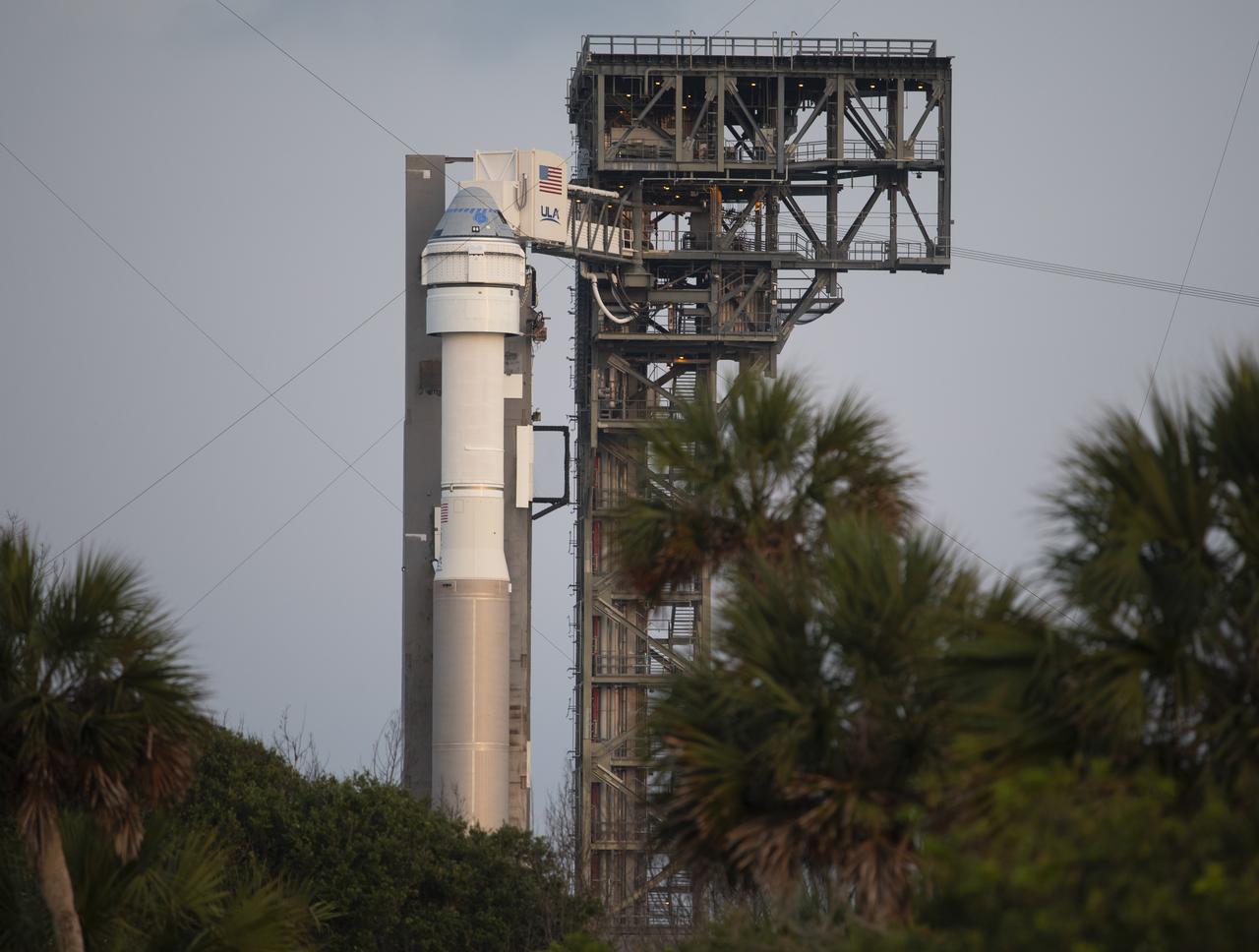
A United Launch Alliance Atlas V rocket with Boeing’s CST-100 Starliner spacecraft aboard is seen on the launch pad at Space Launch Complex 41 ahead of the Orbital Flight Test-2 mission, Thursday, May 19, 2022 at Cape Canaveral Space Force Station in Florida. Boeing’s Orbital Flight Test-2 will be Starliner’s second uncrewed flight test and will dock to the International Space Station as part of NASA's Commercial Crew Program. The mission, currently targeted for launch at 6:54 p.m. ET, will serve as an end-to-end test of the system's capabilities. Photo Credit: (NASA/Joel Kowsky)
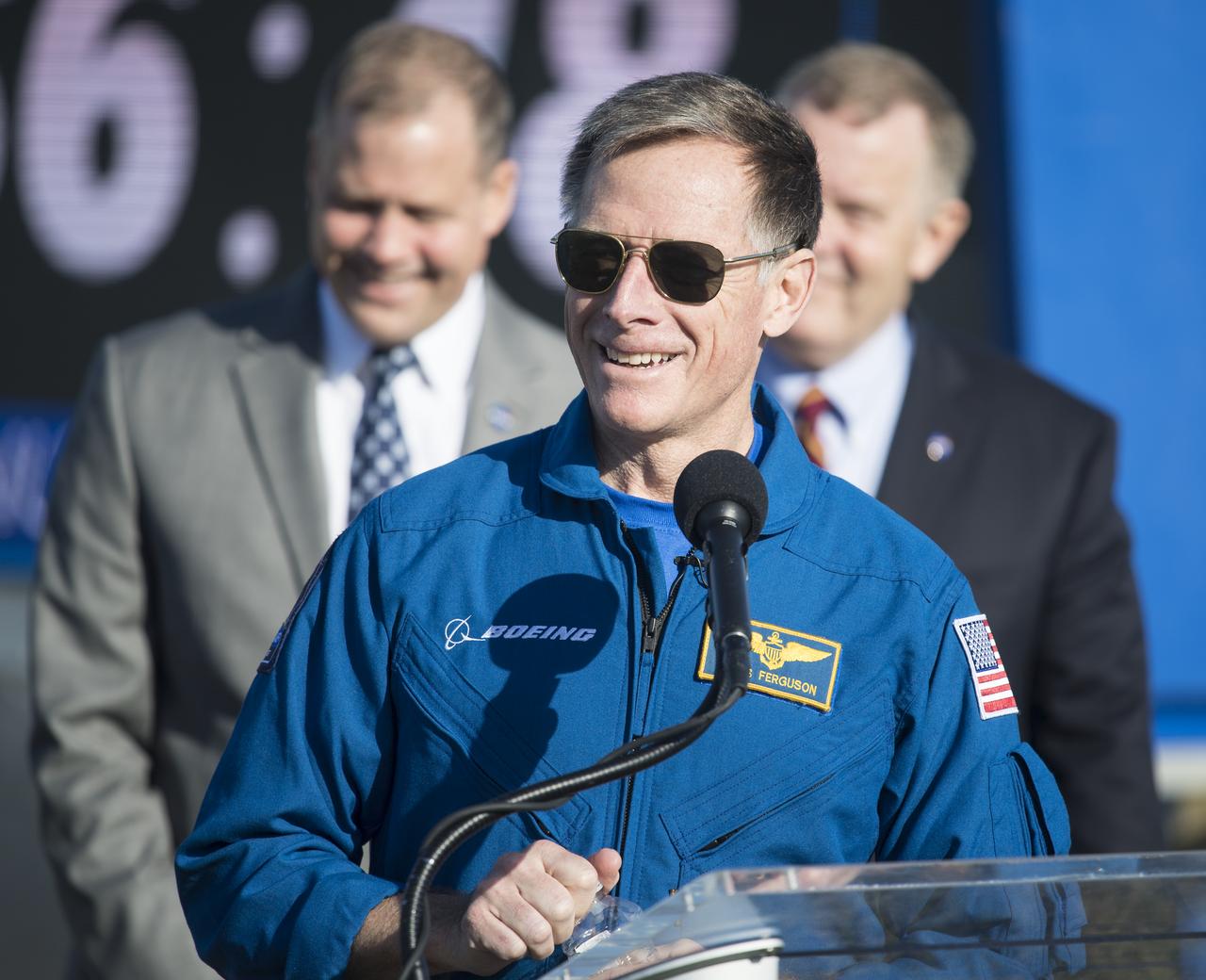
Boeing astronaut Chris Ferguson is seen during a press conference ahead of the Boeing Orbital Flight Test mission, Thursday, Dec. 19, 2019, at NASA’s Kennedy Space Center in Florida. Ferguson and NASA astronauts Nicole Mann and Michael Fincke are assigned to fly on Boeing’s Crew Flight Test. The uncrewed Orbital Flight Test will be Starliner’s maiden mission to the International Space Station for NASA's Commercial Crew Program. The mission, currently targeted for a 6:36 a.m. EST launch on Dec. 20, will serve as an end-to-end test of the system's capabilities. Photo Credit: (NASA/Joel Kowsky)
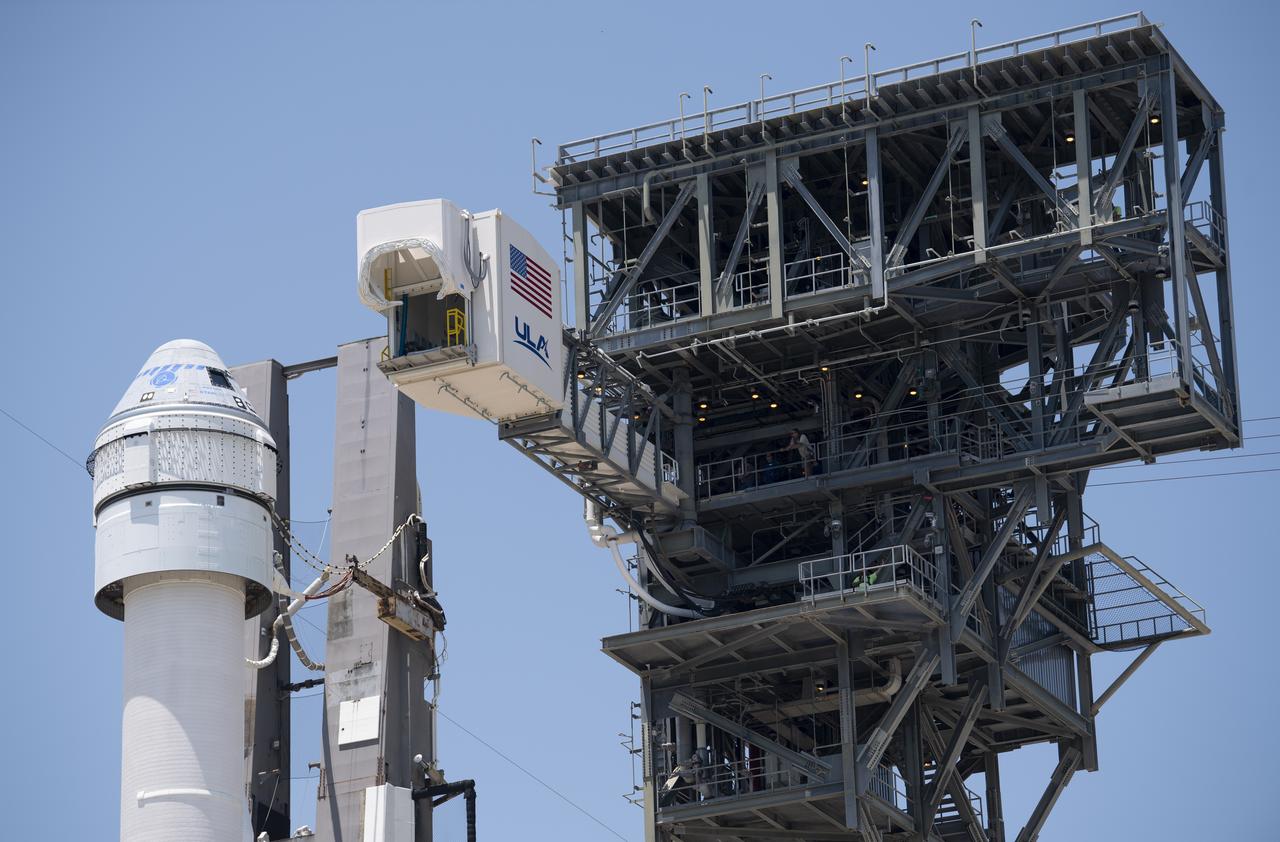
The crew access arm is seen as it swings into position for Boeing’s CST-100 Starliner spacecraft atop a United Launch Alliance Atlas V rocket at the launch pad at Space Launch Complex 41 ahead of the Orbital Flight Test-2 mission, Wednesday, May 18, 2022 at Cape Canaveral Space Force Station in Florida. Boeing’s Orbital Flight Test-2 will be Starliner’s second uncrewed flight test and will dock to the International Space Station as part of NASA's Commercial Crew Program. The mission, currently targeted for launch on 6:54 p.m. ET on May 19, will serve as an end-to-end test of the system's capabilities. Photo Credit: (NASA/Joel Kowsky)
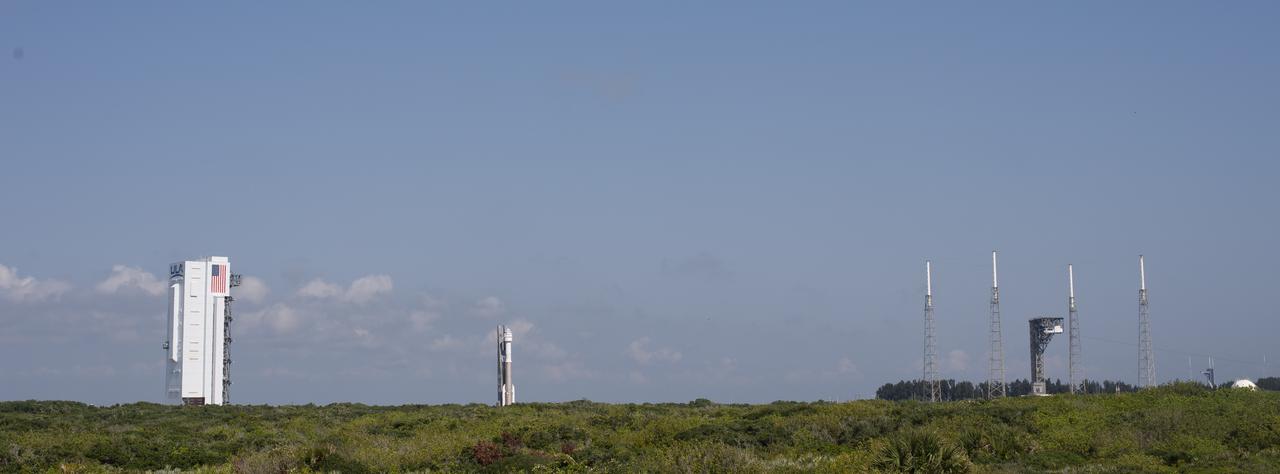
A United Launch Alliance Atlas V rocket with Boeing’s CST-100 Starliner spacecraft aboard is seen as it is rolled out of the Vertical Integration Facility to the launch pad at Space Launch Complex 41 ahead of the Orbital Flight Test-2 (OFT-2) mission, Wednesday, May 18, 2022 at Cape Canaveral Space Force Station in Florida. Boeing’s Orbital Flight Test-2 will be Starliner’s second uncrewed flight test and will dock to the International Space Station as part of NASA's Commercial Crew Program. The mission, currently targeted for launch at 6:54 p.m. ET on May 19, will serve as an end-to-end test of the system's capabilities. Photo Credit: (NASA/Joel Kowsky)
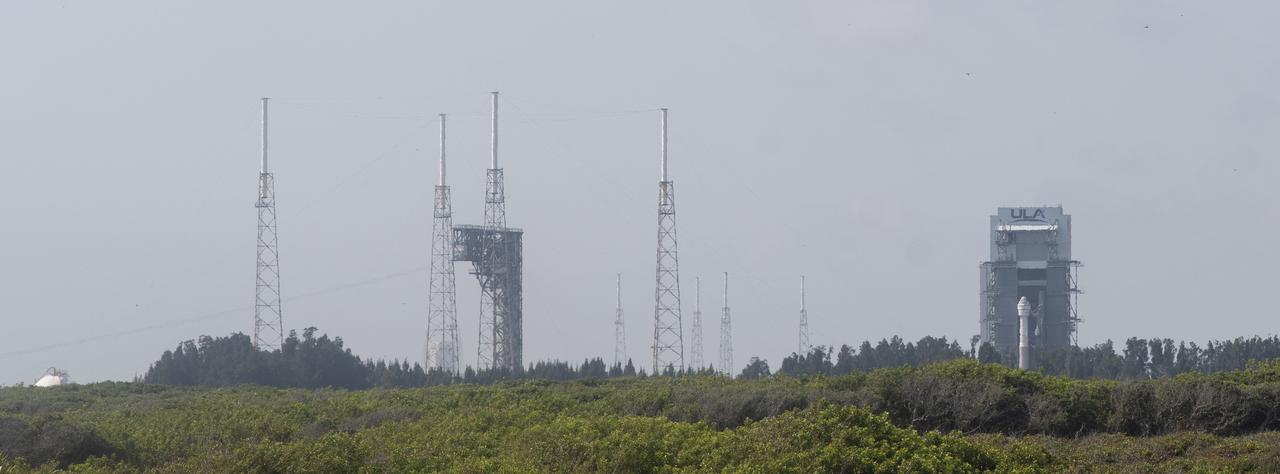
A United Launch Alliance Atlas V rocket with Boeing’s CST-100 Starliner spacecraft aboard is seen as it is rolled out of the Vertical Integration Facility to the launch pad at Space Launch Complex 41 ahead of the Orbital Flight Test-2 (OFT-2) mission, Wednesday, May 18, 2022 at Cape Canaveral Space Force Station in Florida. Boeing’s Orbital Flight Test-2 will be Starliner’s second uncrewed flight test and will dock to the International Space Station as part of NASA's Commercial Crew Program. The mission, currently targeted for launch at 6:54 p.m. ET on May 19, will serve as an end-to-end test of the system's capabilities. Photo Credit: (NASA/Joel Kowsky)